All Saints Church – Rudston

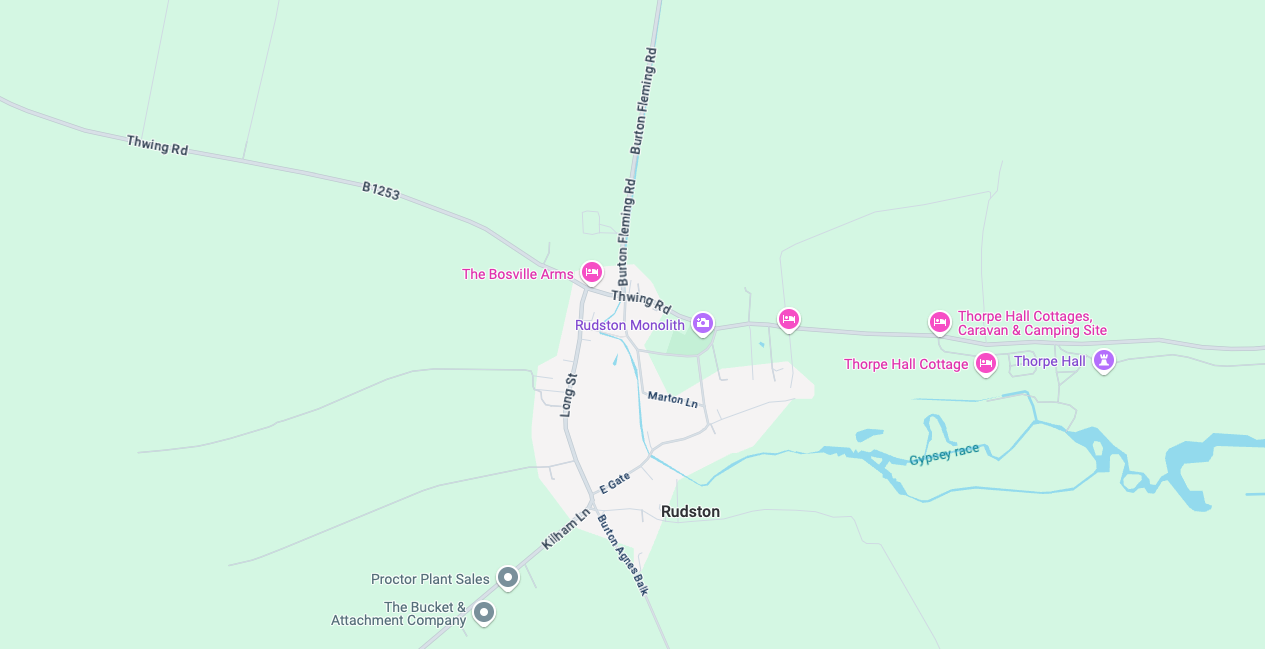
School Lane Rudston Driffield YO25 4UY

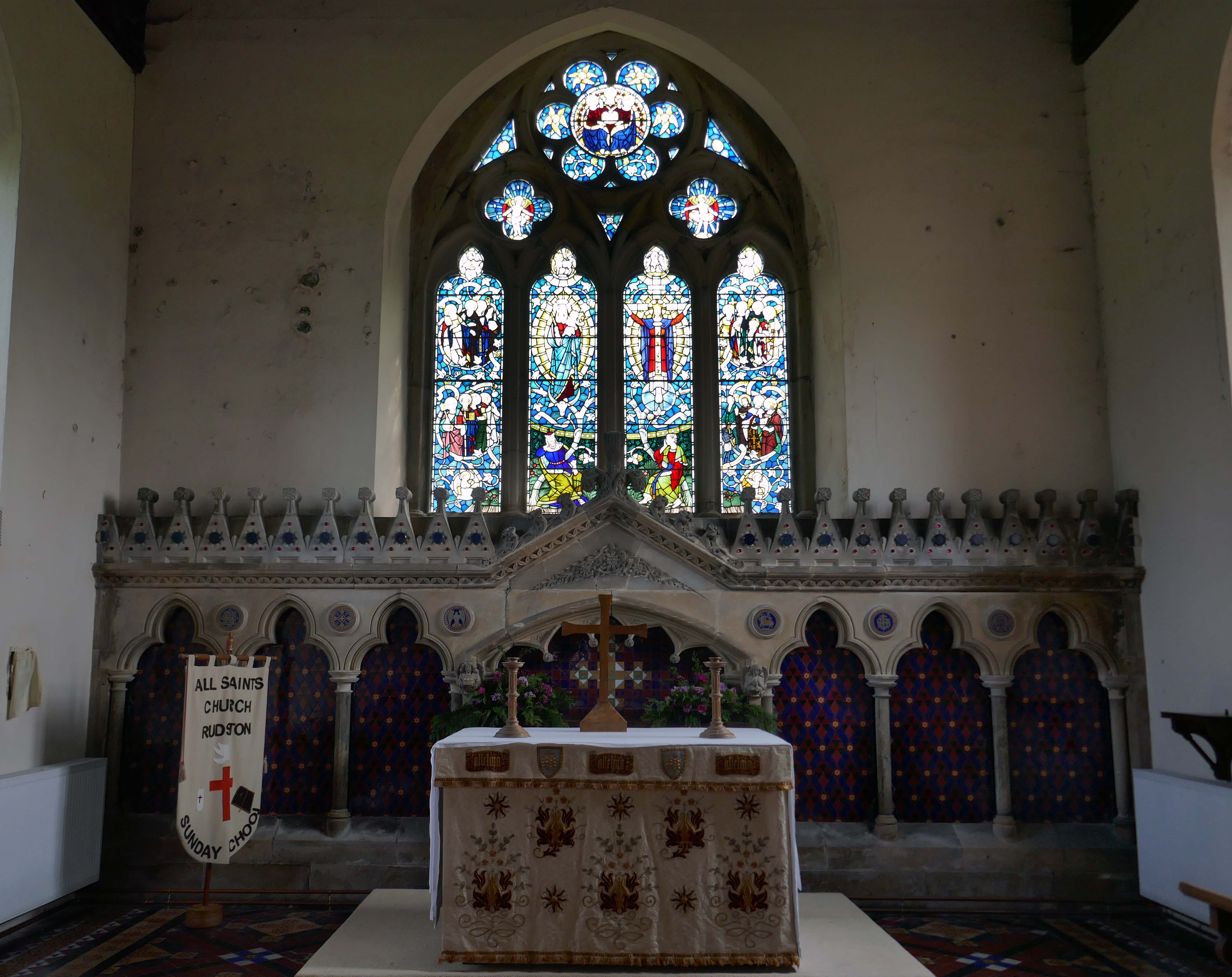
We were wandering by bicycle in the Wolds – we came to see All Saints Church in Rudston.

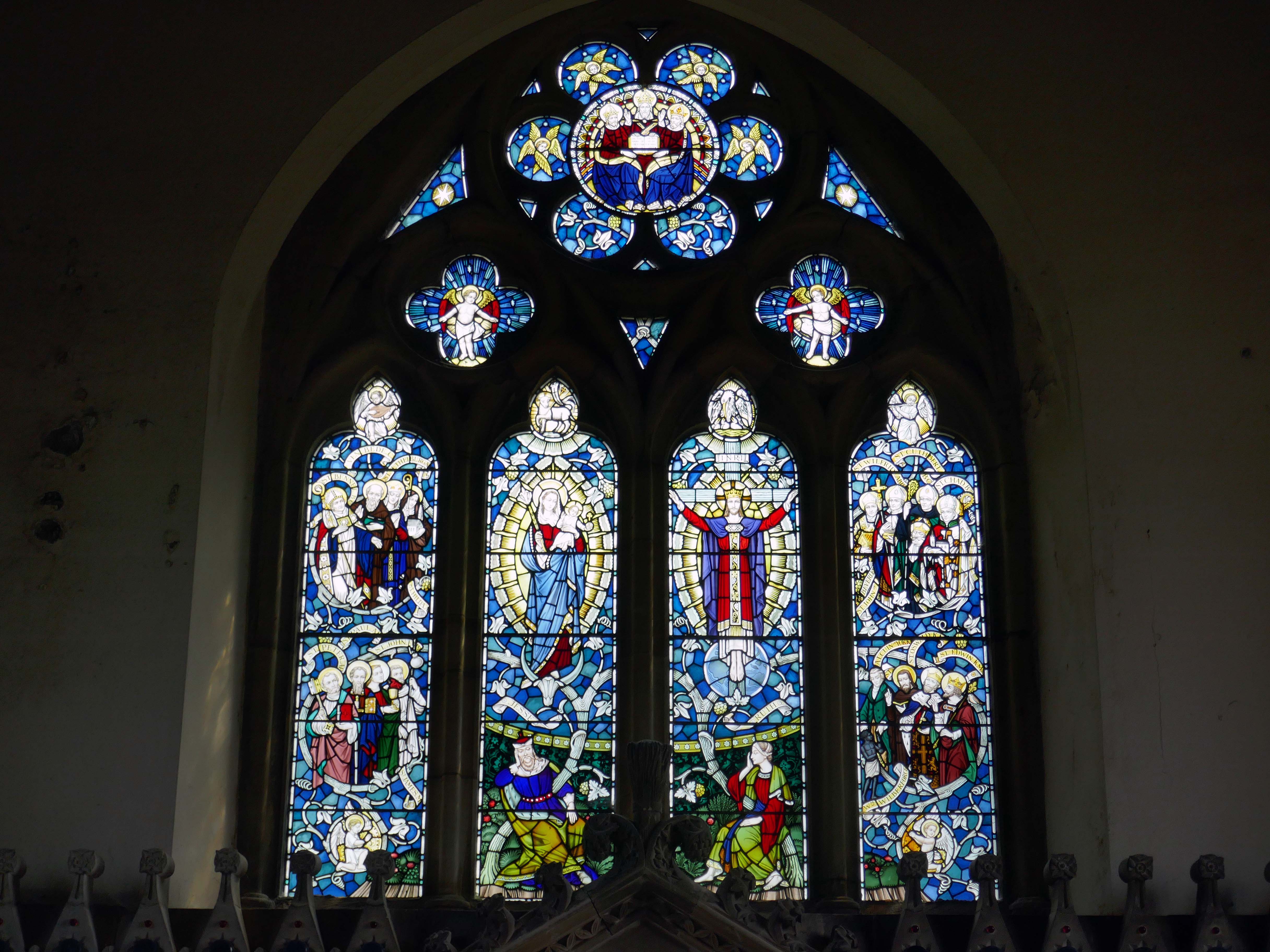
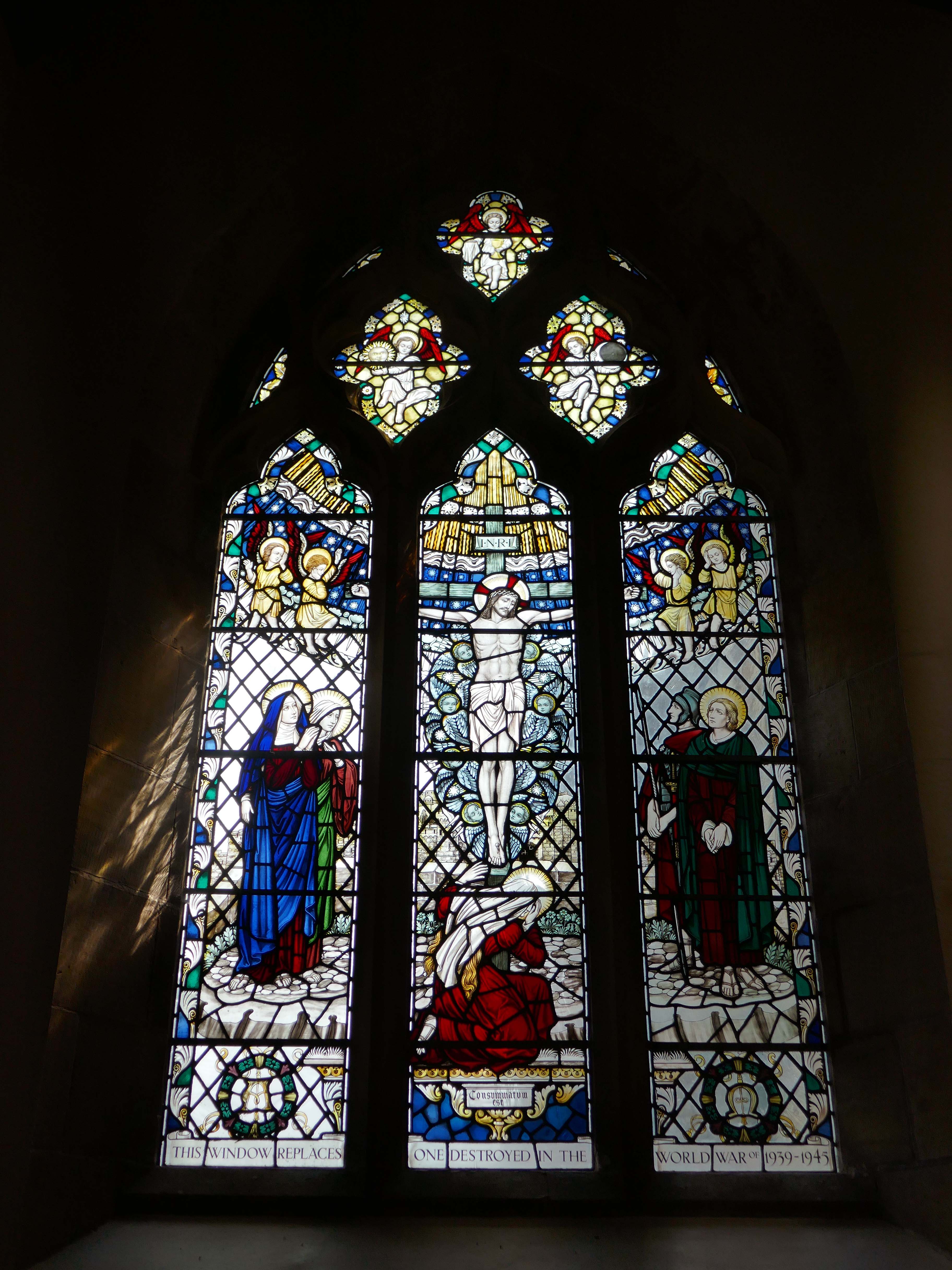
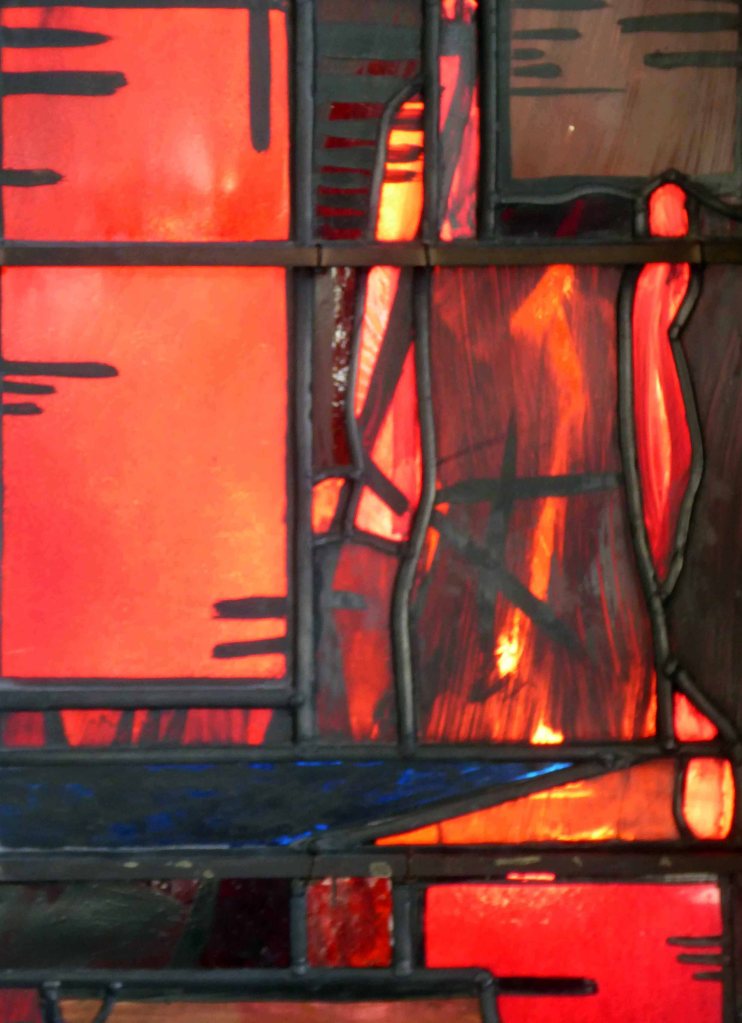
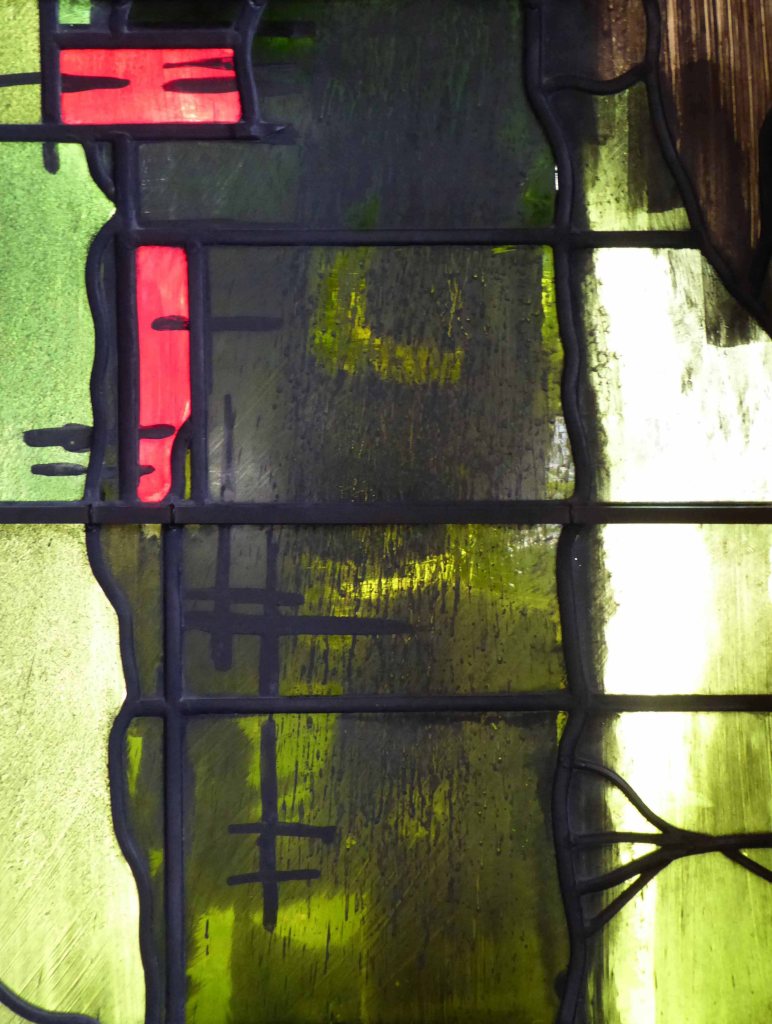
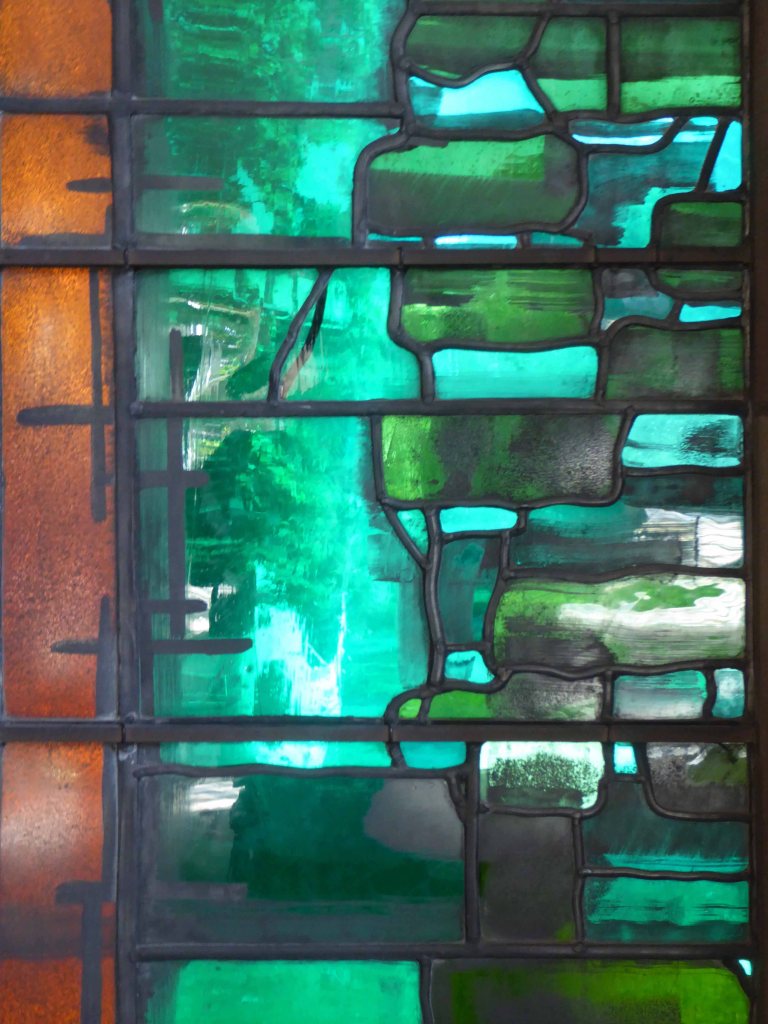
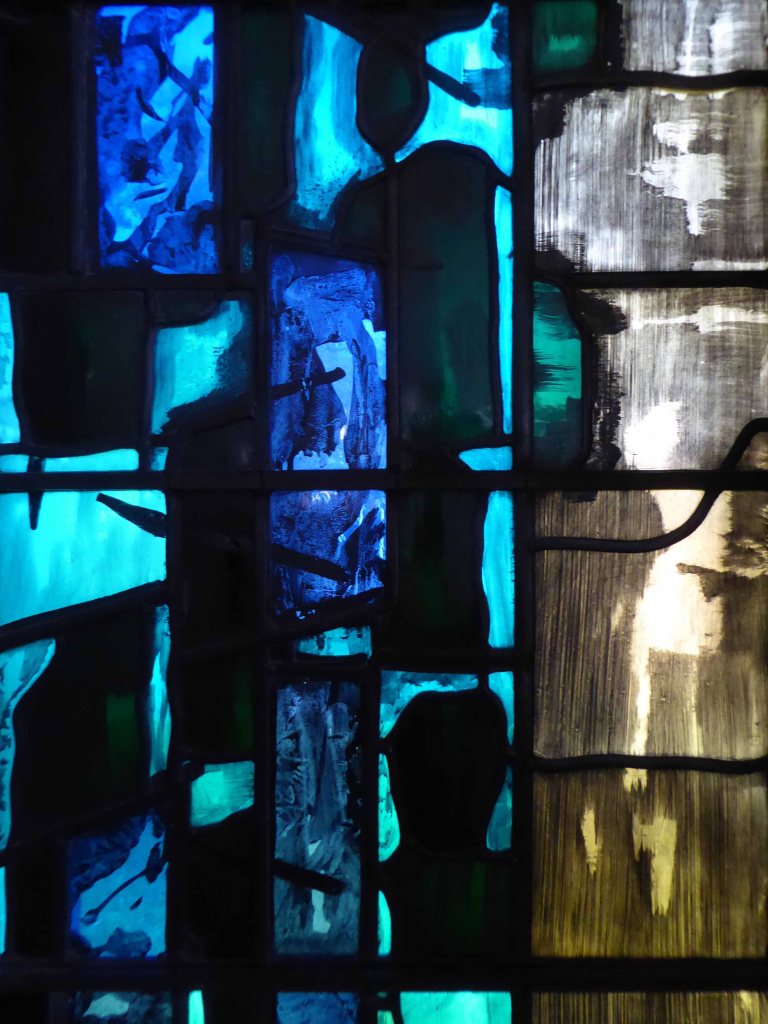
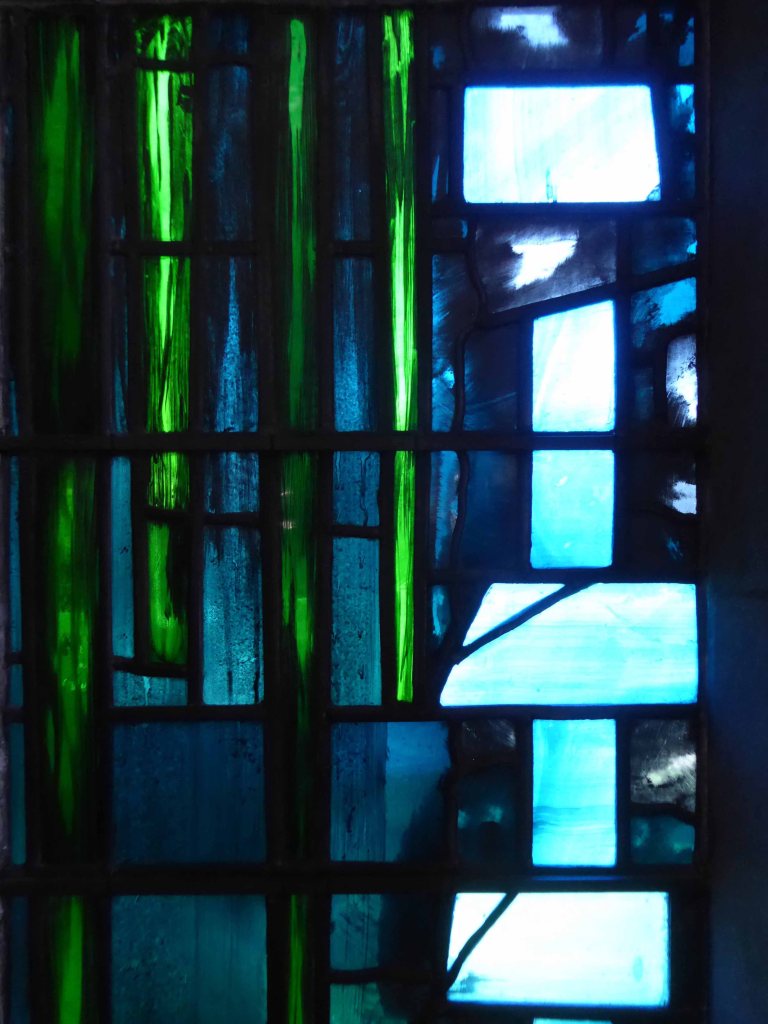
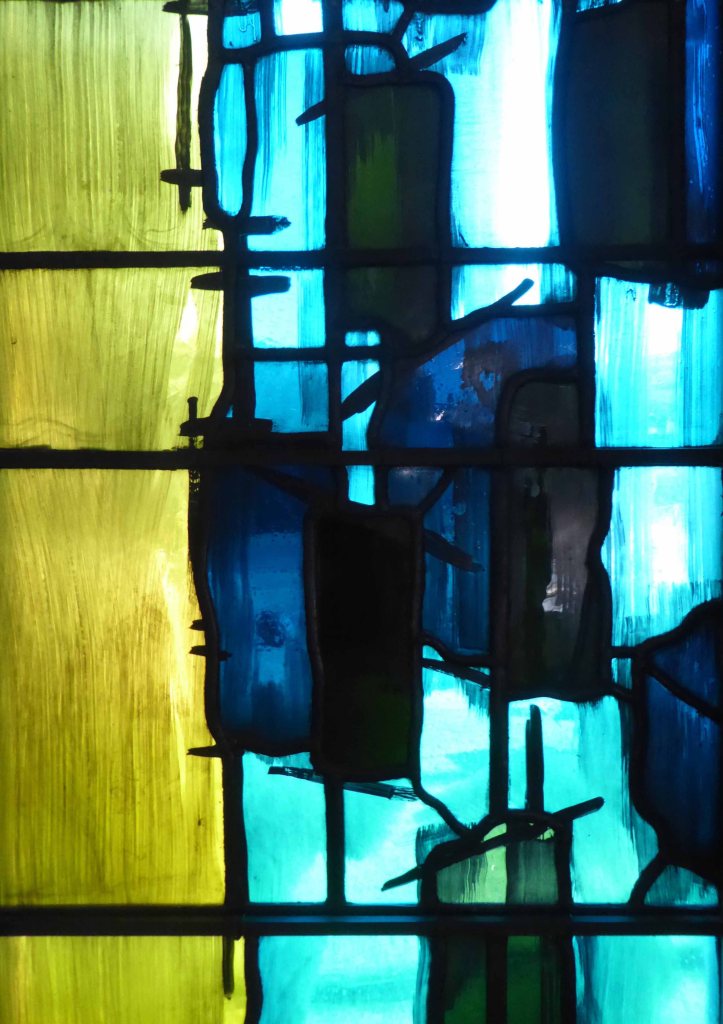
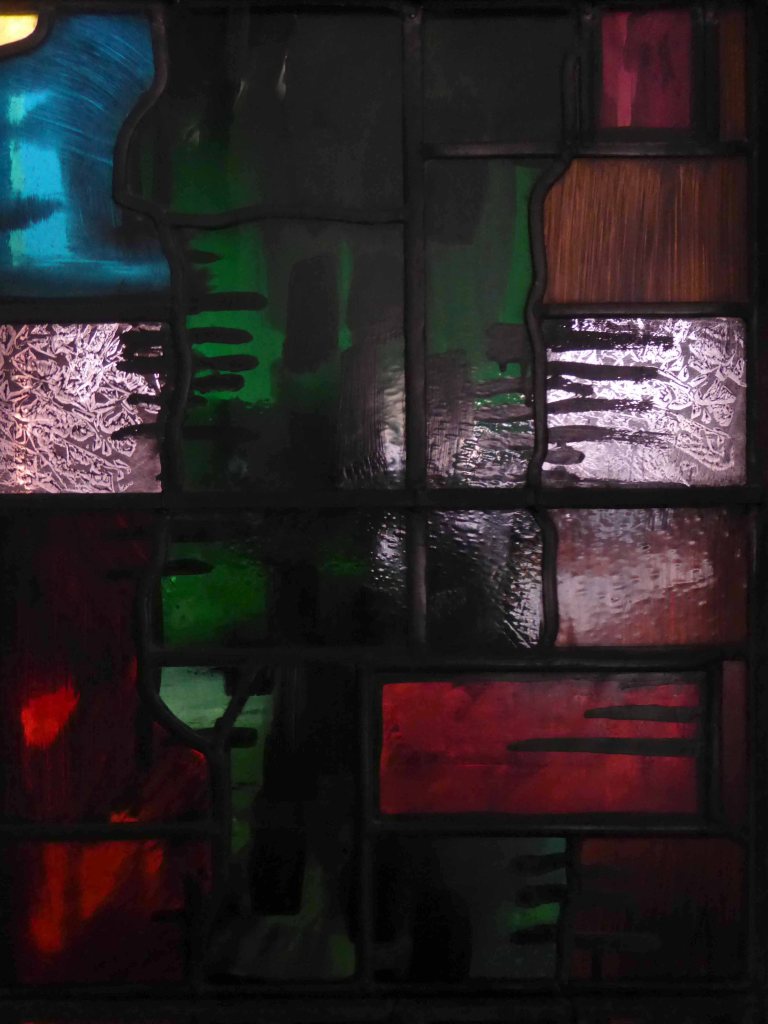
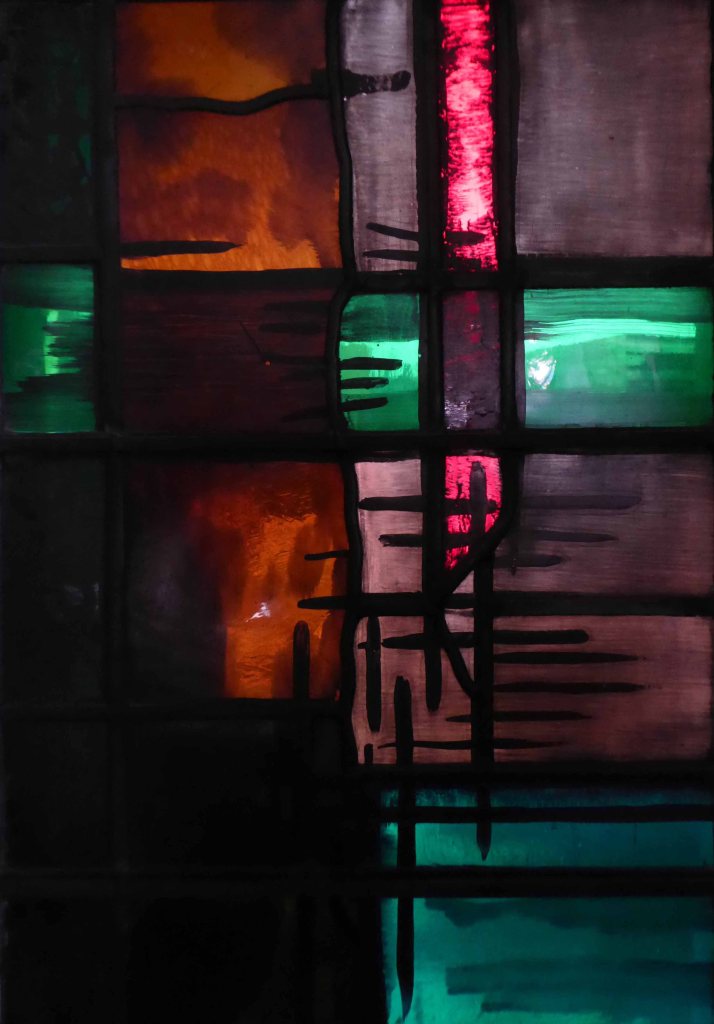
I was particularly intrigued by the Twentieth Century stained glass.

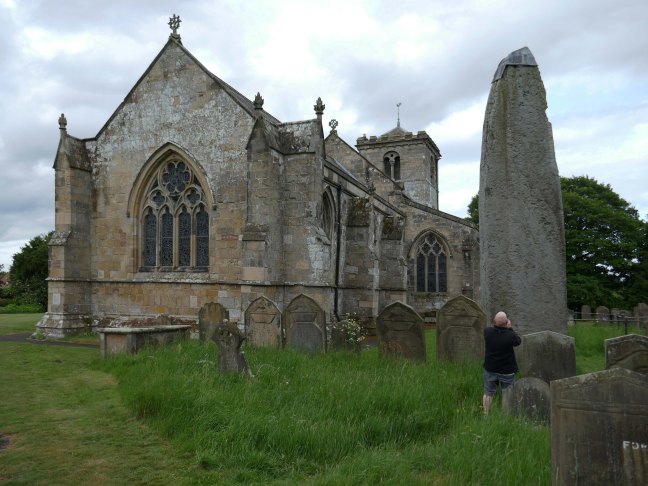
Grade II Listed All Saints sits in the grounds of the famous Rudston megalith , this alone clearly points to the area being of ritual use thousands of years before this Norman church was erected. At 26 feet high, it is the tallest standing stone in Britain. The megalith was set here around 2000 BC, after being quarried and transported from the Cleveland Hills, west of Whitby.

It is a lovely early Norman church built around the year 1100 by William Peverel, lord of the manor. Of that Norman church, the tower remains, and you can still trace the original west entrance in the stonework at the west end of the church.

The Norman building was extended in the 13th century when both north and south aisles were added, along with the name and chancel arch. In the sanctuary is a slightly later sedilia.

National Churches Trust

Most of the Stained Glass in the Windows is modern, designed by John Hardman Studios – 1954-56, and replacing 19th century glass by Capronnier of Brussels and Hodgson of York, destroyed by a land mine in the second world war. The various depictions speak for themselves and these pleasing windows are worth examining, particularly the east window above the altar. It has four panels, the left one depicting SS Peter, Paul, James, John, Ethelburga and the Venerable Bede, the two central panels show the Blessed Virgin Mary and the child Jesus, and the living Christ ‘Reigning from the cross.’ The panel on the right shows northern saints Wilfrid, Cuthbert, Chad, John of Beverley, Alcuin of York, Oswald, Edwin, and most unusually William Wilberforce, MP for Hull and then Yorkshire, who pioneered the abolition of slavery.

Rudston Parish Council

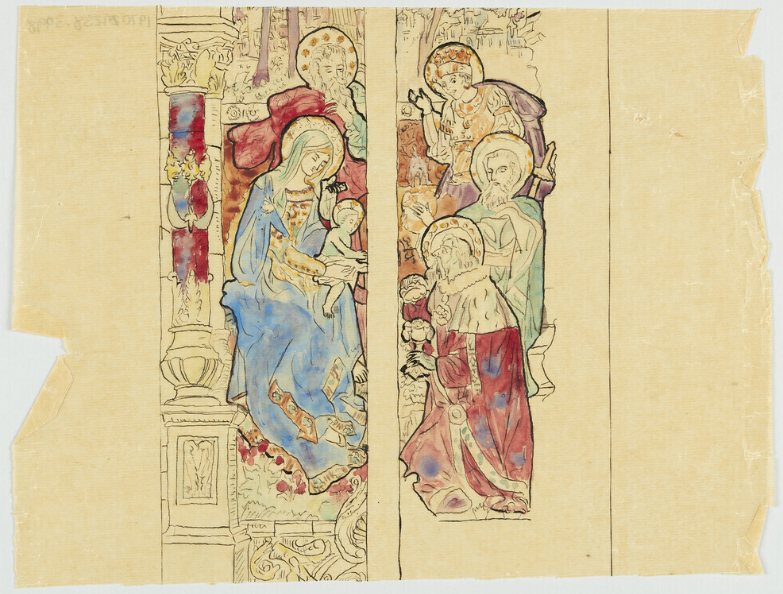
Birmingham Museum have digitised Images of original stained glass designs by John Hardman.

Design for Stained Glass Window for Notre Dame Church Fall River Massachusetts USA – 1921
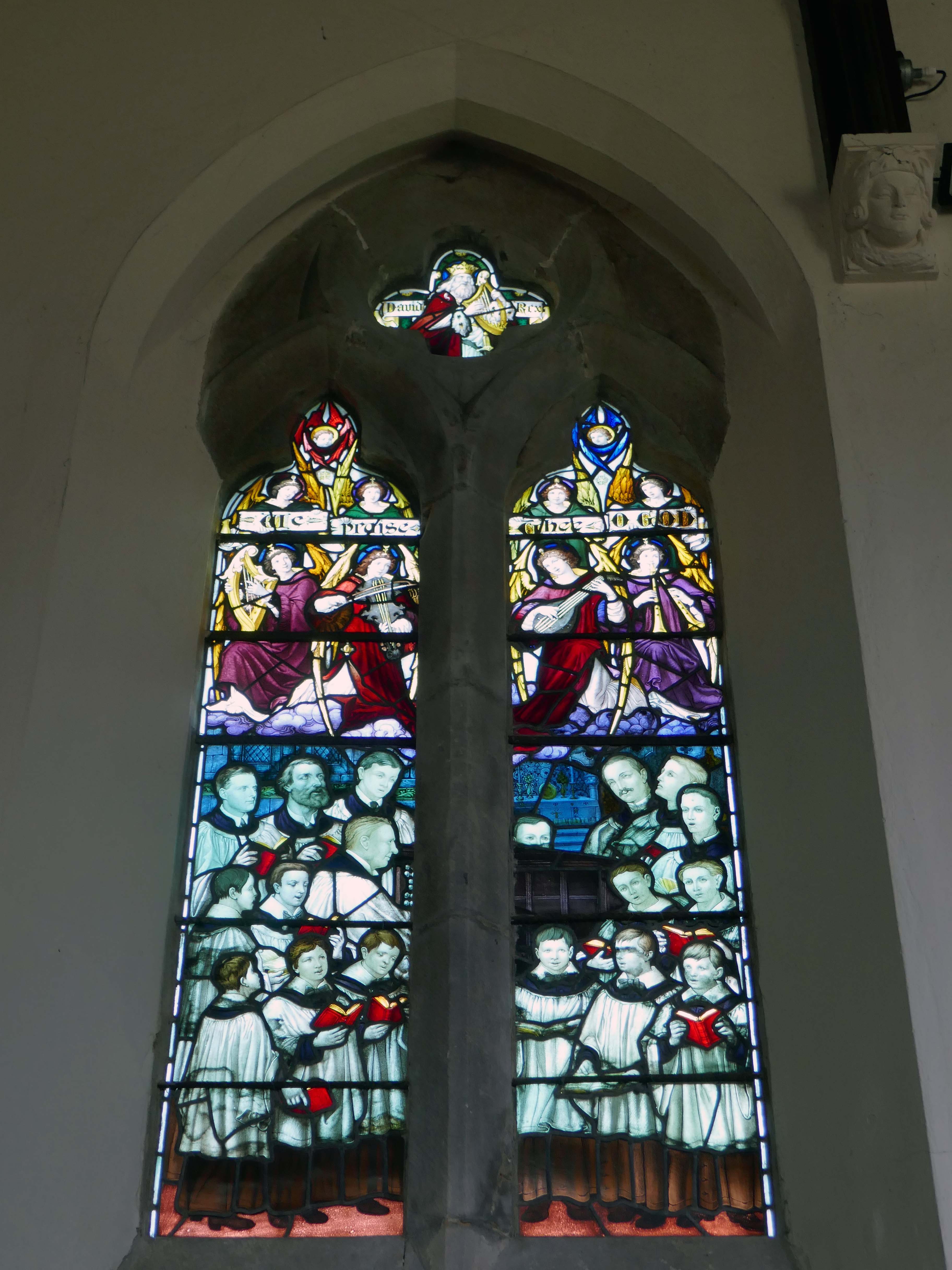
Chancel North Window by Arthur Lucien Ward 1915

Depicting Sir Alexander Macdonald playing the organ surrounded by a choir – We Praise Thee O God. Sir Alexander gave the organ, and was organist and choirmaster for nearly 50 years.

He designed for AR Mowbray from around the time of the First World War into the 1930s.
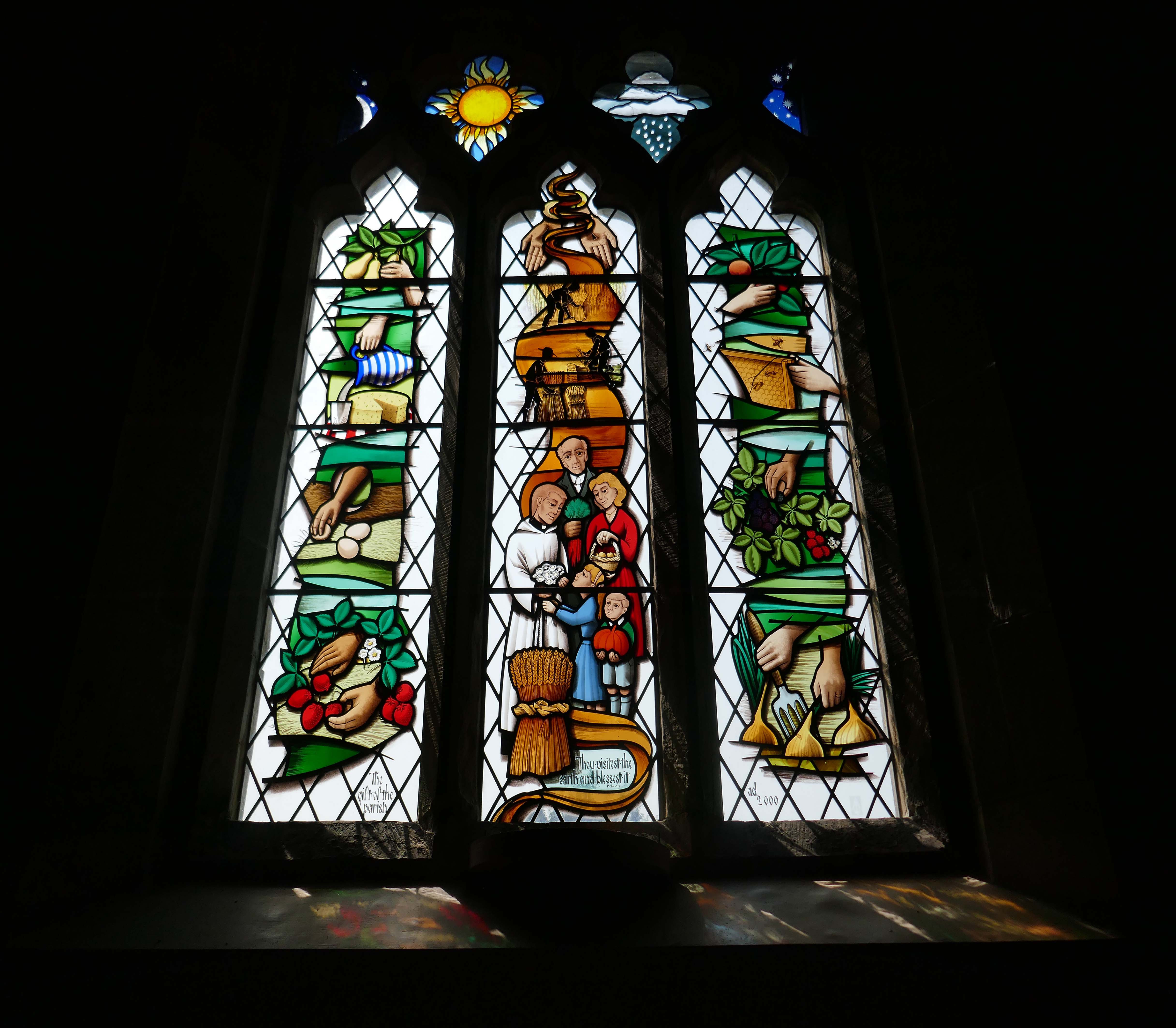
Millennium Window by Ann Sotheran.

Having completed five years at York Art School, then work experience with Harry Harvey FMGP, Ann chose to specialise in stained glass. After working as Harry’s studio assistant for several years, she set up her own workshop in 1987.
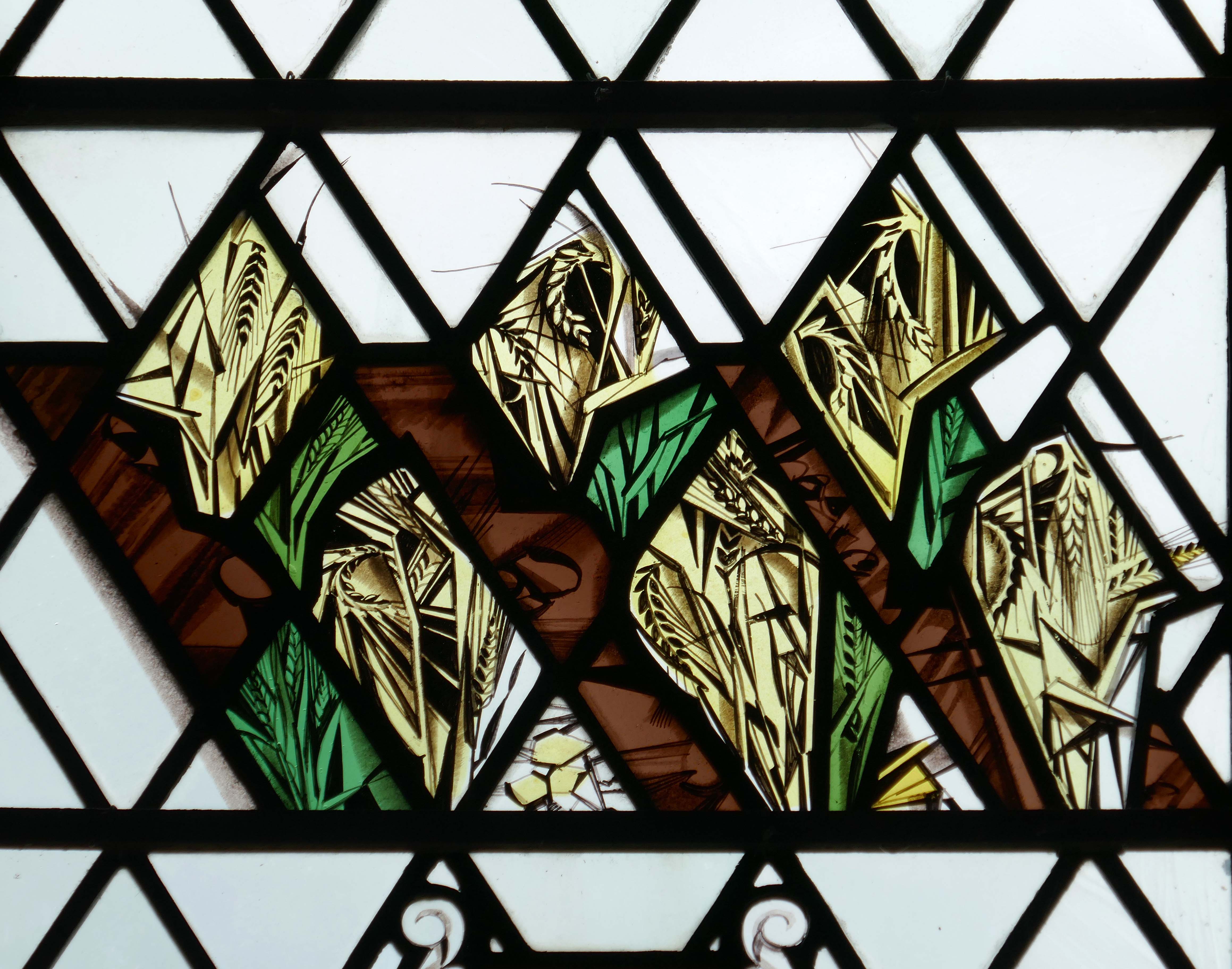
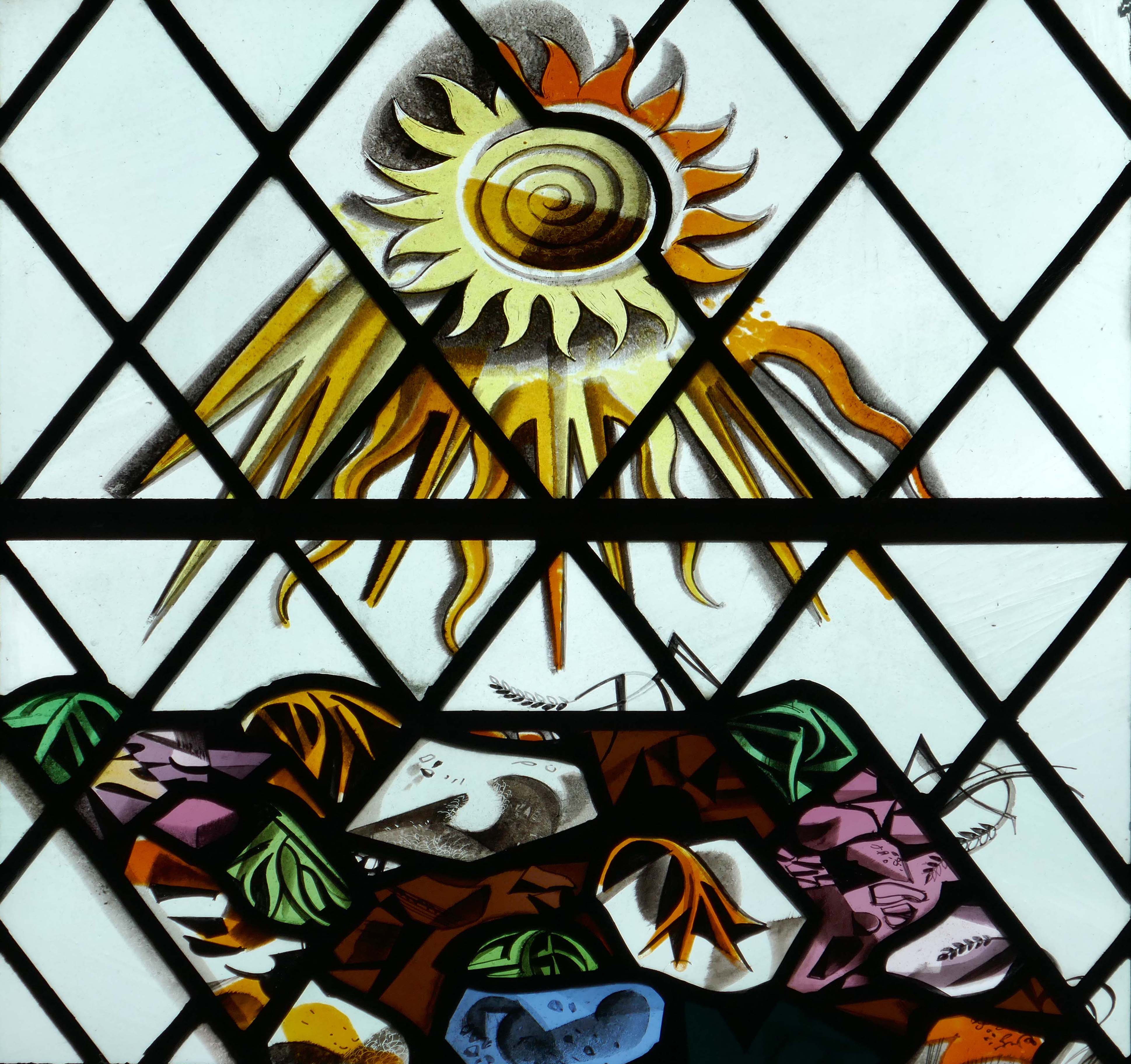
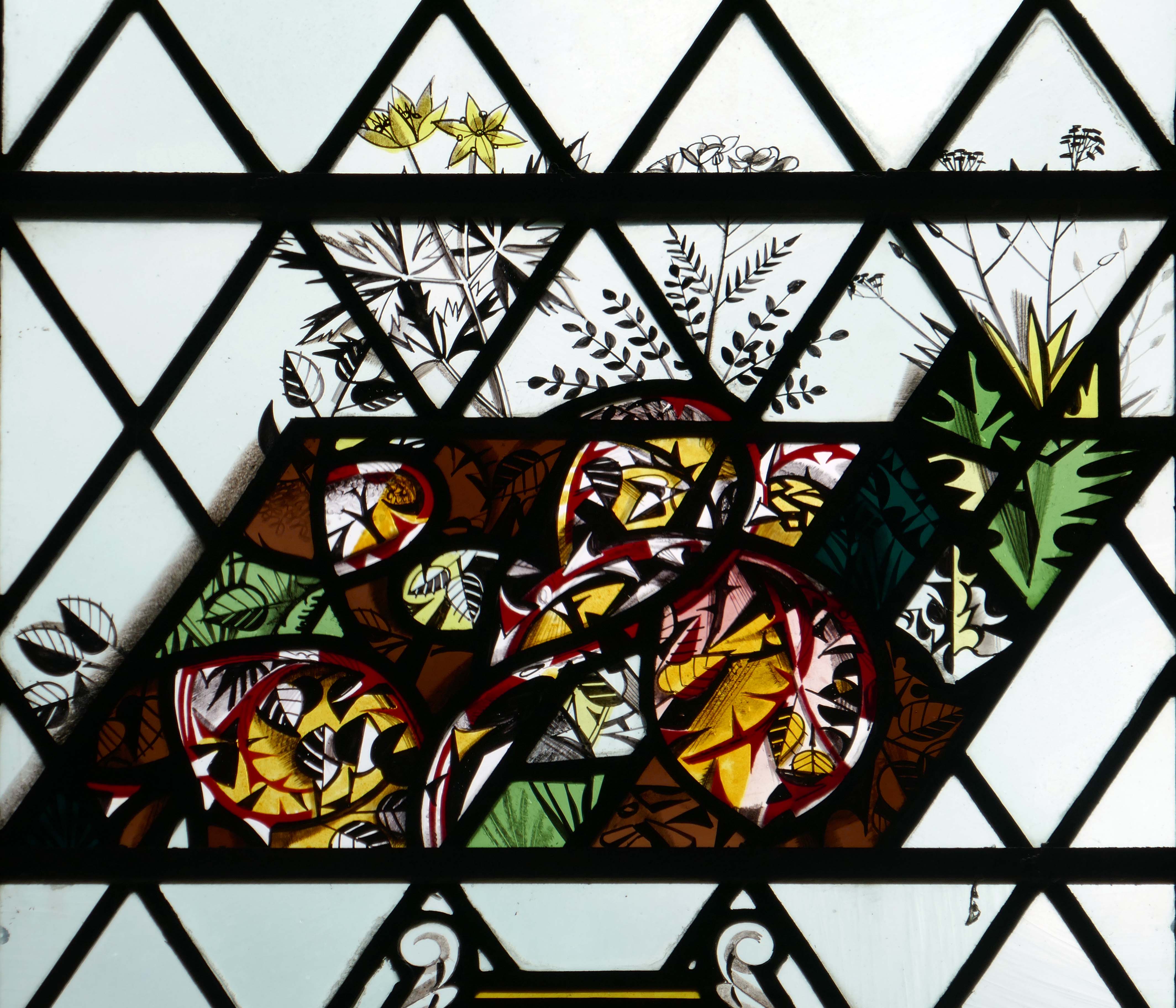
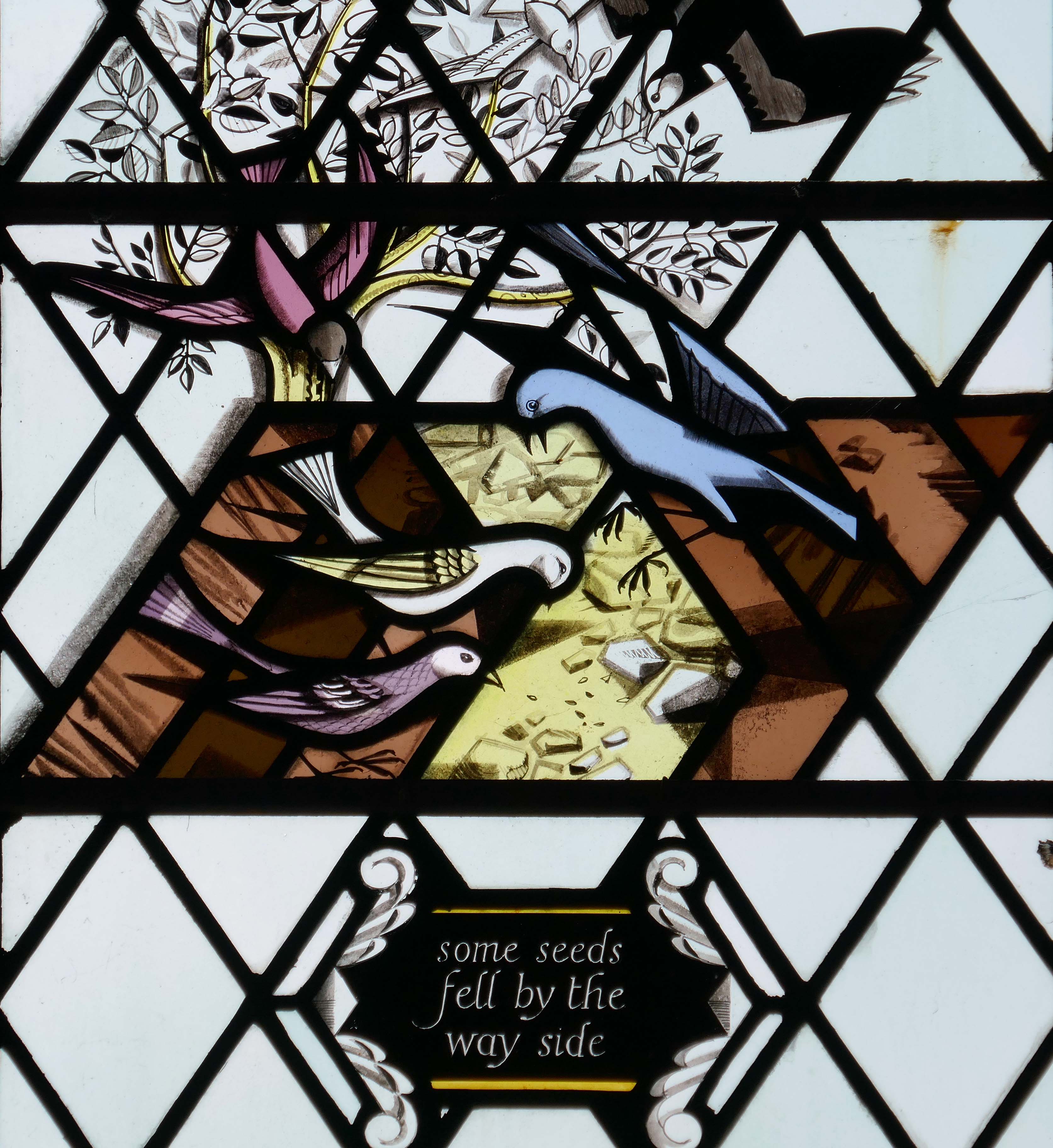
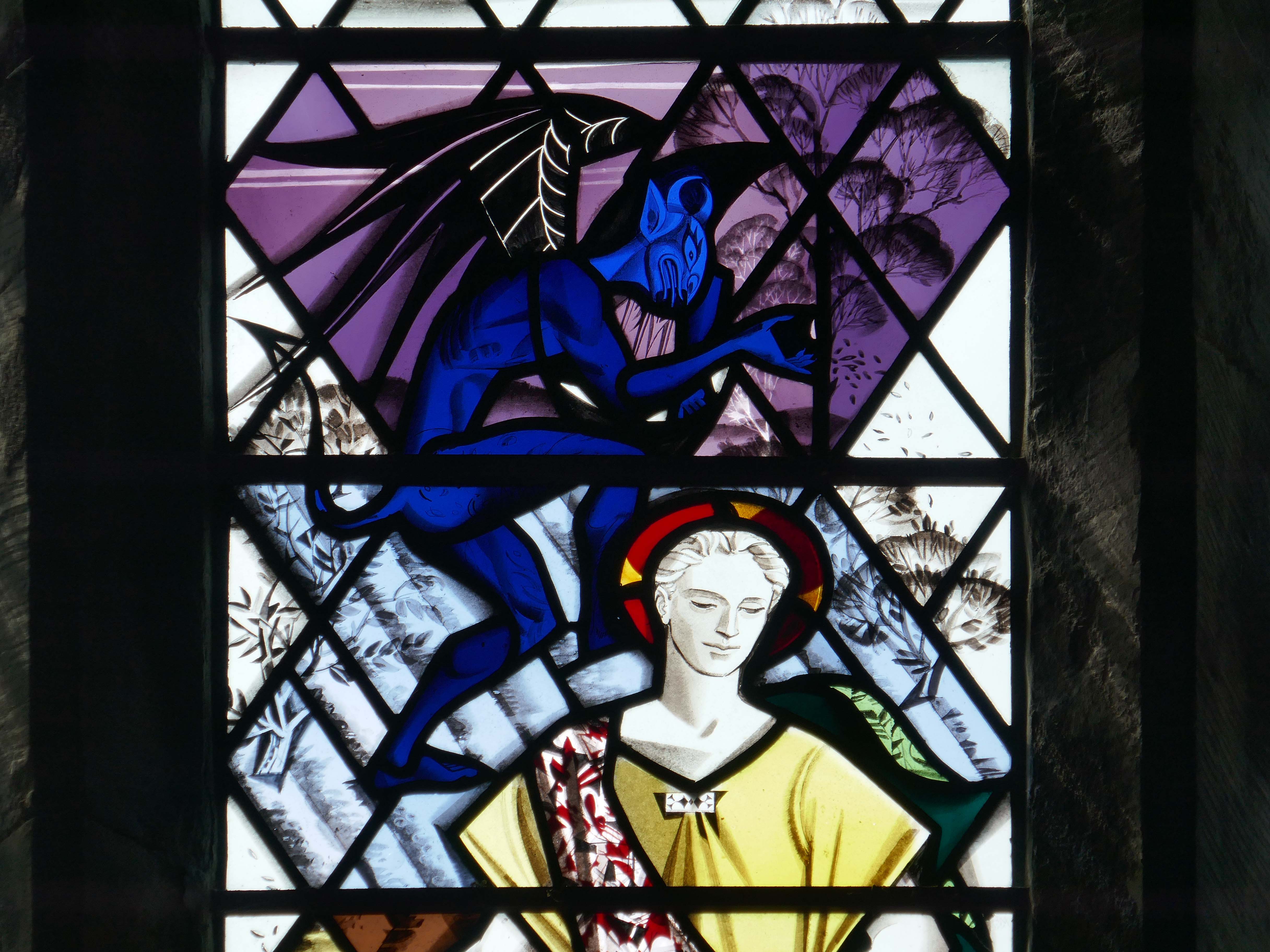
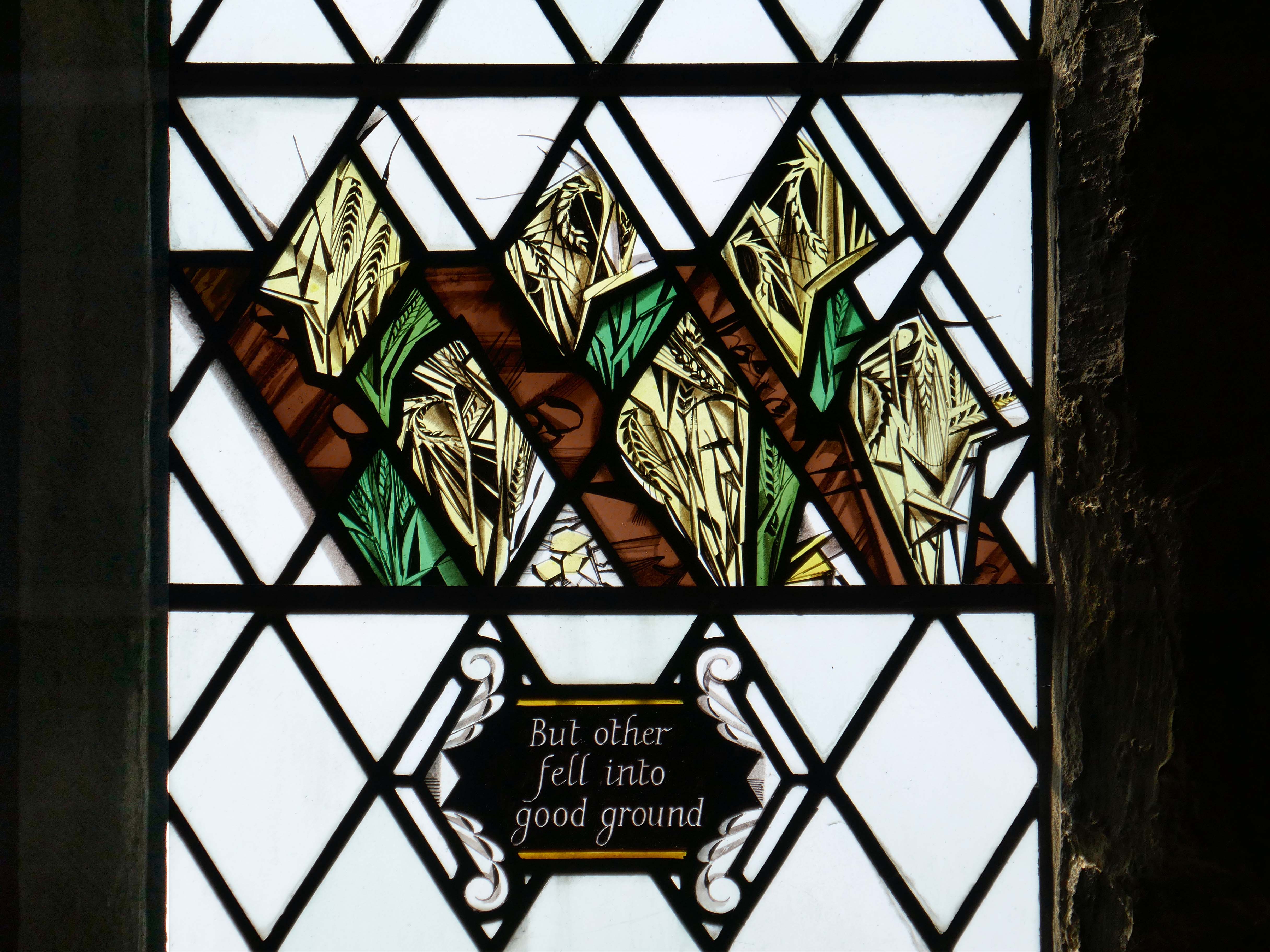
The Sower window by Harry Harvey – 1956.

Harry William Harvey FMGP born 1922 died 2011, was born in Birmingham and received his initial training in stained glass from the local firm of Pierce & Cutler. After the war he joined Wippells of Exeter, before moving to York at the instigation of another Wippells old boy, Harry Stammers, with whom he worked until establishing his own studio in 1956. He also collaborated over many years with Joseph Fisher of Shrigley & Hunt. Two of his assistants, Ann Sotheran and Sep Waugh also went on to establish their own studios.

Visit Stained Glass

And when a great multitude had gathered, and they had come to Him from every city, He spoke by a parable: “A sower went out to sow his seed. And as he sowed, some fell by the wayside; and it was trampled down, and the birds of the air devoured it. Some fell on rock; and as soon as it sprang up, it withered away because it lacked moisture. And some fell among thorns, and the thorns sprang up with it and choked it. But others fell on good ground, sprang up, and yielded a crop a hundredfold.” When He had said these things He cried, “He who has ears to hear, let him hear!” 
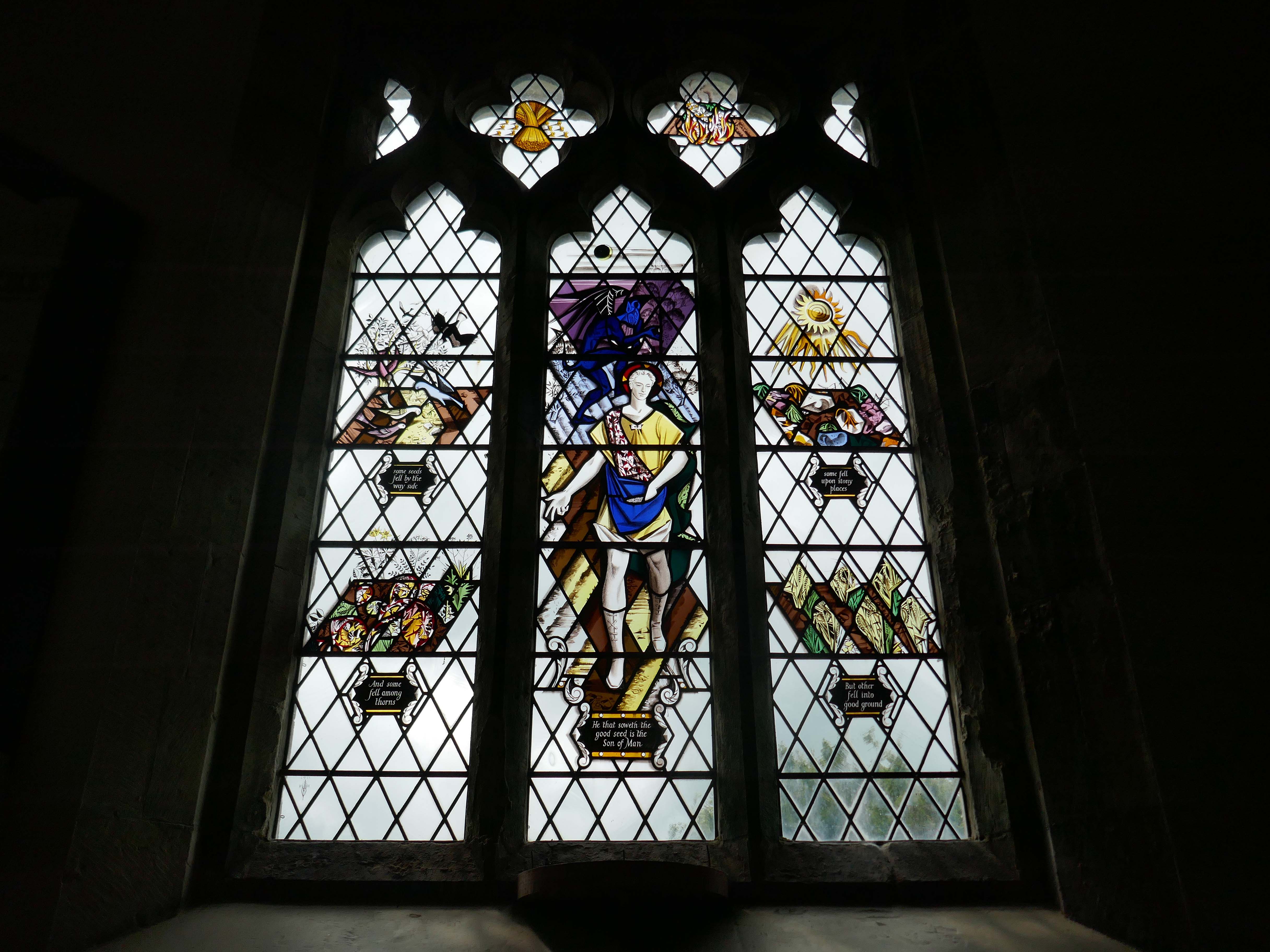
Luke 8:4-8

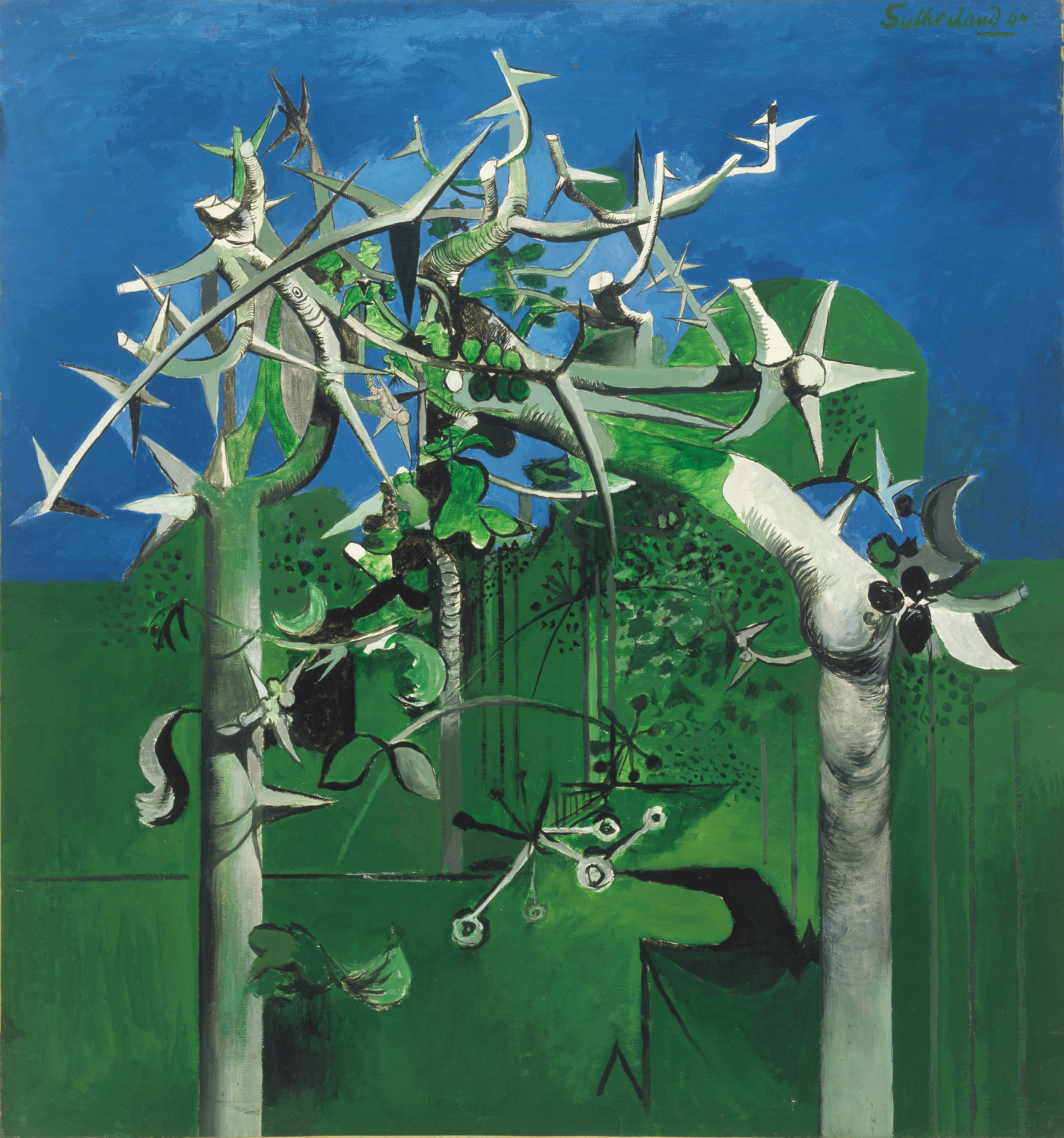
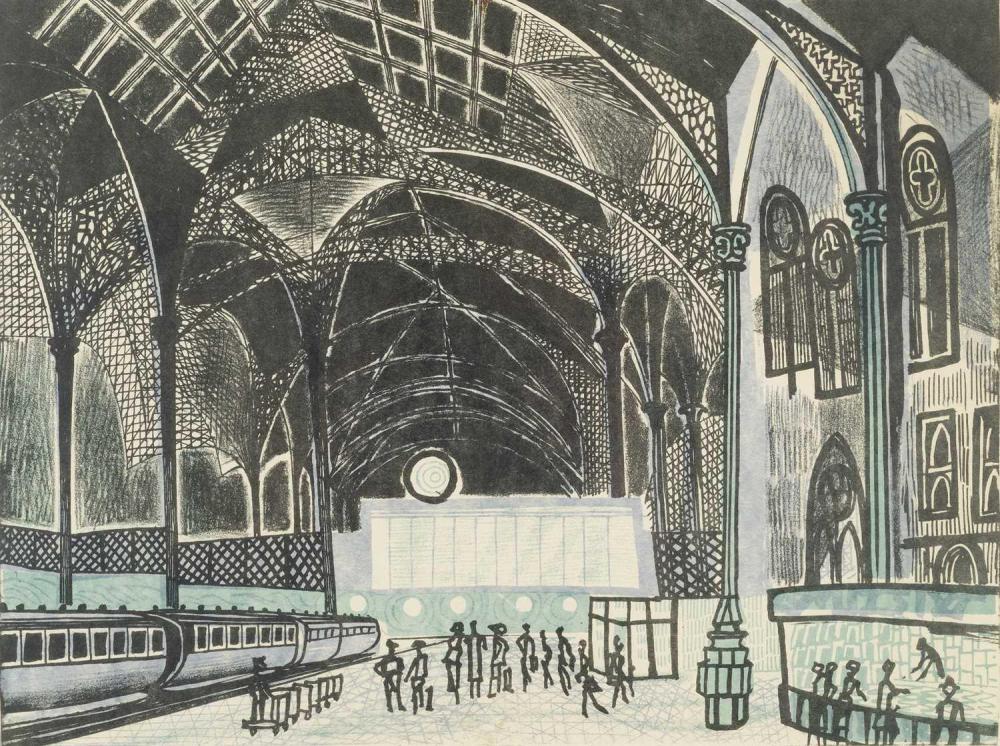
There is something of Graham Sutherland in the thorny angularity of the design.
Along with the lighter touch of Edward Bawden.
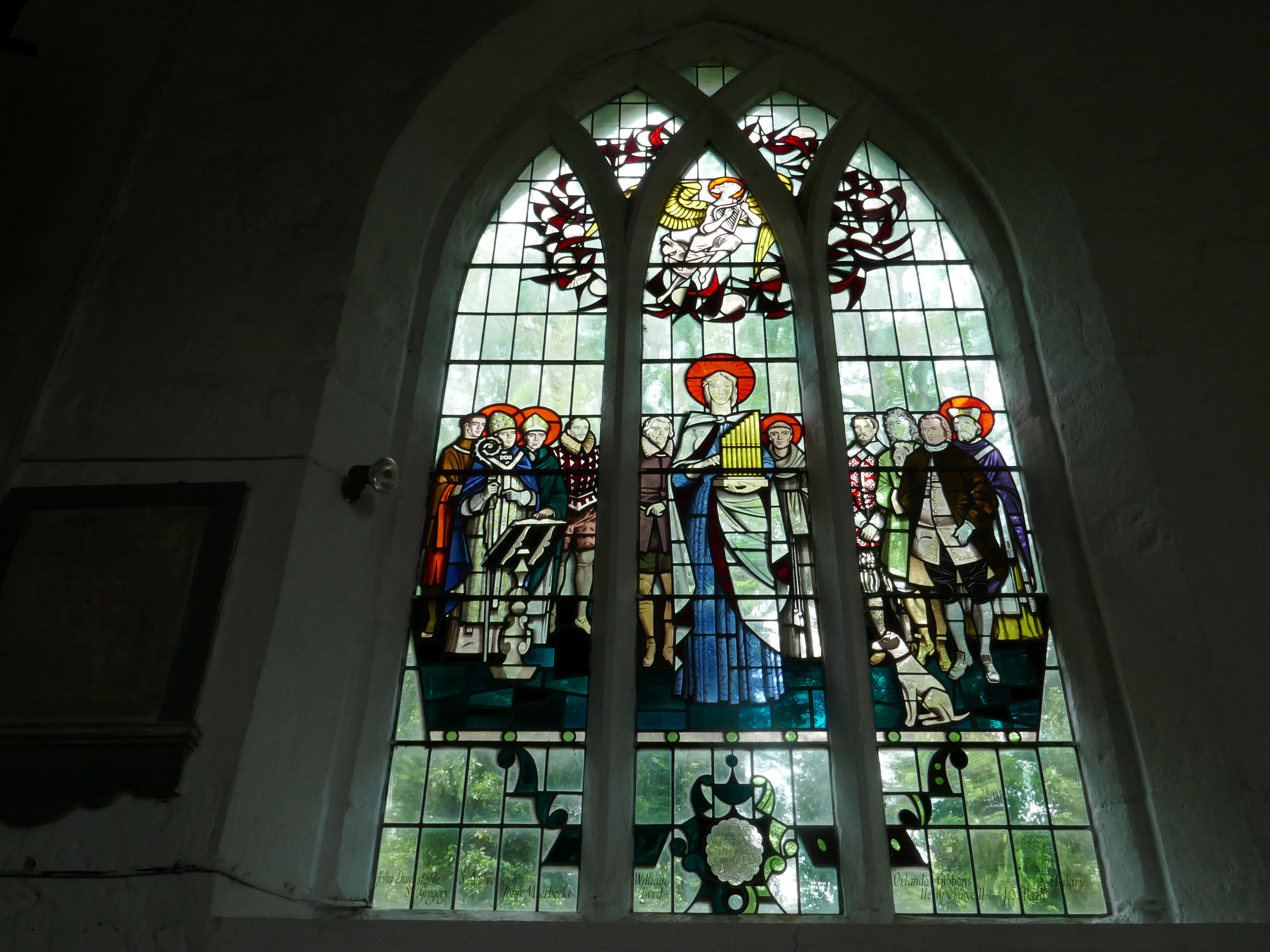
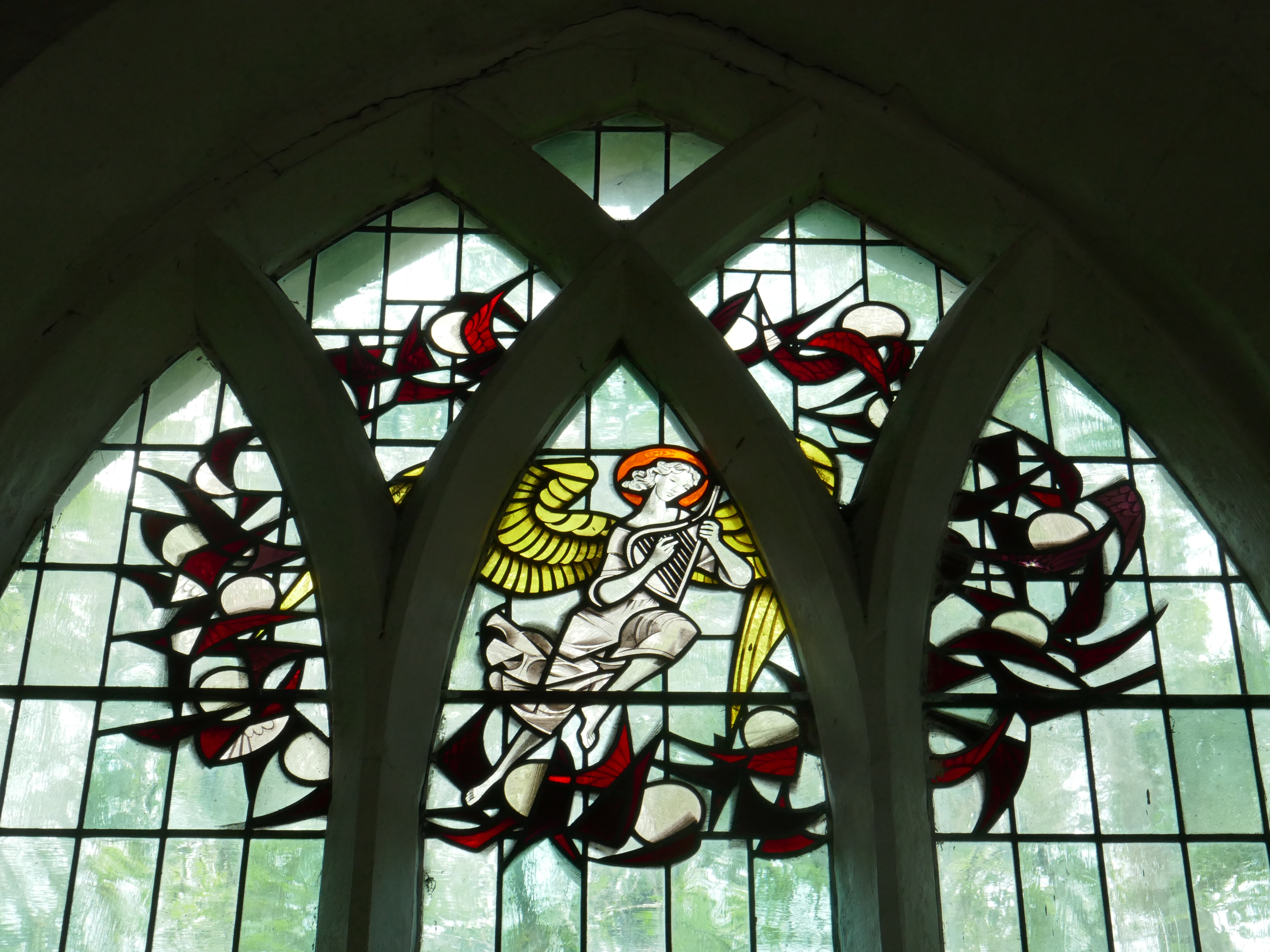
Later in the week I discovered more of Harry Harvey’s work, in nearby All Saints Kilham – the chancel north window 1967.

Depicting on the right Orlando Gibbons, Henry Purcell, JS Bach, St Hilary. Whilst on the left there is John Dunstable, St Gregory, St Ambrose and John Merbeeke.
Coventry Cathedral

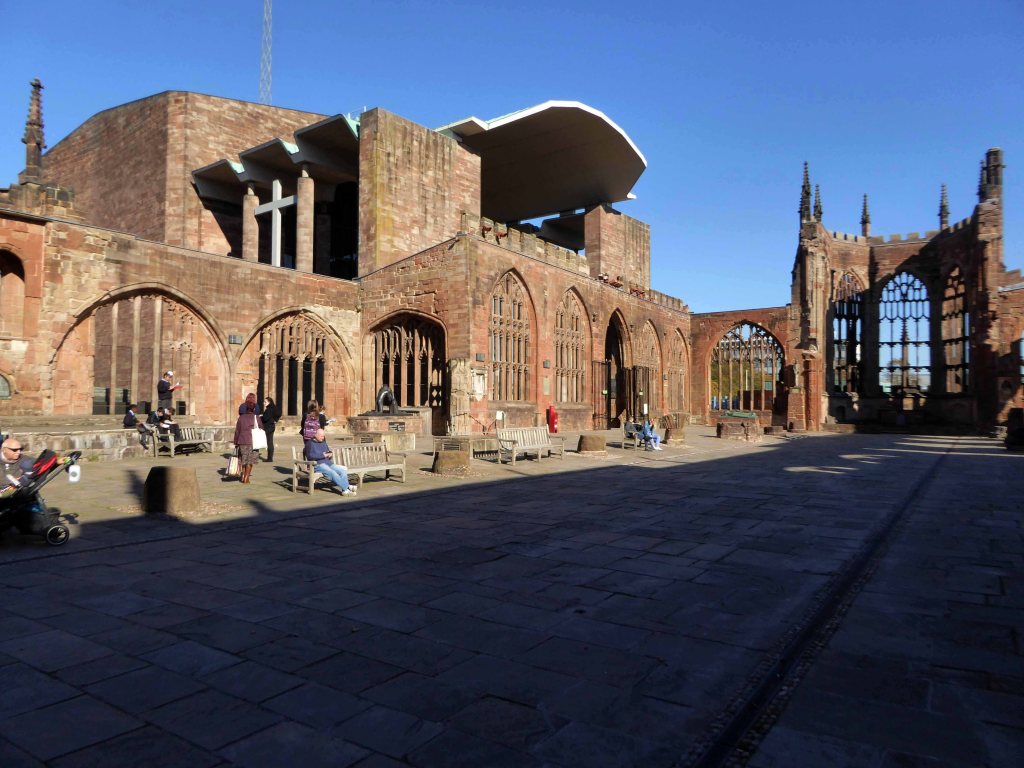
On the night of 14 November 1940, the city of Coventry was devastated by bombs dropped by the Luftwaffe. The Cathedral burned with the city, having been hit by several incendiary devices.
The decision to rebuild the cathedral was taken the morning after its destruction. Rebuilding would not be an act of defiance, but rather a sign of faith, trust and hope for the future of the world. It was the vision of the Provost at the time, Richard Howard, which led the people of Coventry away from feelings of bitterness and hatred. This has led to the cathedral’s Ministry of Peace and Reconciliation, which has provided spiritual and practical support, in areas of conflict throughout the world.

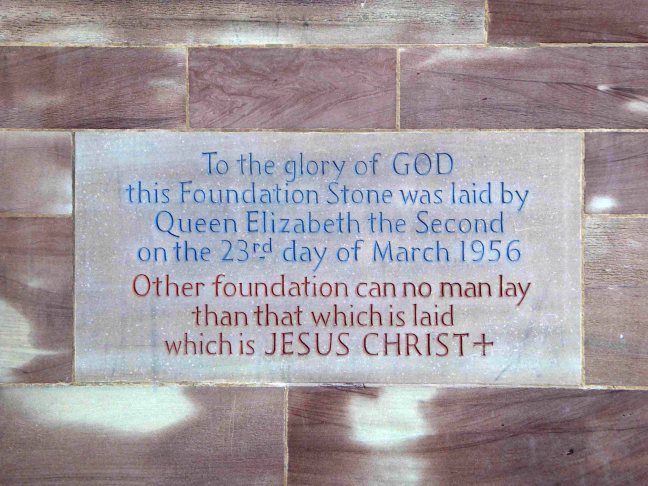
Her Majesty the Queen laid the foundation stone on 23 March 1956 and the building was consecrated on 25 May 1962, in her presence. The ruins remain hallowed ground and together the two create one living Cathedral.

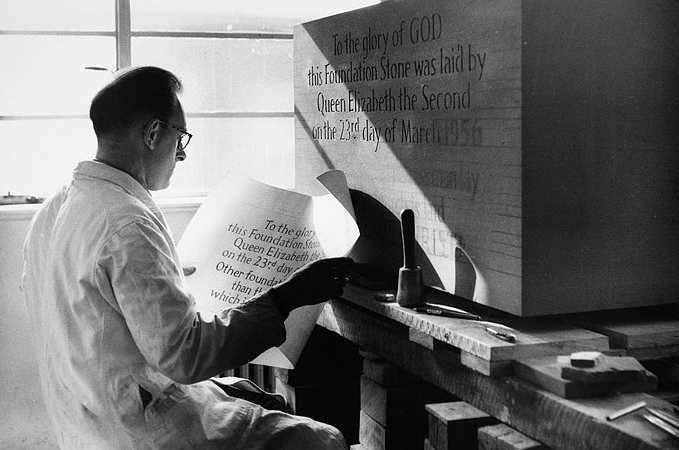
Ralph Beyer carving the foundation stone for Coventry Cathedral.

© Historic England Archive, John Laing Photographic Collection.

Coventry Cathderal

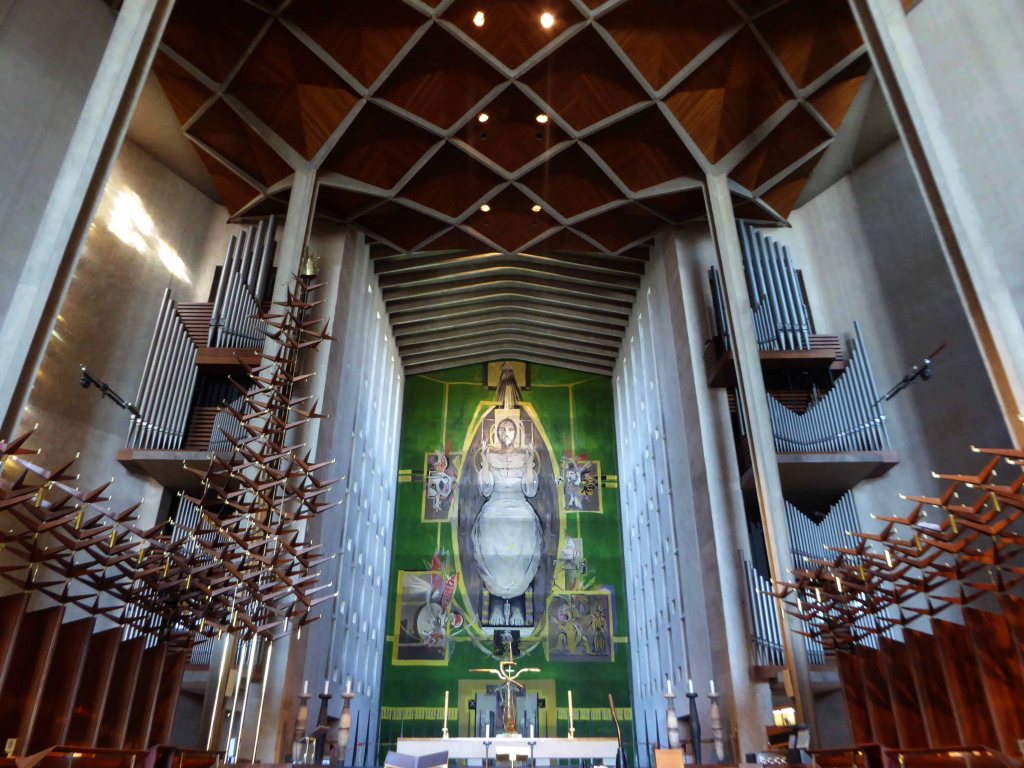
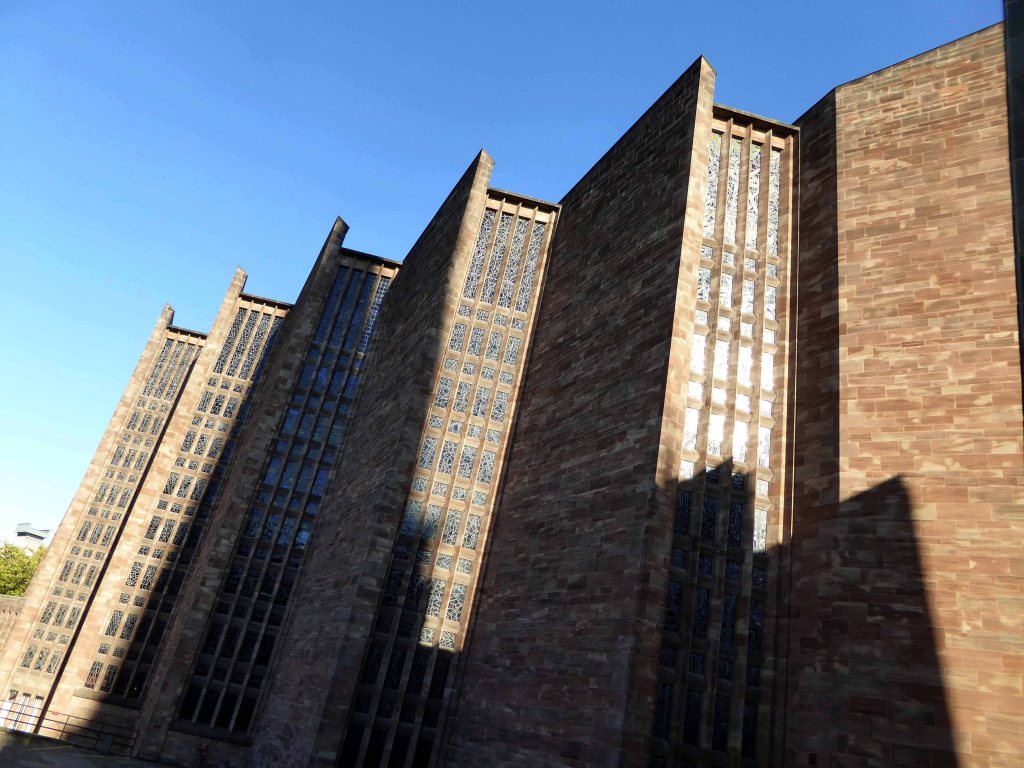
The new Cathedral was itself an inspiration to many fine artists of the post-war era. The architect, Sir Basil Spence, commissioned work from Graham Sutherland, John Piper, Ralph Beyer, John Hutton, Jacob Epstein, Elisabeth Frink and others – most still to reach the peak of their artistic careers.

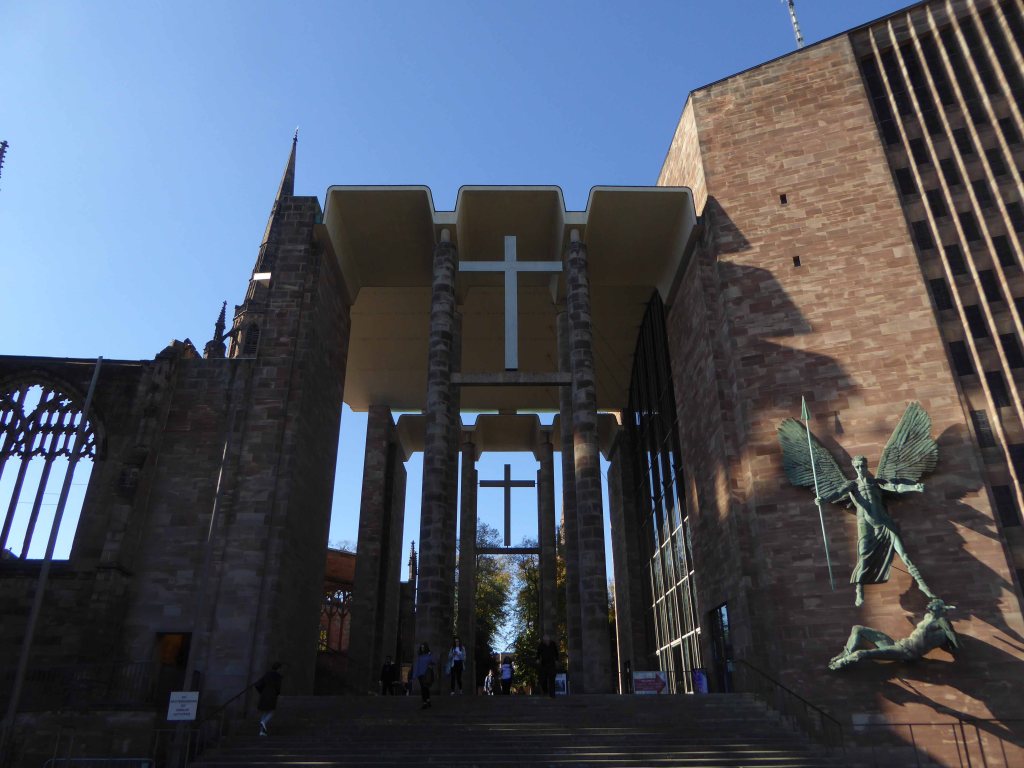
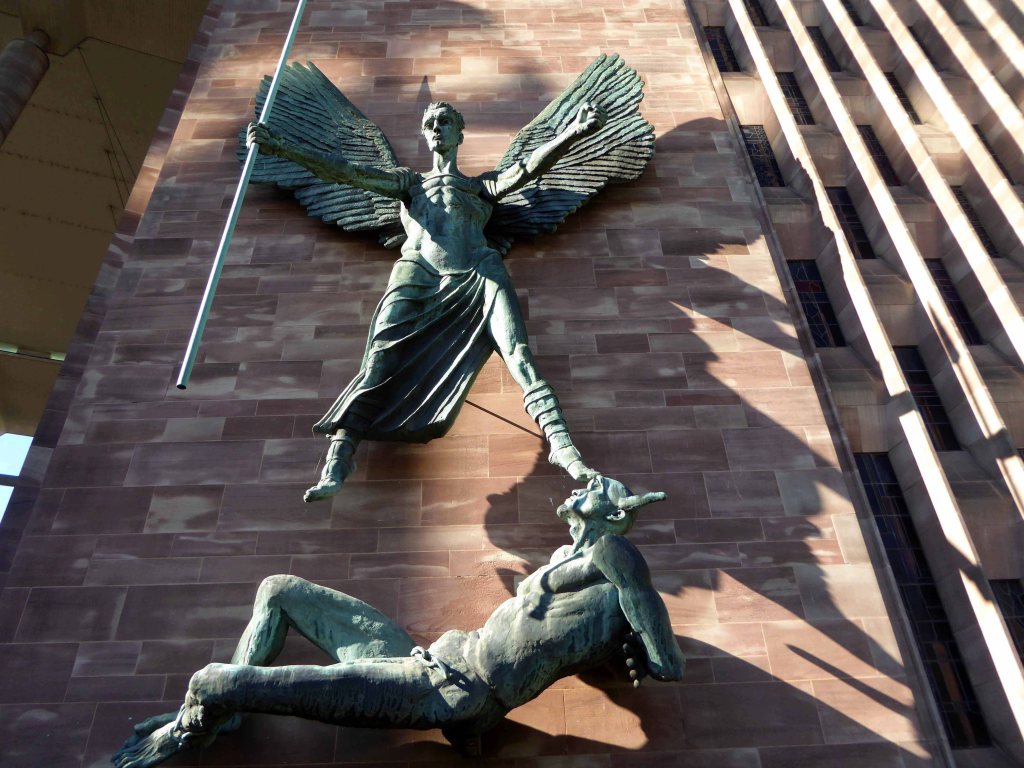
St. Michael and the Devil on the southern end of the east wall. It was sculpted by Sir Jacob Epstein, who, sadly, died in 1959, and therefore didn’t live to see his masterpiece mounted on the cathedral wall a year later.

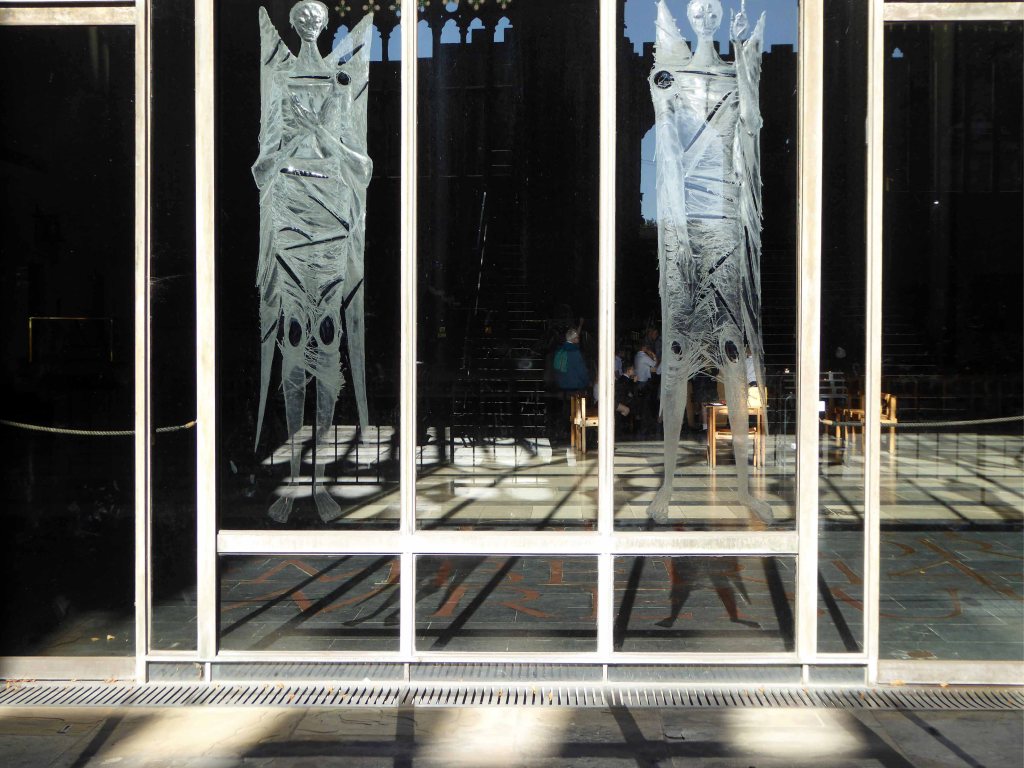
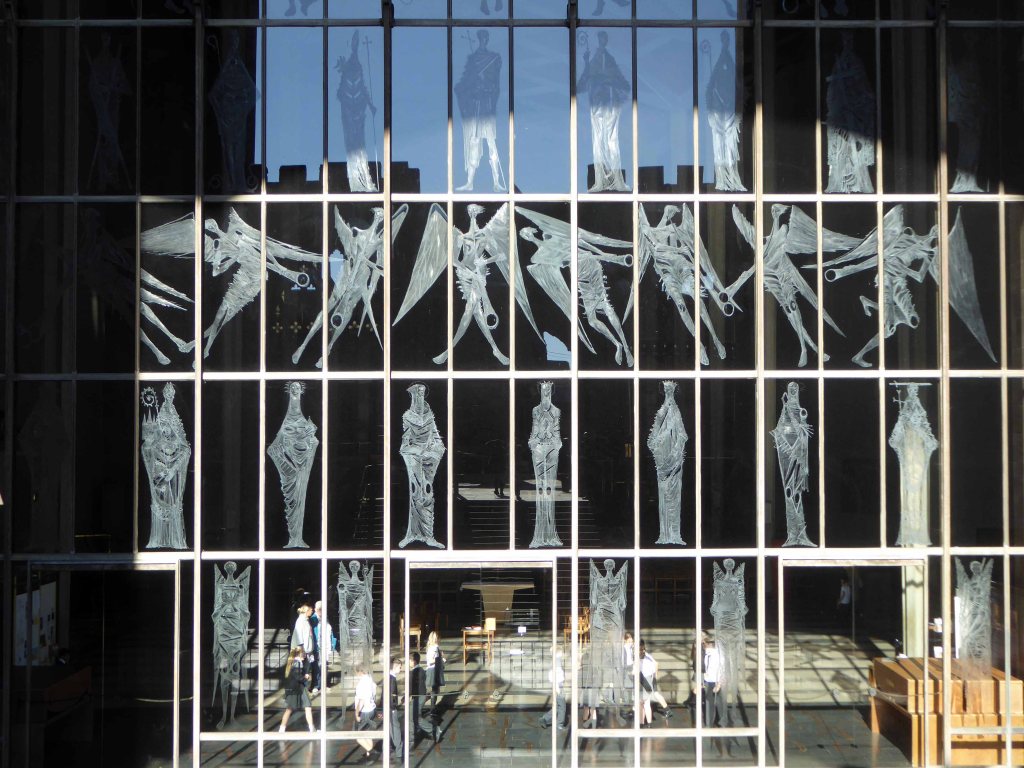
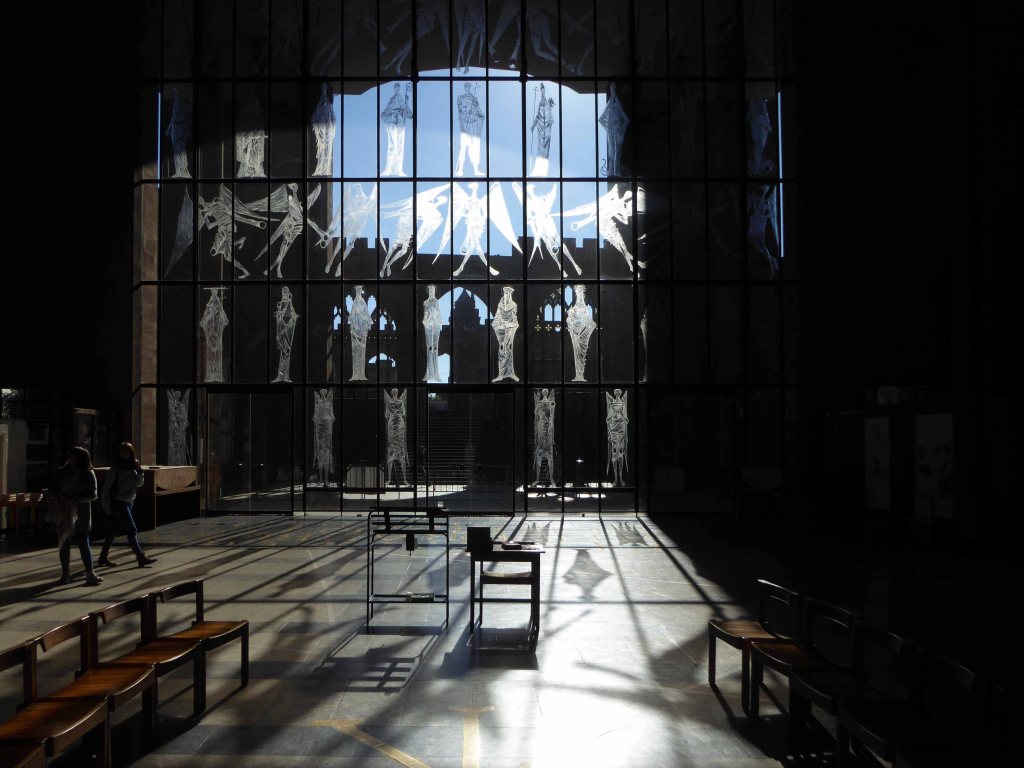
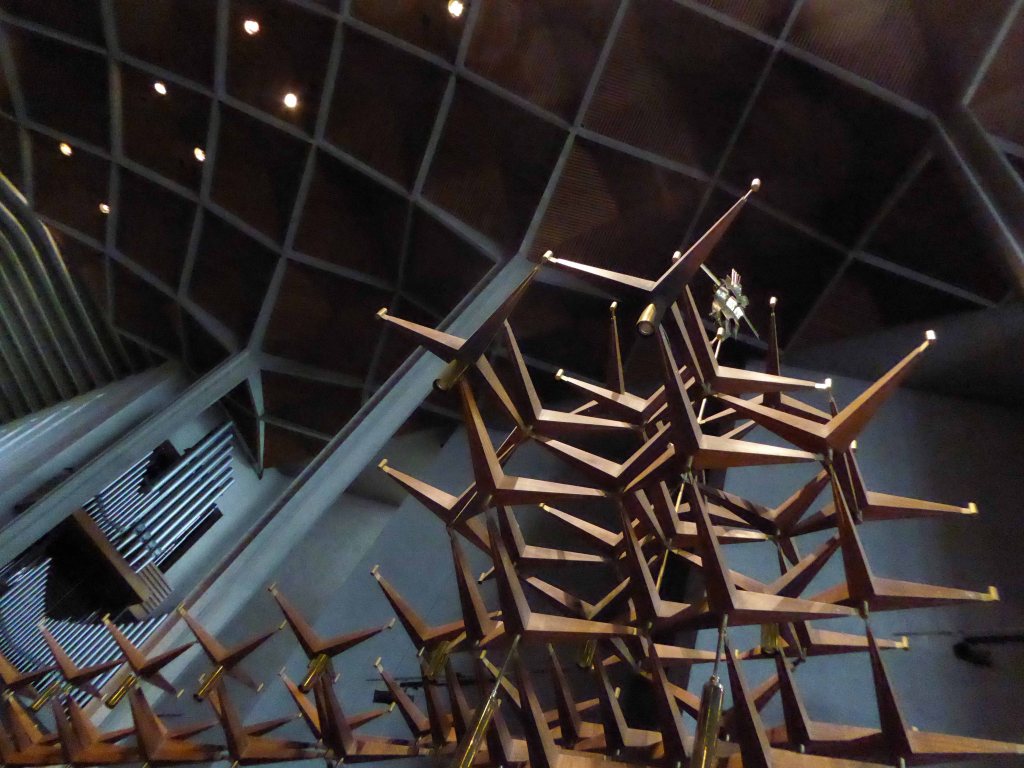
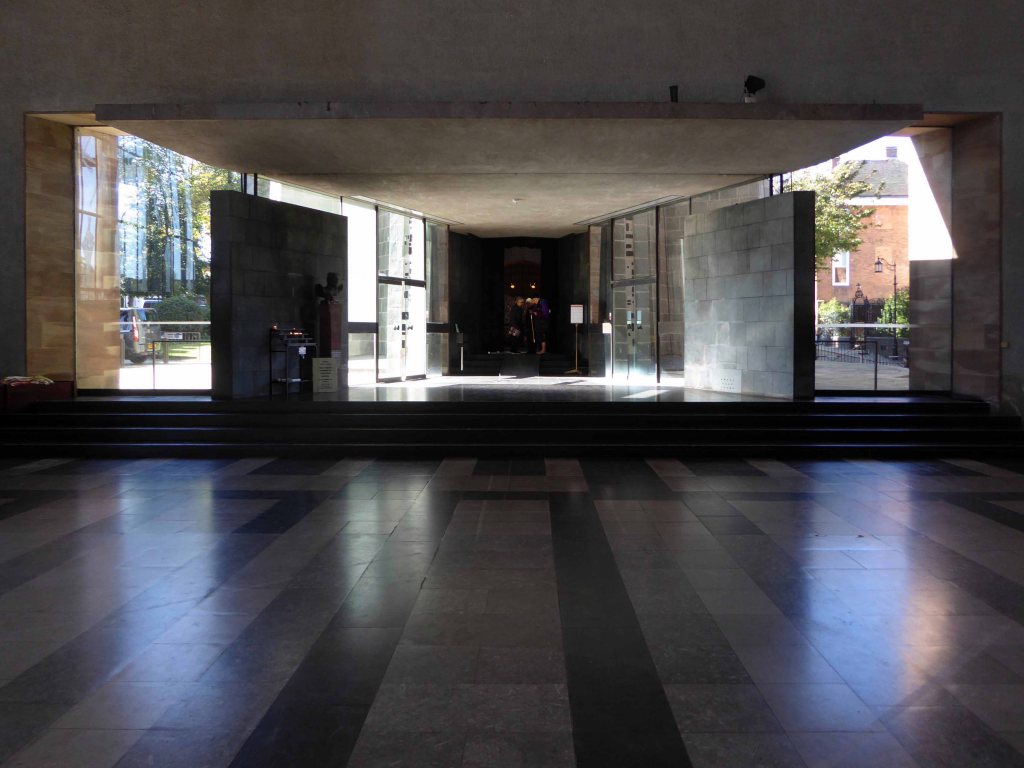
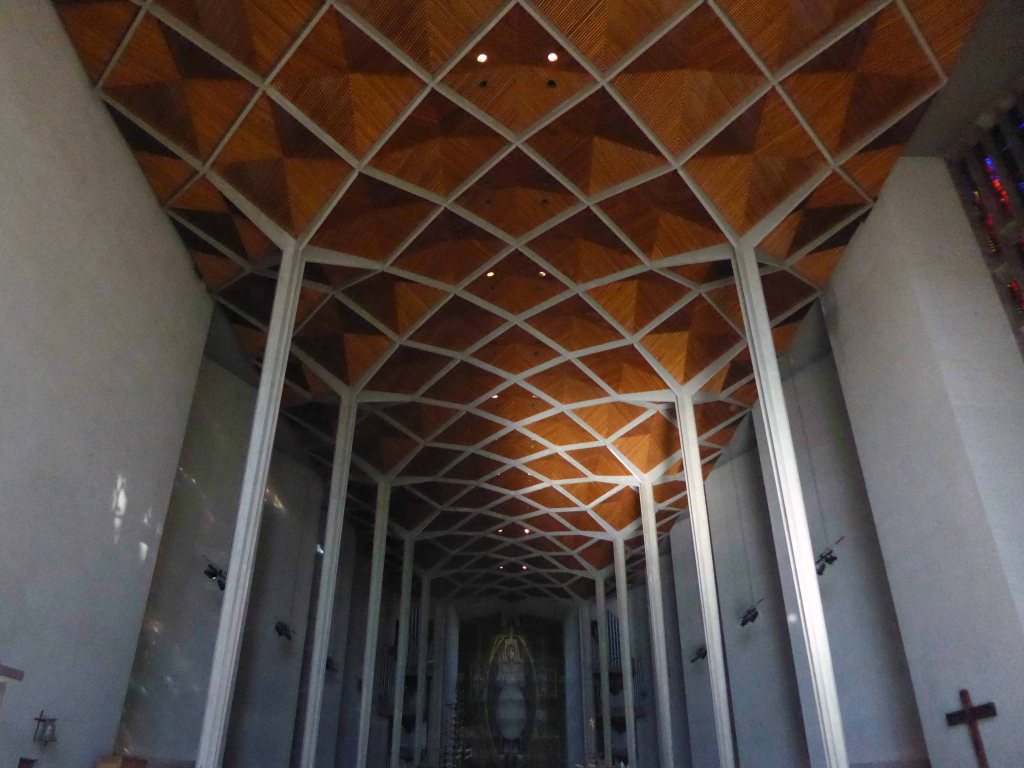
Entrance to the cathedral is through the Screen of Saints and Angels – it is seventy feet high and forty five feet wide and is supported by a bronze framework hung by wires from the roof for added strength.

This unique screen formed part of Sir Basil Spence’s first vision for the new cathedral. As he stared out from the ruins of the bombed cathedral, he saw the shape for the new church through a screen of saints. This transparent wall would link the old and new – making each mutually visible from within each other. Provost Howard set out to draw up a scheme consisting of all the saints who were responsible for the bringing of Christianity to Britain. As John Hutton began to make initial designs, he soon realised that row upon row of saints would need to be broken up in some way, and suggested that angels be inserted between the saints.

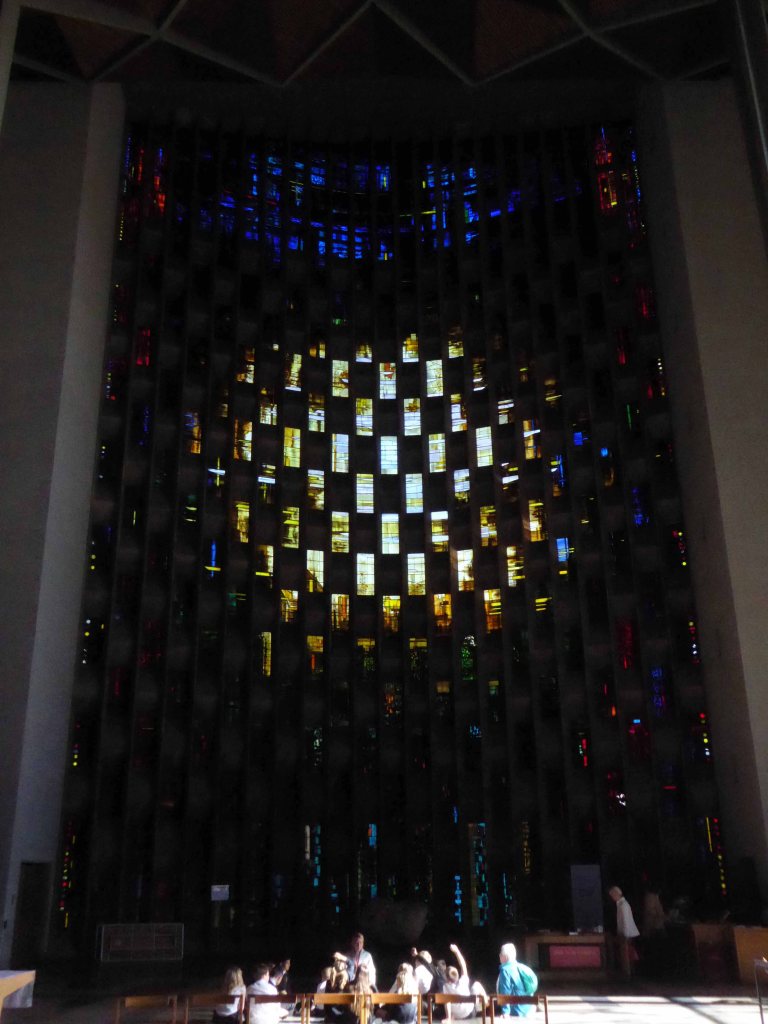
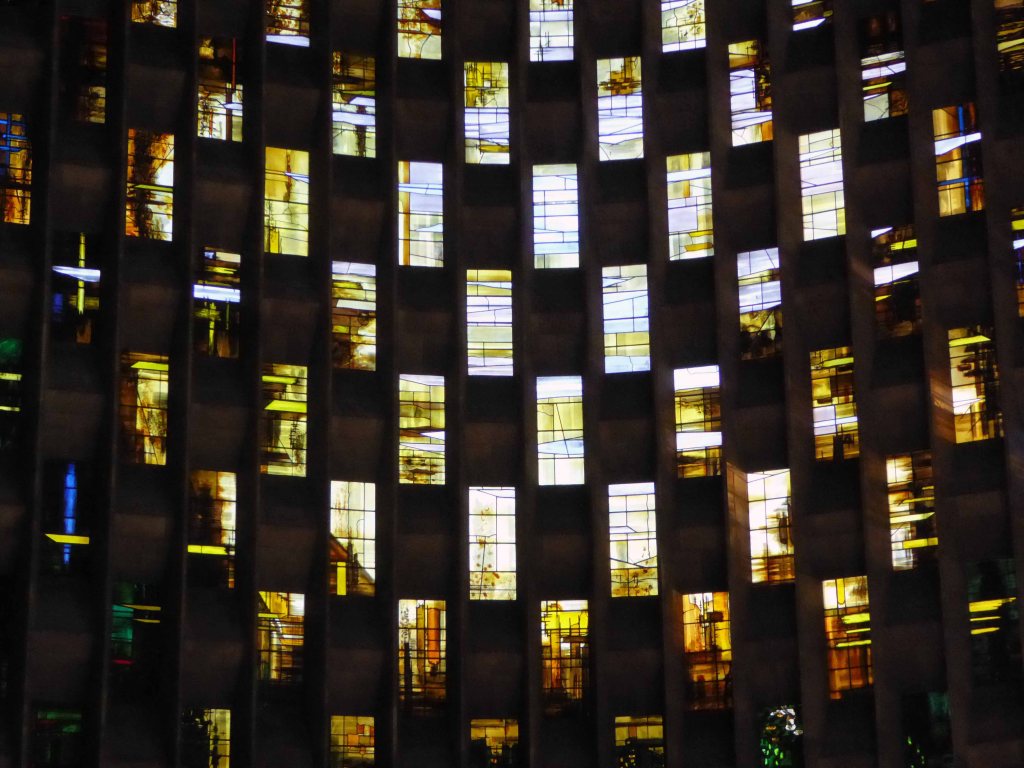
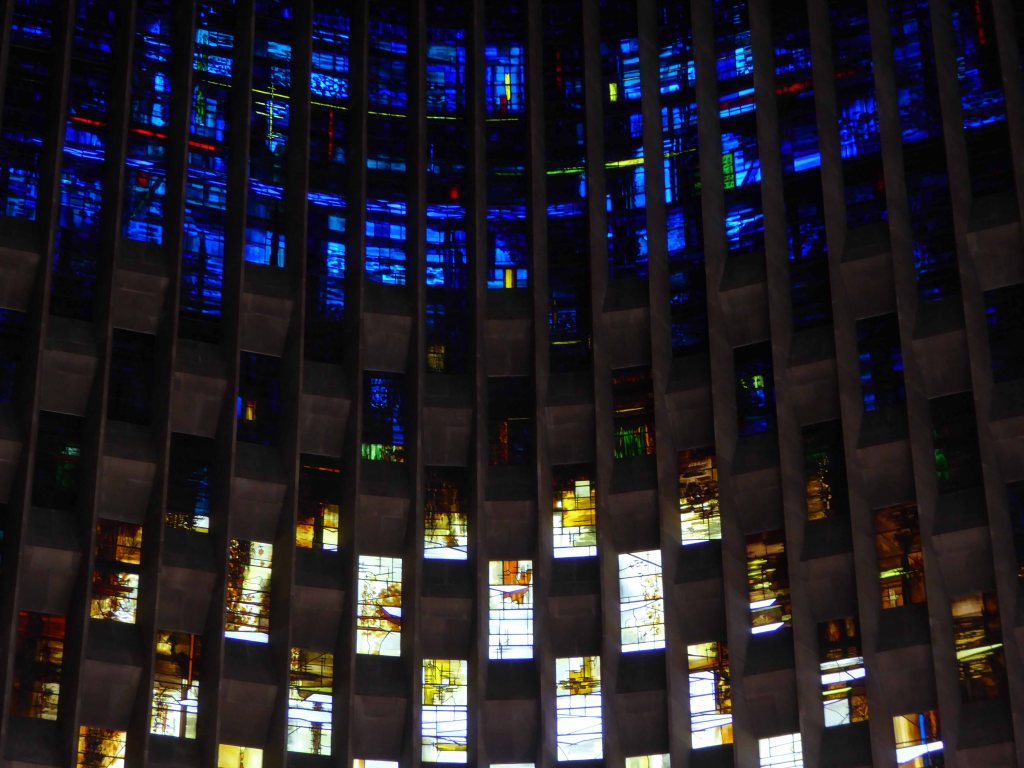
The eighty one foot high Baptistery Window containing a total of one hundred and ninety five lights of stained glass in bright primary colours designed by John Piper and Patrick Reyntiens, with the Stone of Bethlehem for a font just in front. Each individual window contains an abstract design, but the overall effect is breathtaking. Basil Spence himself designed the stone containing the glass.

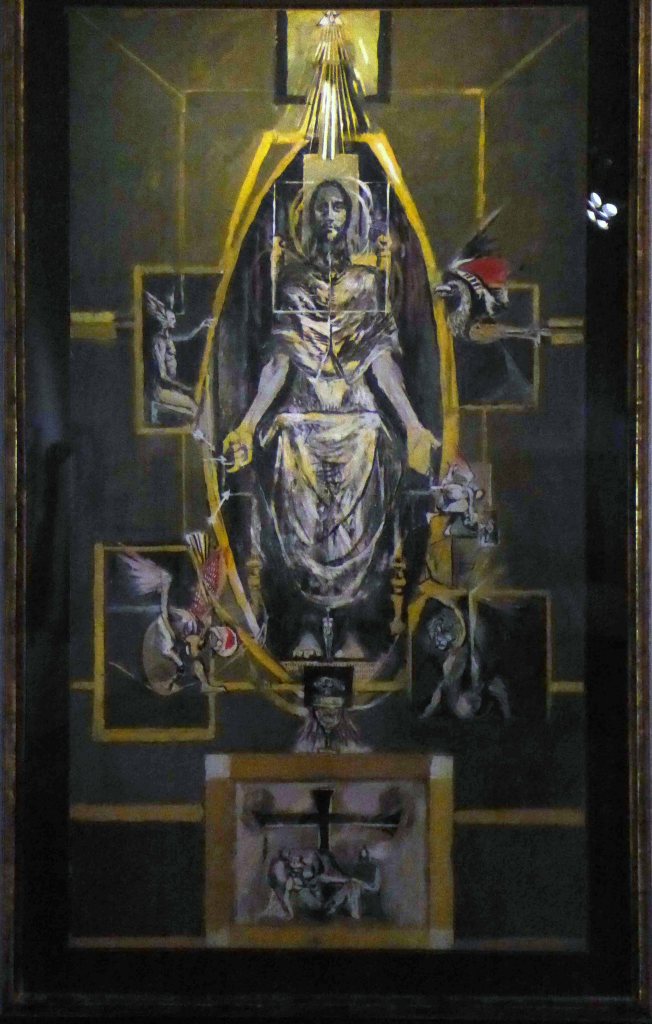
Study for the the seventy two foot high tapestry designed by Graham Sutherland – collection of The Herbert Art Gallery

The great tapestry was another example of a re-think in design. Basil Spence’s original intention was to depict the Crucifixion but Provost Howard suggested that the subject be Christ in Majesty and from there on, this idea prevailed

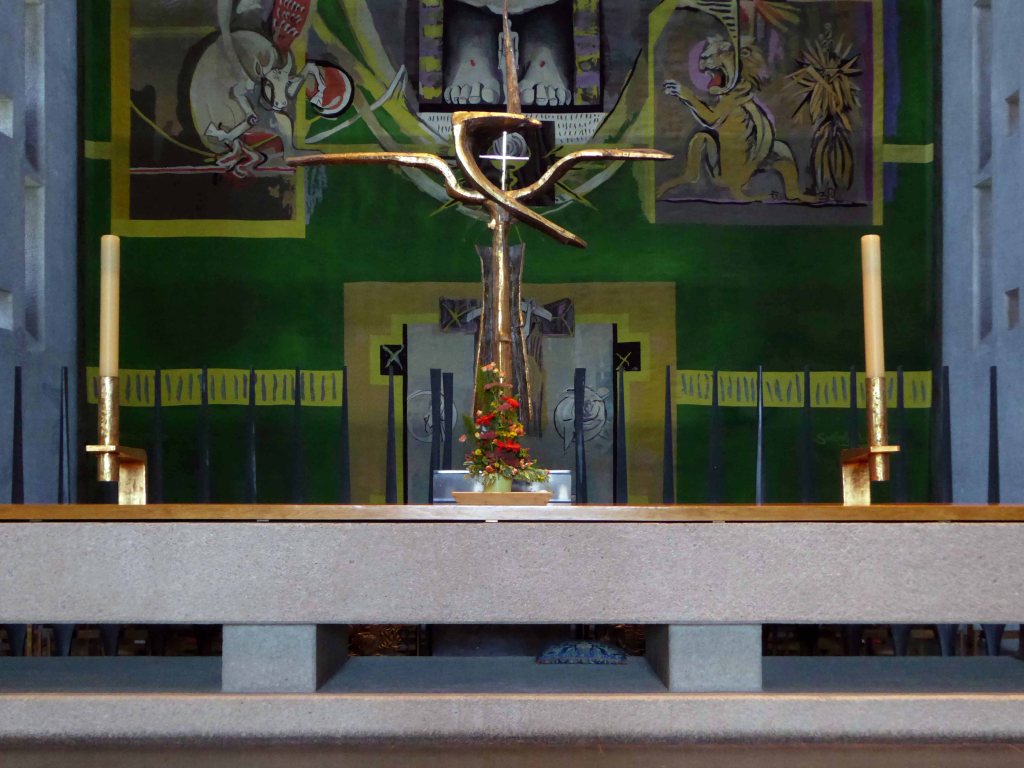
Altar cross and crown of thorns by Geoffrey Clarke, large ceramic candlesticks by Hans Coper.

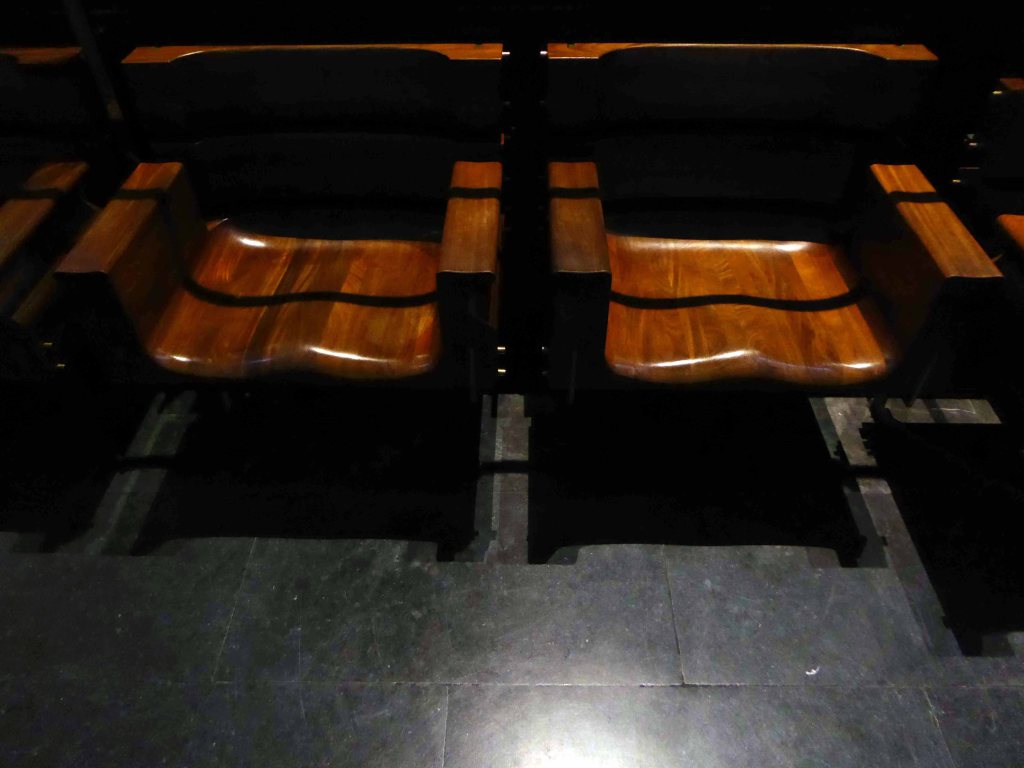
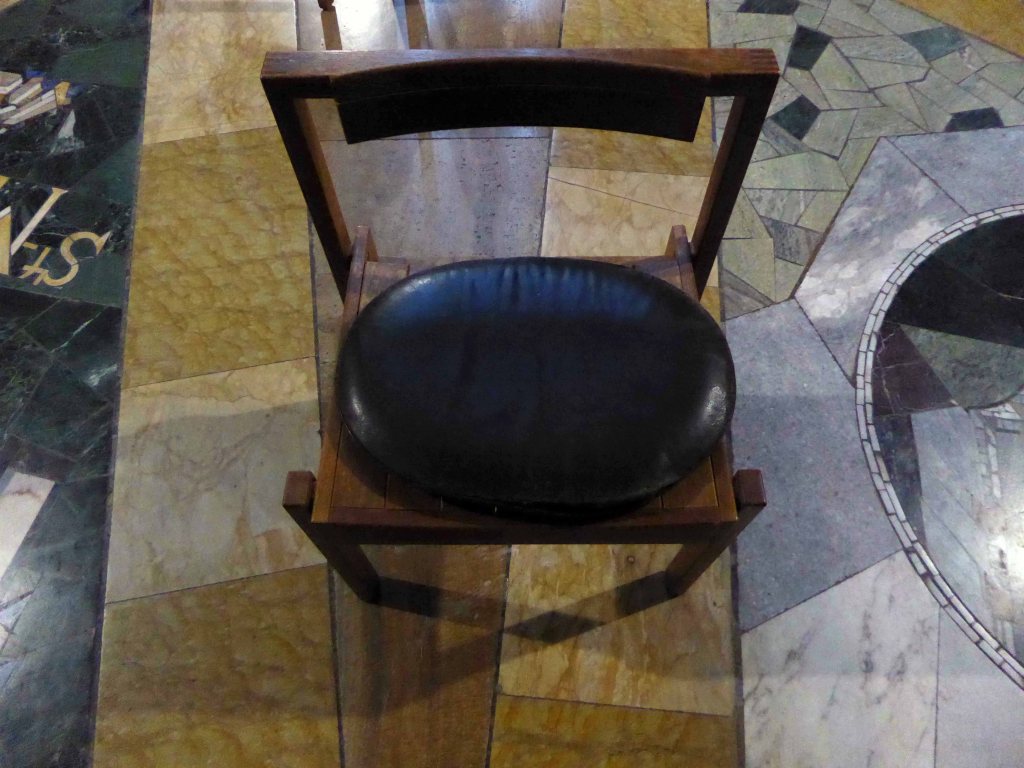
Chairs by Russell Hodgson and Leigh.

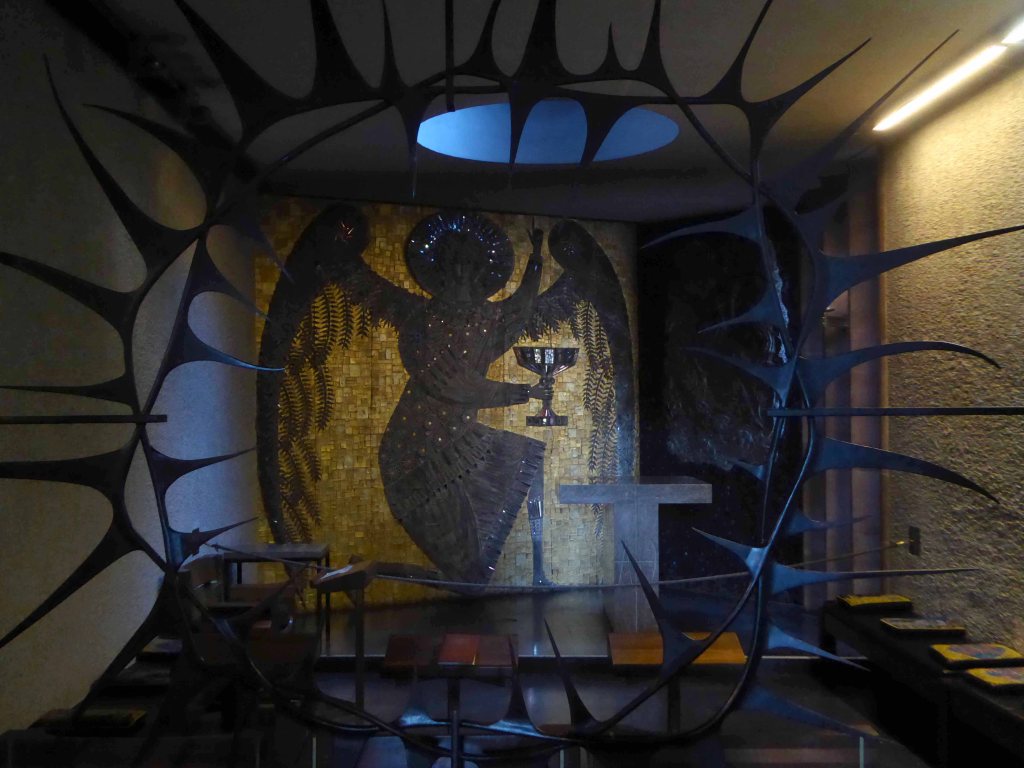
The Chapel of Christ in Gethsemane is approached by following the aisle from the Baptistery window towards the altar which is at the north end. The mosaic depicts the Angel of Agony by Steven Sykes and becomes more impressive when seen from a distance through the wrought iron crown of thorns designed by Basil Spence.

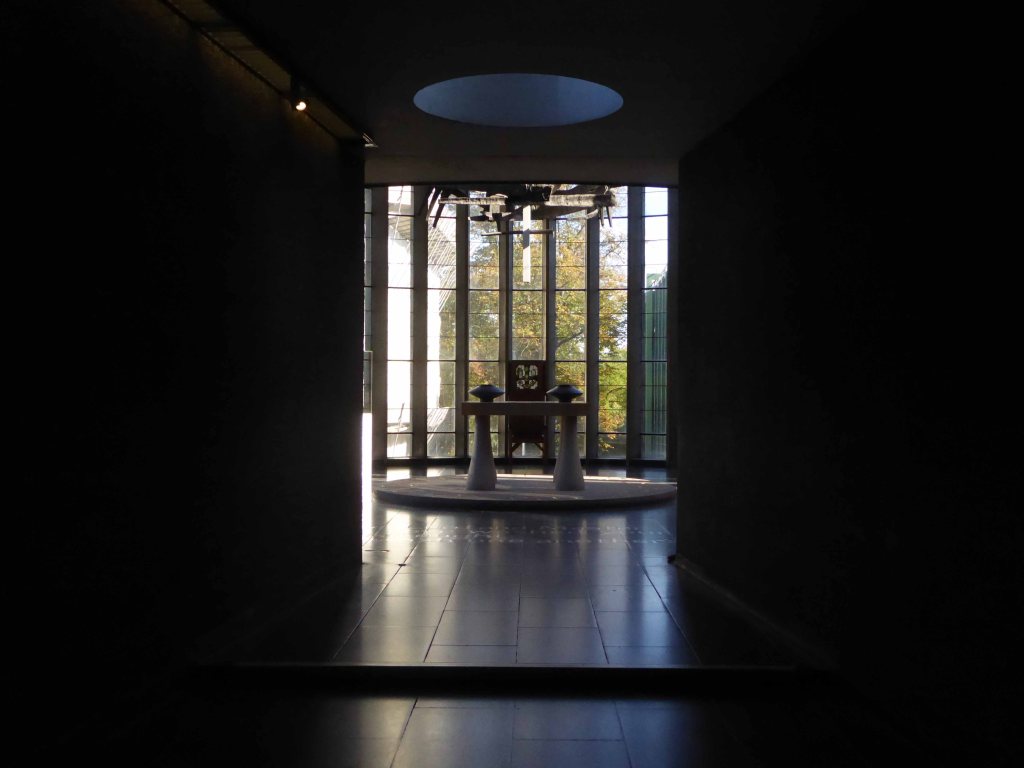
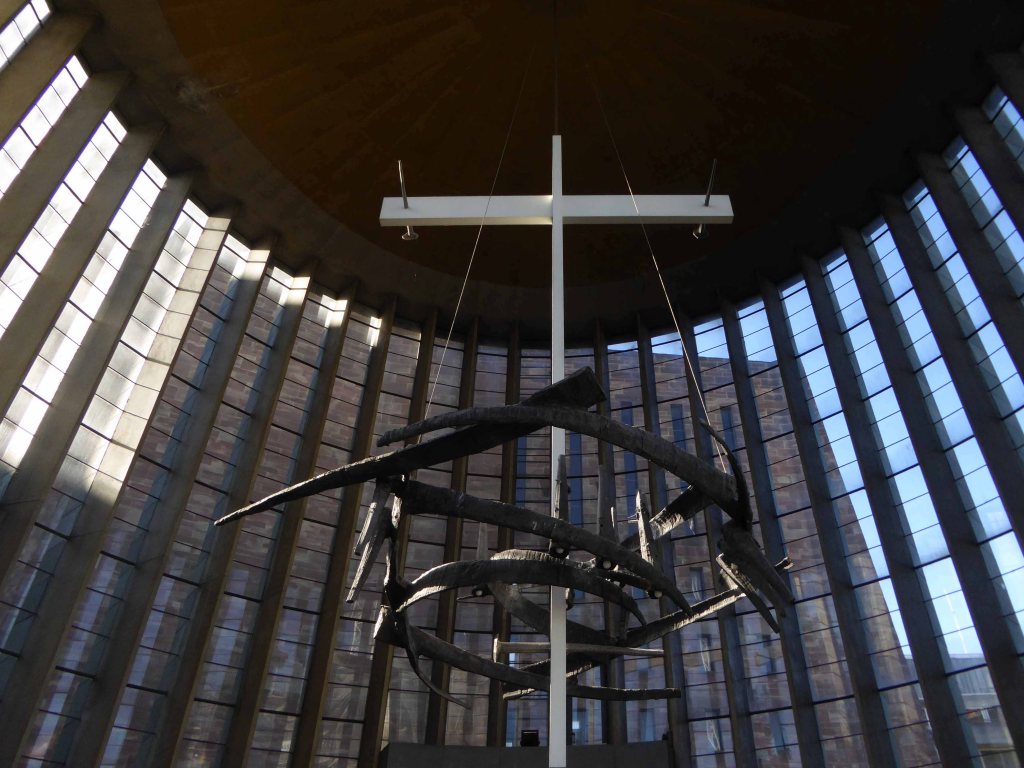
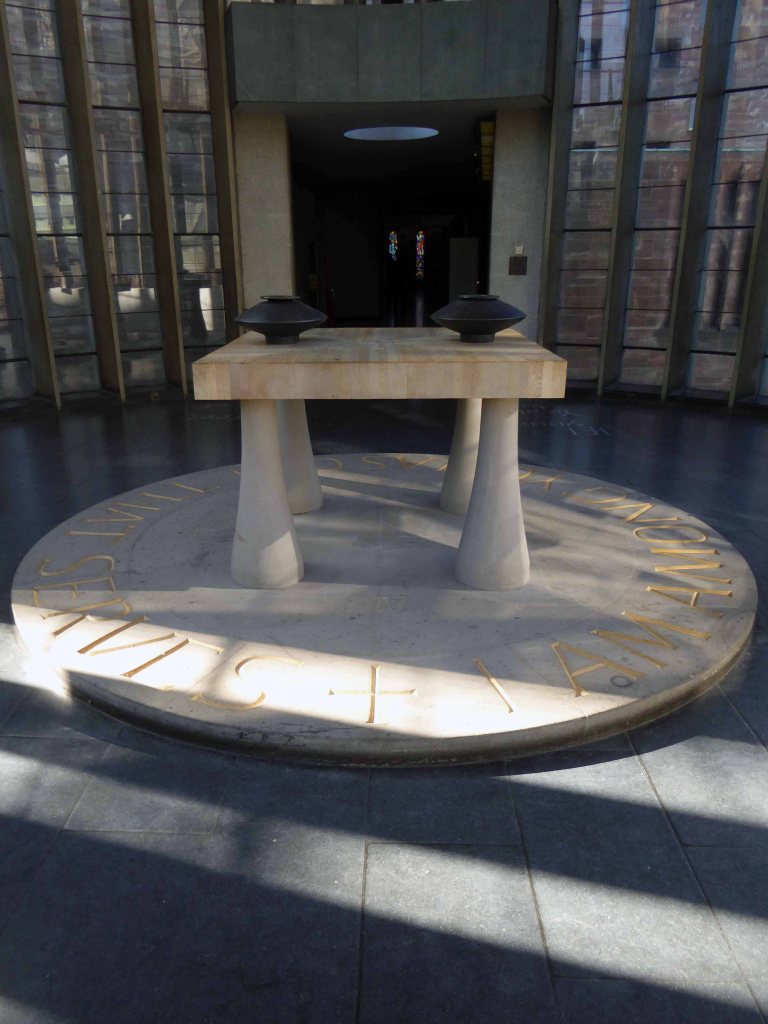
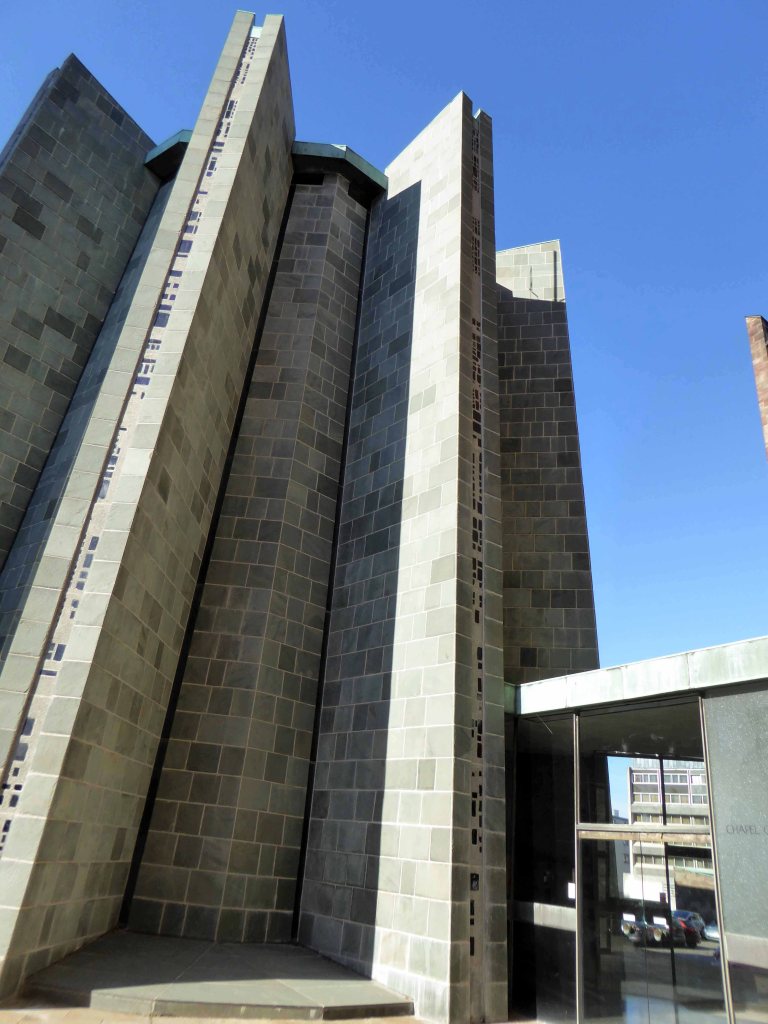
A short passageway takes you through to the Chapel of Christ the Servant – also known as the Chapel of Industry due to the view of Coventry workplaces from its narrow windows. 

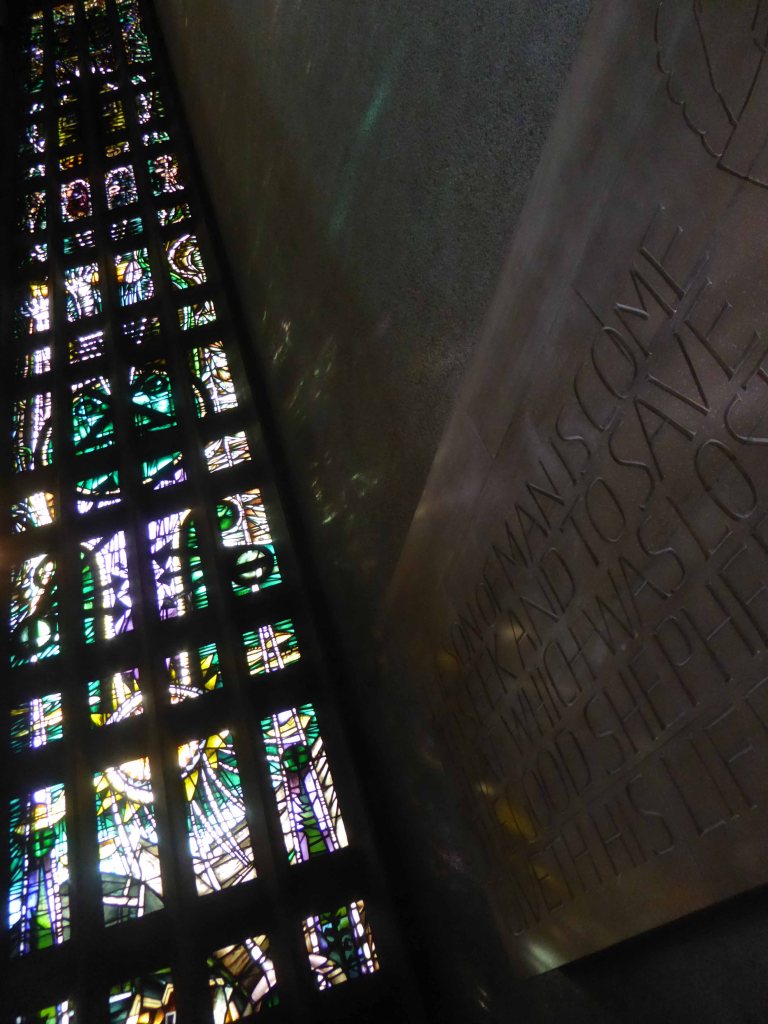
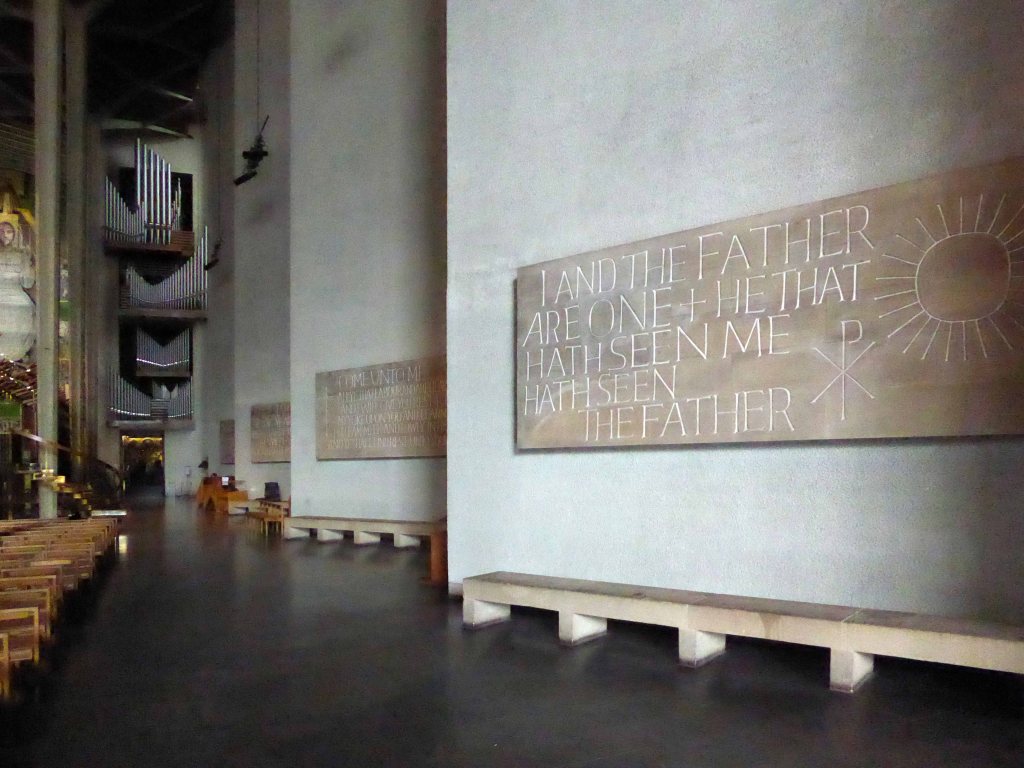
Monumental inscriptions to walls and floor by Ralph Beyer

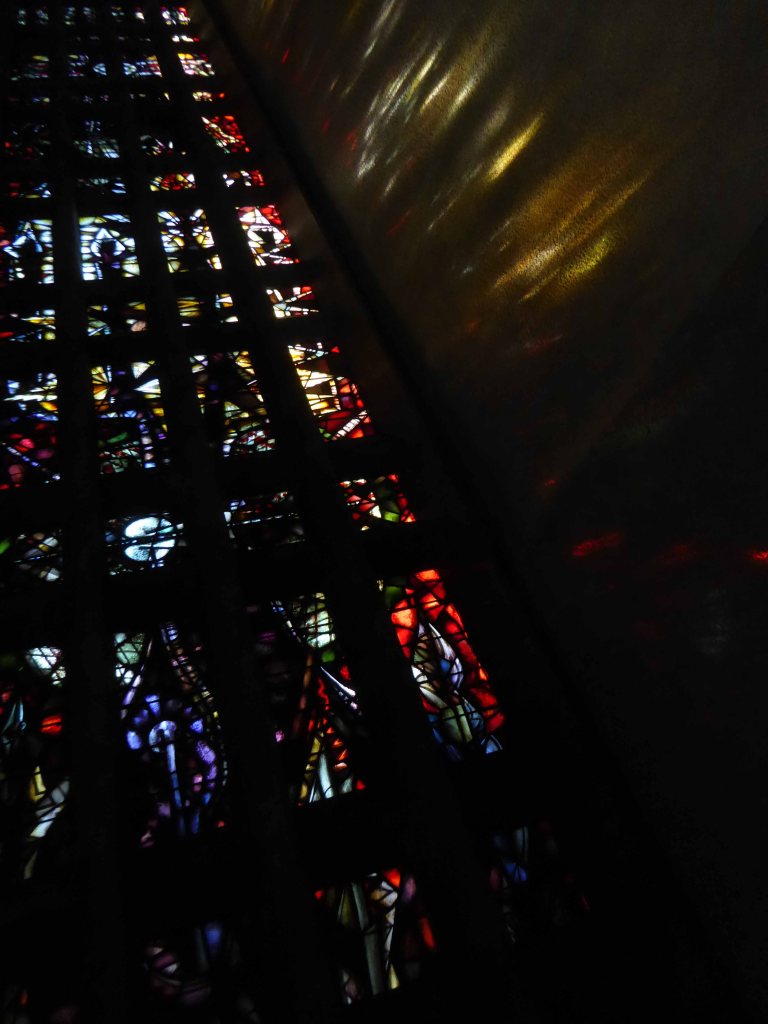
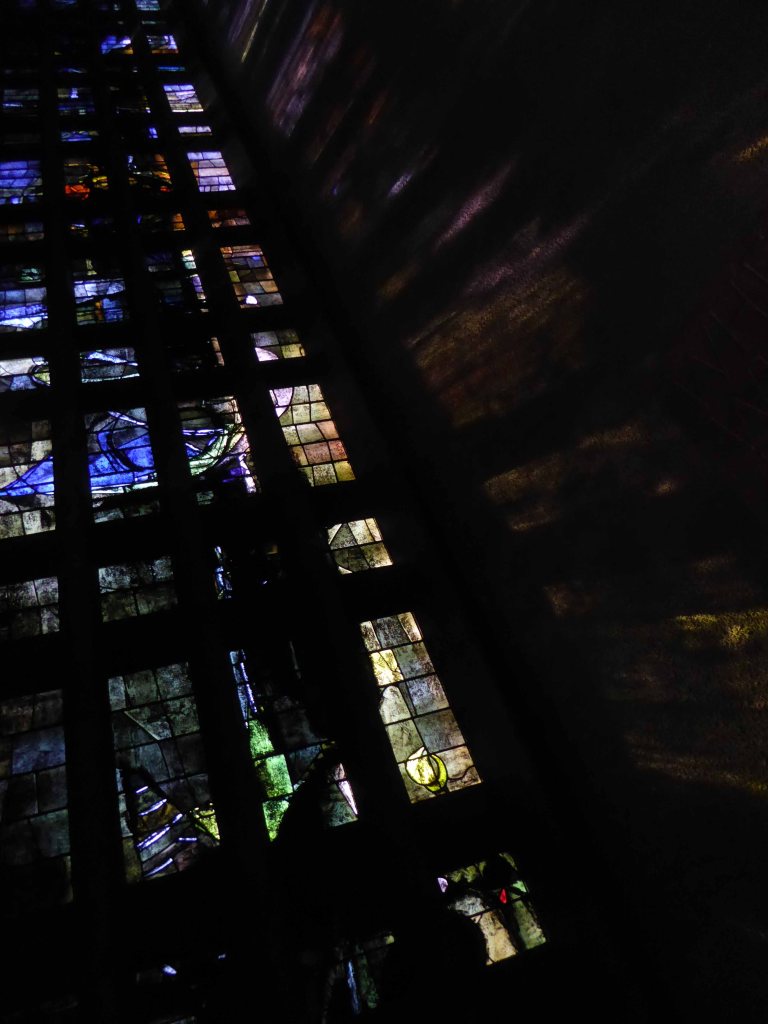
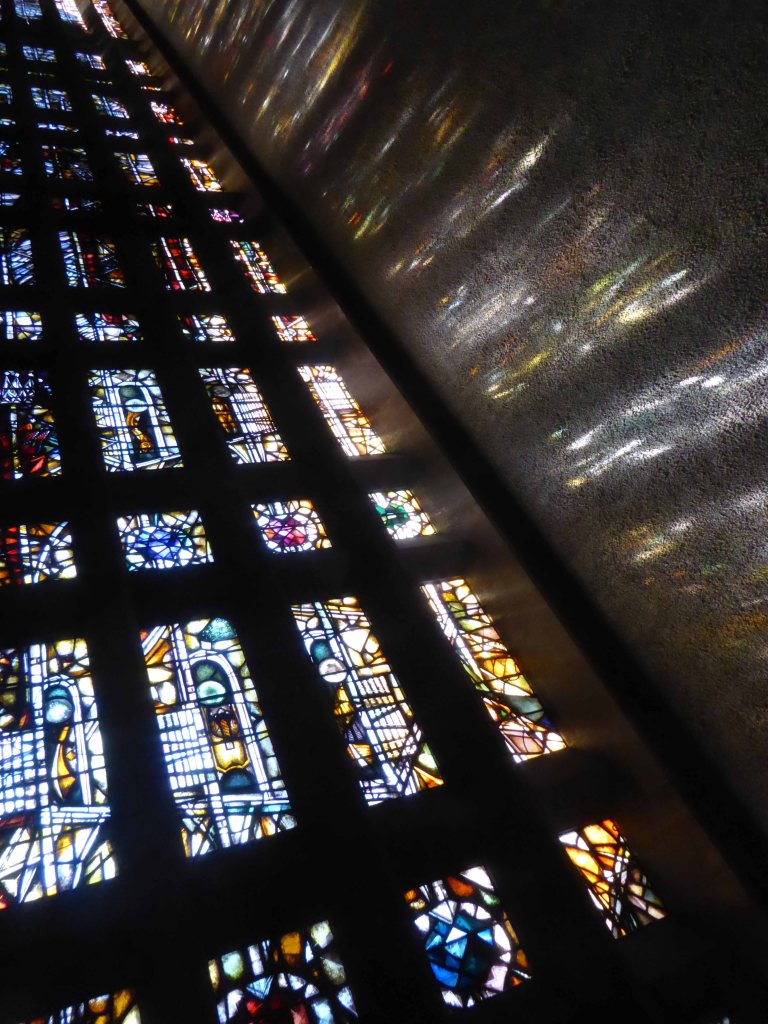
Stained glass to aisle walls by Lawrence Lee, Geoffrey Clarke and Keith New.

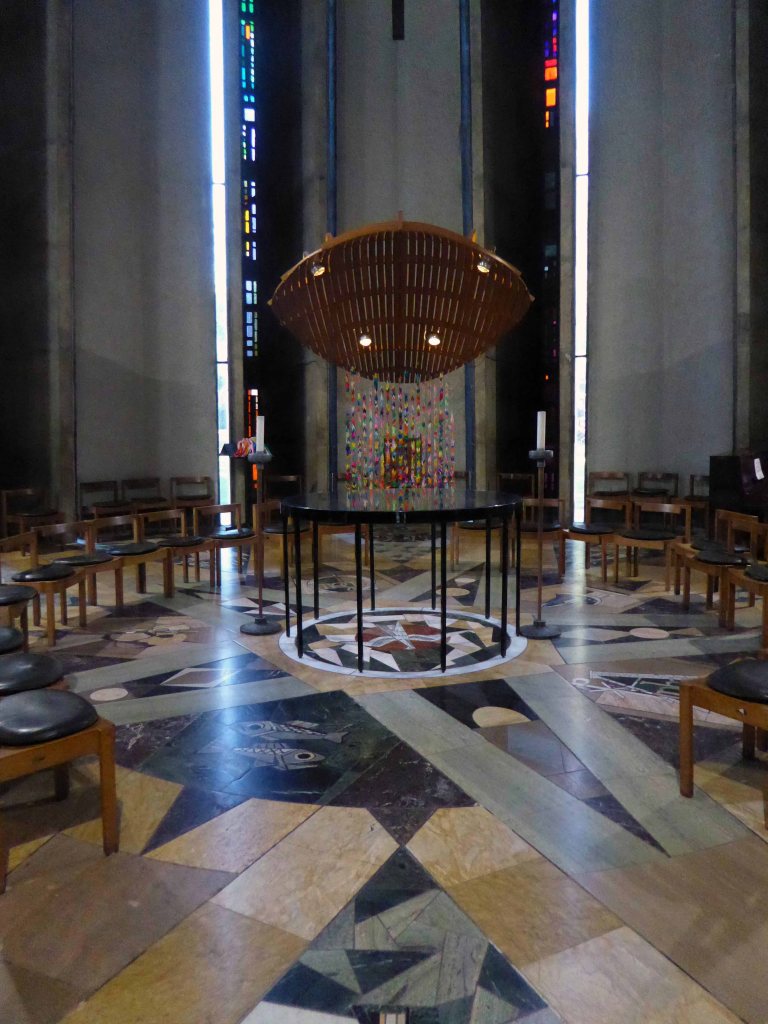
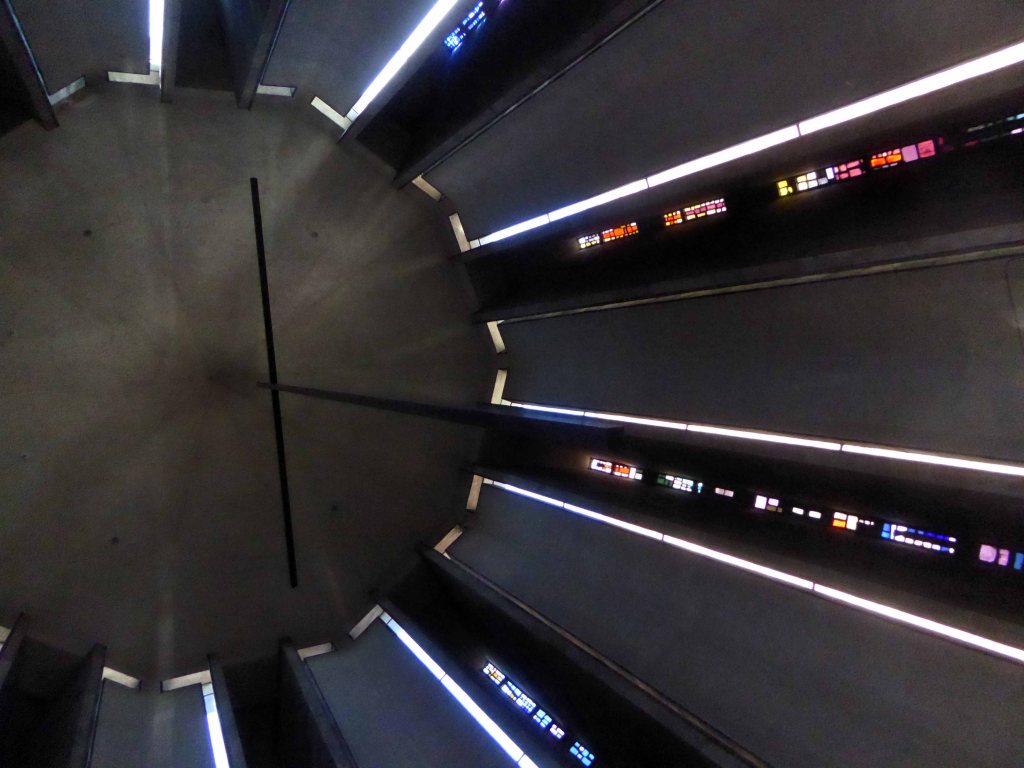
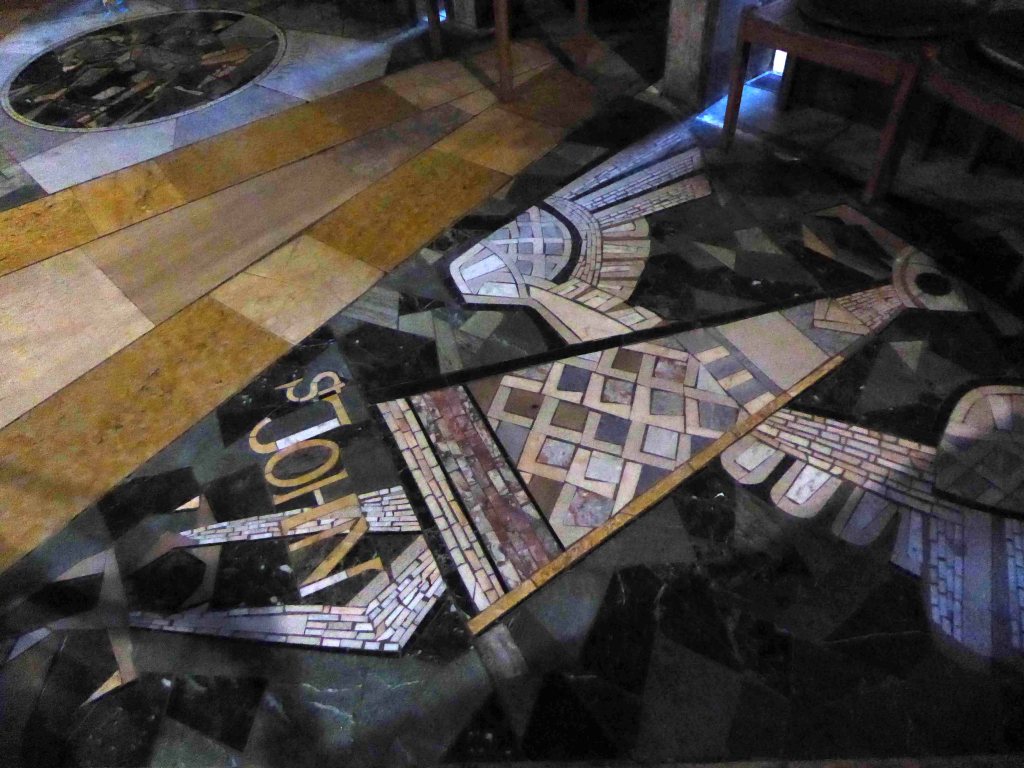
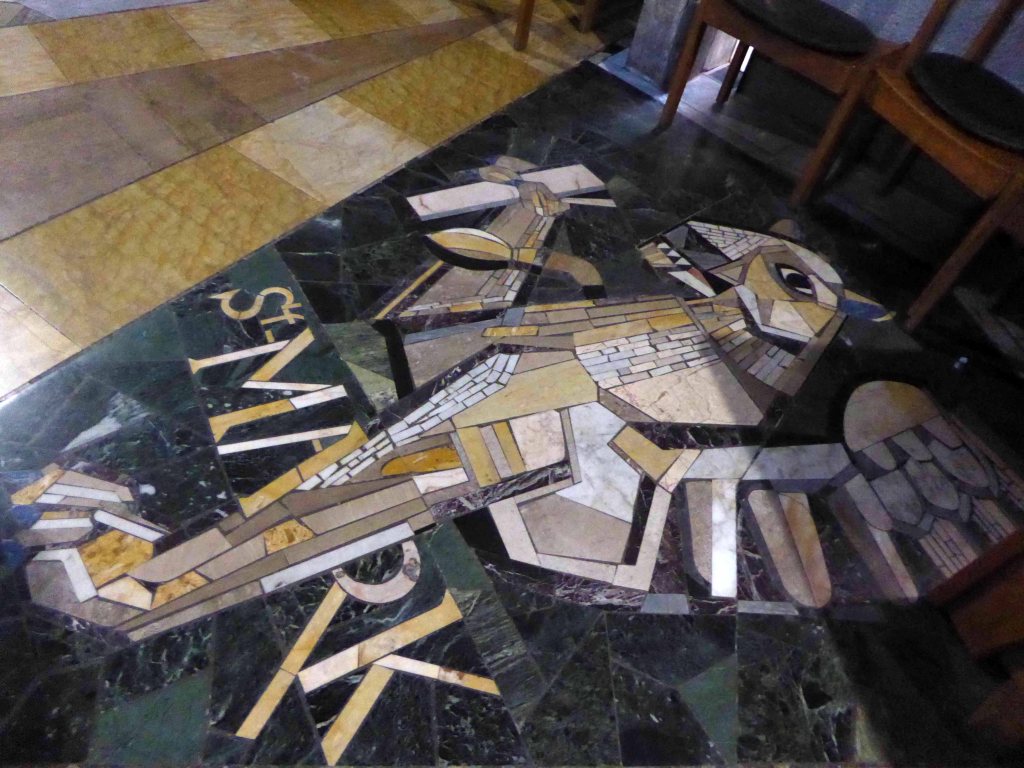
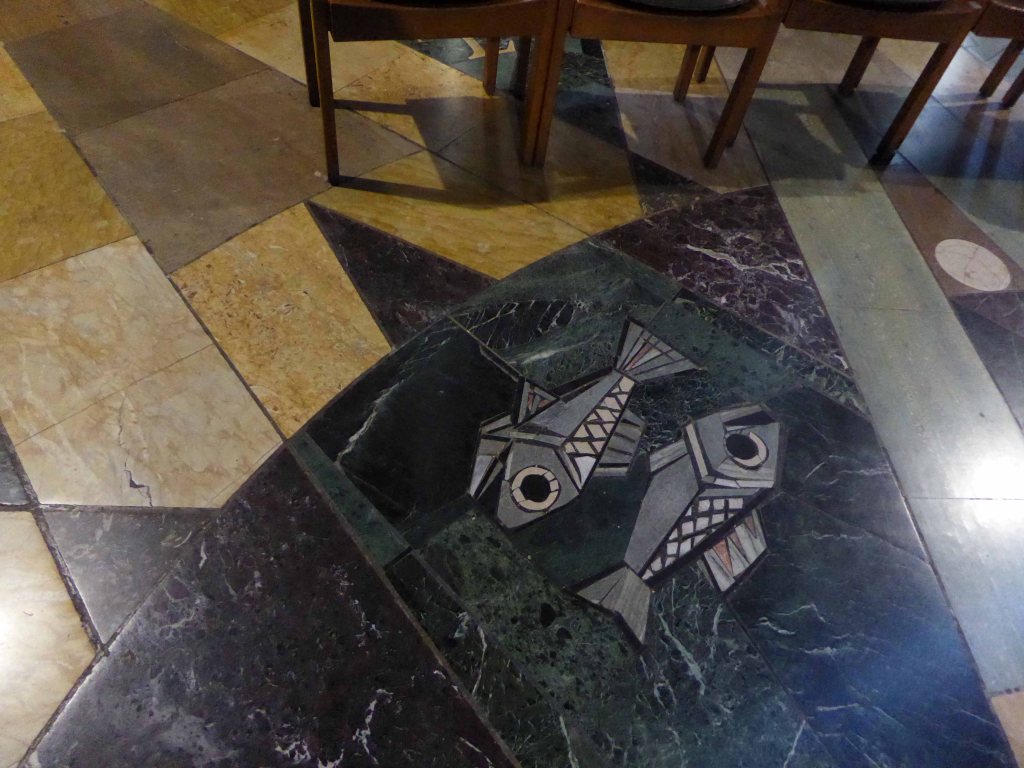
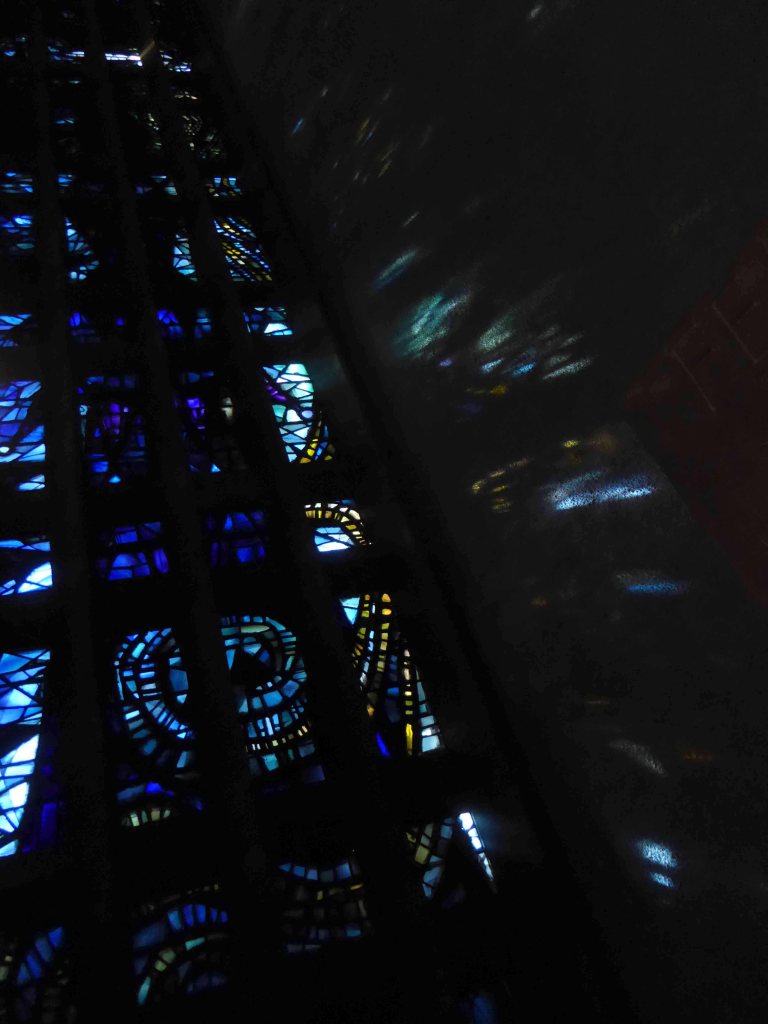
At the far end of the aisle, opposite the Baptistery Window is the Chapel of Unity, with its detailed mosaic floor, donated by the people of Sweden, representing the nations of the world and lit by shafts of light from the narrow stained glass windows around the circumference of the star shaped chapel. 

This design was Basil Spence’s vision of a chapel representing the star which began the story of Christ – from the outside it appears shaped similarly to a Crusader’s tent.

The chapel is intended for prayer by all denominations, not just Anglican, and for this reason was purposely built with no view of the great altar. 

Historic Coventry