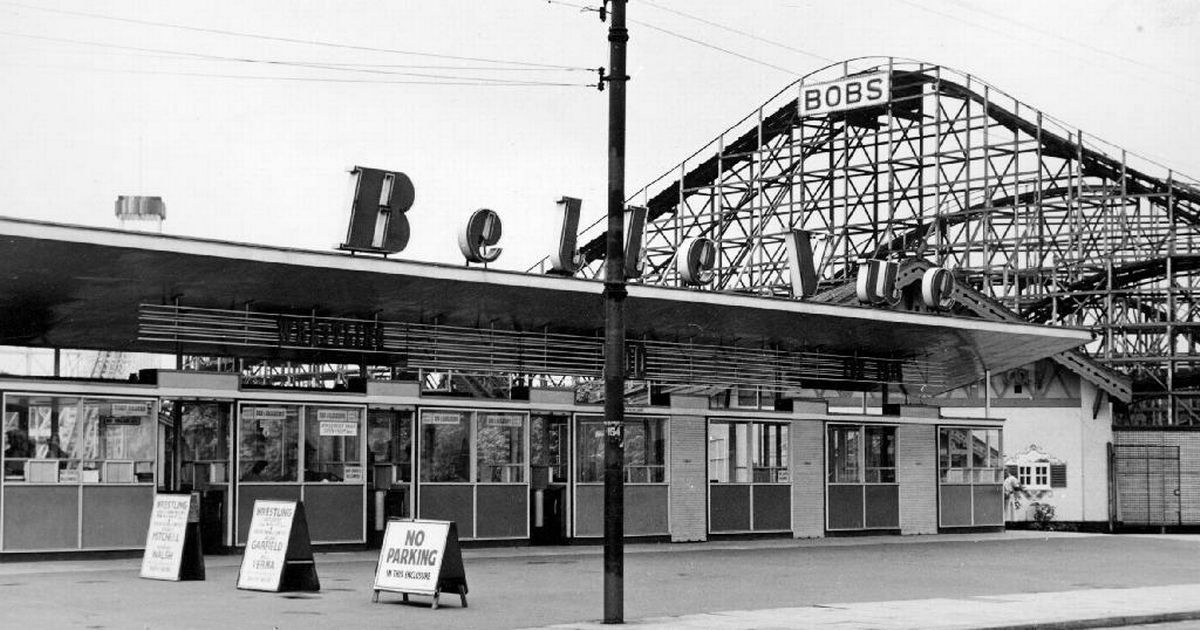
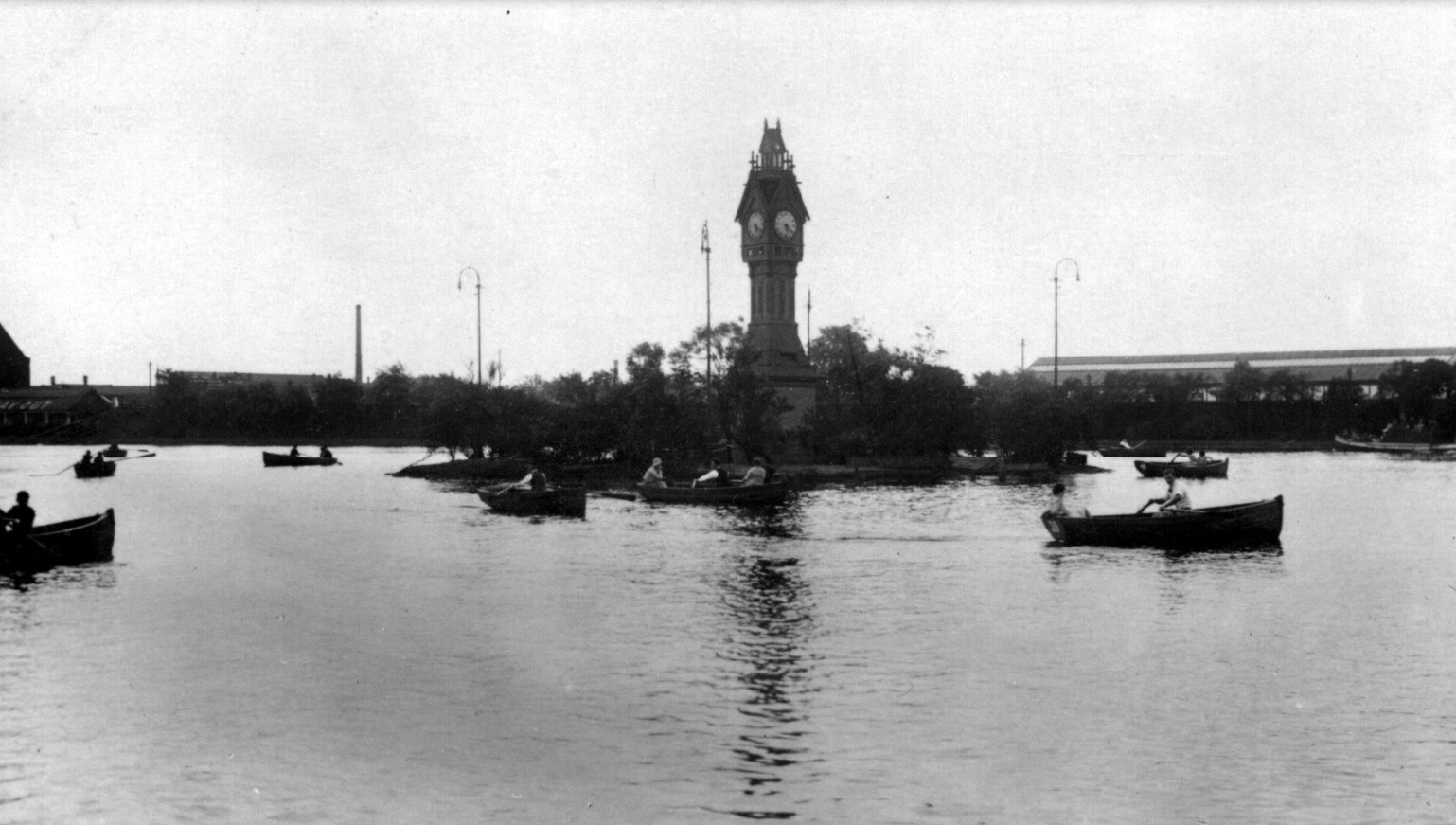
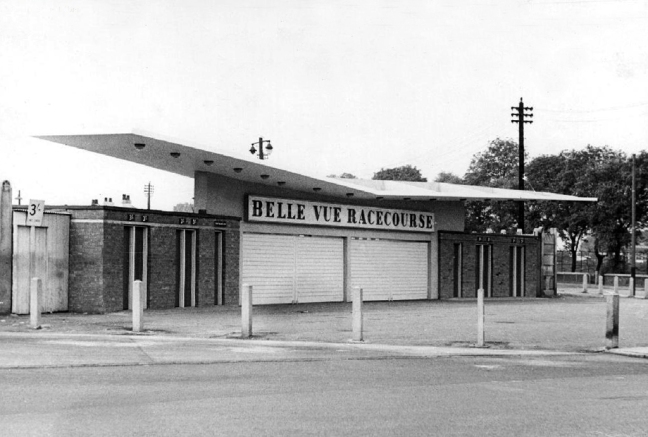
Once upon many times ago we all went to Belle Vue – formed from John Jennison’s Victorian pleasure gardens and zoo, into an inner city funfair and entertainment extravaganza.
I went to the circus, competed in school sports days, watched the wrestling and music, I still go to the speedway – Belle Vue Aces now racing at the nearby National Speedway Stadium.
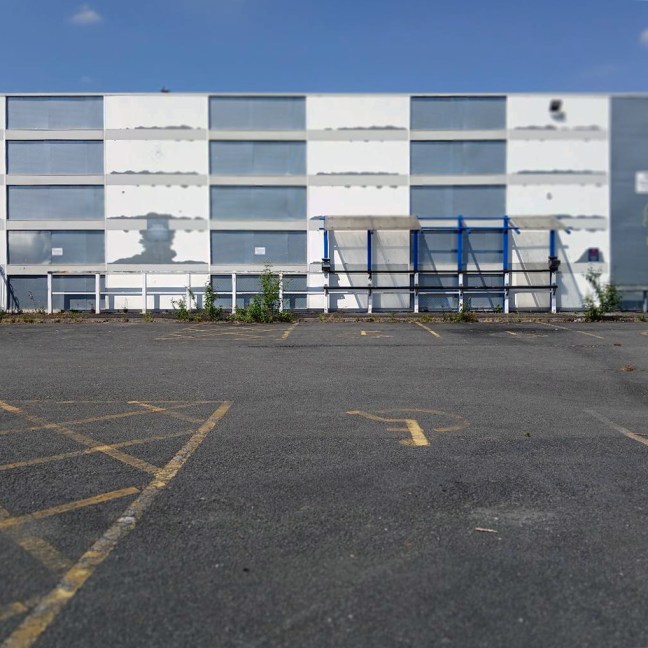
Then one day it all fell apart.
In 1979 the amusement park was leased to the main concessionaire, Alf Wadbrooke, although by then it was only open at weekends during the summer season. The long-promised restoration of the Scenic Railway had not happened and the Water Chute had closed. In August 1980, Wadbrooke was given notice to close down the park by 26 October 1980 and to have all his equipment removed by February 1981.
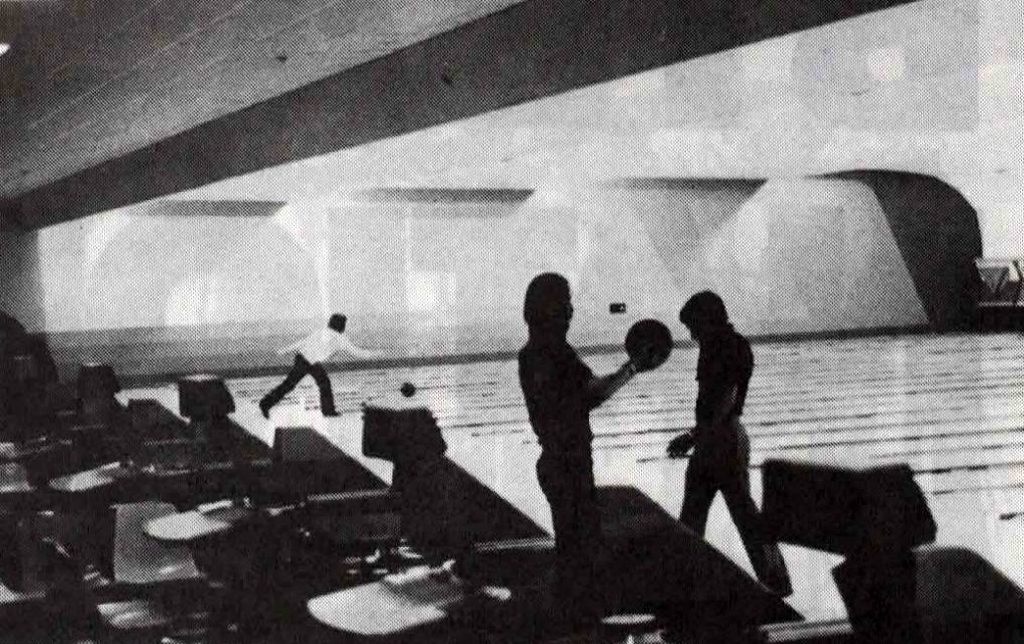
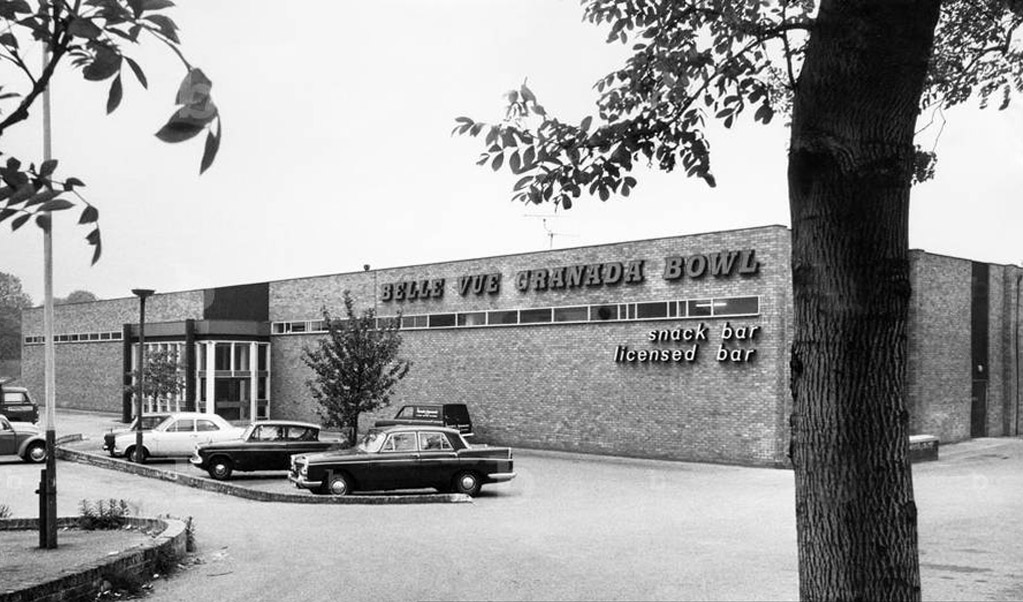
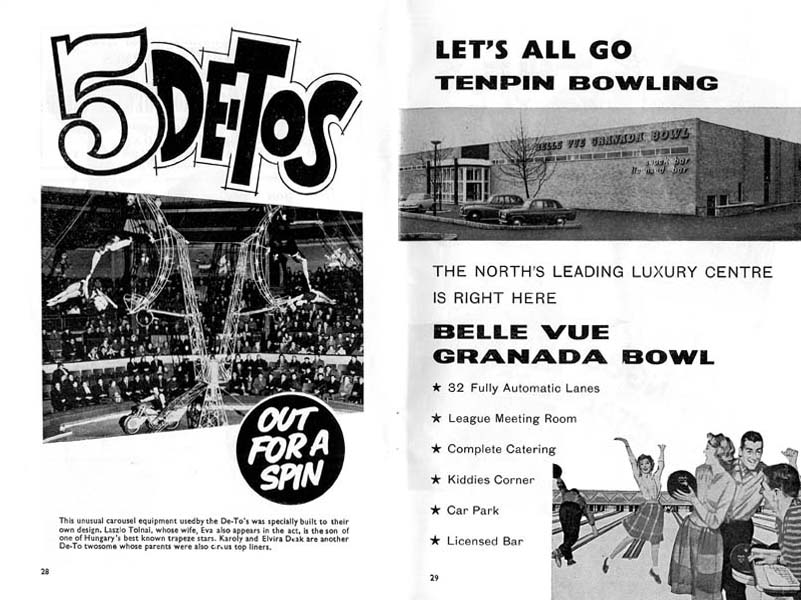
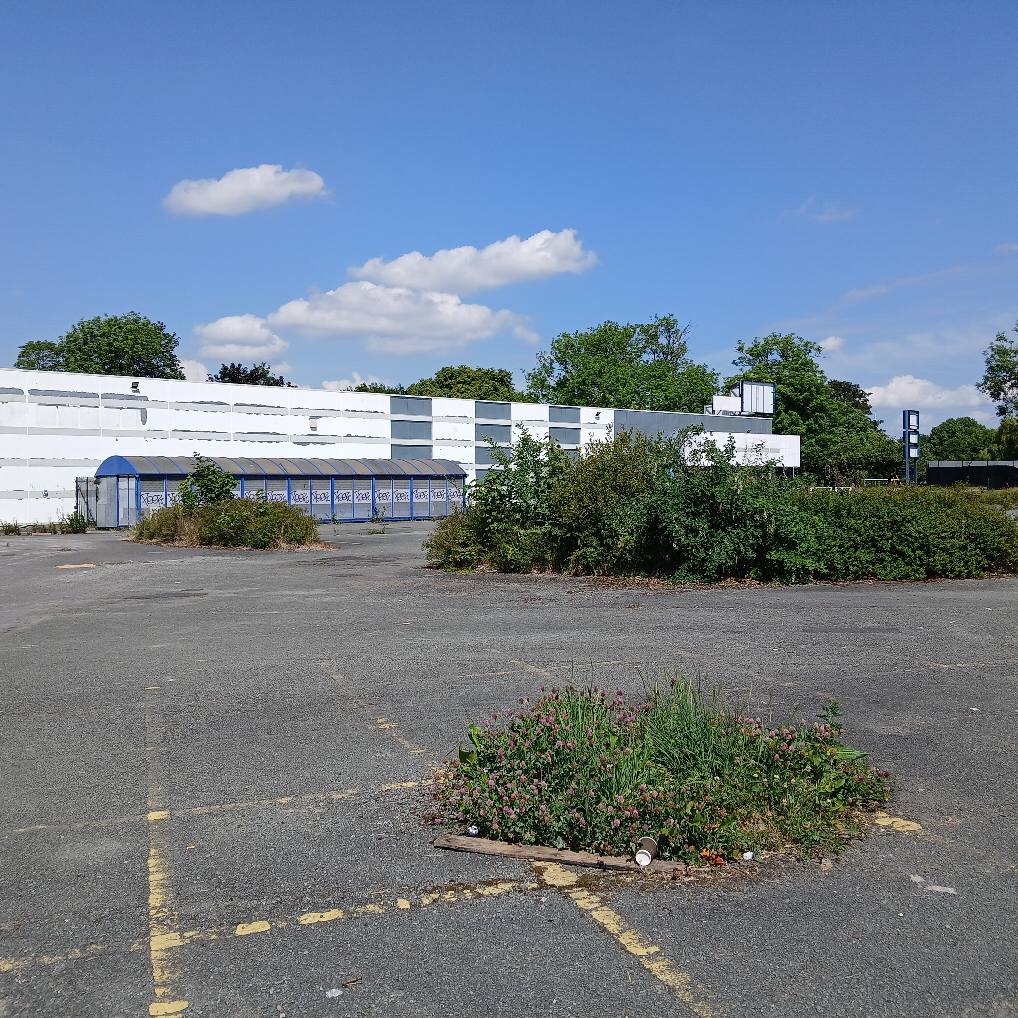
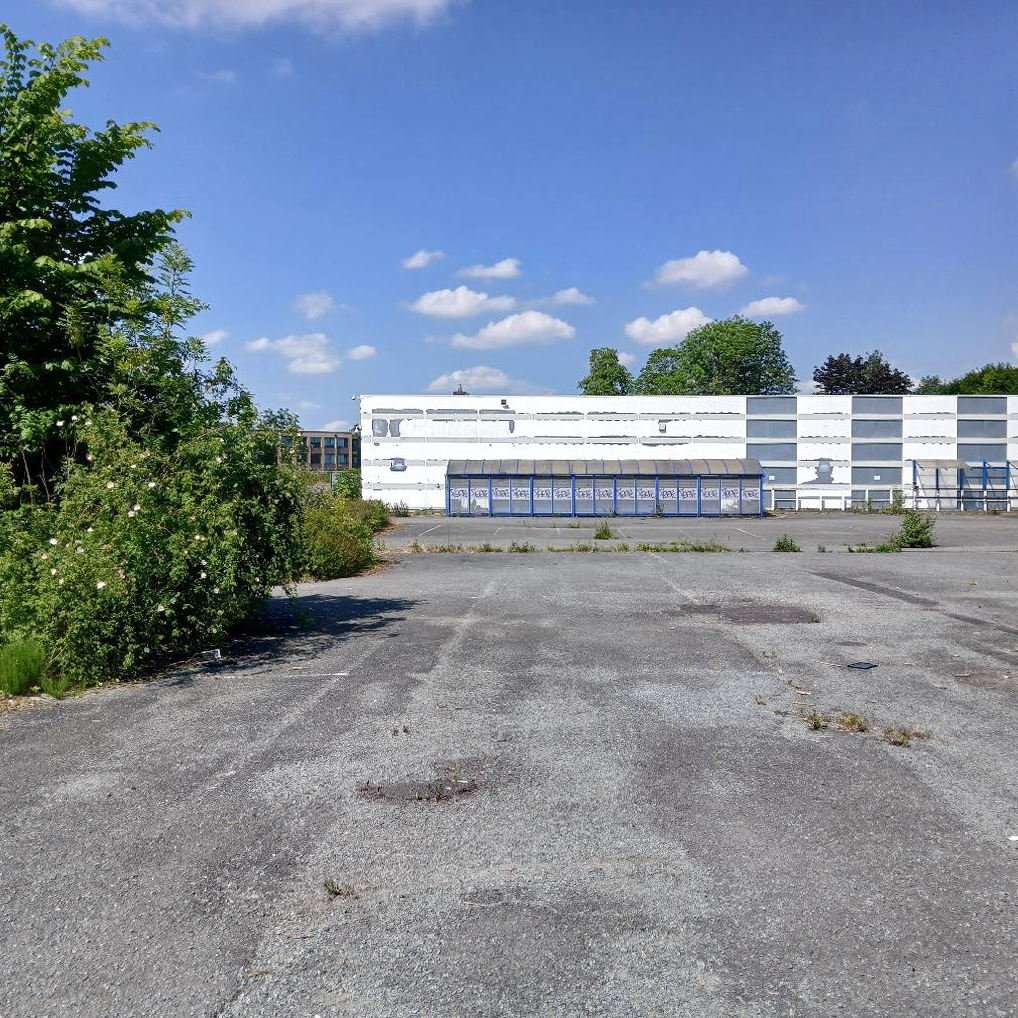
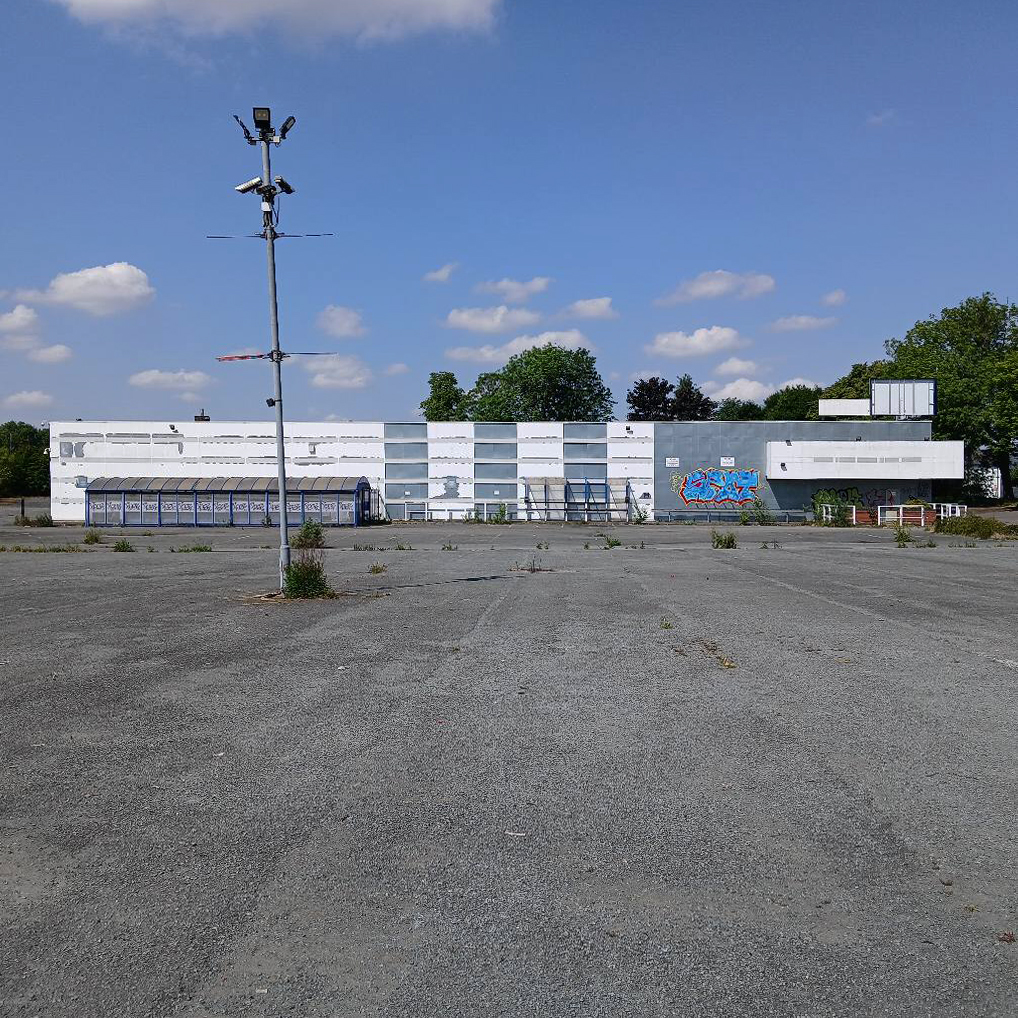
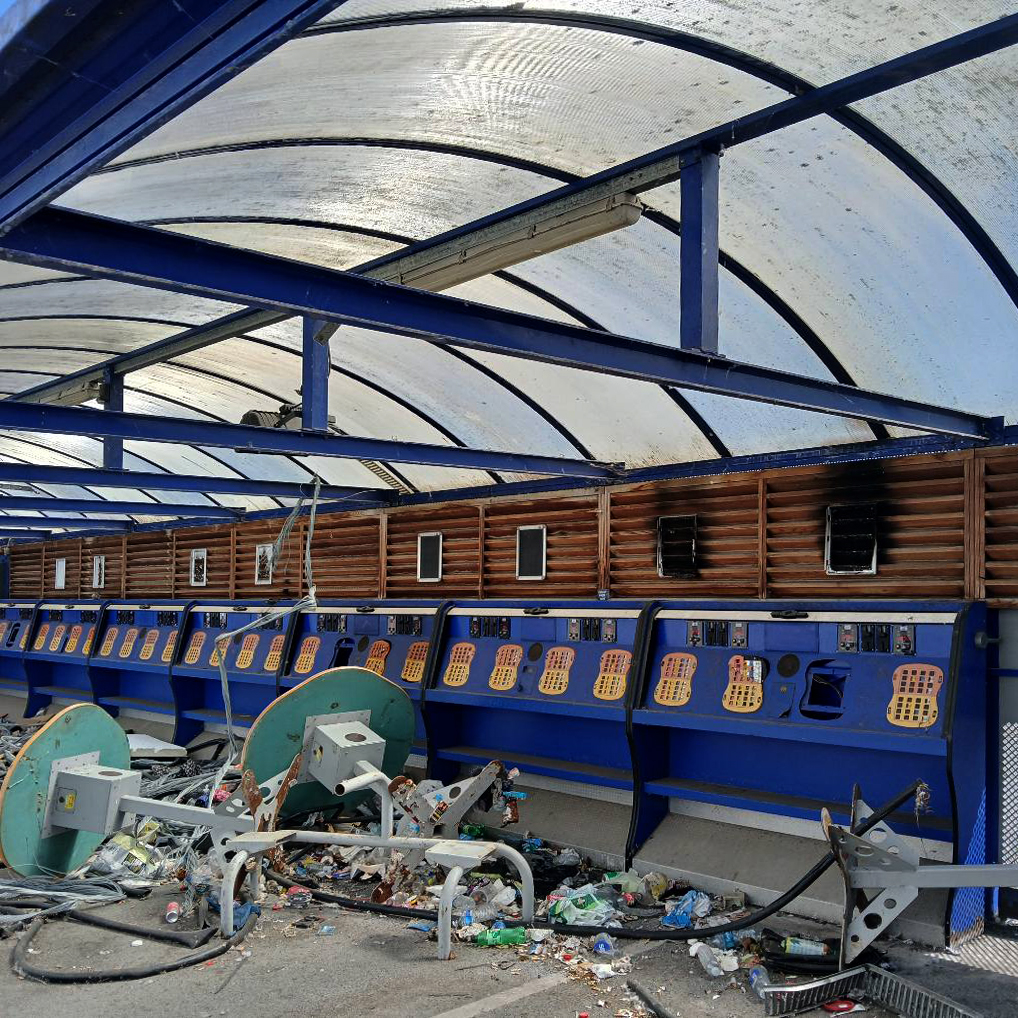
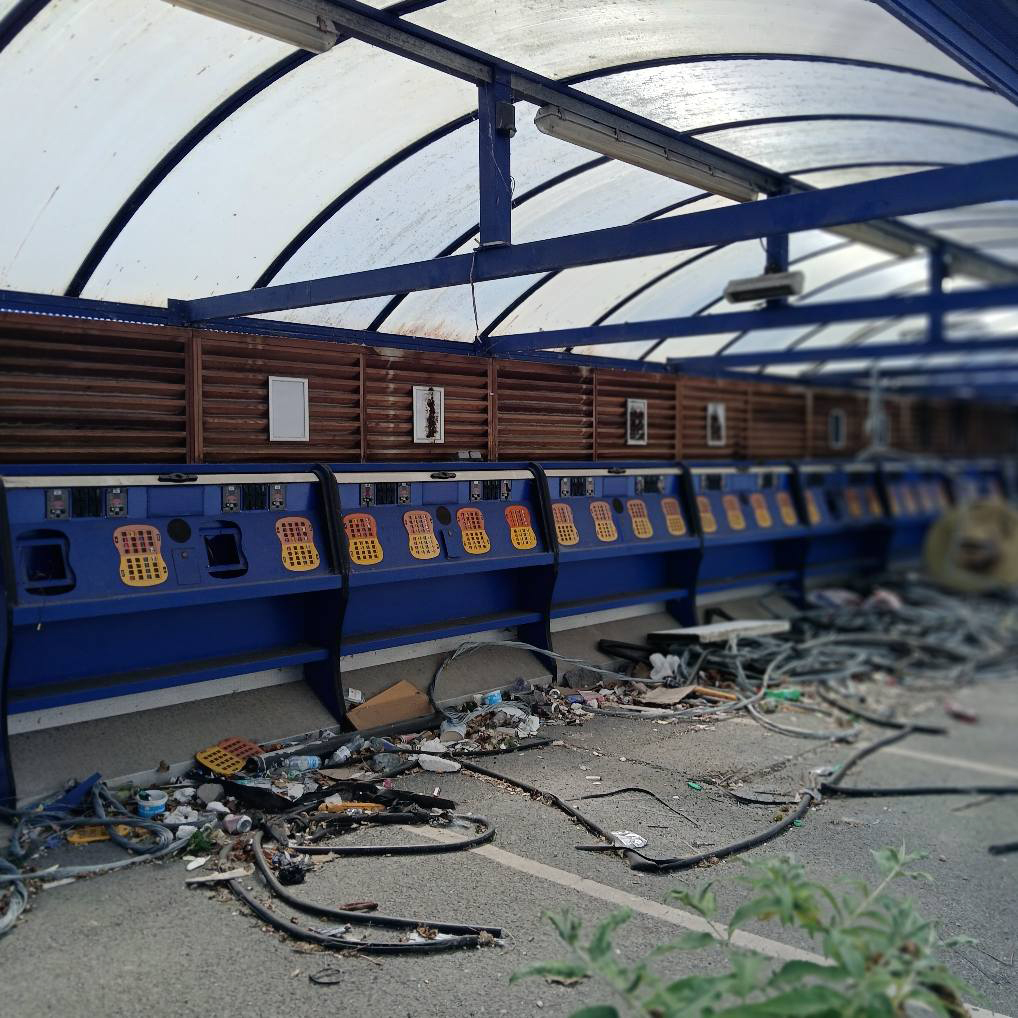
In 1963 the Top Lake, formerly known as the Great Lake, was filled in and a 32-lane ten-pin bowling alley built on its site, just behind the Lake Hotel.
Known as the Belle Vue Granada Bowl, it opened in 1965, advertised as “the north’s leading luxury centre”. In 1983, after the rest of Belle Vue had closed, it was sold to First Leisure Group, and bowling continued for a time.
Wikipedia
The 32-lane Granada Bowl at Belle Vue, Manchester is believed to have been the first centre to be opened by Granada and the centre went on to become one of the most successful in the country.
The centre was equipped with lanes and machines supplied by AMF and the rest of the centre was well appointed with a licensed bar and food operation. The centre was a joint operation between Granada and Belle Vue with two directors from each company on the board of Belle Vue Granada Bowl Limited.
To mark the opening ceremony Lee Kates, with the support of the band of the 8th Battalion of the Manchester Regiment and trumpeters of the Duke of Lancaster’s Own Yeomanry, introduced Granada’s Mr Chapman, who made a short speech and welcomed the guests. The golden ball was handed to guest Pat Phoenix, star of the TV soap Coronation Street, to roll the first ball.
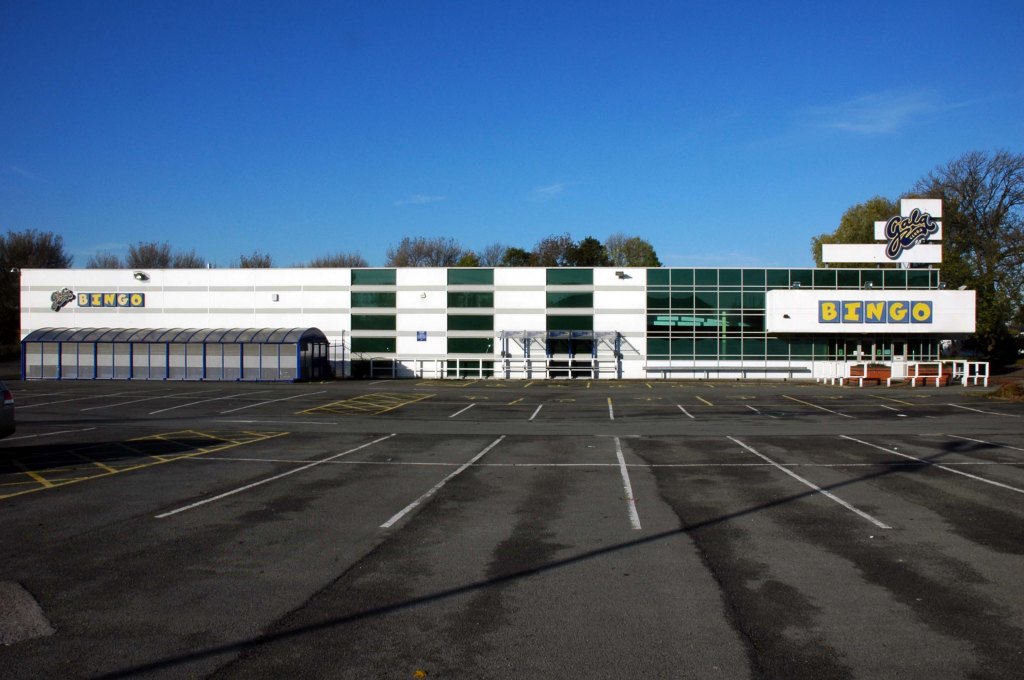
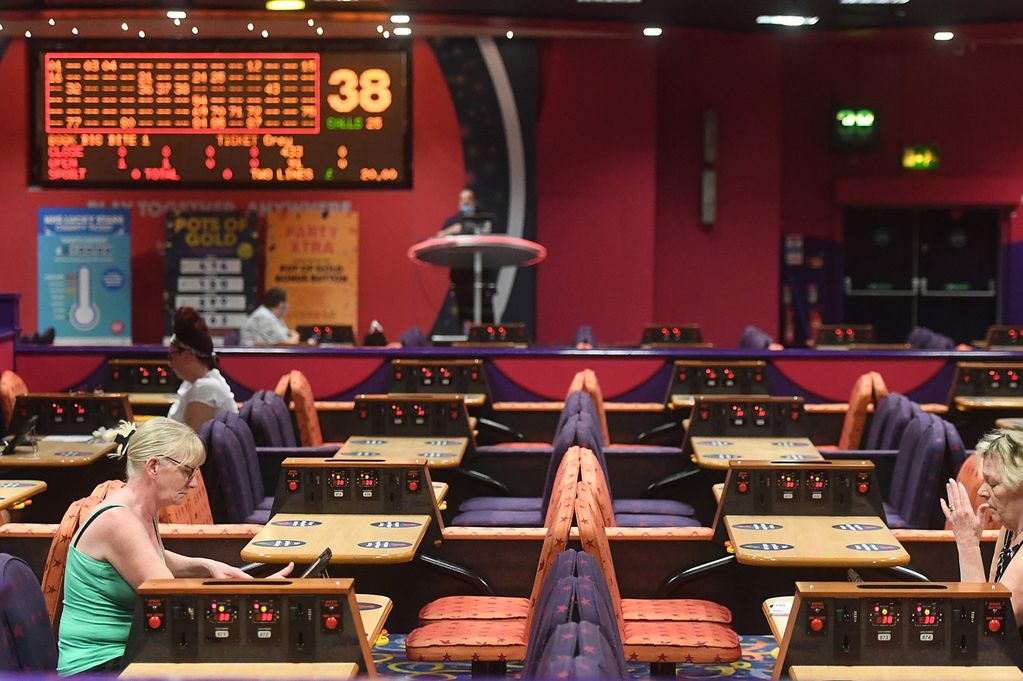
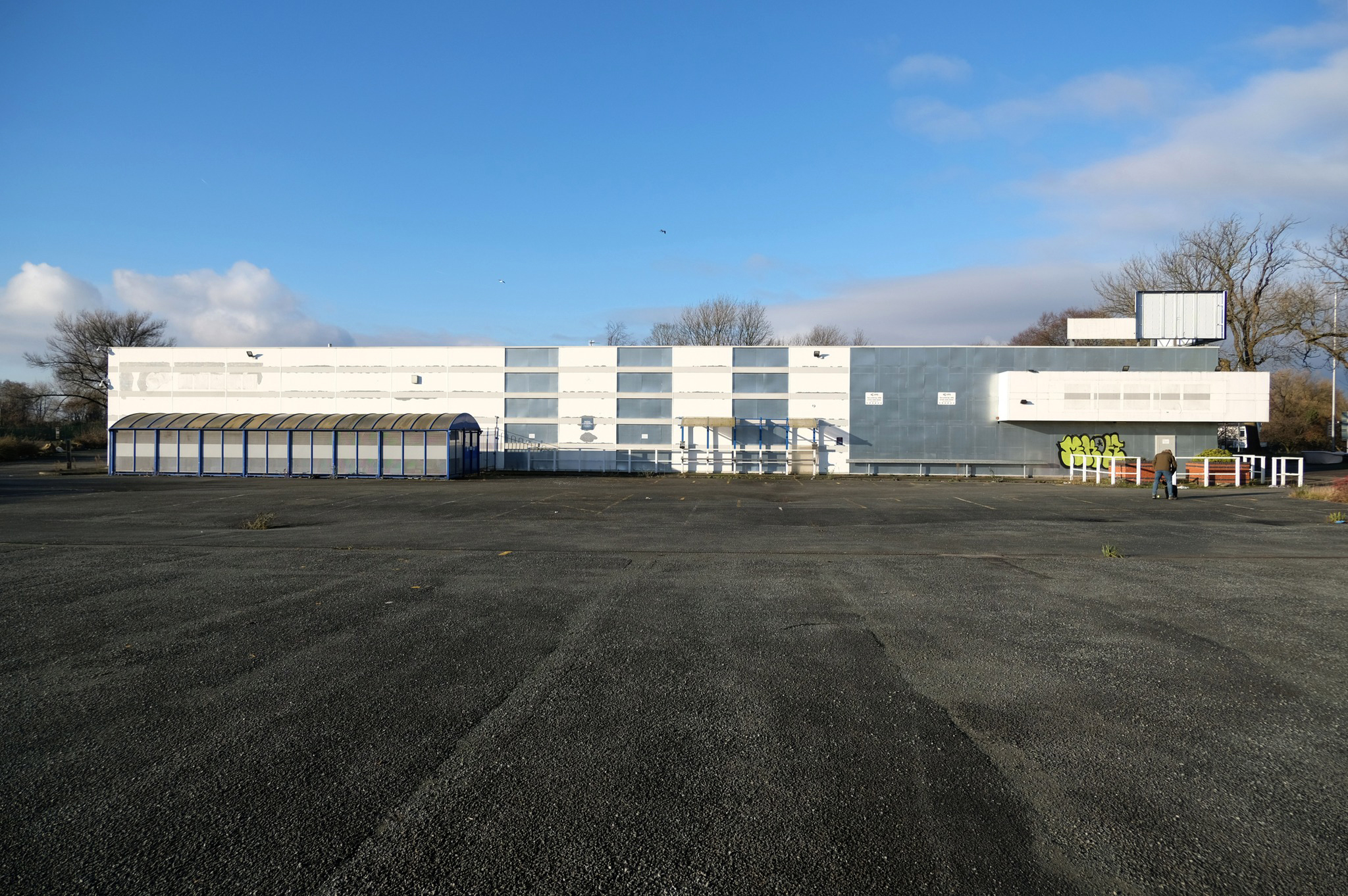
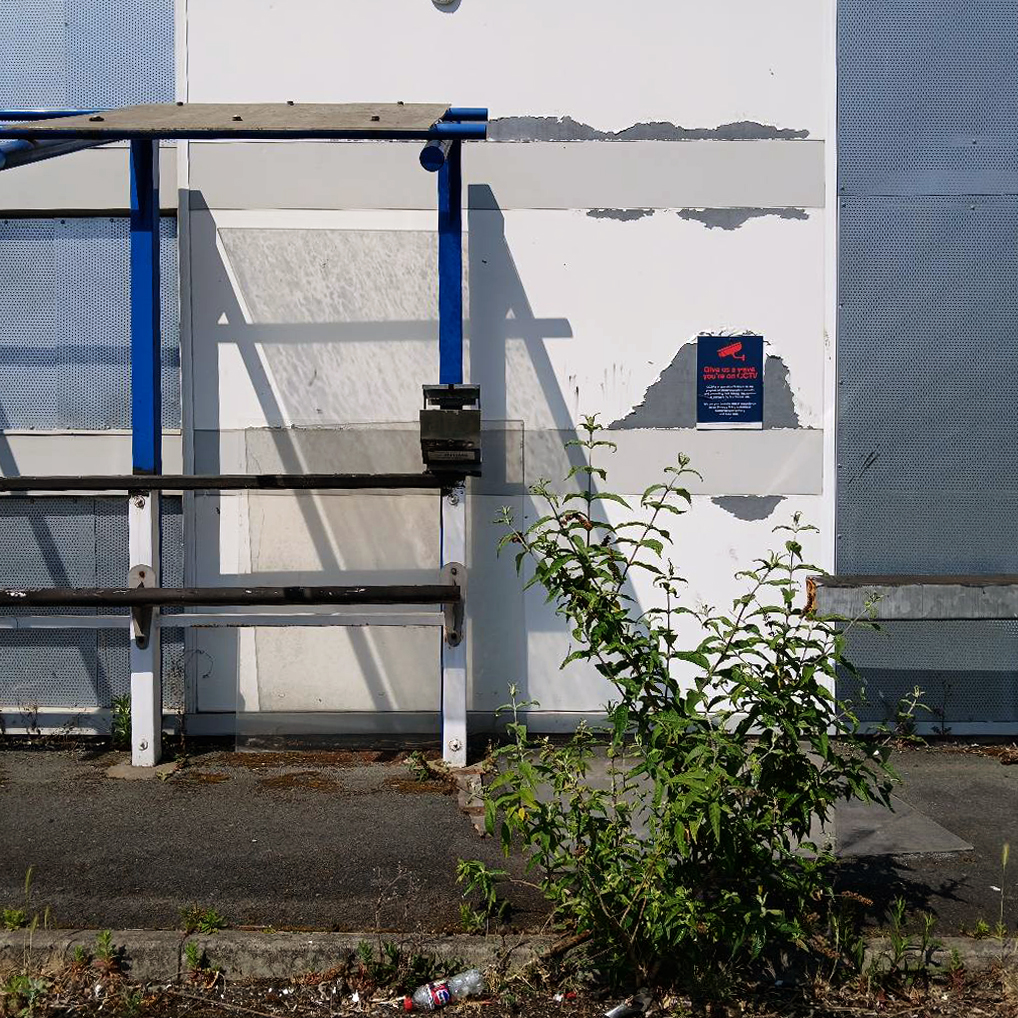
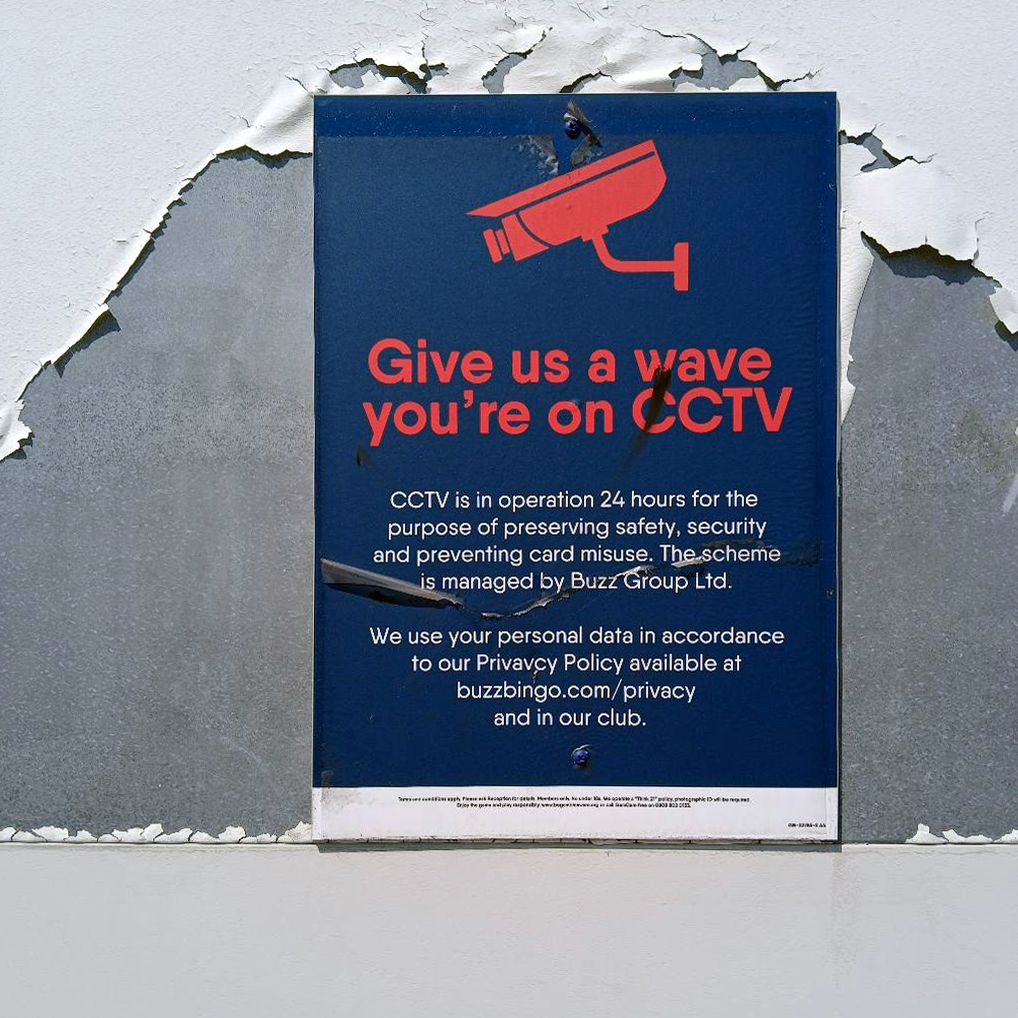
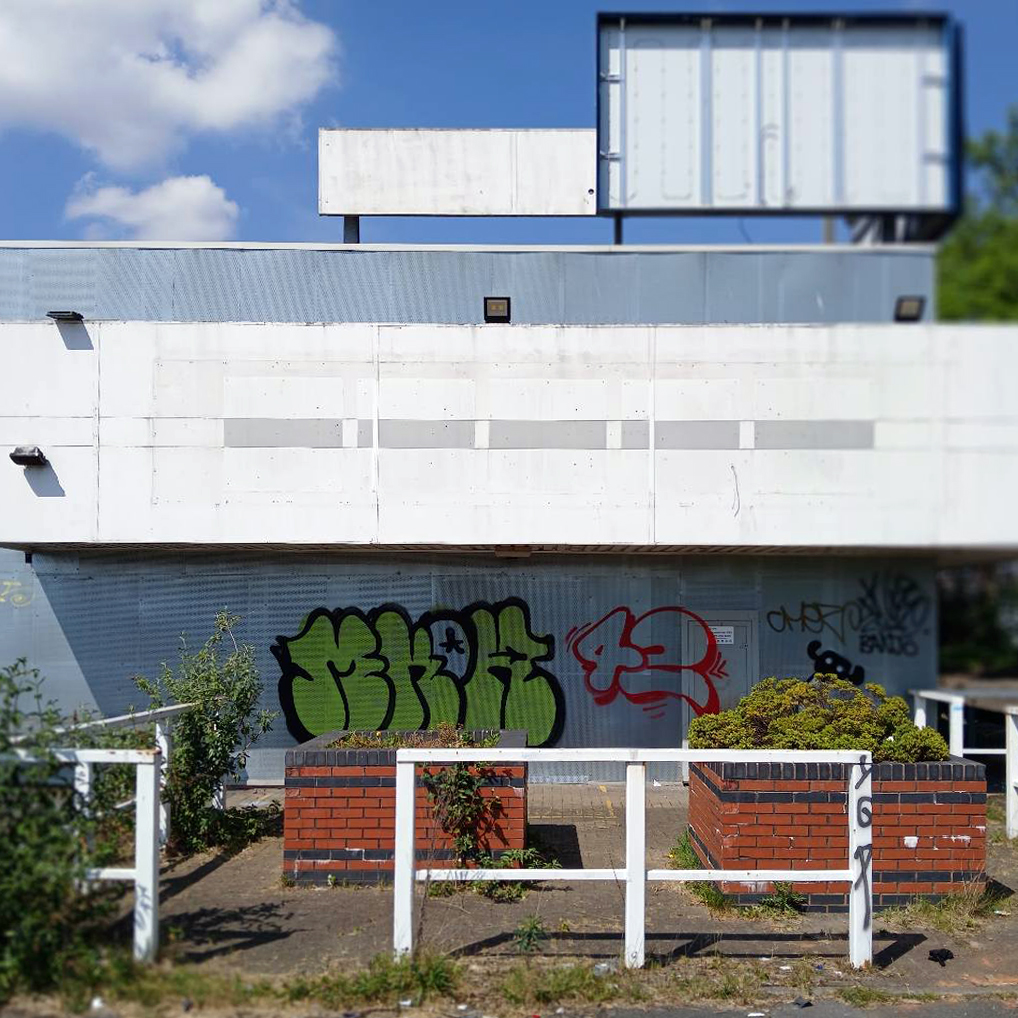
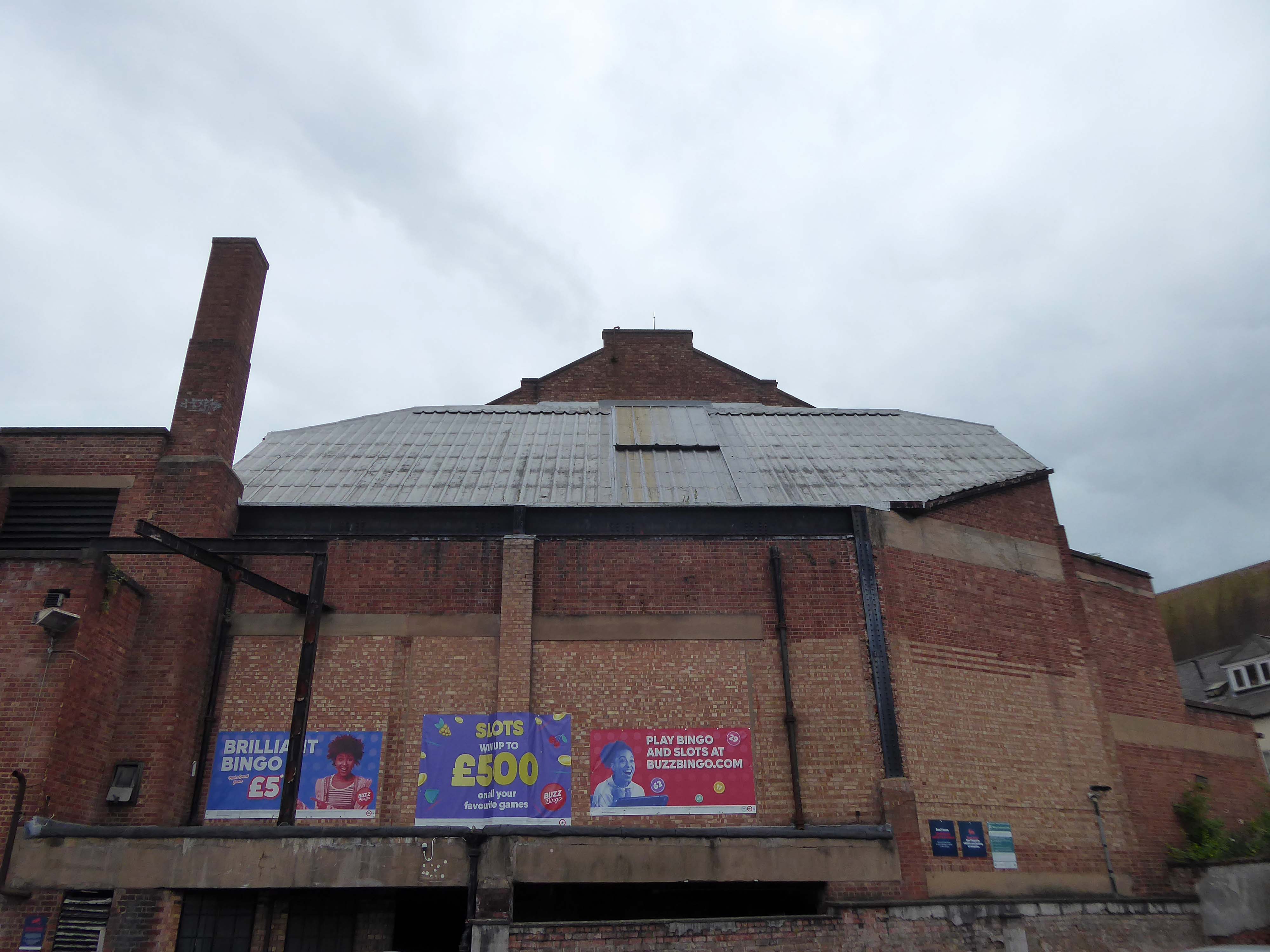
Gala Bingo came and went too.
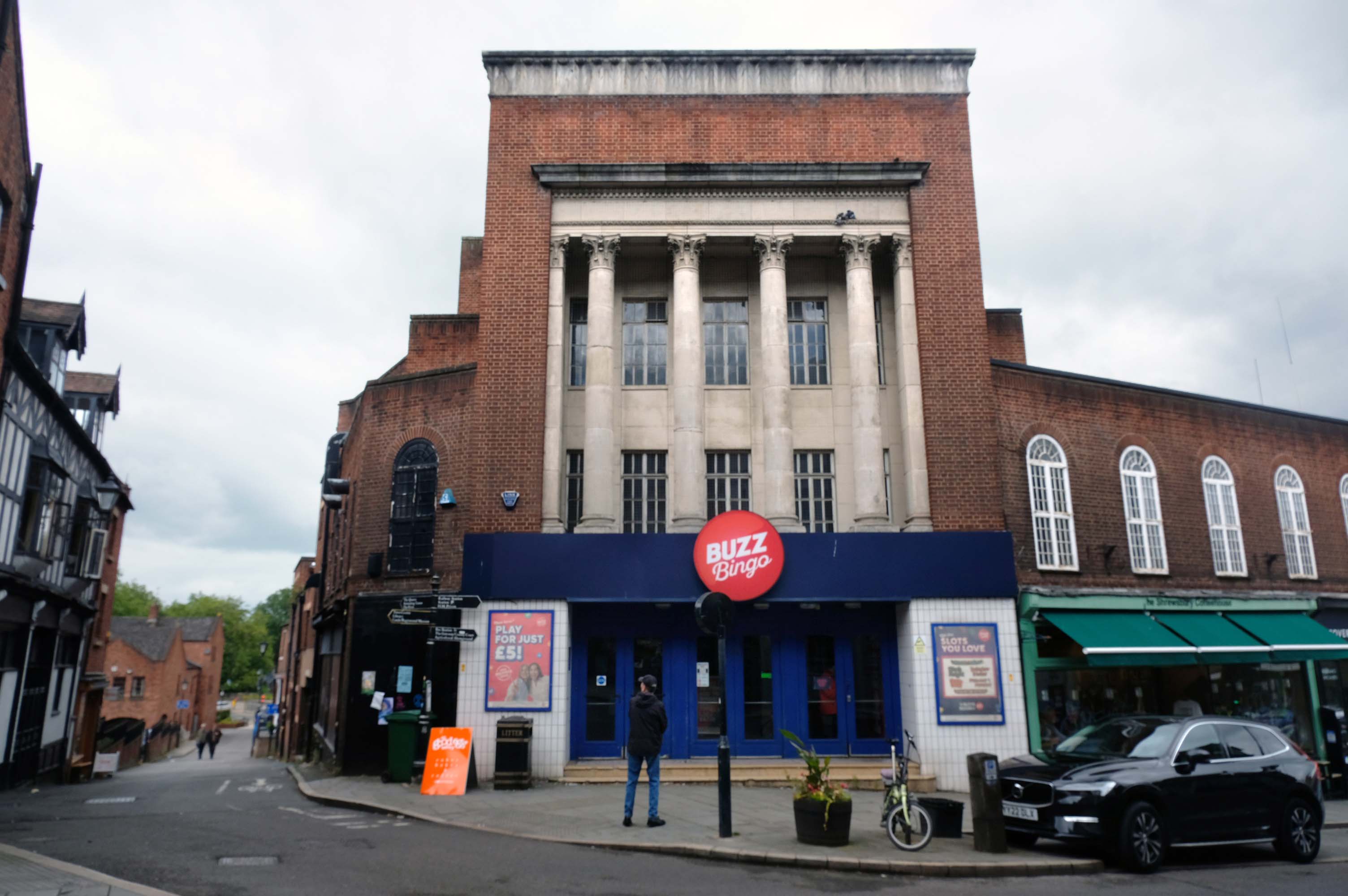
Buzz Bingo have announced plans to close nine of their 91 clubs across the country.
One of those earmarked for closure is the club at Belle Vue. Bosses are blaming the dwindling number of players following the Covid lockdowns as well as the ‘ongoing and challenging operating environment’ of increased energy bills and other costs.
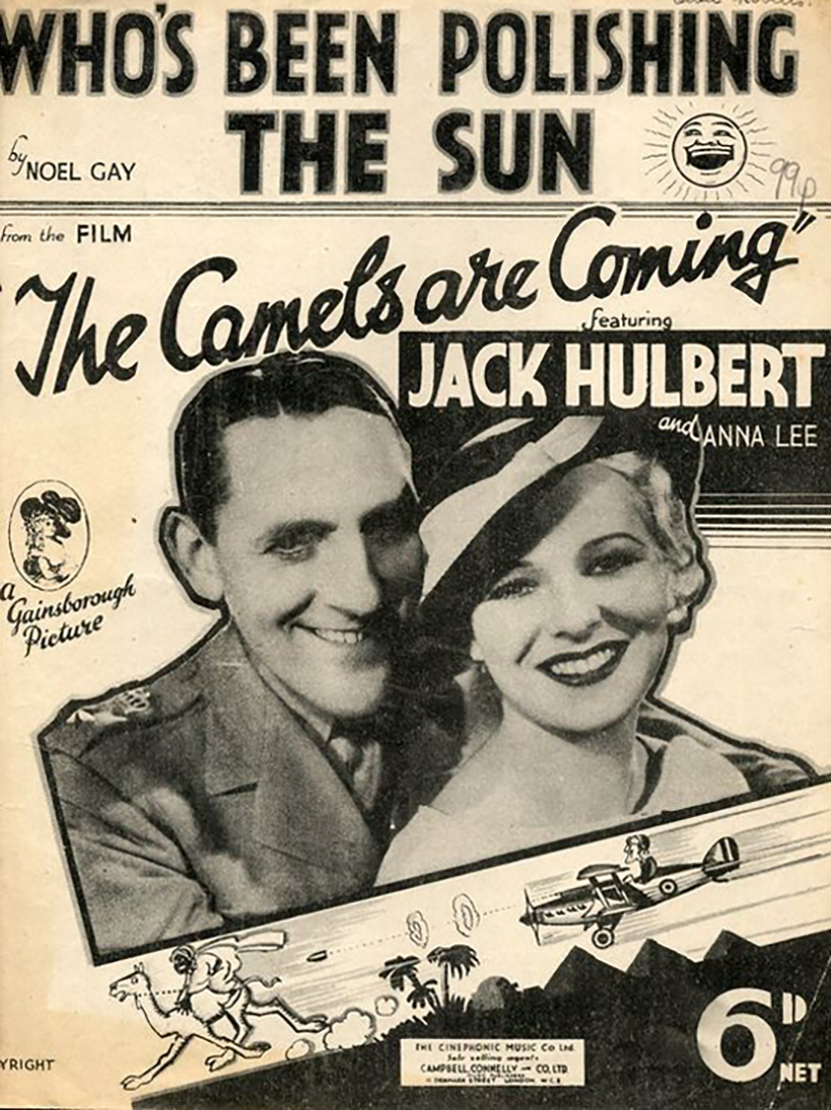
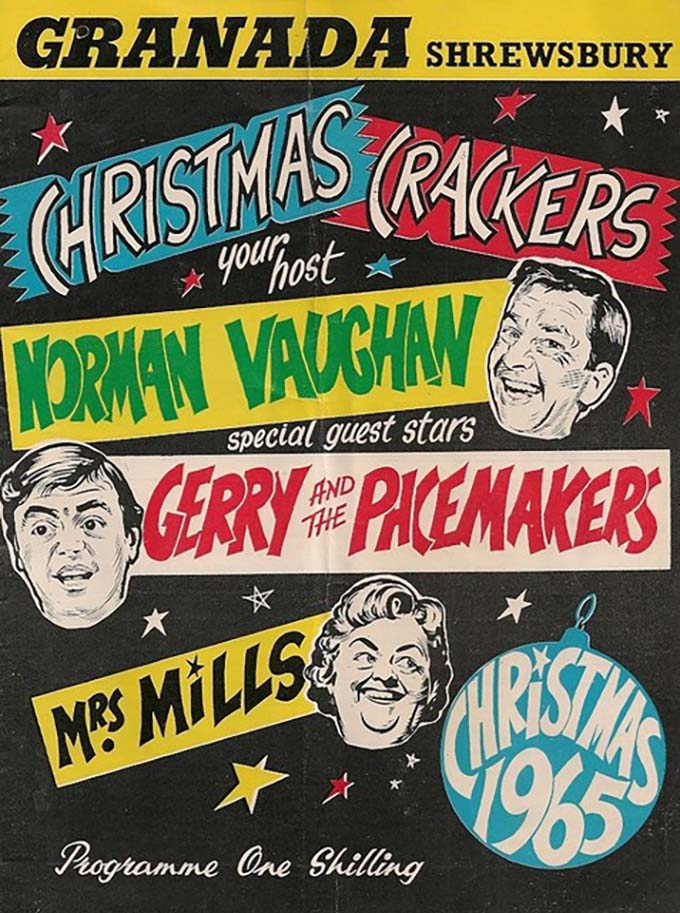
Built and operated by Shrewsbury Empires Ltd, the Granada Theatre opened on 14th November 1934 with Jack Hulbert in The Camels Are Coming.
It closed as a cinema on 31st March 1973 with Charles Bronson in The Valachi Papers and Anatomy of a Pin-Up.
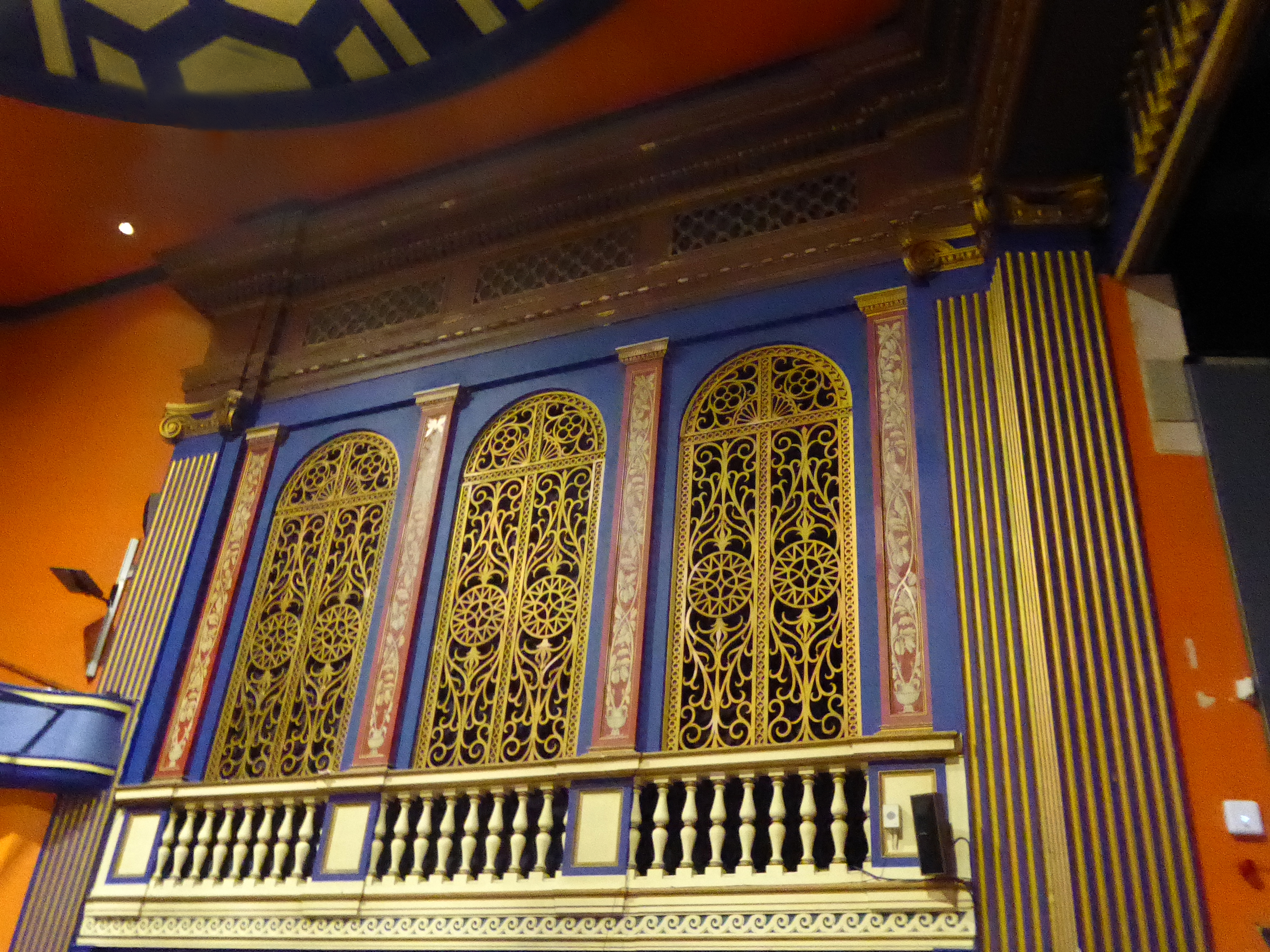
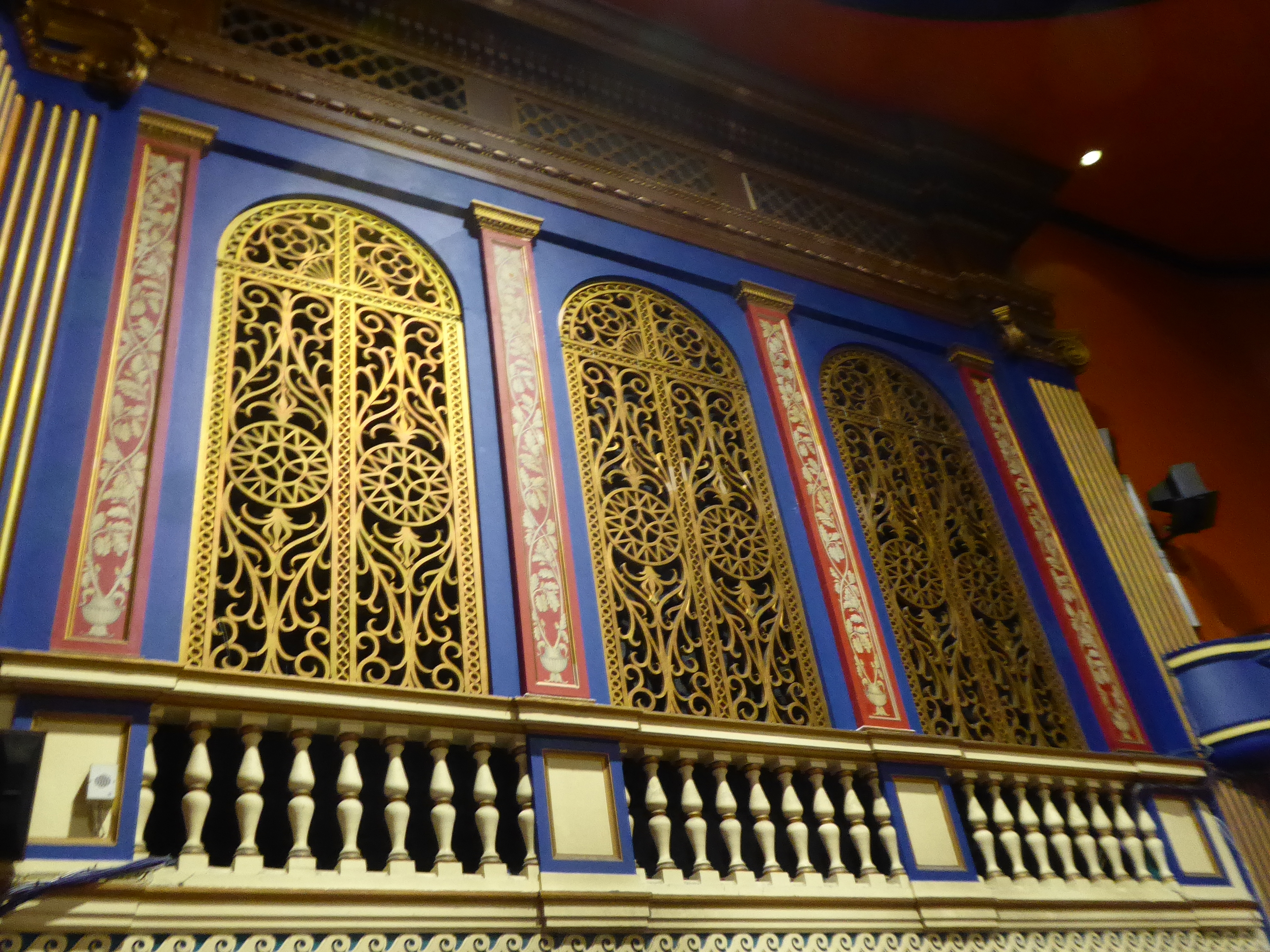
The Granada circuit was famous for its lavishly decorated interiors created by a Russian émigré called Theodore Komisarjevsky, the most famous examples of which are at Woolwich and Tooting – both now operate as bingo halls. The Shrewsbury Granada was by far the best cinema in the area, and in addition to Komisjarevsky, the scheme was designed by Cecil Massey, with some work being carried out by a local architect called Arthur Williams. The architecture of the Shrewsbury hall is often referred to as being a “standard” Granada, and the interior was very similar to the Granadas at Bedford now demolished and Maidstone which wasdestroyed by sub-division. There were less than 20 theatres built for the circuit, of which Shrewsbury was number five, although many existing cinemas were taken over and renamed, making the Granada Theatres an important group, although in numbers they were far behind Odeon and ABC.
On 17th November 1995, the Granada Theatre was designated a Grade II Listed building by English Heritage.
Many thanks to the staff of Buzz Bingo for allowing us access.
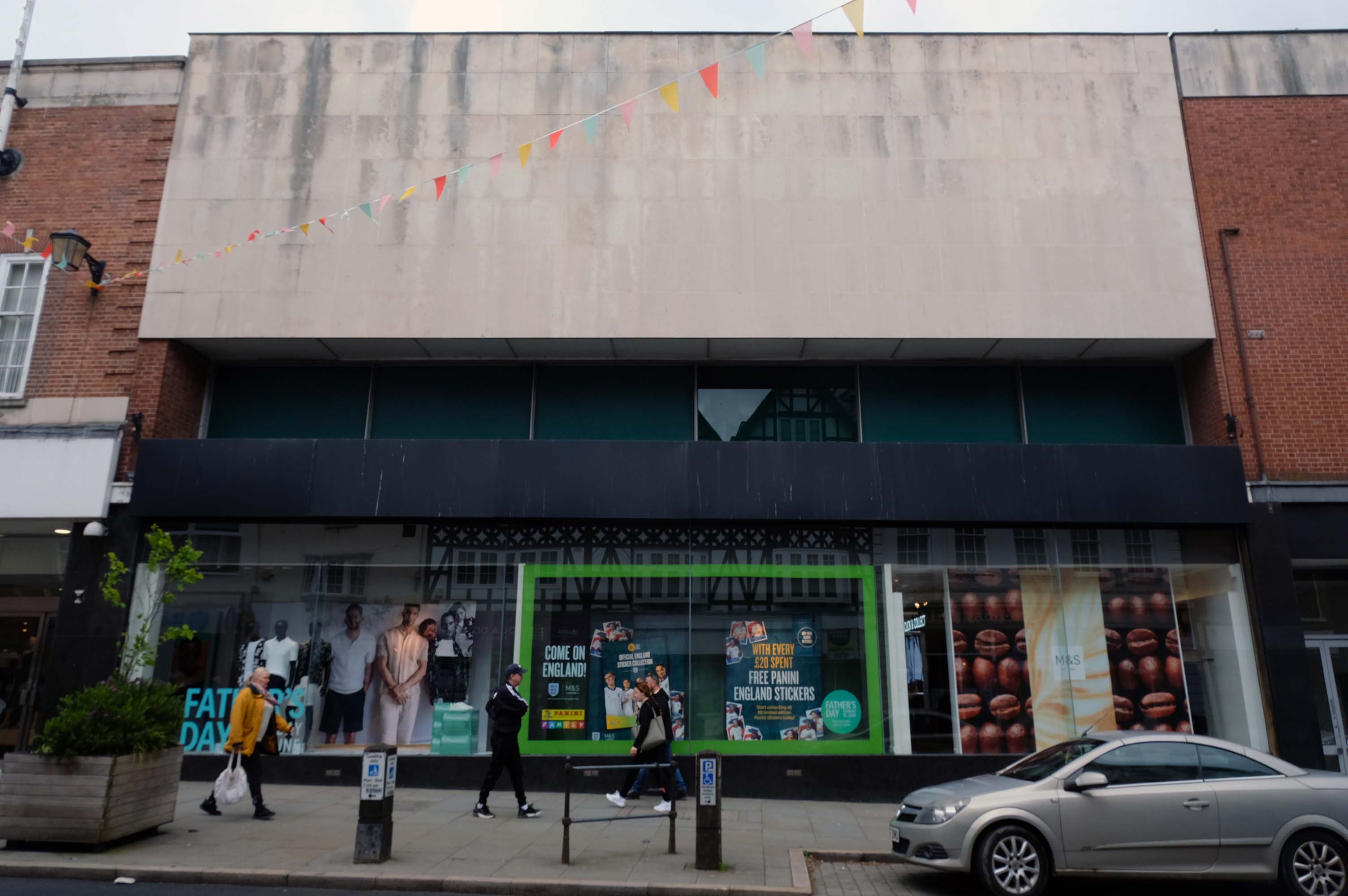
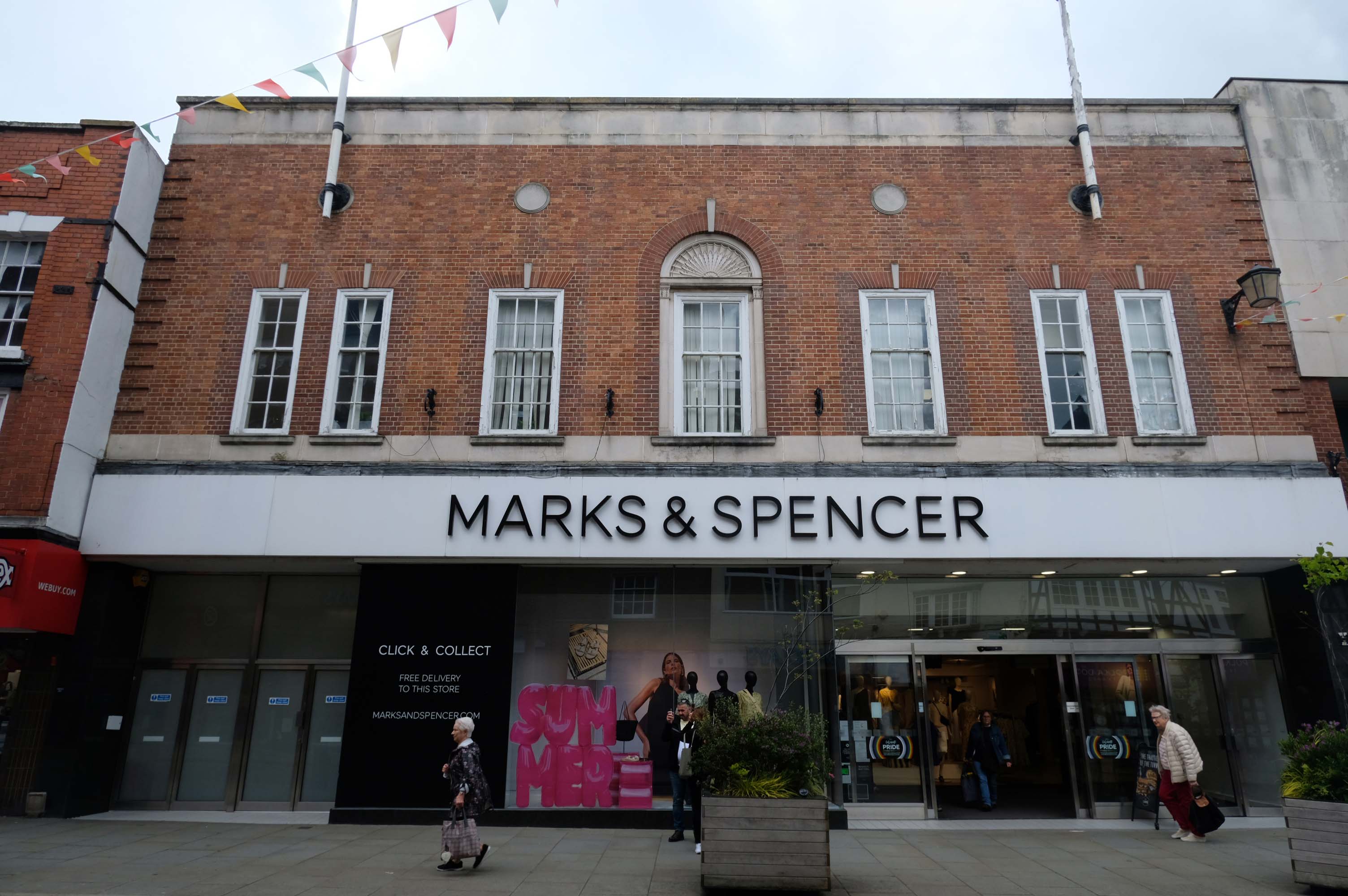
Next up is a Marks & Spencers store very much a shop of two halves – marrying post-war Brutalism with interwar Classicism, unified by a glazed ground floor.
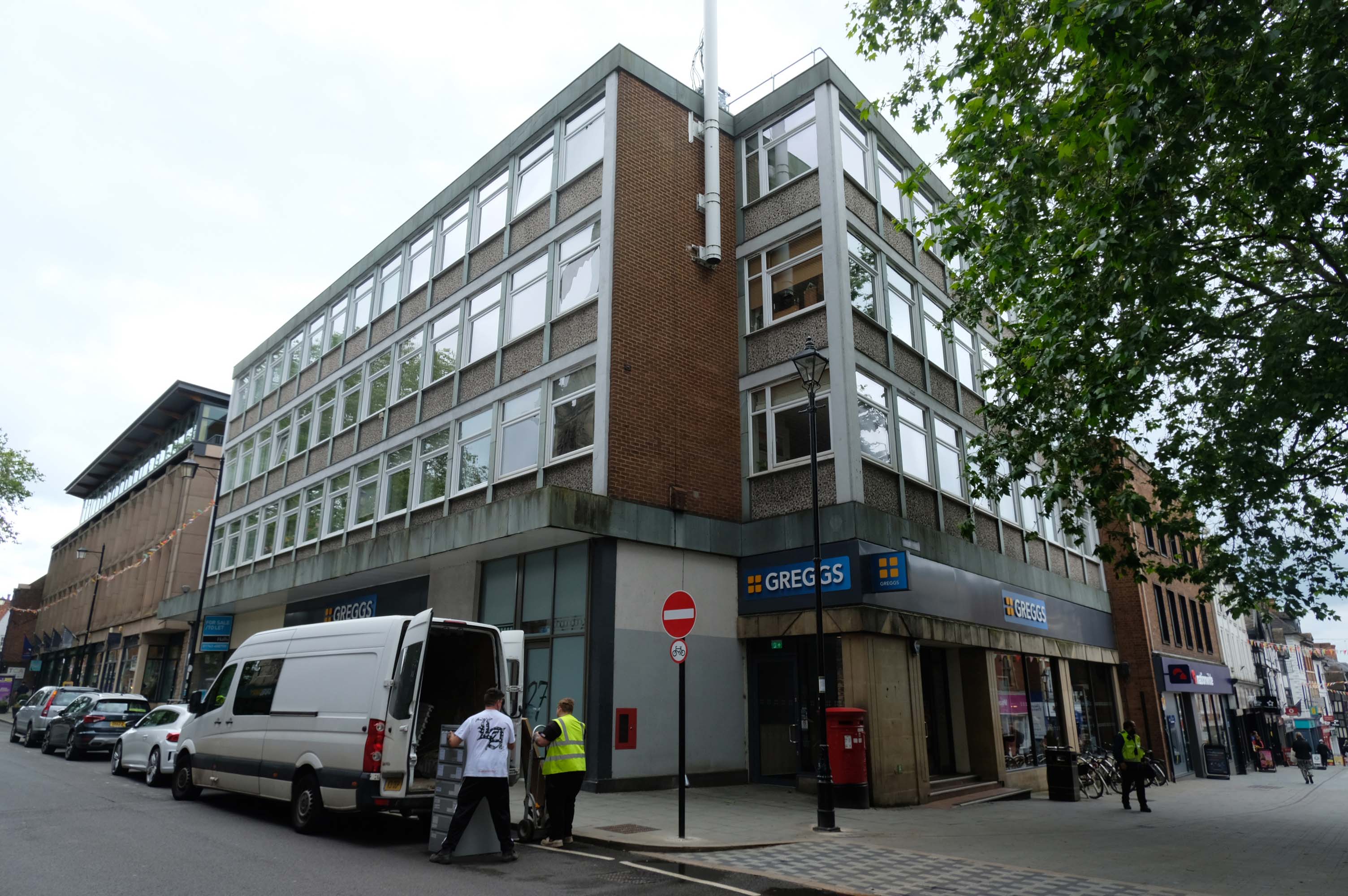
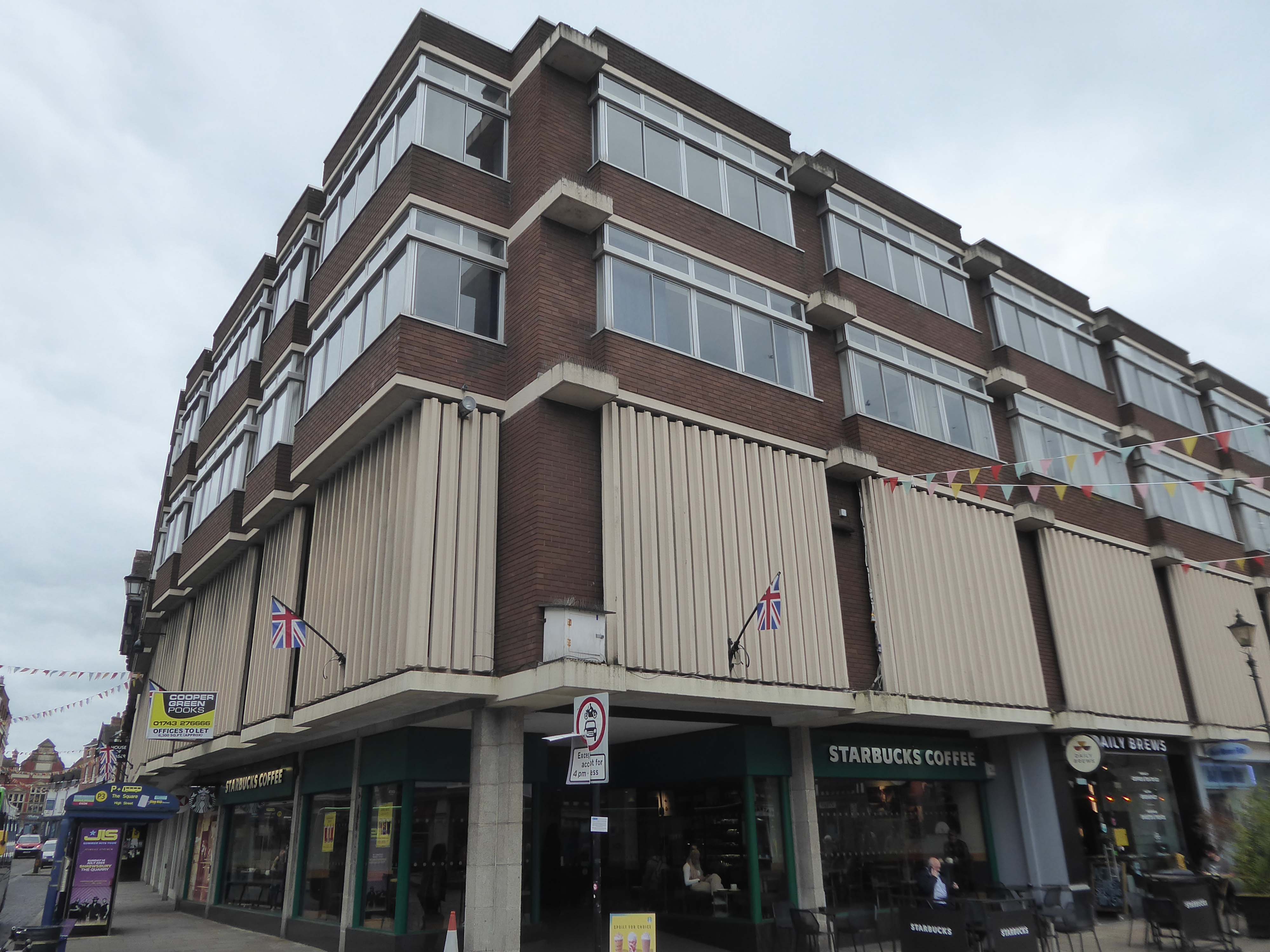
Across the way, a 60s corner site development, with a dual-entry Greggs.
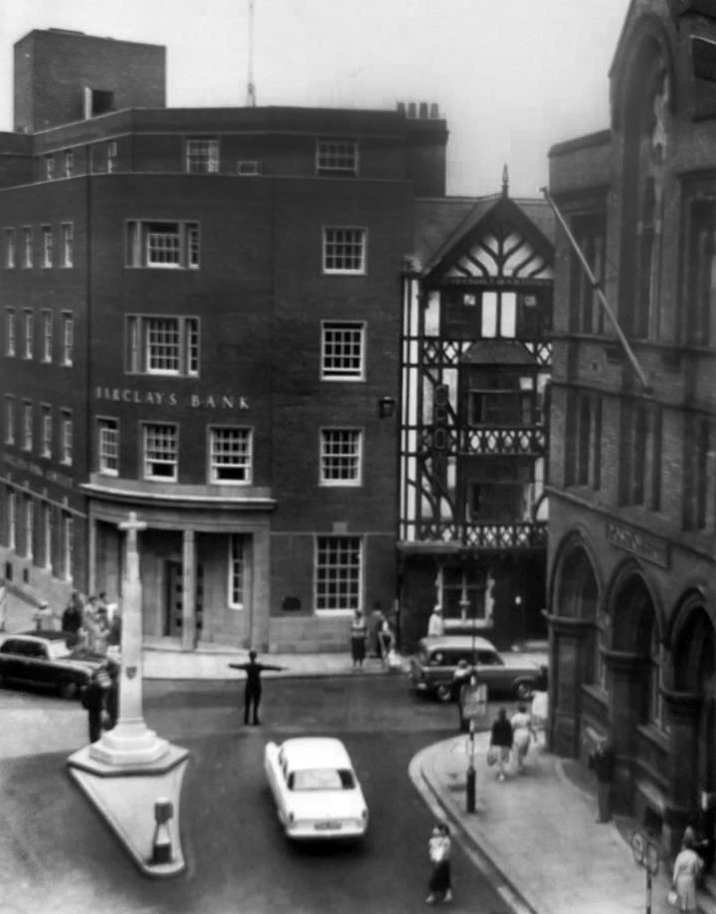
Formerly the site of the Post Office – demolished in 1959, and next to the Barclays bank the long gone Crown Hotel.
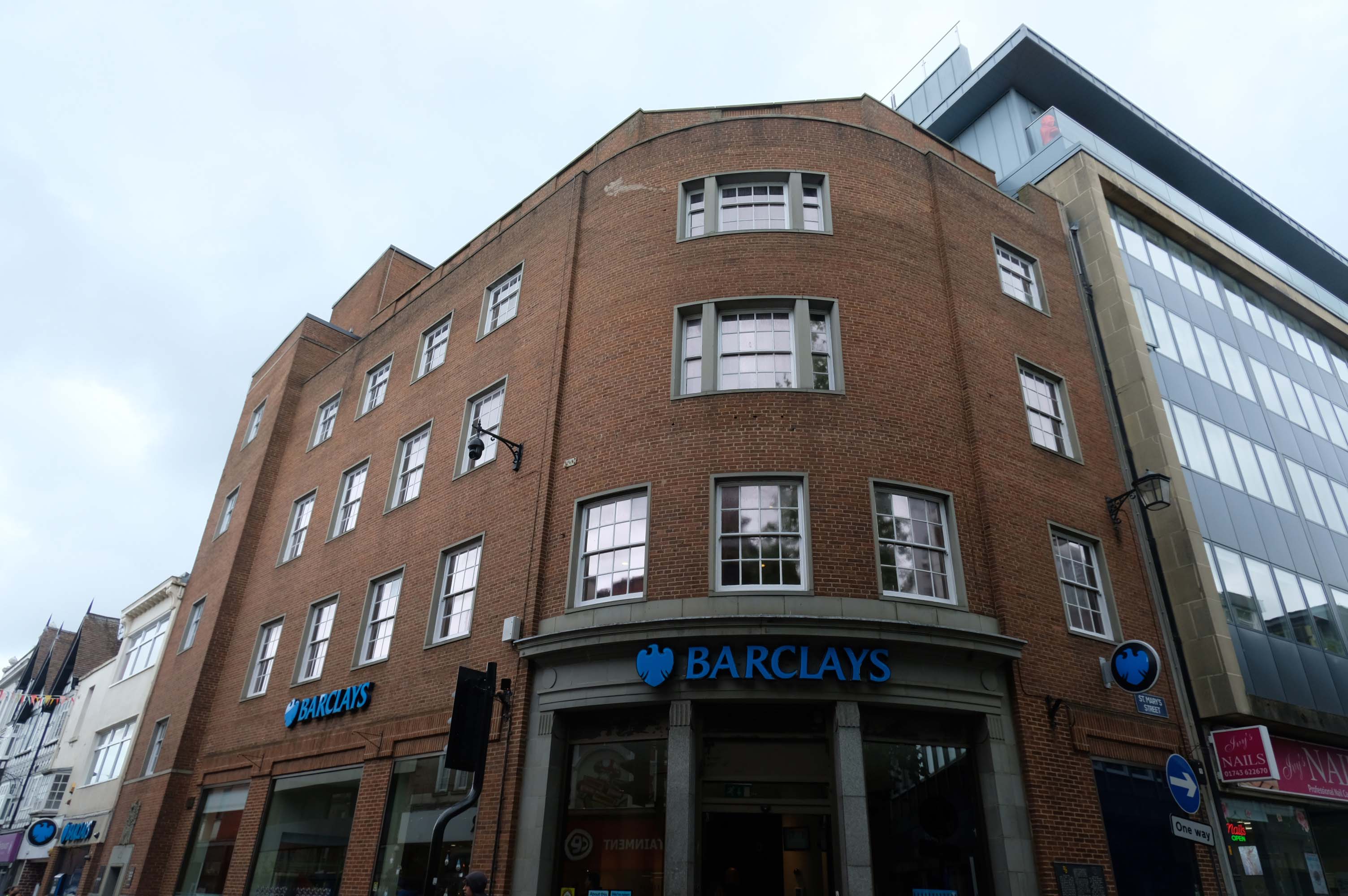
On the adjacent corner a curvaceous Barclays Bank, built in the post war Ministry of Works manner.
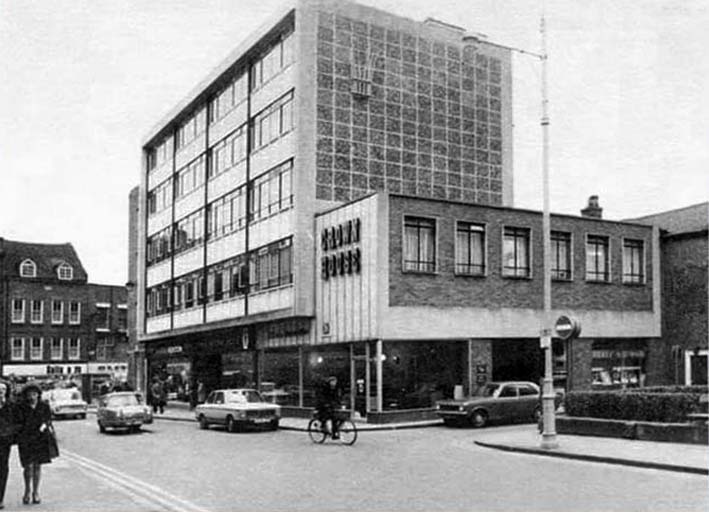
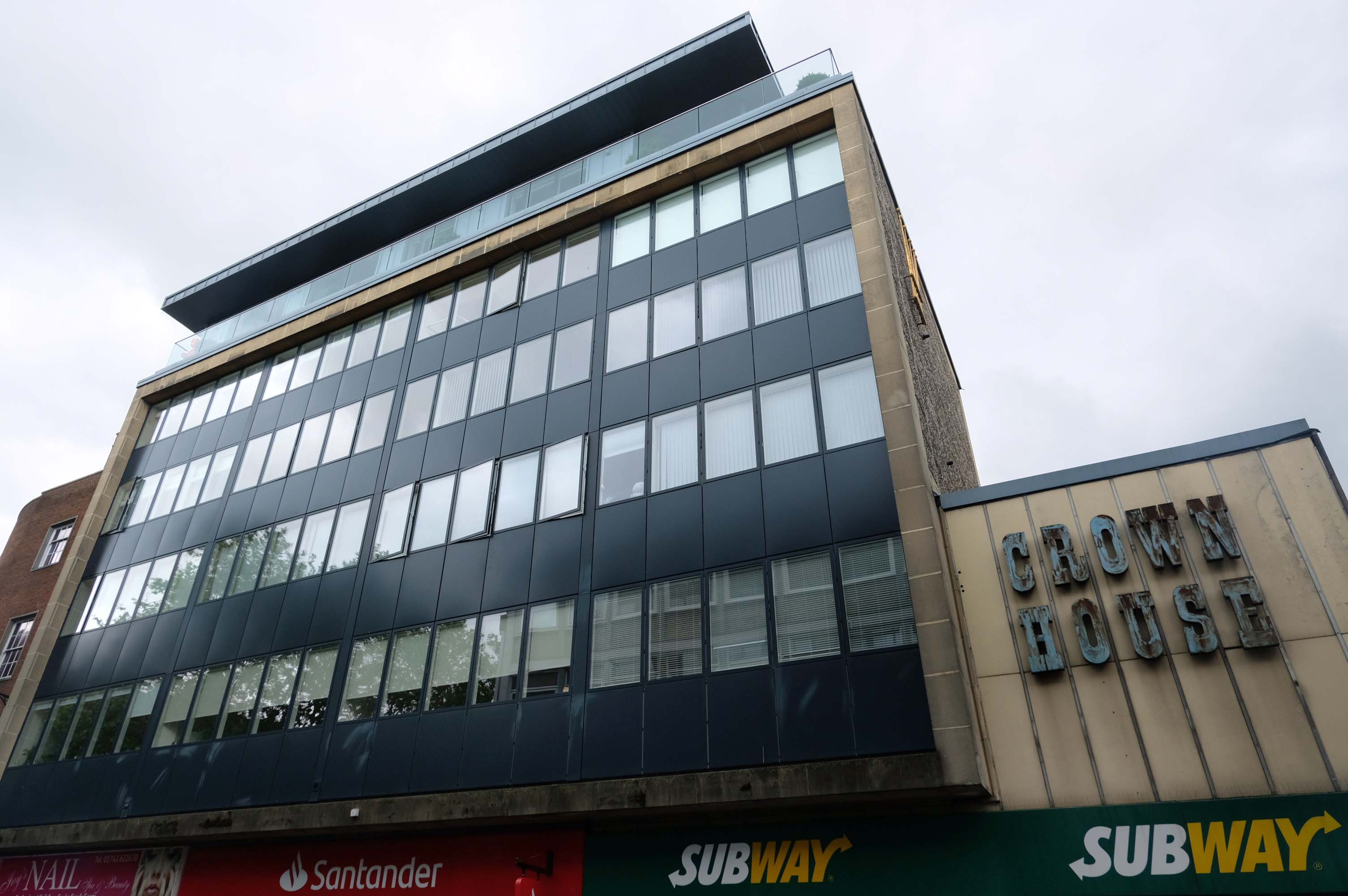
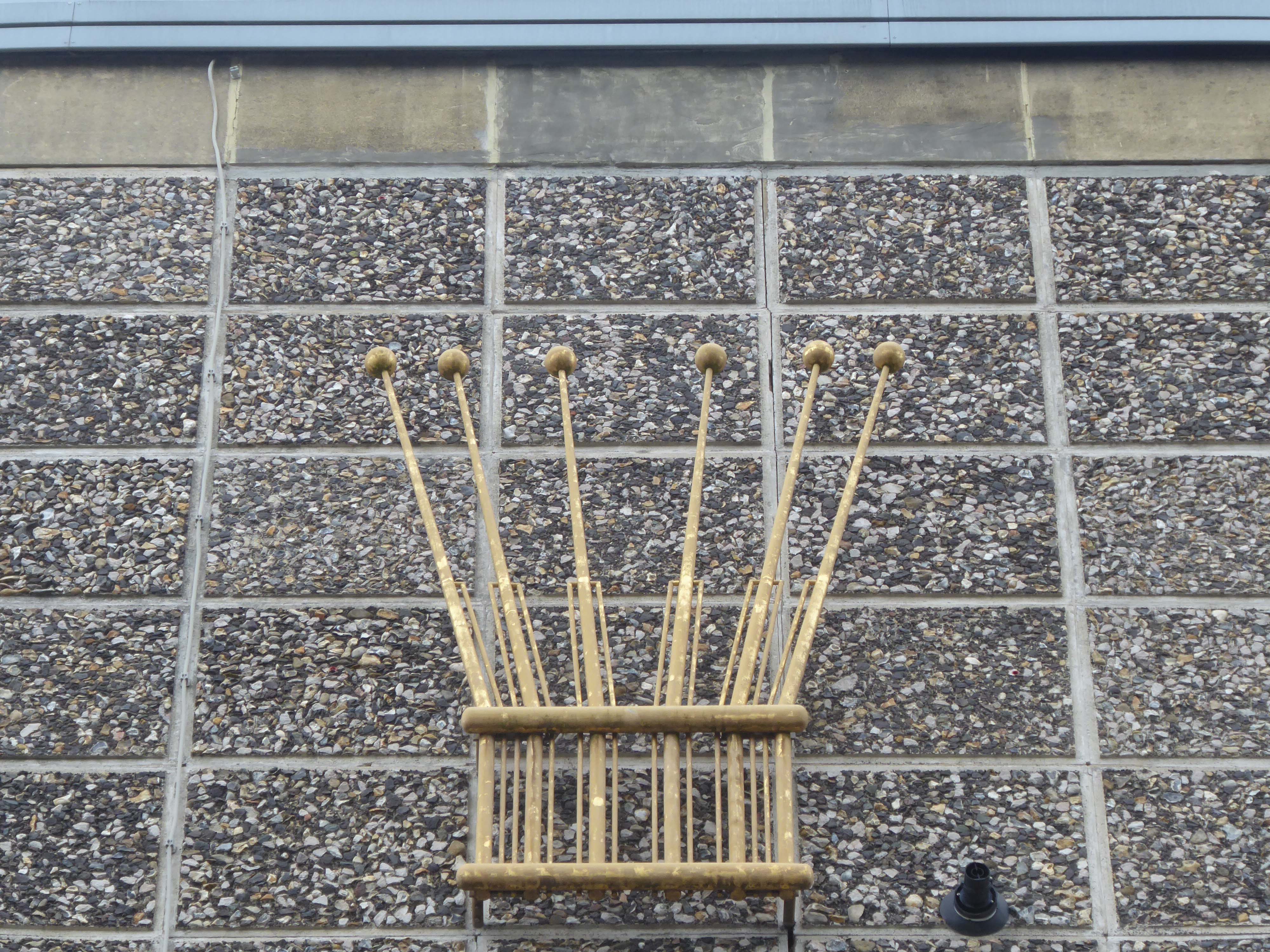
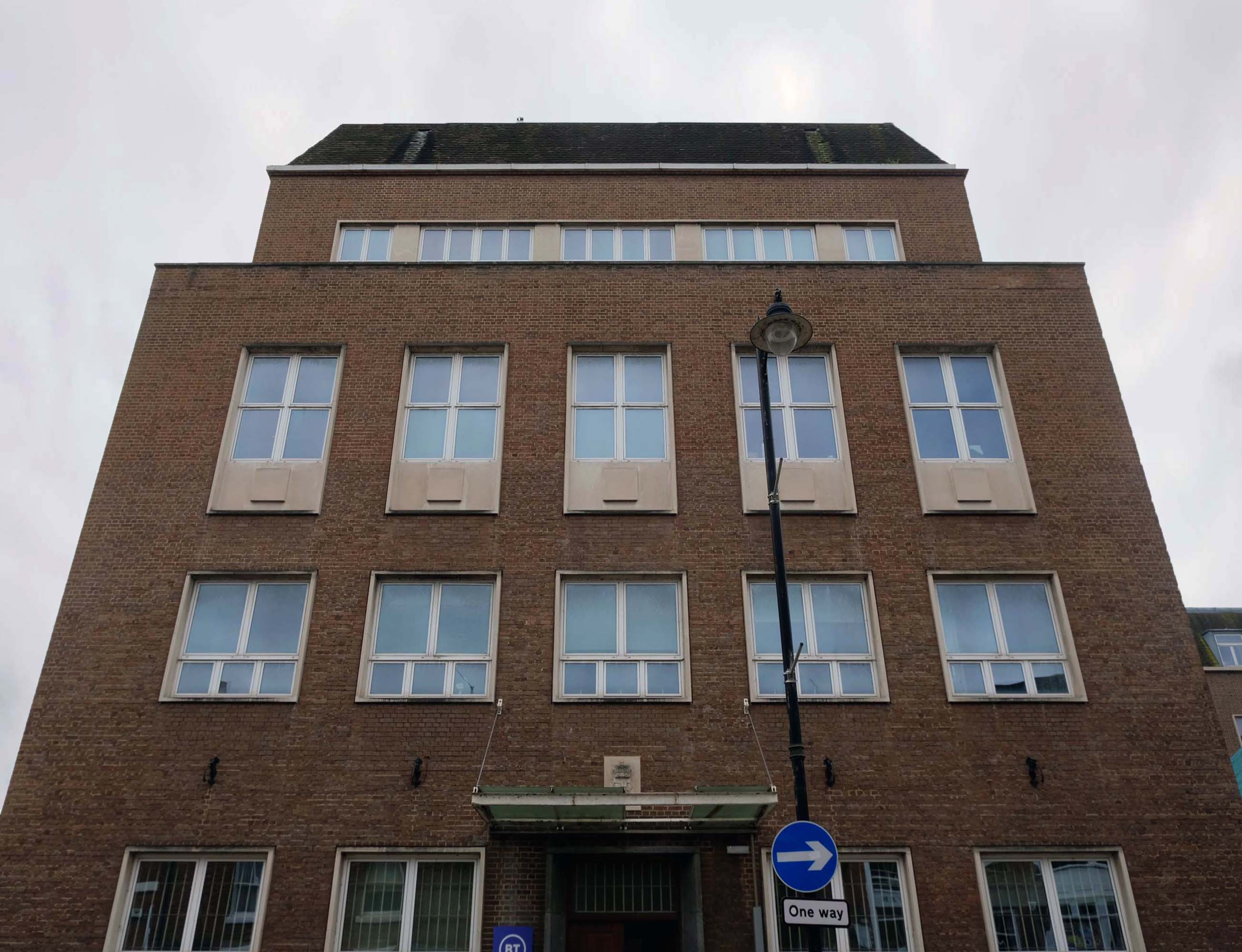
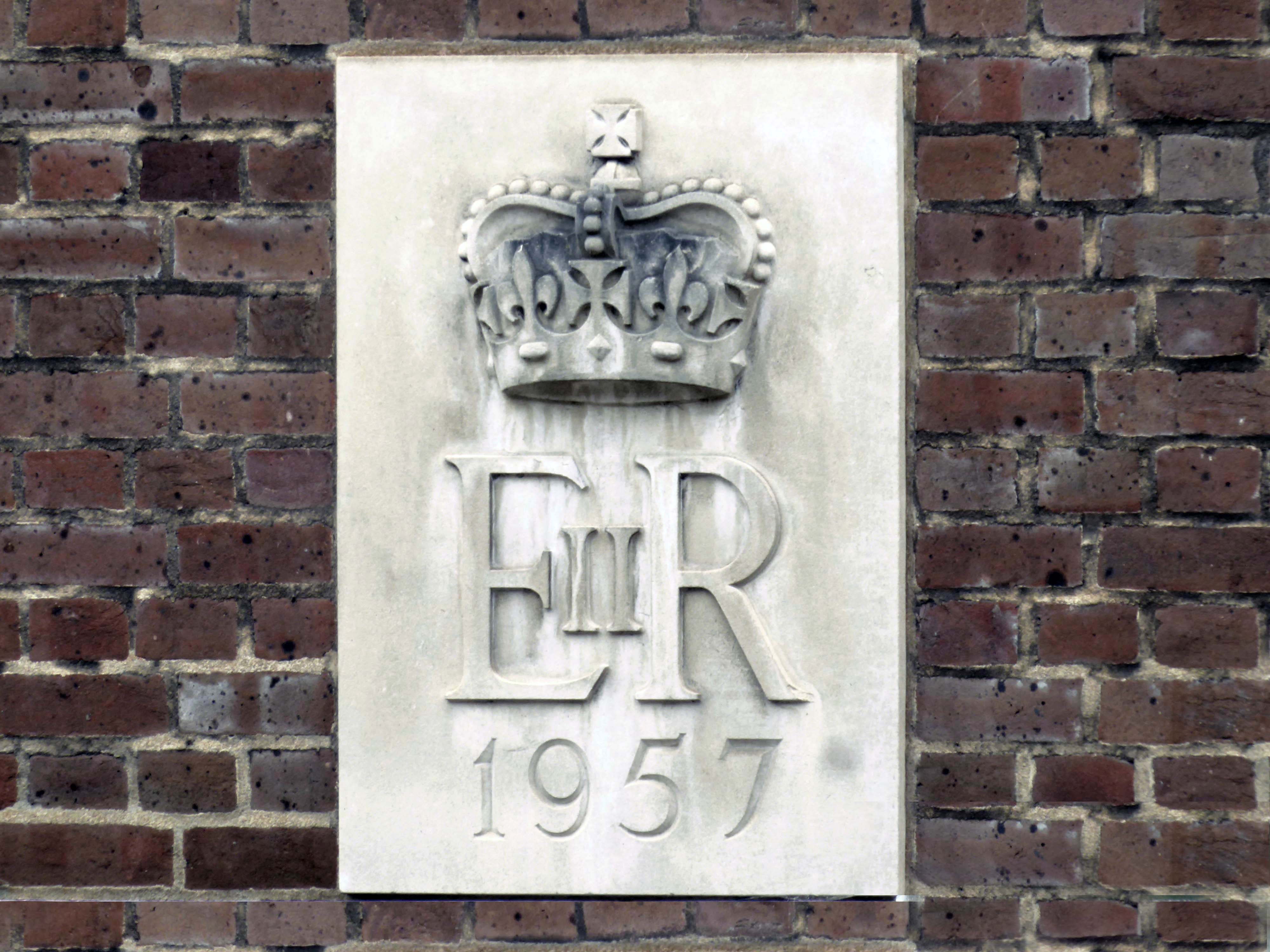
Next door is Crown House – refurbished but with it’s architectural type intact.
One of Marshall Structures’ biggest projects to date was the conversion of Crown House from a tired office block to a complex featuring 14 luxury apartments, providing a much-needed improvement to the site. The work involved in this project included large amounts of steel work and timber design.
The biggest challenge faced during the completion of this project was trying to fit an additional storey without loading quite an old existing structure. To do this, the new storey was designed out of a lightweight timber frame. By doing this, the client’s brief could be met while also ensuring that the existing 1950s building wasn’t overloaded in the process.
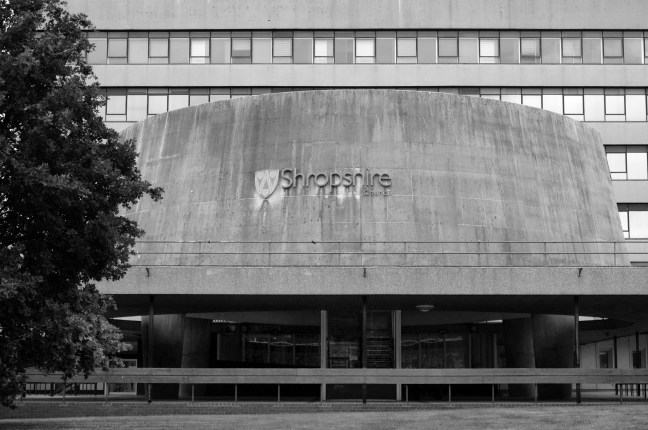
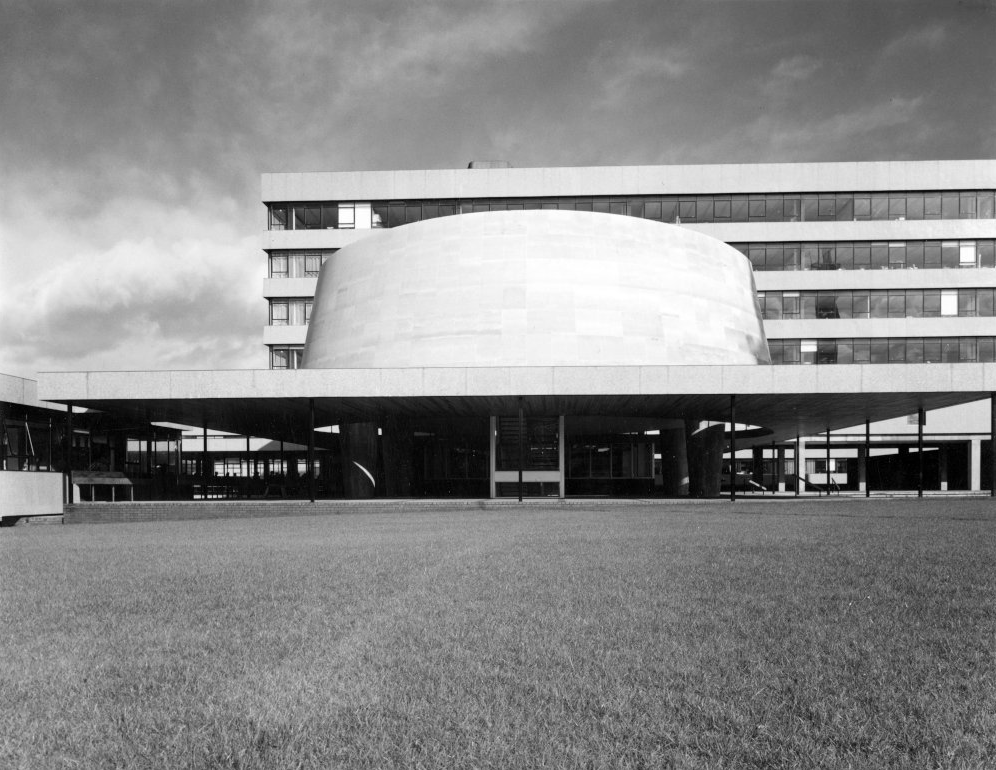
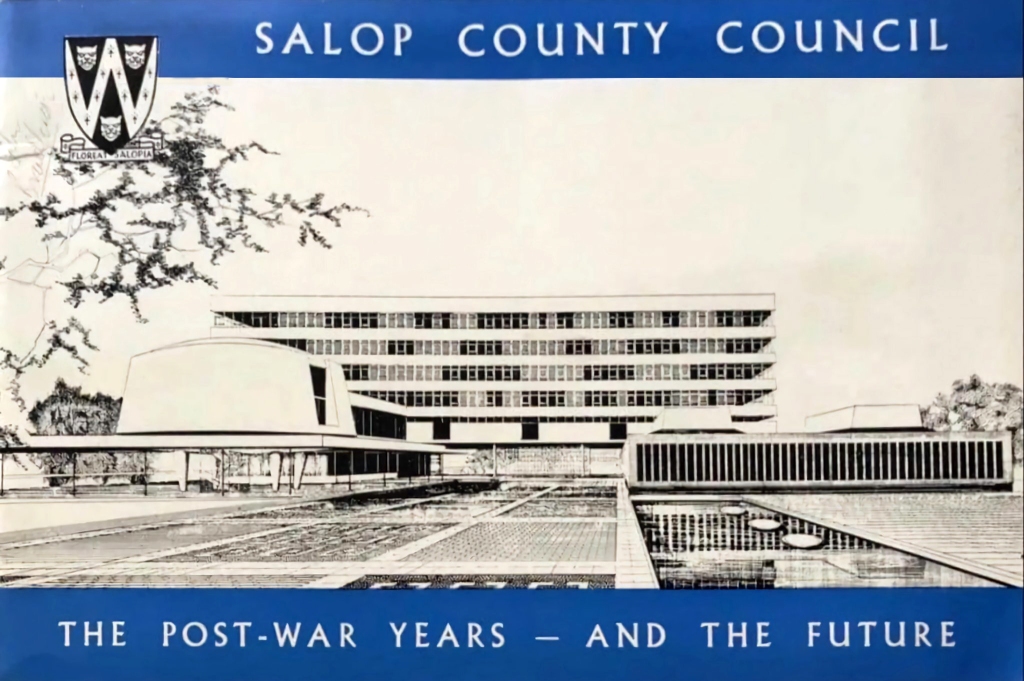
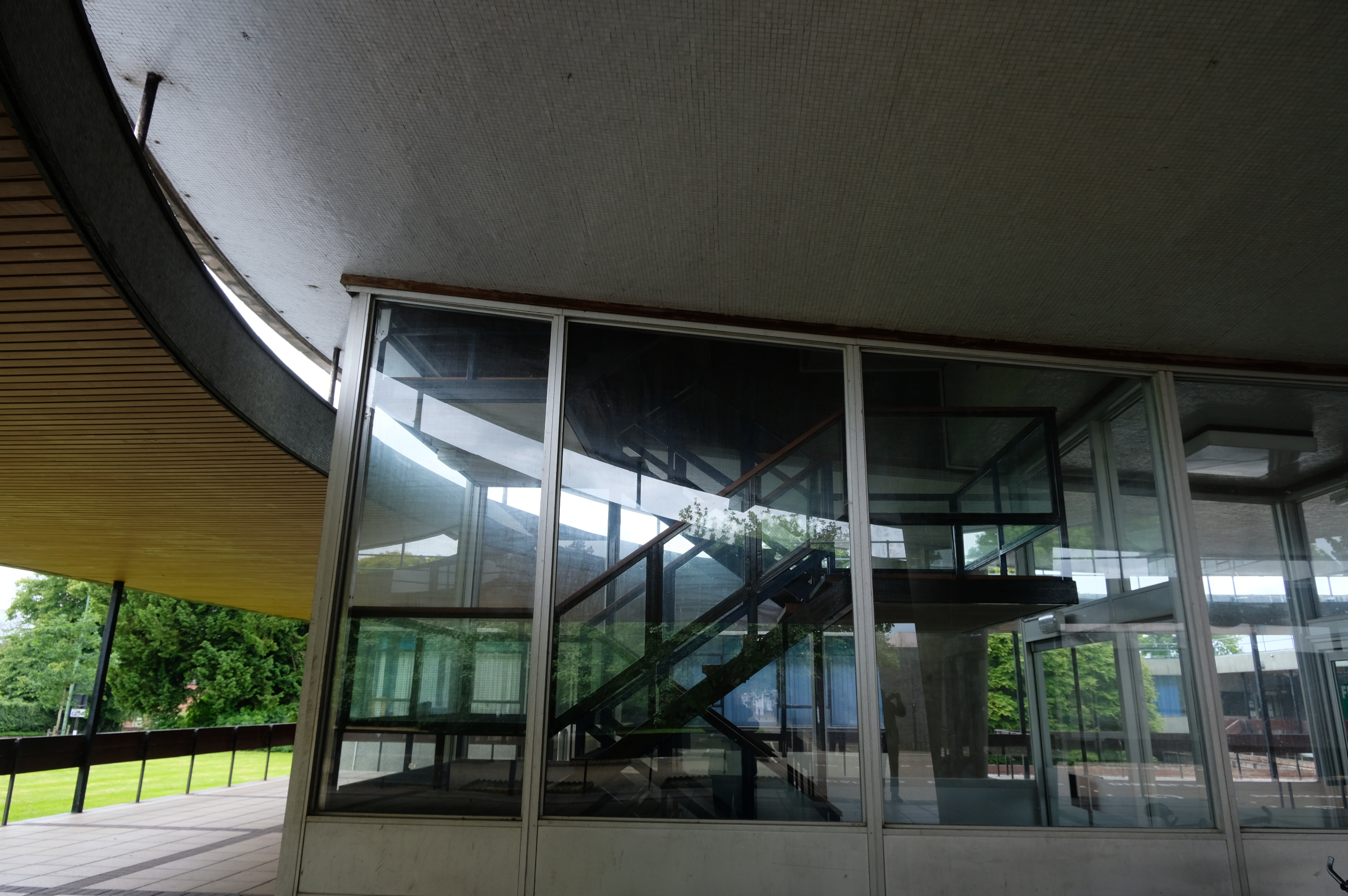
The foundation stone for the new building was laid by Sir Offley Wakeman, a former chairman of the county council, on 25 July 1964. It was designed by Ralph Crowe, the County Architect, in the Modernist style, built at a cost of £1.8 million and was completed in April 1966.
Pevsner described the building as – the major monument to post-war modernism in the county.
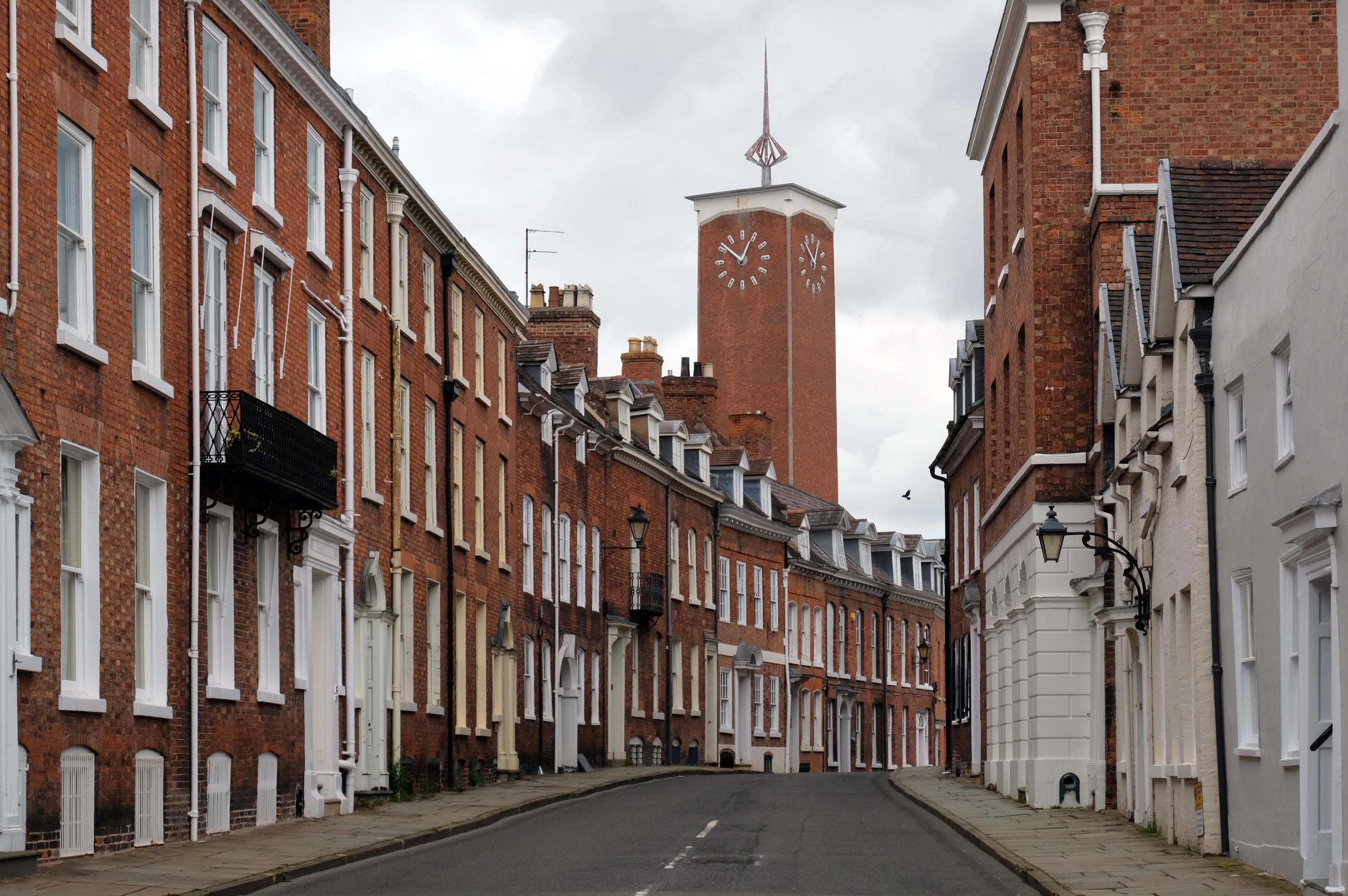
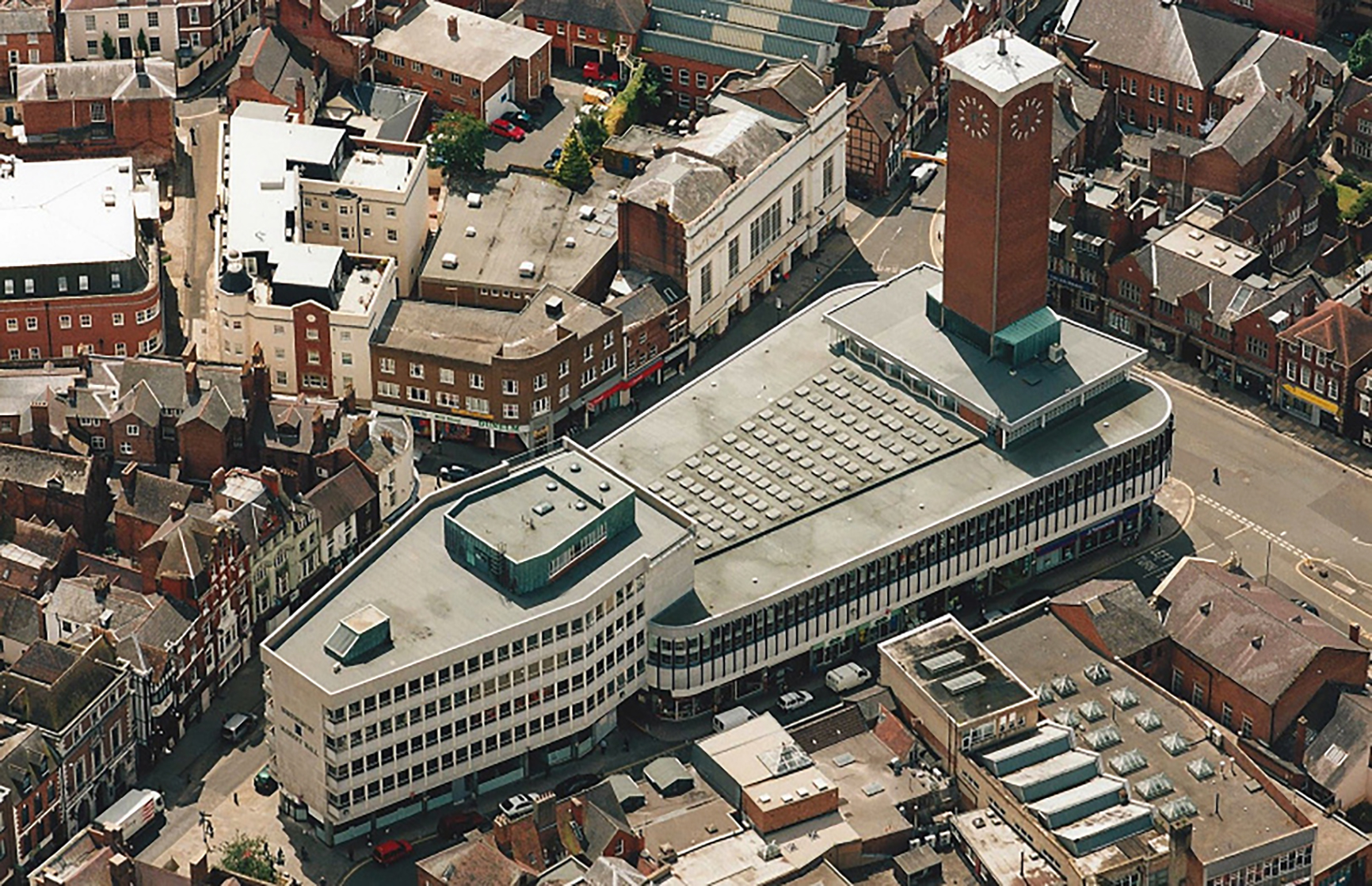
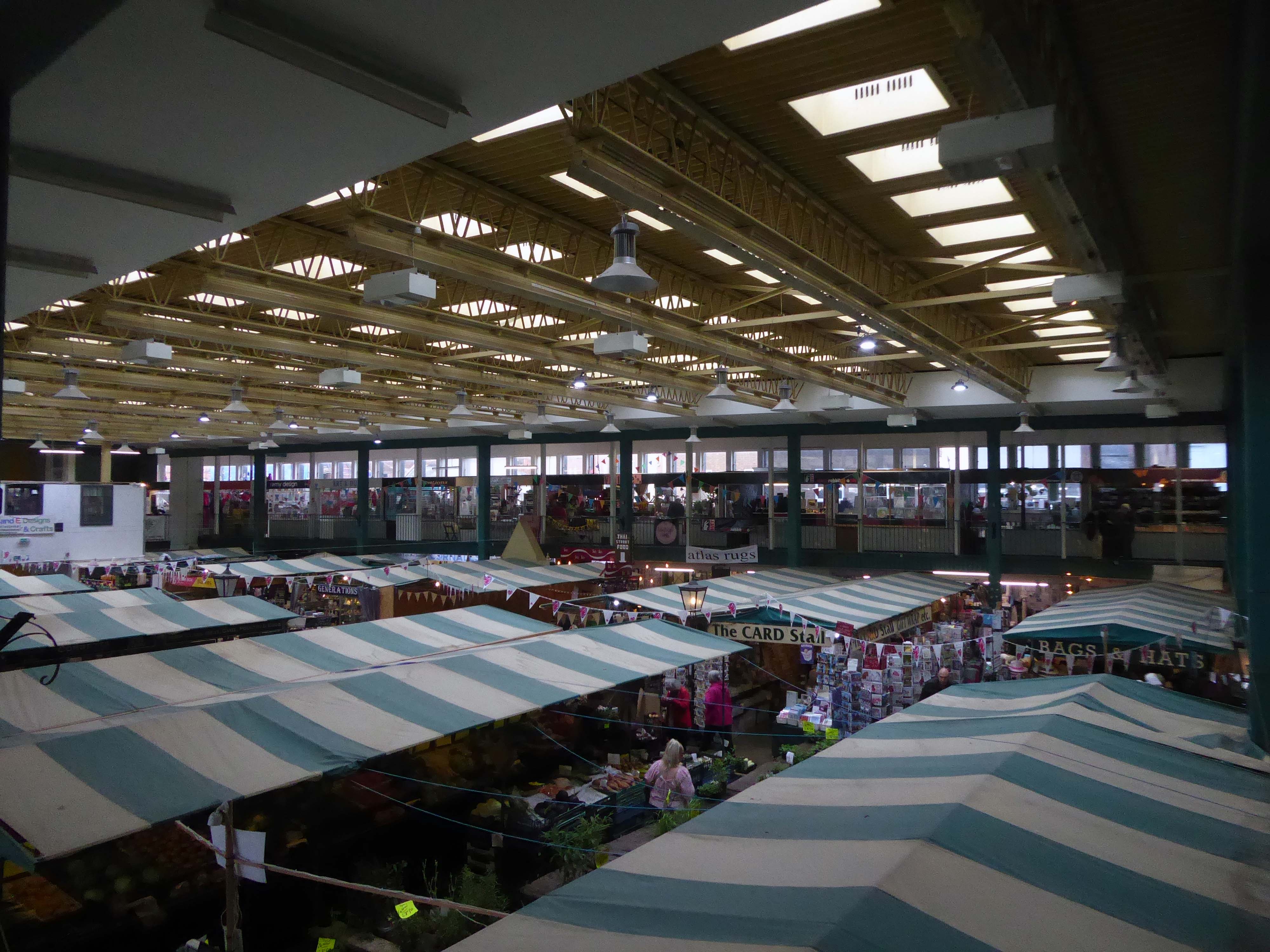
The Market Hall, which includes the town’s 240ft clock tower, an indoor market and a ground-floor shopping centre, was hailed the most modern building in Shropshire when it opened in September 1965.
Developed by the Second Covent Garden Property Company Ltd to replace an ailing Victorian market hall, it cost £1 million to build and was designed by award-winning architect David du Roi Aberdeen who also famously designed the Trade Union Congress headquarters, Congress House, in London, and the Swiss Centre in Leicester Square.
Today the Market Hall’s 1960’s architecture might not be to everyone’s taste, but its indoor market is thriving with over 70 small businesses ranging from popular contemporary cafes and gift retailers to artisan producers and traditional market stalls selling fresh produce.
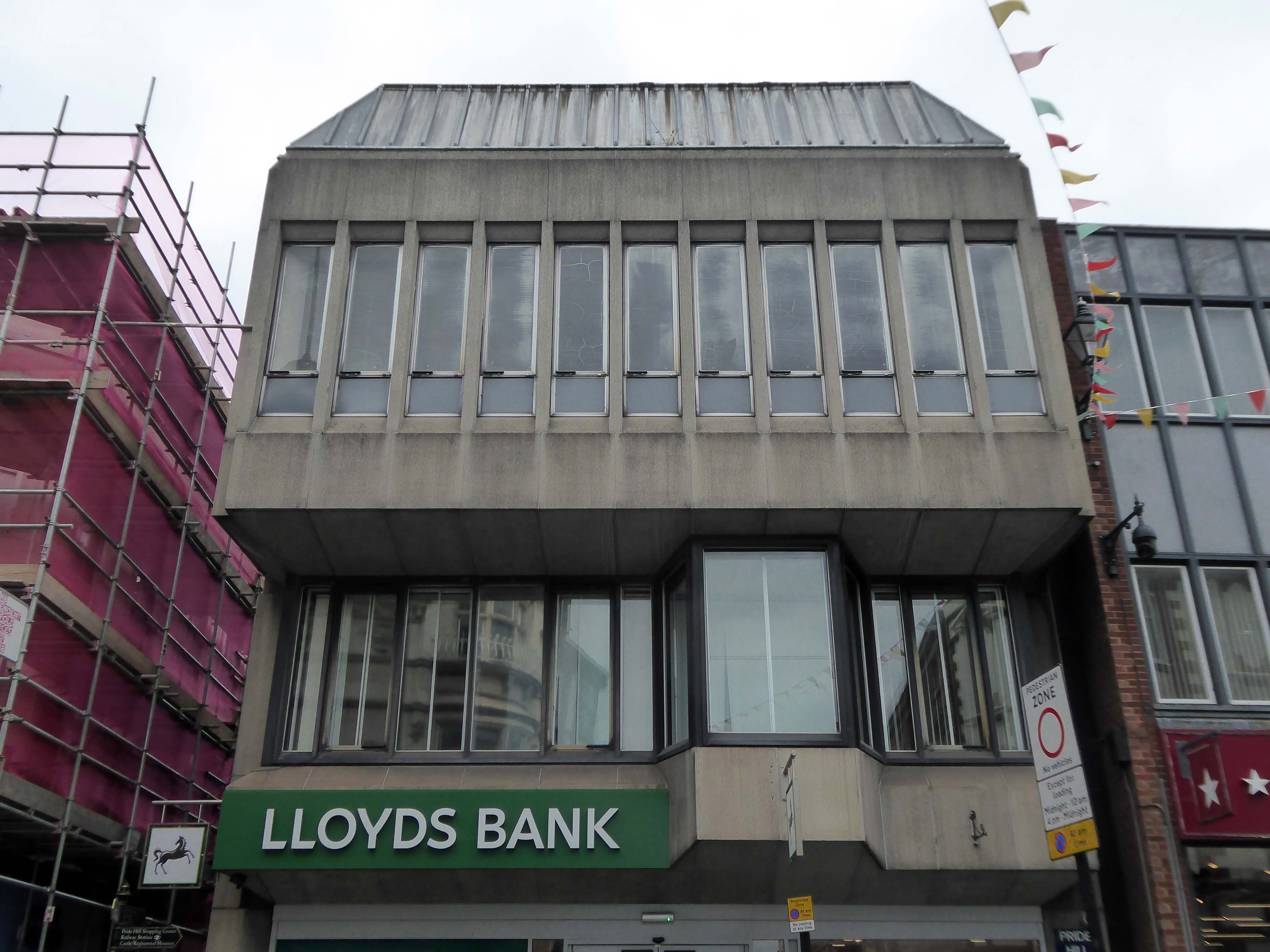
Bobbing toward the centre – a striking Lloyds Bank.
A conscious effort to reflect the nearby Tudor architecture of Ireland’s Mansion and Pride Hill. Lloyds Bank is considered a good example of Brutalist architecture, and proof that bold modern buildings can be successfully slotted into traditional historic streets.
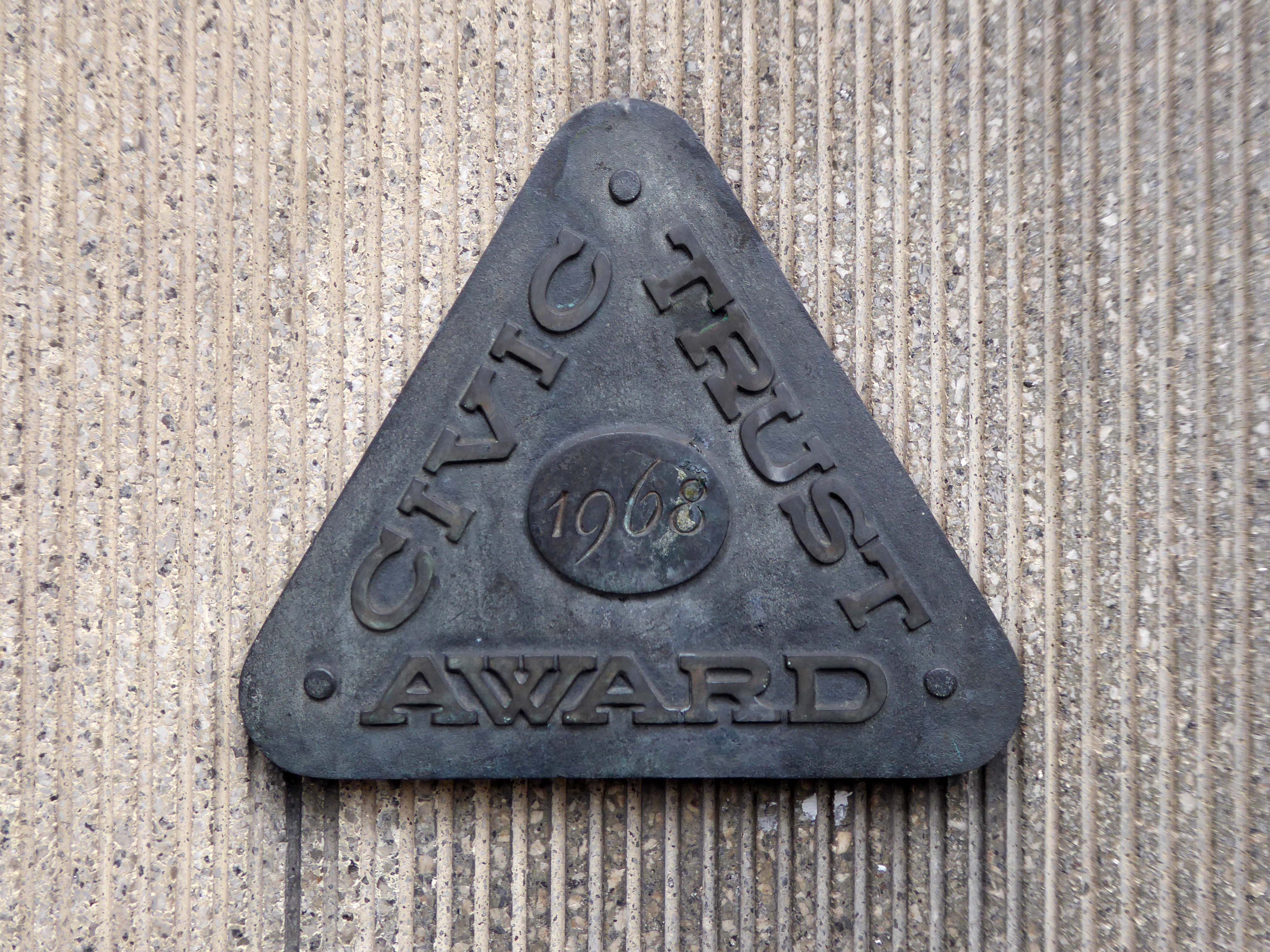
Possibly Shrewsbury’s finest post-war building, but of course it has its detractors. It was well received by critics of the period including the assessors for the Civic Trust who bestowed an award in 1968. They noted the quandary that the architects faced of building in such a historic setting and terminating the vista along one of the town centre’s main streets. In their opinion the architects ‘faced the problem squarely and their building, brave in its conception and immaculate in its detail’ and that it was ‘uncompromisingly of today but beautifully sympathetic to the great buildings it rests with’. Pevsner’s original assessment of it being the ‘boldest modern response to the town’s half-timbering’ was not shared by the authors who revised the Shropshire edition and viewed it as an ‘aggressive display of exposed and textured concrete’.
It was also shortlisted for the European Cement Association awards, one of only two British buildings to make the grade. Opting to draw on the Tudor traditions of the town, partner W Marsden, working with project architect W Allan Clark and assistants Malcolm Lovibond and Keith Maplestone, used cantilevered floors, vertical structural and sub-structural members, oriel windows and a black and white tonal palette deploying anodized aluminium window frames against finely ribbed concrete panels. The standing seam zinc roof adopted the town’s norm of pitched roofs without gables in order to blend with the street scene. Concrete Quarterly referred to it as ‘a skilful bridging of the centuries in a way that would not offend a purist’ . The main contractor was Henry Willcock and Company Limited.


 Modern Mooch