Pleasure Gardens – Battersea

So suddenly the war ended and all of a sudden the fun began, followed with indecent haste by a wholesale national lack of fun, no fun anywhere no how.

Well why not have a festival, a Festival of Britain!

The south bank of the Thames had once been home to the Vauxhall Pleasure Gardens.

Why not put it there or thereabouts.

‘This was always a raucous place, but a temple of the muses too. Under the management of its gifted, quixotic master of ceremonies, Jonathan Tyers, it was perhaps the first public art gallery, hung with paintings by Hogarth and Hayman. The buildings – first Palladian then Gothic and exotic – were splendid and the music inspired. The Vauxhall season was unmissable. Royalty came regularly. Canaletto painted it, Casanova loitered under the trees, Leopold Mozart was astonished by the dazzling lights. The poor could manage an occasional treat. For everyone it was a fantasyland of wonder and pride.’

It was decided there and then, the government would enforce state funded fun!

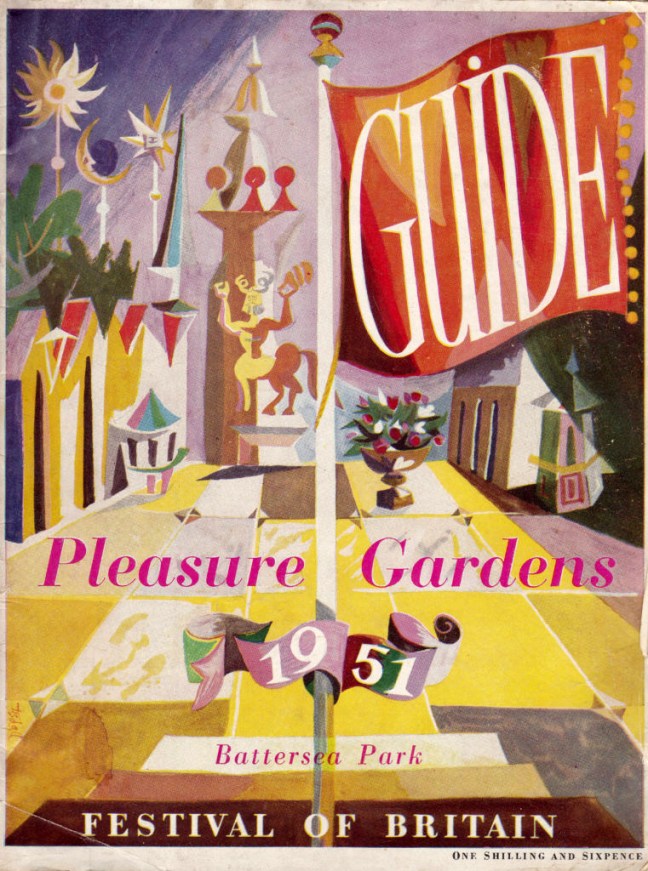
Programmes were printed and works undertaken.

Festival-Pleasure-Gardens-17-761x1024

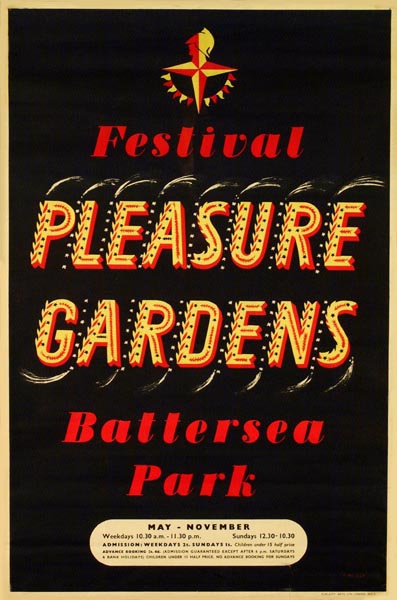
Posters were pasted, let the fun begin in Battersea – and all the rest is history.

16 Poster for the Festival Pleasure Gardens in Battersea Park

Then just as suddenly the fun was all but blown away, by the chill wind of the incoming Tory Government.

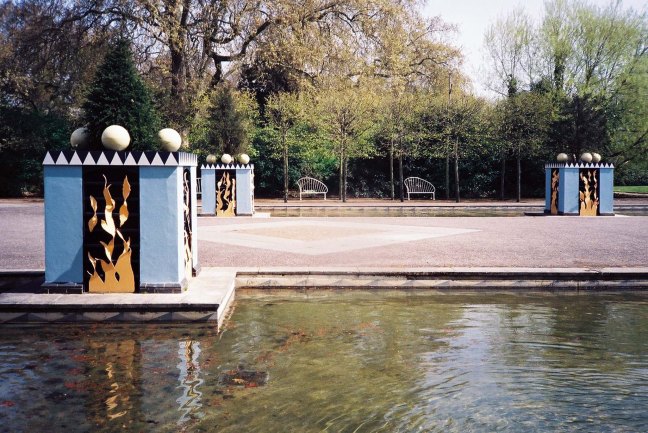
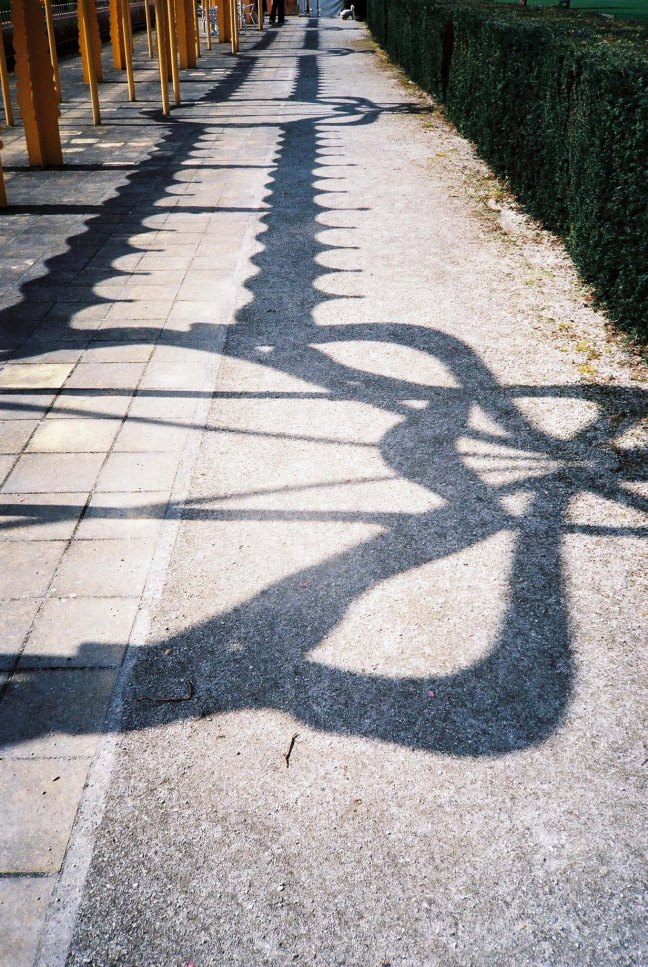
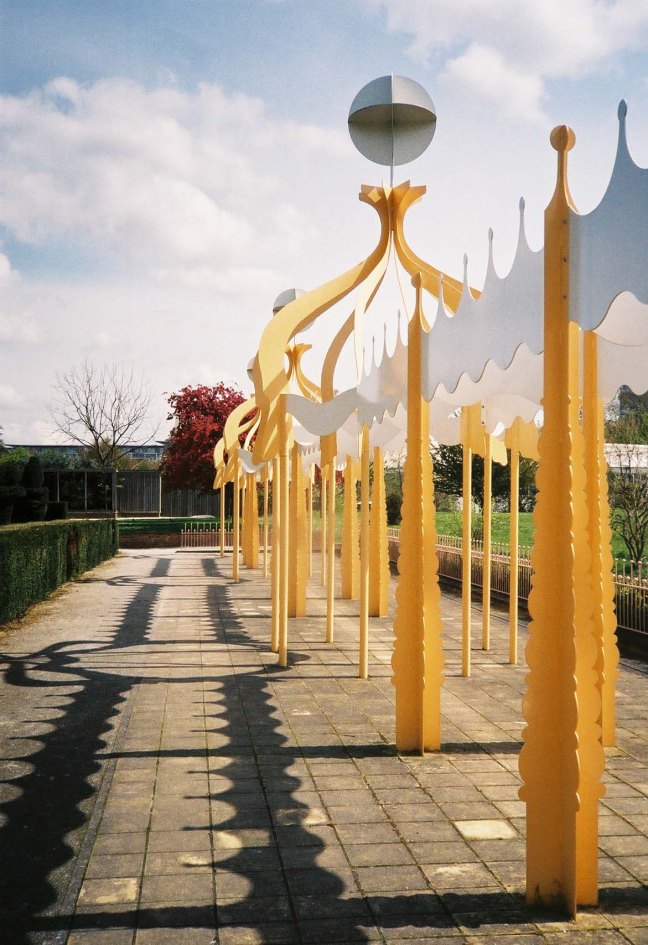
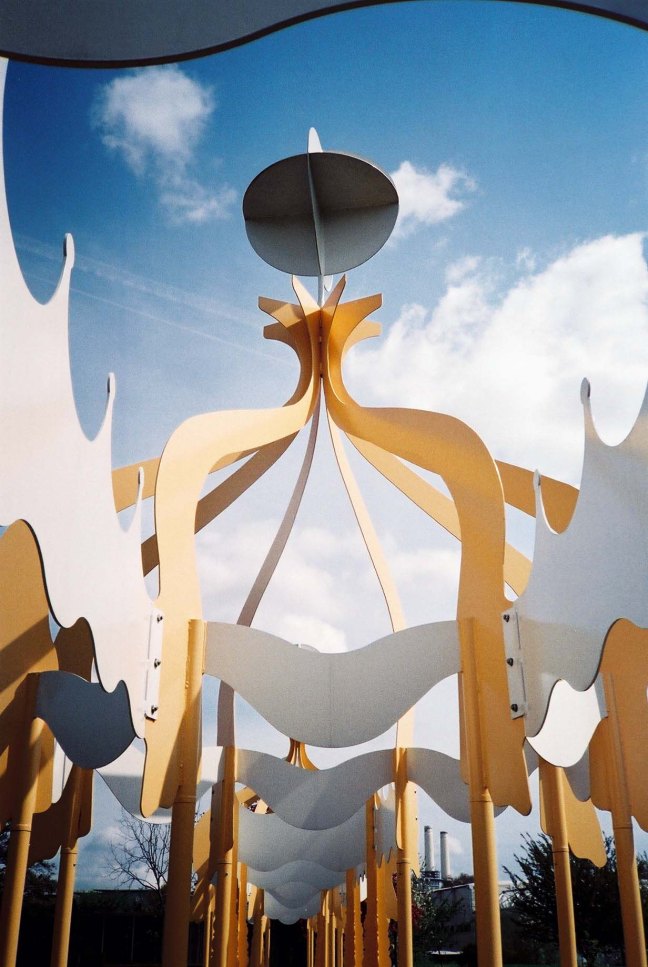
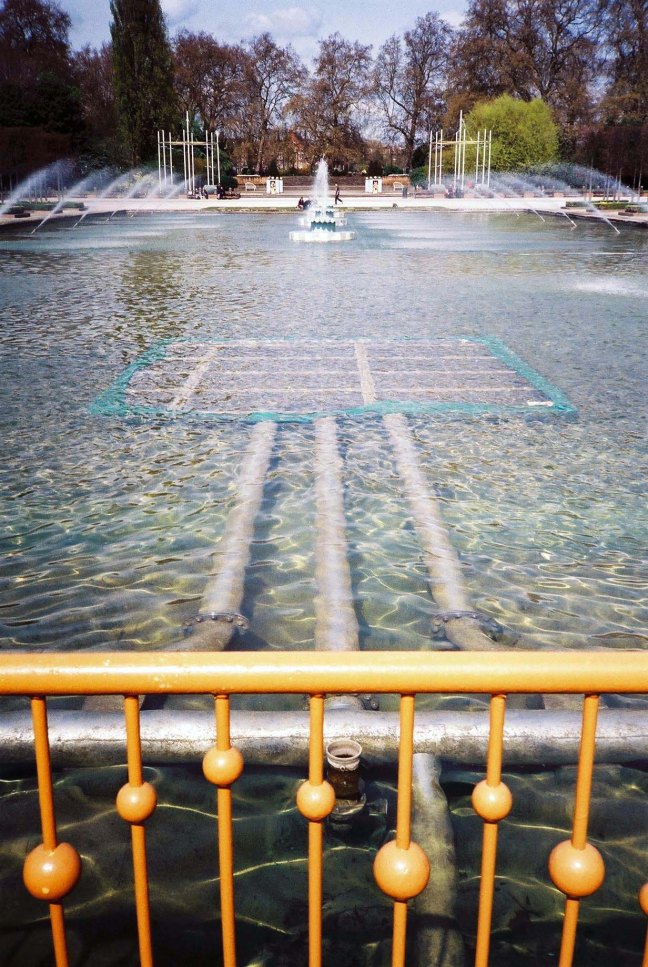
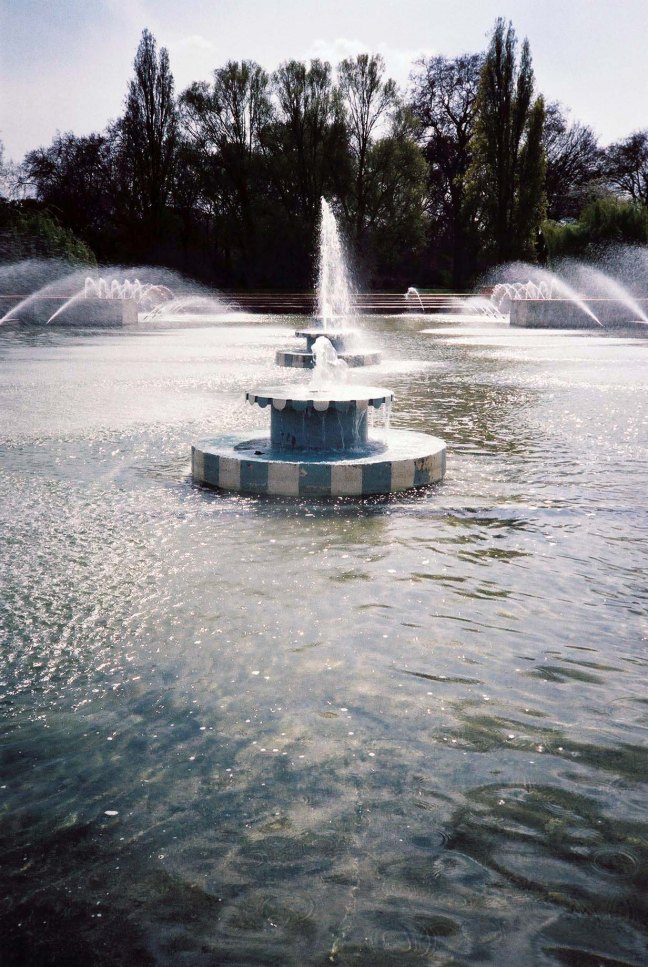
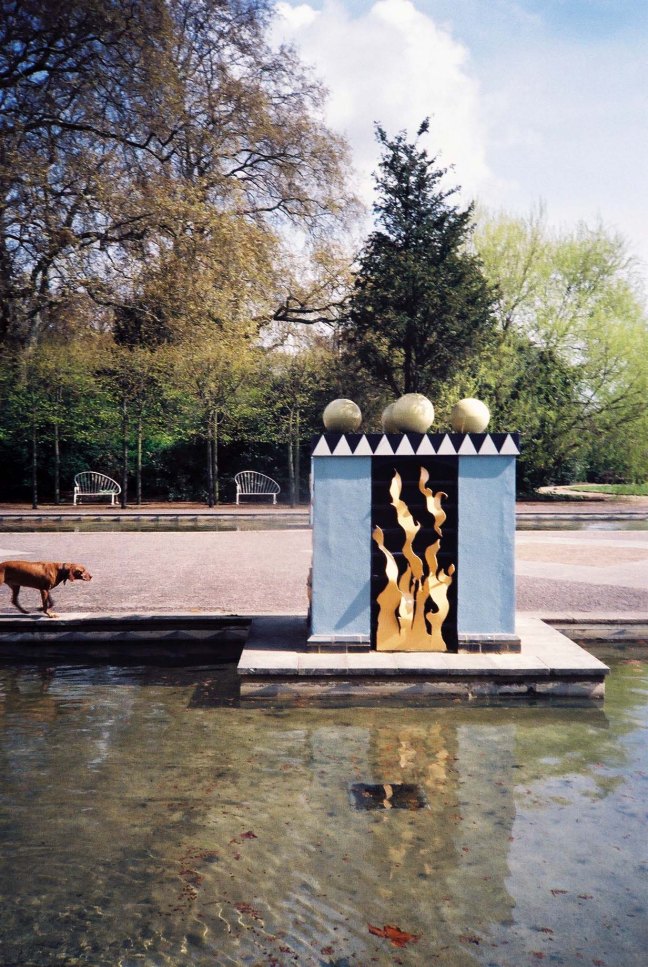
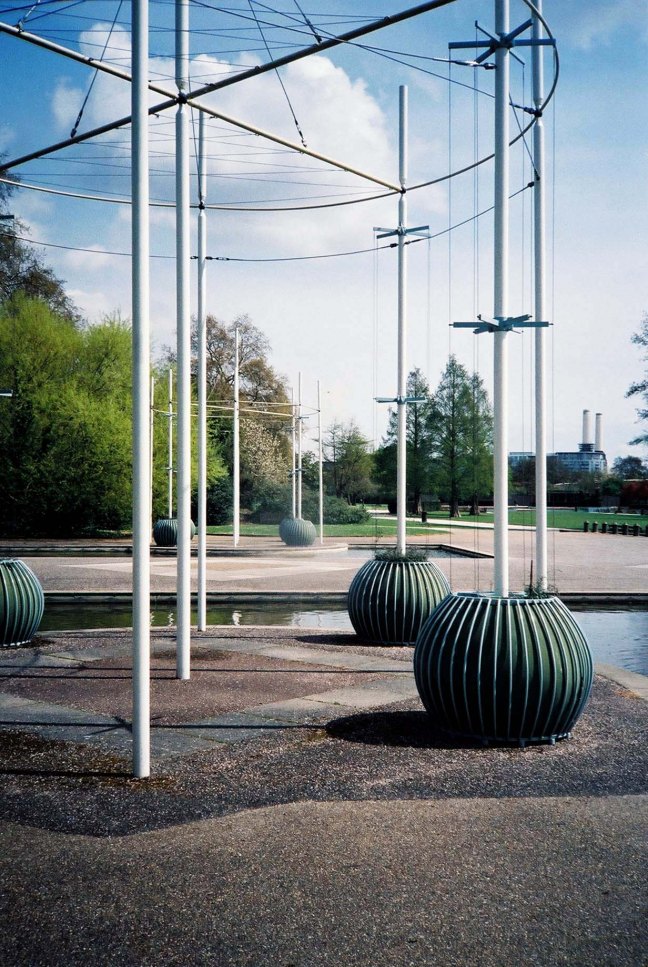
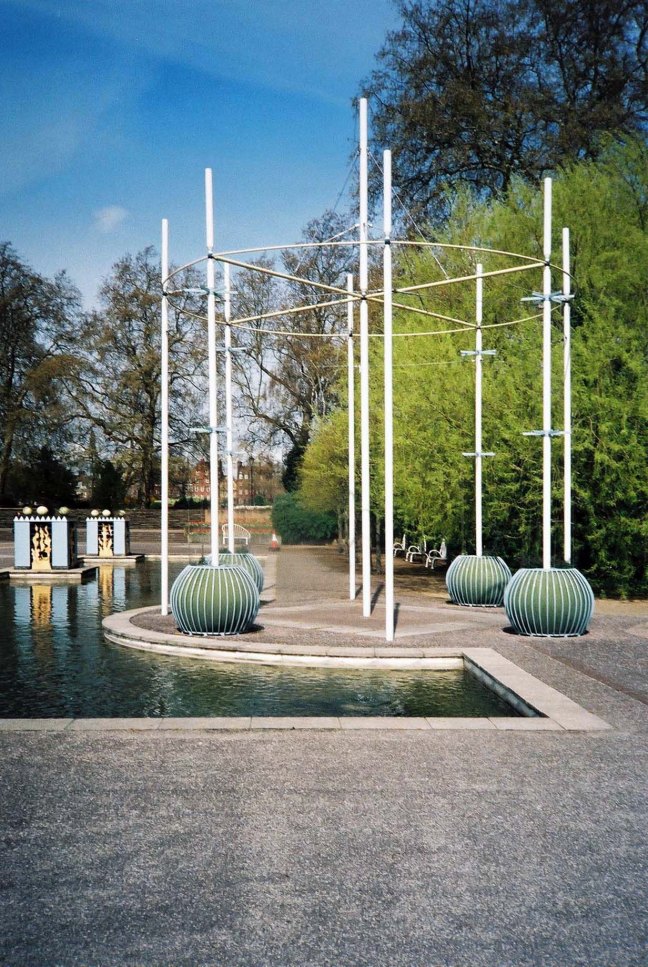
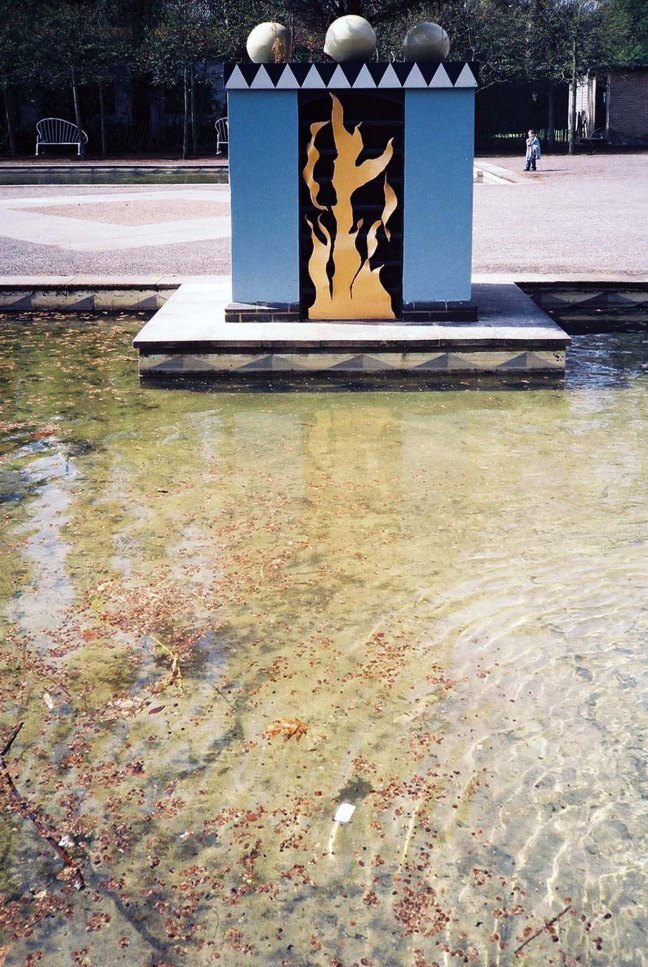
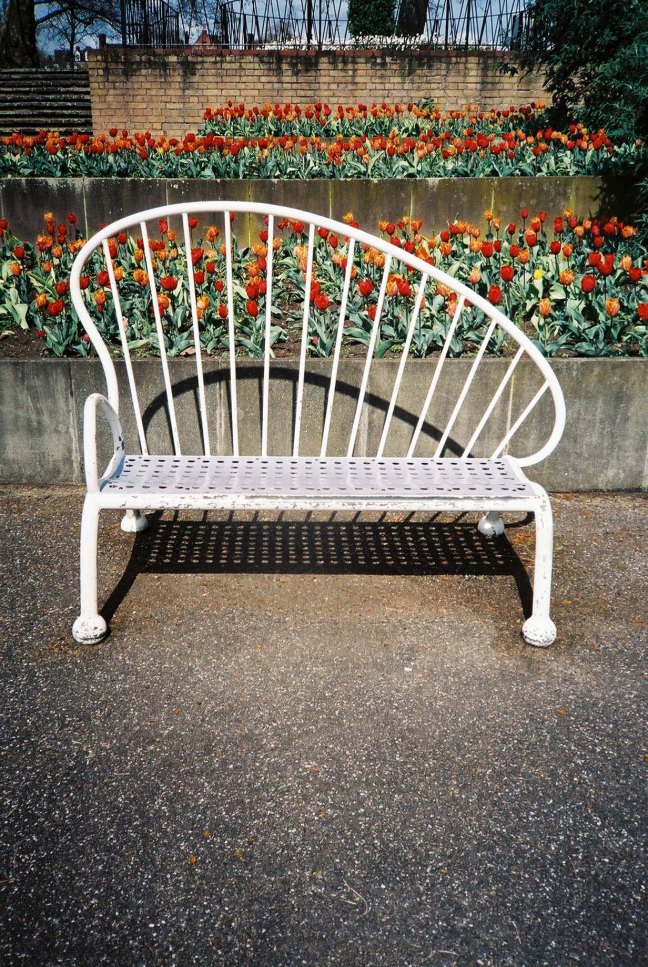
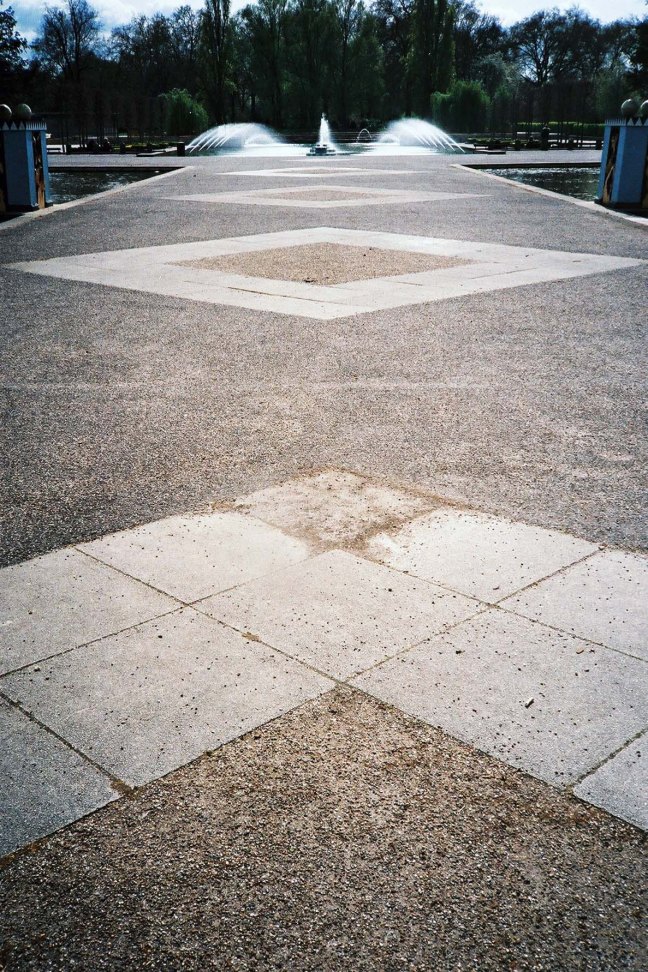
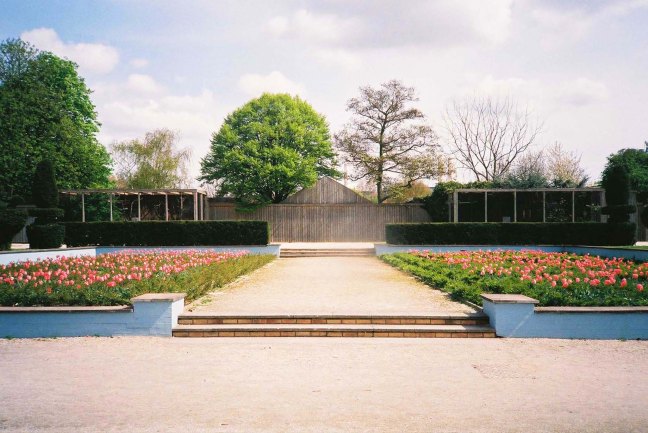
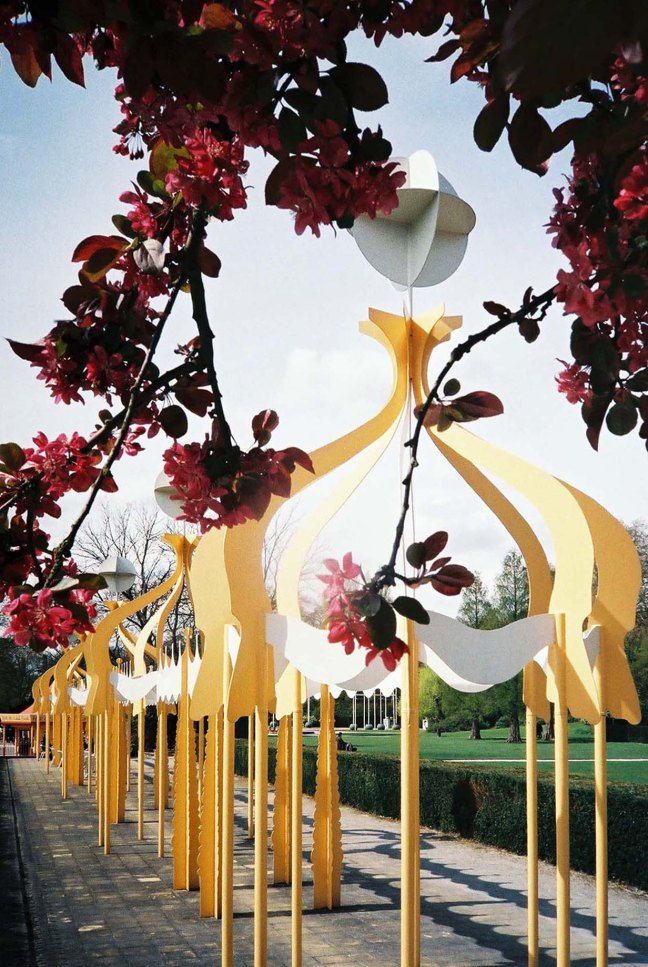
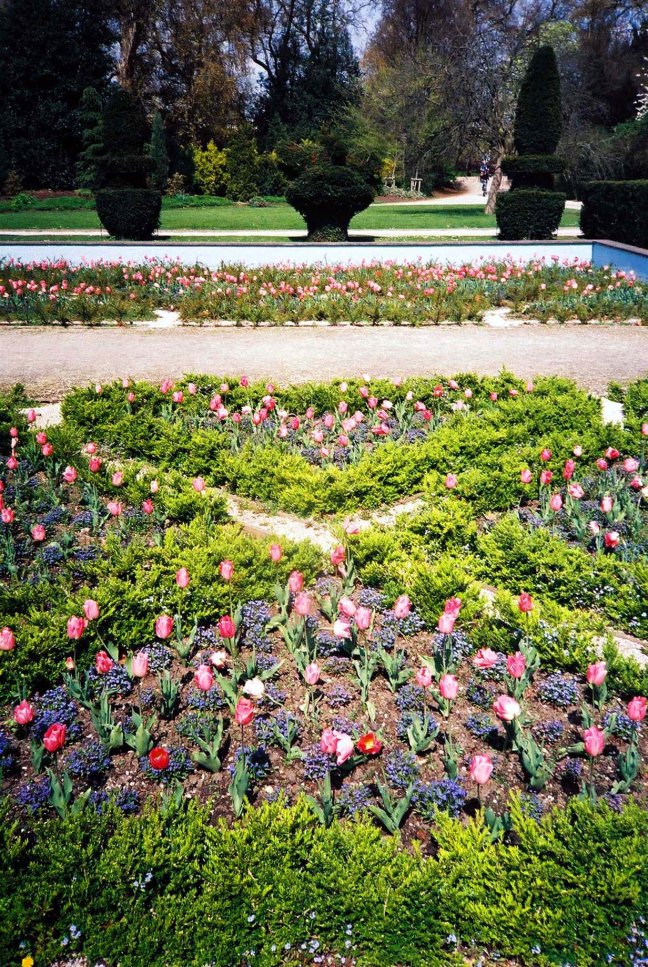
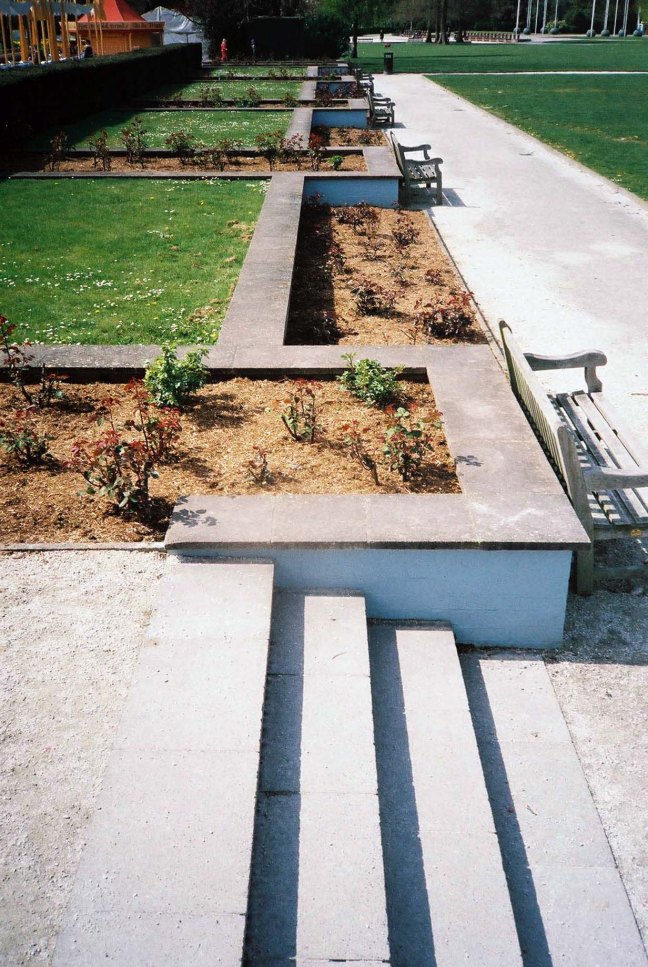
Much to my surprise there are still remnants and  reminders to be found on the site, planting, fountains furniture and sculptural structures abound, restored in 2011 by Wandsworth Council – a timely reminder of a time when we were encouraged to have fun on the rates.

CNV00042

CNV00056

CNV00054

CNV00058

CNV00063

CNV00066

CNV00067

CNV00070

CNV00072

CNV00075

CNV00078

CNV00186

CNV00187

CNV00192

CNV00195

St Michael and All Angels – Manchester

I’ve passed this way before, 2012 at the behest of Richard Hector Jones in the company of Owen Hatherley and others – recreating the legendary White Bus Tour.
DSC_0031

Screen Shot 2017-08-21 at 11.23.38

So have Historic England:

GV II*

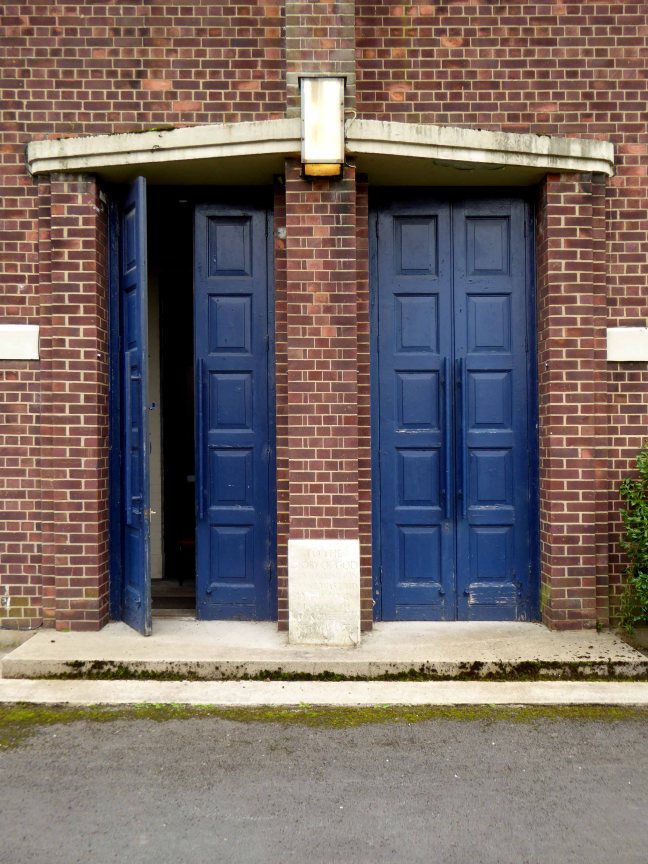
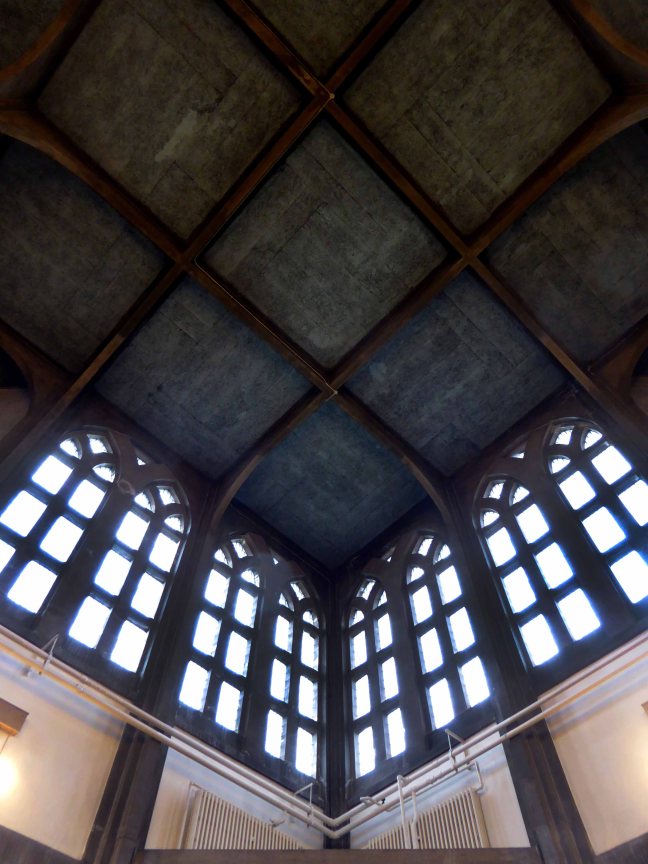
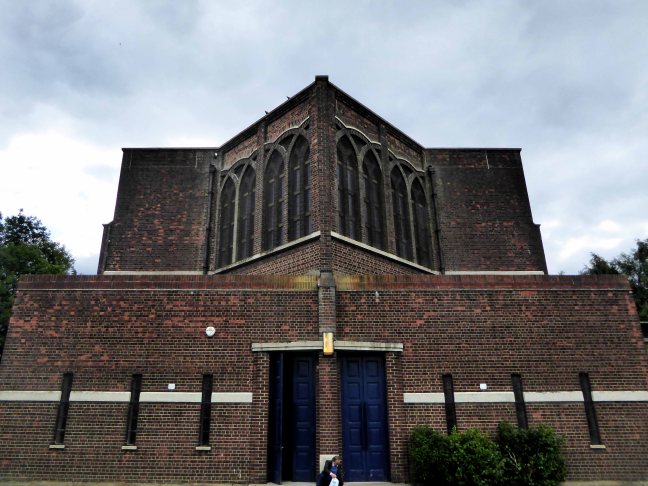
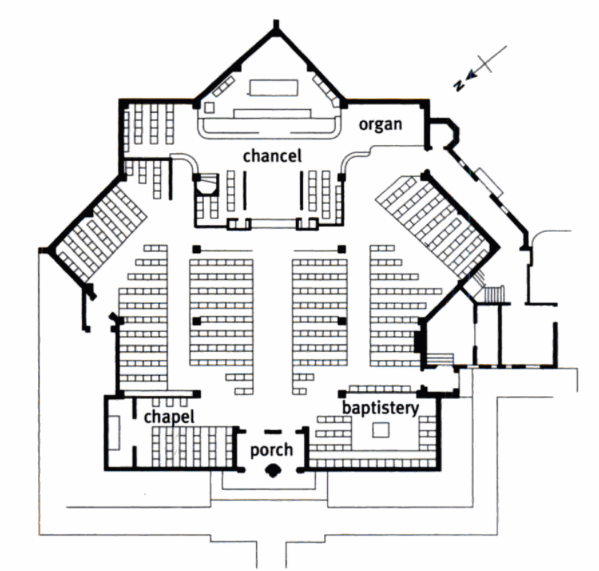
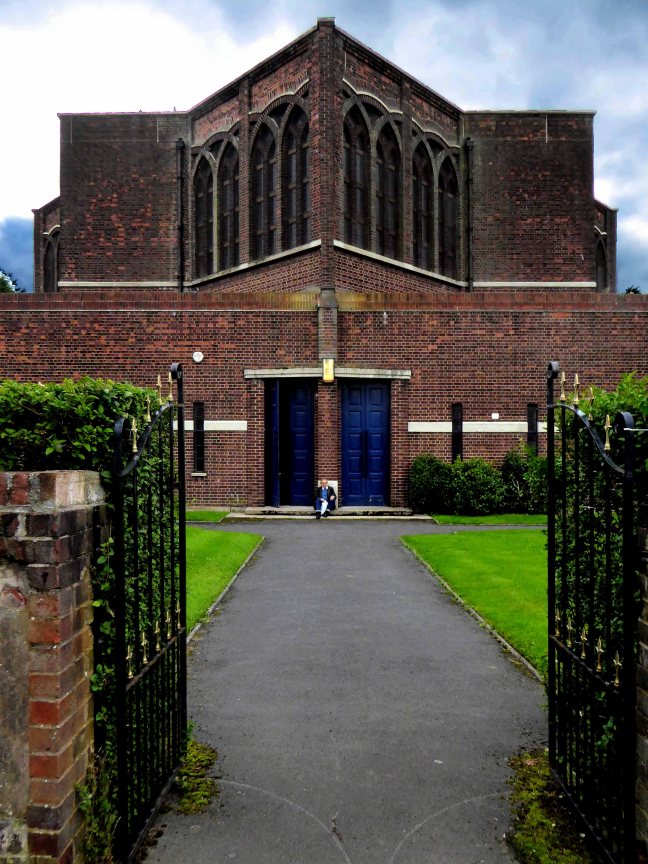
Church. 1937, by N.F.Cachemaille-Day. Red brick in English bond with some stone dressings (roof concealed). Star-shaped plan formed by the diagonal intersection of two unequal squares, plus a wide rectangular narthex enclosing the west end. The main vessel is a lofty structure with plain walls, sill-band carried round, and plain parapet, except for the upper part of each side of the cardinal projections, which have windows in tall intersecting Romanesque arcading with Y-tracery, all in brick, with a central pilaster strip rising to a moulded cornice. Large plain cross rising from roof. The single-storey flat-roofed narthex has coupled plain rectangular doorways in the centre and 3 narrow rectangular lancets to each side. Interior (as reported 16.01.81): ingenious plan with lofty columns supporting flat ribbed roof. Forms group with Rectory attached to south side.
Screen Shot 2017-08-21 at 10.09.15

So have Revolvy:

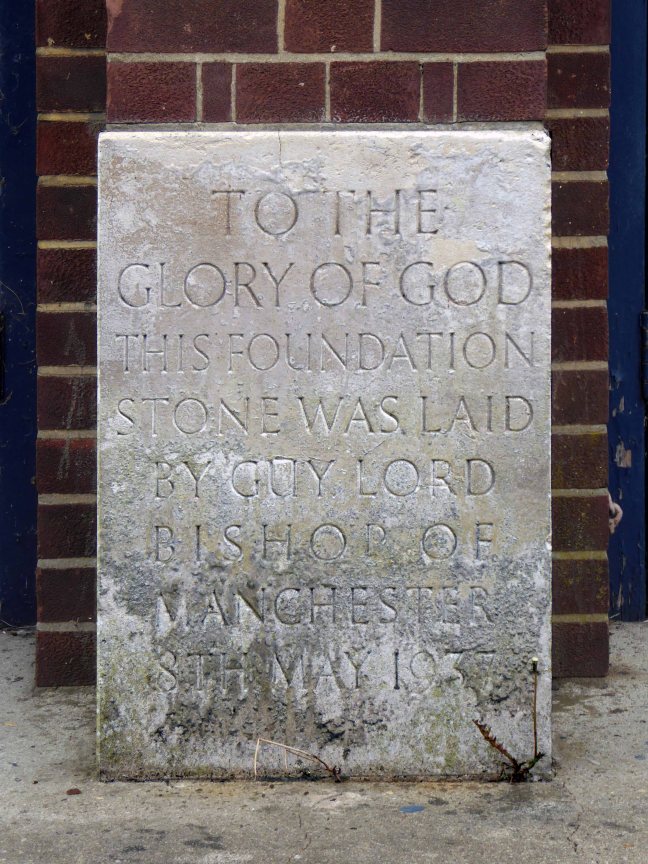
The Corporation of Manchester acquired the Wythenshawe Estate in 1926 and began laying out the garden suburb in 1930. It was eventually to have 25,000 houses and a population of 100,000. The garden suburb was designated part of the parish of Church of St Wilfrid, Northenden, but that small parish church proved insufficient to accommodate the rising congregation. A mission church was therefore opened in 1934, and in 1935 the diocese approved plans for the construction of a new parish church at Orton Road. The budget was £10,000. Nugent Francis Cachemaille-Day was appointed as architect for both the church and the adjoining parsonage. The foundation stone for the church was laid on 8 May 1937, by the Bishop of Manchester. The builder was J. Clayton and Sons of Denton.

So has the redoubtable Nikolaus Pevsner:

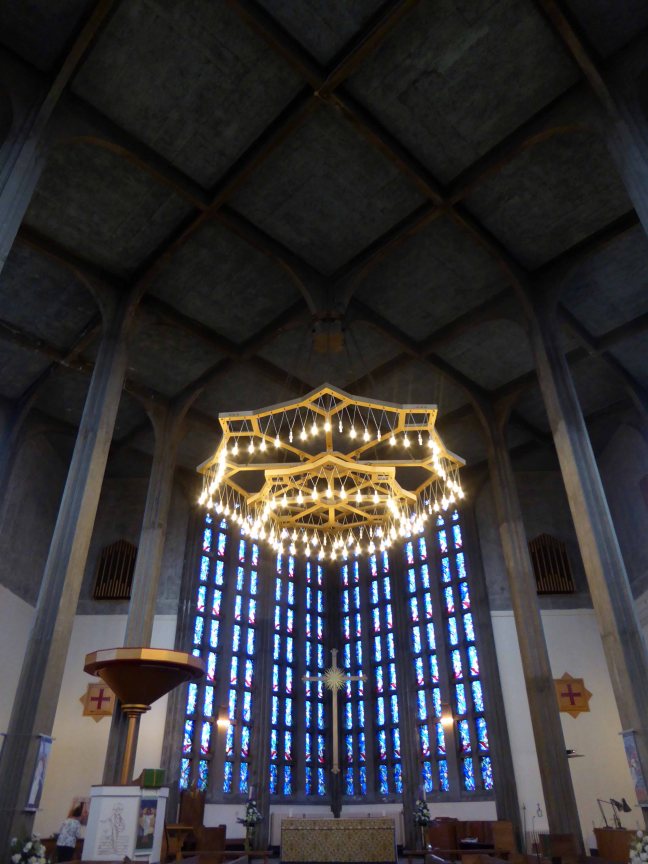
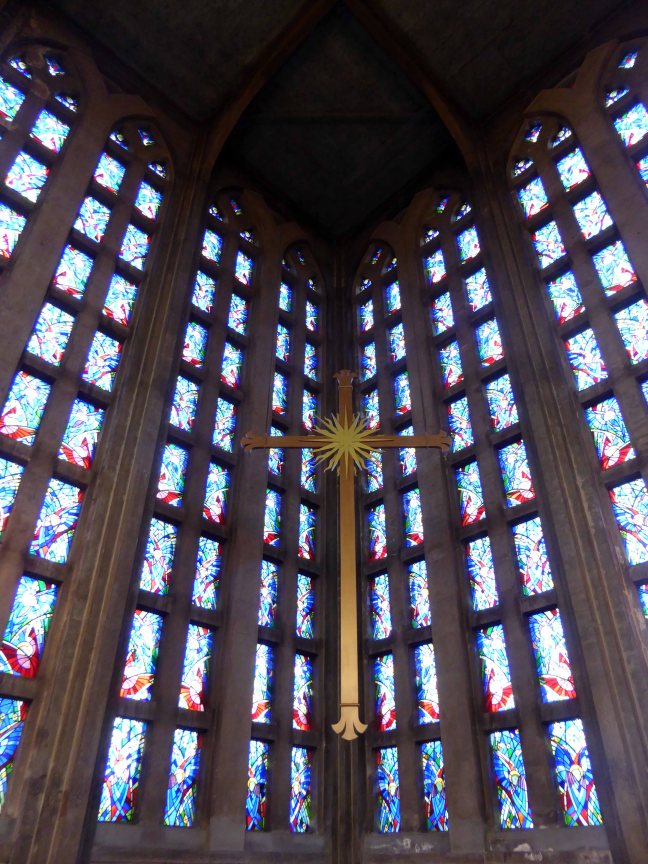
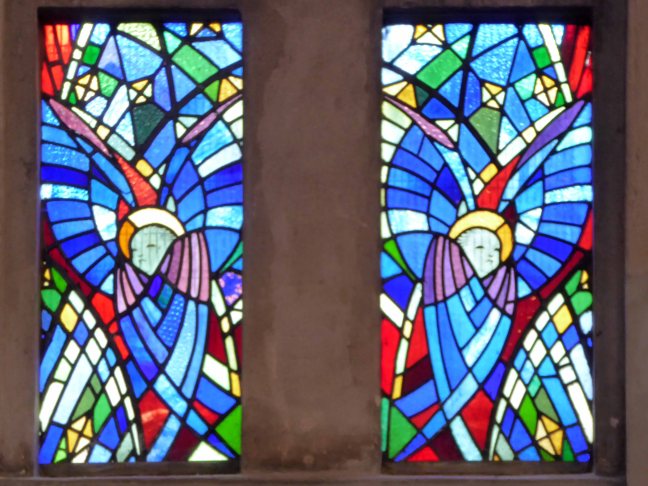
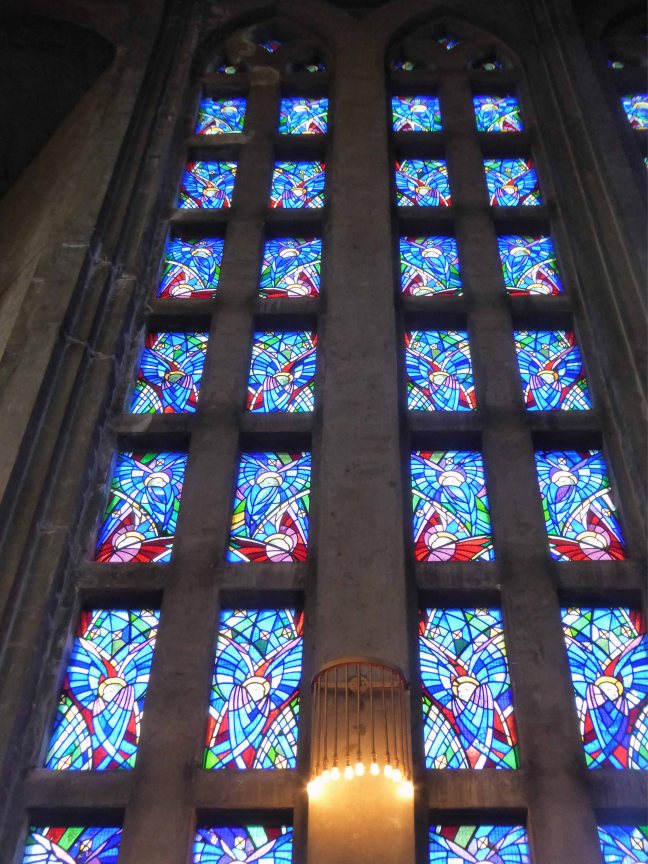
A sensational church for its country and its day. The material is brick, bare in four of the corners, with large brick windows in the other four. The intersecting arches of the windows are the only period allusion.The interior has very thin exposed concrete piers and a flat ceiling. The church make sit clear that the architect had studied Continental experiments, the parsonage points to Germany and Mendelssohn. Stained glass by Geoffrey Webb.

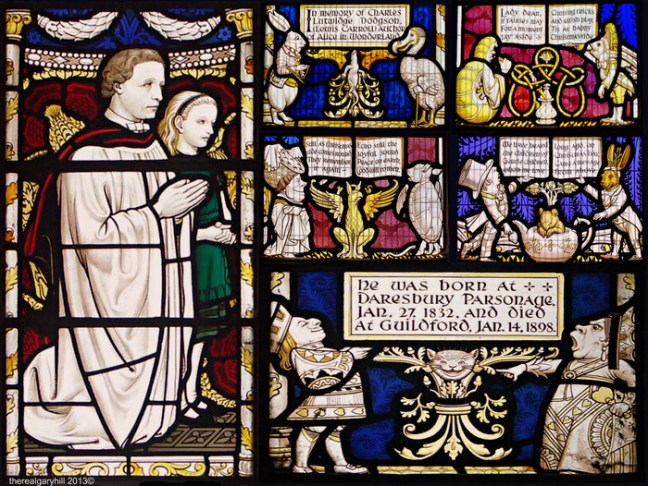
Geoffrey Webb lived and worked in the centre of East Grinstead at the height of his career and is noted among enthusiasts of fine glass for his use of brilliant blues. In his early career he worked with Charles Eamer Kempe, the most prolific and best-known stained glass artist of his generation. Webb’s work can also be found in many other places around the UK including Manchester Cathedral and Tewkesbury Abbey, and in Daresbury parish church in Cheshire where he designed a memorial window in honour of Lewis Carroll.
scaled_full_20e9abadb45184ac7126

So I cycled by one almost sunny Sunday morning, engaged in the porch by an elderly joke telling gent, awaiting his more devout partner.

I love the bible, they all rode on motor bikes – “the roar of Moses’ Triumph is heard in the hills, Joshua’s Triumph was heard throughout the land.”

The Apostles were in one Accord. – Acts 5:12

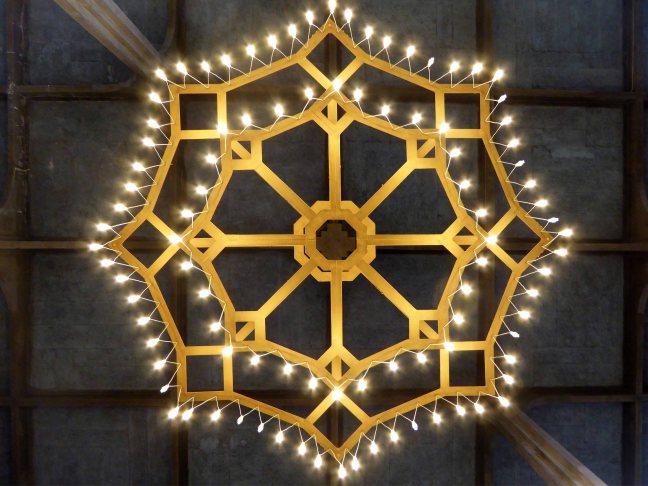
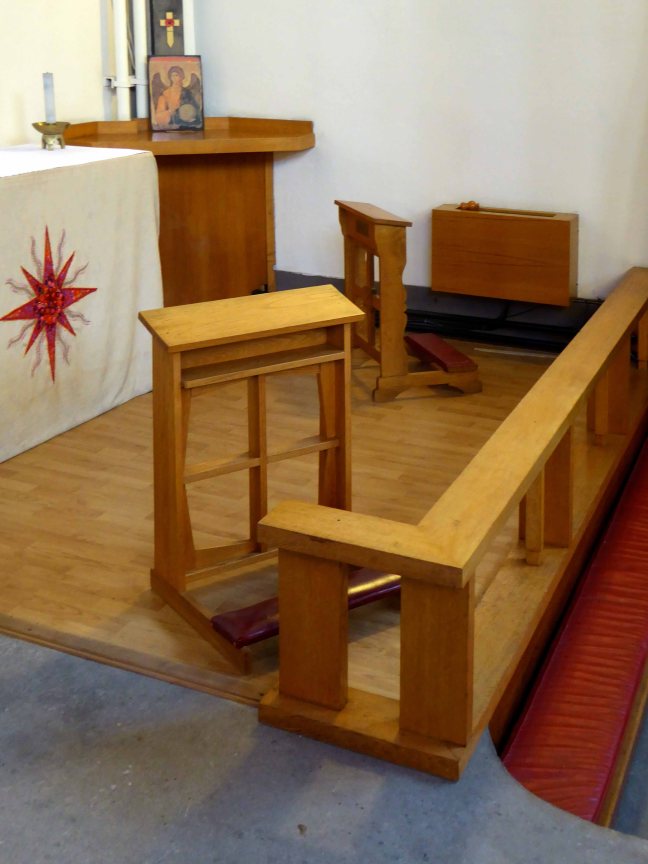
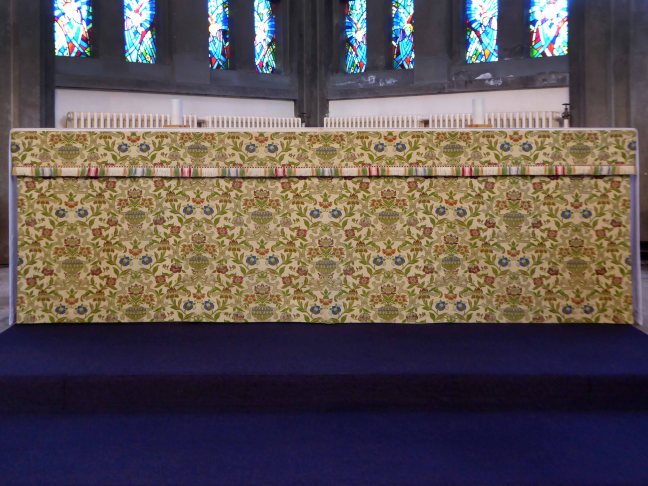
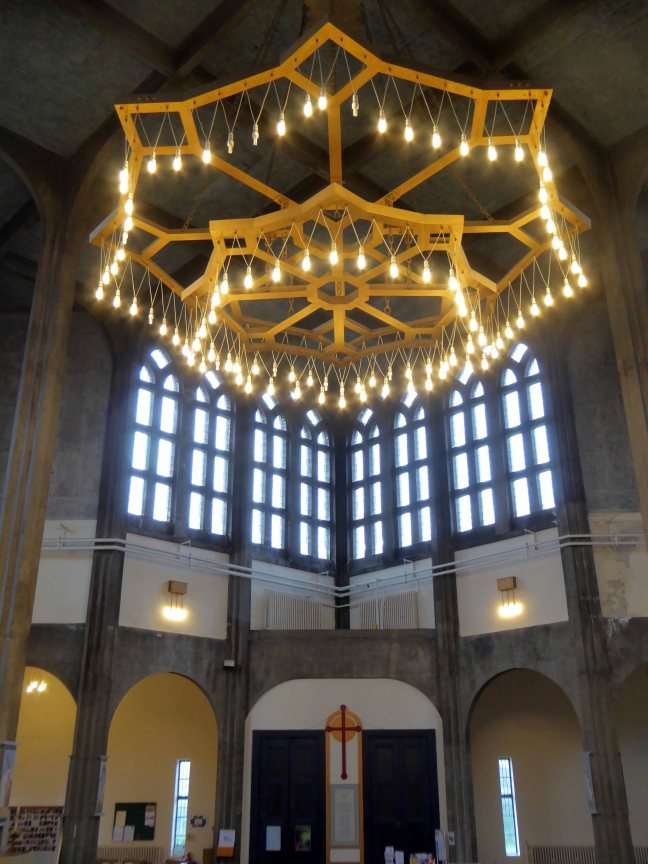
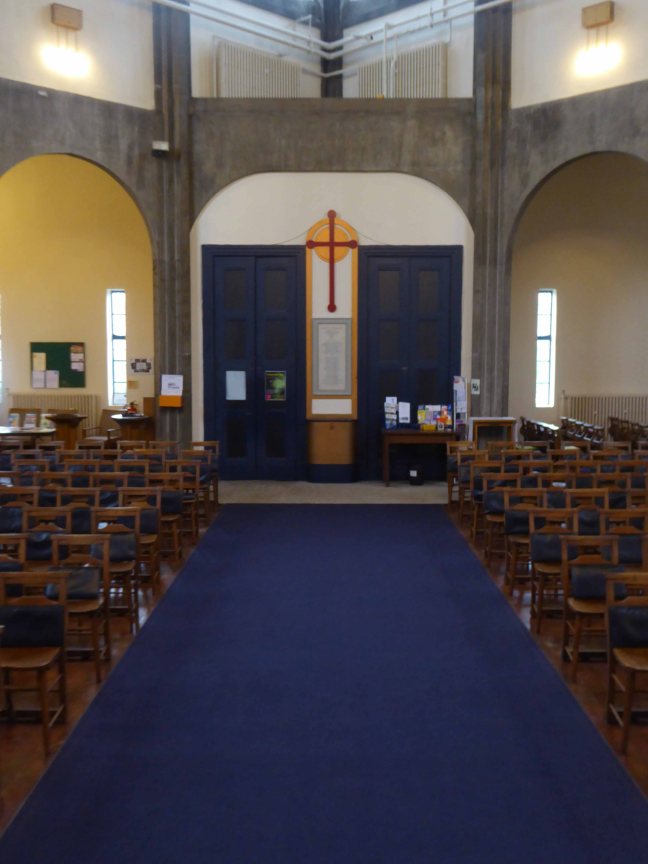
We waited out the end of the morning service, exchanging gags, eventually I entered. Met by cheery parishioners and priest, welcomed with open arms, happy to chat and allow me to go about the business of snapping this enchanting building. Take yourself down there and bathe in the stained glass light from the sun drenched east windows, feel the warmth of the open elevating space, everything’s looking up:

A sensational church for its country and its day – today.
P1190671

P1190673

P1190675

P1190684

P1190685

P1190686

P1190689

P1190691

P1190692

P1190693

P1190695

P1190696

P1190697

P1190698

P1190699

P1190700

P1190702

P1190703

P1190704


Newcastle Civic Centre – Rooms

Following a path from the Grand Entrance and Council Chambers, my genial host and erudite guide Debbie took me behind the scenes into the back rooms. 

Further delights unfold in this most remarkable of buildings.

Firstly into the Banqueting Hall – beneath your feet Arabescato Marble, inset with a sprung dance floor and on the vaulted ceiling  hand carved African walnut. The slightly sloping walls are of Clapham Stone, with the only double glazed arrow slit windows in the country.
P1150893

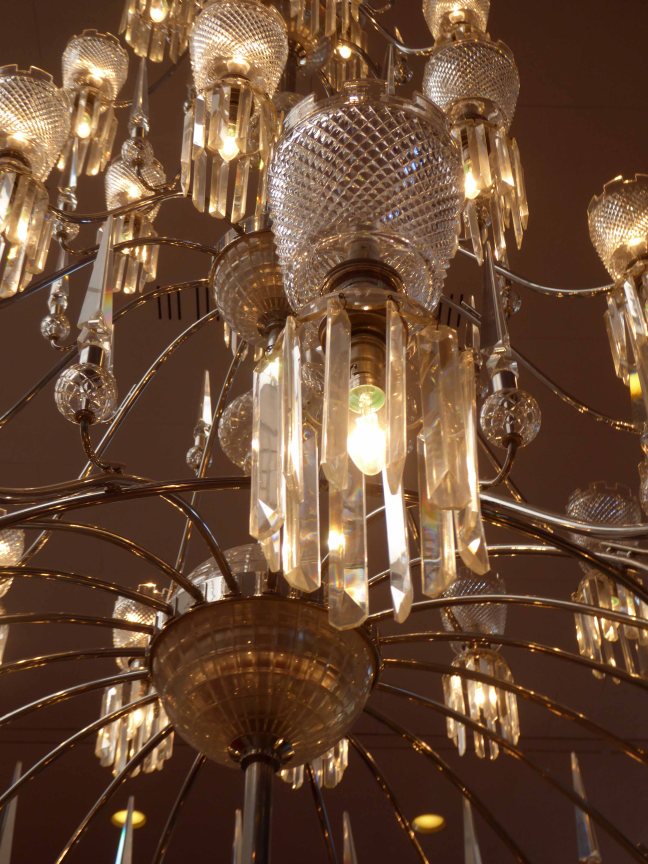
The chandeliers are hand cut crystal from Westphalia and  have the Newcastle castles on the top part of the fitting.
P1150892

The seahorse carpet was recently replaced, digitally designed and woven to perfectly match the original.

P1150895

The facing wall is graced by a John Piper tapestry, which  represents the mineral resources of the area.

P1150899

P1150901

Grilles by Geoffrey Clarke cover the alcoves and have an orange backlight to simulate a medieval fireplace.

P1150896

The room can seat up to six hundred people and is available for hire, in regular use for a wide variety of functions.

P1150891

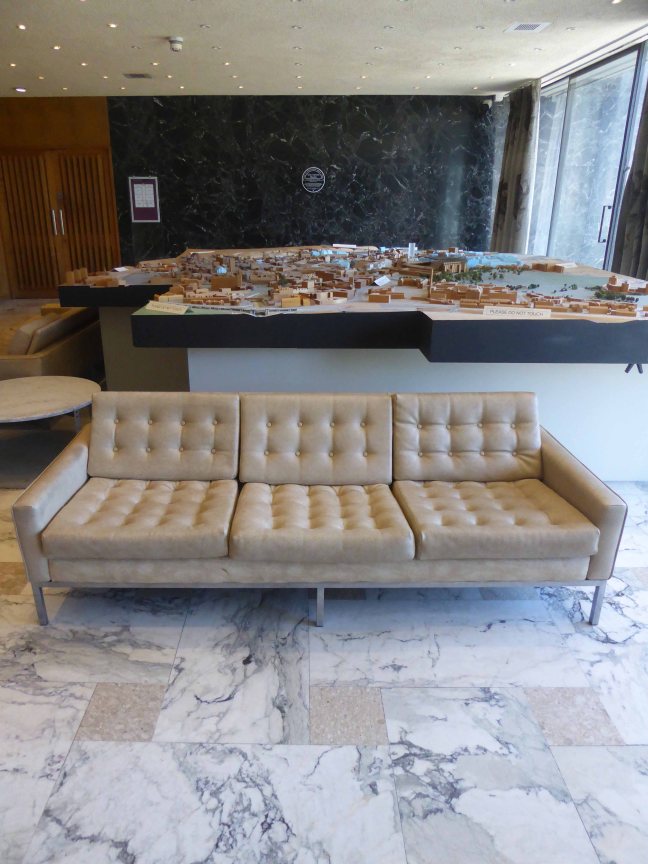
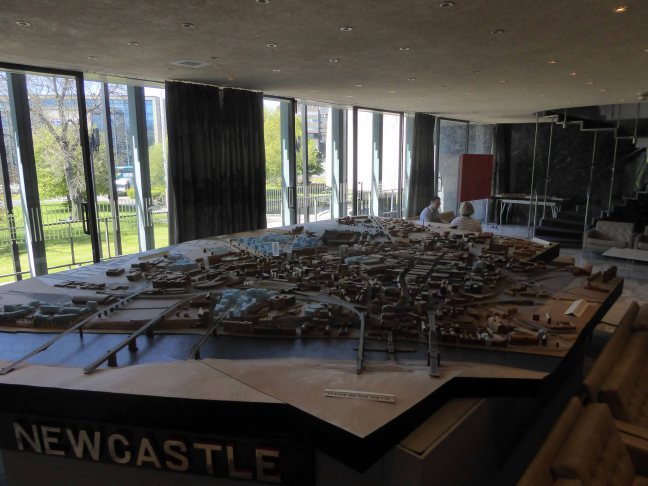
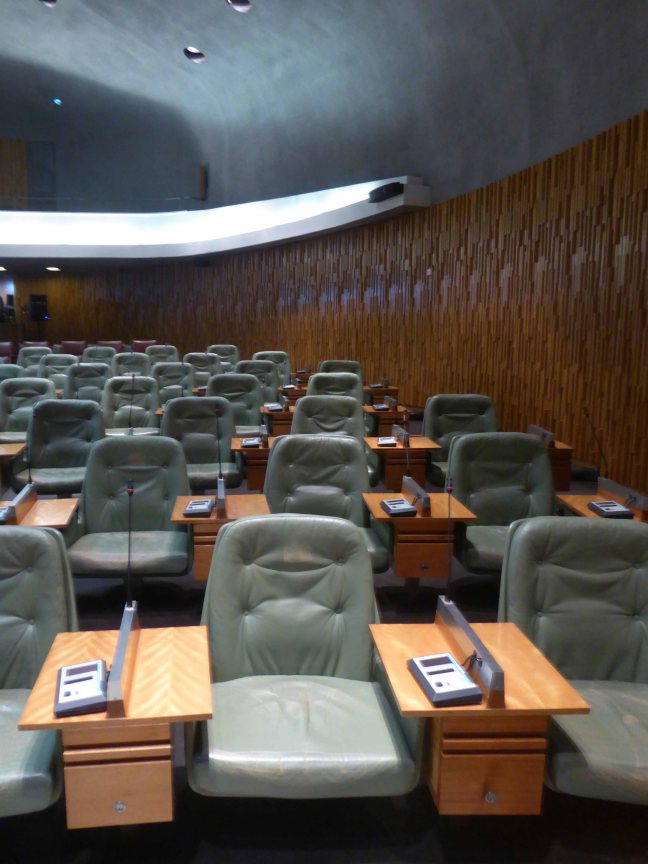
The Model Room houses a magnificent architectural replica of the city.
P1150988

P1150962

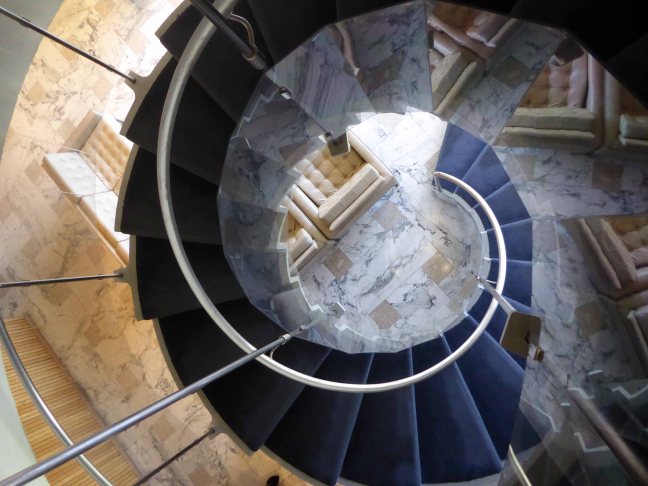
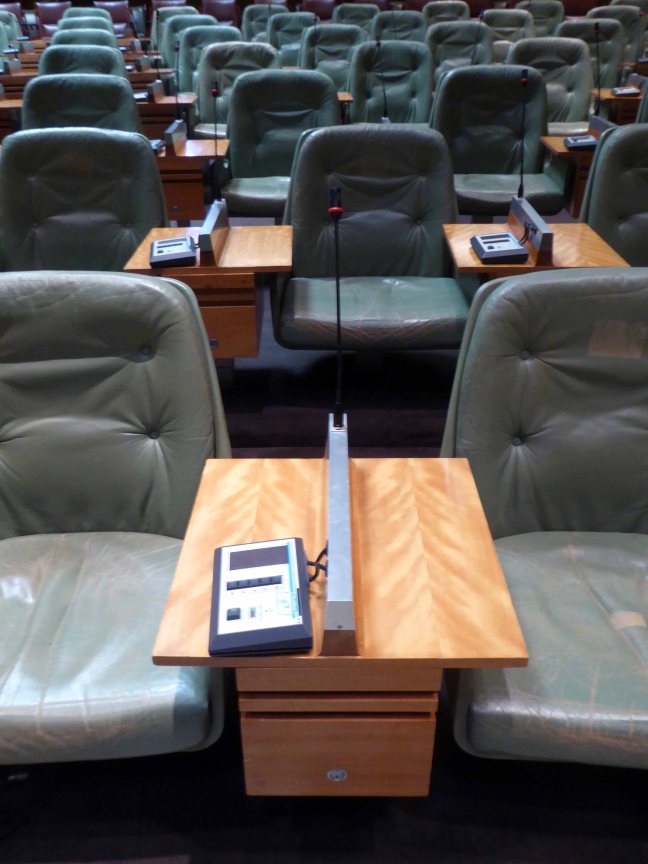
It is also blessed with a living, walking talking spiral staircase, cast in one single piece of steel, it moves with you as you ascend and descend.
P1150983

P1150984

P1150987

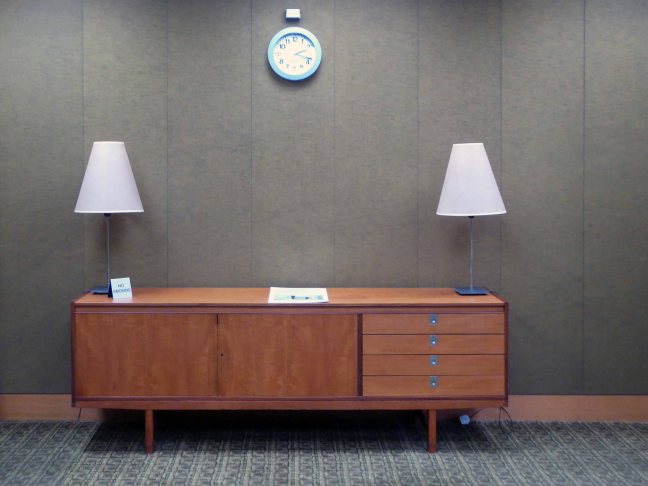
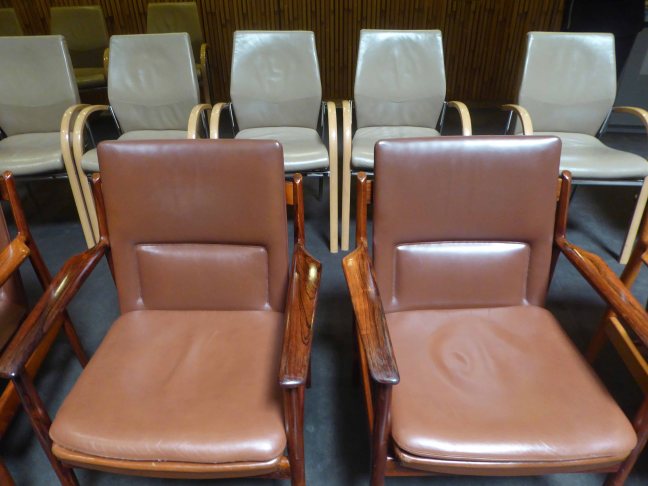
This ante room dressed with Arne Vodder furniture, walls clad in raw silk and hand carved wood, is a place green oasis, a sea of calm.

P1160002

P1160003

P1160004

P1160005

Newscastle Civic Centre – The Grand Entrance

Opened on 14th November 1968 by King Olav of Norway, opened for me by Debbie Harvey on Friday 5th May 2017, thanks ever so much.

This takes us into architect George Kenyon’s Civic Centre 

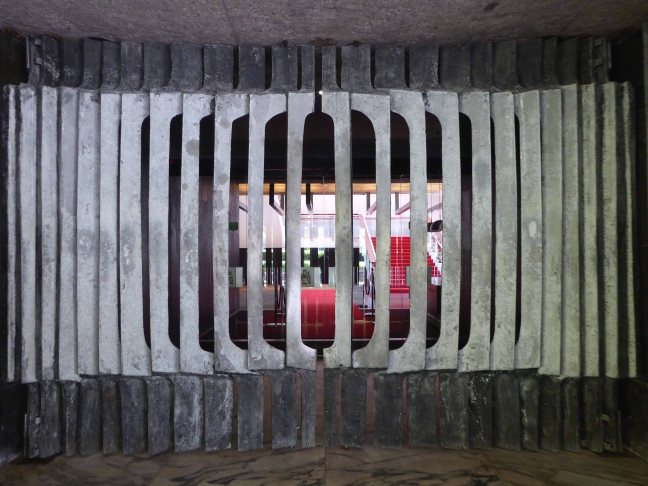
Cast Aluminium portals and reveals to Ceremonial Entrance by Geoffrey Clarke.

P1160082

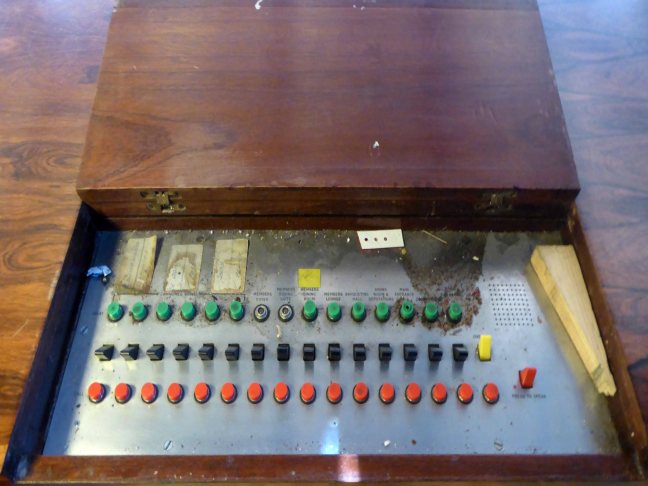
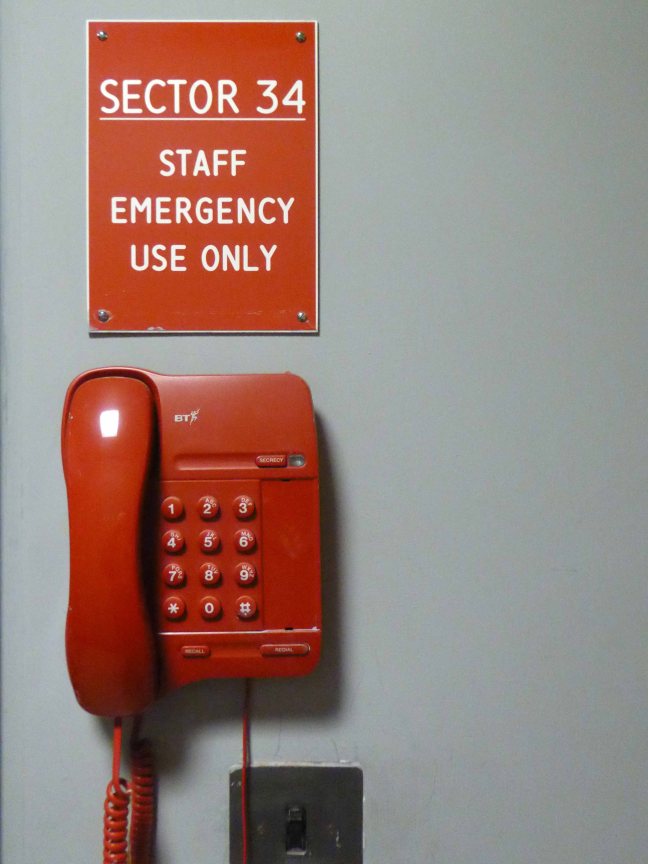
Staff on reception were once able to notify officials of the arrival of guests and dignitaries, using this right bang up to the minute electrical intercom.

P1150867

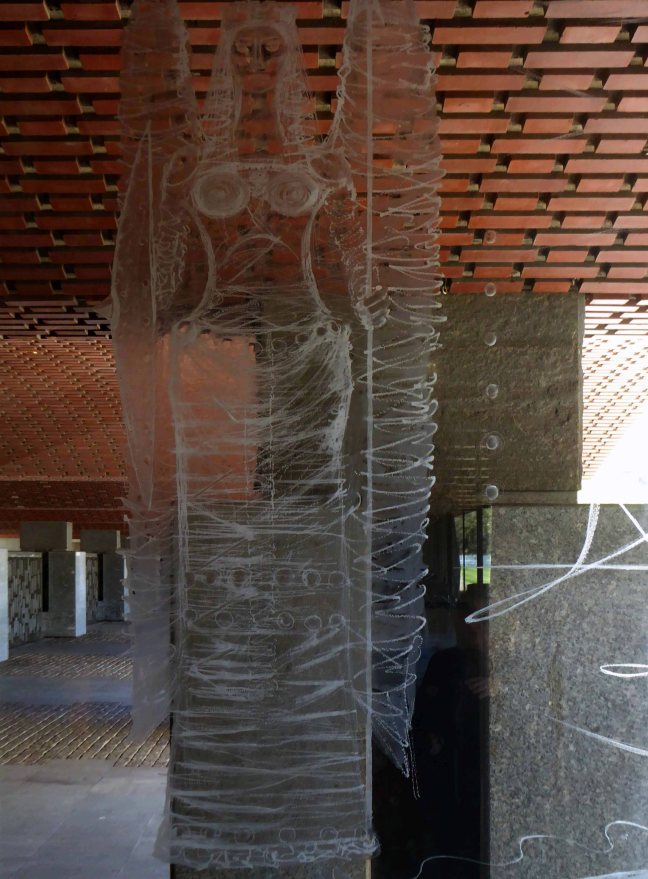
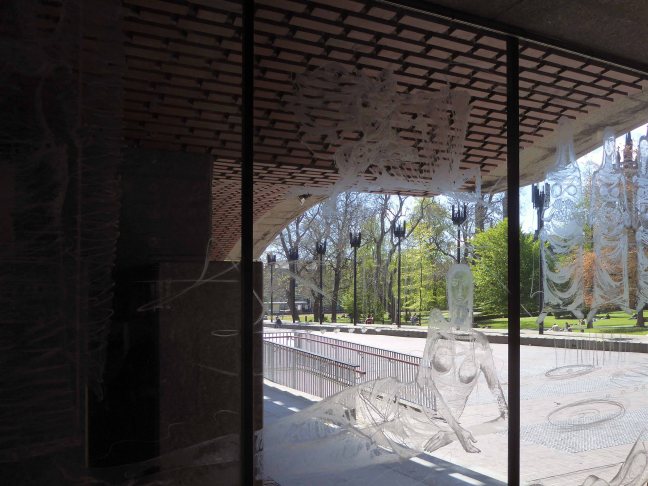
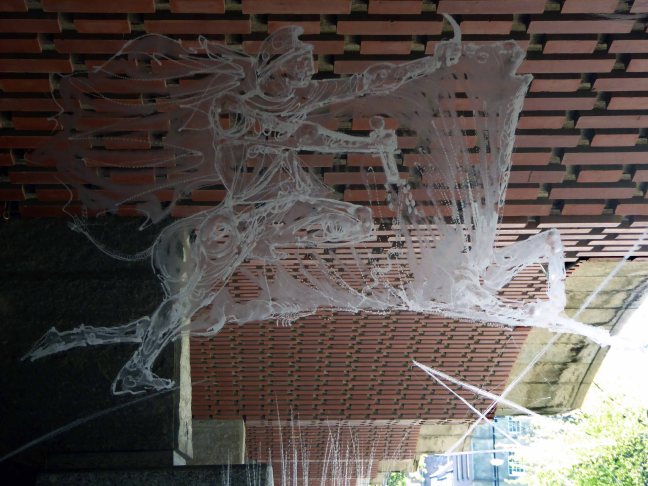
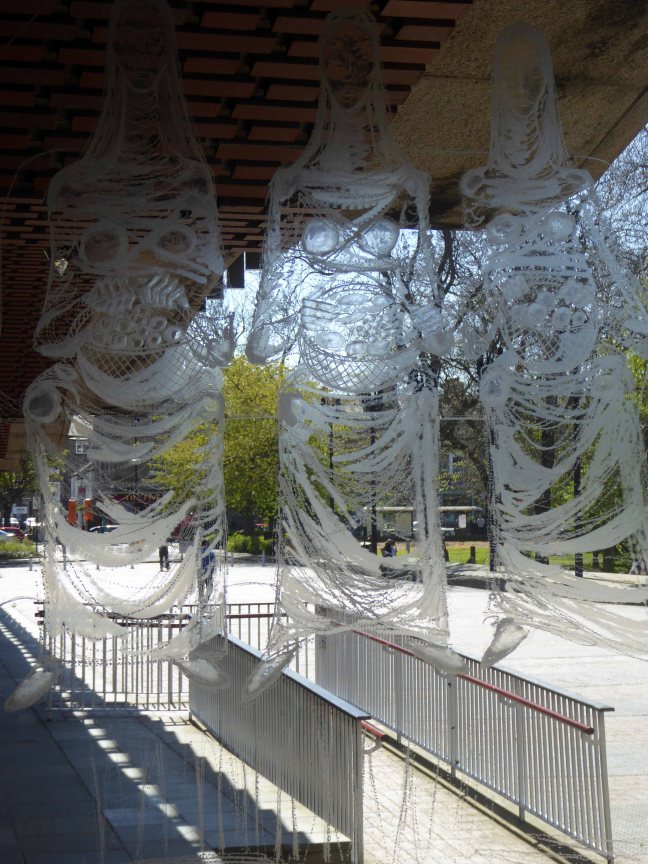
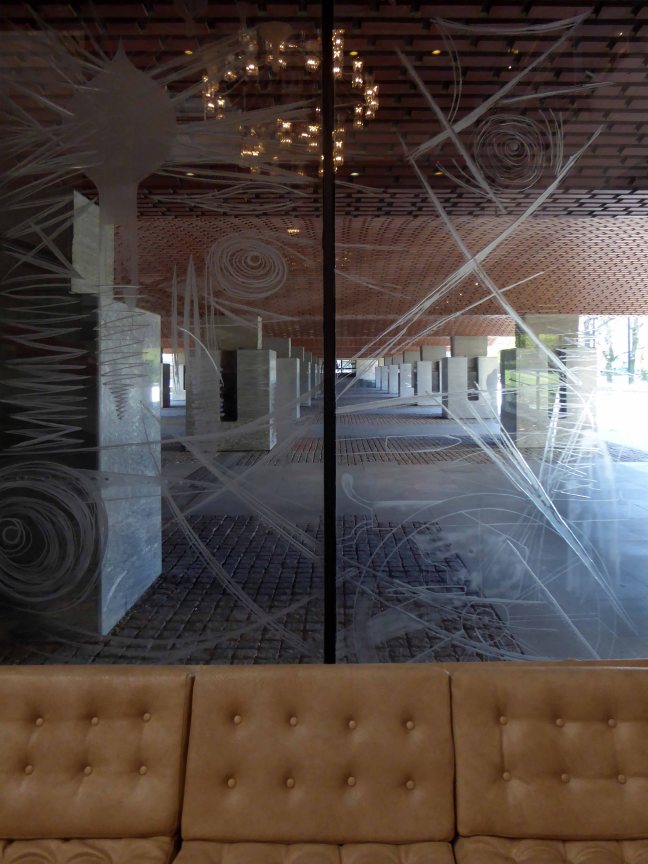
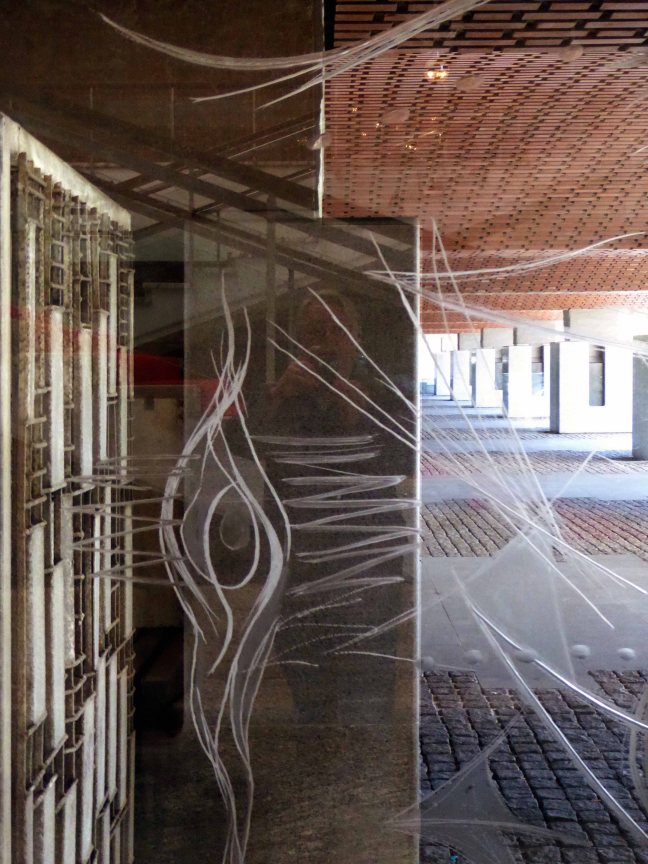
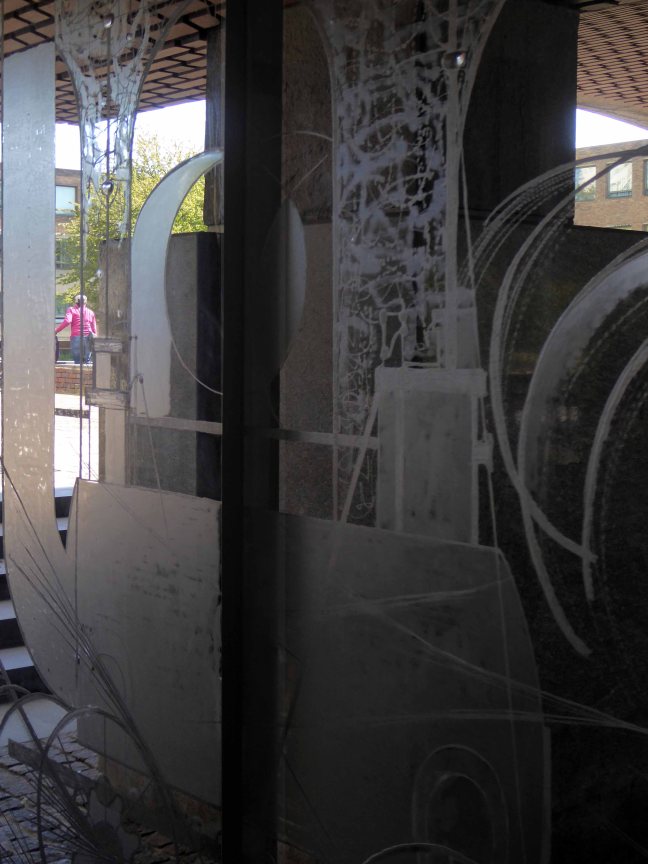
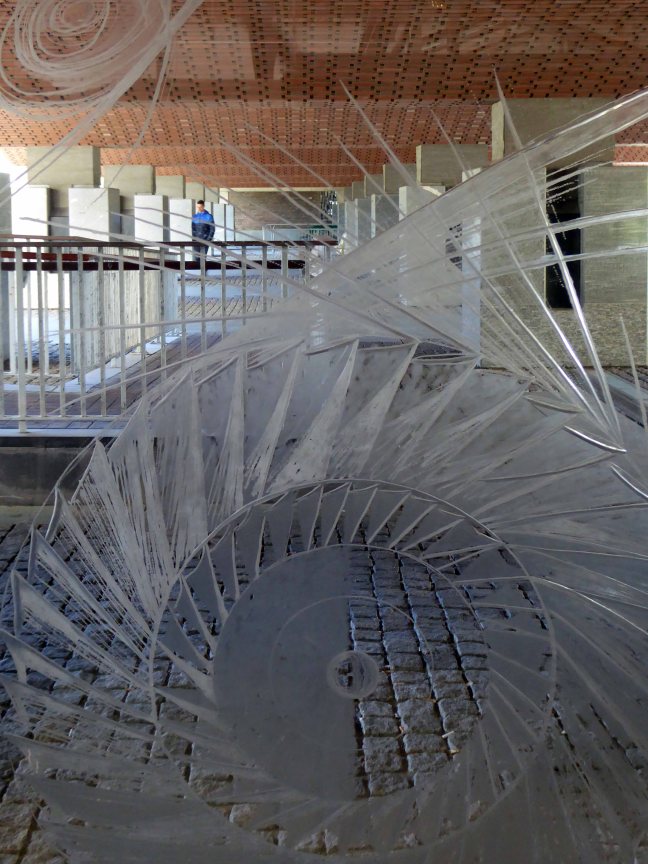
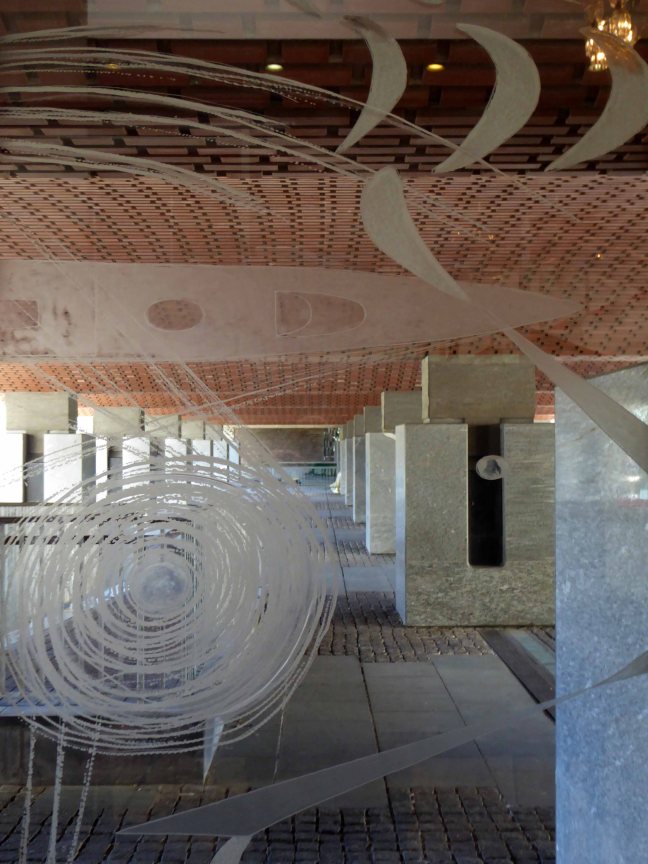
To the right is the engraved John Hutton Screen engraved glass panels depicting – the inventive genius of Tyneside’s most famous sons and daughters.

From left to right: George Stephenson the steam locomotive, Sir Charles Parson the turbine engine, Sir Joseph Swan electric light bulb, Lord Armstrong the gun.

Brigantia – Celtic Goddess of the tribe, The Three Mothers – offering fruit for fertility, Mithras – the slaying of the bull , Coventina  the goddess of a well, she reclines on a water-borne leaf and below her are three intertwined figures of nymphs of streams,  for in those days every self-respecting stream had its own tutelary deity. All have been found when Roman temples have been unearthed on the Roman wall.


P1150869

P1150870

P1150871

P1150872

P1150874

P1150876


P1150878

P1150879

P1150880

P1150881

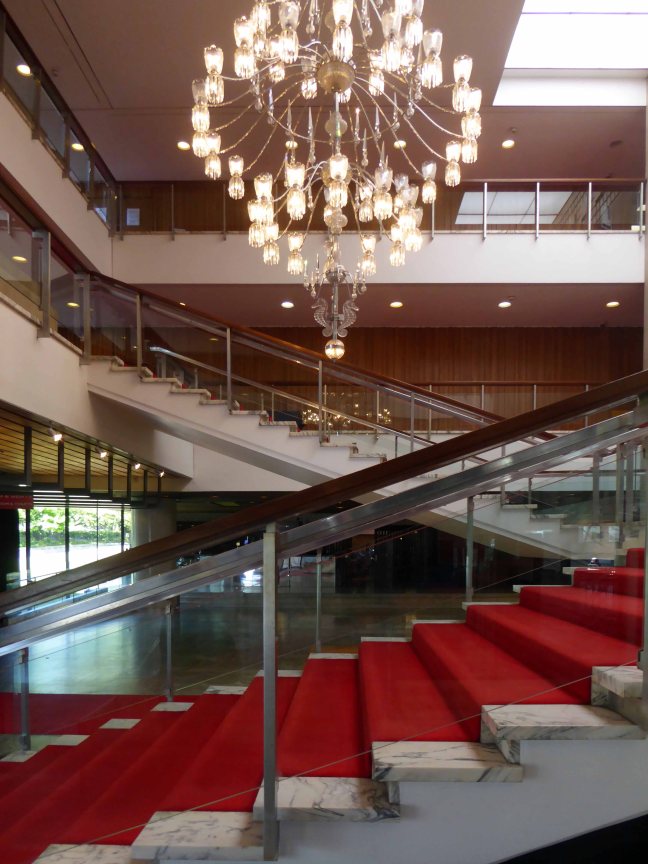
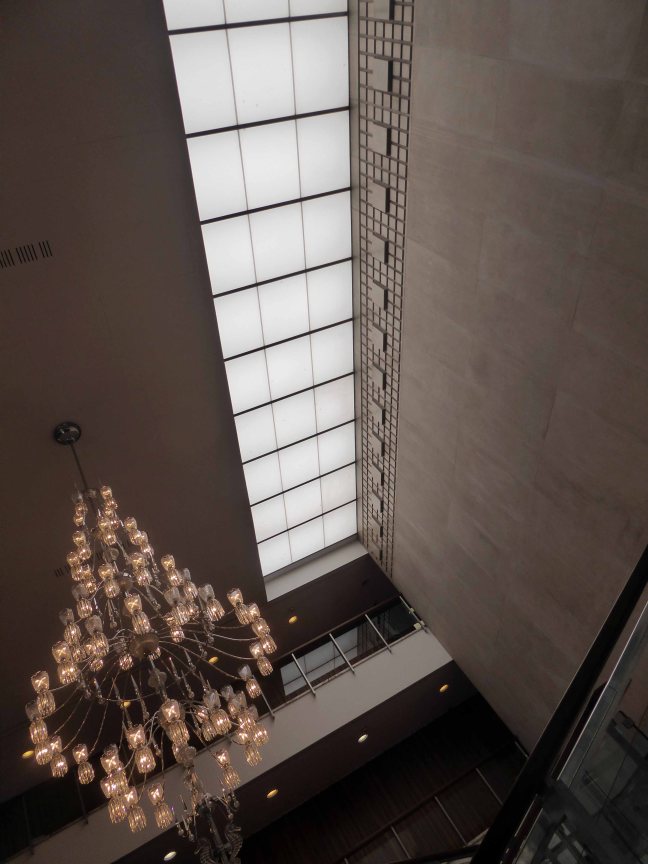
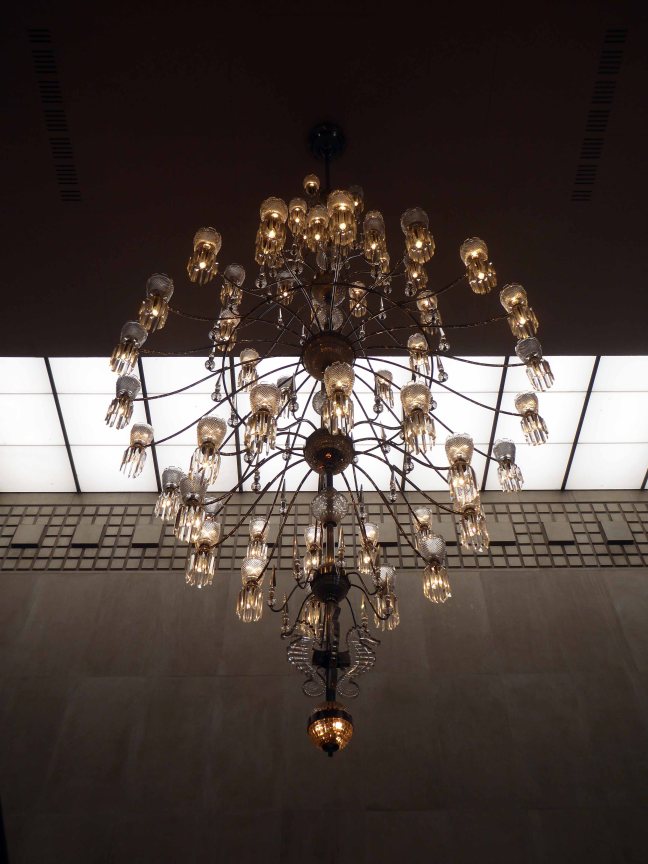
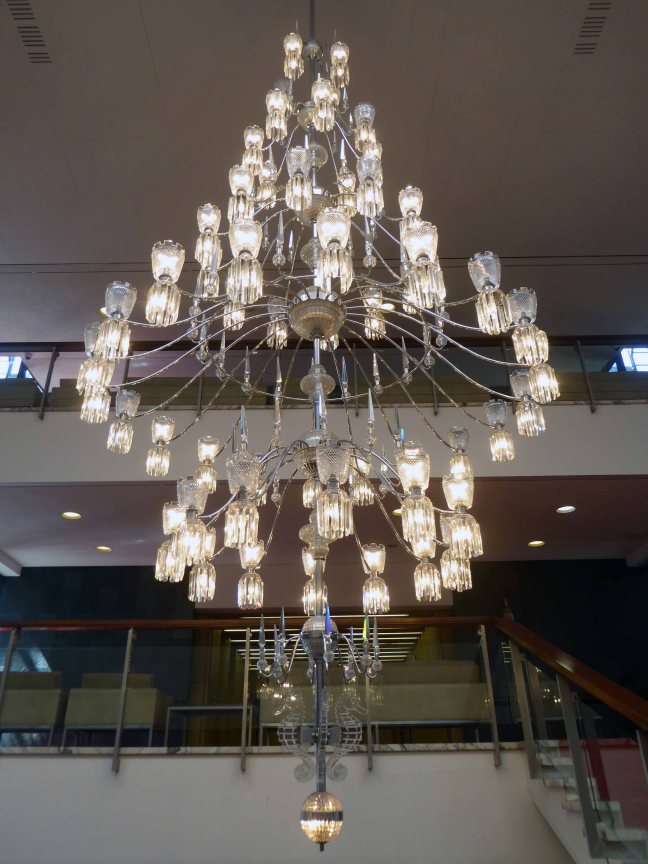
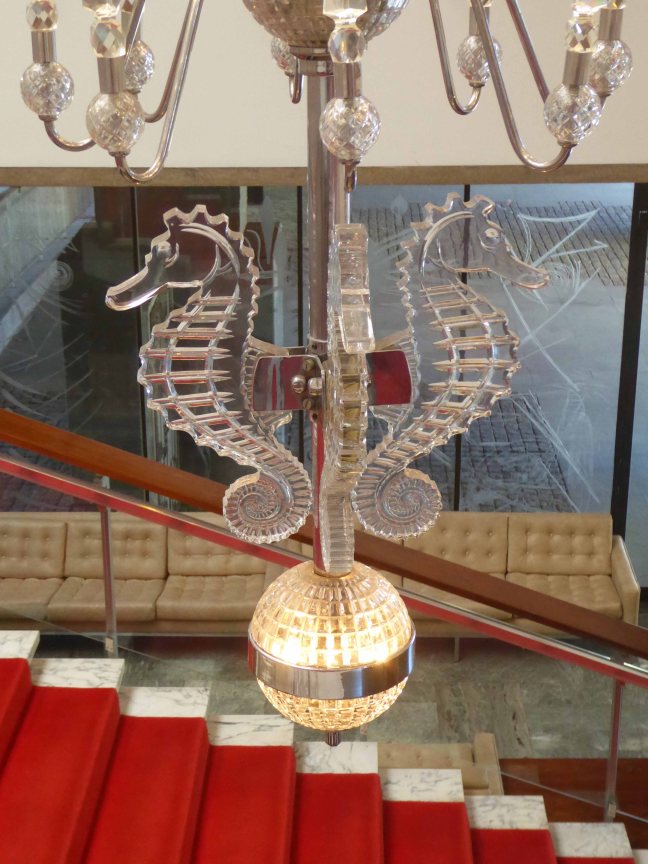
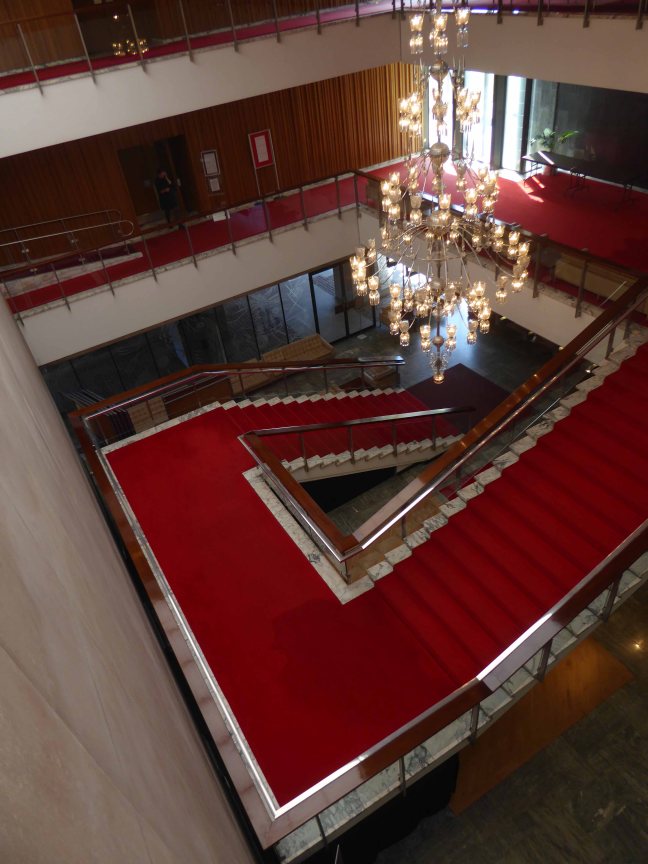
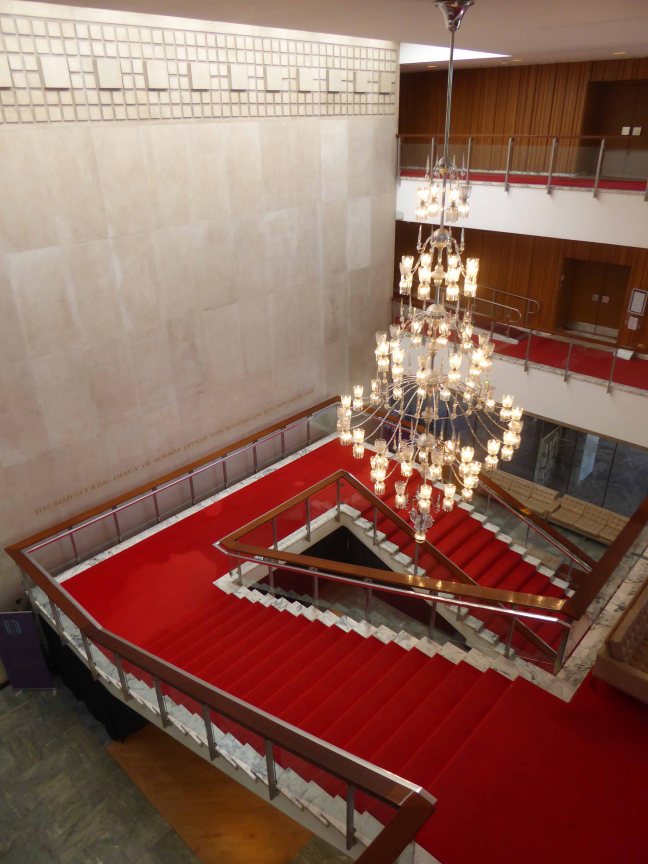
A twenty three foot high, eleven tiered chandelier of hand cut Bavarian crystal from Westphalia, hangs above your head. This chandelier was commissioned on behalf of Newcastle City for the opening of the building in 1968. It has 119 light bulbs, the crystal on the top is in the shape of a castle on the base of the chandelier are sea horses. The walls are lined with random English oak, the floor down stairs is Portuguese Verde Viana marble.

P1150883

P1150884

P1150887

P1150908

P1150909

P1150910

P1150994

P1150998

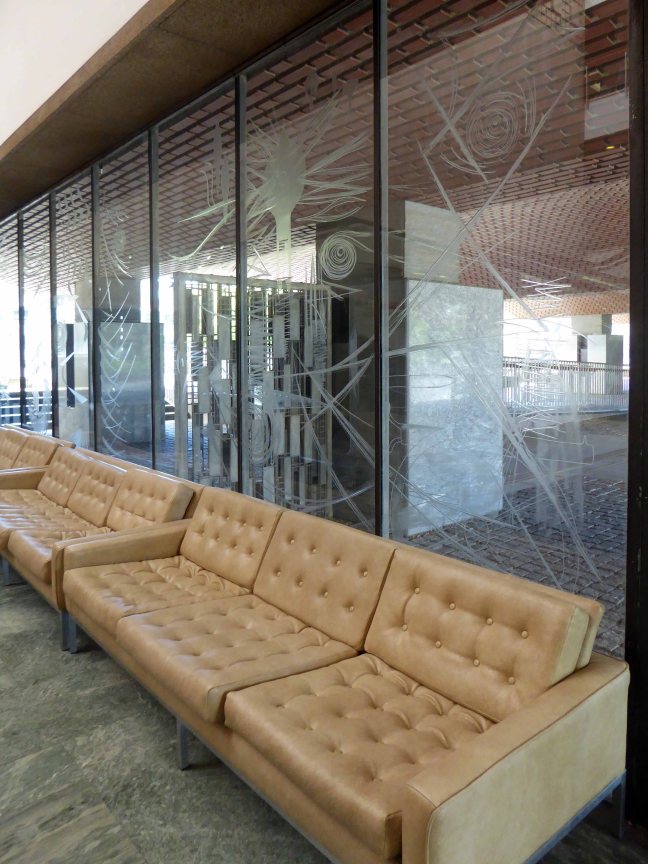
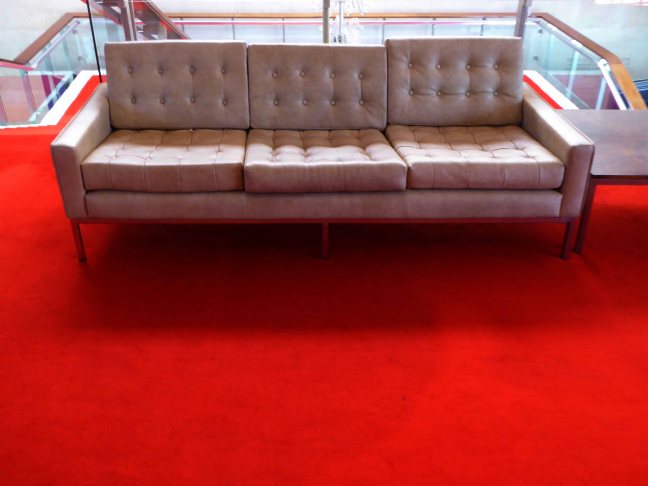
Elegant Arne Vodder designed sofas litter the entrance, this truly is a palace of delights a temple of  Municipal Socialism, take your shoes off set a spell.

Y’all come back now!

P1150912


Newcastle Civic Centre – Council Chamber

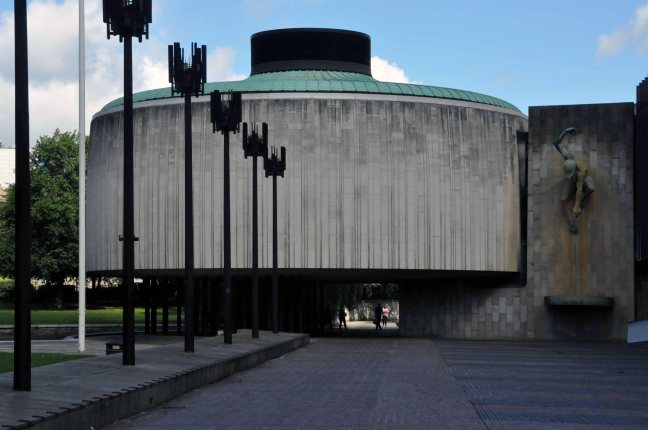
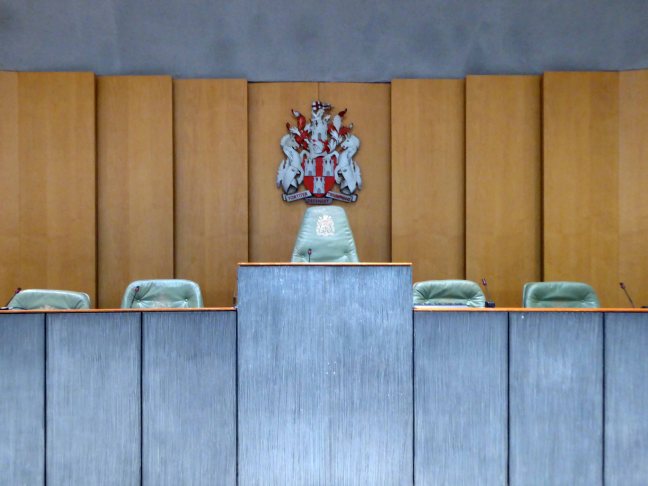
Within the exterior of architect George Kenyon’s distinguished civic drum sits the inner sanctum of the Council Chamber – my thanks to the delightful head of hospitality Debbie Harvey for providing me with the most erudite and educational tour.

DSC_0059 copy

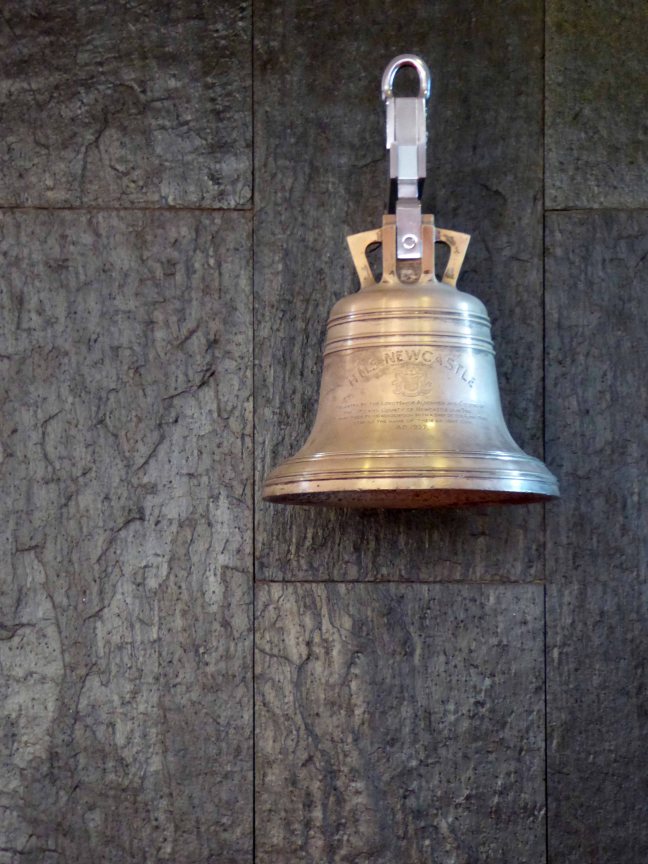
Outside the division bell, set against Danish slate, was originally to be found on the HMS Newcastle.

This silver bell is of the 10,000 ton cruiser HMS Newcastle presented to the ship by the Lord Mayor and citizens of Newcastle upon Tyne to mark her commissioning in 1937. Launched by the Duchess of Northumberland on the 23rd January 1936 at the Walker Naval Yard. In 1959 HMS Newcastle was towed from Portsmouth to Newport Monmouthshire to be broken up.

P1150916

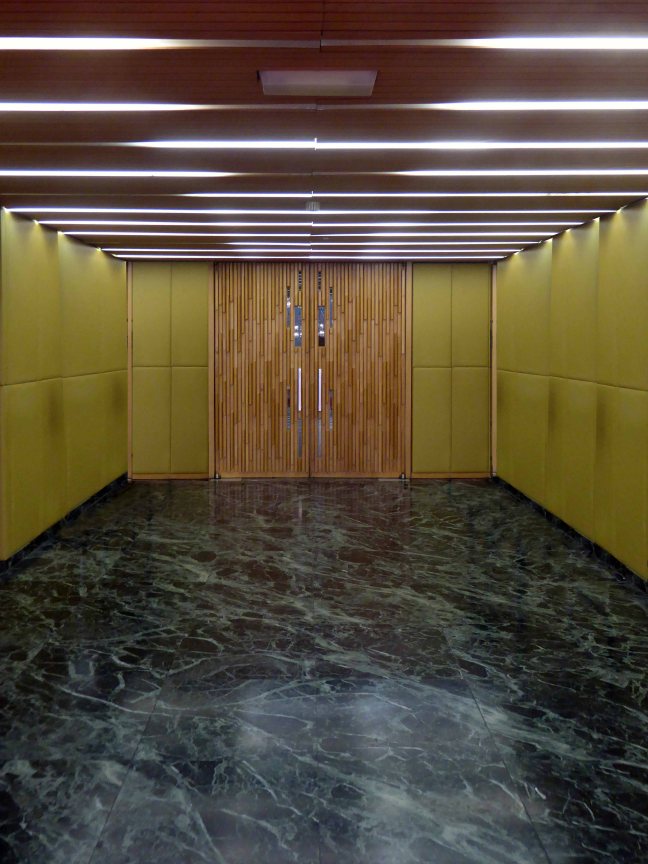
The entrance padded with soft green leather the door clad in hand carved Cedar of Lebanon.

P1150917

P1150921

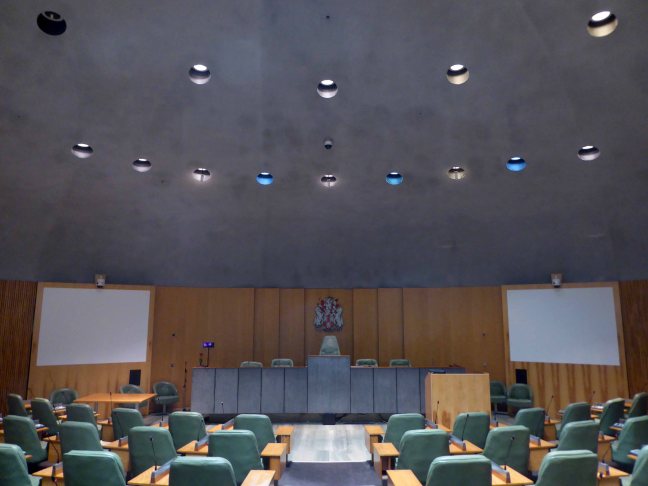
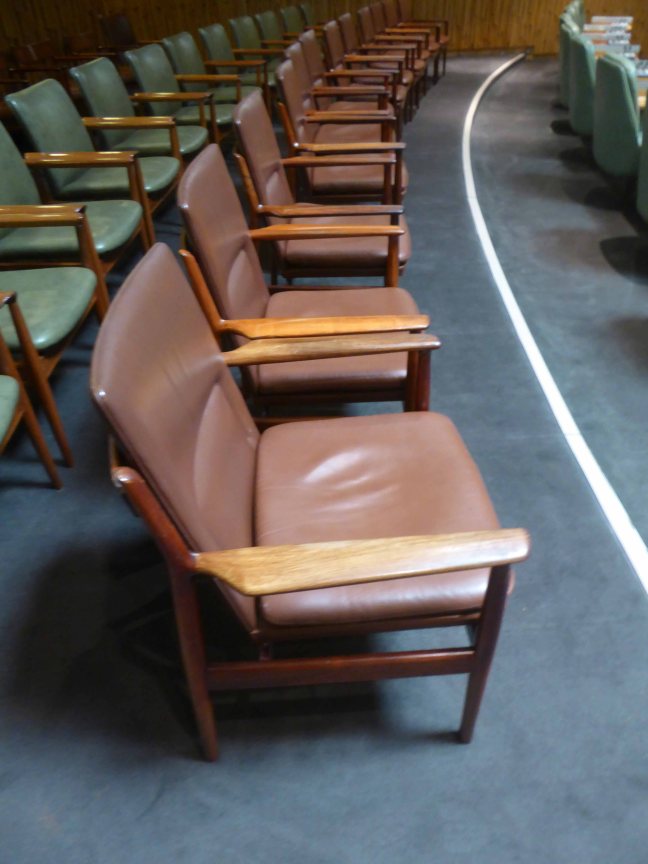
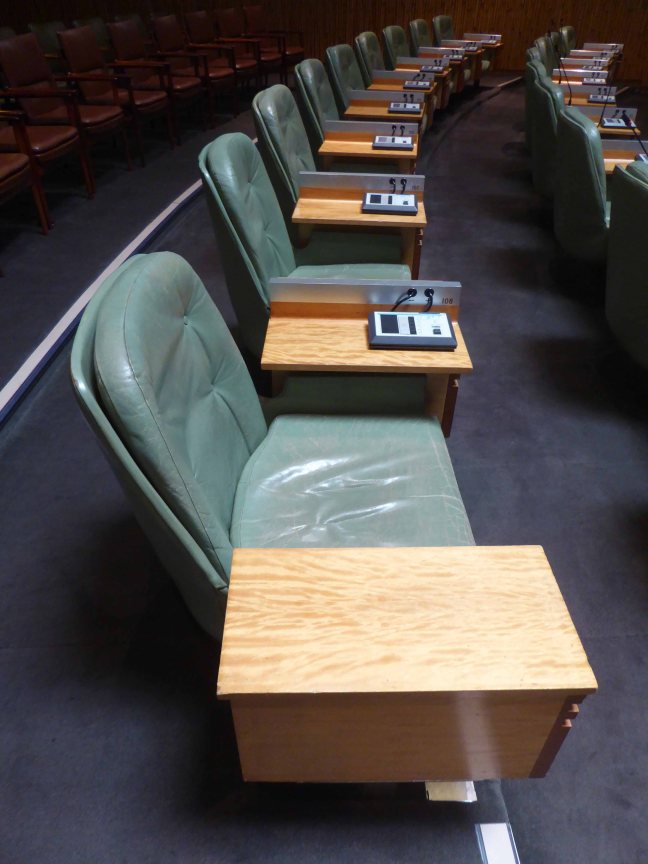
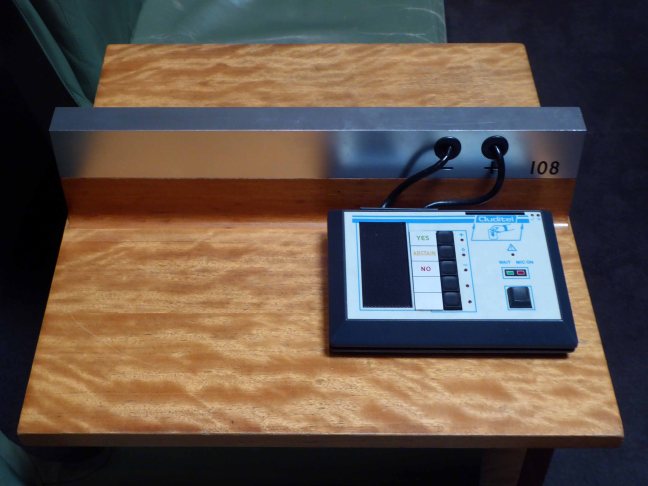
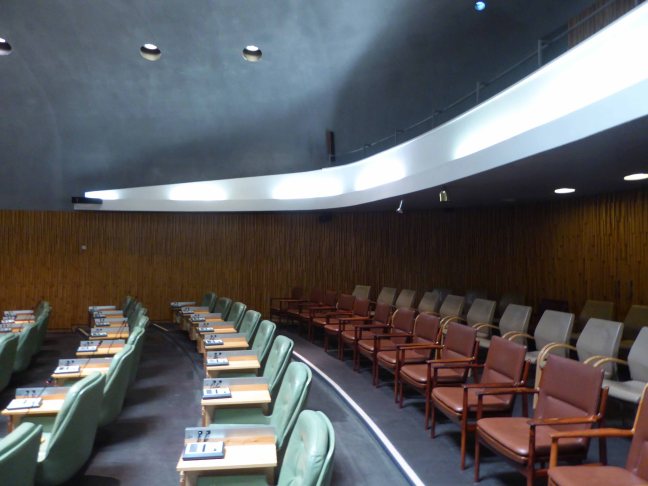
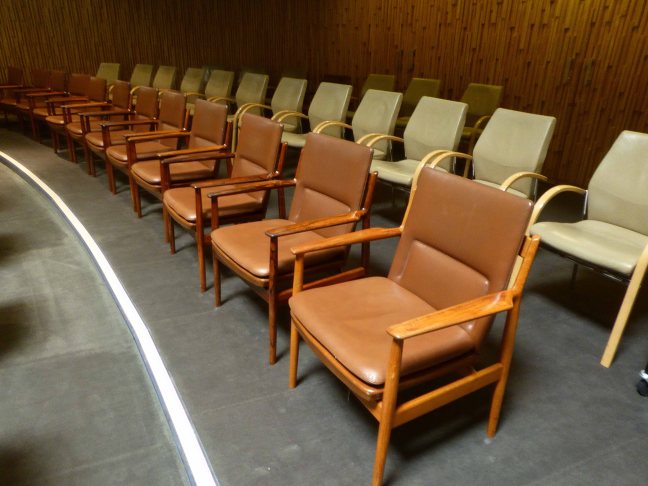
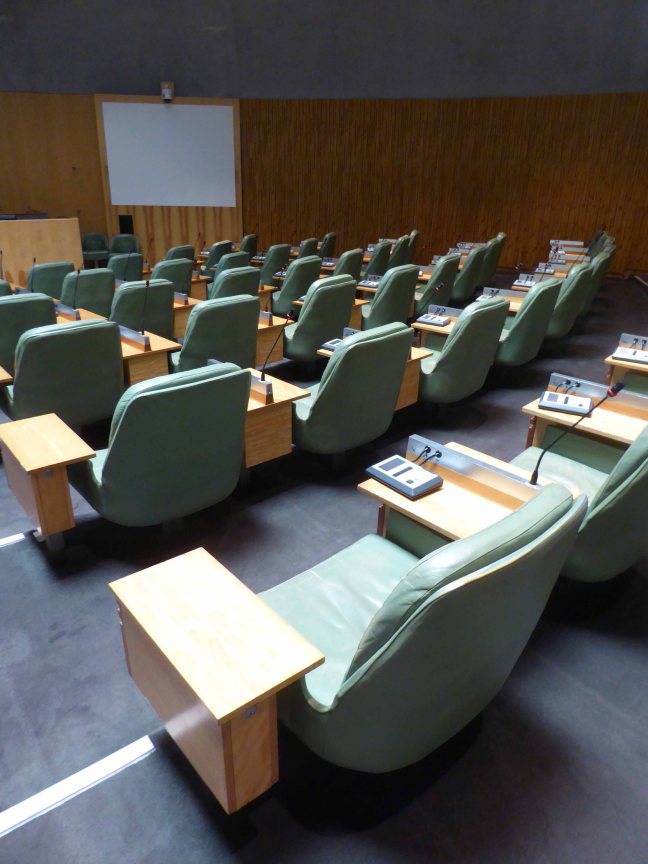
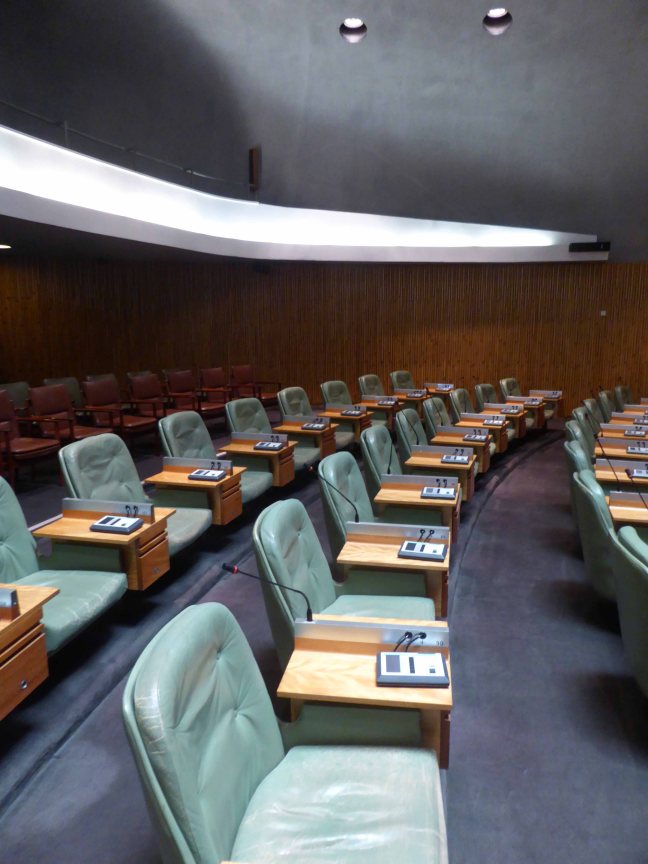
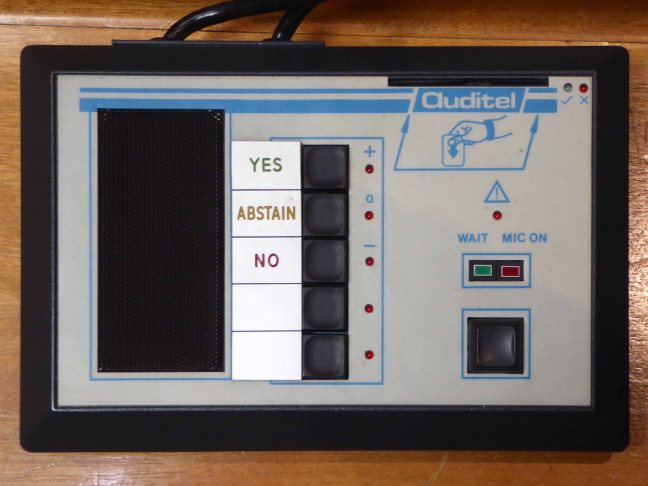
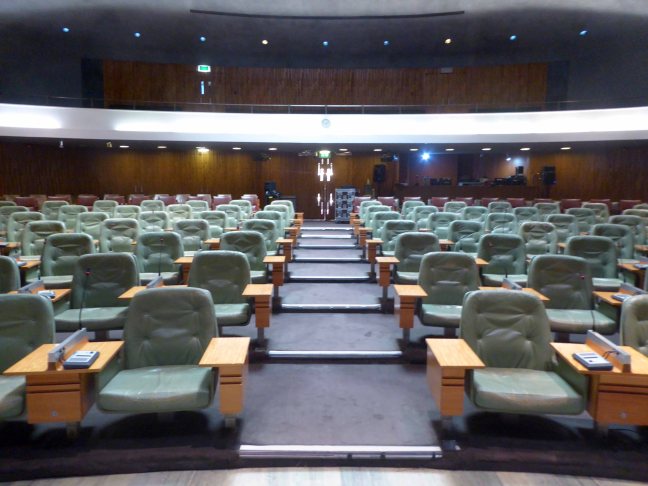
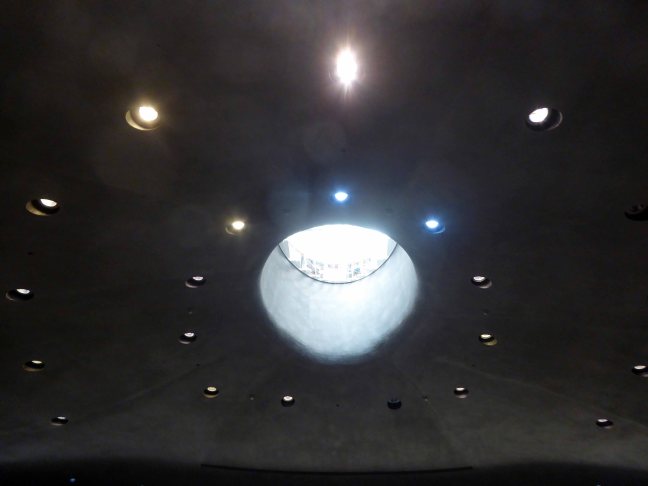
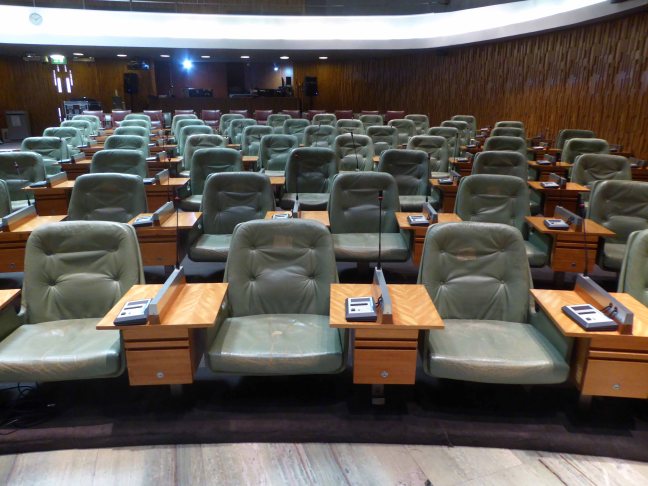
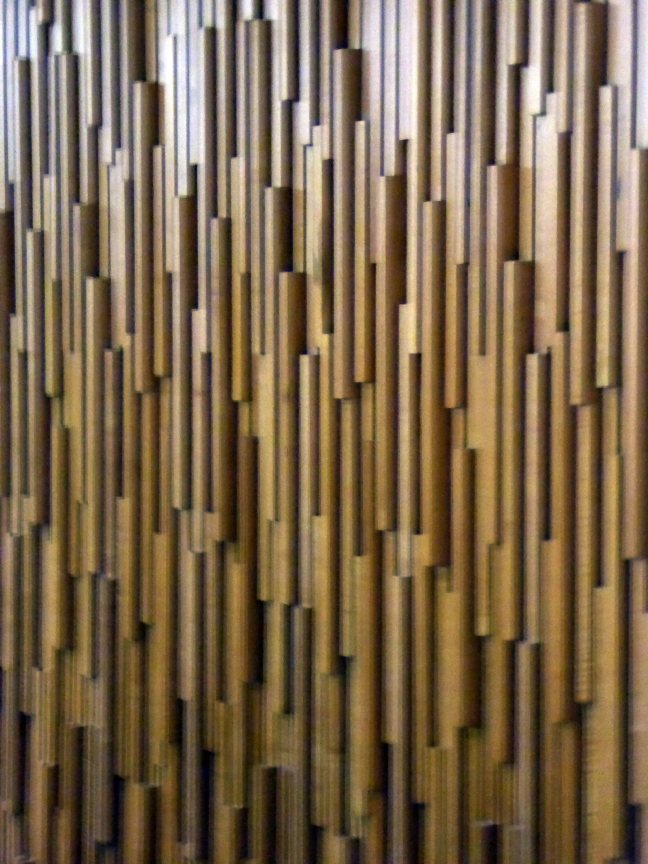
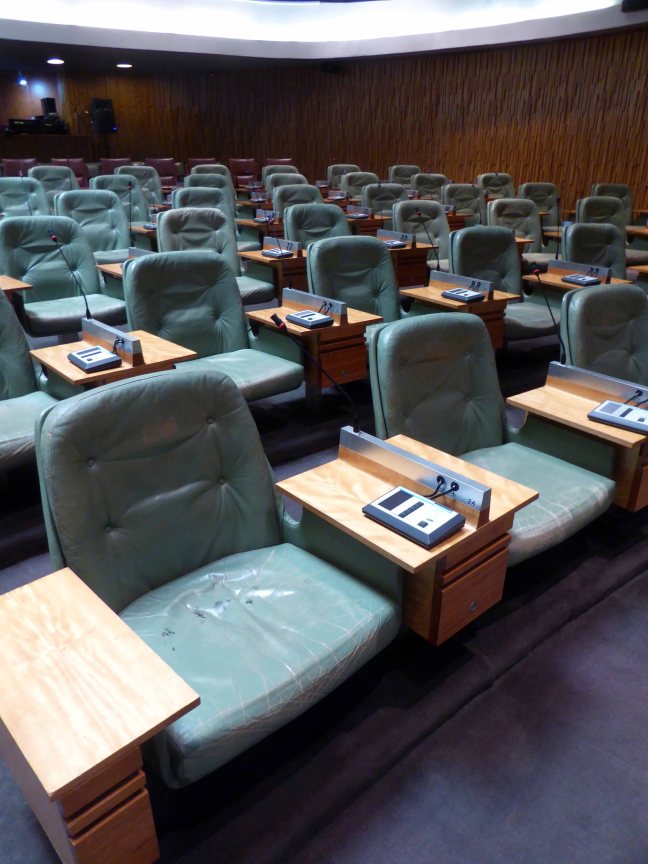
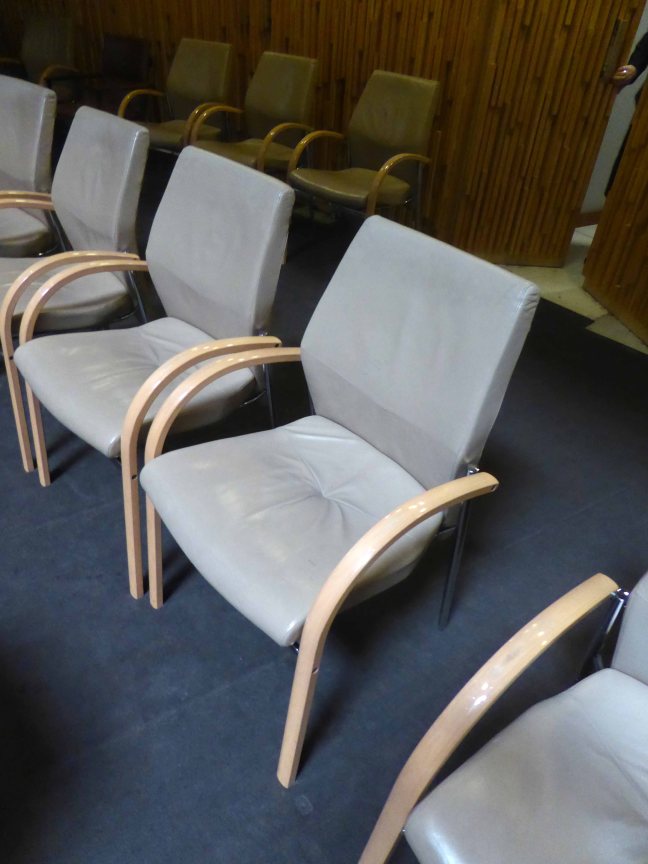
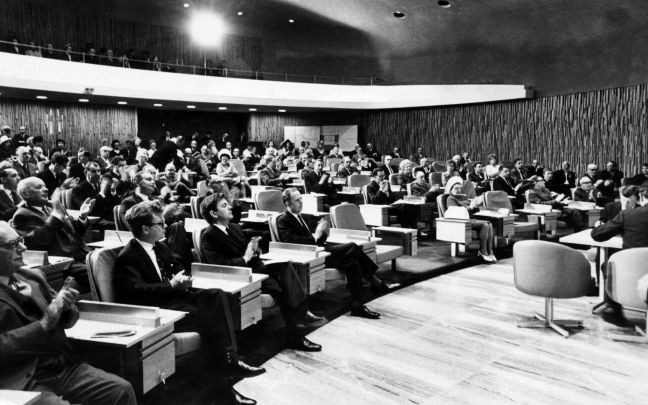
We illuminated the illuminated sign and entered – what treasures await, leather and teak furniture by acclaimed Danish designer Arne Vodder, worth thousands and thousands of pounds. Fine Swedish marble and further Cedar of Lebanon acoustic cladding, each surface of the highest quality and chosen to enhance the sound properties of the space. The councillors seated once a month on 149 leather clad  seats with integral voting and microphone modules. A high grey, skylight lit domed ceiling.

This is work of the highest possible quality, a proud summation of Municipal Socialism, our friends in the North, matched with the imaginary world of the Man from Uncle.

P1150922

P1150923

P1150924

P1150925

P1150926

P1150927


P1150929

P1150931

P1150932

P1150933

P1150934

P1150935

P1150936

P1150937

P1150938

P1150939

P1150940

P1150942

P1150943

JS109654085