Doncaster Modernism – Revisited Again.

The third time by the banks of the Don – first time around in May 2019, subsequently in October 2020.

So much can change in so short a time, post-pandemic and every town is doing its level best to build back better.

The vision includes:

  • Ensuring the centre is a focus for business and enterprise.
  • Building on the success of the current markets and raising the aspirations and functions of the markets.
  • Recognising the city core as the heart of the economy and the borough and the place where the image of Doncaster is most clearly reflected. 
  • Enhancing green spaces and waterways to create a better setting for visitors, investments and city heritage.
  • Developing the civic and cultural quarter and reinforcing the retail and leisure core through better links and public space improvements.
  • Developing city-scale functions and assets, to become a stronger draw for business, workers, visitors and inward investment.
  • Developing and bidding for new city-wide cultural venues, a University and Research and Development facilities.
  • Rebranding Doncaster as a location of choice for regional businesses.

Masterplan

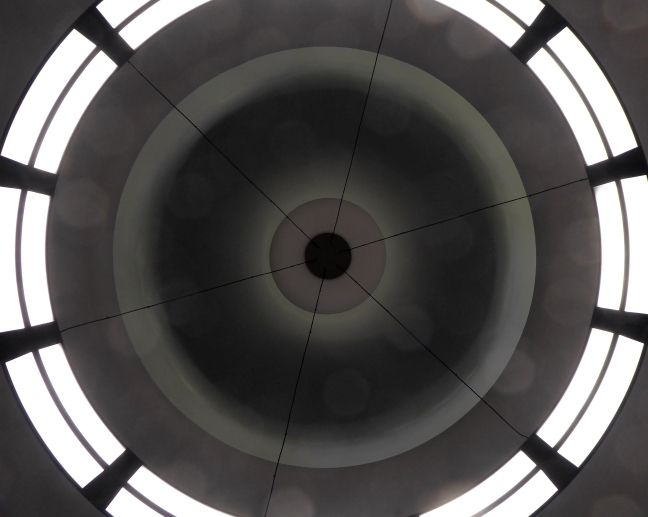
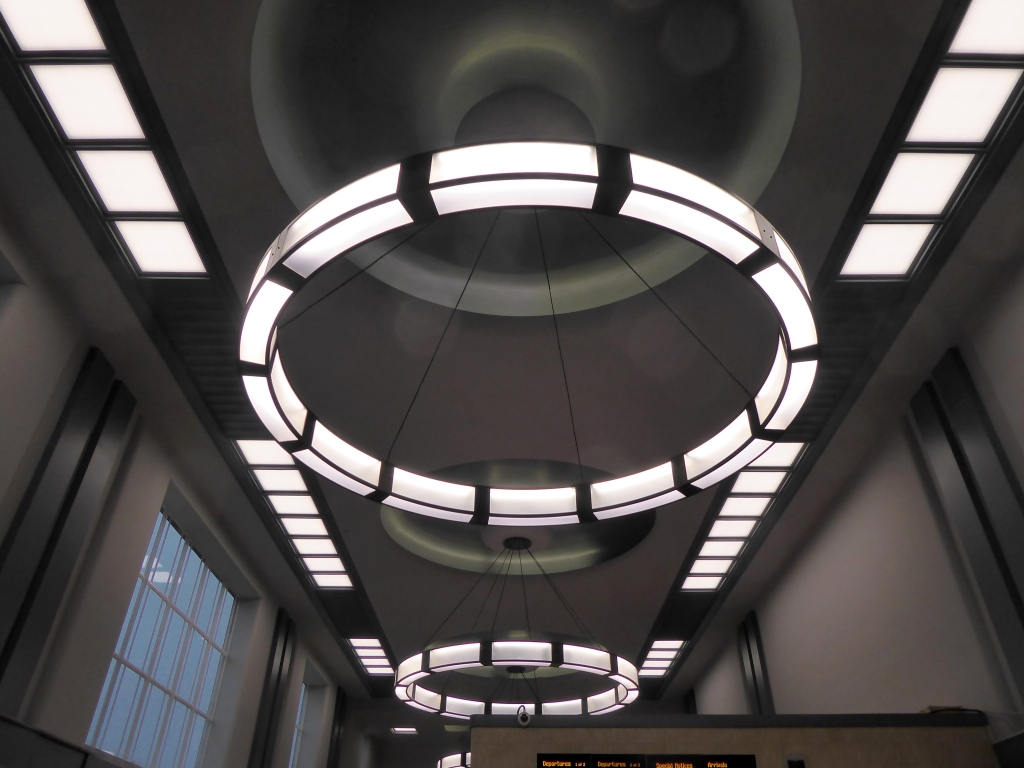
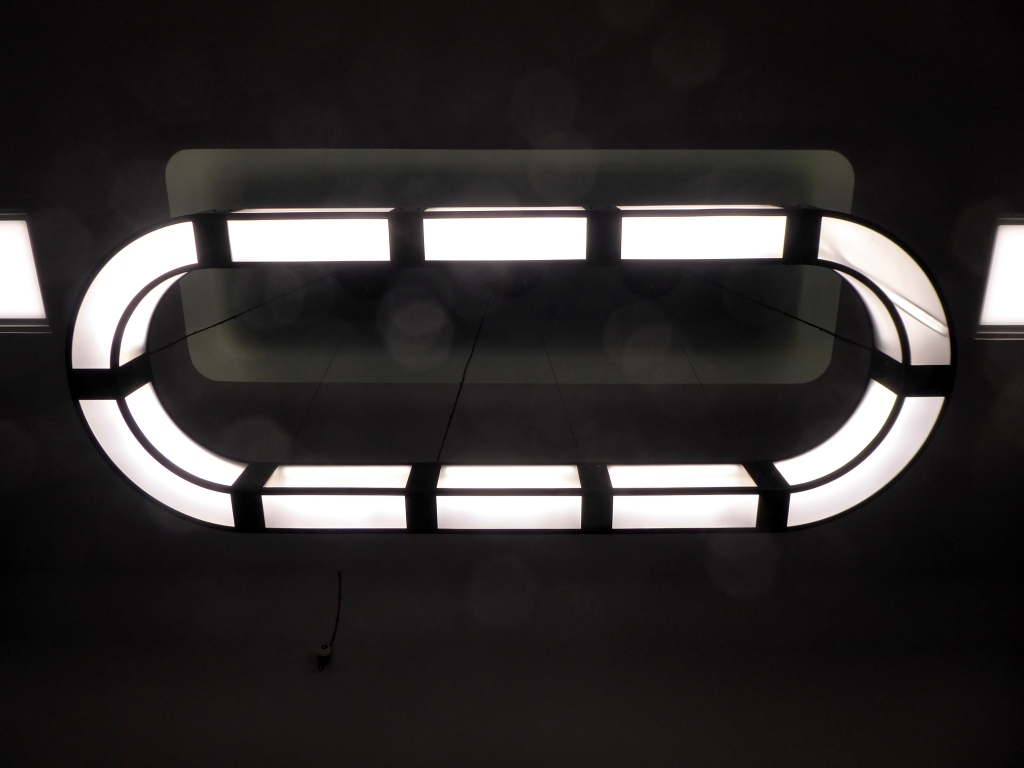
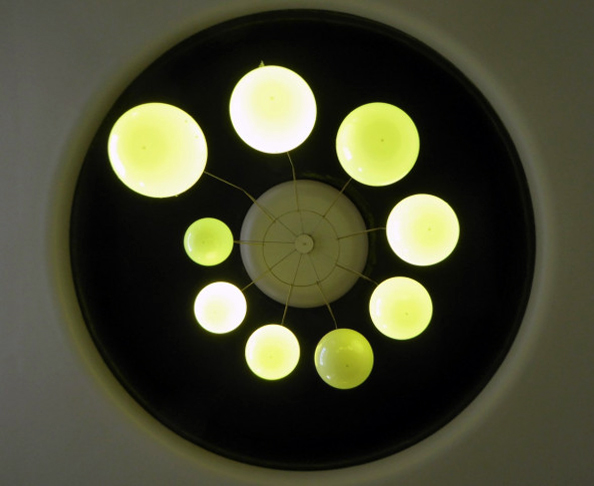
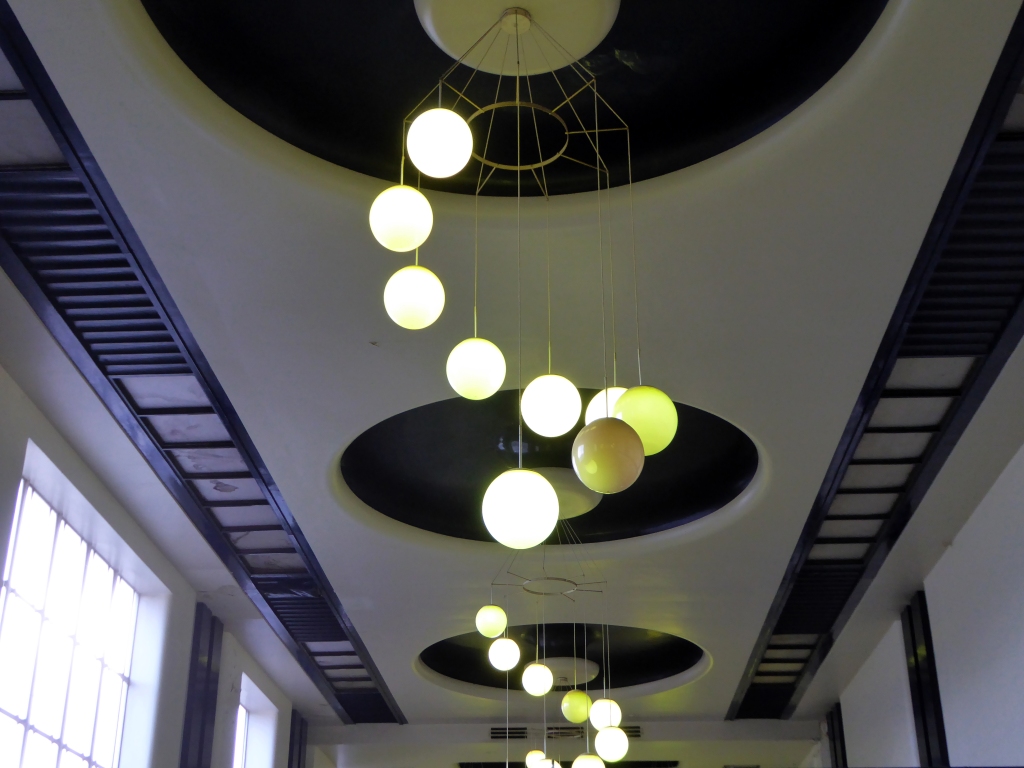
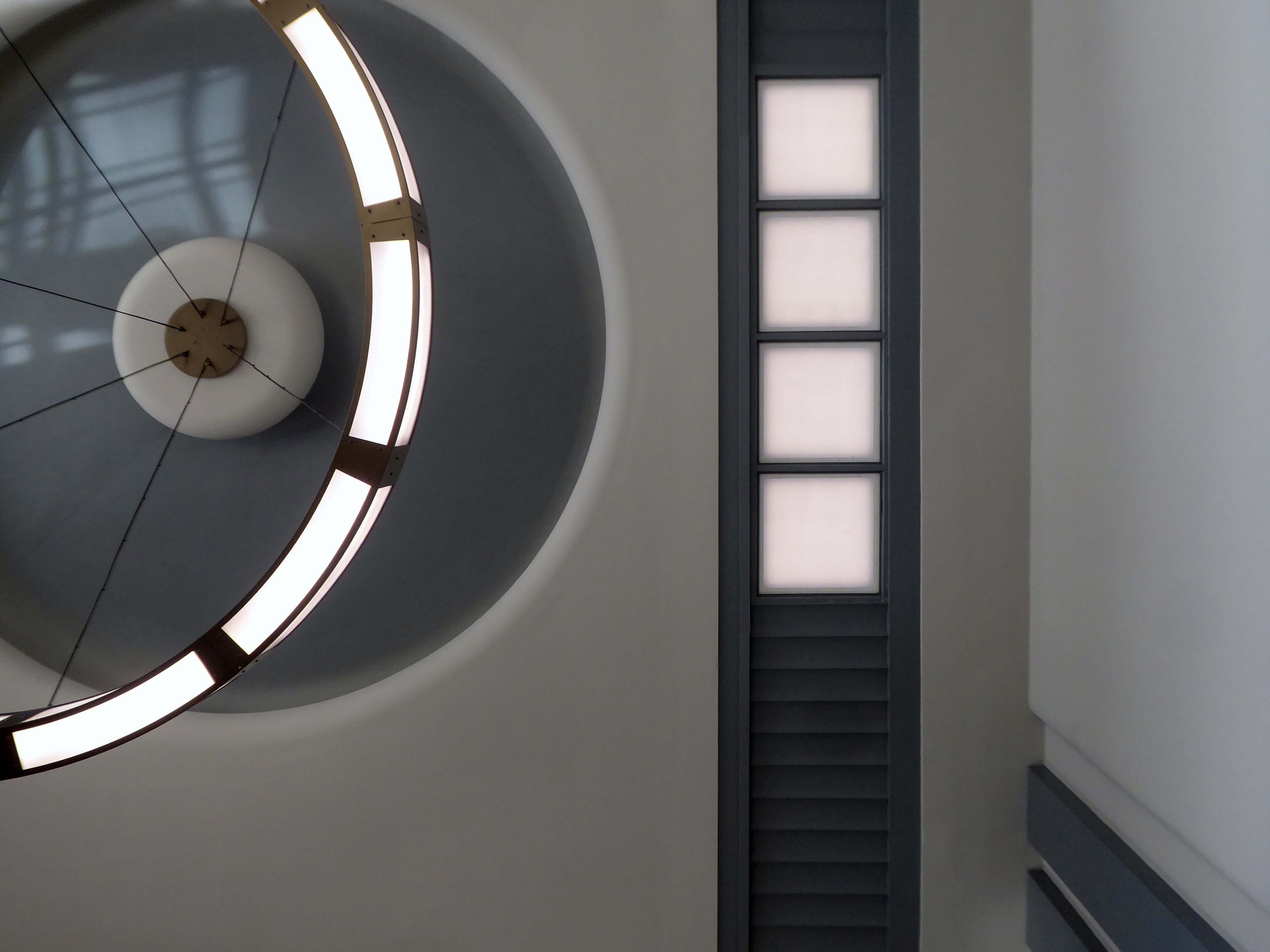
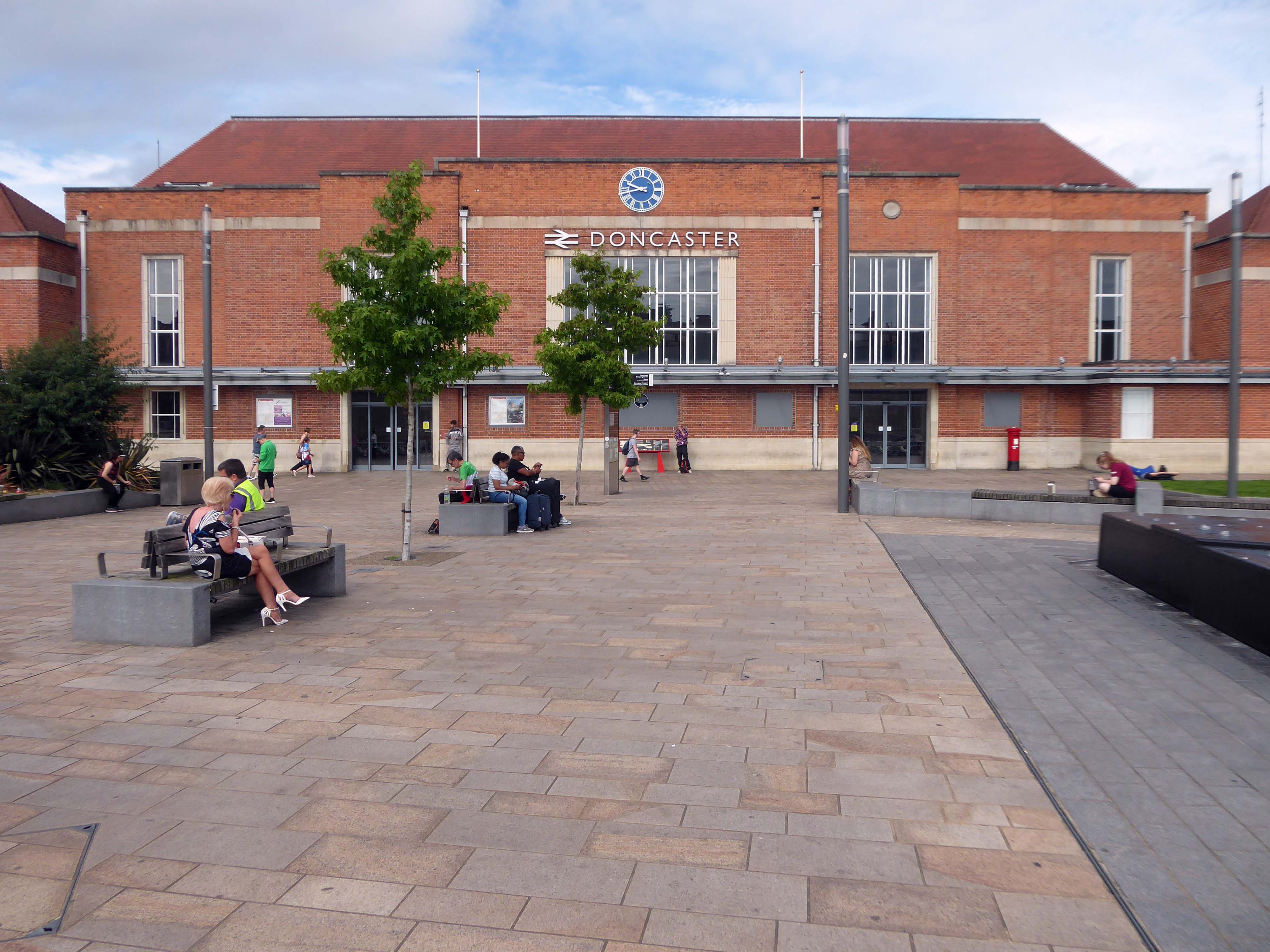
Arriving by train and ascending into the light – here’s the station lights.
The railway station has sharpened up its apron and facade.

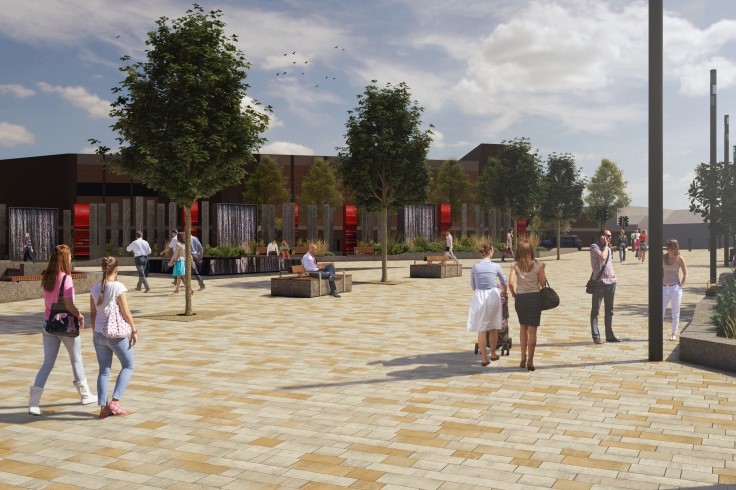
We have transformed the station forecourt. It has become a quality gateway which delivers a great first impression for visitors arriving in Doncaster by train. This will help stimulate interest from investors and developers, helping to attract new investment and create jobs for the borough and wider region.
Doncaster.gov

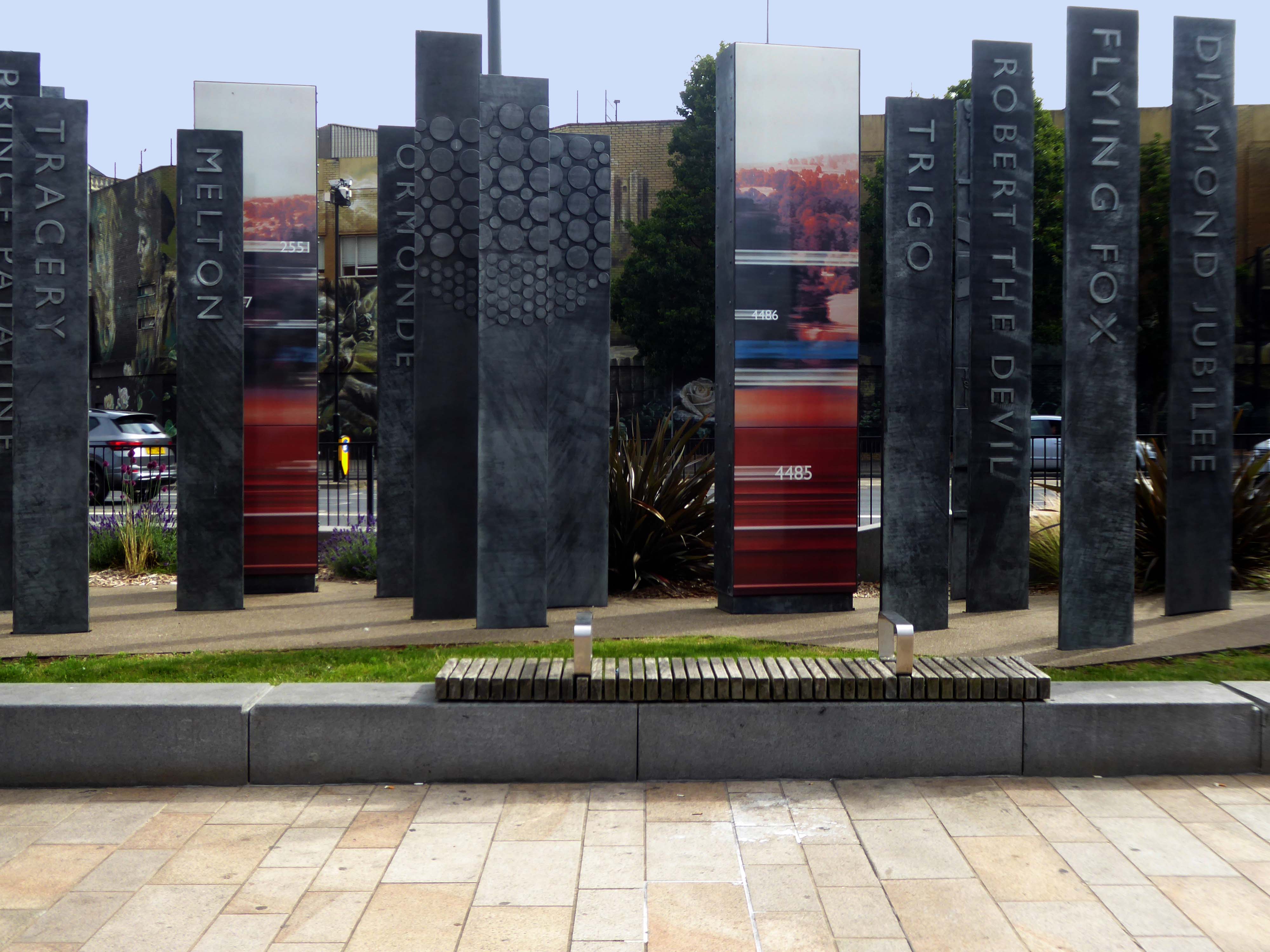
Celebrating engineering, speed and connectivity and stretching forty metres in length the public art at Doncaster Station consists of forty seven monoliths which are a nod to Doncaster’s past, present and future. With a fountain and three impressive water walls, the art takes centre stage in the new public space as you step out of the train station and head into the town centre.

The concept was devised by Doncaster Council and further developed by Chris Brammall.

CB Arts manufactured and installed the piece
Typically the high and low streets of Britain’s industrial towns and cities, are an amalgam of architectural style and fashion, spanning at least two or three centuries.

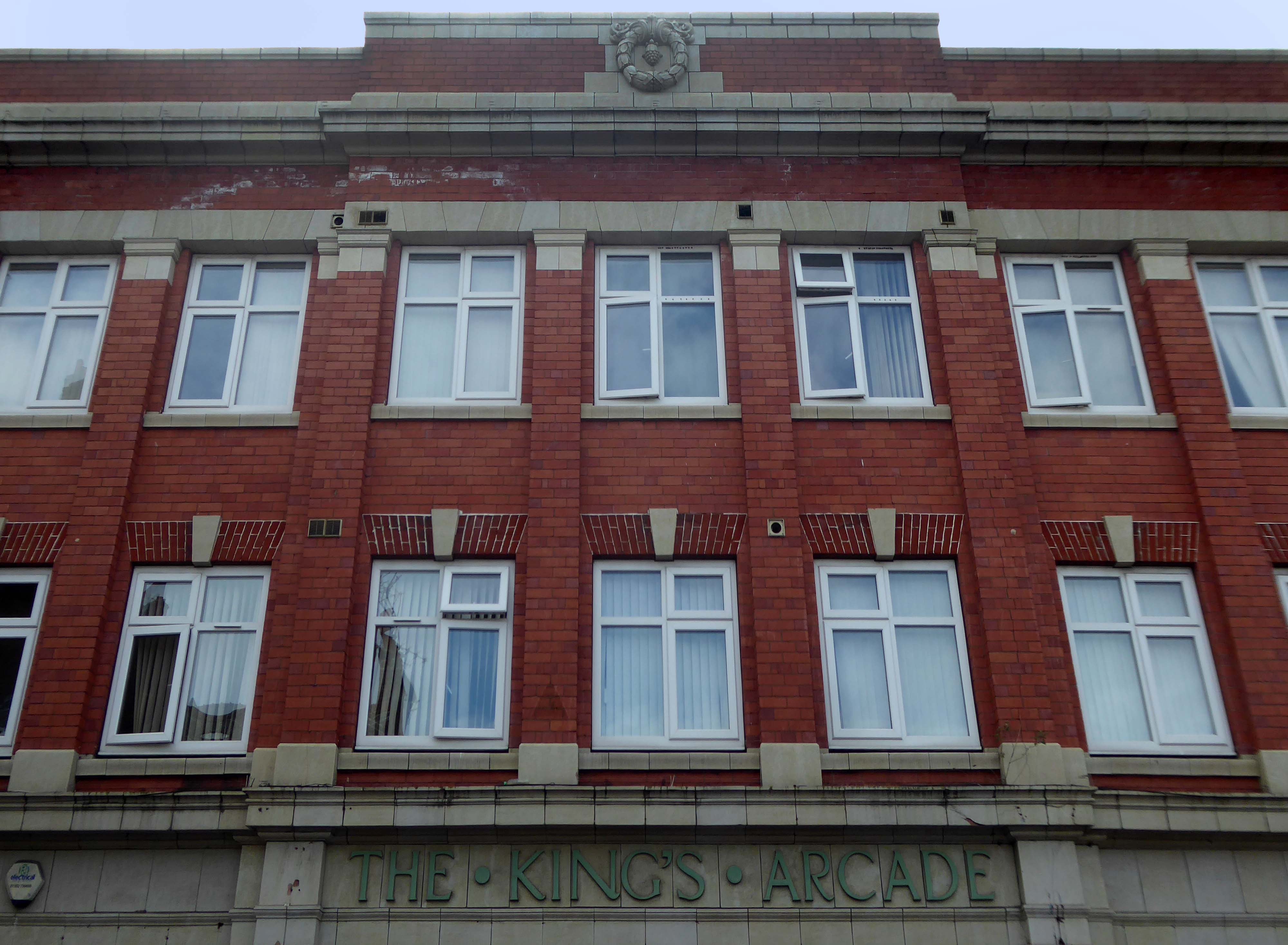
Faience fronted interwar developments abound.

Neo-classical speculative shopping arcades.
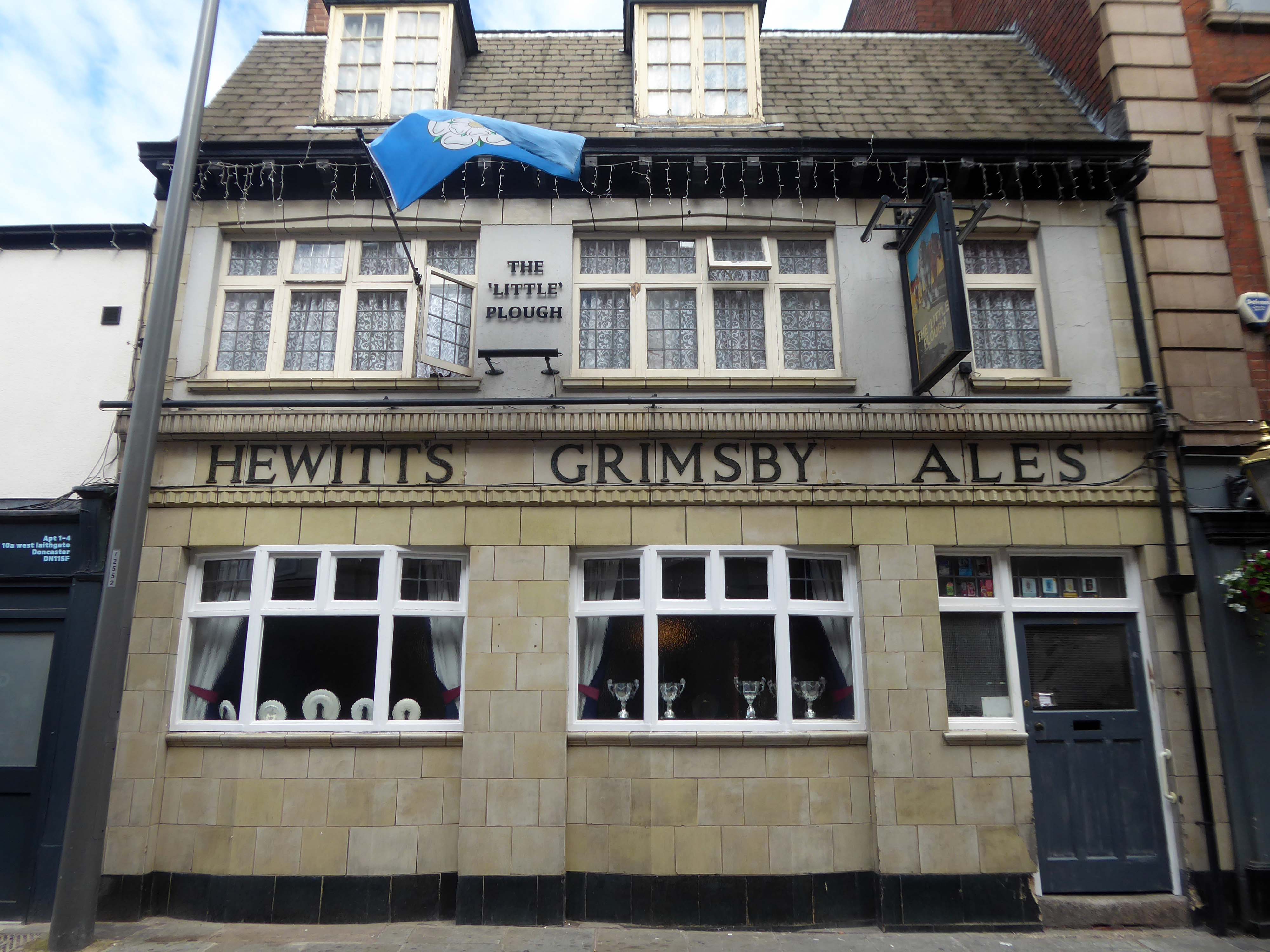
Revamped Victorian pub facades.

Behind the buff faience frontage is a lovely, small two-room pub with a well preserved interior created under plans of 1934. It was remodelled by the Grimsby brewers Hewitt Brothers Ltd who were Doncaster’s biggest pub owners for many years.
Pub Heritage

Originally a Gent’s Outfitters, this deco-gem was topped off with the Nags Head Hotel.

This grade II listed pub is now in retail use, though Vision Value, are it seems, on the move.
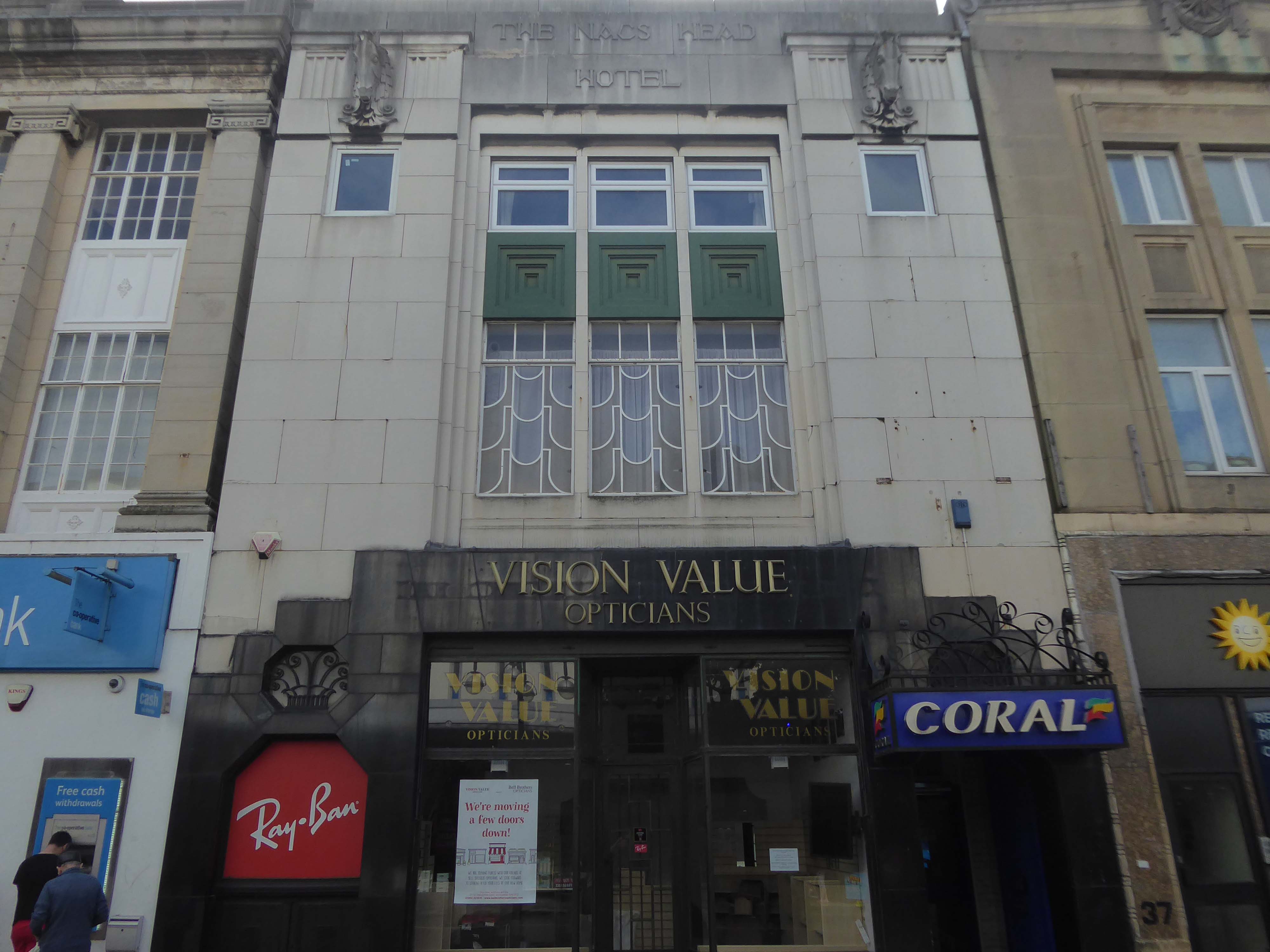
Lost pubs project.

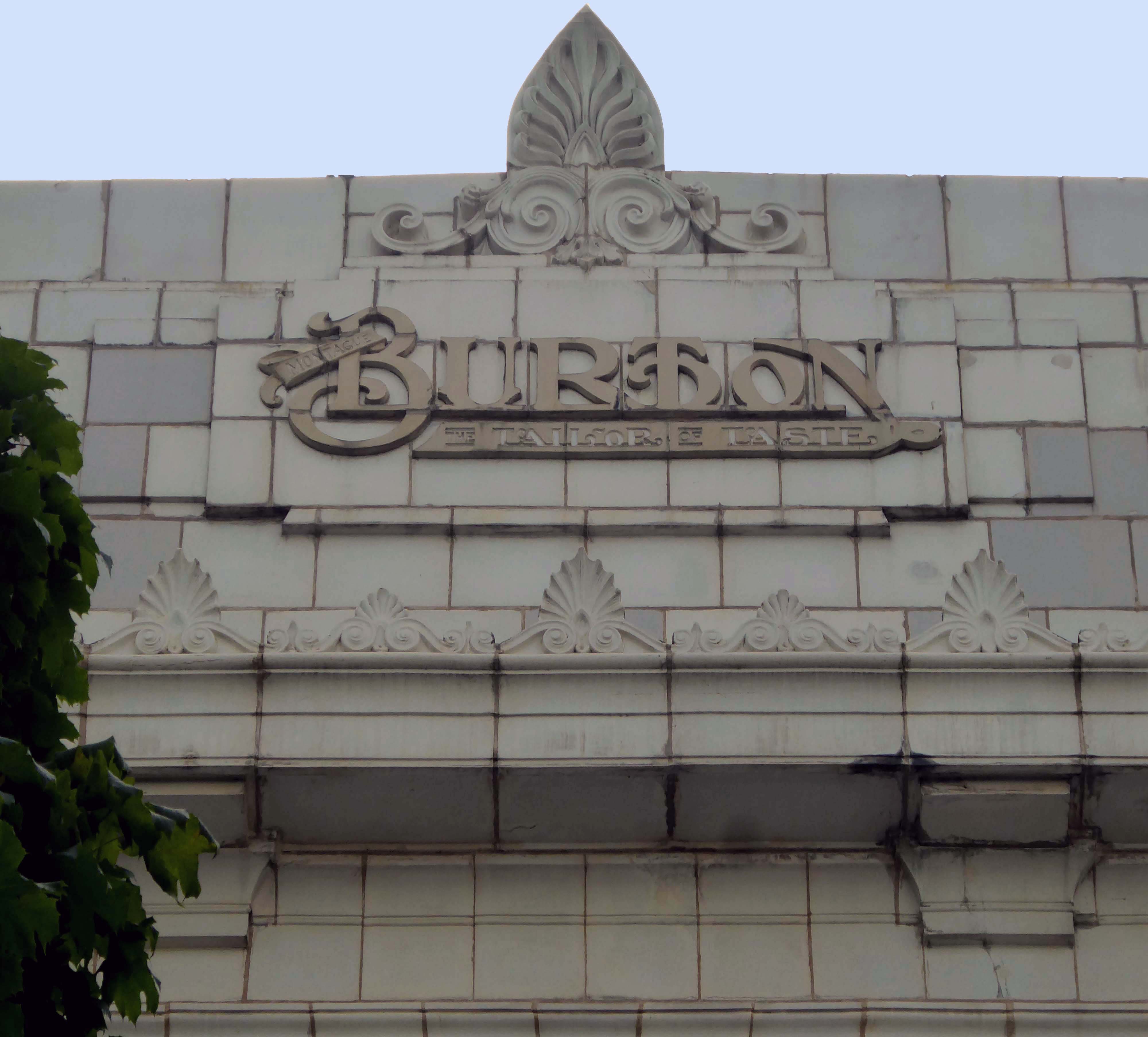
Of course, every town had a Burton’s – the tailor of taste.
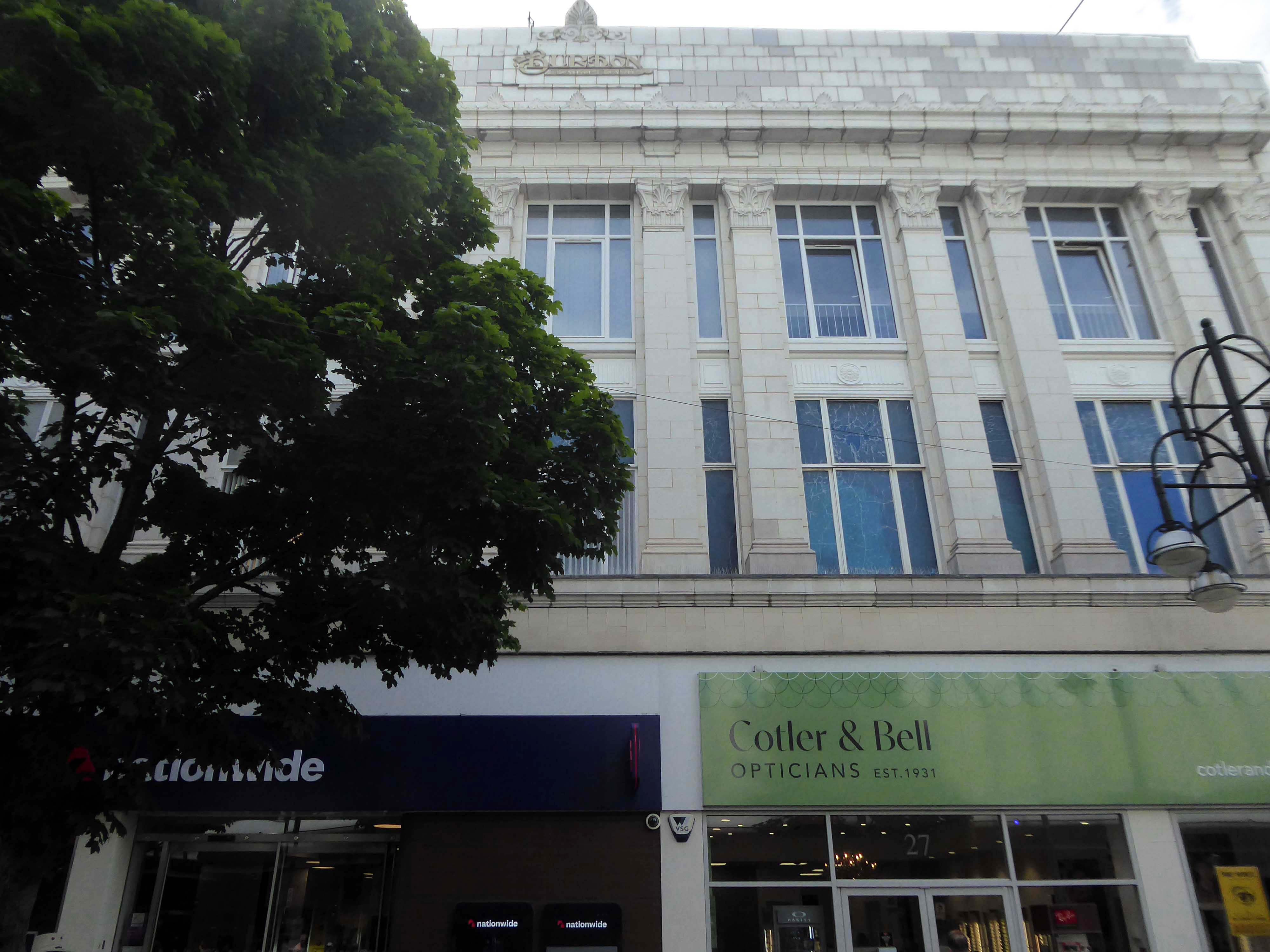
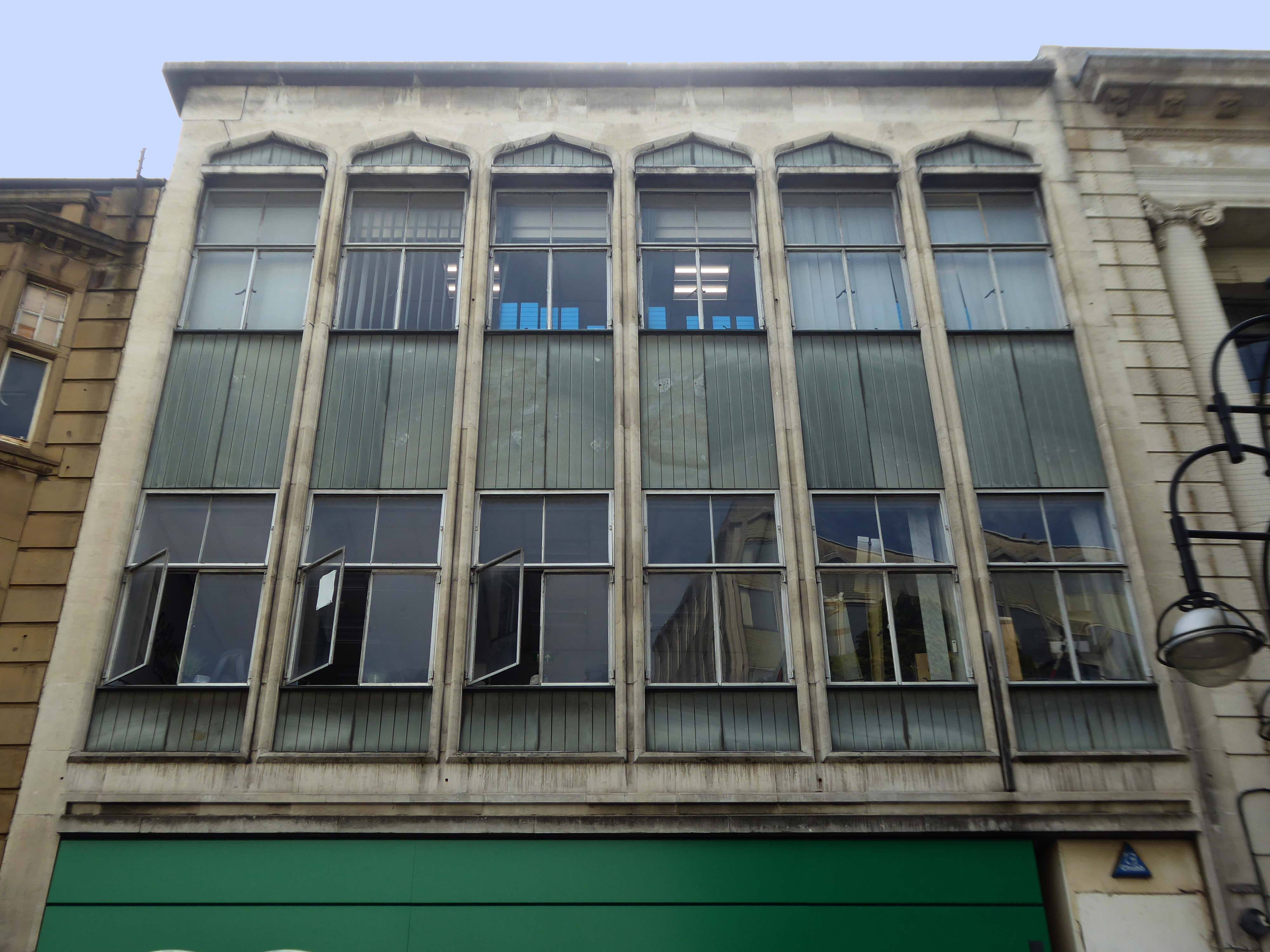
This post war infill has that distinctive Festival of Britain feel, original metal window frames, Portland stone and blueish slate like panels.
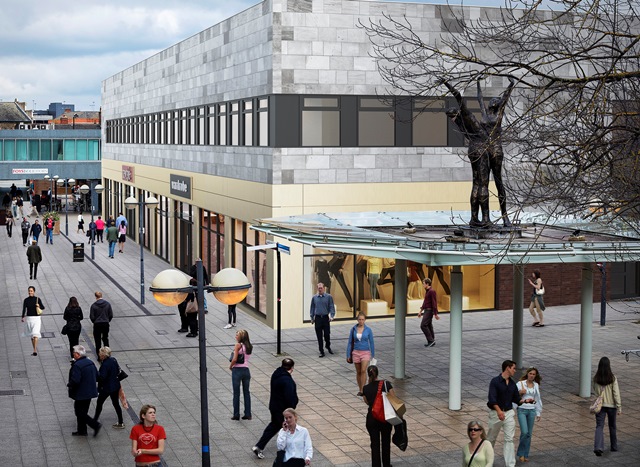
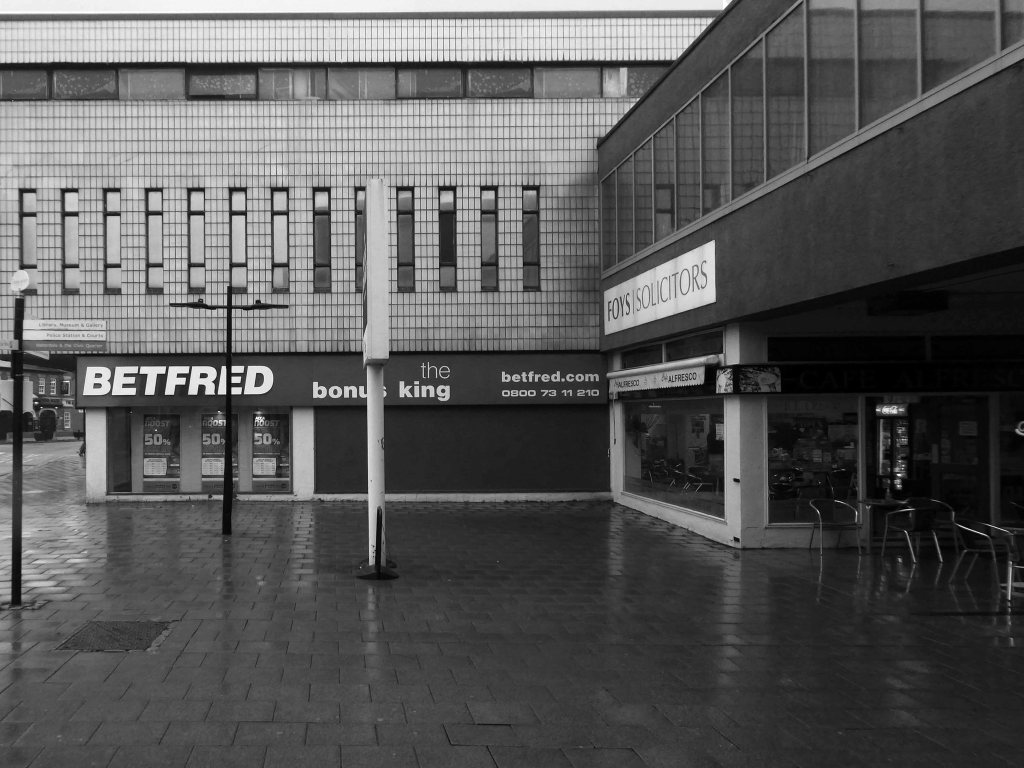
The revamped Frenchgate Shopping Centre, officially opened on October 4th 1968, has in places an upper tier, resistant to zinc over cladding.

The centre has been the heart of the city for over 40 years and was originally called the Arndale Centre because it was built, owned and managed by the Arndale Group. It was renamed in 1988 after a change of ownership, with the new name reflecting the name of the street which passes to the east of the centre and which is one of Doncaster’s main shopping streets.
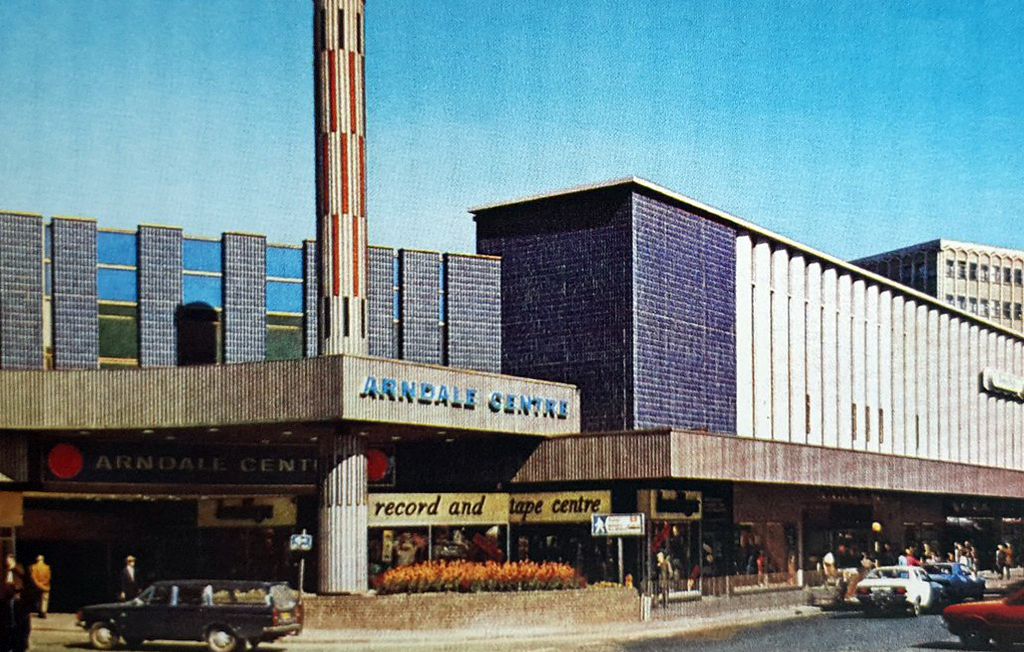
The sale of the centre came just a year after Frenchgate had undergone a £200 million facelift to transform it into the country’s first shopping centre with integrated public transport and retail interchange.
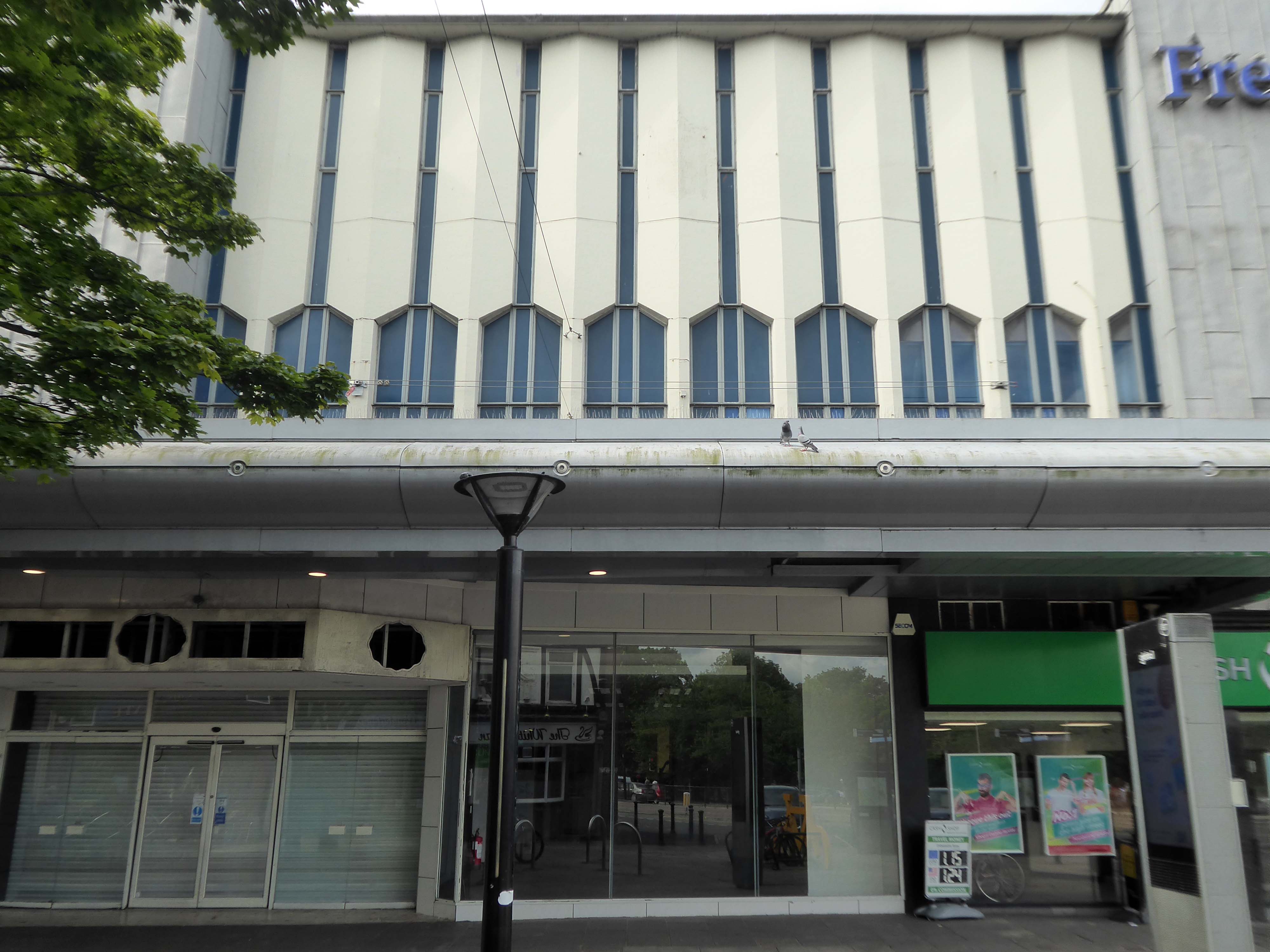
Wikipedia

There are plans to rework the shopping centre.

We propose this is fundamentally transformed though the addition of apartments that wrap along the back of the first-floor retail with a further 2.5 new storeys placed on top. We also feel additional height -up to seven or eight storeys, is justifiable to the corner of Frenchgate and Trafford Way.
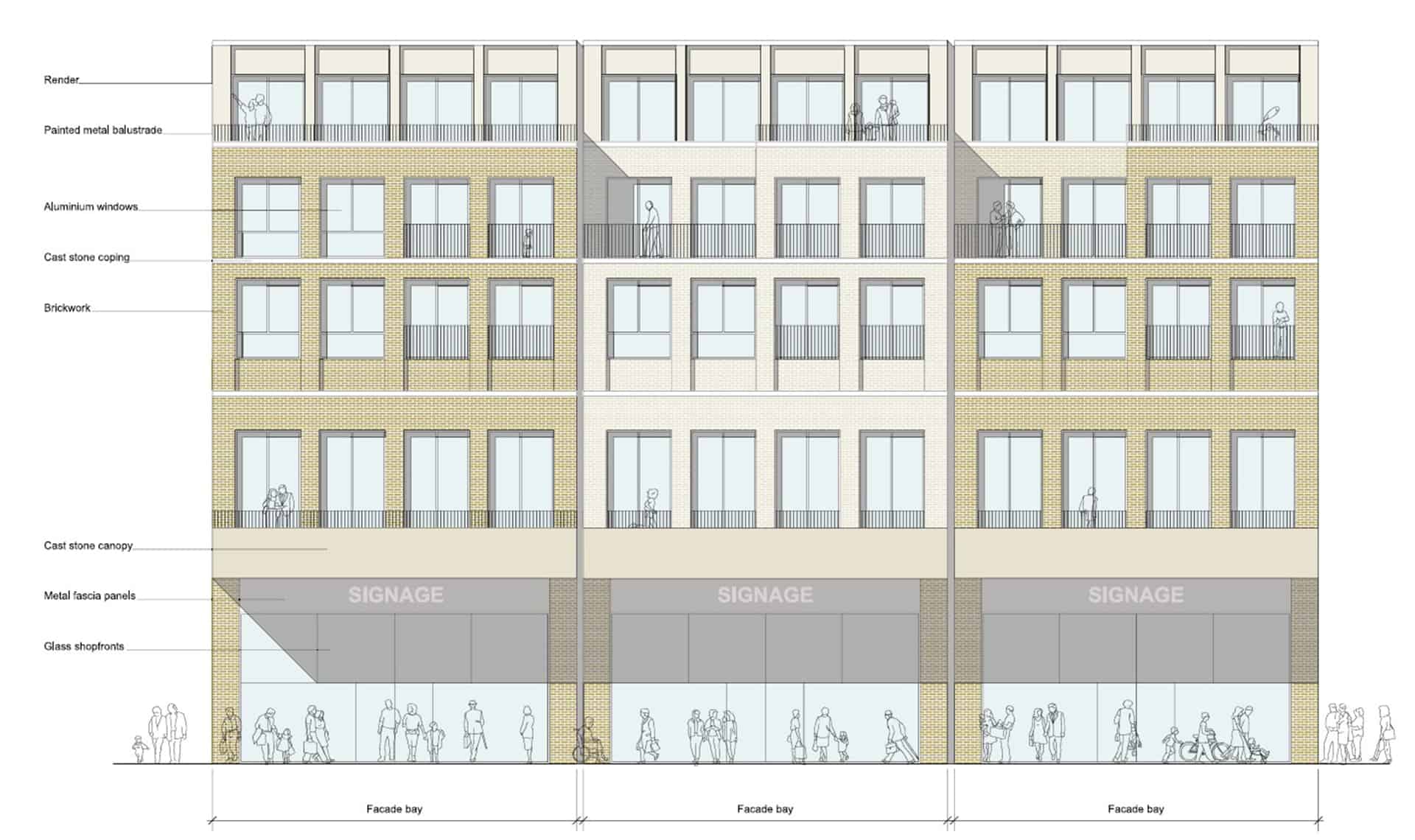
TODD Architects

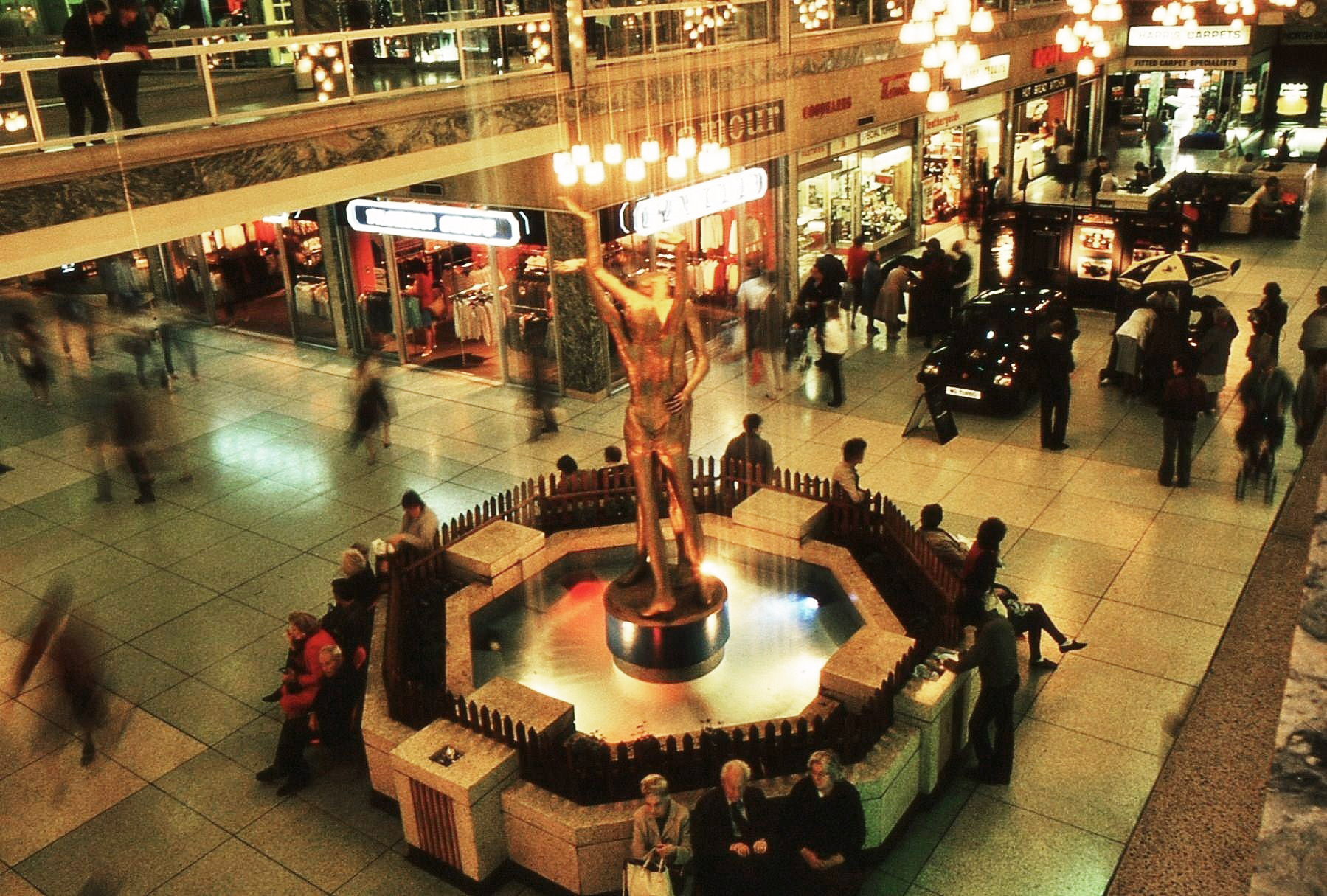
The Lovers were once located in the Arndale, removed to a local garden, unloved – then later reinstated in the Waterdale Centre, where we will embrace them a little later.
Turn right to take in the 1920s mosaic remake remodel of the Grade II listed Blue Building.

The Blue Building which used to be the Doncaster Design Centre and Tourist Information Centre was originally the home of John Whitaker, a wine merchant, and son of James Whitaker who was Mayor of Doncaster in 1758.

In 1925 the complete building was demolished apart from the facade which was retained and given a facing of decorative blue tiles. The intention was to build a shopping arcade from High Street to Printing Office Street. Only part of the arcade, known as the  Westminster Arcade was built. It had a number of shops, the largest being that of Woodhouse & Co Furnishers.
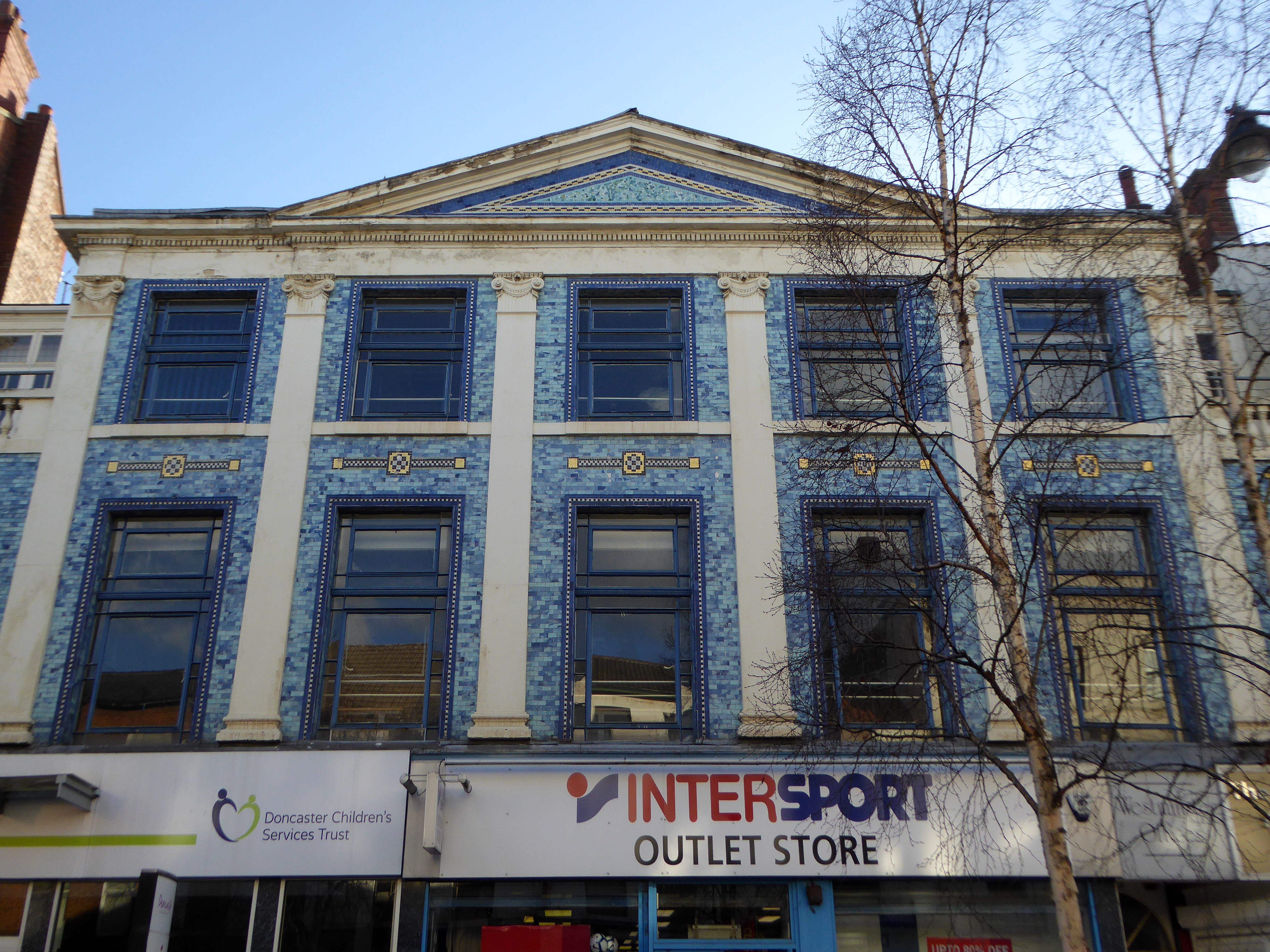
Doncaster Heritage Trail

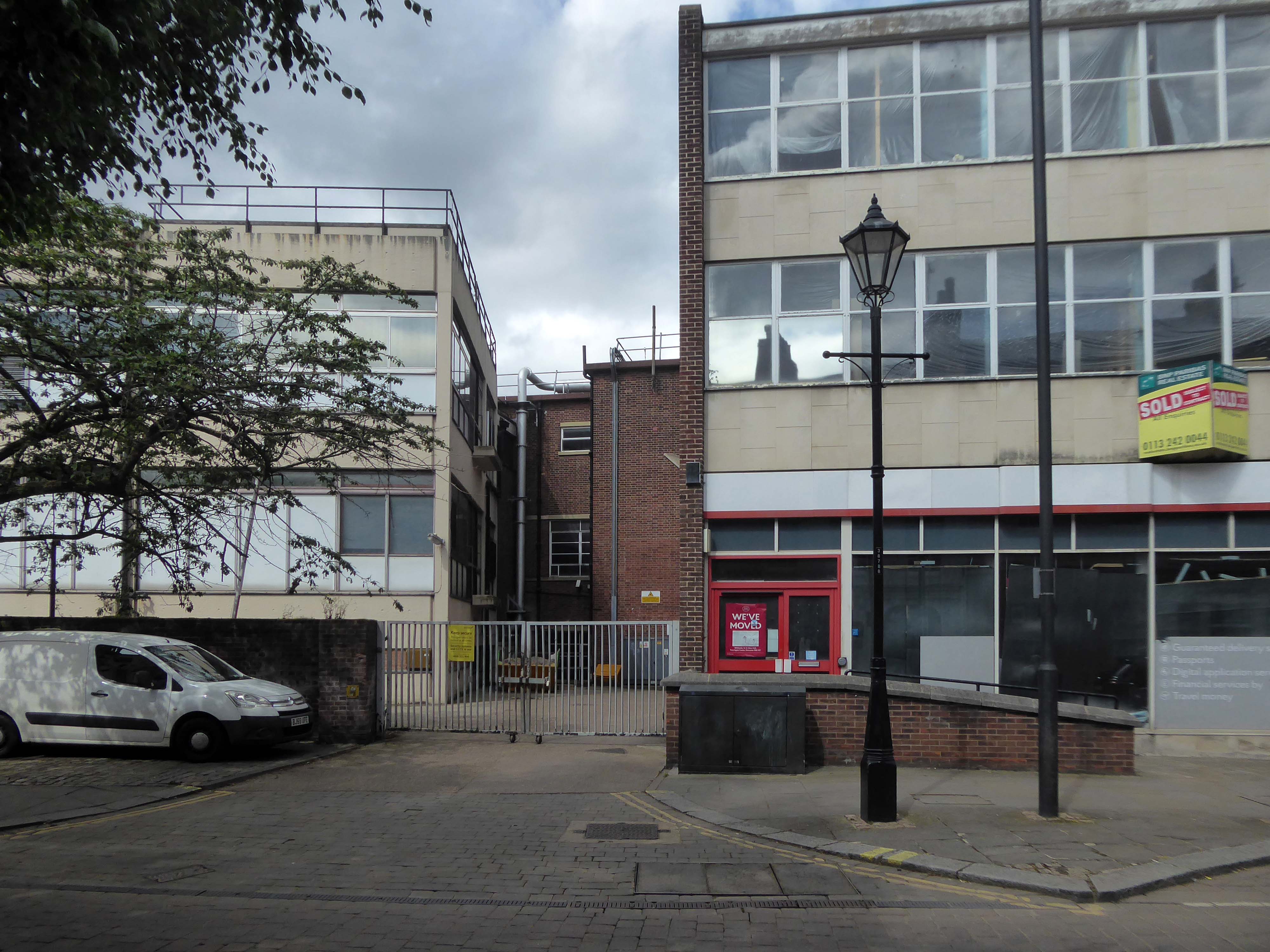
Two adjacent 60s extensions – to the right a redundant post office to the left an almost redundant telephone exchange, with the earlier brick built exchange in smack dab the middle.
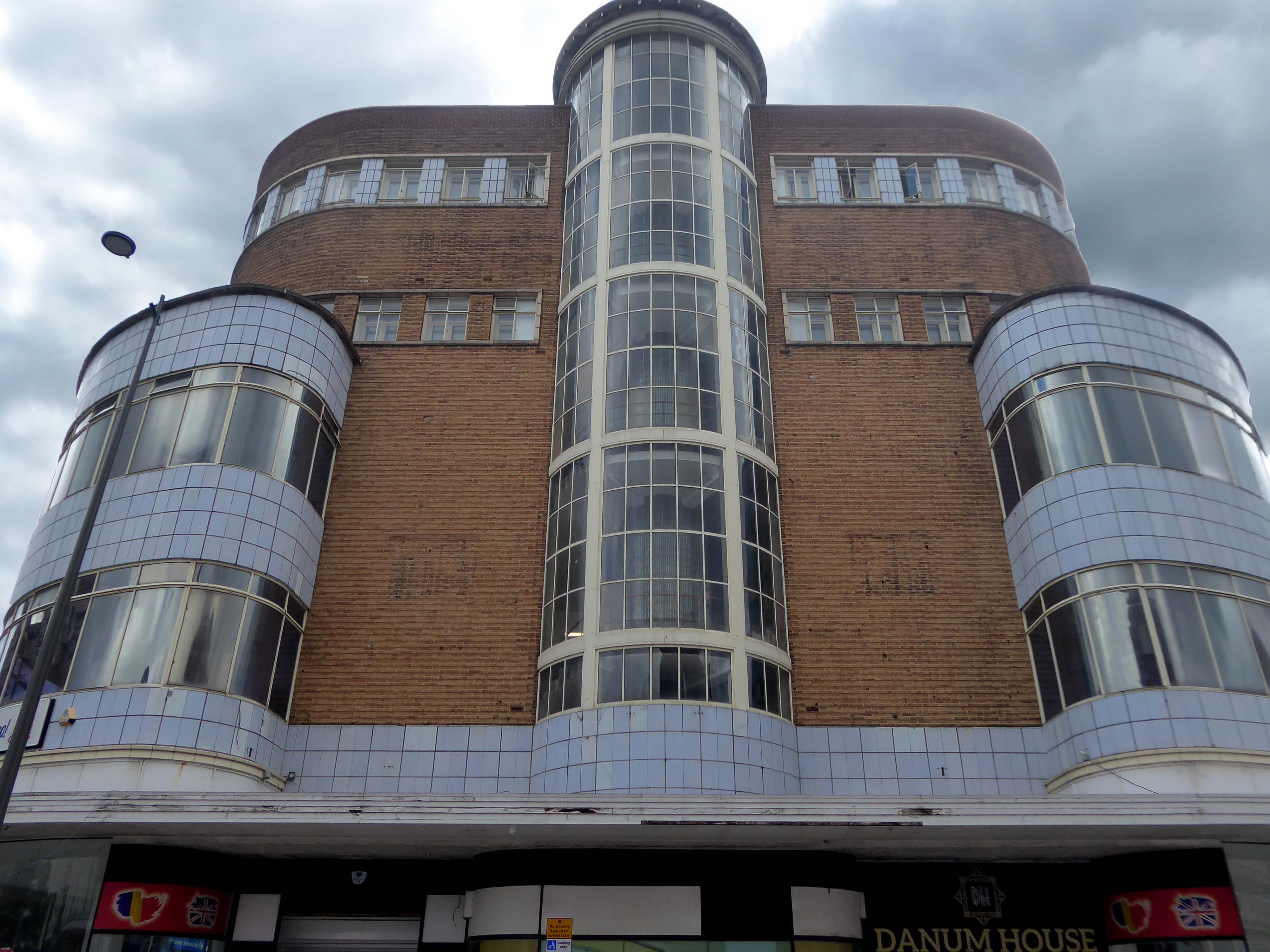
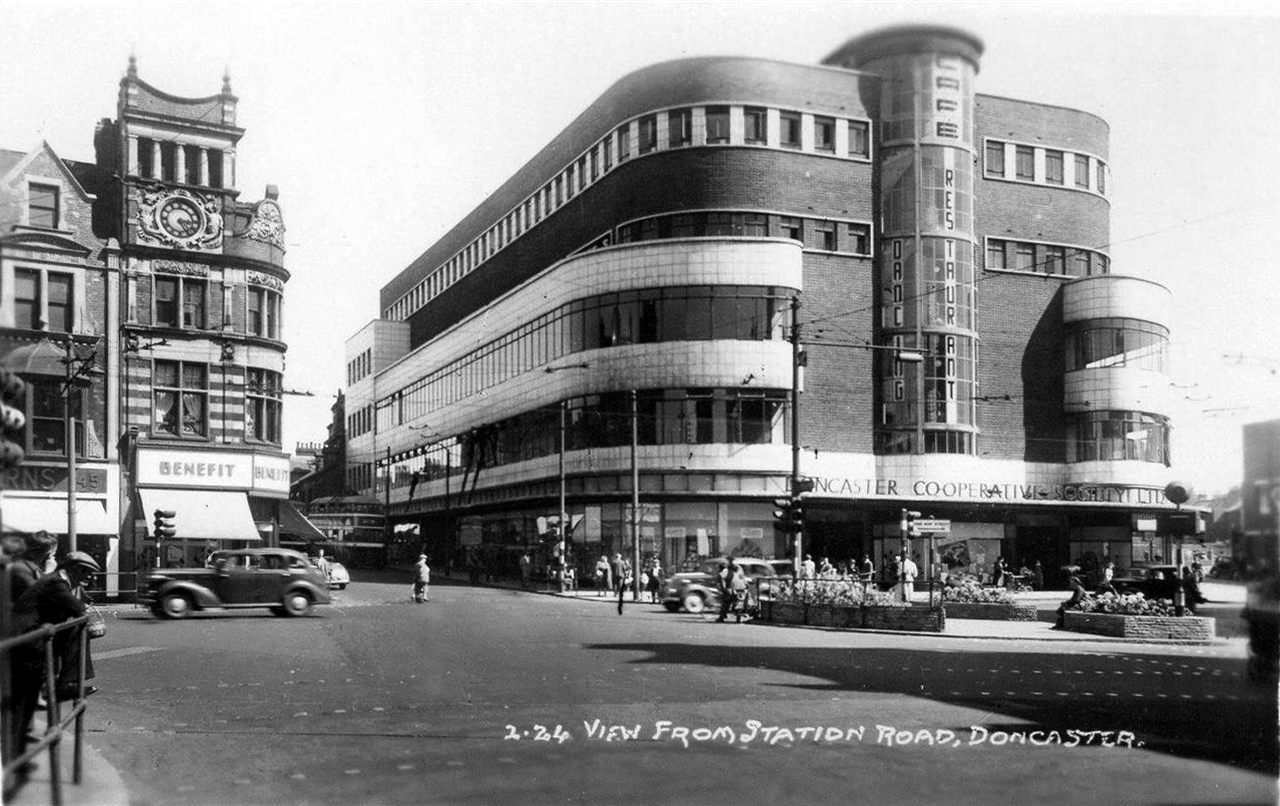
Turn another corner and it’s all at the Co-op now – the Grade II listed Danum Co-operativeBuilding, department store and offices: 1938-40 designed by T H Johnson & Son for the Doncaster Co-operative Society Ltd. 
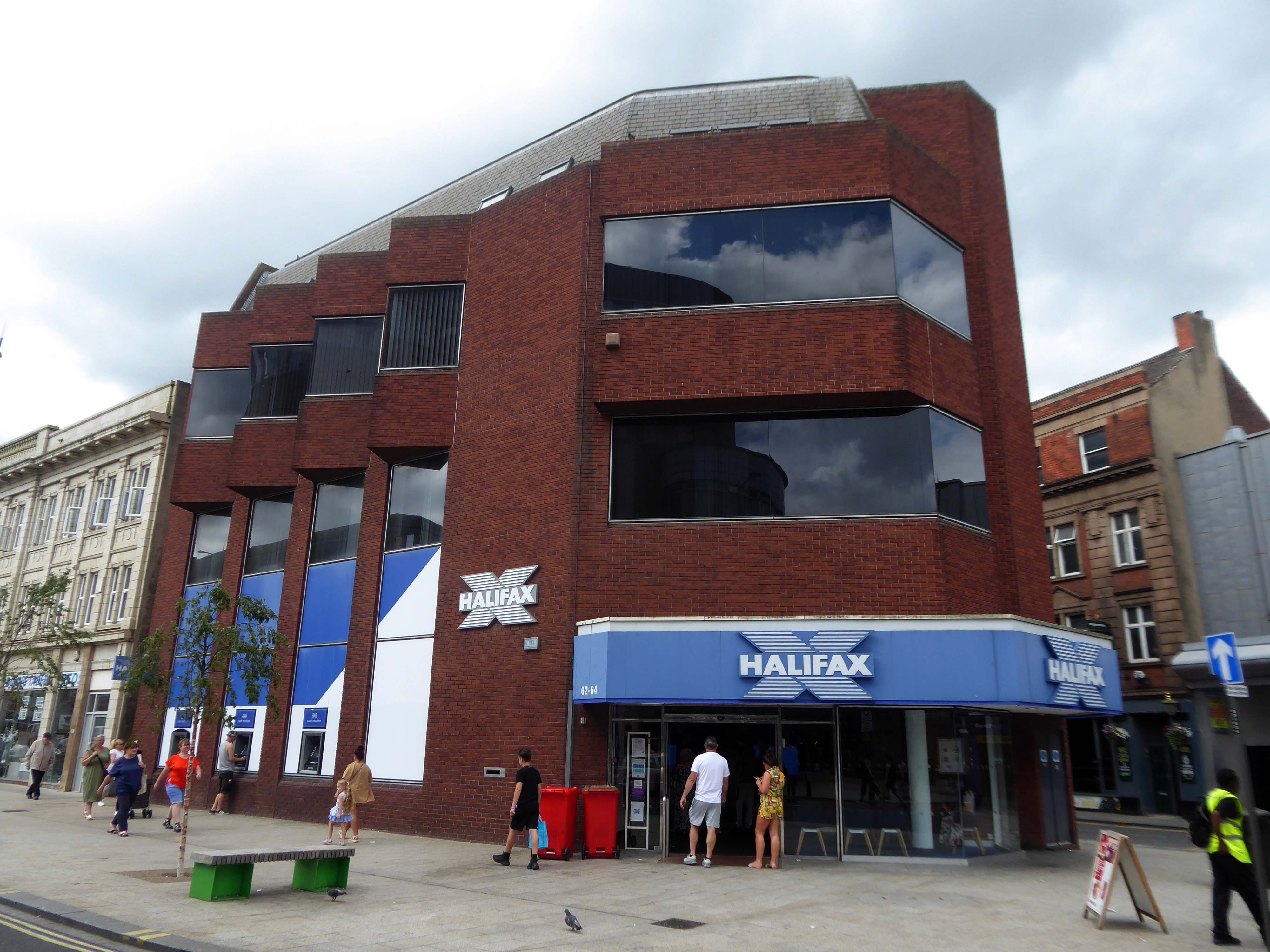
Over the road a zig-zag Halifax Building Society branch, tightly contorted by its corner footprint.
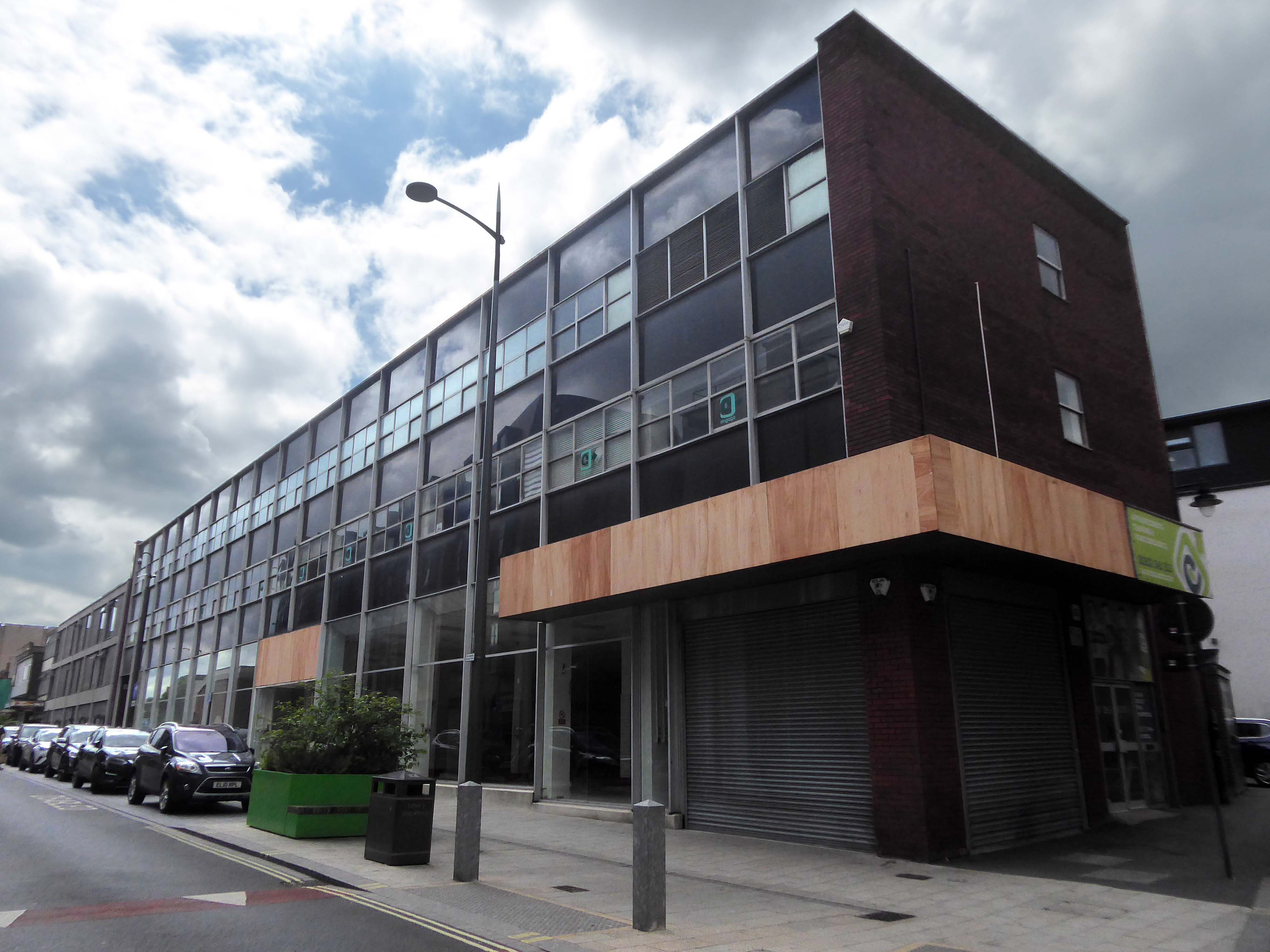
To the right of the Danum, this former Boyes store, having relocated to the Wilko site, the building is ripe for residential conversion.
To the left the Colonnades Shopping Centre a fierce angular glass and brick bunker of mixed office and retail space – the sole occupant seeming to be Home Bargains.

A £3.3m makeover of the Colonnades shopping mall in Doncaster town centre was completed in 2019.

The scheme of works was co-ordinated by Doncaster Council and funded by the Sheffield City Region Local Growth Fund.

Built in the 1980s, the brick built building received a major overhaul. The investment saw the visual appearance enhanced inside and out. The five floors were transformed into the prime office space needed in the town centre and the enhancements to the retail area were also finished.

The shift in the town’s axis to the Frenchgate and Market areas, seems to have taken the wind out of its sails.
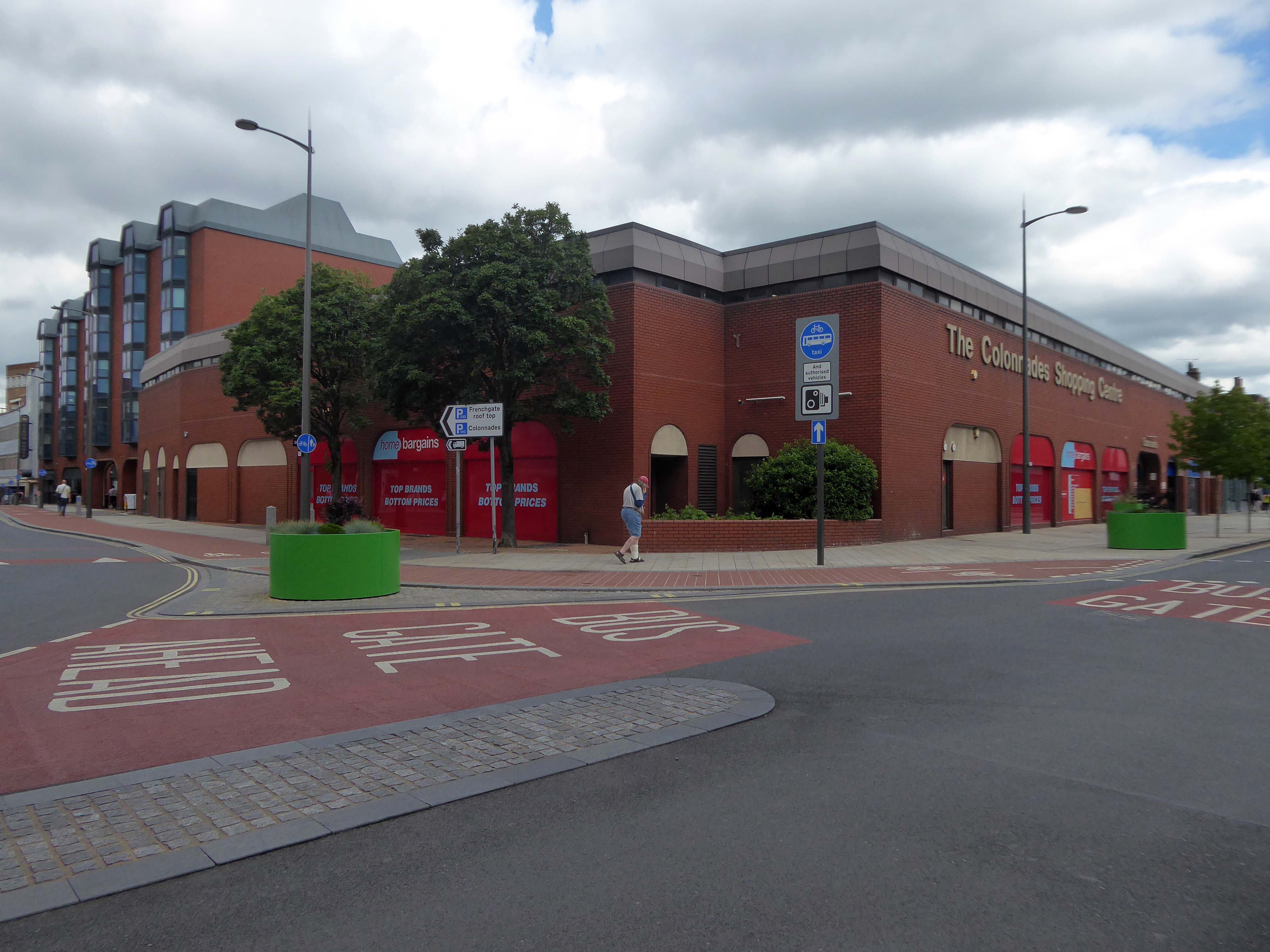
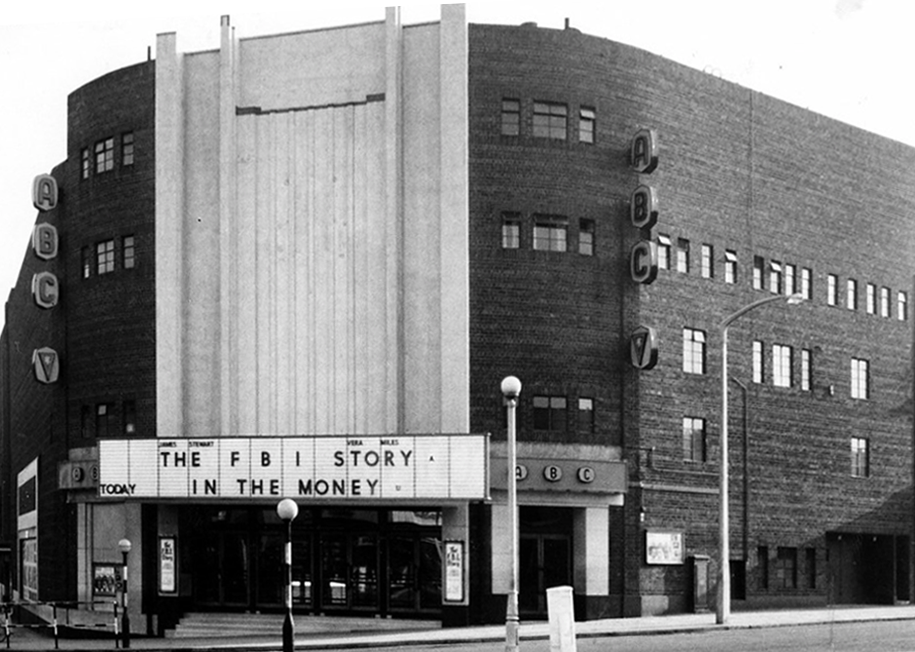
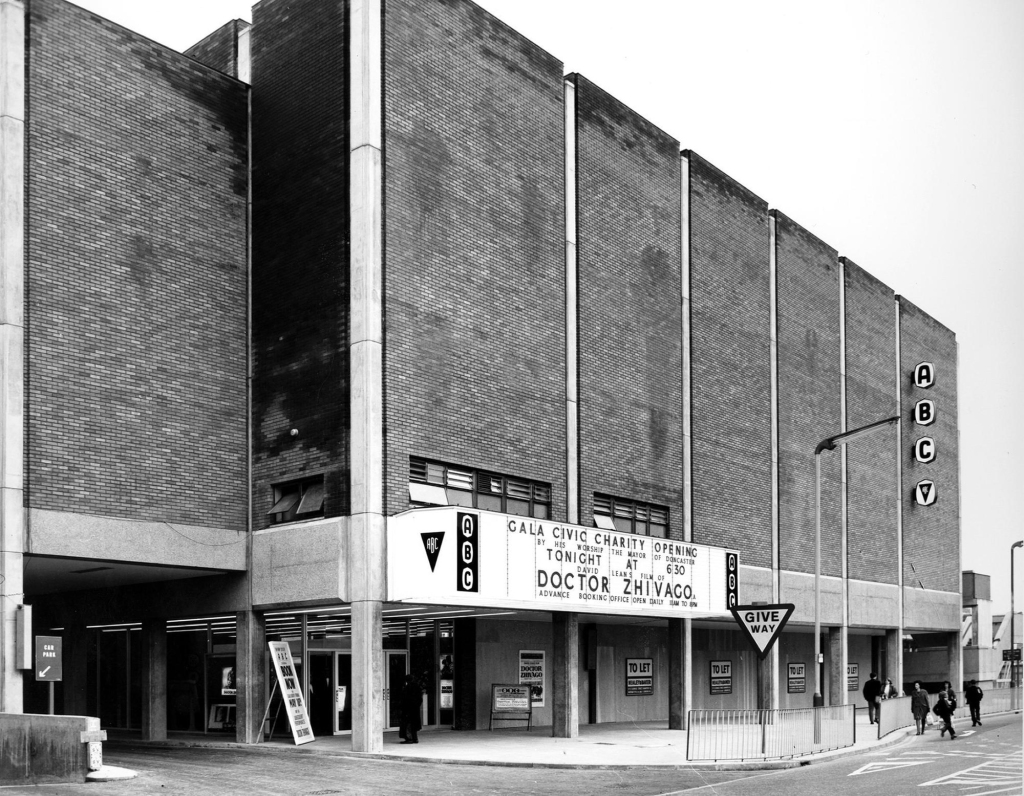
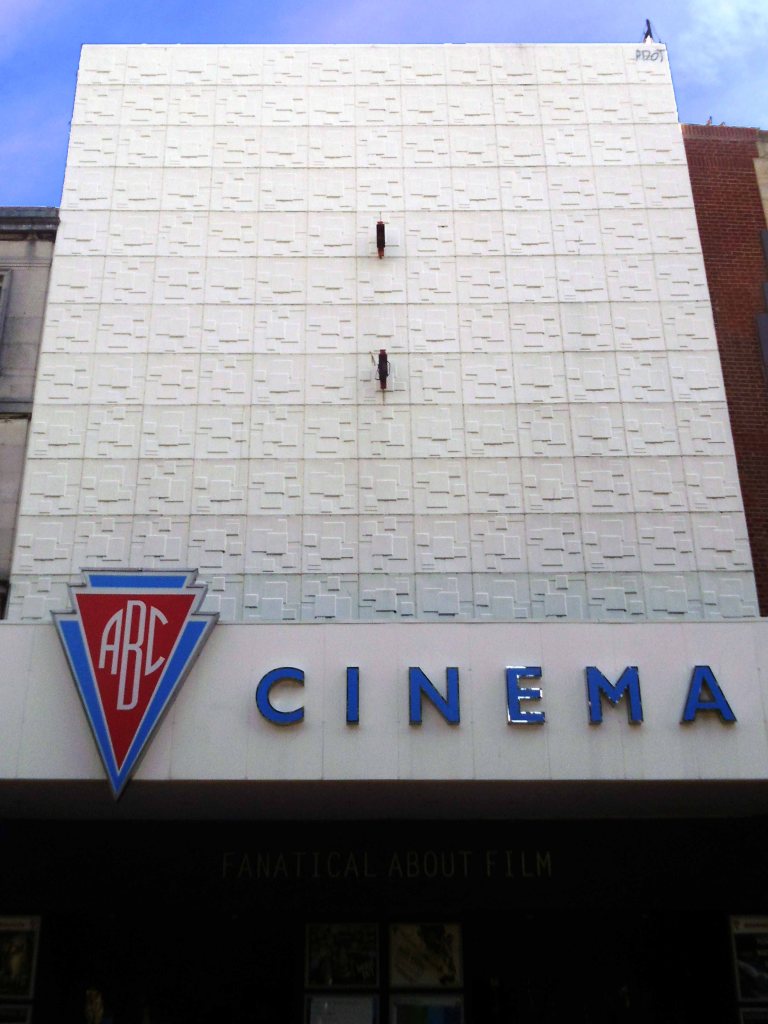
The former flicks now a redundant pale brick behemoth – no more and ABC.

Architects: C Jack Foster and Alan Morgan
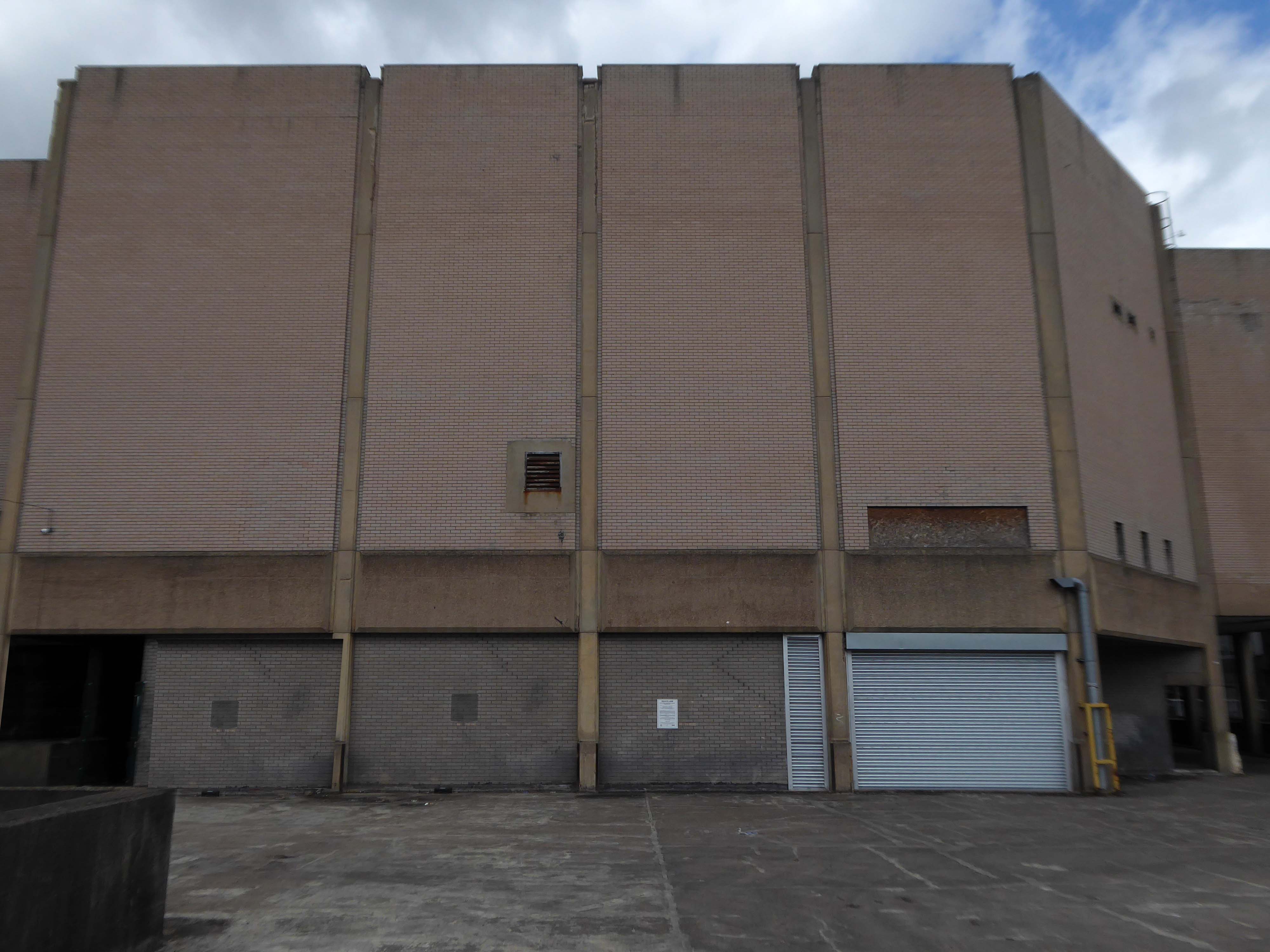
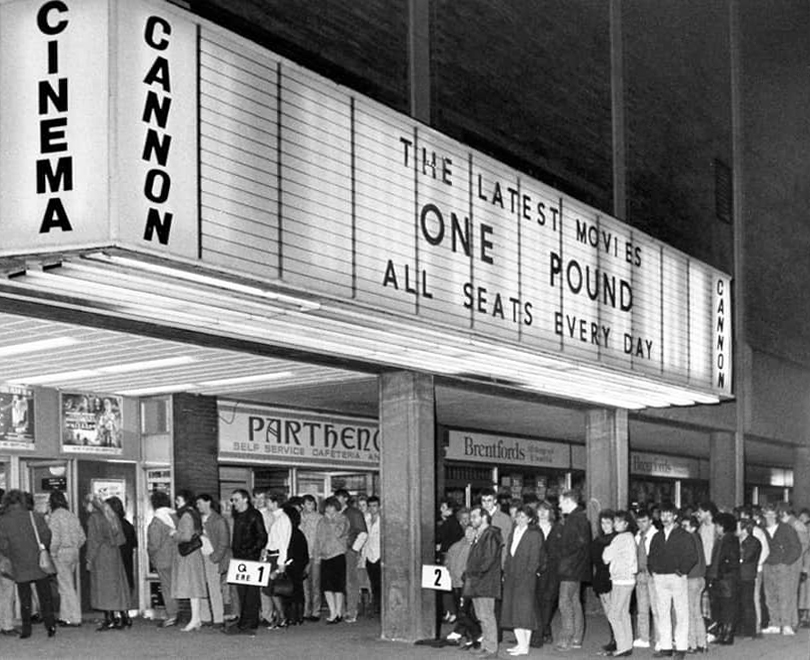
Doncaster’s new £250,000 ABC cinema, part of the Golden Acres development near the town centre, was opened on May 18th 1967.

Closed in January 1981 for conversion into a triple screen it re-opened on 9th April 1981 with seating in the three screens for 477, 201 and 135.

The Cannon Group took control in the mid-1980’s and it was re-named Cannon and it closed on 18th June 1992, screening its opening film Doctor Zhivago.

Cinema Treasures
The Golden Acres development seemed to have morphed into the Waterdale Centre.

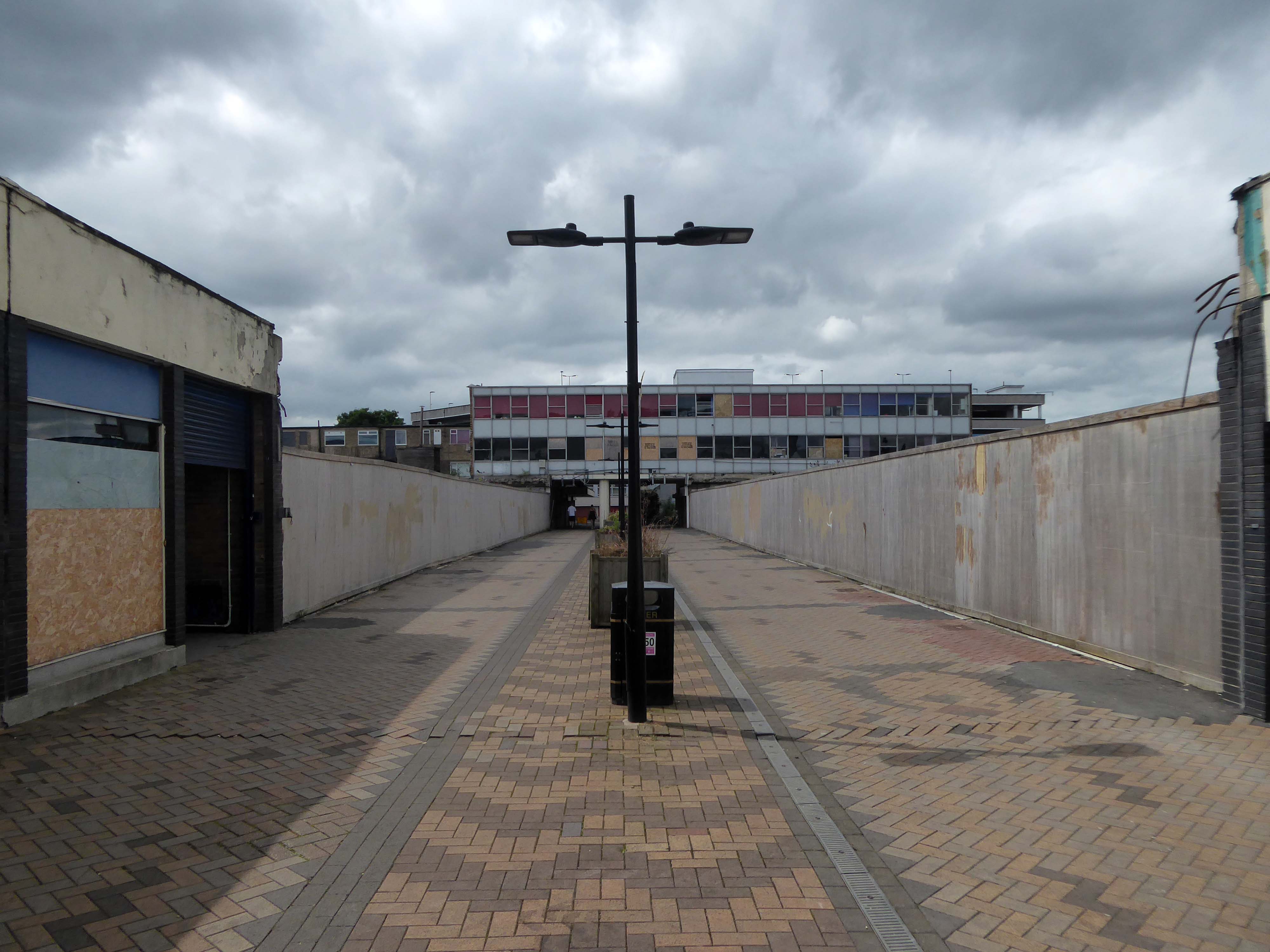
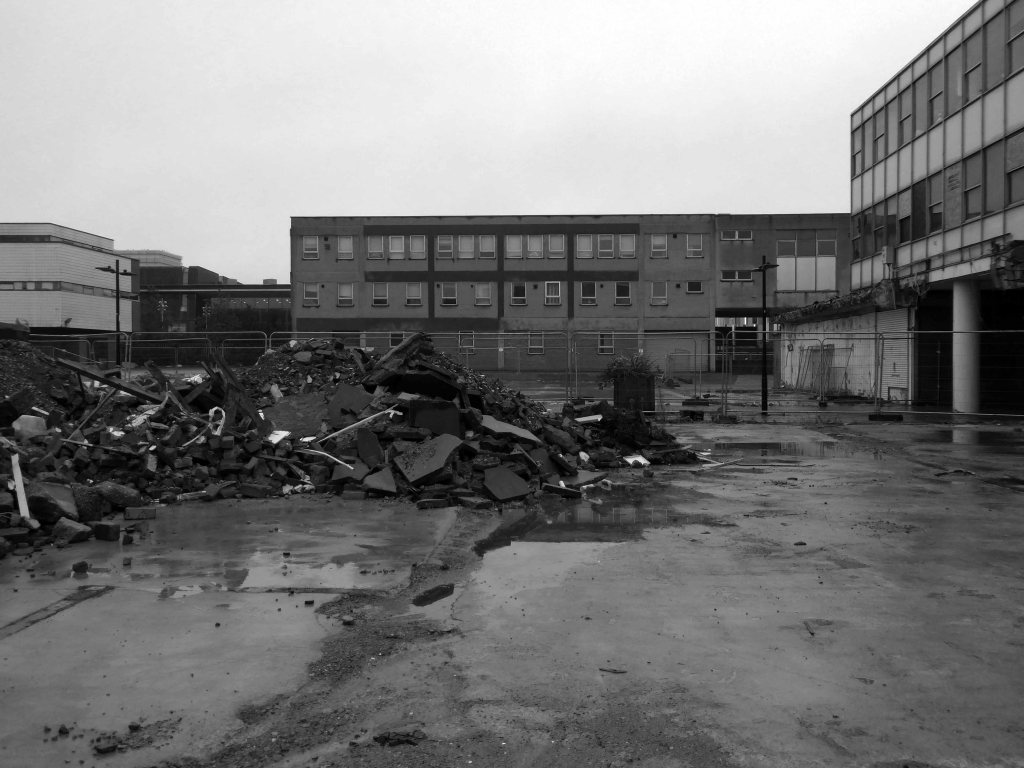
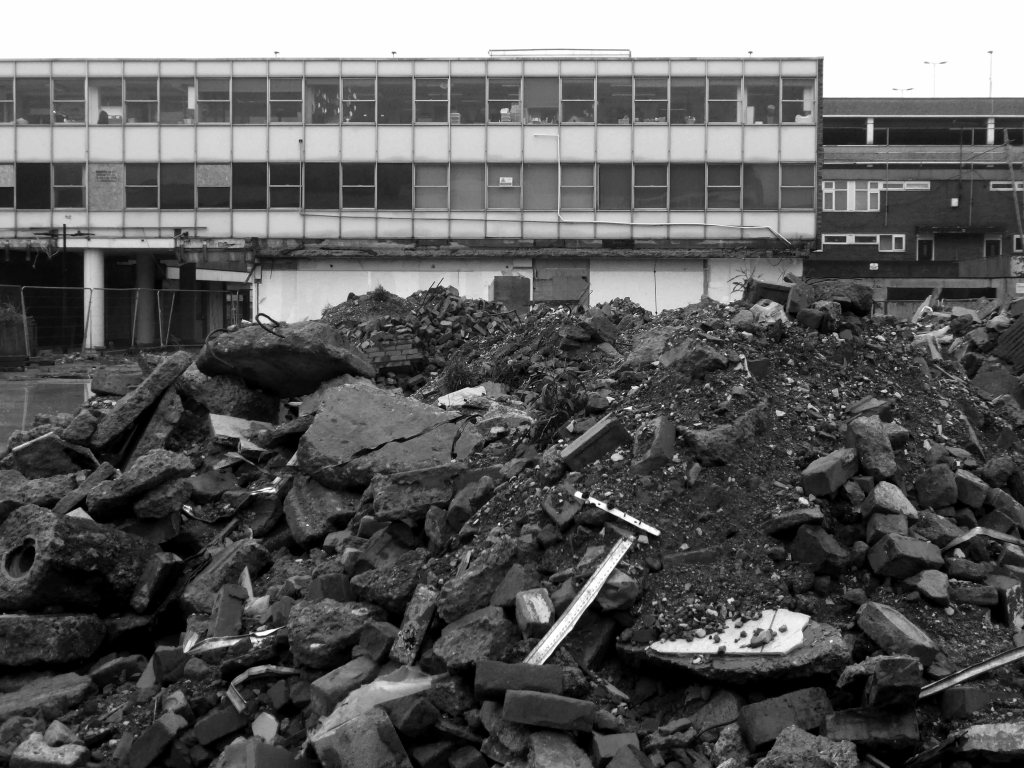
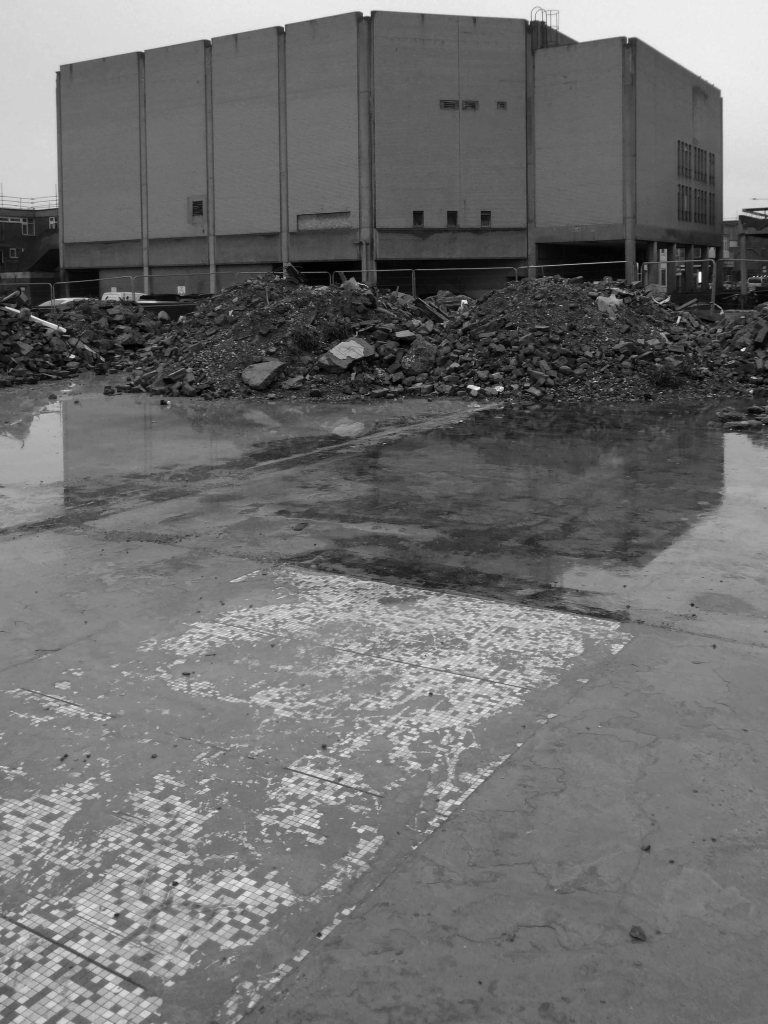
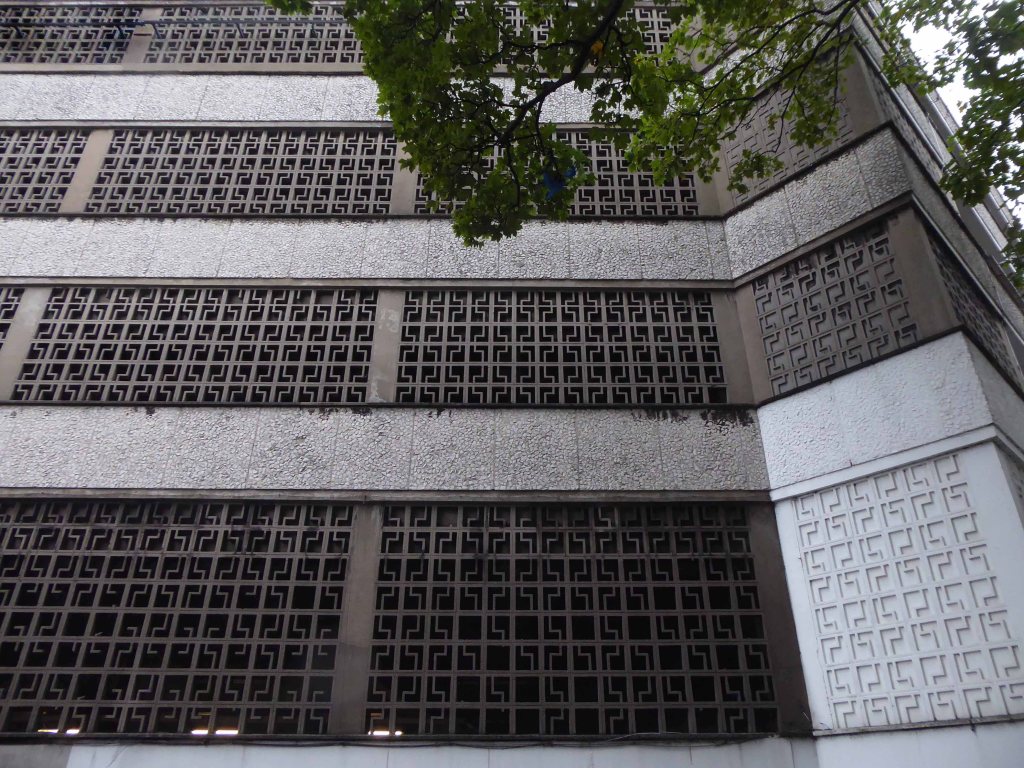
It is currently being reshaped to provide a line of desire twixt the Civic and Cultural areas, from the town centre. There are still the remnants of homes, shops and a pub amongst the demolition – almost inevitably there is new paving.

Waterdale is a well-known part of Doncaster’s town centre. During its heyday it was a bustling area with people flocking to shops and the like – it was a place you had to visit while you were in town. However, it had suffered a steady decline which continued when the southern bus station closed – Frenchgate Interchange opening, and Doncaster College moved to the Hub at the Waterfront. With limited public transport entering the area and no student population on its doorstep, less people had reason to pass through.
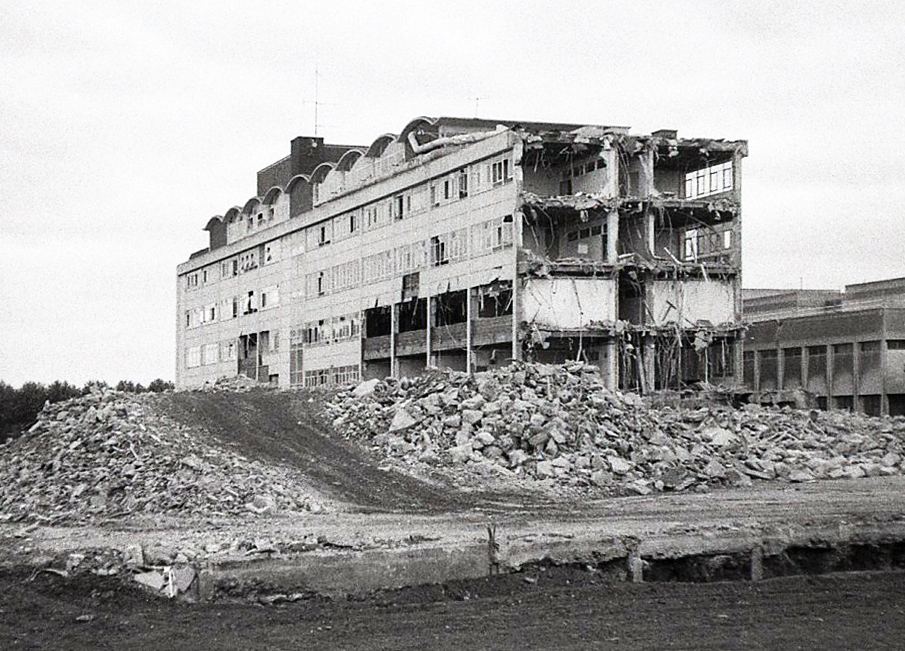
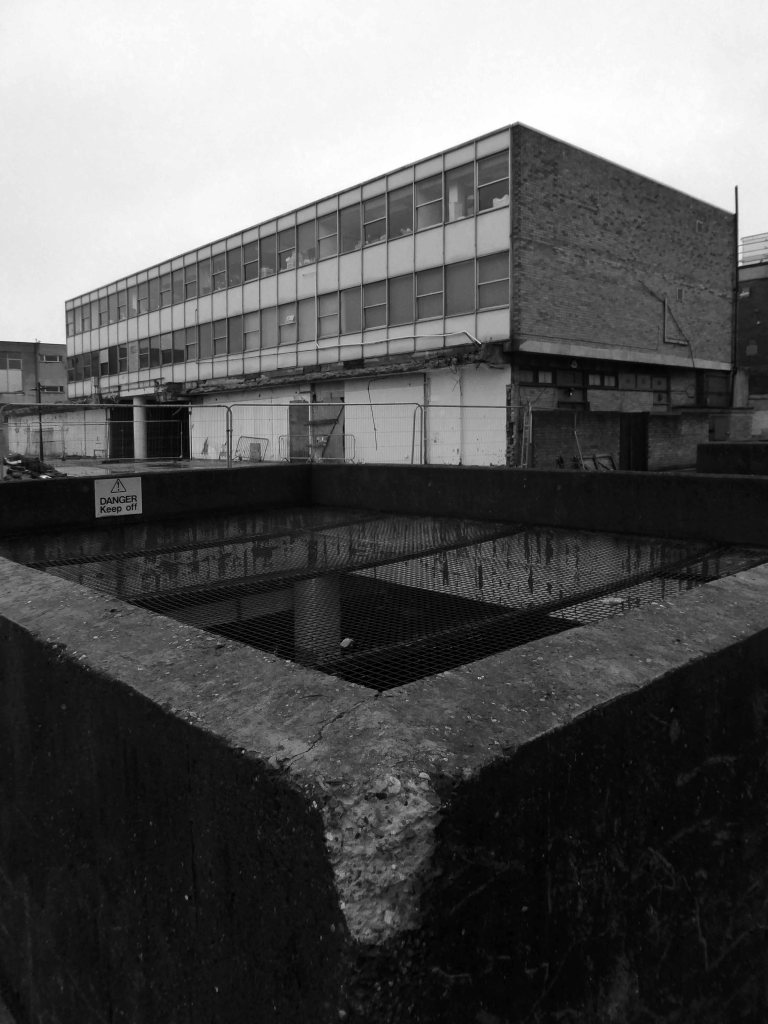
Demolition of the College.

The Civic and Cultural Quarter is transforming Waterdale reconnecting it to the town centre. The quality and content of the plans is raising the profile of this part of town to new levels. The carefully thought out layout and consistent building design is giving the area a clear identity. It is already becoming a big attraction that draws people in and encourages redevelopment in the neighbouring areas.

Doncaster Gov

The relocated Lovers are still in love.
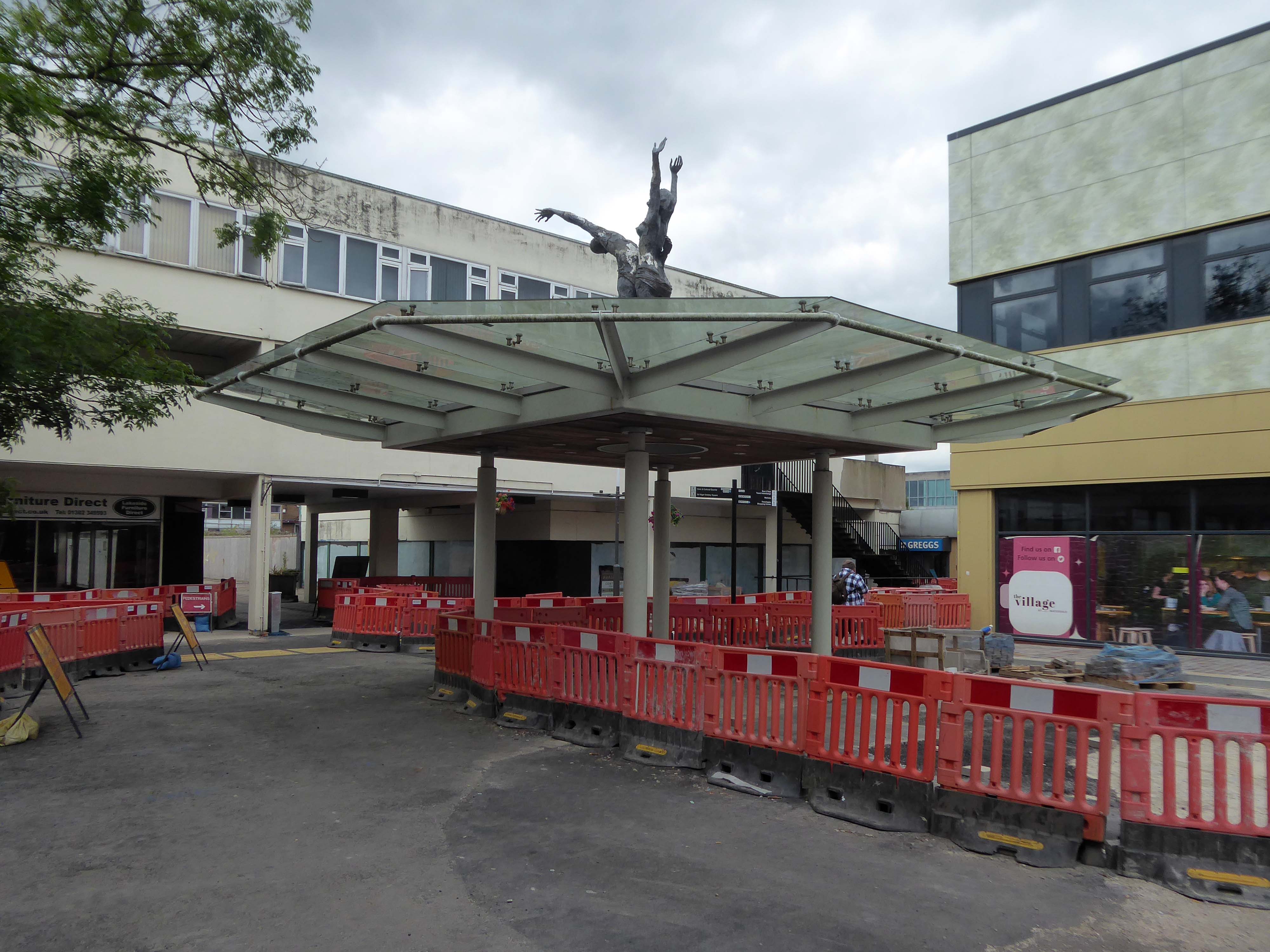
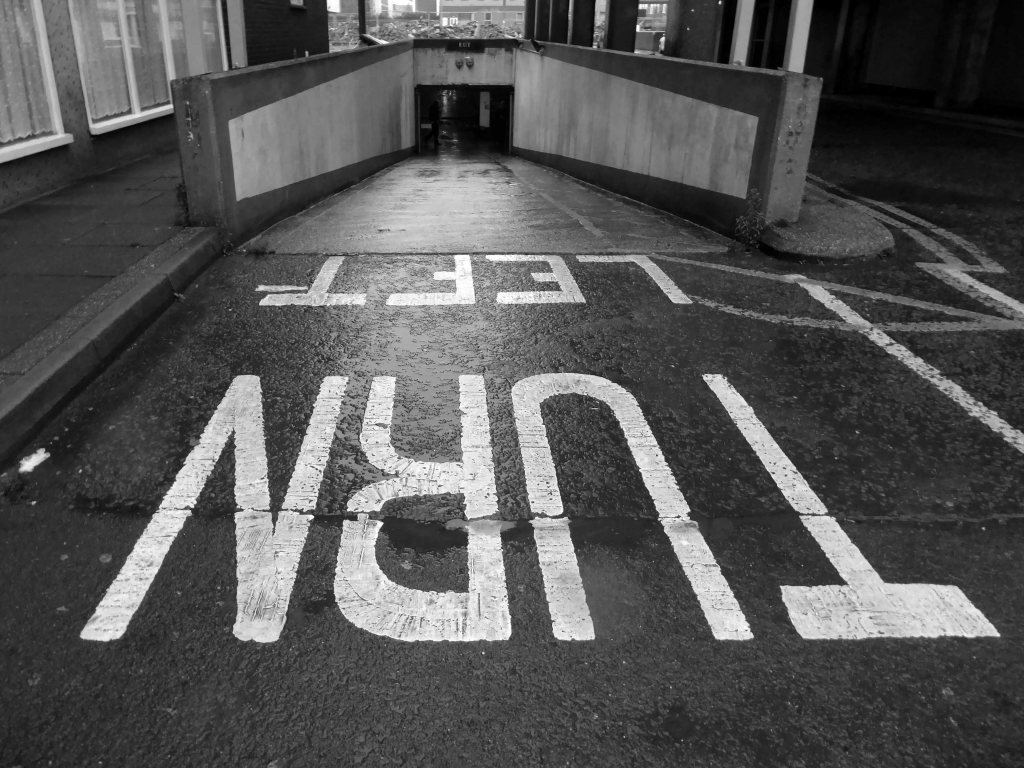
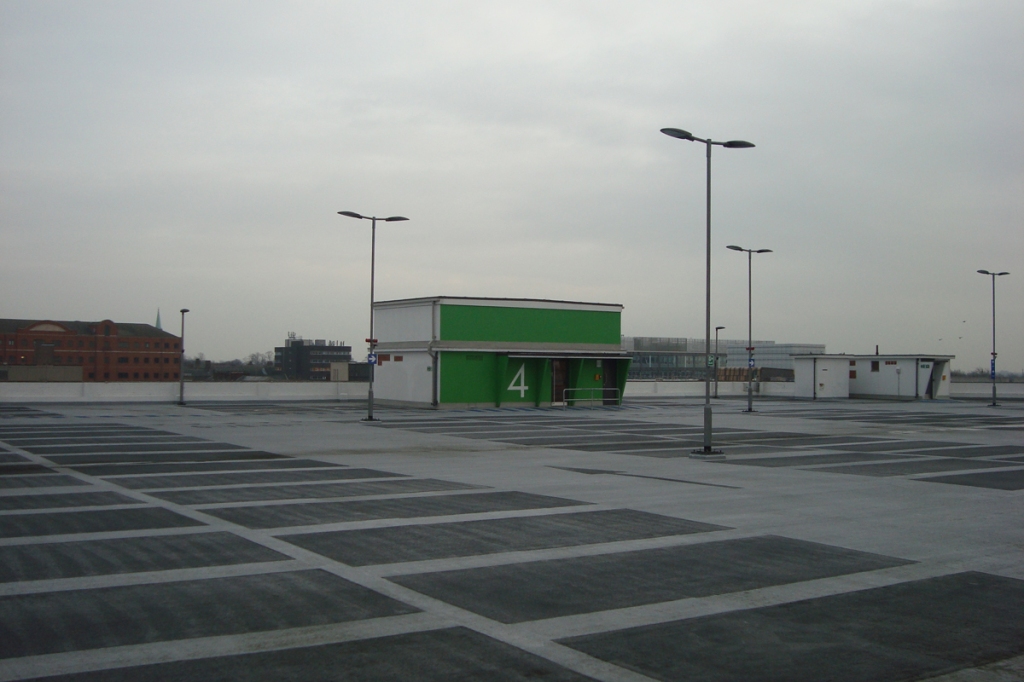
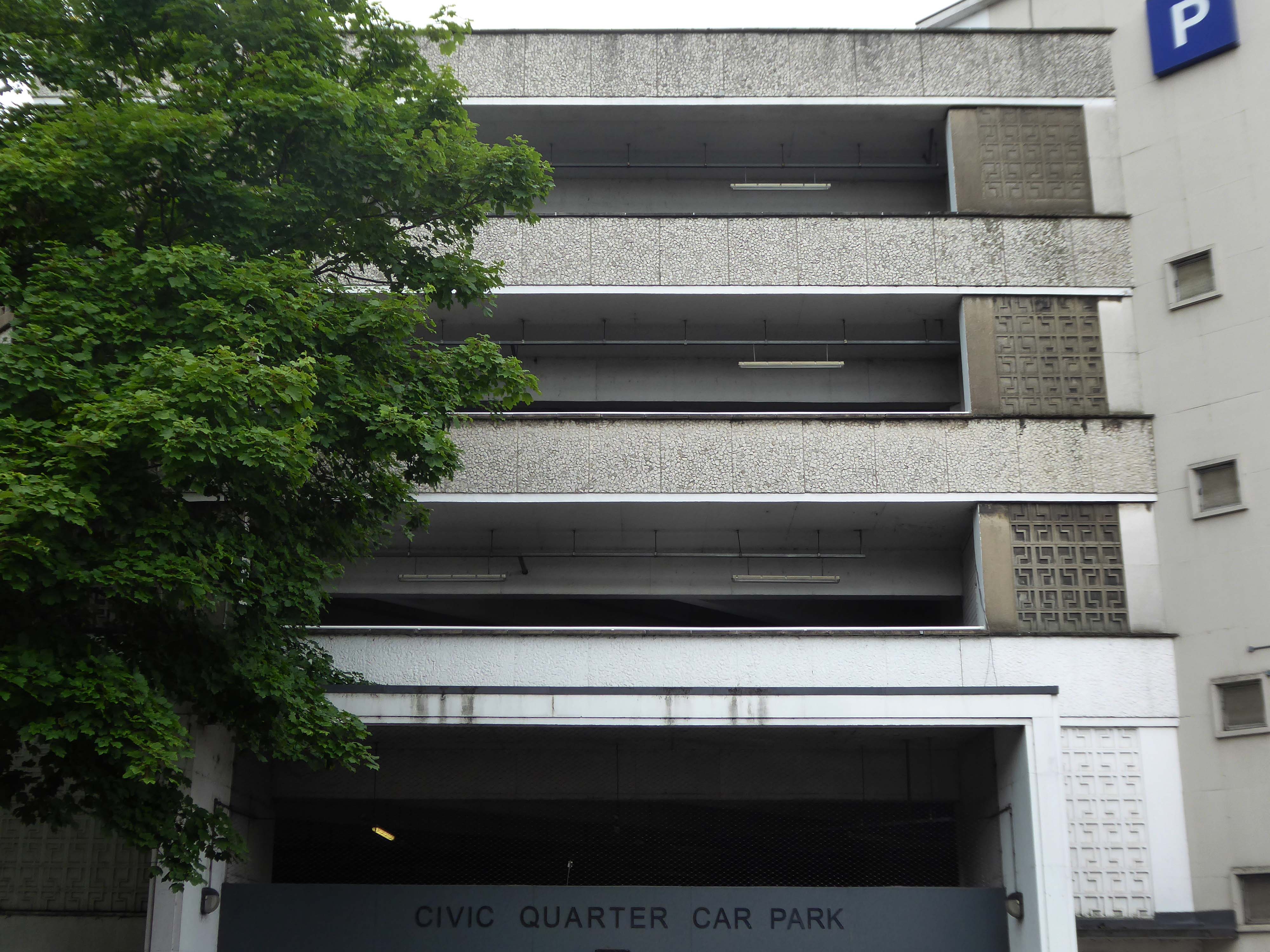
The weary walker is diverted toward the Civic Quarter Car Park.
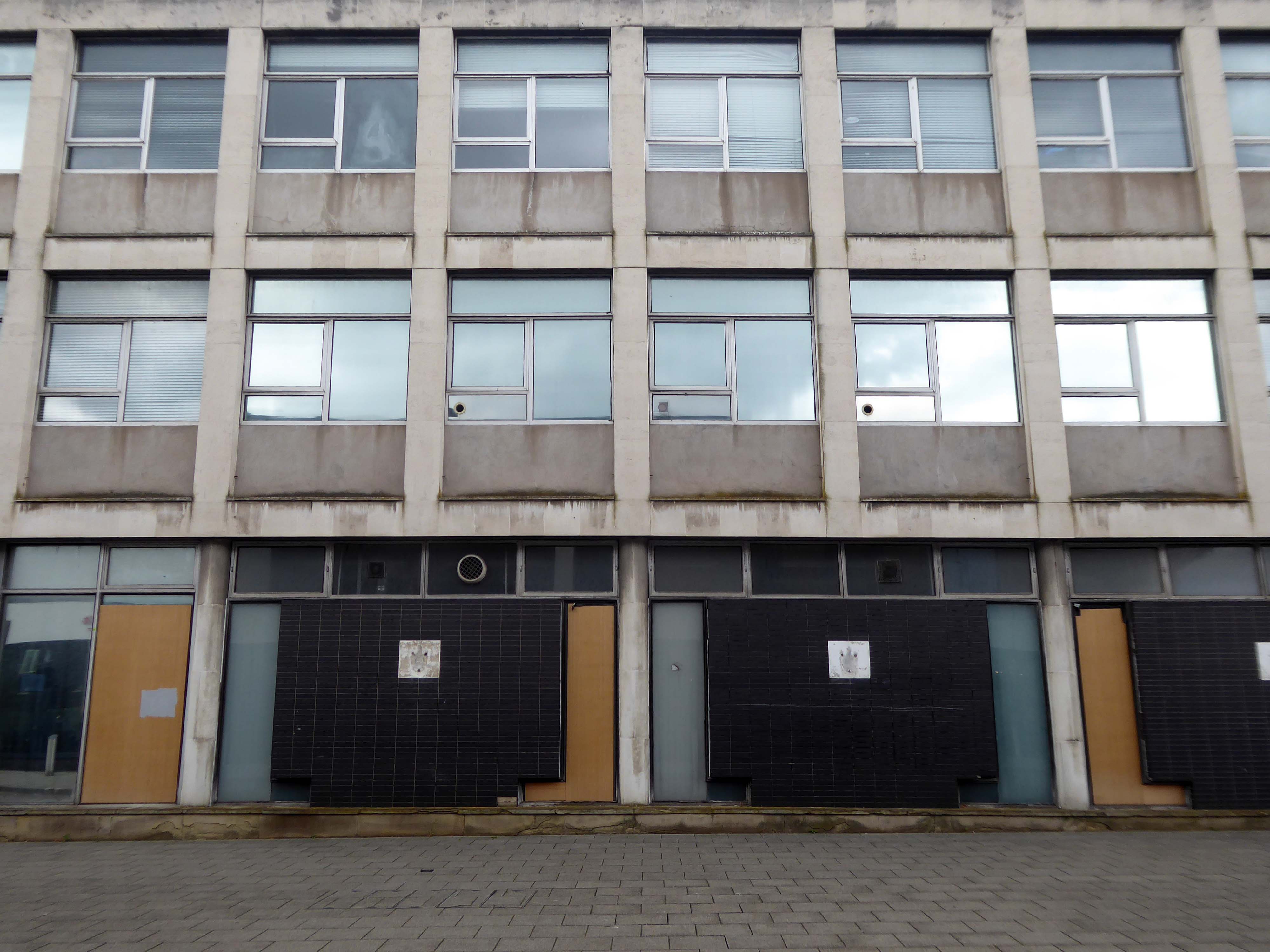
The former Civic Offices are to be demolished.
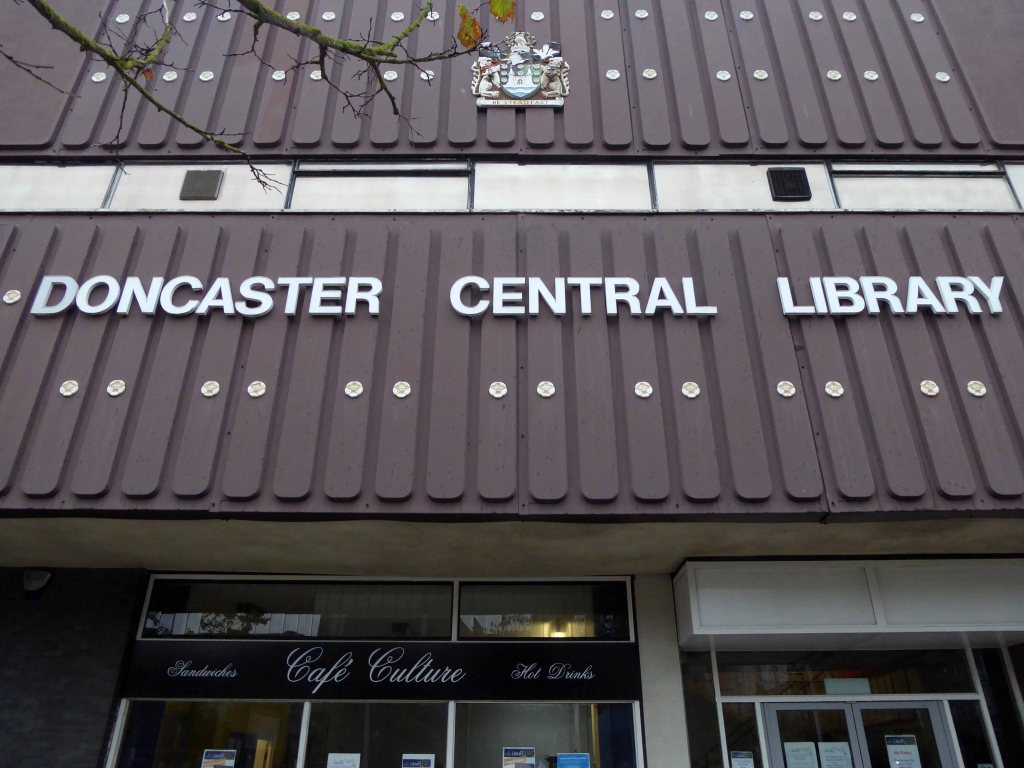
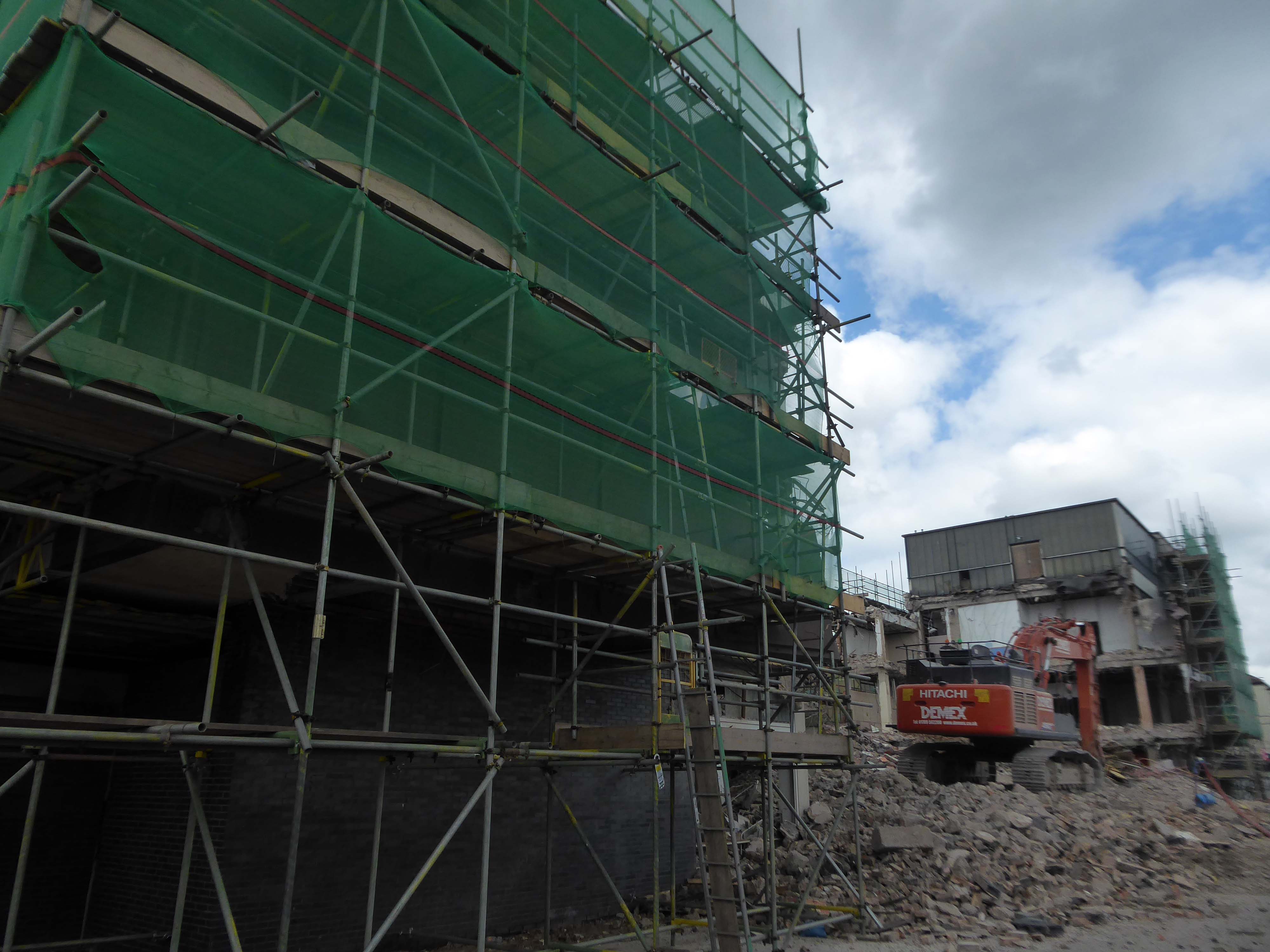
Demolition of the Central Library is well under way.
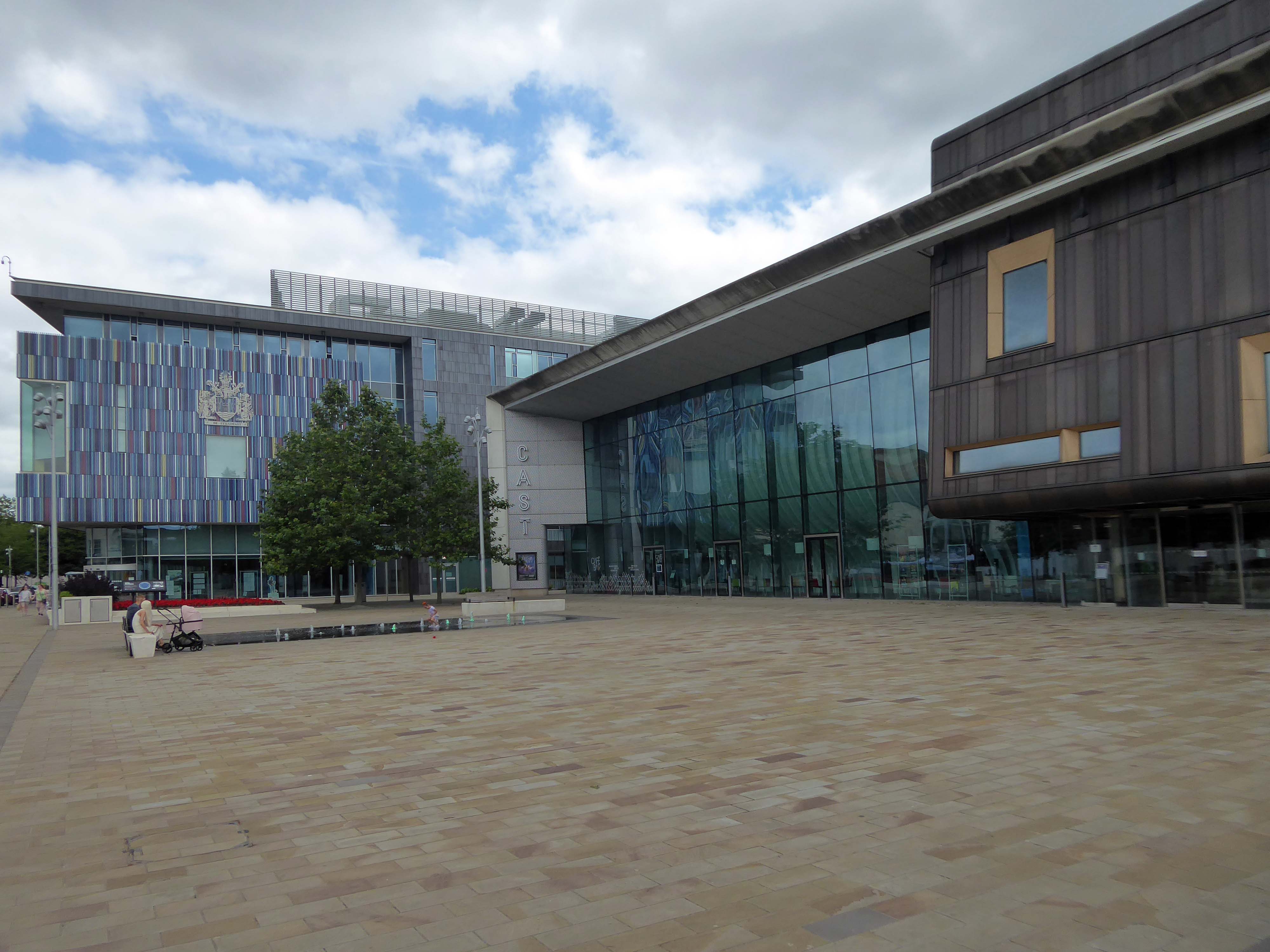
Facing the former library we find the CAST Theatre, Civic Buildings and Savoy Cinema, grouped around Sir Nigel Gresley Square.
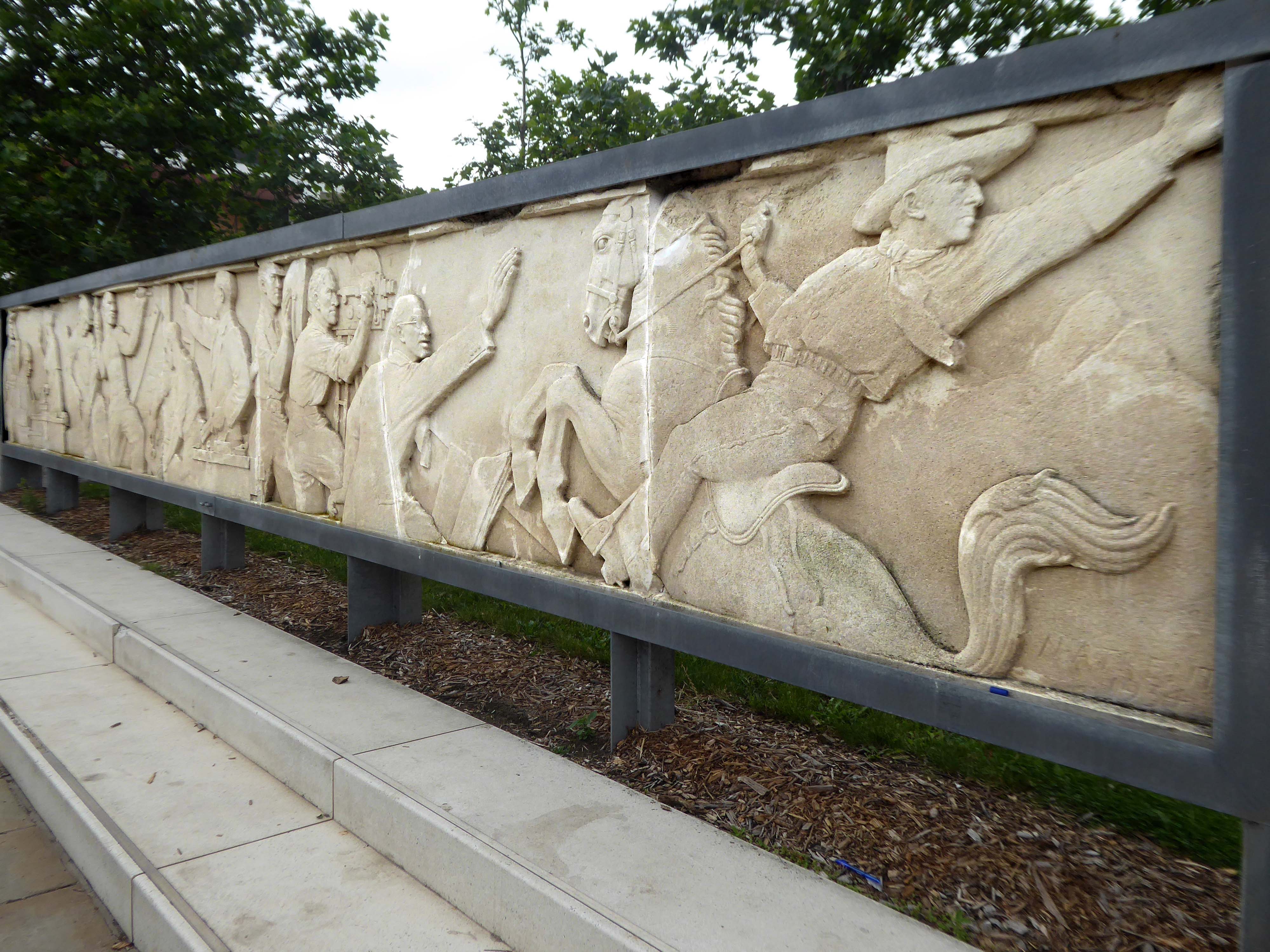
Within the square is a frieze, salvaged from the former Gaumont Cinema, the work of sculptor Newbury Abbot Trent.
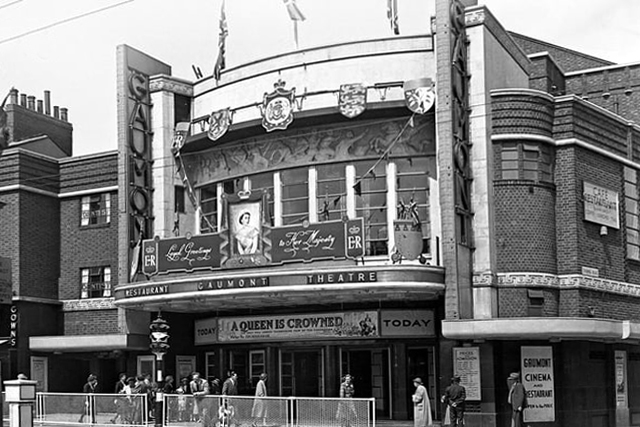
The Gaumont Palace Theatre in Hall Gate at the corner of Thorne Road, Doncaster opened on 3rd September 1934 with Jesse Matthews in Evergreen.

It was designed by architects WE Trent and W Sydney Trent.
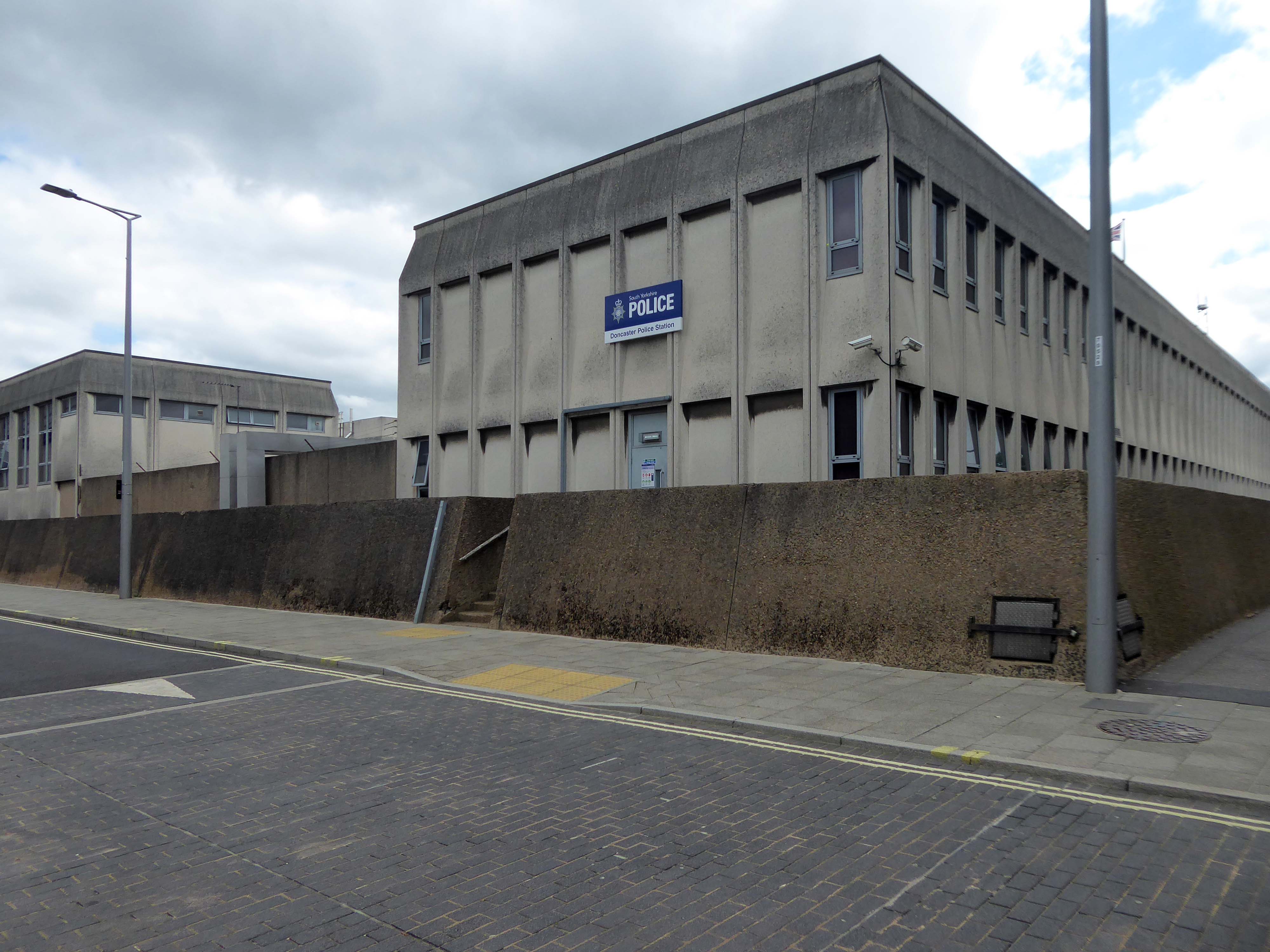
In 1949 WH Price the Borough Surveyor produced an outline plan for the area, with a green space at its heart, it was never realised. In 1955 Frederick Gibberd produced his plan to include a ten storey Town Hall, Art School, Technical College and Civic Theatre, revised and reduced in 1963 – eventually his Police Station and Law Courts were completed in 1969.
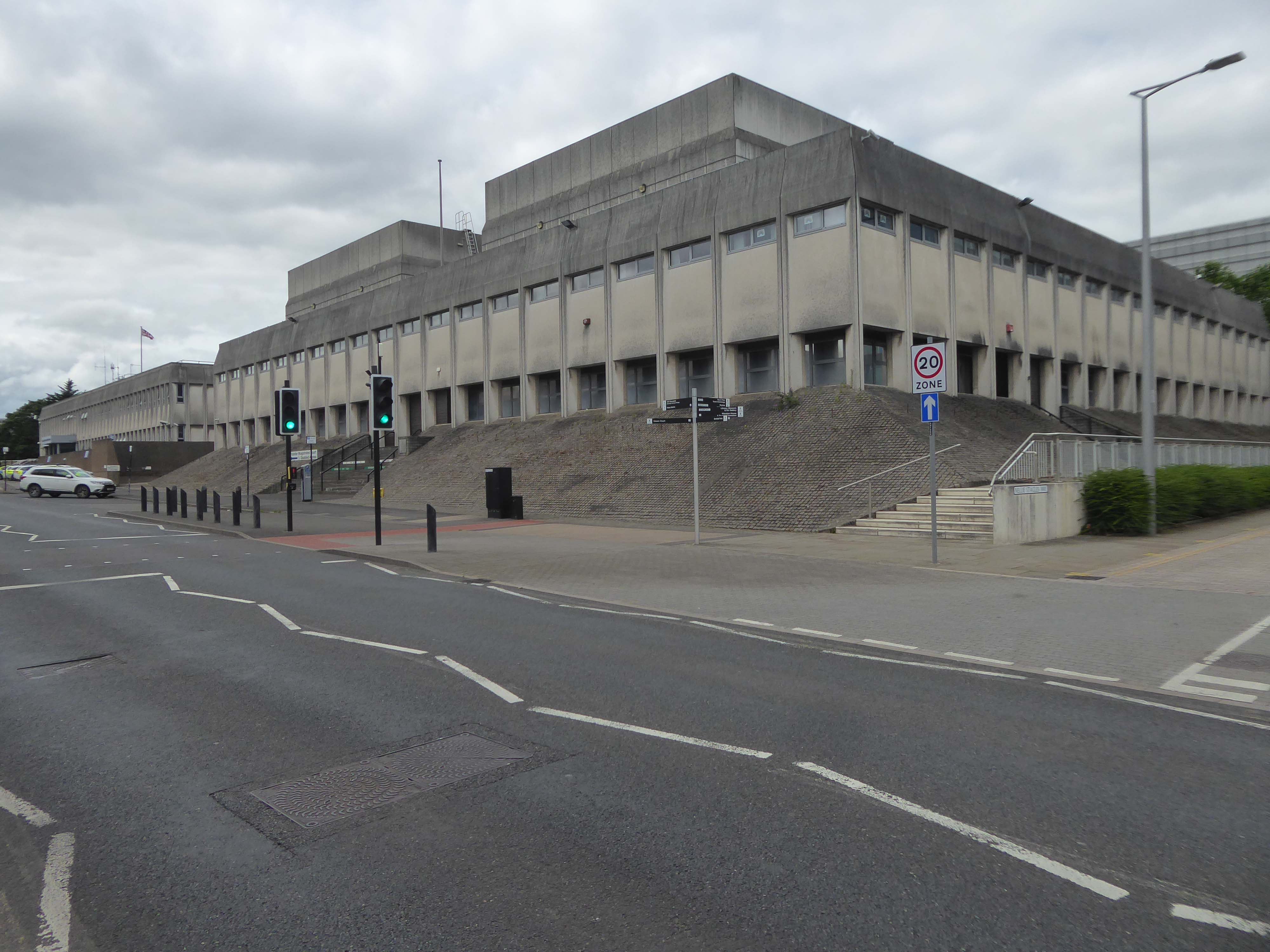
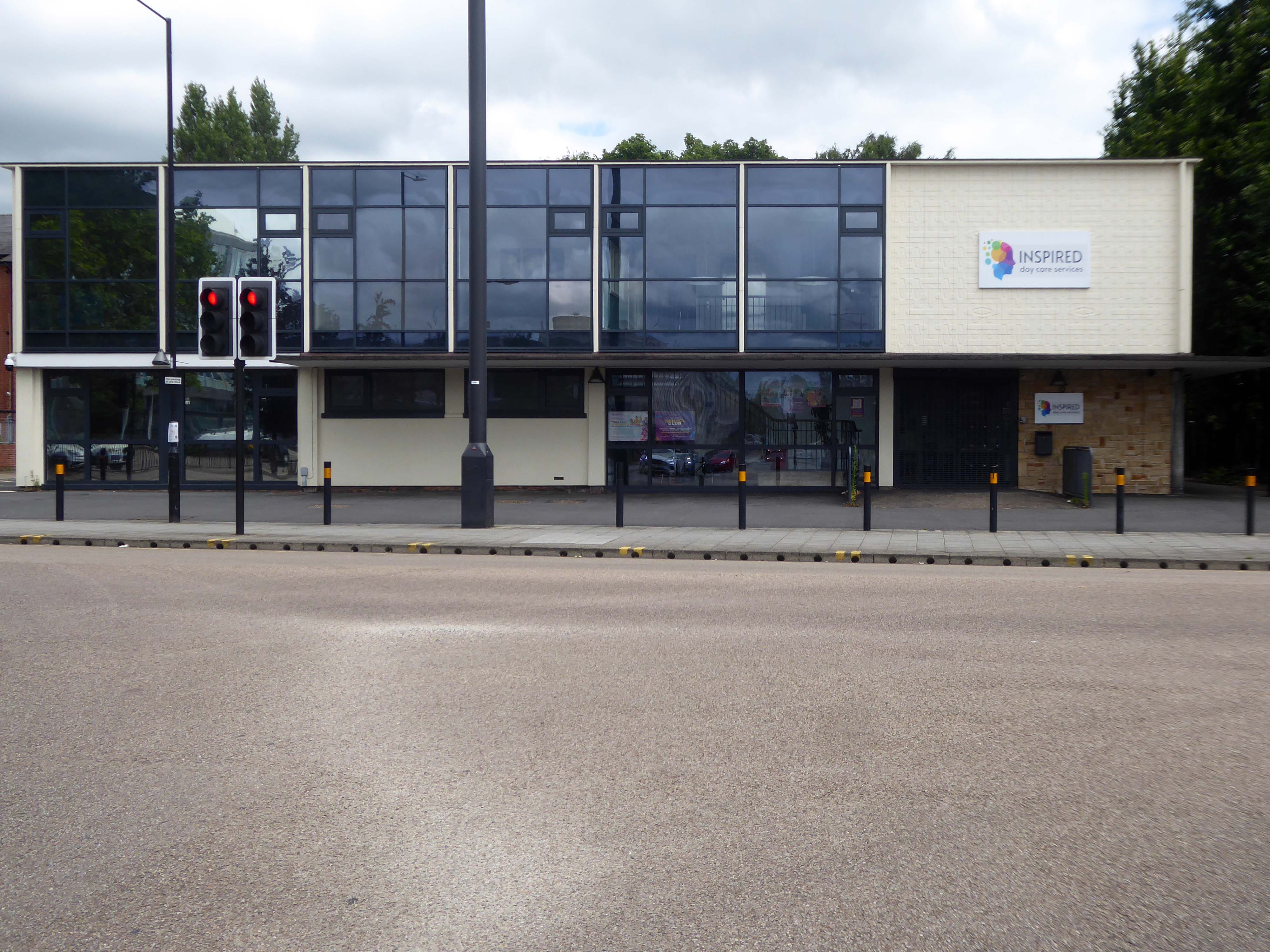
The former NHS Clinic at the ‘T Junction’ is transformed into a day care service.
The former Museum and Art Gallery now an archive and local studies centre.

The building was designed in the office of the Doncaster Borough Architect’s Department in a team led by borough architect Mr LJ Tucker. 

The ceramic designs were a later addition when it was discovered that the large open areas of glass overheated almost everything inside, the work was undertaken by LJ Tucker and family.
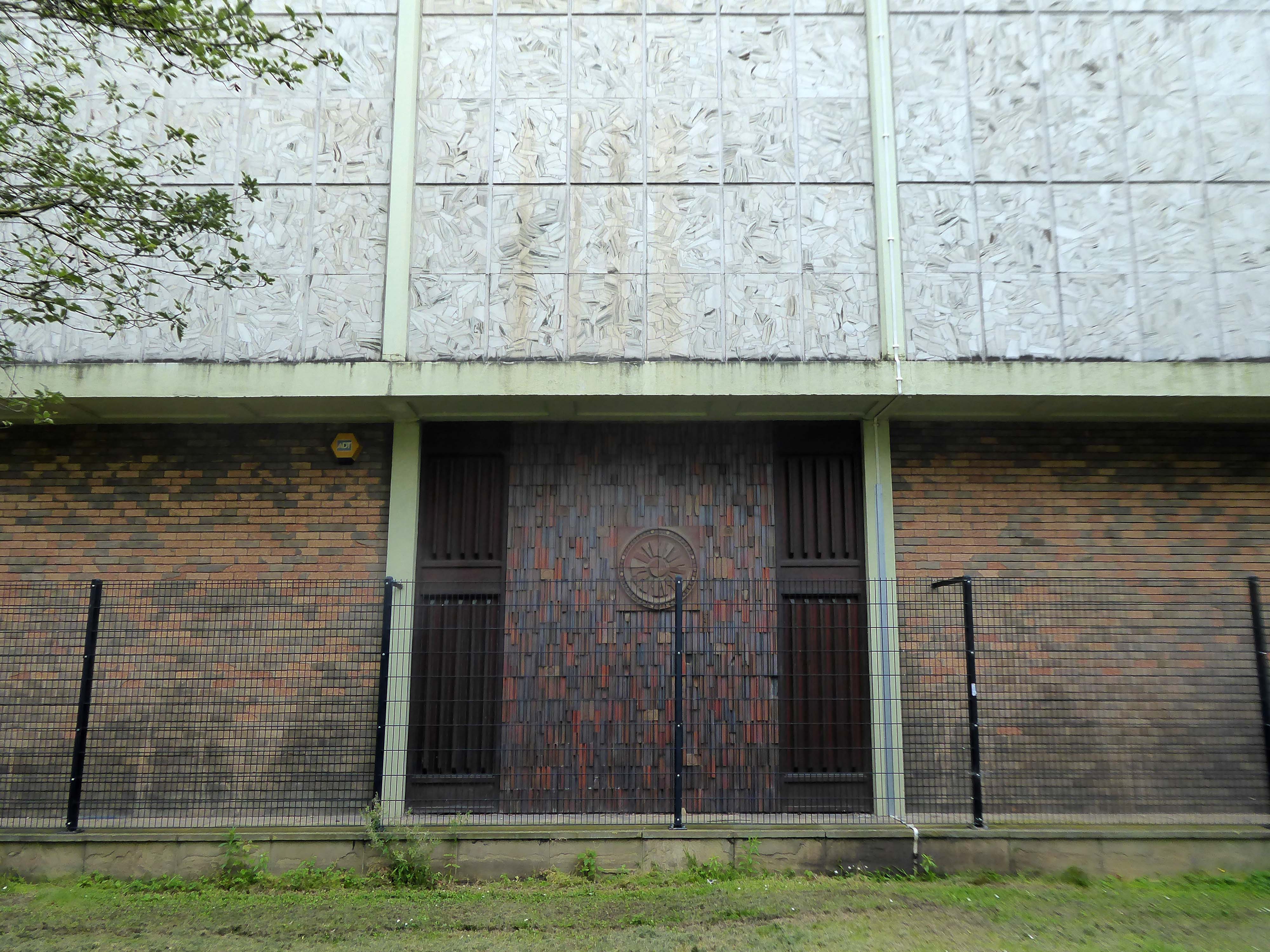
The sculptural work by Franta Belsky, now has a skip for company.
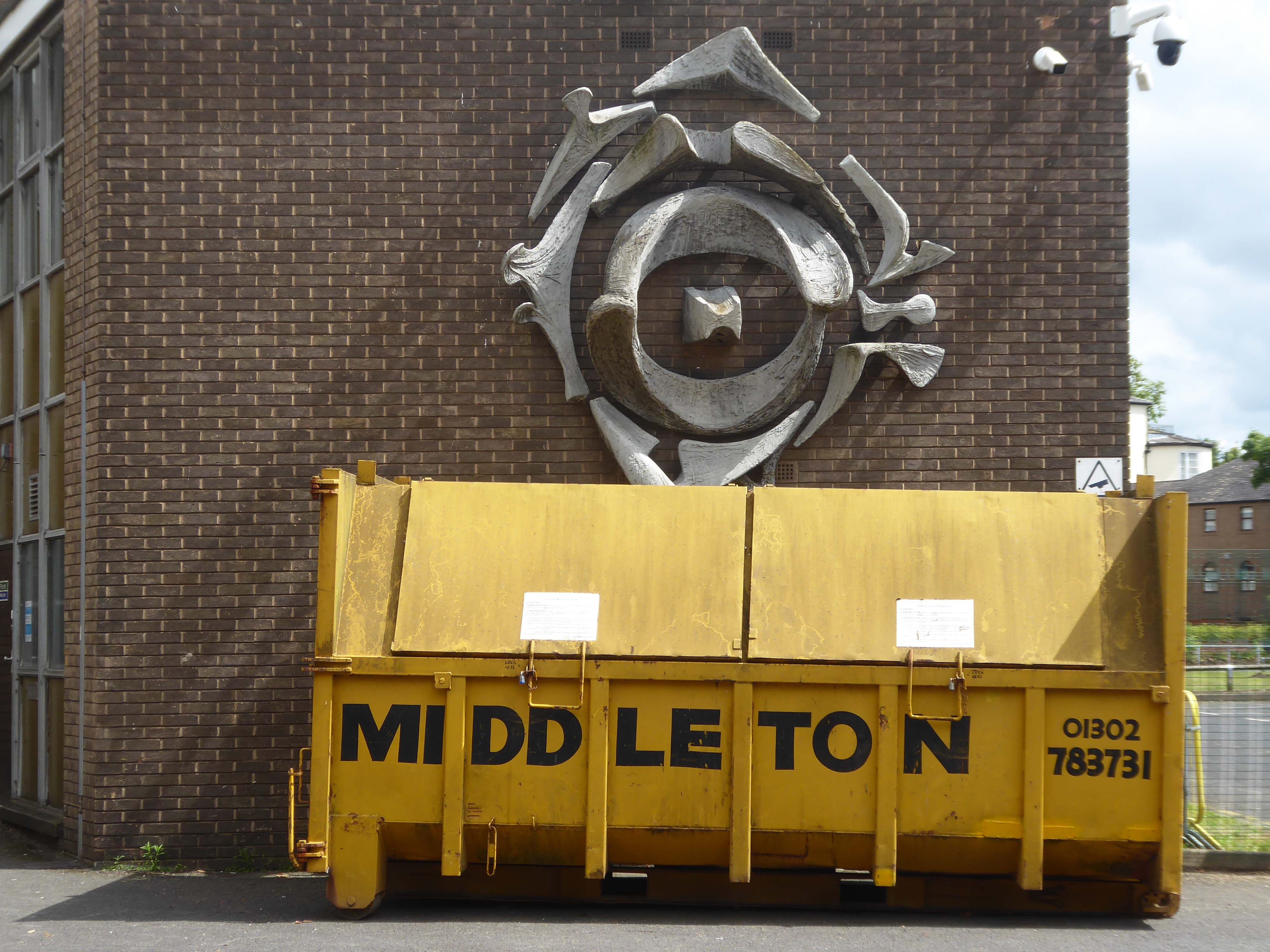
As a footnote the work by Fabio Barraclough reveals a murky past.

Barraclough was born in Madrid in 1923, to a Spanish mother and Yorkshire father who founded Madrid’s Chamber of Commerce. He moved to London with his family in the 1930s as a refugee from Francoist Spain. He taught fine art and sculpture at Rugby School, where colleagues considered him “highly entertaining, a most unorthodox and highly gifted” teacher. He established himself during the 1960s and early 1970s as an authority on sculpture, publishing in academic journals and becoming a member of the Royal British Society of Sculptors.

In 2000, it was revealed that Barraclough, while outwardly living the life of anti-apartheid activist since the 1970s, had been a paid informant of the South African state security police. The media was used to promote his image as a “brilliant, liberal artist with apparently impeccable credentials” in order to gain public trust, while he was funnelling money from anti-apartheid groups to the police. He died on 6th January 2019.
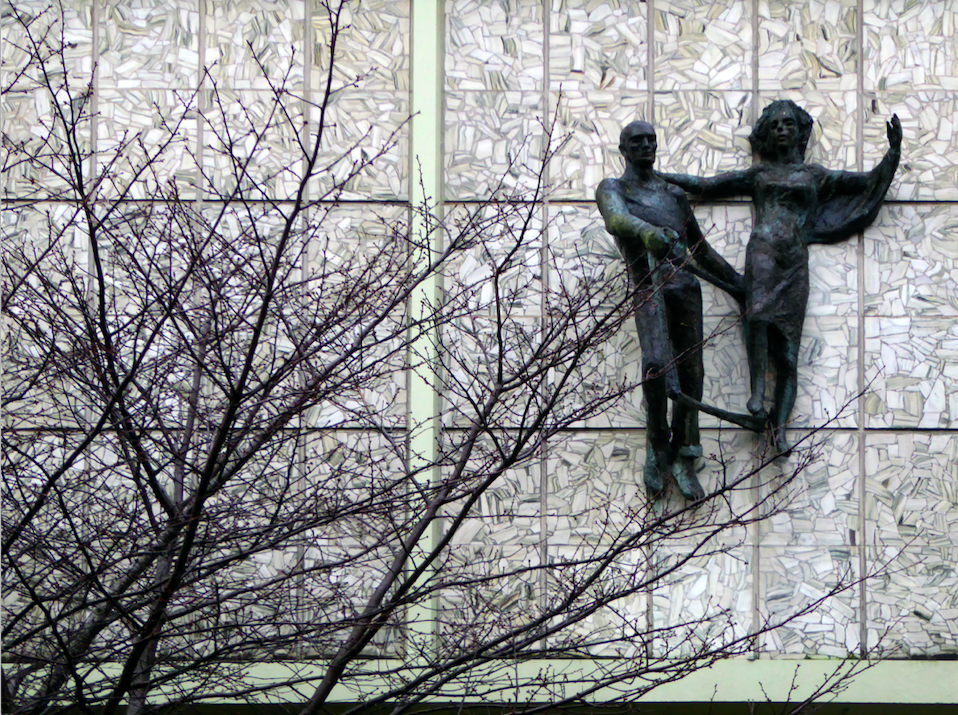
Wikipedia

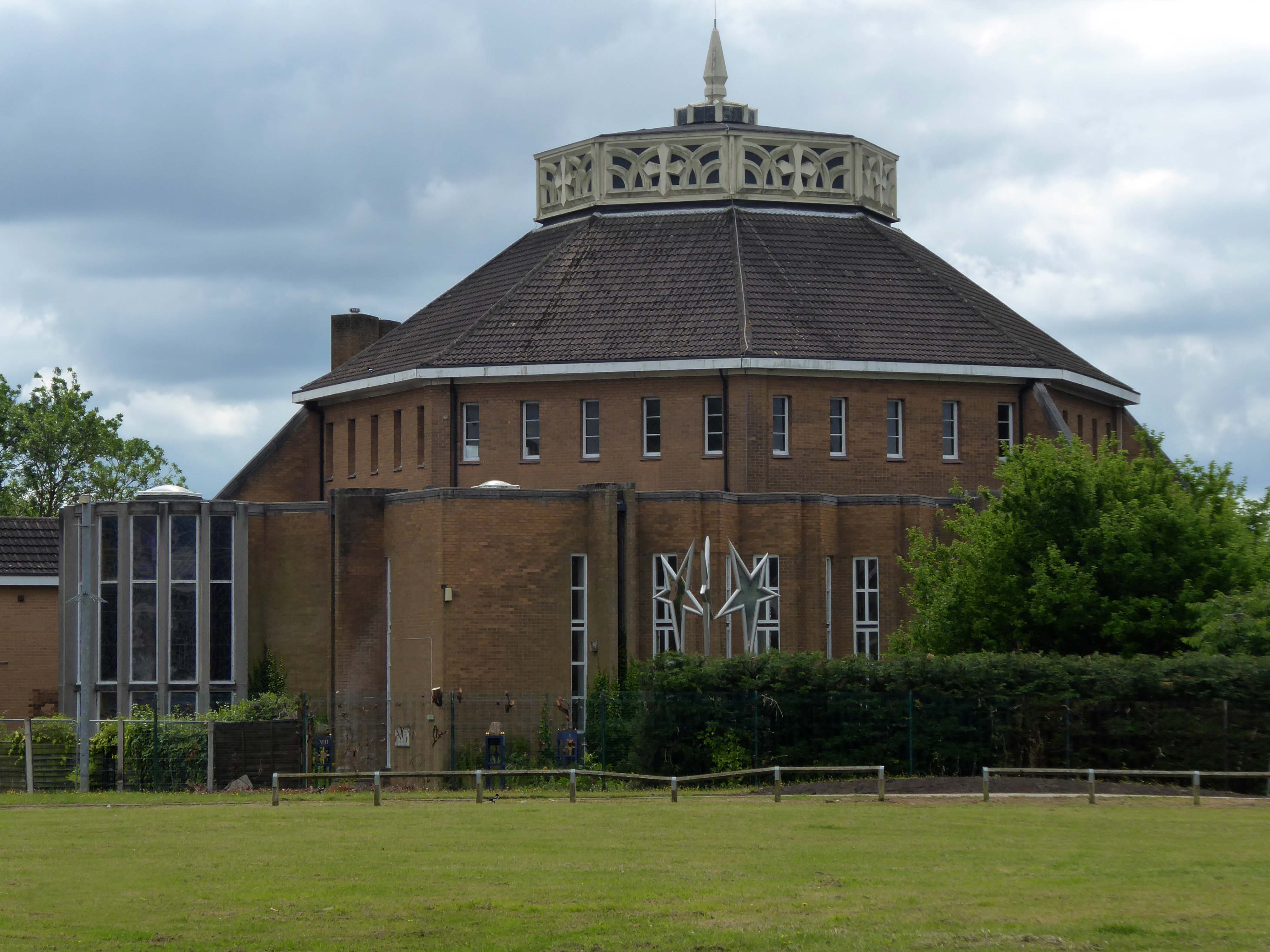
Over the way faros the green sward is St Peter in Chains RC – A large and striking design by JH Langtry-Langton, incorporating important furnishings by J F Bentley from the predecessor church, along with good furnishings of the 1970s. The churches houses the modern successor to the medieval shrine of Our Lady of Doncaster.
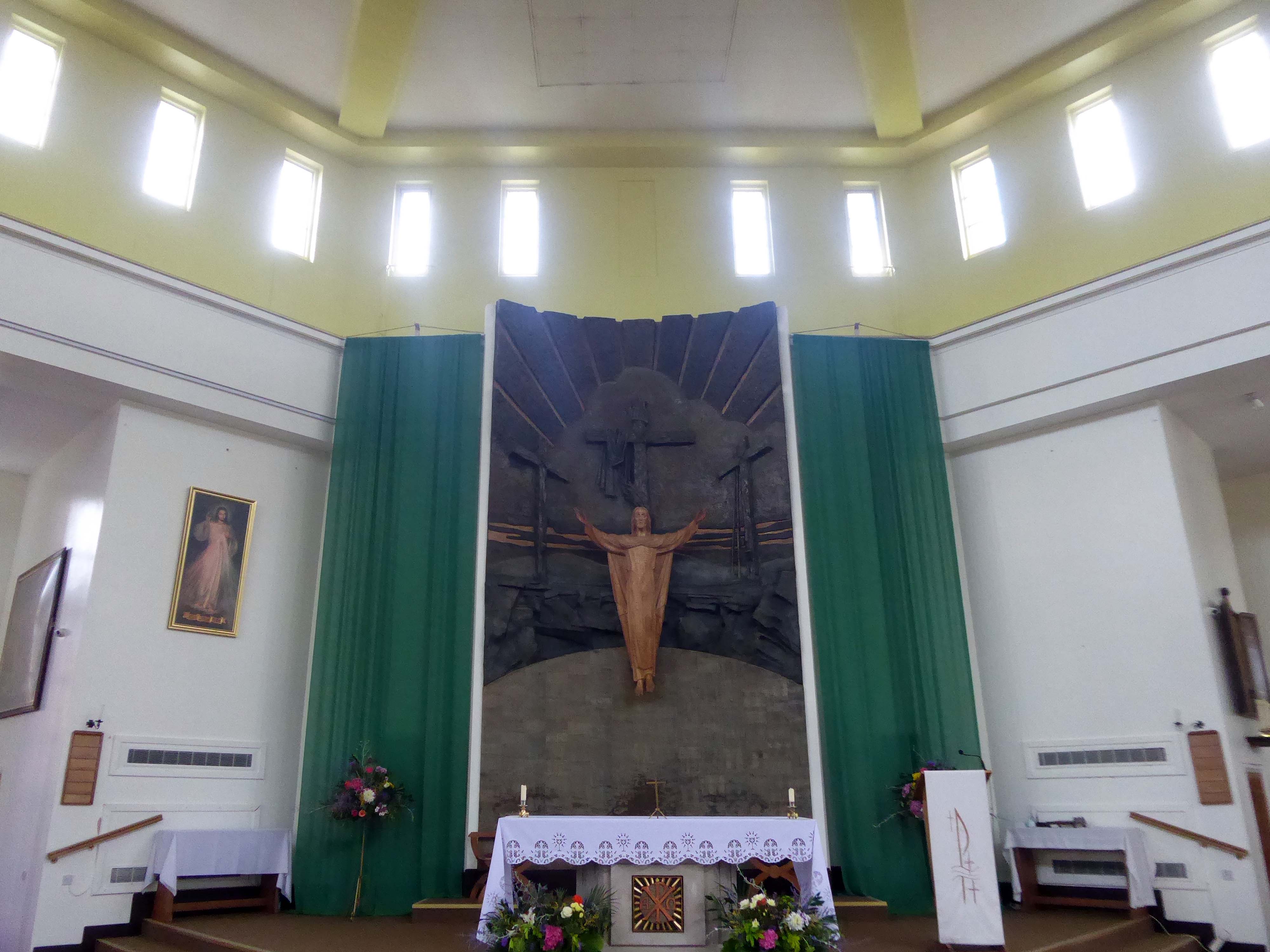
Figurative stained glass by Patrick Feeny for Hardman in 1973 and abstract glass fitted in 2000 as part of reordering and revival of the shrine.
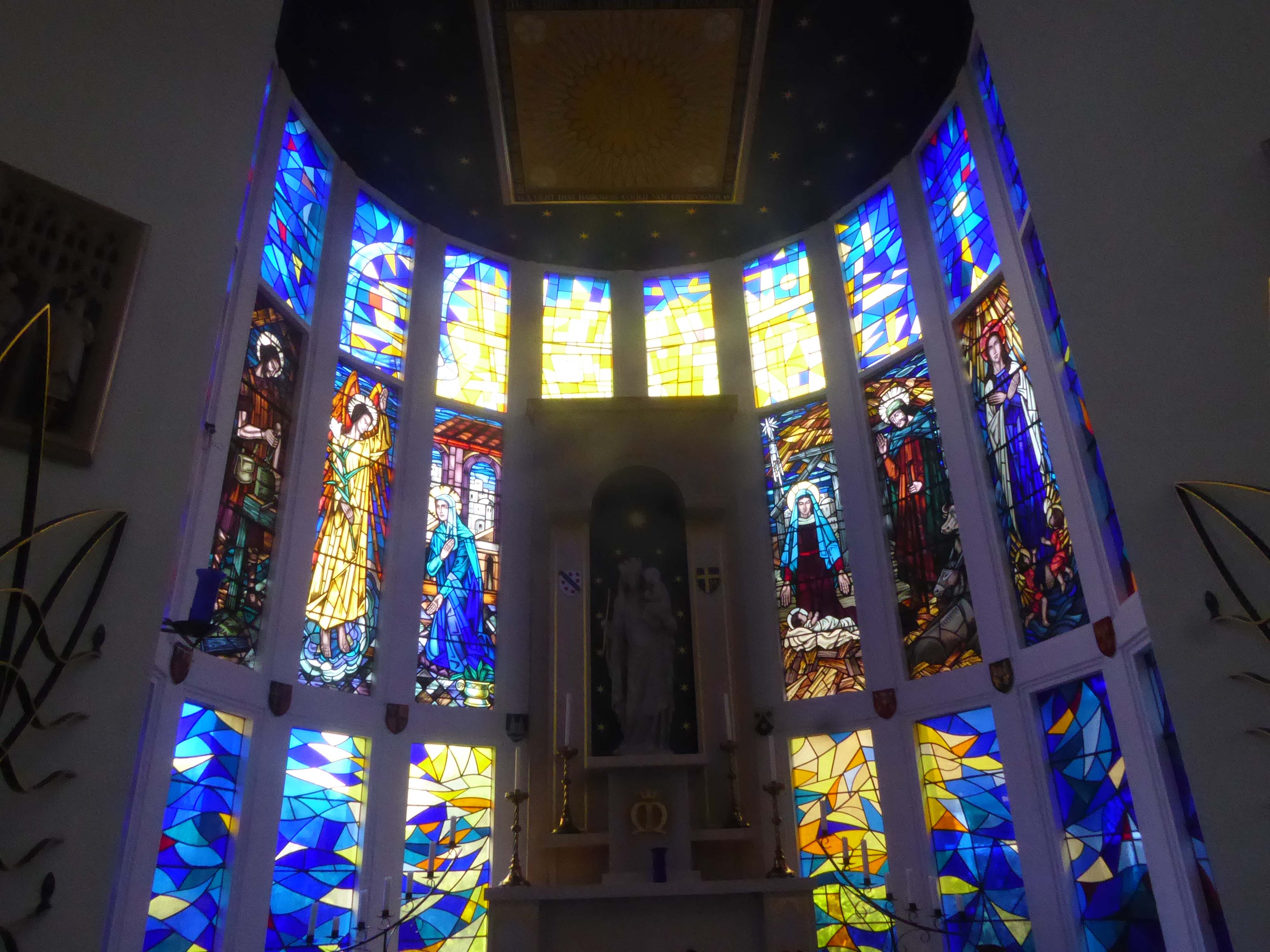
Further information on Taking Stock.

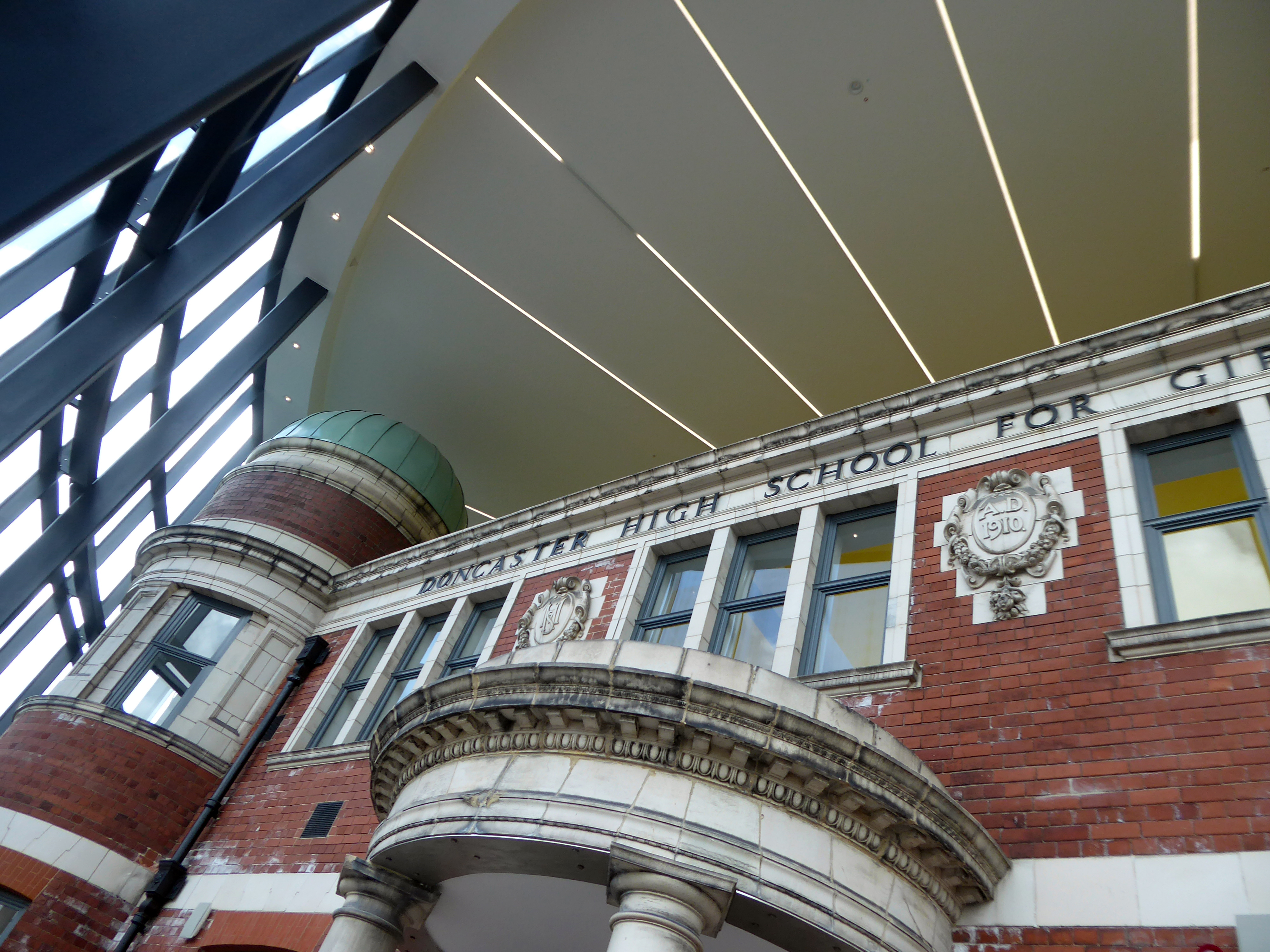
A special mention for the Danum Cultural Hub

Designed by architects Bond Bryan and built by main contractor Willmott Dixon, the new cultural and learning hub has been created following the restoration of four existing buildings. 

A key focal point of the scheme is the restored frontage of the Edwardian former Doncaster High School for Girls, which has been framed by Senior’s slimline SF52 aluminium curtain wall and showcased within a new steel-frame building. The glazed facade, which was fabricated and installed by Senior’s supply chain partner Chemplas, also features Senior’s aluminium commercial doors.
RIBA Journal

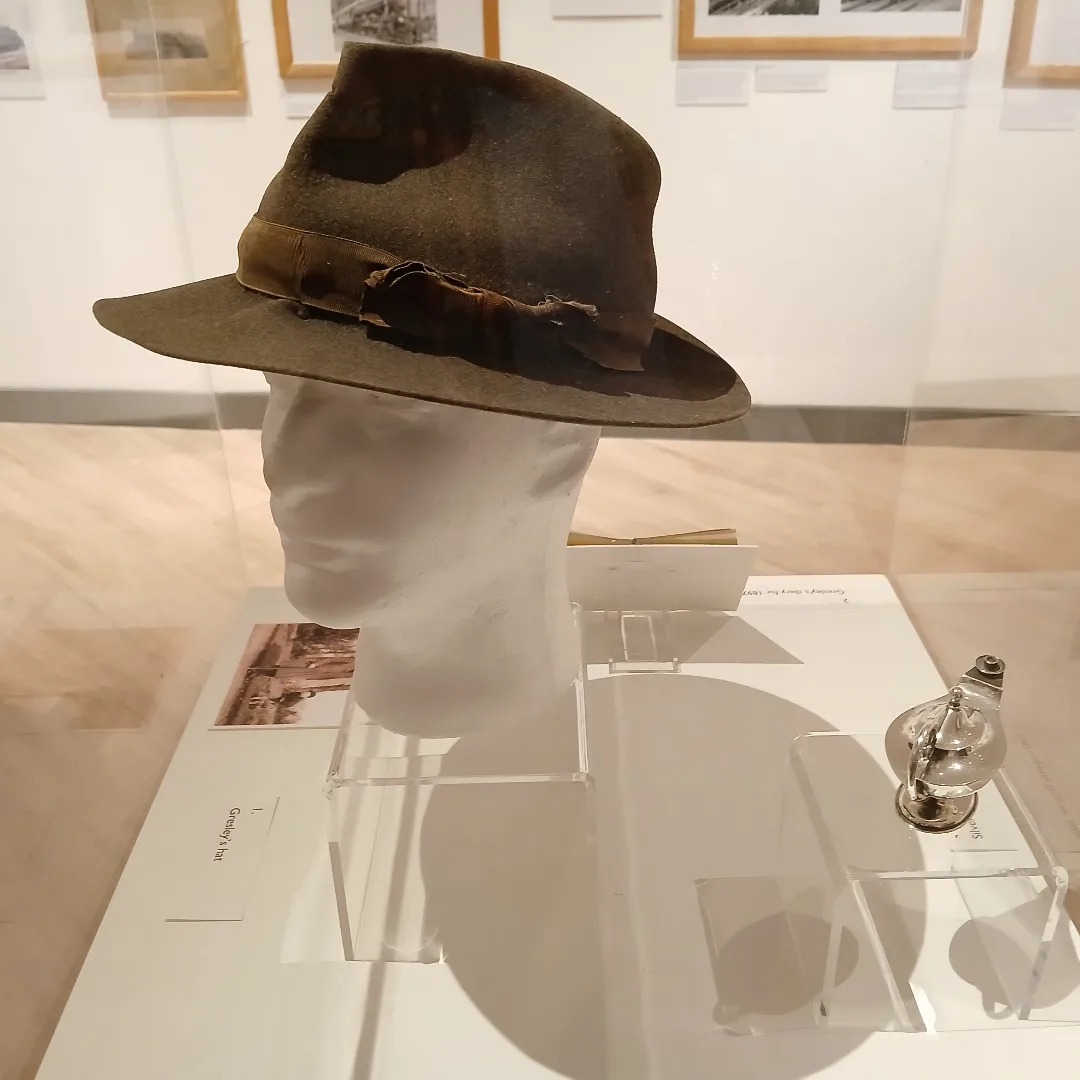
Where I was delighted to see Sir Nigel Gresley’s hat.
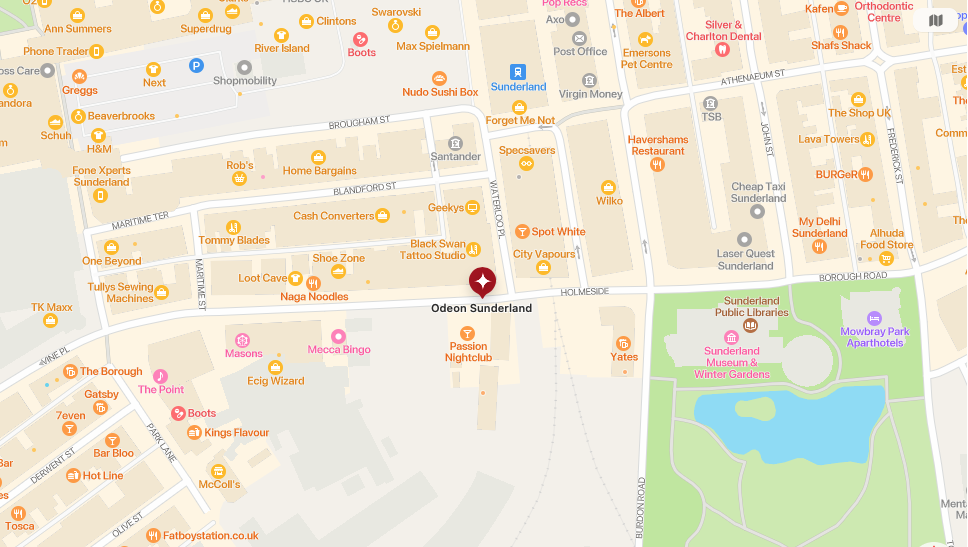
Odeon and Ritz Cinemas – Sunderland

44 Holmeside  Sunderland  SR1 3JE

Architects: Frederick EvansEdwin Sheridan Gray

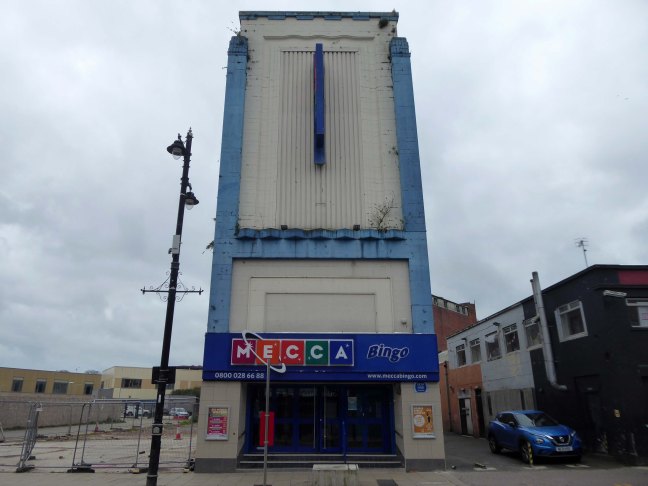
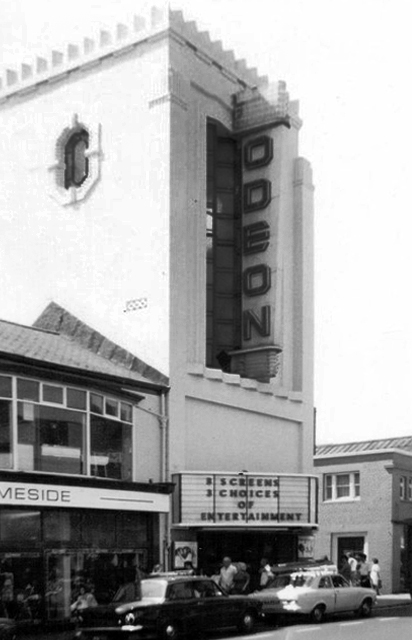
Black’s Regal Theatre was built on the site of the Olympia Exhibition Hall and Pleasuredrome 1897-1910 and it was built for the northern independent Black’s circuit. It opened on 28th March 1932 with Jessie Matthews in Out of the Blue.
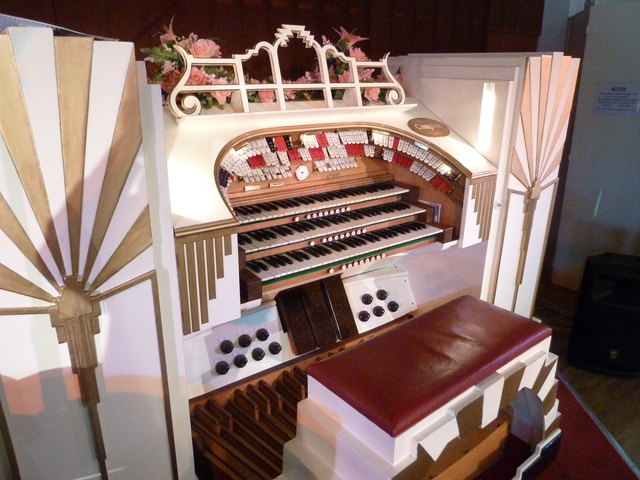
The theatre was equipped with a Compton three manual, nine ranks theatre organ which had an Art Deco style console on a lift.
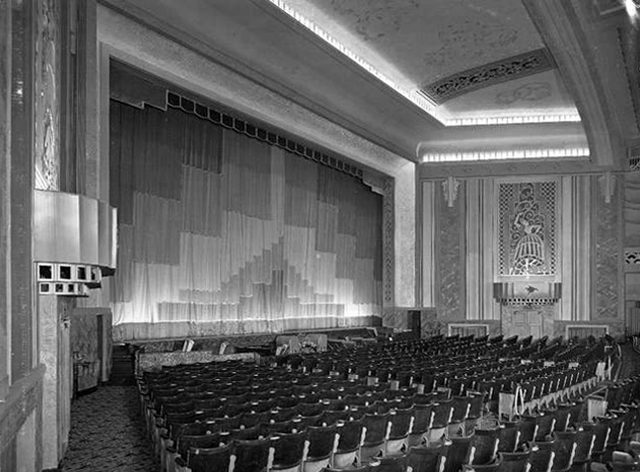
This was opened by organist J Arnold Eagle. The policy of the theatre for many years was pictures and variety and it had a fifty seven feet wide proscenium, the stage was forty feet deep and there were ten dressing rooms. Other facilities included a cafe and roller rink.
Regal/Odeon, Holmeside, Sunderland, Co. Durham

In 1955 the Black’s circuit was taken over by the Rank Organisation and the Regal was re-named Odeon from 28th November 1955. It was divided into a three screen cinema in 1975 with 1,200 seats in the former circle and two 150 seat screens in the rear stalls.

On 28th March 1982 a special 50th Anniversary concert was given by Phil Kelsall on the Compton organ. Three months later, on 26th June 1982 the Odeon was closed with One Flew Over the Cuckoo’s Nest, Star Wars & The Empire Strikes Back, Mary Millington’s True Blue Confessions.

The building was boarded up and abandonded for a long period of time.

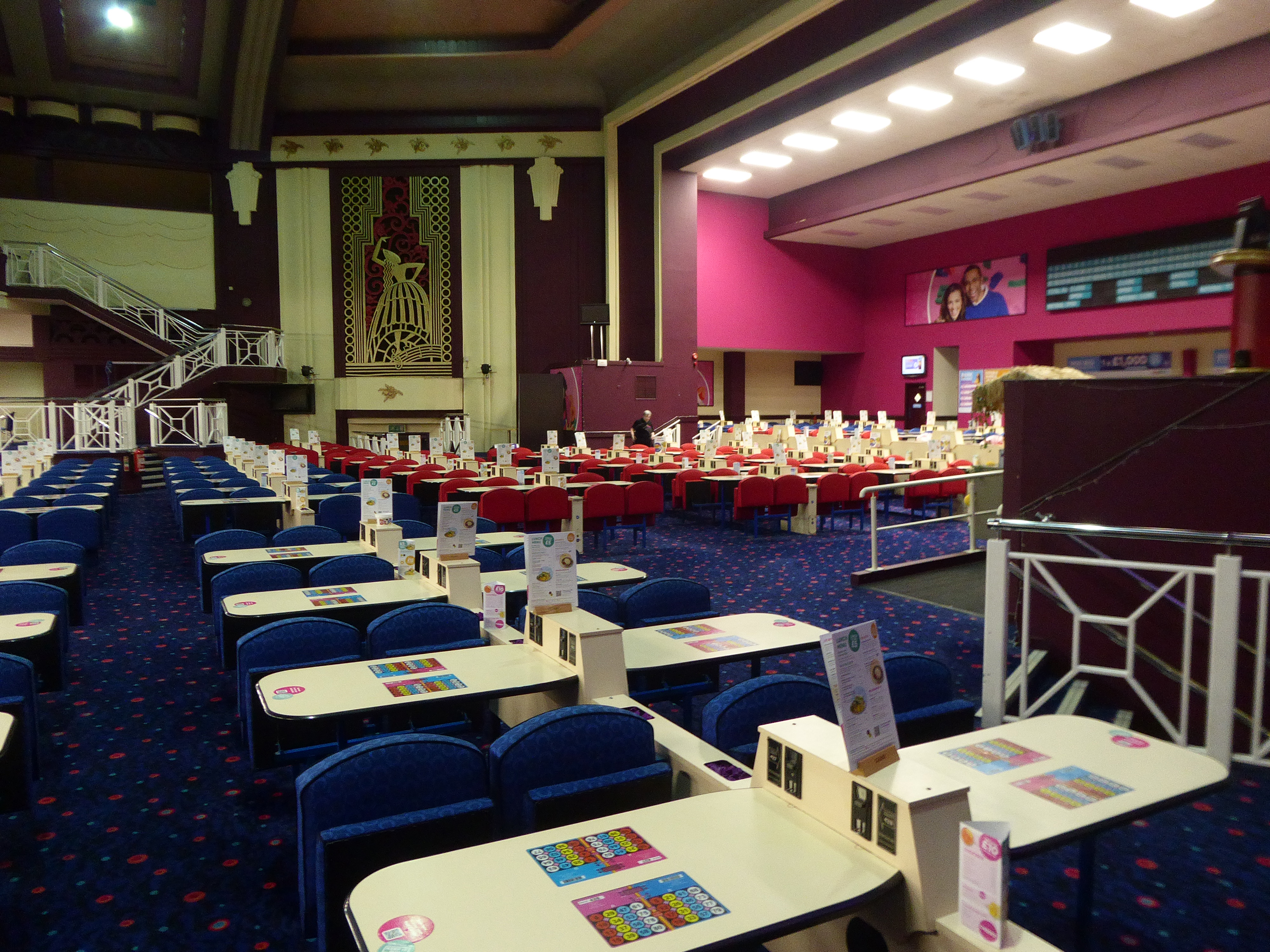
However it was to re-open as a Top Rank Bingo Club and remains in use today as a Mecca Bingo Club. The sub-division of the auditorium has been removed. In July 2009, it was announced that the building and the entire block had been the subject of a compulsory purchase order.

Cinema Treasures

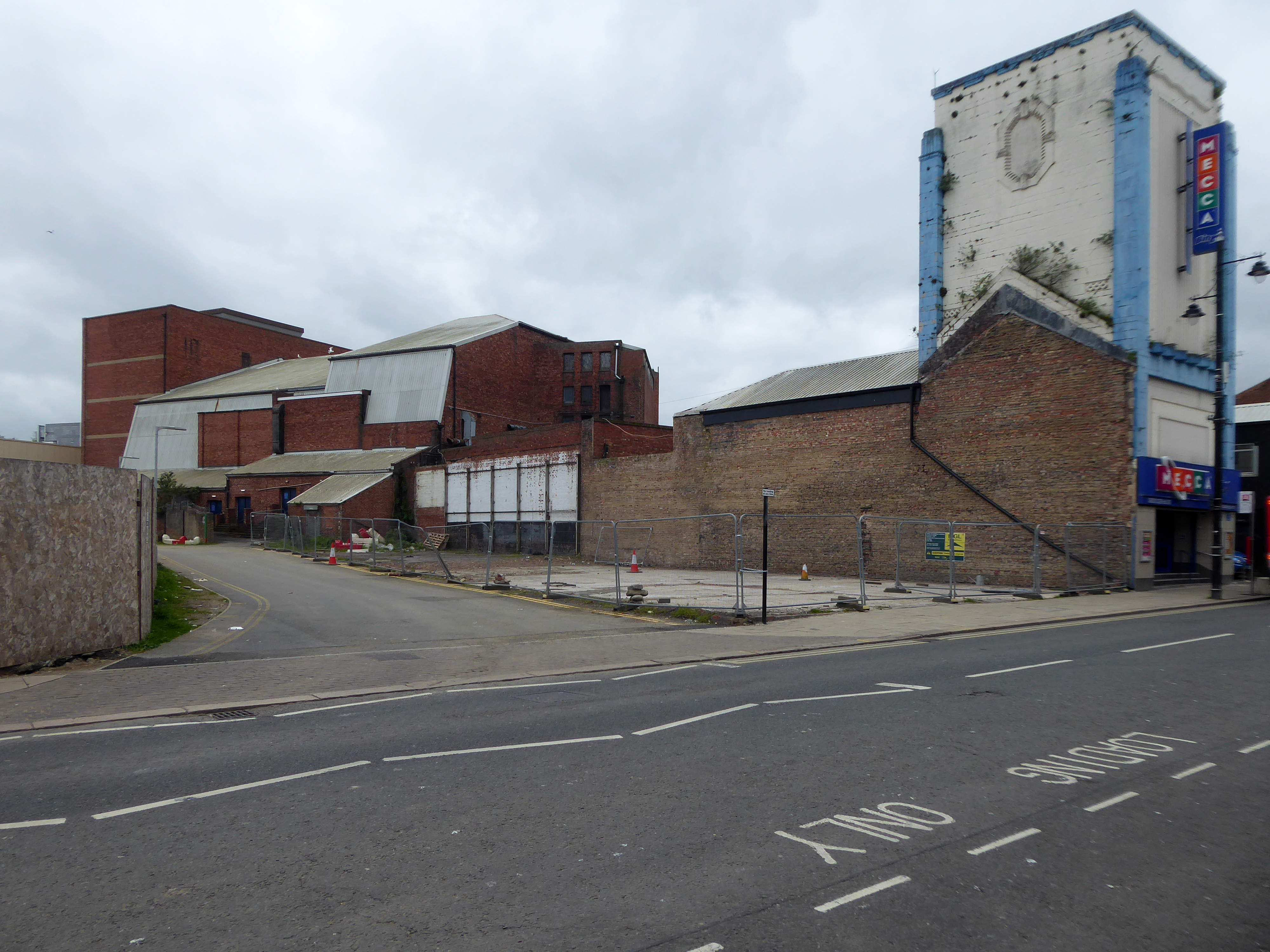
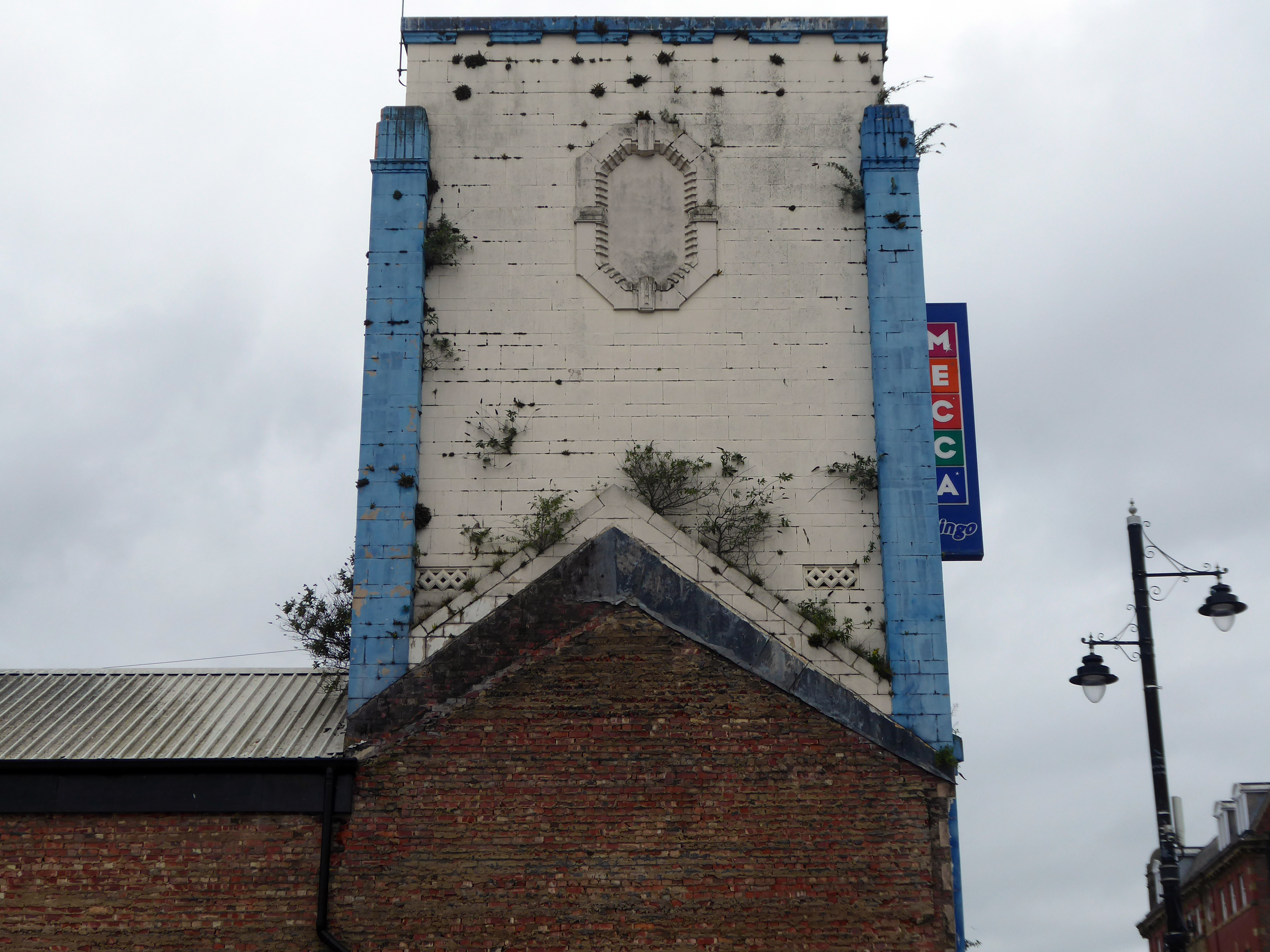
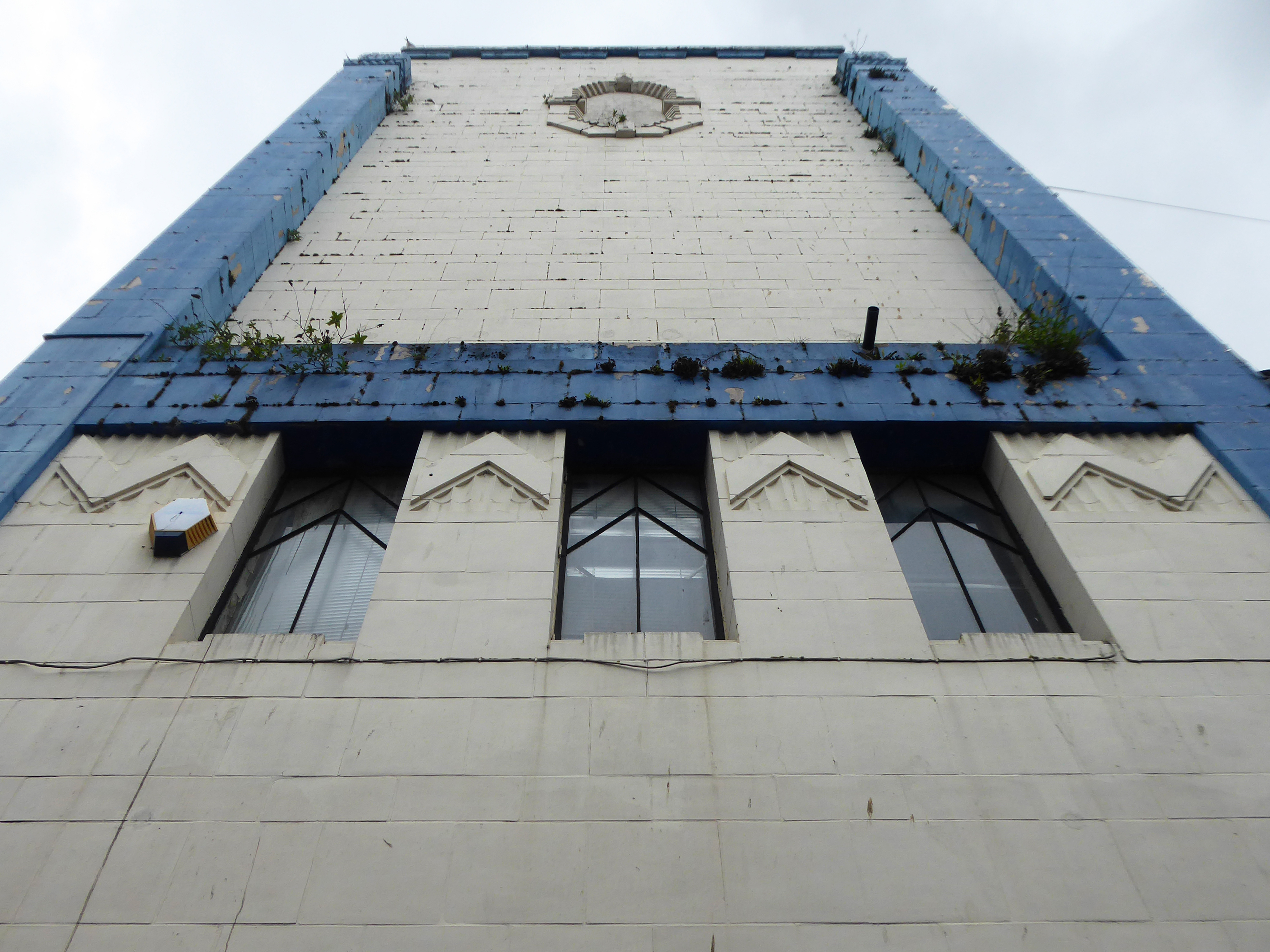
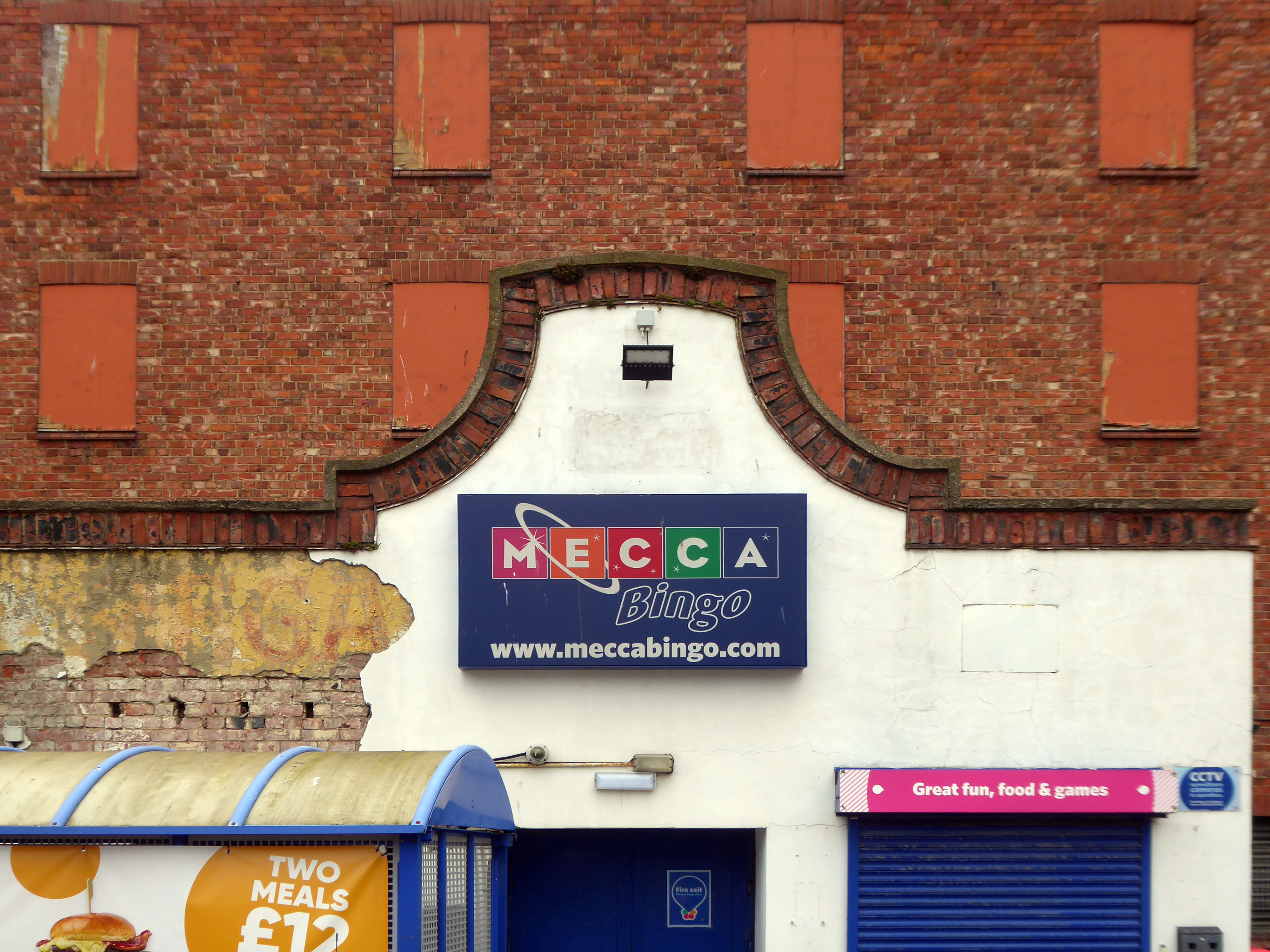
I happened by the other day – attracted by the distinctive Deco tower.

And the building’s amazing mass.

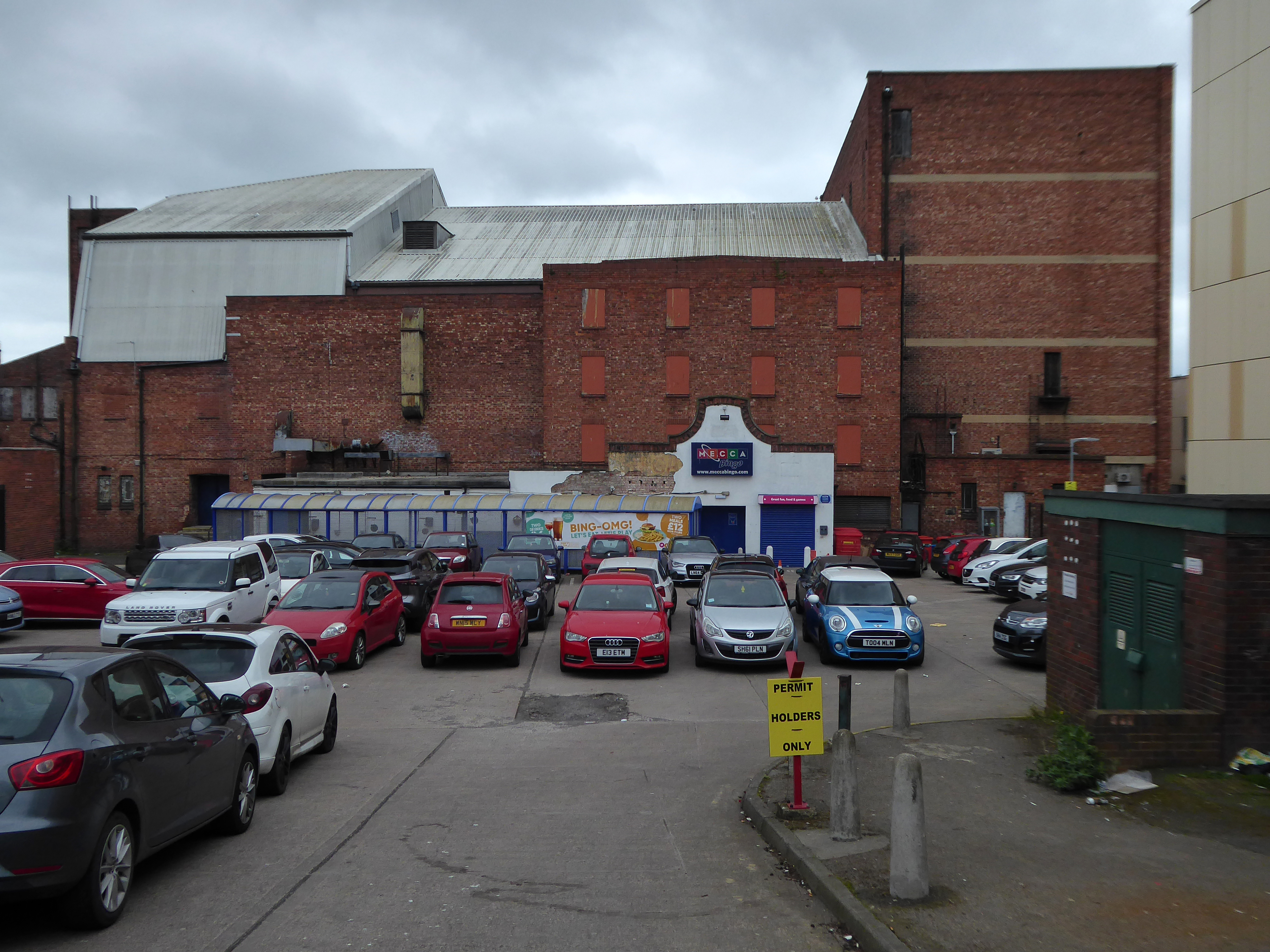
I walked around the corner to find the side entrance – as the original lobby is no longer in use.

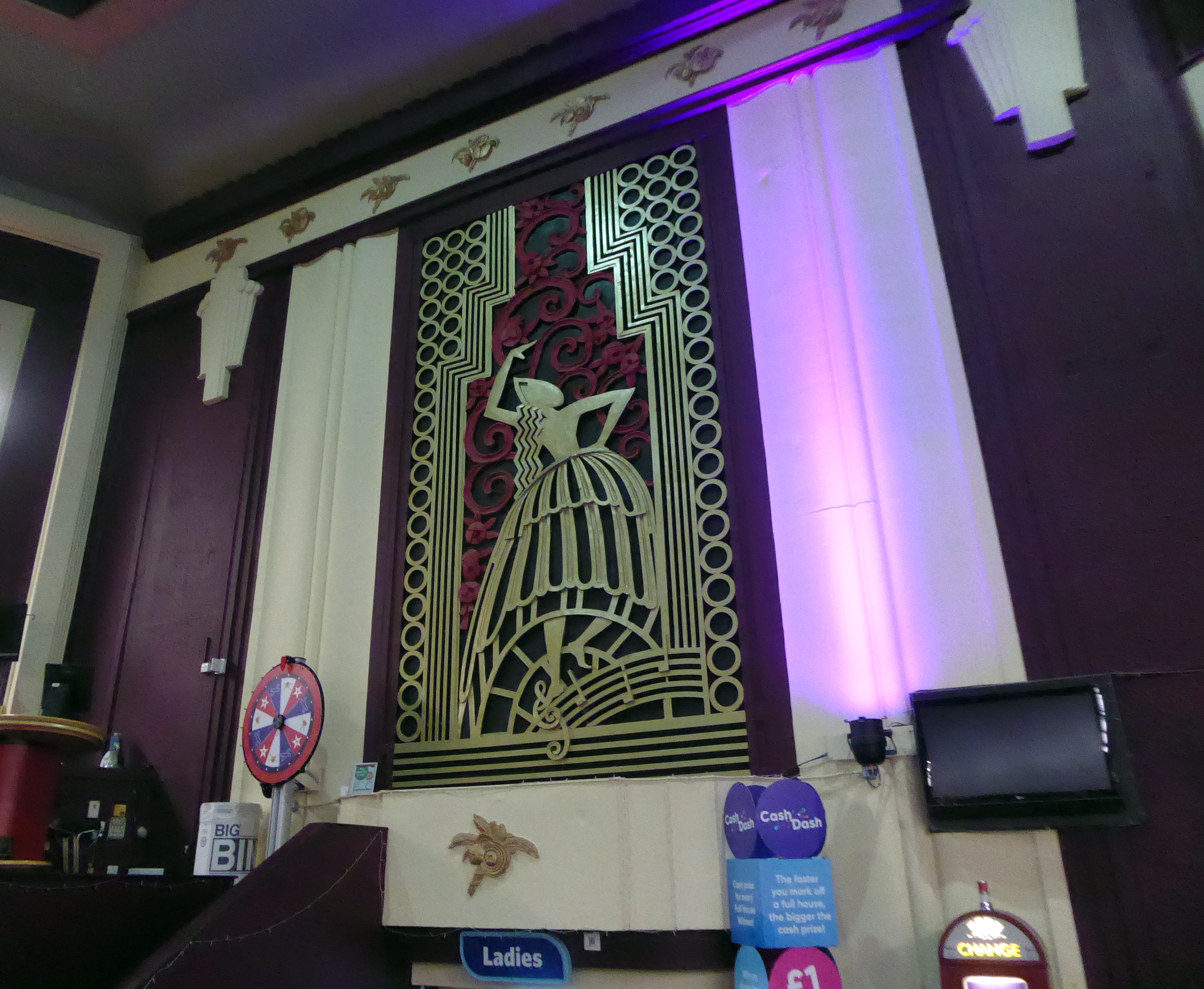
I was ever so fortunate to happen upon a convivial cleaner, who kindly invited me inside the auditorium.

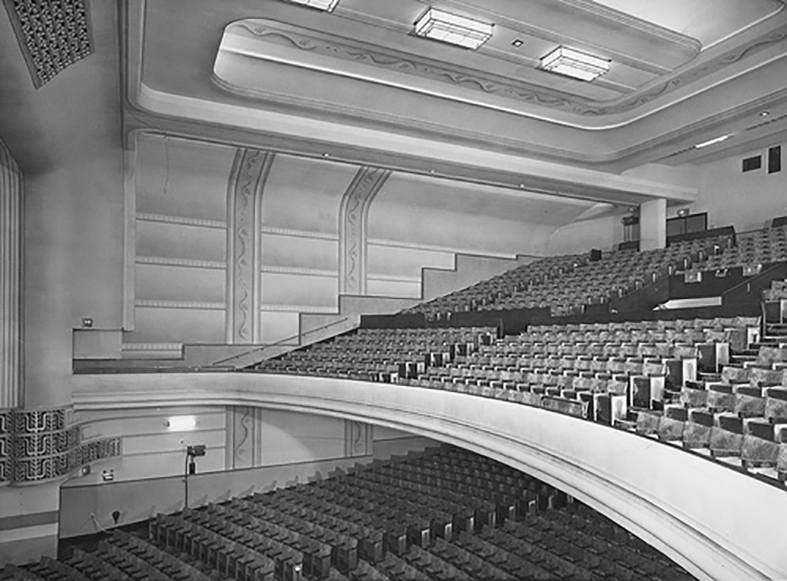
Much of the interior detail is intact though the balcony was no longer in use.

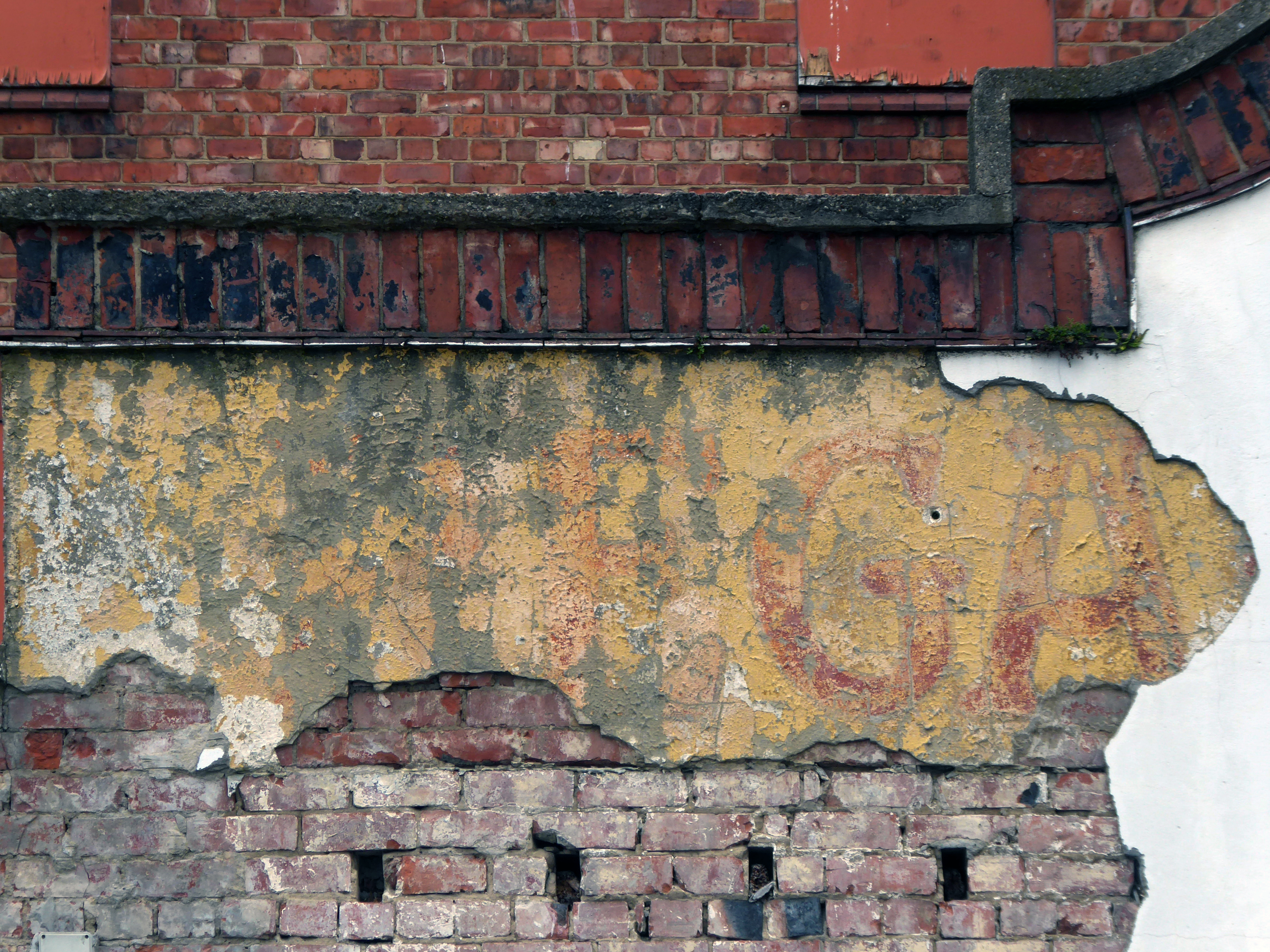
On exiting, I noticed the ghost of the Regal.

Though the exterior is a pale shadow of its former self, the building is still intact and in use.

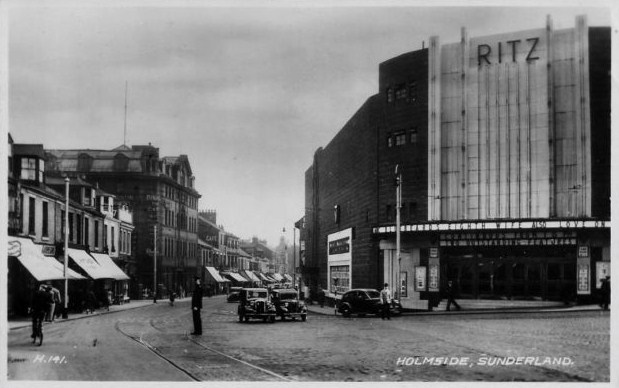
A close neighbour is the what was the Ritz latterly ABC Cinema.

Architects: William Riddell Glen

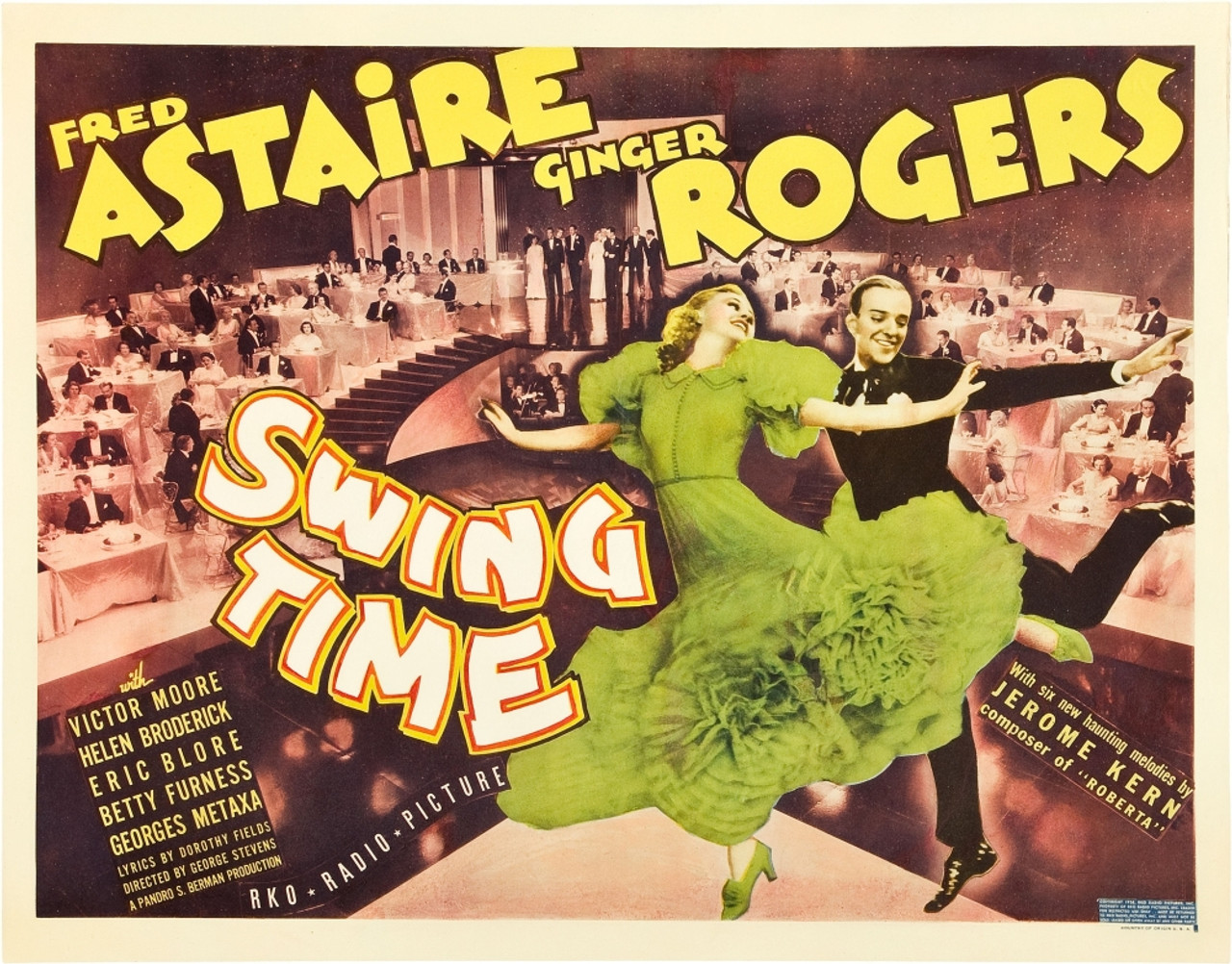
Opened on 1st March 1937 with Fred Astaire & Ginger Rogers in Swing Time, the Ritz Cinema was built by the Union Cinemas chain. They were soon taken over by Associated British Cinemas – ABC. It was lavishly fitted with deep pile carpets and chandeliers.

In 1961 it was re-named ABC. It was converted into a two screen cinema from July/August 1974 when the former circle became a 534 seat screen and the front stalls a second screen seating 212. The rear stalls area was converted into a Painted Wagon pub. Sadly the conversion destroyed much of the original interior of the auditorium. It was later taken over by the Cannon Cinemas group, but later went back to the ABC name.

Sadly it closed on 29th April 1999, the last of Sunderland’s major cinemas.

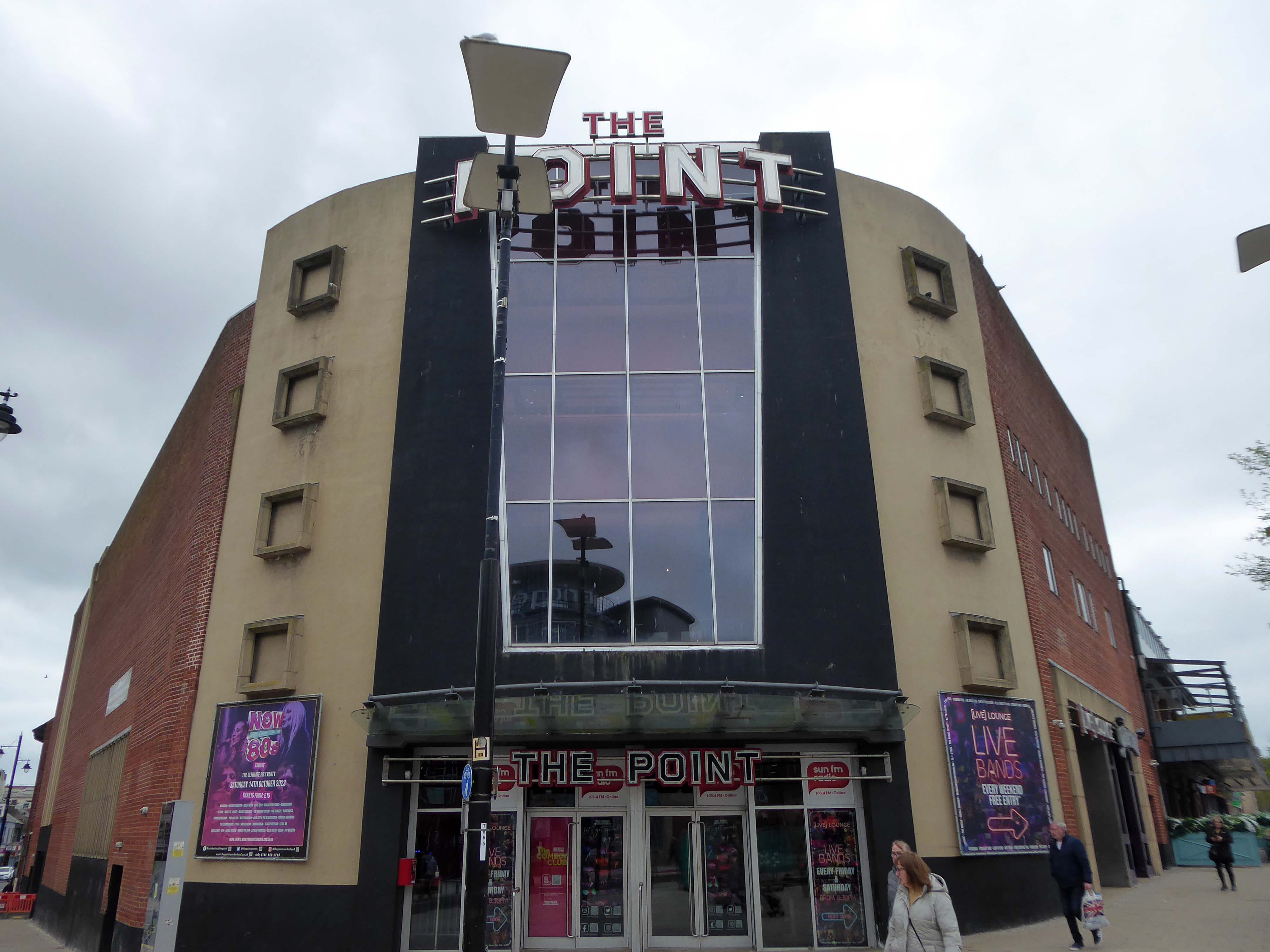
It has recently reopened as The Point a nightclub which has four dance floors and has now completely lost all features of its cinematic past.

Cinema Treasures

Get y’self pumped!

Doncaster Modernism – Revisited

Having taken a tour around town last year, we are now revisiting Doncaster on a socially distanced Manchester Modernist walk.

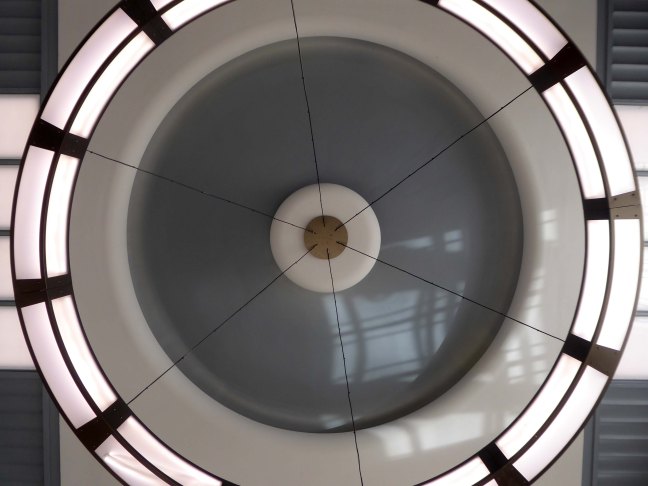
Arriving by train at 8.30, just in time to check out the new lighting scheme in the station foyer.

Replacing the previous lighting.

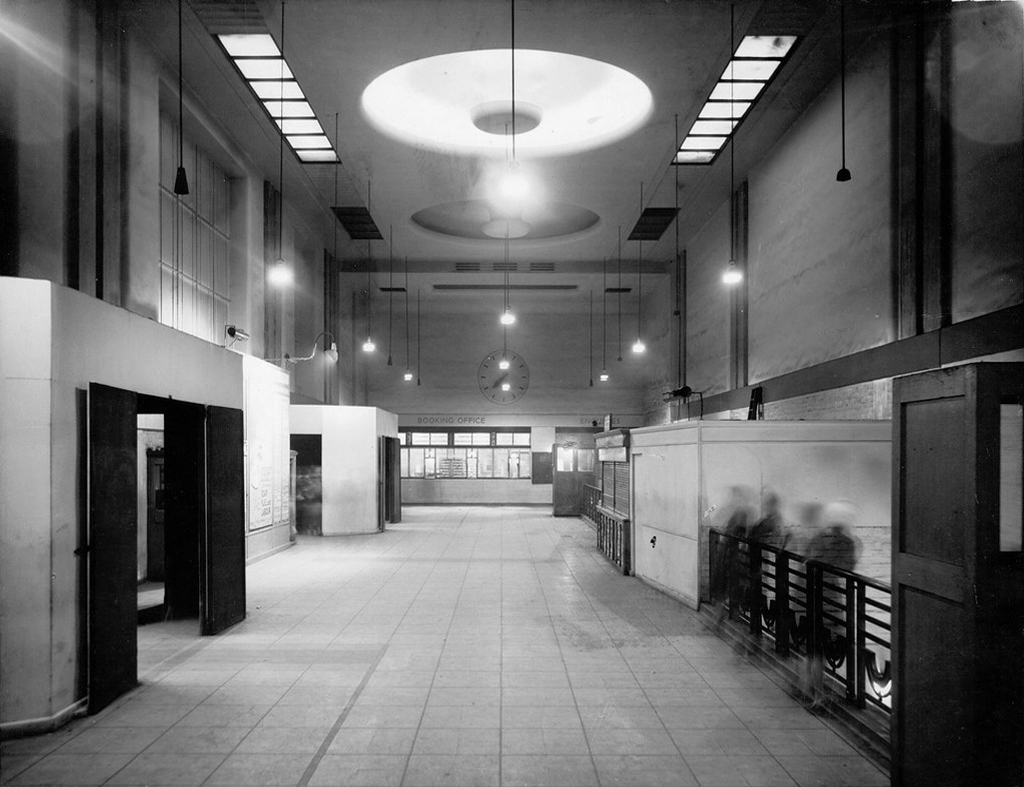
Which in turn replaced the original Thirties lighting.

The forecourt redevelopment is a work nearing completion.

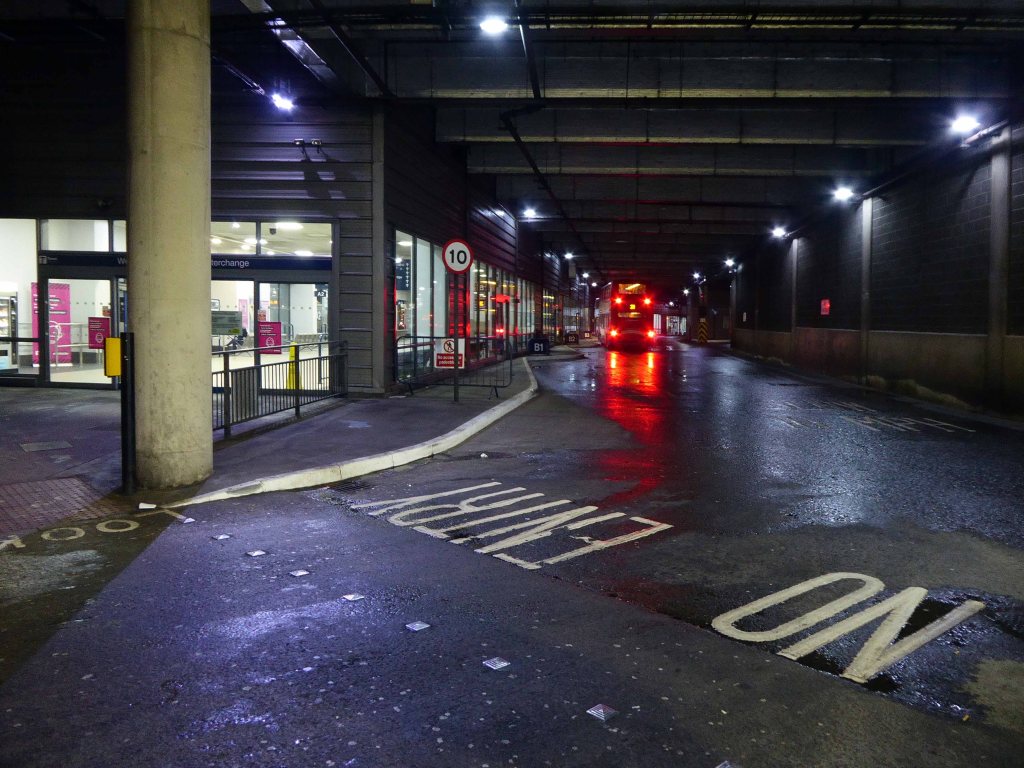
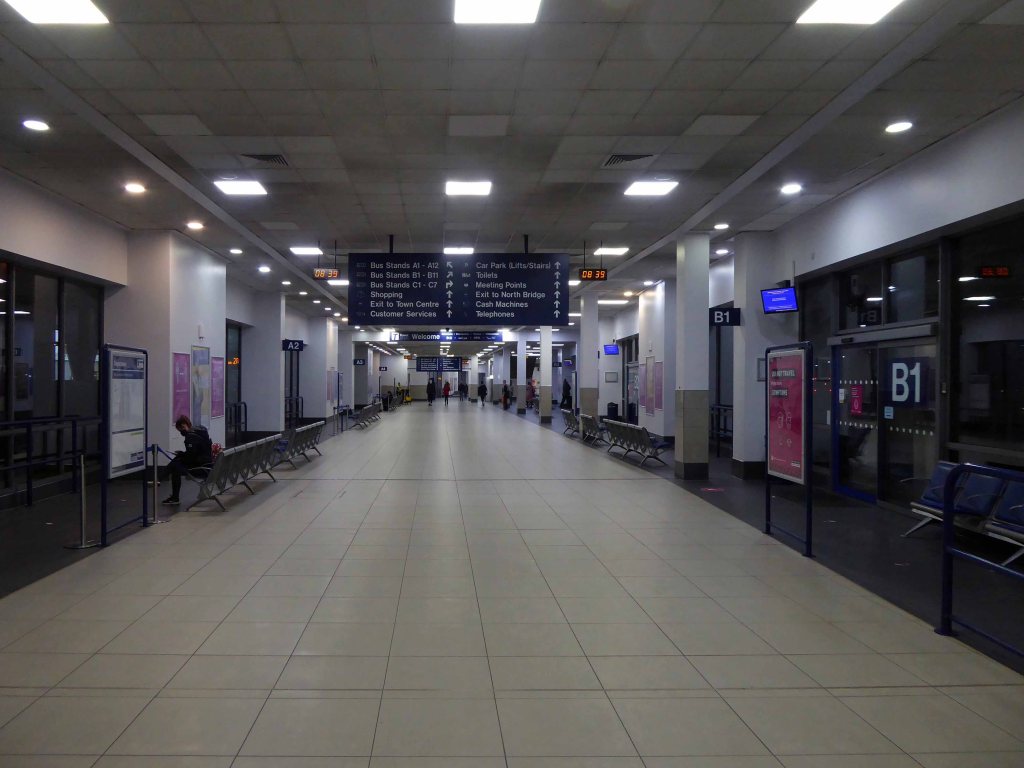
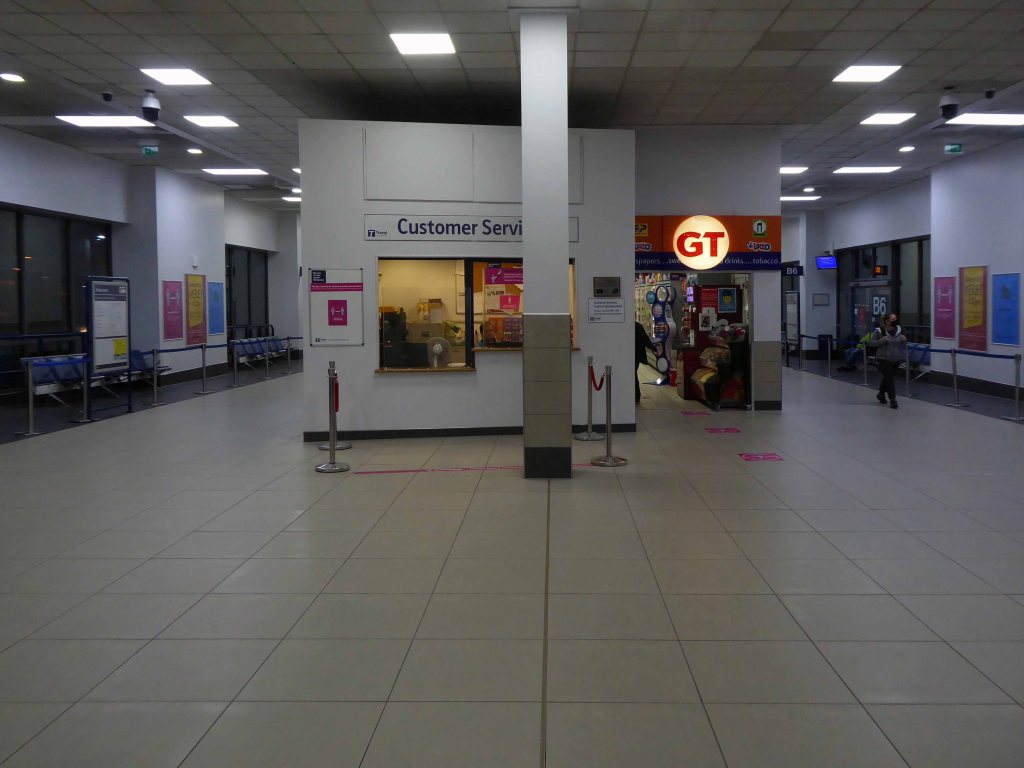
I was on my way to Intake by bus so it’s off on the 66 from the Frenchgate Inetrchange.

An urban environment so anonymous, that it can only just recognise itself. I was helpfully informed by two radio controlled security guards that photography was illegal.

More Interzone than Interchange.

Here are my transgressive snaps, I made my excuses and left – on the next available 66.

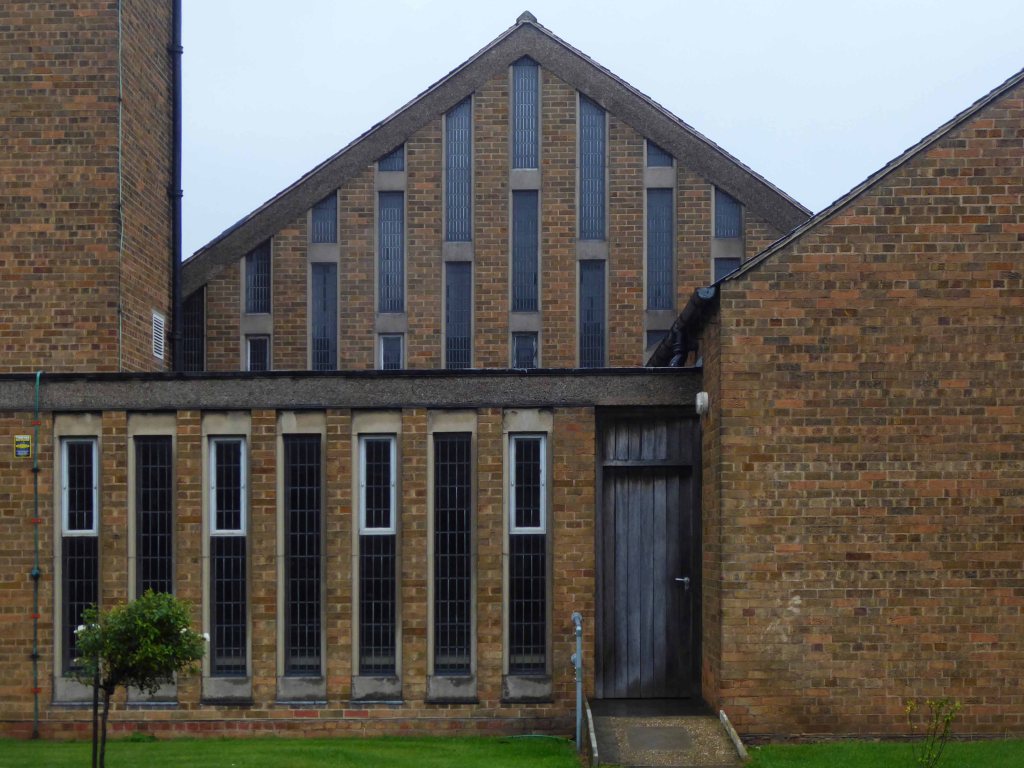
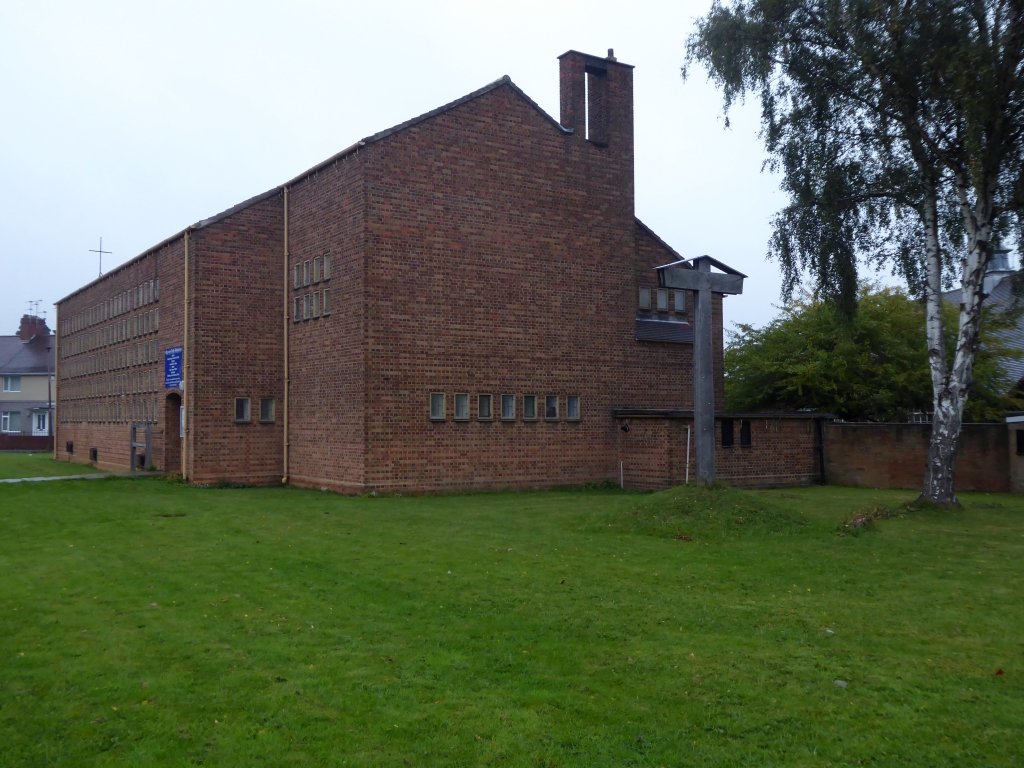
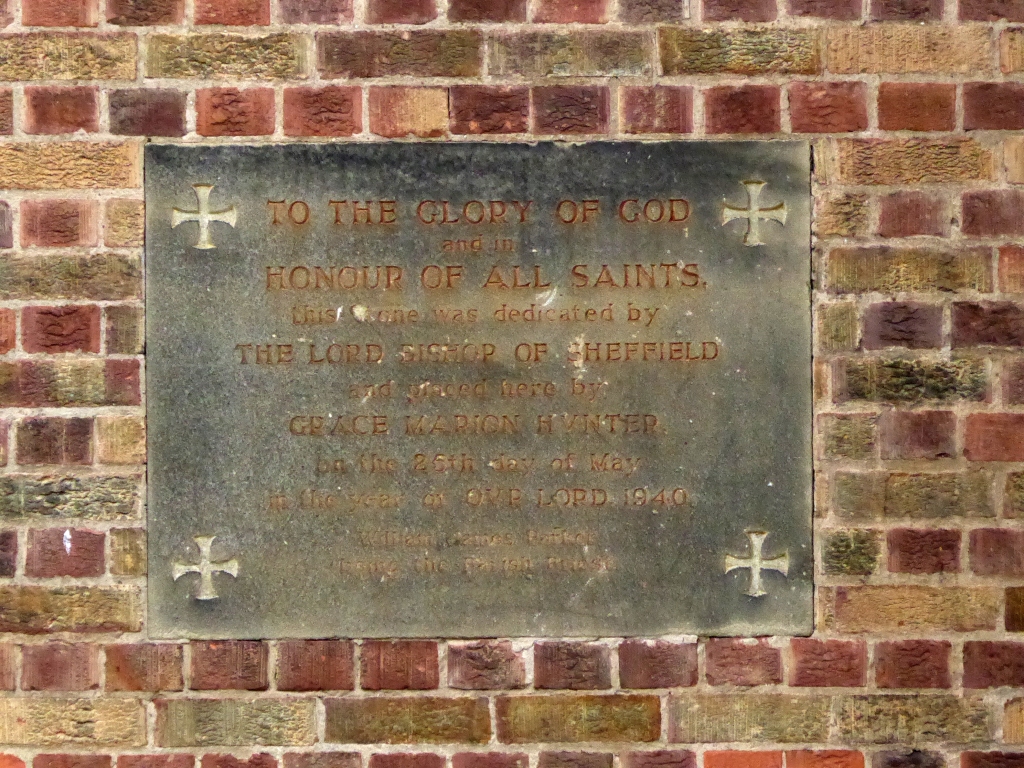
Decanting from the single decker I made my way across the way to All Saints, a George Pace church of 1956.

Built on the foundations of an unrealised Neo-Romanesque church of 1940, but reorientated east/west.

I legged it back to catch the bus back, the returning 66, much to the surprise of the surprised driver, making his return journey.

Jumping the 41A to Scawsby, displaying my risible home-printed map to the driver, requesting a shout when we arrived at the indicated destination, which he was unable to discern, and which I had failed illustrate.

I had contrived to arrive at the end of the line, a bit part player in a non-existent Béla Tarr film.

The heavy rain continued to fall.

I followed the bus route back to the Church of St Leonard and St Jude on Barnsley Road.

Following a thorough tour inside and out, I returned promptly to the town centre, on the limited stop express X19.

And hotfooted it to the Waterdale Centre, a work in progress, the CGI figures being as yet, a mere figment of the development officer’s fevered dreams.

Doncaster Council documents from the planning application for the demolition say, that while the exact project is not yet fully in place, discussions are taking place with the council on the project and grant funding is being sought to help the future regeneration scheme. But the council has said it supports schemes that would revitalise the Waterdale Centre area for retail, leisure, and tourism uses.

The centre is now owned by the Doncaster-based property firm Lazarus Properties, who bought it from the Birmingham firm St Modwen.

Lazarus director Glyn Smith said his firm had faith in the local economy of Doncaster town centre, even though larger multinationals seemed to be shying away.

Doncaster Free Press

The former ABC/Cannon Cinema

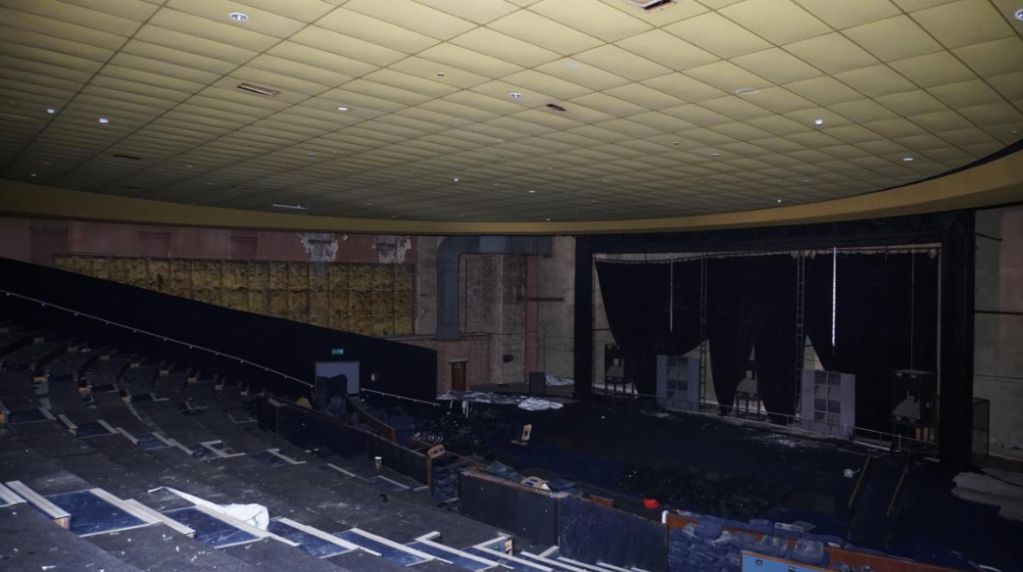
The ABC was built by Associated British Cinemas(ABC) as a replacement for their Picture House Cinema which had opened in 1914. It opened on 18th May 1967 with Omar Sharif in Doctor Zhivago presented in 70mm. Designed with 1,277 seats arranged in a stadium plan by the architectural firm Morgan & Branch, with input by architects C. ‘Jack’ Foster & Alan Morgan. It was decorated in a modern 1960’s style.

Closed in January 1981 for conversion into a triple screen it re-opened on 9th April 1981 with seating in the 3-screens.

The Cannon Group took control in the mid-1980’s and it was re-named Cannon and it closed on 18th June 1992, screening its opening film “Doctor Zhivago”.

The building has stood empty and unused since then, but in 2007, it was bought by Movie World for just £150,000. It is reputedly being re-modeled with extra screens added, however by 2009, only a clean-up of the interior has been achieved. The building sits empty and unused in 2020.

Cinema Treasures

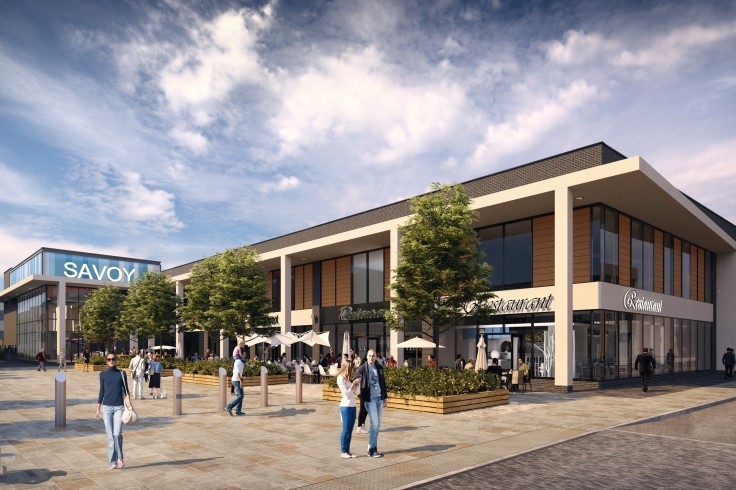
The delayed opening of the new Savoy Complex will no doubt inform the future of the Cannon.

It’s a familiar tale of the local authority, developers, leisure and retail outlets chasing dreams, cash and hopefully pulling in the live now pay later public.

It’s all part of the Doncaster Urban Centre Masterplan which will transform the way Doncaster looks and the way residents and businesses use the city core.

The area is a pivotal point, I sincerely hope that the Waterdale Centre is revived, along with the adjacent Civic Quarter car park.

Refurbished in 2011 by Potter Church and Holmes since closed.

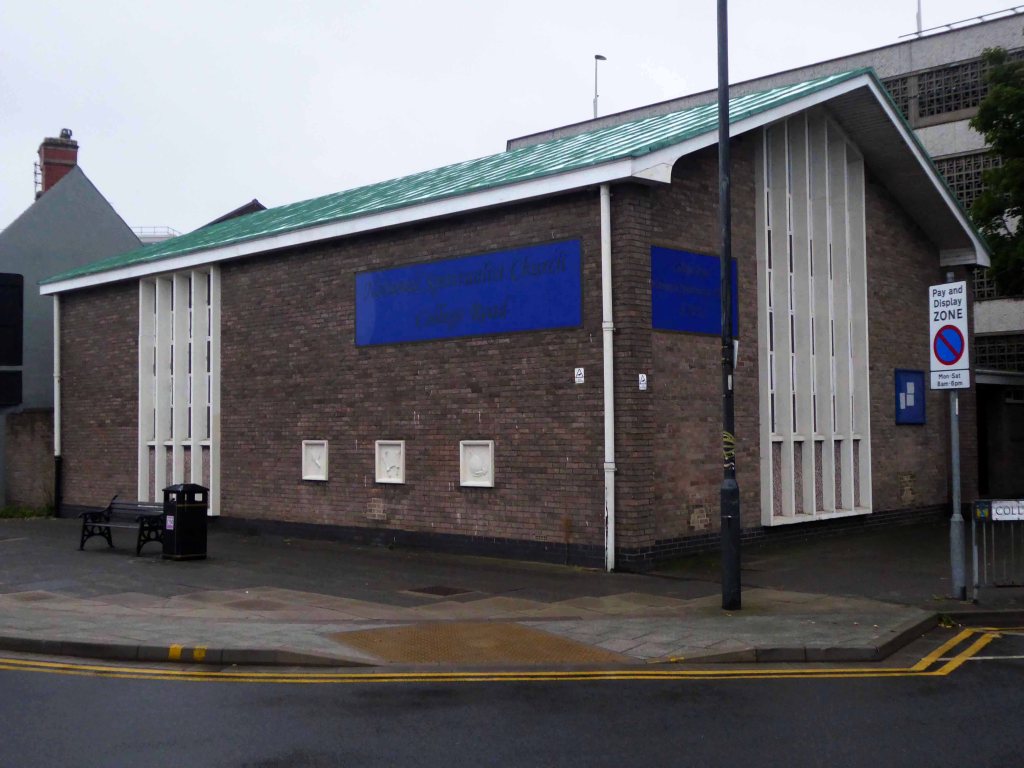
I noted the restrained Modernism of the National Spiritualist Church.

The service begins with a short prayer. The congregation sings three songs during the service using music that most people would recognise. There is usually a short reading or lesson on something to do with spiritualism or events in the world. There is also a talk by the guest medium who use their inspiration or intuition to compose an uplifting address.

Then the business of contacting the spirit world begins.

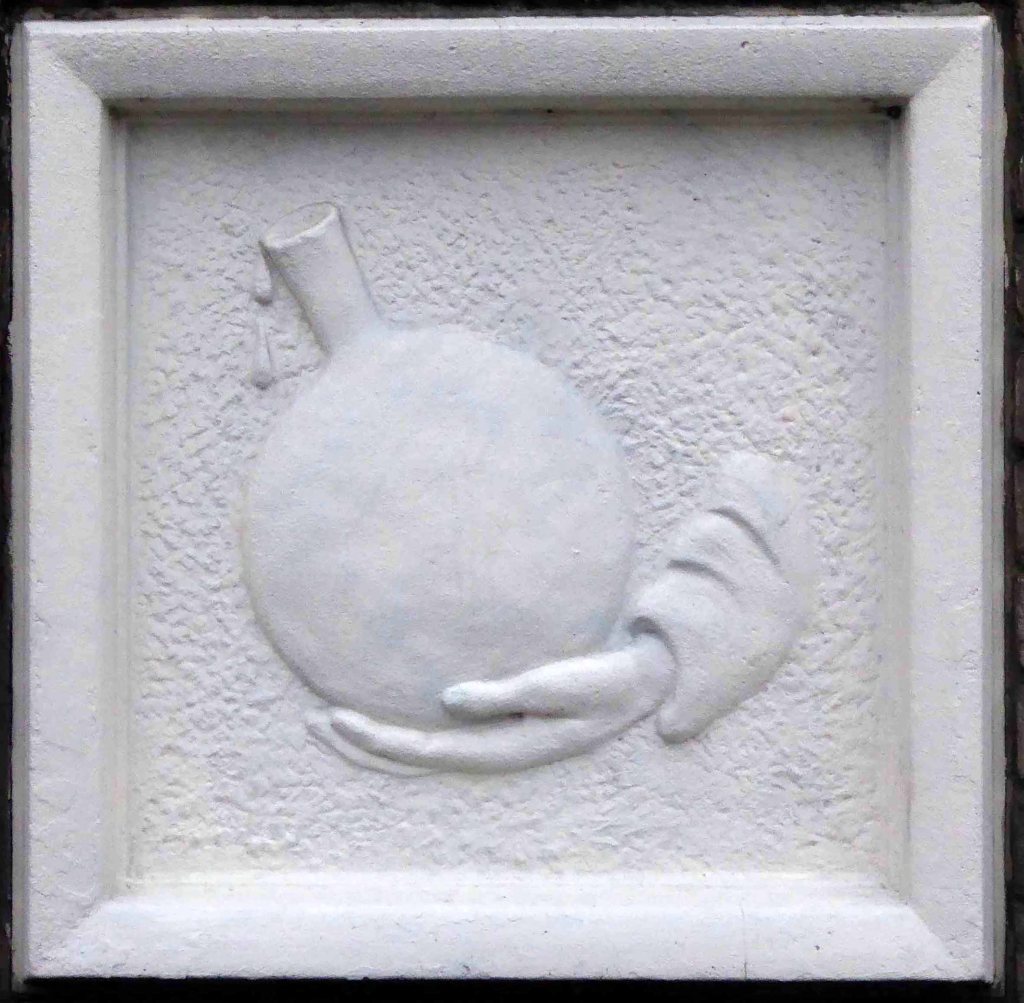
Along with its curious relief panels.

Back around to the back of the Waterdale and the surviving former bank fascia, civic offices and library.

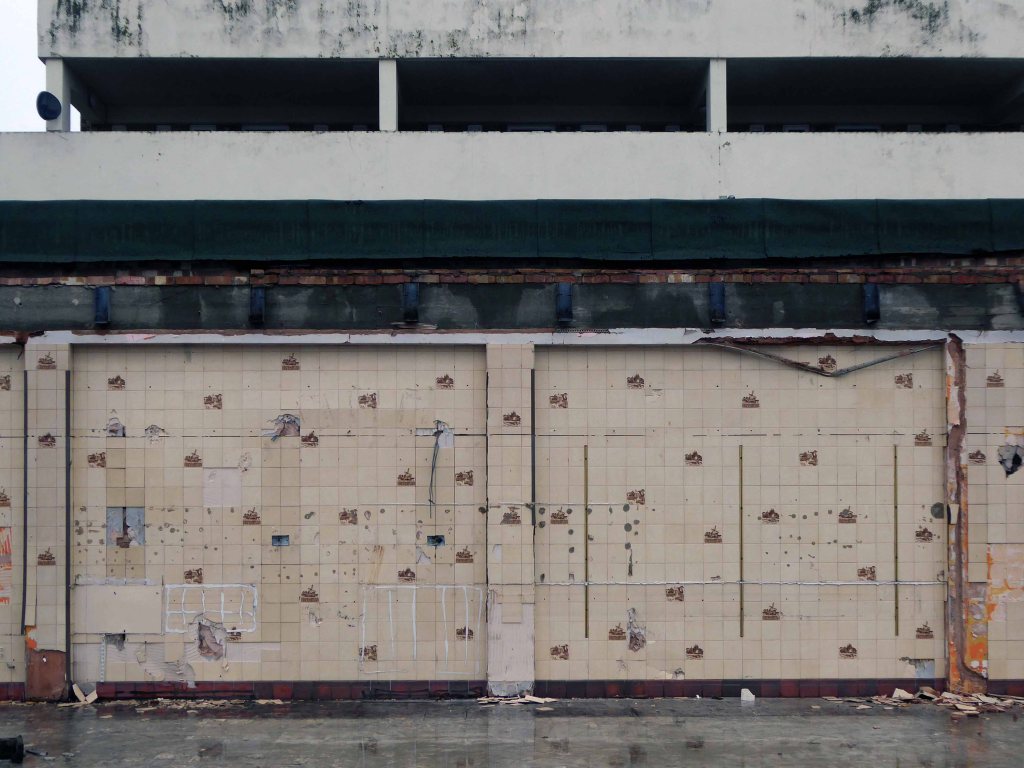
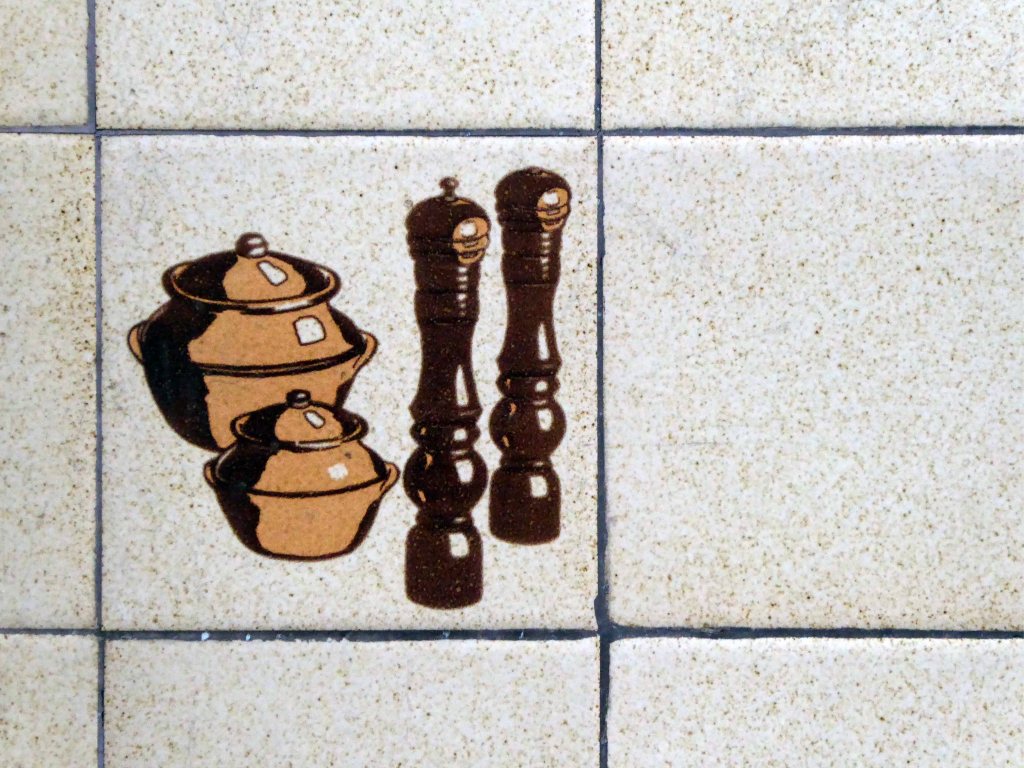
Back through the Waterdale to discover the saddest of retail archeology.

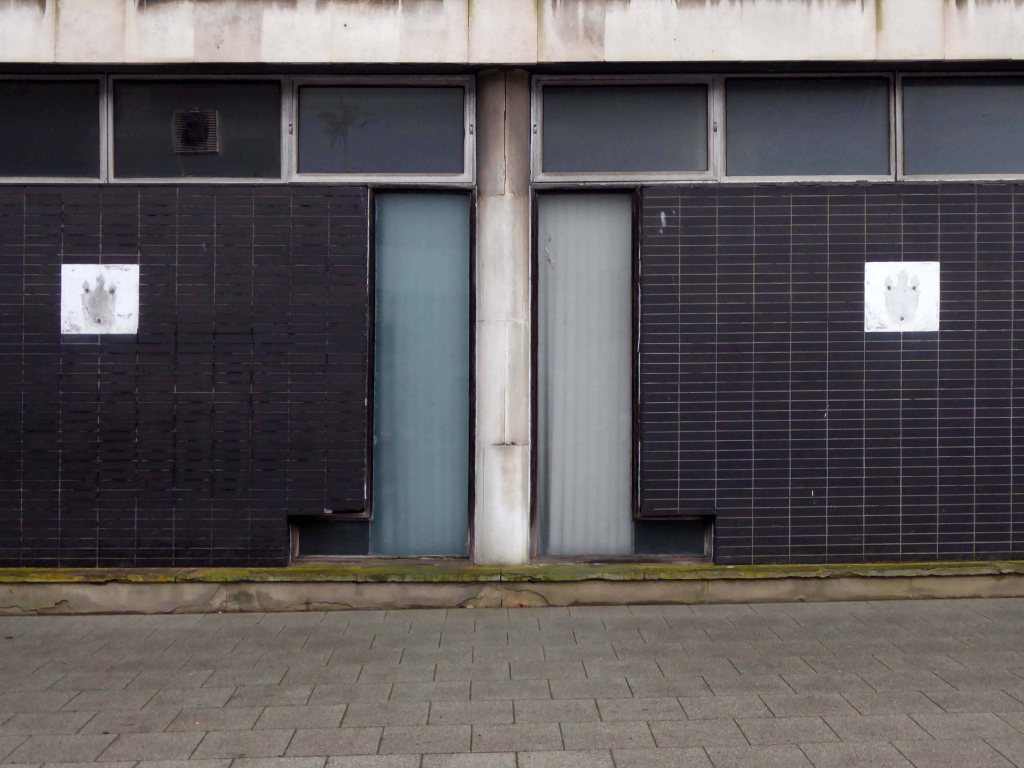
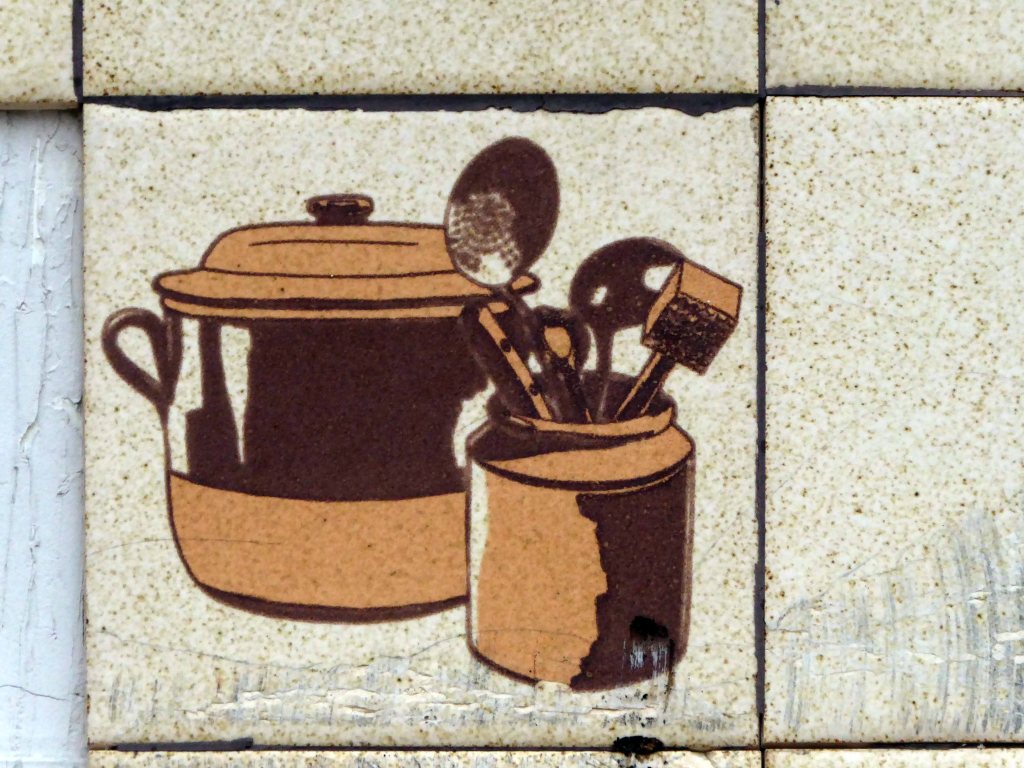
The long lost tiled café wall and a mysterious porch.

A gloomy end to a very wet day.

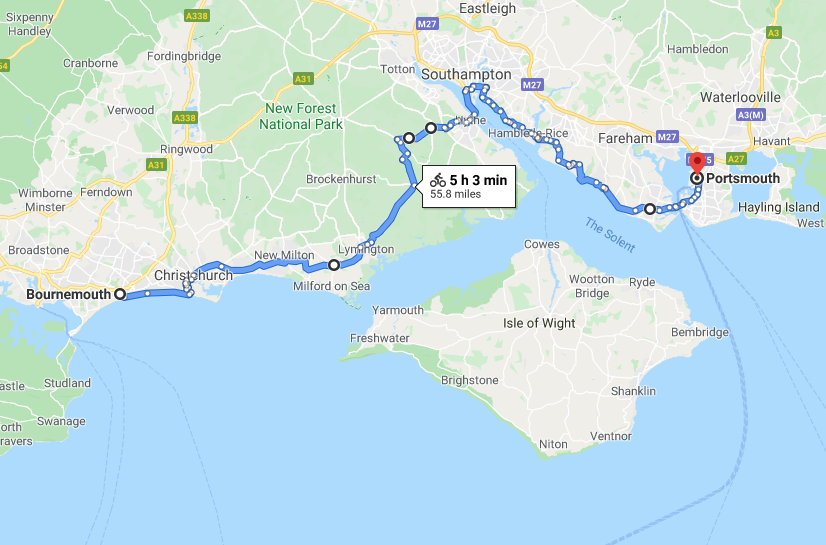
Bournemouth to Portsmouth

Sunday 2nd August 2015 – you awake and you’re still in Bournemouth and still in one piece, the possibility of late night stag and hen madness passed over without incident.

A quick look around town, then let’s get off to Pompey – where I was very proud to be a Polytechnic art student 1973/76, in good old Lion Terrace.

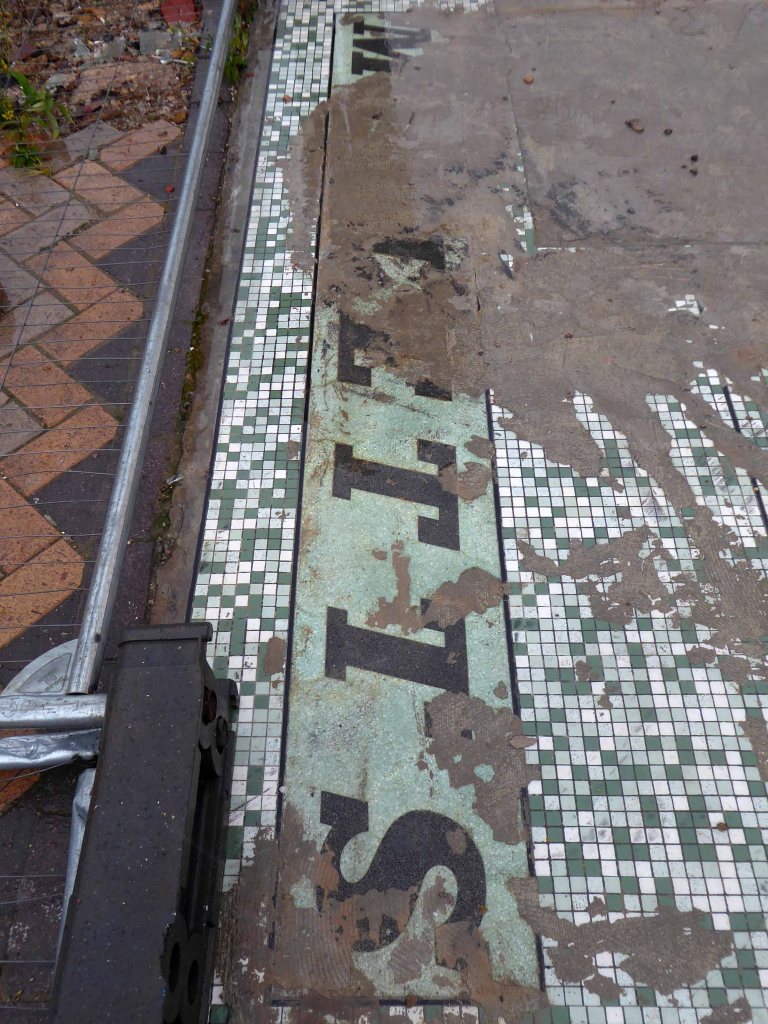
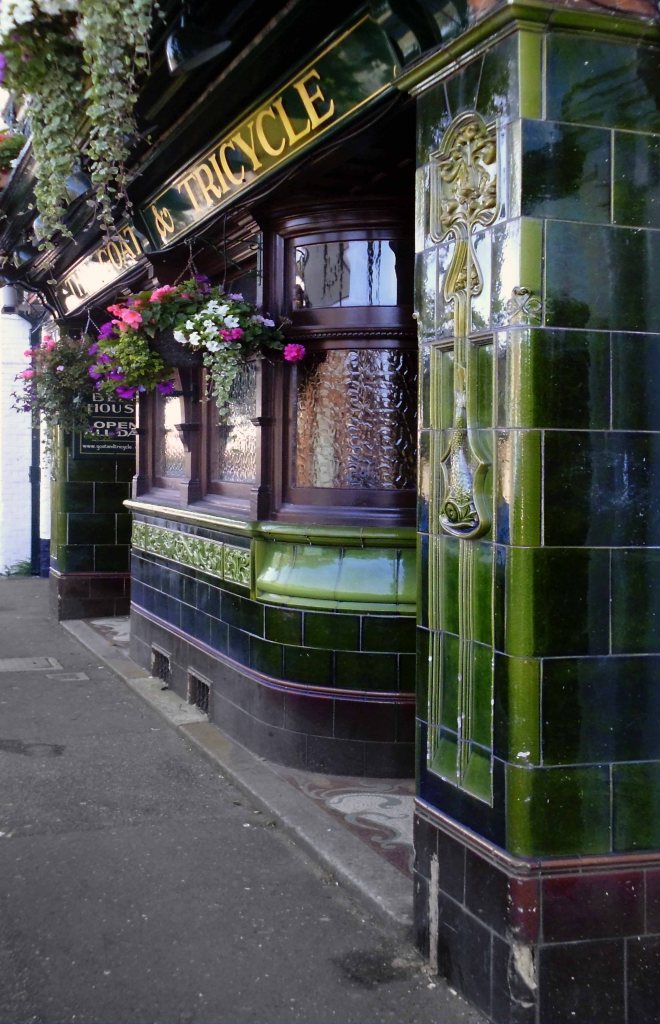
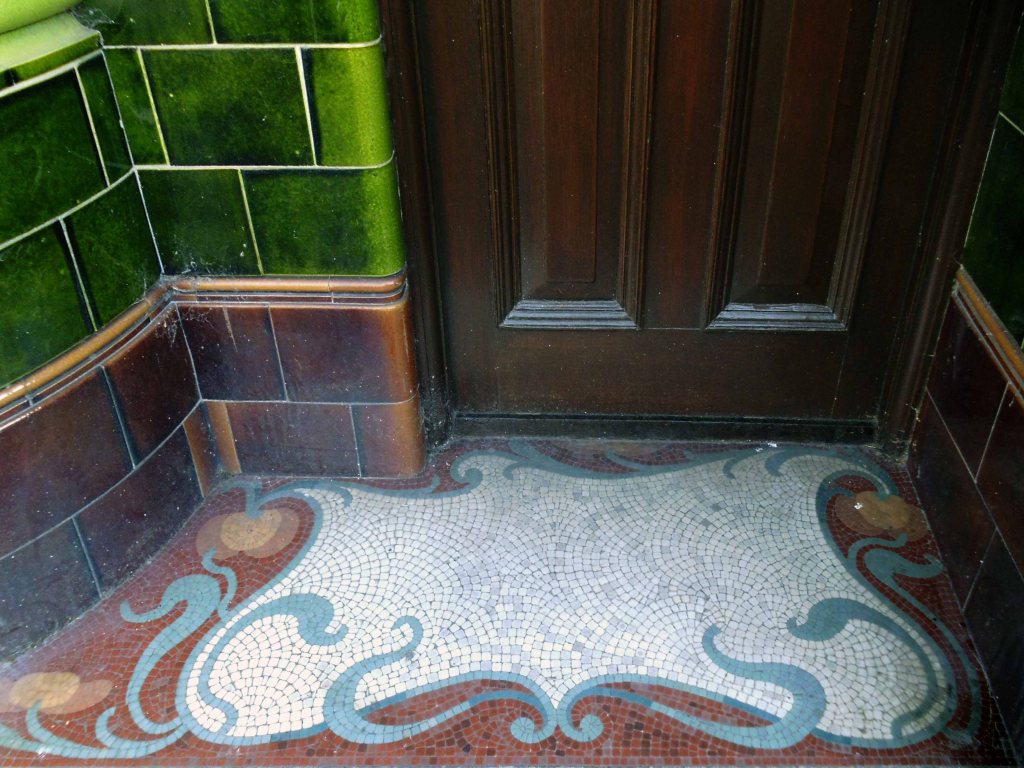
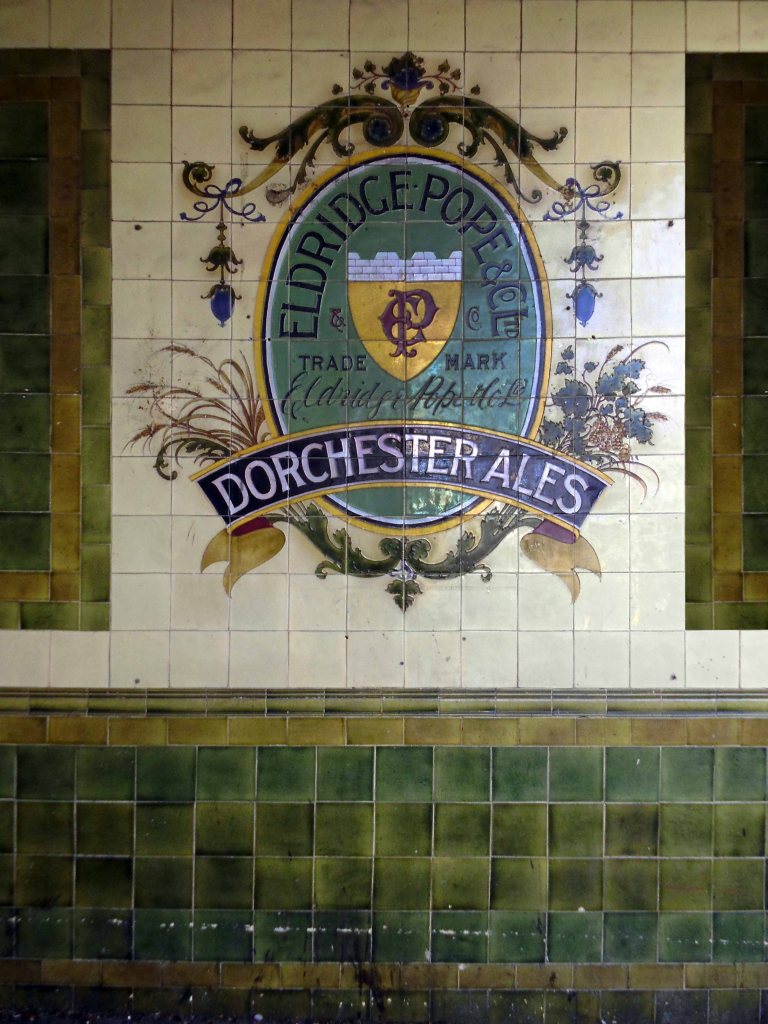
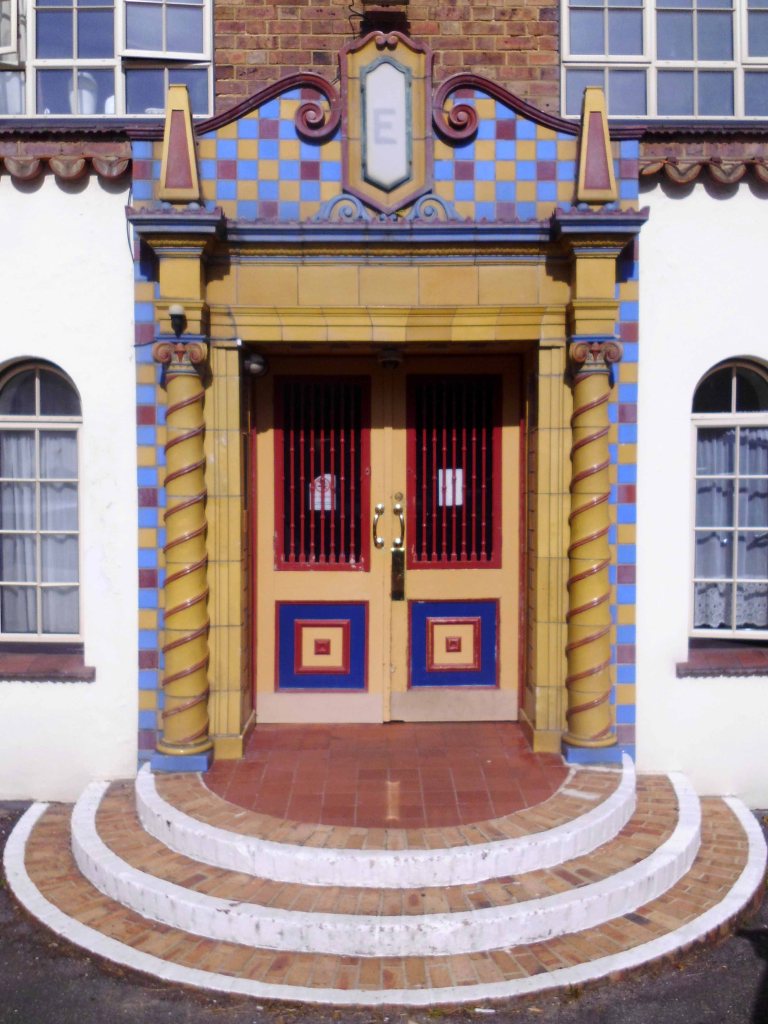
Last night’s late night drinking den with its fabulous faience frontage and doorstep mosaic.

Close by this tiled porch at The Branksome.

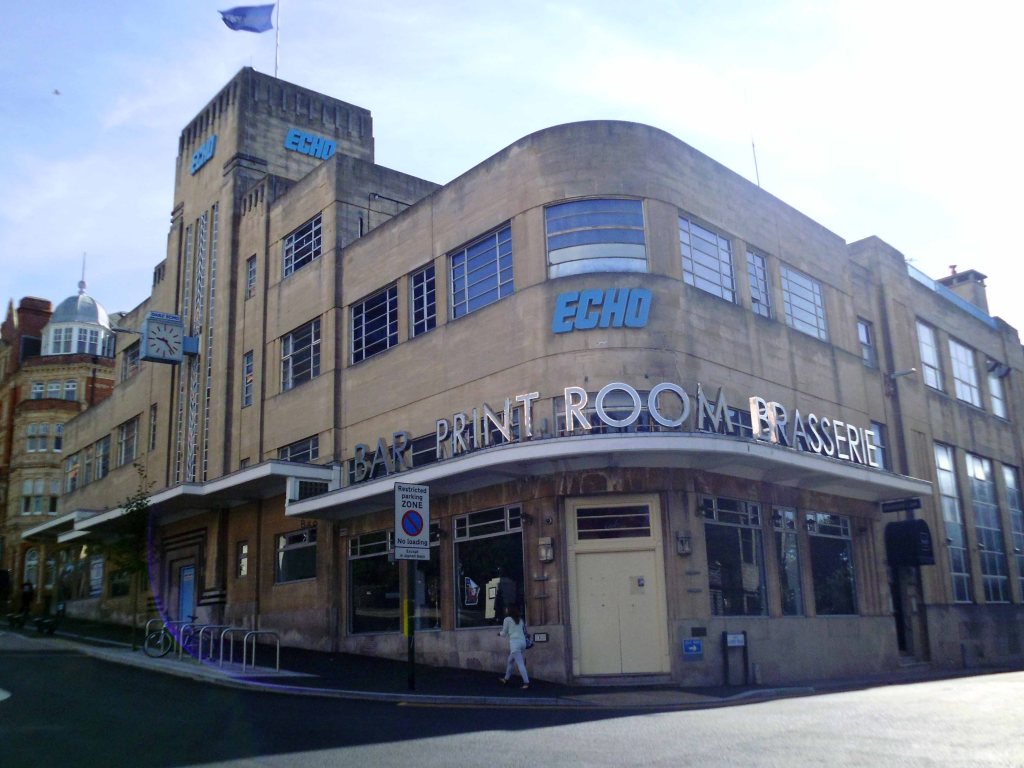
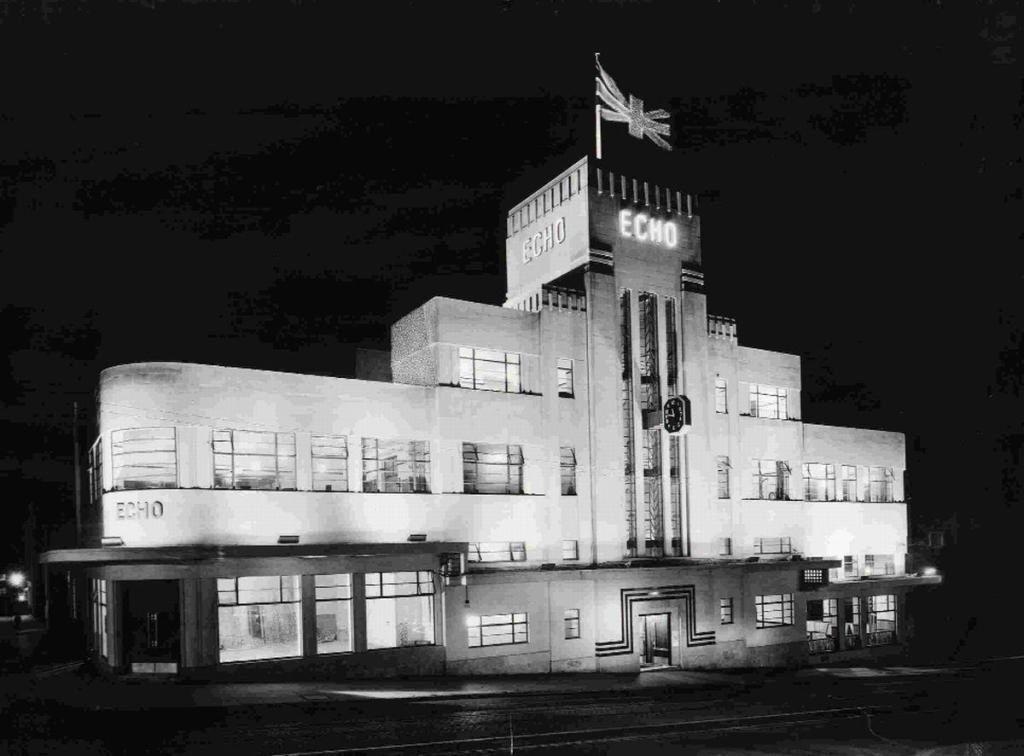
Built 1932 by Seal and Hardy as offices for the Bournemouth Echo, steel-framed, the main elevations faced in Monks Park Bath Stone.

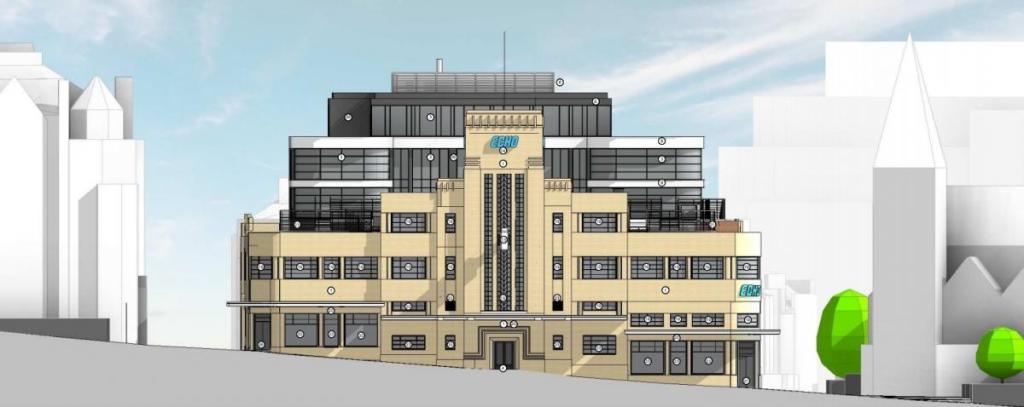
Plans to redevelop the listed Daily Echo offices in Bournemouth were withdrawn shortly before they were due to be discussed by councillors.

That Group’s application to extend the Richmond Hill building to create more work space as well as a 30-bed hotel, café, gym and events space had been recommended for refusal before it was pulled from the agenda for Monday’s meeting.

Daily Echo

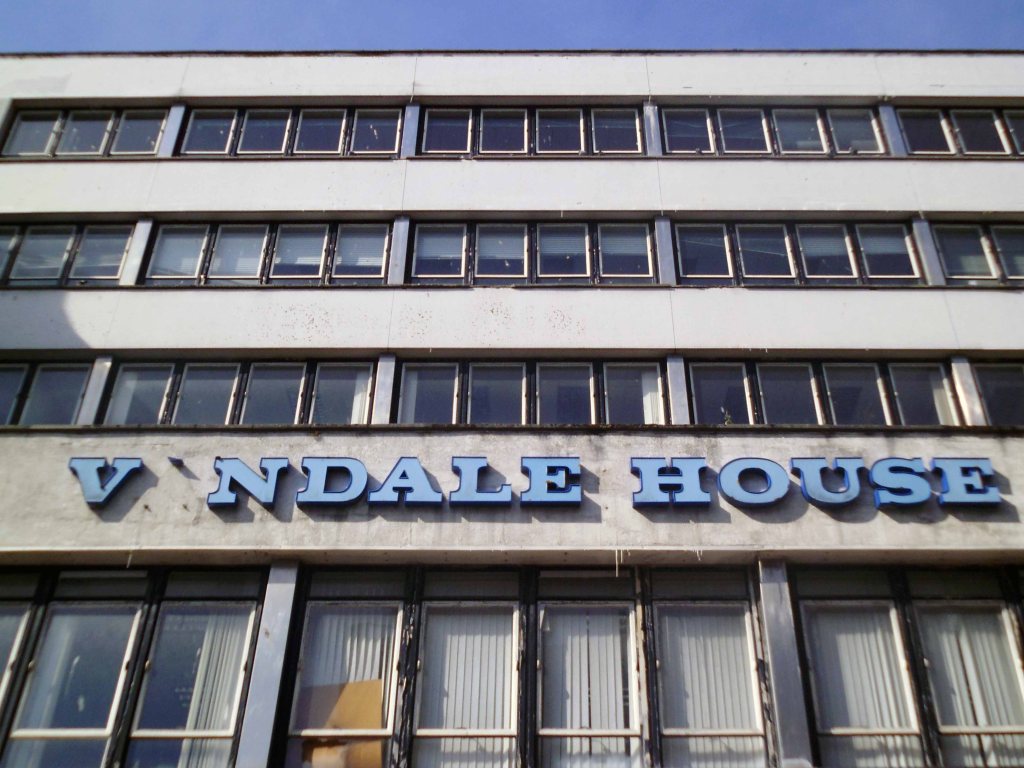
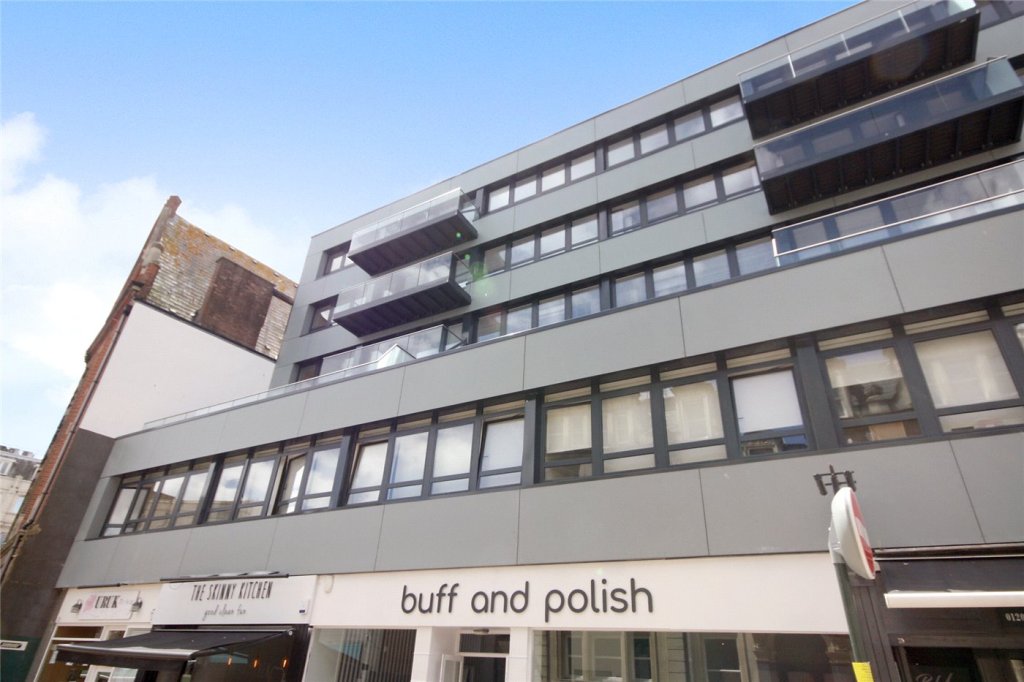
Vandale House appears to have been refurbished as flats, having lost its architectural type.

The property benefits from modern and contemporary décor throughout, large balcony and views over the Town Centre itself. 

This art deco cinema was built for ABC and designed by their regular architect William Glen, it opened in June 1937.

The ABC, originally the Westover Super Cinema, entertained audiences for almost 80 years before it was closed in 2017 – along with the nearby Odeon – to make way for a new Odeon multiplex at the BH2 complex.

In its rejected plans for the site, Libra Homes had pledged to restore the cinema’s original Art Deco frontage, if it survives under the cladding that was added in the 1960s.

Cinema Treasures

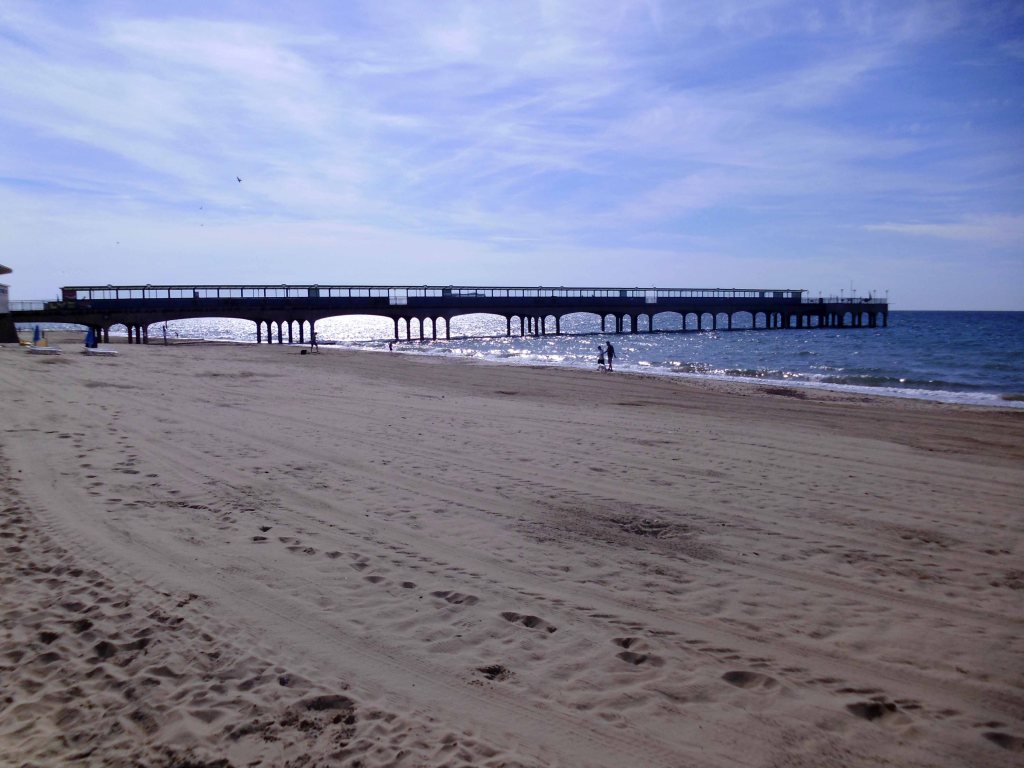
Boscombe Pier – is the perfect vantage point to watch volleyball, table tennis and mini golf. If you are feeling adventurous, try scaling the nearby, purpose built boulders next to the pier or have a go at slacklining!

There are nearby are cafés, takeaways and beach shops all within walking distance from Boscombe Pier. The pier is free to enter and has a plethora of activies that individuals and families can enjoy! 

Designed by Archibald Smith, the 600 foot pier opened on 28th July 1889. In 1924/5 and 1927, the head was renewed in high alumina concrete and, between 1958 and 1960, the neck was reconstructed using reinforced concrete.

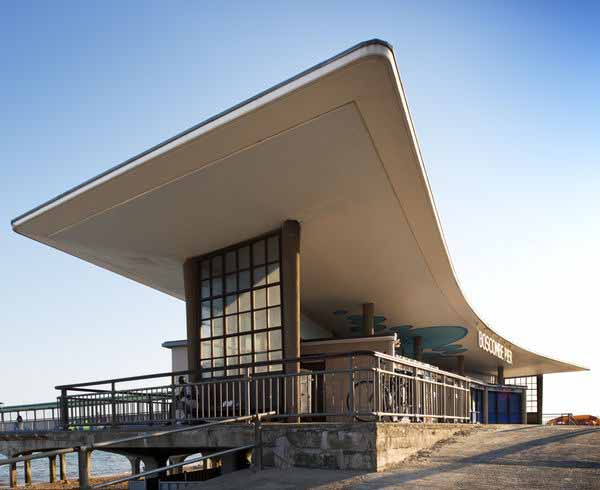
The neck building is a design by the Borough Architects, demonstrating great verve and vivacity. The contemporary style associated with Frank Lloyd Wright’s Usonian houses and made popular with Californian homes in the 1940s was well suited to the requirements of an architecture that combined ‘sun and fun’. The contemporary style made a feature of expressing different elements or planes of a composition with different materials, and here the combination is honest and each element well detailed. The sweep of the cantilevered, boomerang-shaped roof is a particularly joyous feature. It is a building that would have been despised as being exactly of its date until recently; now it is a building that can be celebrated for that very reason, and a rare example of pier architecture from these years. 

Historic England Listing

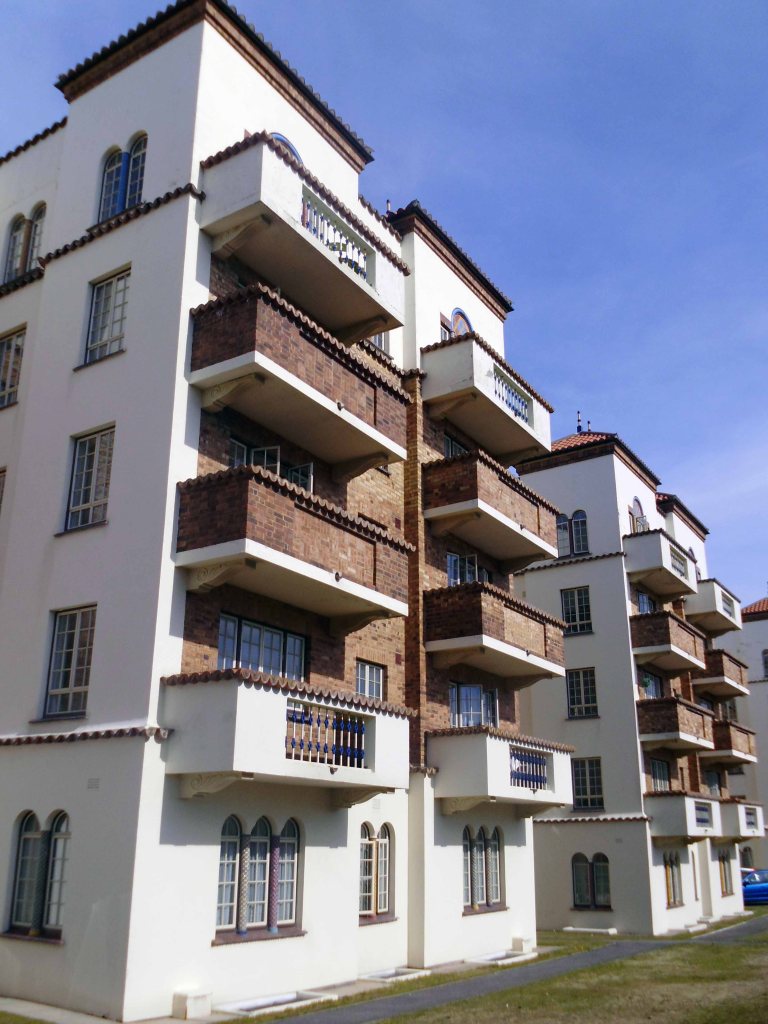
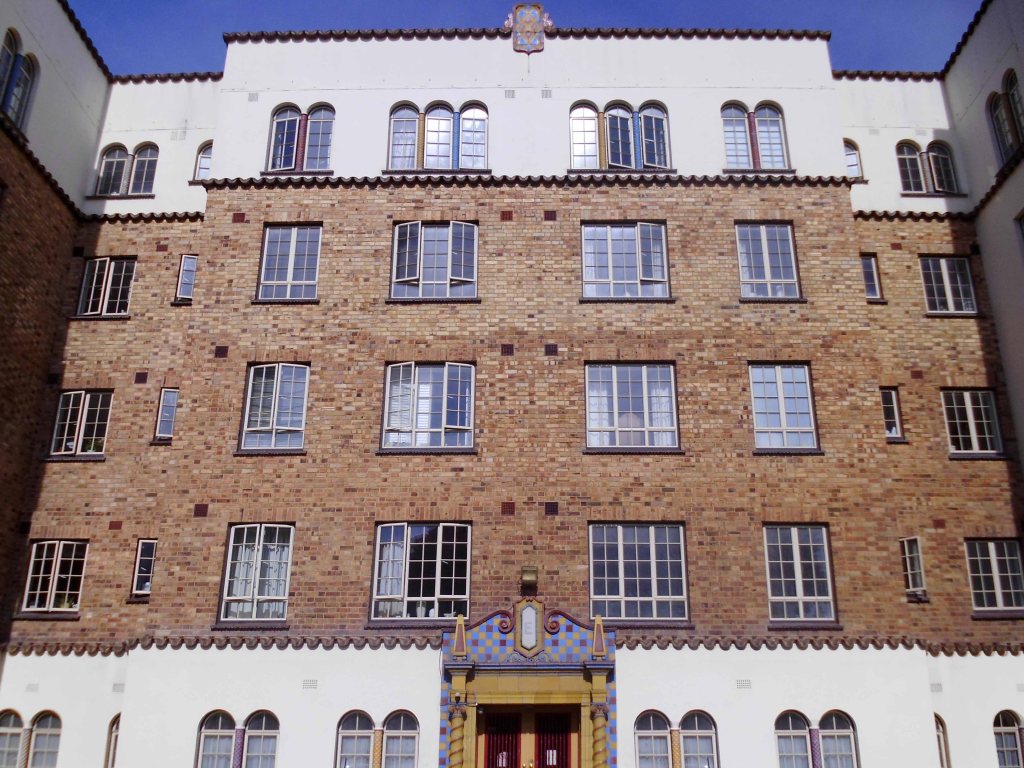
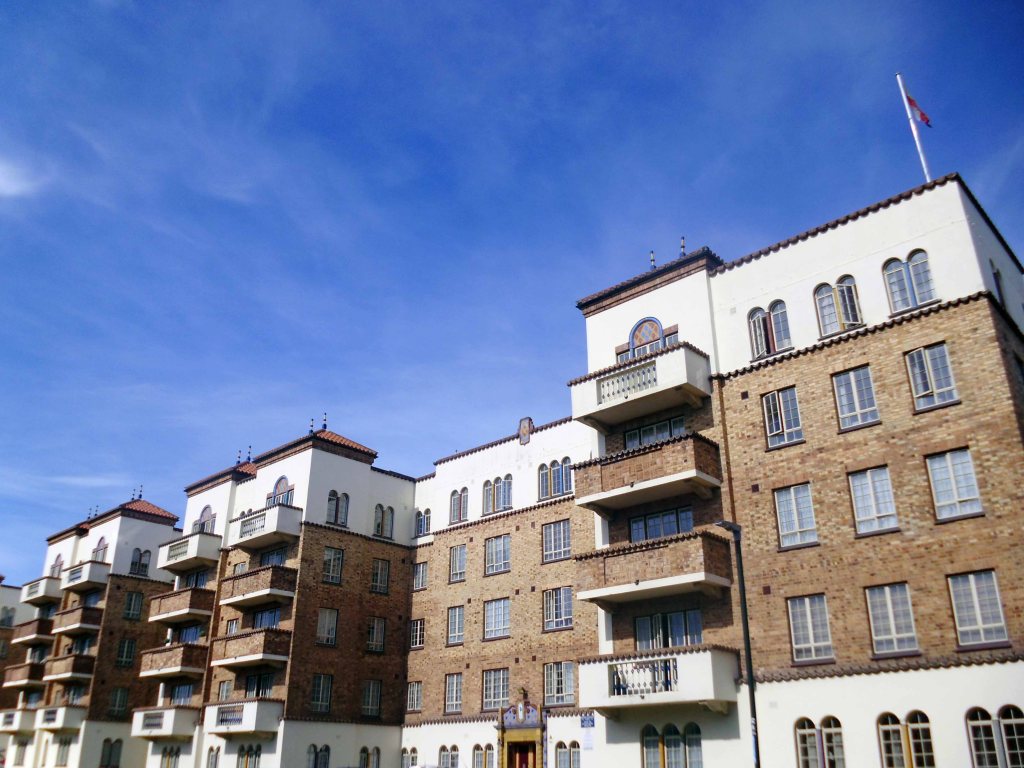
San Remo Towers a block of 164 flats, with penthouse and office, over basement garage. 1935-8 by Hector O’Hamilton.

Facilities offered as inclusive in this price included centralised hot water and central heating, an auto vac’ cleaning system, centralised telephones, a resident manager, a porter, daily maid, boot cleaning and window cleaning services. There was a Residents’ club with a reading room card room, billiard room and library, and a children’s recreation and games room. There were kiosks in the ground-floor lobbies selling tobacco and convenience items, where the staff took orders for the local tradesmen. The fifth-floor restaurant offered a la carte meals, which could be taken at pension rates of 38s per week. A simpler dinner cost 2/6d. The use of an American architect, Hector O Hamilton, may be an explanation for the building’s large range of facilities, including the grand underground car park and sophisticated servicing

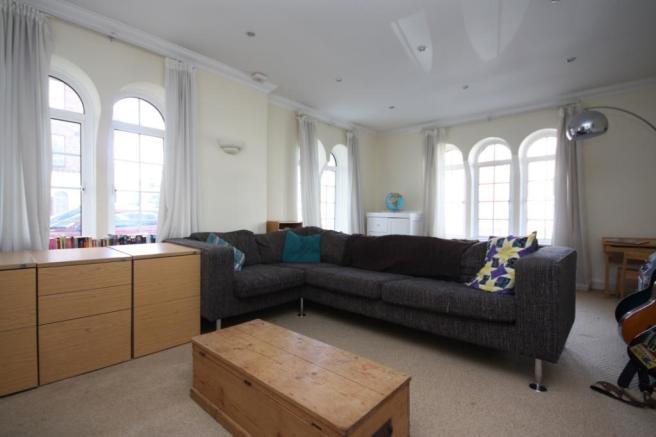
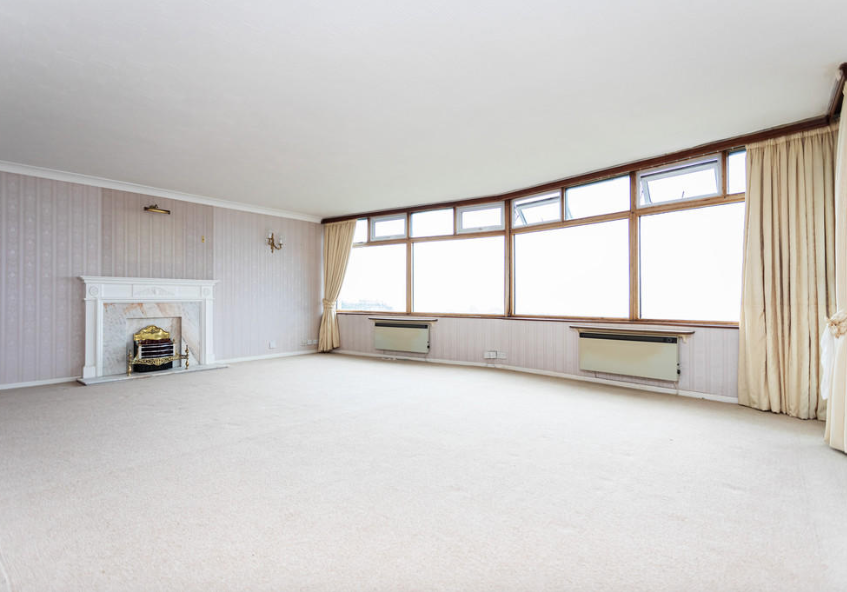
Two bed flat £183,000

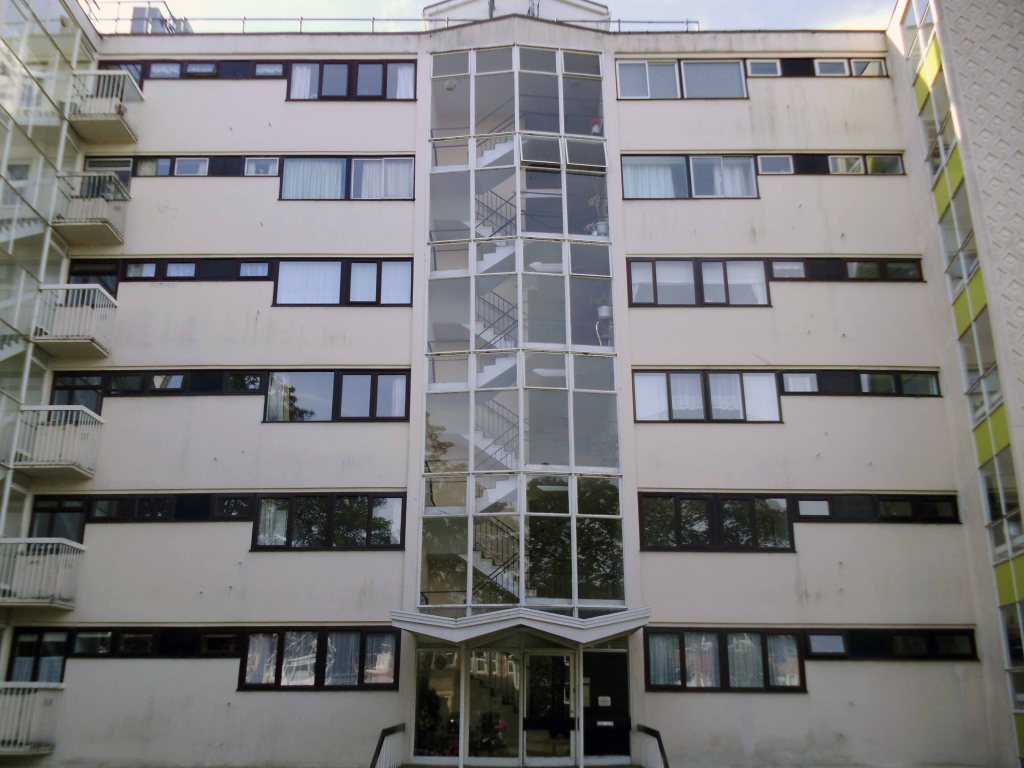
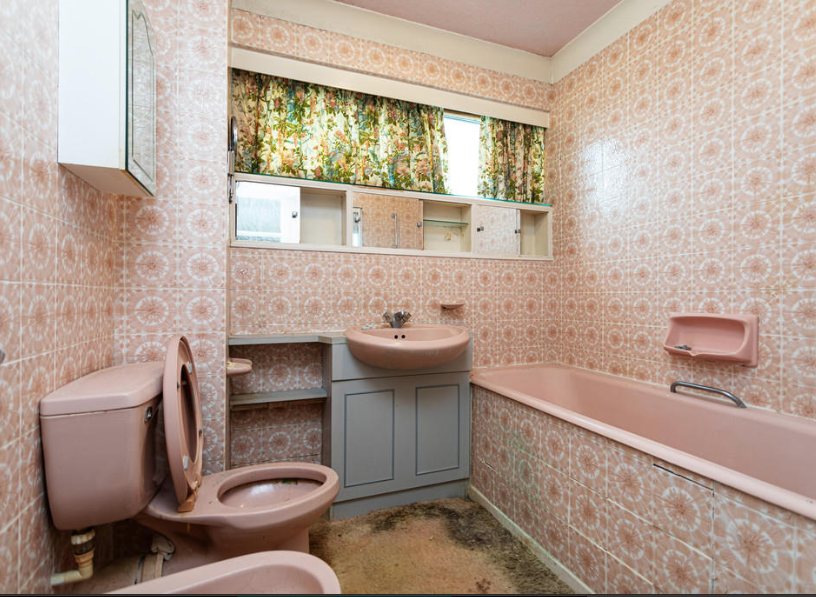
Carlinford benefits from commanding views over Poole Bay looking to the Isle of Wight across to the Purbecks. Included in the annual service charge is a Caretaker, Gardener & the communal areas are kept in good order. A fabulous location and a great place to call home. 

Two bed flat £350,000

Crossing the New Forest and arriving in Hythe.

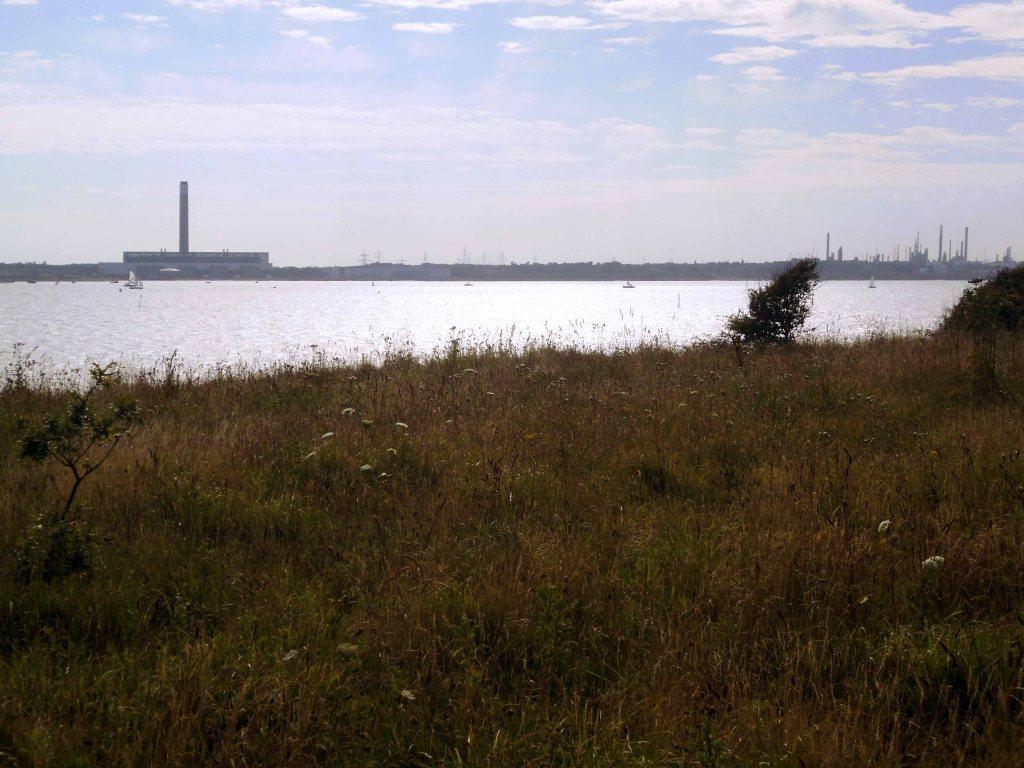
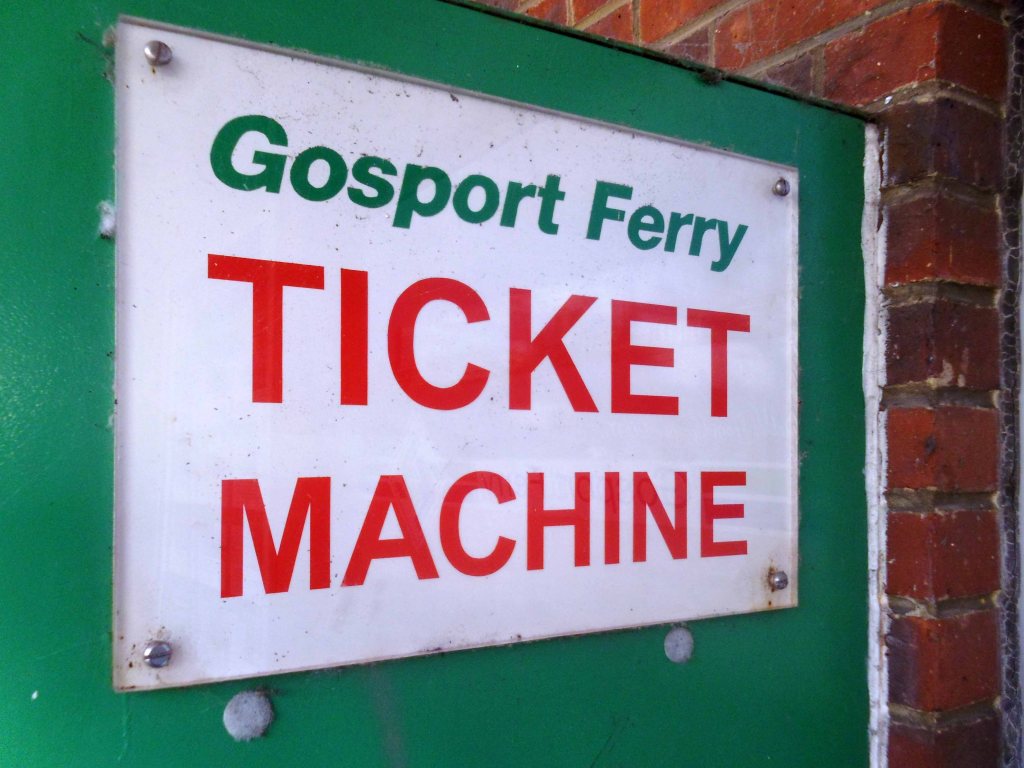
Running the length of the pier to catch the ferry across Southampton Water.

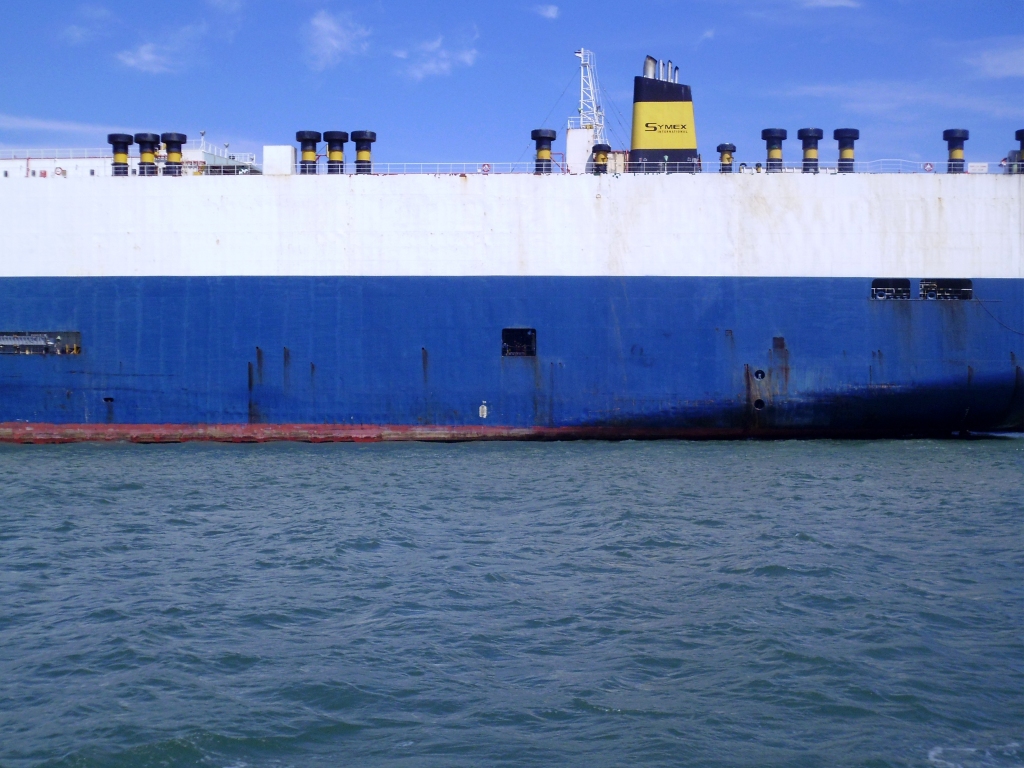
Where one is able to see many large ships.

St Patrick’s Catholic Church 1939

W.C. Mangan’s last church in the diocese, with a moderne Gothic character rather than the basilican style he favoured elsewhere. The design is not without character and is in the mainstream of brick church building around middle of the twentieth century.

Taking Stock

First siting of Stymie Bold Italic/Profil since Devon

Sadly the Hovercraft Museum was closed – Founded 1987 as a registered charity, the Museum Trust is the worlds greatest collection of Hovercraft archive, film, and historic craft, dating back to to John Thonycroft’s 1870 air lubricated boat models and the then Dr. Cockerell’s 1955 annular jet experiments.

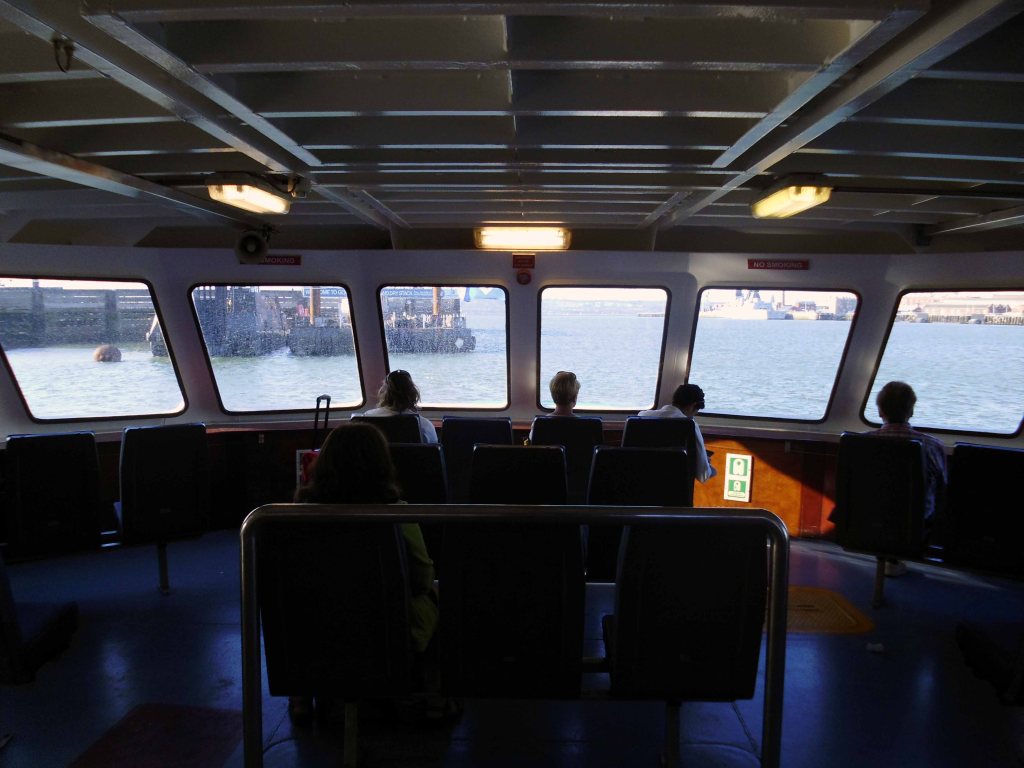
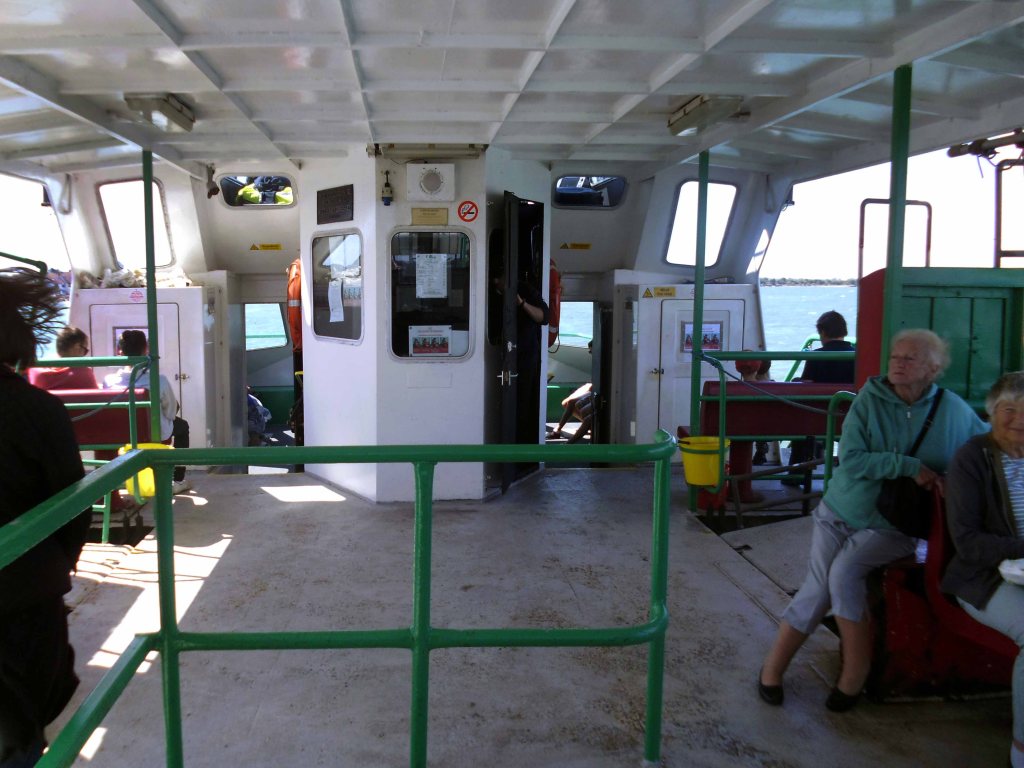
So excited to be boarding yet another ferry.

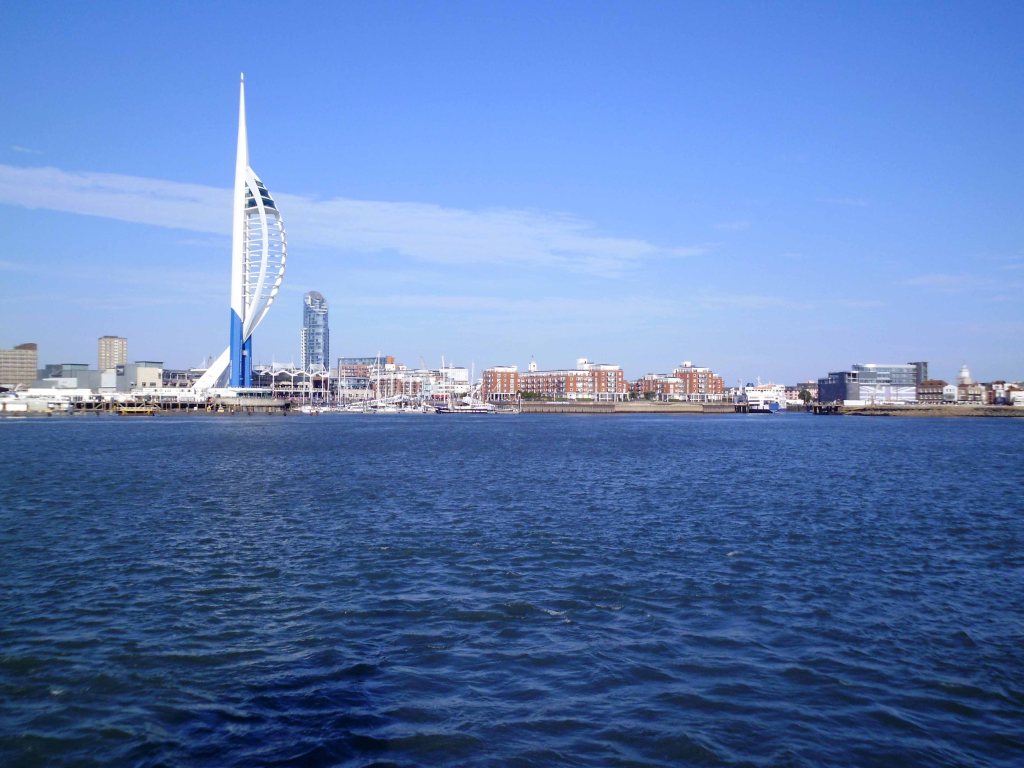
Seeing Portsmouth for the first time in a long time.

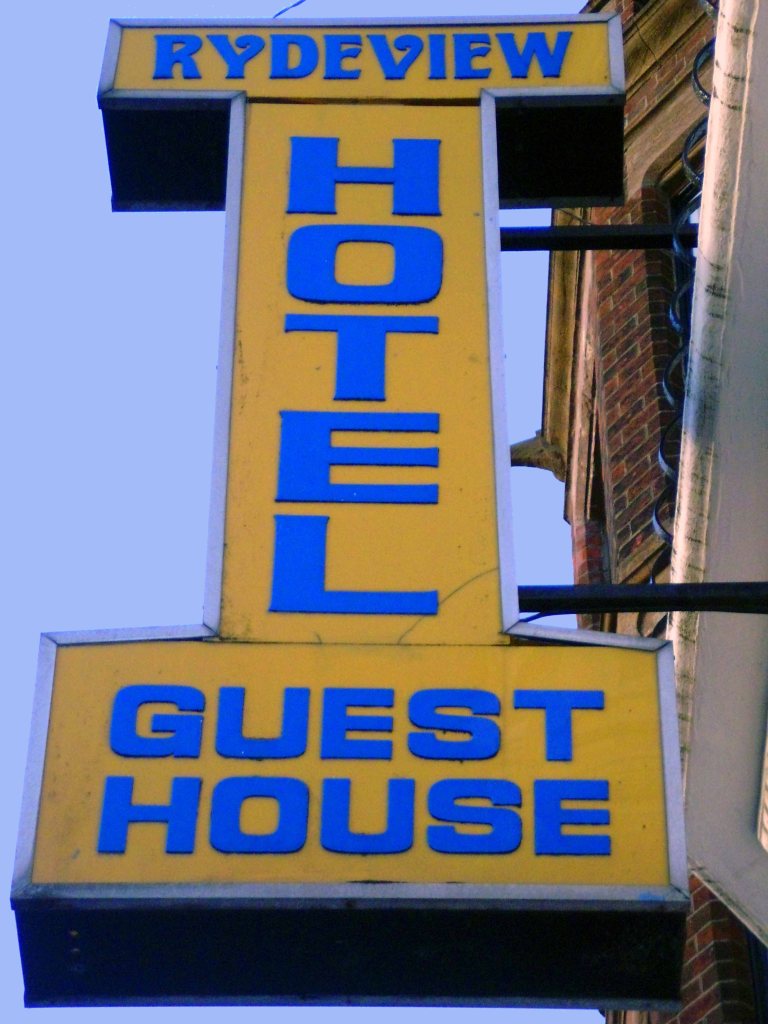
Finding cheap digs at the Rydeview Hotel.

My partner and daughter stayed here recently and the warm reception we received was great, thought it was going to be real value for money however when getting into the family room, which was a decent size, the curtain was half hanging down, iron marks and stains on the carpet, dirty windows, mould on the bathroom ceiling, hole in the bathroom floor and a very random shower head coming from the toilet that was very unpleasant. When we checked in we asked about breakfast and we were told this was going to be an additional £3 – we thought this was great value for money for a full English only to be left hungry and out of pocket! My daughter had one slice of toast, we asked for the full English what we received was cold and hard beans, and un-cooked egg and a rank sausage, the eating area was dirty – cobwebs everywhere.

I too stayed in the Family room with a delightful mouse for company and enjoyed one of the worst meals I’ve ever not eaten.

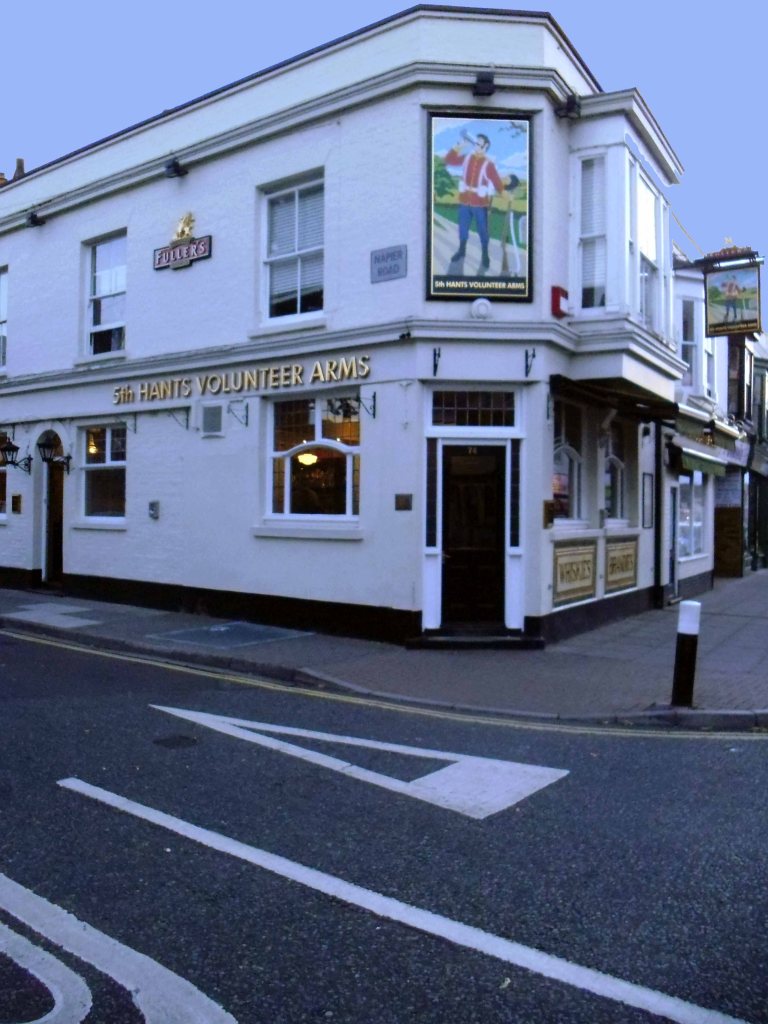
I headed for the 5th Hants Volunteers where I formally kept company with Felim Egan, Norman Taylor and Ian Hunter way back when.

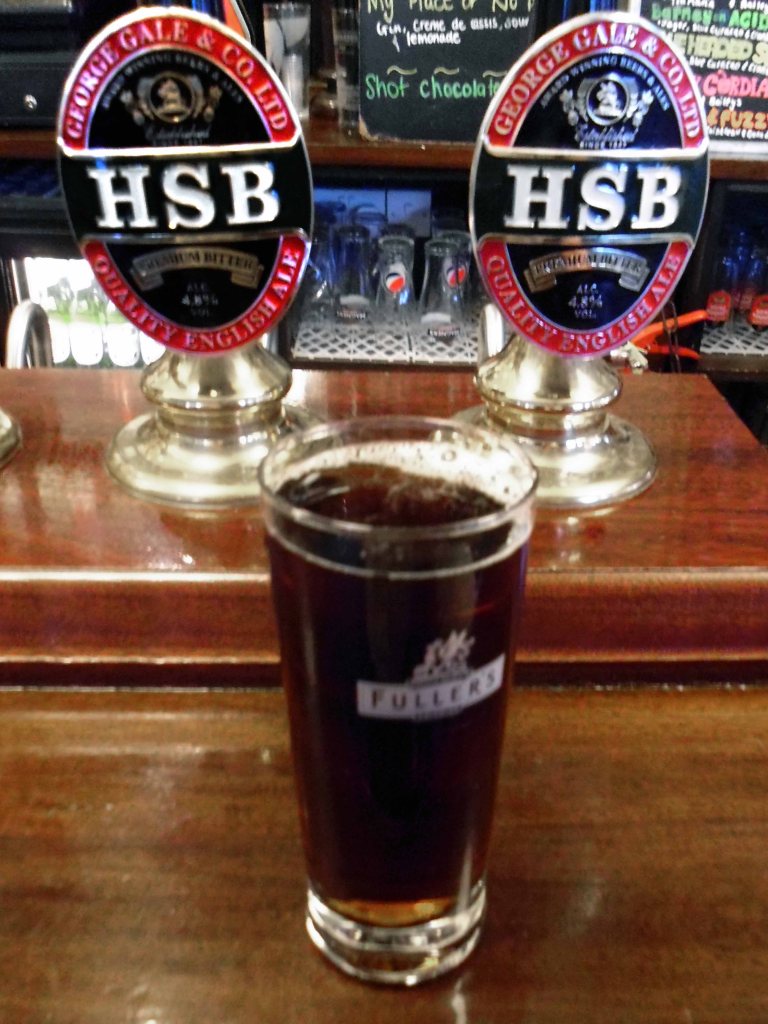
Drinking Gales HSB – formerly a local brew now owned by Fullers

Established in 1847 Gales Brewery (George Gale & Co. Ltd) was an old brewery situated in Horndean, on the edge of Waterlooville. It made the nutty HSB – Horndean Special Bitter and the newer Gales Bitter. It took its water from its own well situated under the brewery which is fed from the South Downs, and the yeast and liquor, coupled with the local brewing style, produced beers with a sparse head, quite dark in colour.

In late 2005 Fuller’s Brewery bought Gales for £92 million. In January 2006, Fuller’s began cutting jobs at the Horndean brewery, and it was announced on 27 February 2006 that the brewery would close at the end of March 2006, although distribution and warehousing would continue in the area.

It didn’t tater the same and the pub had been gutted – gutted.

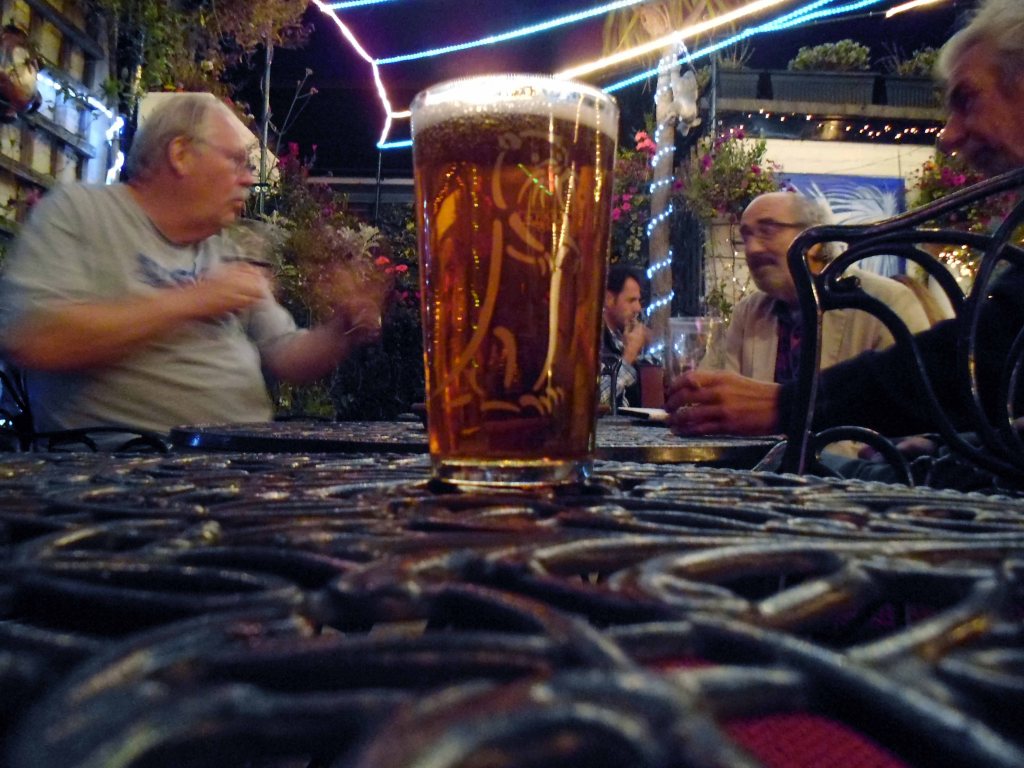
I beat a retreat to the Barley Mow – where I fell in with a gang of former Poly students from the 70s – they had studied and never left.

Eventually we all left.

Night night.