St Mary’s Church Interior

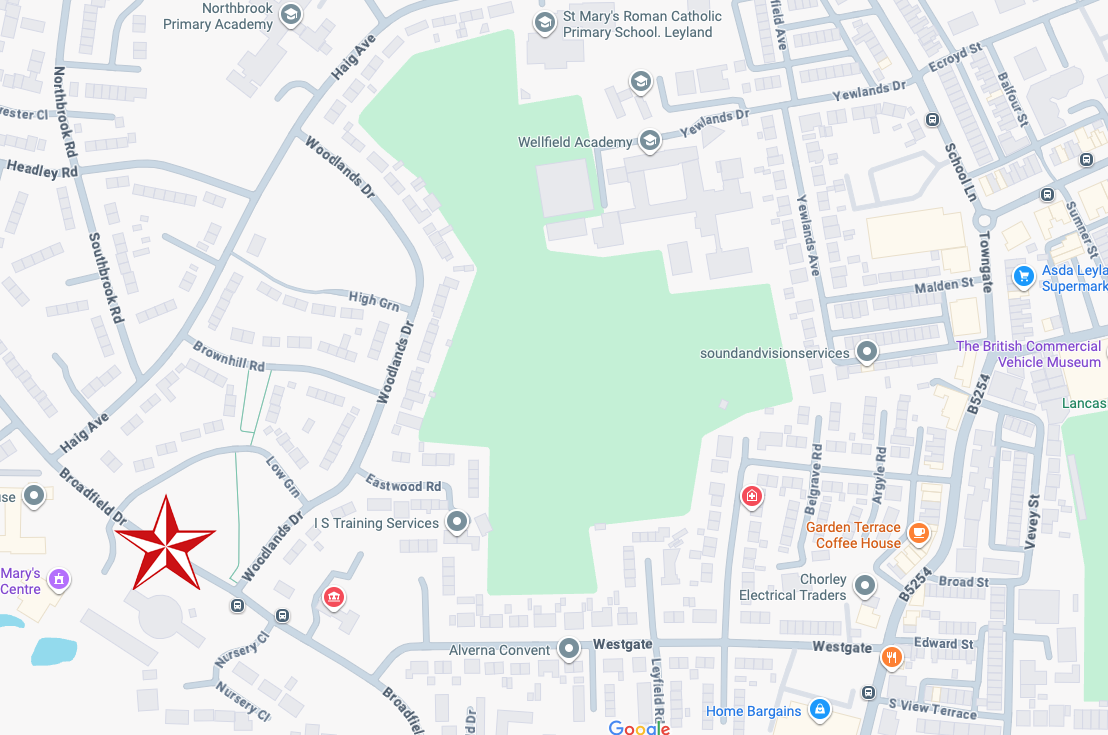
Broadfield Drive Leyland Lancashire PR25 1PD

May I first thanks Parish Administrator Catherine, for taking the time to open the church for our visiting group of Modernists this Saturday – and providing us with the warmest of welcomes, along with a brew and a biscuit or two.
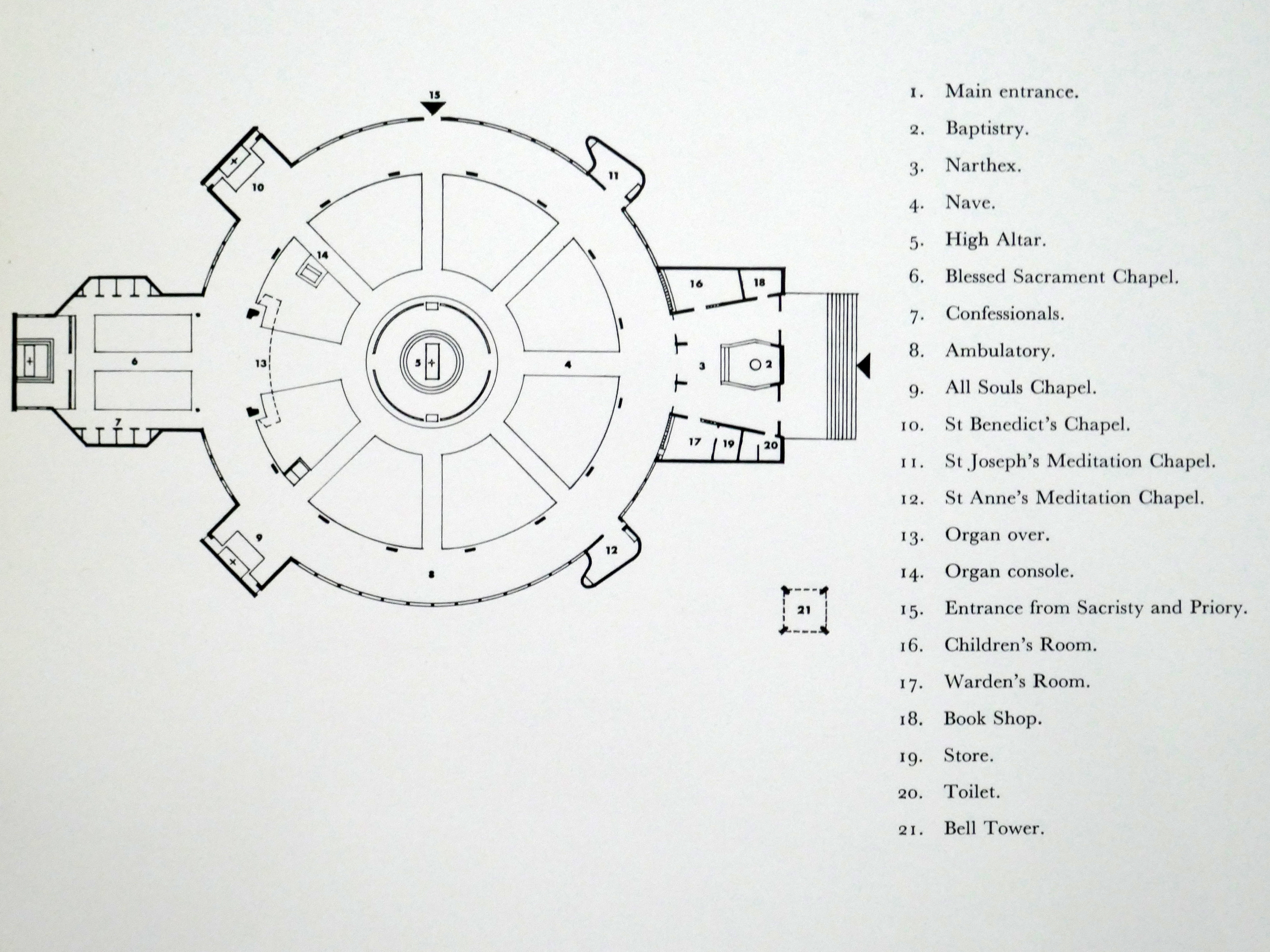
The church was designed by Jerzy Faczynski of Weightman and Bullen. Cardinal Heenan blessed the foundation stone in 1962  and the new church was completed ready for its consecration and dedication by Archbishop Beck in April 1964.

The church is a testament to the ambition, imagination and optimism of its age. Significantly, the building was the collaborative work of both immigrant and native architects, artists and designers.

This has been celebrated by Owen Hatherley’s recent book The Alienation Effect.

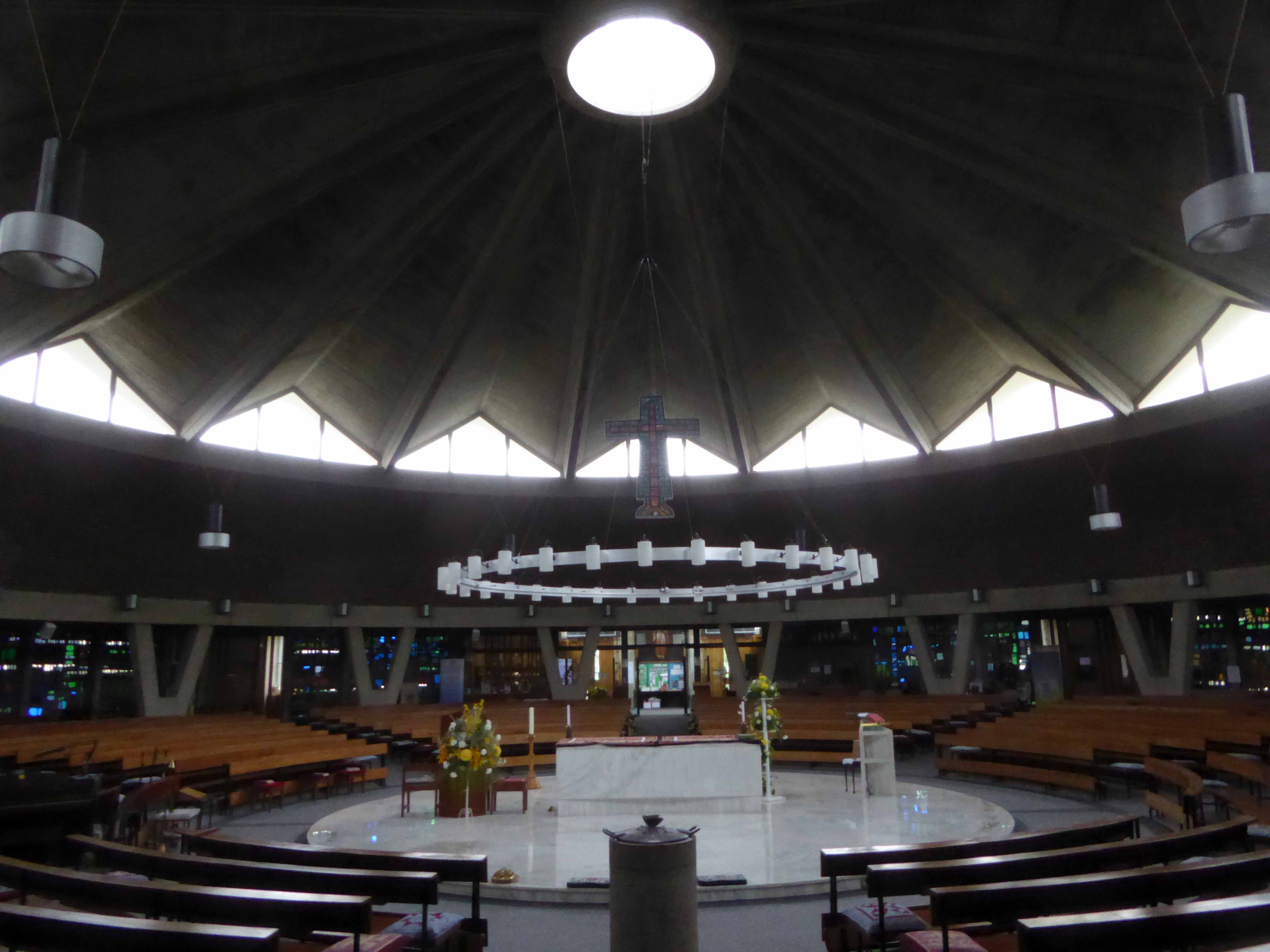
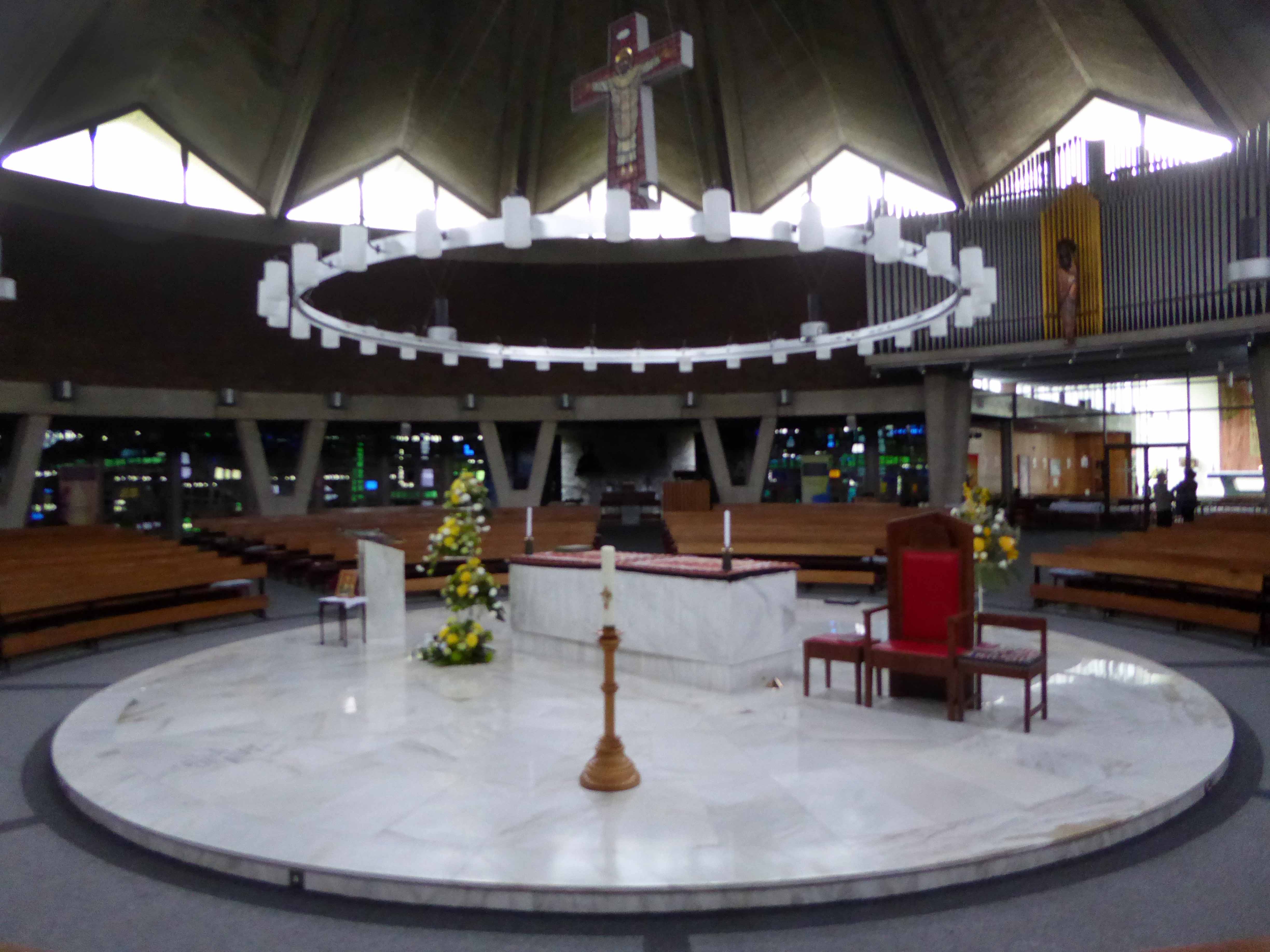
A folded slab roof of ninety five feet in diameter, its concrete cast on site, bearing the marks of the wooden shuttering, contrasting with the smooth surface of the pre-cast valley beams.
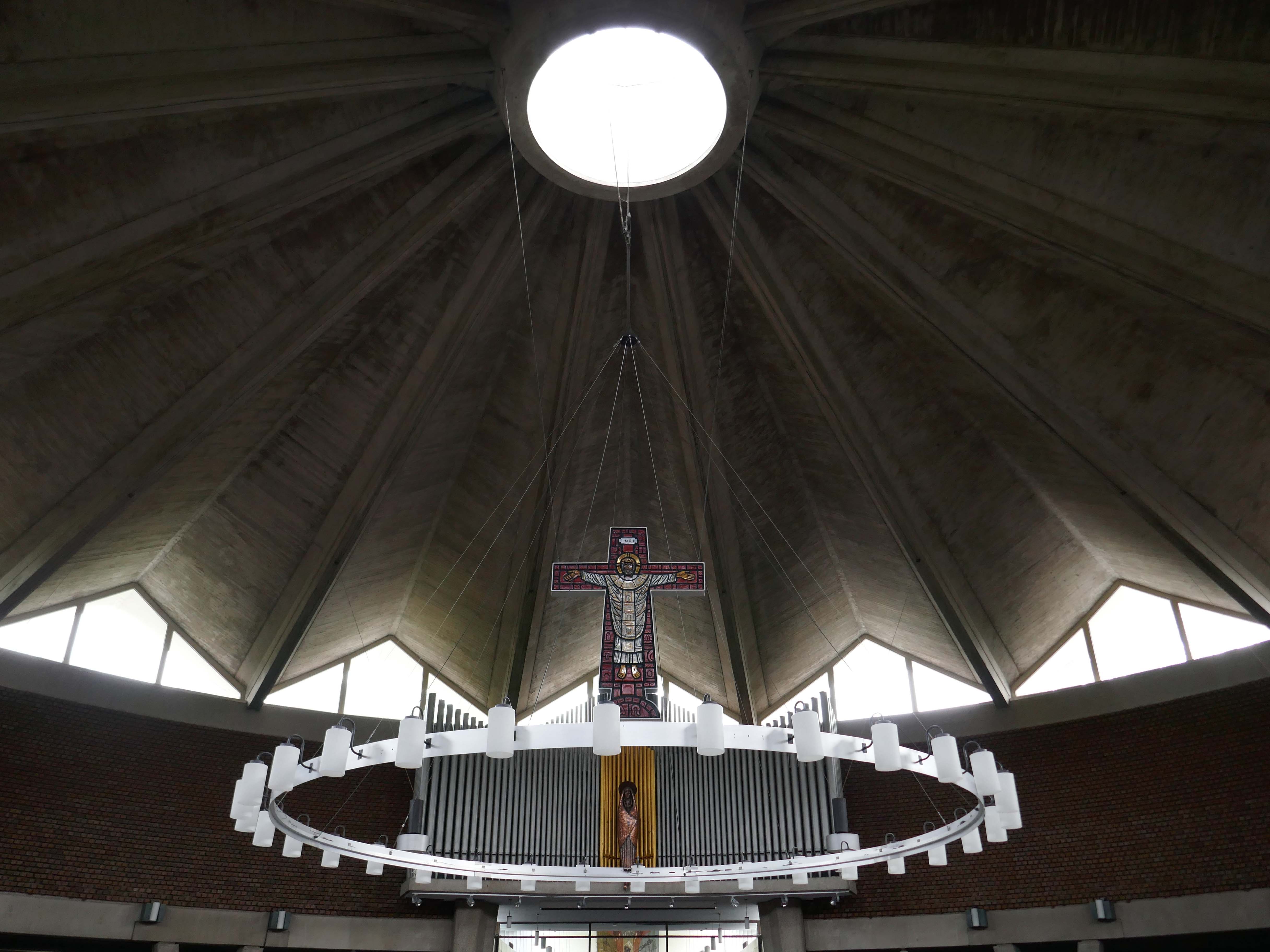
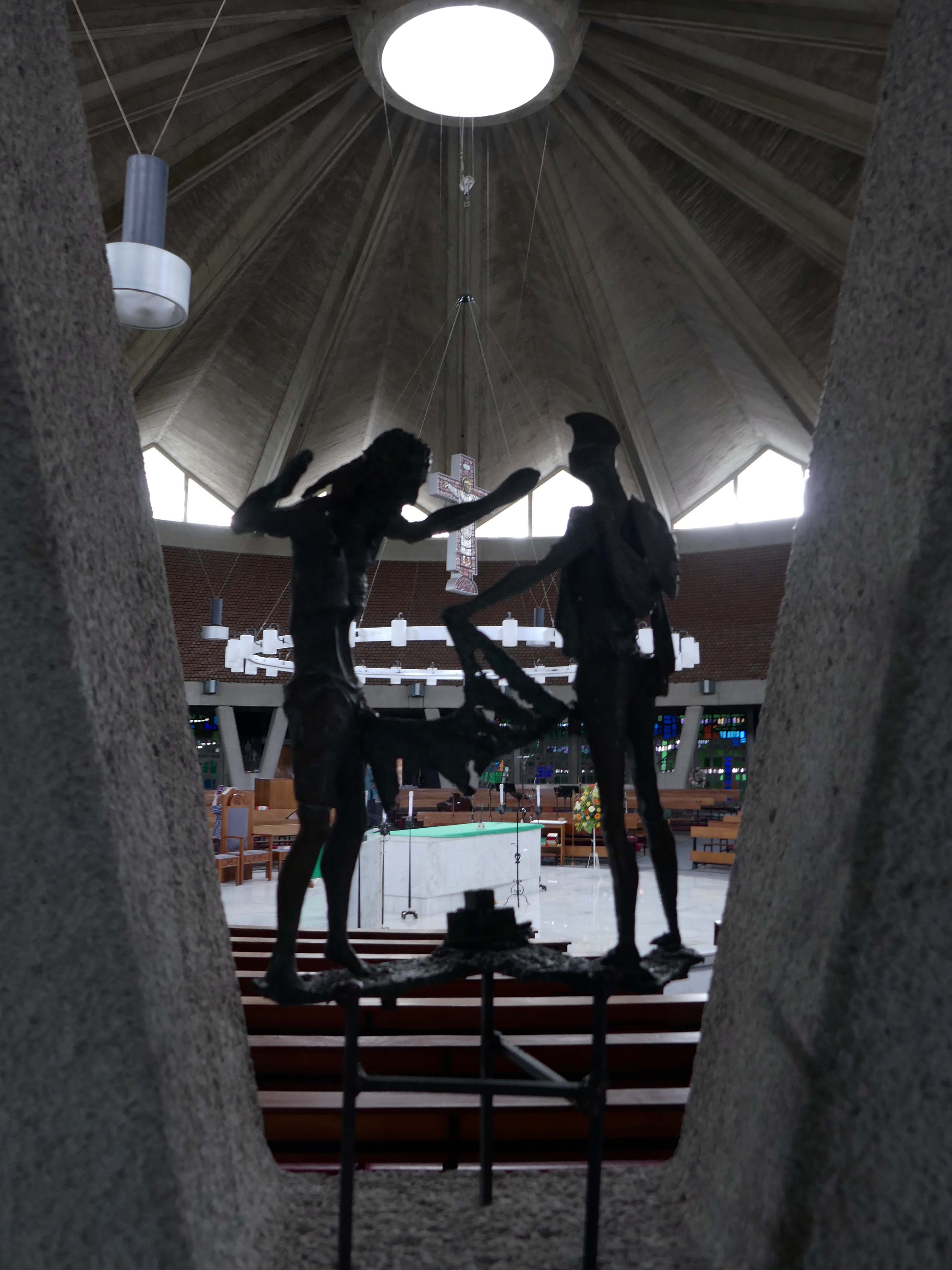
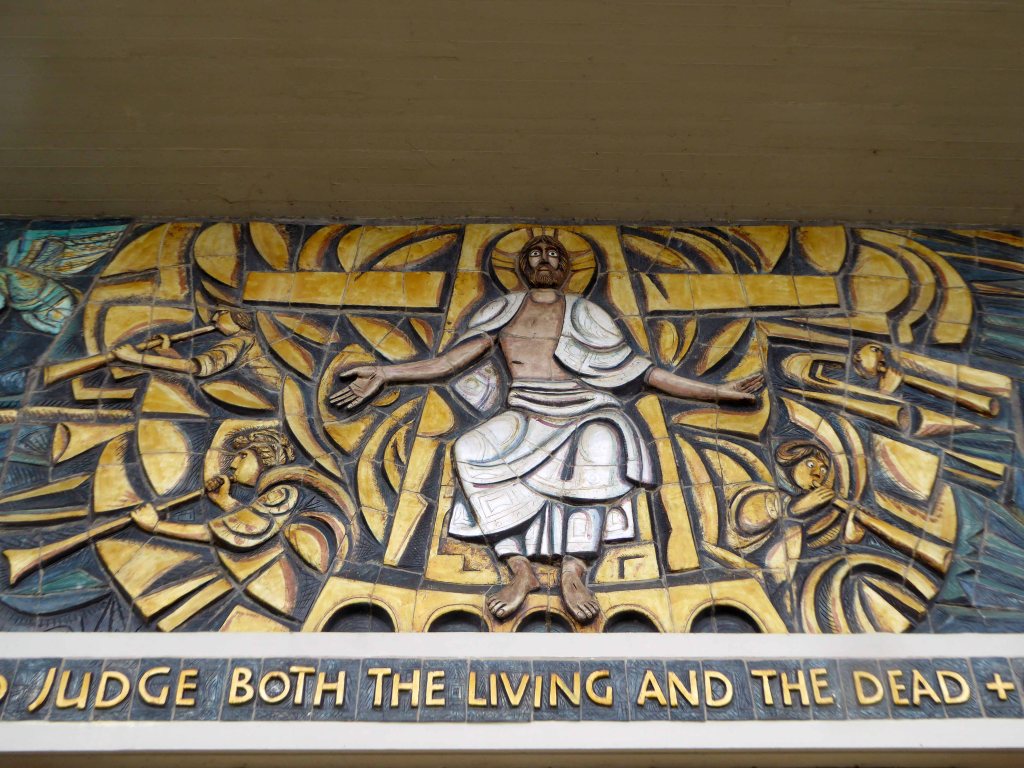
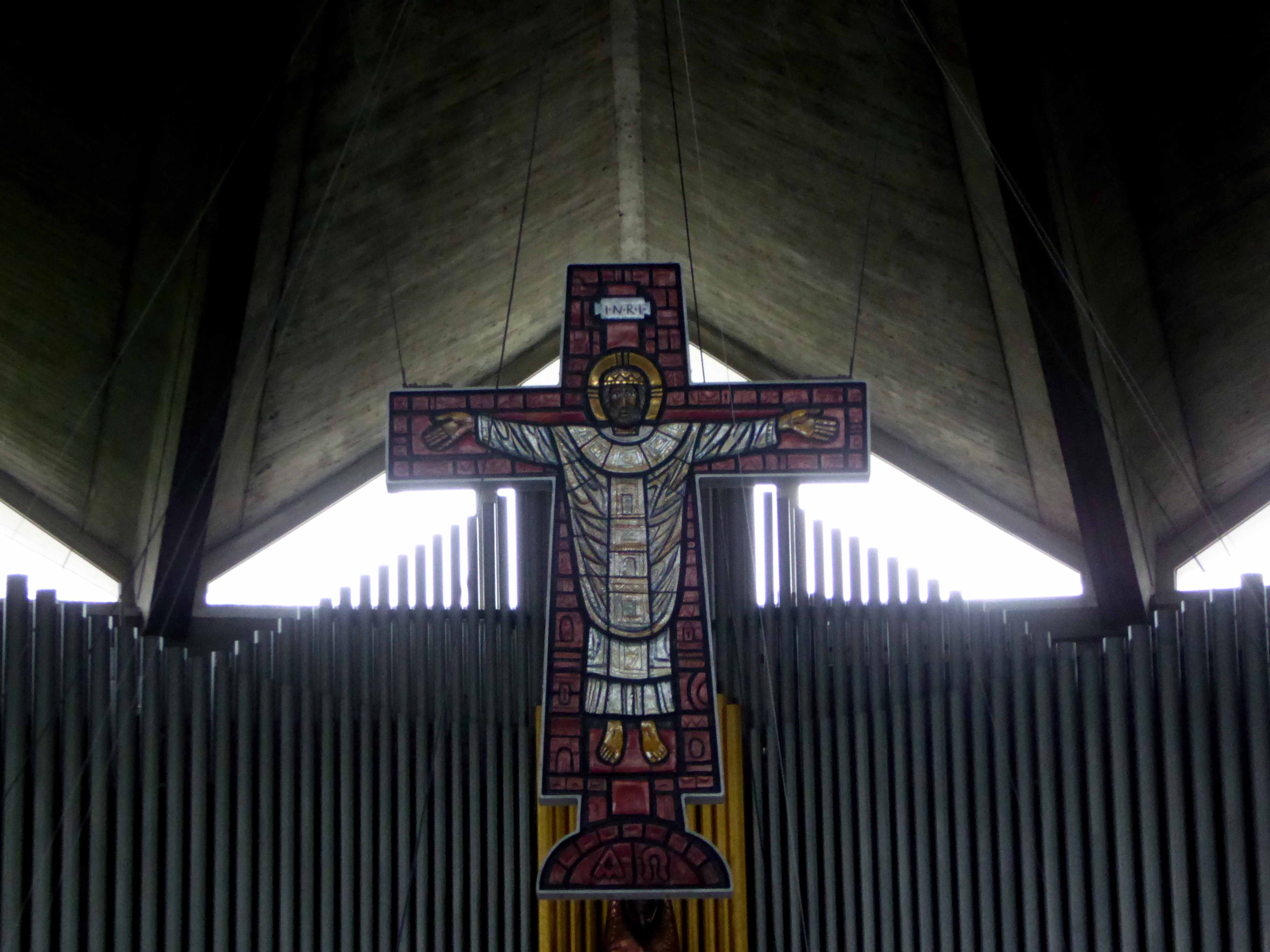
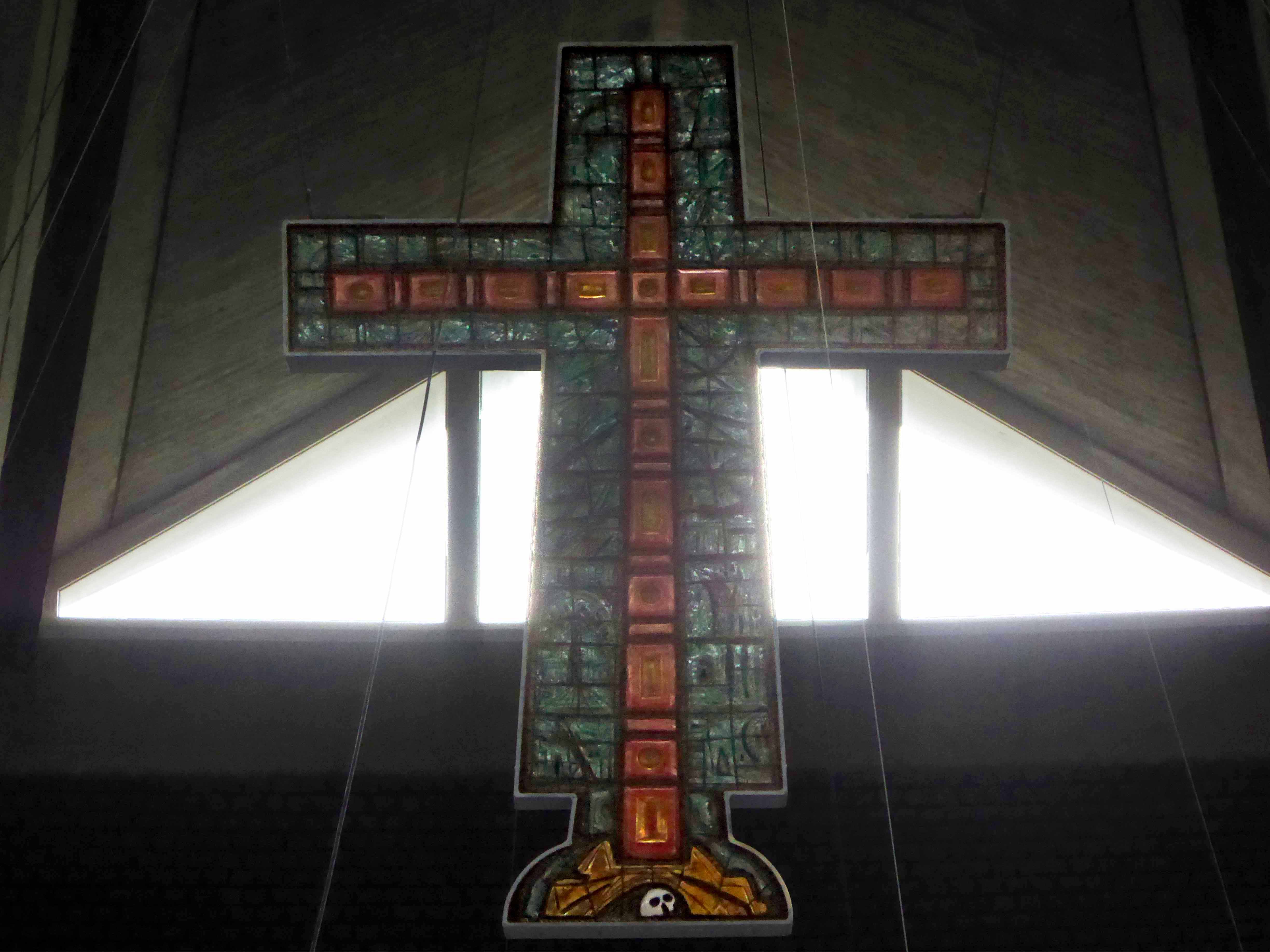
The Crucifix Rex frame is by Alan Roberts and the ceramic figure by Adam Kossowski.

The organ is designed by JW Walker & Son.

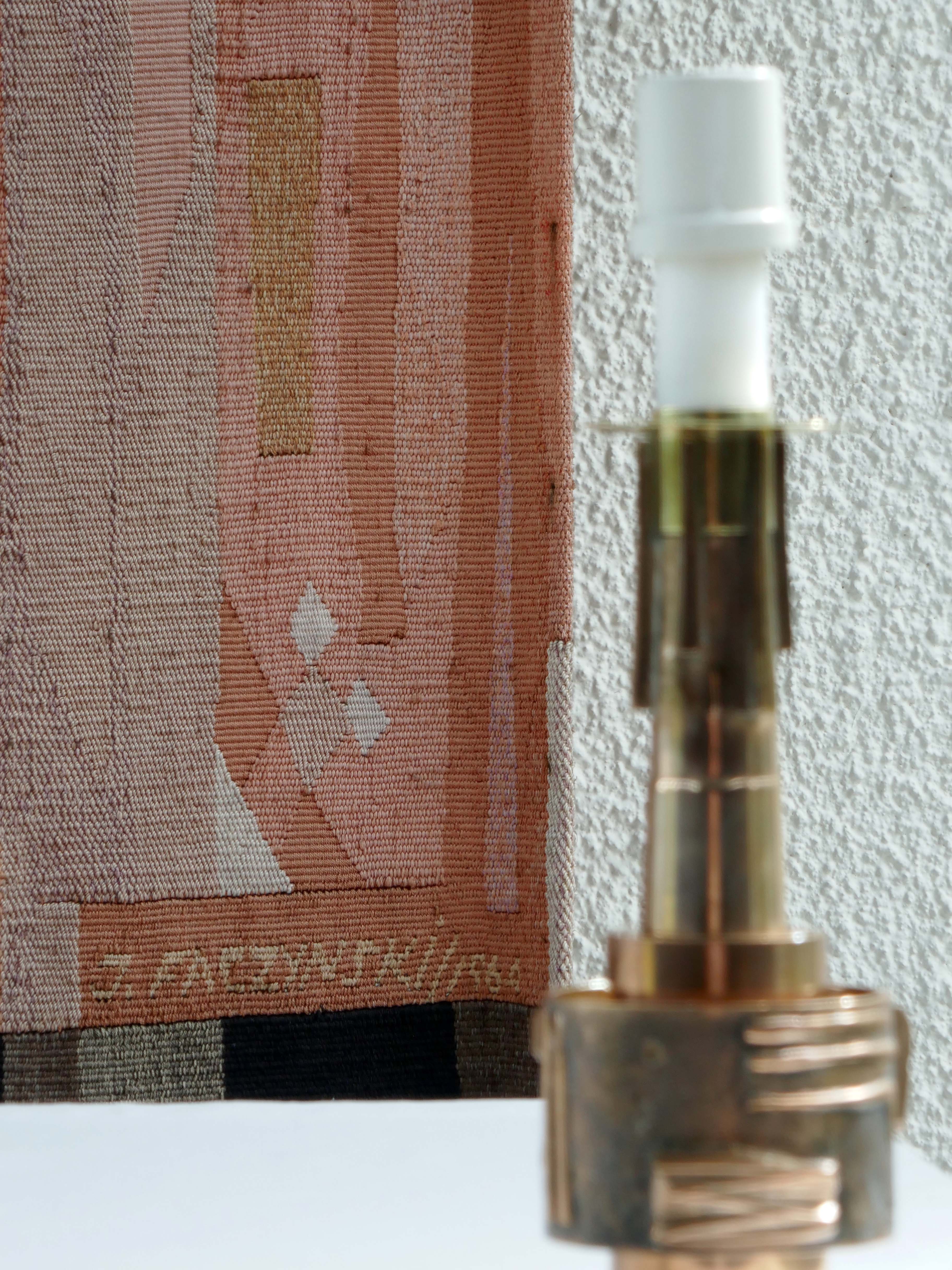
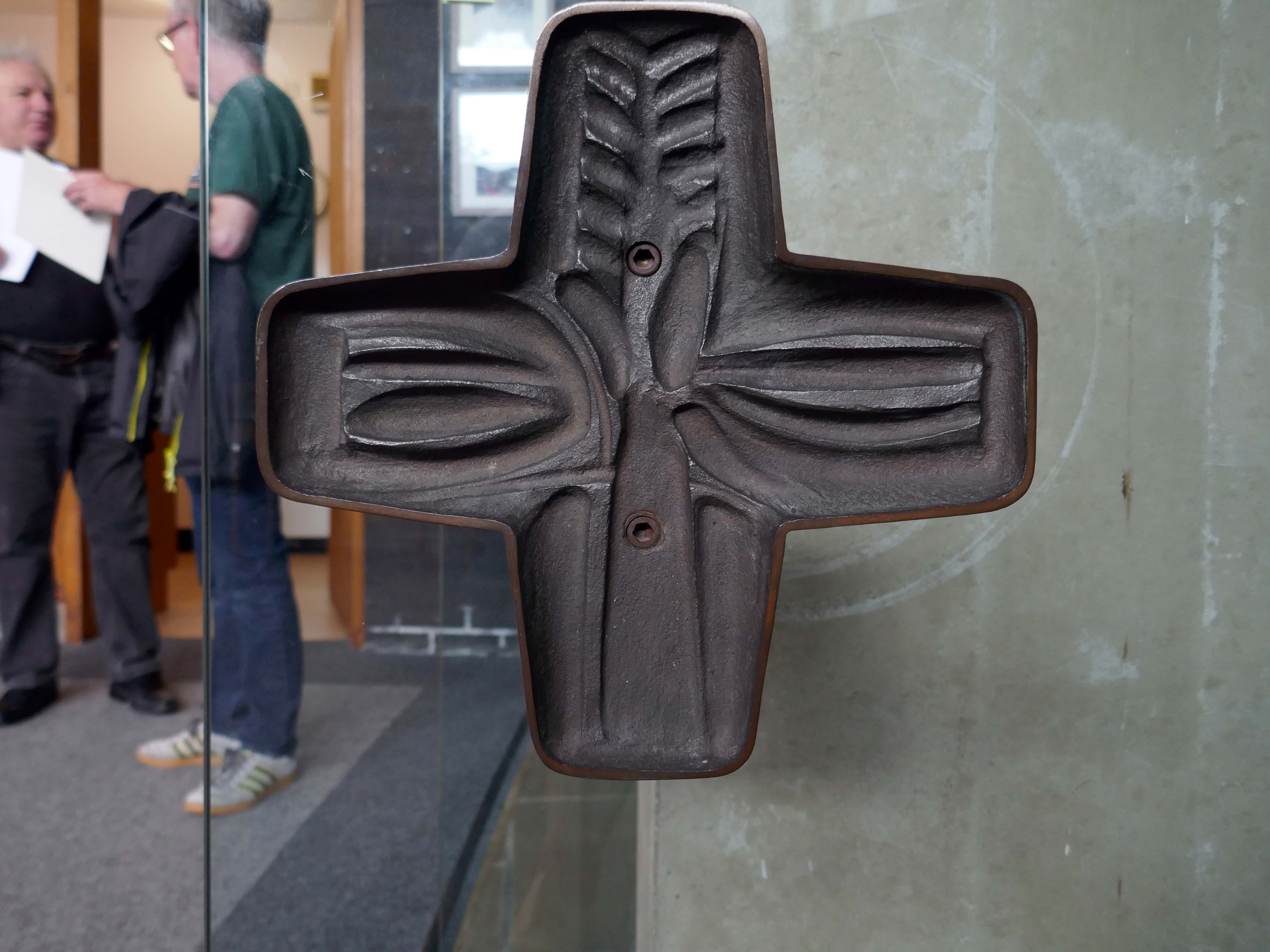
The candlesticks and metal furnishings in all the Chapels were fashioned in the foundry of Messrs Bagnall of Kirkby to the design of Robin McGhie.
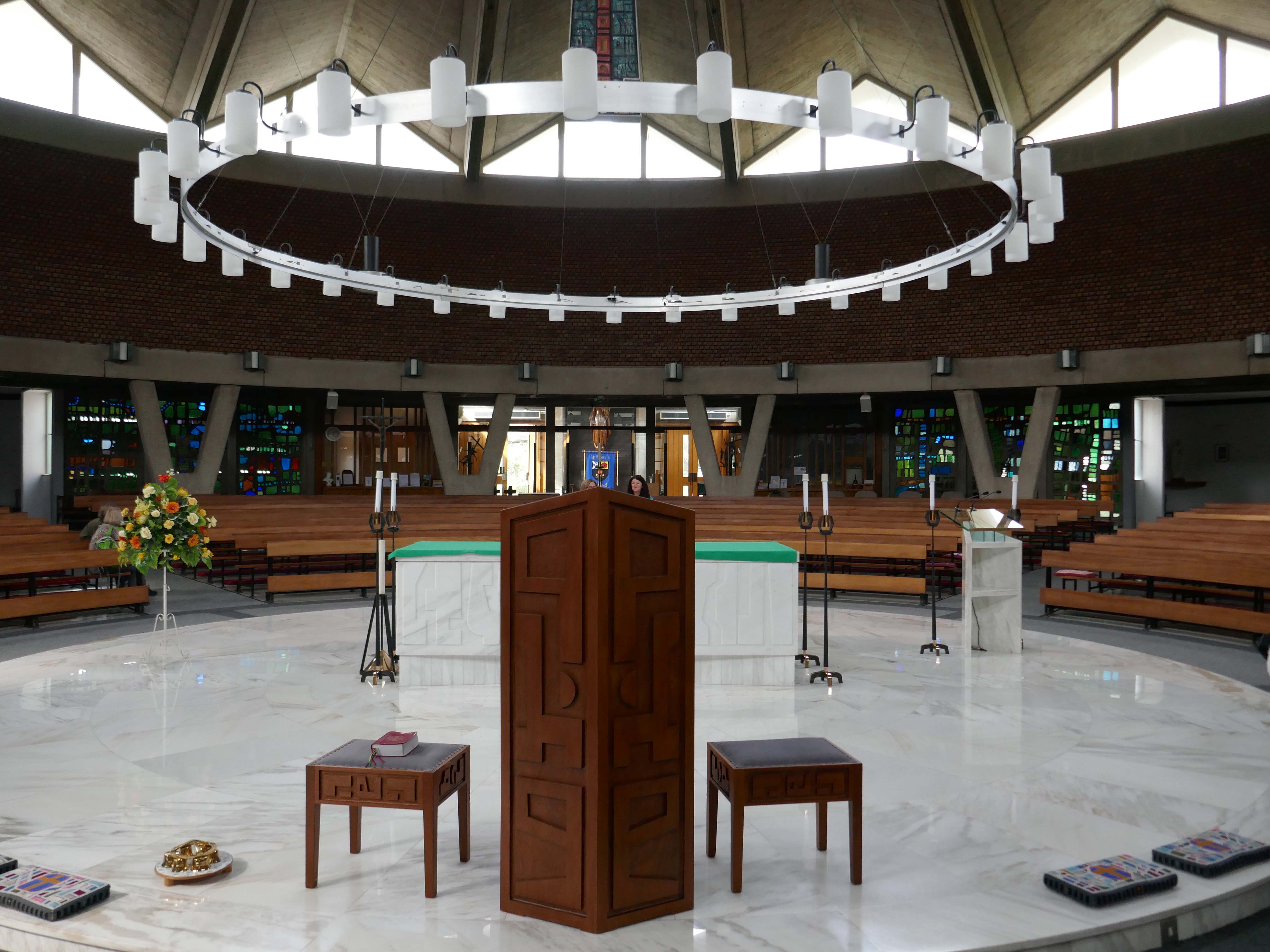
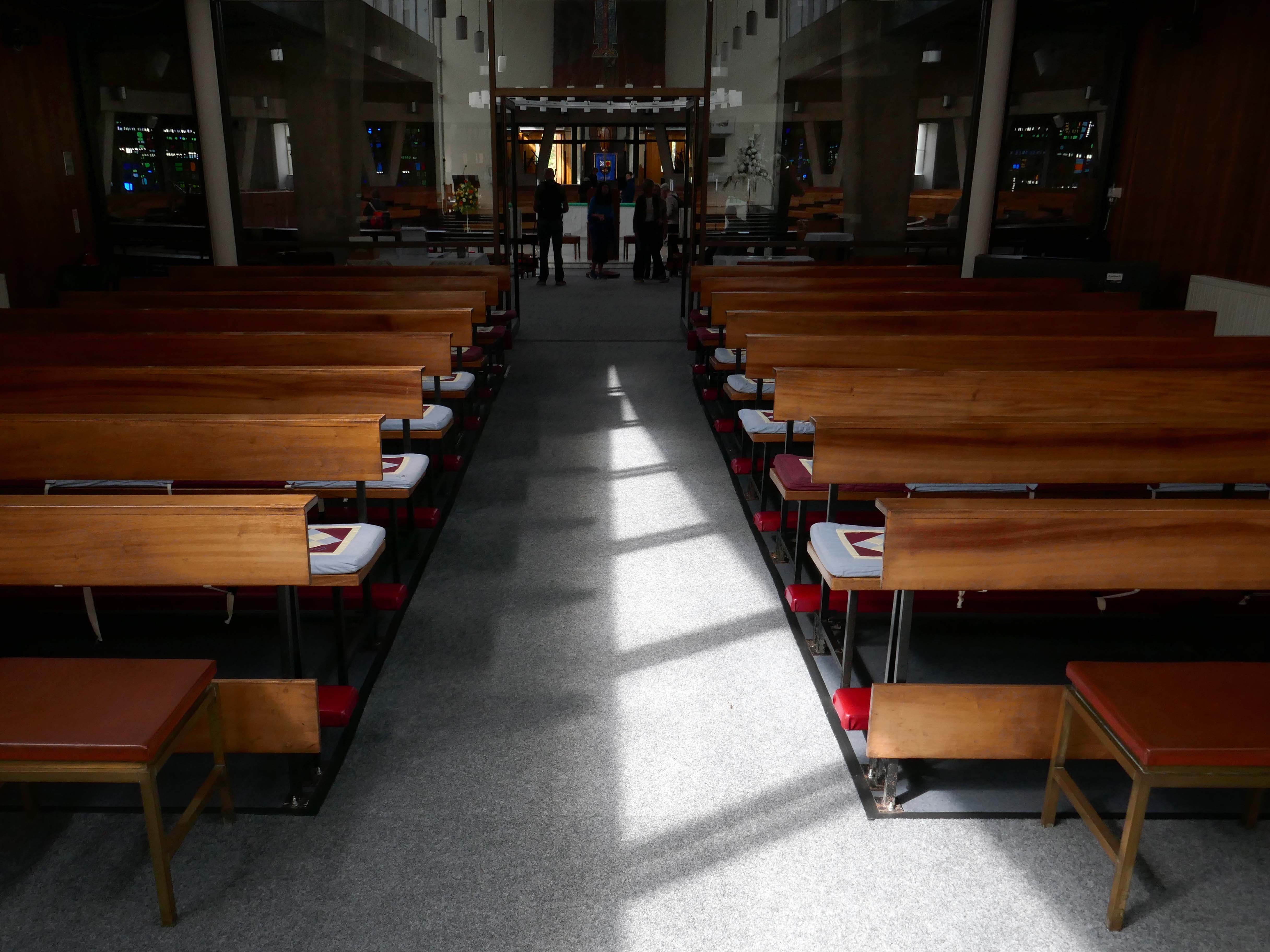
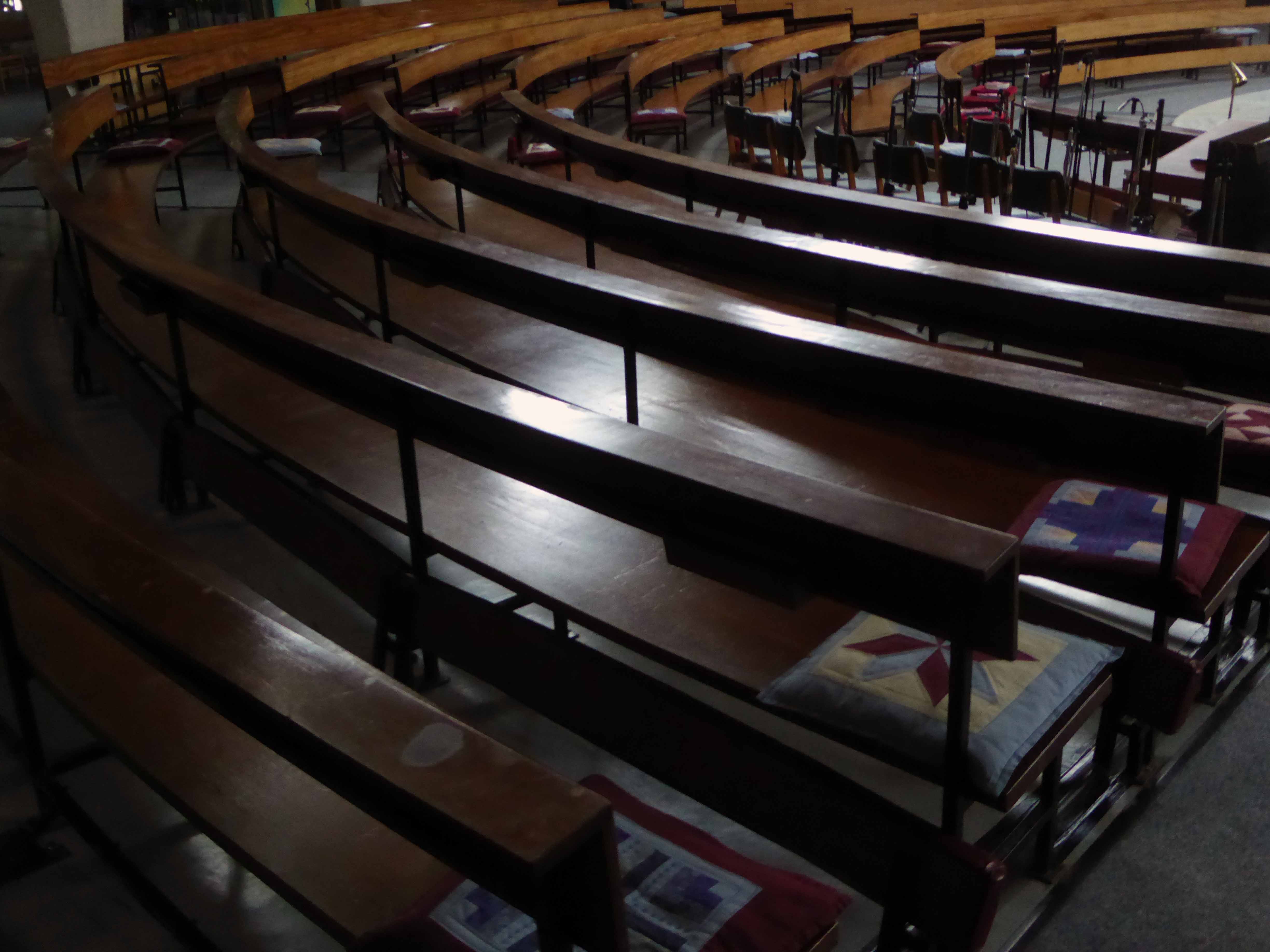
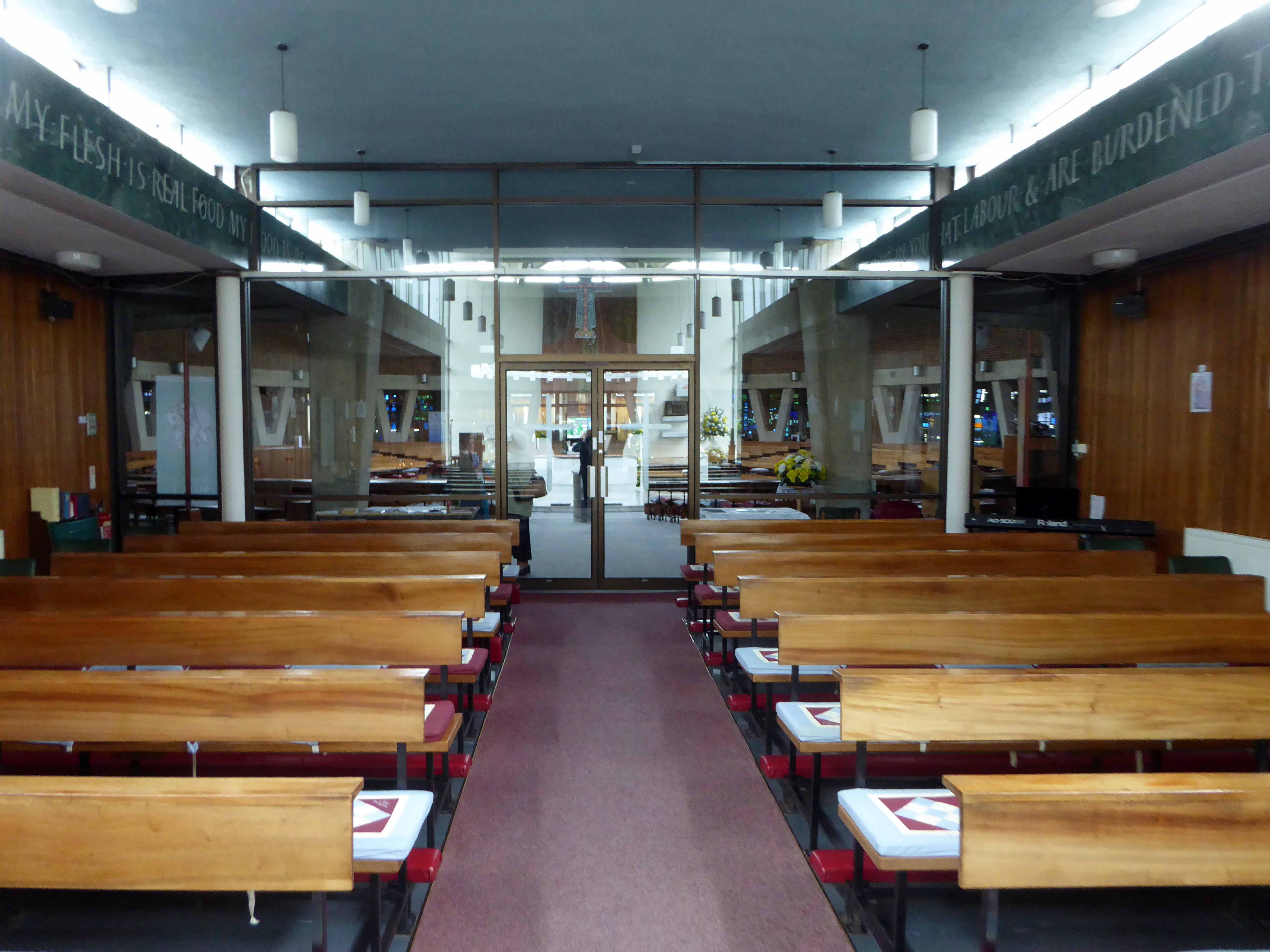
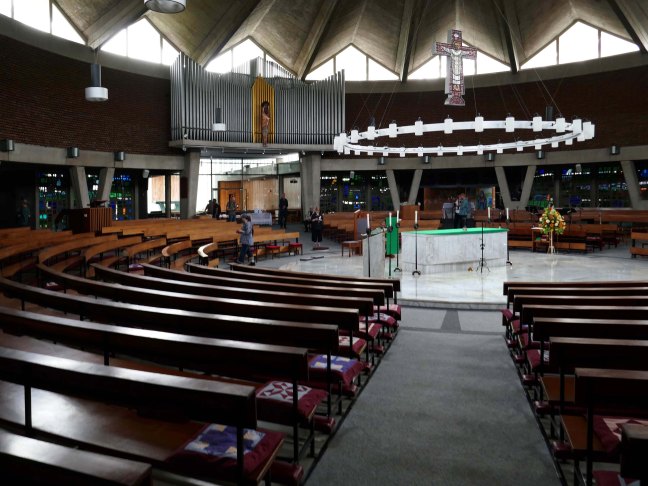
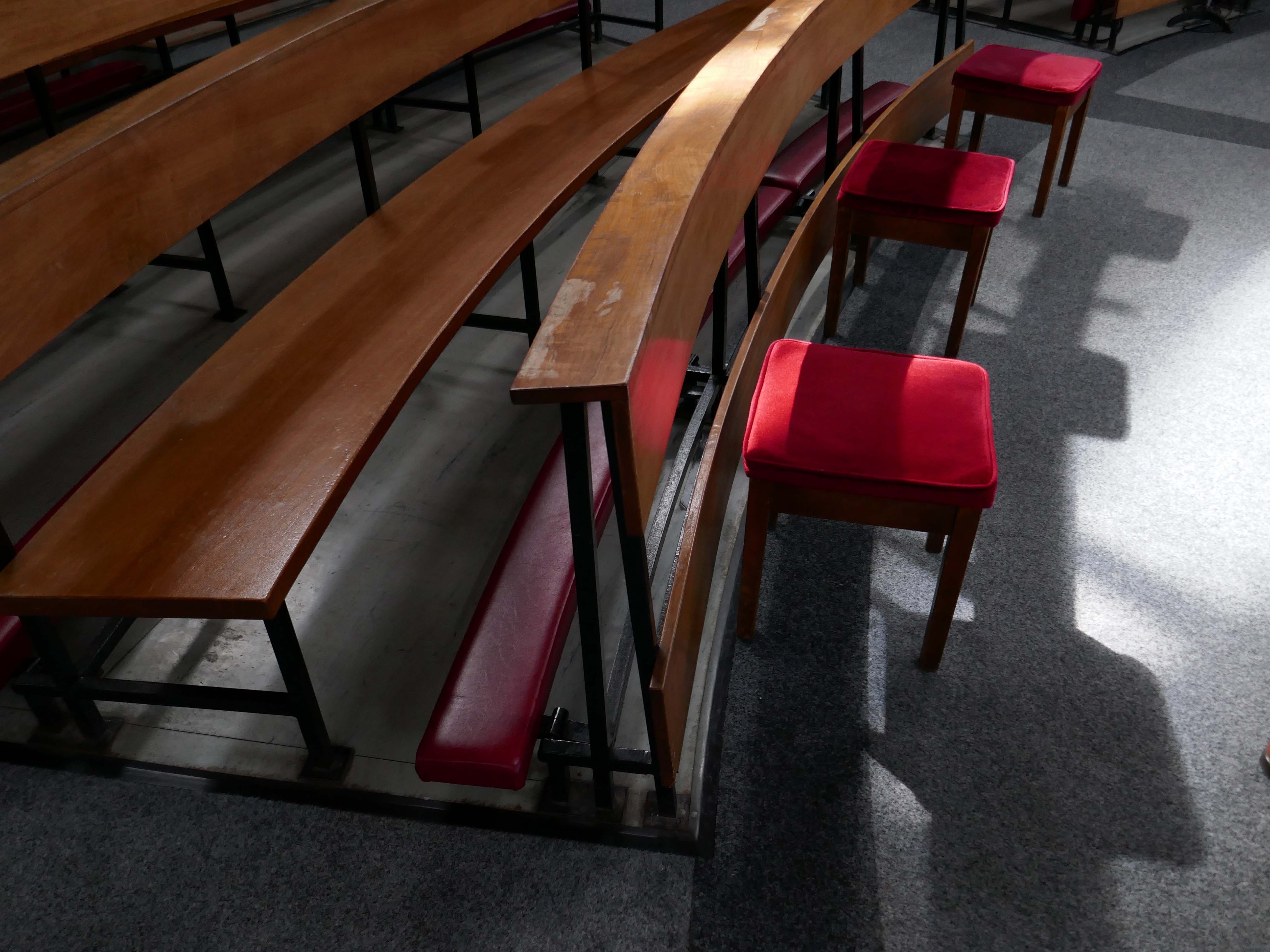
The curved benches are of Ghana mahogany and were made by the Robert Thompson Craftsmen of Kilburn, the steel work by GS Graham of Stokesley. The distinctive Mouseman mouse can be found on several of the bench ends.
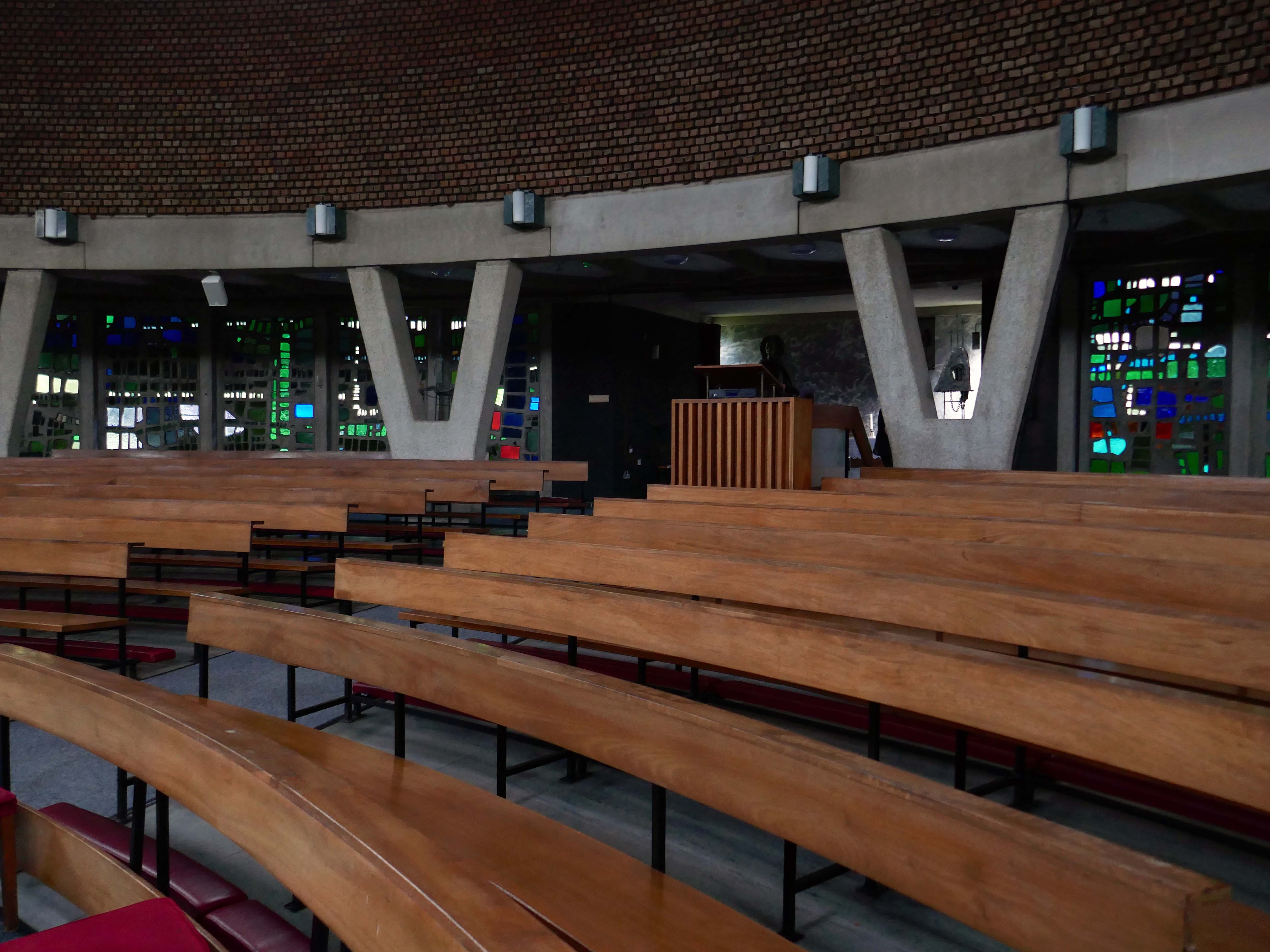
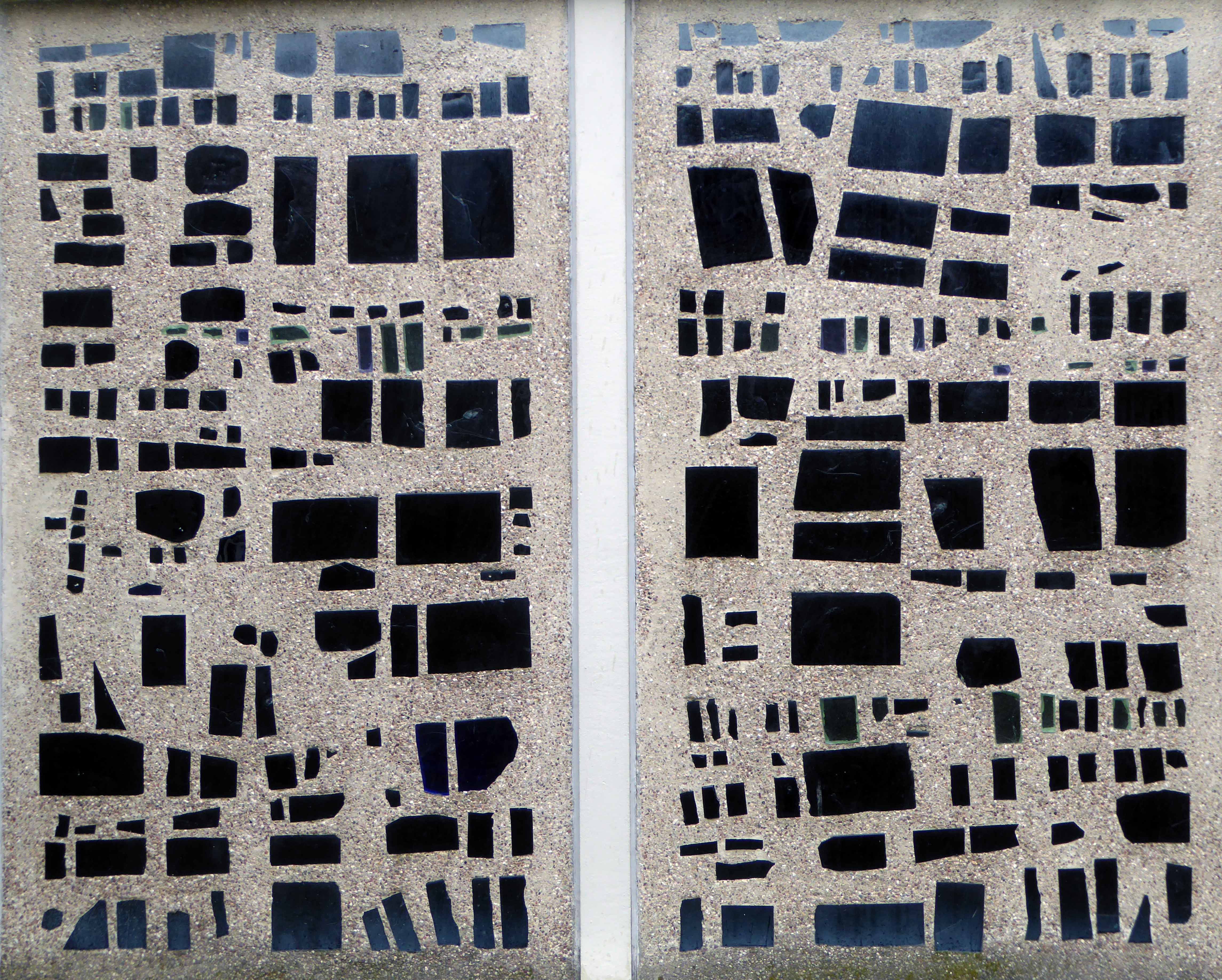
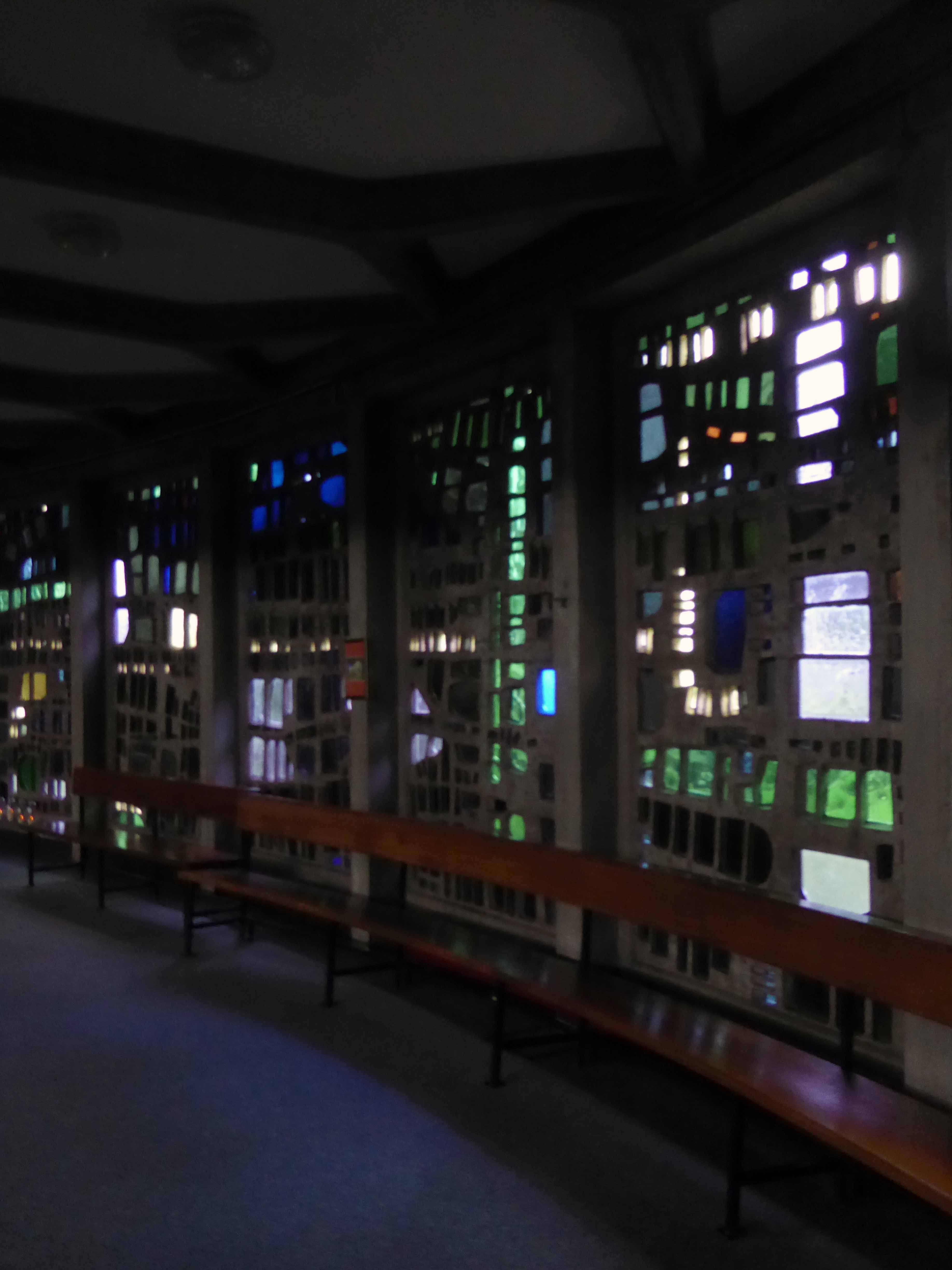
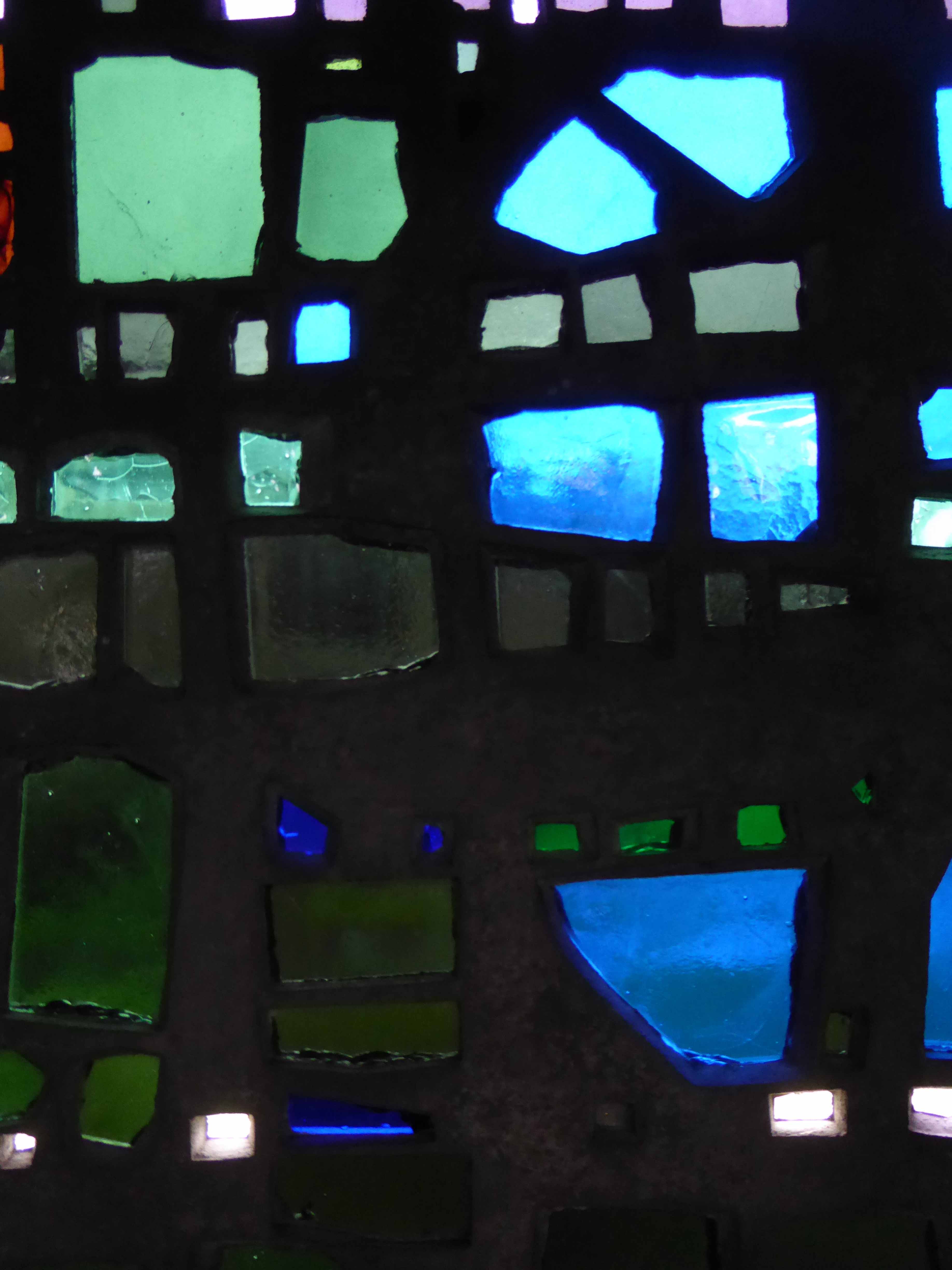
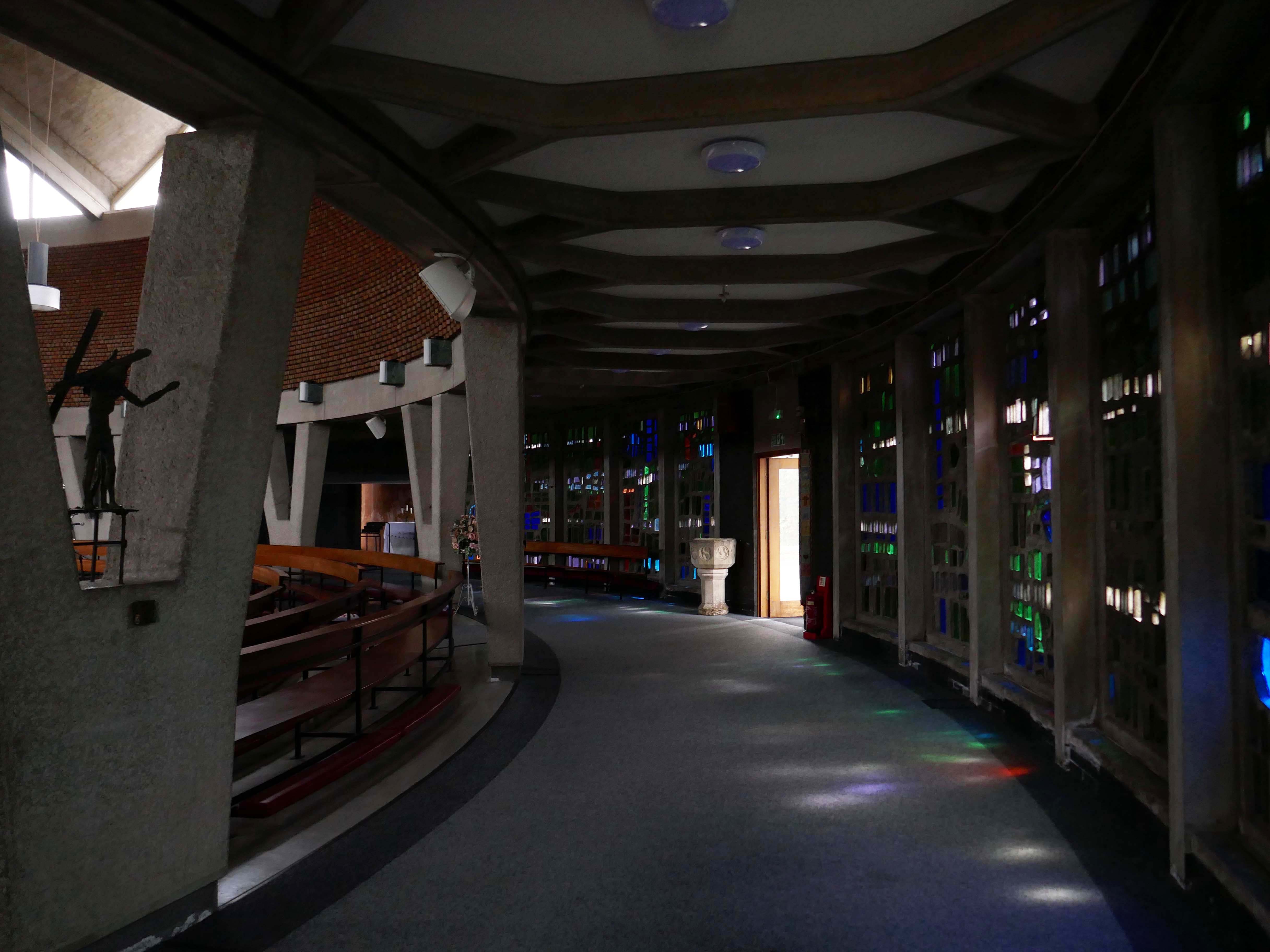
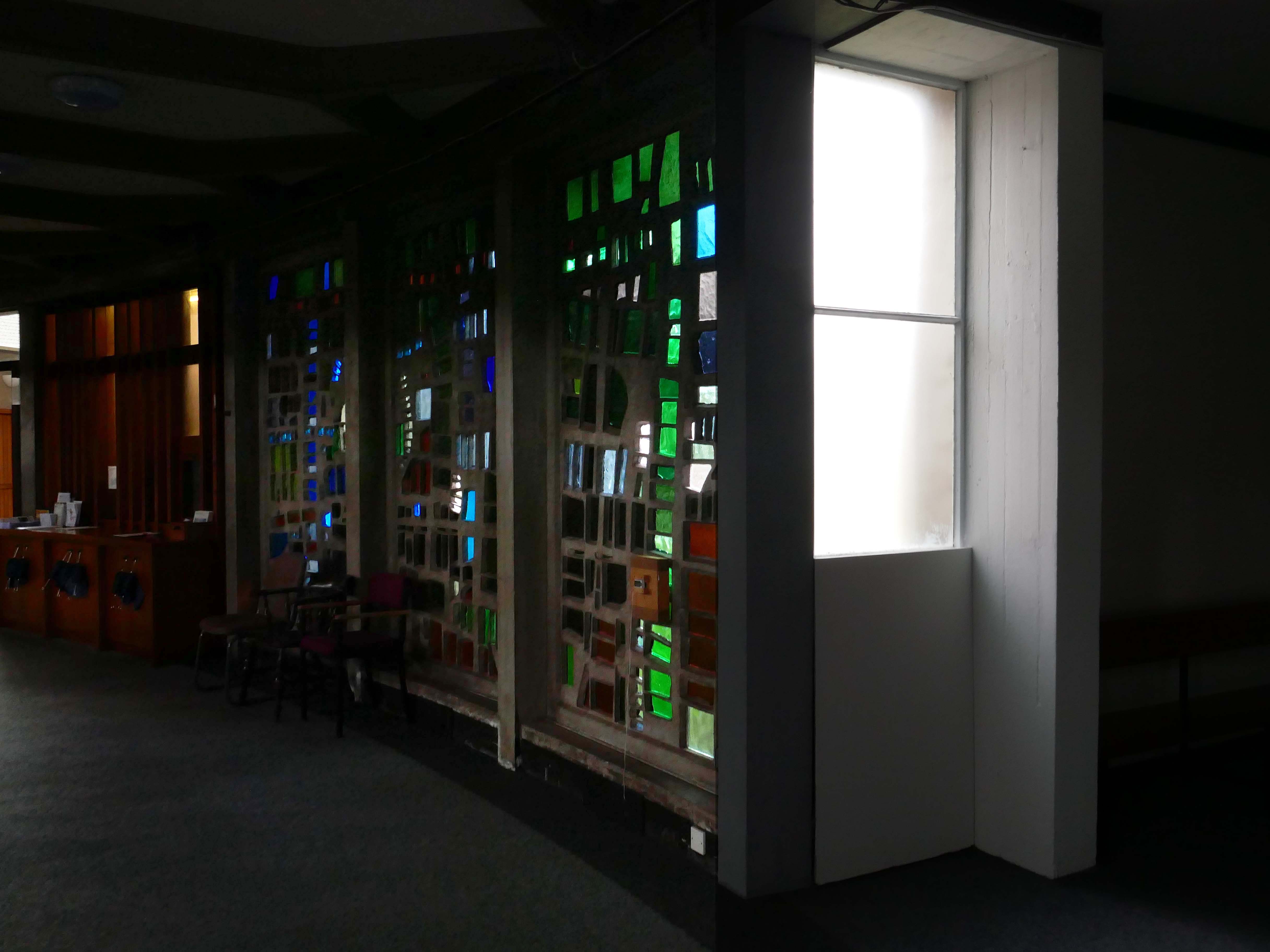
Dalle de Verre stained glass by Patrick Reyntiens, thirty-six panels abstract totalling two hundred and thirty three feet in length.

The theme for the windows is taken from the first nine verses of Genesis, and the passage of Proverbs c. vii. Amorphous undifferentiated matter with the beginnings of definition and pattern, with here and there the promise of order and system.
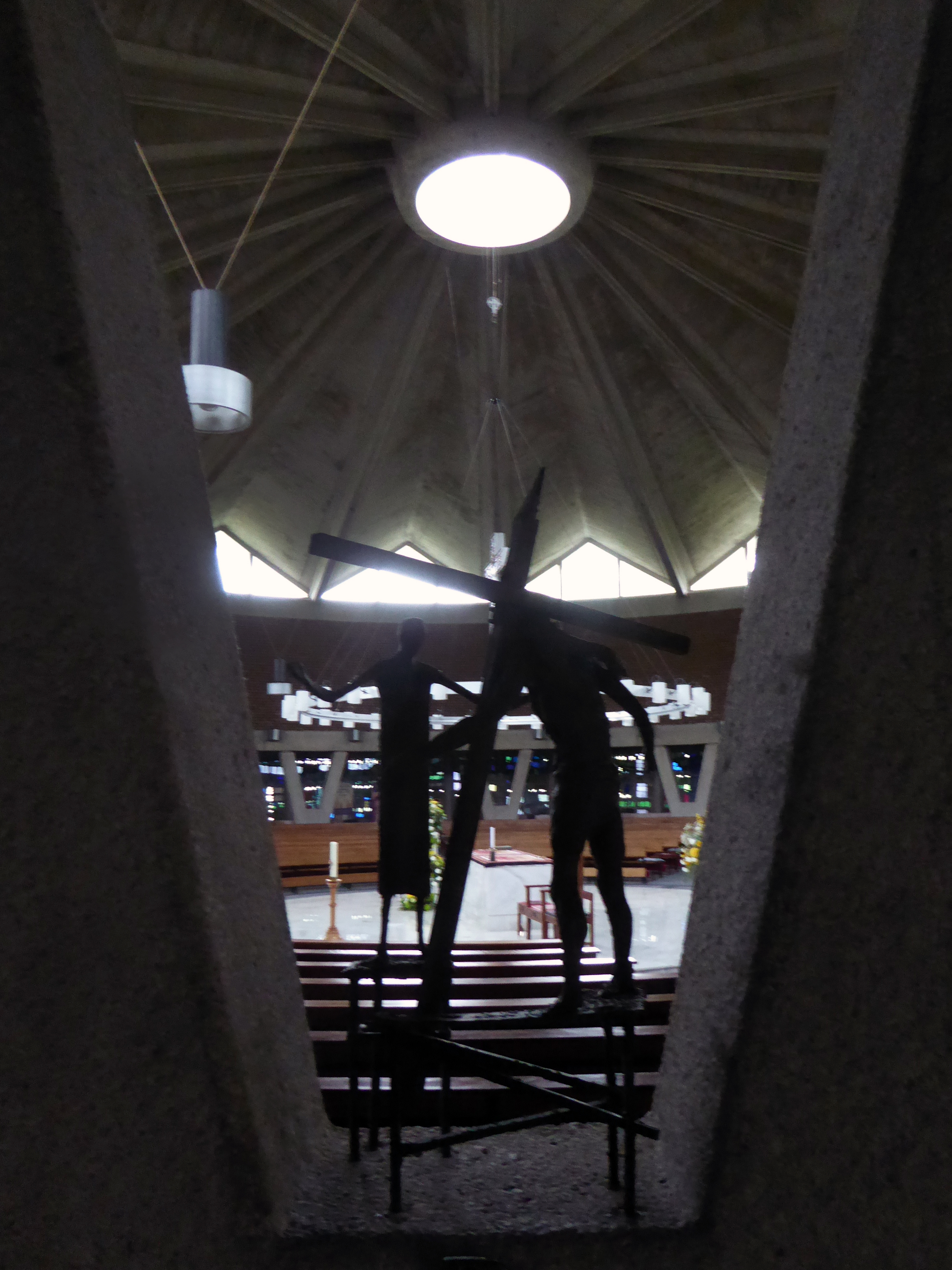
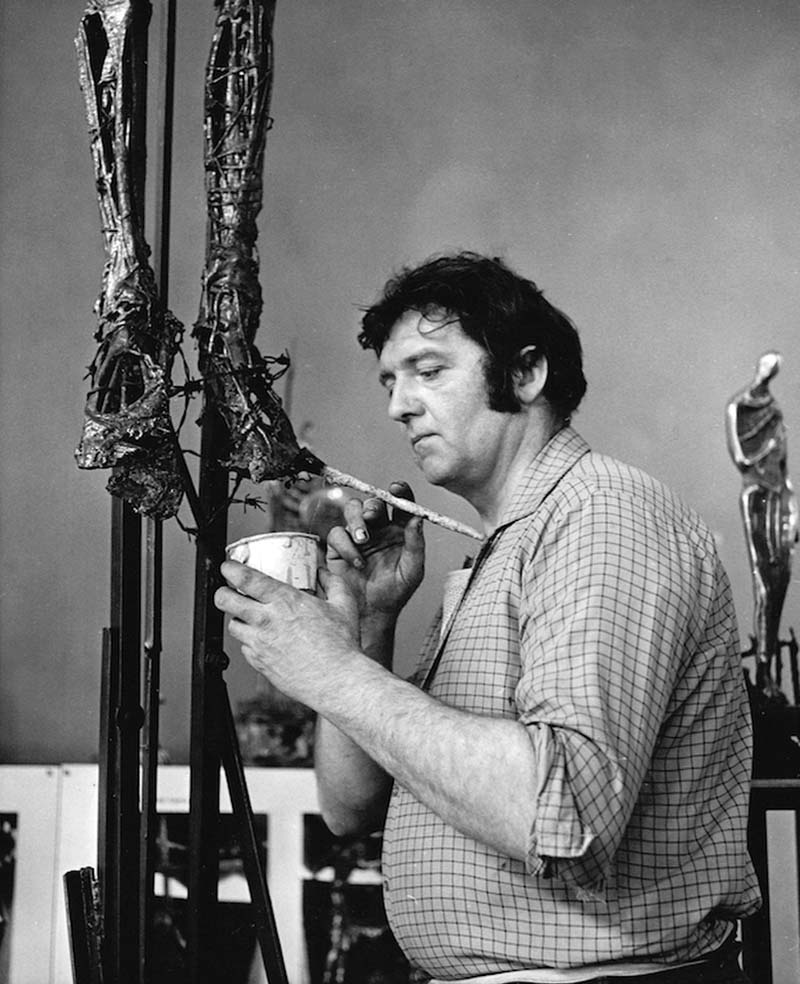
The Stations of the Cross are the work of Liverpool sculptor Arthur Dooley.
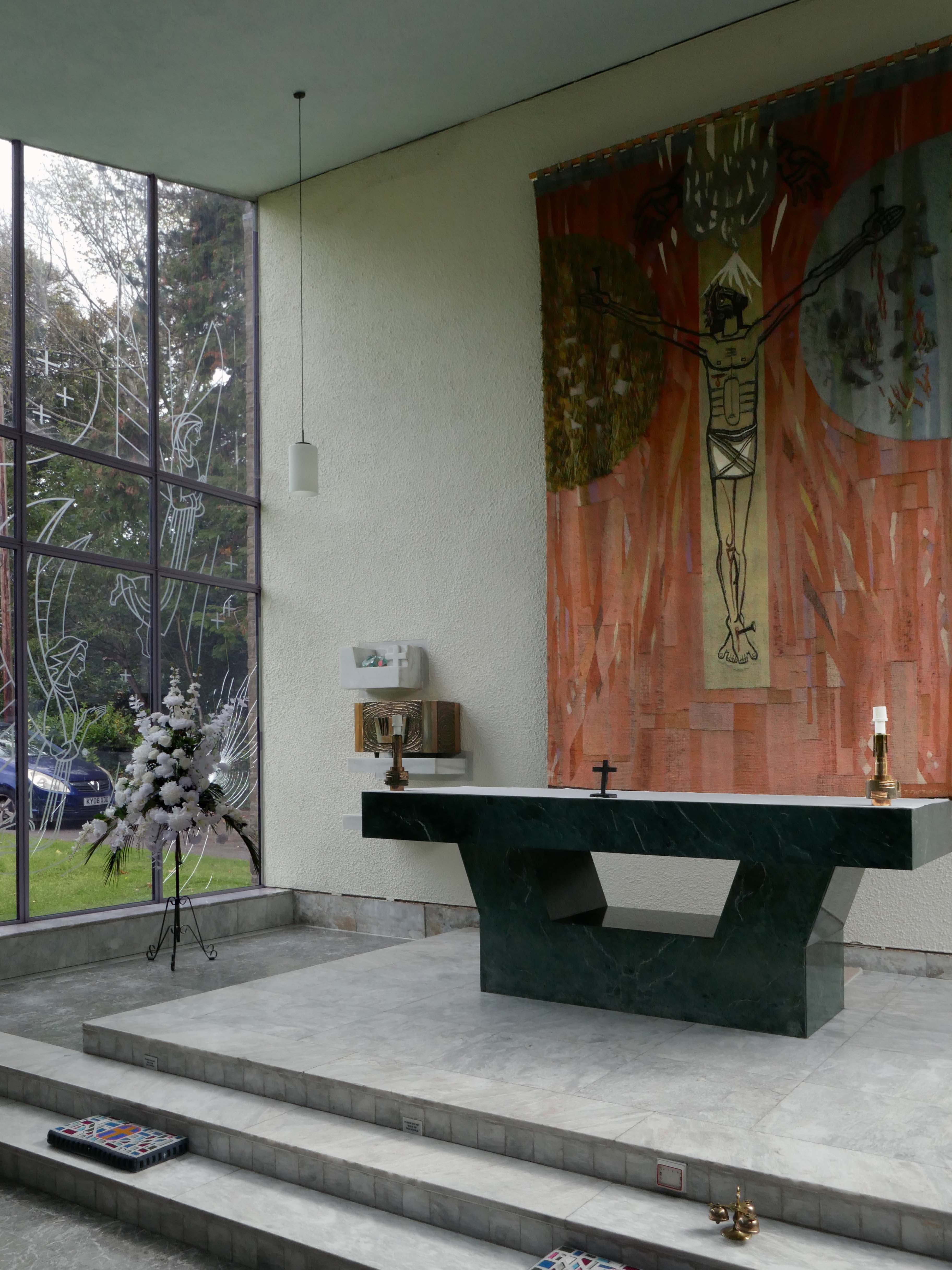
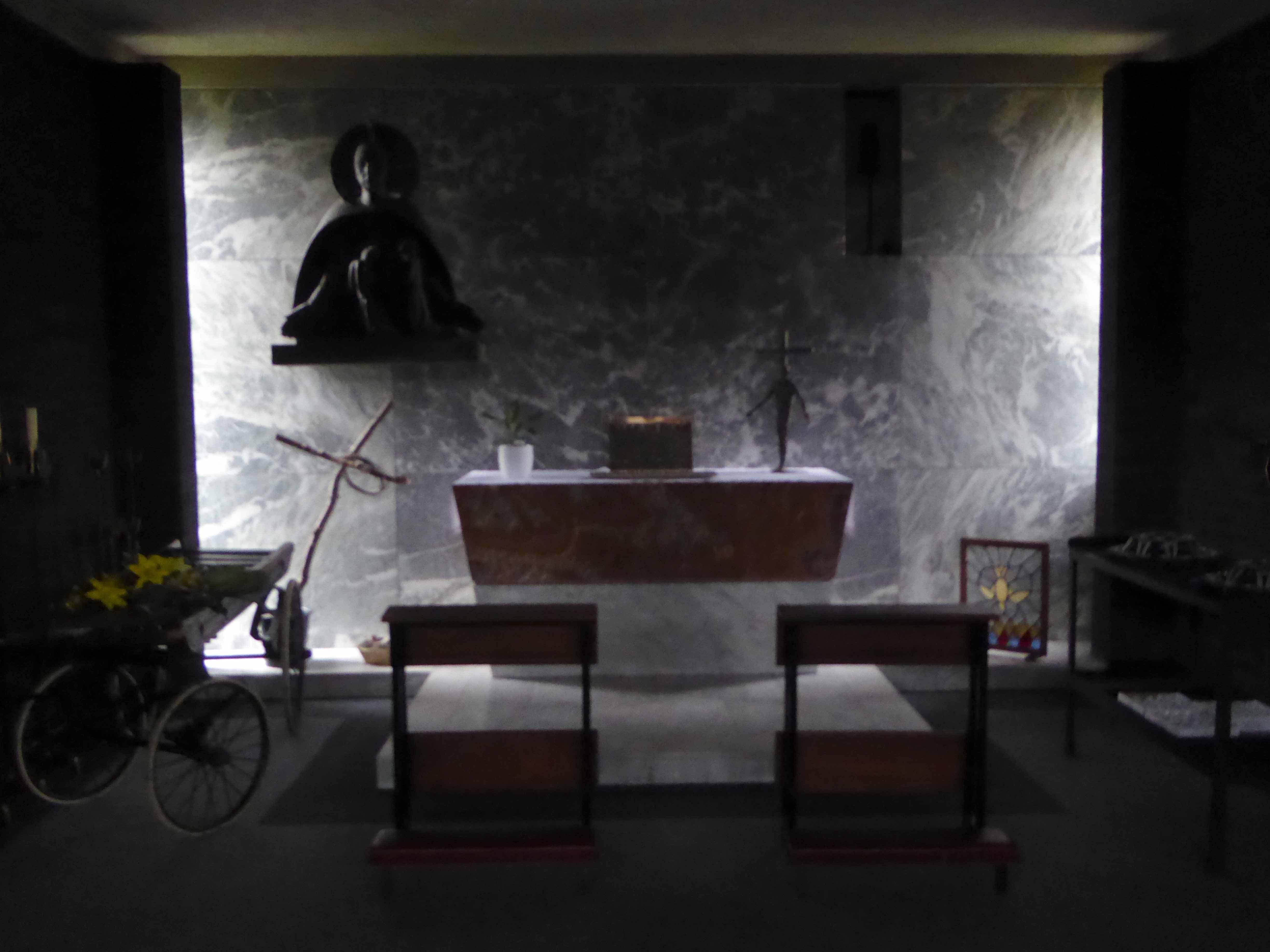
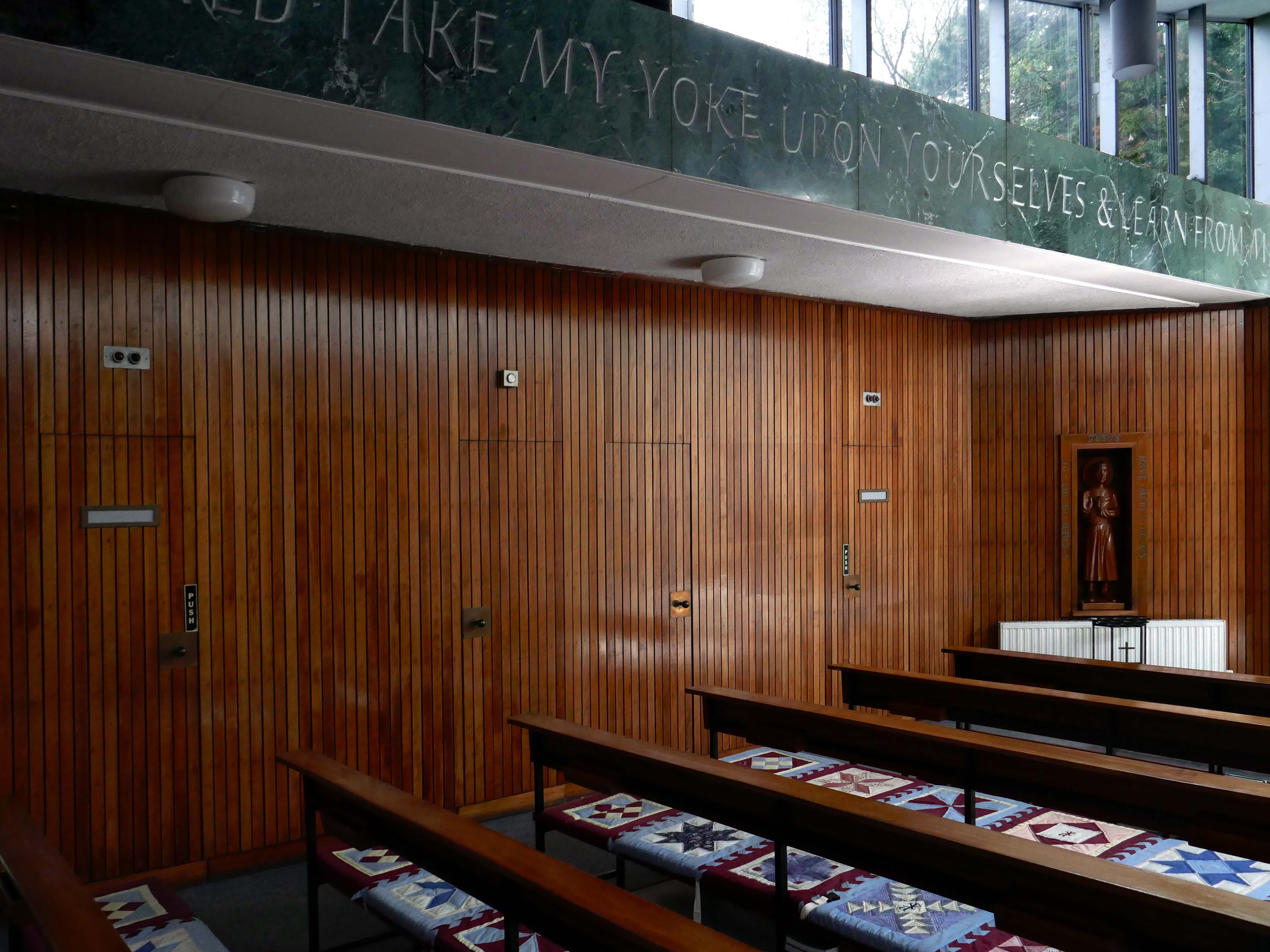
The Chapel of the Blessed Sacrament is designed to seat one hundred and twenty.
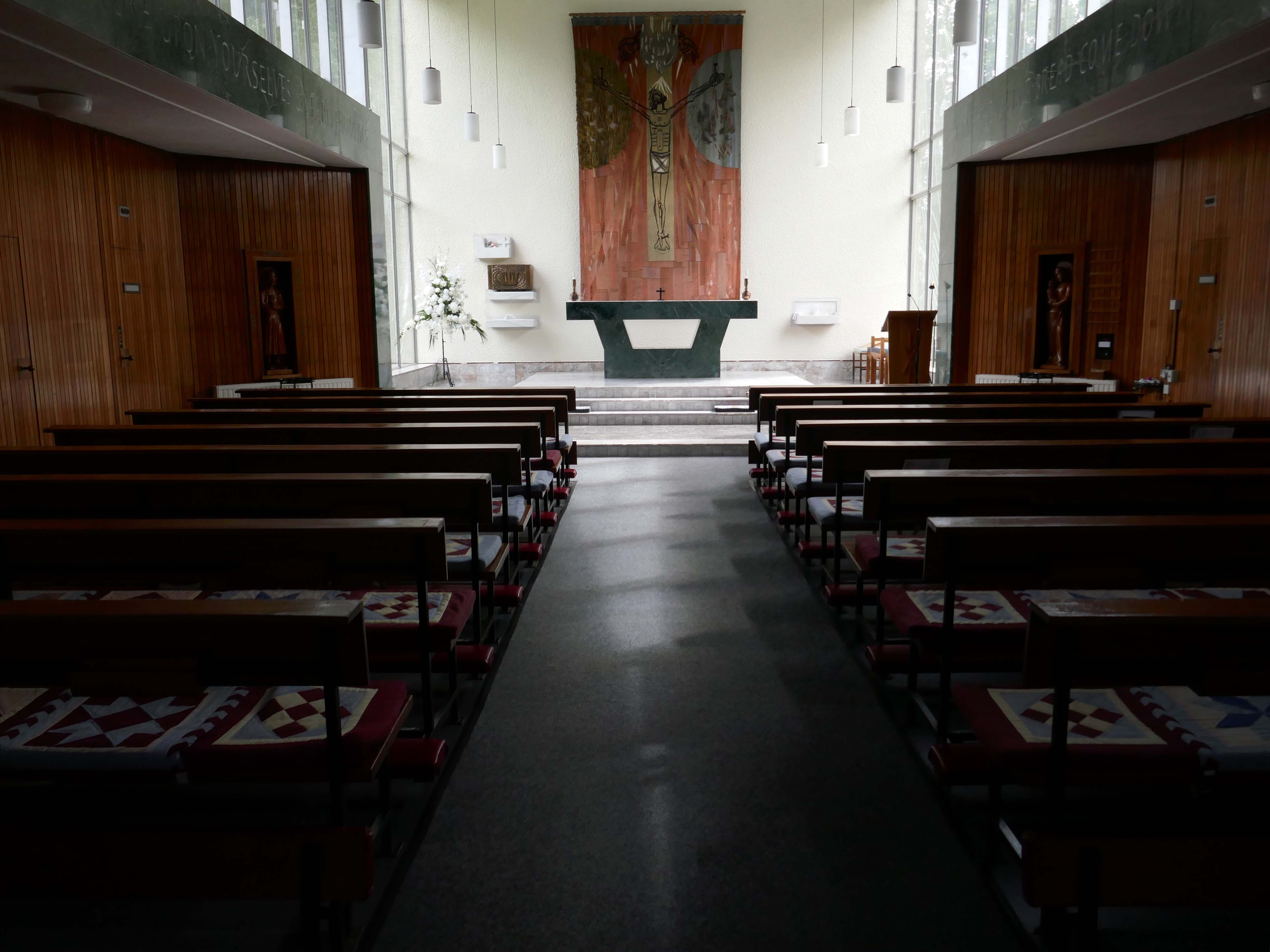
The lettering on the green marble frieze is by George Thomas.
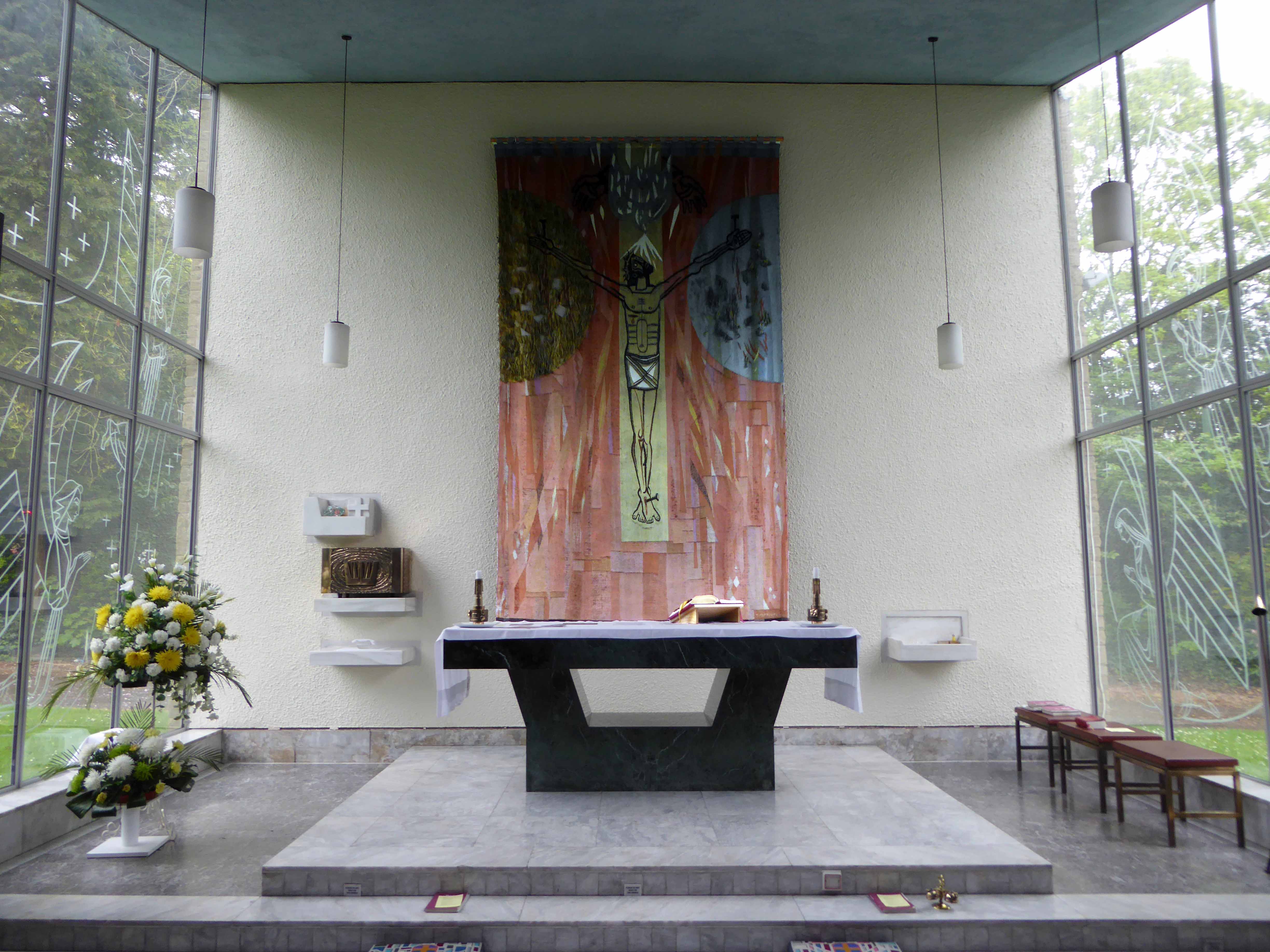
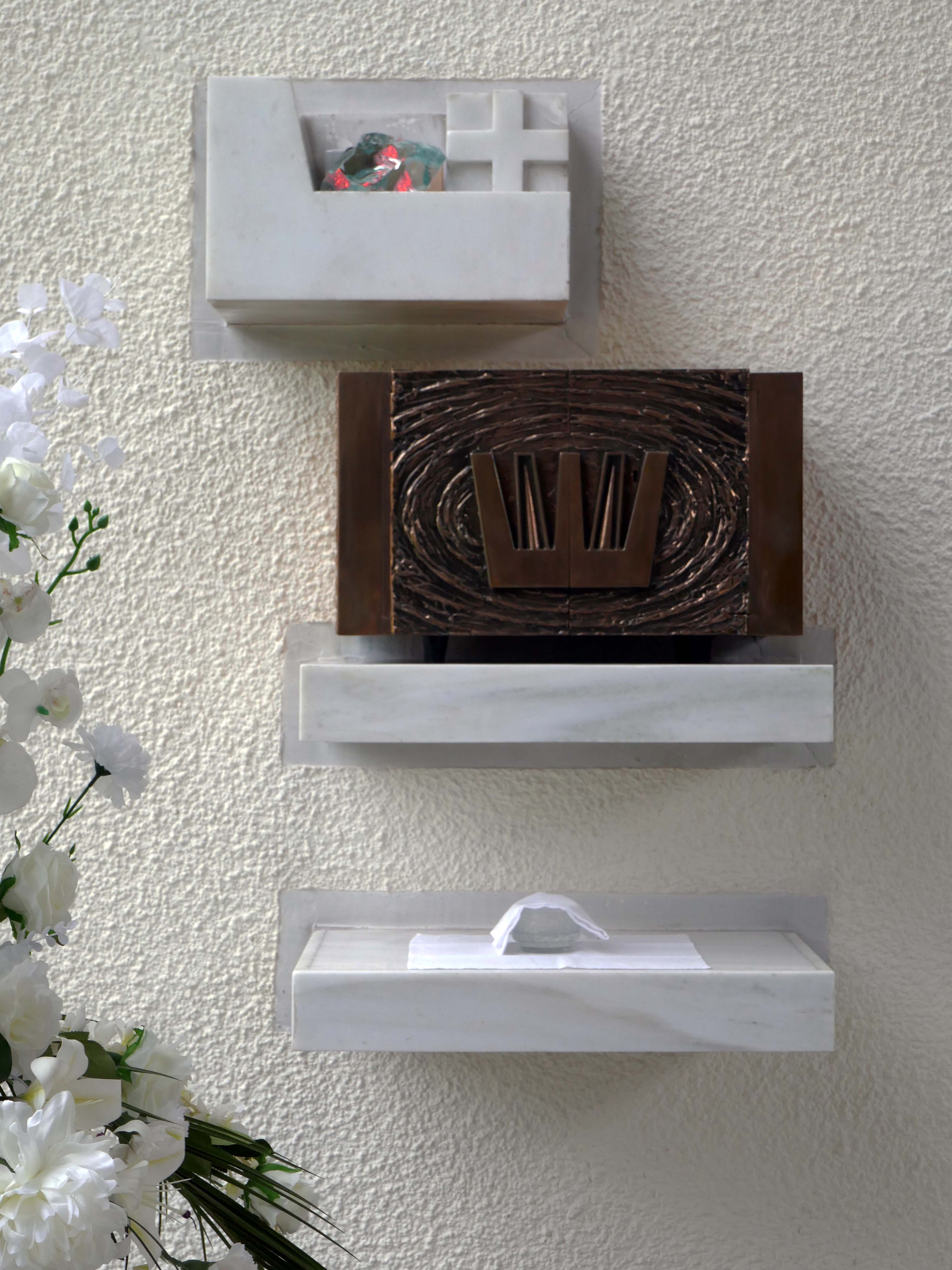
The tabernacle, crystal lamp and altar furniture were designed by Robin McGhie.
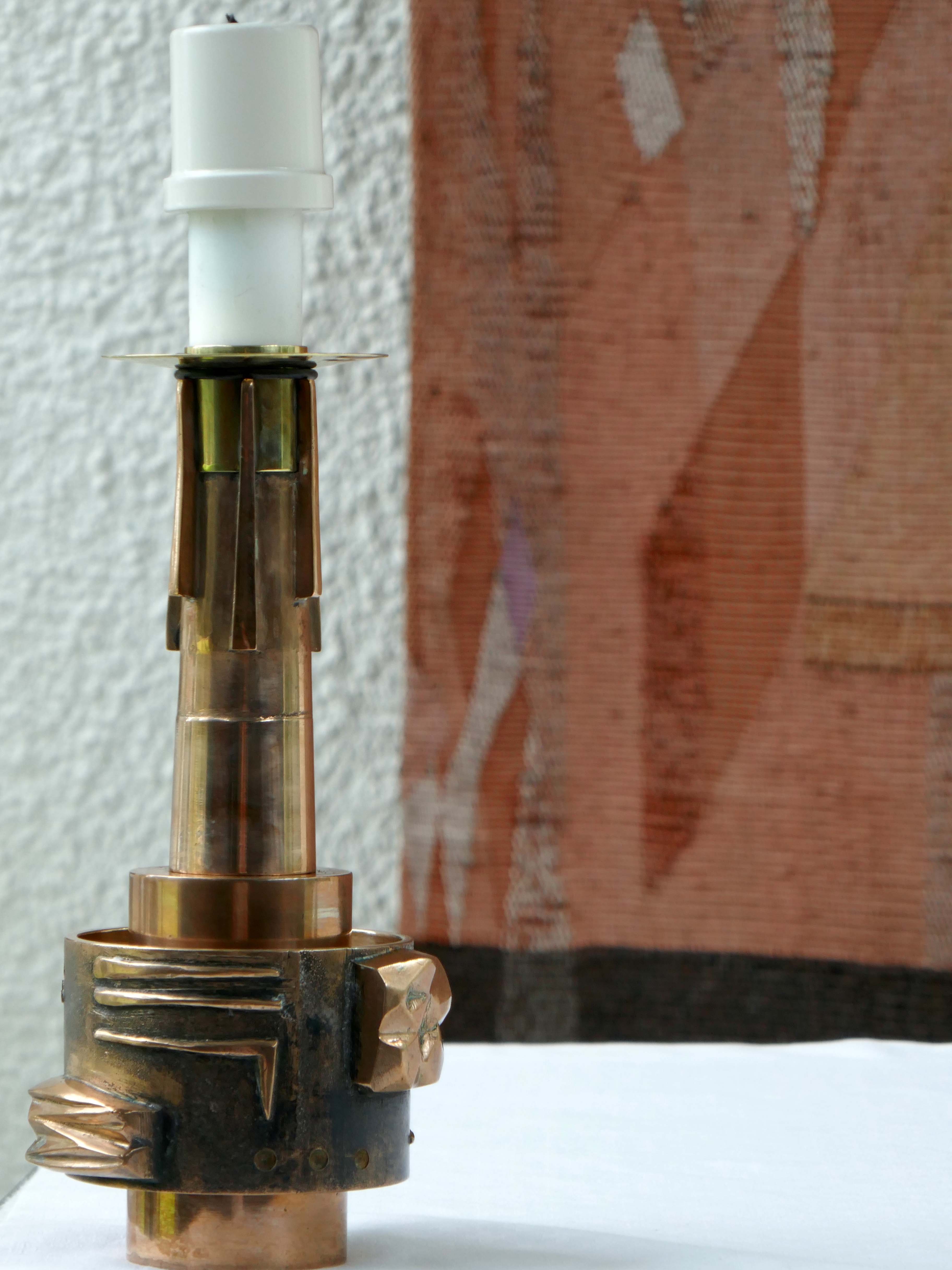
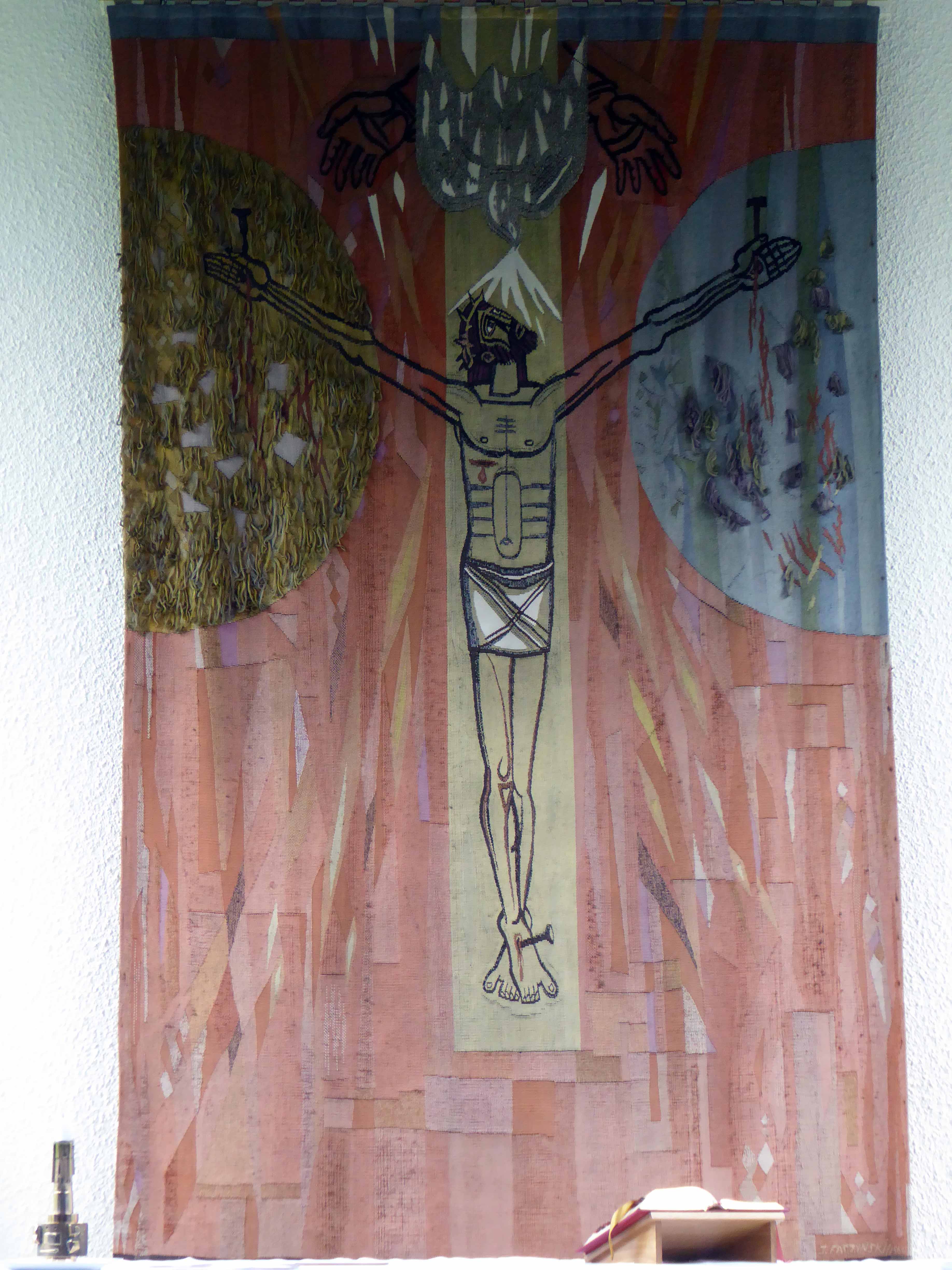
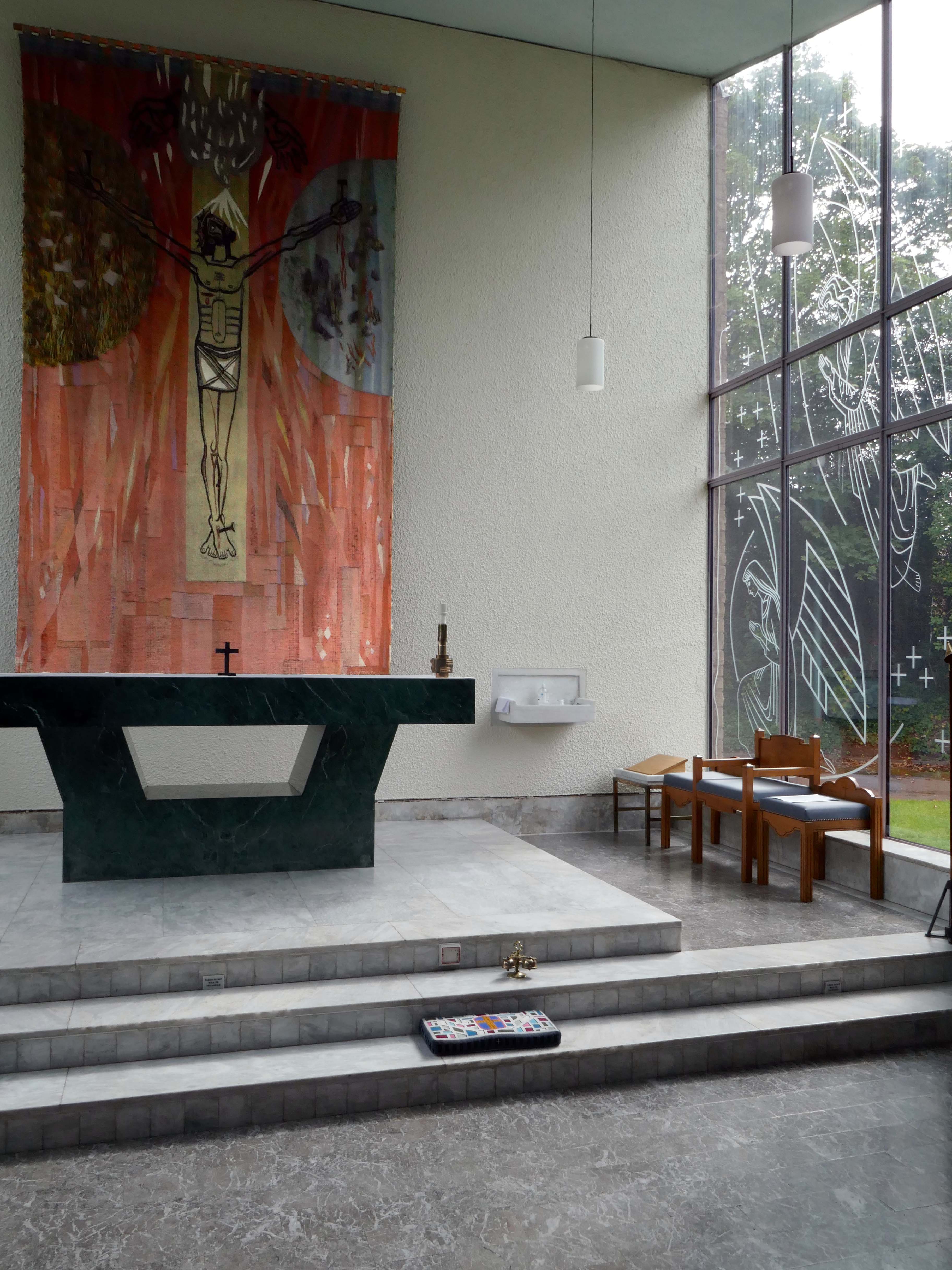
The tapestry, designed by architect Jerzy Faczynski and woven by the Edinburgh Tapestry Company, under H Jefferson Barnes and Anthony Brennan.

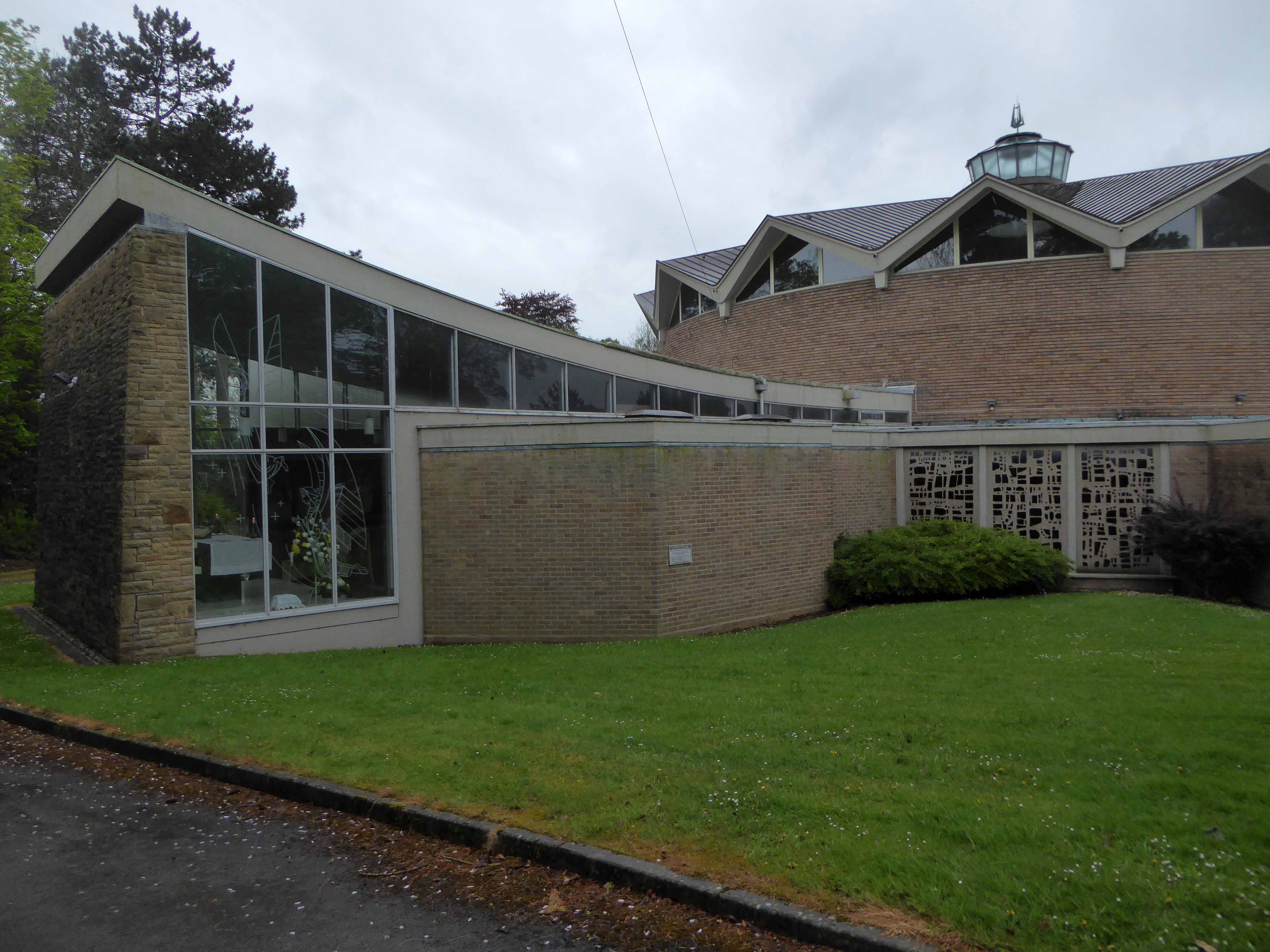
The etched glass panels are also by Jerzy Faczynski.
This is a church whose design and integral interior order and design, sits alongside both Coventry Cathedral and Liverpool Cathedral of Christ the King.

The finest materials and skills, working in harmony to produce a majestic whole.

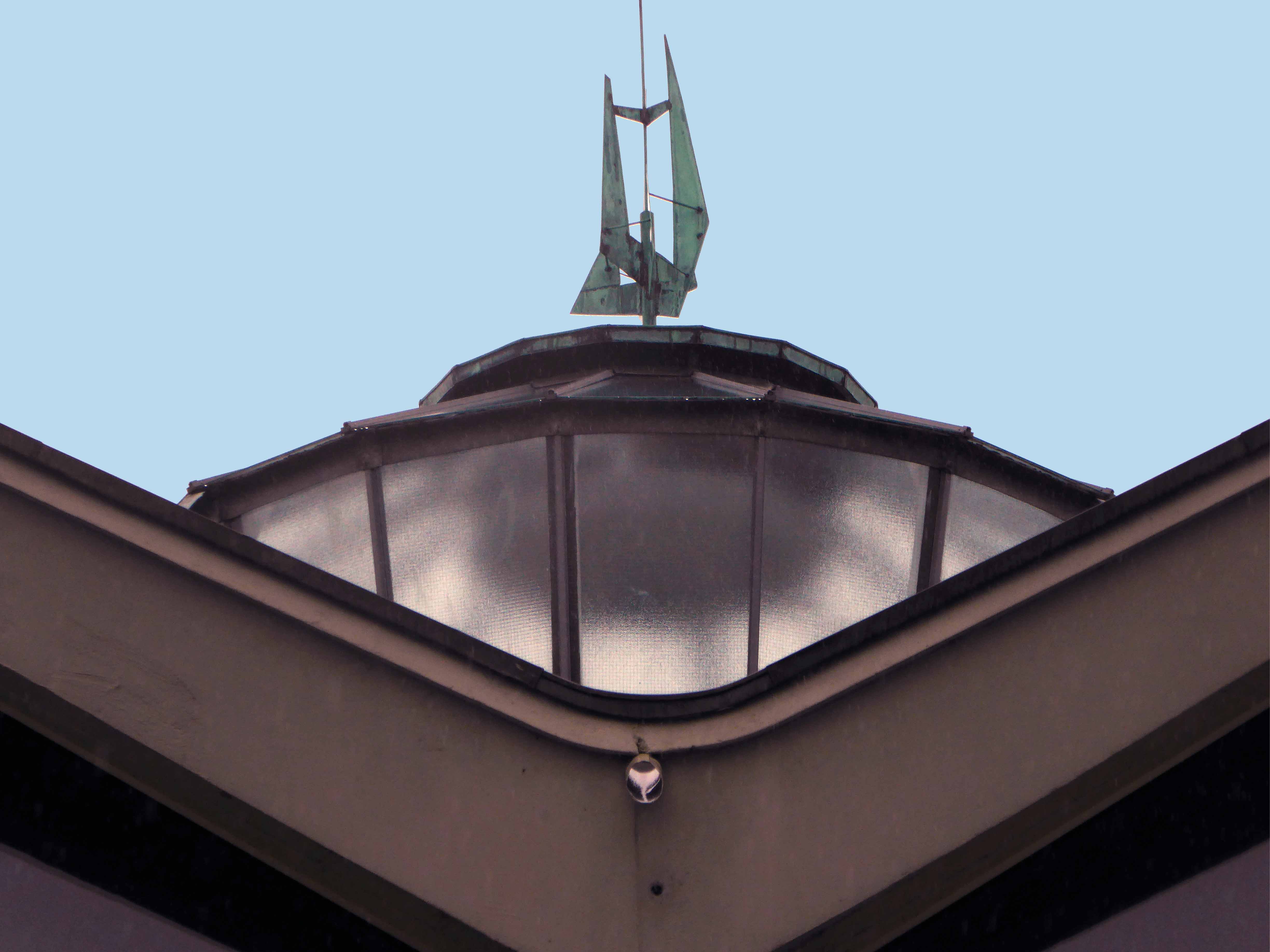
Take a look outside too!
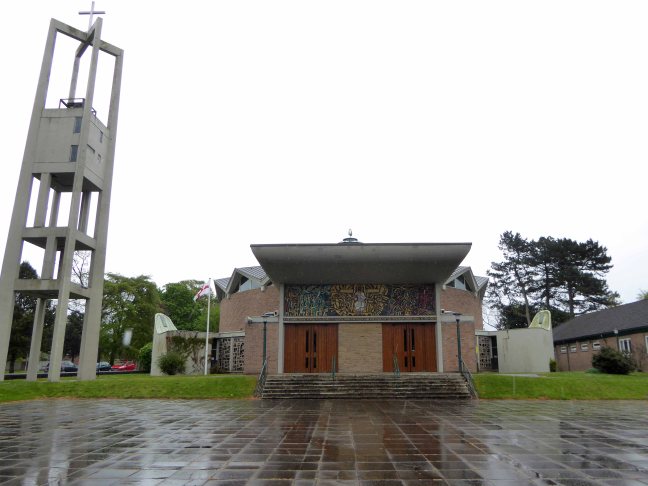
Leyland – St Mary’s Church

It never fails to surprise, turning the corner of a somewhat anonymous suburban street to find:

A building of outstanding importance for its architectural design, advanced liturgical planning and artistic quality of the fixtures and fittings.

Broadfield Drive Leyland Lancashire PR25 1PD

The Benedictines came to Leyland in 1845 and the first Church of St. Mary’s was built on Worden Lane in 1854. The Catholic population was small at this time, but had grown to around 500 by 1900. Growth was assisted by the industrial development of Leyland and after the Second World War the town was earmarked as the centre of a new town planned in central Lancashire. By the early 1960’s, the Catholic population was 5,000. Fr Edmund Fitzsimmons, parish priest from 1952, was a guiding force in the decision to build a large new church of advanced liturgical design, inspired by progressive continental church architecture of the mid 20th century.  The church was designed by Jerzy Faczynski of Weightman and Bullen. Cardinal Heenan blessed the foundation  stone  in  1962  and  the  new  church  was  completed  ready  for  its consecration and dedication by Archbishop Beck in April 1964.

Stained glass by Patrick Reyntiens.

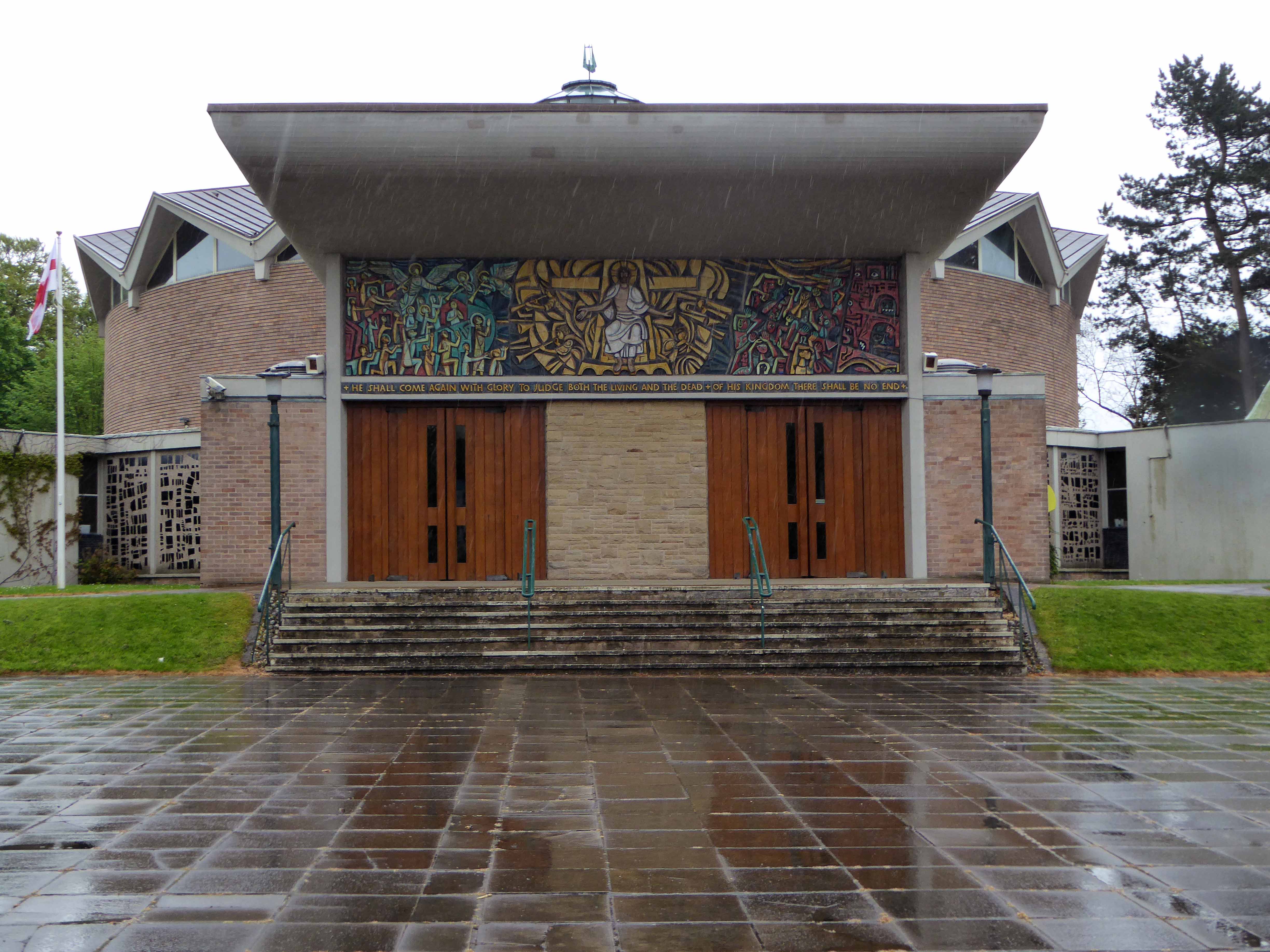
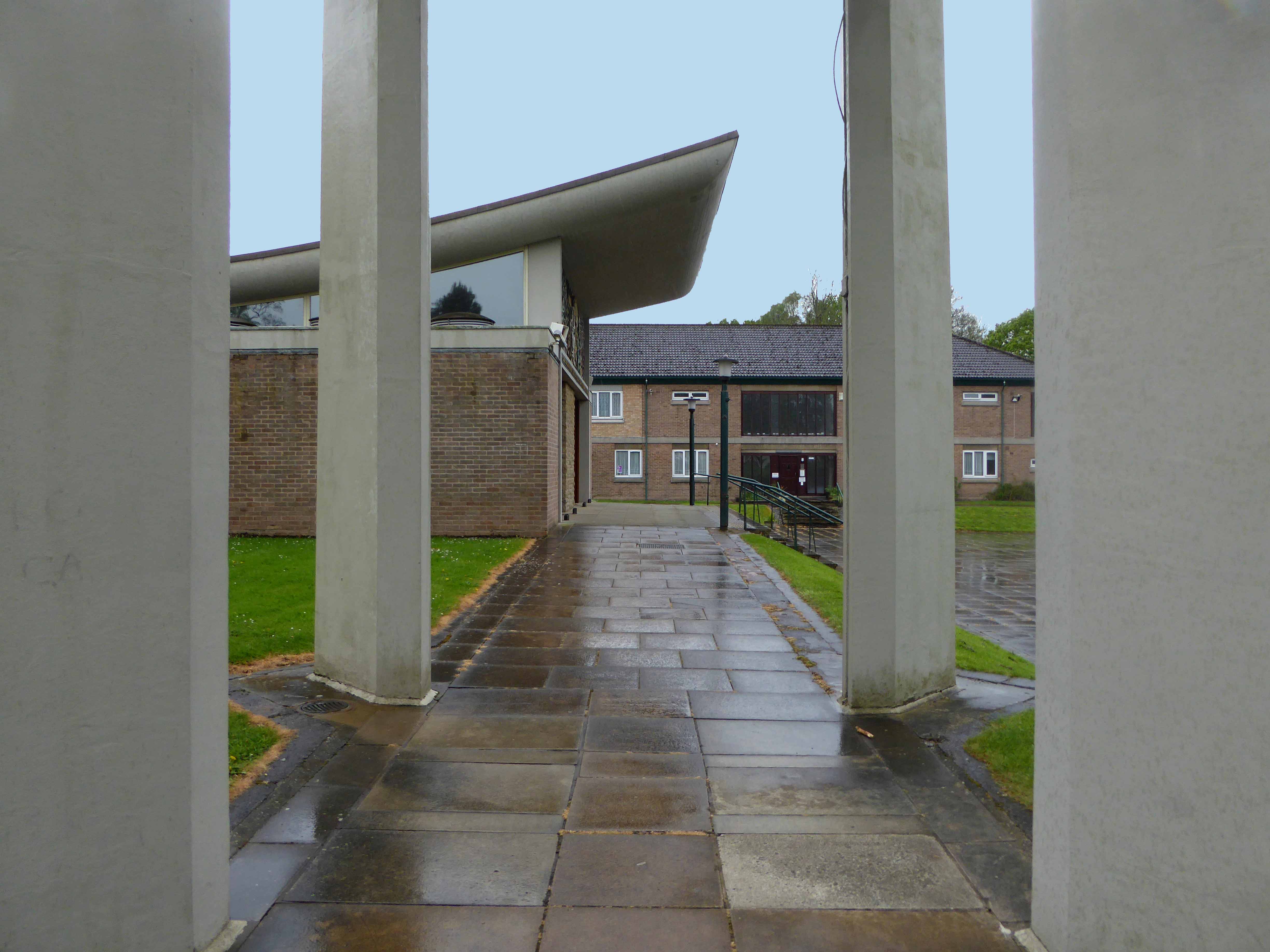
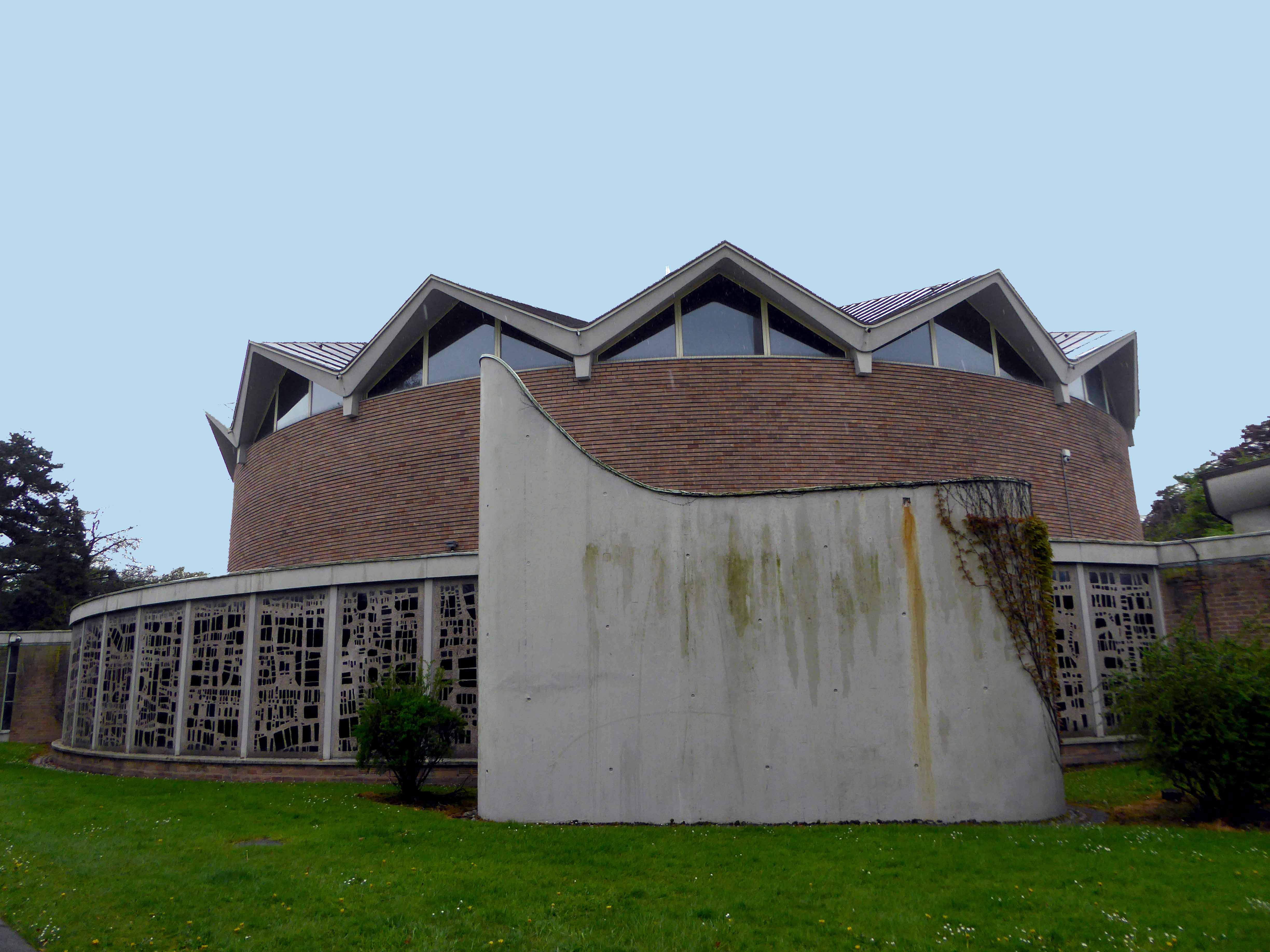
Pink brick, reinforced concrete, copper covered roofs, zig-zag to main space and flat to aisle. Circular, aisled plan with projecting entrance and five projecting chapels.

Central altar. Entrance in large projecting porch with roof rising outwards and the roof slab cantilevered above the doors, its underside curving upward.

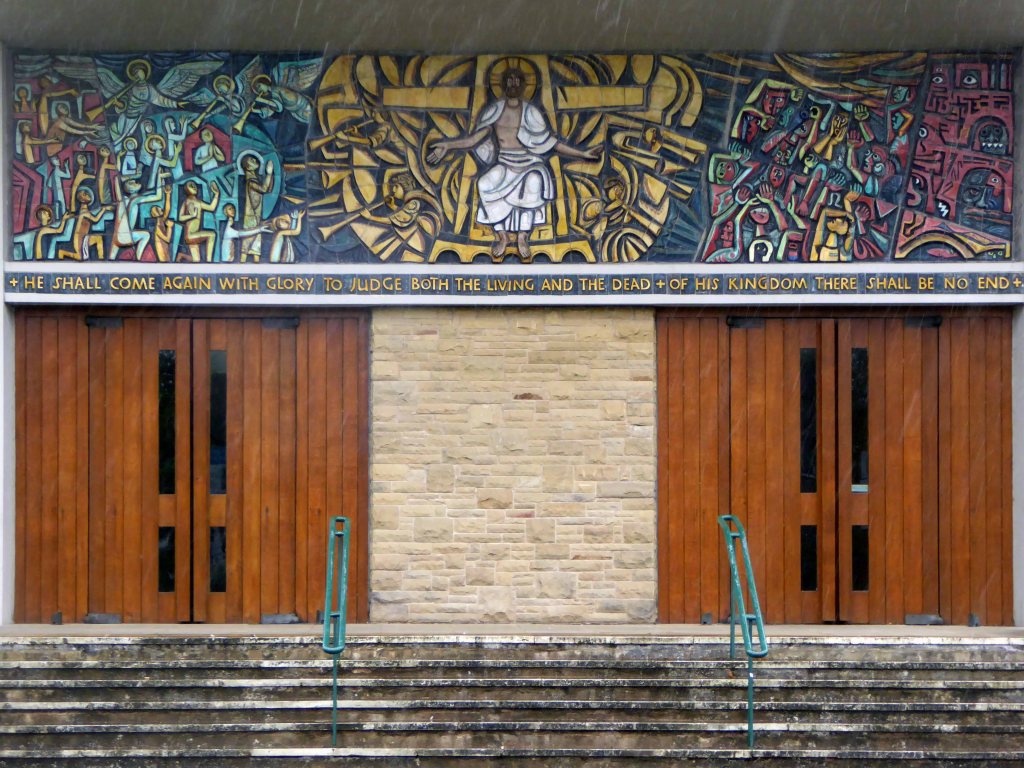
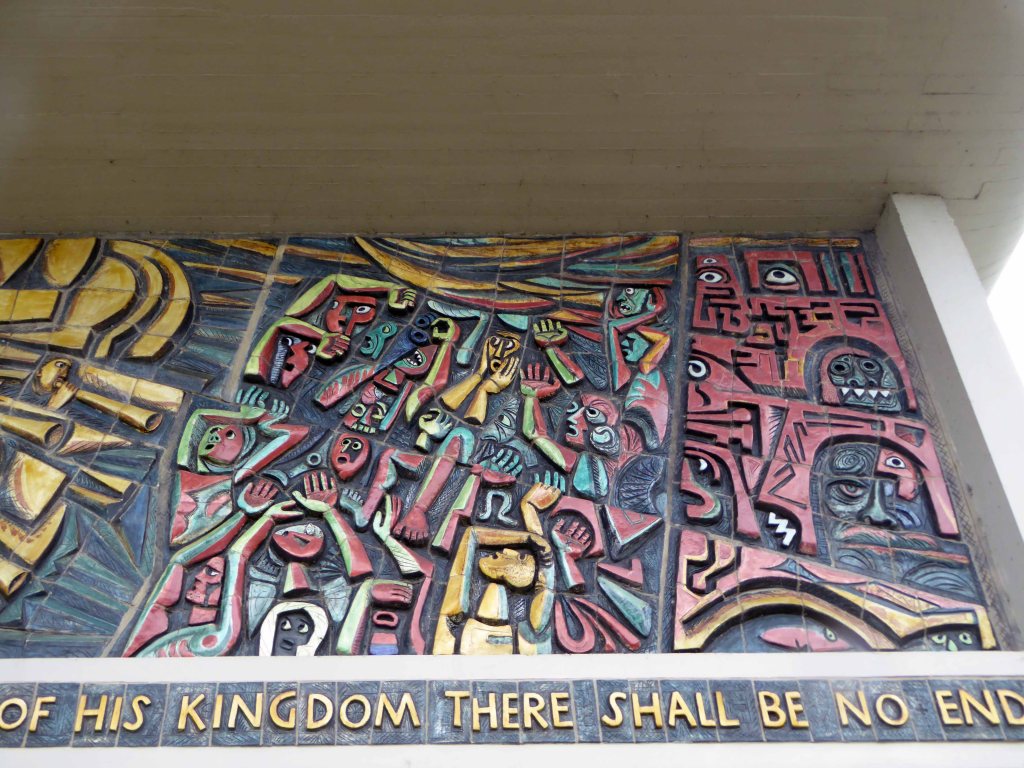
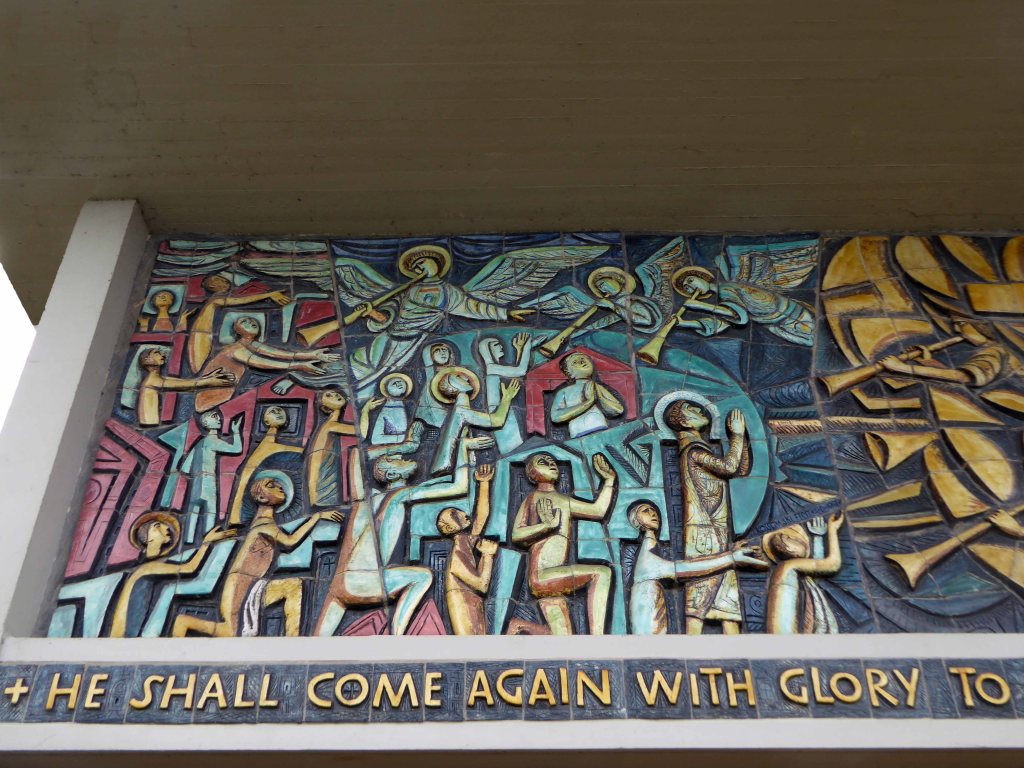
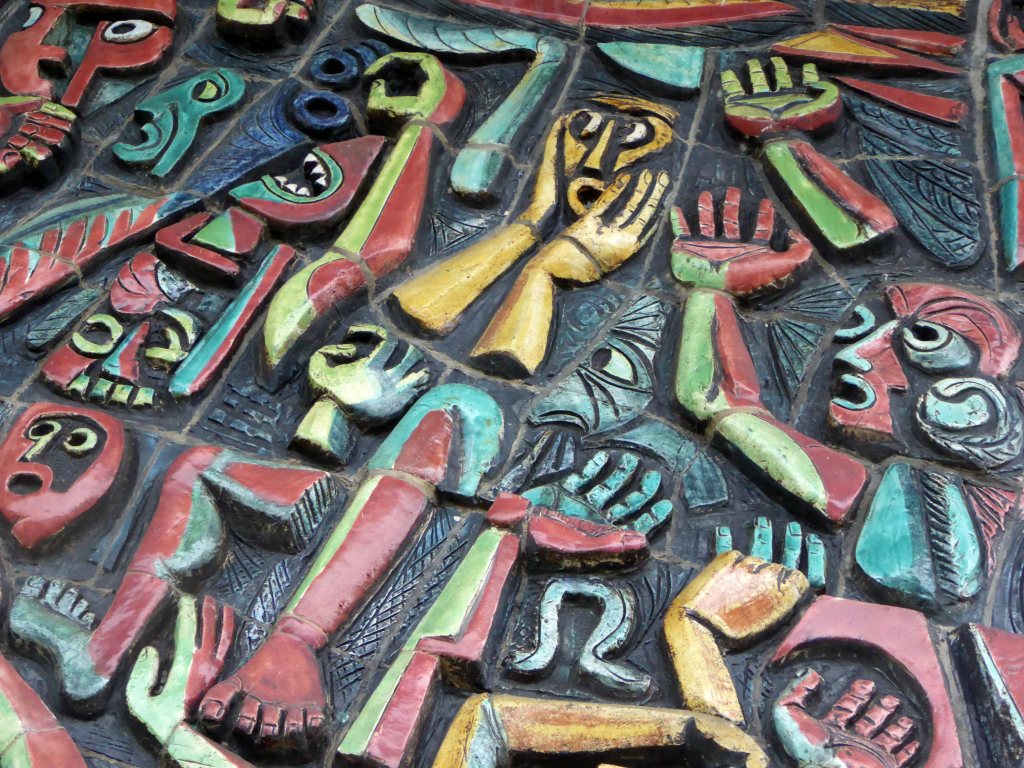
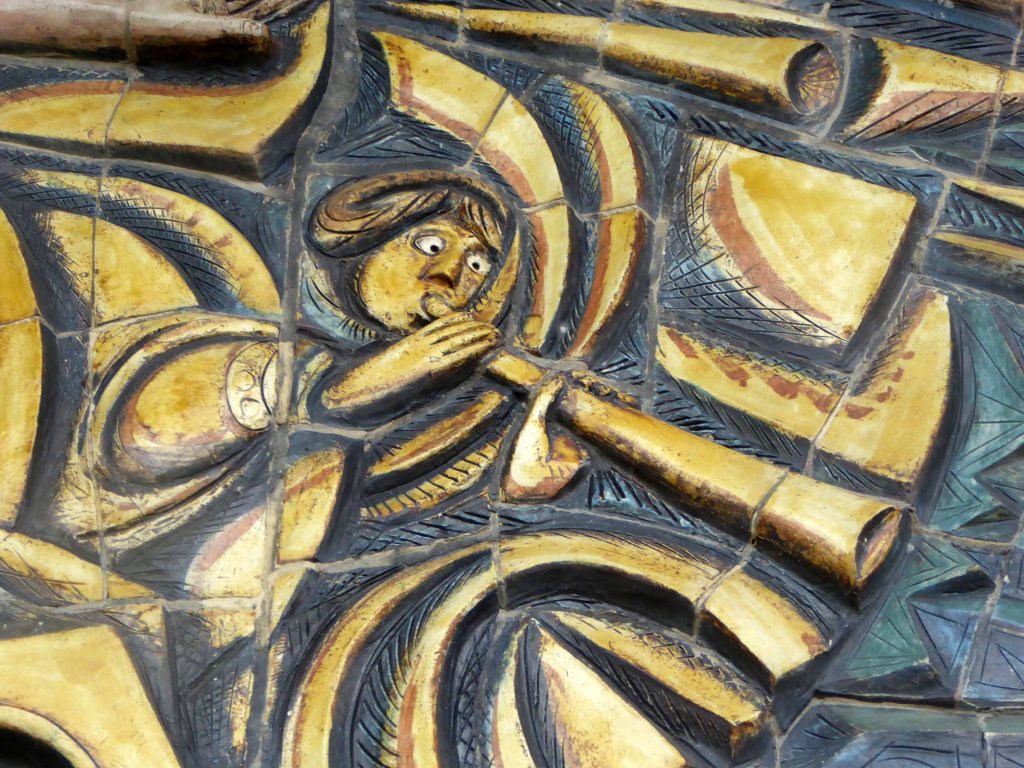
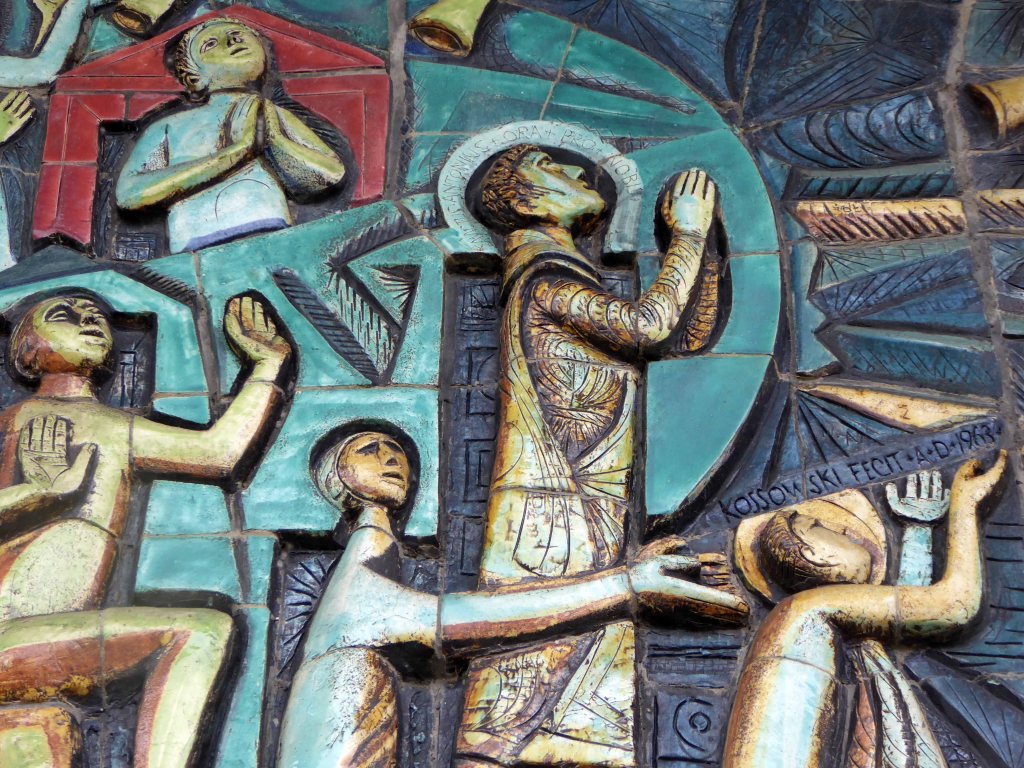
Large polychrome ceramic mural representing the Last Judgment by Adam Kossowski occupies the width of the porch above the two double- doored entrances.

Brick rotunda with projecting painted reinforced concrete chapels to left and right, of organic round-cornered form.

Folded radial roof above main space, leaning outwards to shelter triangular clerestory windows. Circular glazed light to centre of roof, its sides leaning outwards, culminating in a sculpted finial of copper or bronze.

Internally, sanctuary is floored in white marble, raised by a step, and the white marble altar is raised by three further steps.

Fixed curved timber benches are placed on slightly raked floor.

`Y’ shaped concrete aisle posts, designed to incorporate the Stations of the Cross, sculpted by Arthur Dooley.

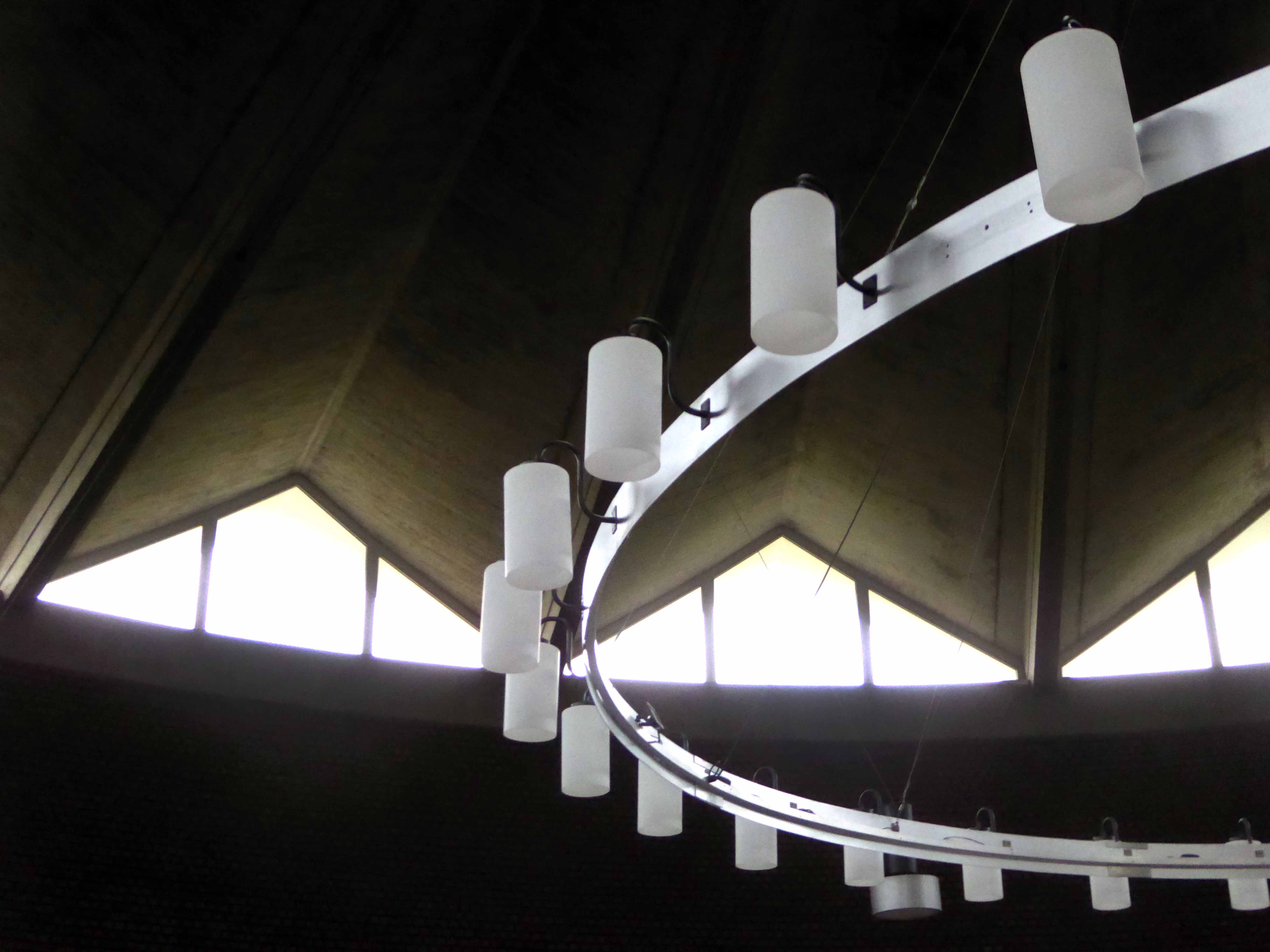
Above these the exposed brick drum rises to the exposed, board-marked concrete folded roof. The aisle walls comprise thirty-six panels of abstract dalle-de-verre stained glass, totalling 233 feet in length, by Patrick Reyntiens, mostly in blues and greens. The theme is the first day of Creation. Suspended above the altar is the original ring-shaped light fixture, and also Adam Kossowski’s ceramic of Christ the King.

Further original light fittings are suspended above the congregation.

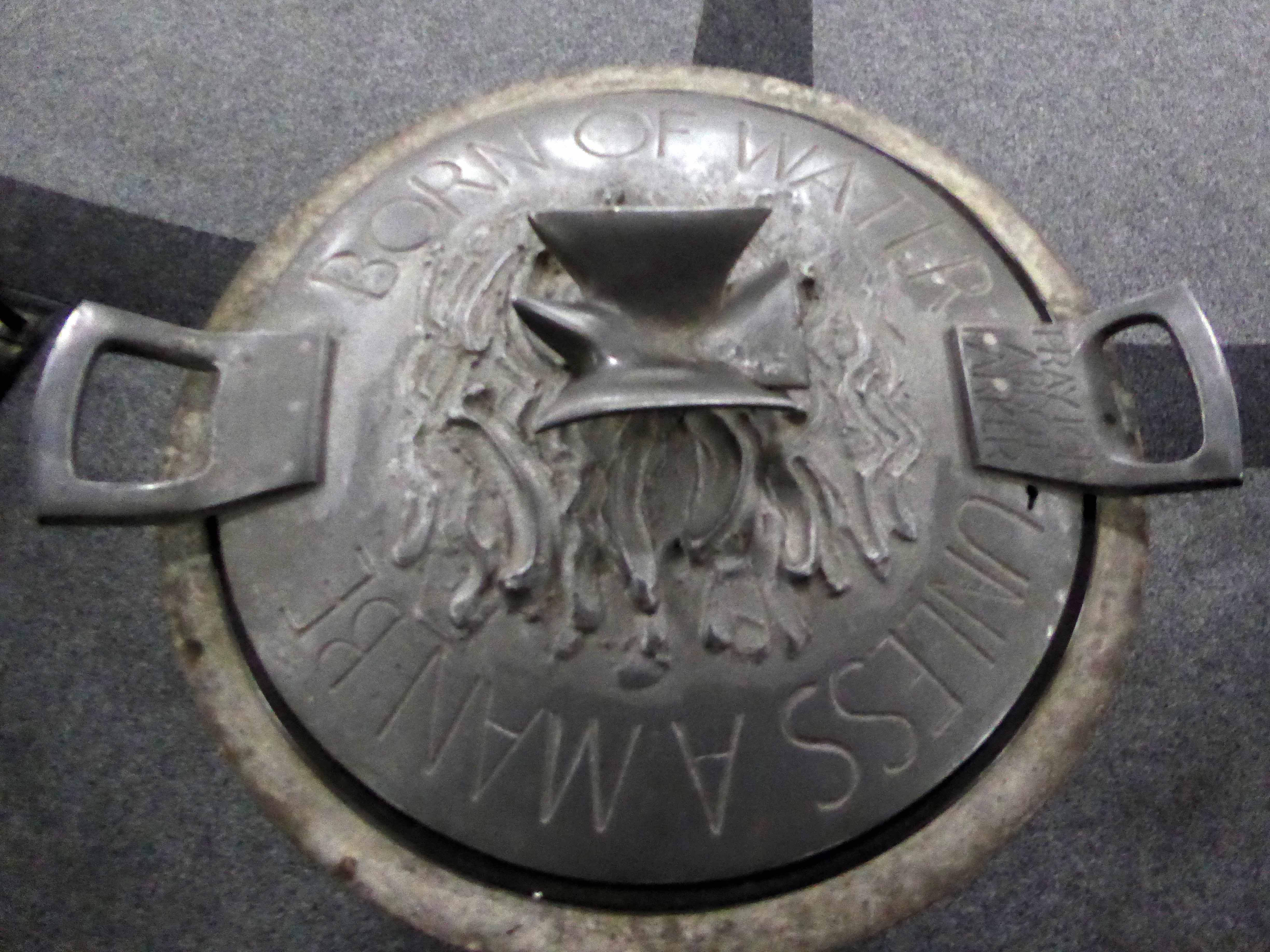
The font is placed in the narthex, in a shallow, marble-lined depression in the floor. It comprises a concrete cylinder with an inscribed bronze lid.

The Blessed Sacrament Chapel, with its rising roof slab, contains a green marble altar with in-built raking supports.

Behind it is a tapestry representing the Trinity, designed by the architect J. Faczynski.

Text from Taking Stock

Many thanks to Father John and the members of the congregation for the warm welcome that they extended to us on the day of our visit to their exceptional Grade II Listed church.