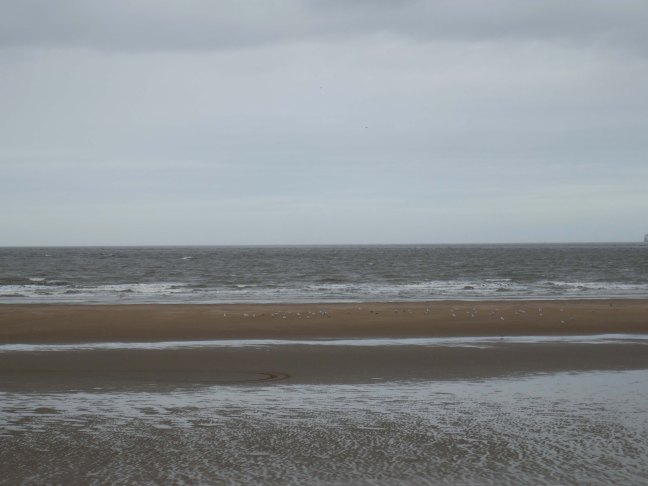
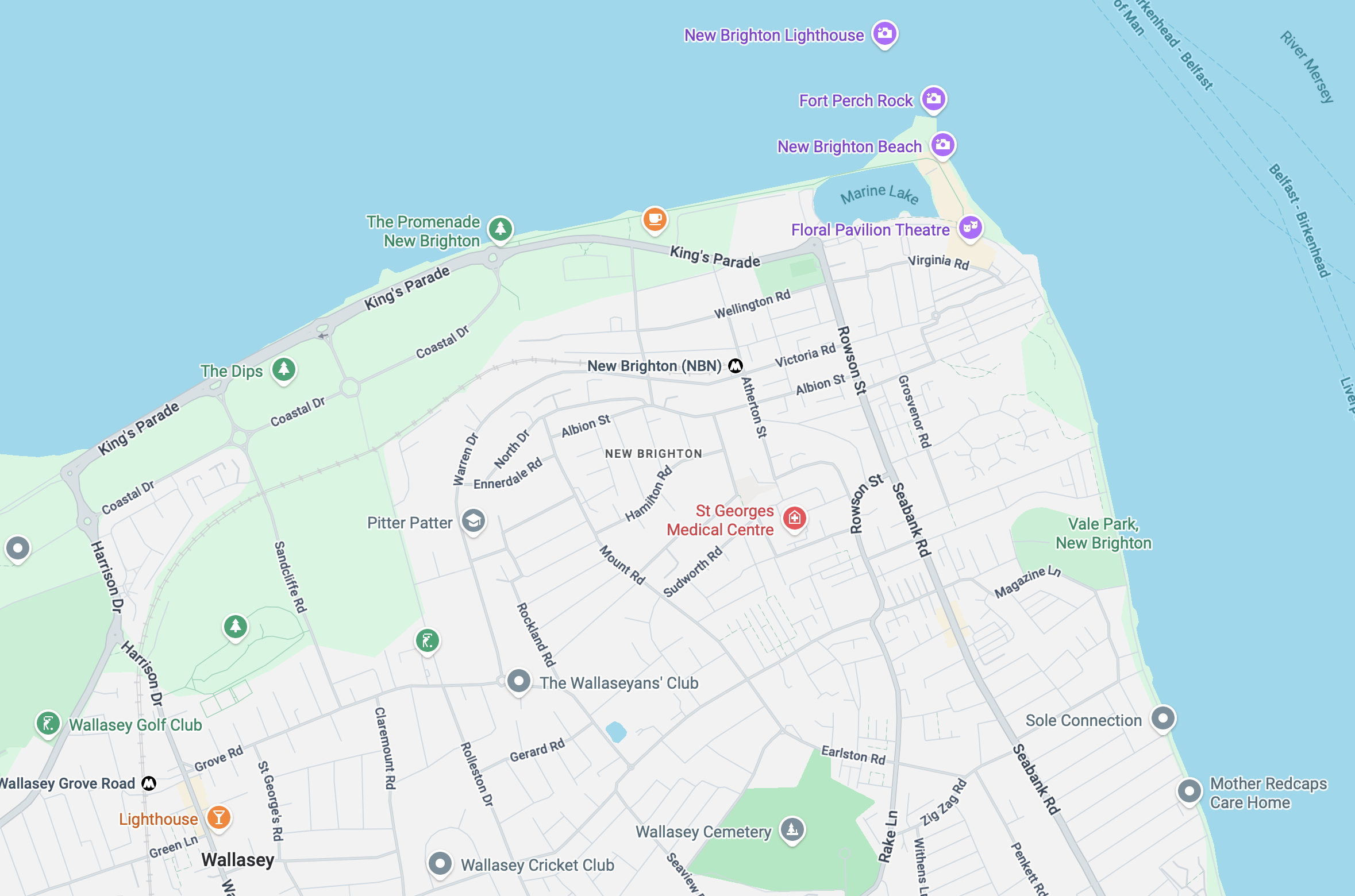
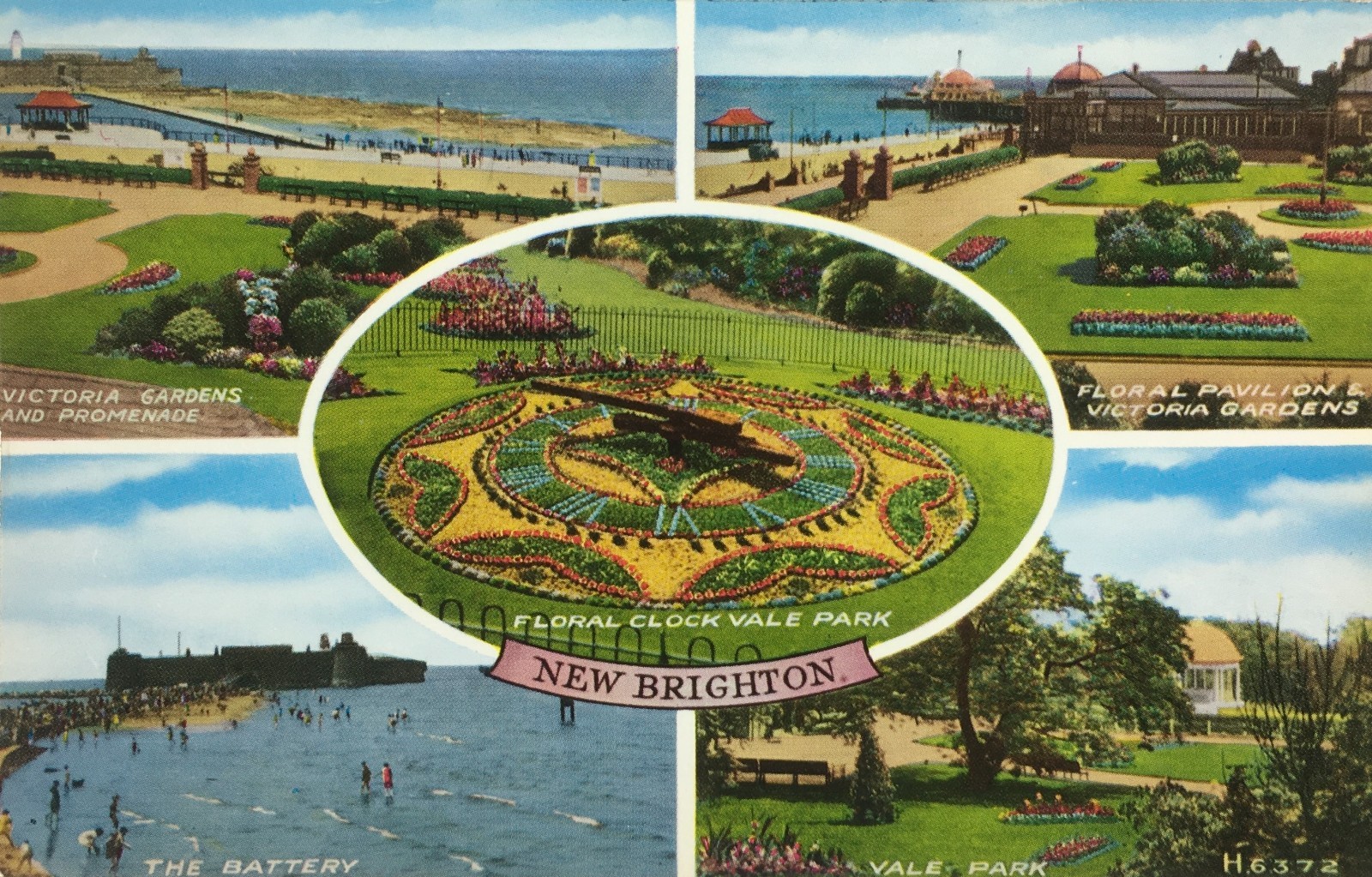
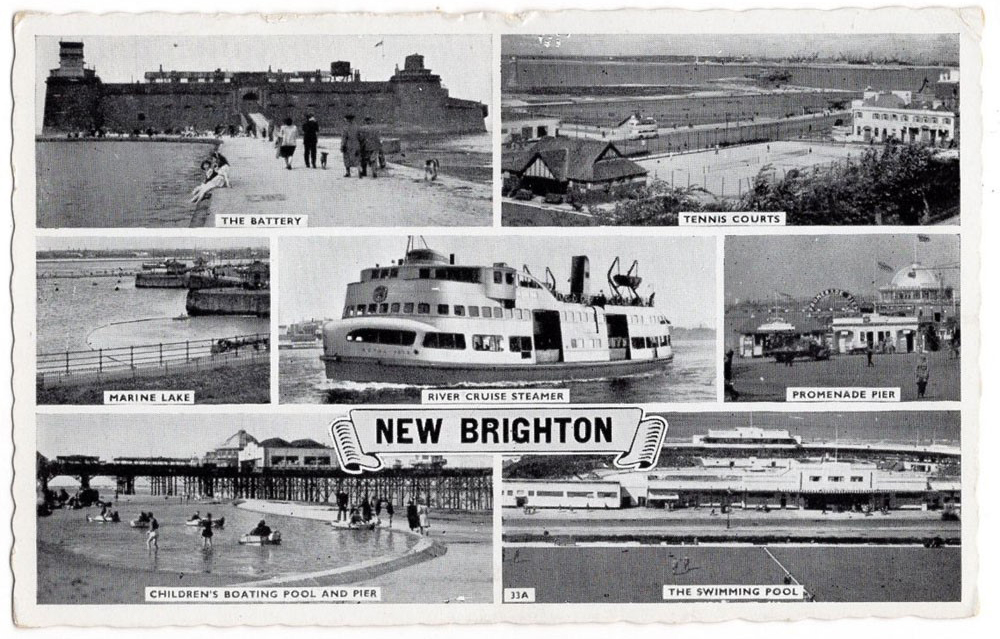
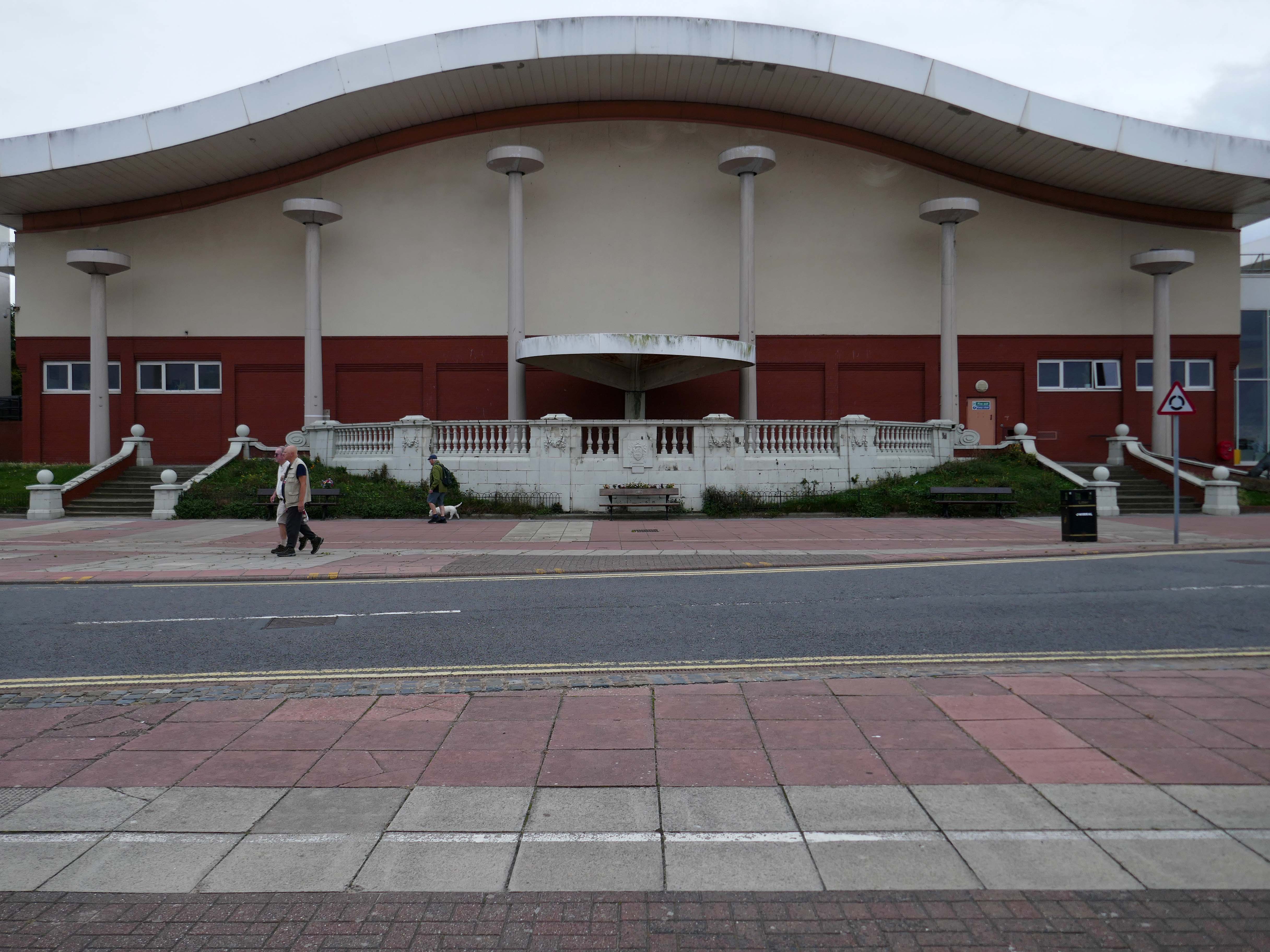
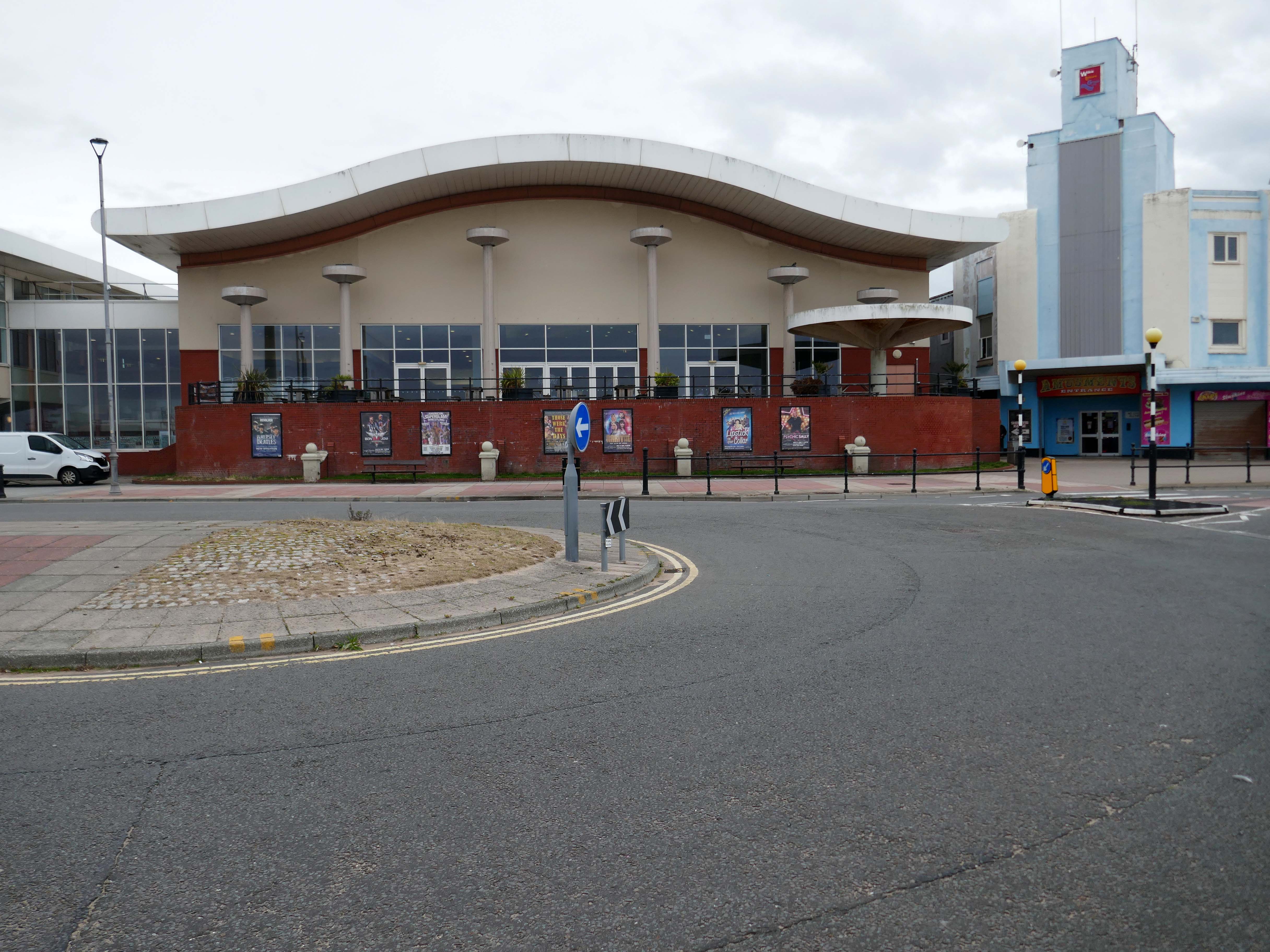
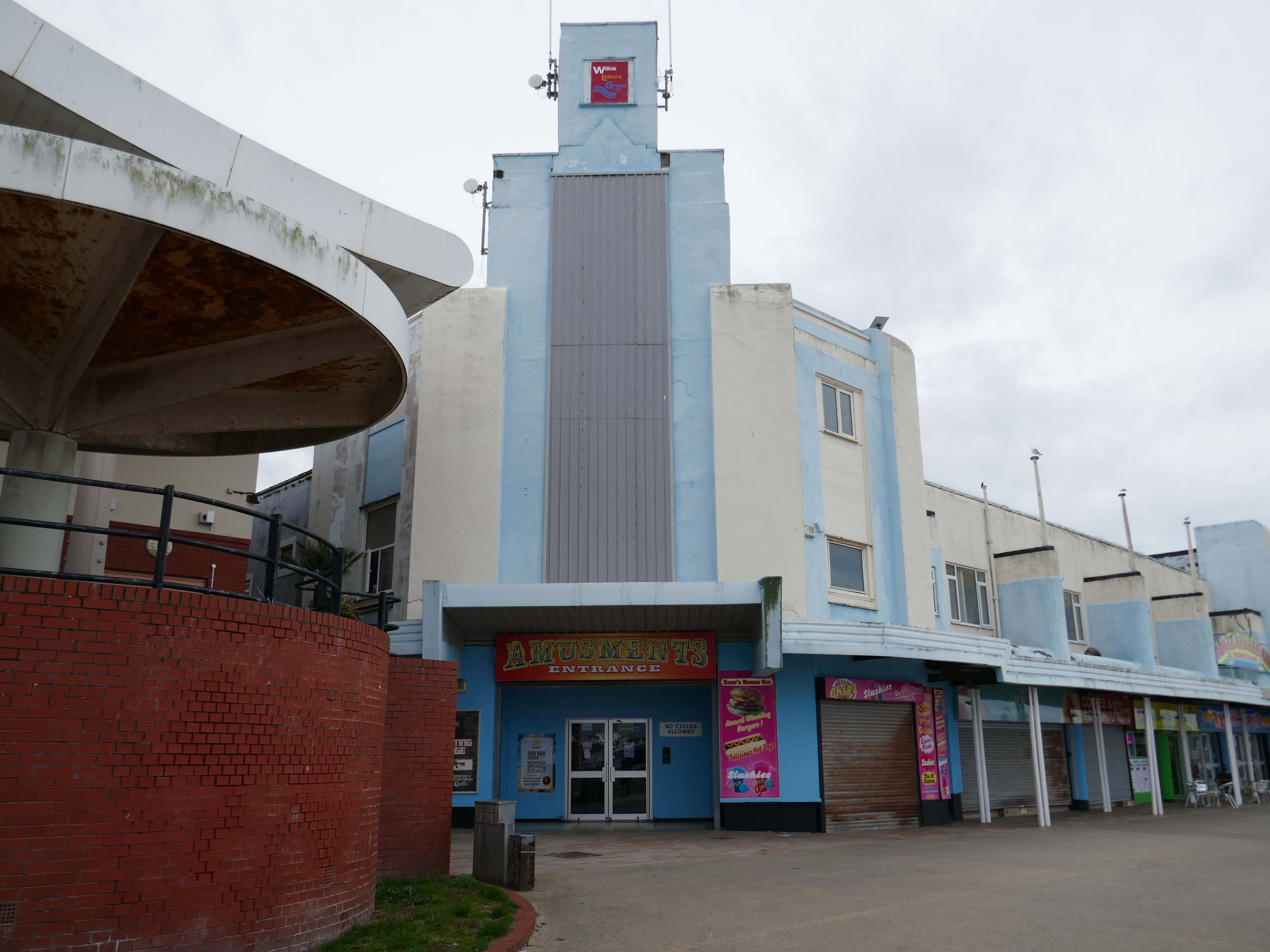
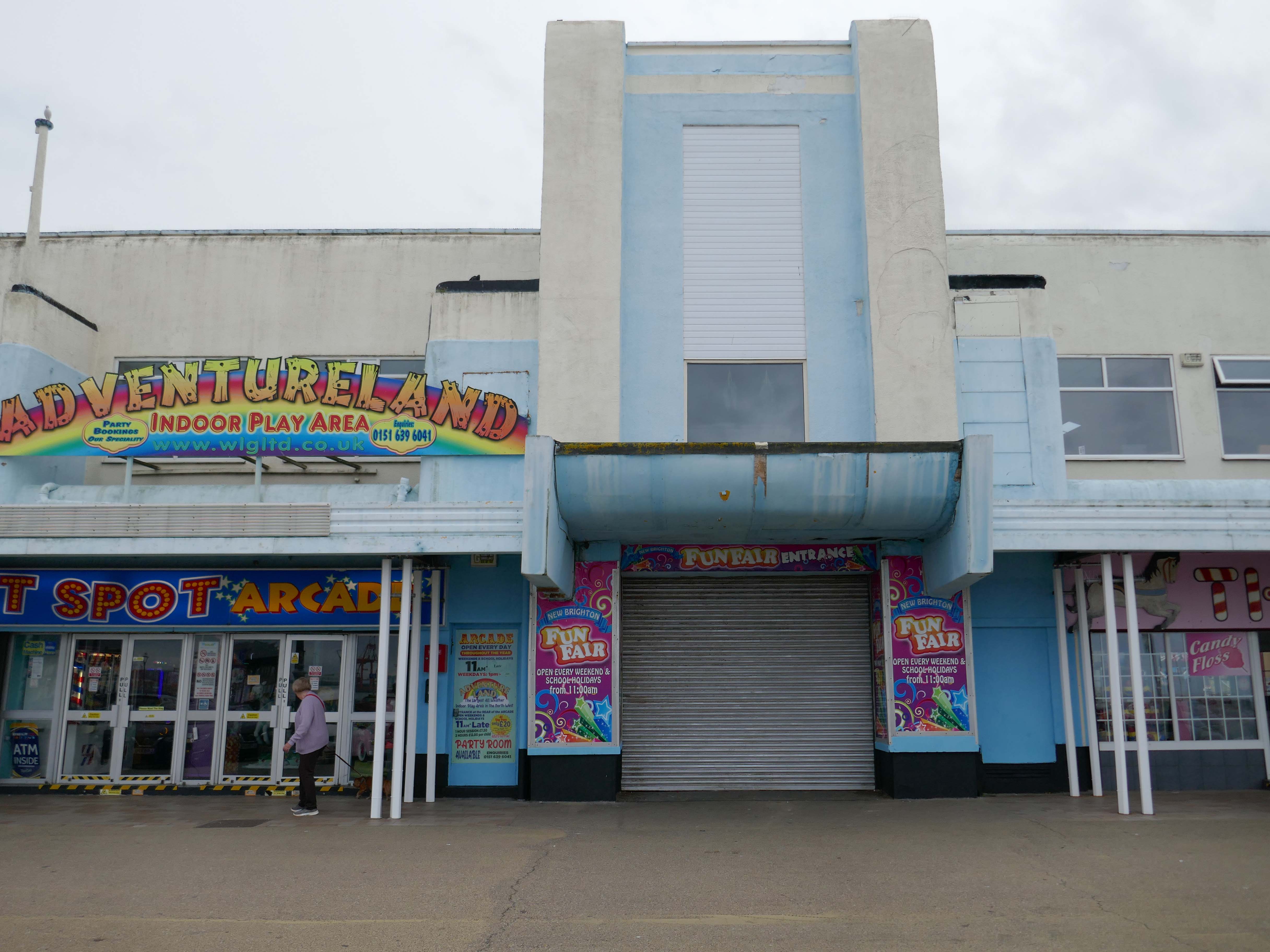
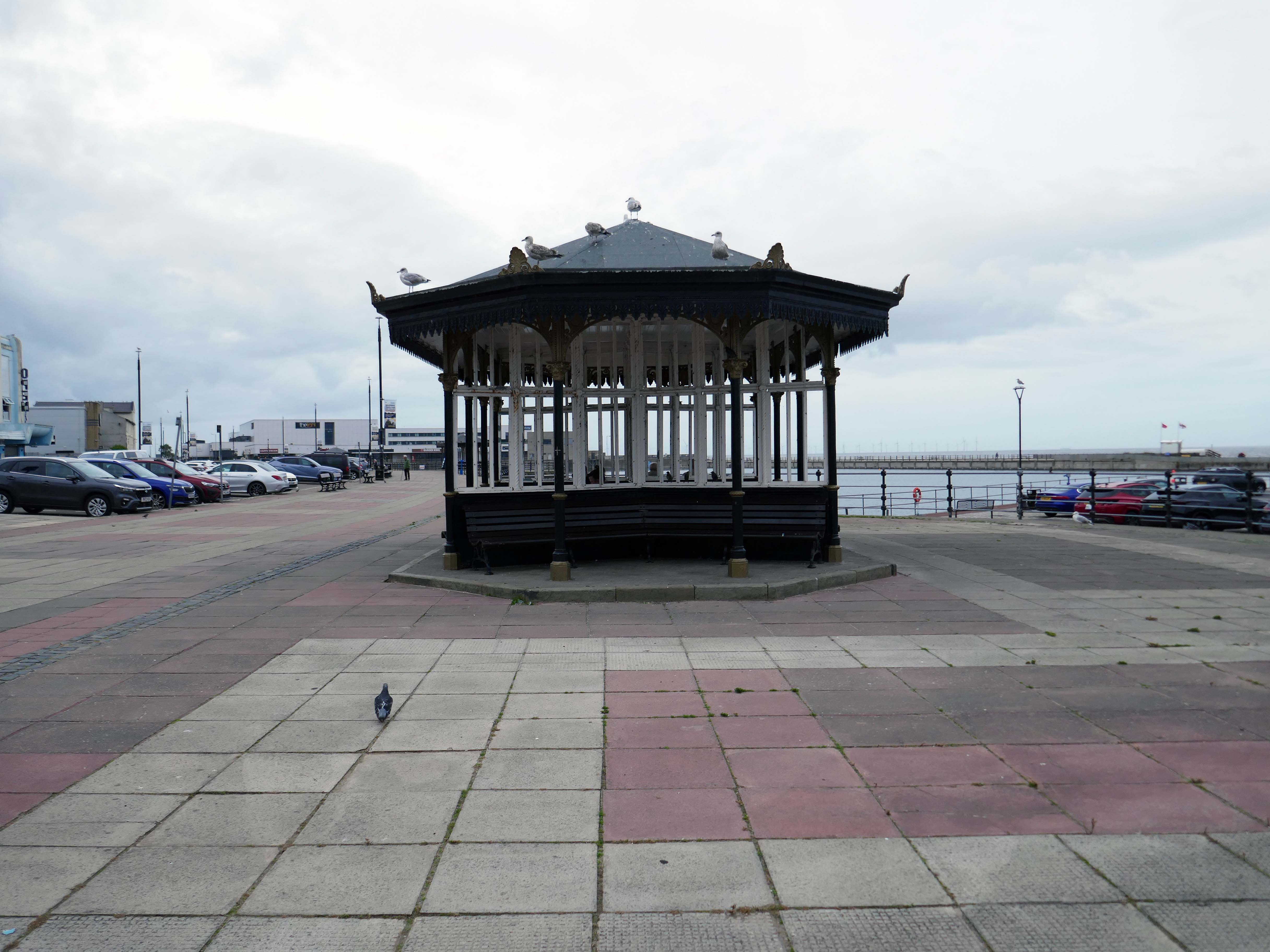
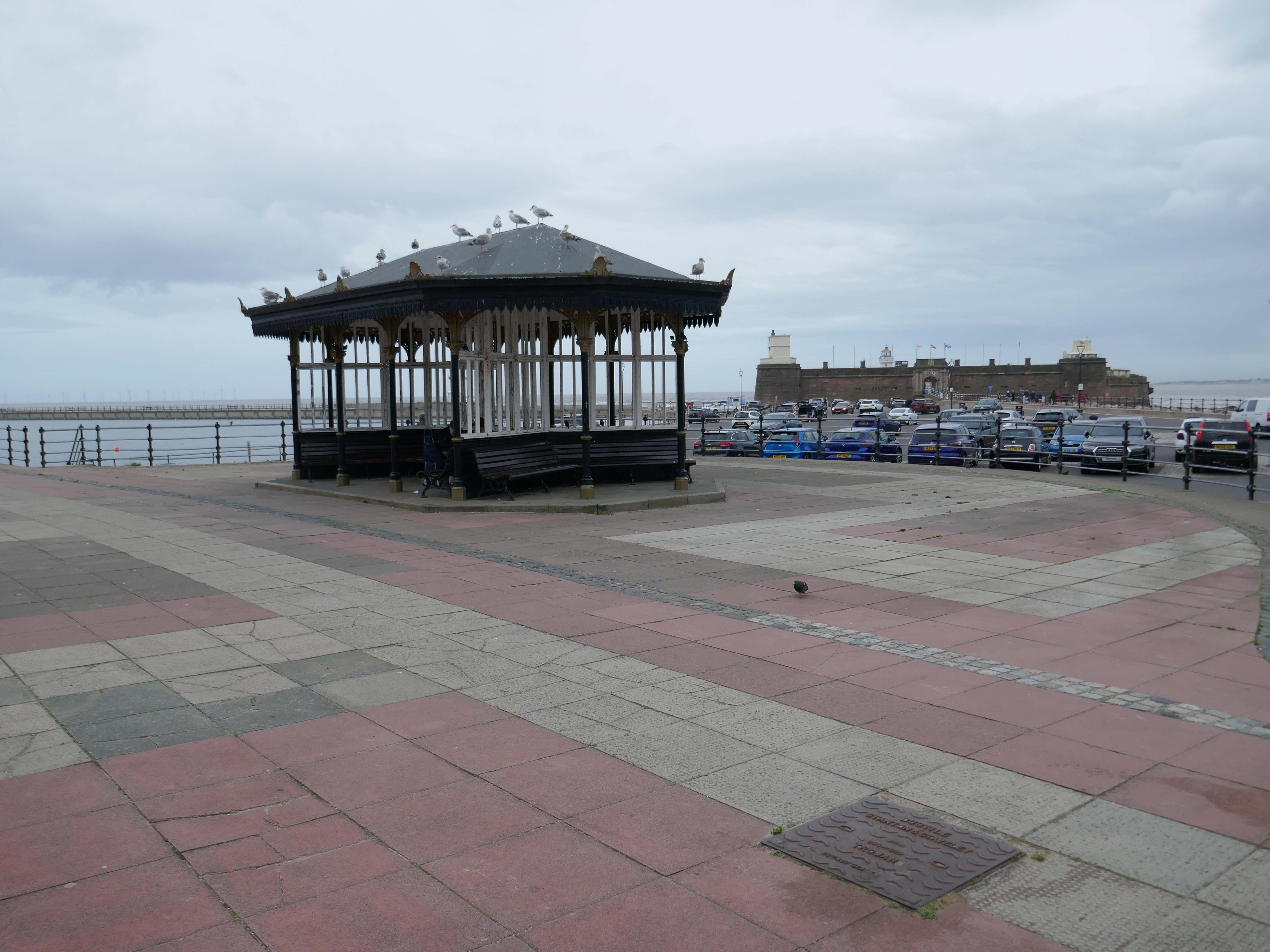
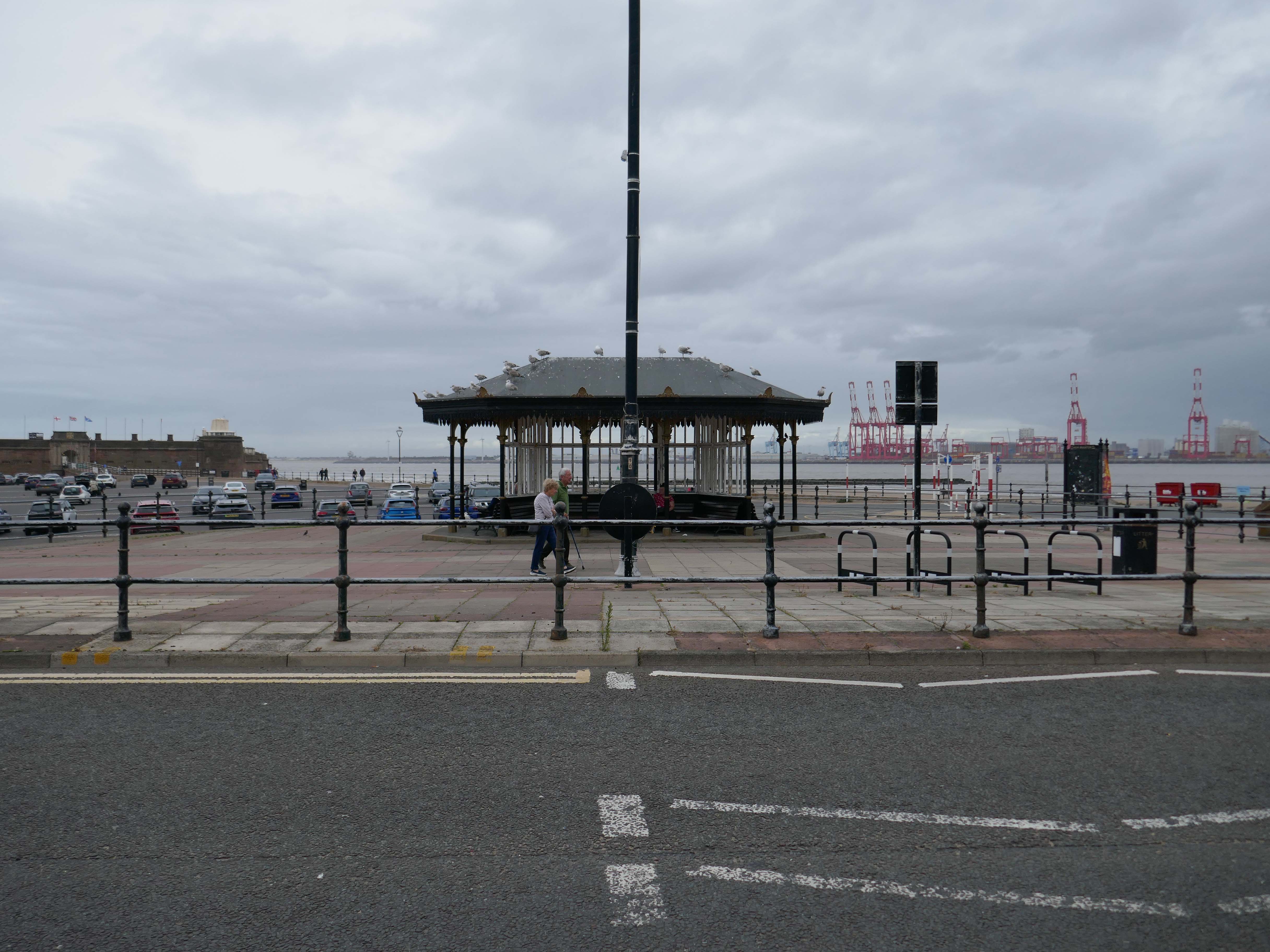
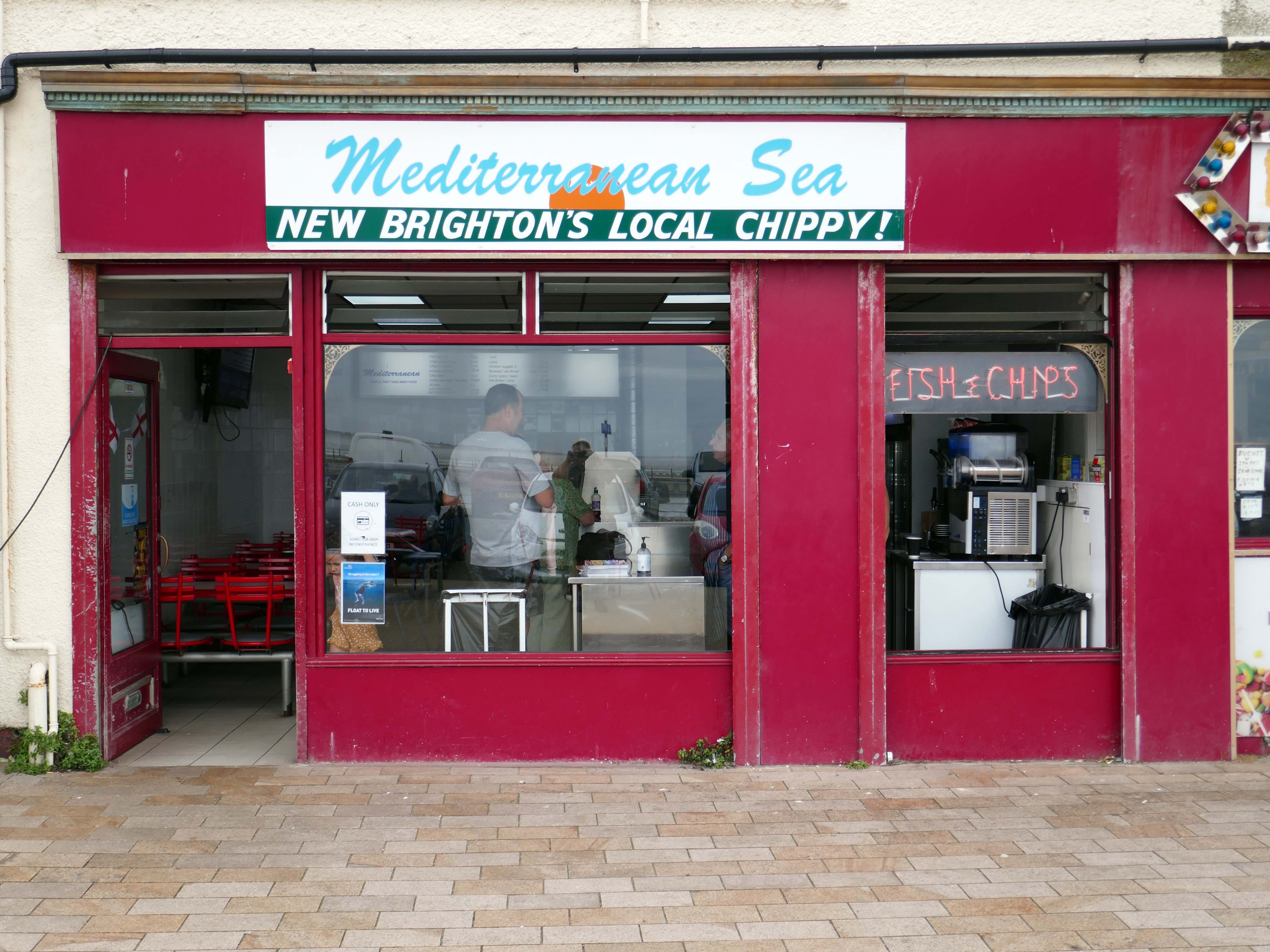
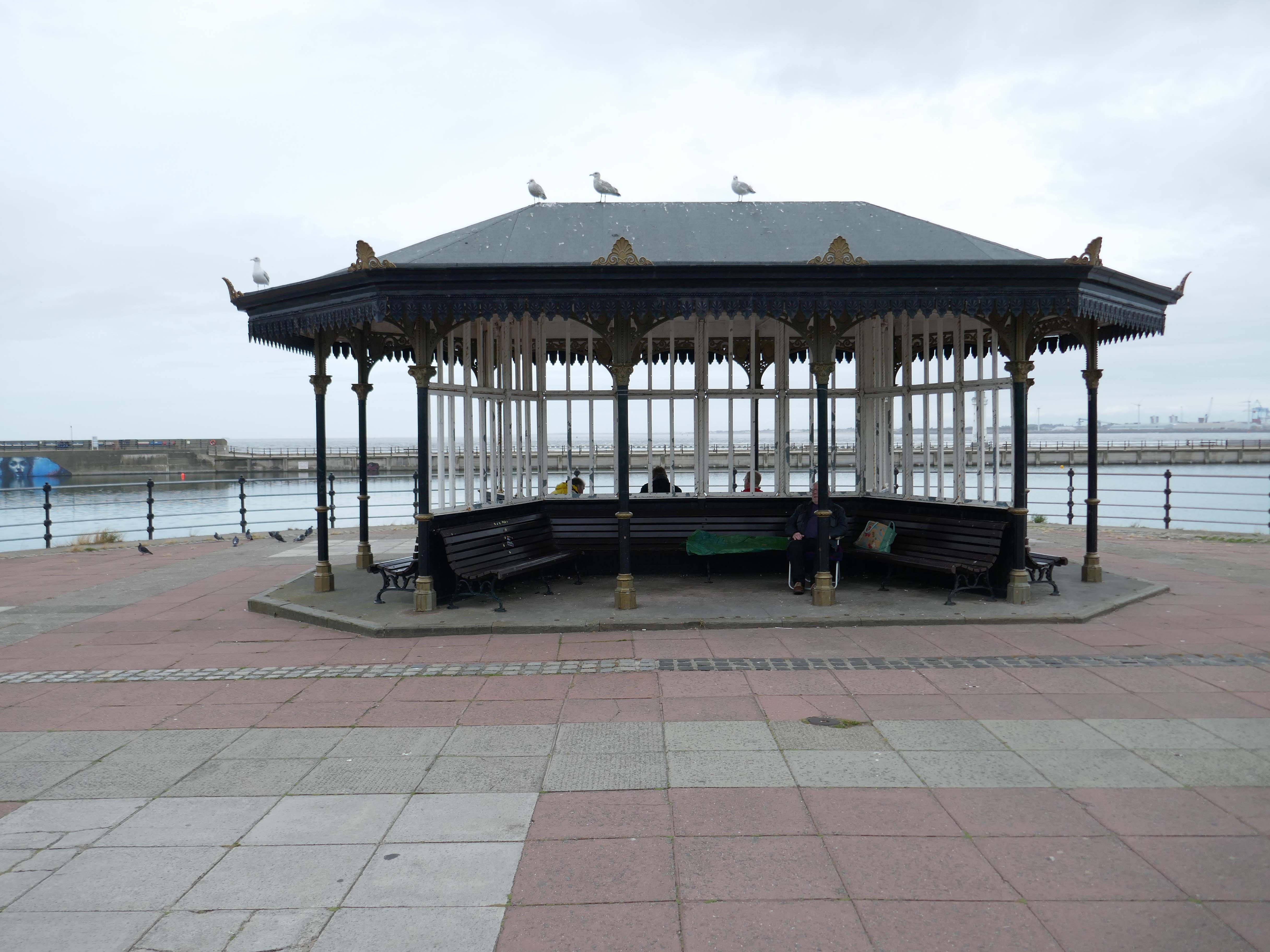
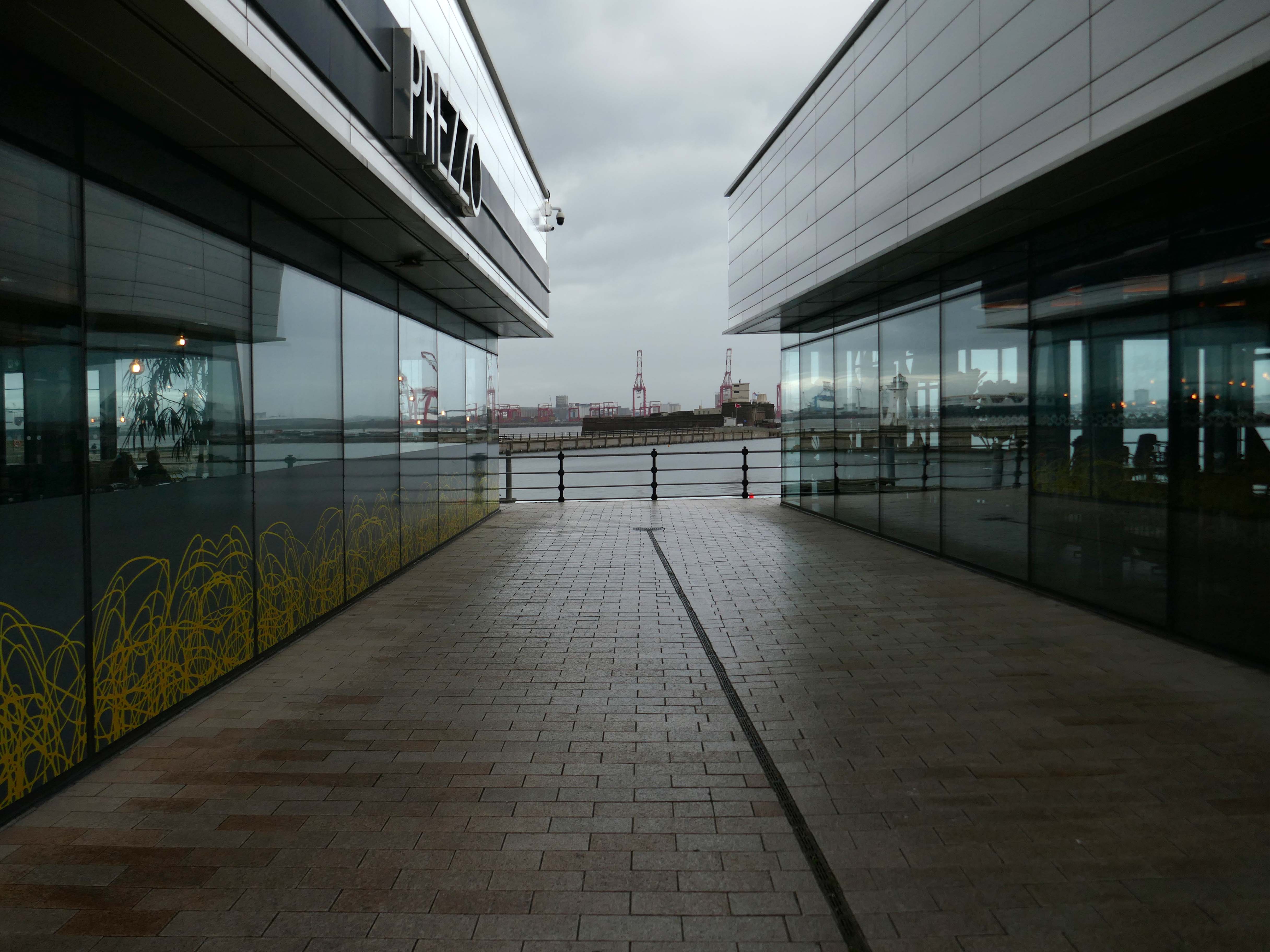
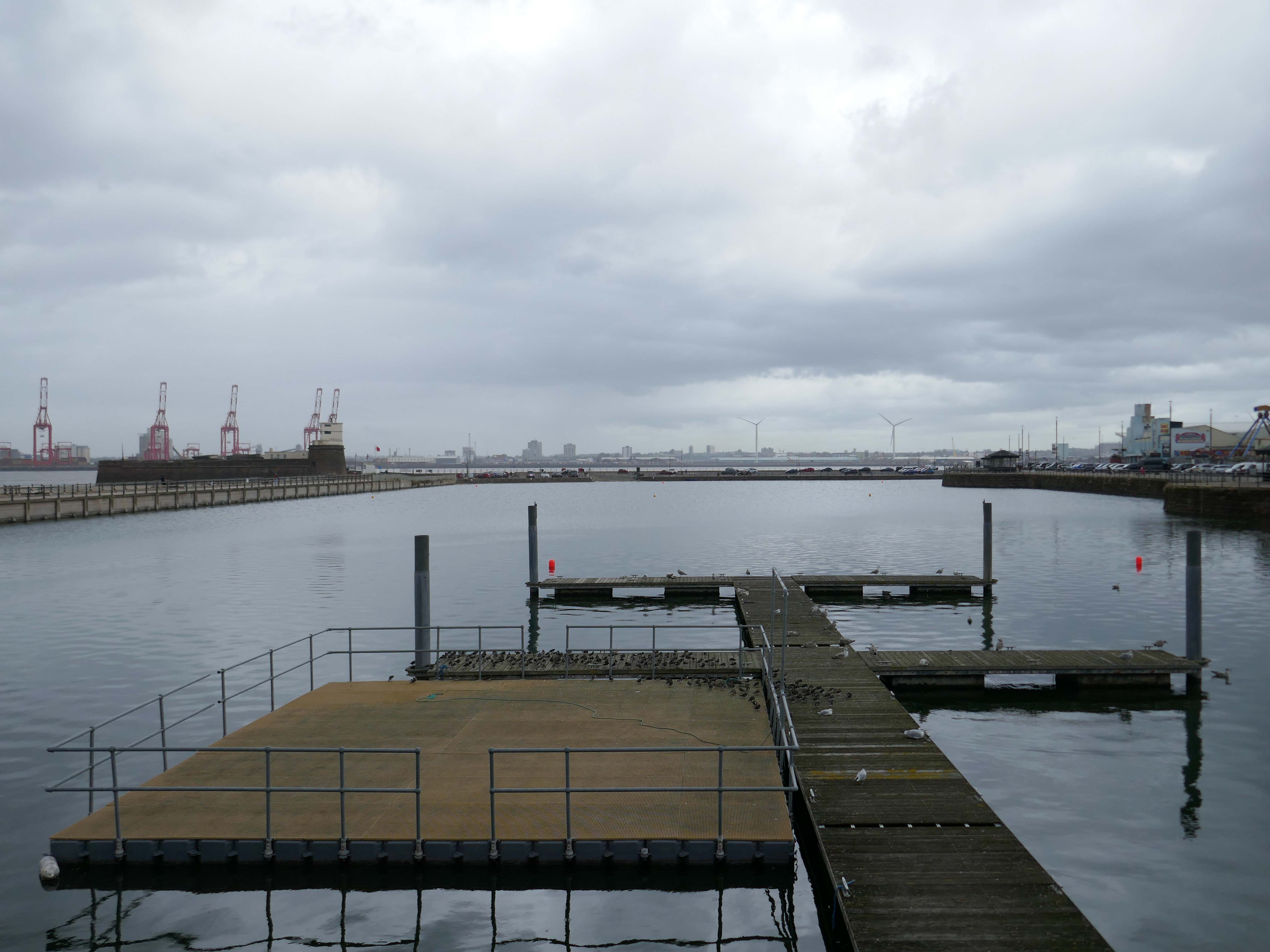
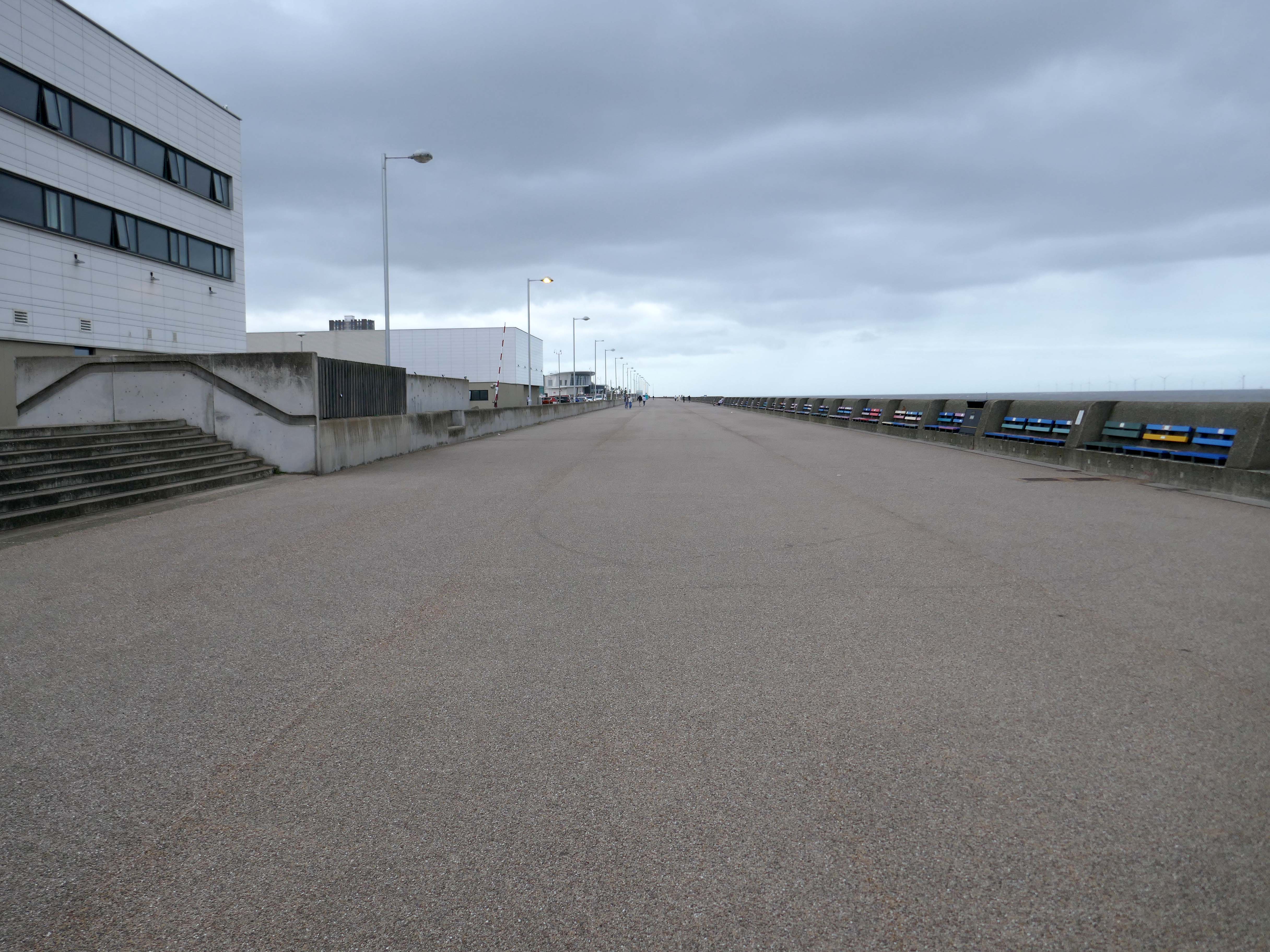
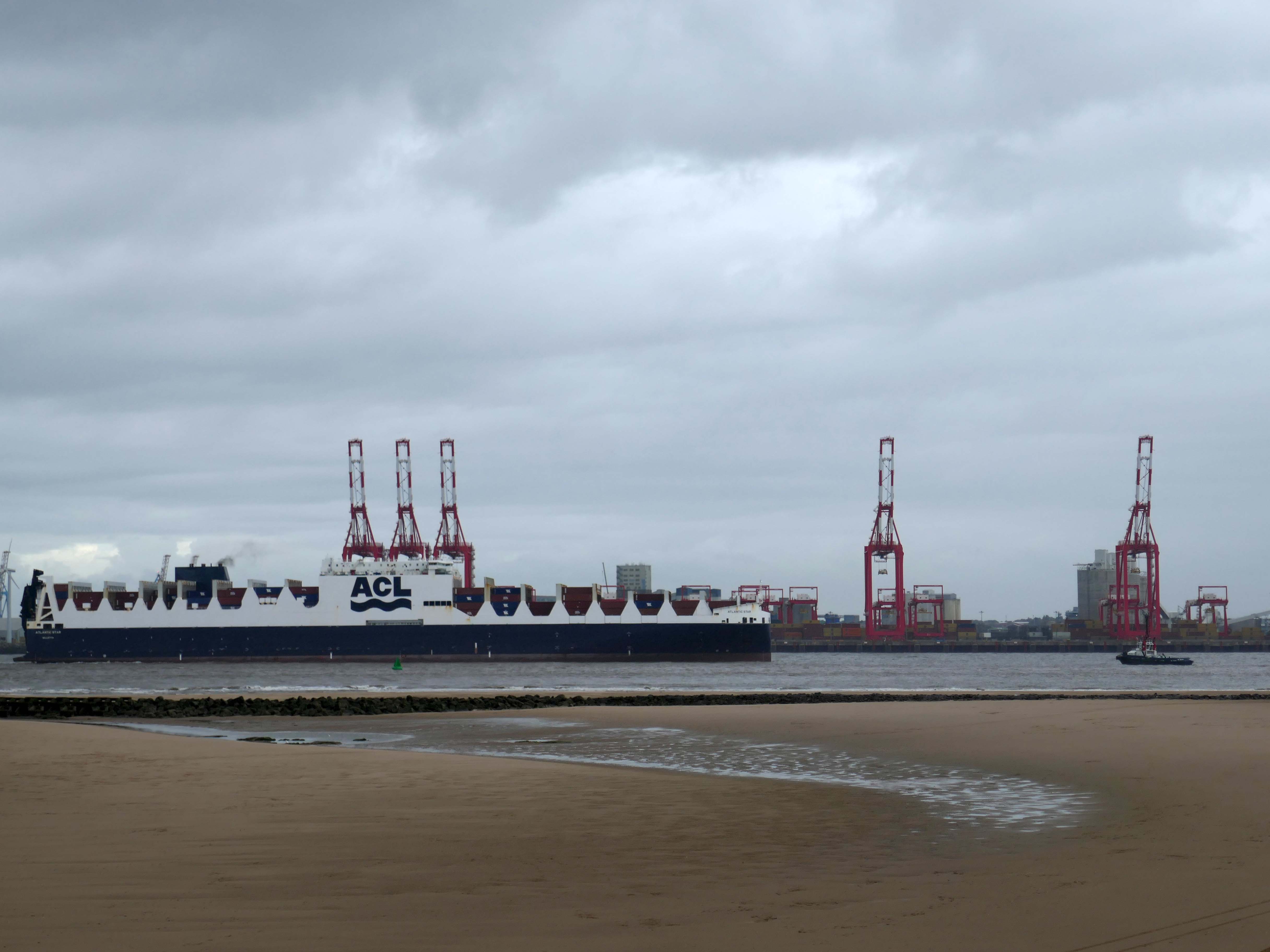
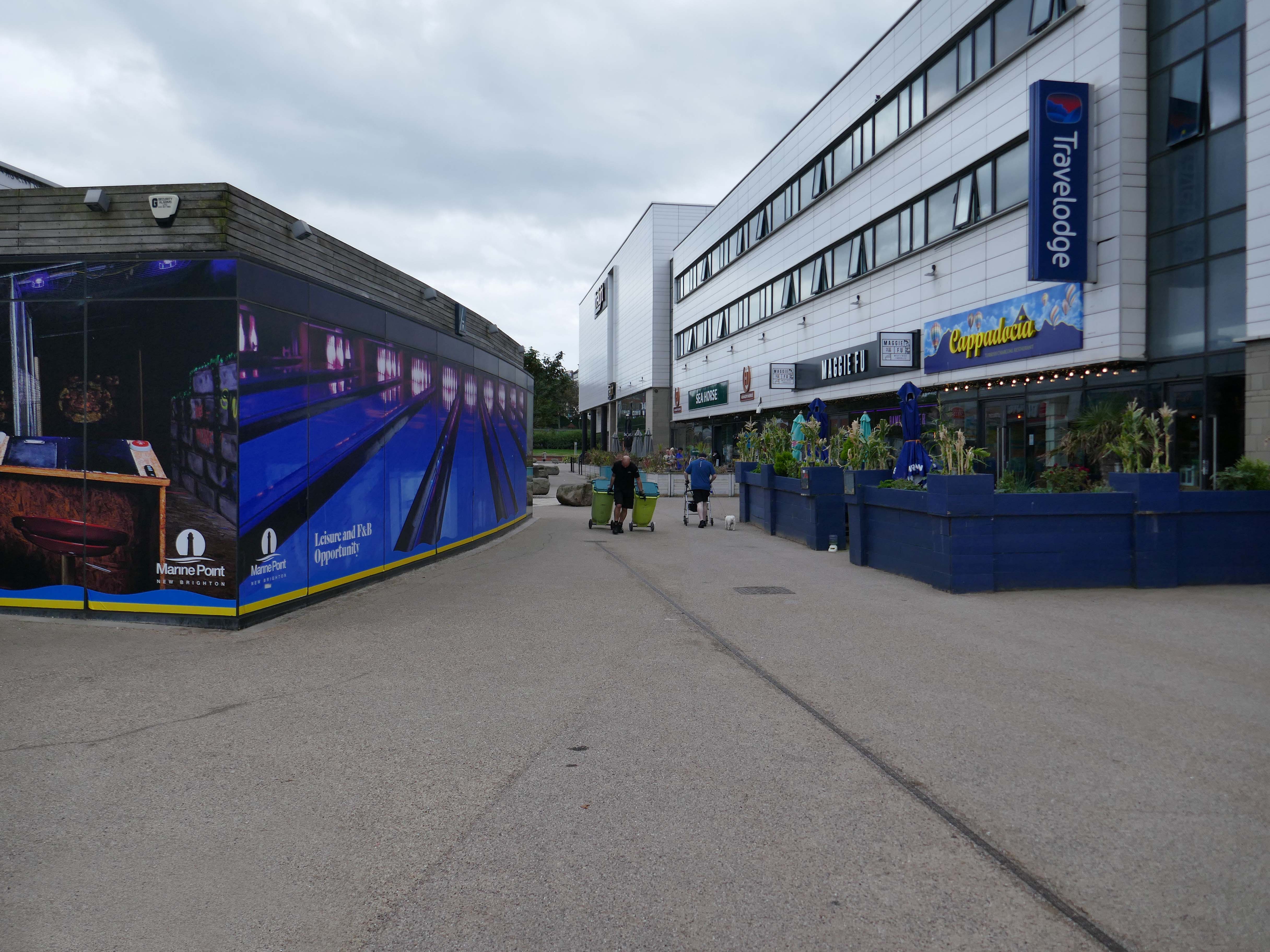
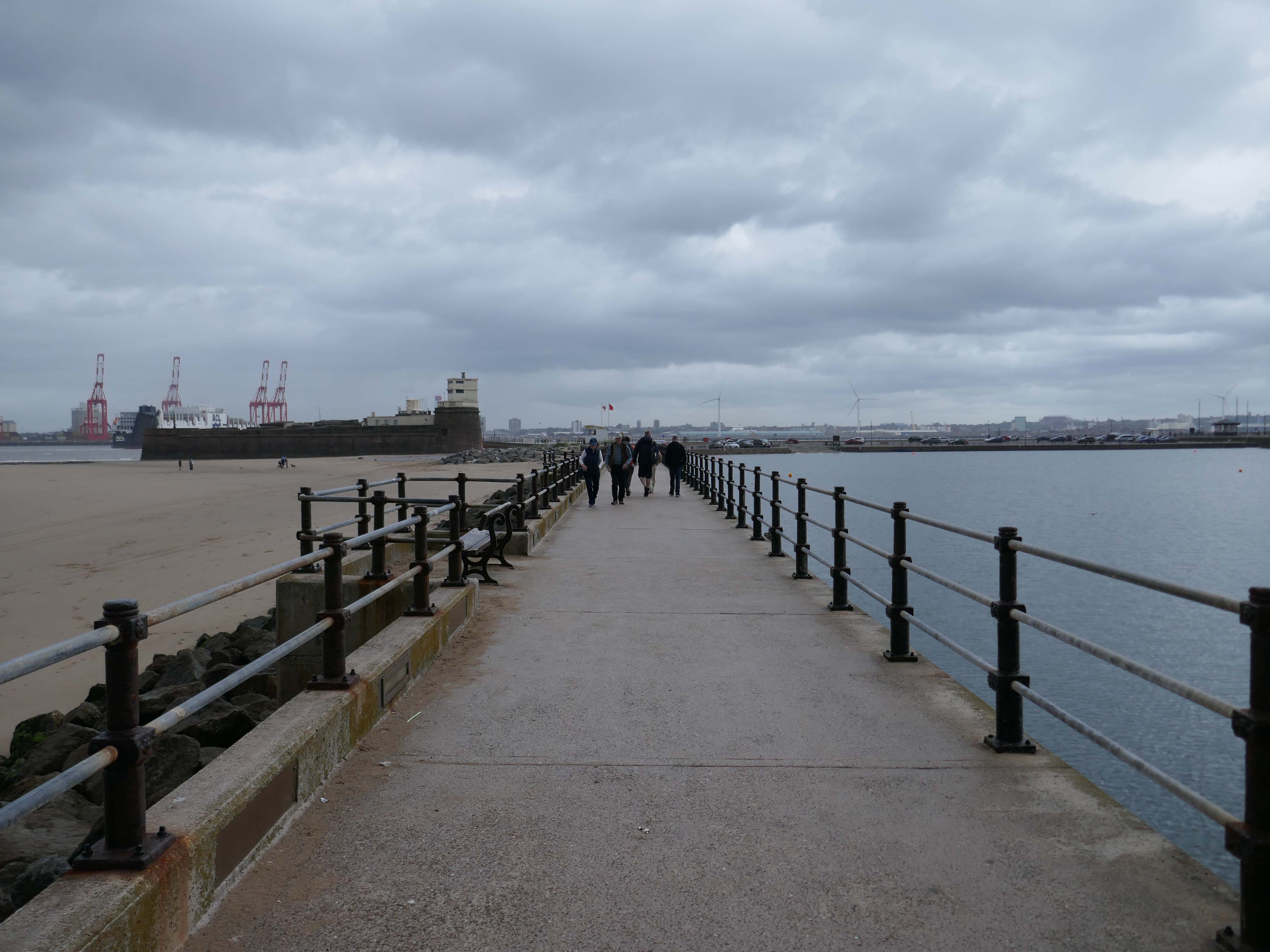
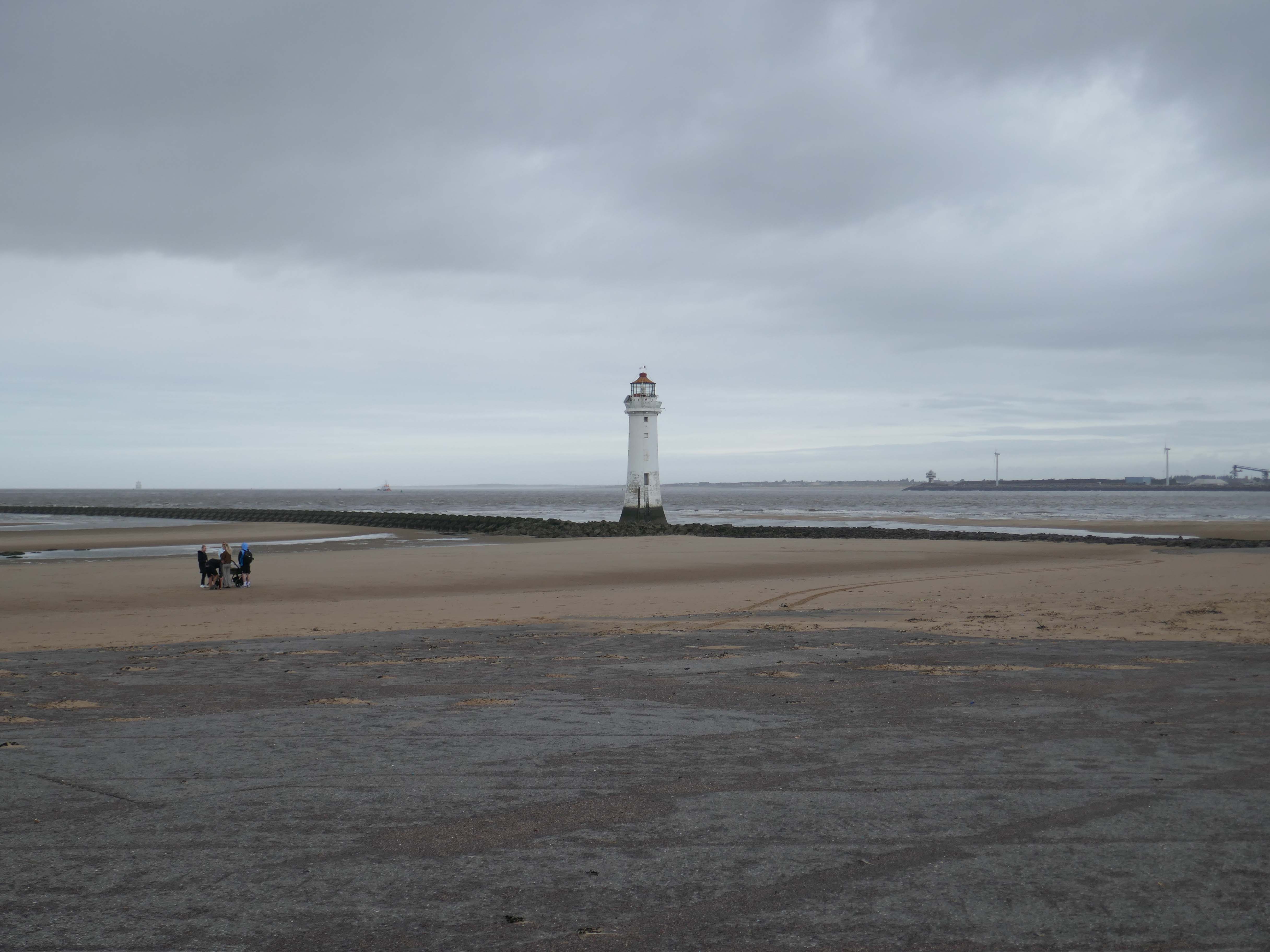
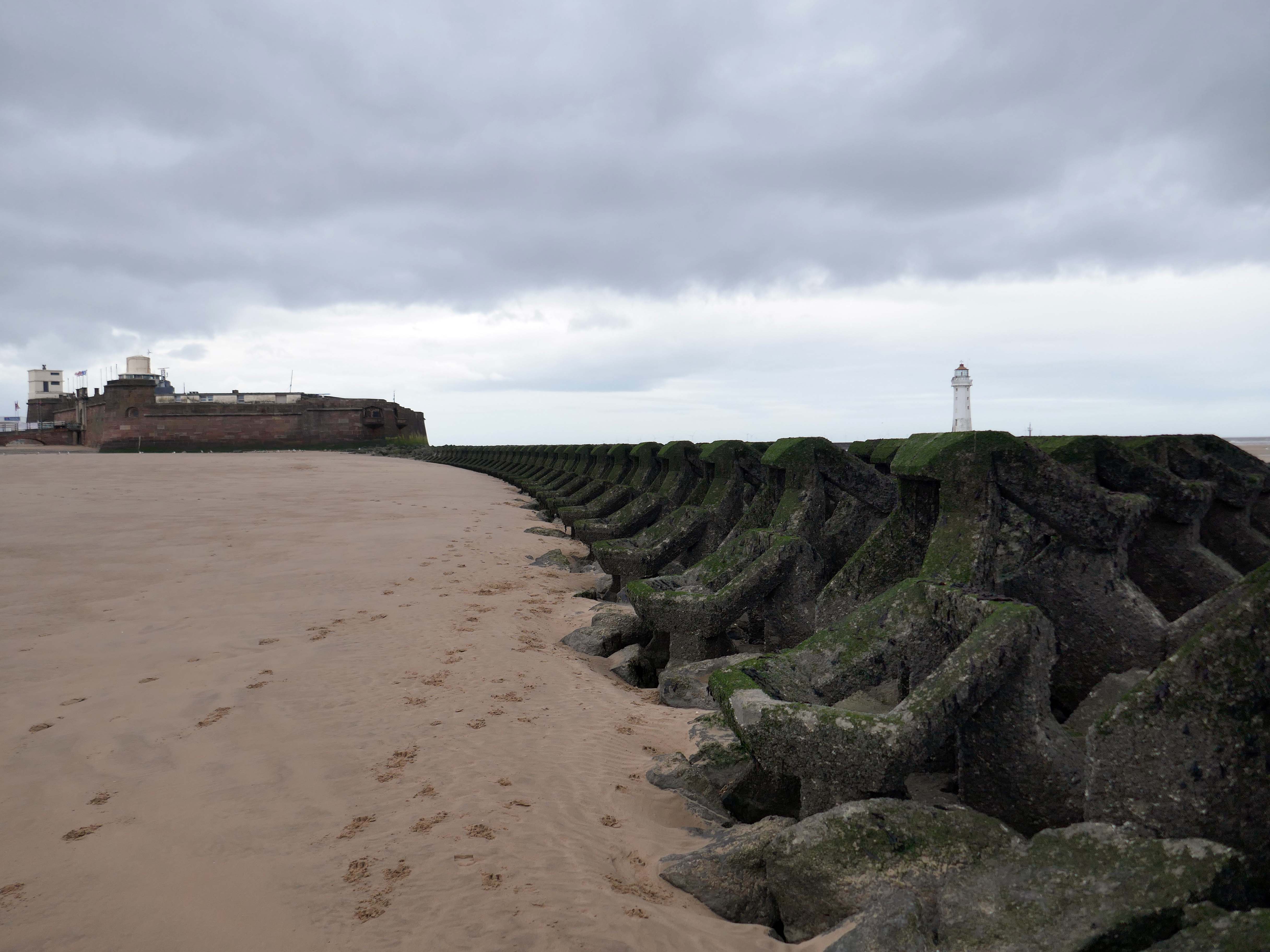
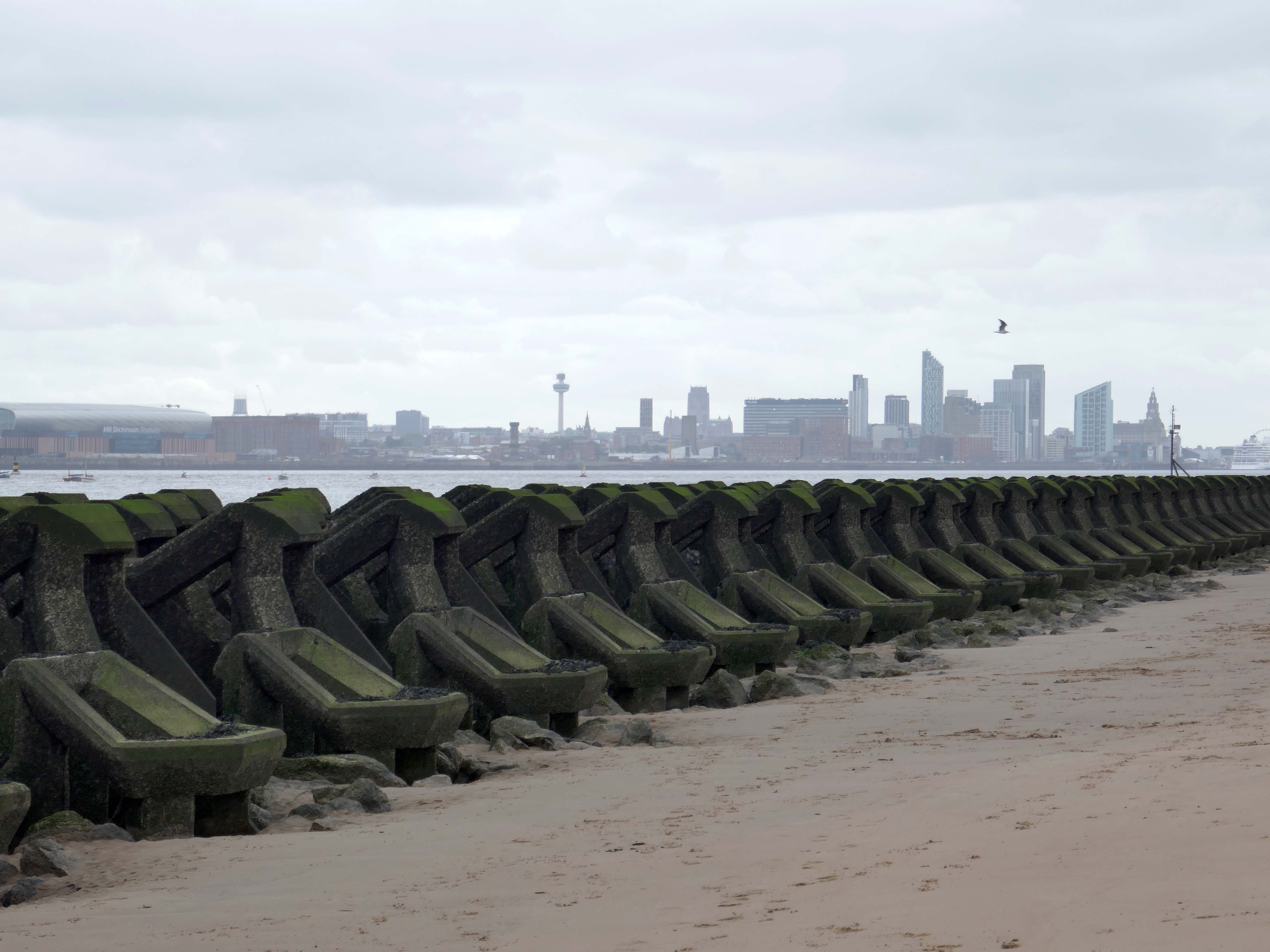
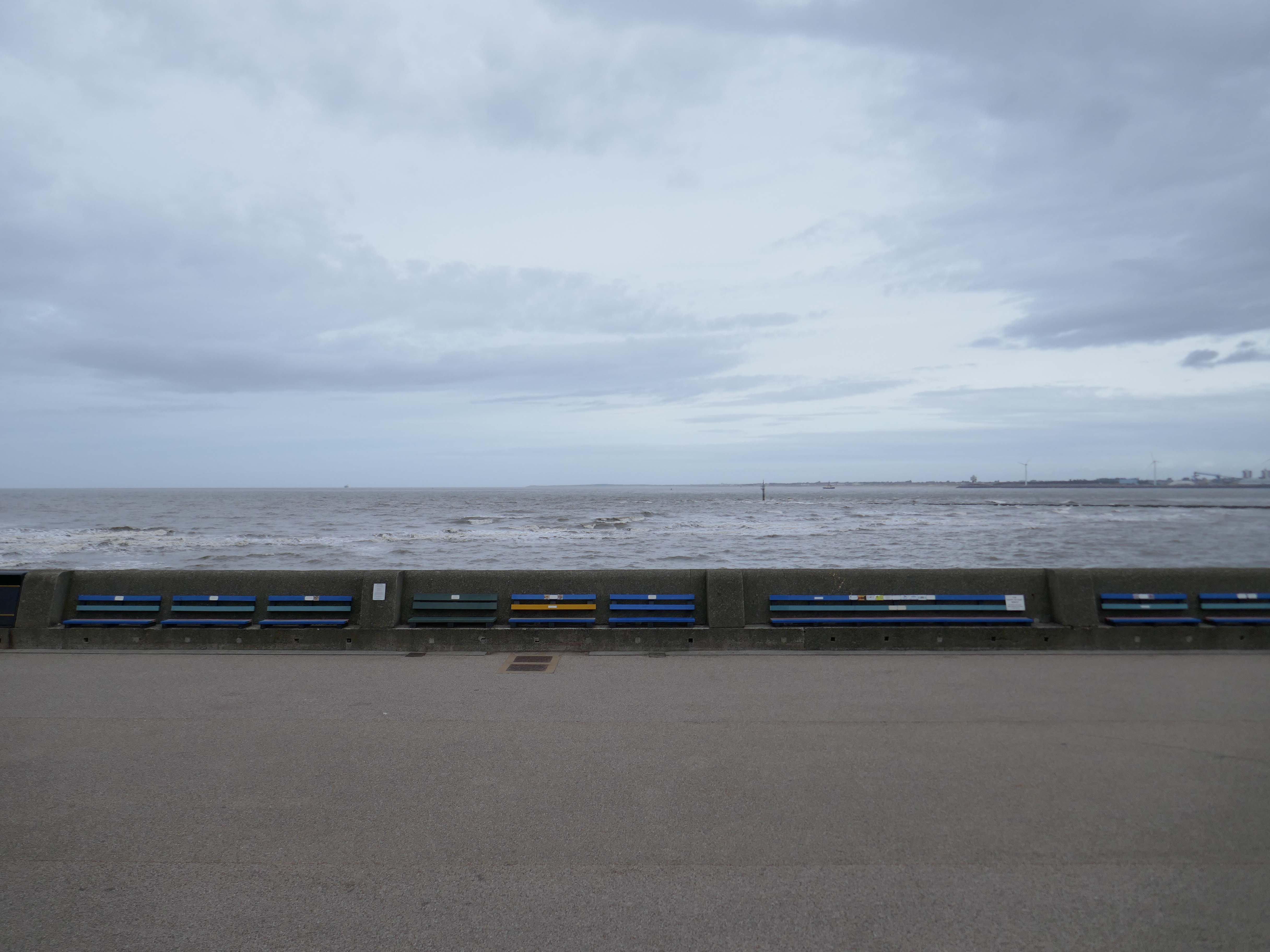
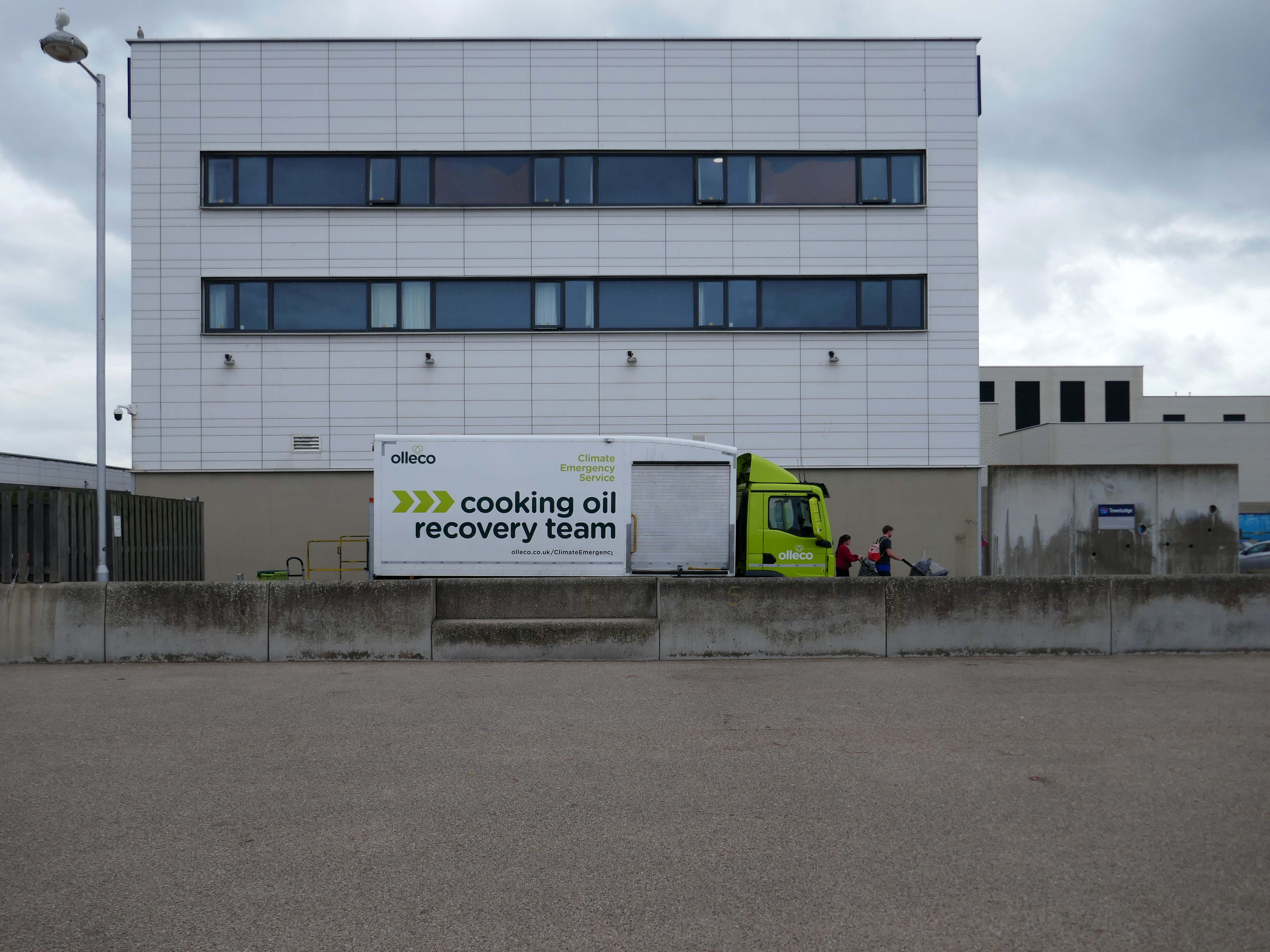
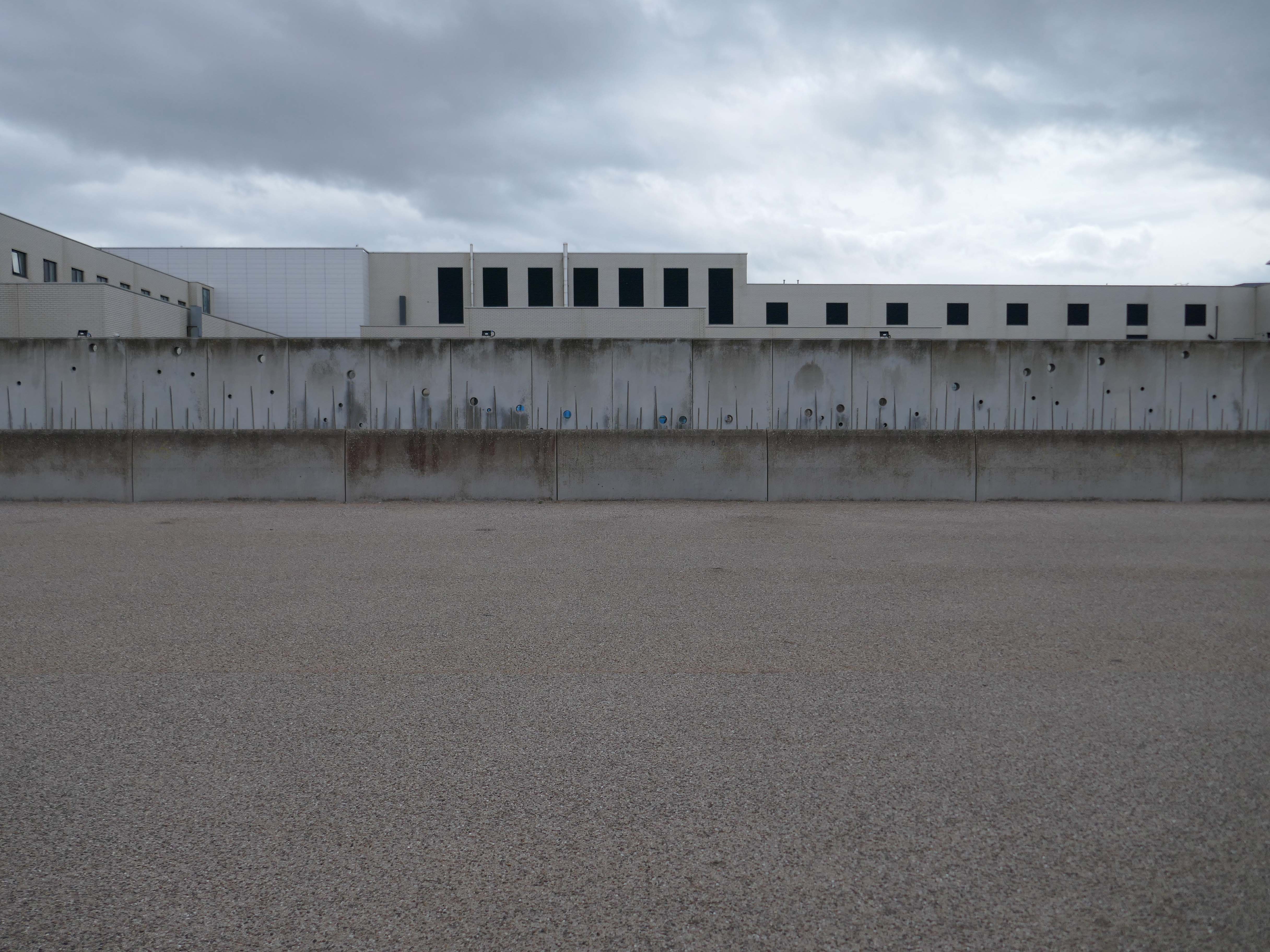
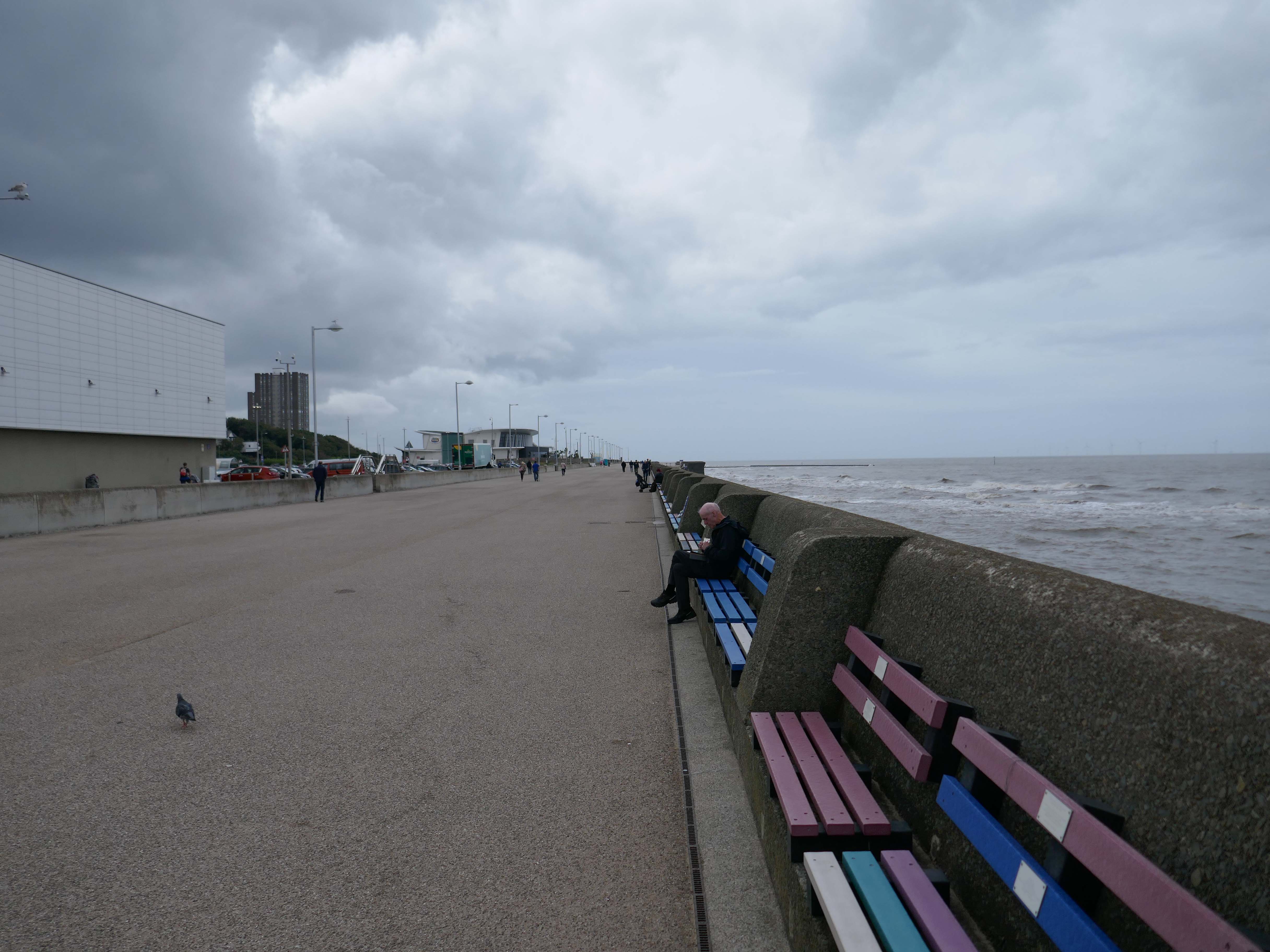
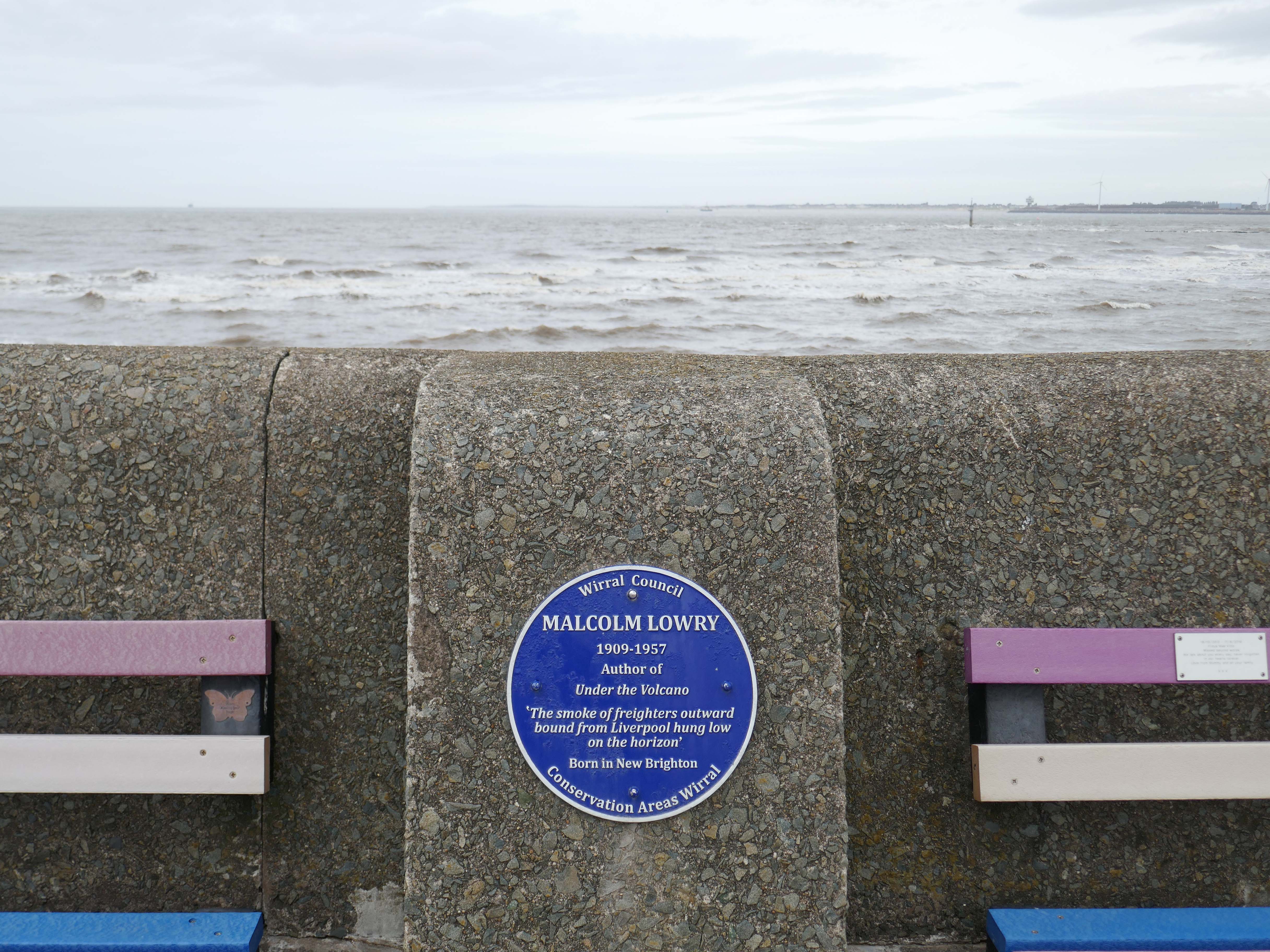
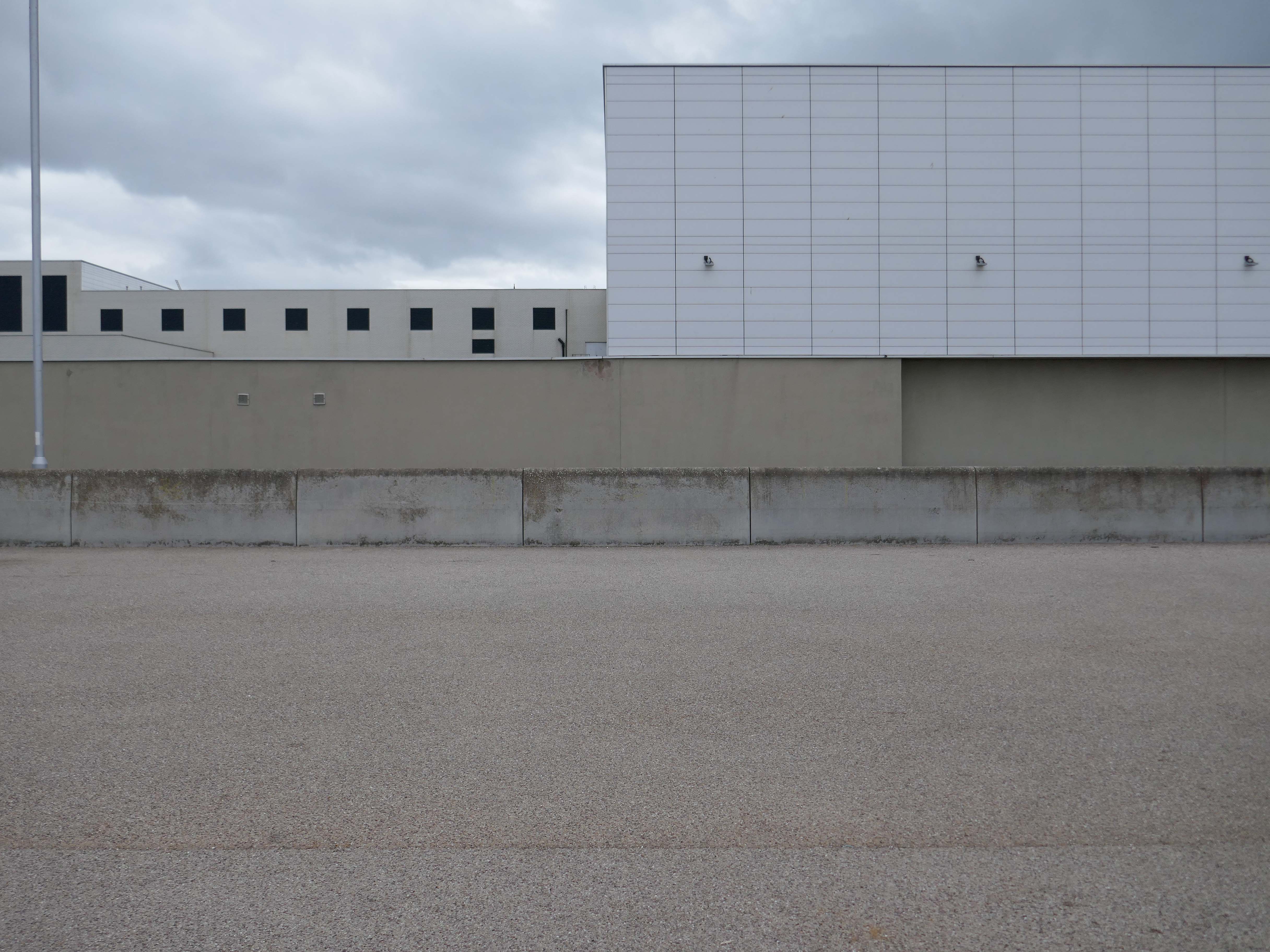
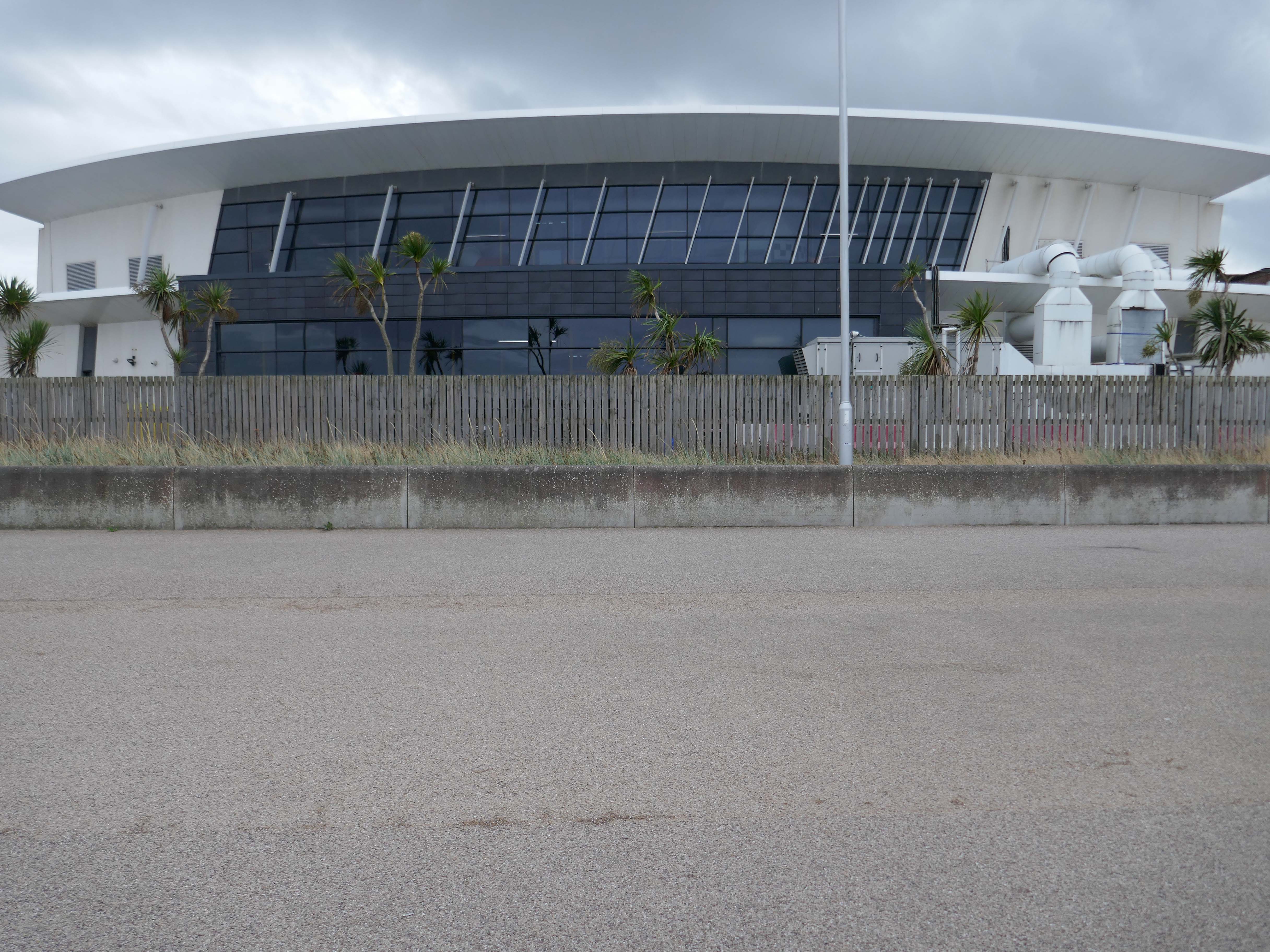
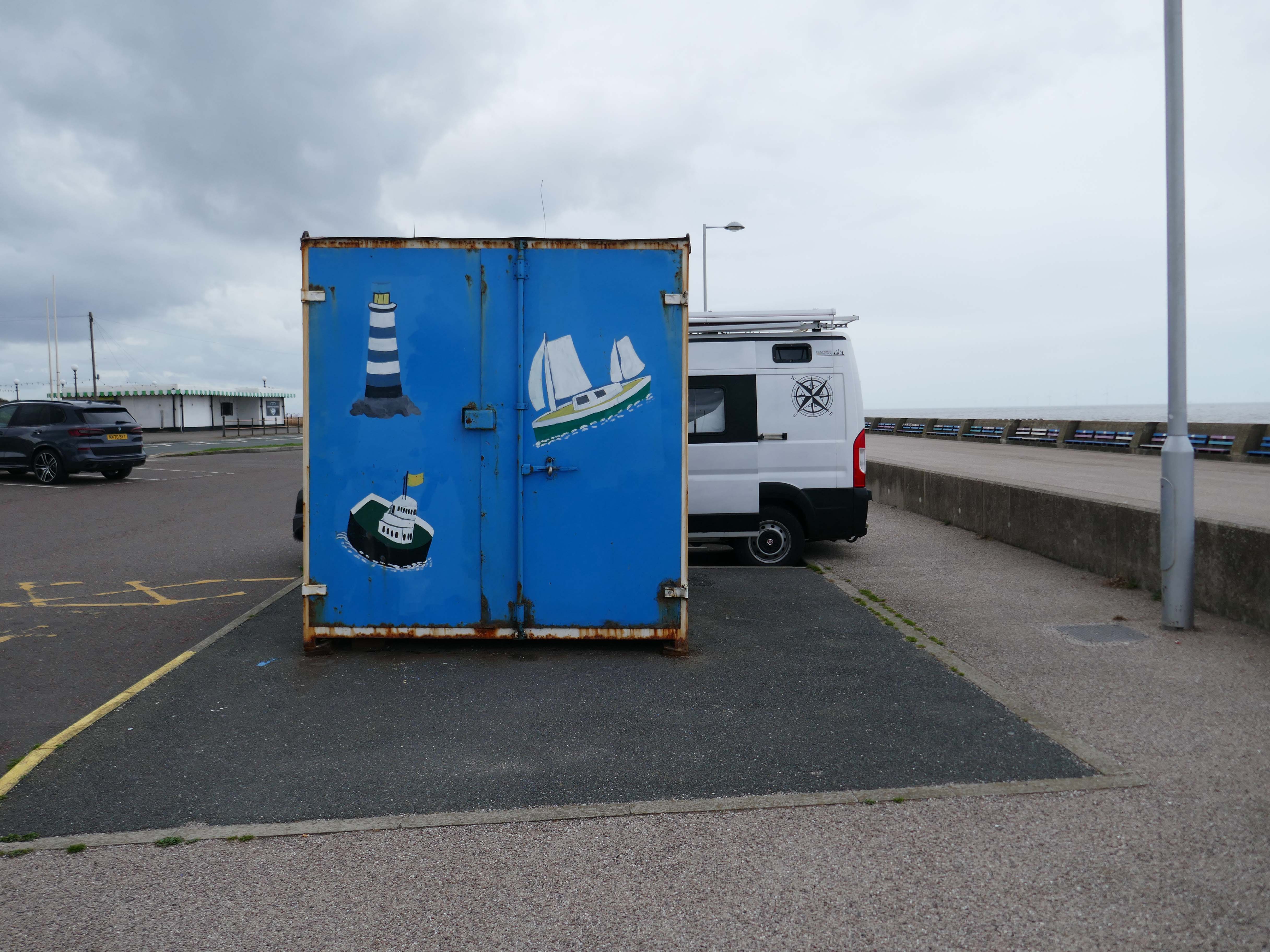
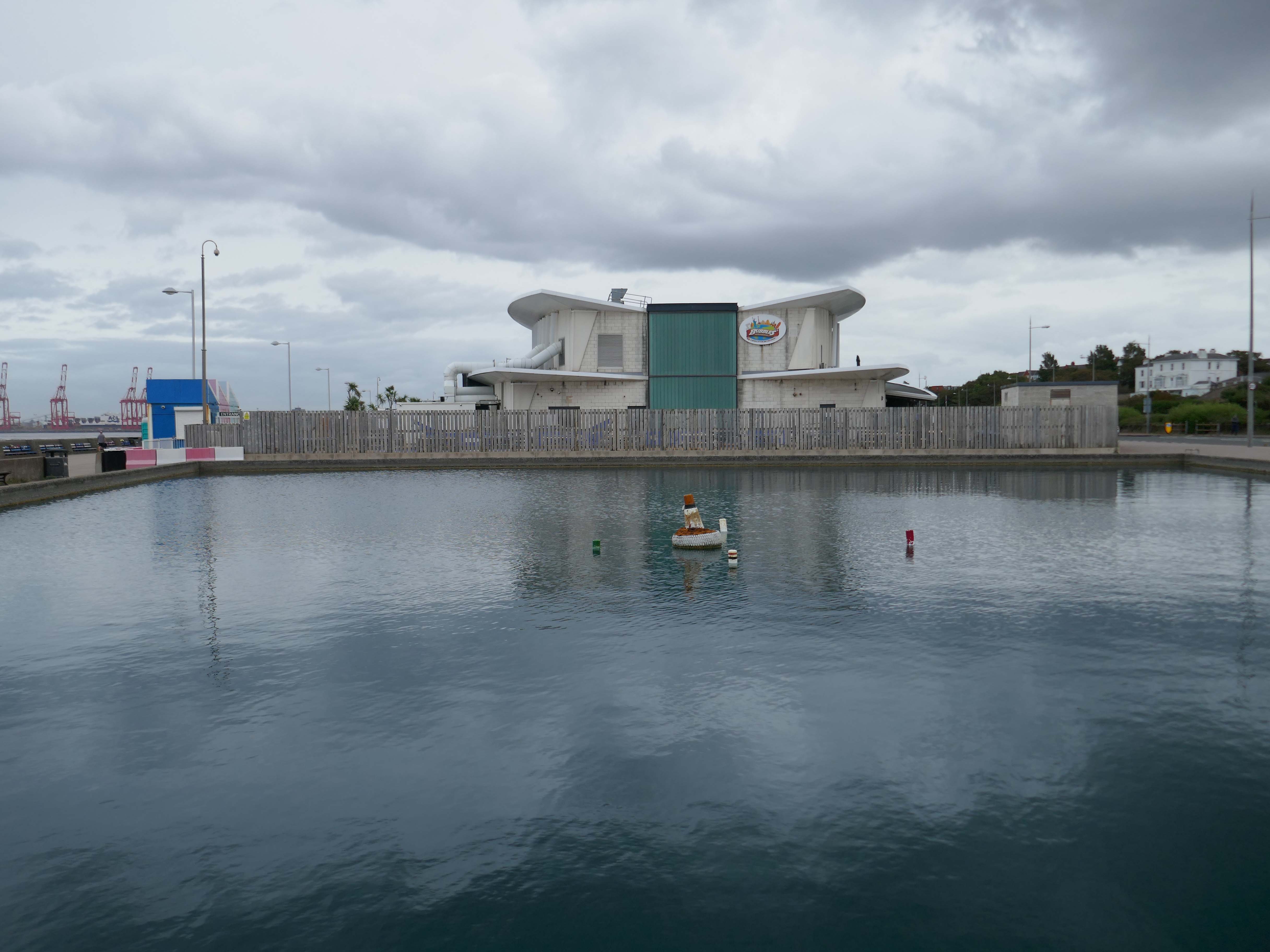
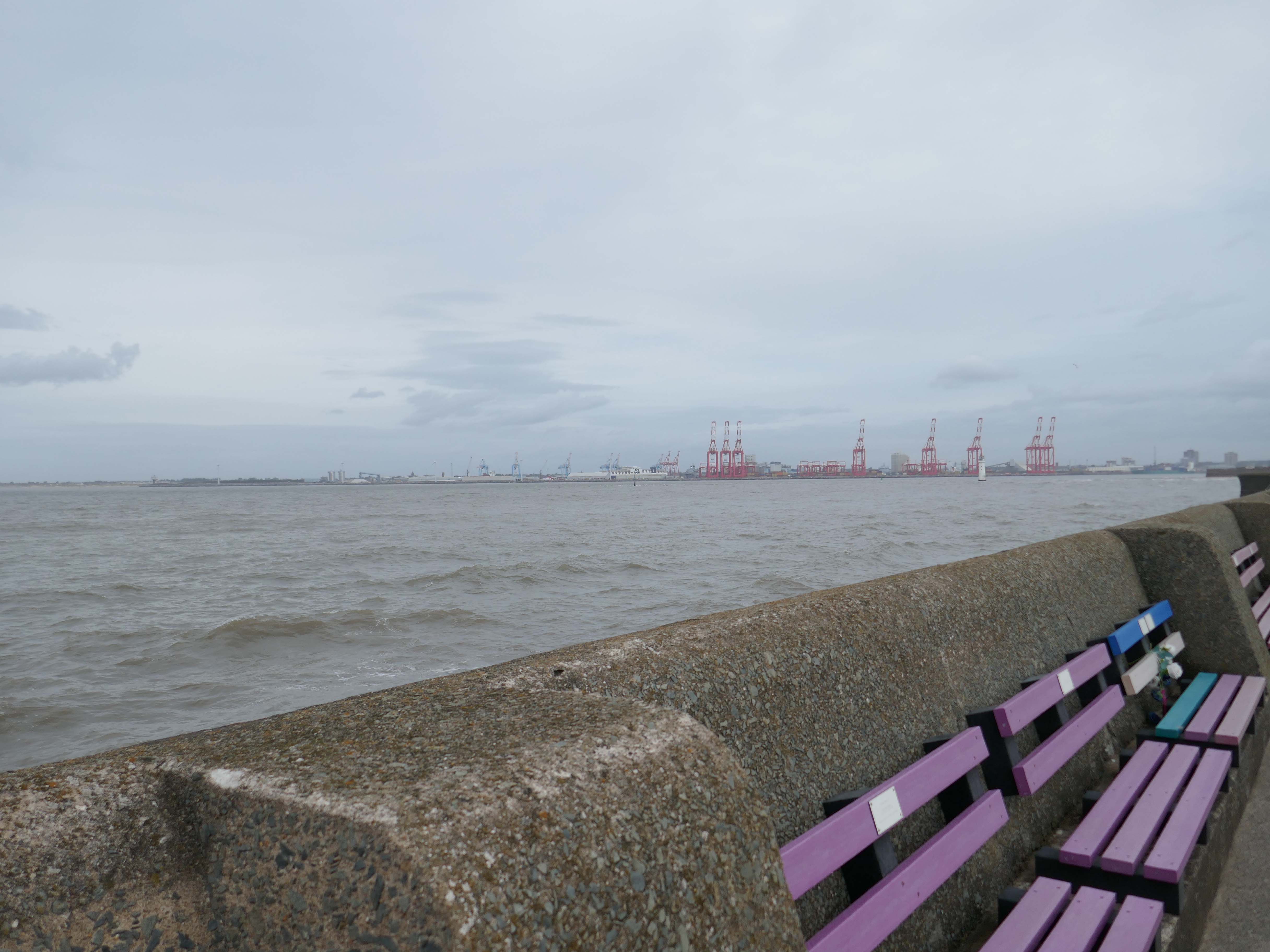
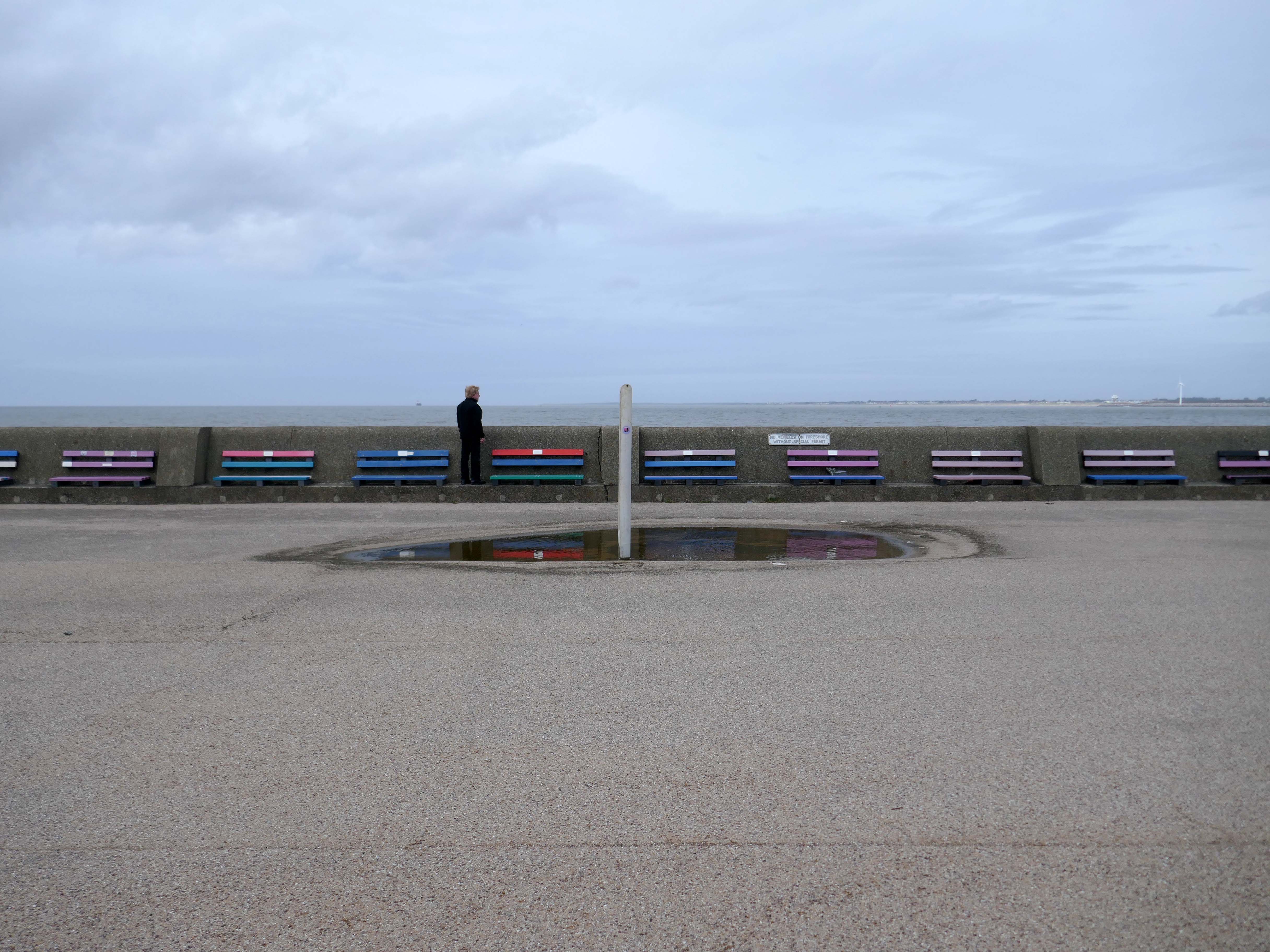
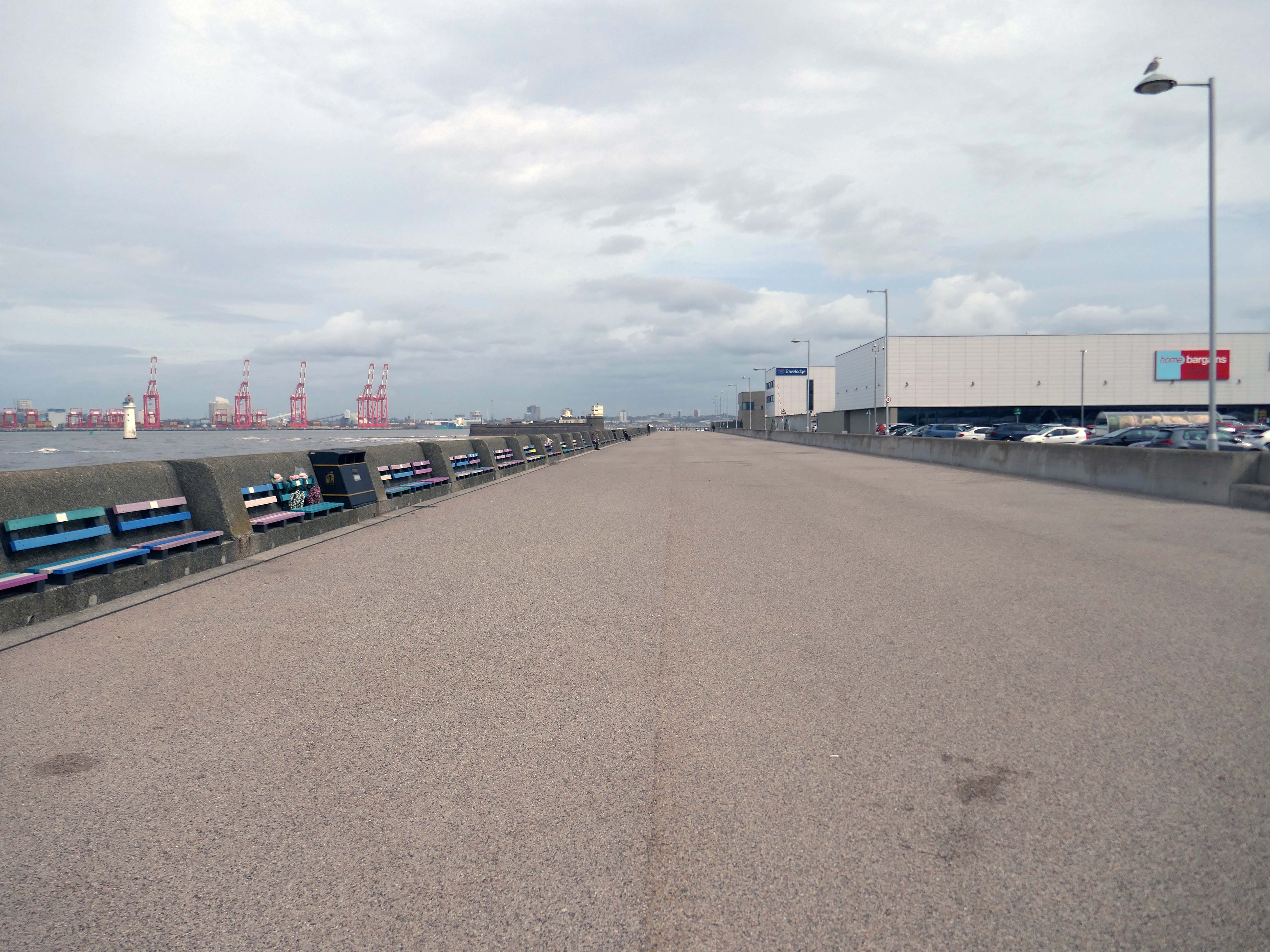
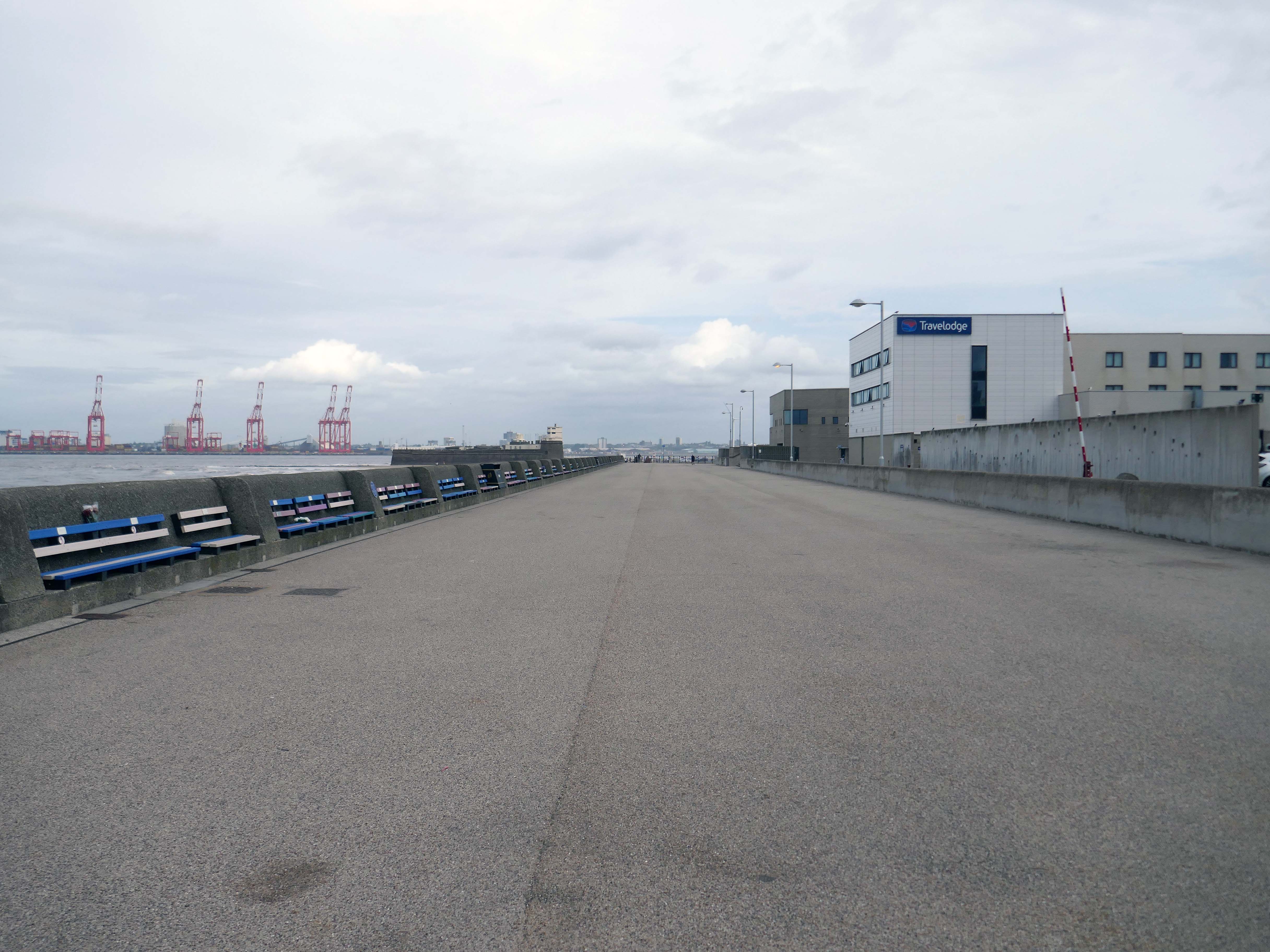
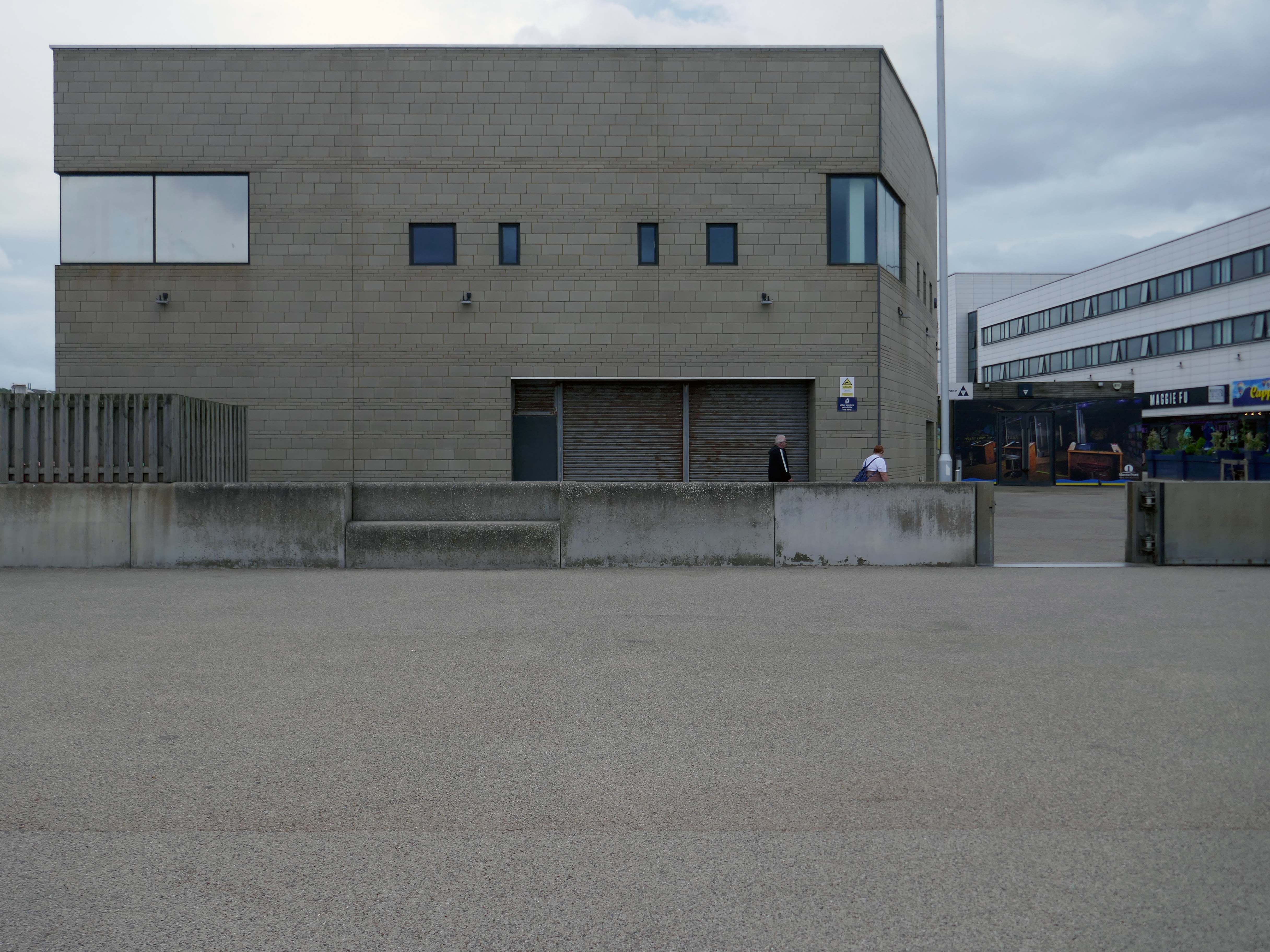
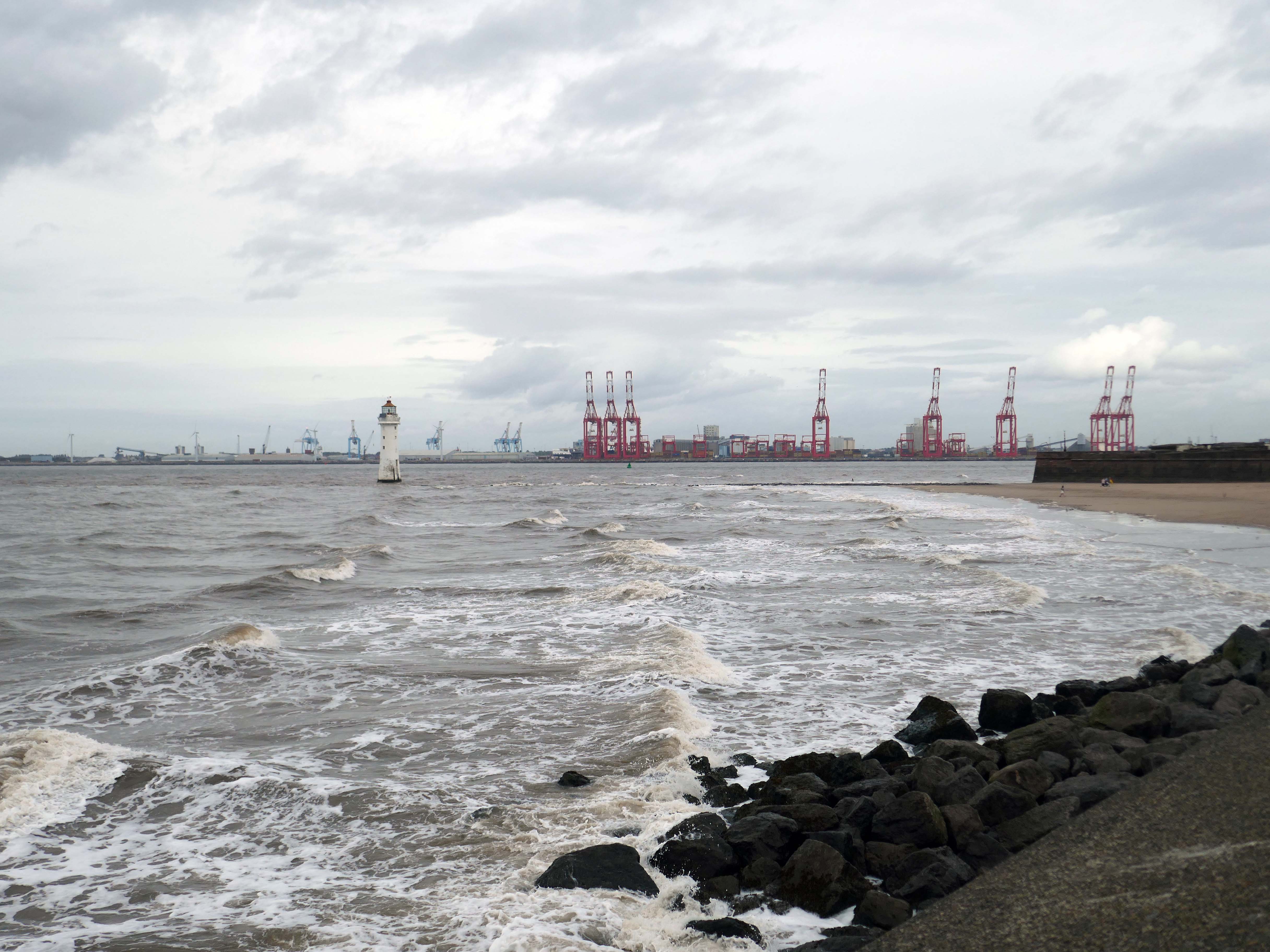
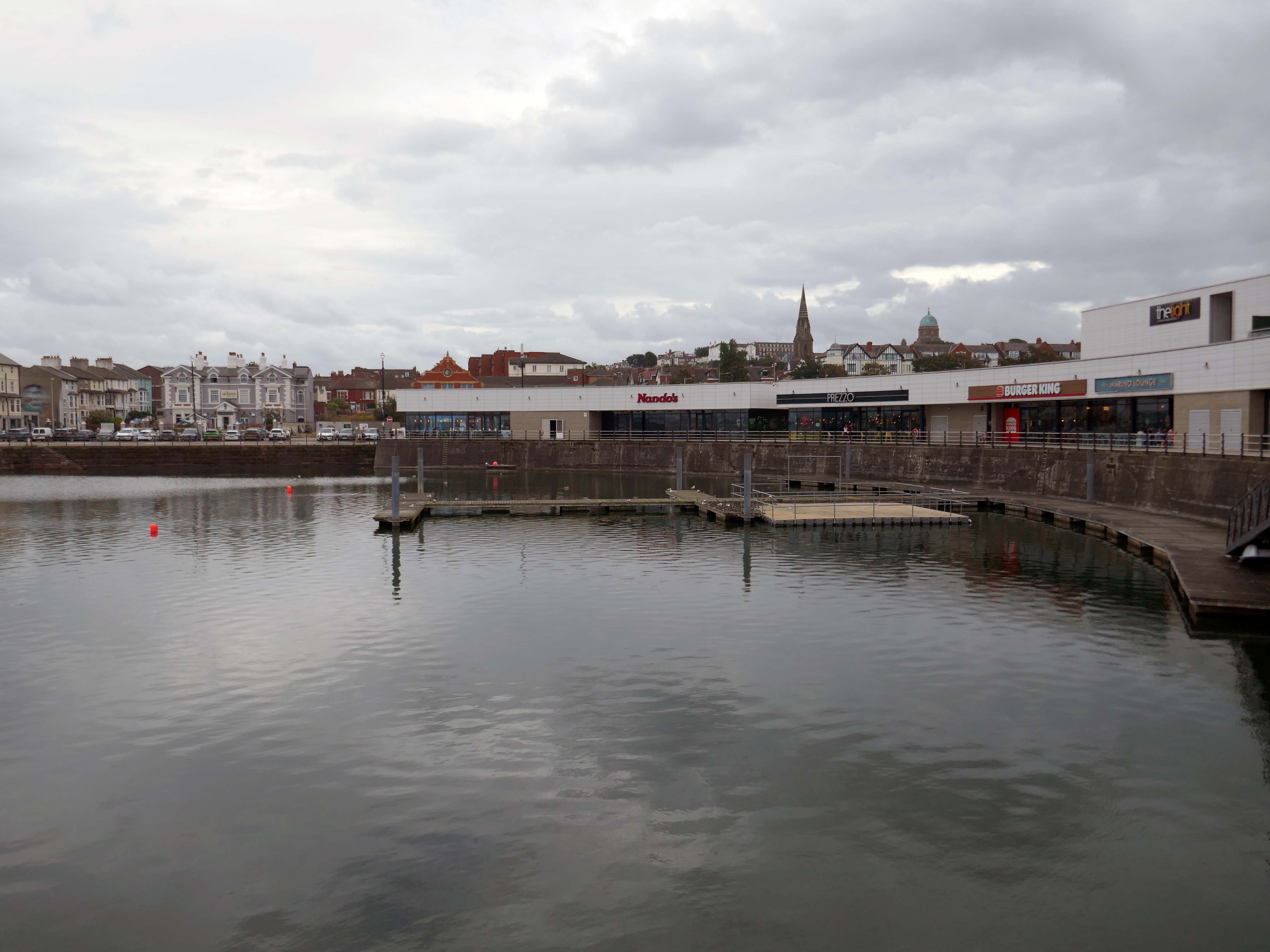
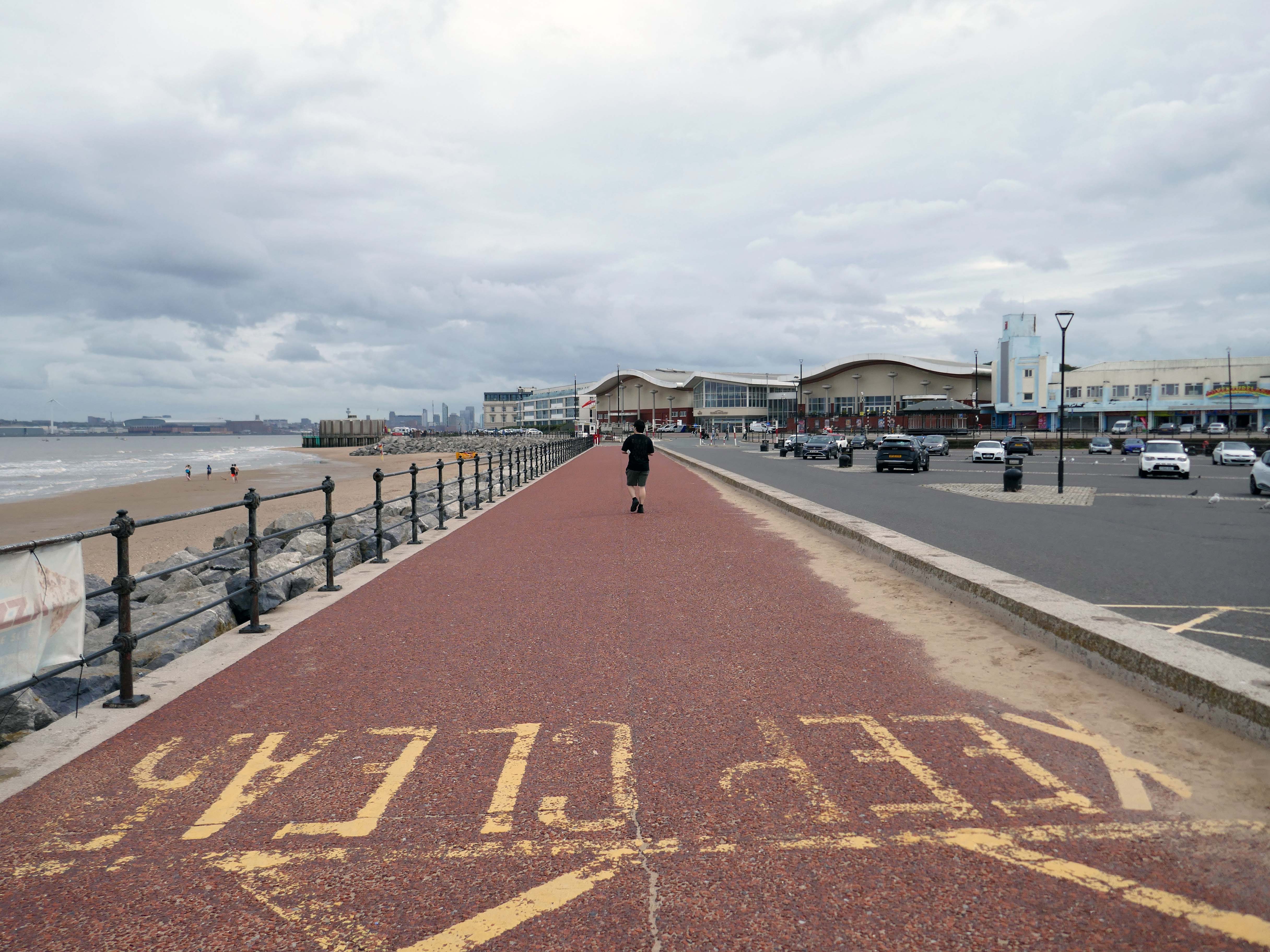
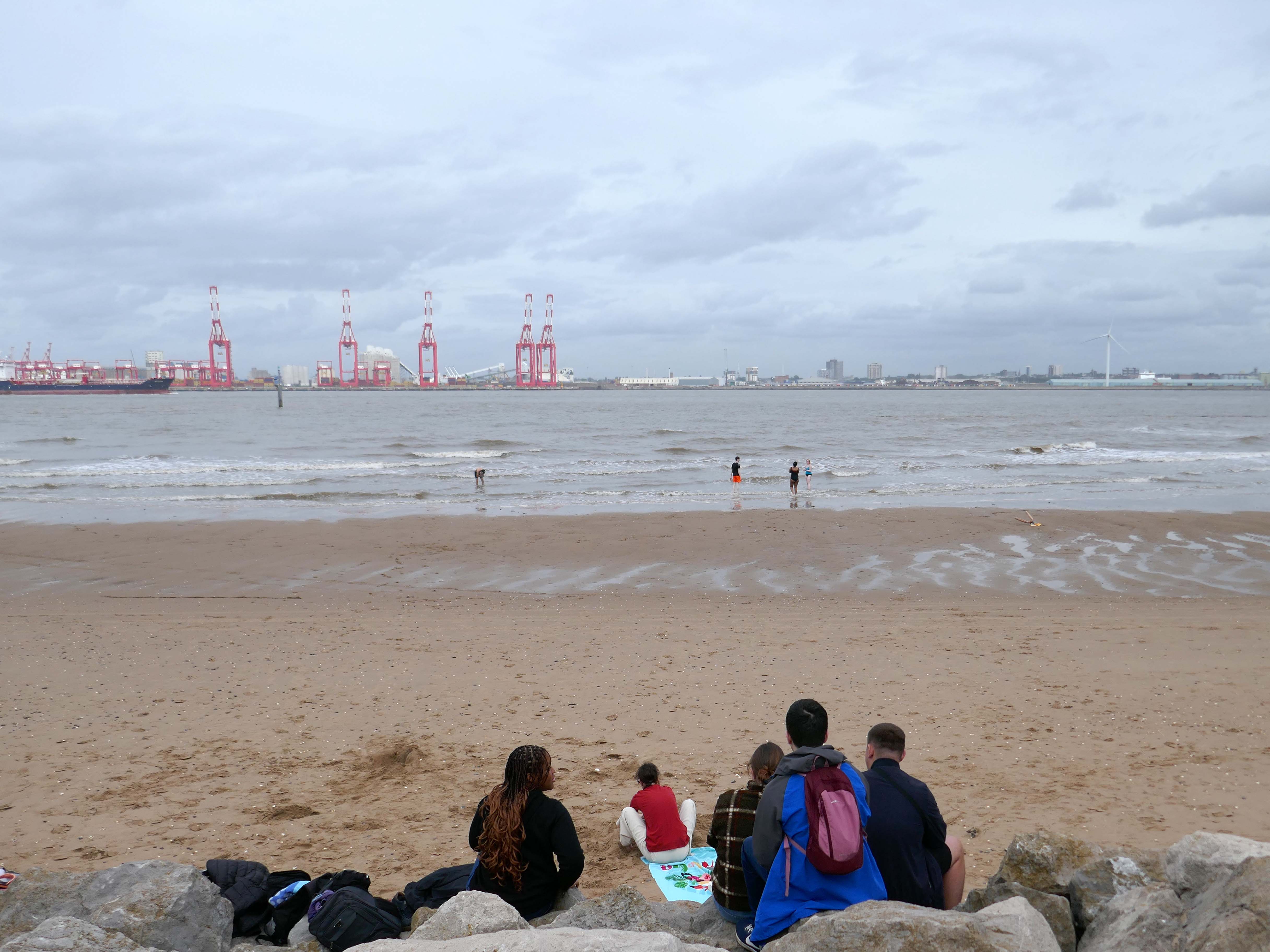
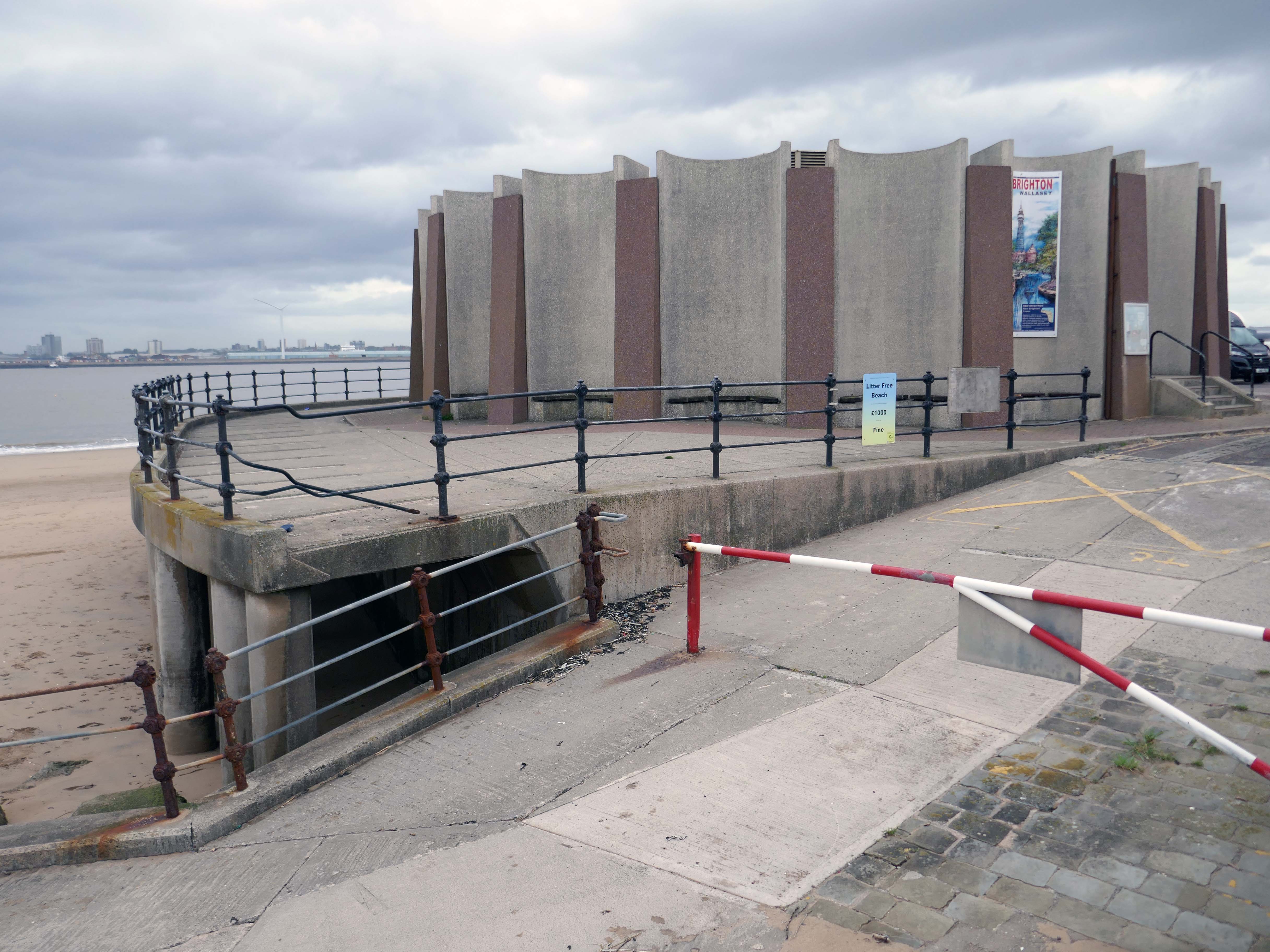
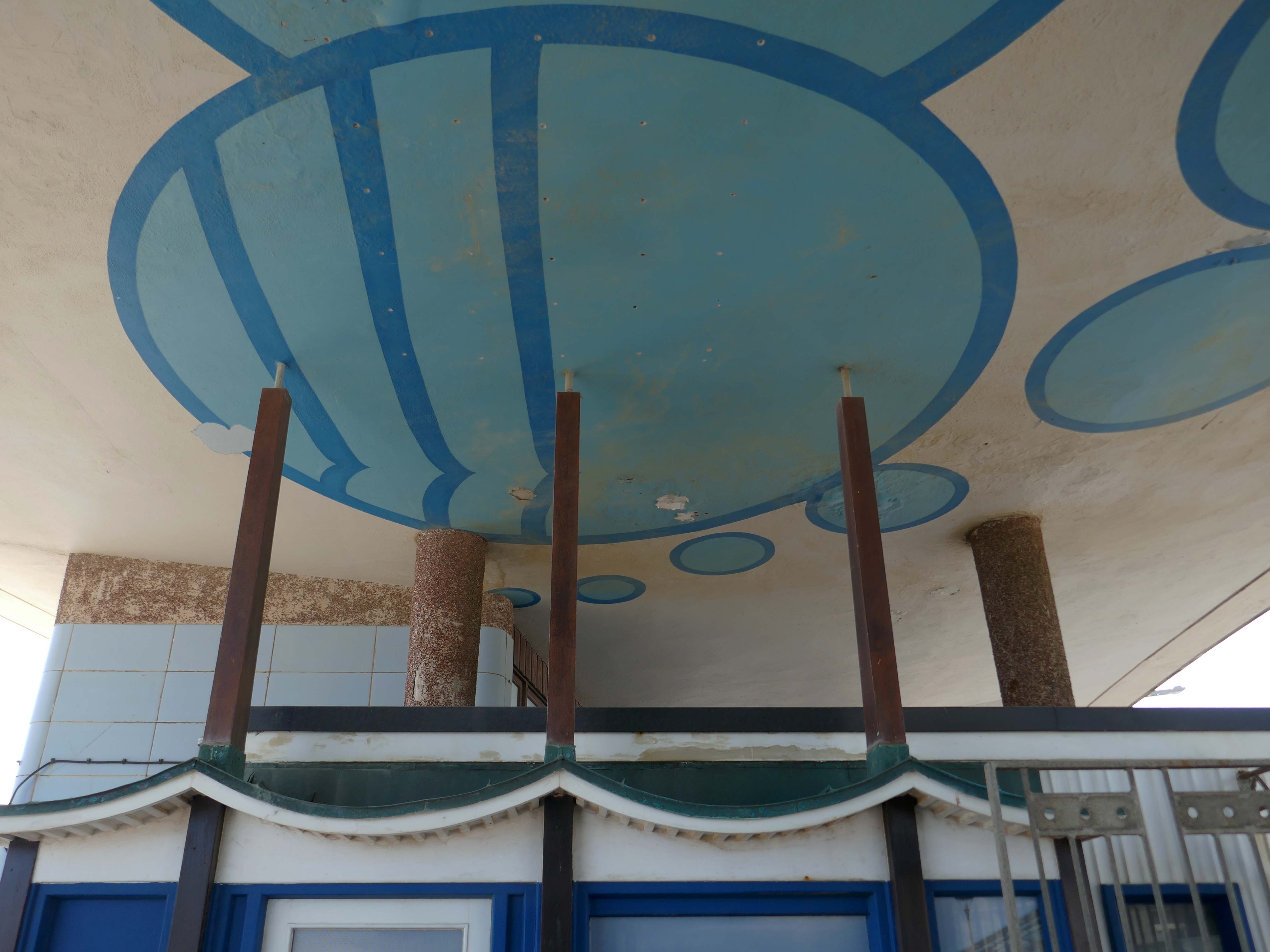
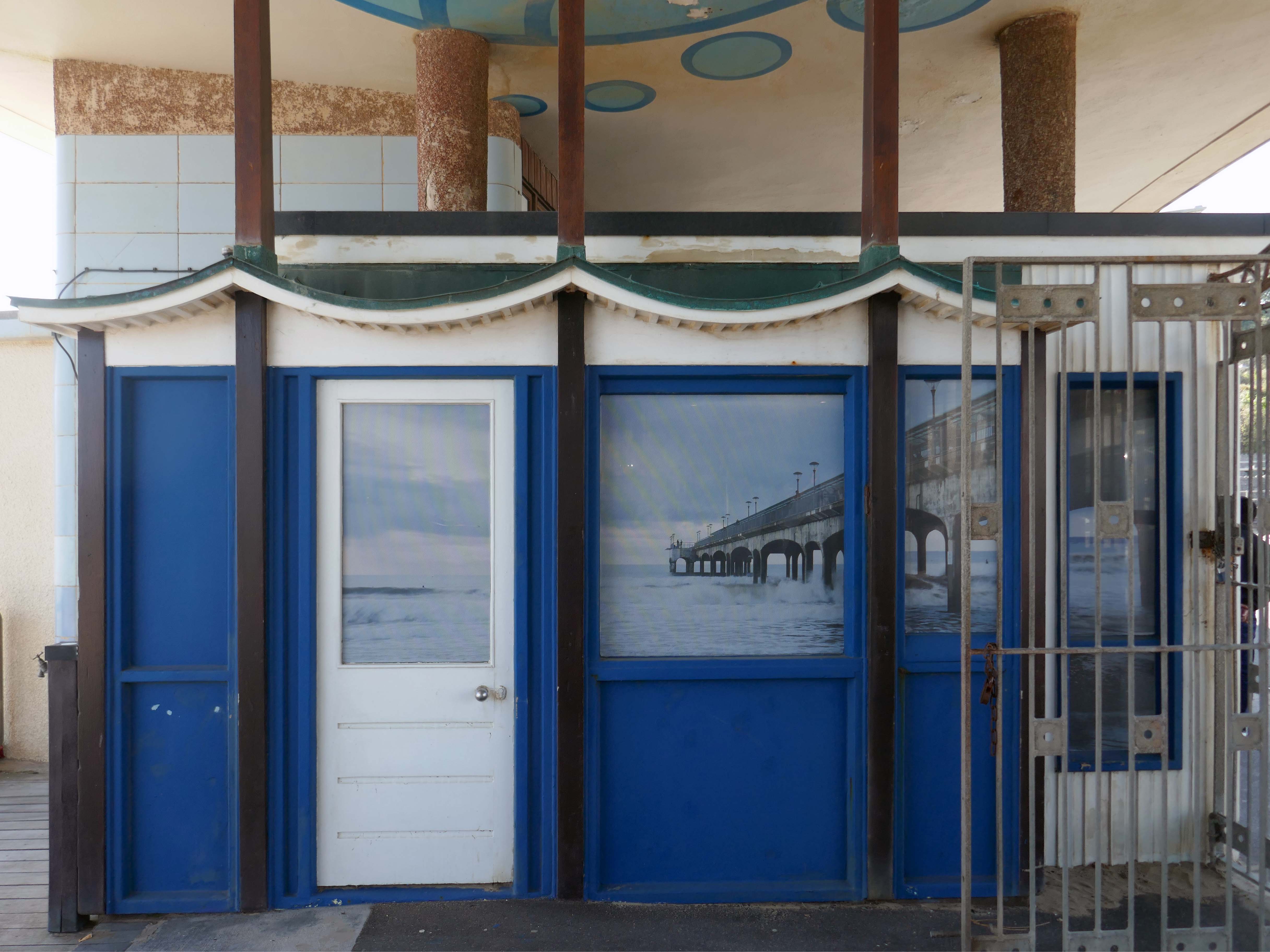
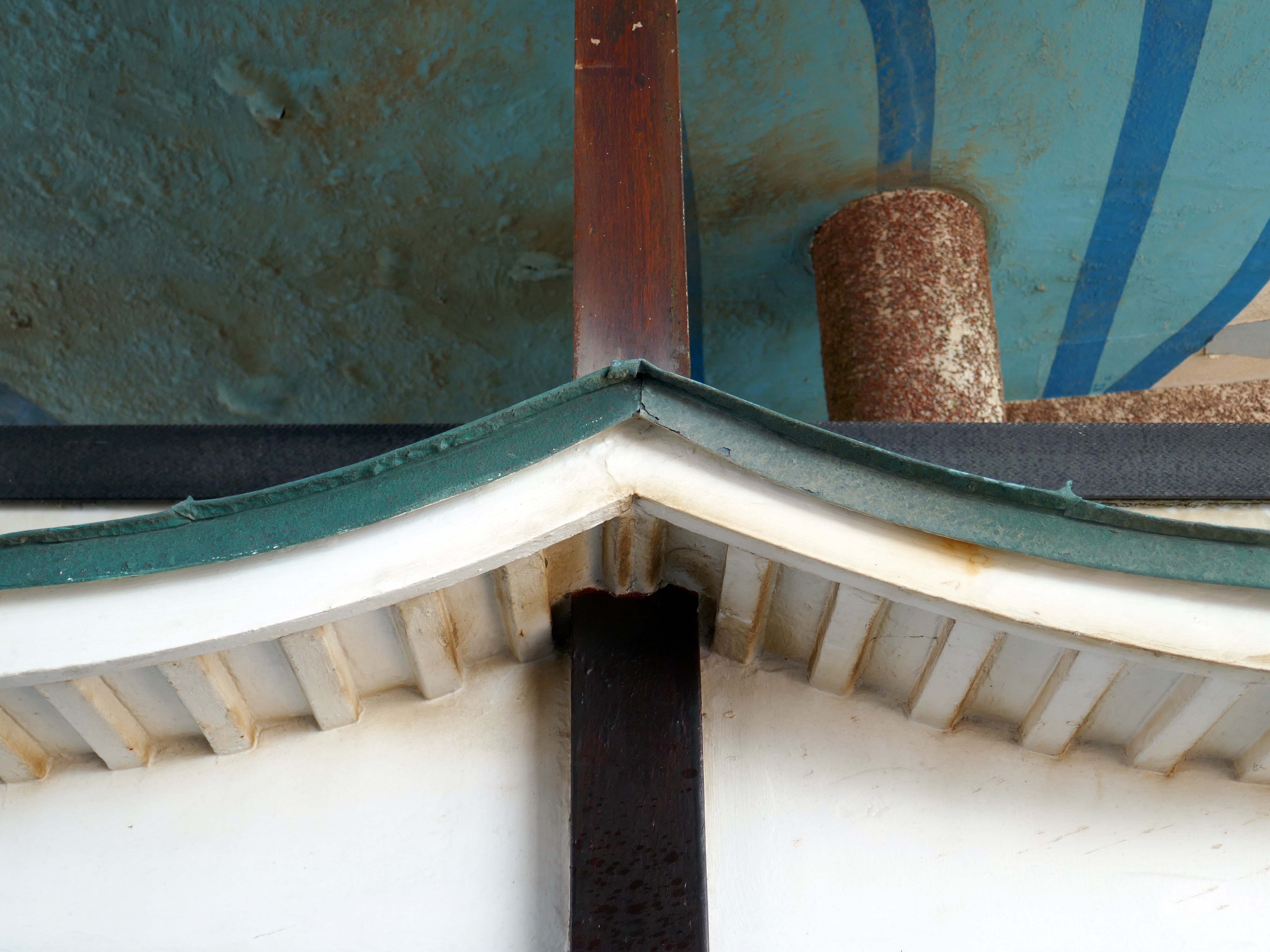
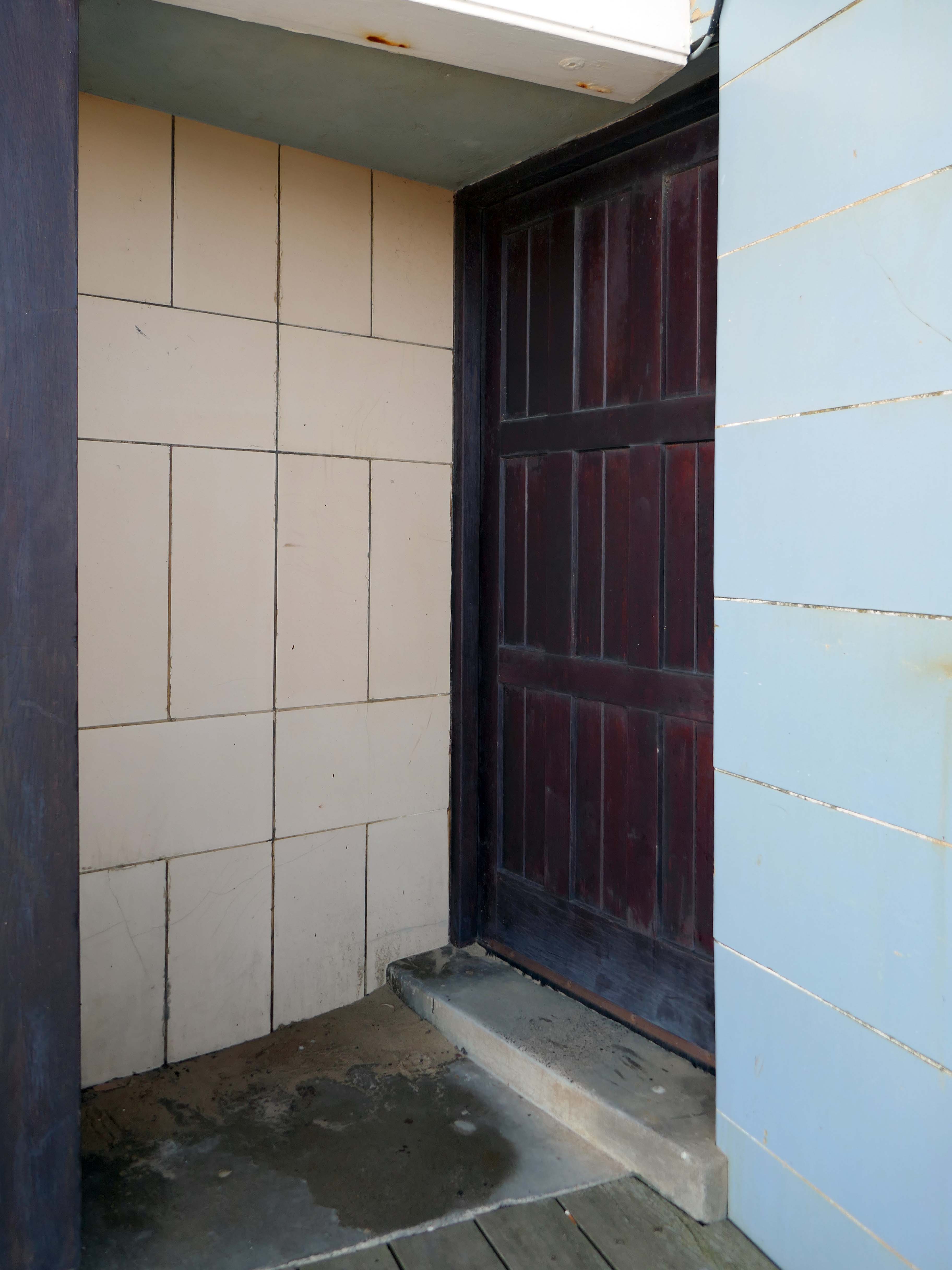
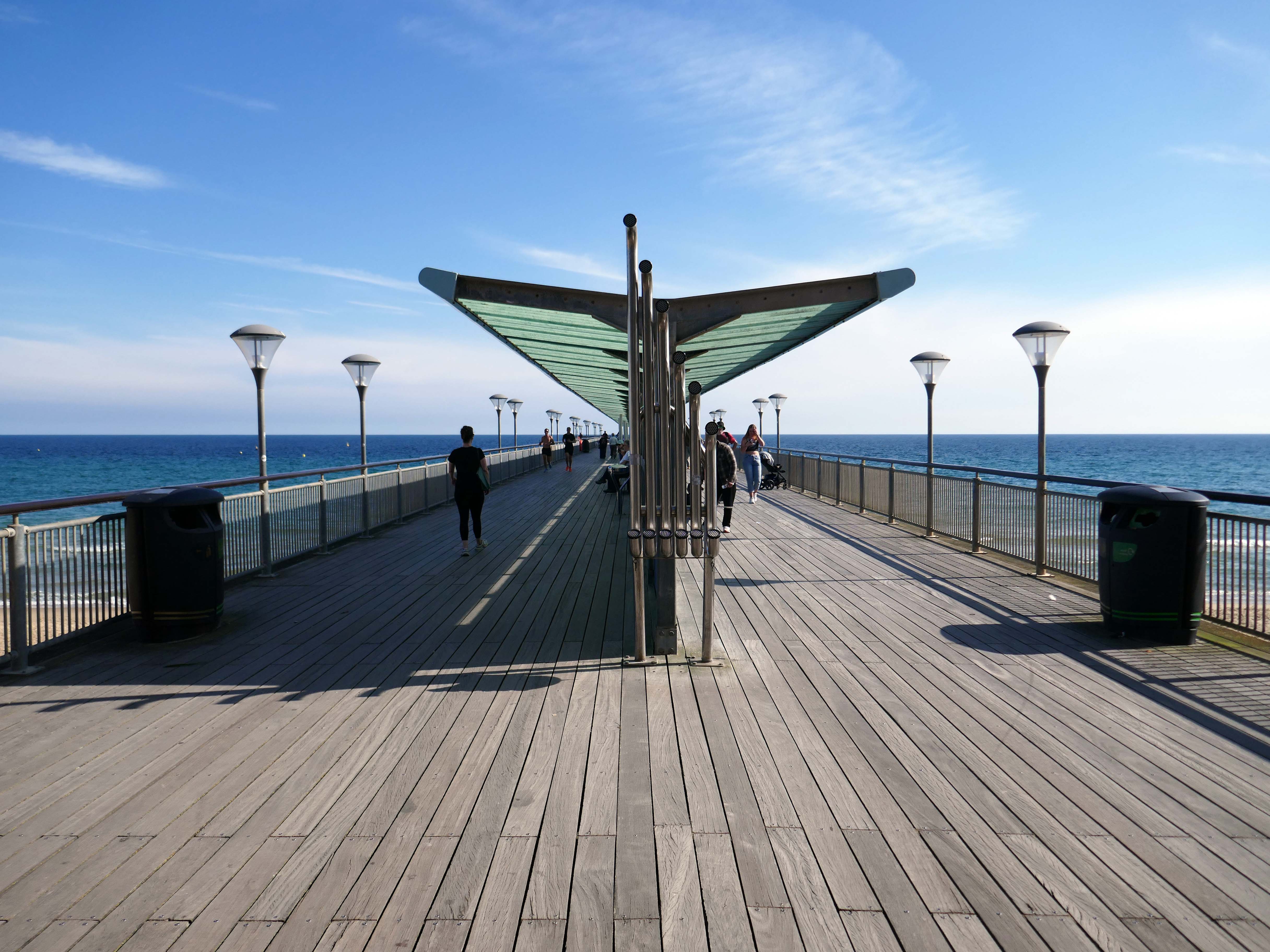
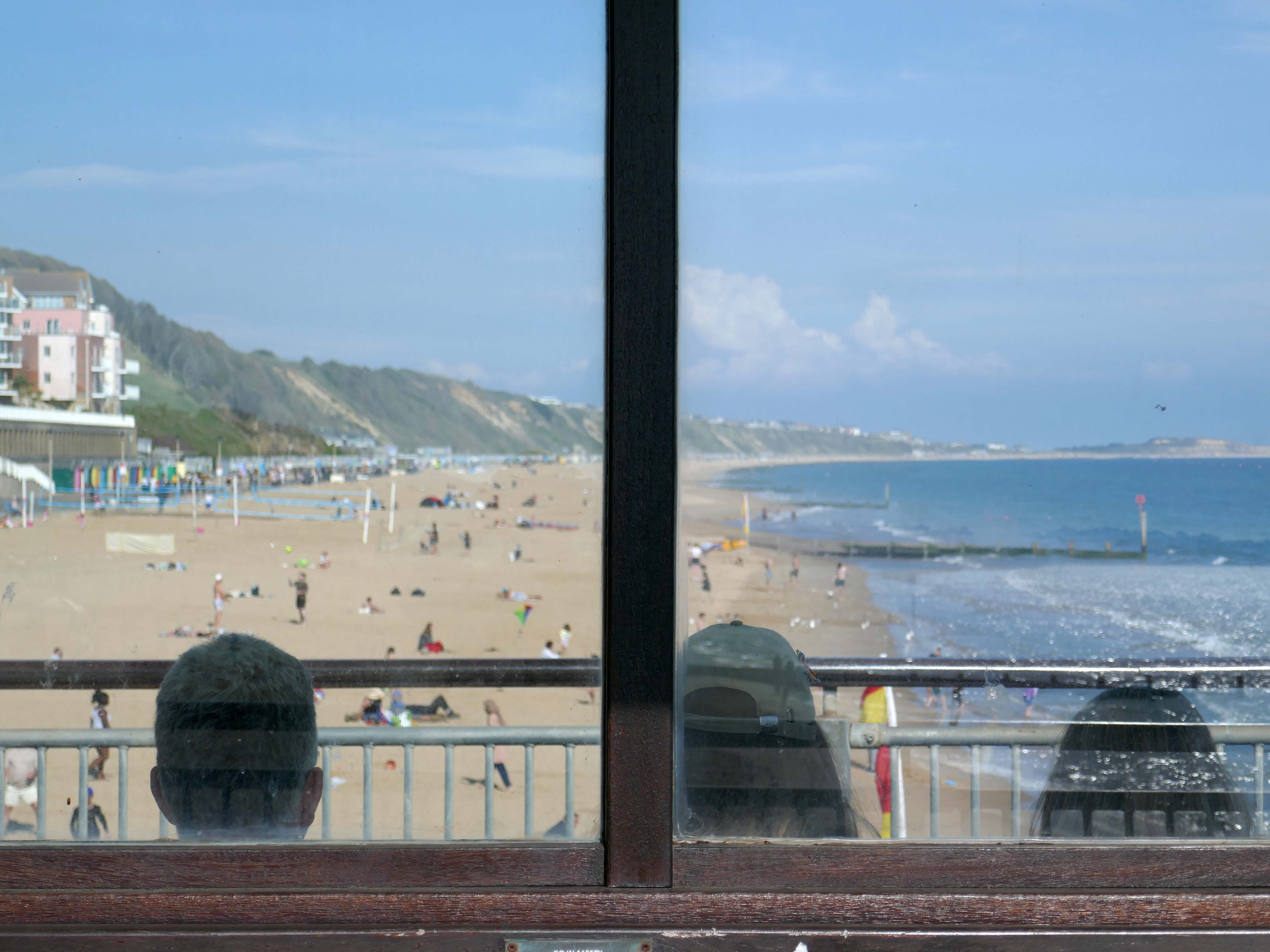
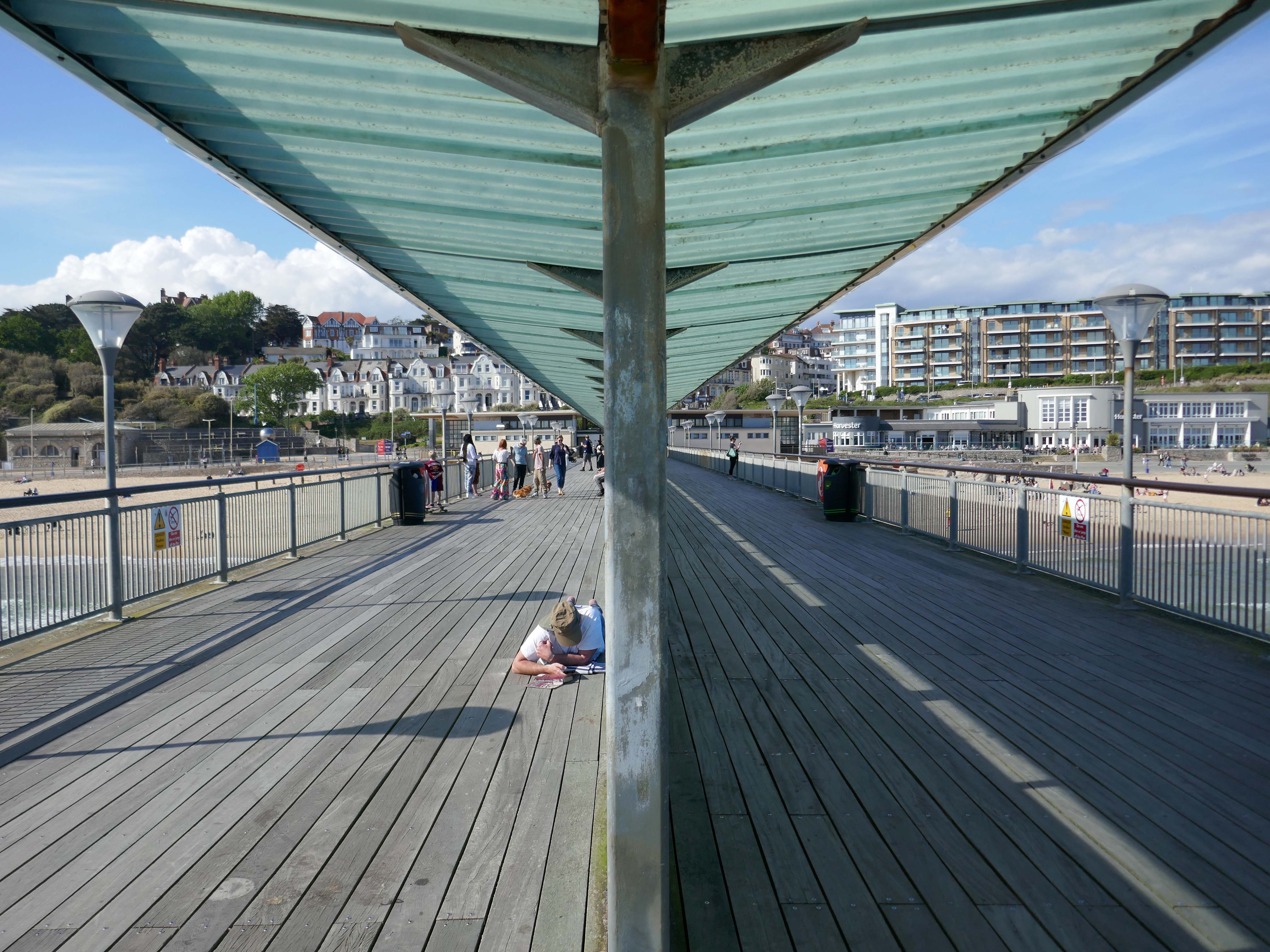
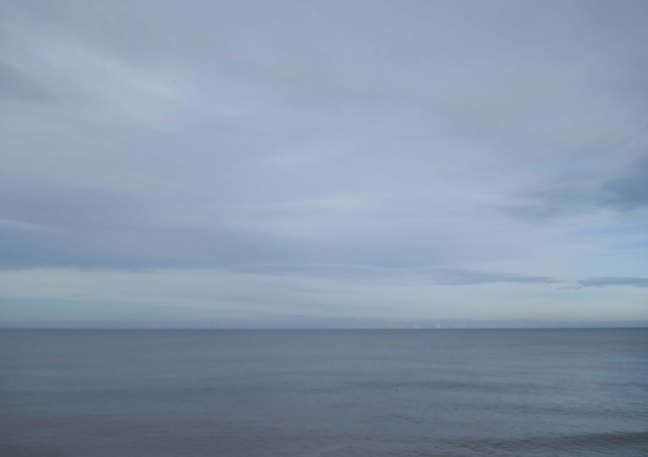
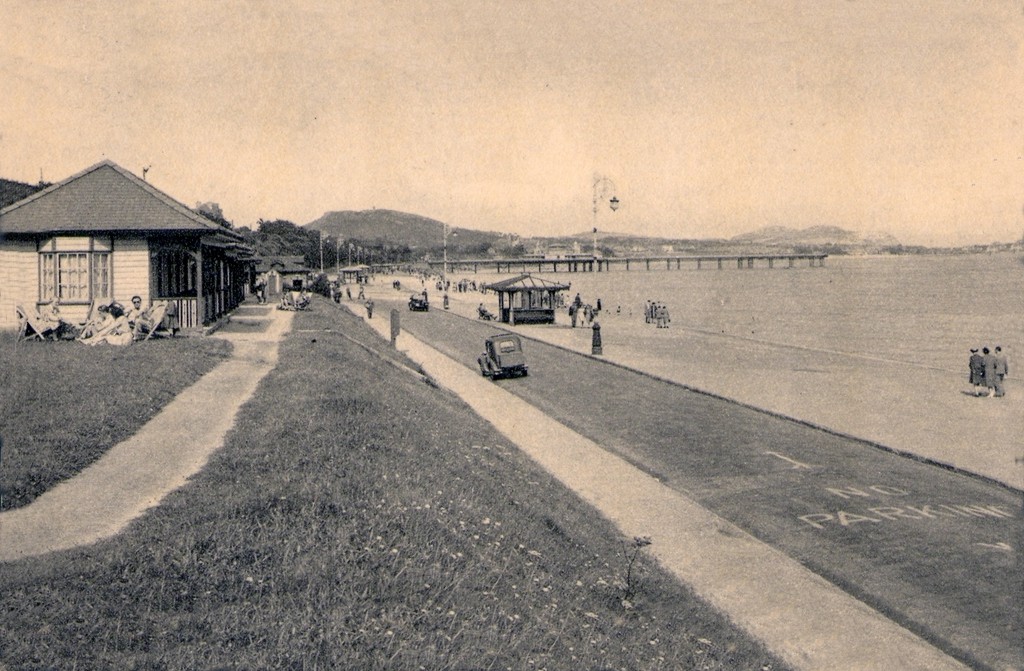
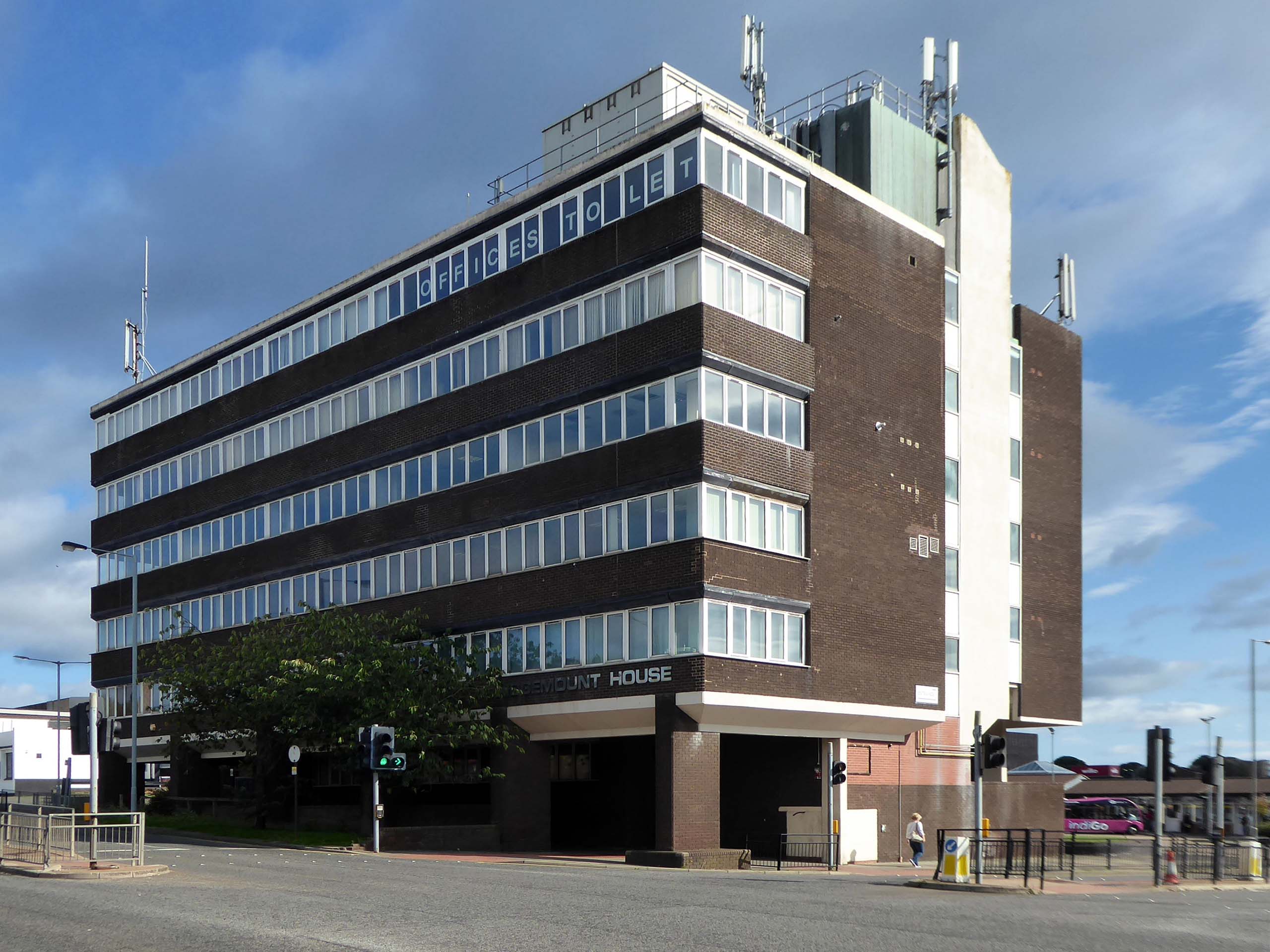
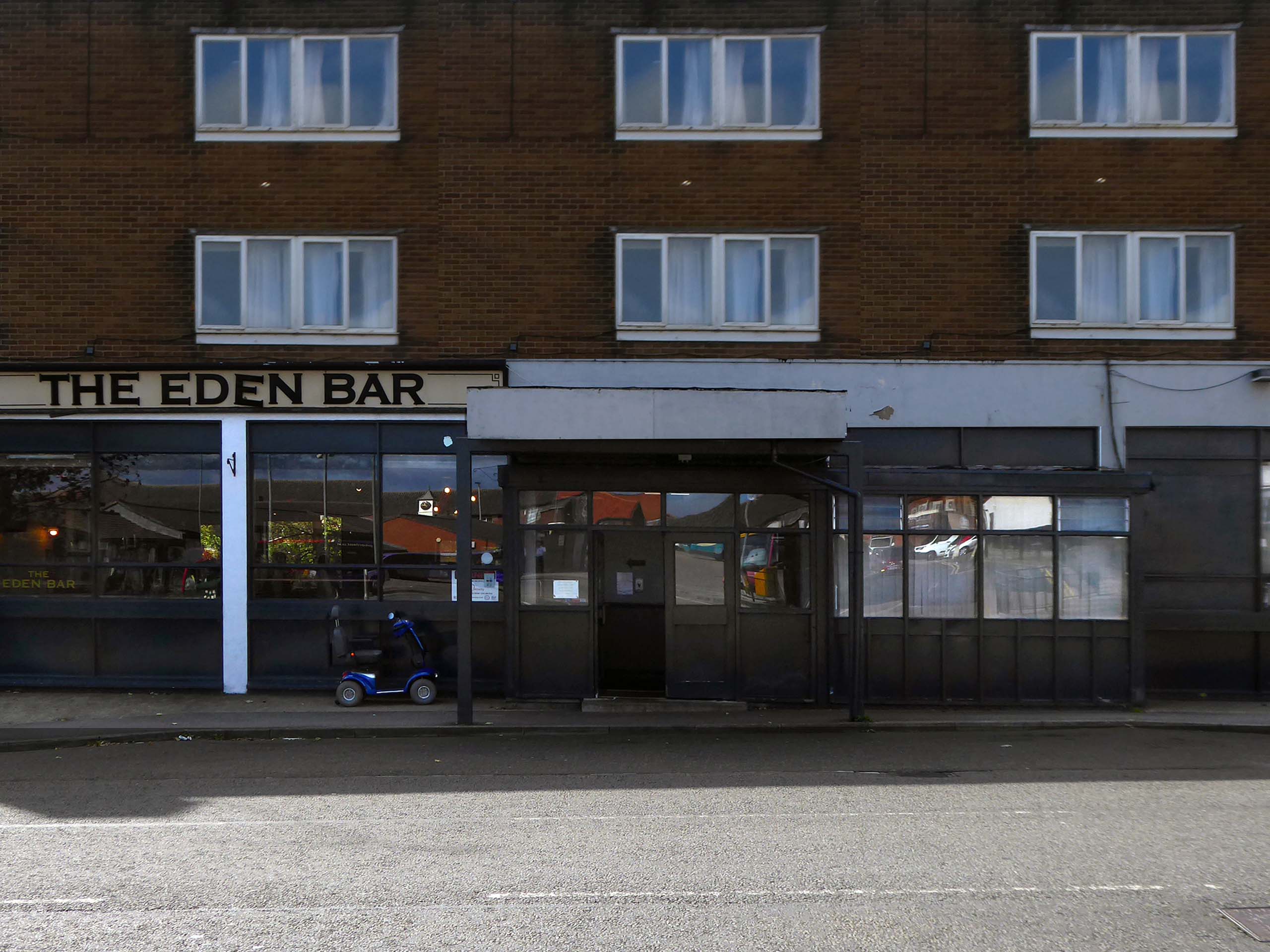
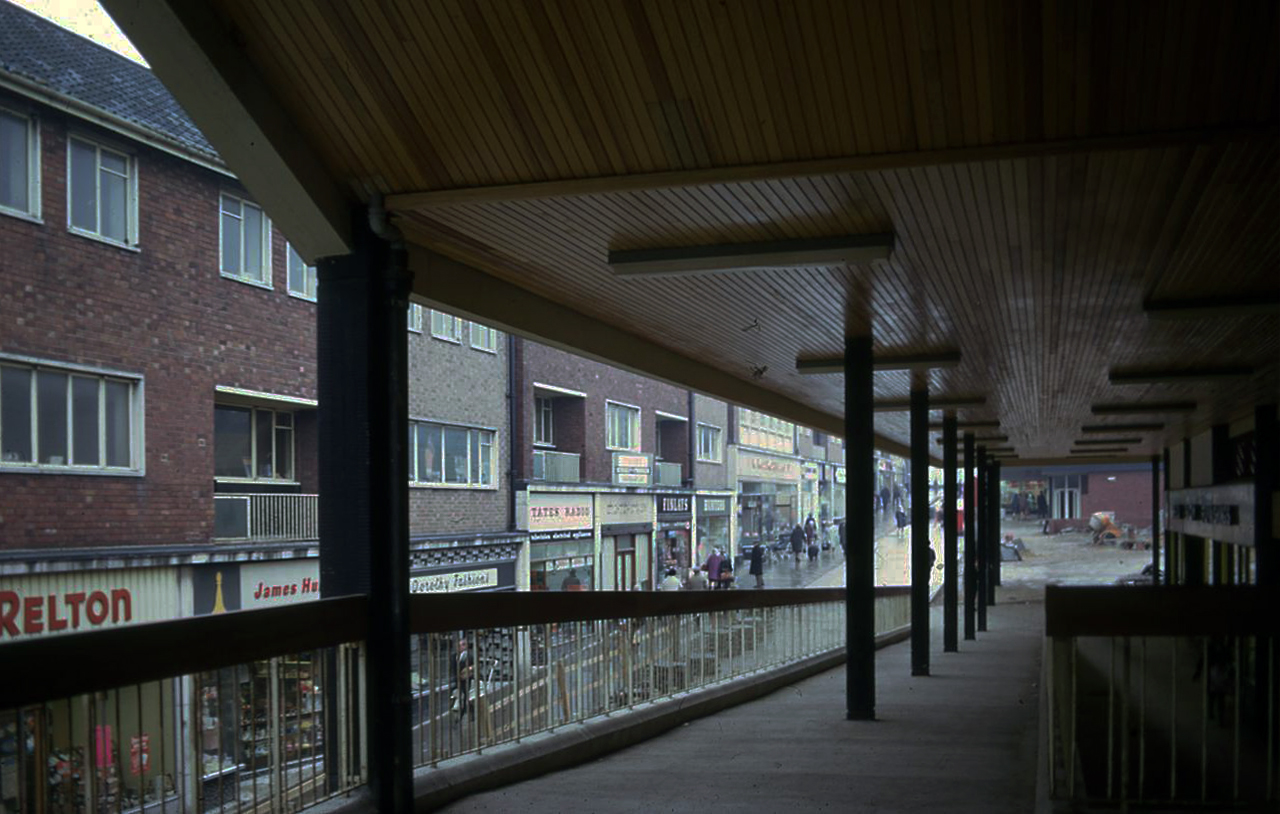
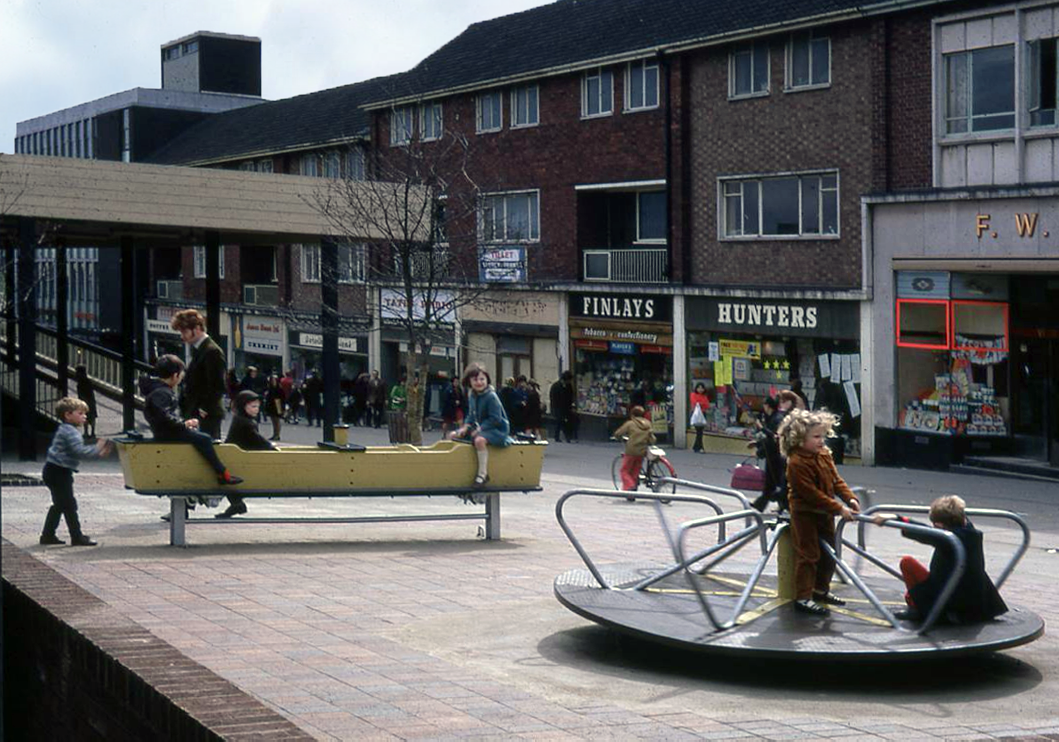
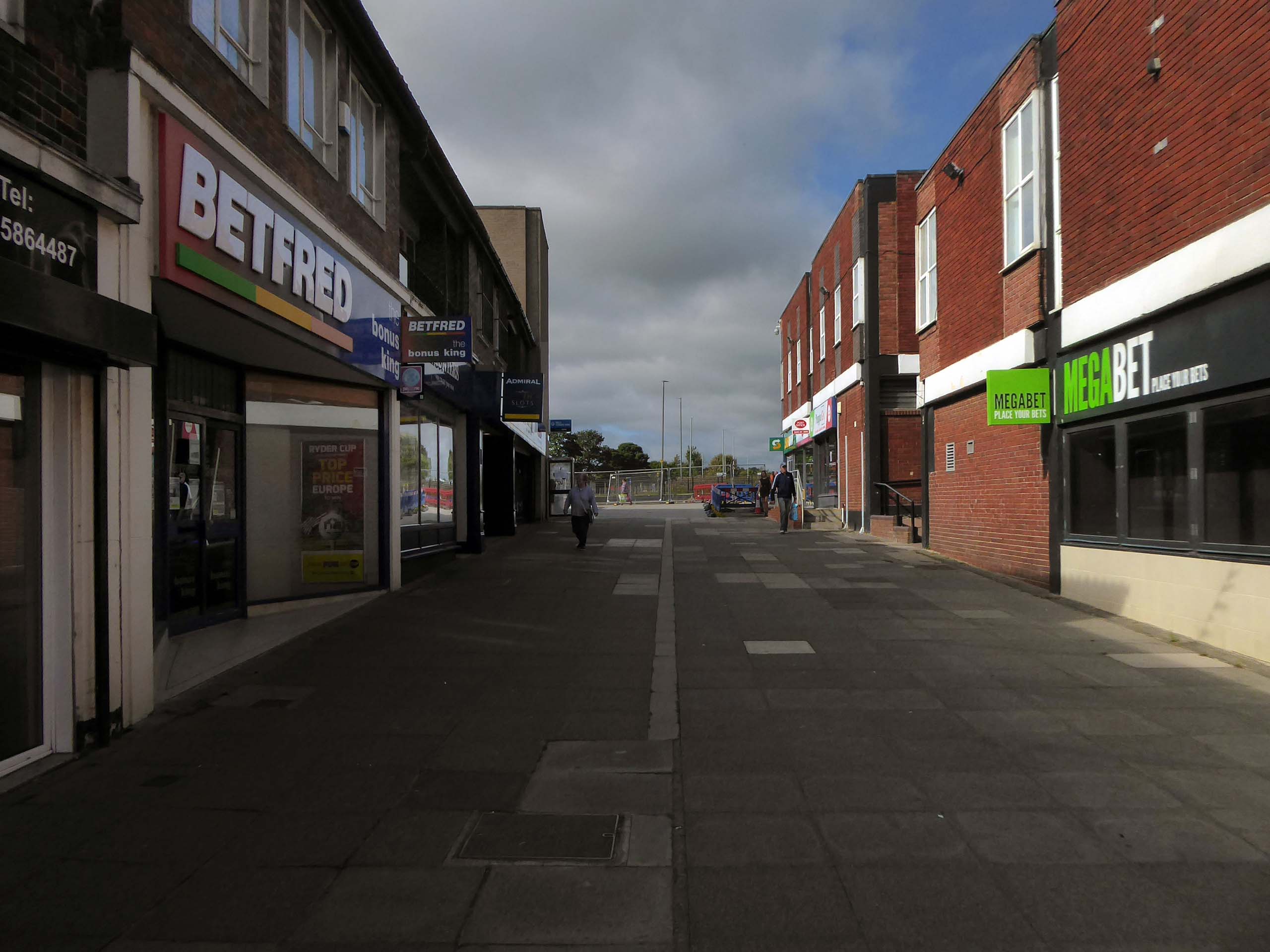
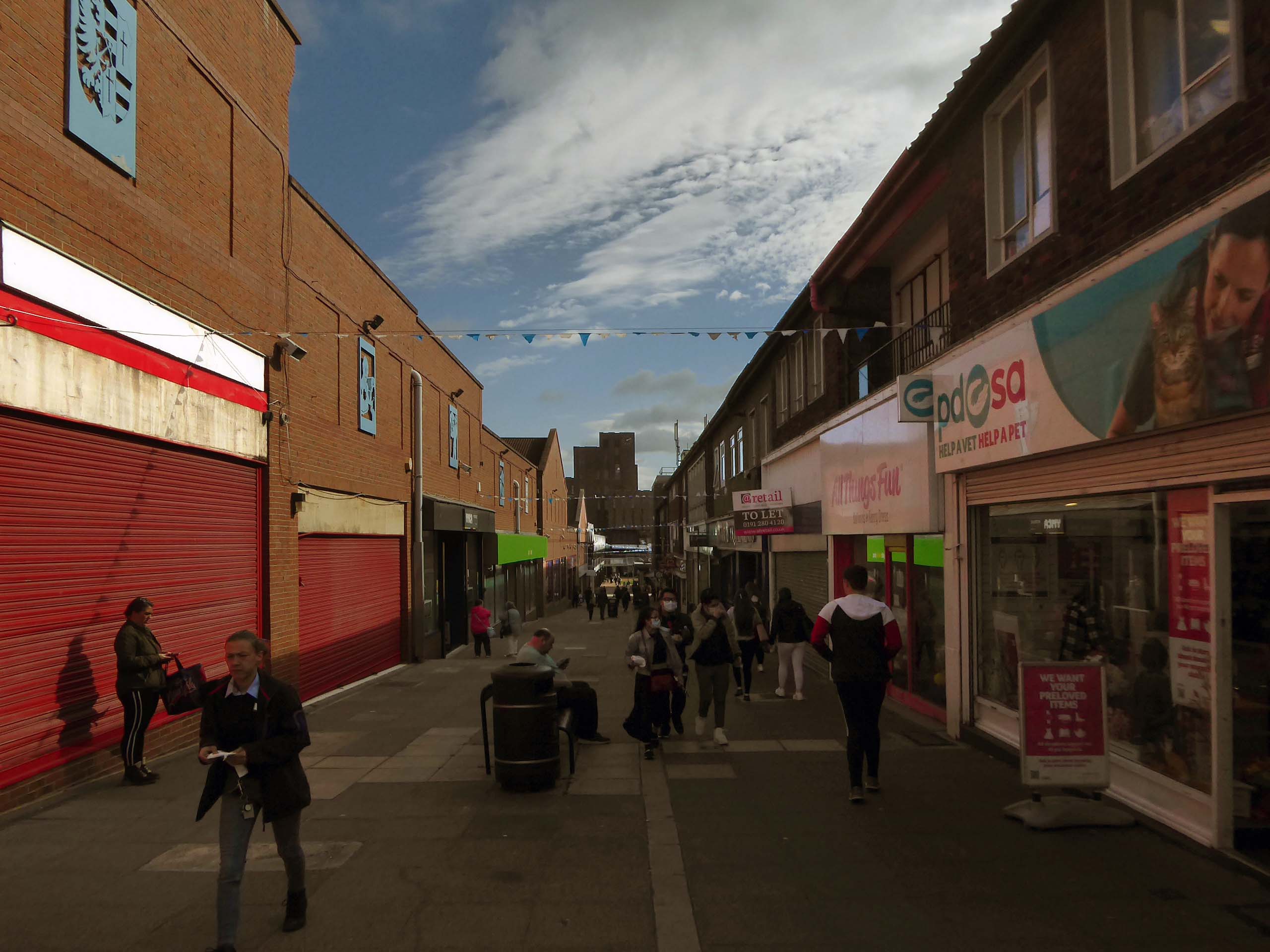
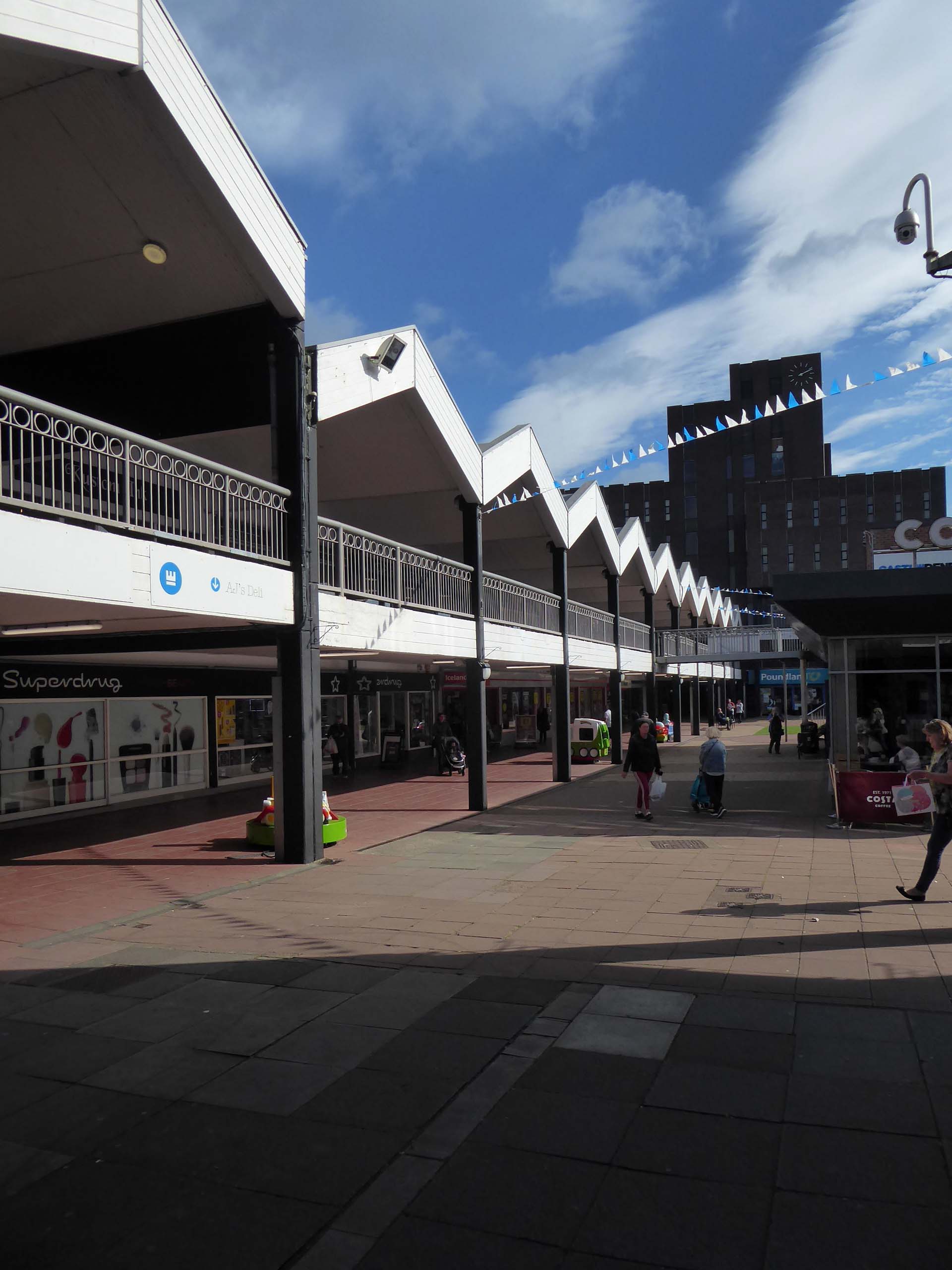
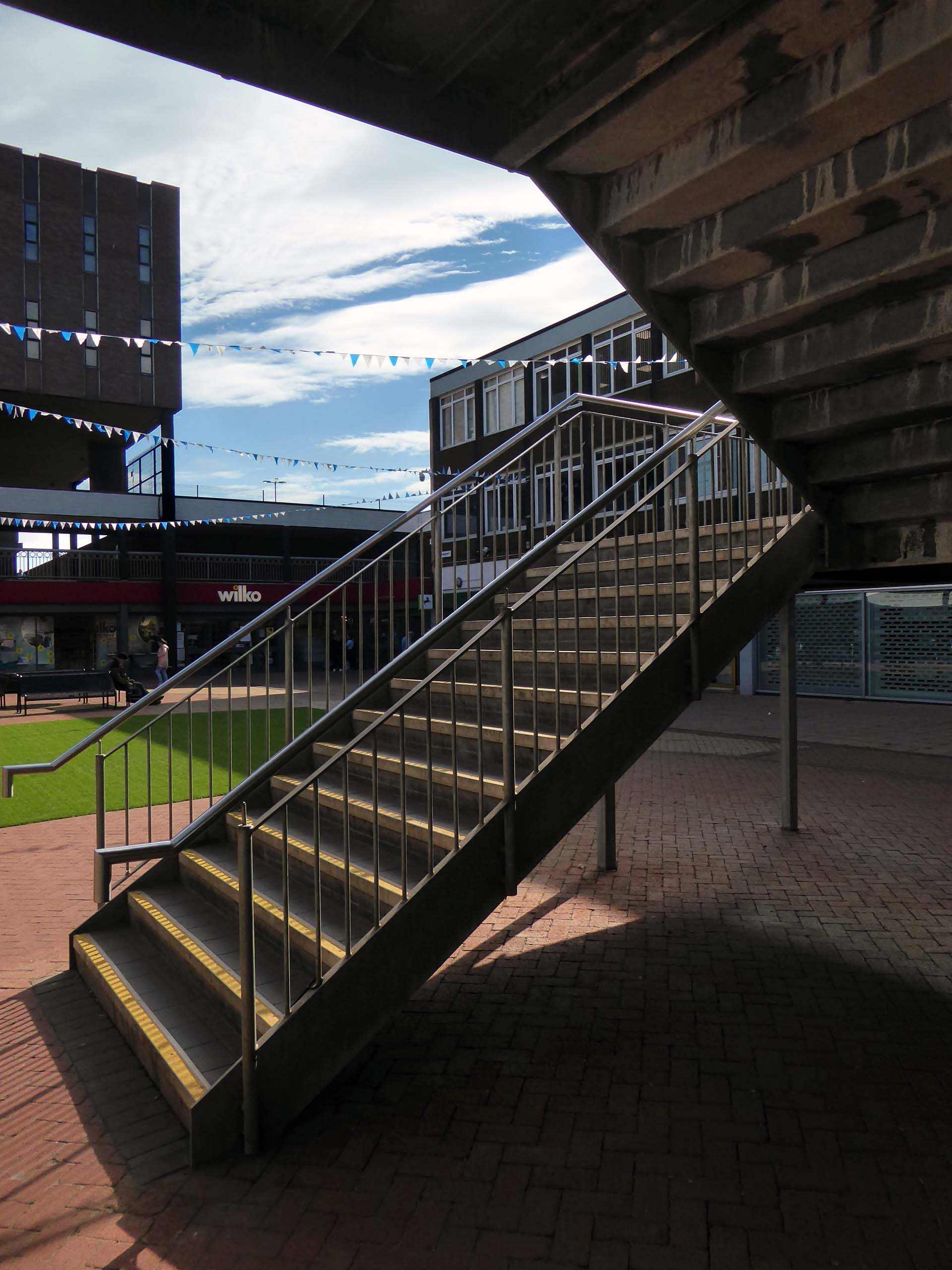
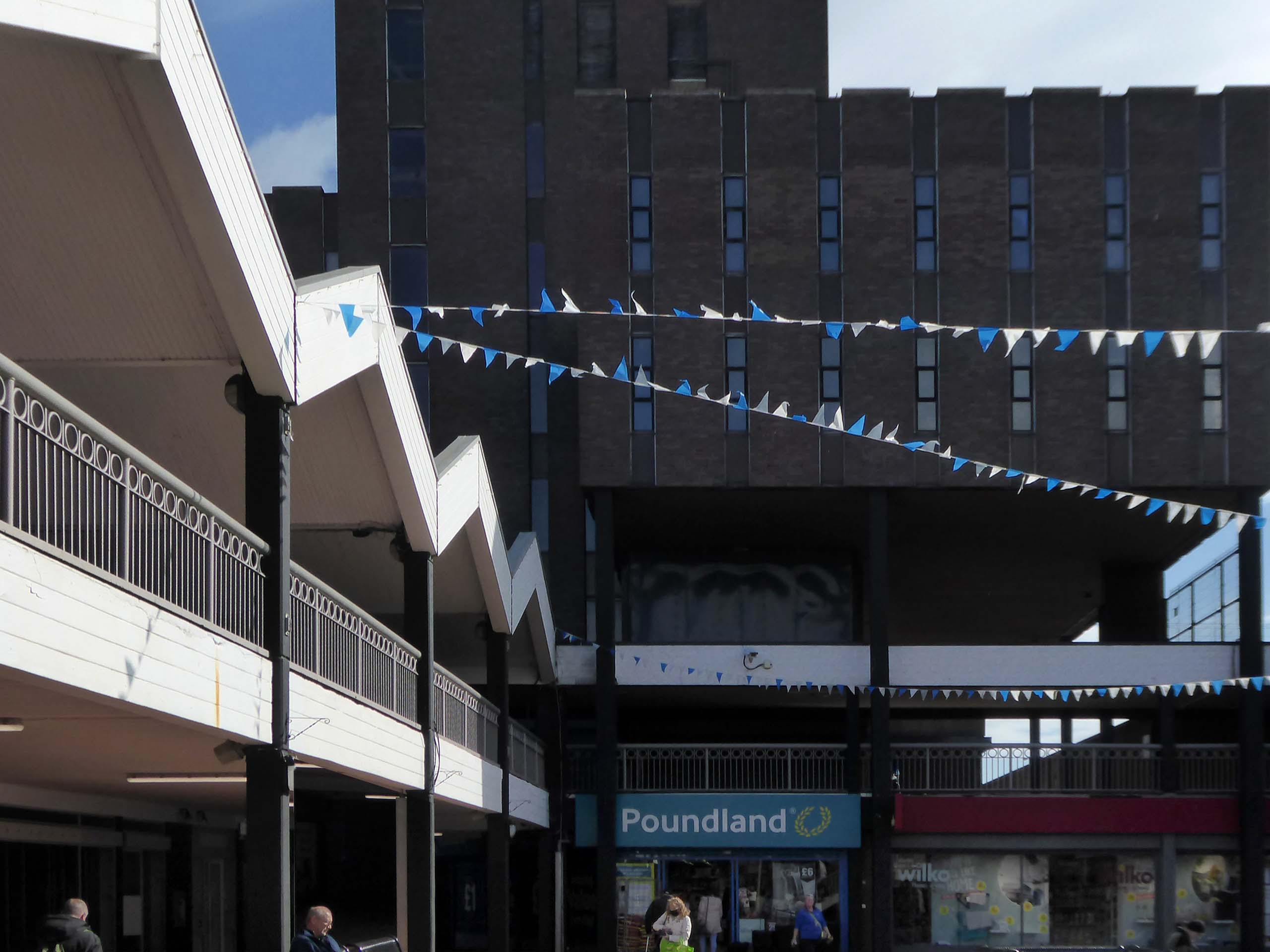
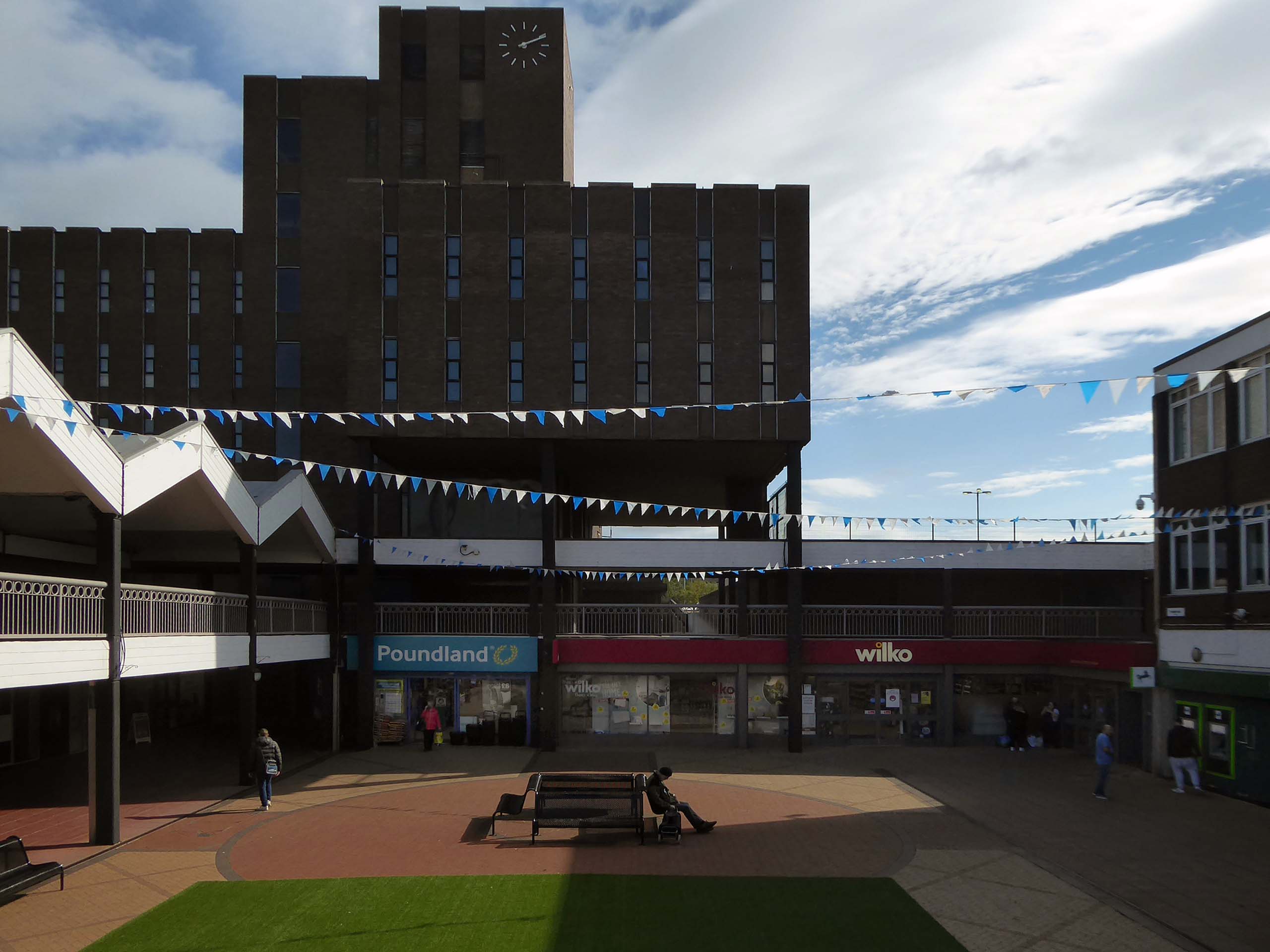
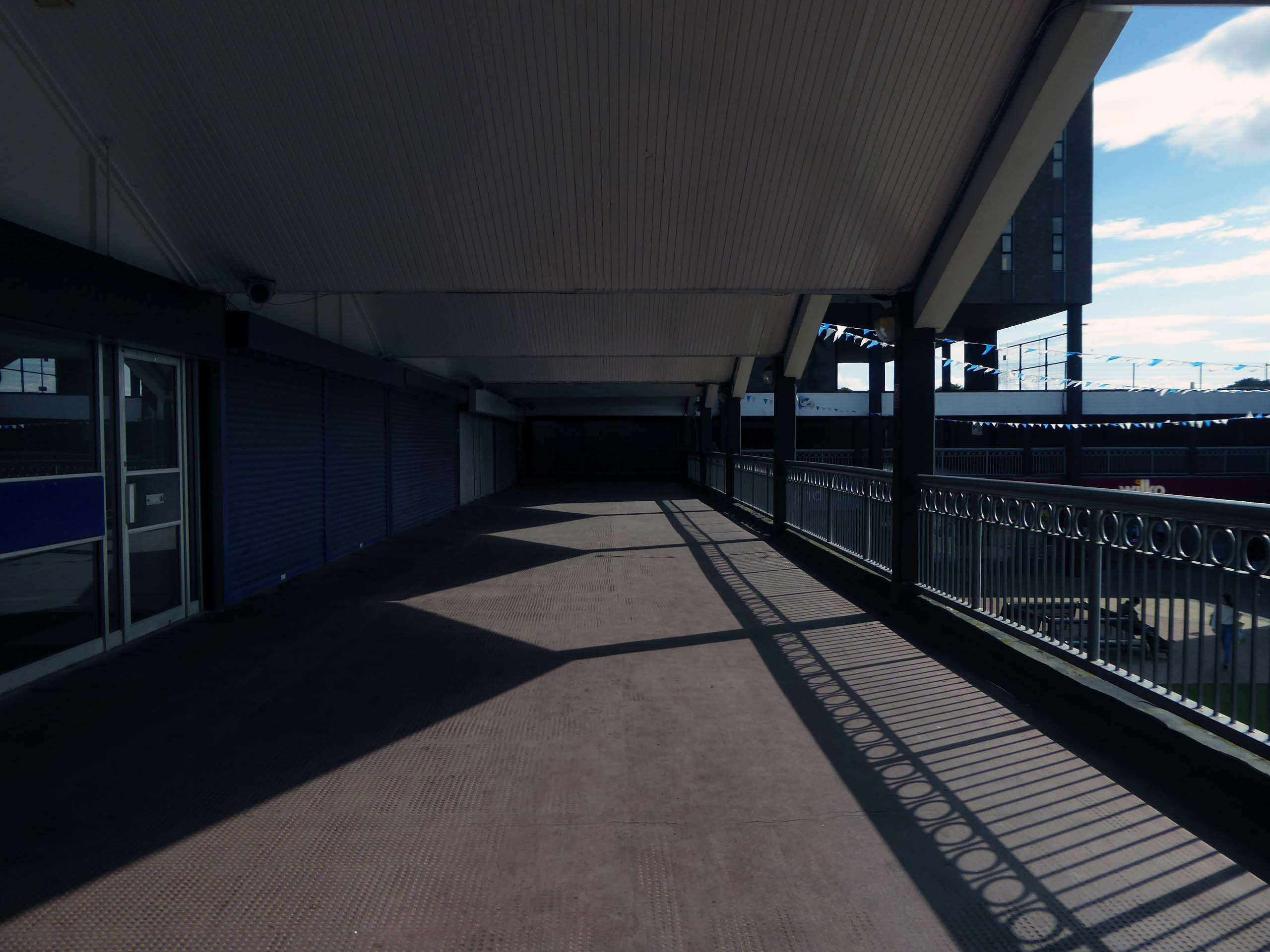
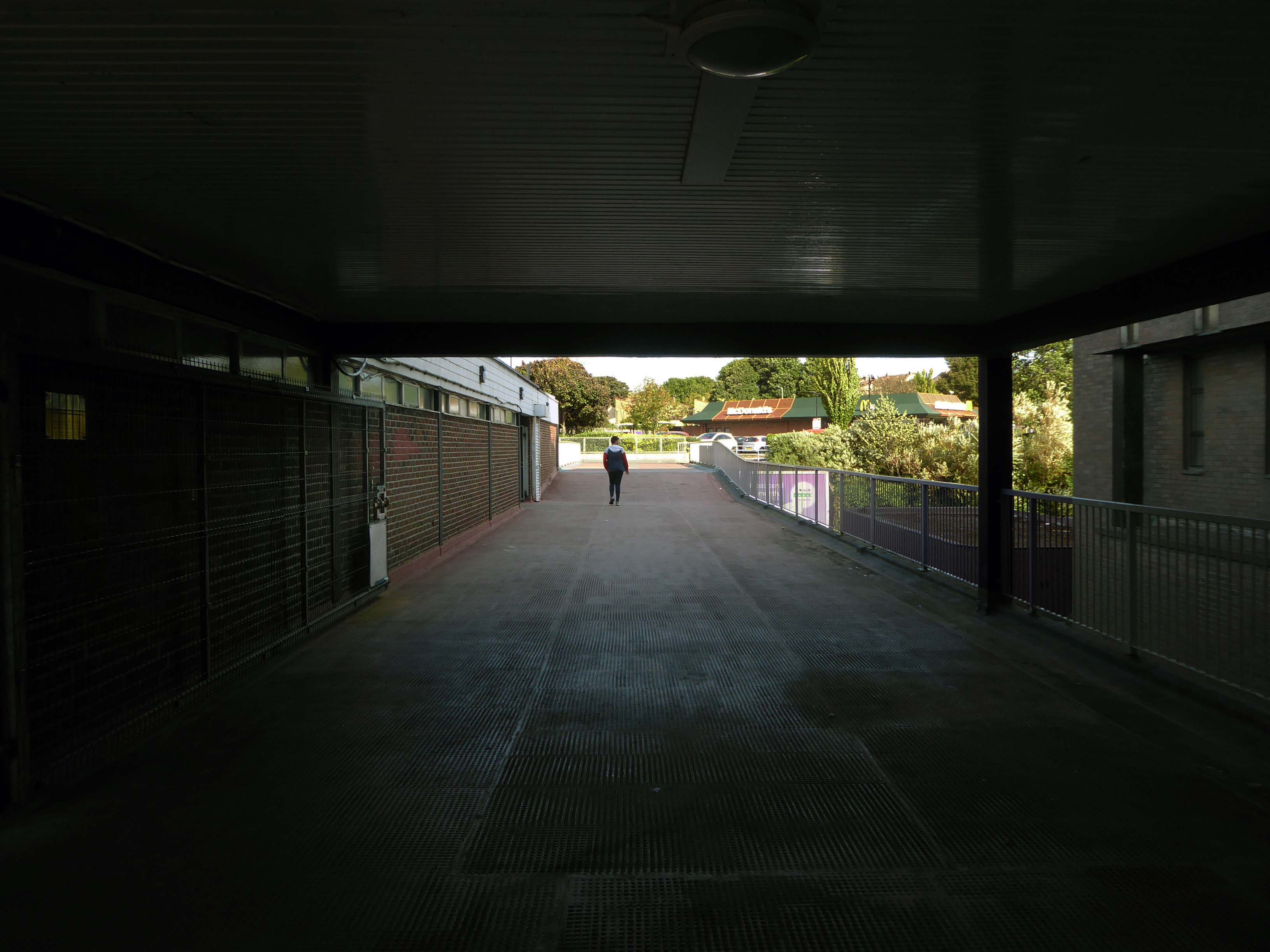
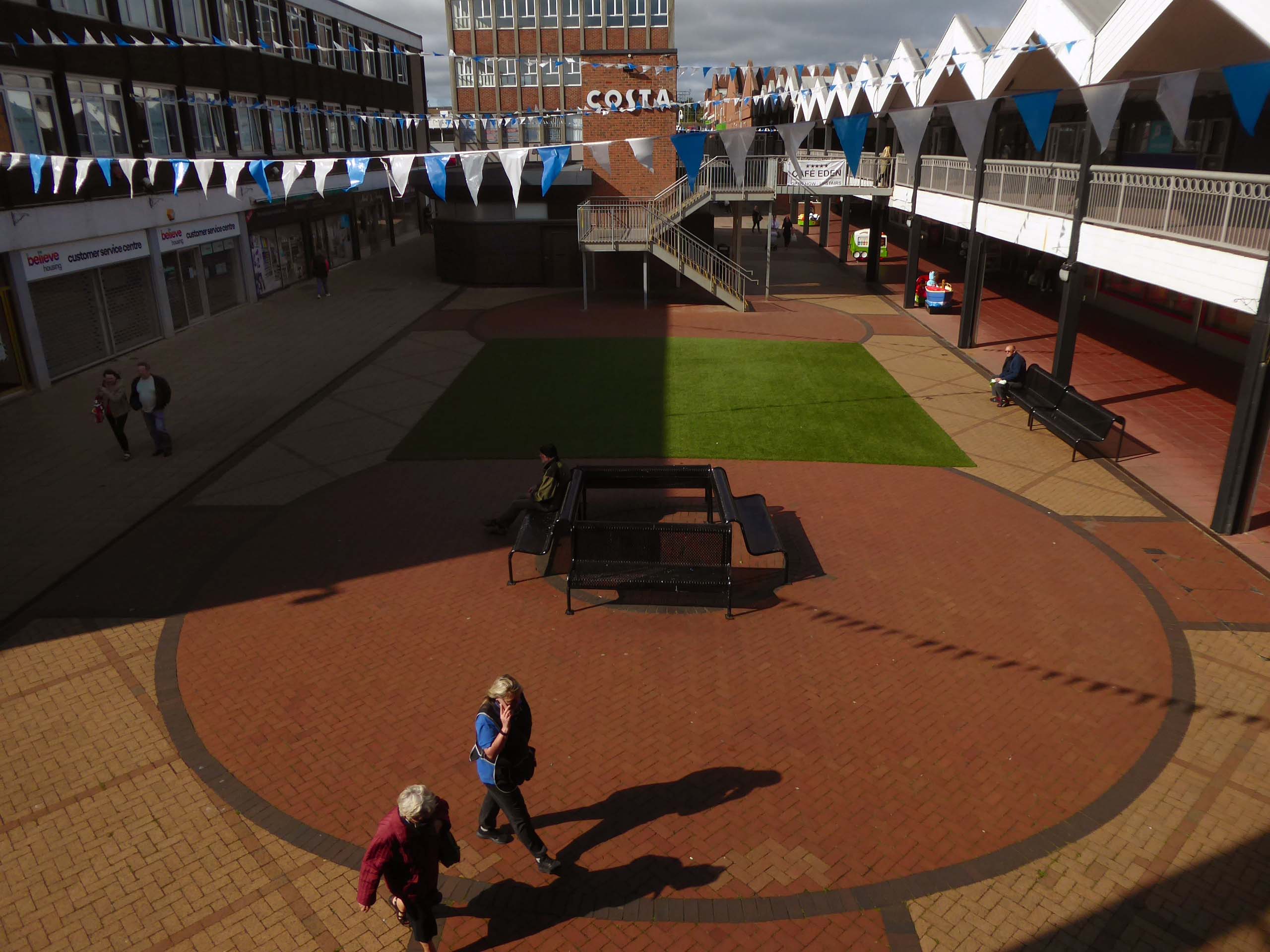
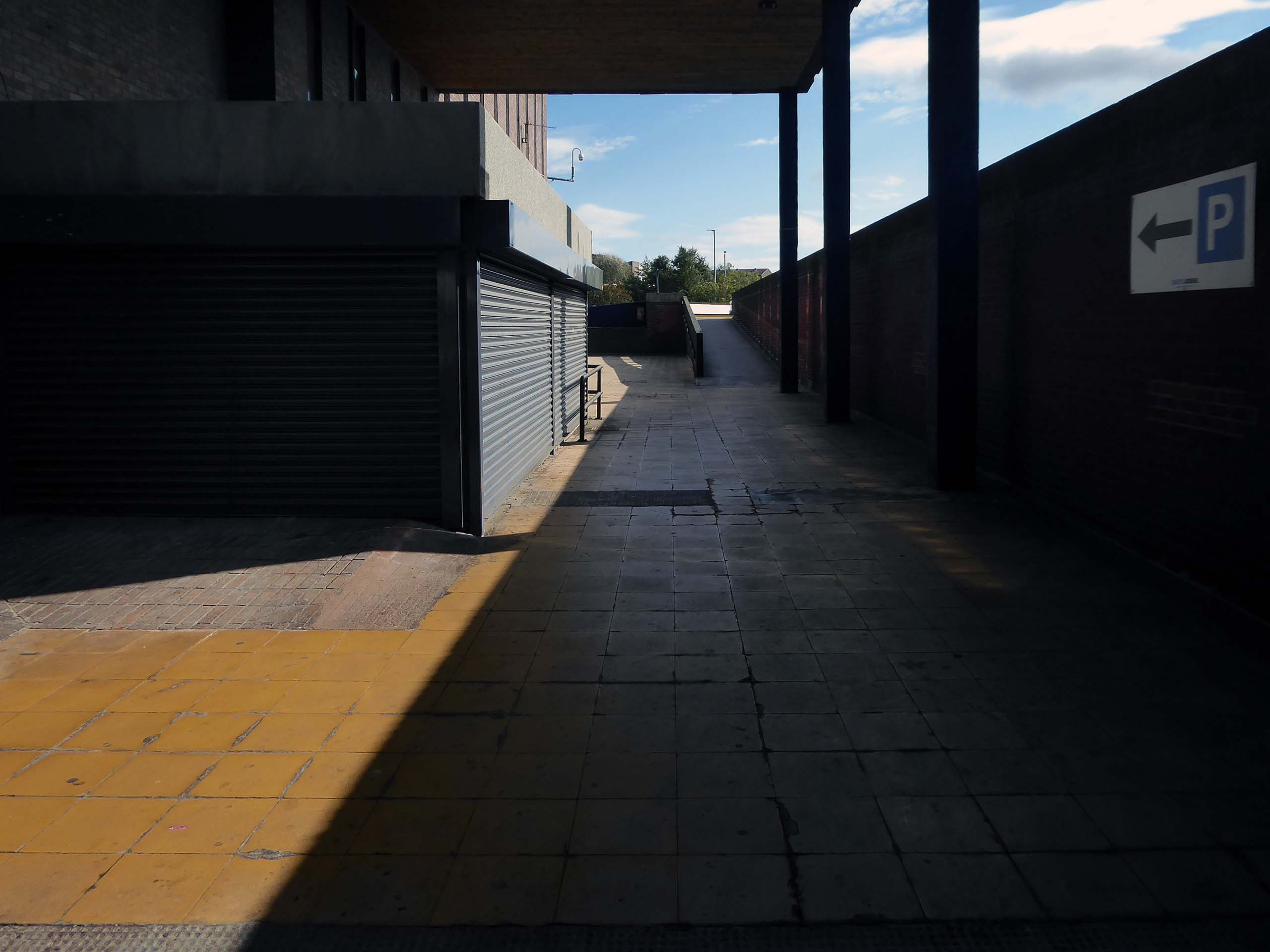
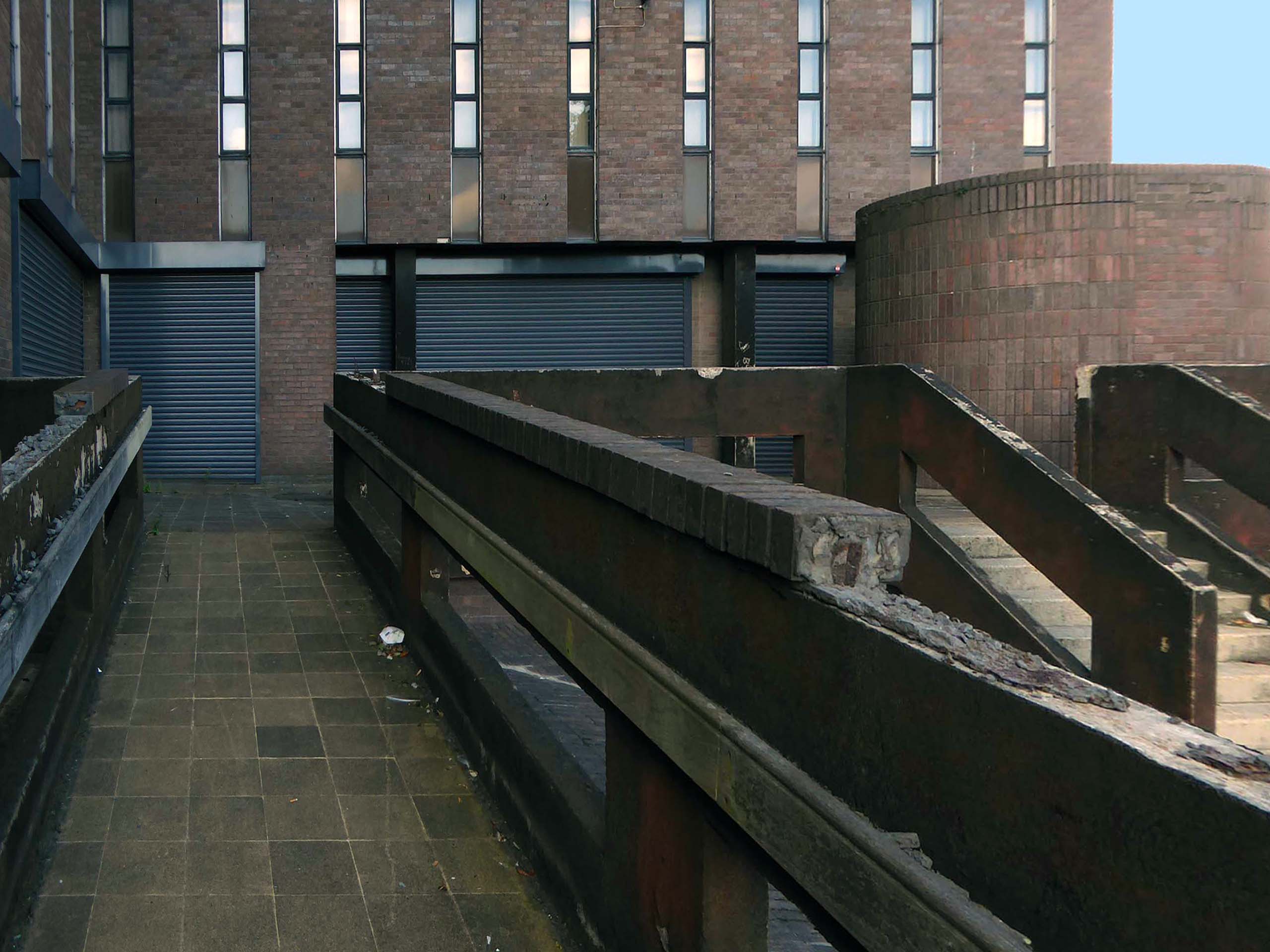
New Brighton in late summer – a little sun, a handful of visitors, and offshore breeze.
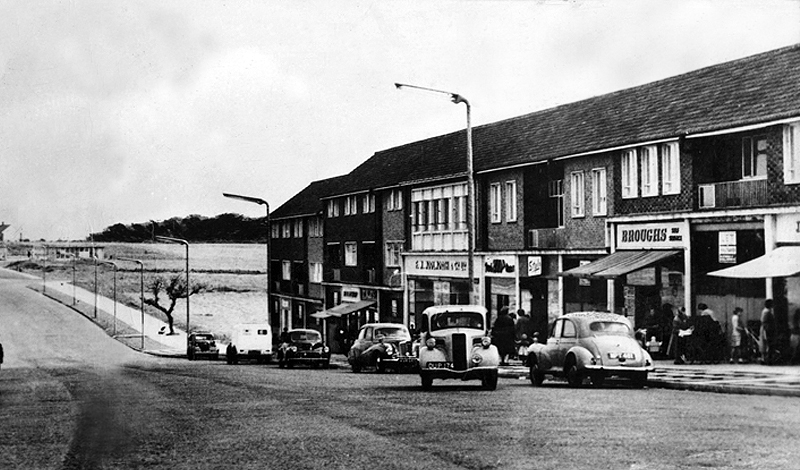
In 1830, a Liverpool merchant, James Atherton, purchased 170 acres of land at Rock Point, which enjoyed views out to sea and across the Mersey and had a good beach. His aim was to develop it as a desirable residential area and watering place for the gentry, similar to Brighton, one of the most elegant seaside resorts of that Regency period, hence the name “New Brighton”. Substantial development began soon afterwards, and housing began to spread up the hillside overlooking the estuary.
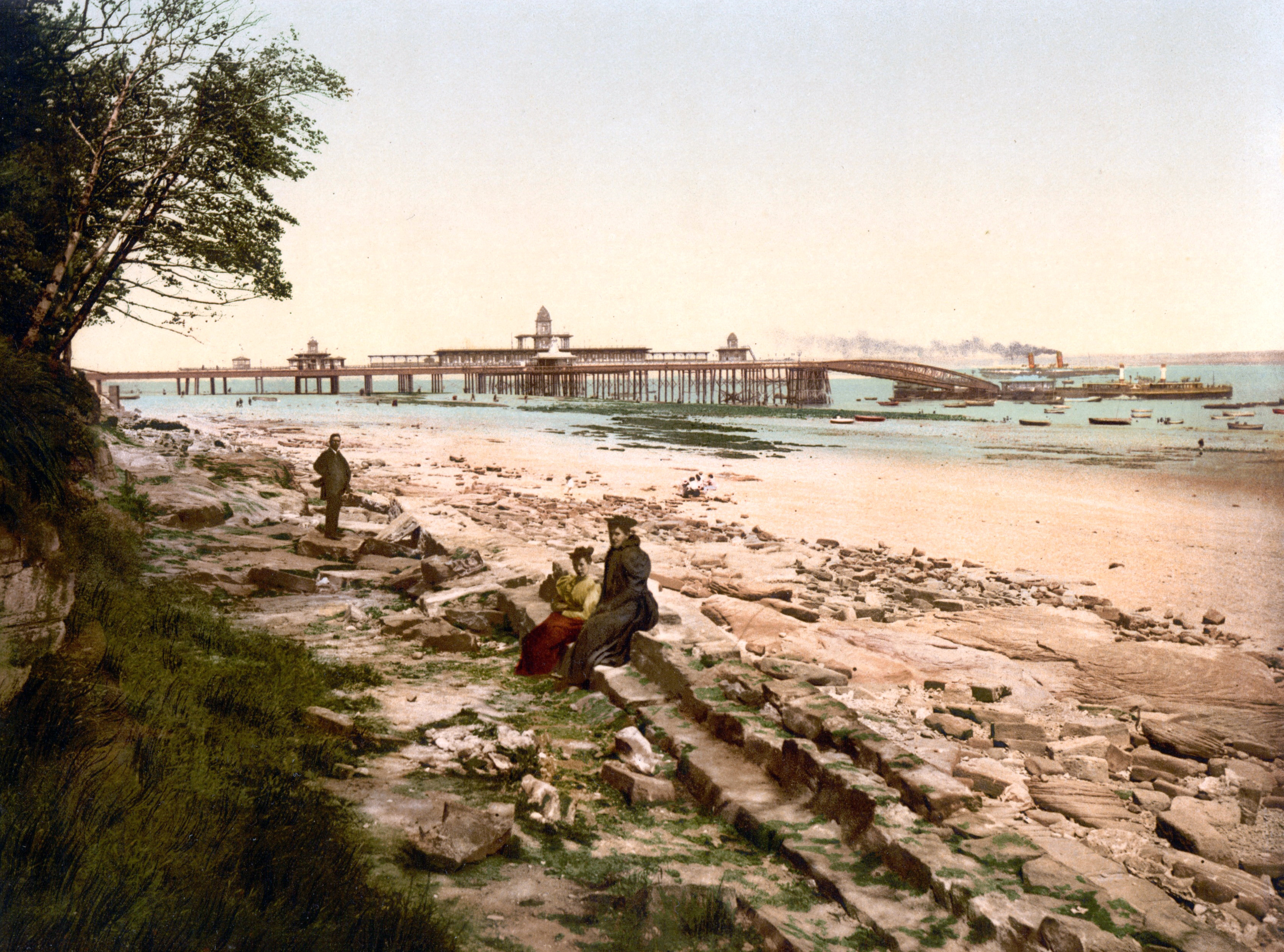
During the latter half of the nineteenth century, New Brighton developed as a very popular seaside resort serving Liverpool and the Lancashire industrial towns, and many of the large houses were converted to inexpensive hotels. Designed by the noted architect of seaside structures Eugenius Birch, the New Brighton Pier opened in 1867.
The promenade from Seacombe to New Brighton was completed by 1901.
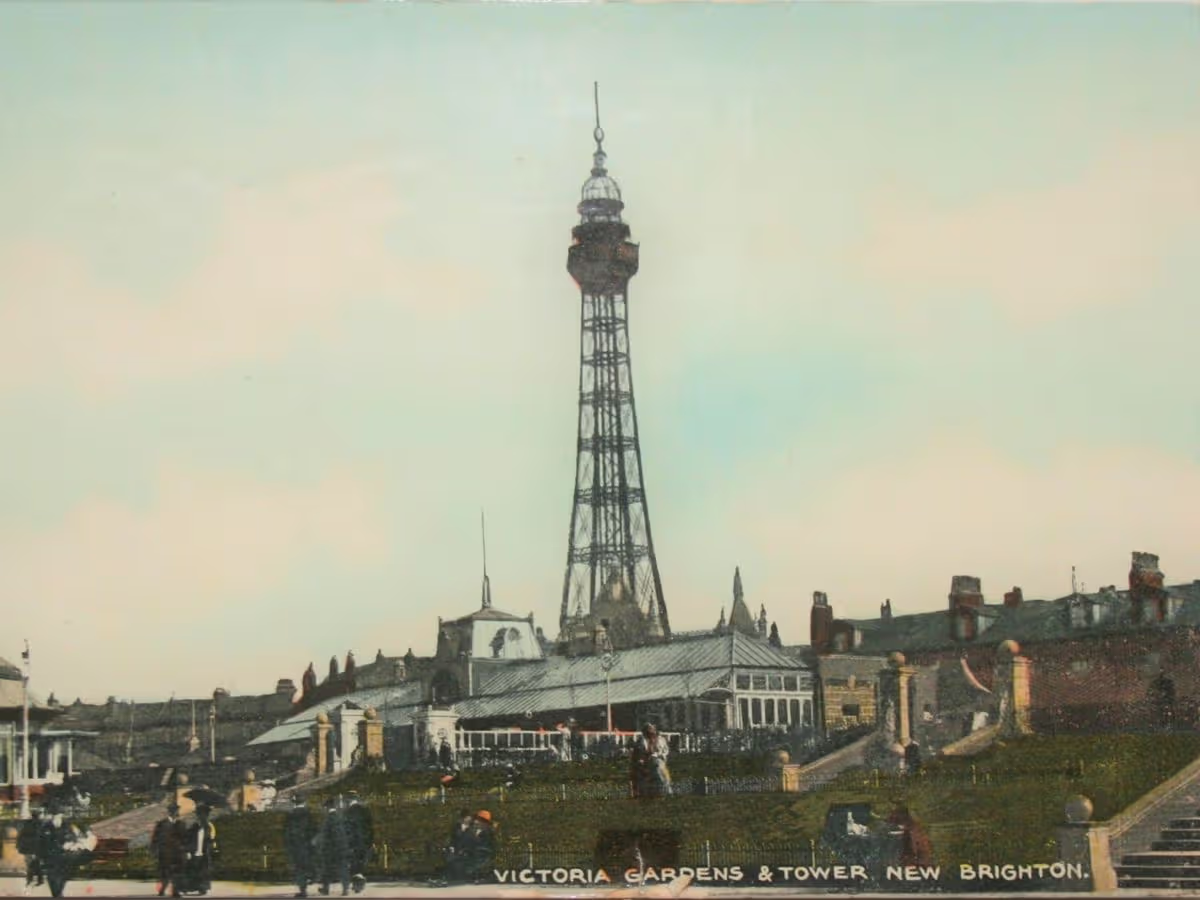
The New Brighton Tower, the tallest in the country, was opened in 1900 but closed in 1919, largely due to lack of maintenance during World War I, and had been dismantled by 1921.
After the Second World War, the popularity of New Brighton as a seaside resort declined dramatically. However, the Tower Ballroom continued as a major venue, hosting numerous concerts in the 1950s and 1960s by local Liverpool groups such as The Beatles, and international stars.
The Tower Ballroom continued in use until it was destroyed by a fire in 1969.
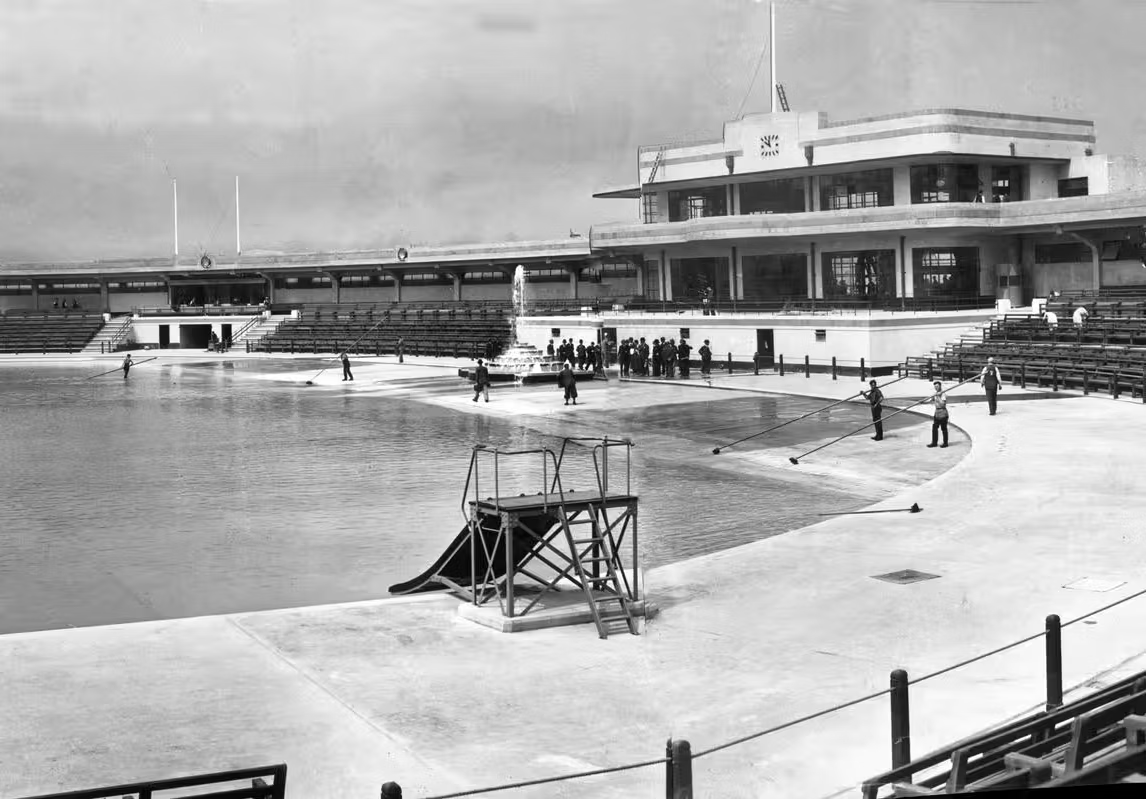
New Brighton’s Art Deco Lido, was opened on 13 June 1934 by Viscount Leverhulme. When it was built, it was the largest lido in Britain, at a cost of £90,000, designed byWallasey County-Borough Engineer L St. G Wilkinson
The saltwater pool survived until 1990, when it was damaged during a storm and later demolished
The New Palace and Adventureland on the famous Promenade at New Brighton, Wirral, offers a tremendous range of family fun-filled entertainment and activities.
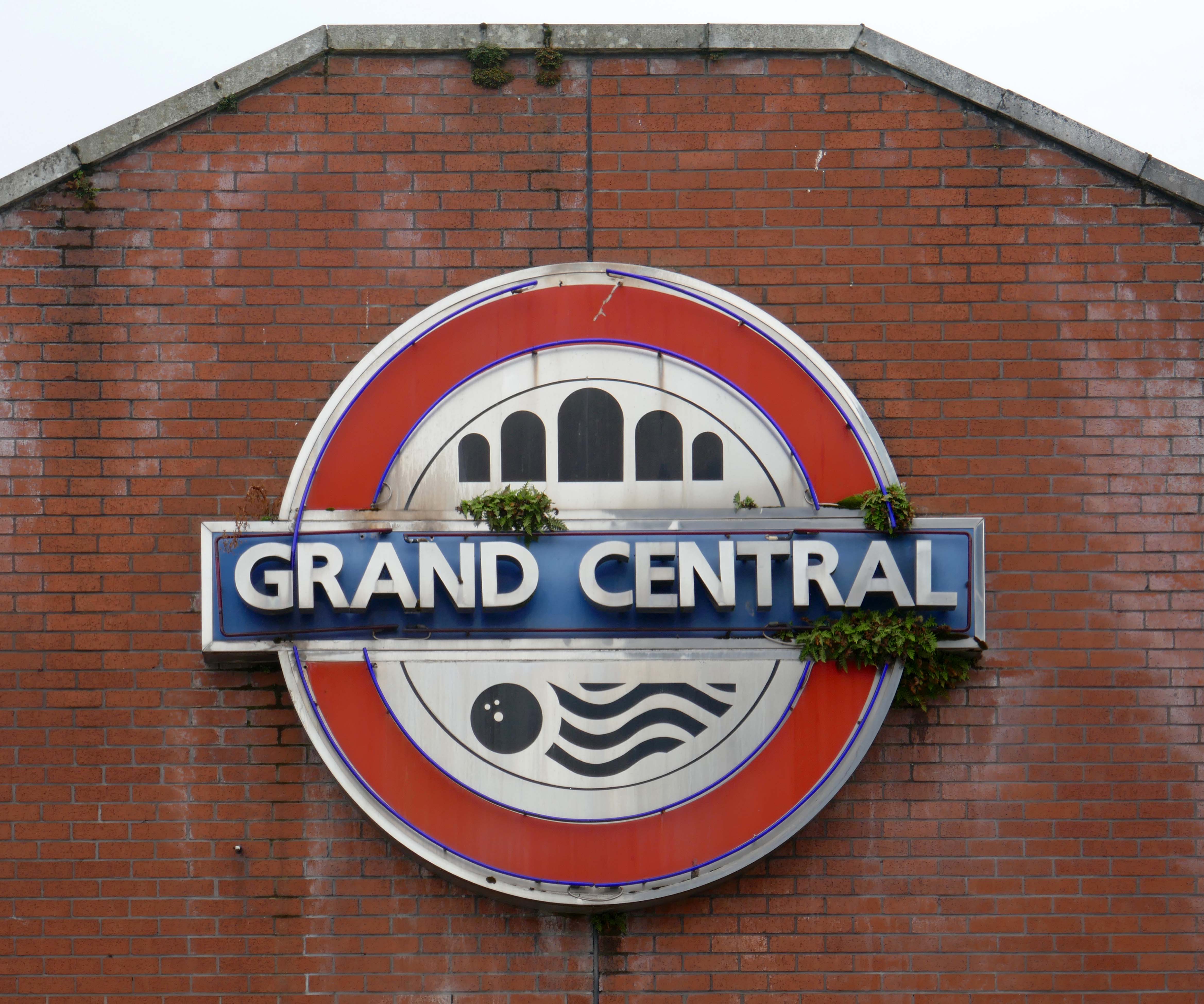
The traditional family amusement arcade, The Bright Spot, has something for everyone including state of the art video driving, adventure and shooting simulators, dance games, plus the always popular slots and ‘pushers’, as well as mini-bowling and toy-grabbers.
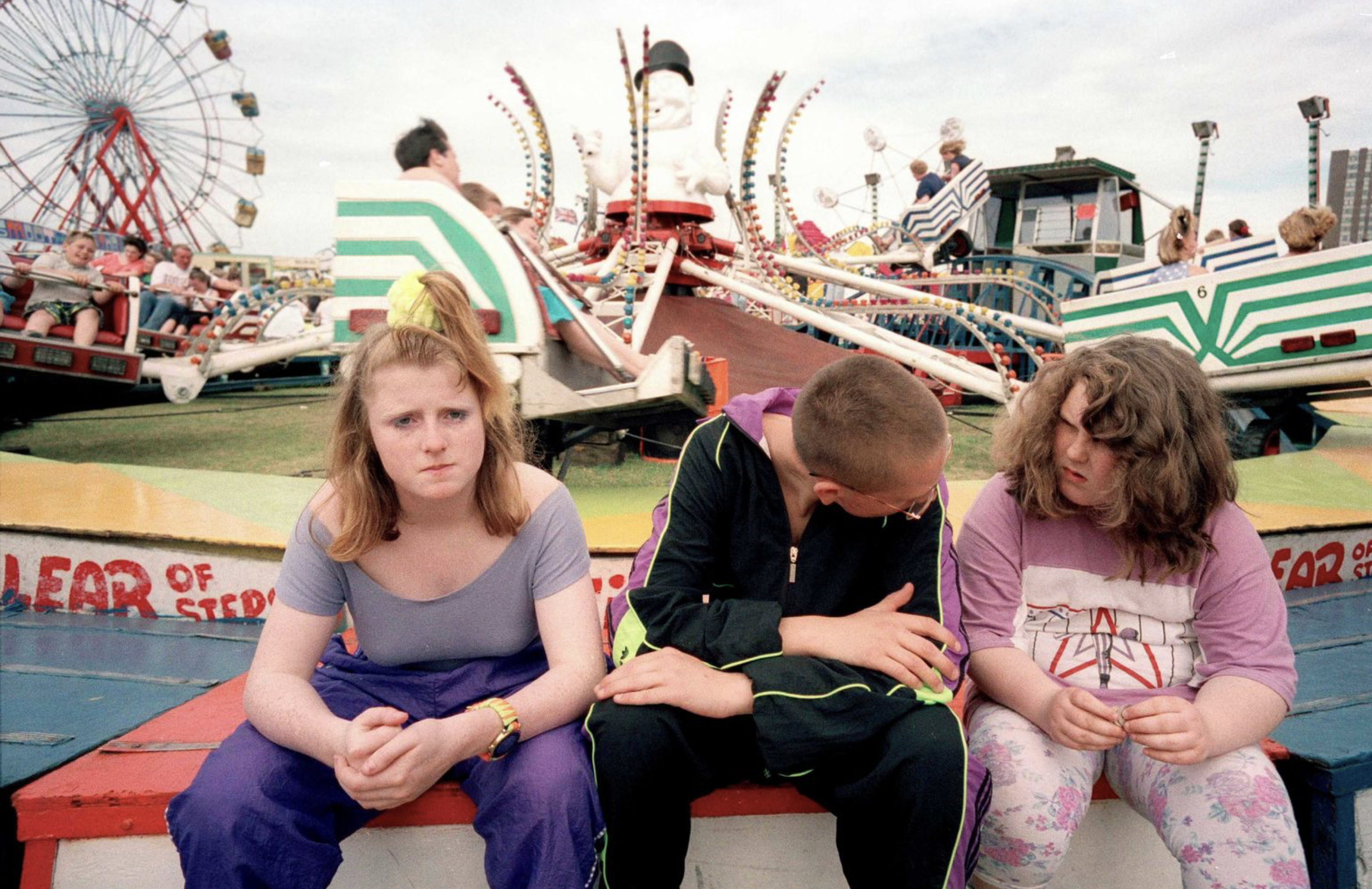
Special mention must go to long time New Brighton resident Photie ManTom Wood.
Opened in 1971, the site consists of about five hundred acres
Technological changes, such as containerisation, caused the loss of numerous jobs on the docks. In the 21st century, the dock handles mainly containers, oils, timber, fruit and vegetables, grain and animal feed.
Designed by John Foster Jr, construction of the present tower began in 1827 by Tomkinson & Company using blocks of interlocking Anglesey granite using dovetail joints and marble dowels.
The lighthouse was in continuous use until it was decommissioned in October 1973, having been superseded by modern navigational technology.
In 1803 Liverpool merchants concerned about a possible invasion by the French during the Napoleonic wars put forward the idea of a fort at New Brighton. Naturally there weredisputes about how it was to be financed and consequently construction didn’t get under way until 1826.
It was completed three years later. It was built out of red sandstone blocks on a base of sandstone rocks, confusingly known as the Black Rocks.
Designed by a Captain John Sikes Kitson of the Royal Engineers, it had room for 100 men plus officers with adequate provisions and armaments. It had eighteen guns, sixteen of which were thirty two-pounders and they faced the Rock Channel that was the main entrance for shipping to the Mersey at that time. The ships passed nine hundred yards from the guns and the fort soon became known as the “Little Gibraltar of the Mersey”.
The fort was decommissioned by the War Office 1956 and passed through various hands until it was sold to the Darroch family who are the current custodians.
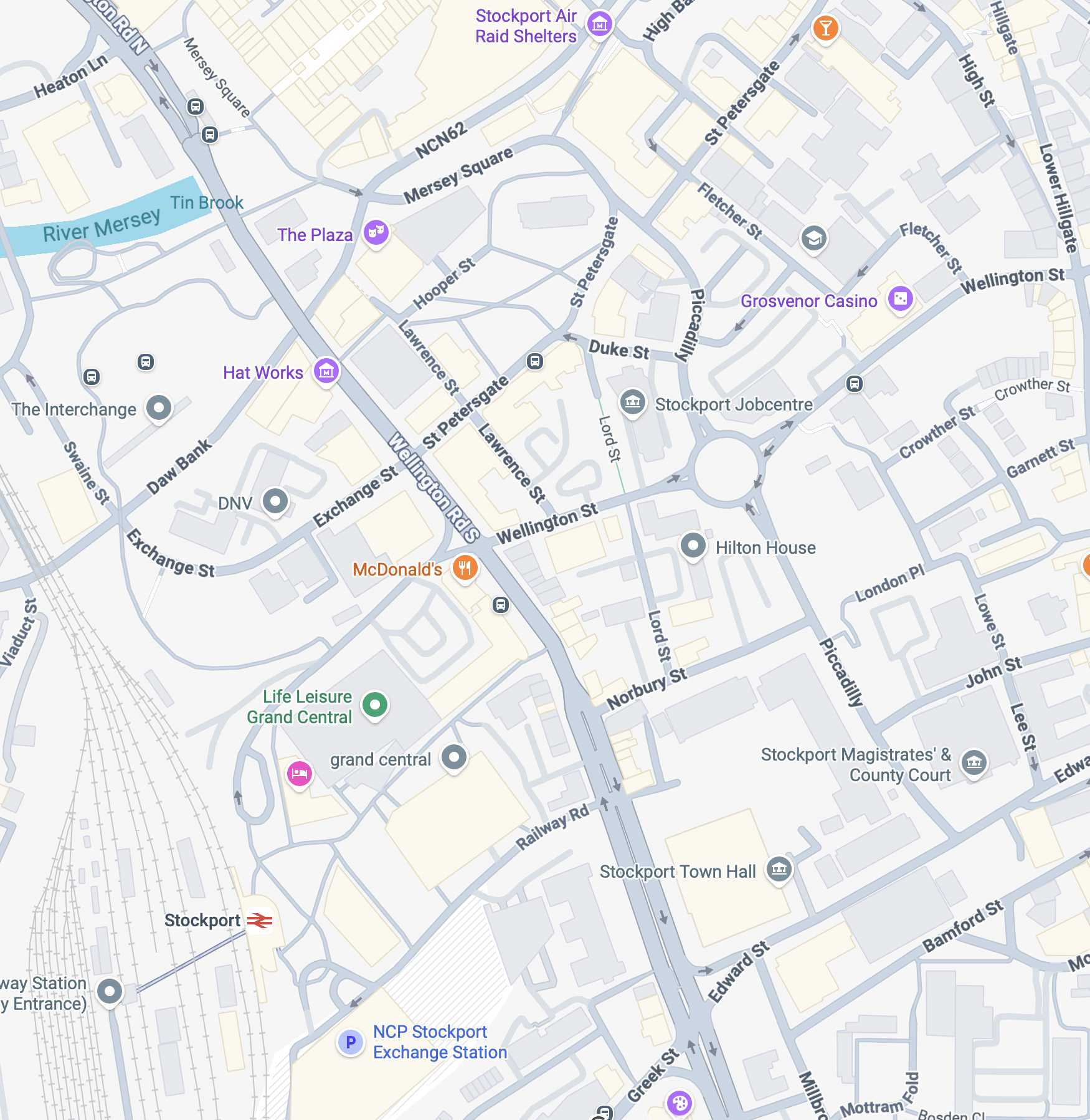
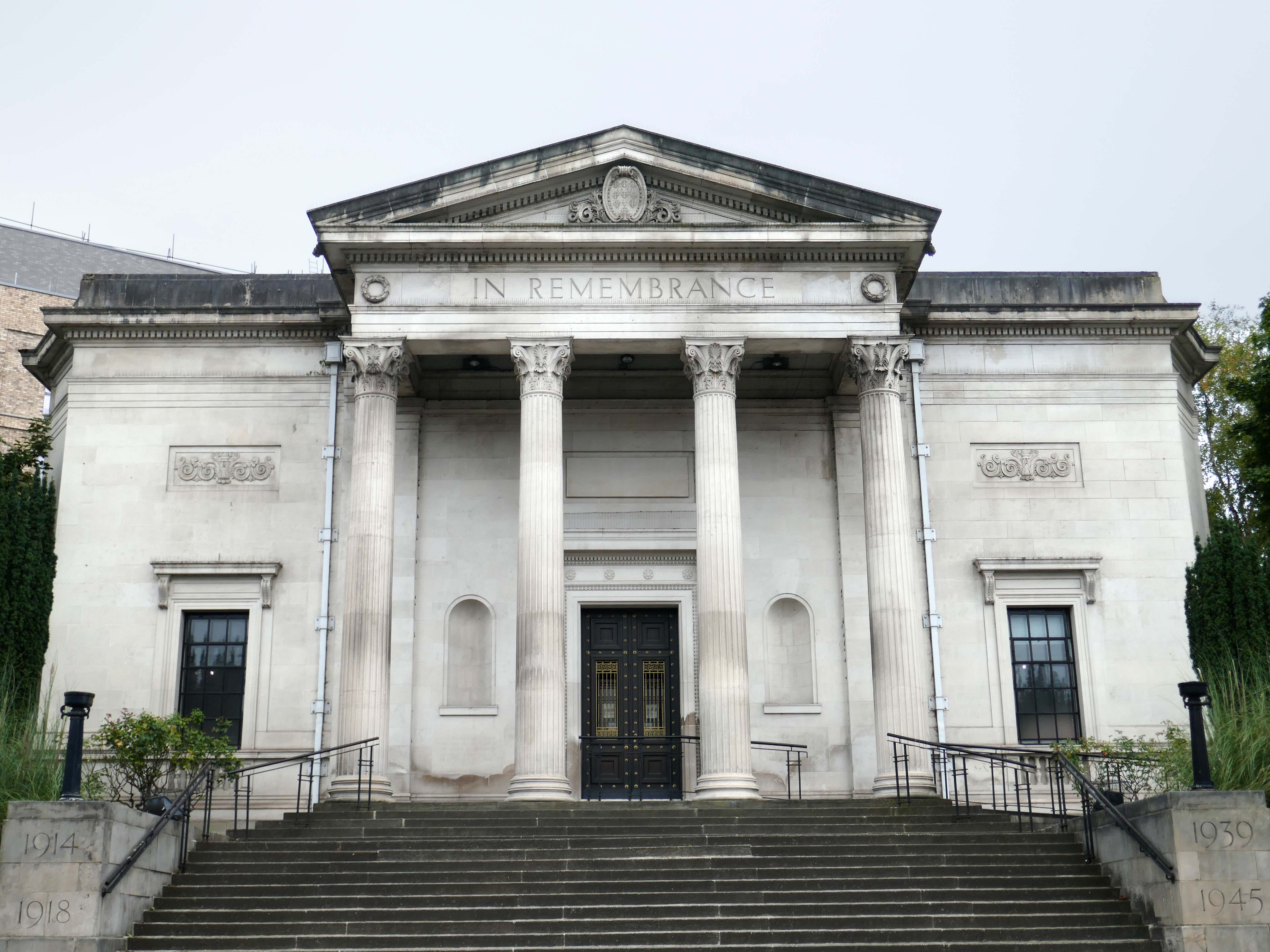
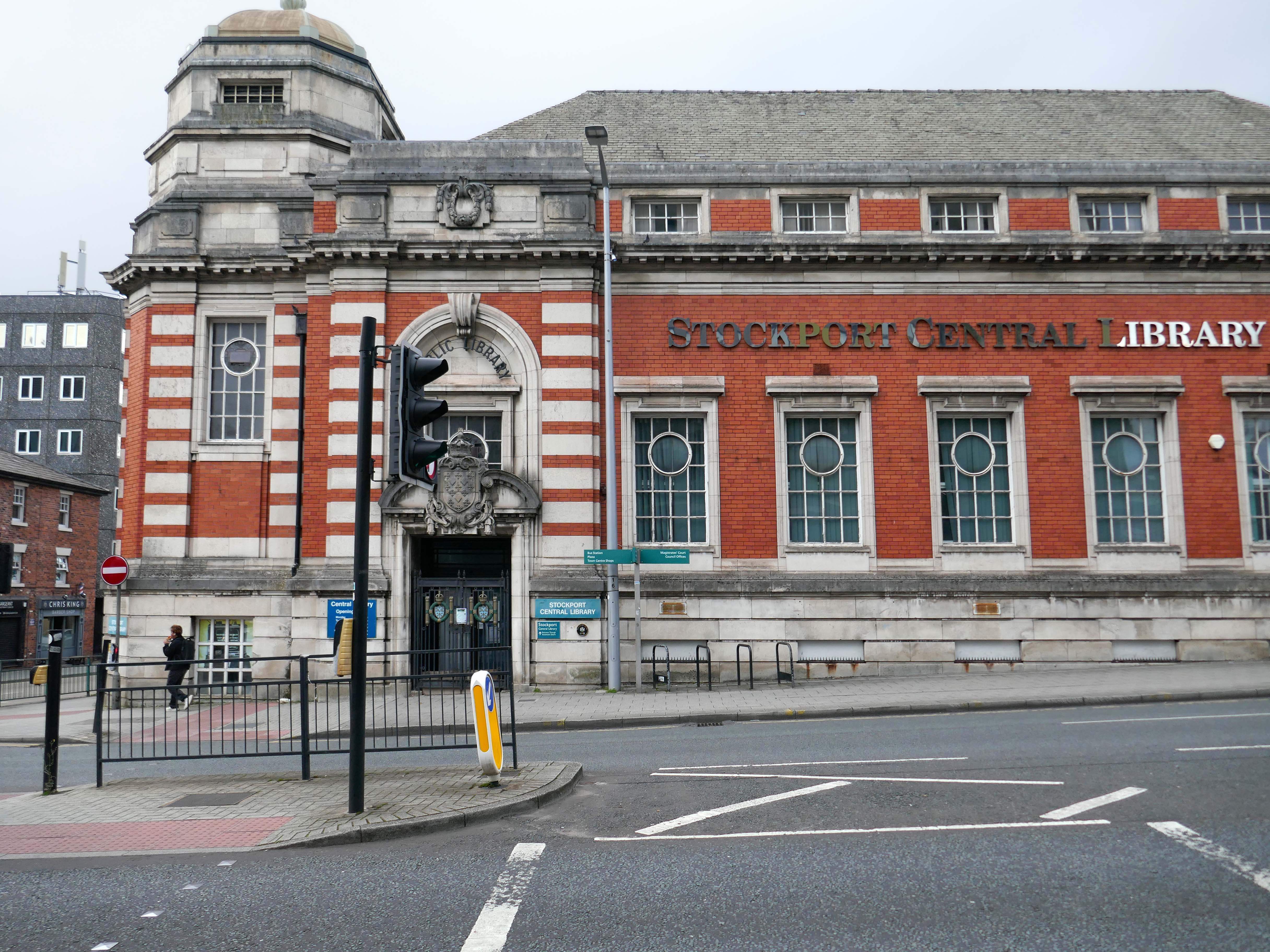
I was asked by SMBC to take folks on a short Stockport walk – beginning at Stockport War Memorial Art Gallery and concluding at the Stockroom, a distance of less than a mile.
Designed in Neoclassical Greek Revival style with central tetrastyle Corinthian portico, the order loosely based on Temple of Apollo at Bassae
The Gallery has a long history of exhibitions from some of the art world’s finest artists. Today the gallery boasts an extensive exhibition program, which gives emerging artists a chance to showcase their work.
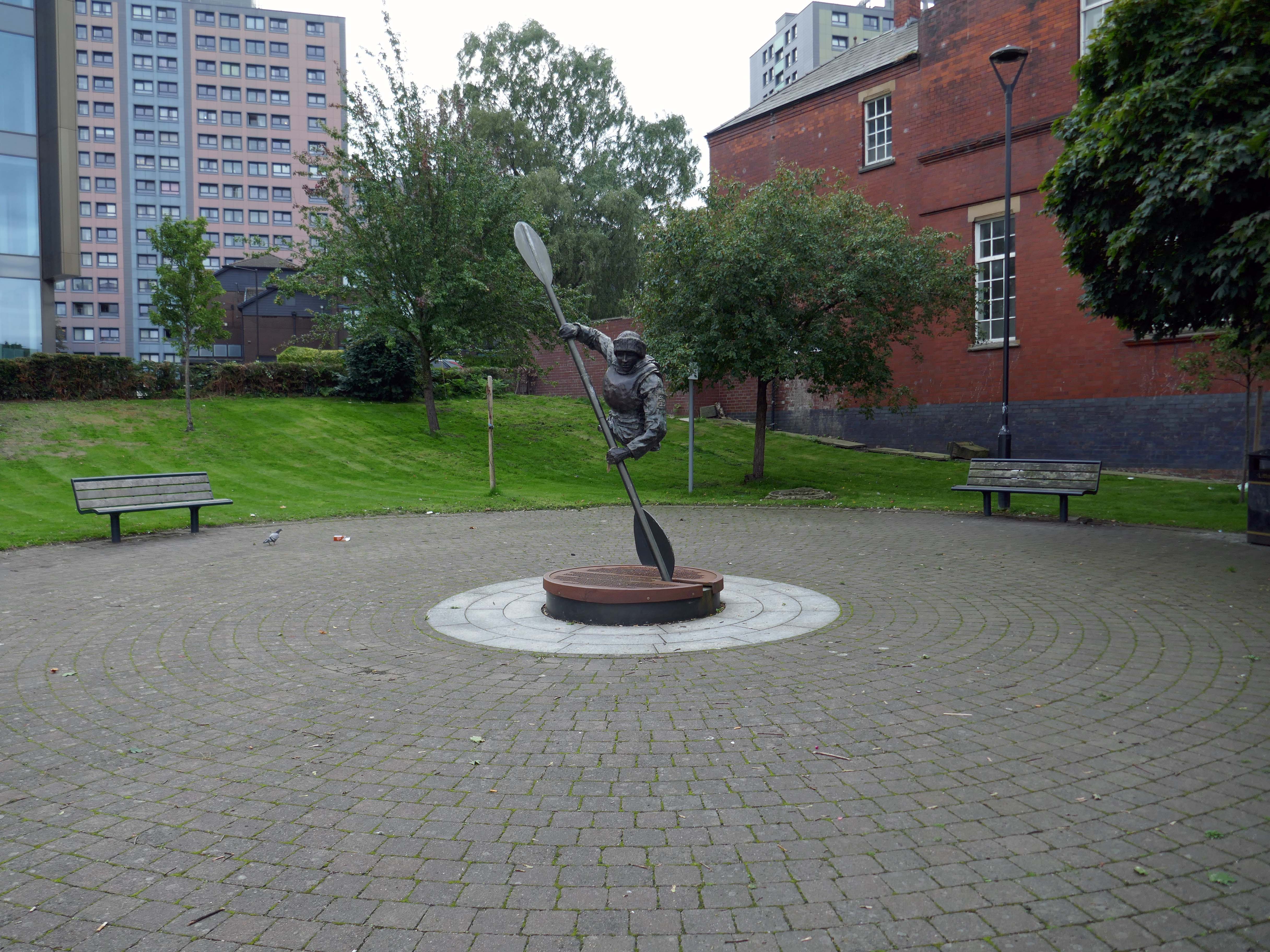
The capitals of Chapel’s Corinthian columns, surround the site of the Cockleshell Hero memorial 2017 – sculptor Luke Perry.
The former Edgeley milkman James Conway took part in the Royal Marines’ most famous wartime raid, where he was one of the twelve men who paddled more than eighty miles in canoes up the Gironde to plant limpet mines on shipping in the German occupied French city of Bordeaux in 1942.
Although much simpler than continental Baroque architecture, English Baroque designs were equally heavy, sensual and decorative.
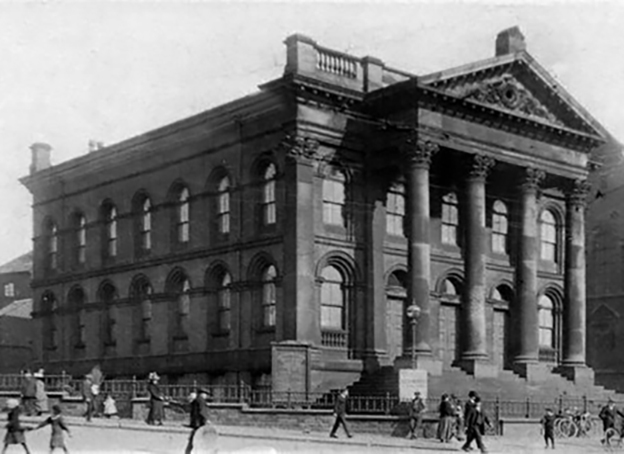
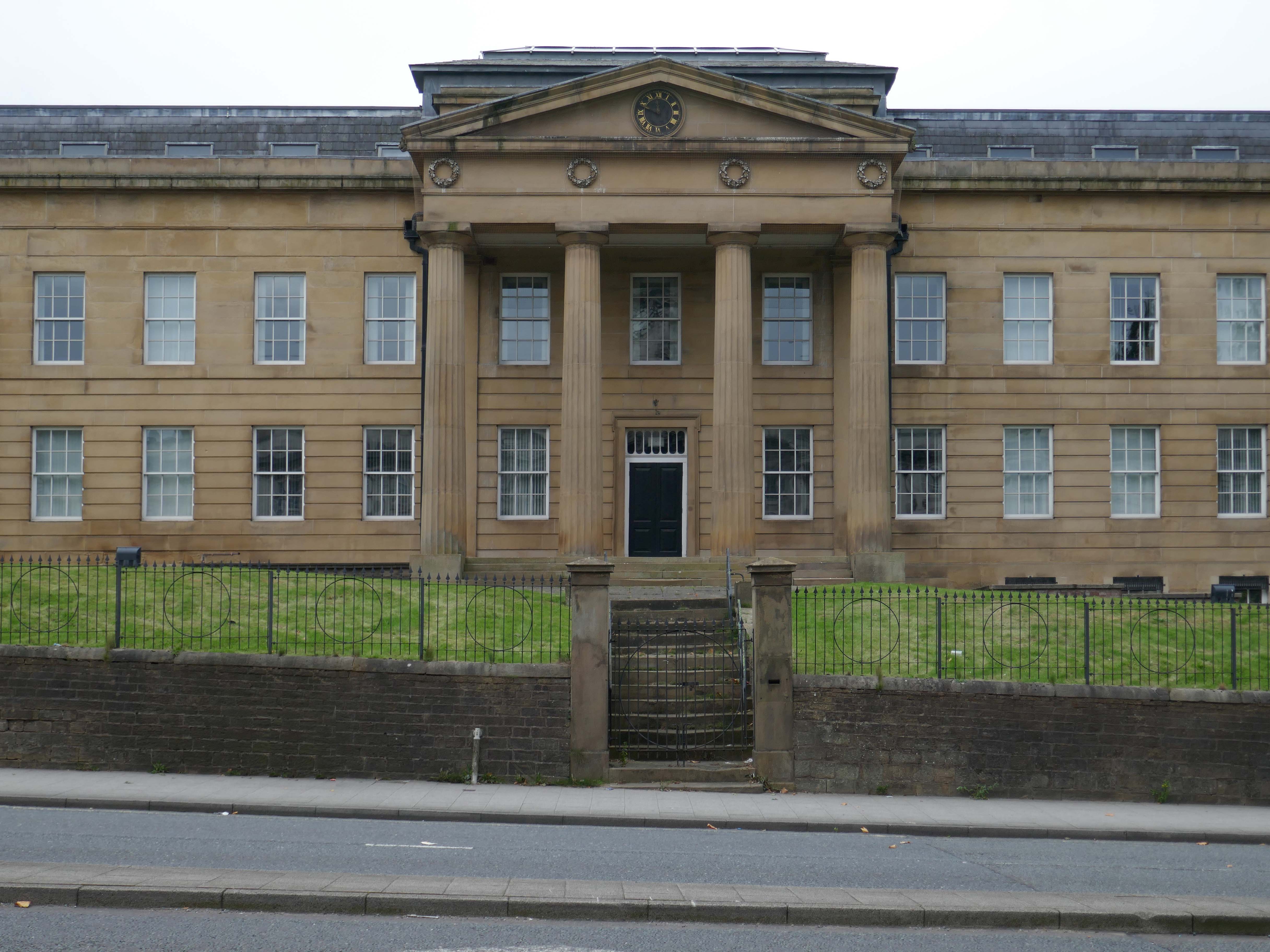
Across the road the former Stockport Infirmary l832 Grade II listed – architect Richard Lane.
Currently named Millennium House, home to the Department of Works and Pensions.
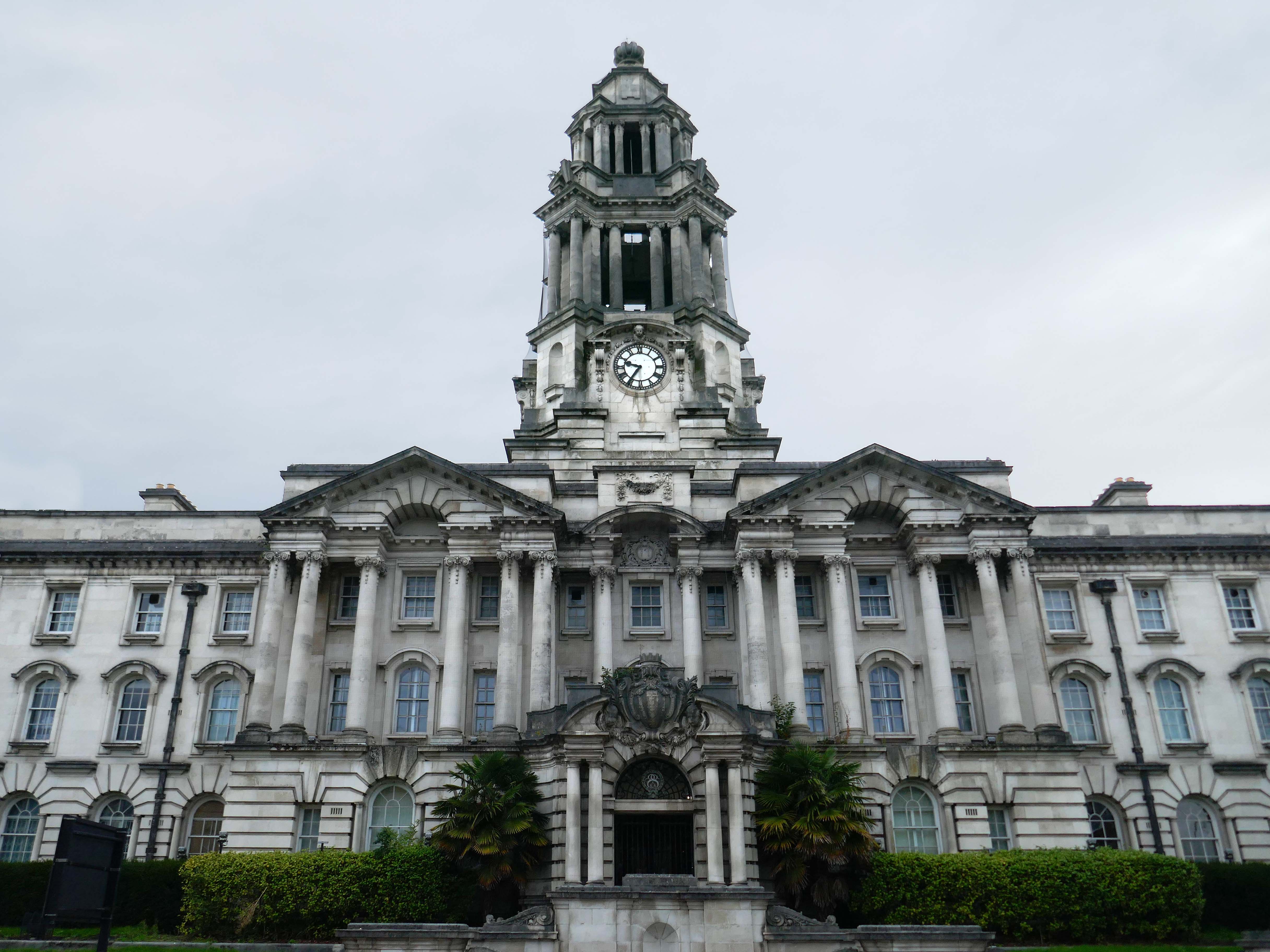
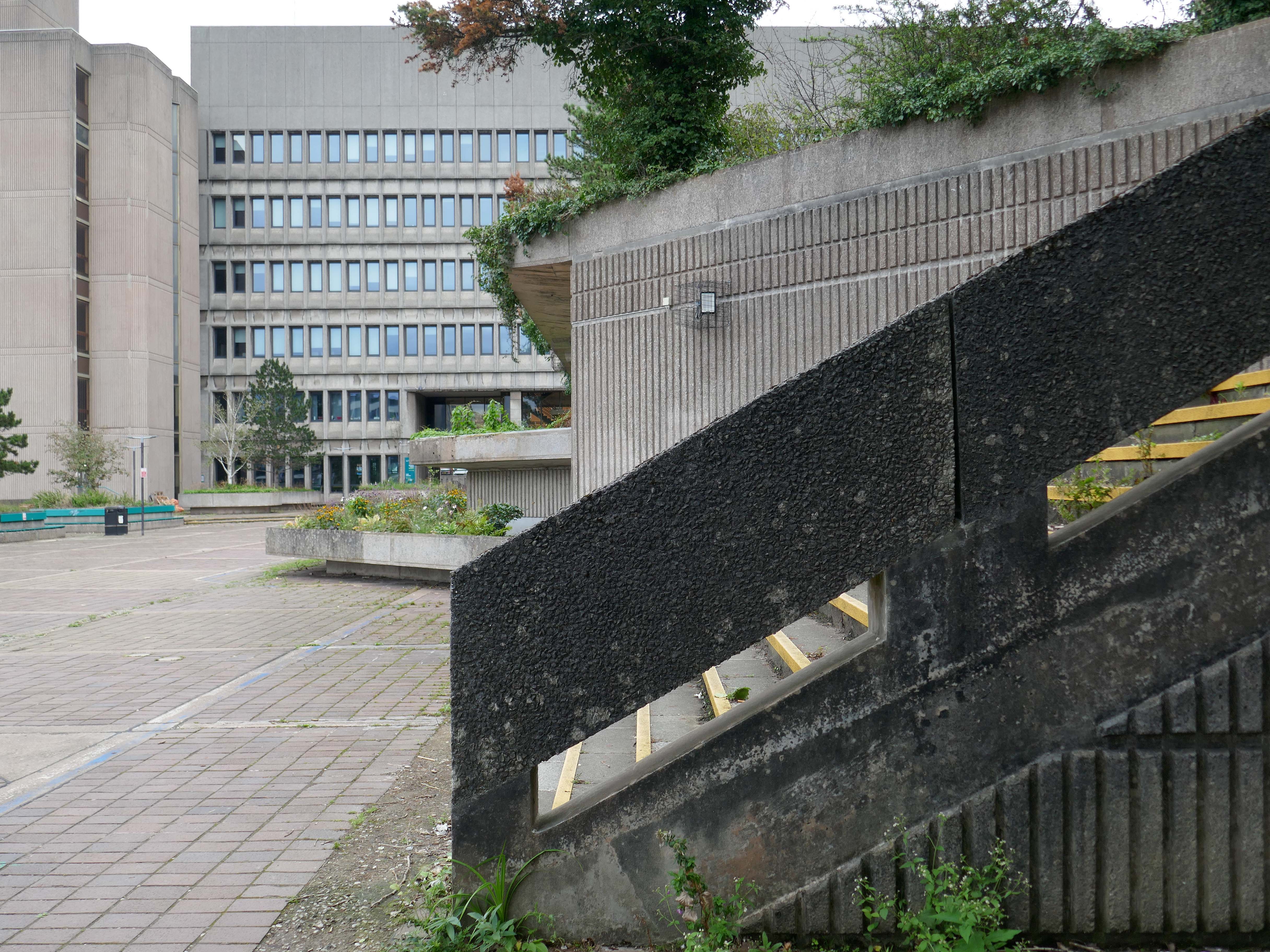
Around the back of the Town hall we find Stopford House built in 1975 and designed by JS Rank OBE, Director of Development & Town Planning, Stockport Council.
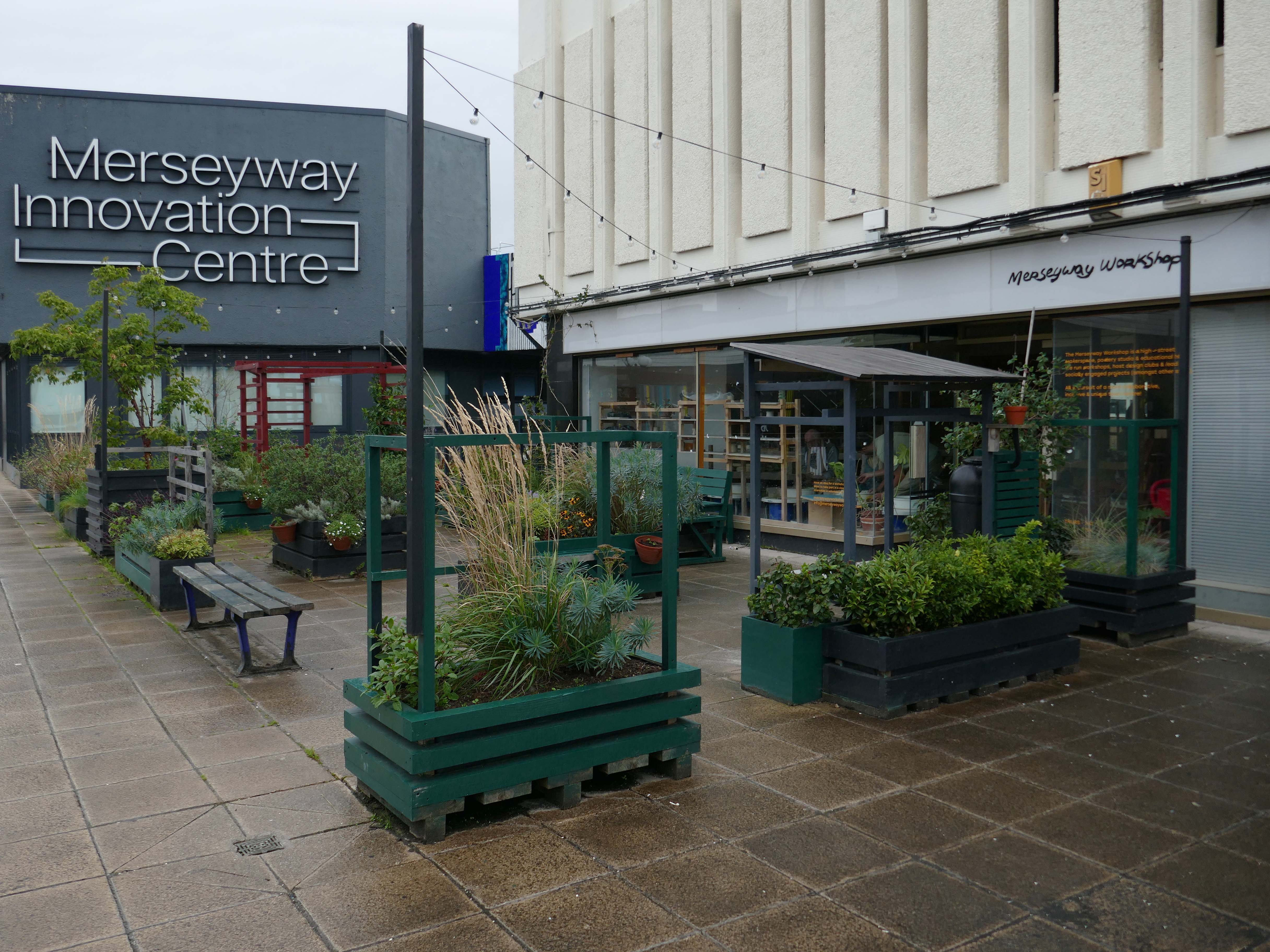
The painting has recently been much improved by the folks from Merseyway Workshop along with local volunteers.
Formerly a large coal yard, replaced by a huge leisure facility and now a hotel and office complex, with a municipal swimming pool attached.
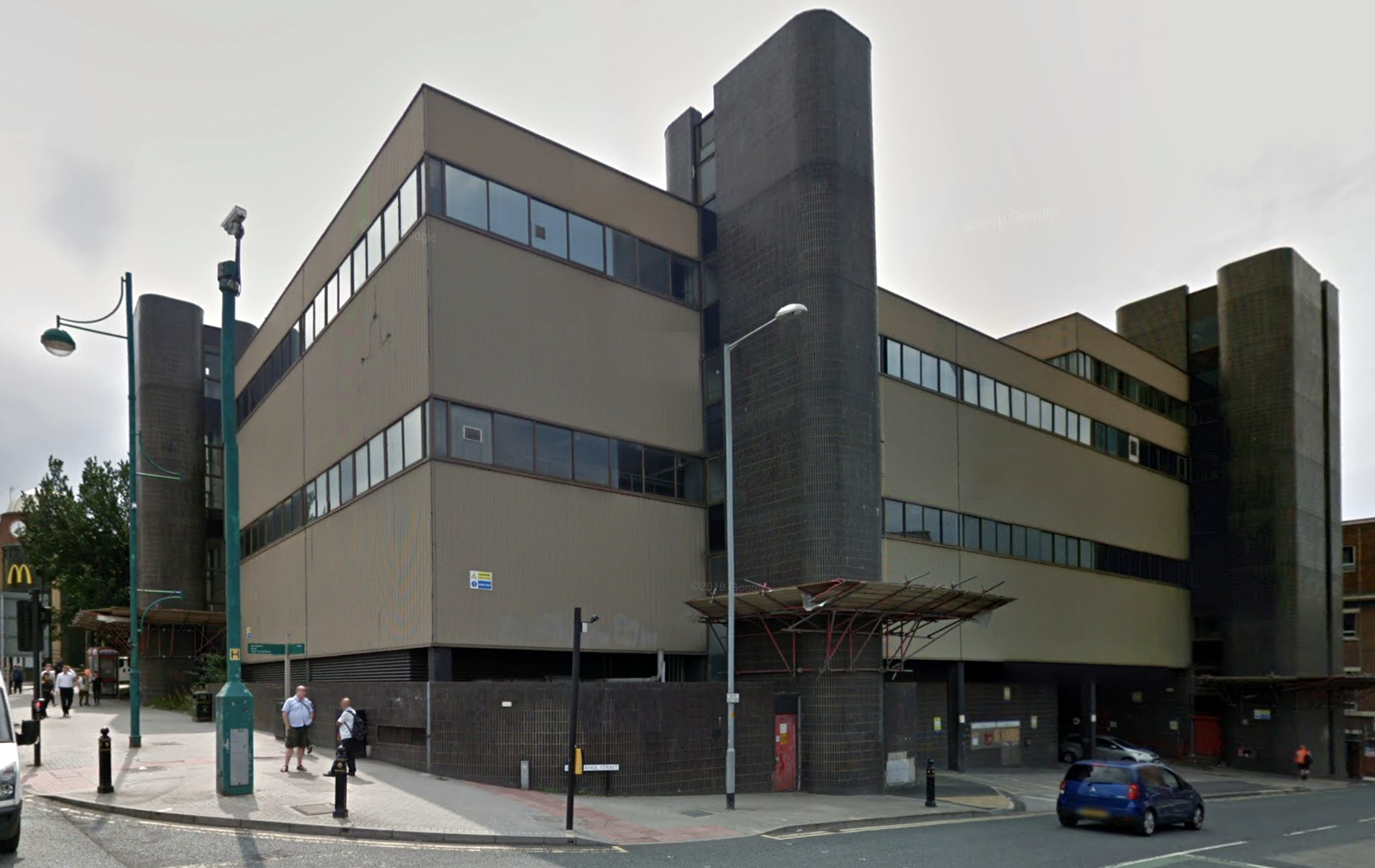
Next door the former Royal Mail sorting office.
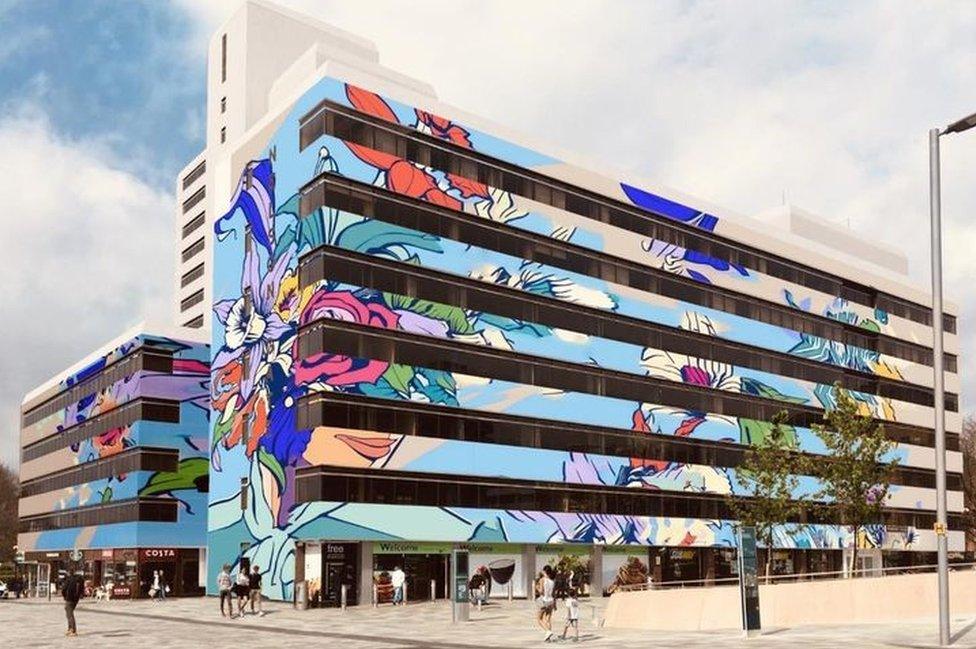
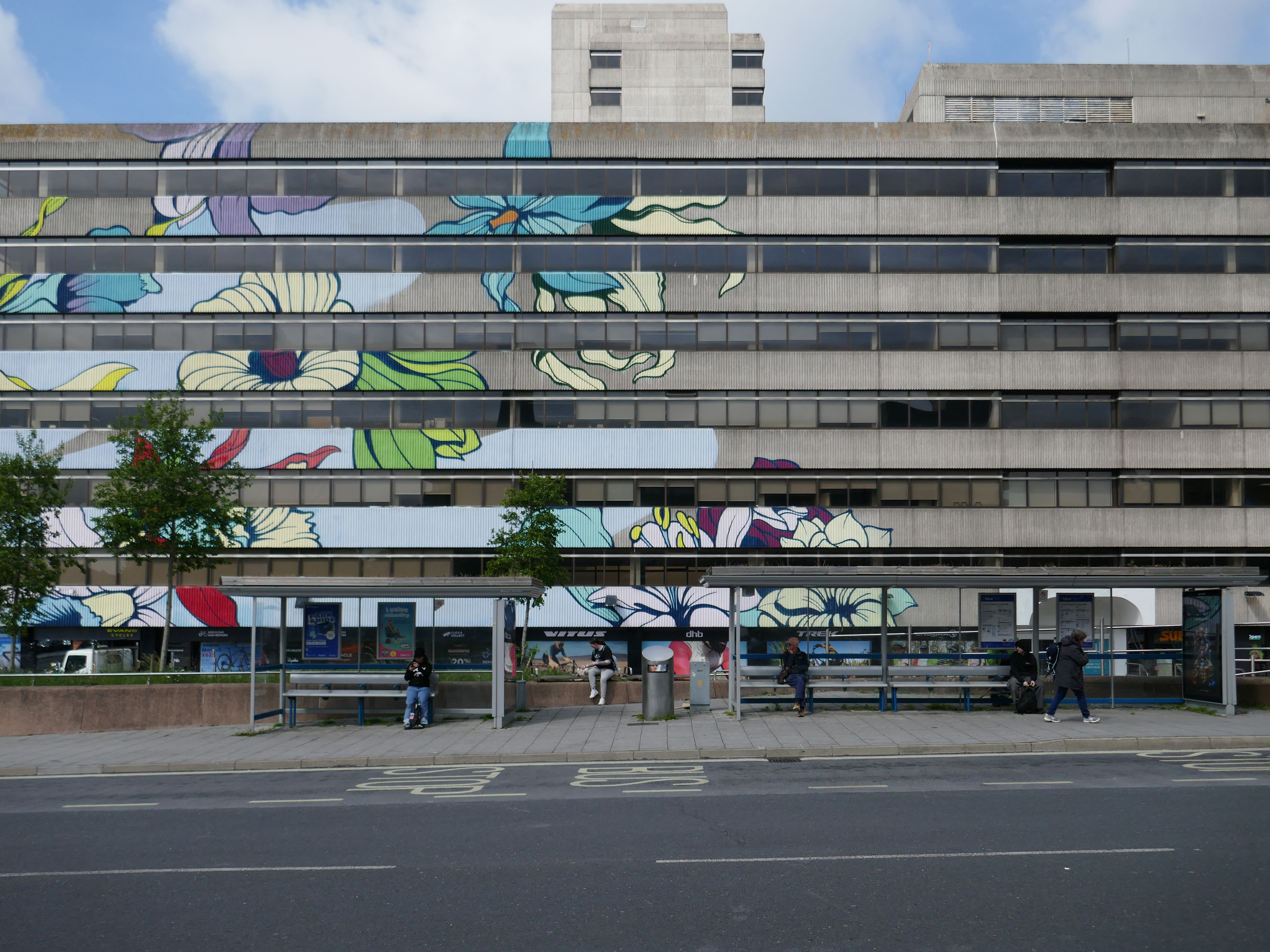
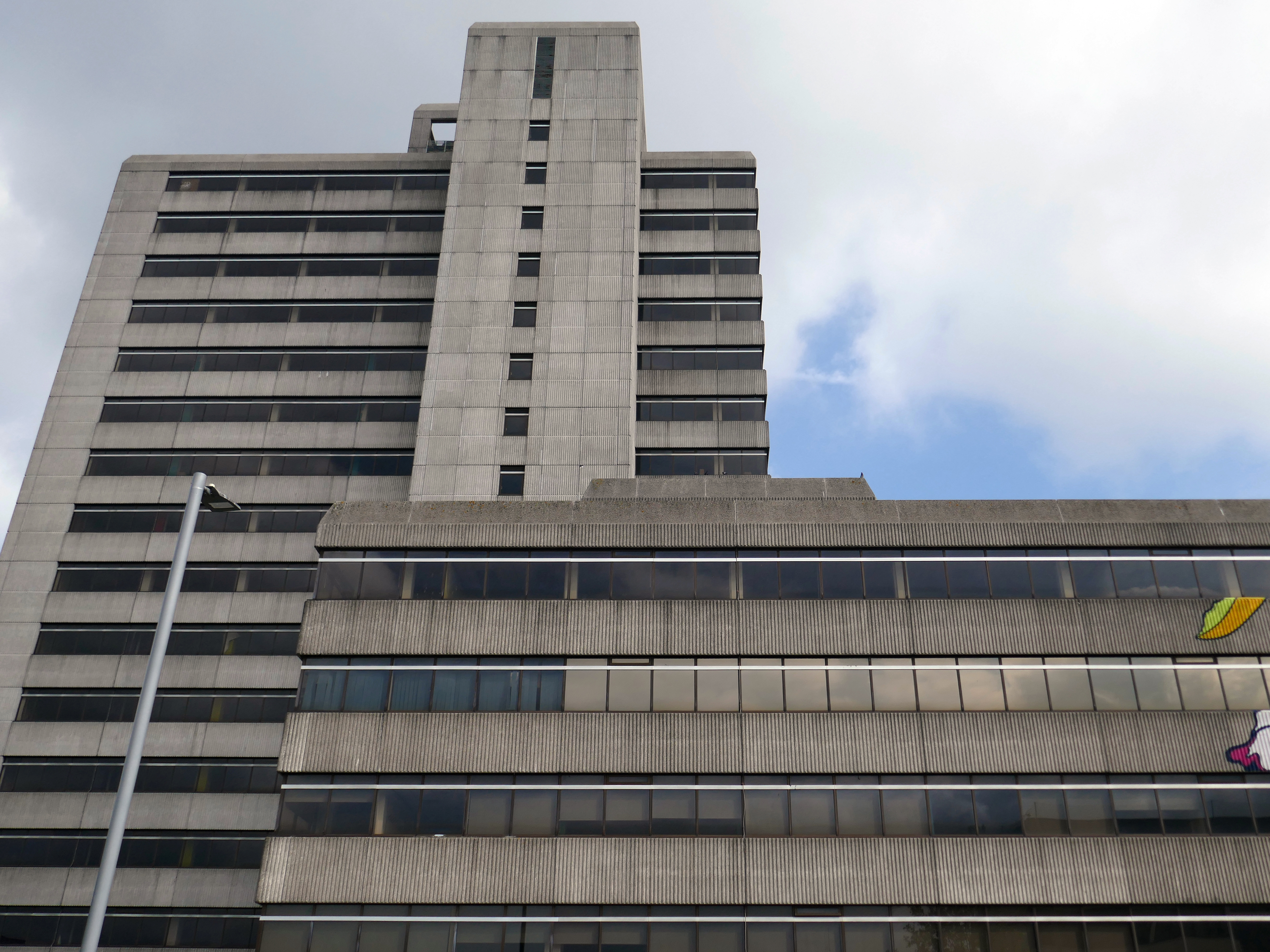
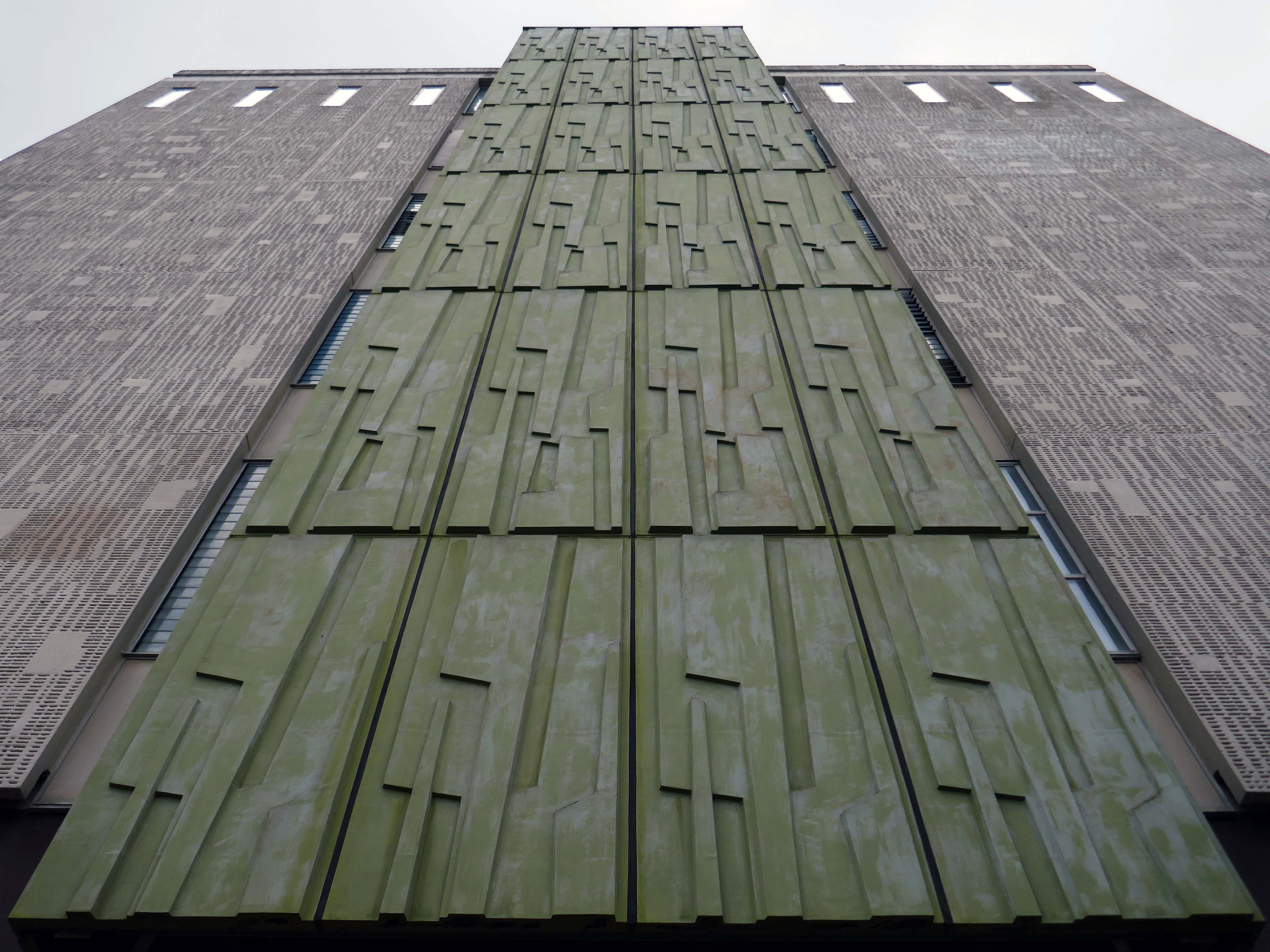
The transformation of a building once dubbed Stockport’s ugliest has been completed, now known as The Mailbox.
When it was built in the 1970s, it was given extra reinforcement due to the risk of IRA letter bombs. The sorting office closed and moved sites in 2010, from when the building was vacant for nearly a decade.
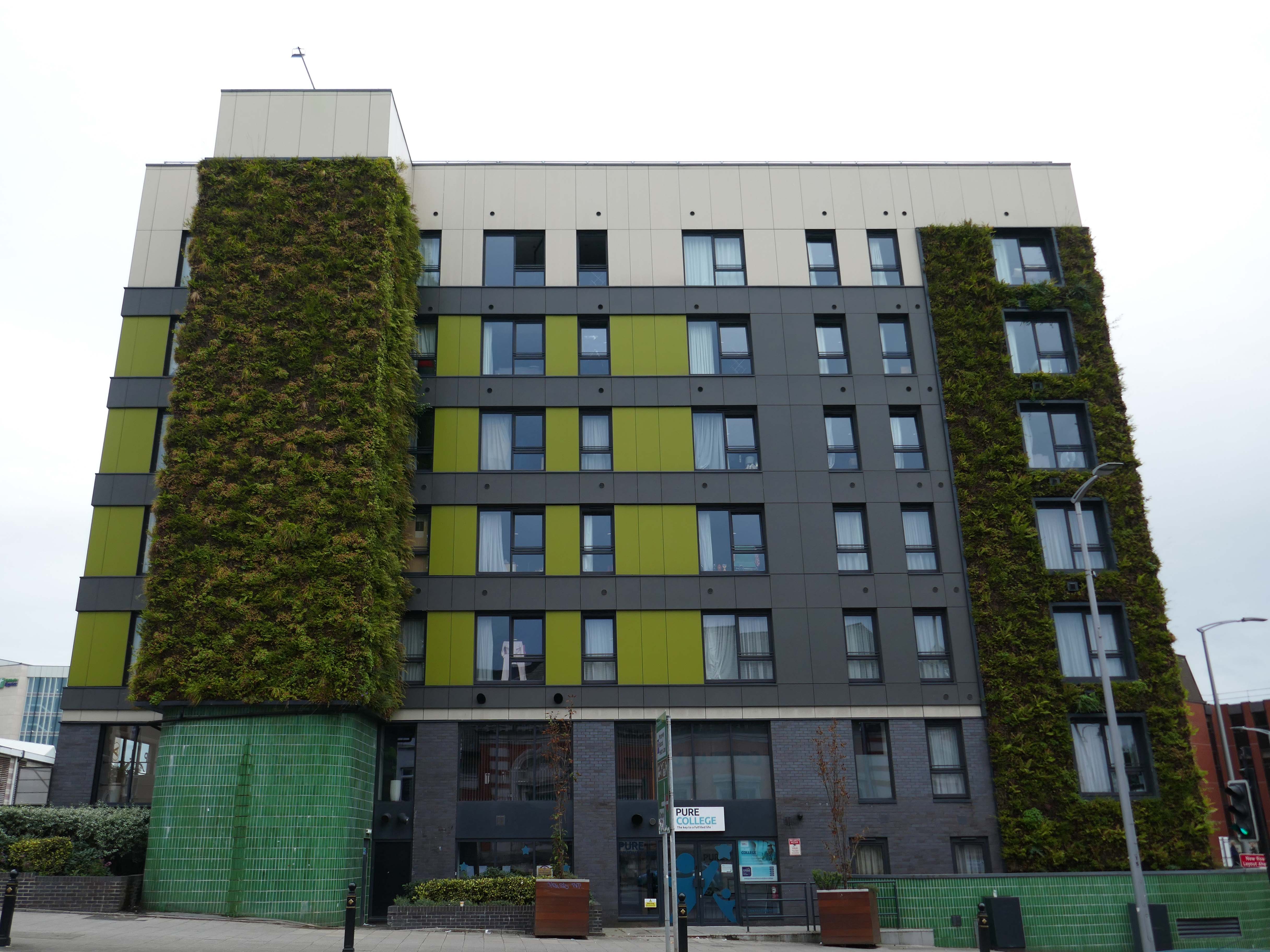
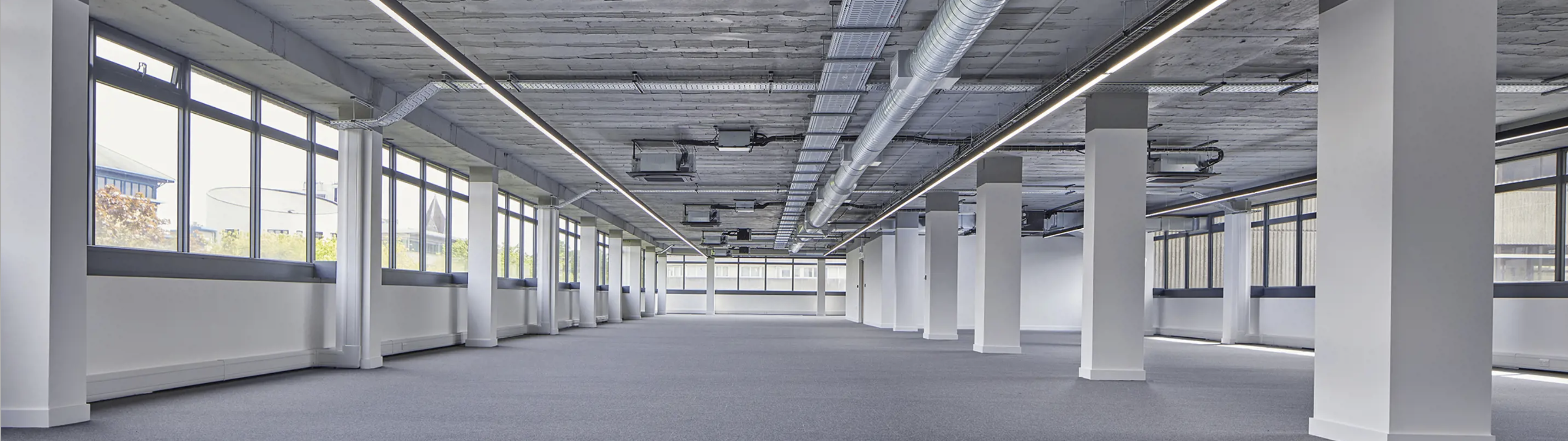
The state-of-the-art development is now home to 117 ‘stunning’ new one and two-bedroom apartments and 12,500 square feet of commercial space. There is an atrium at its heart a roof terrace with views across the town centre.
It also has an eighteen -metre high green ‘living wall’ covering the front and other parts of the exterior, which with 114,500 plants is the largest of its kind by surface area in the North of England.
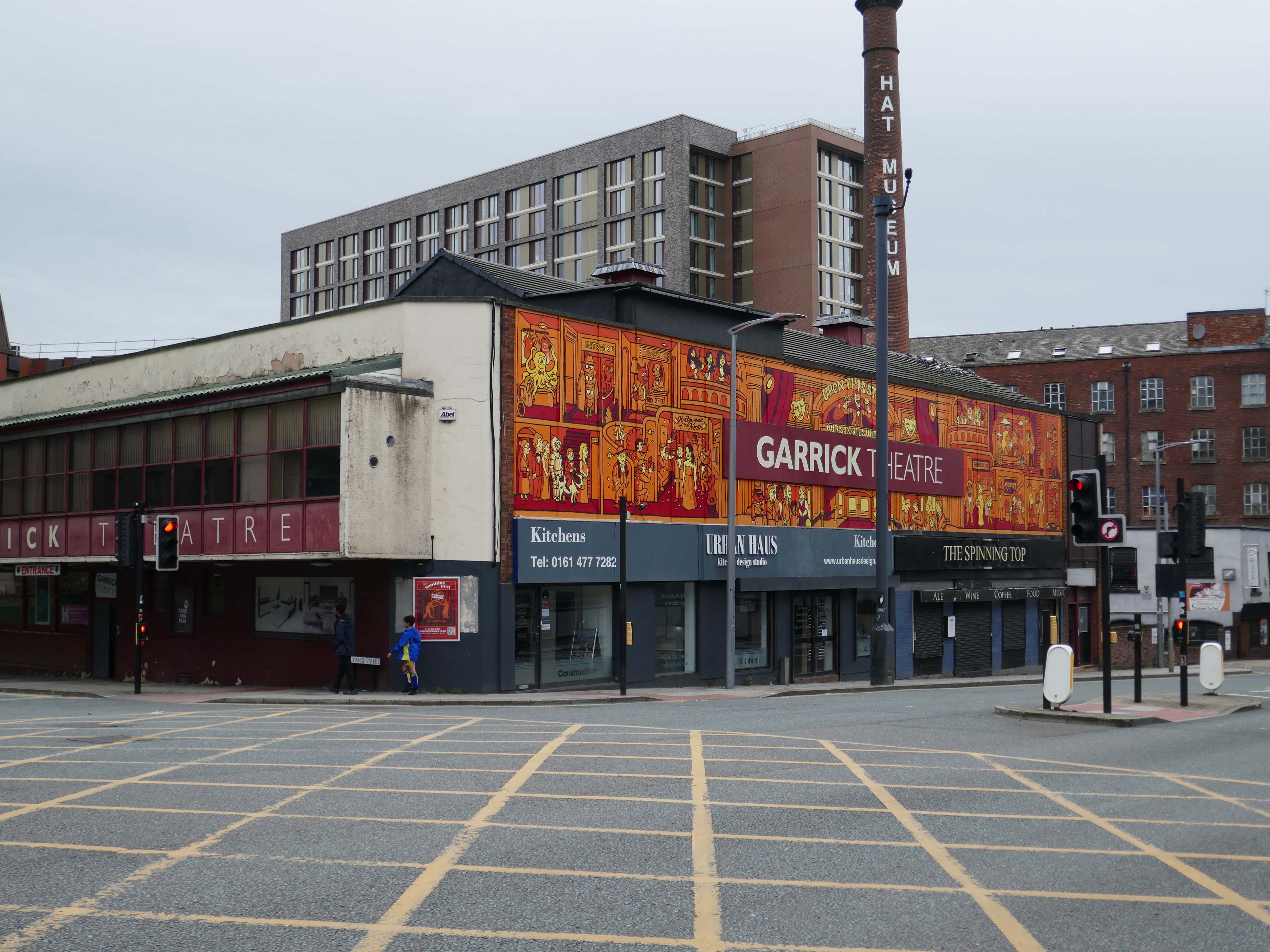
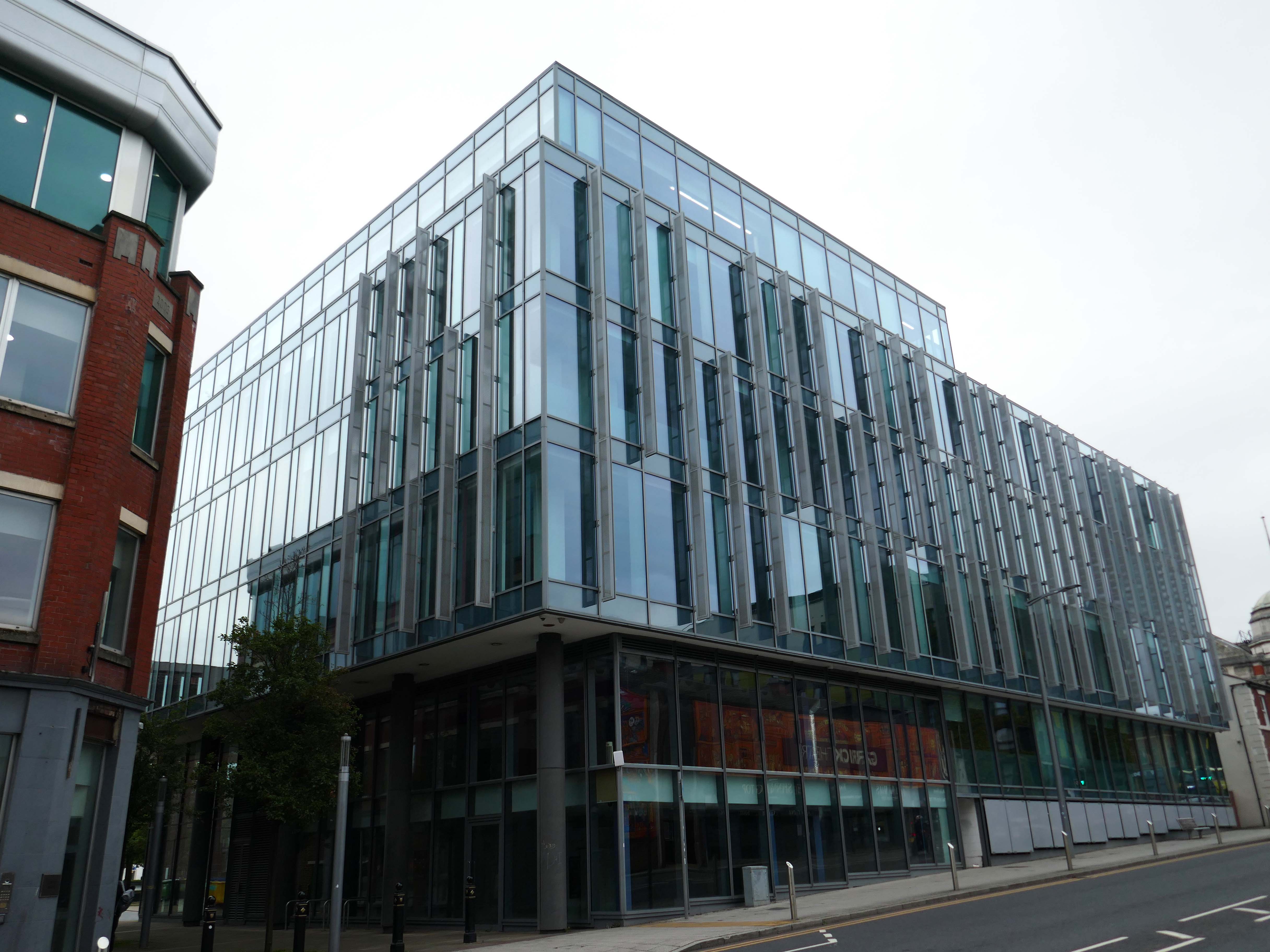
The Stockport Garrick Theatre was founded on 24th of October 1901, by engineer Edwin Heys and his fellow actors: fugitives from the disbanded dramatic society of Stockport Unitarian Church. Meeting in what was then The Church Coffee Tavern on St Petersgate, Heys and his friends resolved to found a new society ‘to perform the best plays by the most capable amateur actors and with the finest scenic effects’.
The society purchased its current building, an old mill occupied by an assortment of small businesses, in 1920. Since then, the building’s labyrinthine interior has undergone various refurbishments to enhance the society’s ability to produce theatre to the highest standards possible.
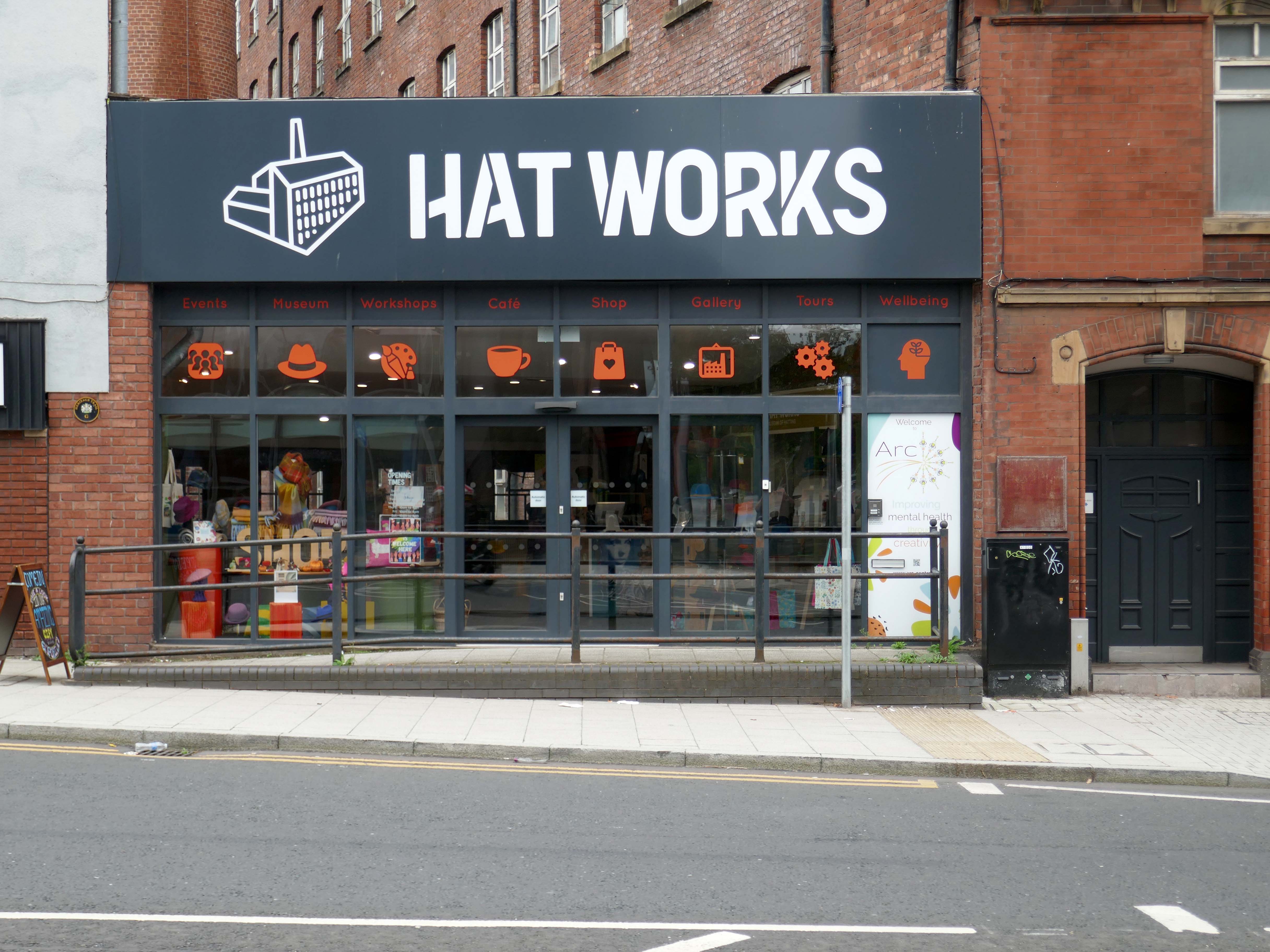
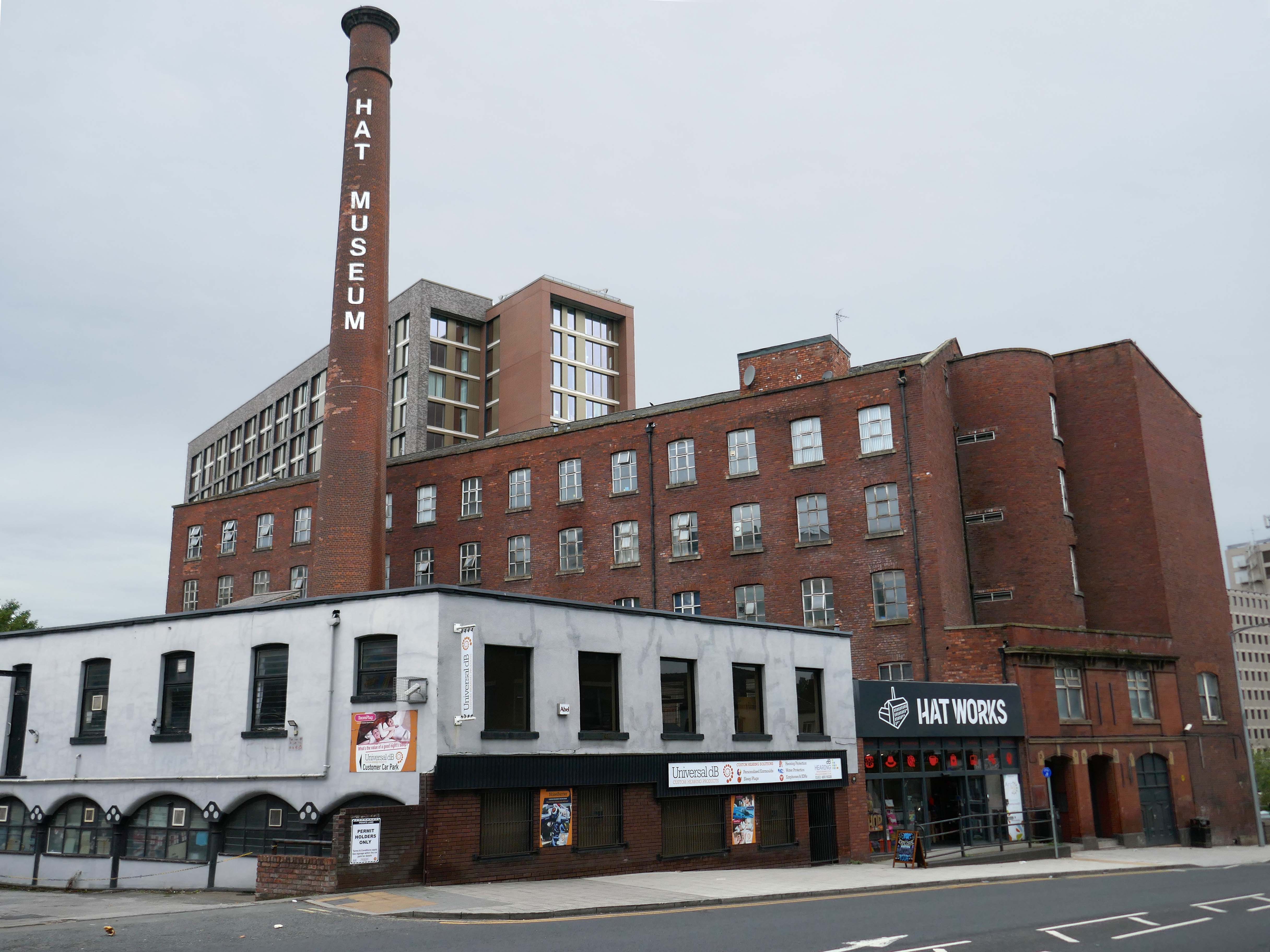
Next door the Hat Works – the UK’s only museum dedicated to the hatting industry, hats and headwear.
Occupying part of the Grade II listed Wellington Mill, a cotton mill of 1831 which became Ward’s Hat Works.
Both cotton spinning and hat making contributing to the economic development of Stockport in the C19th.
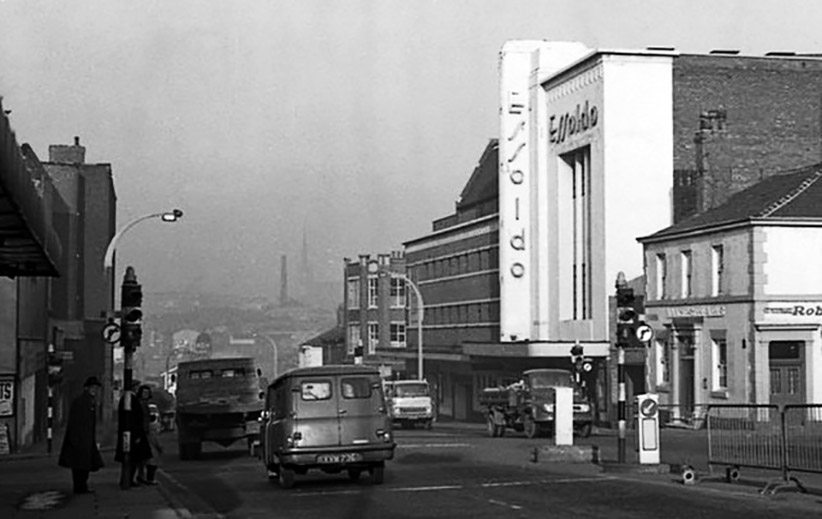
Across the way the long gone Carlton Cinema Architects:Francis Edison Drury and Joseph G Gomersall.
Opened on 28th July 1937.
In July 1948 the cinema was taken over by the Essoldo Cinemas chain. In 1954 the Essoldo became the town’s first CinemaScope cinema and for many years was the only cinema to offer full stereophonic sound. Richard Burton in The Robe was the first widescreen film to be shown, followed by Marilyn Monroe in How to Marry a Millionaire.
At the height of the Davy Crockett craze, in 1956, Fess Parker made a personal appearance at the Essoldo.
It was converted into a twin screen cinema in 1971, by converting the balcony into Screen 2, it was taken over by the Classic Cinemas chain in 1972. Its final owners were the Cannon Group who ran the cinema from 1982 to its final closure on June 21st 1990.
The cinema was demolished in 1994 and a small park occupied the site for several years.
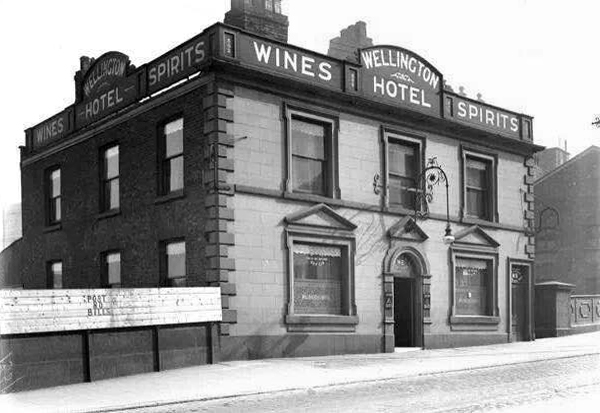
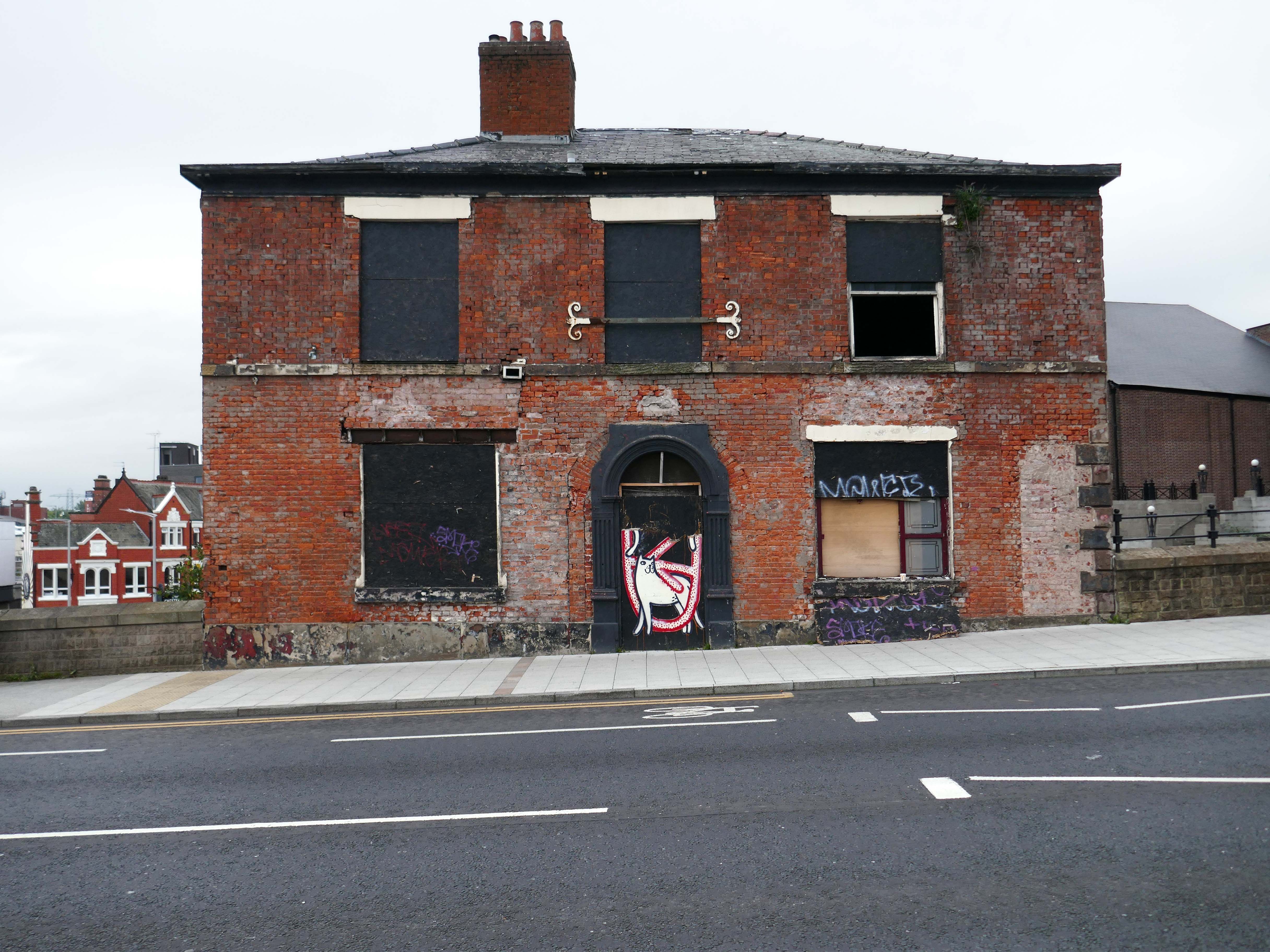
Further down the road the former Wellington Hotel.
Known variously as Ups ‘n’ Downs, Glitz, Bentley’s and the Bees Knees.
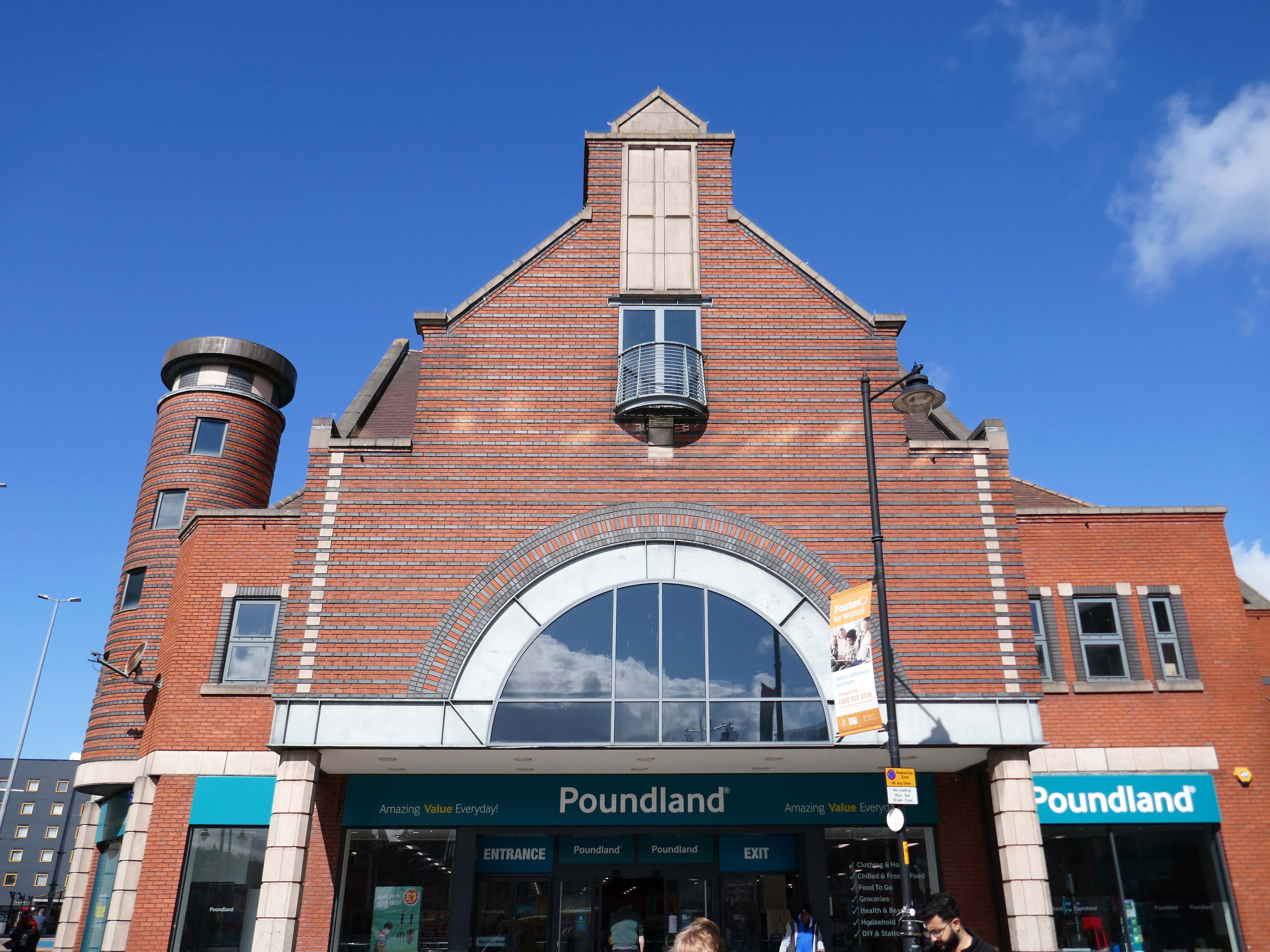
Finally, partial occupation by a forlorn Pound Shop – defying economic trends by closing.
Street art by Cats and That.
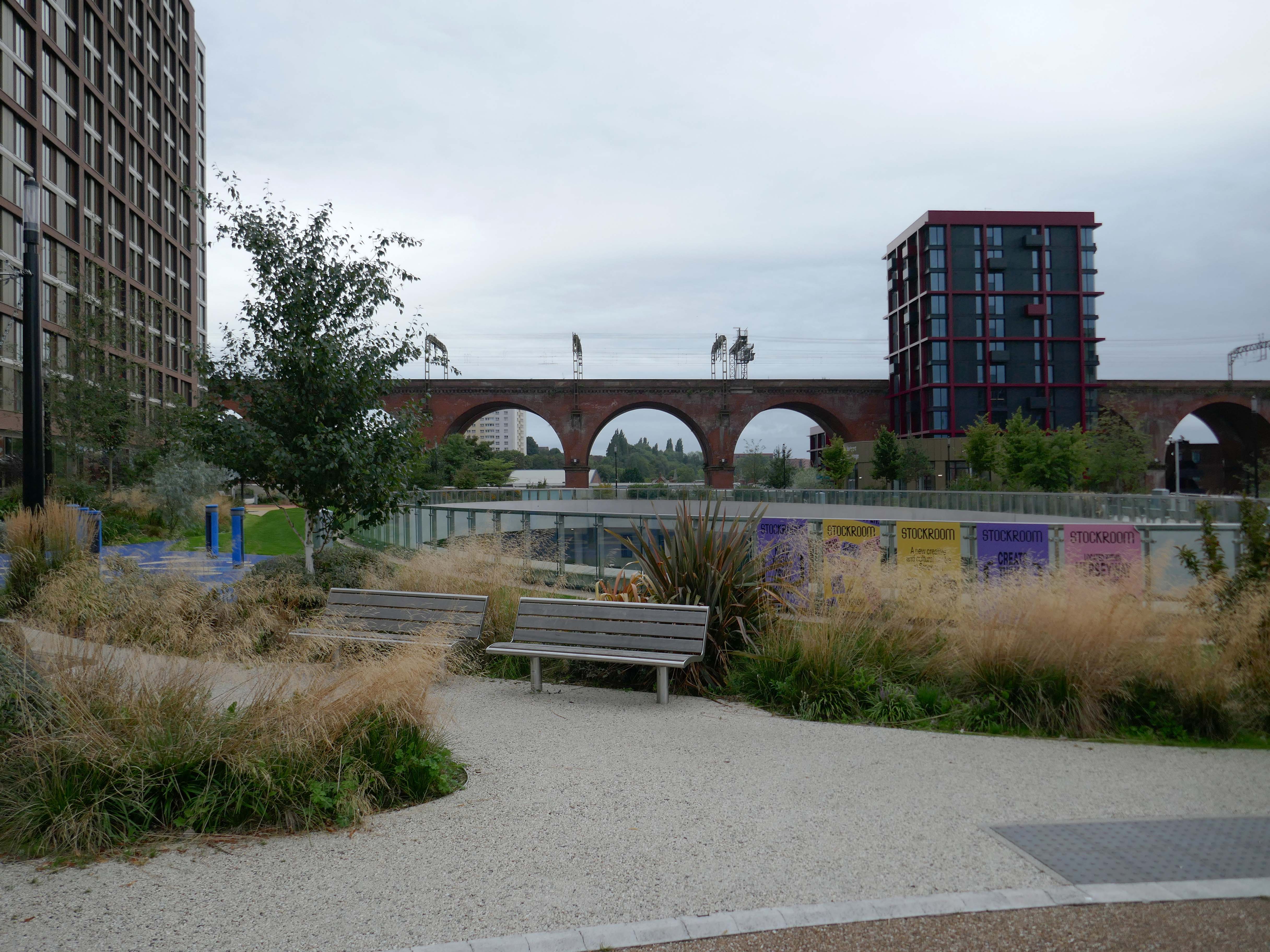
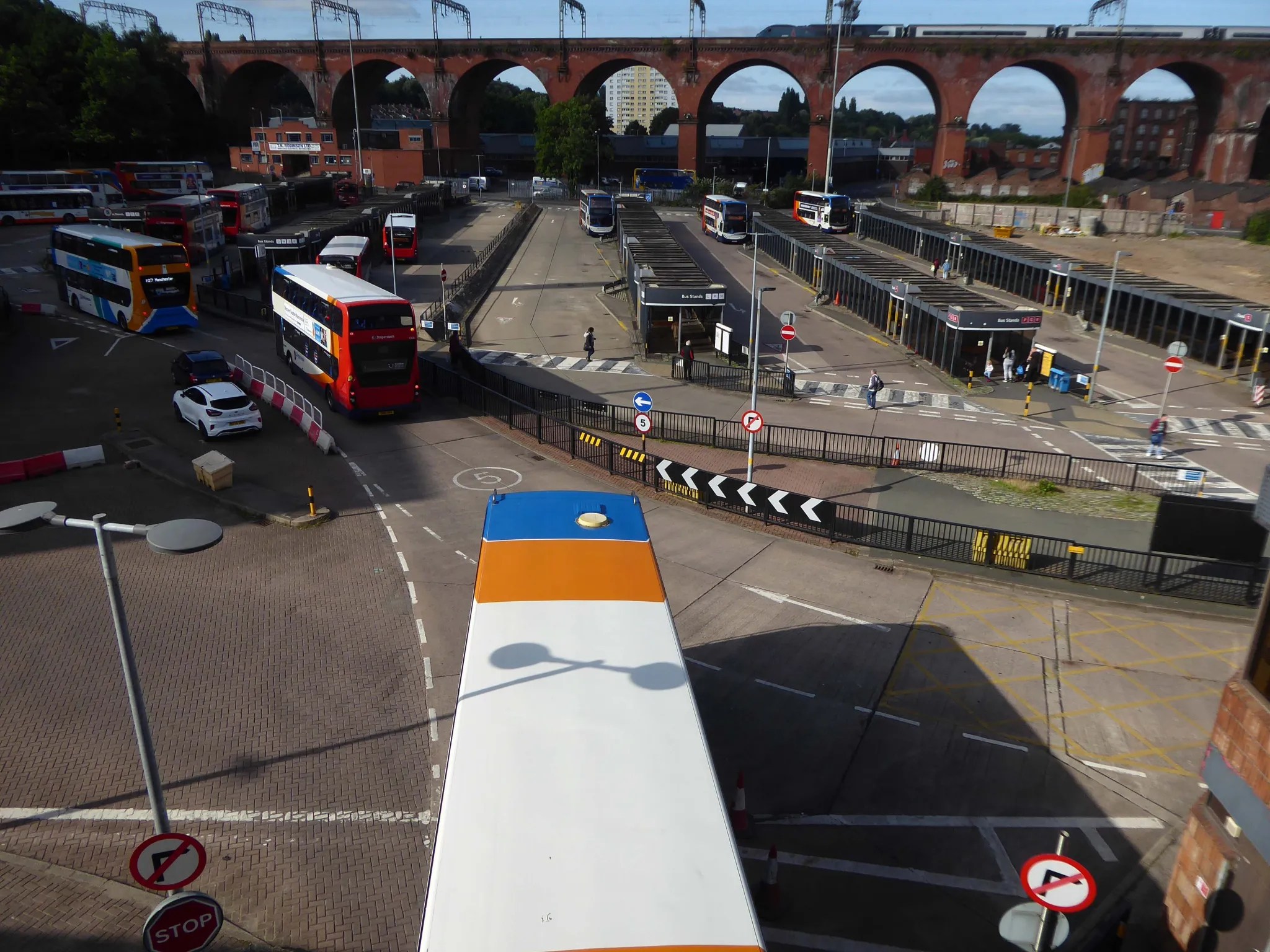
Next to the Transport Interchange aka the Bus Station.
In collaboration with Transport for Greater Manchester and Stockport Metropolitan Borough Council, the project redesigned a 10,000 sq m bus interchange, linking the rail station with new landscaped parks.
The development includes a fifteen-storey building with one hundred and ninety six apartments, commercial space, and parking. New parks and riverside spaces improve connectivity and enhance urban living, marking a transformative step in placemaking for Stockport.
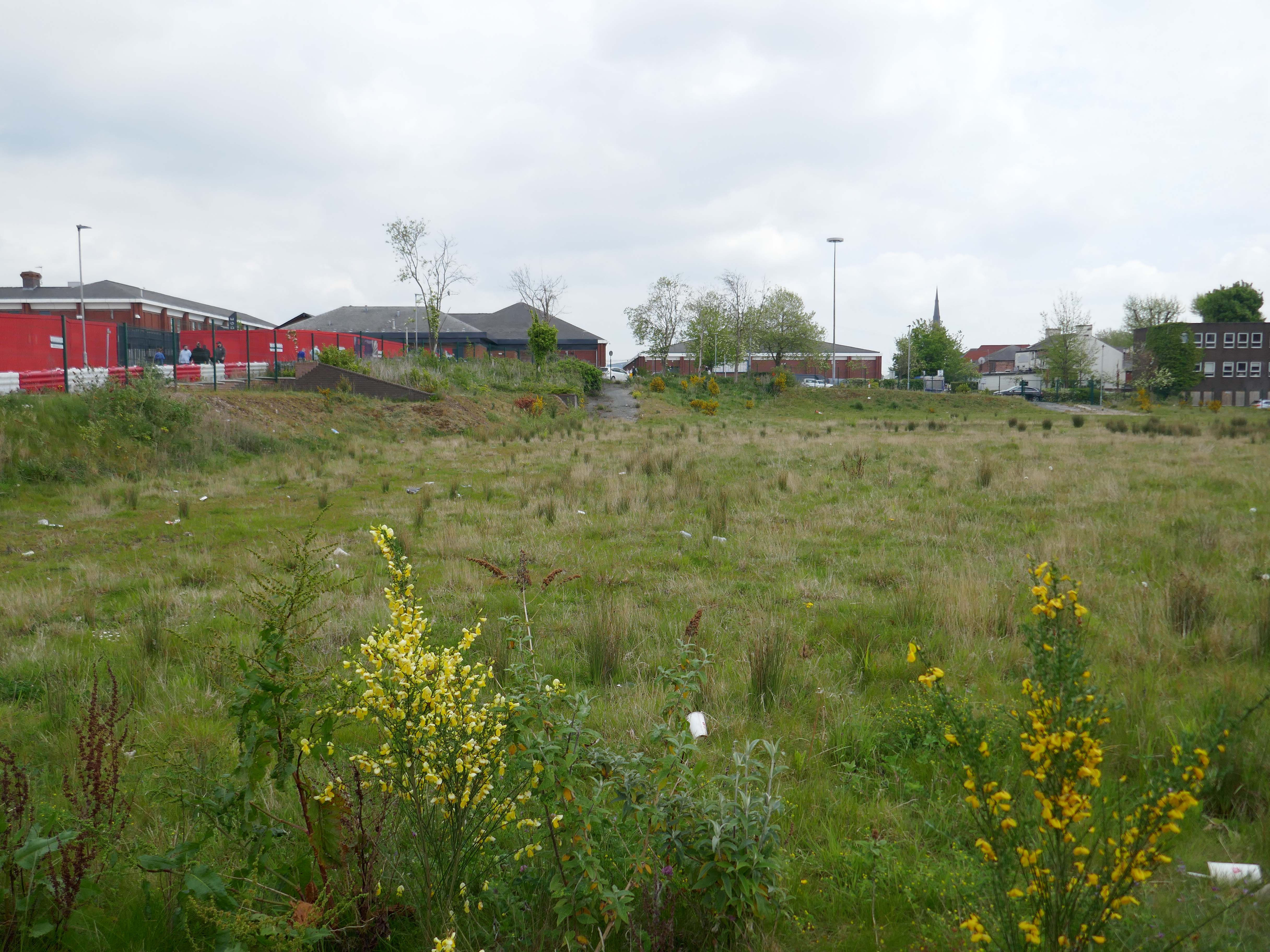
Replacing the former Bus Station closed on Saturday 28th August 2021.
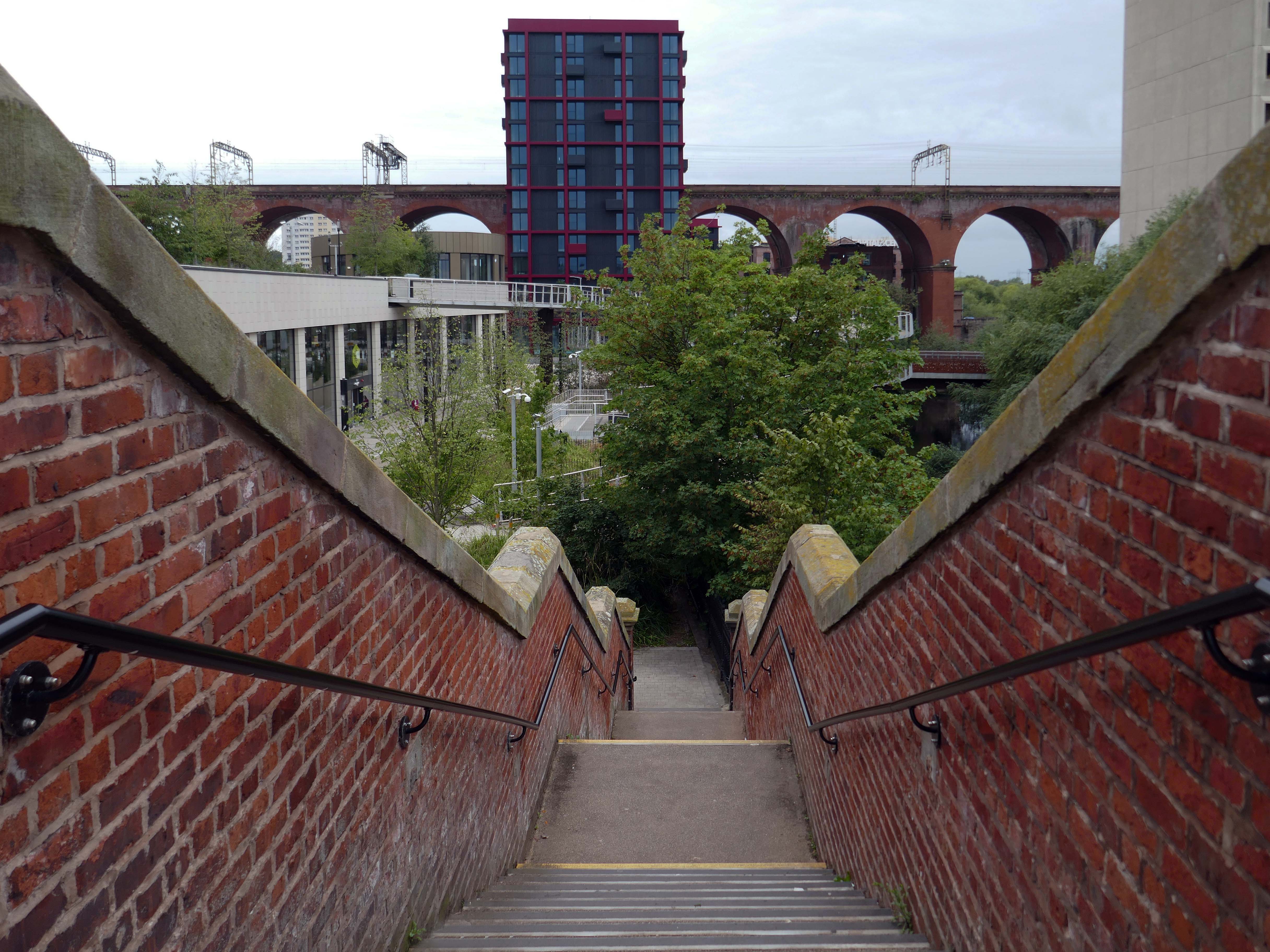
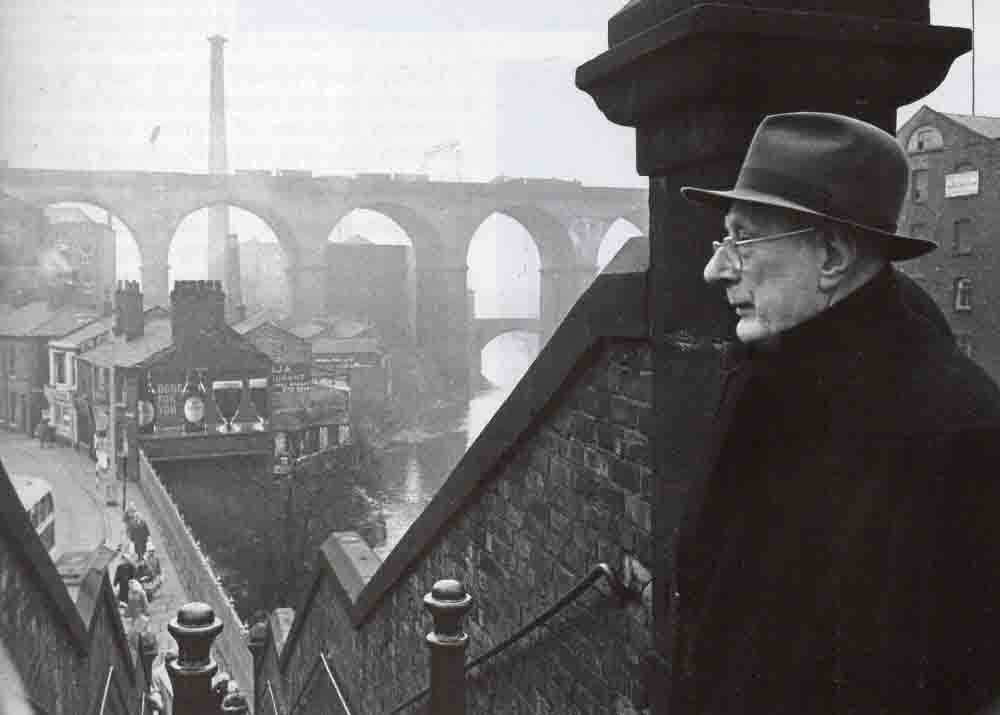
Down to the top of the Lowry Steps
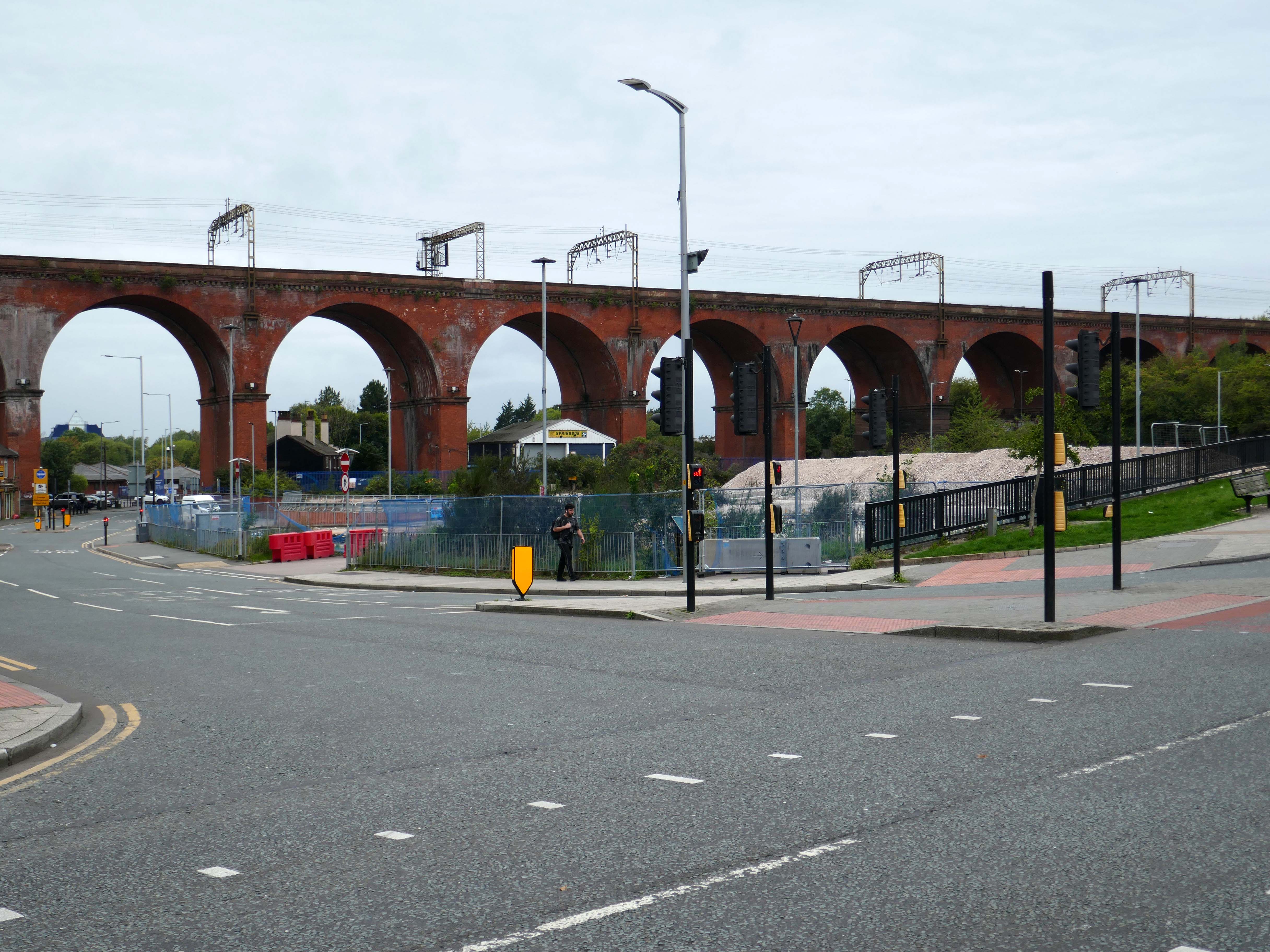
LS Lowry snapped in 1962, the Viaduct in the not too distant distance – Grade II* listed structure and remains one of the world’s biggest brick structures.
Railway viaduct opened 1840 by GW Buck for Manchester and Birmingham Railway in brick and stone.
Twenty eight arches of total length over 540m – three spans at either end of 18ft, twenty two spans between of 63ft, and nearly 34m high above the river.
Said to contain eleven million bricks.
Stone moulded impost bands and rusticated faces to piers.
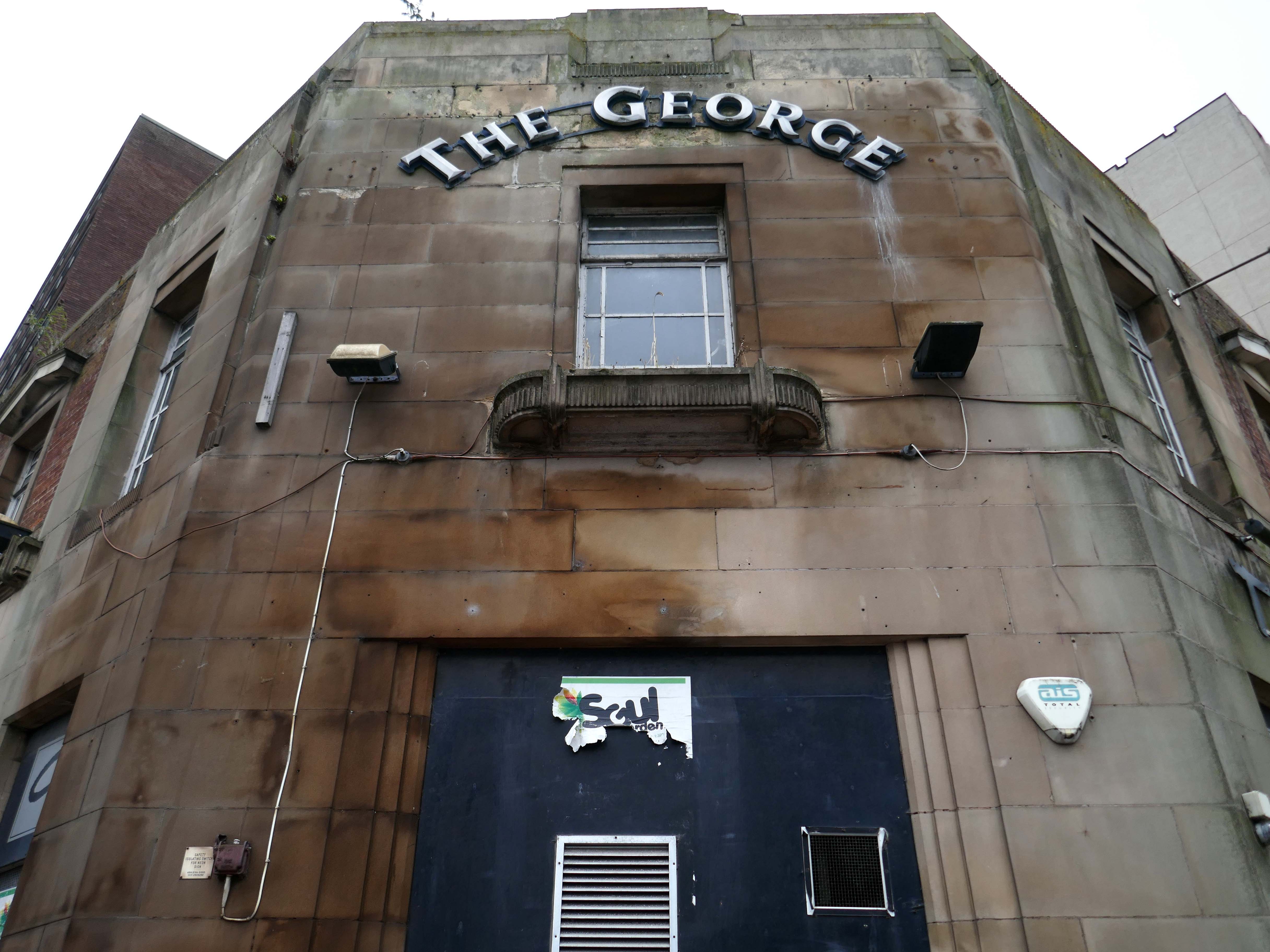
Premises To Let as of 13th May 2018 – on the 2nd April 2018 the licence has lapsed, so this proved to be a barrier to it re-opening.
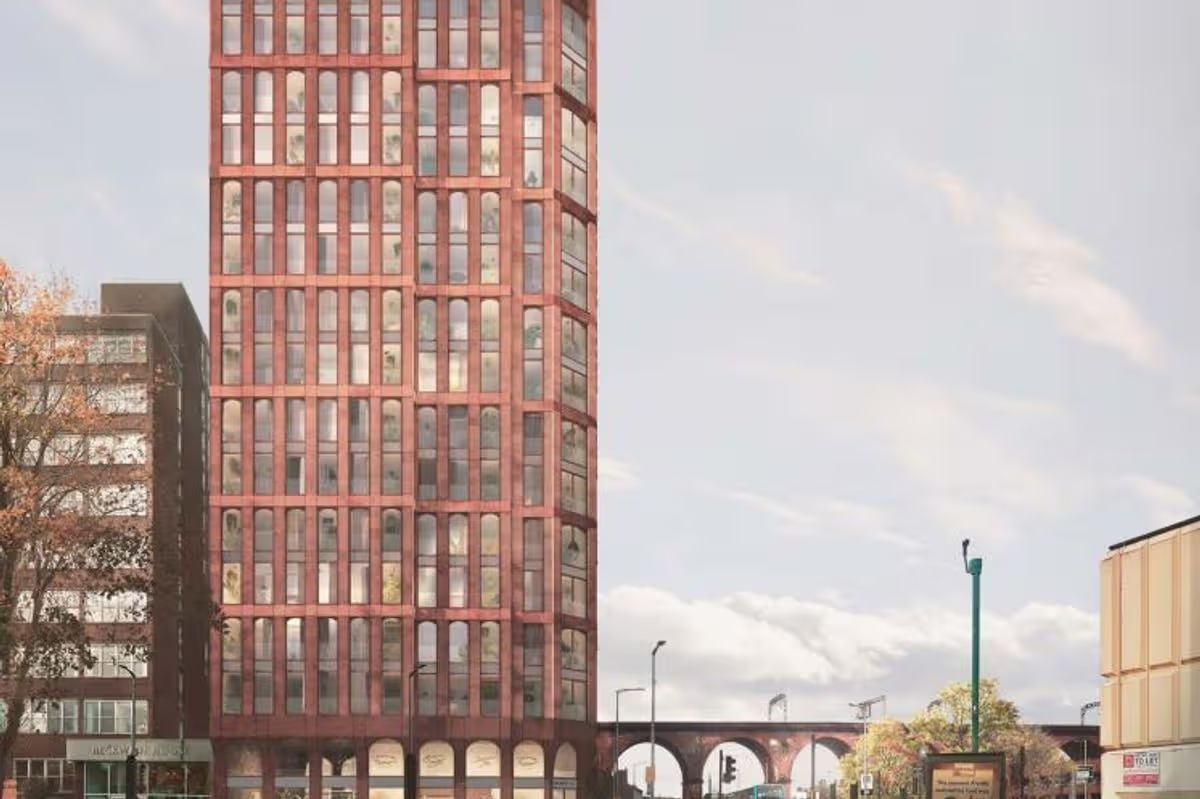
A former pub in Stockport town centre could be knocked down to make way for a tower stretching 17-storeys high. Plans have been sent to Stockport council for consideration and would bring 76 new apartments to the town replacing The George on Wellington Road, based opposite Merseyway Shopping Centre and near Stockport Viaduct.
Talks over a deal for a bus depot off Daw Bank have broken down after the council refused to meet the operator’s financial demands, prompting the authority to use compulsory purchase powers to acquire the site.
Despite protracted negotiations, Stockport Council and Stagecoach have failed to reach an agreement over an important piece of land the authority needs to deliver Stockport 8, a £350m, 1,300-home regeneration scheme.
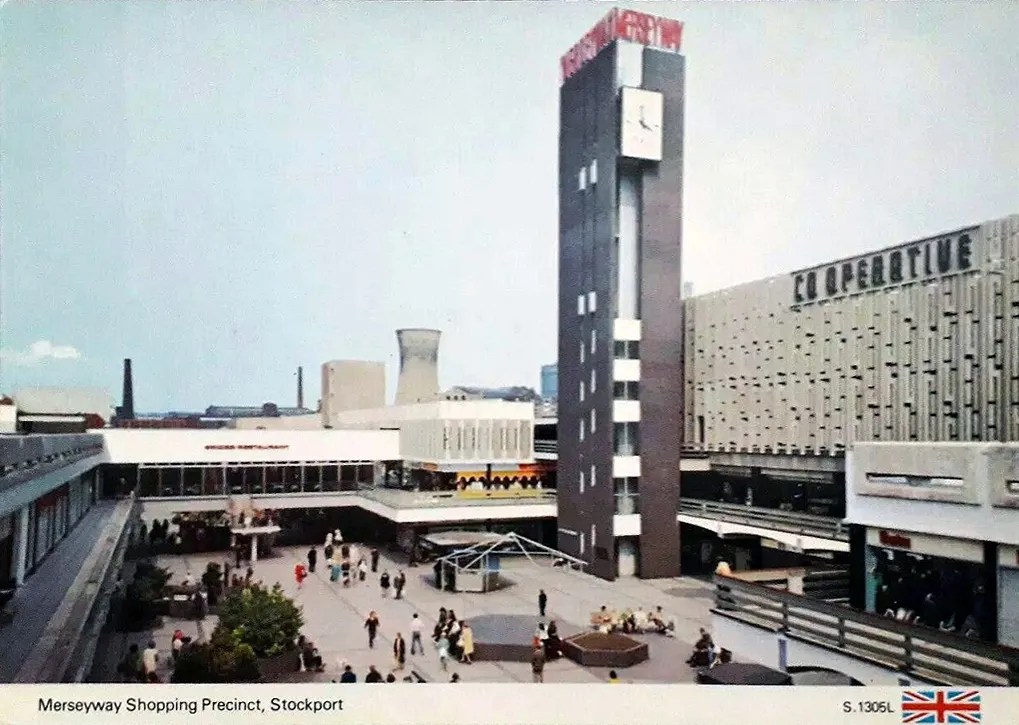
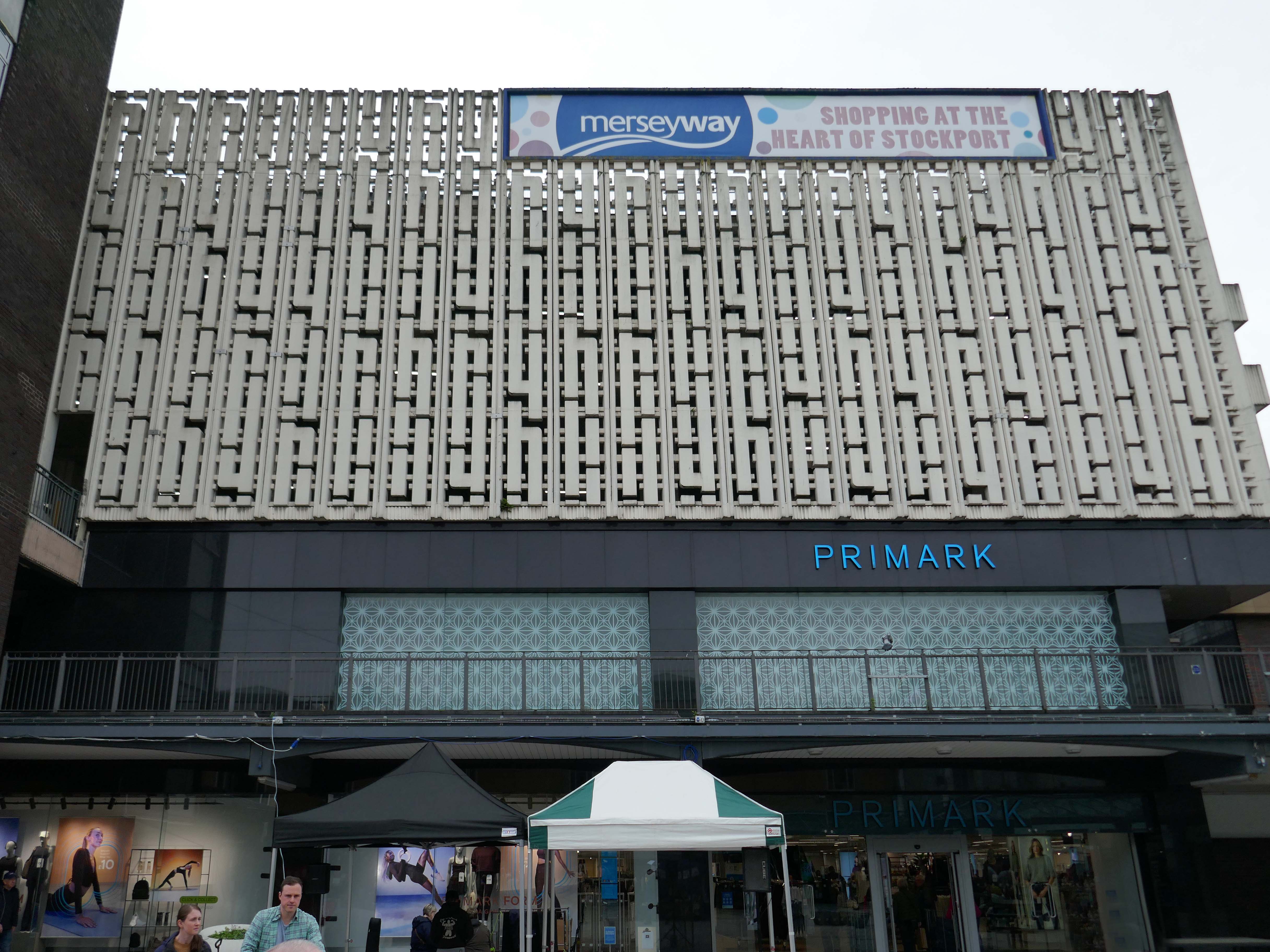
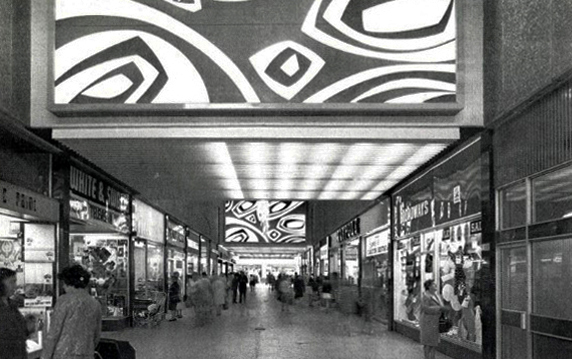
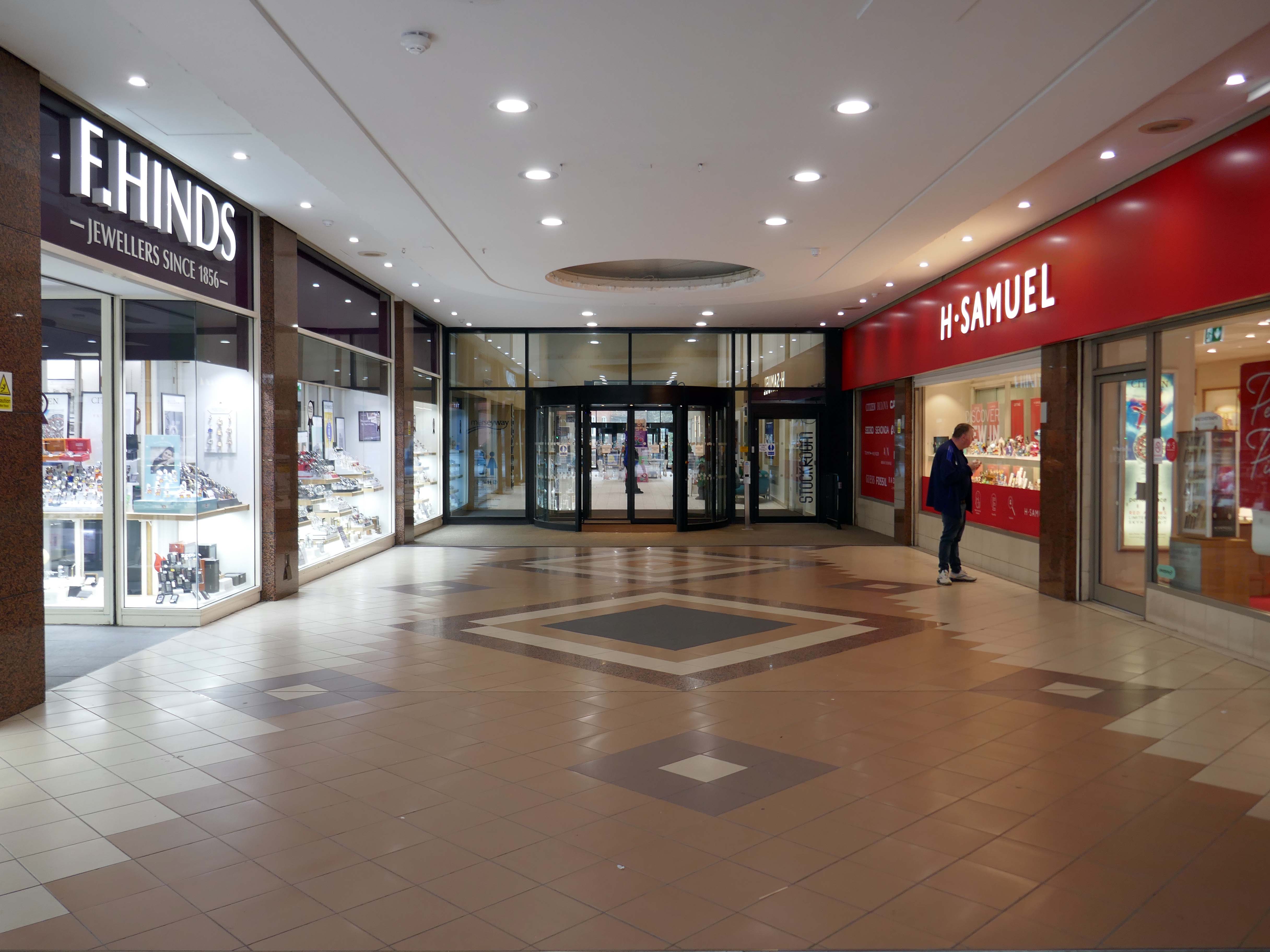
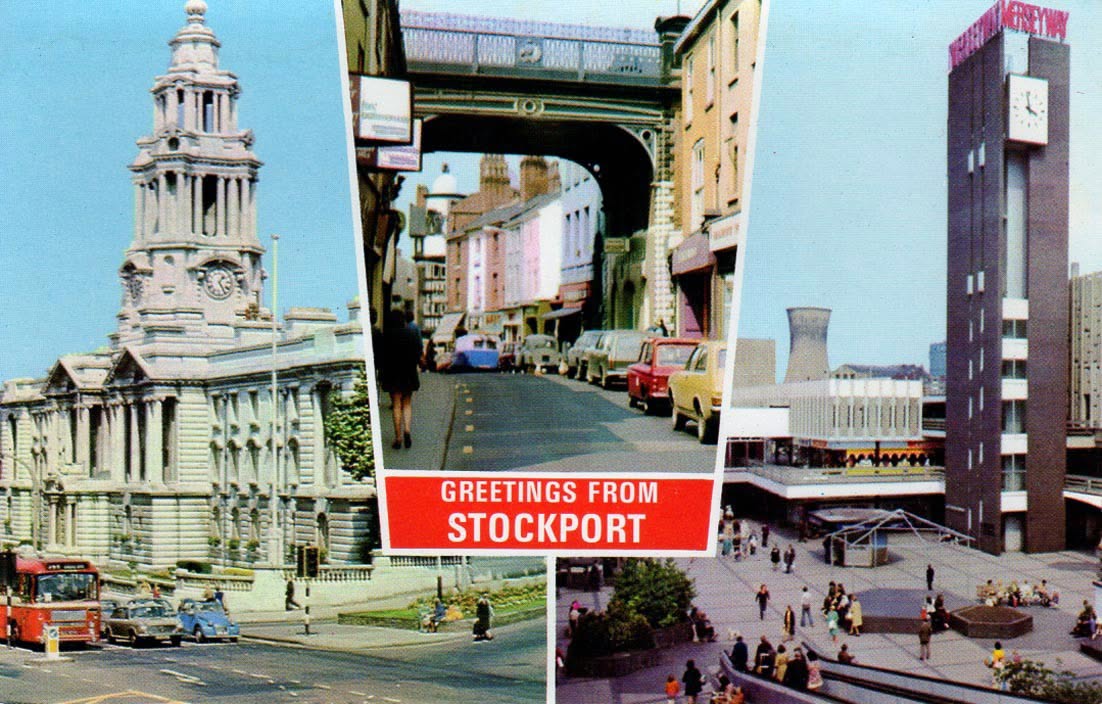
Leaving Wellington Road we head for the Merseyway Precinct – 1965 architects Bernard Engle & Partners.
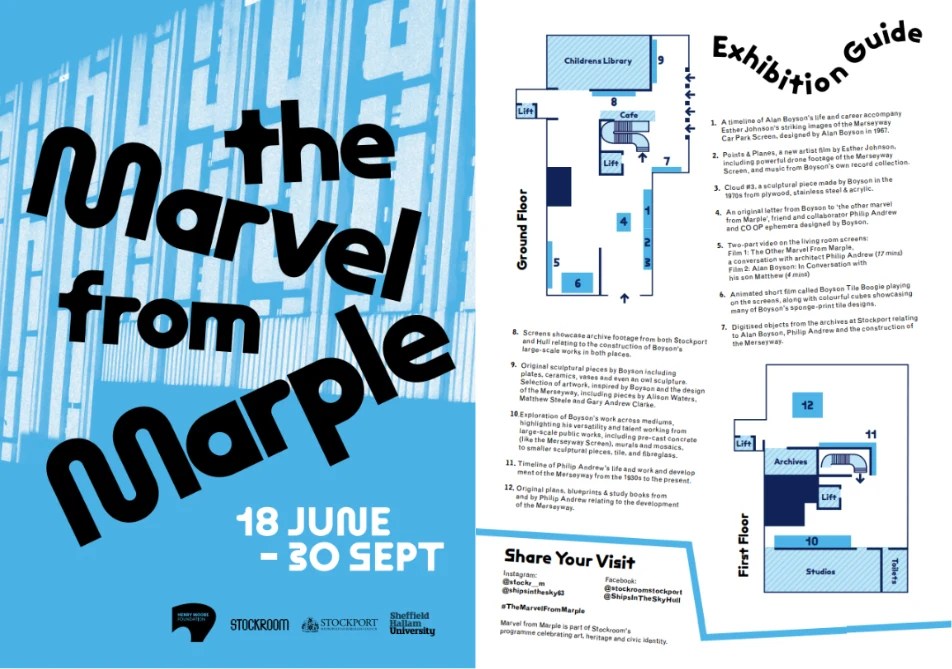
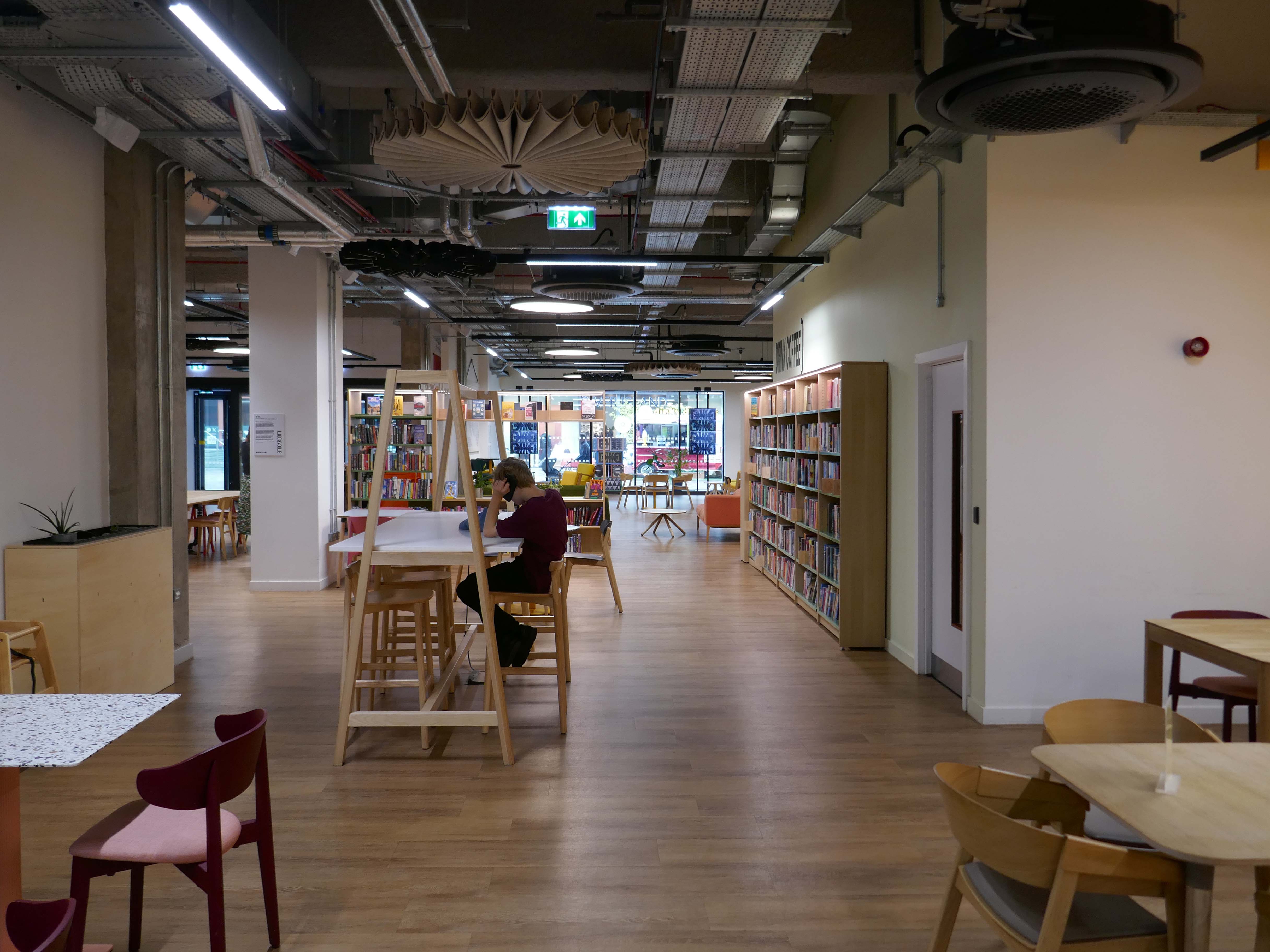
Stockroom is an exciting new creative and cultural centre in Stockport, designed for getting together, getting involved or just popping by for a brew. It has been developed with and for local people and the creative community to build an exceptional communal resource for entertainment and learning.
There’s room for everyone: to make noise, meet friends or find some peace, play, take part, think or do new things.
Part of Stockport’s £1 billion transformation, Stockroom is an ambitious £14.5 million cultural and creative centre that will breathe new life into the heart of the town.
Located in previously disused retail units, Stockroom has been brought to life through funding from UK Government’s Future High Streets Fund, which aims to rejuvenate town centres across the country.
Otherwise open to access the Library service and archives, eat drink and play, use a computer, or a lavatory, read whilst relaxing in a comfy chair, stay cool or warm, stare into space either upstairs or downstairs.
Whatever floats your personal boat, though currently unsuitable for floating actual boats.
Mention must be made of near neighbours the Merseyway Workshop – the plant planters who we met up at Stopford House.
The Merseyway Workshop is a community focused, inspiring place for innovation and collaboration.
A DIY-style hub on Stockport’s pedestrianised high-street. Offering open use of creative workshops, drop-in activity sessions and skill exchanges.
Working in clay and wood, access to a fully equipped B&W darkroom and so much more.
One short mile or so a cornucopia of history – layer upon layer of exciting architecture.
Just as I had done in Scarborough, just the other day.
I arrived by train just in time for the rain, took a look around Prestatyn town, waiting out the passing clouds.
The coast was overcast but dry, the pale marine light and light breeze caressing the wet concrete promenade.
This is a contested coastline, the concrete a first line of resistance to rising sea levels.
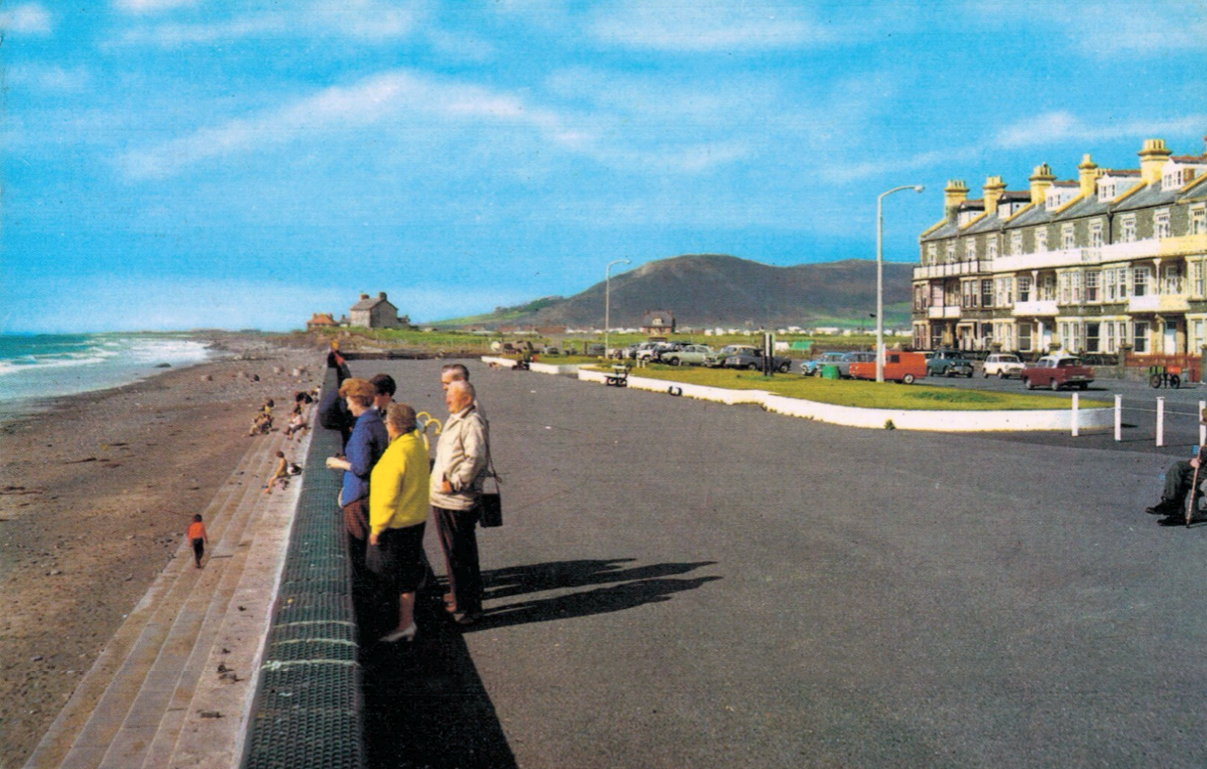
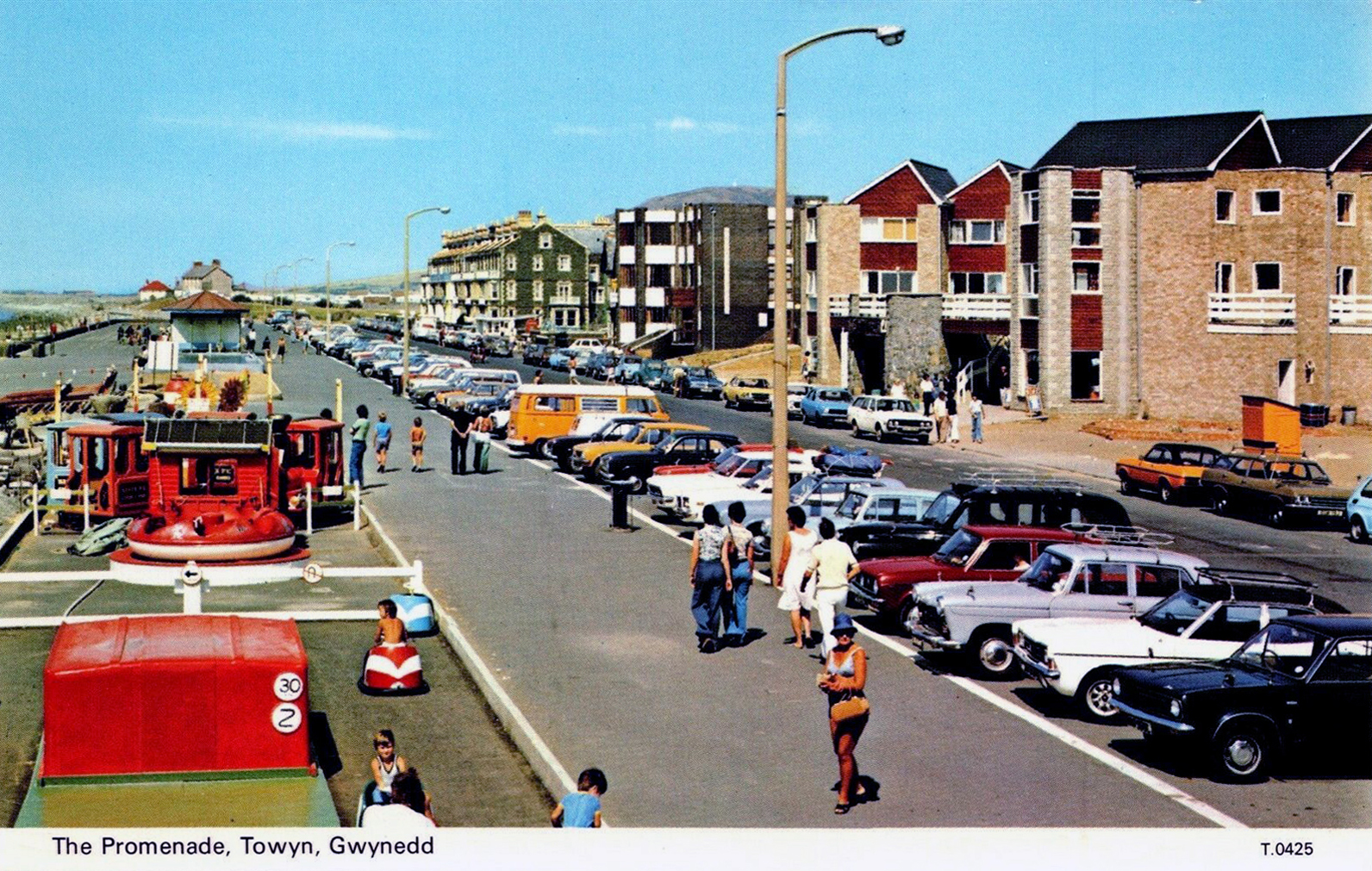
There is a history of serious flooding, particularly the area around Tywyn.
On 26 February 1990, the sea defences were breached for four hundred metres at Tywyn when a ferocious storm coincided with hide tide and a surge of water one and a half metres high. Lifeboats and helicopters were brought in to evacuate residents as seawater swept past the railway and flooded houses and caravans. Roughly ten square km of land were inundated.
The Central Rhyl Coastal Defences Scheme forms part of the Welsh Government’s £291m Coastal Risk Management Programme, which is responding directly to the challenges posed by climate change.
Dechrau a diwedd – Beginning and End 2009 by CAMM Design
The name of the sculpture acknowledges the nature of the Offa’s Dyke Path National Trail and Prestatyn as a point of departure or arrival. The trail is symbolised by a stylised representation of the sun. To either side of the sun sculpture are paved areas, and large blocks to provide seating.
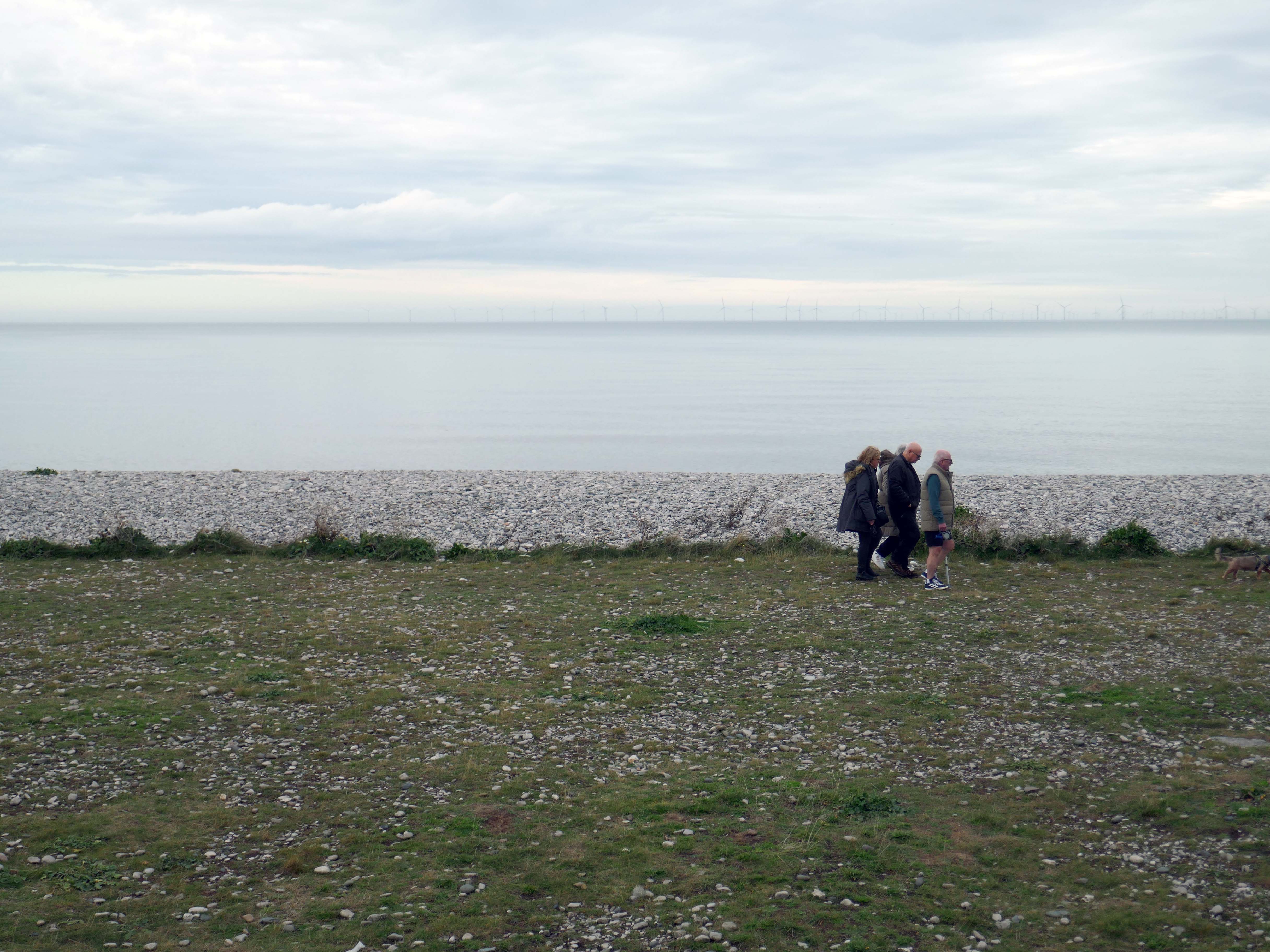
The light continually changes over the placid surface of the Irish Sea, the off shore wind turbines spin slowly, seemingly silent on the distant horizon.
There was rain blowing in from the Orme – I cut and ran at Bae Cinmel, boarding the bus for Bae Colwyn.
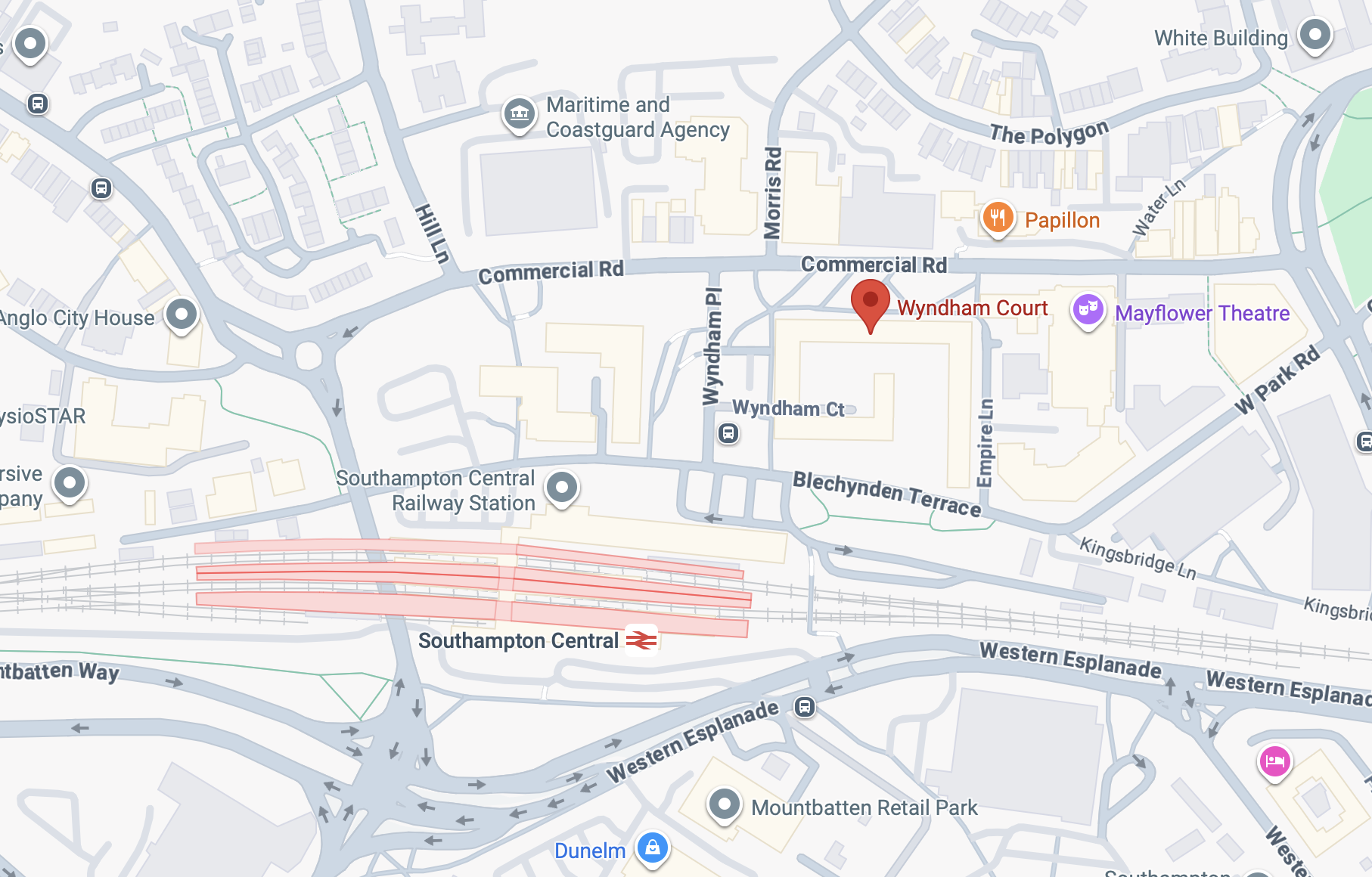
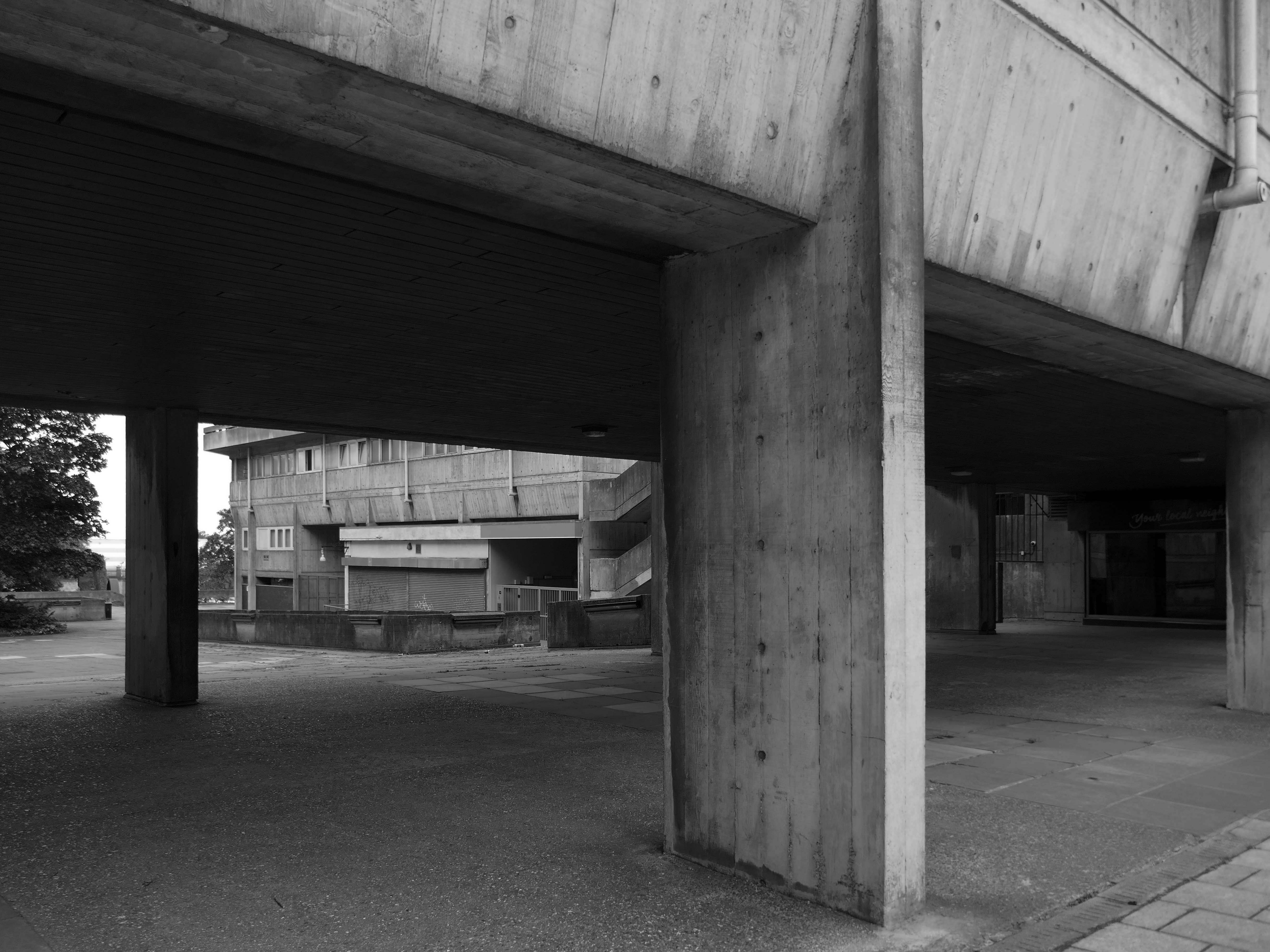
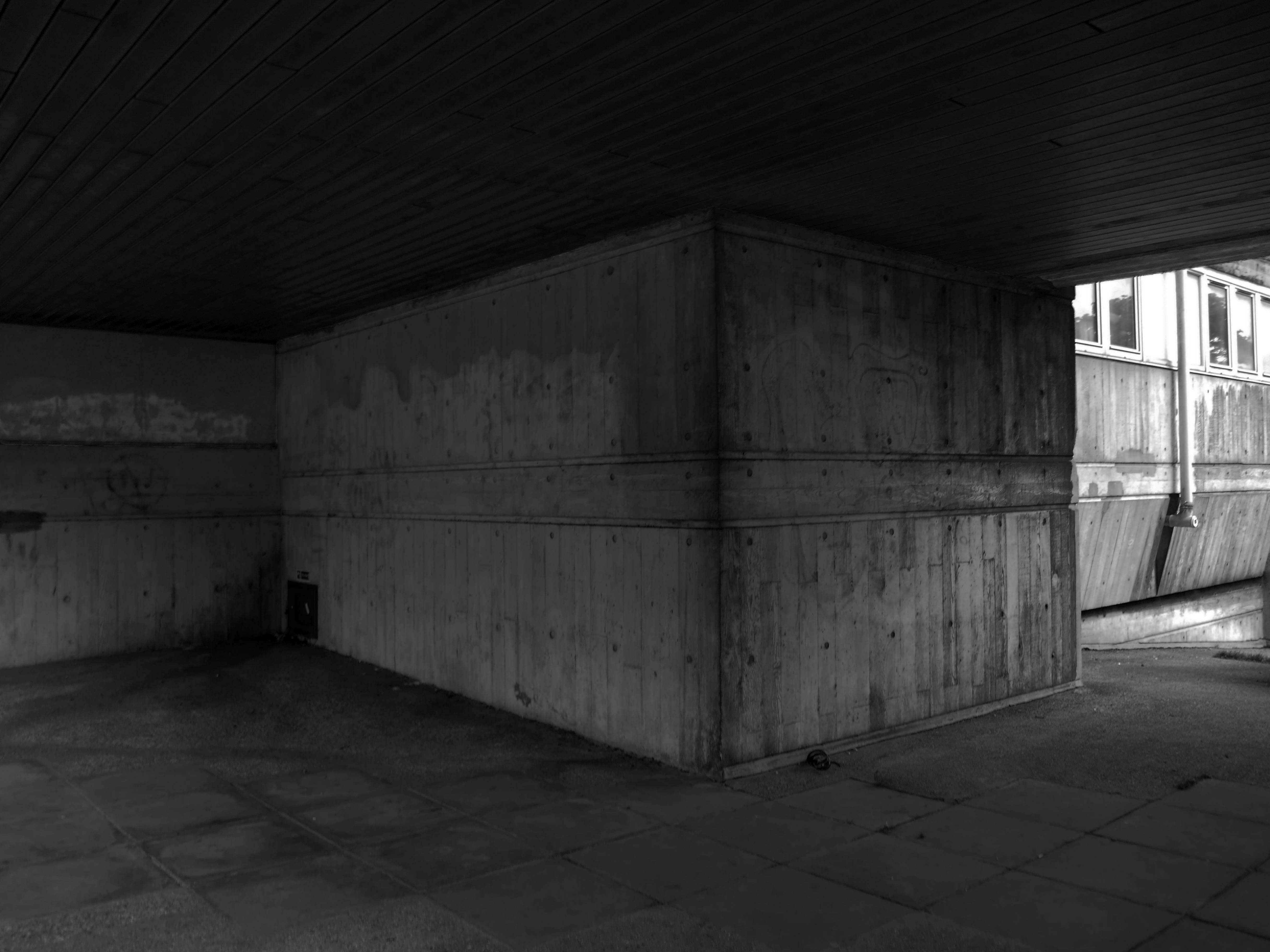
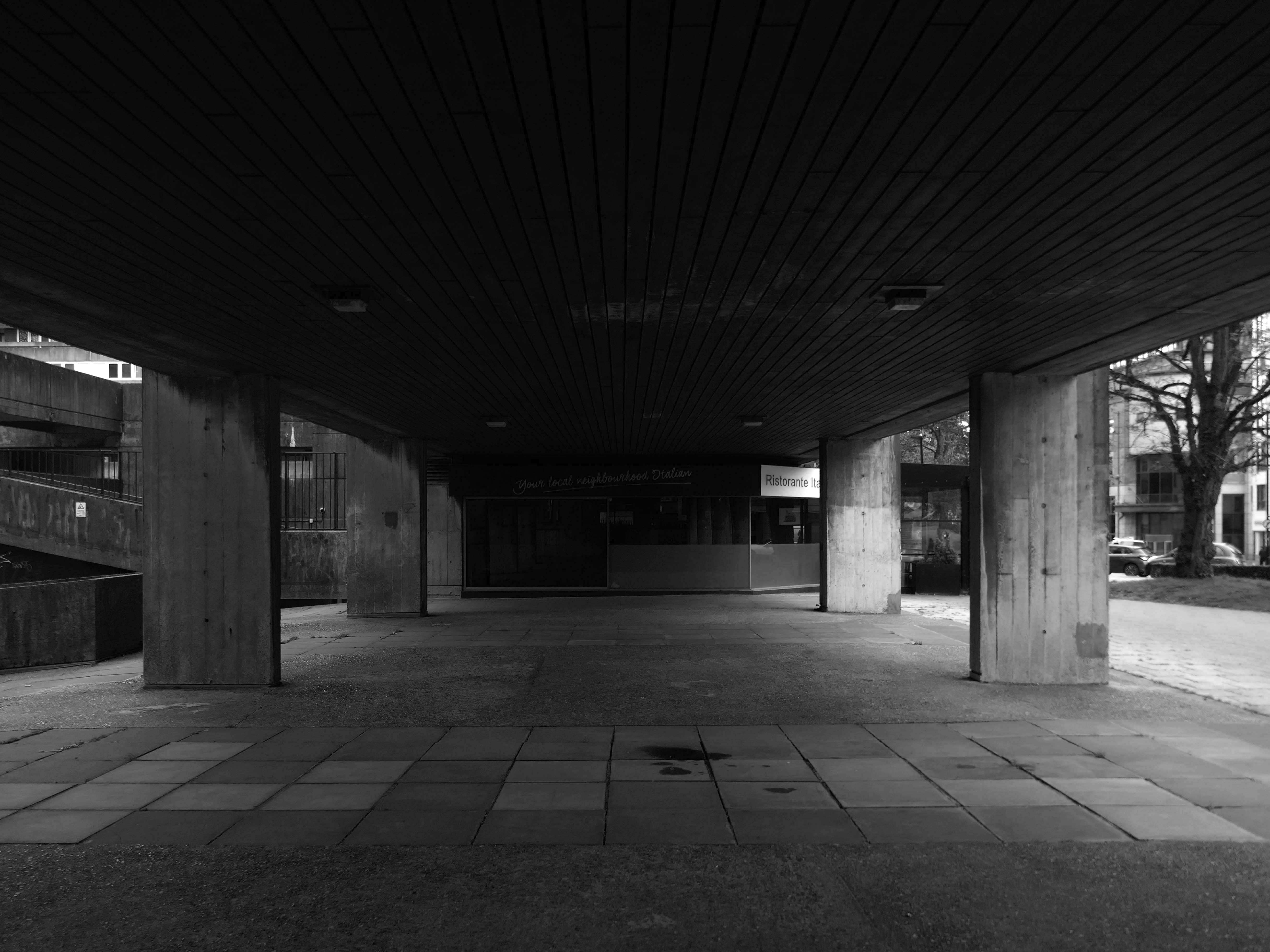
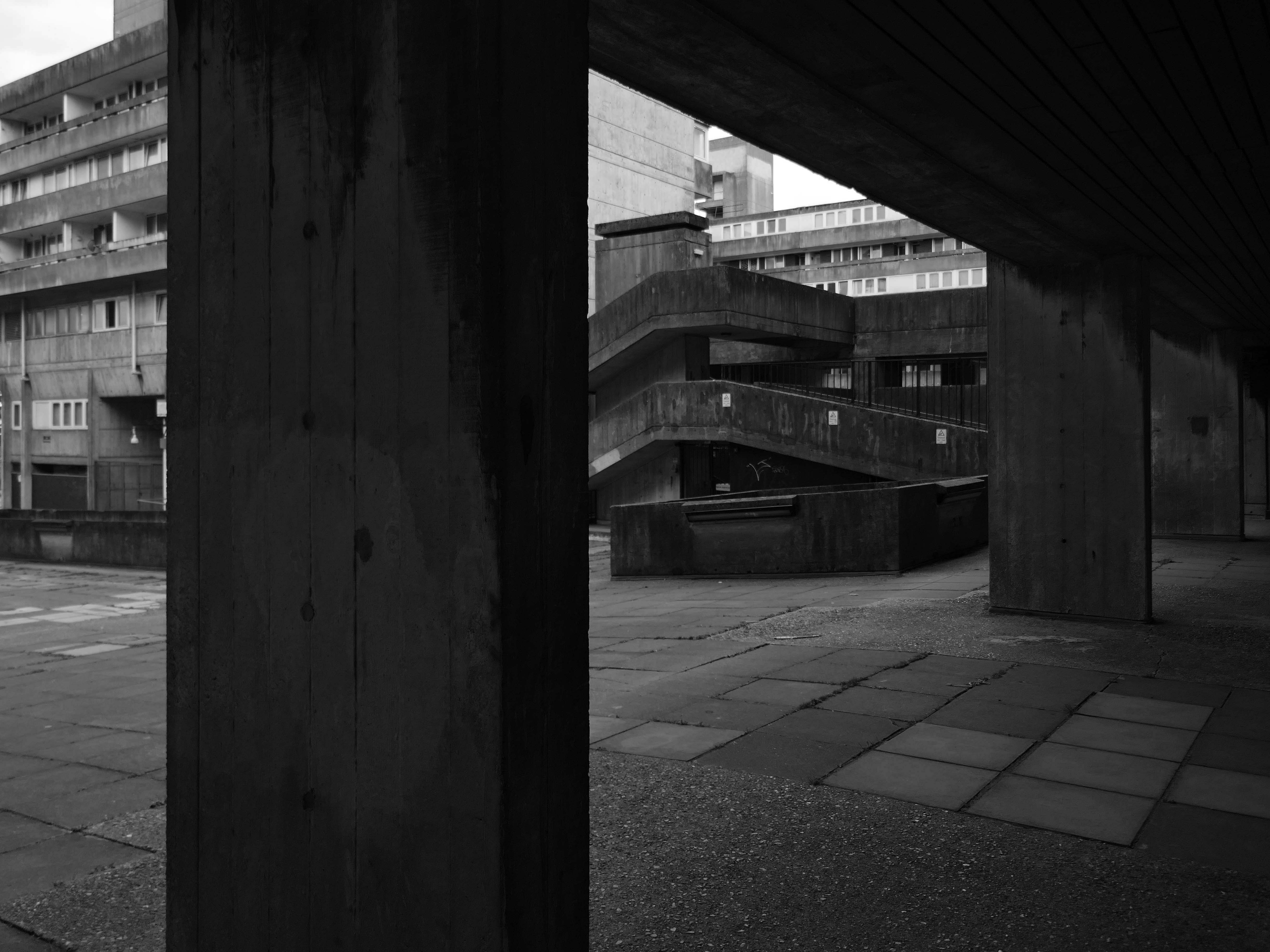
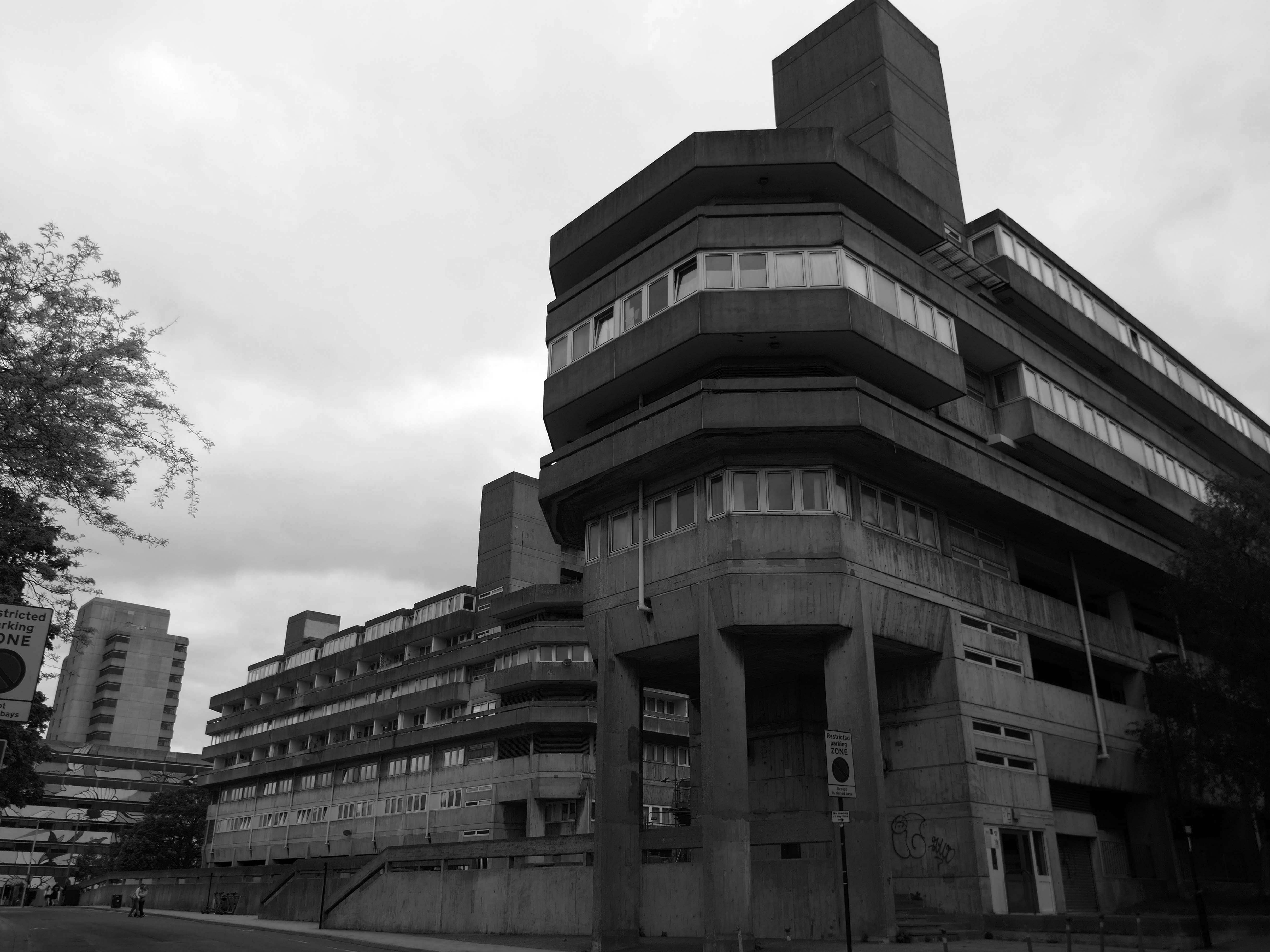
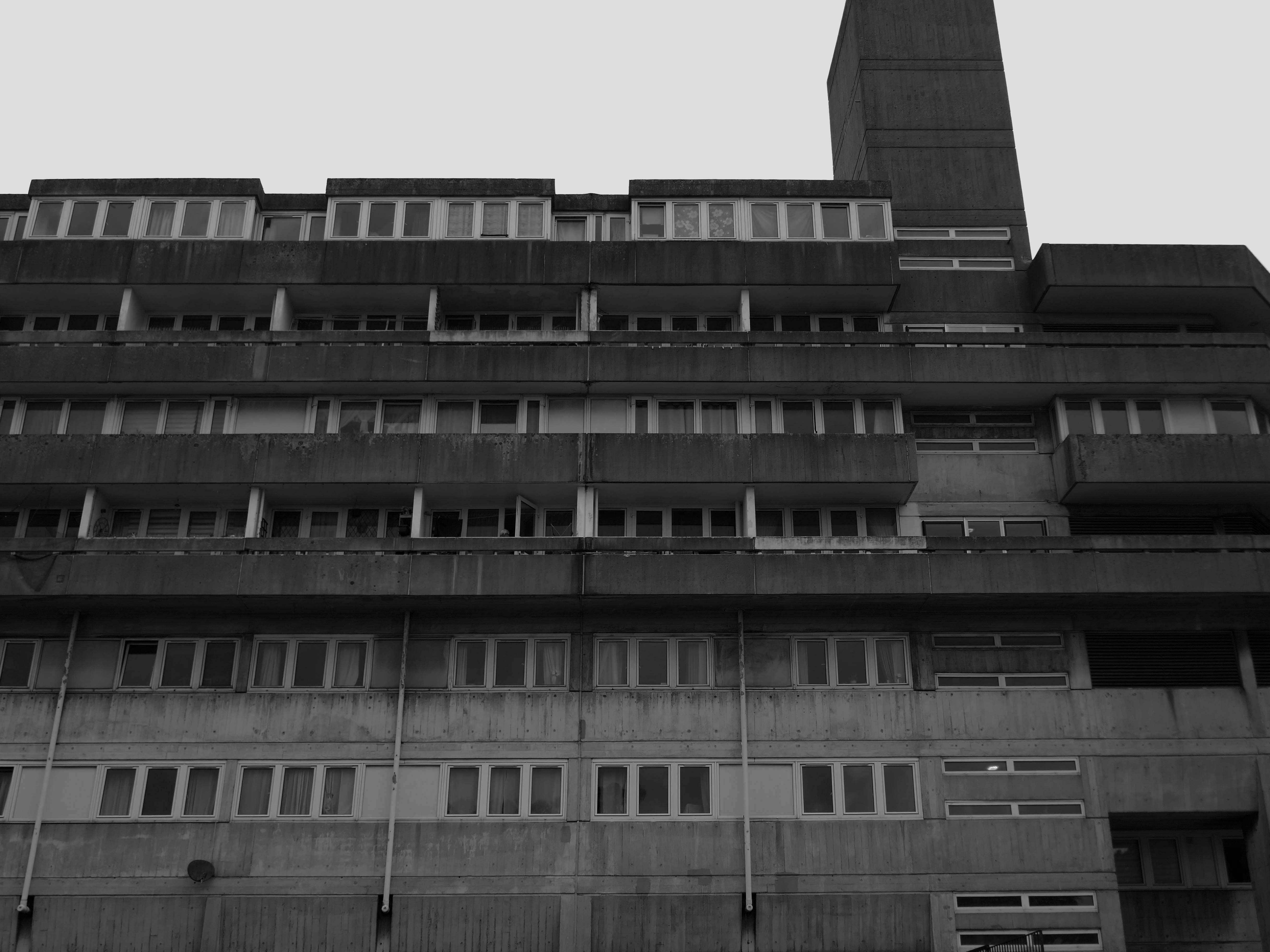
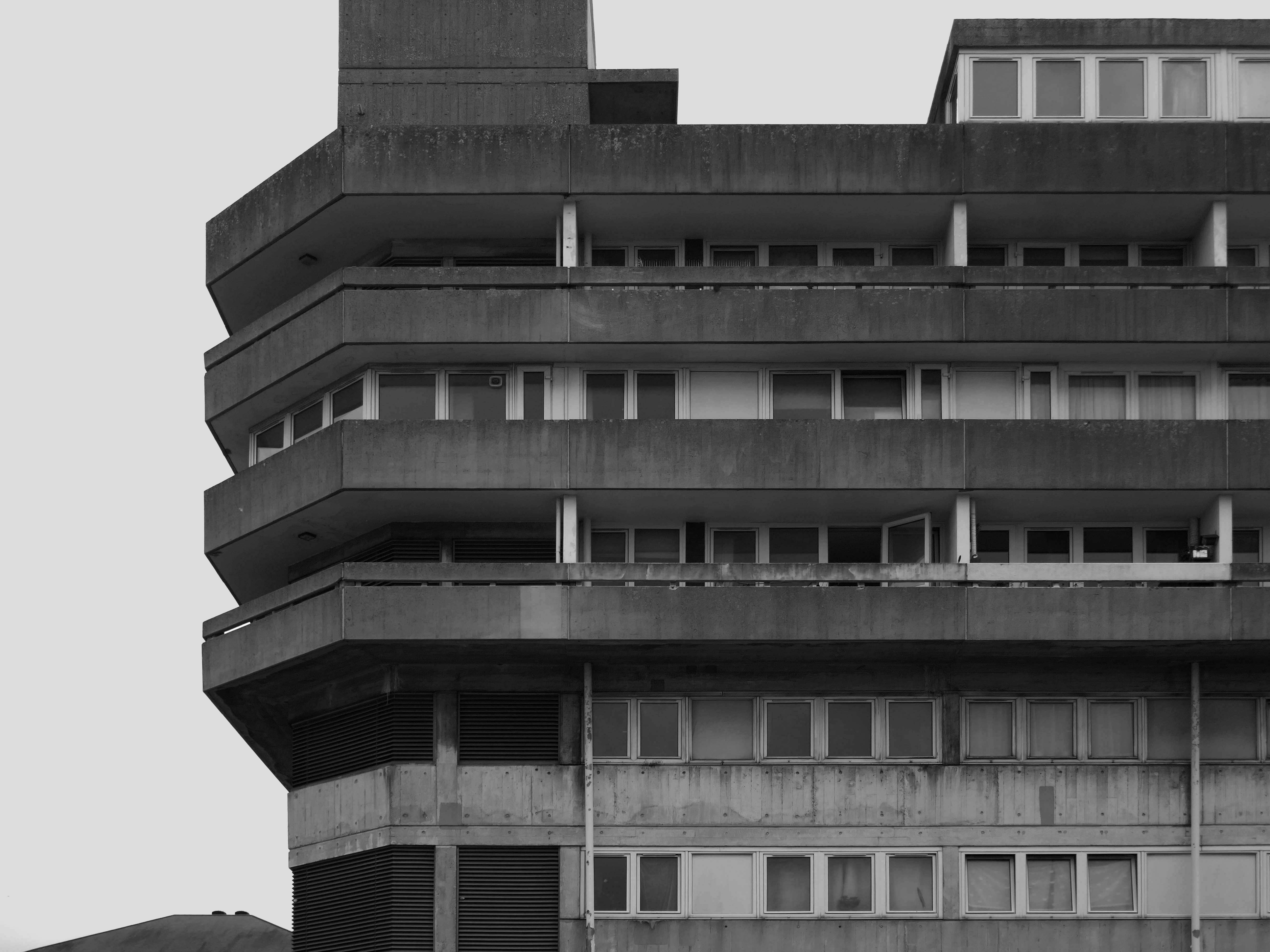
I had spent the day in Southampton in May, the first area I explored was Wyndham Court.
At the end of a long day I found myself there again, with an hour to spare before my train back to Bournemouth.
The sky was no longer blue, the sun was now occluded.
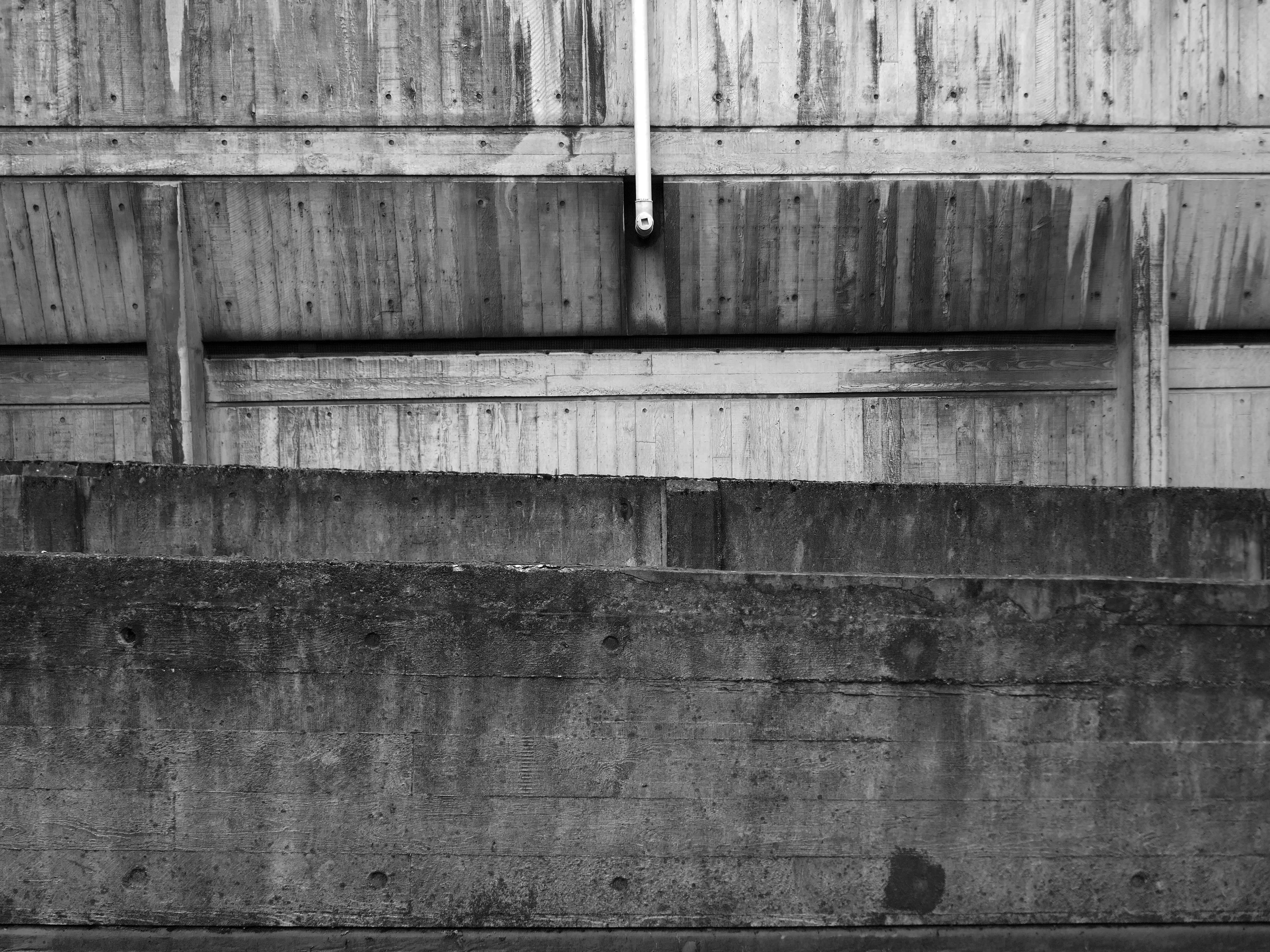
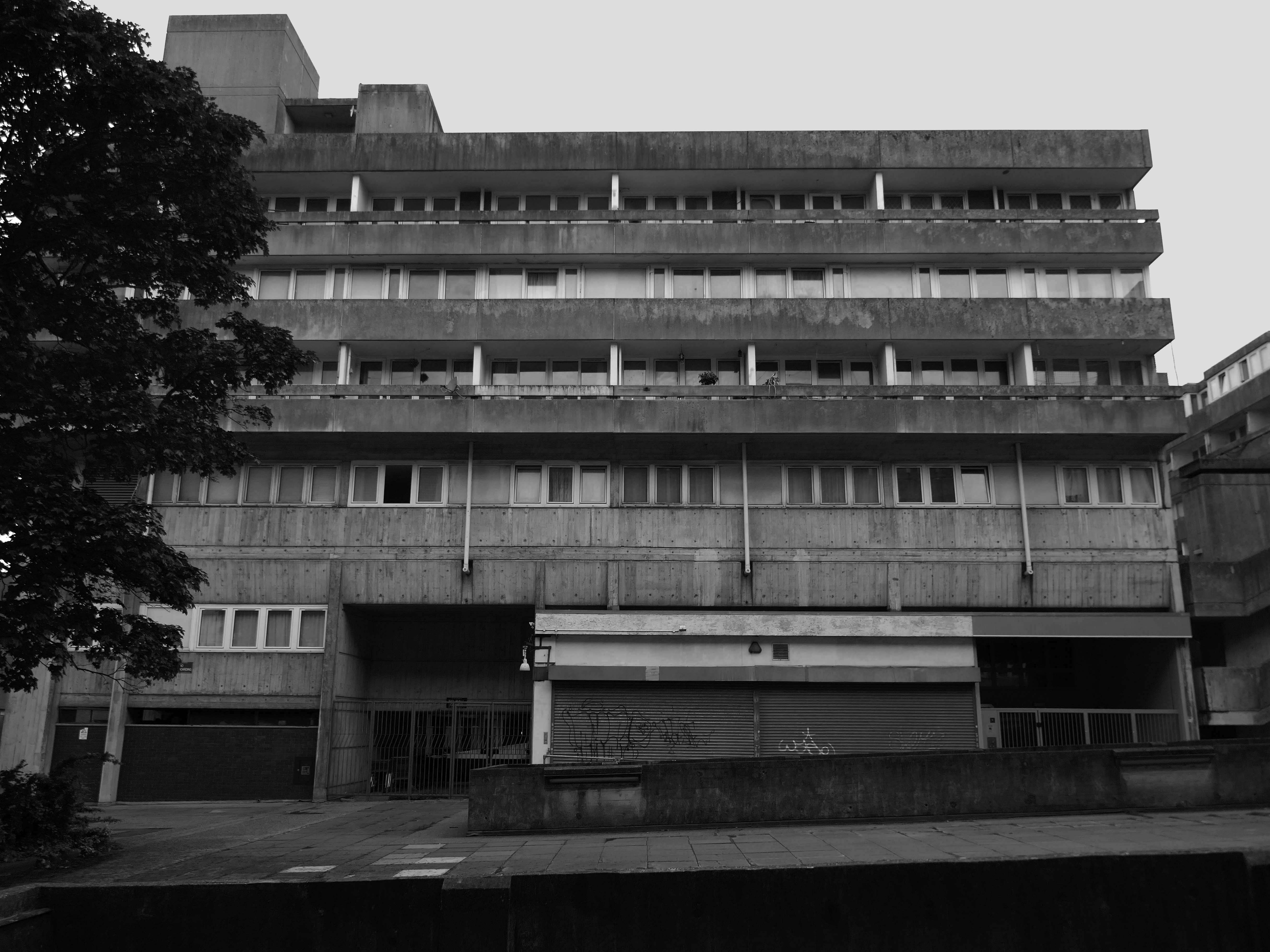
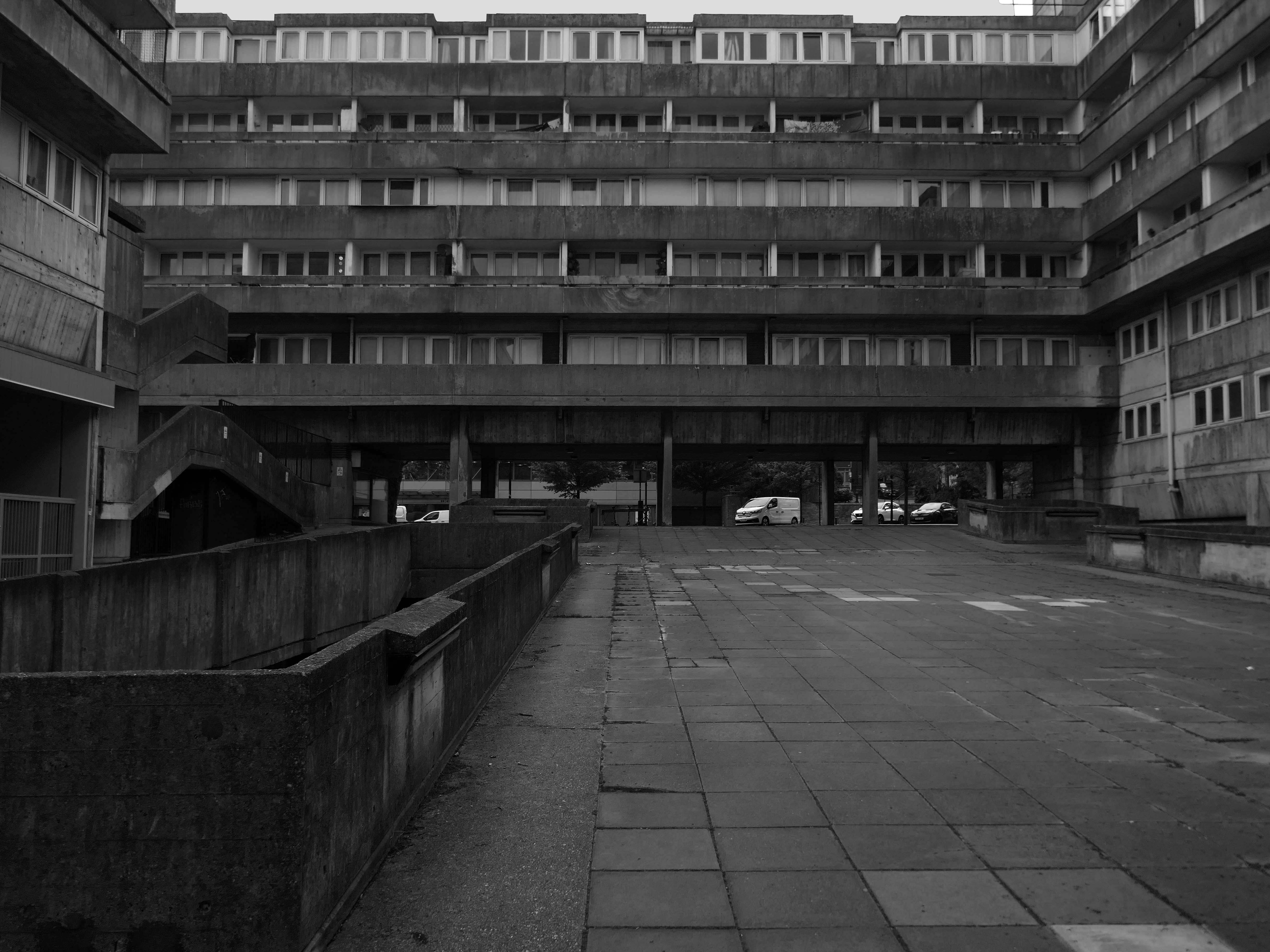
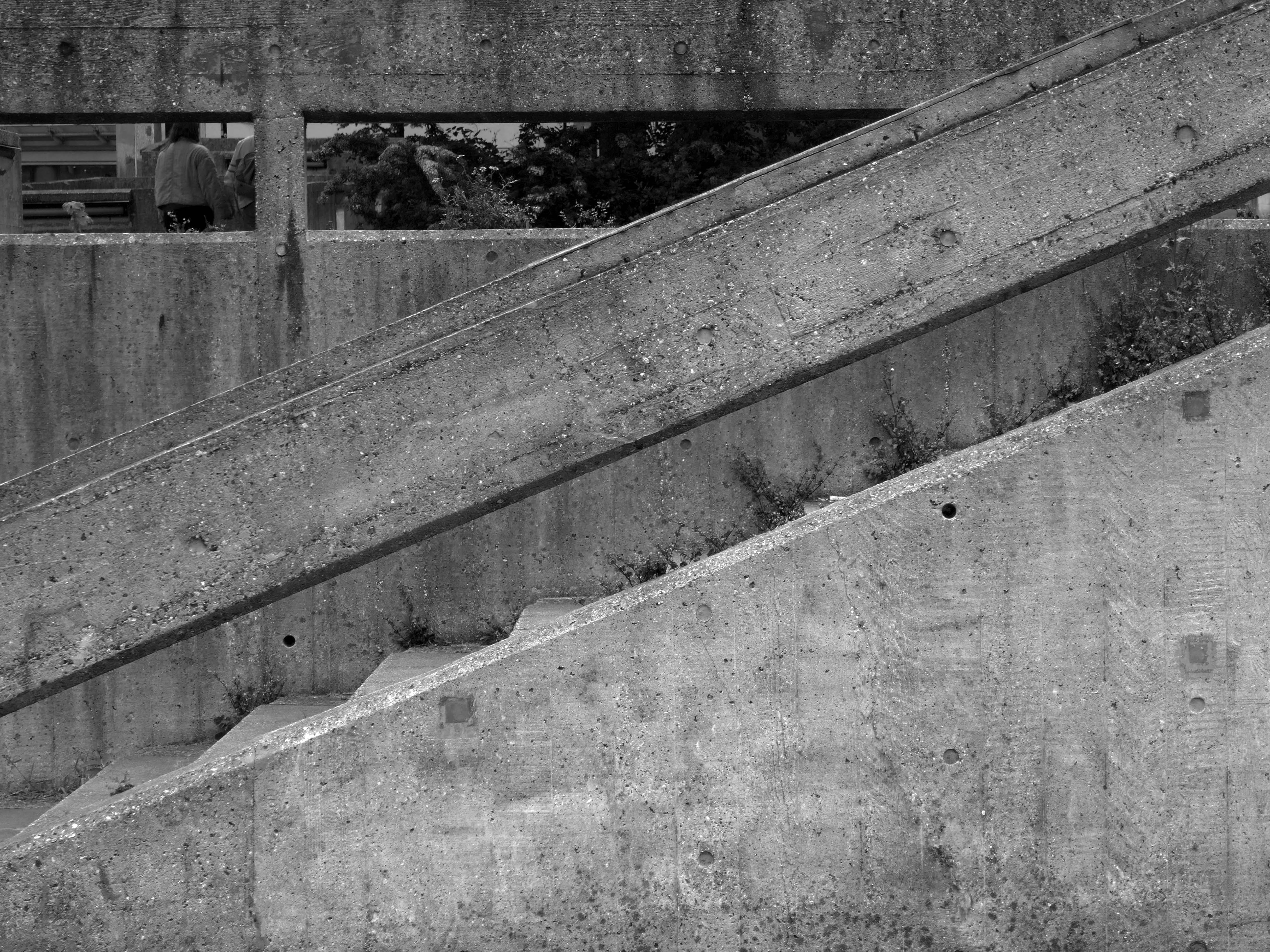
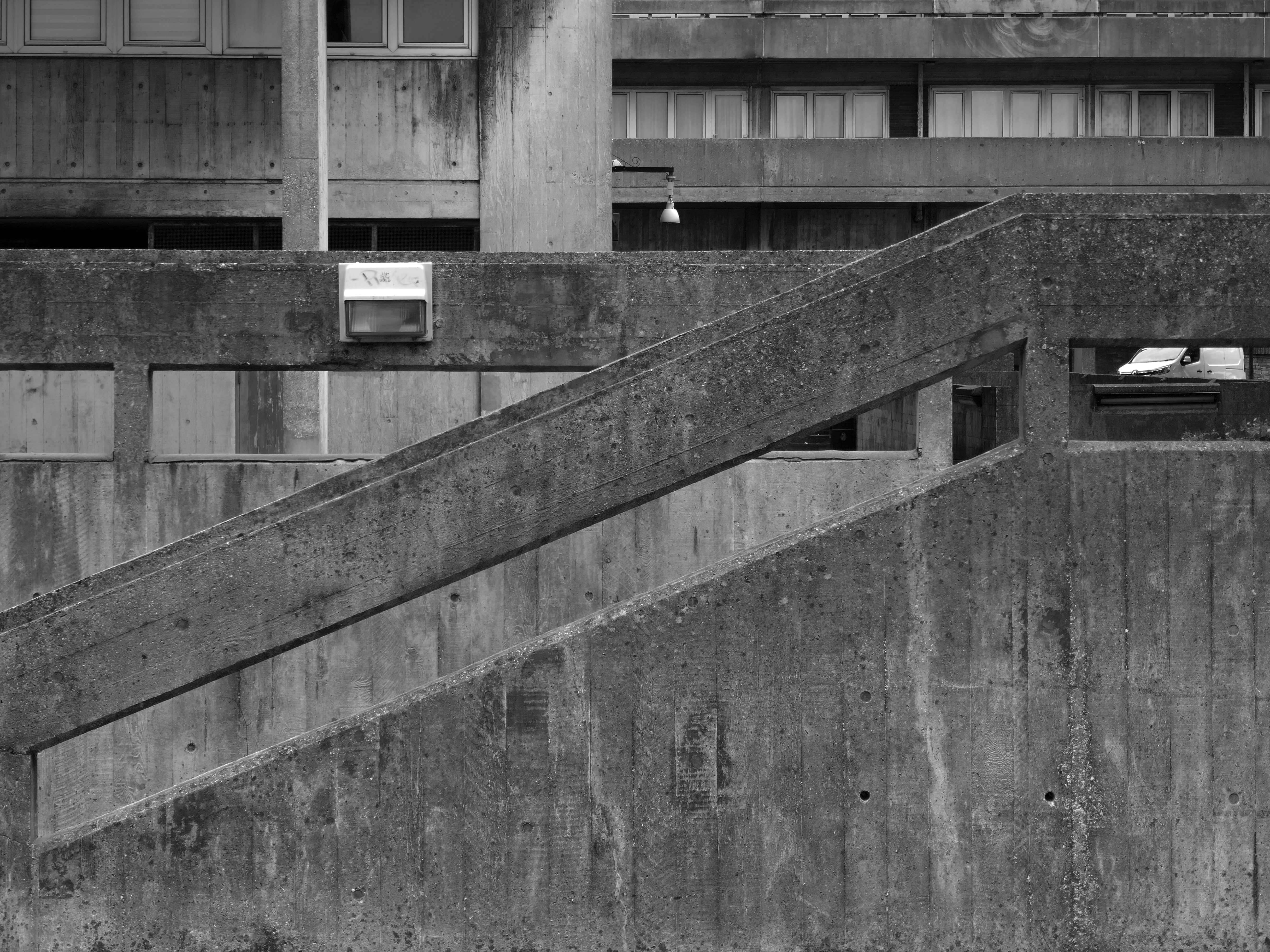
The photographs were almost monotone, so with a small tweak I made them monochrome.
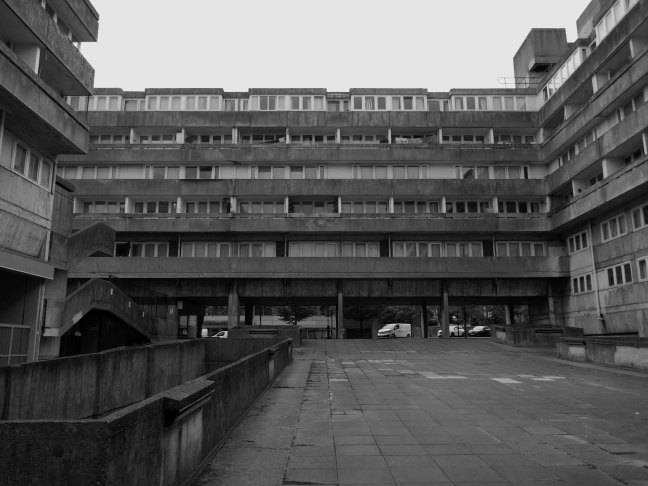
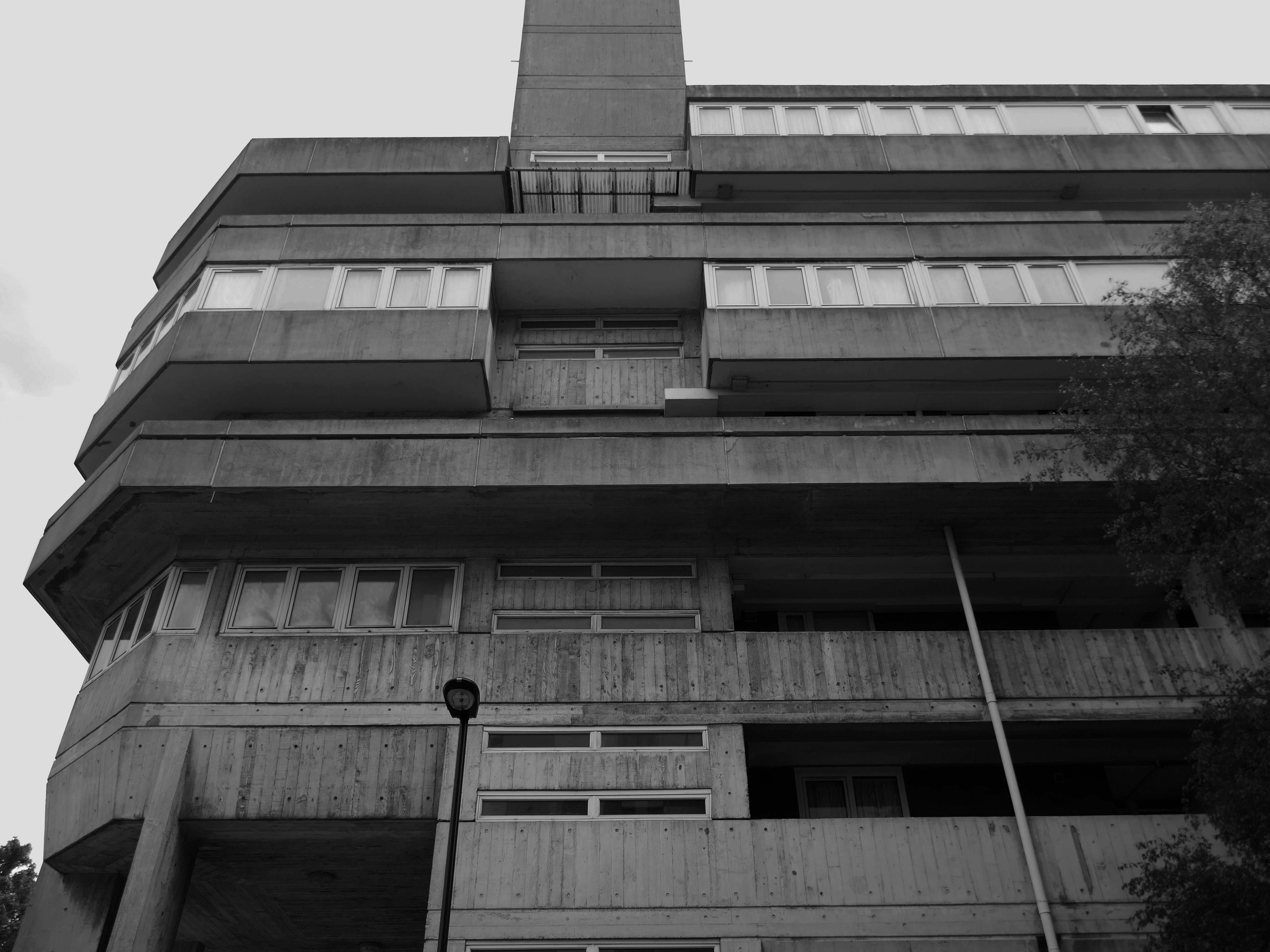
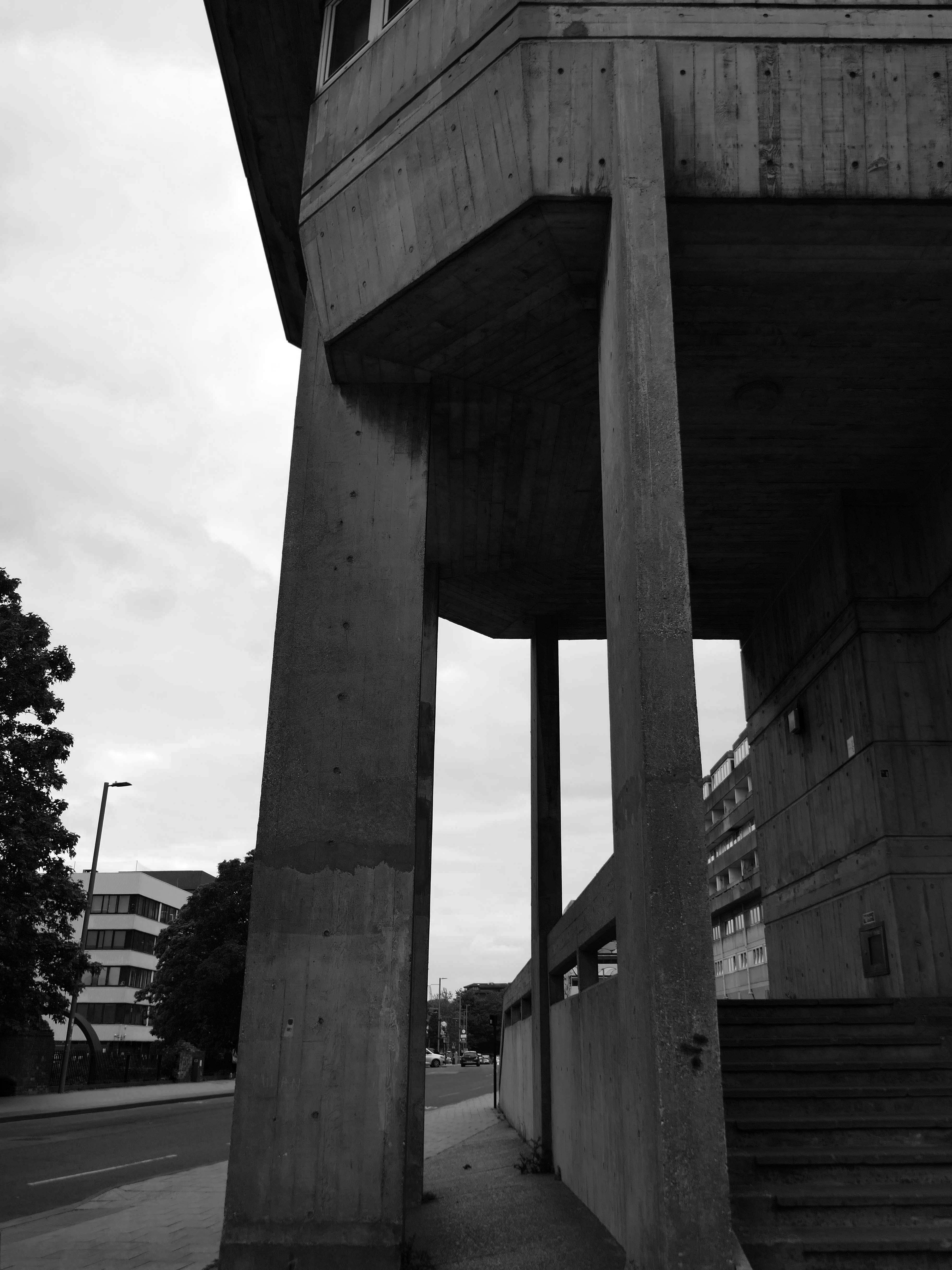
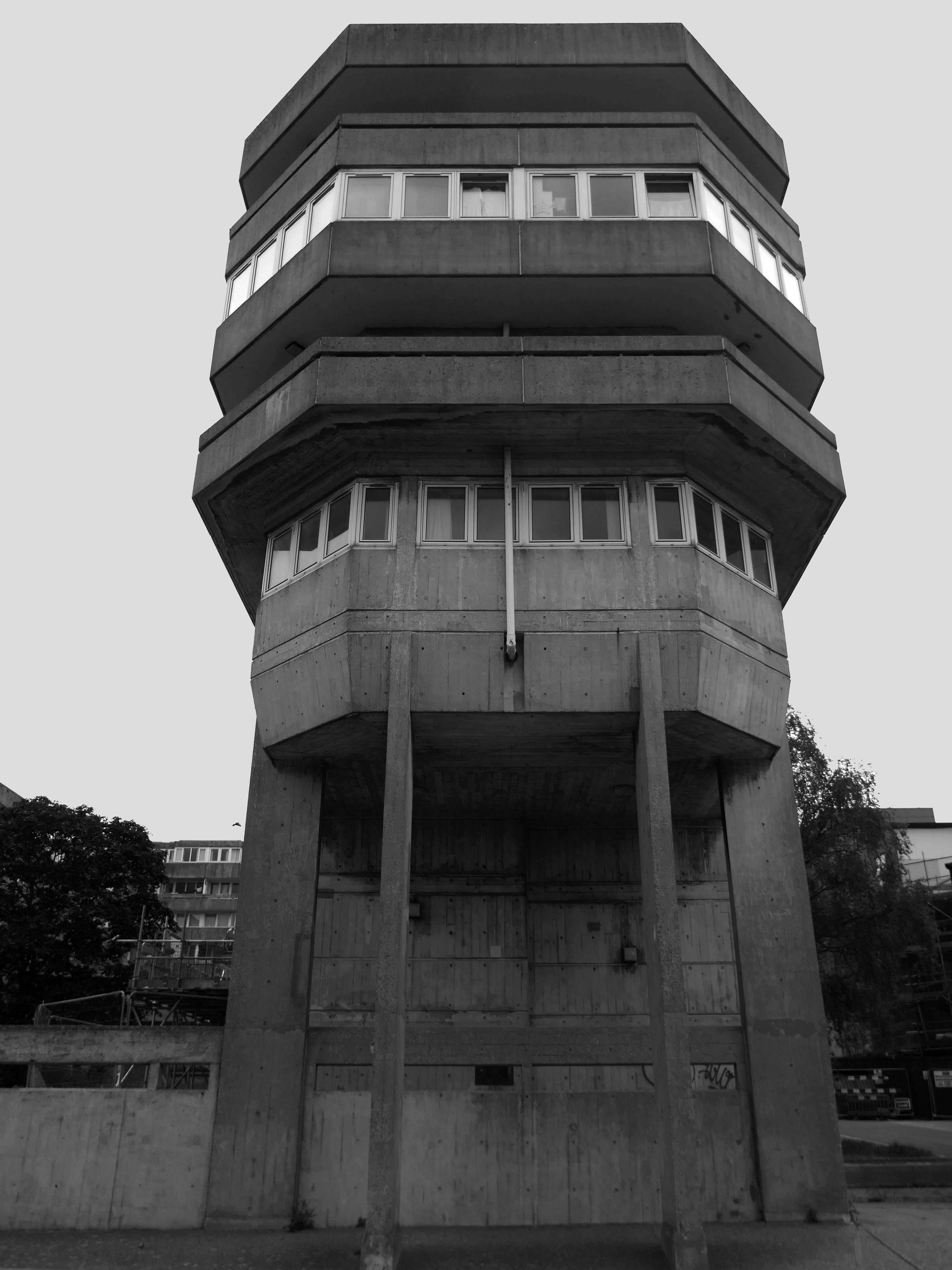
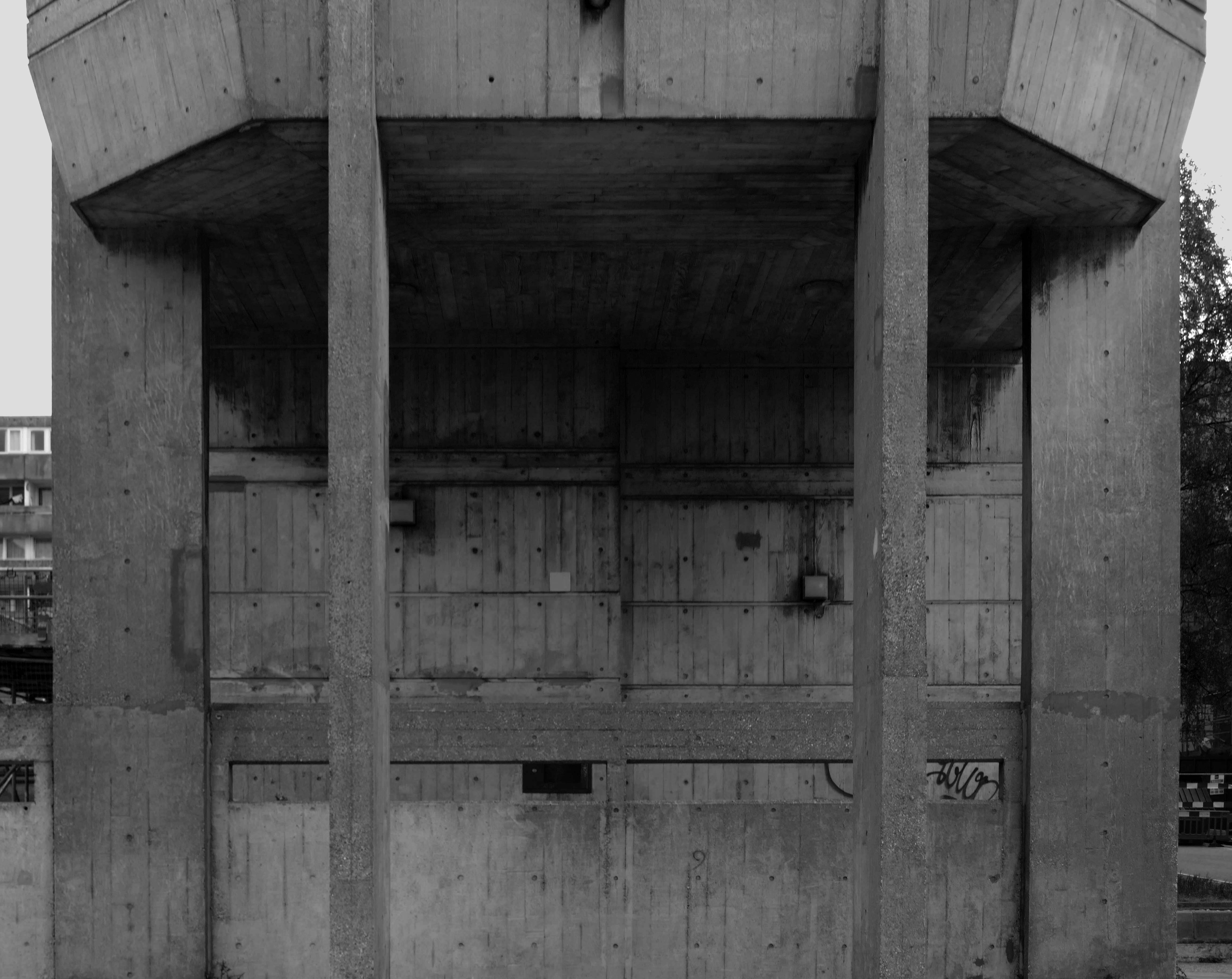
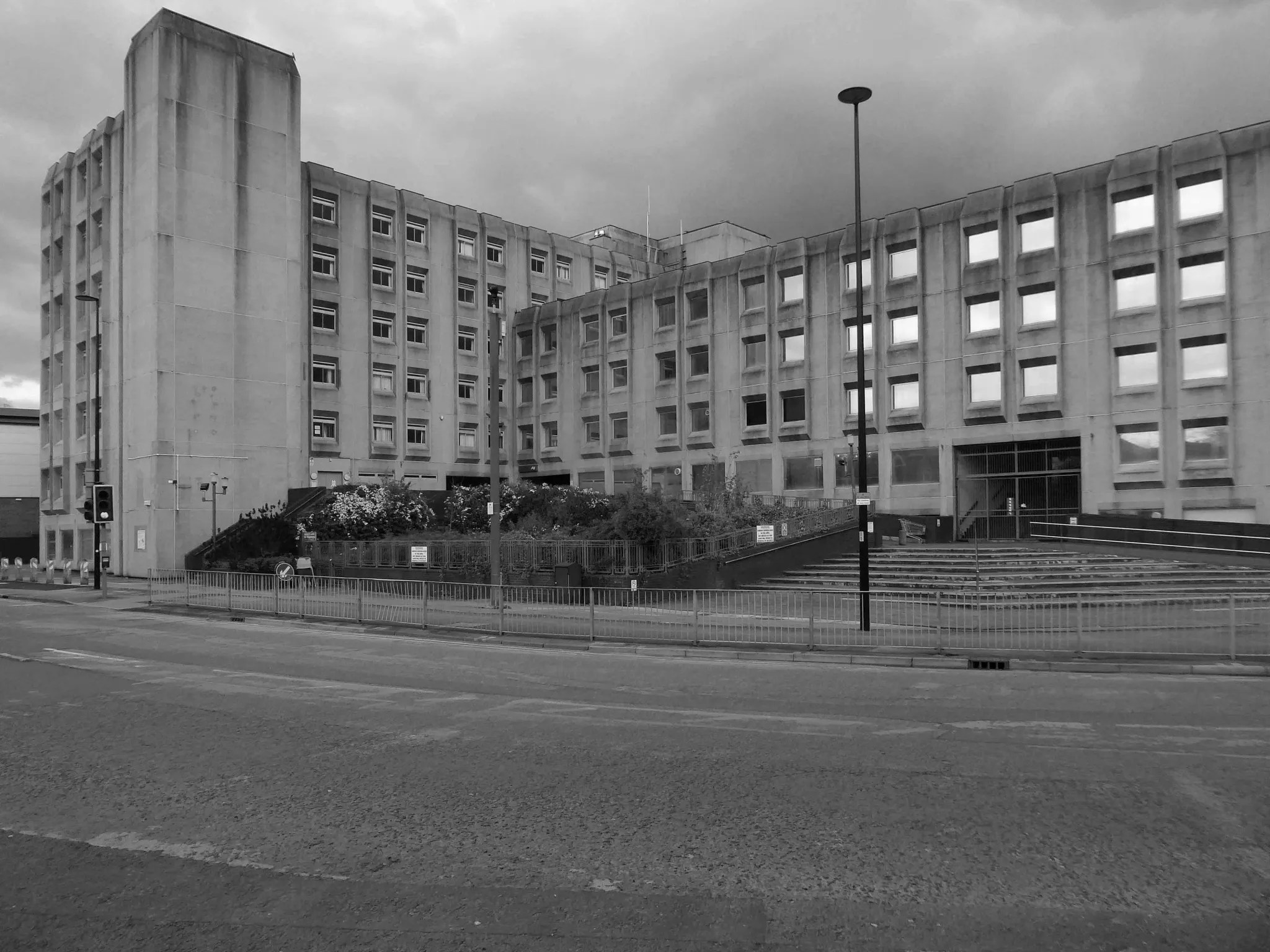
Designed by Lyons Israel Ellis for Southampton City Council in 1966, ED Lyons being the partner in charge and architects Frank Linden and Aubrey Hume also assigned to the job.
The structural engineers were Hajnal-Konyi and Myers and the firm of builders was G Minter.
Lyons Israel Ellis, though well known as a finishing school for the famed likes of Stirling, Gowan, Colquhoun et al, were the sort of Brutalists that didn’t get Yale scholarships, shiny monographs or late careers in pomo. They are found more often designing local authority housing, comprehensive schools and other unsexy things – most of them robust enough to be extant and in good nick. From their Old Vic extension through to the London School of Engineering, they were giants of big, chunky, angular neo-constructivist architecture rife with skylines, cantilevers and complex geometries, all in satisfyingly raw, tactile concrete. As Colquhoun later put it, this was architecture for those who had nothing but contempt for ‘the Englishness of English art’ and other consolatory narratives.
Their masterpiece, Wyndham Court, ought to be as well-known as the Brunswick Centre or the Barbican, and isn’t largely because of where it is. It is a monumental, civic housing project on the grandest scale. As a building, it shows more than a hint of rhetoric creeping into LIE’s usually astringent aesthetic. Placed just outside Southampton Central Station with a fine view of the docks, its service tower skyline and long, streamlined volumes have more than a hint of the ocean liner about them. Here they arc around a square, with shops on the ground floor, high-density-city centre living for council tenants rather than as an aspirational loft-living lifestyle. A magnificent vote of confidence in a city which has built little of note since, it’s also, for me, the building that announces that I’m ‘home’ far less depressingly than BDP’s repugnant West Quay shopping centre on the other side of the railway line – a massive concrete statement that another city was and still is possible.
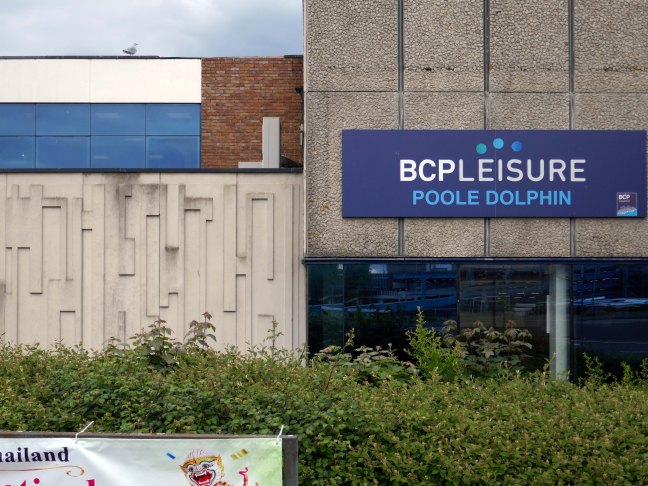
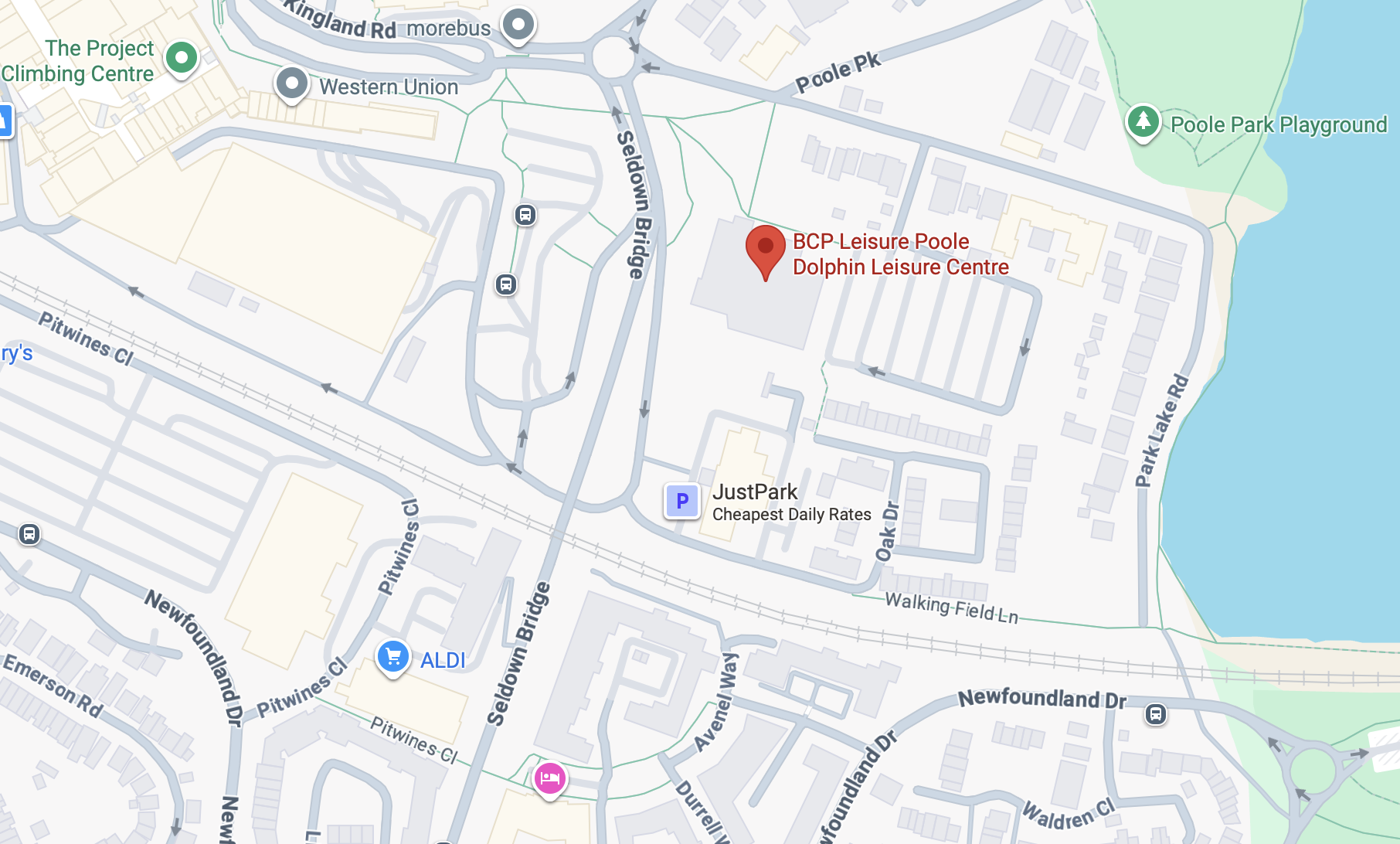
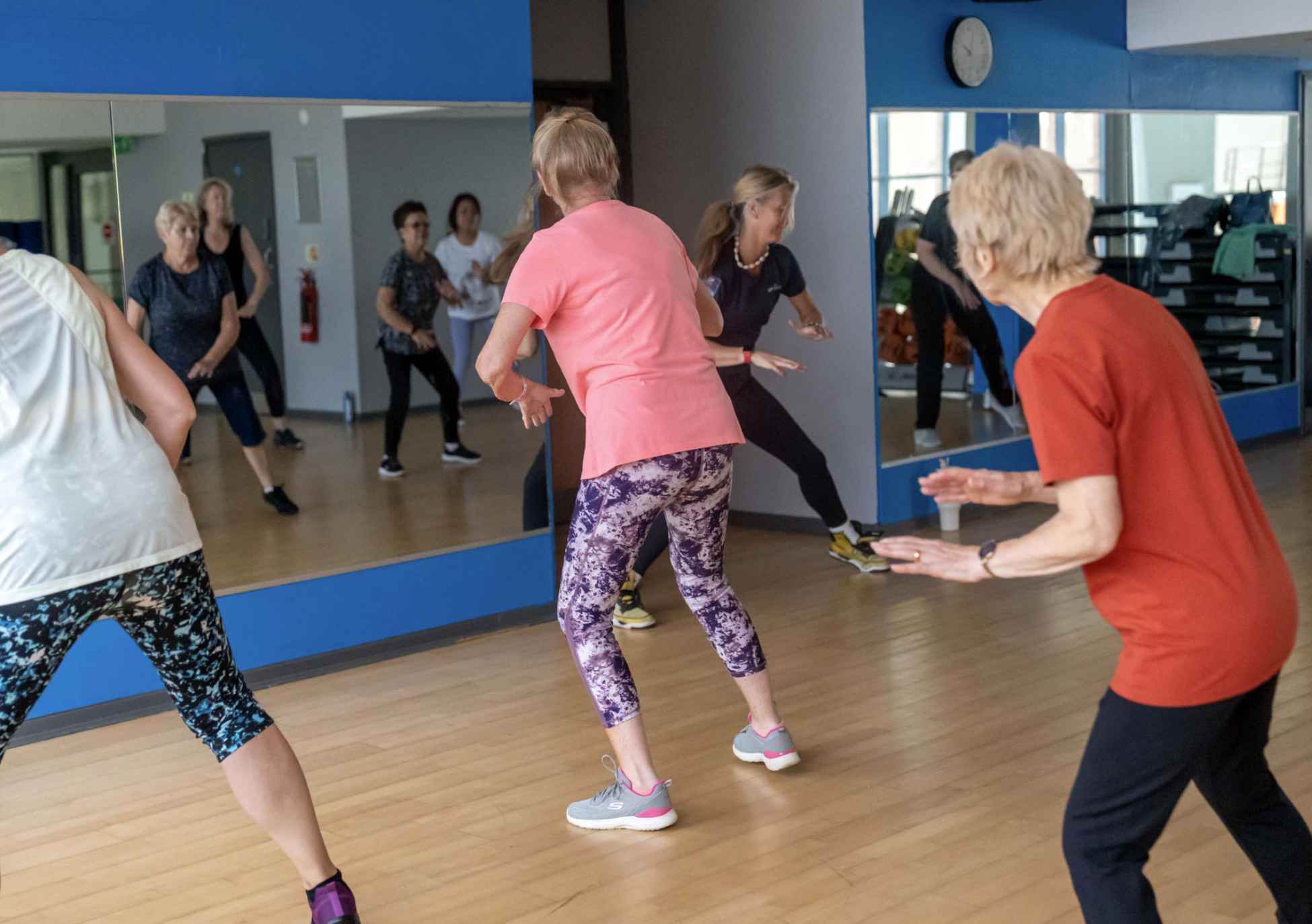
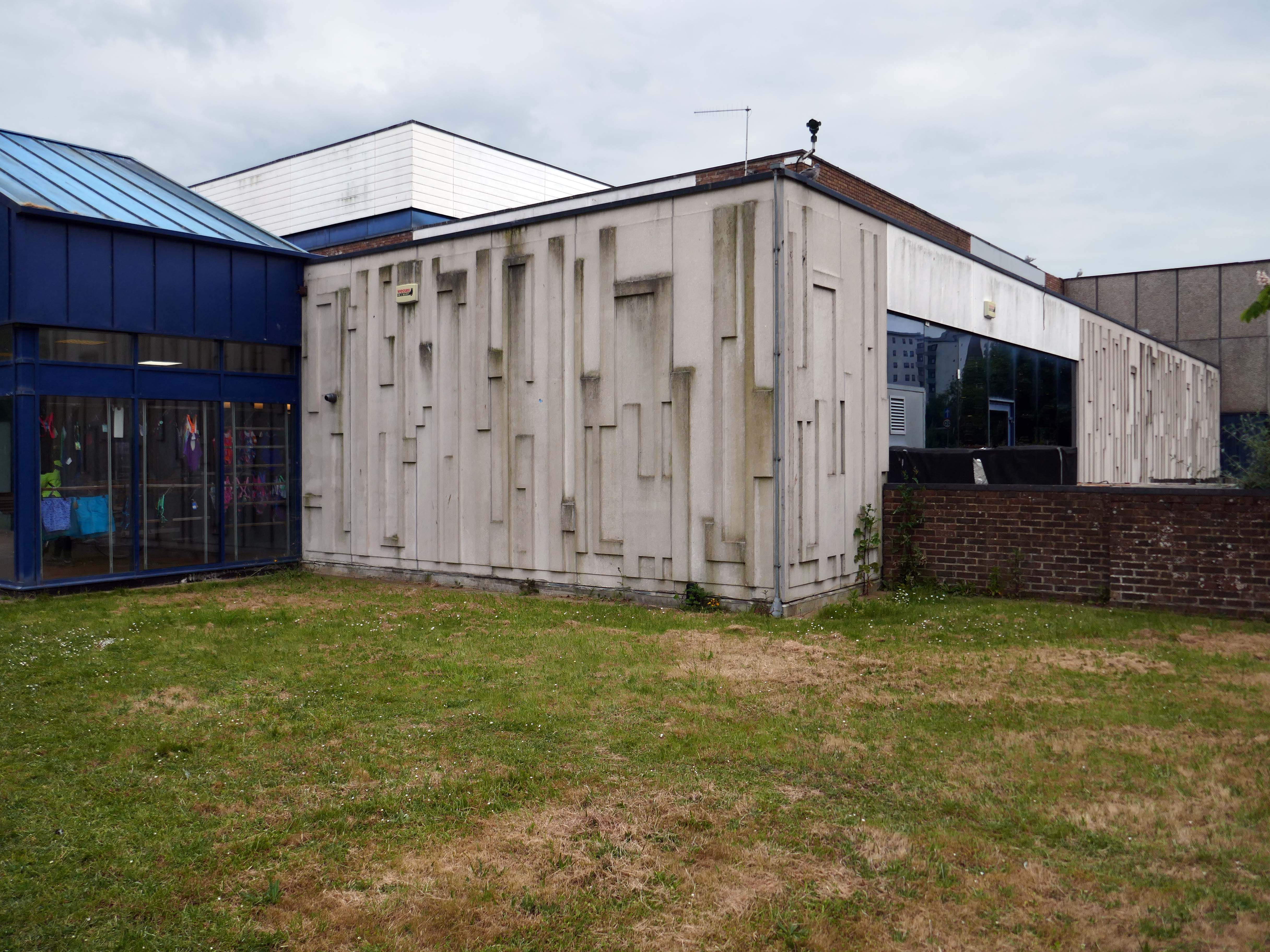
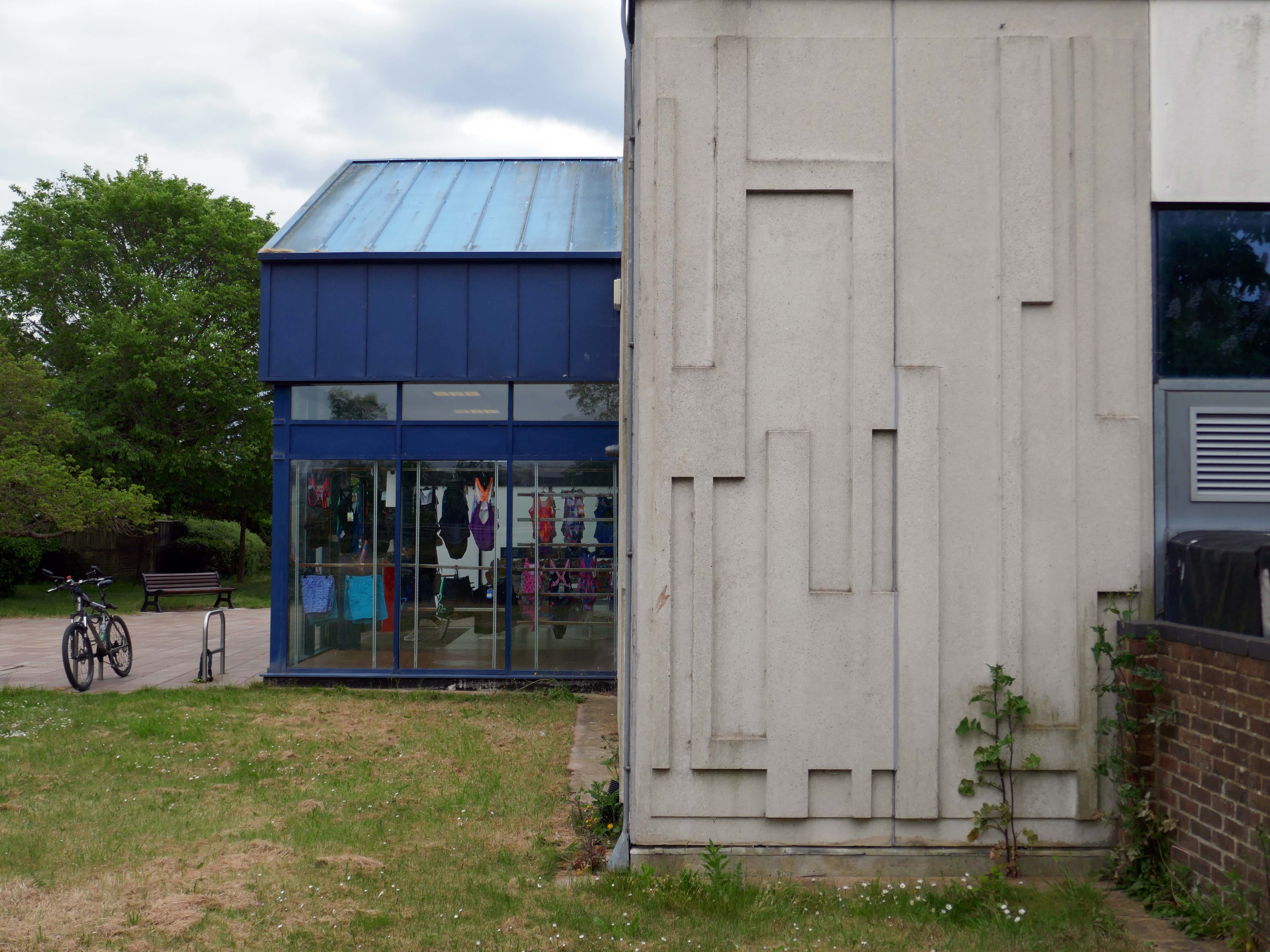
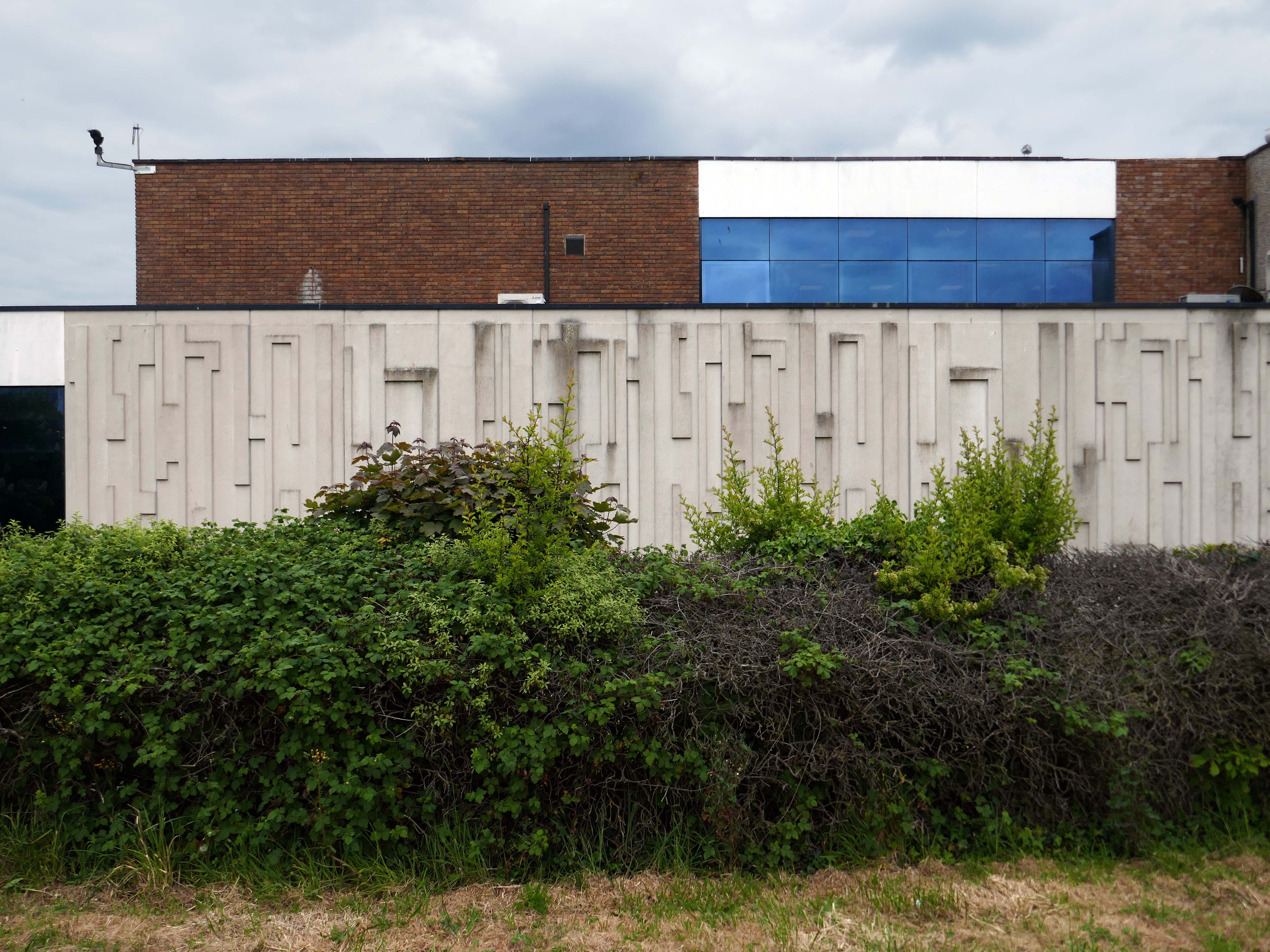
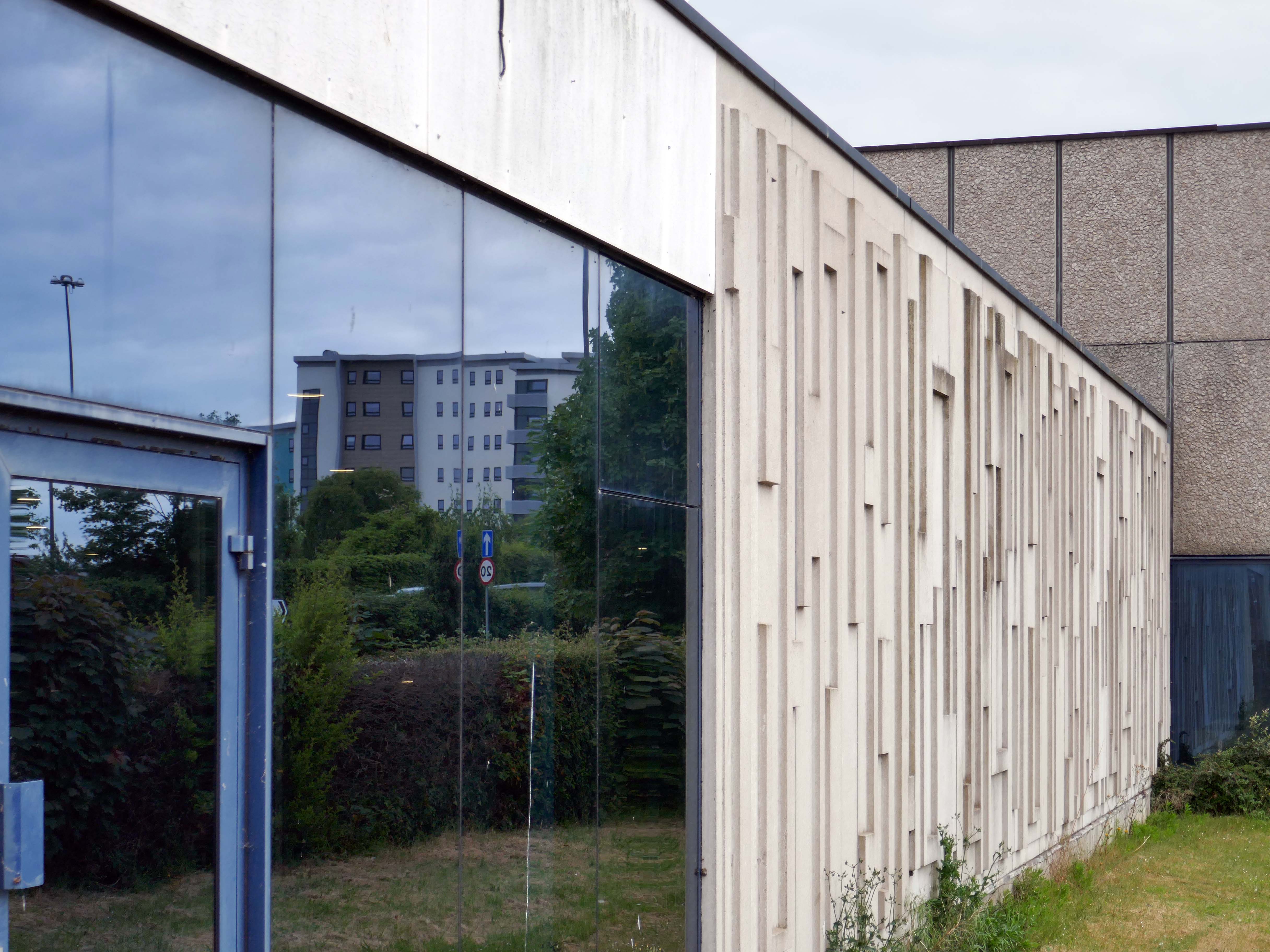
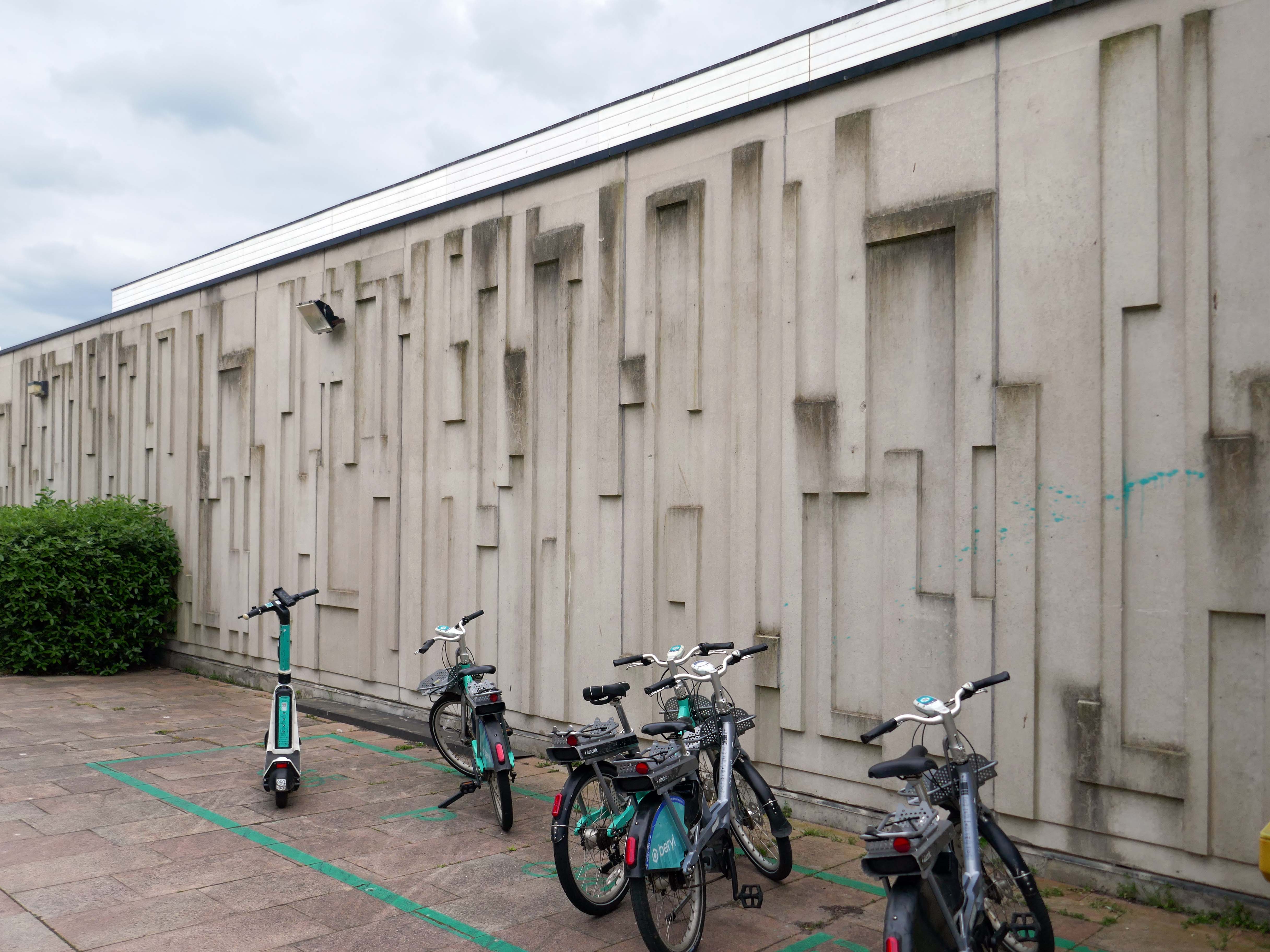
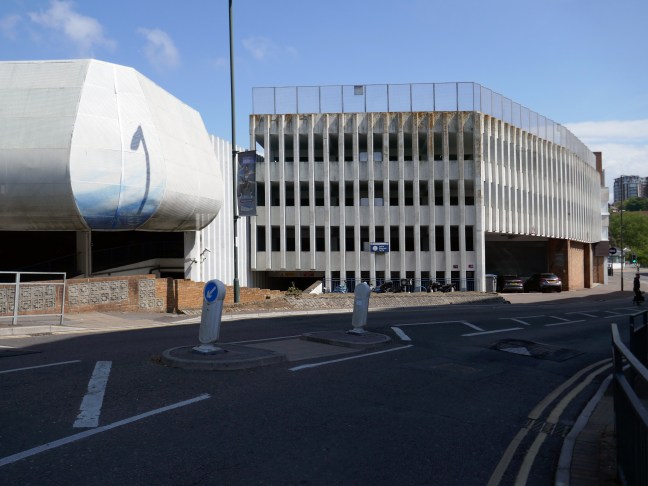
Poole Dolphin Leisure Centre offers a modern gym with sixty stations, four pools including a main, teaching and diving pool, plus award-winning swimming and diving lessons. Enjoy casual swims, fitness sessions and a wide range of group classes for all ages. After your workout, relax in our sauna and experience fitness, fun and wellbeing all in one place.
I can’t speak for the facilities, or their general cleanliness, I don’t swim or have much time for leisure.
Walking around looking at things, taking pictures, chatting and such is my lifestyle choice and preoccupation.
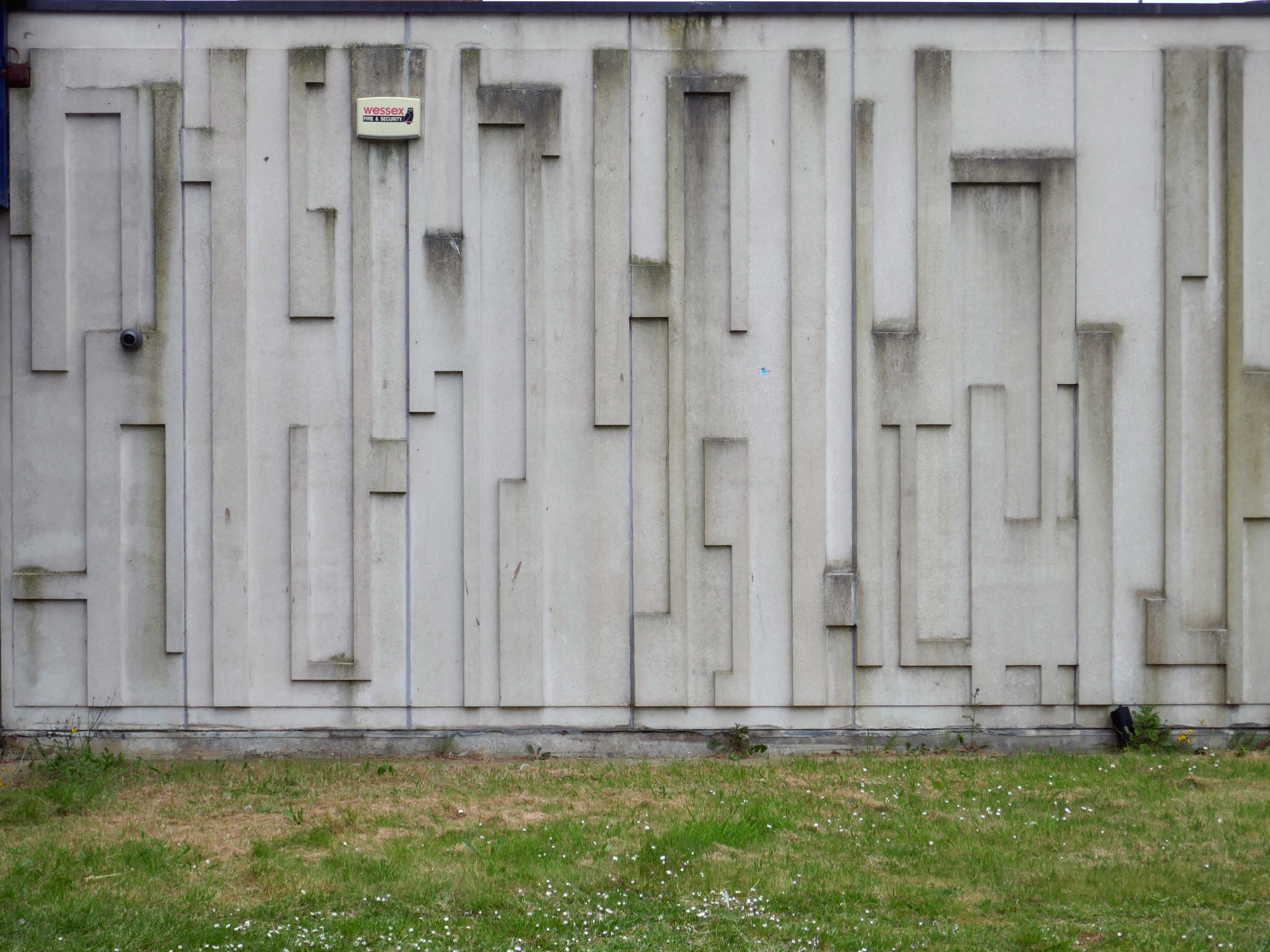
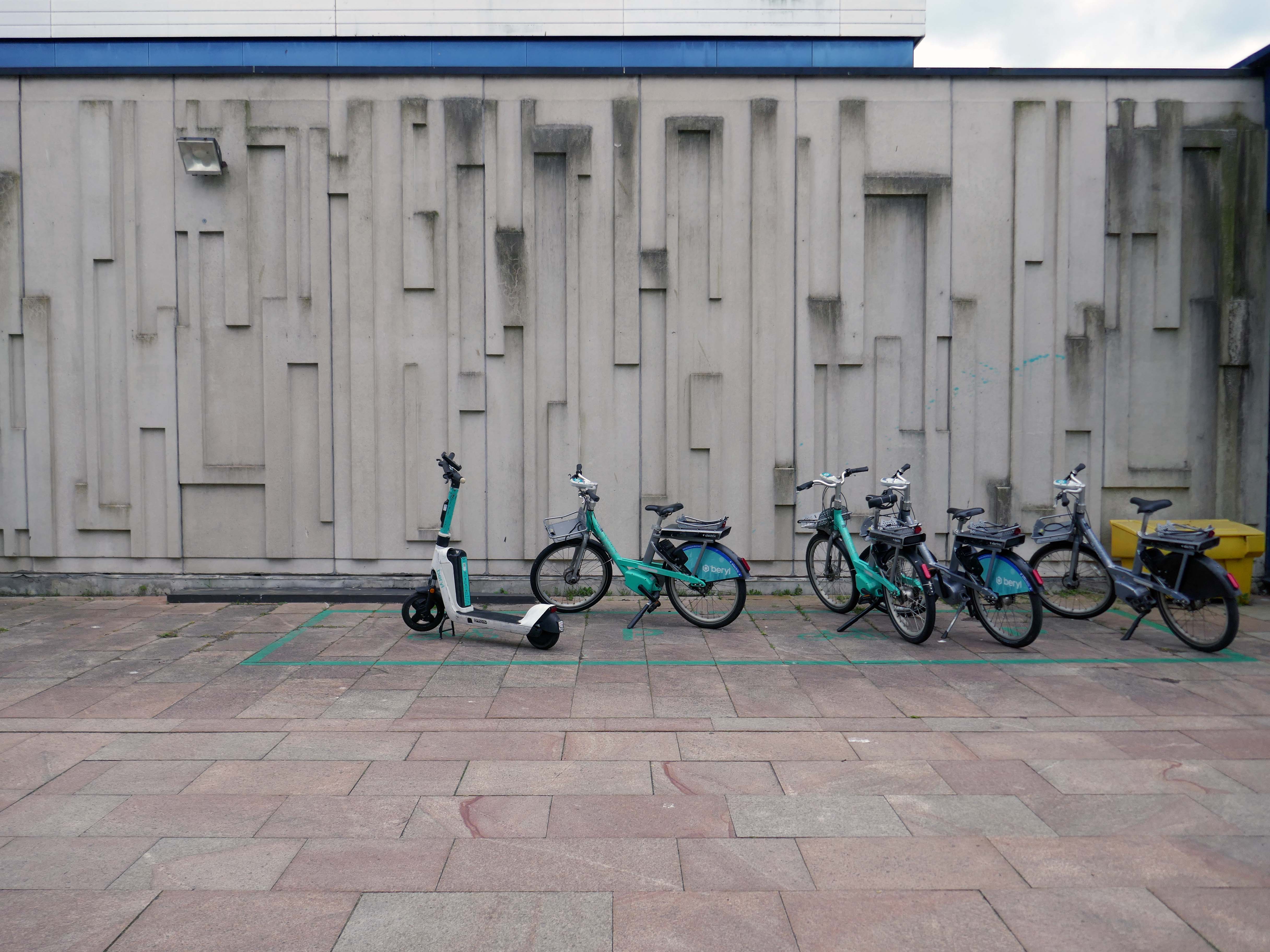
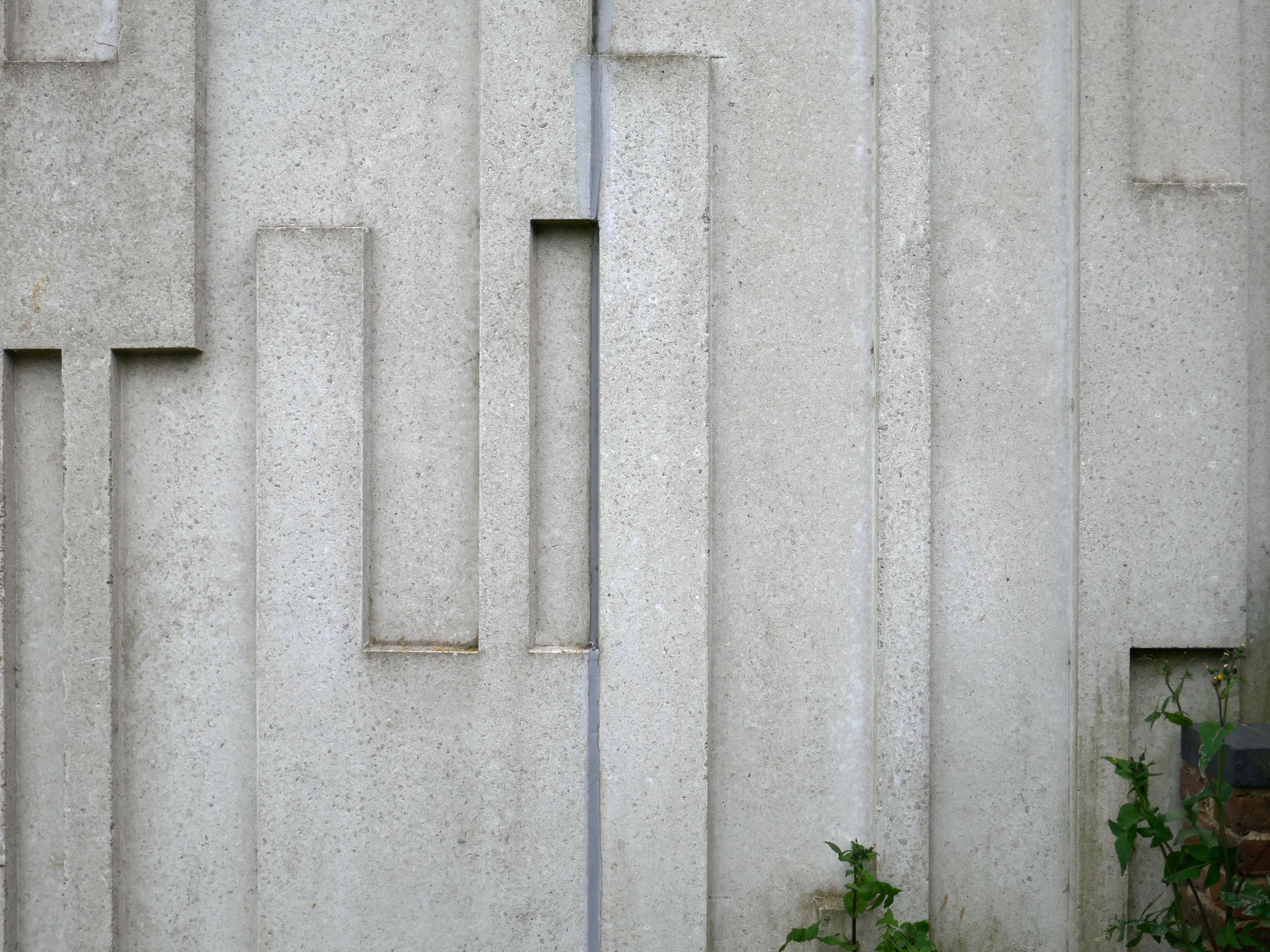
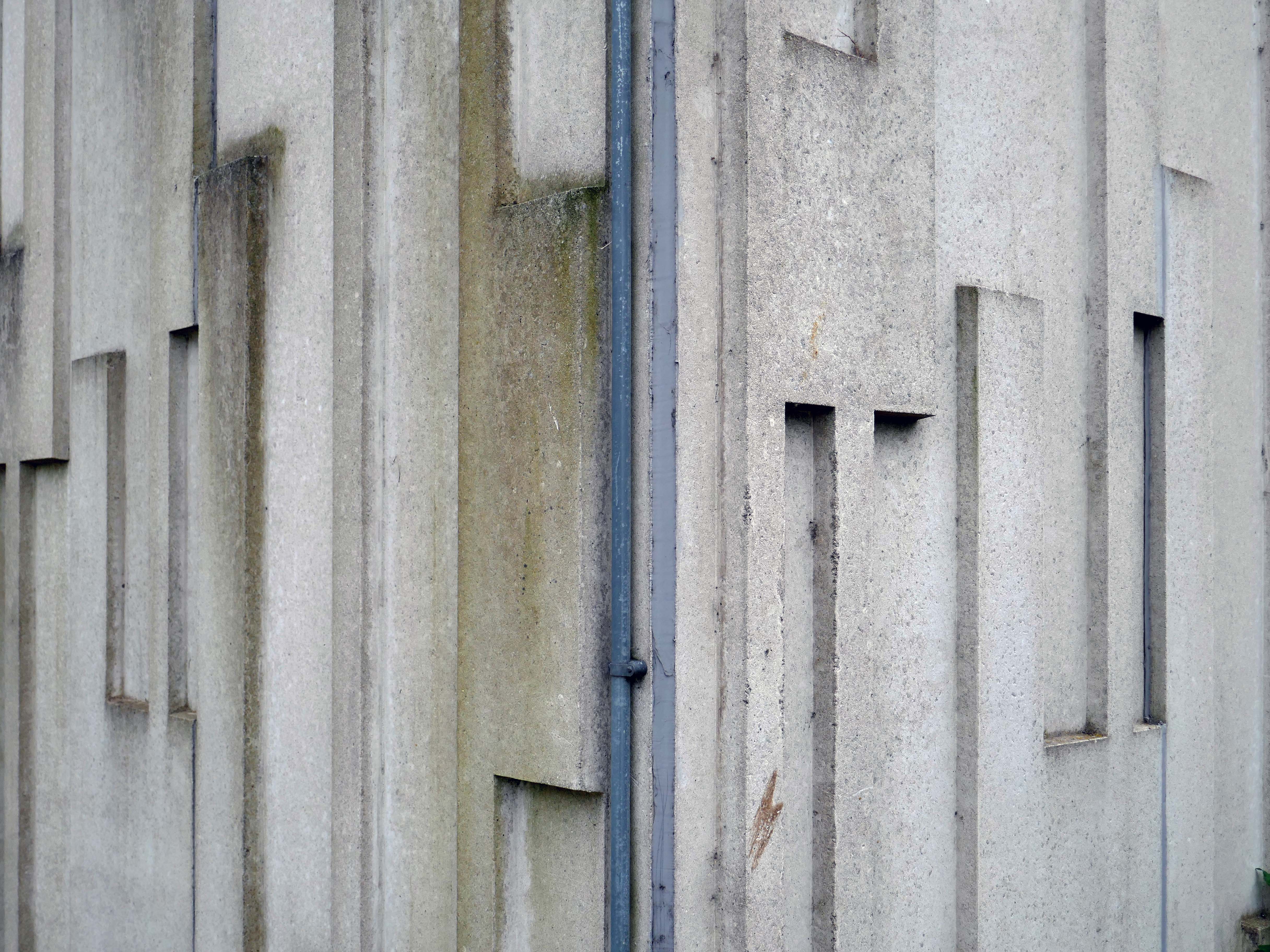
So here’s a snapshot of the centre’s exterior, with particular attention paid to the concrete relief.
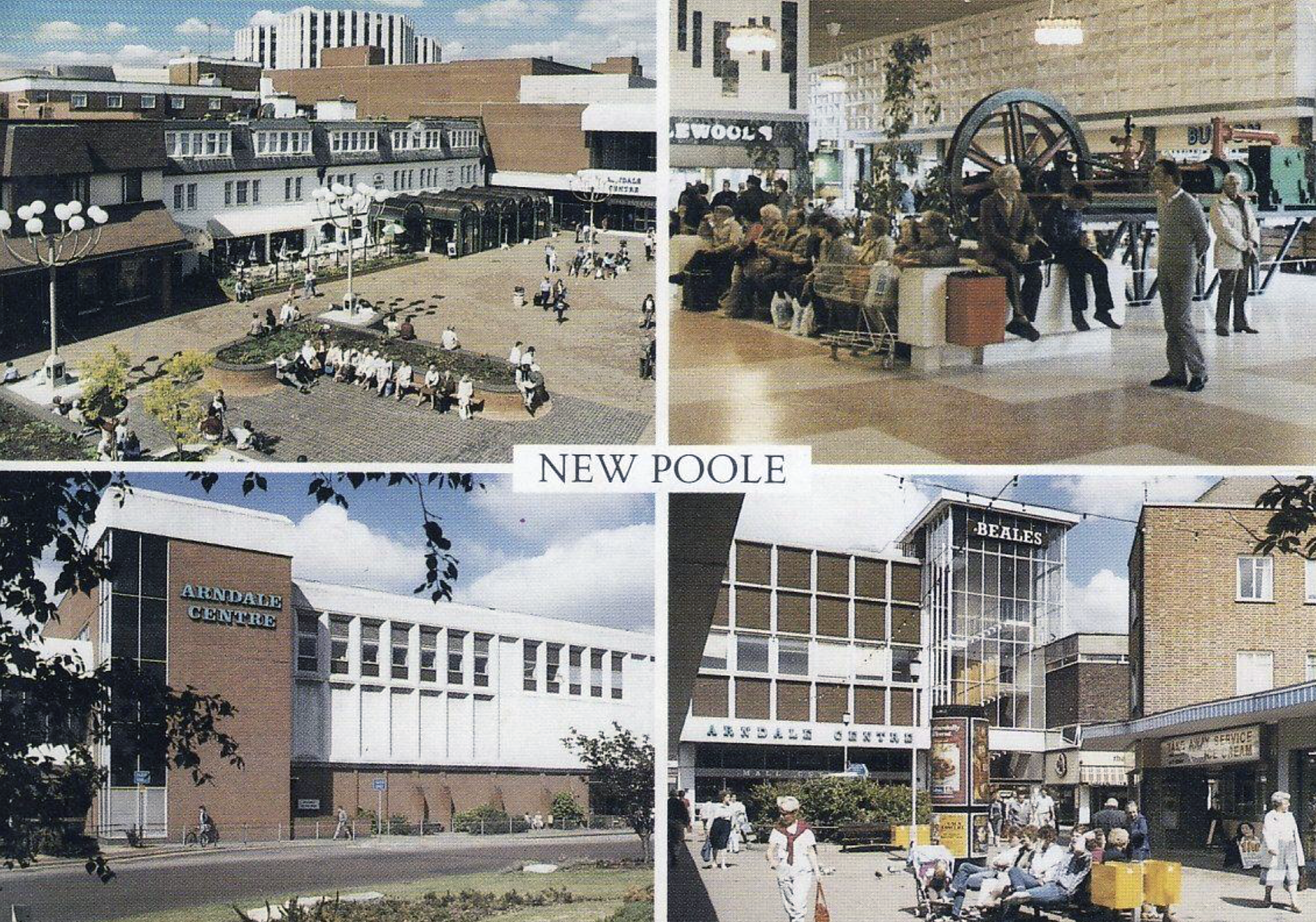
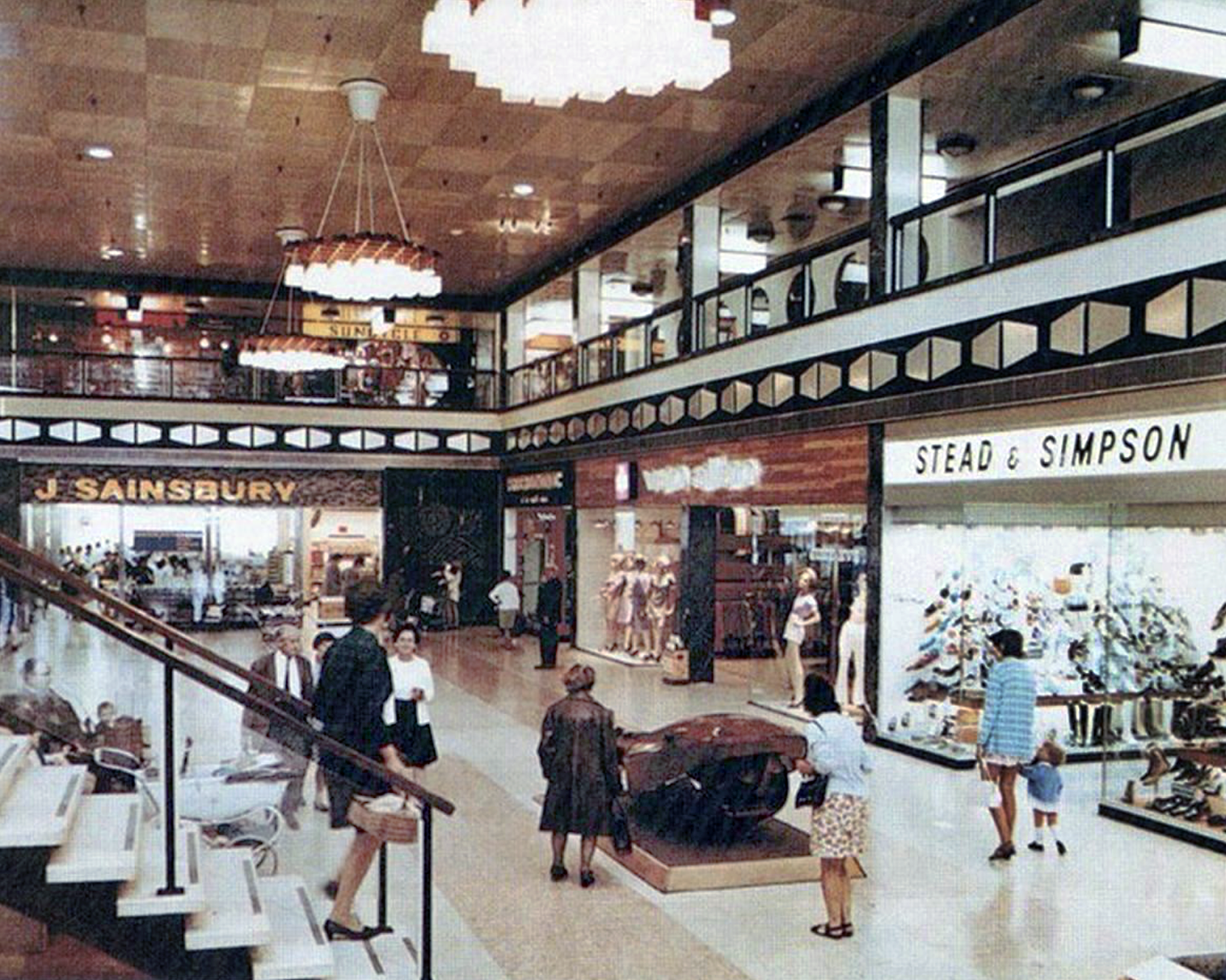
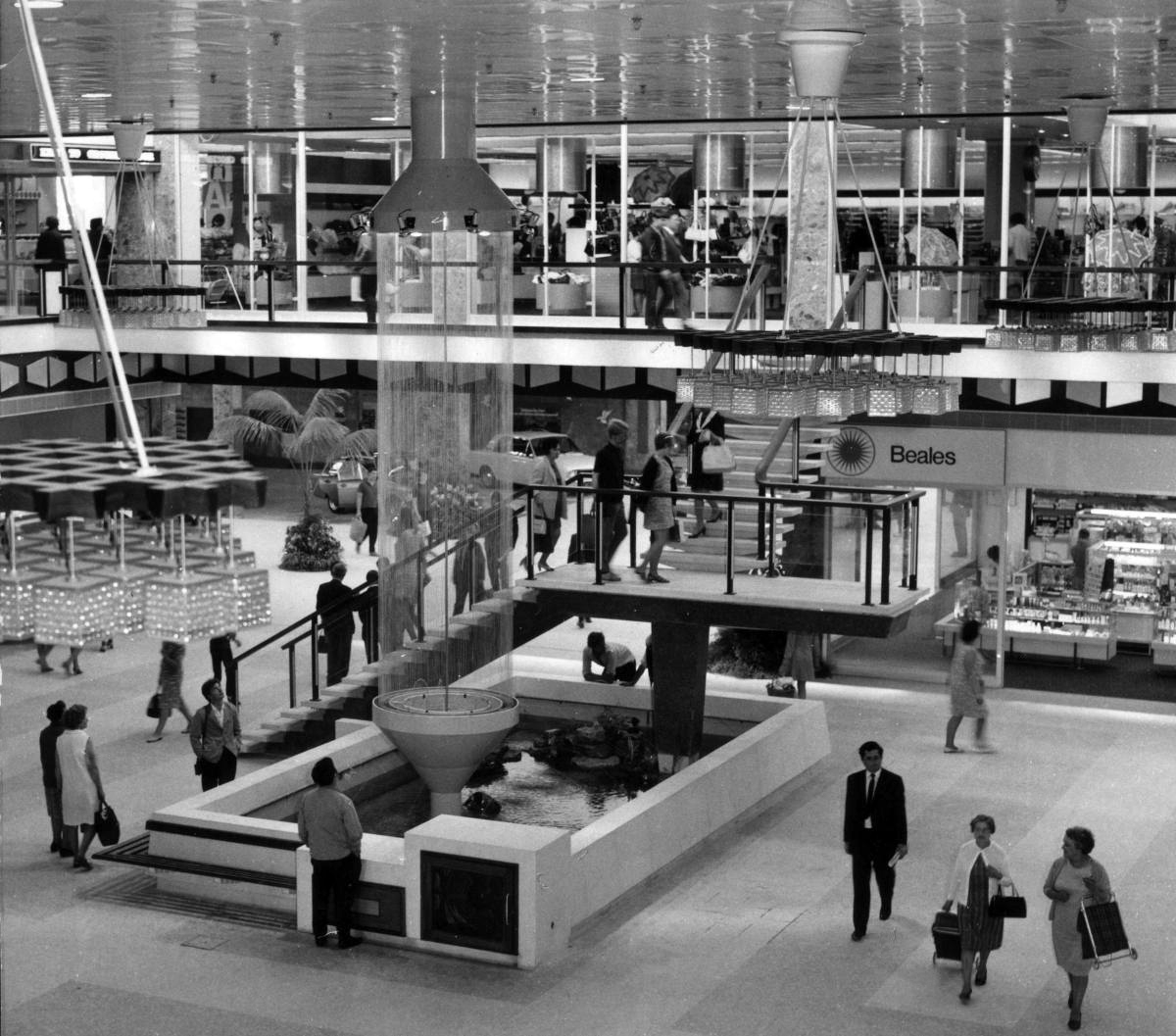
As an aside the nearby Dolphin Shopping Centre was once known as The Arndale.
In 1957 discussions began about creating a covered in shopping centre in the heart of Poole town centre, in a similar vein to those popular at the time in America. In 1963 property developers were invited by Poole Corporation to present schemes to develop this shopping centre as part of a redevelopment of the town.
The winning scheme was for a two million pound redevelopment by the Arndale Property Trust on land at High Street, Seldown Lane and Kingland Road] known as the Ladies Walking Field. One of the main reasons Arndale won was that their proposal incorporated a fully enclosed shopping centre. The scheme was to be designed by Leslie Jones and Partners in association with Geoffrey Hopkinson; Poole Borough Architect and Chief Planning Officer, the structural engineers were to be Bowden Sillett and Partners and the main contractors were to be Sir Lindsay Parkinson and Company.
The transformation of Poole Town Centre started in June 1966 when work began on a new road layout and construction of the shopping centre commenced in March 1967 when the then Mayor of Poole, Alderman Ron Hart, dug the first turf.
In 1989 an eight million pound refurbishment programme was carried out on the centre, which emerged with a new name ; The Dolphin Shopping Centre.
In February 2025, reinforced autoclaved aerated concrete RAAC was found at the shopping centre. The final Beales department store in the UK will close at the end of May 2025.
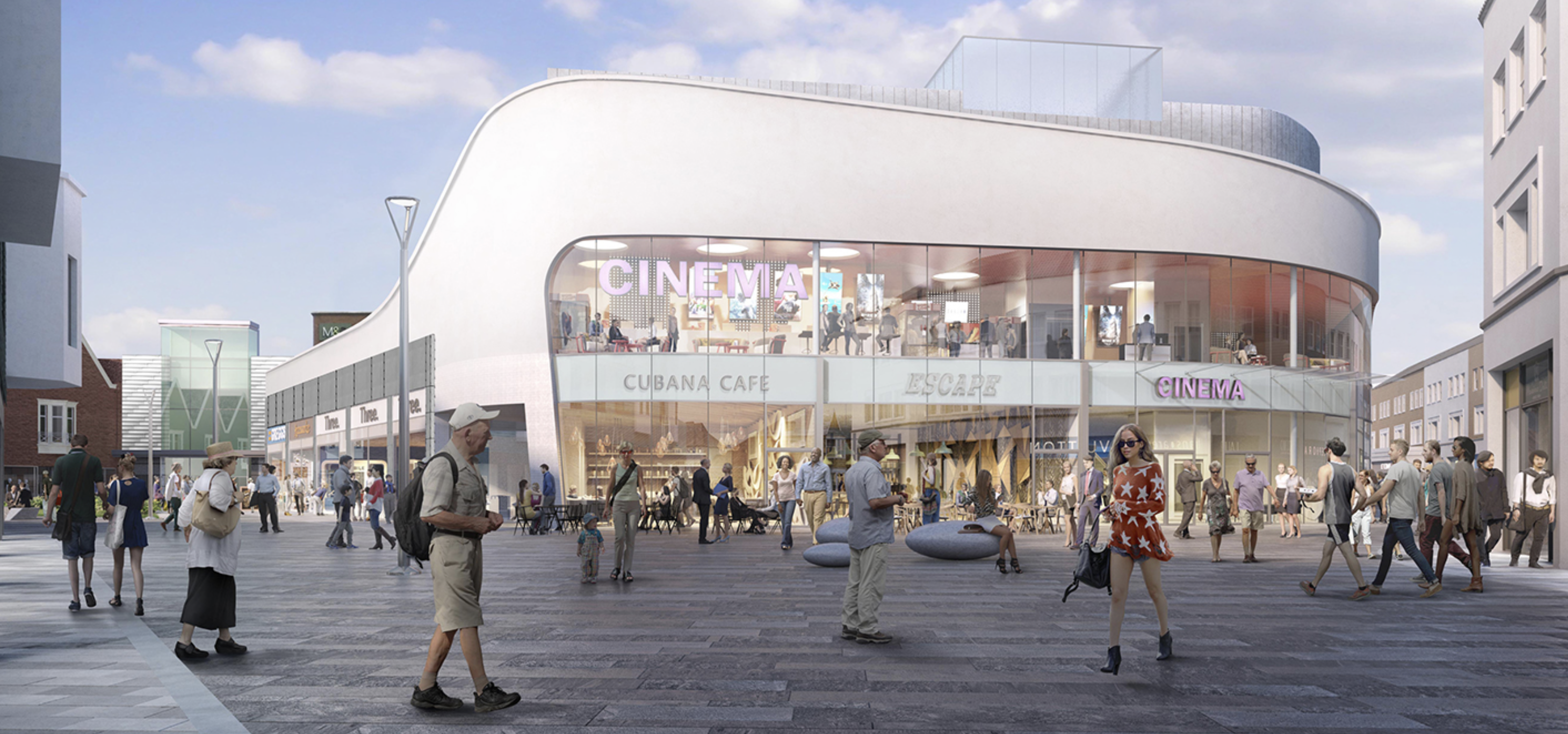
To ensure the shopping centre remains popular and well occupied, the owner LGIM Real Assets is investing in the redevelopment of the internal malls and various retail buildings within the site. Designed by tp bennett, a programme of refurbishment is underway with the aim of delivering a more exciting and modern retail experience to help attract shoppers and retailers. The scheme includes new stores for H&M, New Look and JD Sports as well a new mixed-use leisure development, with a multiplex cinema, restaurants and a refreshed public realm.
It will be a huge transformation and there is a real local desire for it.
Part of wider improvement works in Poole, it is hoped that this major investment will enhance the customer experience, and reinforce the centre as a popular, family-friendly retail and entertainment destination.
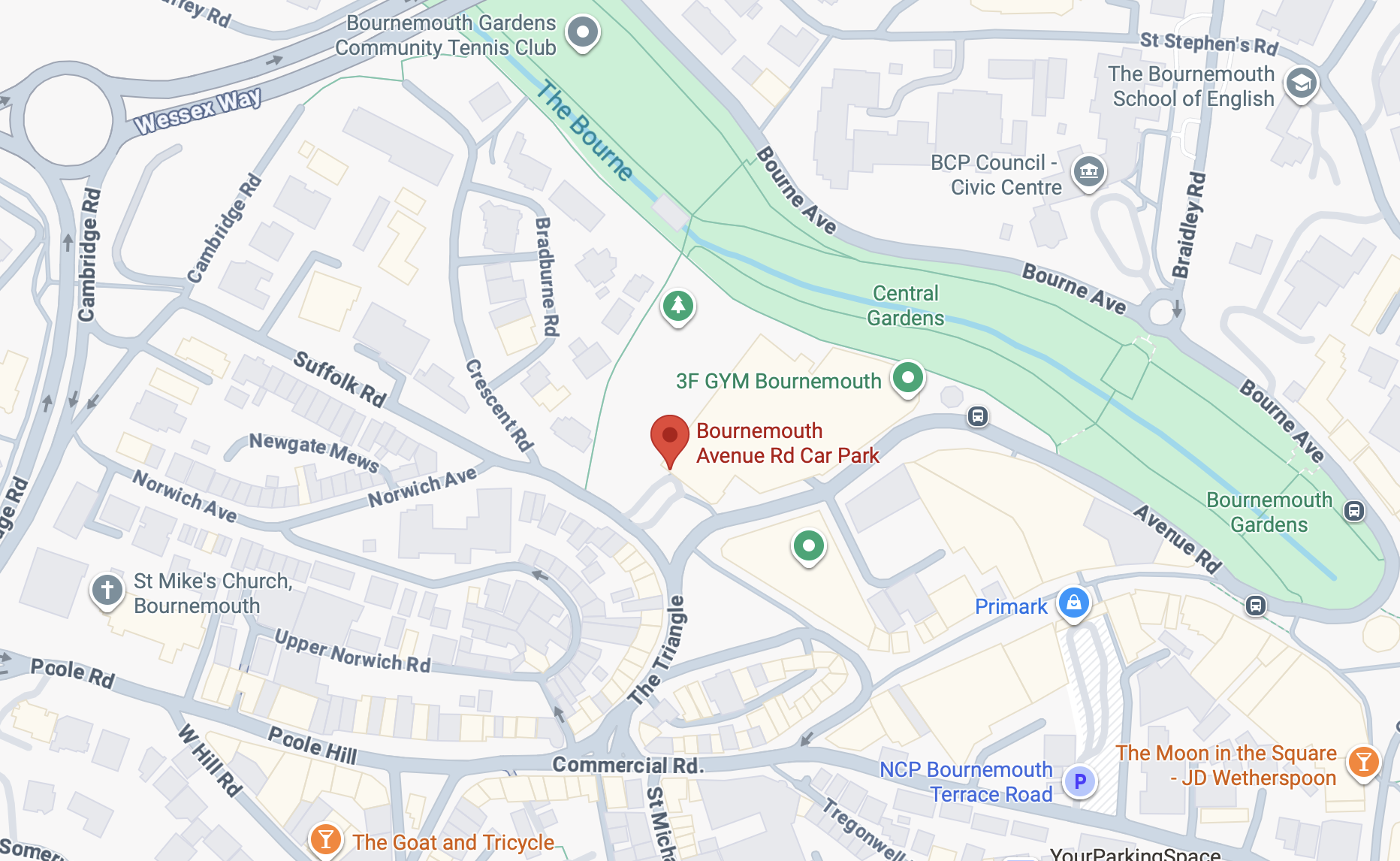
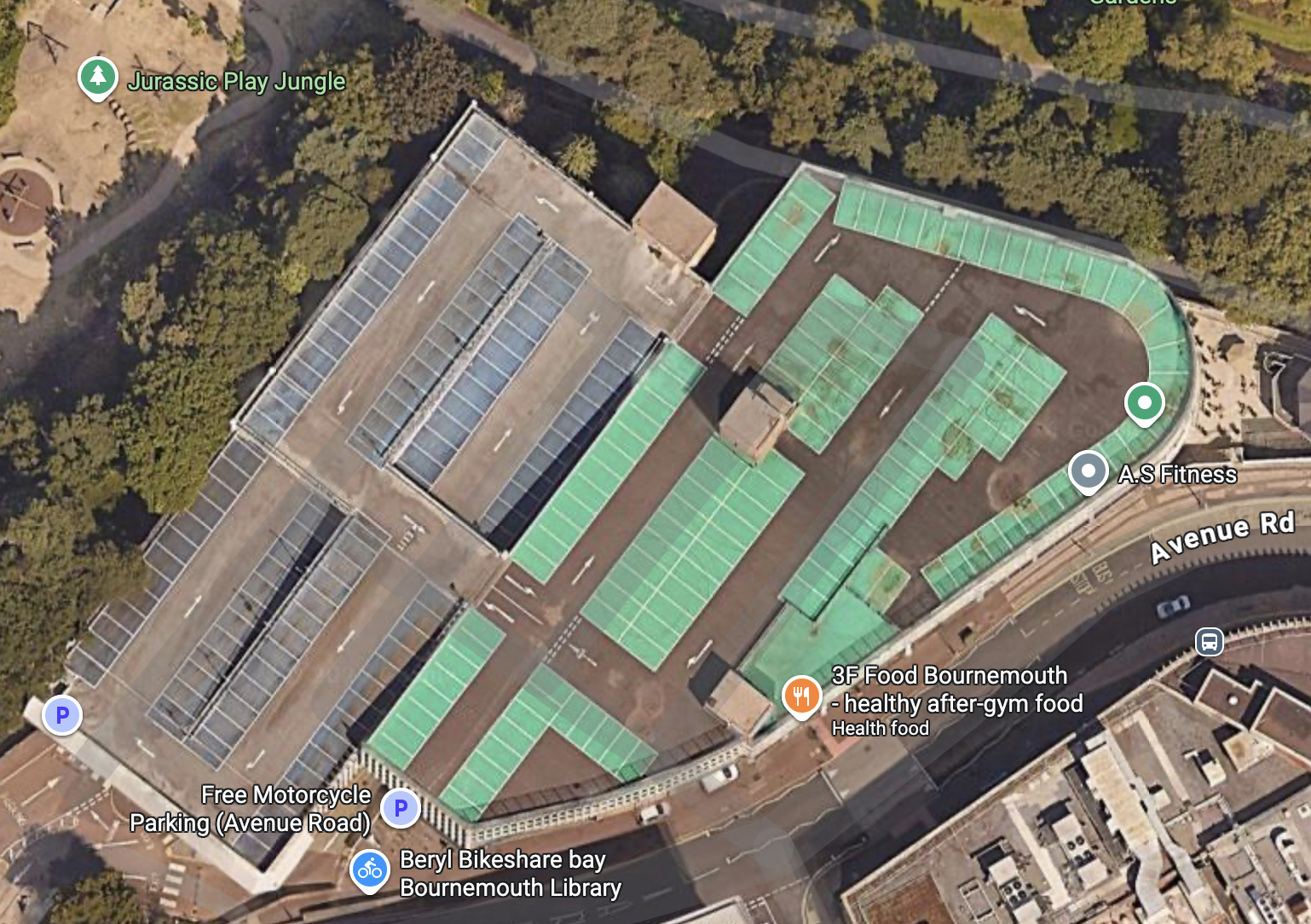
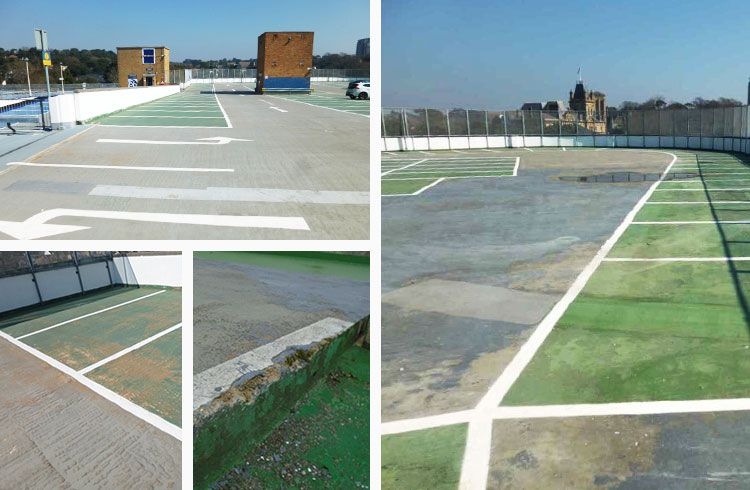
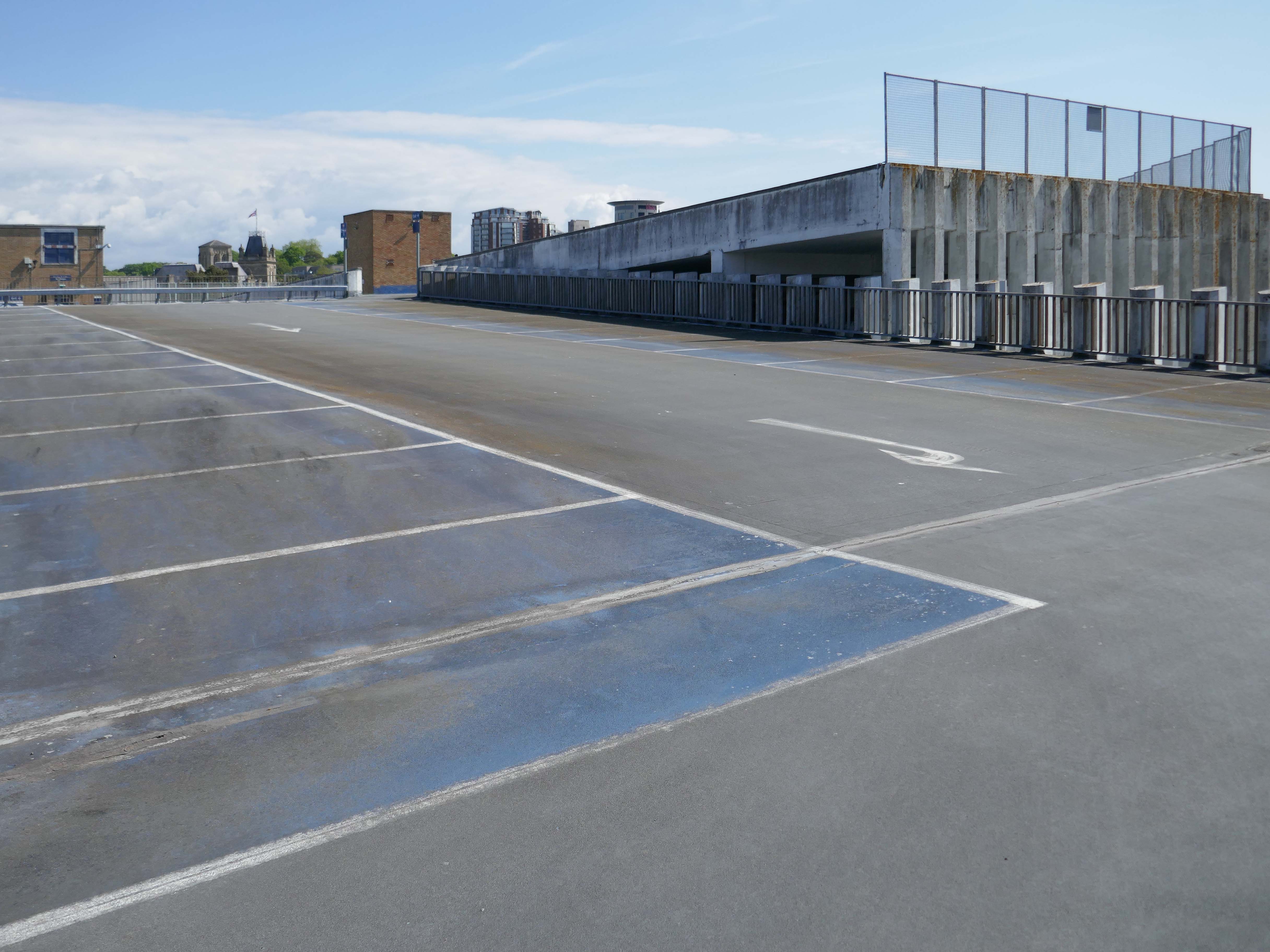
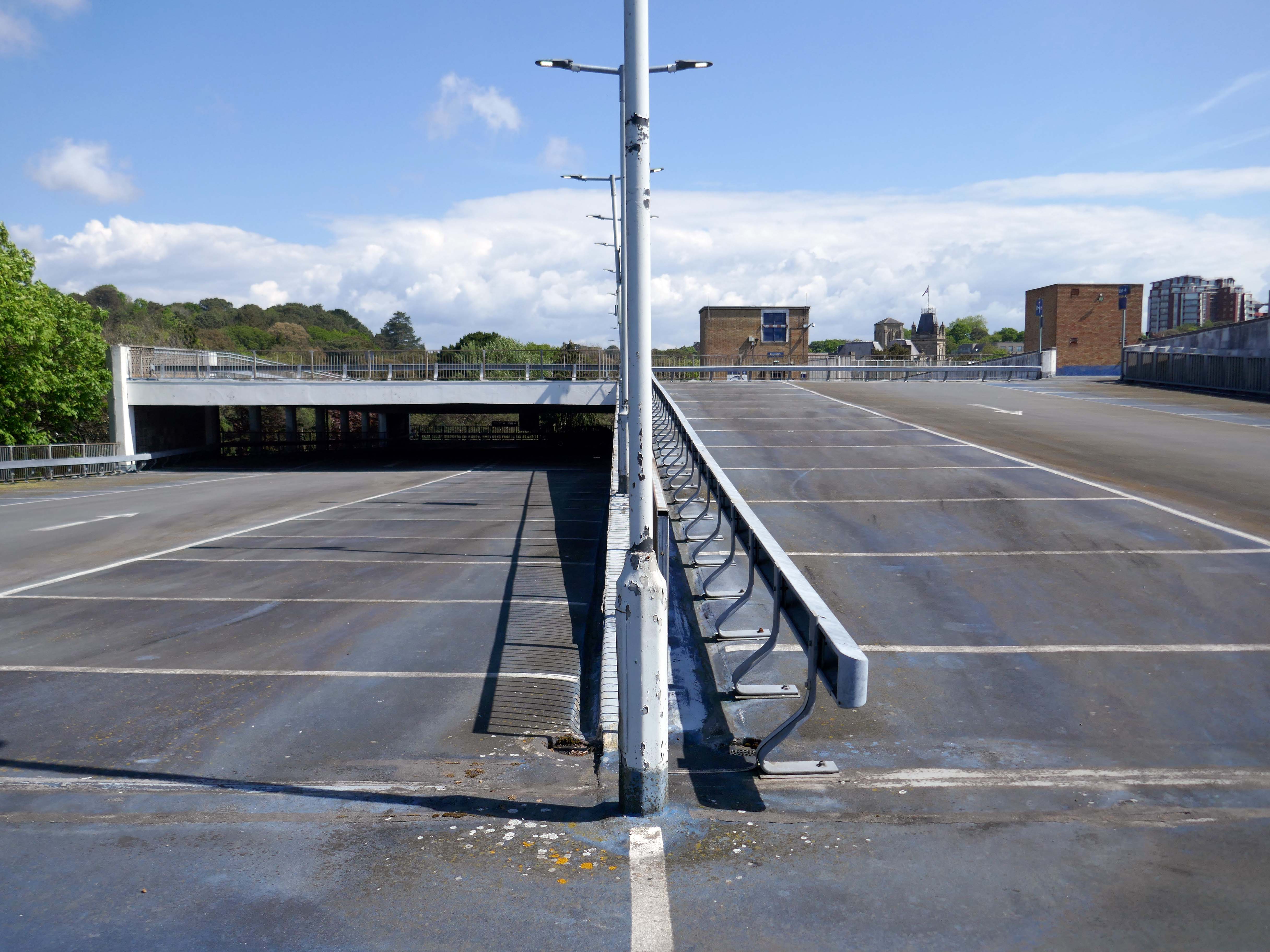
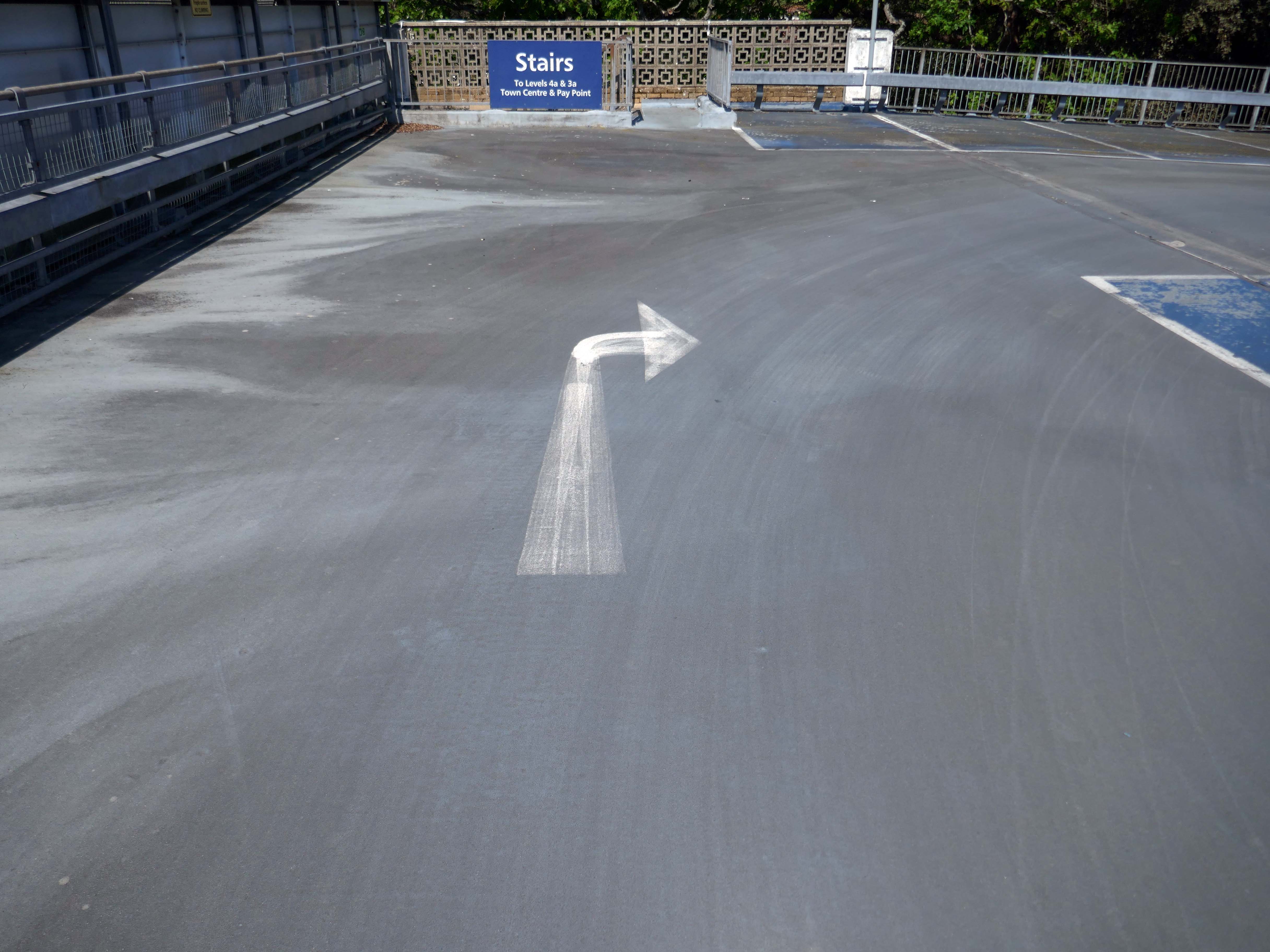
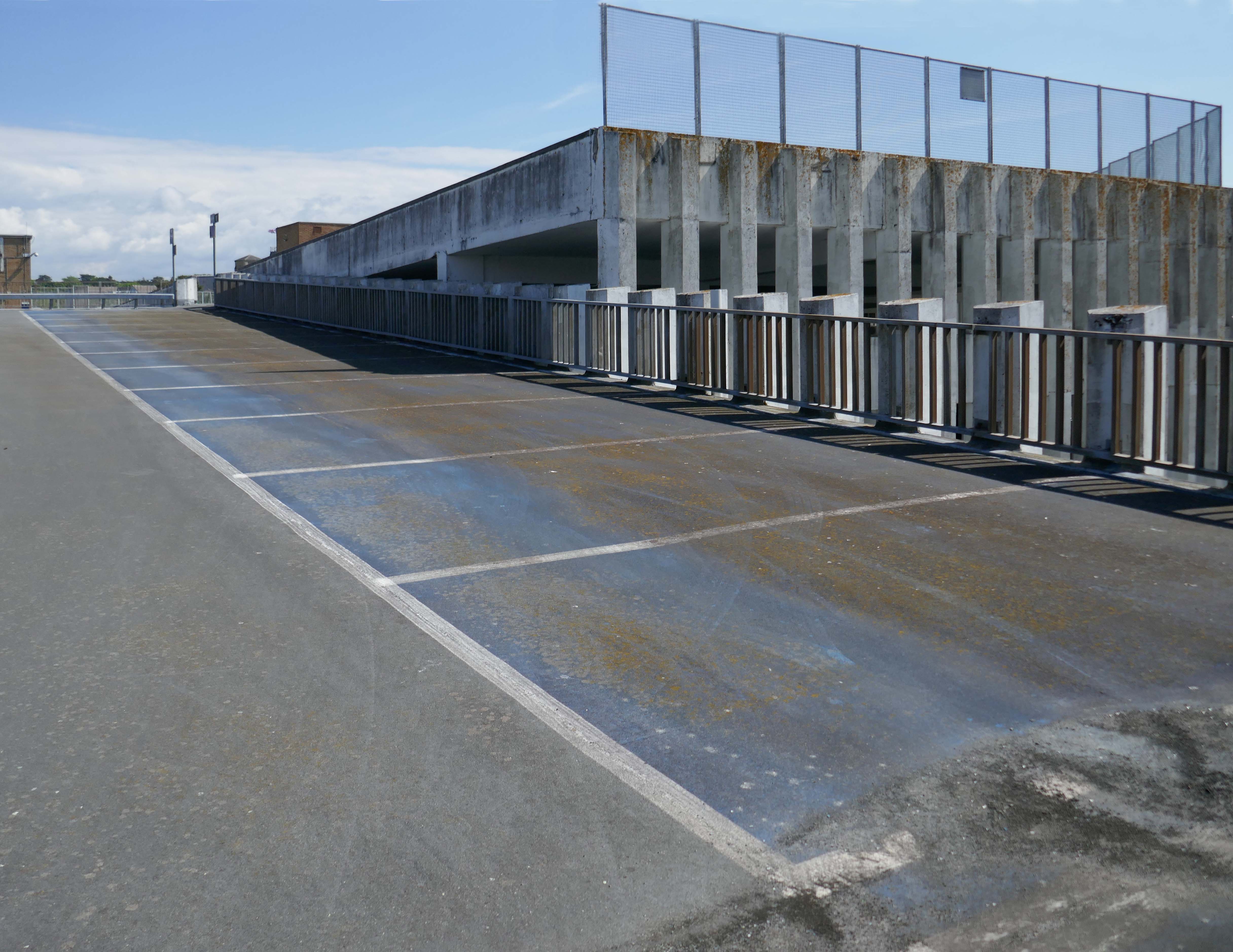
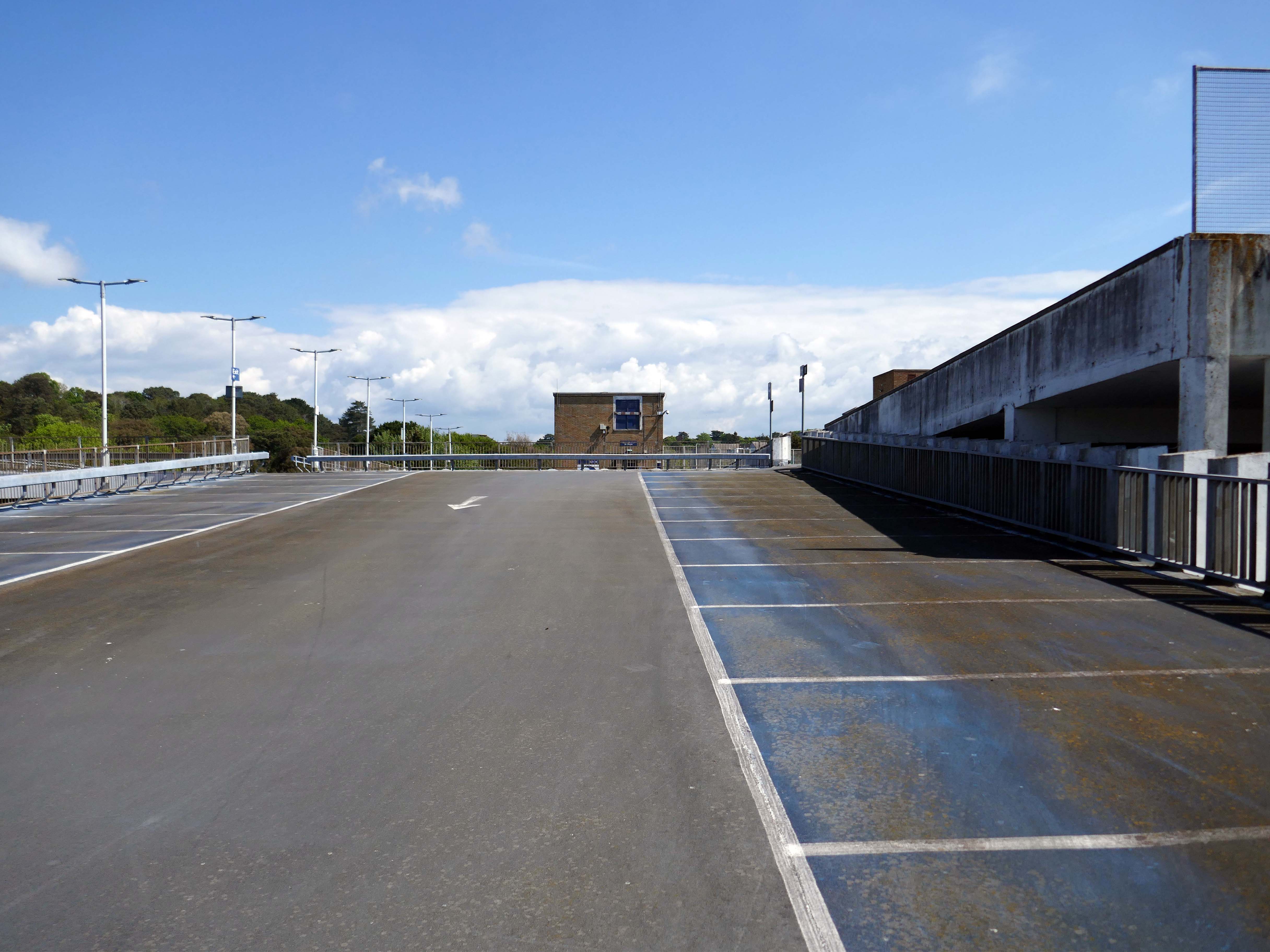
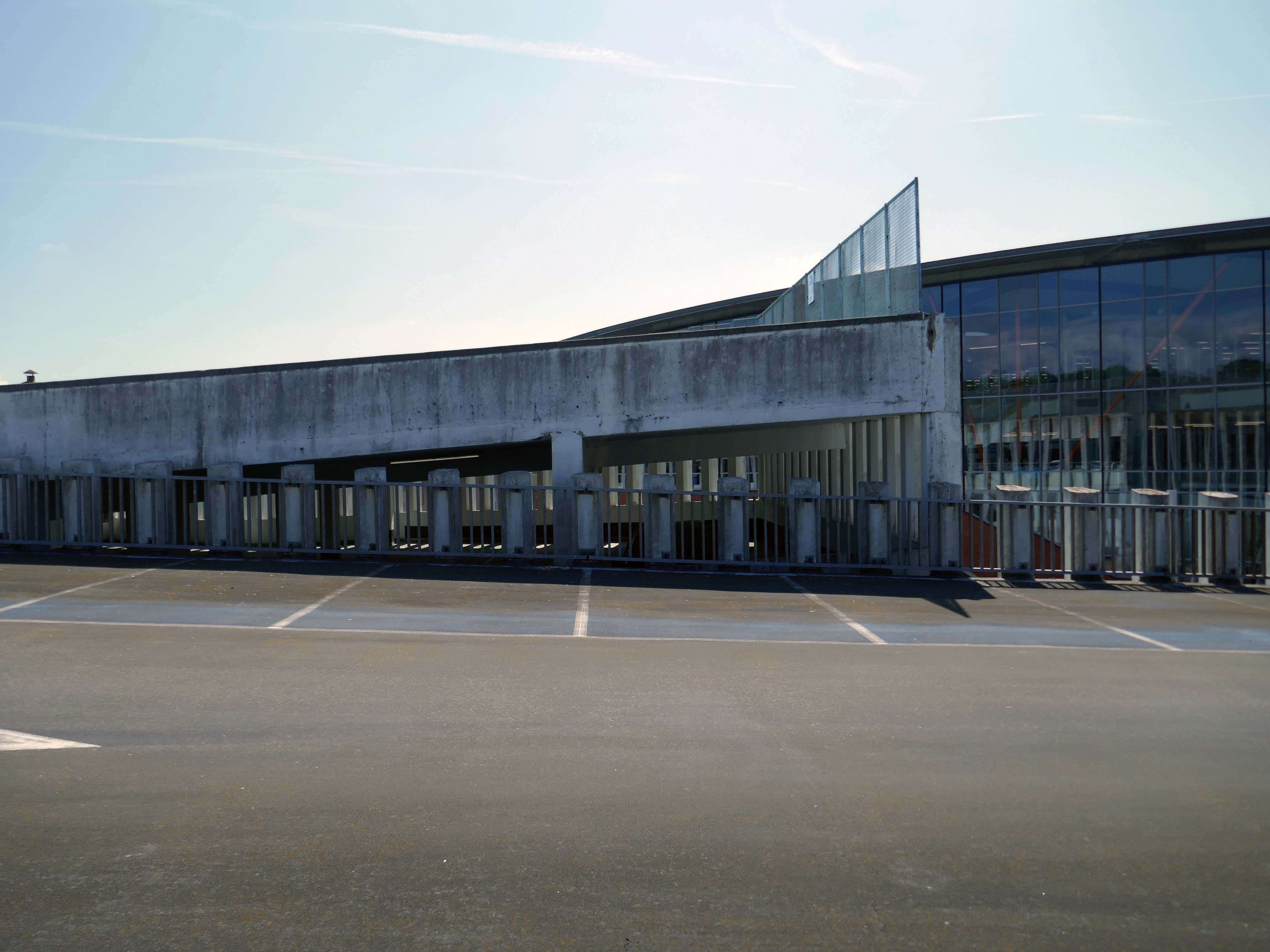
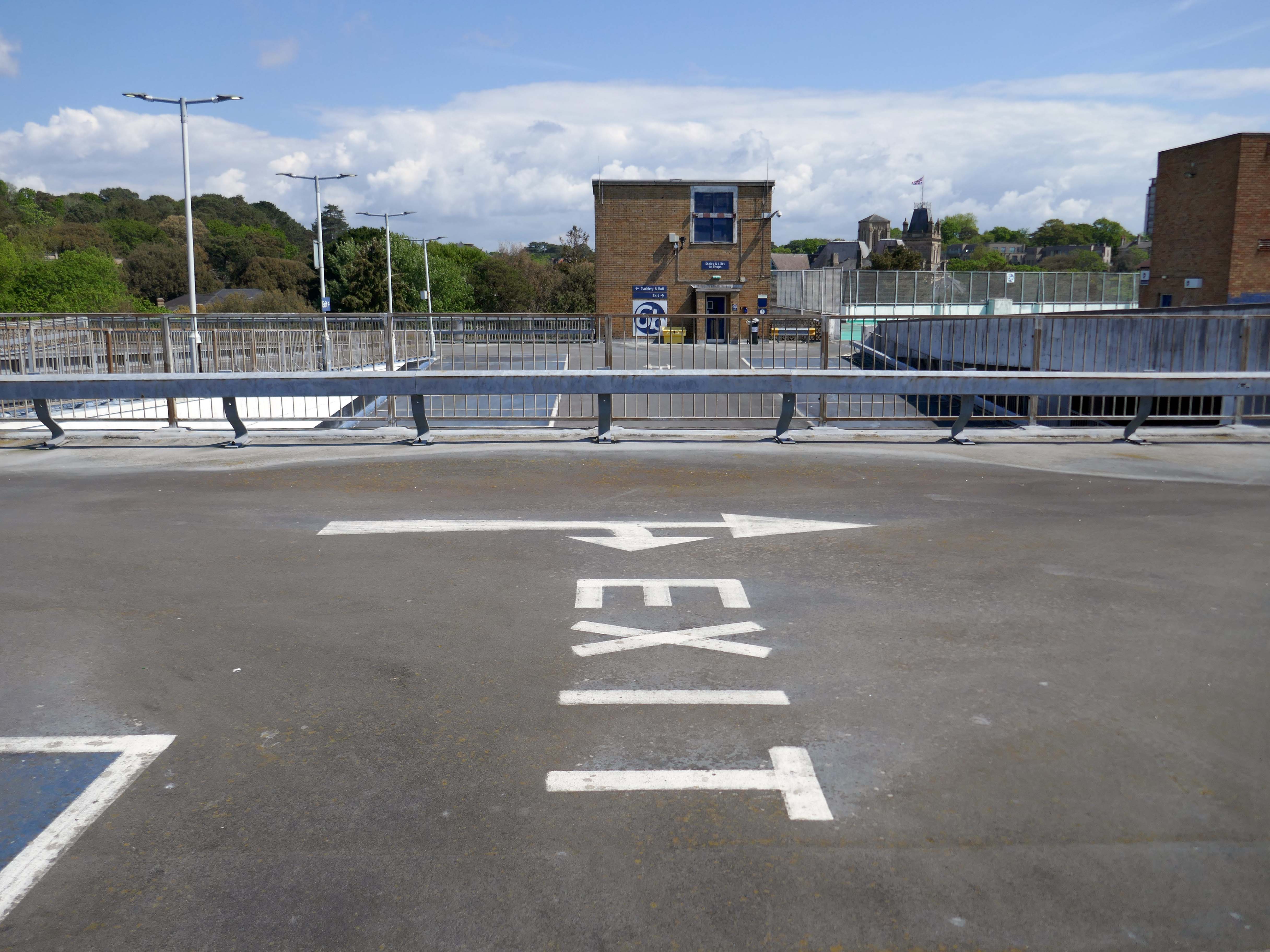
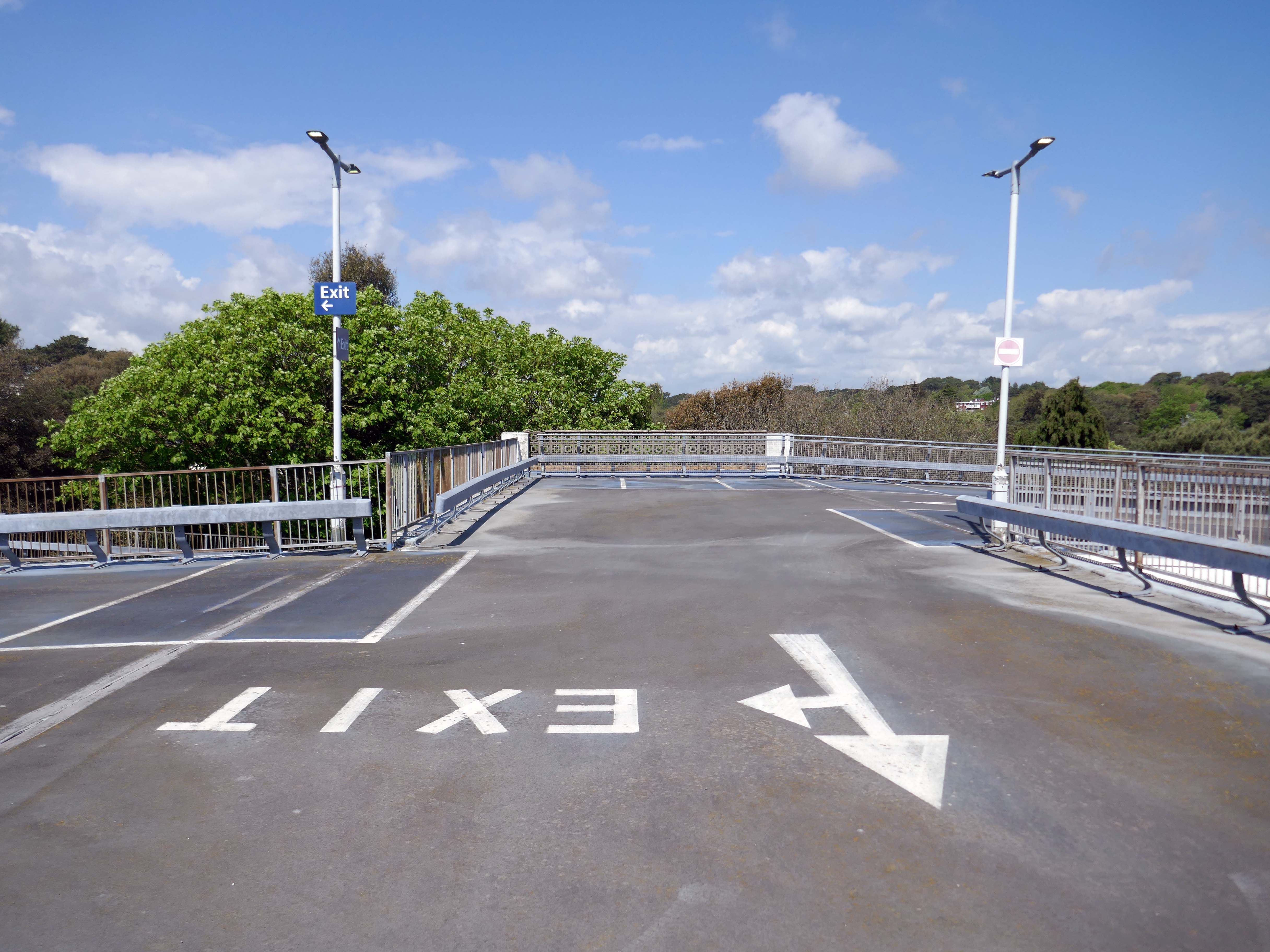
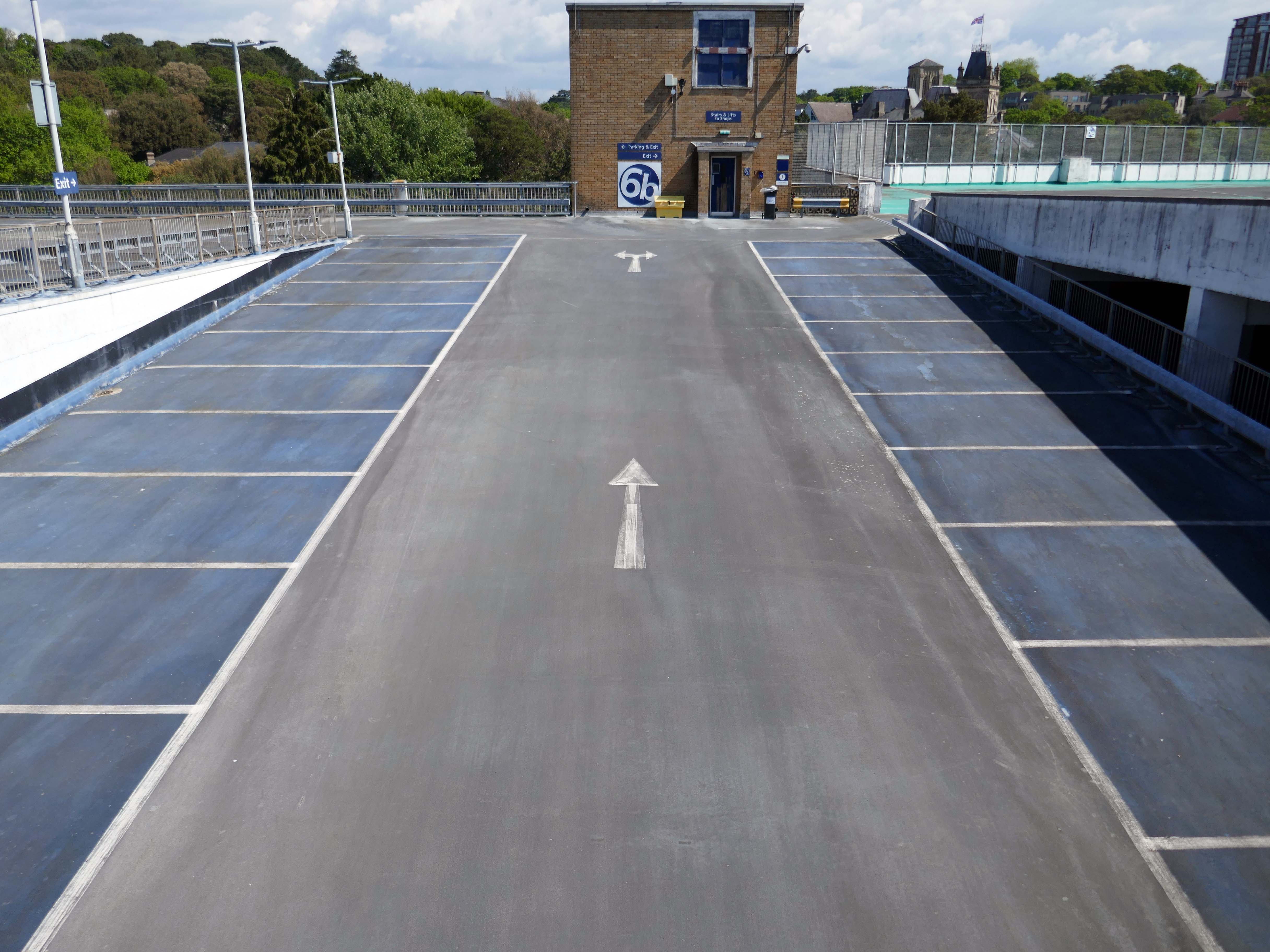
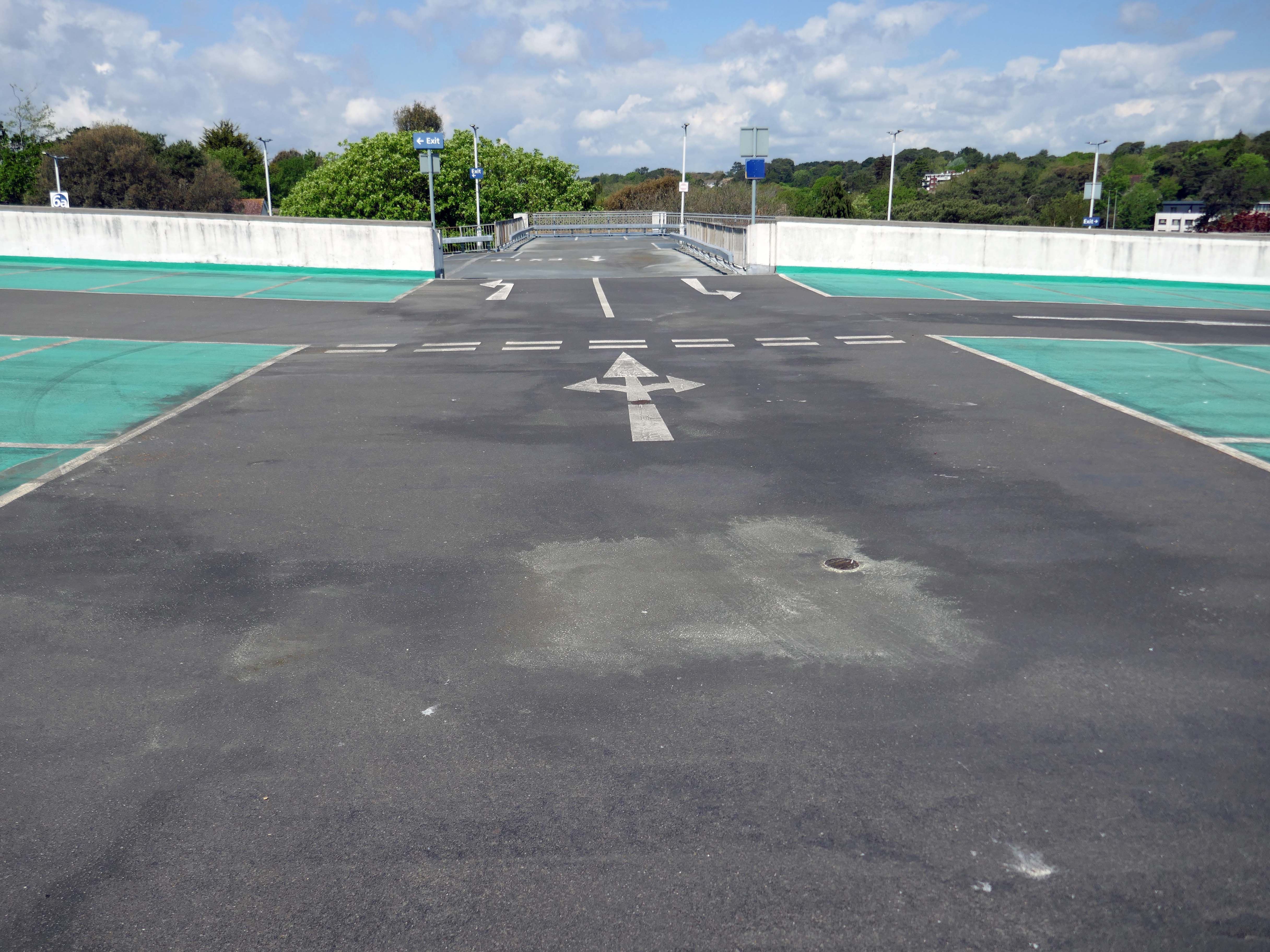
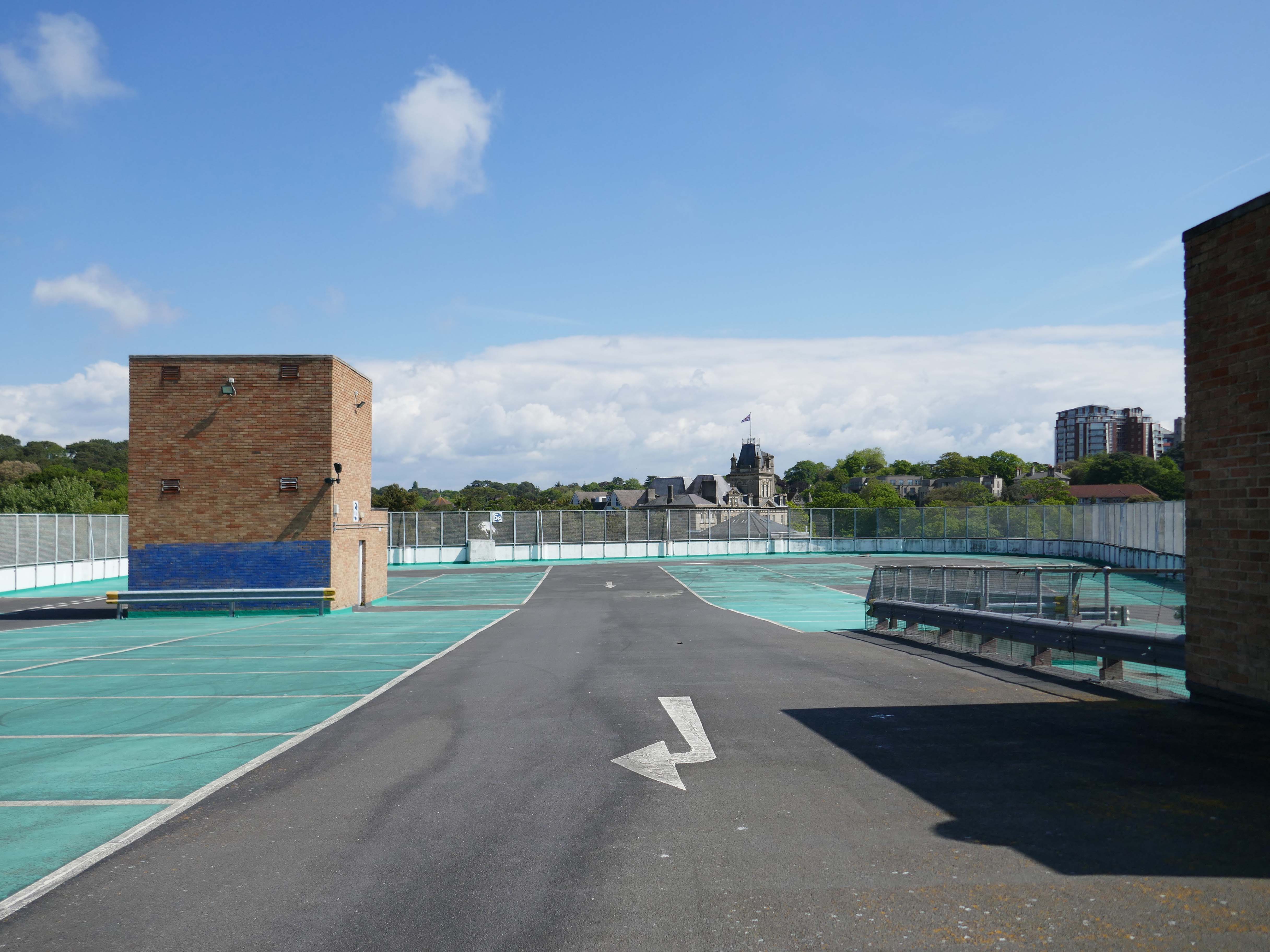
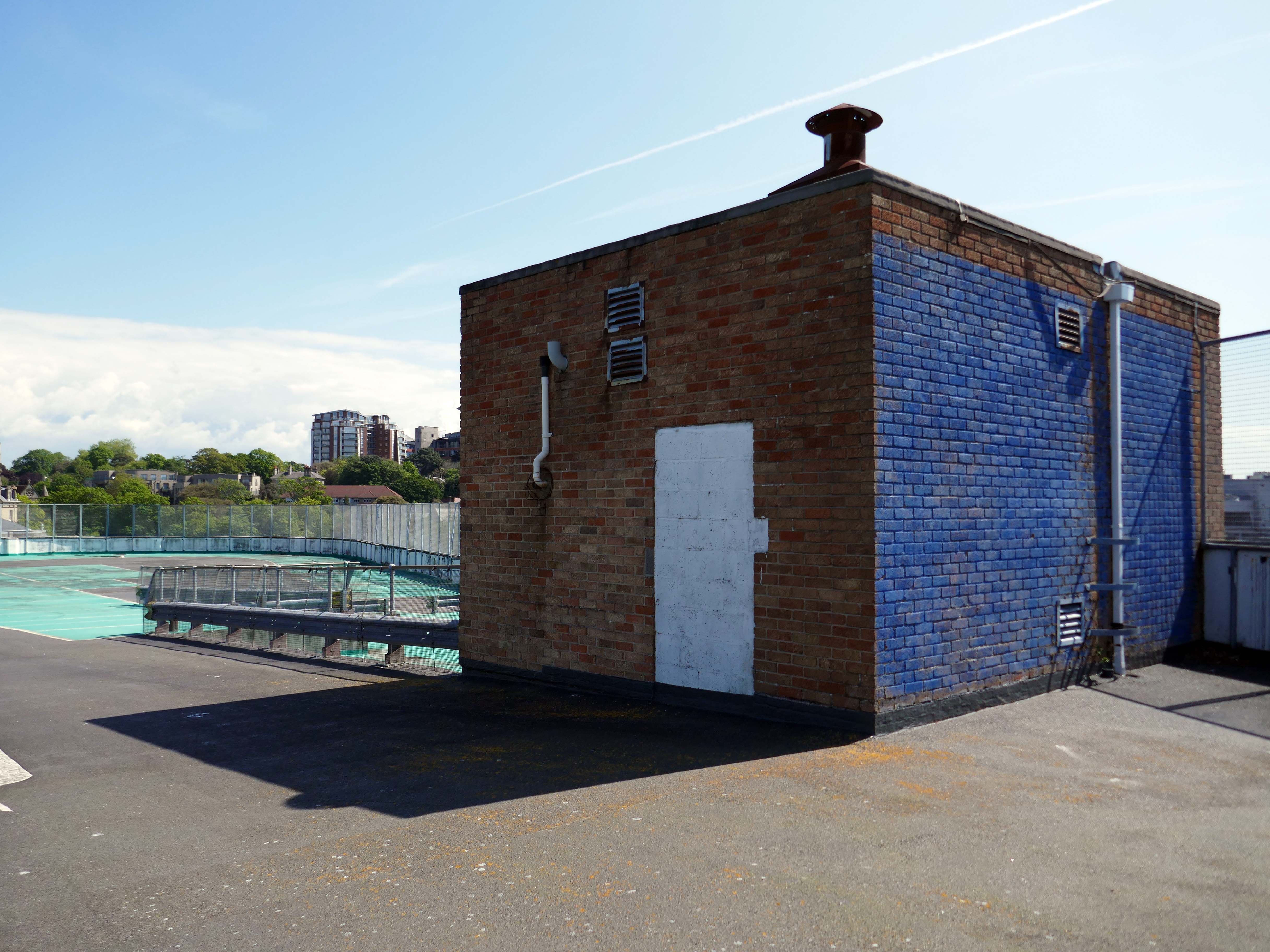
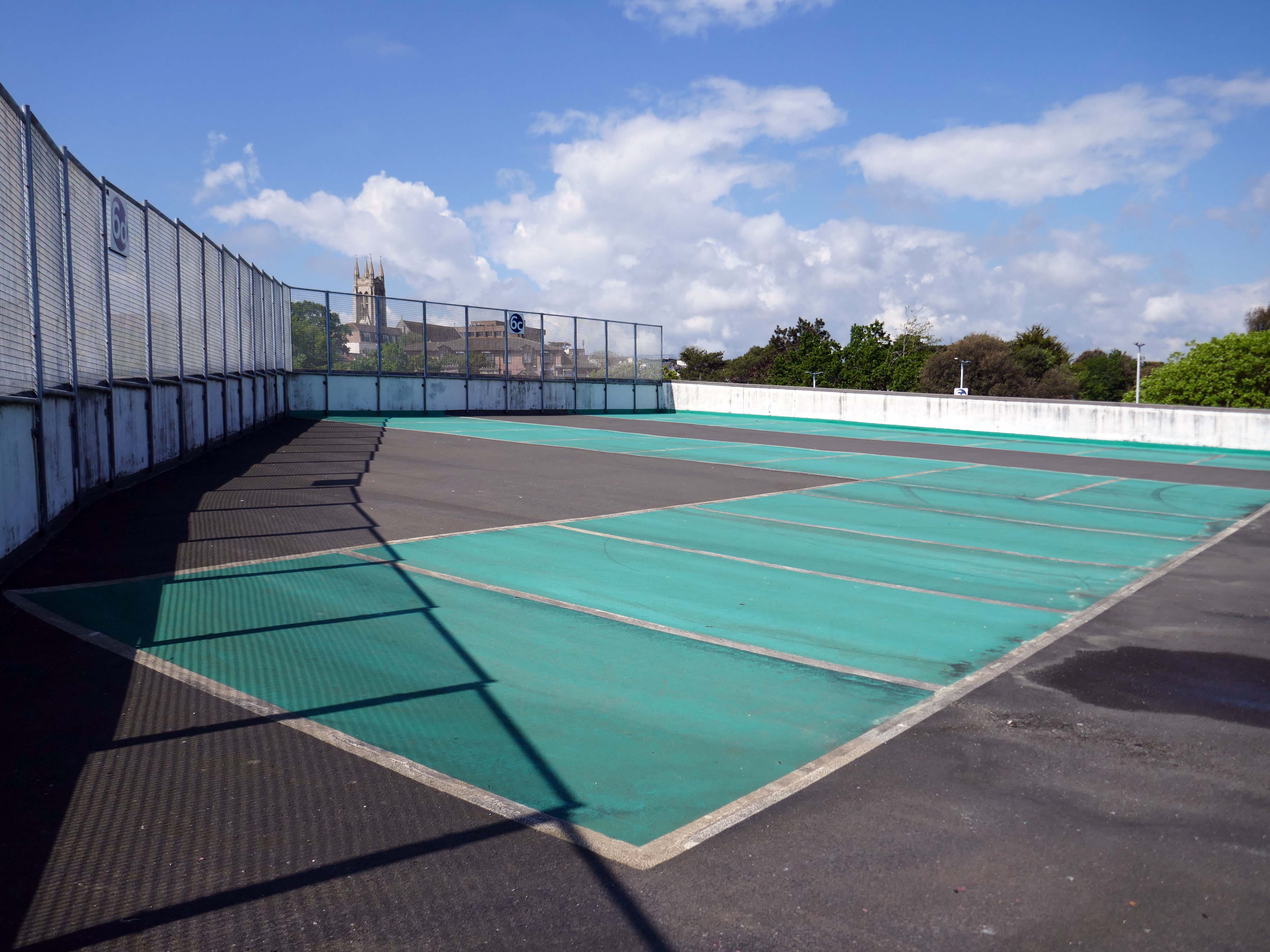
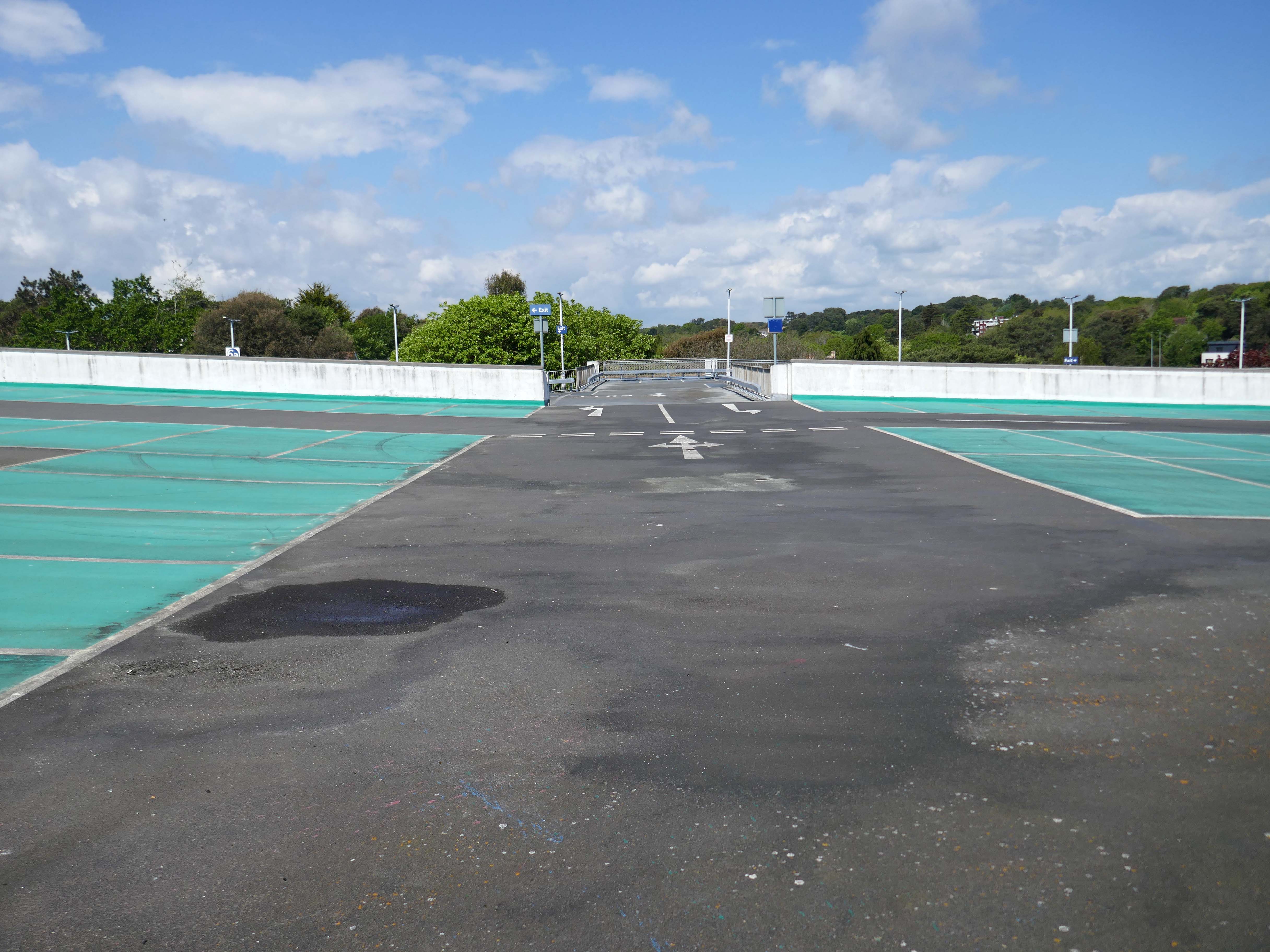
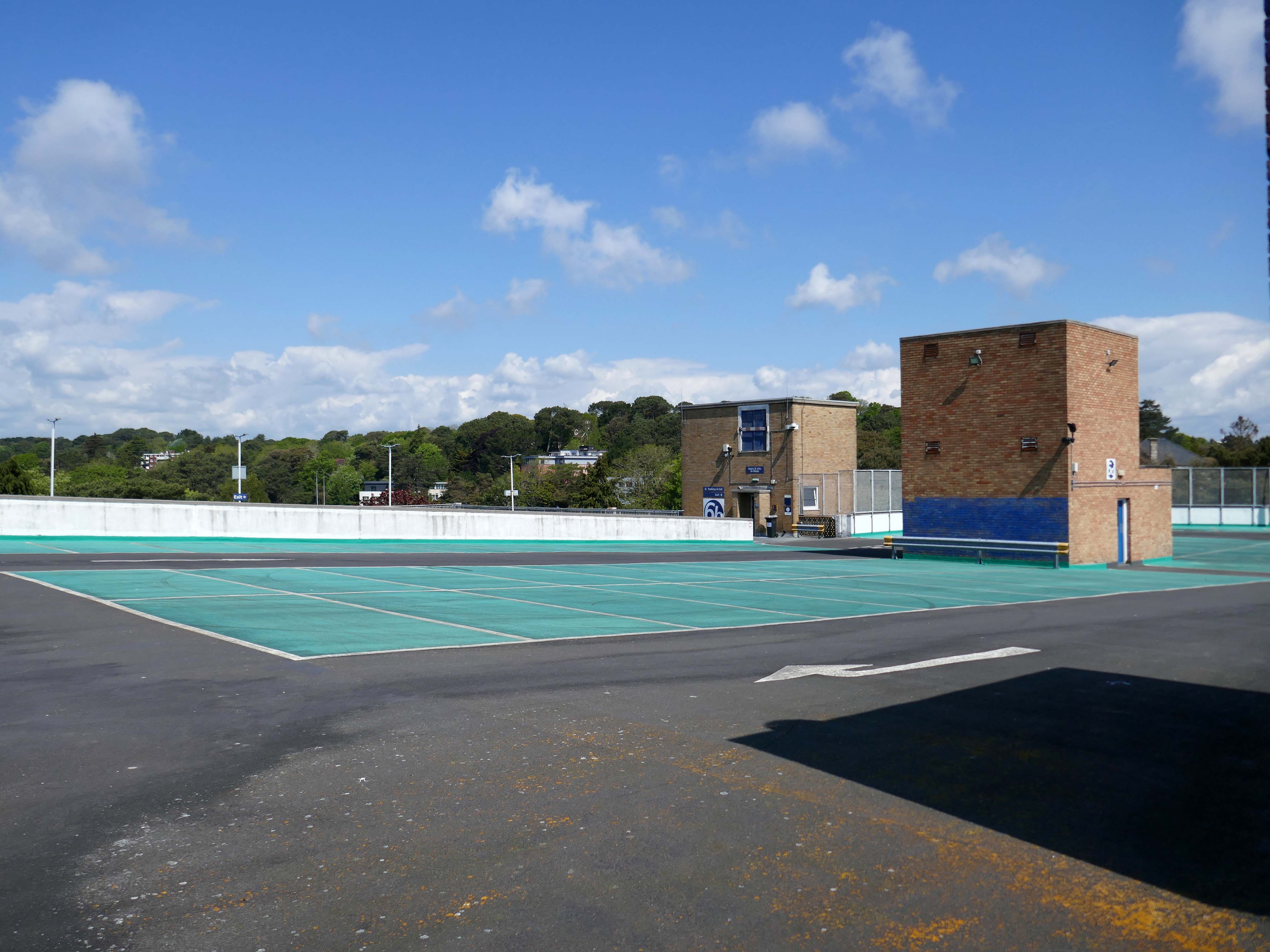
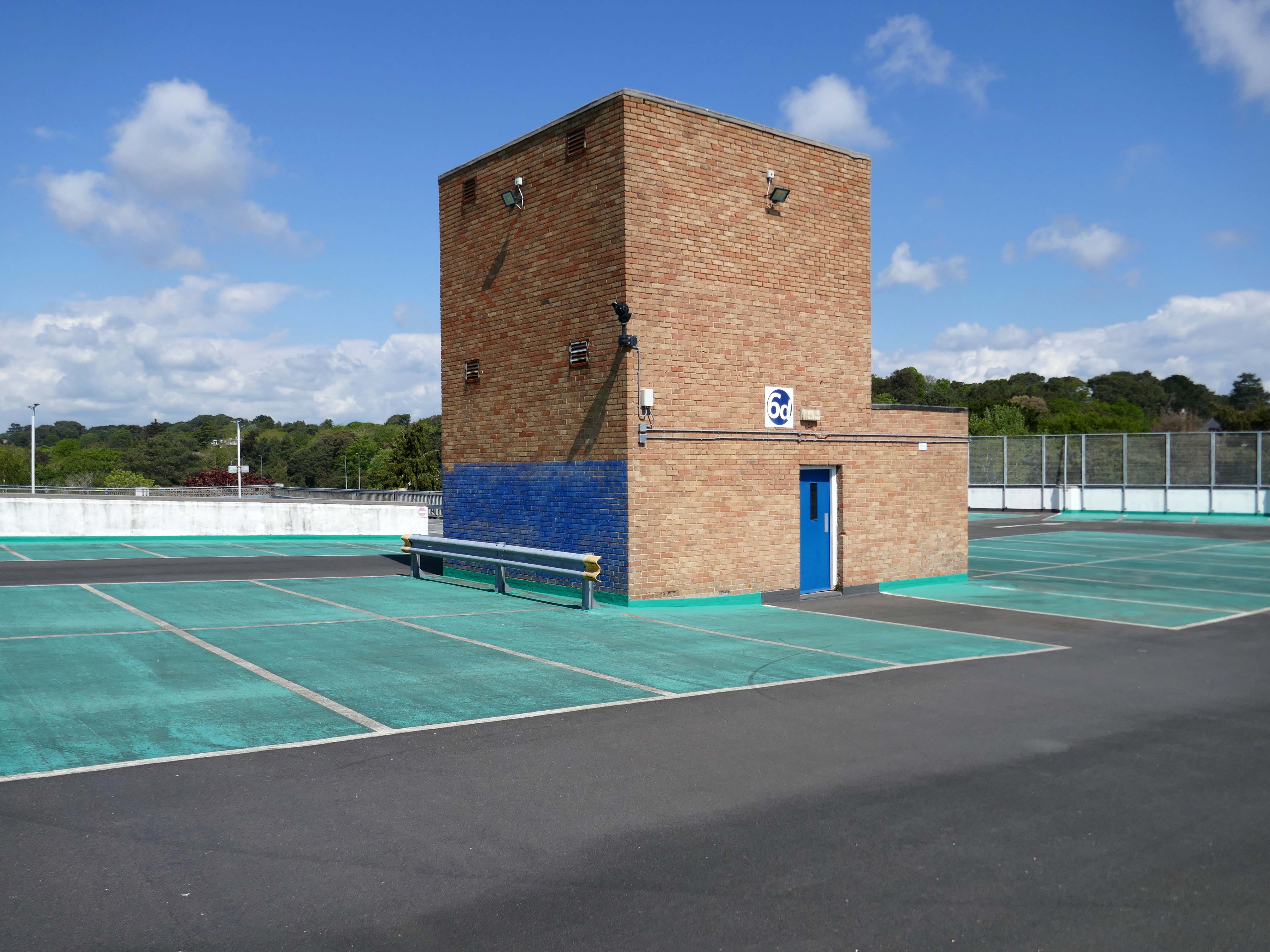
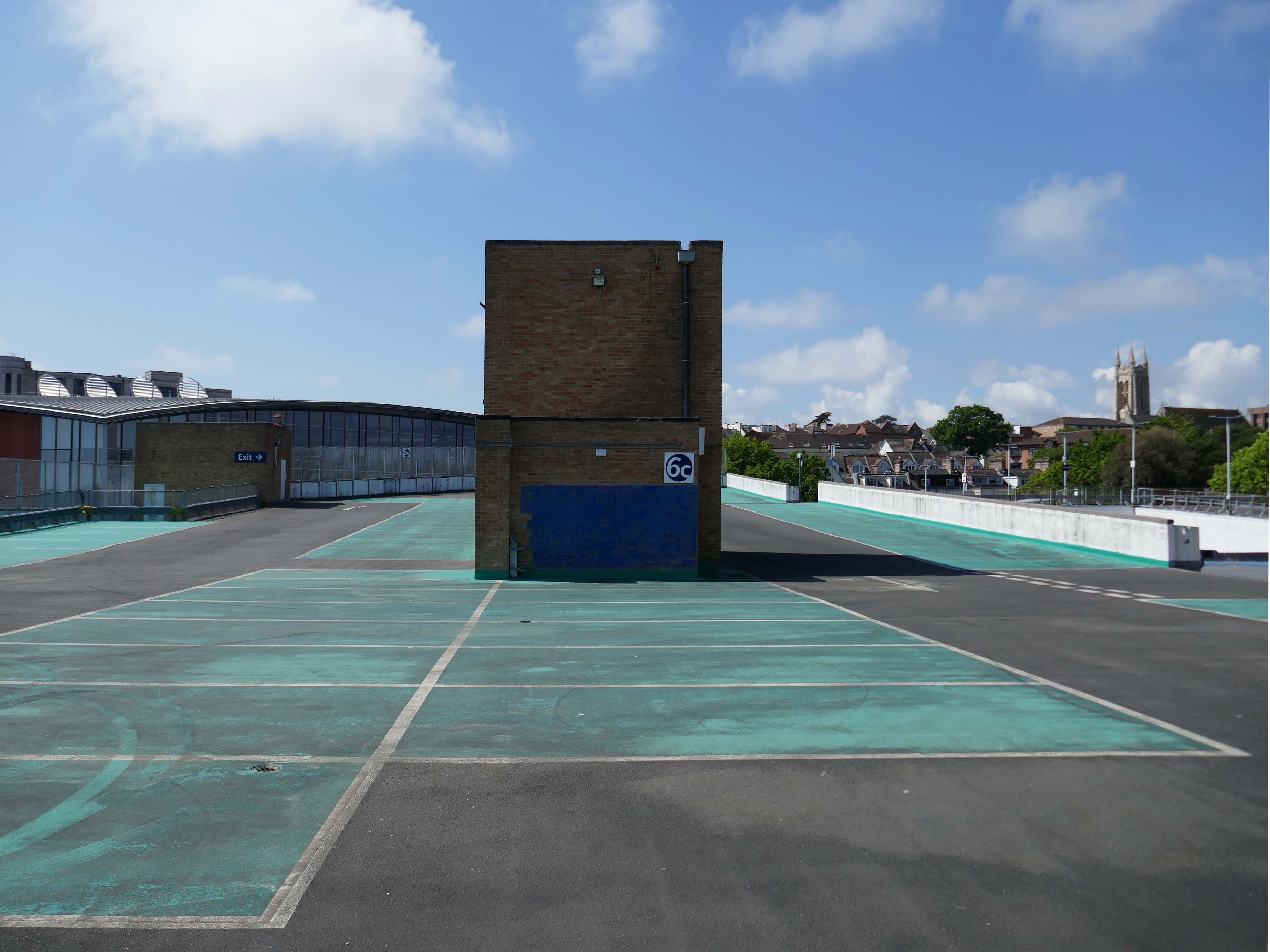
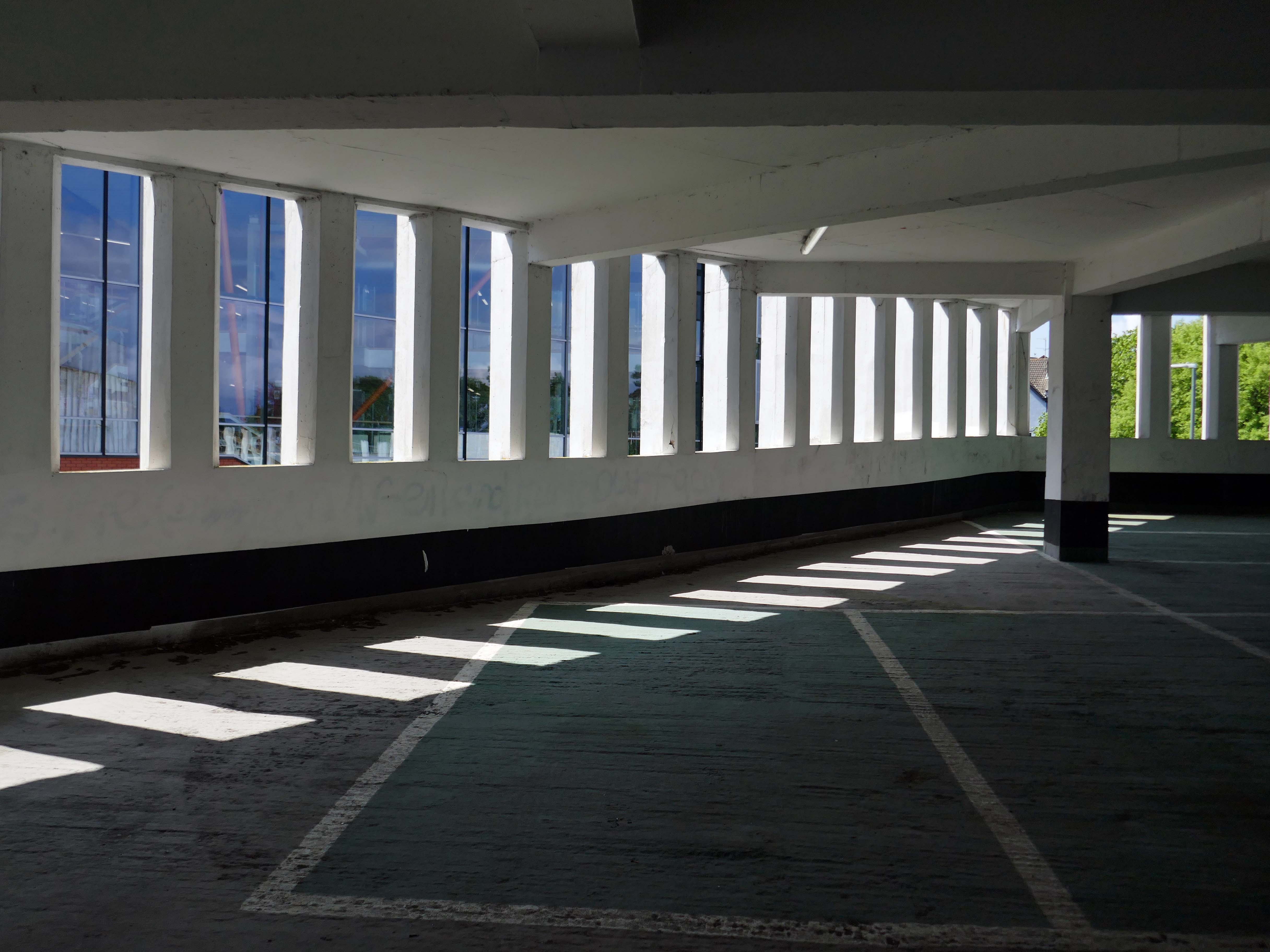
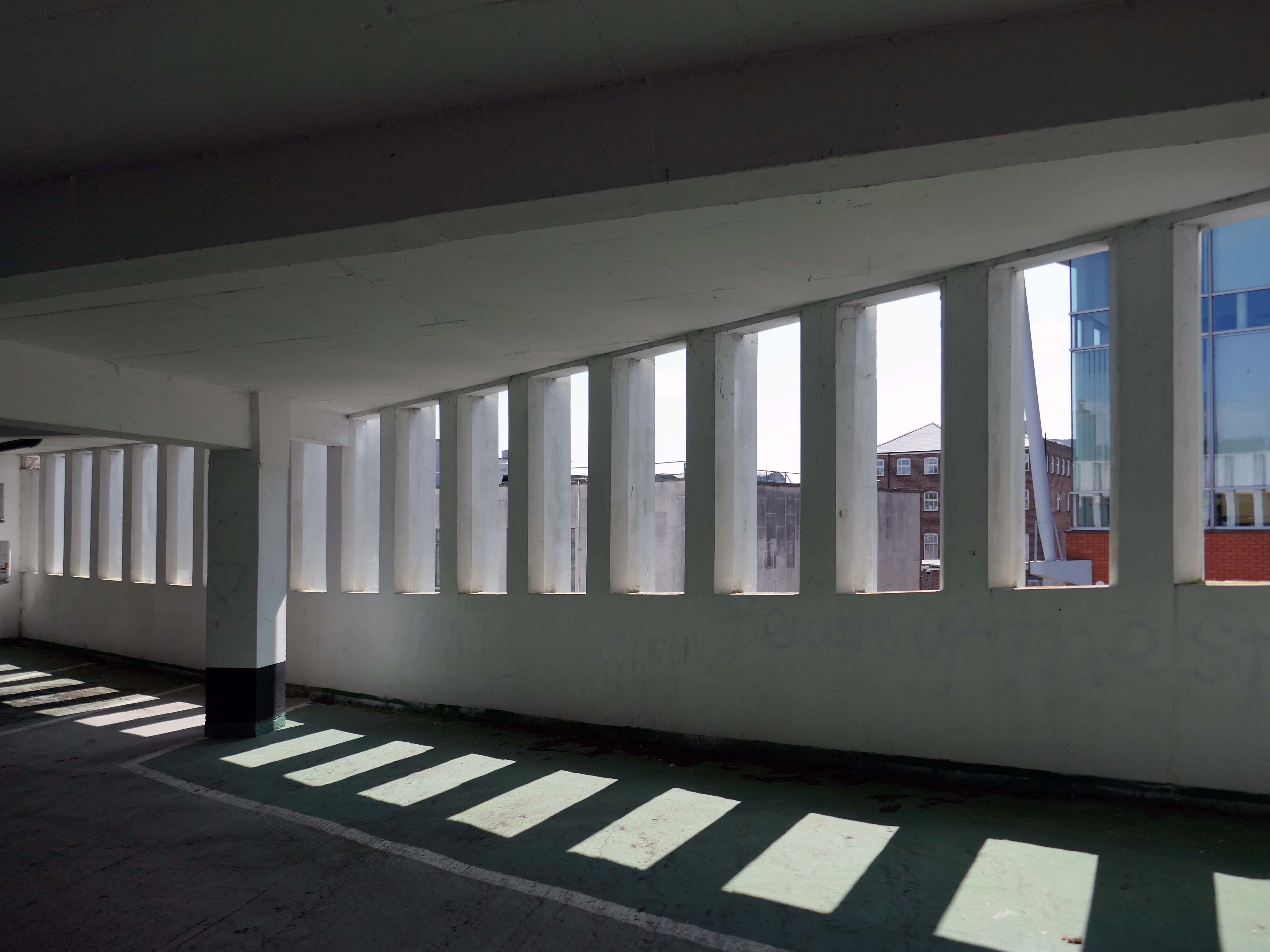
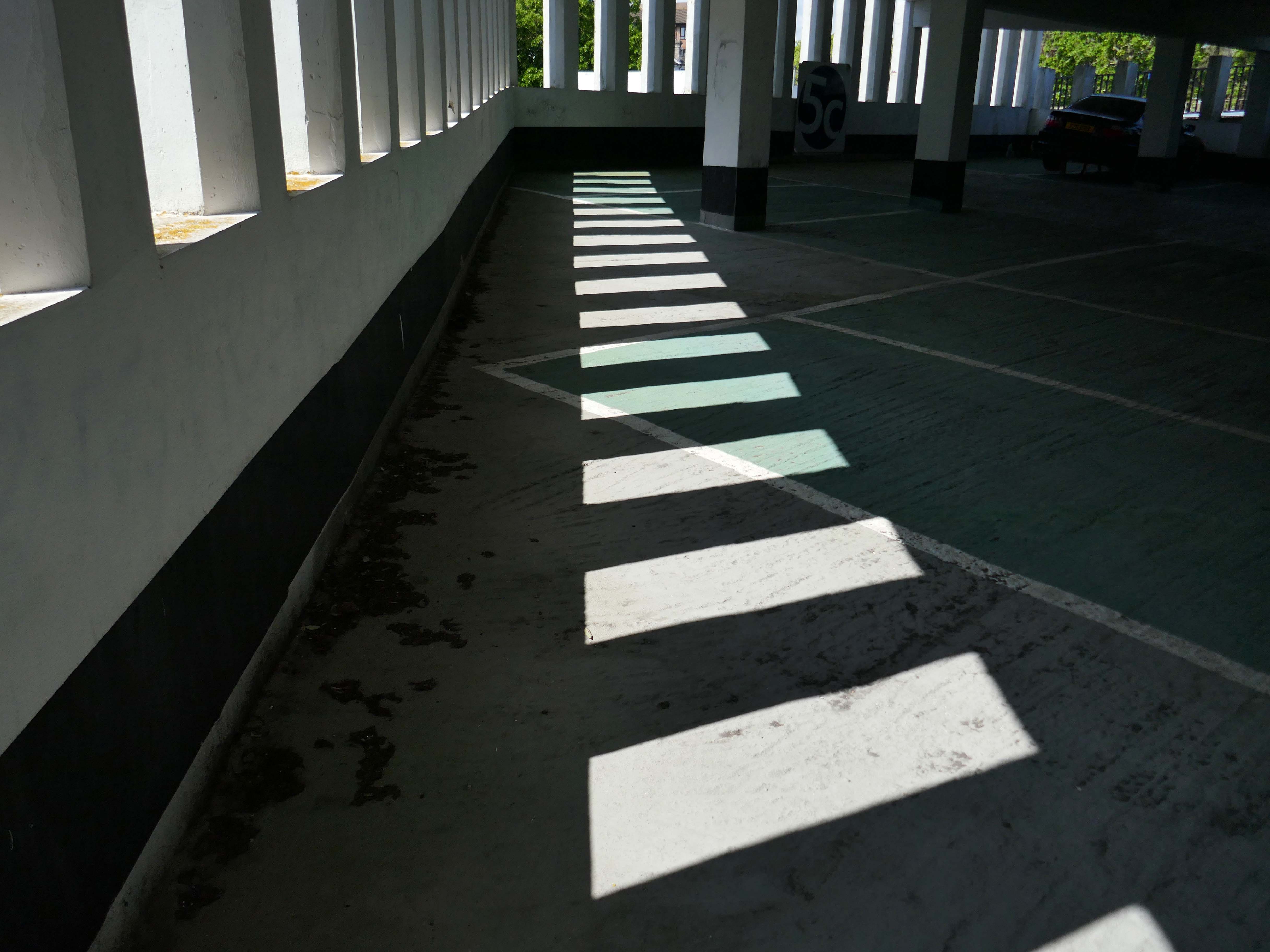
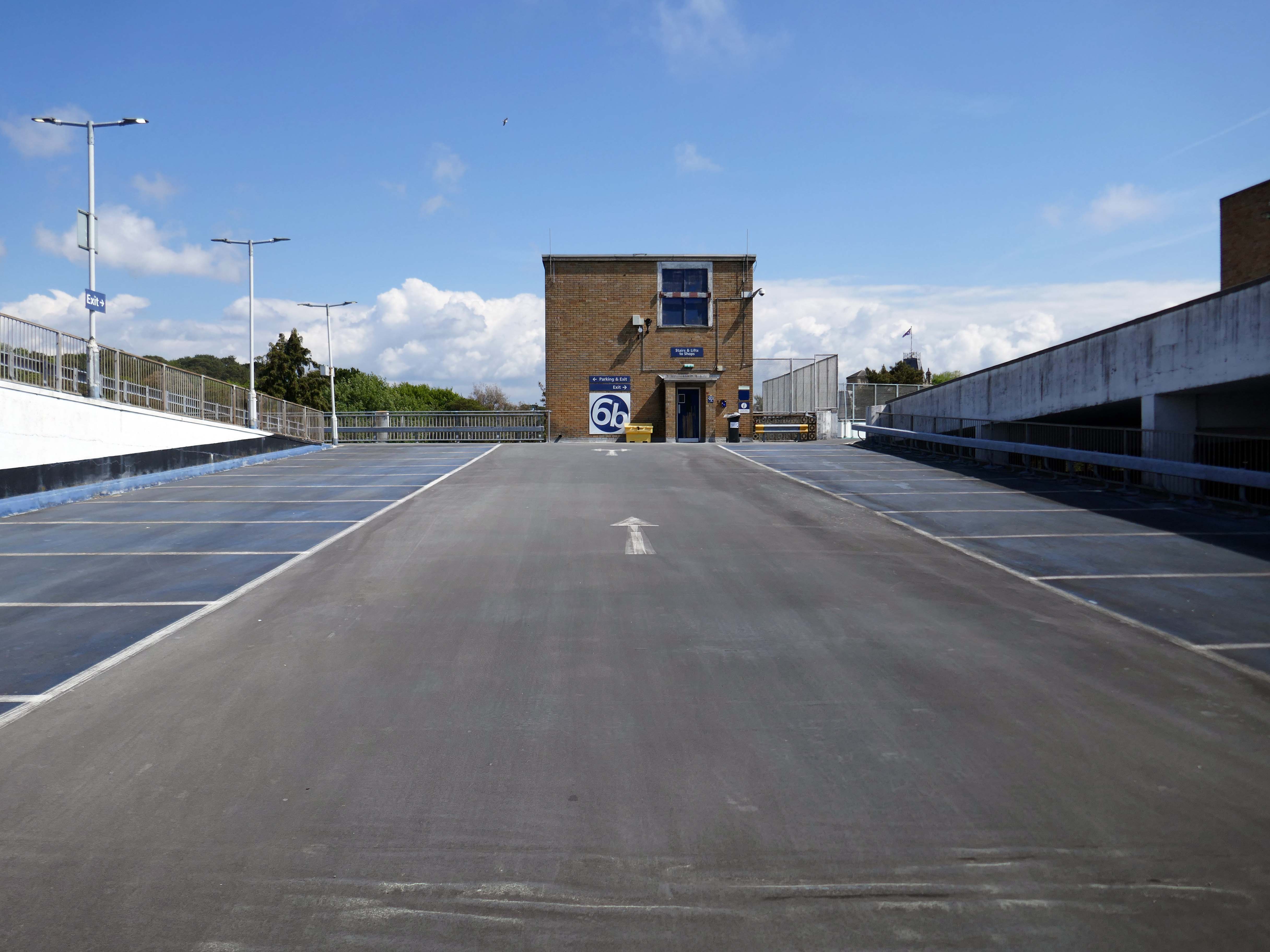
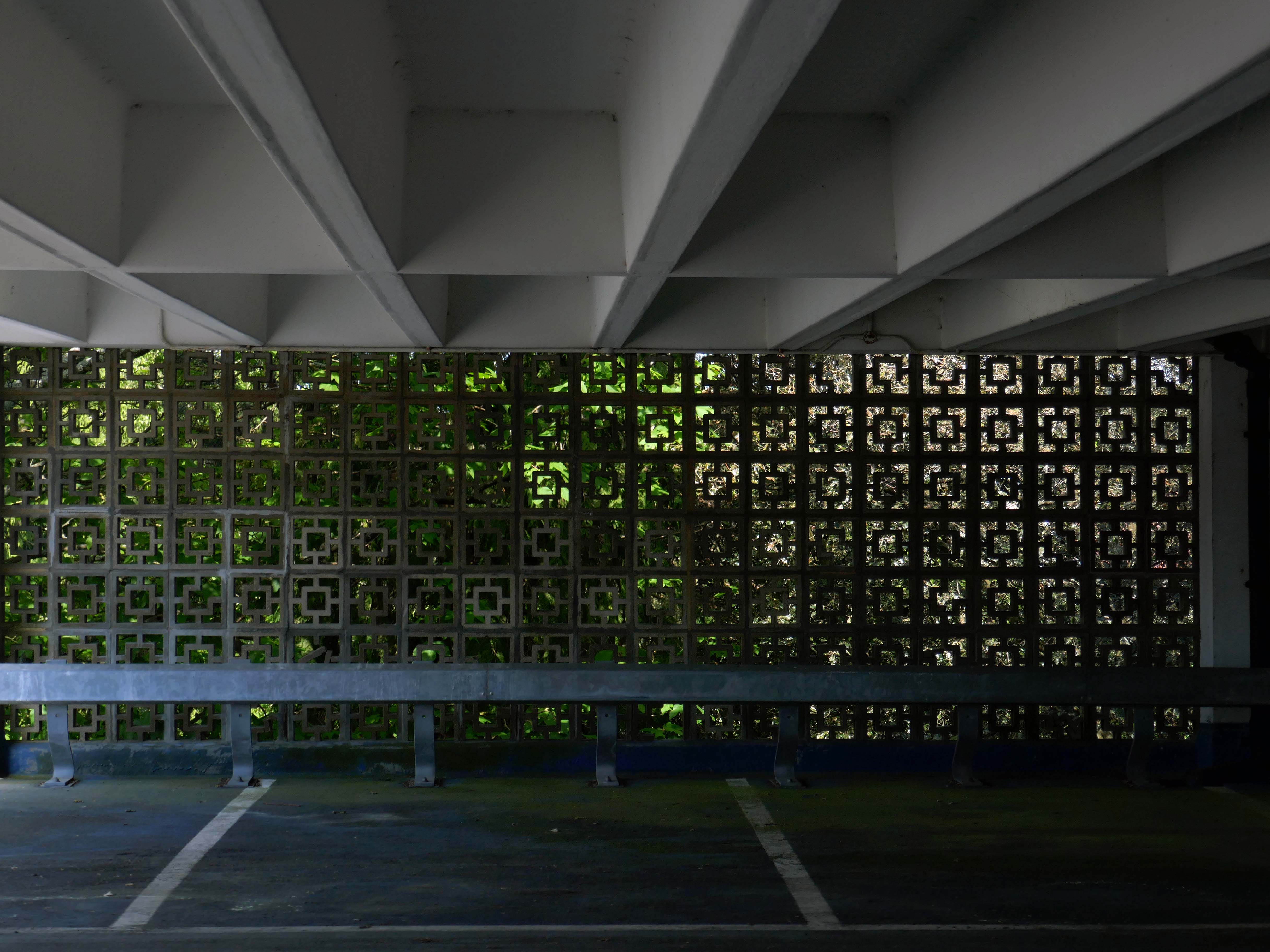
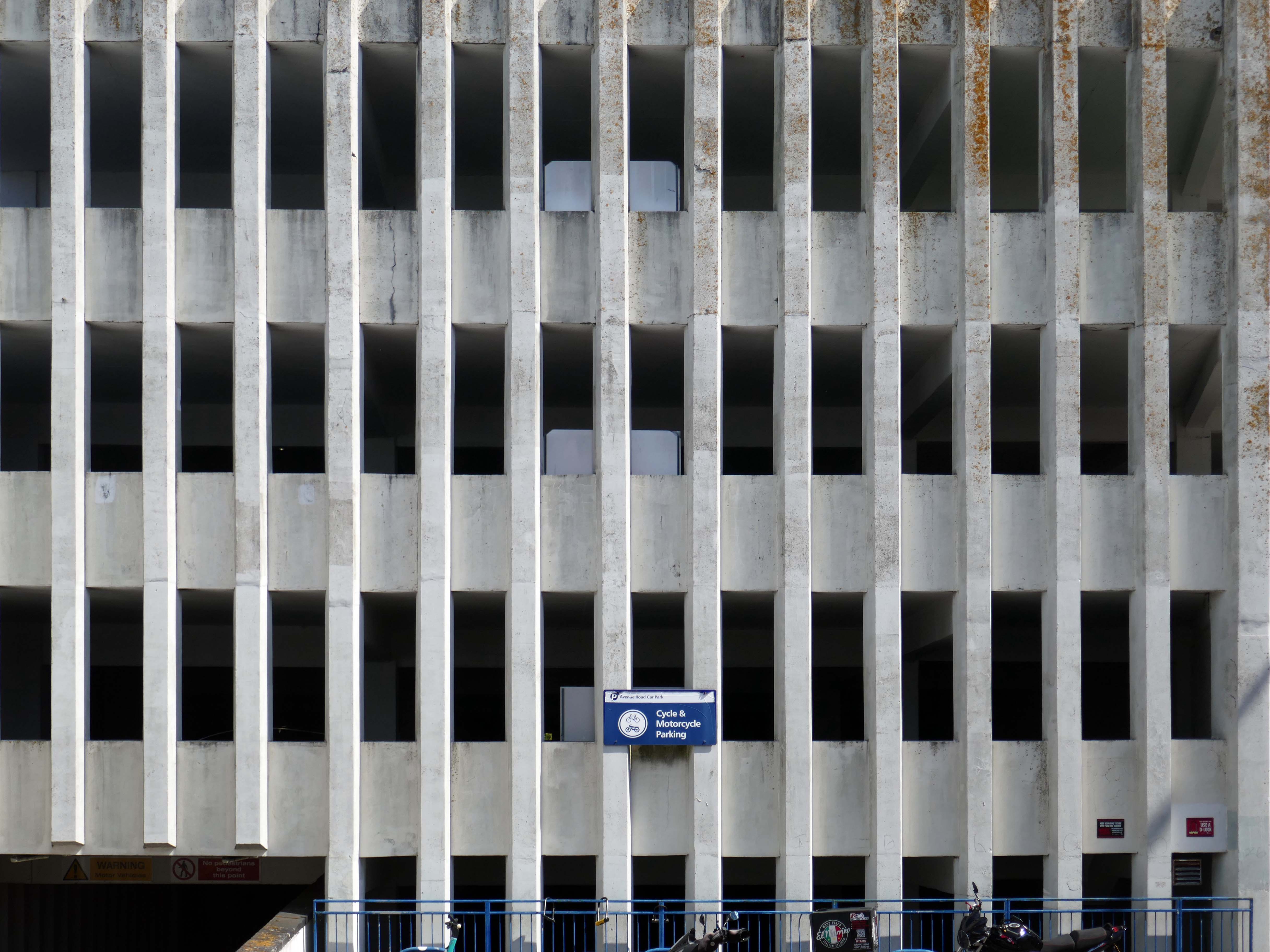
After twenty years, the waterproofing on the top deck of the busy Avenue Road council car park in Bournemouth was failing. Water was penetrating the structure and dripping onto users’ cars on the lower levels and also into a tenant’s offices situated below. More importantly, this was affecting the structural integrity of the car park.
Being close to the sea, the car park is subjected to highly corrosive moisture and salt levels, which if left unprotected could cause long term structural damage. And indeed, further investigation by the contractors Concrete Repairs Ltd. and Triflex’s Technical Team revealed that part of the concrete substrate was cracking and failing causing potential health and safety issues.
As a result, the council needed to refurbish the car park and have a reliable waterproofing solution that would extend the car park’s service life. In addition, this work needed to be finished before the start of the busy summer tourist period.
Concrete Repairs Ltd. and the Triflex Technical Team visited the site to complete an extensive site survey. Testing was also conducted to determine the suitability and compatibility of the substrate and the requirements for its preparation. Triflex DeckFloor was specified for the decks with DeckFloor Ramp System to provide a more aggressive aggregate was to the ramps and inclined areas of the car park. The ramp system incorporates emery aggregate which provides additional traction for those harder wearing areas.
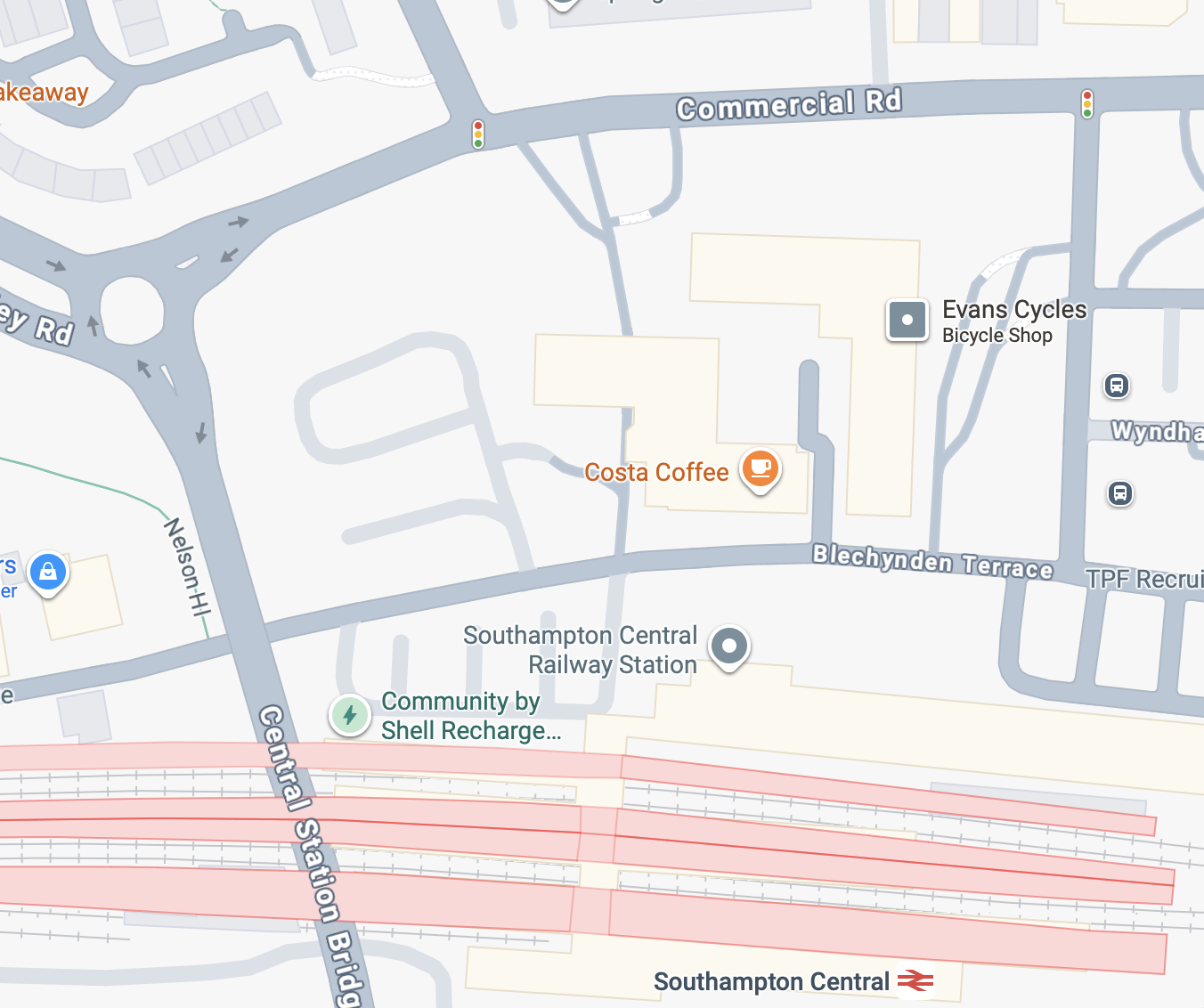
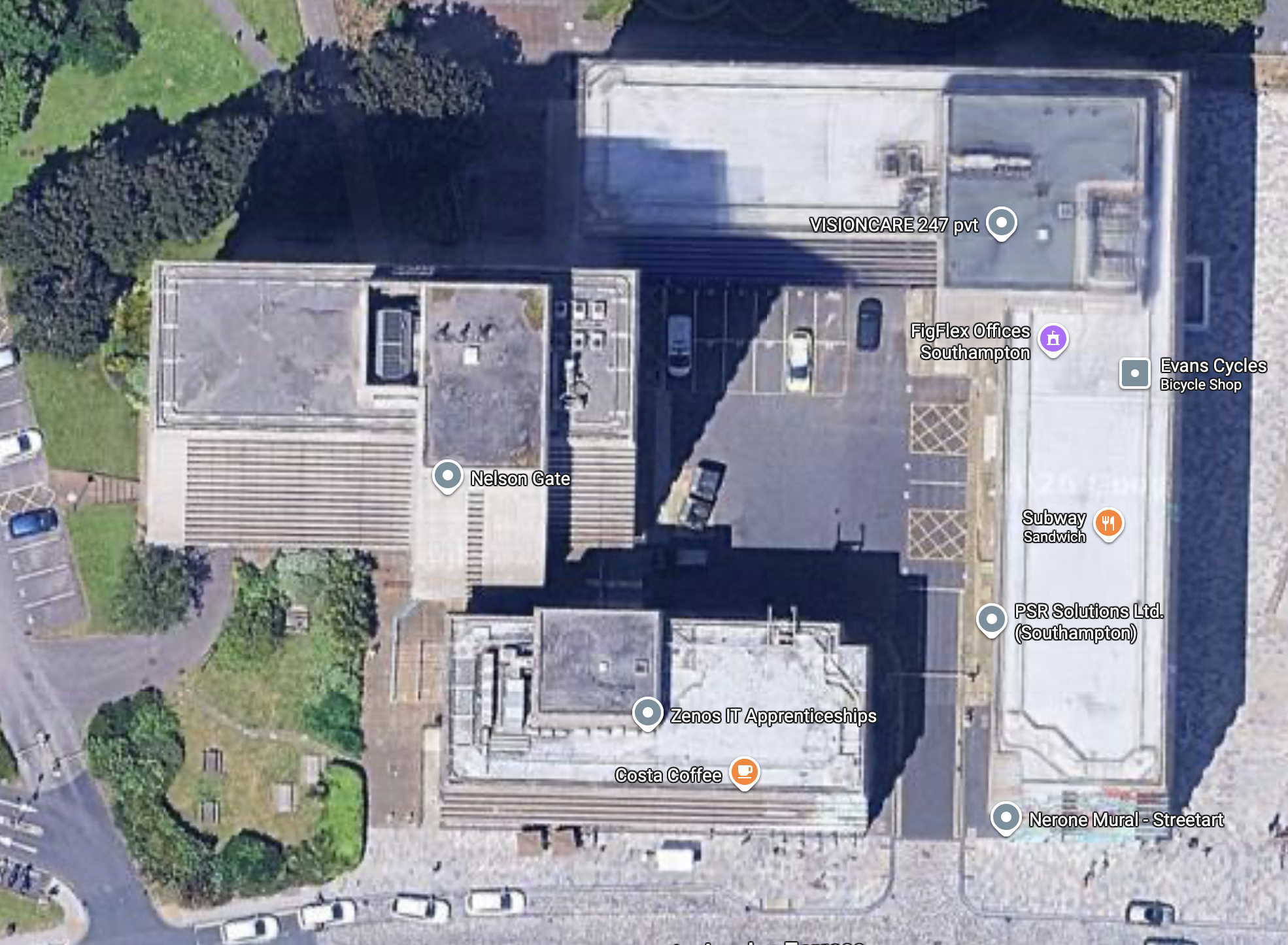
On arriving a Southampton Central there it is looming over Blechynden Terrace.
A big brute of a building Nelson Gate, comprised of sixteen-storey Norwich House, seven-storey Frobisher House and five-storey Grenville House.
Though it seems that for some time there are those which wish to tame the brute.
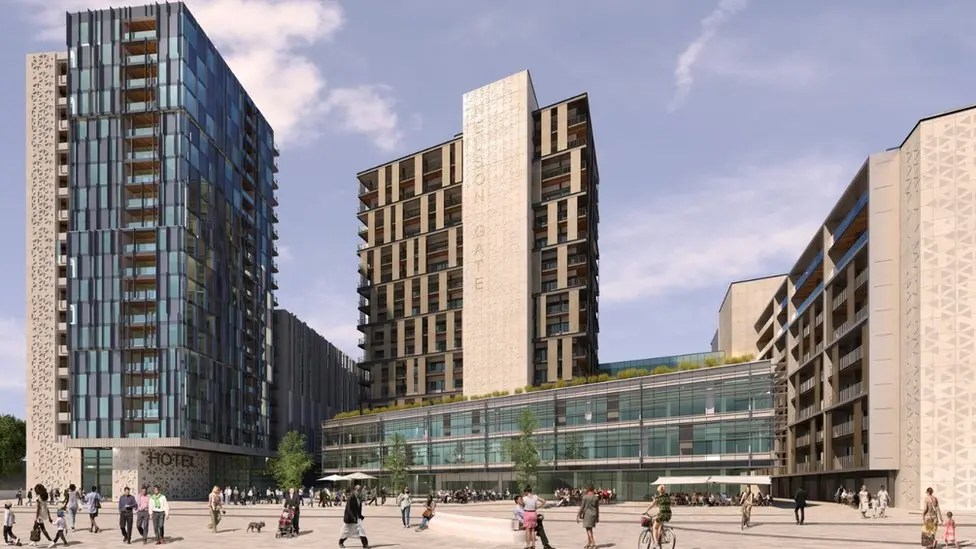
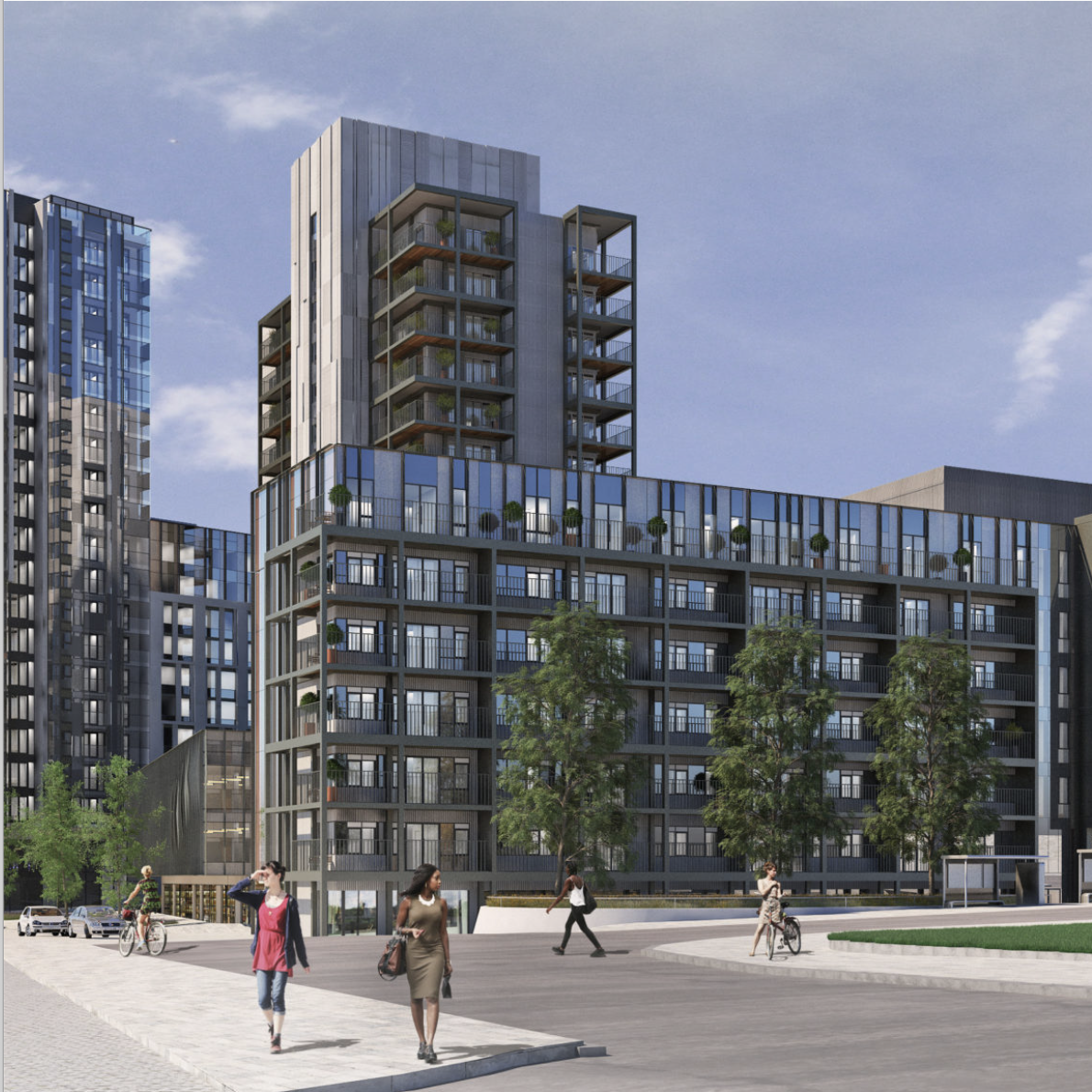
Plans for a multimillion-pound development including a hotel, homes, offices and shops in Southampton city centre have been revealed.
The Nelson Gate scheme, proposed by developer FI Real Estate Management, would also see Norwich House and Frobisher House revamped.
A public square would be created by the city’s central railway station, as well as a new pedestrian route.
A full planning application is expected be submitted later in the summer.
Chris Hammond, leader of Southampton City Council, said: “Nelson Gate is one of the gateways into the city from the station, so to see a brand new development is fantastic. It really showcases what the city has to offer for those coming in.”
Ellis Williams was appointed to develop designs and achieve planning permission for the redevelopment of Nelson Gate in Southampton, transforming the existing 1970’s office accommodation into an iconic residential and public space. Through positive and extensive engagement with Southampton Council, the site has been re-imaged as an arrival gateway into the city from the Central Railway Station.
The existing office buildings and car park will be transformed into 247 residential apartments, 42,000 sq ft Grade A office space, a 224 bed hotel with extensive dry leisure and 14,000sf commercial / food and beverage space fronting onto a new public realm and urban park.
Aligned with other significant investment into Southampton, Nelson Gate will create a truly unique place for people to live, work and socialise.
The scheme is expected to be delivered in two phases. The first phase, focusing on the existing buildings and their immediate surroundings, is projected for completion by September 2026. However, it is important to note that this timeline is a challenging target.
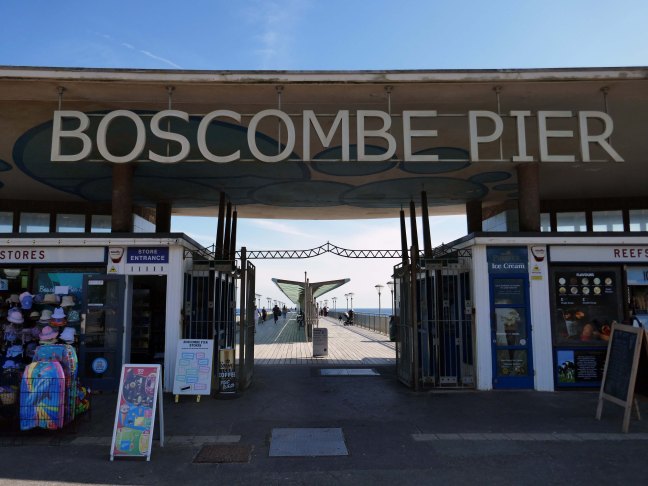
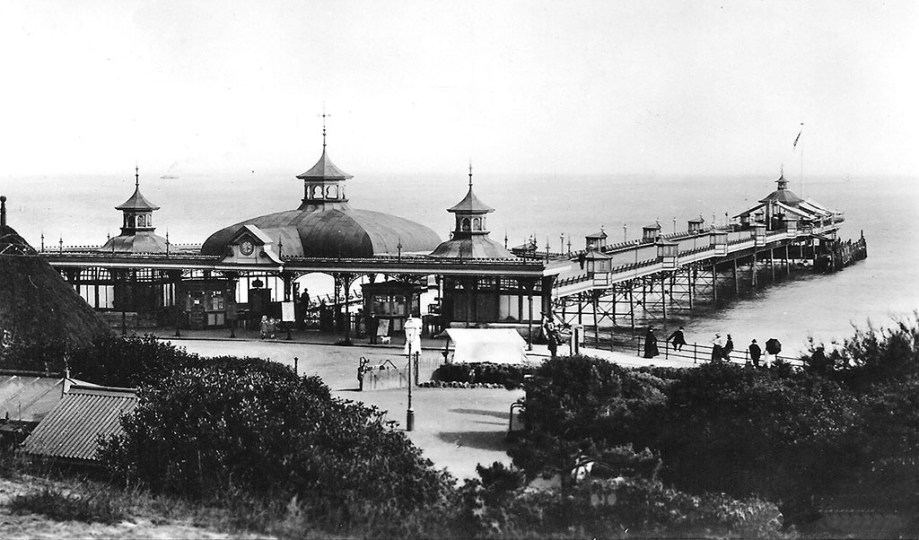
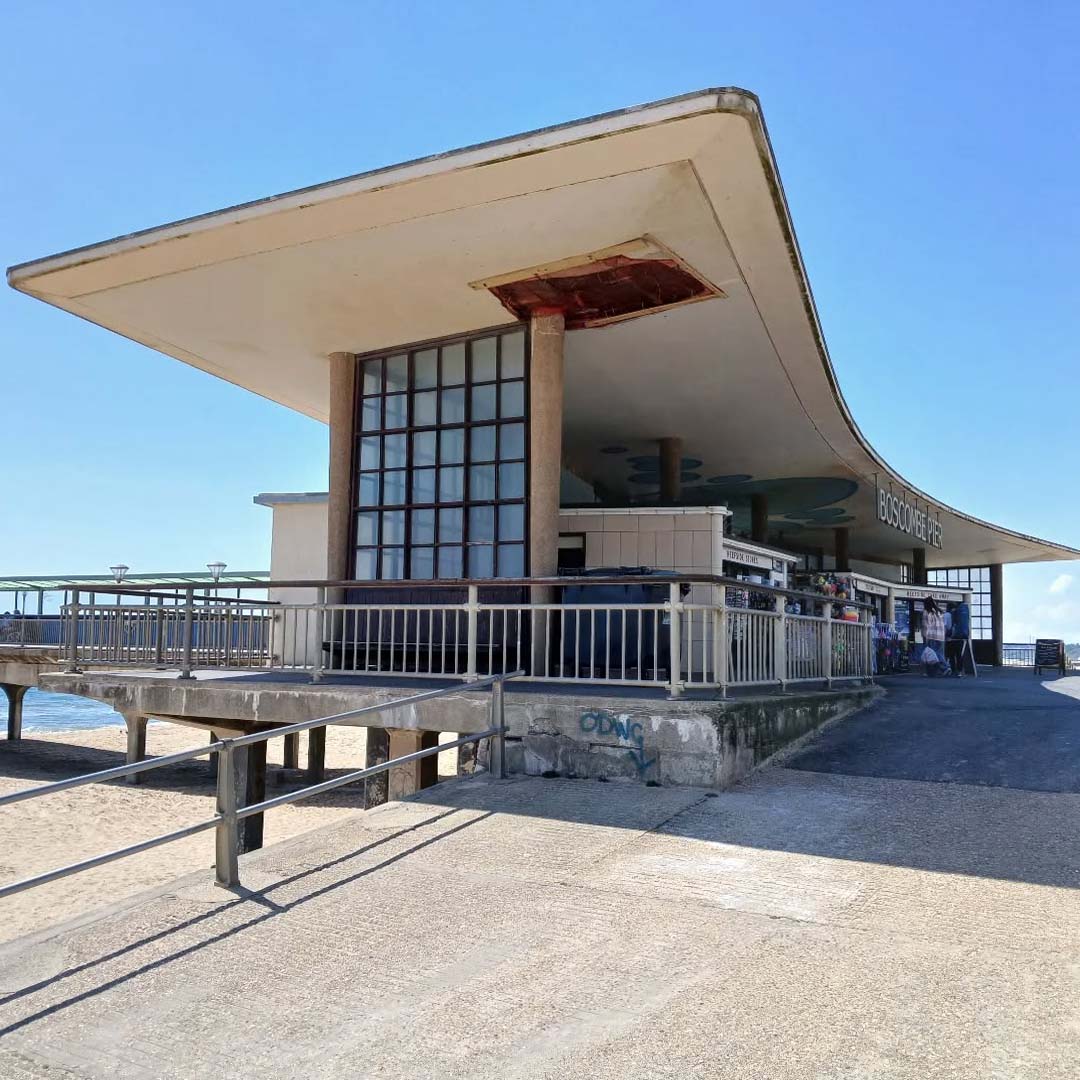
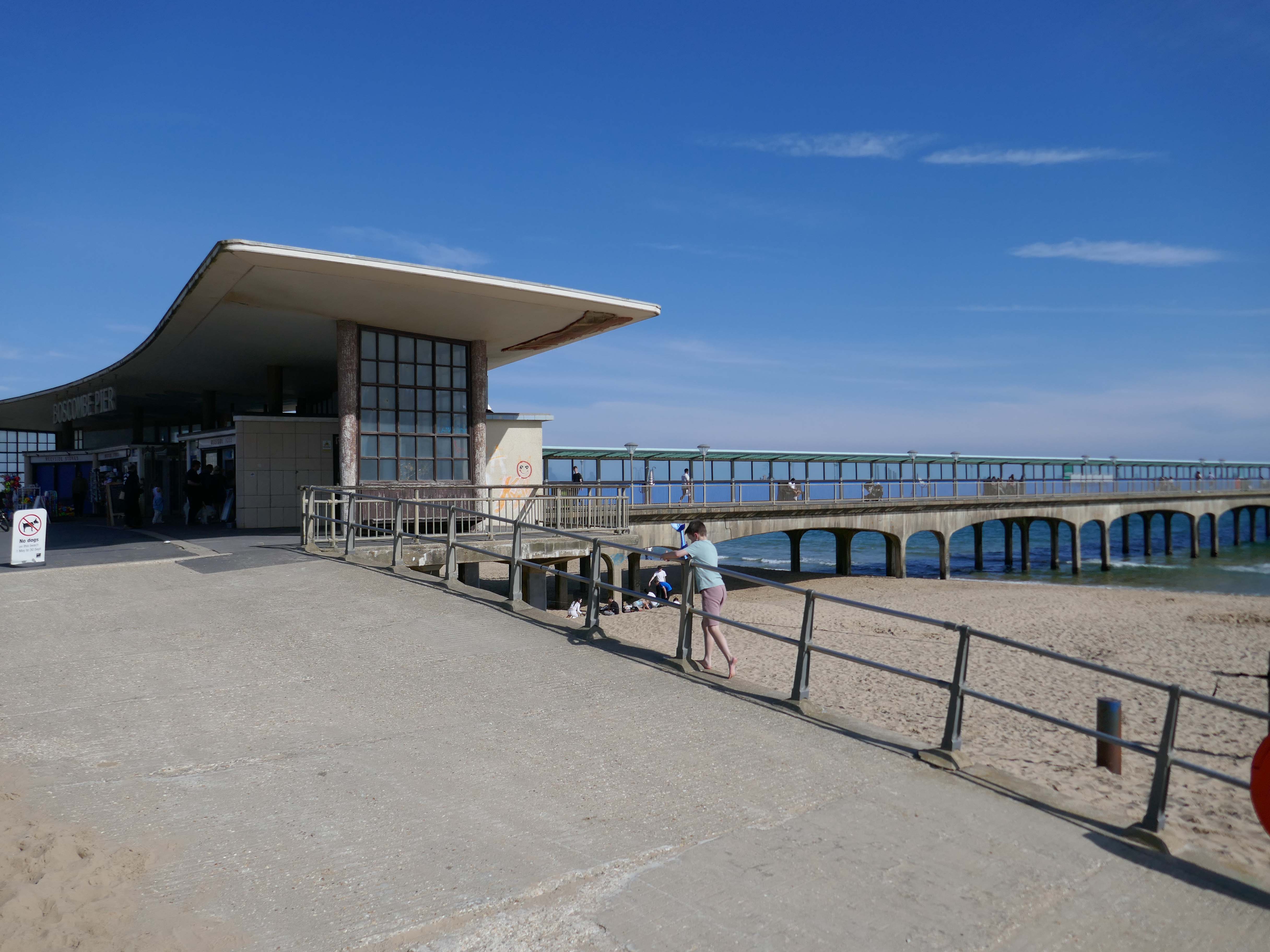
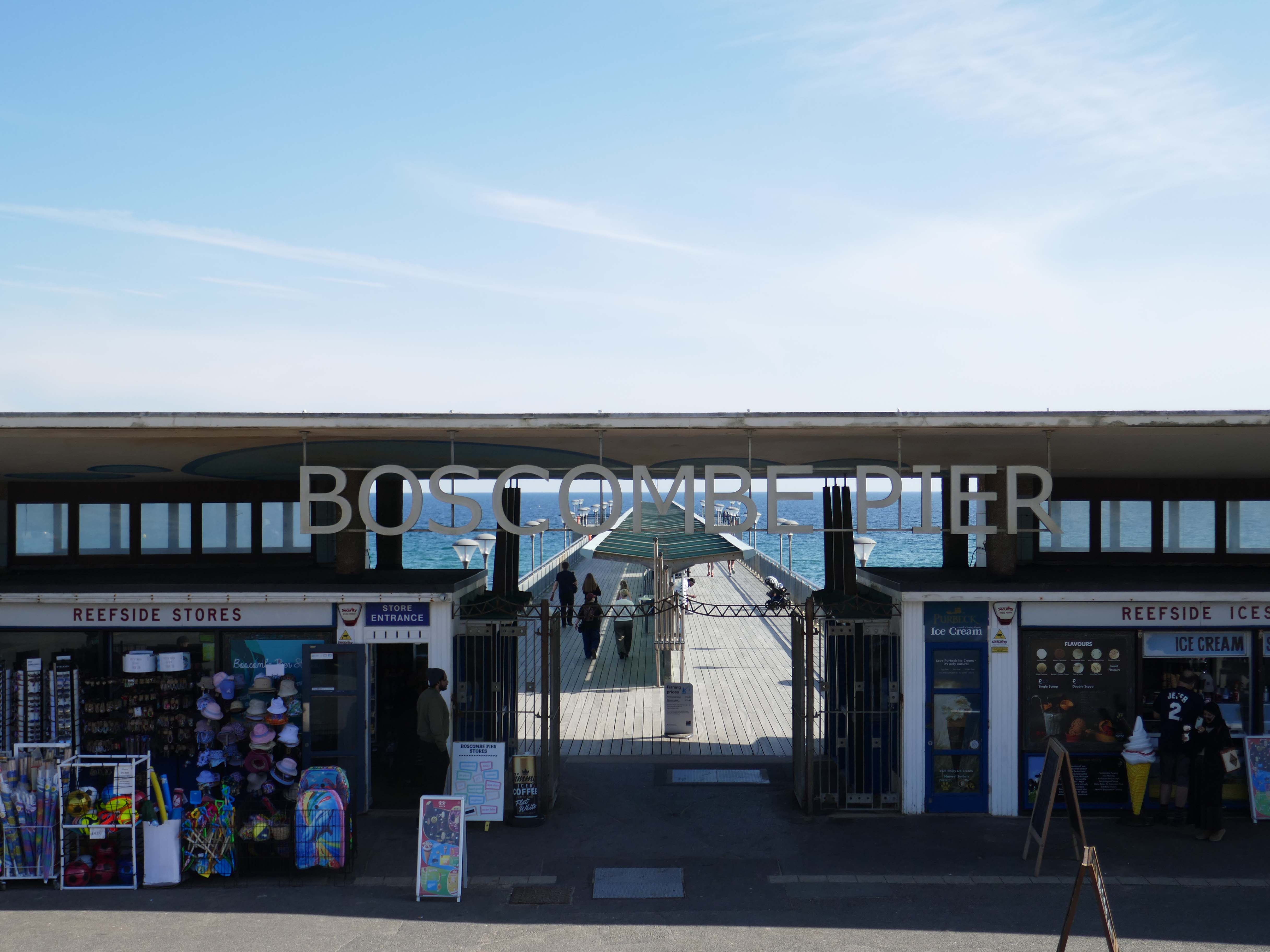
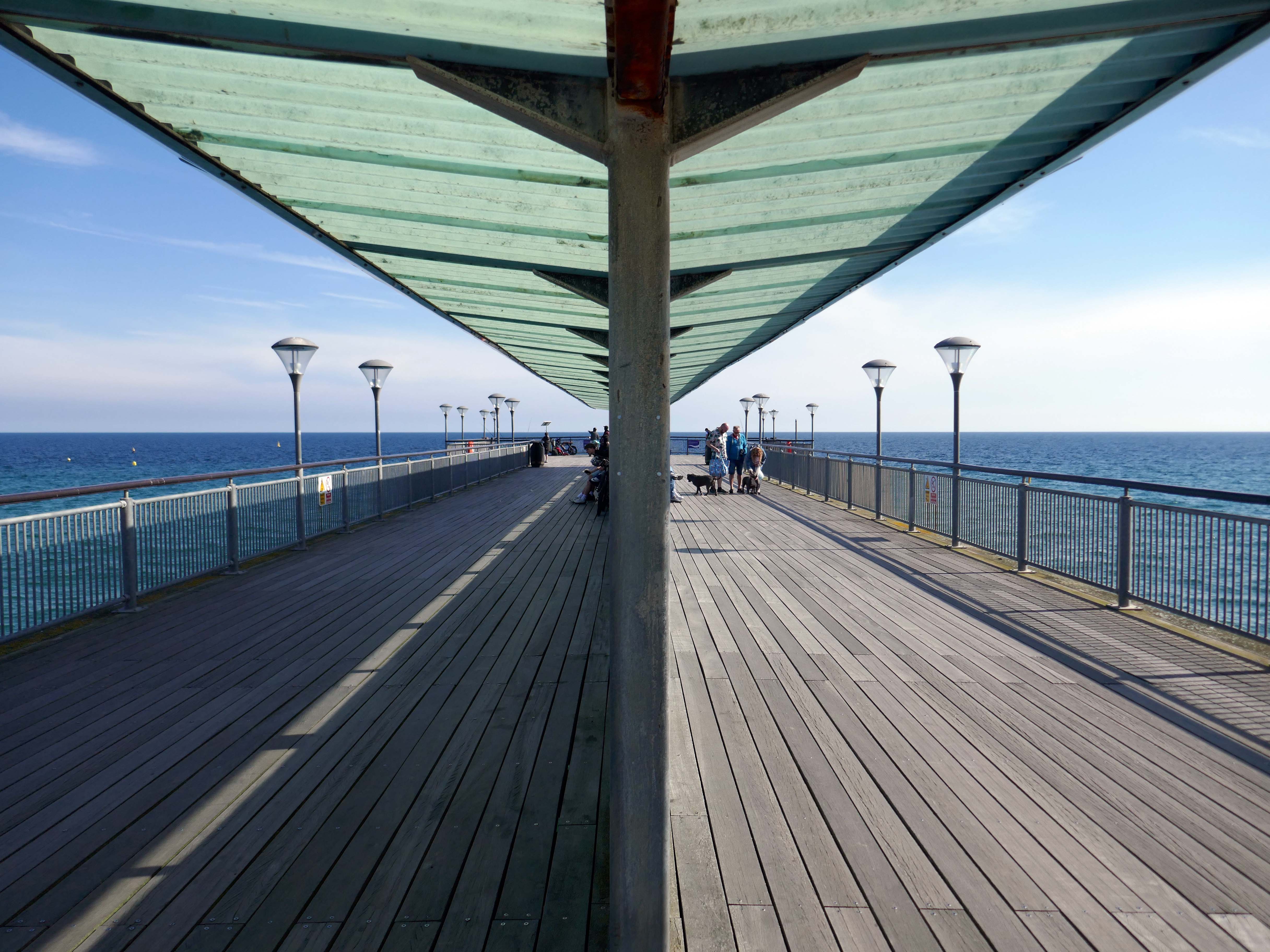
The Boscombe Pier Company was formed in 1886 and the first pile was laid on 11th October 1888. Designed by Archibald Smith, the 600 foot pier opened on 28th July 1889.
The local council took over the pier in 1904 and erected buildings at the entrance and on the pier-head. Facilities included a busy steamer landing stage.
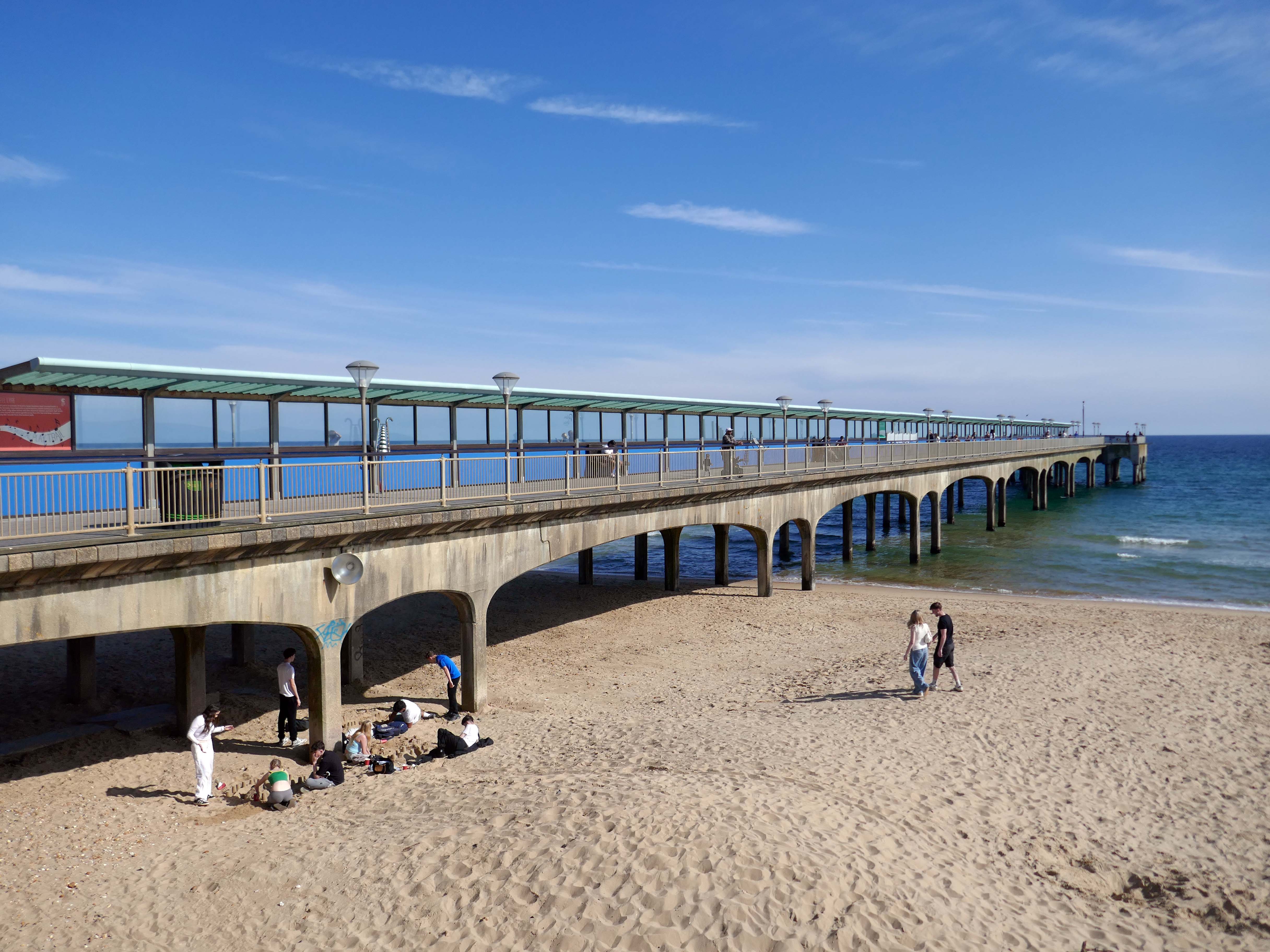
In 1924/5 and 1927, the head was renewed in high alumina concrete. Between 1958 and 1960, the neck was reconstructed using reinforced concrete. In 1940, the pier was breached for defence reasons.
Between 1958 and 1960, the neck was reconstructed using reinforced concrete.
A restaurant and the Mermaid Theatre were built at the pier-head in 1961 although the ‘Theatre’, in fact, opened as a covered roller-skating rink for its first two seasons. In April 1965, the leaseholder, Cleethorpes Amusements, converted it into an arcade. The council formally took over the Mermaid ‘Theatre’ in 1988 when the lease ended.
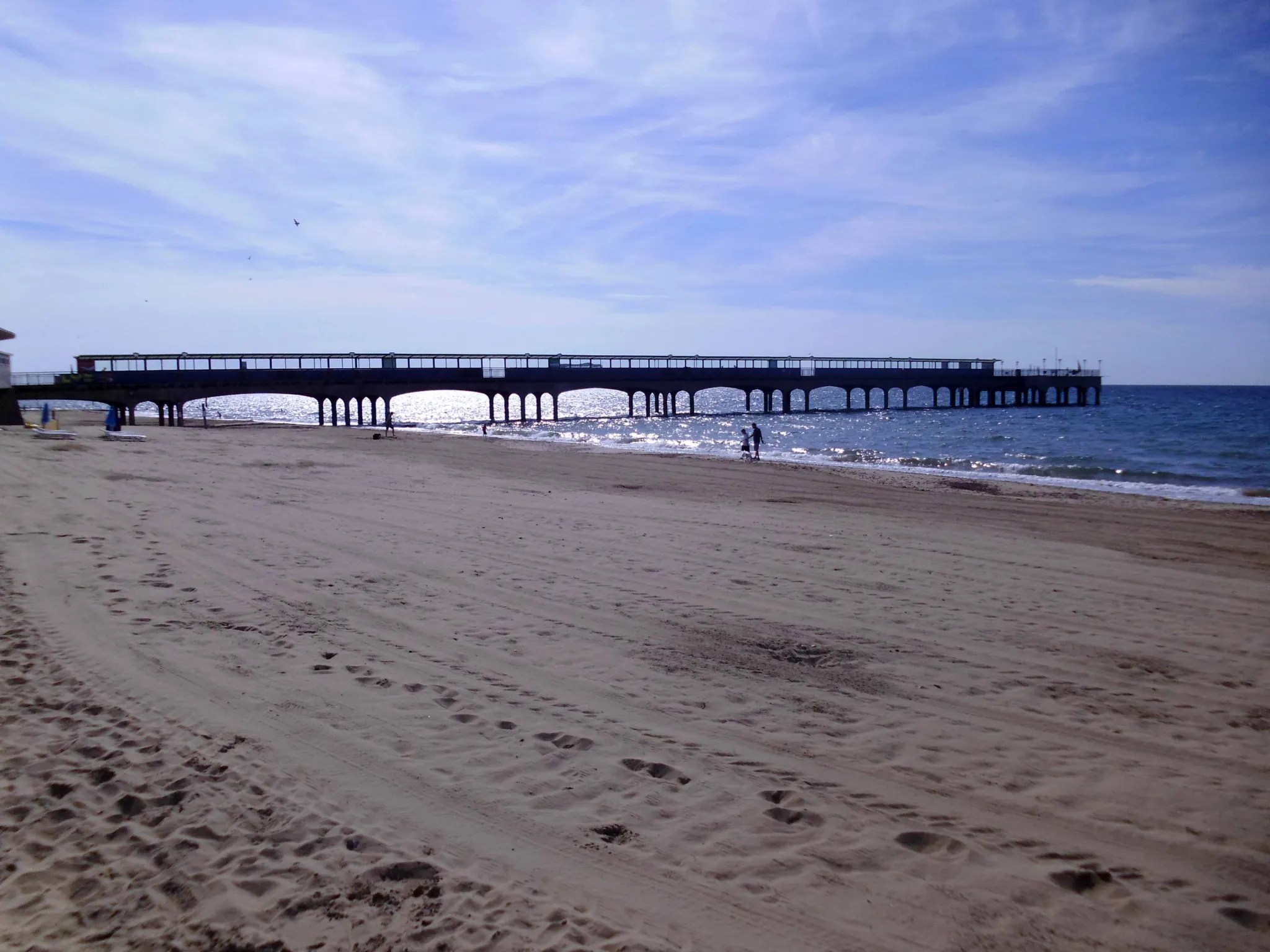
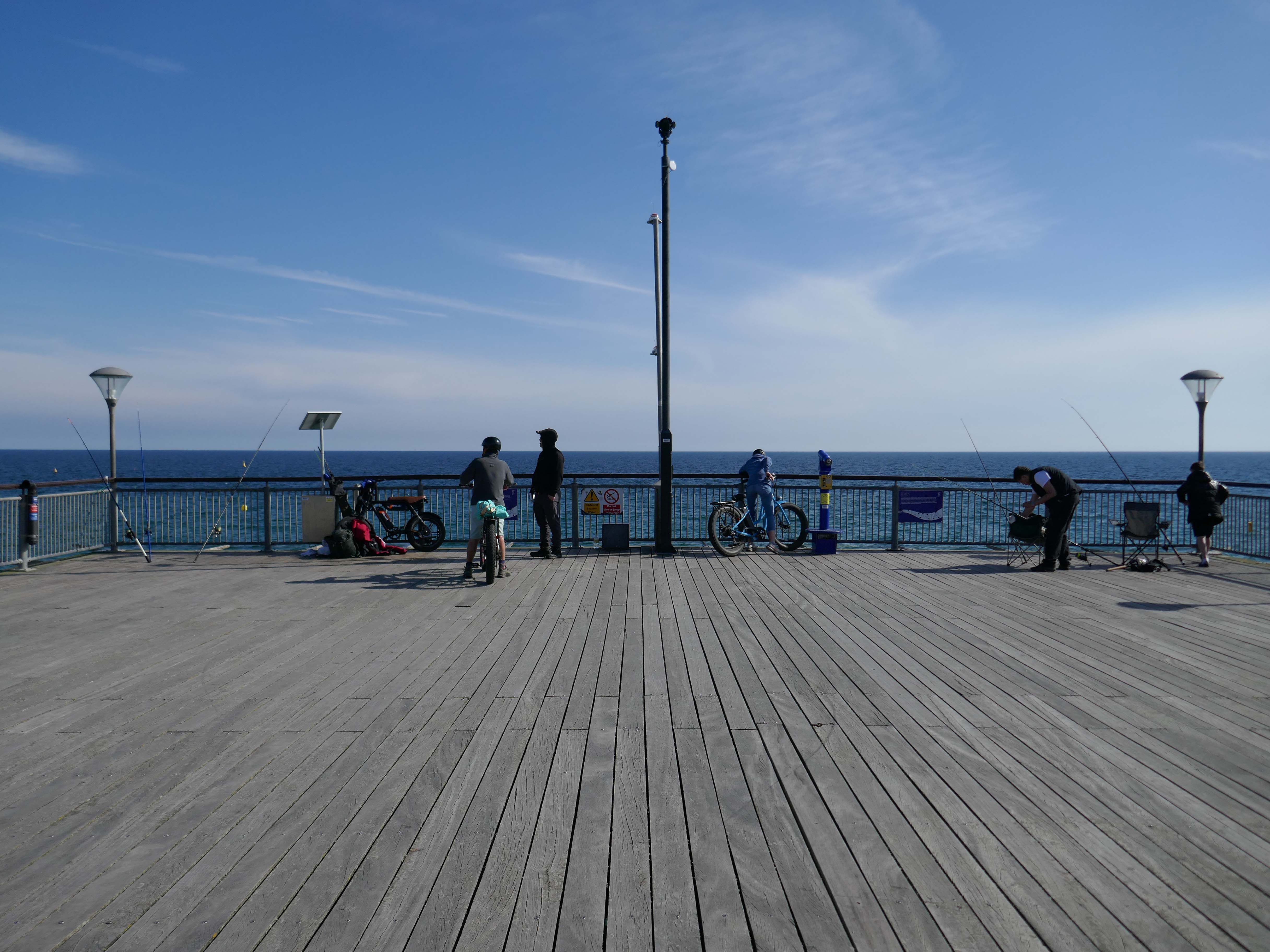
In 2008, the area around Boscombe pier underwent extensive renovation. The derelict and unsafe building at the end of the pier was demolished, and replaced by a simple viewing and fishing platform. The rest of the pier was also restored.
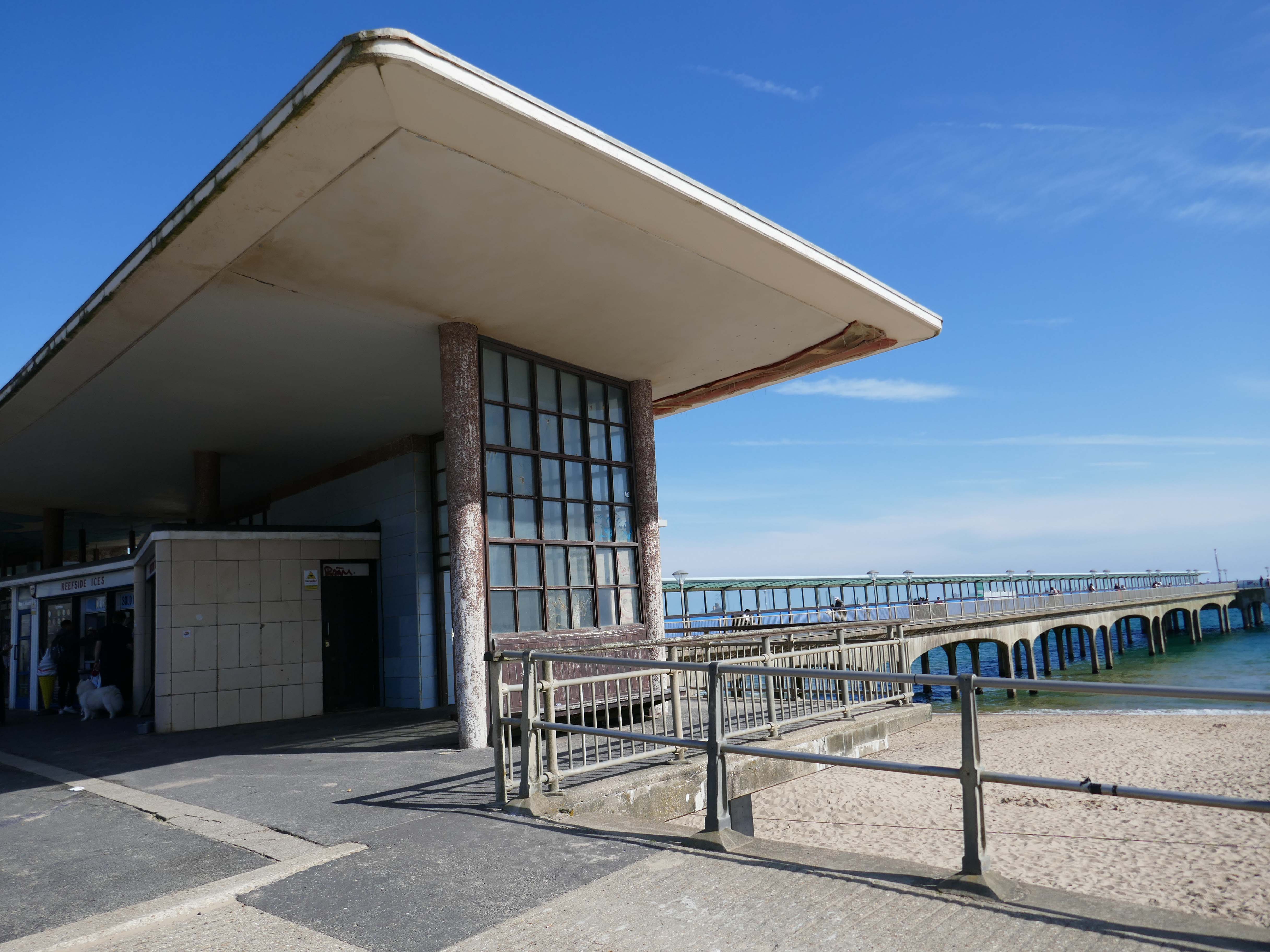
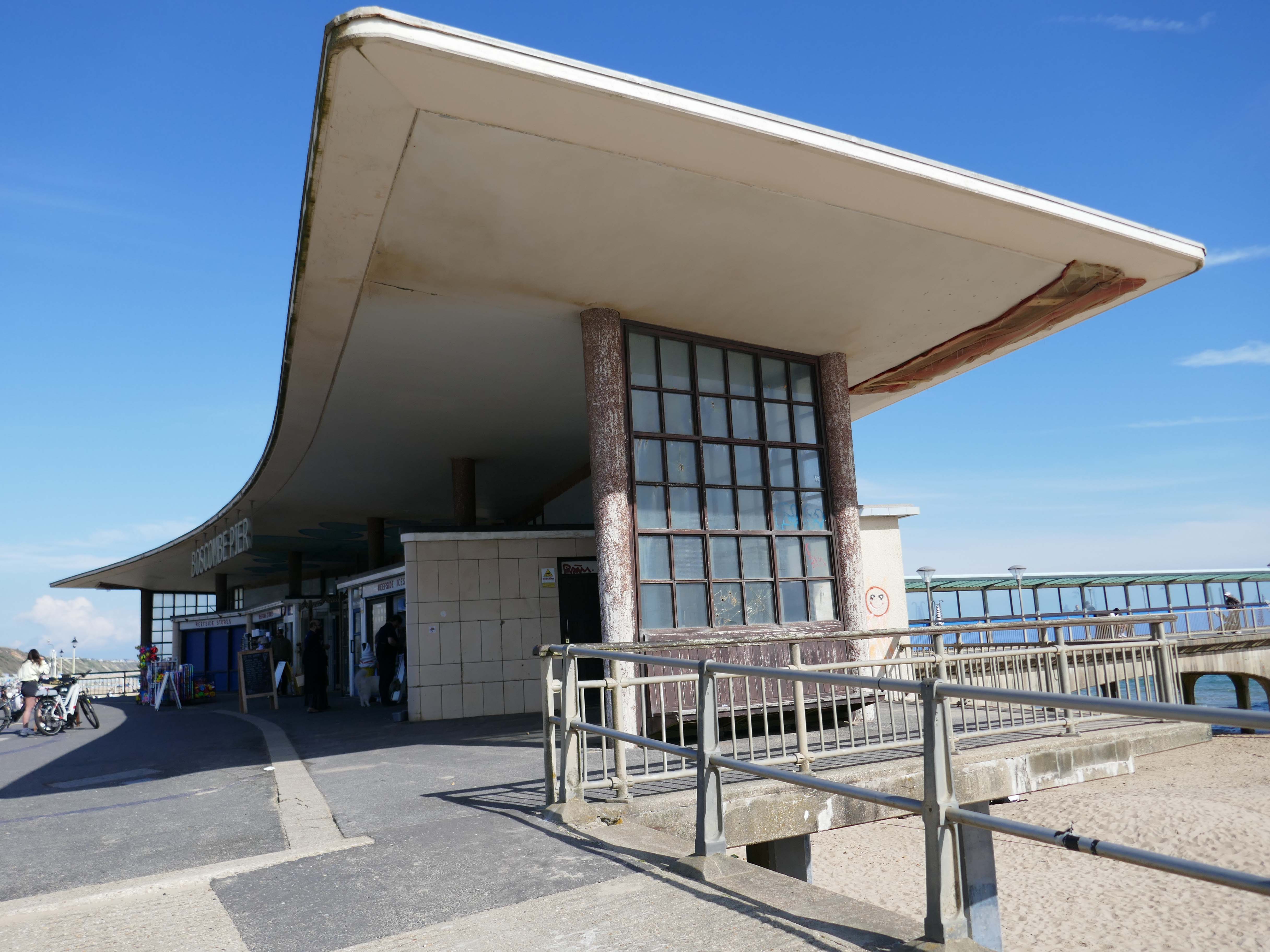
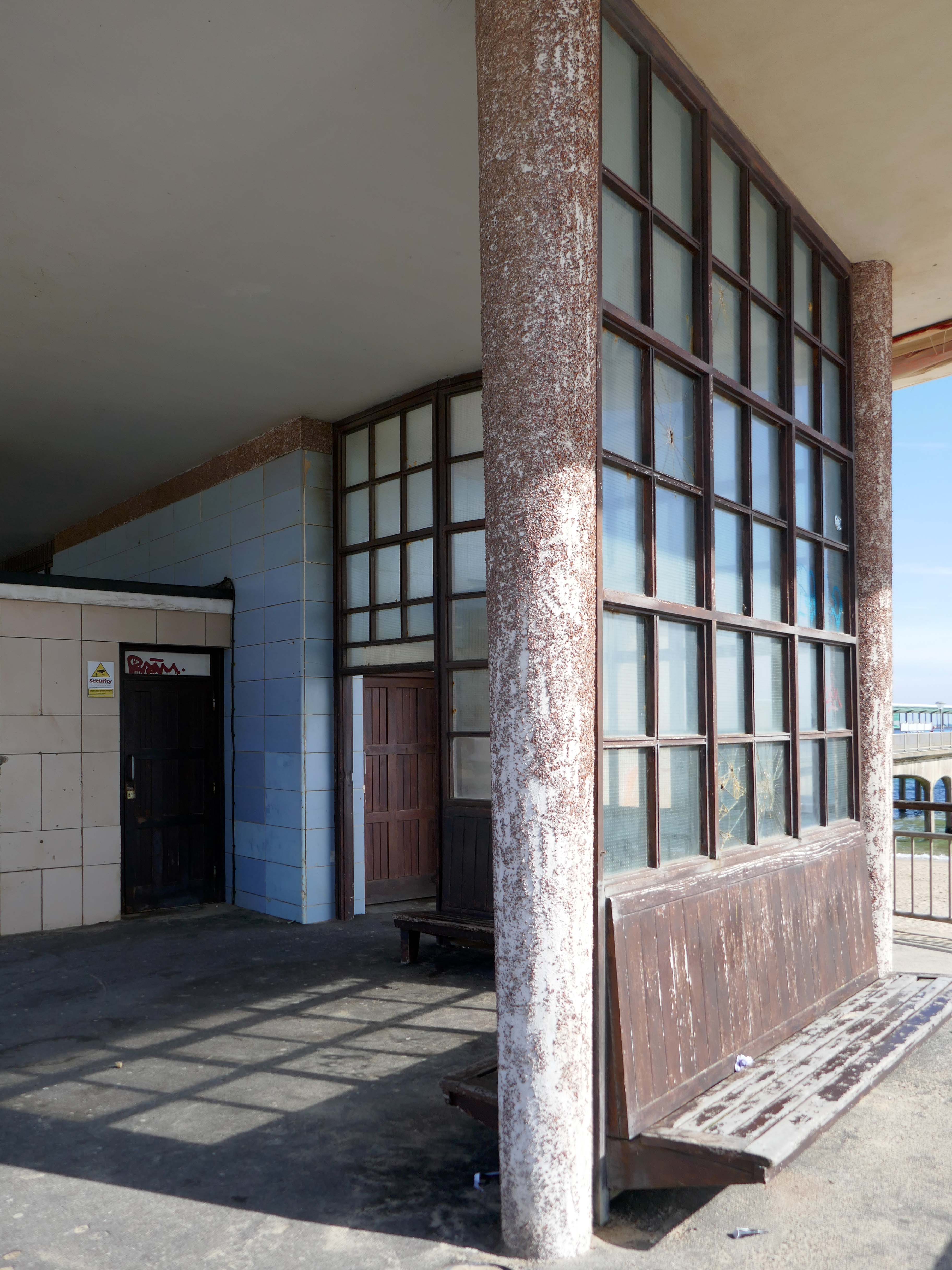
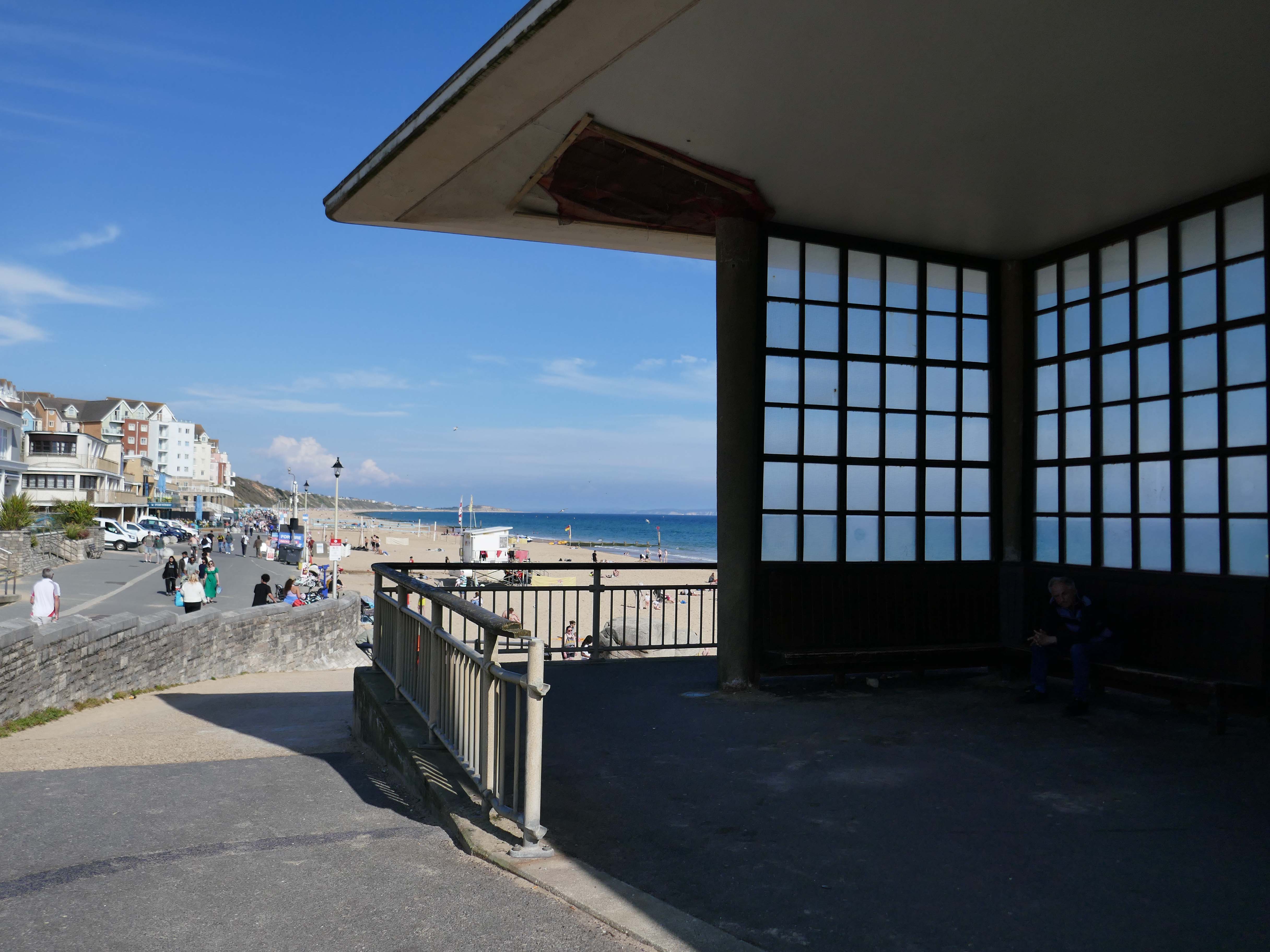
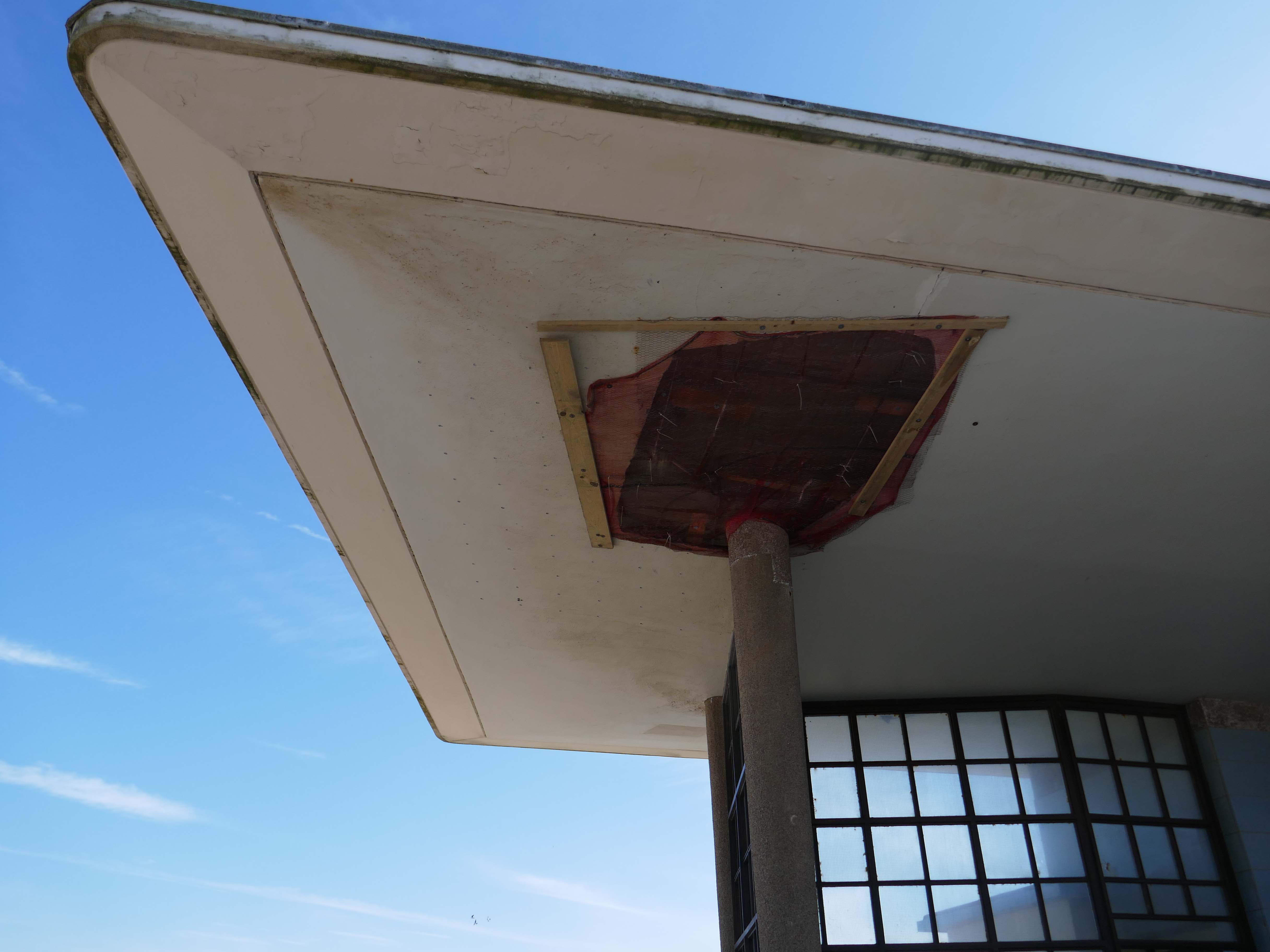
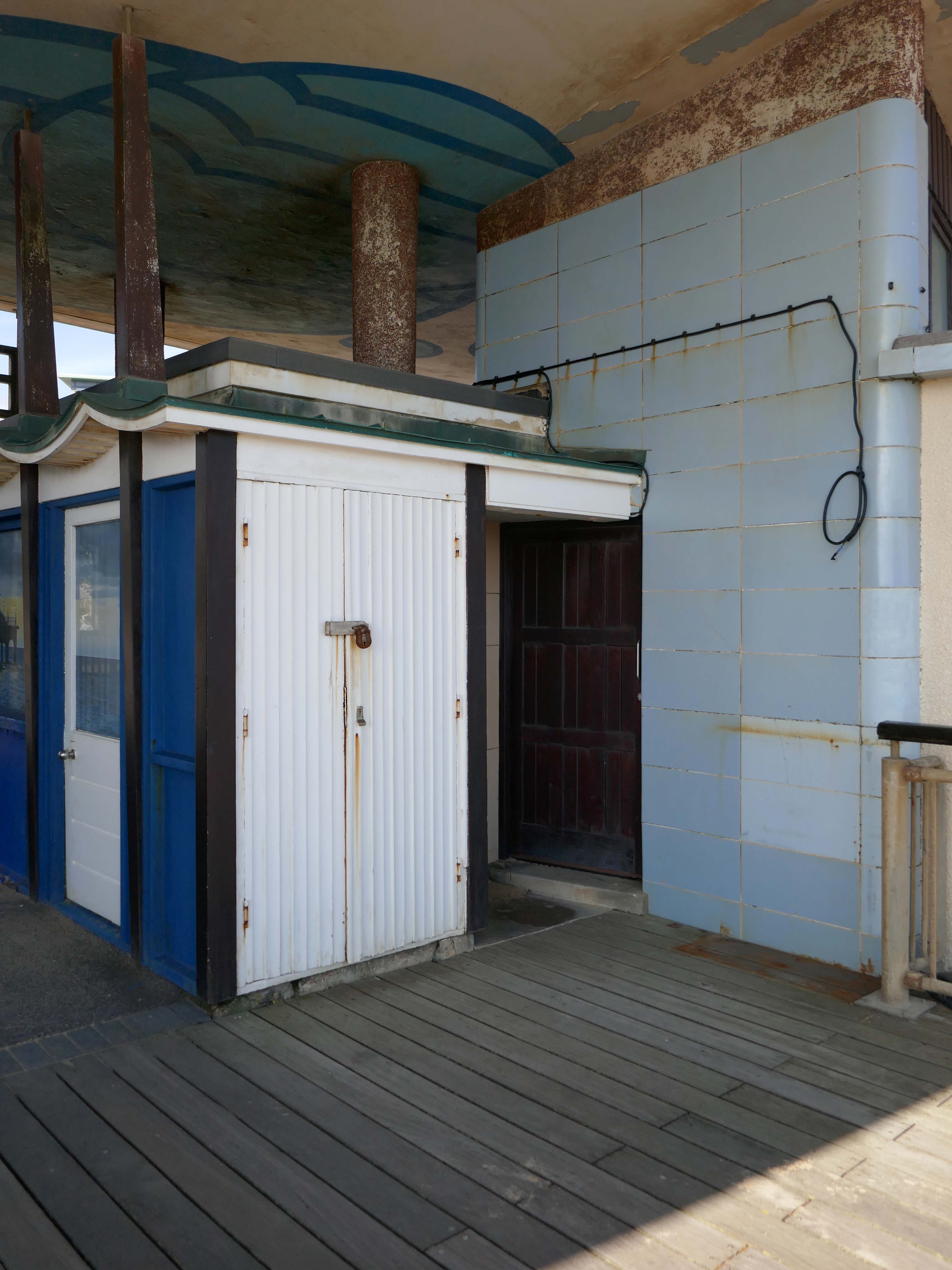
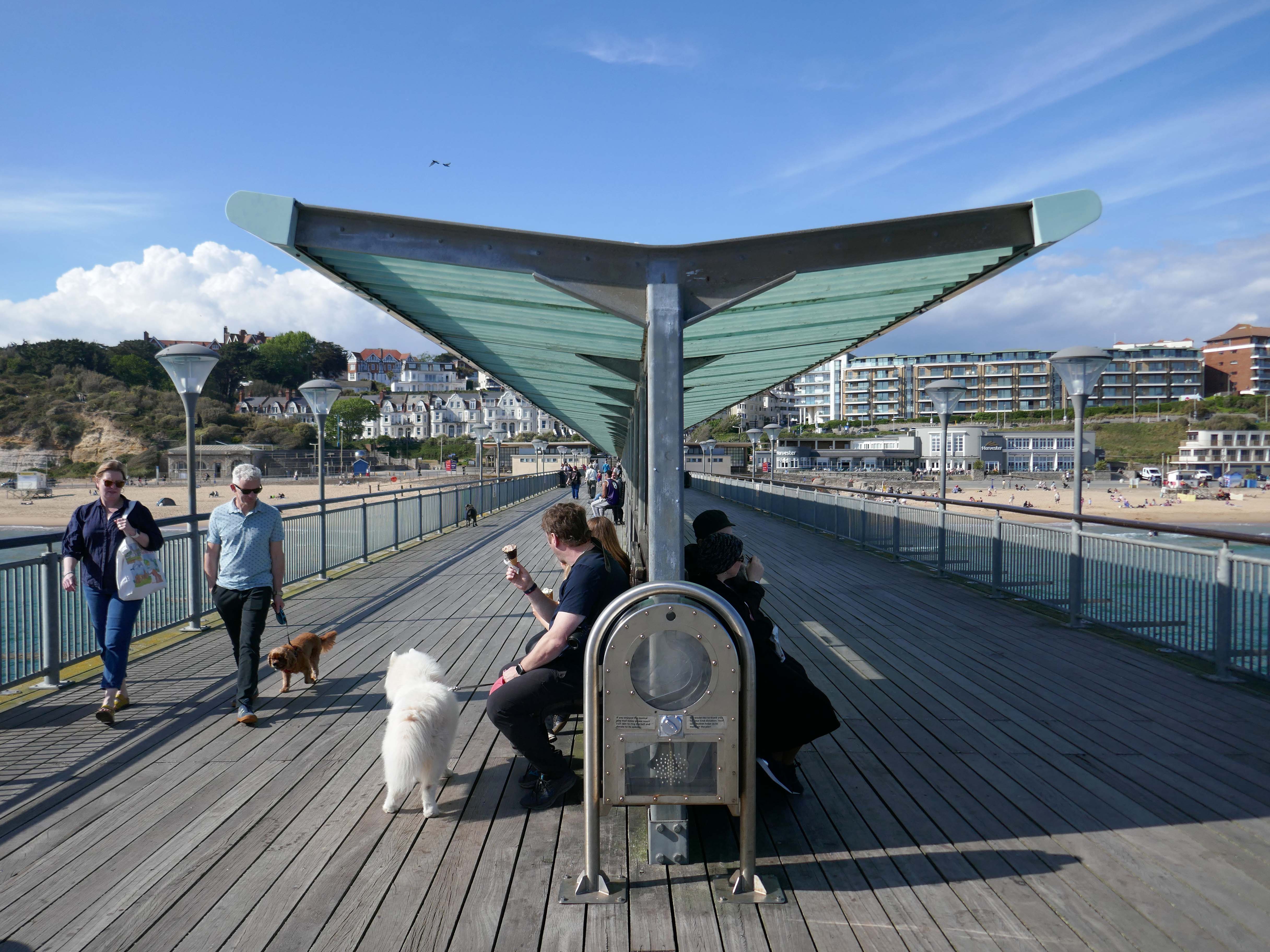
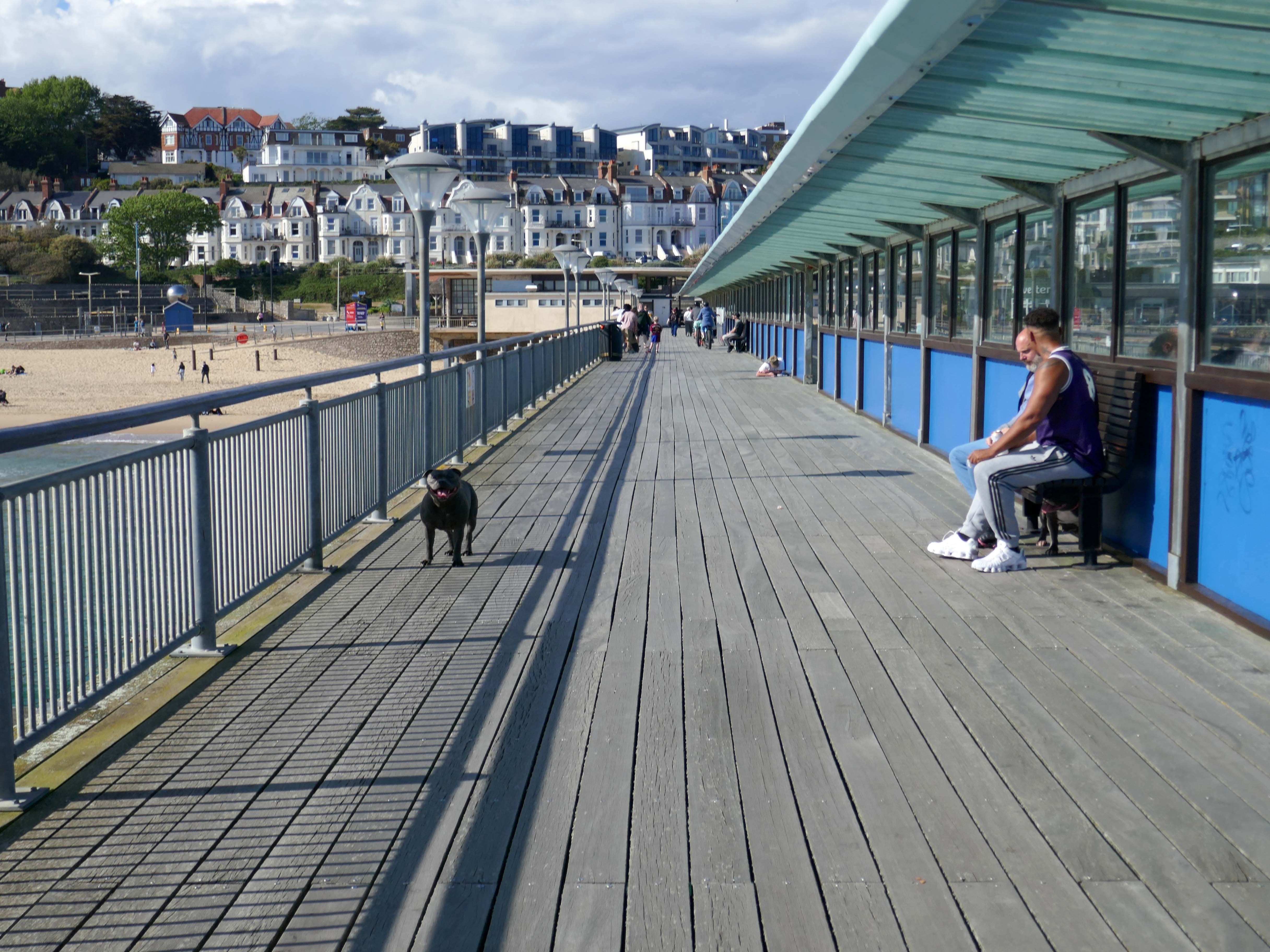
However, the neck building is a design of great verve and vivacity that well demonstrates the revitalisation of the British seaside resort in the 1950s. The contemporary style associated with Frank Lloyd Wright’s Usonian houses and made popular with Californian homes in the 1940s was well suited to the requirements of an architecture that combined ‘sun and fun’. The contemporary style made a feature of expressing different elements or planes of a composition with different materials, and here the combination is honest and each element well detailed. The sweep of the cantilevered, boomerang-shaped roof is a particularly joyous feature. It is a building that would have been despised as being exactly of its date until recently; now it is a building that can be celebrated for that very reason, and a rare example of pier architecture from these years.
Open seven days a week from 9am to 11pm – may be subject to change due to weather conditions.
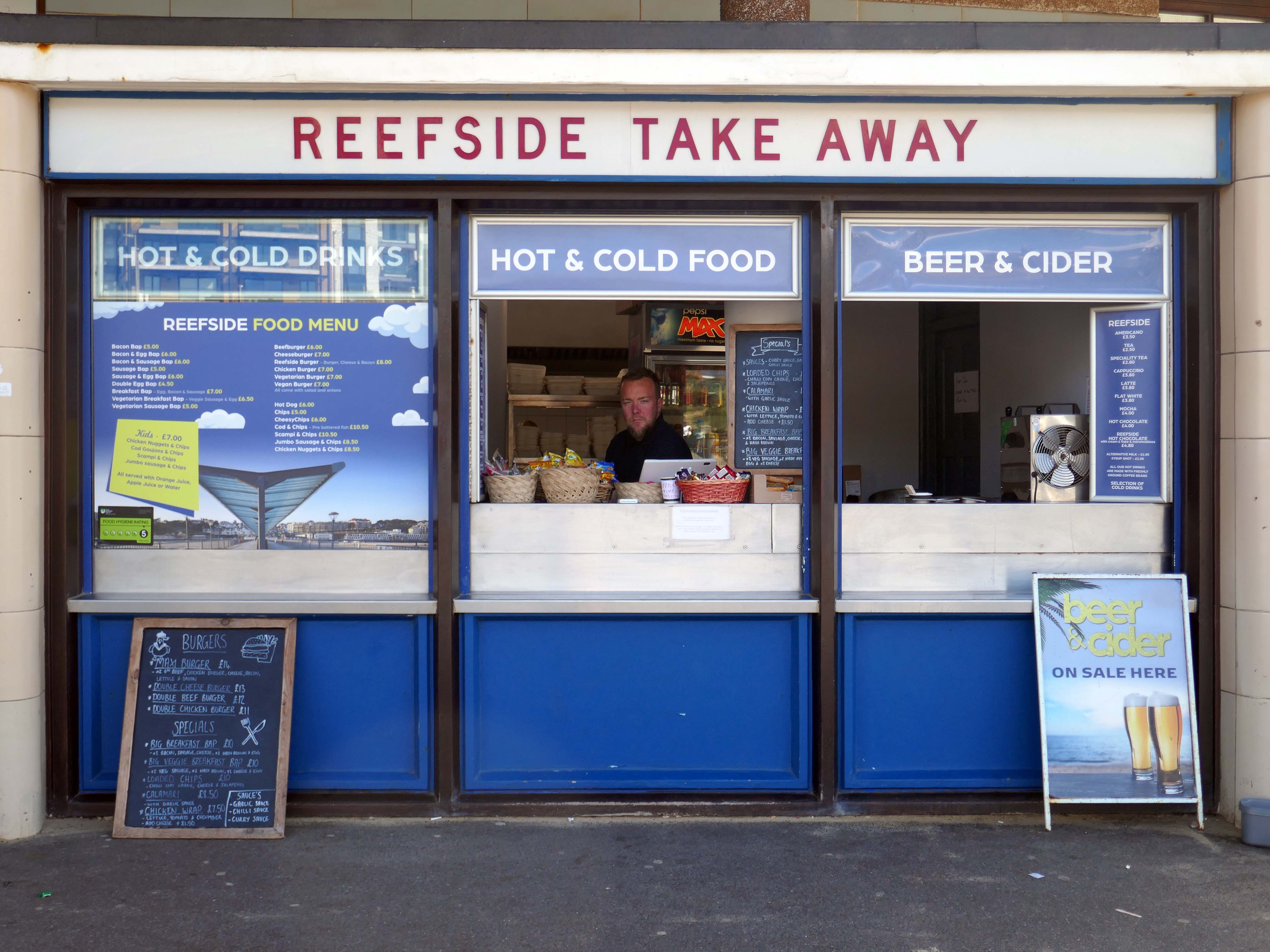
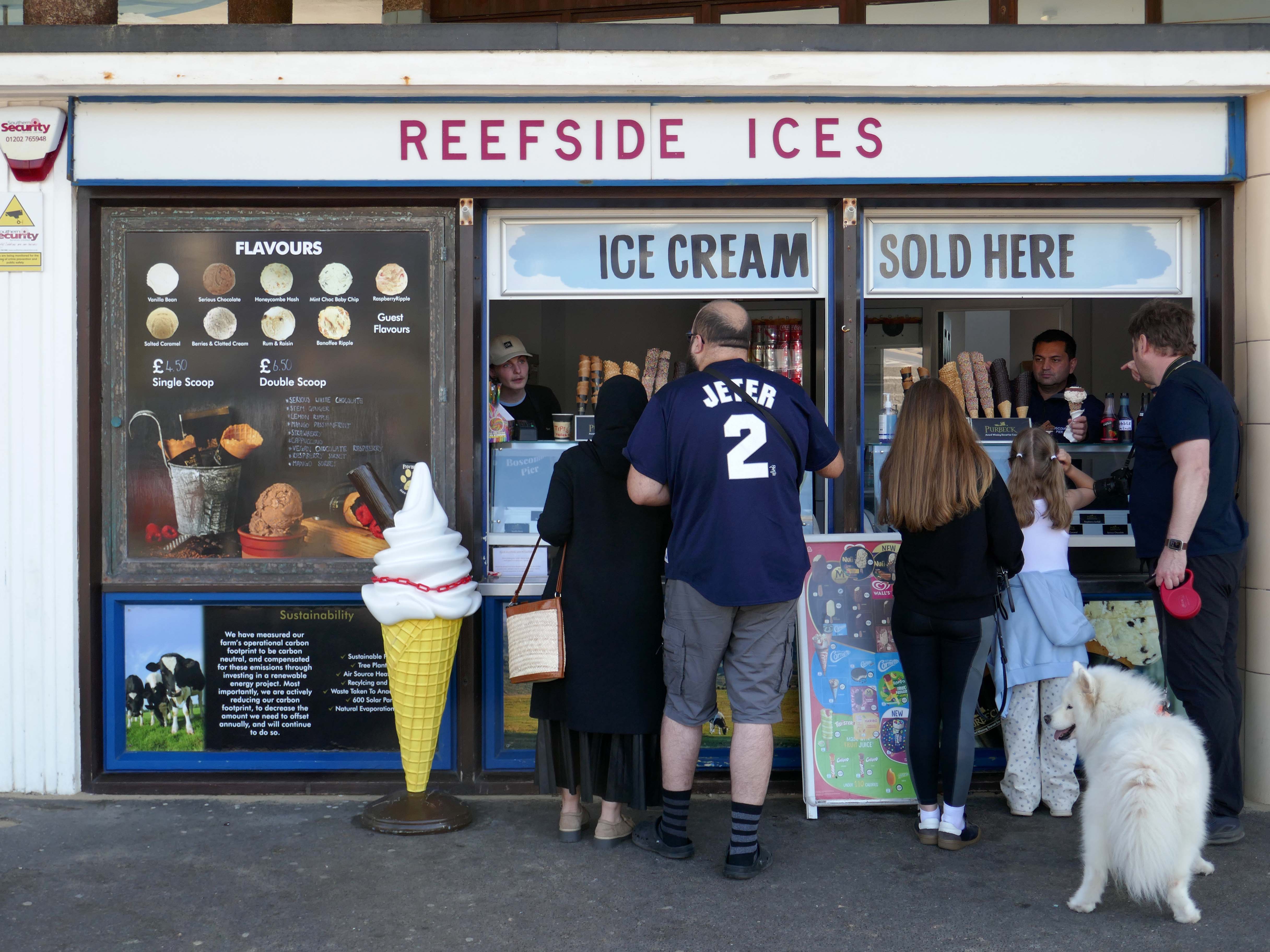
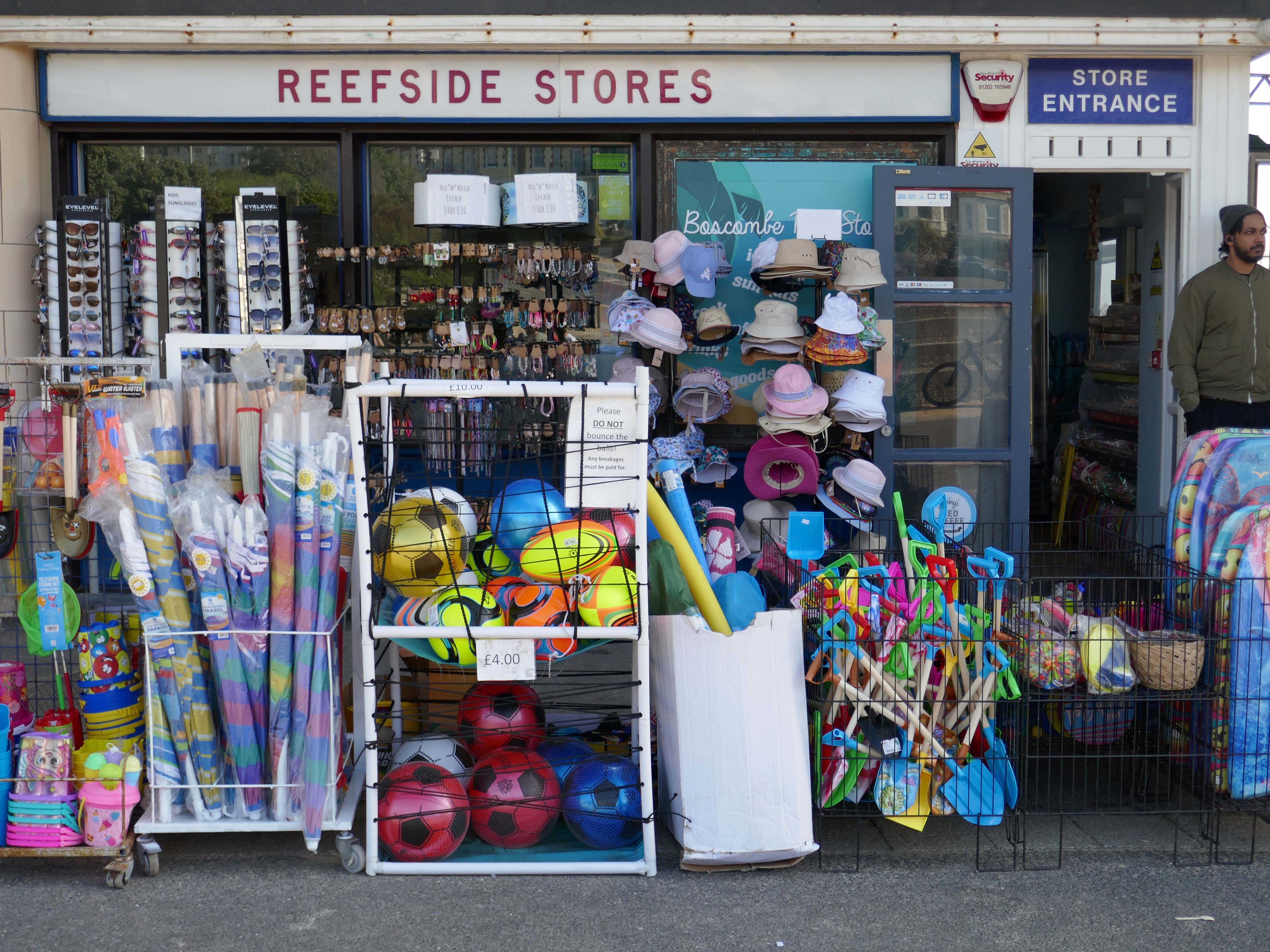
Inside the Grade II listed building at the pier’s entrance, you’ll find a café, takeaway and a beach shop. Outside you can have a go on the bouldering walls and the slackline.
There’s no charge to go on Boscombe Pier, there’s also a viewing platform at the end of the pier.
The resident, who does not wish to be named, was walking along the seafront from Southbourne to Boscombe Pier on Thursday, March 17, at around 10.30am when he noticed strange objects in the sky.
He told the Echo:
“I noticed in the sky three bright, what looked like orange, lights approaching me head on from the west to the east quite low down. I thought they might be aircraft landing lights which seemed strange as it was blue sky and a sunny day.
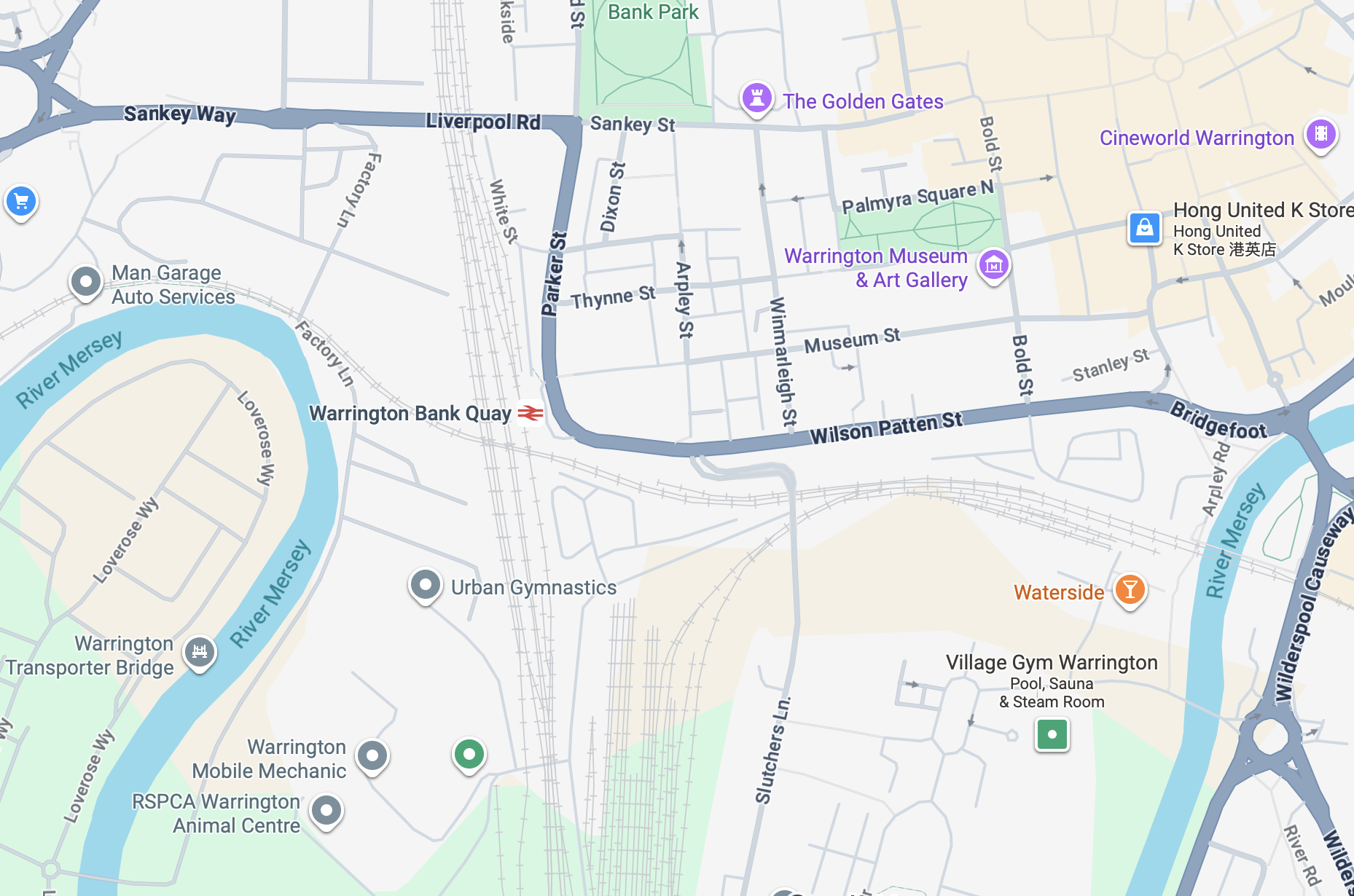
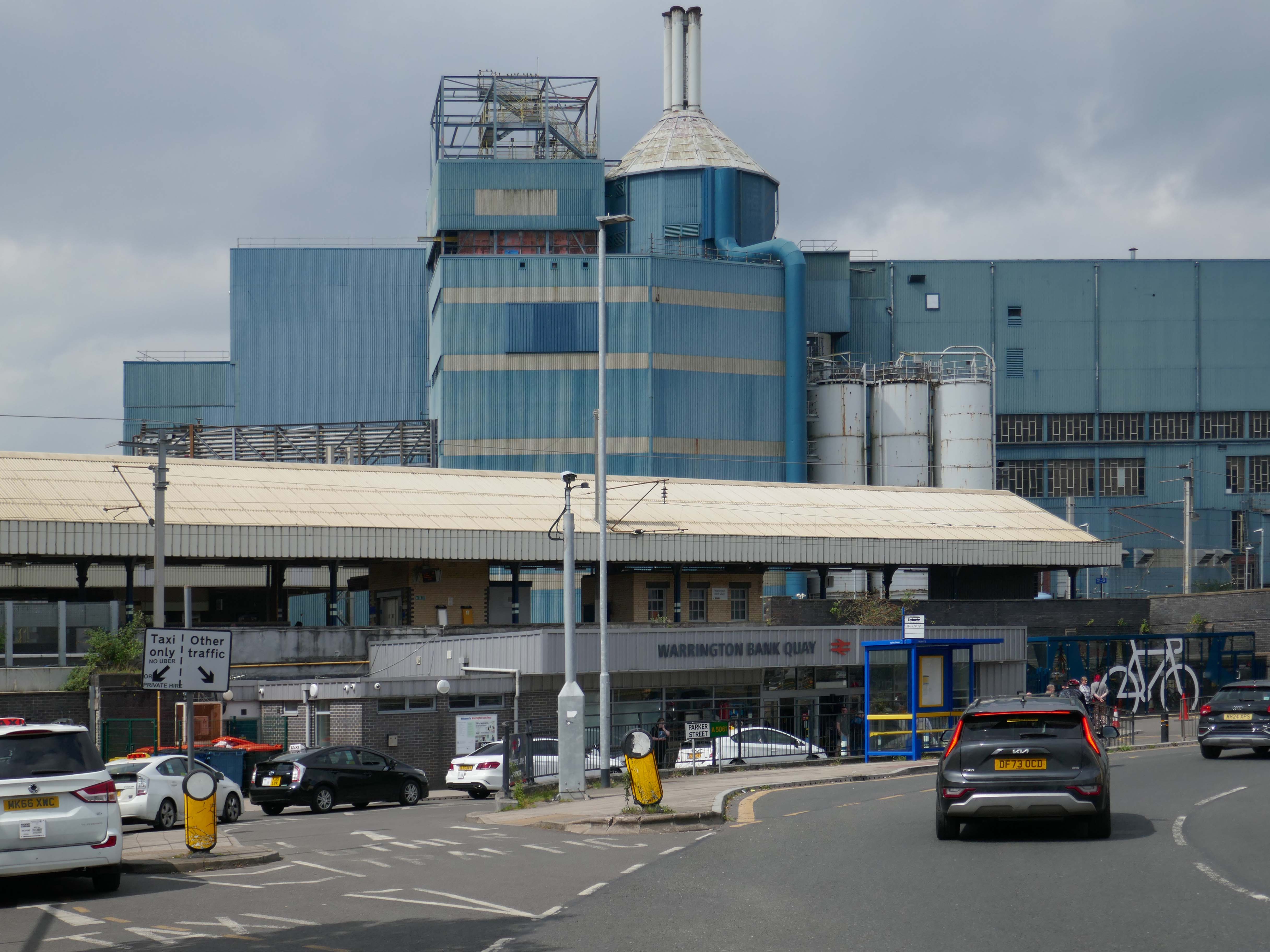
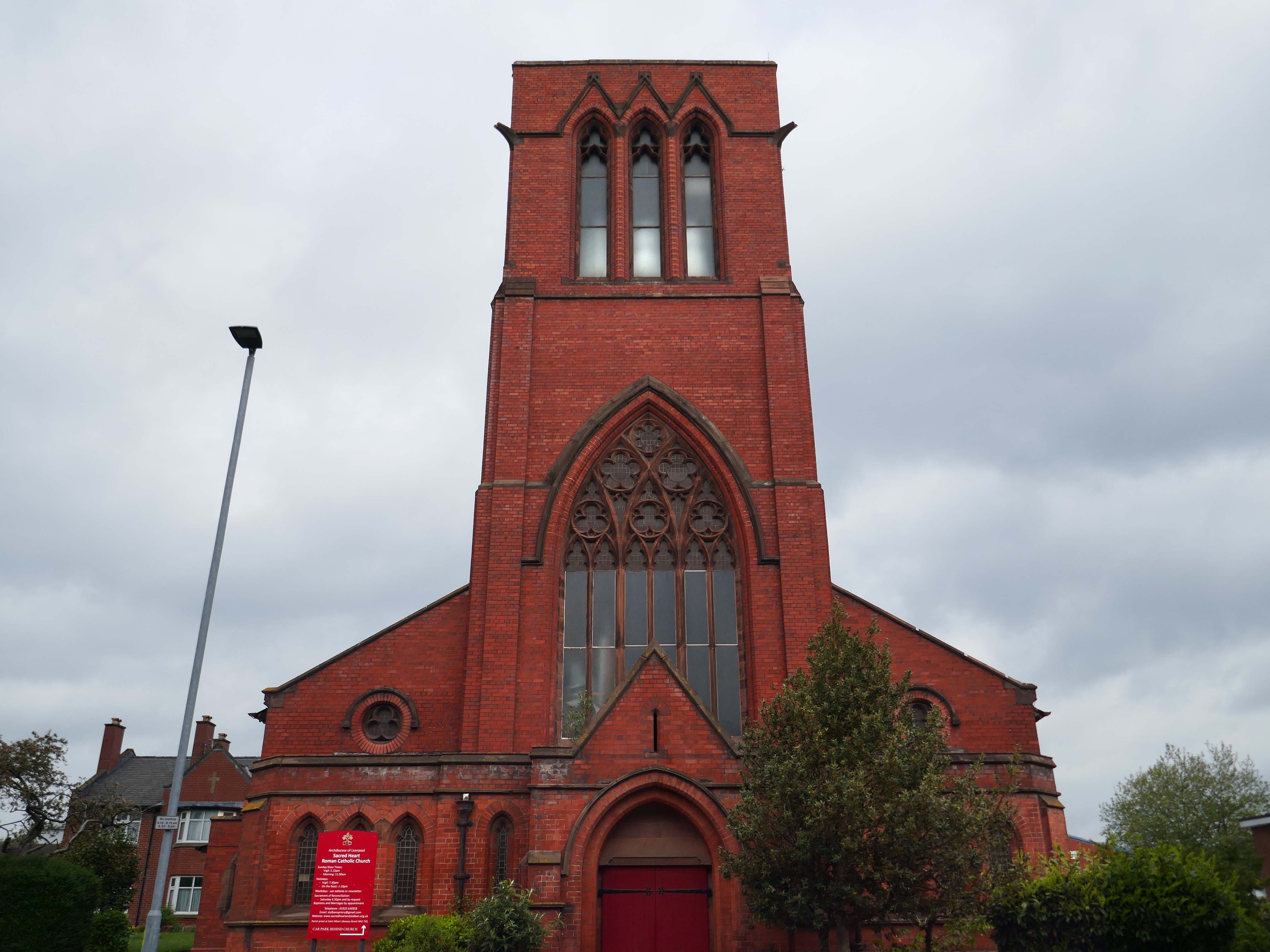
It’s a sunny day in May and we begin at Warrington Bank Quay station.
The first Warrington Bank Quay station opened on 4 July 1837.
The station was rebuilt when the line was electrified in 1973, a new power signal box covering an extended area was built east of the station for the electrification.
In 2009 a new entrance hall was completed, with a travel centre/ticket office and a shop.
The buffet on the London bound platforms was modernised.
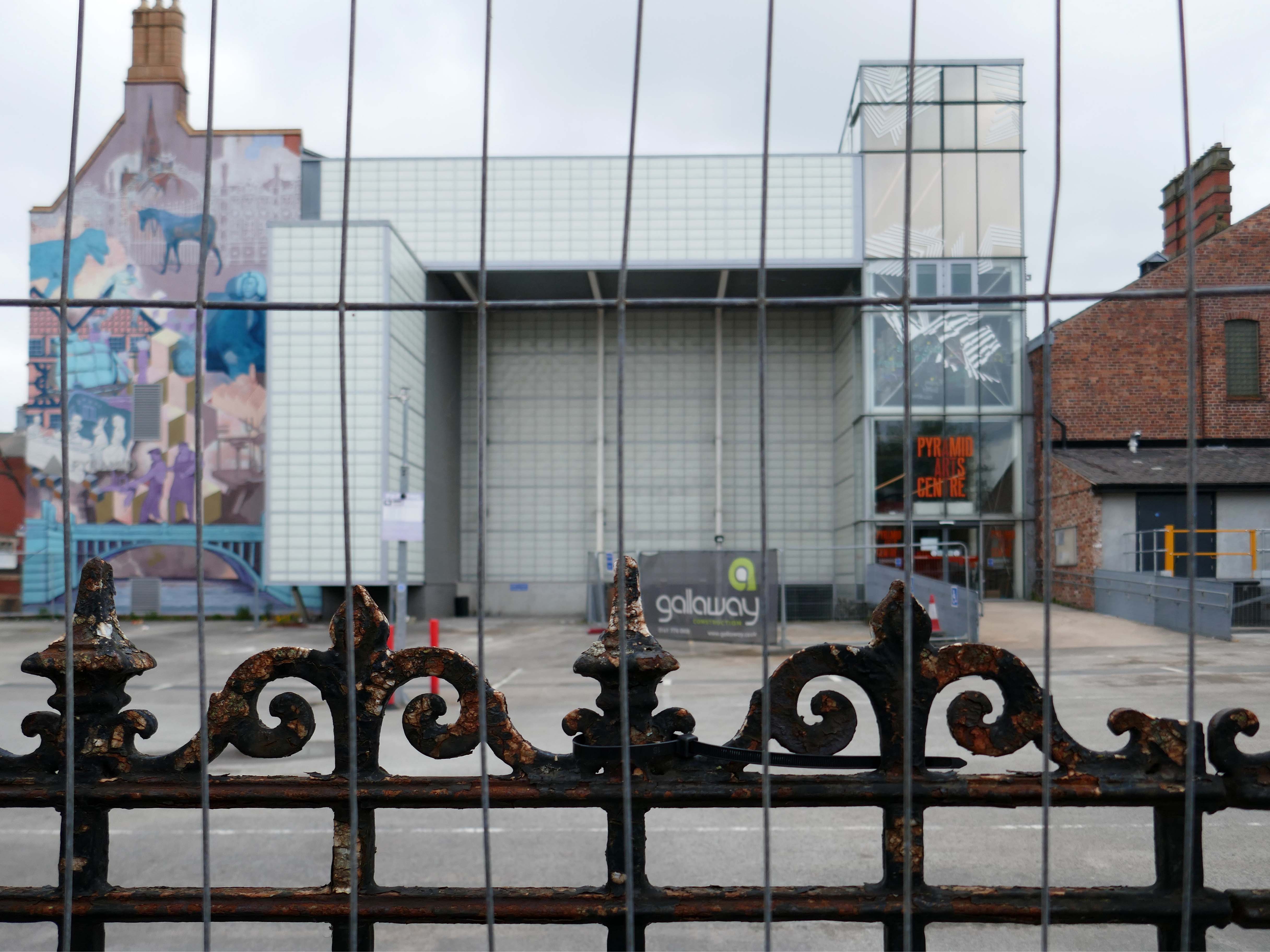
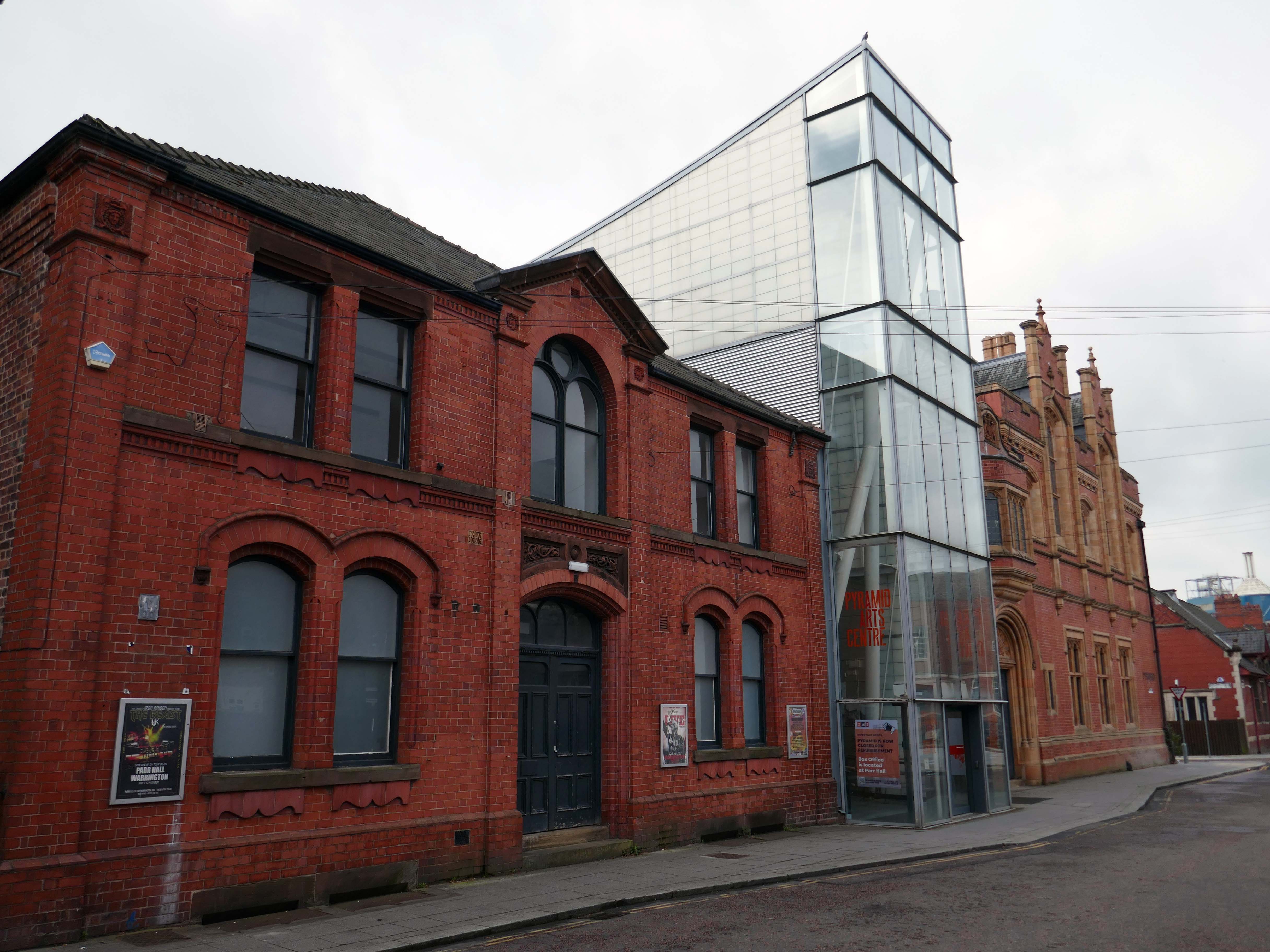
Next onwards to the Pyramid Arts extension 2002, a reworking by Studio BAAD of the former County Court and Inland Revenue Offices 1897-8 by Sir Henry Tanner.
Studio BAAD Ltd started winding up proceedings for a Creditors Voluntary Liquidation in April 2021 and the company was dissolved on 21 July 2021
The centre is currently closed – work began on the redevelopment, which has been funded by a £5 million grant from the Government, in July 2024.
The project aims to make the building more modern, accessible and fit for the future.
The redevelopment includes the addition of a new café and bar area while the Exhibition Hall will become a bigger capacity venue.
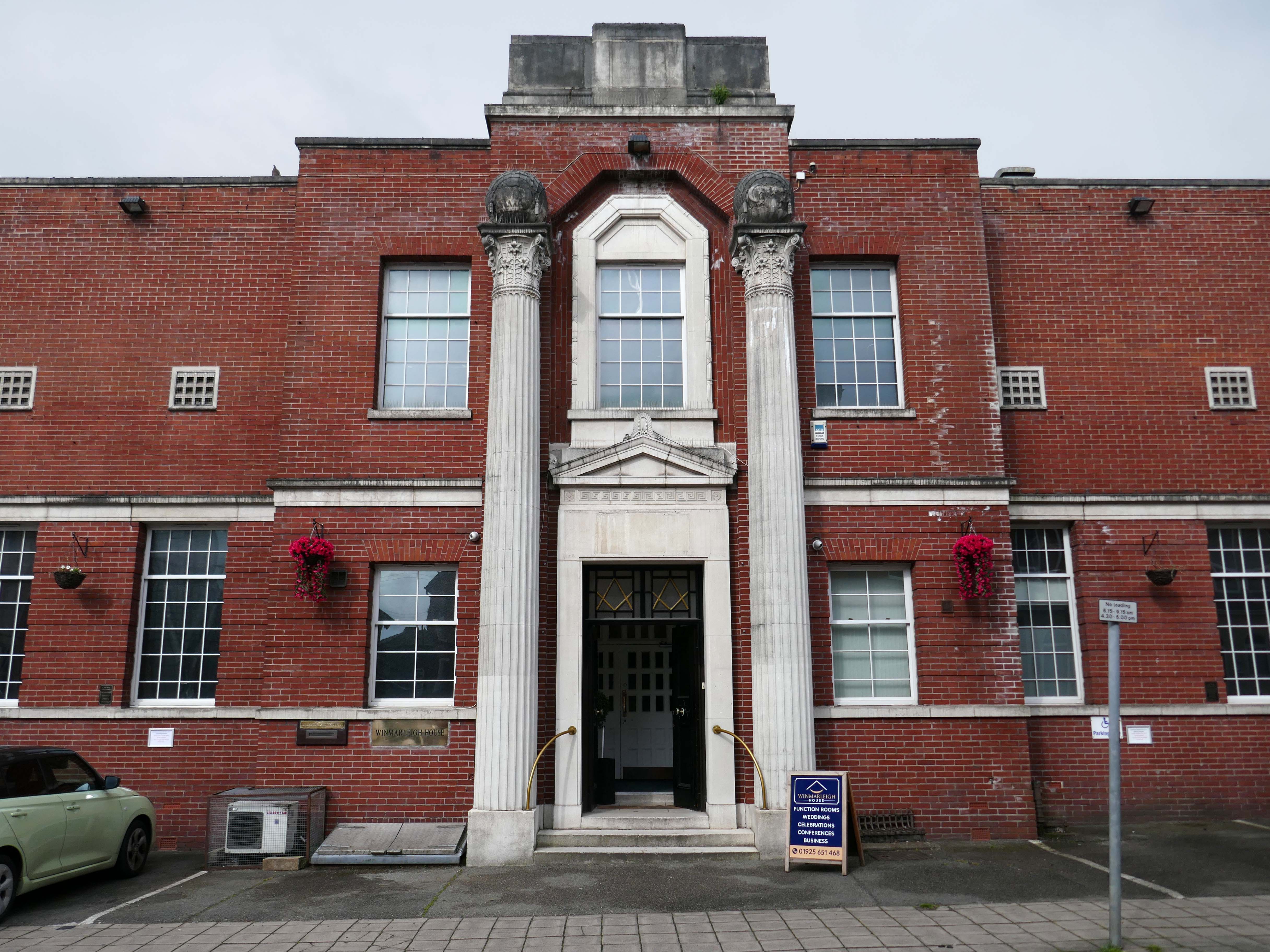
Across the way the Masonic Hall 1932-33 Albert Warburton.
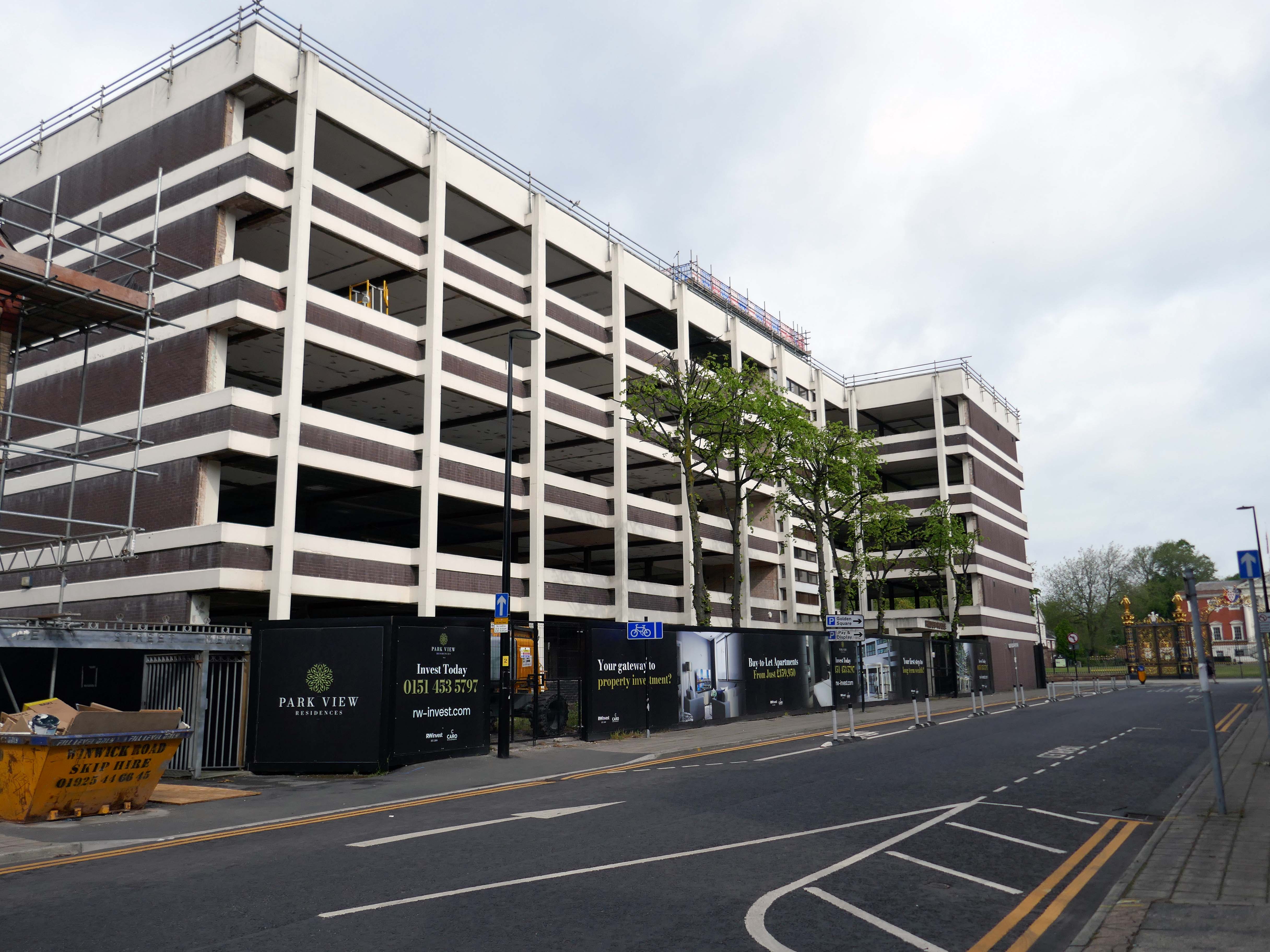
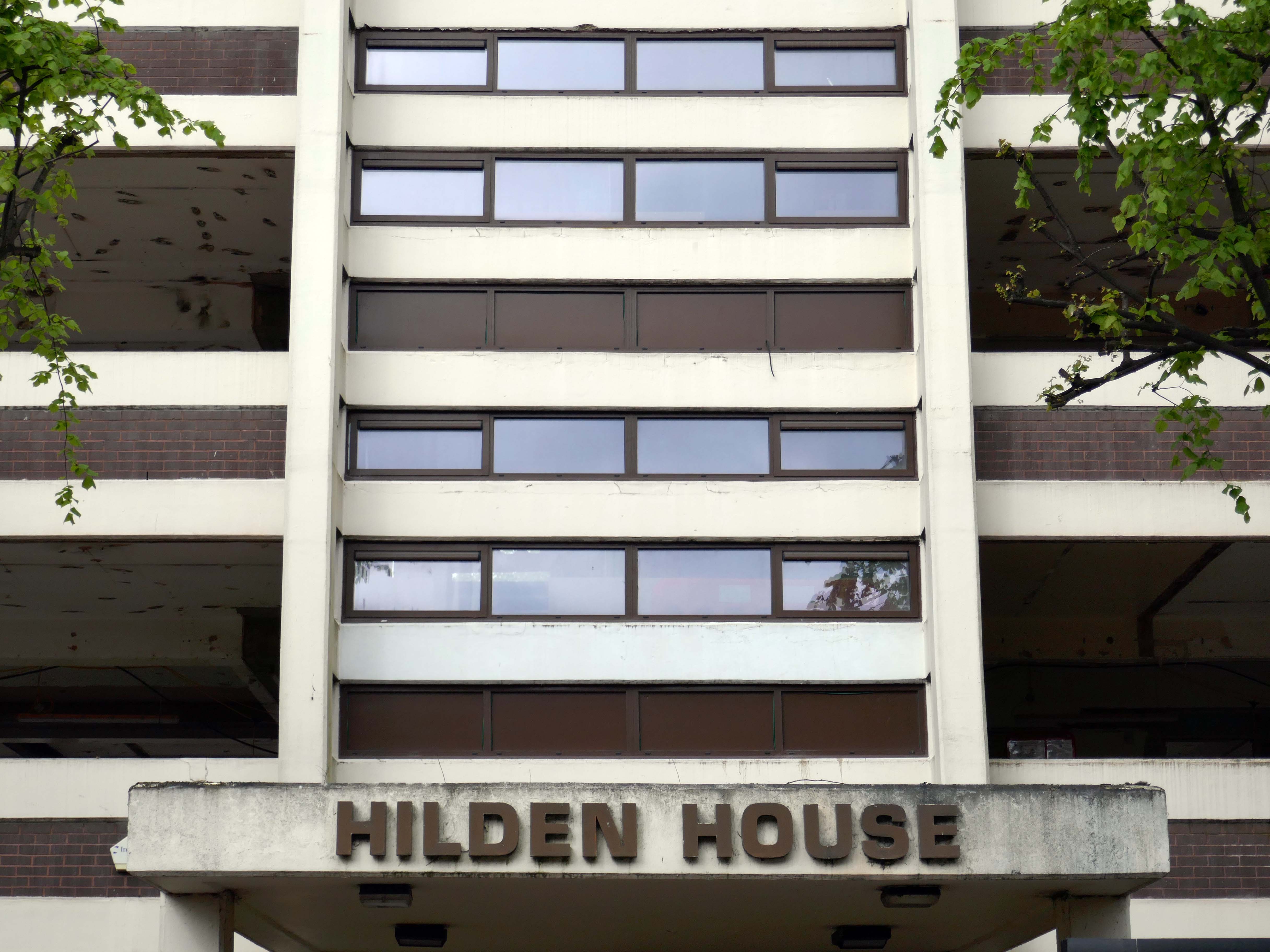
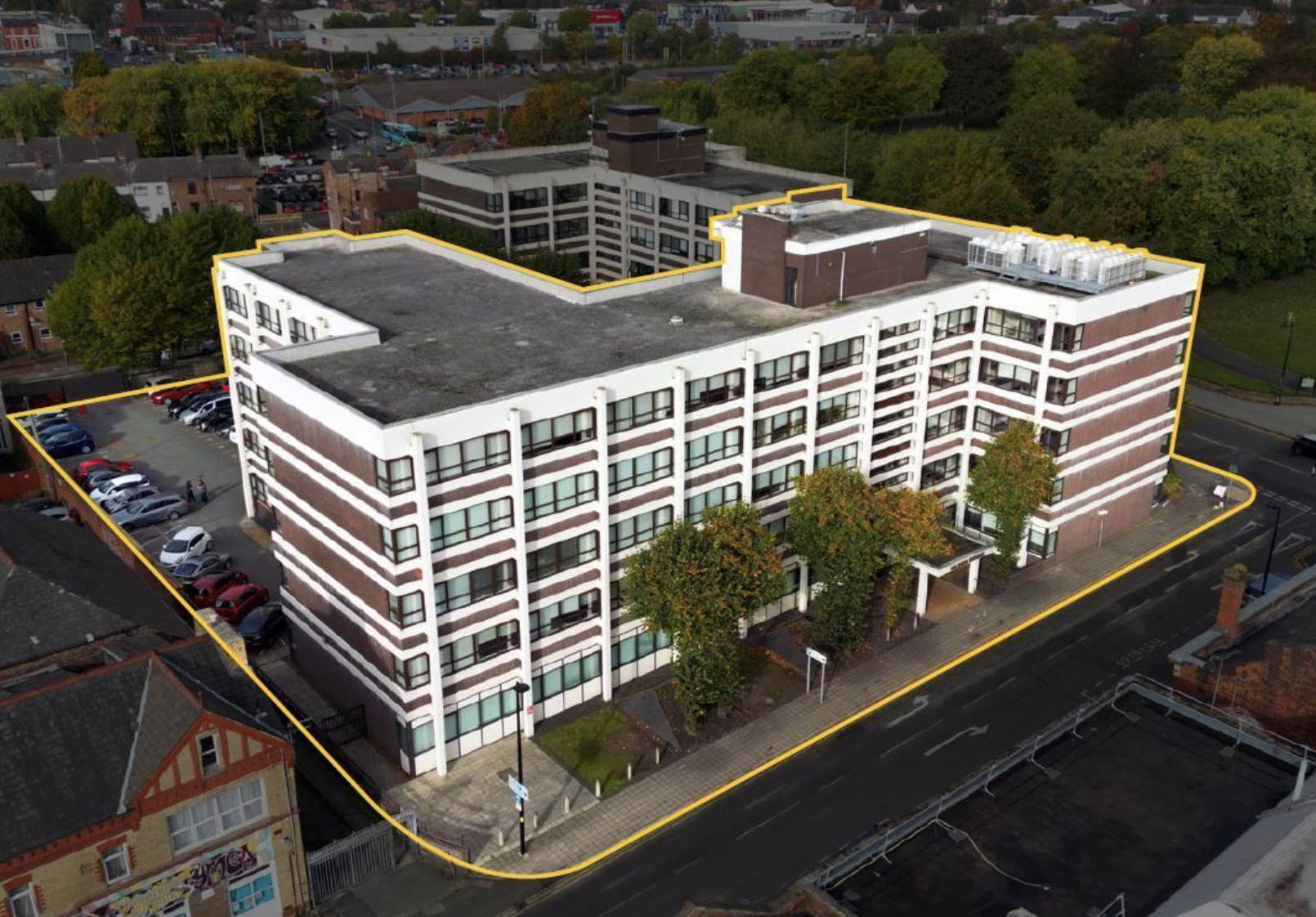
Further along to Hilden House a former Department of Works and Pension building, currently undergoing a transformation into a residential block.
The £18m office to residential reset of the 52,400 sq ft building will offer a mix of one- and two-bedroom apartments in plans now approved by the local authority.
Caro Developments, working in tandem with architectFalconer Chester Hall, hopes to start construction later this year.
According to a planning statement submitted on the developer’s behalf by Savills, once complete, the five-storey block will offer residents a concierge service, a gym and wellness facility, a resident’s lounge, and a co-working area.
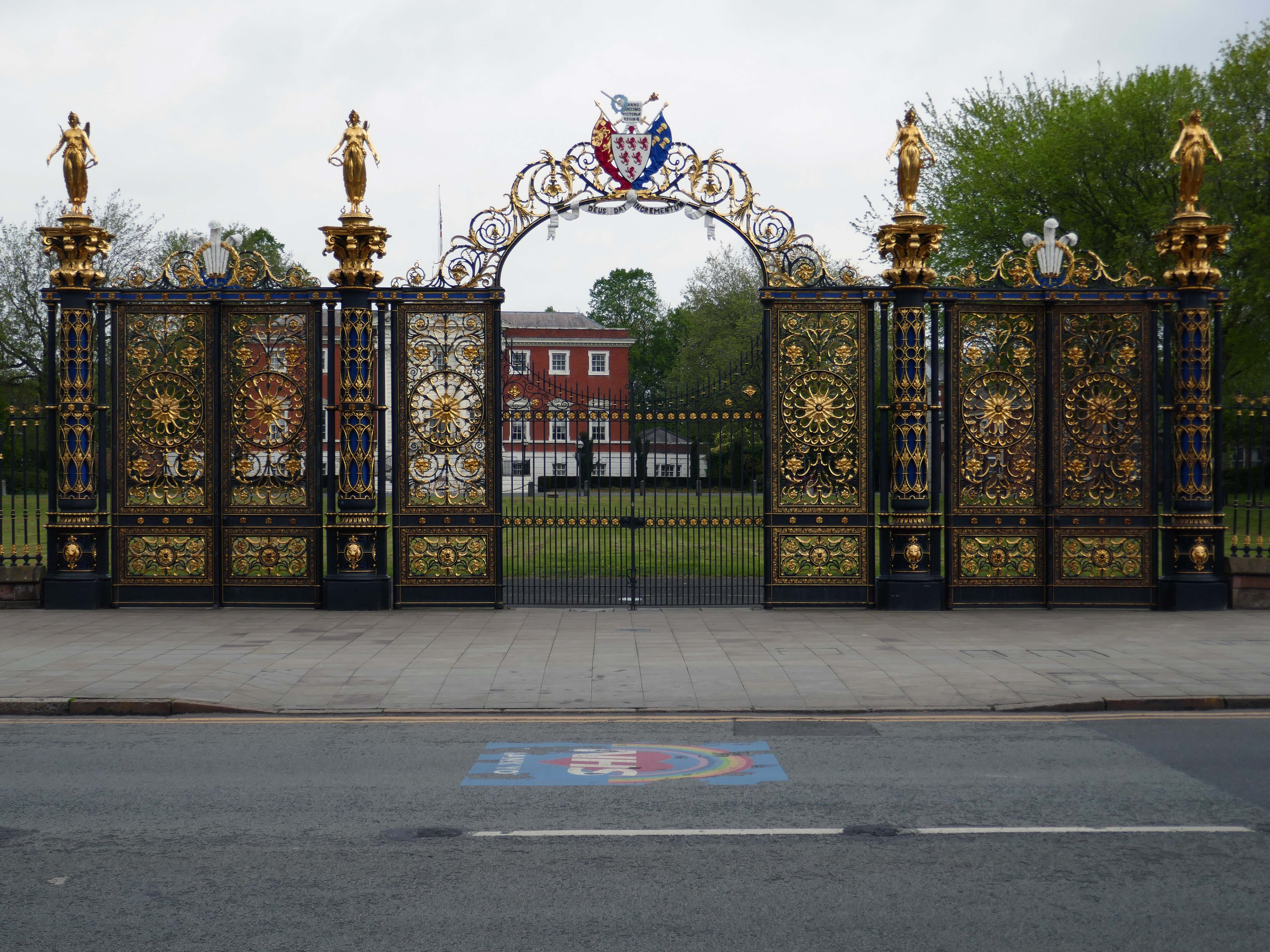
Way out of period but a notable Warrington landmark are the Golden Gates designed in 1862.
The gates were made for the International Exhibition of 1862, and then intended for Queen Victoria’s Sandringham home in Norfolk. Coalbrookdale found it hard to find a buyer for such grand gates, so Frederick Monks, one of the town’s earliest councillors, was able to buy and bring them to Warrington to stand at the front of the town hall lawn. Monks also presented the cast iron Cromwell statue, designed by John Bell, to Warrington in 1899.
The Golden Gates are Grade II* Listed, along with the gate piers and the lamps which line the driveways at either side of the town hall
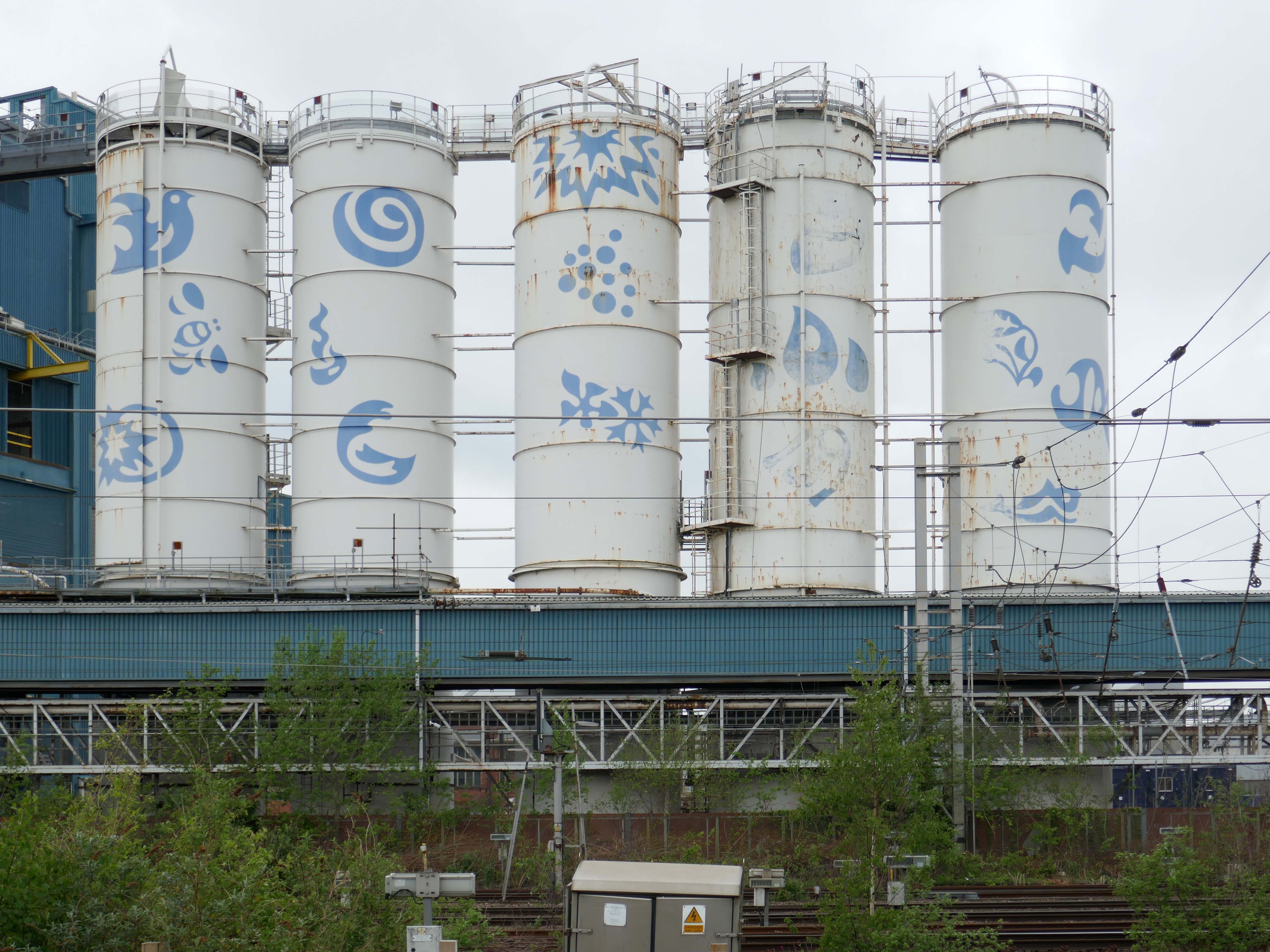
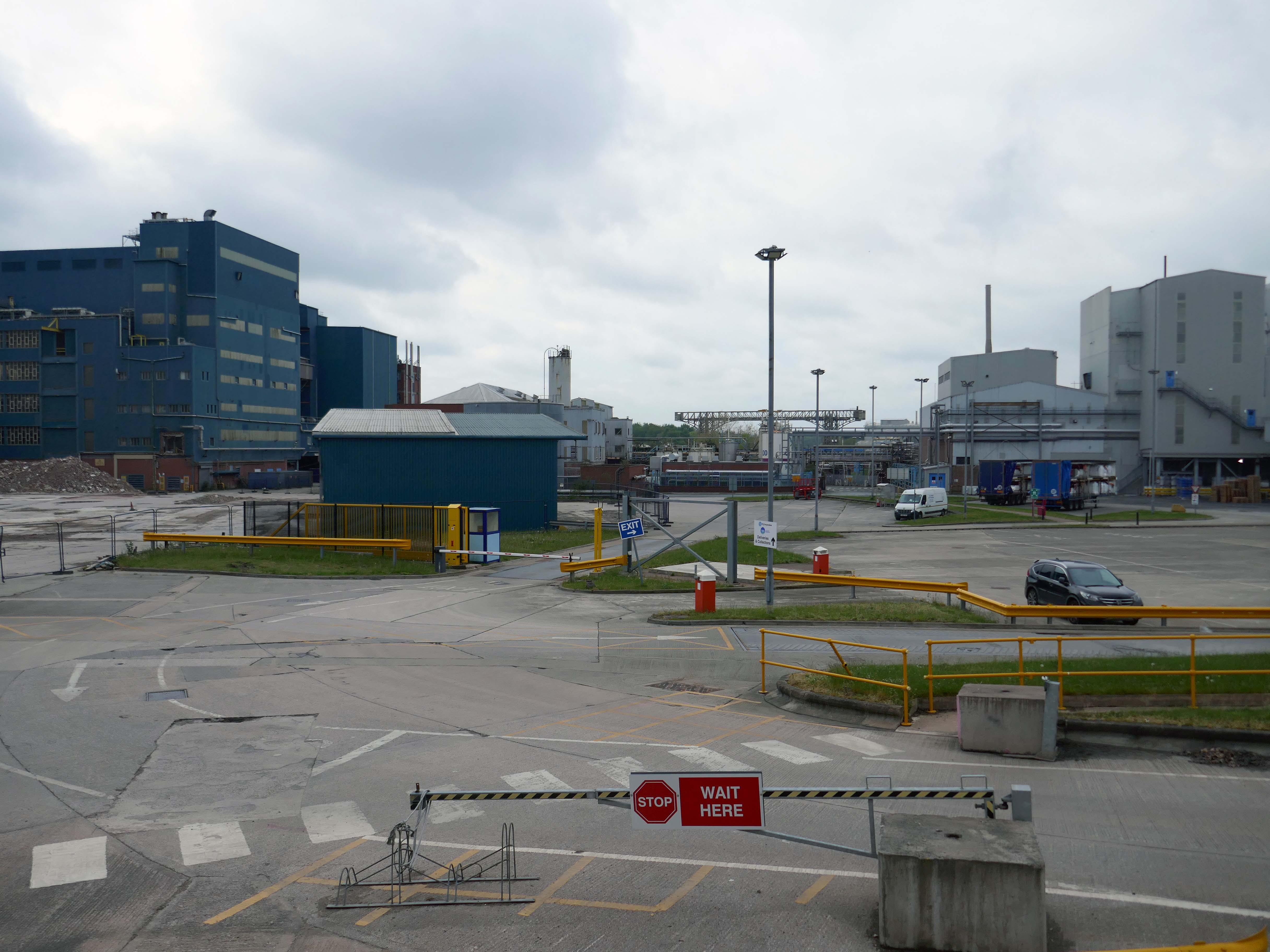
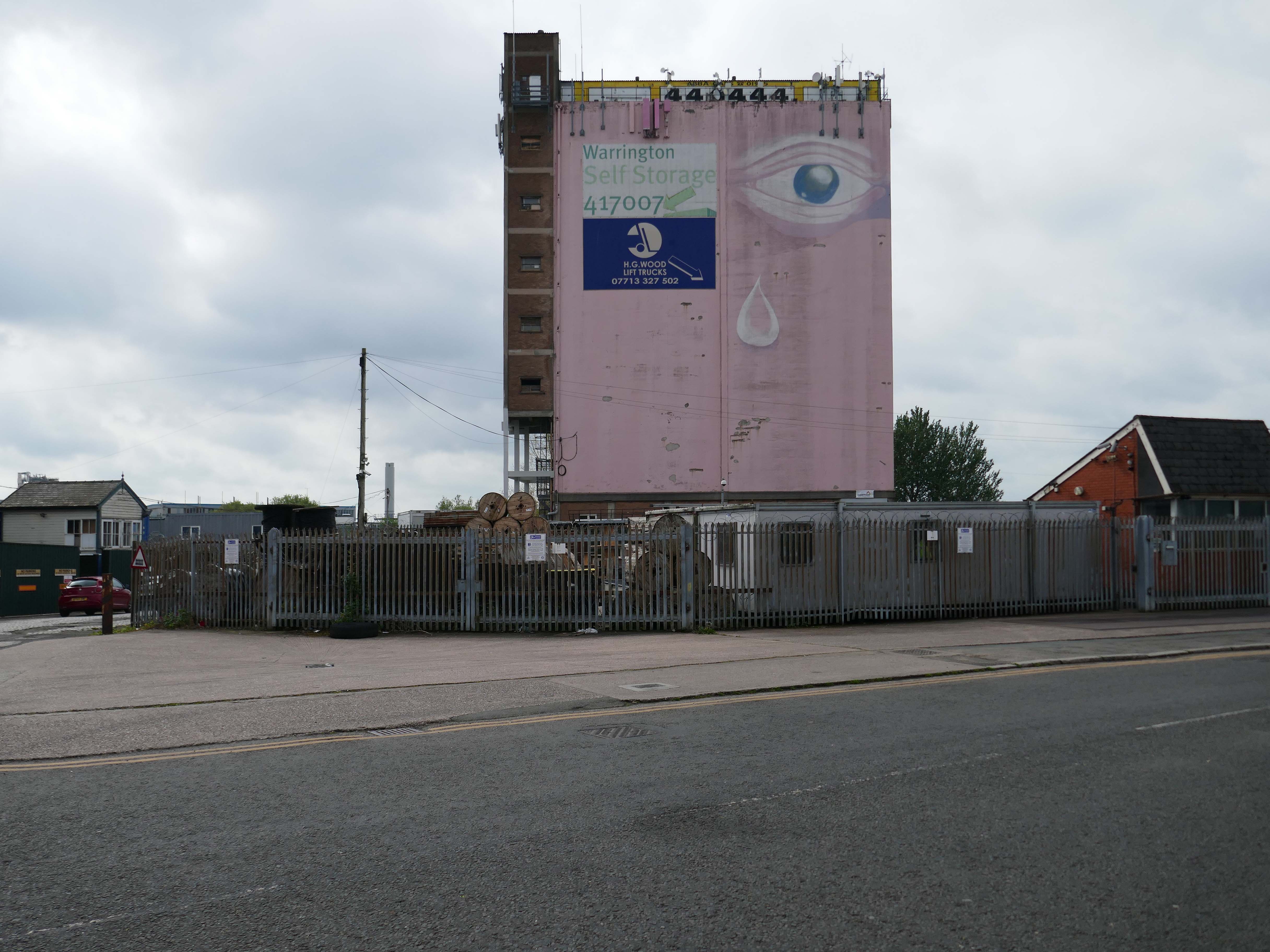
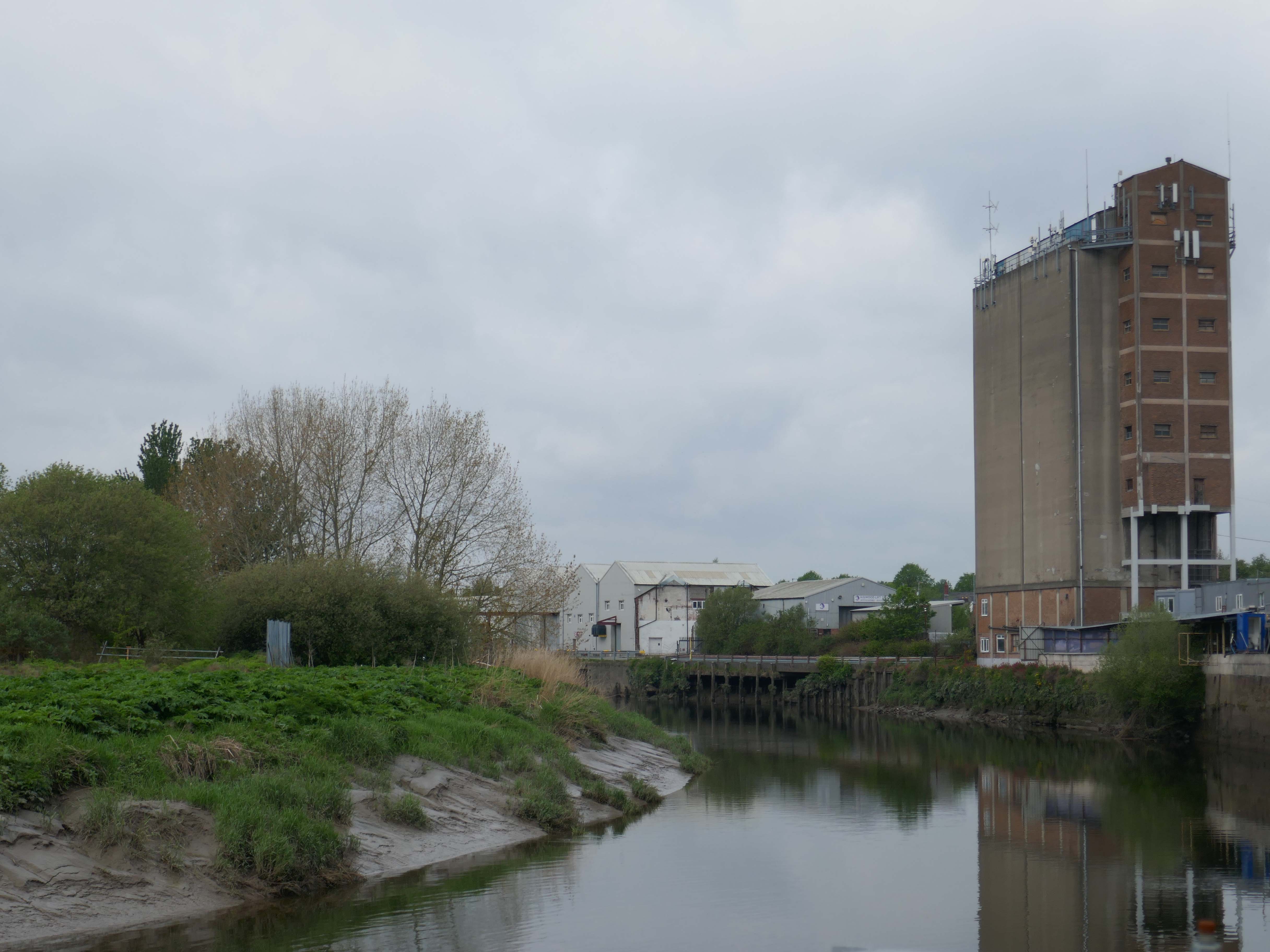
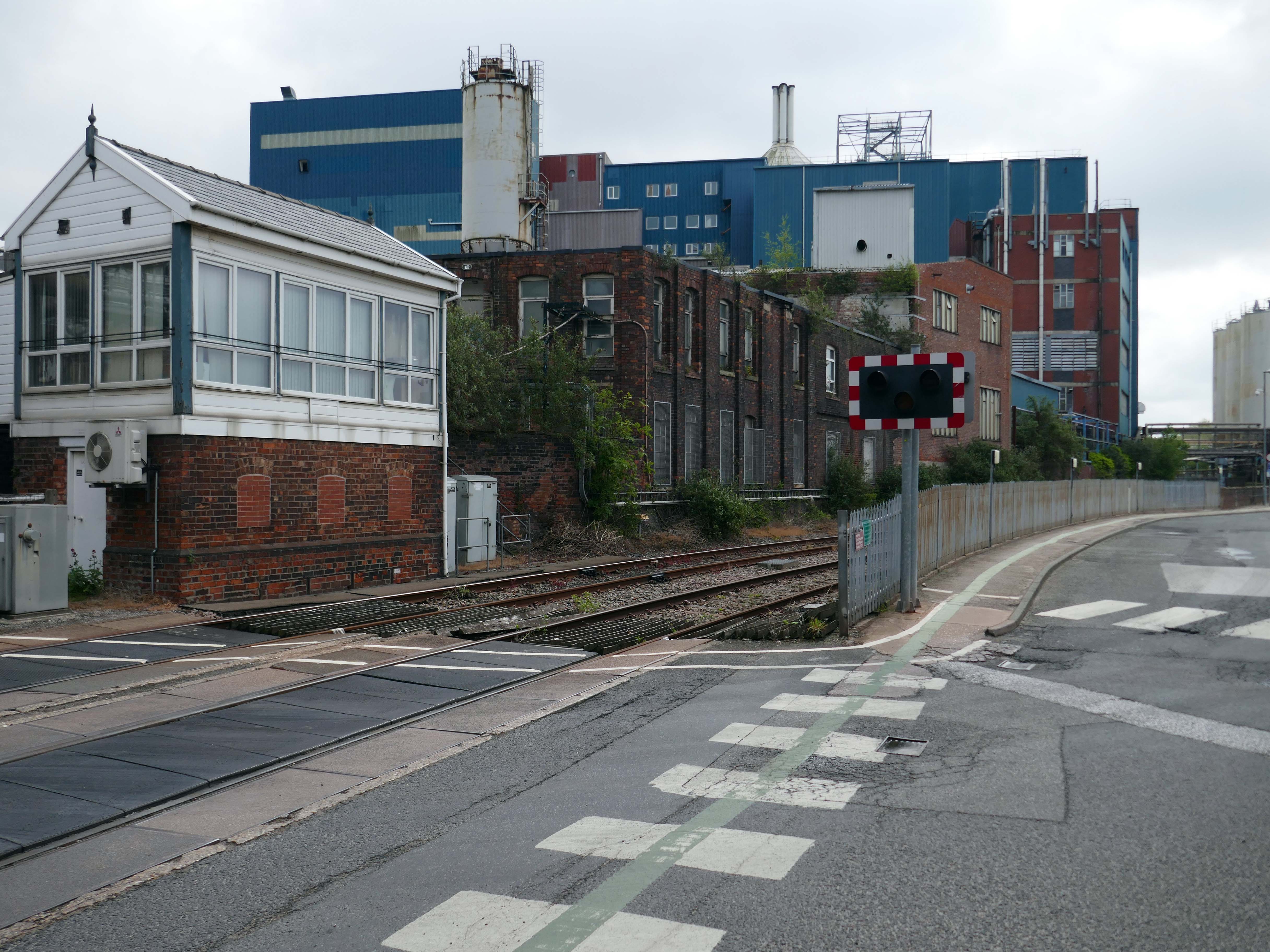
Up the road now to the Soap Works – first views from across the railway tracks.
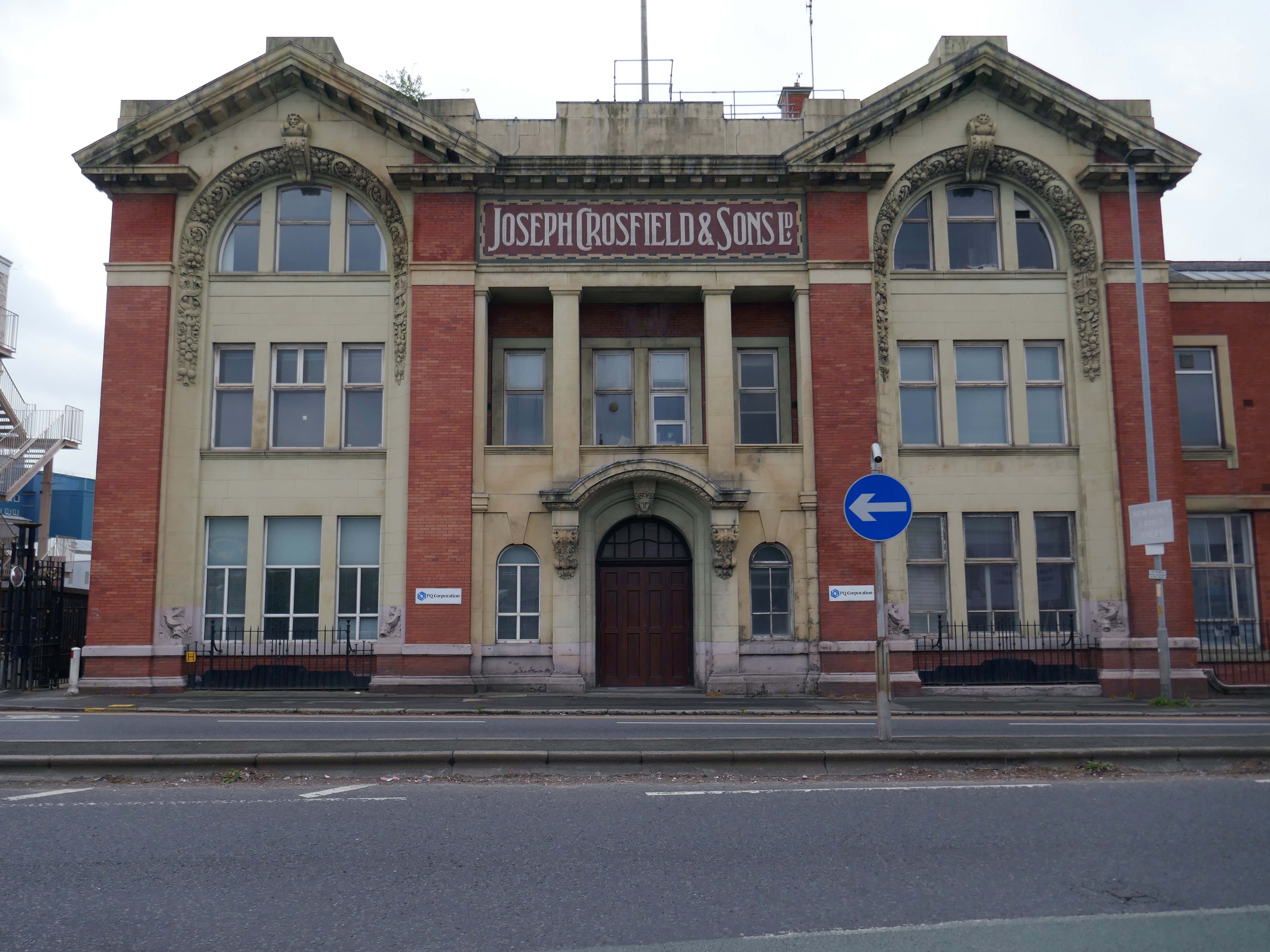
Then over the bridge.
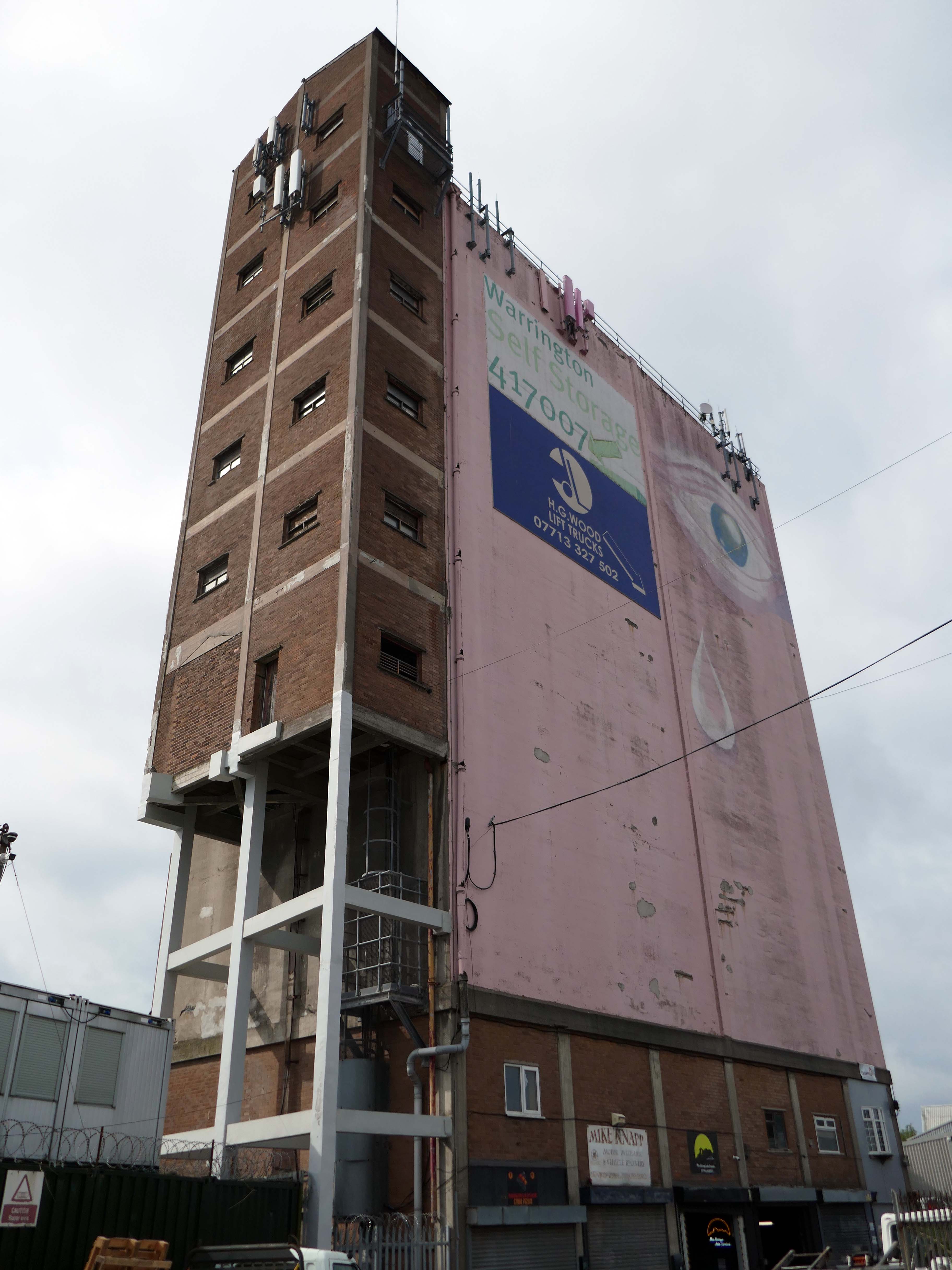
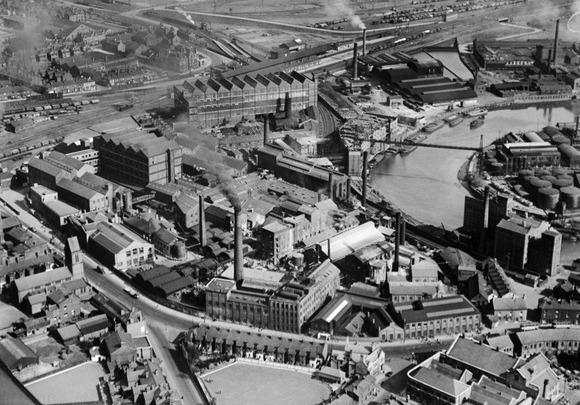
Joseph Crosfield was born in Warrington, the fourth son of George Crosfield and his wife Ann née Key. In 1814, Joseph’s apprenticeship having finished, at the age of 21 he decided to establish his own soap making business in Warrington.
In 1911 the company was purchased by Brunner, Mond & Company and 1919 it was absorbed into Lever Brothers. From 1929 Crosfield was a subsidiary of Unilever. In 1997 its Warrington speciality chemicals division that made ingredients for detergents and toothpastes was acquired by ICI and in 2001, Ineos Capital purchased the company. The name Crosfield was finally lost as it was renamed Ineos Silicas. In 2008 Ineos Silicas was merged with PQ Corporation, with the new company retaining the name of PQ Corporation.
The Crosfield’s factory closed for good in October 2020.
Dante FS Group formally acquired four acres of the site this month for an undisclosed fee from EcoVyst.
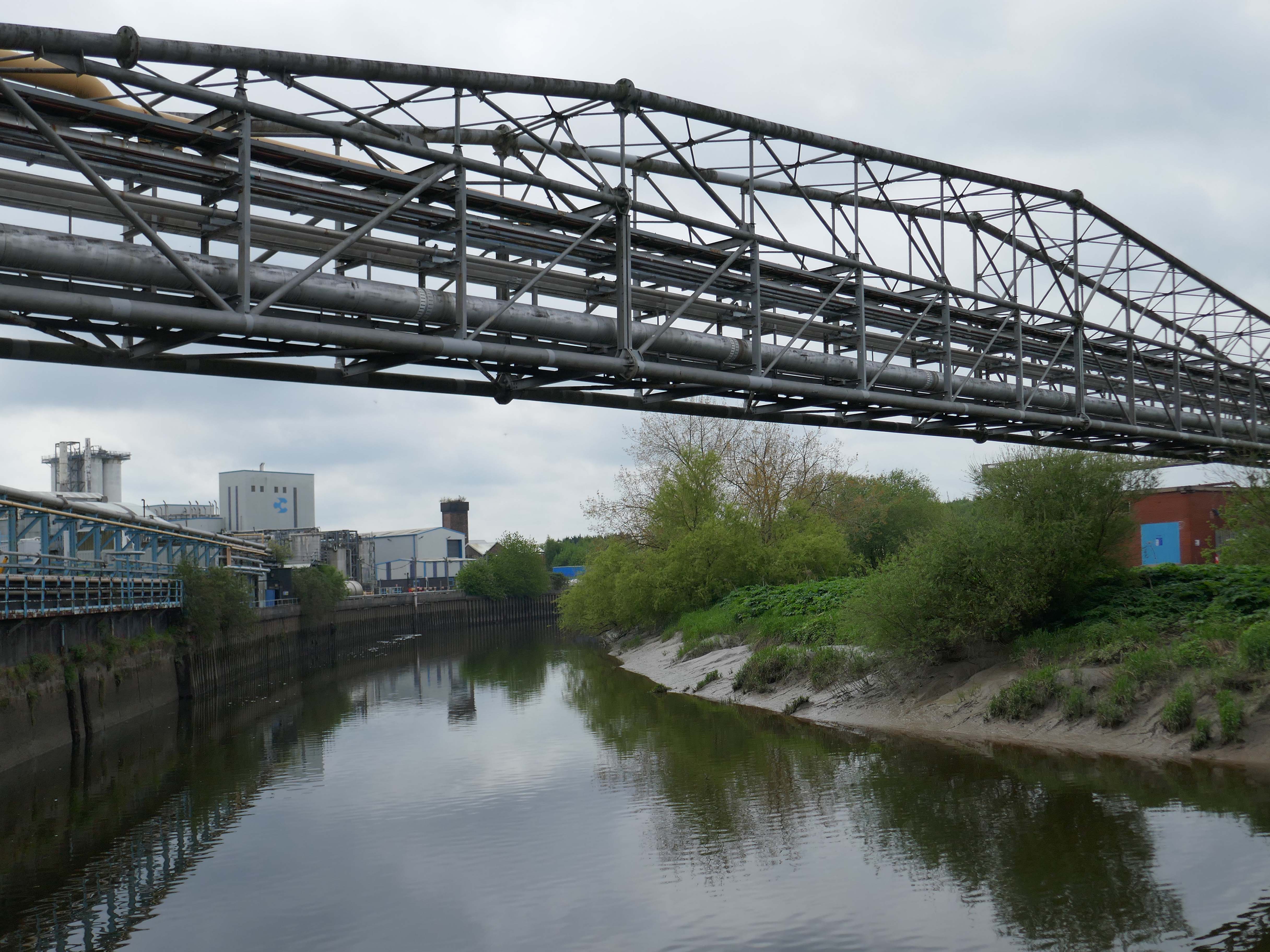
The latter firm will continue to operate from sections of the site, as will PQ Corporation, with Dante buying land closest to the train station, including the visible blue buildings and white Unilever tanks.
Renamed Platform at Bank Quay, the ‘next-generation, state-of-the-art modular data centre’ is ‘set to power the UK’s growing AI economy’ and bring high-tech jobs to the town.
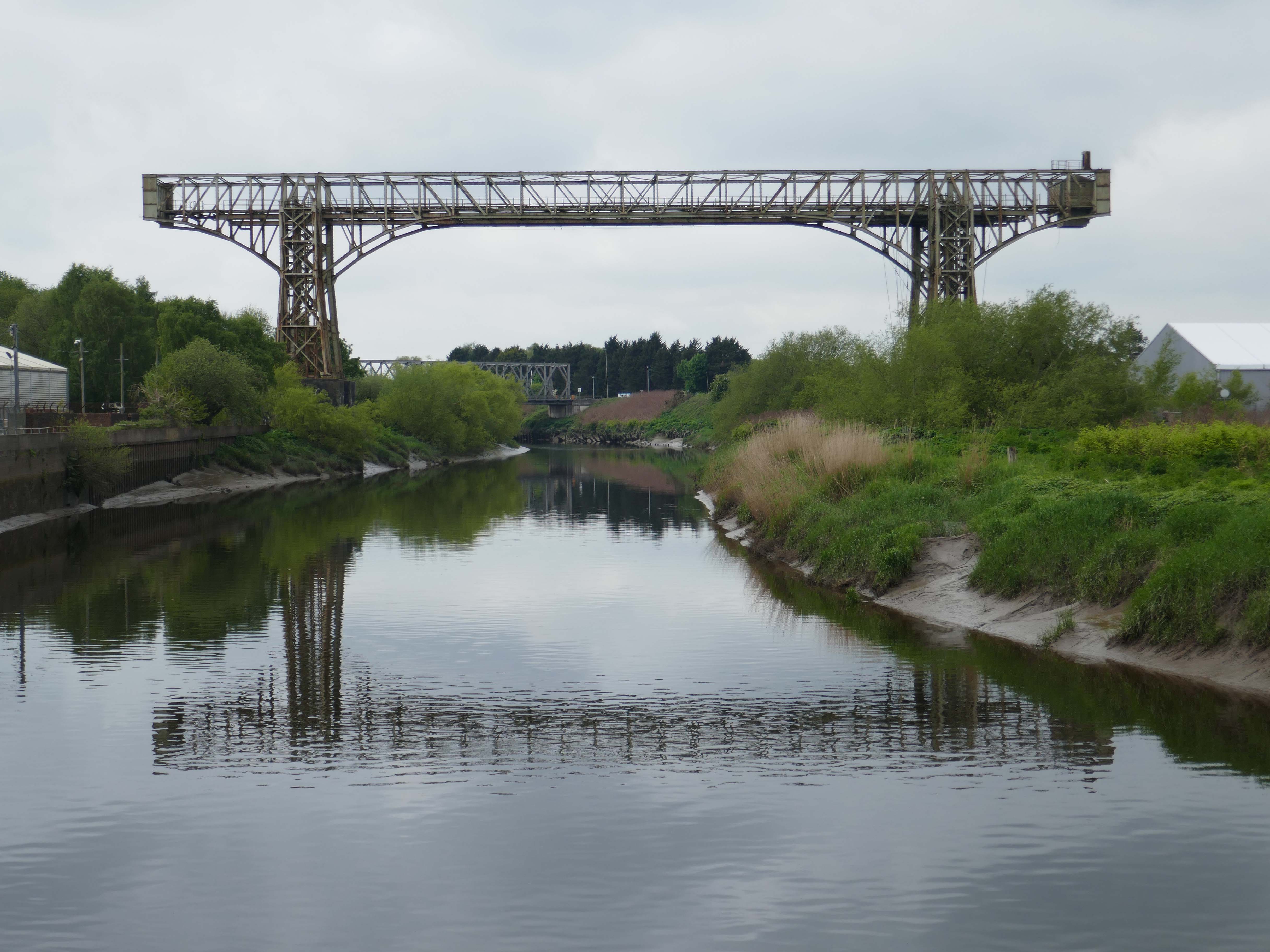
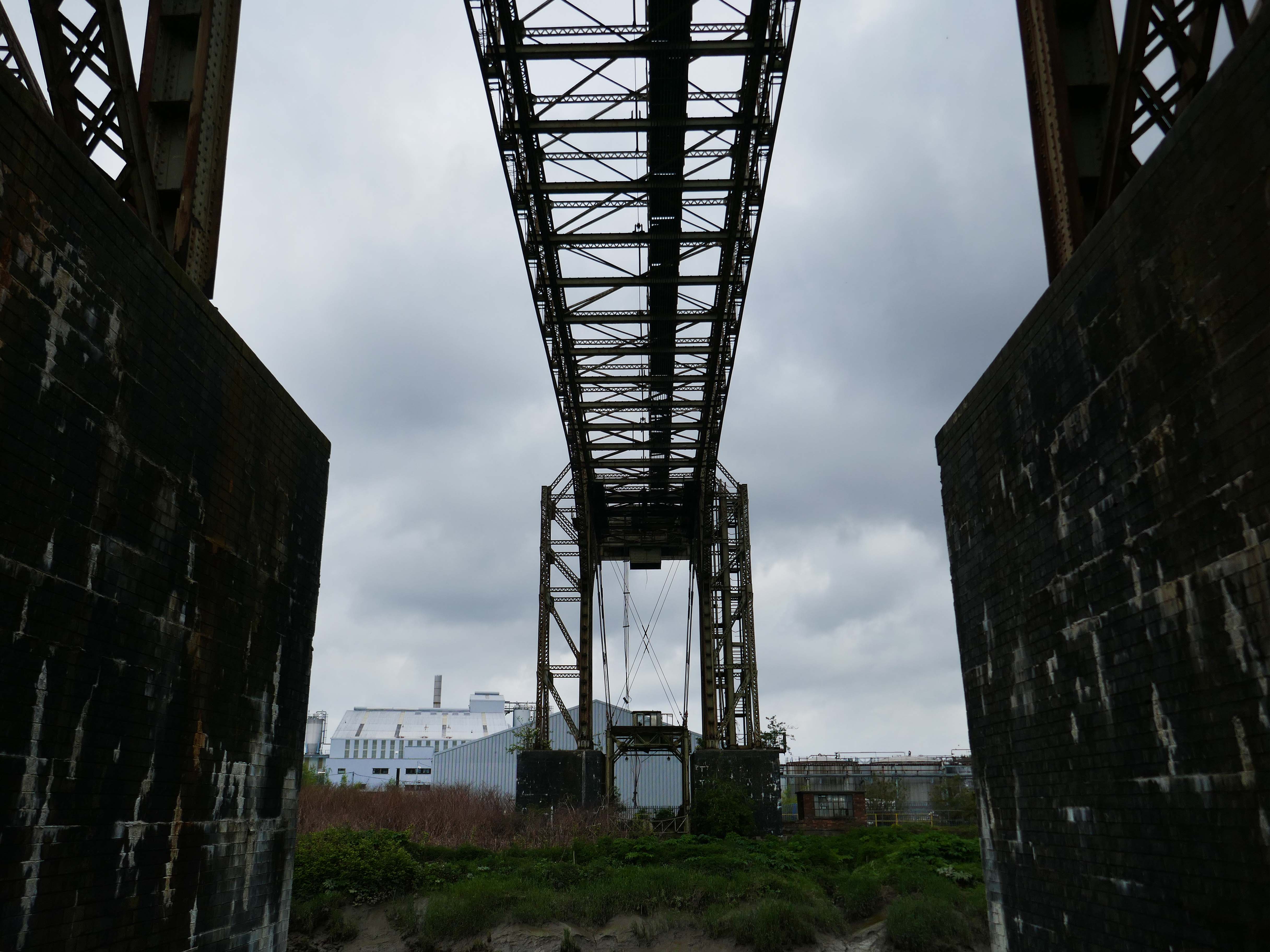
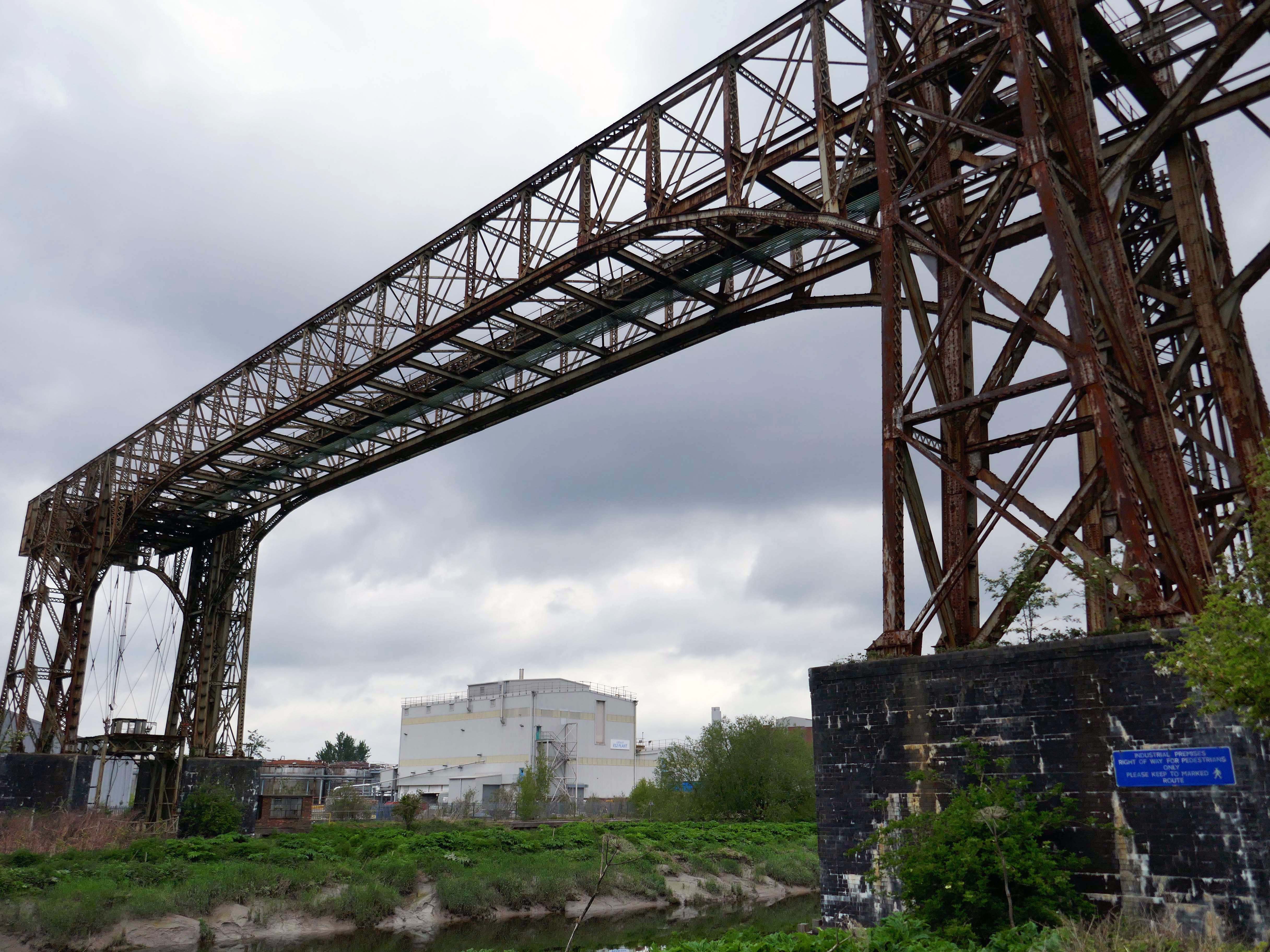
Warrington Transporter Bridge aka Bank Quay Transporter Bridge or Crosfield’s Transporter Bridge across the River Mersey is a structural steel transporter bridge with a span of 200 feet.
It is 30 feet wide and 76 feet above high water level, with an overall length of 339 feet.
It was commissioned in 1916 and, although it has been out of use since about 1964, it is still standing. It was designed by William Henry Hunter and built by William Arrol and Co.
The Transporter Bridge was built to despatch finished product from the cement plant that had been built on the peninsula. It was originally designed to carry rail vehicles up to eighteen tons loaded weight.
The bridge was converted for road vehicles in 1940, and was certified to carry loads of up to thirty tons in 1953.
This was my first visit in 2017 – recorded on Modern Mooch.
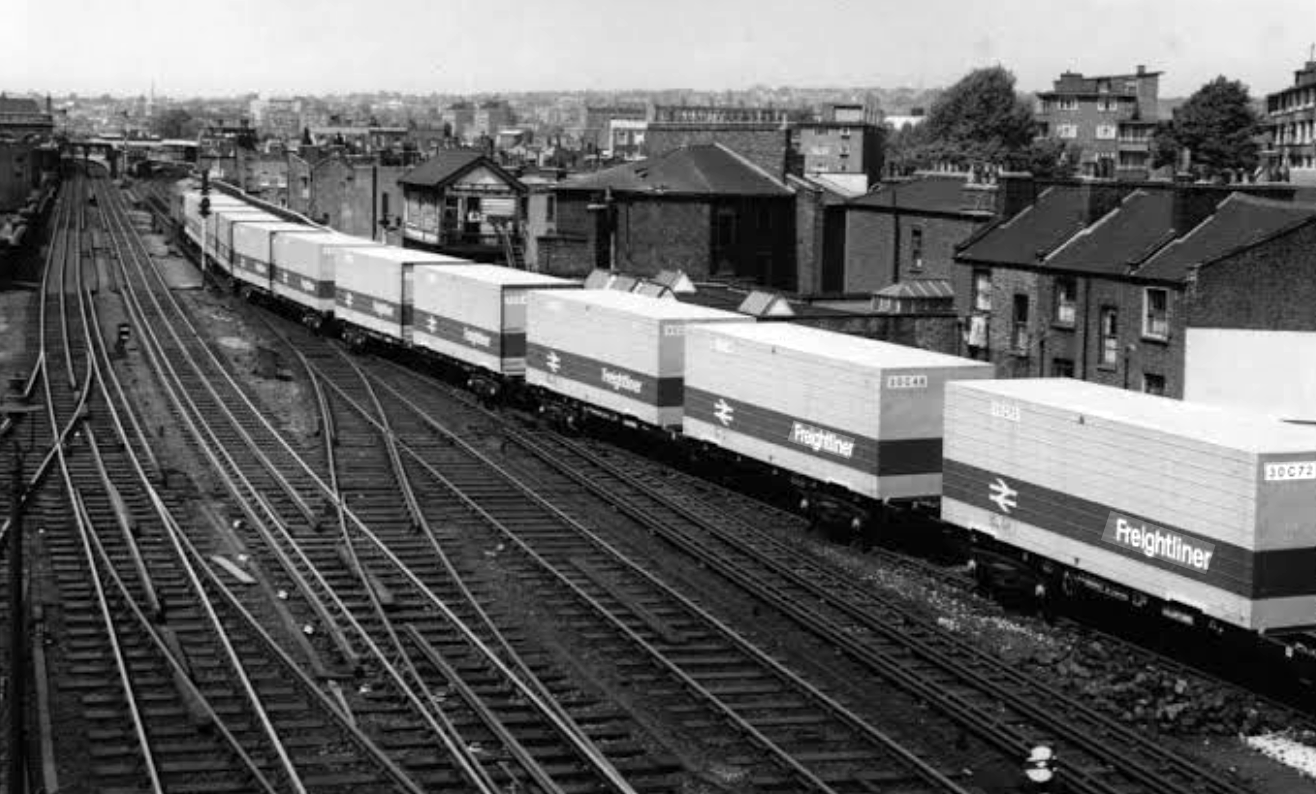
Highlight on any day out anywhere is the discovery of arcane British Rail typography.
There’s a brief history of Freightliner history right here.
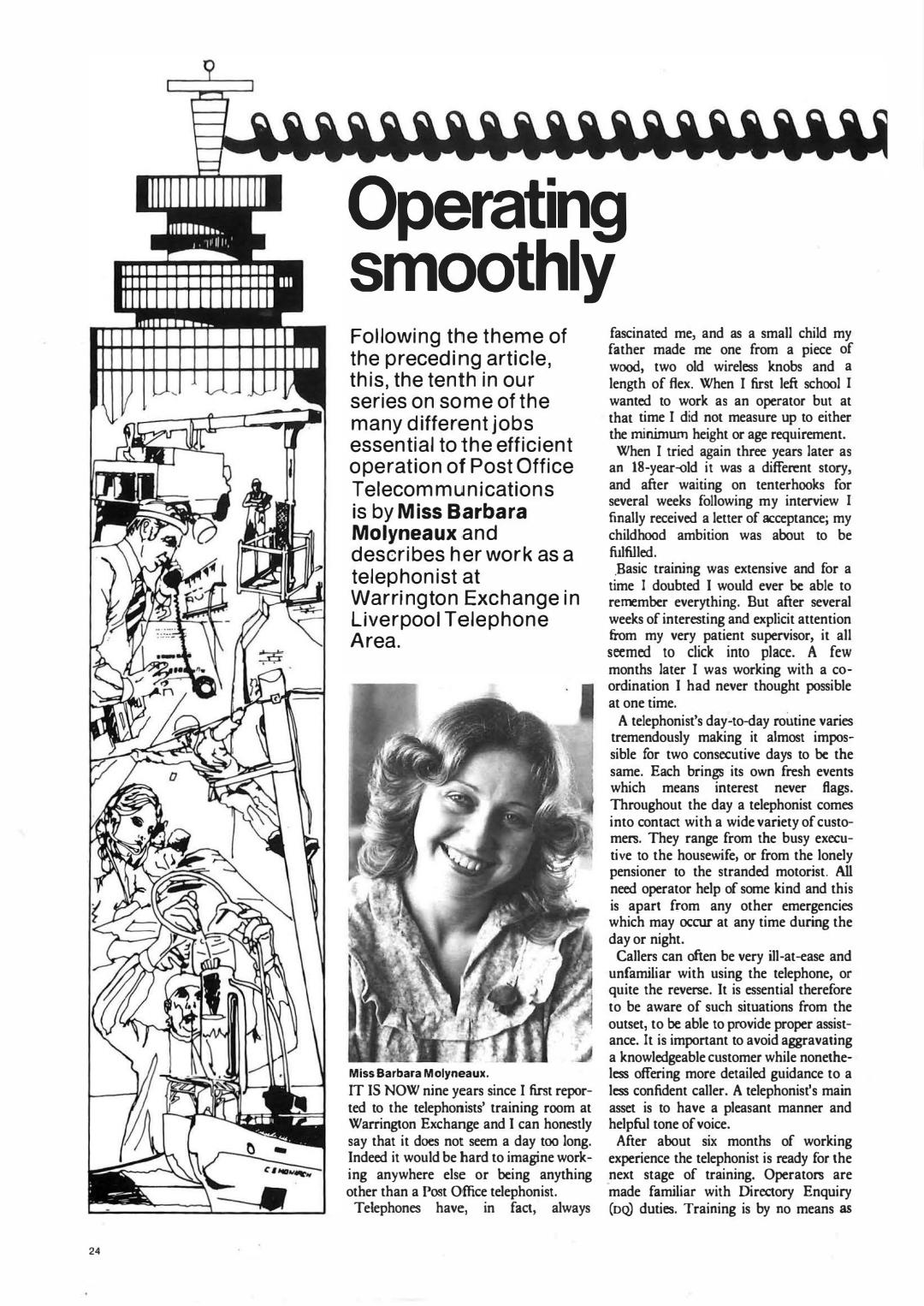
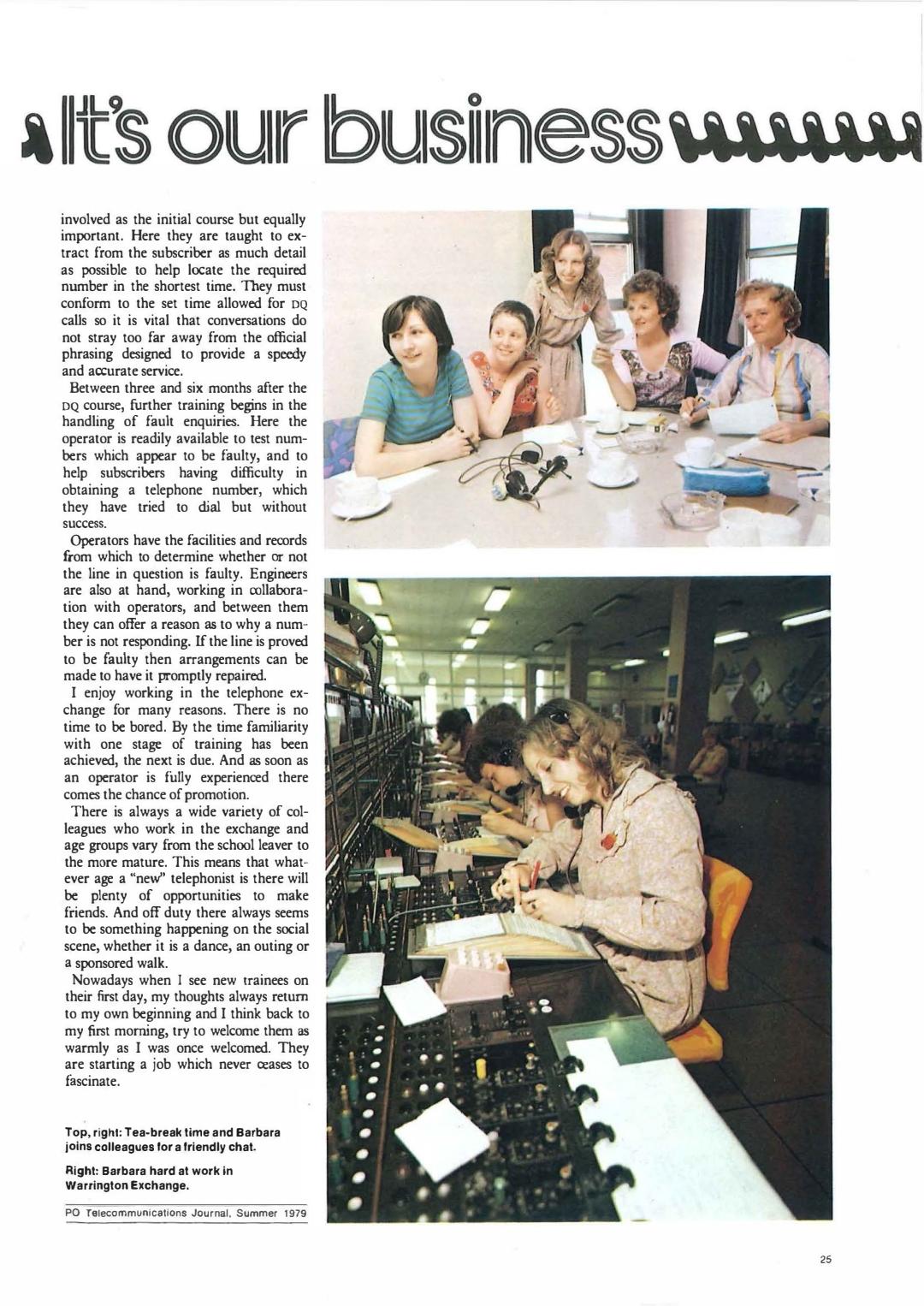
Back now to Bank Quay and off to the Telephone Exchange.
This is the 1969 building designed by the MODBW, Reginald Norman Dixon with lead architect P Clinton.
Linked to the 1955 building designed by John Onslow Stevens.
Biggest thanks to Lisa Kinch who can be found over on Instagram, for all her informative research into telephone exchanges.
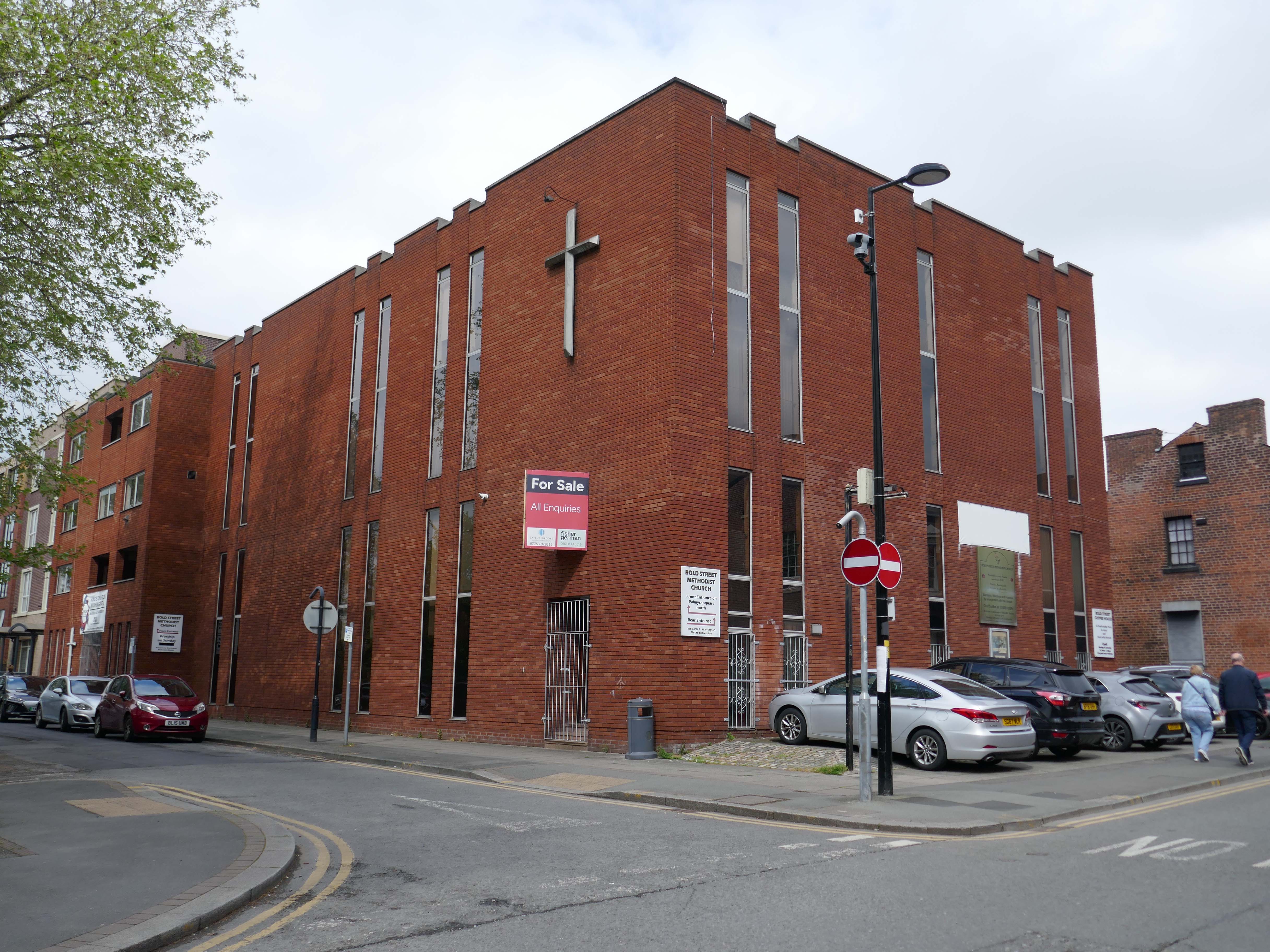
Toward the town centre and we pass the Bold Street Methodists Church – 1973-75.
Currently closed and for sale.
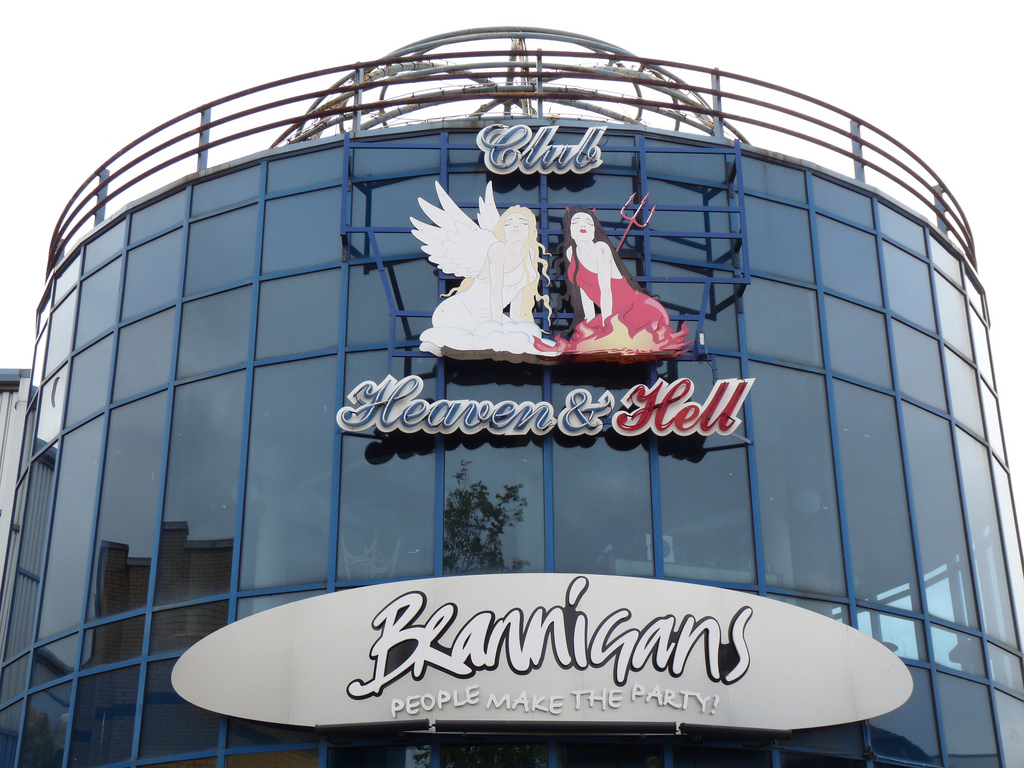
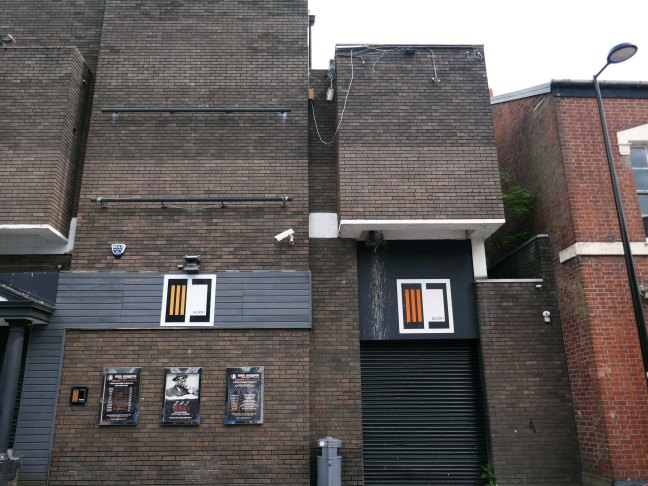
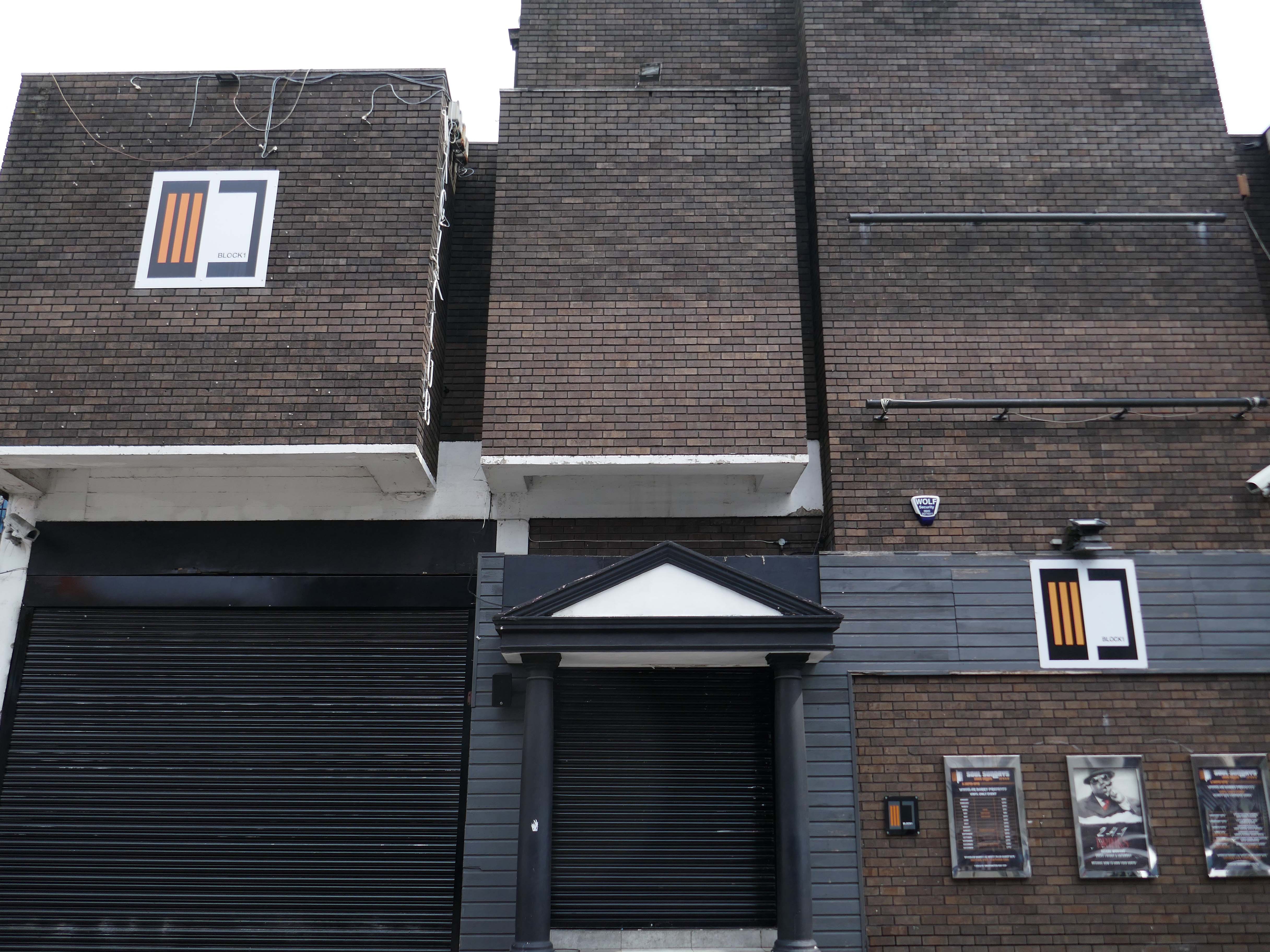
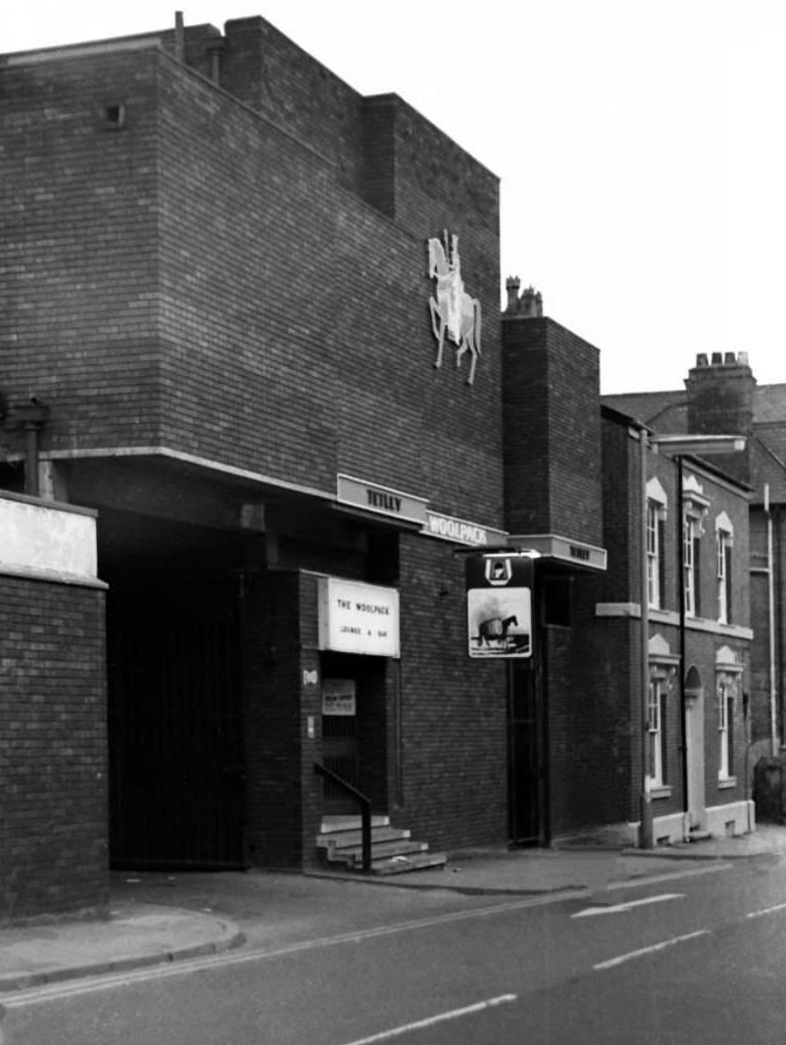
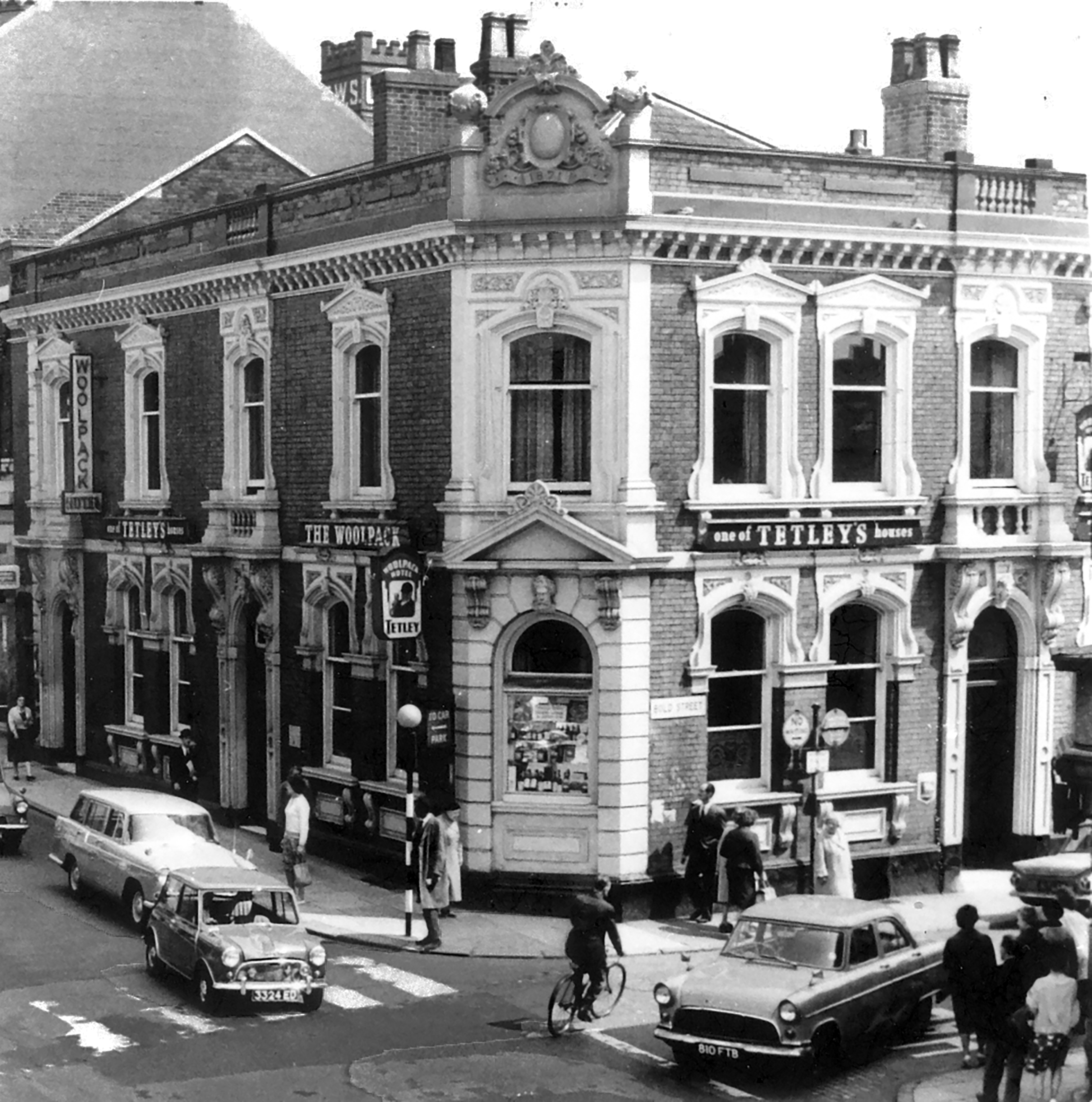
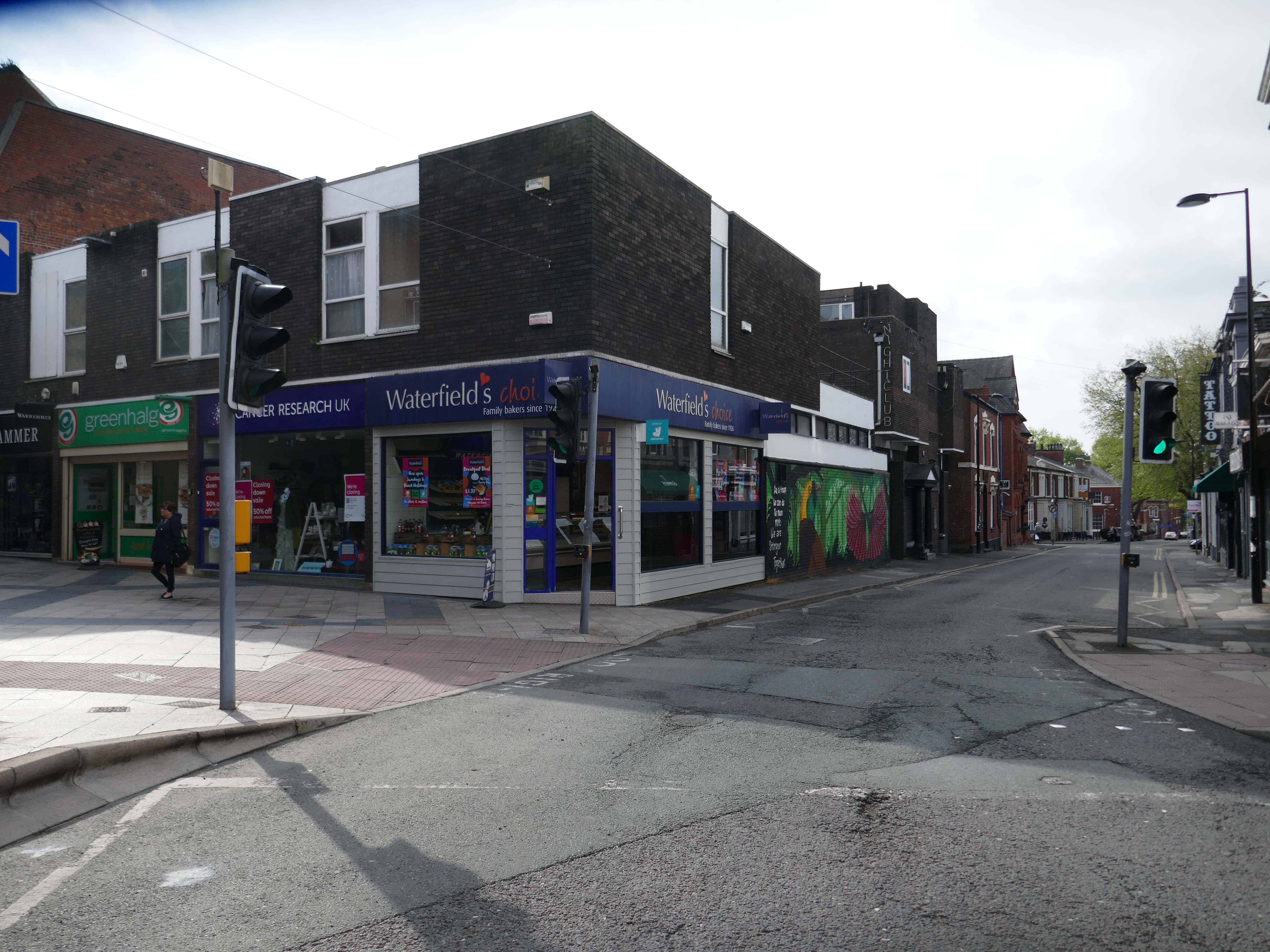
Thence to the Block 1 nightclub.
Medicine night club early 2000s.
Originally a Tetley’s house named The Woolpack.
Got served my first pint in there, I was only 14.
Karl Beckett
Coming down those stairs, I slipped and the heel came off my boot, I’d only had one drink – loved those boots.
Sue Duncan
This was the original Woolpack on the site.
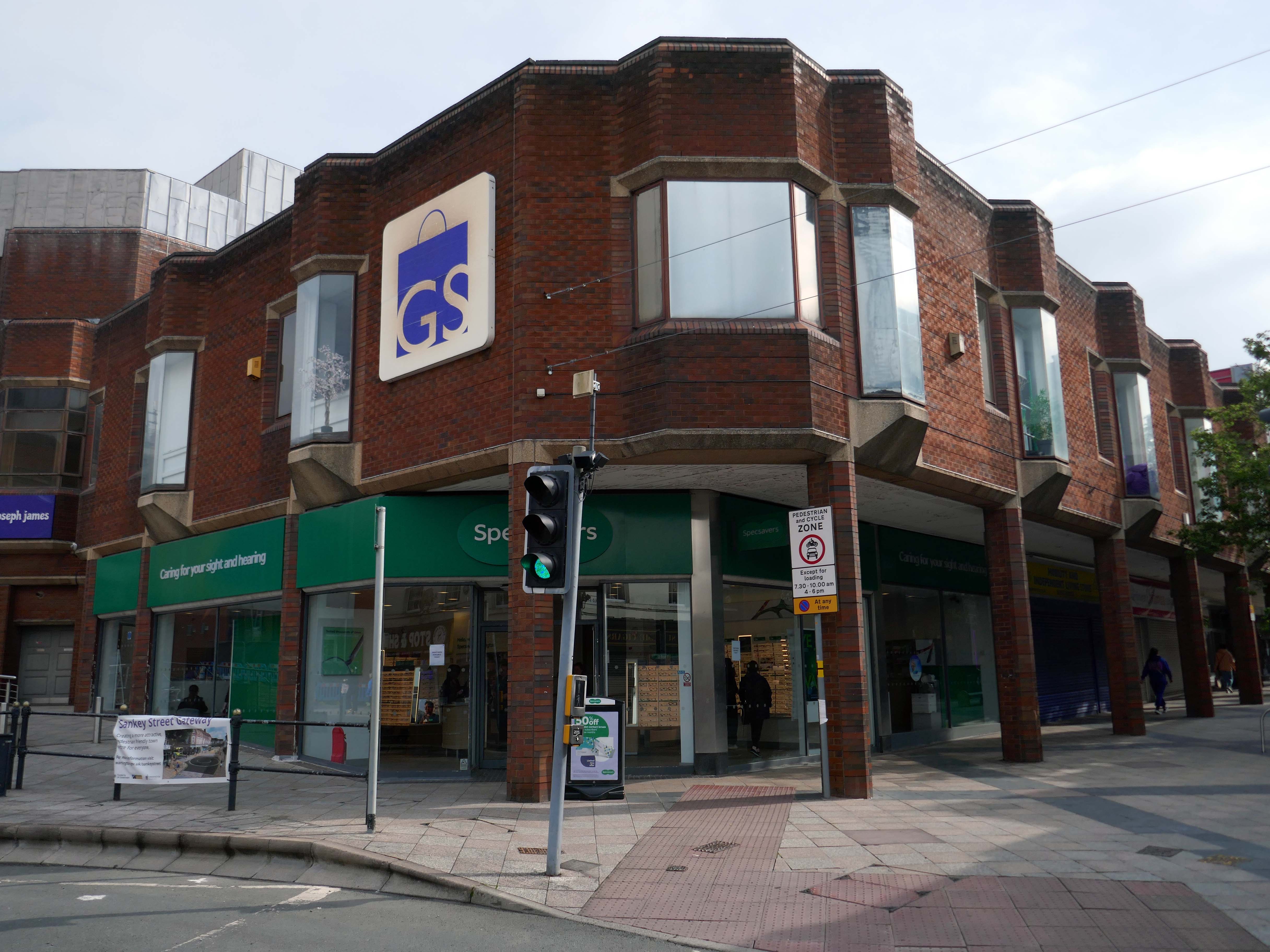
Much of the town centre is dominated by the Golden Square shopping centre.
Designed in 1974 by Ardin and Brookes and Partners, since enlarged.
There is also extensive pedestrianisation and hard landscaping on the surrounding streets, carried out in 2002 by Landscape Design Associates with sculptural works by Howard Ben Tre.
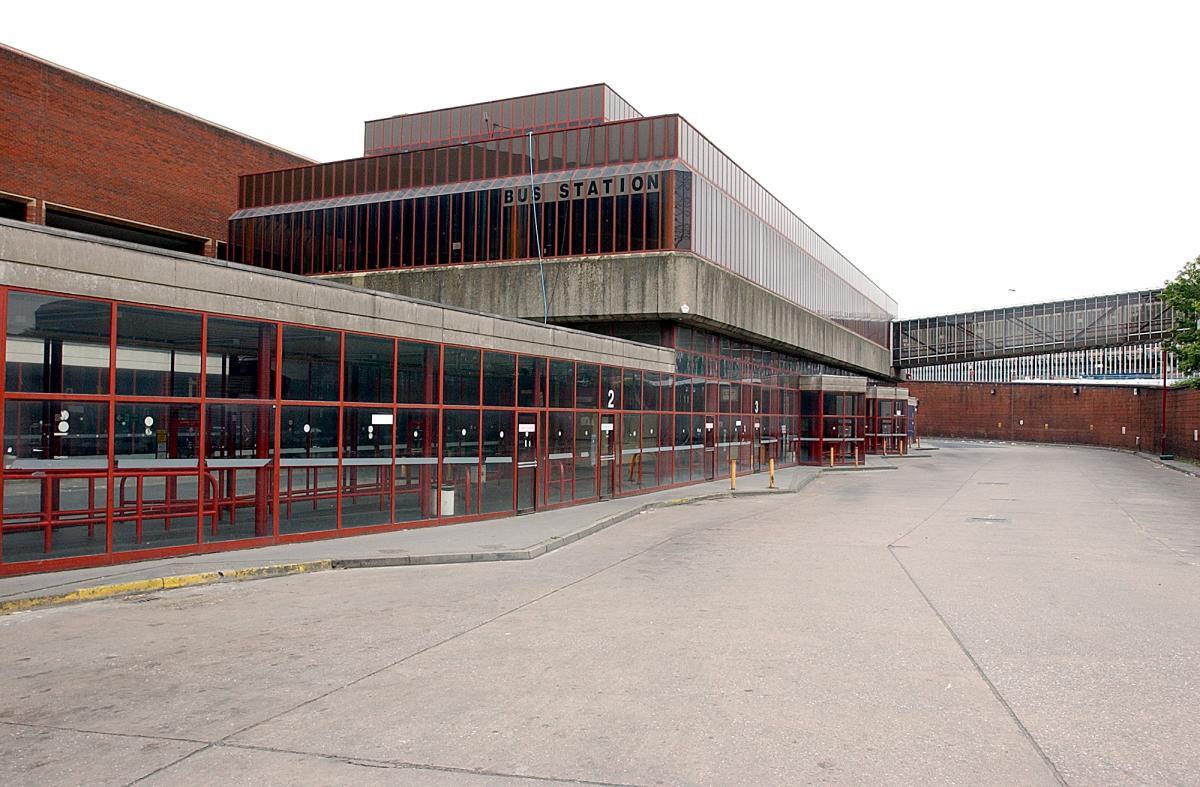
Finally to the Bus Station which used to look like this:
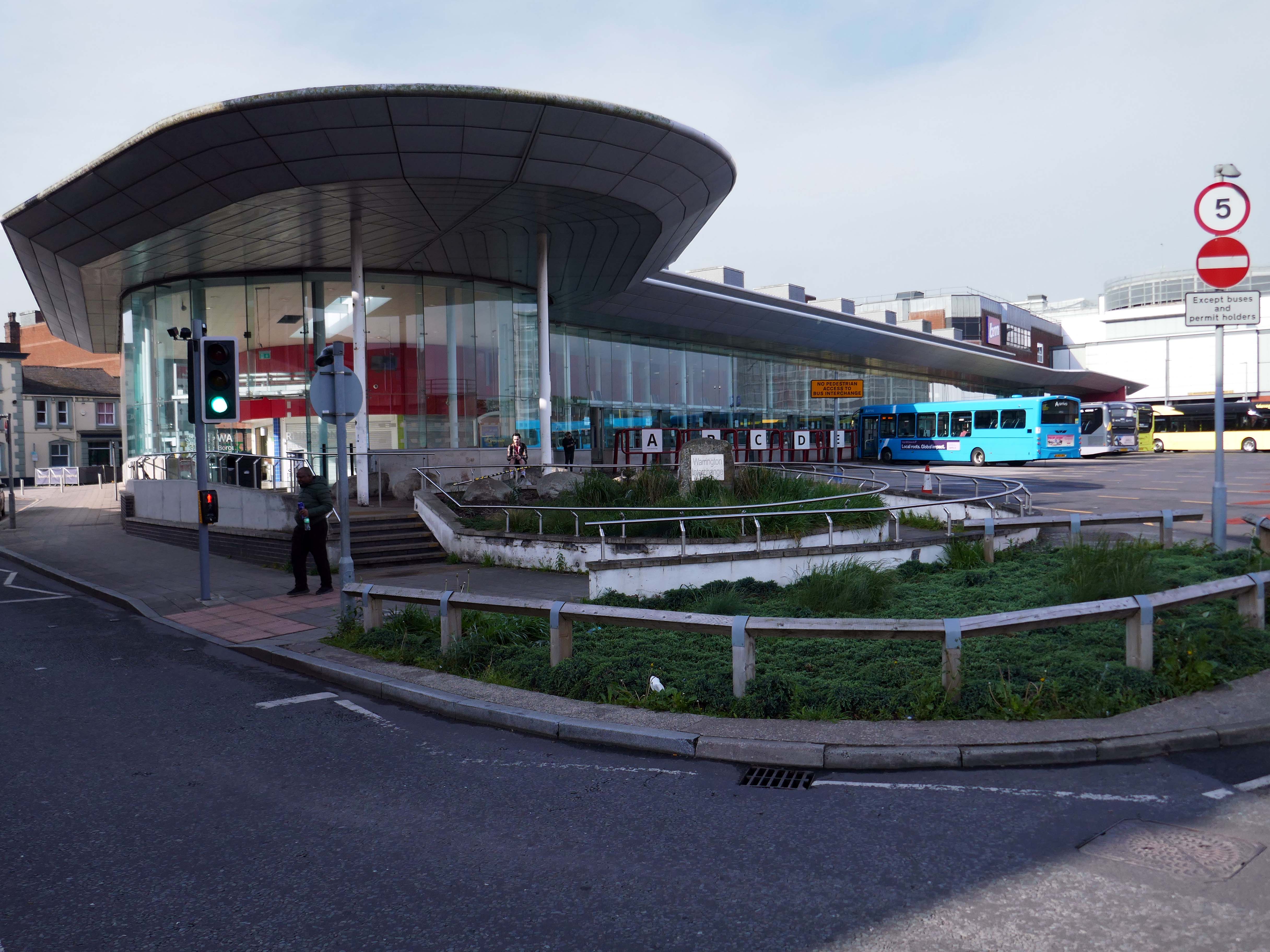
Until it became an Interchange and looks a lot like this.
Warrington’s new bus interchange was opened on 21 August 2006. From 1979, bus users travelled from a facility on Golborne Street, but it was very unpopular due to its very dreary appearance.
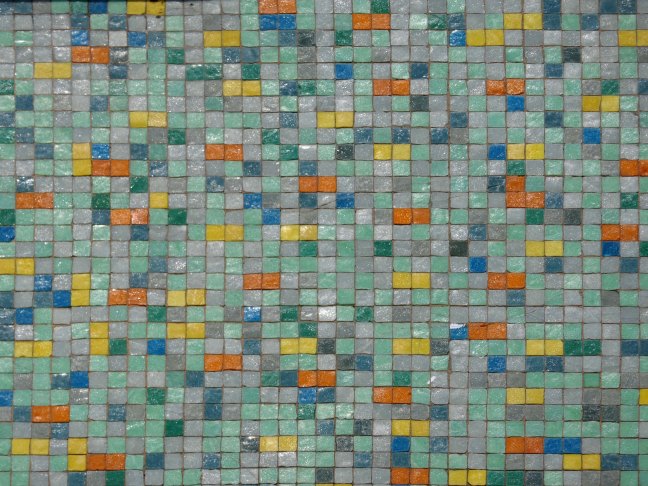
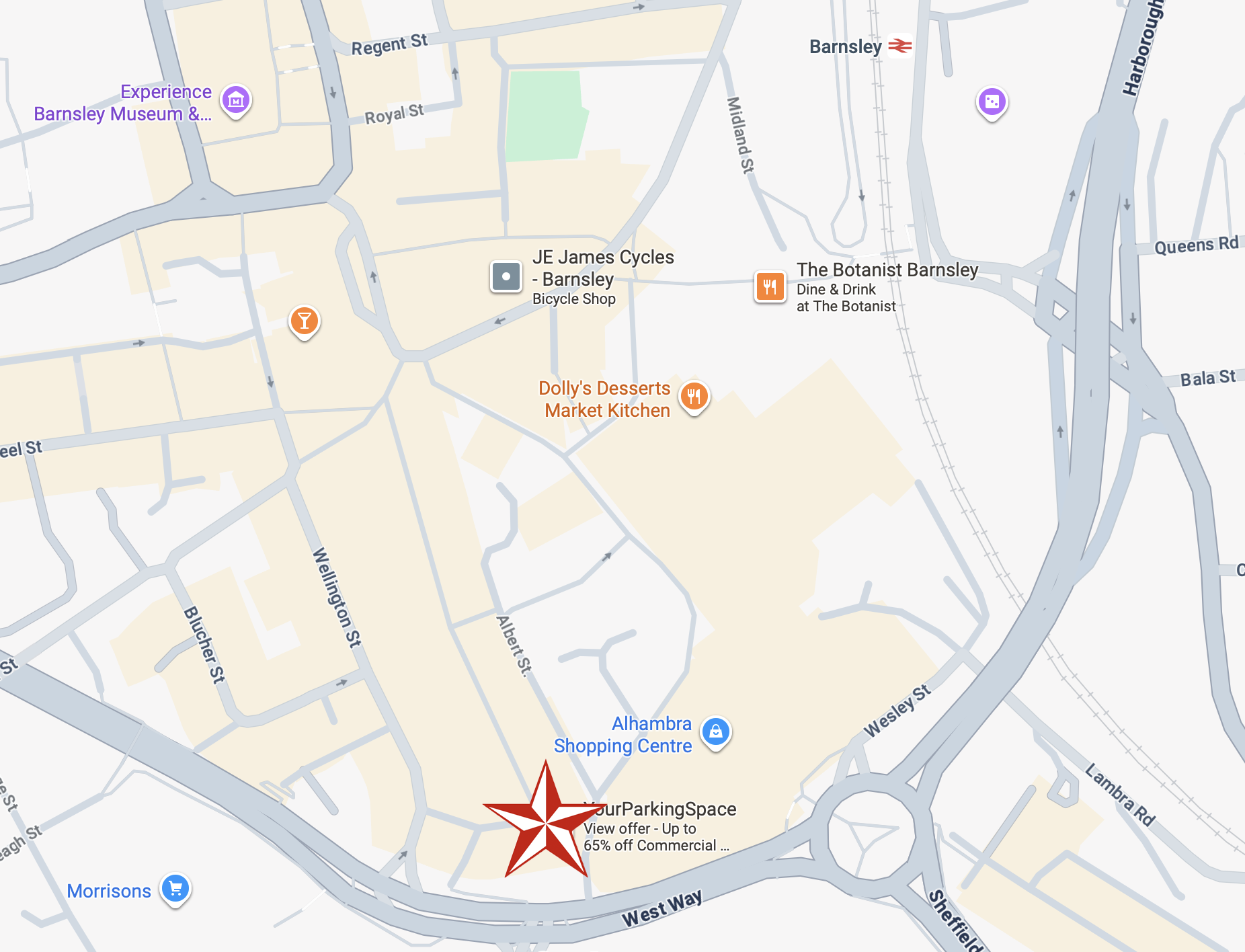
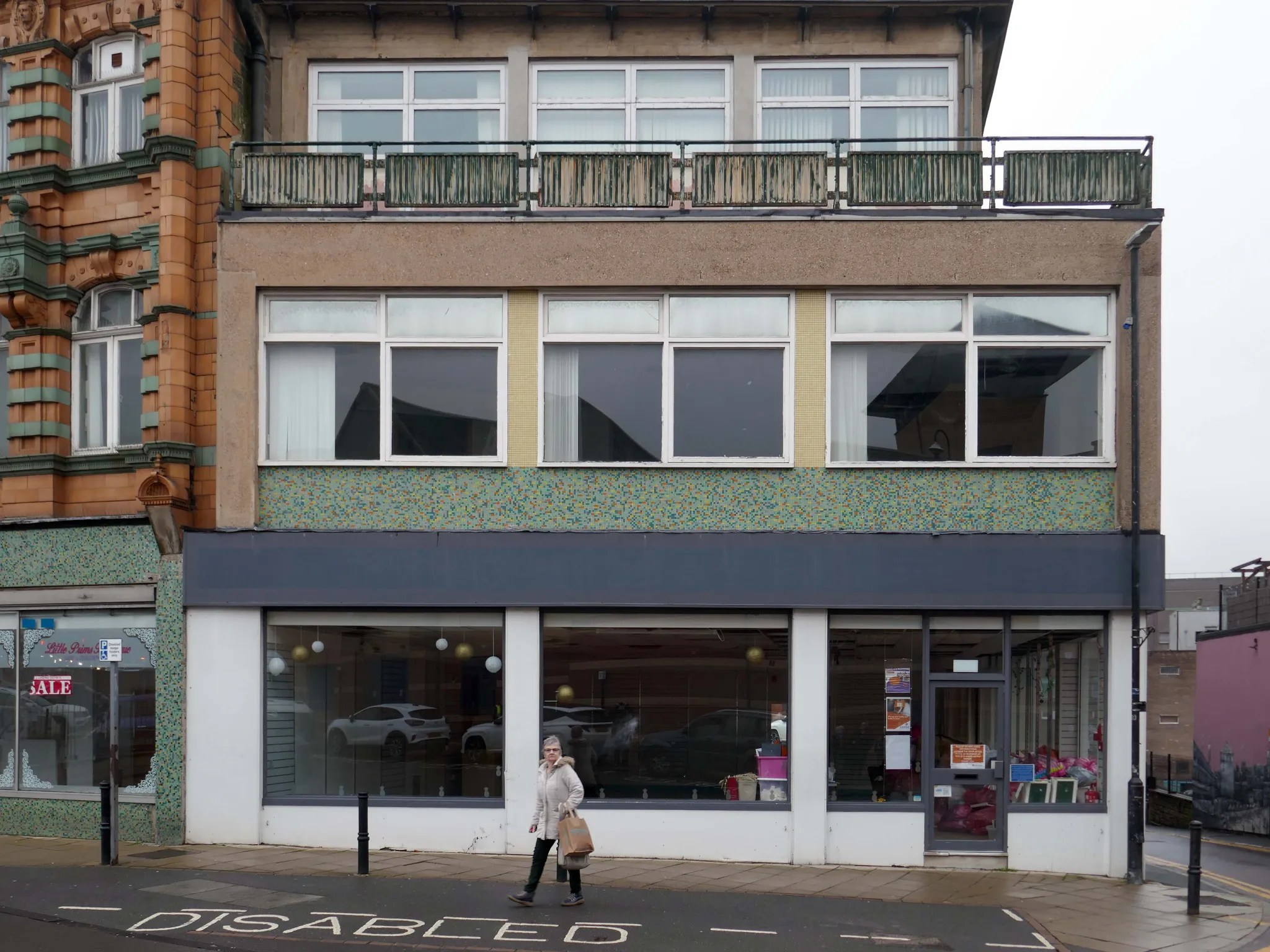
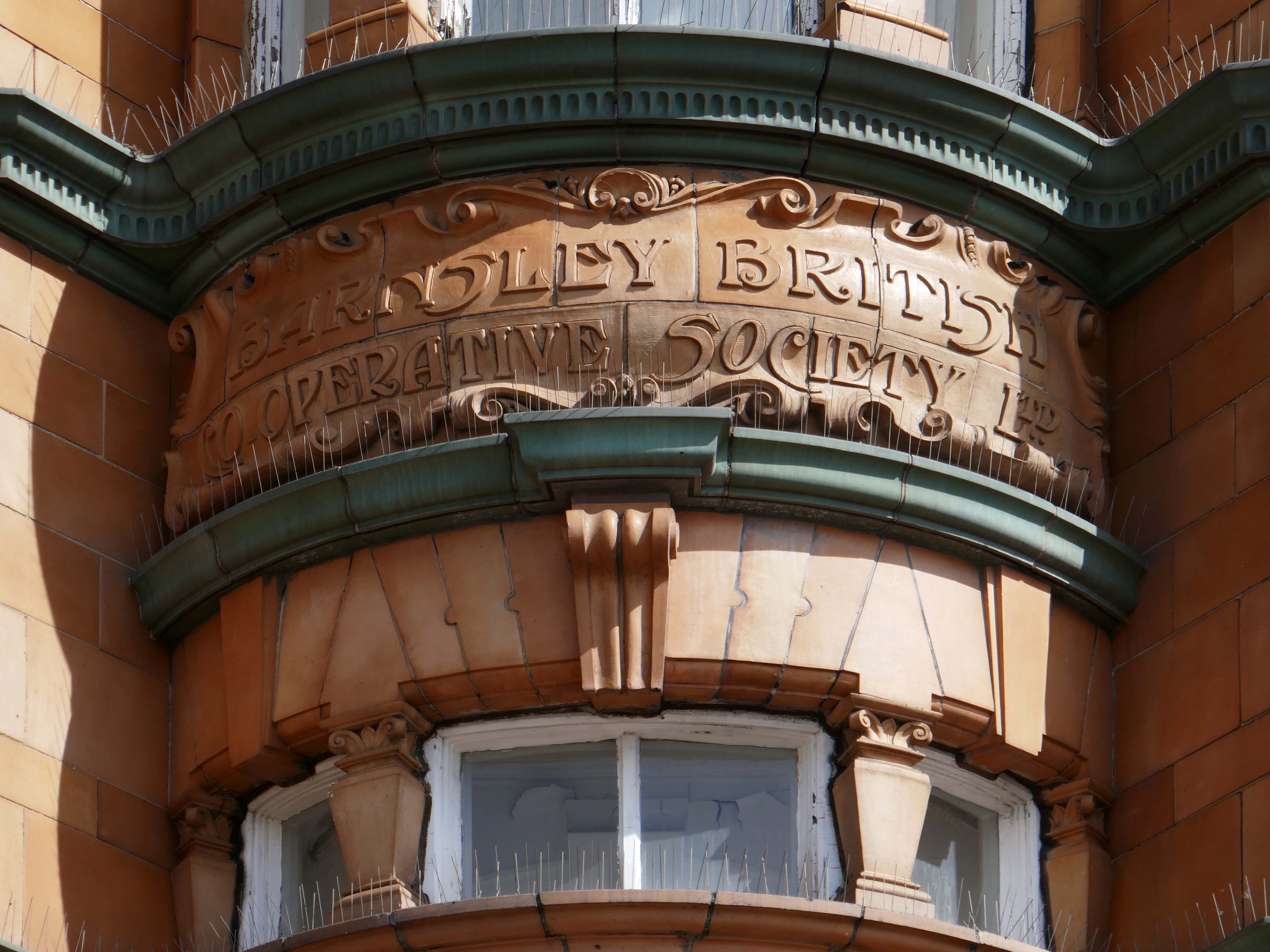
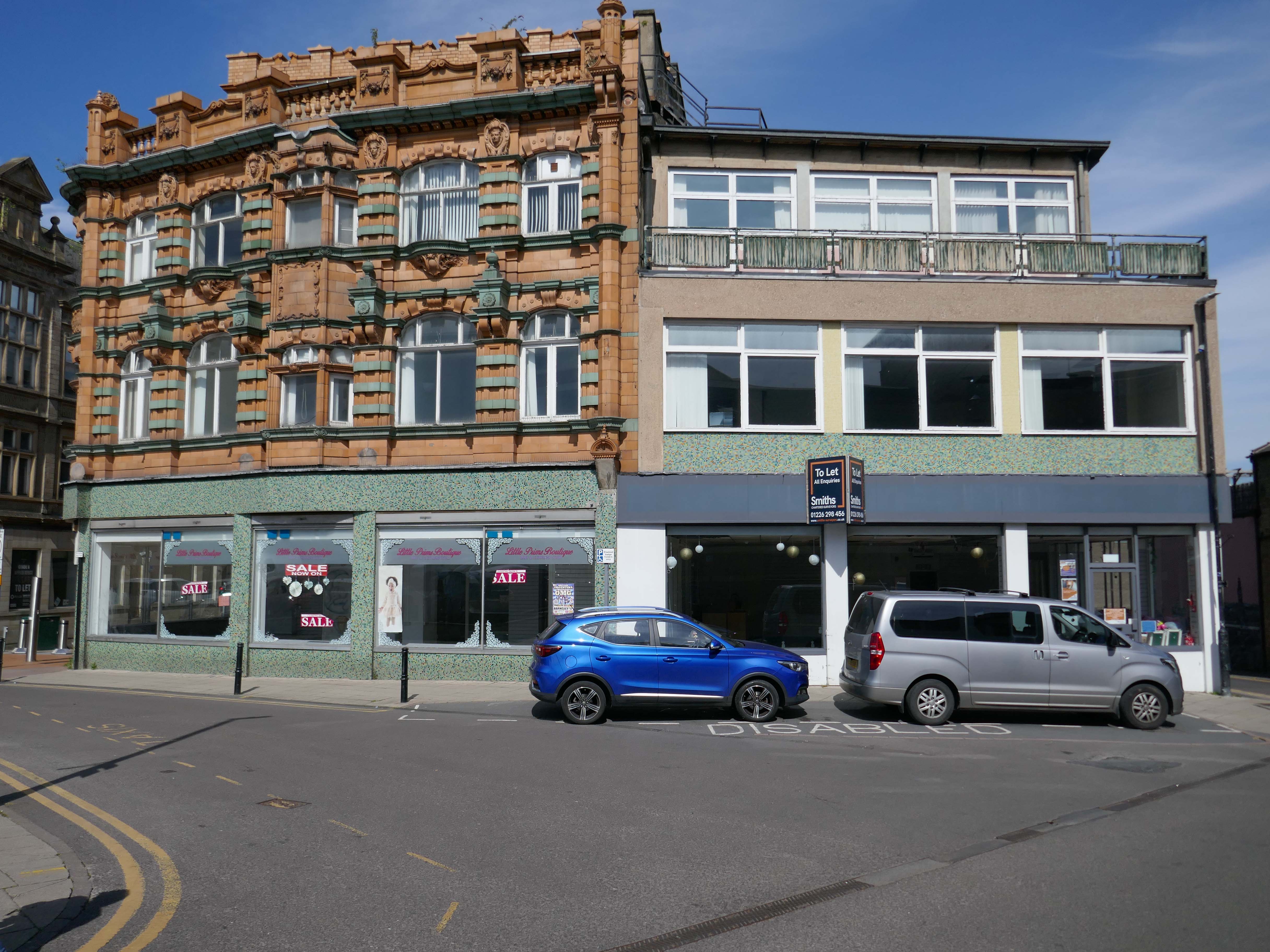
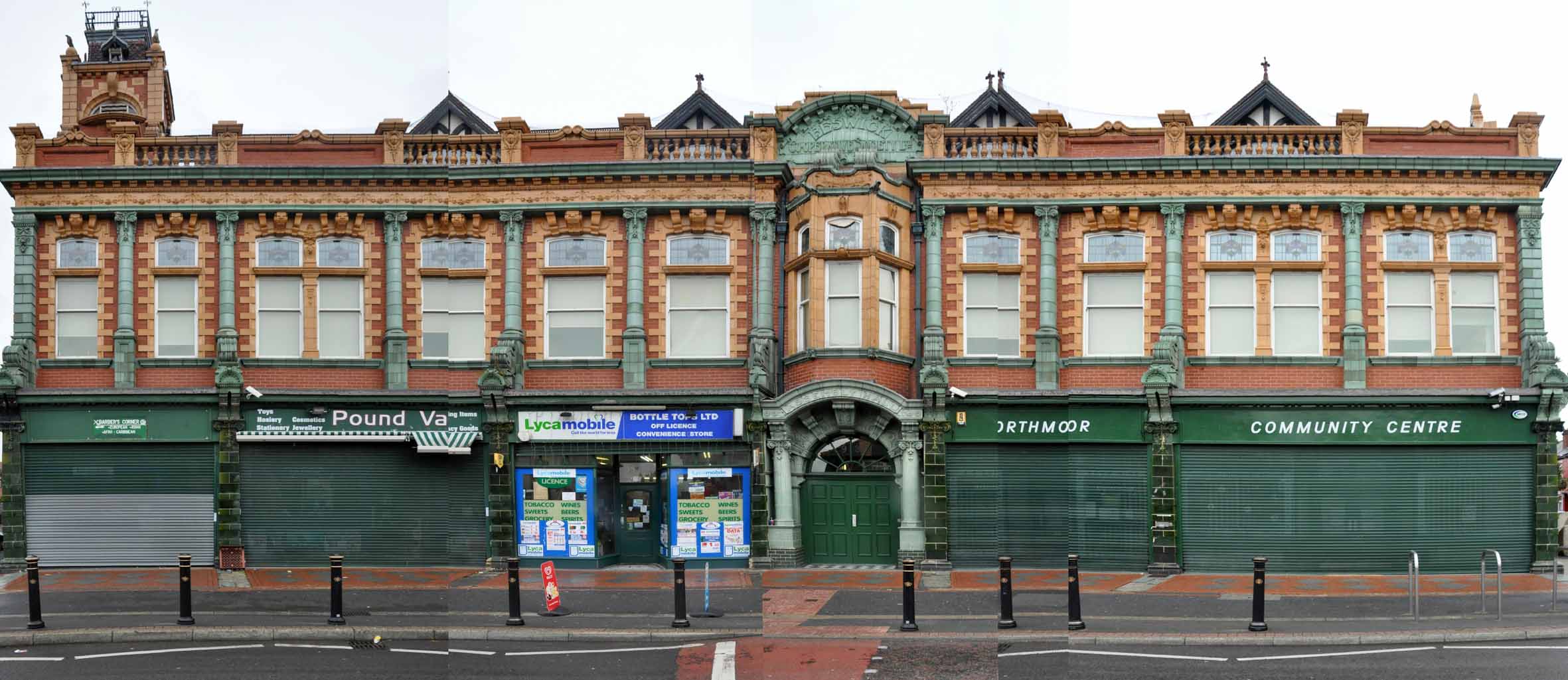
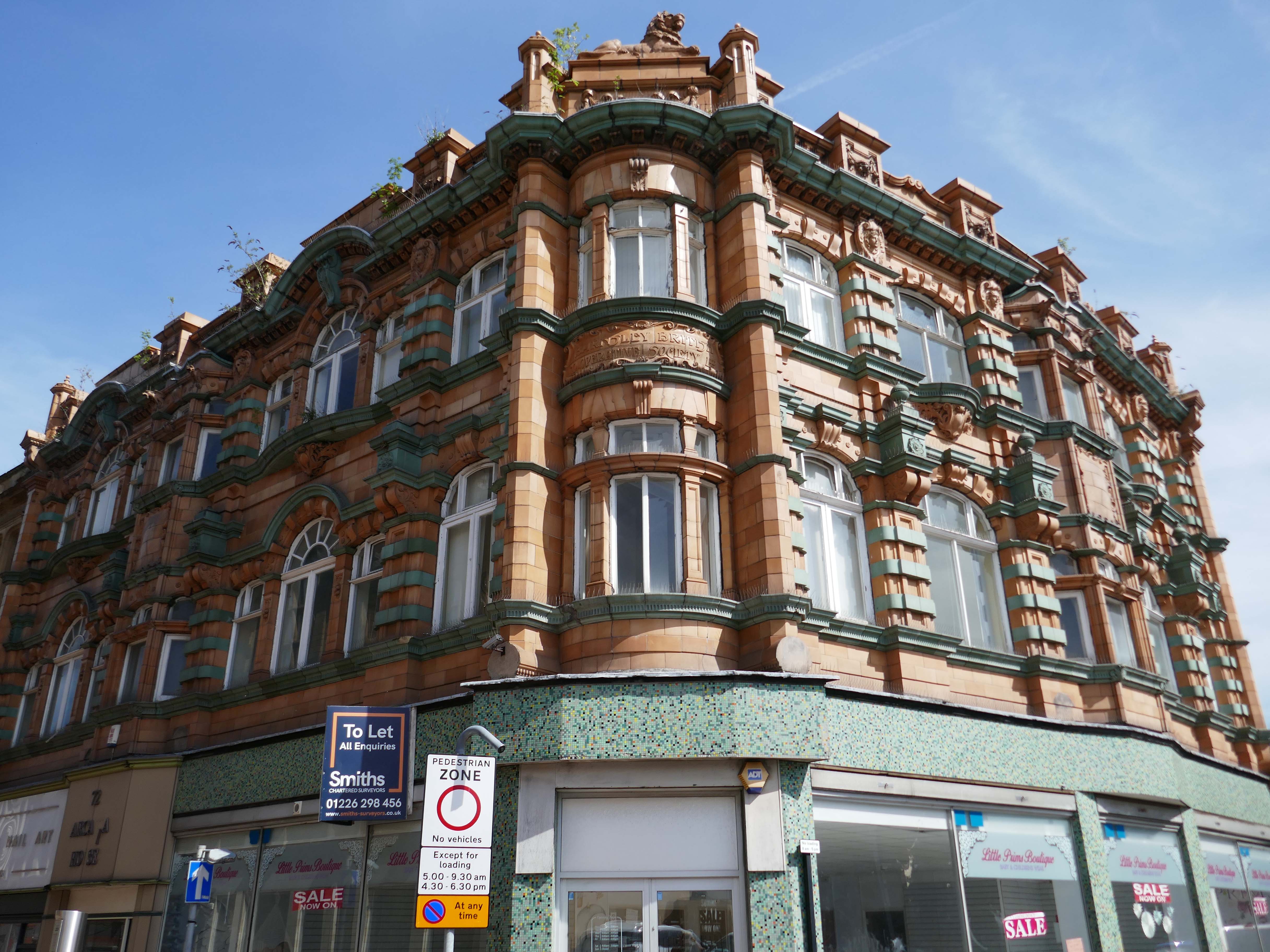
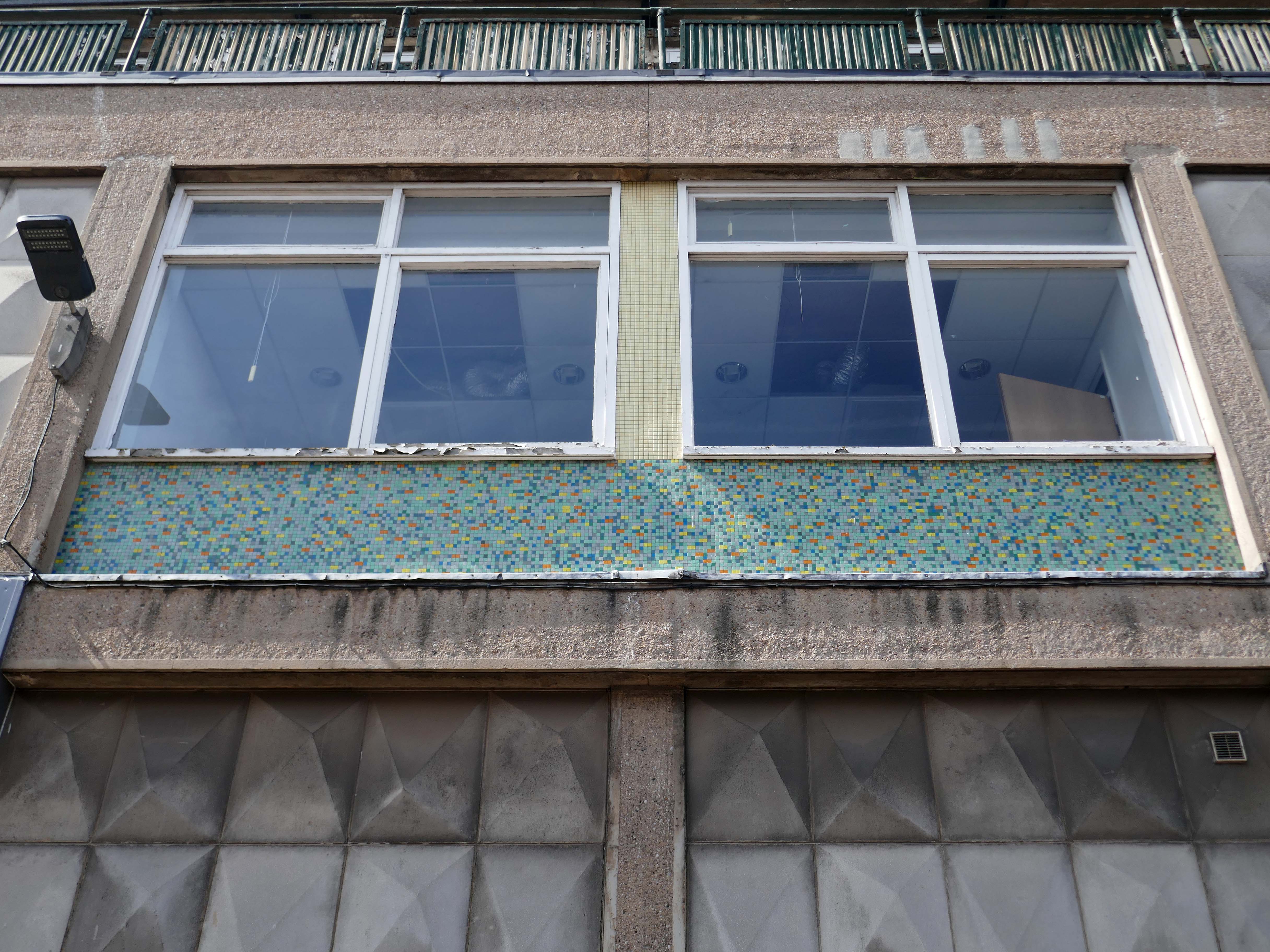
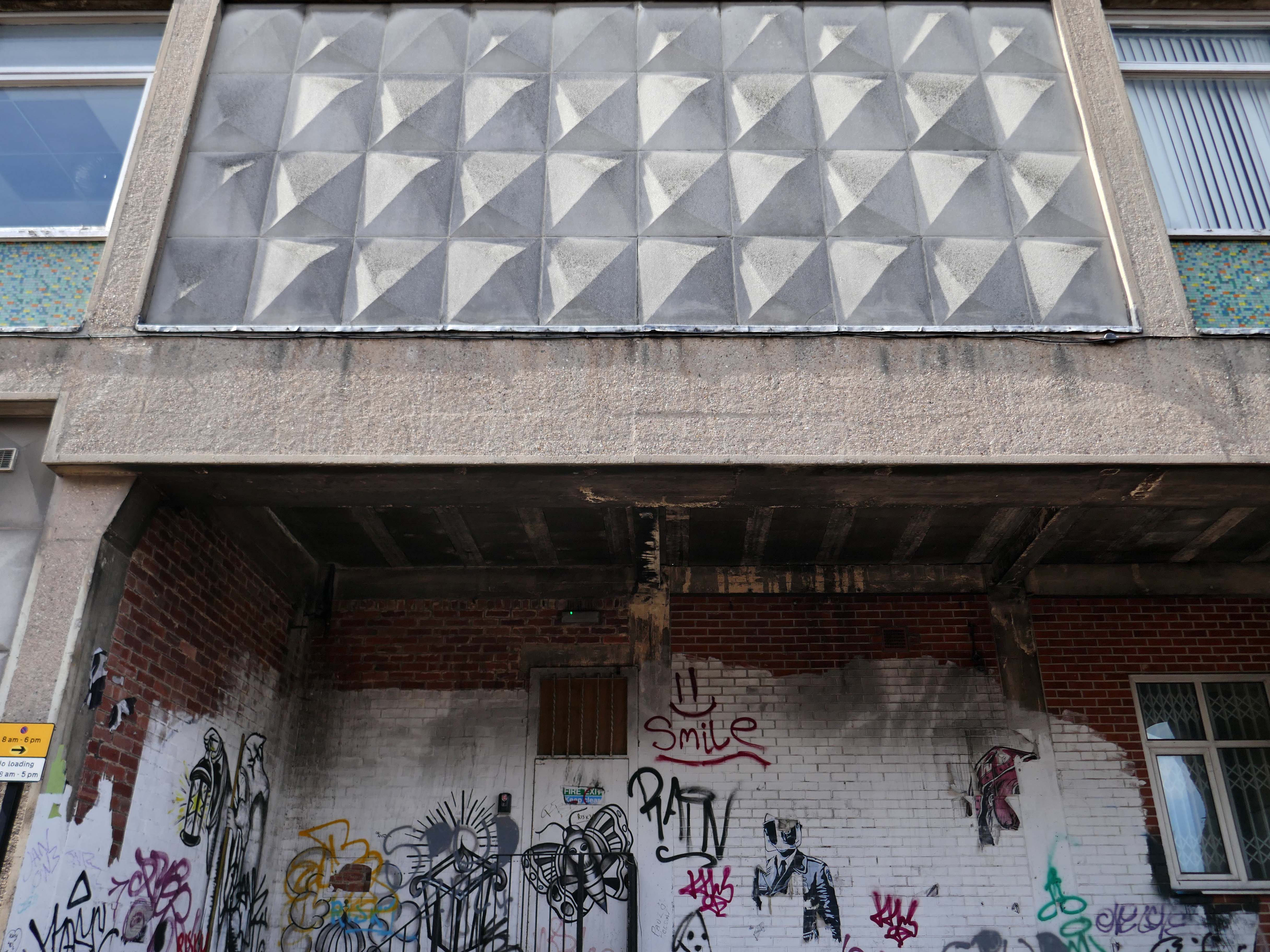
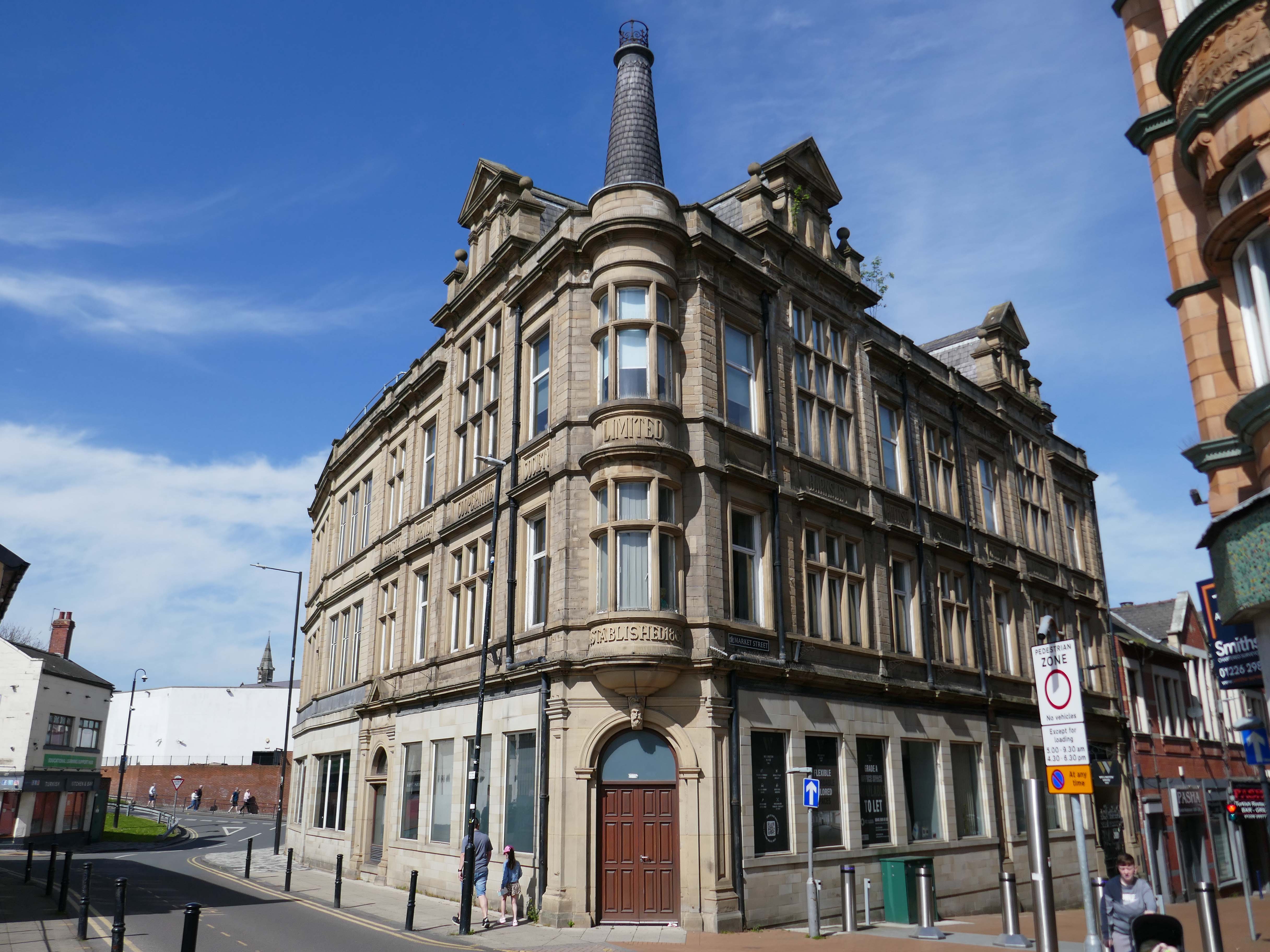
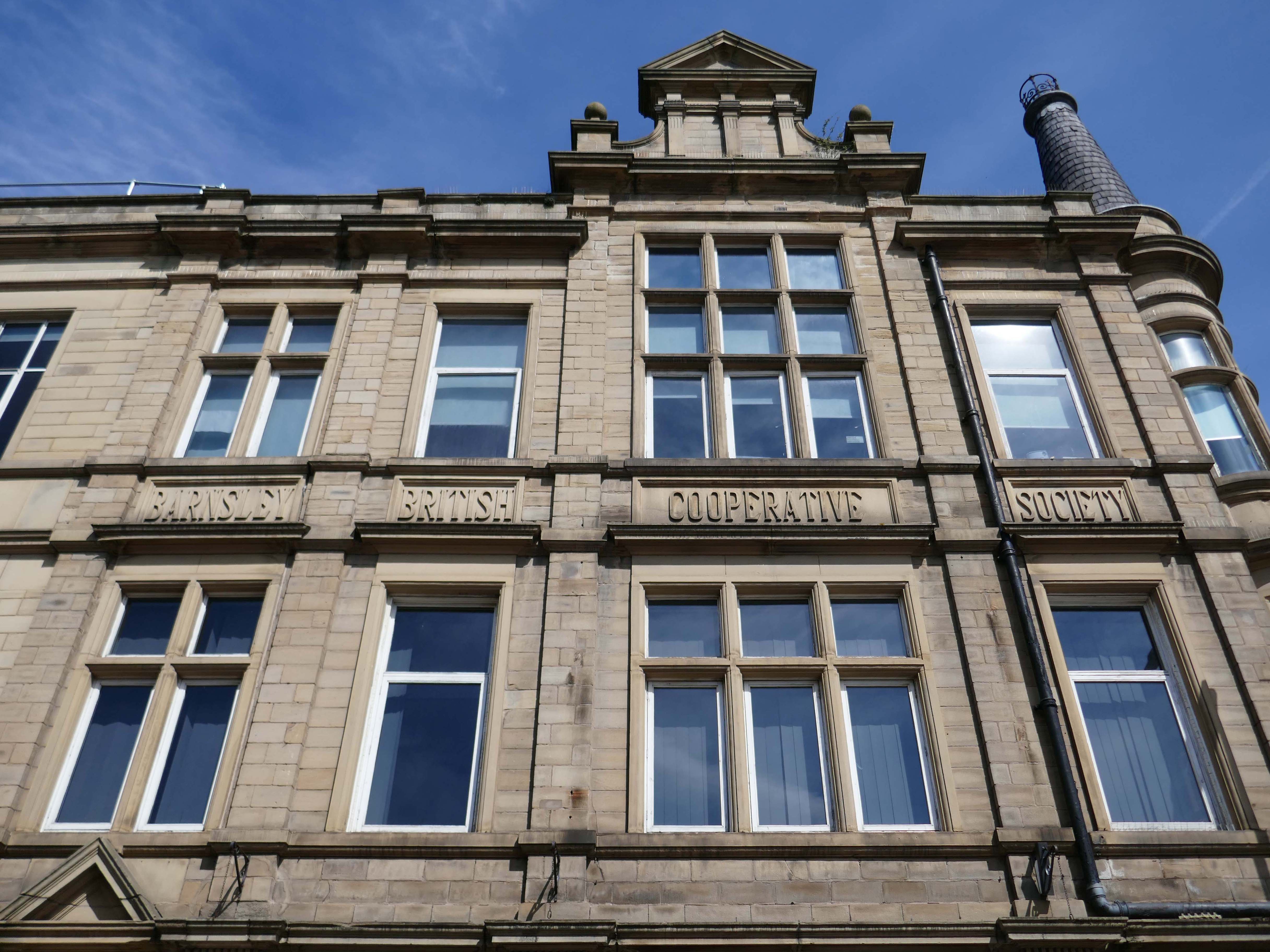
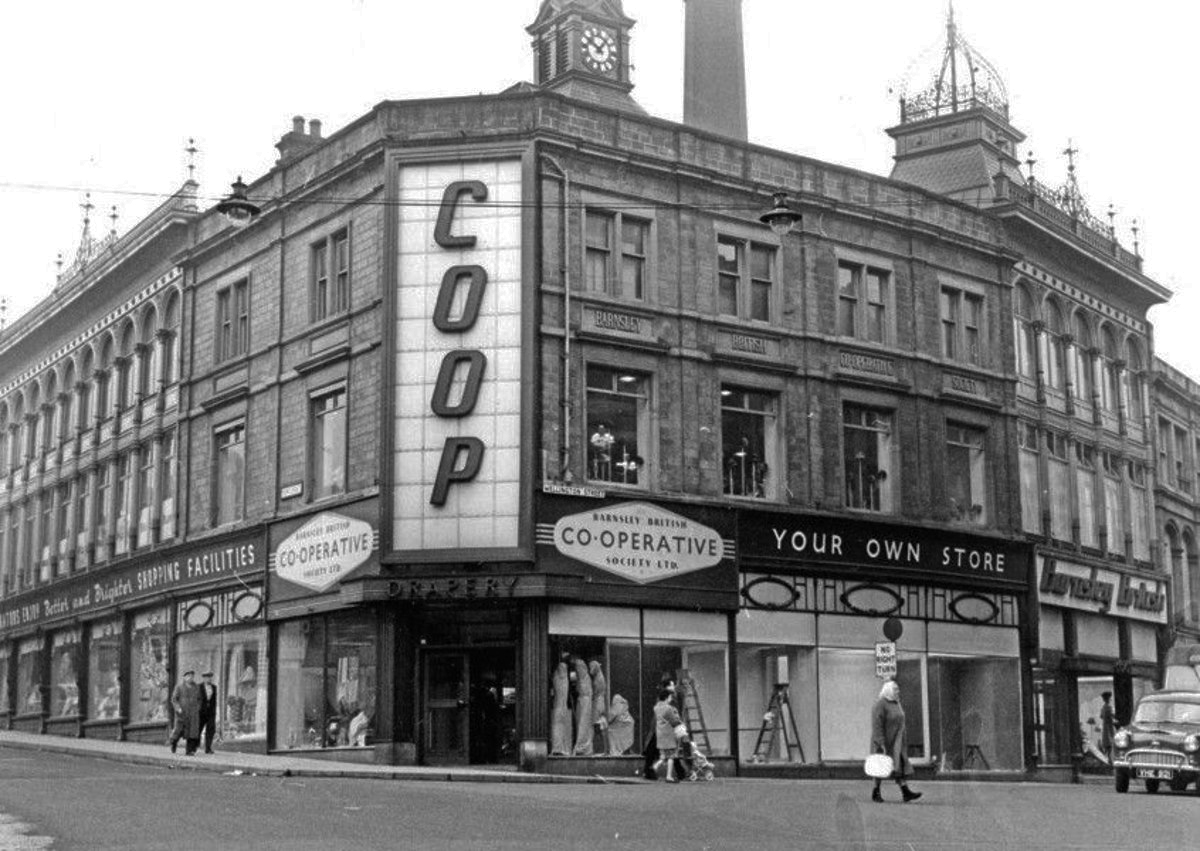
Subsequent observation and research revealed it to be an extension to a group of Barnsley Co-operative buildings.
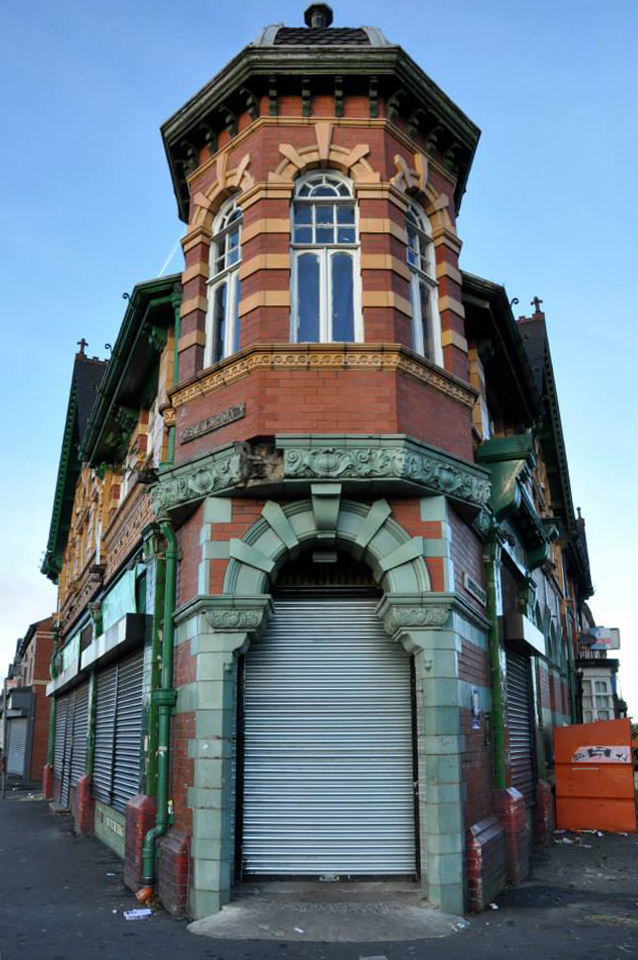
I should have noted that the building of 1910, was the work of architect Arthur Walshingham, the terracotta and green faience, very much in the style of Northmoor Road.
The building housed grocery and footwear shops, an elegant marble floored entrance hall, a restaurant and assembly room. Its original shopfronts were mahogany with metal sills on a granite base, the windows were divided by columns with green faience shafts.
In 2016 the Barnsley British Co-operative building, sited opposite the existing buildings, suffered a large fire and unfortunately had to be demolished due to safety concerns.
For more than a century it had been considered the place to shop in town. Many will recall it as the Co-op’s toy department where, every year, excited children would queue with mums and dads to meet Santa in his grotto at Christmas.
It closed in the 1980s.
In 1993 the plan was to turn the imposing Victorian Grade II listed building into a ’high class’ venue which it was anticipated would be aimed at a clientele in the 25-plus age group.
The name Walsall is derived from Walh halh, meaning valley of the Welsh, referring to the British who first lived in the area. Later, it is believed that a manor was held here by William FitzAnsculf, who held numerous manors in the Midlands. By the first part of the 13th century, Walsall was a small market town with a manor house; the weekly market was introduced in 1220 and held on Tuesdays. The mayor of Walsall was created as a political position in the 14th century.
Significant developments also took place nearer to the town centre, particularly during the 1960s when a host of tower blocks were built around the town centre; however, most of these had been demolished by 2010.
The Memorial Gardens opened in 1952, in honour of the town’s fallen combatants of the two world wars. The Old Square Shopping Centre, a modern indoor shopping complex featuring many big retail names, opened in 1969.
Much of the reconstruction of the post-war period was quickly reconsidered as ugly and having blighted the town. In 1959, John Betjeman advised that with sensitive restoration the old buildings of the High Street could become:
There is to be further demolition on the High Street, to open up the vista between the Bus and Railway stations.
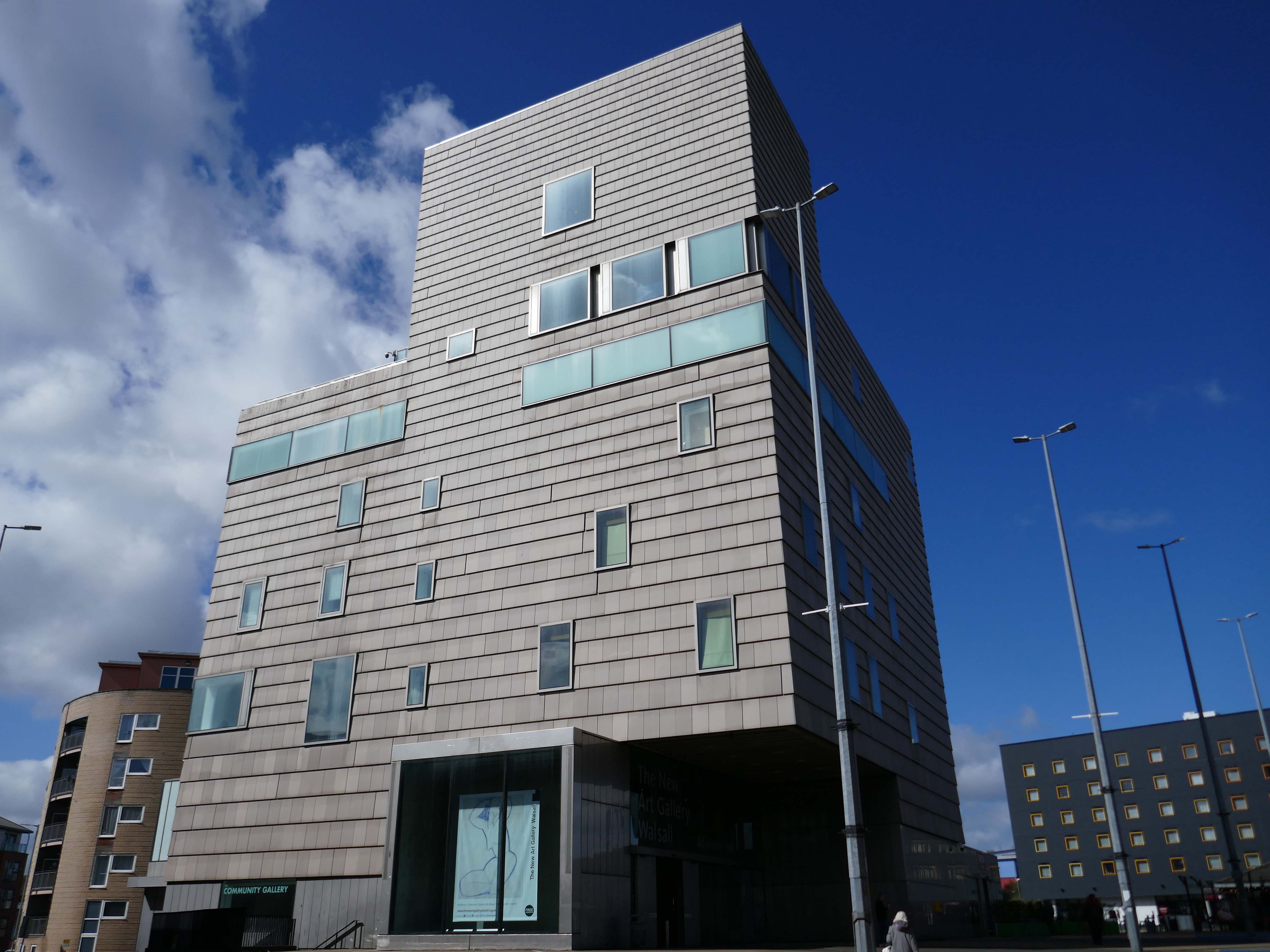
In 2021 Walsall secured funding of £11.4m from the Future High Street Fund. With further investment from Walsall Council we are now delivering the early phases of the Town Centre Masterplan, through the Walsall Connected Gateway Project.
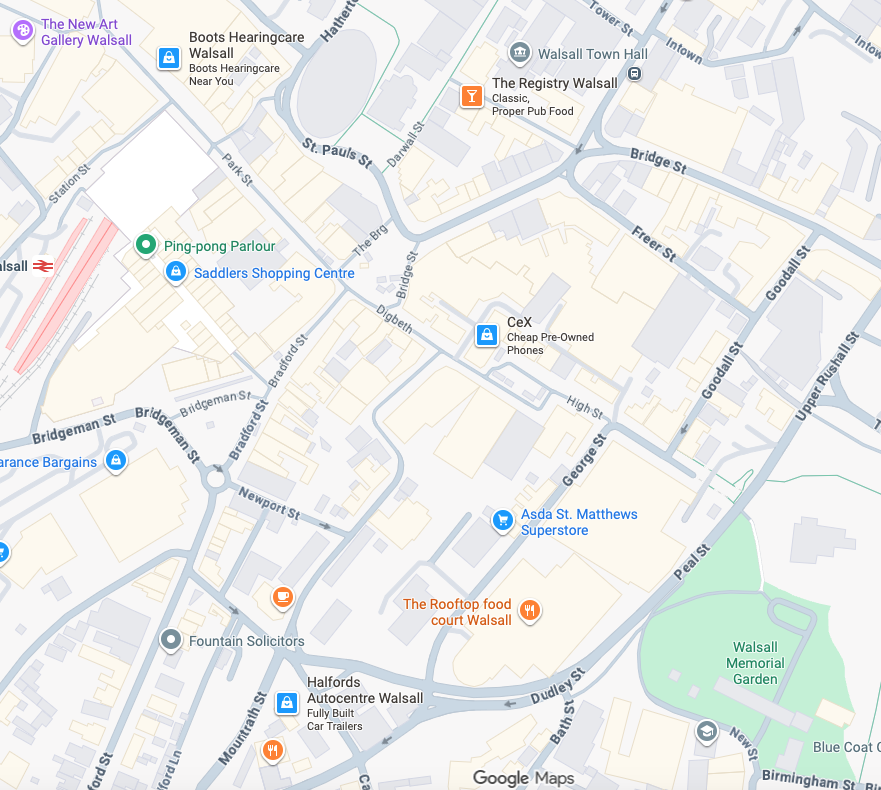
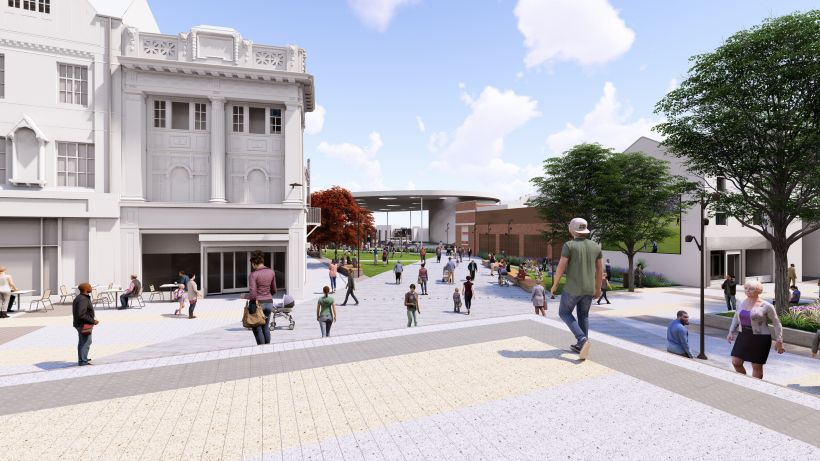
Approval has been granted to remodel the Saddlers Centre to create a more open and attractive arrival experience for train passengers whilst also opening up Park Street. Butler’s Passage, which has in the past been the centre of antisocial behaviour, will disappear as some of the buildings are removed to create a large open walkway, connecting the rail and bus hubs.
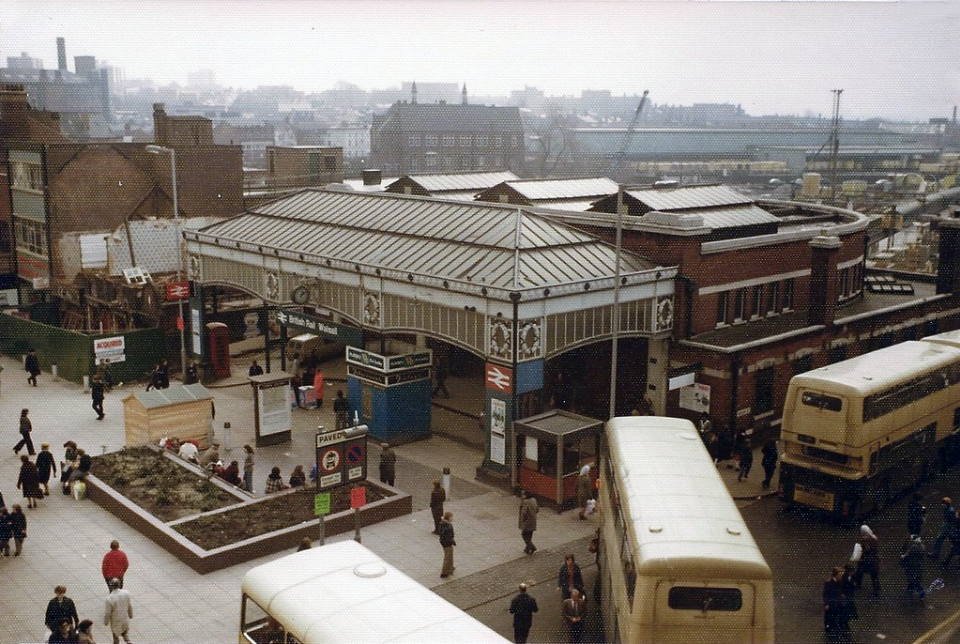
Former Railway station 4th March 1978 – photo by Walsall 1955
The station was about to be closed, demolished and replaced by a new Marks & Spencers and the Saddlers Centre.
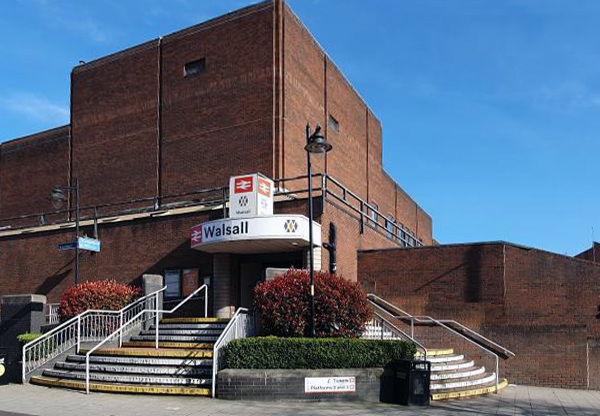
The existing entrance to the railway station on Station Street.
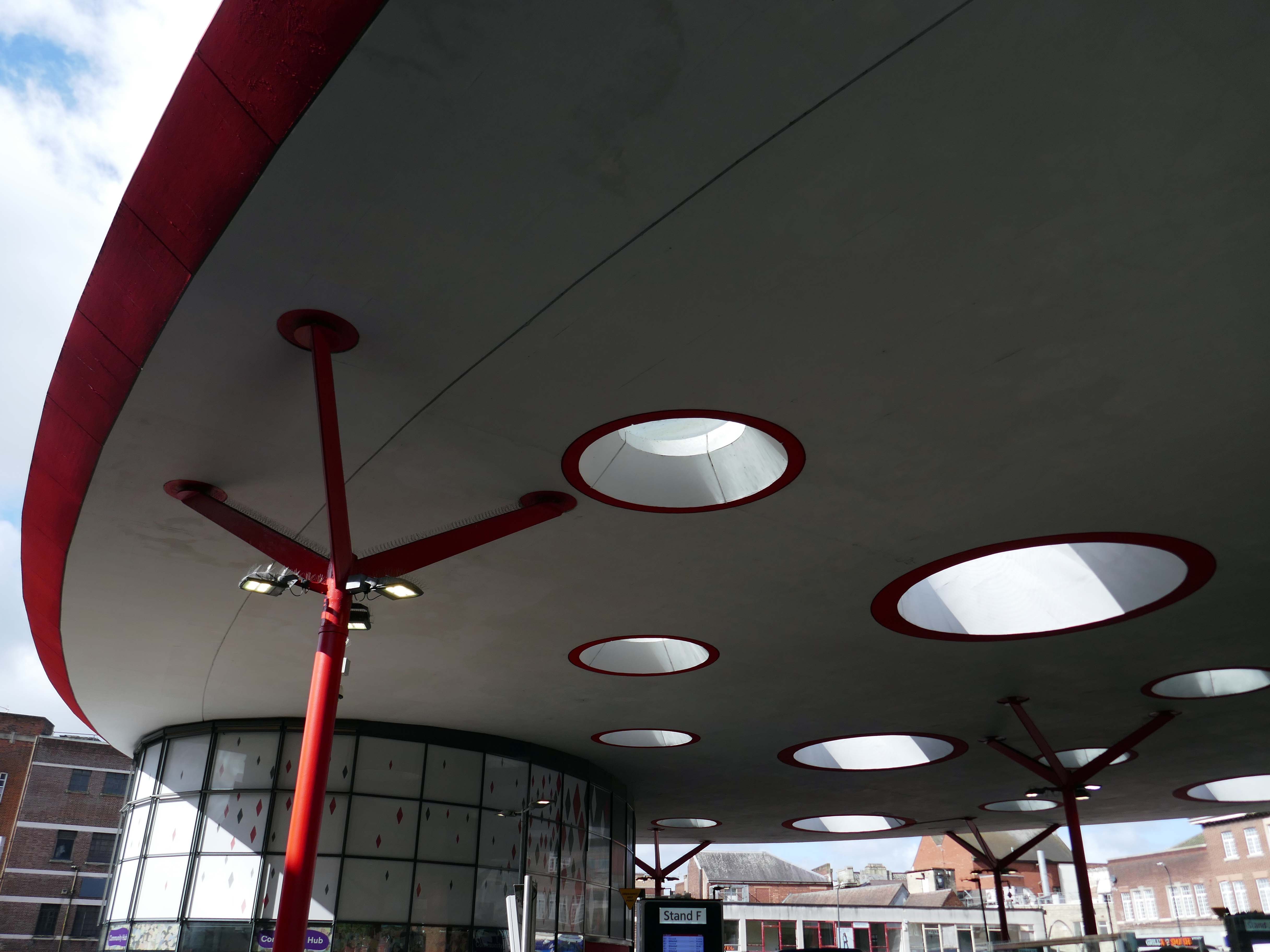
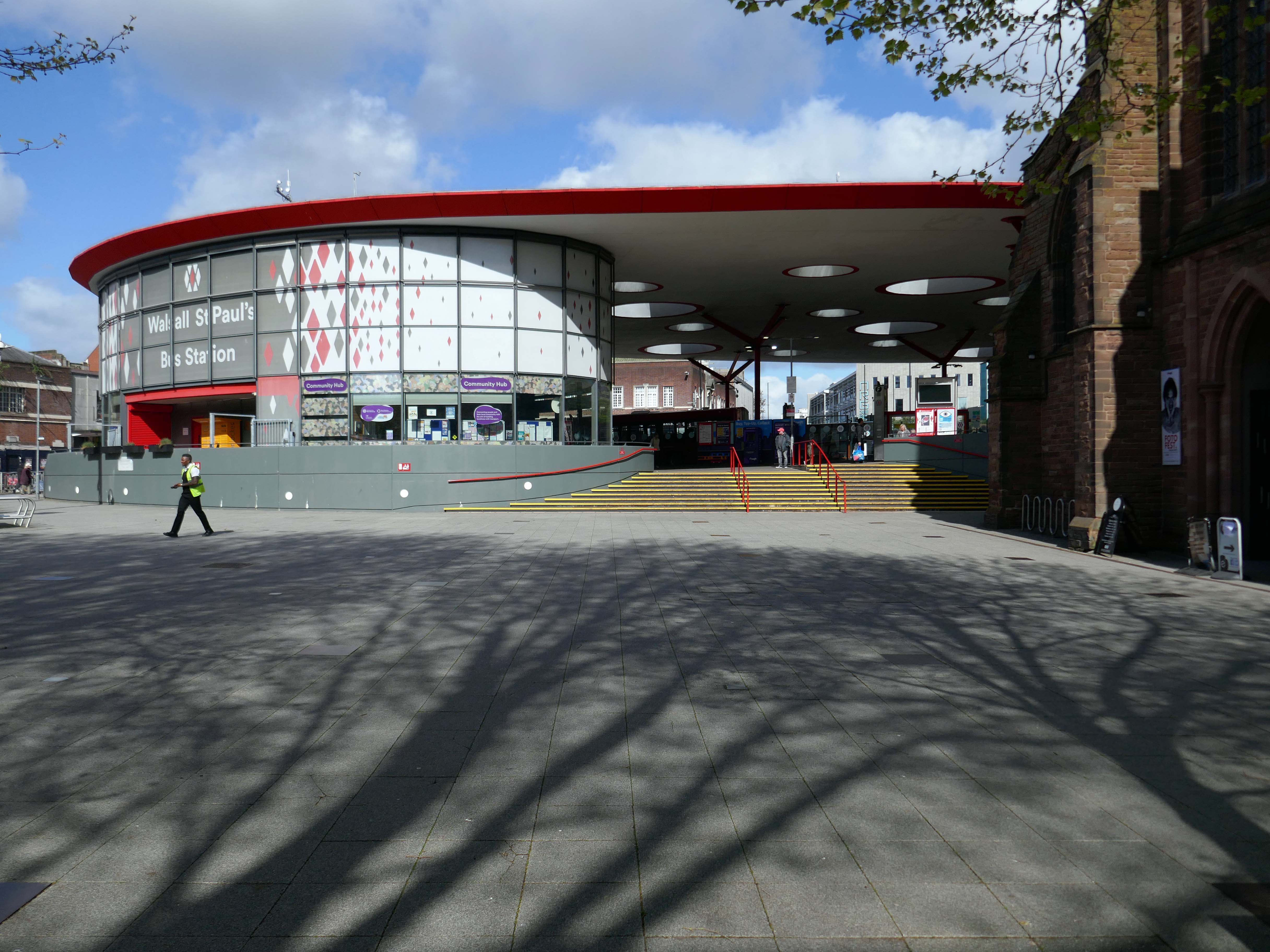
Let’s begin at the St Paul’s bus station or Hub – if you will, complete in September 2000.
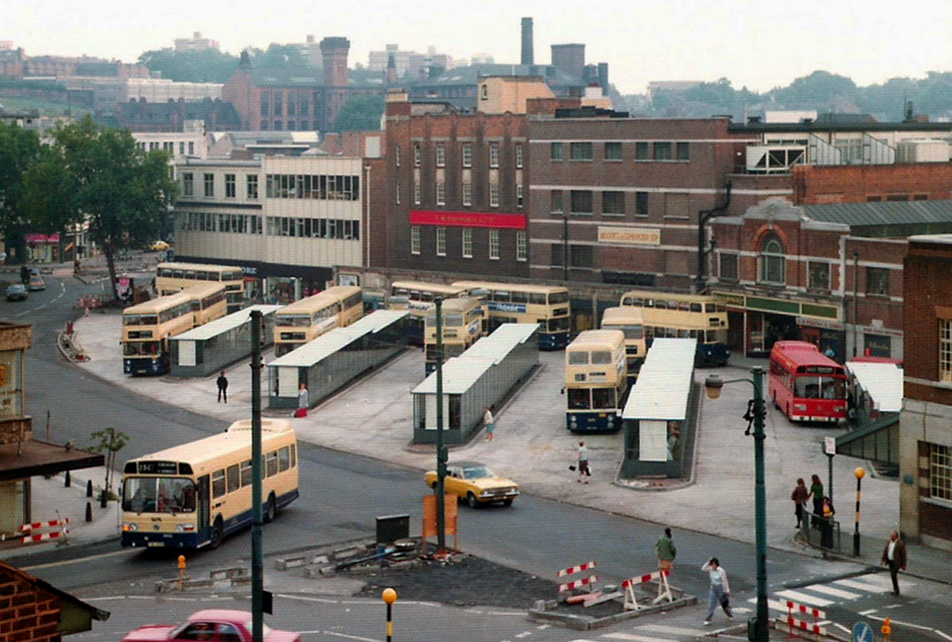
The 1936 St Pauls Street bus station closed in February 1975, and was completely demolished, rebuilt and opened in August 1975.
Photo by: Walsall 1955
Allford Hall Monaghan Morris designed the building for Centro. The structural engineers were Atelier One, Shepherd Construction Ltd were the contractors, Watkins Dally were the landscape architects and Clark Smith Partnership were the civil engineers.
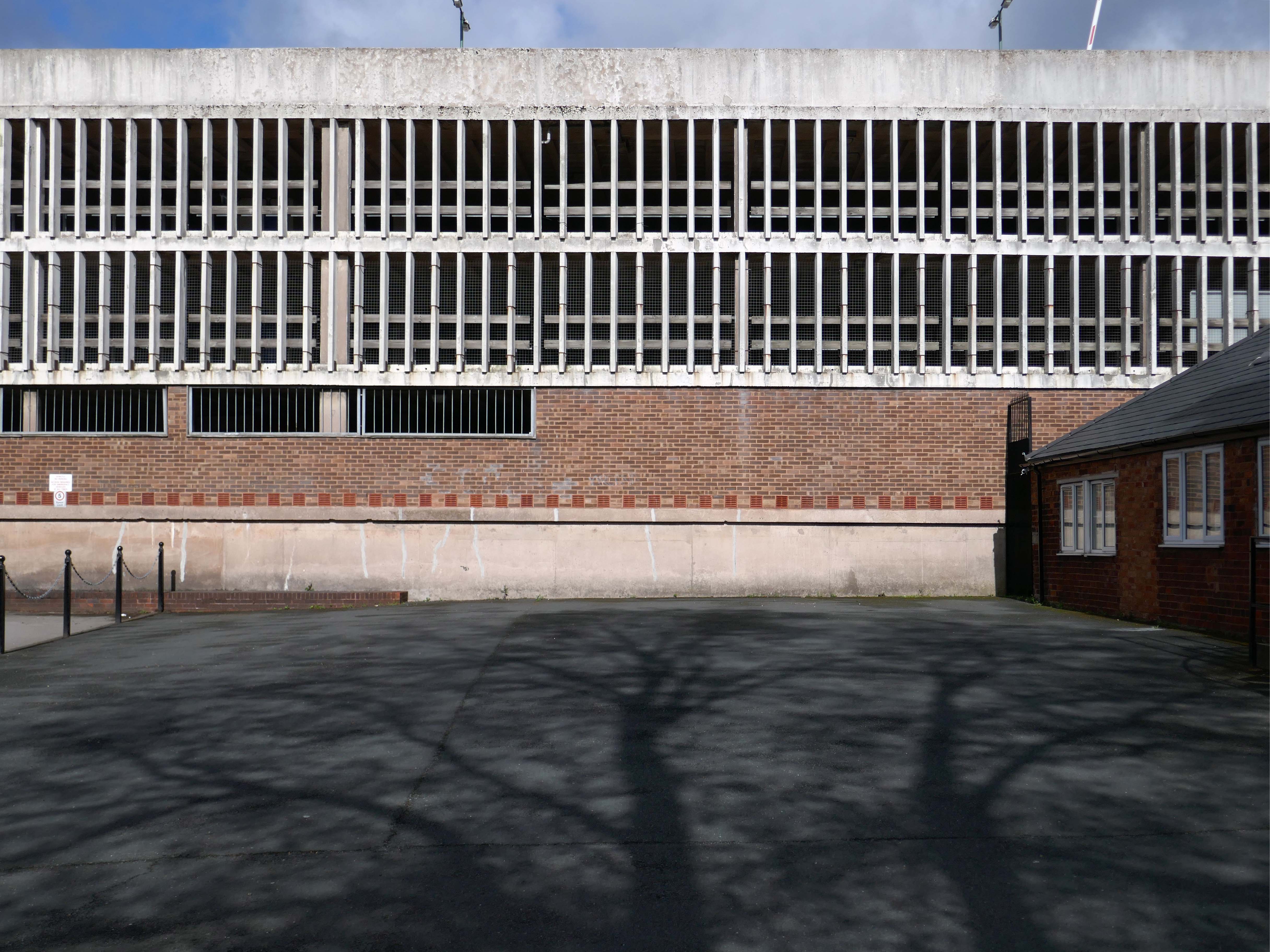
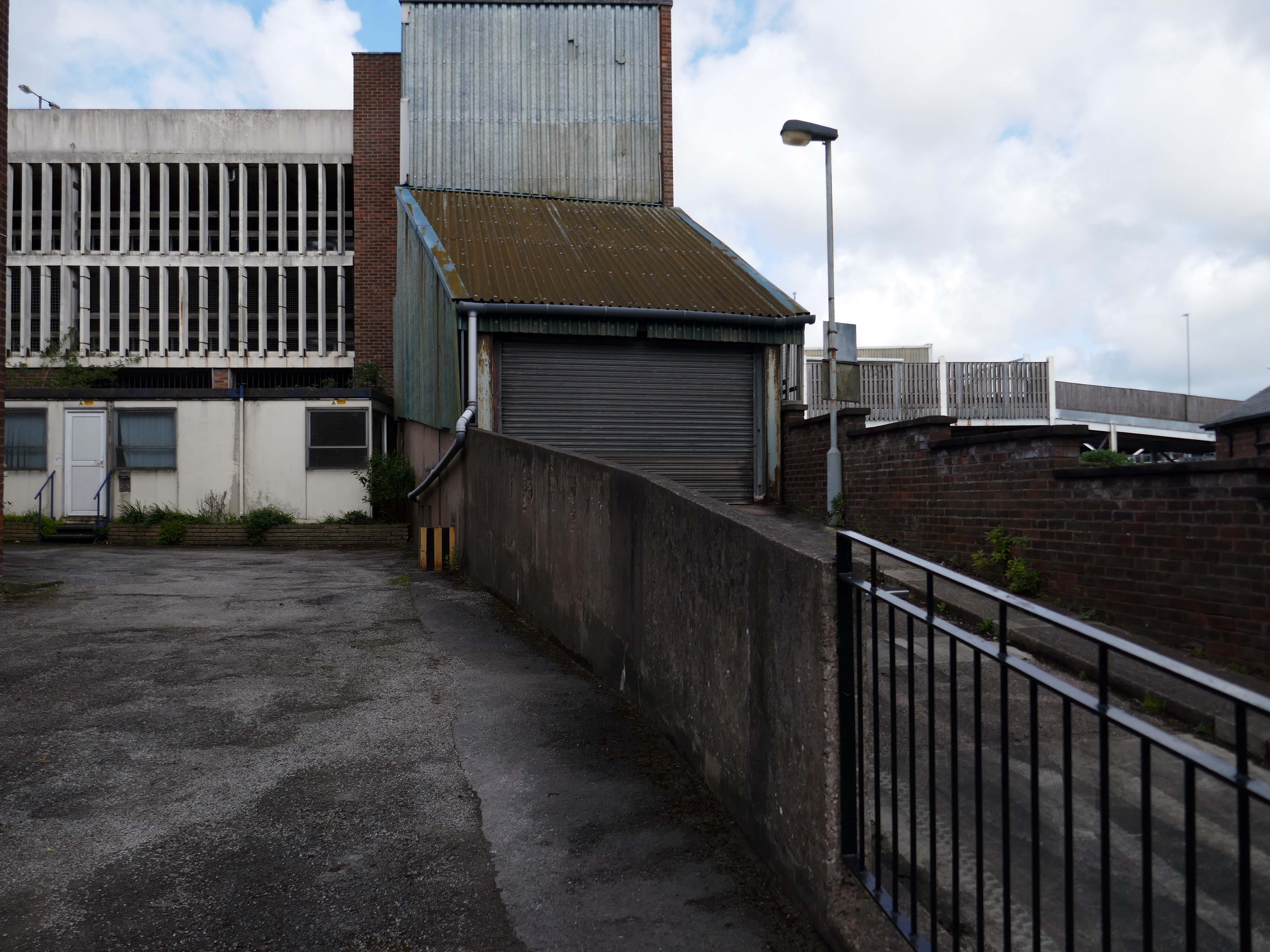
Next, a glimpse of Hatherton Road multi-storey car park.
Though it appears to be closed.
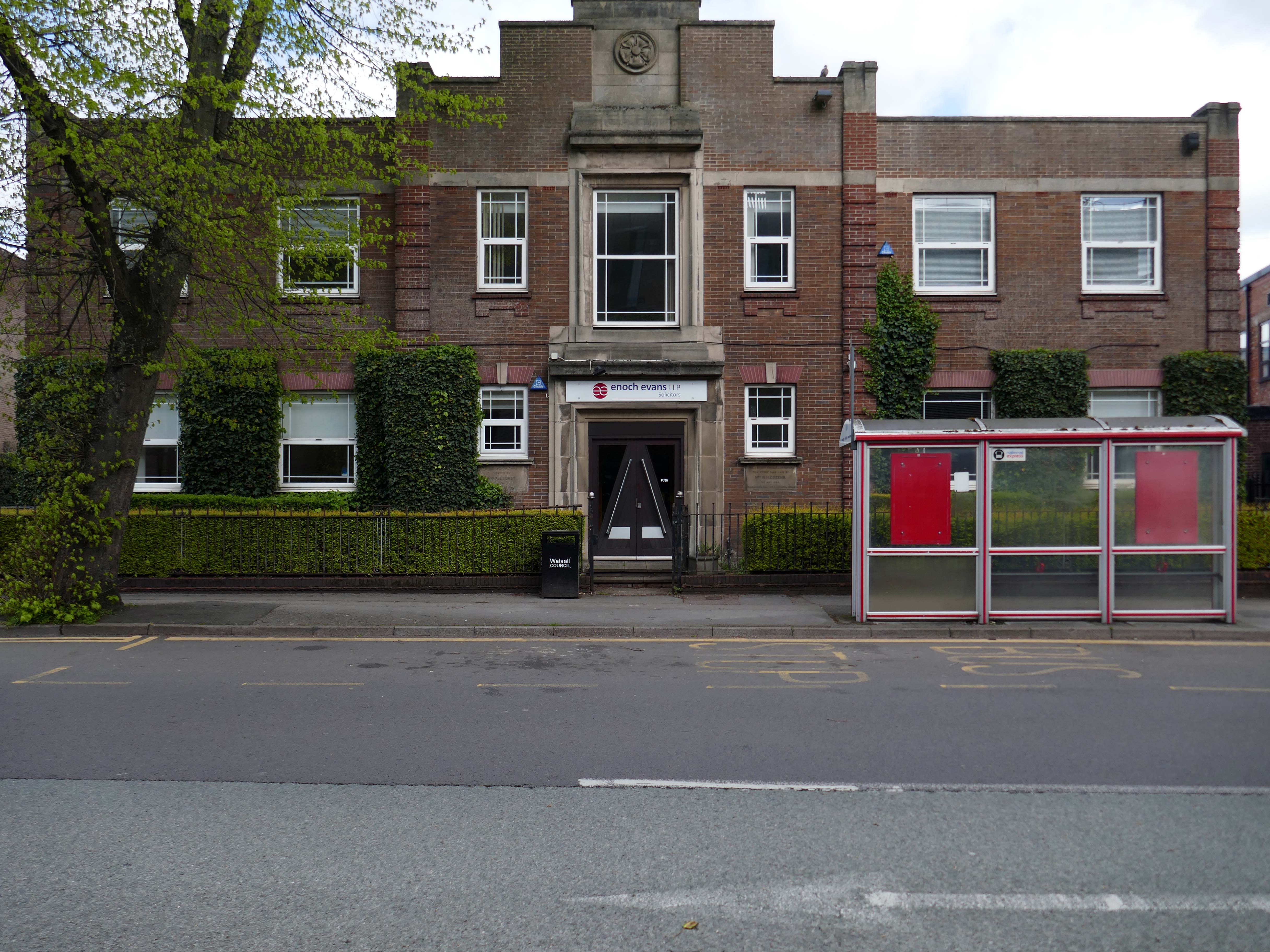
Adjacent to Enoch Evans Solicitors, their offices housed in one of the many imperious inter-war buildings dotted around the town.
Which faces onto the back of the Civic Centre.
Following the formation of the Metropolitan Borough, the new Civic Centre in Darwall Street opened in 1976, architect Stanley W Bradford Walsall MBC Director of Architecture.
Central roof garden.
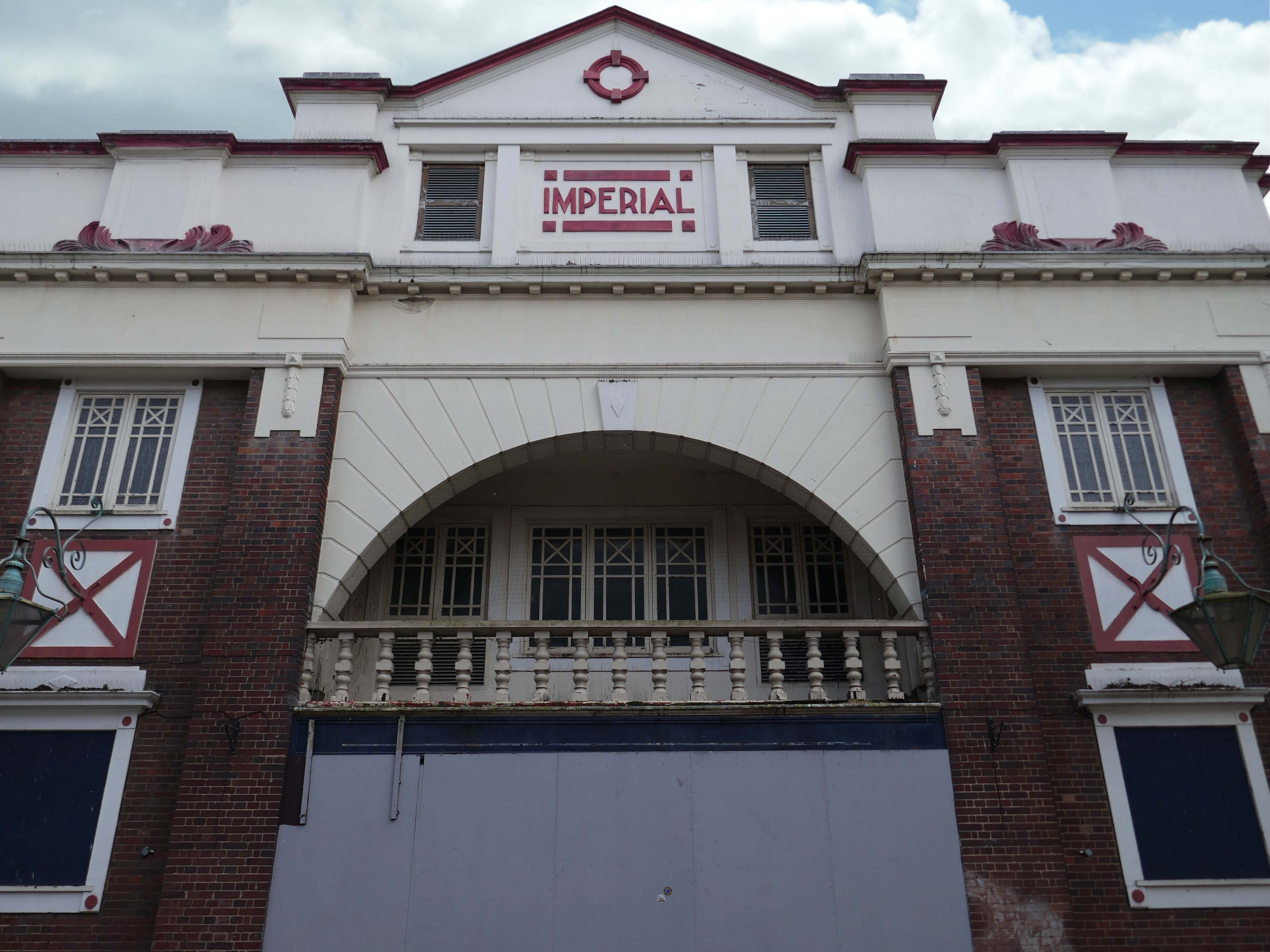
Leaving the Civic Quarter on the left is the Imperial
The Imperial started life as an agricultural hall, constructed in 1868-69, and designed by the architect GB Nichols of West Bromwich. At that time, it was used for a variety of community activities including shows and dancing, it was also hired out to travelling film showmen. The main feature of the early building was a principal ground floor hall.
In June 1914, the Imperial was closed to allow for conversion to a cinema, designed by West Midlands-based architects Hickton & Farmer.
The Imperial was converted to a bingo club in 1968, and in 1996 it was converted into a pub, which closed in 2016.
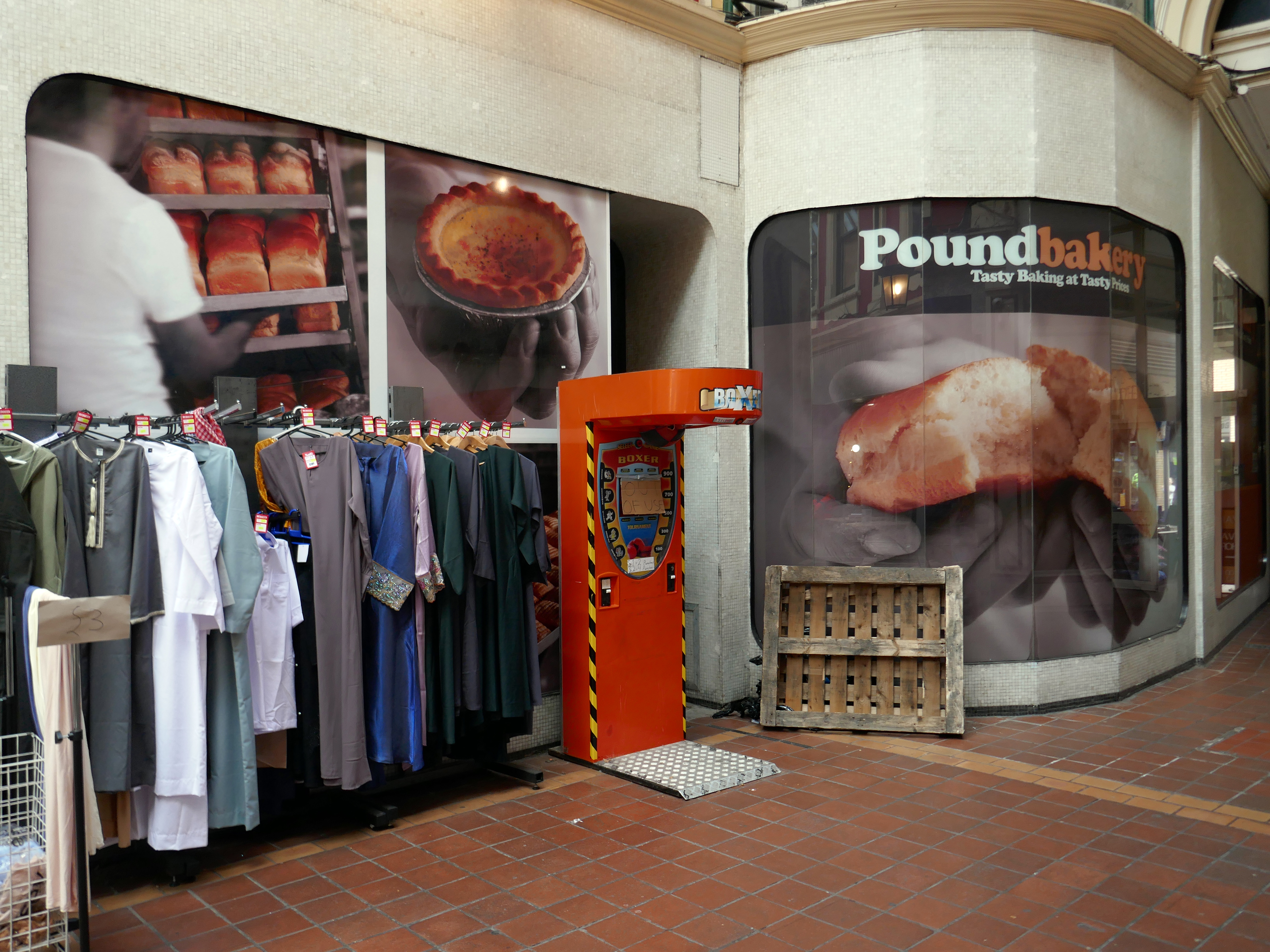
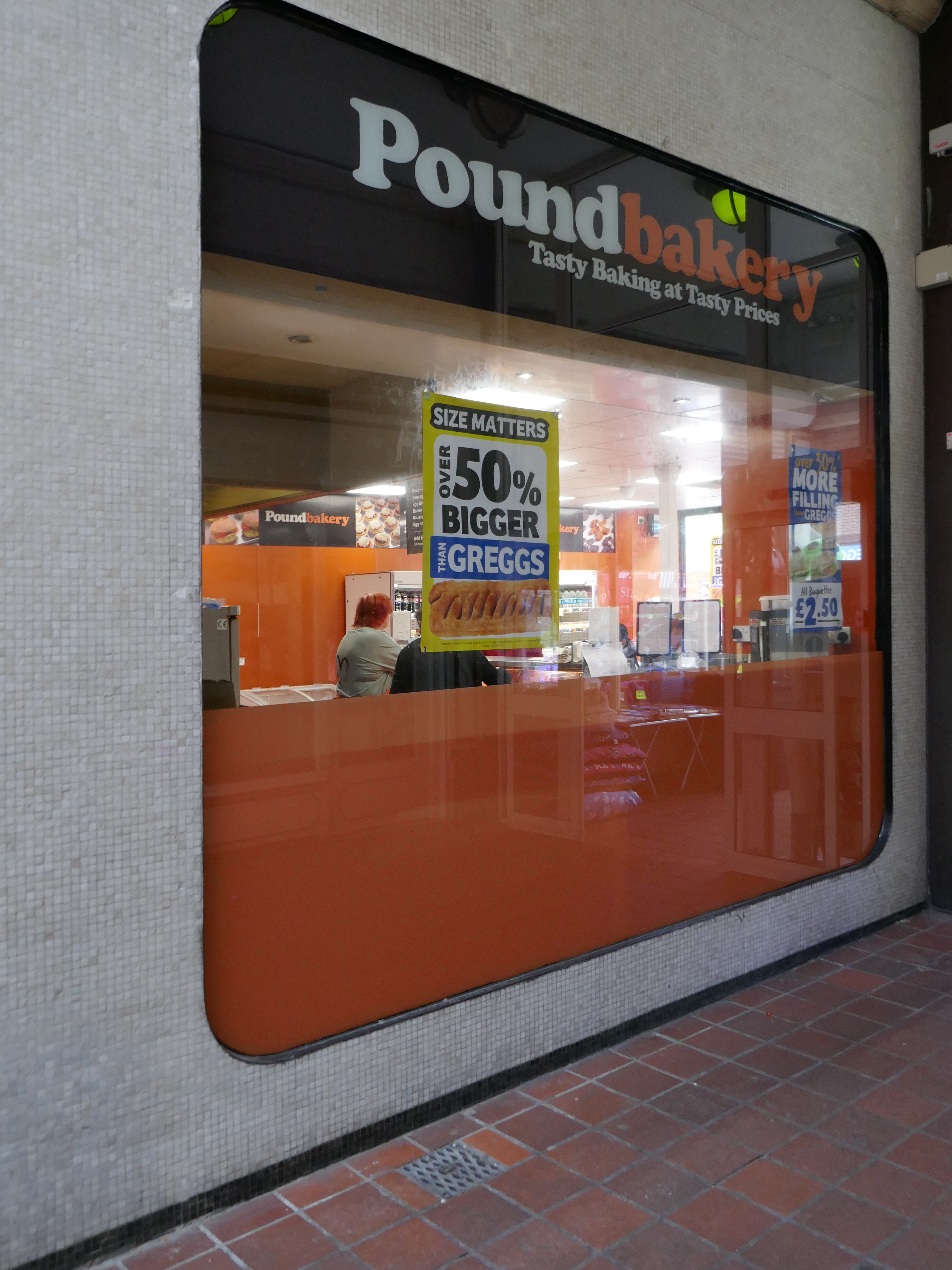
At the end of the otherwise period correct Victorian Arcade is a space age Pound Bakery.
Across the way a former Barclays Bank architects: John HD Madin & Partners.
Next door an anomalous disco themed fascia.
From here up the hill to the Old Square.
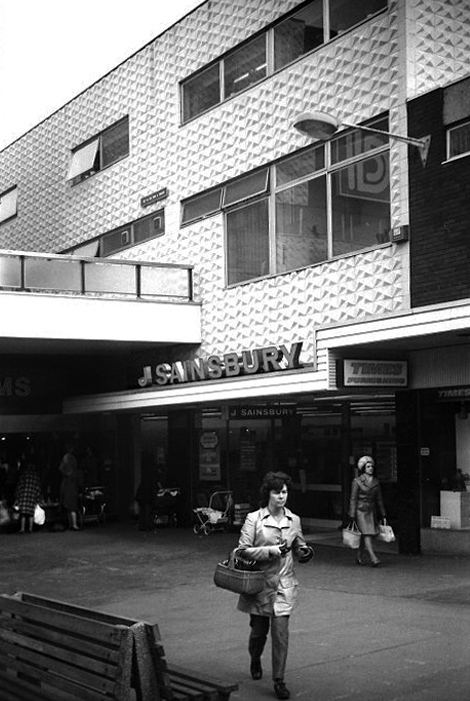
Sainsbury’s Old Square store in the early 1970s photo Will Parker.
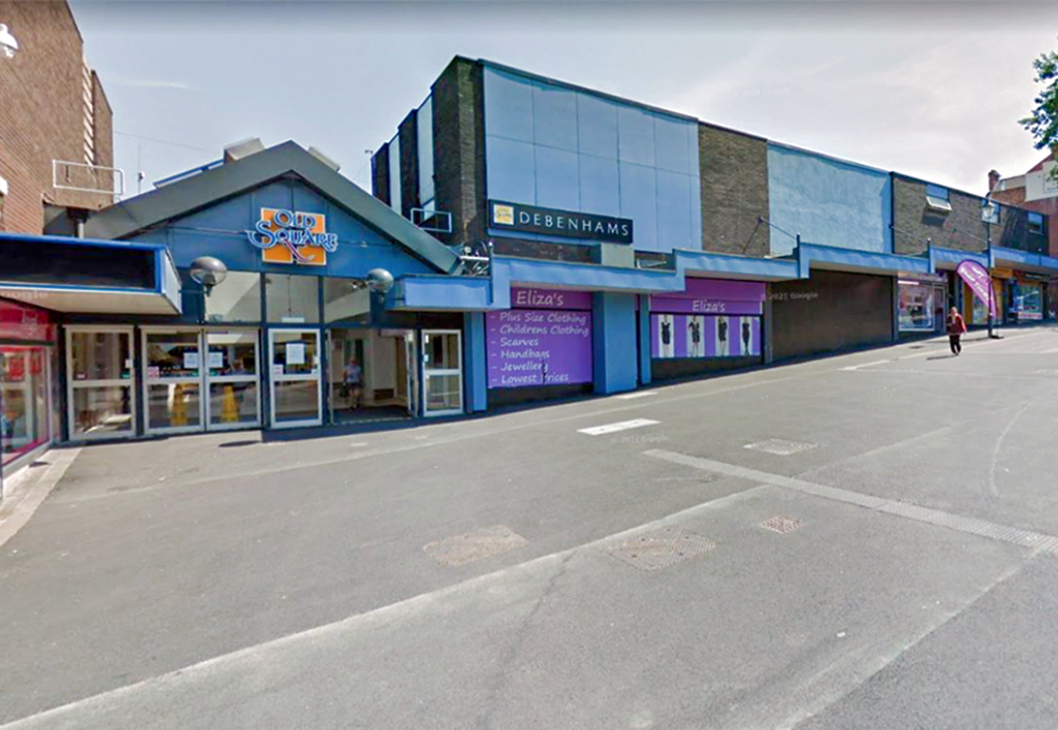
The majority of the Shopping Centre was demolished in 2014.
I remember when I was about fifteen in 1990, Coca-Cola were doing these yo-yos and if you went upstairs by the cafe, I think it was you could earn a gold coloured yo-yo. You just had to perform three tricks with it to earn one. I did walk the dog, the sleeper and I think it was around the world! Proud as punch with that I was. I know my uncle was Father Christmas for a few years on the bounce as well, when they used to have a grotto.
Dan Bracknall
These are the remnants.
Ascending to the dizzy heights of the Grade II Listed Memorial Gardens 1953 by Geoffrey Jellicoe designed as a memorial to the dead of the two World Wars and said to mark a significant stage in the evolution of his principles of design.
Sir Geoffrey Jellicoe was one of the century’s greatest landscape architects. His contribution to landscape design has been described as equal to the 18th-century gardener Capability Brown. He was educated at Cheltenham College and then trained to be an architect at the Architectural Association. It was while at the AA that his interest in landscape was first kindled.
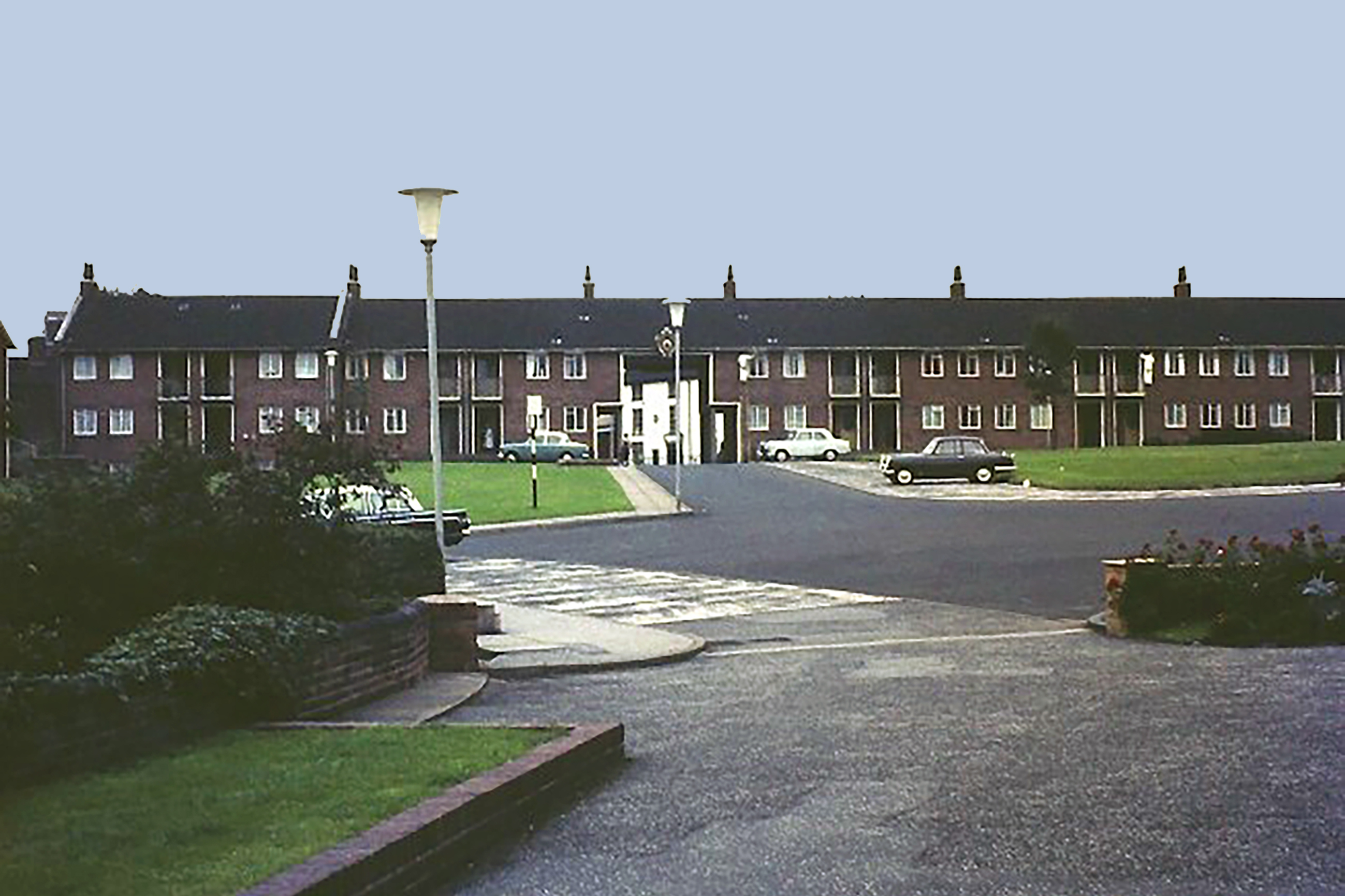
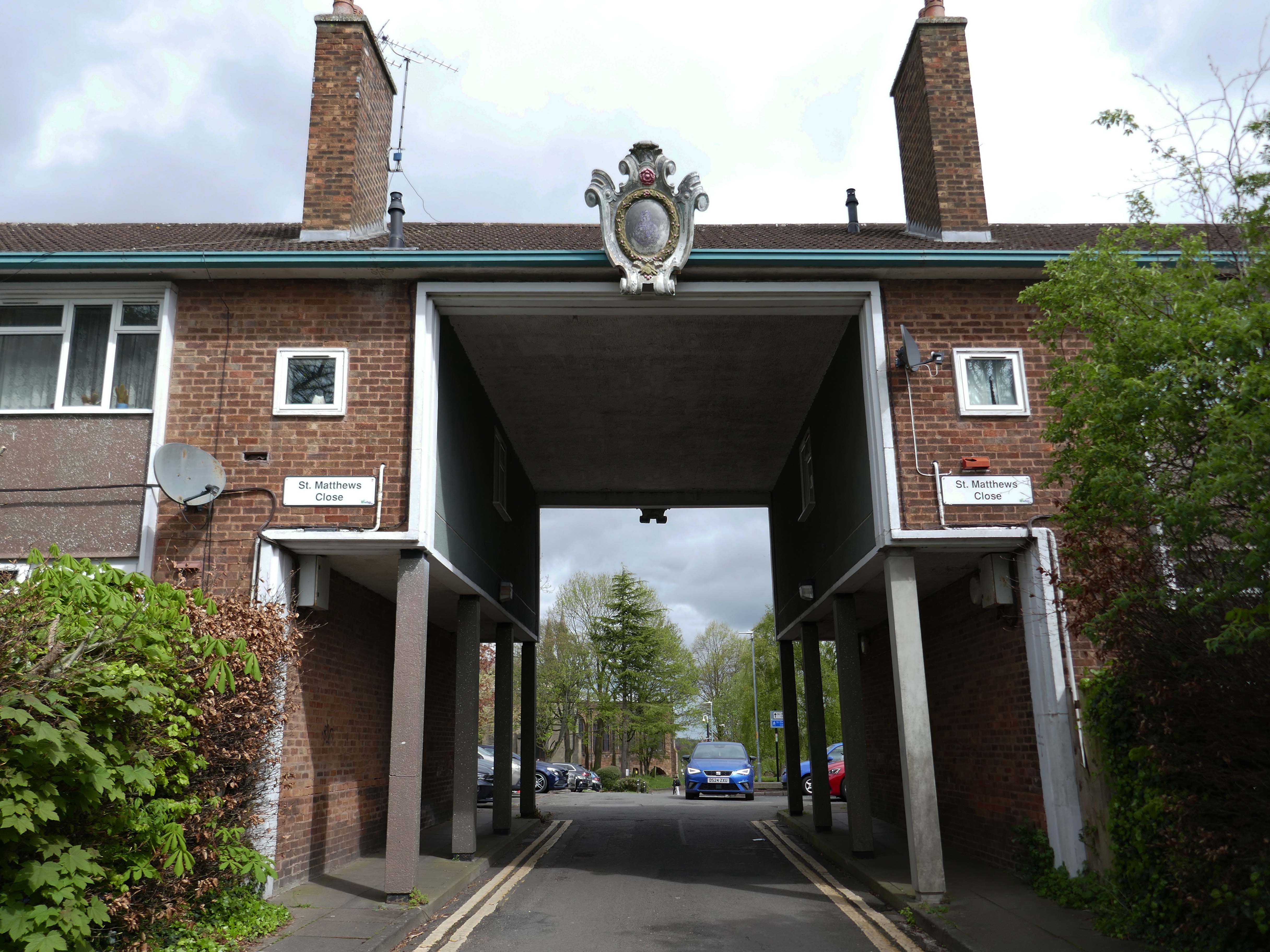
The second phase, comprising the building of the memorial chapel in the Memorial Garden, and the flats and Brotherhood or Church Hall to the south of the open space known as St Matthew’s Close, was completed c 1960
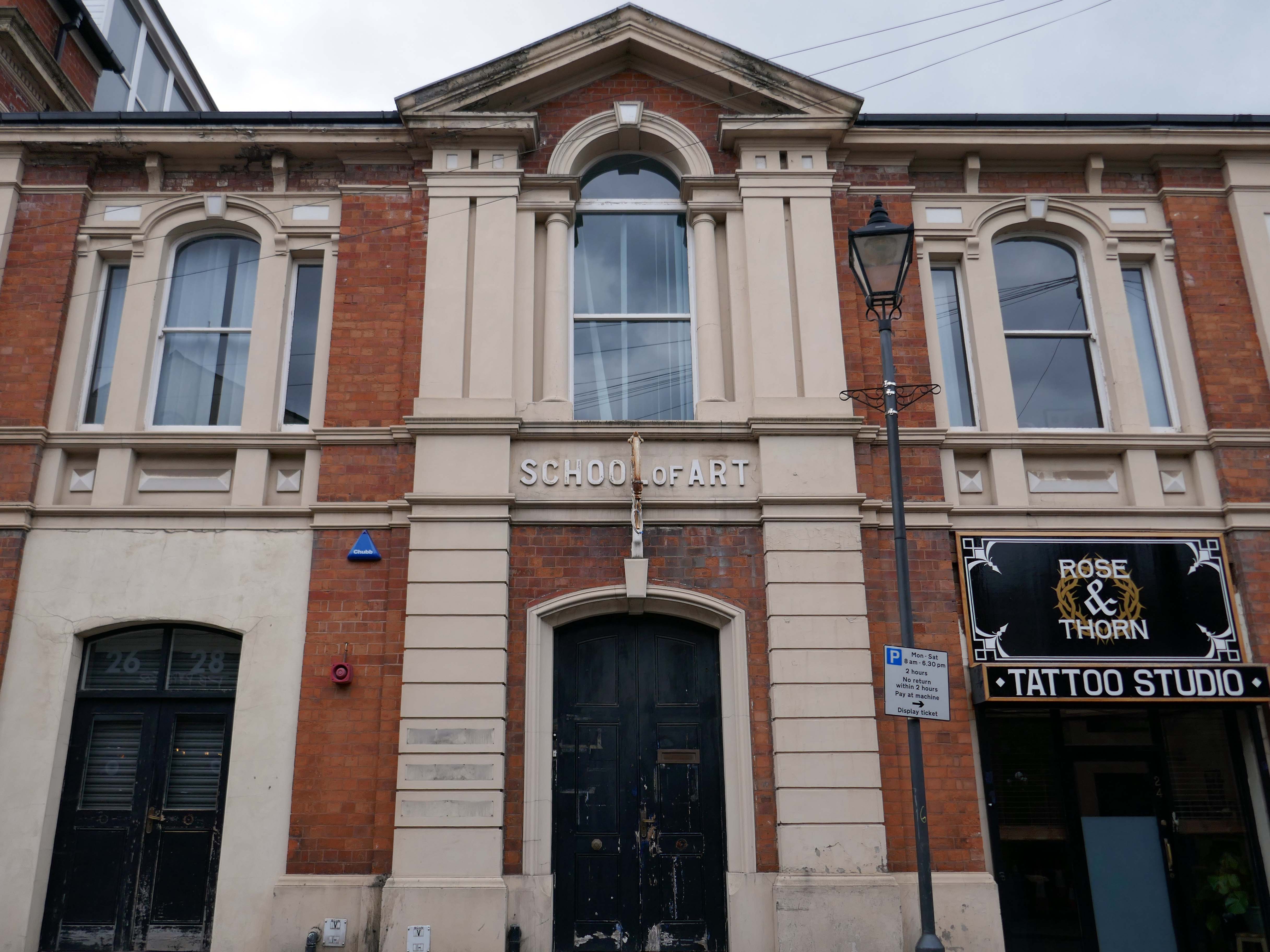
Of back down the hill onward to the Walsall School of Art.
Walsall’s art school’s history is a story of gradual growth and change, evolving from evening classes in a chapel to a modern art college. The Walsall School of Design and Ornamental Art, founded in 1854 as an evening class, operated from 1861 at the Goodall Street Baptist Chapel and eventually became the Walsall College of Art.
To celebrate Queen Victoria’s Golden Jubilee, the Walsall Science and Art Institute was opened in 1888 at Bradford Place. In 1897, it was transferred to the Town Council and renamed the Walsall Municipal Science & Art Institute. In 1926, the institute was renamed Walsall Technical College. Post-war demand led to the establishment of the Walsall and Staffordshire Technical College at Wisemore – now St Paul’s Street, in 1952. The Walsall College of Art officially merged with the College of Technology in 1992 to form Walsall College of Arts and Technology – now simply Walsall College. The college maintains strong historical ties to local industries, such as the leather trade.
Further on there’s an enormous Telephone Exchange comprising fifties and seventies buildings.
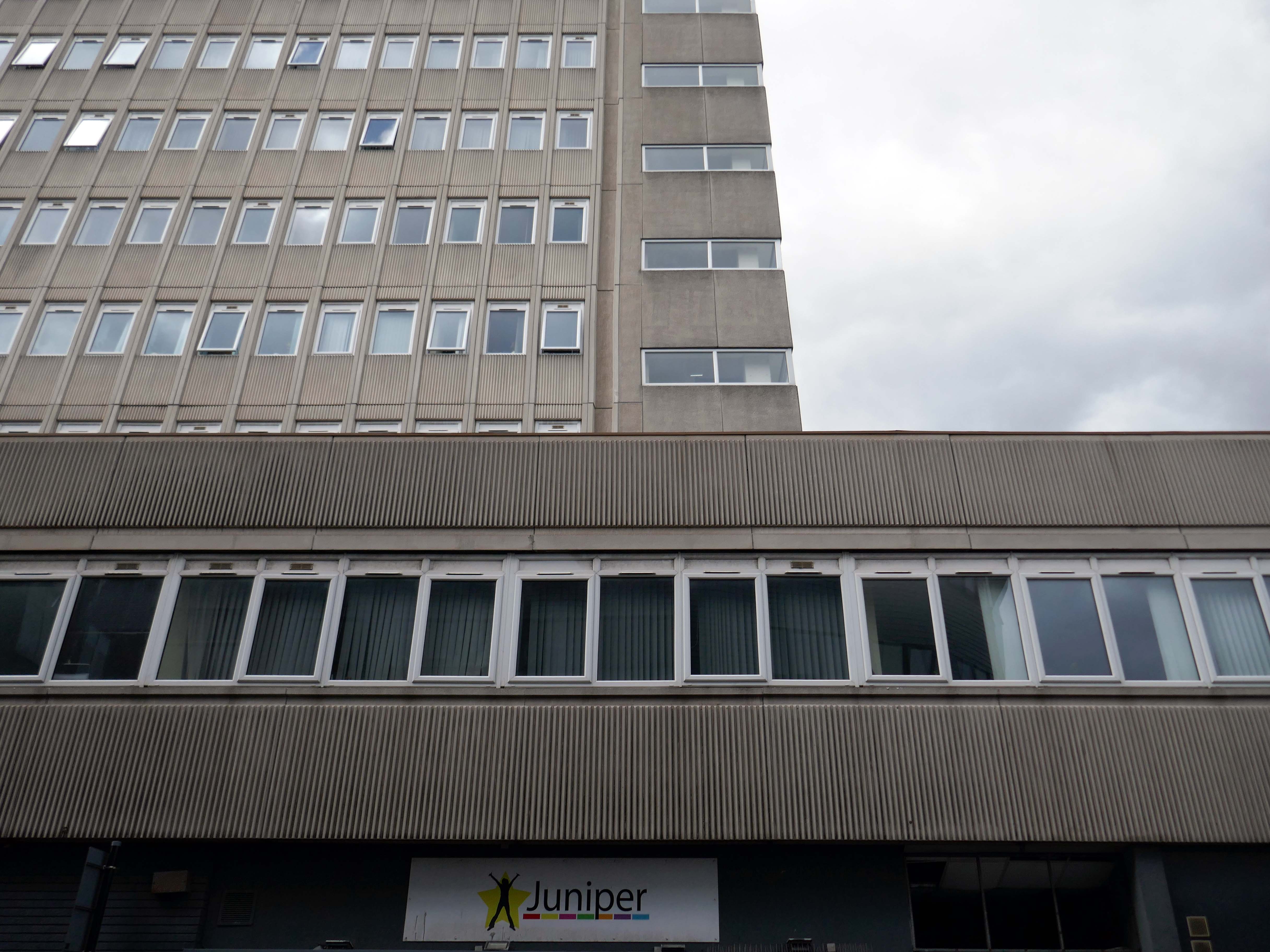
Across the way a large system built block on a podium base.
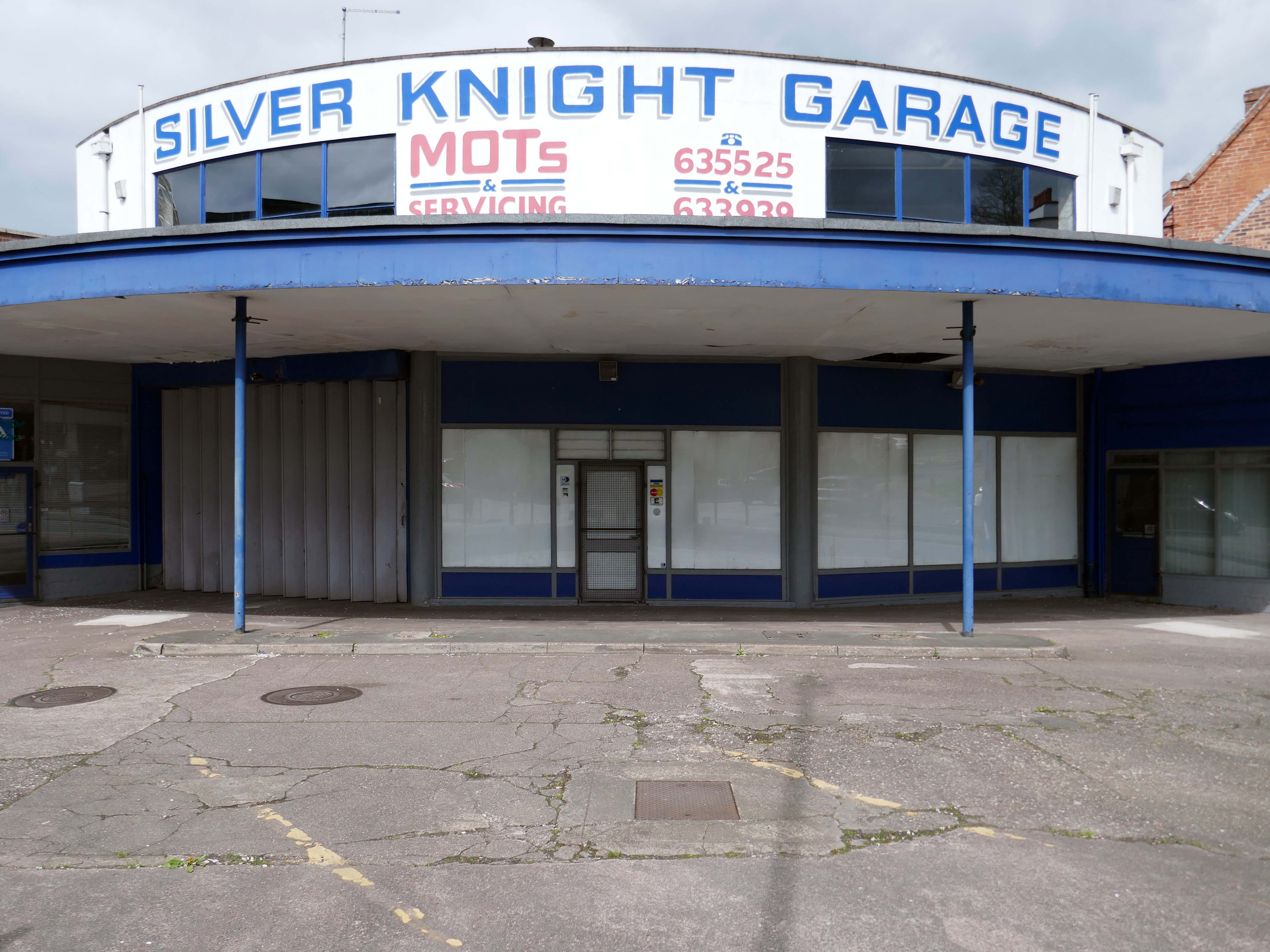
Standing on the corner where it has always stood the Silver Knight Garage.
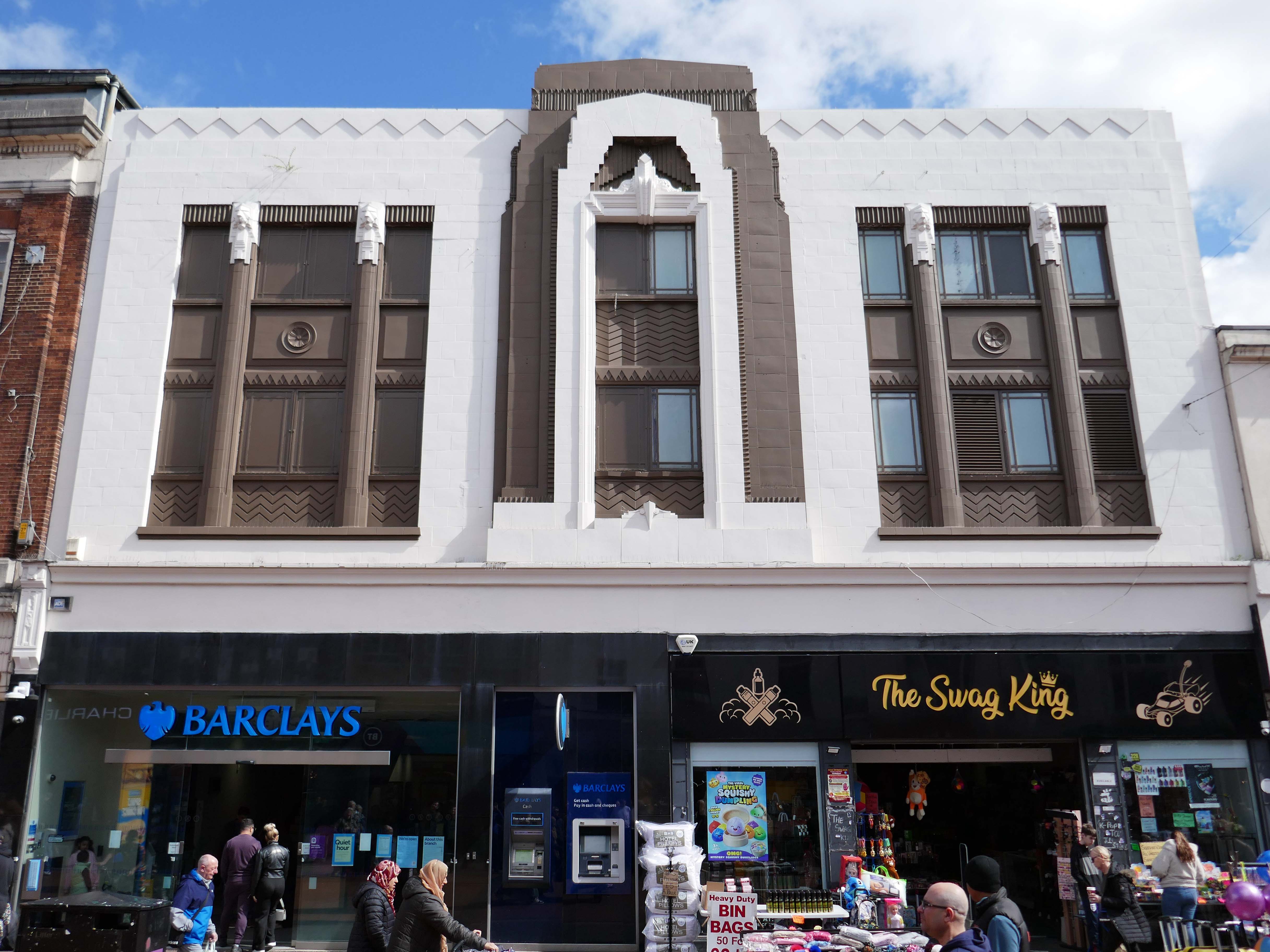
Heading back into the town centre, picking up on there’s a former Woolworths that looks like a Burton’s that thinks it’s a Barclays Bank, and also improbably a Swag King.
1933 by FW Woolworth Construction Dept – H Wimbourne
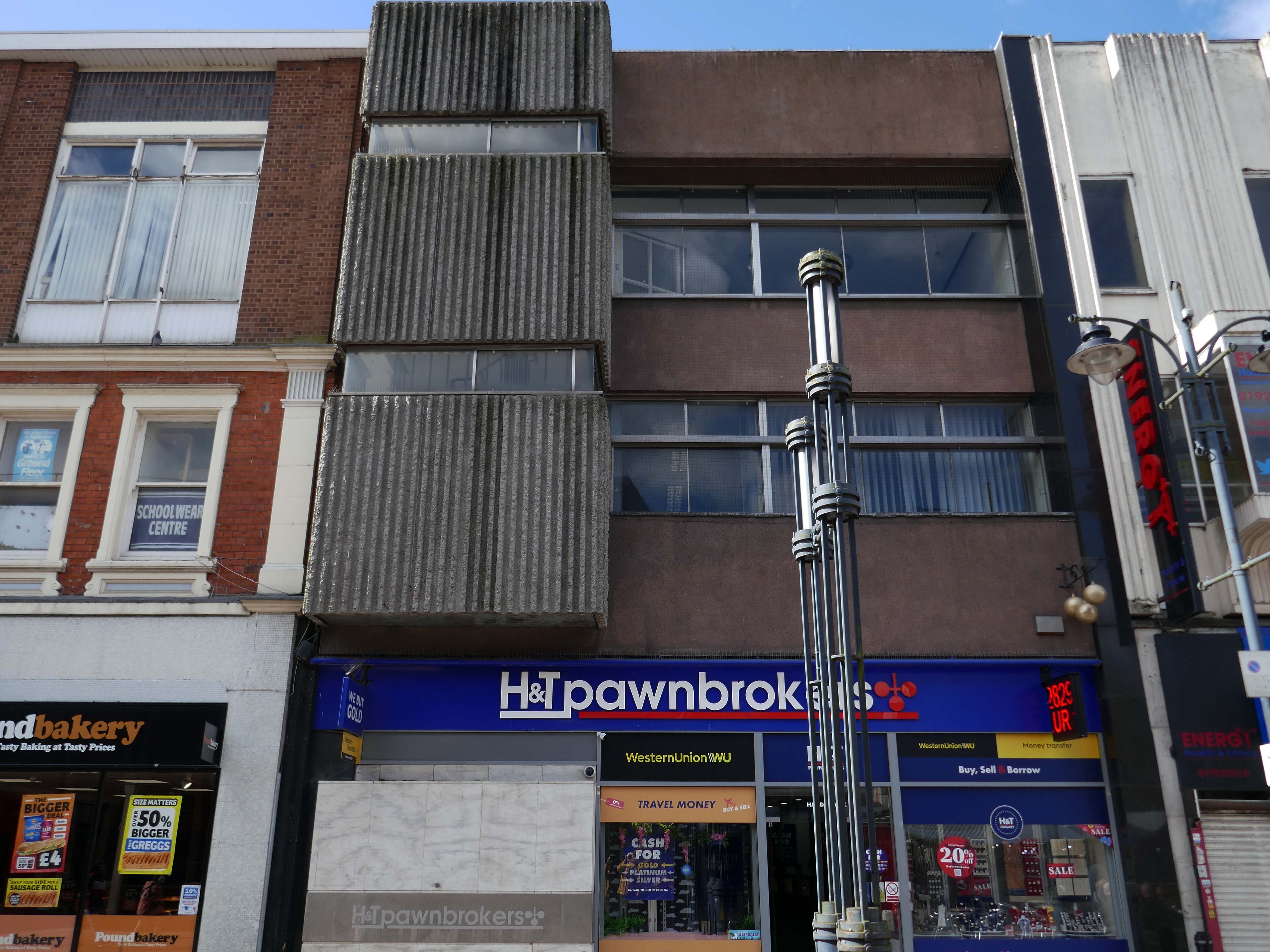
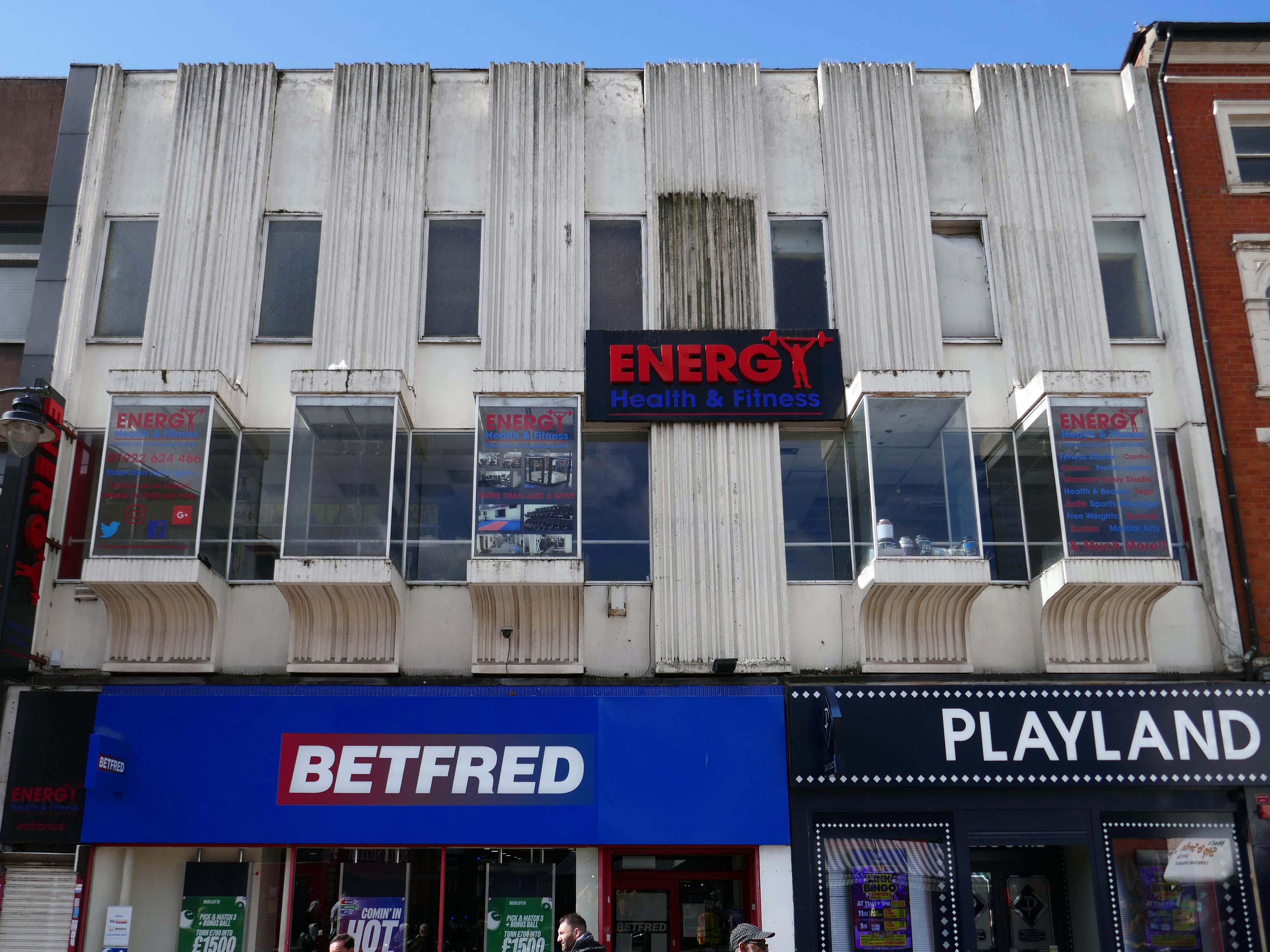
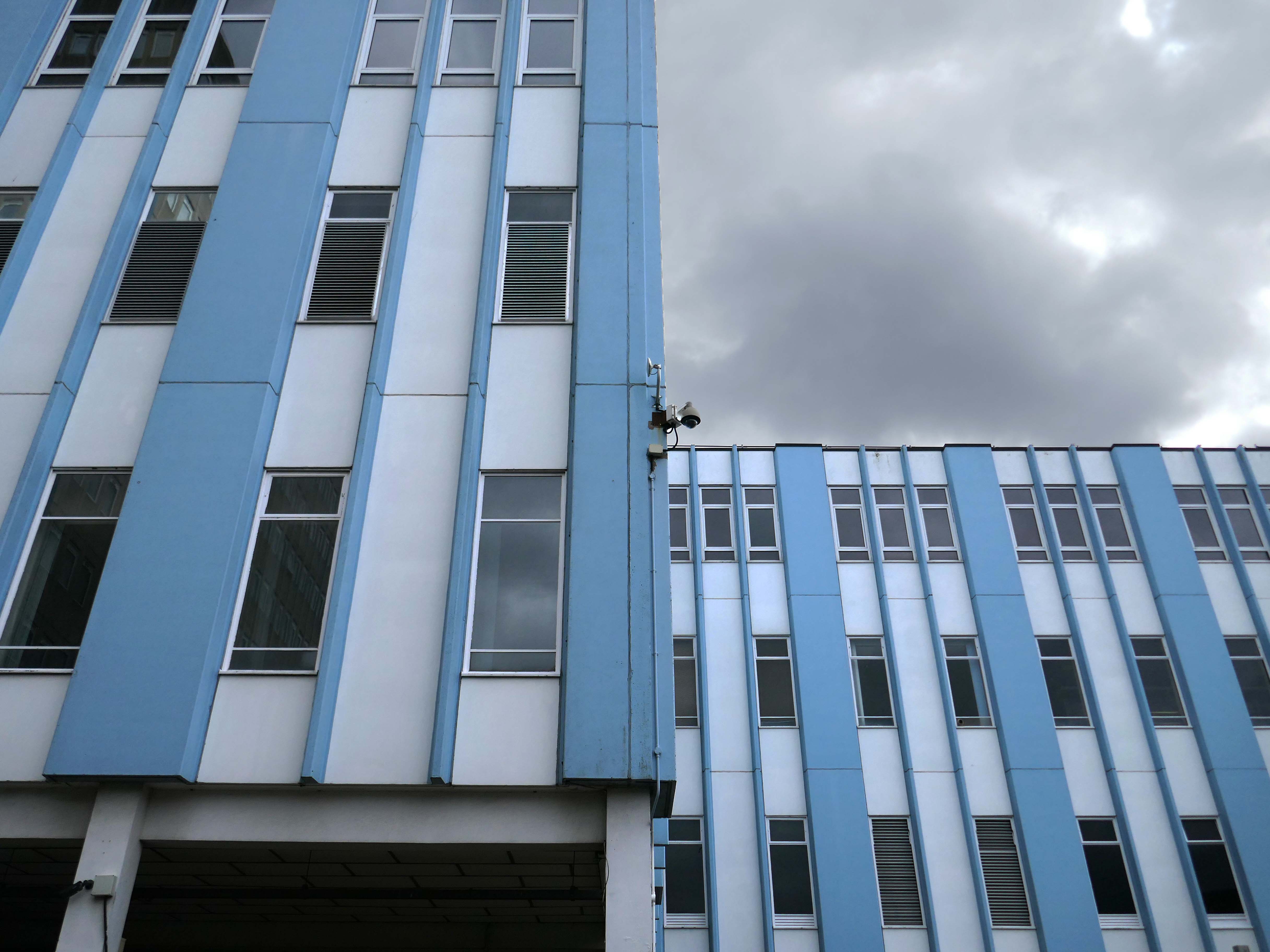
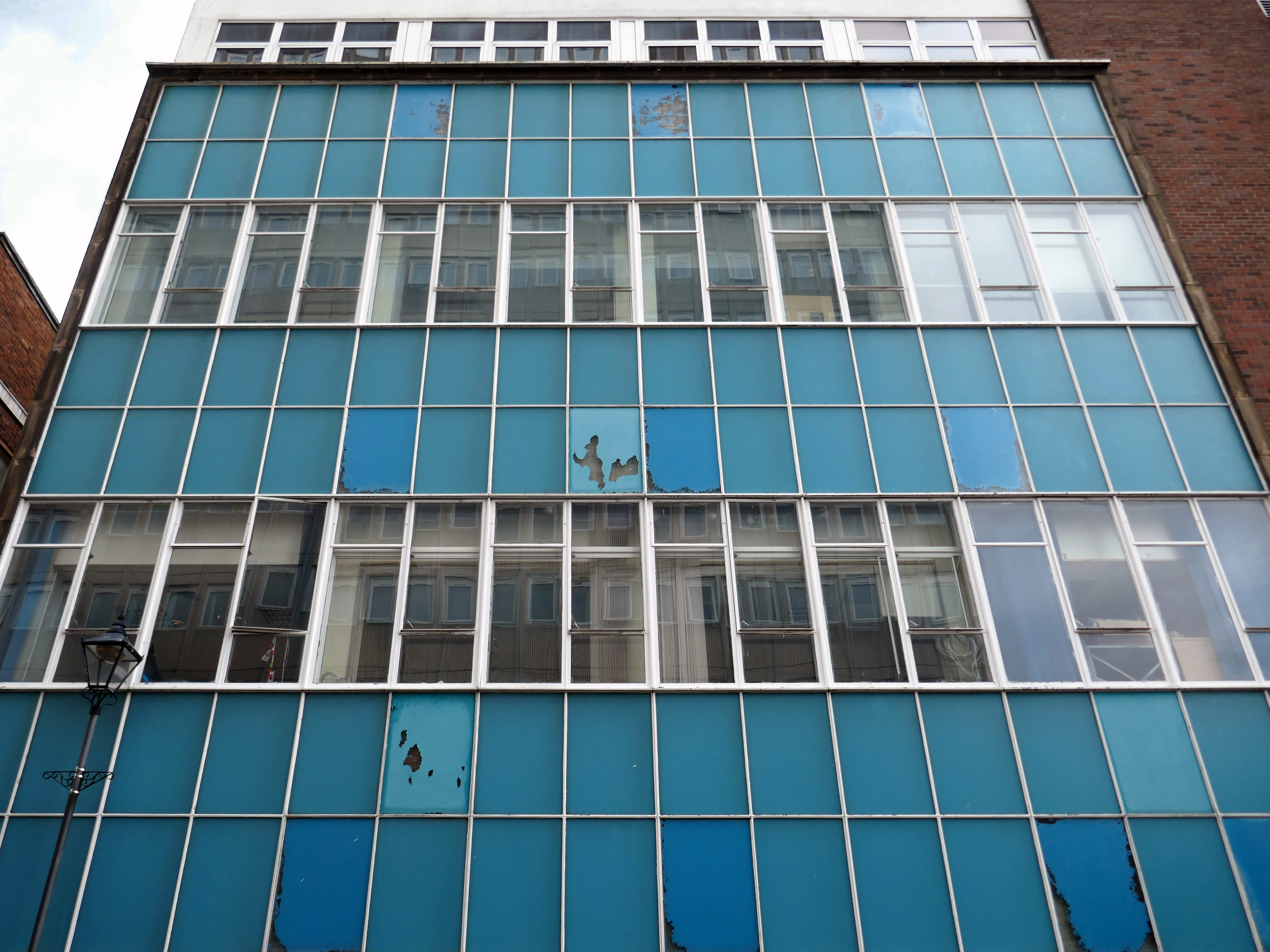
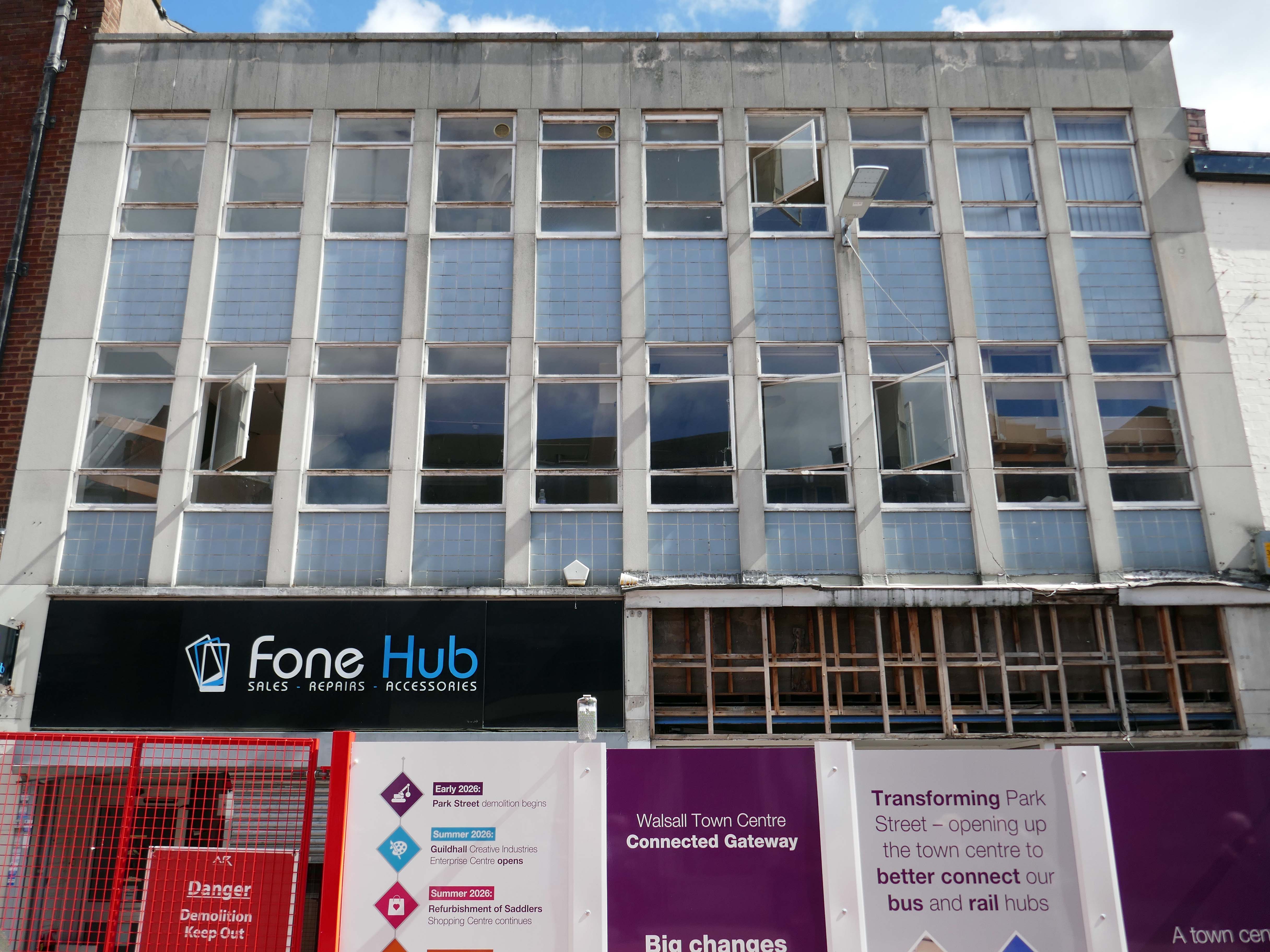
Next an indeterminate infill with pale blue panels and central pivoting metal window frames, soon to be demolished along with its neighbours, as part of the Connected Gateway Project.
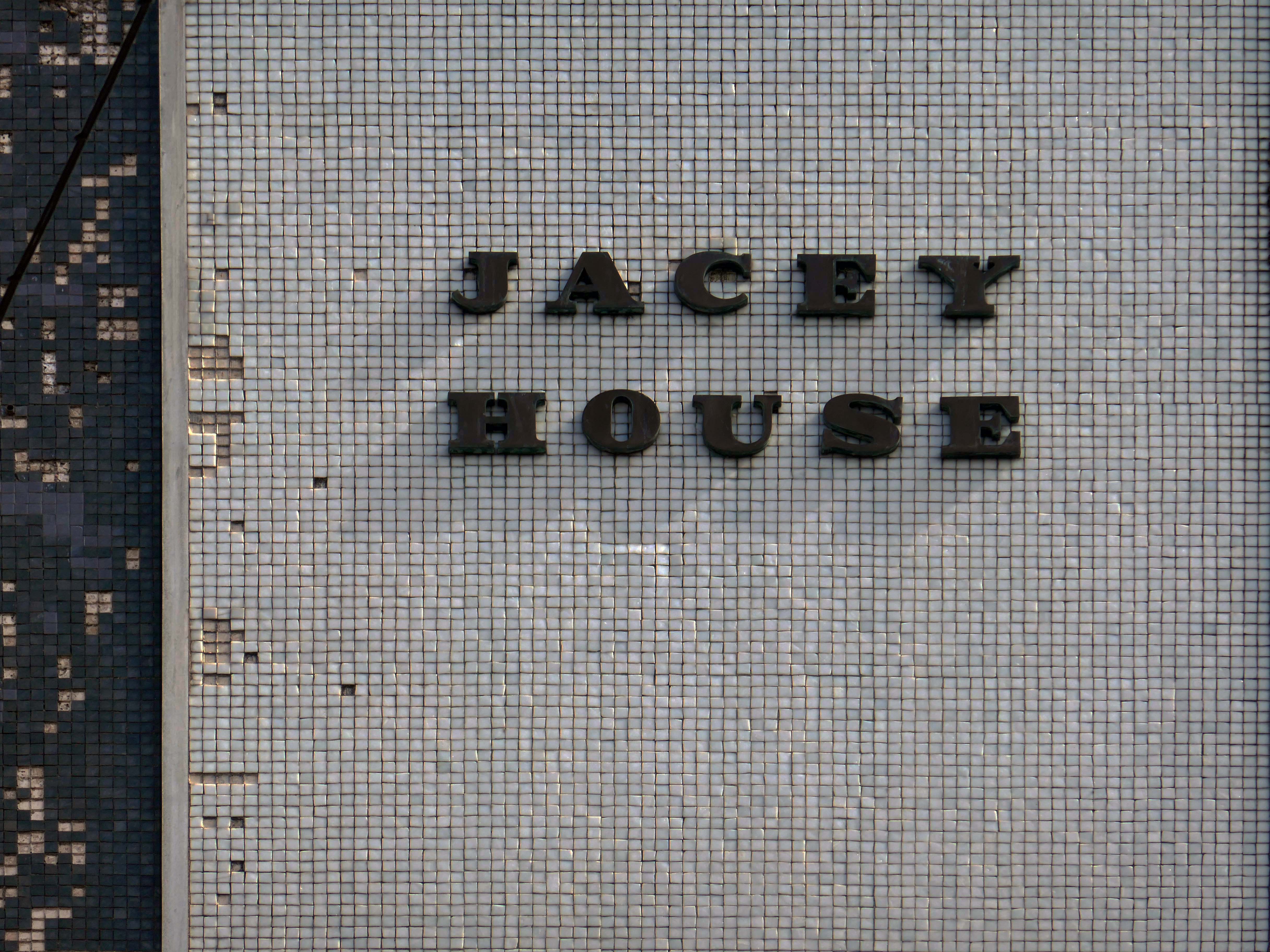
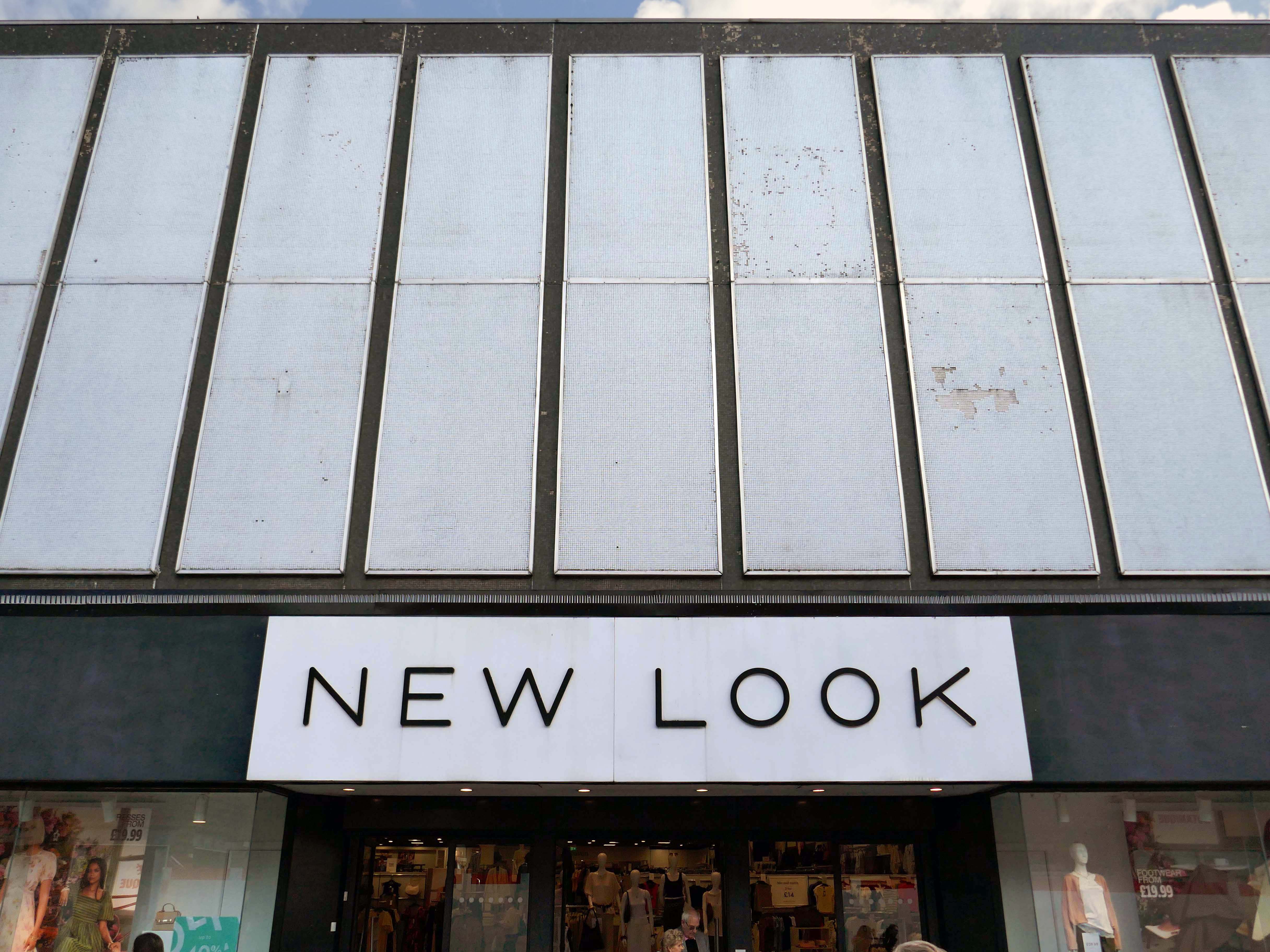
Possibly a former BHS – known as Jacey House.
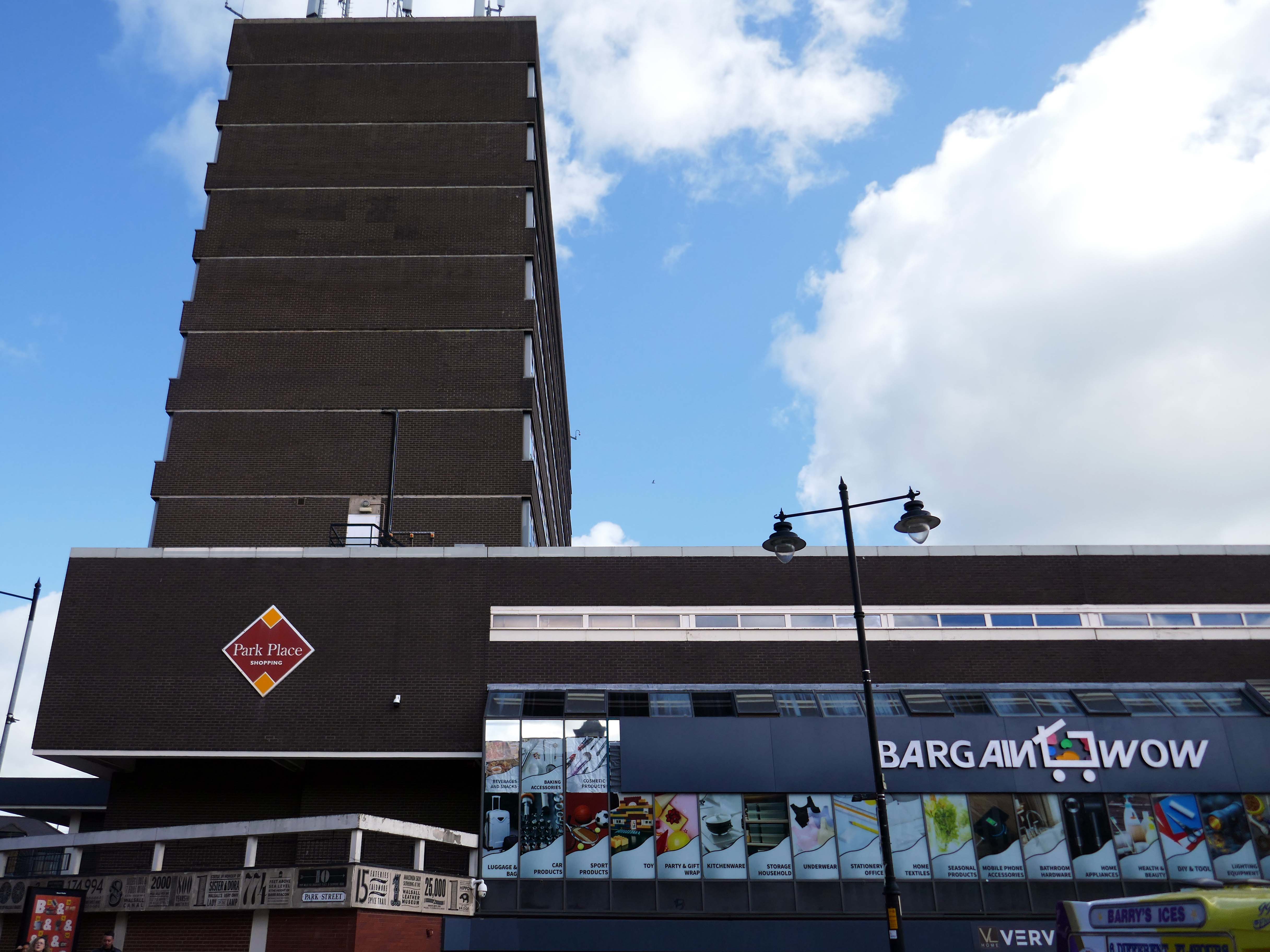
Next up Park Place.
Ai says – notable features include Park Place Meats – a town centre butcher, and Park Place Shoe Repairs, which offers engraving and key-cutting services.
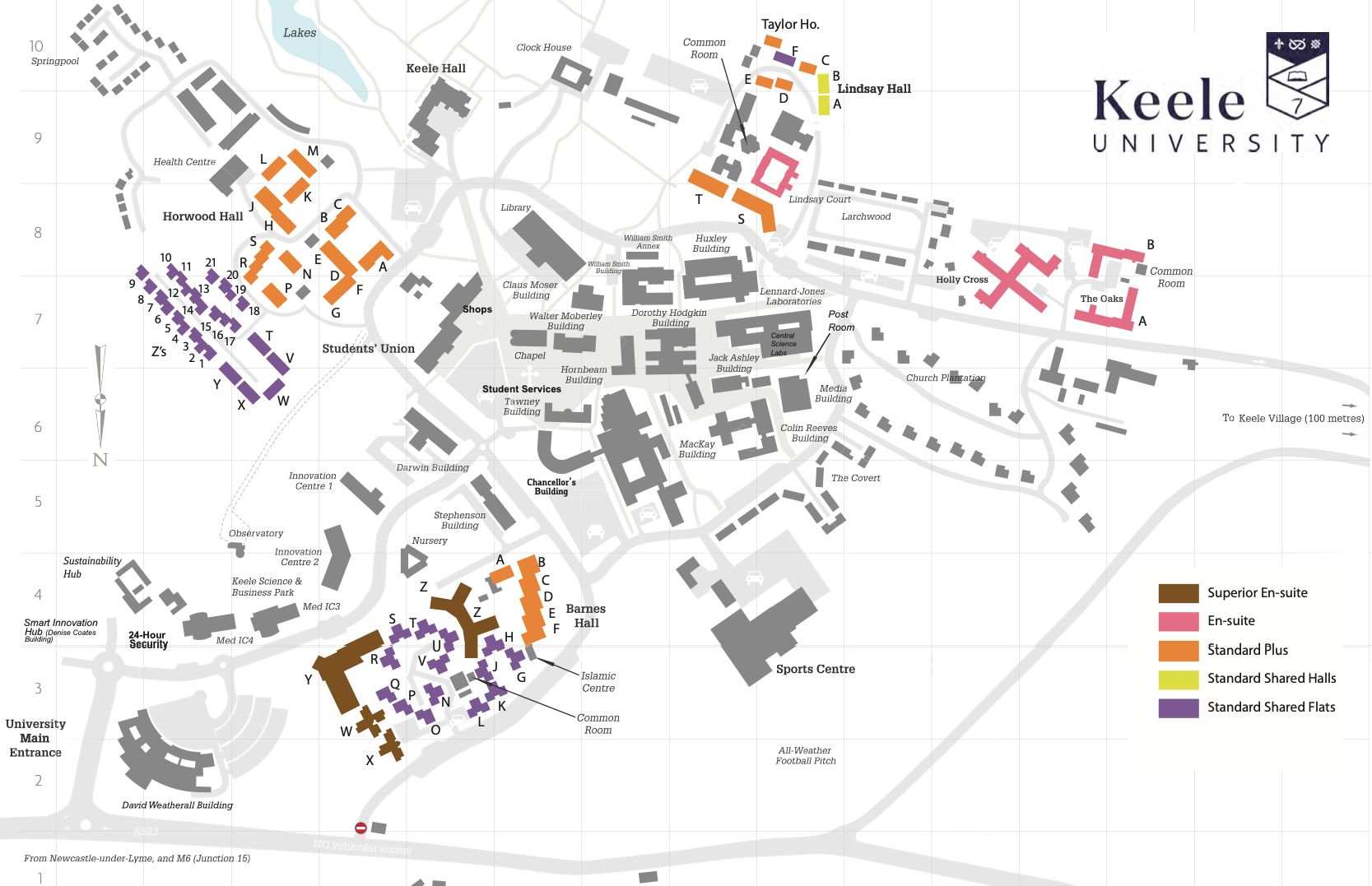
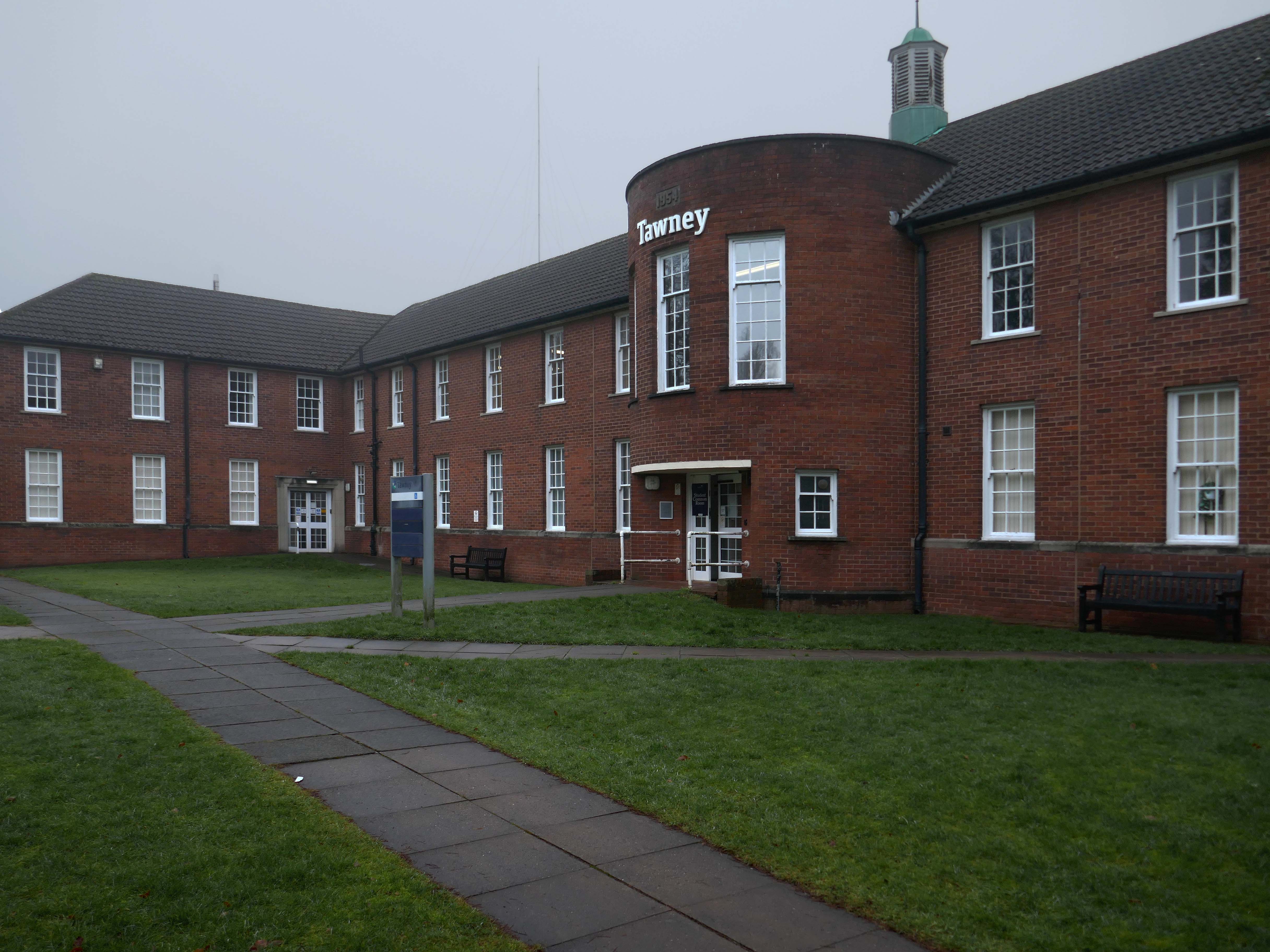
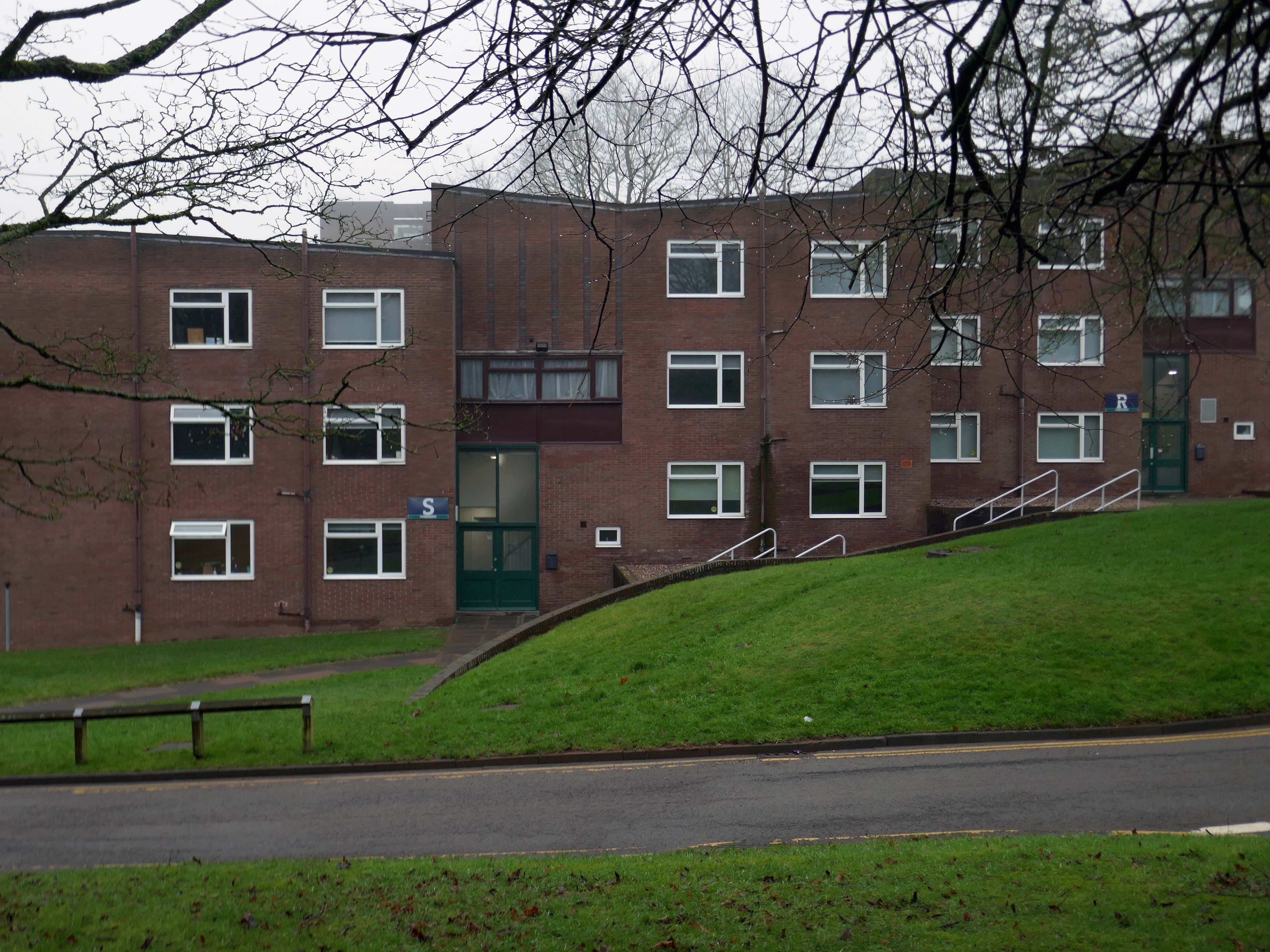
Keele University occupies a six hundred and twenty acre rural campus close to the village of Keele and comprises extensive woodlands, small lakes and Keele Hall in the historic Staffordshire Potteries heartland.
The estate was originally given by King Henry II of England to the Knights Templars, AD 1180. When the Templars were condemned and dissolved by the Council of Vienne in the time of Pope Clement V AD 1311, their possessions were annexed by the Knights Hospitallers until their dissolution by Henry VIII.
The estate was purchased from the Crown by the Sneyd family in 1540 and remained in their property until acquisition by the Stoke-on-Trent Corporation in 1948.
The first Keele Hall was built in 1580 and it was rebuilt in 1860. The Hall is a major conference, wedding and banqueting venue and has Grade II listing from English Heritage for its architectural importance.
The University itself was founded as the University College of North Staffordshire in 1949 and received its Charter as the University of Keele in 1962.
By 1969 Keele University was being described as “the most original innovation in British university education in the 20th century”.
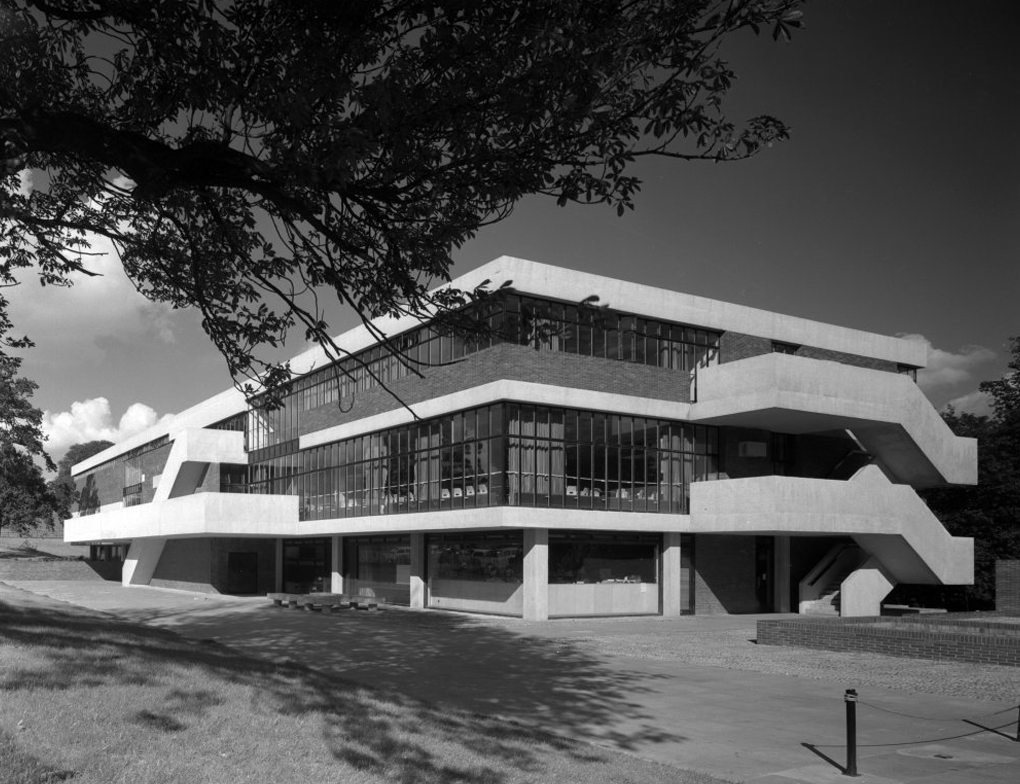
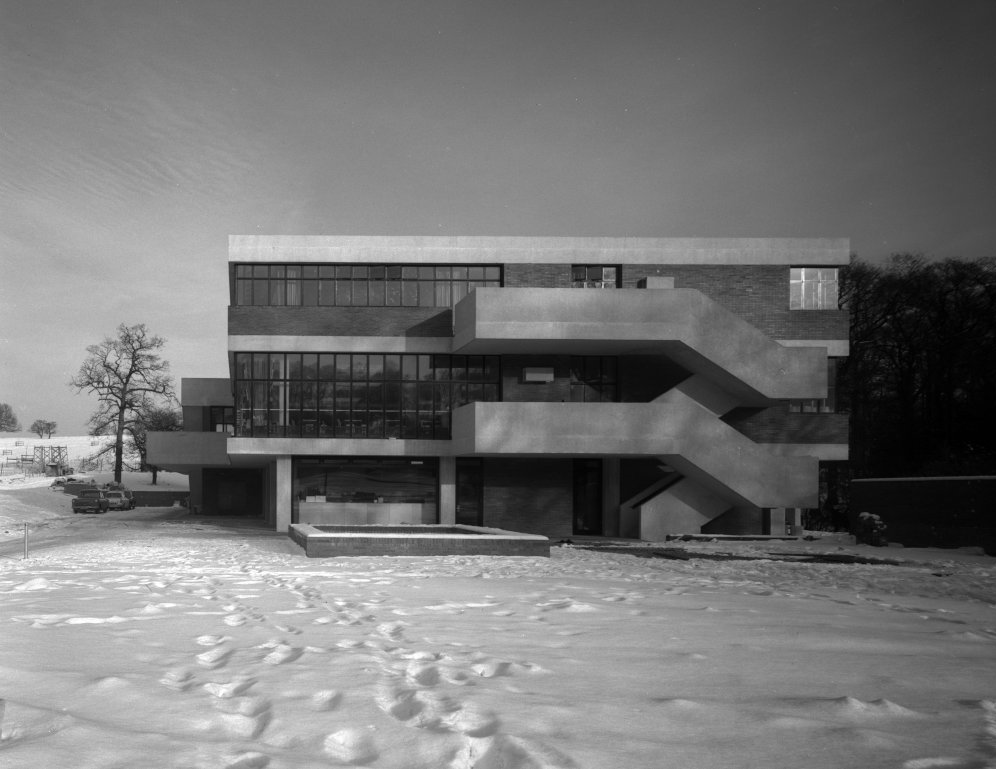
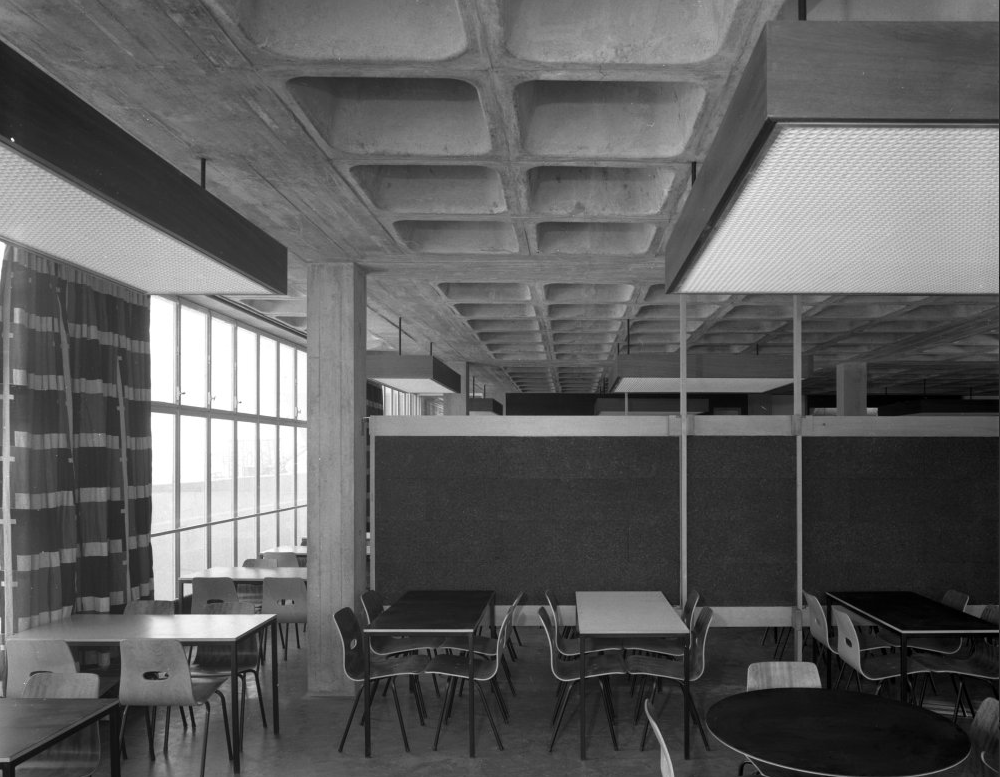
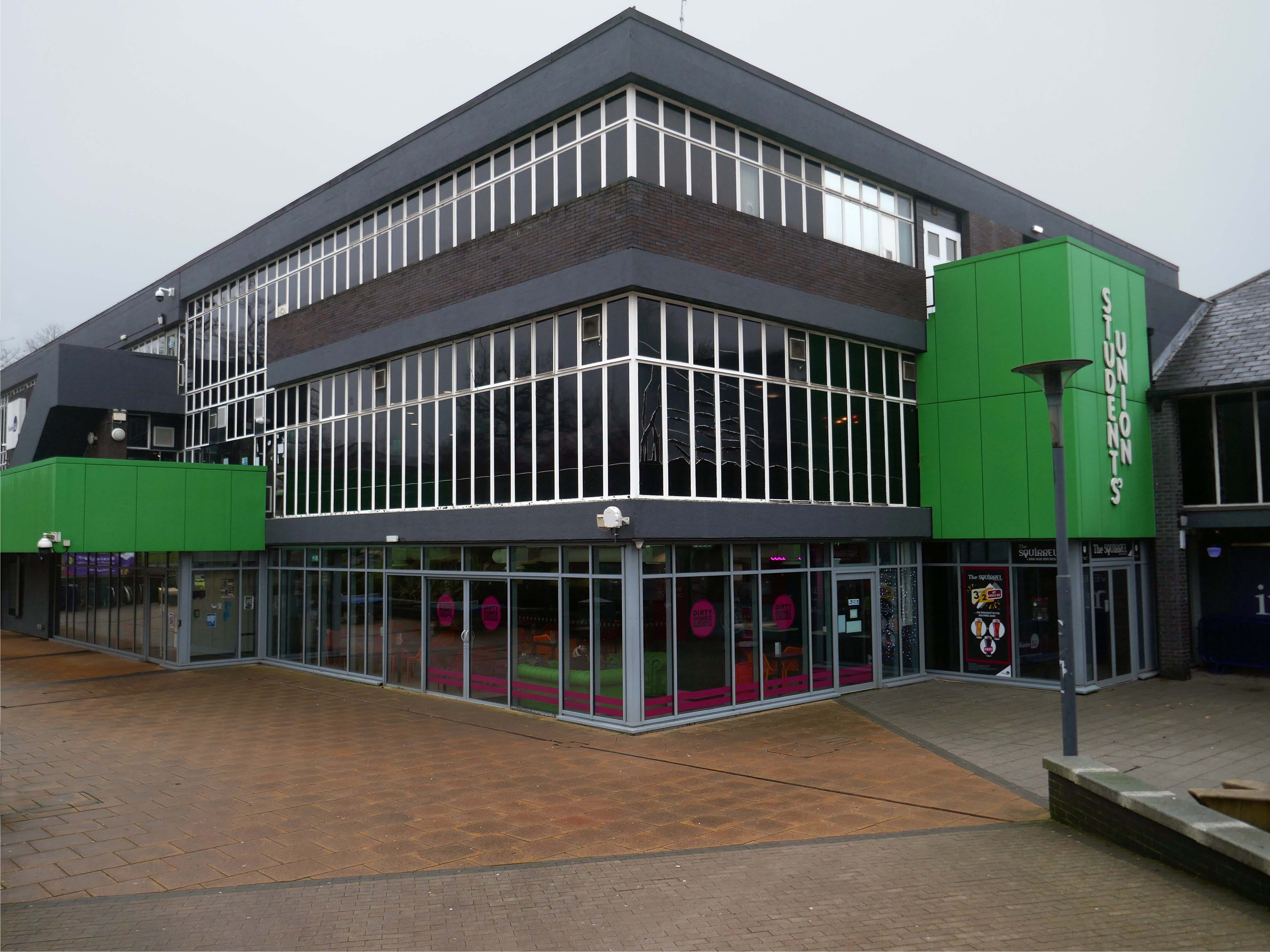
Students Union 1961-62 Stillman & Eastwick-Field enclosed and extended 1975.
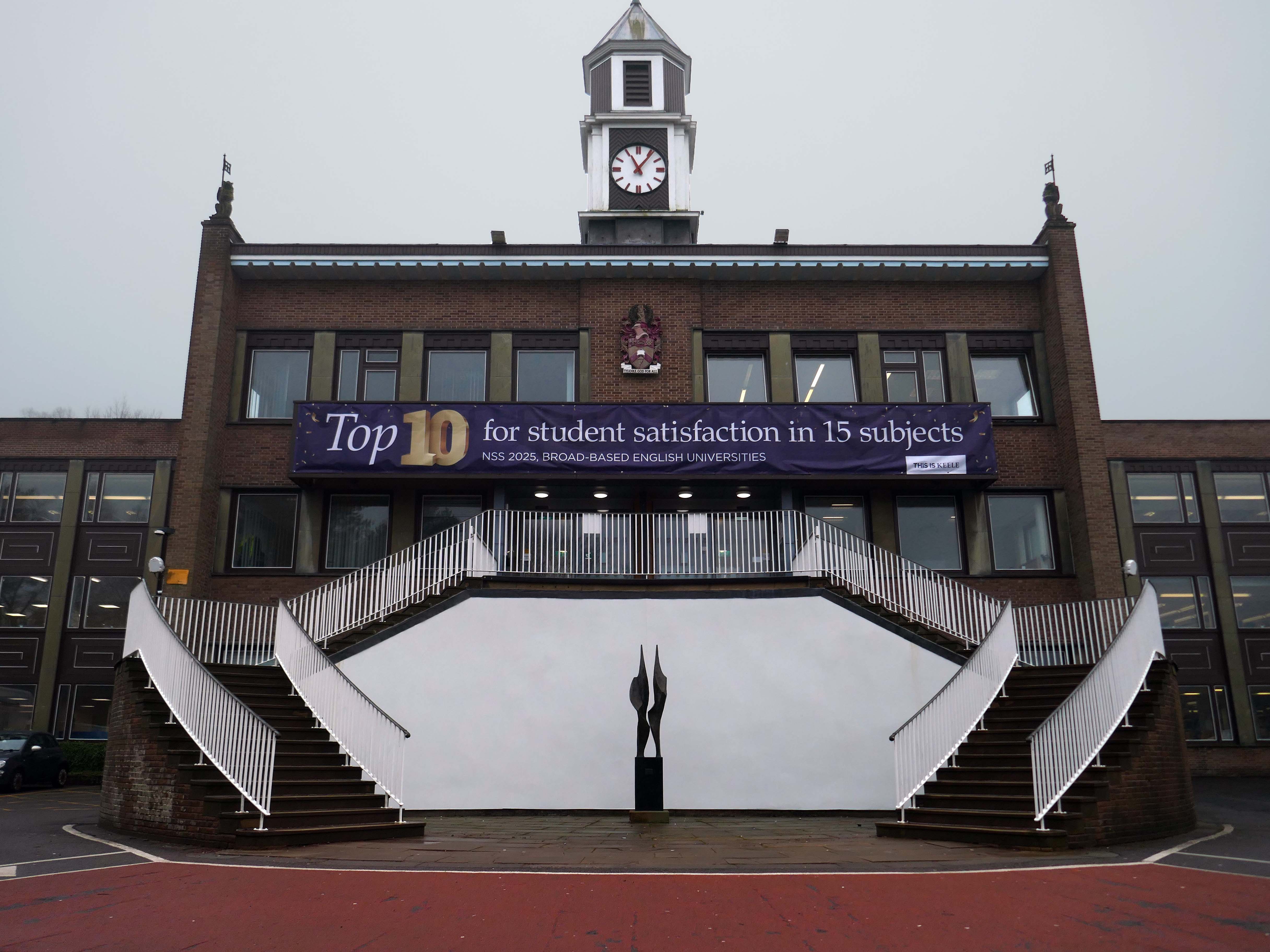
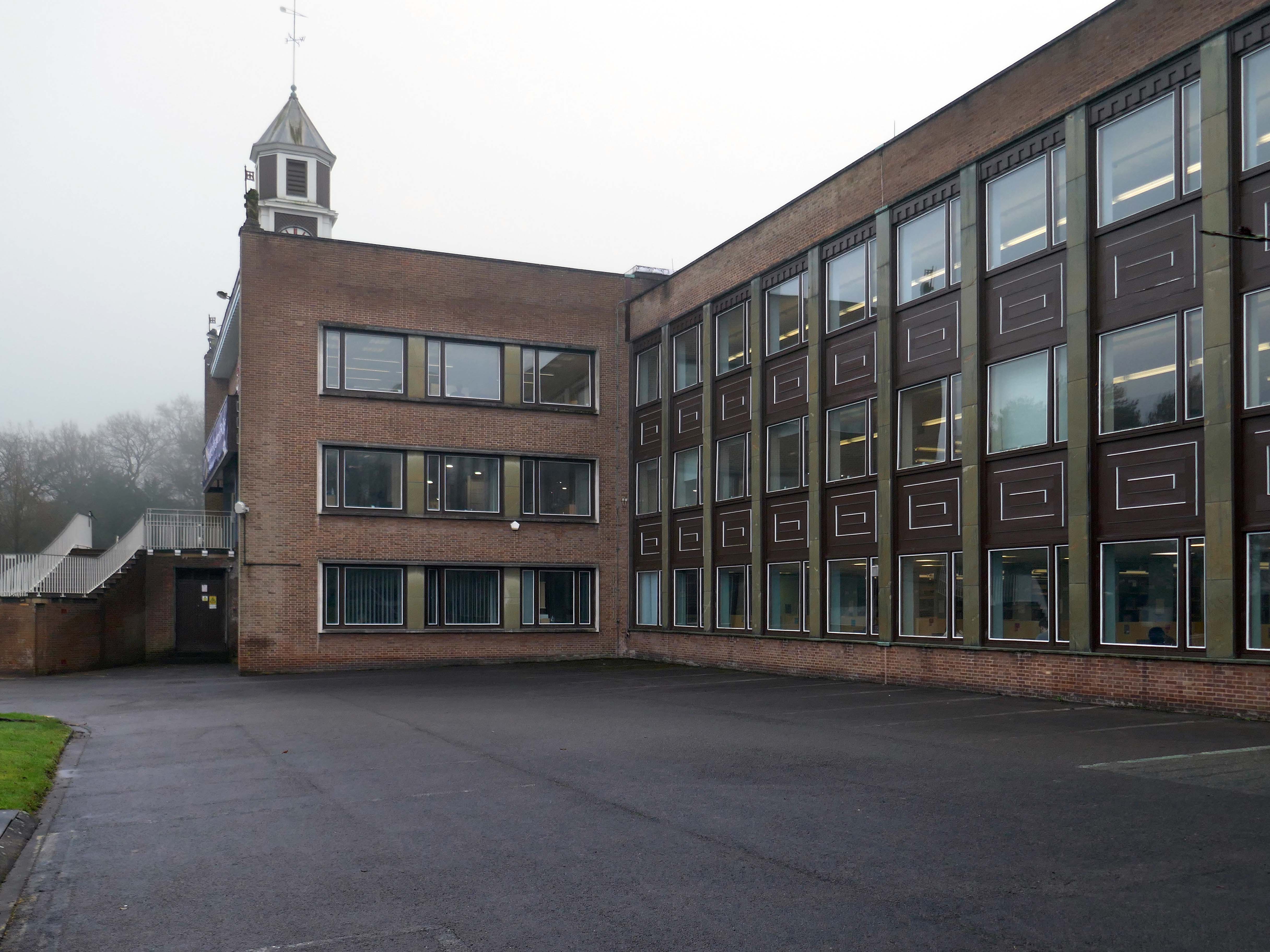
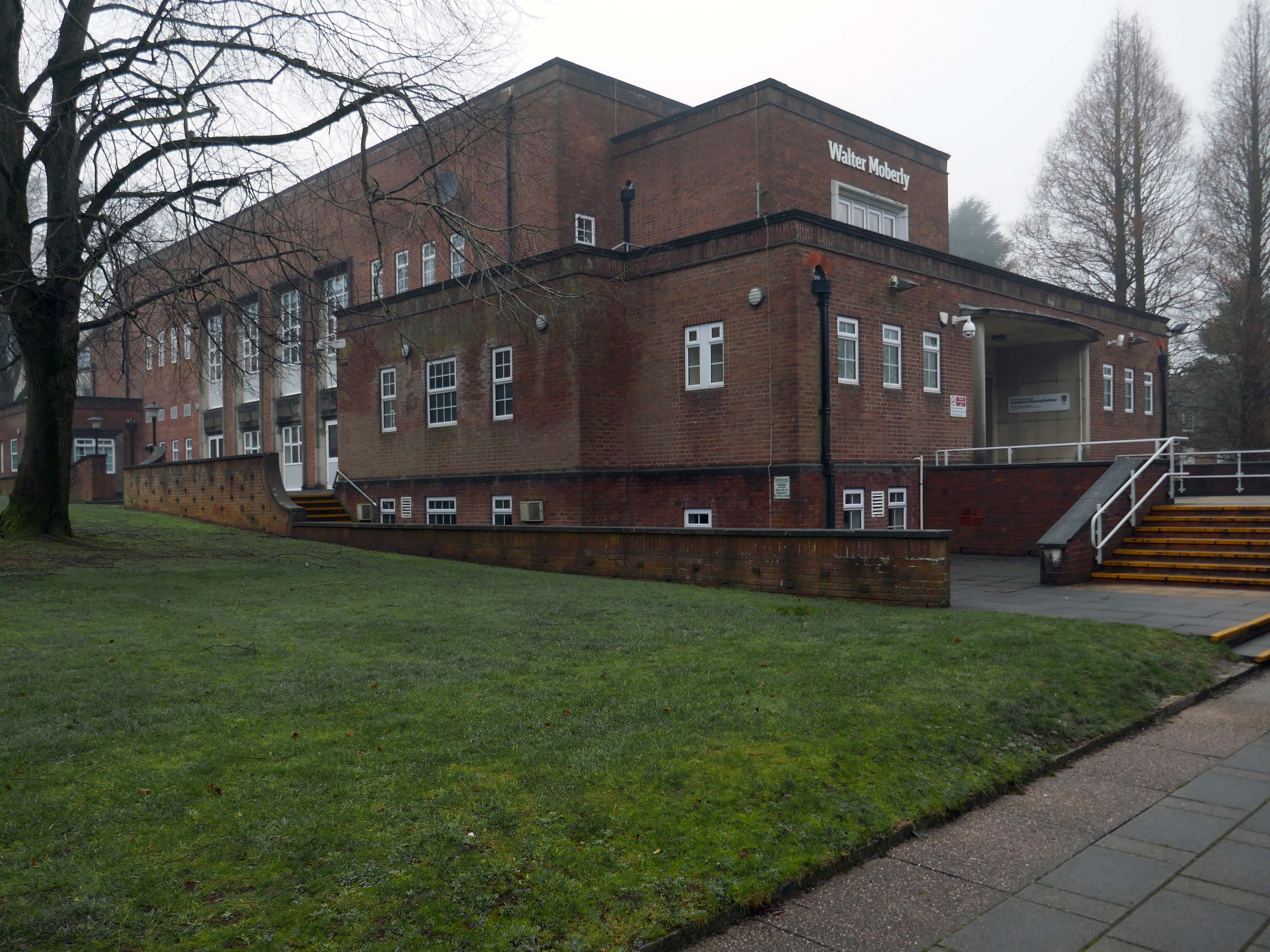
Walter Moberly Hall 1954 JA Pickavance with honorary architect JR Piggott Stoke on Trent City Architect.
Walter Moberly was a British academic who, as Chairman of the University Grants Committee, played a significant role in the creation of Keele University.
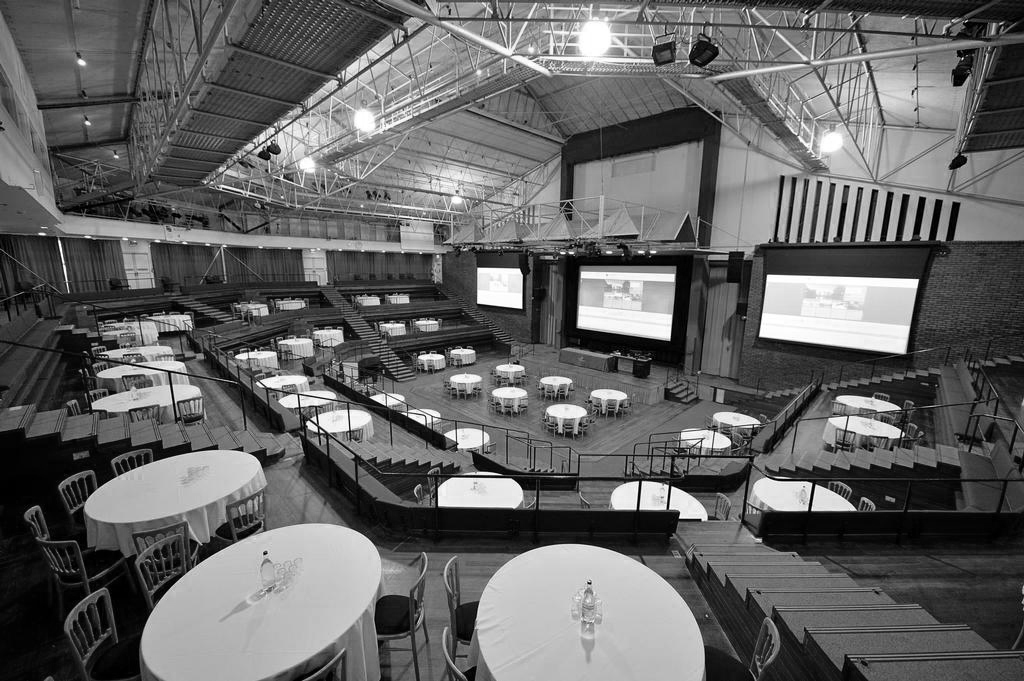
It was an essential feature of the Keele experiment for the entire student body in the Foundation Year to gather here for lectures. It was also vital to the social and cultural activities of the community of scholars, being used for lectures, plays, debates, concerts and other events requiring a large auditorium.
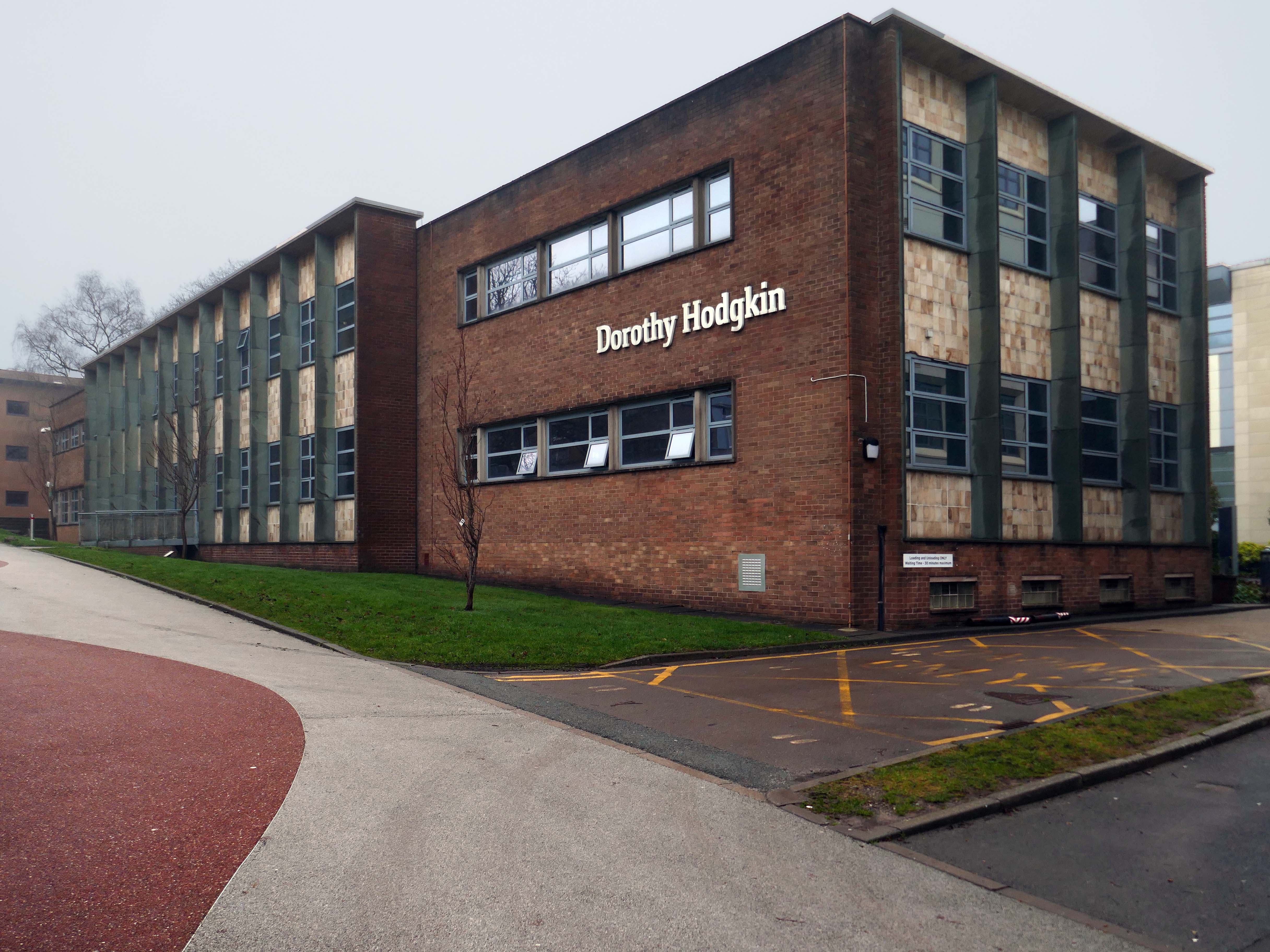
Dorothy Hodgkin
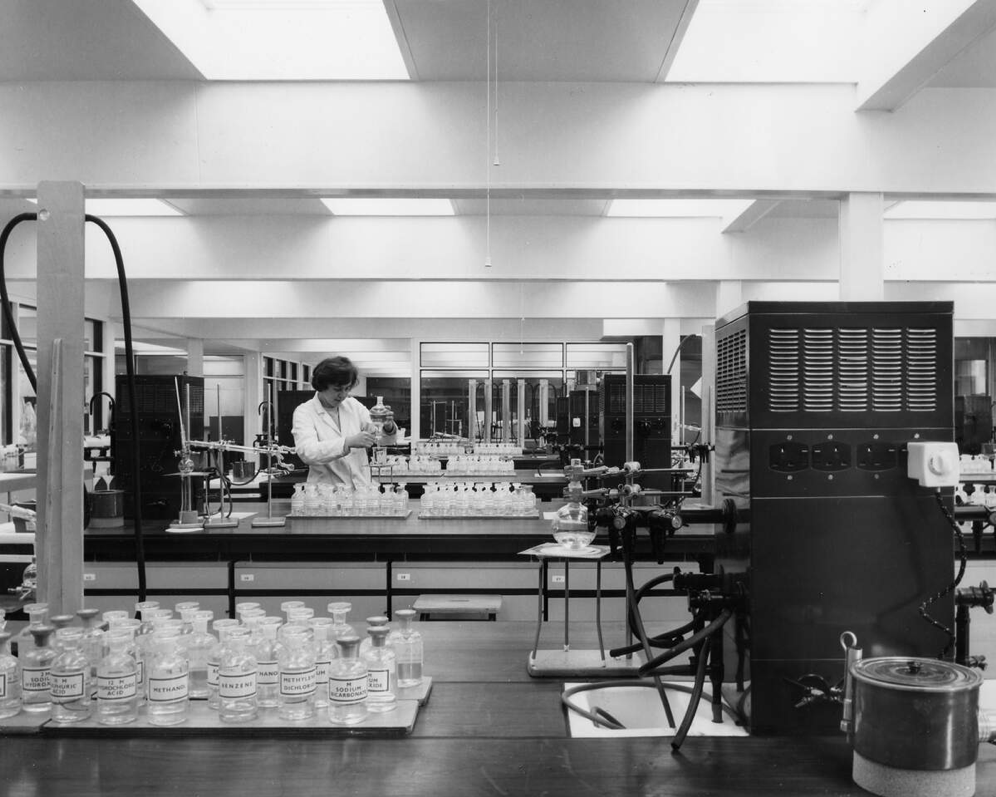
Dorothy Mary Hodgkin OM FRS was a British chemist, credited with the development of protein crystallography. She advanced the technique of X-ray crystallography, a method used to determine the three-dimensional structures of biomolecules.
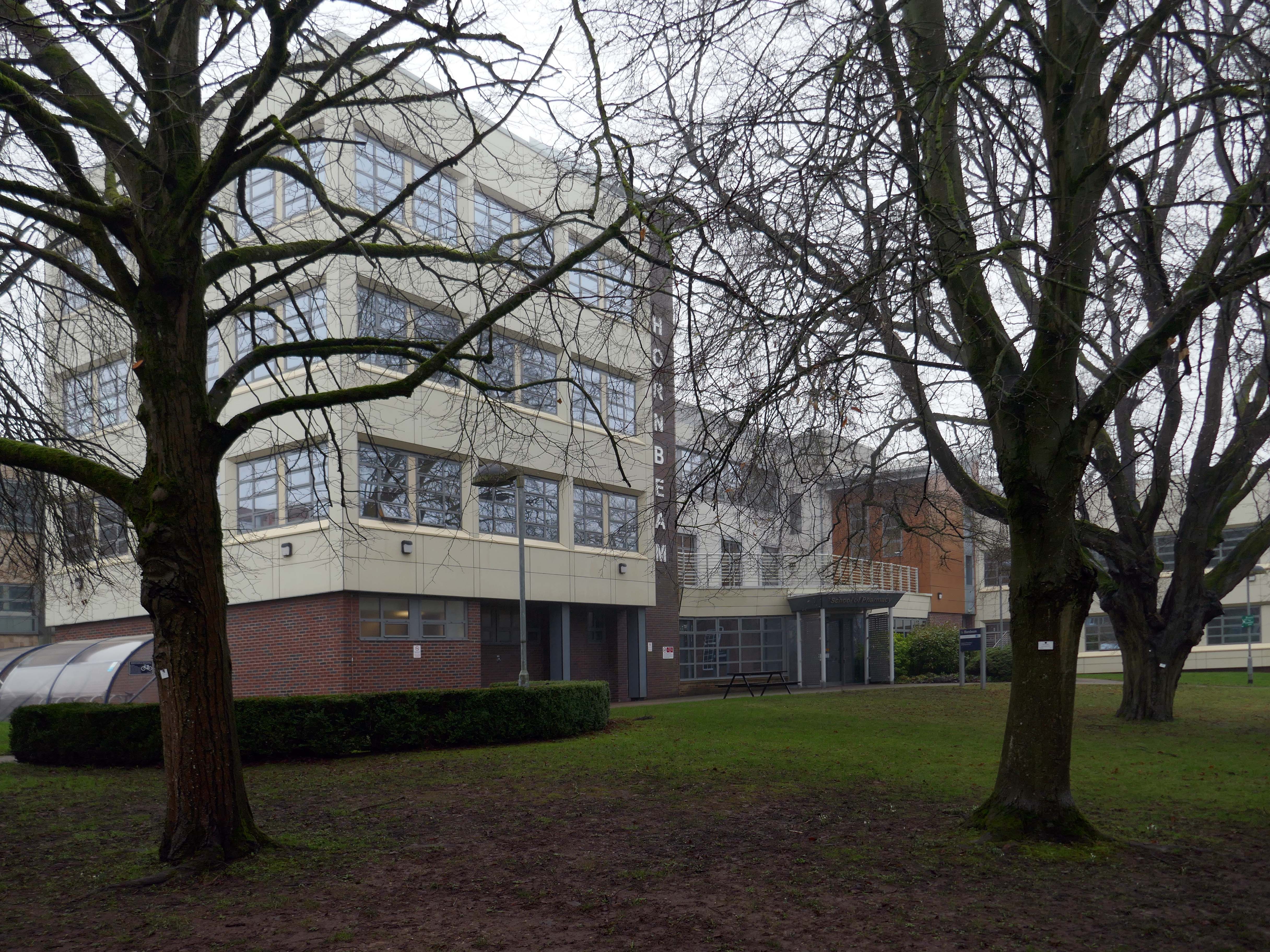
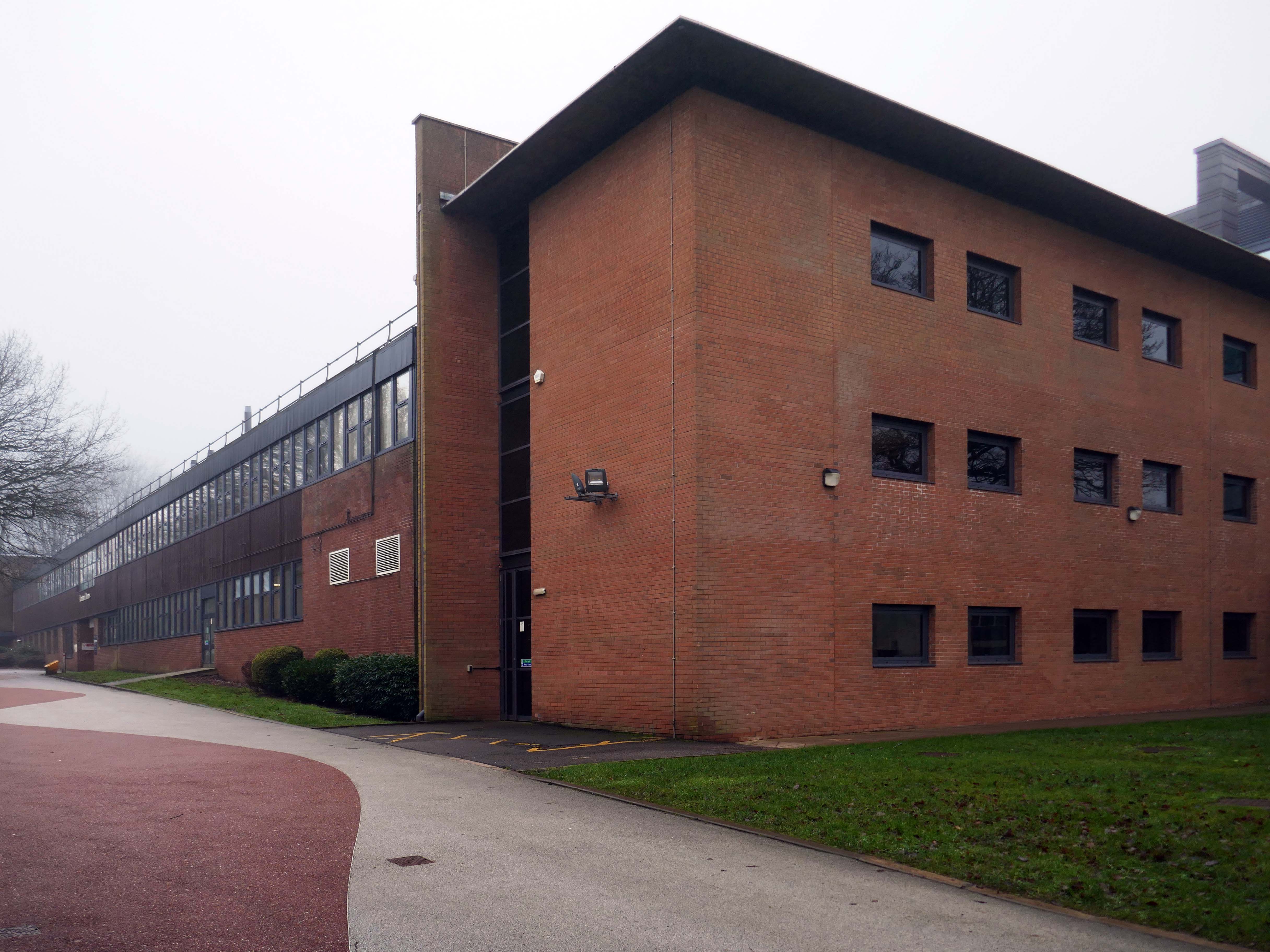
HornbeamBuilding an extension of 2015.
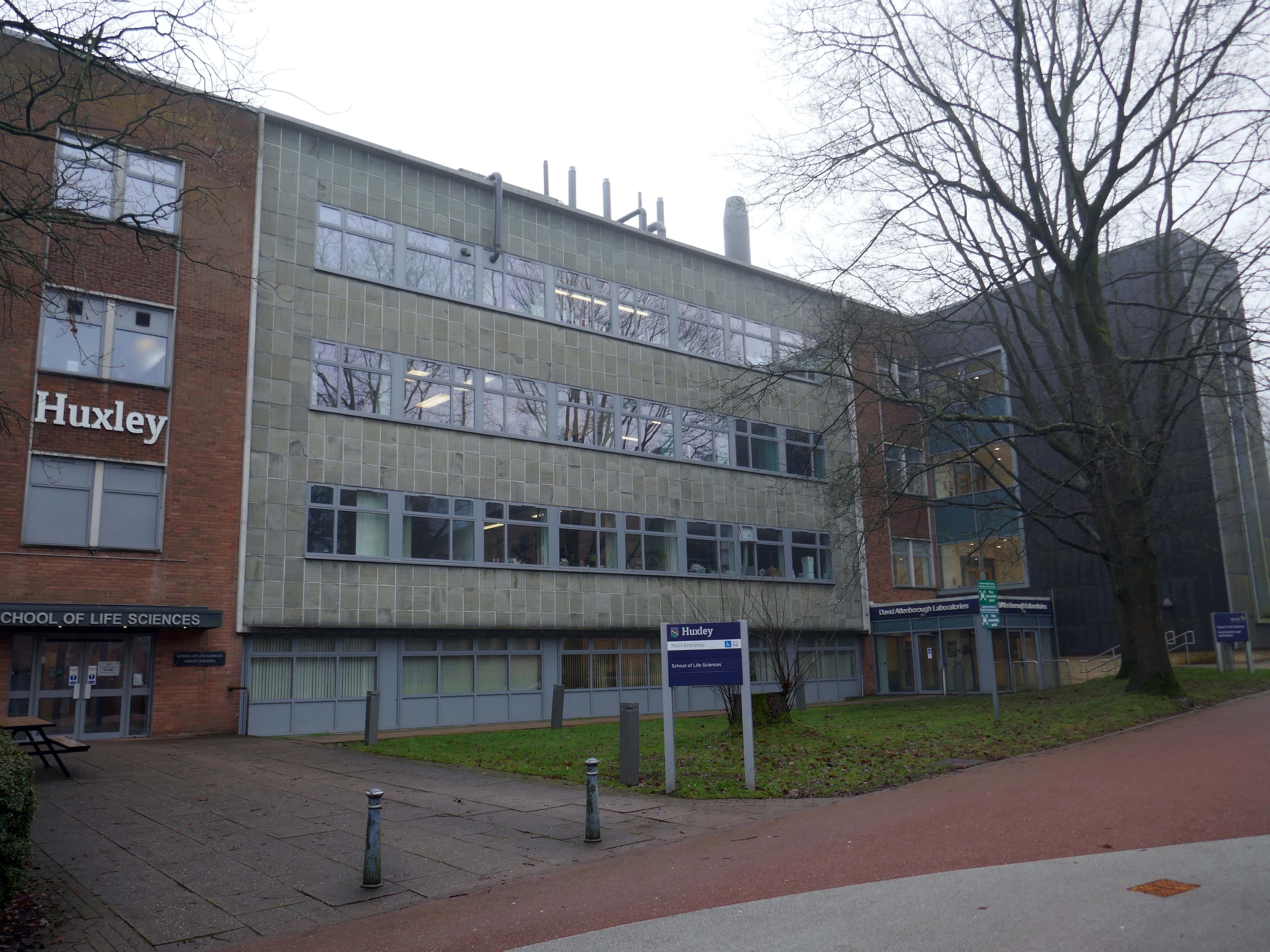
Huxley
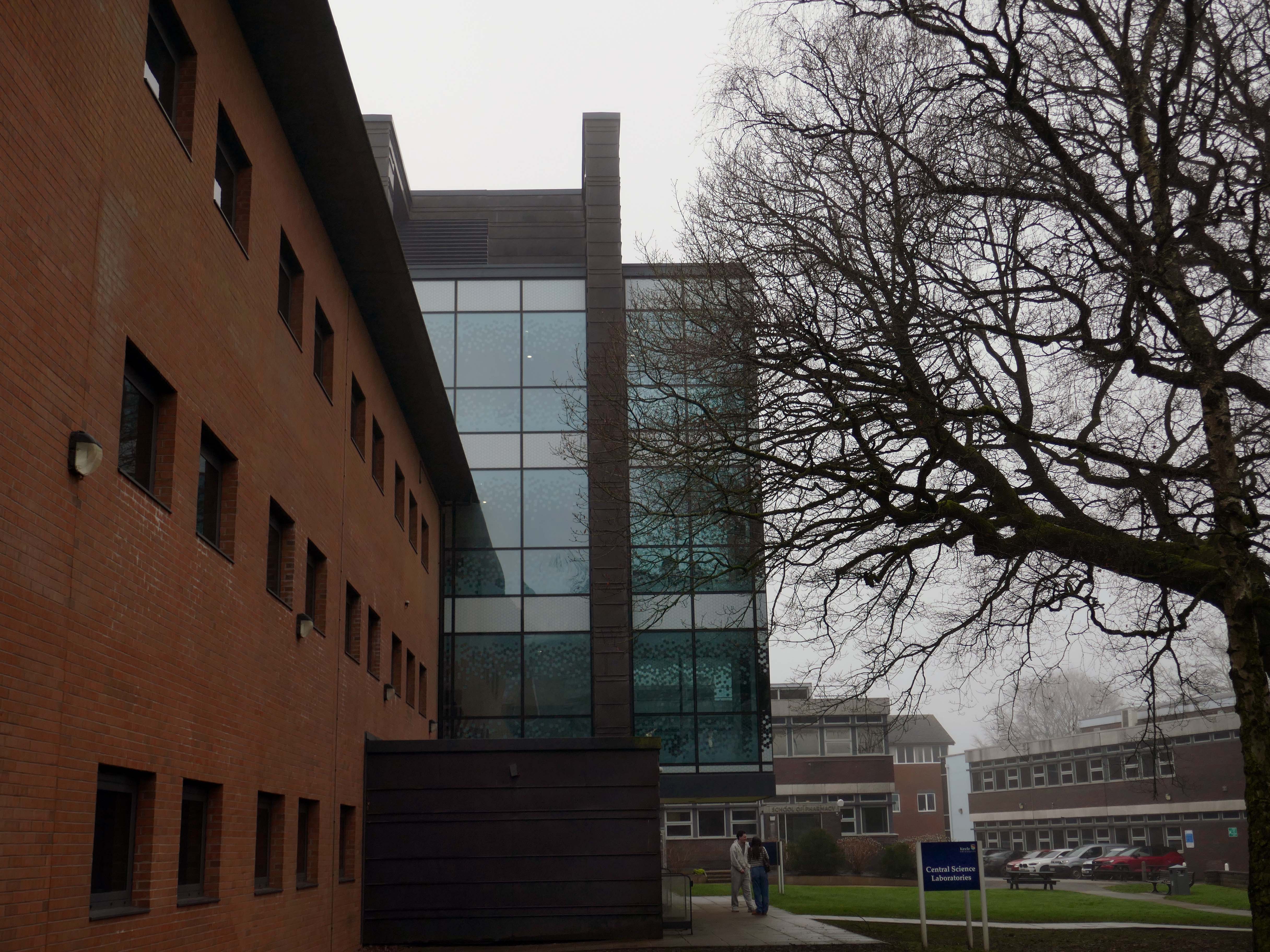
Central Science Laboratories 2018-19 Halliday Meecham Architects
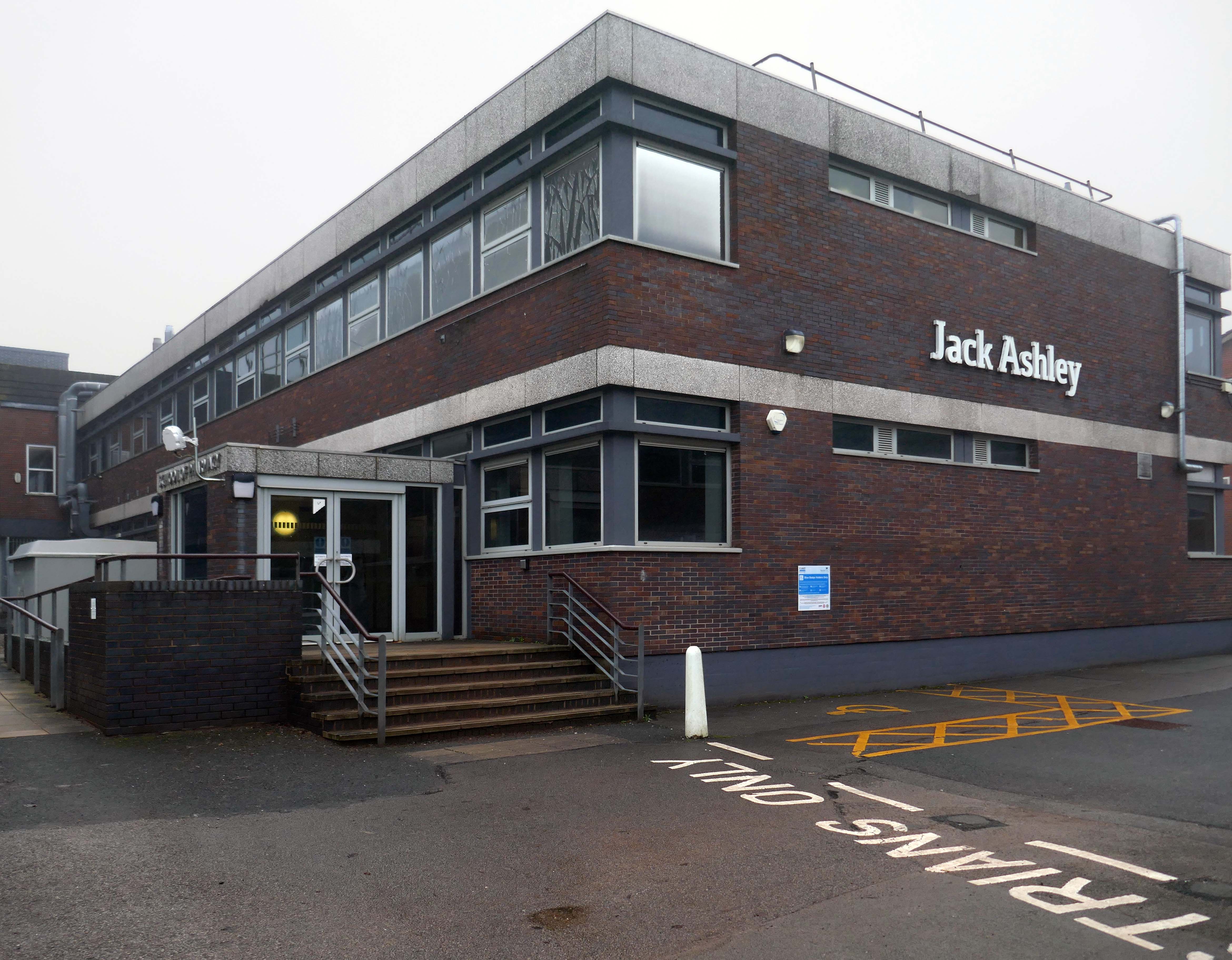
Jack AshleyBuilding
Jack Ashley was MP for Stoke-on-Trent South for 26 years, from 1966 to 1992. In December 1967, Ashley lost his hearing as a result of complications from a routine operation to correct a perforated eardrum. He was persuaded to retain his seat in the House of Commons, electing instead to take a crash course in lip reading. He thus became the first totally deaf MP. Ashley was a lifelong campaigner for the disabled, especially the deaf and blind. He led high profile campaigns, including the campaign for improved compensation for victims of thalidomide, vaccine damage and damage done by the arthritis drug, Opren. In 1986, he and his wife founded the charity Defeating Deafness.
Following his retirement from Parliament in 1992, Ashley was made Baron Ashley of Stoke.
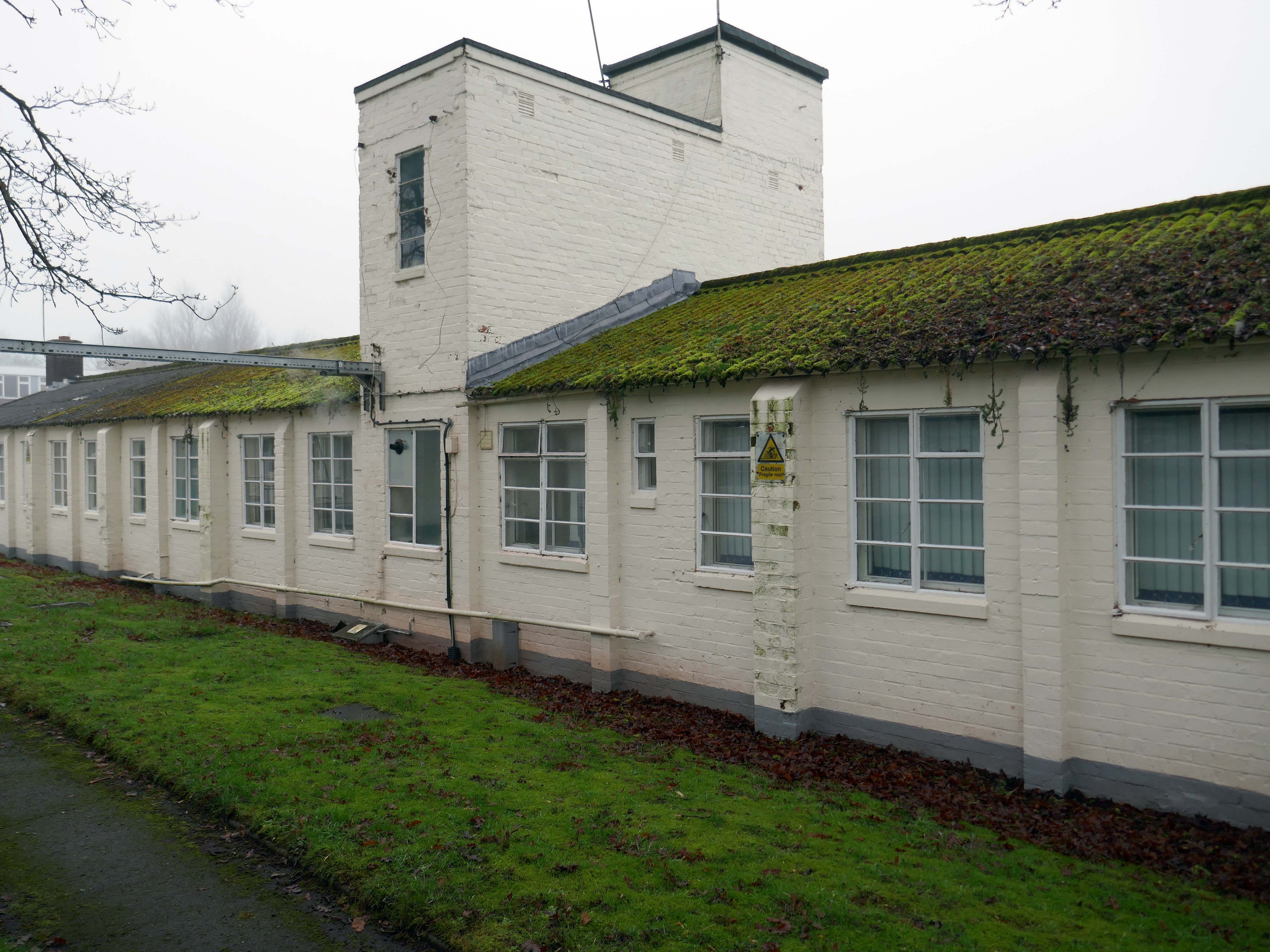
The Huts
British troops arrived at Keele Hall during 1940 and an army base was built to house troops evacuated from Dunkirk.
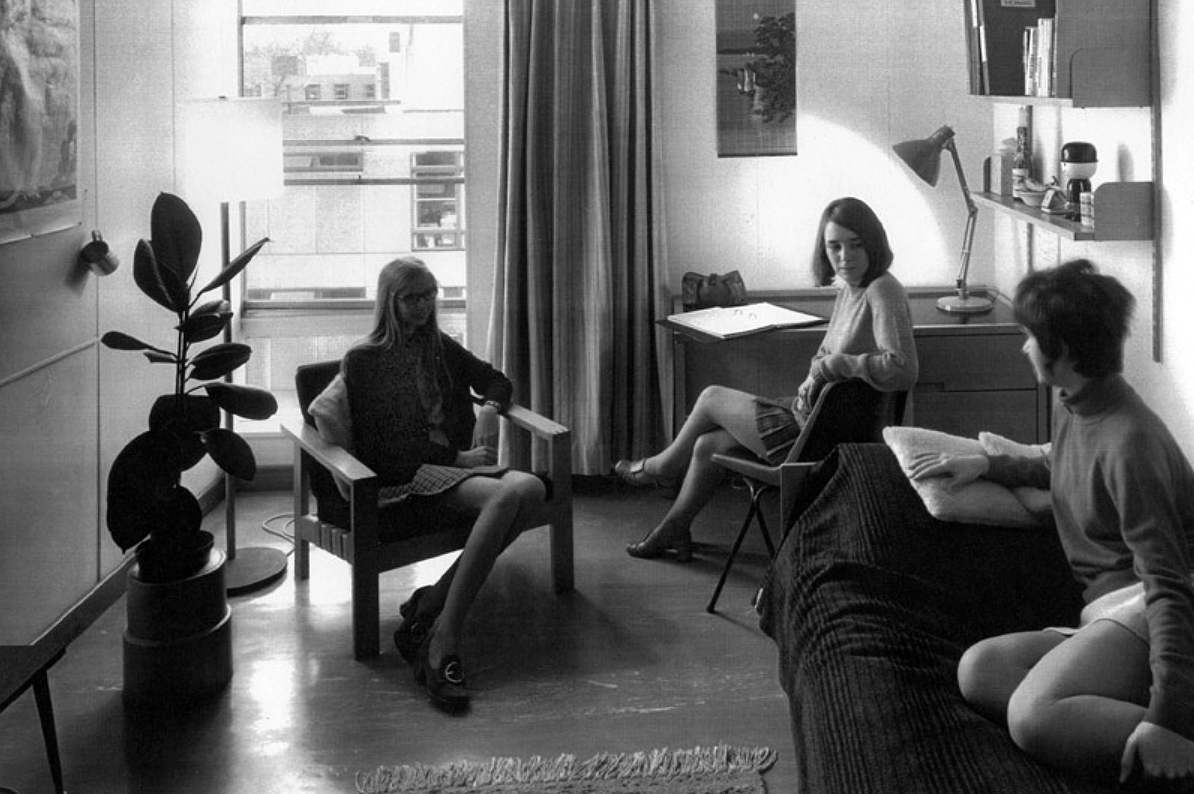
The Huts provided memorable and very comfortable homes for Keele students from the 1950s right into the 1970s
Richard Henry Tawney was an economic historian, social critic and proponent of adult education, whose writings had a profound influence on Lord Lindsay, the founder of Keele University.
This and the Walter Moberly Building were originally planned as the first two buildings in a quadrangle, emulating the typical design of many American liberal arts colleges. Lindsay drew much of his inspiration for Keele and his educational philosophy from this American model of higher education which was characterised as the search for truth in the company of friends”.
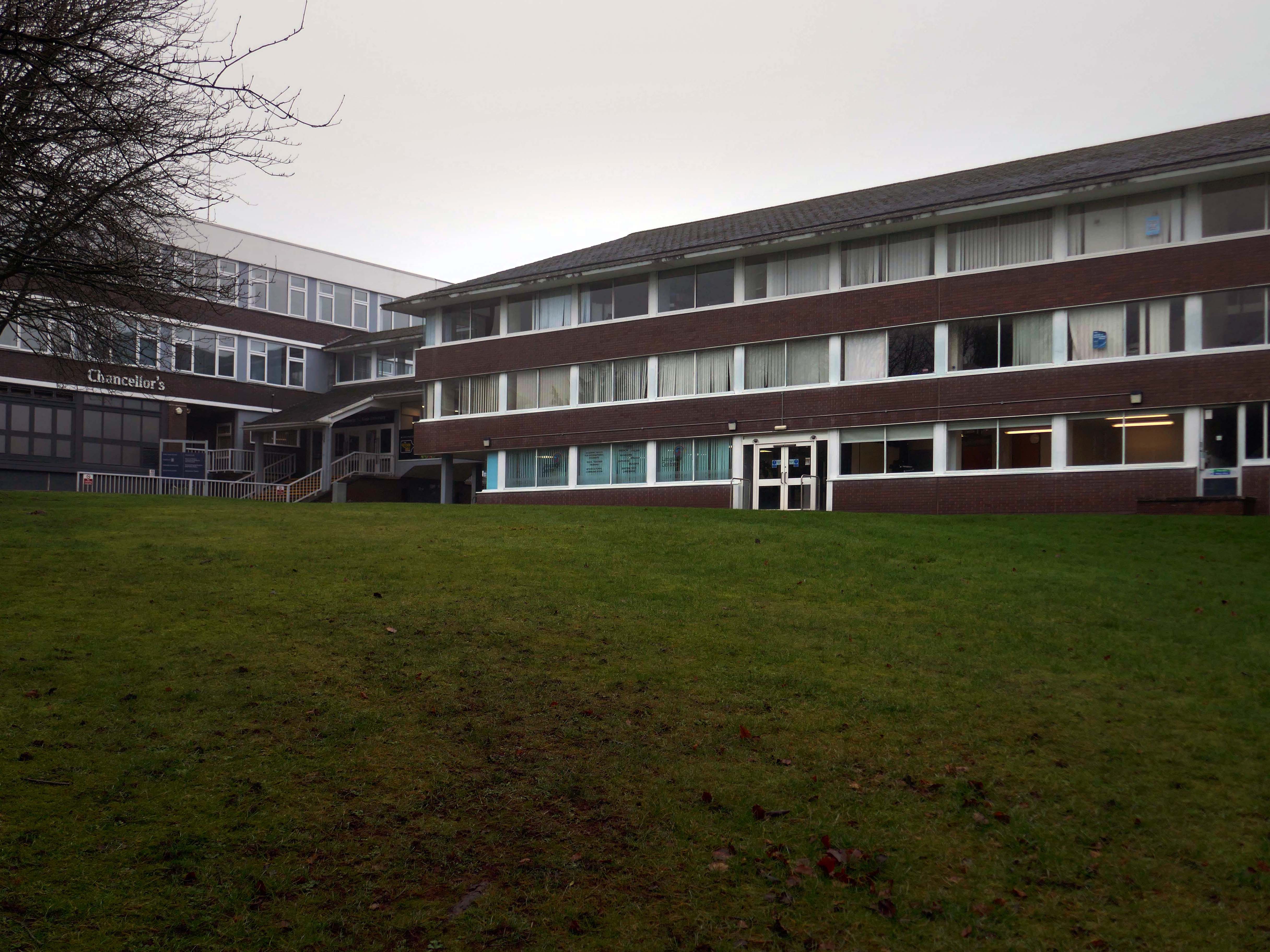
Chancellor’s Building 1962-66 Shepheard Epstein & Hunter extended 1977.
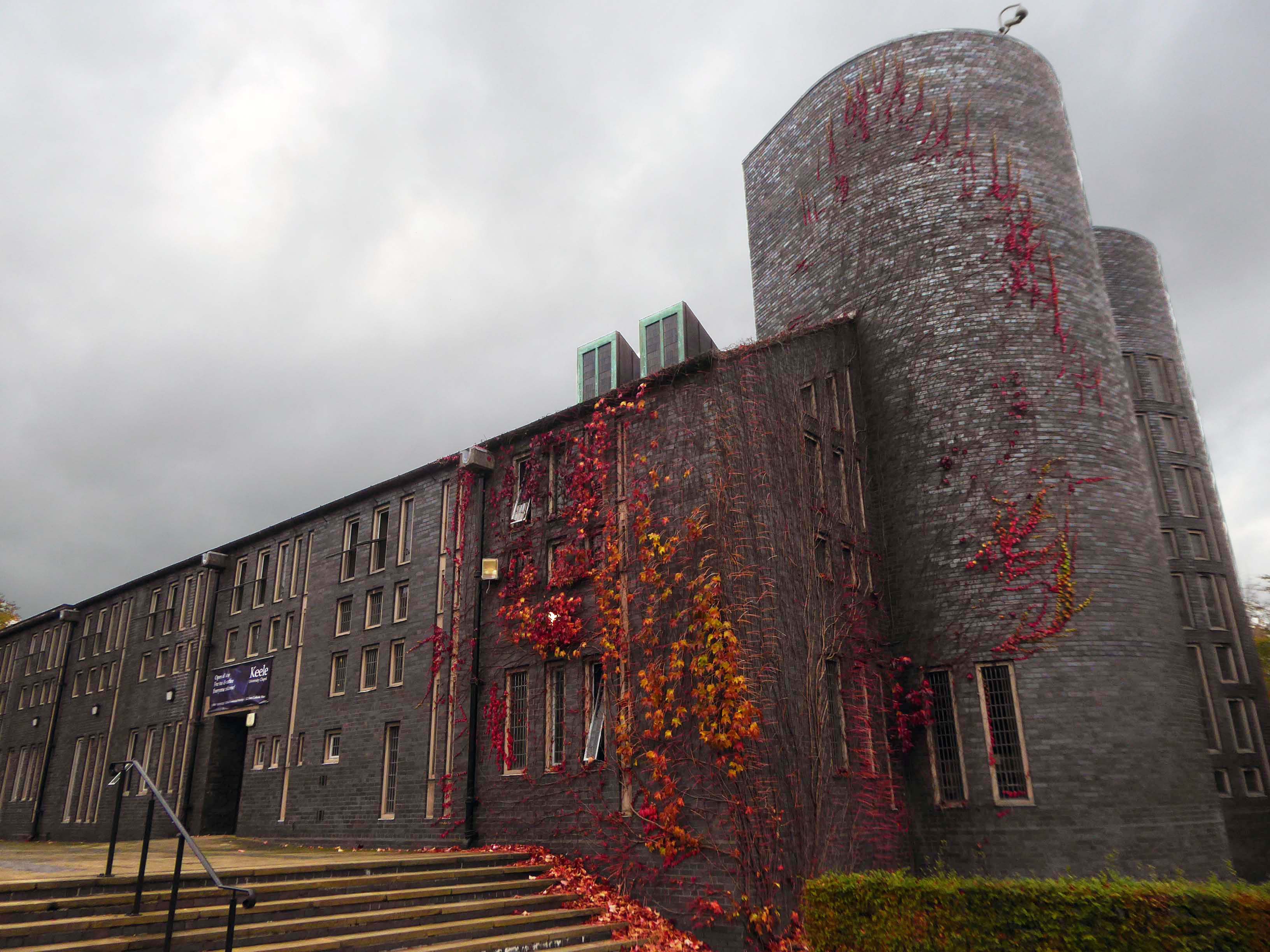
The tour of the academic buildings ends at The Chapel 1964-65 George Pace.
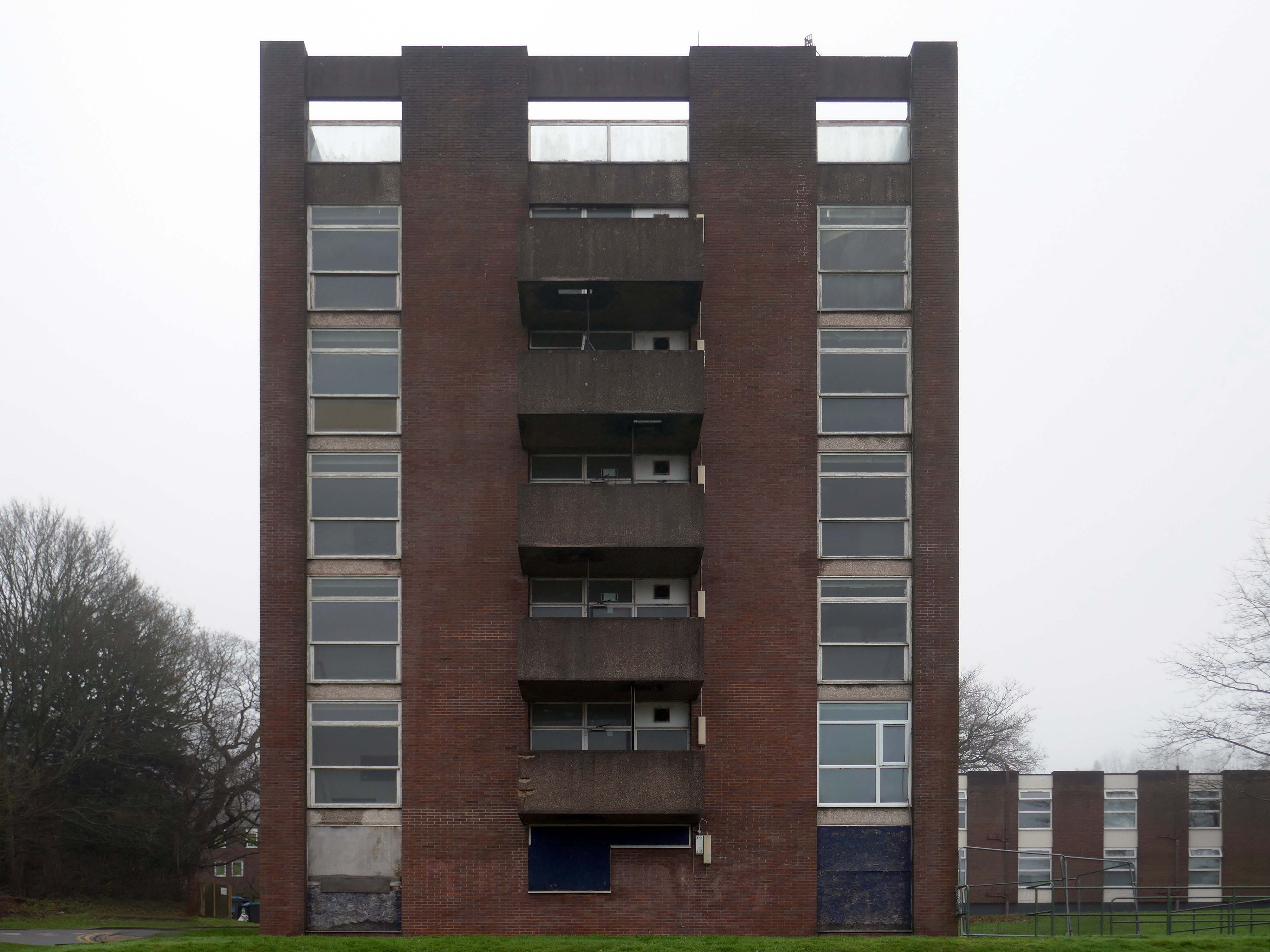
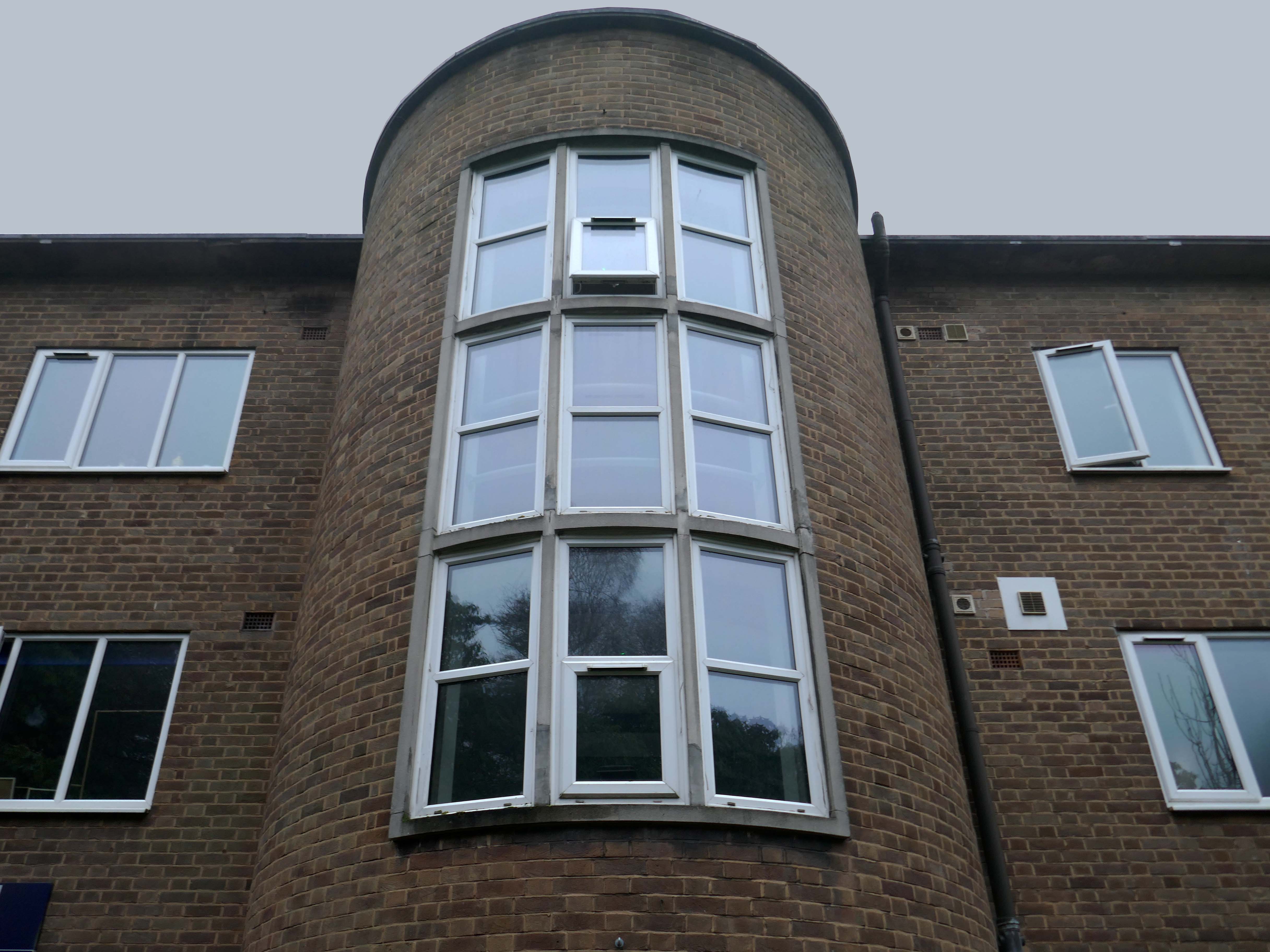
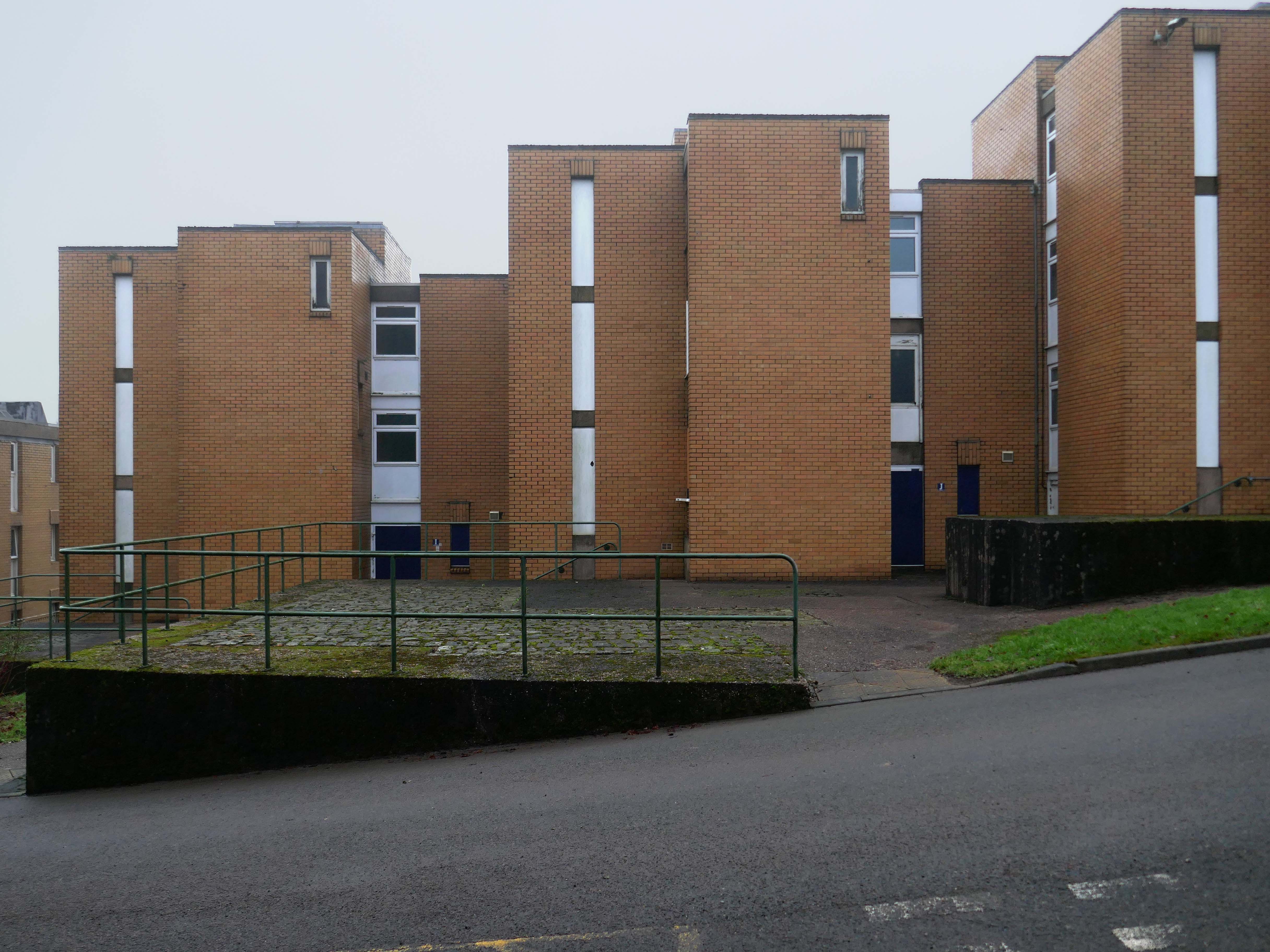
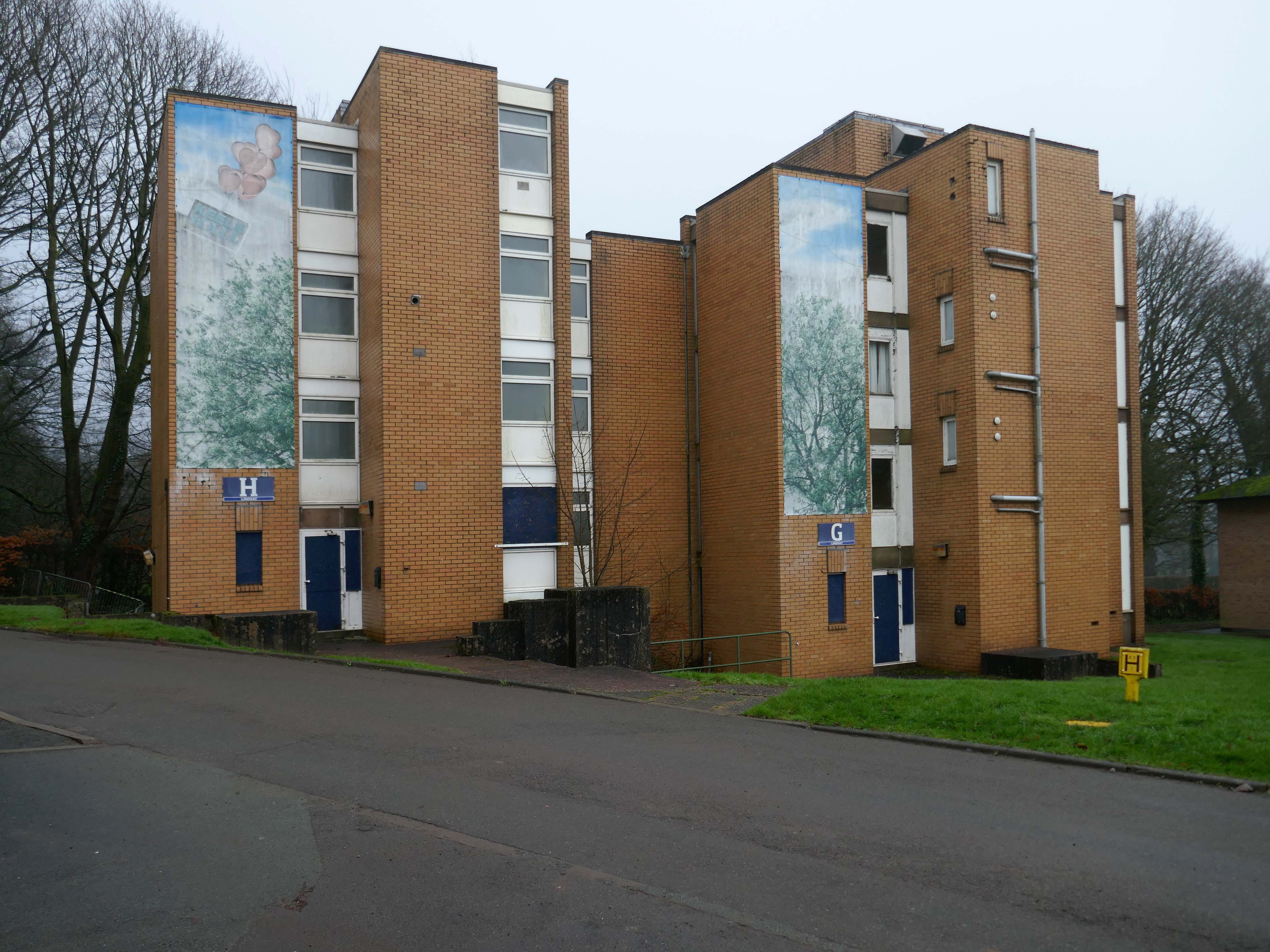
The majority of housing was two to four storeys in height with the exception of this now empty point block.
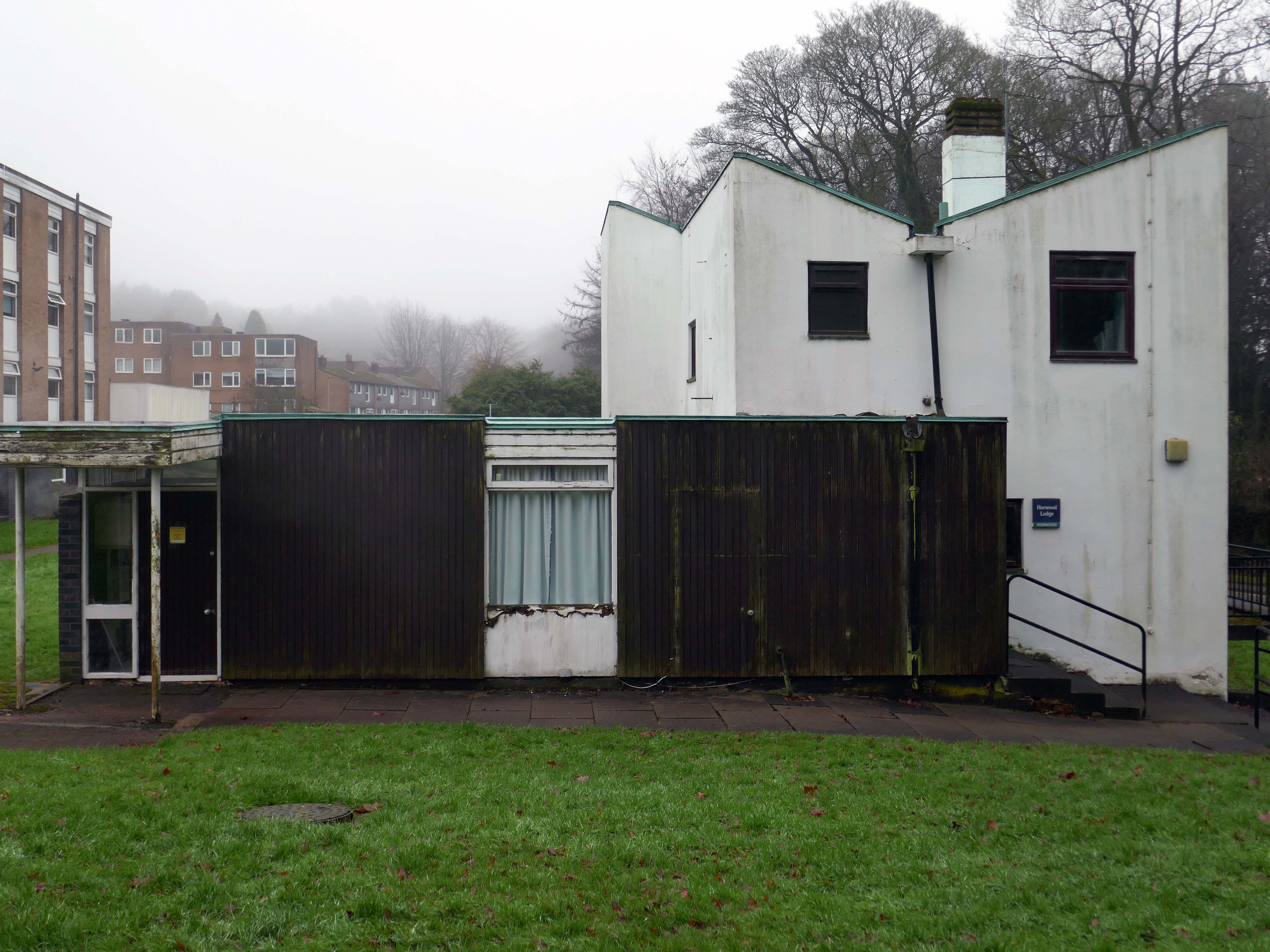
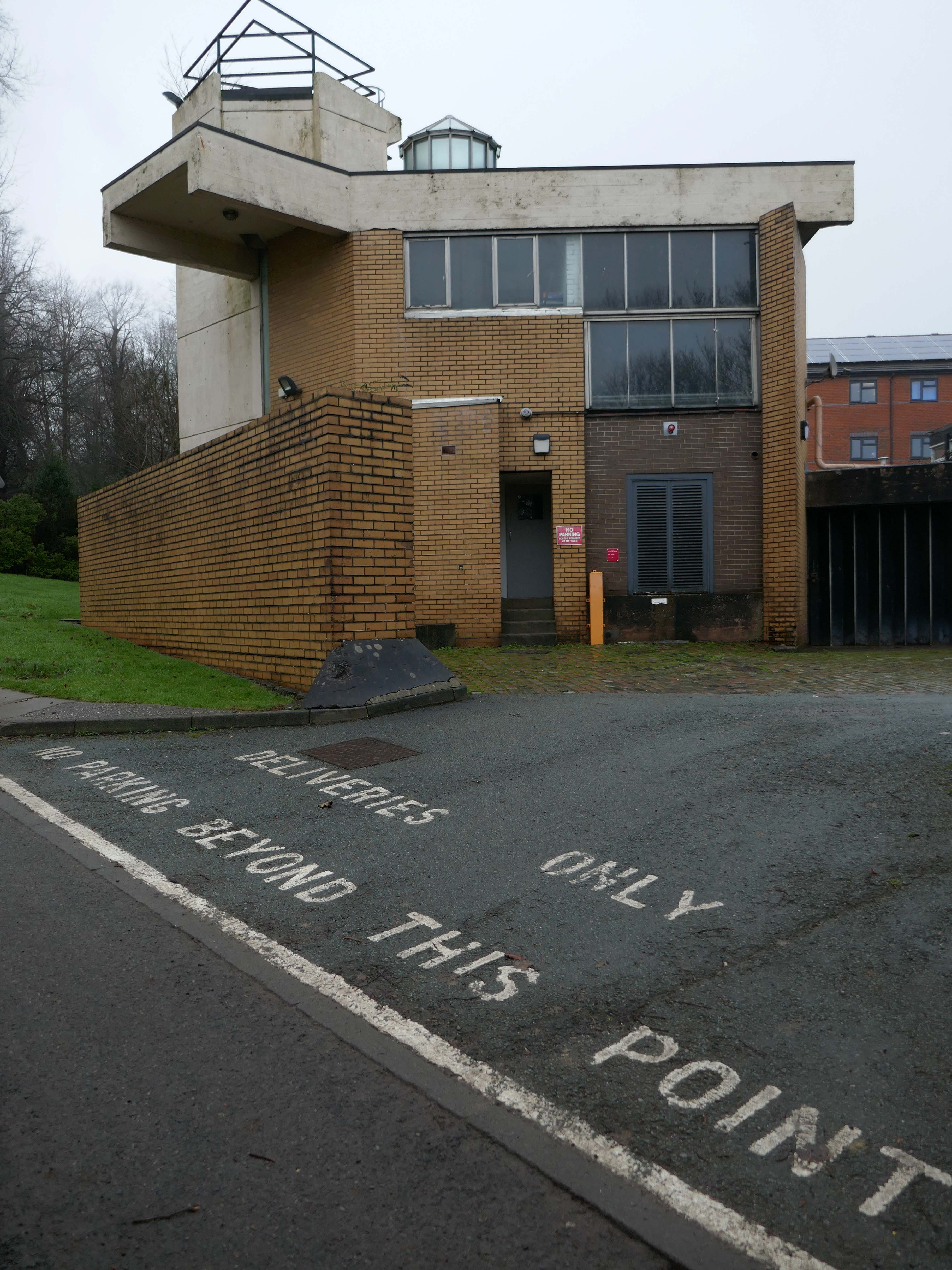
The site includes this butterfly roofed Warden’s House.
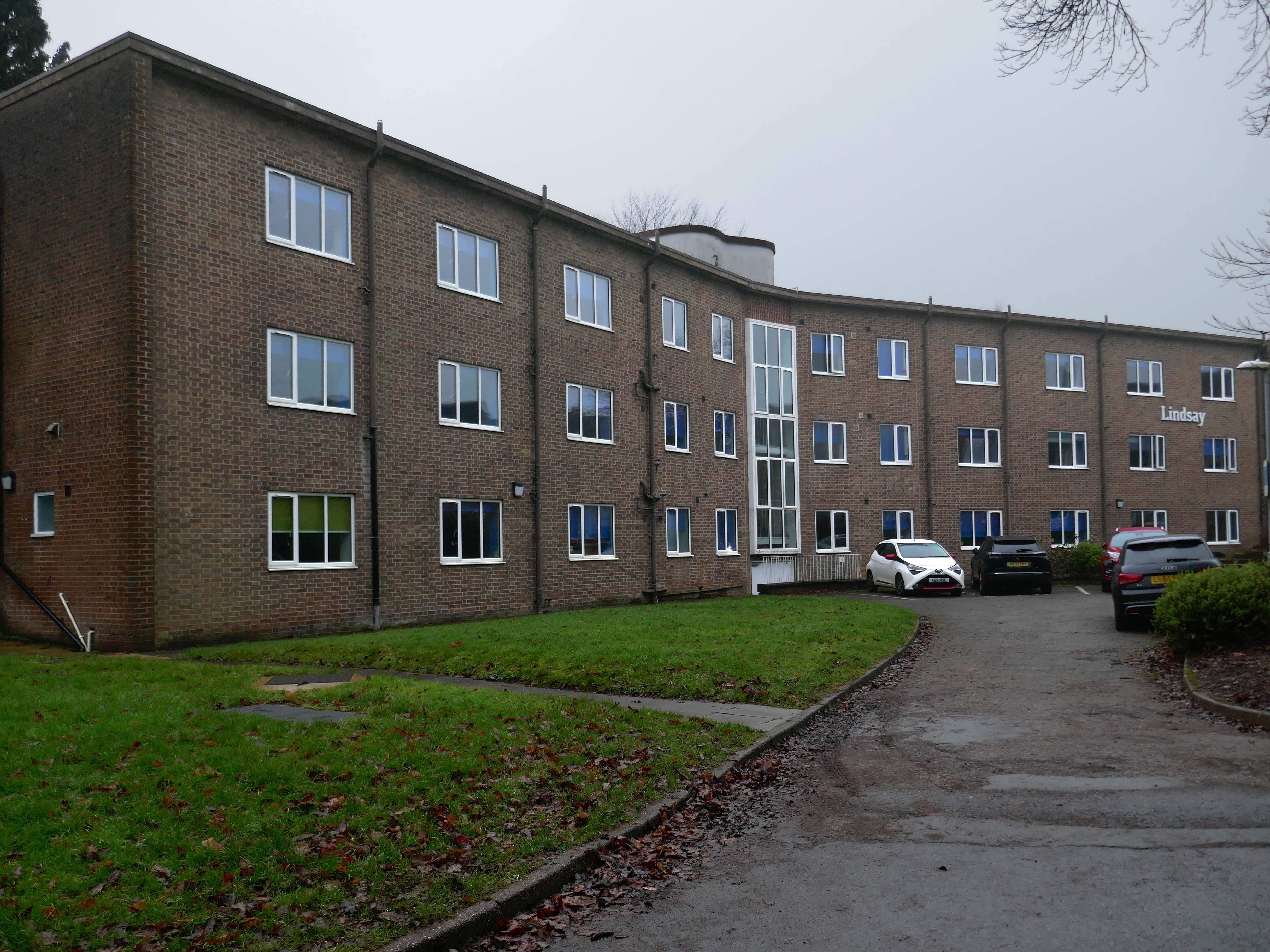
Lindsay Hall 1961-64
This winged block has more of the interwar styling than the Sixties.
There is a whole group of low rise blocks which are currently tinned-up.
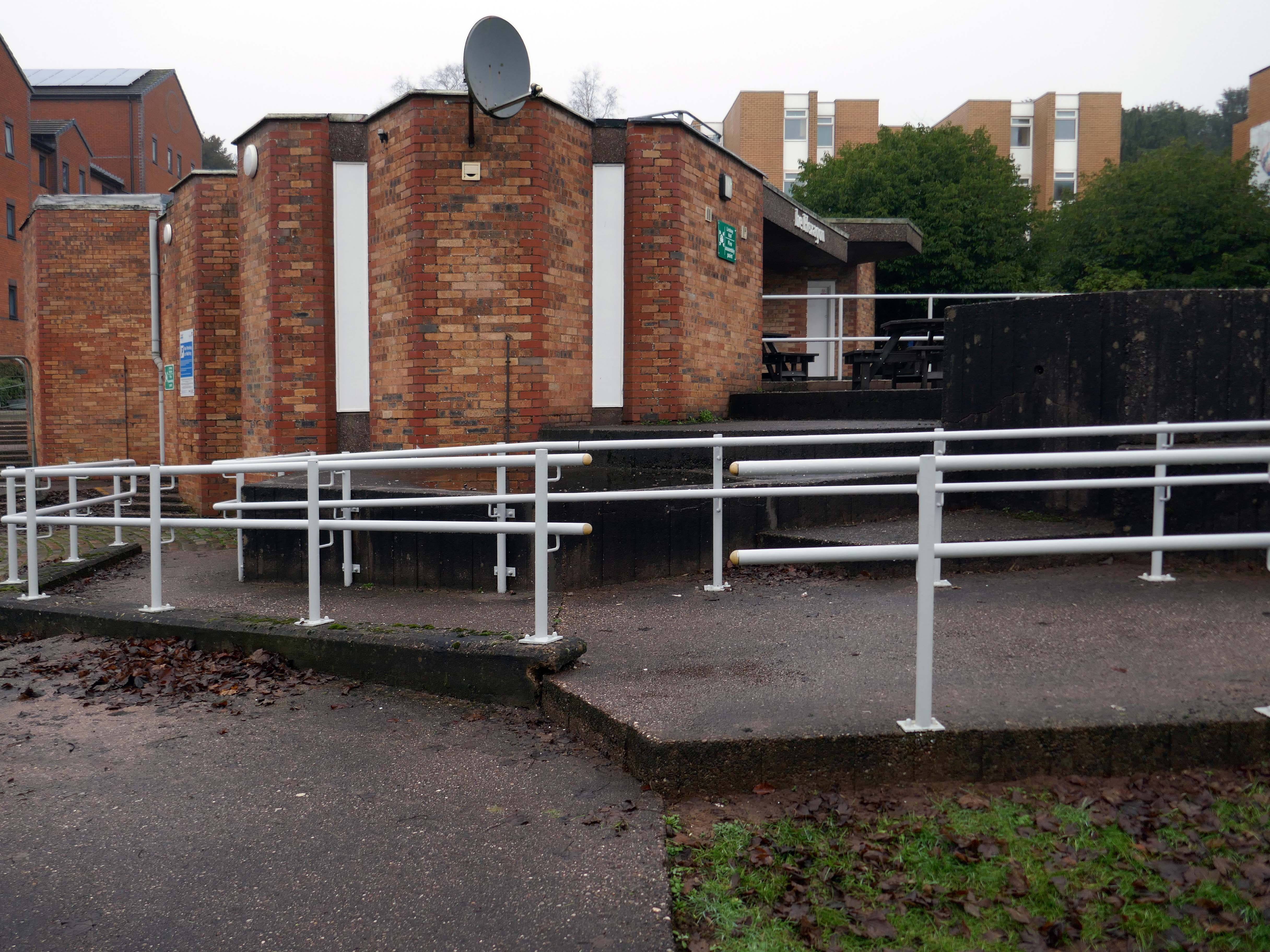
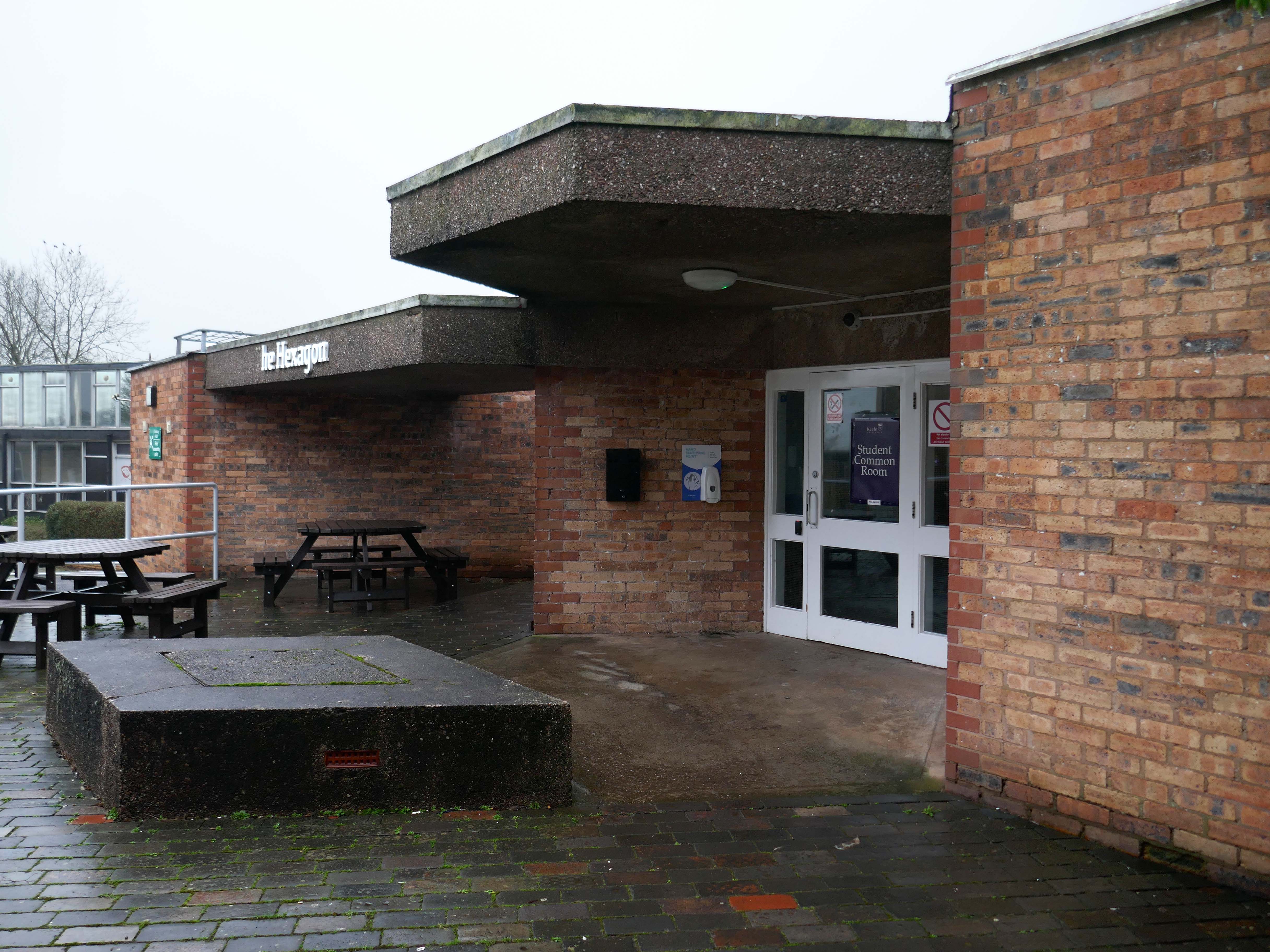
At the centre of the site The Hexagon –
Open 24/7 with WiFi, TVs and vending machines, and all students can use the facility – you don’t need to live in halls.
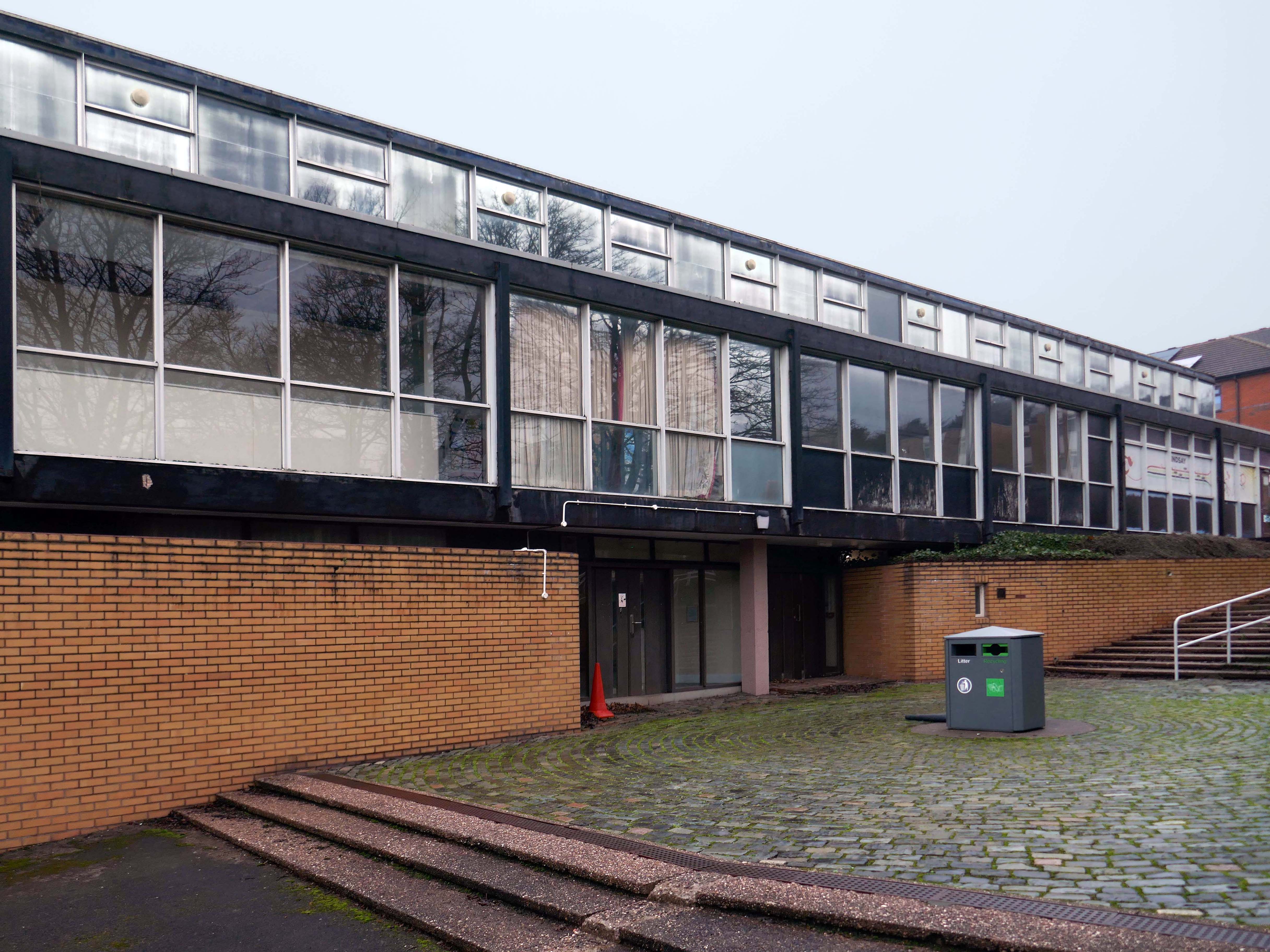
Adjacent are the Lindsay Studios.
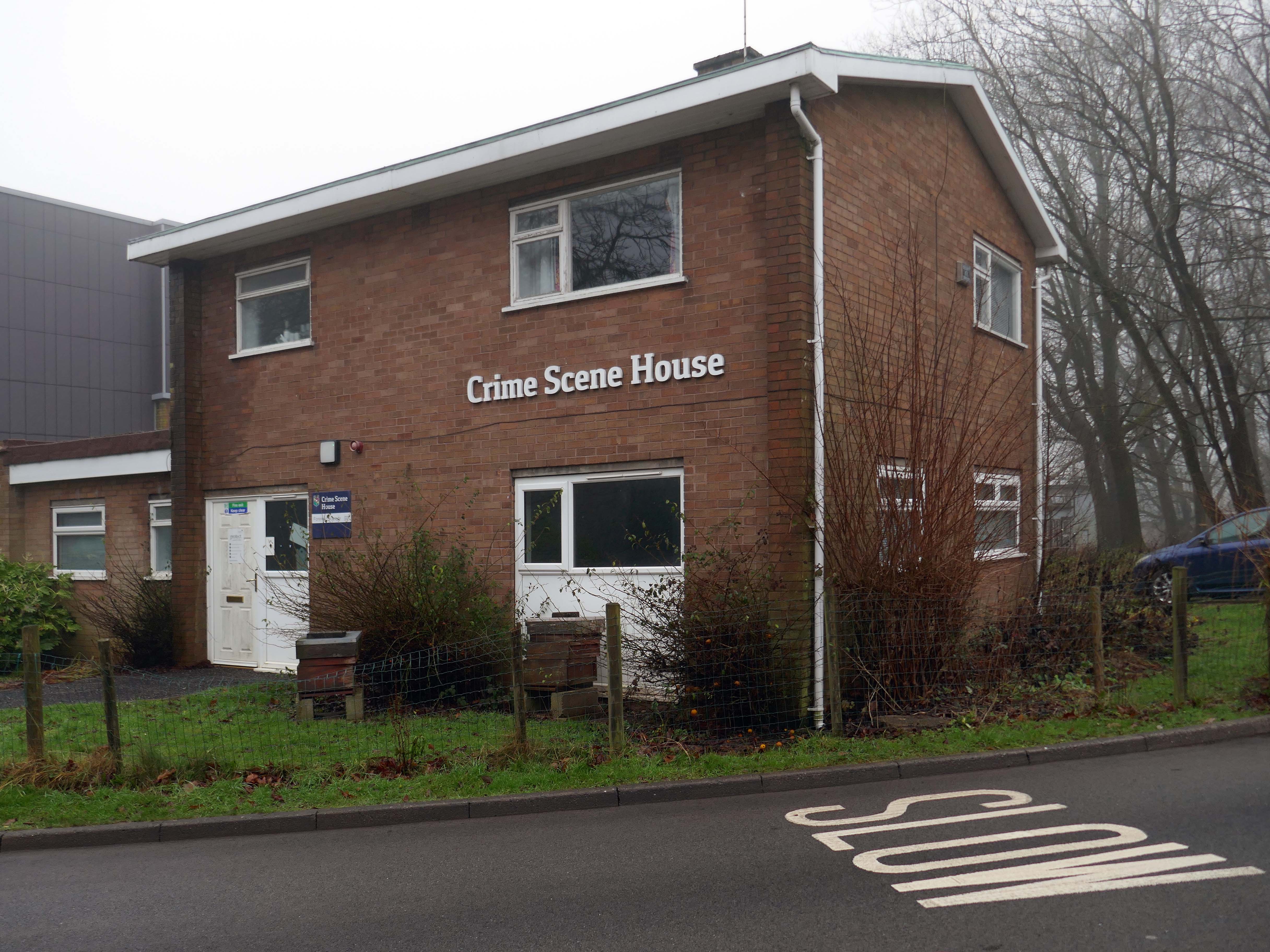
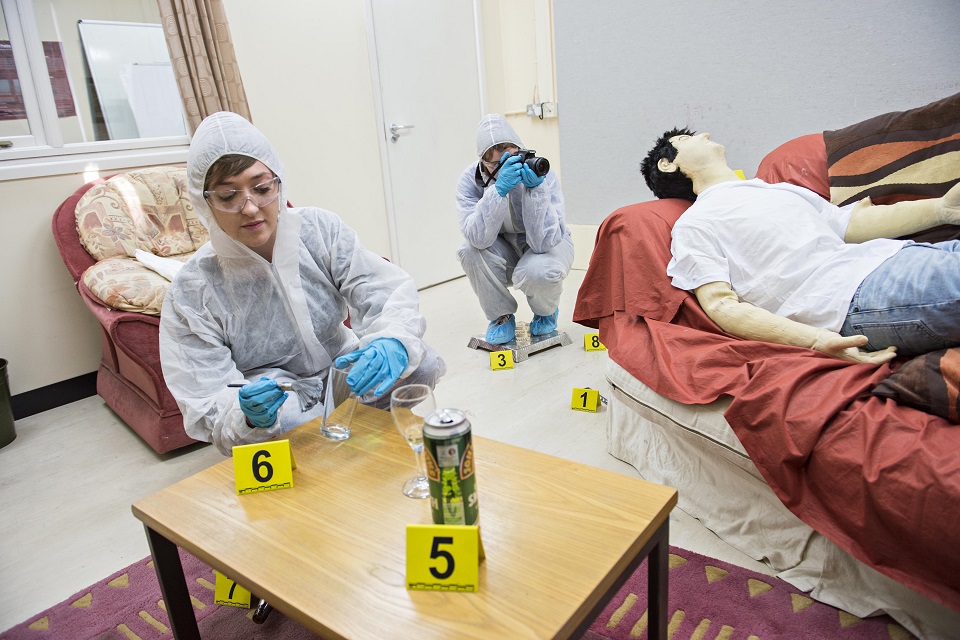
Special mention is reserved for the Crime Scene House.
Having a crime scene house allows us to provide context to our teaching and gives you experience in a typical environment encountered by a forensic scientist.
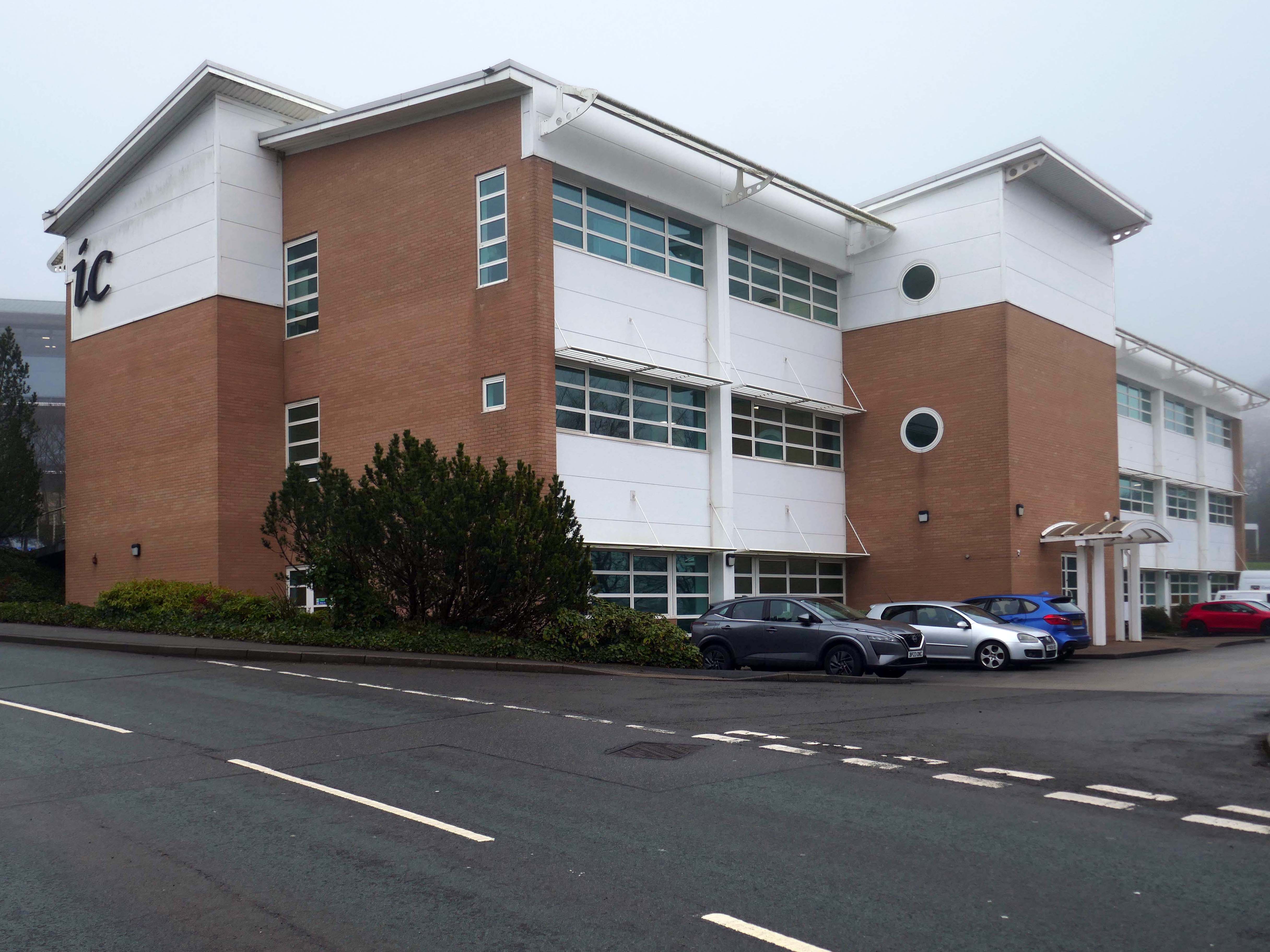
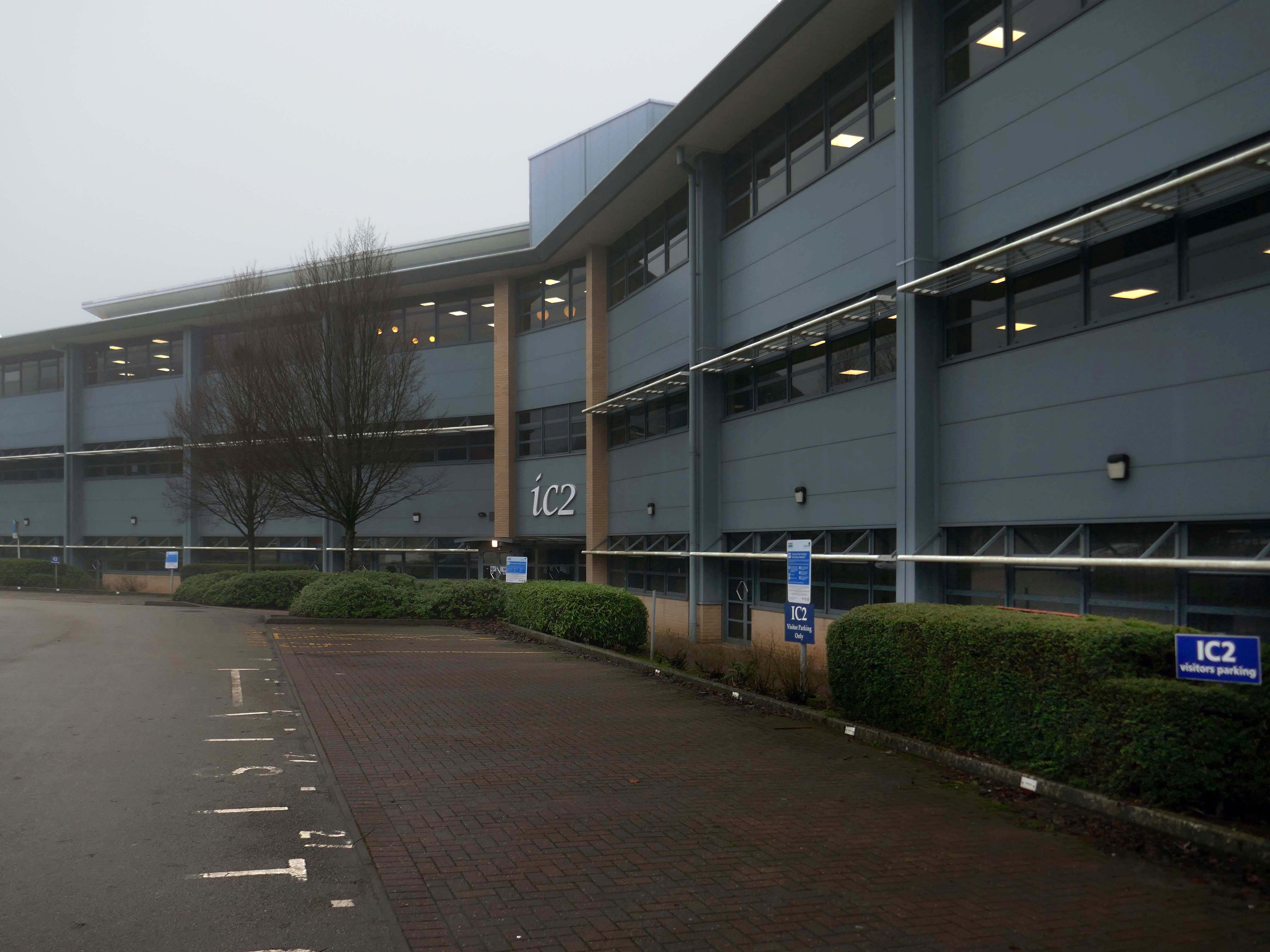
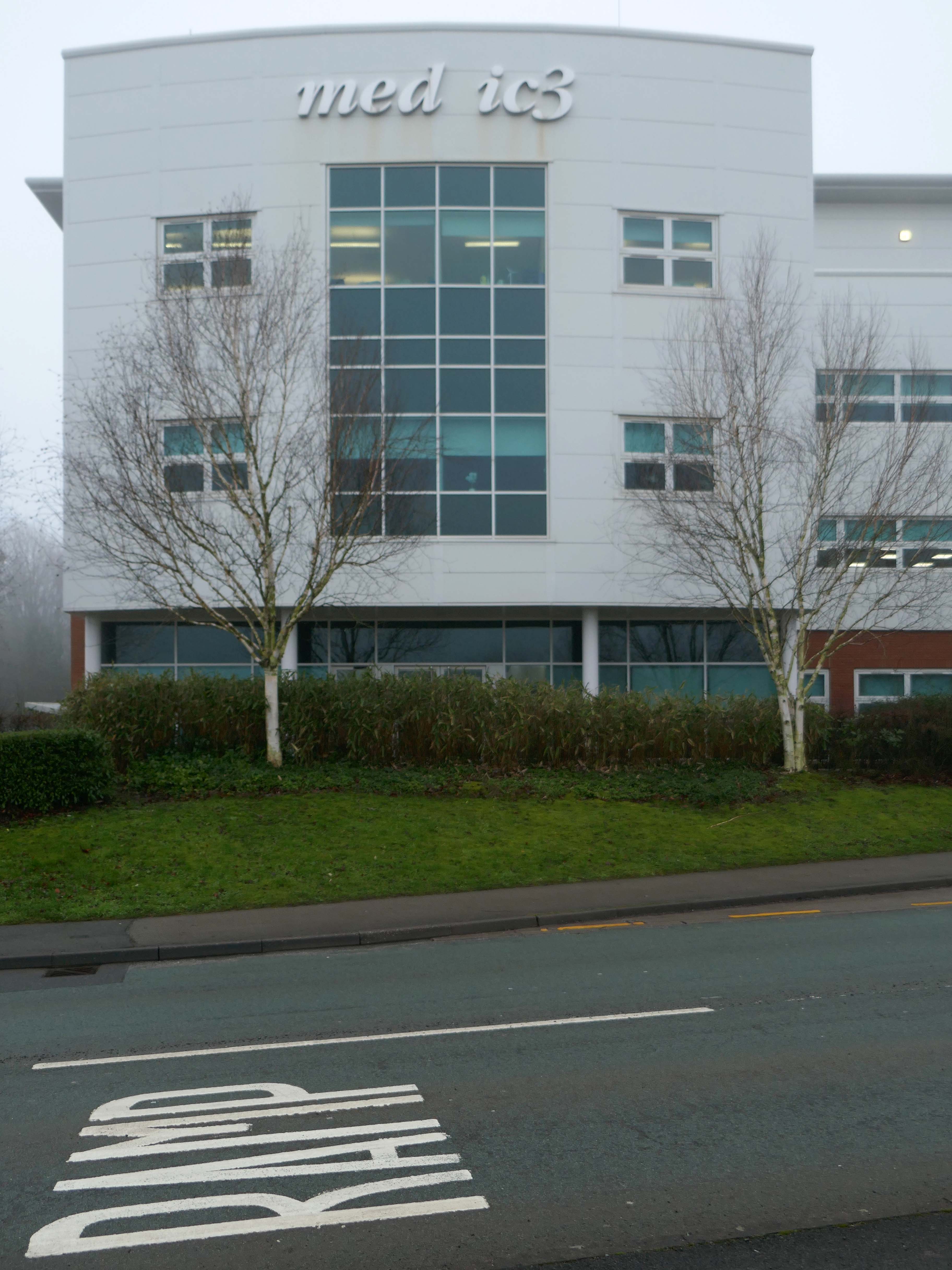
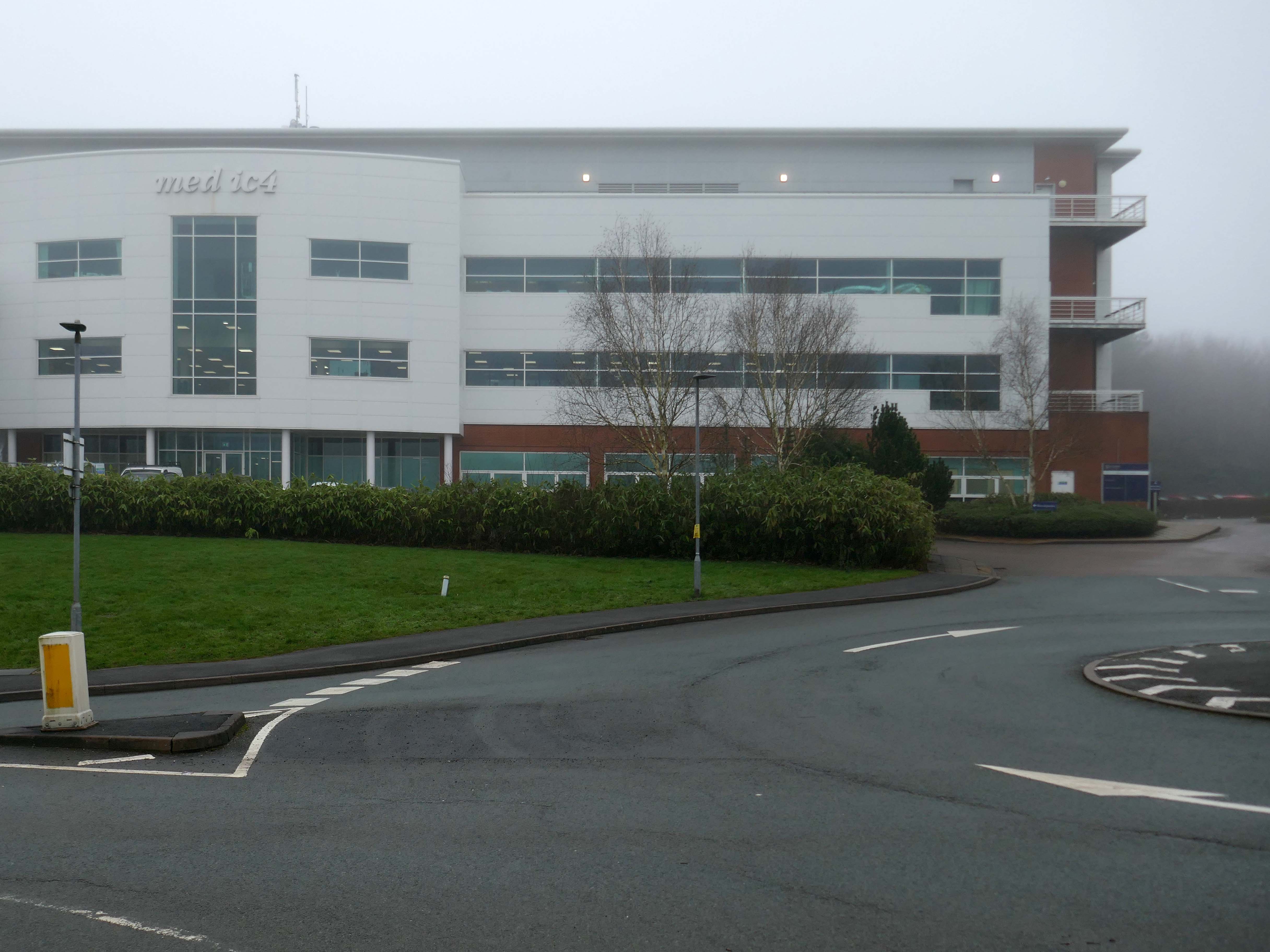
The Innovation Centres were built in 2000-4 by Hulme Wright & Partners.
IC1
IC2
IC3
IC4
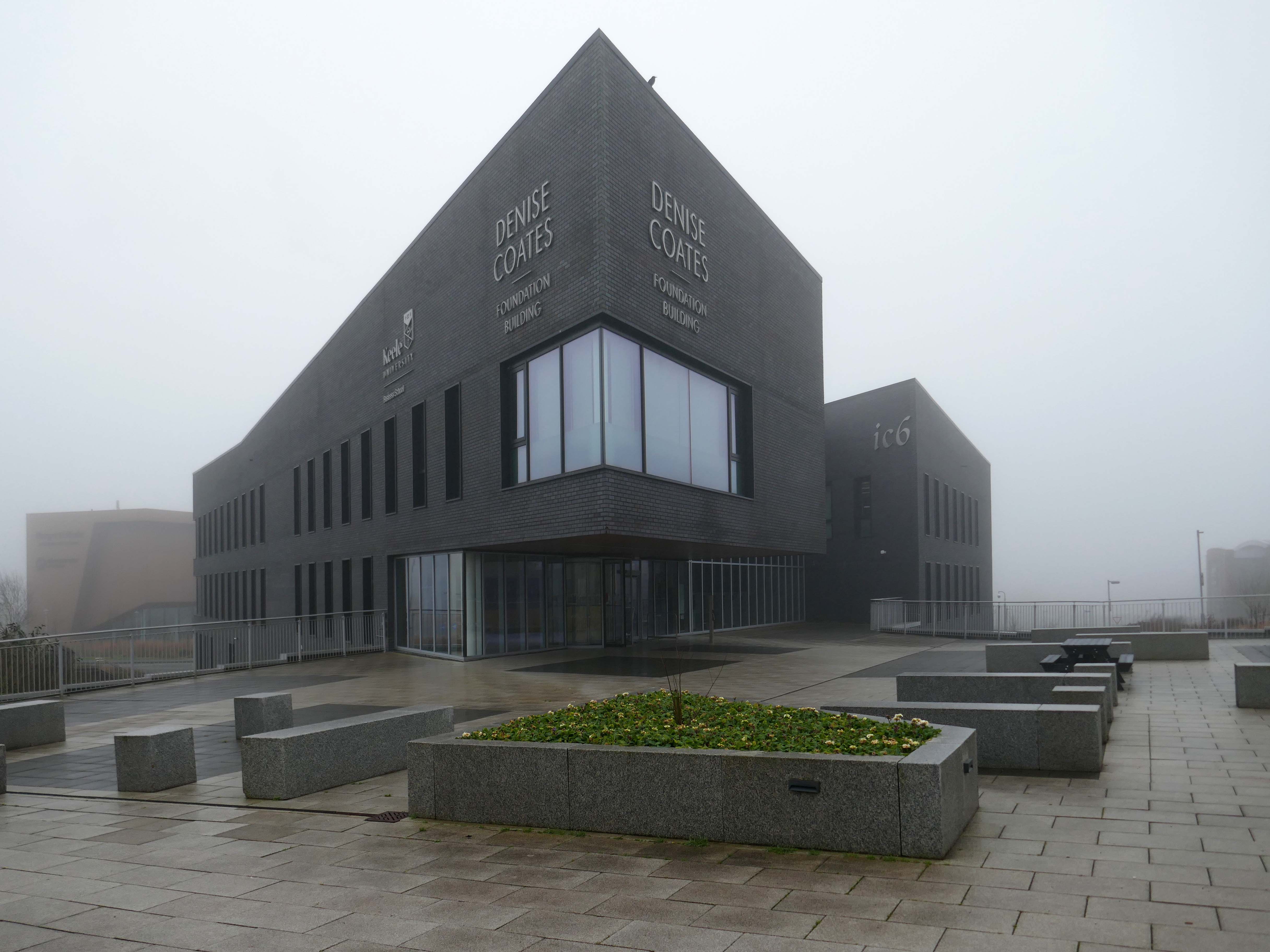
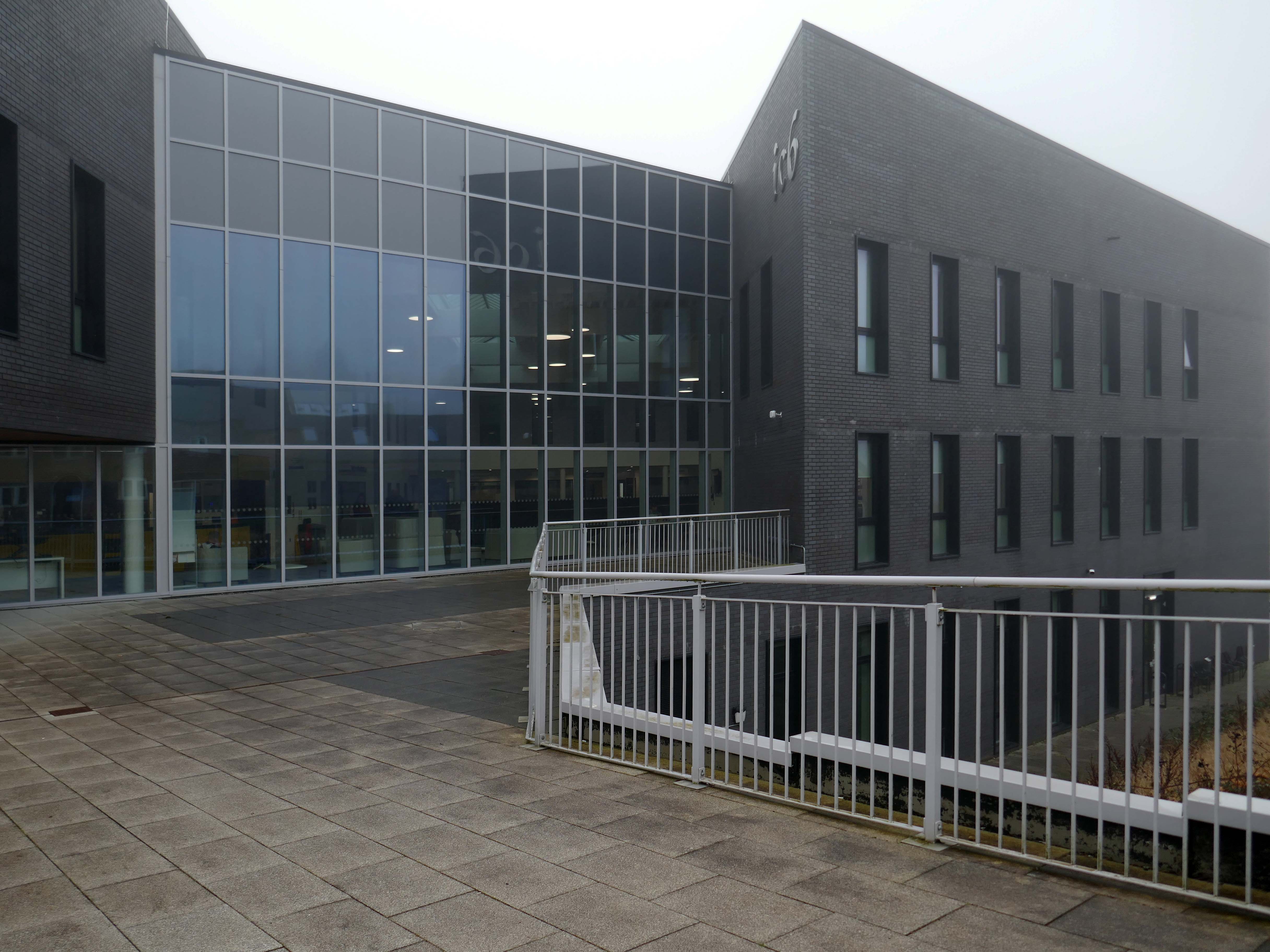
Denise Coates Foundation Building 2018-19 BDP – principal architect Sue Emms
The award-winning Caudwell International Children’s Centre is the UK’s first purpose-built centre for multi-disciplinary therapy for childhood disability and research of neurodevelopmental conditions including autism.
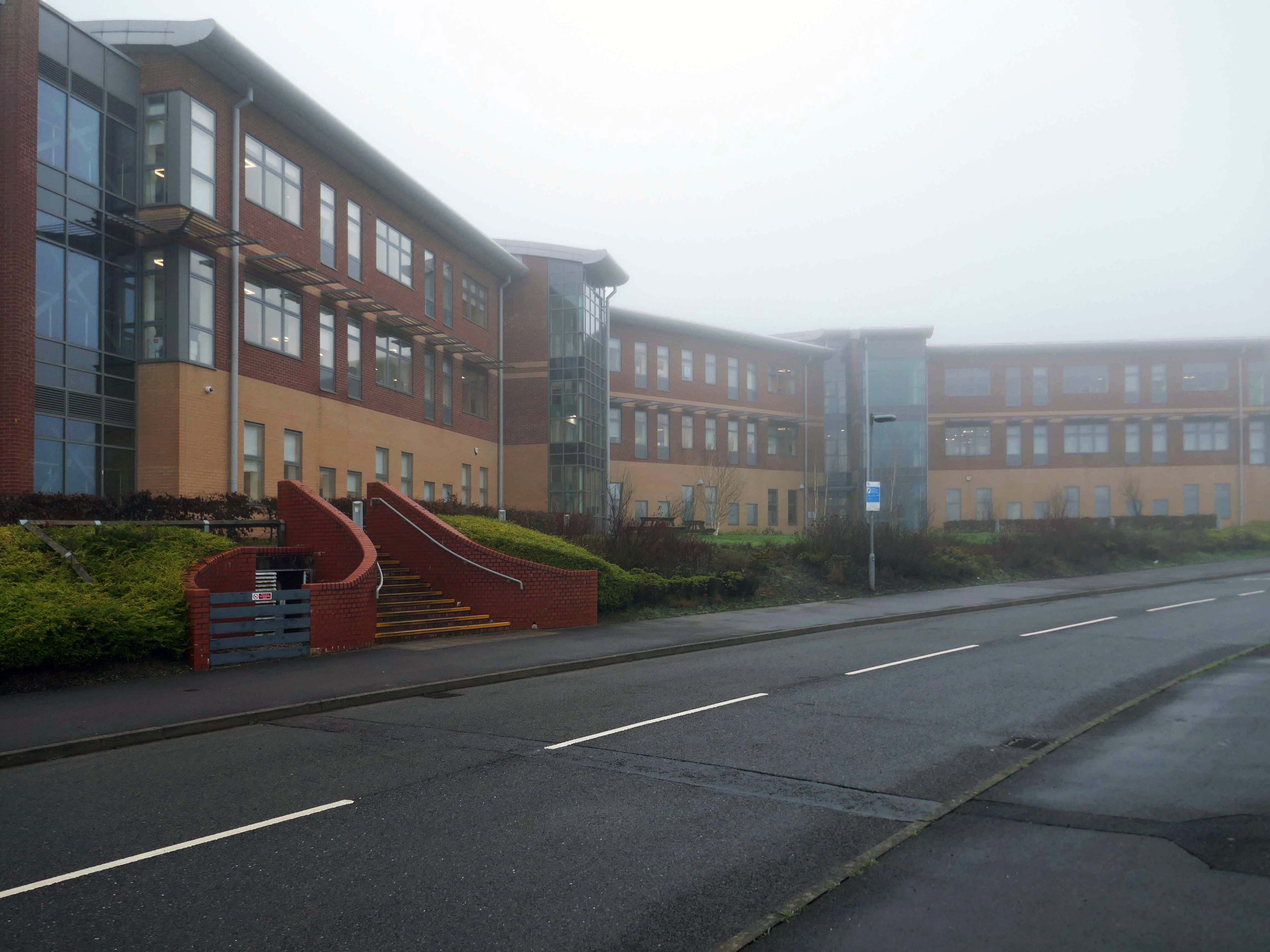
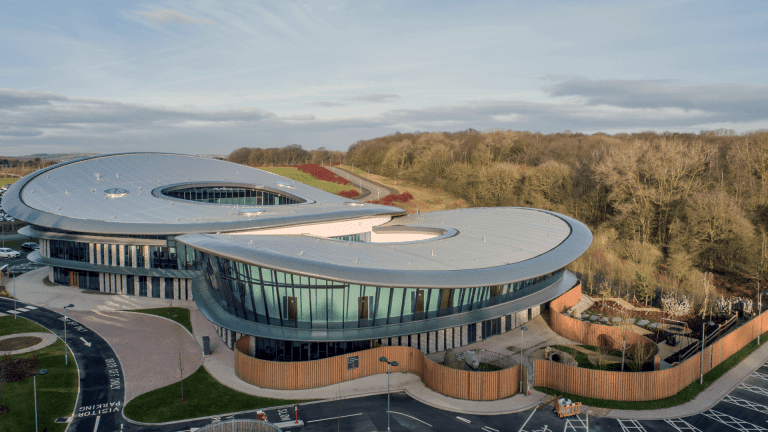
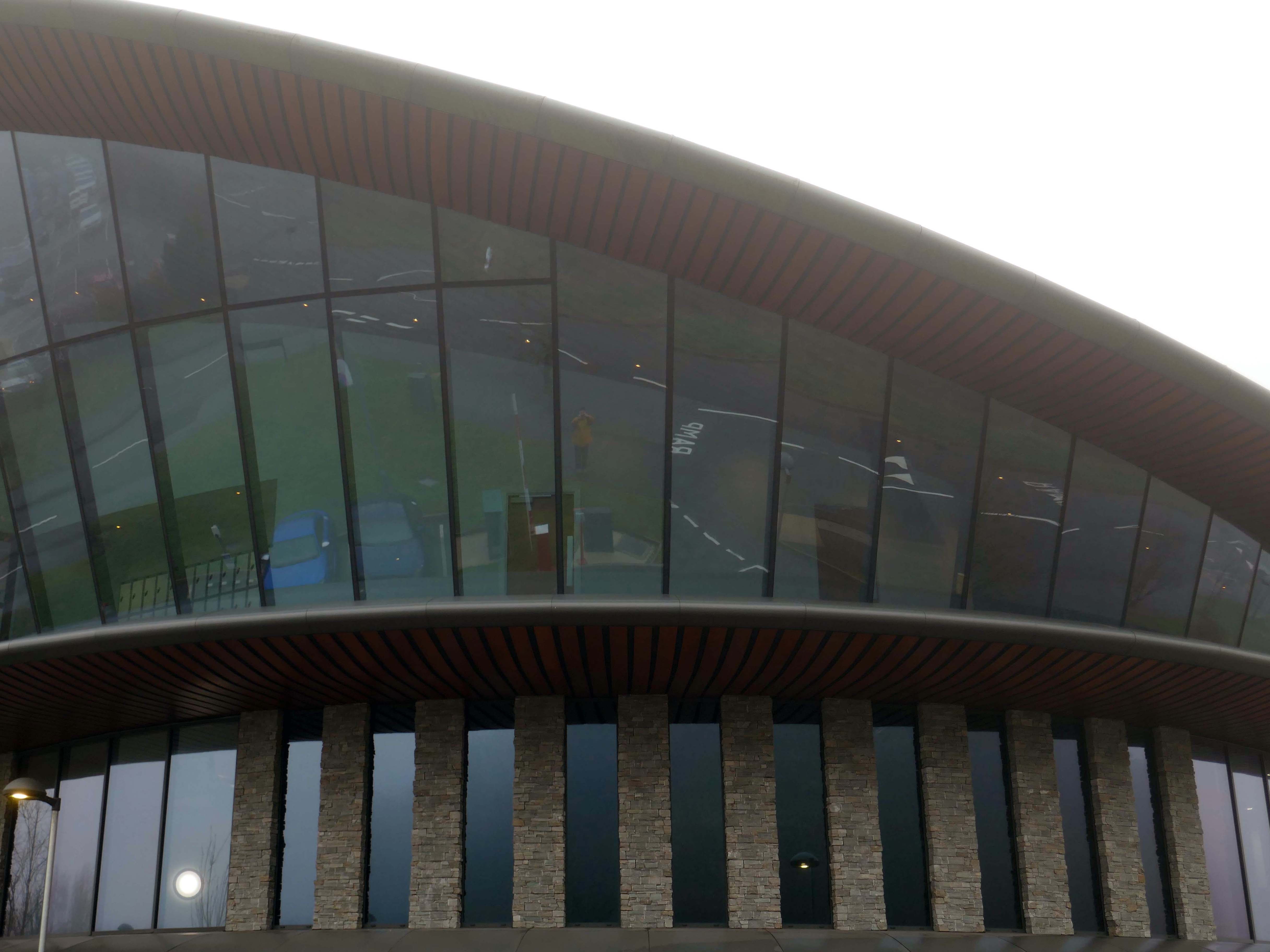
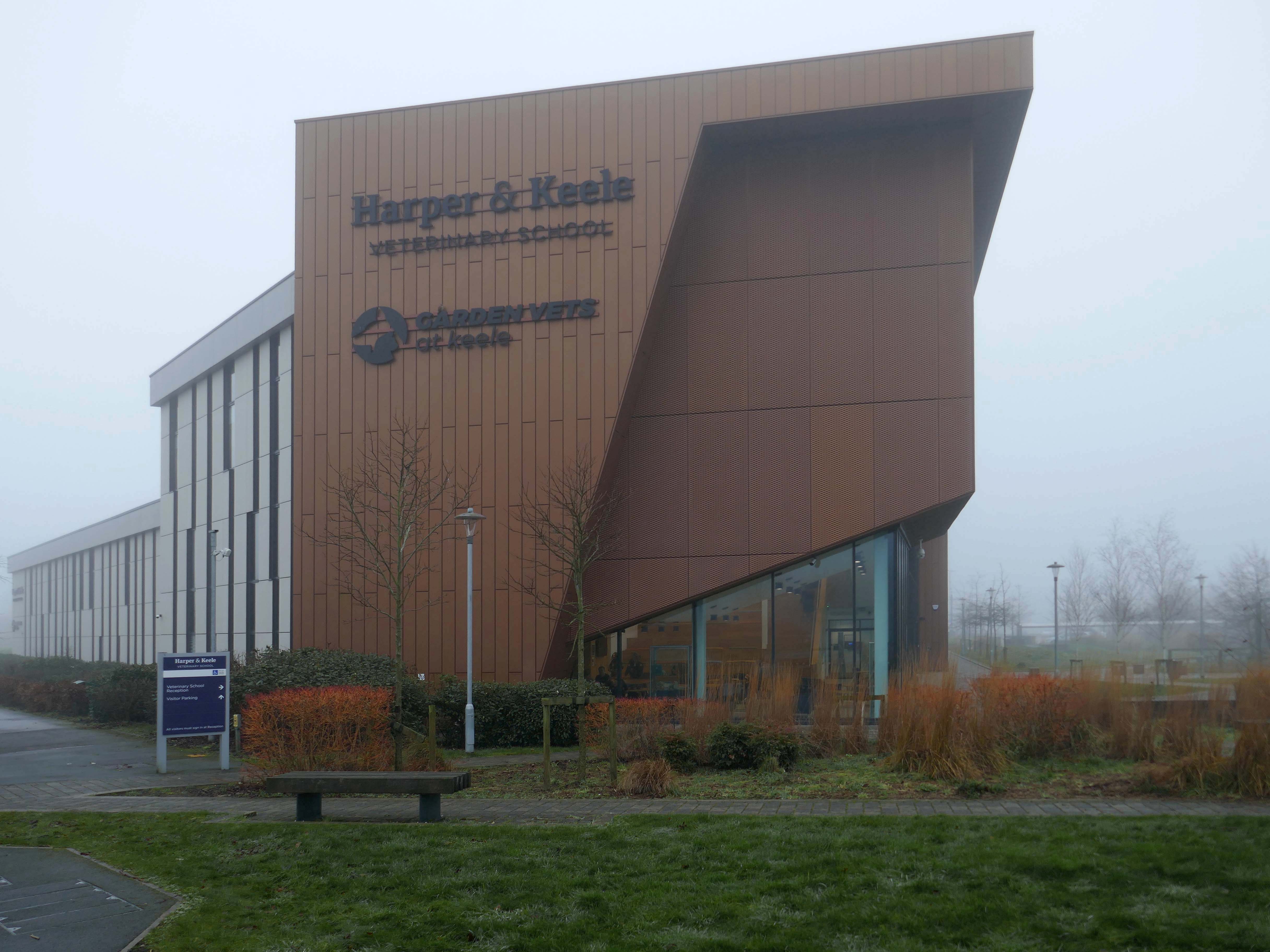
Harper and Keele Veterinary School 2020-21 Jefferson Sheard.
Launched in 2020, the Harper and Keele Veterinary School is committed to equipping a new generation of vets with the skills and tools to thrive as professionals and contribute to animal, human, and planetary health. Drawing on the combined expertise and resources of Harper Adams University and Keele University, together with a vibrant network of veterinary practice partners, students benefit from practical experience and clinical skills from the outset.
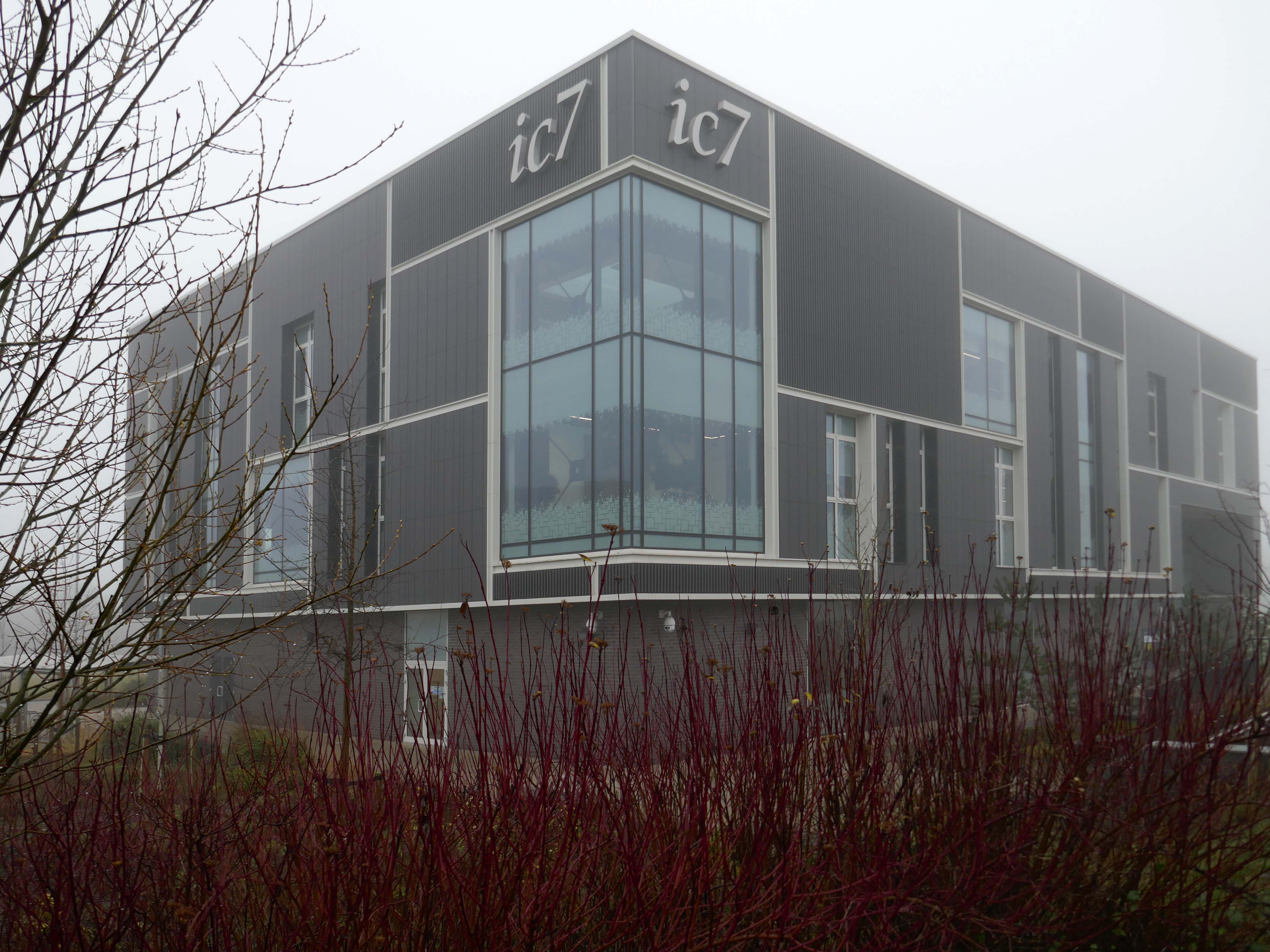
IC7 designed by HLM Architects, working with Tetra-Tech, Poole Dick, Currie & Brown and William Bailey, and constructed by Bowmer and Kirkland
Innovation Centre 7 brings together small and medium sized digital enterprises, experienced academics and state-of-the-art digital infrastructure all under one roof, providing tenants with unique access to the facilities, industry links and burgeoning student talent pool of future employees that will lead to the competitive advantages needed to innovate, expand and succeed in emerging digital markets.
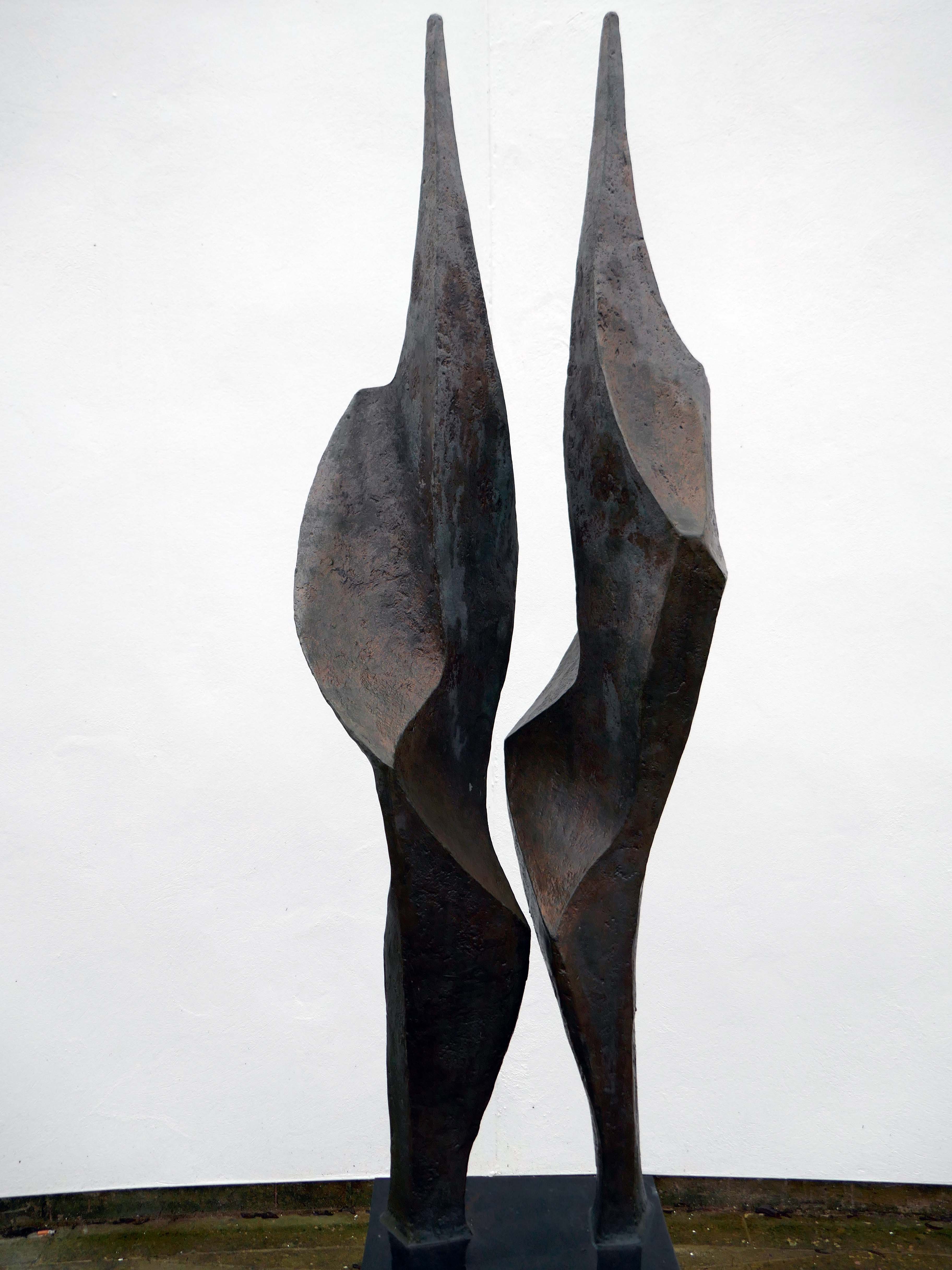
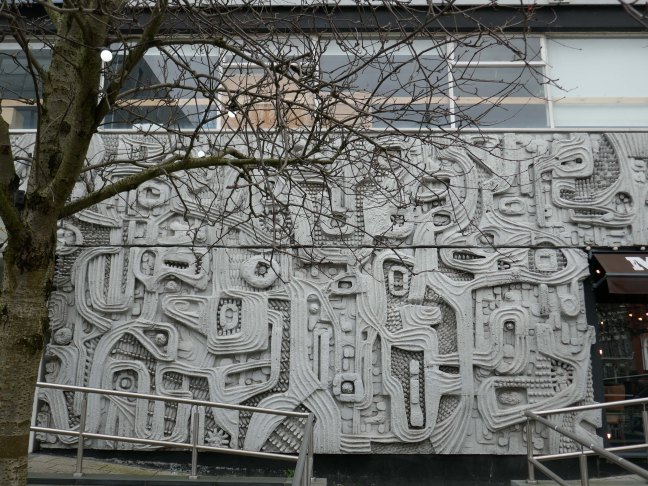
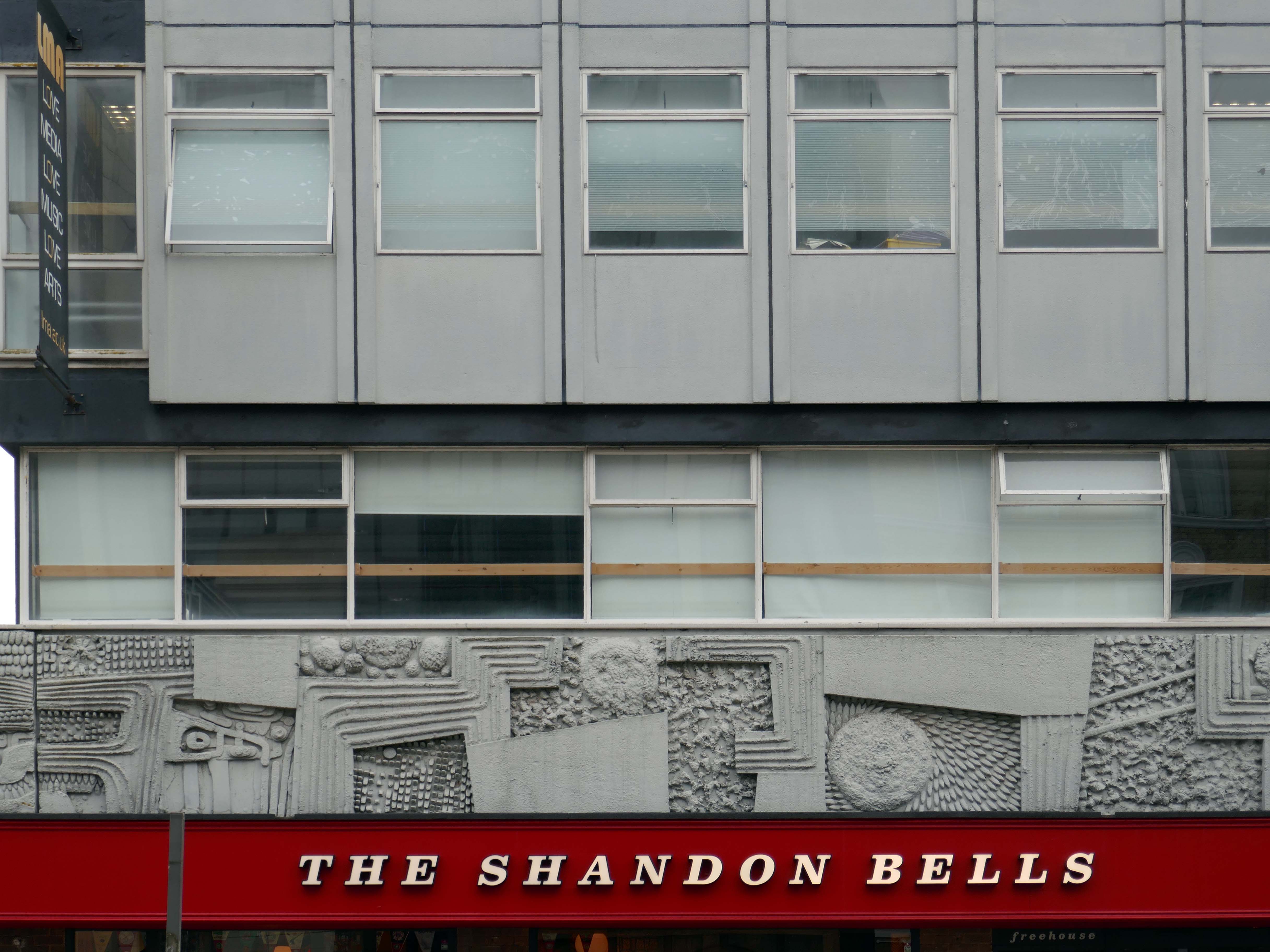
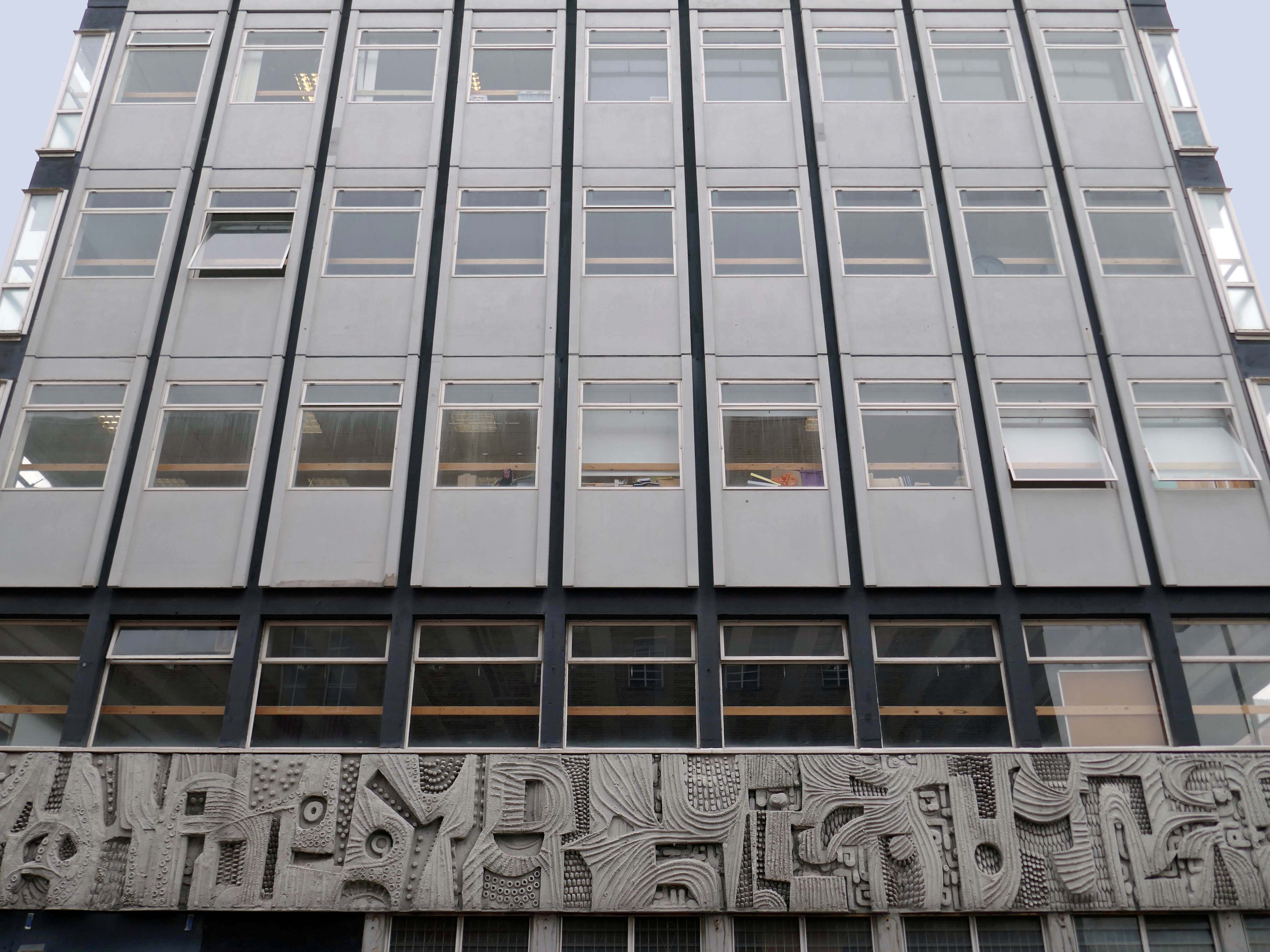
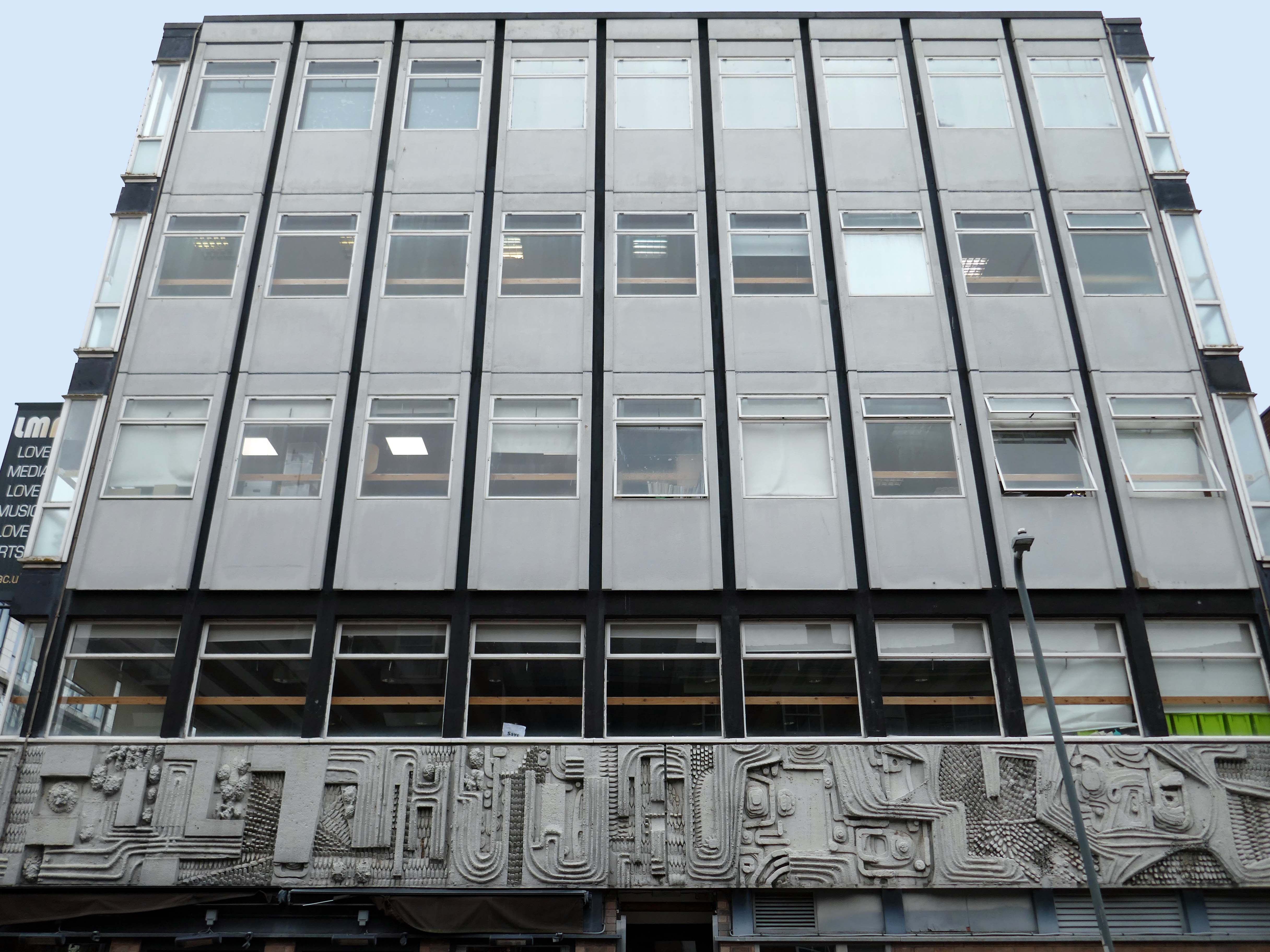
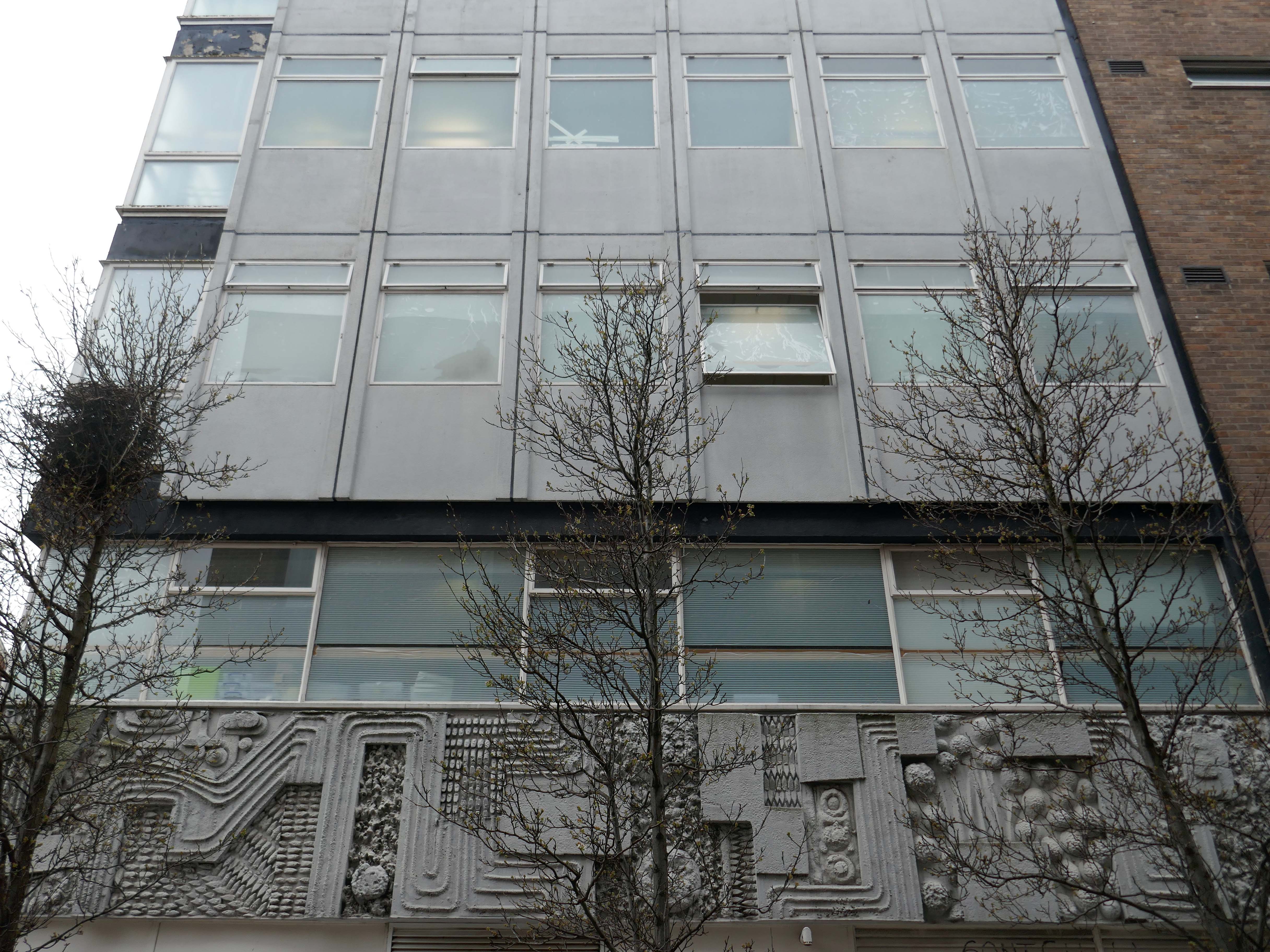
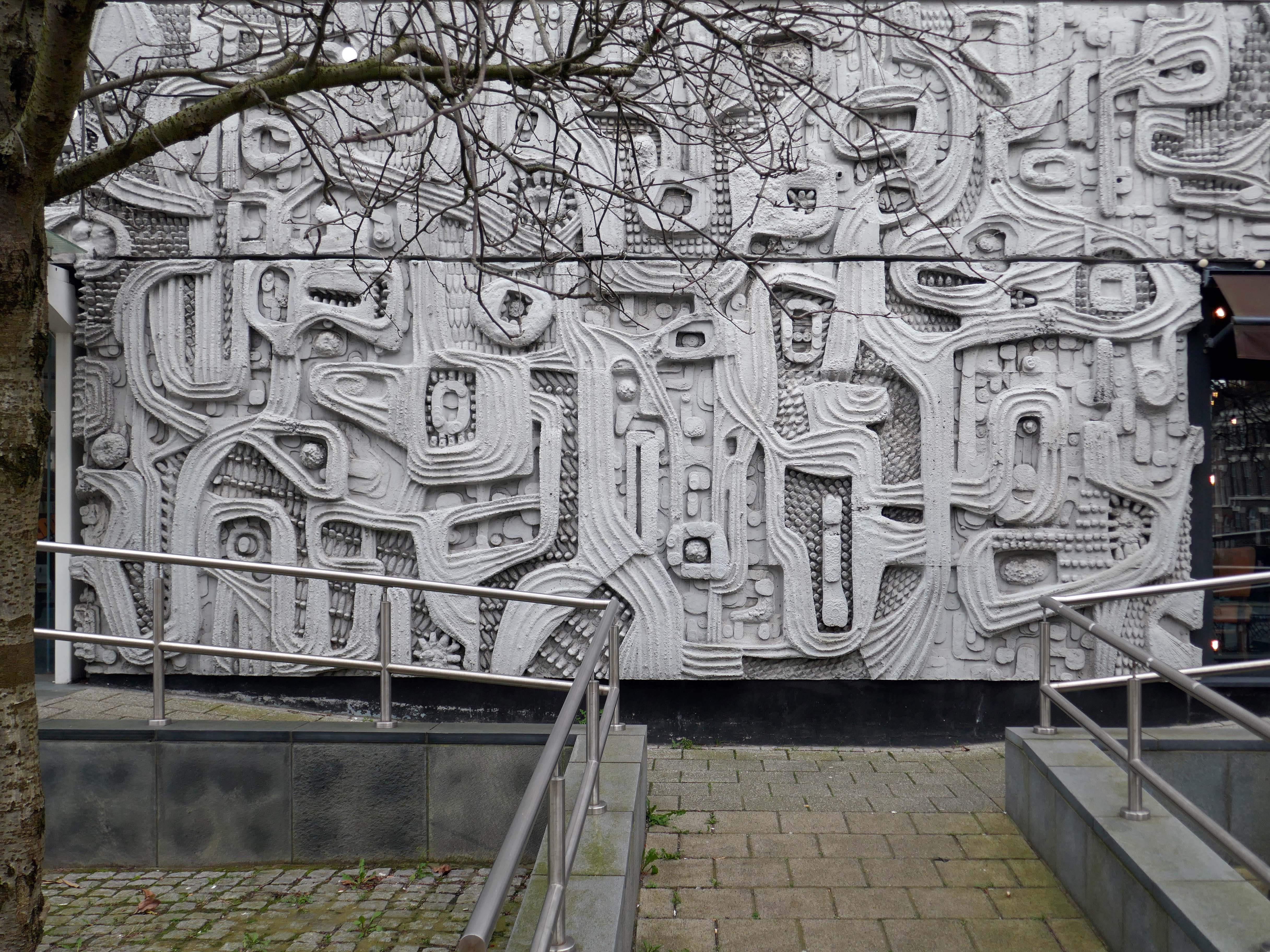
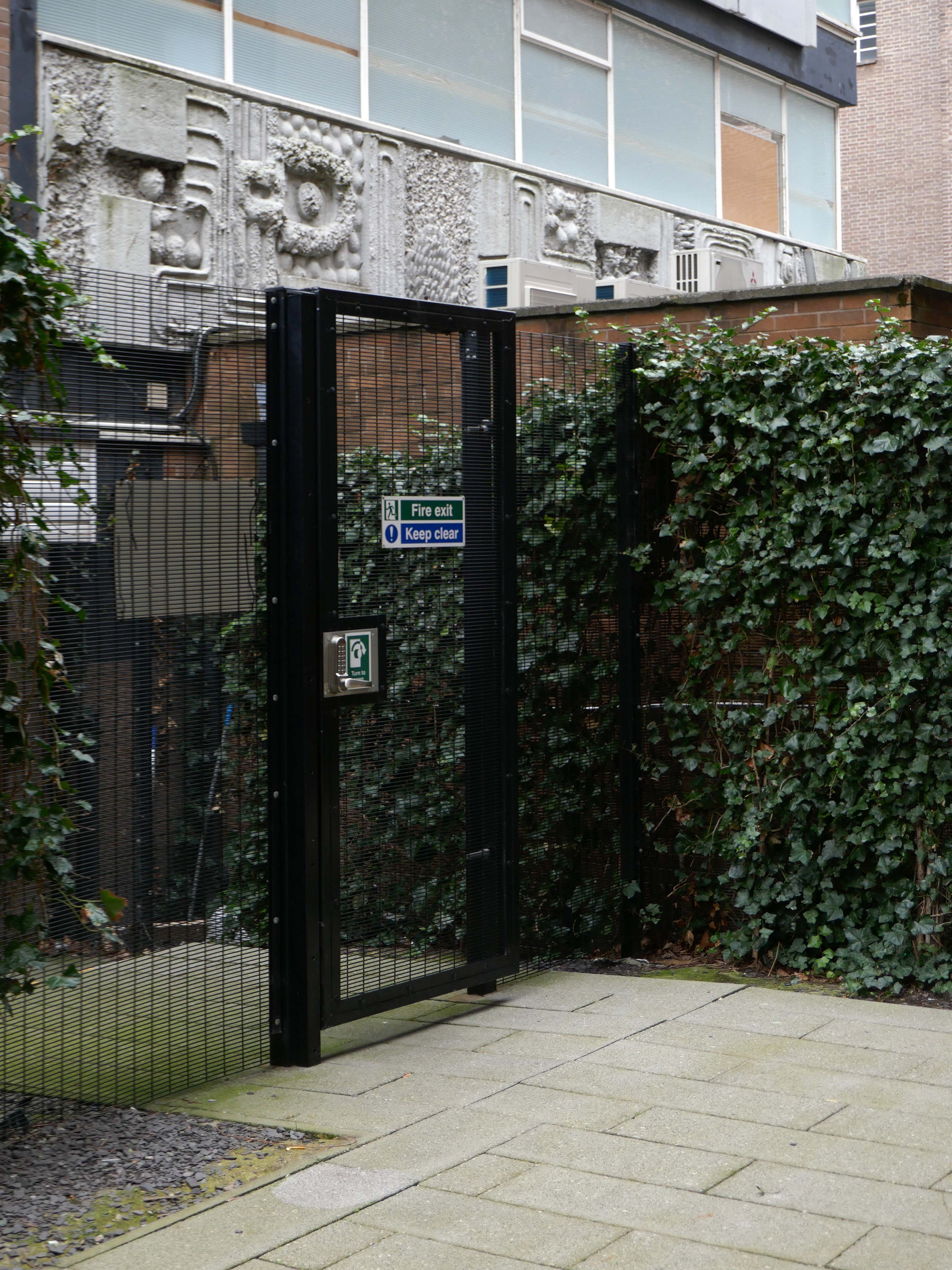
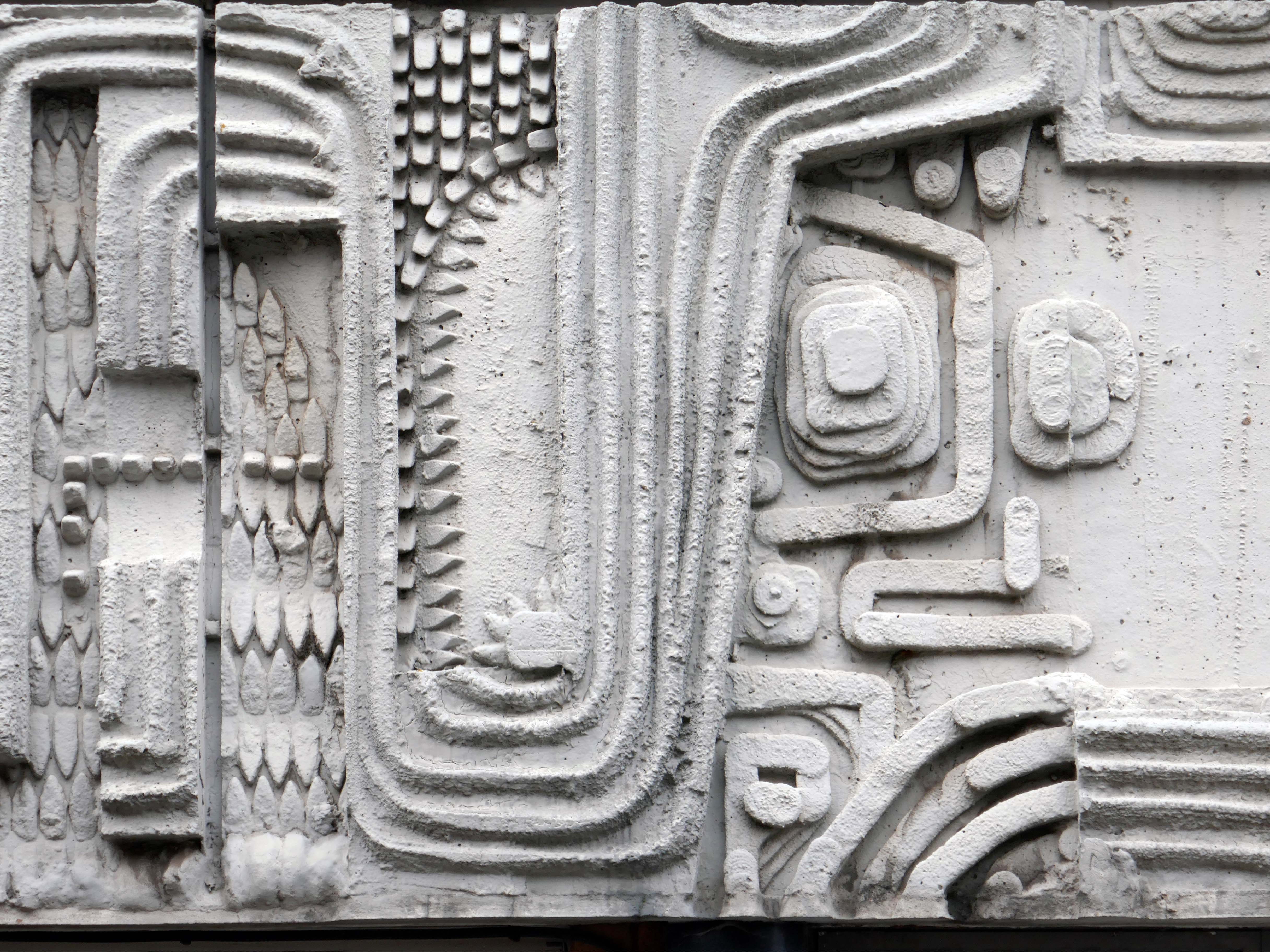
Sculptor and designer, born in London 1925, where he continued to live. Studied at Southern College of Art in Portsmouth, at Royal College of Art and at British School in Rome; was an Abbey Award-winner. Went on to lecture widely and was a member of the design advisory board, Hammersmith College of Art and Trent Polytechnic. Also did work for Concrete Society and completed a frieze for Swiss Cottage Library.
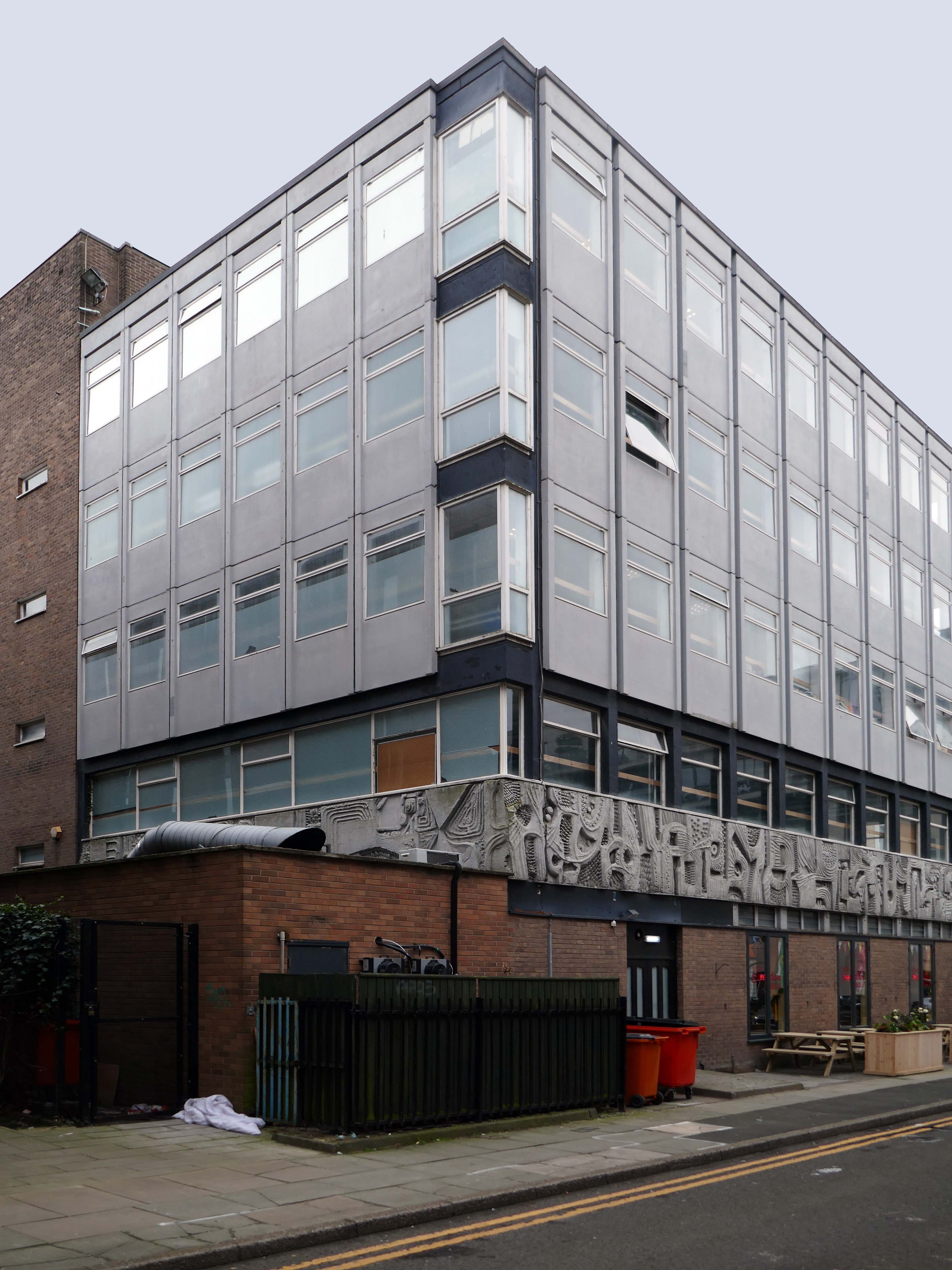
Federation House – 1965-66 Gilling Dodd & Partners
Originally home to the National Federation of Building Employees Investments.
Now how in part to The Shandon Bells – named for the chimes of St. Anne’s Church in Cork.
The church is noted for its eight bells, immortalised in the song The Bells of Shandon by Francis Sylvester Mahony. The largest weighs a little over one and a half tons and was originally cast by Abel Rudhall of Gloucester.
Though plans for a university in York first appeared as early as 1617, it would be over three centuries before they came to fruition. In 1960, permission was finally granted for the University of York to be built, marking the beginning of our journey.
Before the Second World War, Heslington was a quiet rural retreat with a local aristocracy, and a working agricultural village.
Fresh, young, forward-looking and enthusiastic, the University of York was known for its friendly atmosphere before it even opened its doors.
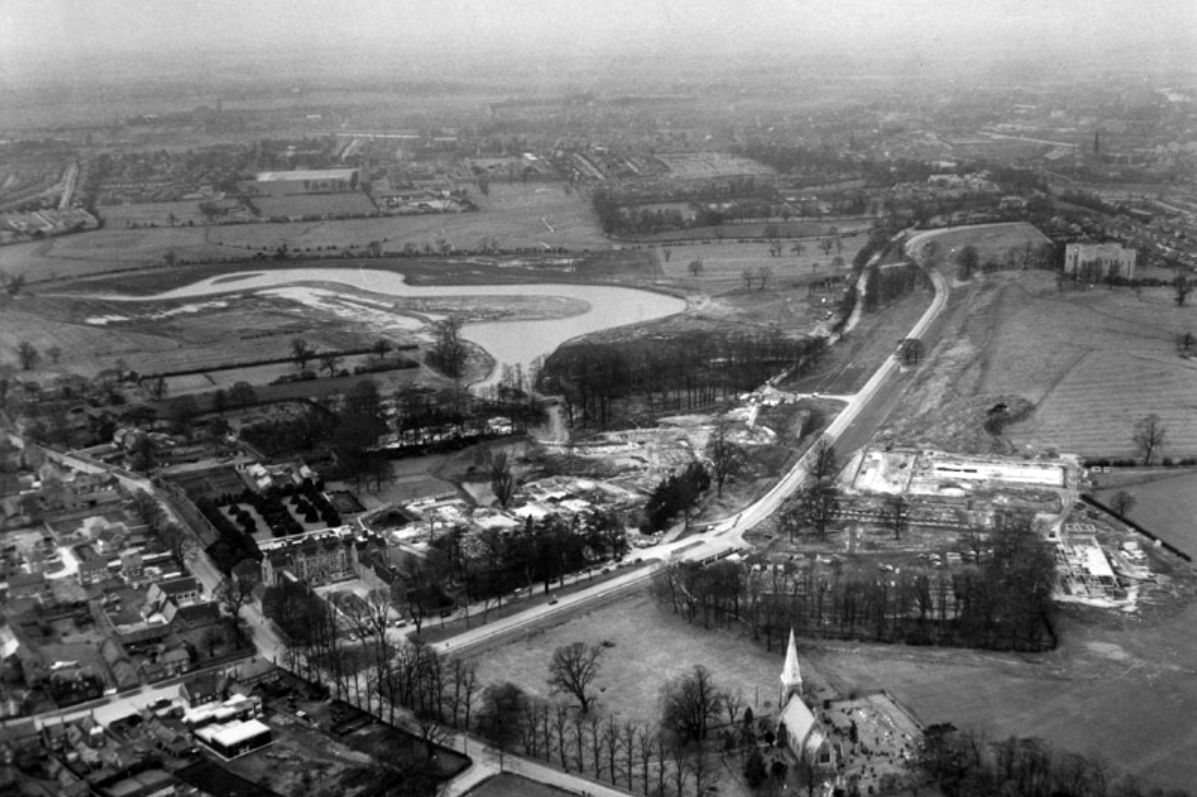
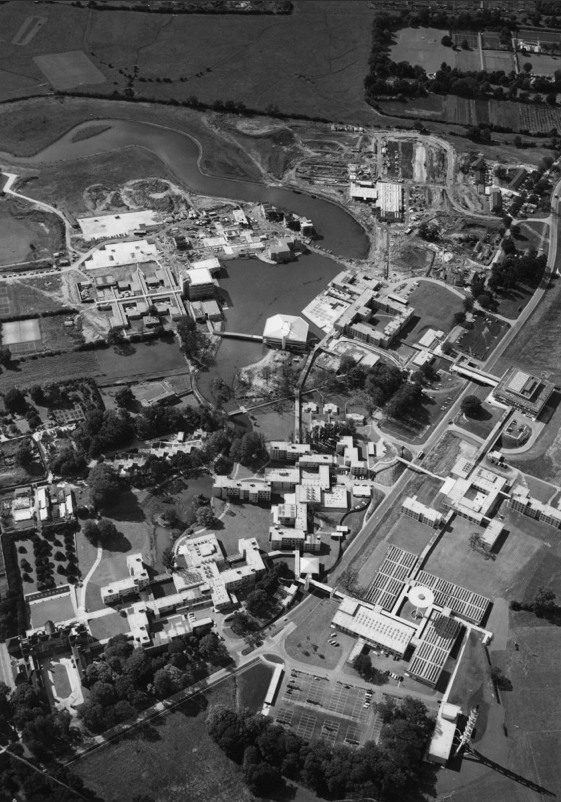
Planning and building the University happened with astonishing speed. In April 1960 the Government approved the establishment and less than three years, on 9 October 1963, the first students walked through the gates of Heslington Hall.
In the 1970s, college social life began to blossom.
Central Hall was the venue for The Who, The Kinks, Fairport Convention, John Martyn, Ian Dury and the Blockheads, Hot Chocolate, Humphrey Littleton, Acker Bilk, Paul Tortelier, Julian Bream, John Williams and others.
Paul and Linda McCartney appeared one day out of the blue with their new band Wings and performed a concert in Goodricke College Dining Room.
The beginning of the 1980s came with significant challenges for the University.
The decade saw the start of cuts across higher education. Staff were exhorted to make economies including turning down their thermostats, recycling, and making telephone calls as short as possible. There was also a fire in the Department of Chemistry.
In 1990, the Vice-Chancellor, Berrick Saul, recounted to court that York had been described by a senior member of the Universities Funding Council as “a well-run university with a relatively low profile.”
What a difference a decade makes.
By the end of the 1990s, York was dominating national league tables for research and teaching and was receiving international press coverage for achievement across the disciplines.
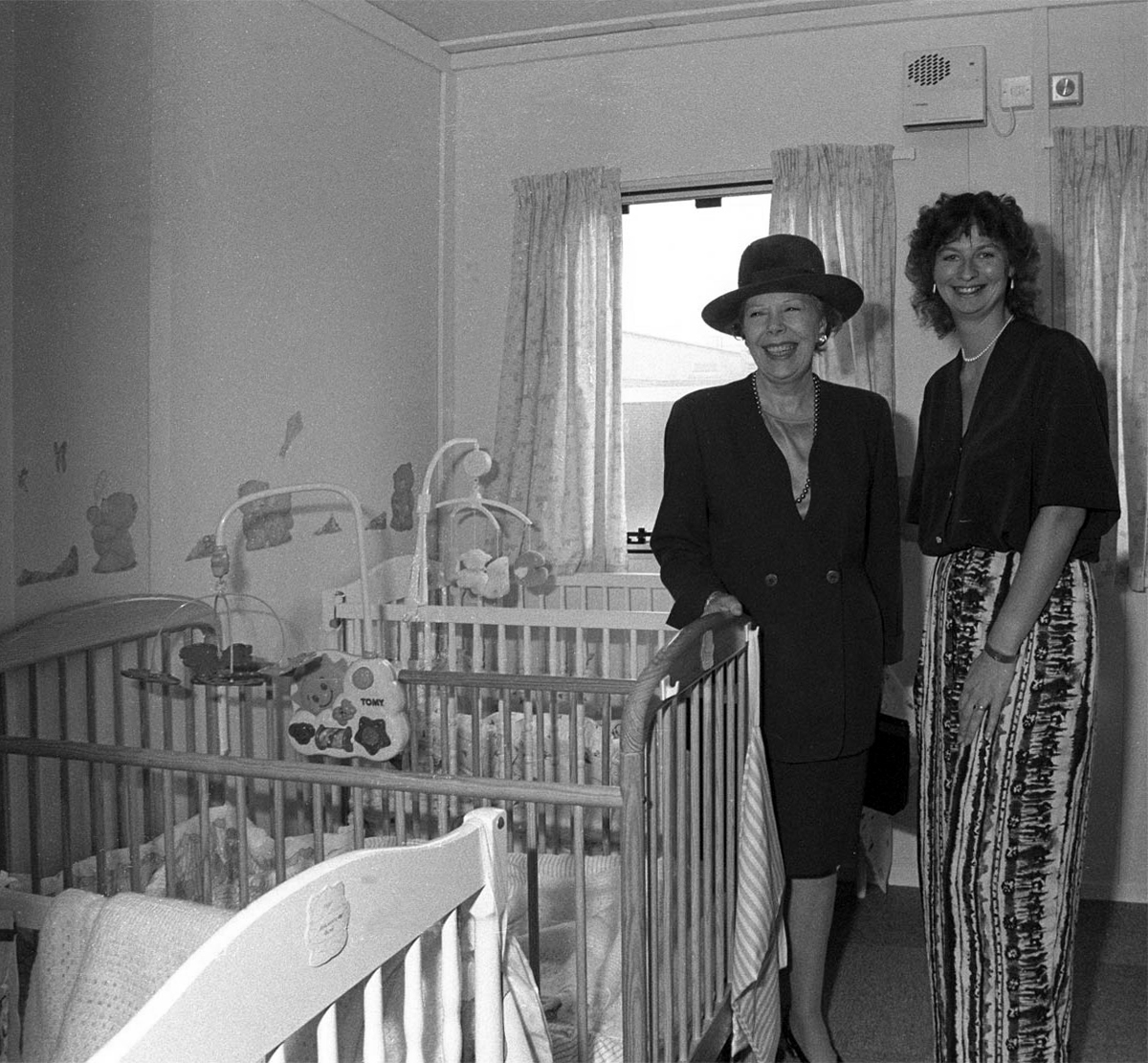
University Chancellor Dame Janet Baker at the opening of the University’s Baby Unit, October 1994 – York Digital Library
The 90s was characterised by advancement and recognition. York remained a popular choice among prospective students growing from 4,300 to 8,500 students without compromising its high entry standards. As the Sunday Times pointed out, “elitism does not appear to be the price of excellence at York”. York was one of only very few universities whose entry from state schools and colleges (around 80 per cent) was the same as the proportion of A-level students in the state system.
The introduction of official quality assessments and the proliferation of newspaper league tables saw the University’s stock rocket. After years of academic advancement, York began to get the recognition it deserved. National recognition attracted additional funding and investment. Research grants rose to over £20m per annum, and the University enjoyed one of the highest incomes per researcher in the higher education sector.
The Sir Jack Lyons Music Research Centre is opened by Roger Wright, controller of BBC Radio 3, 2004
The planning for Heslington East began in earnest in 2002 with the arrival of Brian Cantor as Vice-Chancellor. It took years of master-planning, liaison with interest groups, negotiations with land-owners and local communities, an 8-hour city planning meeting and a Public Inquiry to achieve the purchase of land and complex planning permissions for a site equal to the size of the original Heslington West campus. In 2009, the new Goodricke College opened as the first building on Heslington East.
At the time of the 40th anniversary in 2003, we wrote about Heslington East:
It will be everything that the designers of the original campus hoped for – integrated, landscaped and traffic-free, with a large expanse of water, and a very eager populace.
On 25th November 2010, we were named “University of the Year” at the Times Higher Education Awards, achieving praise from the judges for our “success in combining academic excellence with social inclusion, as well as its record in scientific discovery”.
The development of Campus East continued throughout the decade, with four new sites to accommodate academic departments and a variety of support and social buildings, including the Ron Cooke Hub and York Sports Village.
Campus West also saw much expansion and redevelopment during the 2010s, with the opening of the £13.8m Spring Lane Learning and Teaching Building and £16m Biology teaching and laboratory facility in 2016.
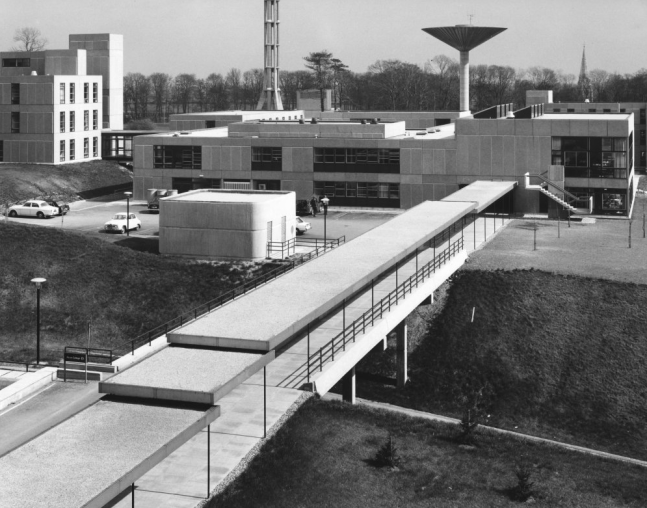
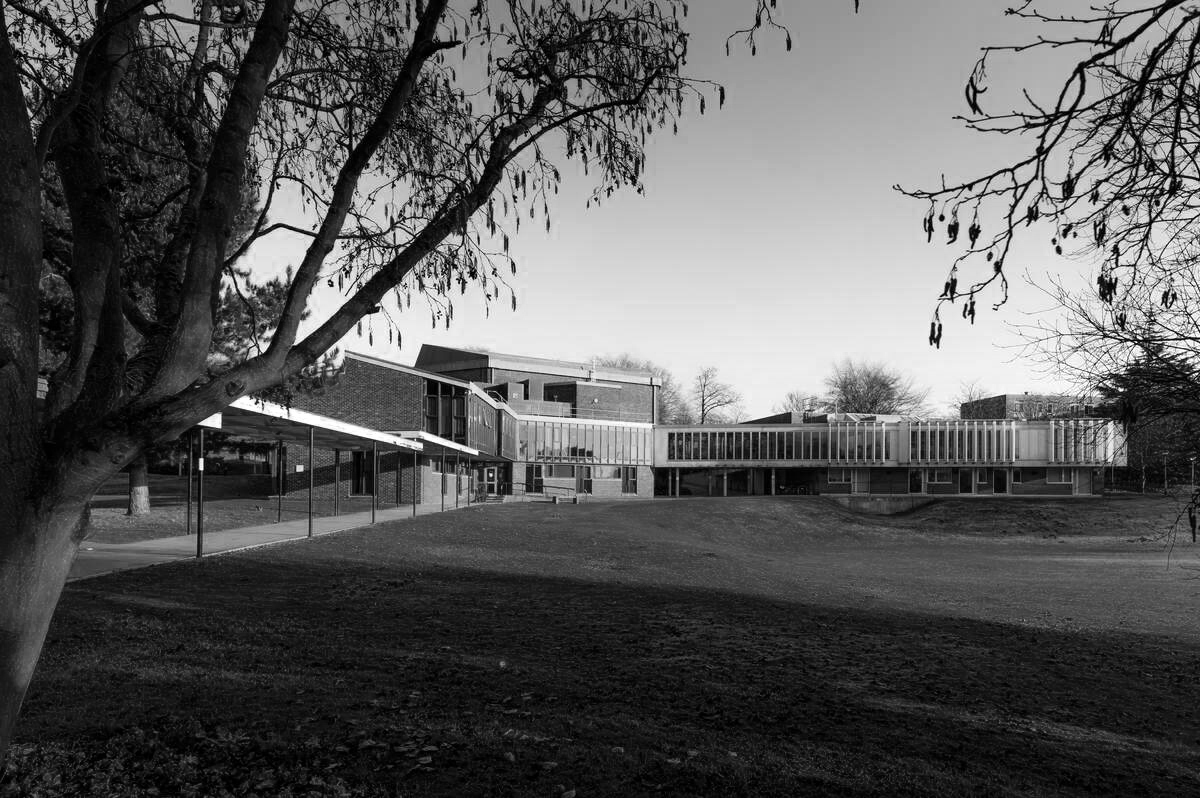
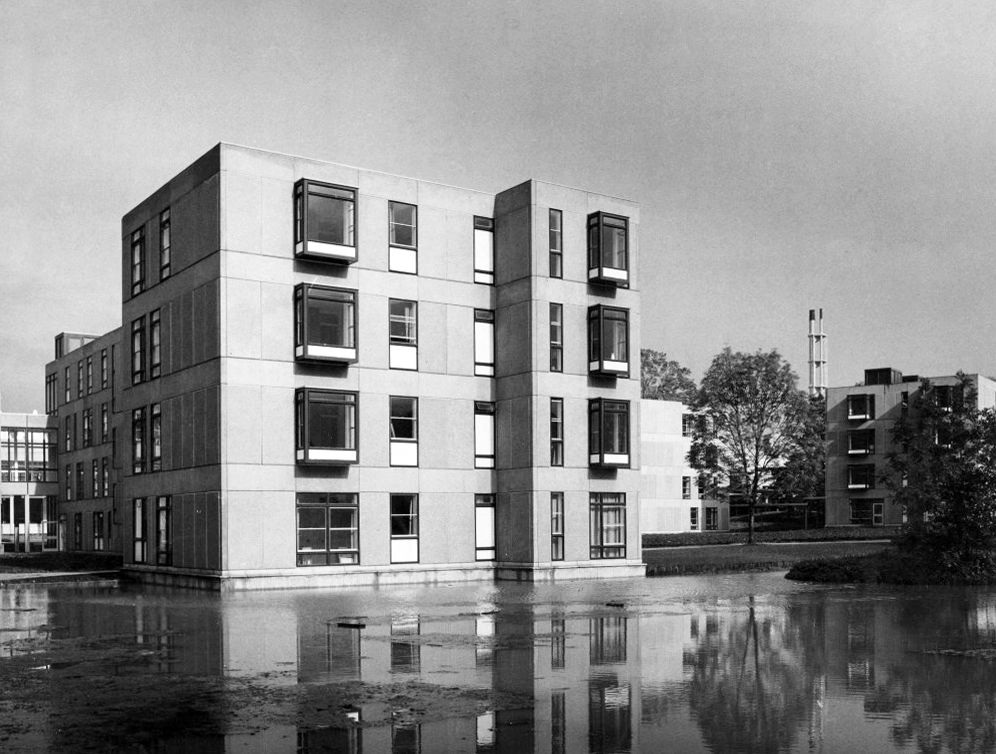
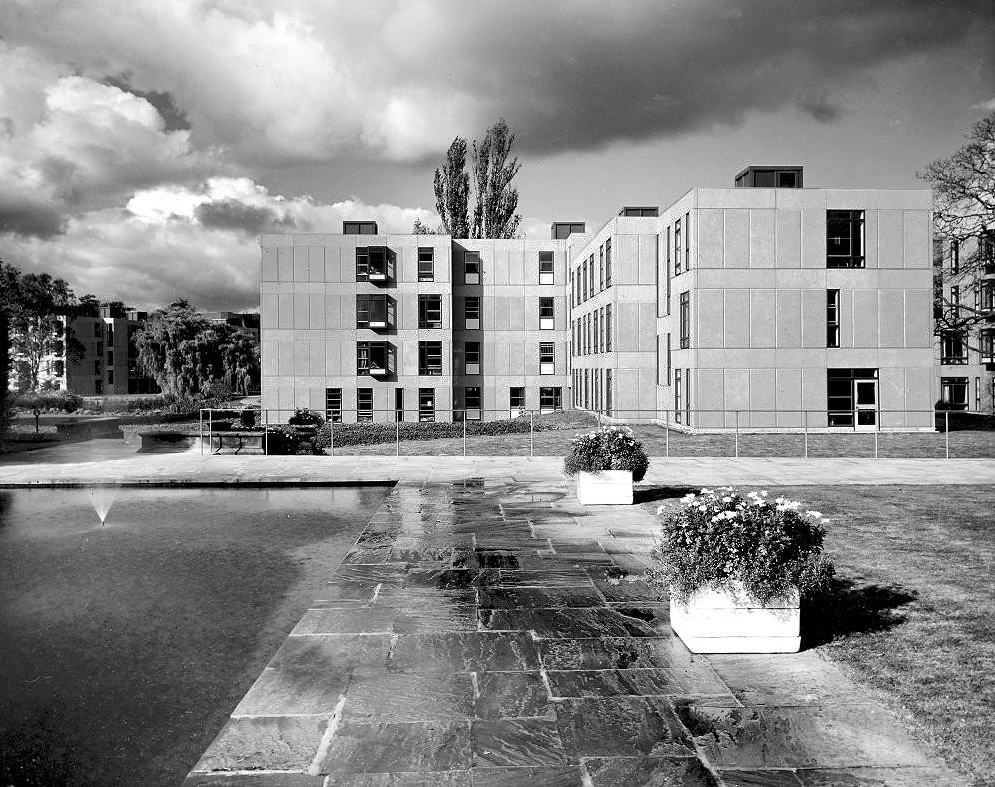
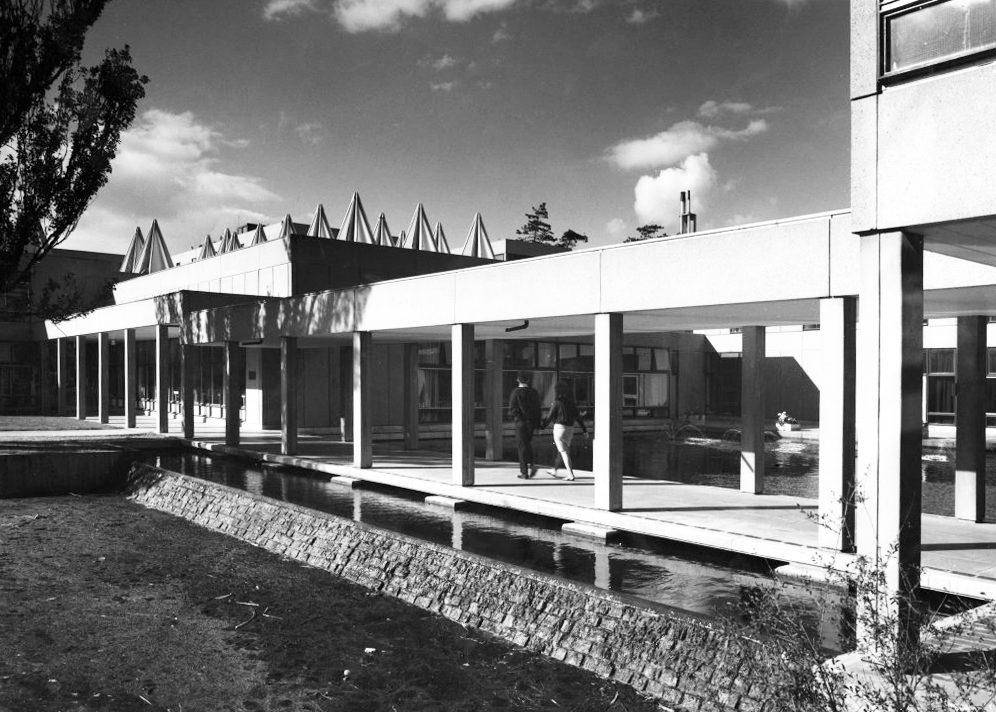
The University of York was founded in 1963 and work on its campus facilities in the grounds of Heslington Hall was begun in 1964. The first two colleges, Langwith and Derwent, accepted residential students for the autumn term of 1965. The original buildings were designed by Sir Andrew Derbyshire of Robert Matthew Johnson-Marshall & Partners, and assembled using the CLASP system of prefabricated construction.
RIBA
Founded in 1956 by architects Robert Matthew and Stirrat Johnson-Marshall, RMJM’s first offices were based in London and Edinburgh.
RMJM is now one of the largest architecture and design networks in the world. Services include architecture, development management, engineering, interior design, landscape design, lead consultancy, master planning, product design, specialist advisory services, and urban design
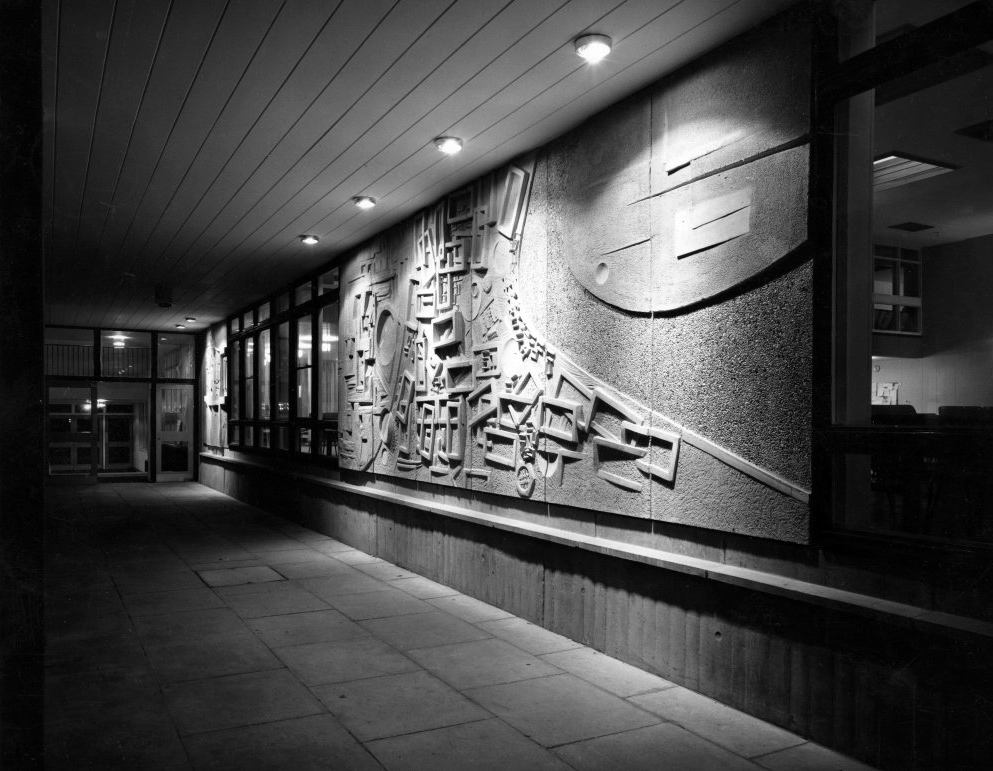
Langwith College 1965 – photo Reginald Hugo de Burgh Galwey
Constructed using the Consortium of Local Authorities Special Programme – CLASP system, formed in 1957 by Local Authorities in England to develop a shared prefabricated system for the construction of school buildings. The resulting CLASP building system was initially developed by Charles Herbert Aslin, the county architect for Hertfordshire.
CLASP’s popularity in coal mining areas was in part because the system permitted fairly straightforward replacement of subsidence-damaged sections of building, and the lightness of the structures. The system was also later used for the construction of railway stations, offices, university buildings, and churches until the late 1970s.
Today, 3000 examples are still in use.
Photo – Keith Gibson 1965
The system utilised prefabricated light gauge steel frames which could be built economically up to a maximum of four storeys. The frames were finished in a variety of claddings and their modular nature could be employed to produce architecturally satisfying buildings. Initially developed solely for schools, the system was also used to provide offices and housing.
The cynics’ definition of the CLASP acronym, circulating in the 1970s, was:
collection of loosely assembled steel parts.
CLASP buildings fell out of favour in the late 1970s. Budgetary advances and changing architectural tastes made the scheme obsolete.
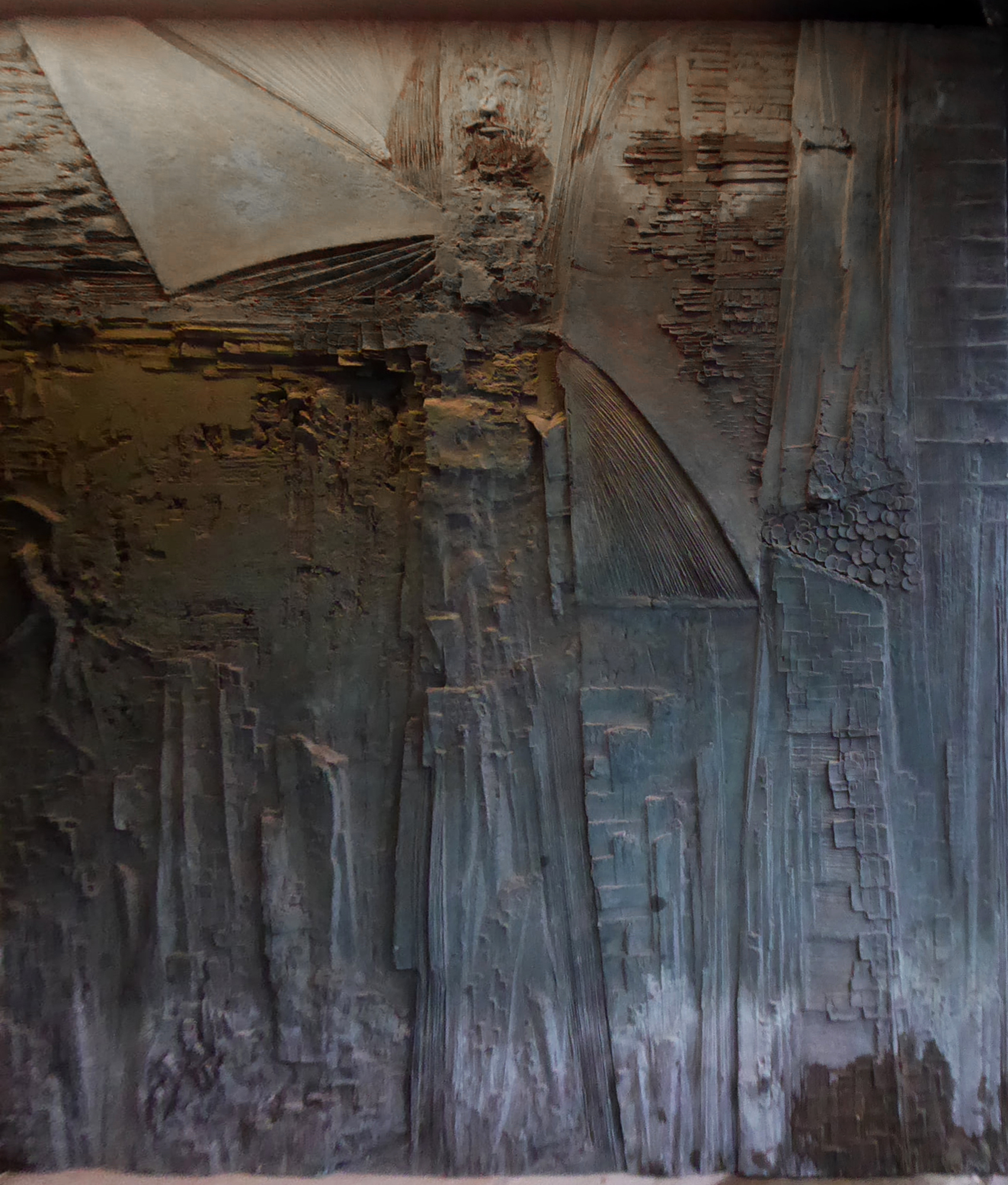
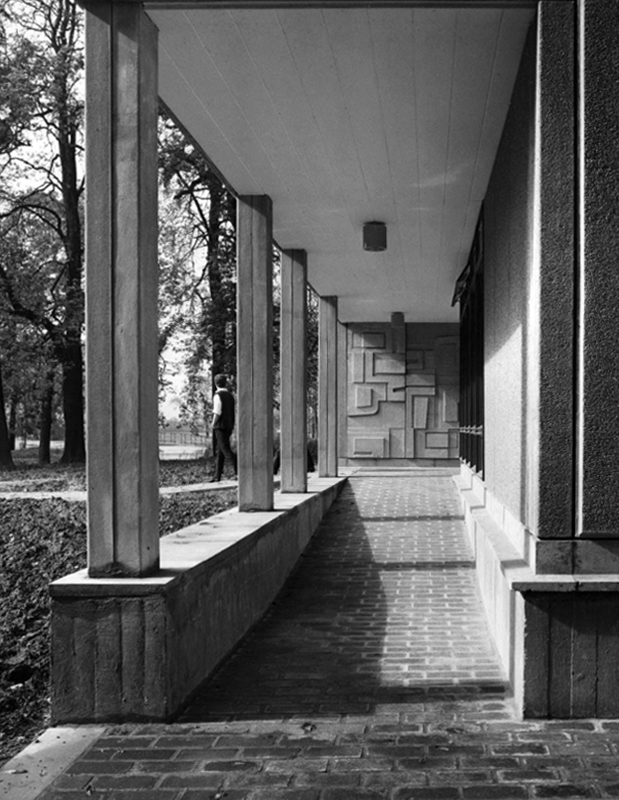
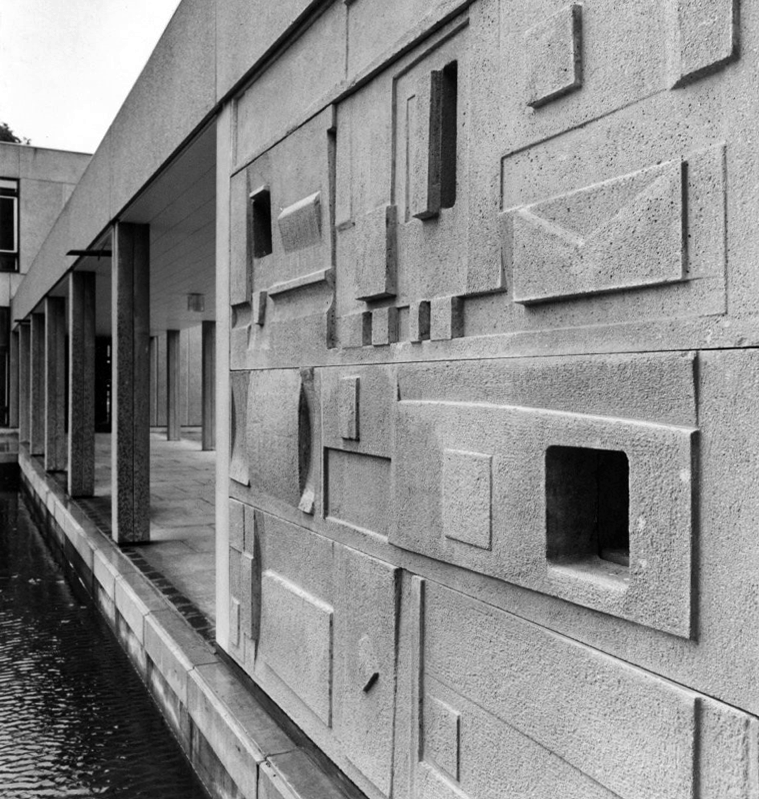
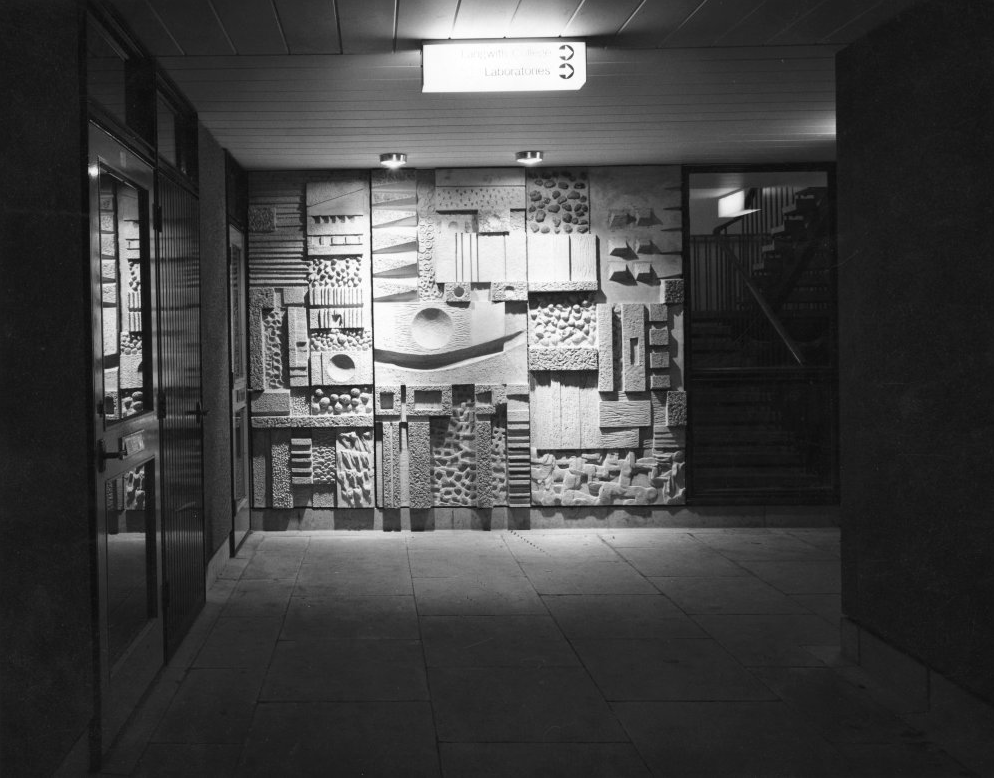
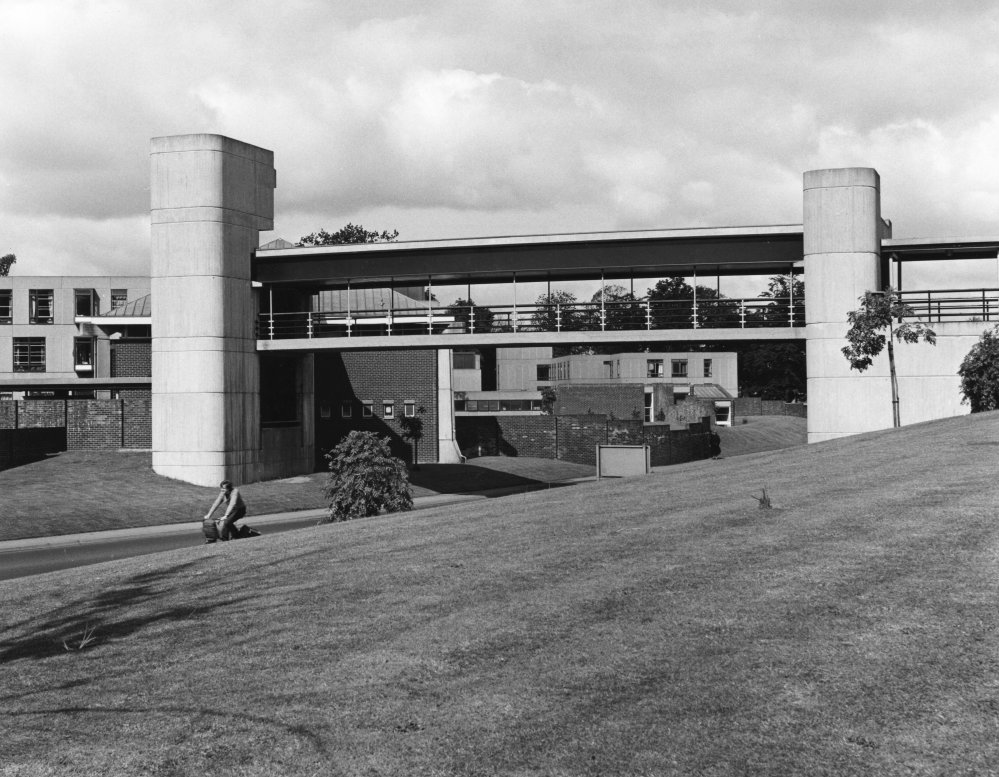
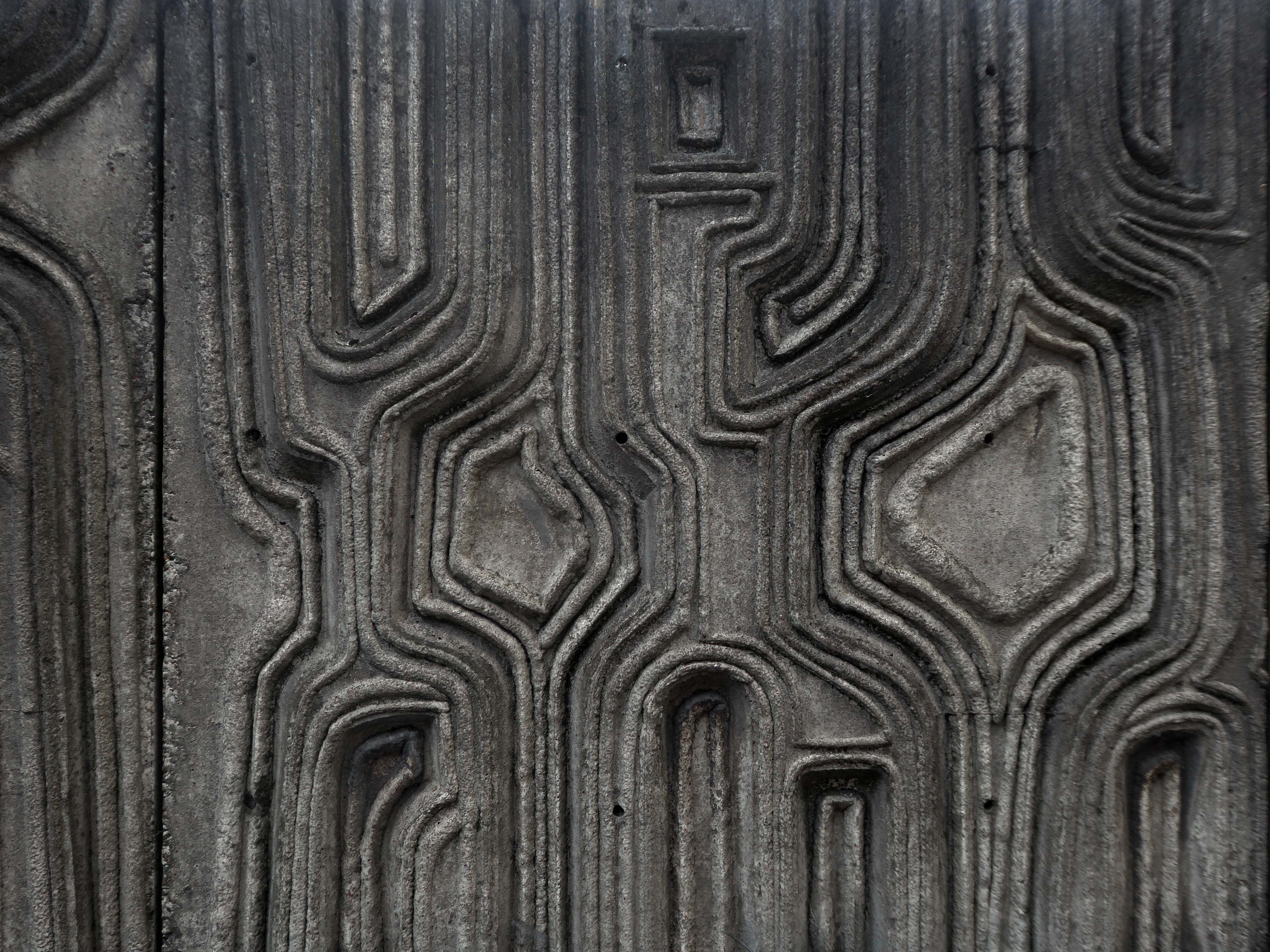
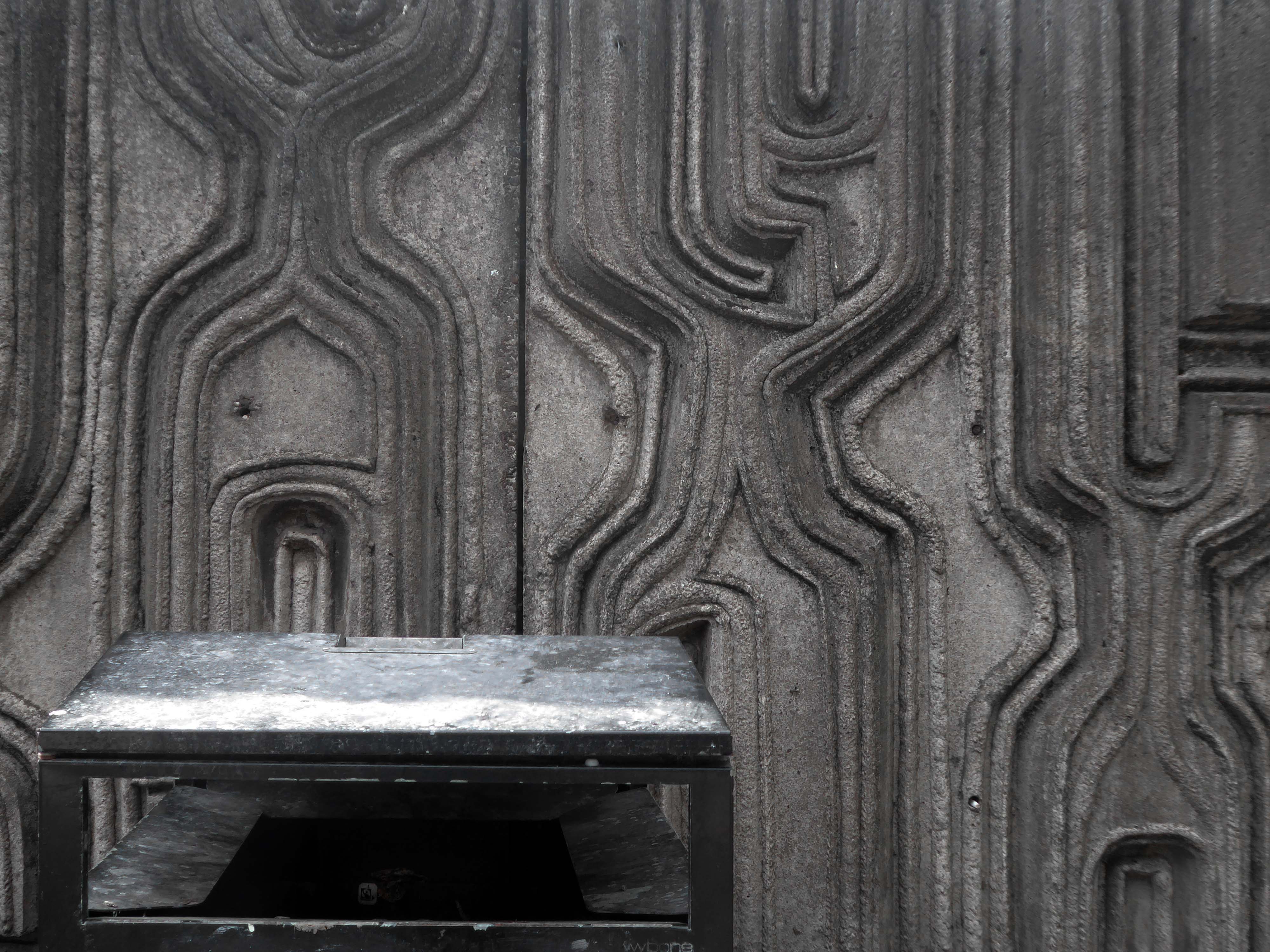
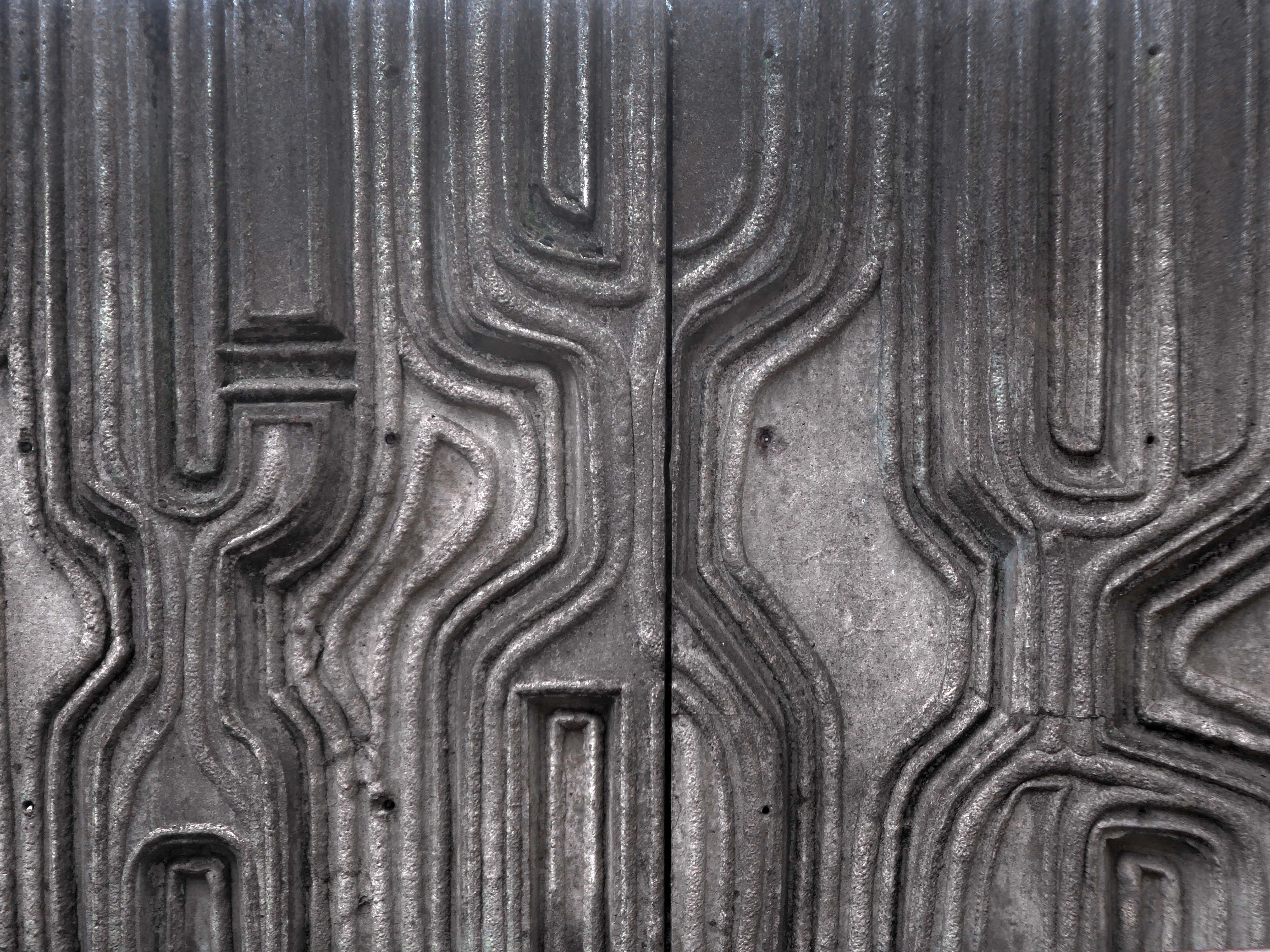
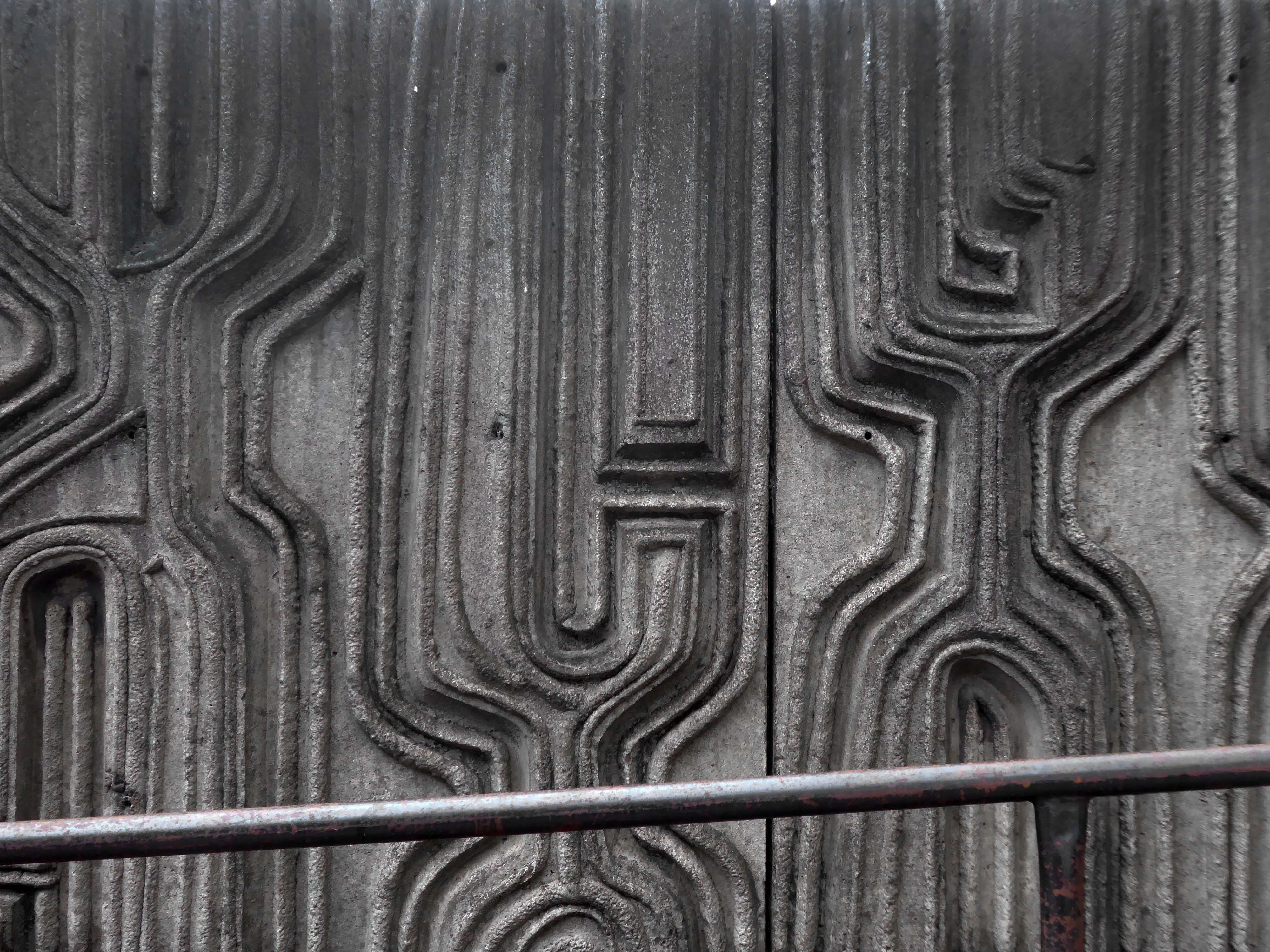
Walkway Derwent College with concrete relief by Fred Millett 1965
Photos 1965 Bill Toomey
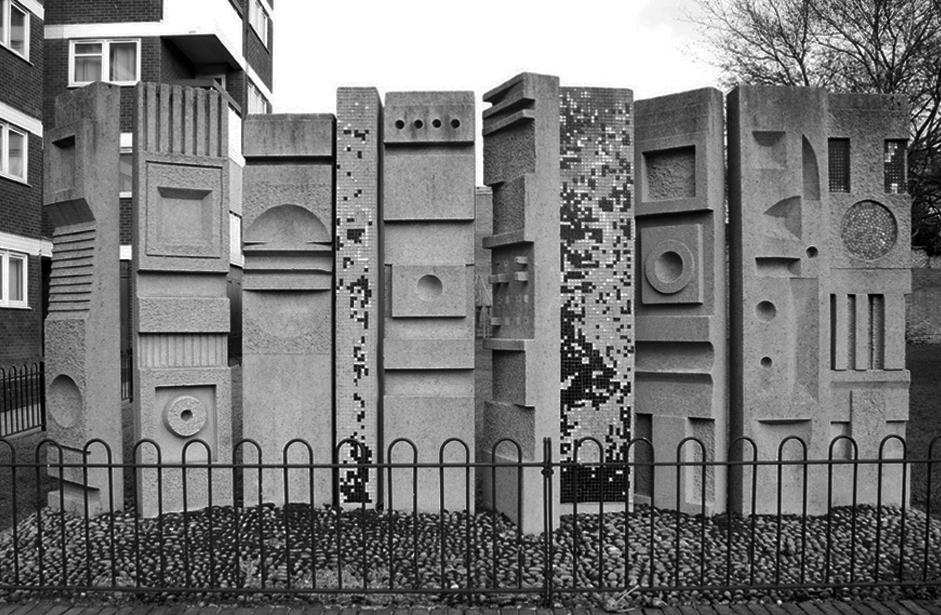
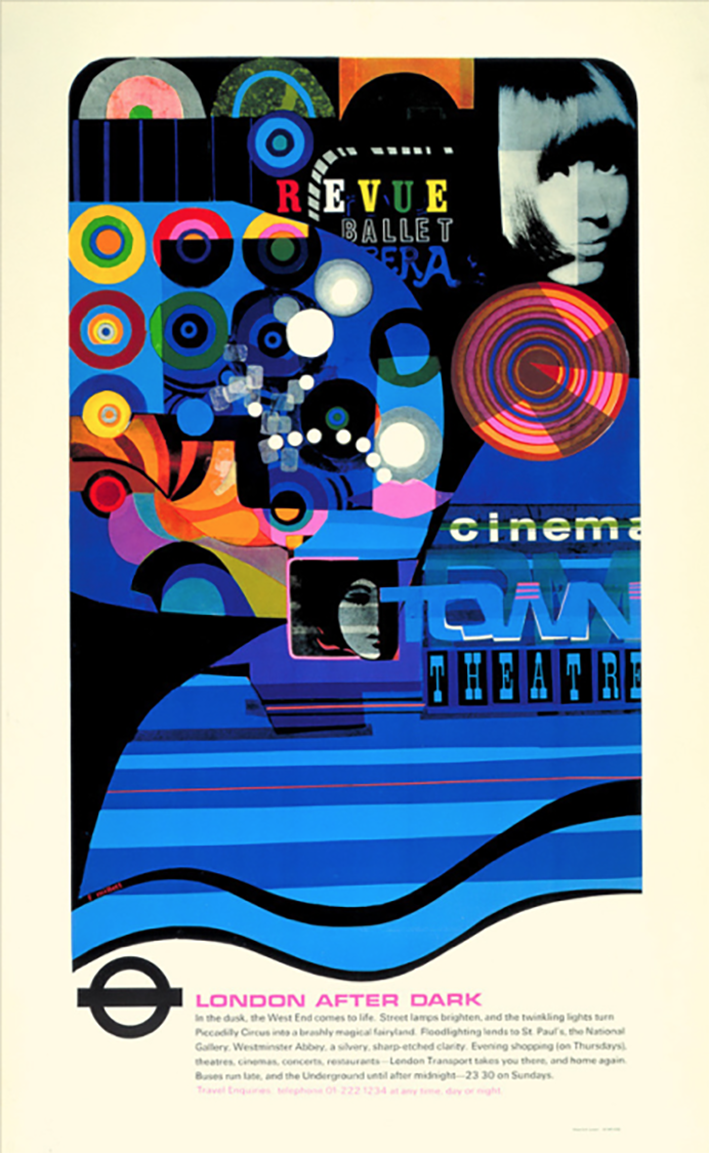
Fred Millett 1920–1980 was a muralist and poster artist who exhibited at the Festival of Britain and was commissioned by London Transport, National Westminster Bank, University of York and the General Post Office. He also taught Perception and Communication at the Polytechnic of Central London.
Fred Millett – Sculpted Wall Raglan Estate Camden 1965
Originally part of the children’s playground, the work is a feature of a post war estate designed by Frank Scarlett in Kentish Town
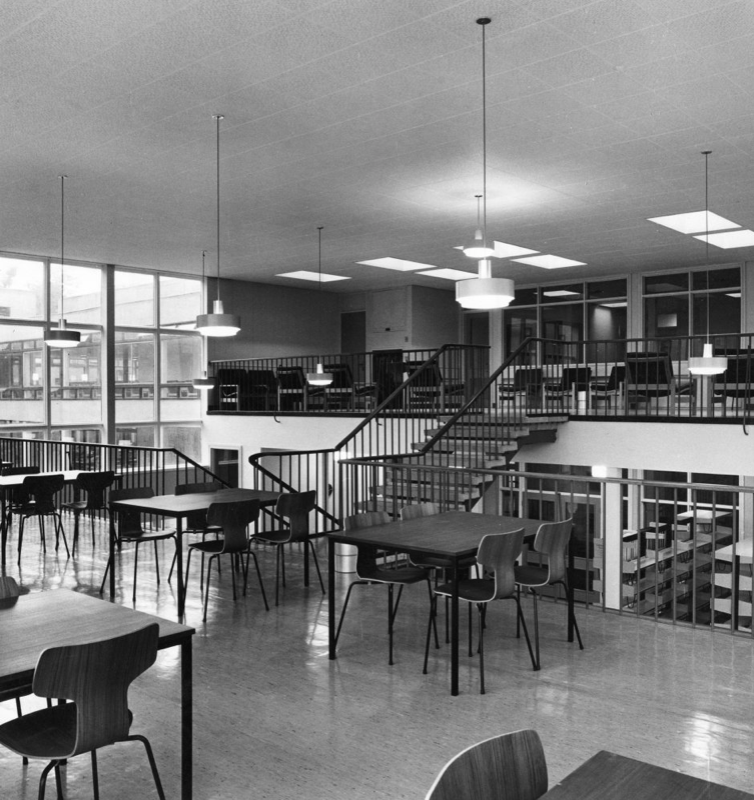
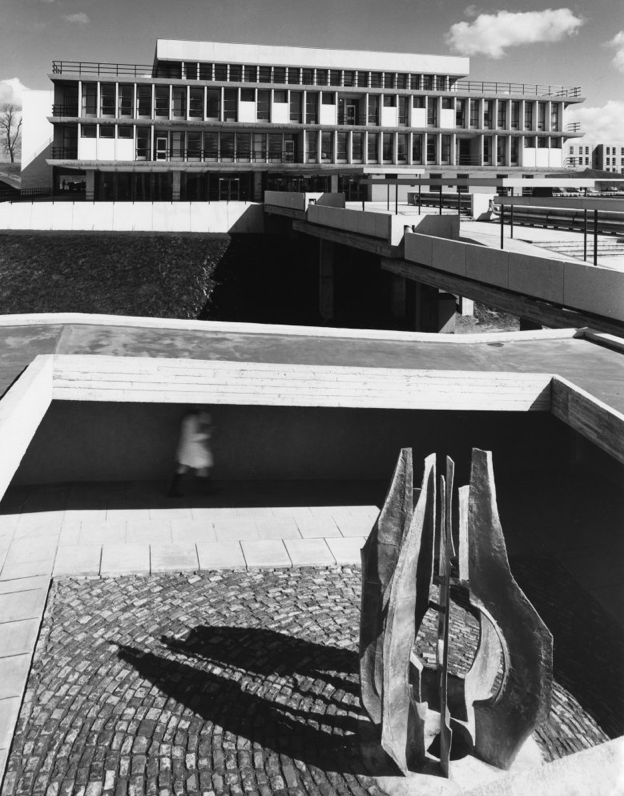
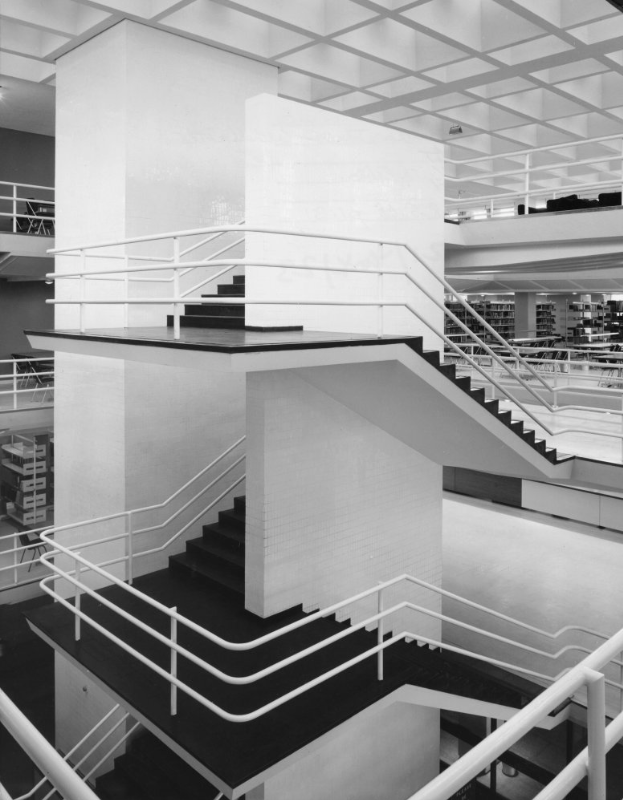
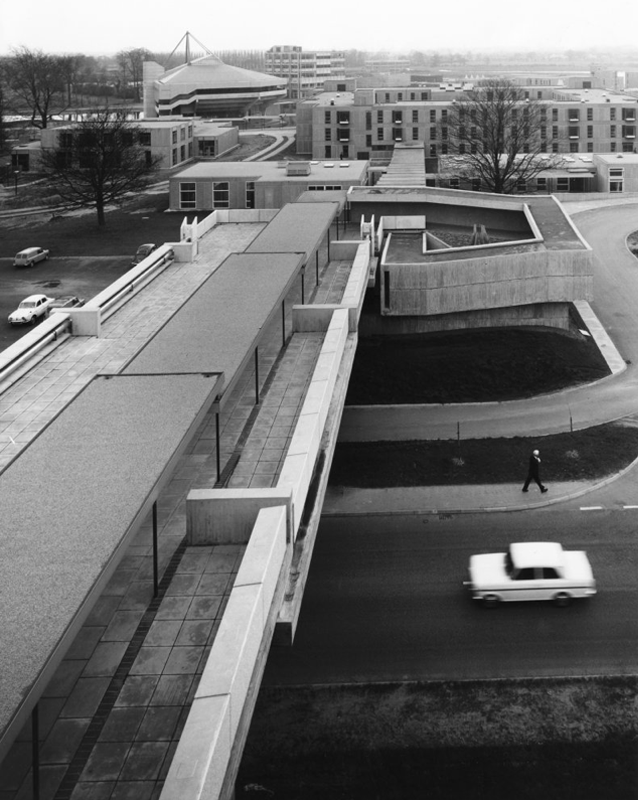
JB Morrell Library seen from the south side of Heslington Road with linking pedestrian bridge and ramp in foreground and cast aluminium sculpture by Austin Wright.
Austin Wright 1911-1997 is a significant post-war sculptor whose personal and professional lives were deeply intertwined with the city of York.
He was born on 4th June 1911 in Chester but spent his childhood in Cardiff. Though a largely self-taught artist, Austin took evening classes at Cardiff Art School. Austin attended New College, University of Oxford for his degree in Modern Languages before he started his teacher training. His first job as a teacher started in 1934 at The Downs, Malvern in Worcestershire. The school attracted artistic people. W.H. Auden taught English for example, and the art master organised a Dada exhibition one year. Here, Austin taught painting and sculpture as well as French and German.
Covered pedestrian bridge linking the southern side of the campus to the JB Morrell Library on the north side.
Central Hall
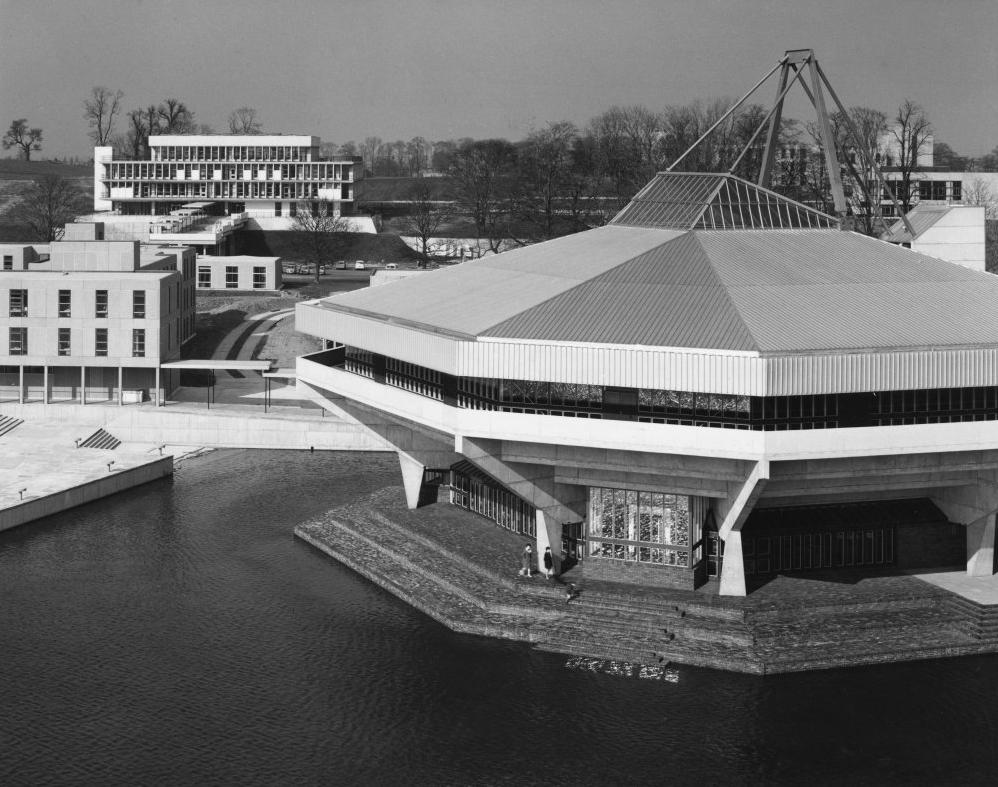
Colloquially known as The Spaceship designed by John Speight, constructed in 1966–1968. The hall is seen as a tour de force of the university, appearing on merchandise and often used as a background for university publicity.
Central lecture and recreation hall to the University of York, 1966-1968 by Robert Matthew, Johnson-Marshall & Partners with Stirrat Johnson-Marshall and Andrew Derbyshire as partners in charge, and John Speight as job architect.
* it forms part of a wave of seven new universities that improved access to higher education and marked the high point of publicly-funded architecture in post-war Britain;
* it is a physical manifestation of the University of York Development Plan, which was heralded as the beginning of contemporary university planning in Britain;
* it continues a historic tradition established by late-C19/early-C20 ‘red brick’ universities of featuring a great hall for special events.
* it has an imaginative and bold design with a striking architectural form and massing that is the focus of the most dramatic views across the campus lake;
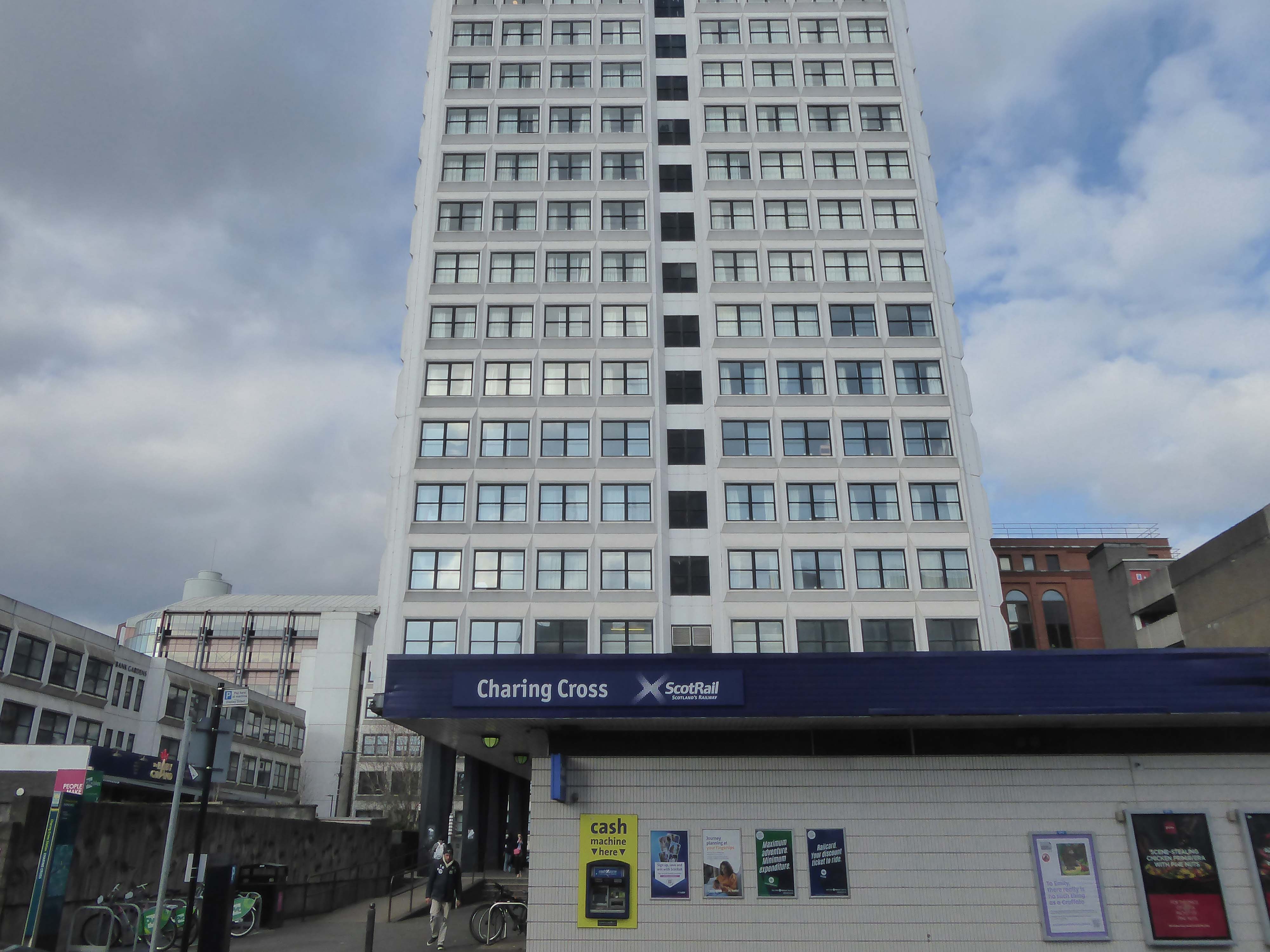
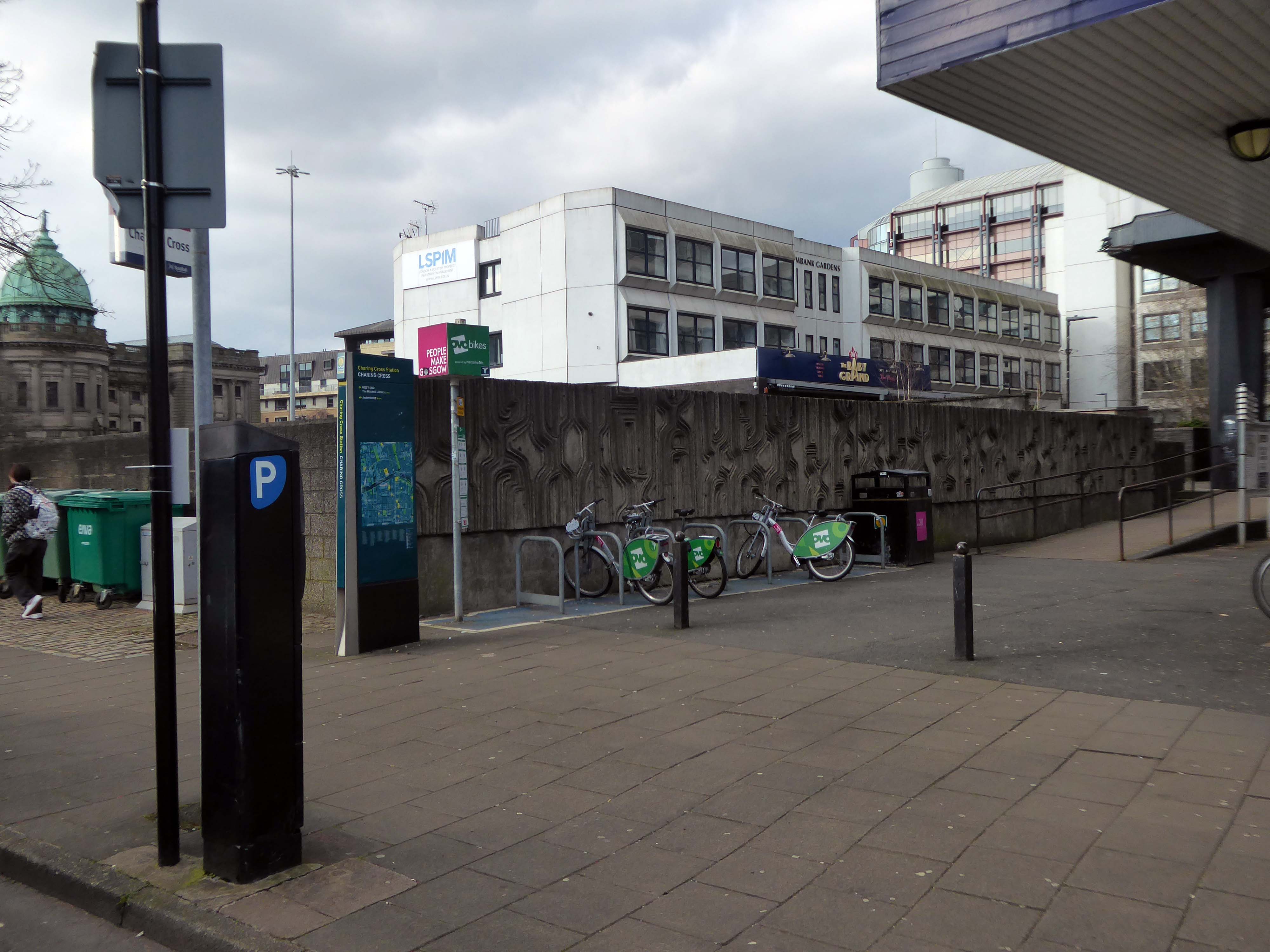
Dating from 1886, it was originally part of the Glasgow City and District Railway, the first underground railway in Scotland, and as such the station is built below the surface of the surrounding streets. The station was built using the cut and cover method, with the original walls being visible on the open air section at the western end of the platforms.
In 1968 it was demolished due to it being in the path of the new Glasgow Inner Ring Road, and the surface access to the station was moved to its eastern end, with a new surface building constructed as part of the Elmbank Gardens office complex in 1971 – the building was designed by the Richard Seifert & Partners.
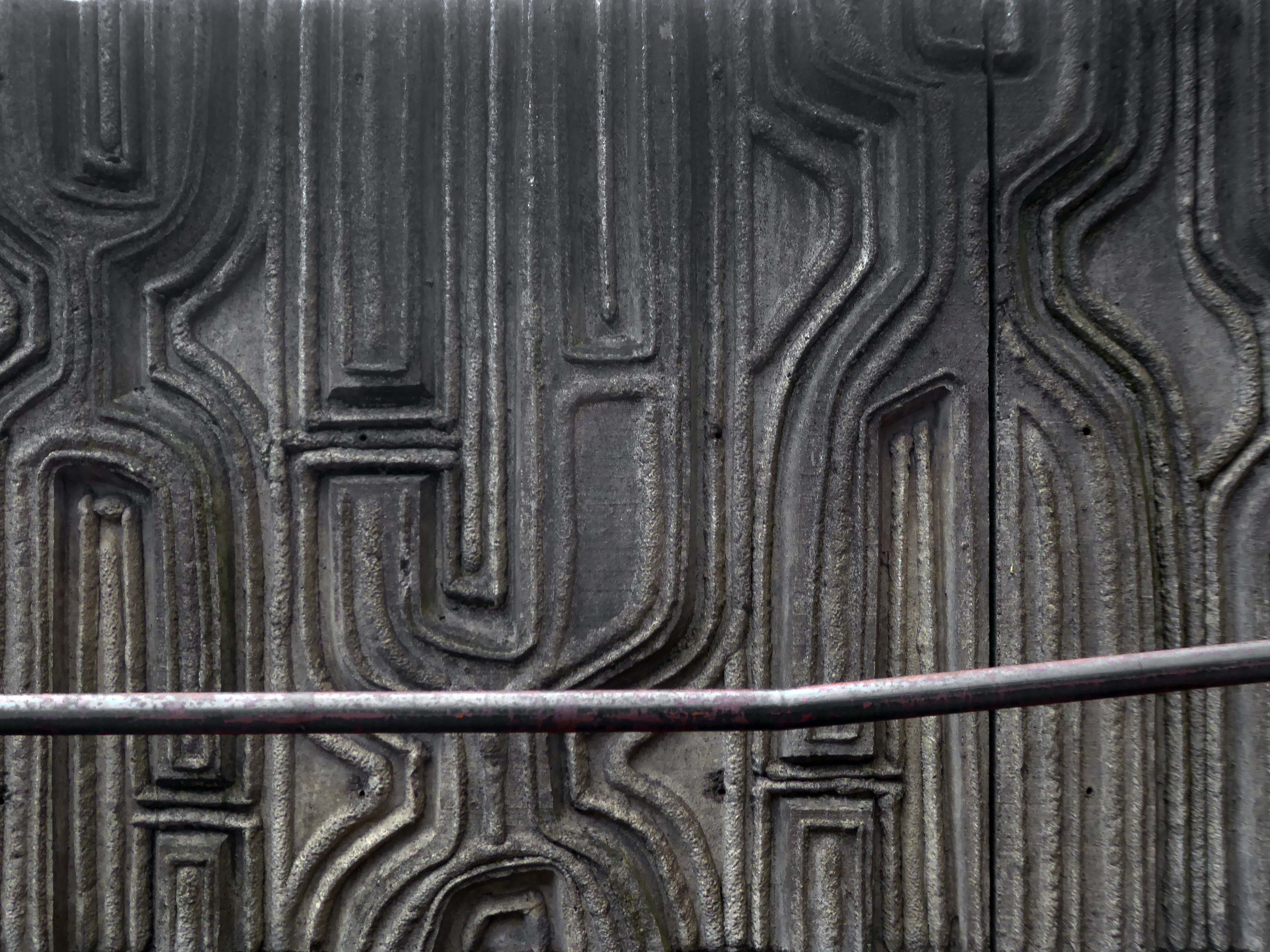
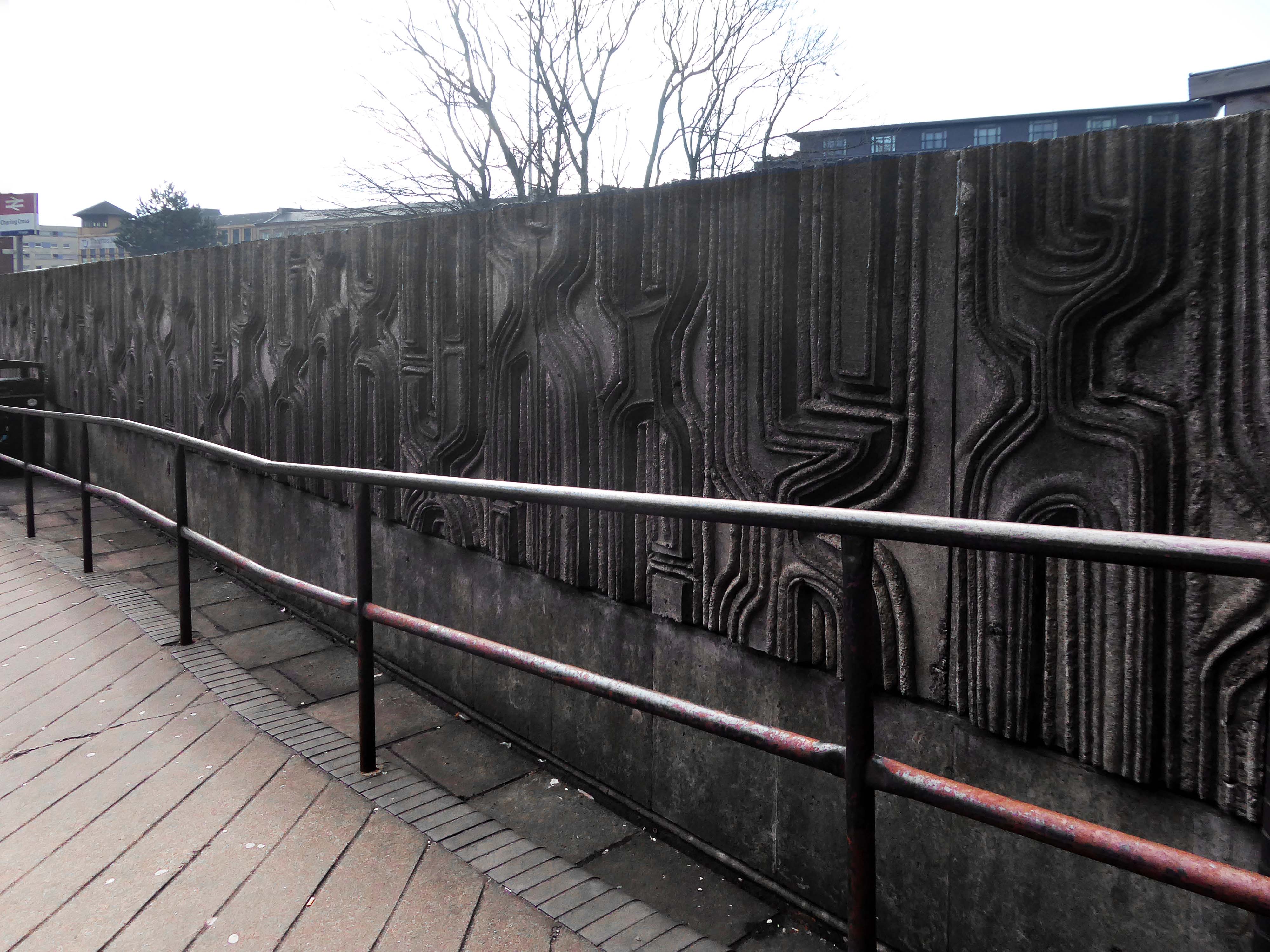
I was there in 2024 to photograph the Charles Anderson mural.
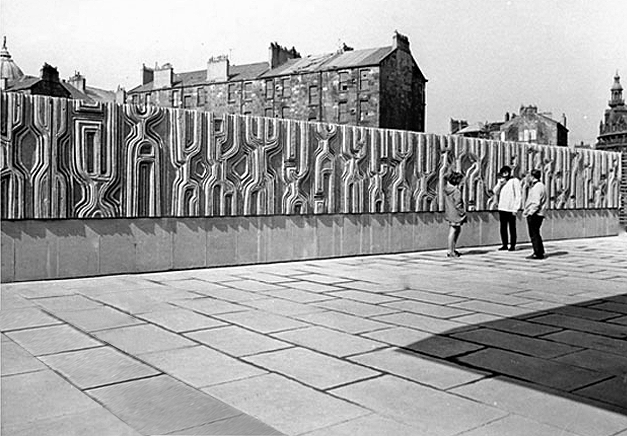
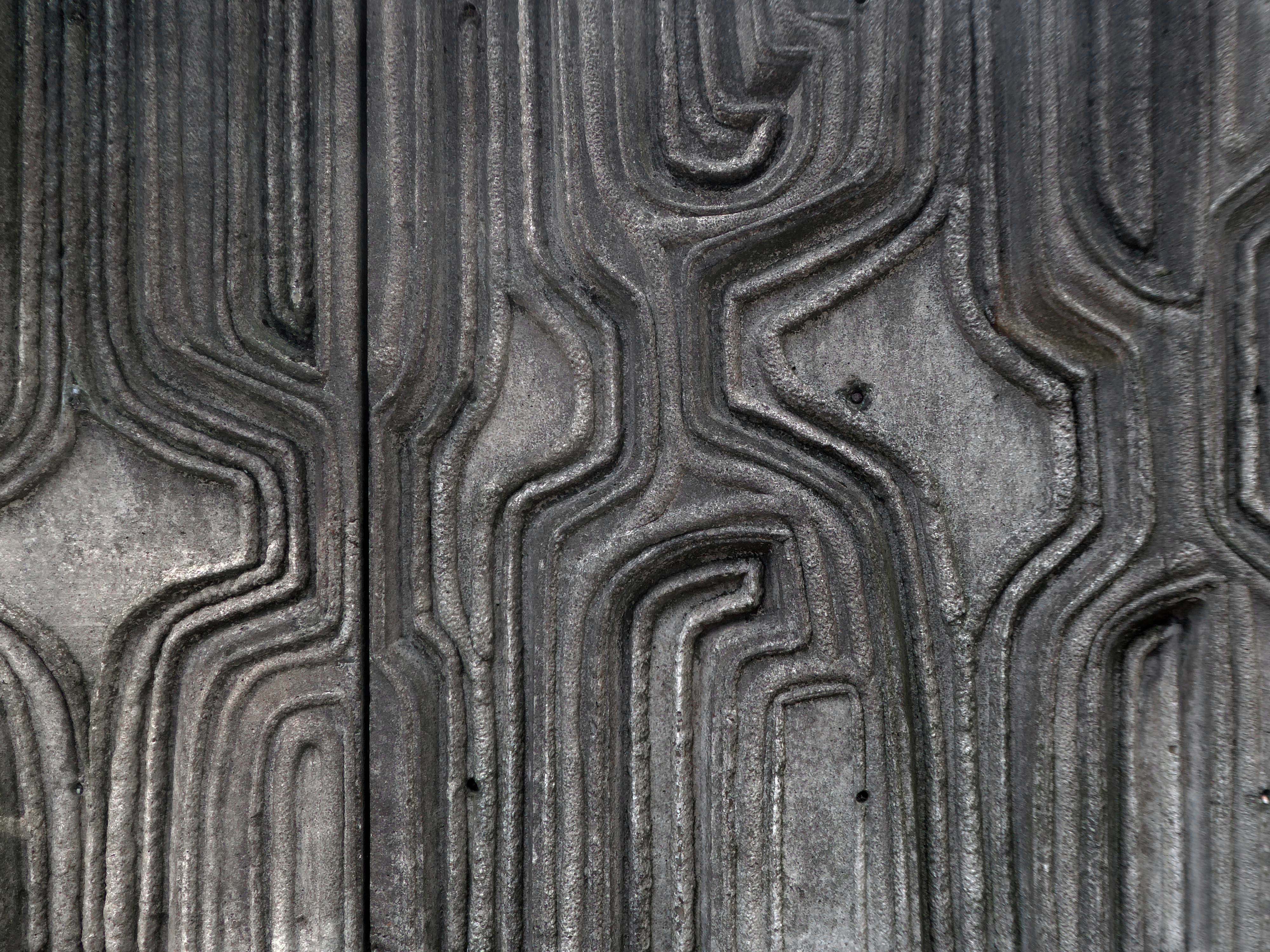
Constructed in situ – one third has now been removed at the northern end
Charles Anderson studied drawing and painting at Glasgow School of Art under David Donaldson, Mary Armour etc, graduating with Diploma in 1959. The following year he entered The Royal Scottish Academy painting competition for Post Graduate students and won the Chalmers Bursary. Joan Eardley – one of the adjudicators- took a keen interest in his work and encouraged him to exhibit at the RSA the same year.
Following a period of five years teaching art, He worked as a professional mural painter and sculptor for the next thirty years on major art and design projects throughout the United Kingdom, carrying out commissions for a wide variety of clients including local authorities, property developers, banks and major insurance companies. His most prestigious commission to date was the result of winning a national sculpture competition to provide a bronze figurative group which is entitled “The Community” for Livingston New Town in 1996. In early 1997 he returned to the painting of easel pictures and contributed to the annual exhibitions of The Royal Glasgow Institute, the Royal Scottish Society of Painters in Watercolours, The Royal Scottish Academy and The Paisley Art Institute. He has works in various private collections throughout the U.K. and abroad.
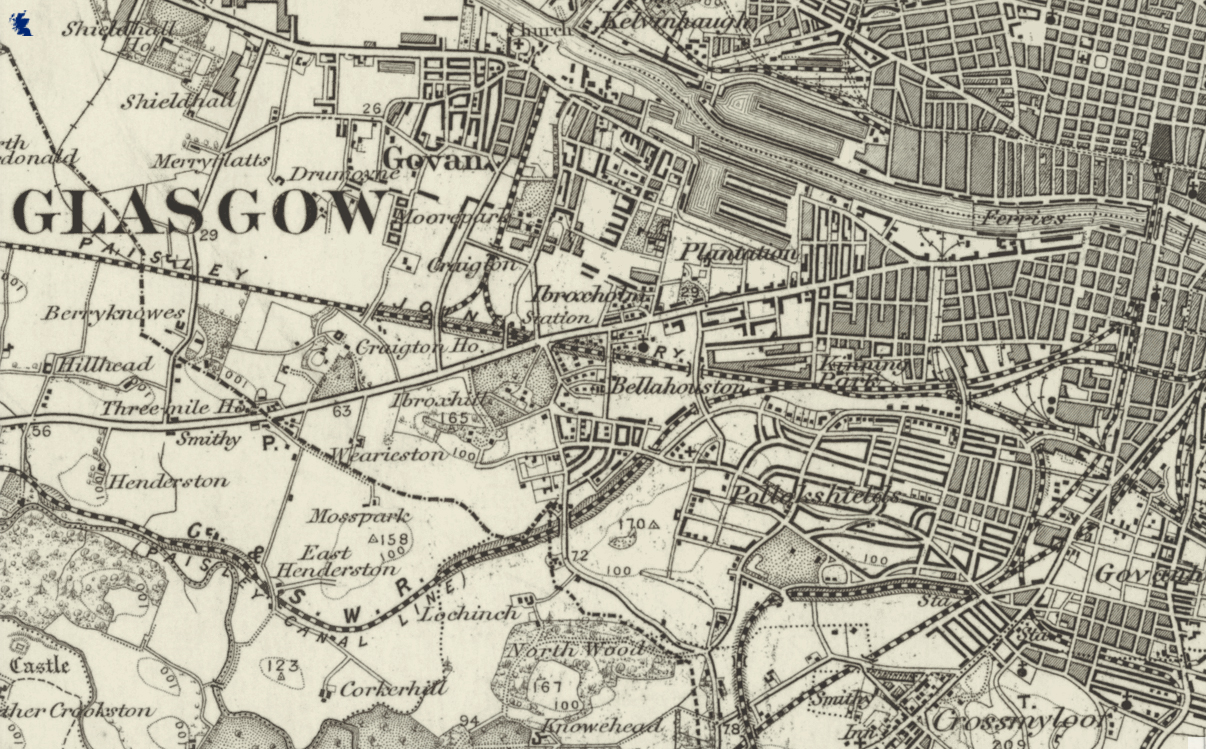
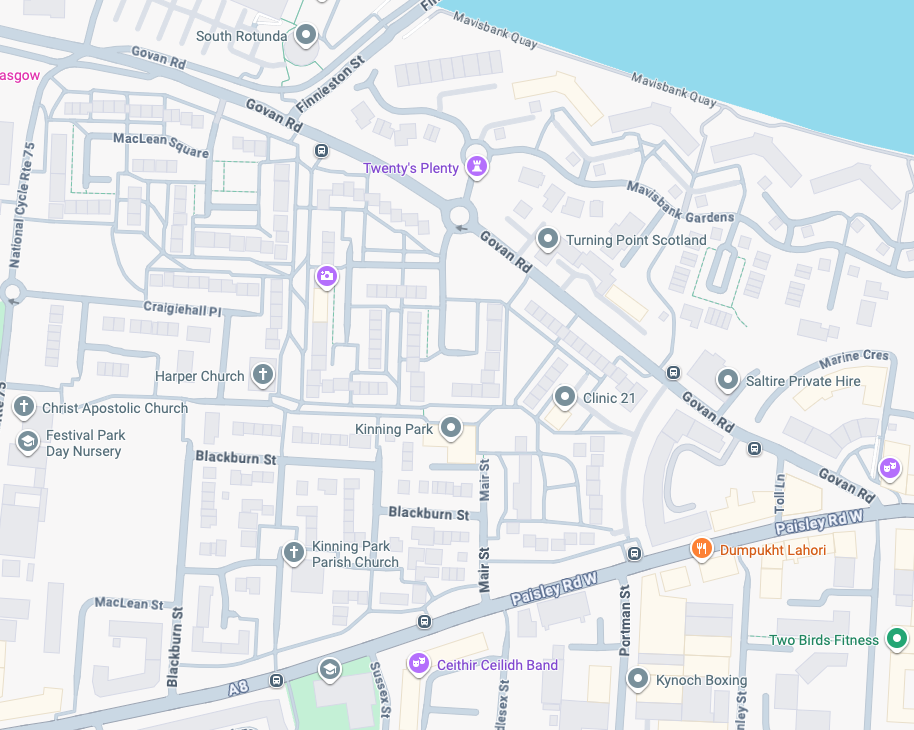
Plantation is an area in the city of Glasgow, Scotland. It is situated south of the River Clyde and is part of the former Burgh of Govan. It lies approximately between the areas of Cessnock and Ibrox to the west, Kingston to the east, and Kinning Park to the south.
The 80-acre Craigiehall estate, previously three smaller properties, was bought in 1783 by John Robertson, a cashier in the Glasgow Arms Bank, who with his brothers owned cotton and sugar plantations in the West Indies. He renamed it Plantation, possibly as a reminder of the West Indies plantations. It then, in 1793, passed to John Mair, a merchant who developed the building and gardens. Plantation passed to the Maclean family, in 1829, in the person of William Maclean, a Glasgow Baillie.
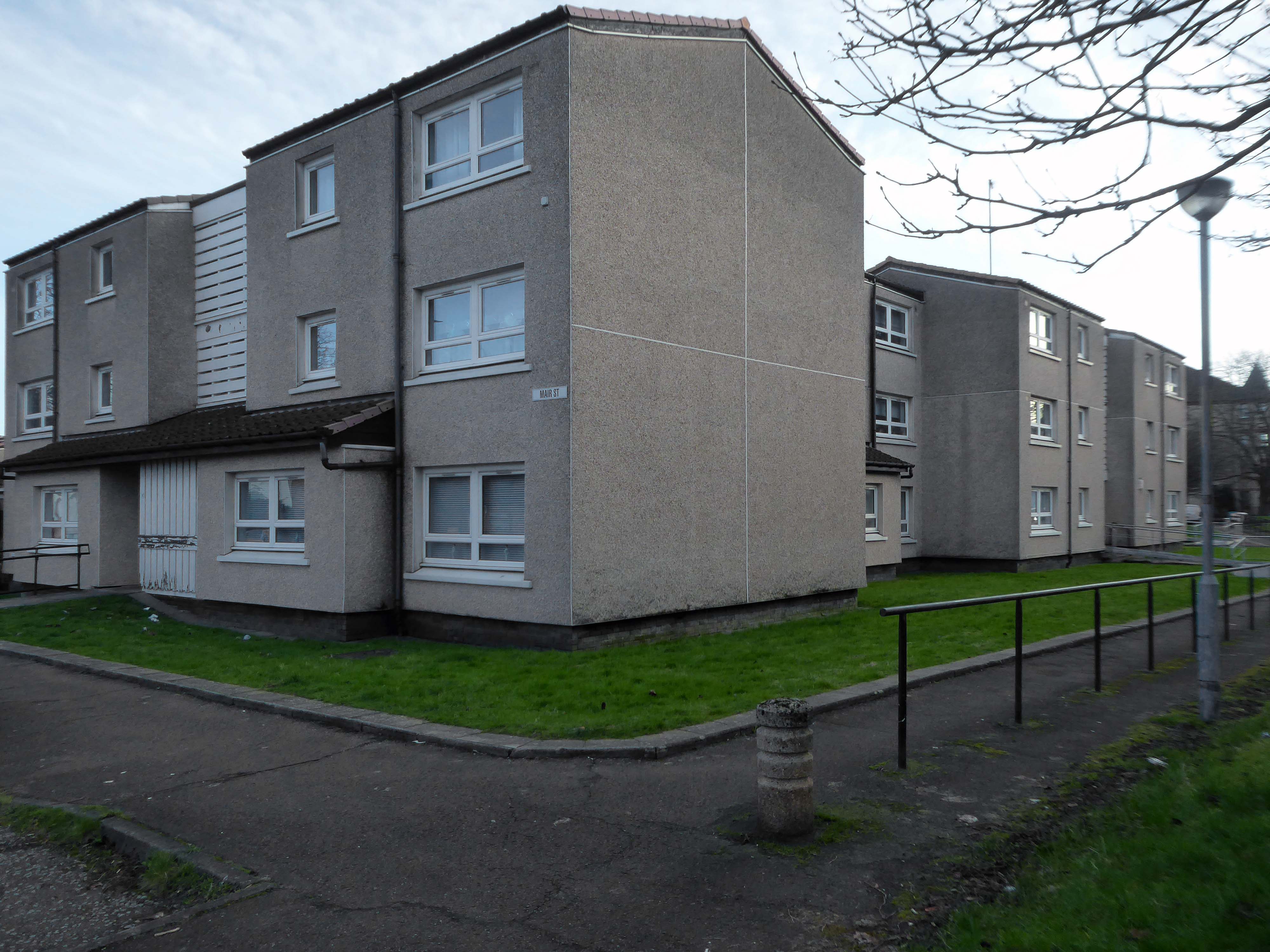
In the years that followed, the estate was bisected by the railway to the south, with the shipbuilding yards of The Clyde Trust cutting off the estate from the river. Plantation was laid out for tenement houses in the 1870s and Maclean, Plantation, Mair and Craigiehall Streets refer to the history of the old estate.
Plantation Quay formed part of the site for the Glasgow Garden Festival in 1988 and subsequent Glasgow Science Centre.
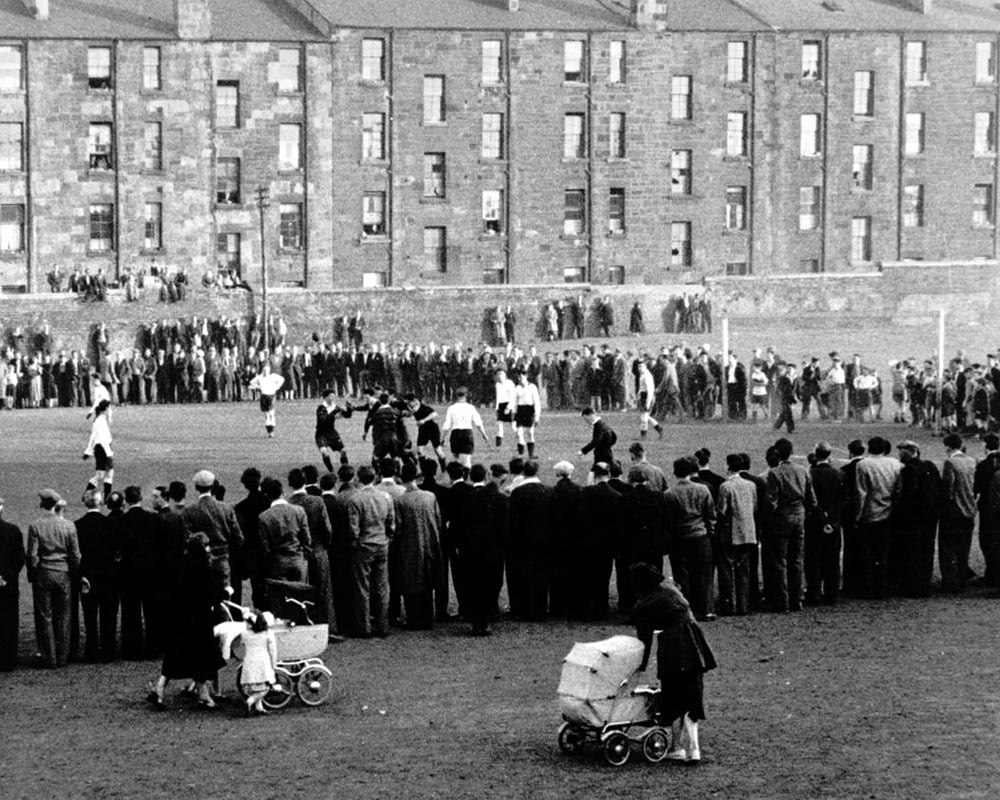
A crowd gathered to watch a football match at Plantation, 1955. The players in dark jerseys appear to be celebrating a goal.
The mostly male spectators are focused on the game, while in the foreground a couple of women pass by with prams. The tenements in the background provide their inhabitants with a bird’s-eye view of the match. Other spectators are perched on top of a high wall separating the tenement back courts from the football pitch.
In 1955 Partick Camera Club set out to create a photographic survey of Glasgow. As the project progressed, other camera clubs joined and each was allocated a district of the city to photograph. Glasgow Museums exhibited the photographs at Kelvingrove Art Gallery and Museum and at the People’s Place, and in 1956 the exhibition was shown at the Palace of Art in Bellahouston Park. The photographs are now part of Glasgow Museums’ collections.
So the folks, homes, industry and streets of the past have been and gone.
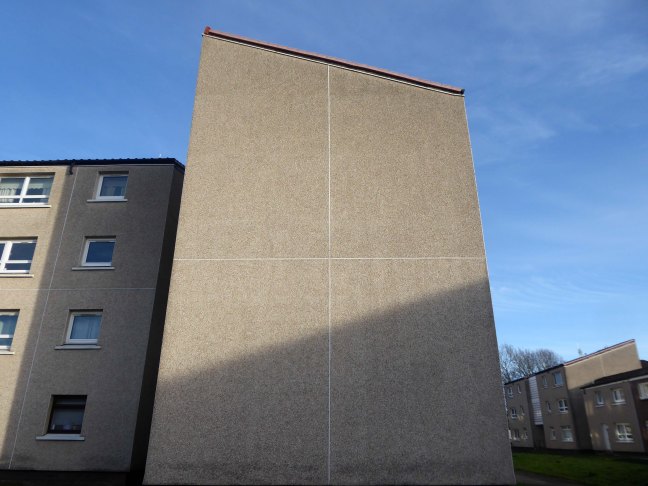
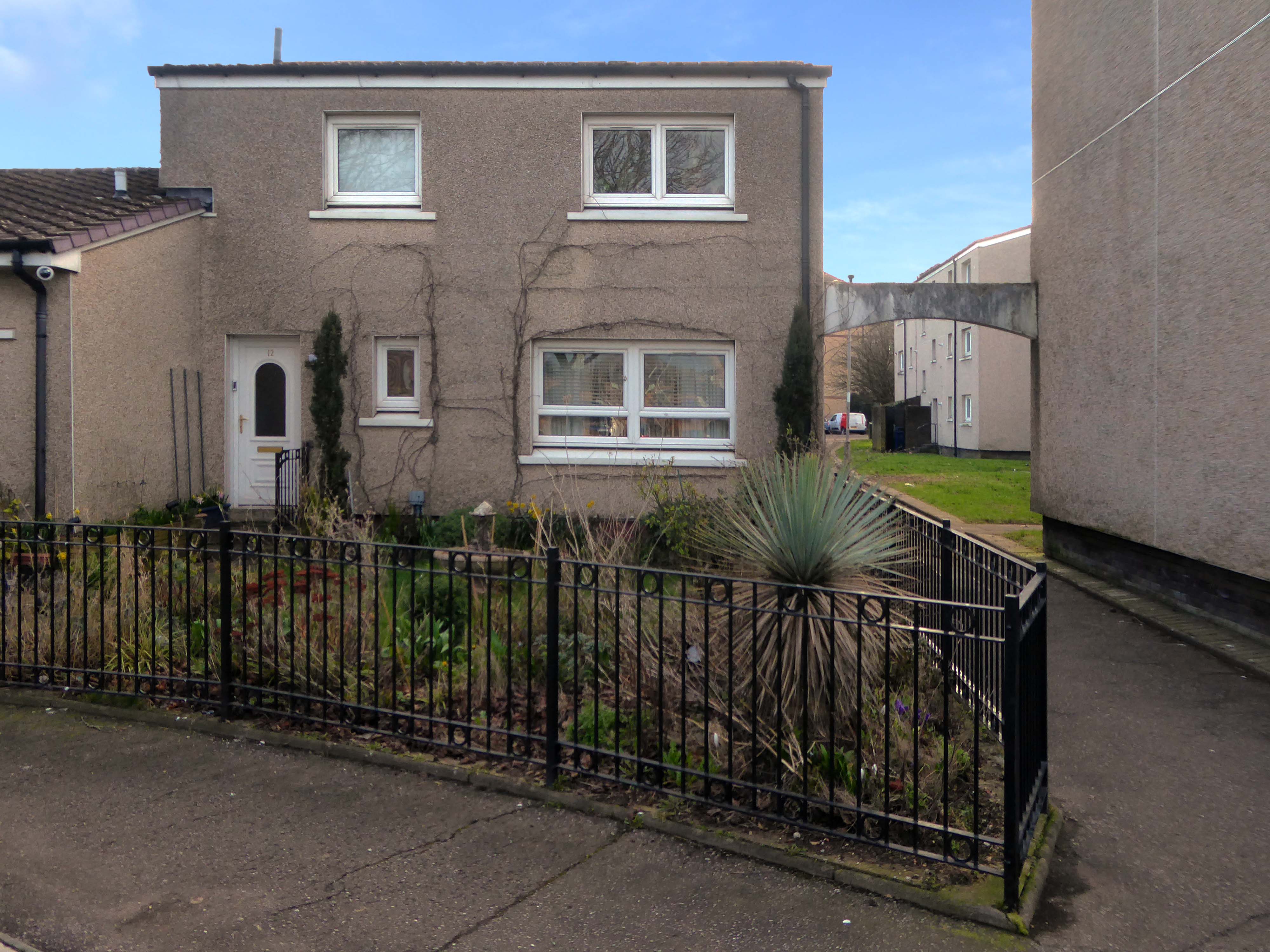
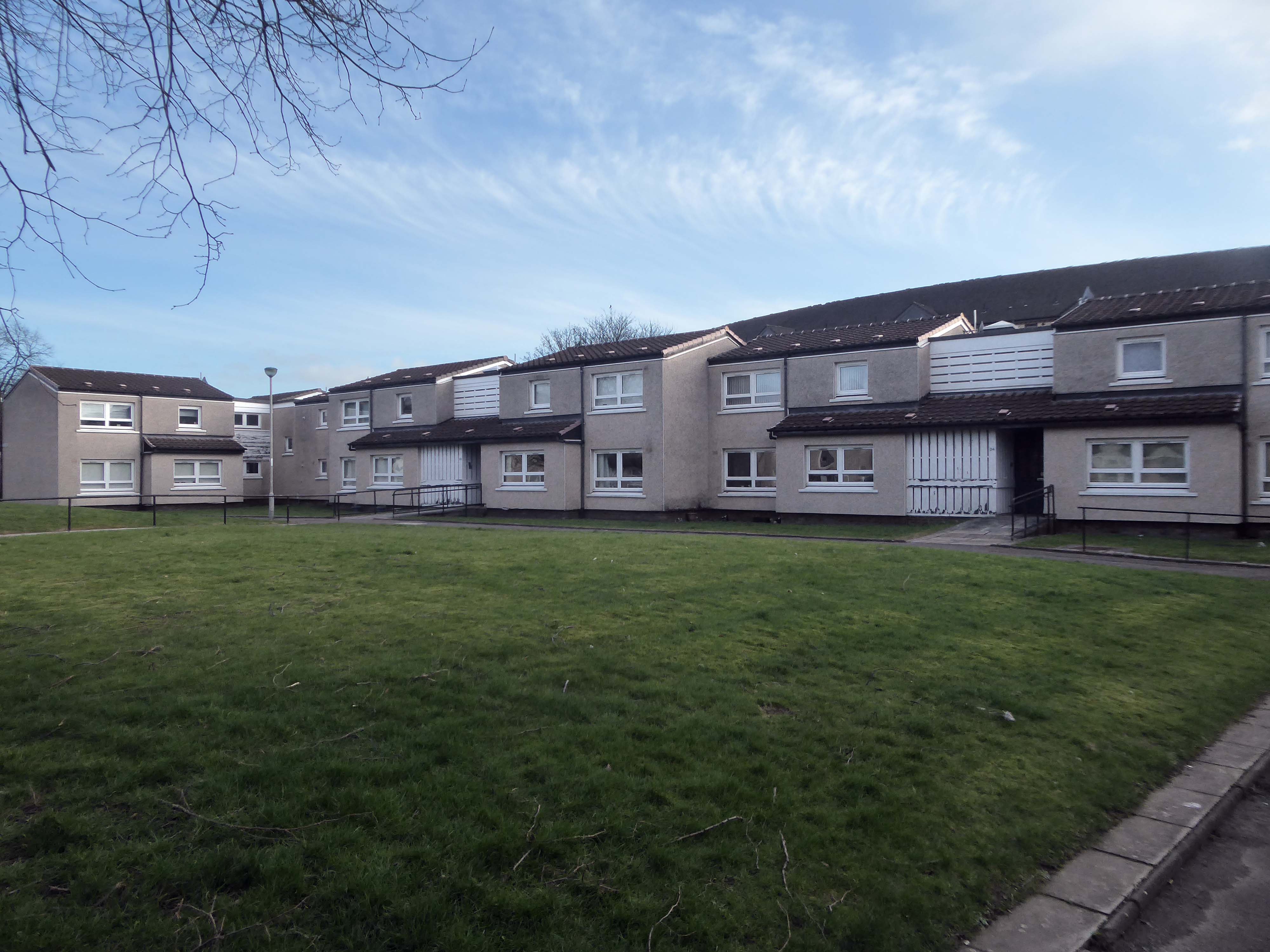
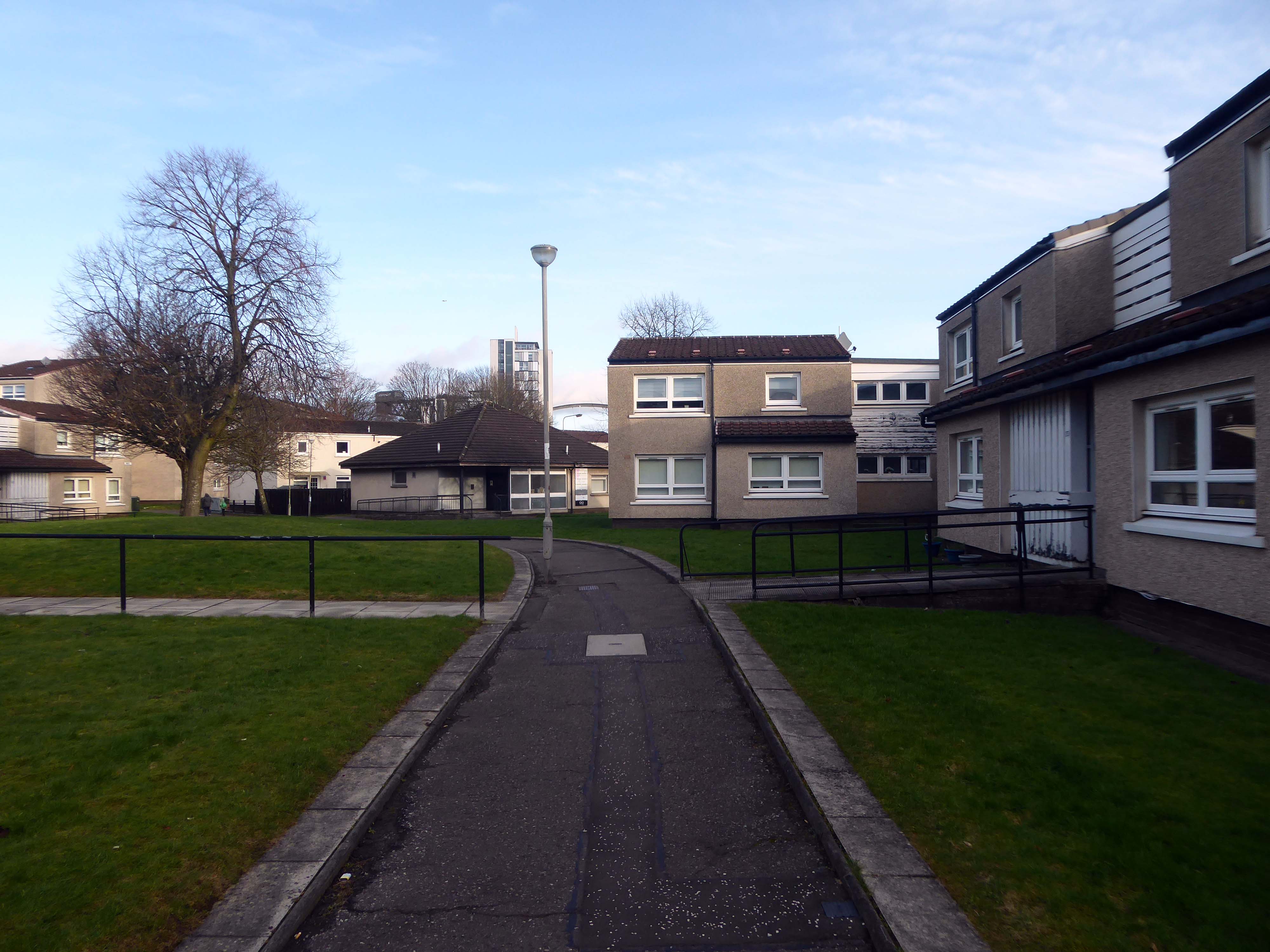
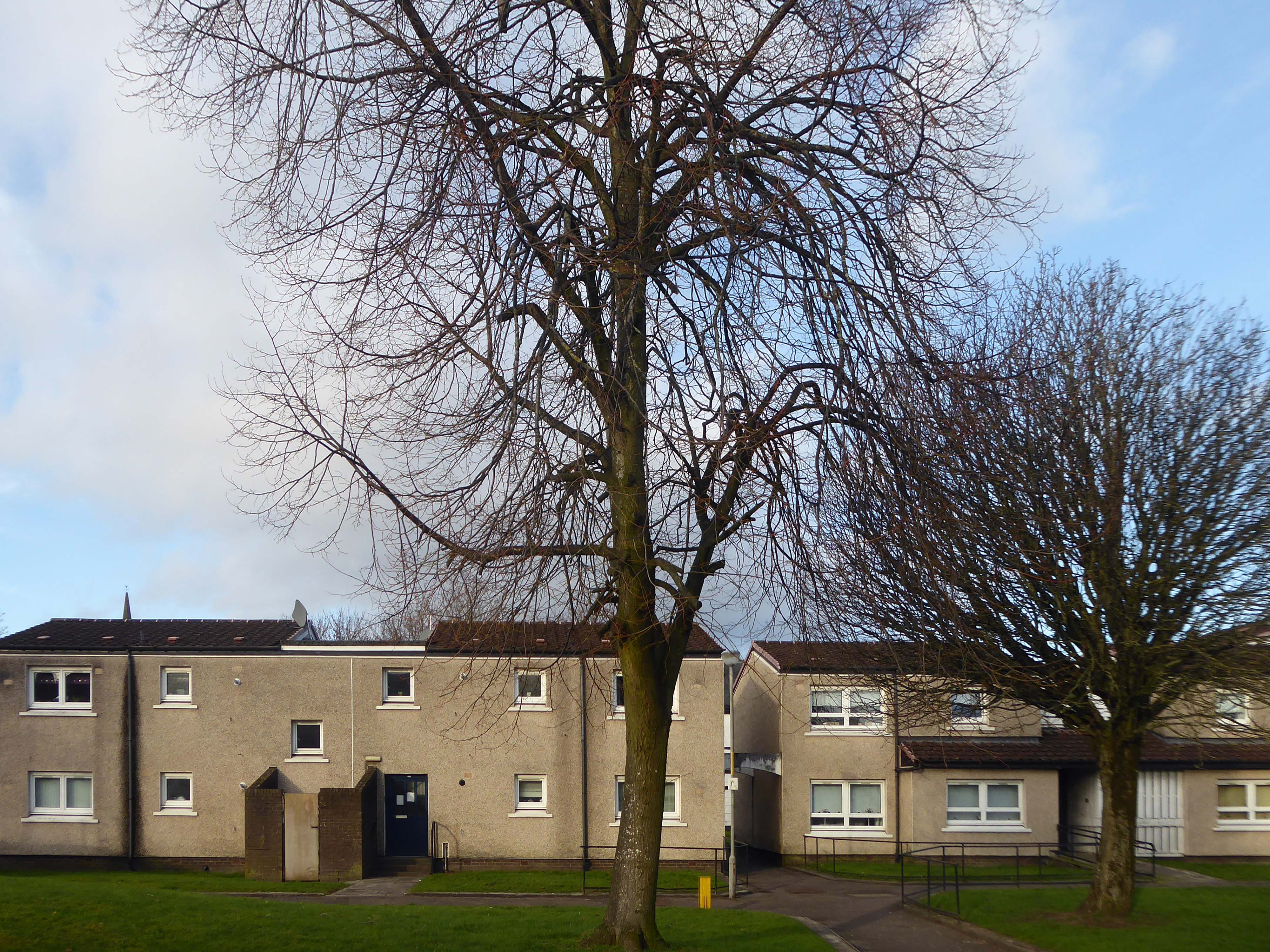
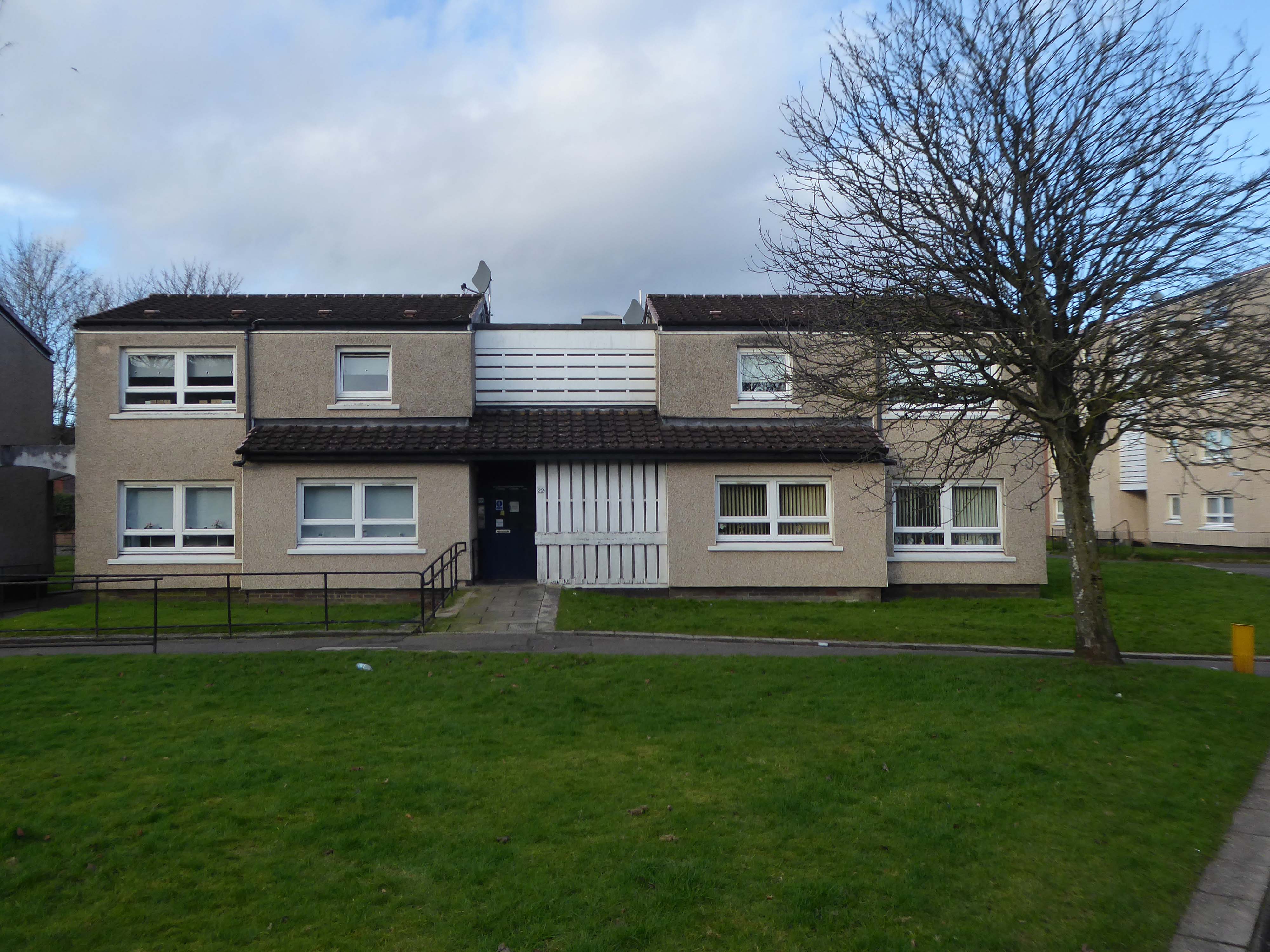
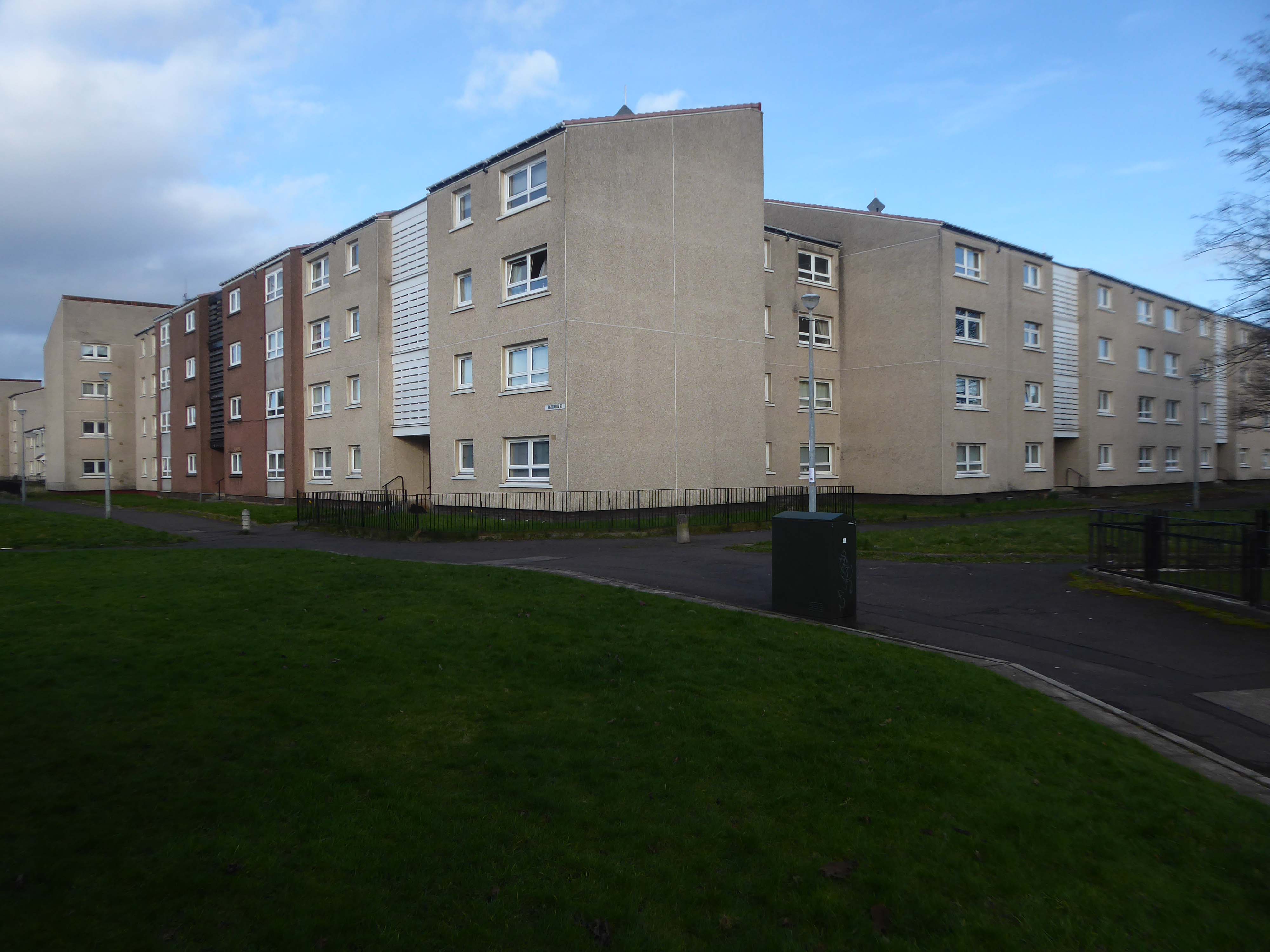
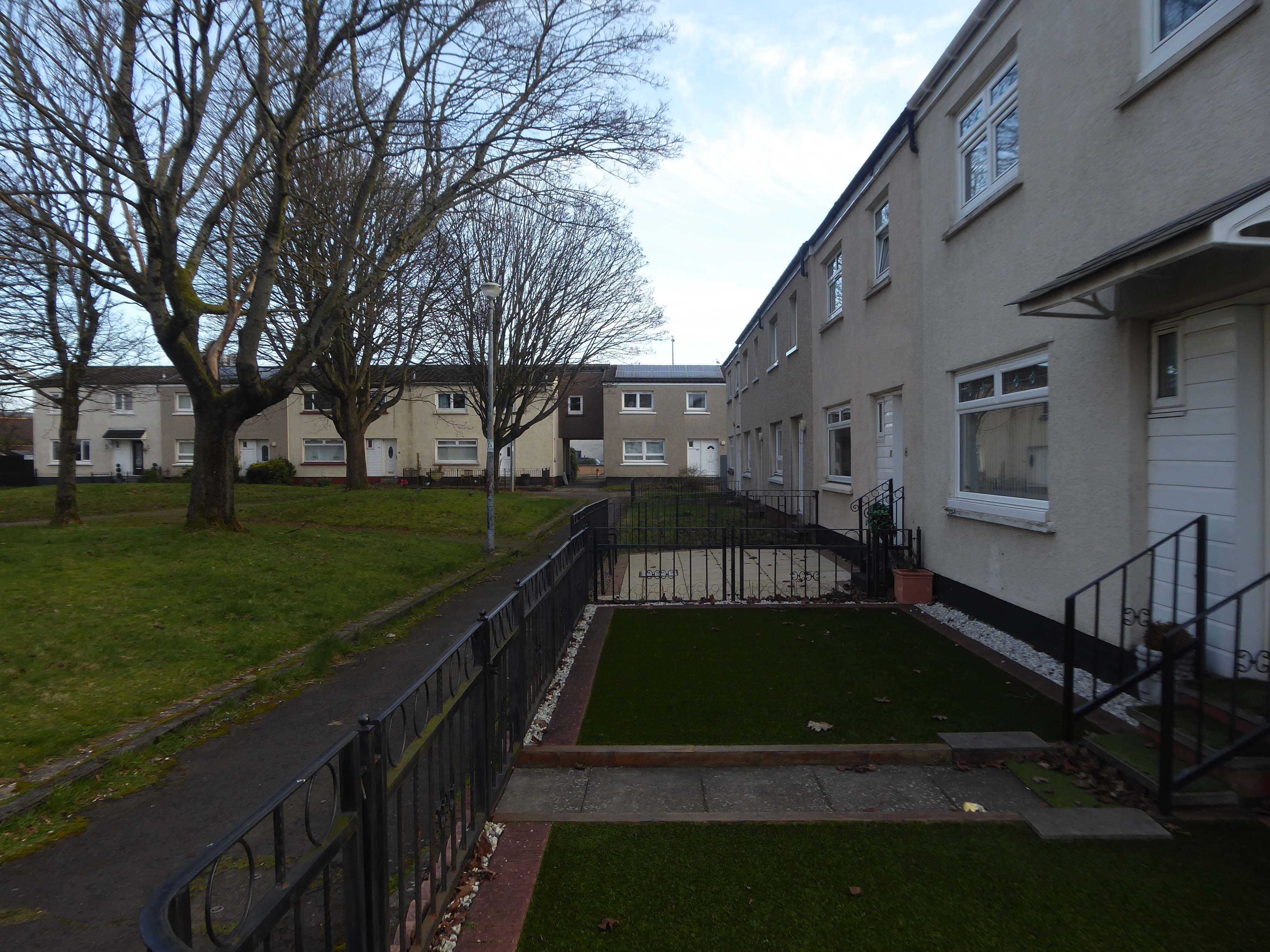
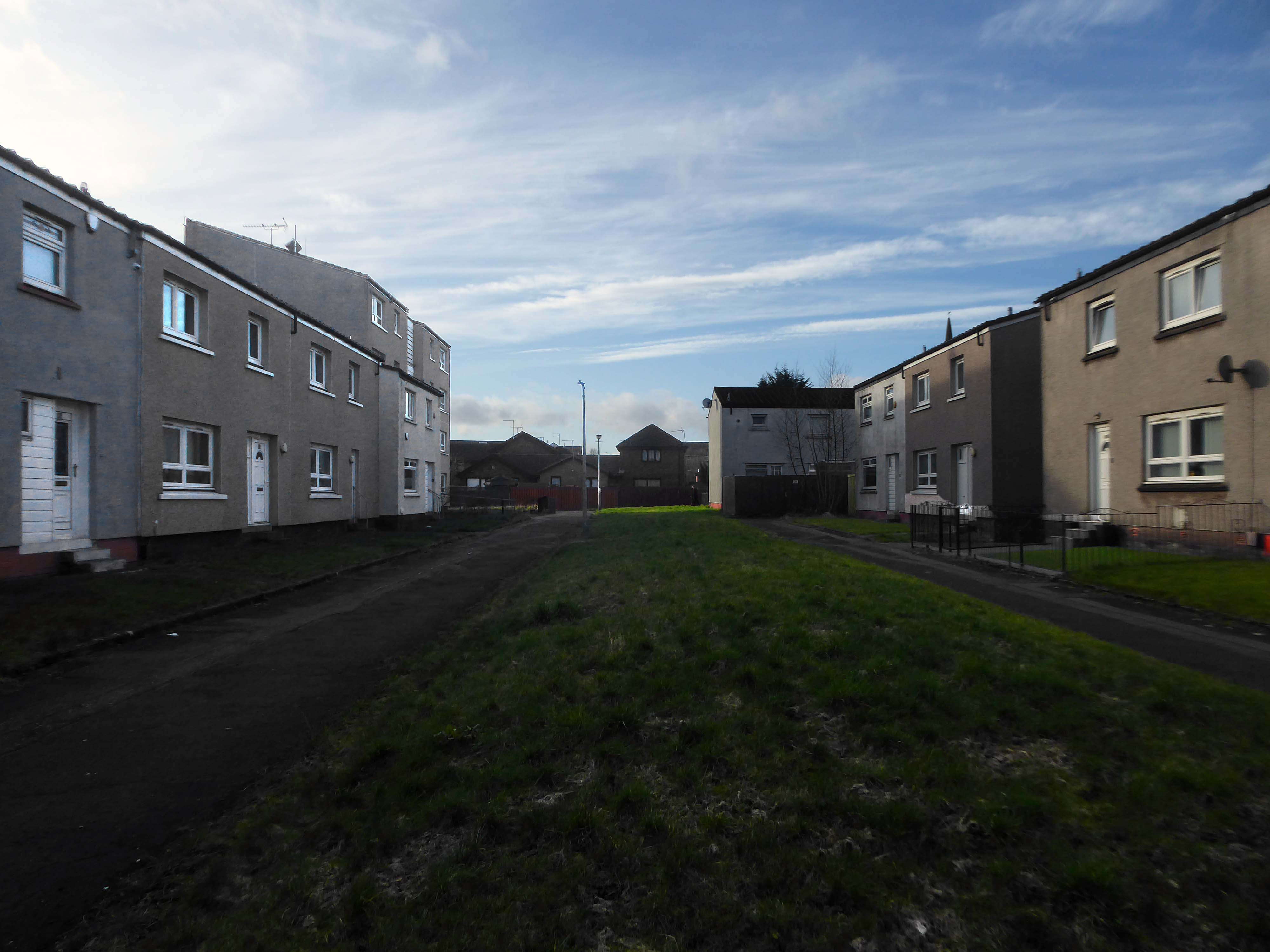
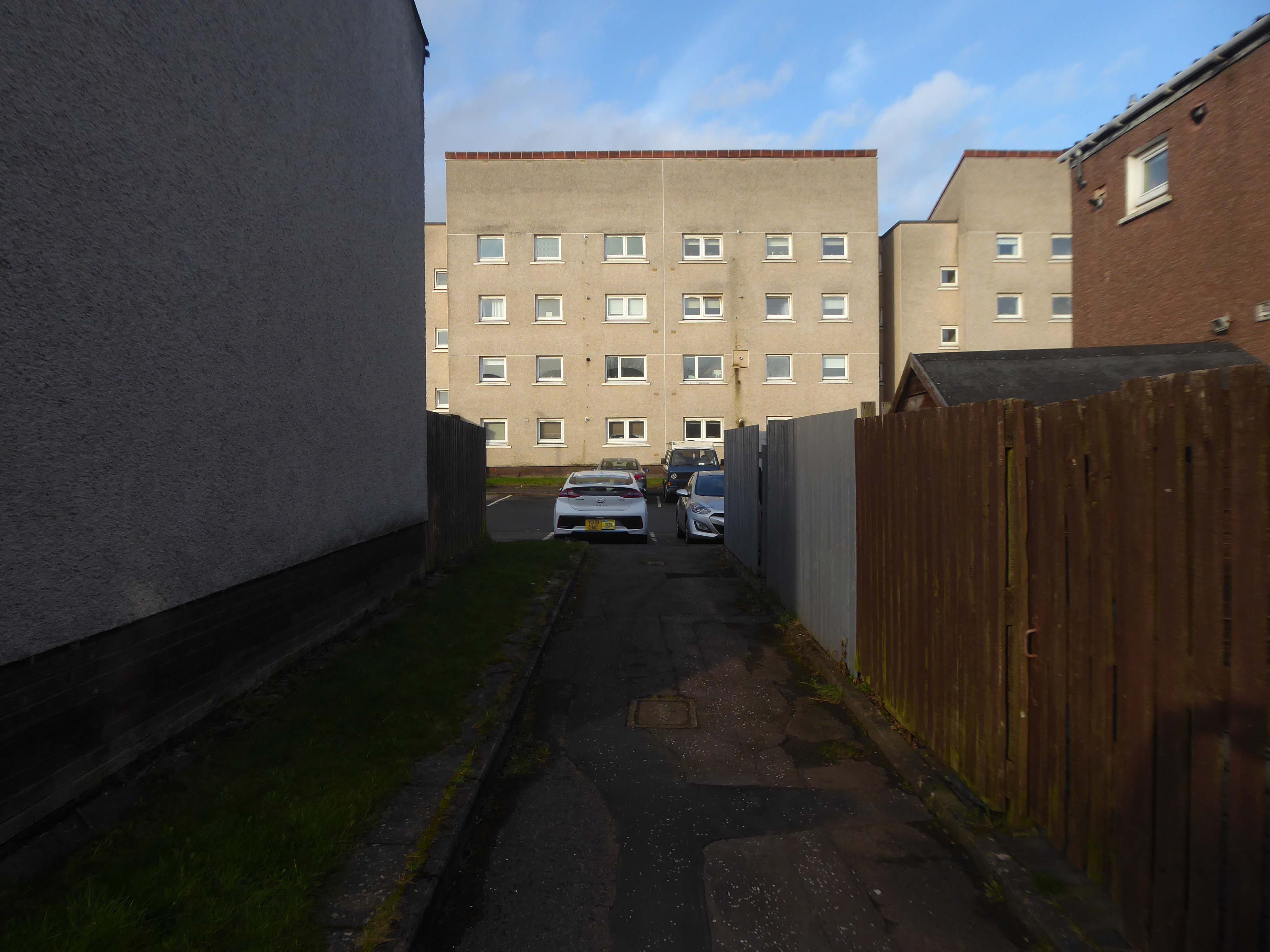
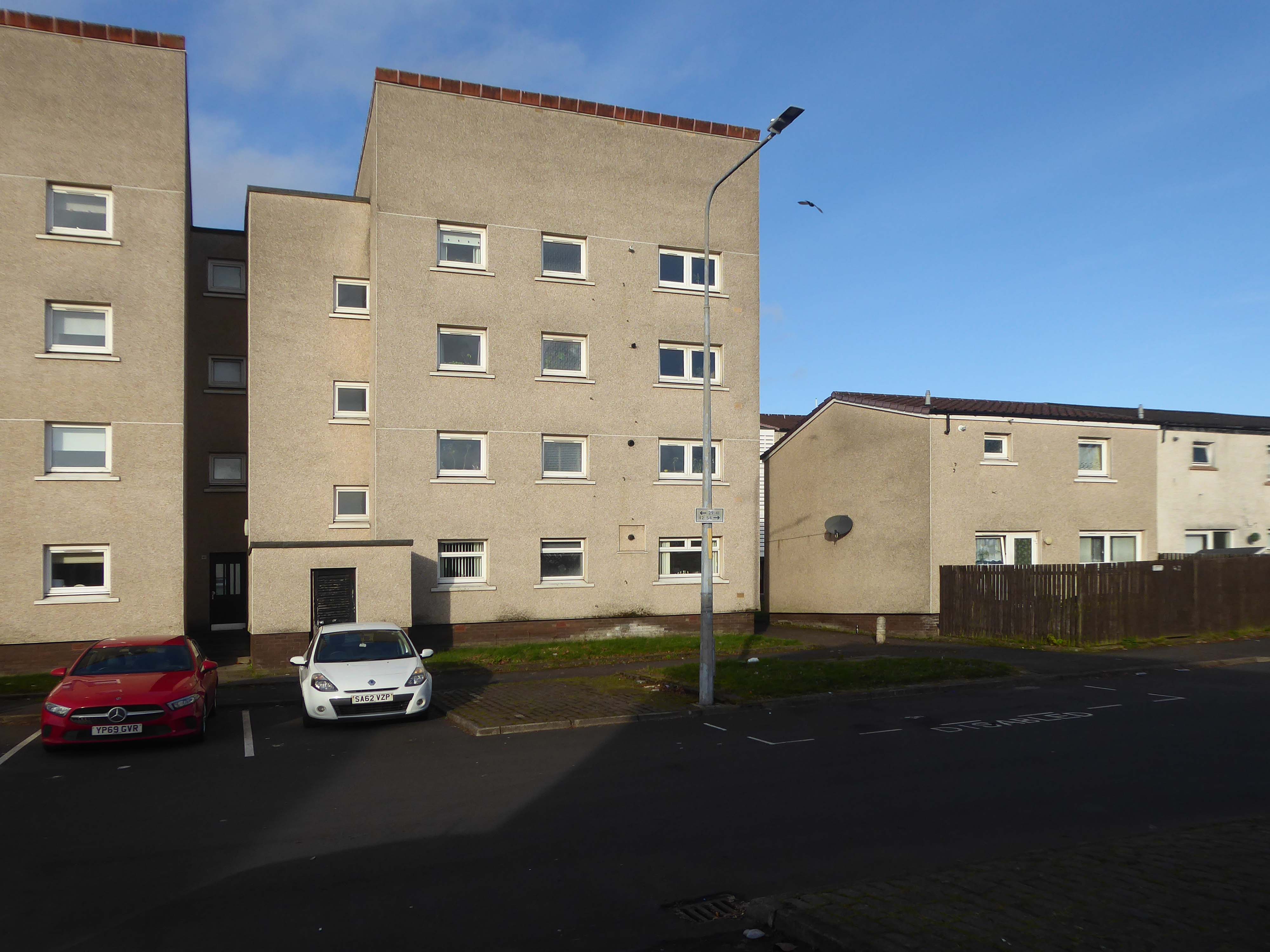
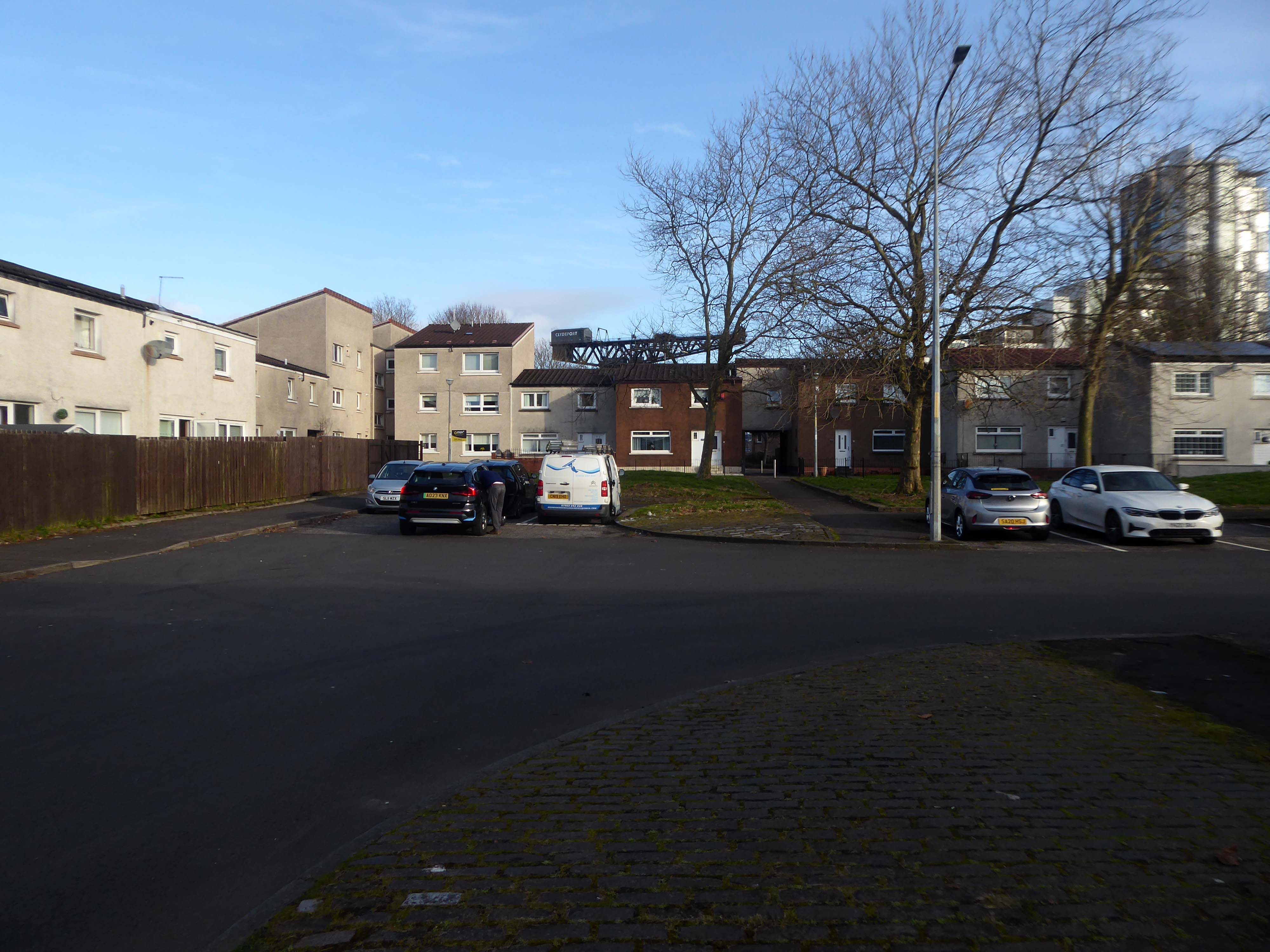
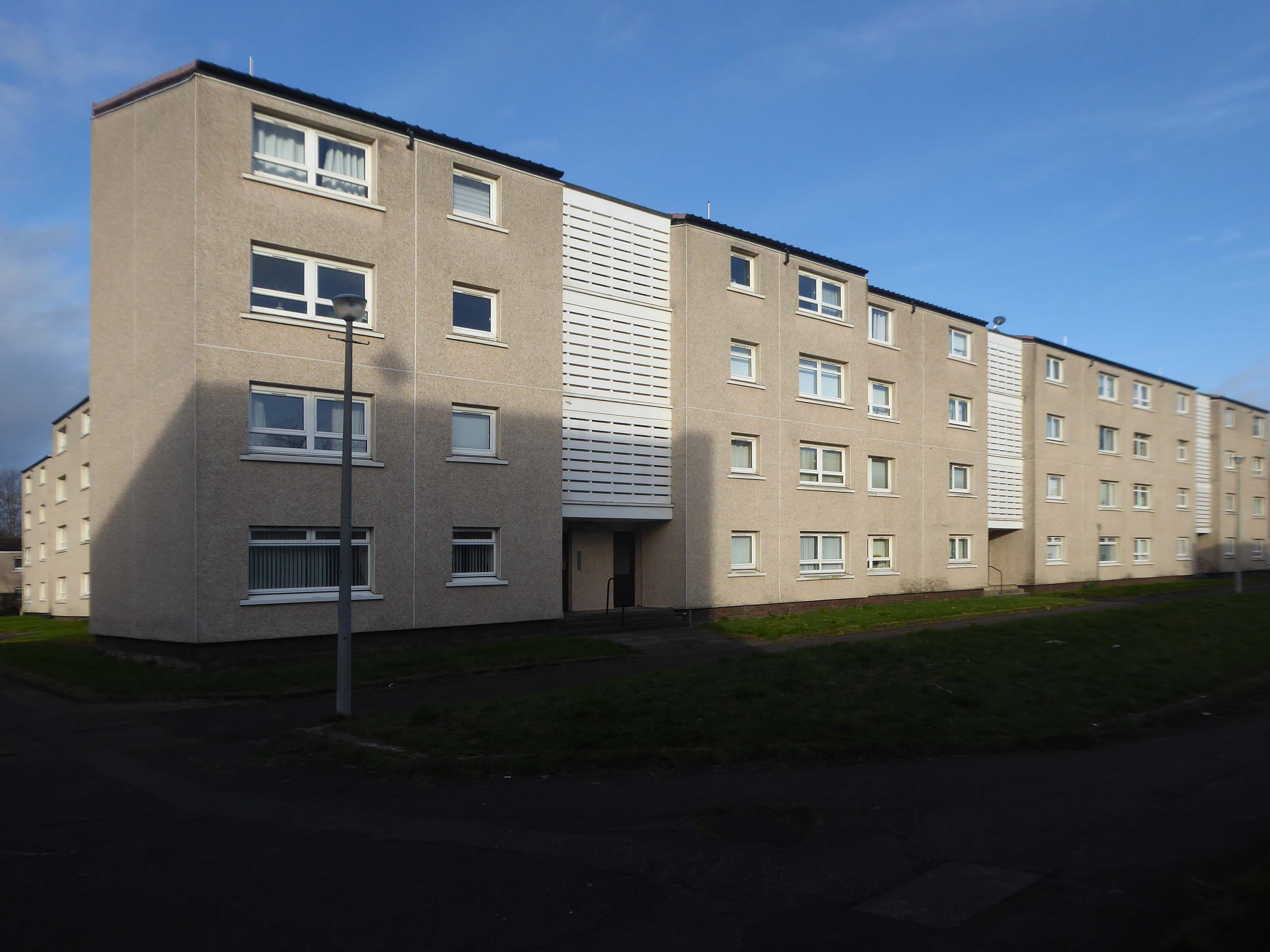
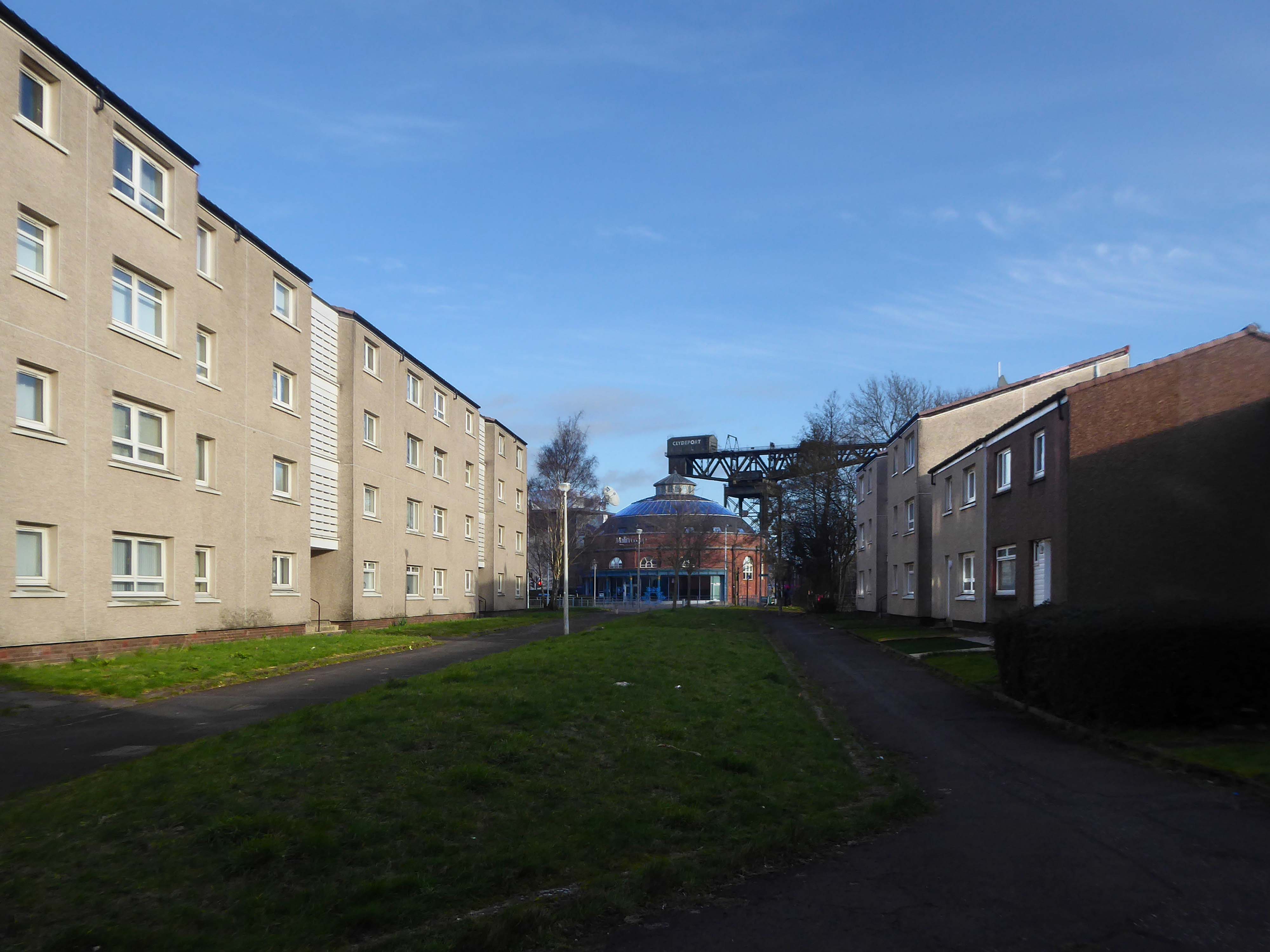
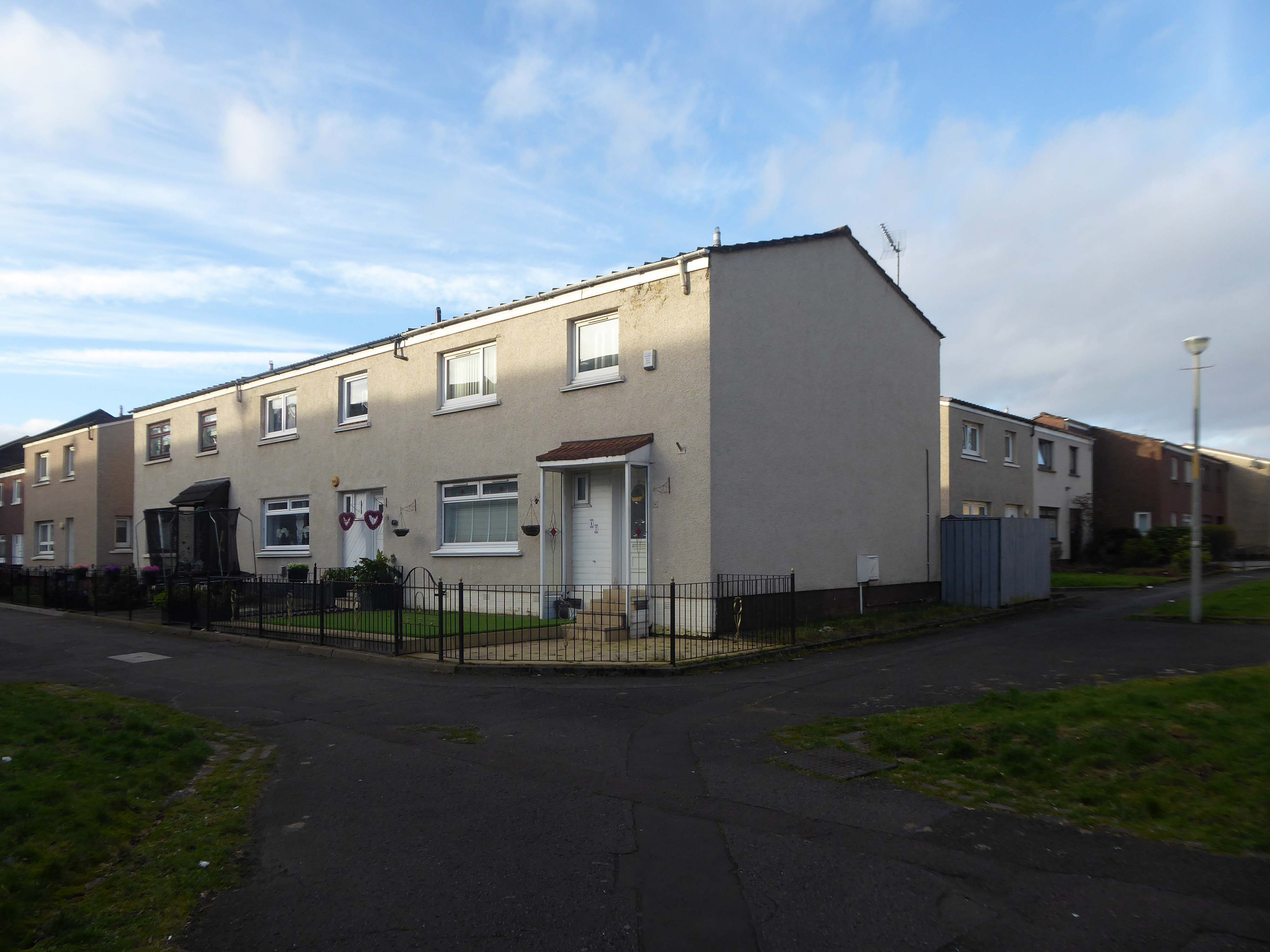
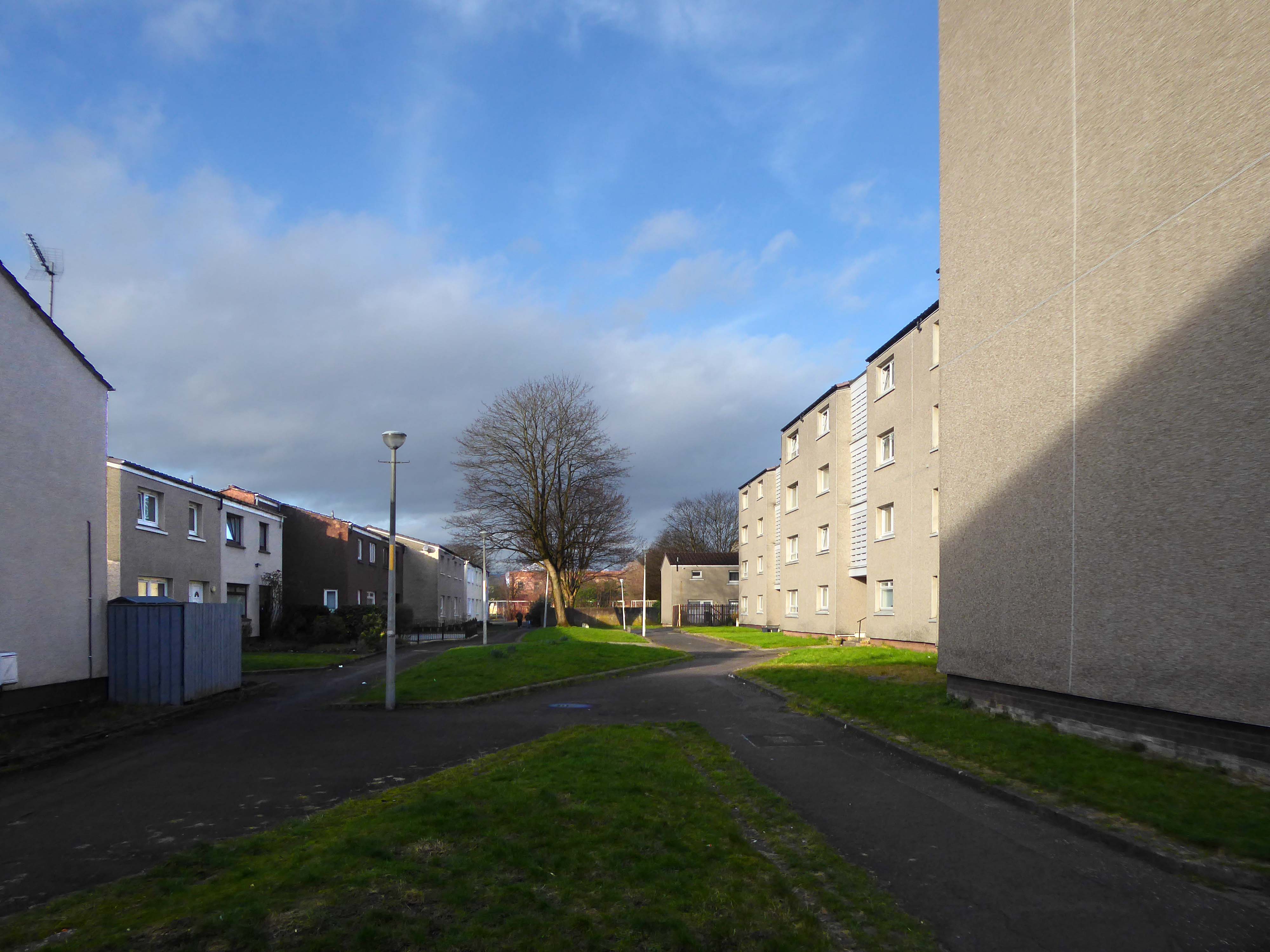
I was walking through the area in March 2023 one quite quiet morning, and attracted by the neat rows of austere grey terraces, low rise blocks and maisonettes, which have replaced the tenements.
The estate is clean and well maintained, open areas of grass criss crossed with pedestrian paths, surrounded by mature trees, motor cars have discrete parking areas.
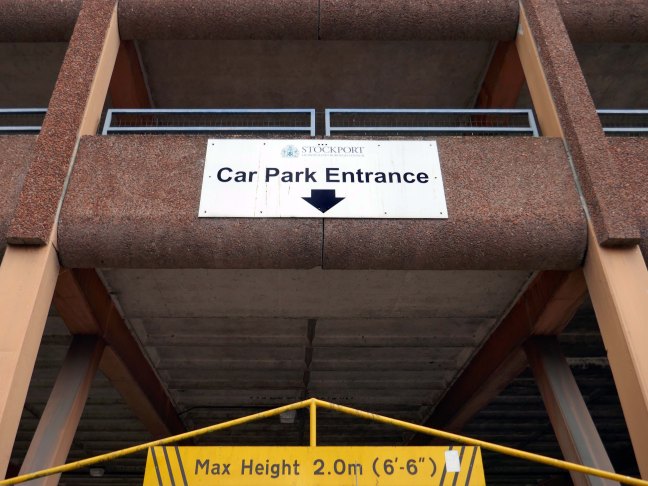
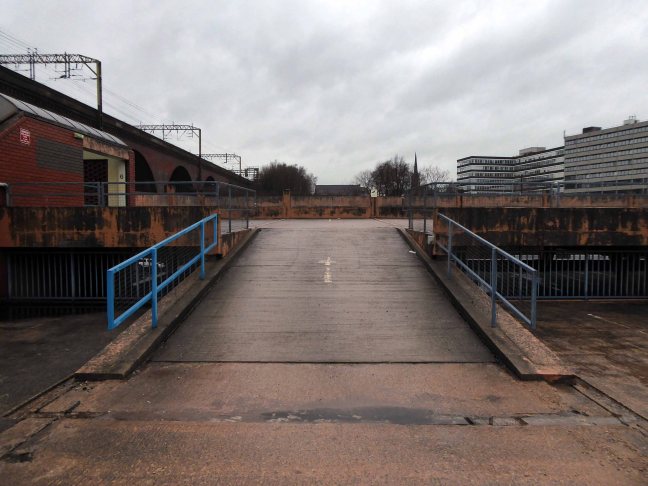
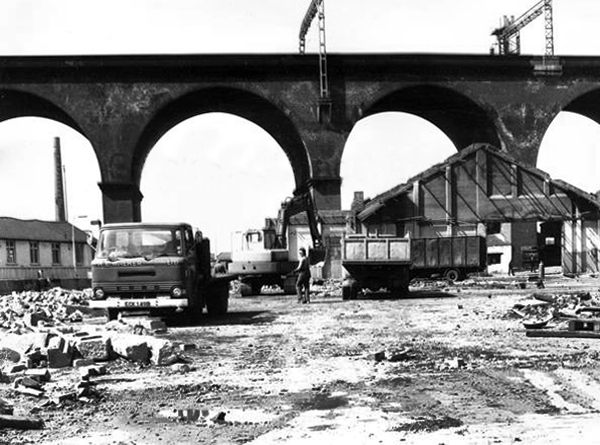
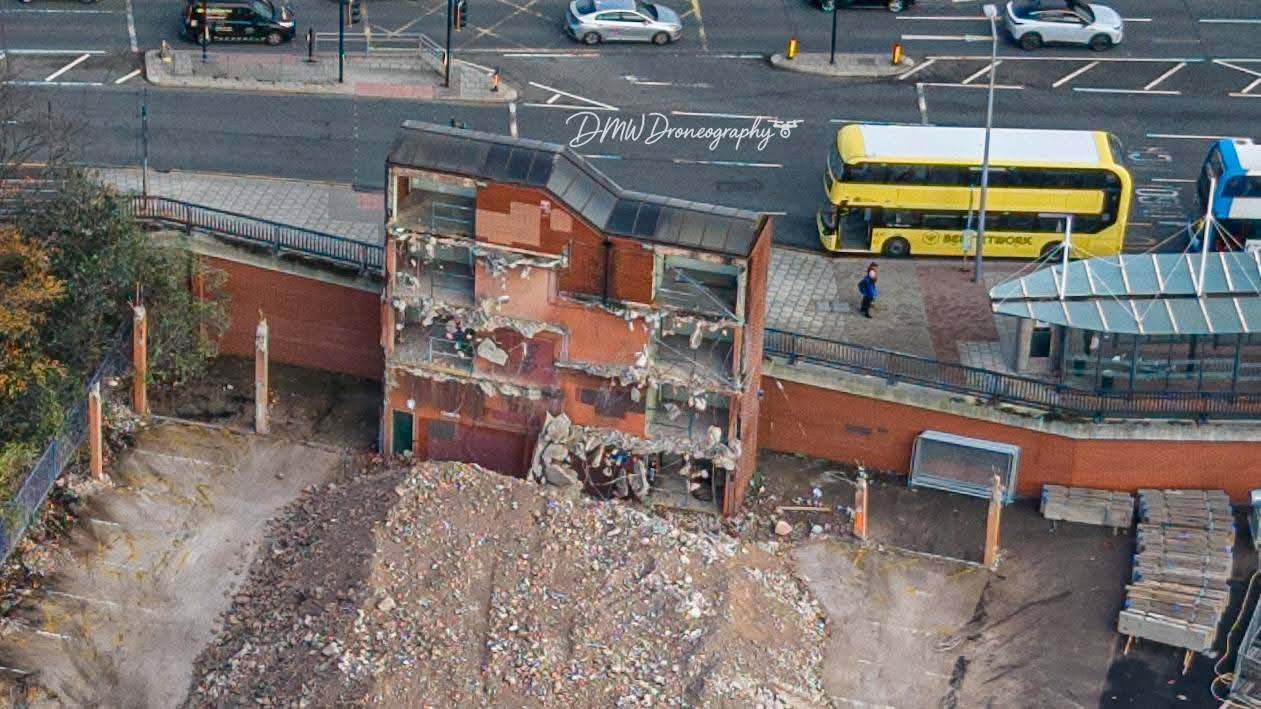
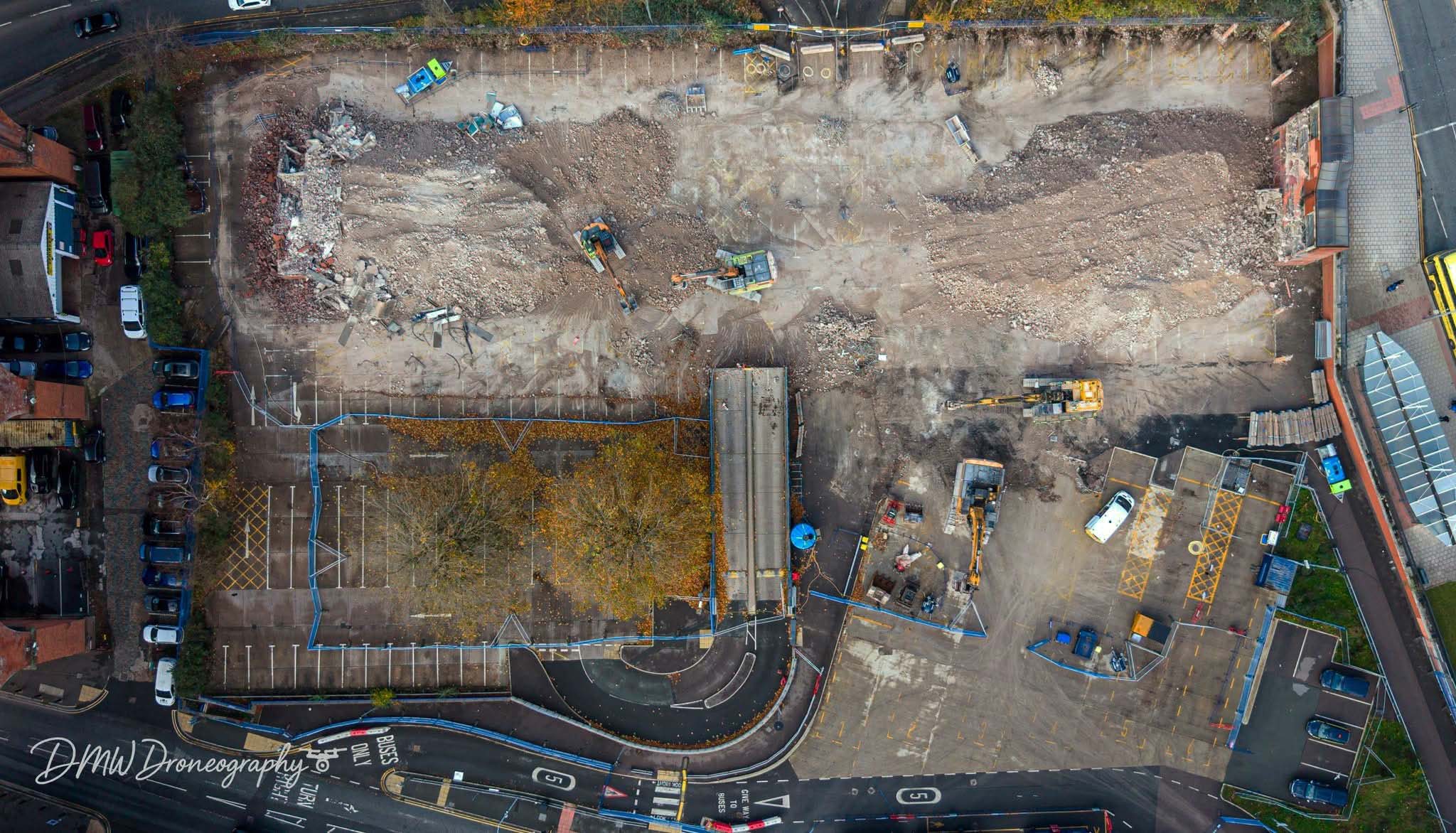
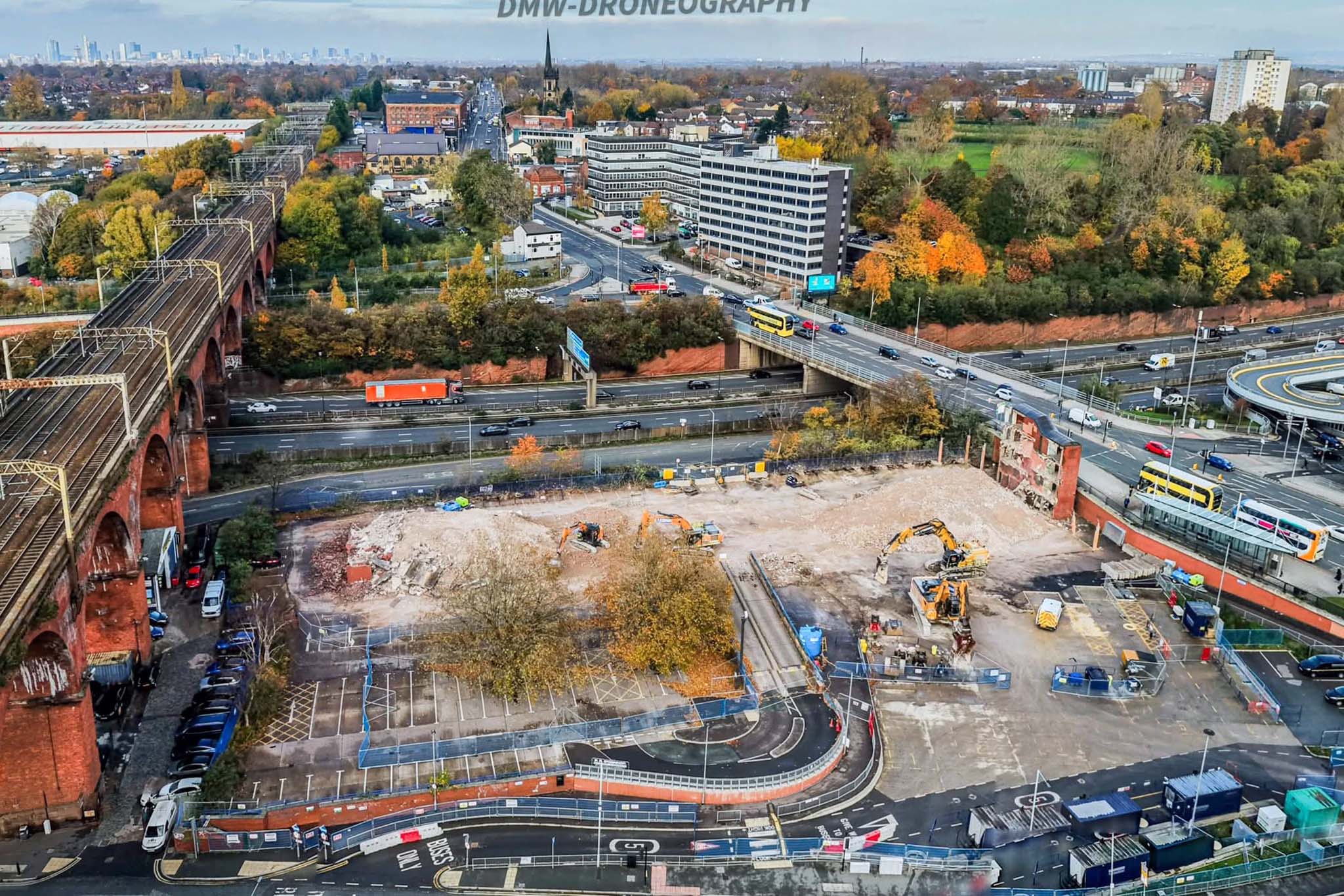
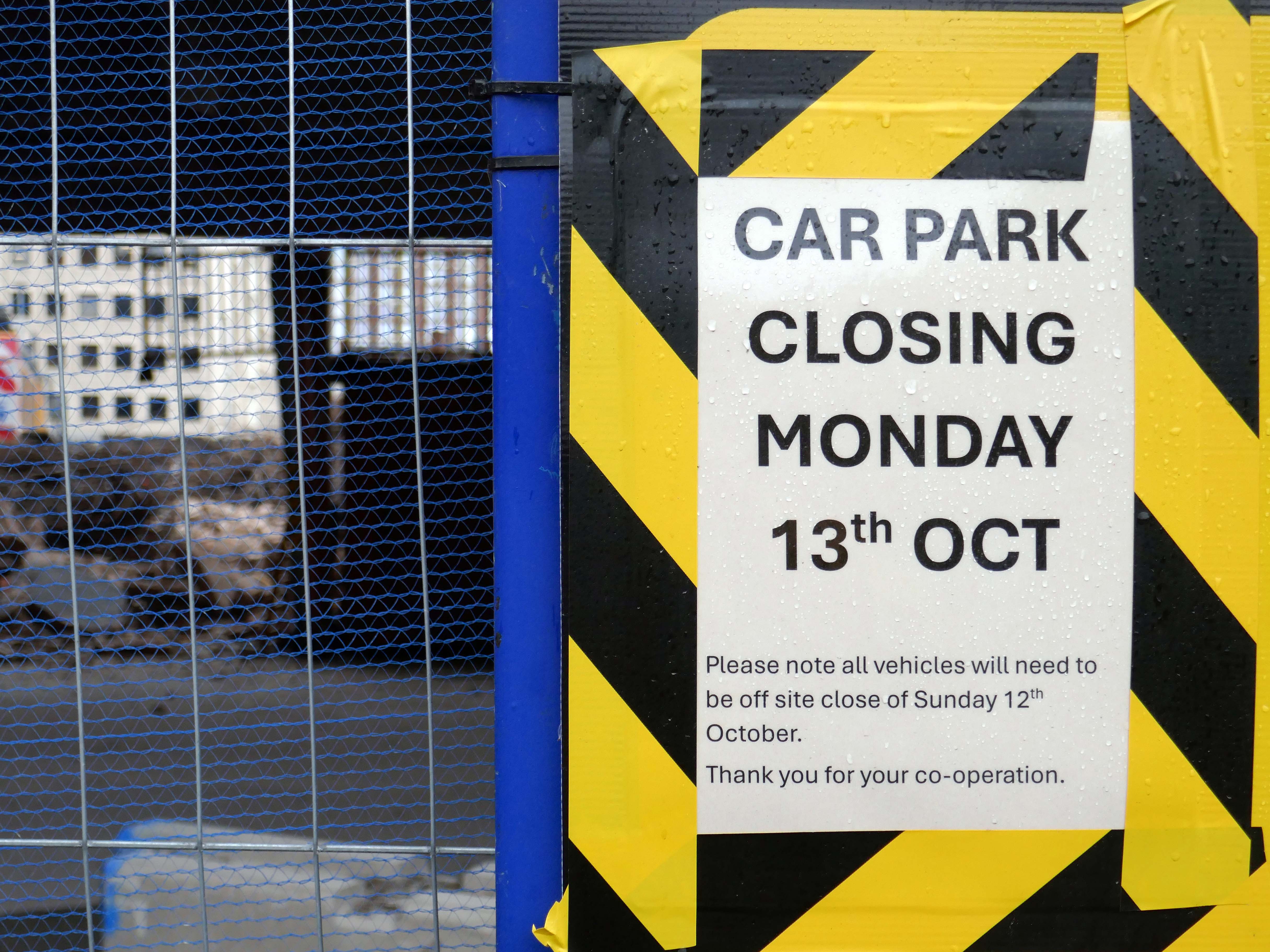
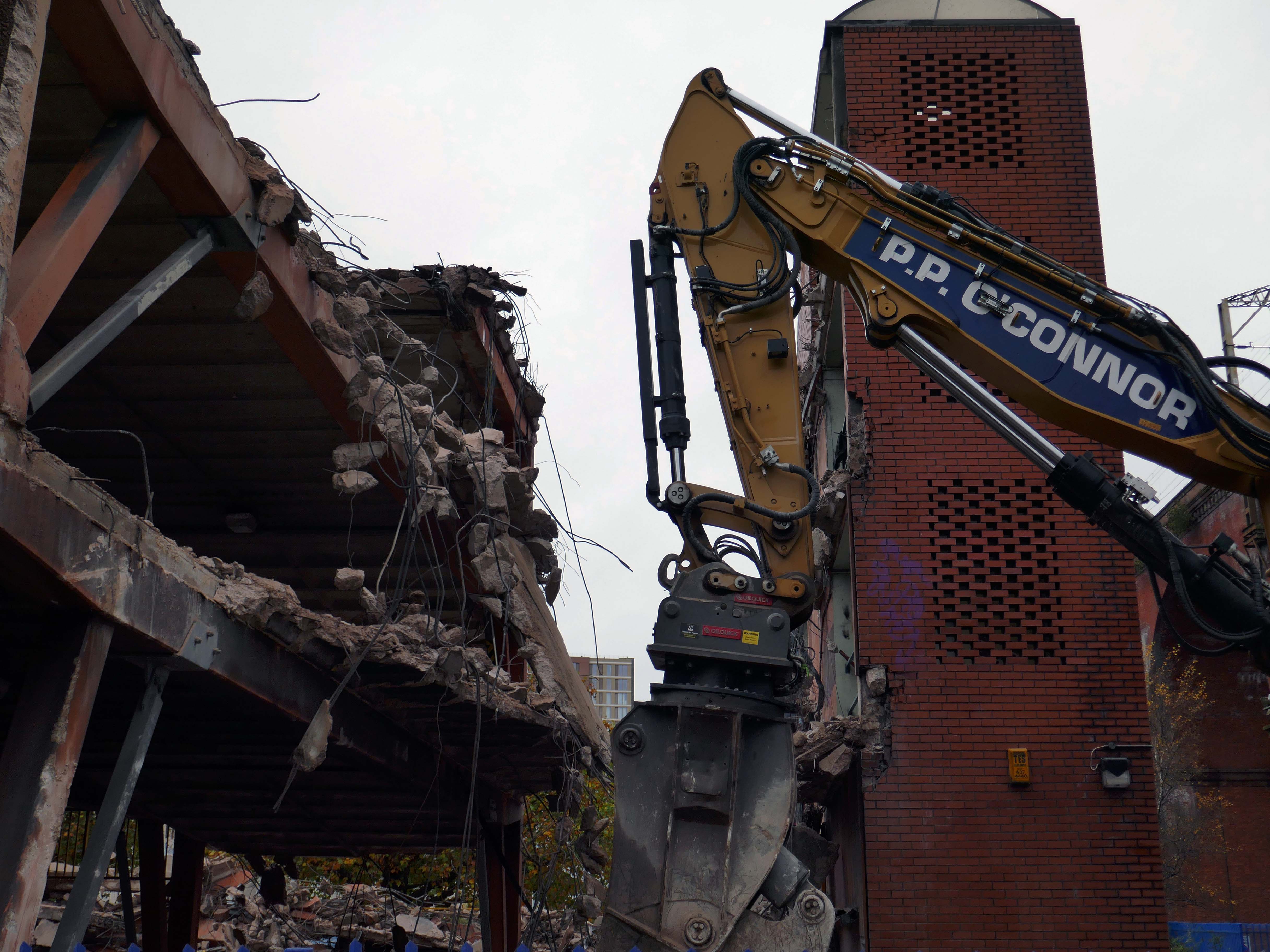
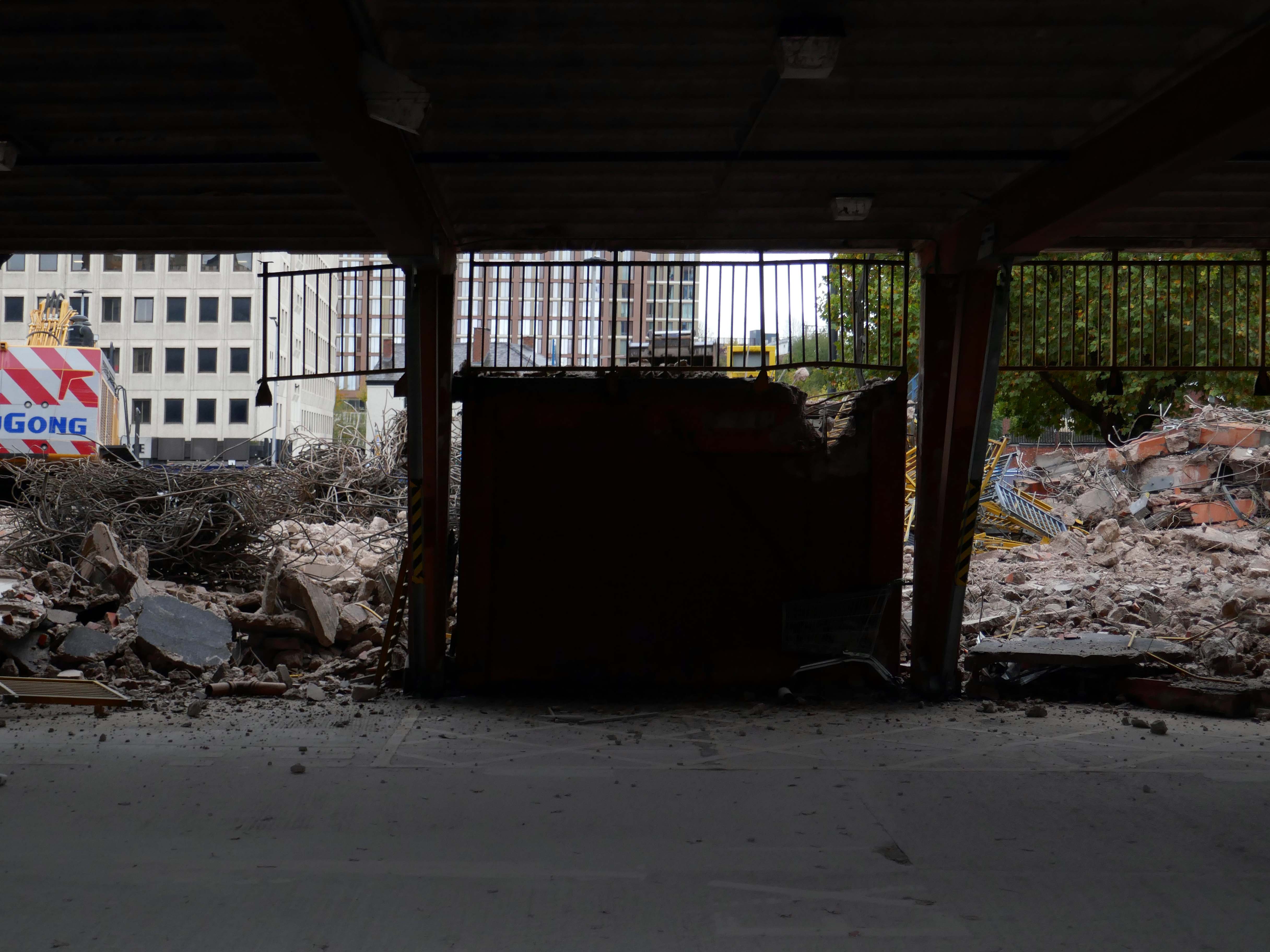
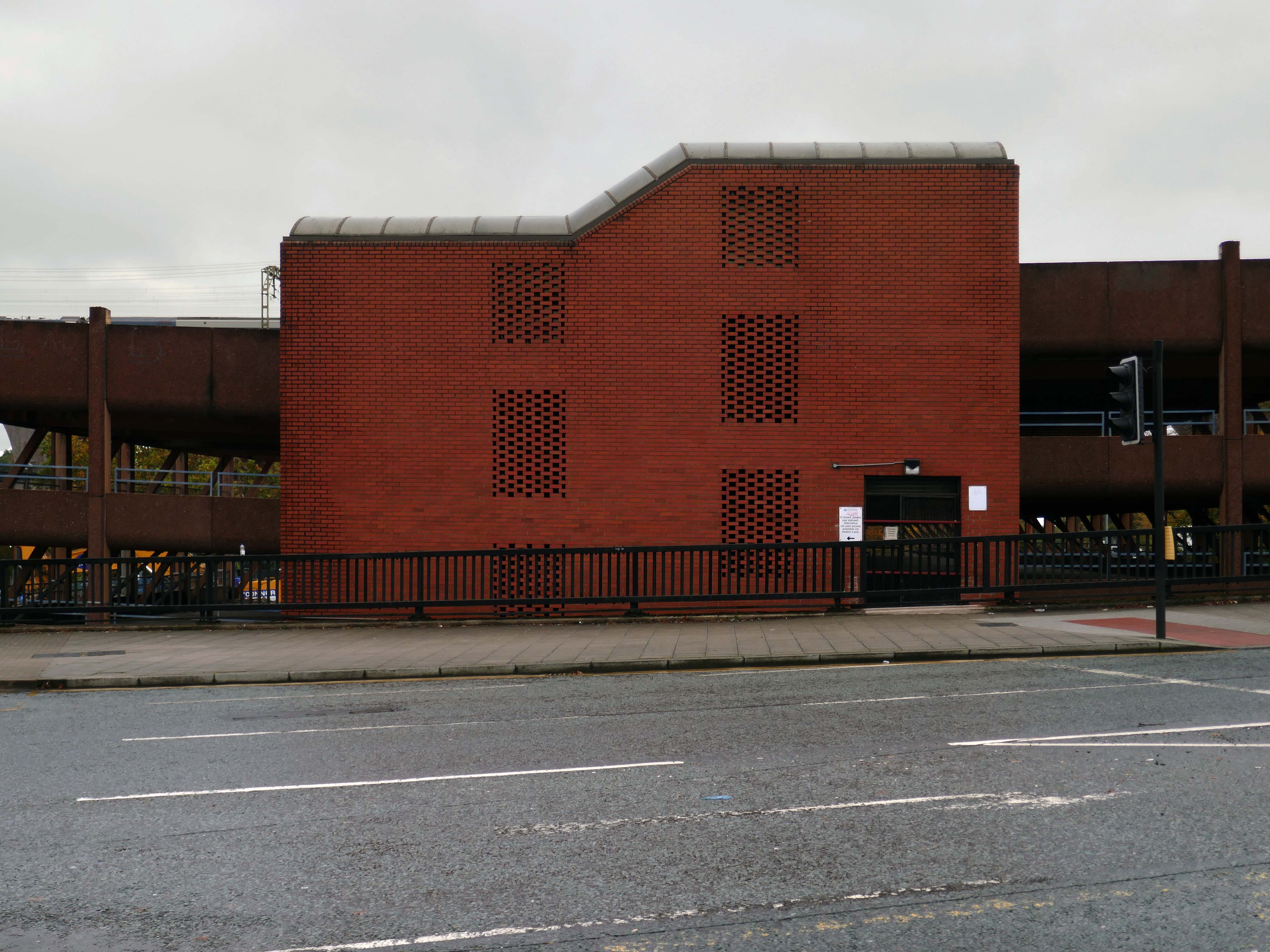
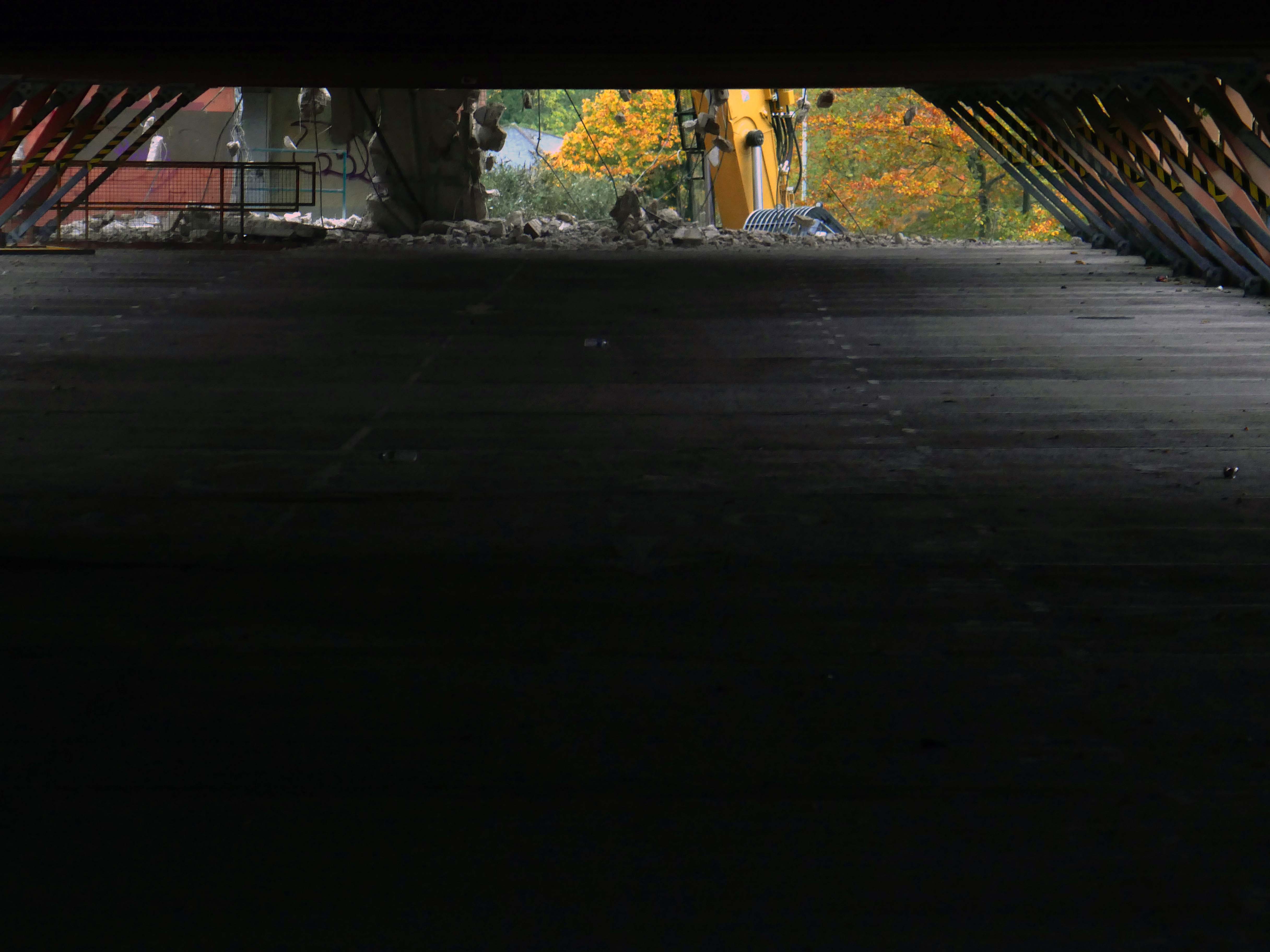
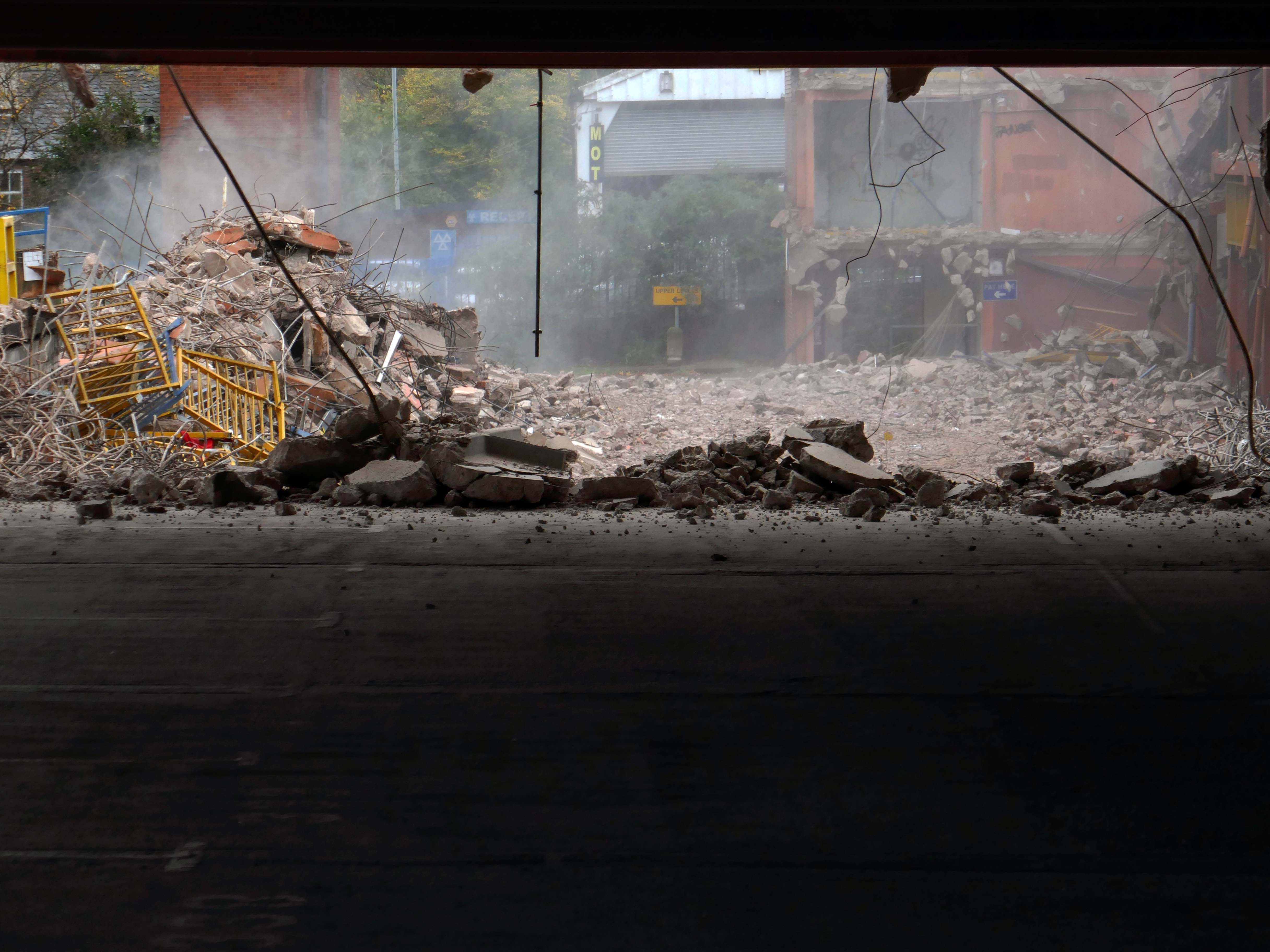
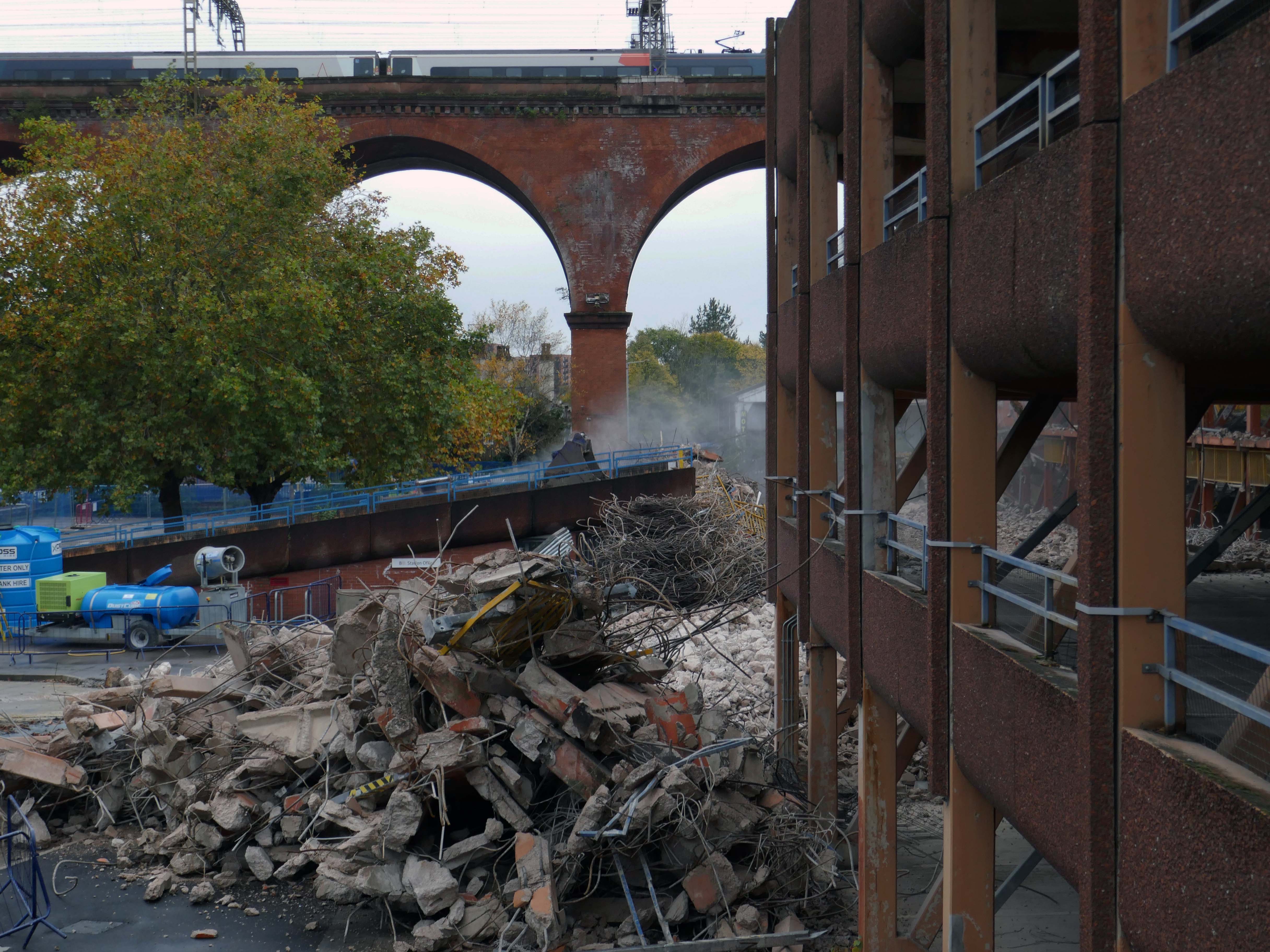
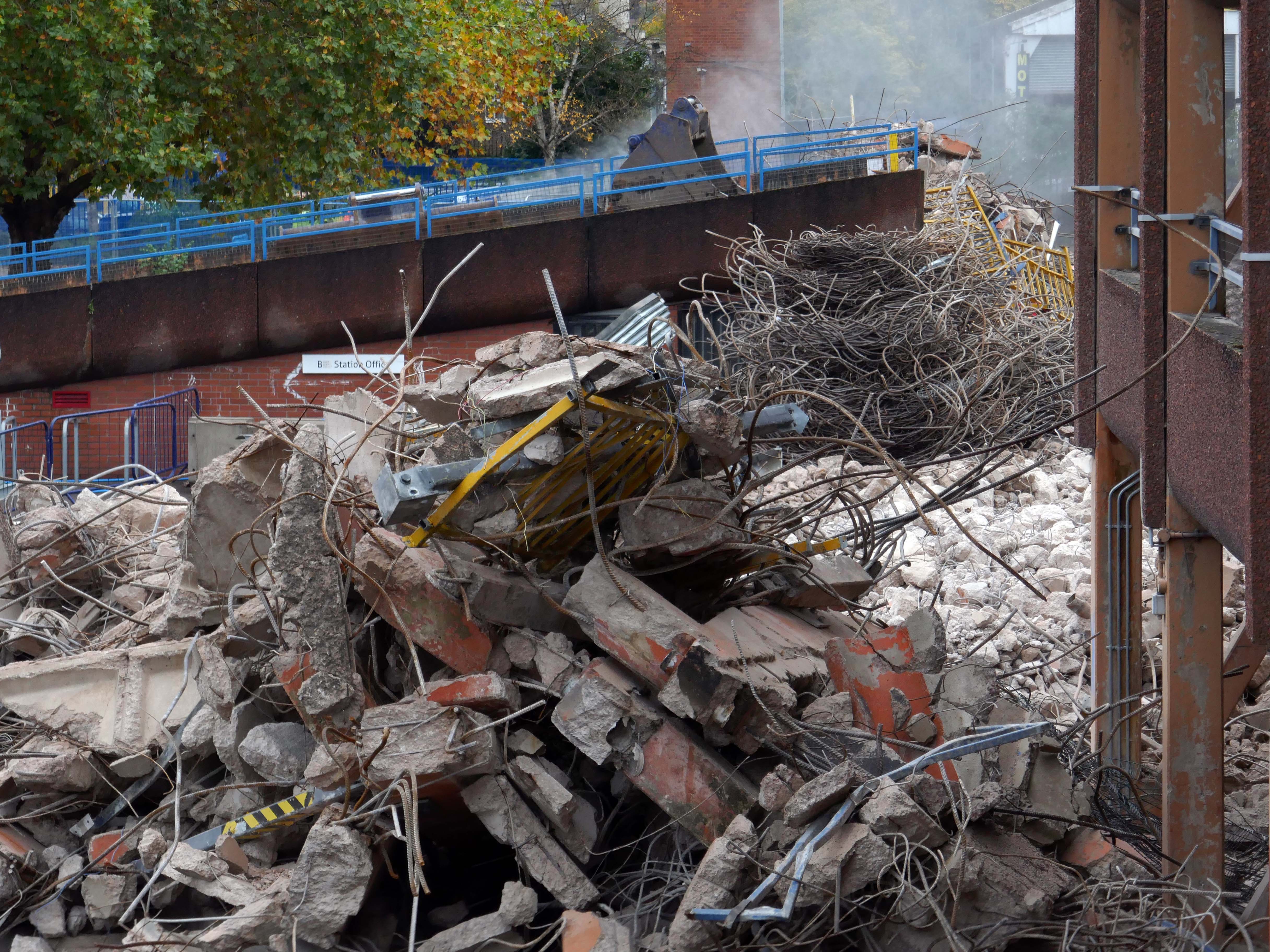
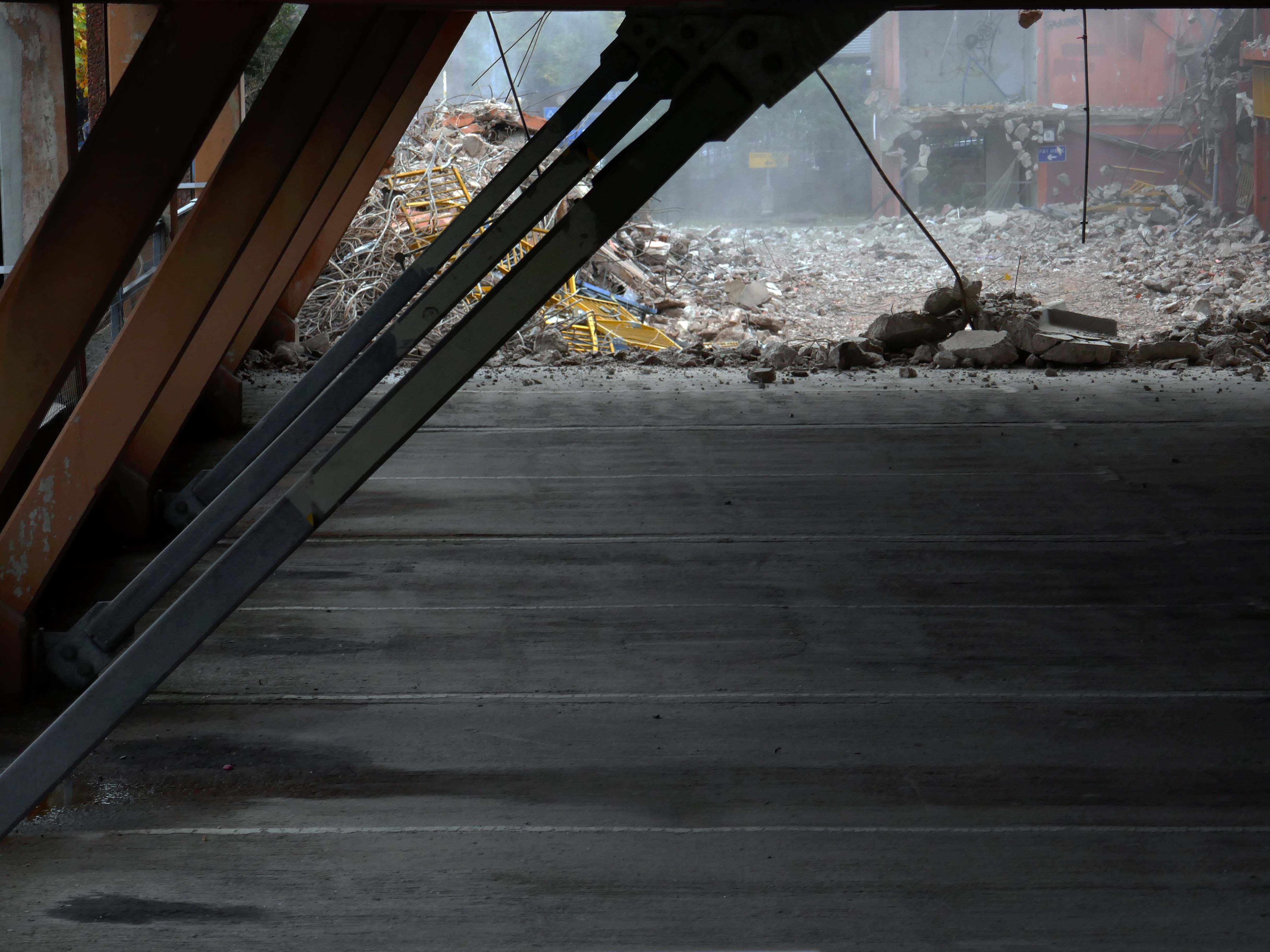
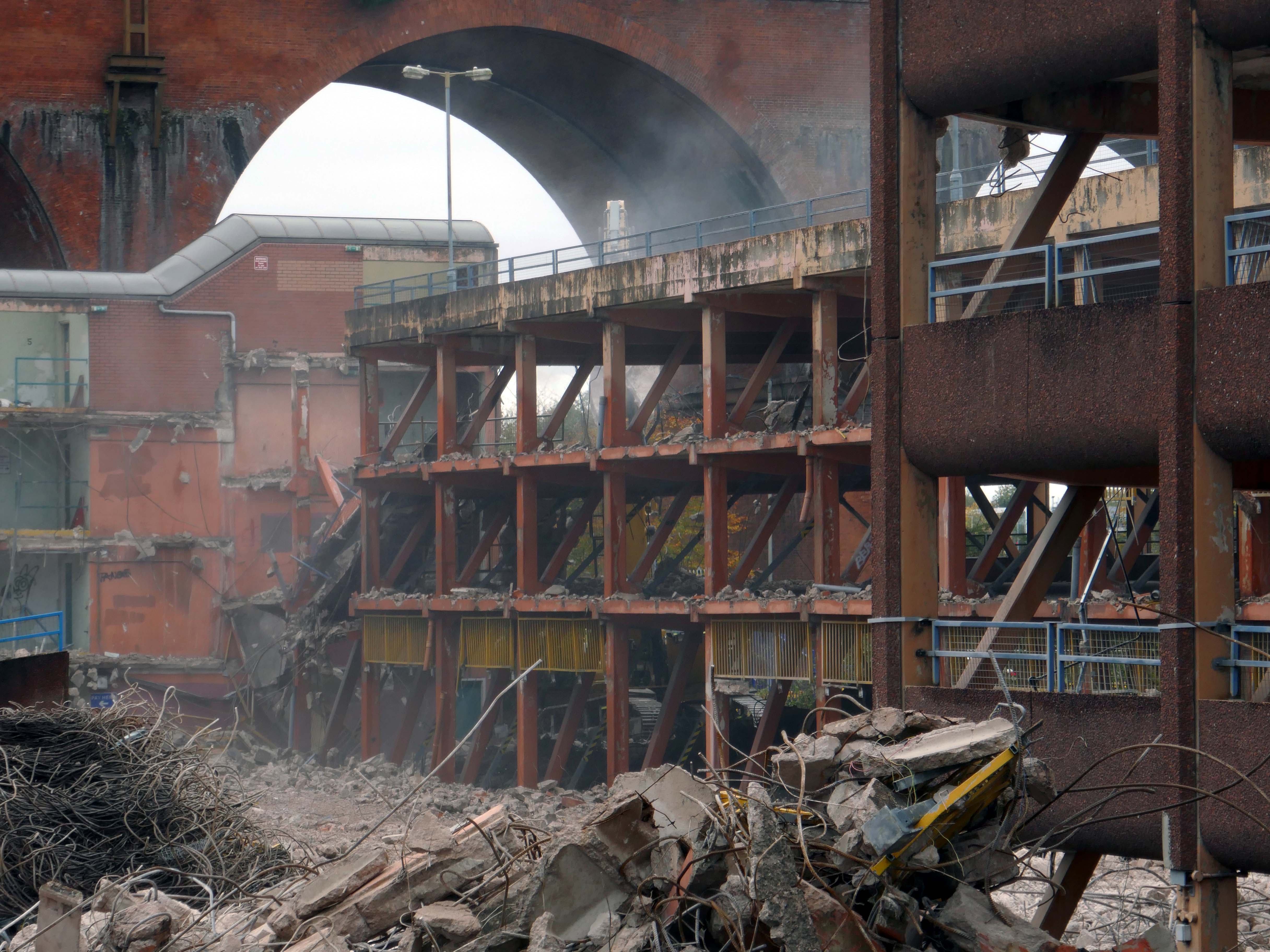
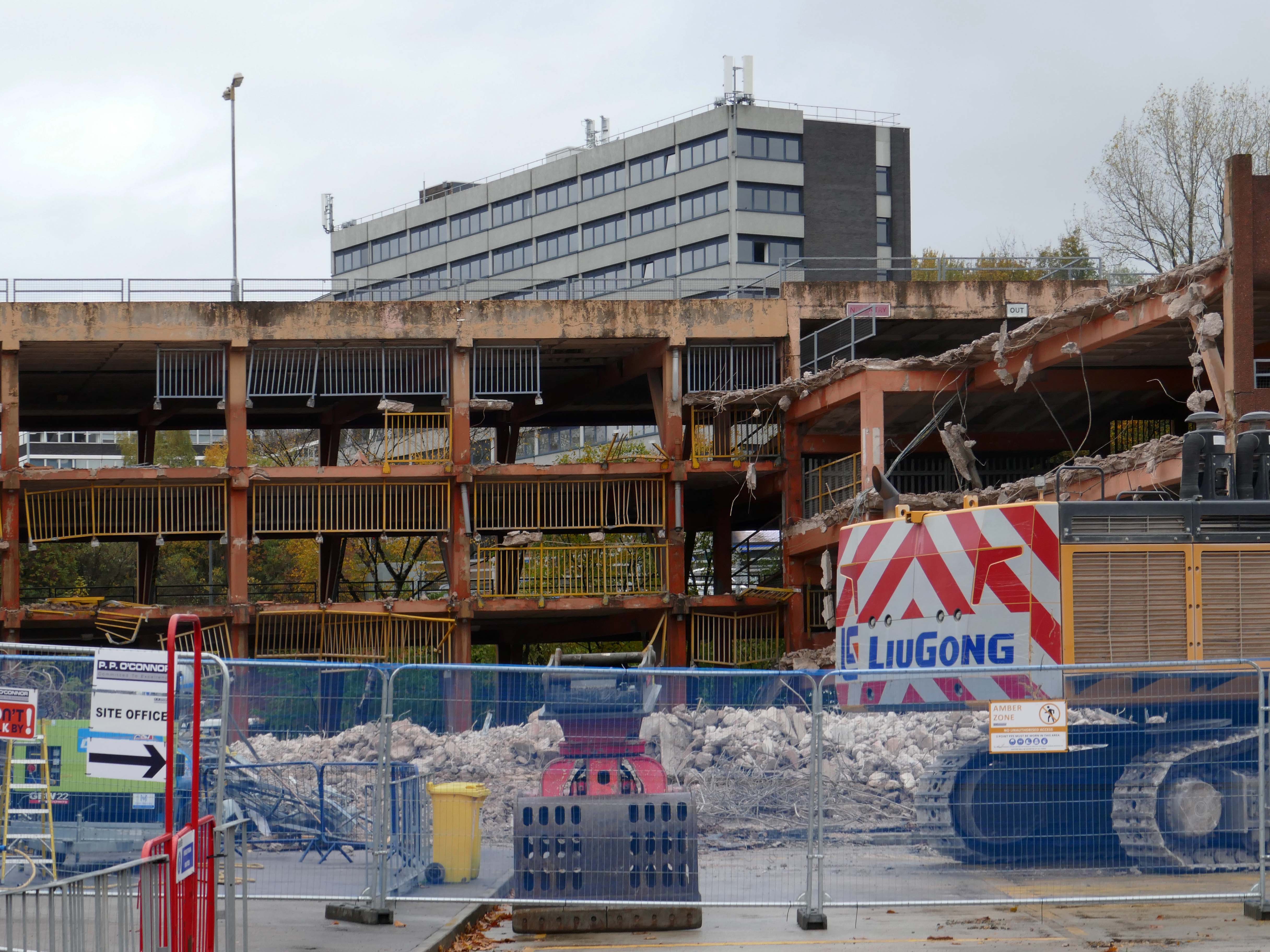
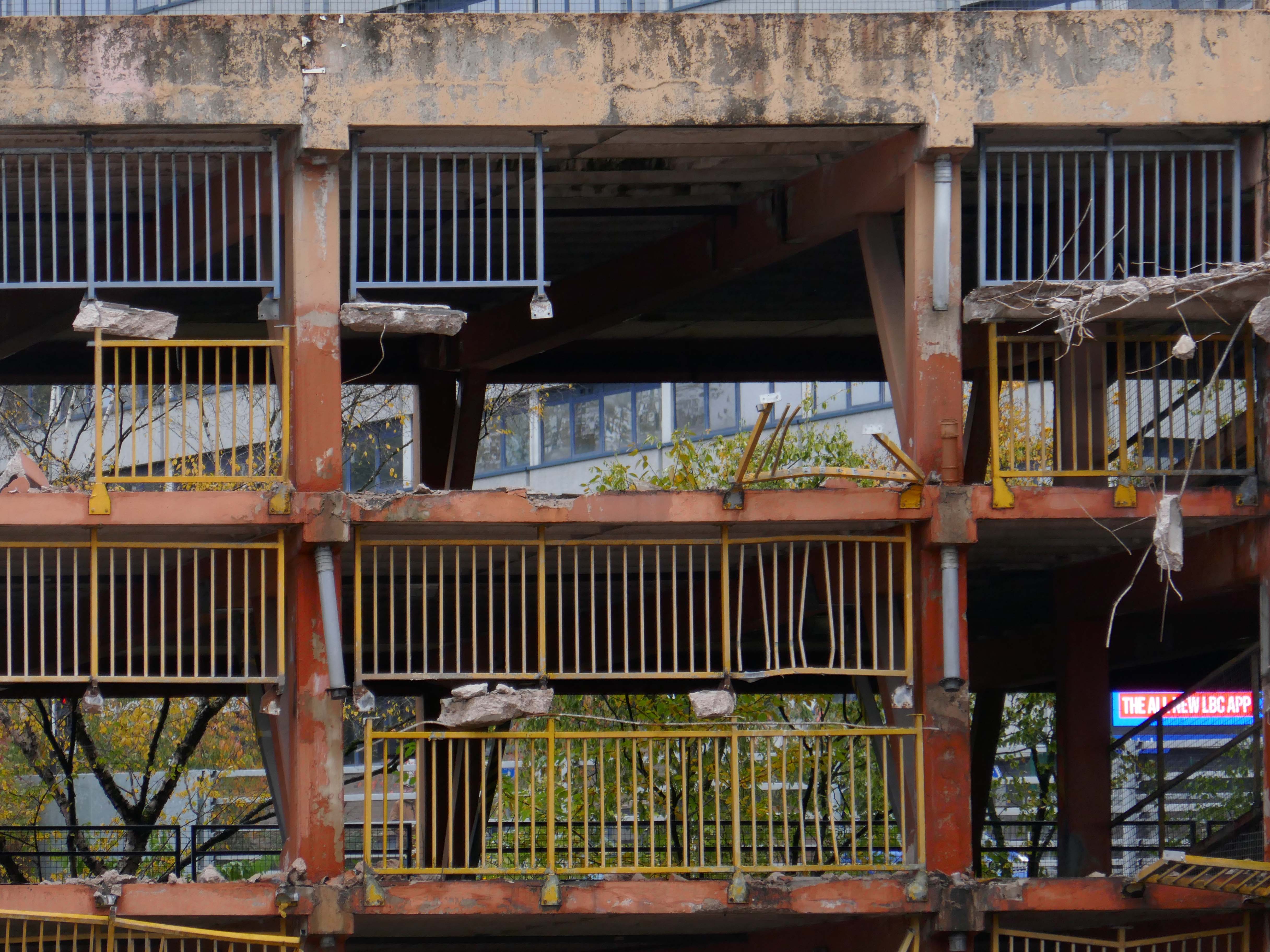
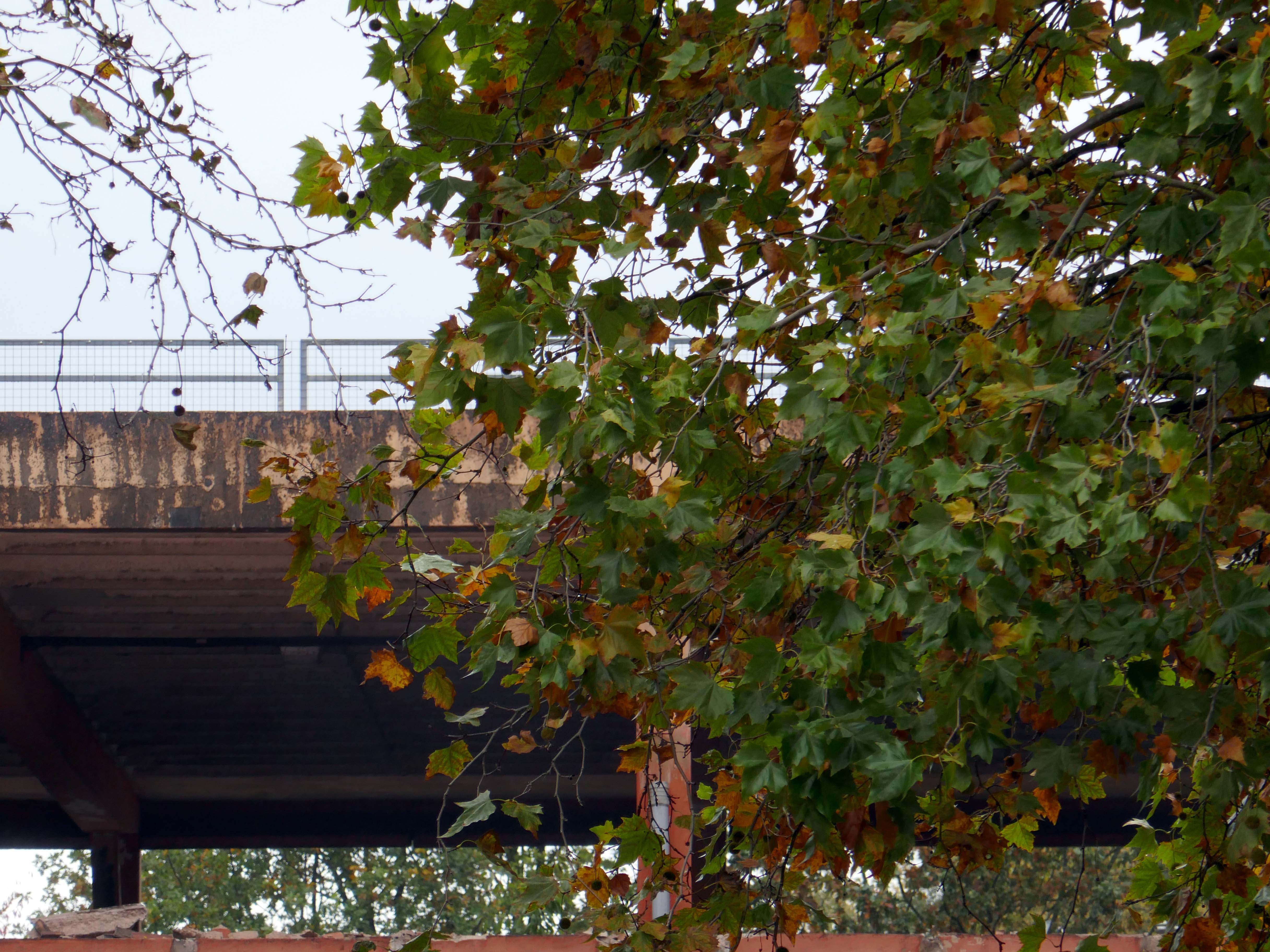
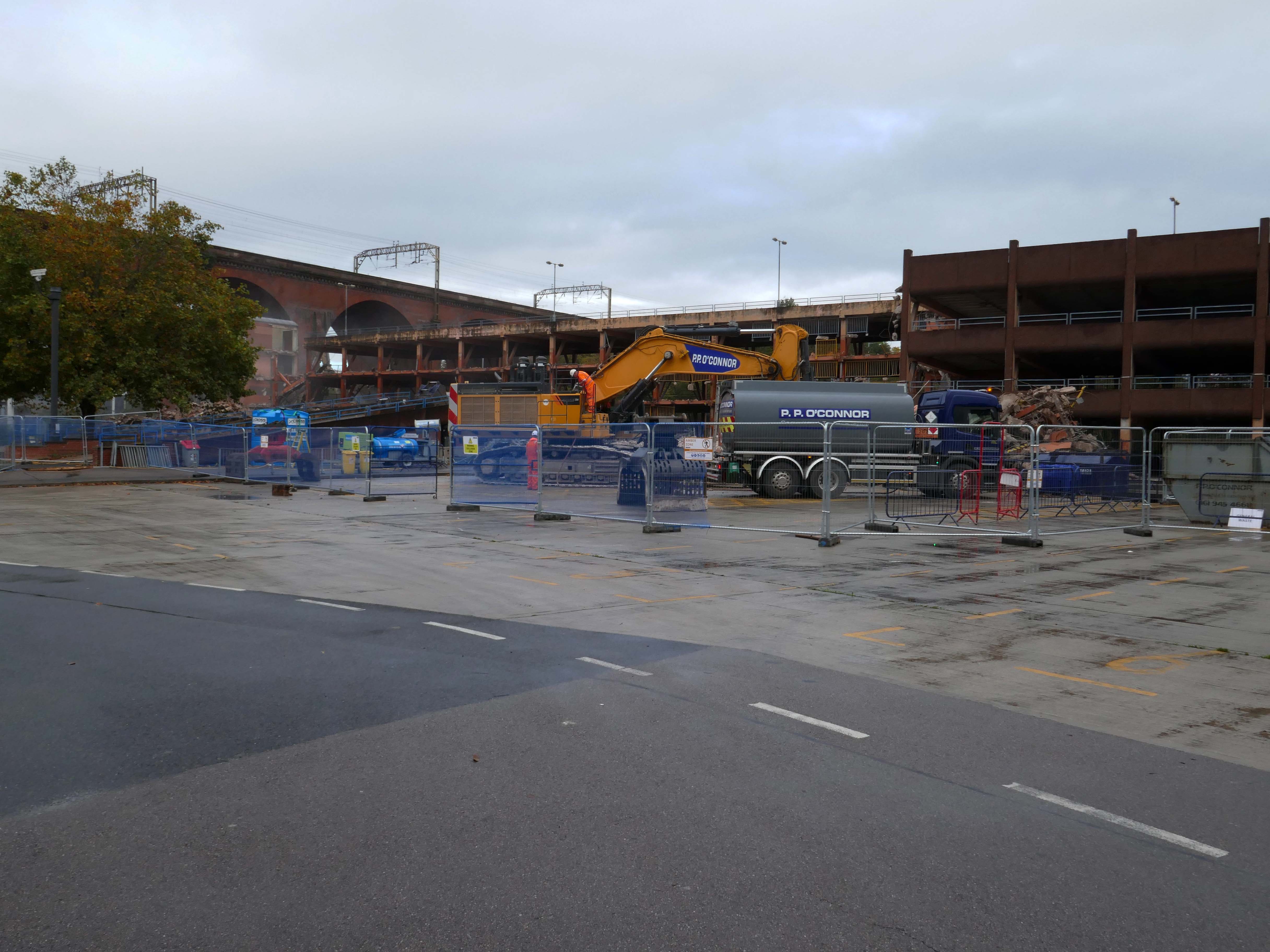
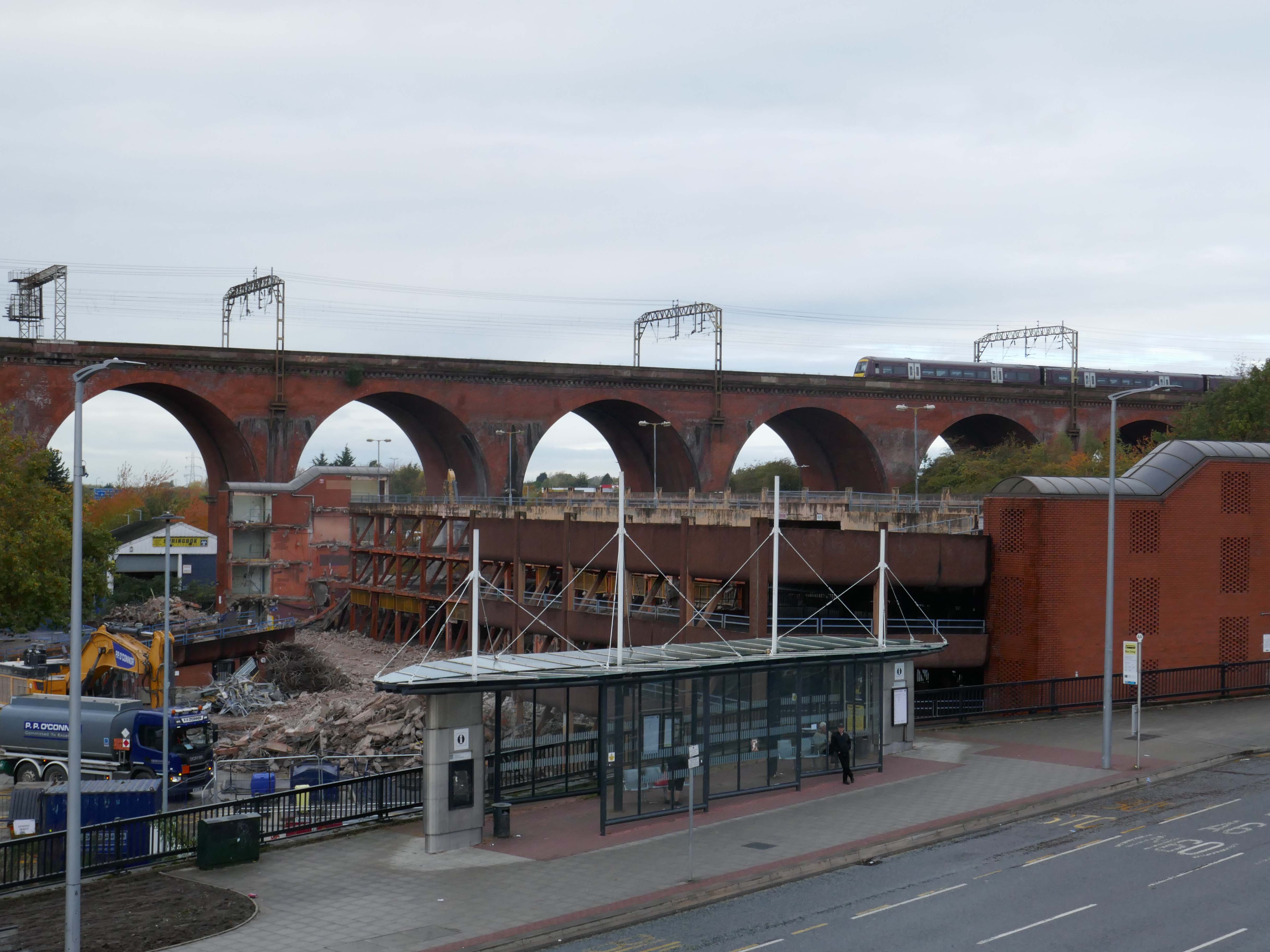
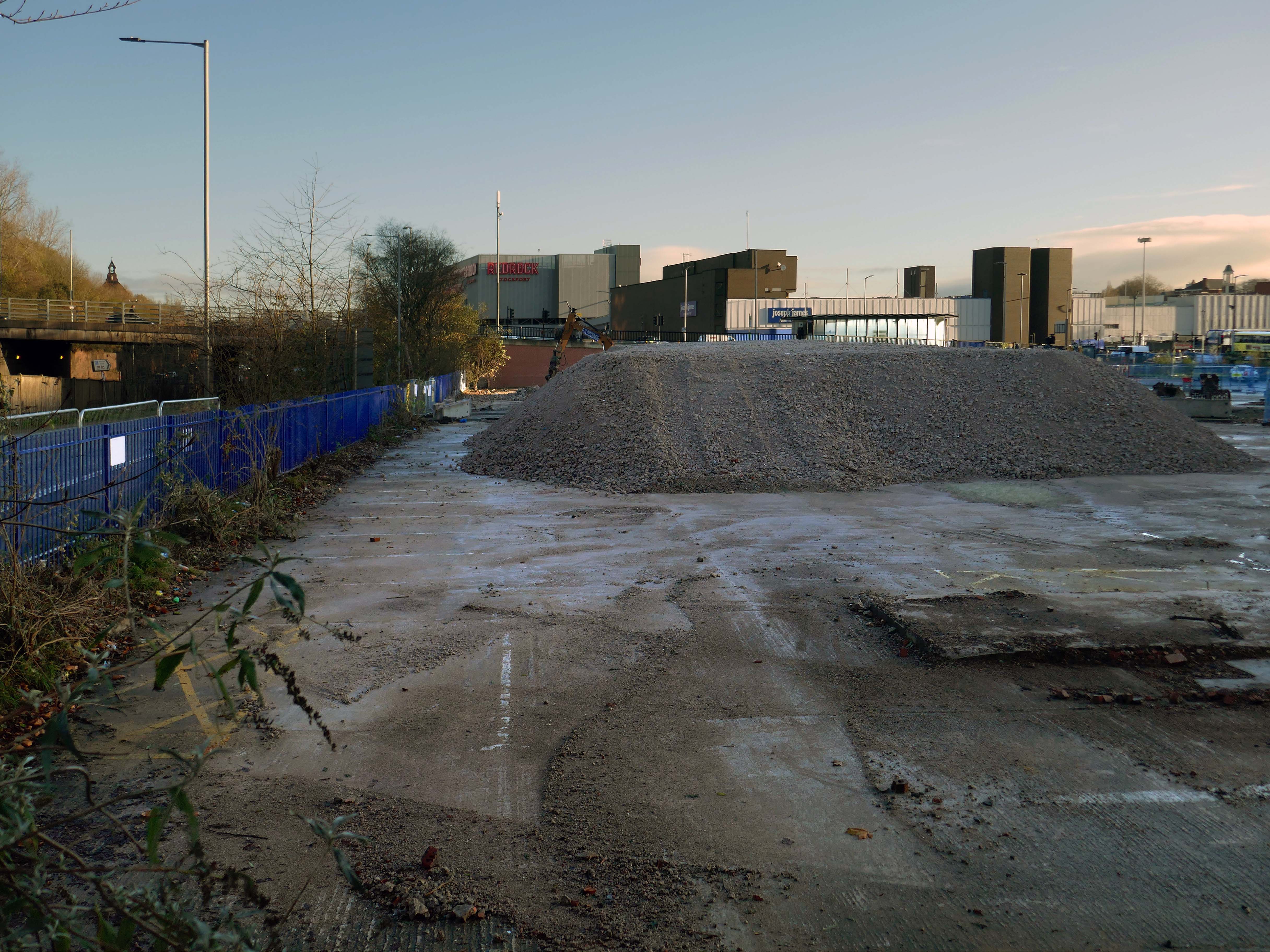
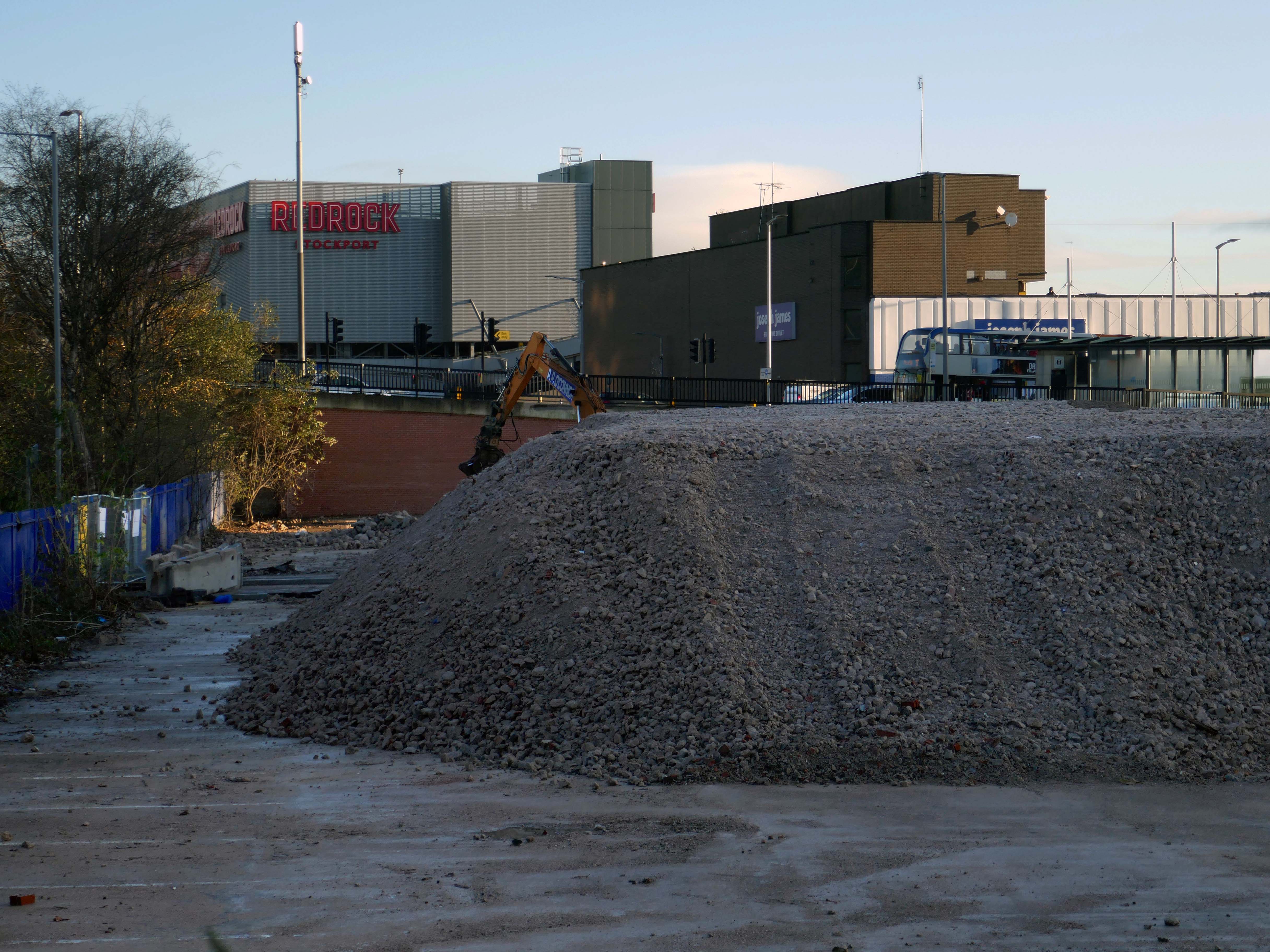
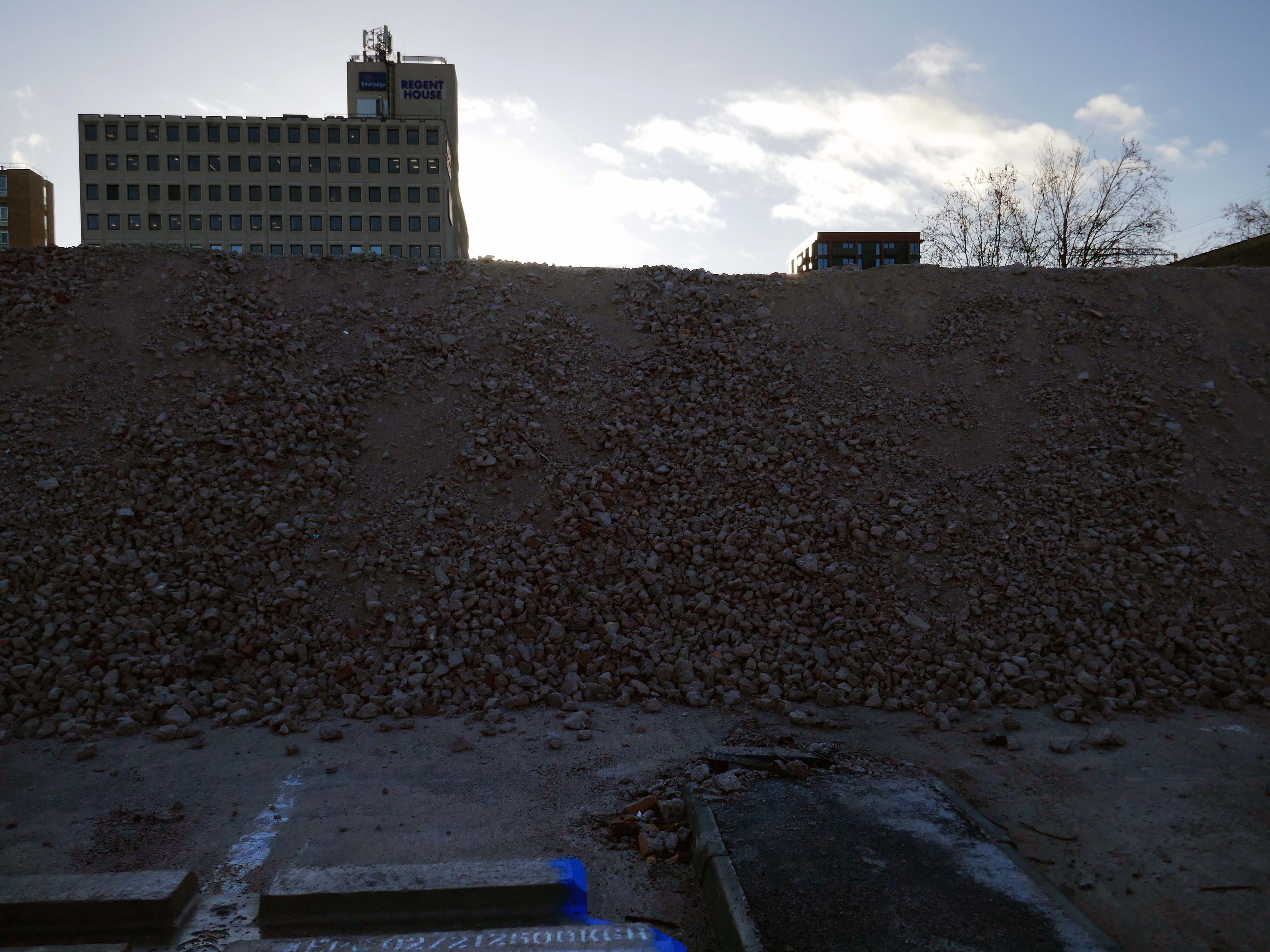
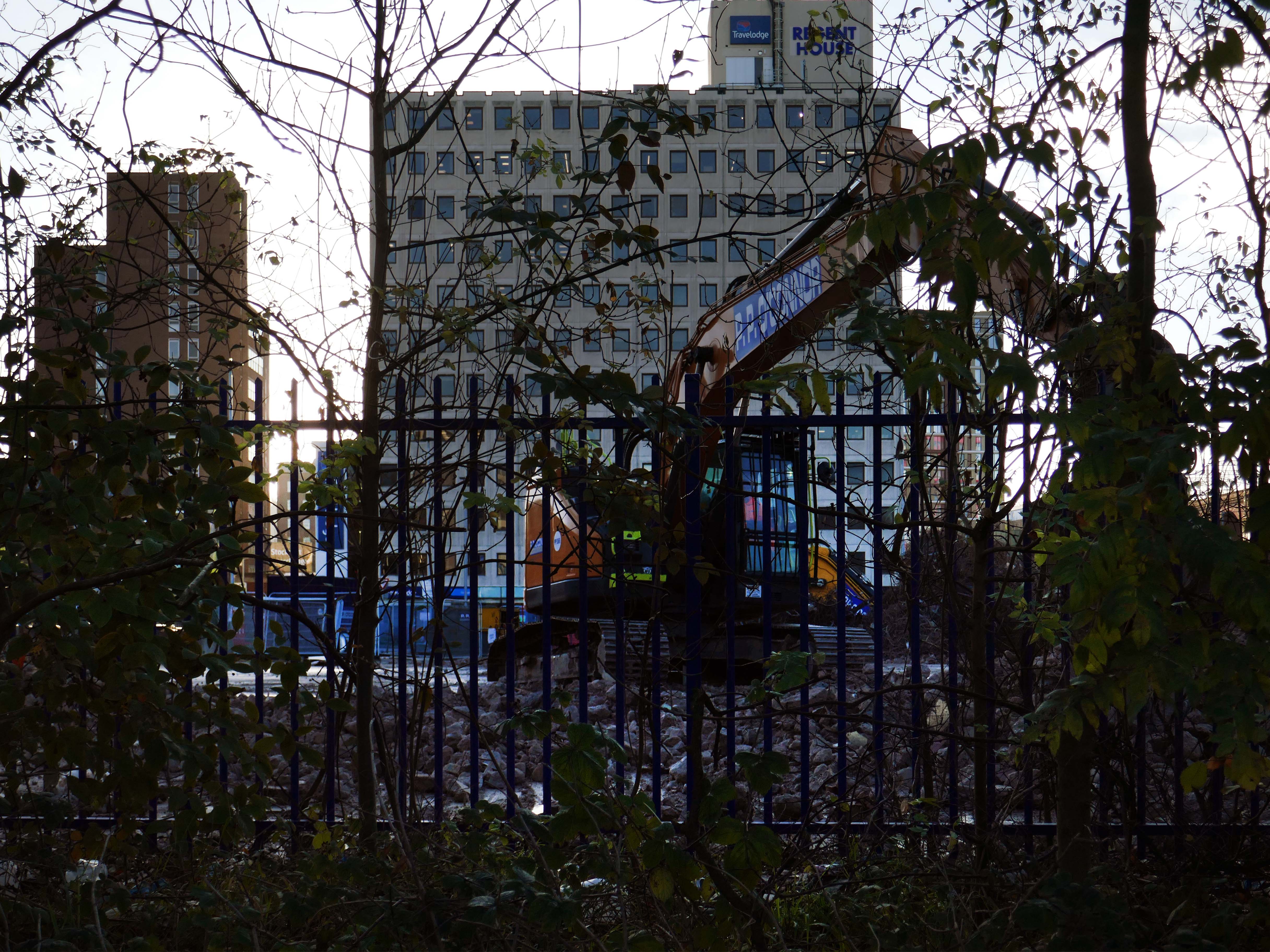
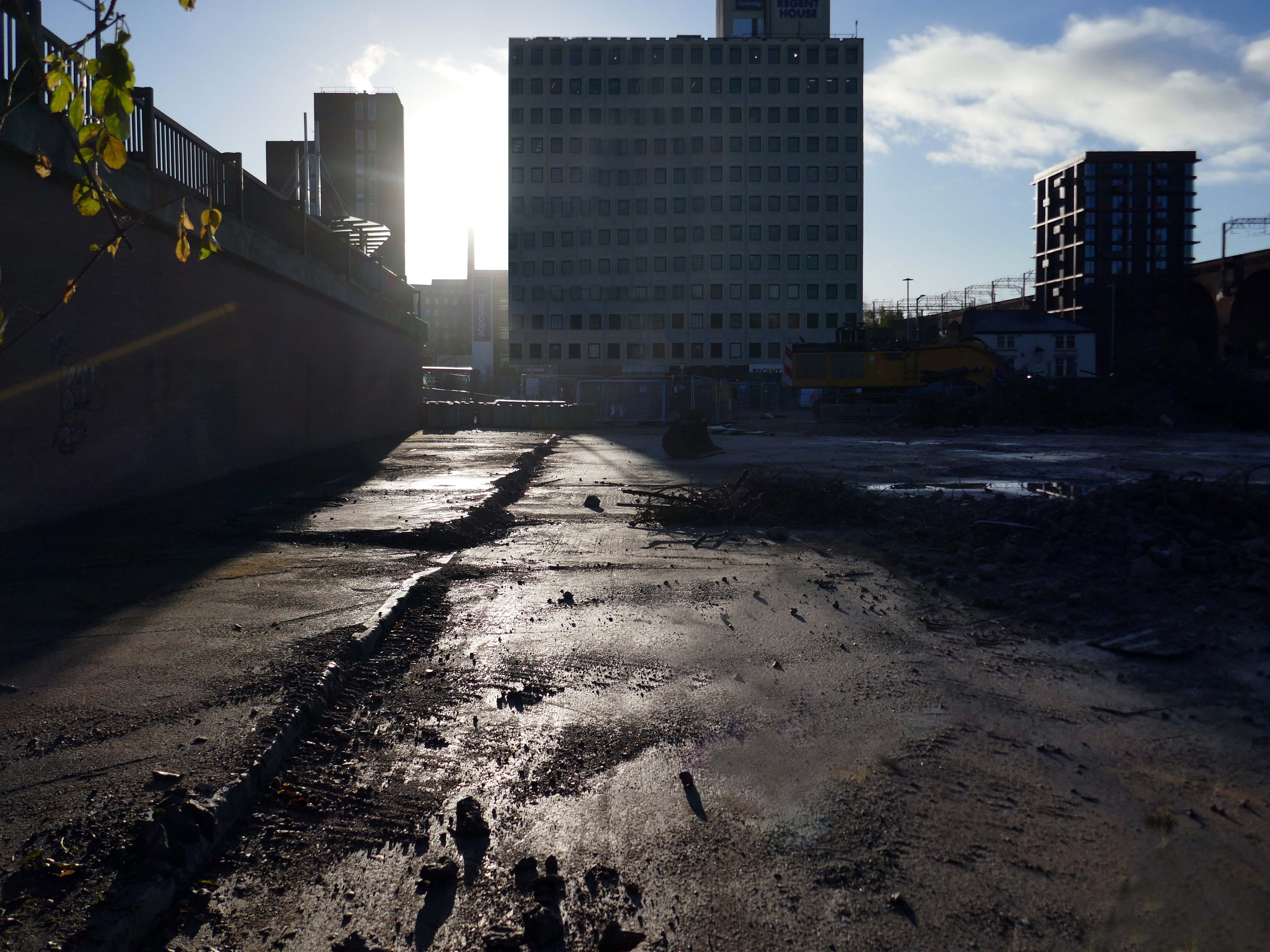
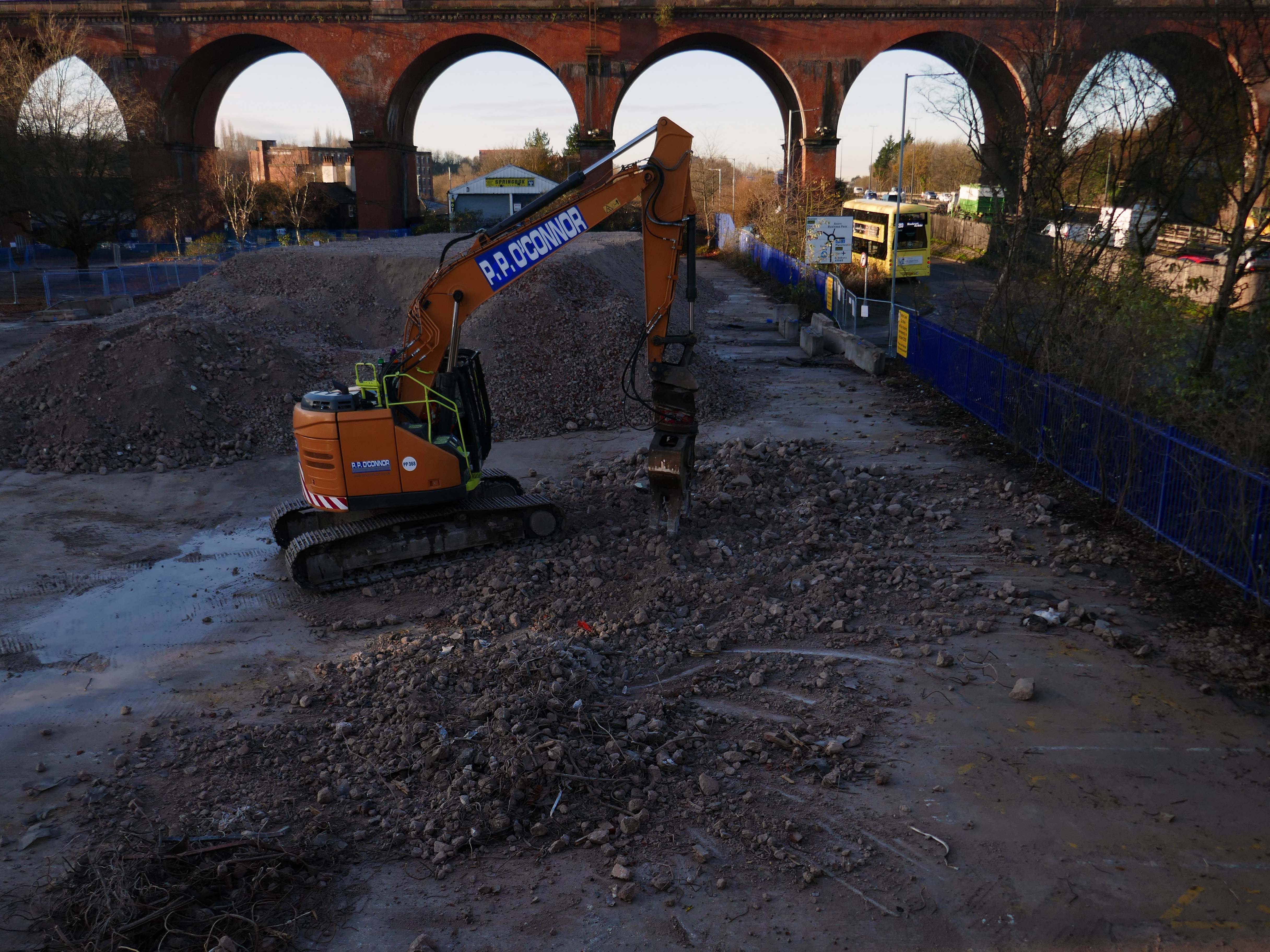
Heaton Lane car park is closed while demolition works take place.
Plans to demolish the car park were submitted by Stockport Council in September this year.
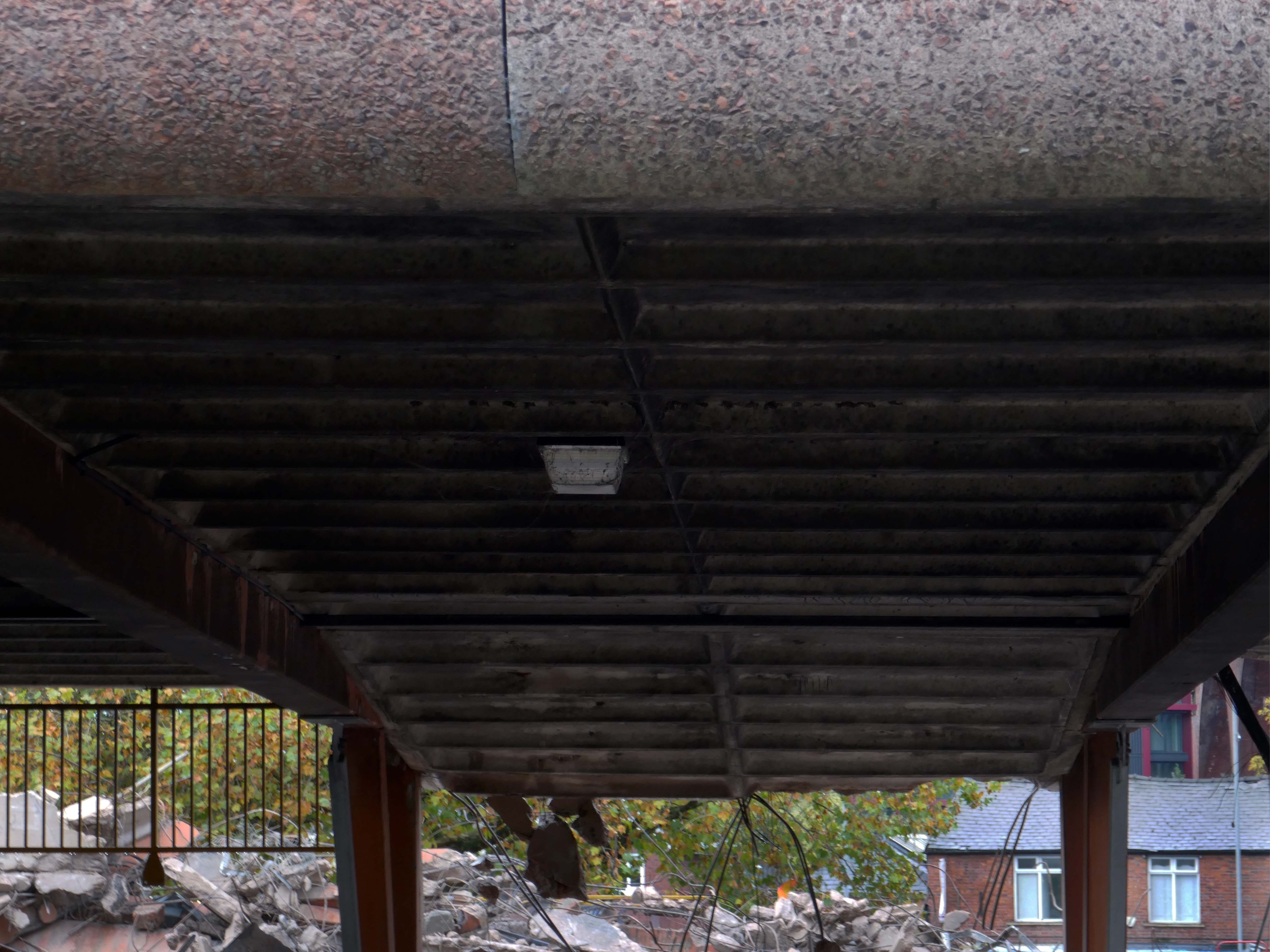
The plans propose removing the multi-storey car park down to ‘slab level’
The work itself will be carried out by removing floor slabs one by one from the parking bays, from the ground upwards. Contractor PP O’Connor has said it will take noise and dust into consideration when completing the works.
Dust suppression systems will be in place to minimise pollution.
Noise levels are not considered likely to be a nuisance, however the site manager will be able to review the demolition process if it’s deemed too high.
There car park is almost at the heart – on the edge of plans to regenerate the town centre.
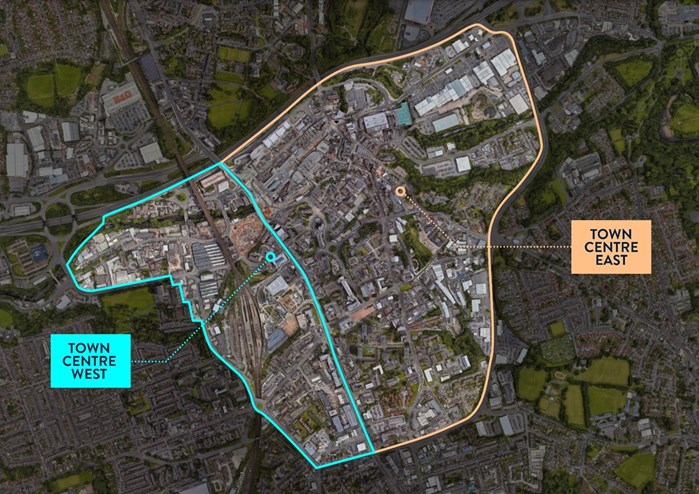
The Strategic Regeneration Framework for Stockport Town Centre West set out how up to 4,000 new homes and 1m sq. ft of new employment floorspace and 5,300 new jobs could be delivered across Town Centre West by 2035.
In order to assess the overall economic benefit of an expanded Mayoral development area Stockport Council have developed an SRF for Stockport Town Centre East. This SRF sets out an illustrative masterplan to guide the creation of Stockport’s new neighbourhoods and achieve comprehensive urban regeneration by 2040. Together the SRFs for Town Centre West and Town Centre East will guide the development of a total of 8,000 new homes alongside services and amenities. The development set out in the SRFs will drive a transformational impact on the Stockport economy.
The Corporation is expected to be established in early 2026. It will provide a single, focused body for local decision-making; engagement with stakeholders including government departments, public agencies; private sector landowners, and developers; and to drive investment across the public and private sectors to realise the shared vision for the regeneration of the Area.
Time for the train home to Stockport – but you can bet I’ll be back.
And true to my word I have been back, several times – on this occasion alone and on foot.
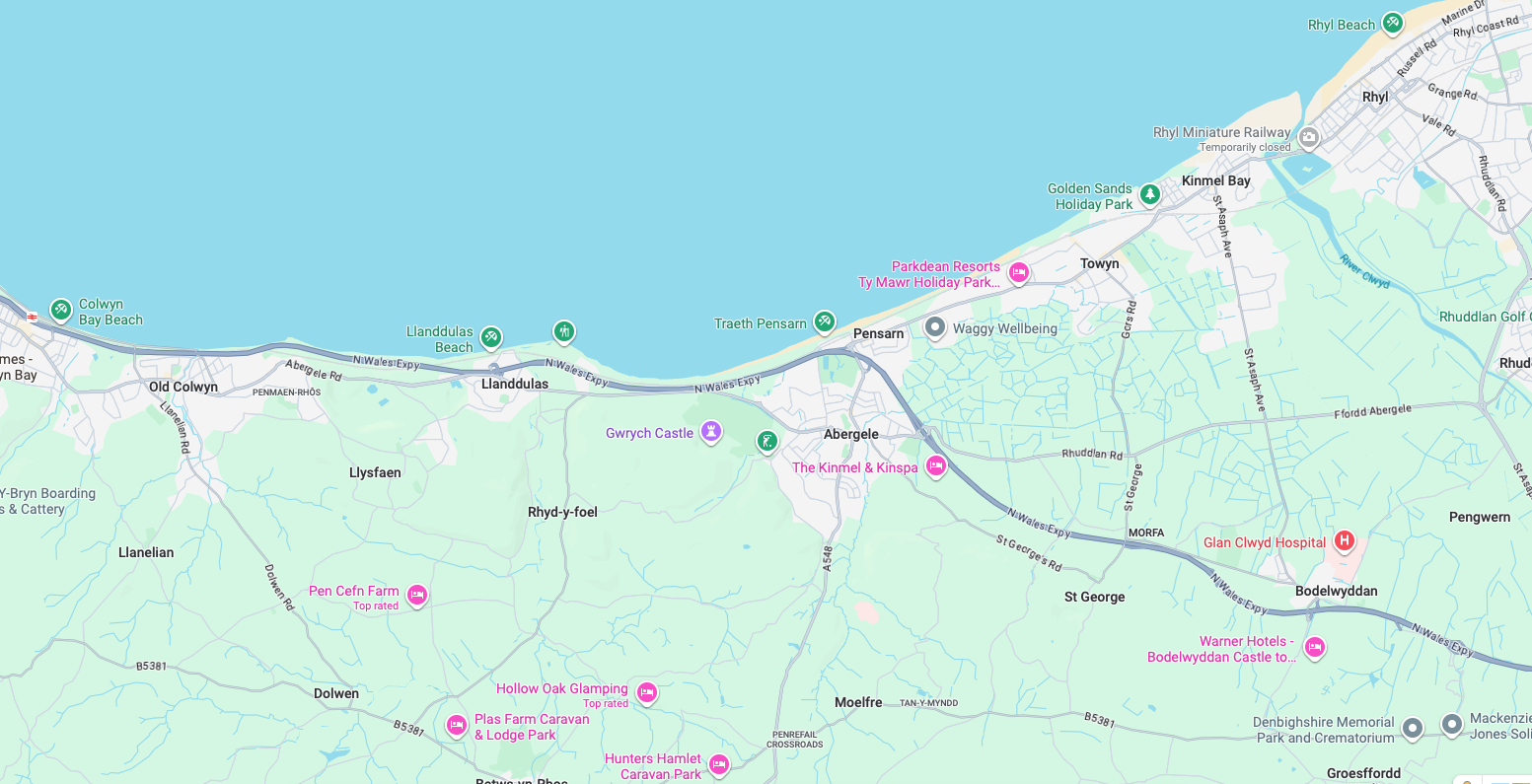
An almost overcast mid-grey day in November, alighting at Rhyl Station and loafing along to Colwyn Bay – this what I done seen.
1907
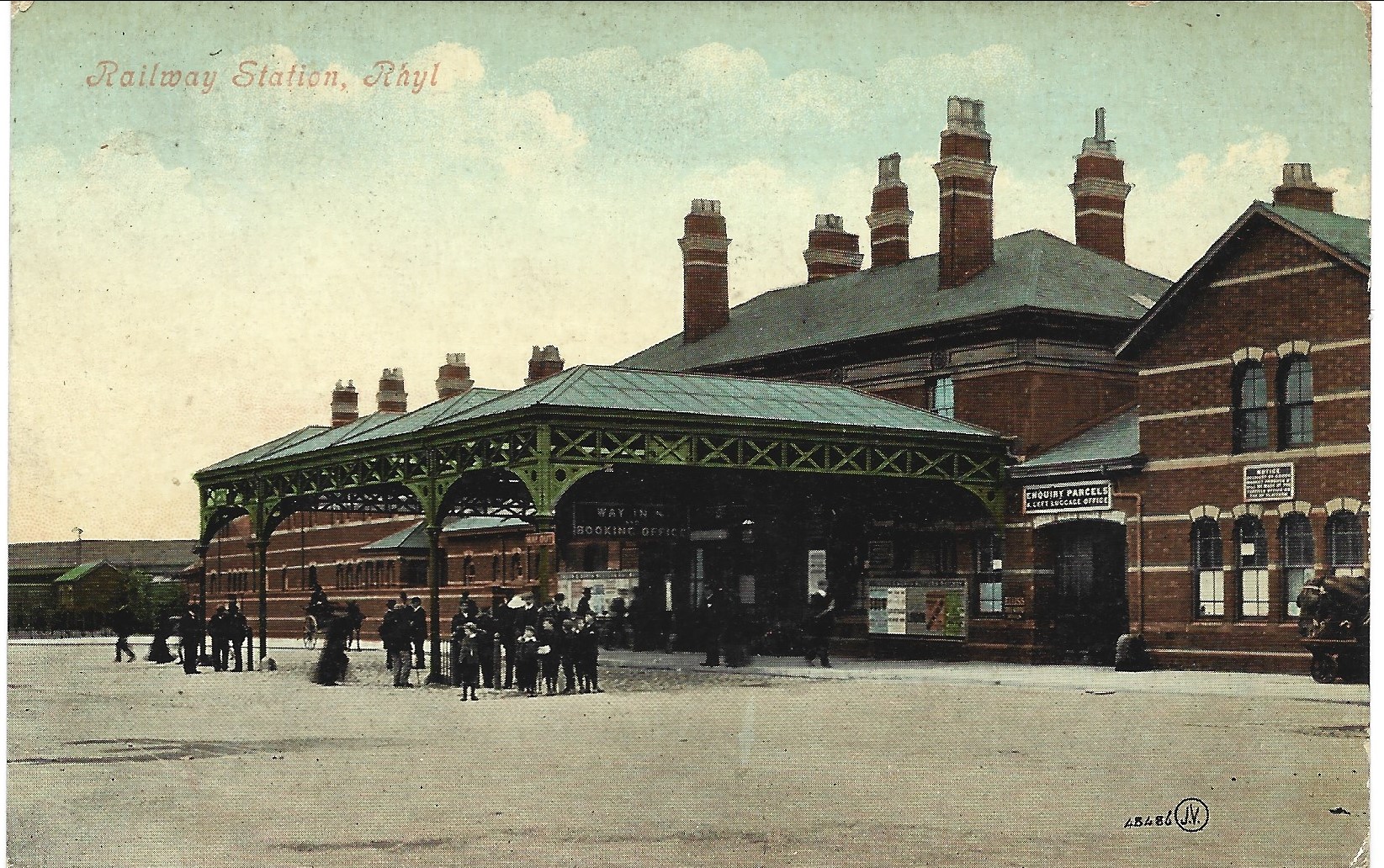
Former Bee and Station Hotel immediately opposite the Station.
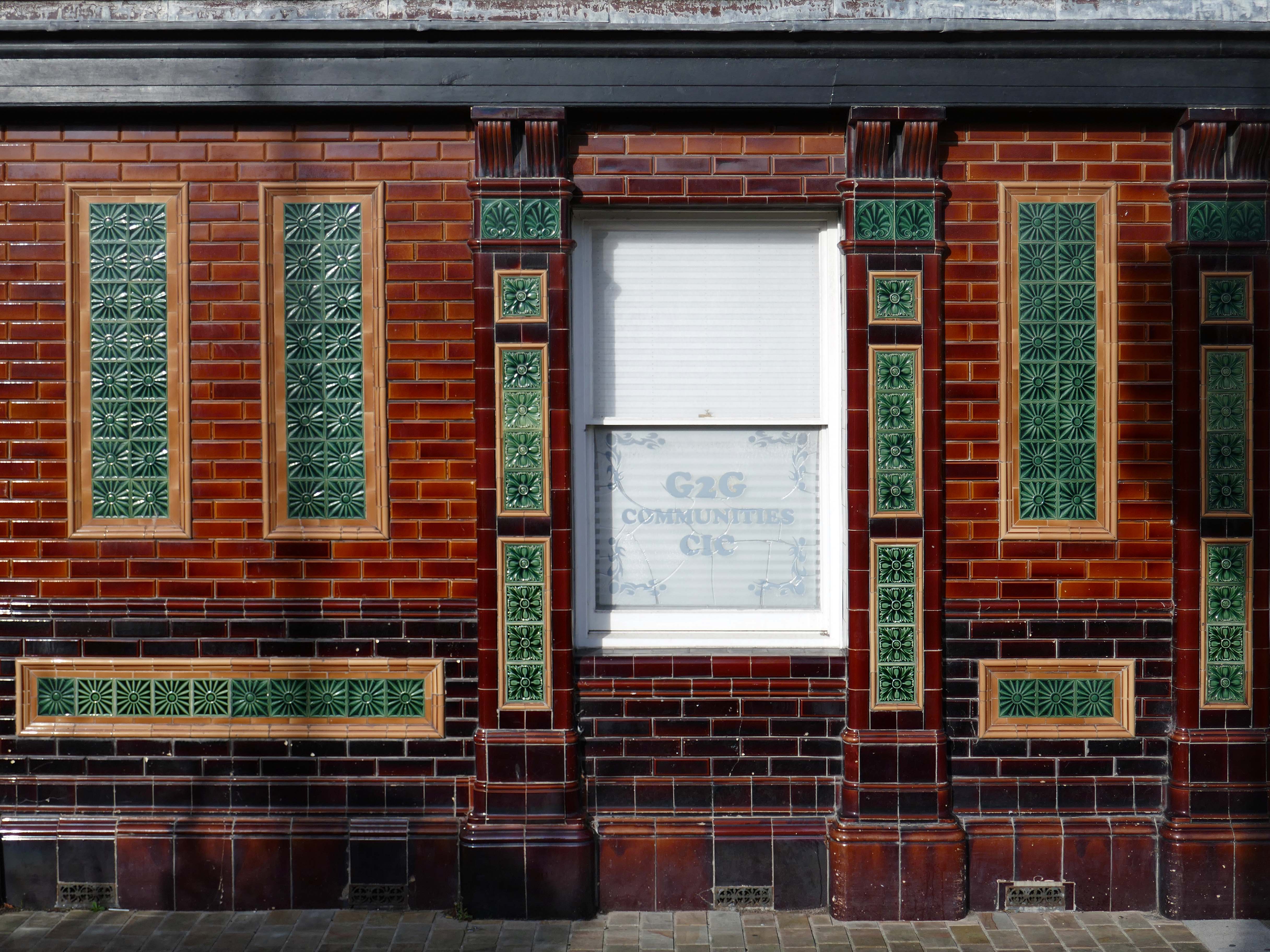
The Bee and Station Hotel was built in the 1860s. The decorative tile work of the exterior was probably added during remodelling c.1890. Inside, the lobby is also richly decorated with brightly coloured tiling. The building was listed in 1991 as an excellent example of pub of the late 19th century with a complete tiled frontage and a rare surviving internal layout throughout.
The pub closed in 2005. The building reopened in 2013 after being refurbished and given a modern extension by Denbighshire County Council, under the Townscape Heritage Initiative, to provide new offices for small businesses
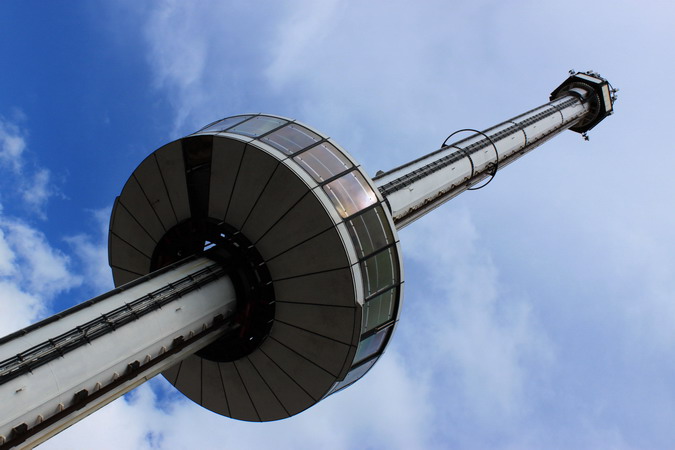
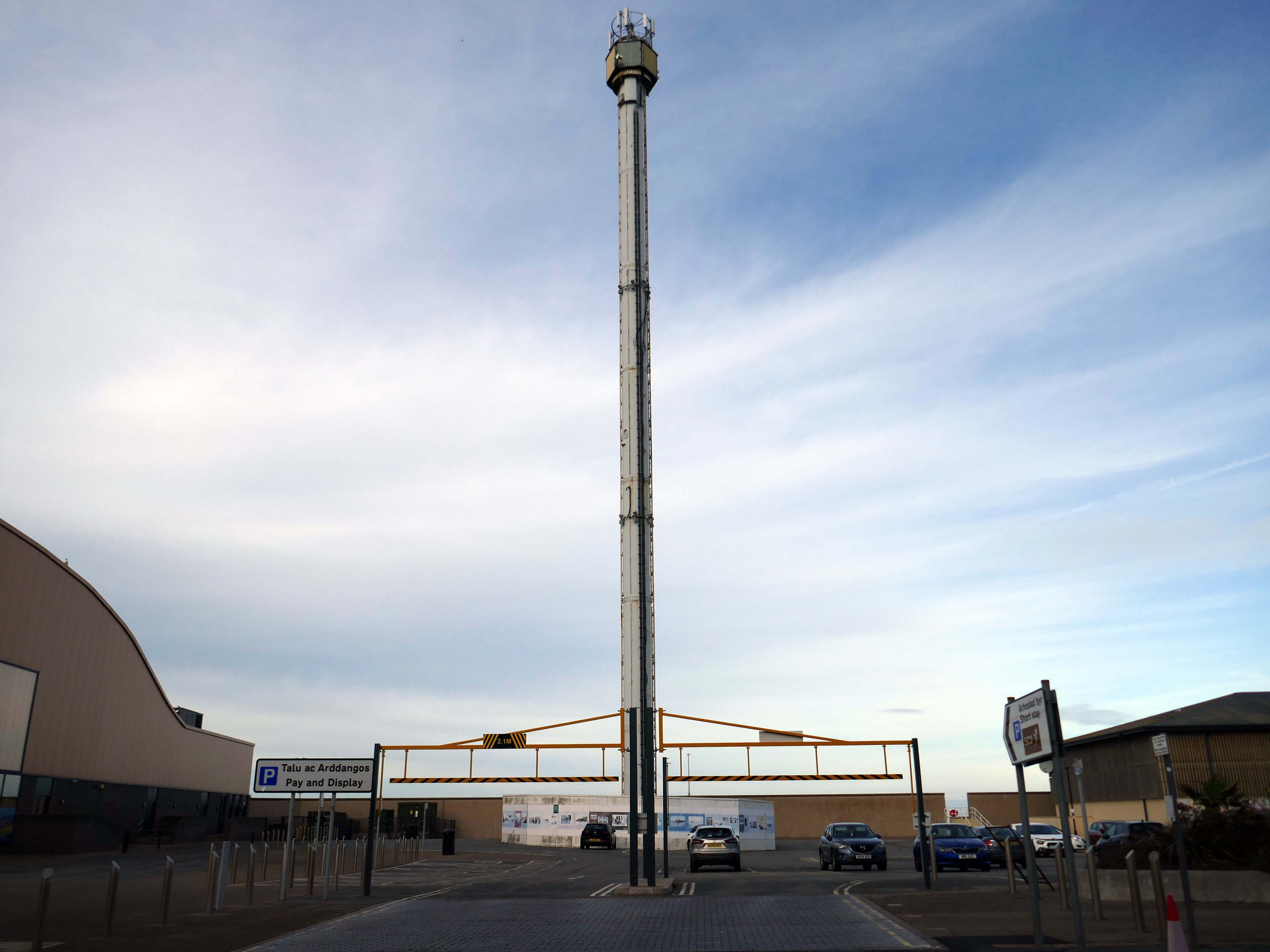
Onward to the seafront, home to the defunct Skytower.
The tower first operated at the 1988 Glasgow Garden Festival, where it was known as the Clydesdale Bank Tower and was opened by Prince Charles and Princess Diana. Following the festival, it was dismantled and reassembled on the Rhyl seafront.
The tower last operated in 2010. The following year, a safety report found that £400,000 worth of repairs were required to keep the ride operational. After standing but not operating for seven years, in 2017 work was carried out to turn the tower into a beacon.
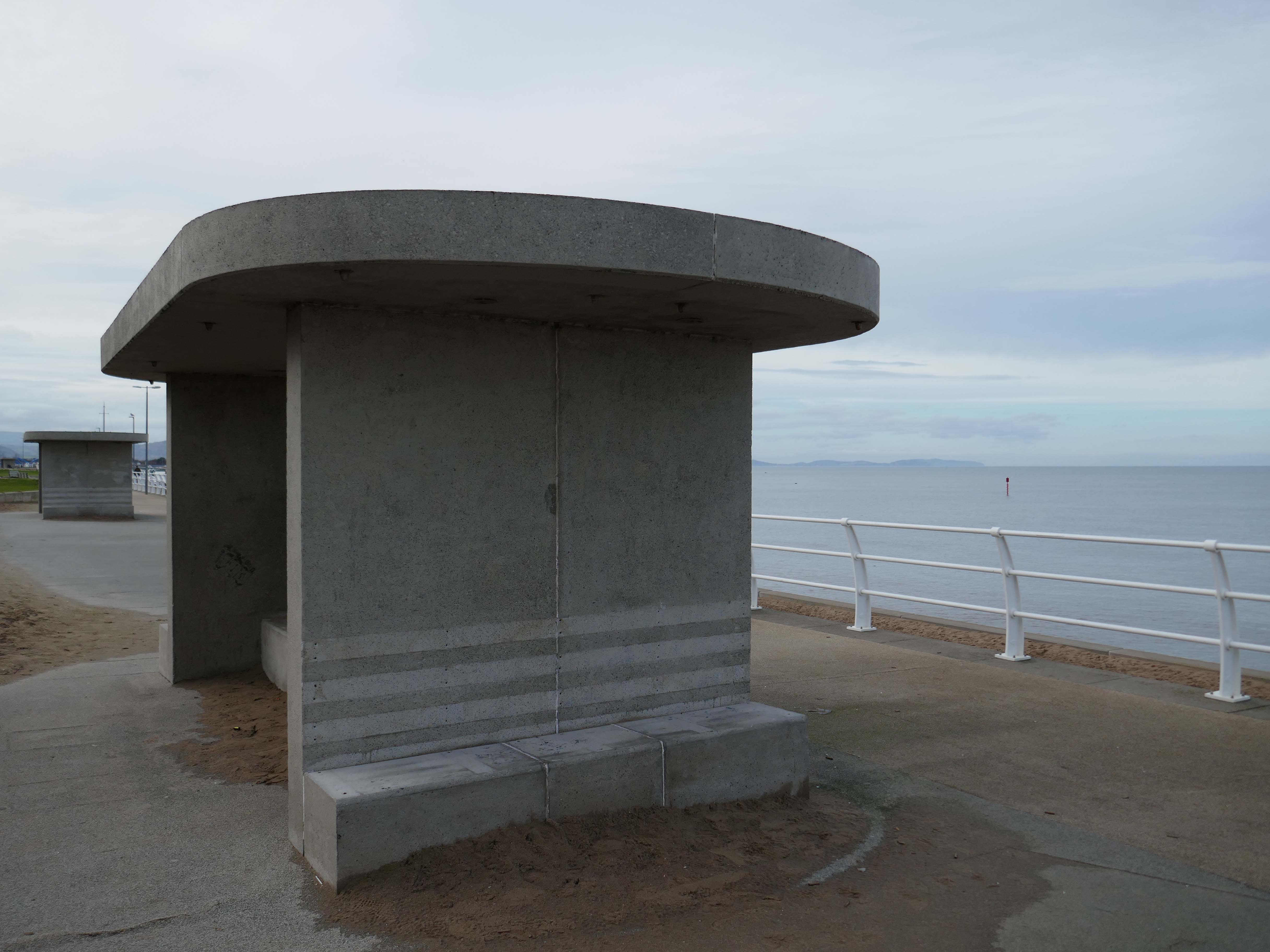
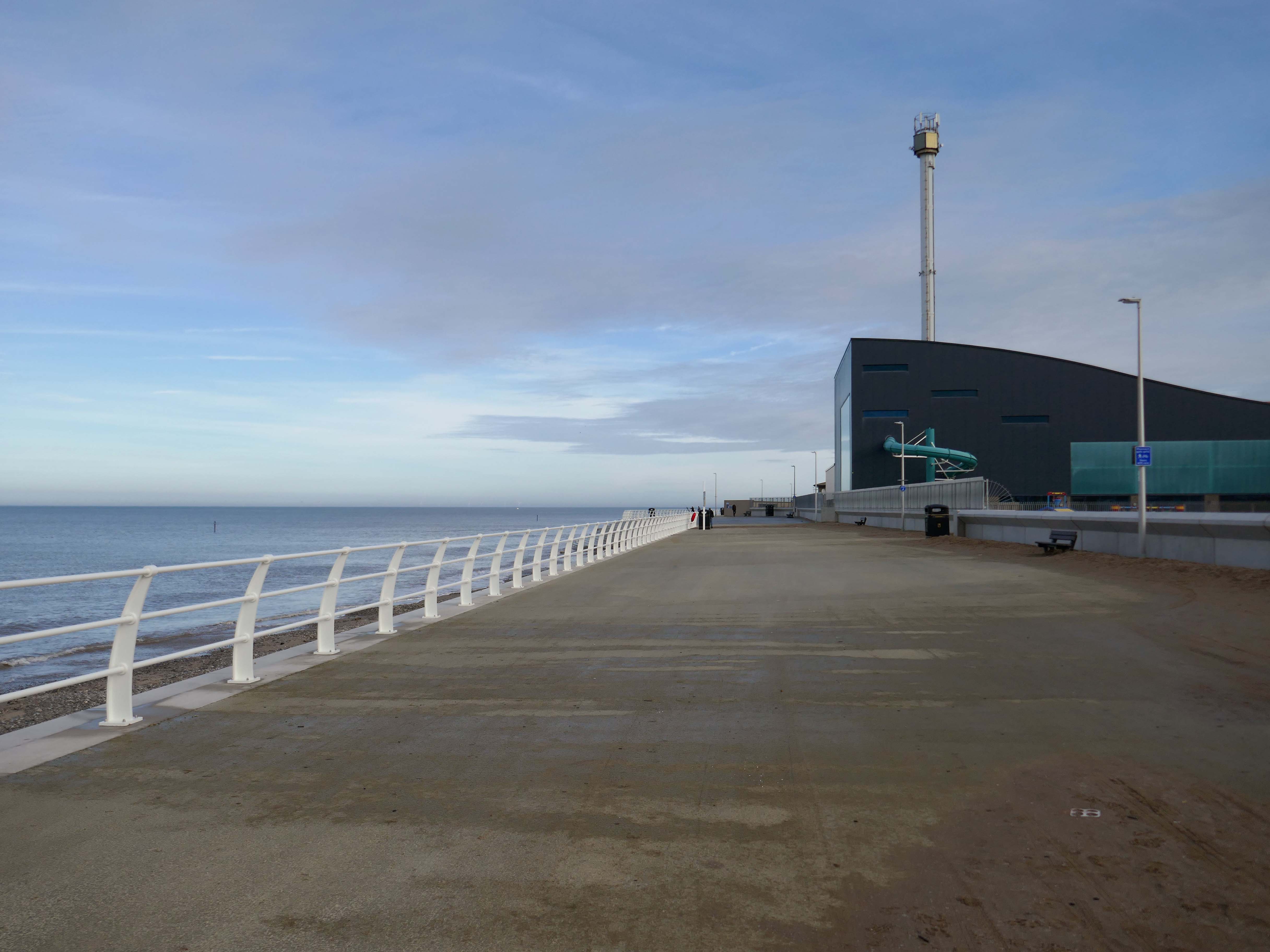
Much has been done to improve the promenade, with sumptuous hard landscaping, coastal defences and seafront shelters.
The £66m Central Rhyl Coastal Defences Scheme will protect almost 600 properties in Rhyl from flooding and coastal erosion for decades to come.
85% of the construction costs have been funded by the Welsh Government, with the Deputy First Minister labelling the project a ‘significant milestone’ in efforts to protect Welsh communities from the growing threats of climate change. Denbighshire County Council contributed the remaining 15%.
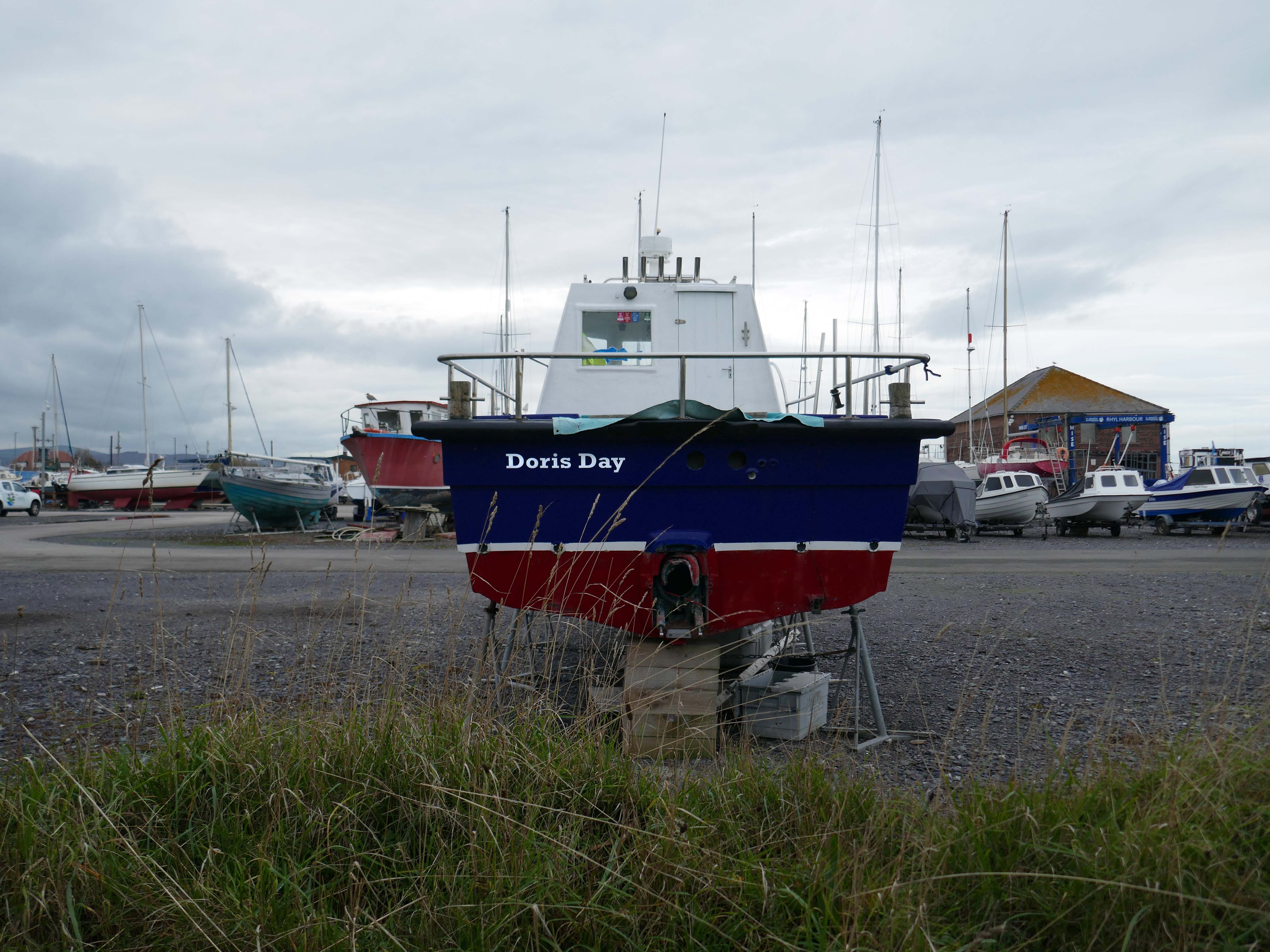
Over the estuary to Rhyl Harbour home to Doris Day.
Rhyl Harbour is located on the spectacular North Wales Coast and has undergone a dramatic refurbishment which has hugely improved the facilities on offer. The original timber yard which was used by sailing ships up until the Second World War, has been redeveloped and now offers storage for over 150 boats.
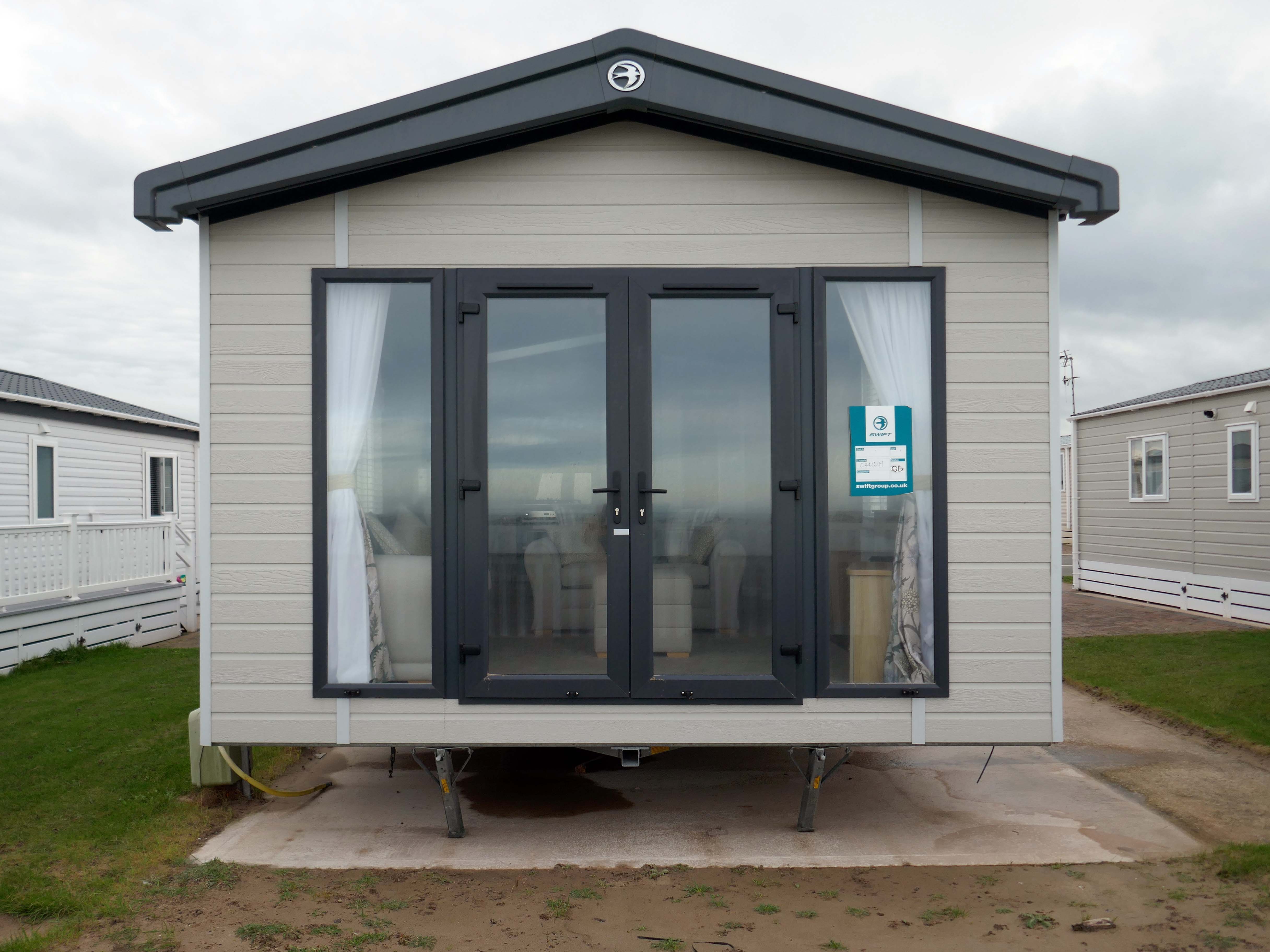
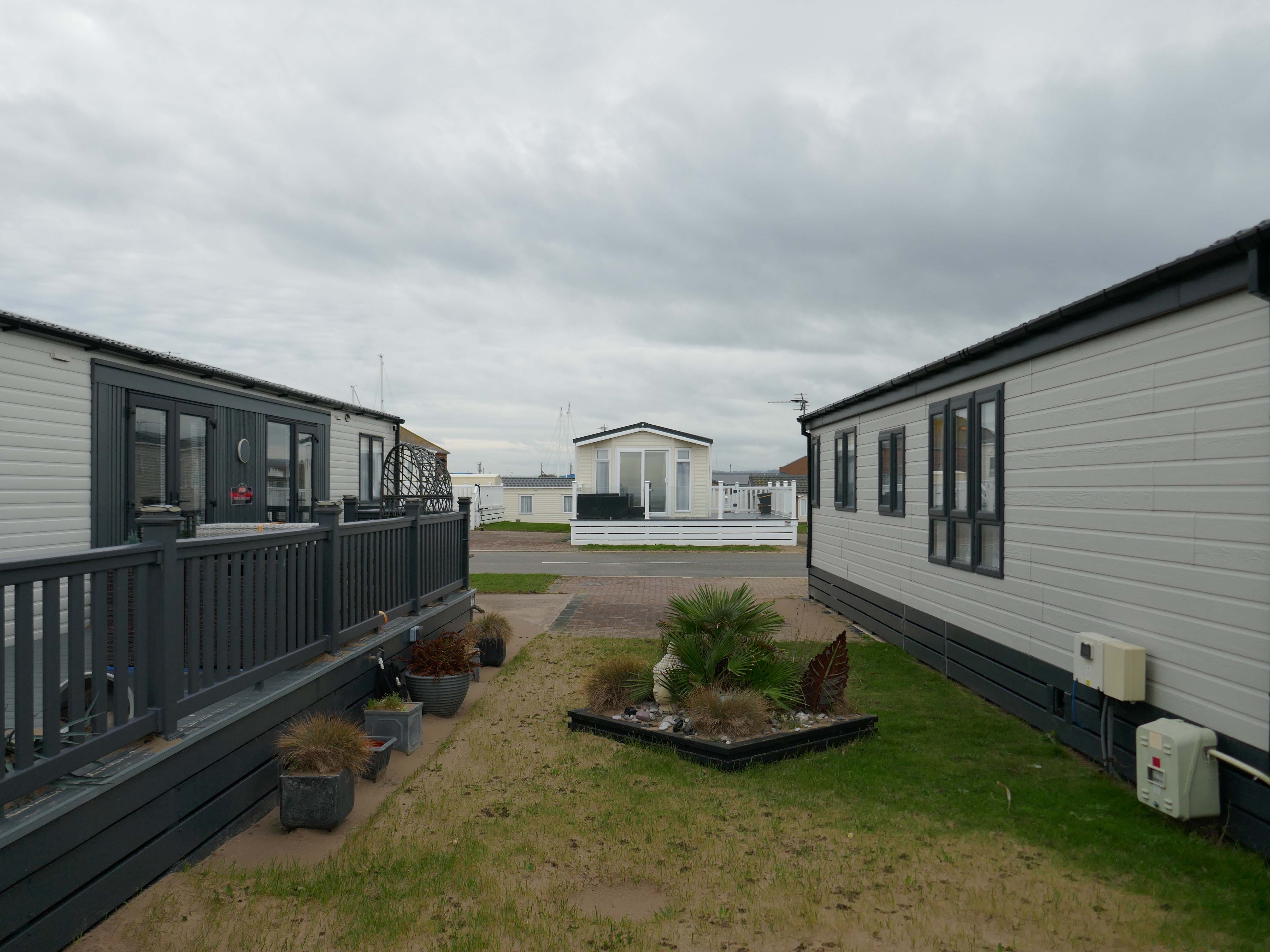
The foreshore home from home for thousands of caravan dwellers.
Golden Sands Holiday Park Rhyl has over 85 years history of fun filled holidays. Wonderfully located right next to the beach in Kinmel Bay in North Wales, it’s the perfect place for a family seaside holiday. It’s also an excellent base for exploring the beauty of North Wales. The town of Rhyl is closest, though also nearby are Prestatyn, Colwyn Bay and Llandudno – with the Great Orme. Blue Flag beaches offering wonderful seaside holiday traditions along with stunning Snowdonia National Park are within an easy drive.
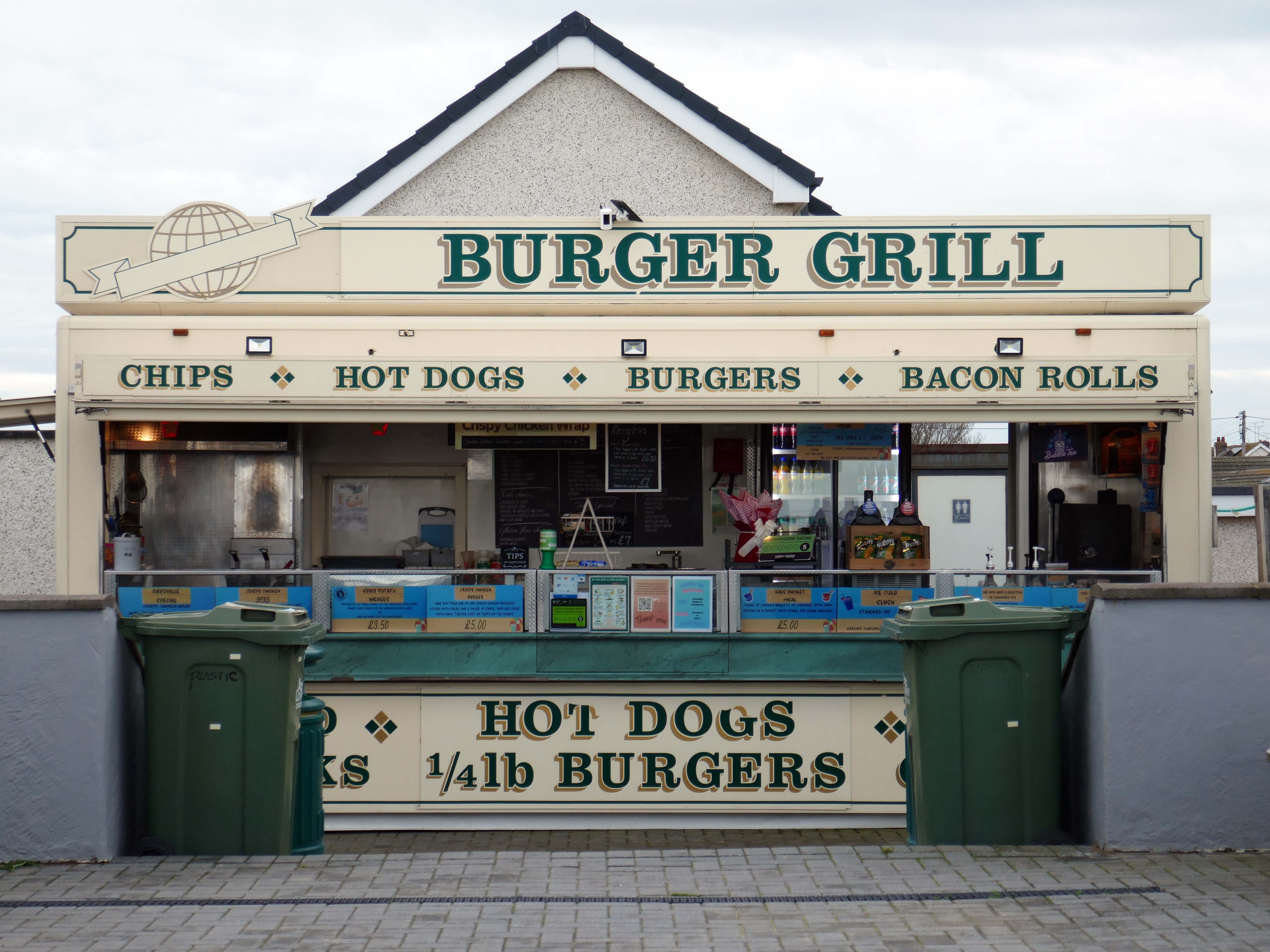
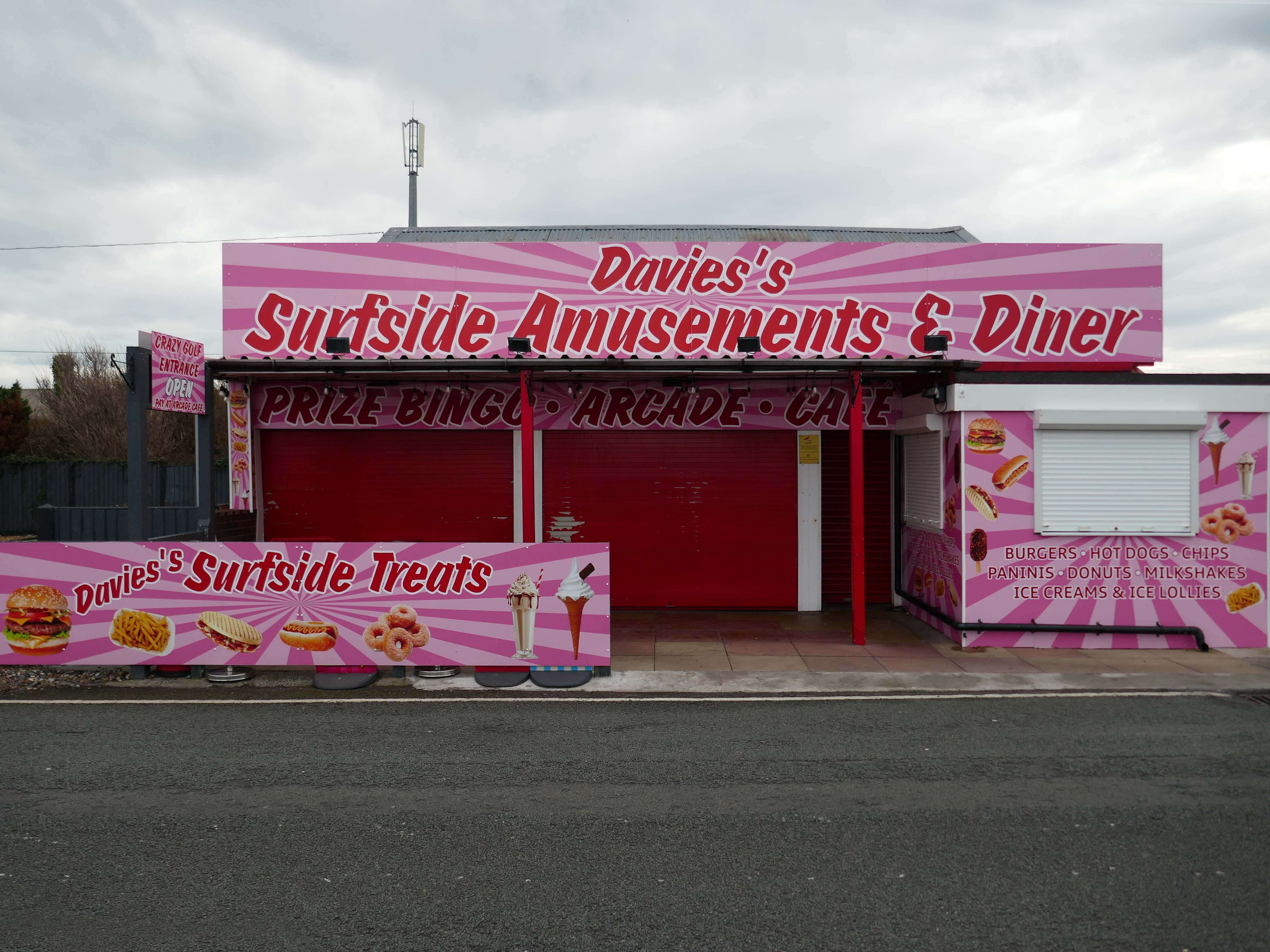
Fast food is often nutritionally poor and high in calories. Evidence demonstrates that overeating commercial fast food products can negatively impact health in both the short and long term.
However:
Baysville is lovely and clean, lots of tables and a good choice of foods from ice cream, donuts, burgers, hot and cold drinks and a bar. The staff are pleasant and welcoming.
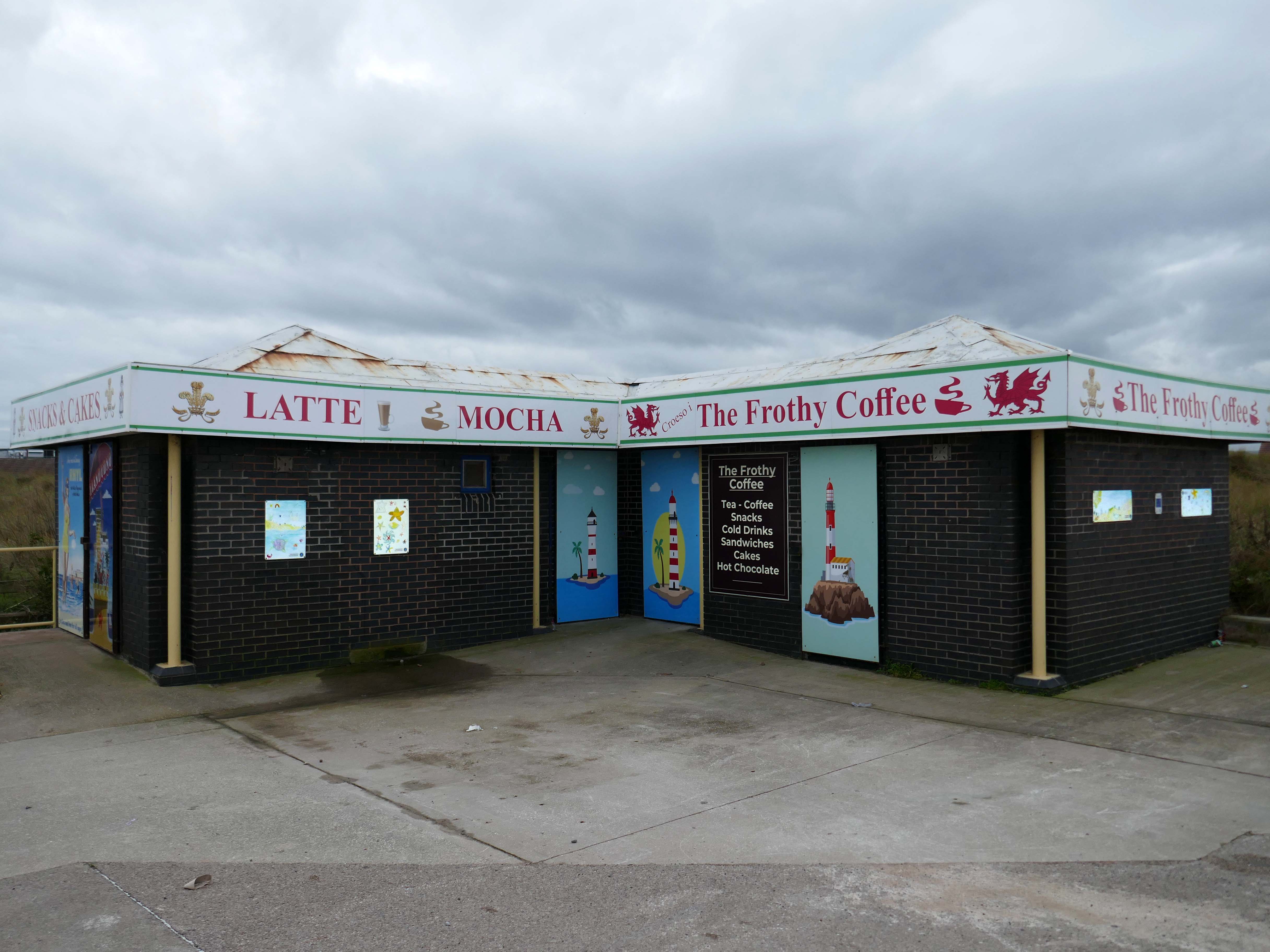
Researchers have found people who drink up to three cups of coffee a day could have a healthier heart and a lower risk of dying of any cause.
But too much caffeine can produce anxiety, sleeplessness, agitation, palpitations, diarrhoea and restlessness. In individuals with a mental health condition caffeine can worsen psychosis and result in the need for higher amounts of medication.
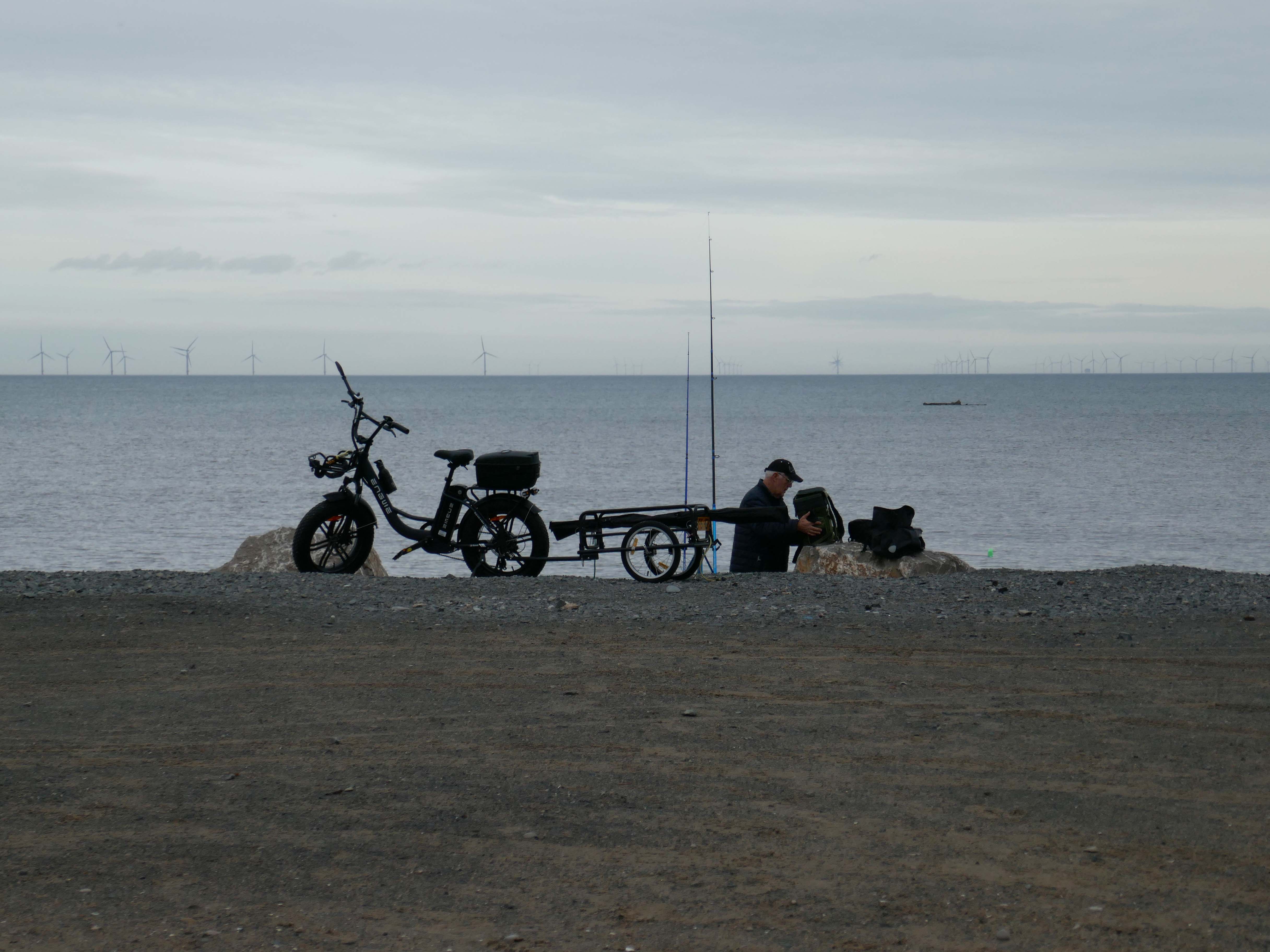
Possibly wiser to take a leisurely ride on your electric bicycle, followed by an hour or two of beach casting .
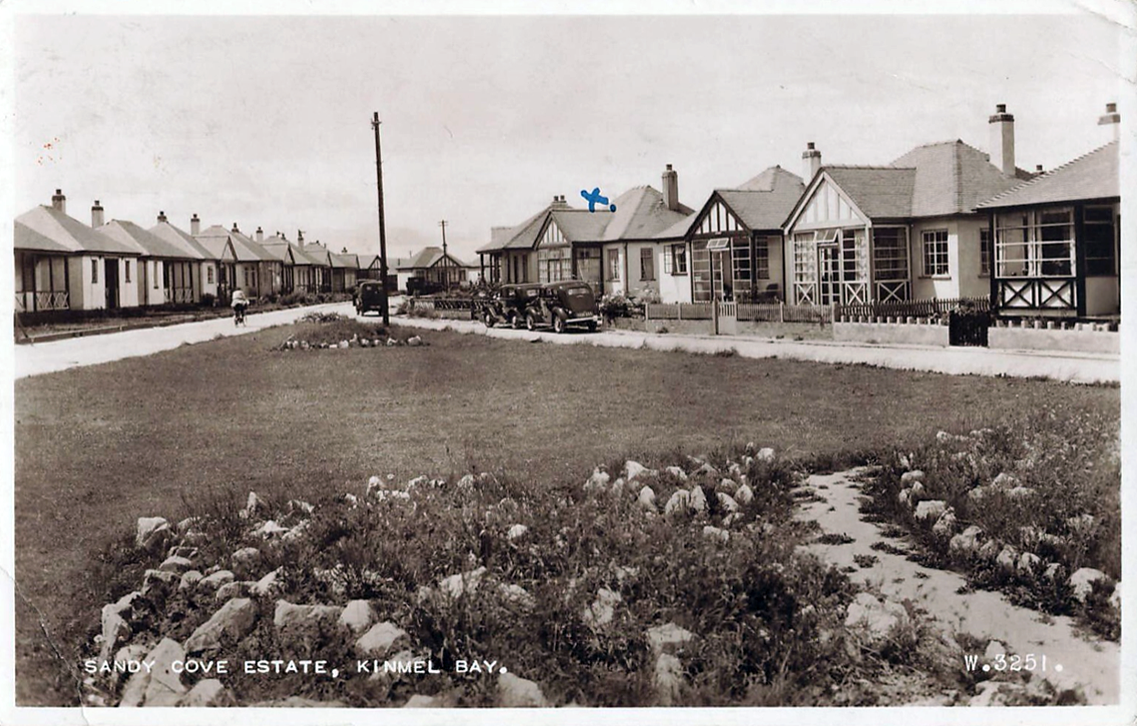
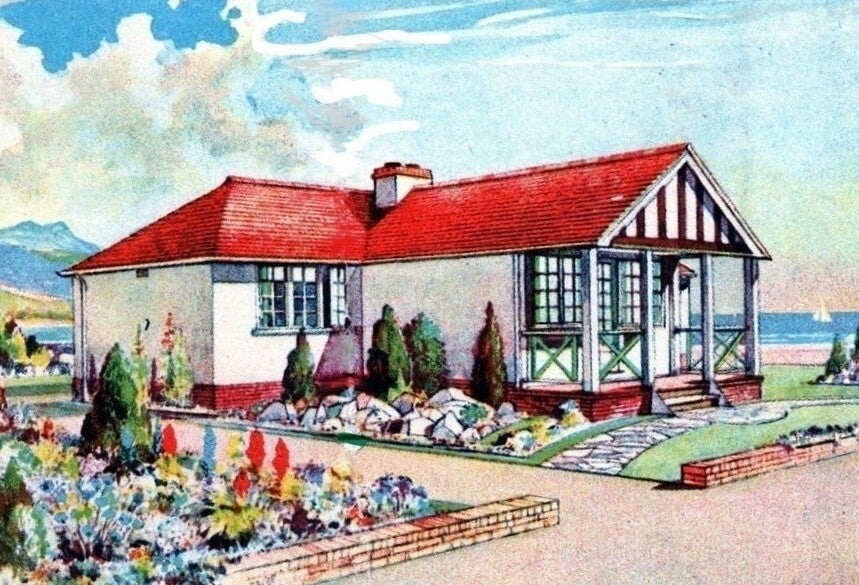
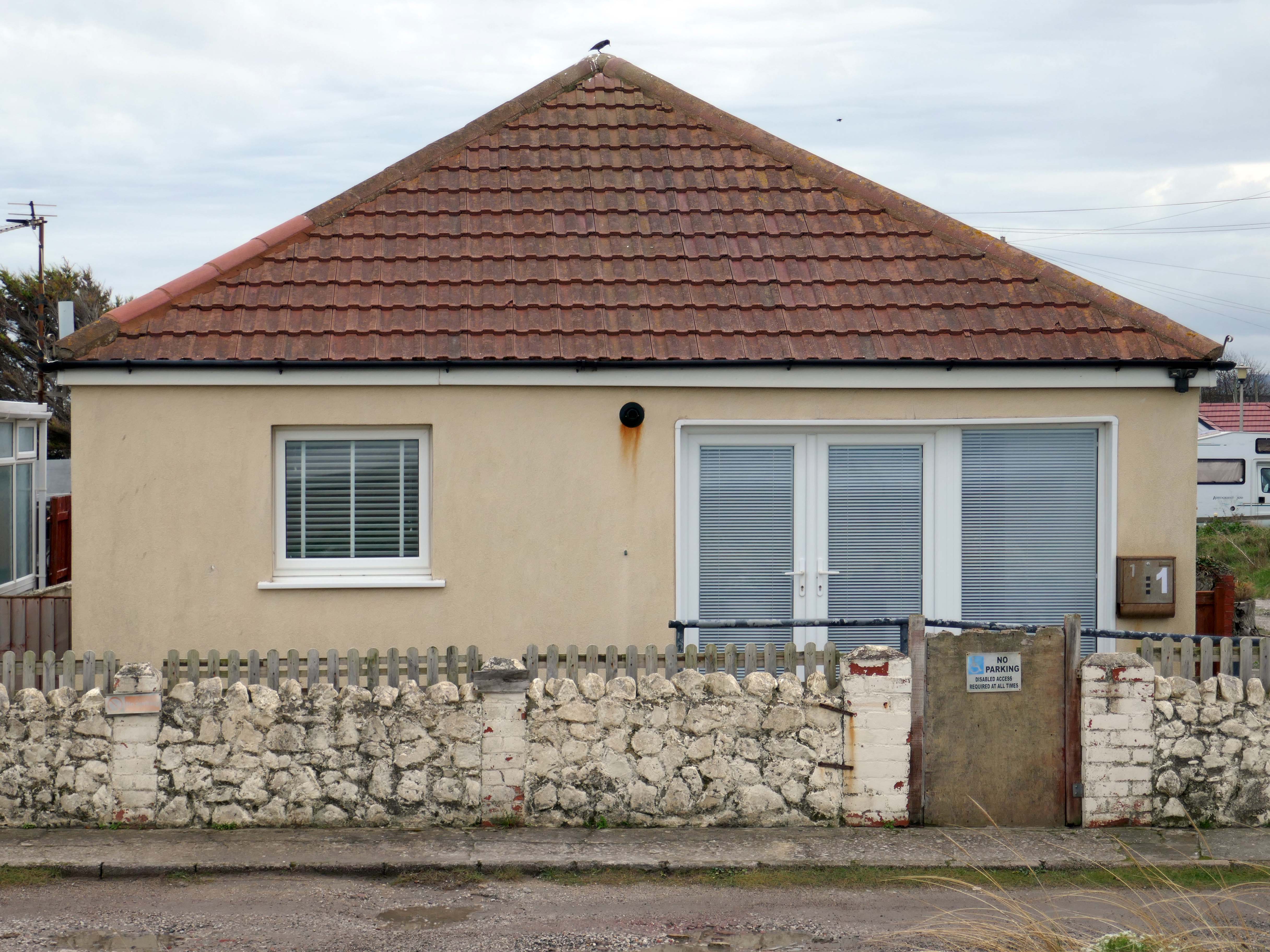
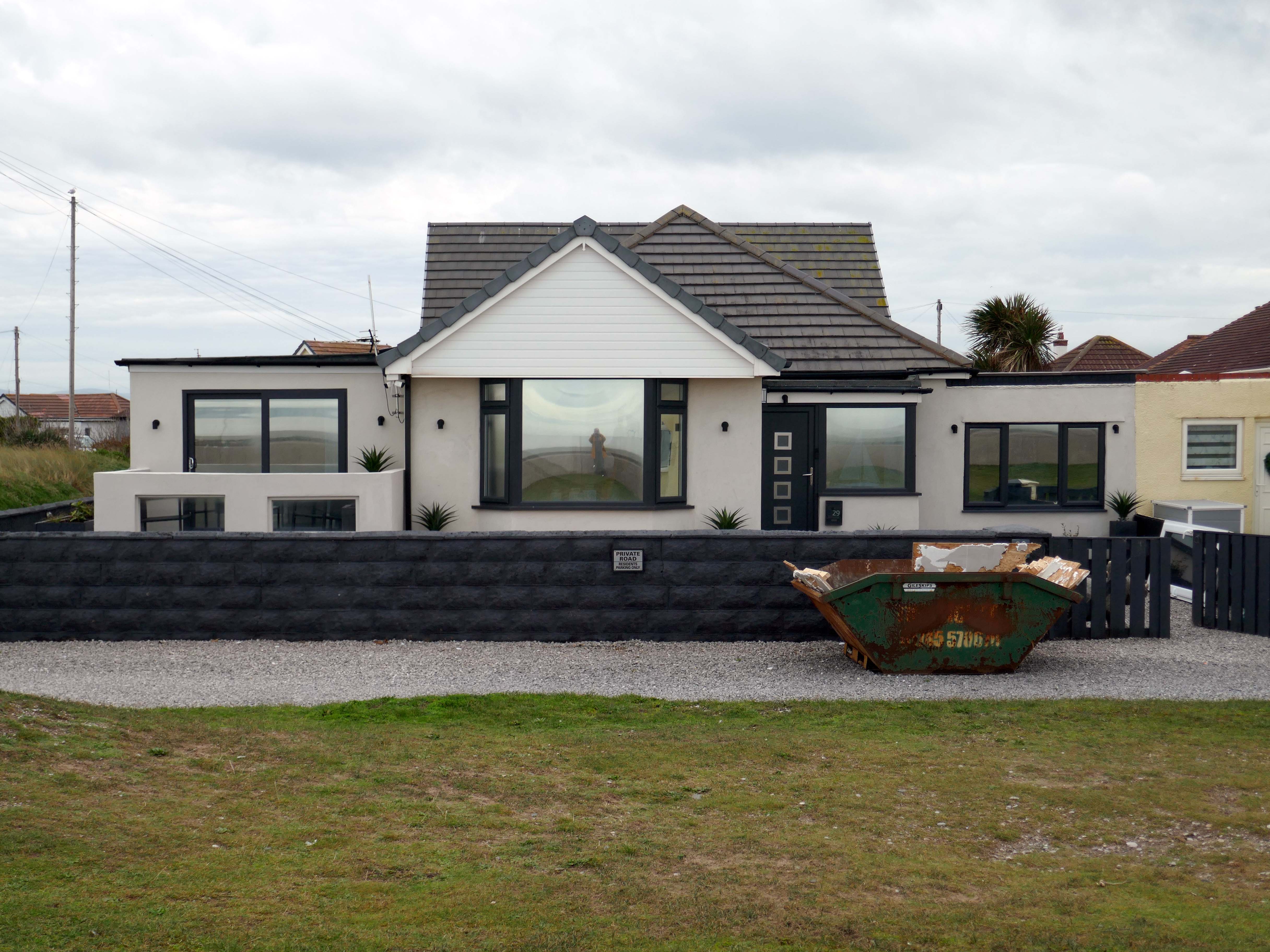
The coastal housing at Kinmel bay is undergoing a cosmetic upheaval, the determinedly down home bungalow swamped by the relentless monotone tide of home improvements.
The Sandy Cove Estate consists of 250 bungalows that were built in the 1930s by the Kinmel Estates Ltd, who sadly went into liquidation around 1947, before the estate was completed. This left the estate with only dirt tracks for roads with no sidewalks or pavements, no drainage for surface water or any adequate street lighting. After the liquidation of the company the roads and communal greens were escheated to the Crown who then offered the land free of charge to successive Councils for the to incorperate into the towns that were developing. This was refused by the Councils.
Fifty or more homes are ready for you to choose from, gardens and tennis courts have been provided for the sole use, in perpetuity of residents.
Onward now to Towyn.
The town made national headlines in 1990 when a combination of gale-force winds, a high tide and rough seas caused Towyn’s flood defences to be breached at about 11.00am on 26 February. 4 square miles of land was flooded, affecting 2,800 properties and causing areas of the resort to be evacuated. Further flooding occurred later the same week, on 1 March, shortly after the site of the disaster was visited by Prince Charles and Princess Diana.
Scientific experts also believe that the silt left behind from the flooding had left the town with a higher concentration of radioactivity, over ten times the governmental safety limits, most likely originating from the nuclear processing plant at Sellafield which had been dispersed into the Irish Sea over many years since its construction. The National Radiological Protection Board stated that there was a “small risk” to the people there, while the Welsh Office claimed there was no danger to the public. The coastal defences have since been reconstructed and significantly enhanced.
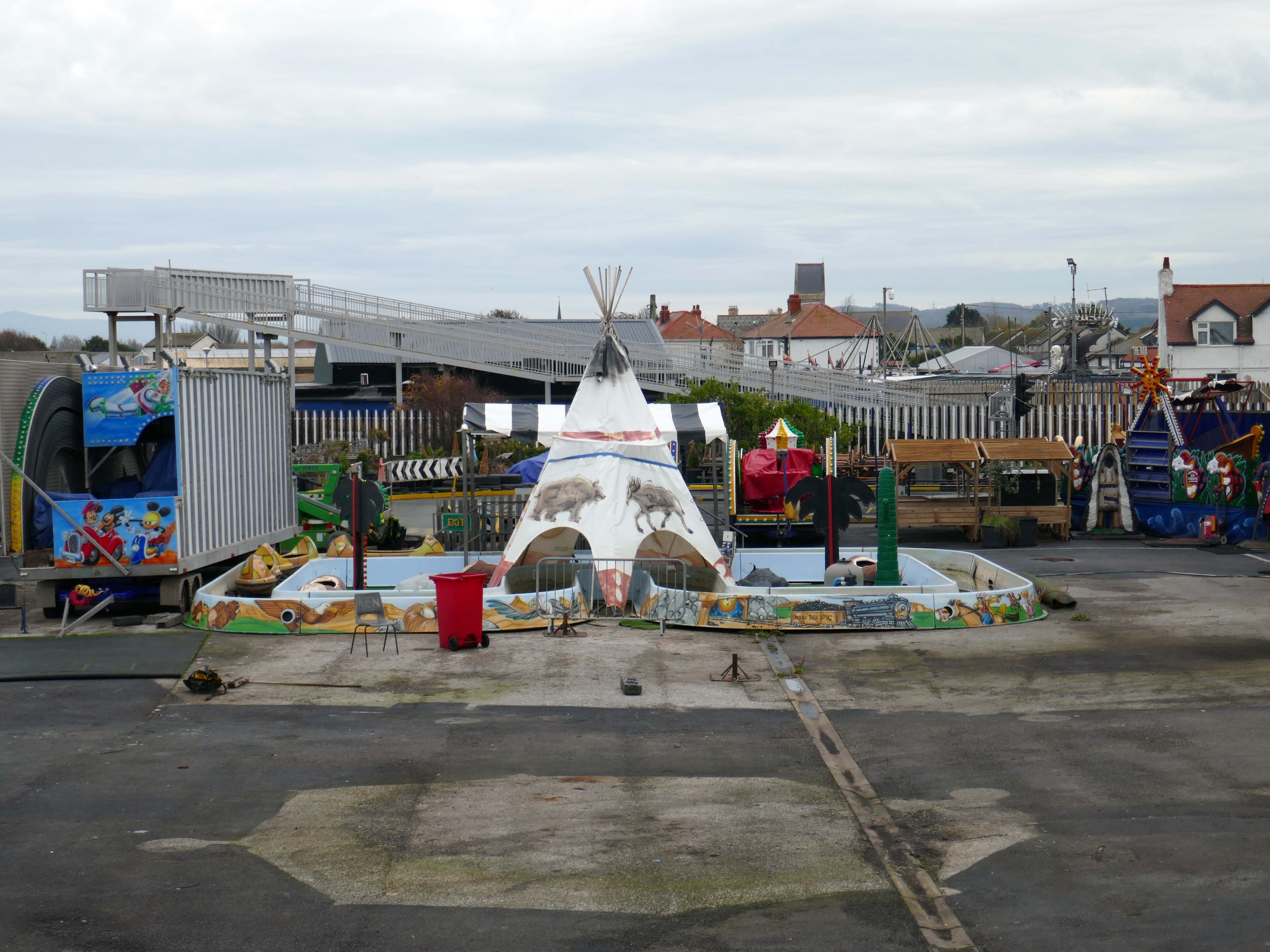
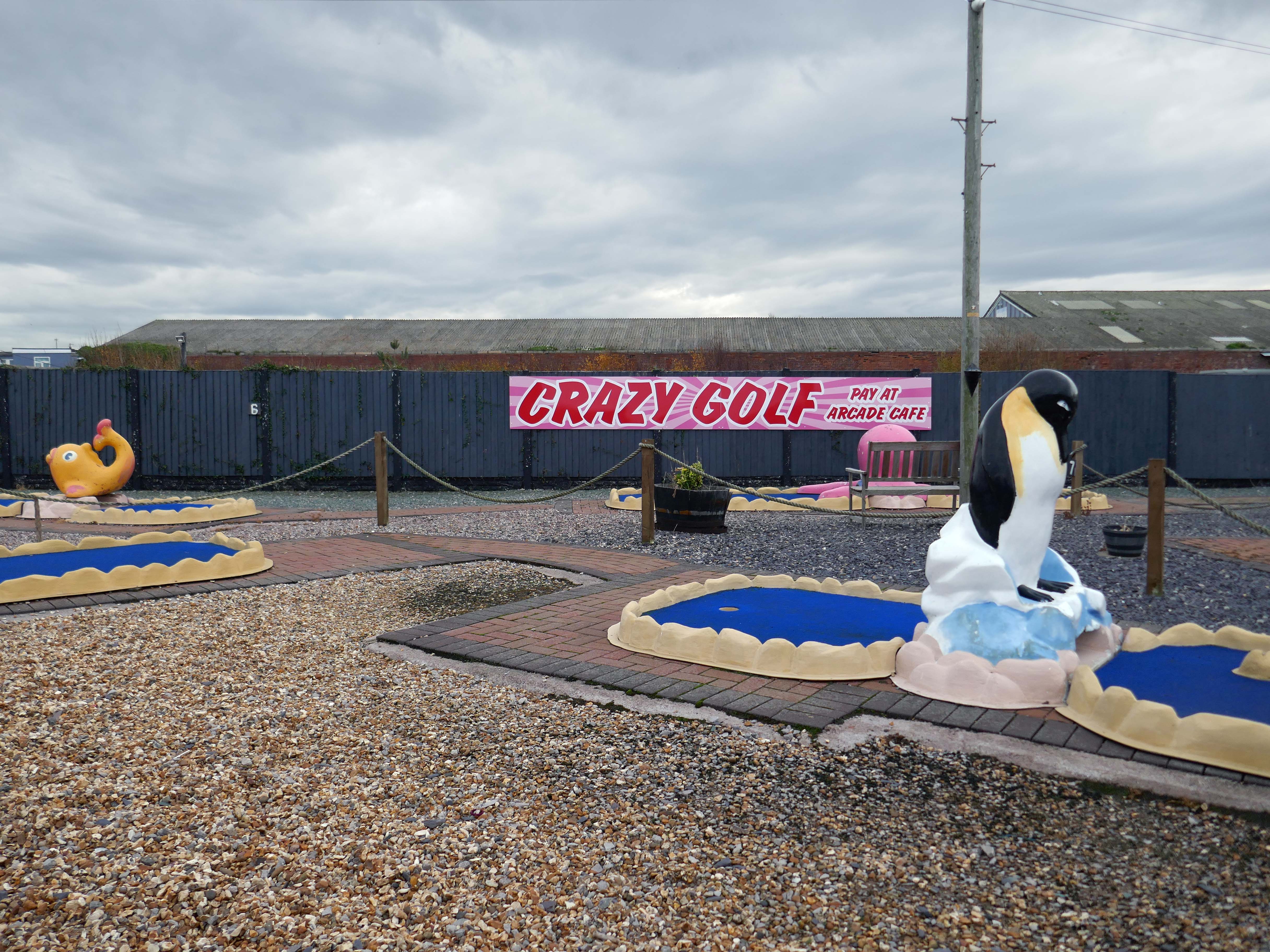
The People of the First Nation here at Knightly’s Fun Park are now safe from the threat of flood.
Knightly’s Funfair has a fantastic range of rides for the whole family! Experience high speed thrills and heart pumping excitement! We’ve got rides for the little ones too as well as games and food stalls to keep the whole family entertained all day!
We also welcome dogs, so you don’t have to leave your furry friends behind!
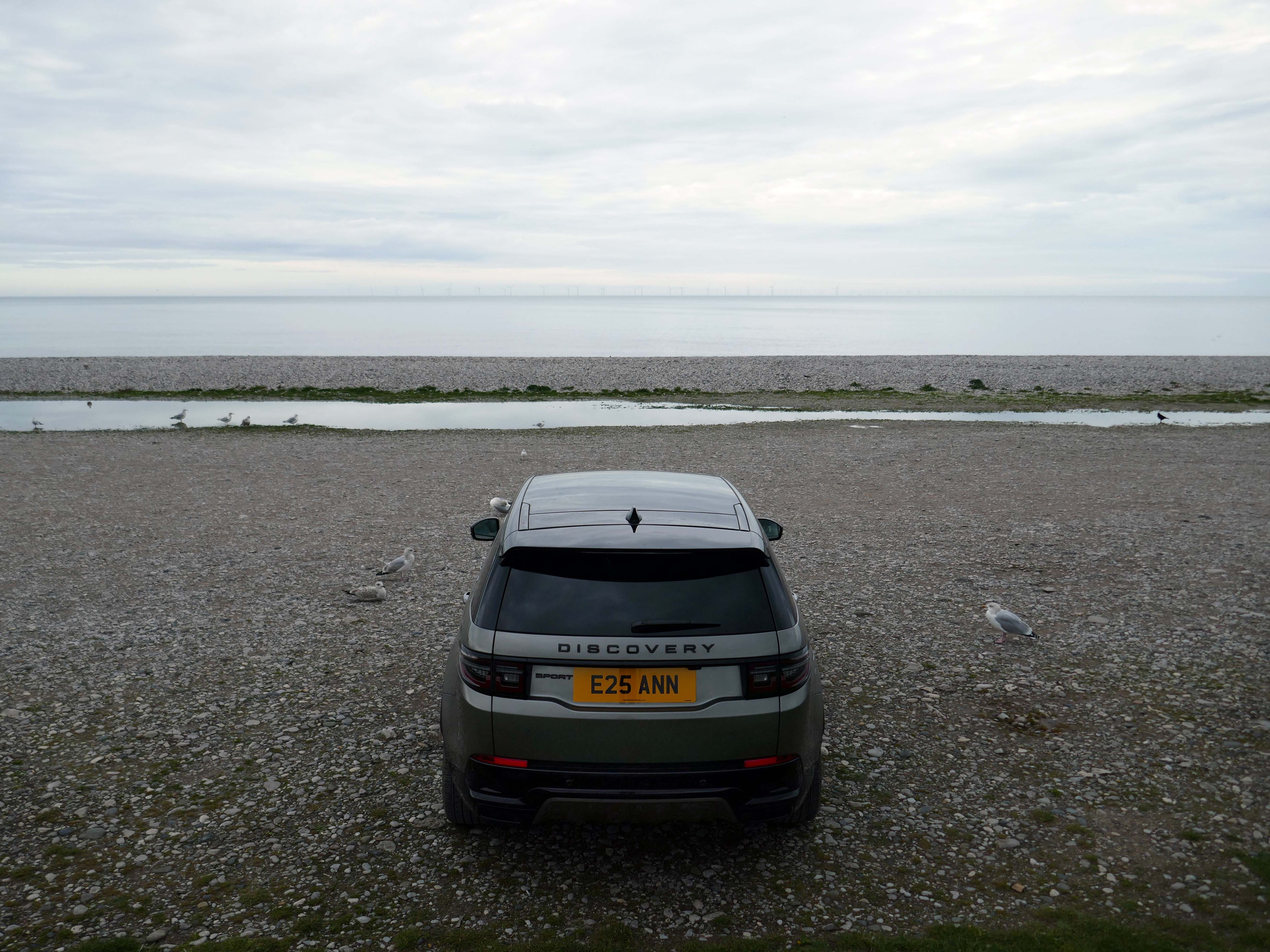
The monotone gentrified home is accompanied by the monotone SUV – the Land Rover Discovery Sport.
The joy of Discovery Sport is in finding that no adventure is out of reach. Offering the ultimate in comfort, while having the toughness to cope with family life.
According to a Europe-wide study, which included the UK, when vehicles are 300kg heavier, the risk of fatal injuries is 30% higher for vulnerable road users.
Pedestrians and cyclists are also 30% more likely to be killed if they’re hit by a car with a bonnet that’s 10cm higher than average.
E25 is Spirulina Extract Phycocyanin, when taken as directed, Spirulina generally doesn’t cause side effects. In some people, it may cause mild side effects, including headaches, diarrhoea, bloating and gas.
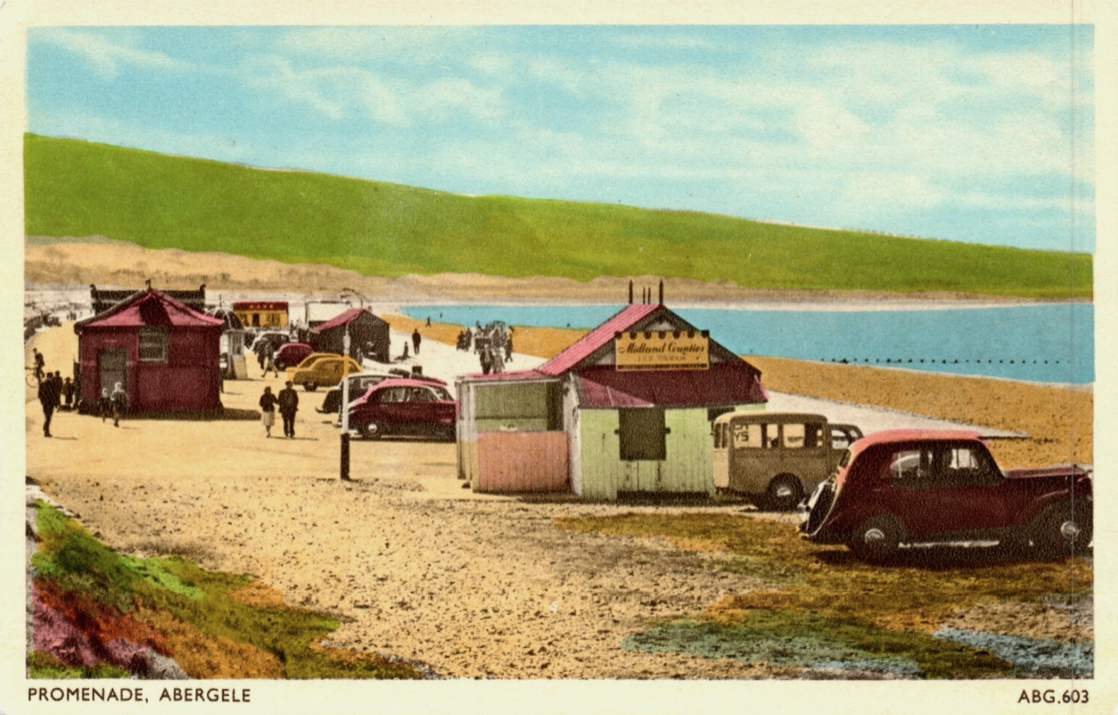
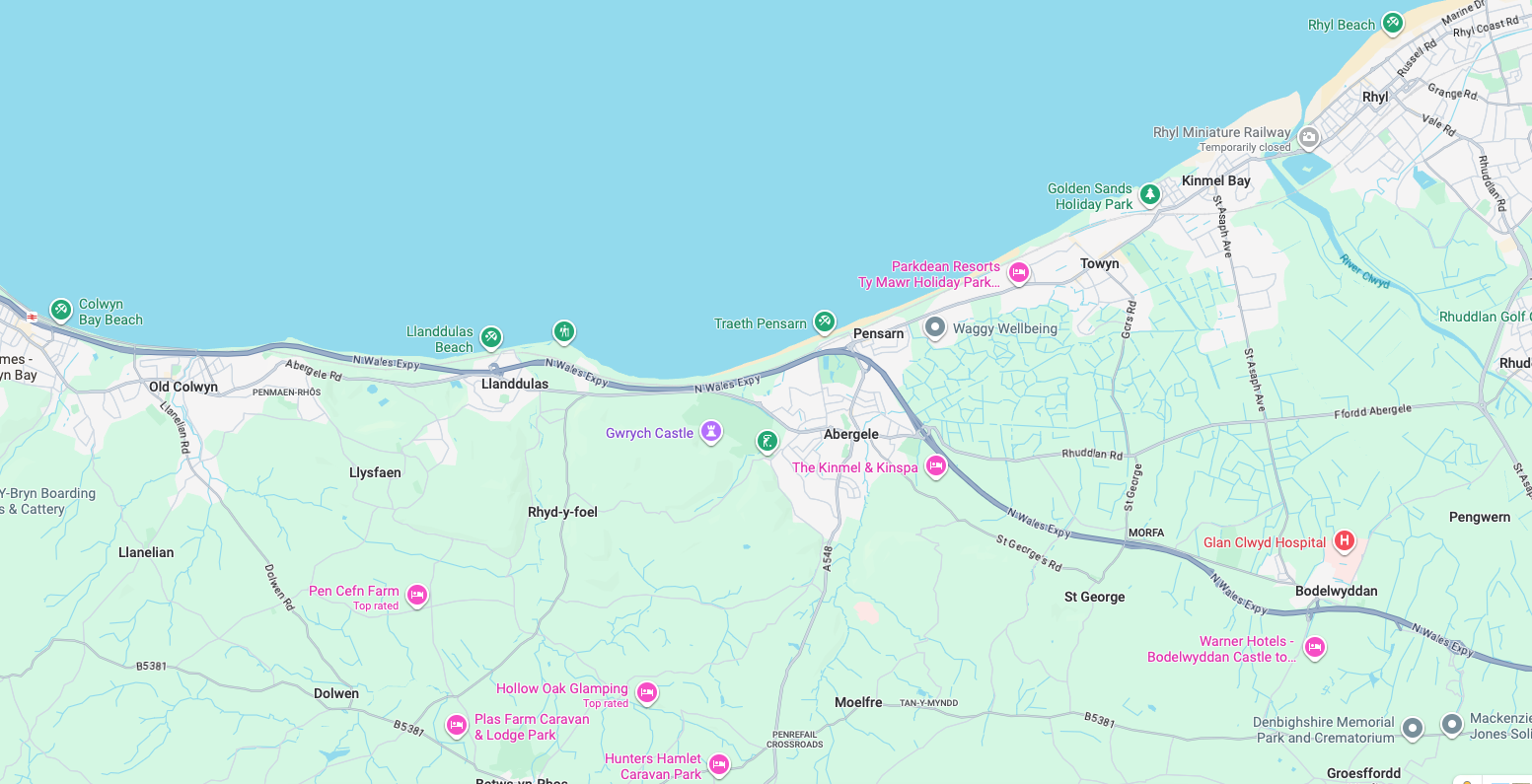
Here we are now at Abergele and Pensarn which have quiet sandy beaches close to historic sites and wooded hills. From here, you can escape the stresses of everyday life. Enjoy sea views, historic places such as Gwrych Castle – home to ITV’s I’m a Celebrity 2020 and 2021 TV series, and a range of things to do providing fun for all the family.
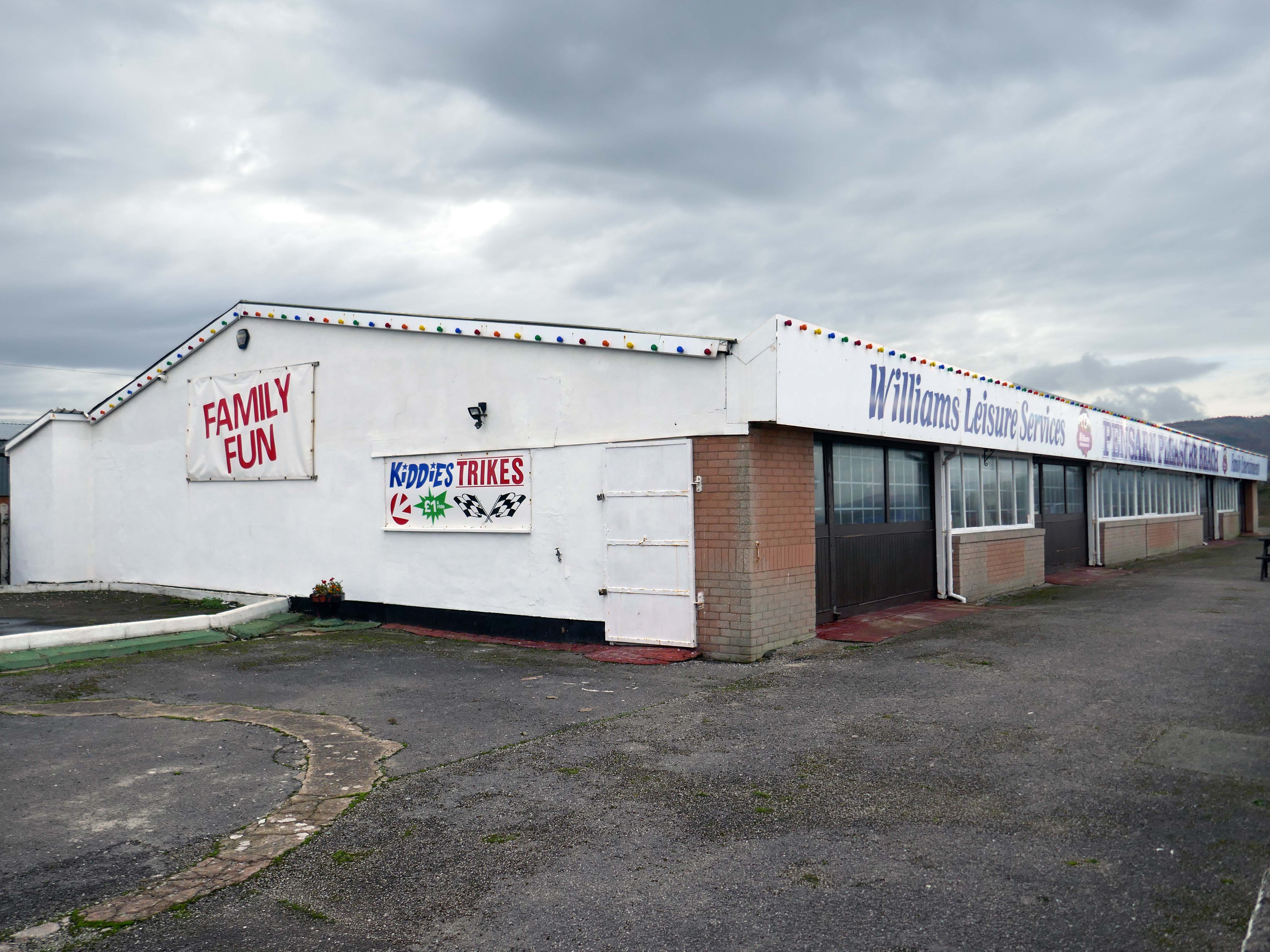
Pensarn Pleasure Beach Amusement Arcade, operated by Laurence Williams Amusements, offers a charming family-friendly experience. Visitors often highlight its nostalgic appeal with fun penny machines and small shops selling drinks and handmade goods.
While many appreciate the charm of the arcade, some mention that certain machines are quite dated and do not work properly, this aspect may affect overall enjoyment for some users.
The reviews indicate a good variety of activities including classic penny slots and local shops offering food and unique handmade items like dog harnesses, catering to diverse interests.
Such a pleasant stretch of coast to stretch your legs along.
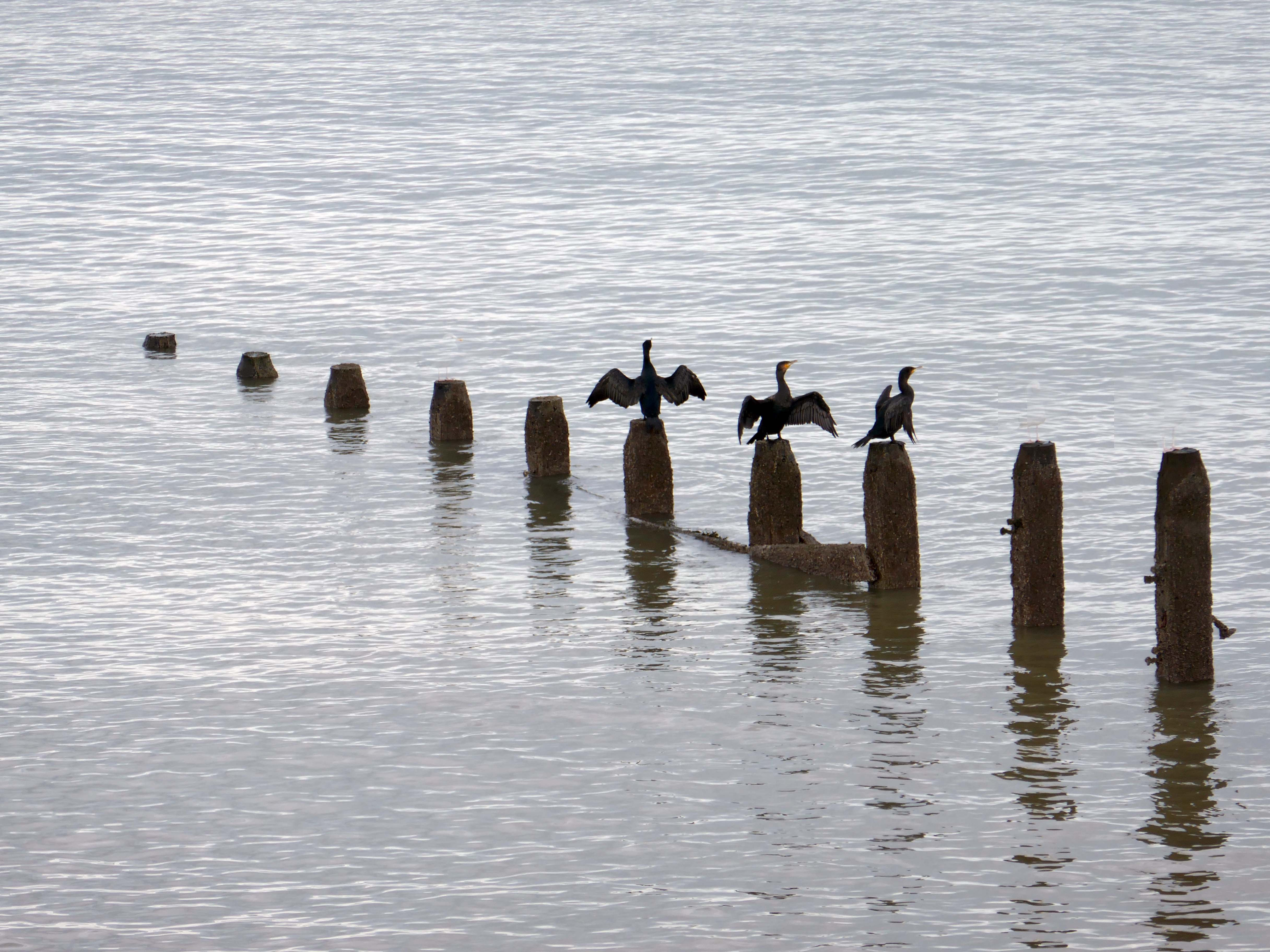
Or to stretch your wings for that matter, should you happen to be a cormorant.
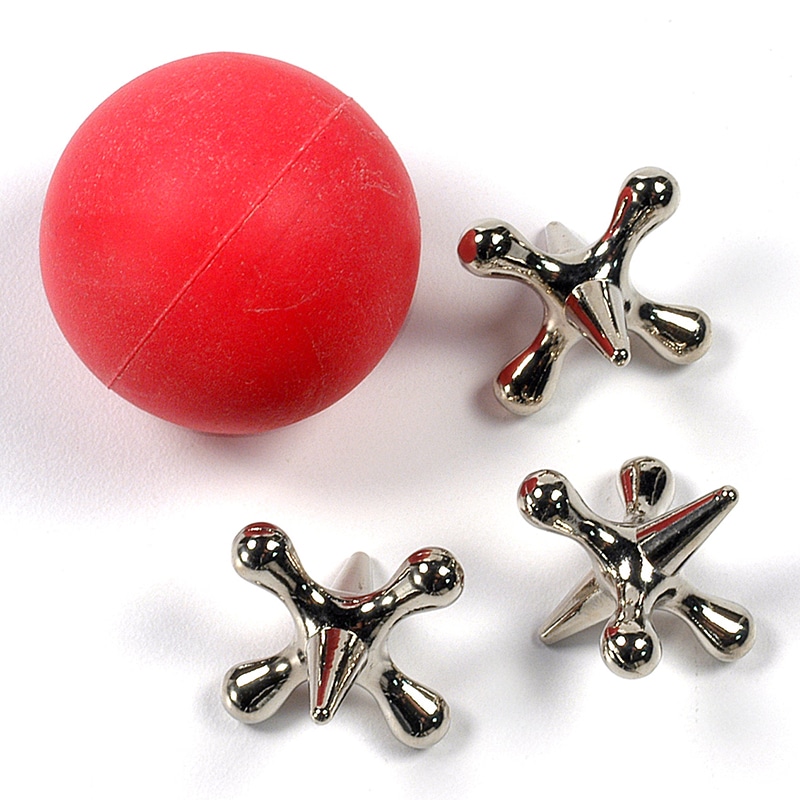
Coastal defences from the giant concrete bobbers and jacks.
A tetrapod is a form of wave-dissipating concrete block used to prevent erosion caused by weather and longshore drift, primarily to enforce coastal structures such as seawalls and breakwaters. Tetrapods are made of concrete, and use a tetrahedral shape to dissipate the force of incoming waves by allowing water to flow around rather than against them, and to reduce displacement by interlocking.
Tetrapods were originally developed in 1950 by Pierre Danel and Paul Anglès d’Auriac of Laboratoire Dauphinois d’Hydraulique in Grenoble,who received a patent for the design. The French invention was named tétrapode, derived from Greek tetra ‘four’ and pode ‘foot’.
Tetrapods were first used at the thermal power station in Roches Noires in Casablanca, to protect the sea water intake.
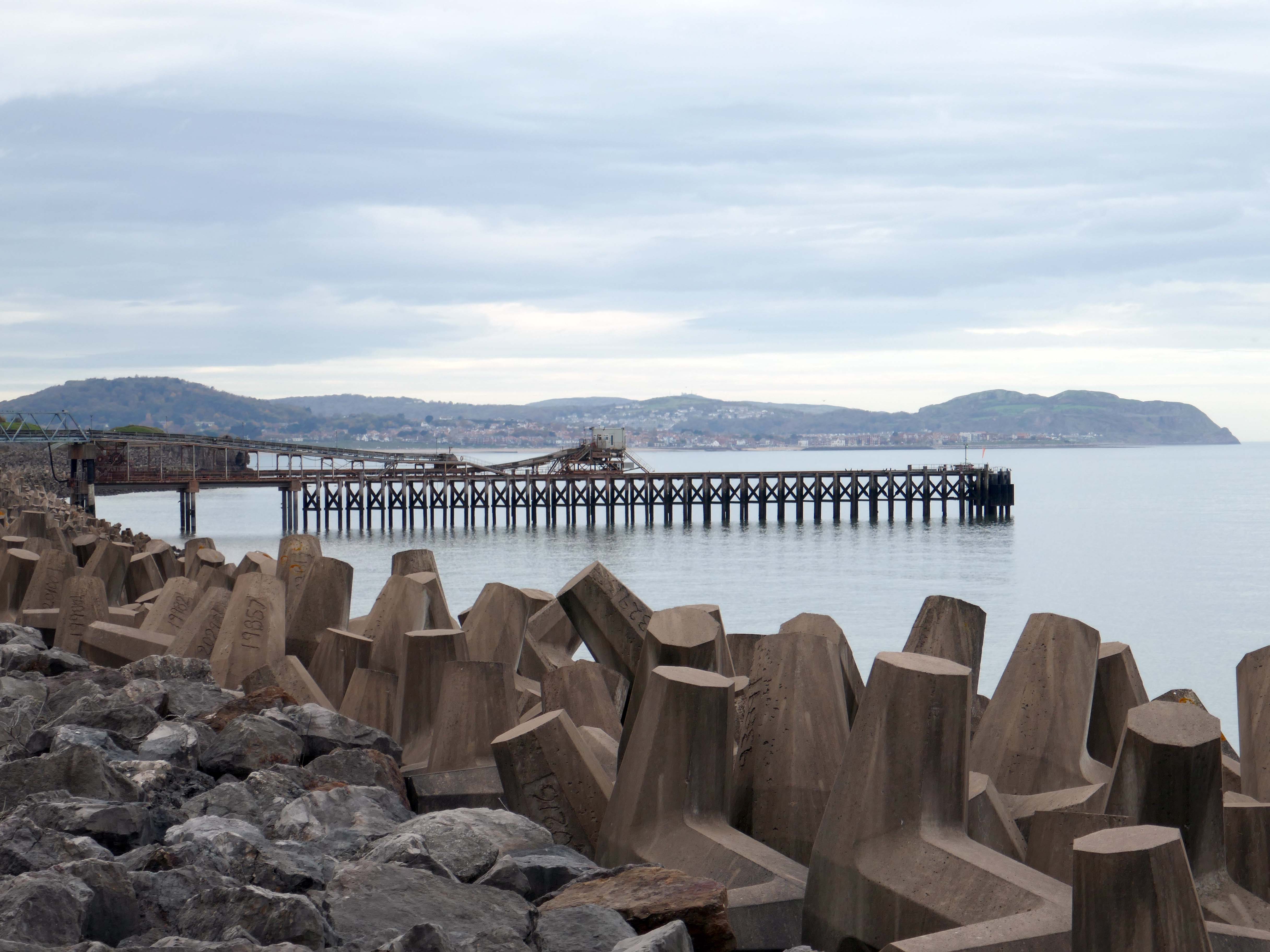
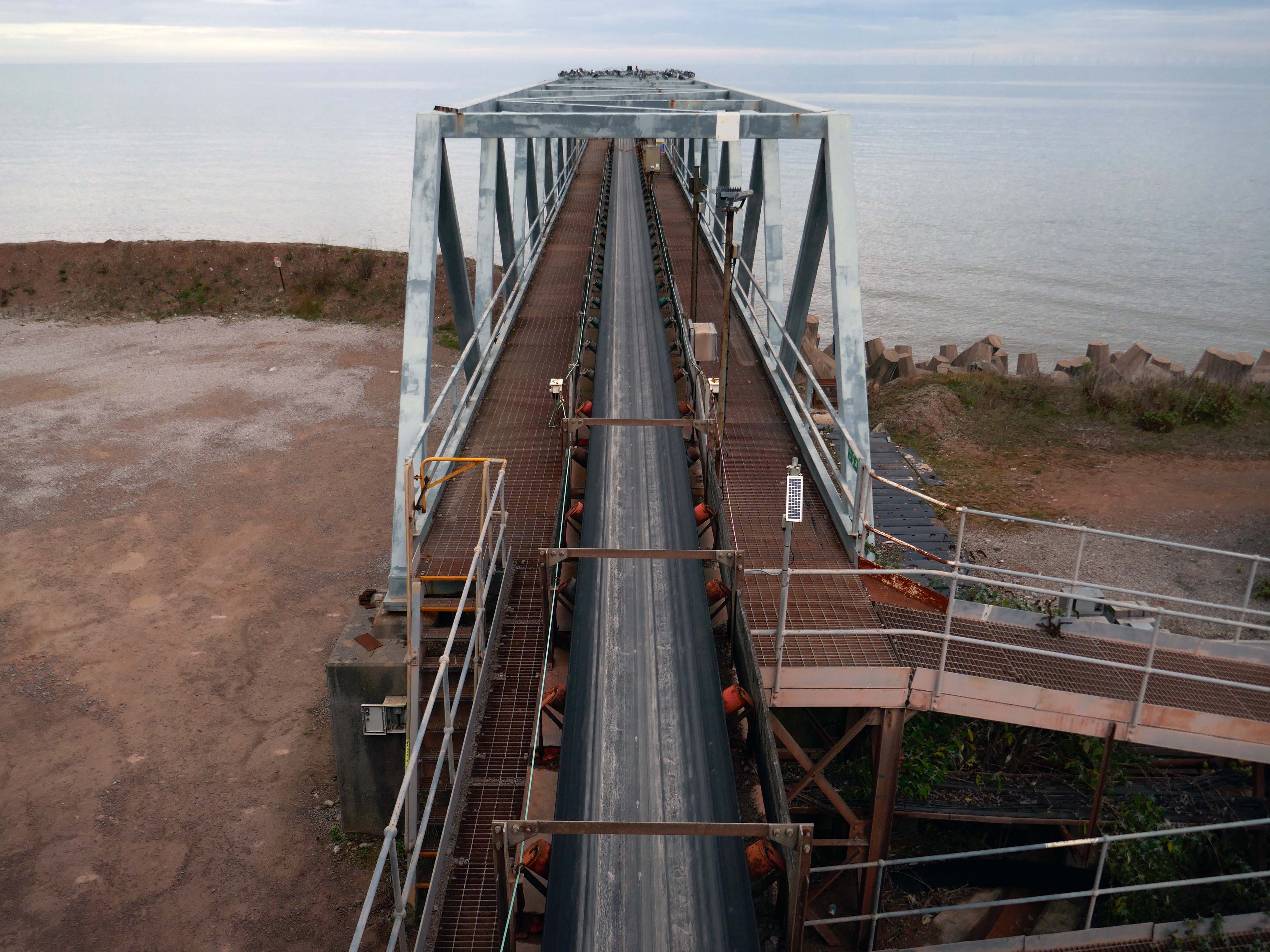
Next we pass Raynes Jetty the quarry conveyor belt – shifting and shipping limestone out to sea.
Limestone from Raynes quarry, to the south, is transported by conveyor belts to the jetty, crossing the A55 Expressway and railway. From the jetty it is loaded into coastal freighters which take it to other parts of the British Isles. Limestone from this quarry is a pure form of the rock, making it ideal for the chemical and cement industries.
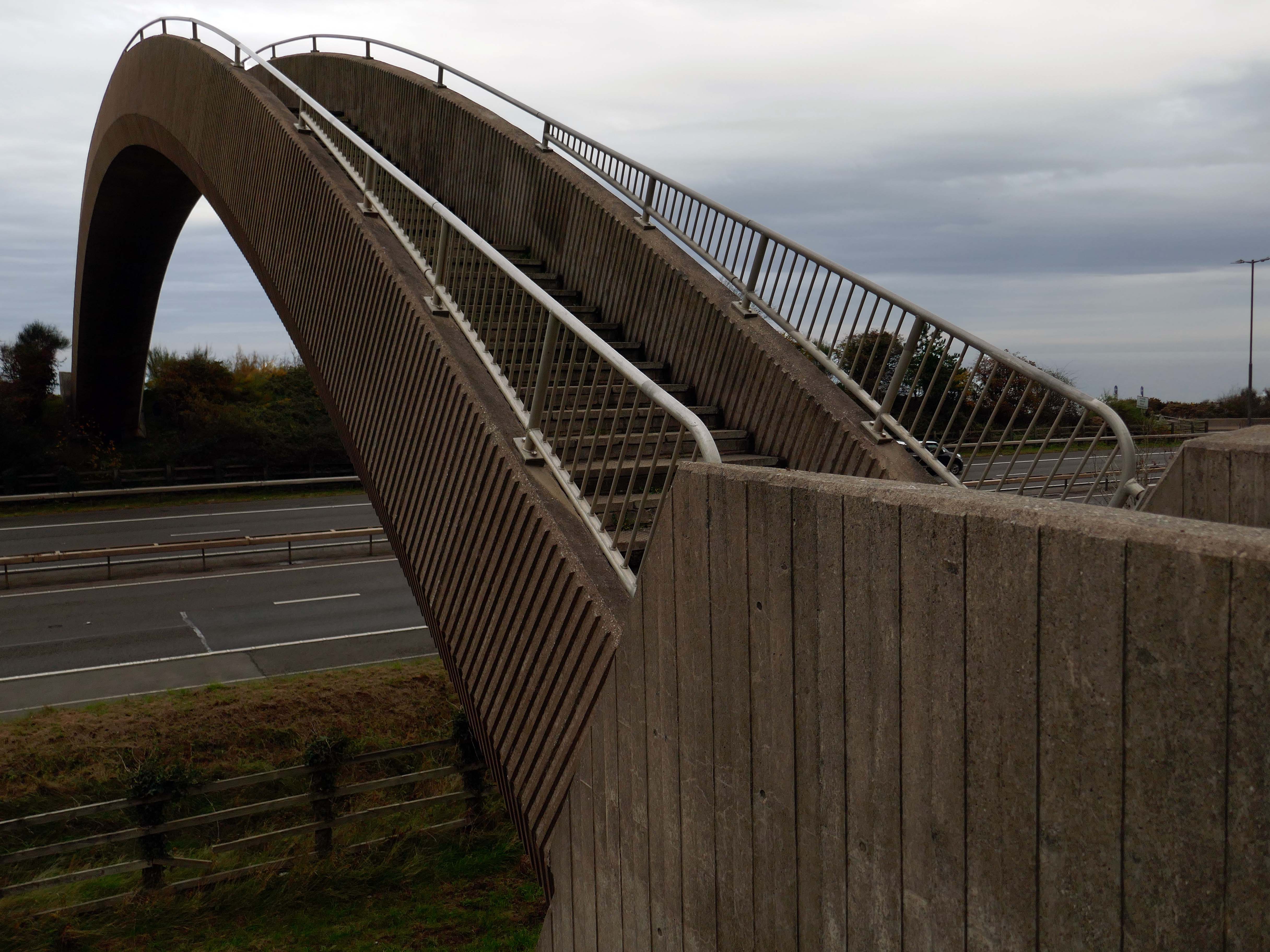
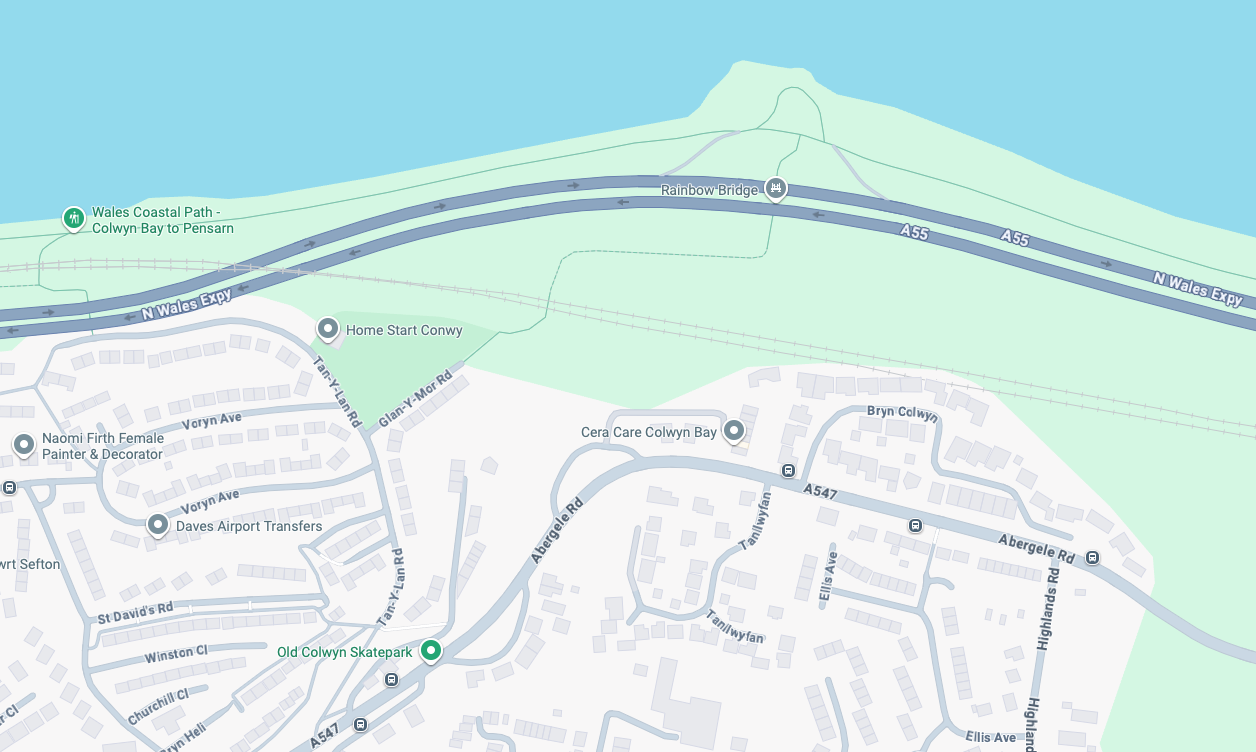
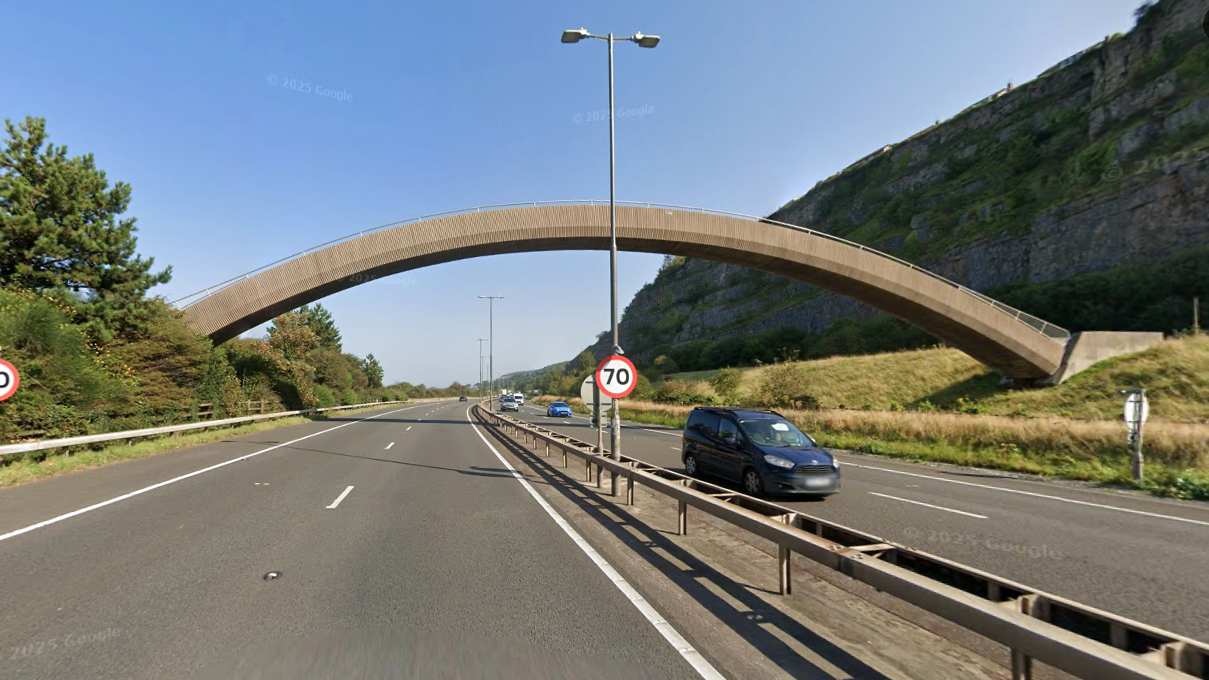
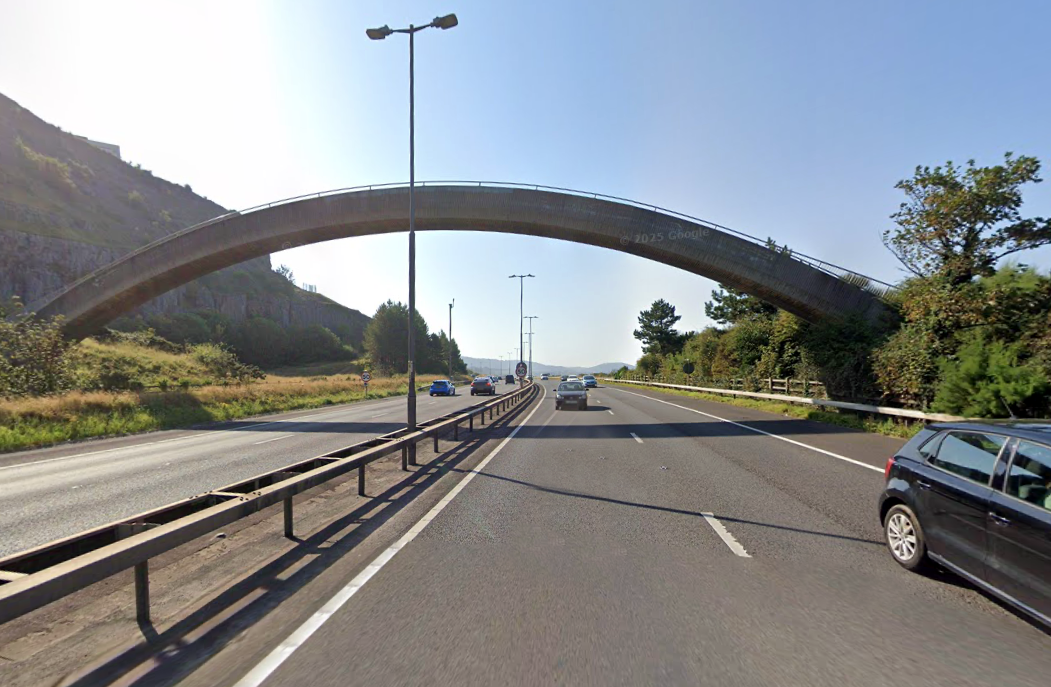
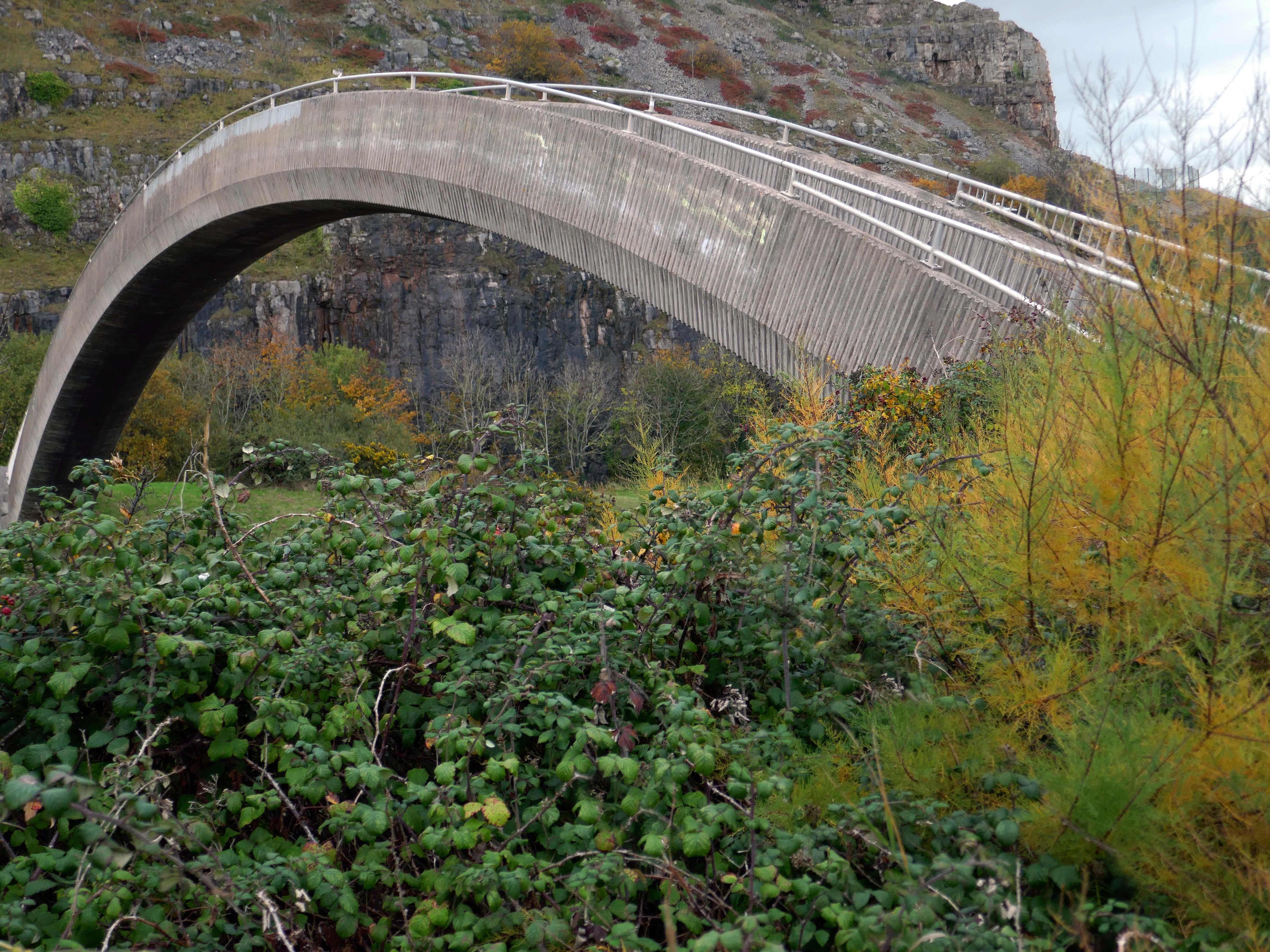
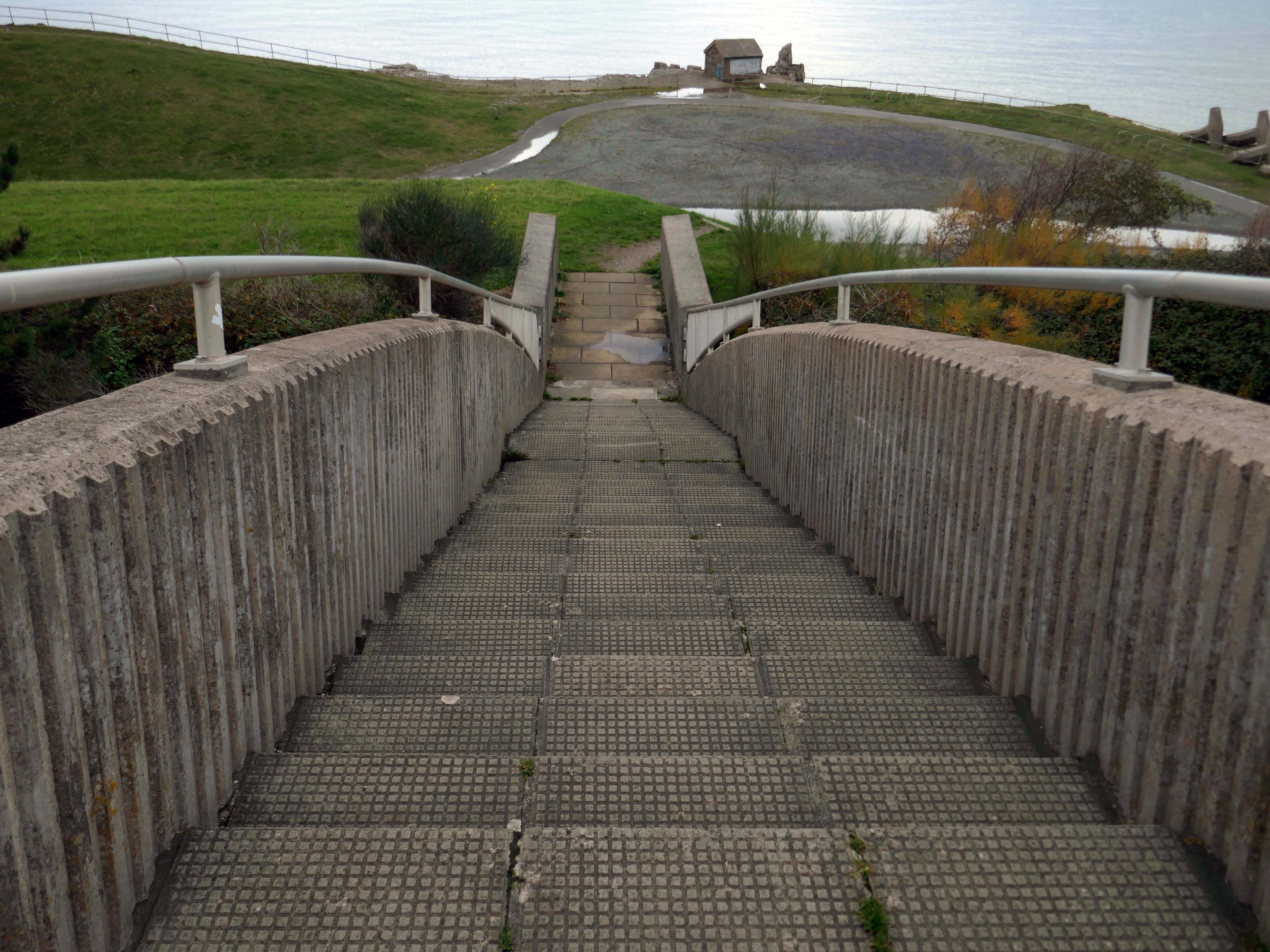
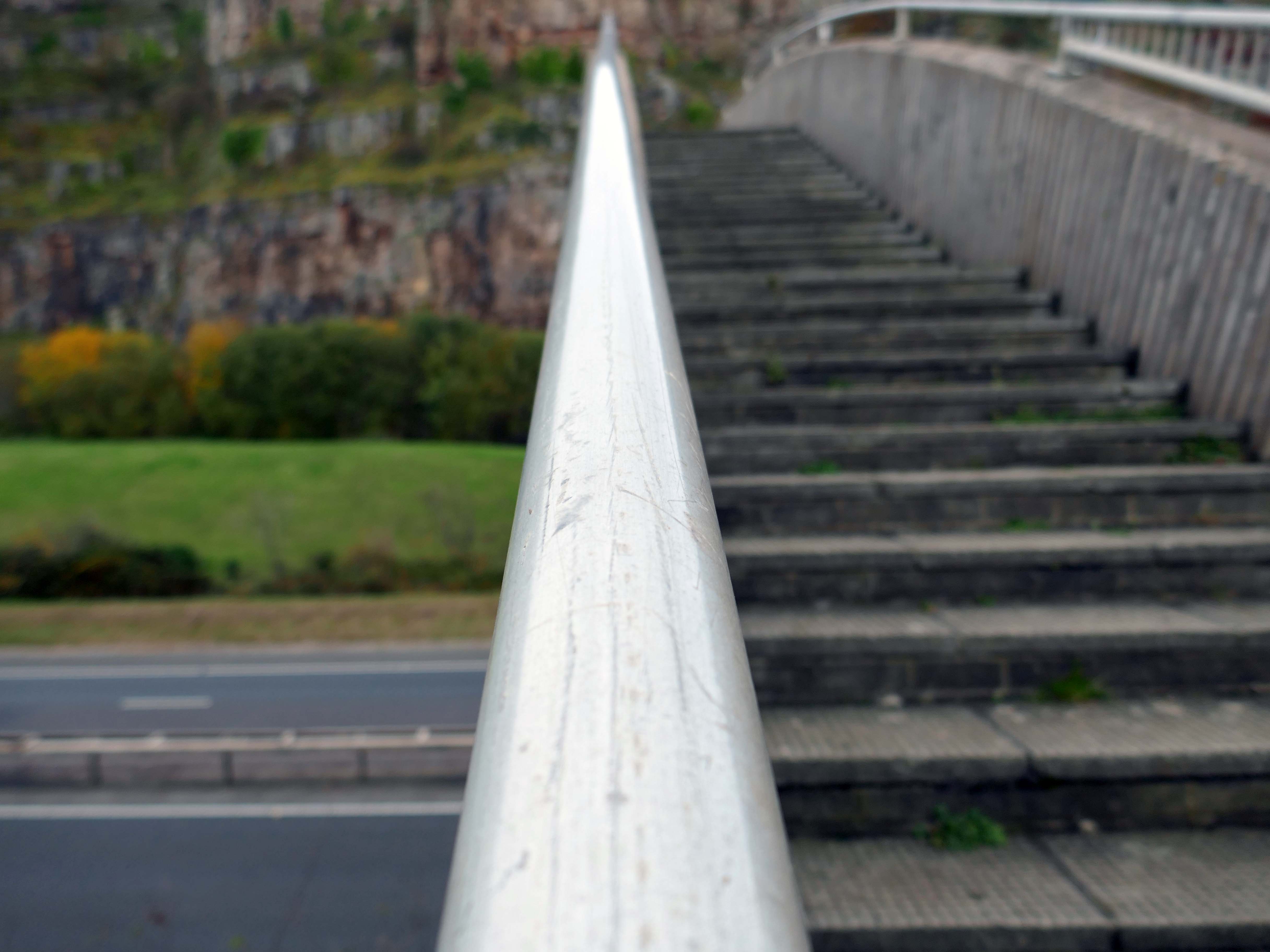
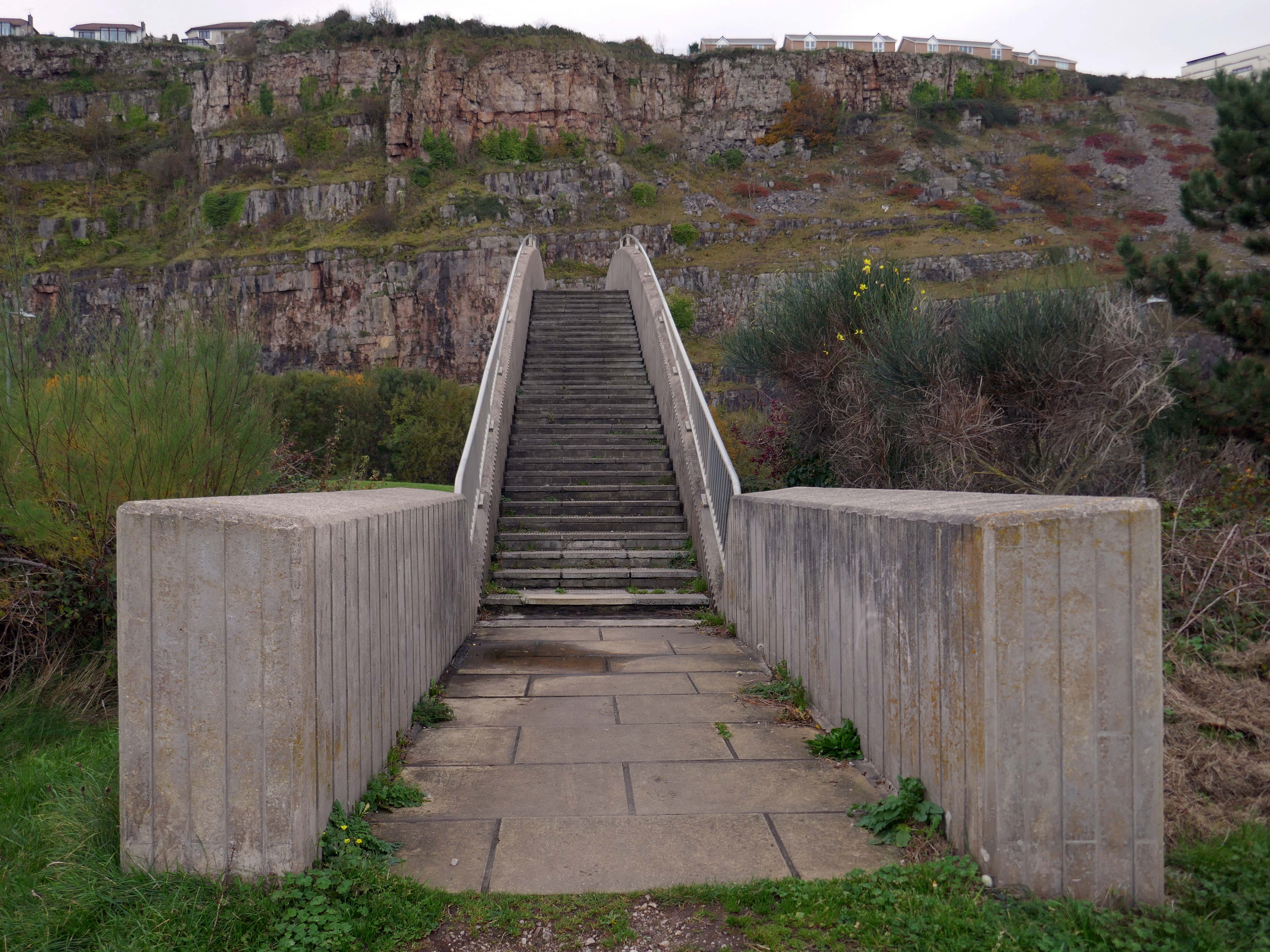
Limestone forming an important constituent part of the nearby concrete Rainbow Bridge – linking Old Colwyn’s pedestrians to the shore.
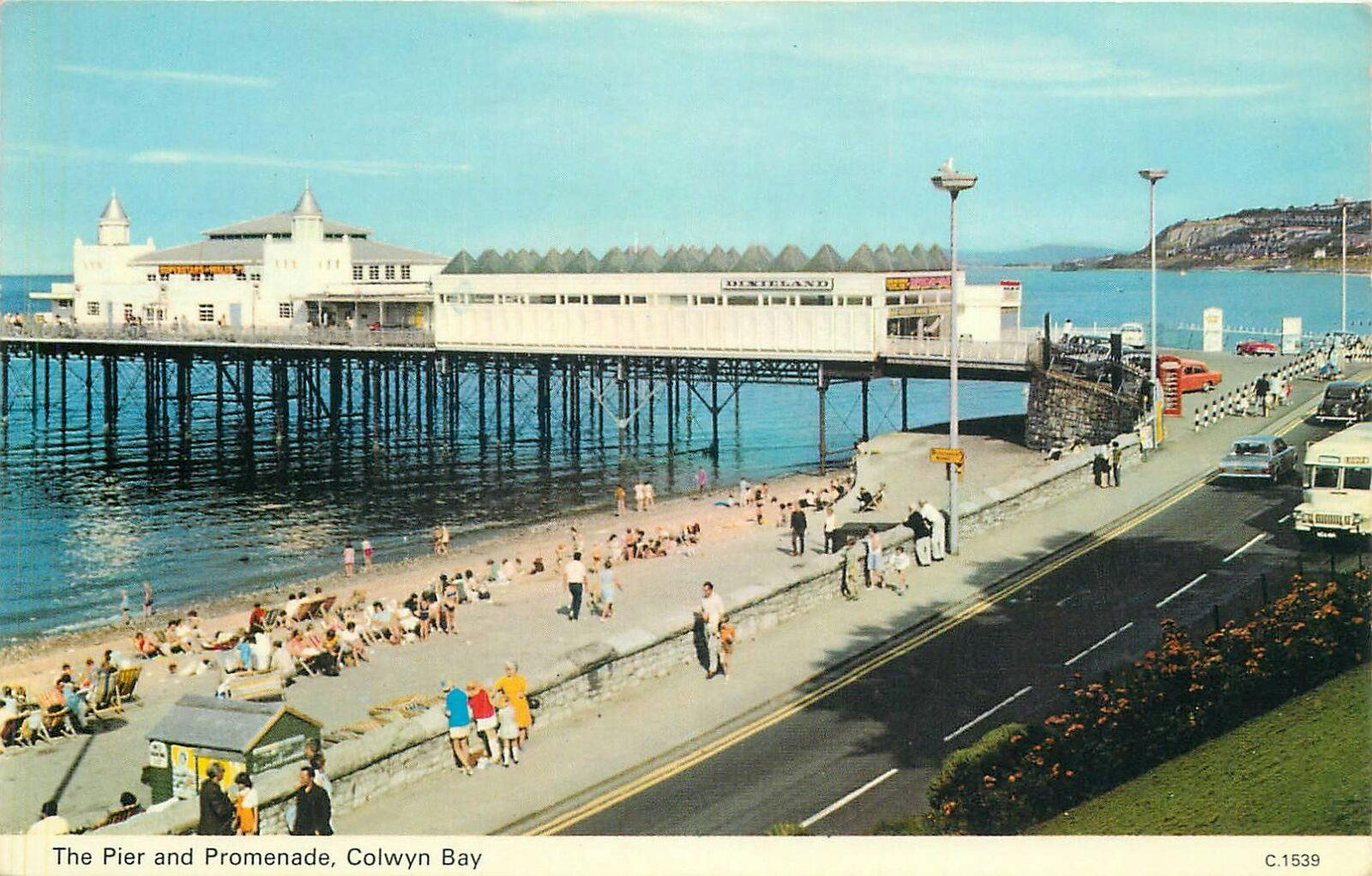
On the site of Colwyn Bay Pier is a seriously truncated pier.
It was conceived in the late 19th century, when Colwyn Bay wanted to catch up with other towns which had piers where steamers deposited and collected passengers. However, it was found that the proposed pier would have to extend almost half a mile to reach the area where the water was deep enough for ships. This was too costly, so the pier was built purely for entertainments. The councillors saved face by saying this would avoid day trippers arriving by steamer and lowering the tone of Colwyn Bay!
The pier was less than 100 metres long when it opened in 1900. The pavilion had a 2,500-seat theatre, shops and a restaurant. The opening performance featured Adelina Patti, one of the world’s most renowned operatic sopranos in her day.
The final pavilion, opened in 1934, incorporated Art Deco features and murals by Eric Ravilious and Mary Adshead.
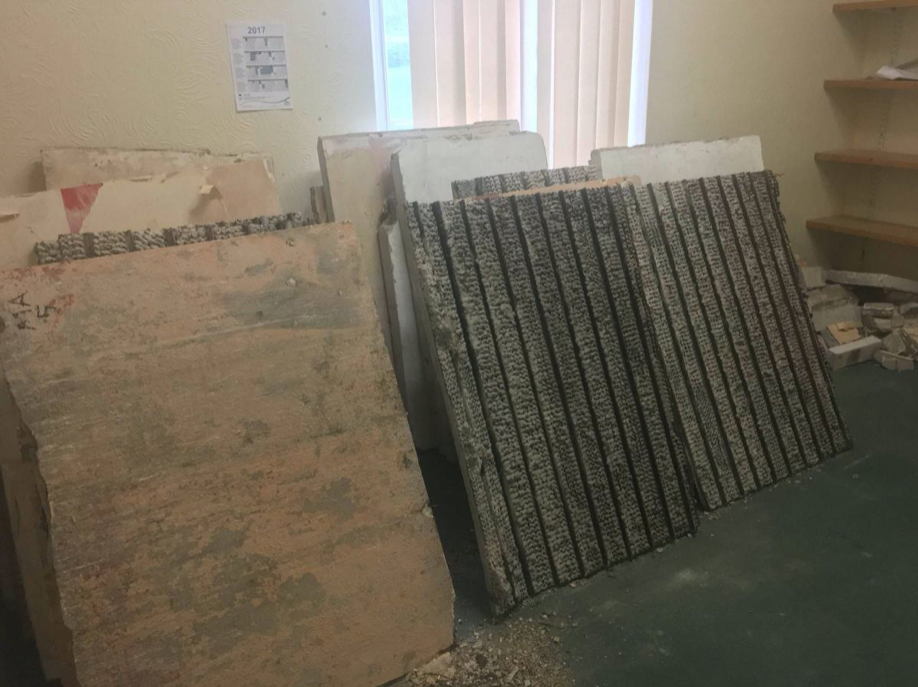
Both walls of the last remaining Eric Ravilious mural have been successfully removed, and were placed safely in storage. But with CCBC staff set to relocate to new Colwyn Bay offices a more permanent home is needed for the murals.
Many of those features were destroyed or obscured in post-war refurbishments. Entertainers who performed at the pier in this period included comedians Ken Dodd and Morecambe and Wise, and singers Harry Secombe and Elvis Costello.
The new promenade, measuring 2.3 miles long, has been designed to protect the town and its infrastructure from the effects of the sea. The project was split into two phases; the first, to remove what was originally there and to construct the new raised promenade including a road, cycleway and car parking. The second phase was to transform the promenade with further development as well as reinforce the defence structures.
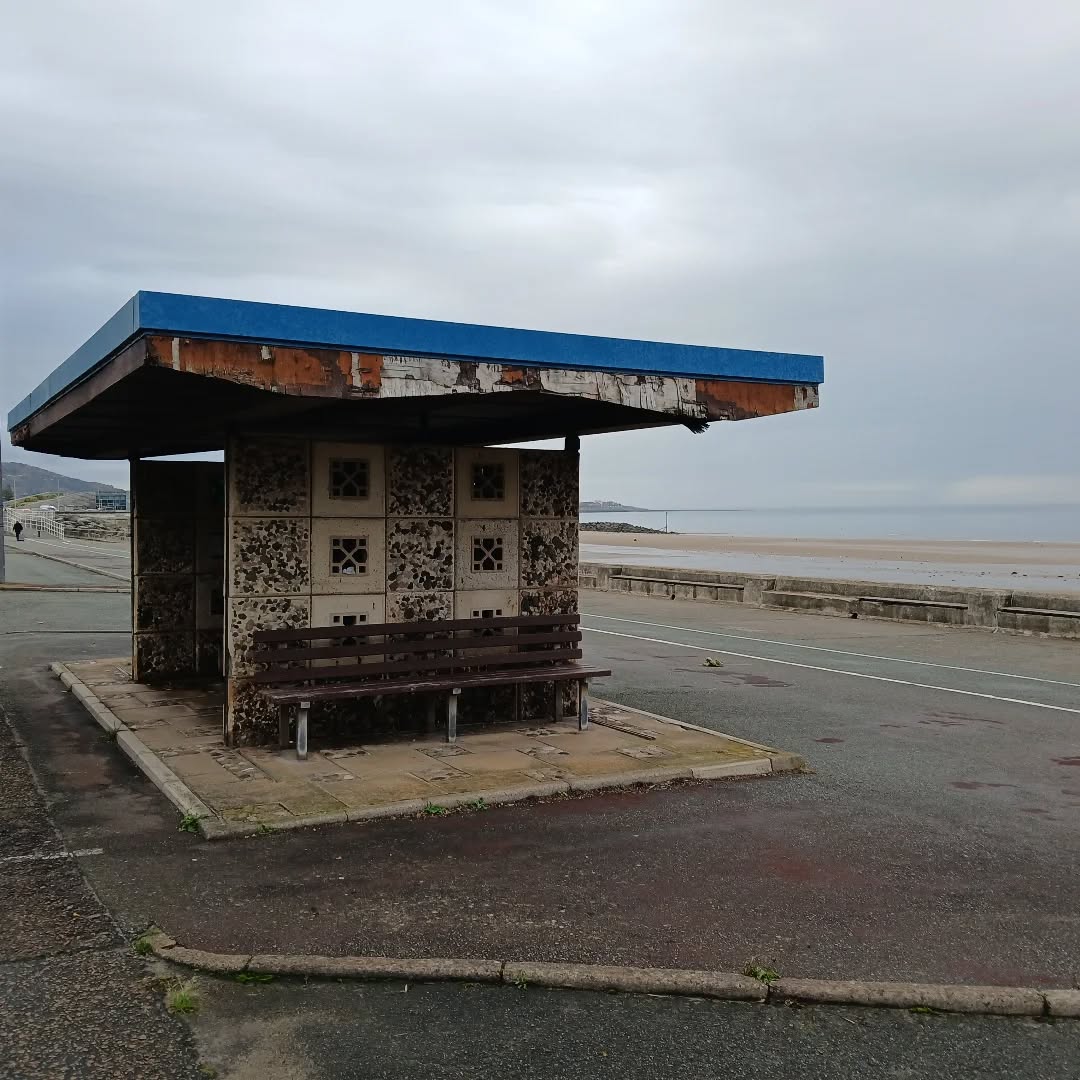
This is the last of the Sixties concrete shelters – which once stretched all the way to Rhos on Sea.
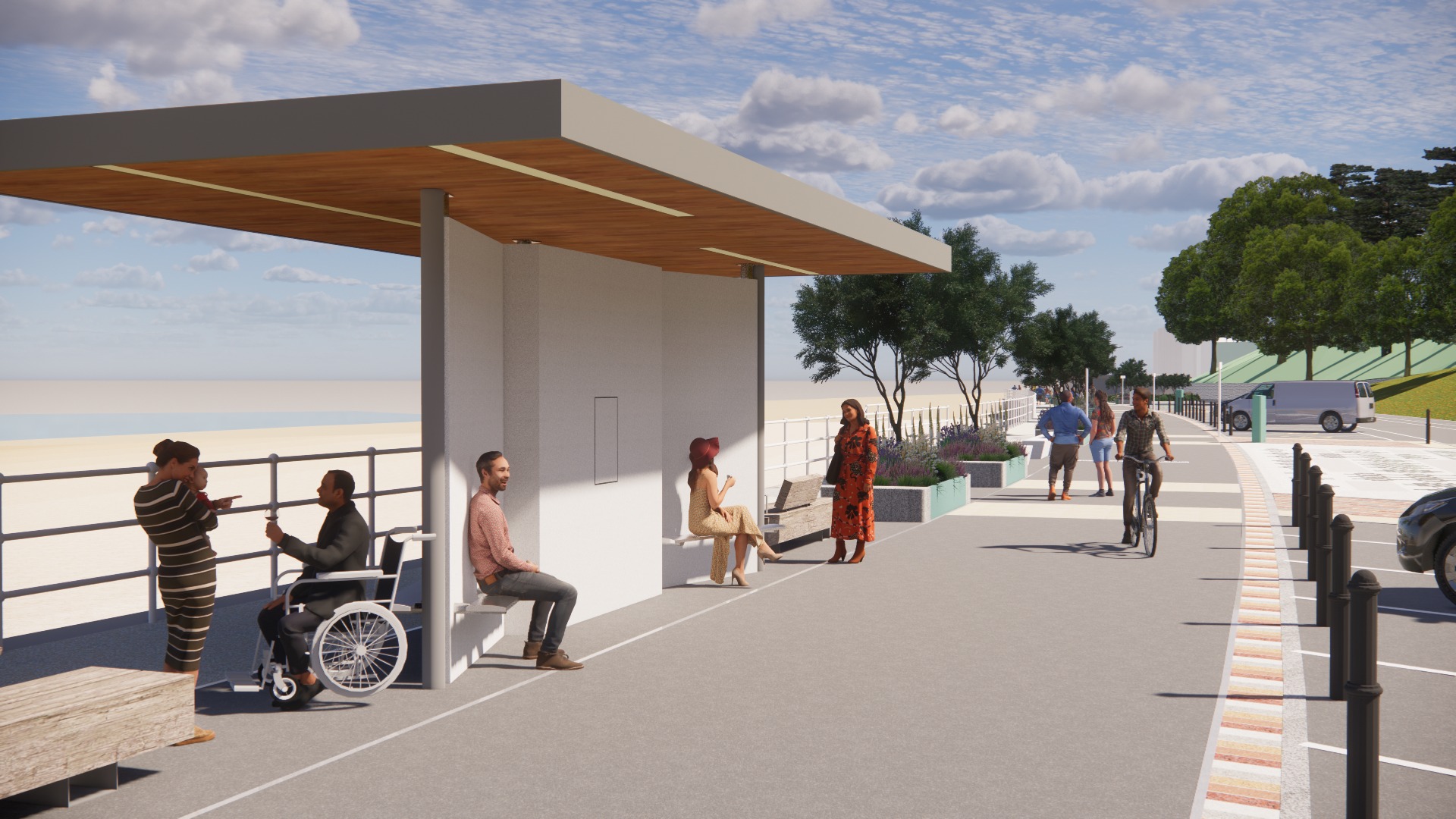
New shelters have appeared
A Conwy County Borough Council spokesperson said:
The shelters include new features such as solar power lighting and are designed to be accessible for wheelchair and mobility scooter users.
The closed design of the old shelters made anti-social behaviour easier and led to their condition deteriorating.
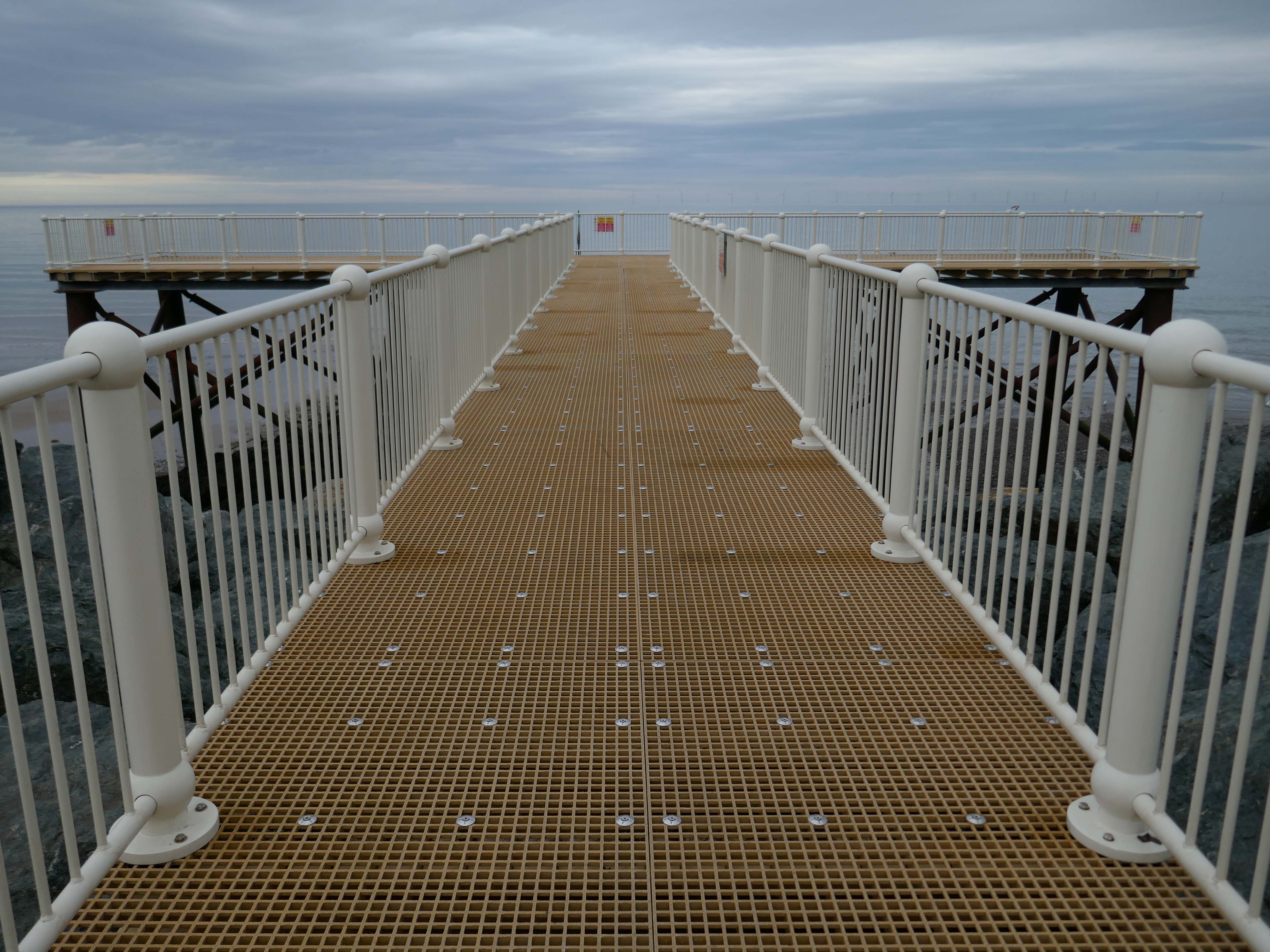
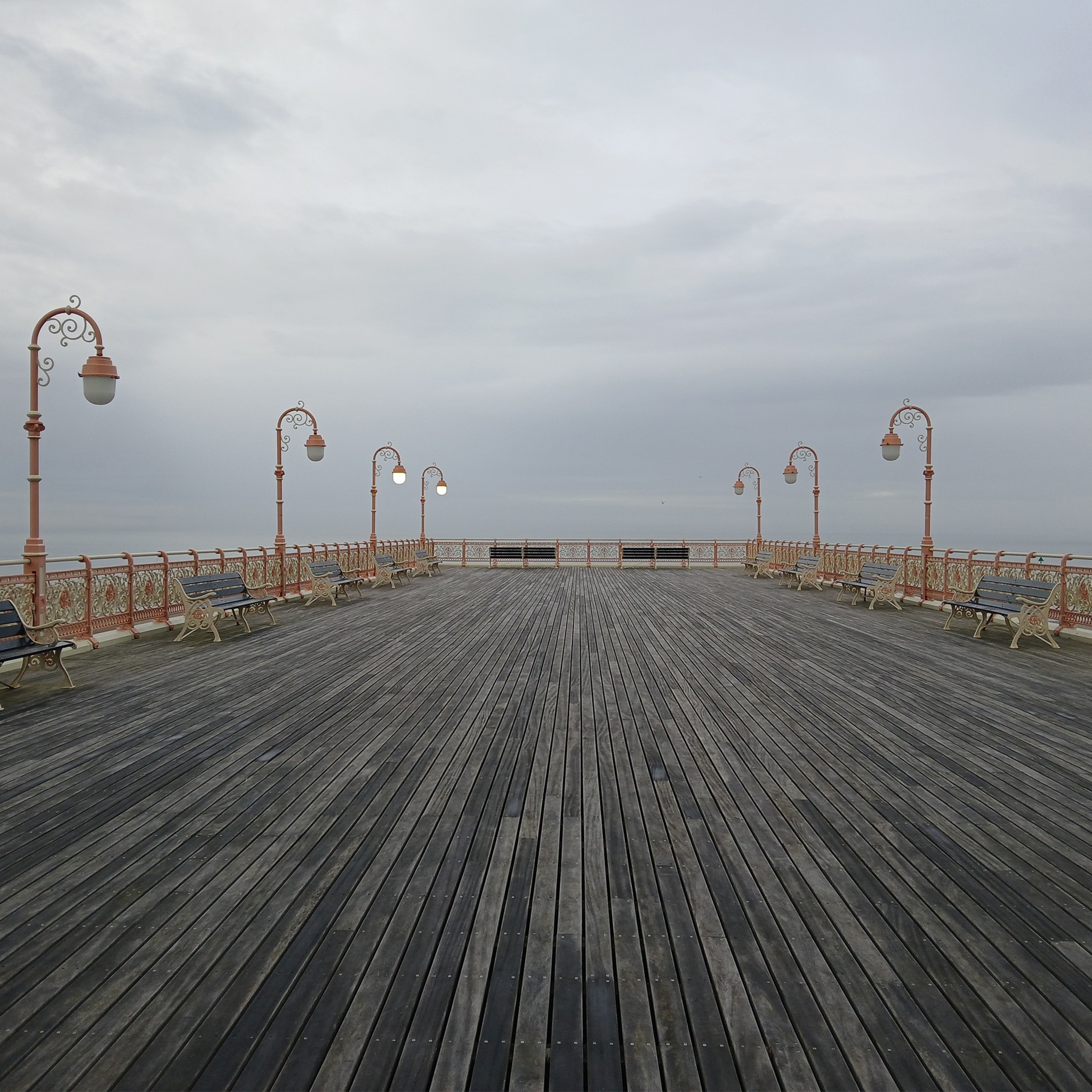
And a new pier has appeared.
Construction on the new Pier at Colwyn Bay commenced in July 2020. Despite being initially slated for completion in the summer, the erection of scaffolding and subsequent work on the 45-meter truncated Colwyn Bay pier were delayed. However, the project timeline was expedited, and the construction was successfully finished in July 2021.
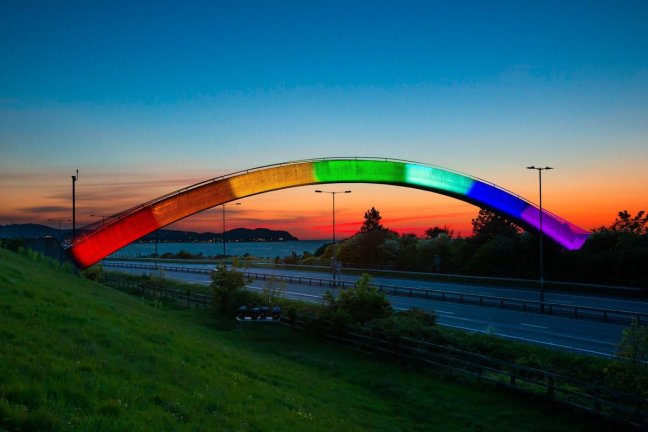
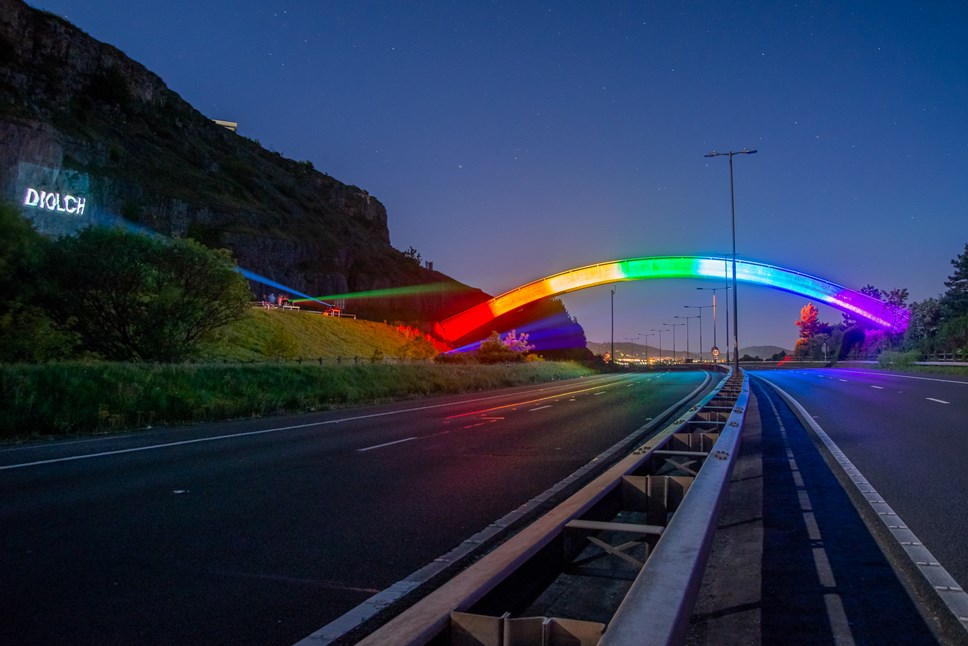
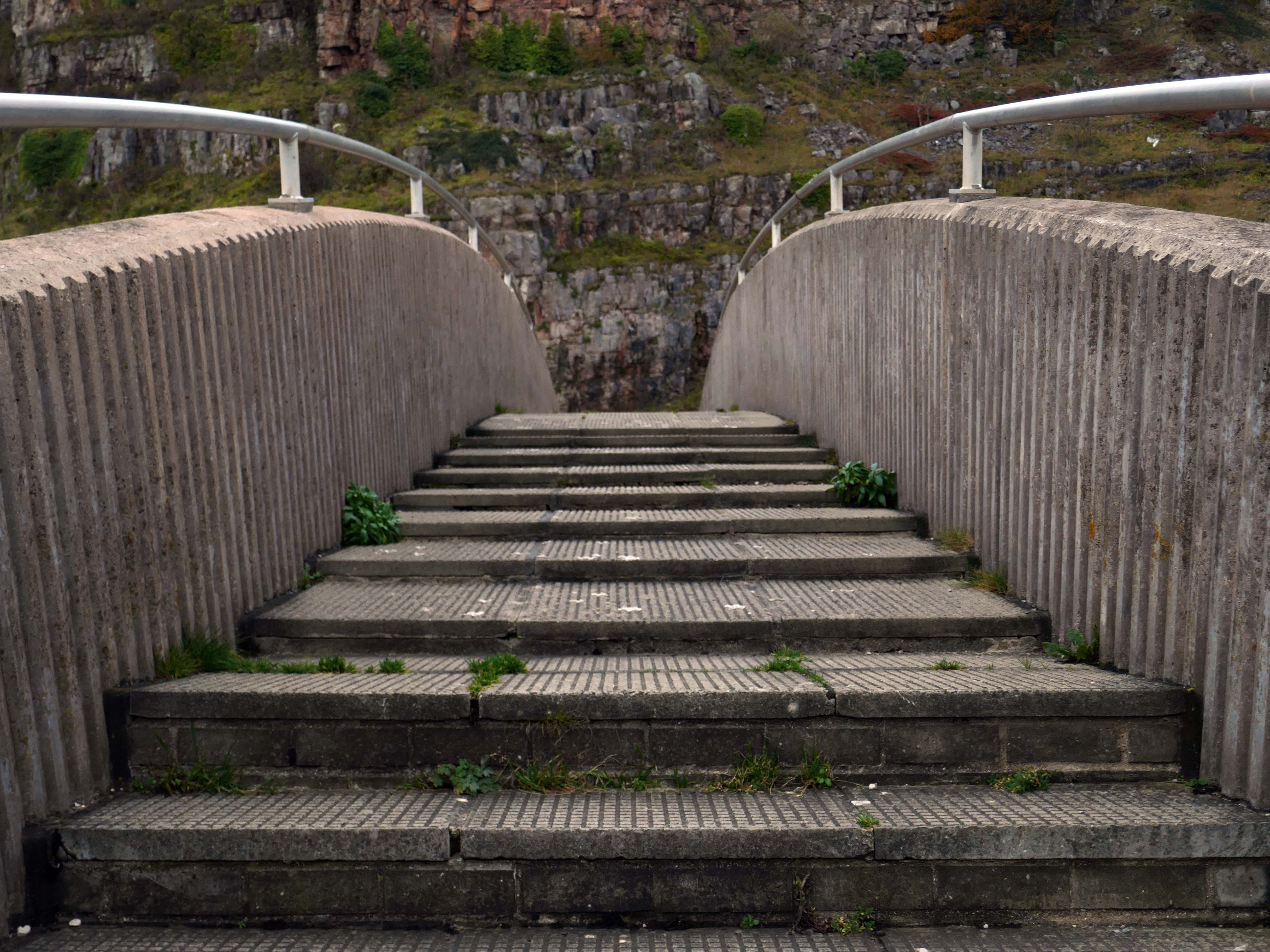
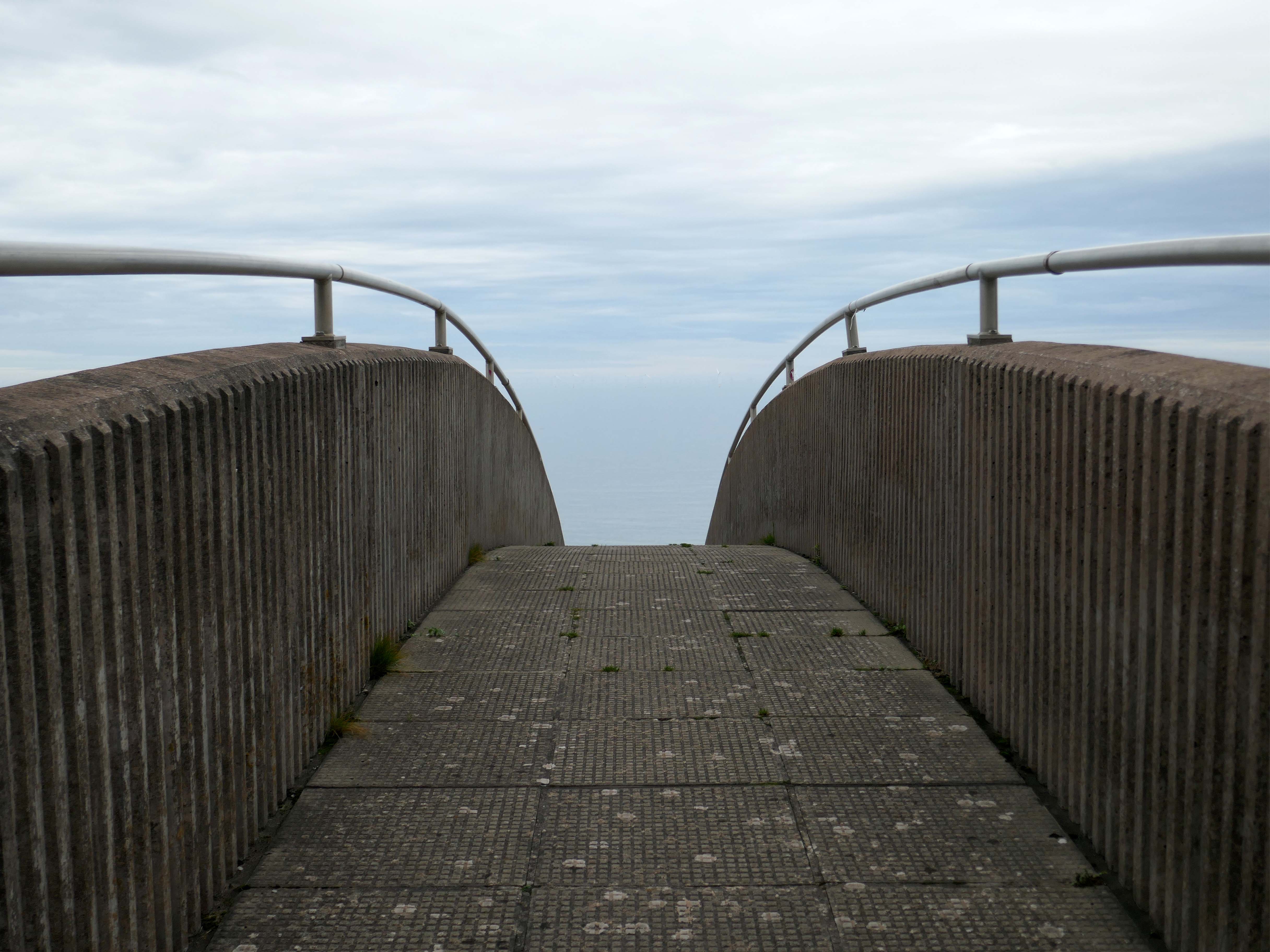
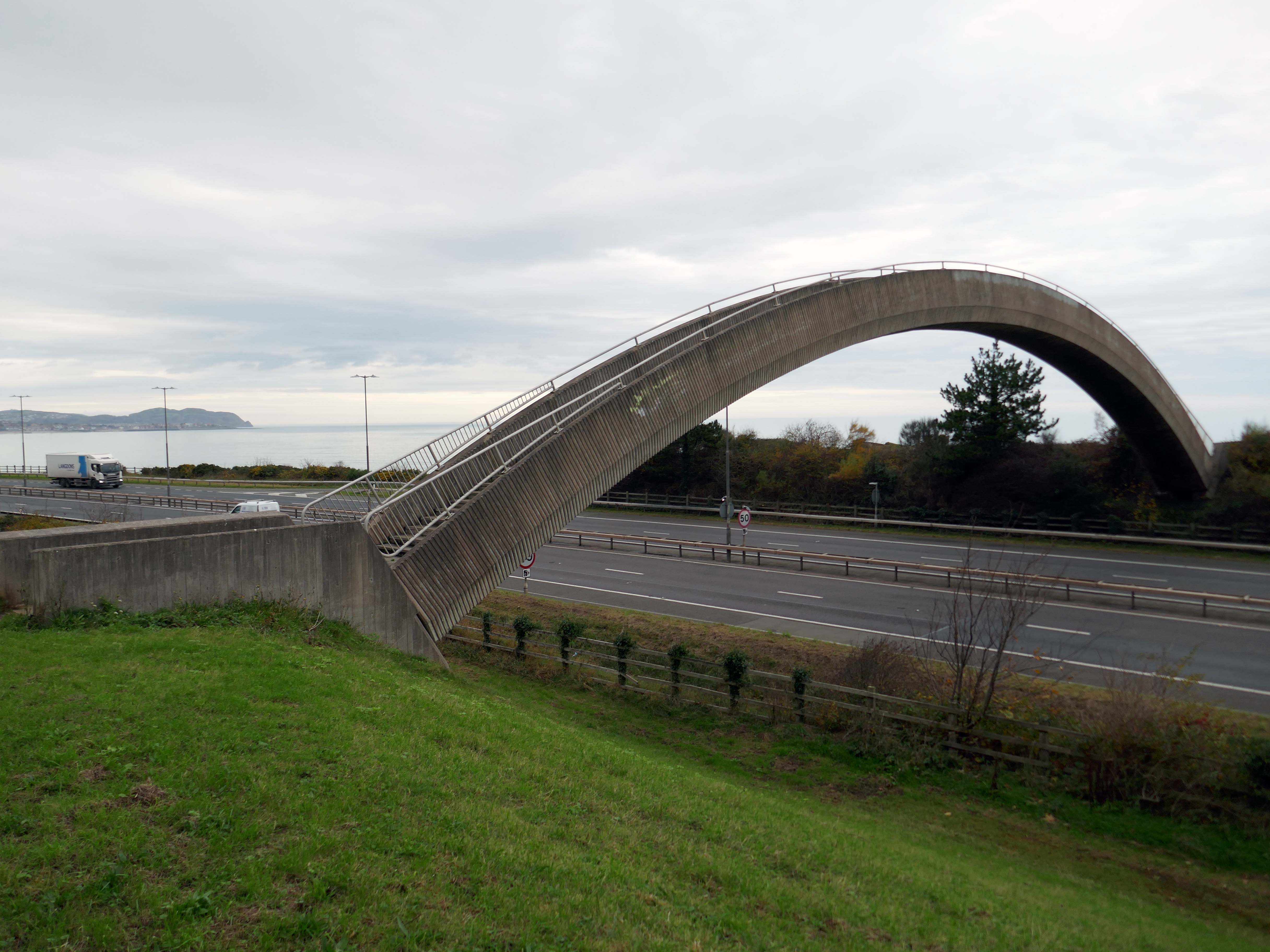
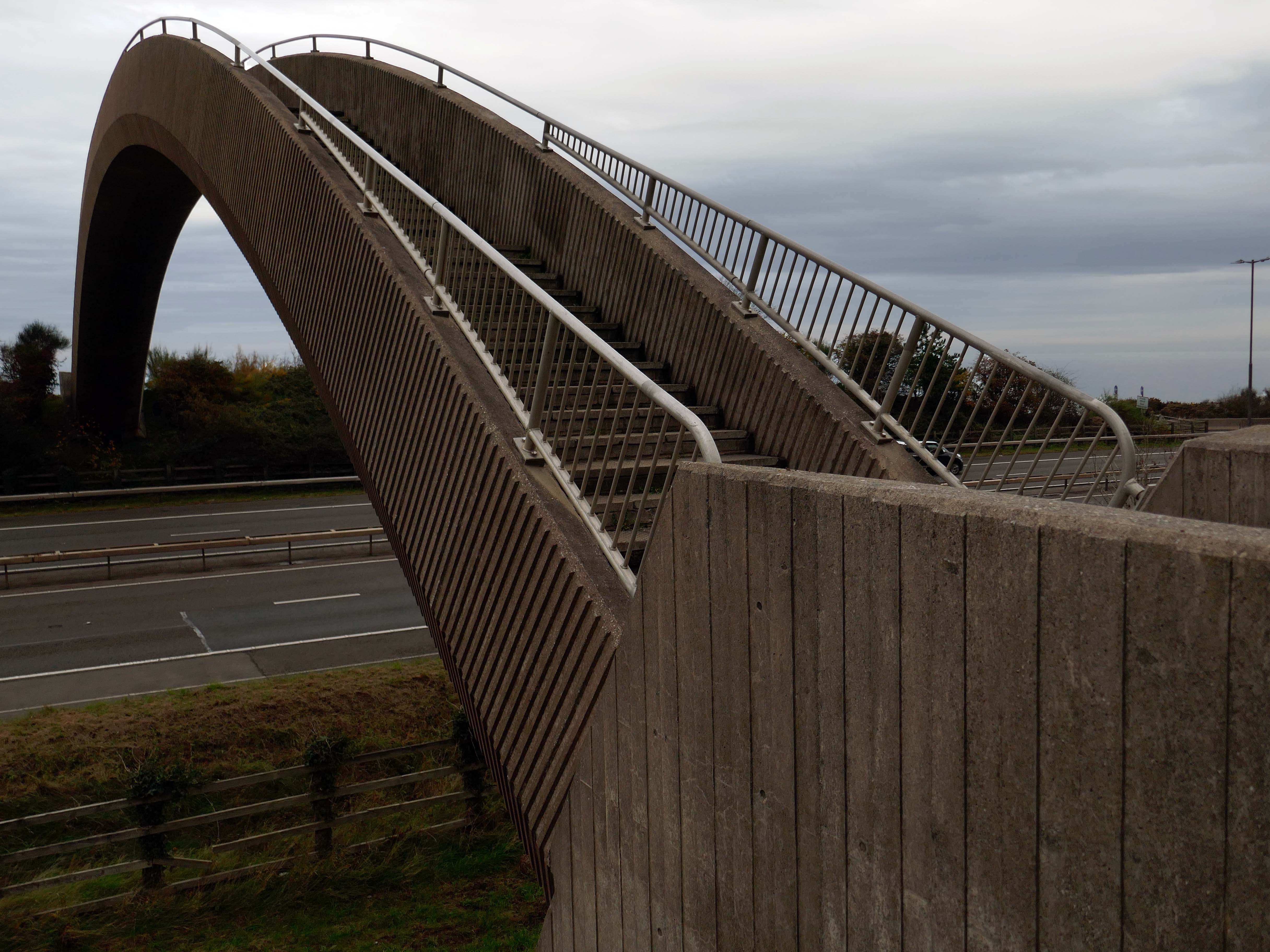
The iconic Rainbow Bridge on the A55 has been lit up to say thank you to NHS, social care staff and other key workers.
This well-known landmark lived up to its name on Tuesday night when it was bathed in rainbow colours alongside a thank you message projected onto the nearby cliffside.
This one-off tribute to staff from the health and care sectors and other key workers who are working tirelessly during the Covid-19 pandemic, was arranged by the North and Mid Wales Trunk Road Agent.
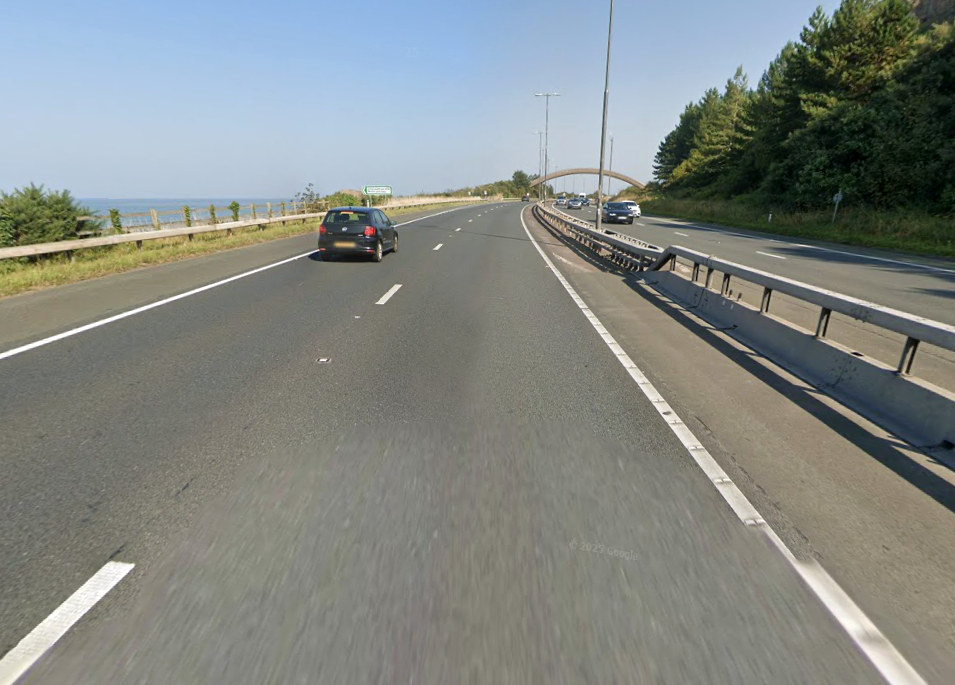
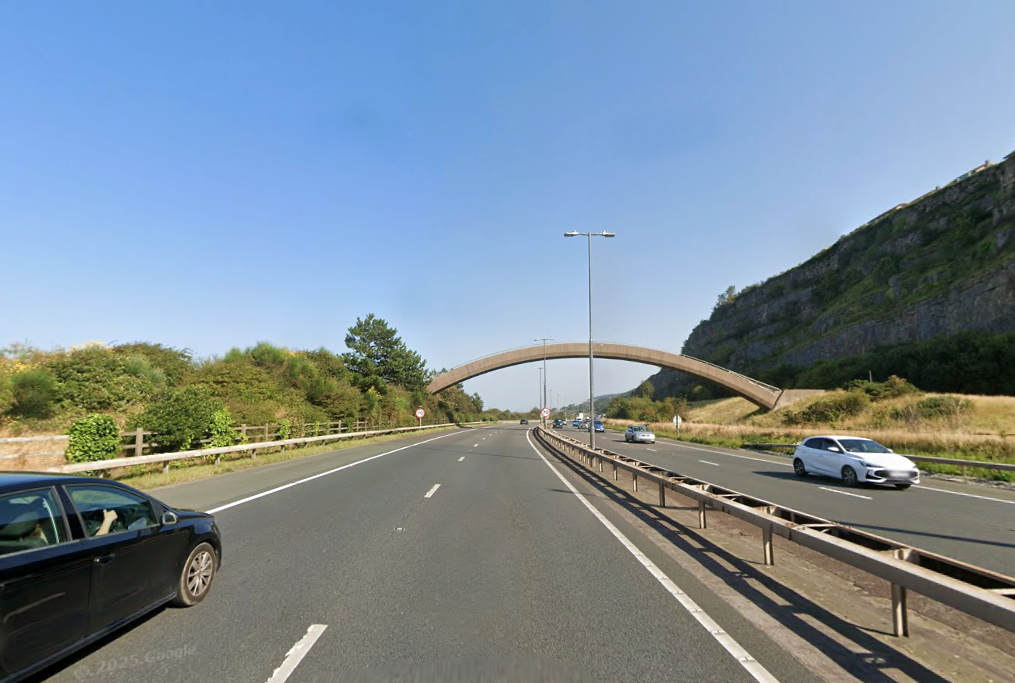
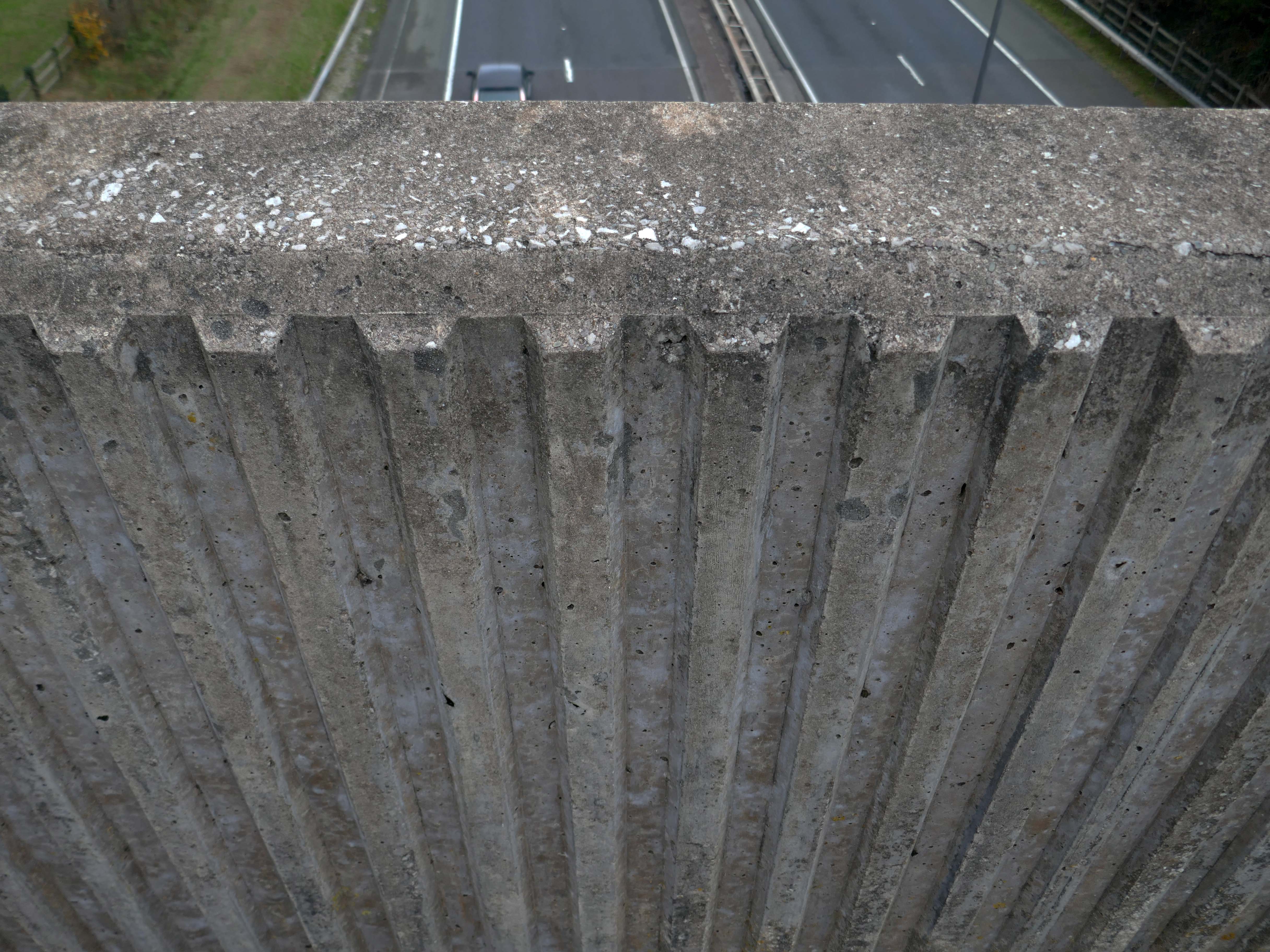
The walkway over the A55, colloquially known as Rainbow Bridge, is situated on the strategic road network which NMWTRA is responsible for maintaining and managing on behalf of the Welsh Government.
The A55 partly follows the alignment of the Roman road from Chester to Caernarfon, particularly from Junction 31 to 30 and Junction 13 to 12. Between Chester and Holywell the alignment of this road is uncertain and between St. Asaph and Abergwyngregyn, the Roman road followed an inland route, via Canovium Roman Fort at Caerhun, avoiding the difficulties of the crossing of the Conwy estuary and the cliffs at Penmaenbach and Pen-y-Clip.
On 1 April 1937, the route, as it was then, was classed to form the Chester–Bangor trunk road. By 2015, the Welsh Governmentwas also classifying part of the road as part of the London–Holyhead trunk road.
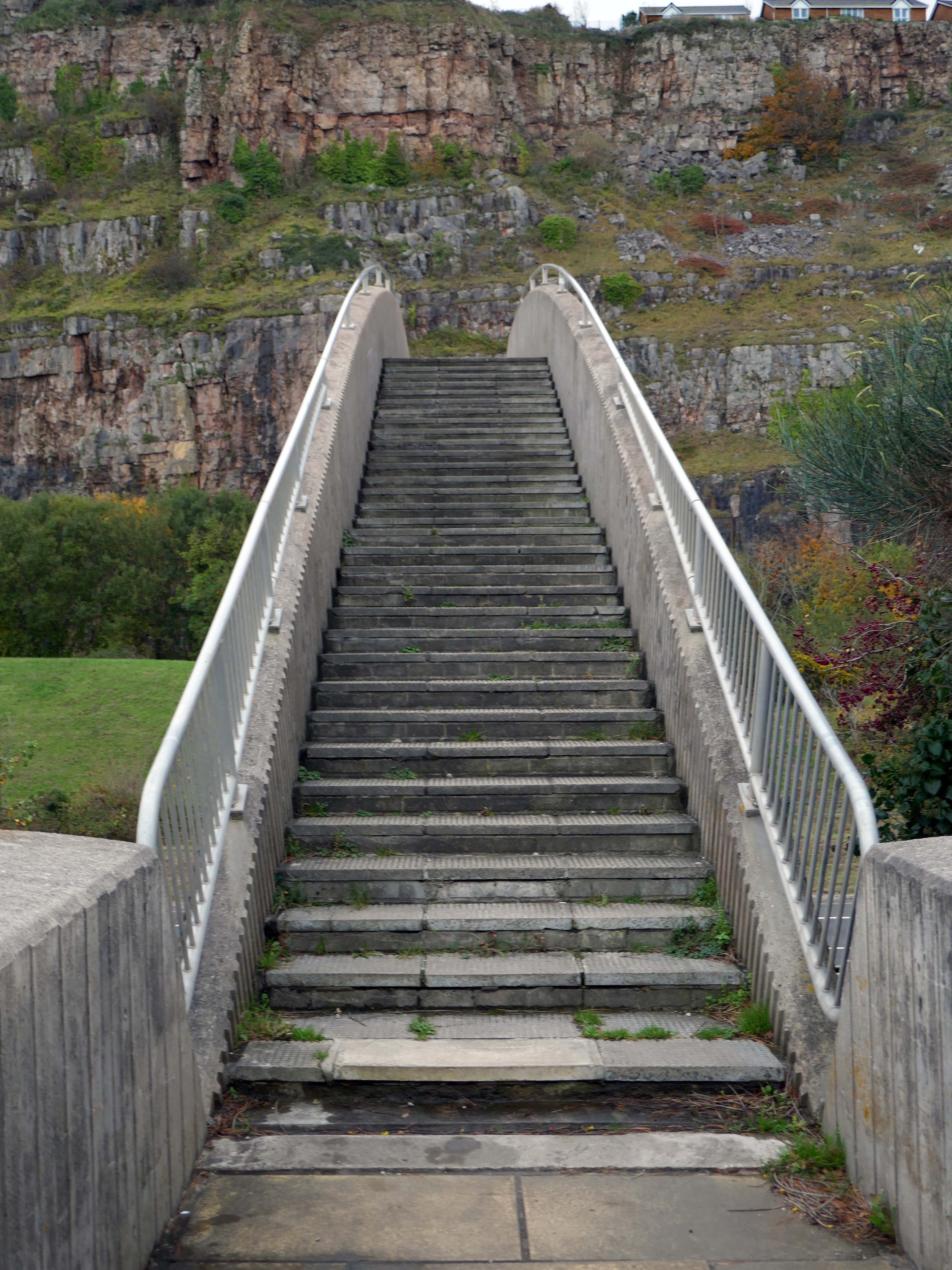
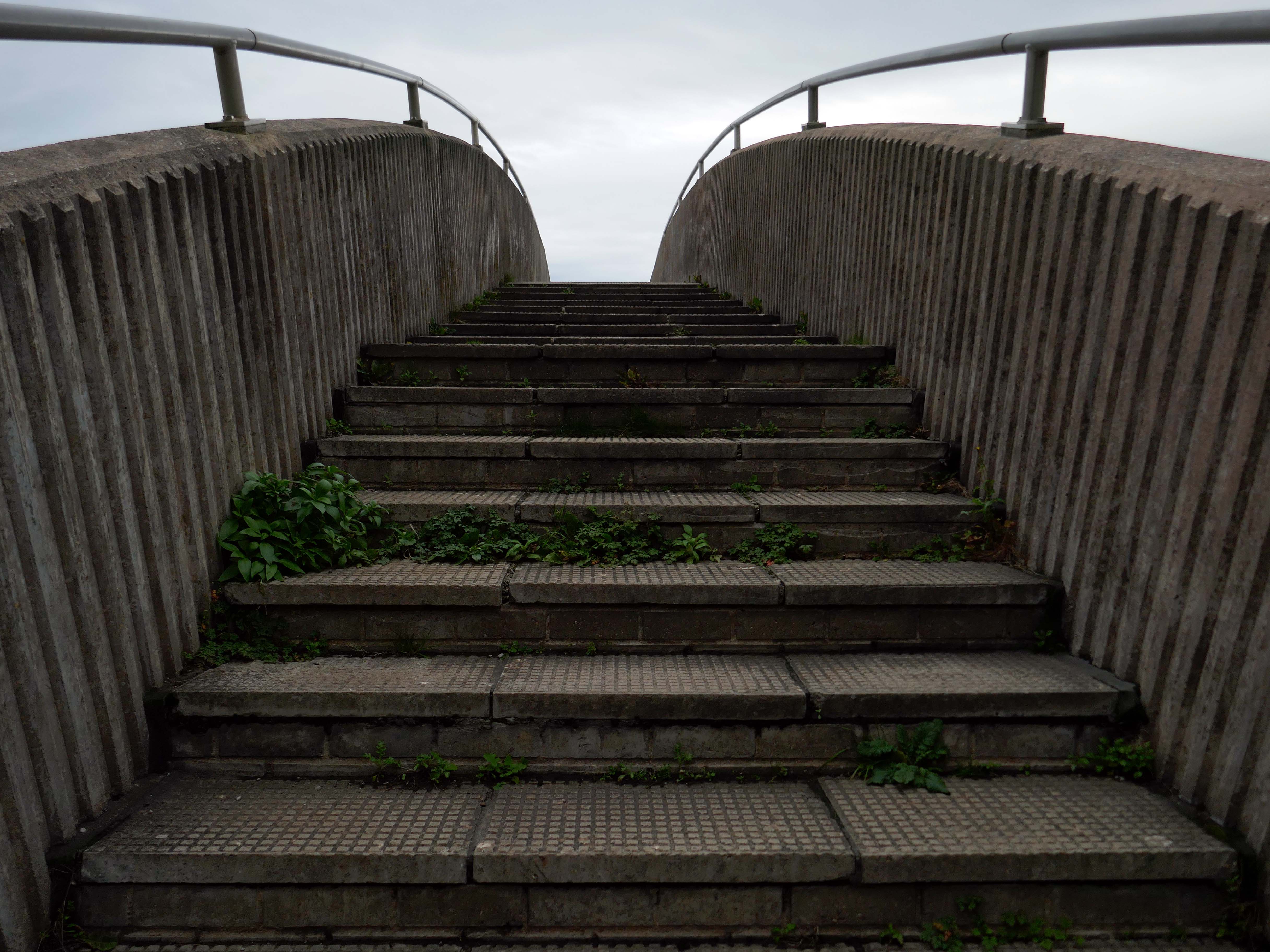
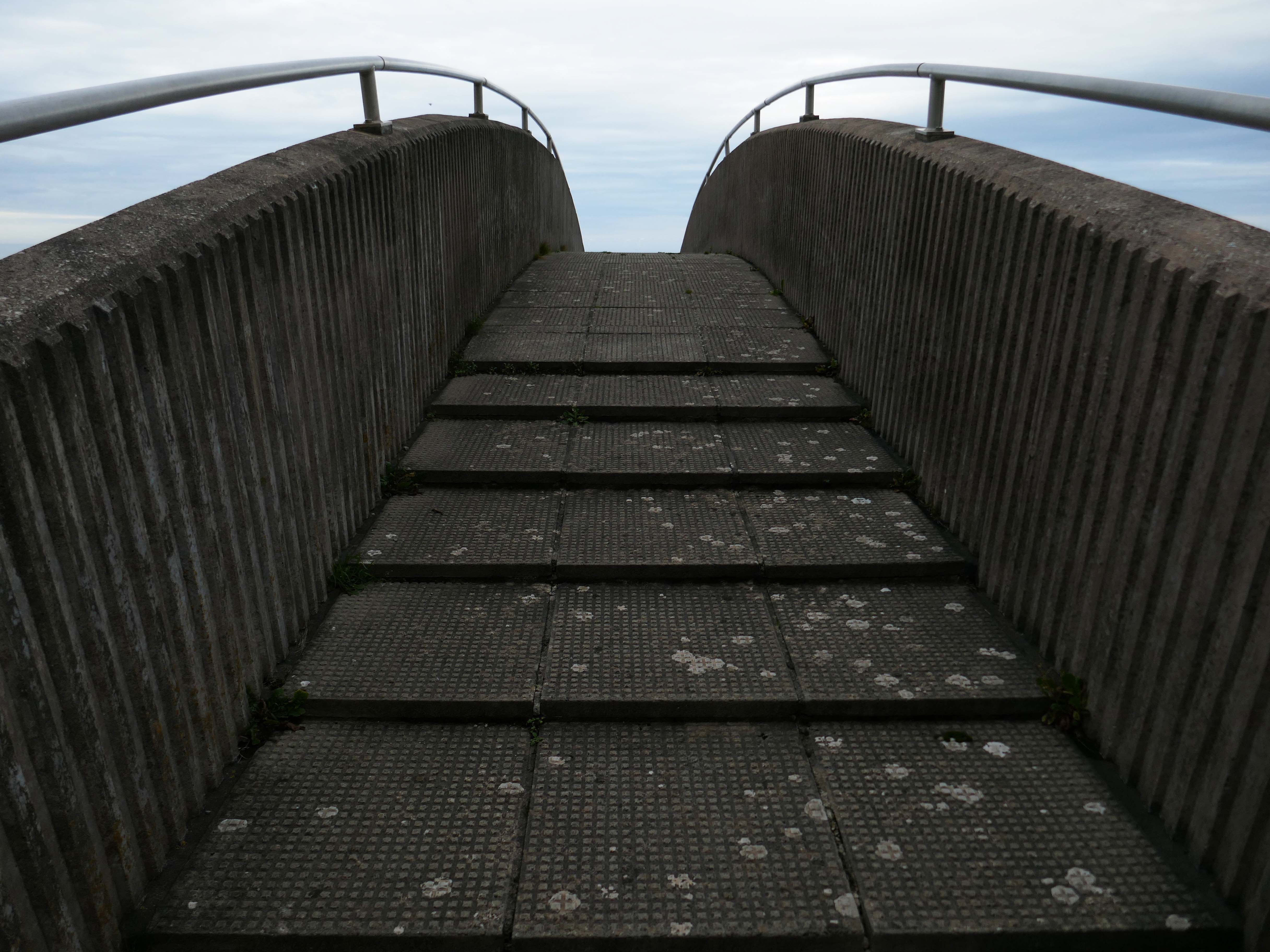
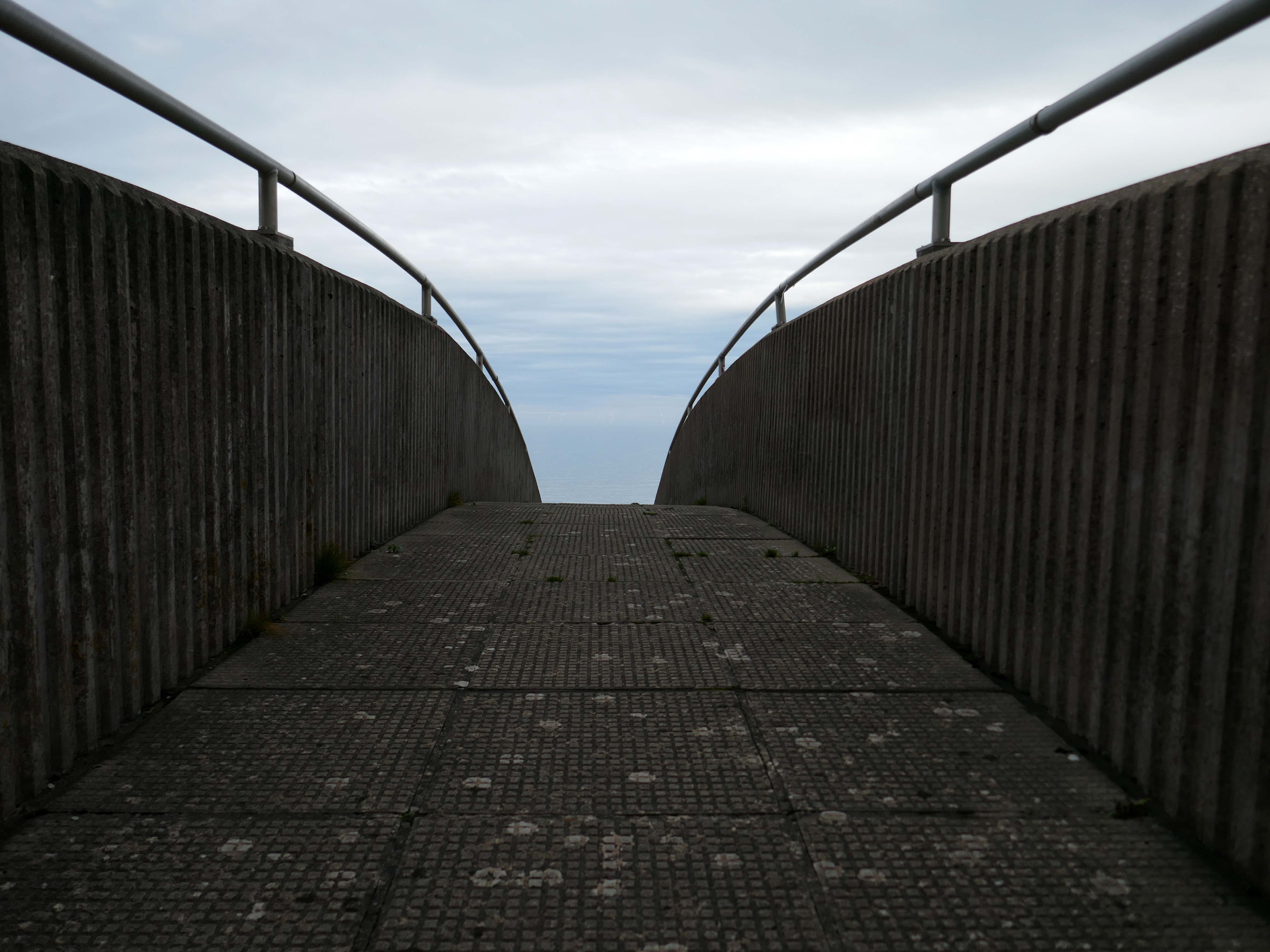
So much for modern motoring – I was walking from Rhyl to Colwyn Bay, so decided to walk back and forth across the bridge, before going along my merry way.
Steep and stepped, it certainly would not be described as accessible.
Other Concrete Footbridges are available – here in Durham and closer to home in Stockport.
Old Colwyn just short of the original Colwyn Bay station. In 1929 a pleasure boat is about to depart. Penmaen Head is still in one piece with its quarry jetty. The path can be seen leading directly from the beach to the platform and to the underpass which is still in use today.
Plans for the new town centre started to be developed in 1960 by Chief Architect Roy Gazzard. The process would go through eight sets of revisions before they were finally approved in 1968. Yoden Way was then pedestrianised, and the small row of shops built in 1950’s was incorporated into the new shopping precinct, forming the north western end of Yoden Way. Like many other town centres across Britain undergoing modernisation, the high-street was split onto two levels, with ramps providing access to raised walkways.
The construction of Lee House – named after Peter Lee, started in 1974. Once completed, the Development Corporation moved its Headquarters from Old Shotton Hall to Lee House in 1976, occupying the building until it was sold in 1984 and remaining staff relocated to Newton Aycliffe.
Enhancing the built environment, Peterlee Town Centre was furnished with play equipment, an ornamental pond, open air escalators, and a sculpture by John Pasmore – son of Victor.
These features were later removed after the town centre was sold to Teesdale Investments – Peterlee Limited in 1985.
Access ramp at the bottom end of Yoden Way, prior to the construction of Lee House in 1973.
It’s 2021 and I arrive at the Bus Station.
Immediately adjacent is Ridgemount House. – once home to the Job Centre.
Firefighters were called to the disused Ridgemount House on Bede Way in Peterlee on Wednesday August 16th 2023 at about 8.20pm after reports of a blaze.
Crews found a fire had broken out in the first floor of the building, which was found to be the home of thousands of pounds worth of cannabis plants back in 2020, after a man converted two floors for use as a drug farm.
Tarlochan Singh, owner of Ridgemount House, has been prosecuted following the discovery of several serious fire safety breaches at the property.
Readers have voted Peterlee nightspot Vibe as the ‘most tragic hometown club’ in the North East
Formerly known as The Dance Factory, Vibe, in Peterlee town centre, is a place famous for it’s almost impossible to get off ‘tramp stamp’ and next door neighbour The Lodge, where many locals will go for pre-drinks and some karaoke before heading to the club.
The bar which once boasted a bijou rotunda with an exclusive upper terrace, has now closed.
Back in 1973 the hotel was badged as the Norseman.
The giants of Sporting Lisbon faced Sunderland in the European Cup Winners Cup and they spent the build-up to the tie in the Norseman Hotel. They met local children, took a walk in the dene, signed autographs and even tried riding a Chopper bike. The side lost 2-1 at Roker Park to a talented Sunderland team before overcoming the Black Cats 2-0 back in Portugal.
Back in 2021 Sambuca was the other town centre bar – badged with Olde English type.
Formerly the Red Lion a Cameron’s estate pub.
April 20th 2014 – Happy Easter everyone. We are open today all the way to 10pm – £2 bottles VHFs, house spirits only £3 double, buckets £4, Corona £2.50 selected shots 50p, cider cans £1 + £2 Karaoke – from now on everyone who sings gets a free shot Then we have the best in all your favourite dance ‘n’ house tunes to take you into Monday.
Onward to the Shopping Centre.
Yoden Way looking towards Lee House in 1977.
Photographs: JR James
The 1950’s shops are still in situ.
Though some of the original architectural detailing and features are no more.
Lee House is still standing but vacant.
Lee House was once home to charity and community groups, but in 2015 the building owners ordered them to vacate the property.Even the building’s clock has stopped working and has been stuck on the same ten-past-two reading.
However, Durham County Council has now confirmed the building is in new hands. Economic development manager Graham Wood said: “We have worked with the previous owner to try to ensure the building is secured while we await proposals for its long-term future.
Four fire engines rushed to Lee House on Upper Yoden Way in Peterlee on Friday afternoon September 19th 2025 after a fire broke out on the first floor of the seven floor building.