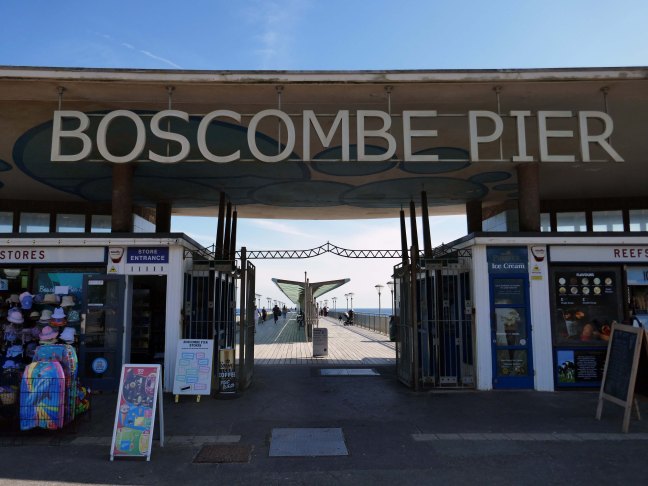
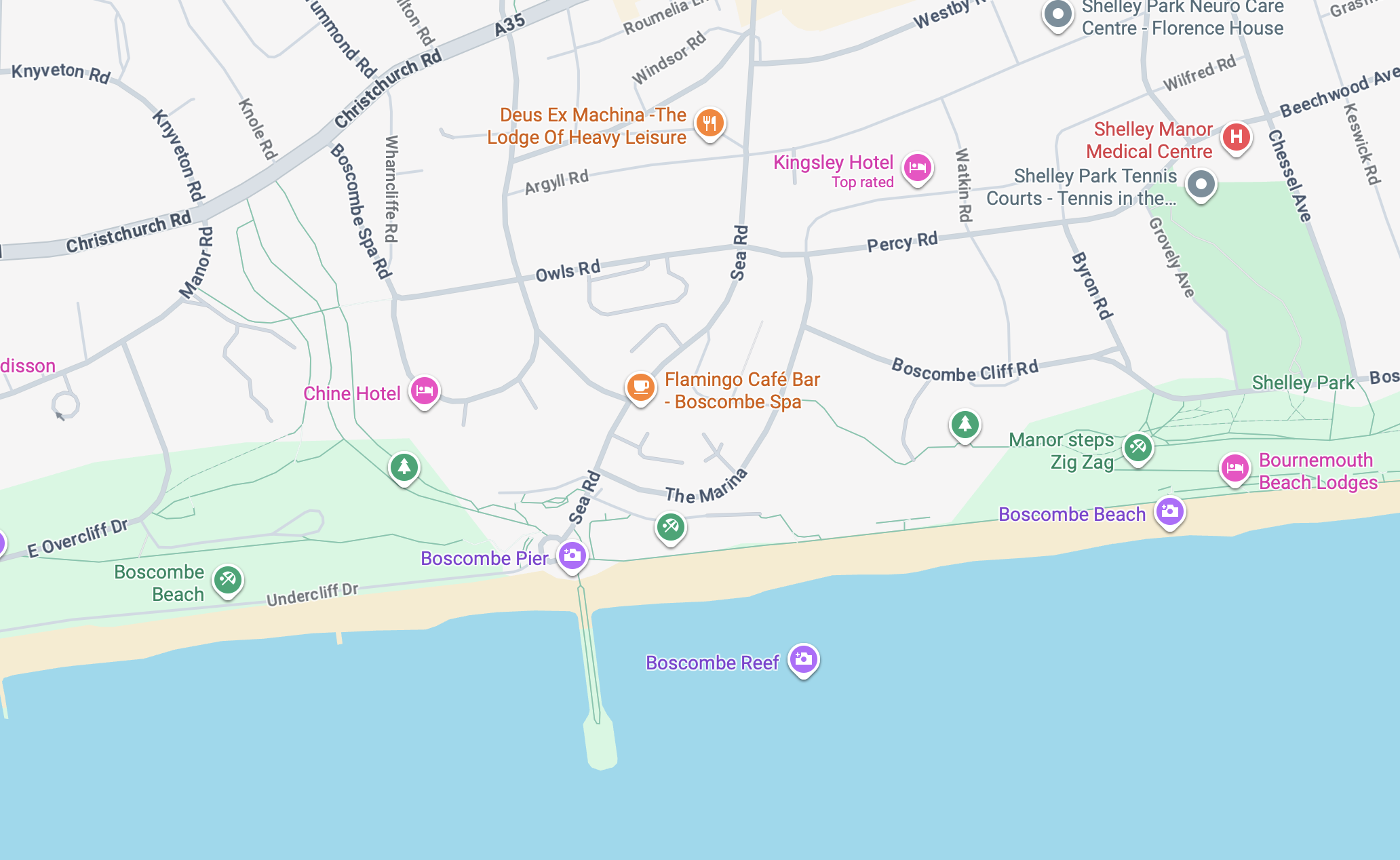
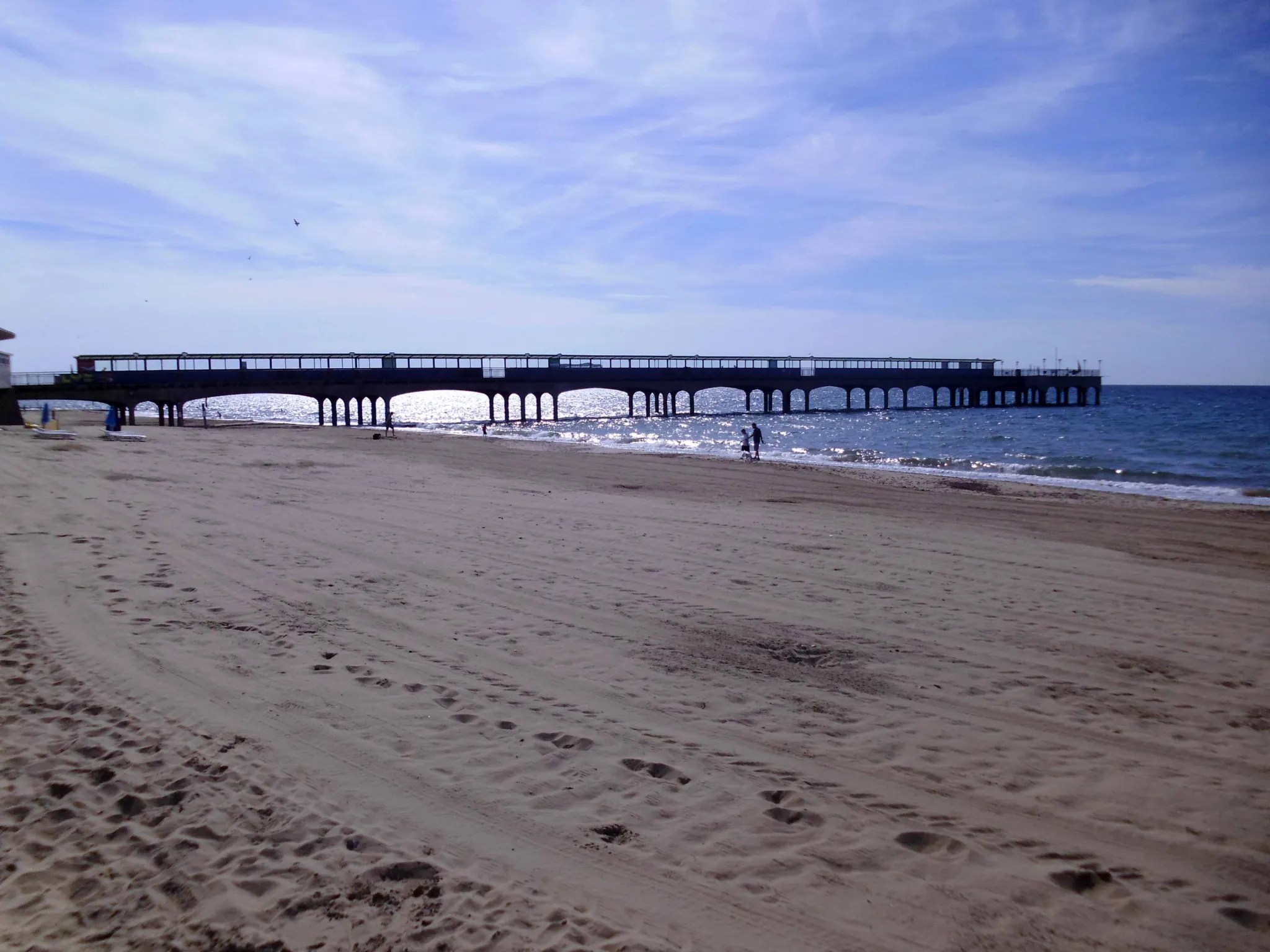
The Boscombe Pier Company was formed in 1886 and the first pile was laid on 11th October 1888. Designed by Archibald Smith, the 600 foot pier opened on 28th July 1889.
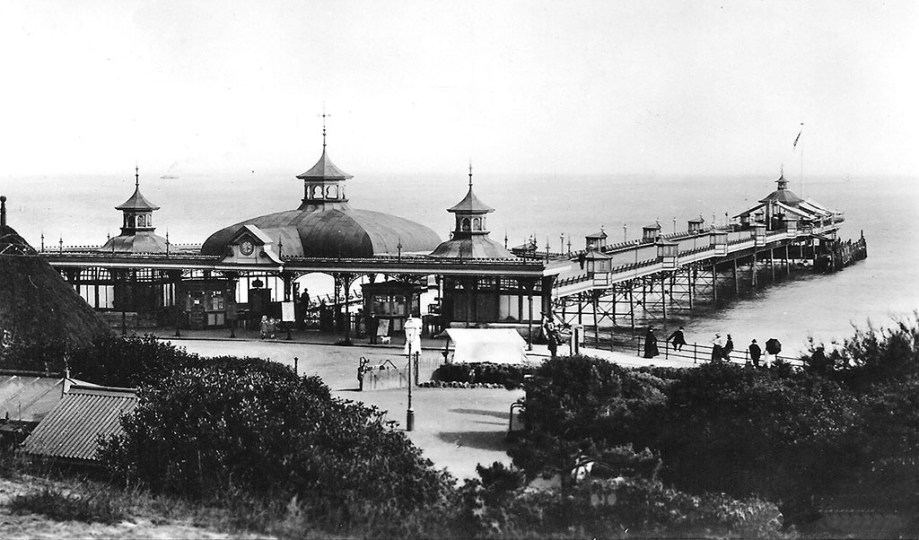
The local council took over the pier in 1904 and erected buildings at the entrance and on the pier-head. Facilities included a busy steamer landing stage.
In 1924/5 and 1927, the head was renewed in high alumina concrete. Between 1958 and 1960, the neck was reconstructed using reinforced concrete. In 1940, the pier was breached for defence reasons.
Between 1958 and 1960, the neck was reconstructed using reinforced concrete.
A restaurant and the Mermaid Theatre were built at the pier-head in 1961 although the ‘Theatre’, in fact, opened as a covered roller-skating rink for its first two seasons. In April 1965, the leaseholder, Cleethorpes Amusements, converted it into an arcade. The council formally took over the Mermaid ‘Theatre’ in 1988 when the lease ended.
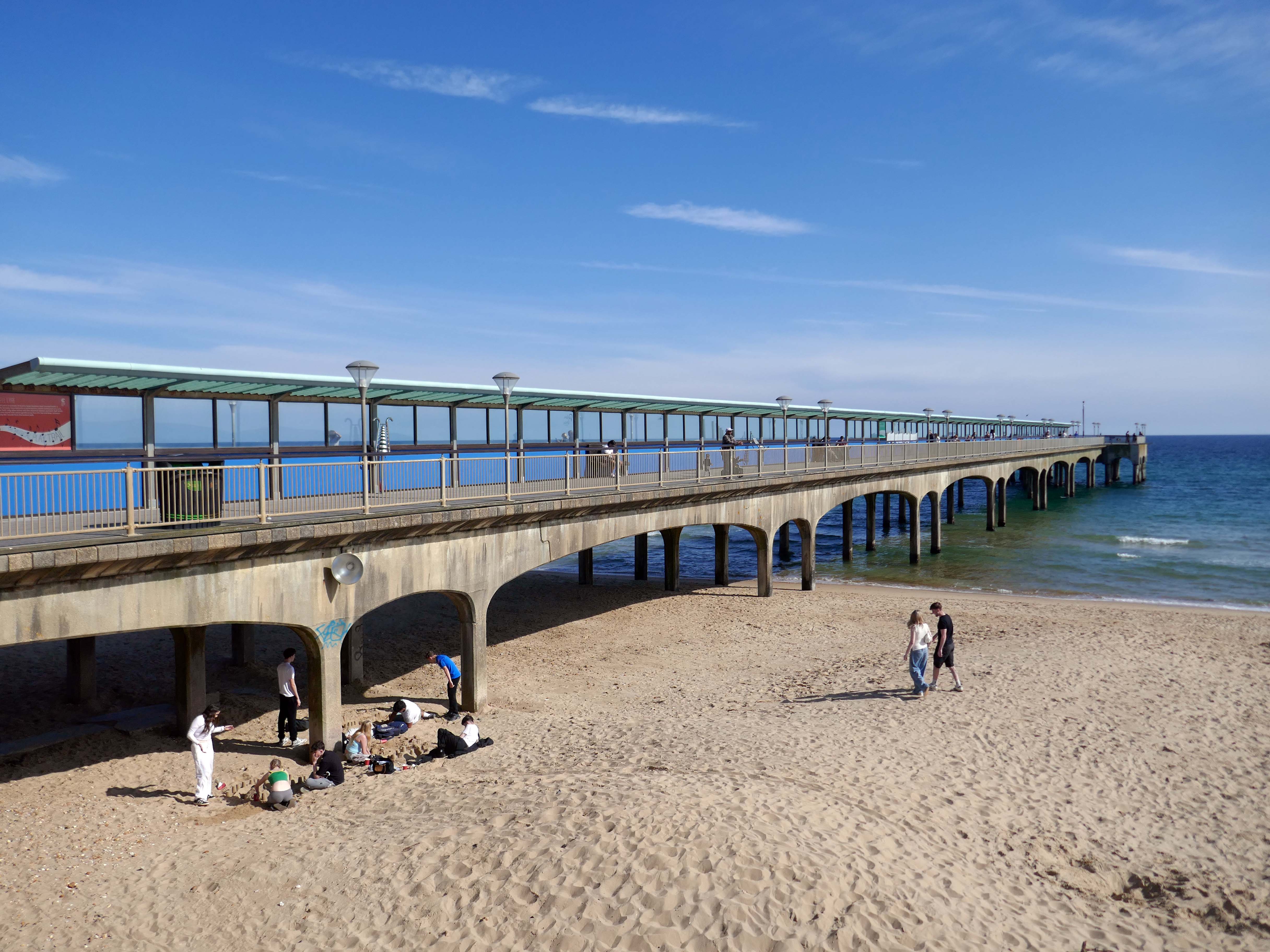
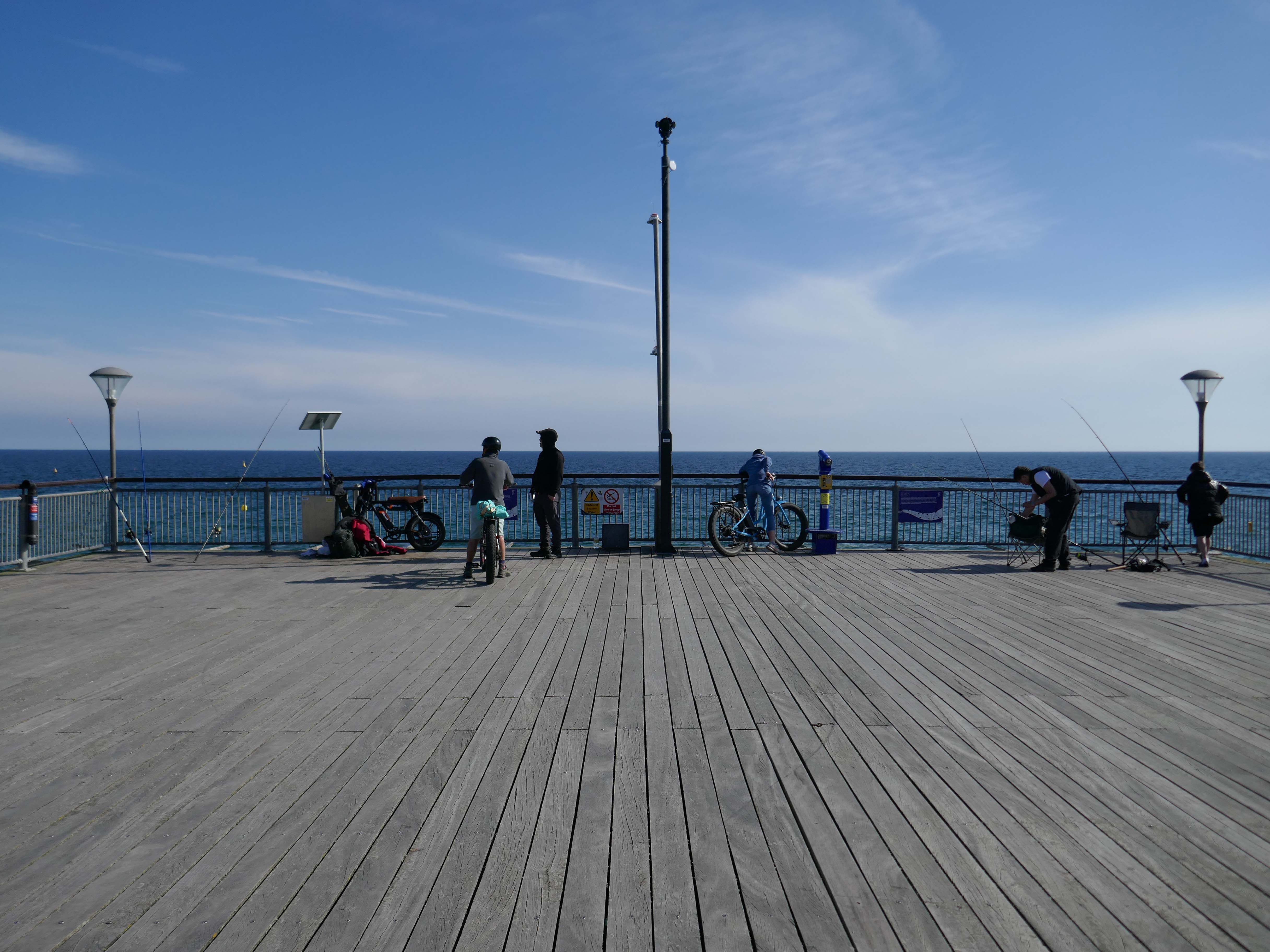
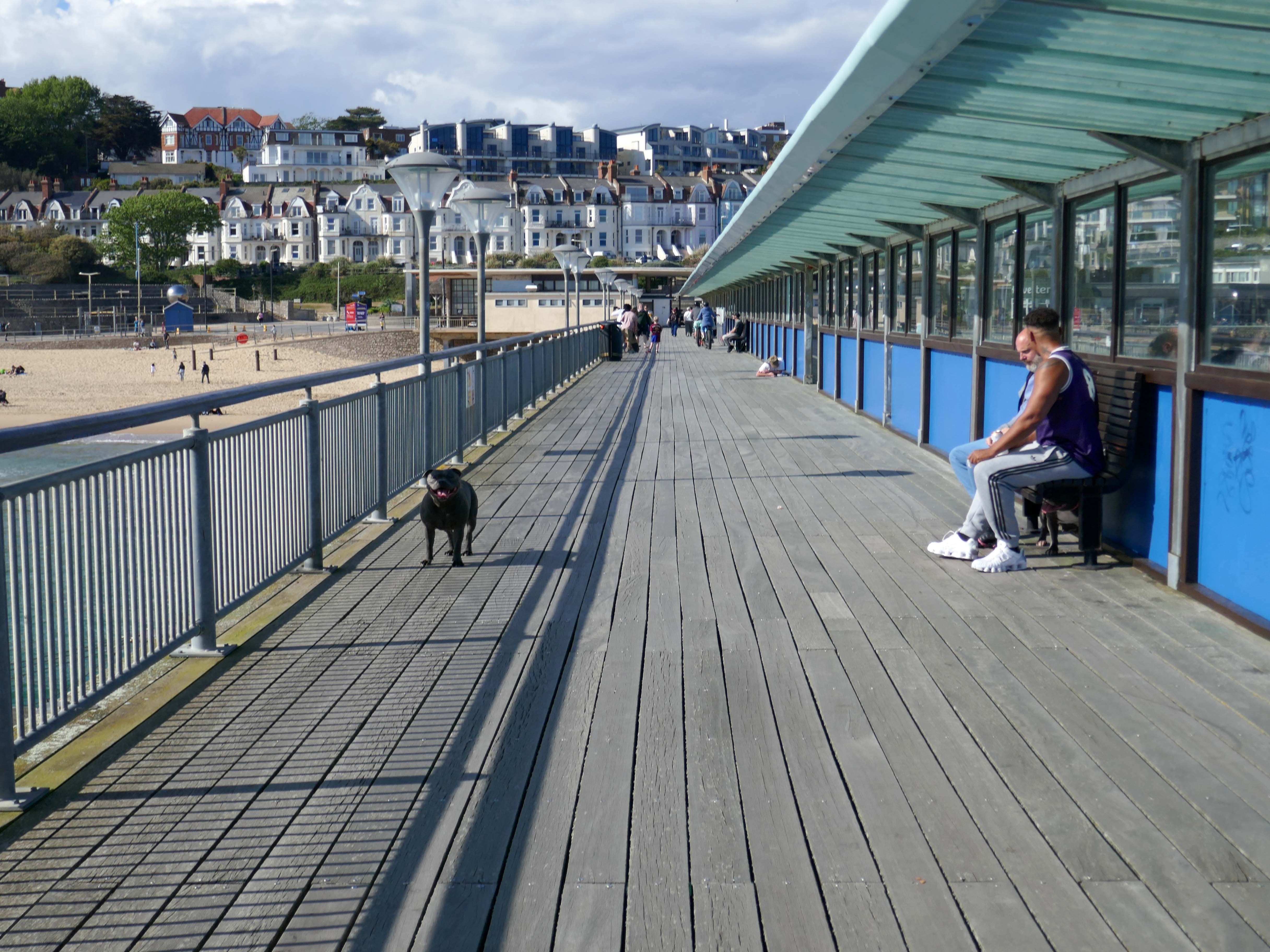
In 2008, the area around Boscombe pier underwent extensive renovation. The derelict and unsafe building at the end of the pier was demolished, and replaced by a simple viewing and fishing platform. The rest of the pier was also restored.
I was first here in 2015 cycling the South Coast – heading to Portsmouth.
Historic England’s listing notes:
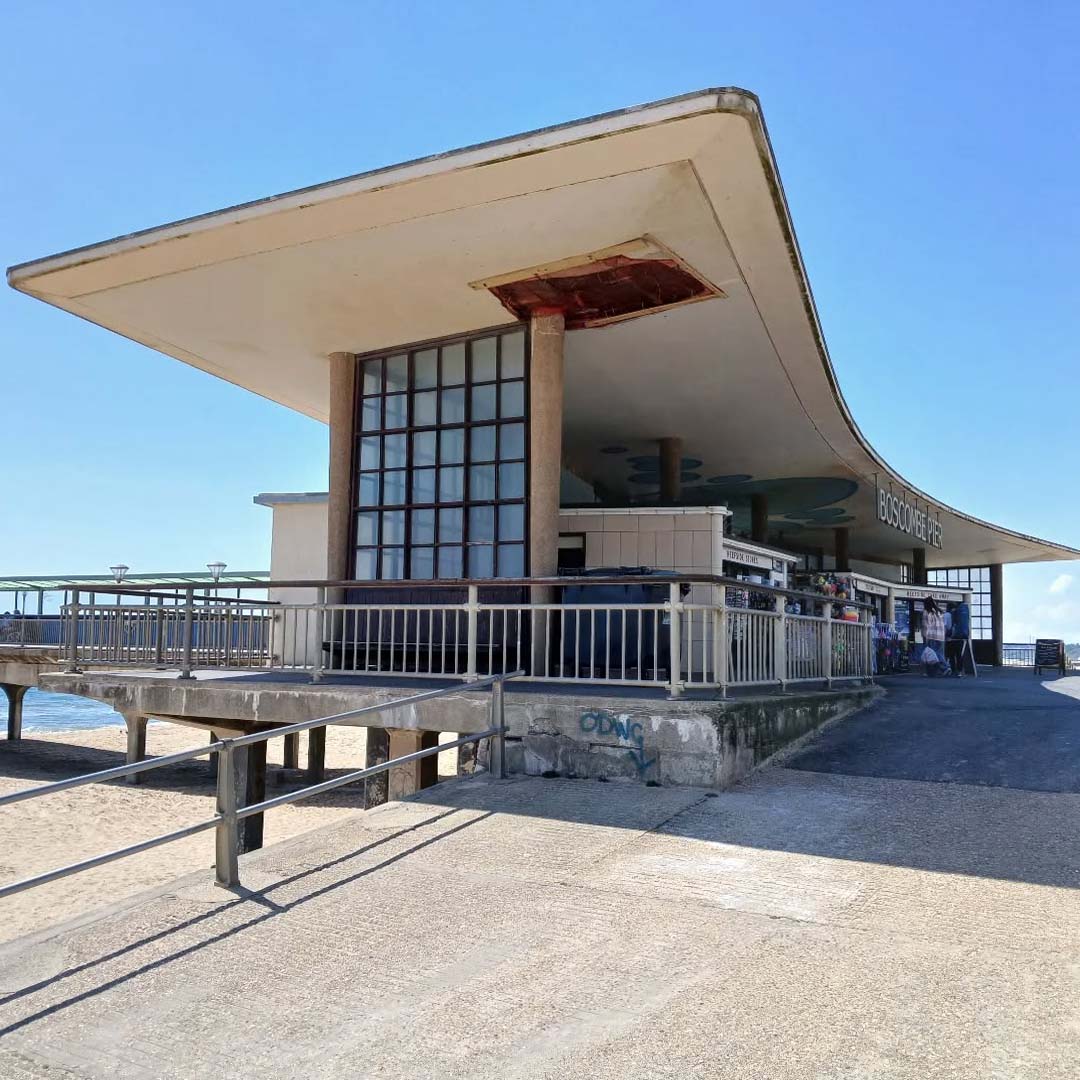
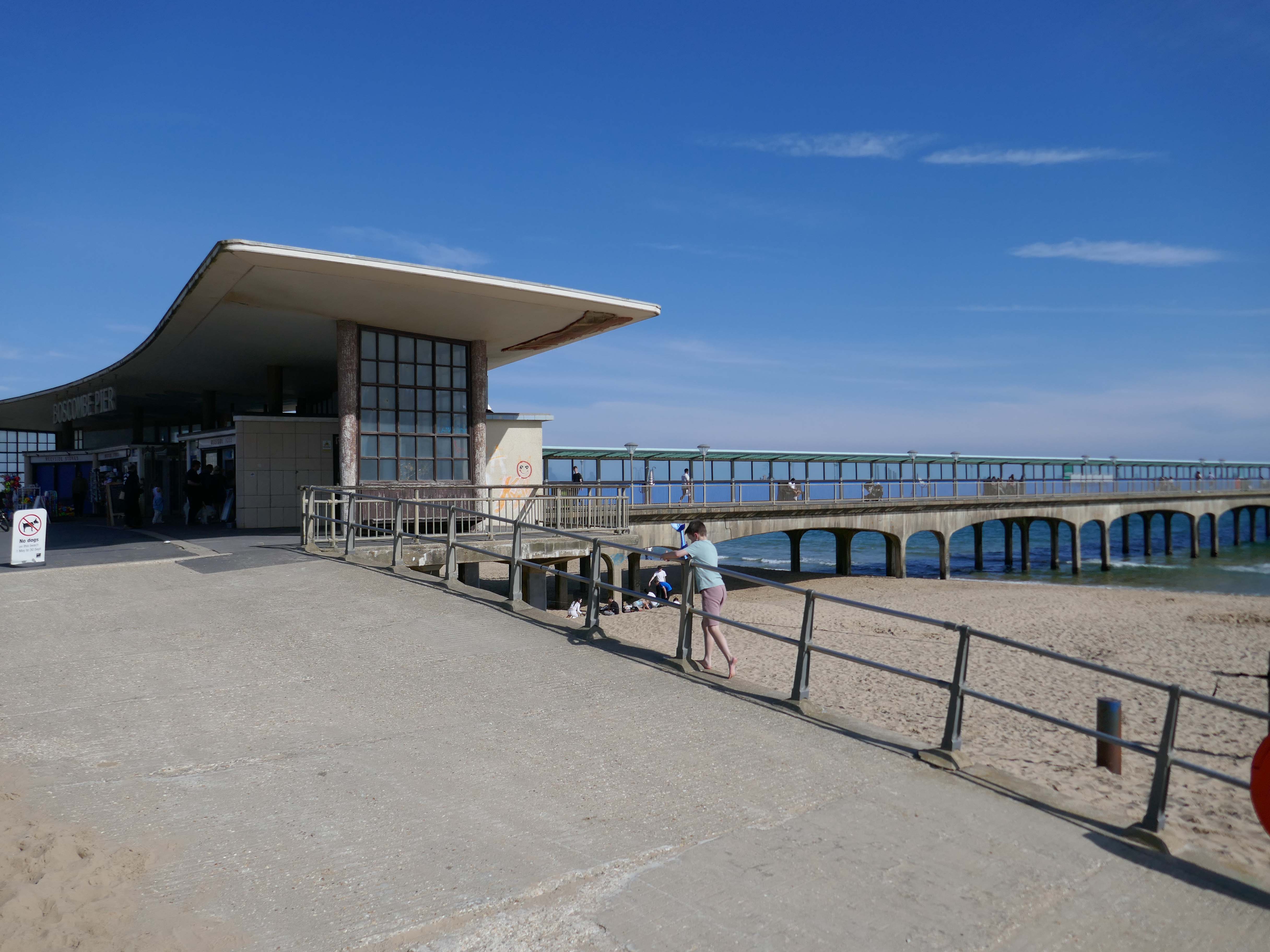
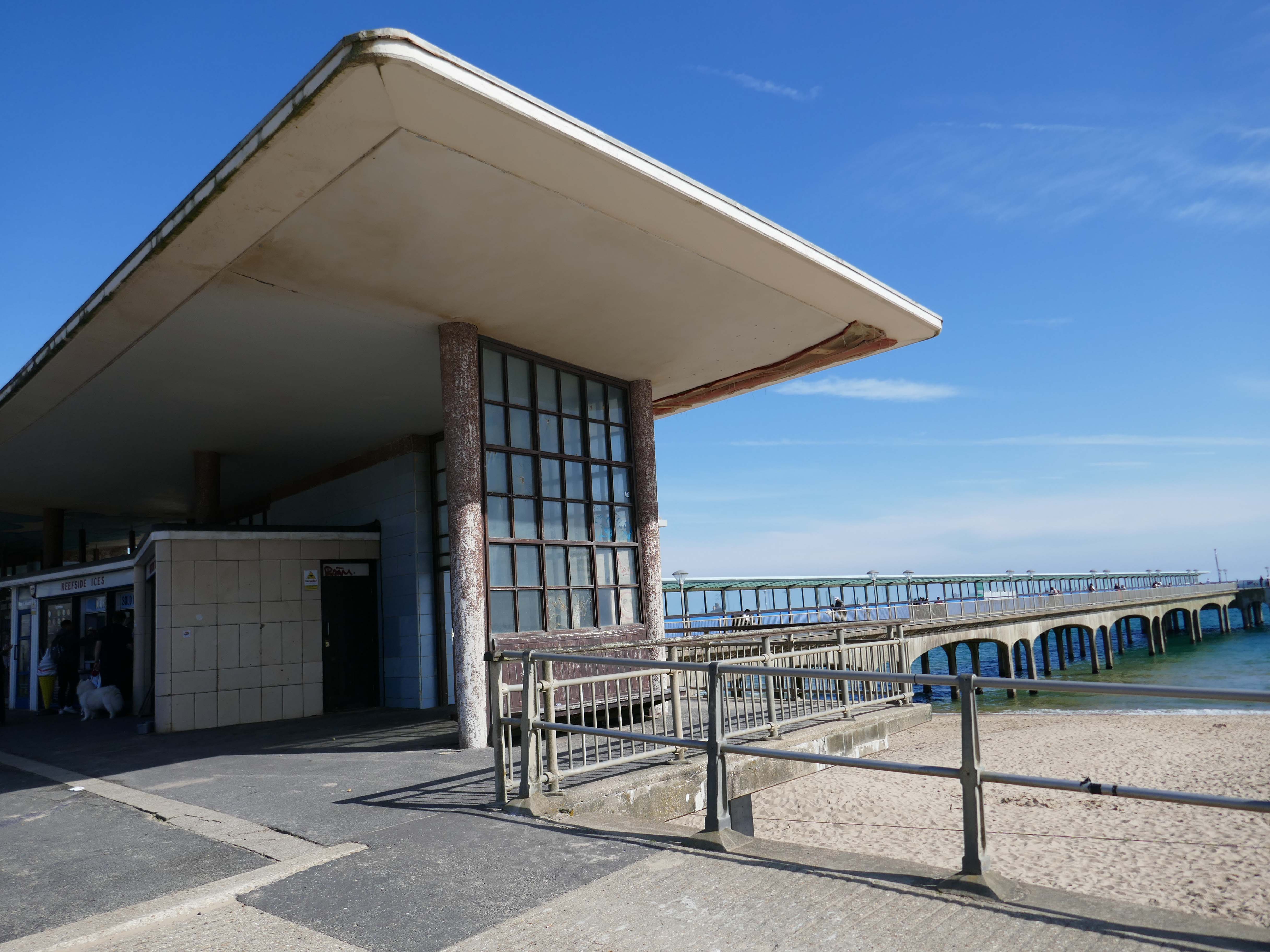
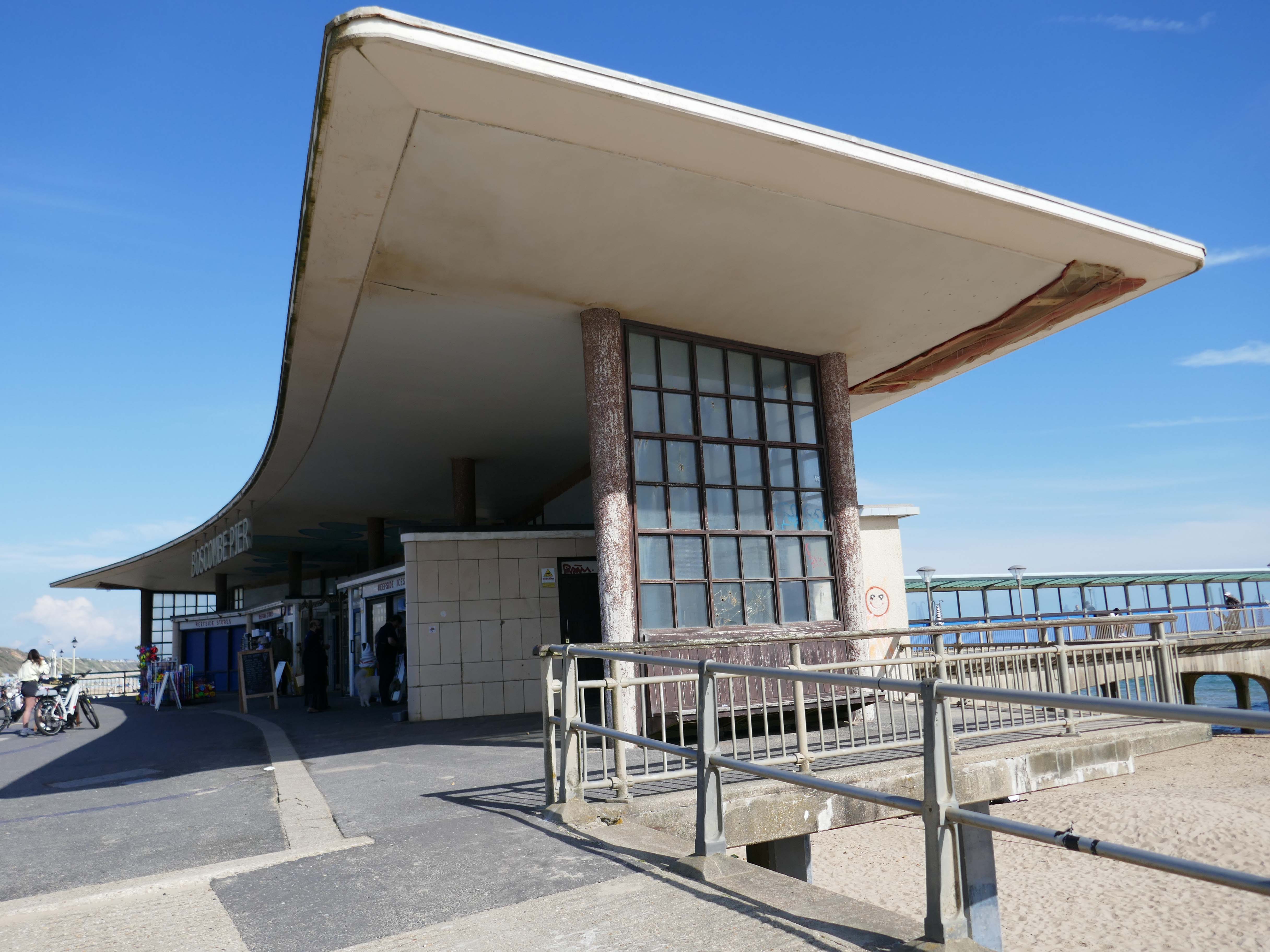
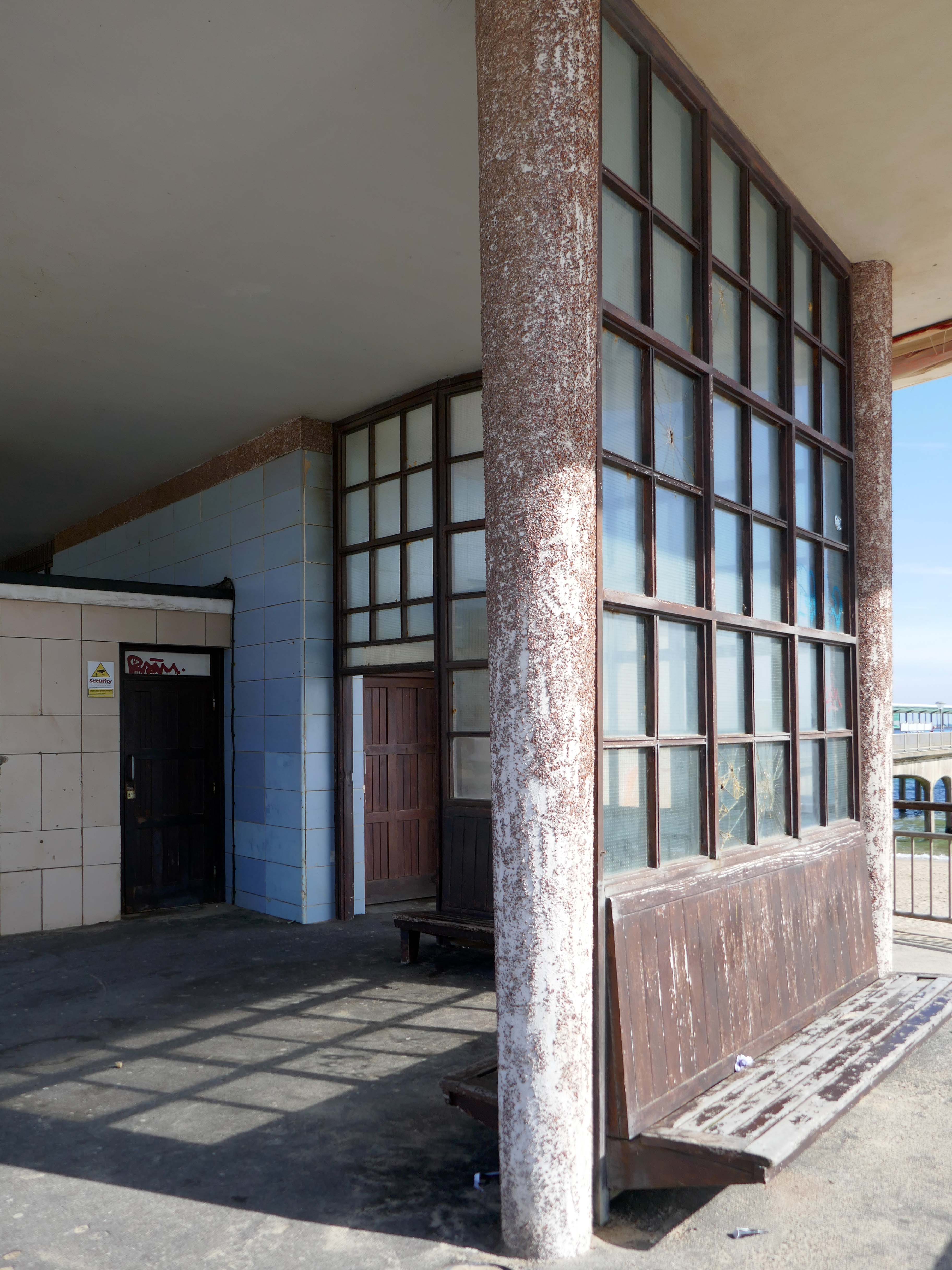
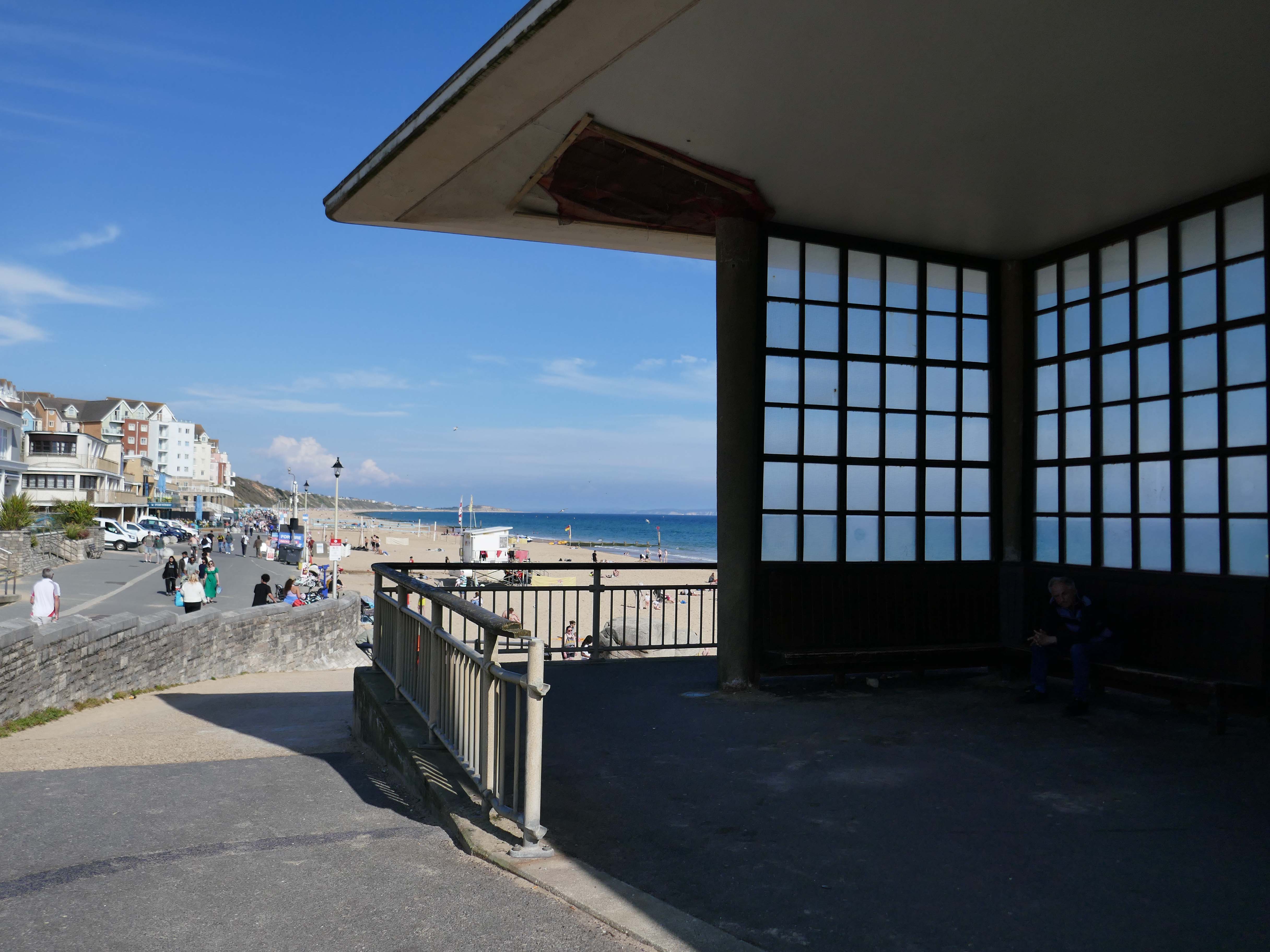
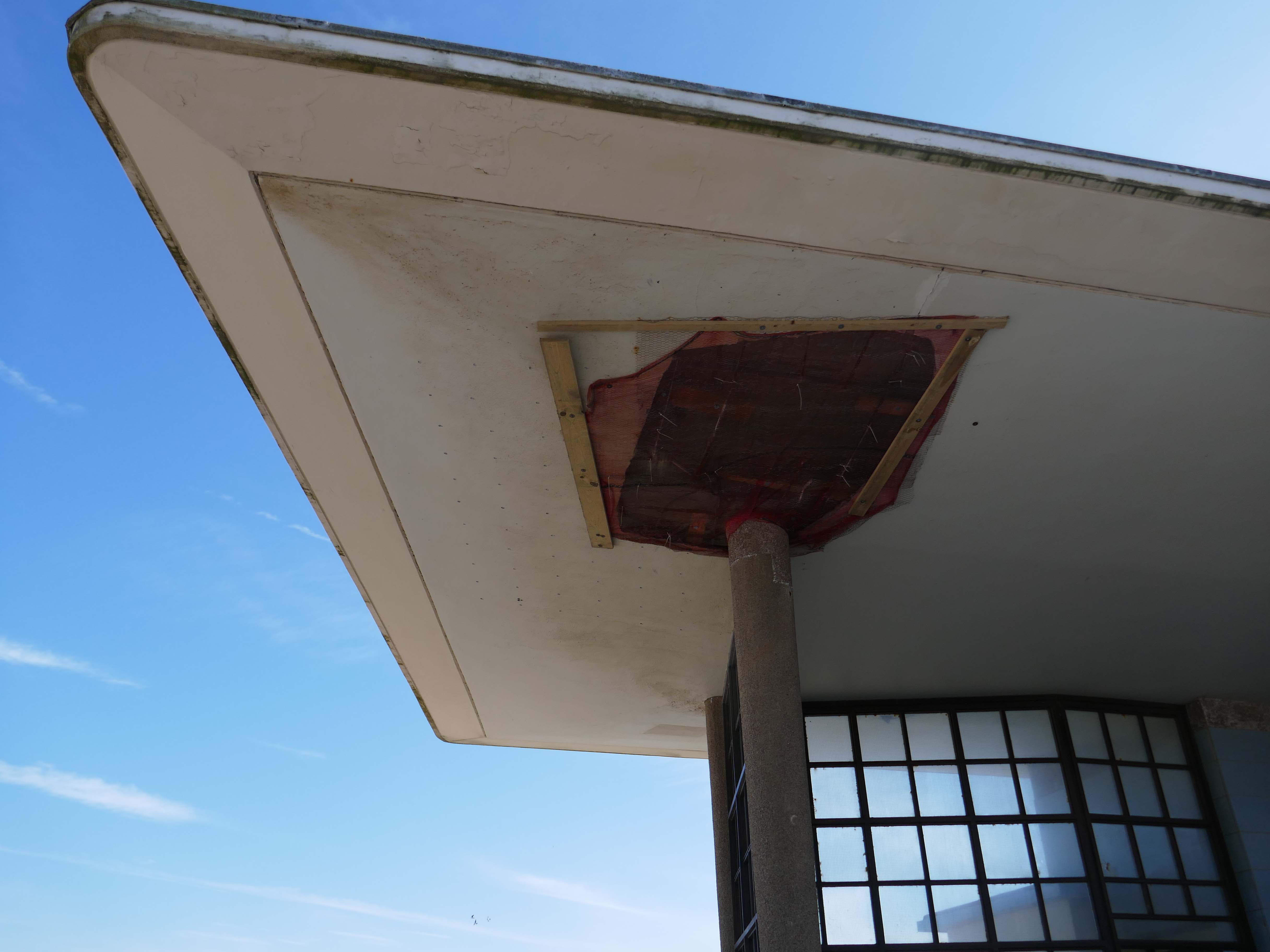
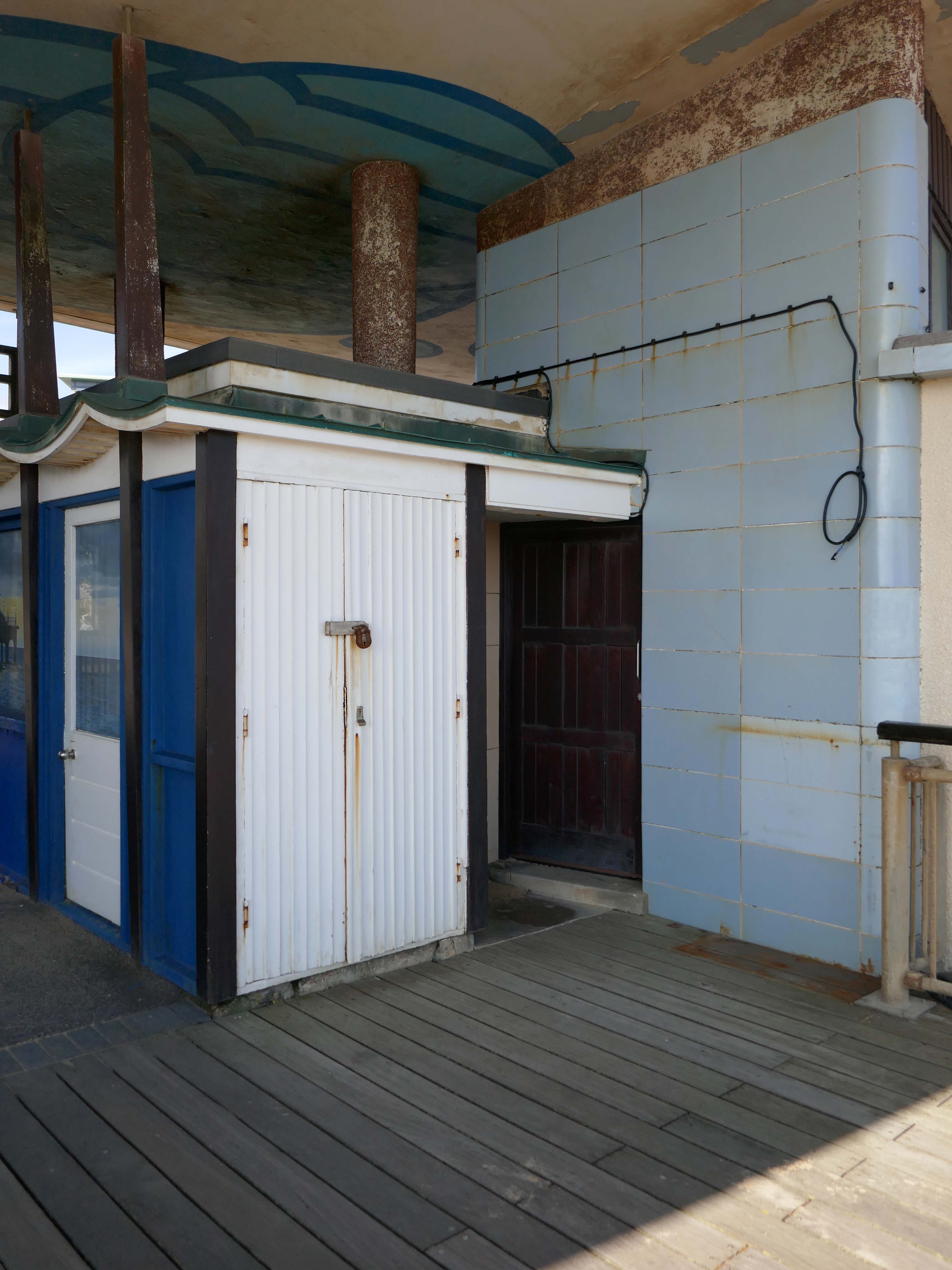
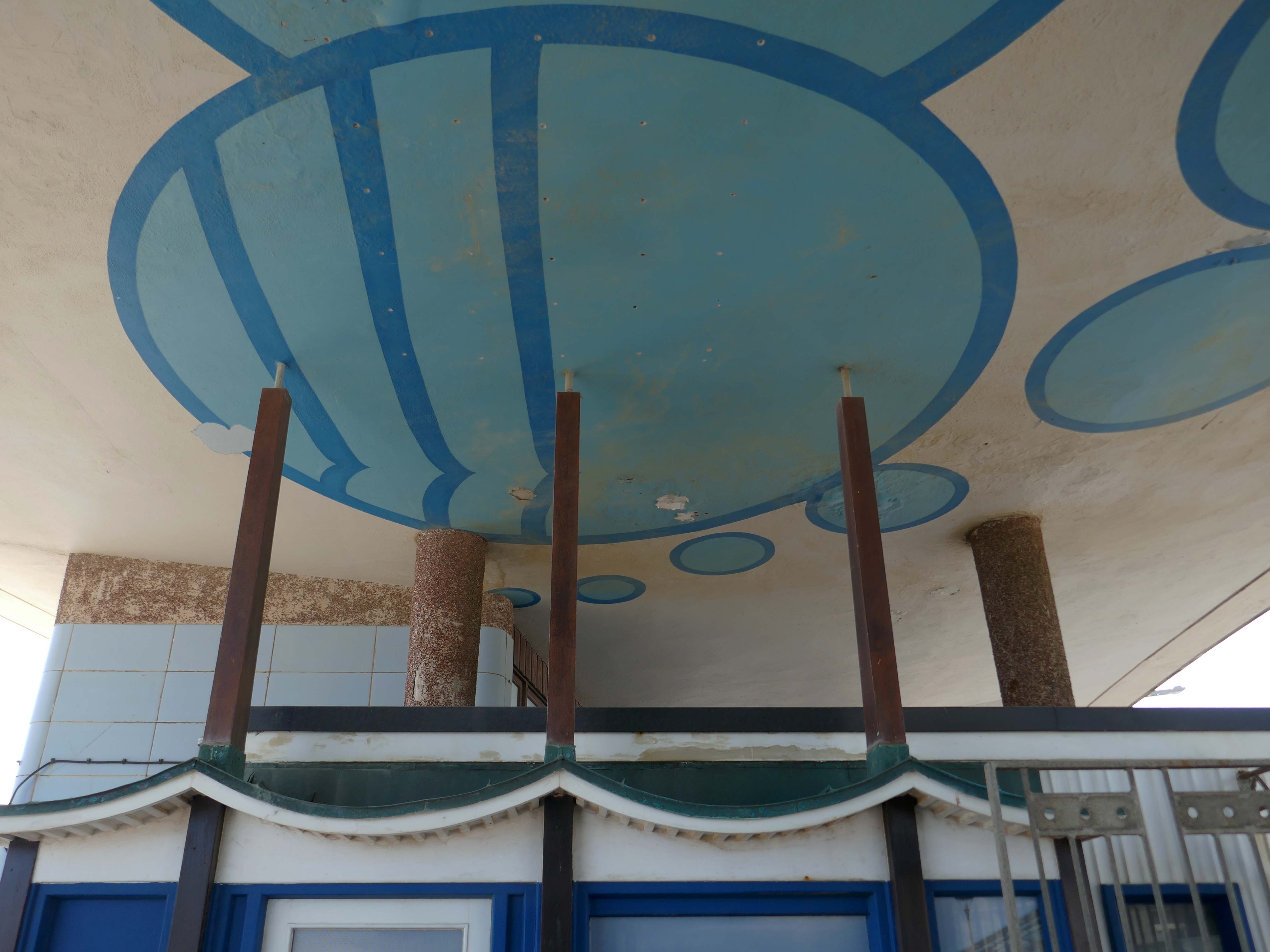
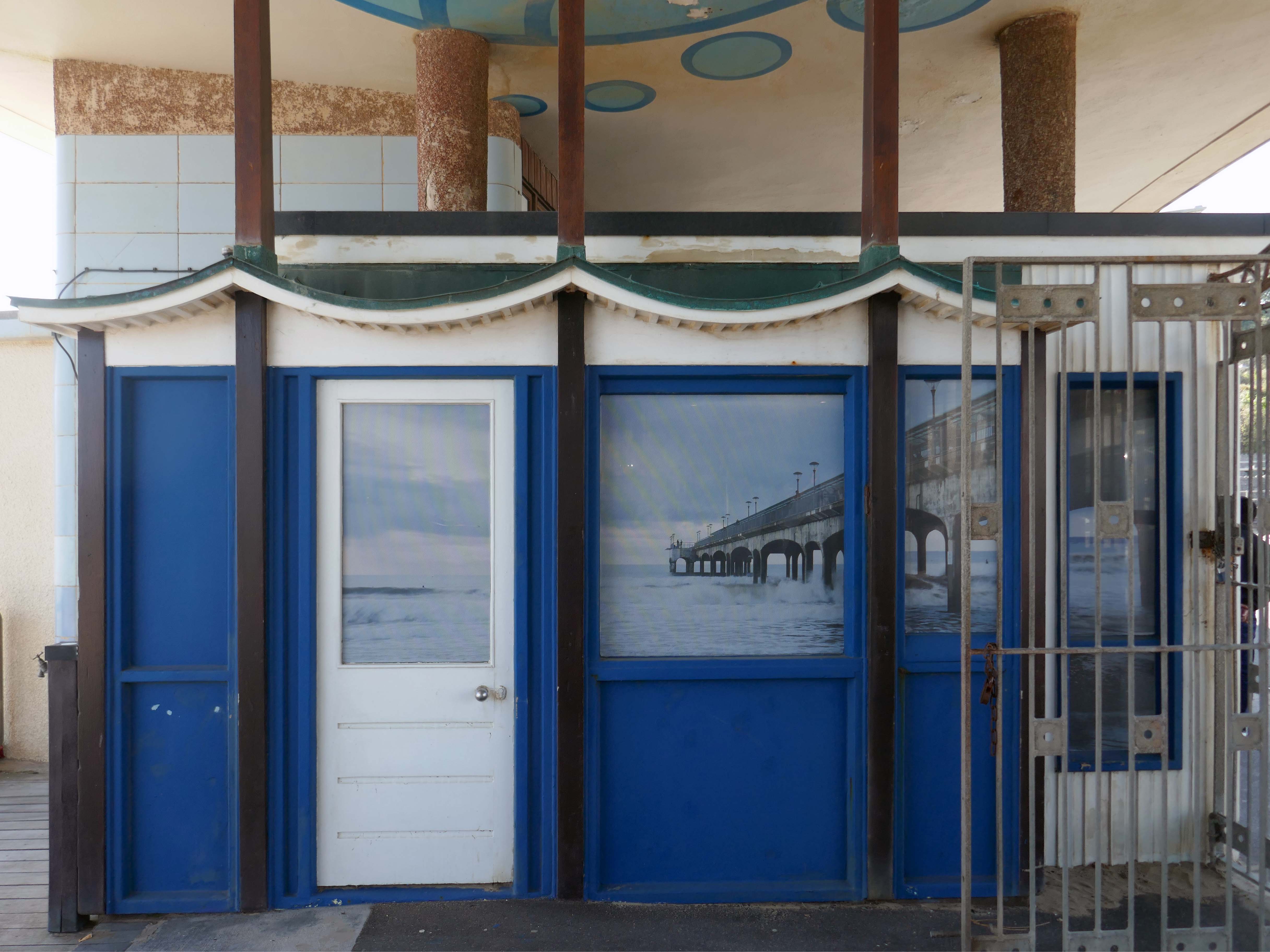
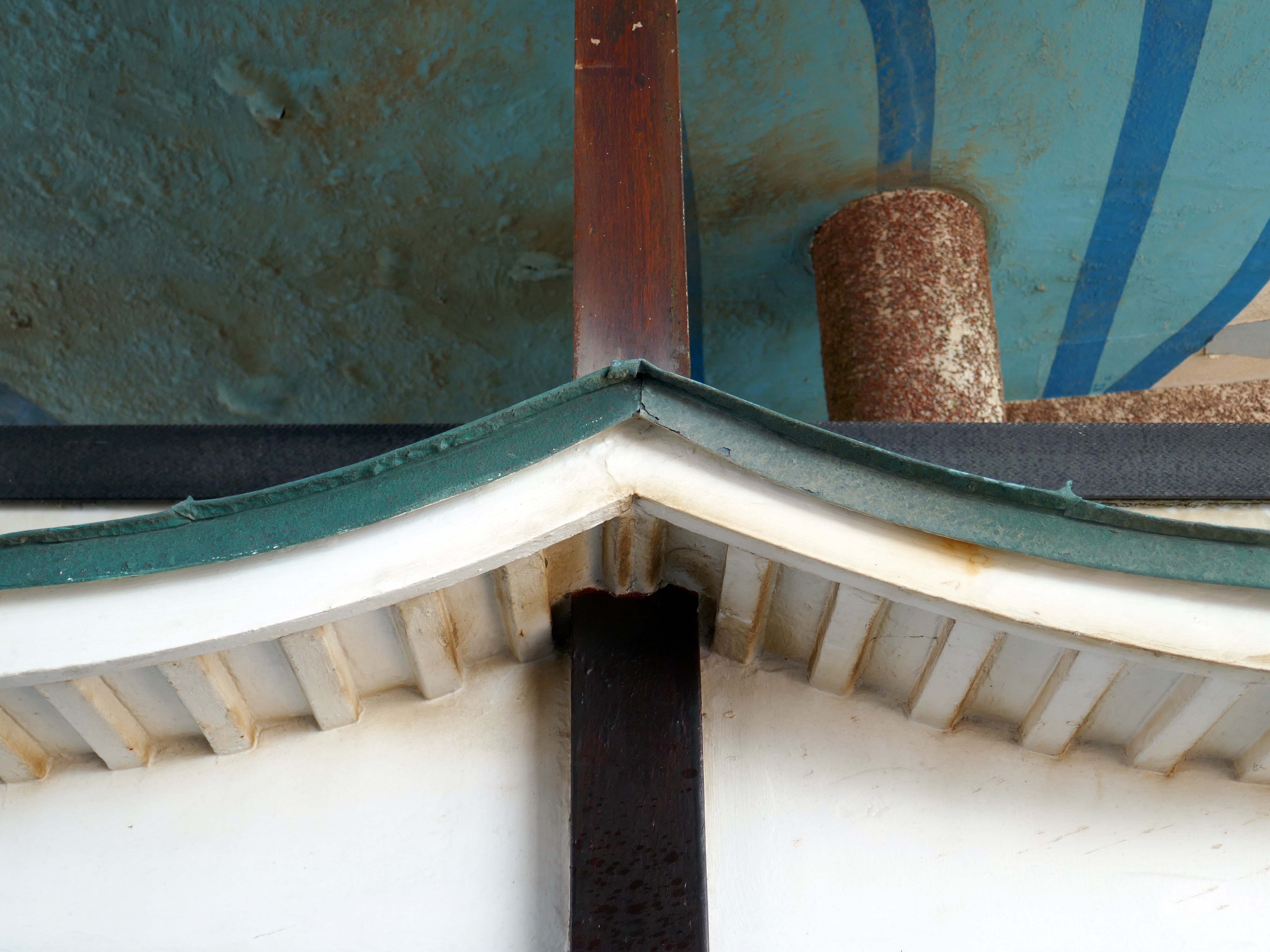
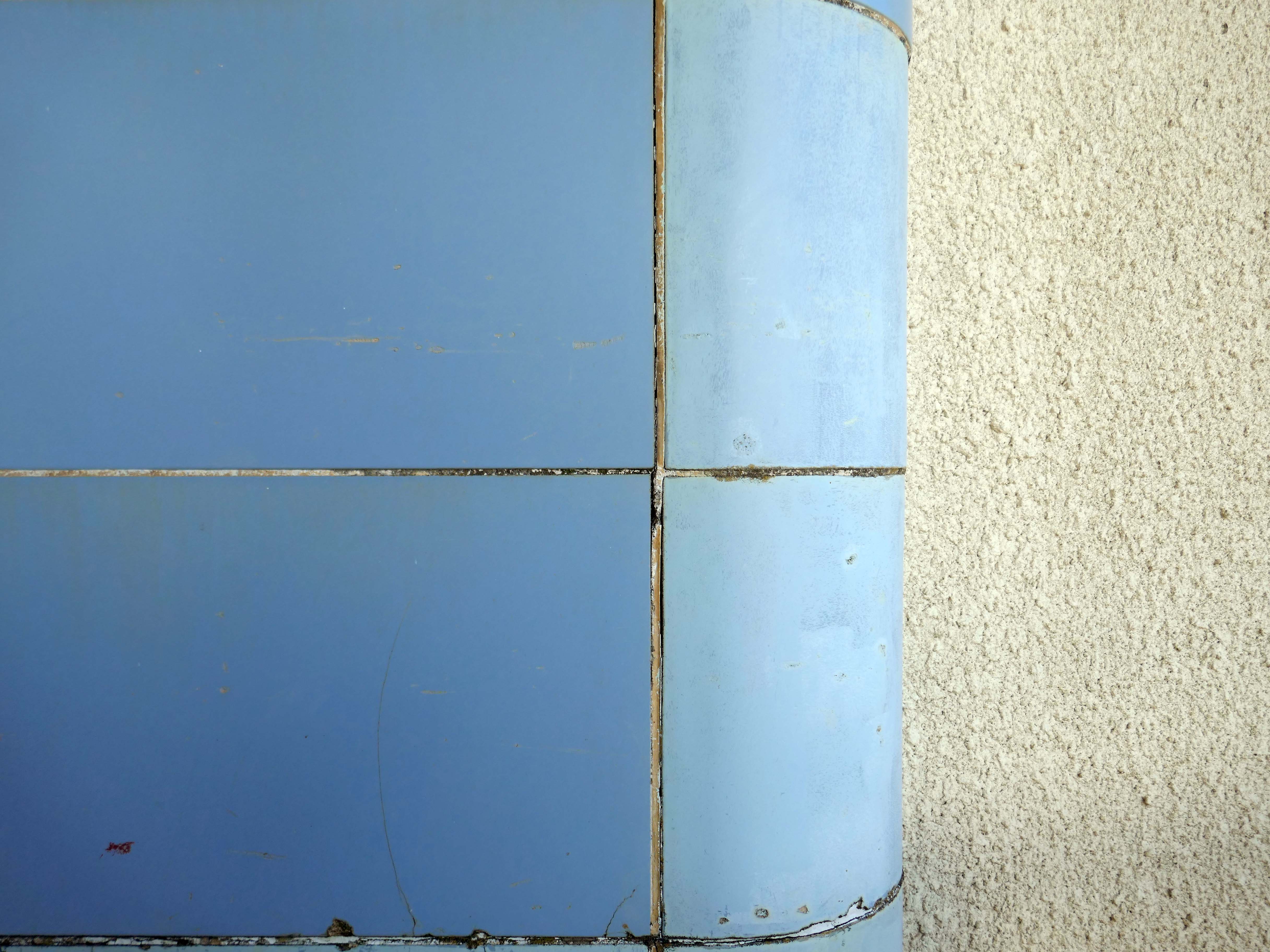
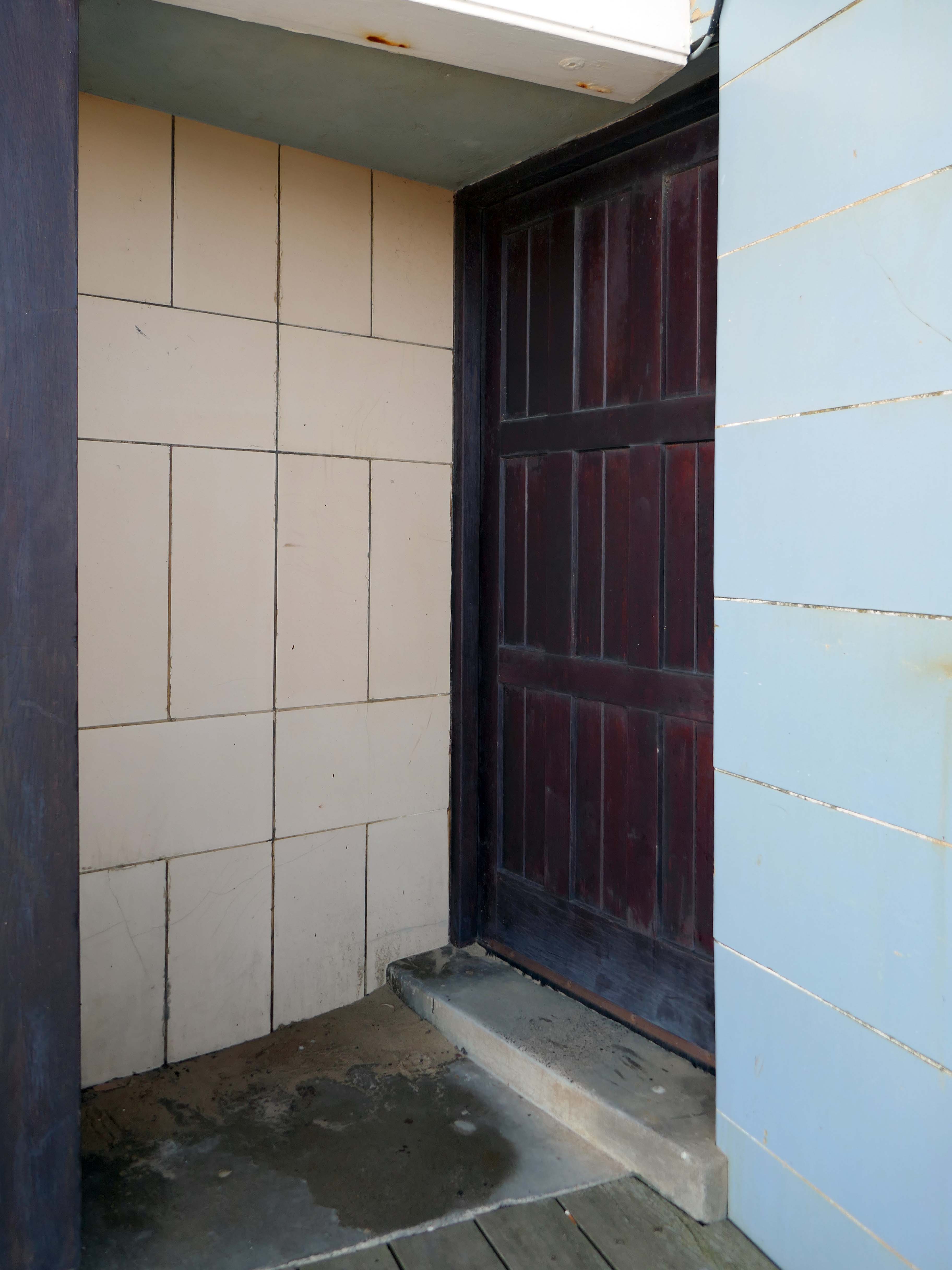
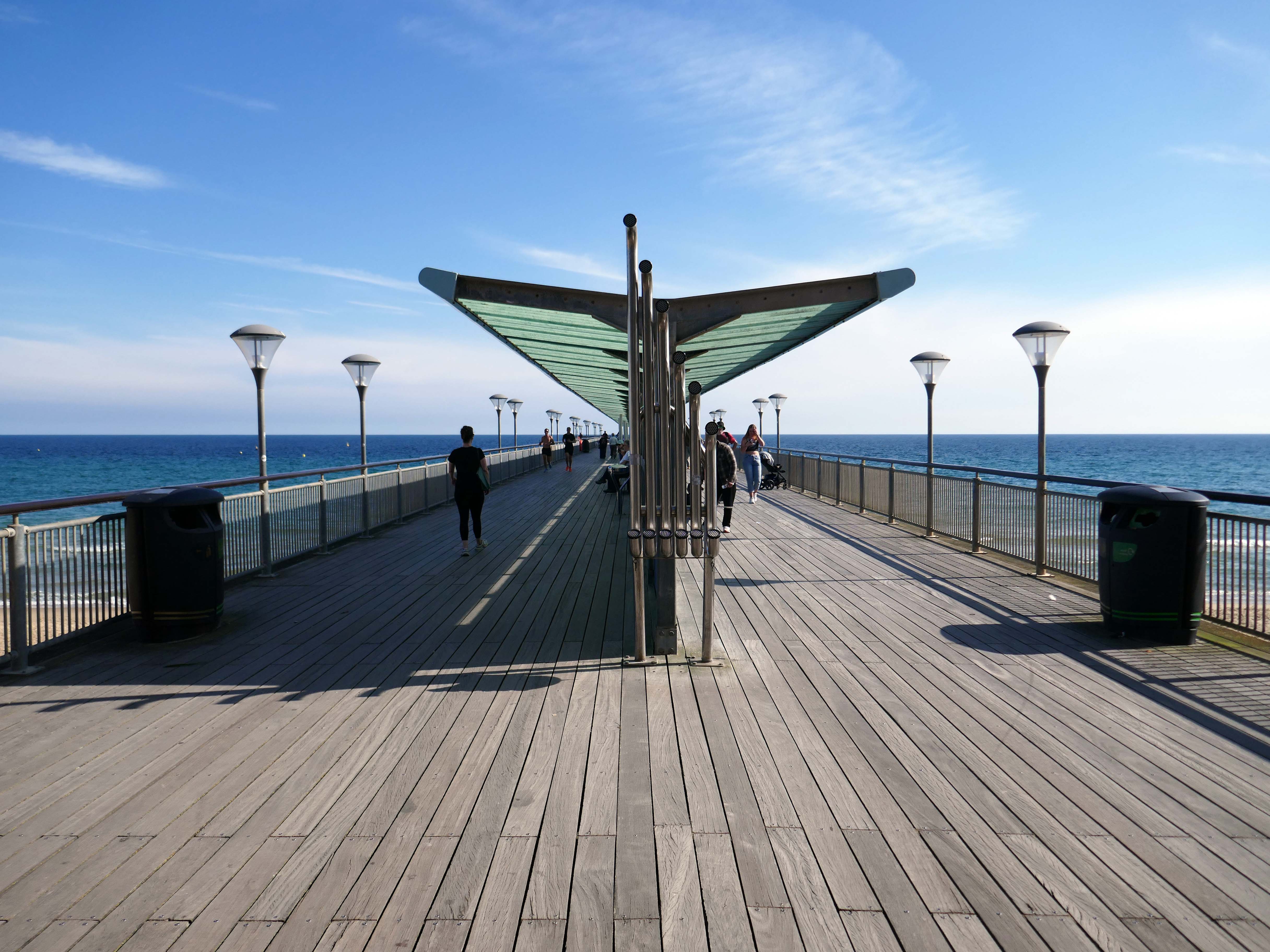
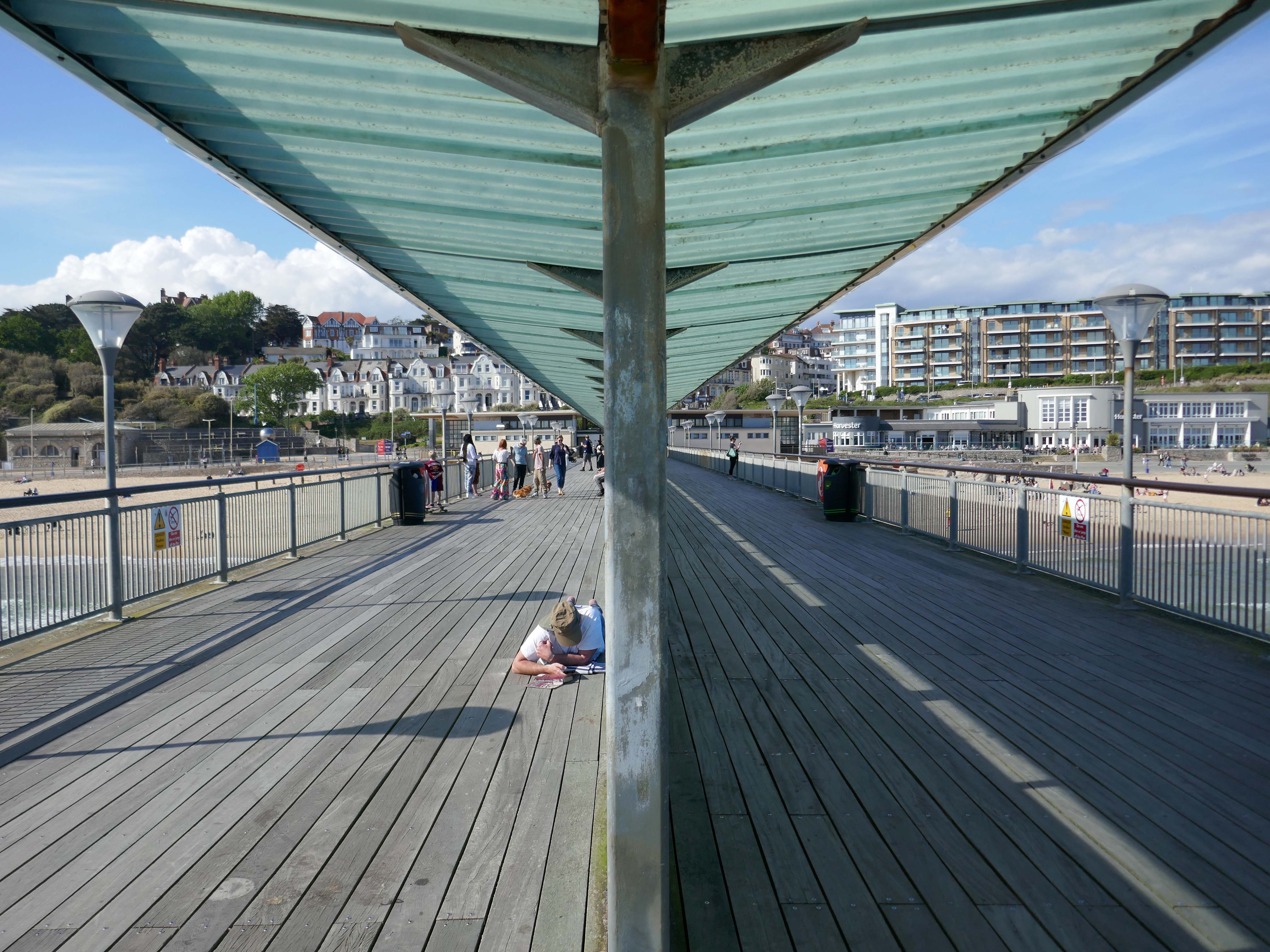
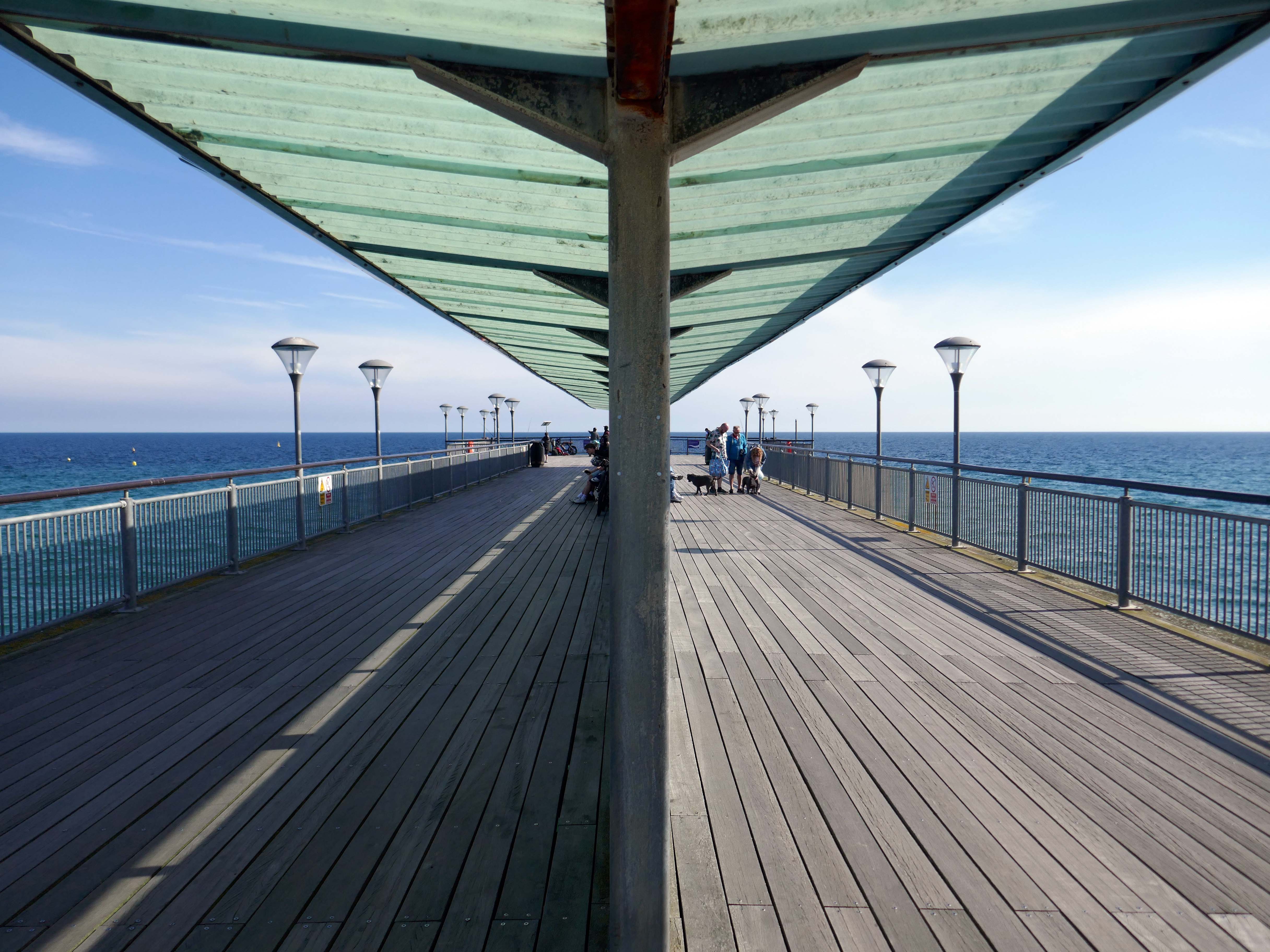
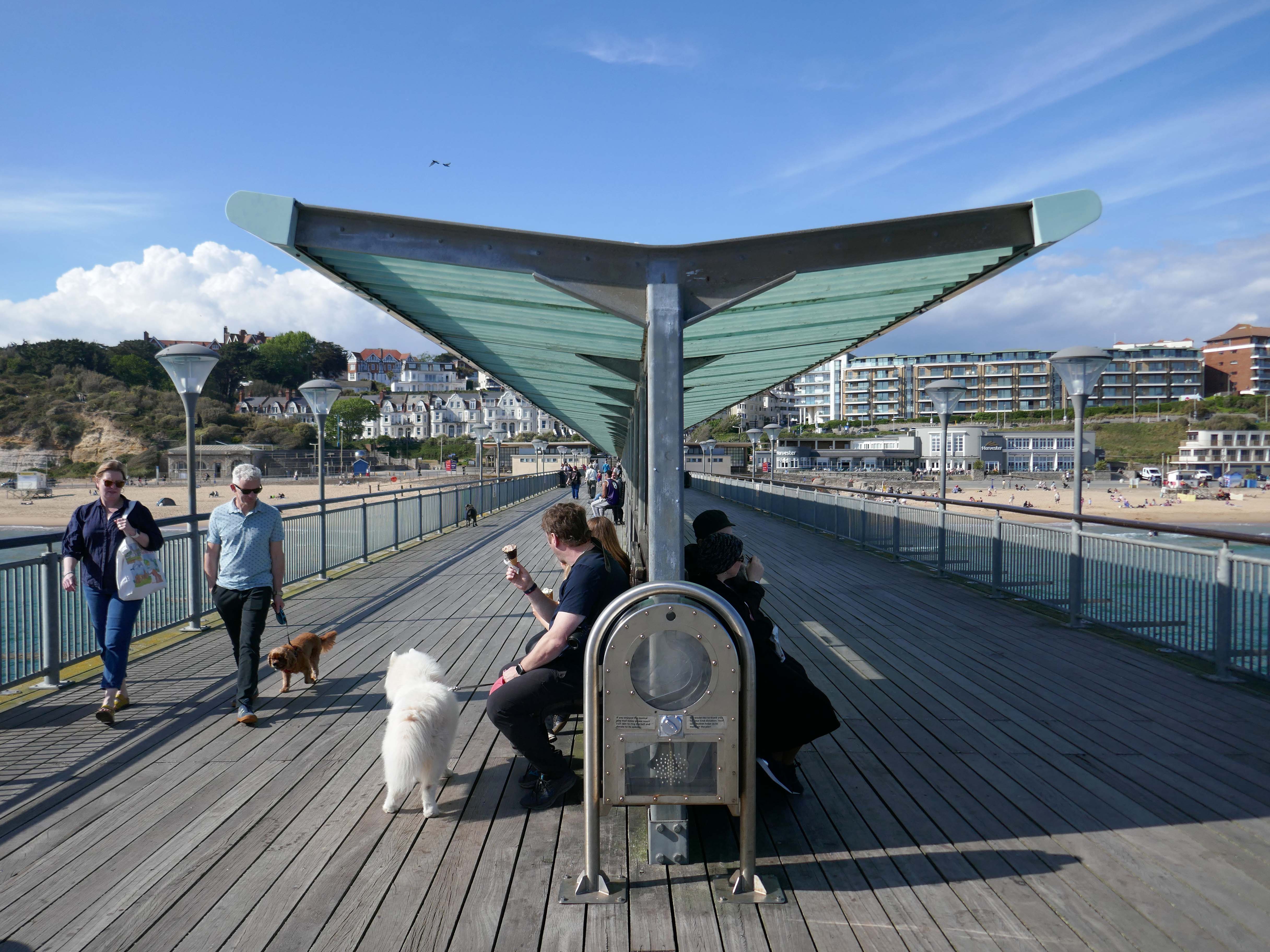
However, the neck building is a design of great verve and vivacity that well demonstrates the revitalisation of the British seaside resort in the 1950s. The contemporary style associated with Frank Lloyd Wright’s Usonian houses and made popular with Californian homes in the 1940s was well suited to the requirements of an architecture that combined ‘sun and fun’. The contemporary style made a feature of expressing different elements or planes of a composition with different materials, and here the combination is honest and each element well detailed. The sweep of the cantilevered, boomerang-shaped roof is a particularly joyous feature. It is a building that would have been despised as being exactly of its date until recently; now it is a building that can be celebrated for that very reason, and a rare example of pier architecture from these years.
Open seven days a week from 9am to 11pm – may be subject to change due to weather conditions.
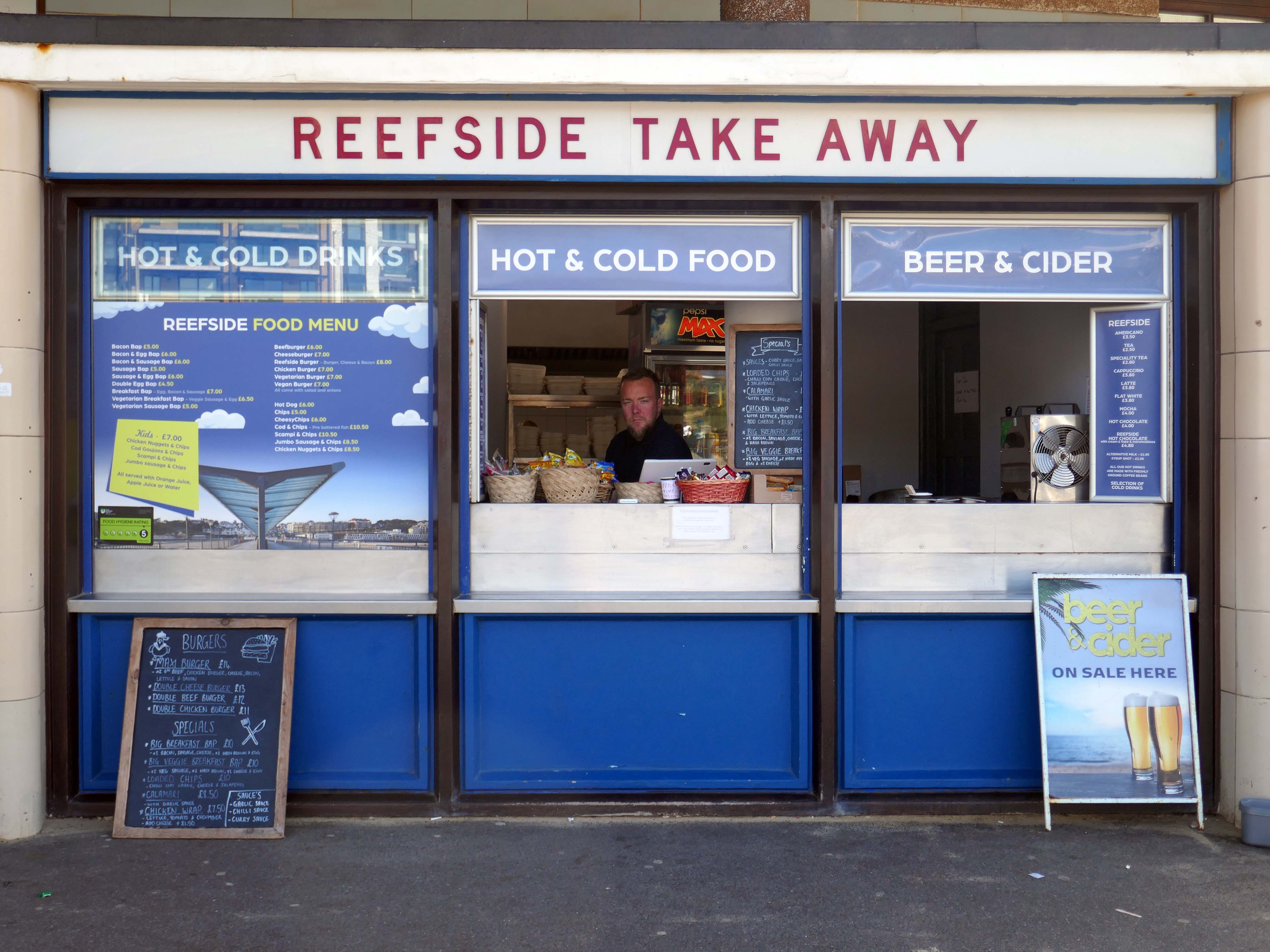
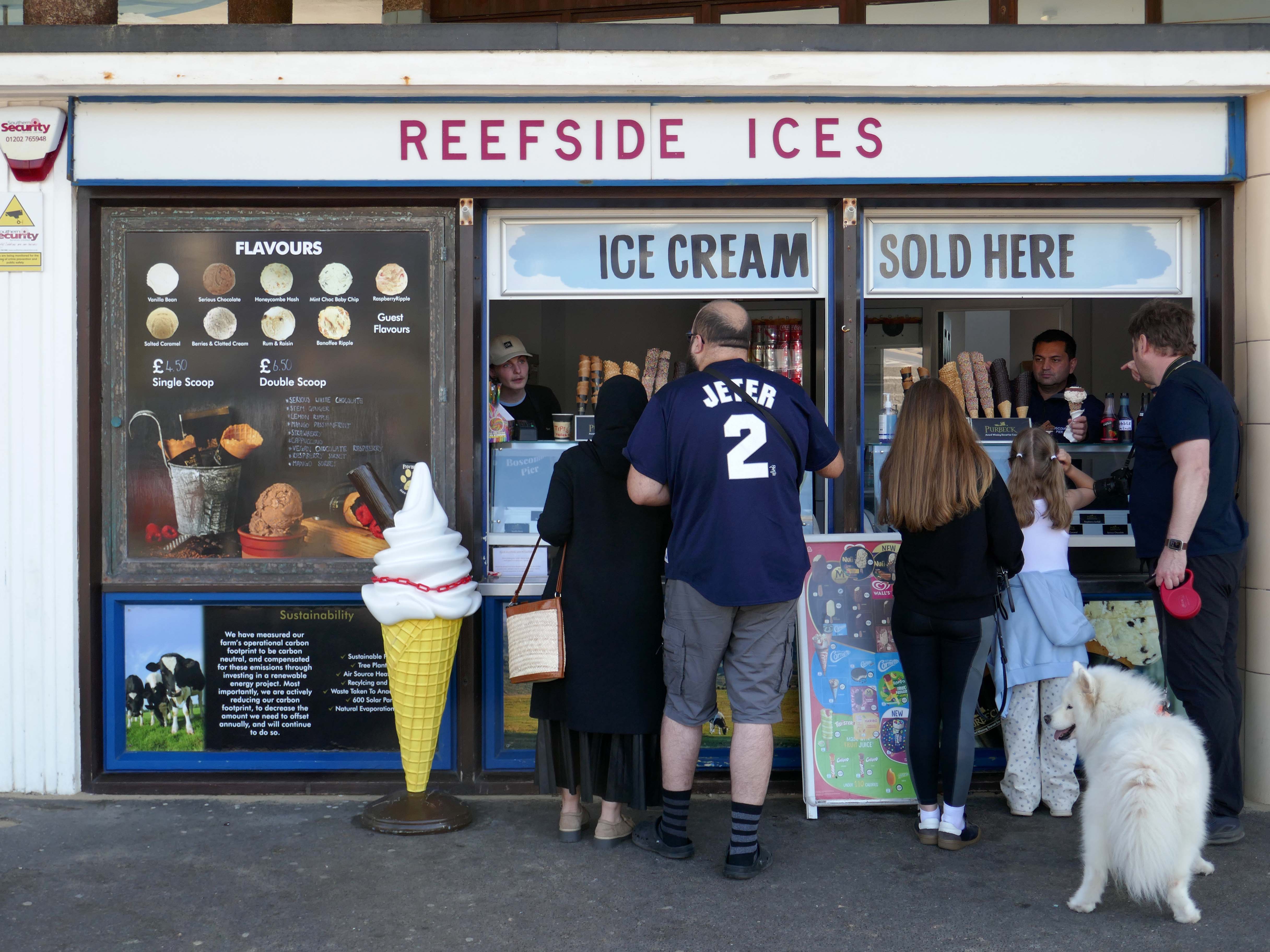
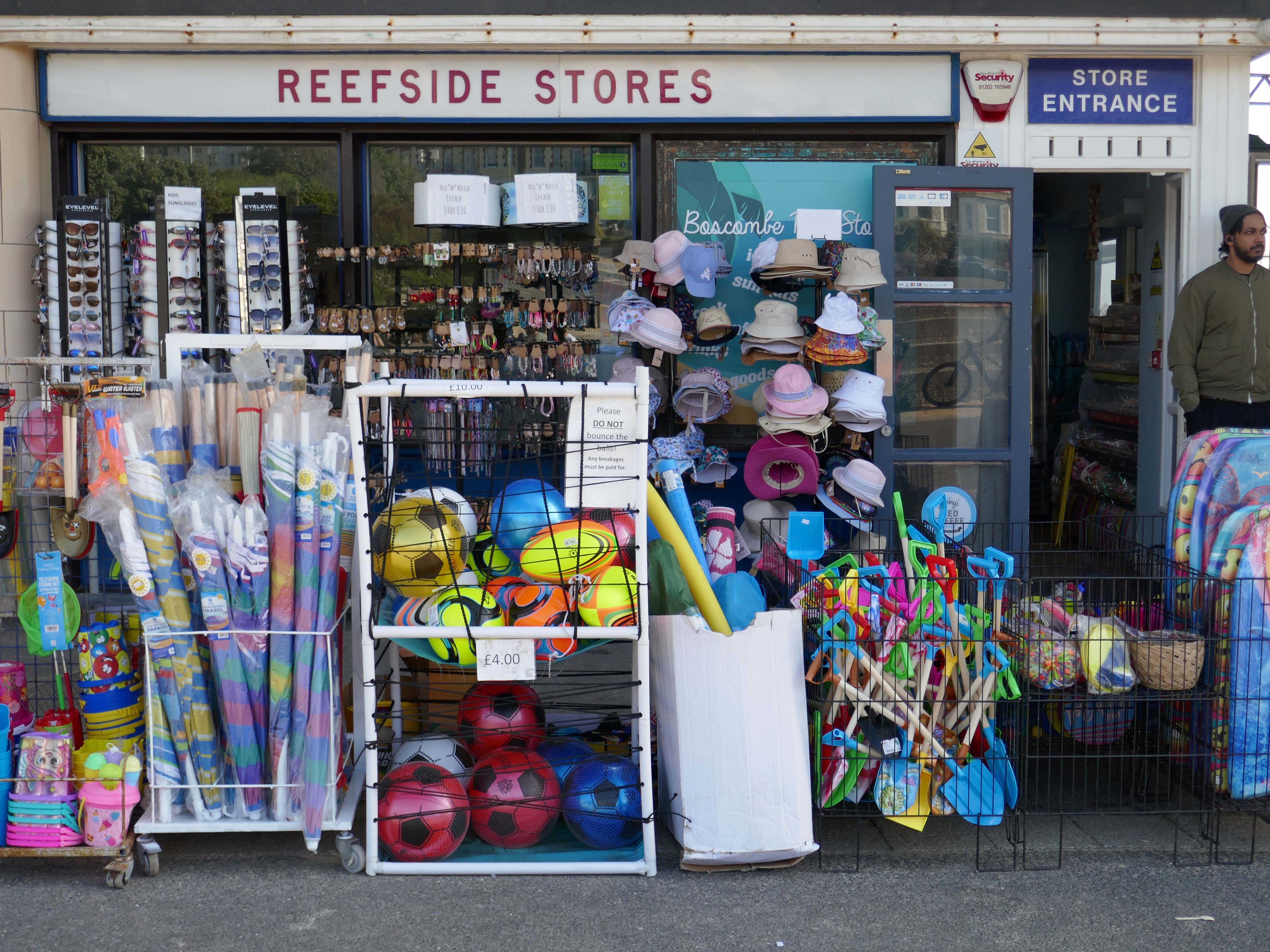
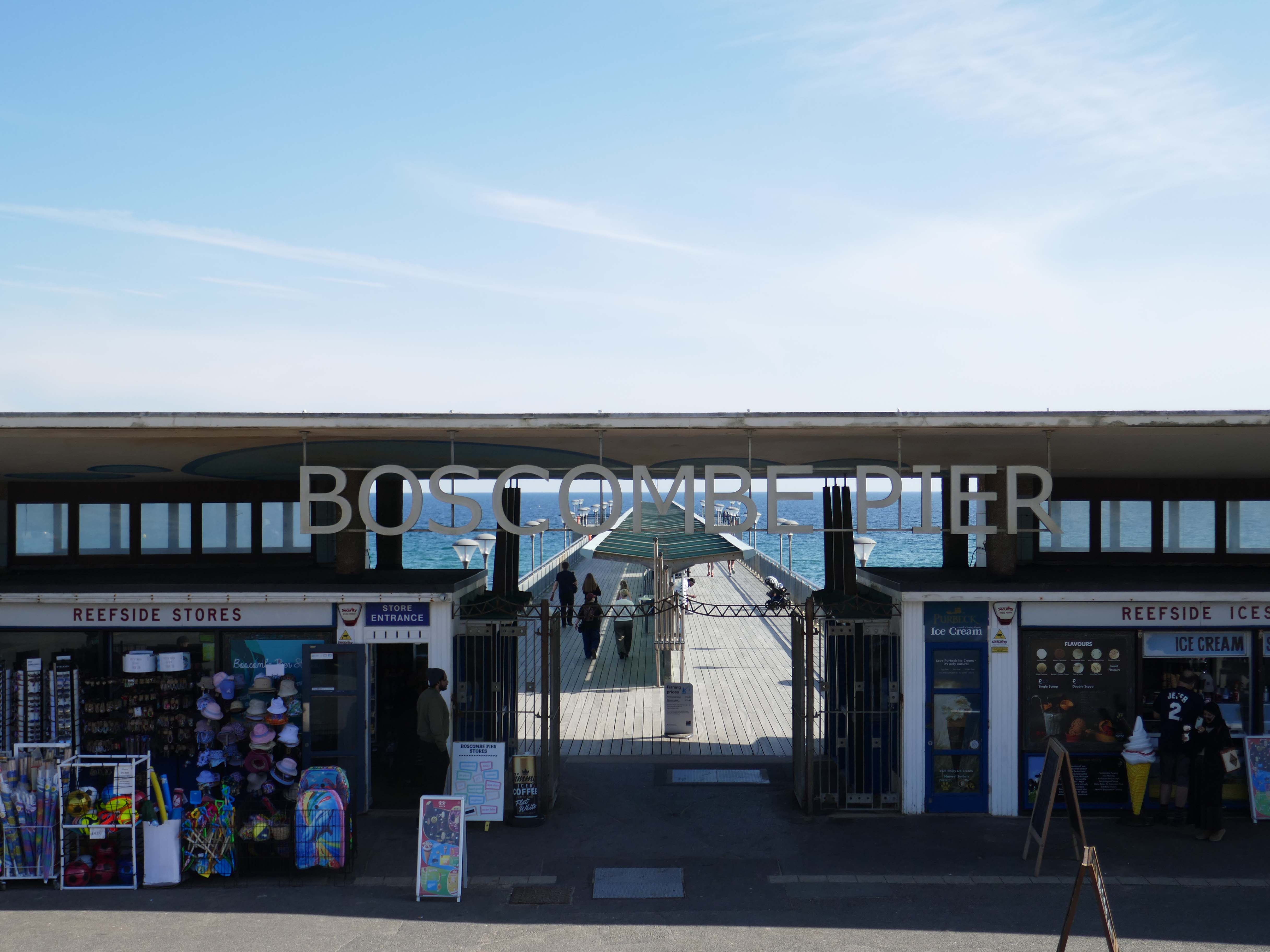
Inside the Grade II listed building at the pier’s entrance, you’ll find a café, takeaway and a beach shop. Outside you can have a go on the bouldering walls and the slackline.
There’s no charge to go on Boscombe Pier, there’s also a viewing platform at the end of the pier.
The resident, who does not wish to be named, was walking along the seafront from Southbourne to Boscombe Pier on Thursday, March 17, at around 10.30am when he noticed strange objects in the sky.
He told the Echo:
“I noticed in the sky three bright, what looked like orange, lights approaching me head on from the west to the east quite low down. I thought they might be aircraft landing lights which seemed strange as it was blue sky and a sunny day.