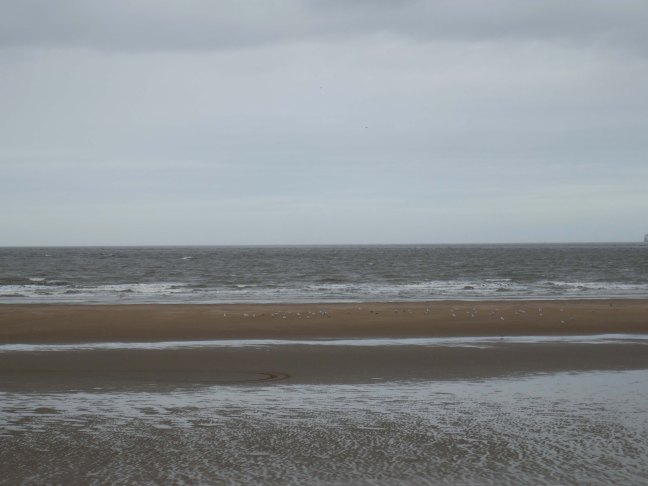
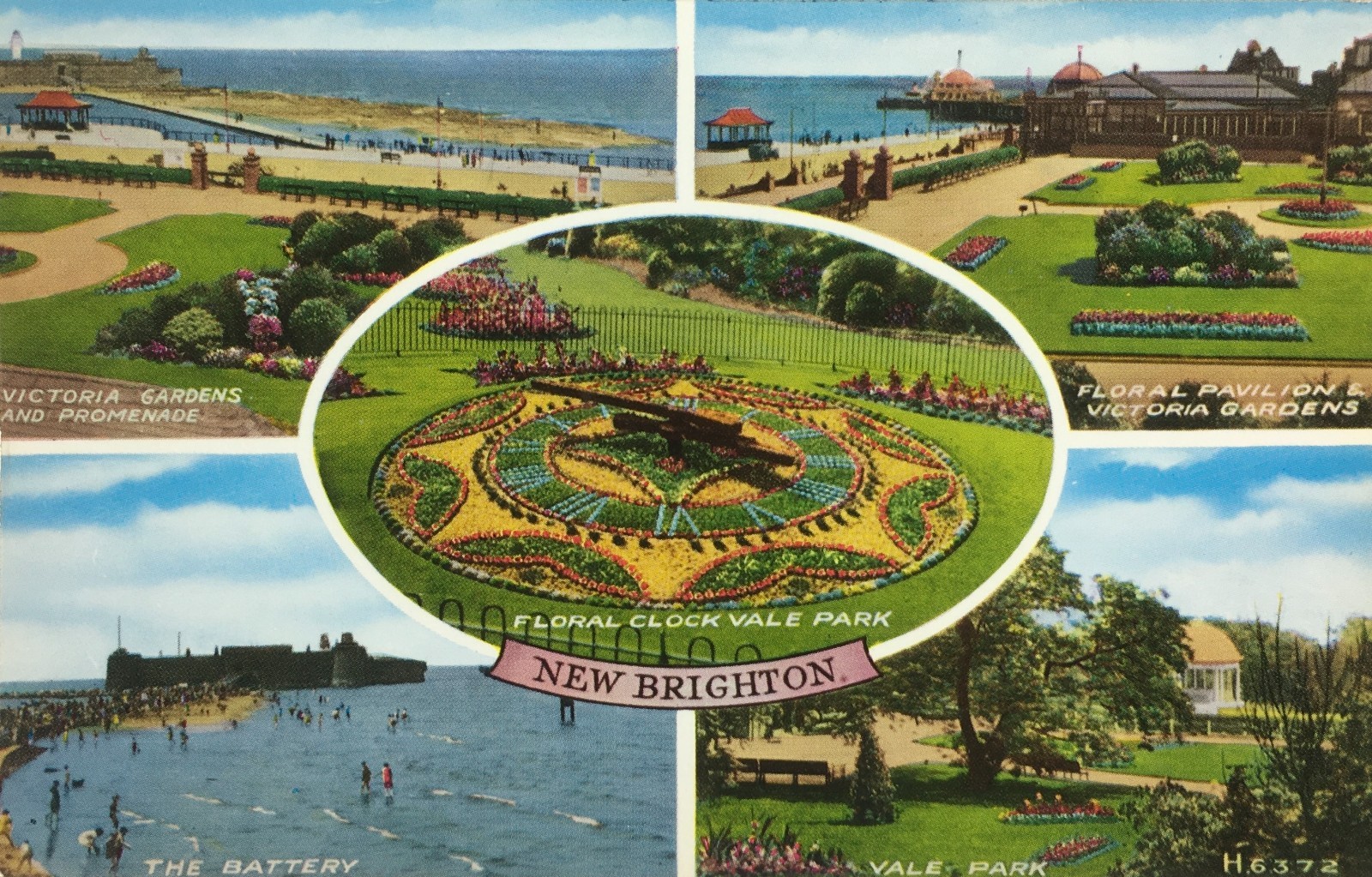
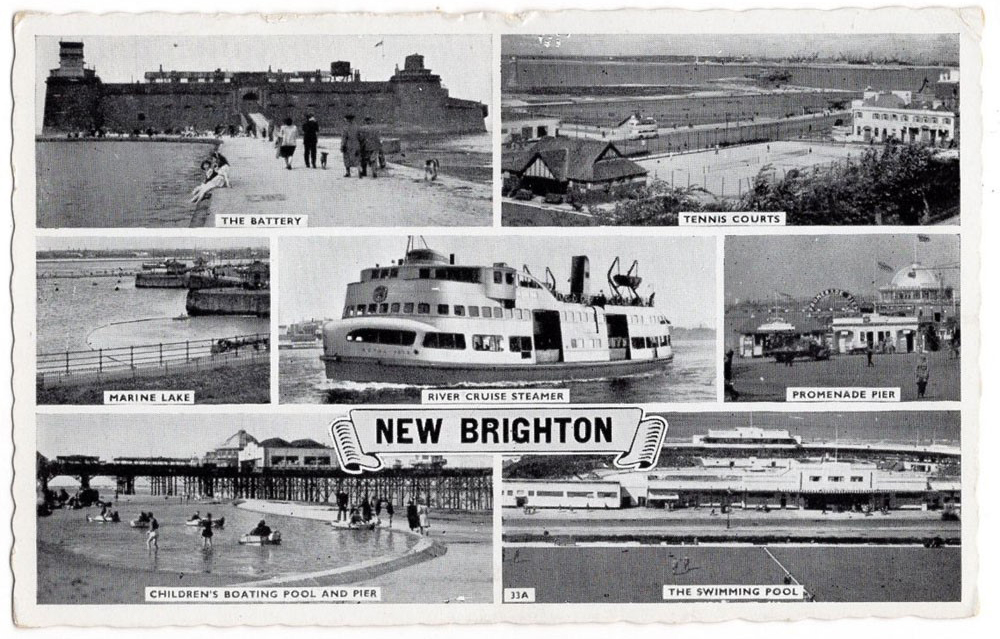
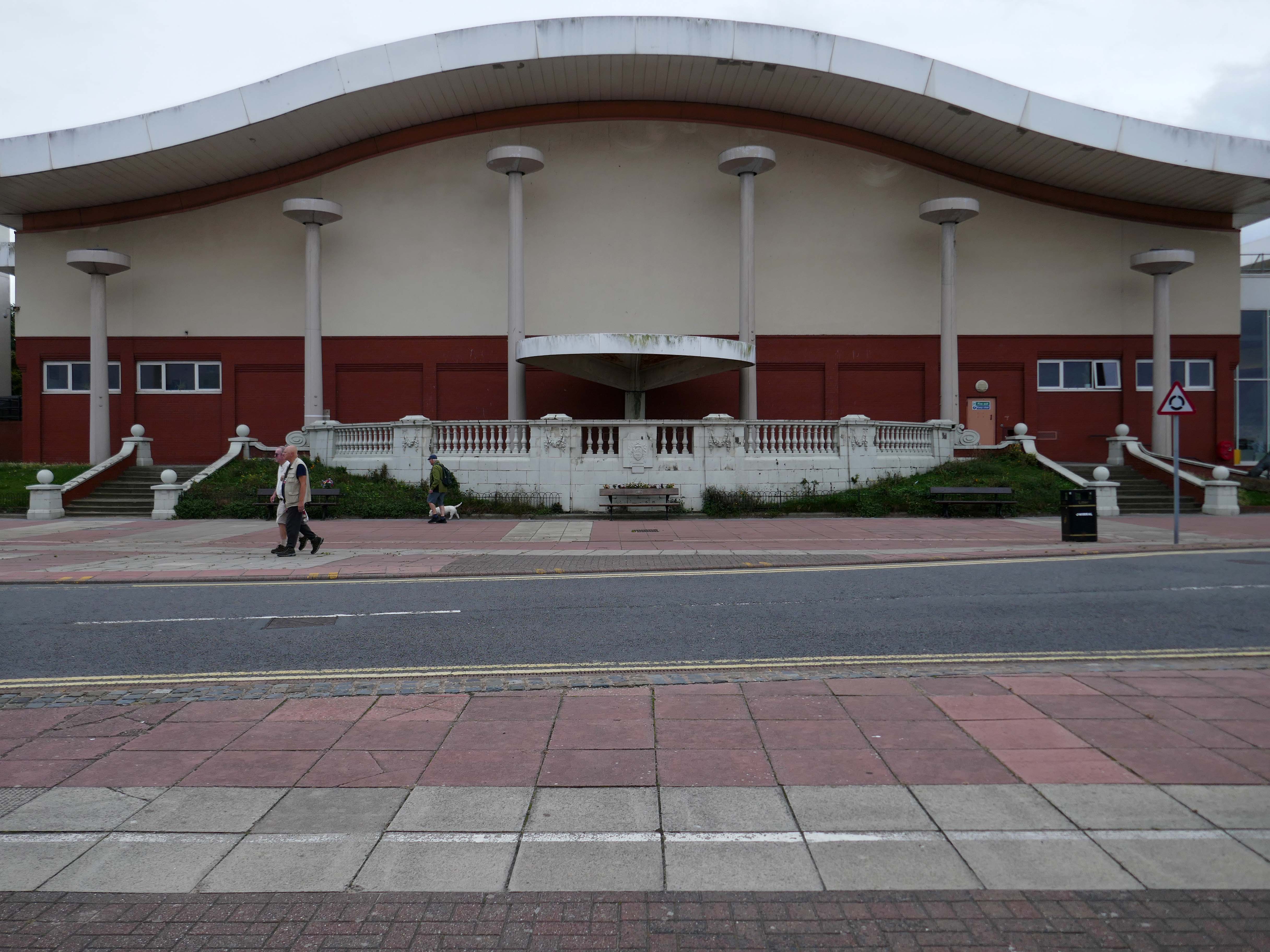
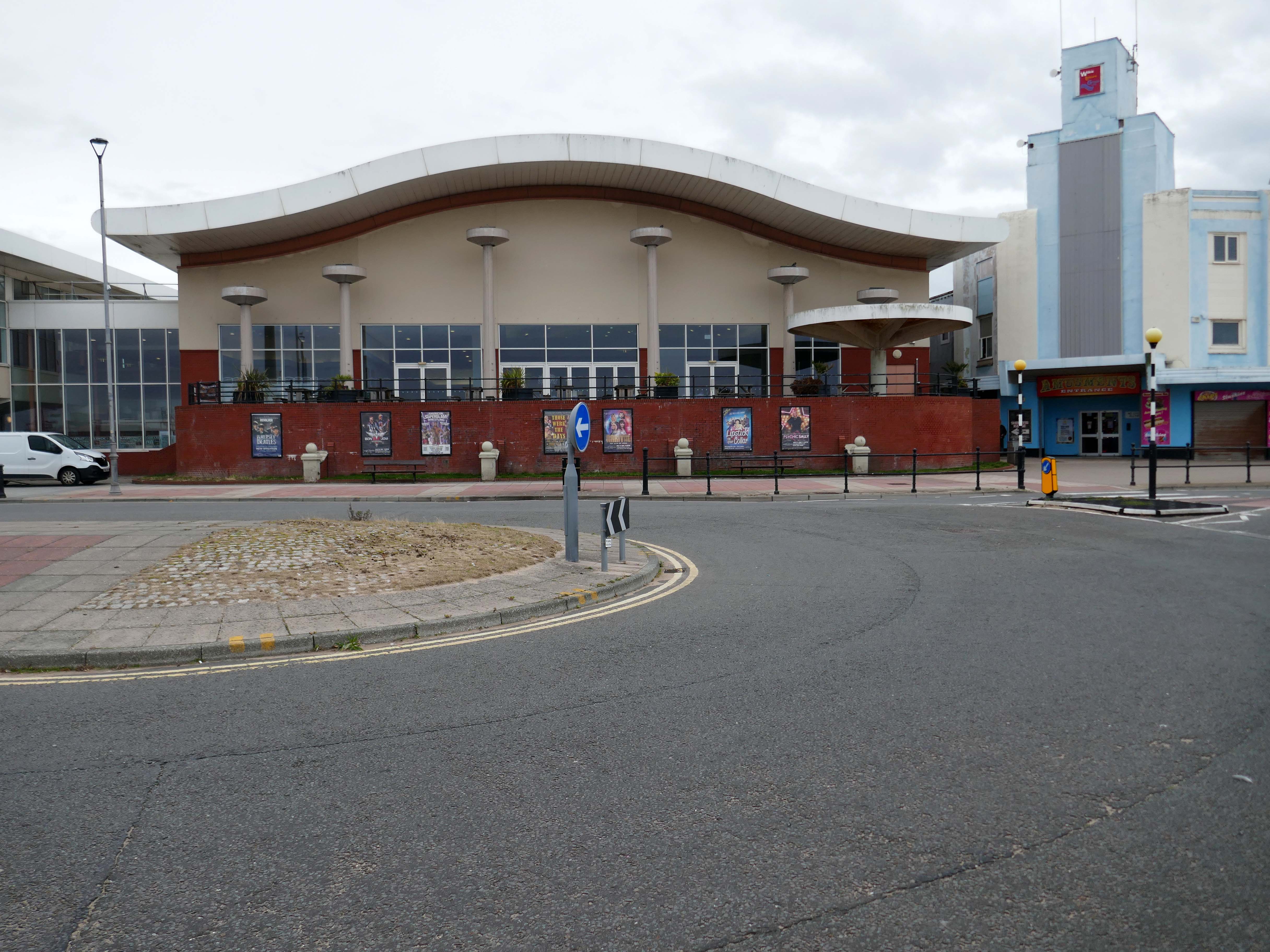
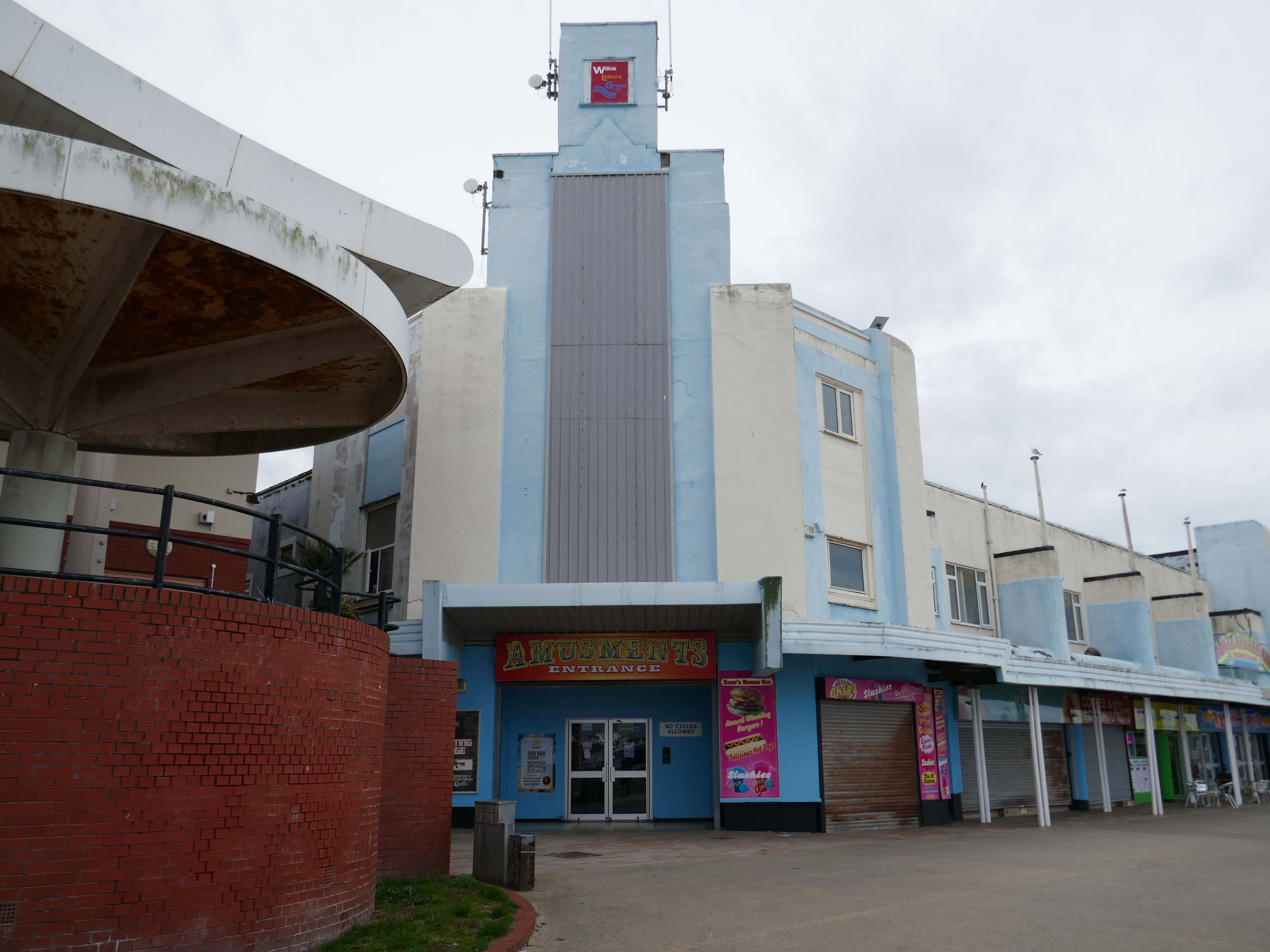
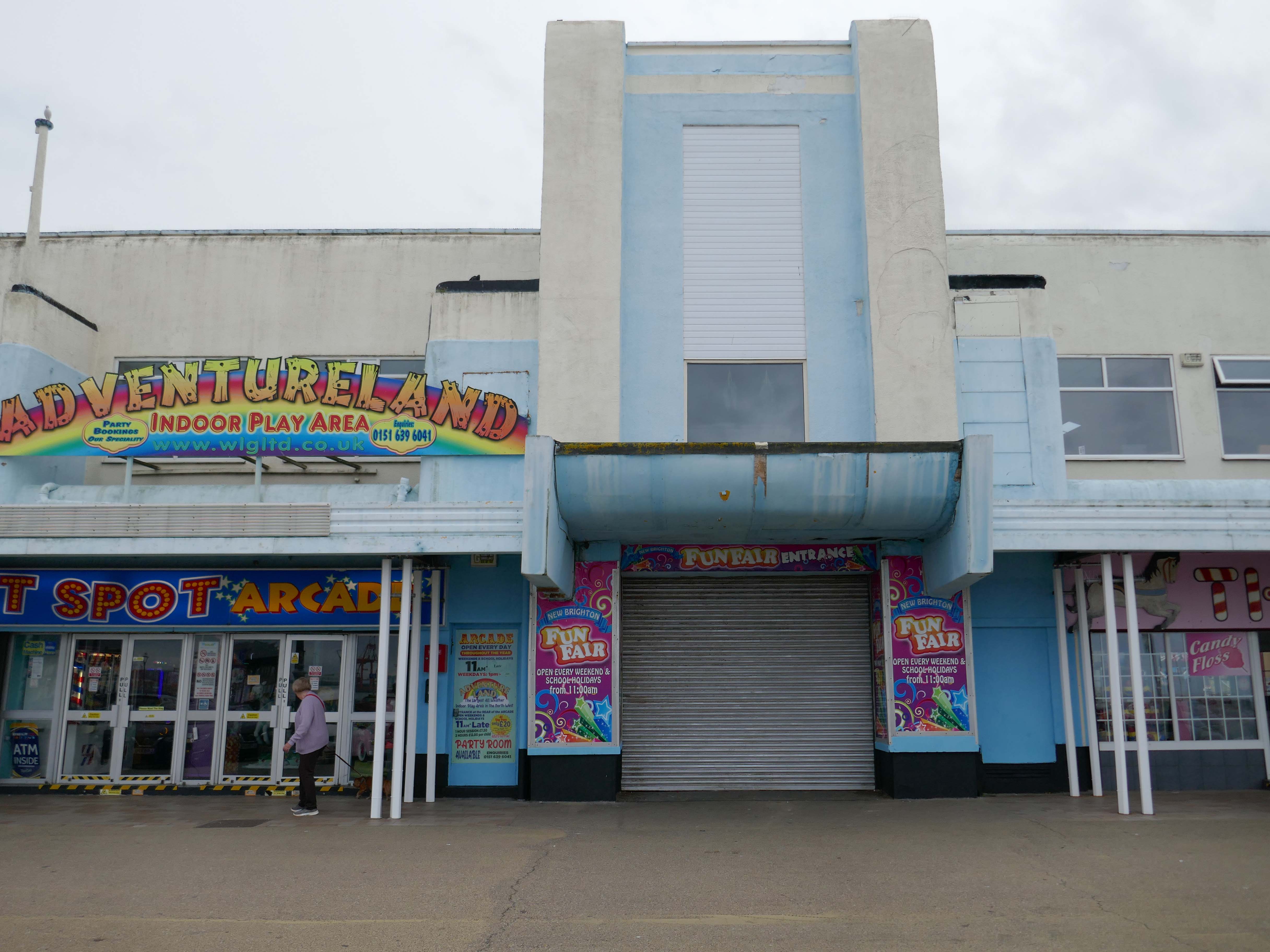
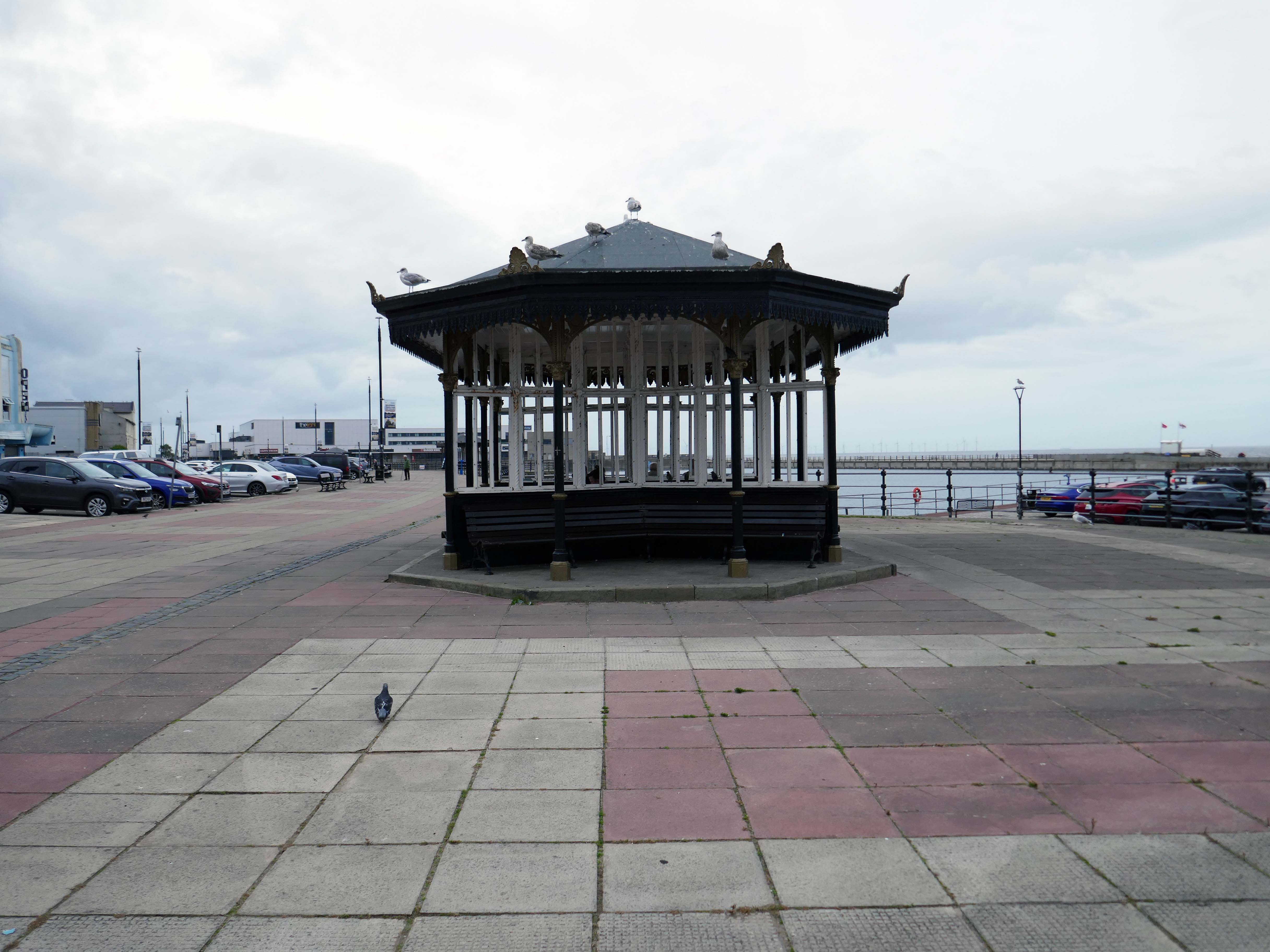
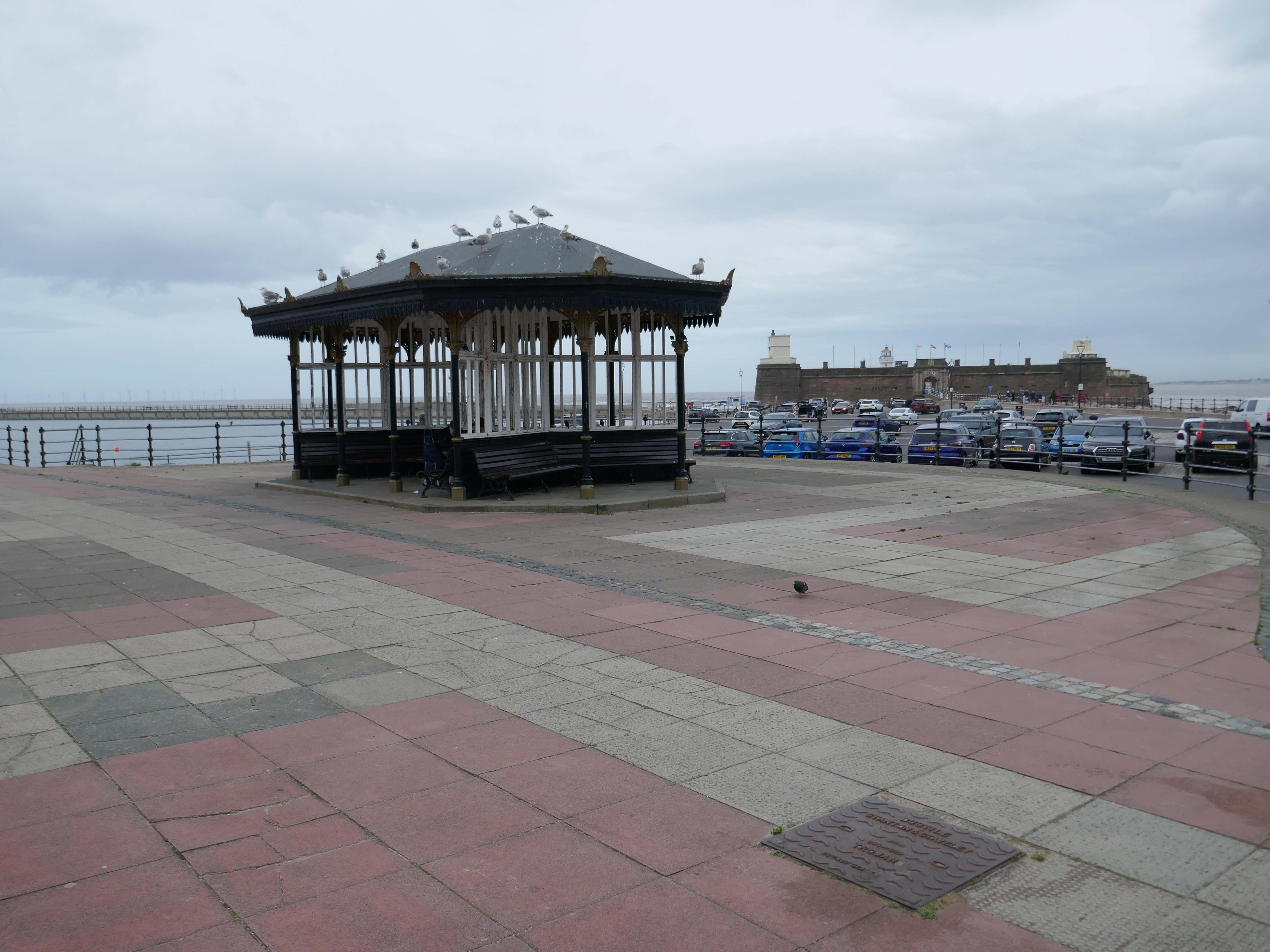
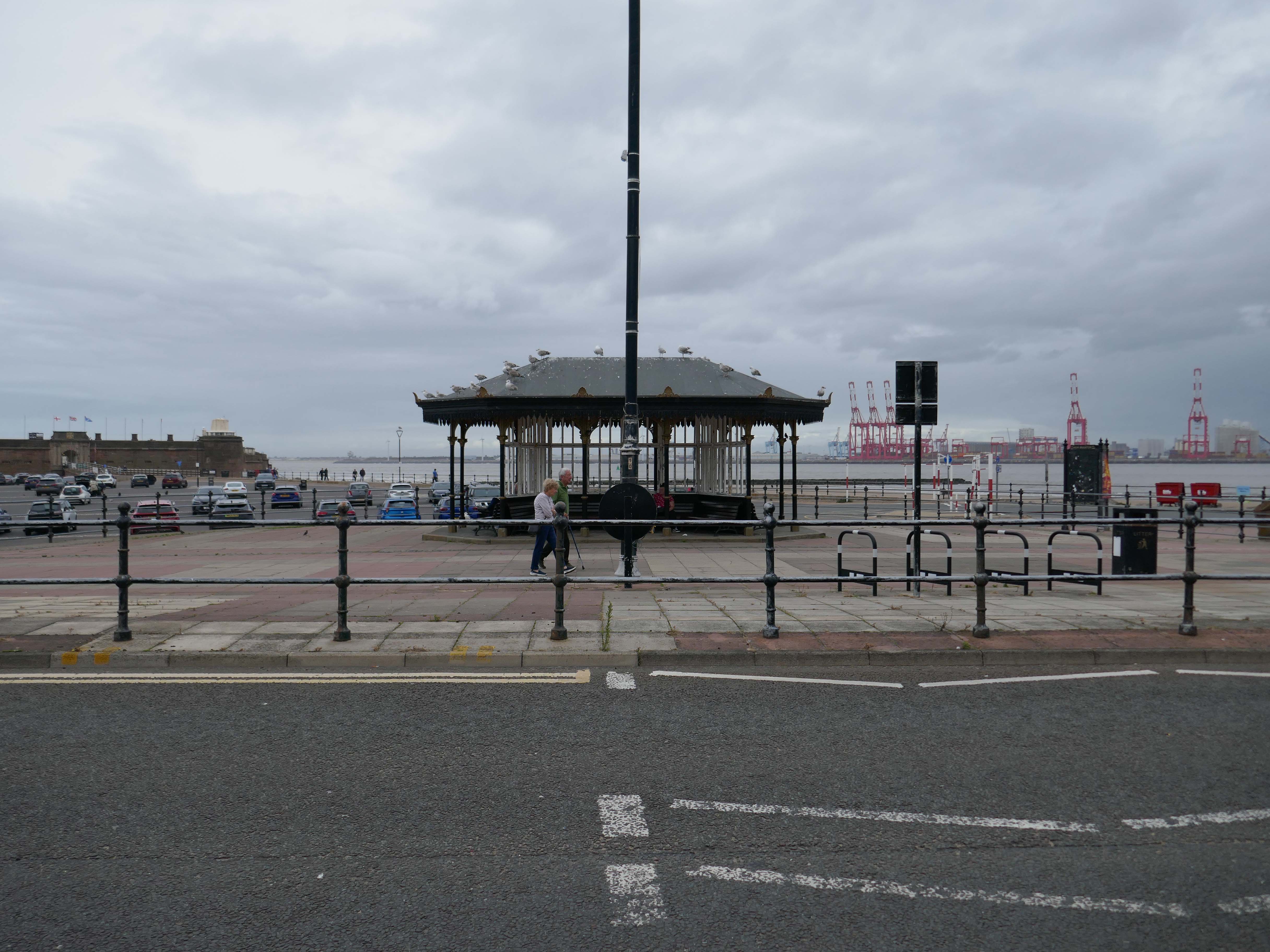
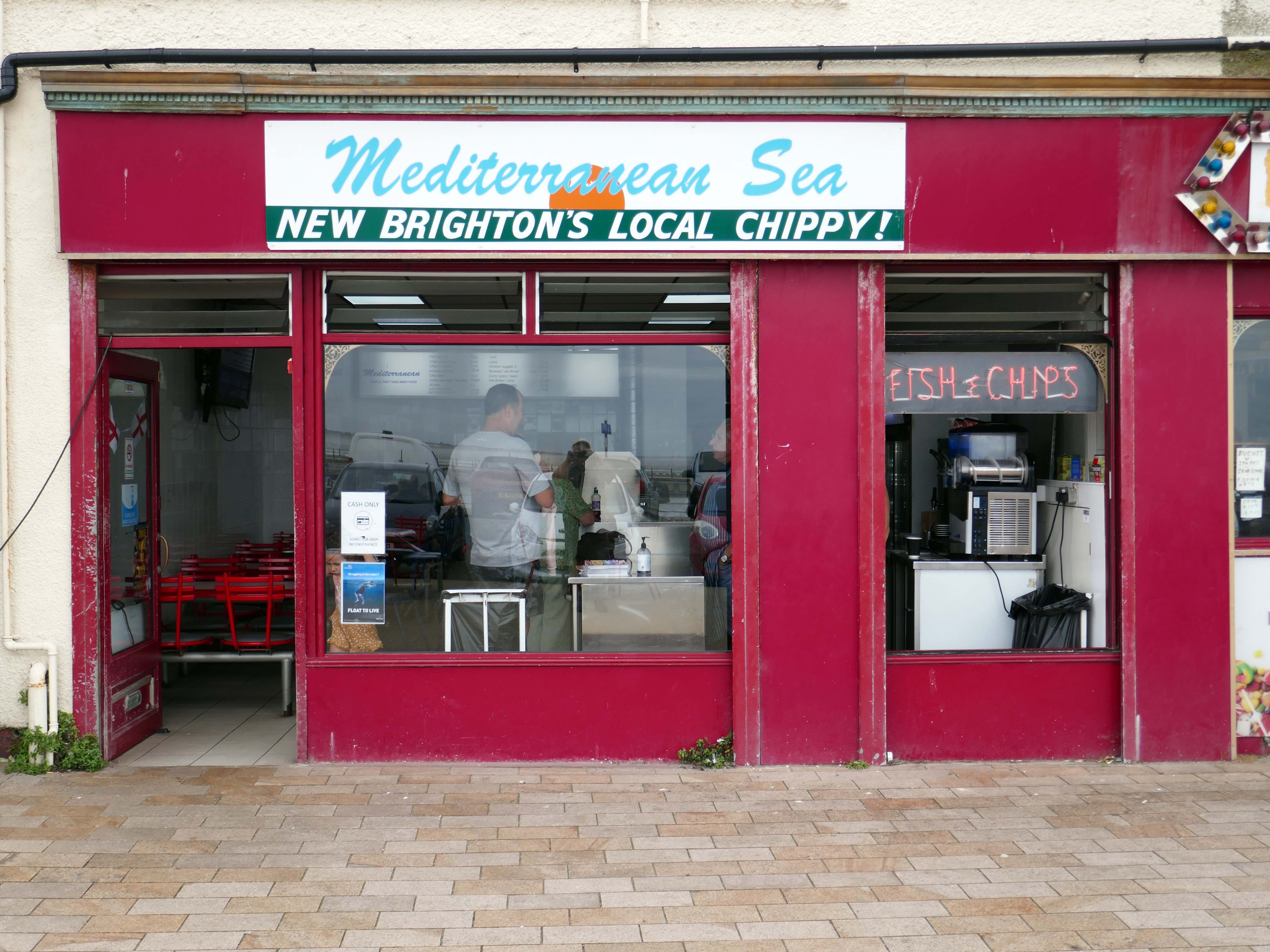
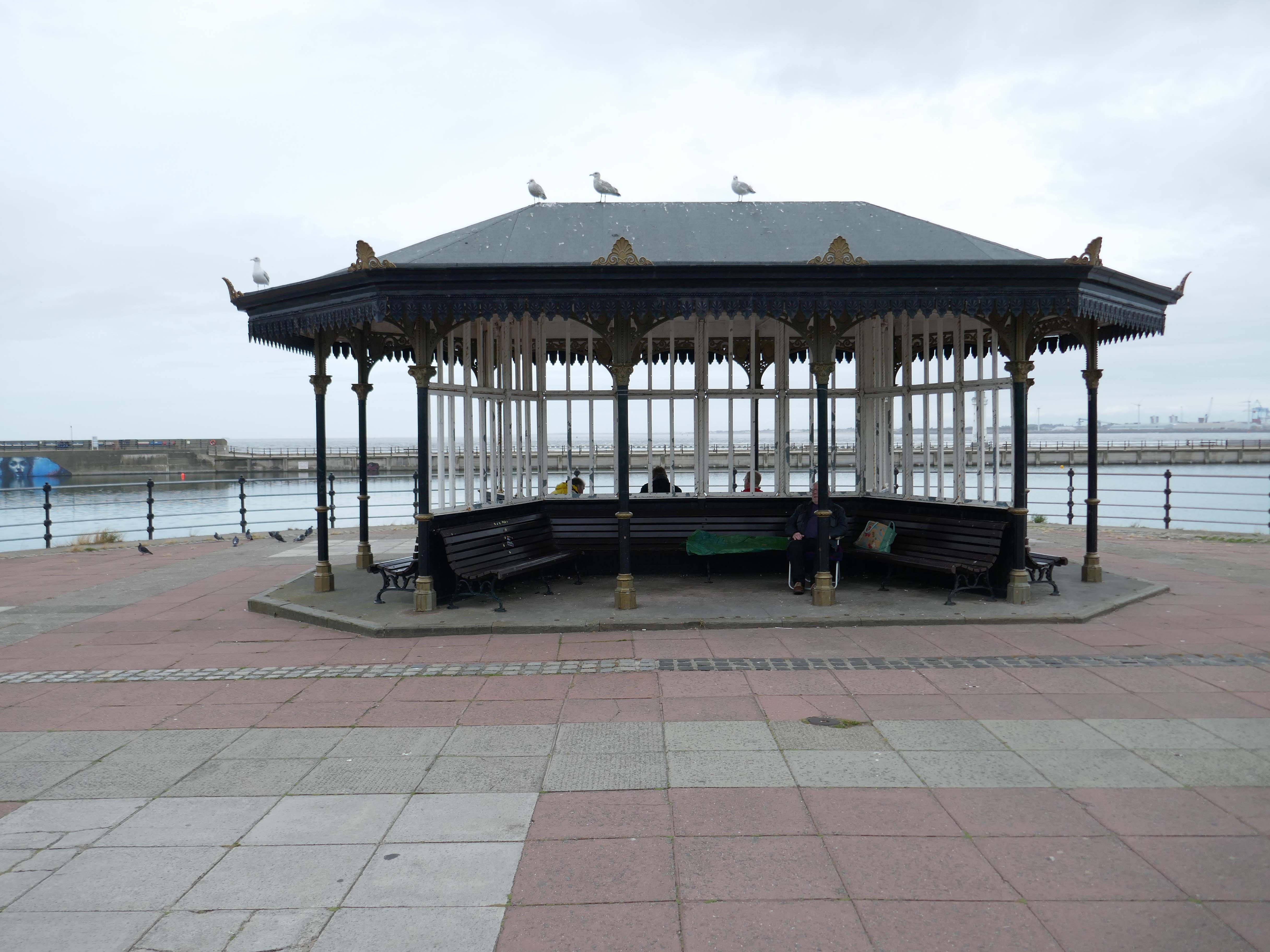
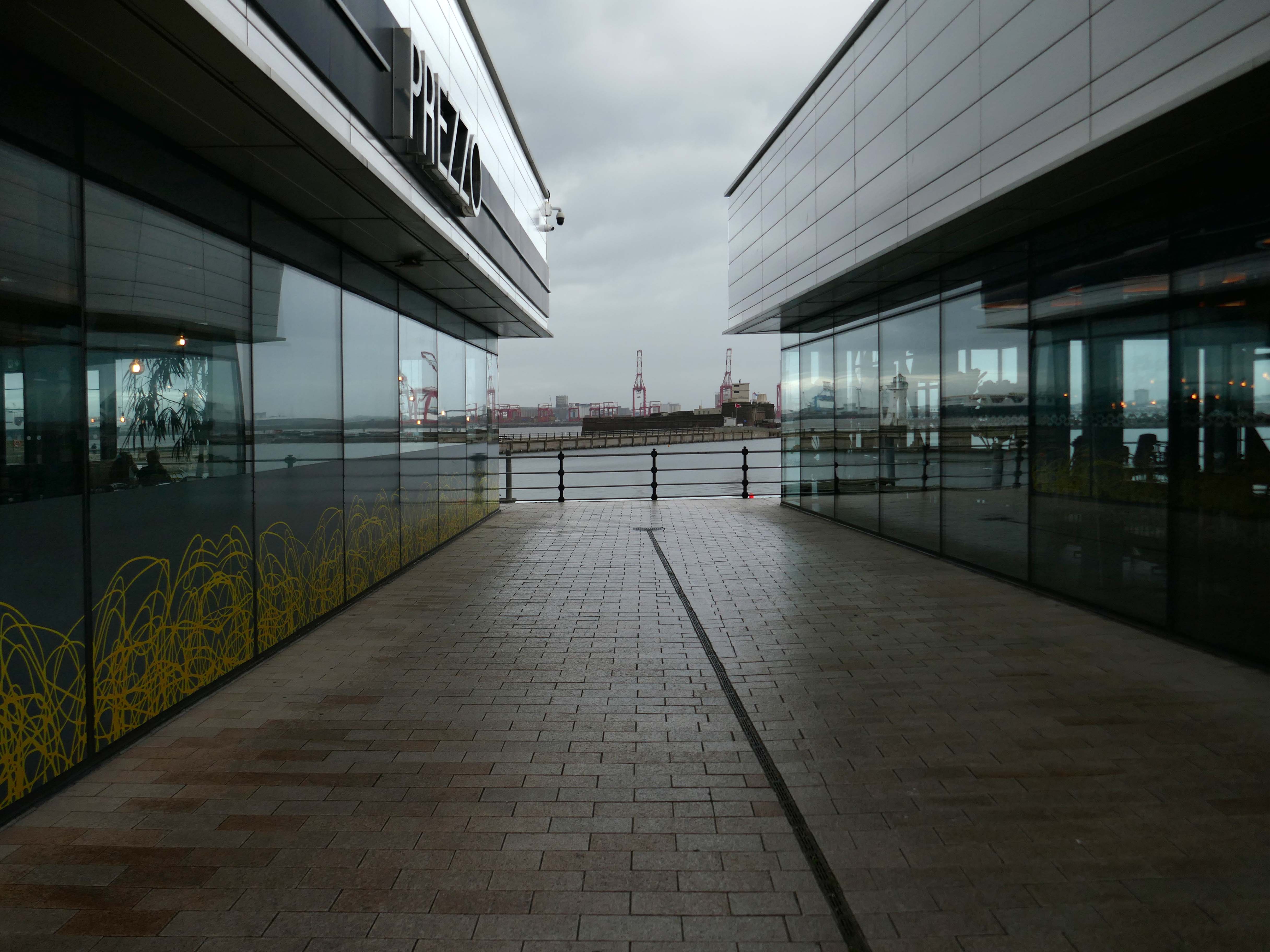
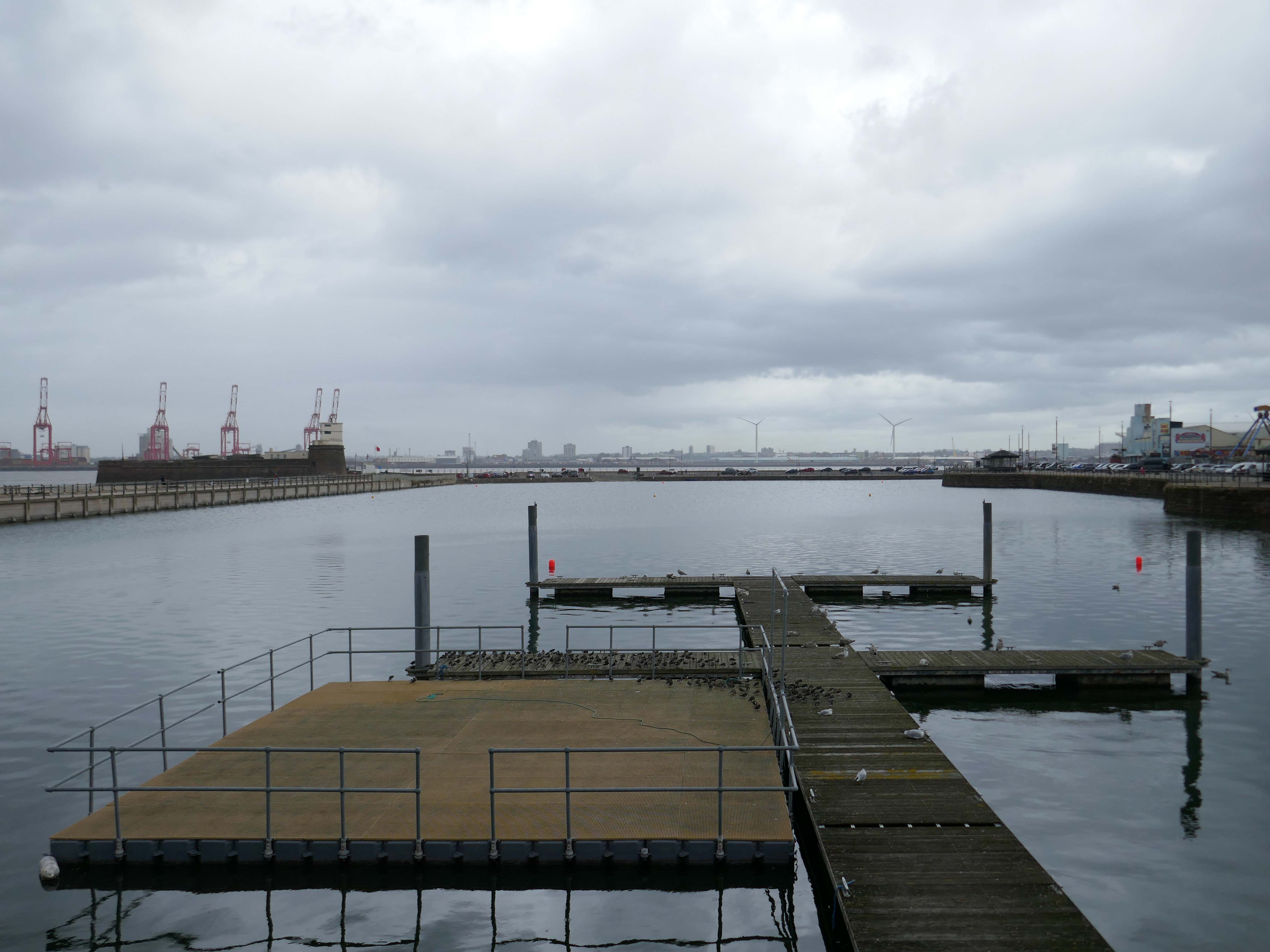
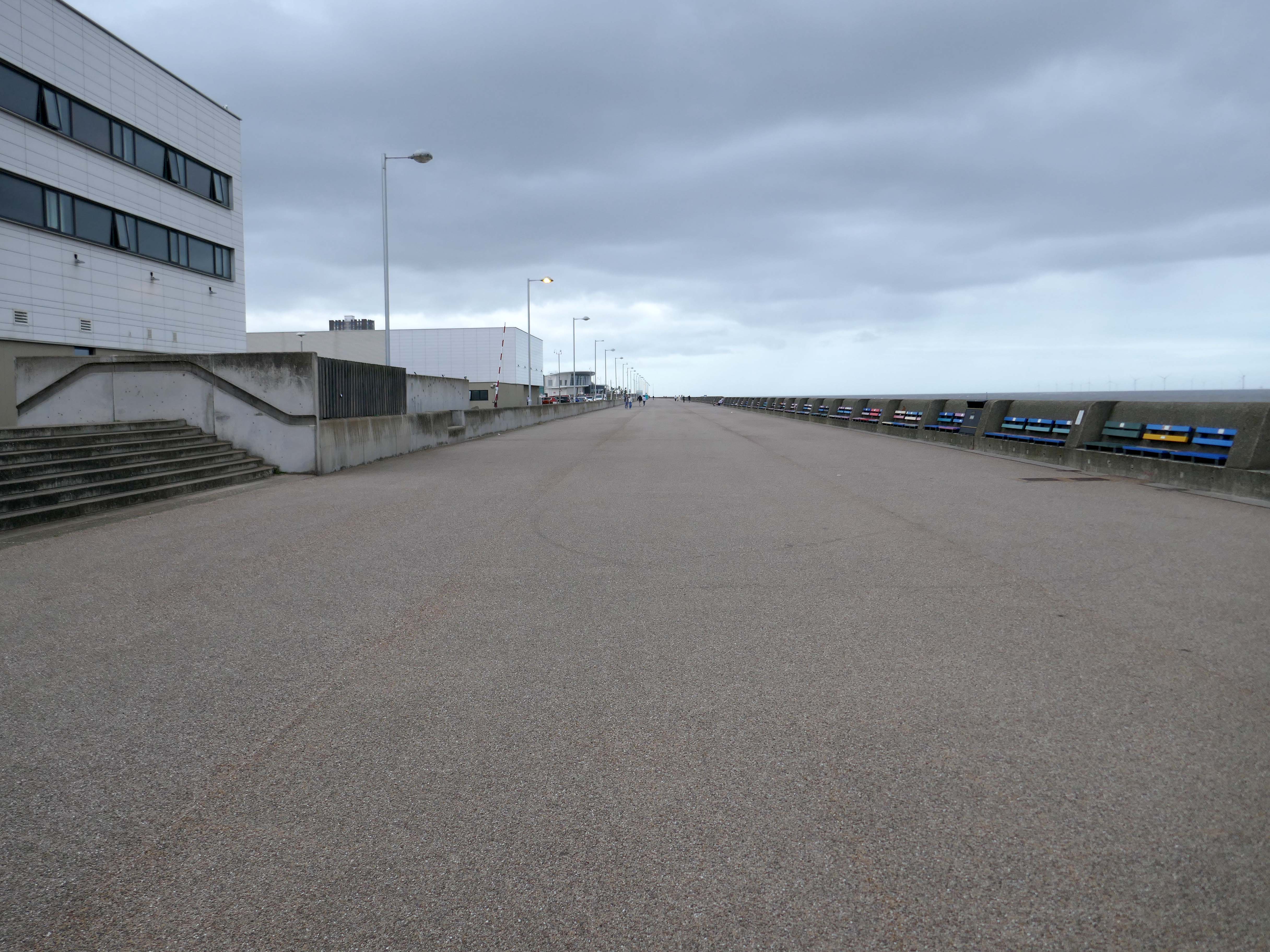
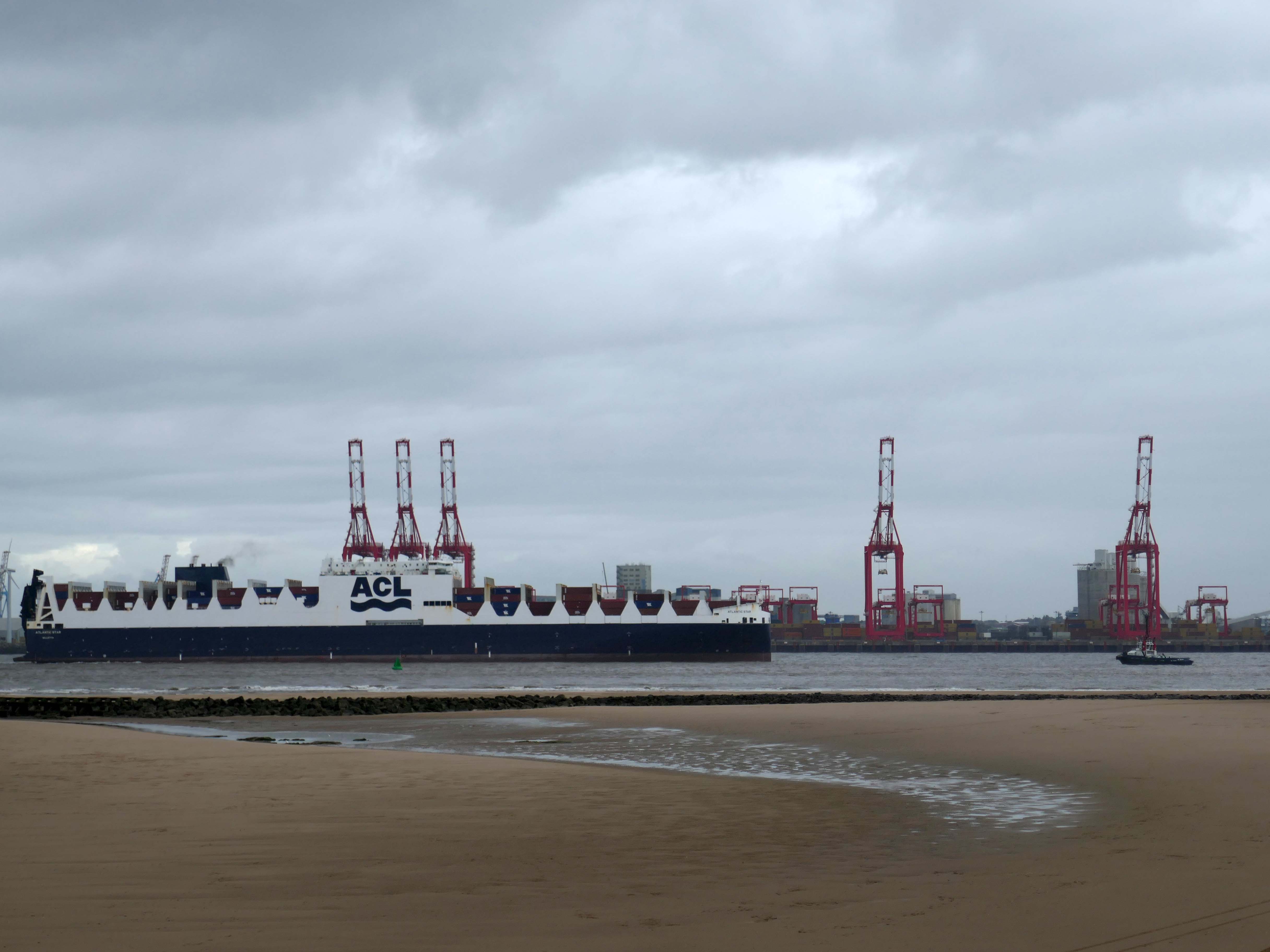
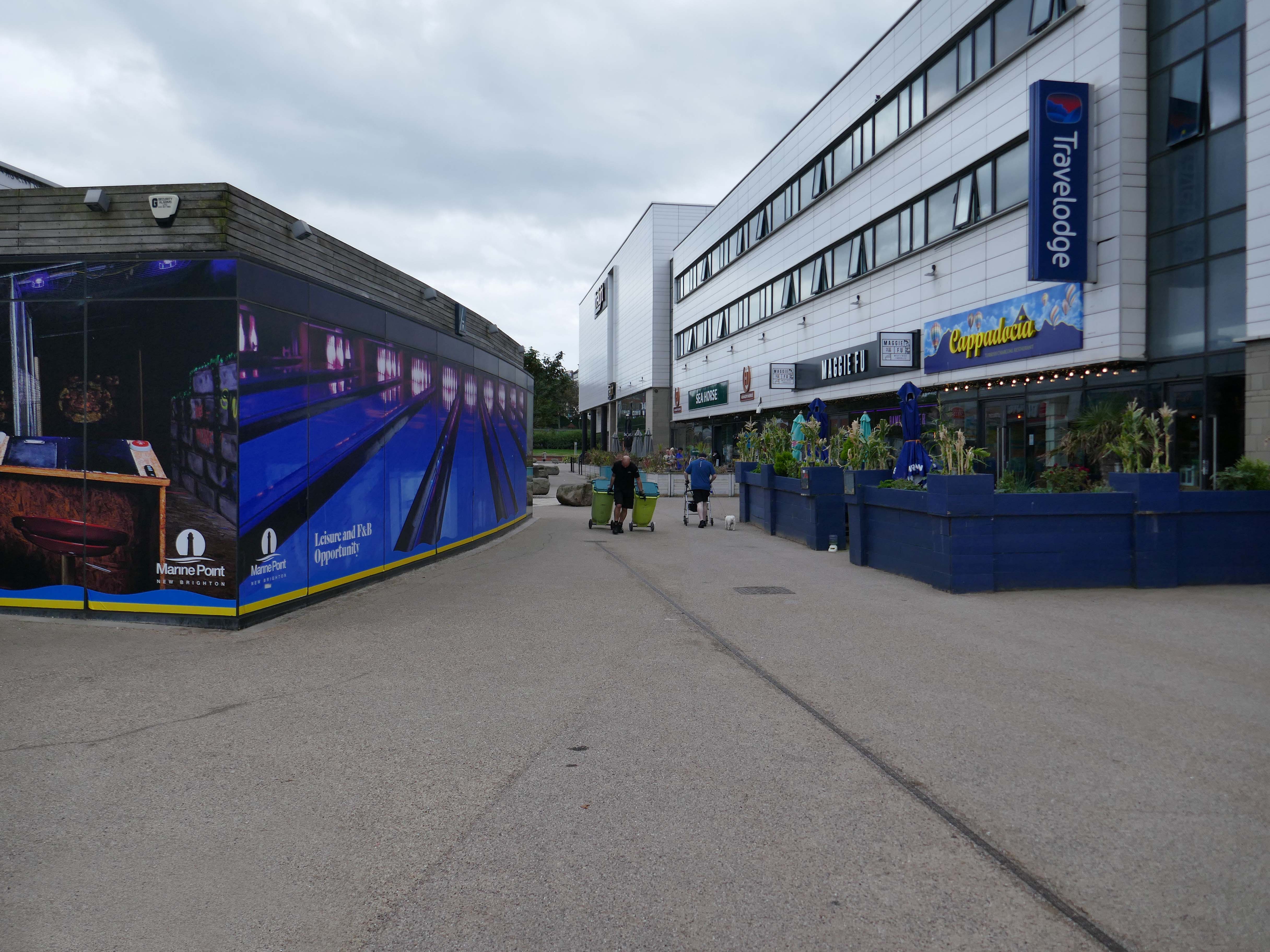
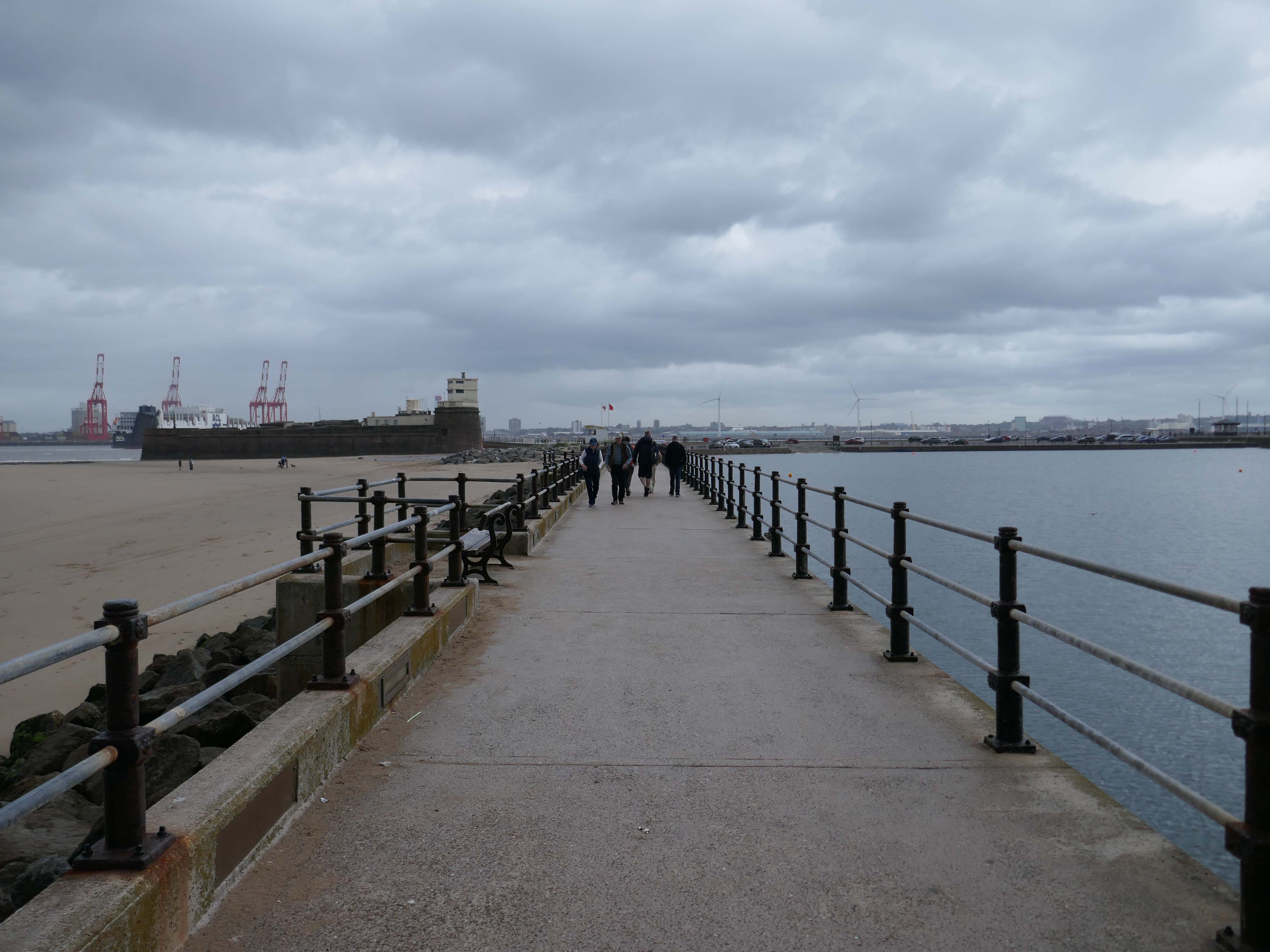
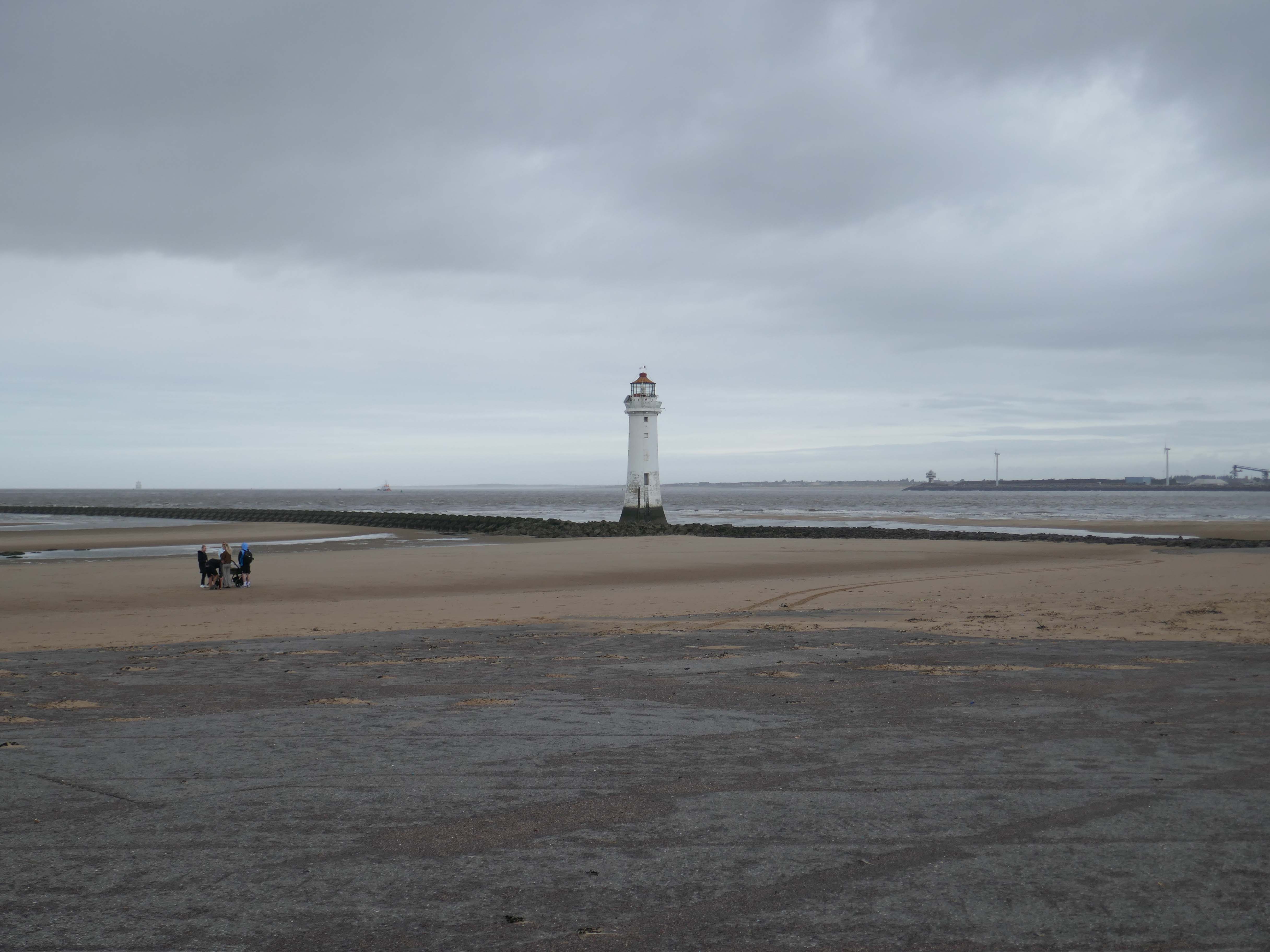
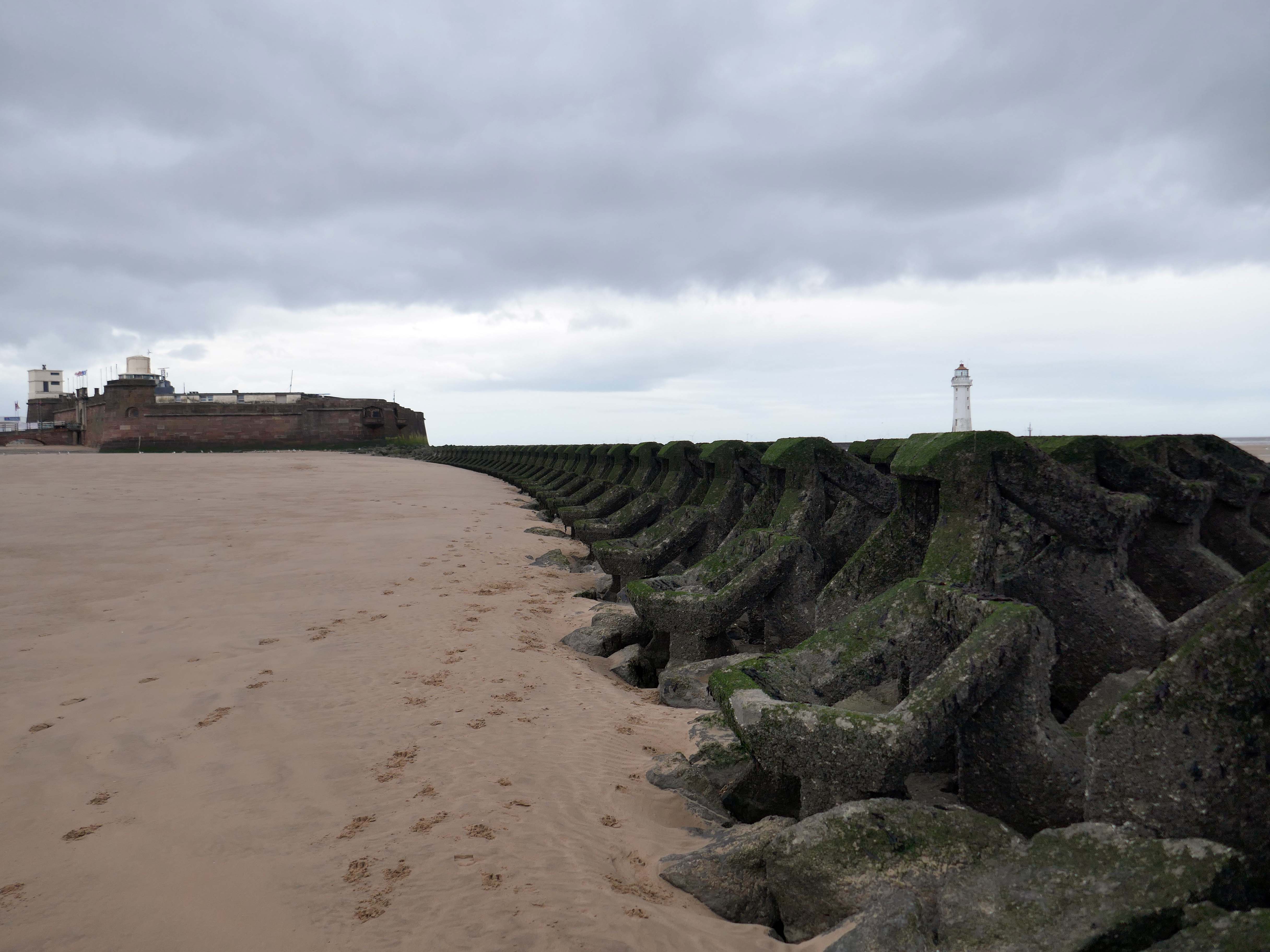
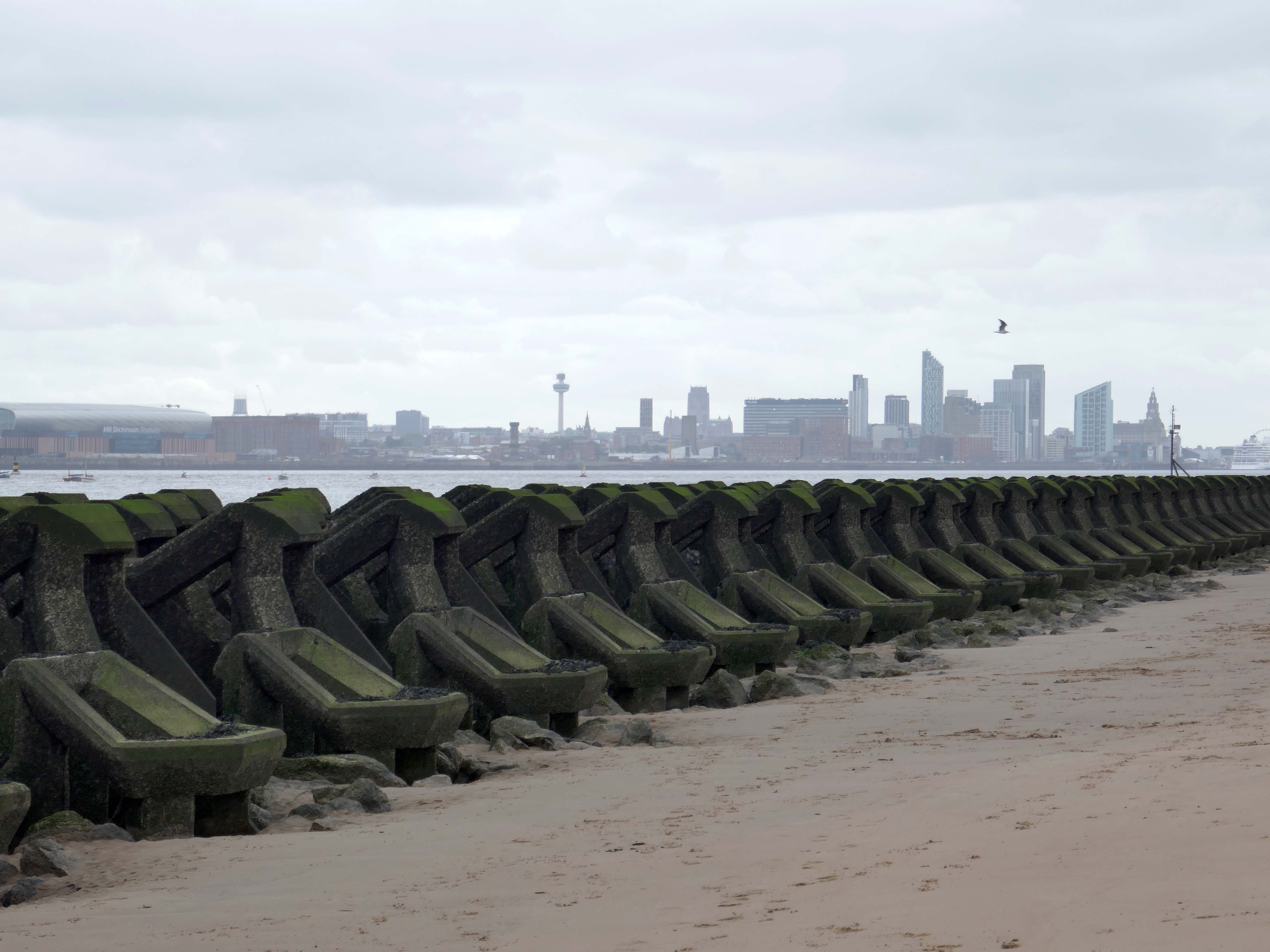
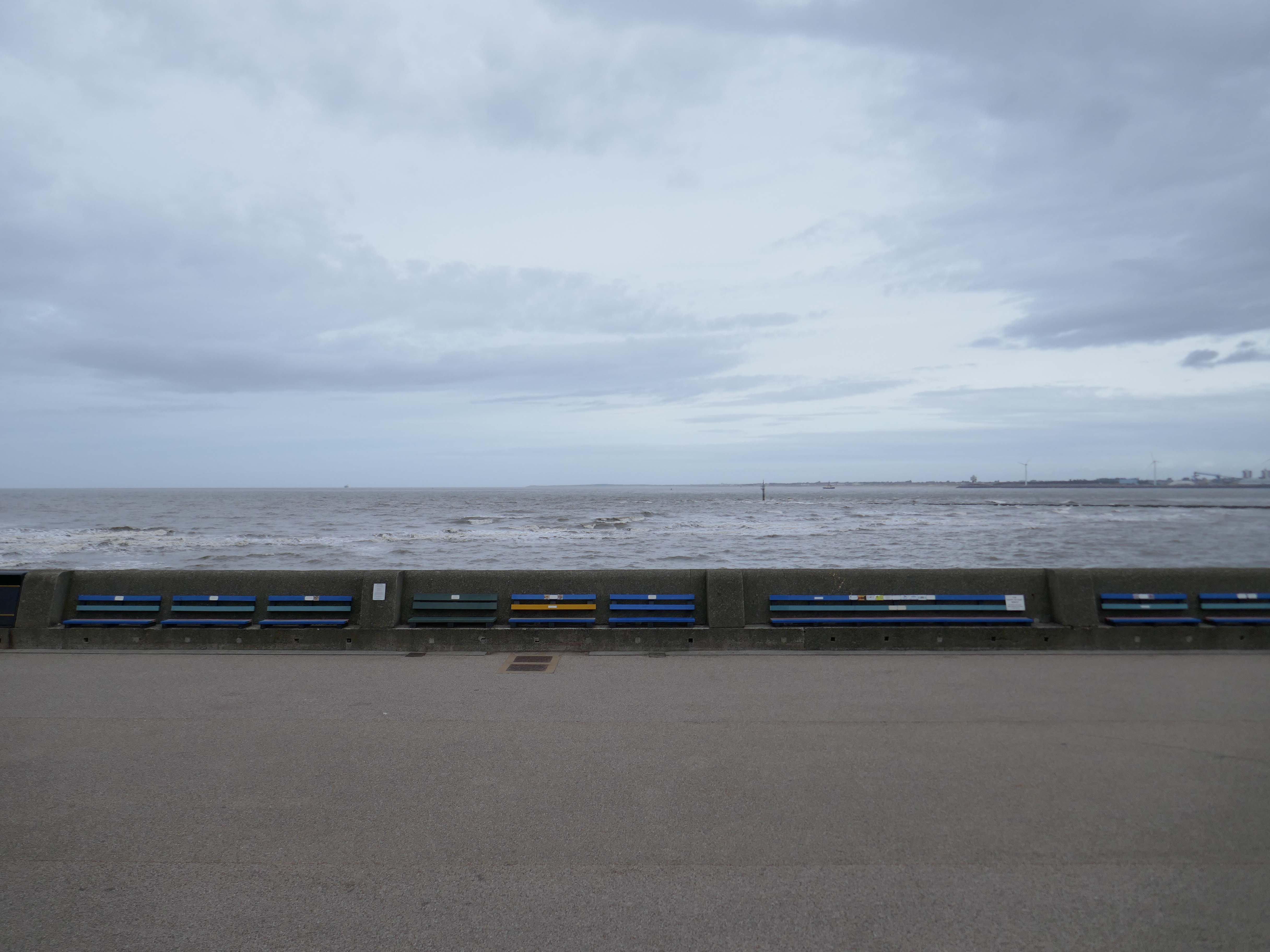
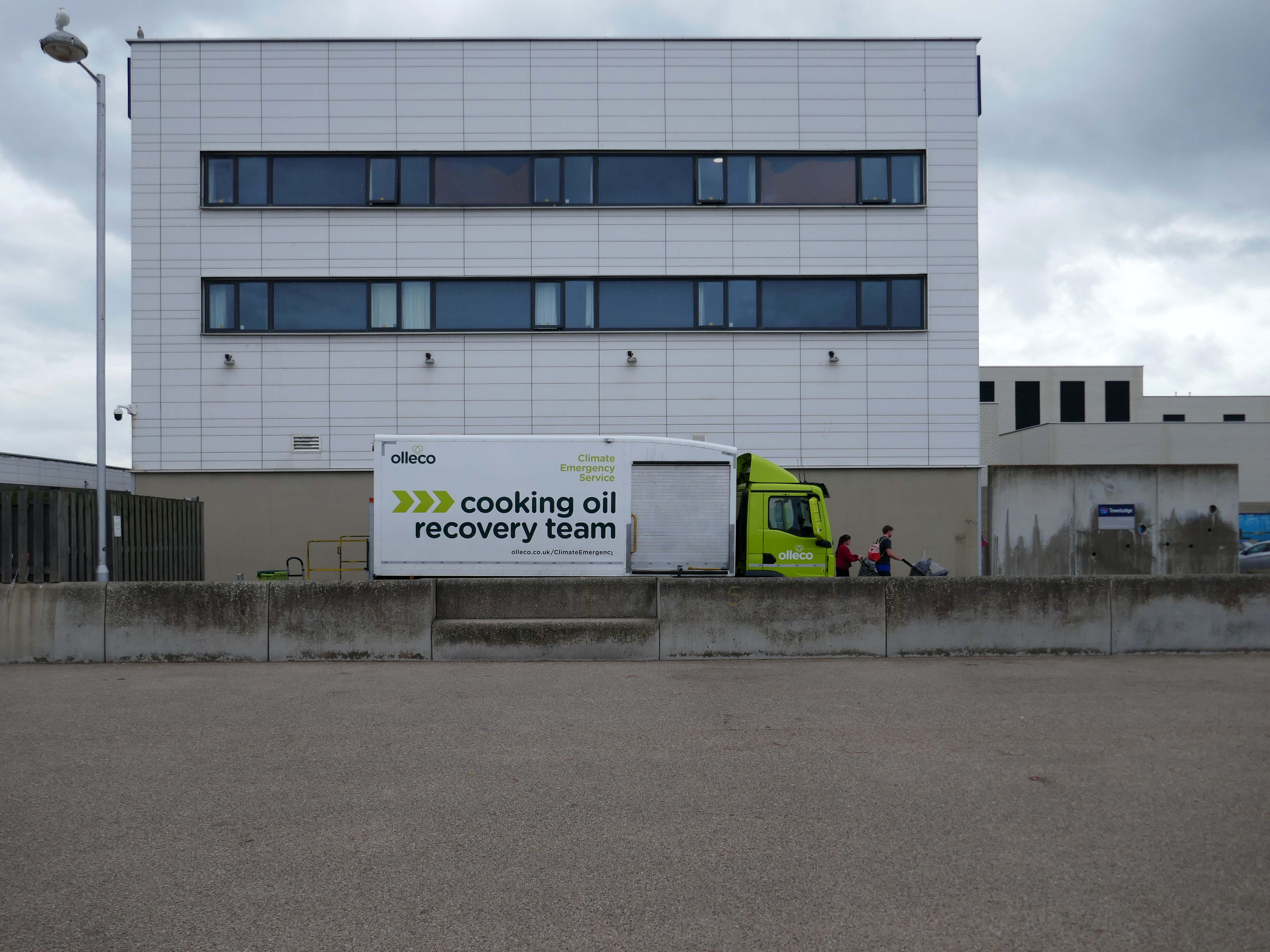
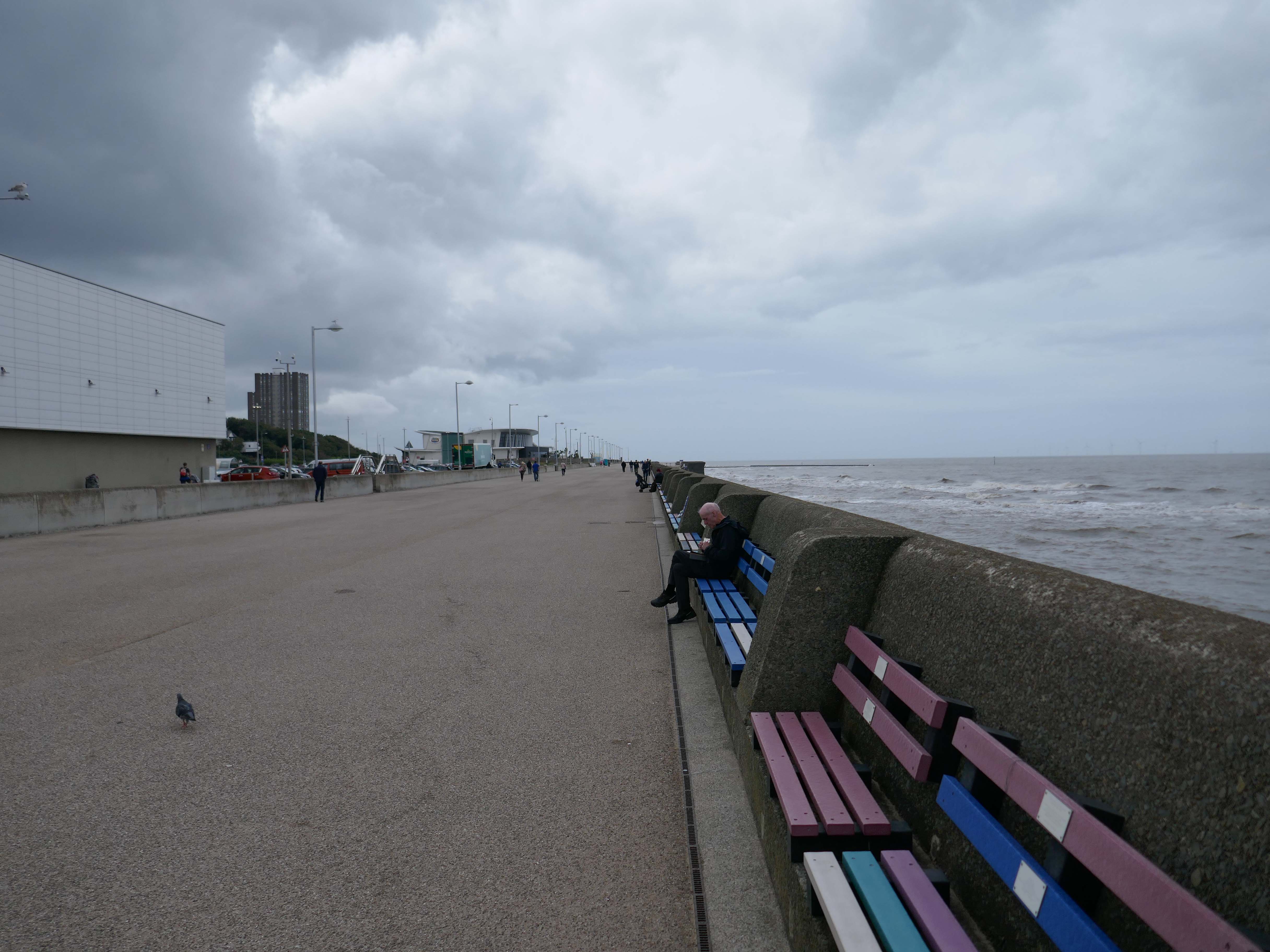
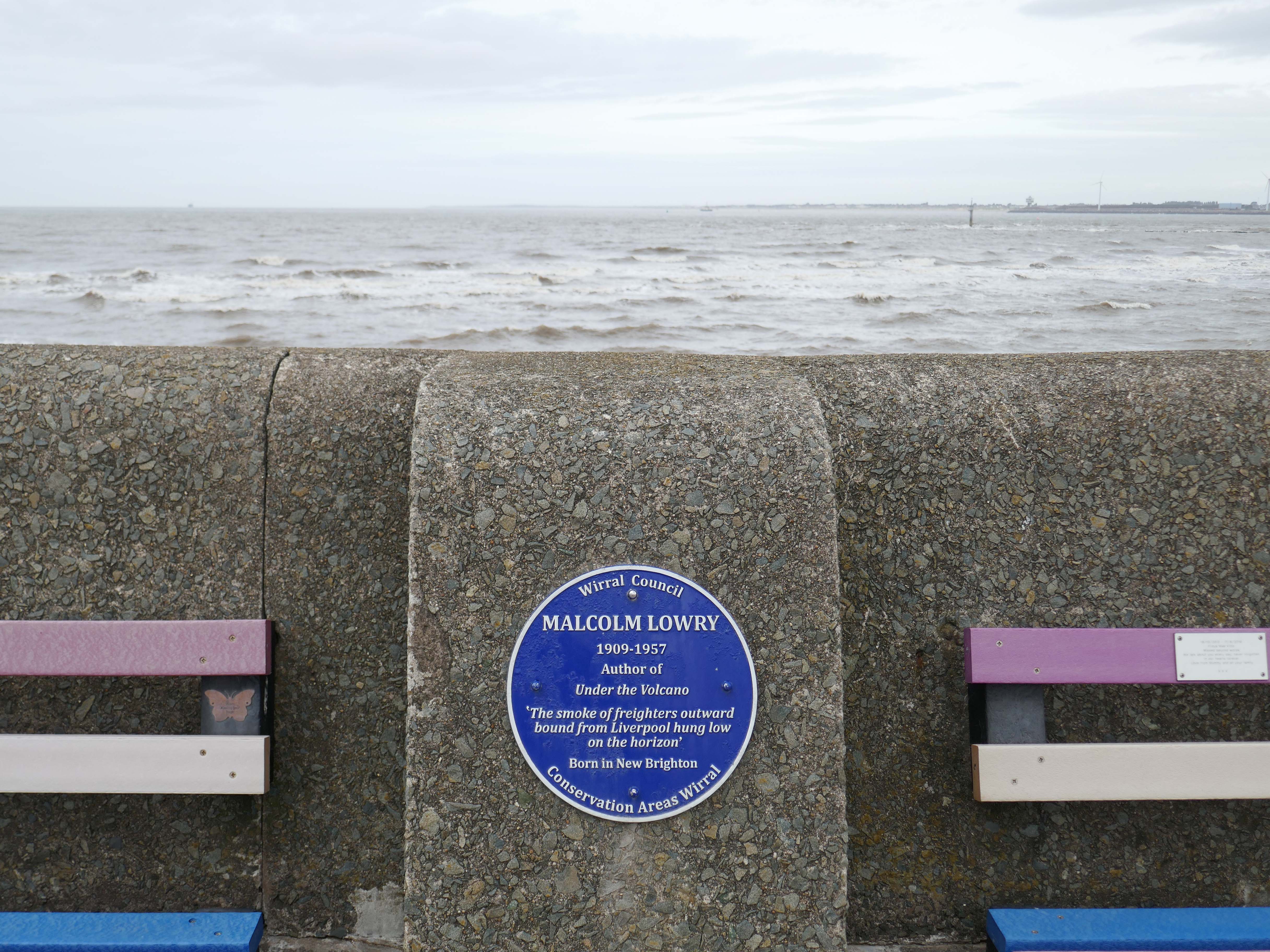
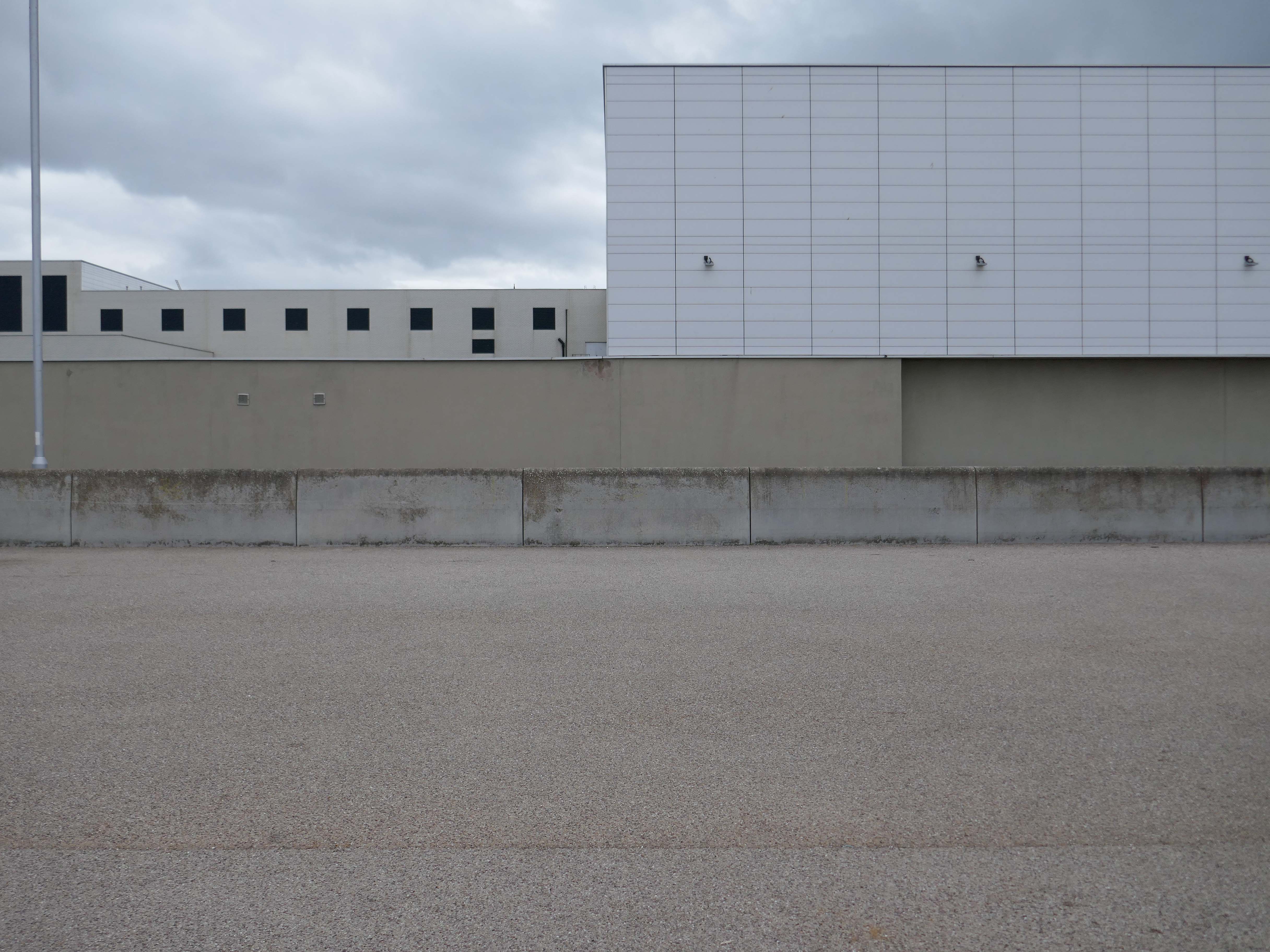
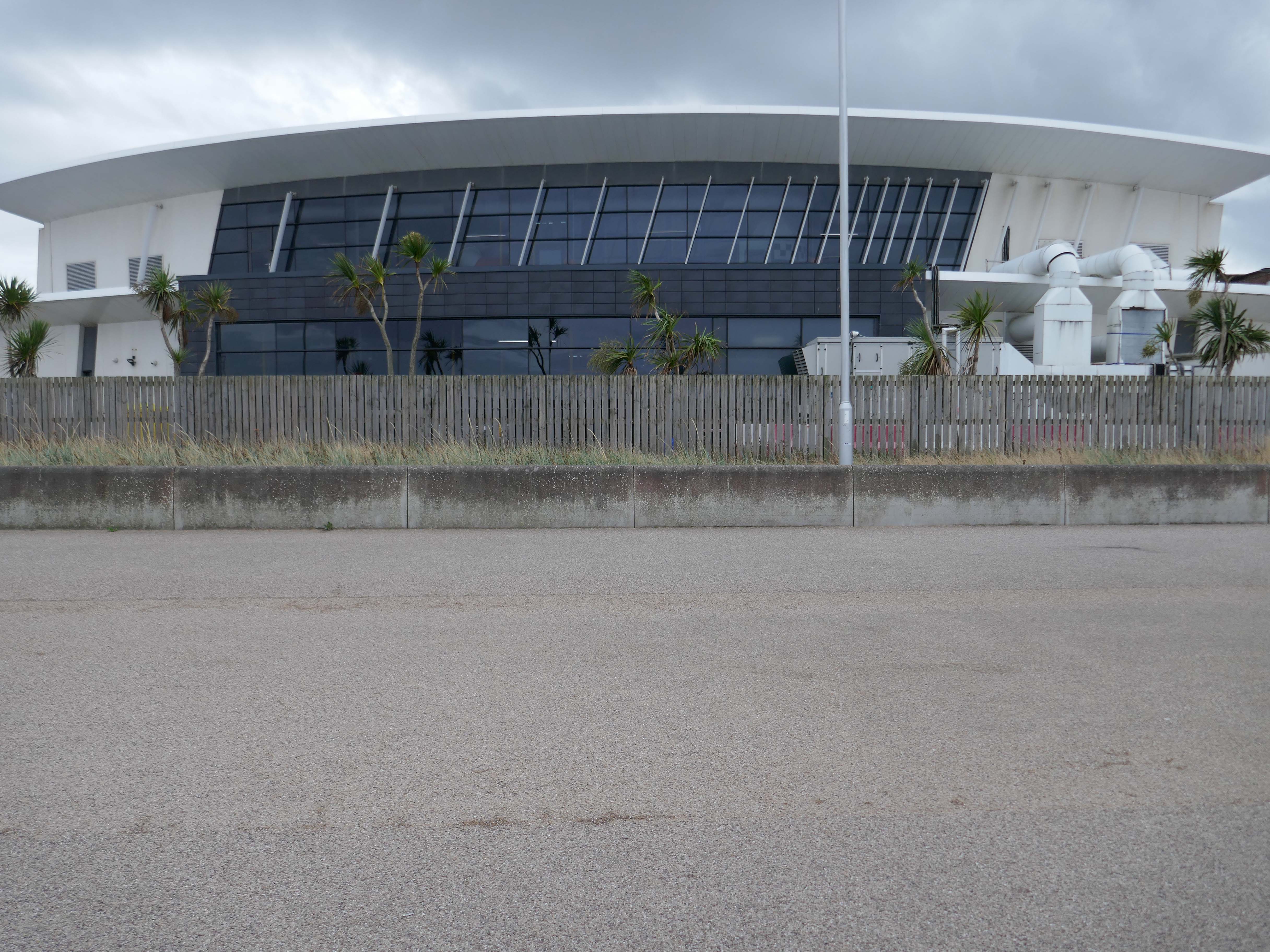
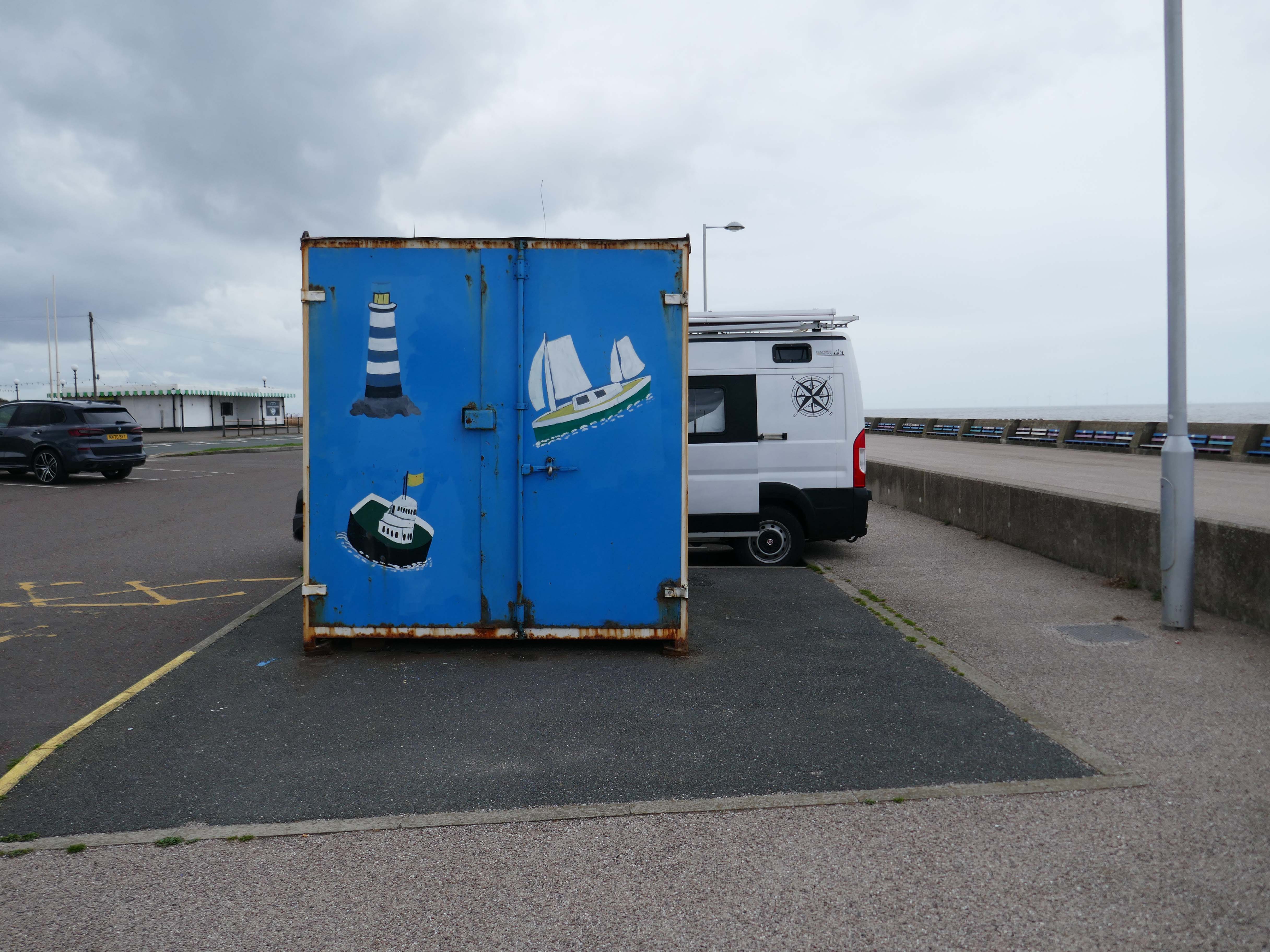
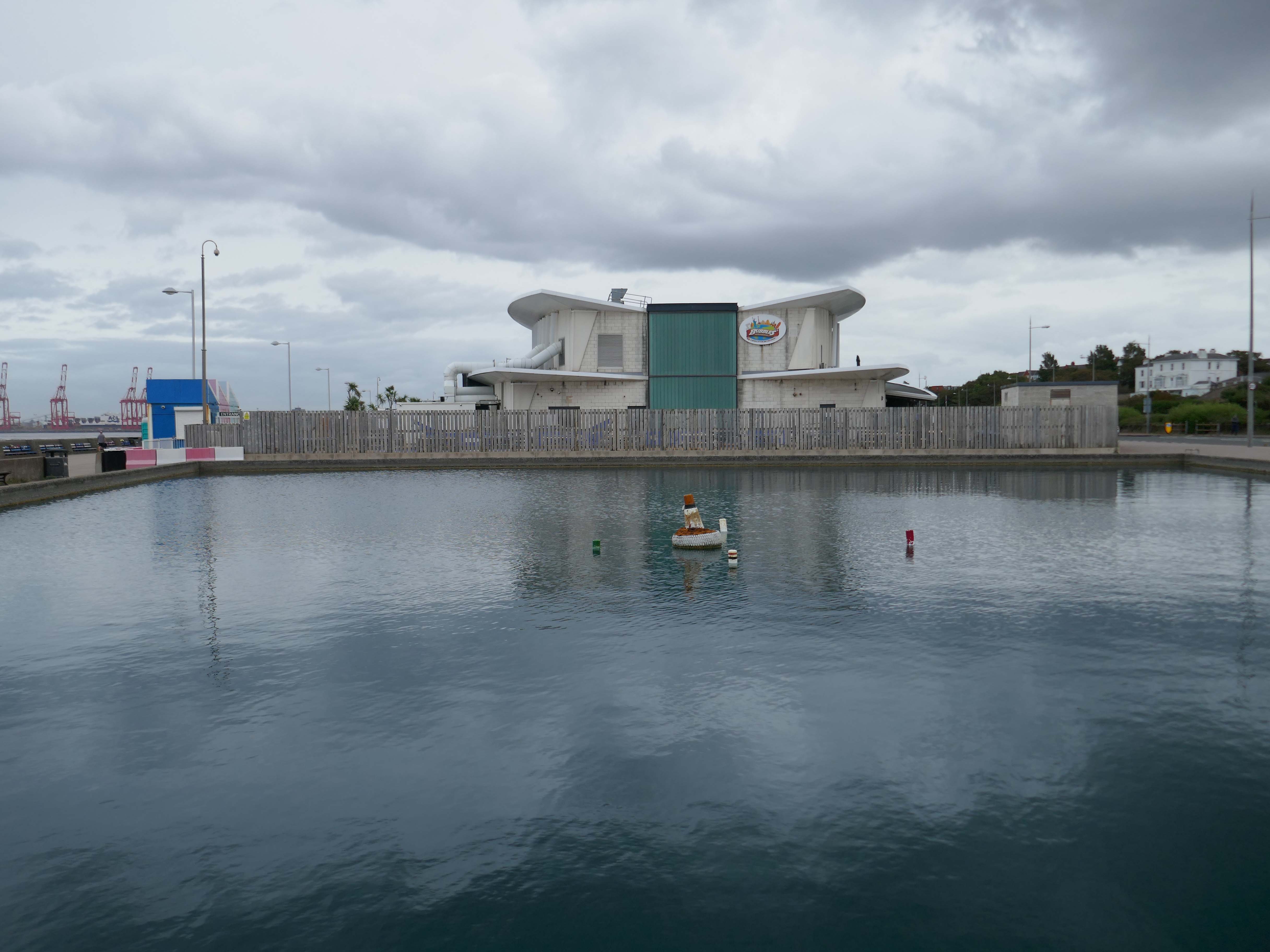
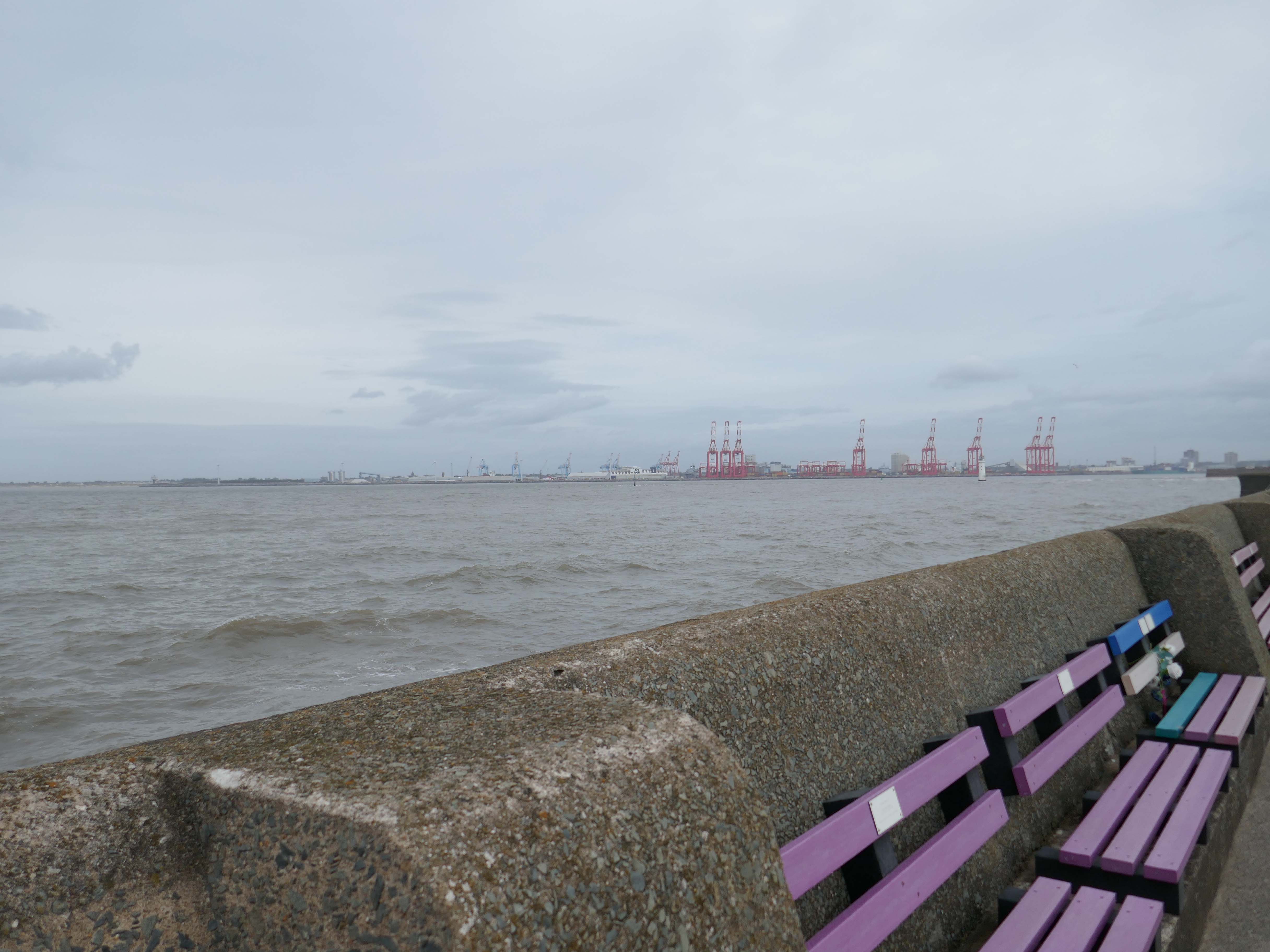
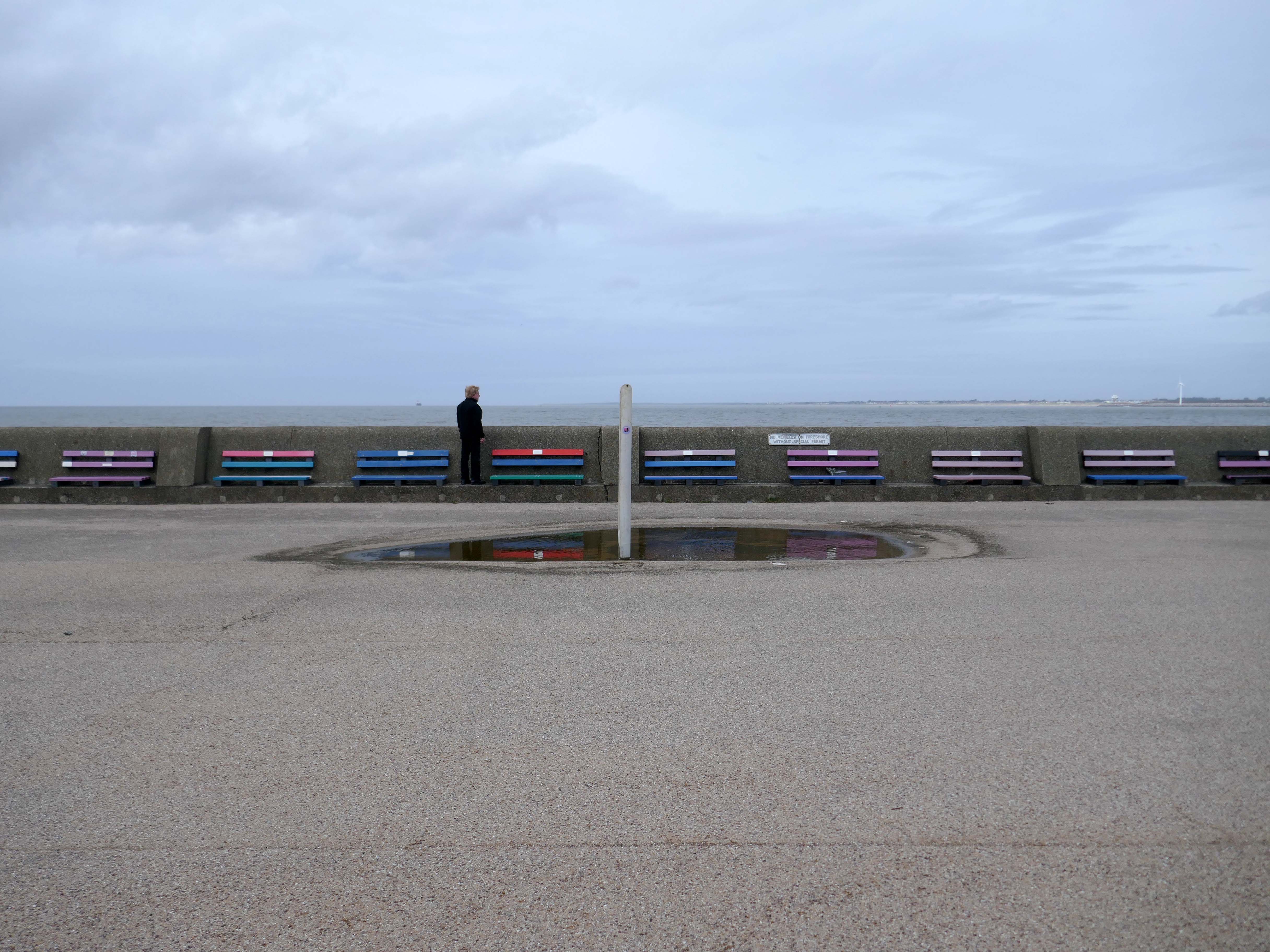
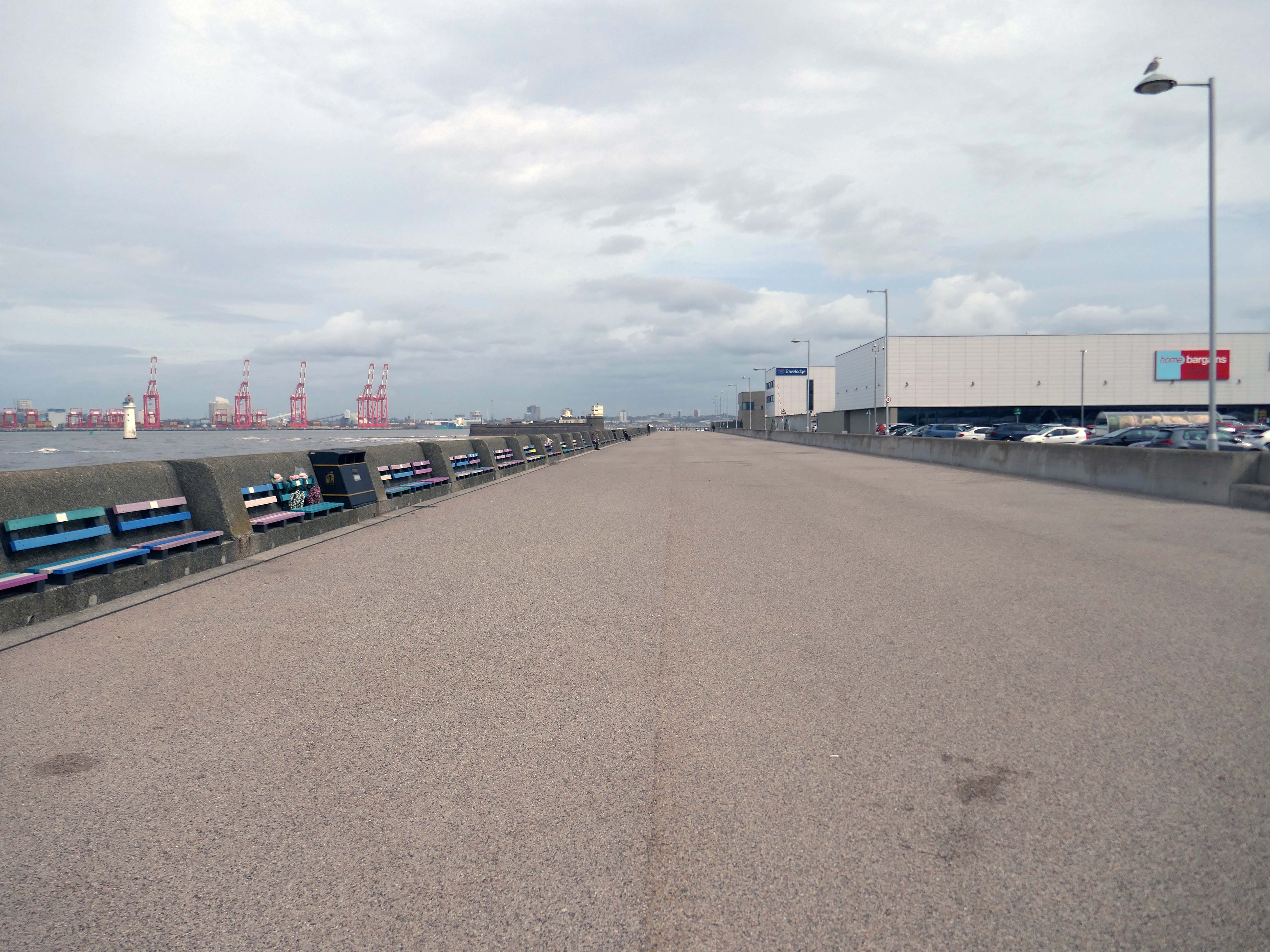
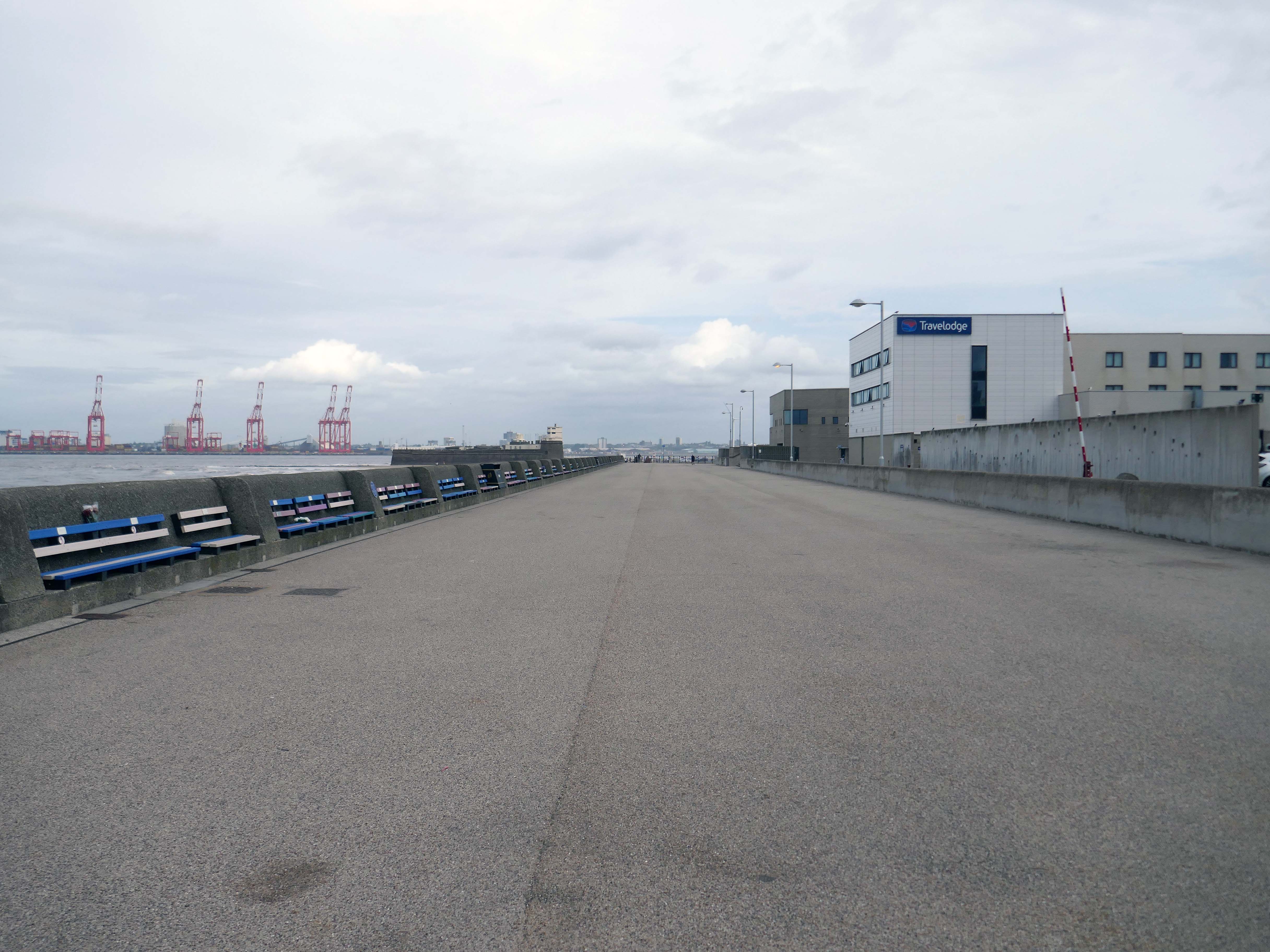
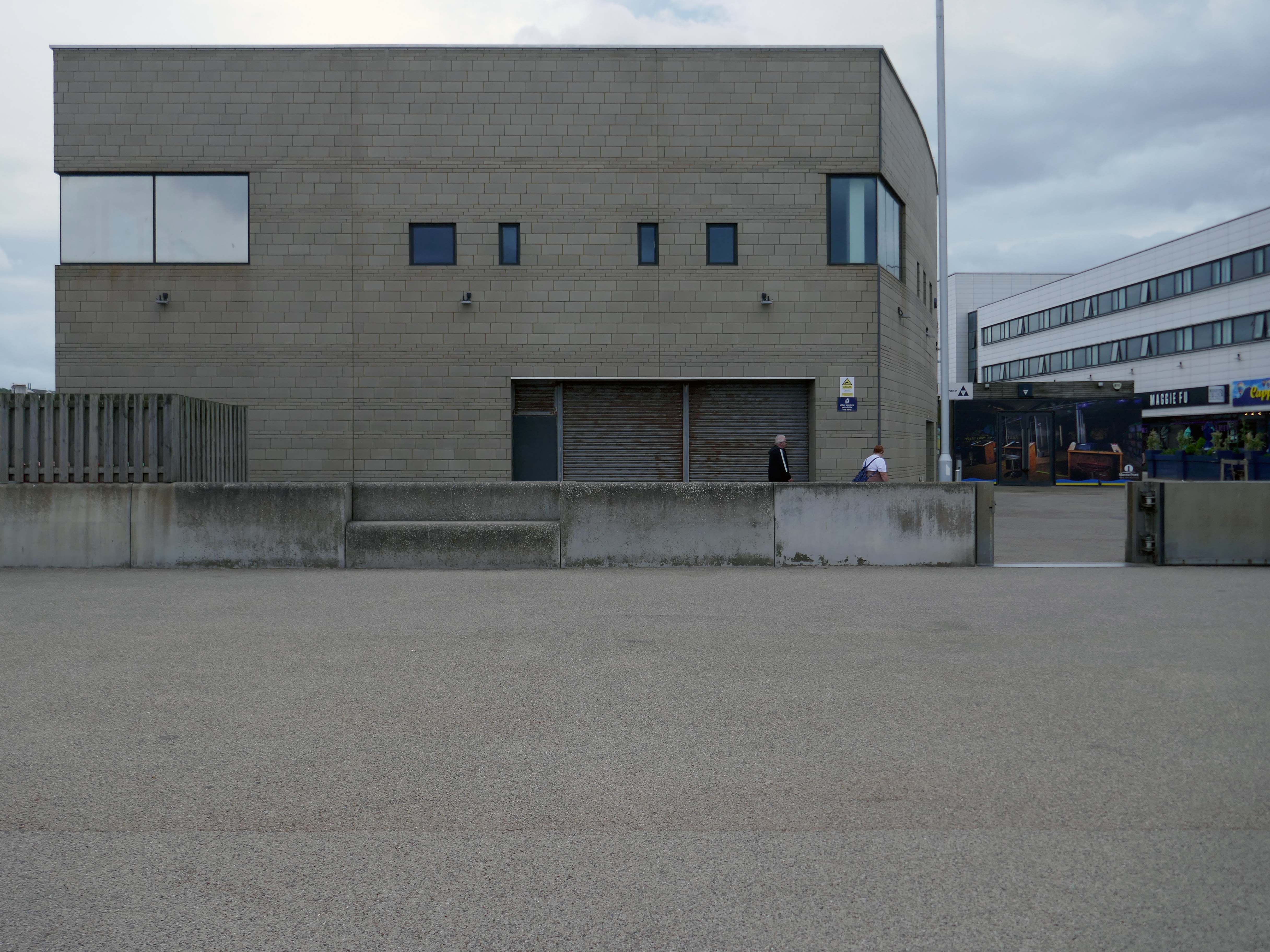
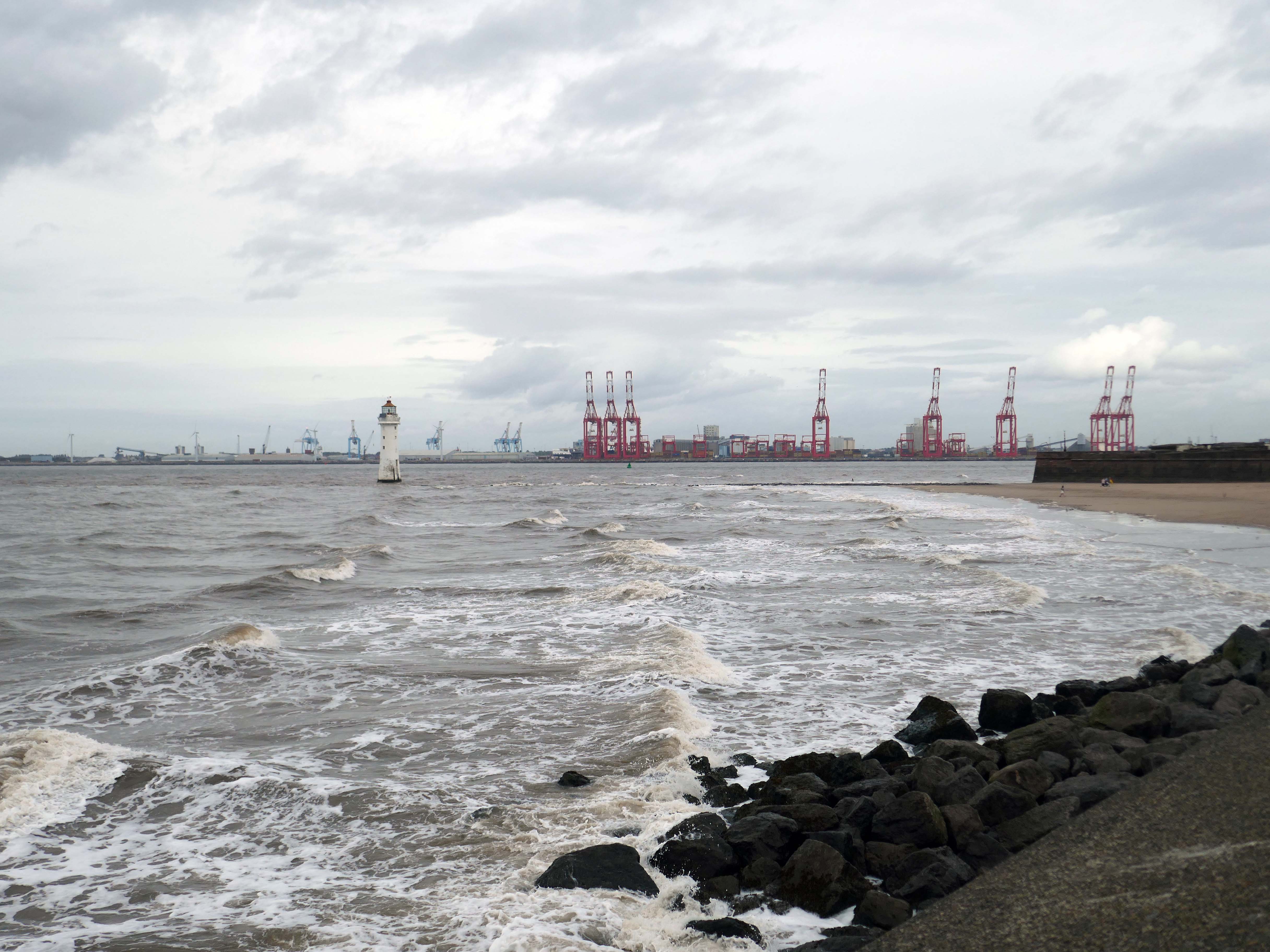
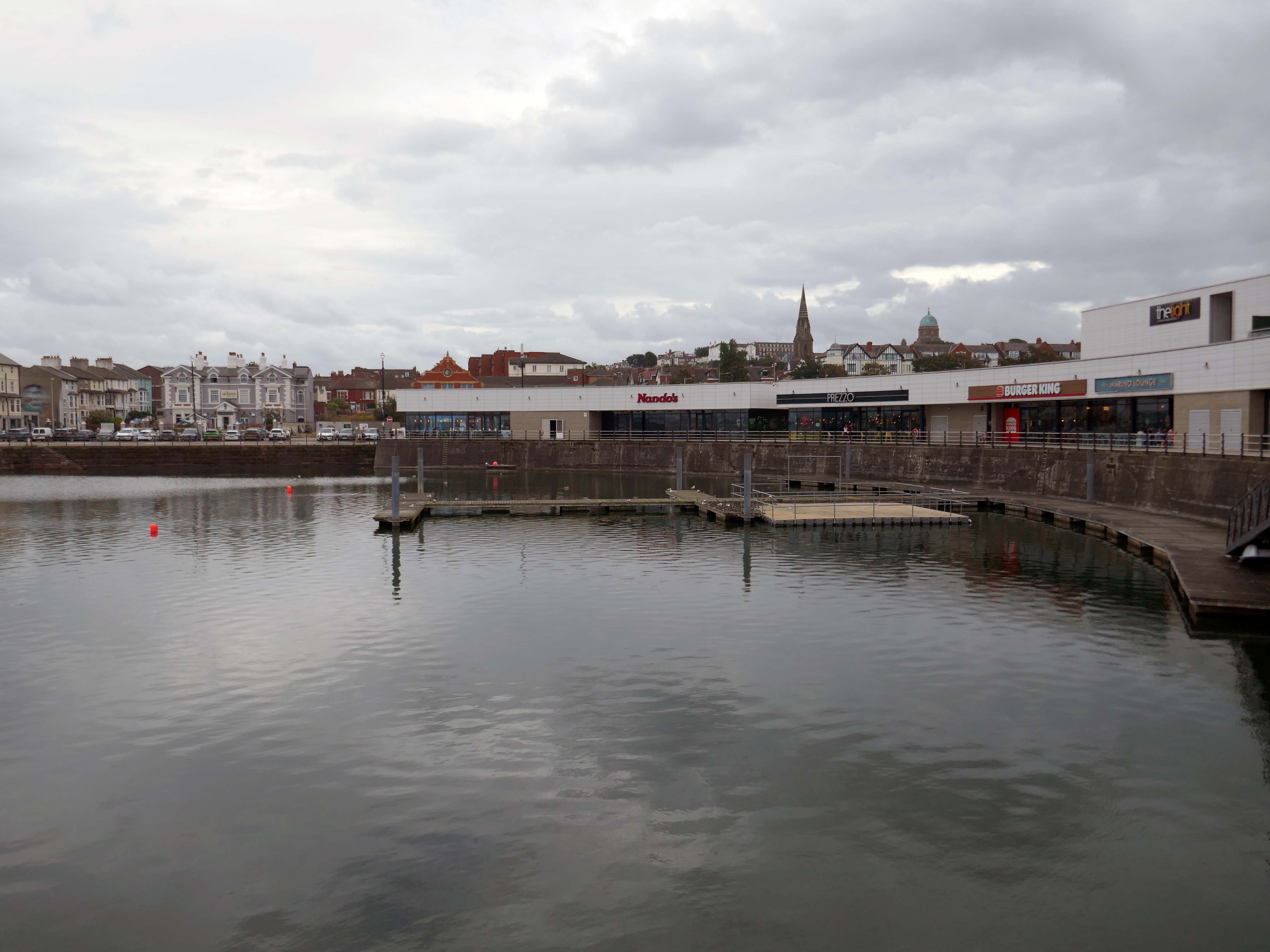
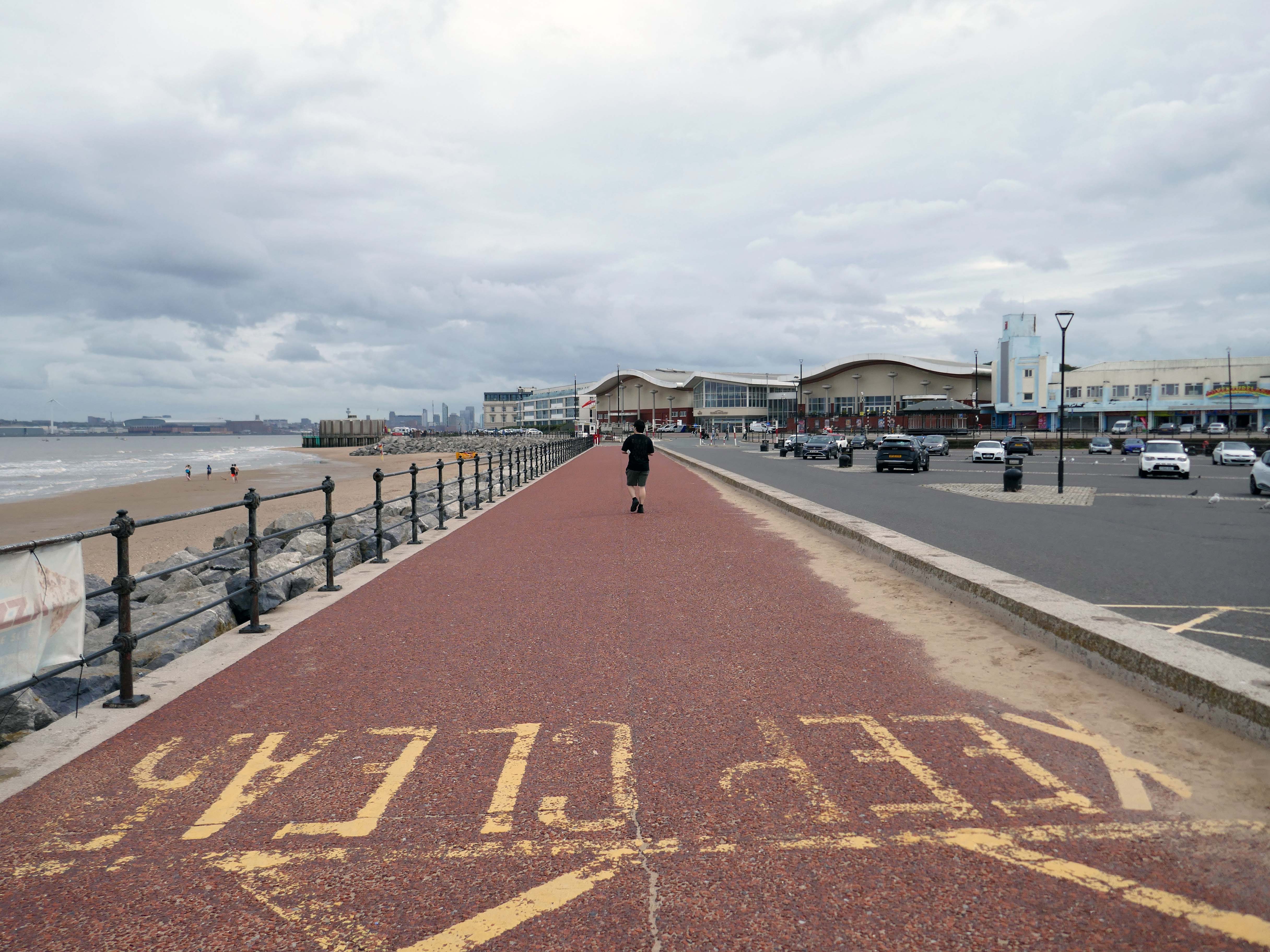
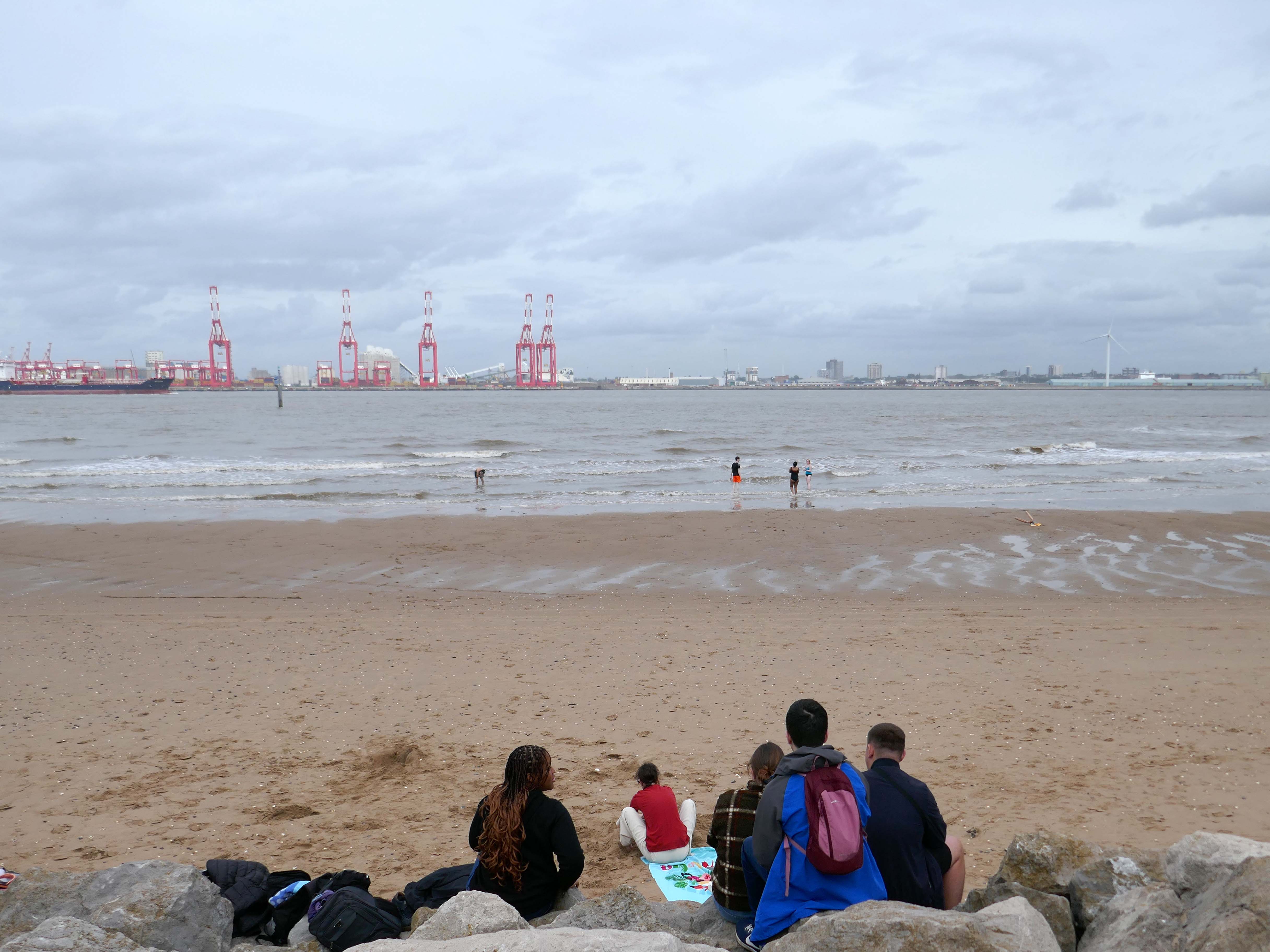
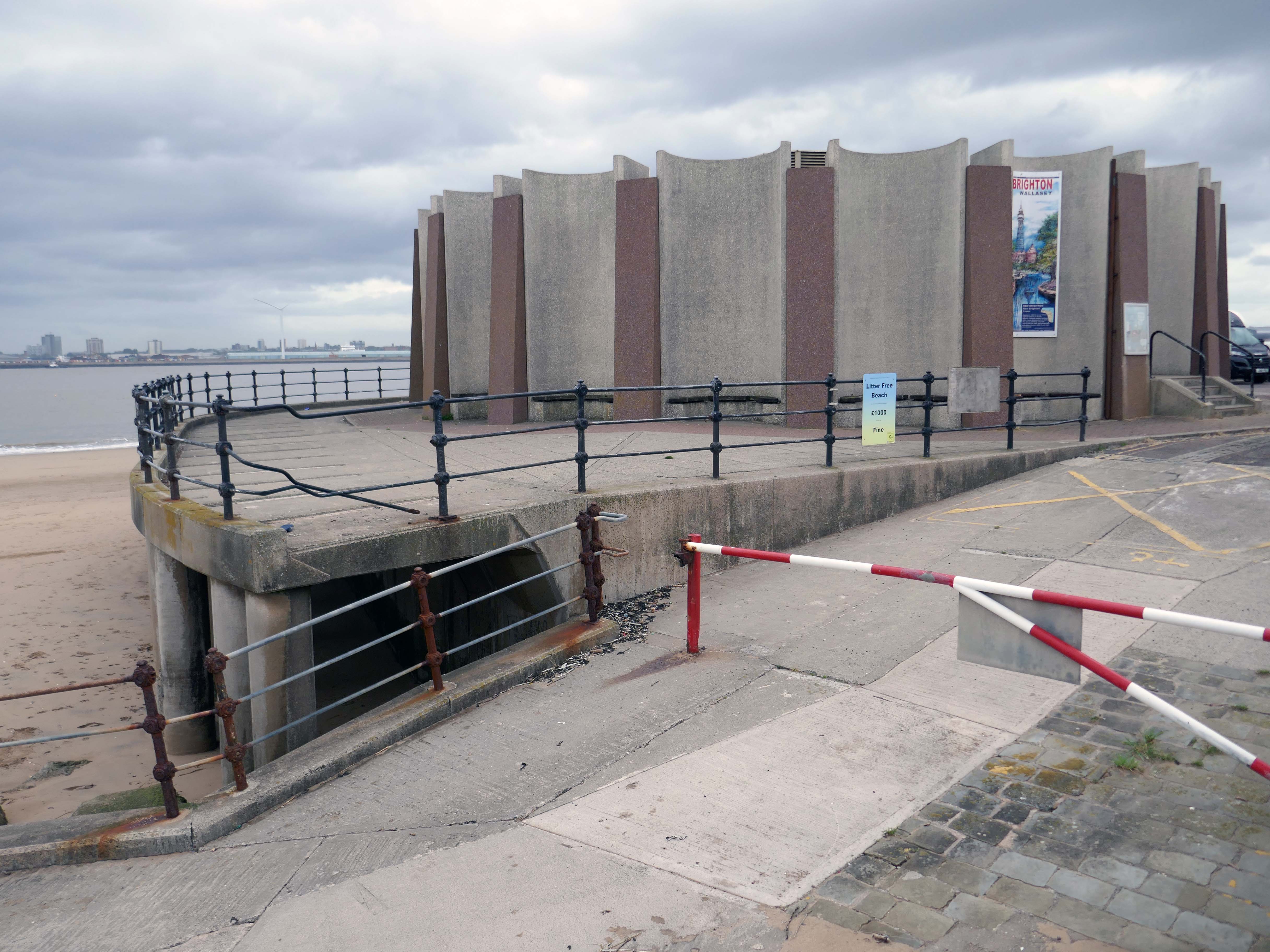
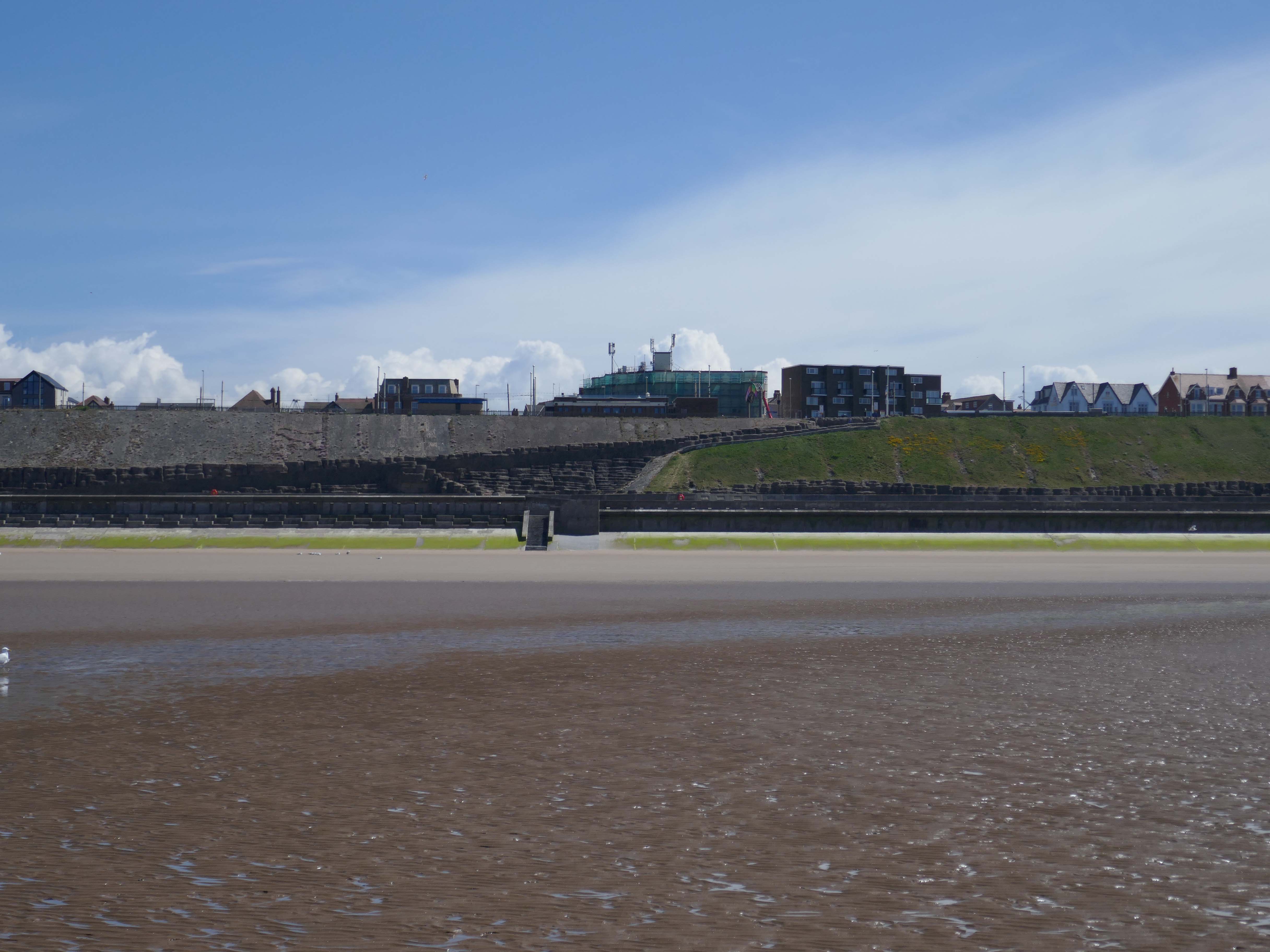
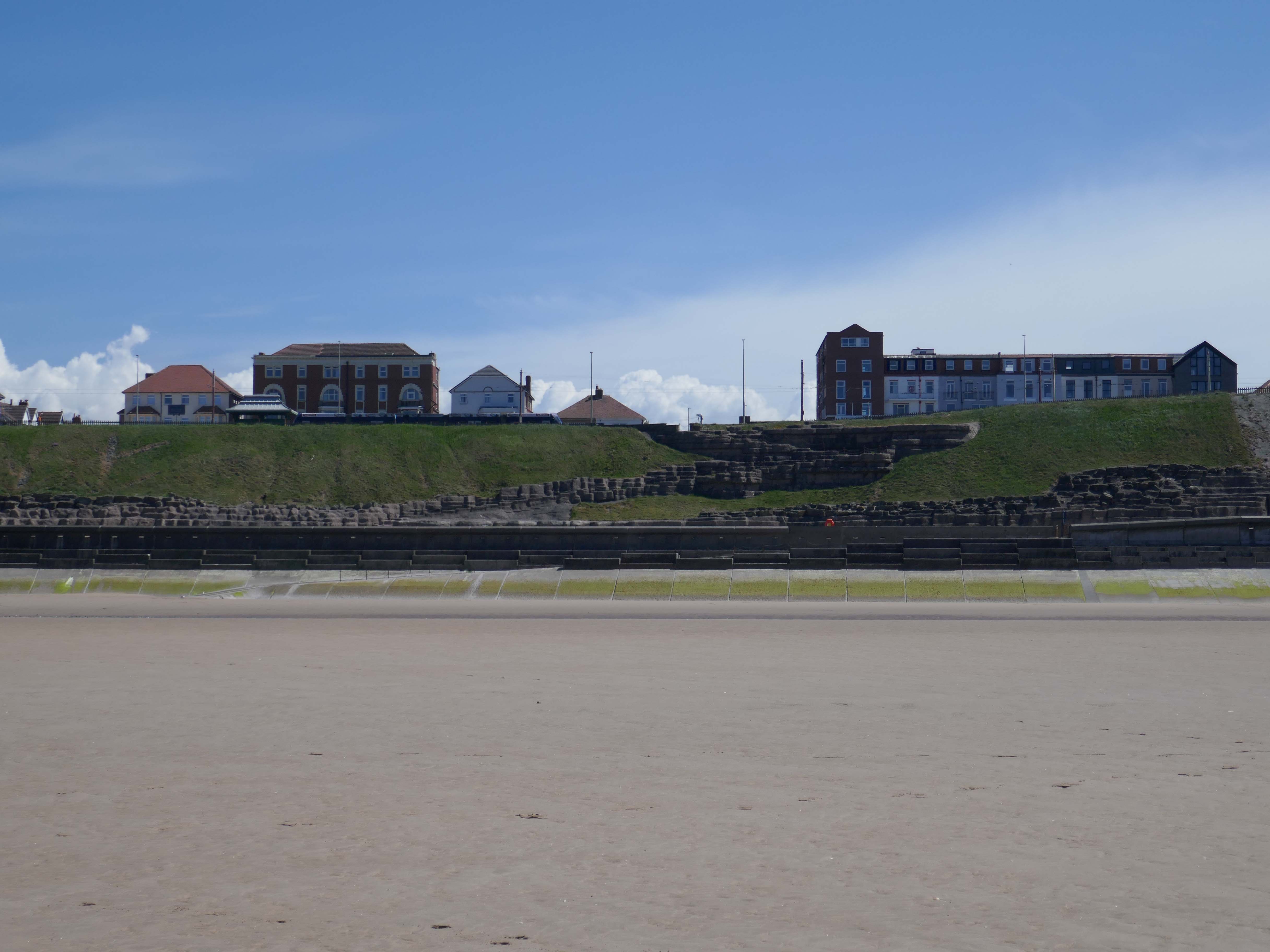
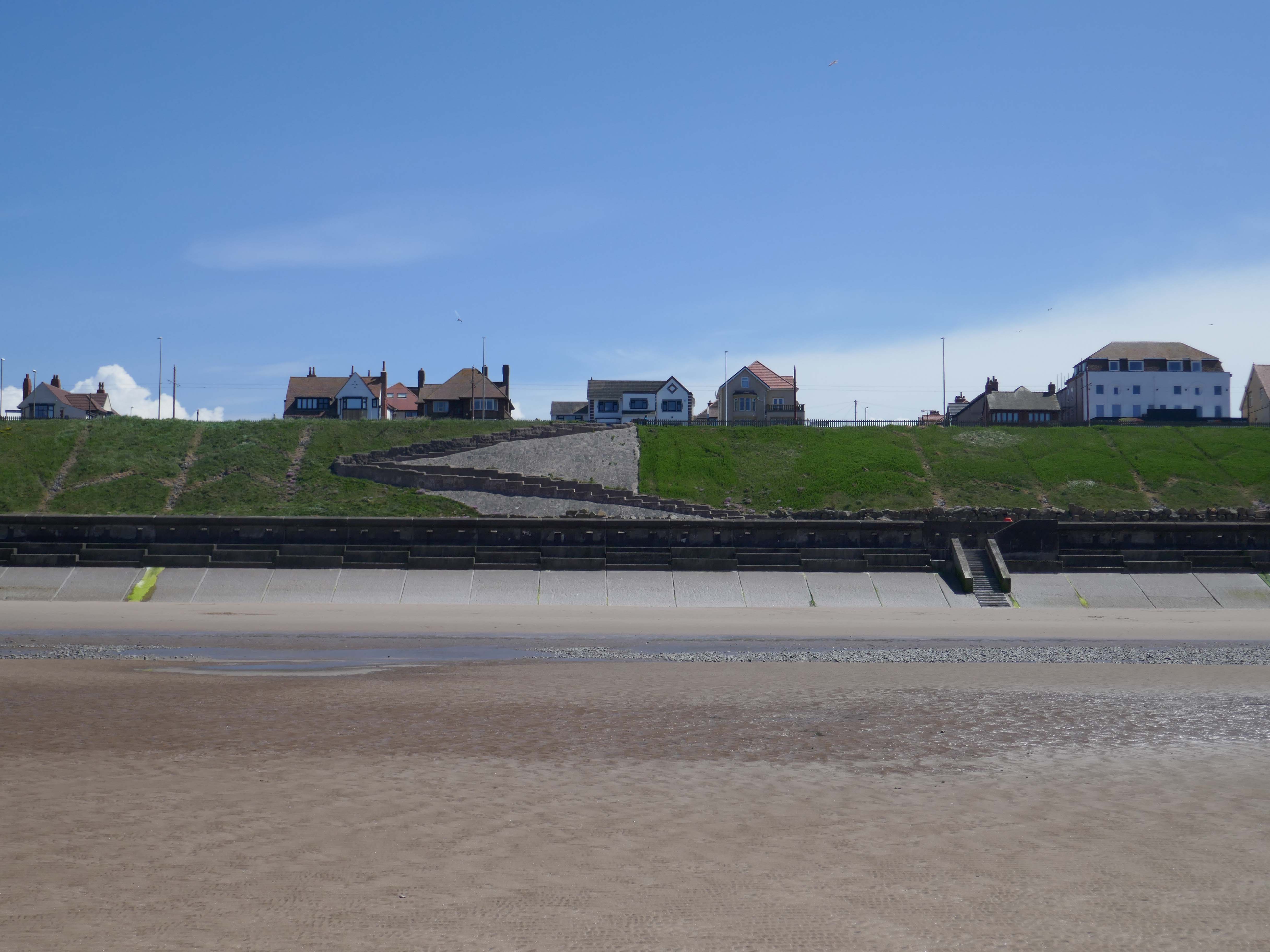
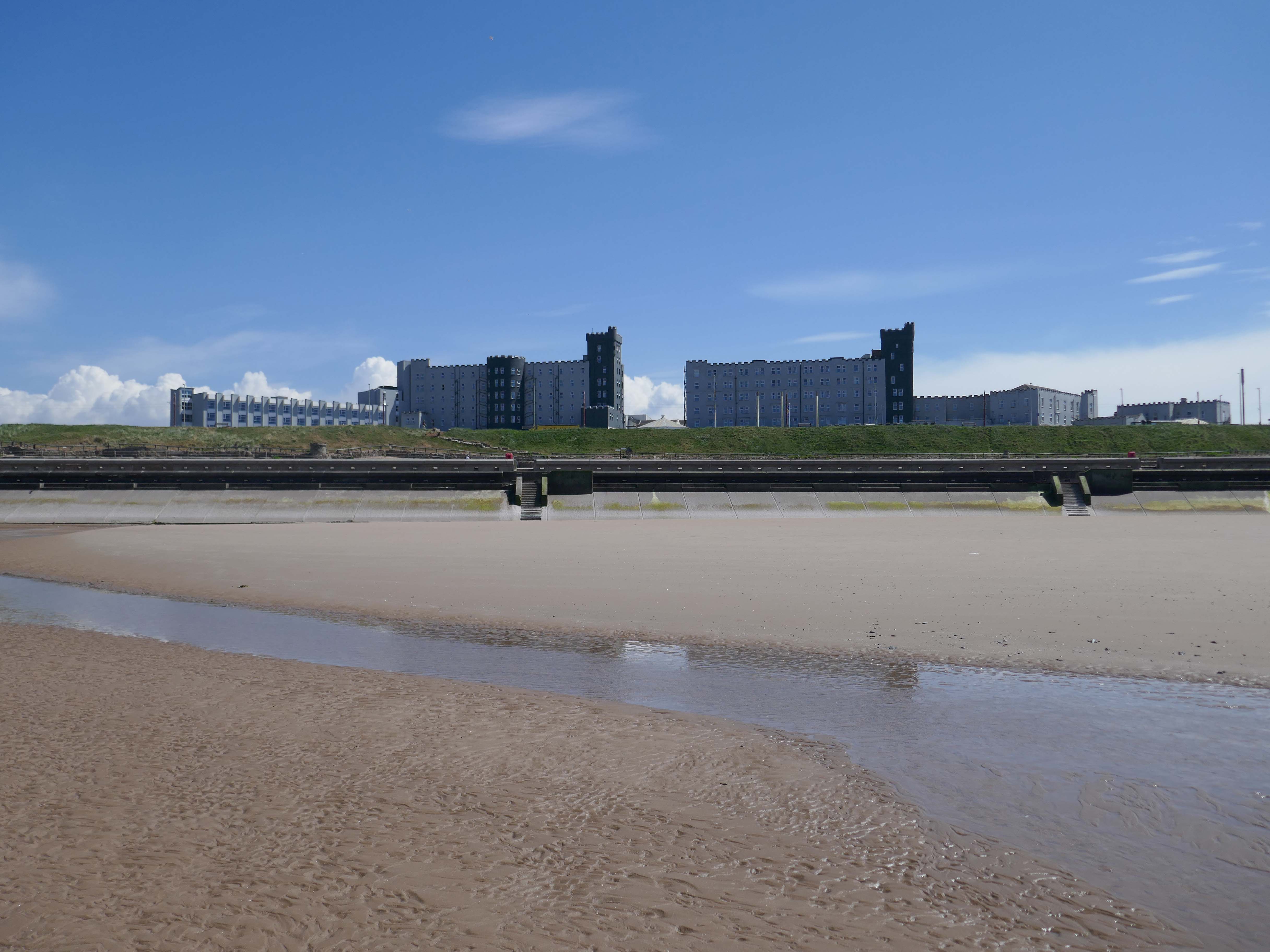
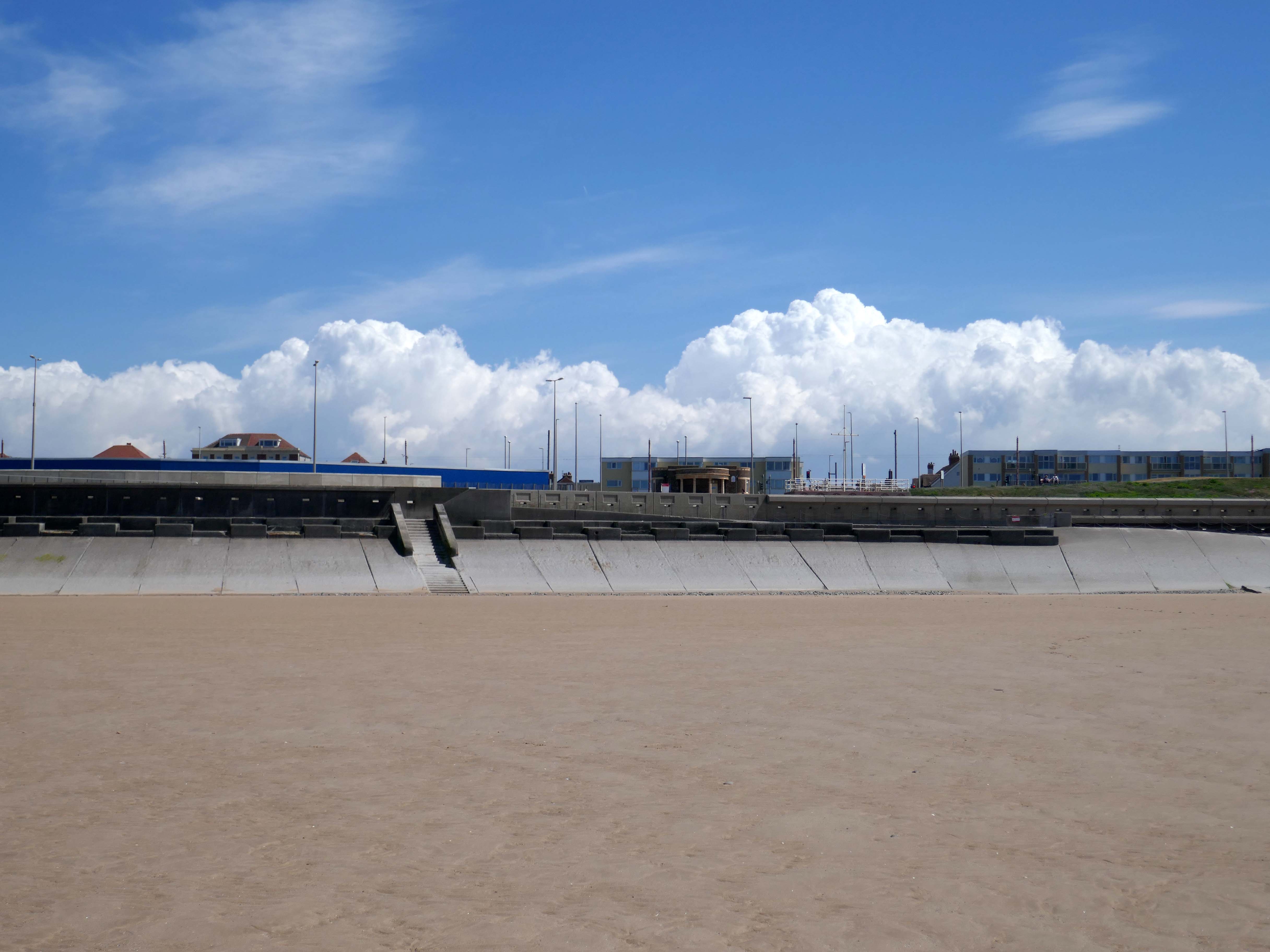
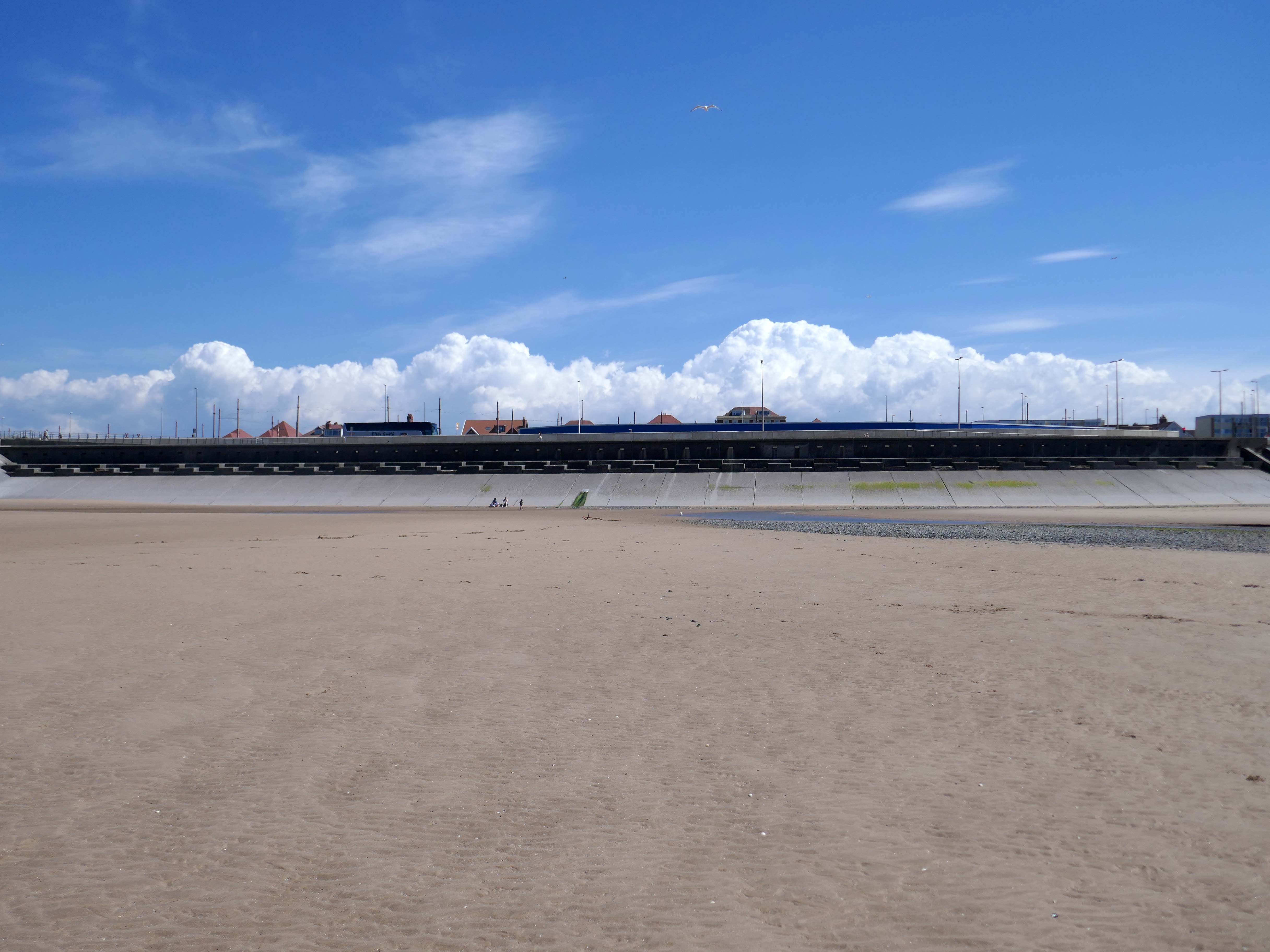
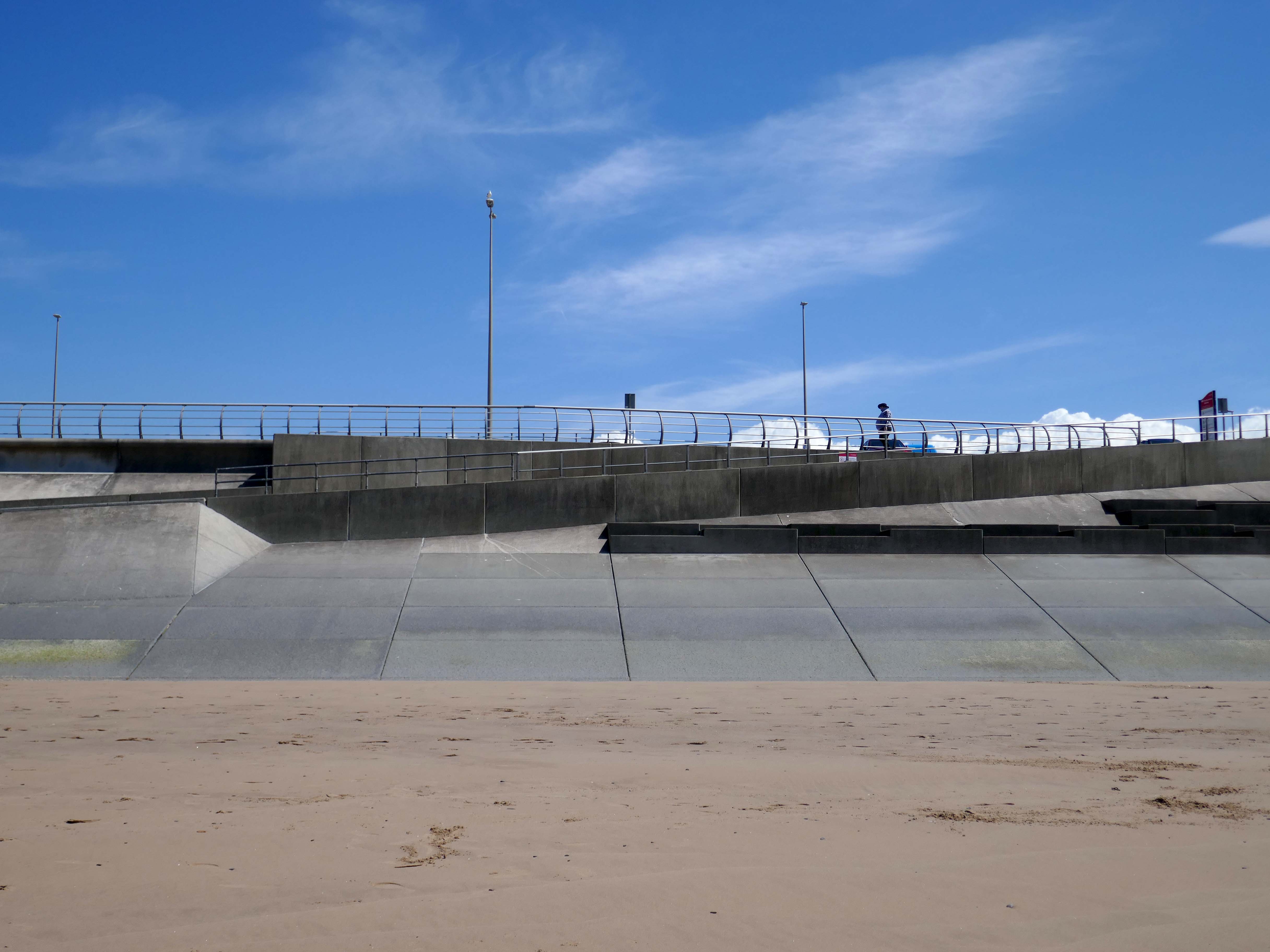
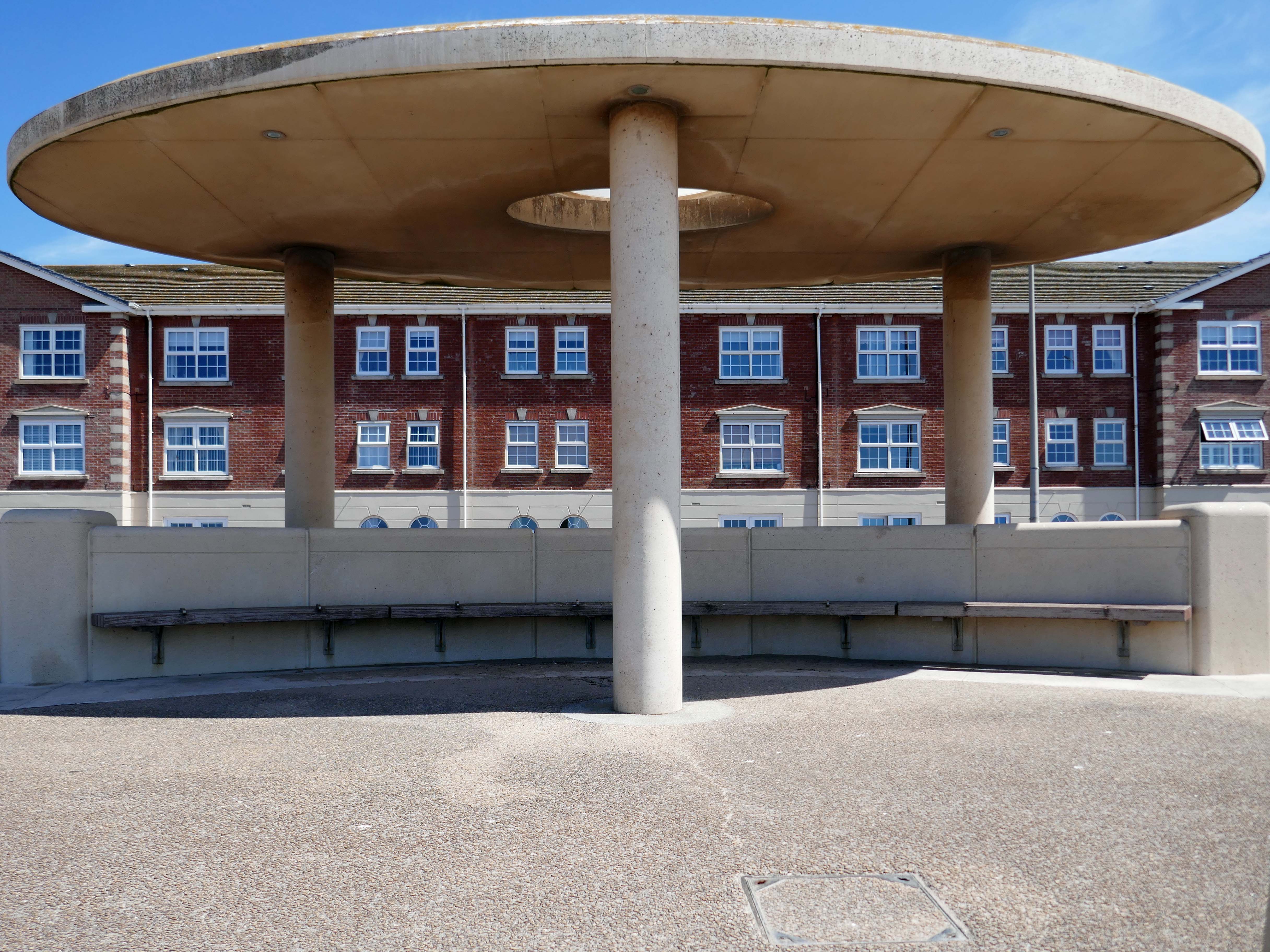
New Brighton in late summer – a little sun, a handful of visitors, and offshore breeze.
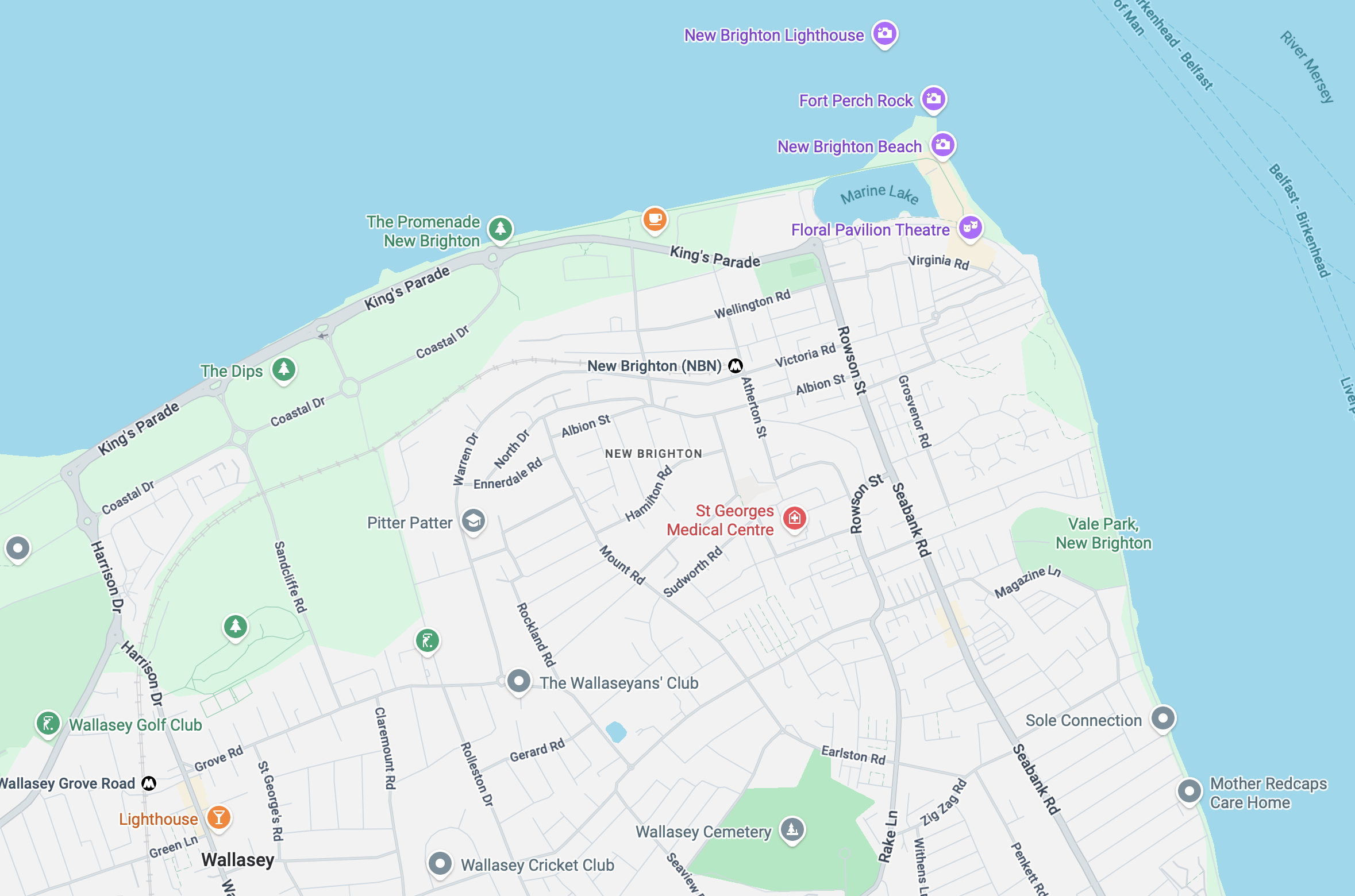
In 1830, a Liverpool merchant, James Atherton, purchased 170 acres of land at Rock Point, which enjoyed views out to sea and across the Mersey and had a good beach. His aim was to develop it as a desirable residential area and watering place for the gentry, similar to Brighton, one of the most elegant seaside resorts of that Regency period, hence the name “New Brighton”. Substantial development began soon afterwards, and housing began to spread up the hillside overlooking the estuary.
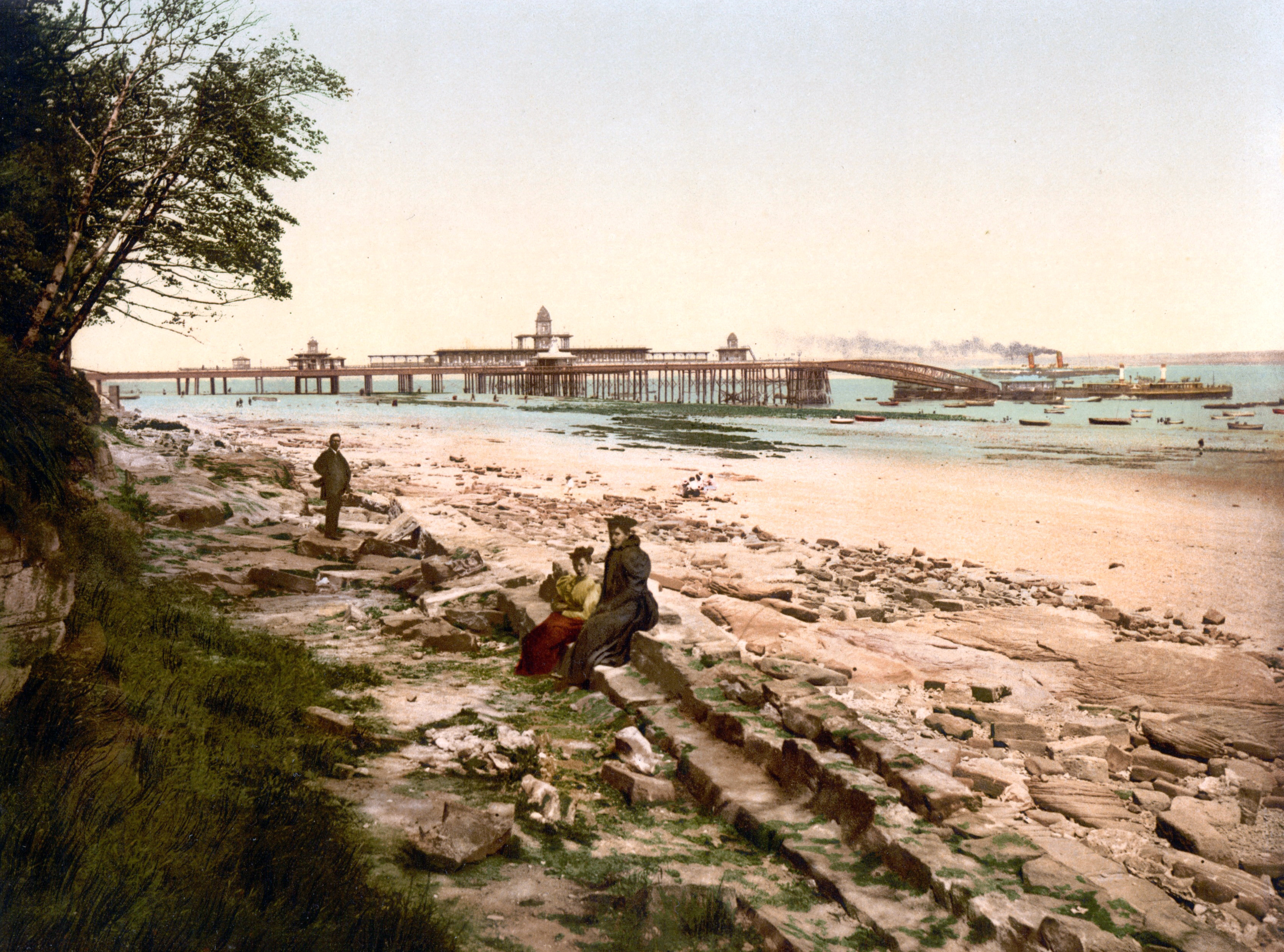
During the latter half of the nineteenth century, New Brighton developed as a very popular seaside resort serving Liverpool and the Lancashire industrial towns, and many of the large houses were converted to inexpensive hotels. Designed by the noted architect of seaside structures Eugenius Birch, the New Brighton Pier opened in 1867.
The promenade from Seacombe to New Brighton was completed by 1901.
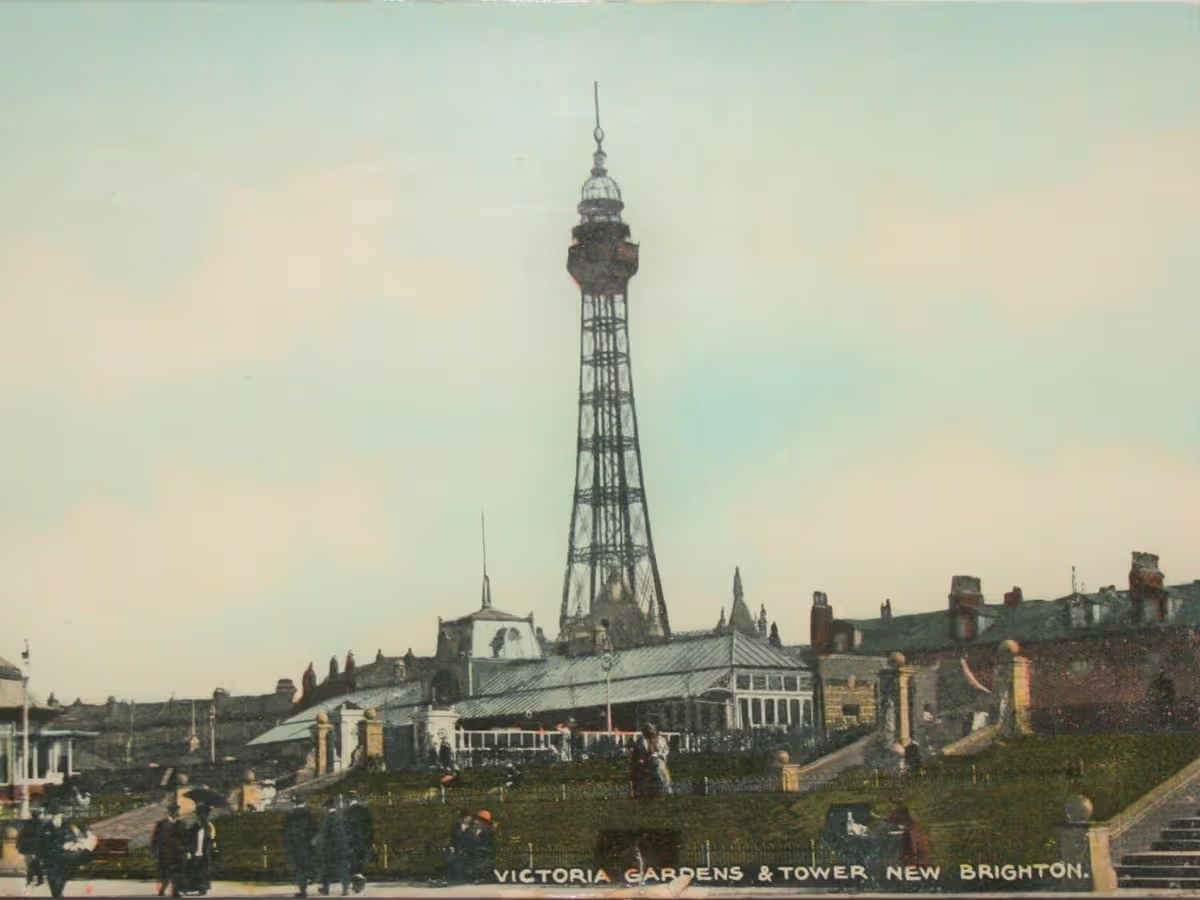
The New Brighton Tower, the tallest in the country, was opened in 1900 but closed in 1919, largely due to lack of maintenance during World War I, and had been dismantled by 1921.
After the Second World War, the popularity of New Brighton as a seaside resort declined dramatically. However, the Tower Ballroom continued as a major venue, hosting numerous concerts in the 1950s and 1960s by local Liverpool groups such as The Beatles, and international stars.
The Tower Ballroom continued in use until it was destroyed by a fire in 1969.
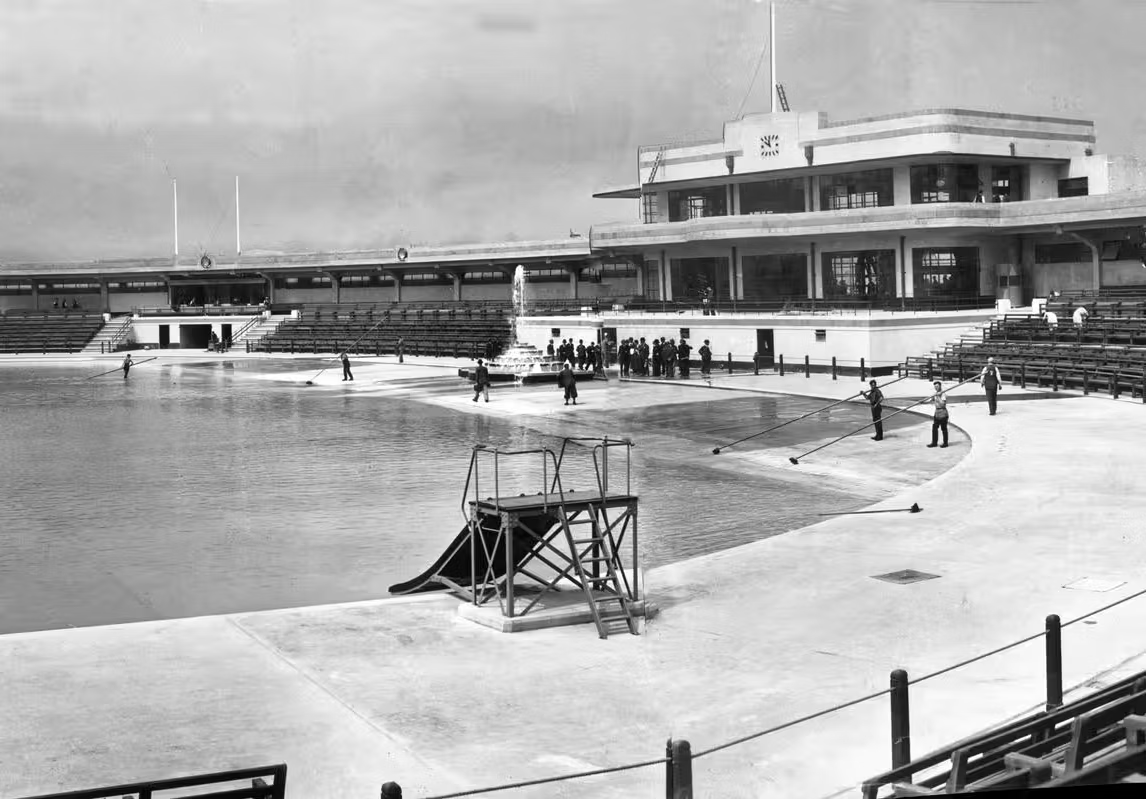
New Brighton’s Art Deco Lido, was opened on 13 June 1934 by Viscount Leverhulme. When it was built, it was the largest lido in Britain, at a cost of £90,000, designed byWallasey County-Borough Engineer L St. G Wilkinson
The saltwater pool survived until 1990, when it was damaged during a storm and later demolished
The New Palace and Adventureland on the famous Promenade at New Brighton, Wirral, offers a tremendous range of family fun-filled entertainment and activities.
The traditional family amusement arcade, The Bright Spot, has something for everyone including state of the art video driving, adventure and shooting simulators, dance games, plus the always popular slots and ‘pushers’, as well as mini-bowling and toy-grabbers.
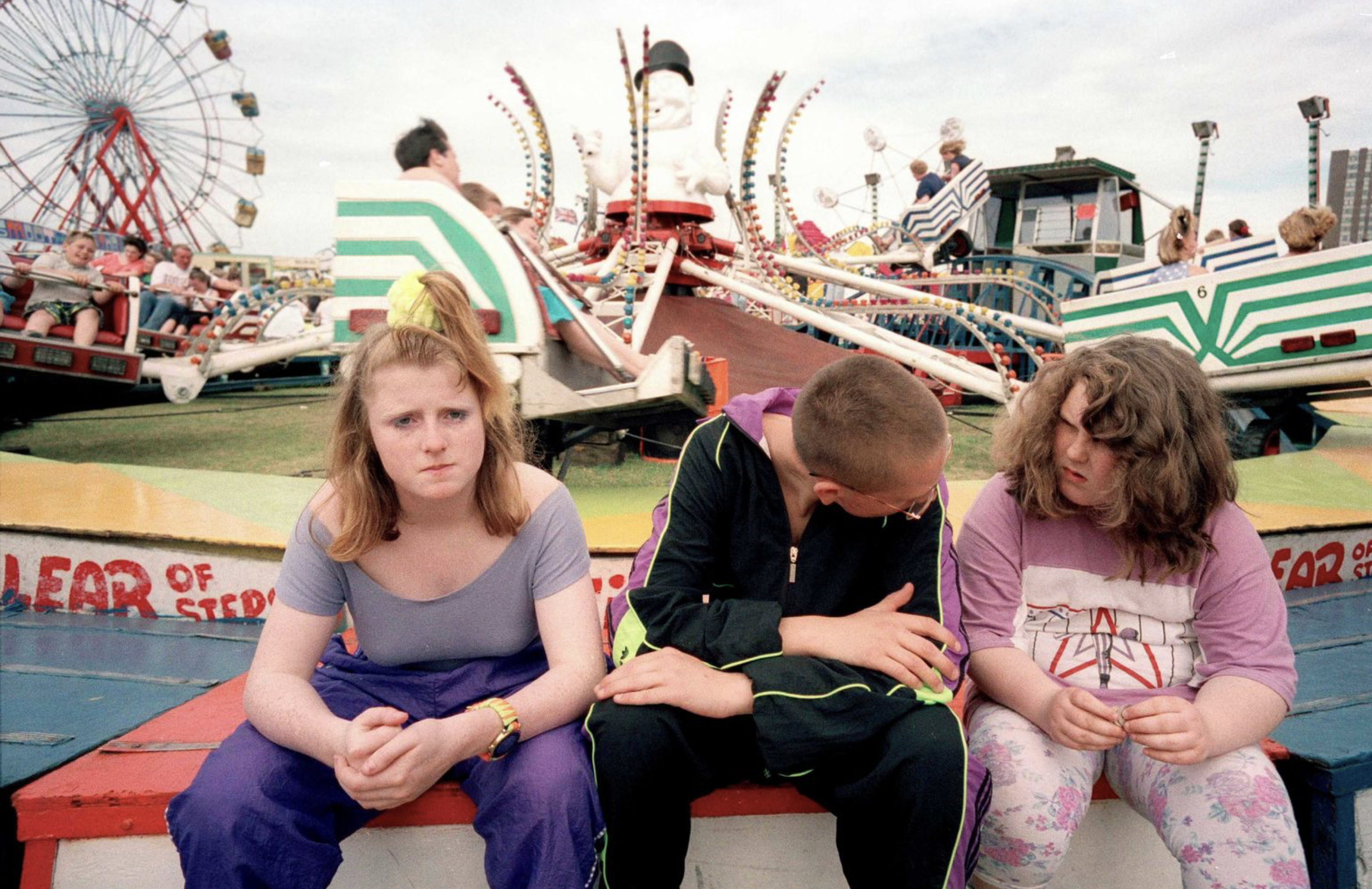
Special mention must go to long time New Brighton resident Photie ManTom Wood.
Opened in 1971, the site consists of about five hundred acres
Technological changes, such as containerisation, caused the loss of numerous jobs on the docks. In the 21st century, the dock handles mainly containers, oils, timber, fruit and vegetables, grain and animal feed.
Designed by John Foster Jr, construction of the present tower began in 1827 by Tomkinson & Company using blocks of interlocking Anglesey granite using dovetail joints and marble dowels.
The lighthouse was in continuous use until it was decommissioned in October 1973, having been superseded by modern navigational technology.
In 1803 Liverpool merchants concerned about a possible invasion by the French during the Napoleonic wars put forward the idea of a fort at New Brighton. Naturally there weredisputes about how it was to be financed and consequently construction didn’t get under way until 1826.
It was completed three years later. It was built out of red sandstone blocks on a base of sandstone rocks, confusingly known as the Black Rocks.
Designed by a Captain John Sikes Kitson of the Royal Engineers, it had room for 100 men plus officers with adequate provisions and armaments. It had eighteen guns, sixteen of which were thirty two-pounders and they faced the Rock Channel that was the main entrance for shipping to the Mersey at that time. The ships passed nine hundred yards from the guns and the fort soon became known as the “Little Gibraltar of the Mersey”.
The fort was decommissioned by the War Office 1956 and passed through various hands until it was sold to the Darroch family who are the current custodians.
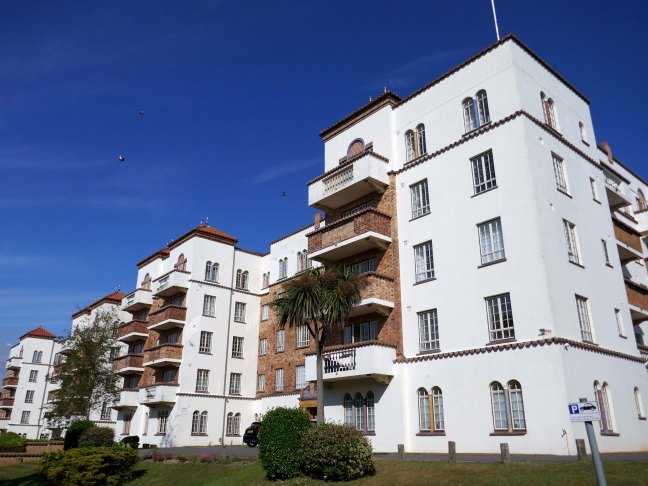
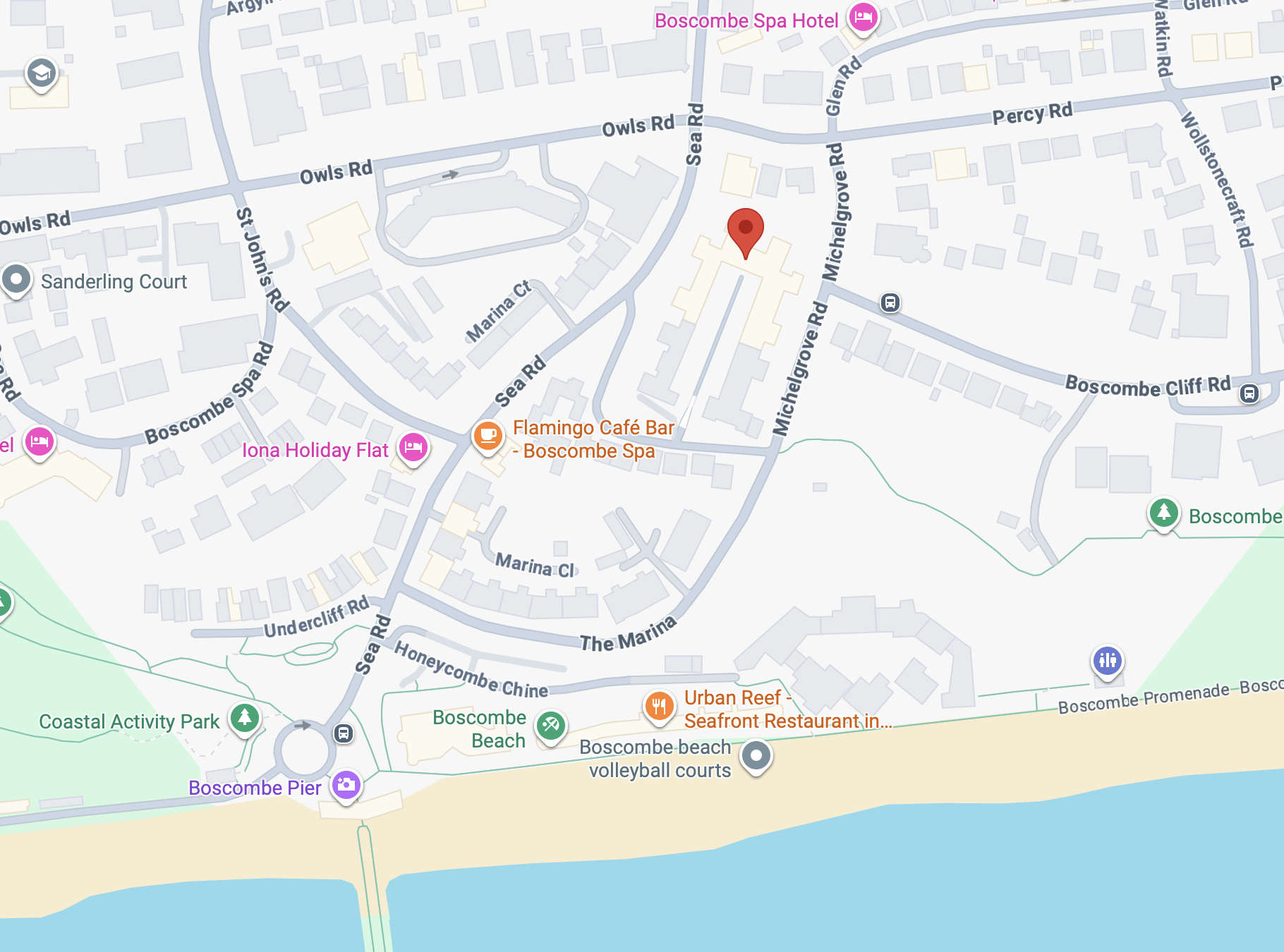
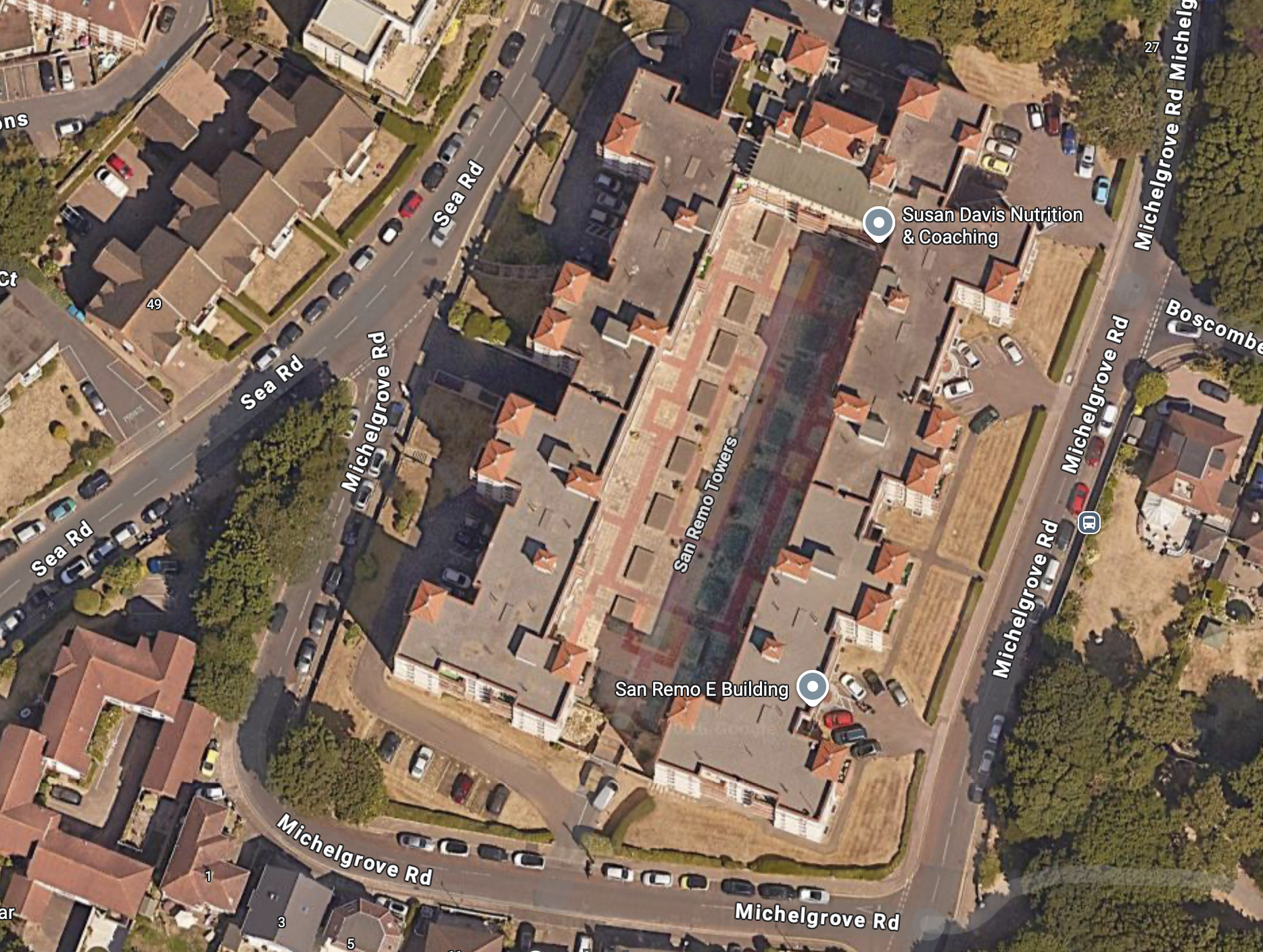
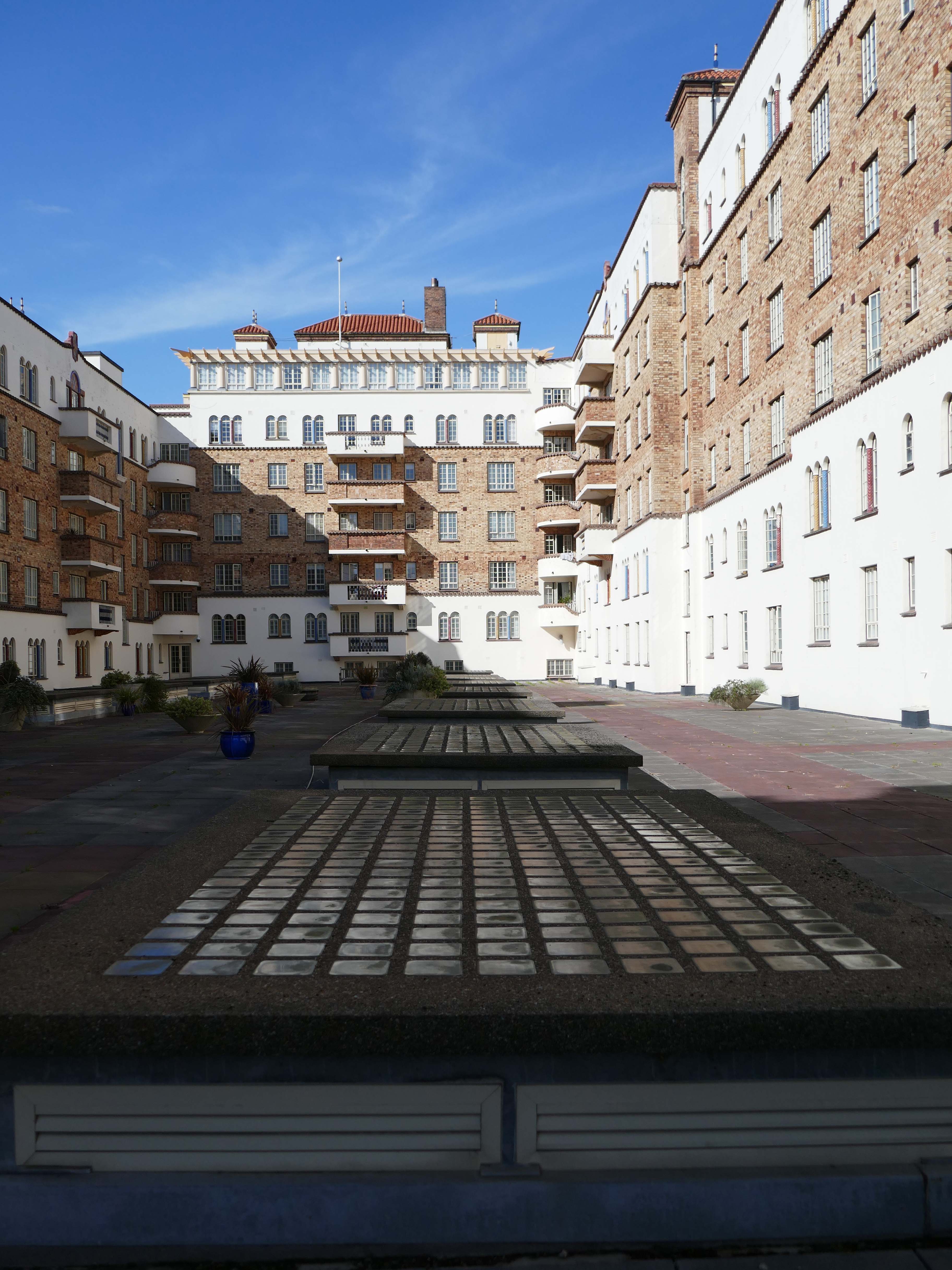
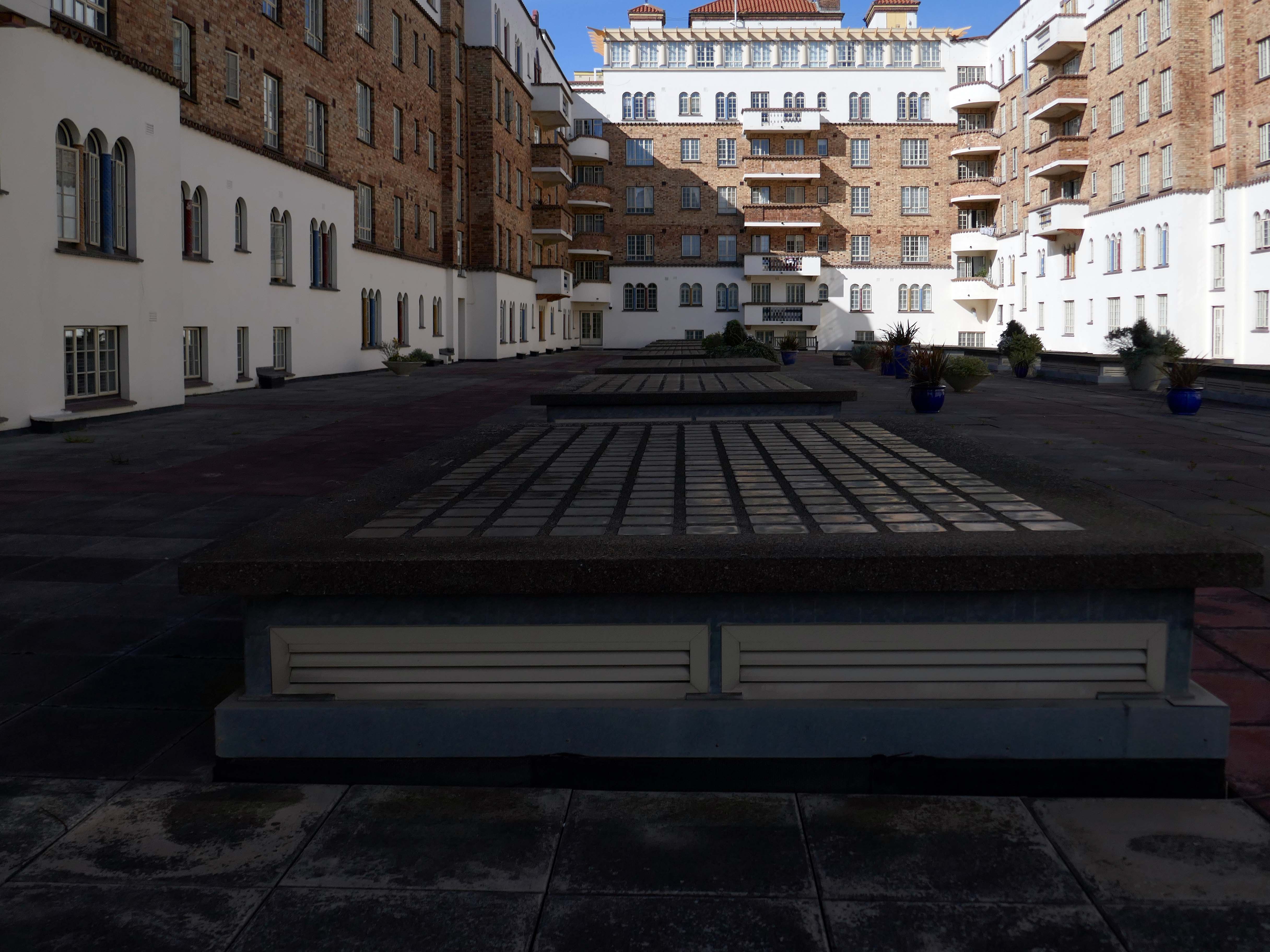
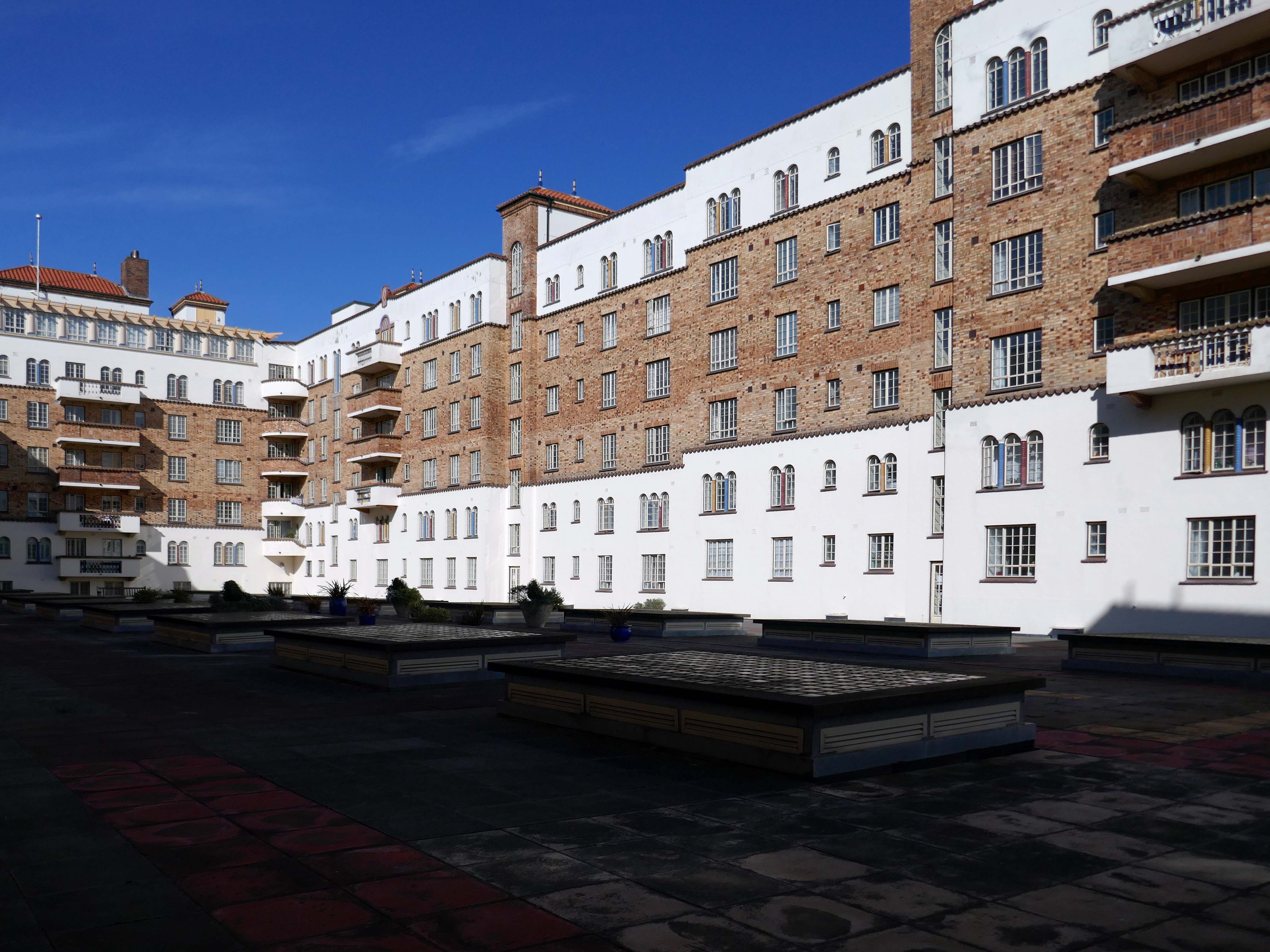
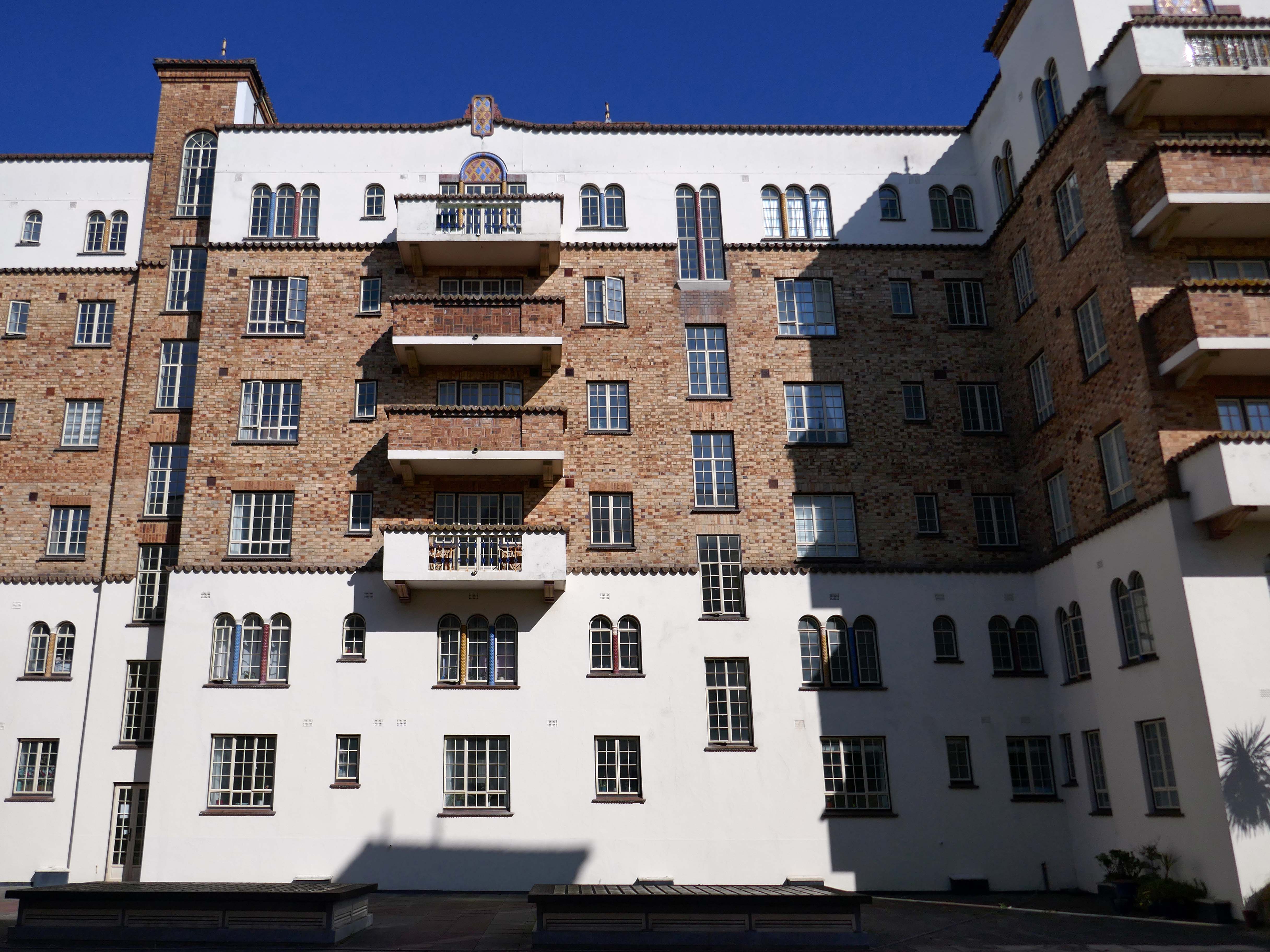
San Remo Towers Sea Rd Boscombe Bournemouth BH5 1JY
Alwyn Ladell
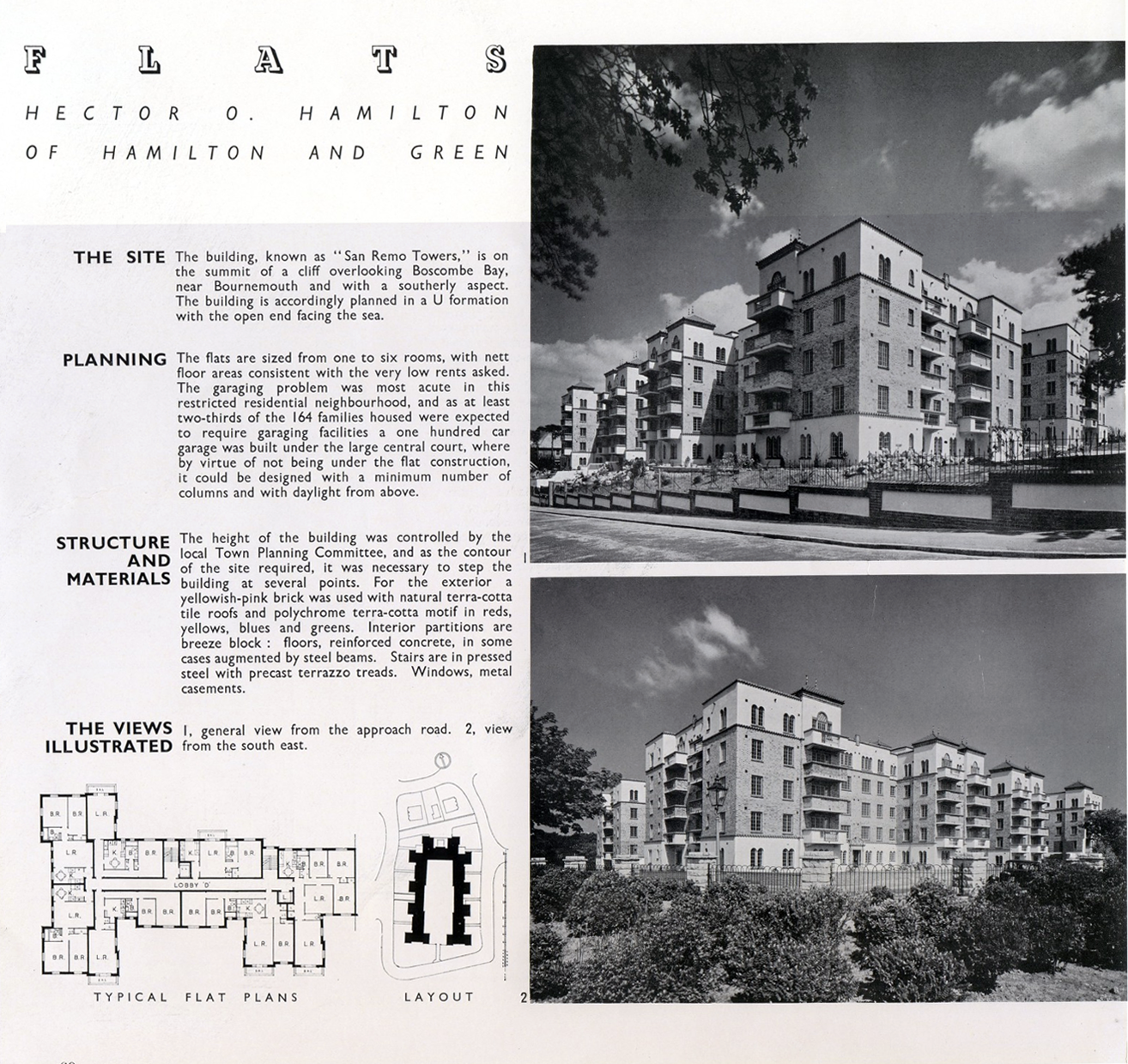
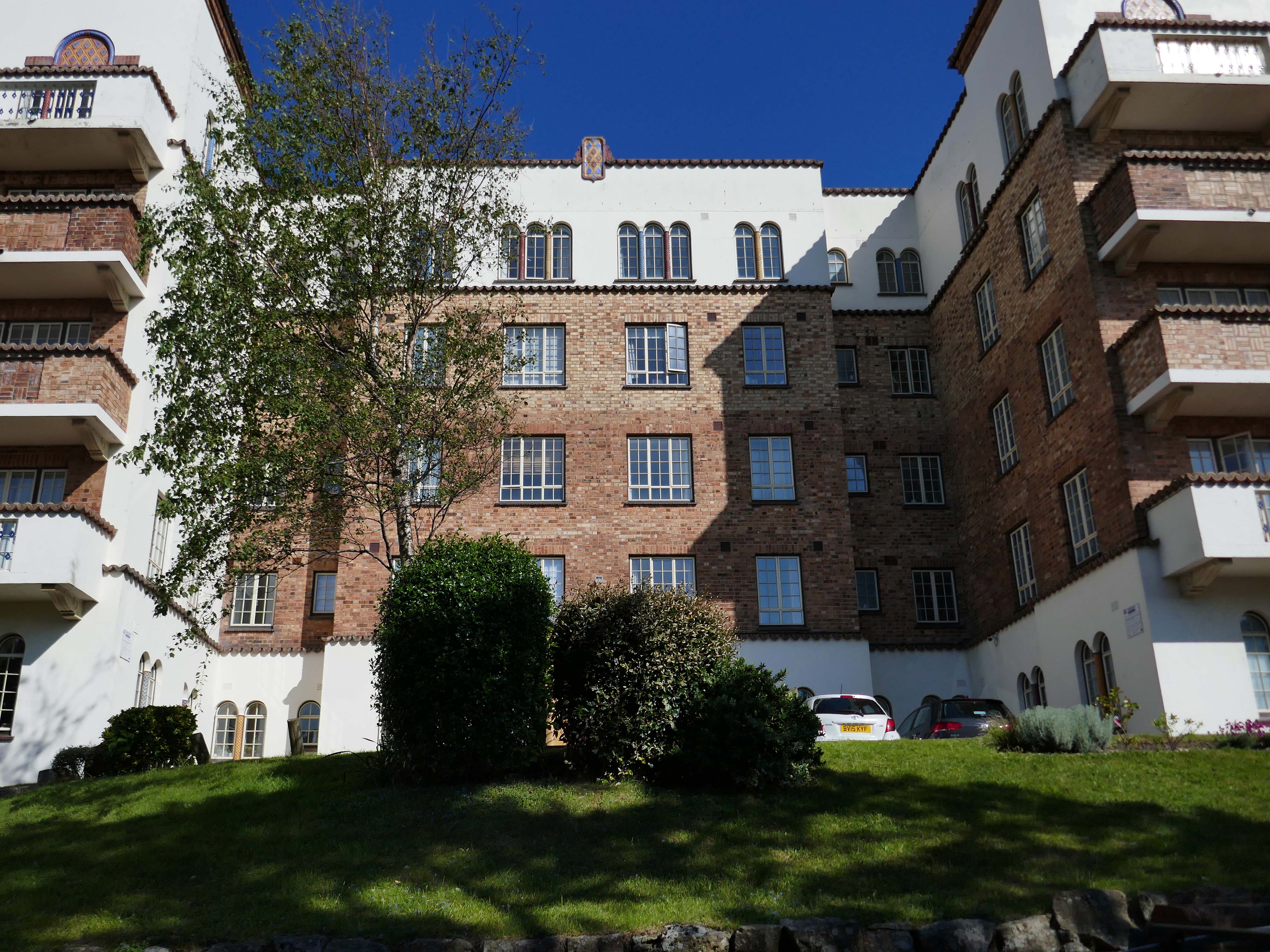
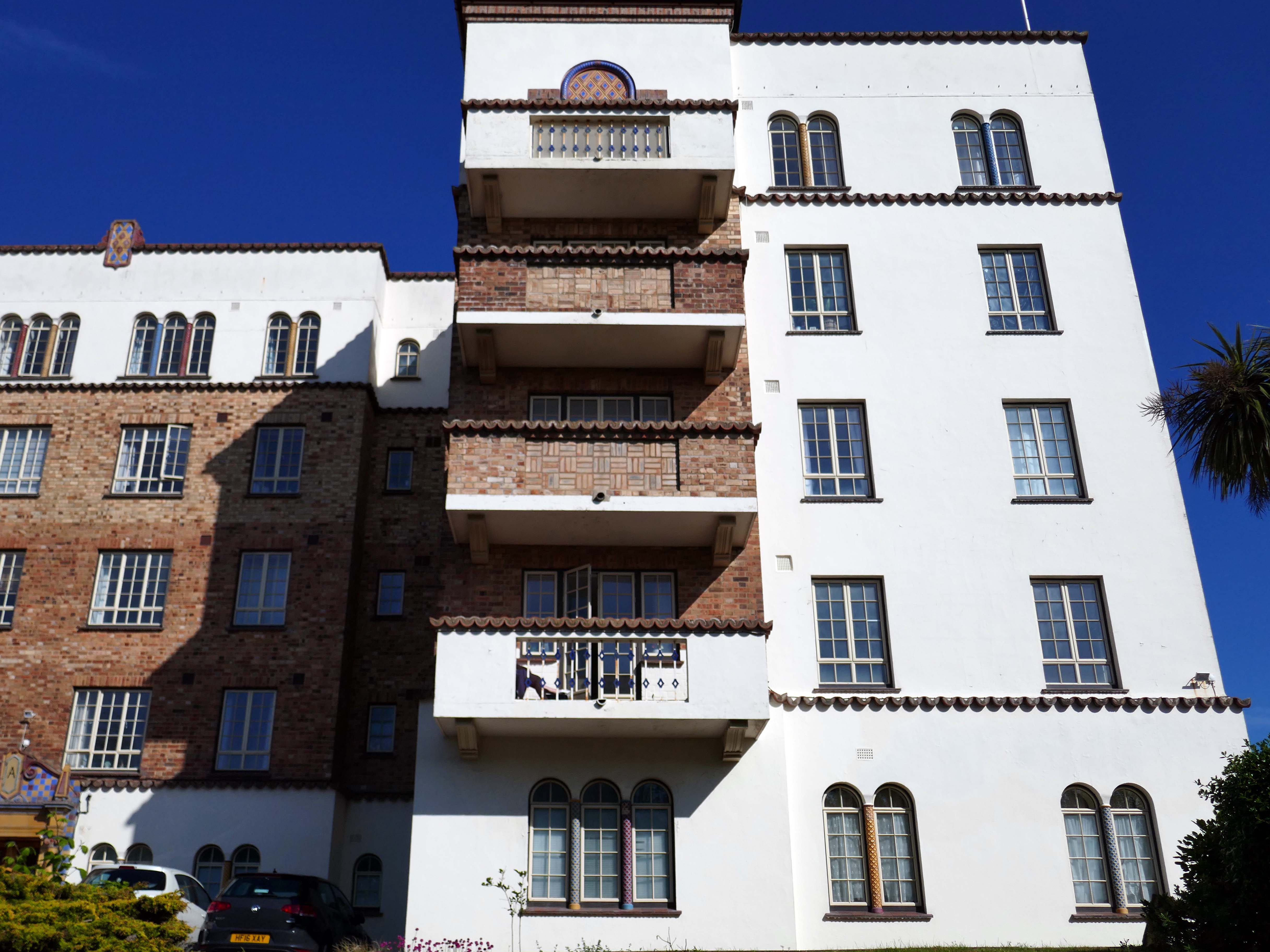
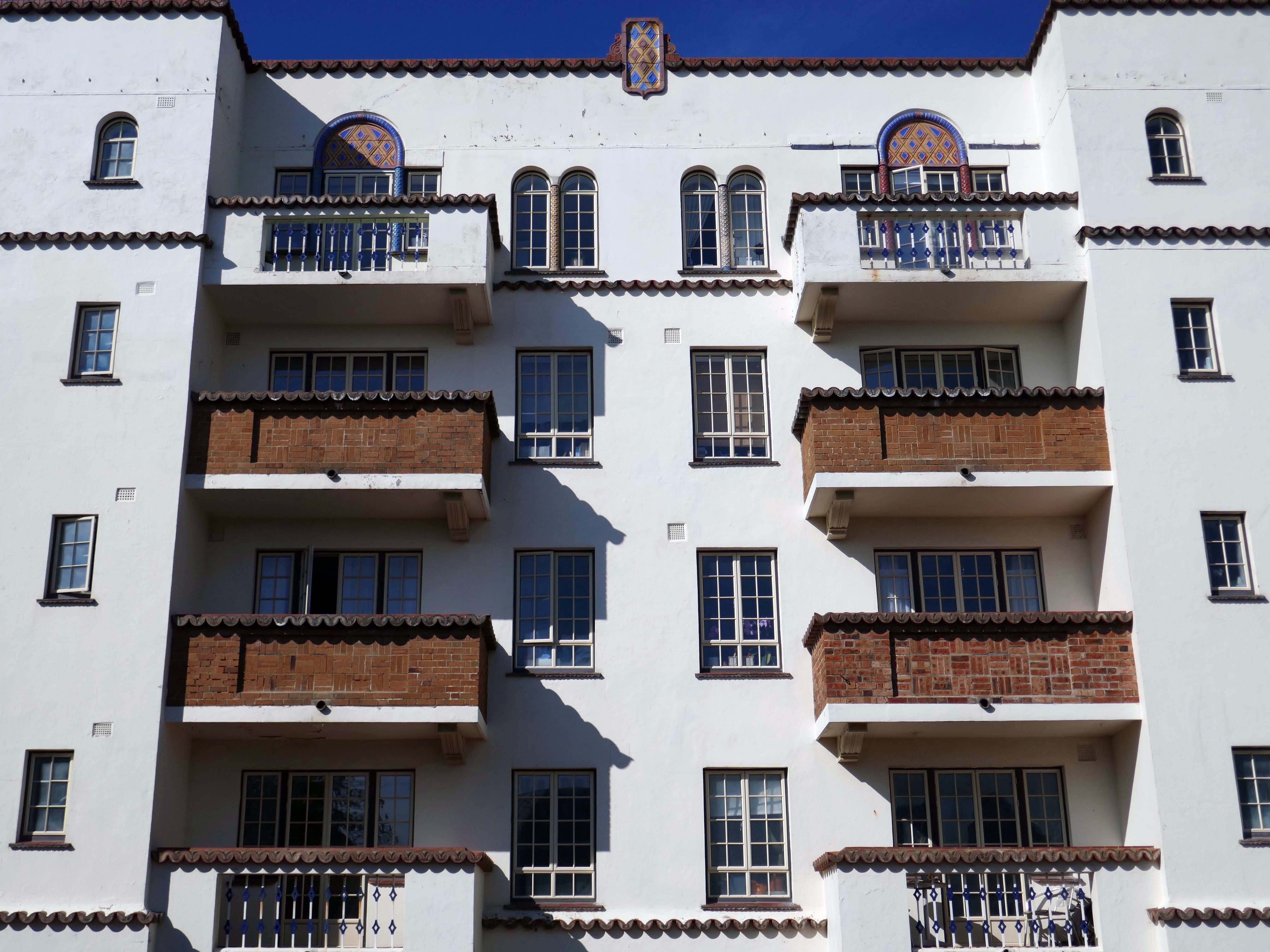
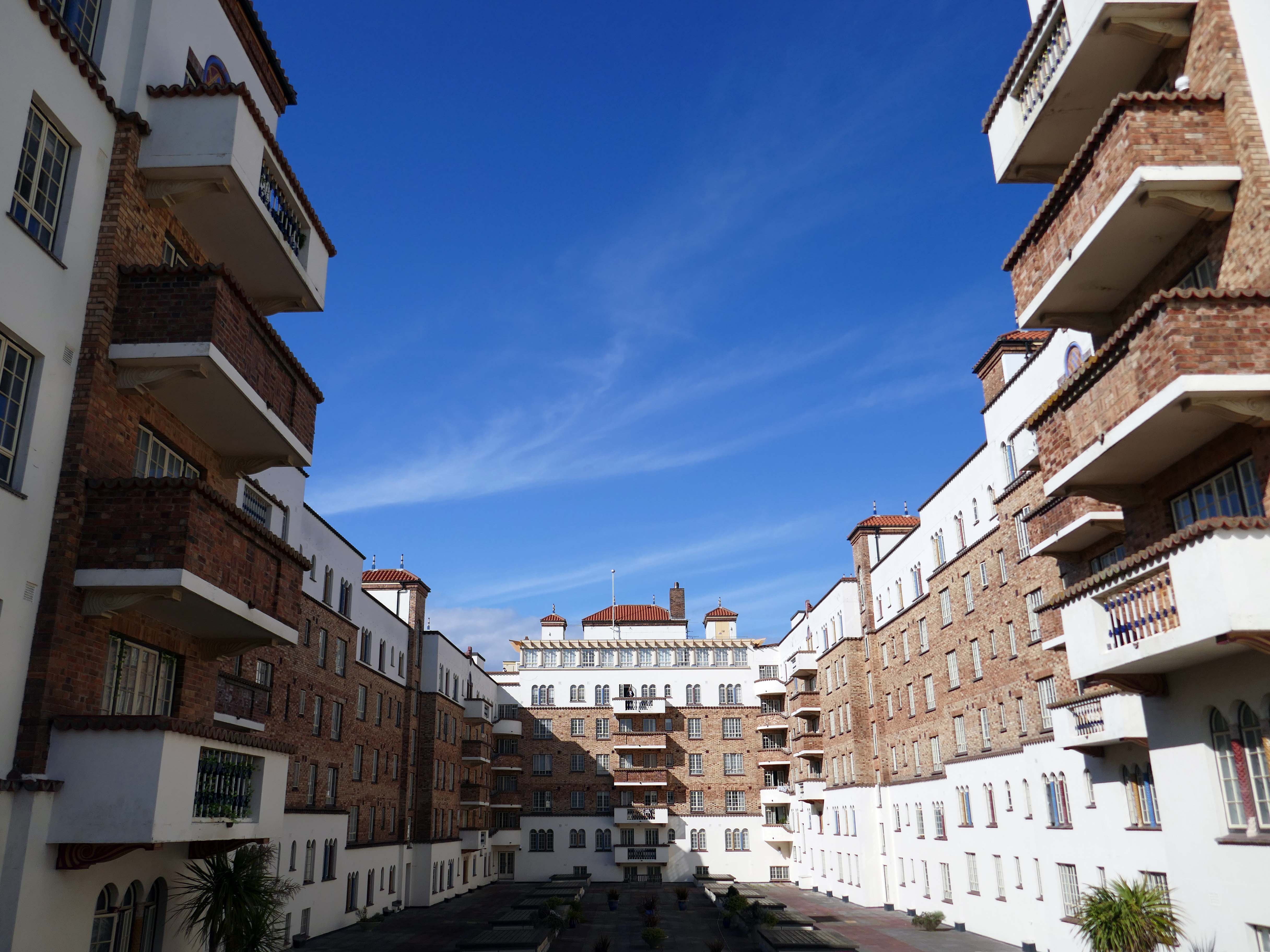
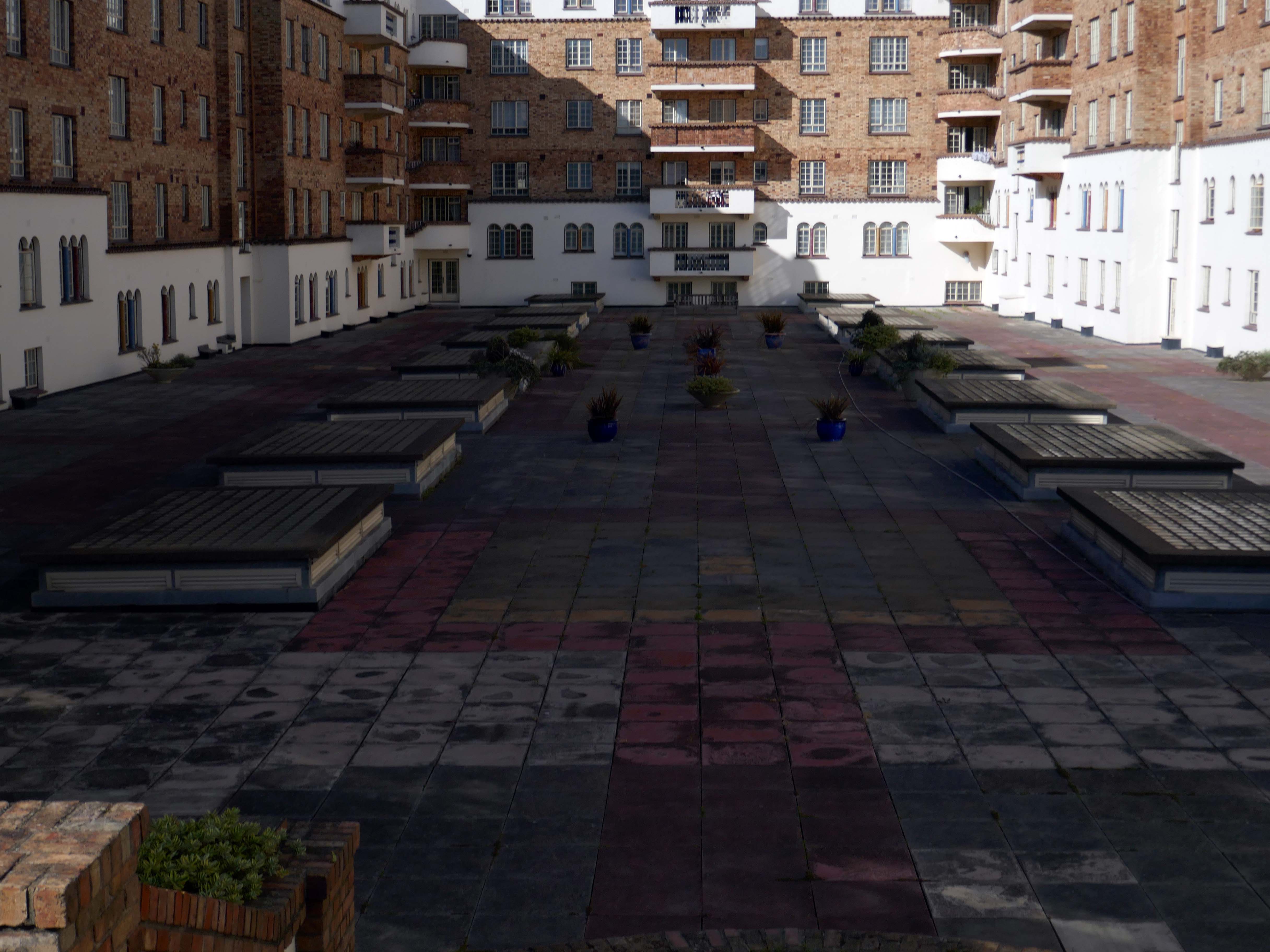
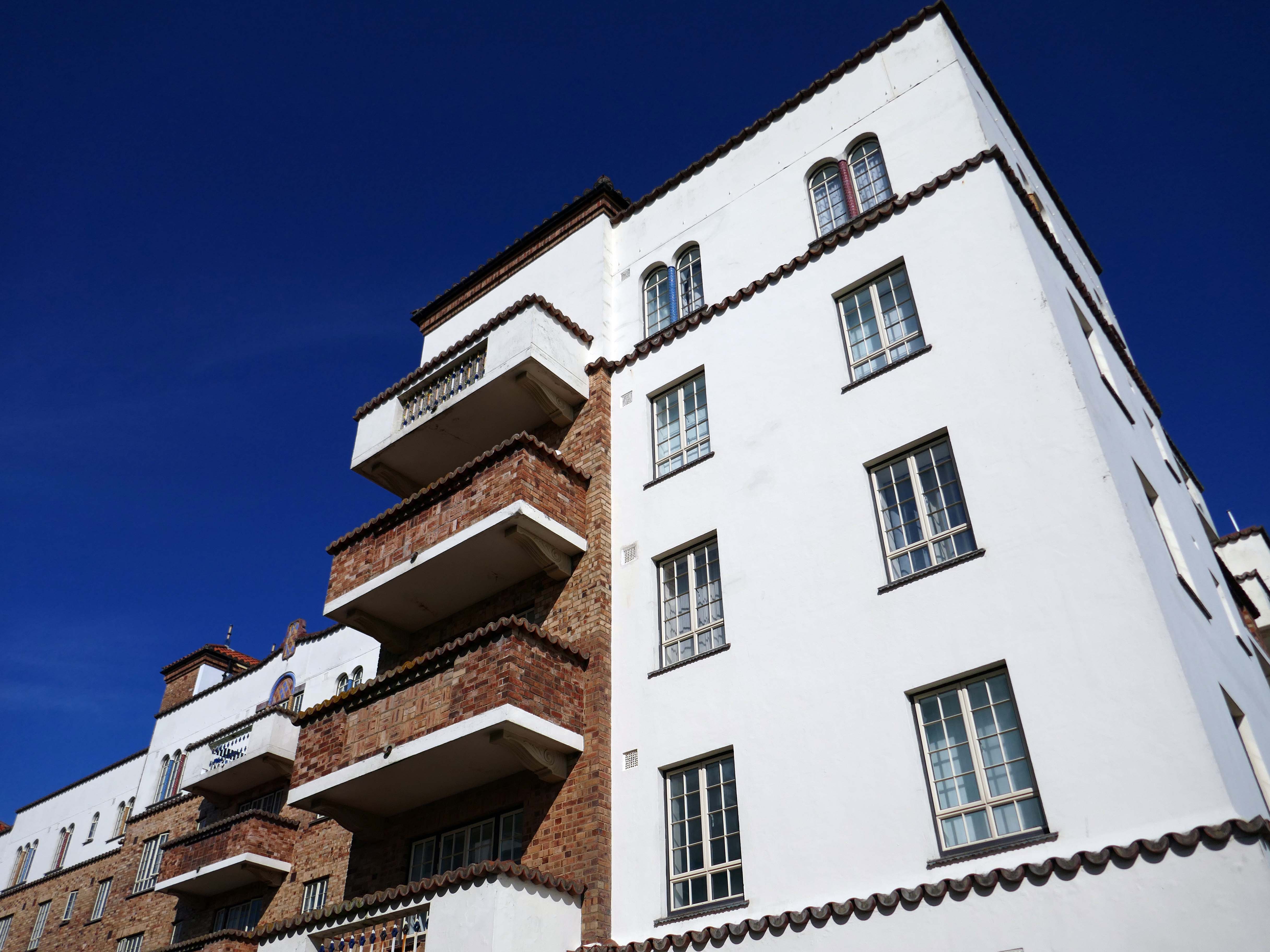
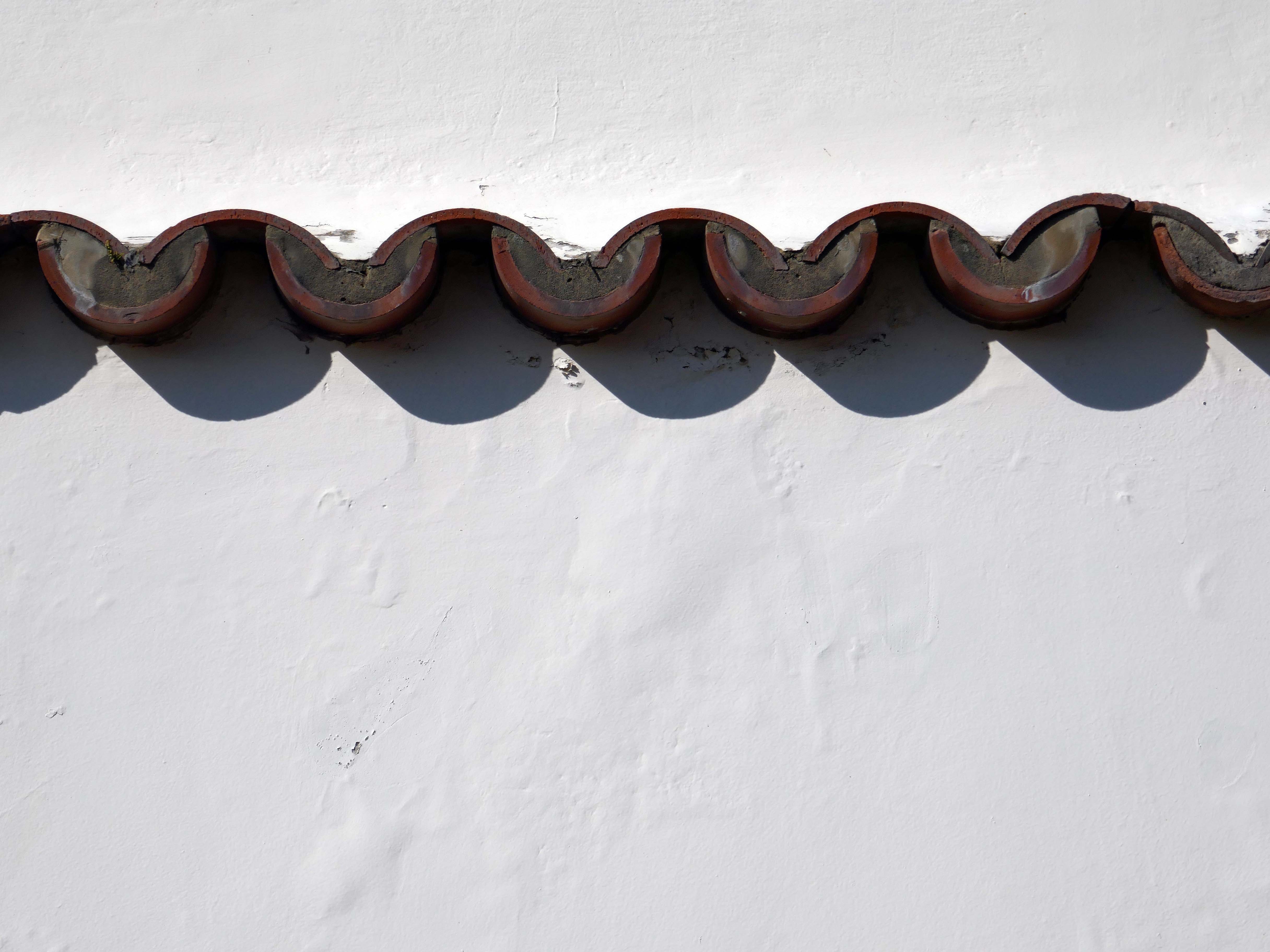
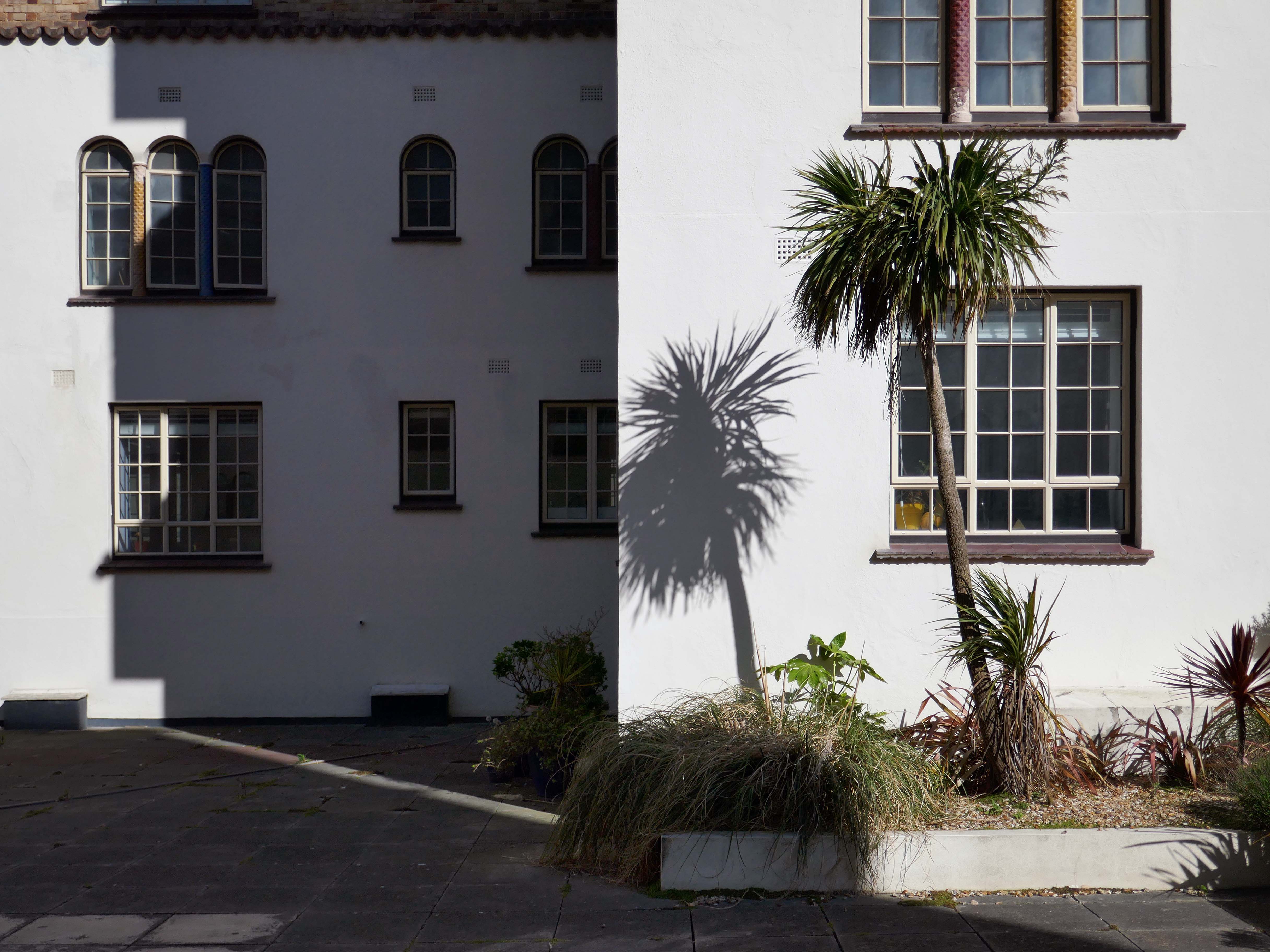
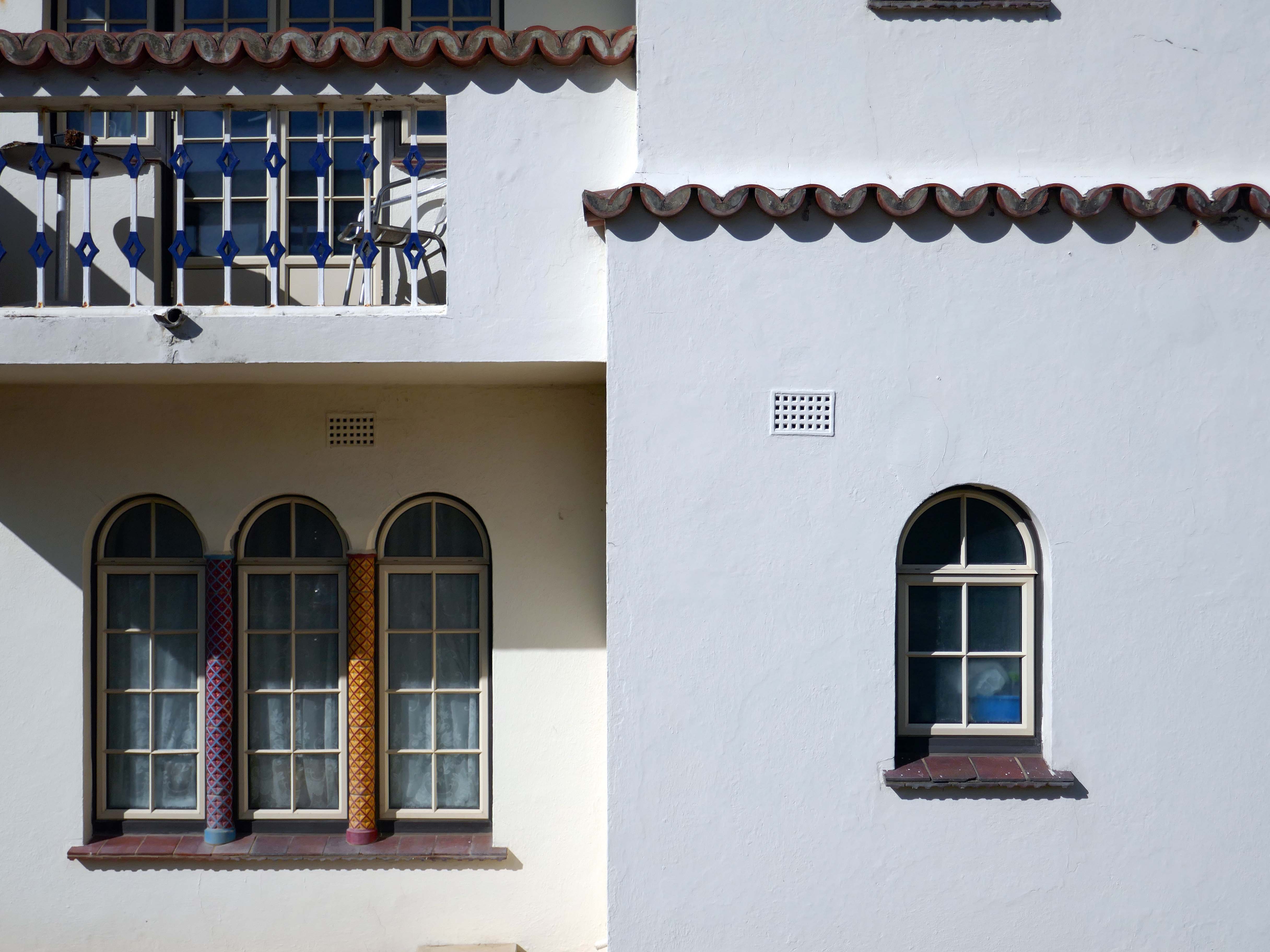
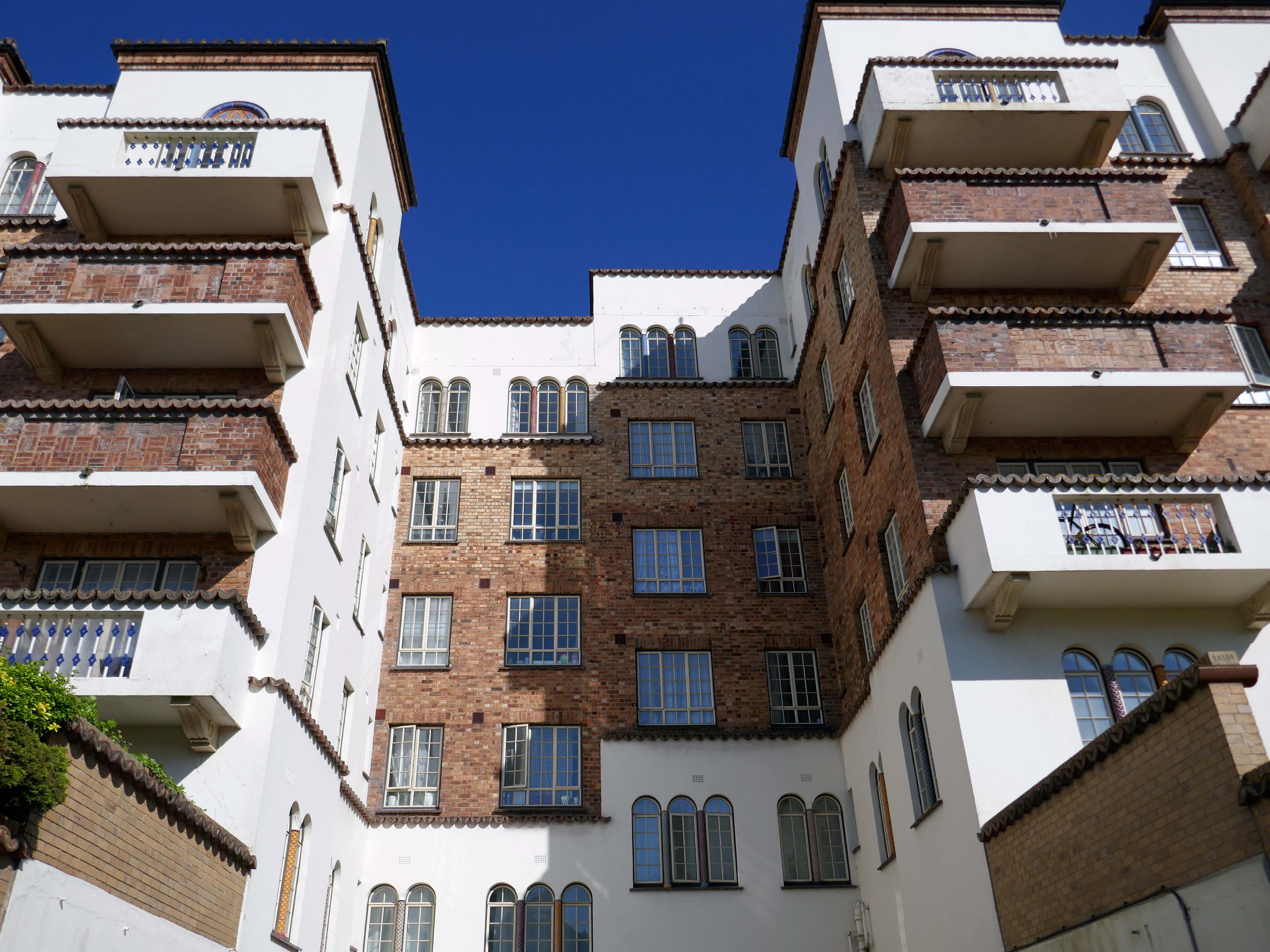
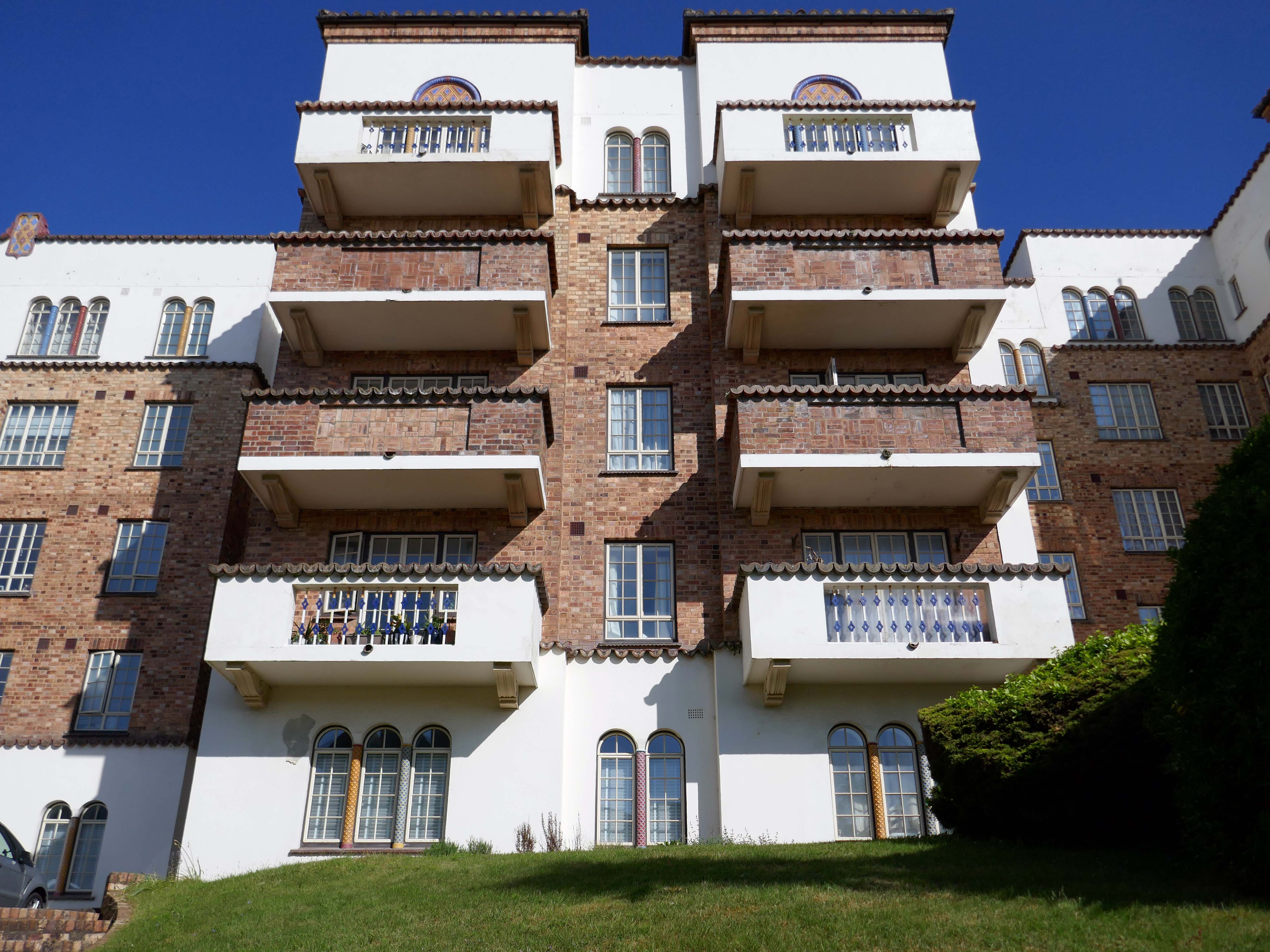
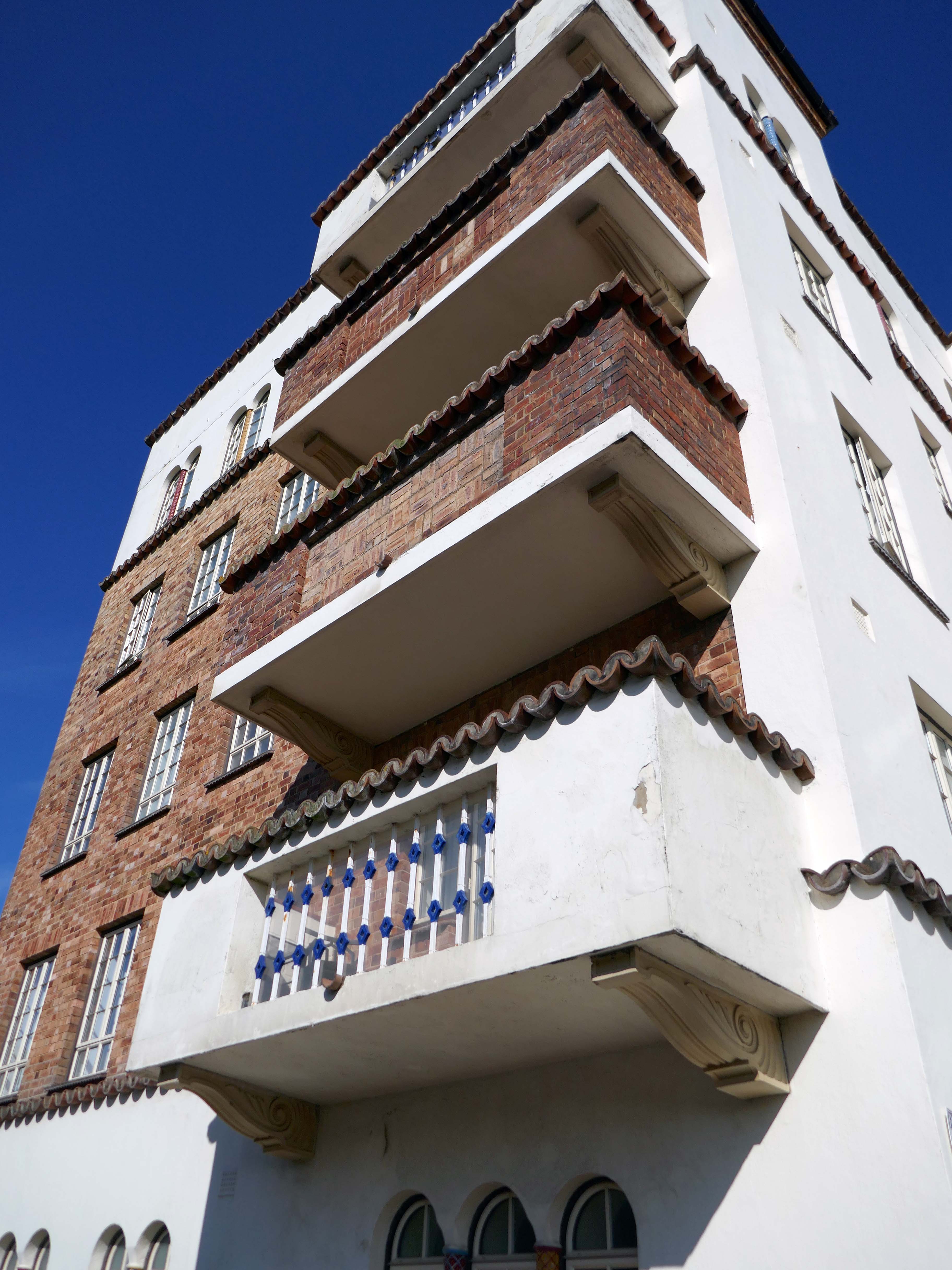
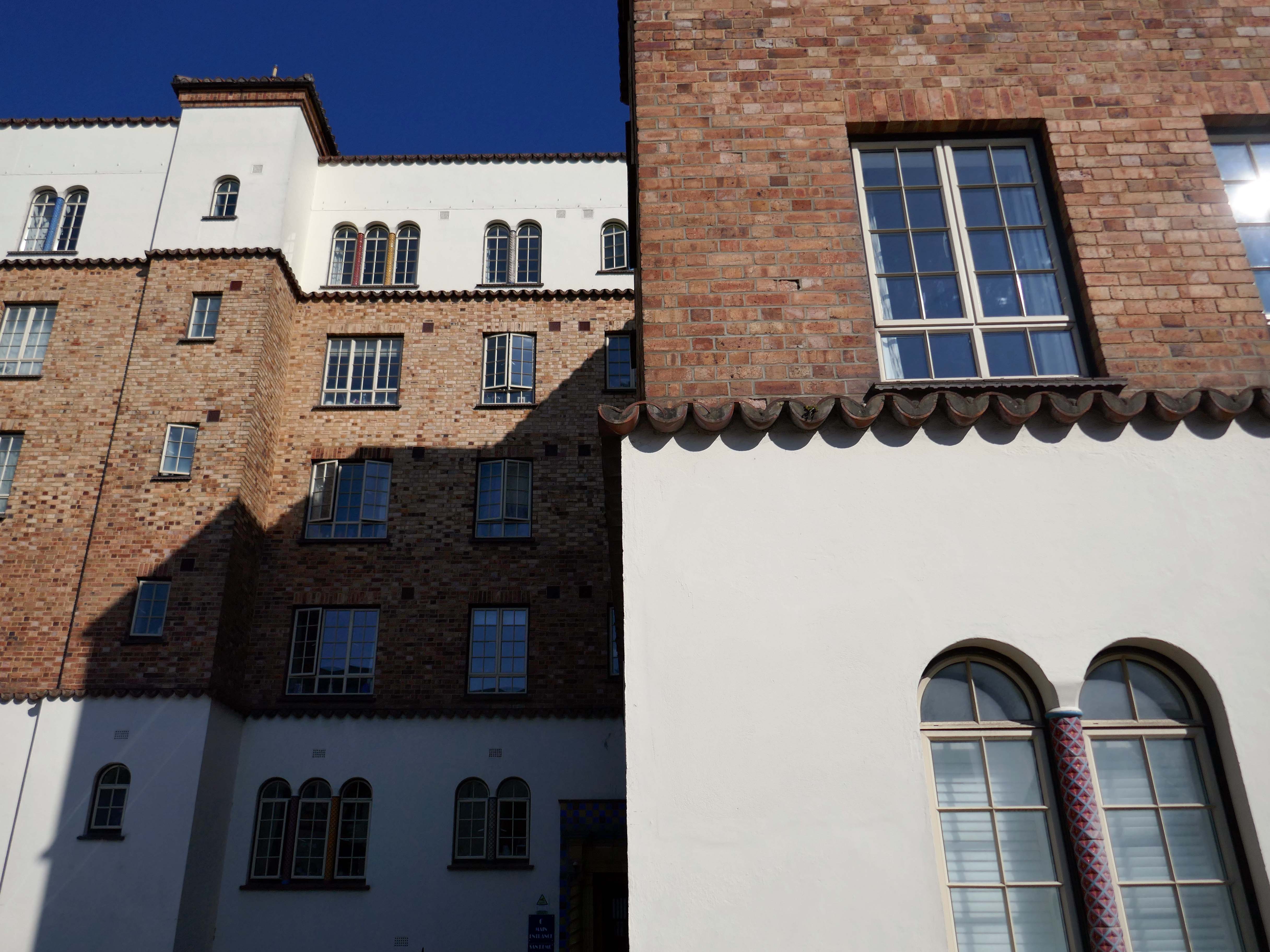
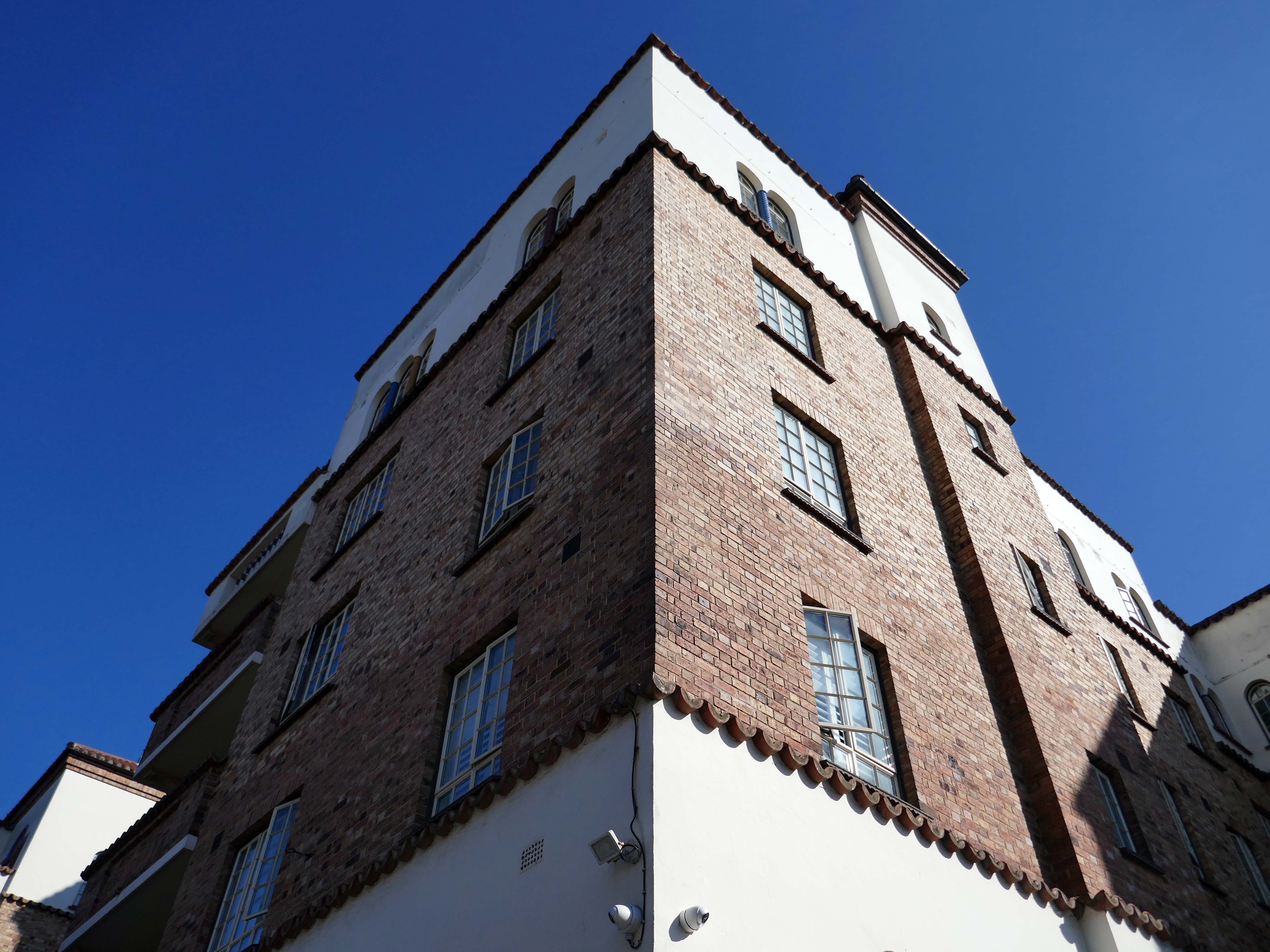
Block of 164 flats, with penthouse and office, over basement garage. 1935-8 by Hector O Hamilton. Pale brick, with areas of render, particularly to ground and upper floors, faience tiling, and concrete floors. Flat roof behind high parapets edged with pantiles, and with pantiled roofs over staircase towers and over penthouse. Single stack serving boiler house. U-shaped plan around central courtyard, set over garage.
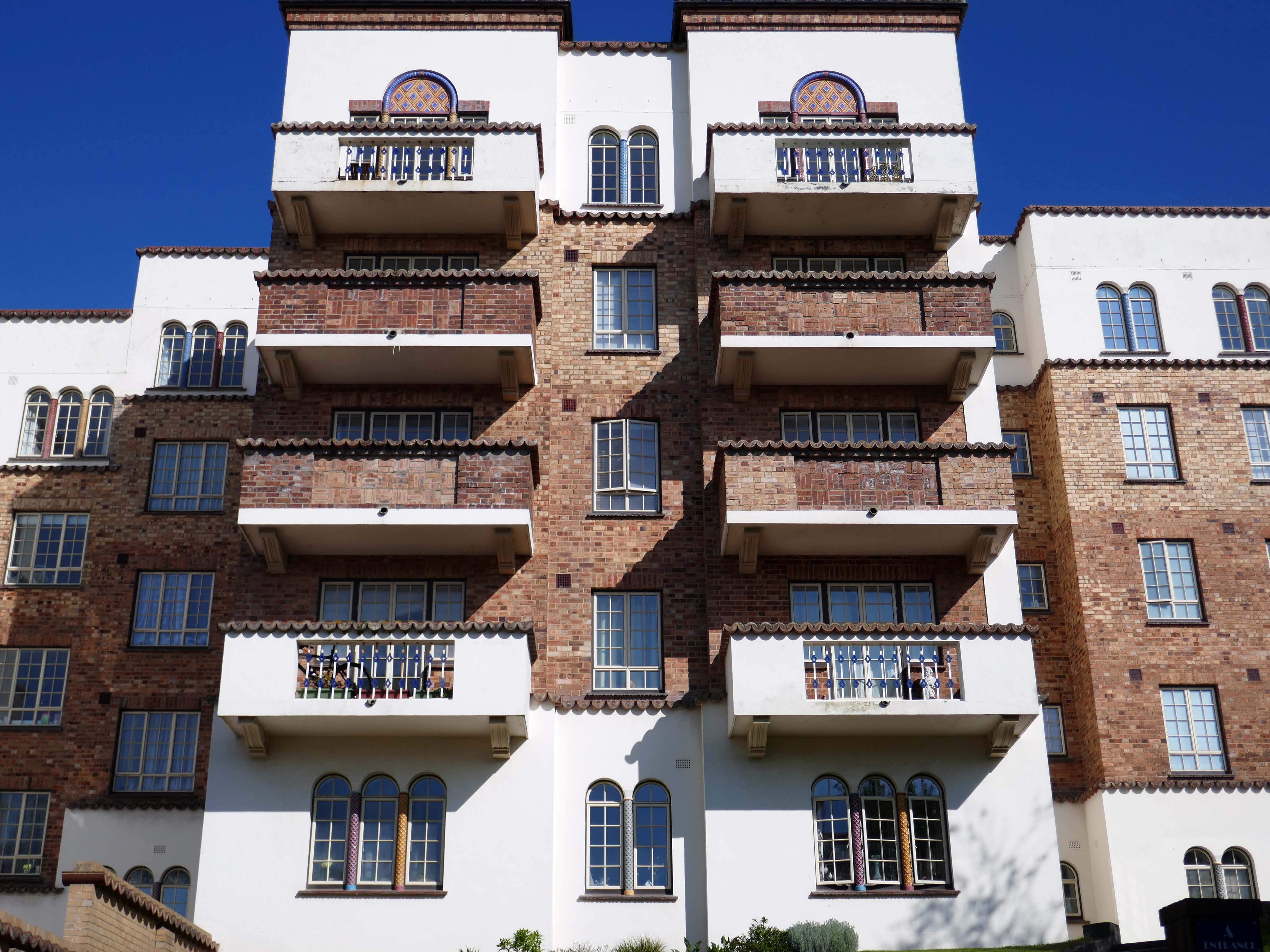
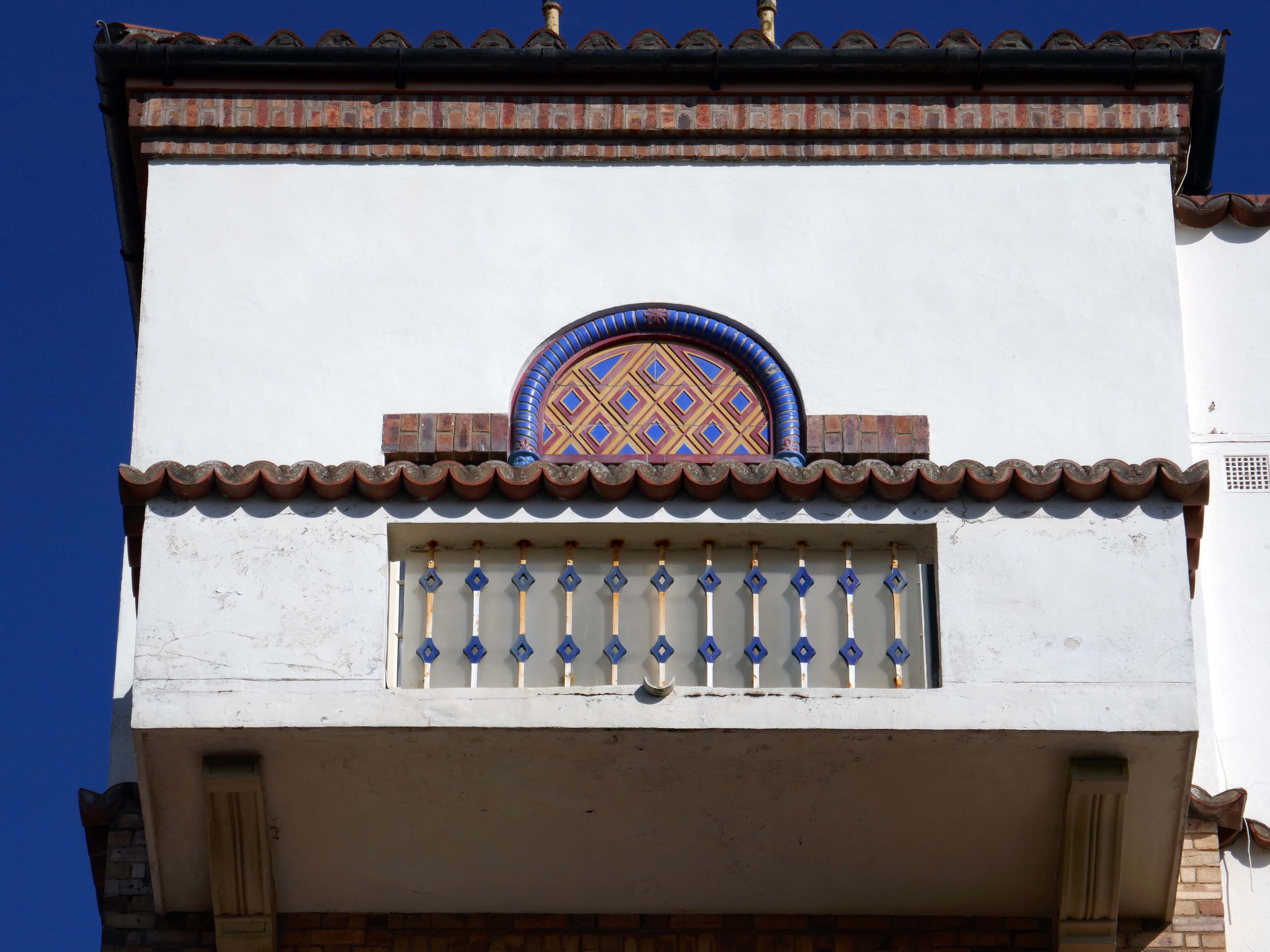
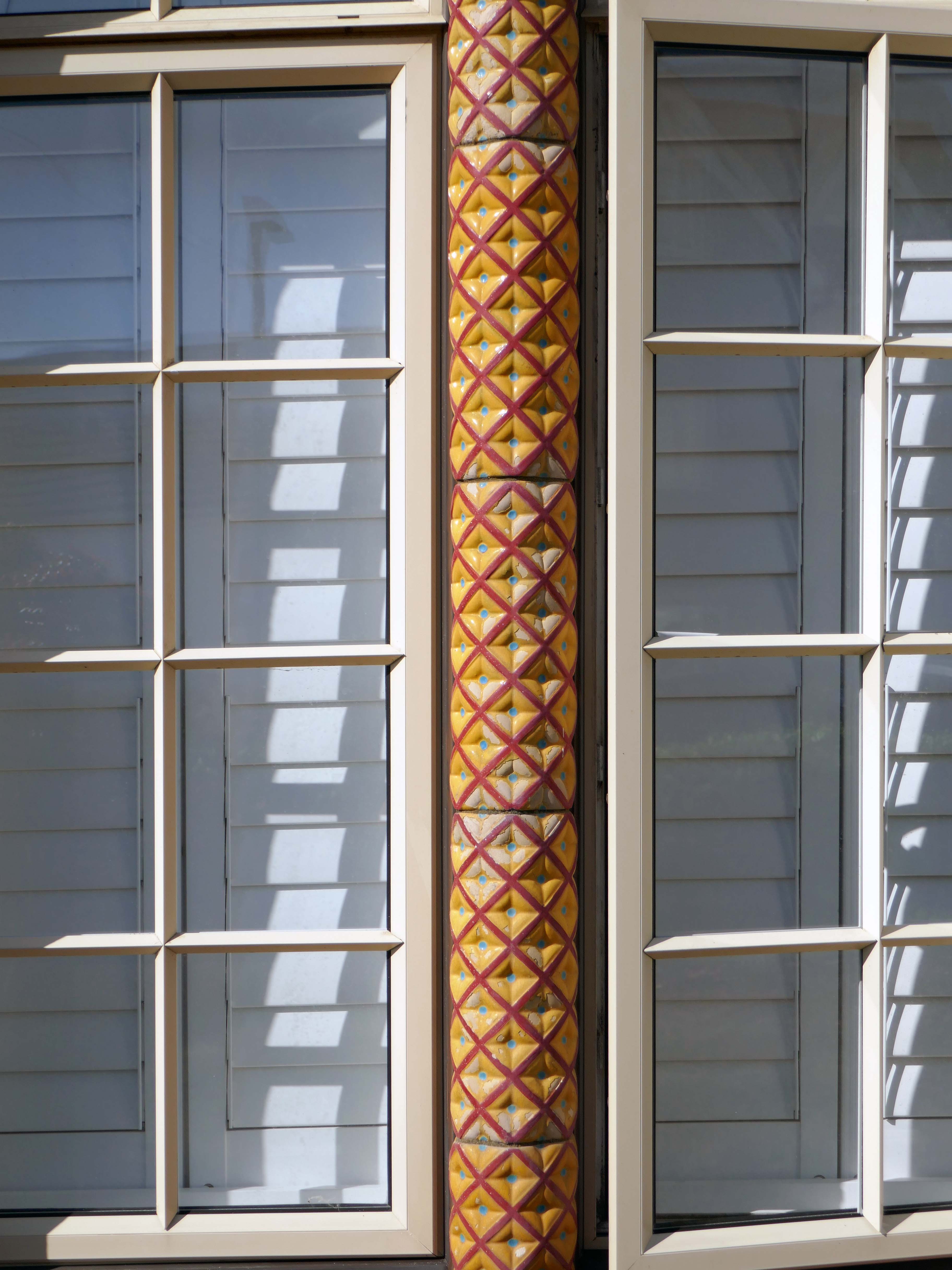
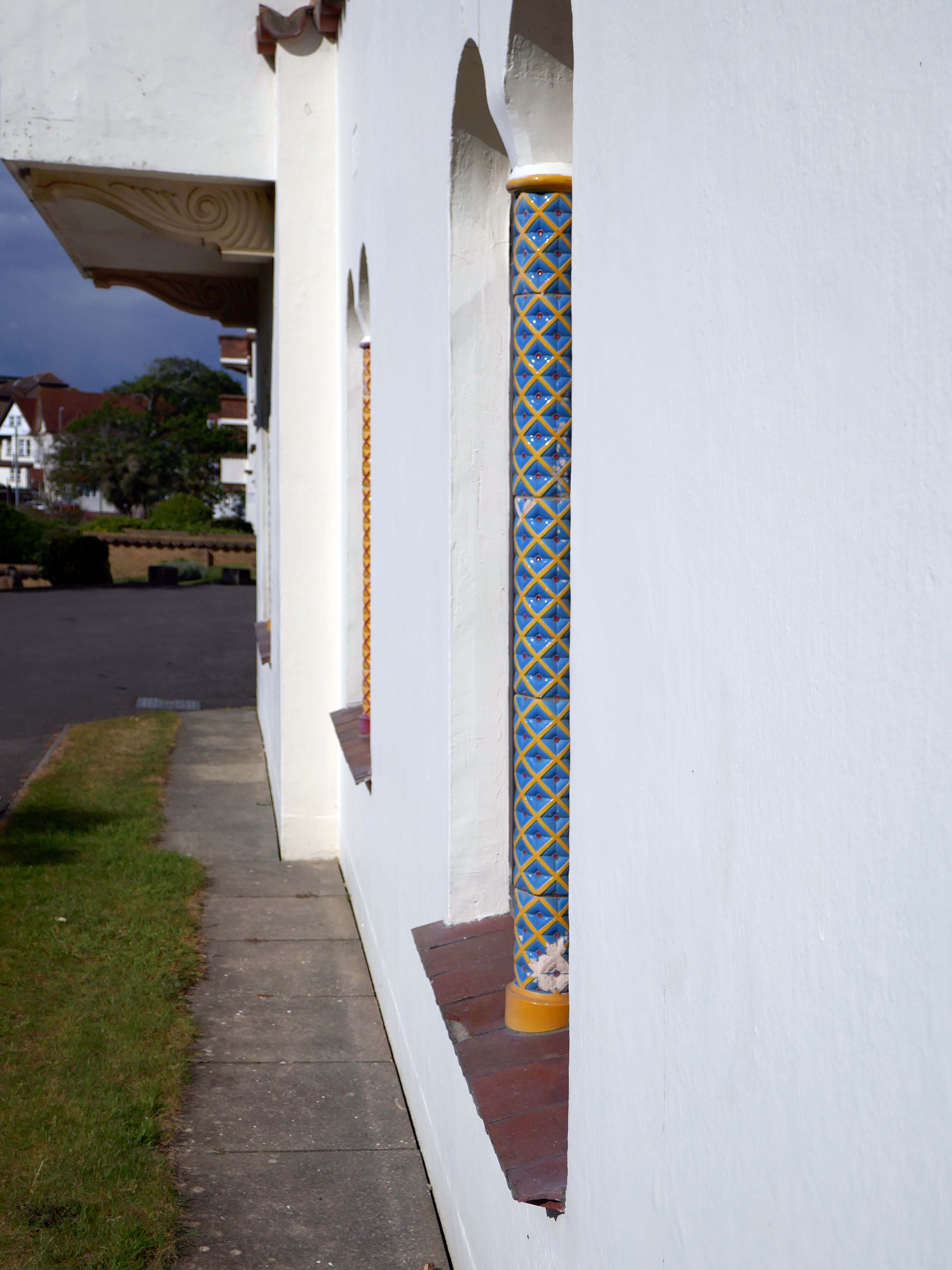
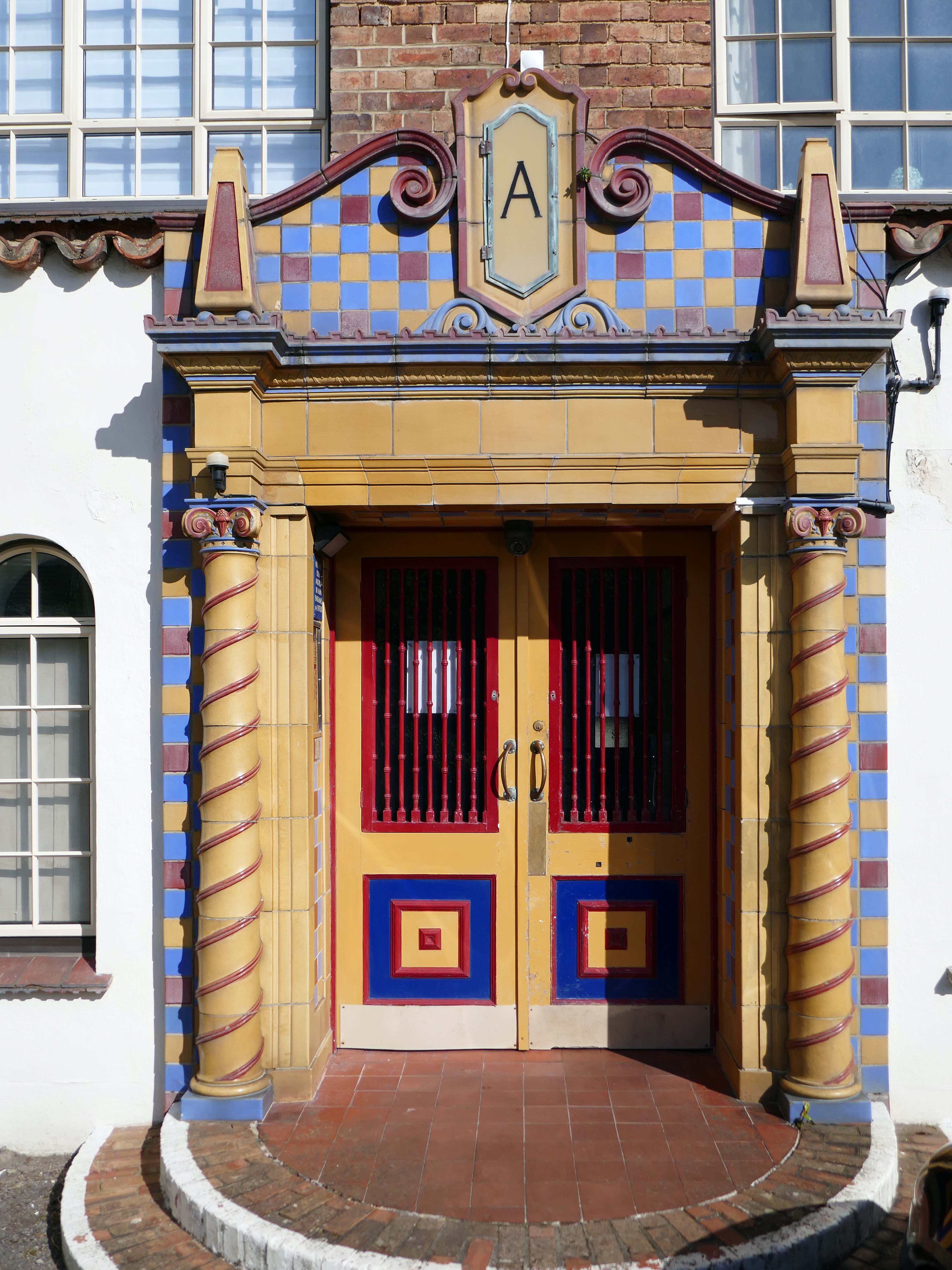
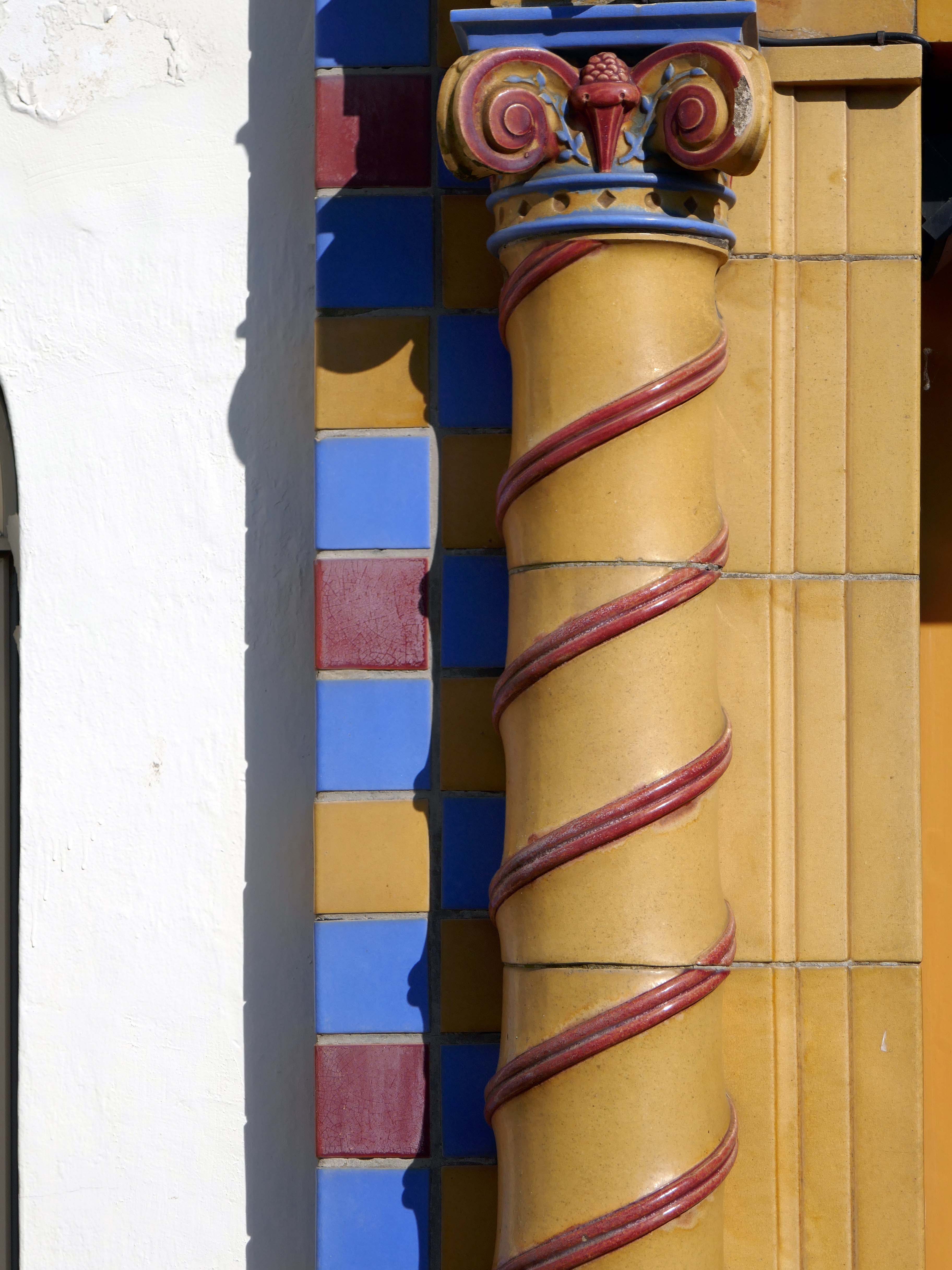
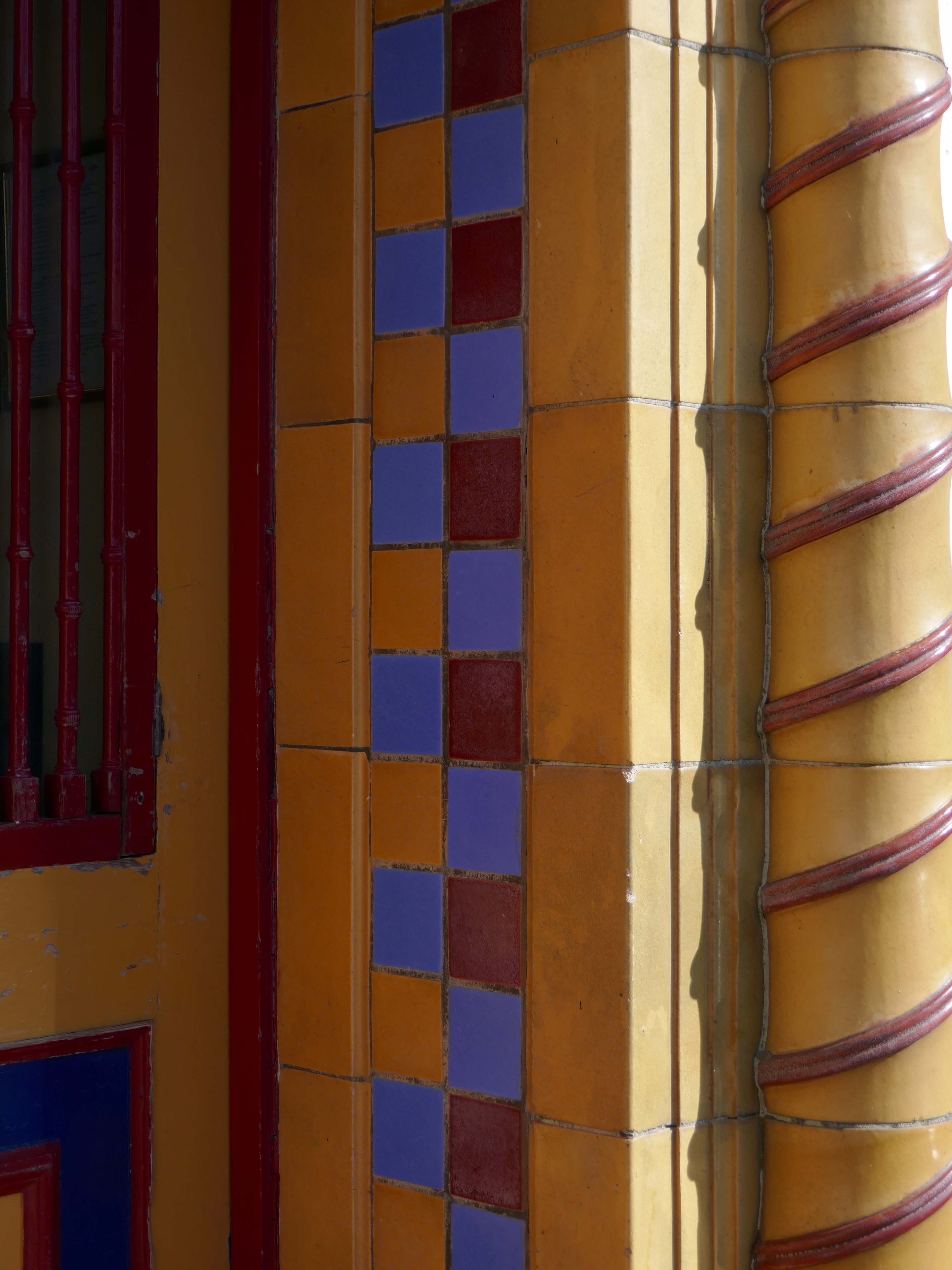
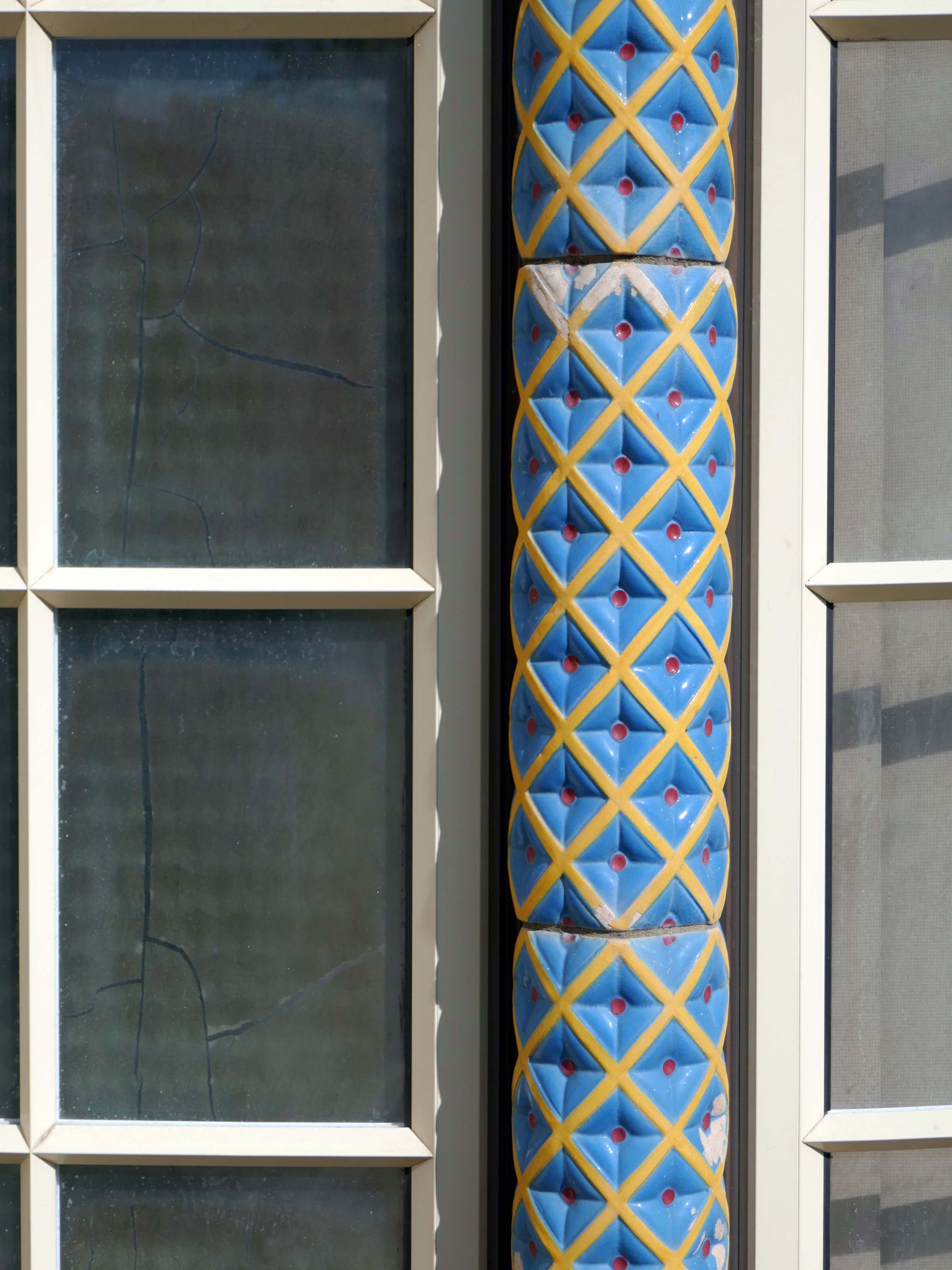
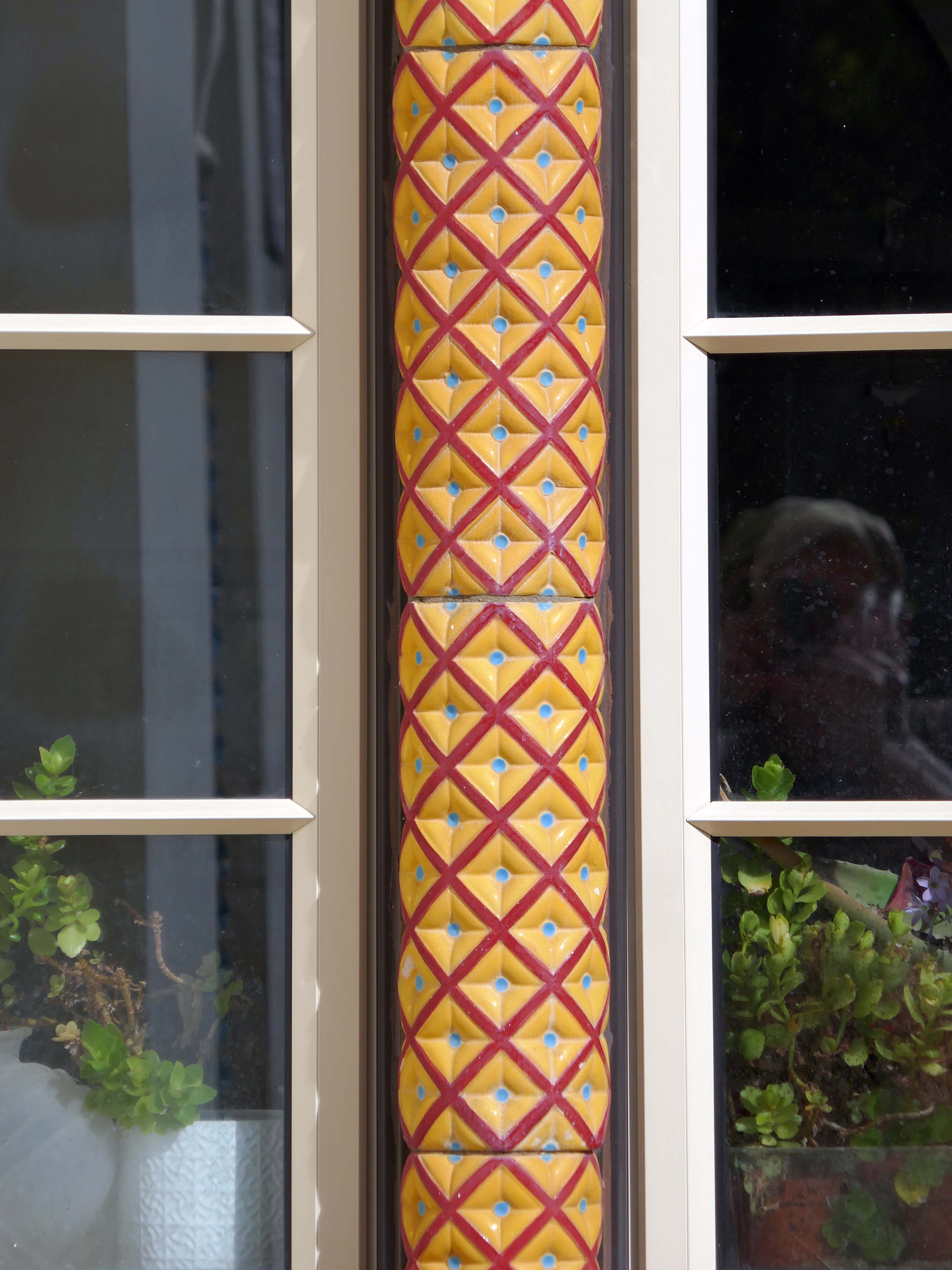
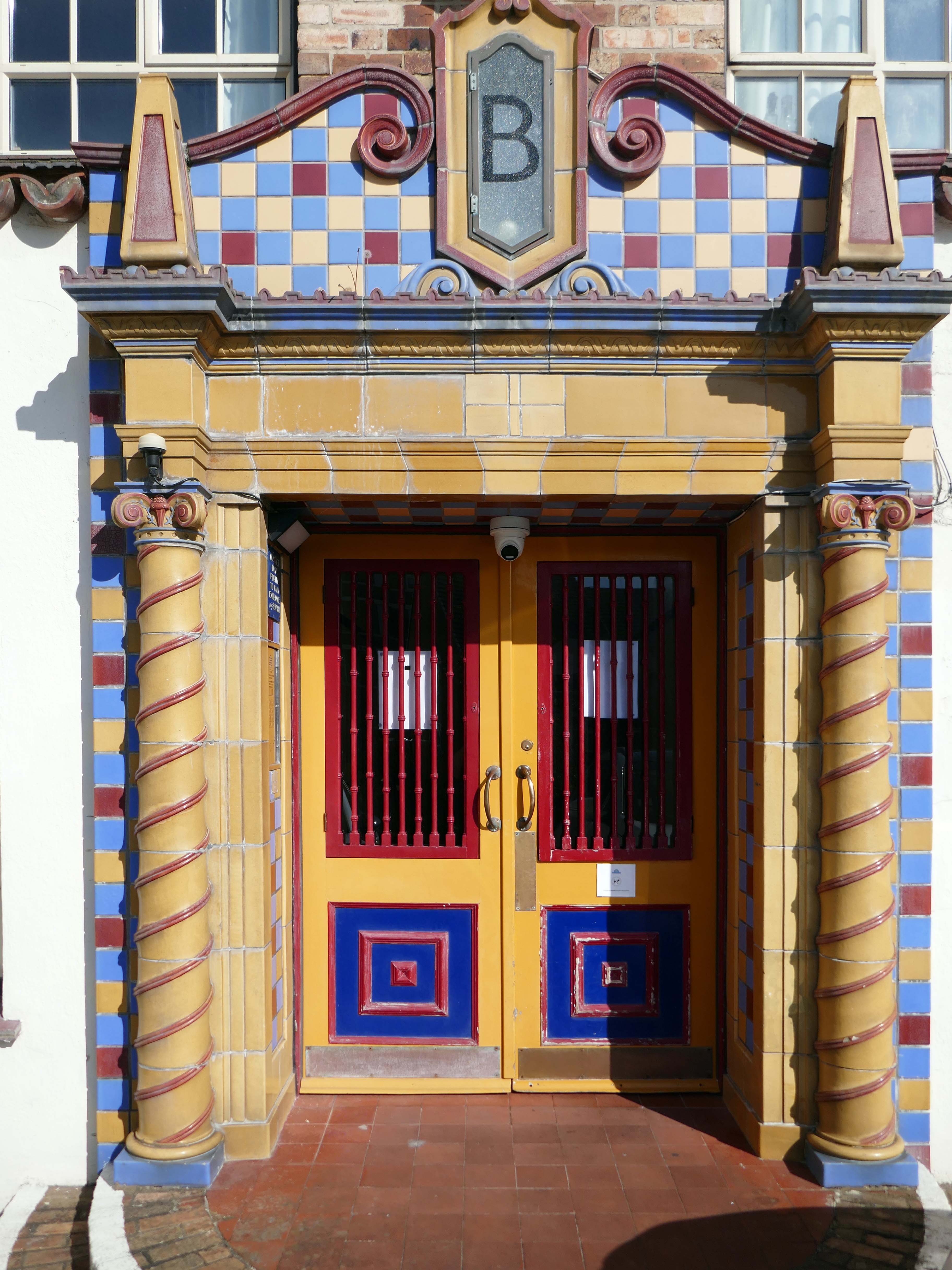
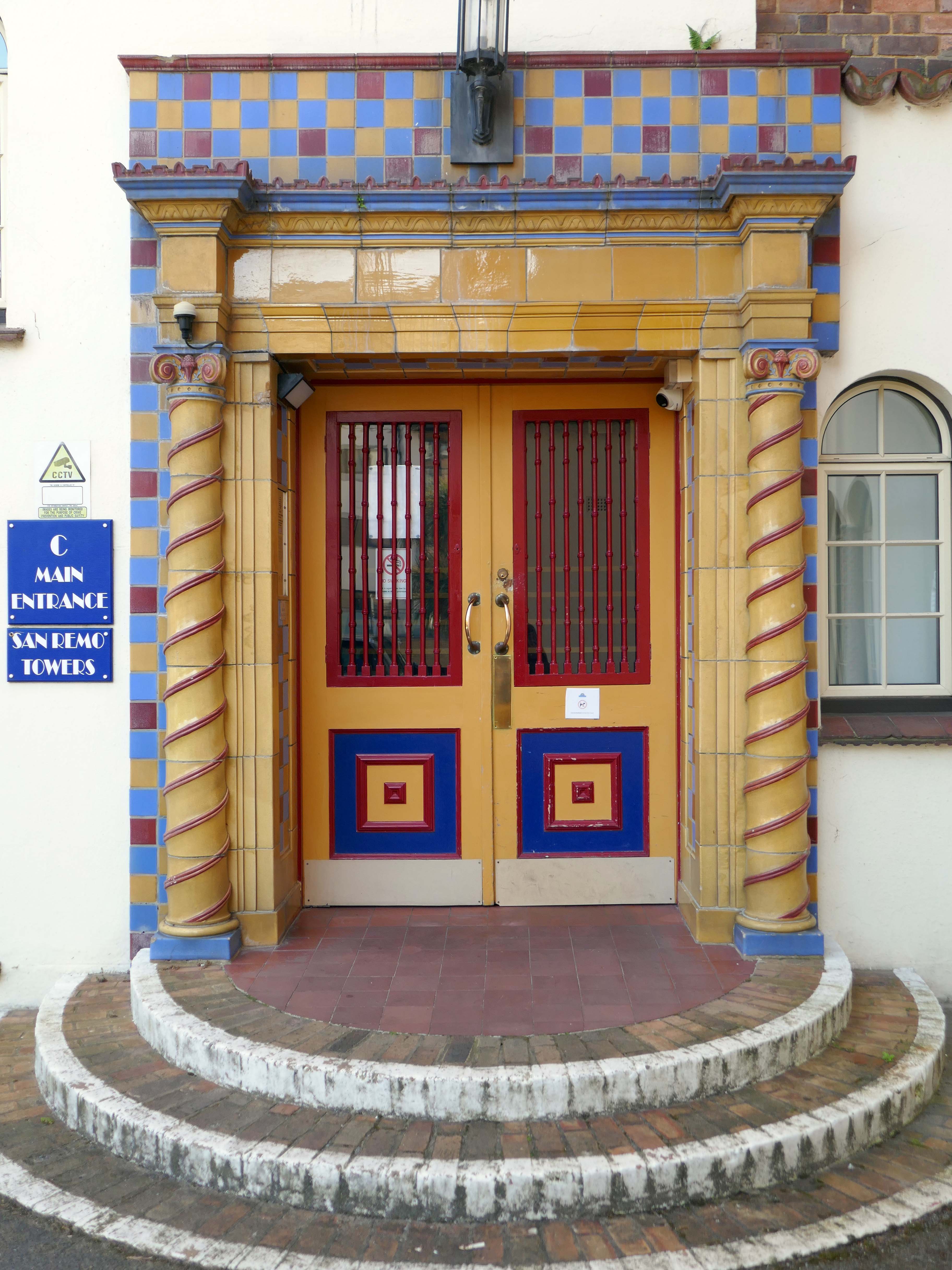
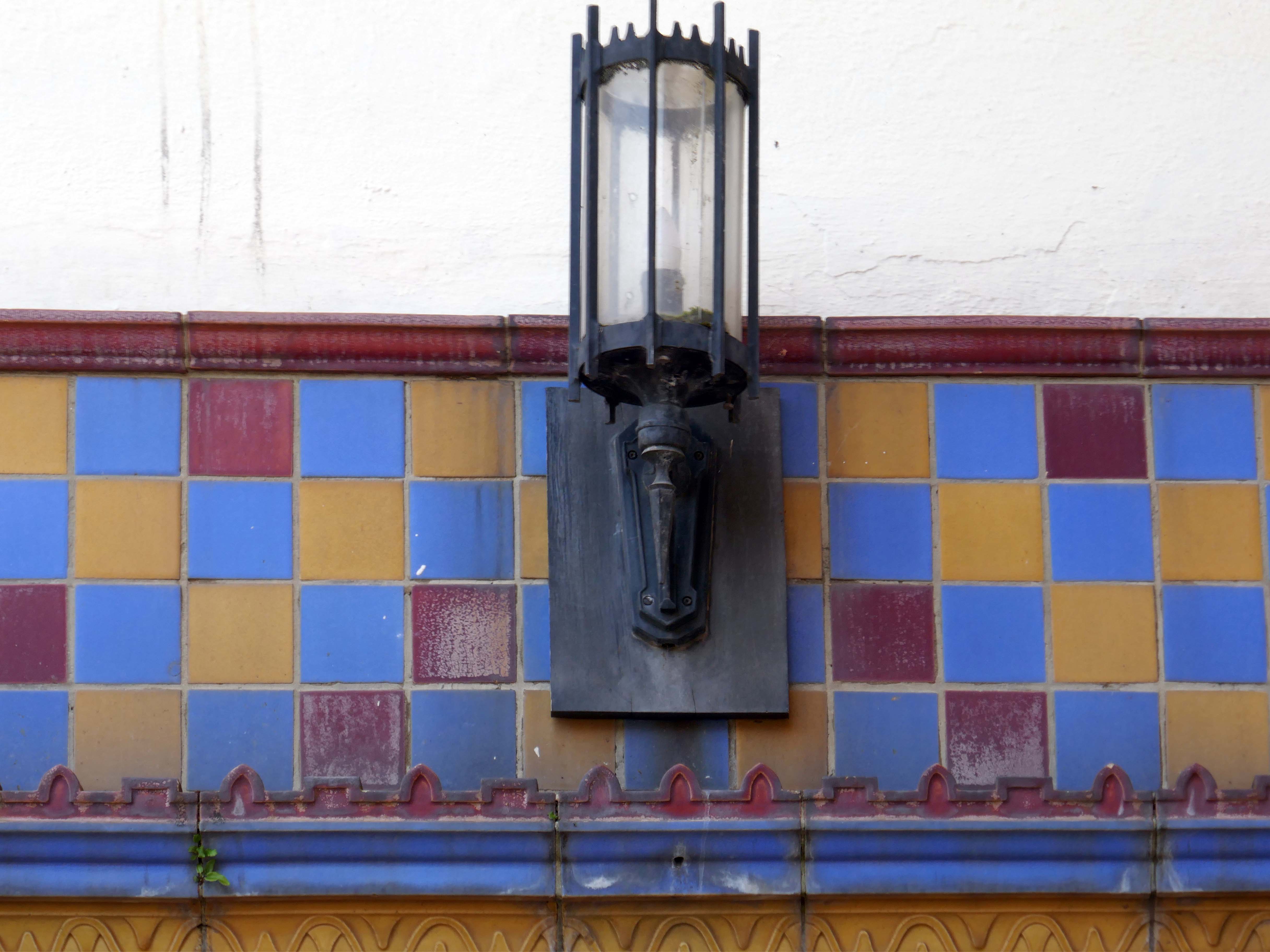
The flats, on five floors, are set in five blocks, with corridor access via separate residents and trade stairs and lift from each of six entrance doors – the central block C is served by the main entrance as well as its own. Through access between blocks on ground floor only. The estate office projects on the ground floor of Block C. The exterior is in a delightful Spanish mission style, with extensive use of coloured faience around doors and in window jambs. Metal casement windows with small panes, round-arched to ground and fifth floor, where coloured jambs predominate. Projecting balconies of brick and render to the larger flats, with coloured balustrades and supported on console brackets. Glass rooflights to the basement car park. The six entrances with double panelled doors, set in lively decorated surrounds of brightly coloured faience, with barley sugar engaged columns under Ionic capitals and block designation – A-E, main entrance, in faience lettering. French doors with small panes to courtyard. Attached brick retaining walls at entrance to courtyard.
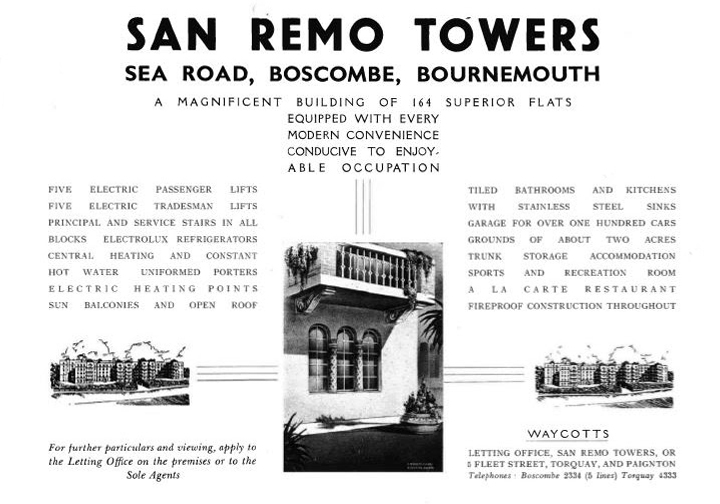
Interiors: The residents’ staircases with jazz modern metal balustrading, those for tradesmen with stick balusters. Interiors of flats not inspected but understood to have been modernised. San Remo Towers is one of the most comprehensive seaside developments of flats to be erected in the 1930s. It was planned as early as 1935-6 by Armstrong Estates Limited of Guildford. It was opened on 1 June 1938 as ‘a magnificent block of 164 superior flats, 296-260 per annum rental, garage for 130 cars’. Facilities offered as inclusive in this price included centralised hot water and central heating, an auto vac’ cleaning system, centralised telephones, a resident manager, a porter, daily maid, boot cleaning and window cleaning services. There was a Residents’ club with a reading room card room, billiard room and library, and a children’s recreation and games room. There were kiosks in the ground-floor lobbies selling tobacco and convenience items, where the staff took orders for the local tradesmen. The fifth-floor restaurant offered a la carte meals, which could be taken at pension rates of 38s per week. A simpler dinner cost 2/6d.
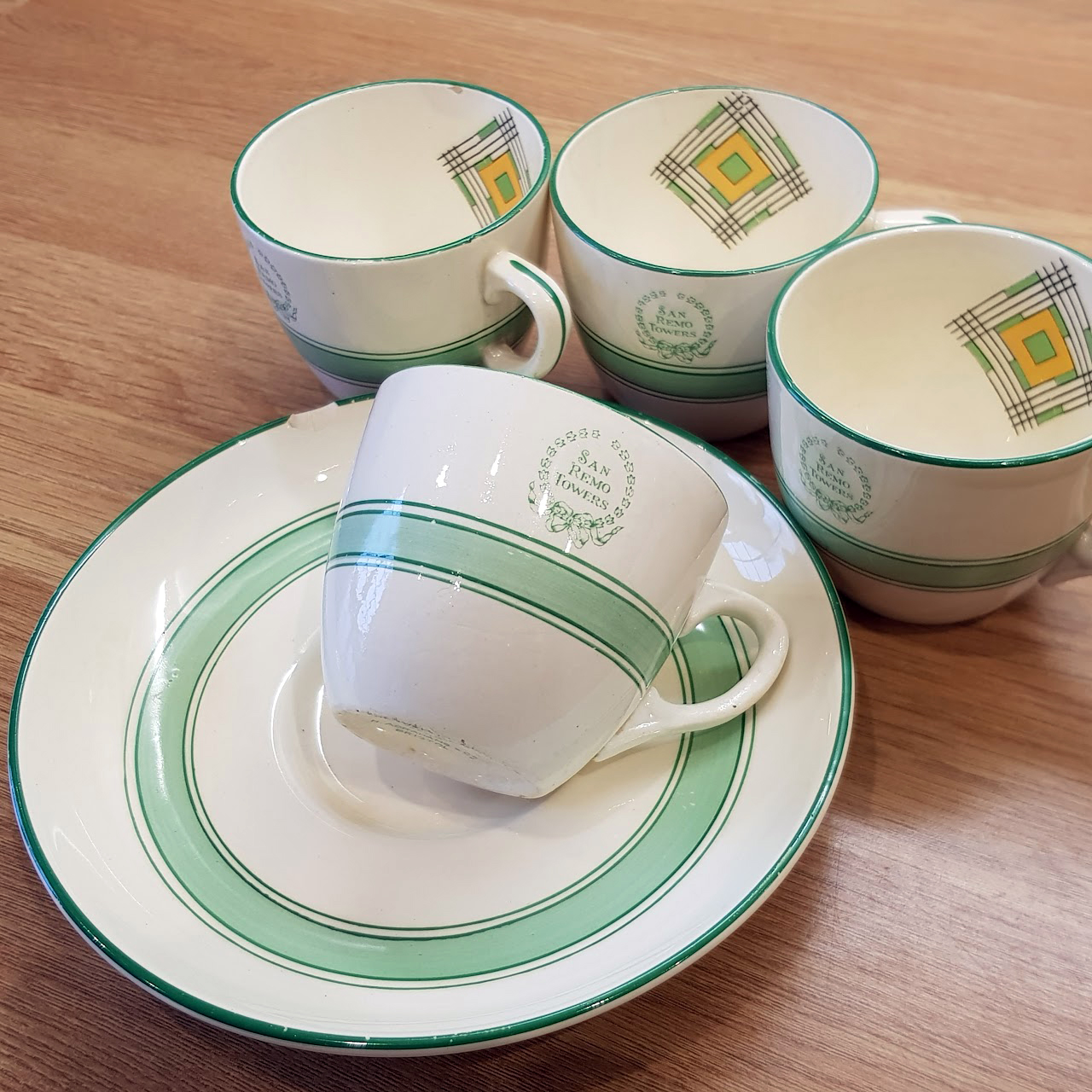
Restaurant Crockery 1940
The use of an American architect, Hector O Hamilton, may be an explanation for the building’s large range of facilities, including the grand underground car park and sophisticated servicing. The residents’ club was converted to a penthouse in the 1950s, but the block retains its select tone. The elevations were described in 1940 as dignified and select and harmonise with the general surroundings. Today they are admired as for the very striking way in which they stand out from their surroundings as a piece of 19305′ exotic fantasy transported to seemly Bournemouth.
San Remo Towers is one of the most impressive seaside developments in England of its period. Source: Waycotts, San Remo Towers, 1940 letting brochure.
First seen in 2015 on my South Coast cycling tour, today I was on foot with time to wander around San Remo Towers.
For me it is the most charming and capricious of seaside apartment blocks – a playful symphony of faience and fancy. An exotic dose of Californian Hispanic on the Dorset coast.
Today, most of the flats have been refurbished and sold to independent buyers. In 2019, the lessees worked together to buy the building and it is now owned by San Remo Towers SRT Freehold Ltd. Not all the flats have share of freehold yet, but the option is available for any lessee who wishes to join.
Hector O. Hamilton, young New York architect, who won a share in the first prize with his design for the projected Palace of the Soviets in Moscow, announced yesterday that he would sail for Russia in a month at the invitation of the Soviet Government to aid in the construction of the building. Although persons familiar with Russia have warned that he would be paid in rubles and probably not be permitted to take the $6,000-his share in the prize money-out of the country, Americans who have worked there point out that it is the policy of the Soviet Government to pay technical men from this country in dollars. They say also that while it is against the law to take rubles out of the country this law does not apply to foreign currency.
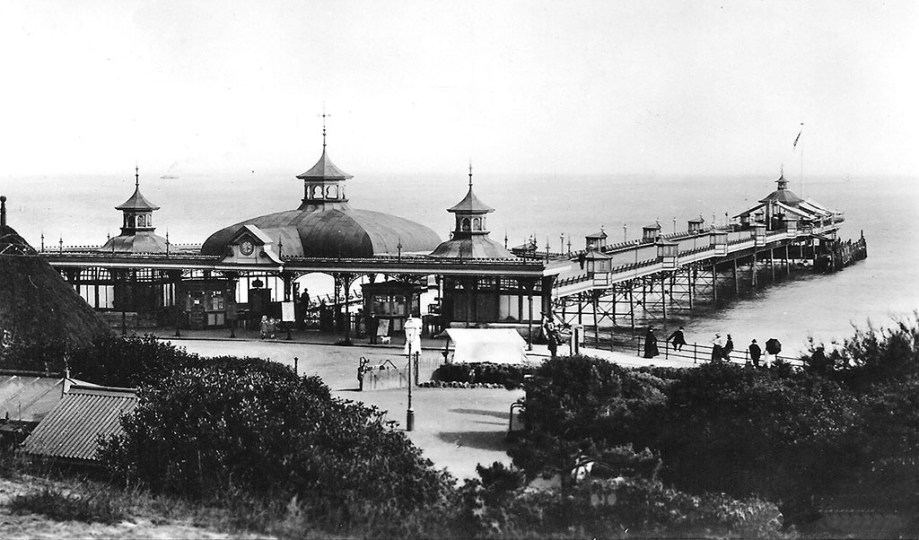
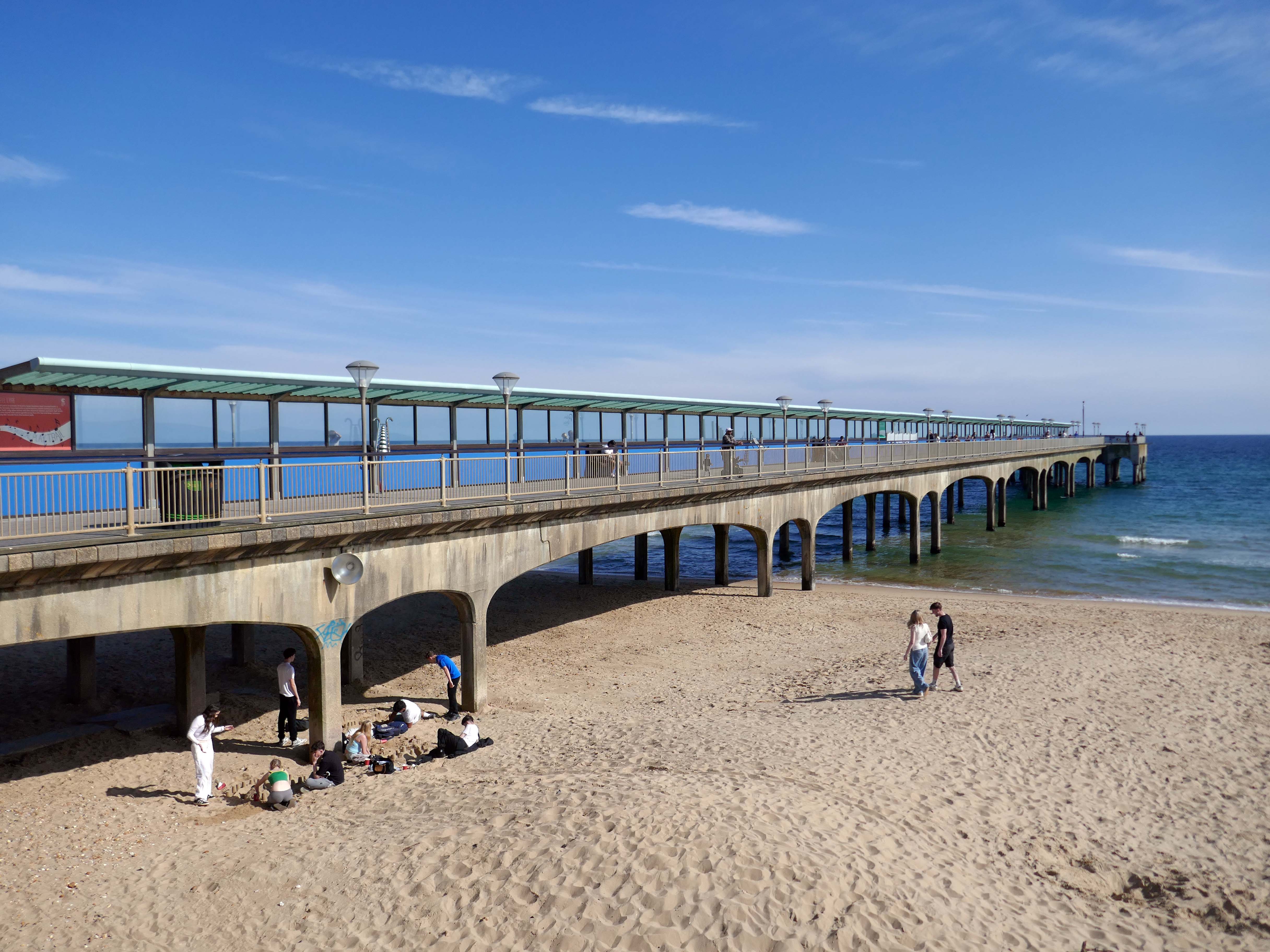
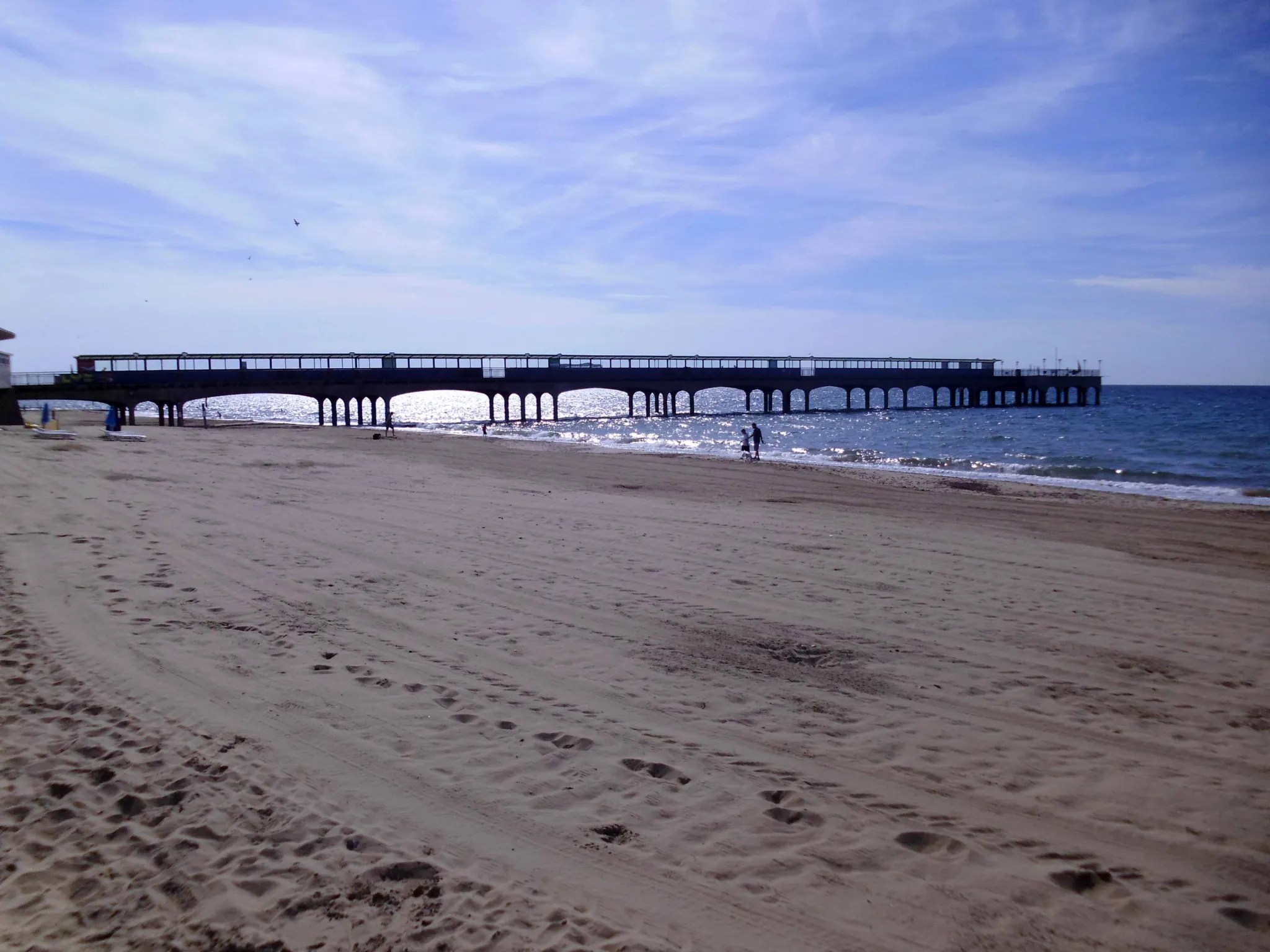
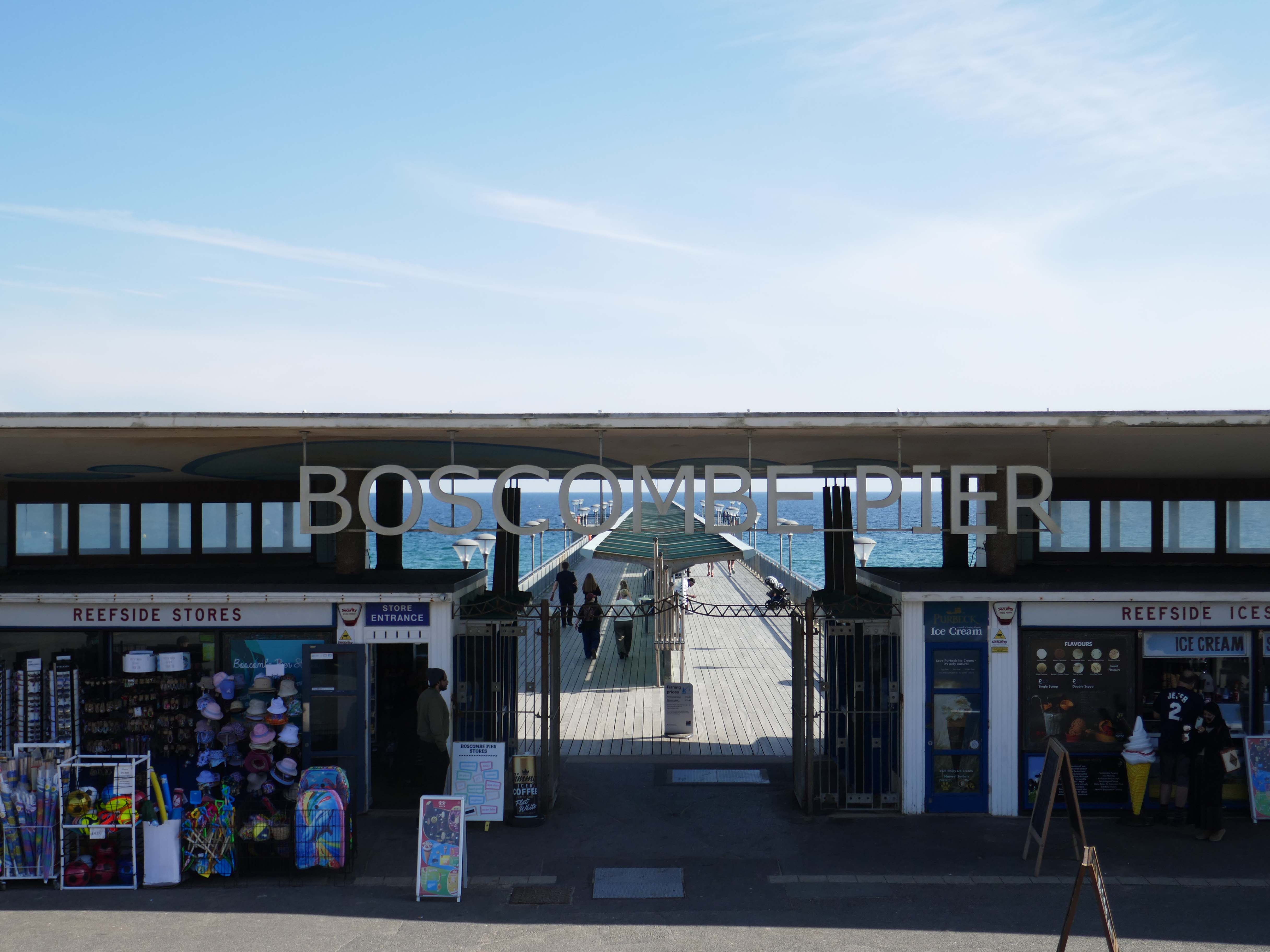
The Boscombe Pier Company was formed in 1886 and the first pile was laid on 11th October 1888. Designed by Archibald Smith, the 600 foot pier opened on 28th July 1889.
The local council took over the pier in 1904 and erected buildings at the entrance and on the pier-head. Facilities included a busy steamer landing stage.
In 1924/5 and 1927, the head was renewed in high alumina concrete. Between 1958 and 1960, the neck was reconstructed using reinforced concrete. In 1940, the pier was breached for defence reasons.
Between 1958 and 1960, the neck was reconstructed using reinforced concrete.
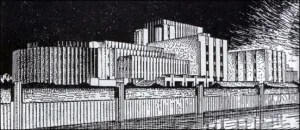
A restaurant and the Mermaid Theatre were built at the pier-head in 1961 although the ‘Theatre’, in fact, opened as a covered roller-skating rink for its first two seasons. In April 1965, the leaseholder, Cleethorpes Amusements, converted it into an arcade. The council formally took over the Mermaid ‘Theatre’ in 1988 when the lease ended.
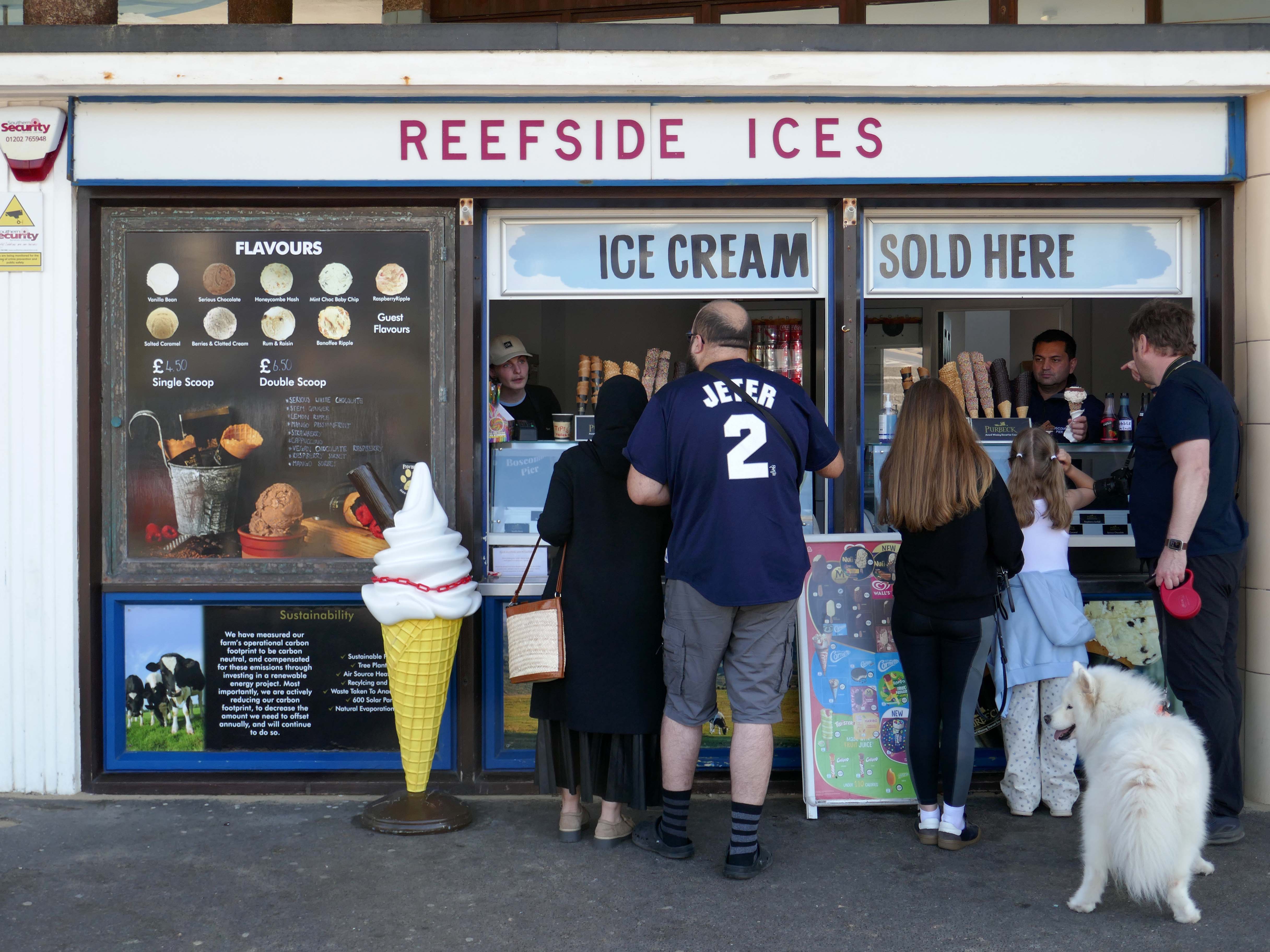
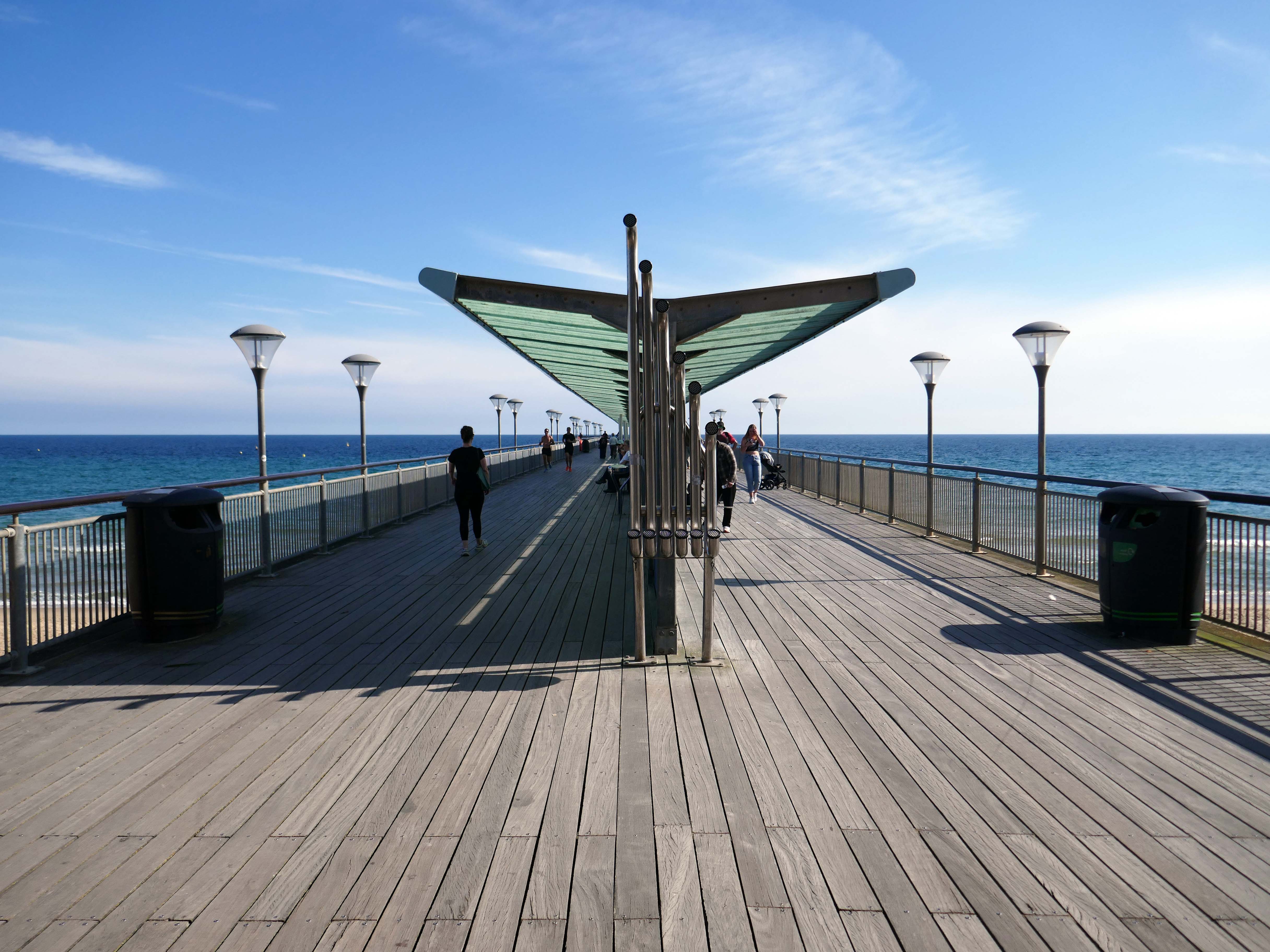
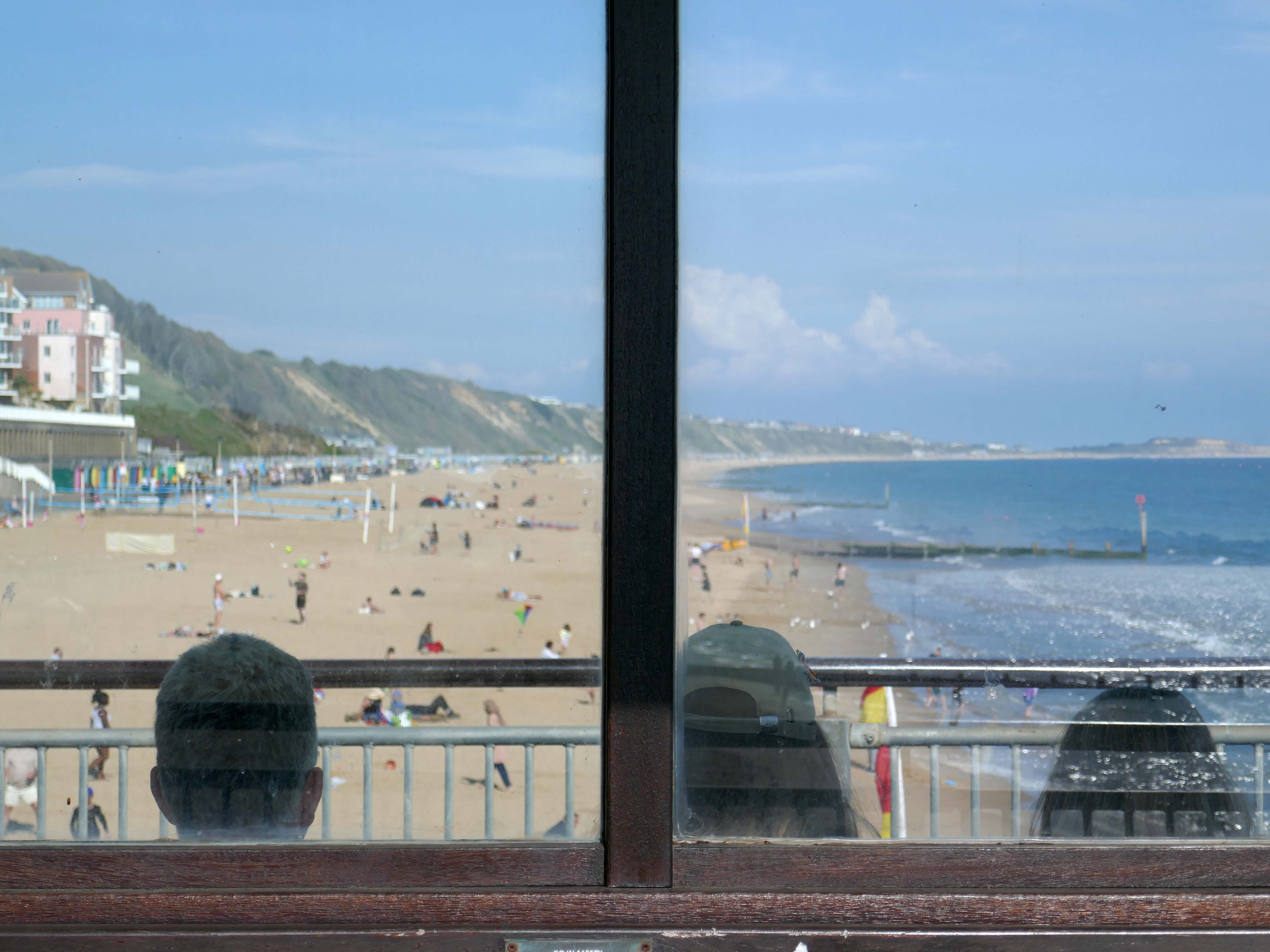
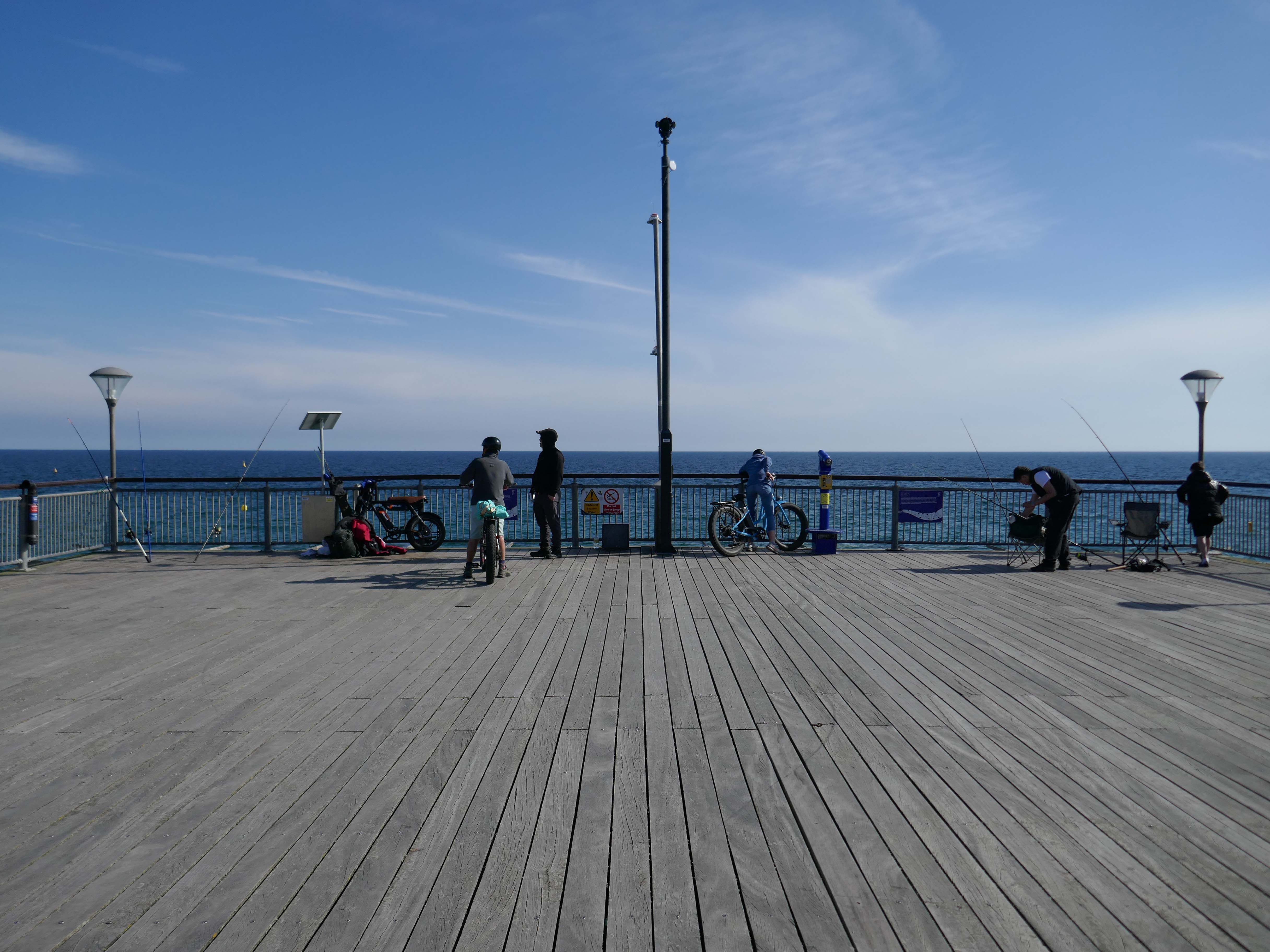
In 2008, the area around Boscombe pier underwent extensive renovation. The derelict and unsafe building at the end of the pier was demolished, and replaced by a simple viewing and fishing platform. The rest of the pier was also restored.
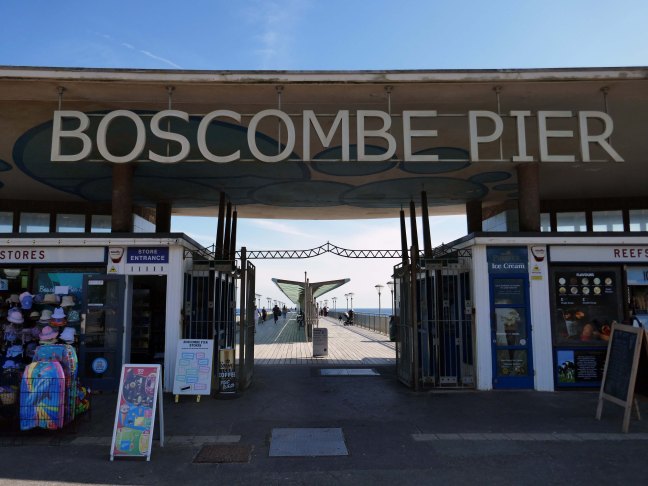
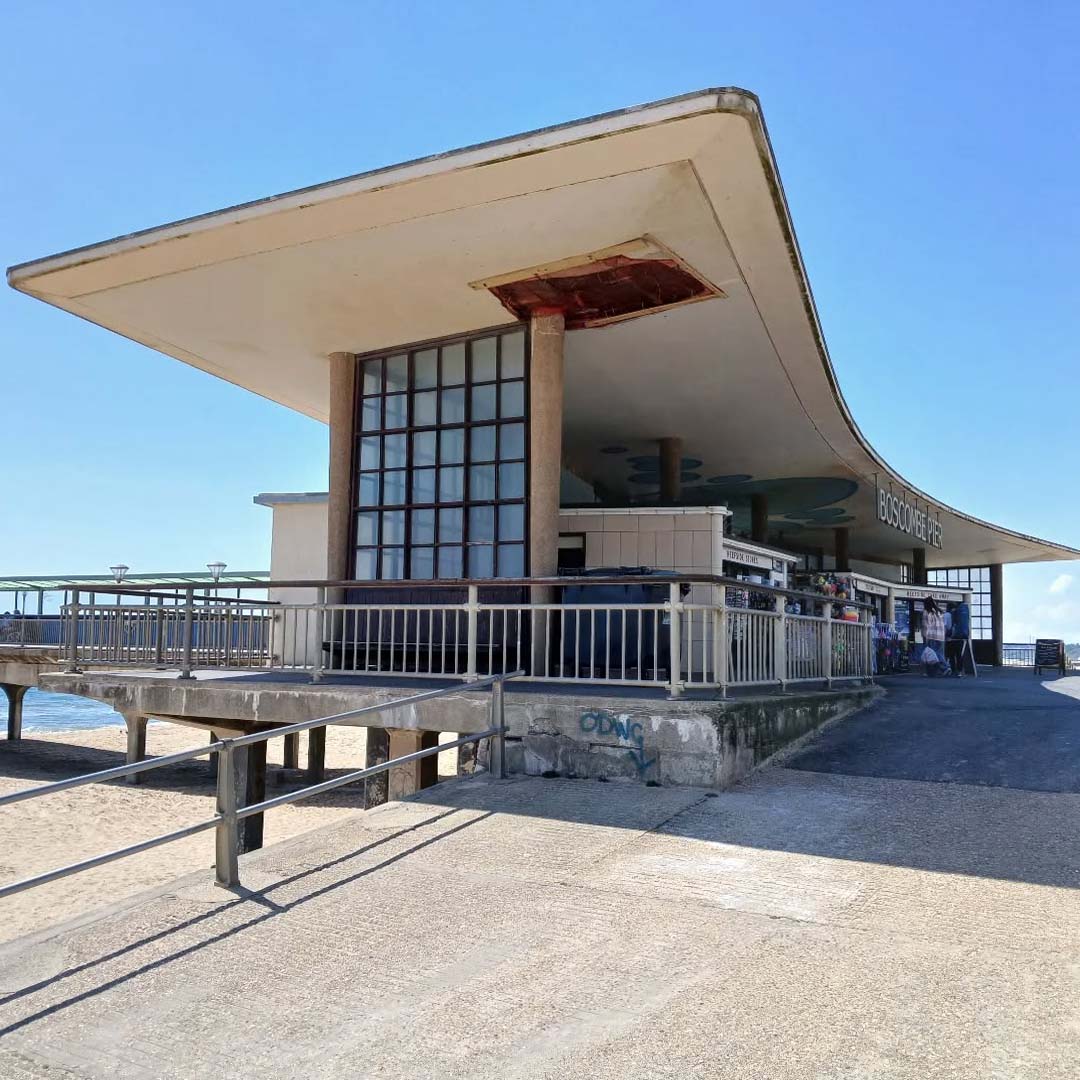
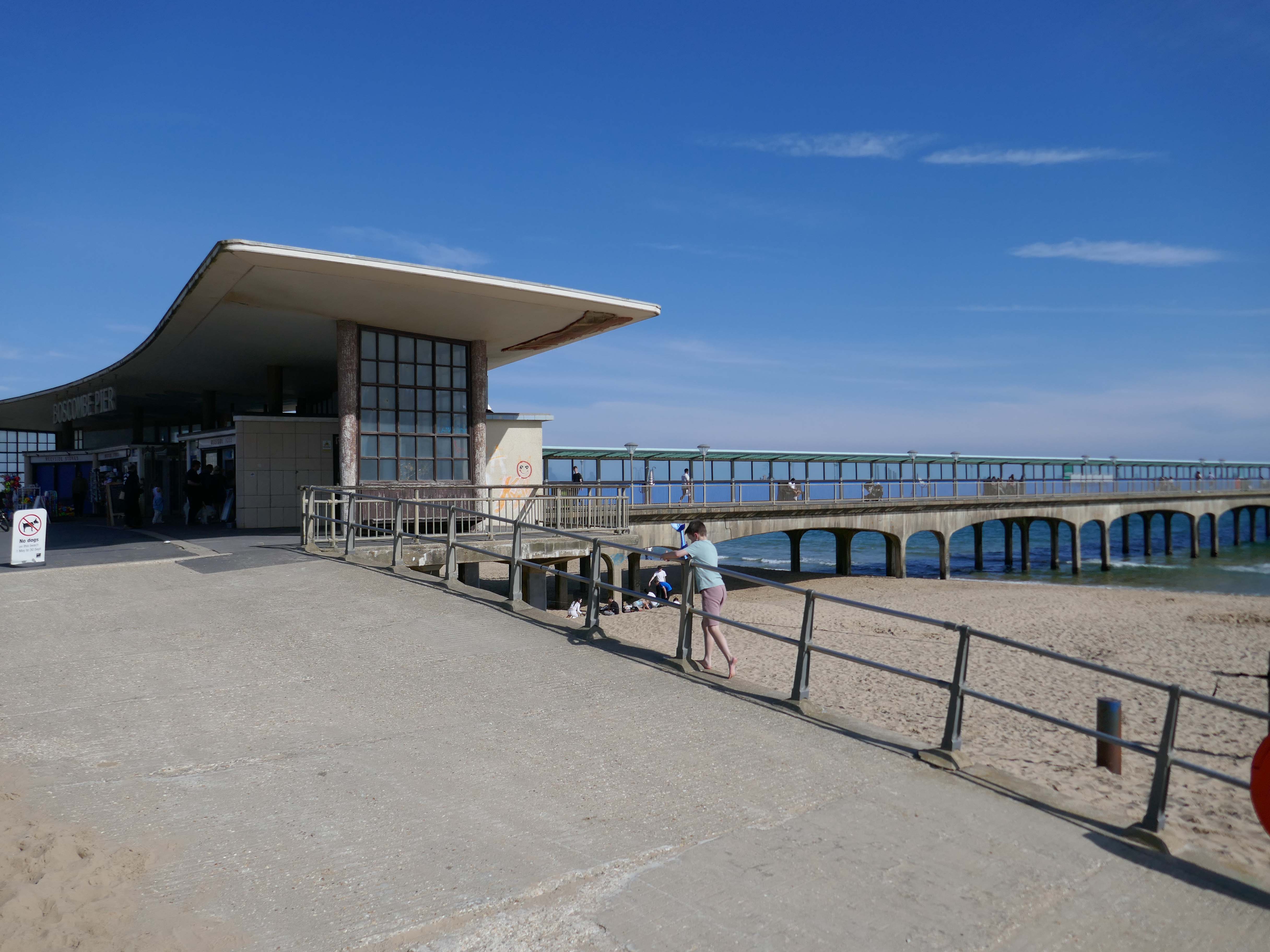
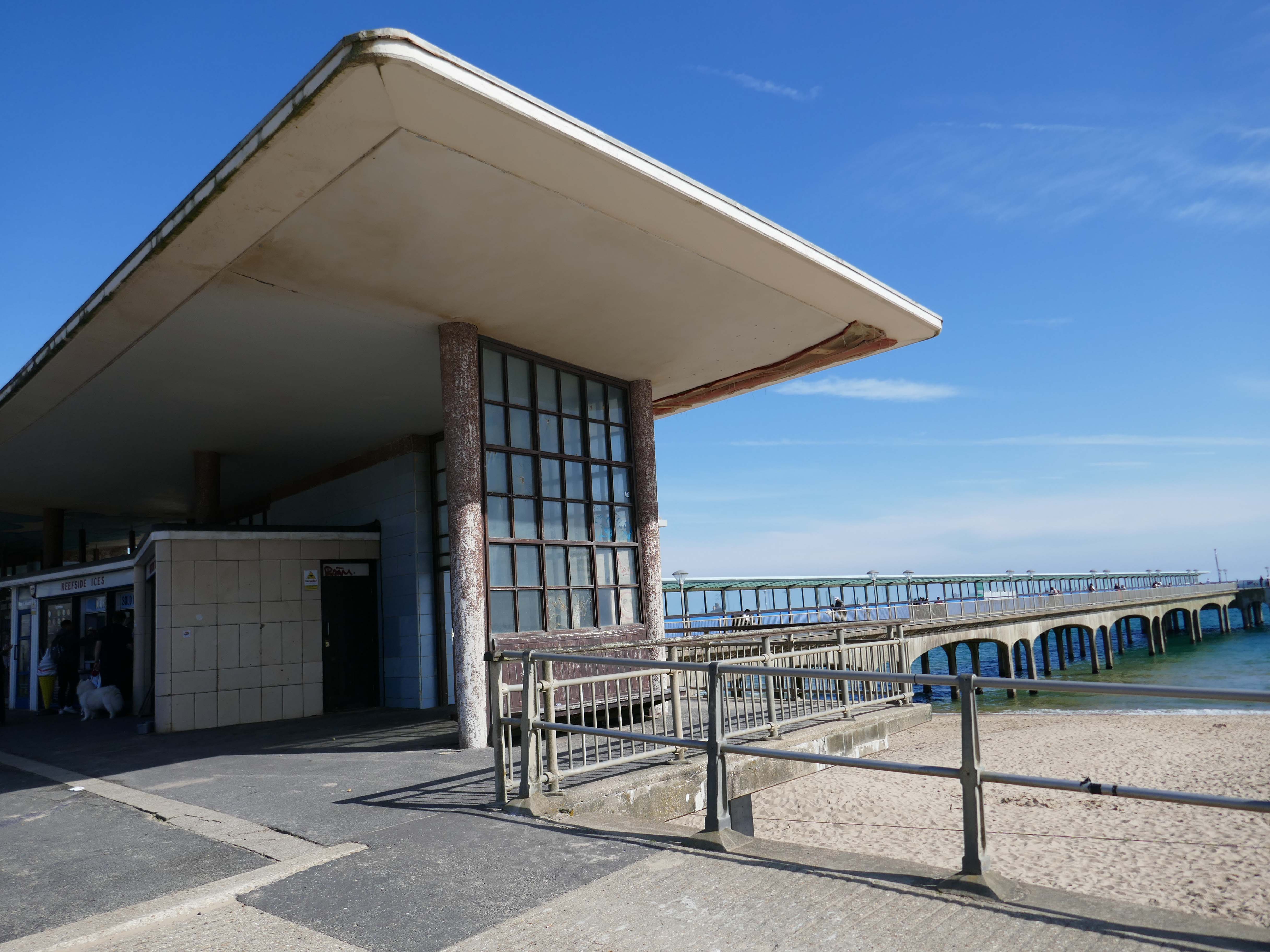
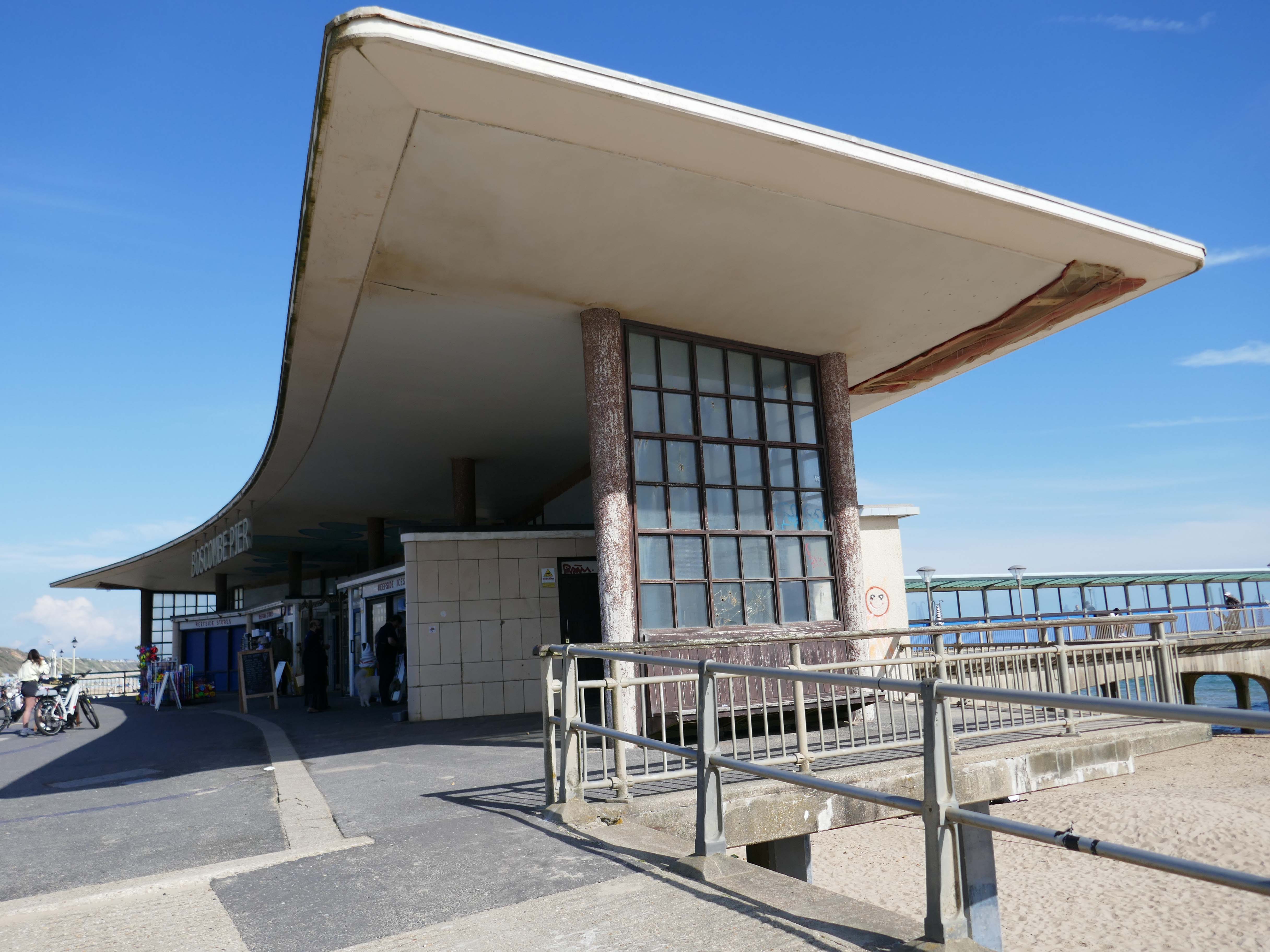
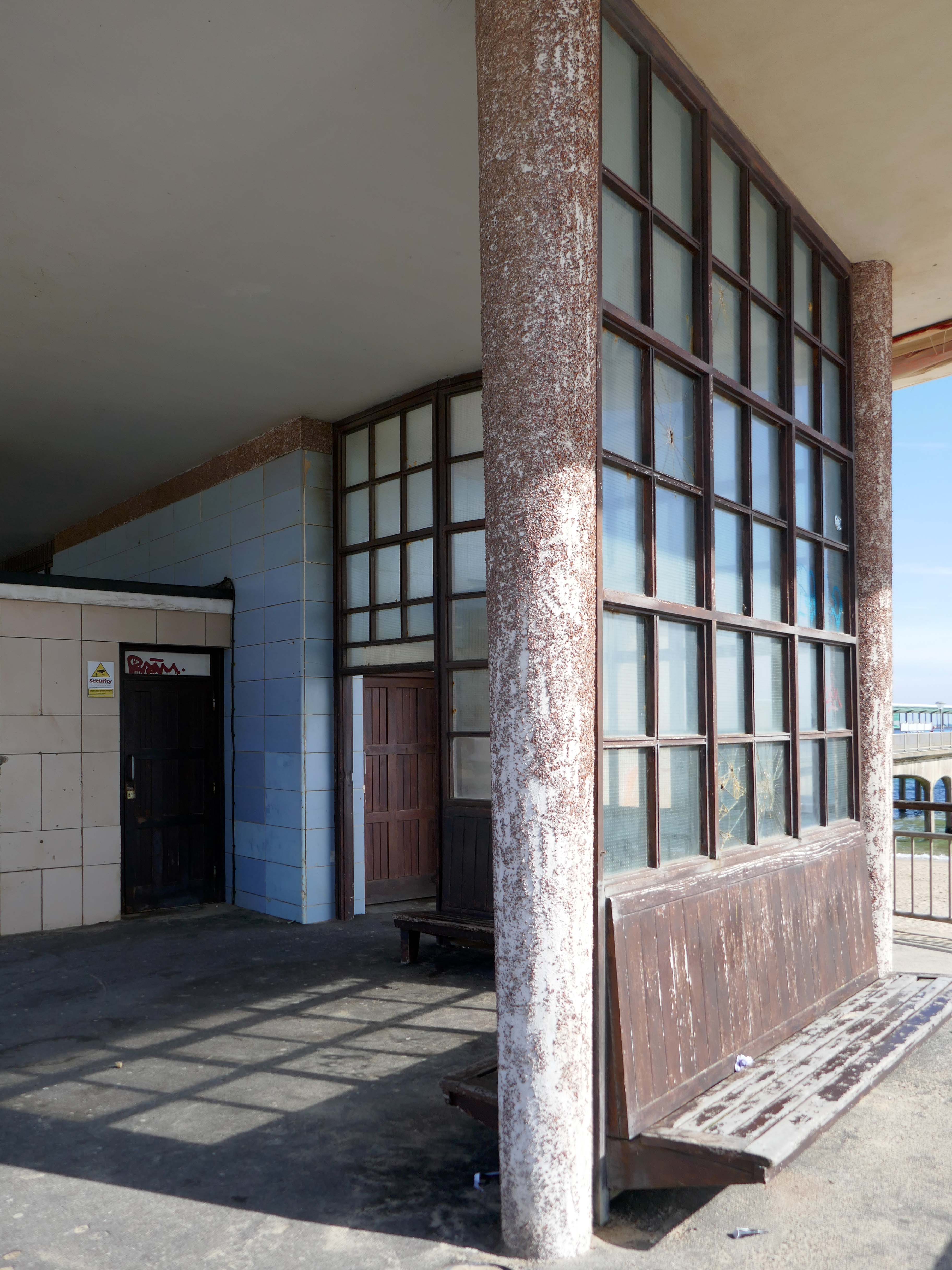
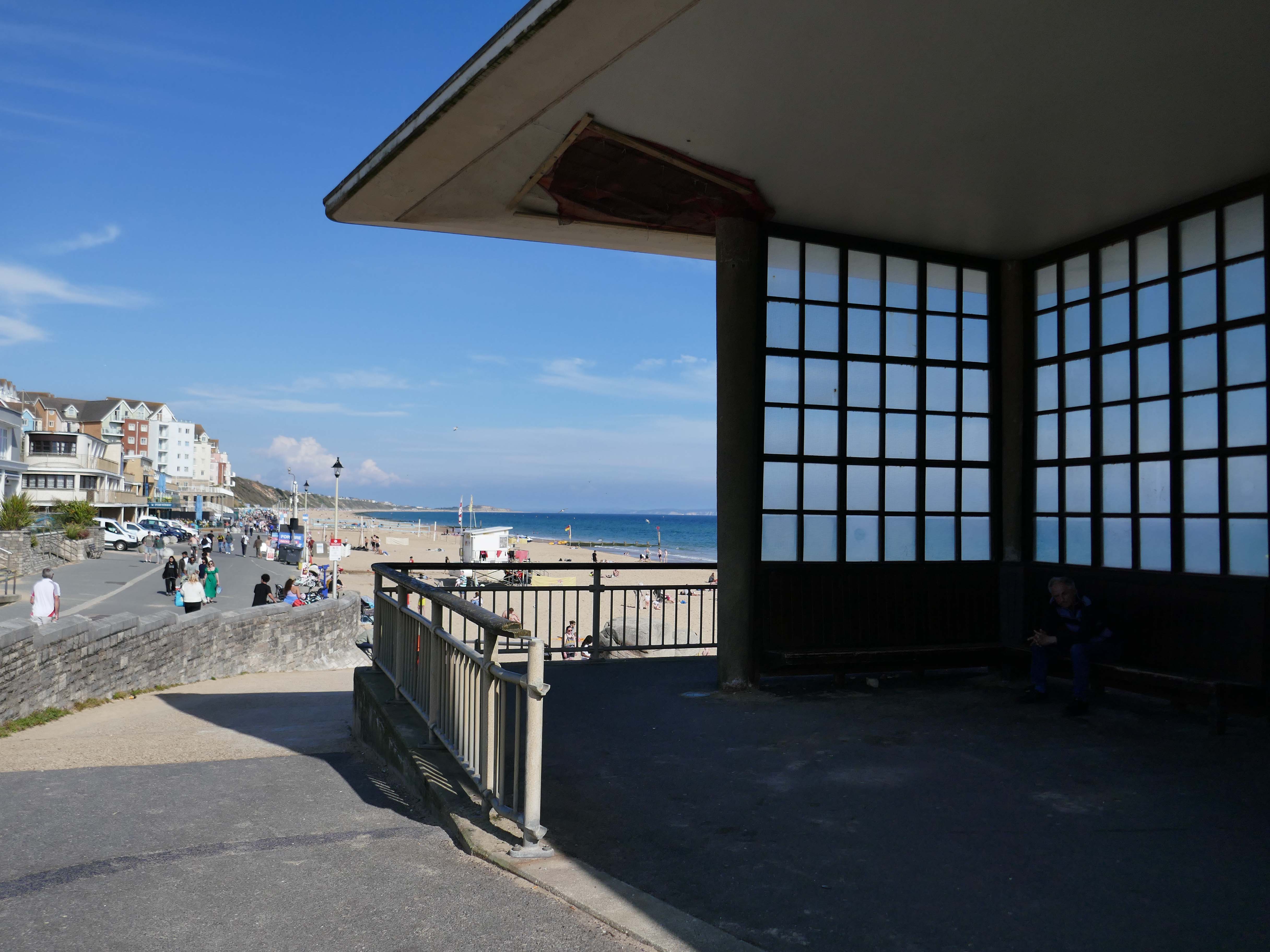
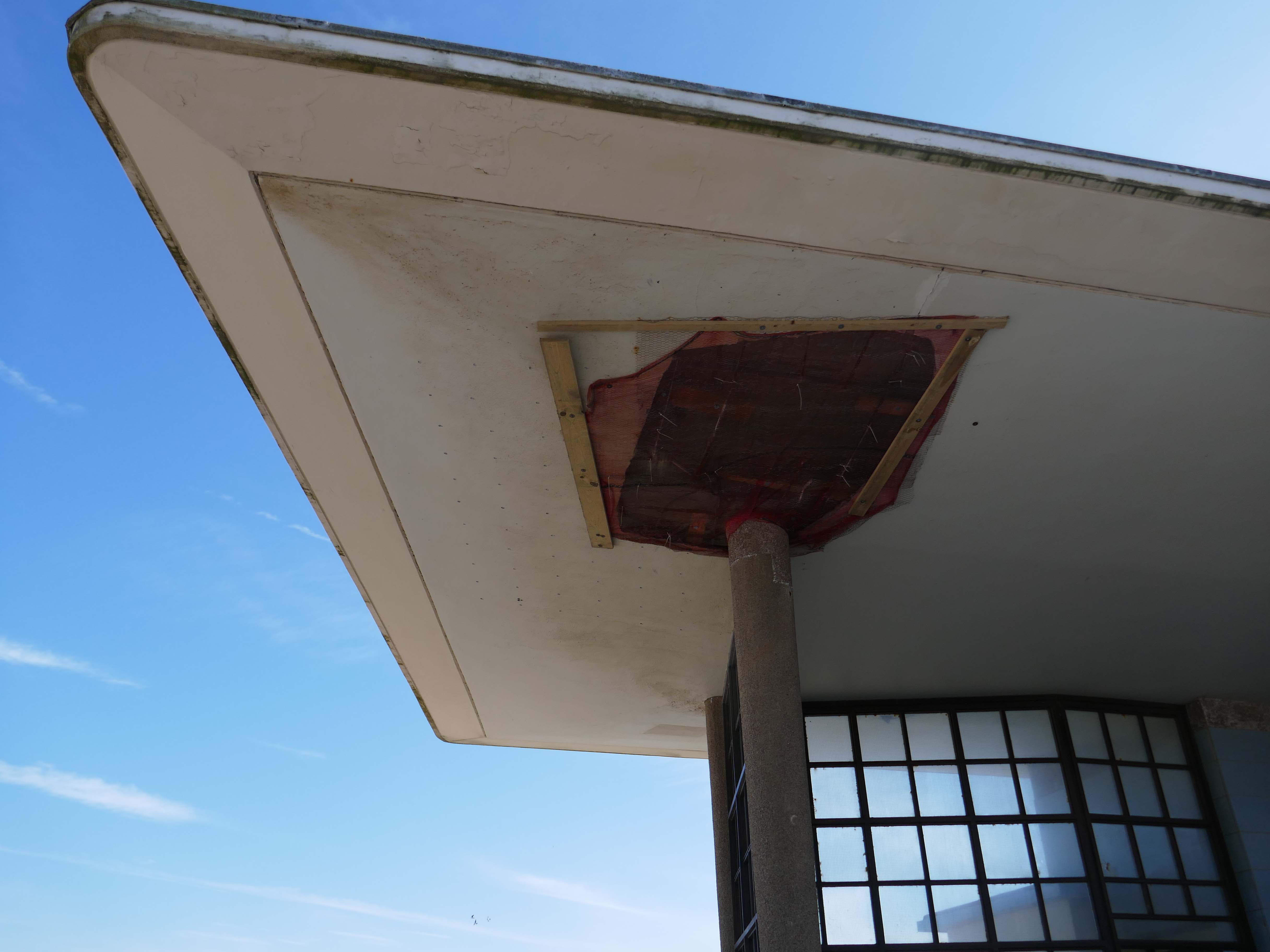
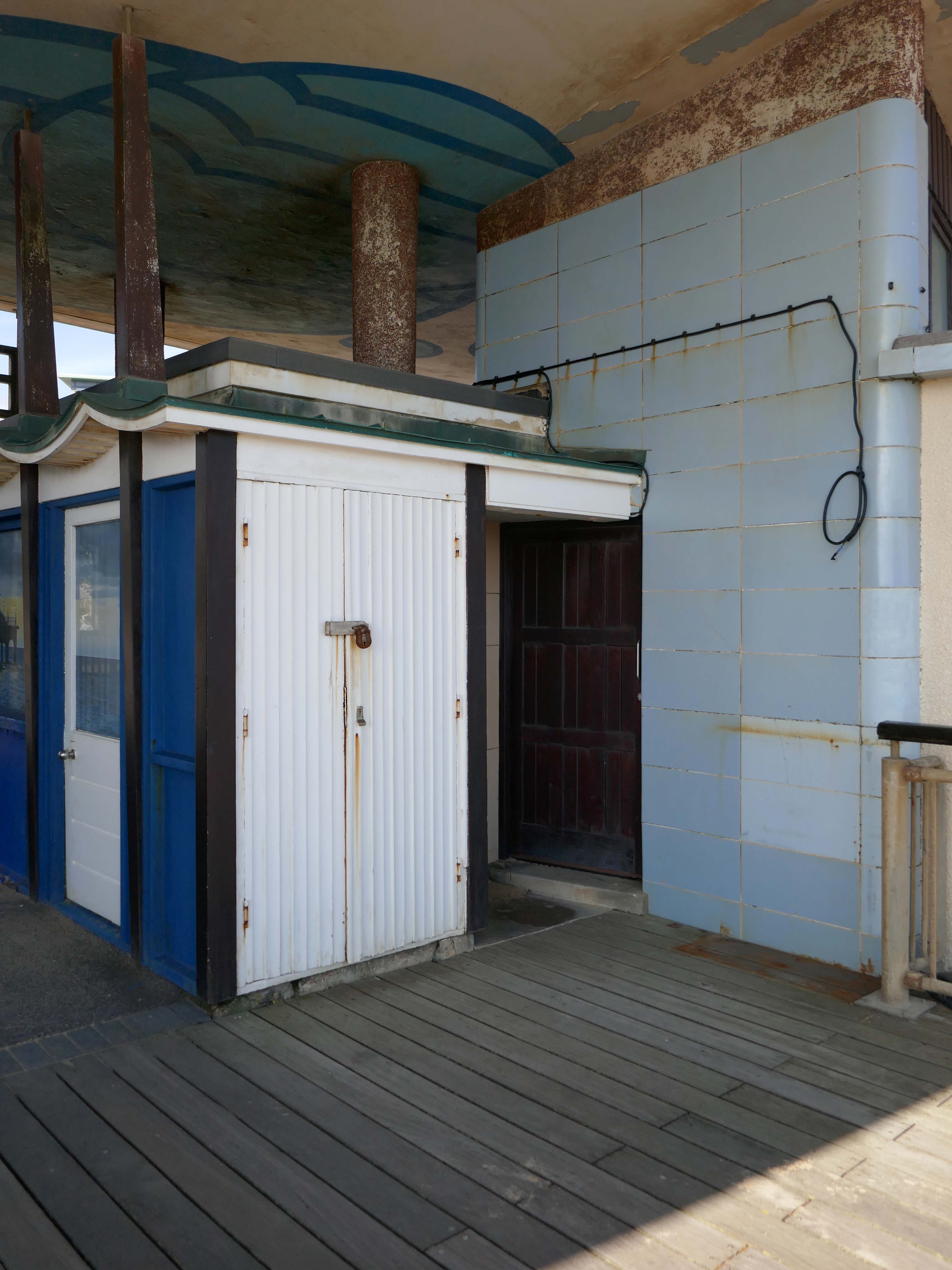
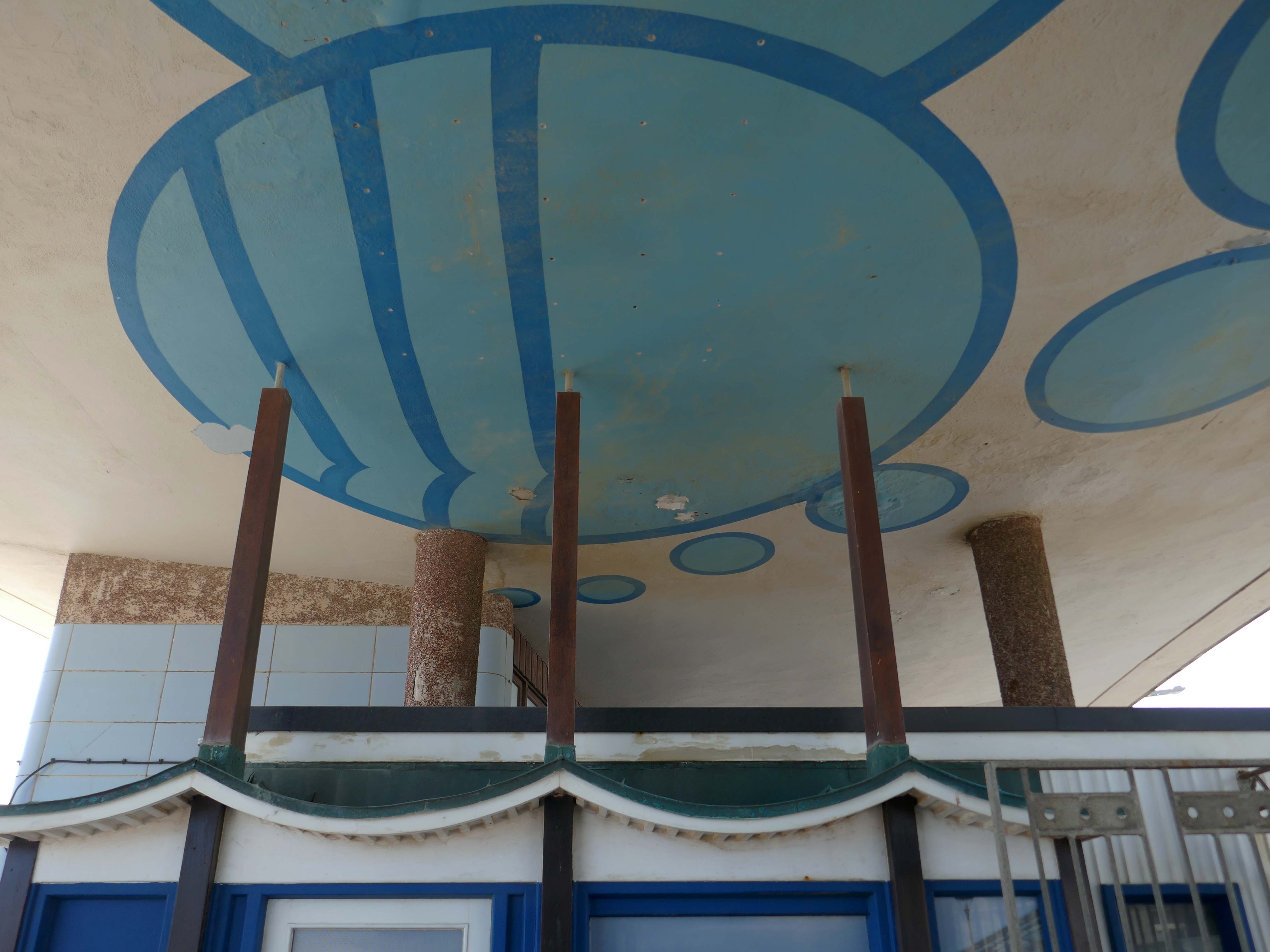
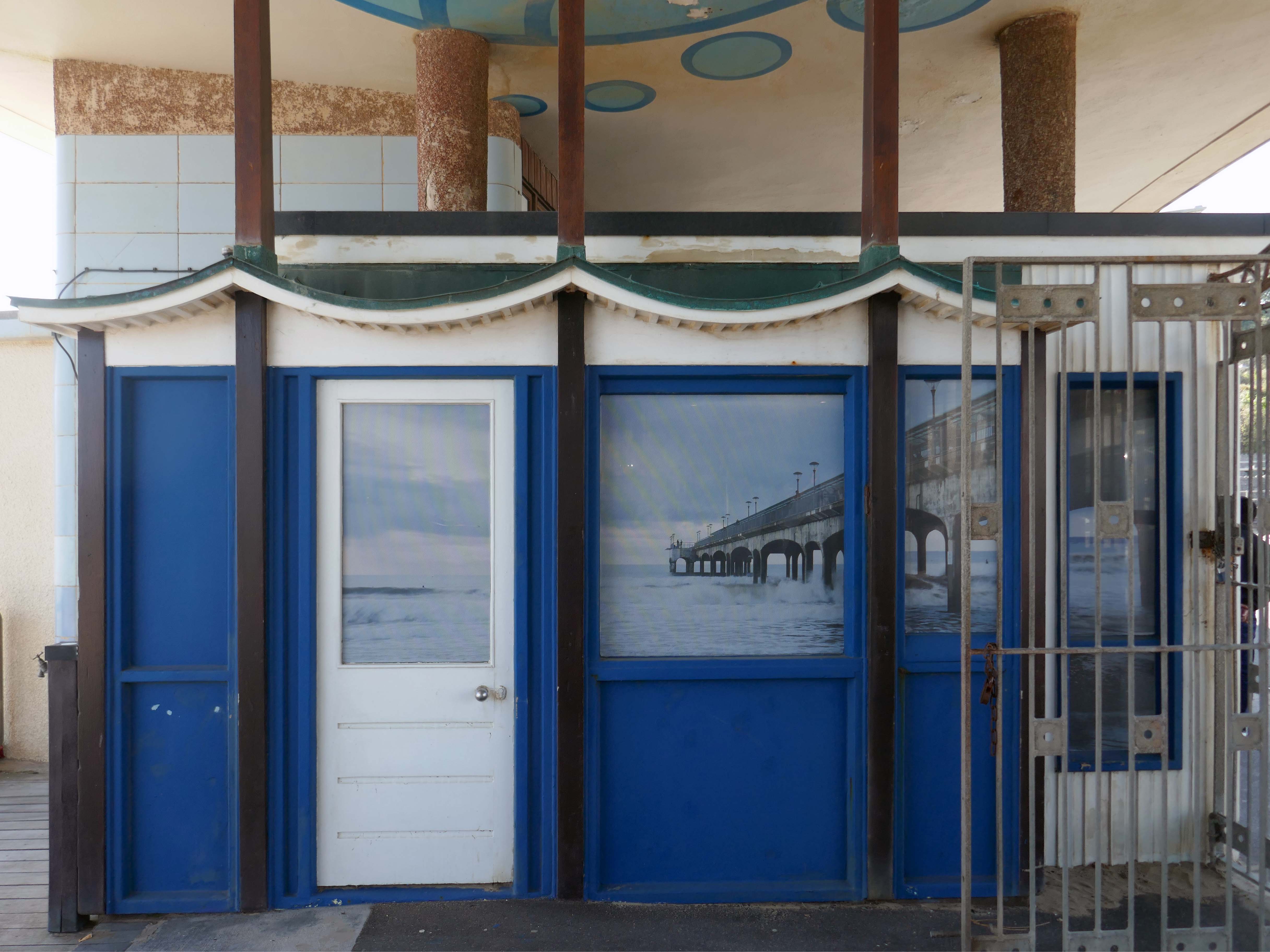
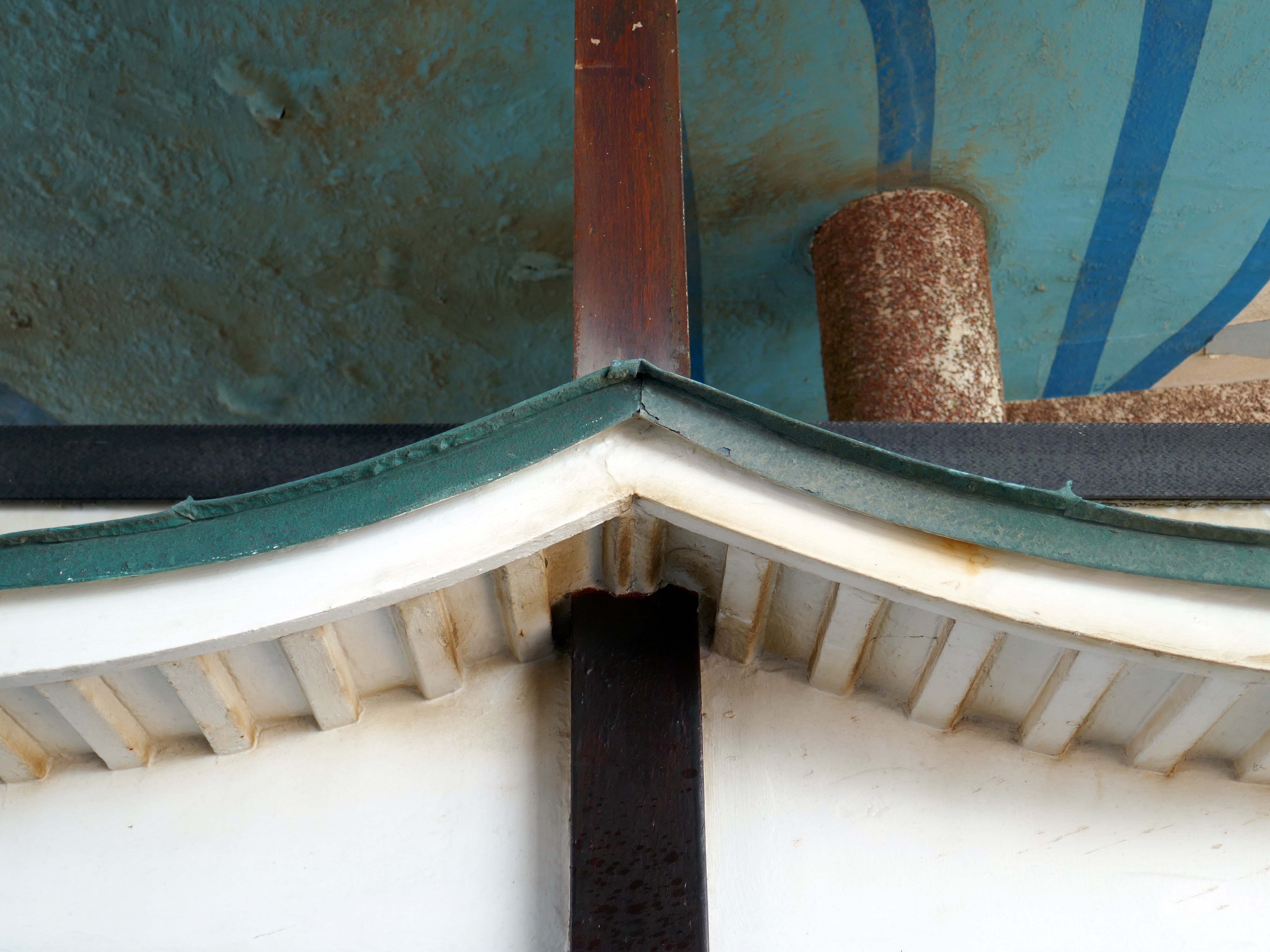
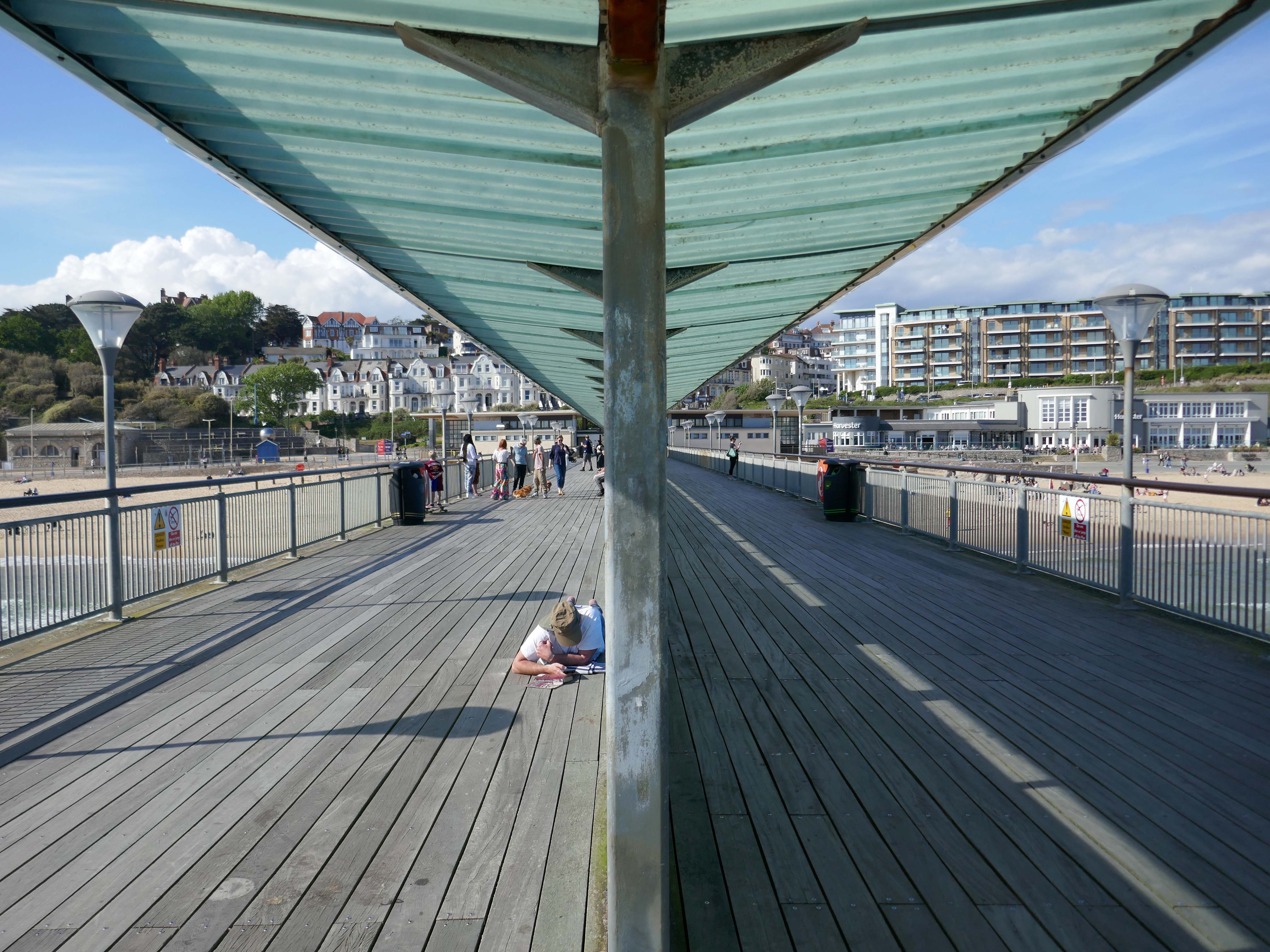
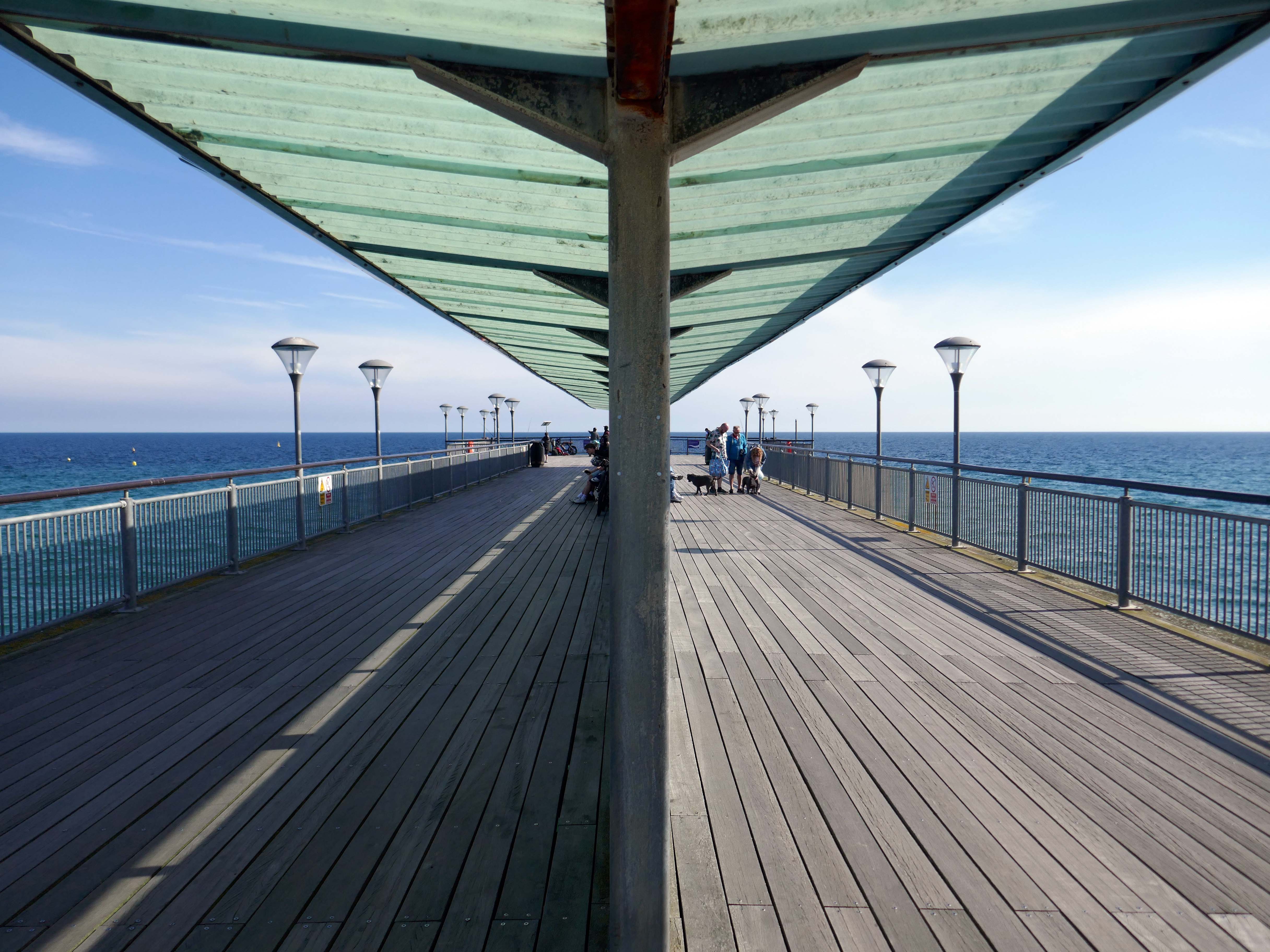
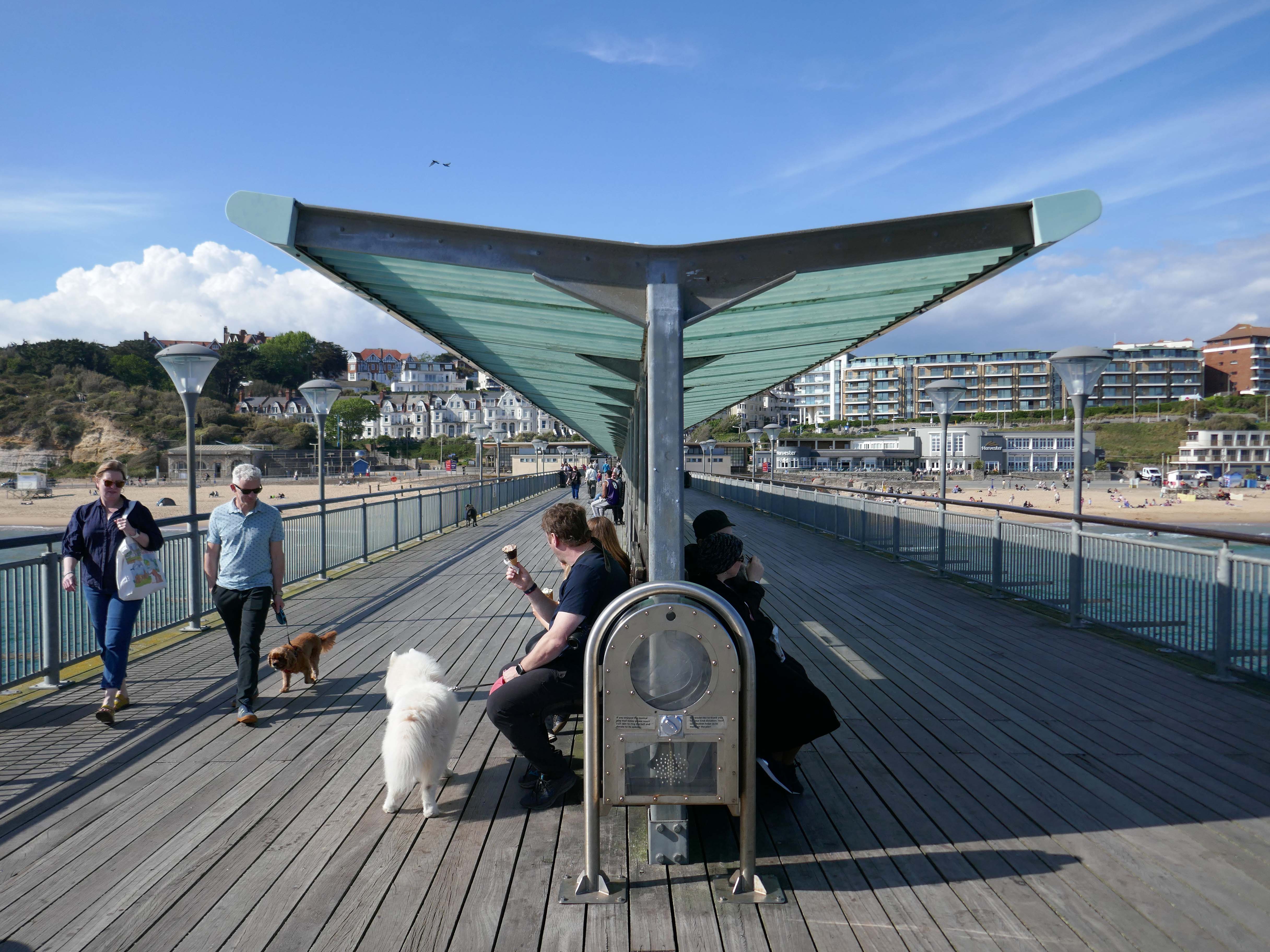
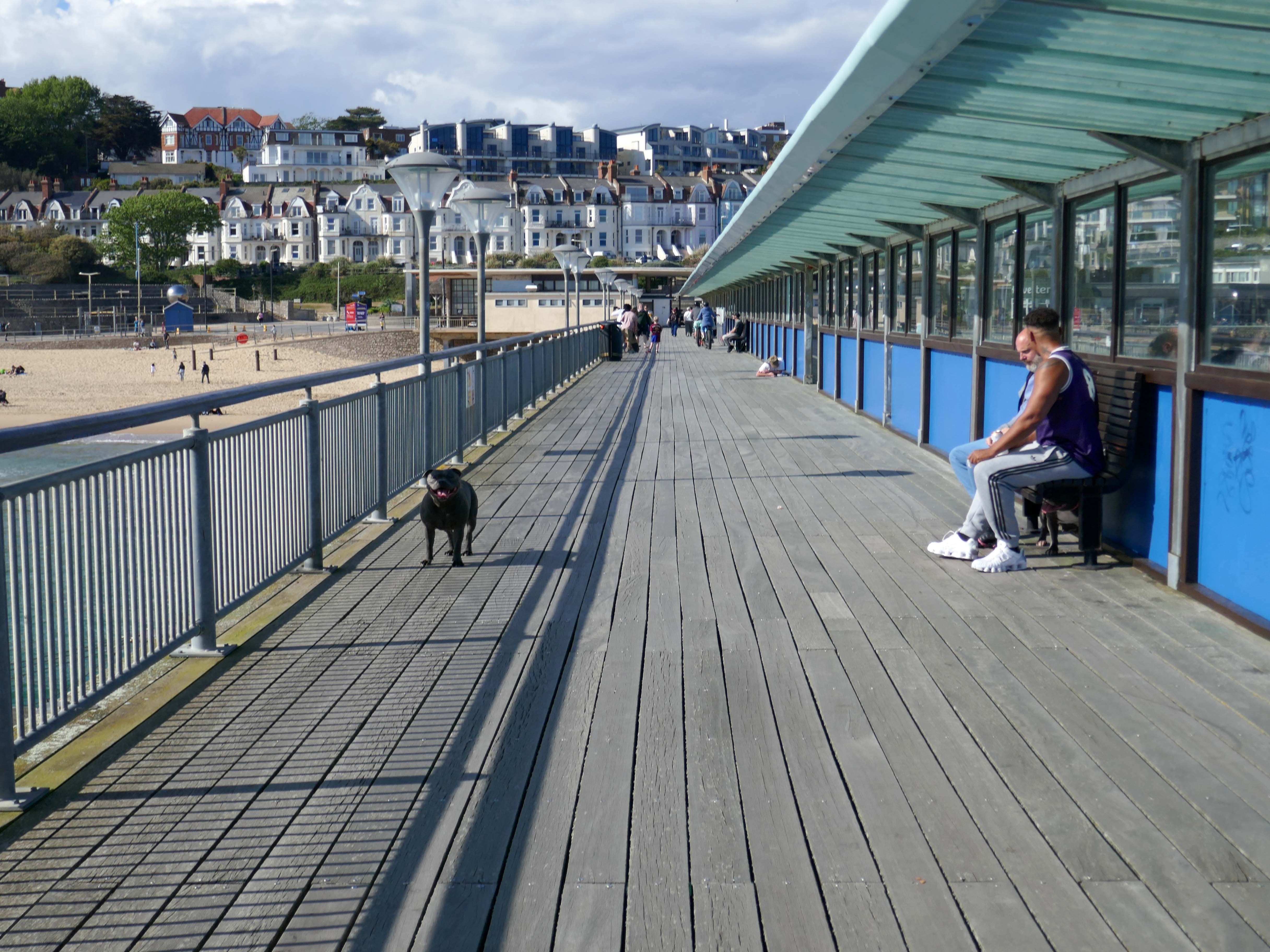
However, the neck building is a design of great verve and vivacity that well demonstrates the revitalisation of the British seaside resort in the 1950s. The contemporary style associated with Frank Lloyd Wright’s Usonian houses and made popular with Californian homes in the 1940s was well suited to the requirements of an architecture that combined ‘sun and fun’. The contemporary style made a feature of expressing different elements or planes of a composition with different materials, and here the combination is honest and each element well detailed. The sweep of the cantilevered, boomerang-shaped roof is a particularly joyous feature. It is a building that would have been despised as being exactly of its date until recently; now it is a building that can be celebrated for that very reason, and a rare example of pier architecture from these years.
Open seven days a week from 9am to 11pm – may be subject to change due to weather conditions.
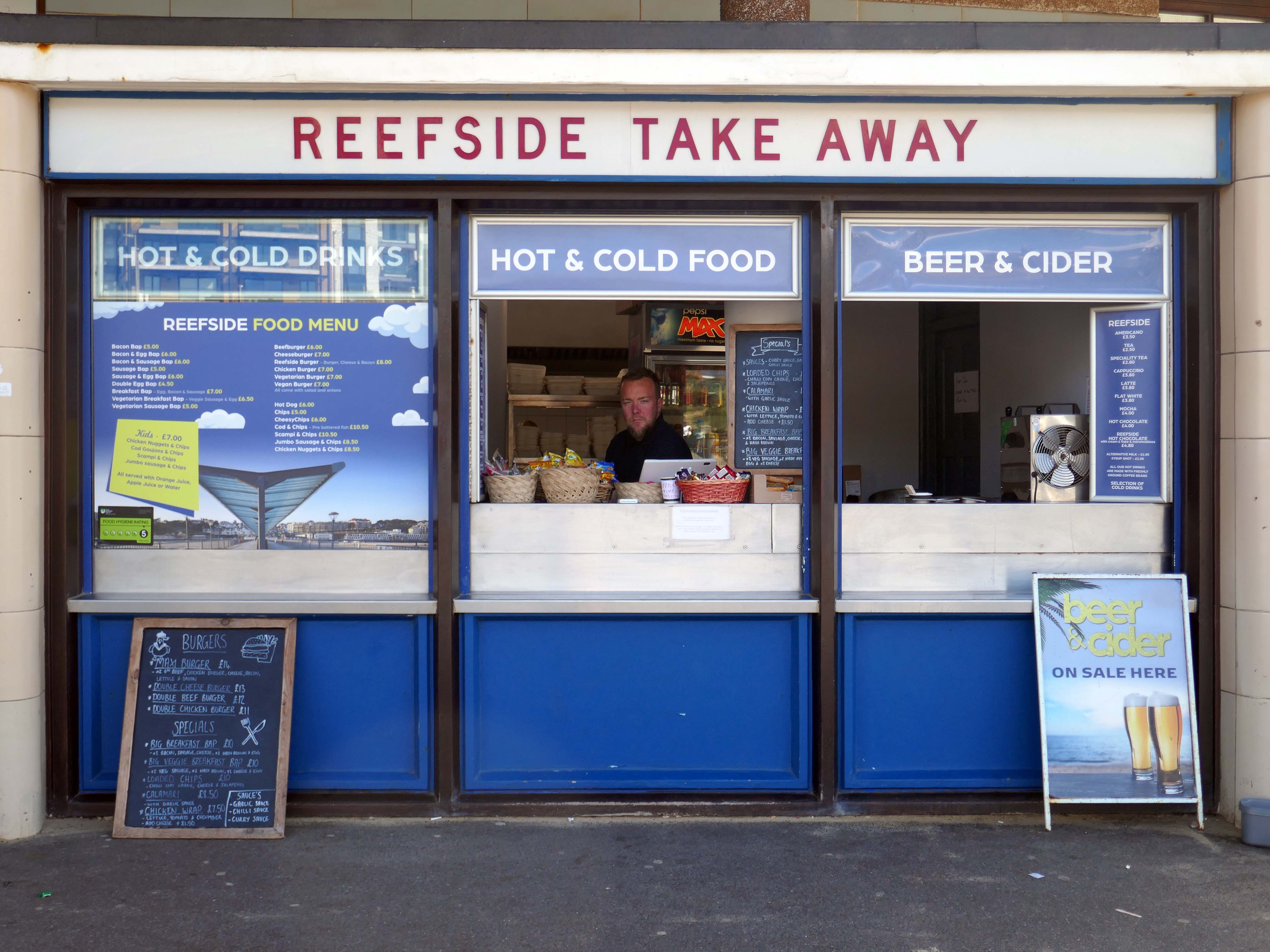
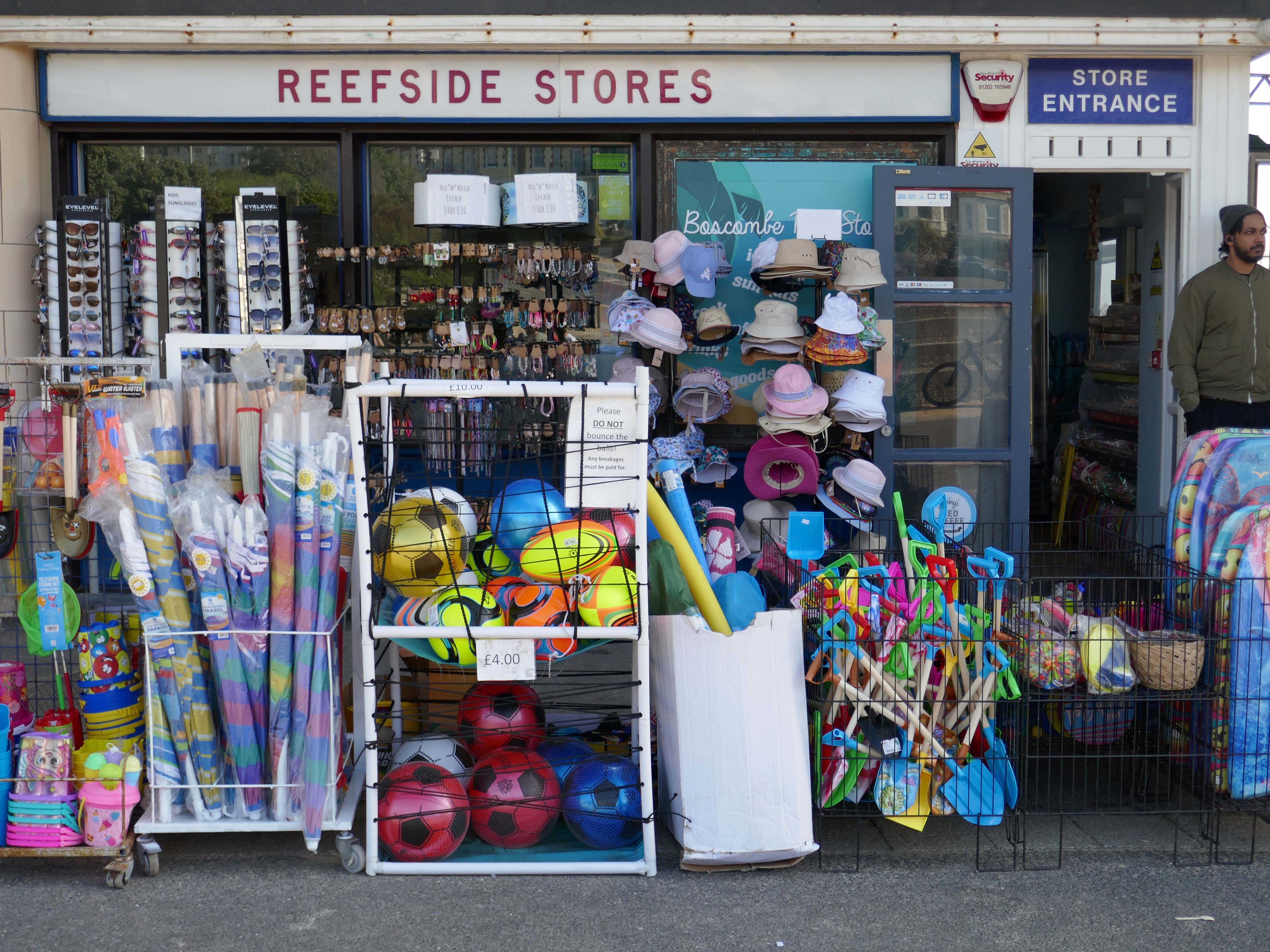
Inside the Grade II listed building at the pier’s entrance, you’ll find a café, takeaway and a beach shop. Outside you can have a go on the bouldering walls and the slackline.
There’s no charge to go on Boscombe Pier, there’s also a viewing platform at the end of the pier.
The resident, who does not wish to be named, was walking along the seafront from Southbourne to Boscombe Pier on Thursday, March 17, at around 10.30am when he noticed strange objects in the sky.
He told the Echo:
“I noticed in the sky three bright, what looked like orange, lights approaching me head on from the west to the east quite low down. I thought they might be aircraft landing lights which seemed strange as it was blue sky and a sunny day.
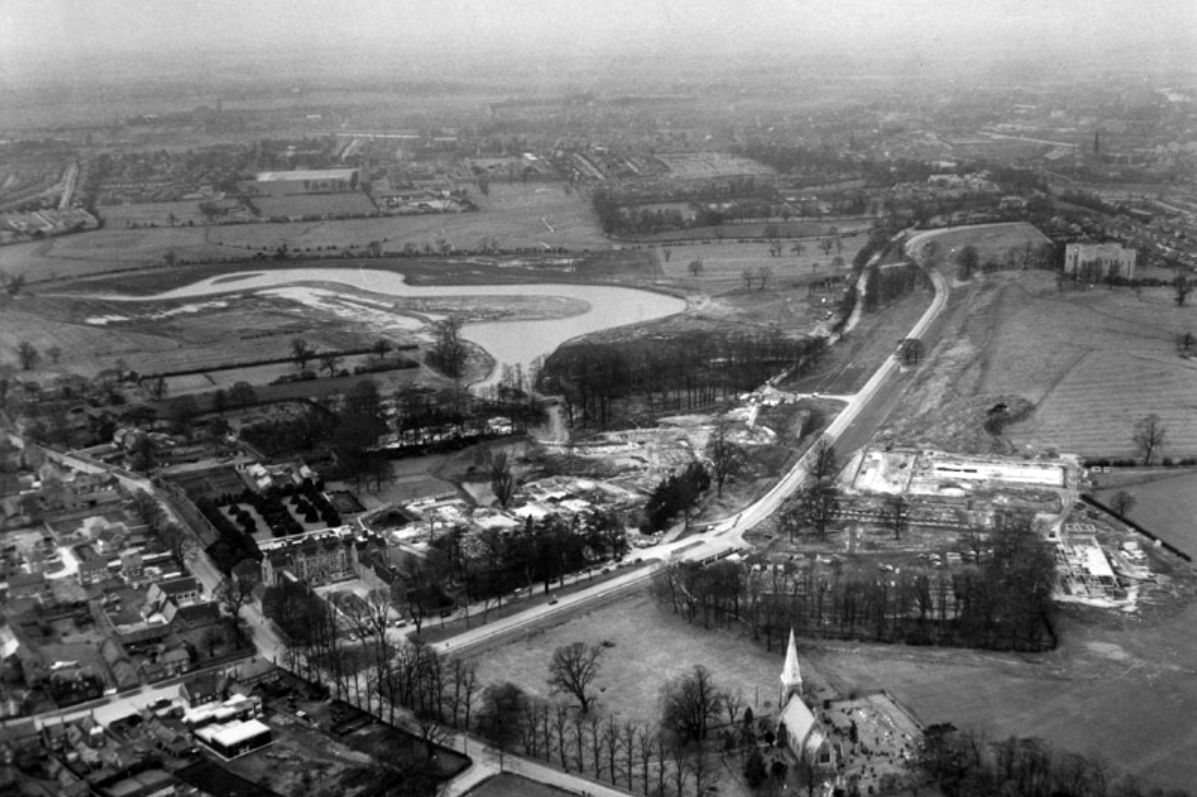
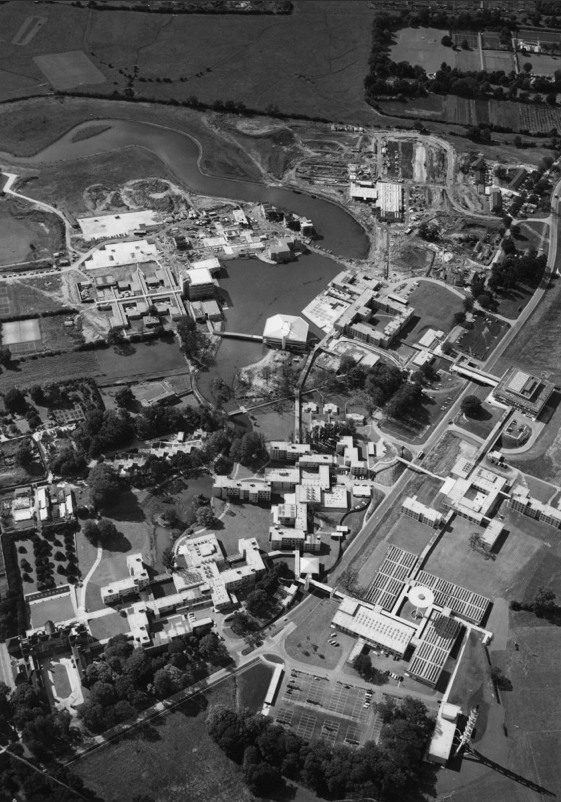
Though plans for a university in York first appeared as early as 1617, it would be over three centuries before they came to fruition. In 1960, permission was finally granted for the University of York to be built, marking the beginning of our journey.
Before the Second World War, Heslington was a quiet rural retreat with a local aristocracy, and a working agricultural village.
Fresh, young, forward-looking and enthusiastic, the University of York was known for its friendly atmosphere before it even opened its doors.
Planning and building the University happened with astonishing speed. In April 1960 the Government approved the establishment and less than three years, on 9 October 1963, the first students walked through the gates of Heslington Hall.
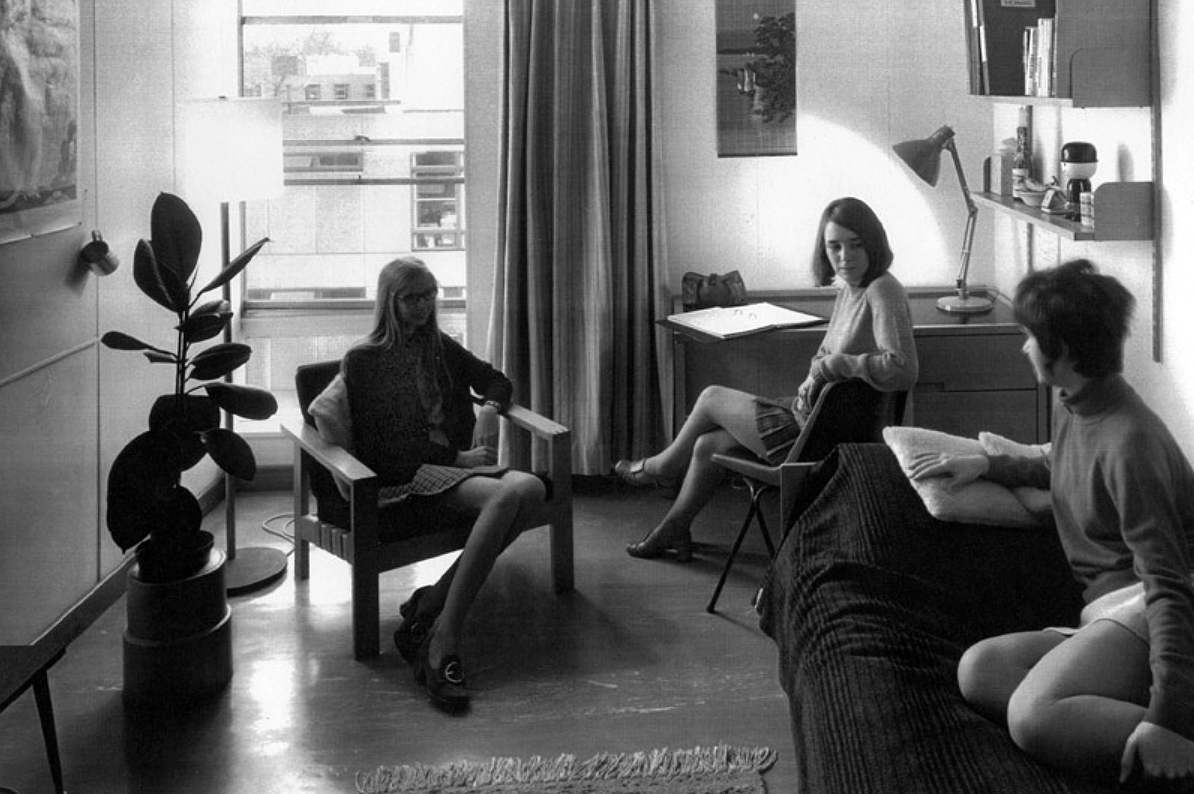
In the 1970s, college social life began to blossom.
Central Hall was the venue for The Who, The Kinks, Fairport Convention, John Martyn, Ian Dury and the Blockheads, Hot Chocolate, Humphrey Littleton, Acker Bilk, Paul Tortelier, Julian Bream, John Williams and others.
Paul and Linda McCartney appeared one day out of the blue with their new band Wings and performed a concert in Goodricke College Dining Room.
The beginning of the 1980s came with significant challenges for the University.
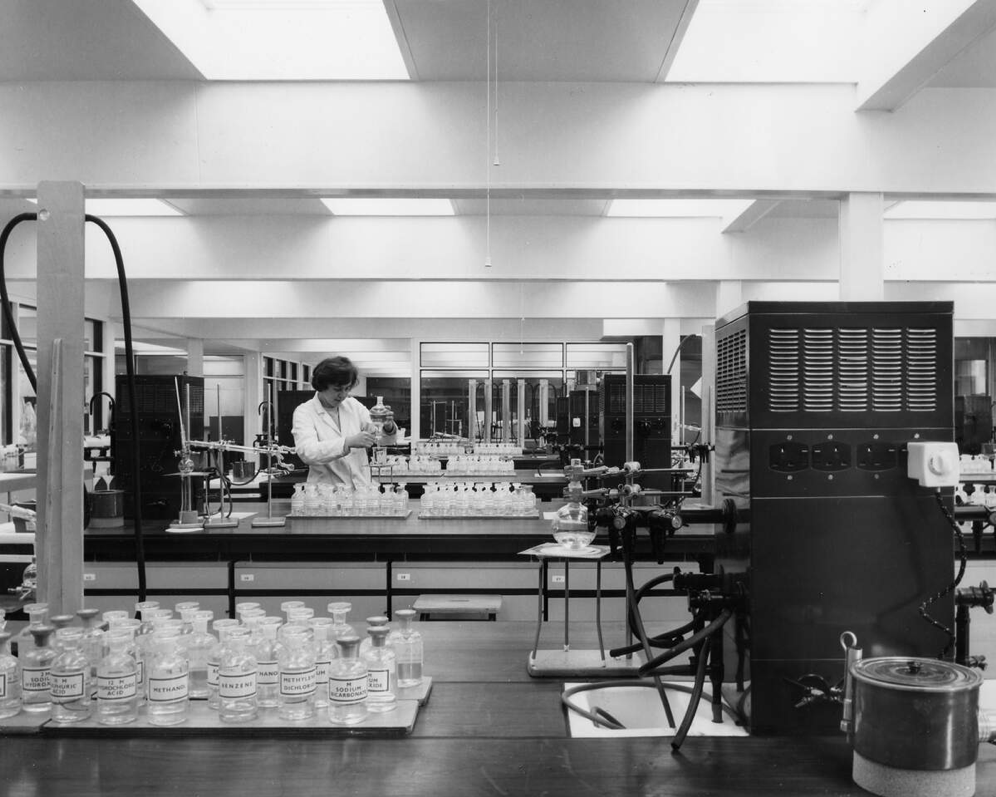
The decade saw the start of cuts across higher education. Staff were exhorted to make economies including turning down their thermostats, recycling, and making telephone calls as short as possible. There was also a fire in the Department of Chemistry.
In 1990, the Vice-Chancellor, Berrick Saul, recounted to court that York had been described by a senior member of the Universities Funding Council as “a well-run university with a relatively low profile.”
What a difference a decade makes.
By the end of the 1990s, York was dominating national league tables for research and teaching and was receiving international press coverage for achievement across the disciplines.
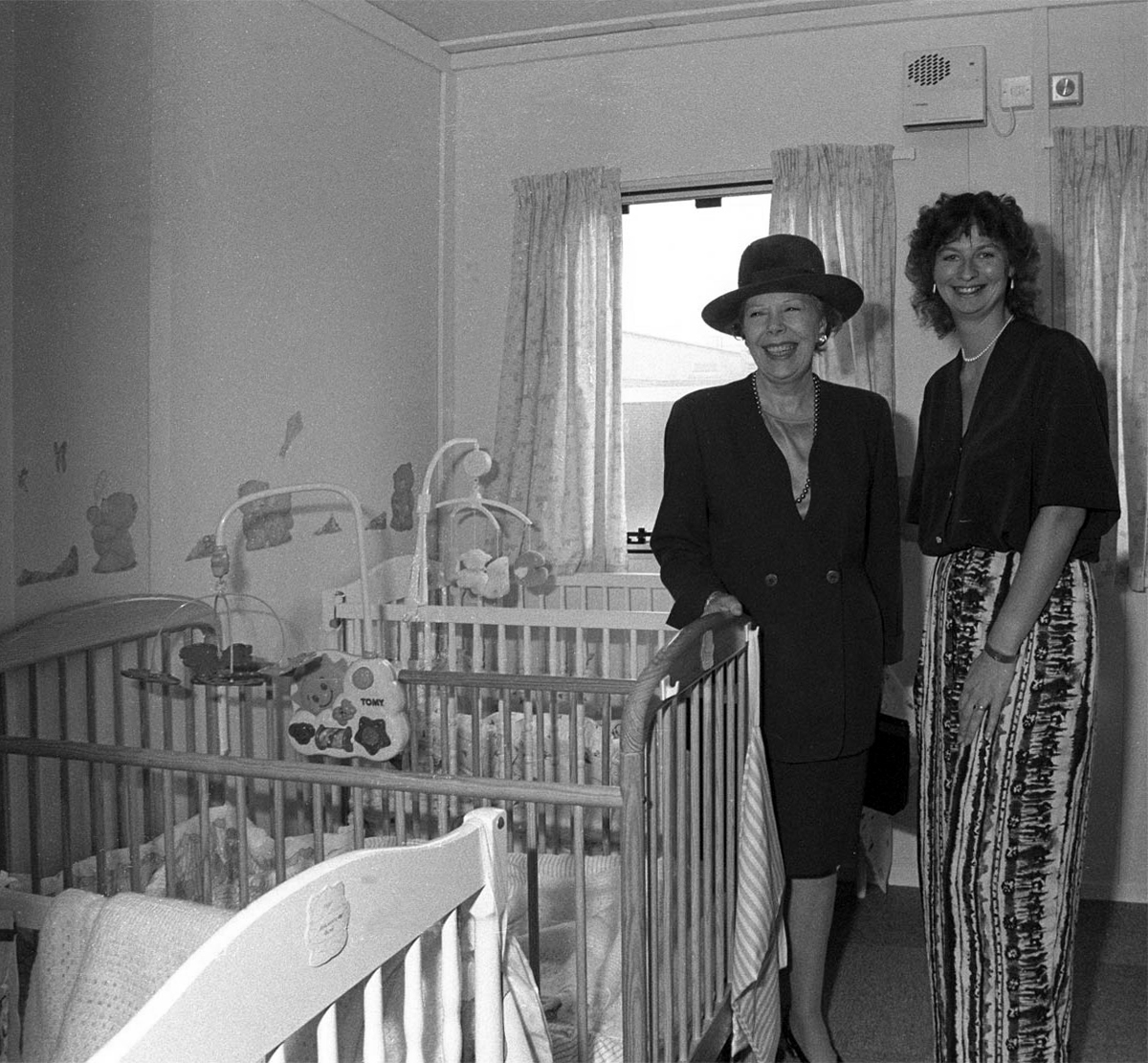
University Chancellor Dame Janet Baker at the opening of the University’s Baby Unit, October 1994 – York Digital Library
The 90s was characterised by advancement and recognition. York remained a popular choice among prospective students growing from 4,300 to 8,500 students without compromising its high entry standards. As the Sunday Times pointed out, “elitism does not appear to be the price of excellence at York”. York was one of only very few universities whose entry from state schools and colleges (around 80 per cent) was the same as the proportion of A-level students in the state system.
The introduction of official quality assessments and the proliferation of newspaper league tables saw the University’s stock rocket. After years of academic advancement, York began to get the recognition it deserved. National recognition attracted additional funding and investment. Research grants rose to over £20m per annum, and the University enjoyed one of the highest incomes per researcher in the higher education sector.
The Sir Jack Lyons Music Research Centre is opened by Roger Wright, controller of BBC Radio 3, 2004
The planning for Heslington East began in earnest in 2002 with the arrival of Brian Cantor as Vice-Chancellor. It took years of master-planning, liaison with interest groups, negotiations with land-owners and local communities, an 8-hour city planning meeting and a Public Inquiry to achieve the purchase of land and complex planning permissions for a site equal to the size of the original Heslington West campus. In 2009, the new Goodricke College opened as the first building on Heslington East.
At the time of the 40th anniversary in 2003, we wrote about Heslington East:
It will be everything that the designers of the original campus hoped for – integrated, landscaped and traffic-free, with a large expanse of water, and a very eager populace.
On 25th November 2010, we were named “University of the Year” at the Times Higher Education Awards, achieving praise from the judges for our “success in combining academic excellence with social inclusion, as well as its record in scientific discovery”.
The development of Campus East continued throughout the decade, with four new sites to accommodate academic departments and a variety of support and social buildings, including the Ron Cooke Hub and York Sports Village.
Campus West also saw much expansion and redevelopment during the 2010s, with the opening of the £13.8m Spring Lane Learning and Teaching Building and £16m Biology teaching and laboratory facility in 2016.
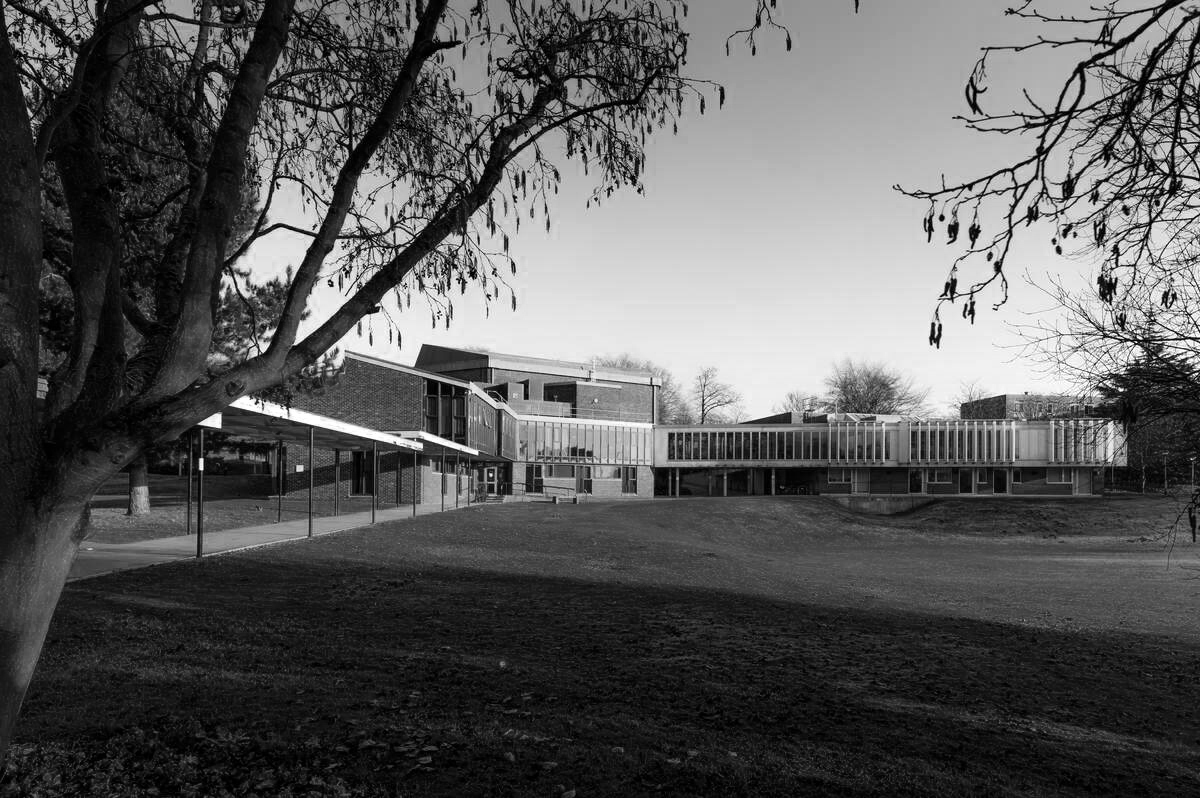
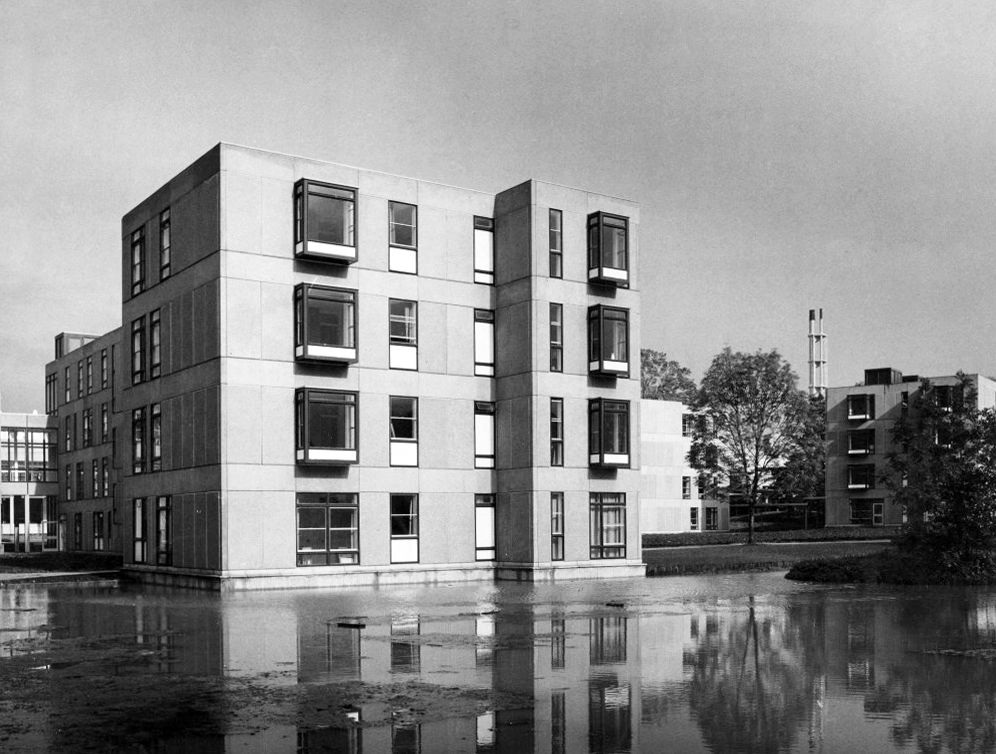
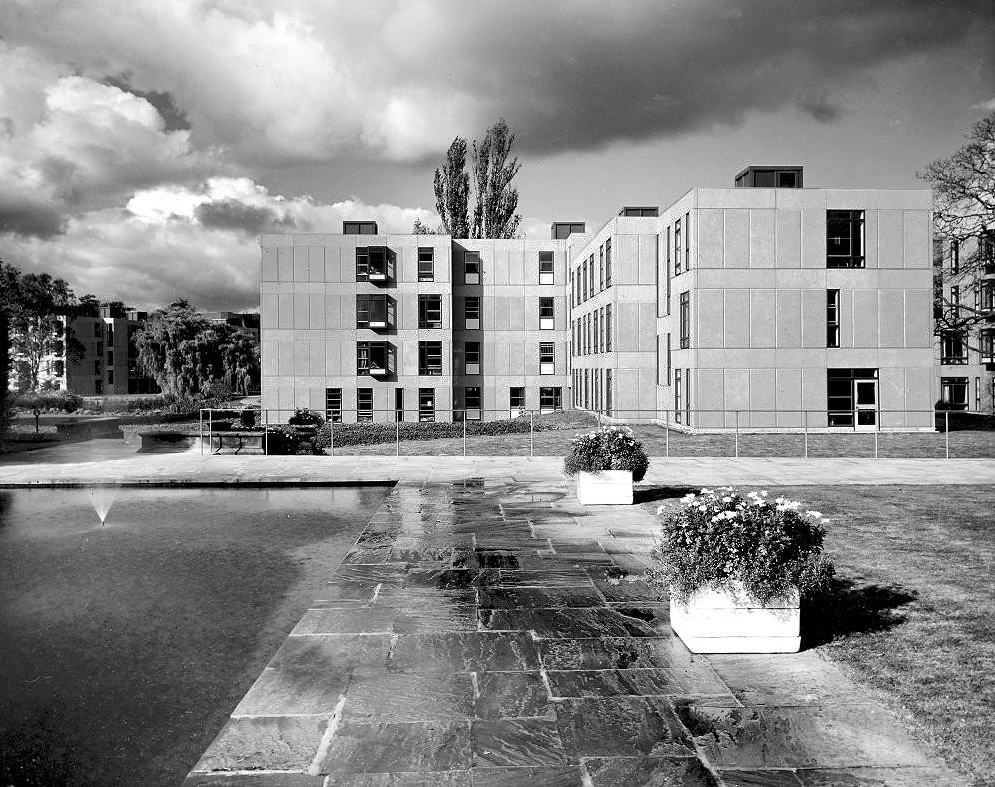
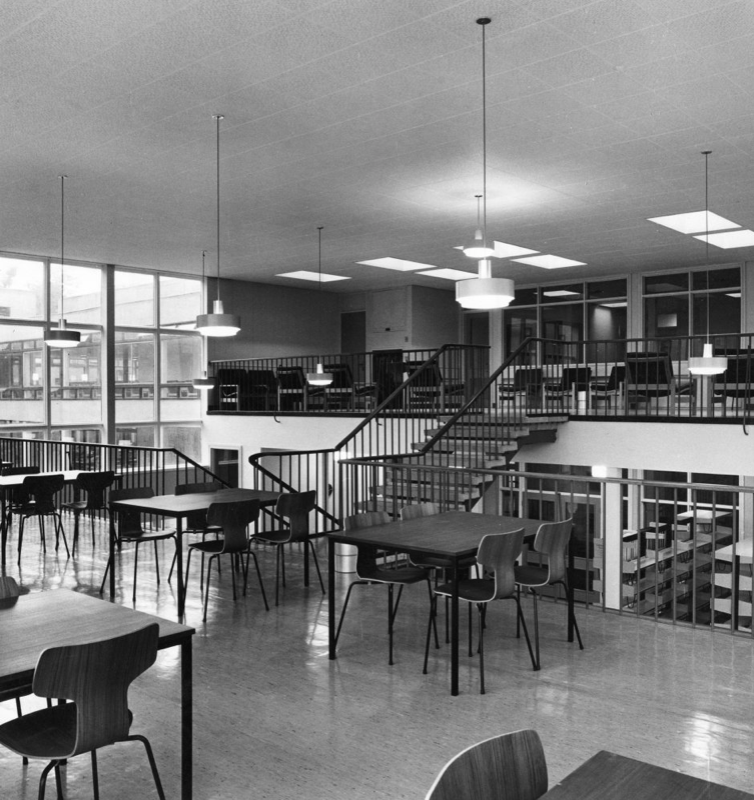
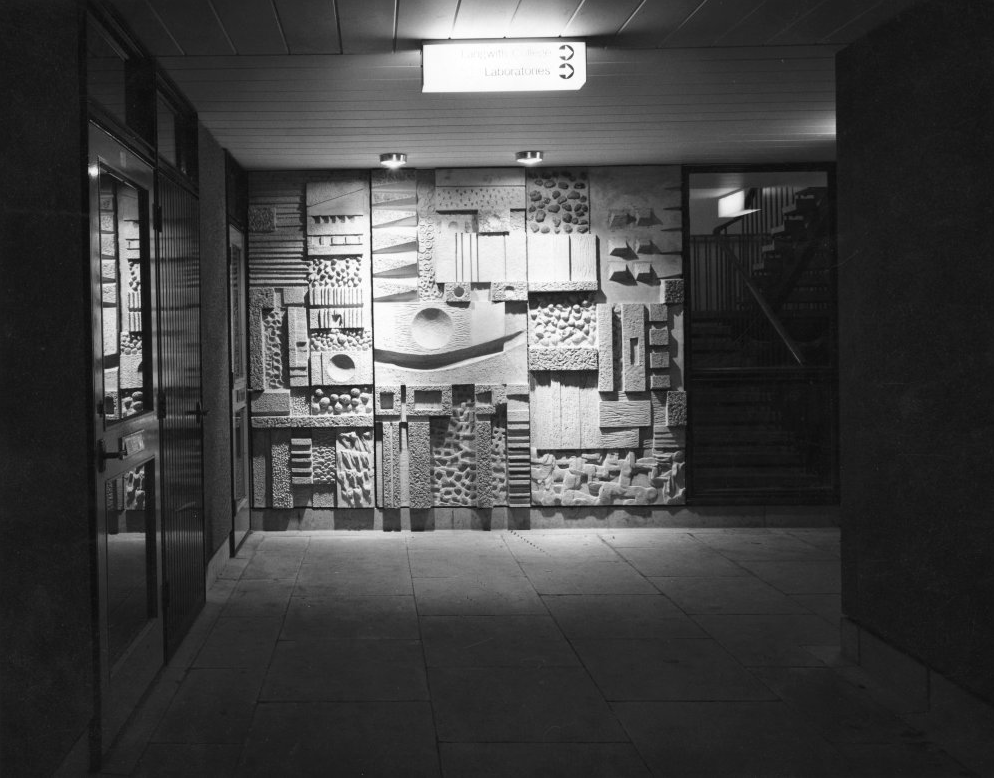
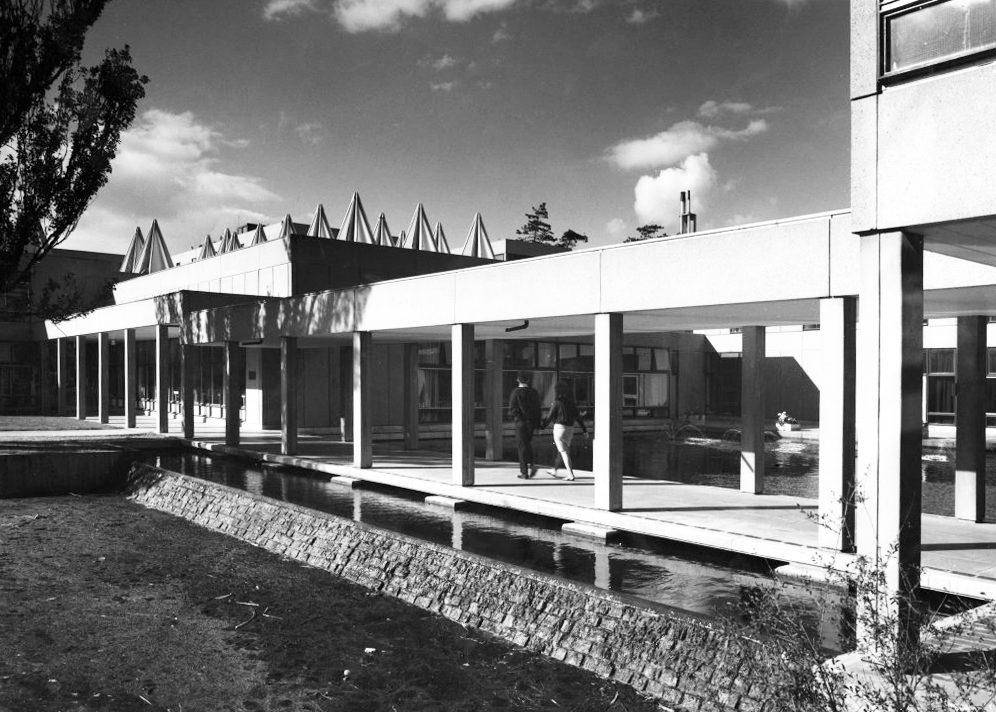
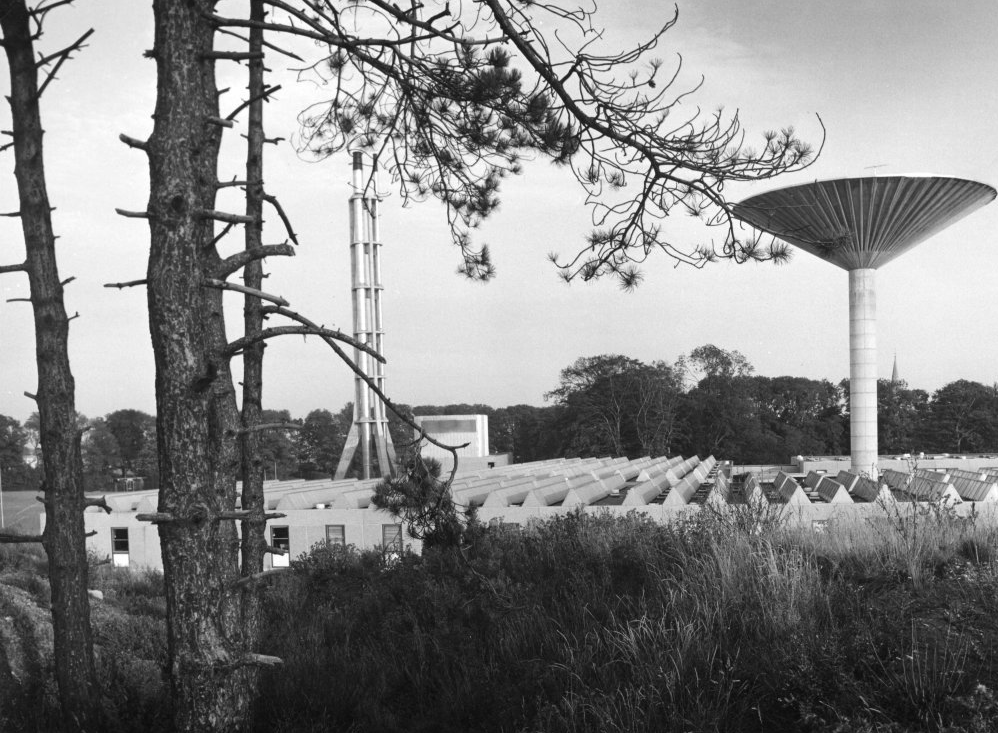
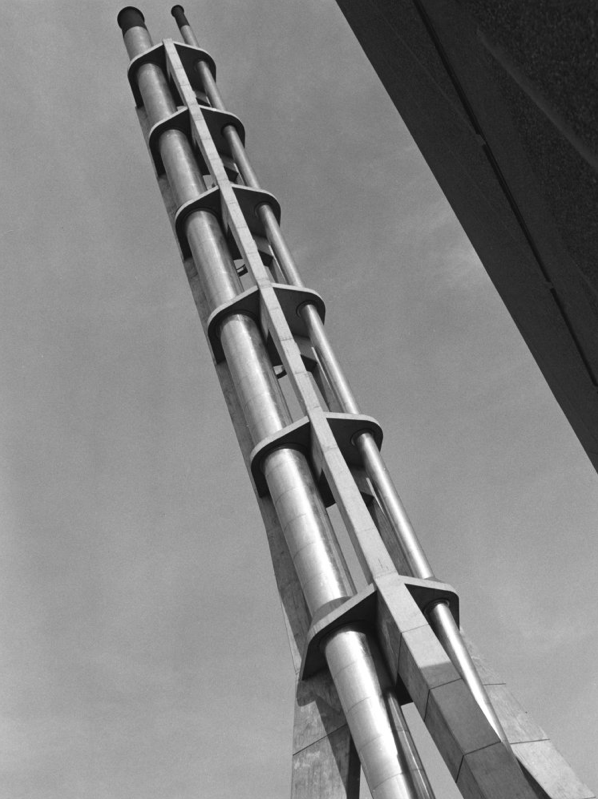
The University of York was founded in 1963 and work on its campus facilities in the grounds of Heslington Hall was begun in 1964. The first two colleges, Langwith and Derwent, accepted residential students for the autumn term of 1965. The original buildings were designed by Sir Andrew Derbyshire of Robert Matthew Johnson-Marshall & Partners, and assembled using the CLASP system of prefabricated construction.
RIBA
Founded in 1956 by architects Robert Matthew and Stirrat Johnson-Marshall, RMJM’s first offices were based in London and Edinburgh.
RMJM is now one of the largest architecture and design networks in the world. Services include architecture, development management, engineering, interior design, landscape design, lead consultancy, master planning, product design, specialist advisory services, and urban design
Langwith College 1965 – photo Reginald Hugo de Burgh Galwey
Constructed using the Consortium of Local Authorities Special Programme – CLASP system, formed in 1957 by Local Authorities in England to develop a shared prefabricated system for the construction of school buildings. The resulting CLASP building system was initially developed by Charles Herbert Aslin, the county architect for Hertfordshire.
CLASP’s popularity in coal mining areas was in part because the system permitted fairly straightforward replacement of subsidence-damaged sections of building, and the lightness of the structures. The system was also later used for the construction of railway stations, offices, university buildings, and churches until the late 1970s.
Today, 3000 examples are still in use.
Photo – Keith Gibson 1965
The system utilised prefabricated light gauge steel frames which could be built economically up to a maximum of four storeys. The frames were finished in a variety of claddings and their modular nature could be employed to produce architecturally satisfying buildings. Initially developed solely for schools, the system was also used to provide offices and housing.
The cynics’ definition of the CLASP acronym, circulating in the 1970s, was:
collection of loosely assembled steel parts.
CLASP buildings fell out of favour in the late 1970s. Budgetary advances and changing architectural tastes made the scheme obsolete.
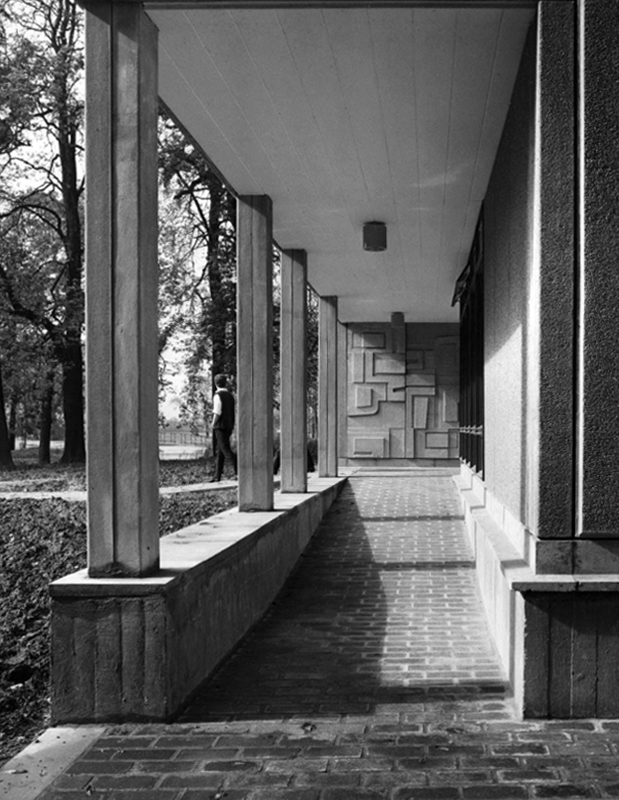
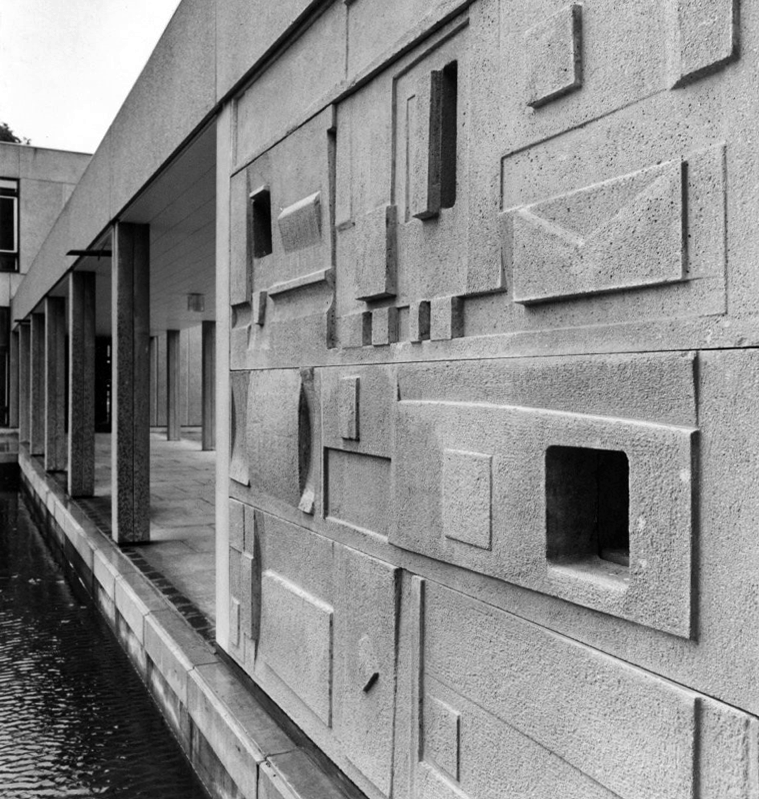
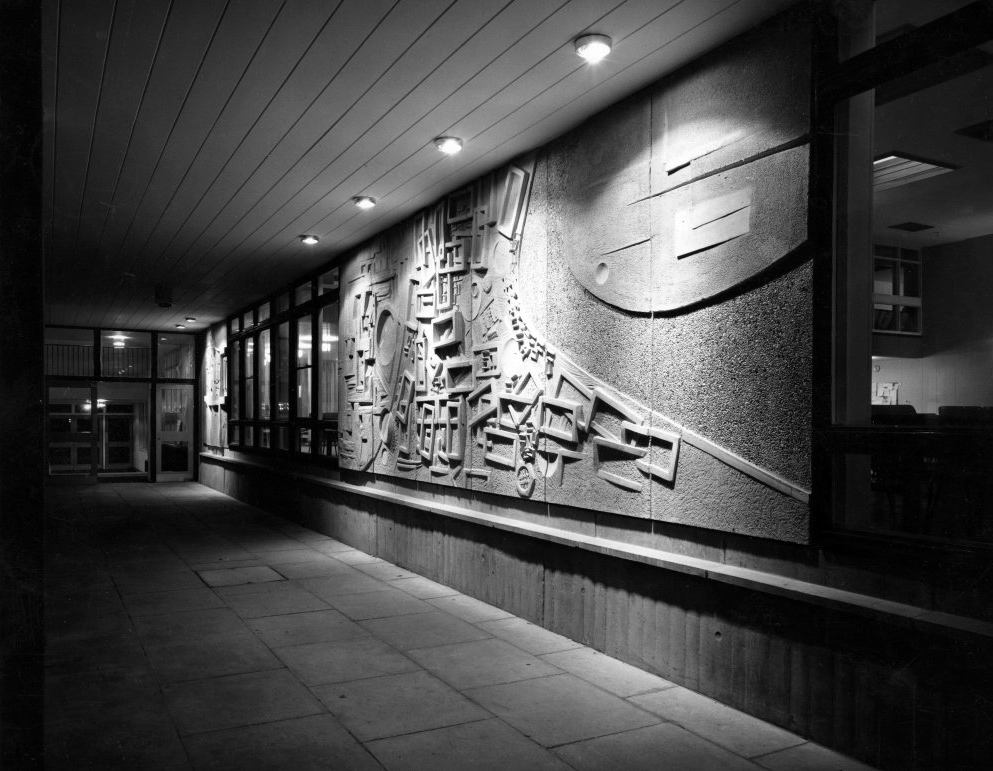
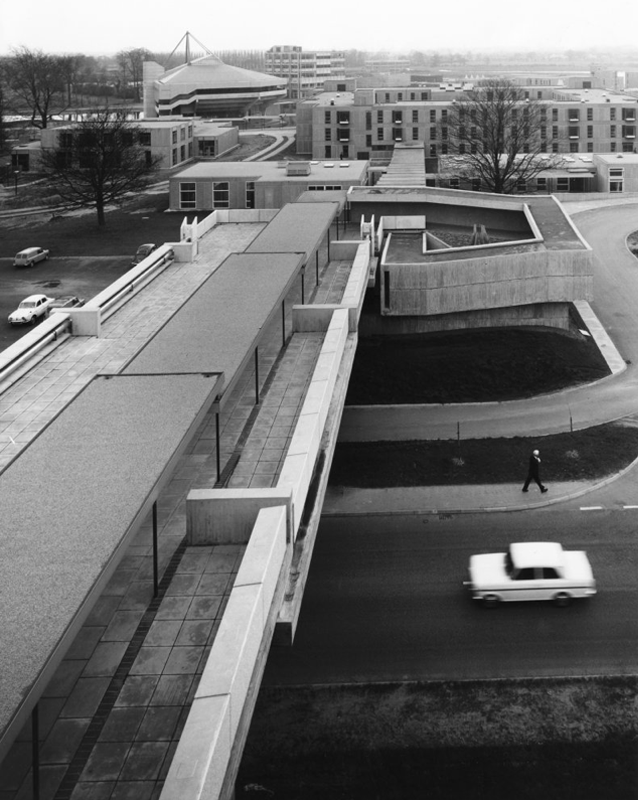
Walkway Derwent College with concrete relief by Fred Millett 1965
Photos 1965 Bill Toomey
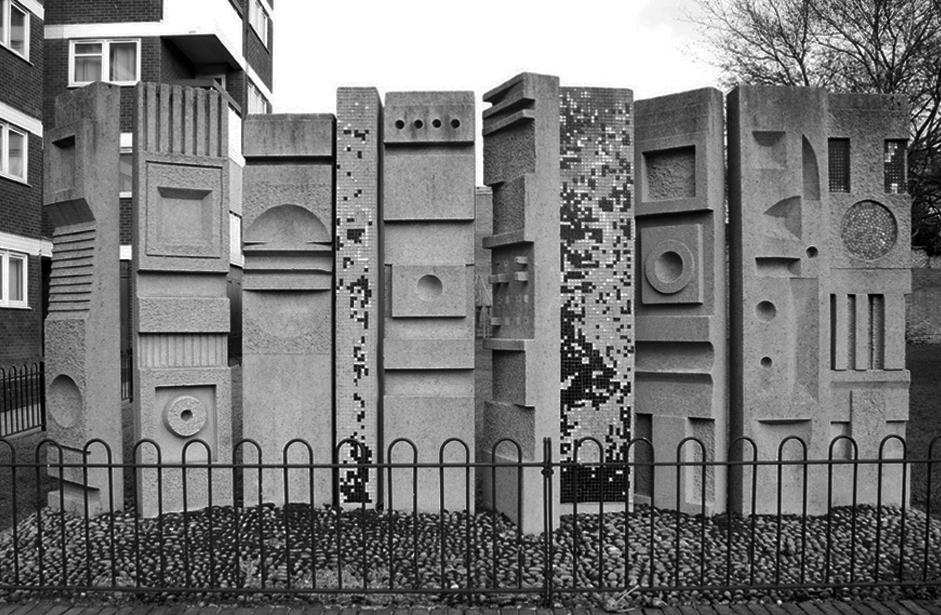
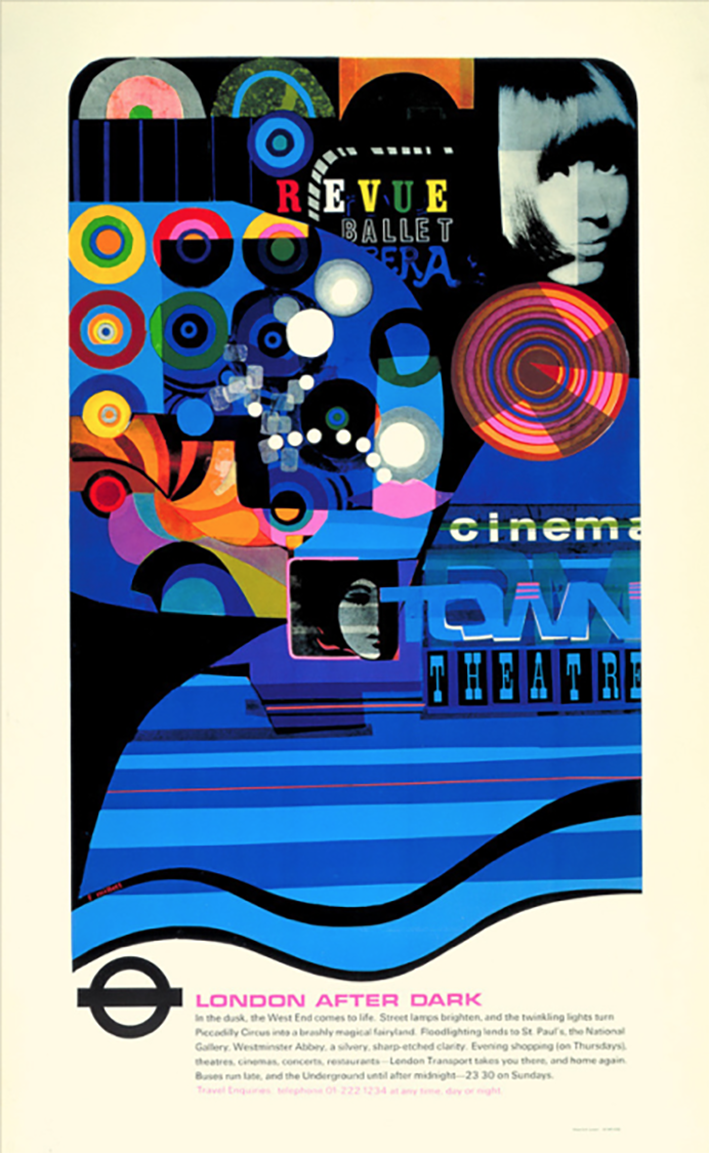
Fred Millett 1920–1980 was a muralist and poster artist who exhibited at the Festival of Britain and was commissioned by London Transport, National Westminster Bank, University of York and the General Post Office. He also taught Perception and Communication at the Polytechnic of Central London.
Fred Millett – Sculpted Wall Raglan Estate Camden 1965
Originally part of the children’s playground, the work is a feature of a post war estate designed by Frank Scarlett in Kentish Town
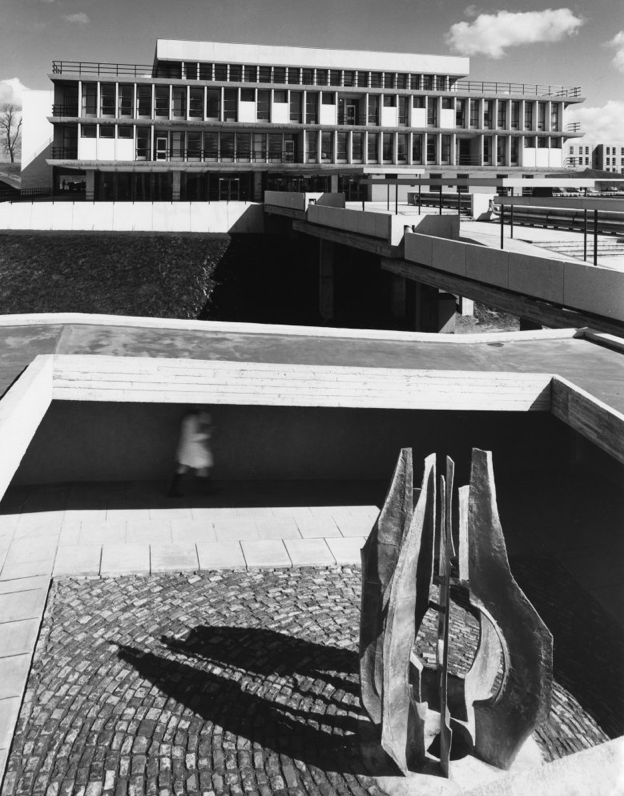
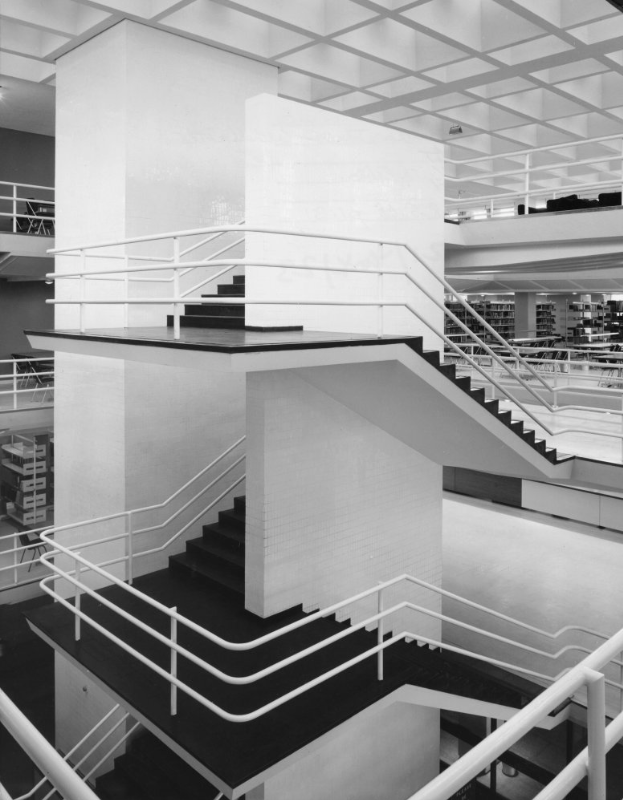
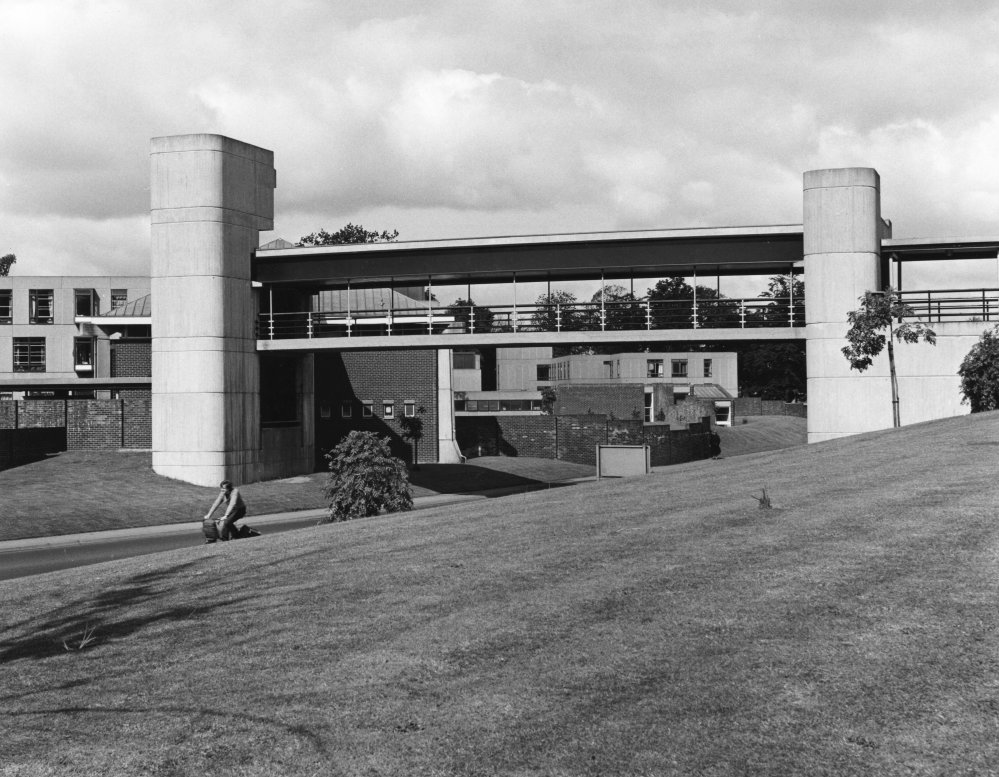
JB Morrell Library seen from the south side of Heslington Road with linking pedestrian bridge and ramp in foreground and cast aluminium sculpture by Austin Wright.
Austin Wright 1911-1997 is a significant post-war sculptor whose personal and professional lives were deeply intertwined with the city of York.
He was born on 4th June 1911 in Chester but spent his childhood in Cardiff. Though a largely self-taught artist, Austin took evening classes at Cardiff Art School. Austin attended New College, University of Oxford for his degree in Modern Languages before he started his teacher training. His first job as a teacher started in 1934 at The Downs, Malvern in Worcestershire. The school attracted artistic people. W.H. Auden taught English for example, and the art master organised a Dada exhibition one year. Here, Austin taught painting and sculpture as well as French and German.
Covered pedestrian bridge linking the southern side of the campus to the JB Morrell Library on the north side.
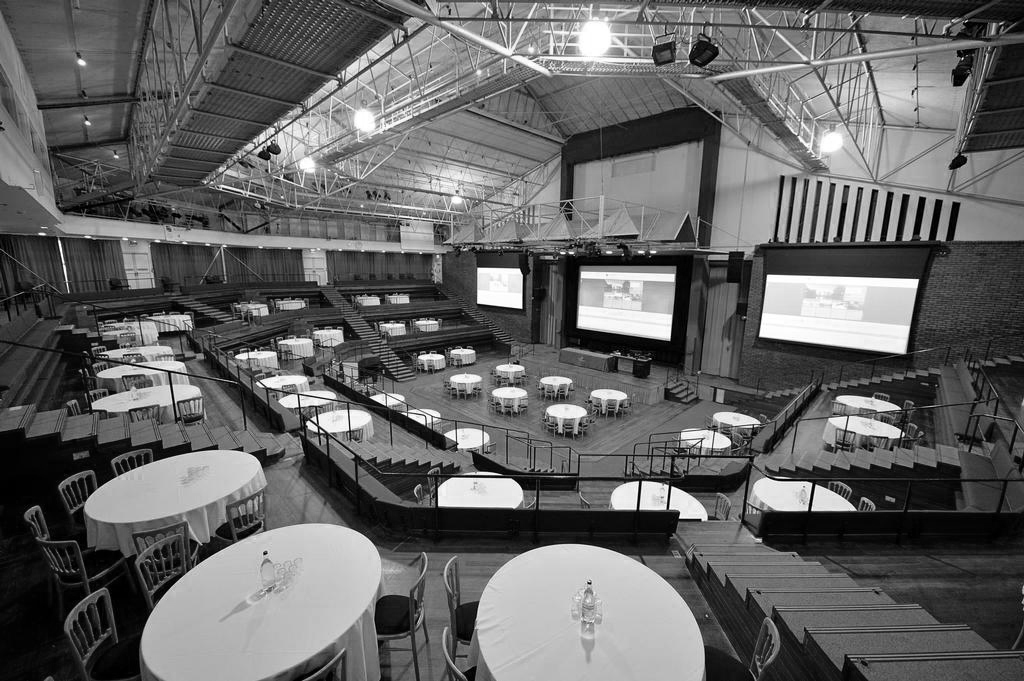
Central Hall
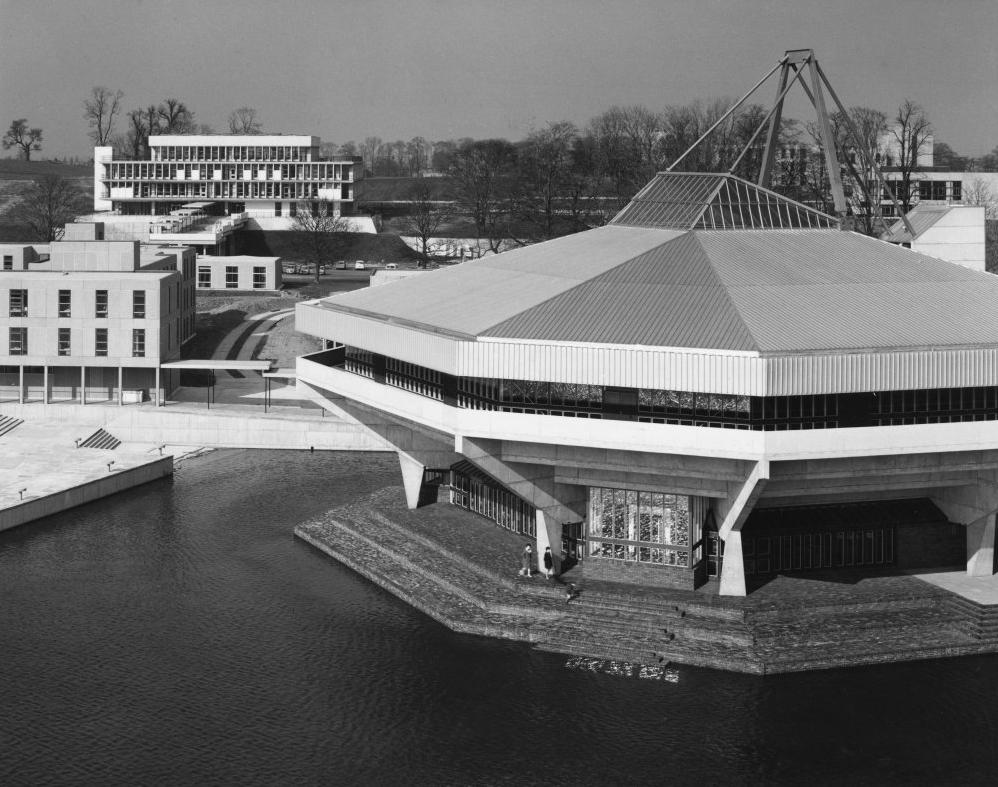
Colloquially known as The Spaceship designed by John Speight, constructed in 1966–1968. The hall is seen as a tour de force of the university, appearing on merchandise and often used as a background for university publicity.
Central lecture and recreation hall to the University of York, 1966-1968 by Robert Matthew, Johnson-Marshall & Partners with Stirrat Johnson-Marshall and Andrew Derbyshire as partners in charge, and John Speight as job architect.
* it forms part of a wave of seven new universities that improved access to higher education and marked the high point of publicly-funded architecture in post-war Britain;
* it is a physical manifestation of the University of York Development Plan, which was heralded as the beginning of contemporary university planning in Britain;
* it continues a historic tradition established by late-C19/early-C20 ‘red brick’ universities of featuring a great hall for special events.
* it has an imaginative and bold design with a striking architectural form and massing that is the focus of the most dramatic views across the campus lake;
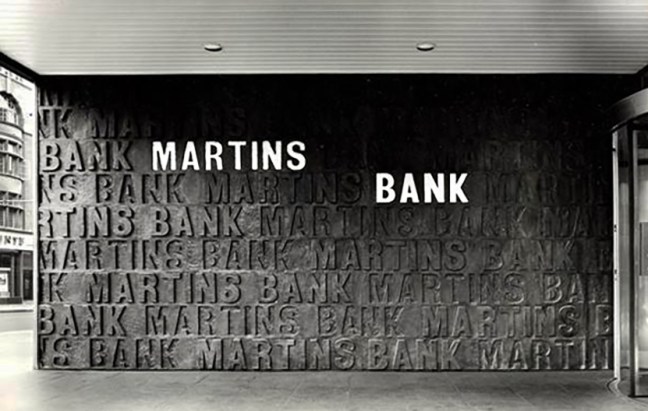
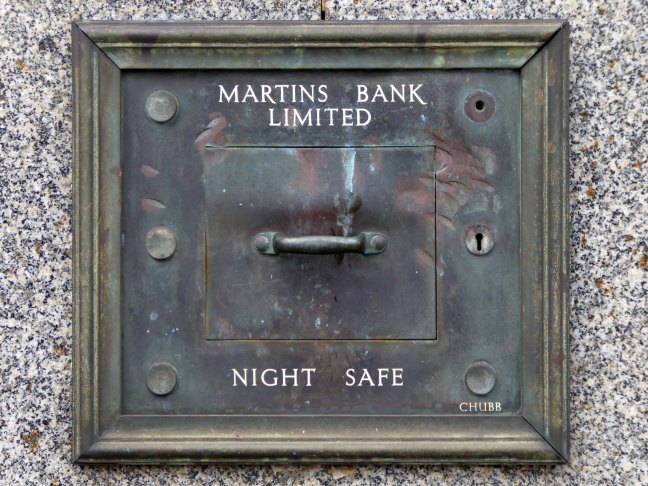
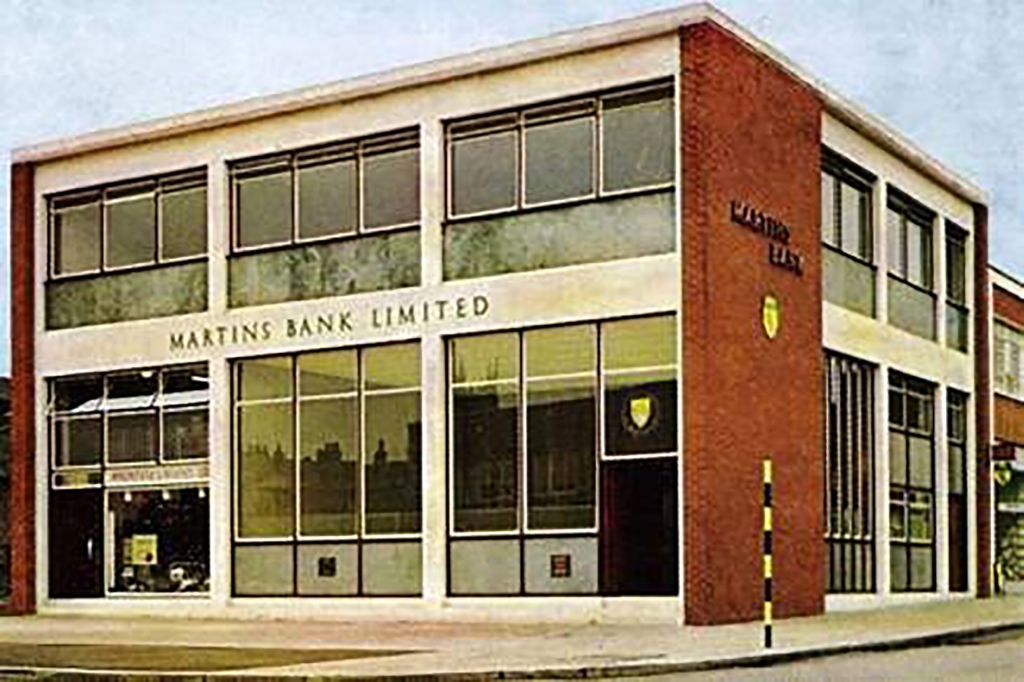
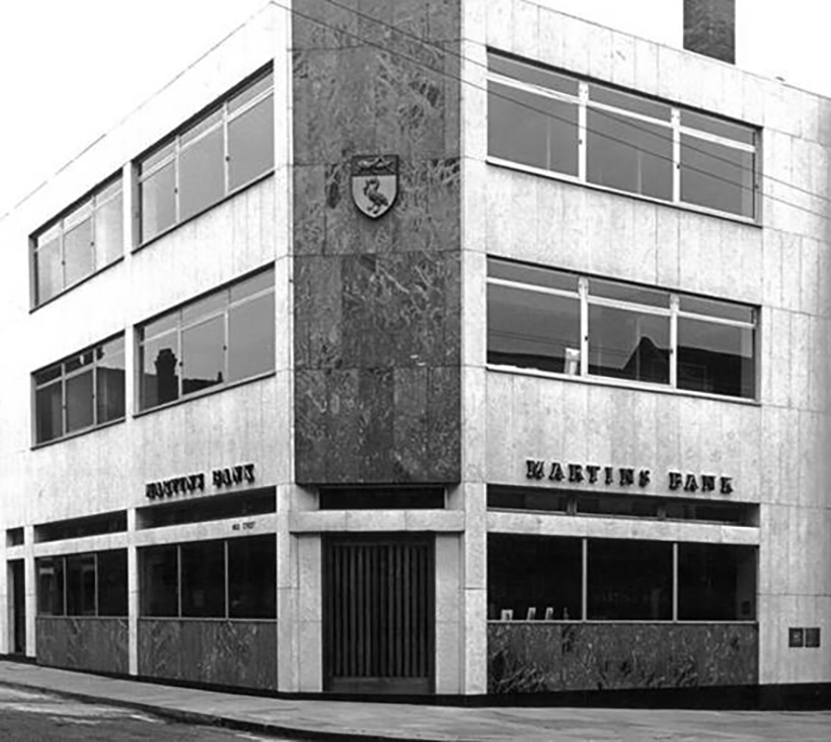
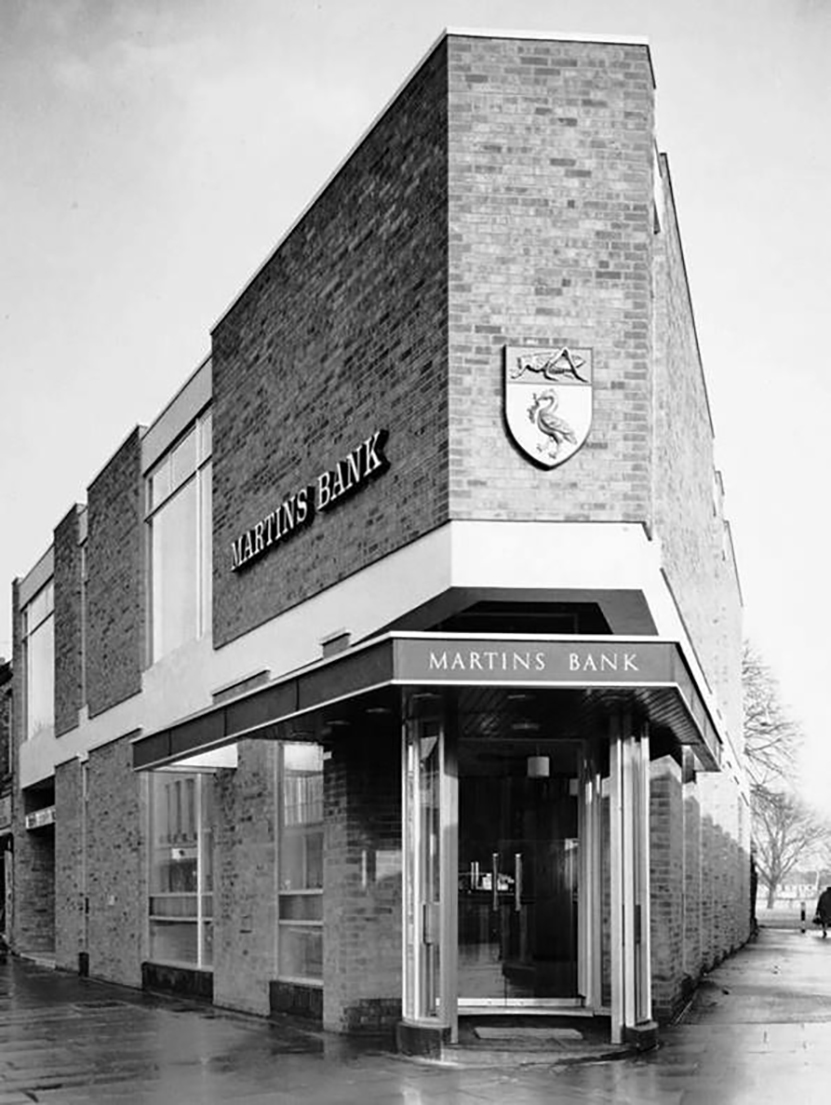
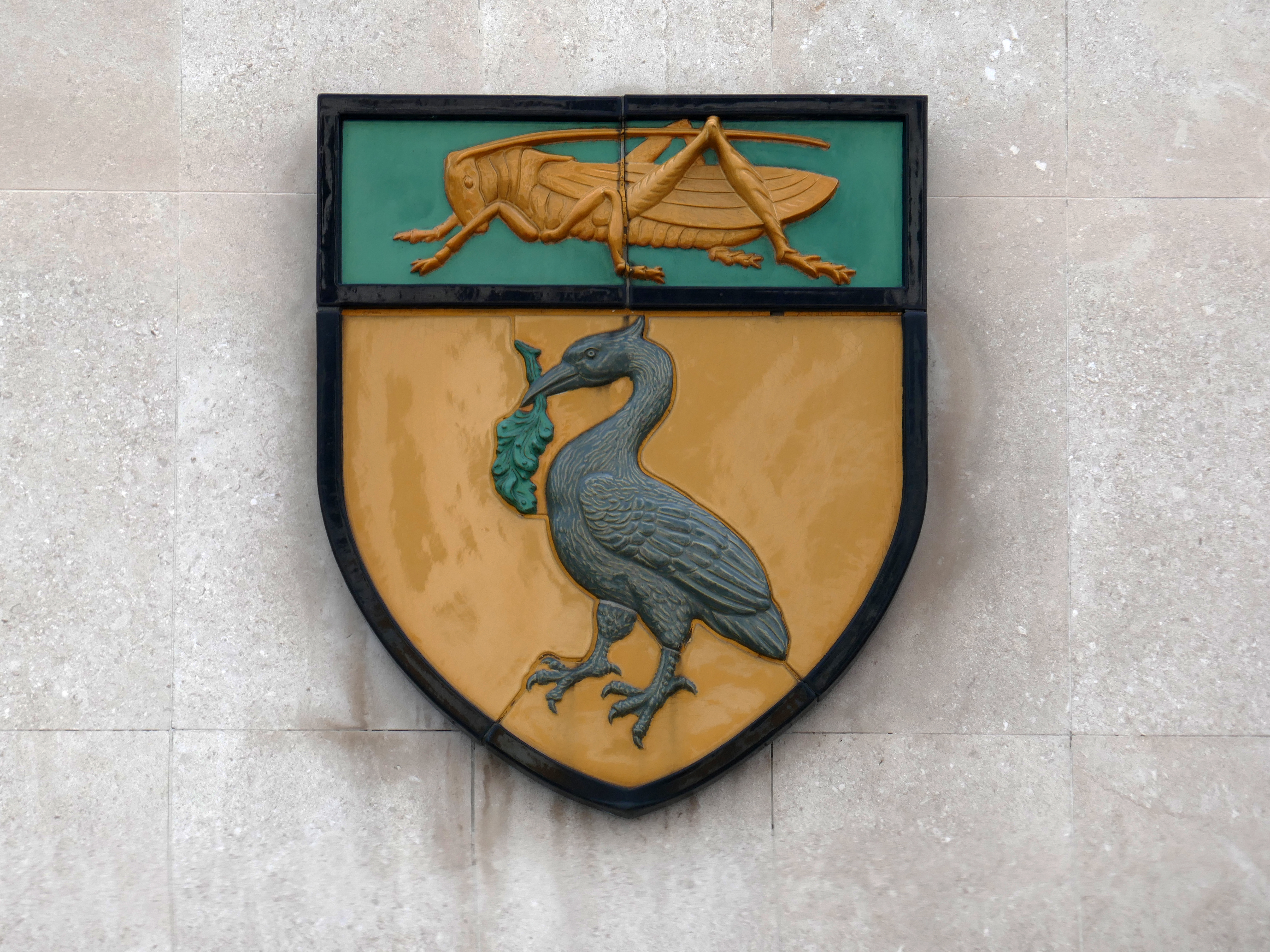
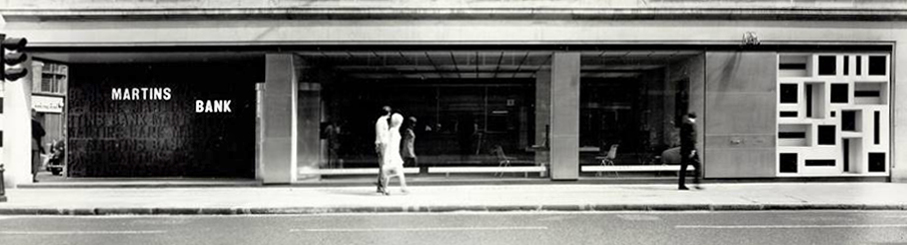
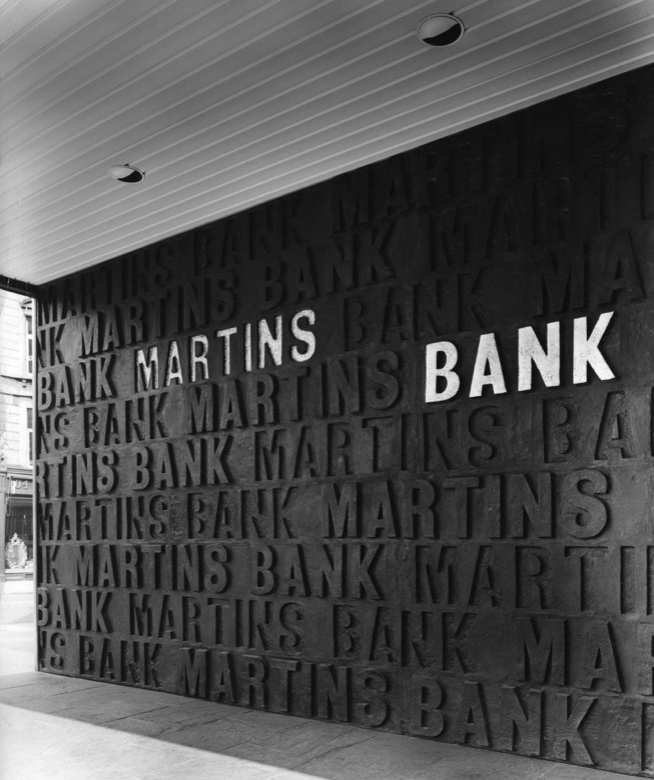
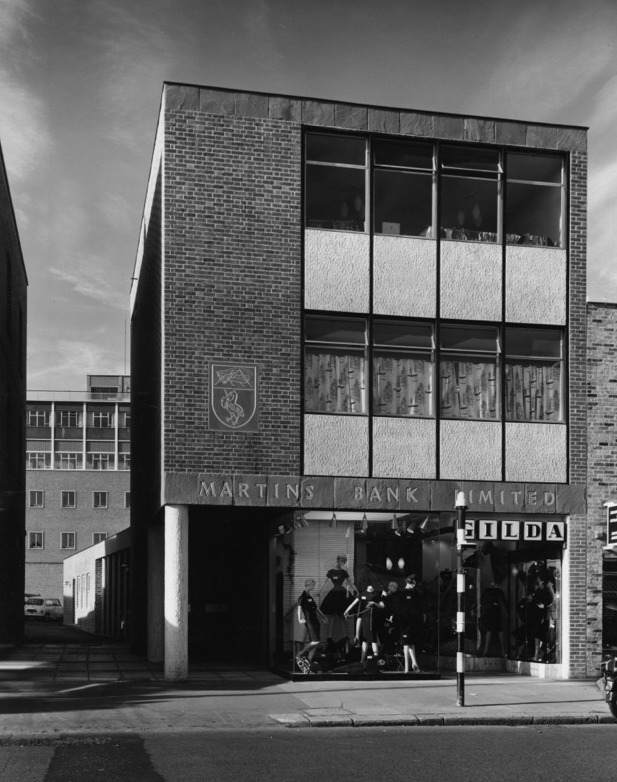
Martins Bank was a London private bank, trading for much of its time under the symbol of The Grasshopper, that could trace its origins back to Thomas Gresham and the London goldsmiths, from which it developed into a bank known as Martin’s Bank from 1890.[1] That bank was acquired in 1918 by the Bank of Liverpool, which wanted Martins to give it a London presence and a seat on the London Bankers’ Clearing House. The Martin name was retained in the title of the enlarged bank which was known as the Bank of Liverpool and Martins Limited. The title was shortened to Martins Bank Limited, without an apostrophe – in 1928, at the insistence of the directors of the Lancashire and Yorkshire Bank when it was bought by the Bank of Liverpool and Martins. The head office and managerial control remained firmly in Liverpool, cementing Martins’ place as the only English national bank to have its head office outside London.
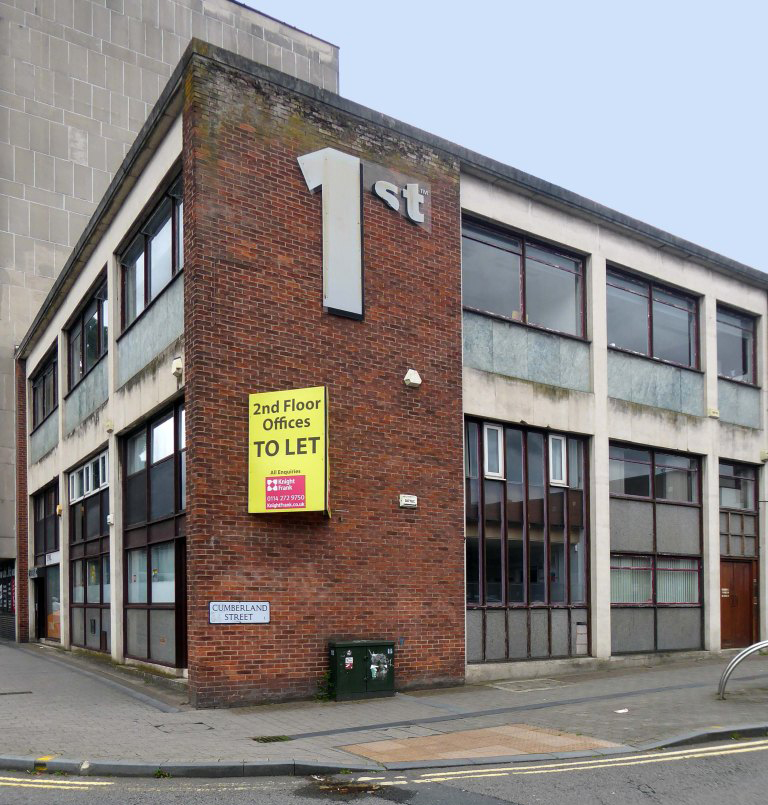
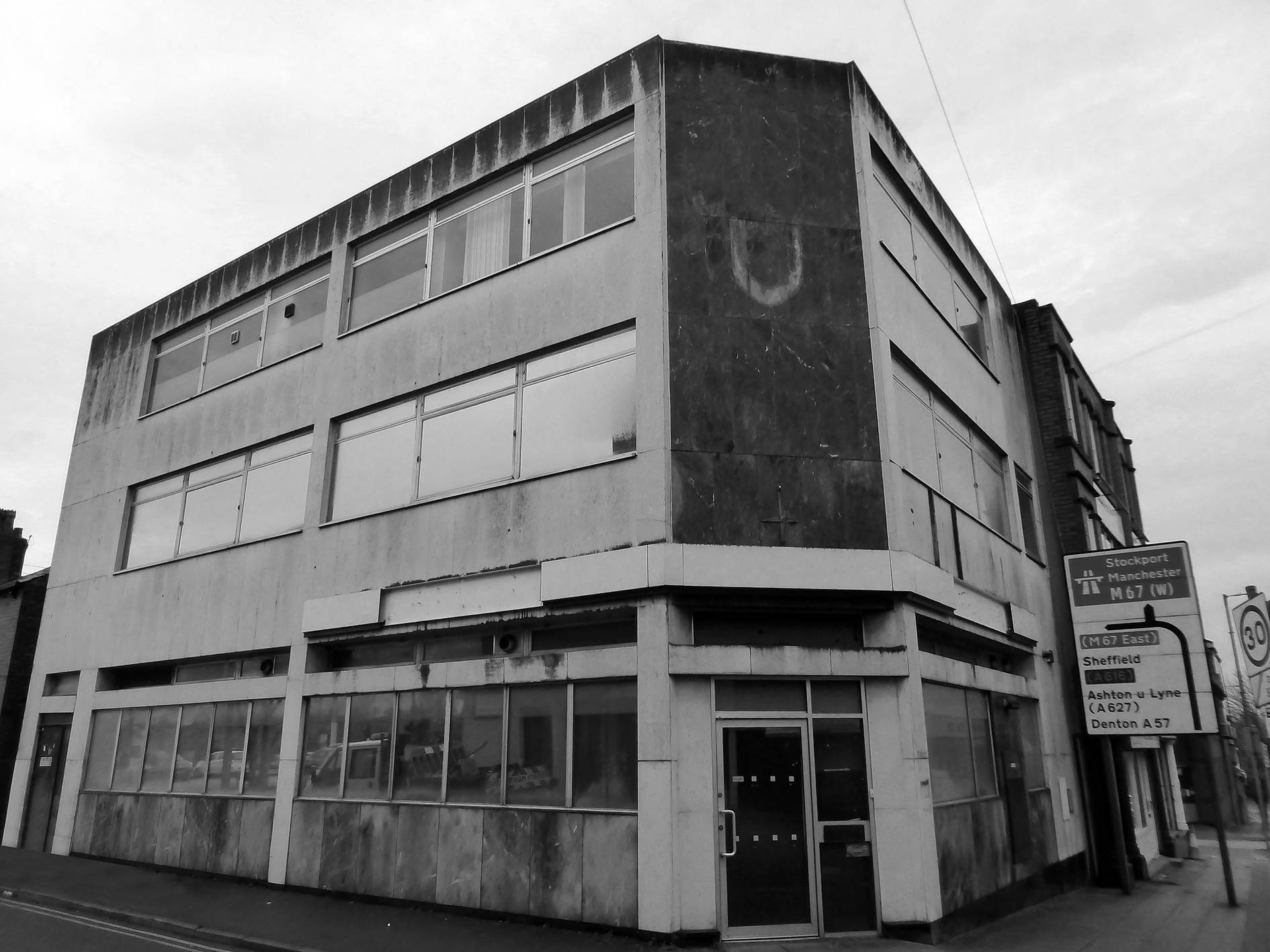
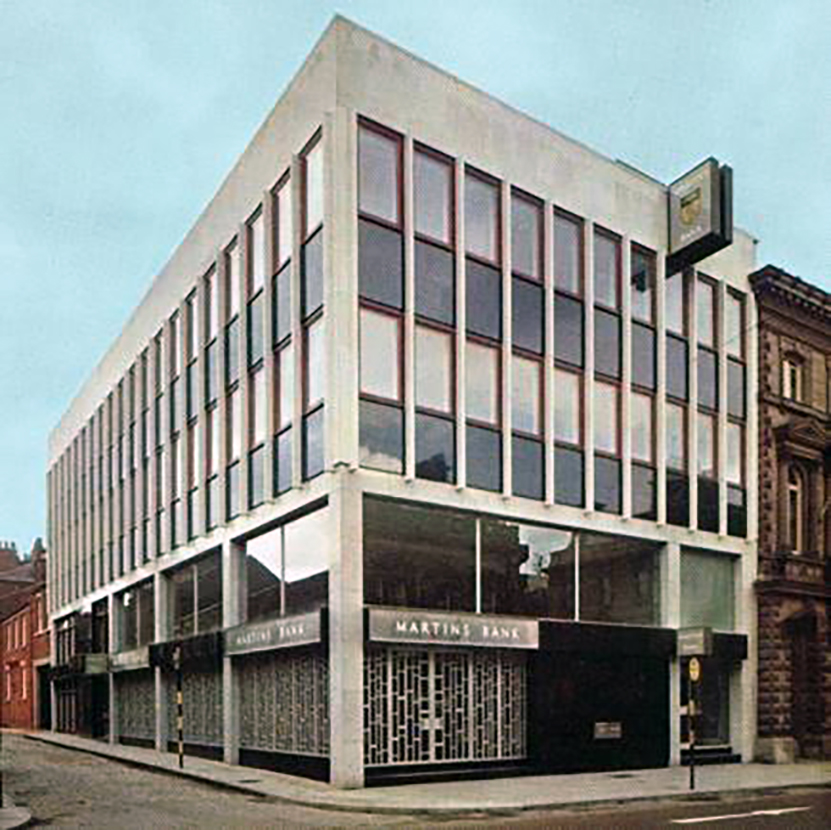
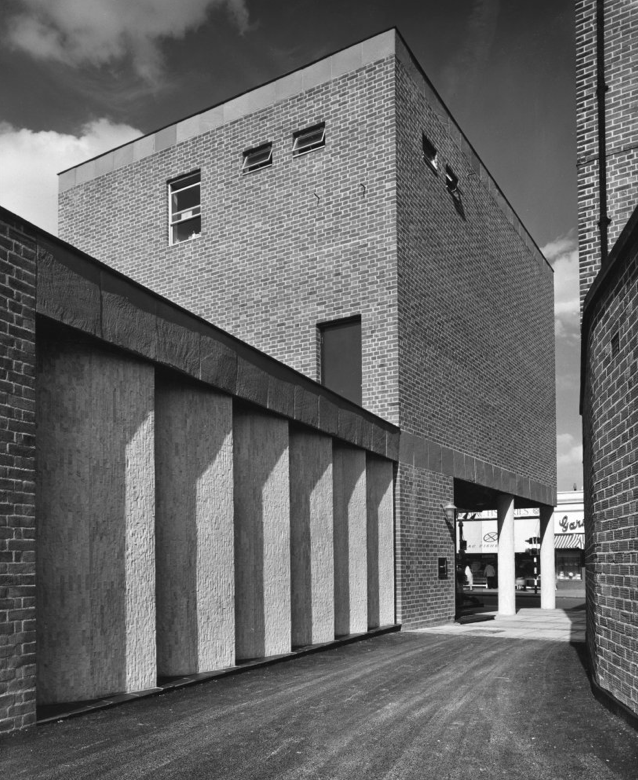
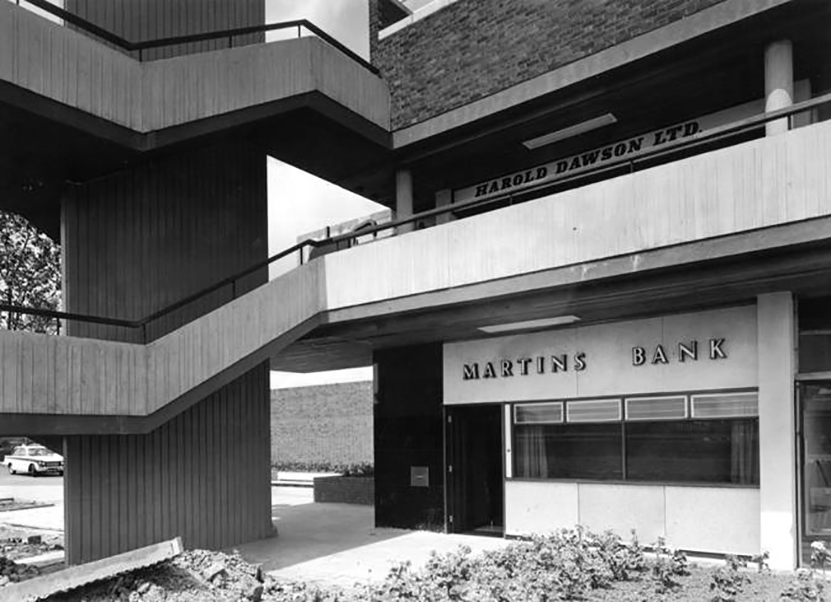
Opened in 1961, Martins Bank’s branch at Sheffield Moor is new and purpose built, occupying space left in the Sheffield Moor area by the bombing of the second world war. Time flies however, and more than fifty years on, the building is empty and awaiting the next chapter of its life.
Onwards to 38 Market Street Hyde – photographed as part of my Tameside Moderne book.
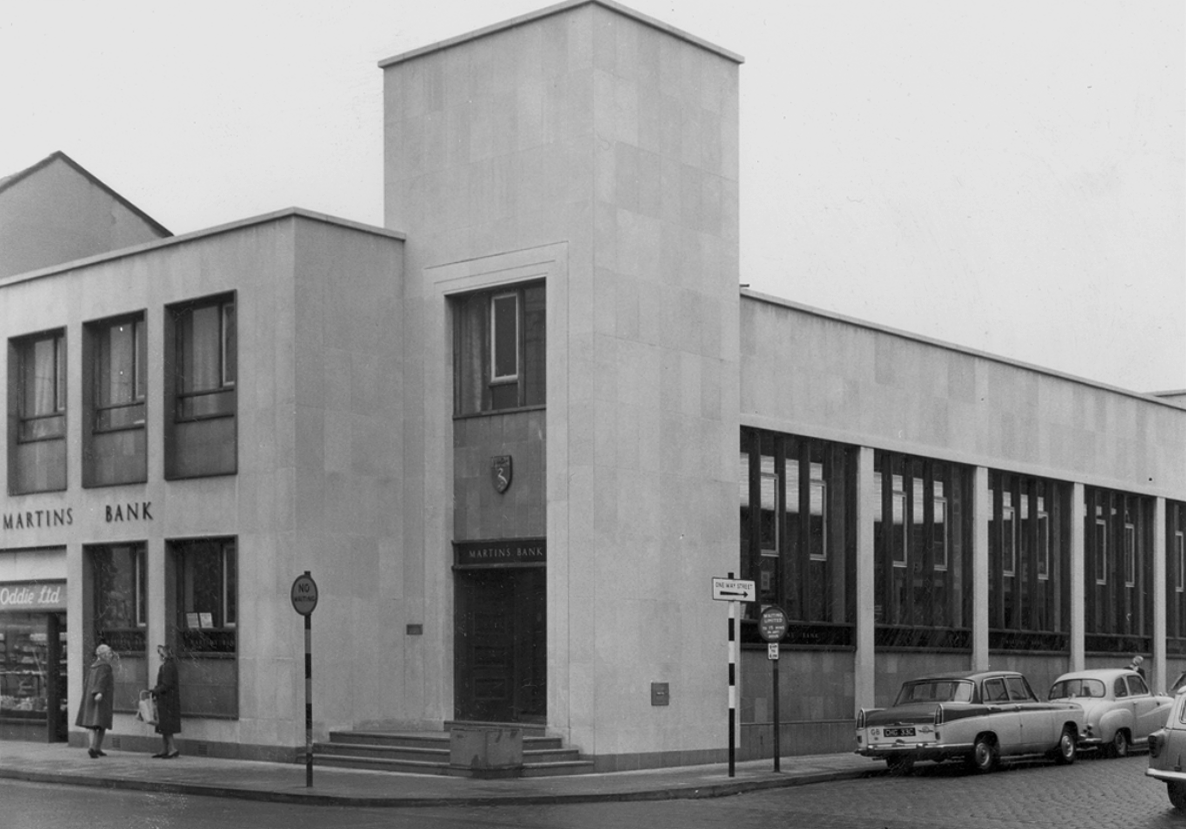
Seen here in 1963 – the year of its opening.
The rebuilt branch at 38 Market Street Hyde is typical of the clean lines and minimal fuss of Martins’ 60s rebuilds. After a year or so in temporary premises at 25 Market street it re-opens in 1965, and a year later a smaller but remarkably similar looking branch is completed at Peterborough.
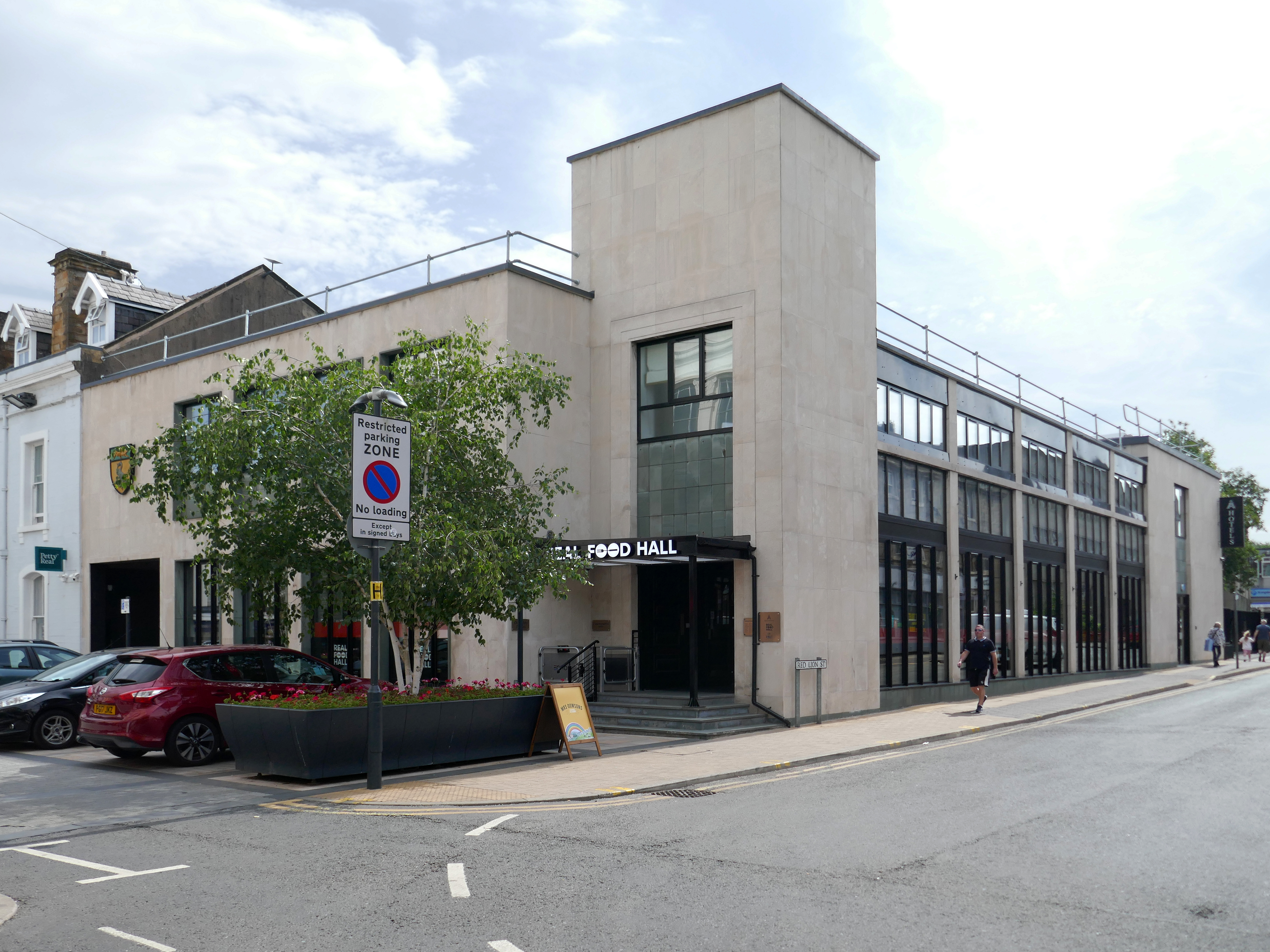
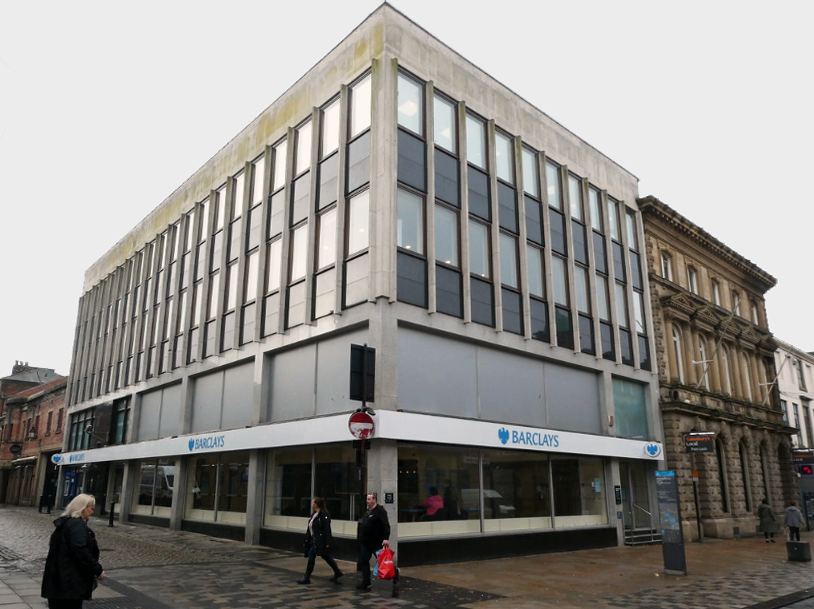
Then last week in Burnley, I stumbled across another former branch, whilst on my Burnley walk – it is currently trading as the Real Food Hall, VaultCinemaandAboveboutique hotel, having previously hosted a variety of retail outlets.
Architect: Mr J E Wadsworth of Samuel Taylor Son & Platt.
Discover Burnley’s premier destination for culinary delights. Nestled on Manchester Road, Real Food Hall offers a vibrant and diverse food experience that tantalizes every taste bud. Whether you’re craving gourmet burgers, delectable street food, or indulgent desserts, we’ve got something for everyone.
Enjoy top movies in a luxurious former bank vault, featuring high-end design, ultimate comfort, and a selection of premium snacks and beverages.
Indulge in next-level hospitality with Burnley’s largest, most intelligent hotel rooms — tailored for football fans, couples, and business travellers seeking a seamless, stylish stay.
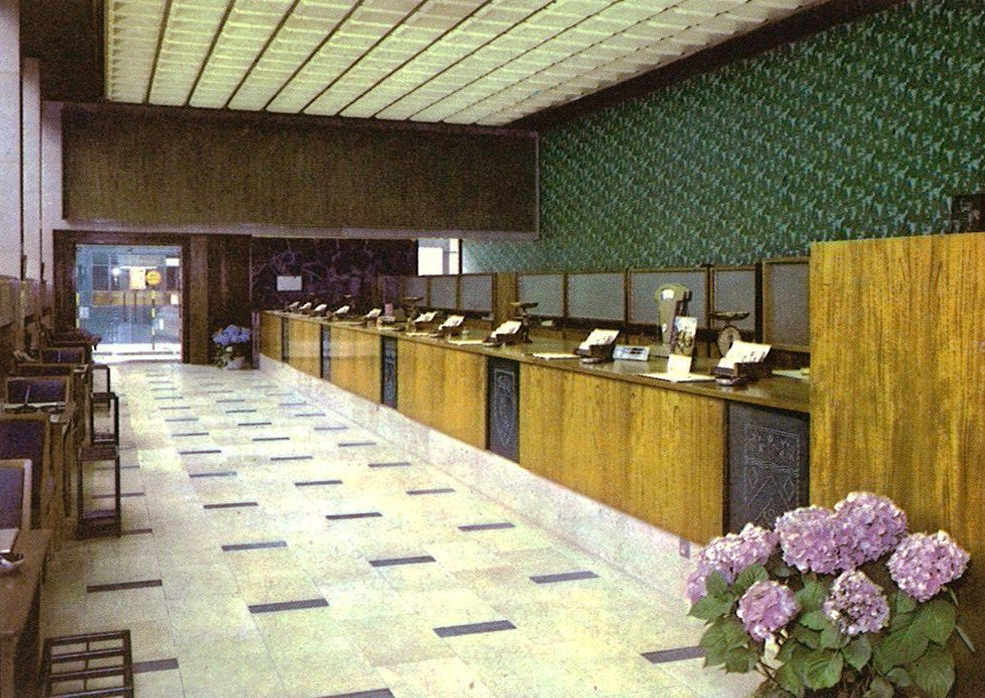
Most people will remember Whitsuntide, 1963 as a weekend of blazing sunshine spent by the sea, or on the hills, or golfing, or just sitting in the sun. The staff of the two Burnley branches will remember it as a week-end of evacuation and invasion, Dunkirk and D-Day rolled into a lost weekend, the evacuation of Hargreaves Street and St James Street into the new Manchester Road premises.
Mr Jobling, who had controlled operations throughout, created a record that can never be beaten in working twenty-four hours’ overtime in one day! We welcomed our first customers at 10 o’clock next morning and a civic visit at 11 a.m., not only proud of our lovely building but very proud of and grateful to so many who had never spared themselves to achieve what at one time seemed the impossible.
In service from 3rd June 1963 until 19th June 1991.
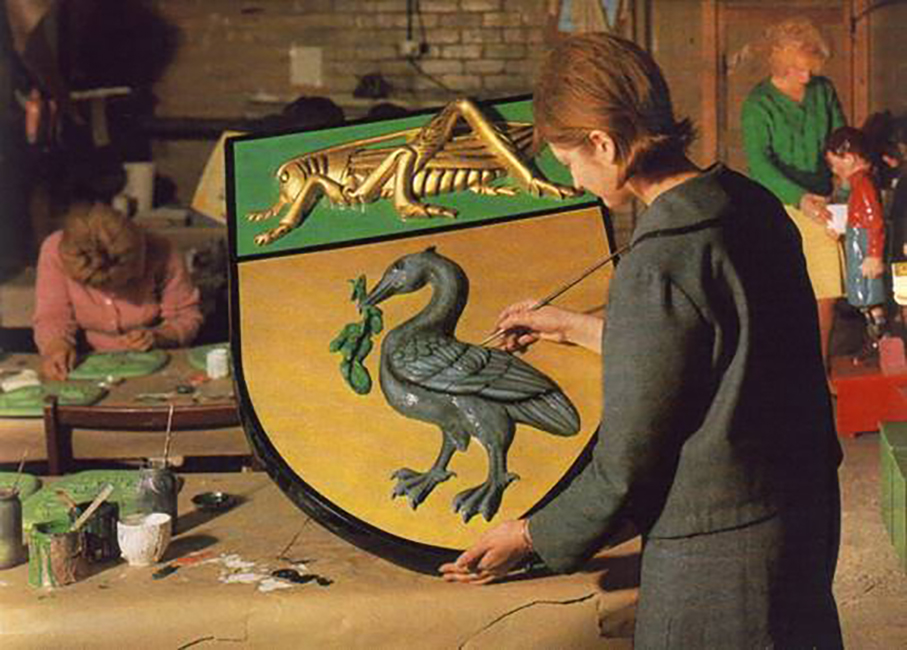
Since the last war the uses of fibreglass have developed to such an extent, that there are now companies engaged solely in the manufacture of fibreglass products. Such a company is Carleton Russell Limited whose works at Loughborough. The company makes fibreglass signs and displays and has produced several of our Bank signs. At the time of our visit the finishing touches were being made to the huge sign, seen in the colour photograph below, which now gleams upon customers entering our branch at Digbeth, Birmingham.
Why fibreglass – two of its advantages, lightness and flexibility, have much to recommend it as the material for a wall sign, either inside or outside a building. The Coats of Arms carved in stone which once surmounted the two entrances to our Leeds office, have now given way to fibre-glass reproductions. Weather resistance is another valuable property of these signs and Hove branch, for example, exposed to coastal weather, is saved frequent cleaning and retouching costs by having its external sign made from fibreglass.
In addition to innovative materials, Martins began to employ Modernist Architecture, interiors and design to attract a younger customer base.
Particularly at their branch on 95 Wigmore Street London, where Ernö Goldfinger was commissioned to do away with the old and bring in only the newest of the new.
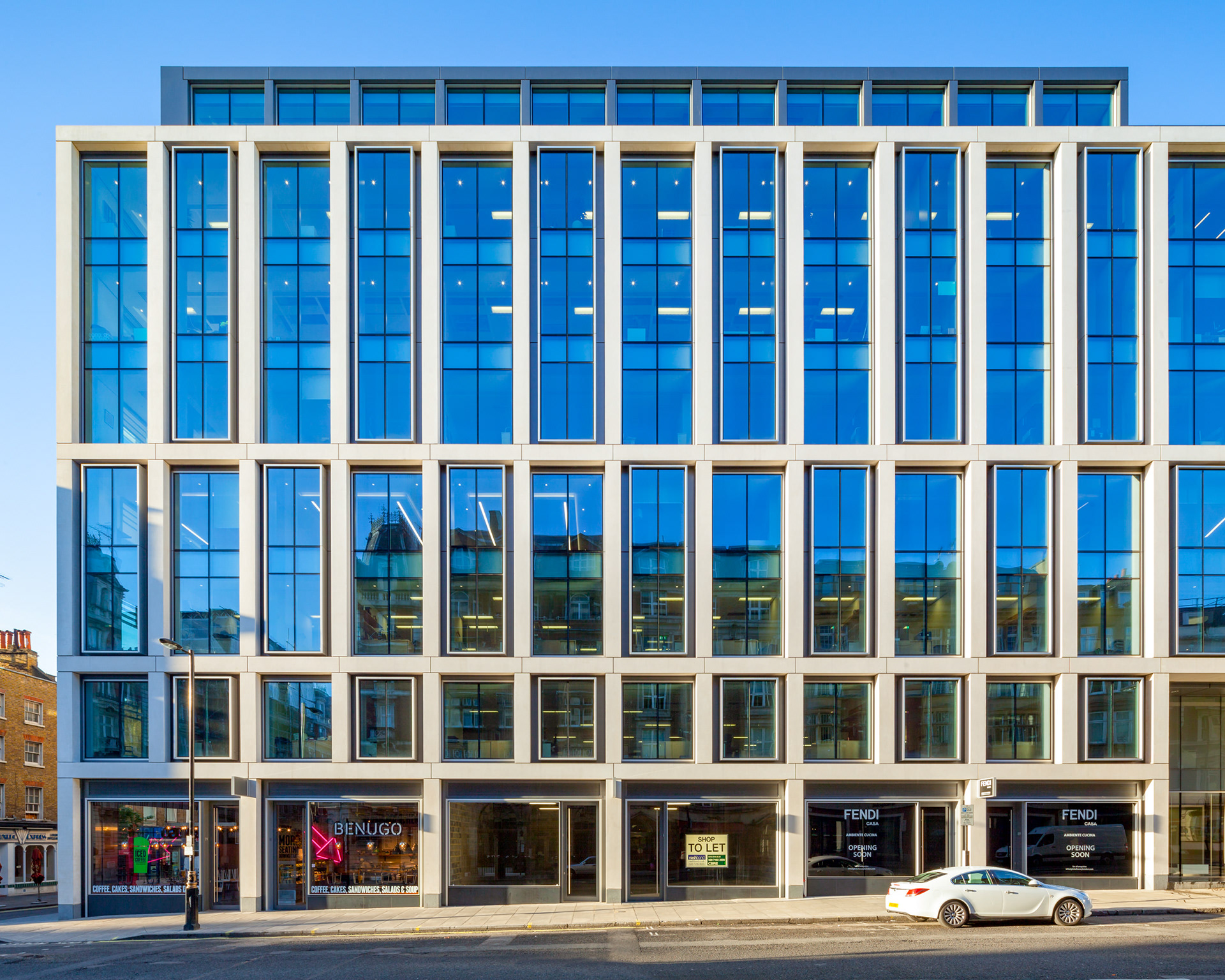
New office development for Great Portland Estates on Wigmore St. Designed by architects ORMS, 95 Wigmore Street is a new office and retail development by the Great Wigmore Partnership, completed in 2013. The building occupies a prominent site in the West End, between the thriving restaurants and bars on James Street and yards from Selfridges on Duke Street.
Closer to home this is the Fishergate Branch in Preston, opened in August 1965.
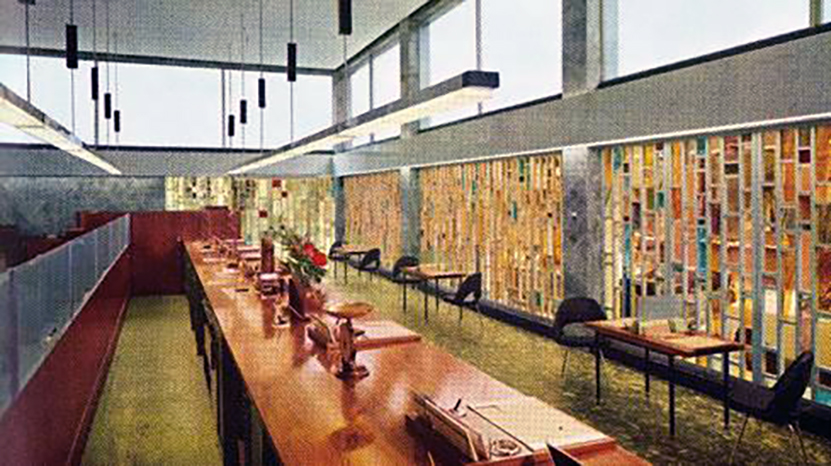
Preston branch today is not merely impressive; it is handsome. The entrance porch is of clear glass but the windows are of hand-made tinted glass set in aluminium frames, the counter is of teak, faced with Sicilian marble, and the walls of the main banking office are of wide elm boarding with one large panel of silver grey marble.
The management rooms are lined with cedar of Lebanon against a maple background and hot water coils in the ceilings warm all the office areas. Clearly the transformation has cost a lot of money and even the more humble rooms would not disgrace the London Hilton. Does the Hilton staff kitchen, for example, have built-in teak wall cupboards with magnetised catches?
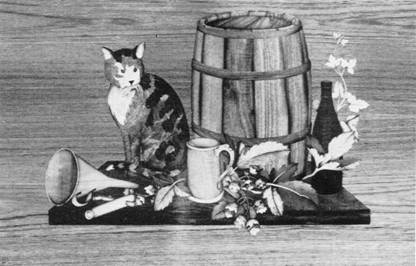
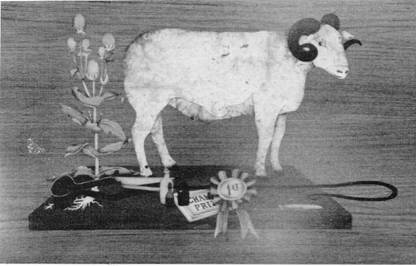
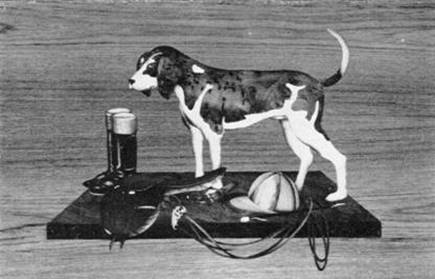
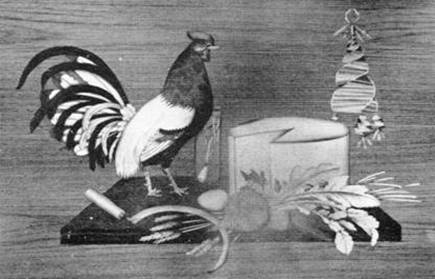
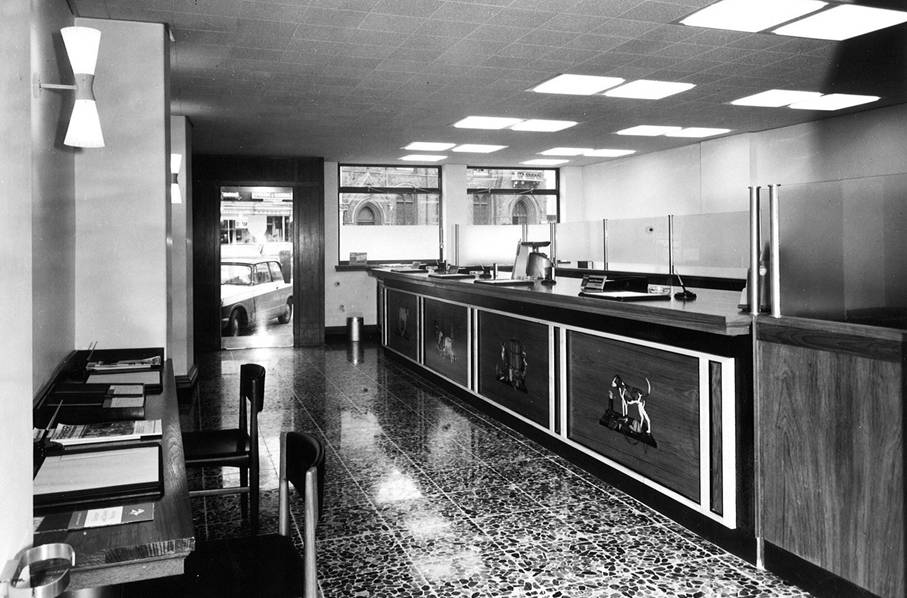
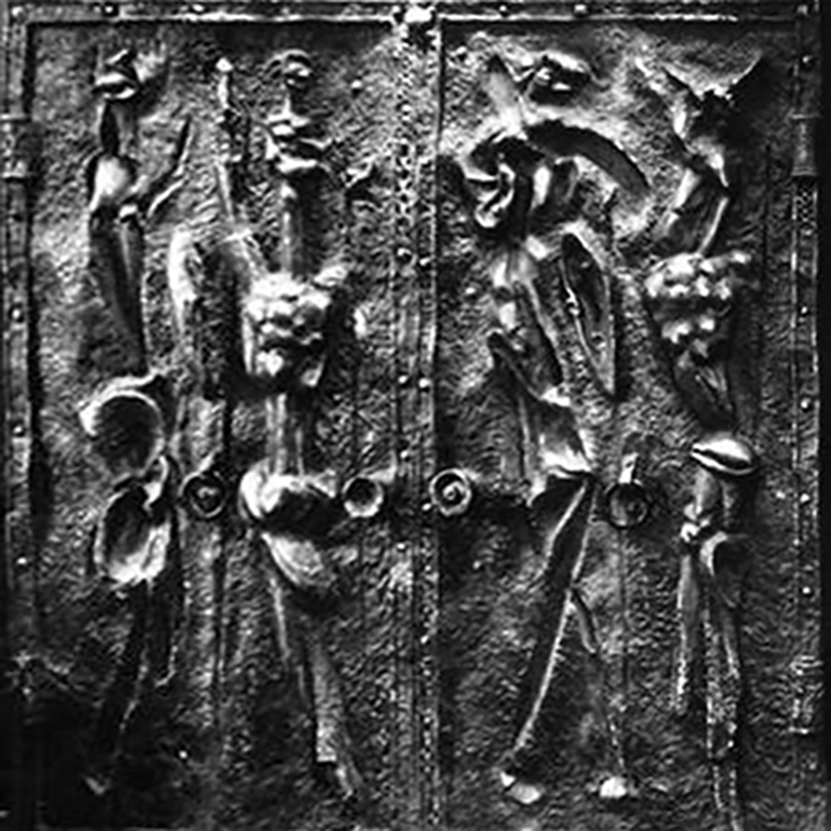
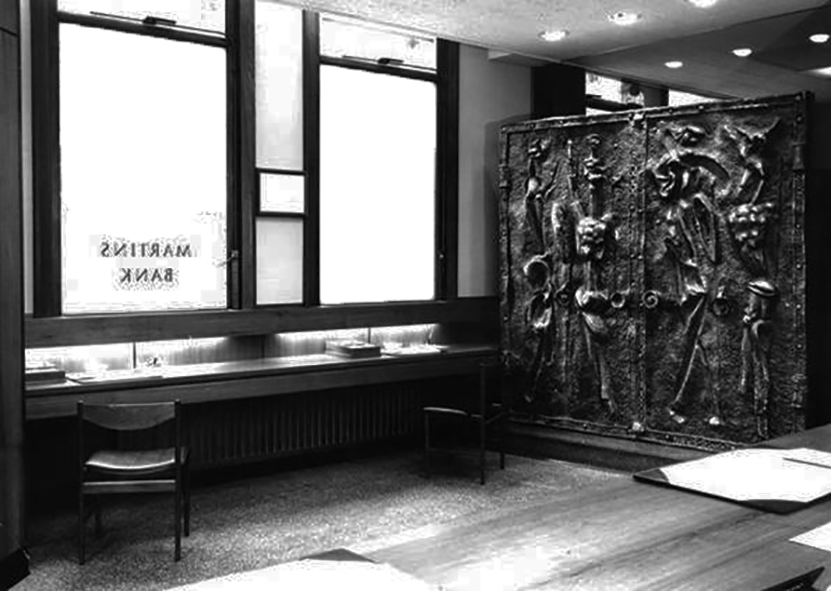
In the late 1950s, Martins begins to commission works of art that can take pride of place in new branches, and in most cases reflect something of the local area – a kind of giving back to the people. To begin with, this is neither a grand nor hollow gesture, and the character of many a branch is decided by its own unique internal décor and its artwork.
Such as the four elaborate carvings from Newbury Branch, depicting four local activities – Brewing, Weaving, Chasing and Farming.
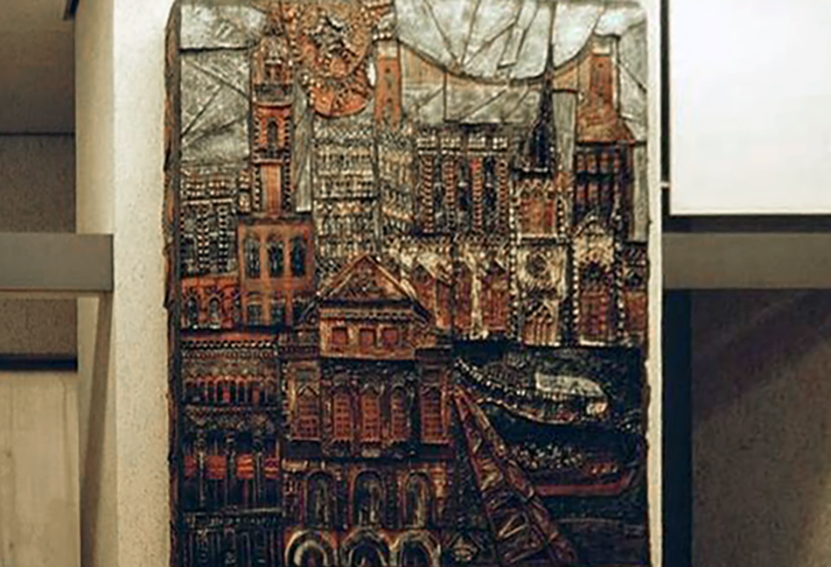
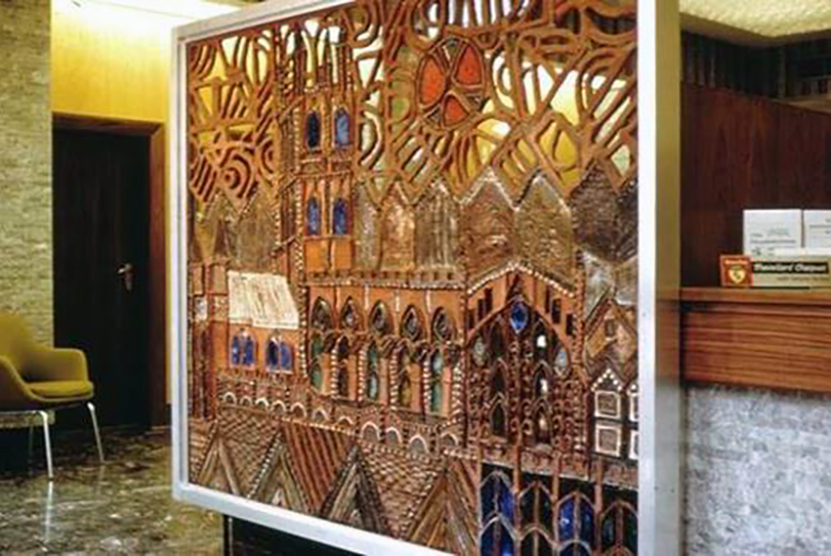
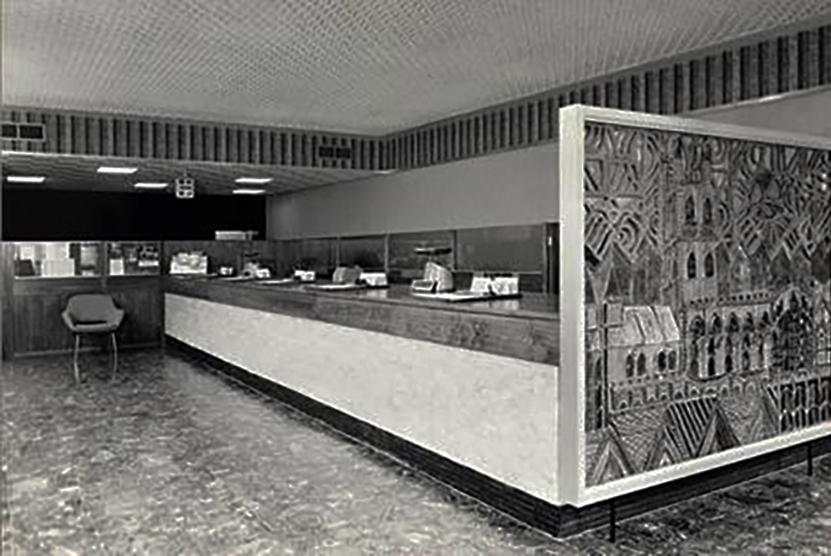
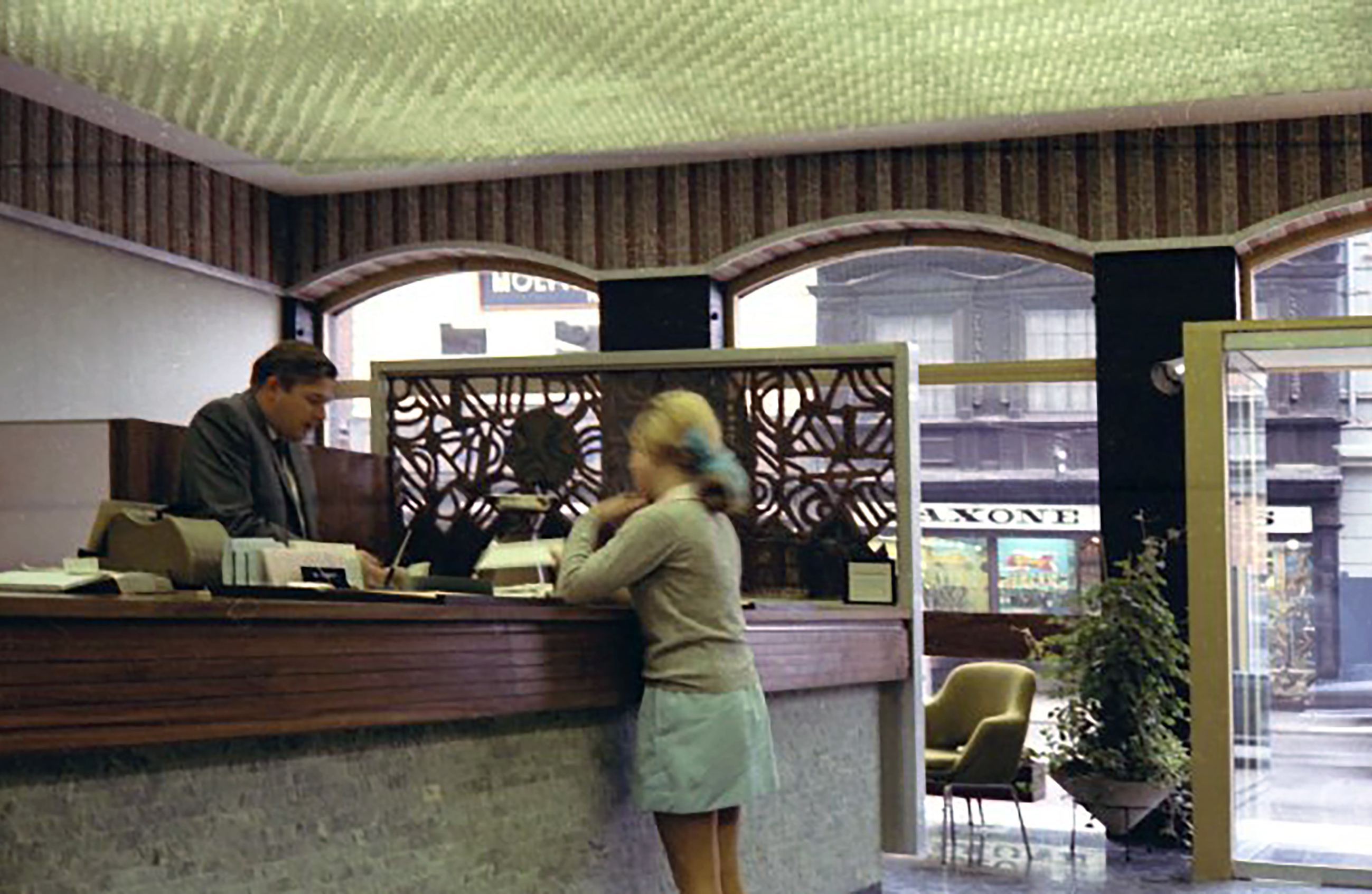
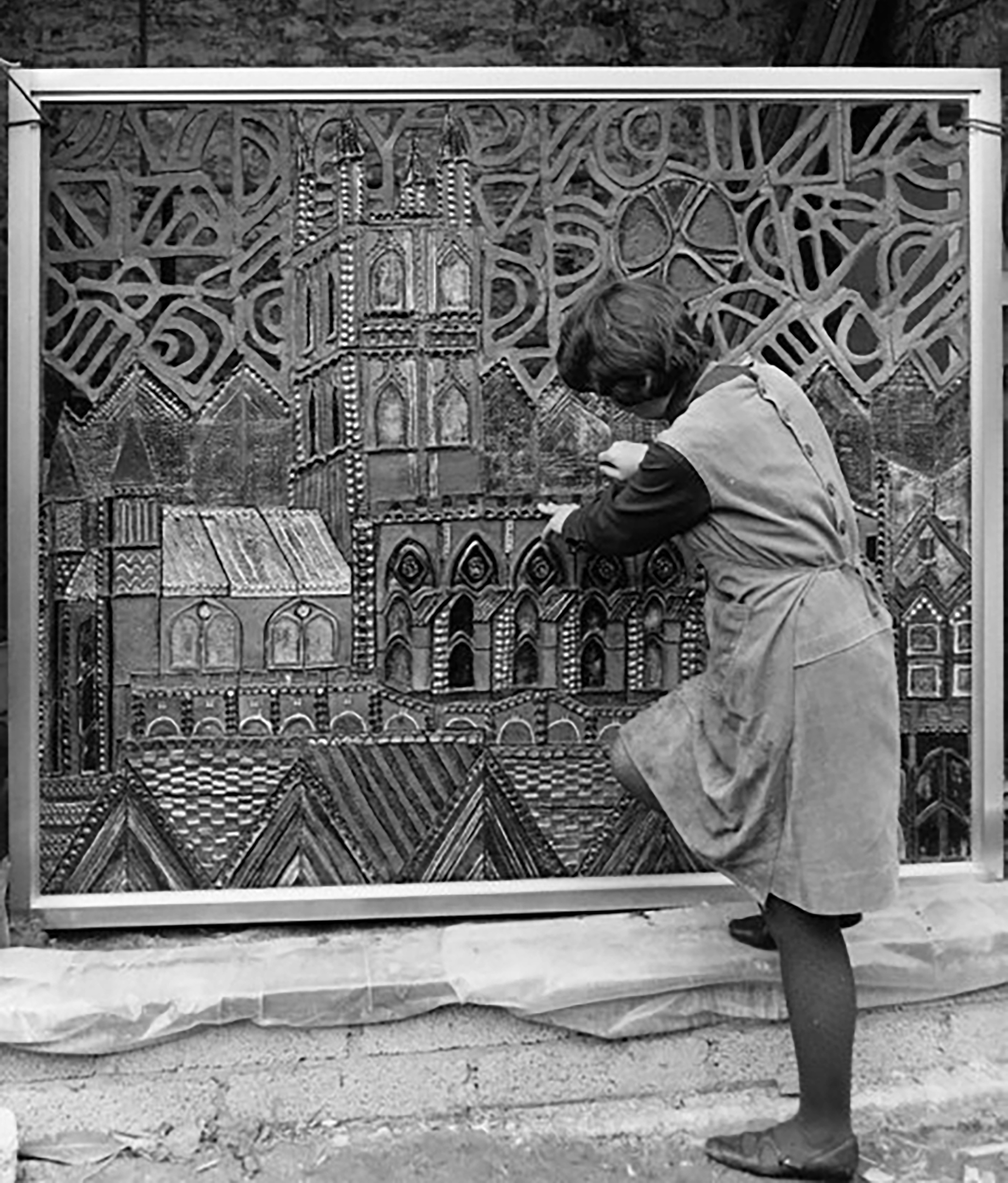
Bristol Clifton 9a Whiteladies Road – the design depicts various buildings and landmarks in Bristol.
Philippa Threlfall has been making relief murals in ceramic since the 1960s. Together with her husband and partner Kennedy Collings she has completed over one hundred major works on sites all over the United Kingdom and overseas. Some of these were made for private clients, but most were commissioned for display in public situations – shopping precincts, banks, building societies, an airport, hospital and office developments.
Philippa studied Illustration and Ceramics at Cardiff College of Art and went on to qualify as an art teacher at Goldsmiths College London. She taught ceramics and painting part time for six years at North London Collegiate School in Edgware, and during this time began to receive commissions for mural work.
Bournemouth 39 Old Christchurch Road, where sculptor Paul Fletcher’s creation exudes locality and security at the doors of the branch.
Where in the universe have we landed? Is this one of the wobbly sets from the 1960s episodes of Dr Who? Even worse – no need for LSD when paying in your £SD at the new Watford Branch – Bryan & Norman Westwood & Partners, architects 1962.
Ribapix – rear elevation.
The uneven cobbled effect on the floor, clashing with walls that look as if they might close in on you at any minute, must have made for an interesting visit to Watford.
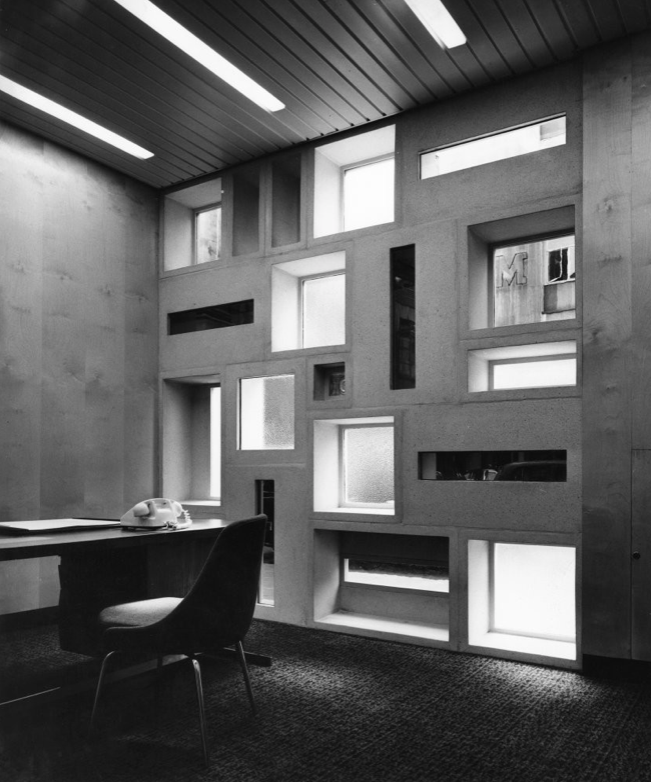
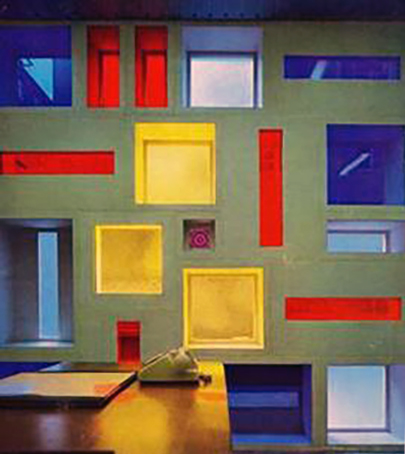
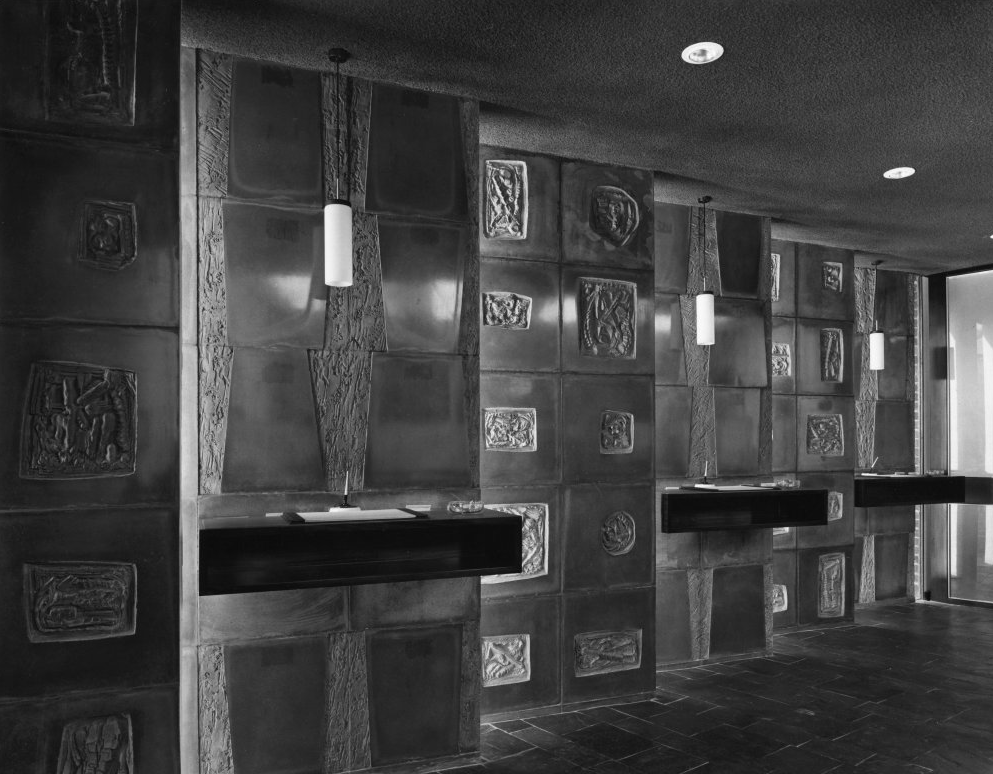
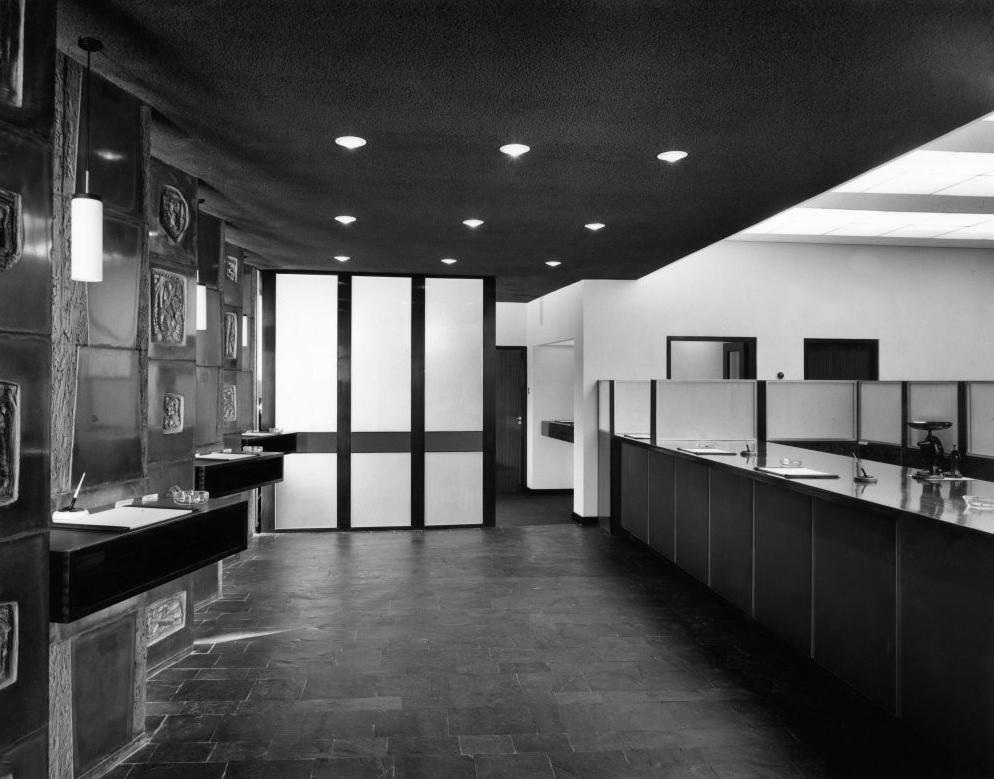
The public space is comparatively dimly lit, with a black ceiling, slate floor and dark-coloured sculptural panels by Eric Peskett placed in echelon so that as you go into the bank the wall appears to be quite solid, but on leaving you see the street through the windows set between the slabs.
The counter top is a solid piece of Afromosia. The floor is of riven Delabole slate. The sculptured slabs between the writing desks have in parts a very smooth shining surface obtained by casting against glass and the insets are rough and dark, they were cast in rubber moulds. The ceiling is roughly textured Pyrok, dark grey in colour and intensely sound-absorbing.
The Architect and Building News – 5 September 1962
Ribapix
And finally – welcome to dystopia 1967 – or Thornaby on TeesBranch, as it is known, an office drowned in its own grey drabness, a real nightmare in concrete. How many people were subject to trudging those awkward walkways with a pram, we can only guess.
The in-house Martins’ magazine and archive may at times, have an ambivalent attitude towards Modernism, I myself, can only admire the optimism and originality, embodied in the work that the bank commissioned.
Many thanks Modern Martins, from thoroughly Modern Mooch.
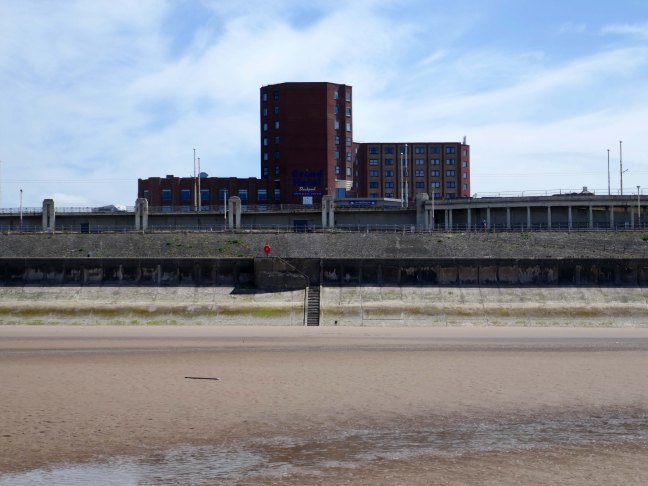
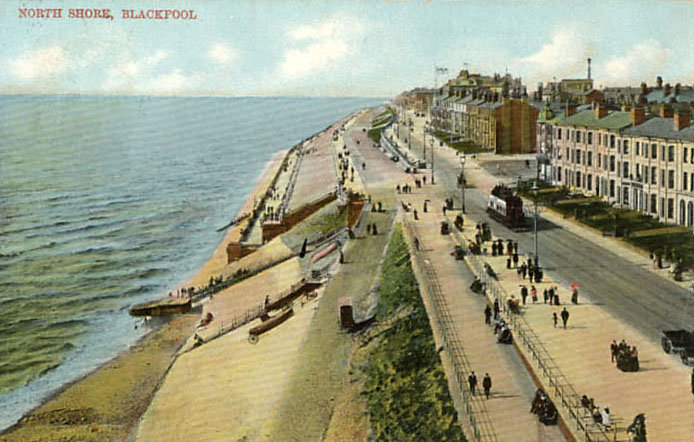
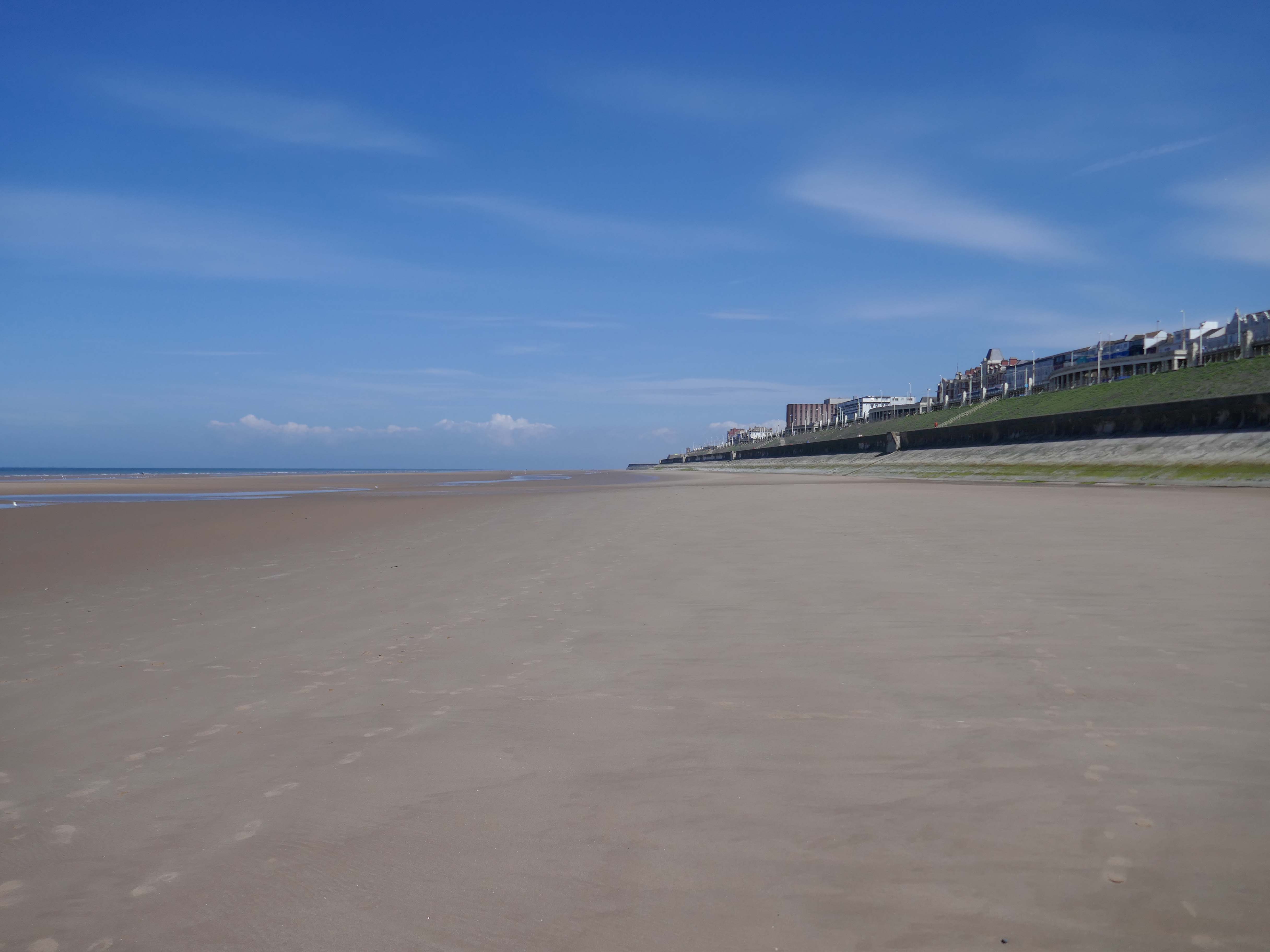
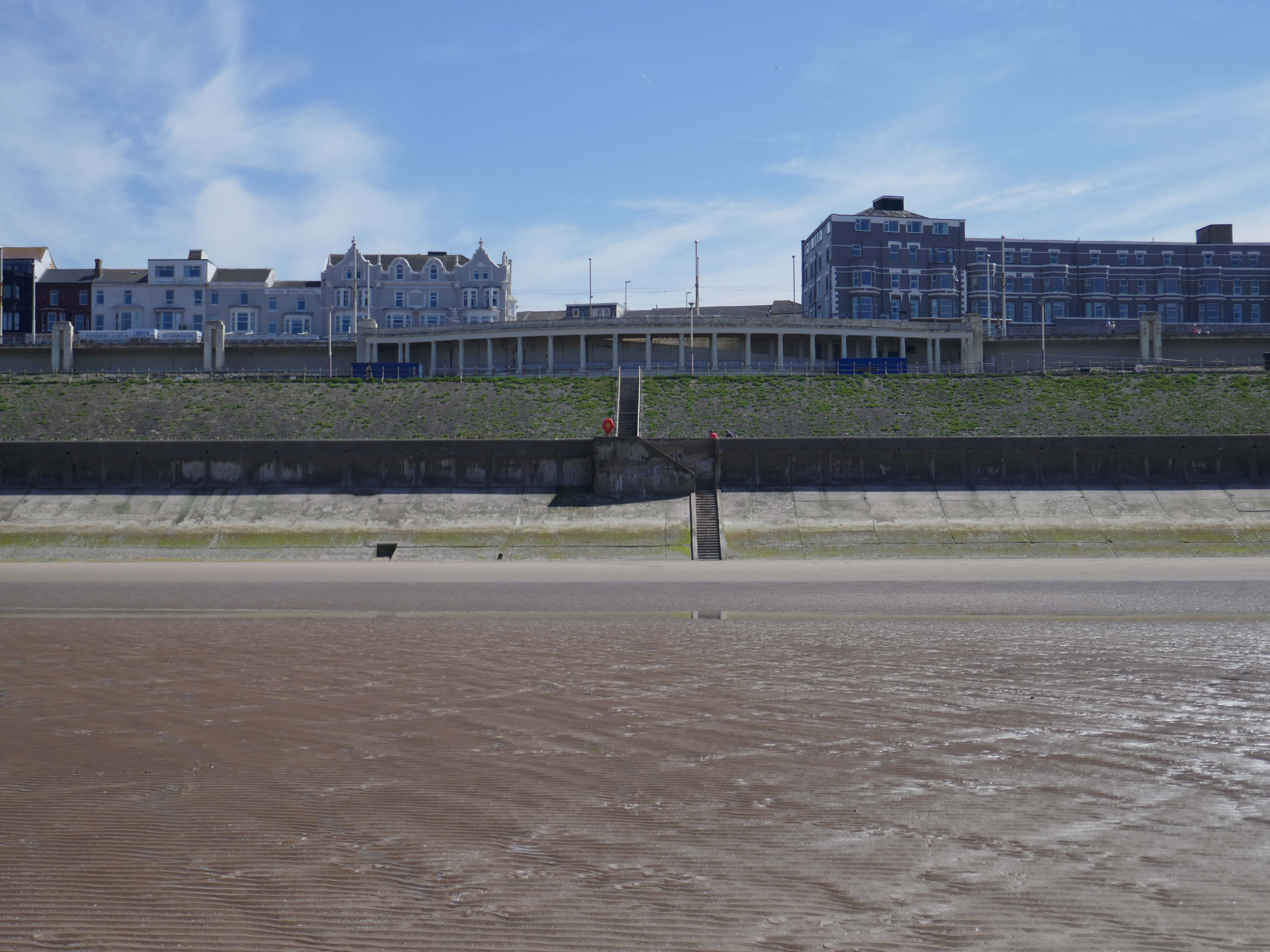
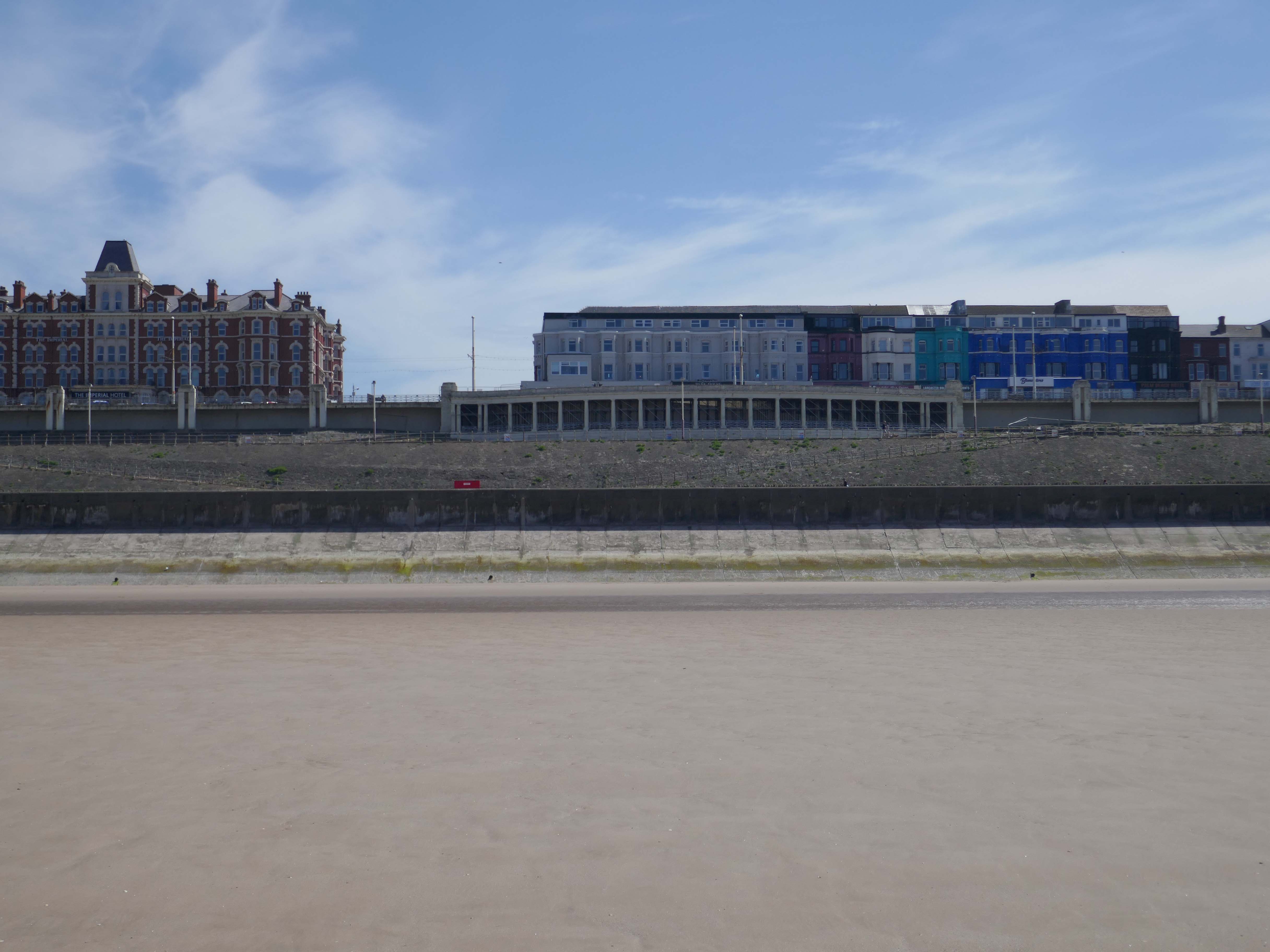
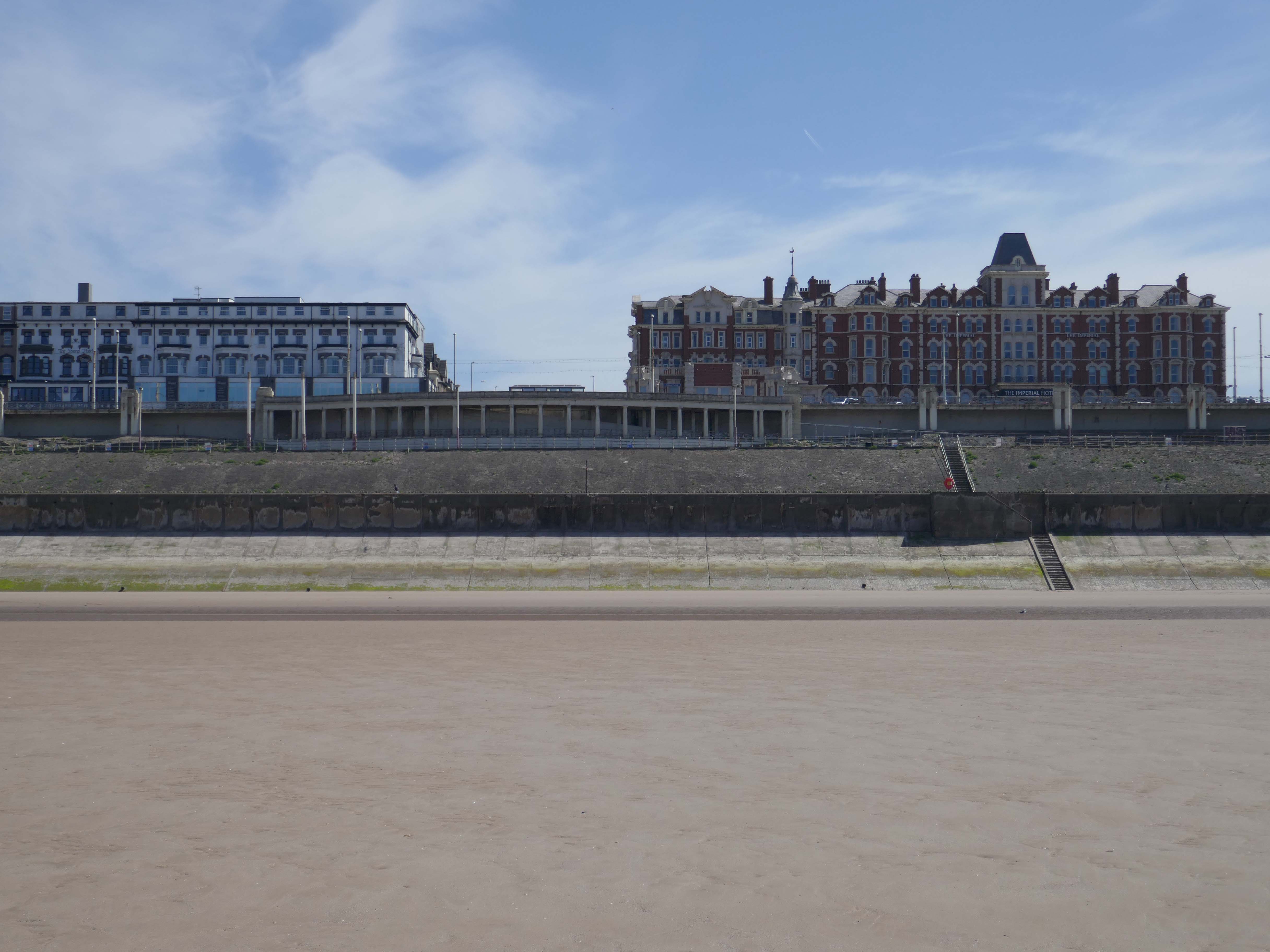
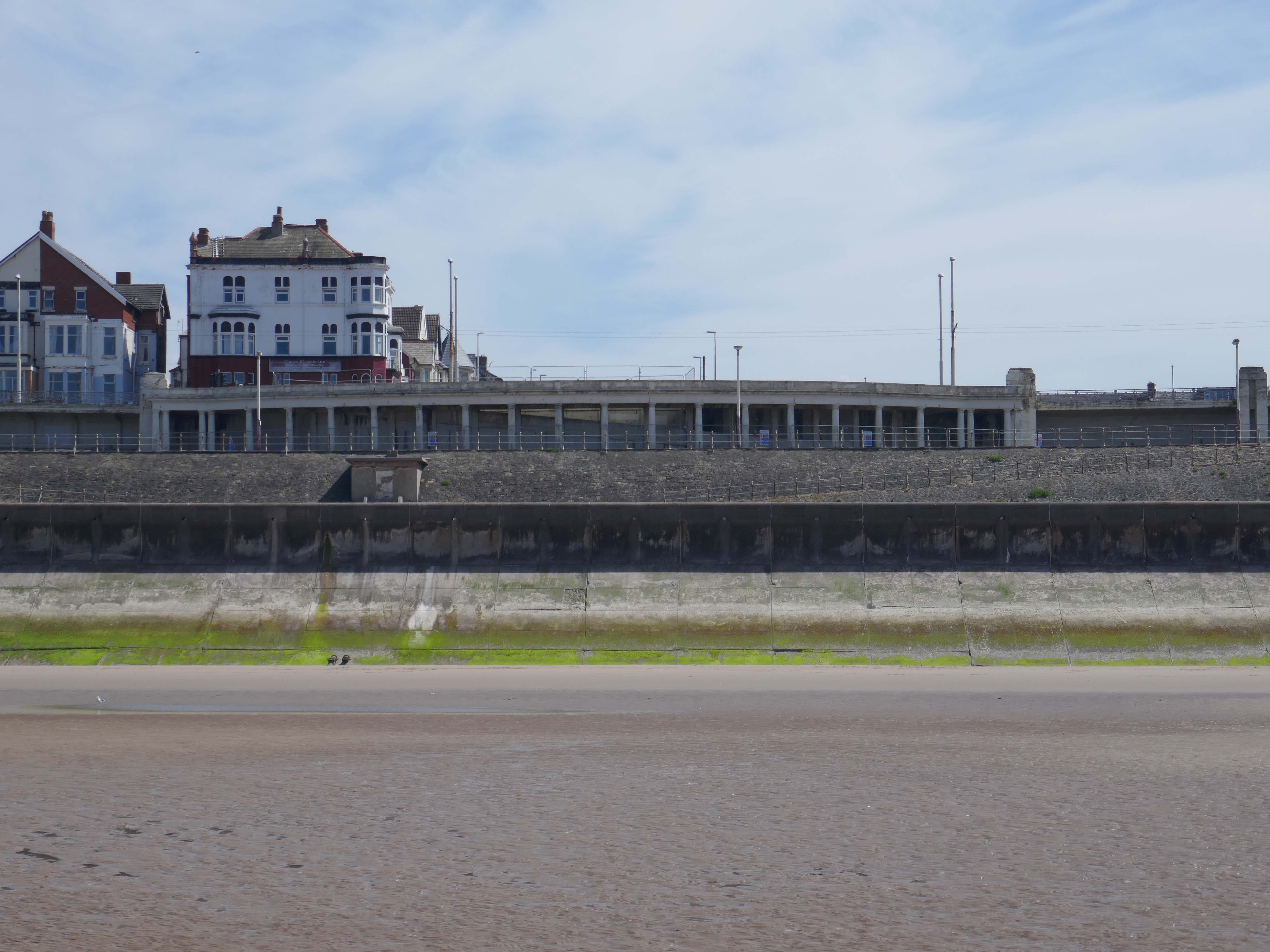
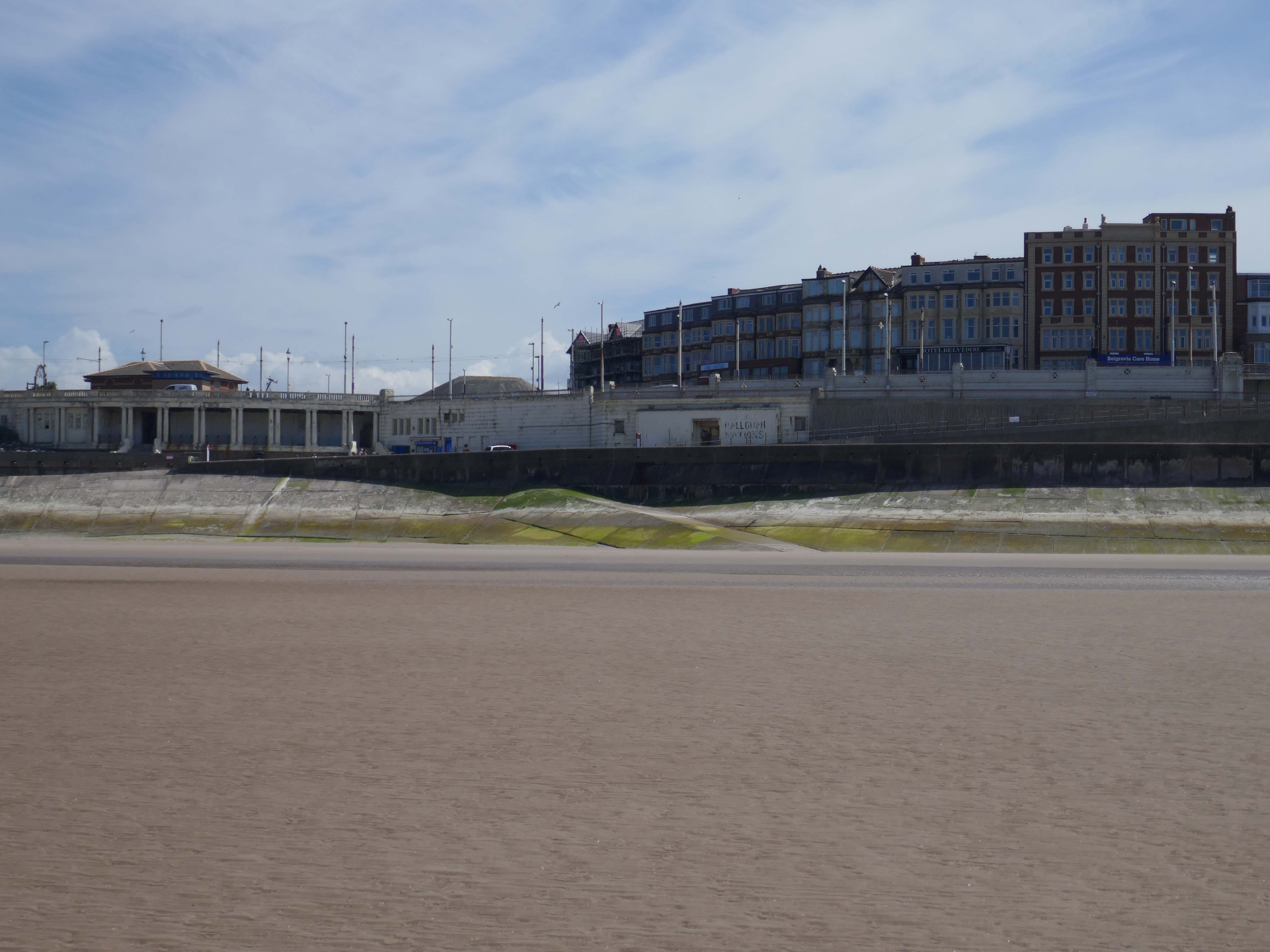
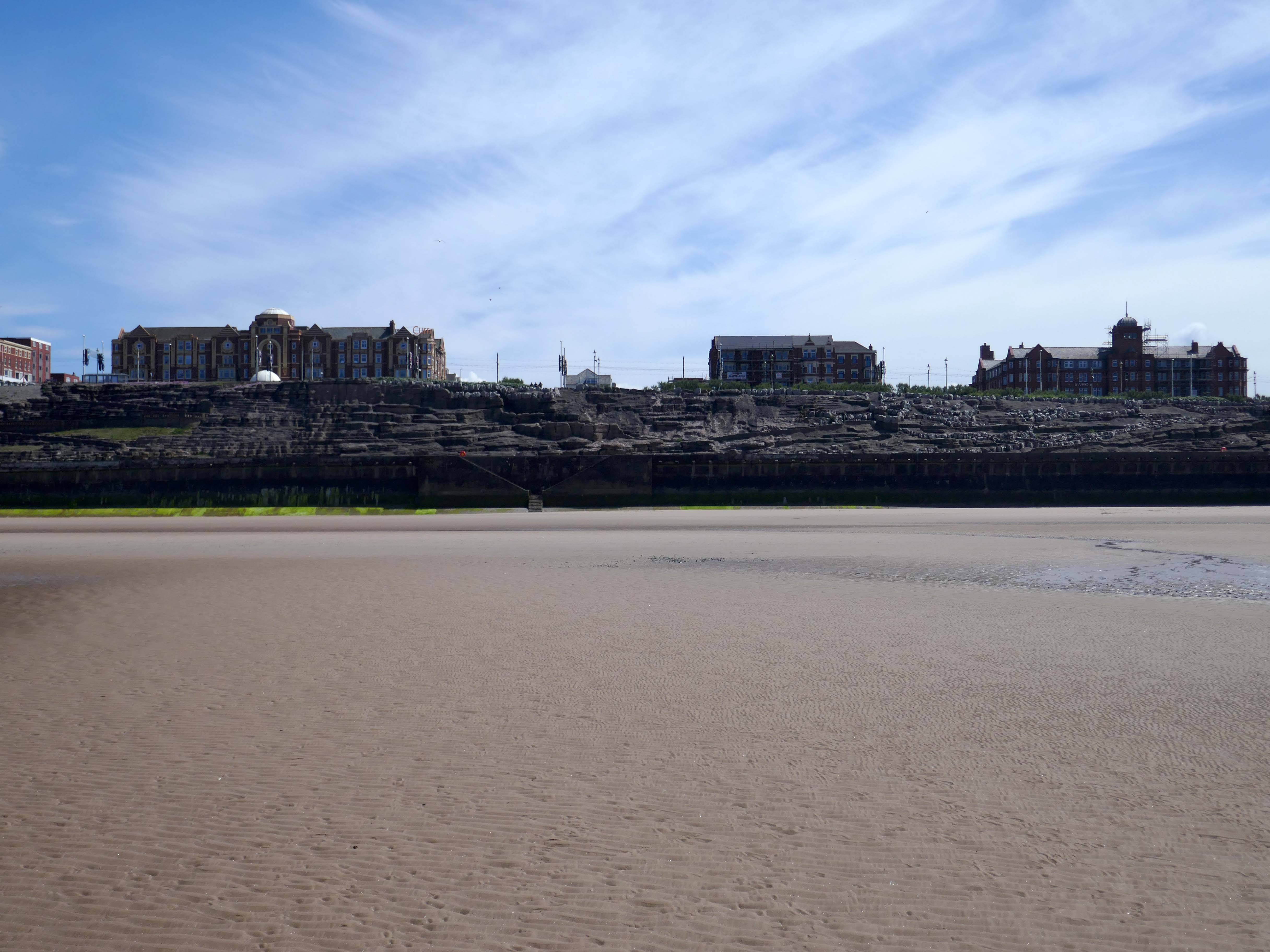
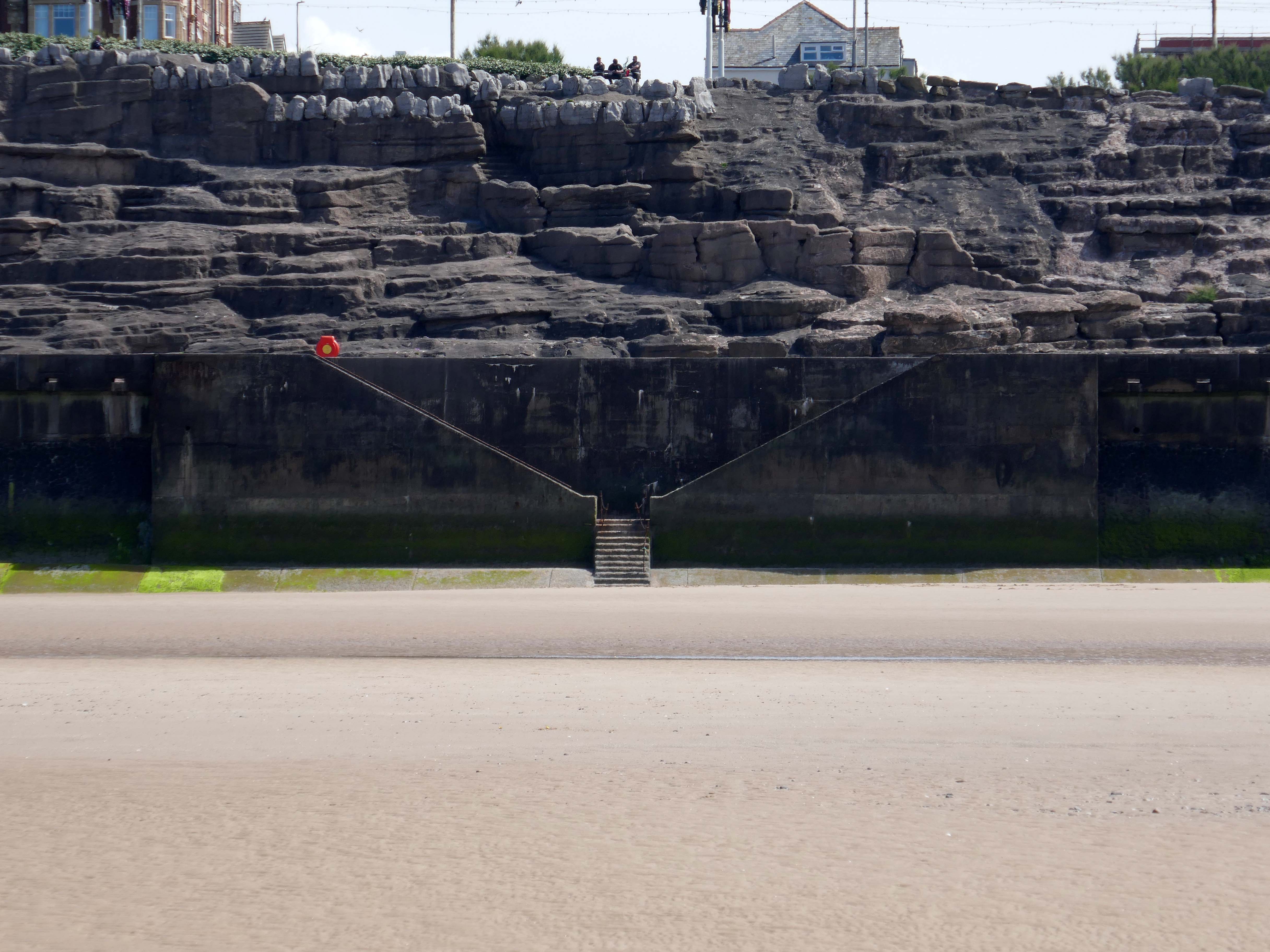
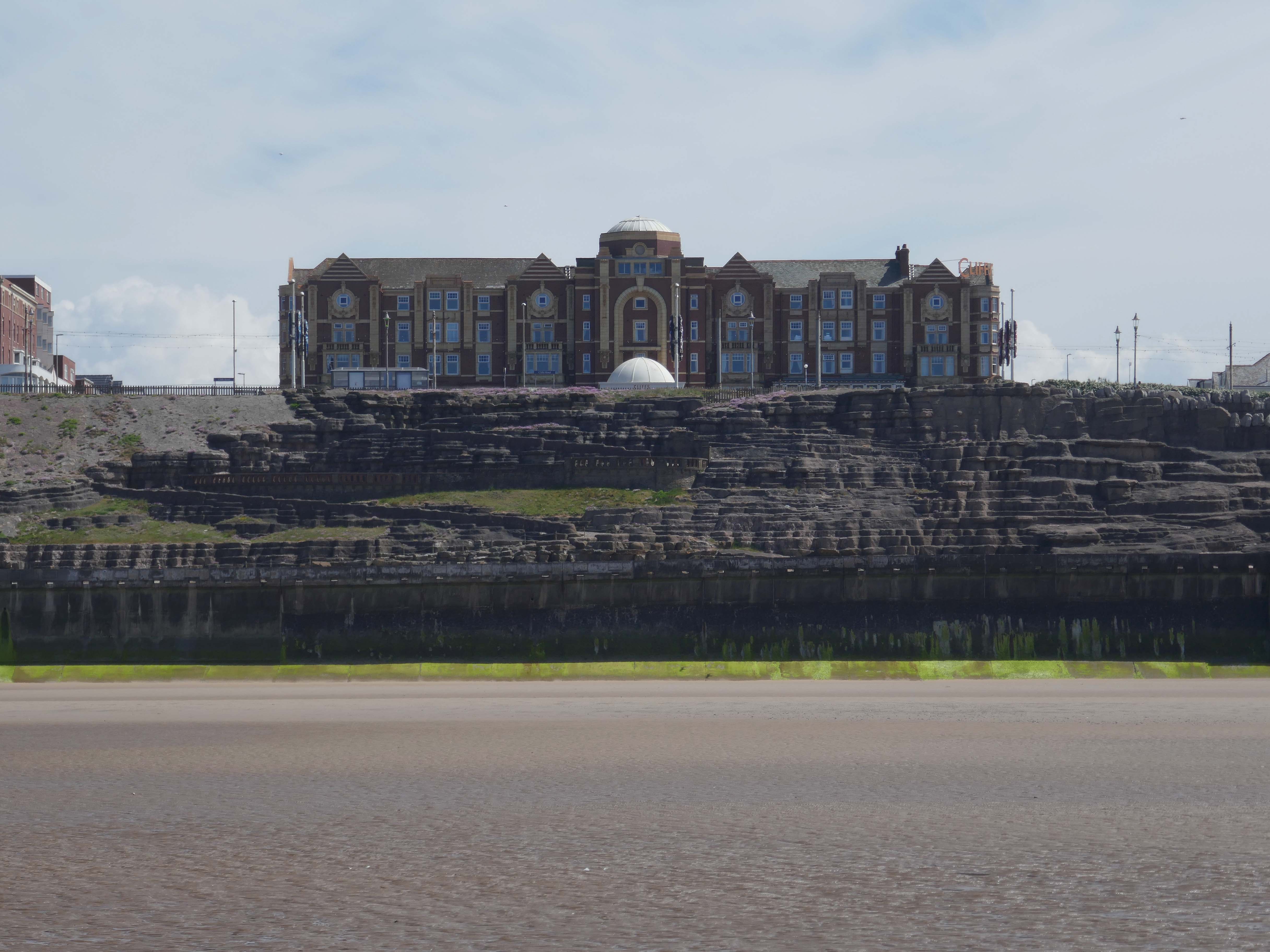
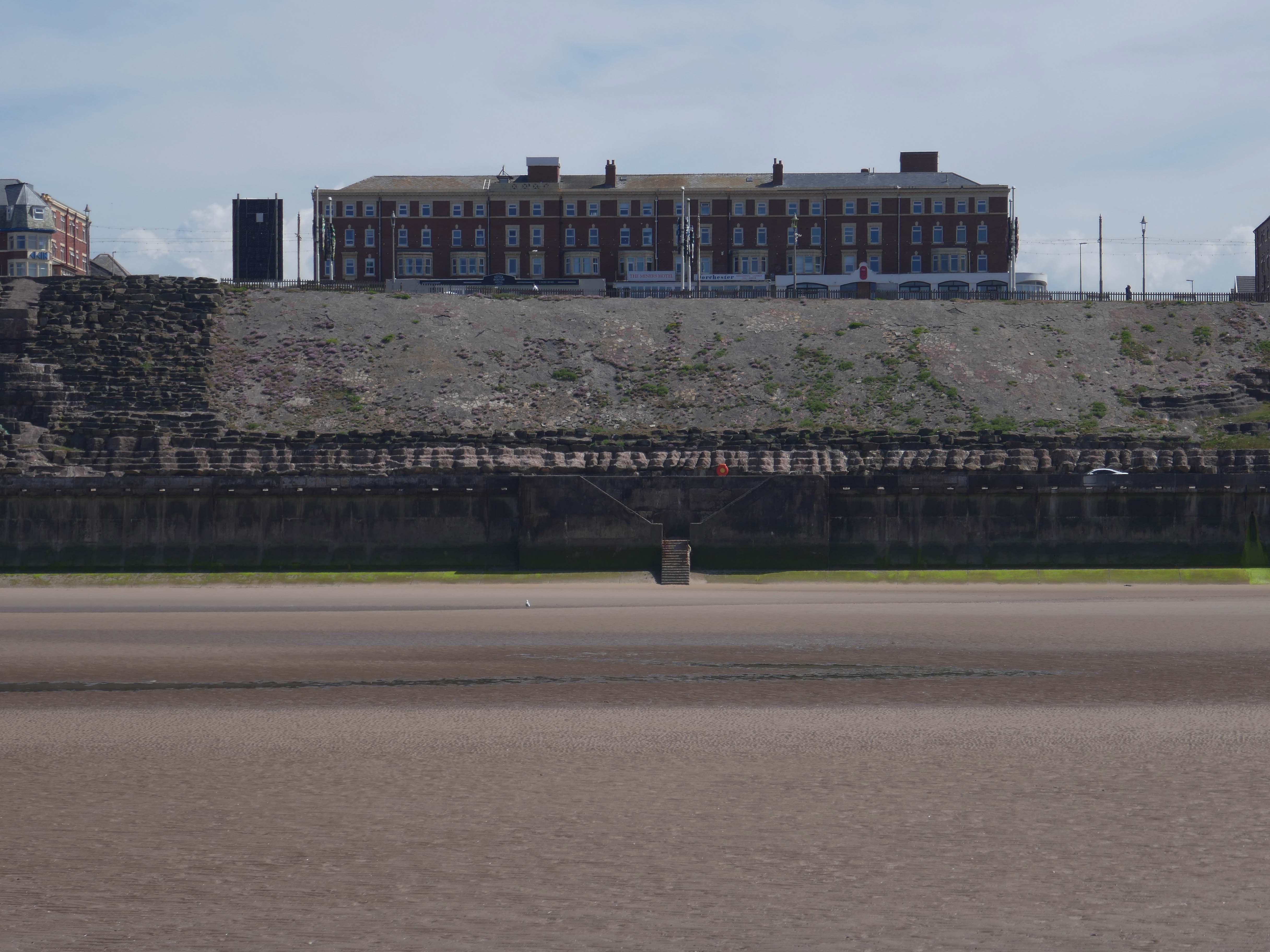
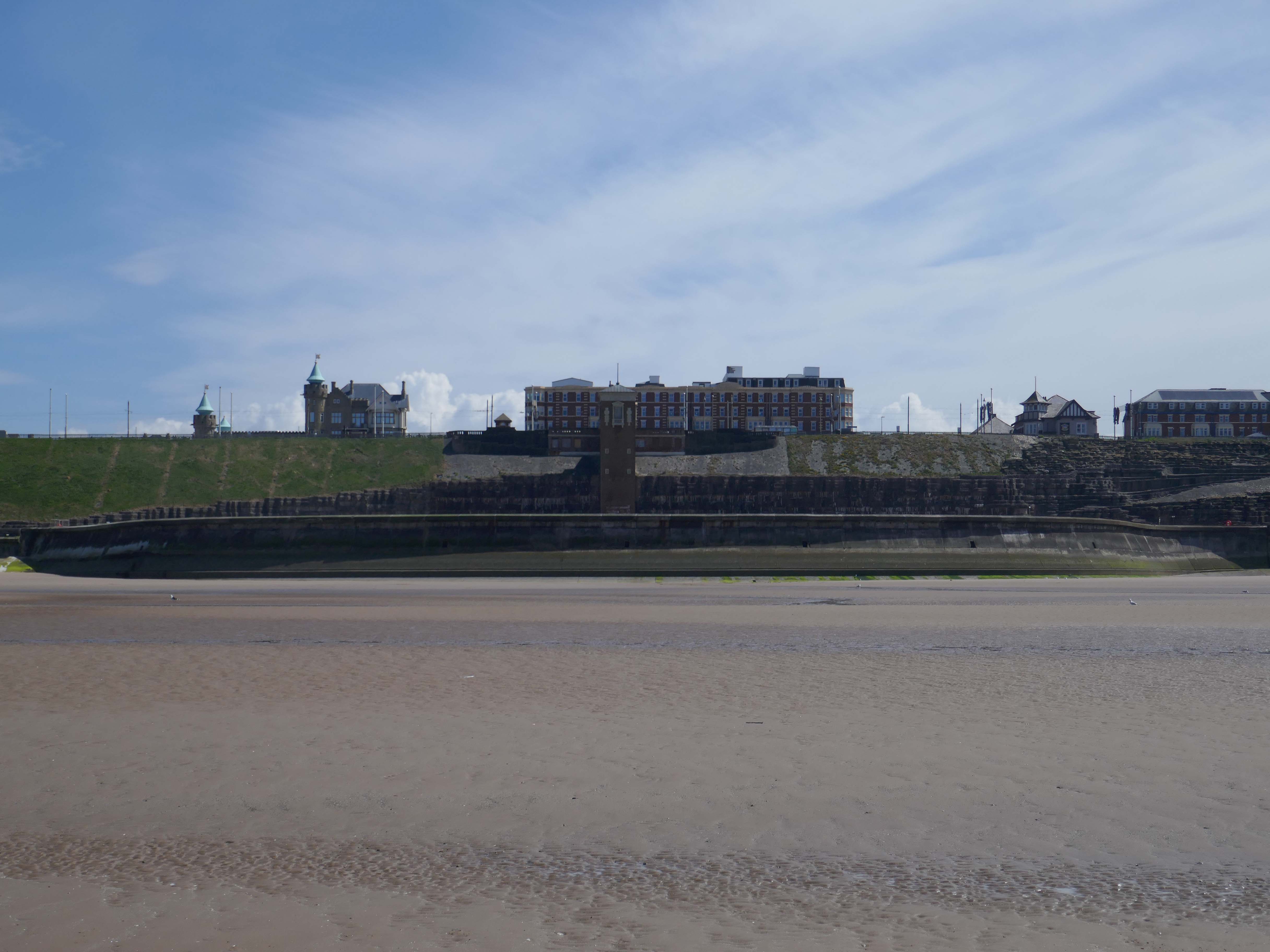
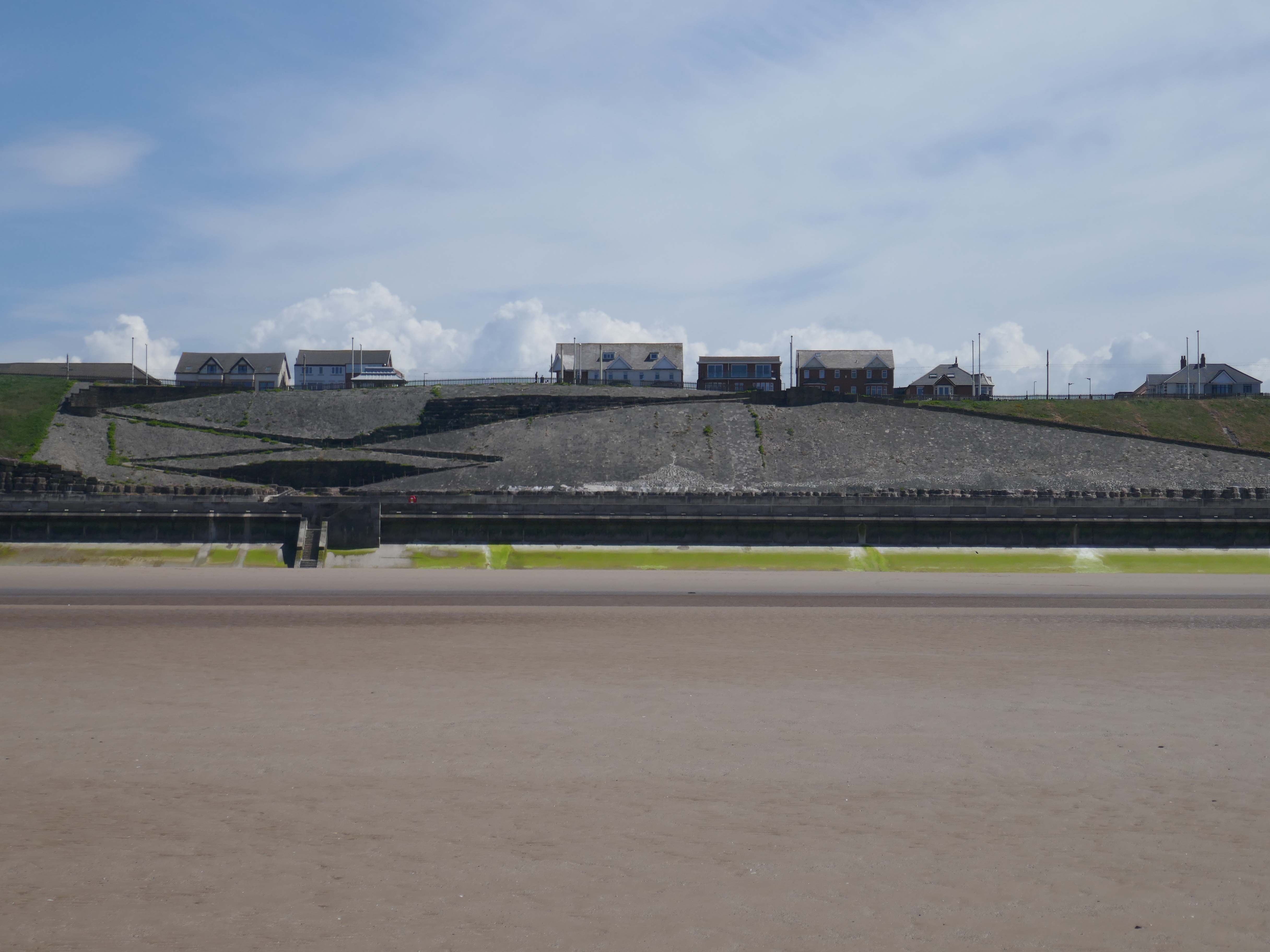
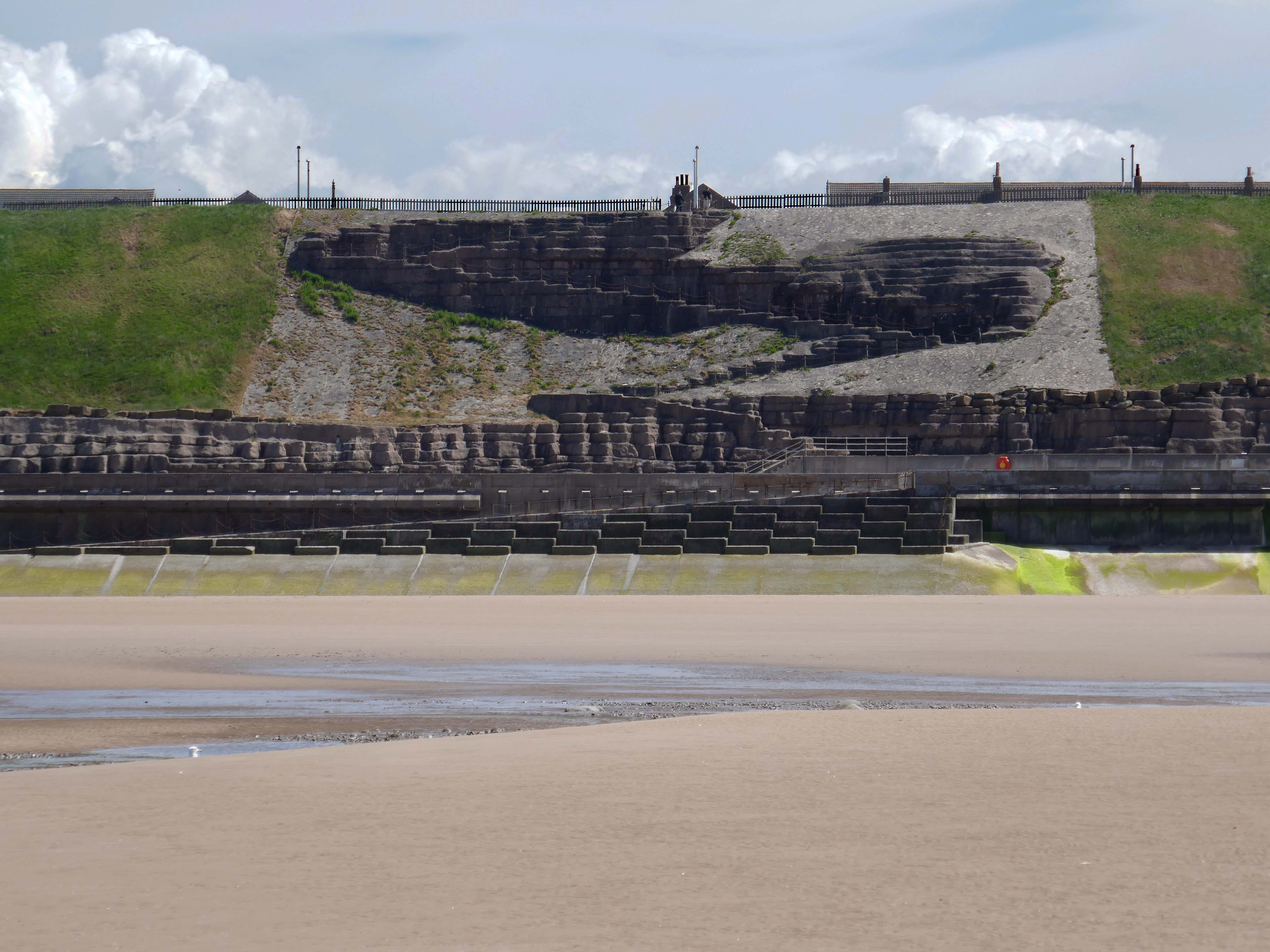
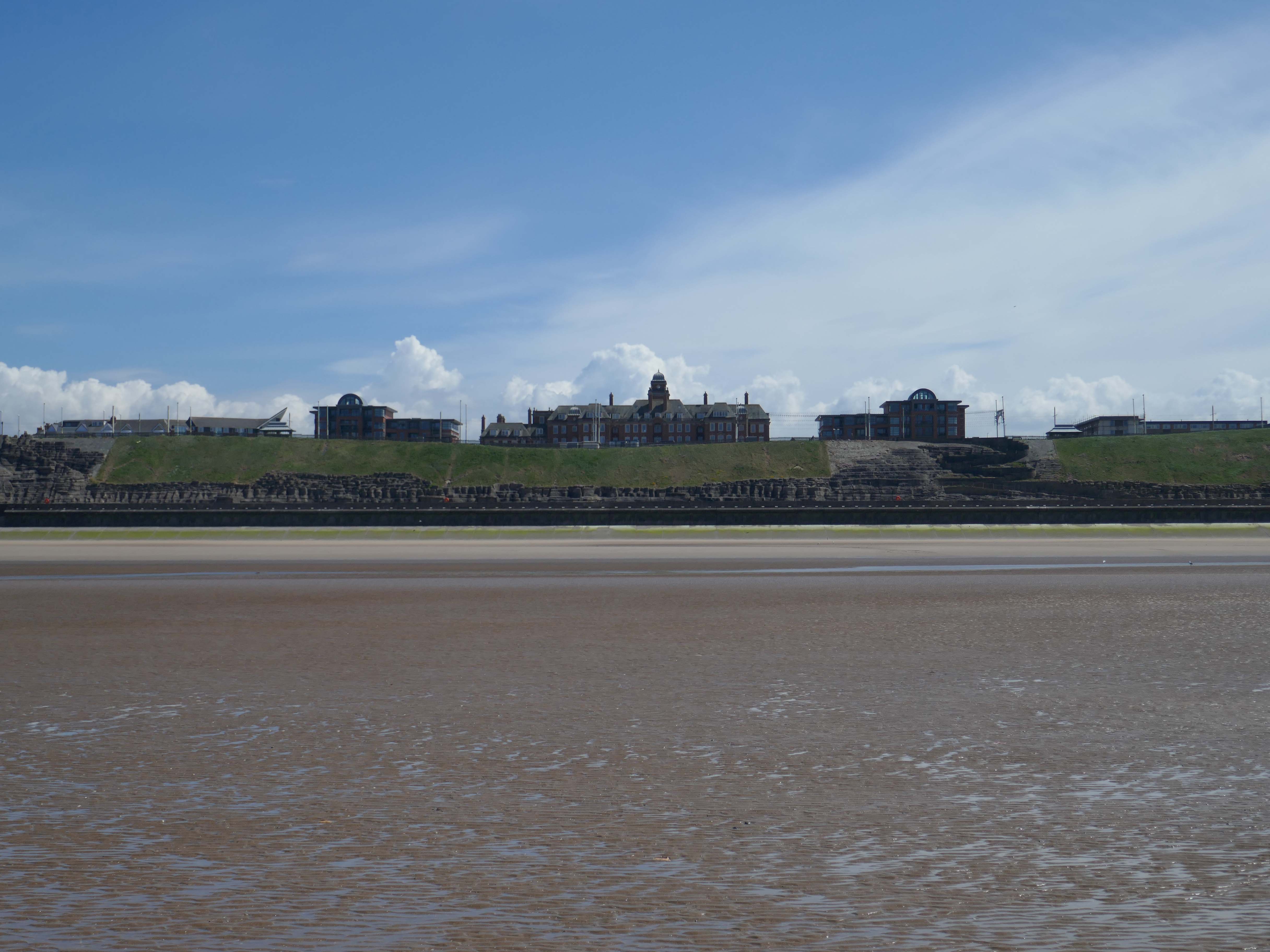
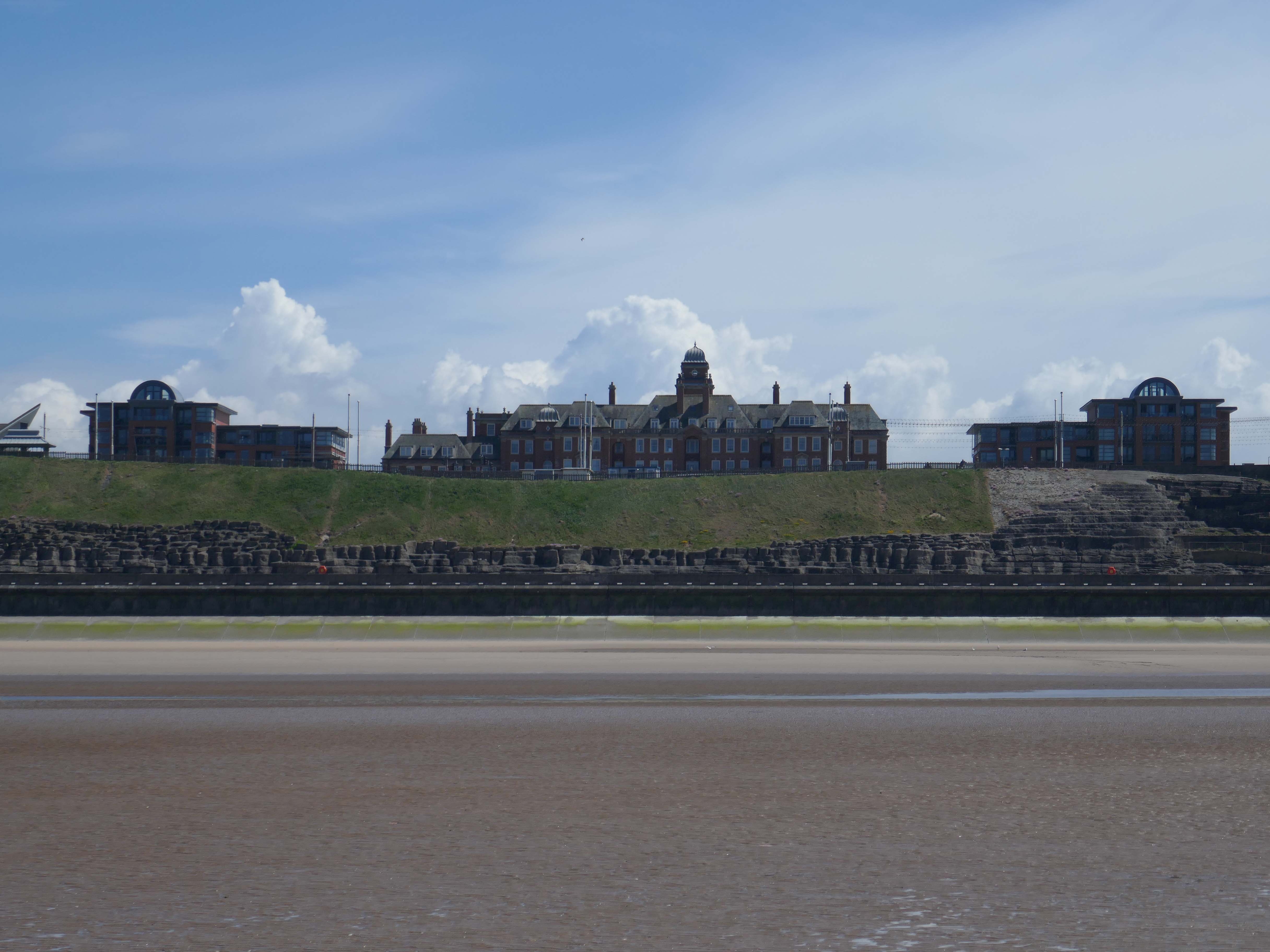
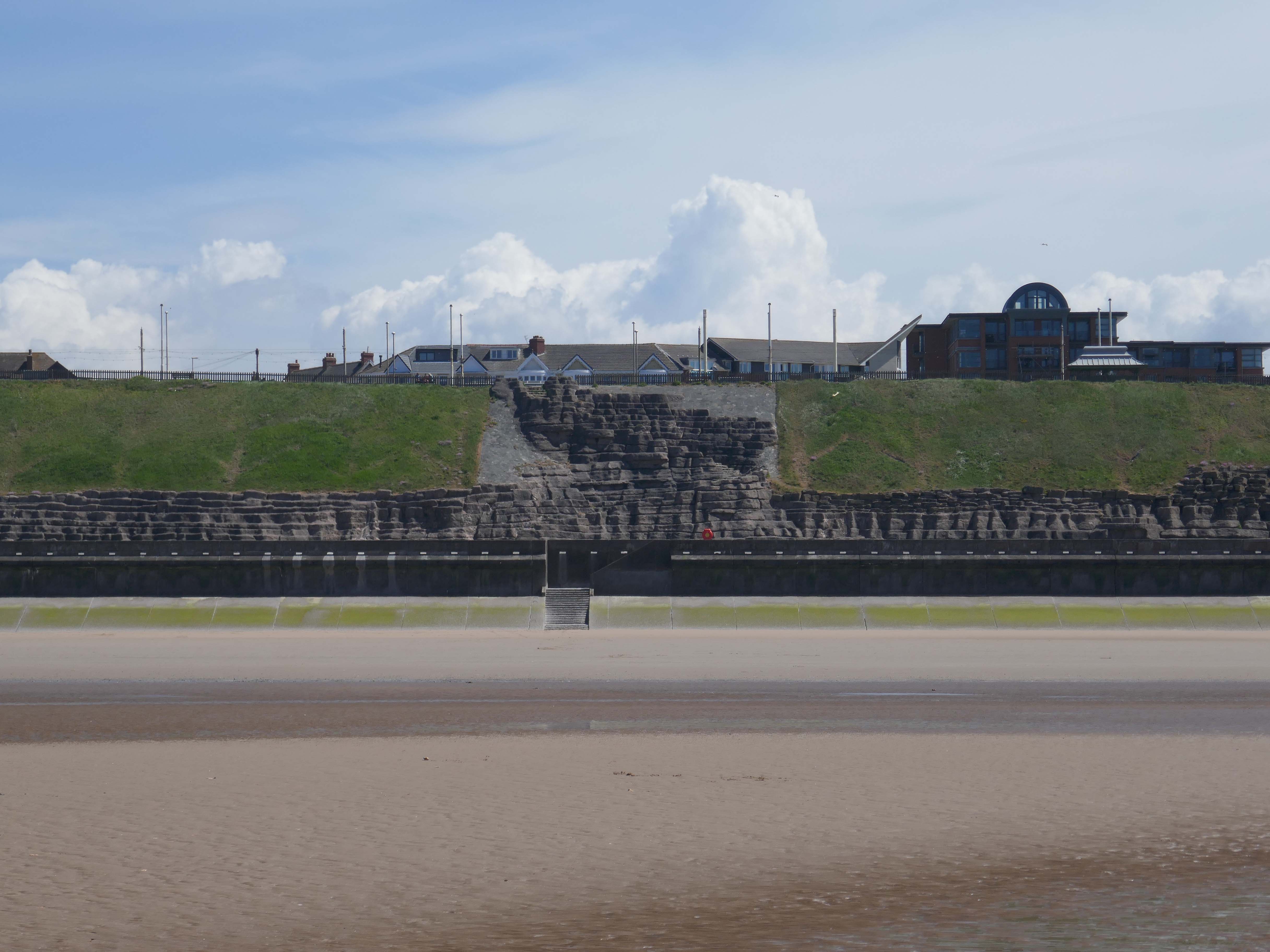
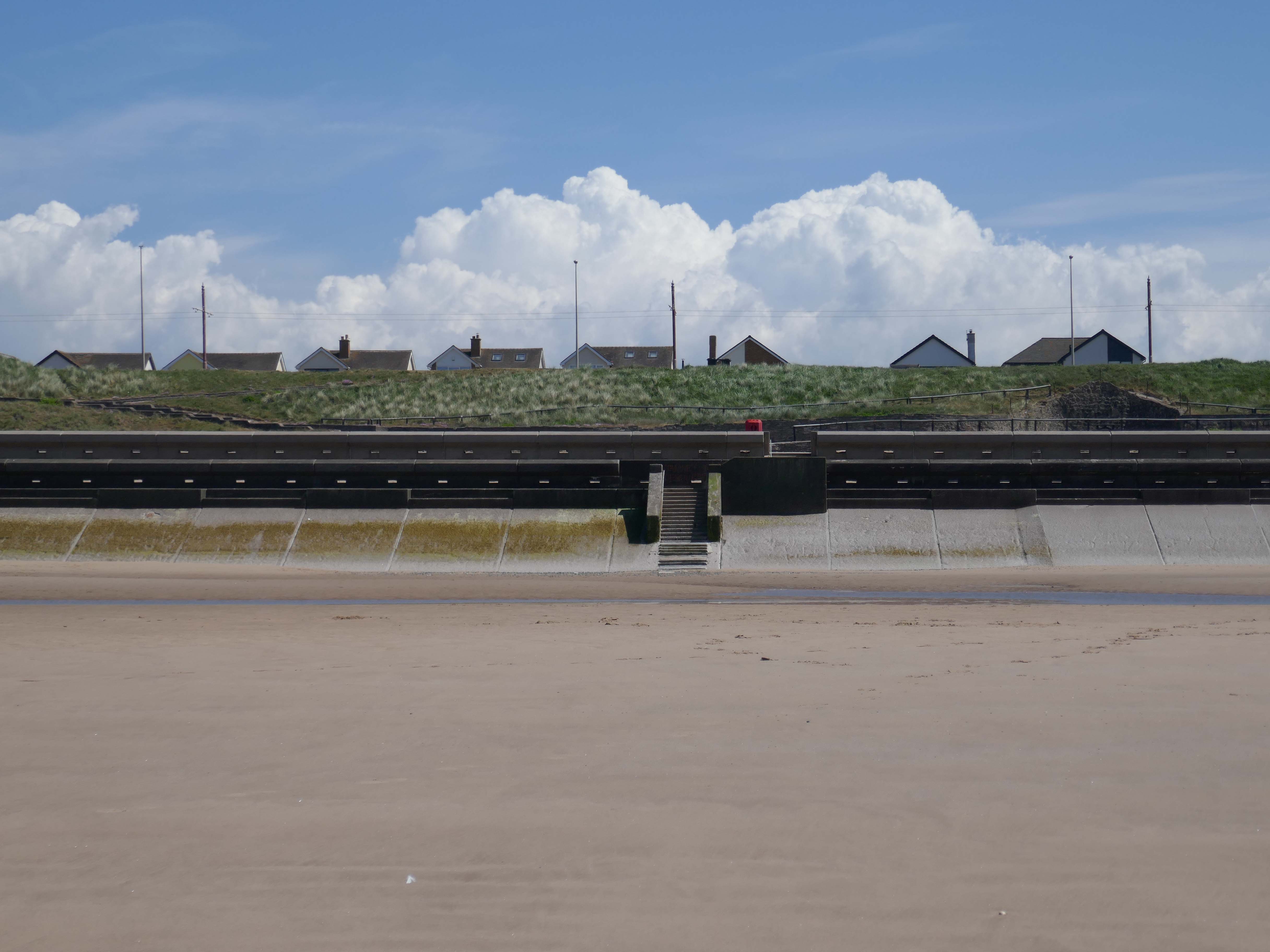
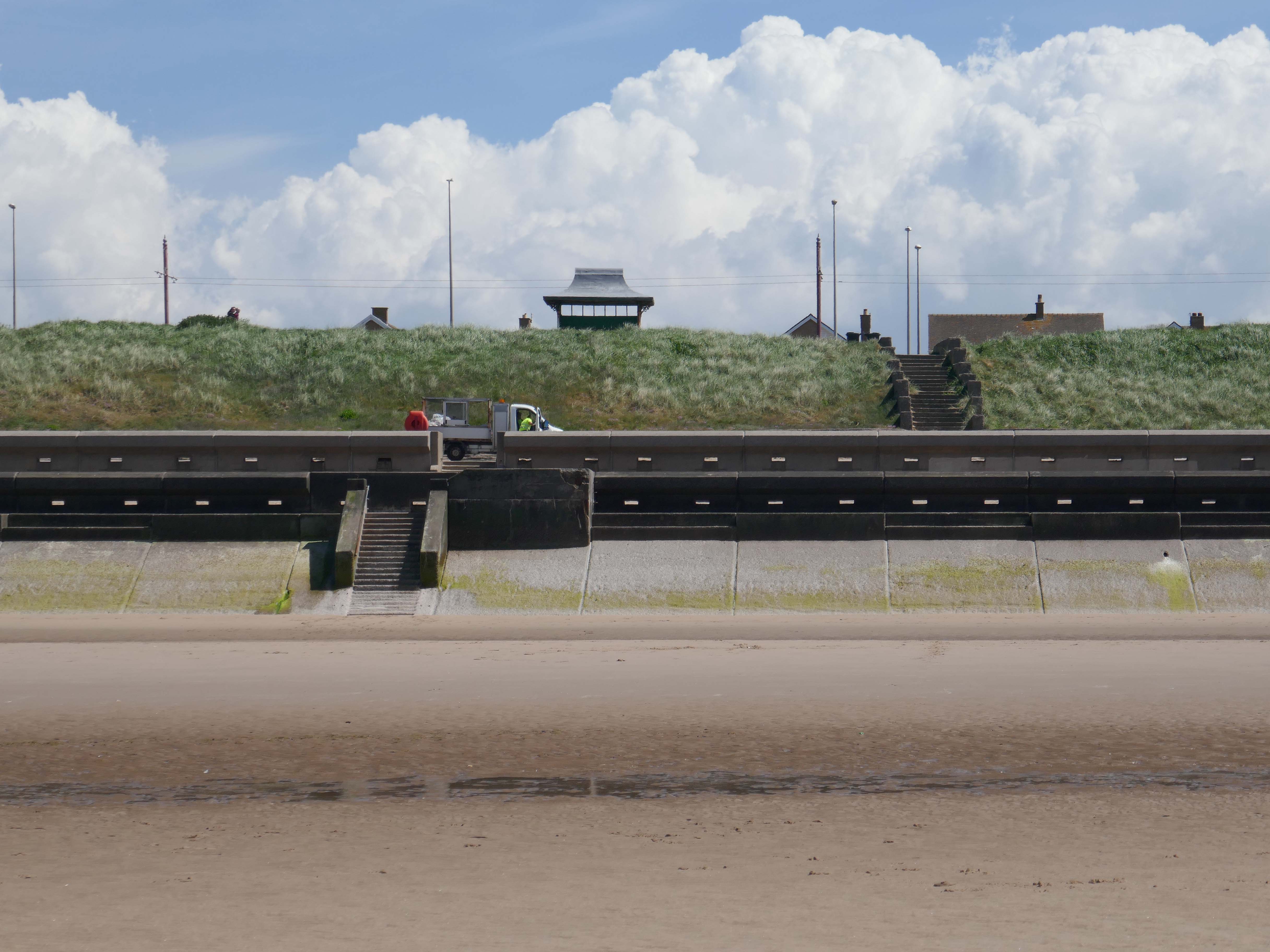
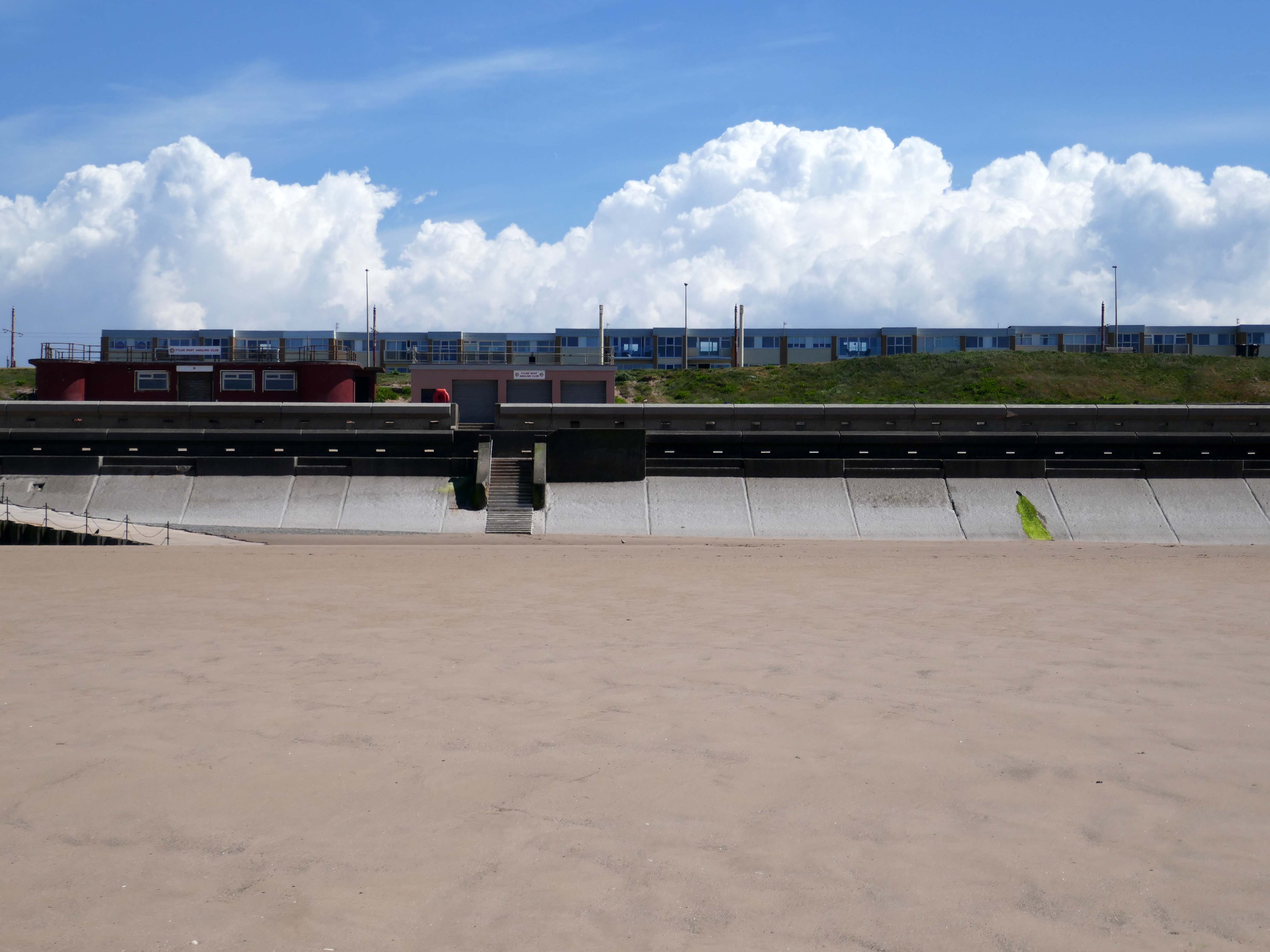
Yesterday, Wednesday 21st May 2025, the sun was shining and the tide was out, I decided to walk along the sands, and look towards the land.
To the right the Imperial Hotel – 1866-7 by Clegg and Knowles of Manchester, wing added 1875 by Mangnall and Littlewood.
The hotel was established in 1867. Charles Dickens stayed at the hotel in 1869. In 1904, the hotel was extended with the addition of a large neo-baroque style dining room. In 1912, Princess Louise, Duchess of Argyll stayed at the hotel.In the mid 20th century, Winston Churchill, Queen Elizabeth The Queen Mother, Princess Margaret, Countess of Snowdon and The Beatles stayed at the hotel. Queen Elizabeth II stayed at the hotel when visiting Blackpool. In 1985, Margaret Thatcher celebrated her 60th birthday in the hotel. In 2002, US President Bill Clinton and Prime Minister Tony Blair stayed at the hotel for the Labour party conference.
Join us at The Imperial Hotel Blackpool for an unforgettable experience where entertainment, family fun, and group leisure come together. Book now and start creating memories that will last a lifetime.
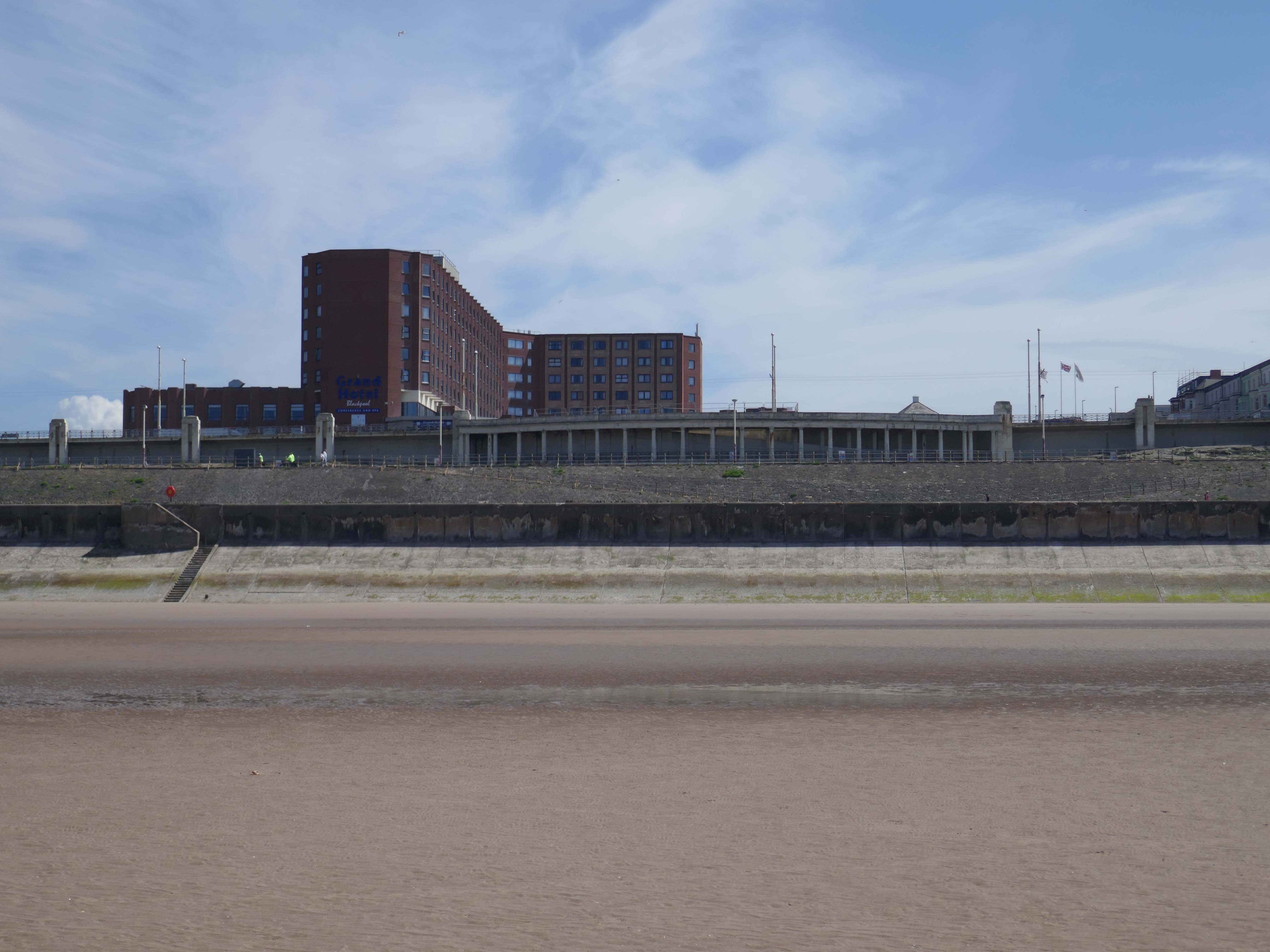
Grand Hotel – the hotel was built as the Pembroke Hotel in 1982, became the Hilton Hotel in 1999 and The Grand Hotel in 2017
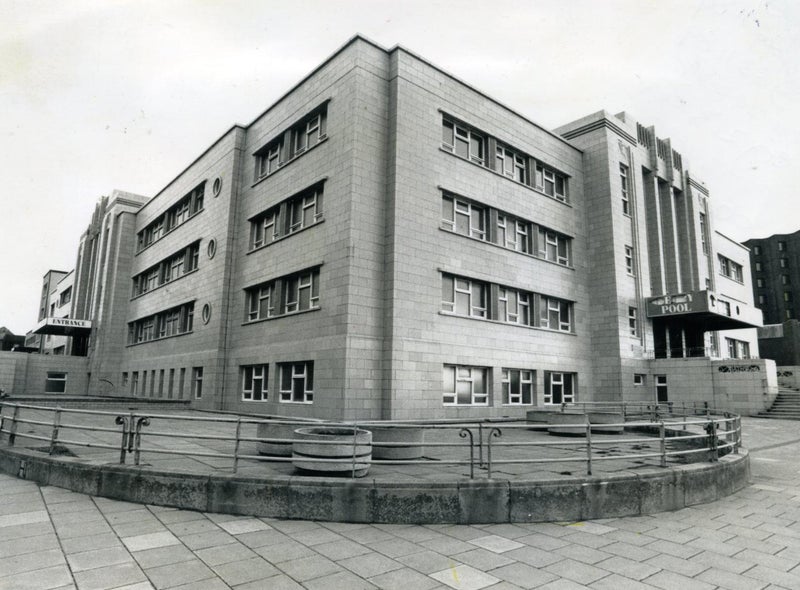
The hotel was built next to the site of the Derby Baths 1939 – architect: John Charles Robinson who between 1920-1944 designed many of Blackpool’s landmark civic buildings including libraries, schools, swimming baths, leisure facilities and tourist infrastructure.
The Savoy Hotel, just north of Gynn Square, is one of the series of large red brick and red terracotta hotels built around the turn of the century. The architect was TG Lumb and the hotel opened in 1915; the sun lounge in Hathern’s cream faience was added in 1935 by Lumb and Walton.
The Cliffs Hotel started in 1921 – architect Halstead Best substantially rebuilt and enlarged the building 1936–37 and added an underground carpark
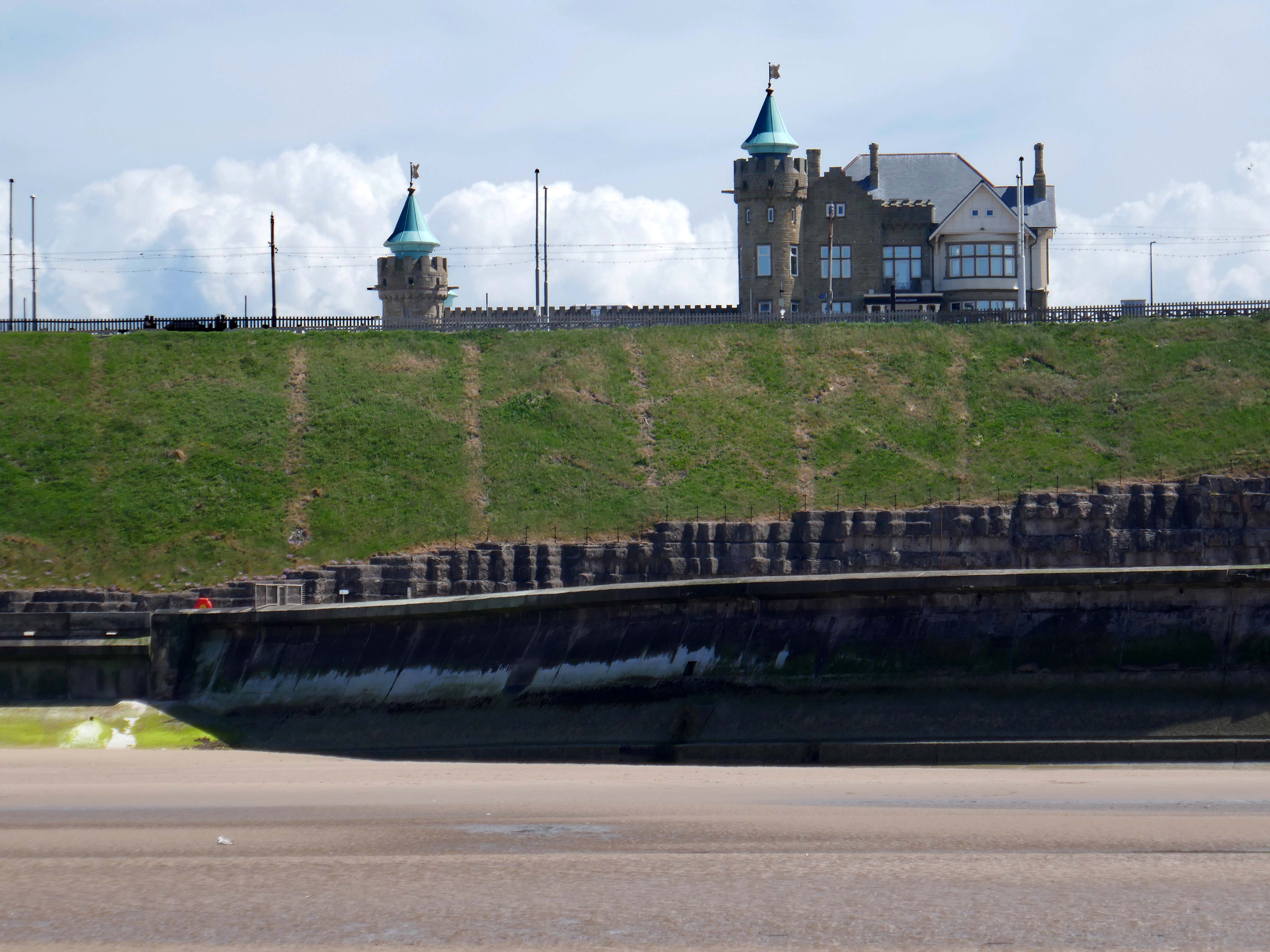
Castle Casino – architect: Arthur Hindle 1906
Arthur Knowles built the Castle at 64 Queens Promenade North Shore for his wife, who unfortunately stayed in France. The couple stayed in the house for a mere nine months during 1929. Apart from housing Belgian refugees during World War 1, it stayed empty until 1935. It then opened briefly as an old people’s home, before being bought by Lawrence Wright – AKA Horatio Nicholls, as his home.
Wright sold it in 1941, and after several years as the home of the Blackpool and Fylde Motor Club, it became the Castle Casino of today in 1965, first owned by wrestler Jack Pye, who moved to Blackpool in 1950. It has had various identities, and was last taken over in 2005, now being known as the Genting Club – part of a national chain of that name.
Former Miners Convalescent Home 1925-27 – architects: Bradshaw Gass & Hope, Grade II listed
Converted to apartments in 2005 – trading as Admiral Point.
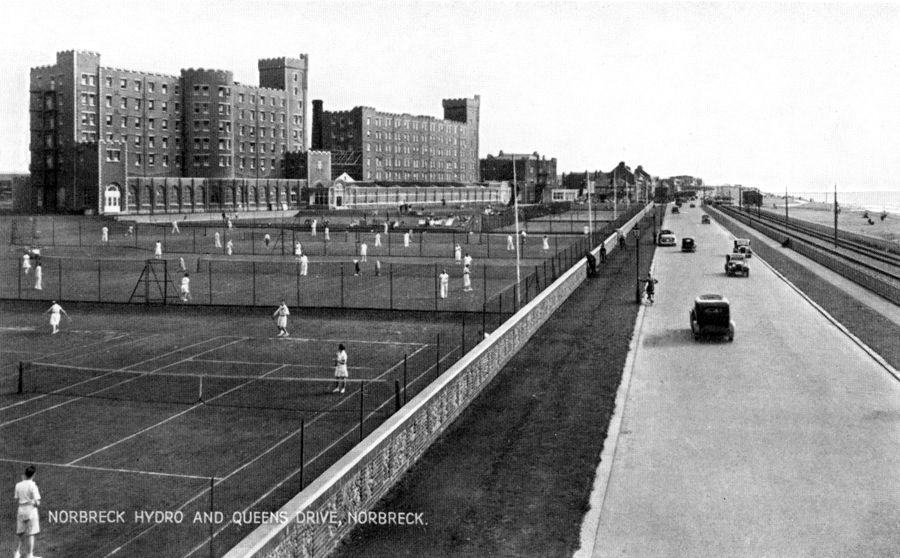
Norbreck Castle Hotel originally built as a large private country house in 1869, it was bought around the end of the 19th century by JH Shorrocks, who used the house to entertain friends and colleagues at lavish weekend parties. The popularity of these parties led to Shorrocks running them on a commercial basis by taking paying guests.
The S Block by architect WH Longworth 1912 – the N Block by Halstead Best 1933-34.
In the 1970’s the Motel wing was added along with, the large Norcalympia exhibition hall, the name was changed from the Norbreck Hydro to Norbreck Castle.
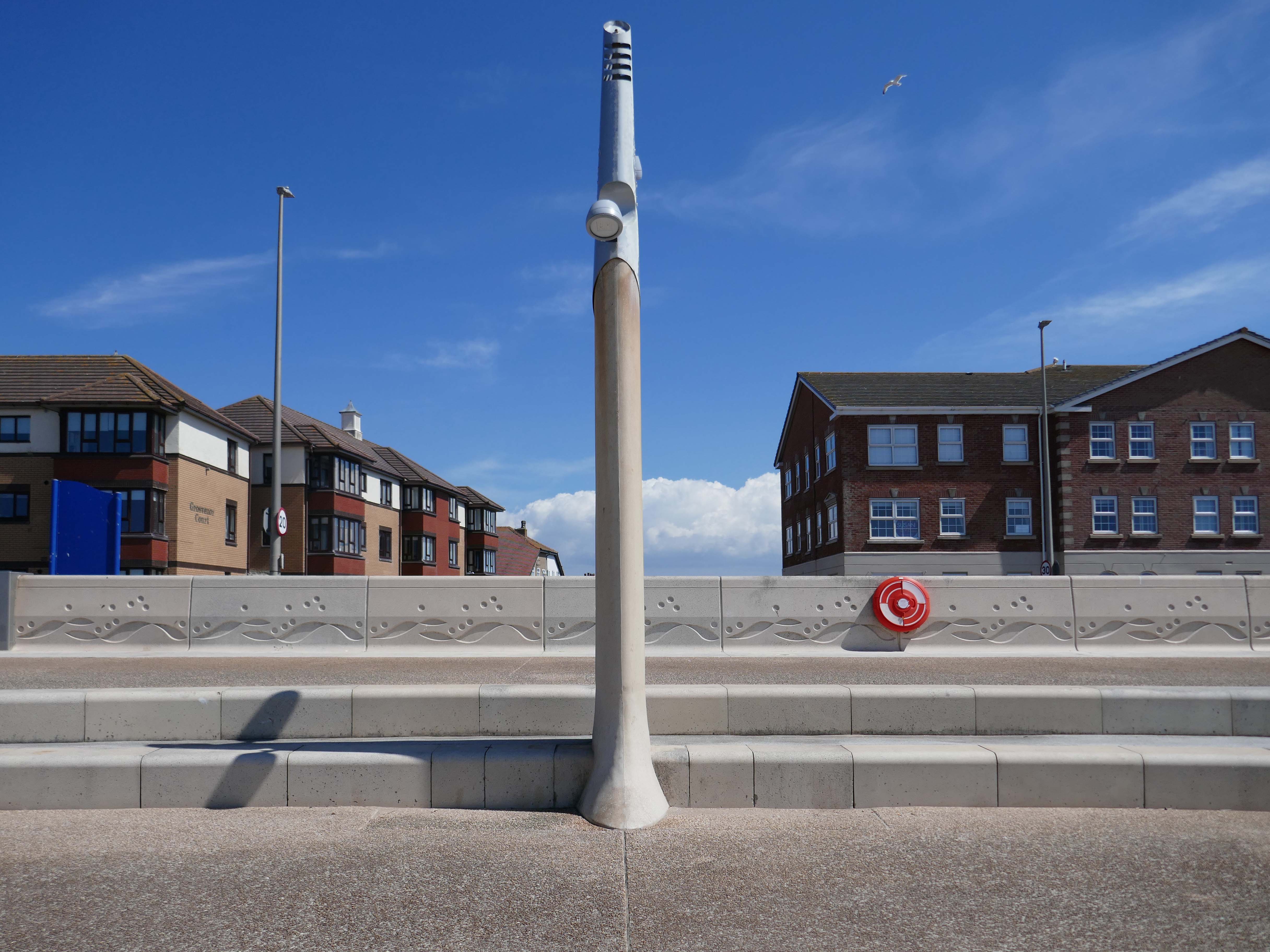
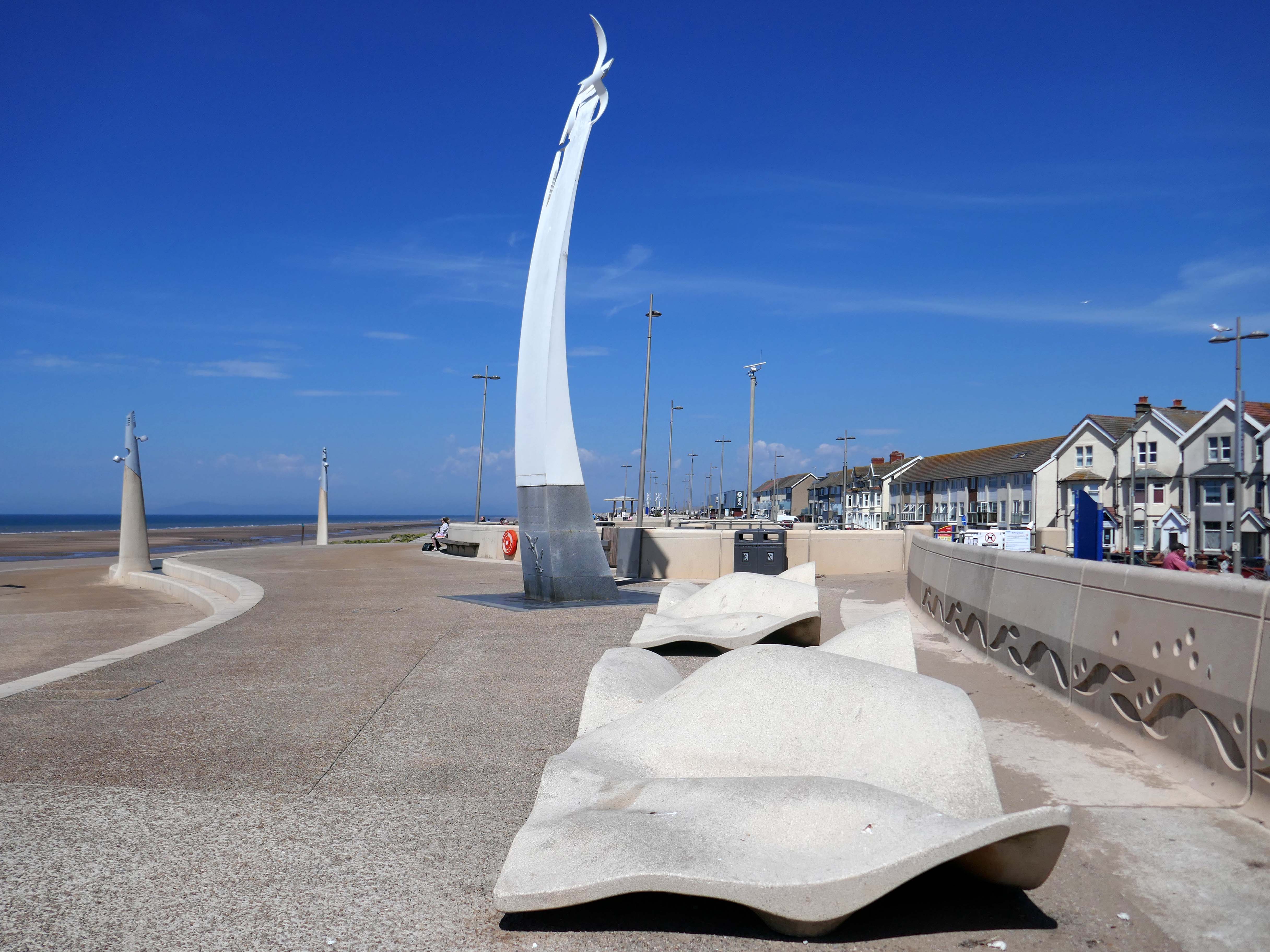
European Regional Development Fund cash of £450,000 was granted towards a regeneration project on Cleveleys Promenade. Wyre Council improved 64,000 sq ft of the promenade to create a more attractive place for visitors to the town. The latest work complements the £20m sea defence installation.
Broadbent Studio worked collaboratively from the outset with Wyre Council, Ferguson & McIlveen and Faber Maunsell in 2008, to create an exciting new promenade and sea defence scheme for the coastline at Cleveleys.
The Sea Swallow is a 10m tall structure that brings to life Wyre’s Mythic Coast storybook ‘The Sea Swallow’. The coated aluminium sculpture, has the feel of ‘a book coming to life’, with the two sea swallows symbolic of the town’s protectors emerging from the page.
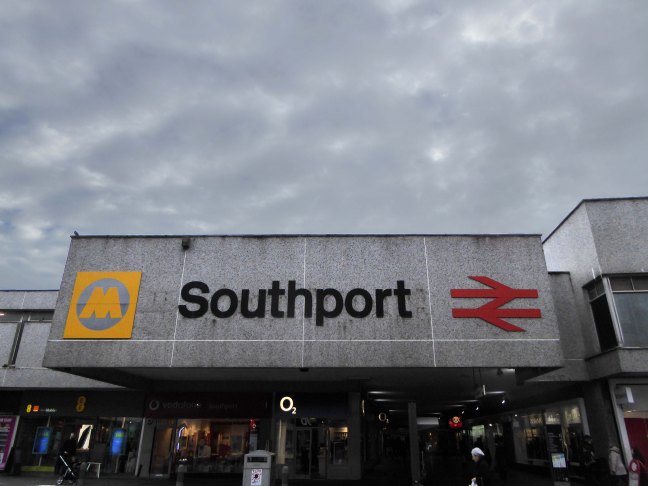
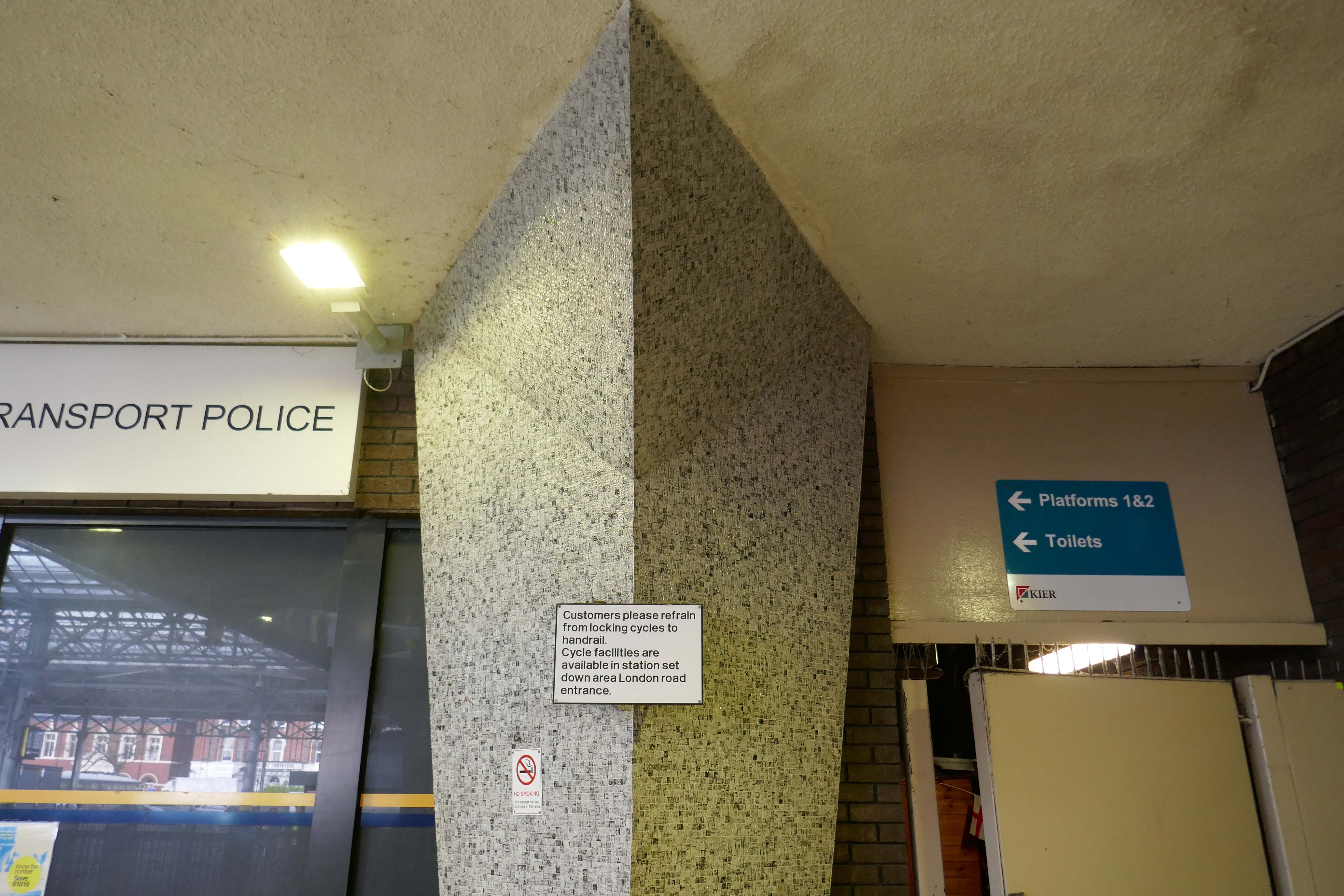
Beginning with our arrival at Southport Railway Station – noting the striking internal structures.
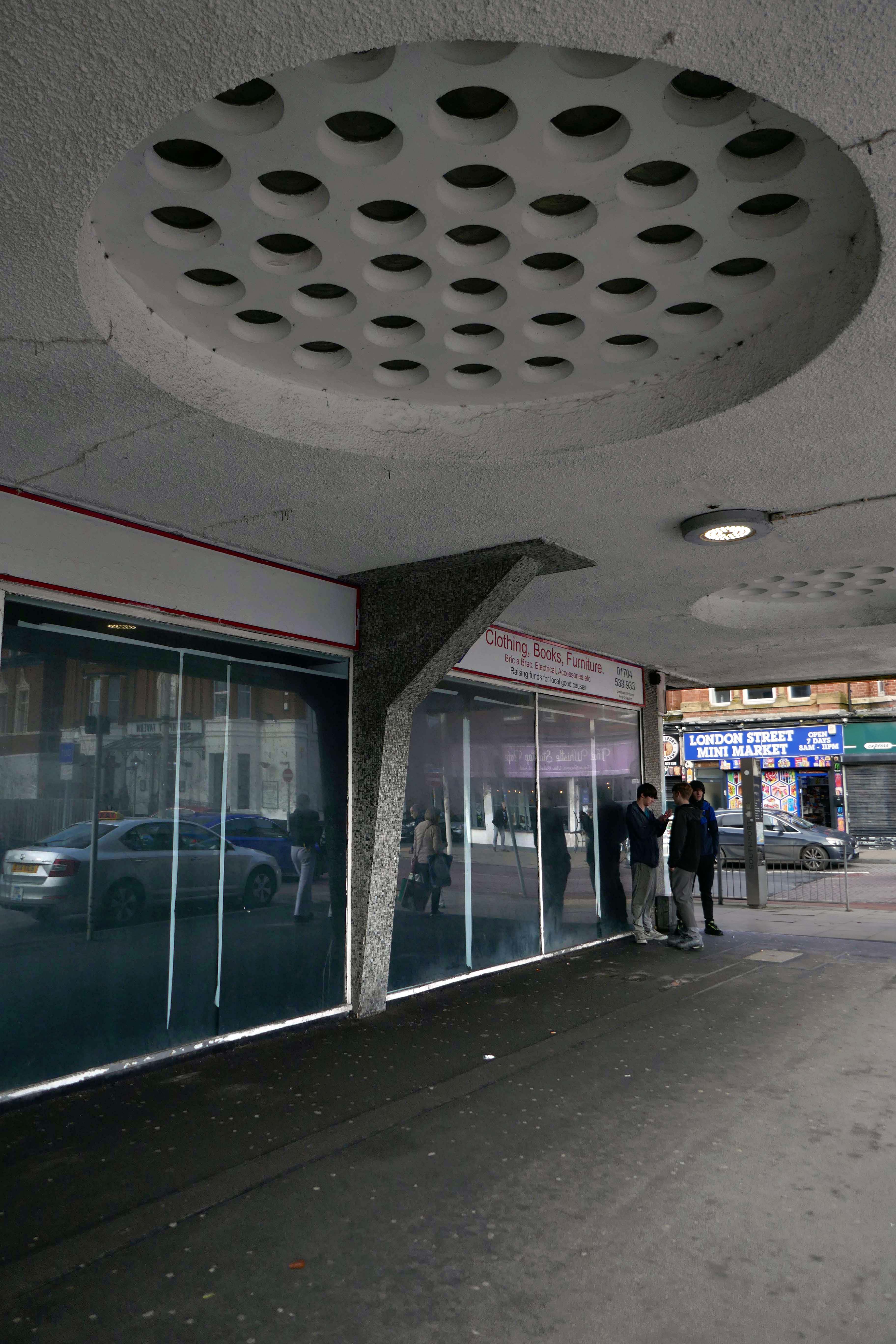
The redevelopment of the station in the 70s, along with the attached retail elements was the work of Richard Seifert & Partners.
The applied mosaic identical to that used on the architect’s Hexagon Tower.
The Liverpool, Crosby and Southport Railway line was extended on 5 August 1851 to the current station which opened as Southport Chapel Street. At its largest, Chapel Street station had eleven regular platforms and two excursion platforms. Now six truncated platforms are in use – platforms 1-3 for Liverpool trains & 4-6 for Manchester, the rest having been demolished and the land used for car parking. In 1970 the former terminal building was replaced with a shopping centre.
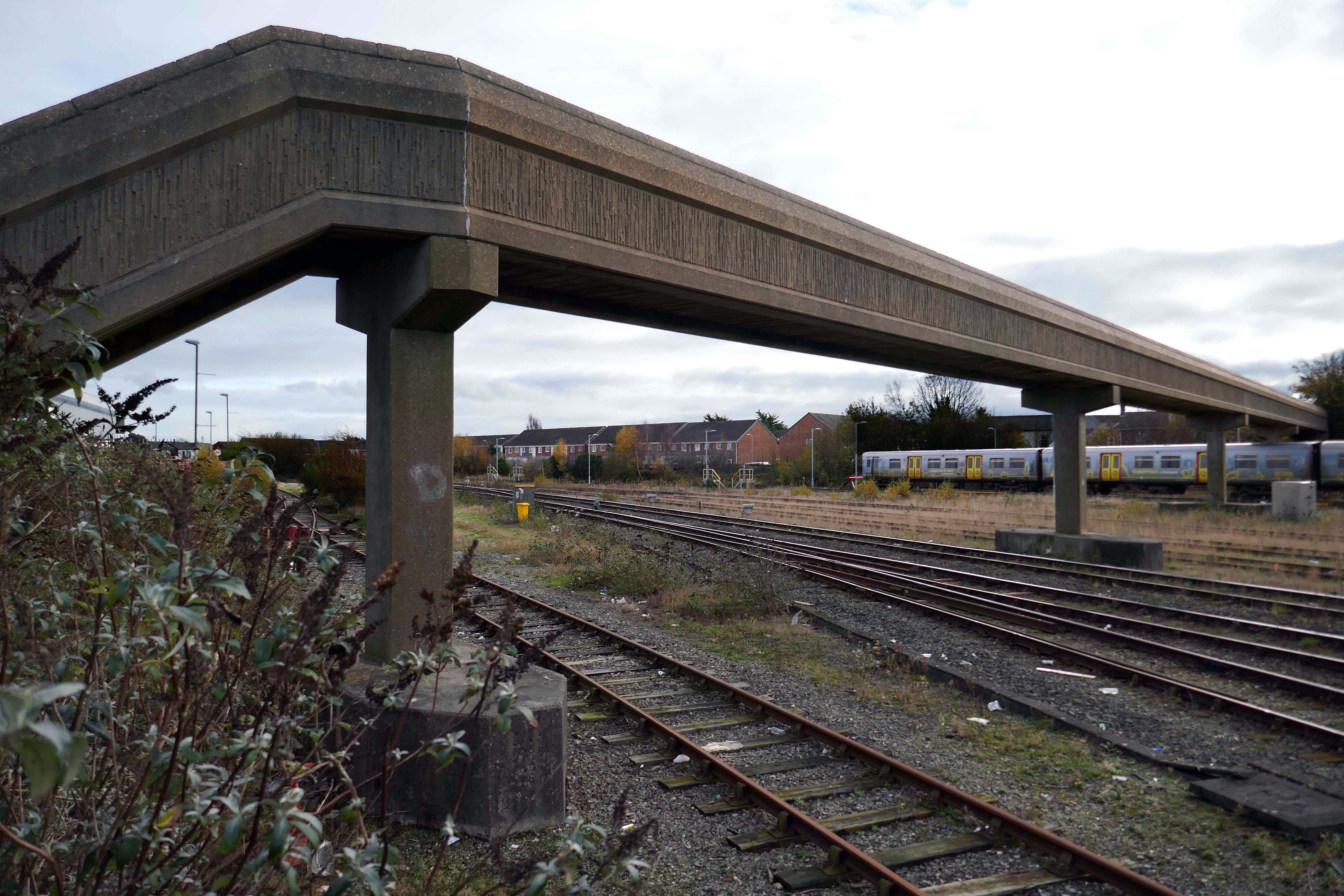
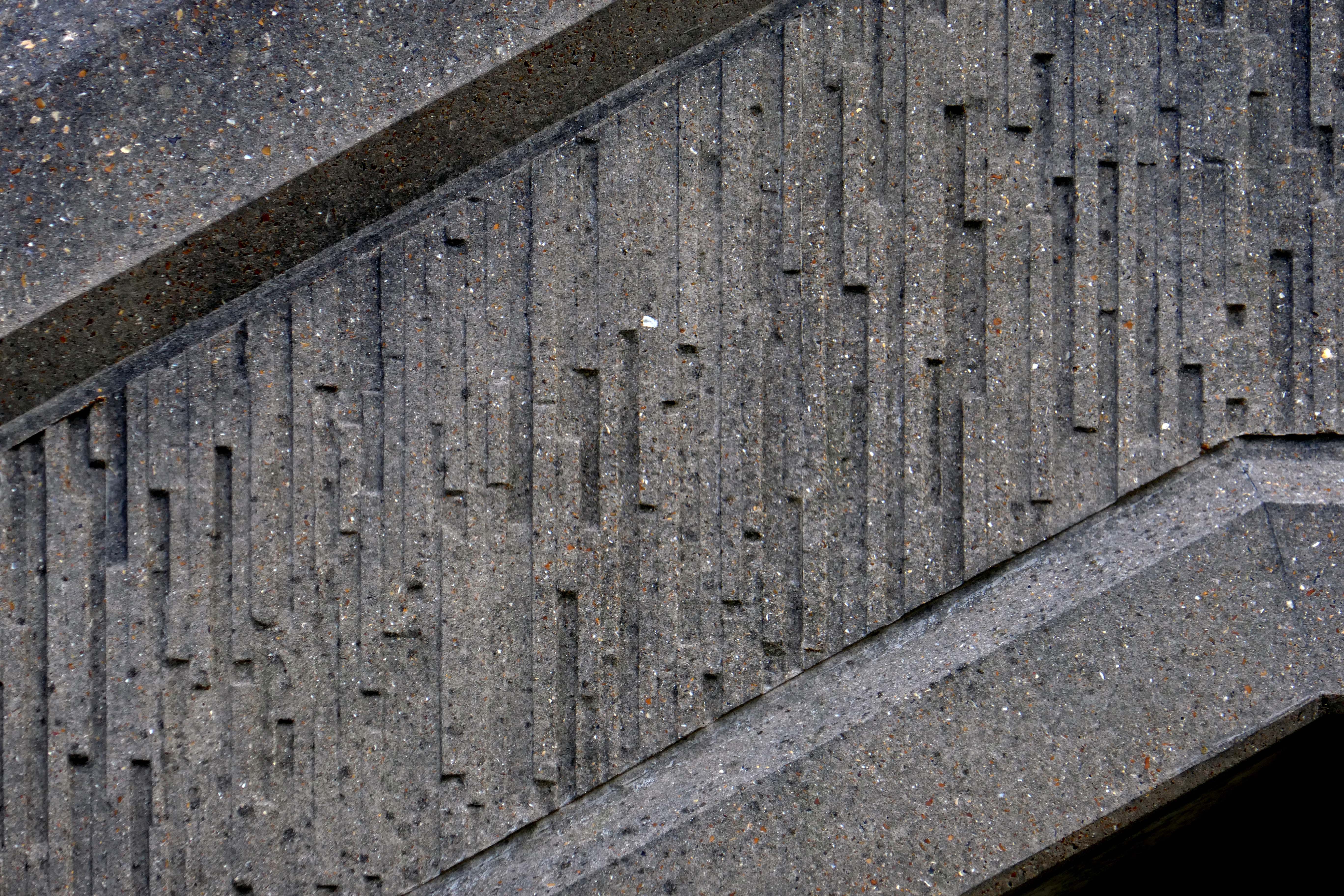
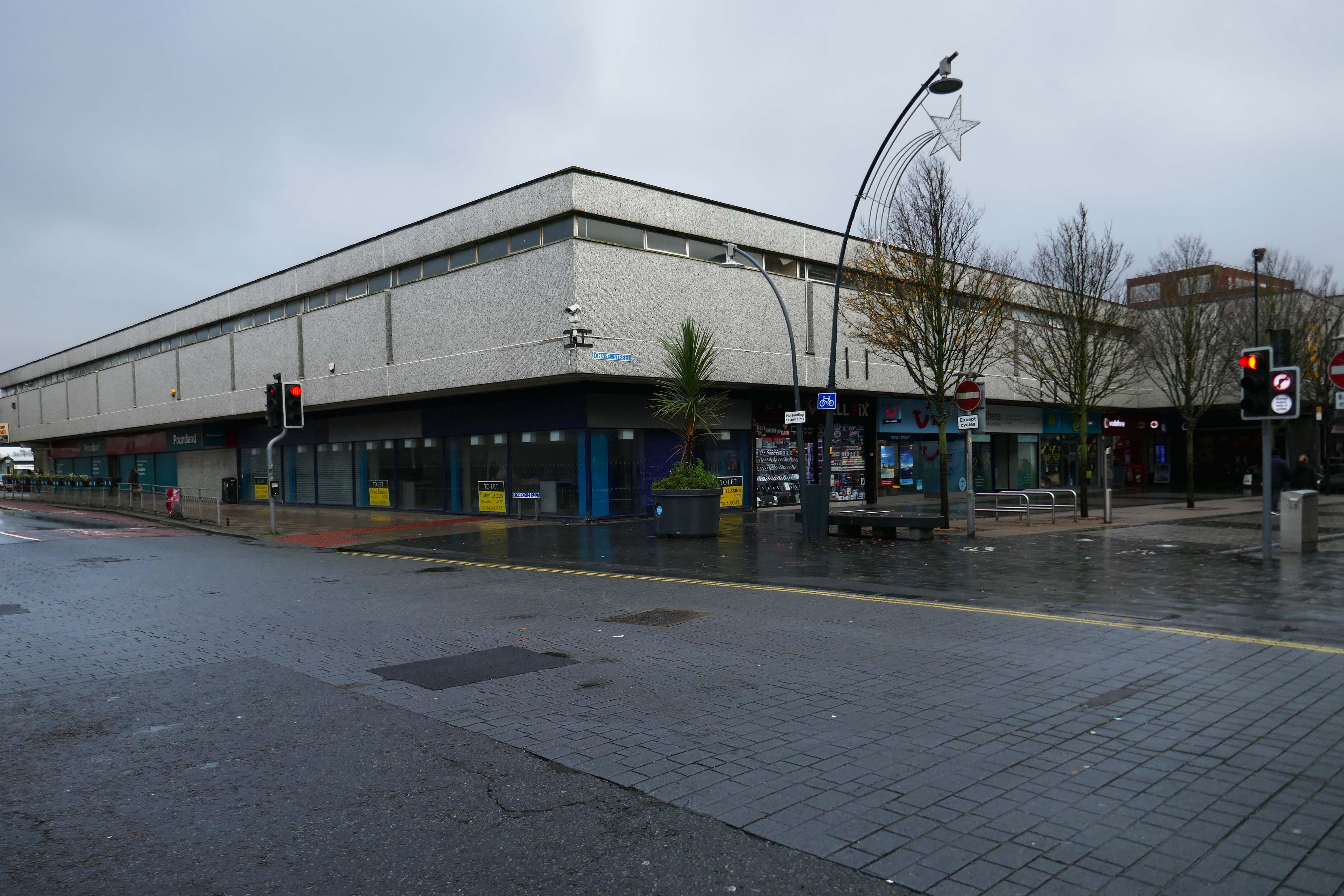
Exit the station to your right and proceed right along London Street to the concrete footbridge
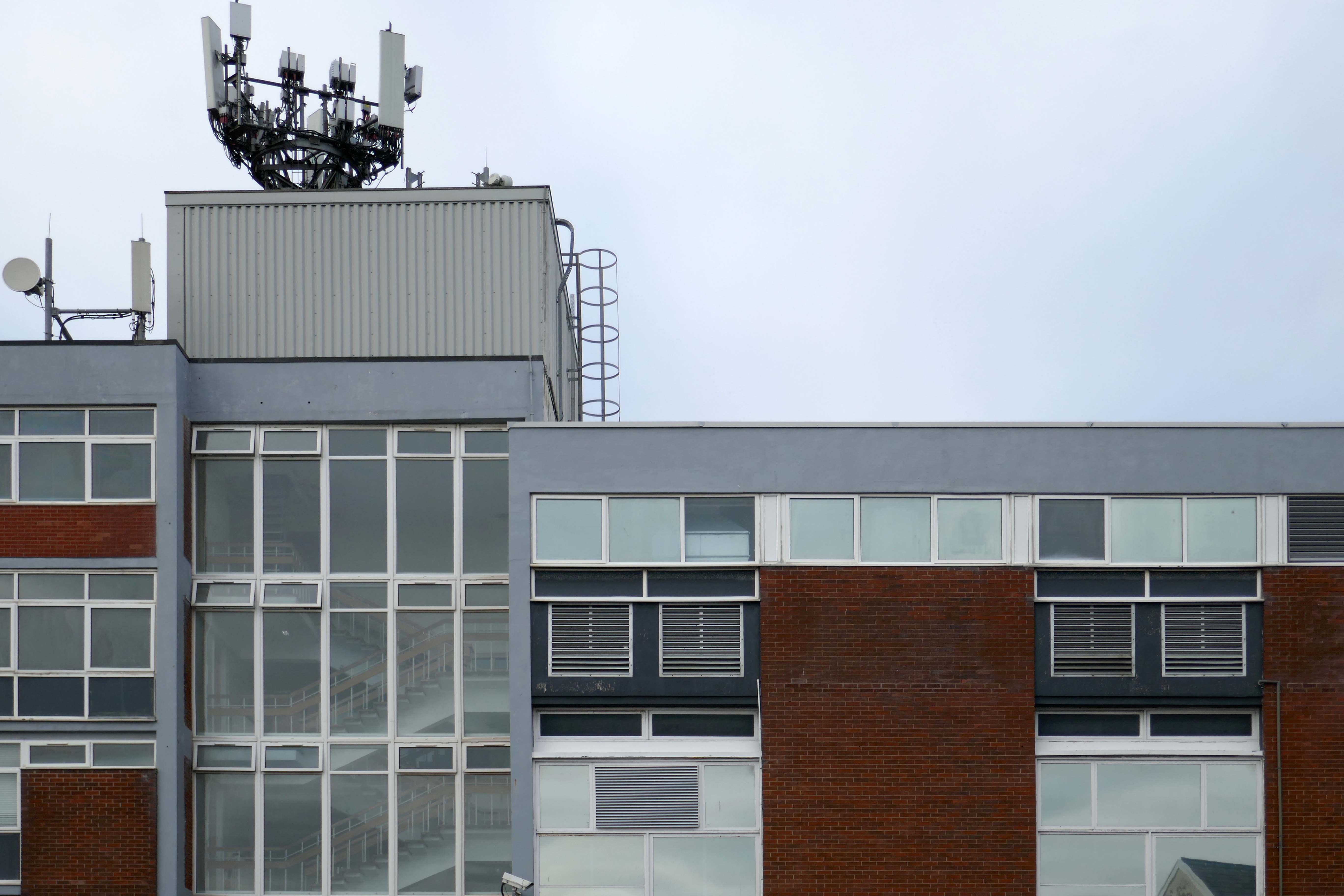
Backtrack along London Street turning right into Haweside Street, where we find the Telephone Exchange.
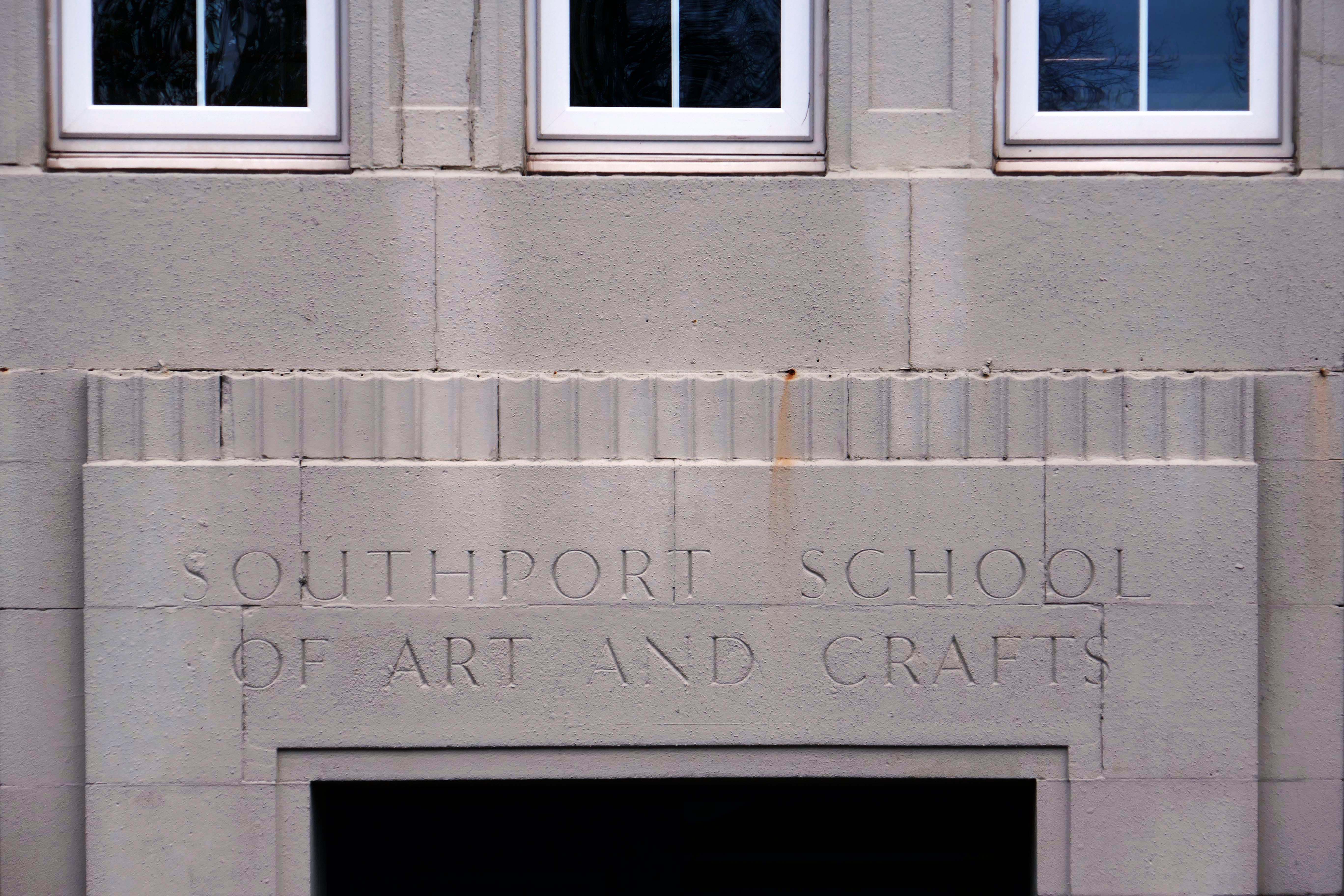
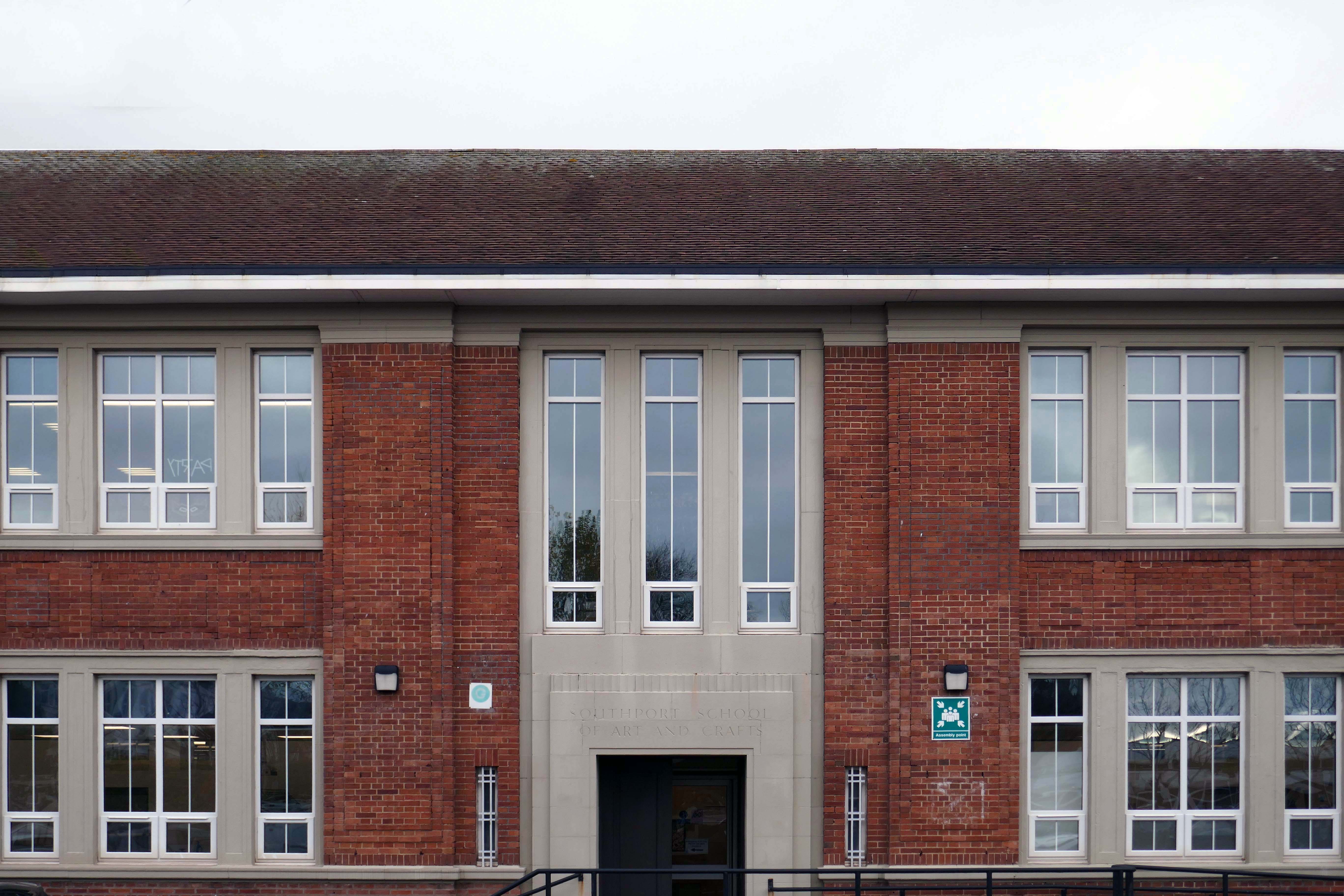
Next to the Southport College buildings of formerly the Southport School of Arts and Crafts, former students include Frank Hampson and Marc Almond.
Architects Cruikshank & Seward 1935
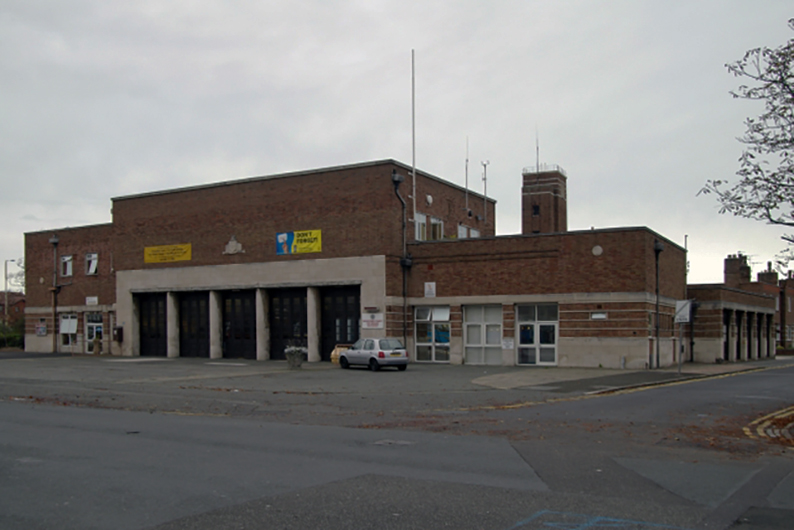
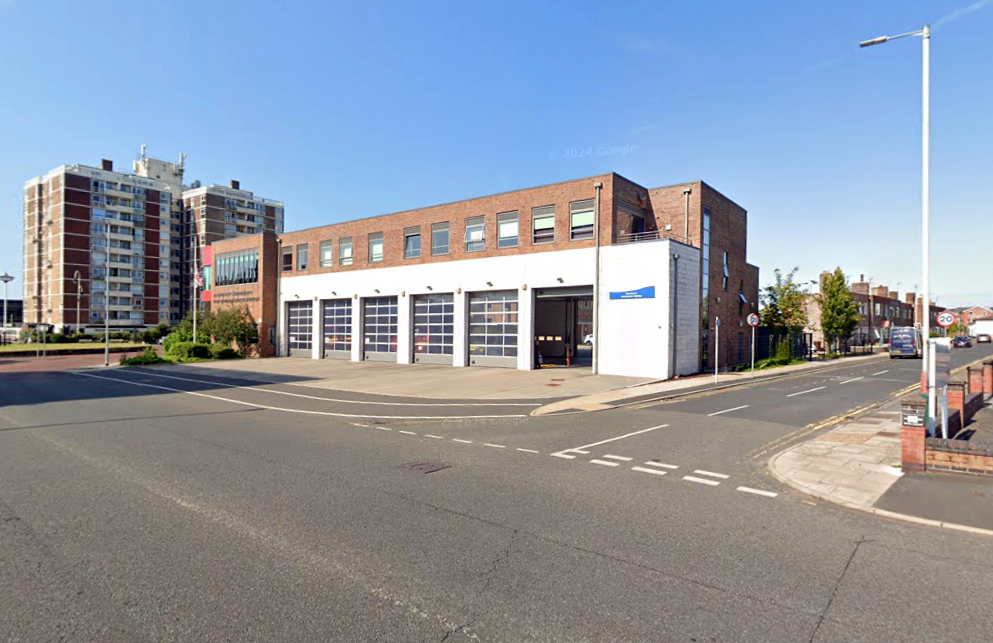
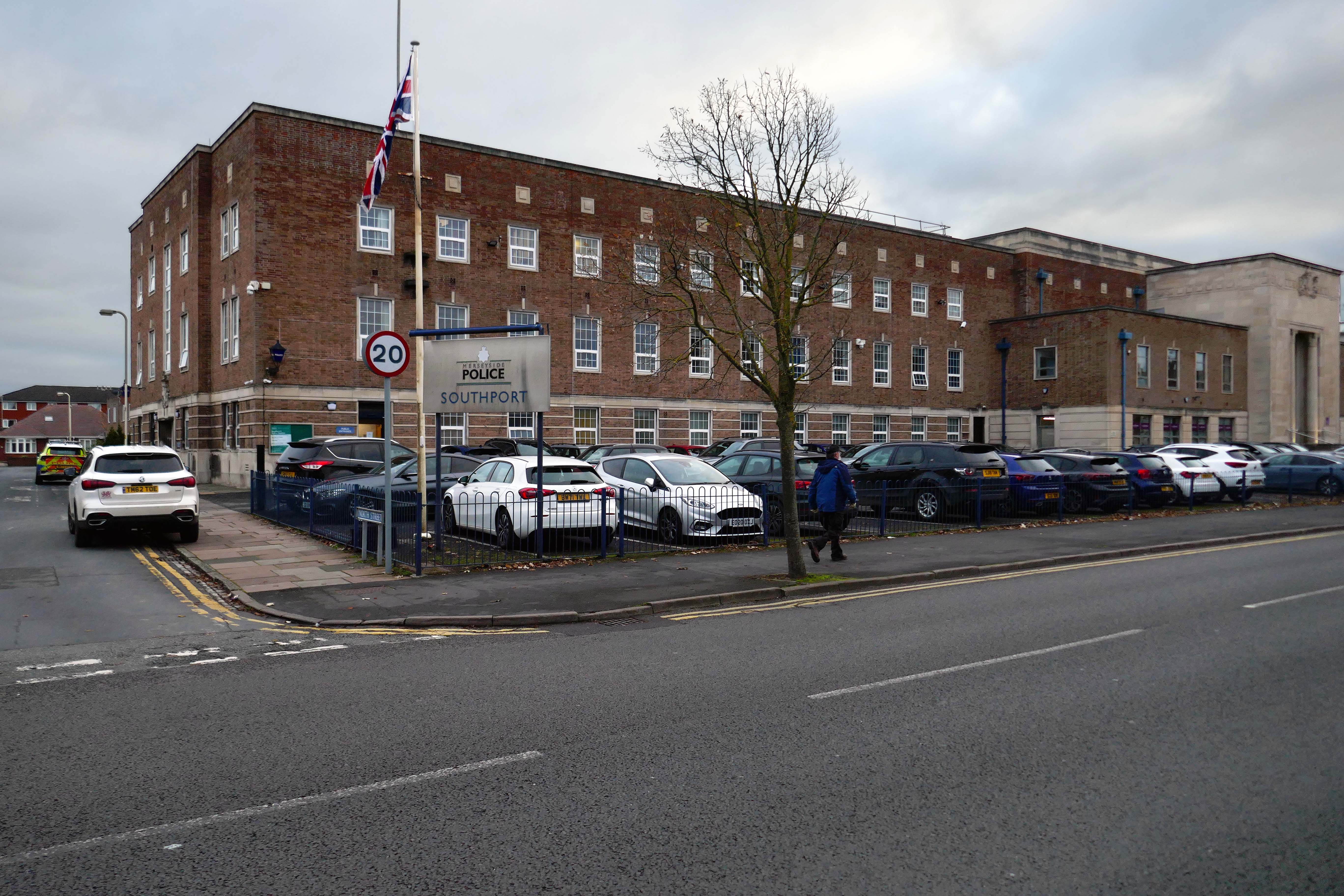
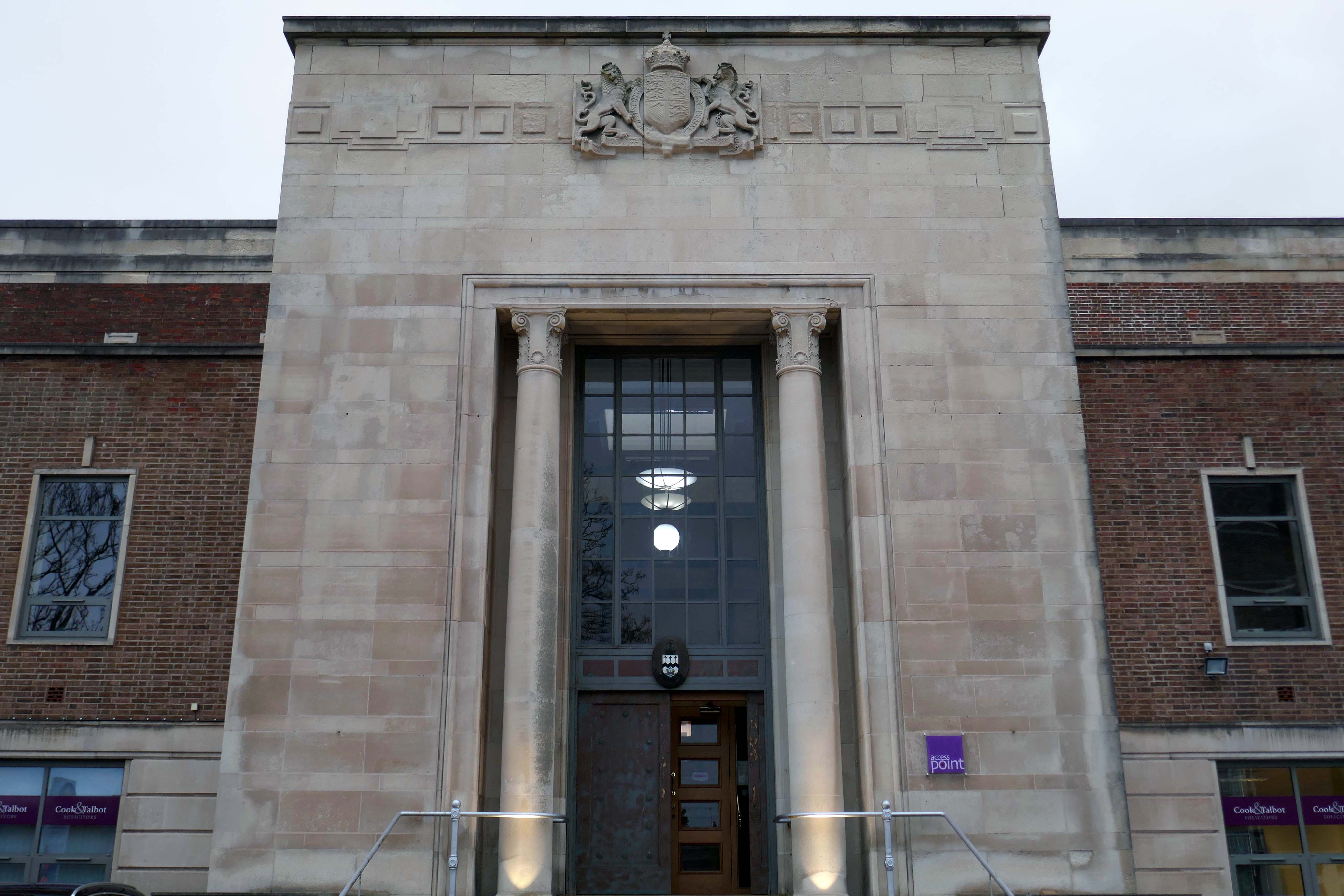
Turn right into Hoghton Street and left onto Manchester Road where we find the Fire Station part of a body of buildings which includes the Police Station and Magistrates’ Courts, the approved designs were unveiled on 19th May 1936.
The original fire station was demolished and this iteration constructed.
Architects – SN Cooke, I Wynne Thomas & R Dickinson of Birmingham. The complex was constructed from 1938-40 by Messrs Tyson Limited of Liverpool.
The magistrates’ courts opened in February 1941 without a formal ceremony due to the country being at war, and also concerns that the building might be requisitioned for the war effort. An extension was added to the front west corner of the magistrates’ court building in the 1970s and all the windows were replaced in the late 1980s/early 1990s.
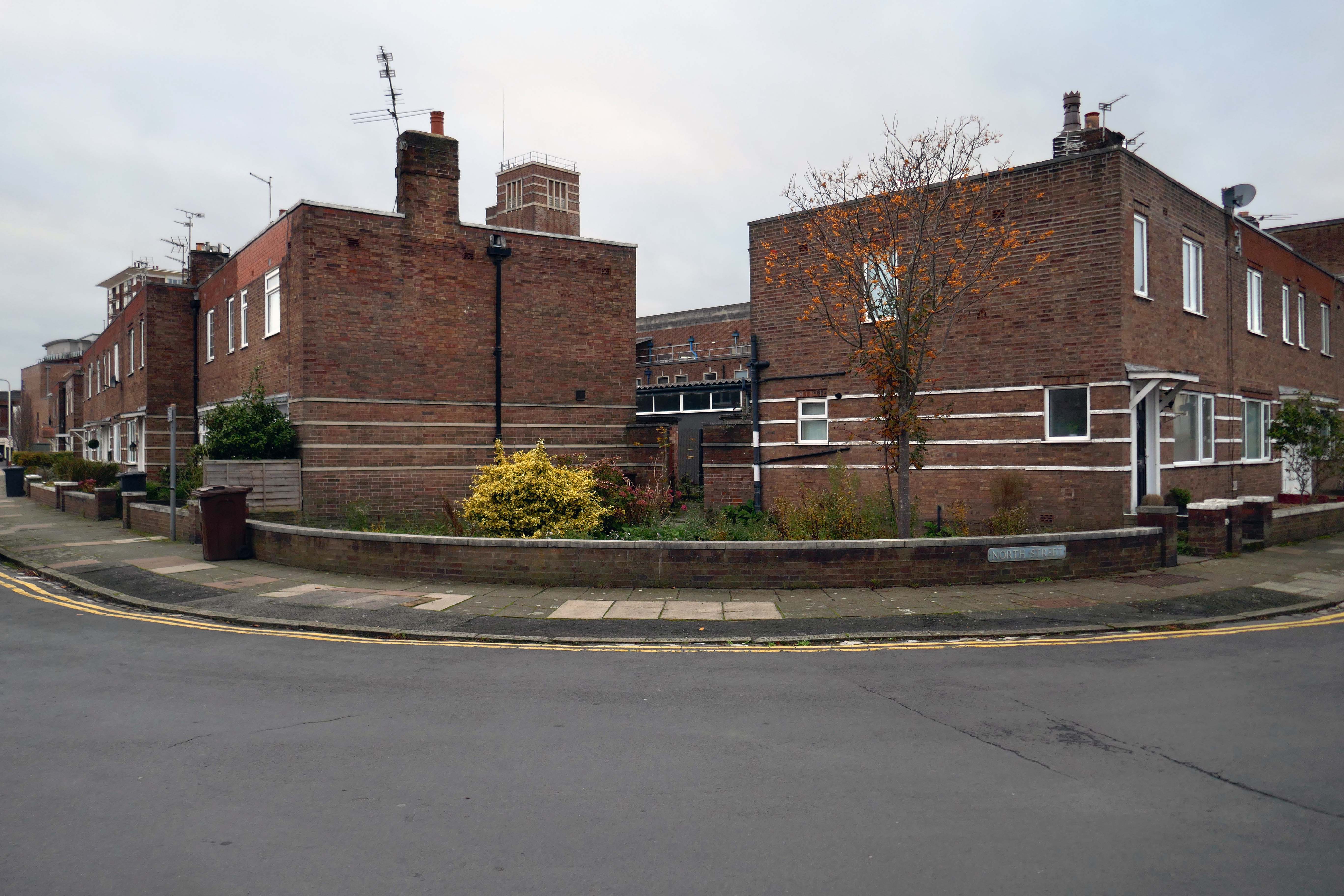
There is also a group of contemporary houses on Court Road.
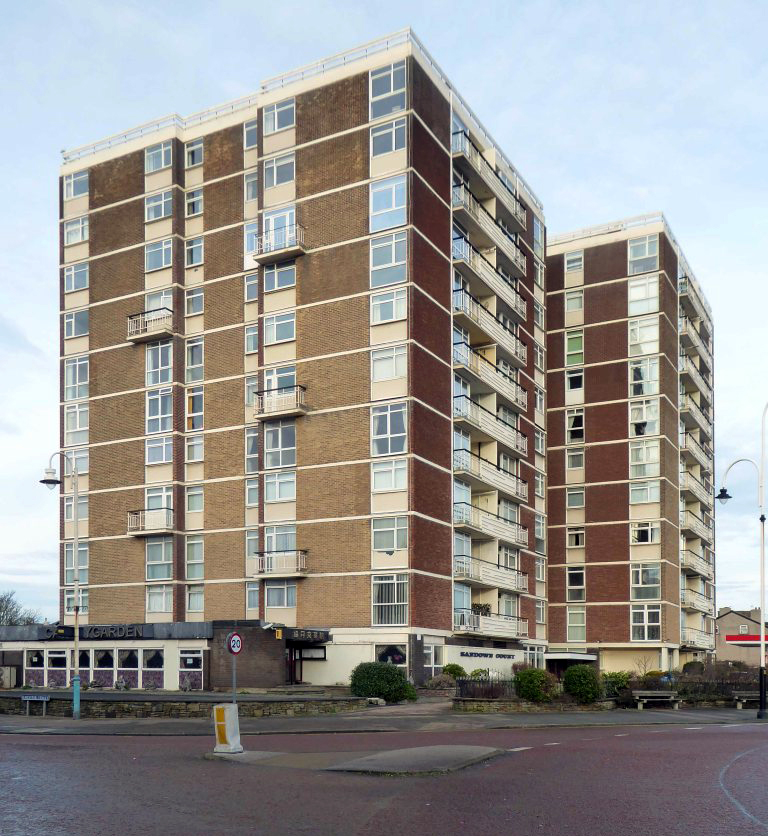
Around the block we arrive at Sandown Court – my extensive research shows the flats were a location for the Norman Wisdom film What’s Good For the Goose, a saucy serving of seaside slap and tickle.
Across the roundabout another residential tower.
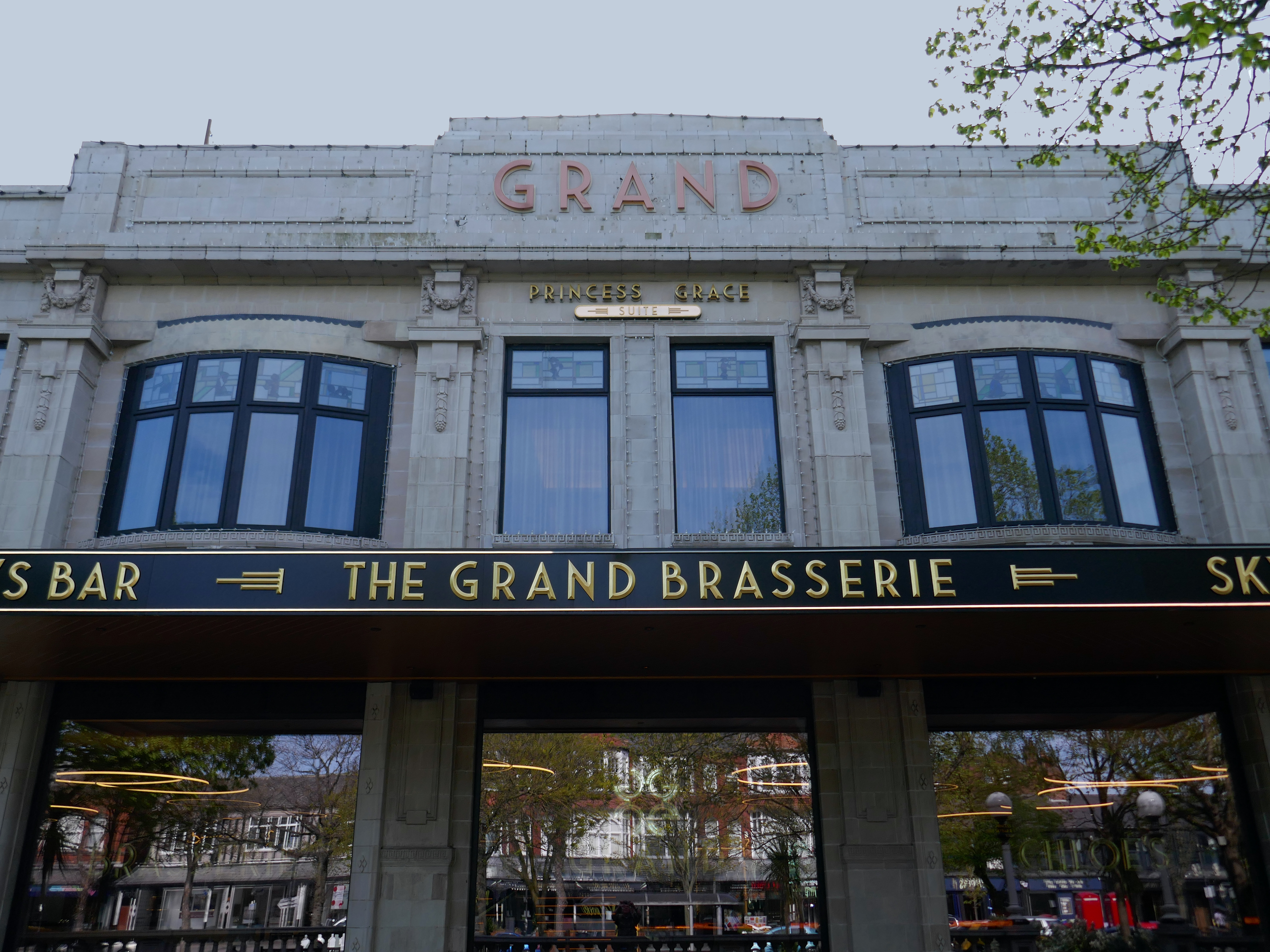
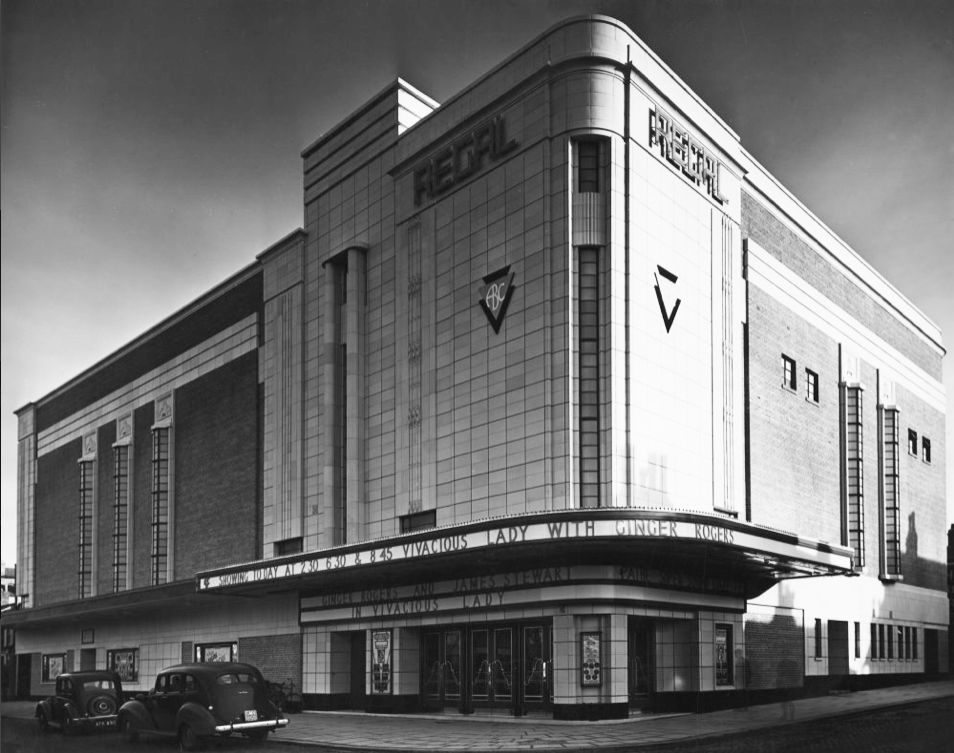
Heading back along Lord Street to The Grand a Grade II listed building – originally built in 1923 as a garage and car showroom, it was converted into a luxury cinema in 1938 by architect George E Tonge. The Grand Cinema opened on 14th November 1938 with Arthur Tracy in Follow Your Star.
The Grand Cinema closed on 2nd July 1966 with Sean Connery in Thunderball and Peter Cushing in Hound of the Baskervilles. It was then converted into an independent bingo club, it was last operated as the Stanley Grand Casino, and from 2007 became the Mint Casino, but this was closed by May 2016.
We have a ‘smart casual’ dress code in our bars and restaurants at The Grand, so we kindly ask that you refrain from wearing caps, ripped jeans, sportswear, trainers, or shorts after 6pm.
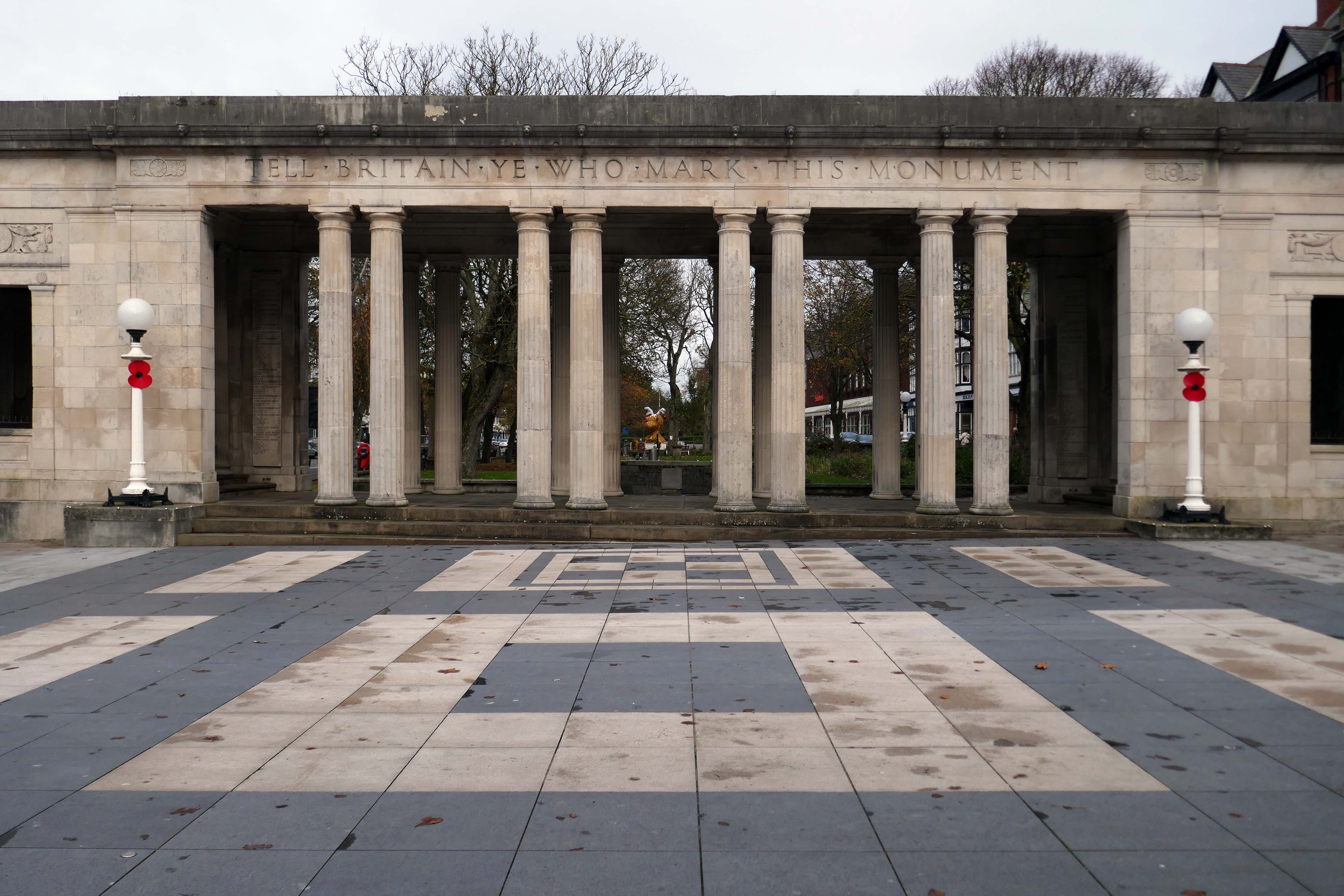
Next to the substantial War Memorial.
The memorial was designed by the local architects Grayson and Barnish, and the carving was executed by Herbert Tyson Smith. It was unveiled in 1923 by the Earl of Derby. Following the Second World War and subsequent conflicts further inscriptions and names have been added. The memorial is designated Grade II* listed building.
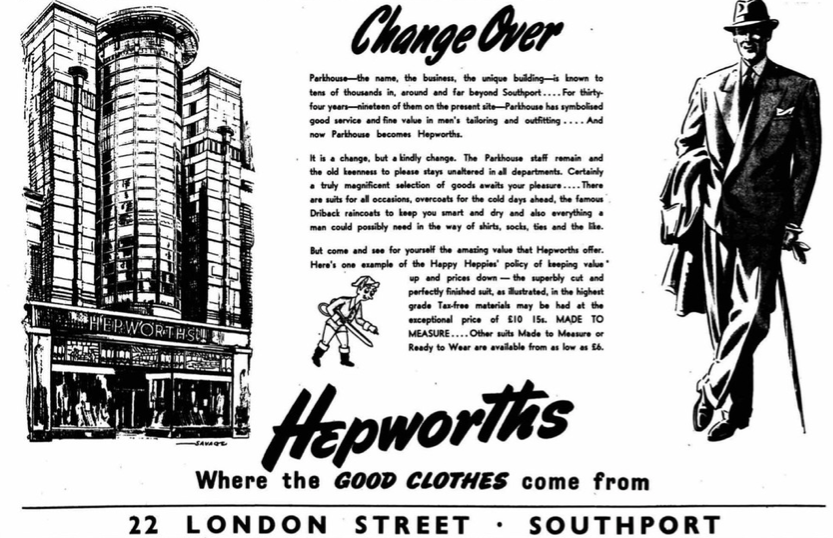
Turning into London Street we encounter this Art Deco delight – This newspaper advert is from the Formby Times, dated 21 October 1950, when the building had been taken over by Hepworths. According to them it opened about 1931 as Parkhouse, men’s tailors, later Hepworths. By 1958 it was a hairdresser’s – Andre Bernard, which lasted at least until the 1970s.
Back at the railway station we can see the shops which embrace it.
Architects Richard Seifert& Partners 1970
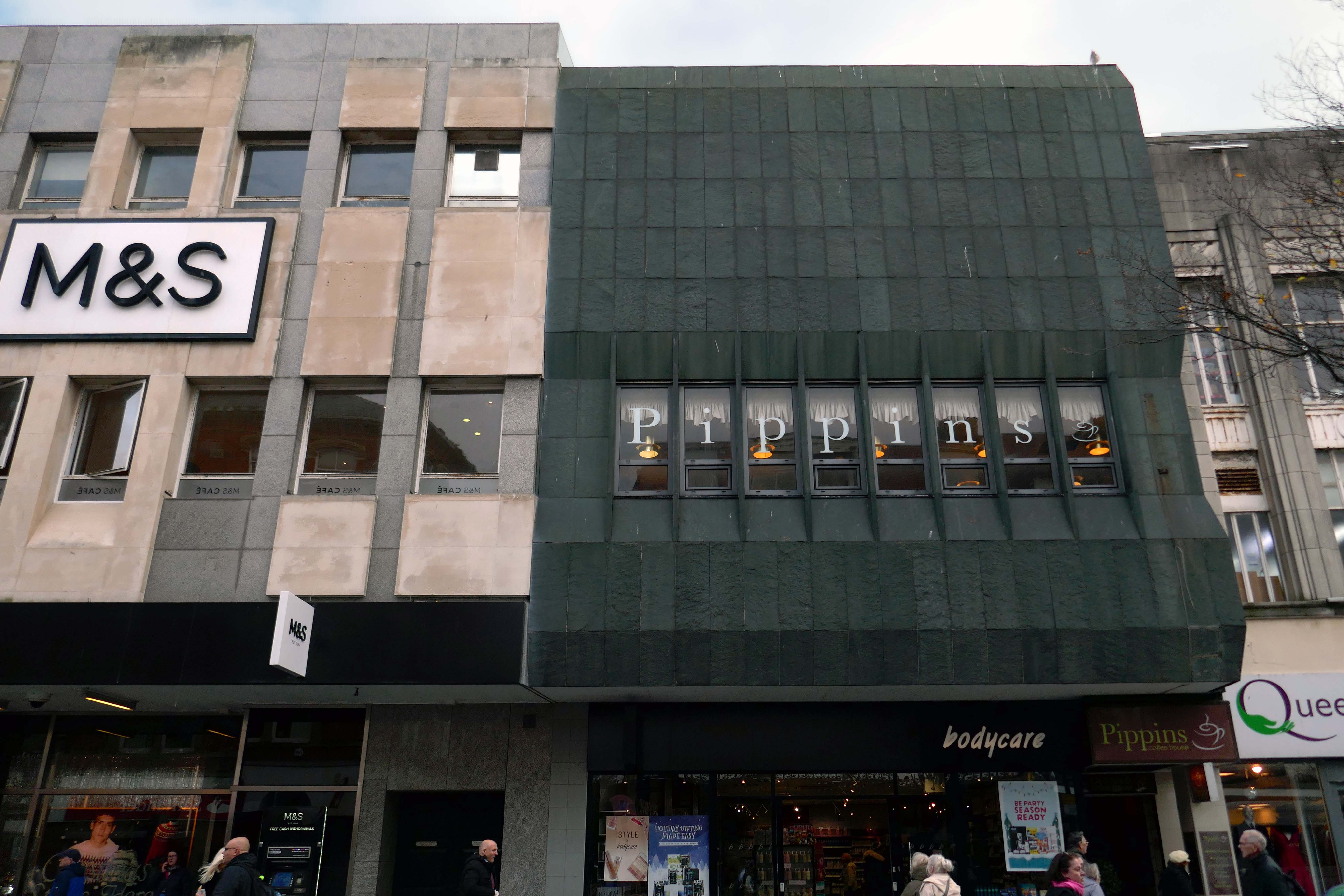
The following the pedestrianised retail area – we pass the Marks & Spencers next to a formidable slate frontage, and inevitably a Burton’s.
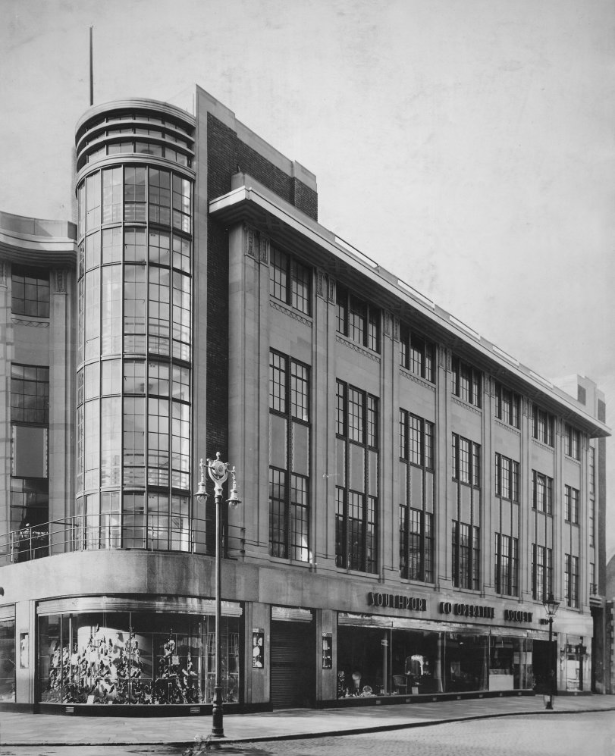
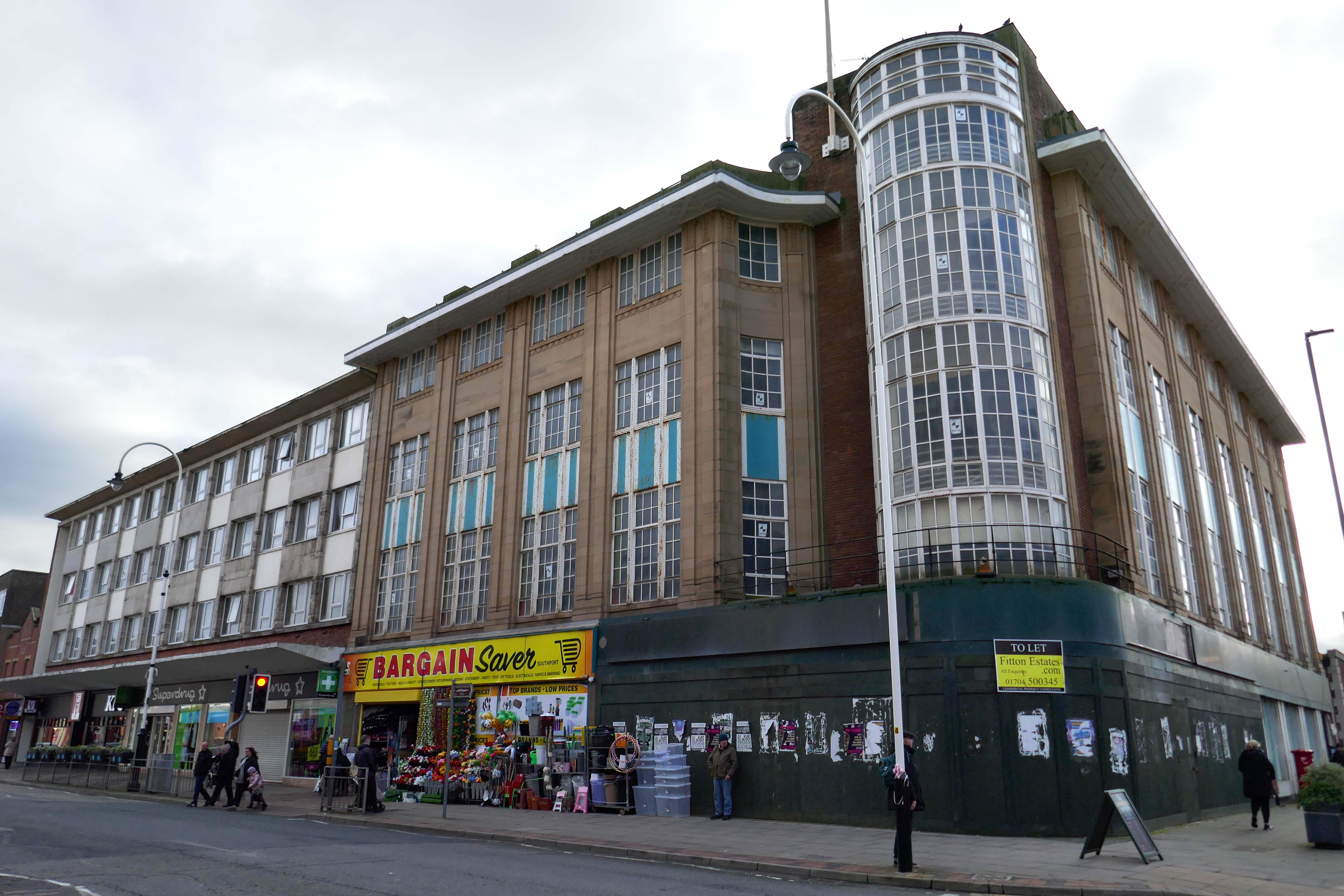
Southport Co-operative 1930 architect – WA Johnson
Ribapix
Turn right into Eastbank Street and back to Lord Street.
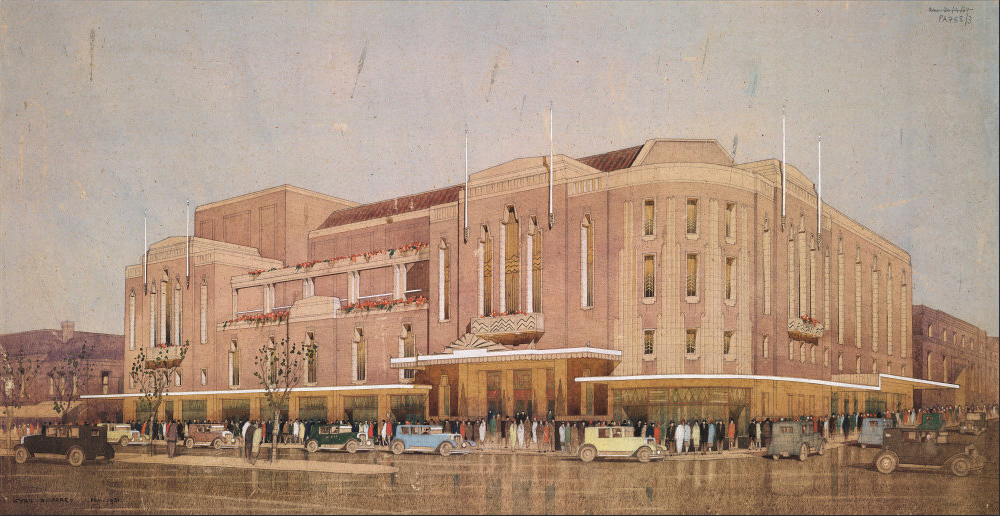
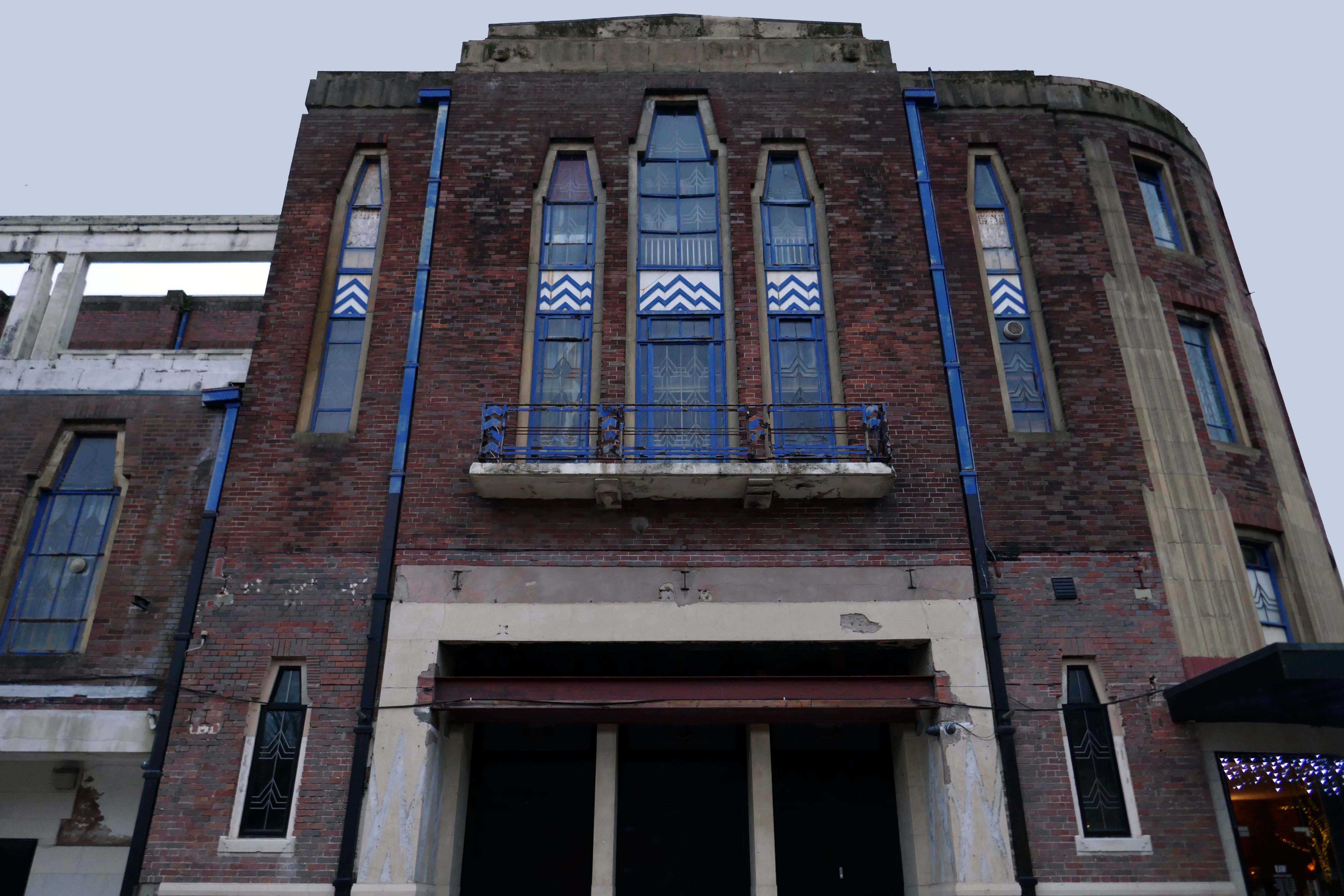
Garrick Theatre 1932 architect – George Edward Tonge
The Garrick Theatre was sold to the Newcastle upon Tyne based Essoldo Cinemas chain in January 1957 and the follow-spot box was converted into a projection booth. It opened as a cinema on 21st January 1957 with Elvis Presley in Love Me Tender and Maureen O’Hara in Miracle on 34th Street. It was briefly re-named Essoldo in the late-1950’s, but the Garrick Theatre name was soon re-instated. There were occasional stage shows, but these were not a success and from May 1962 it screened films only. During 1963 bingo was introduced on Sundays and Fridays. On 16th November 1963 it was closed as a cinema with the film Tom Jones starring Albert Finney. It was converted into a Lucky 7 Bingo Club – from 1984 a Top Rank Bingo Club and finally Mecca. It was closed in March 2020 due to the Covid-19 pandemic.
Redevelopment of the grade two-listed Garrick building on Lord Street in the town centre will include 12 apartments.Change of use plans for the venue, submitted by developer Garrick Southport, and approved by Sefton Council’s planning department, also include a pool, retail units, gym, box office, and a bar and restaurant.
A theatre area and performance space are at the heart of renovation plans for the mixed-use scheme.
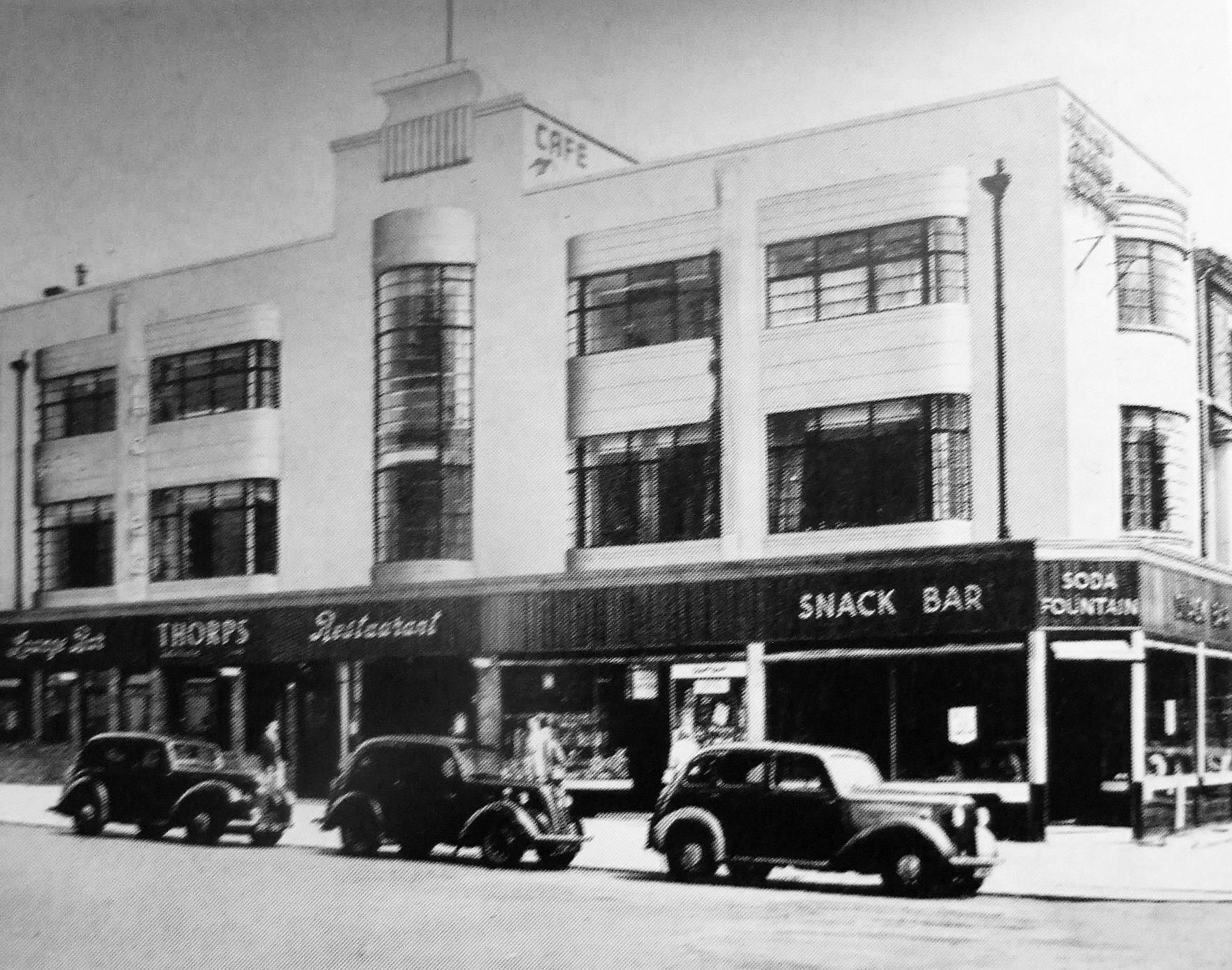
Back along Lord Street, turning left into Nevill Street – site of the former Thorps Café.
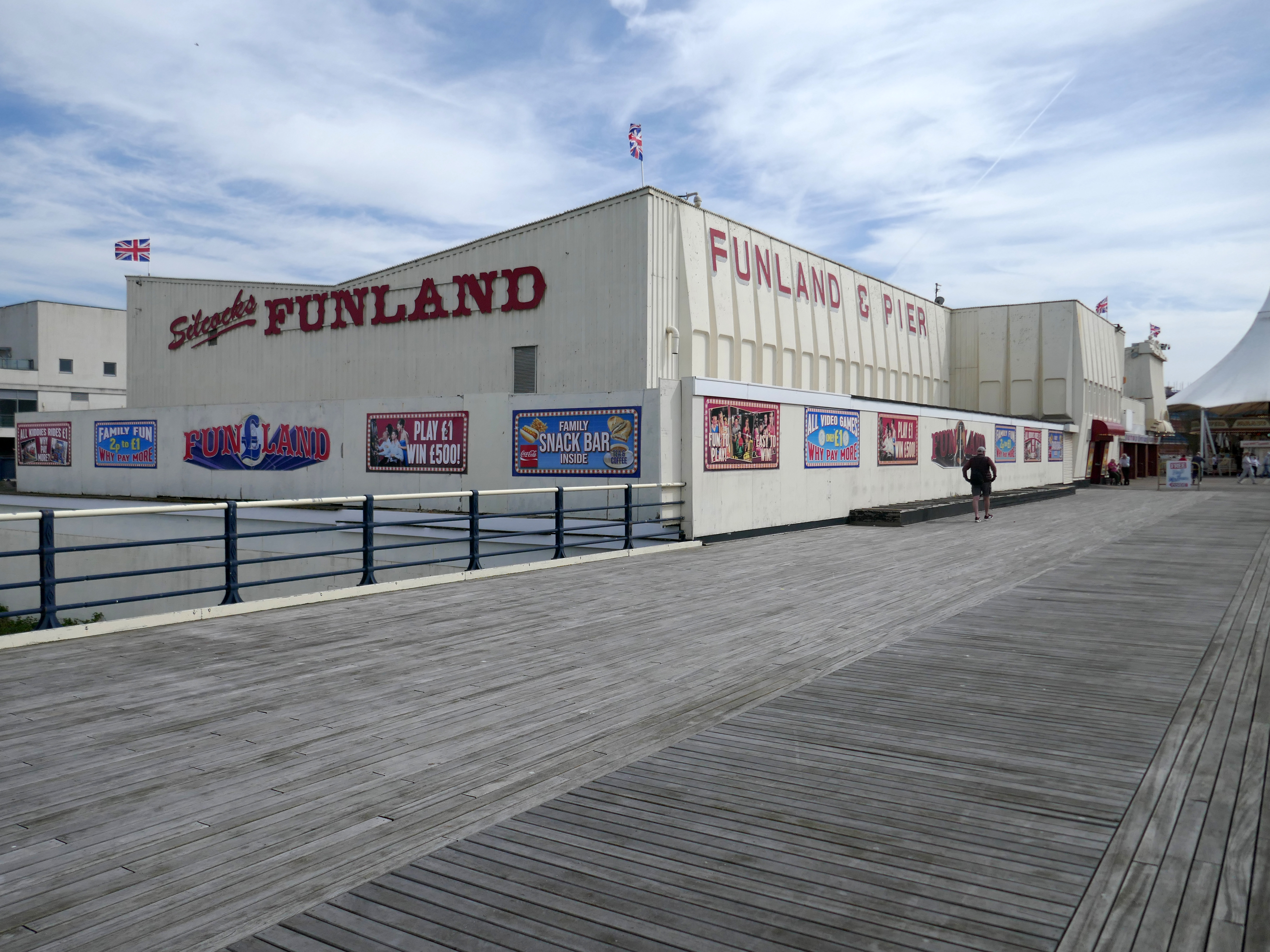
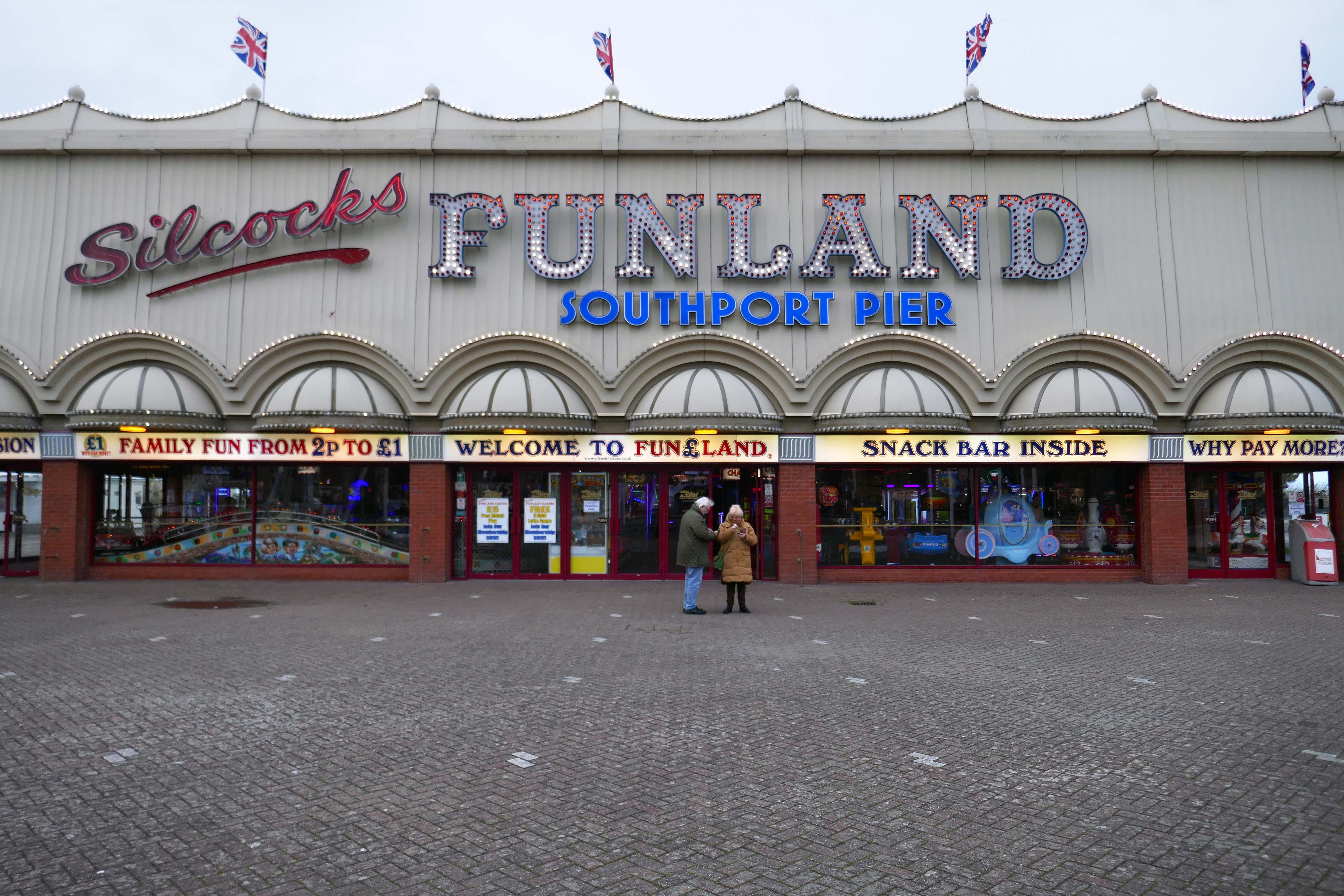
Onwards to Southport Pier and Funland.
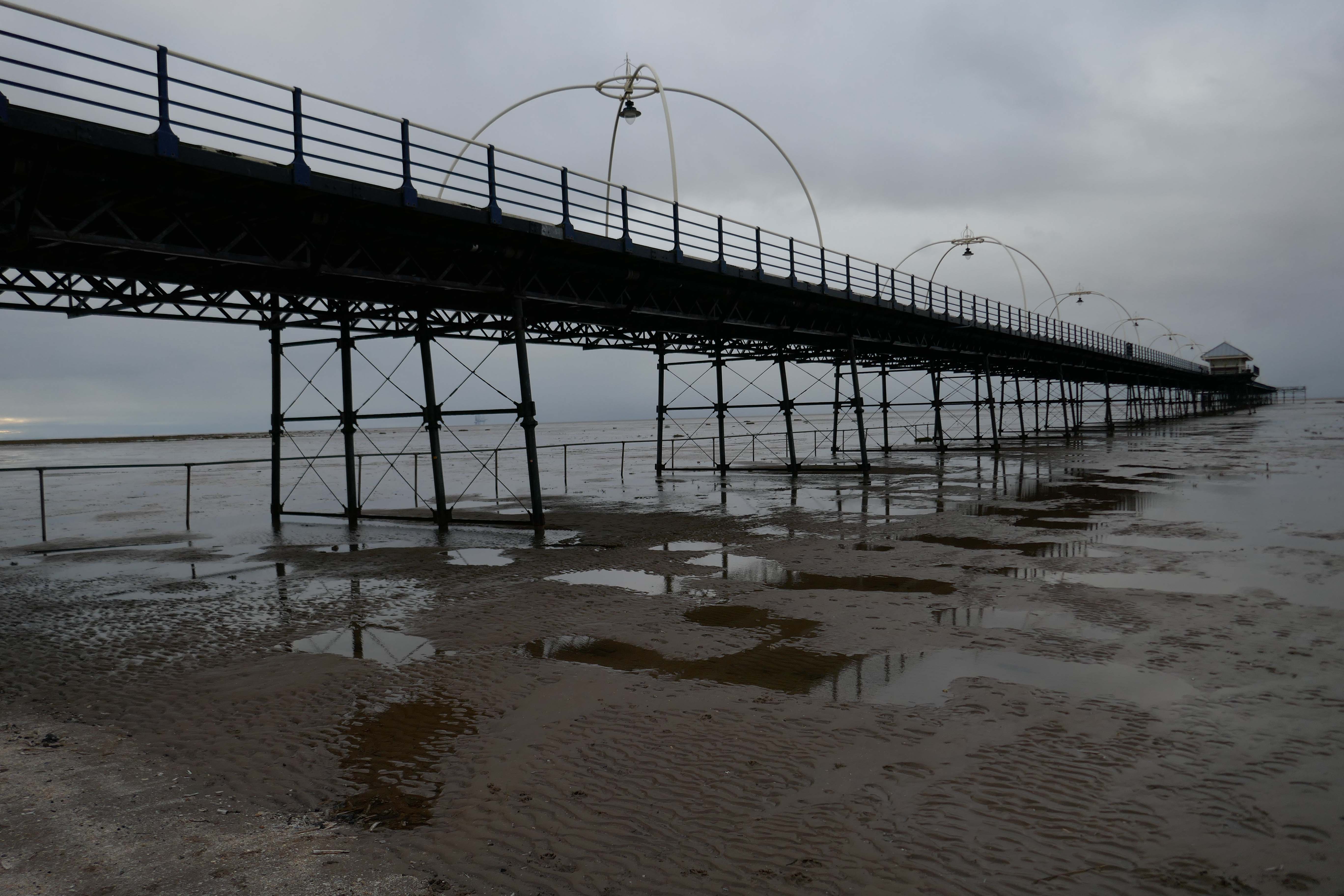
Southport Pier opened in August 1860, it is the oldest iron pier in the country. Its length of 1,108 m makes it the second-longest in Great Britain, after Southend Pier. Although at one time spanning 1,340 m, a succession of storms and fires during the late 19th and early 20th centuries reduced its length to that of the present day.Grade II listed building, first listed on 18 August 1975.