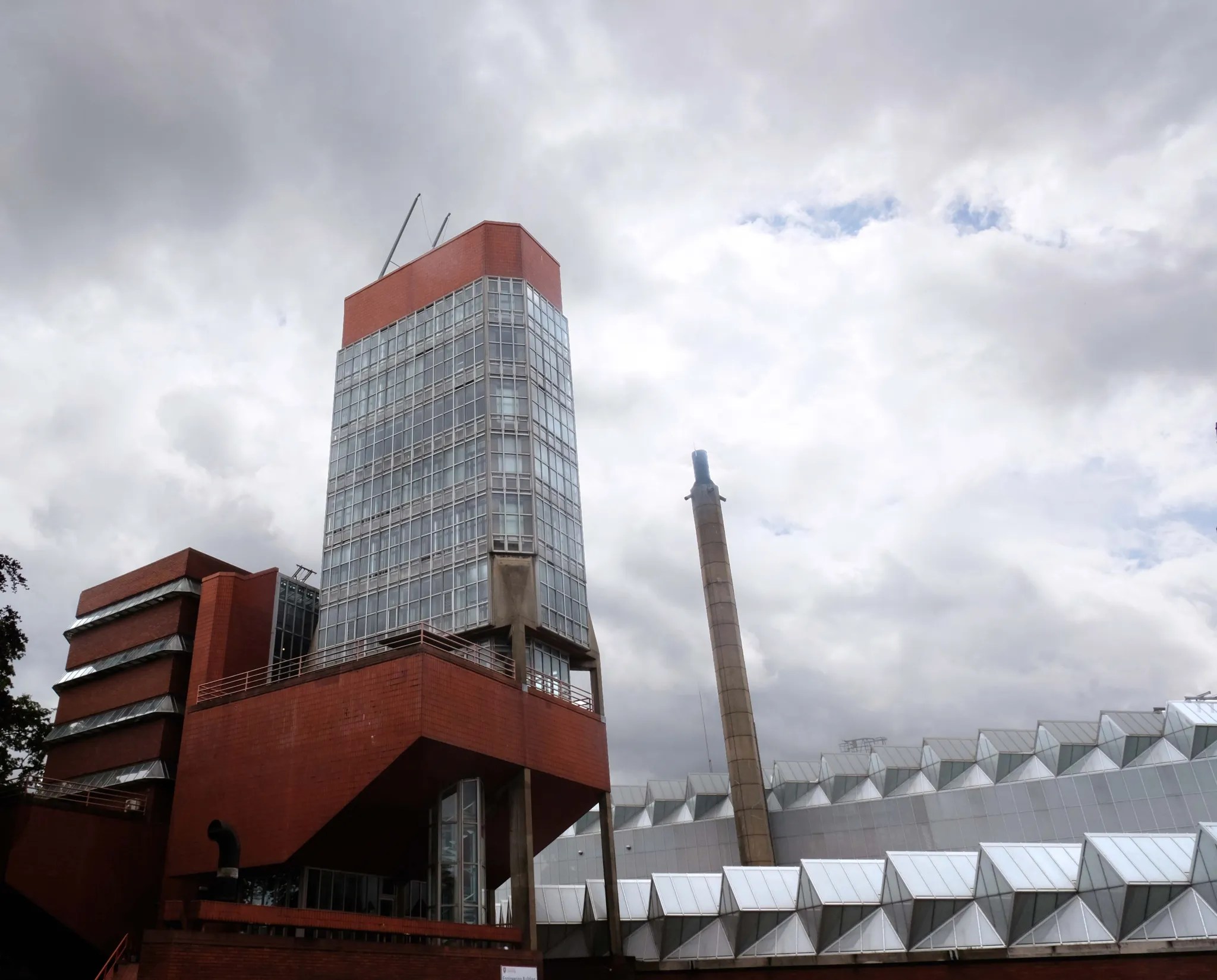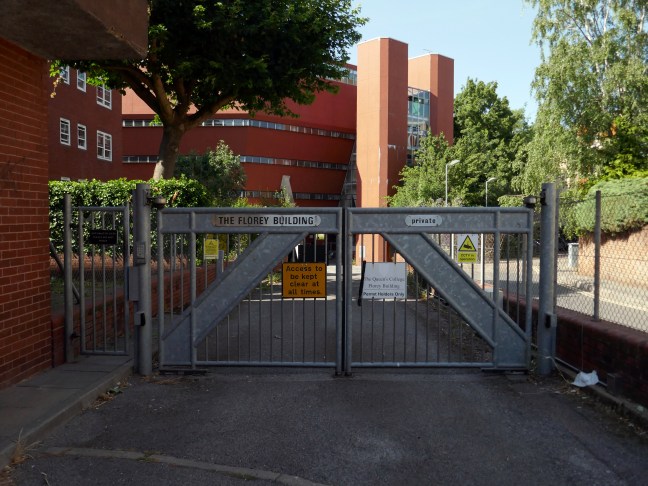
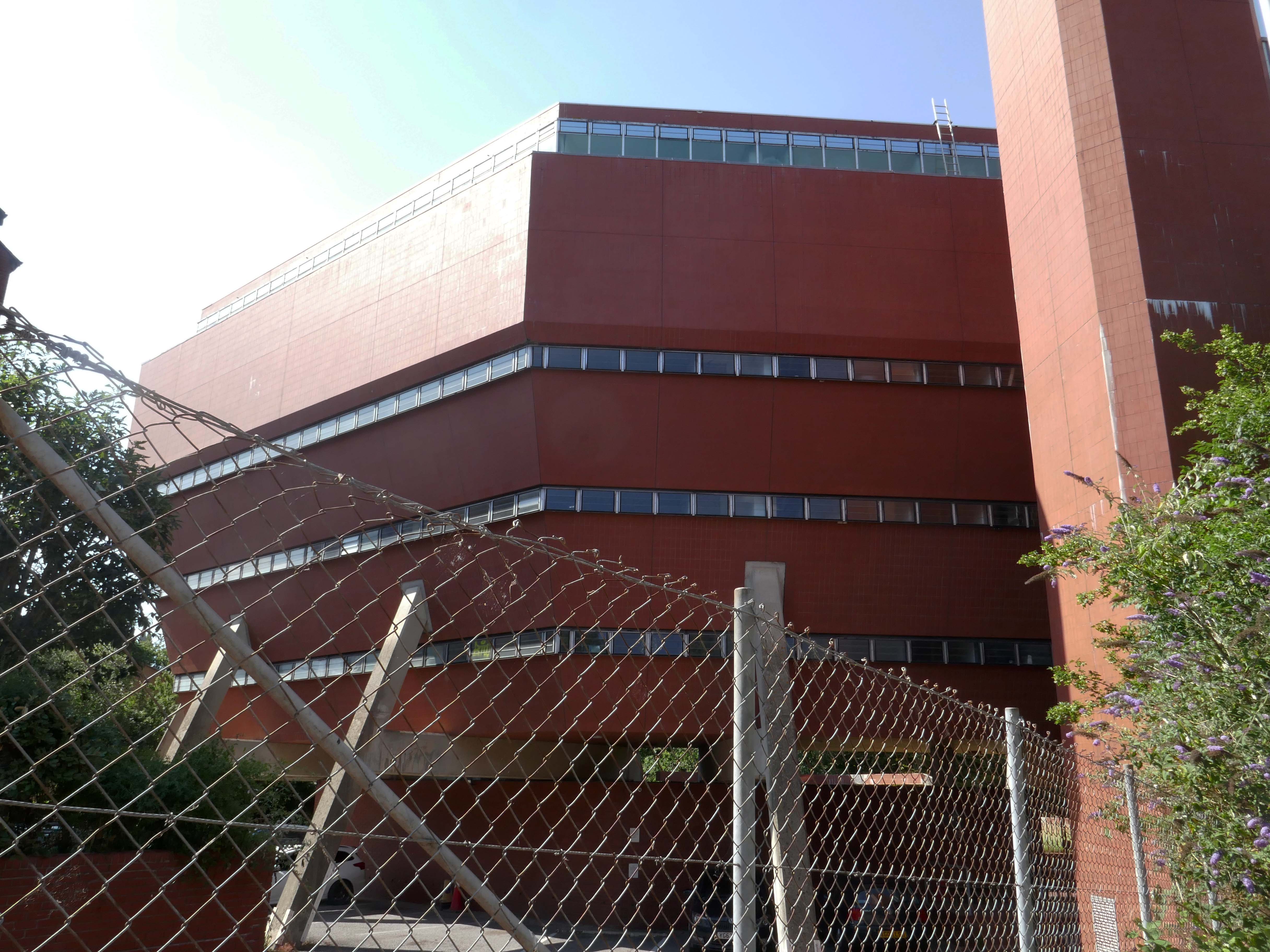
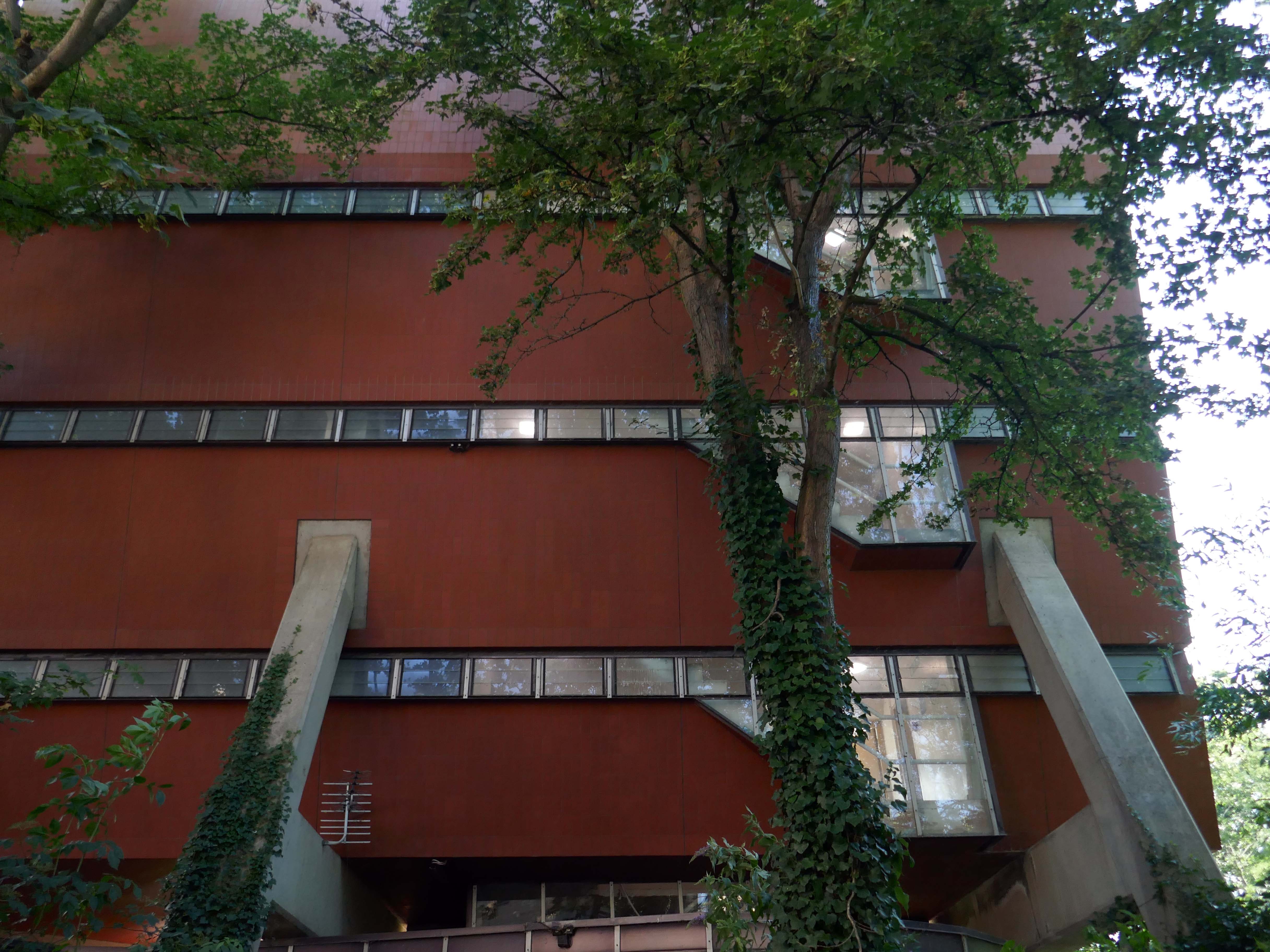
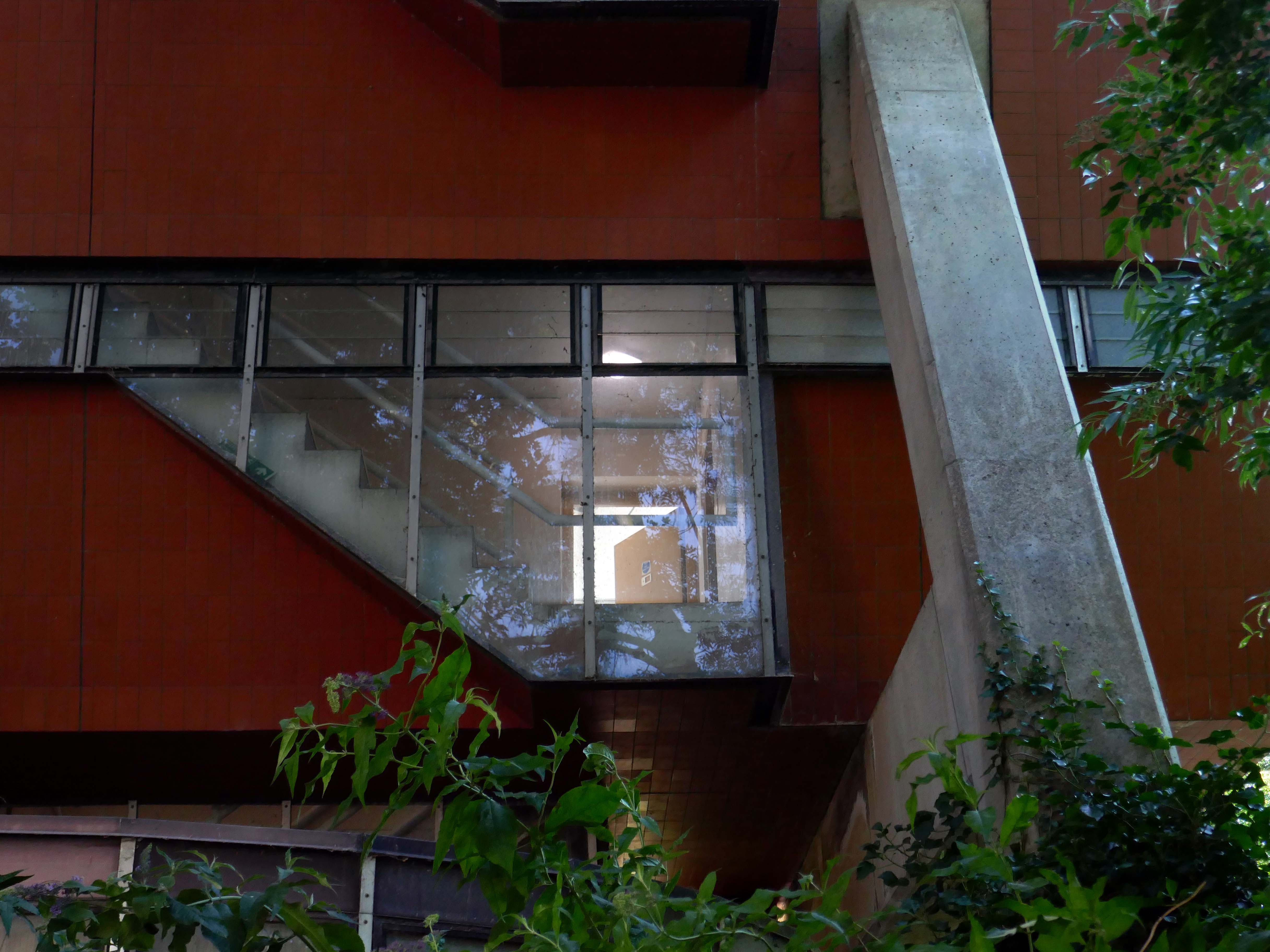
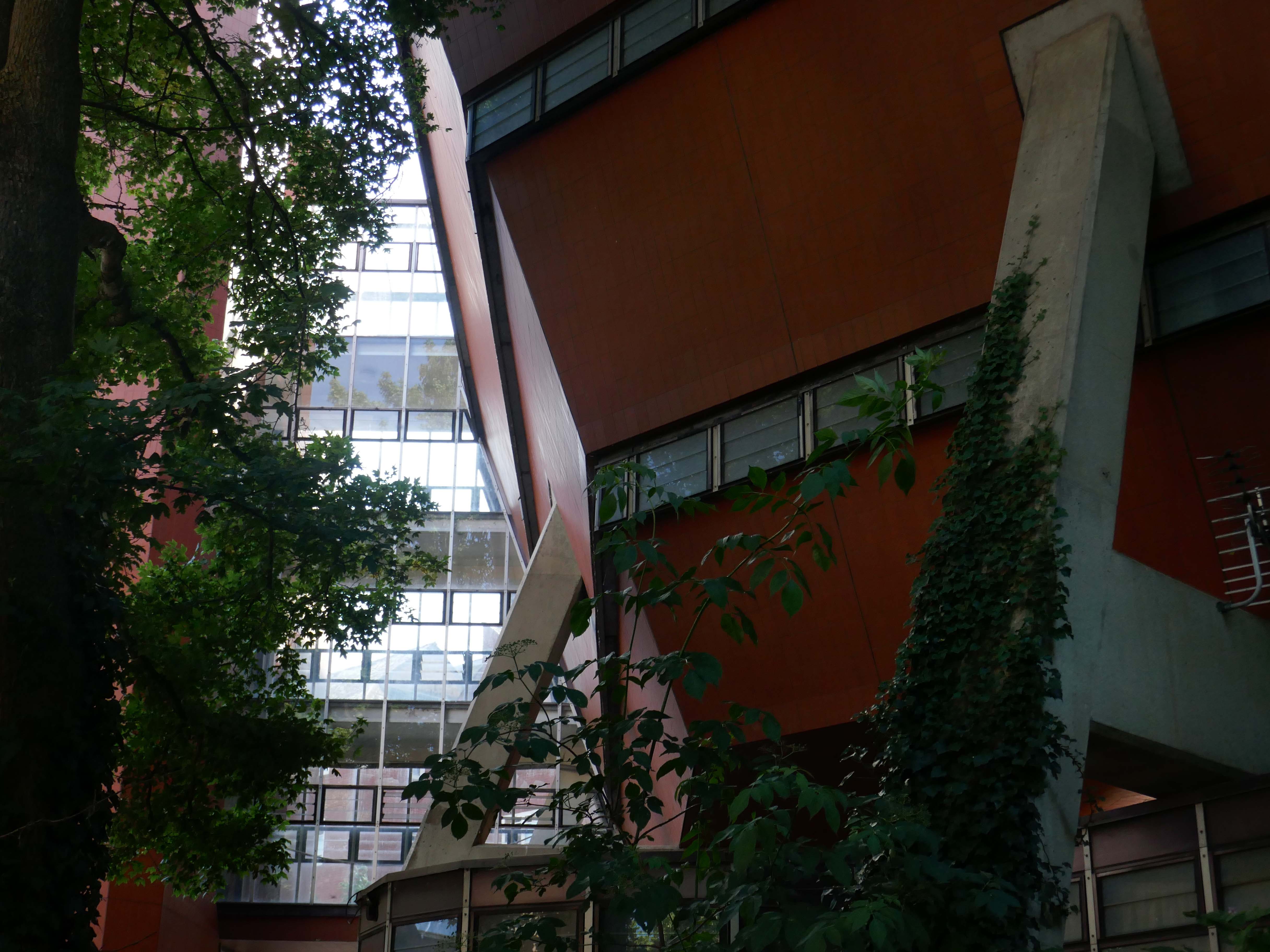
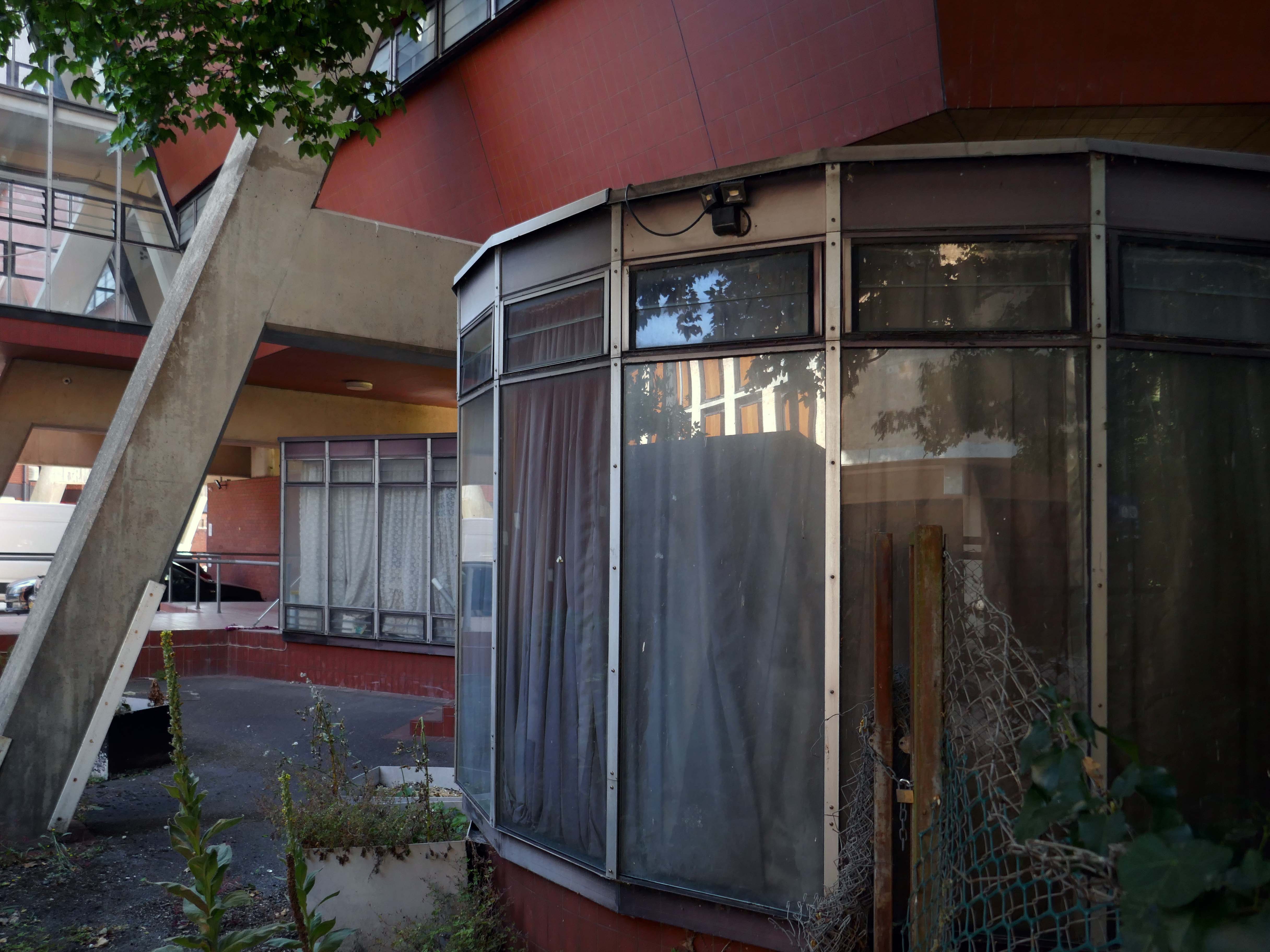
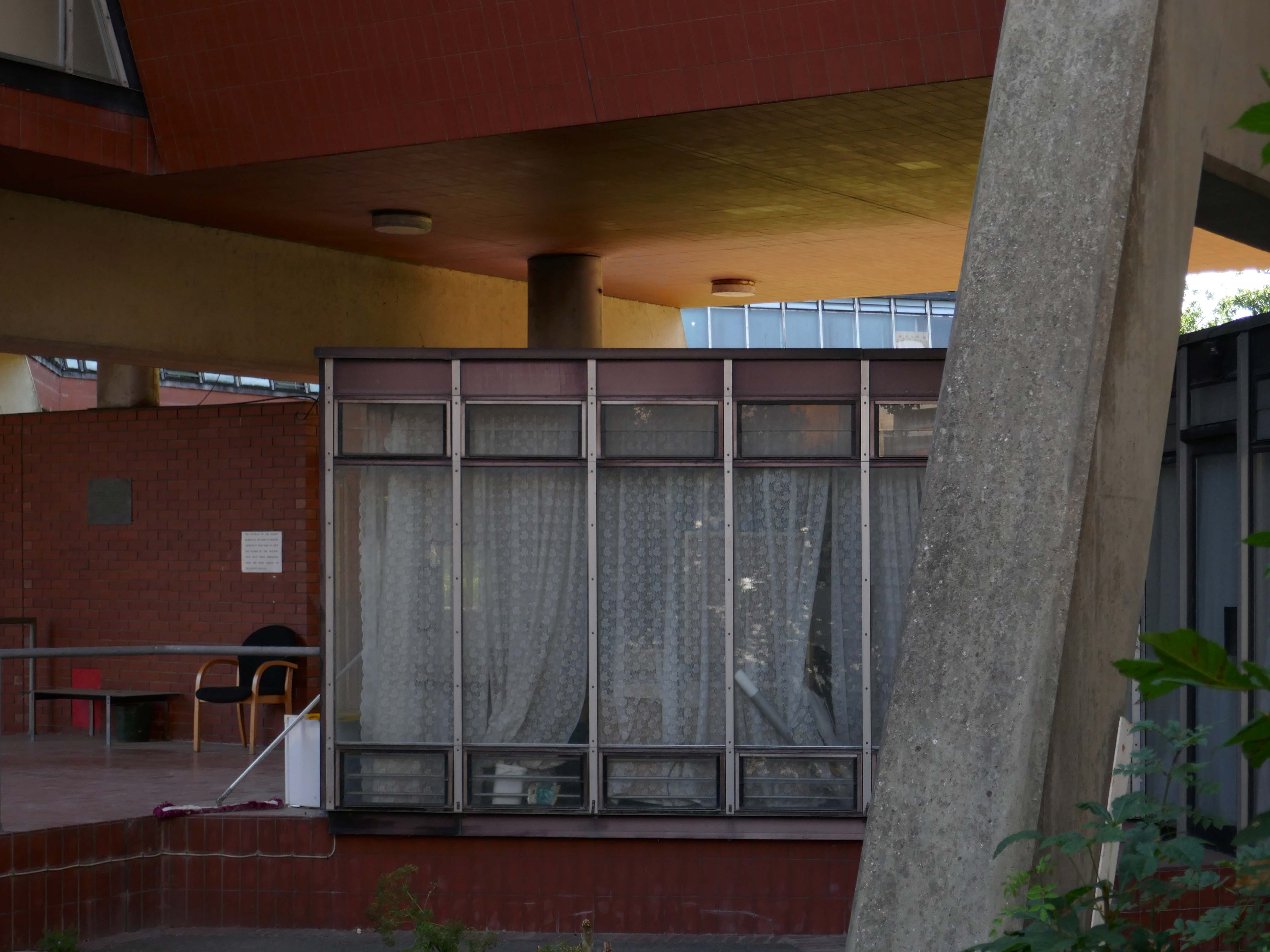
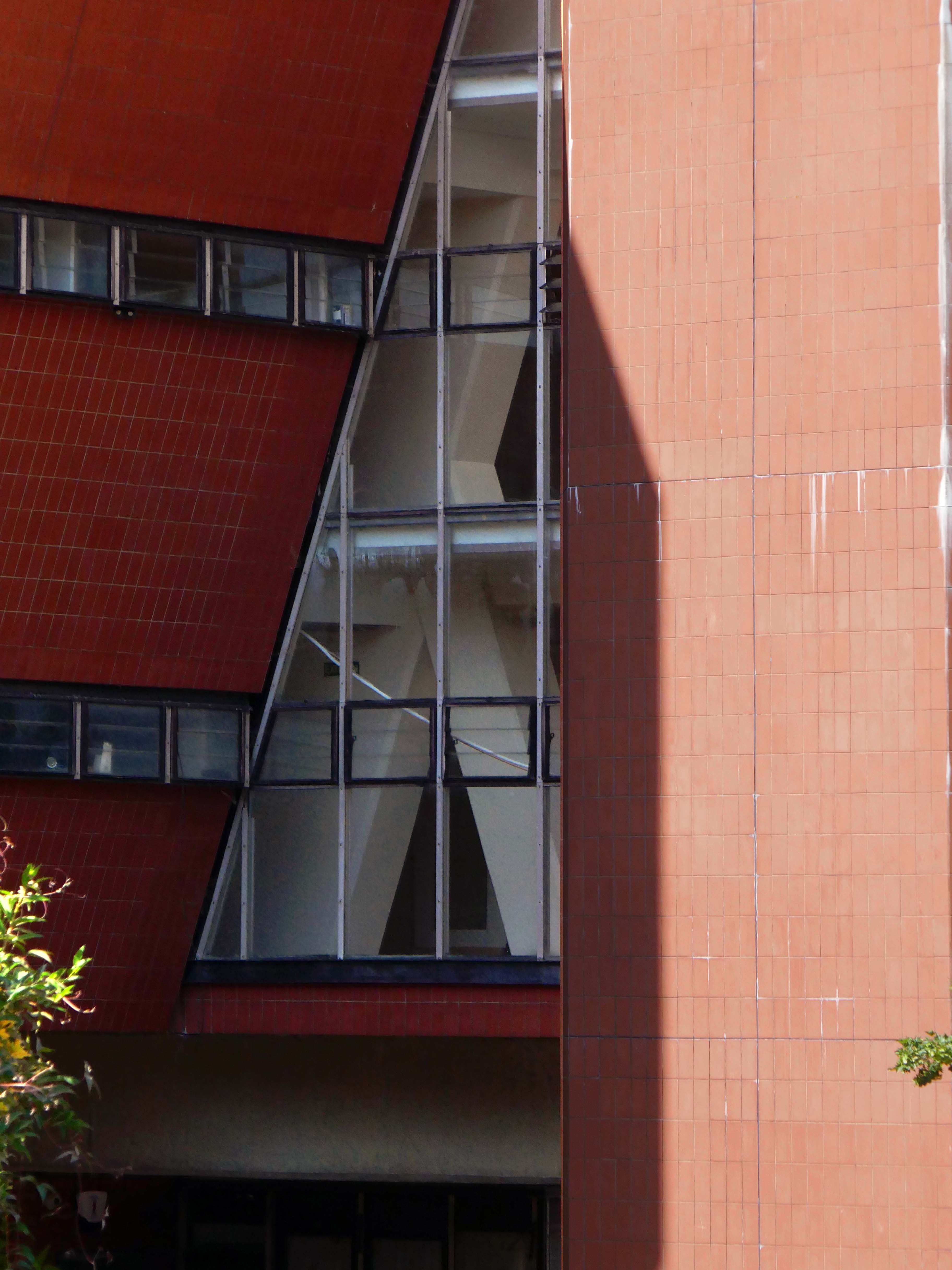
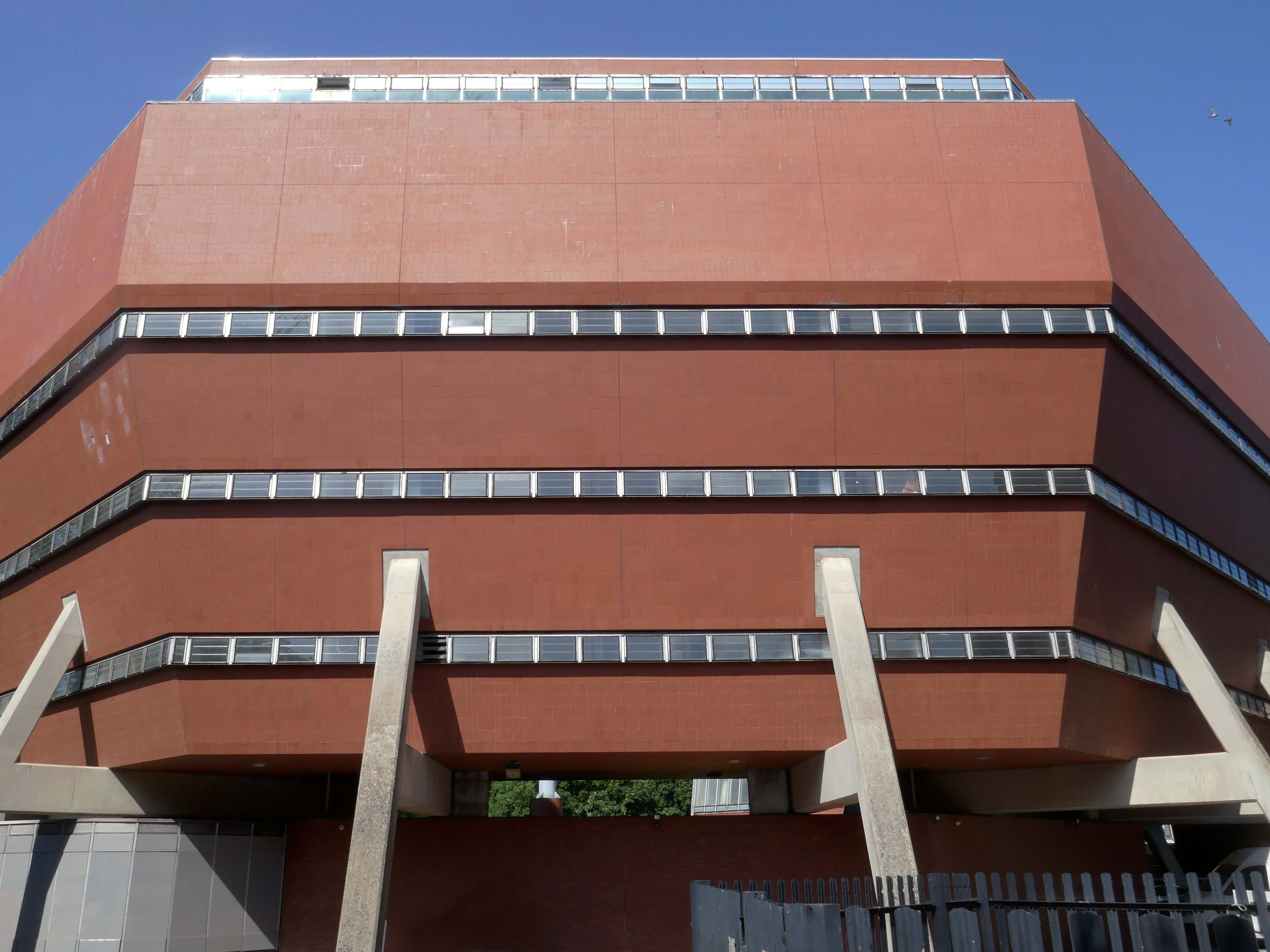
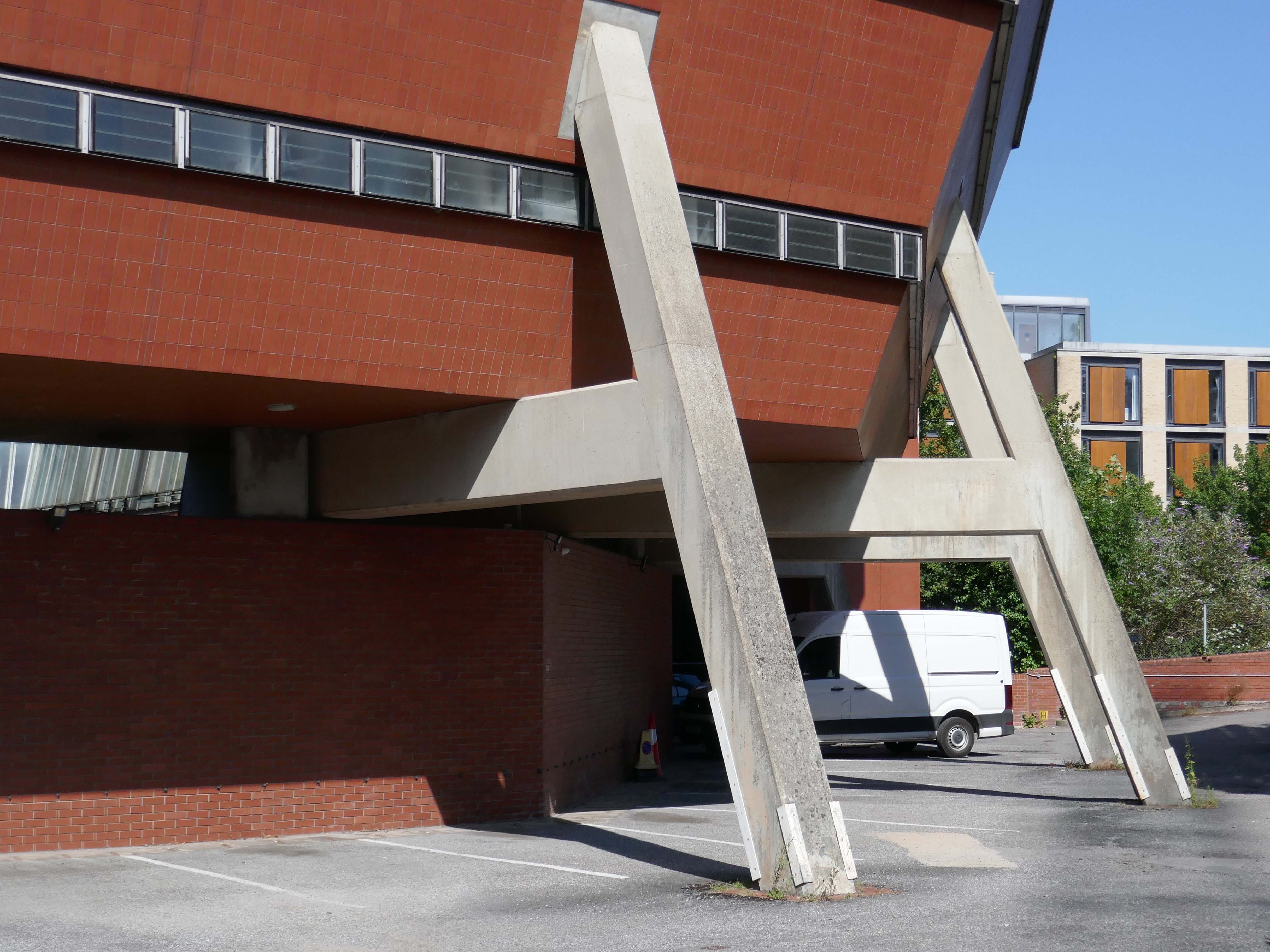
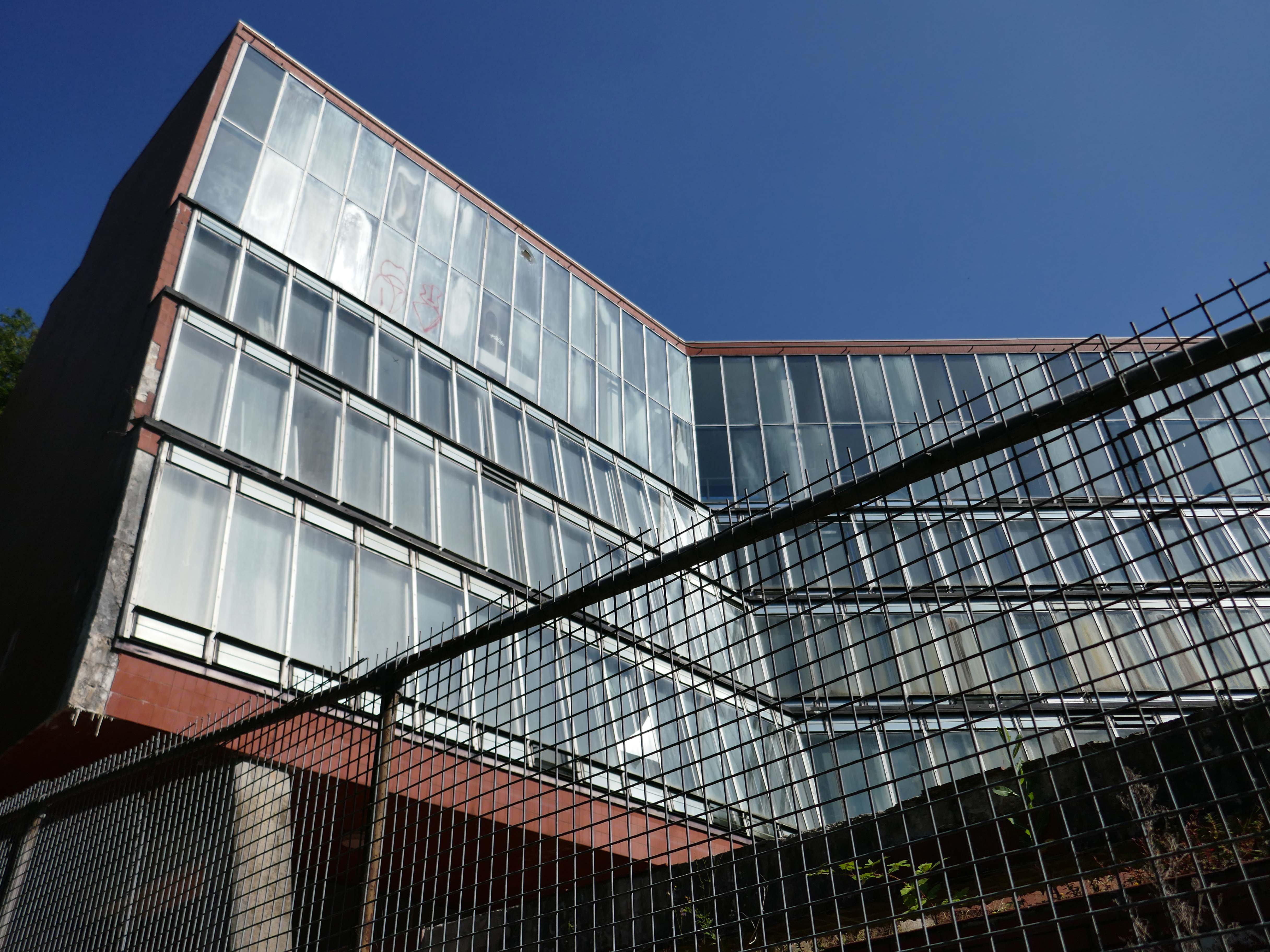
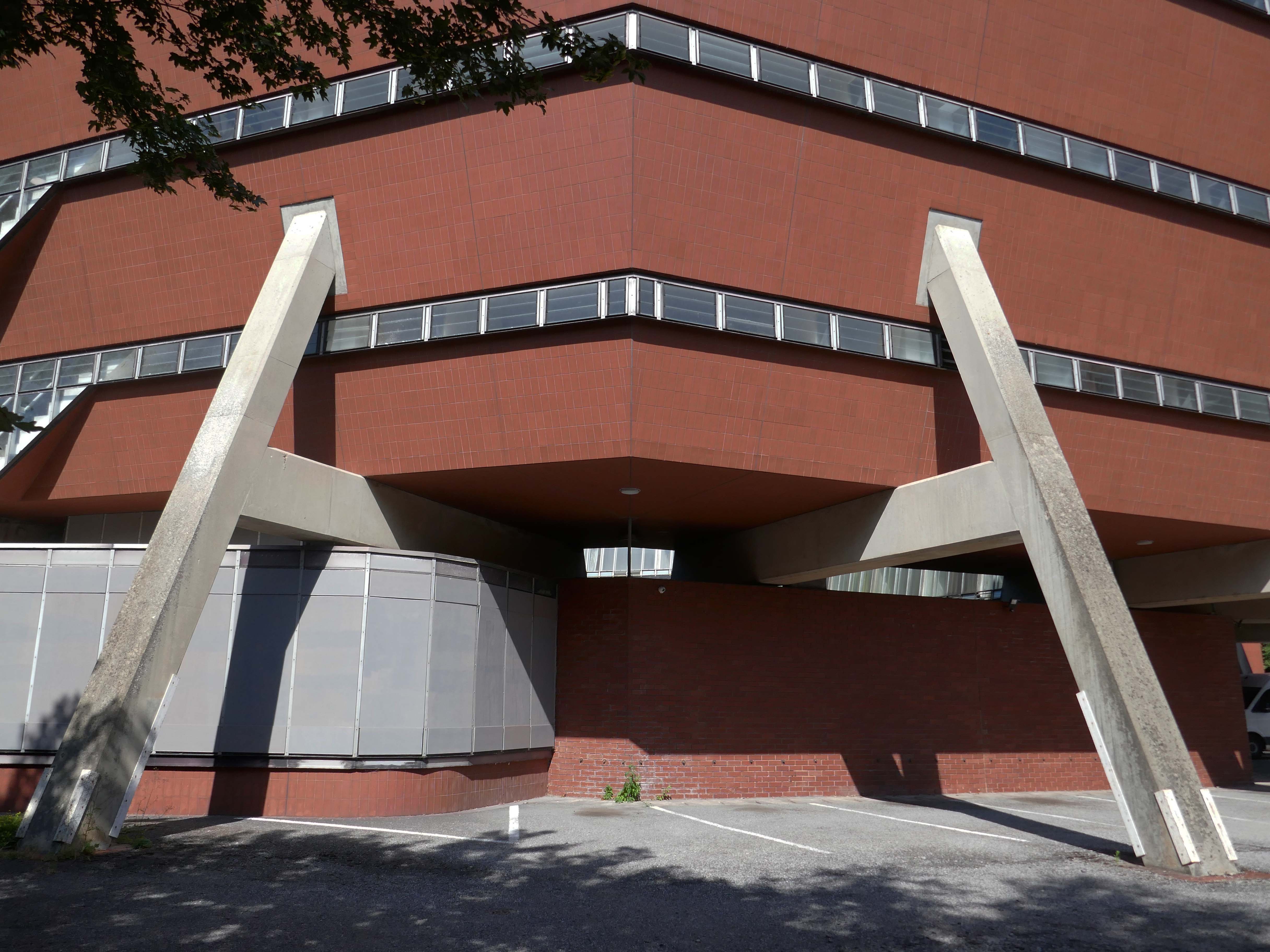
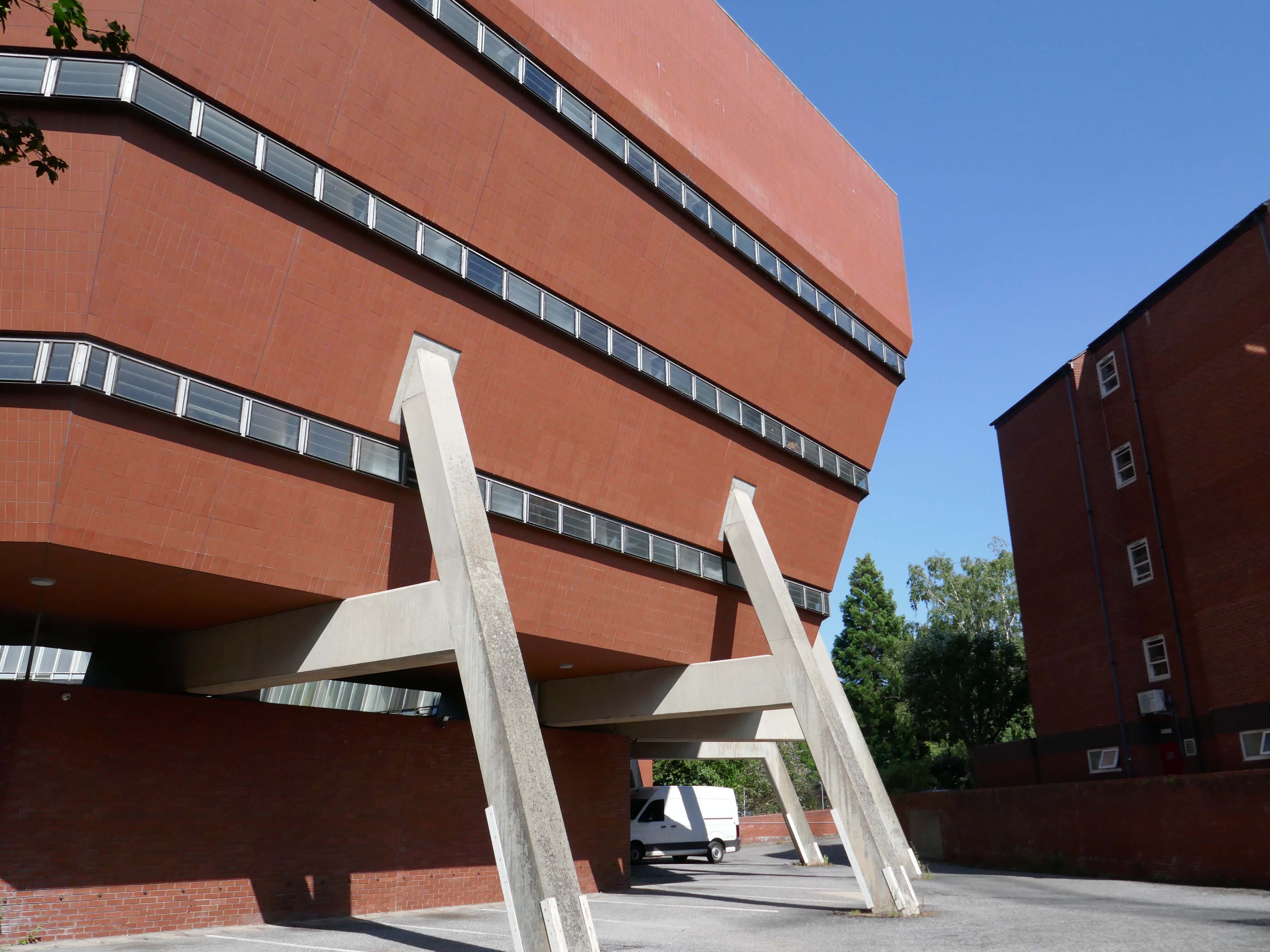
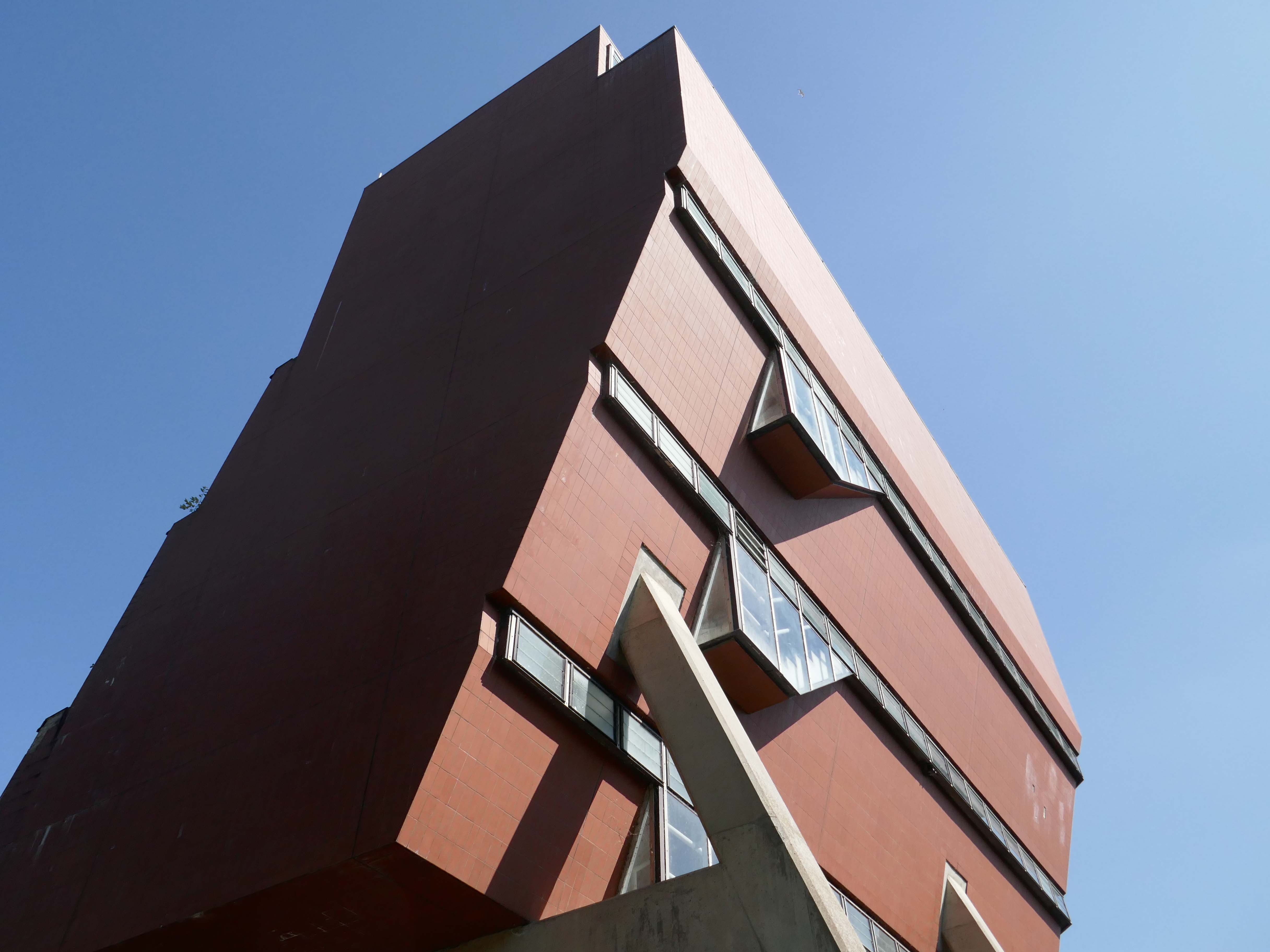
Florey Building, a residential student block.
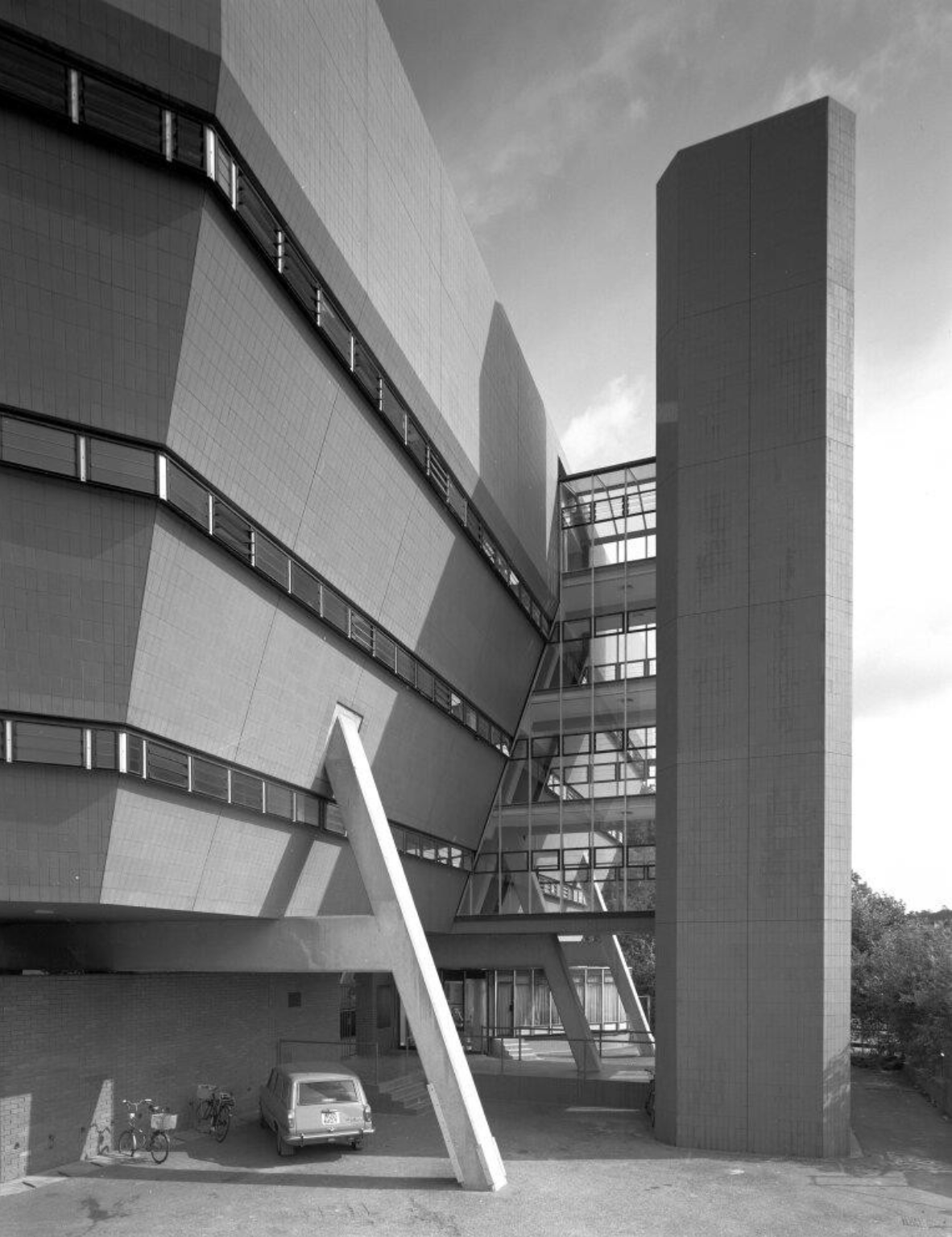
RIBA pix 1977 Alastair Hunter
Designed by James Stirling and Partners in 1966-1967 for Queen’s College, Oxford, and built 1968-1971, with Roy Cameron as associate, and Frank Newby of F J Samuely and Partners as engineer.
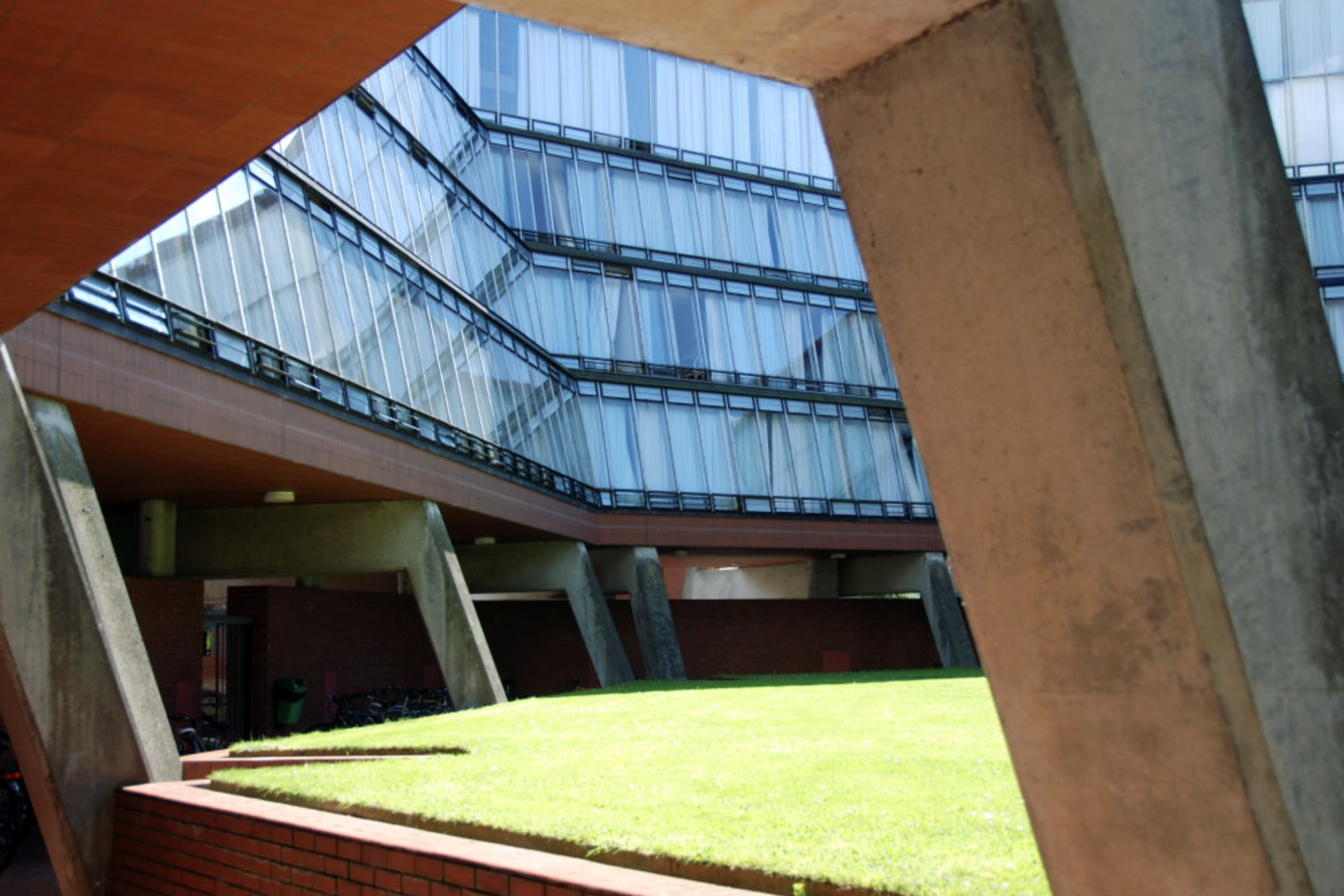
RIBA pix 2005 Jeremy Harrison
Listed at Grade II* for the following principal reasons:
* as a highly significant work by Sir James Stirling, one of Britain’s foremost post-war architects;
* as the last of a triumvirate of university buildings that are without doubt amongst Stirling’s most significant works in England;
* as a highly creative re-working of a familiar formal language, executed with masterful handling of form and colour, characteristic of Stirling’s style;
* for the high degree of survival of the original plan form, fixtures and fittings, which have been little altered since the building’s completion, including but not limited to the bedrooms, porter’s lodge, and breakfast room;
* as a distinctive and popular piece of post-war university architecture.
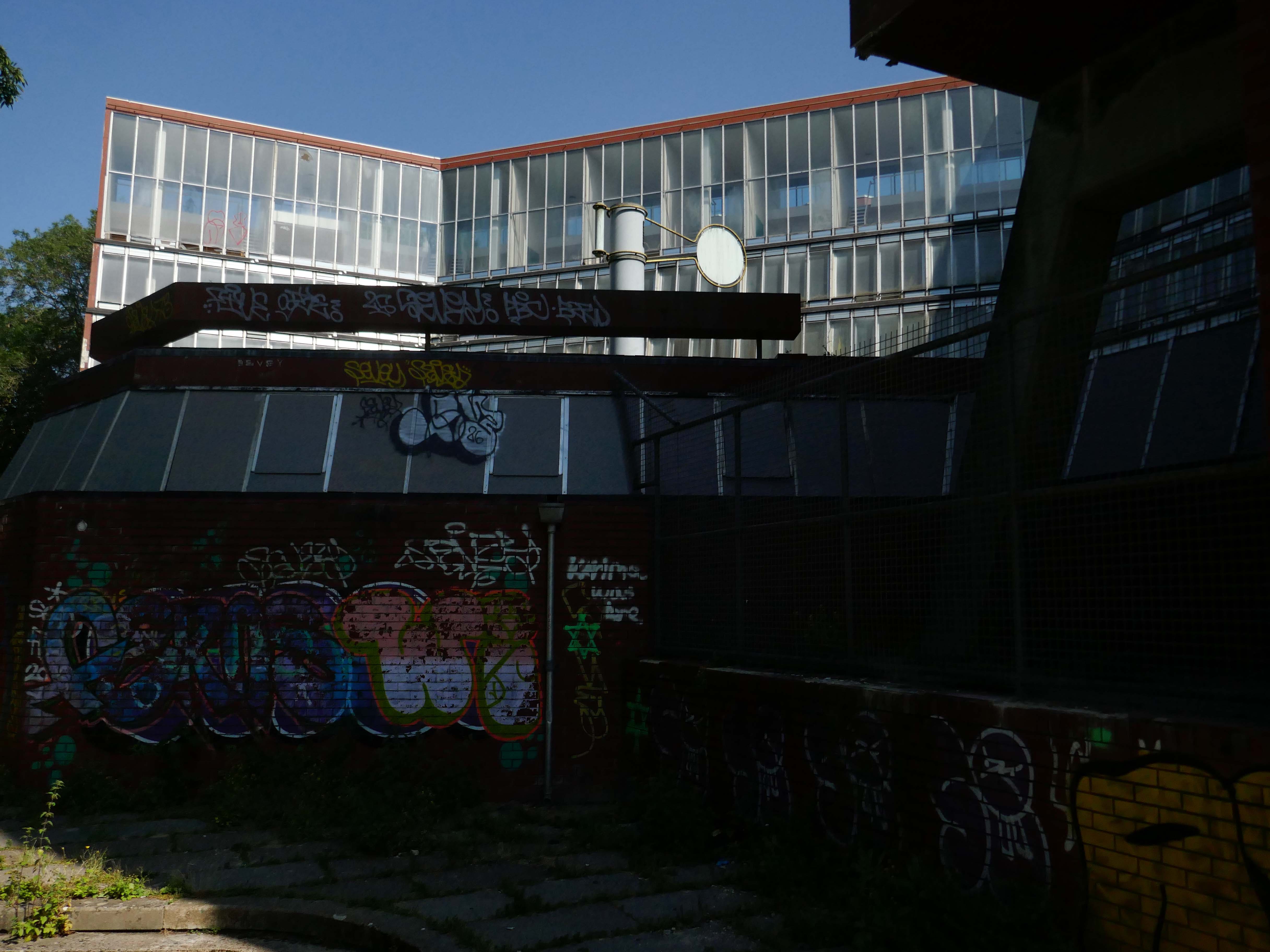
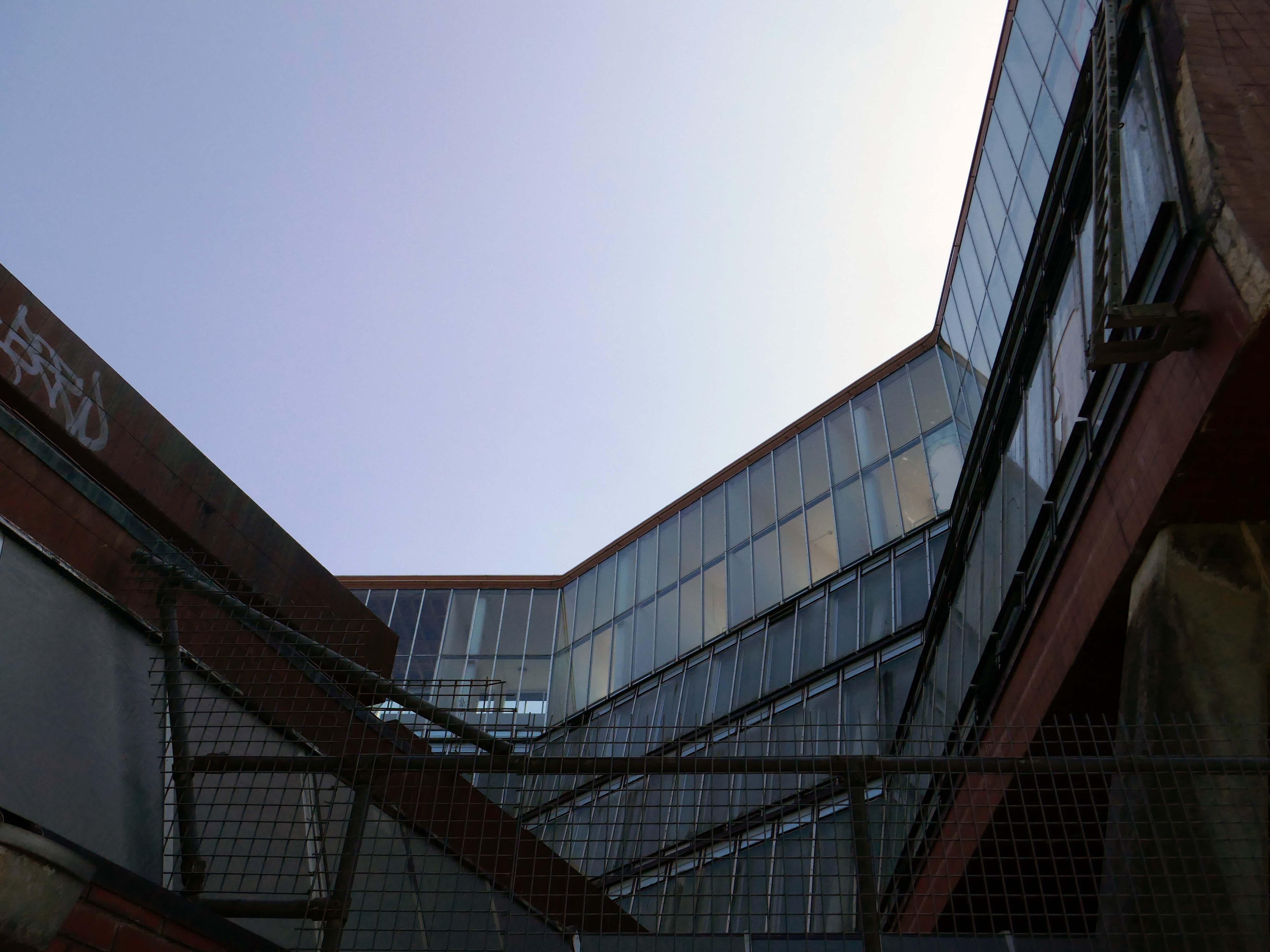
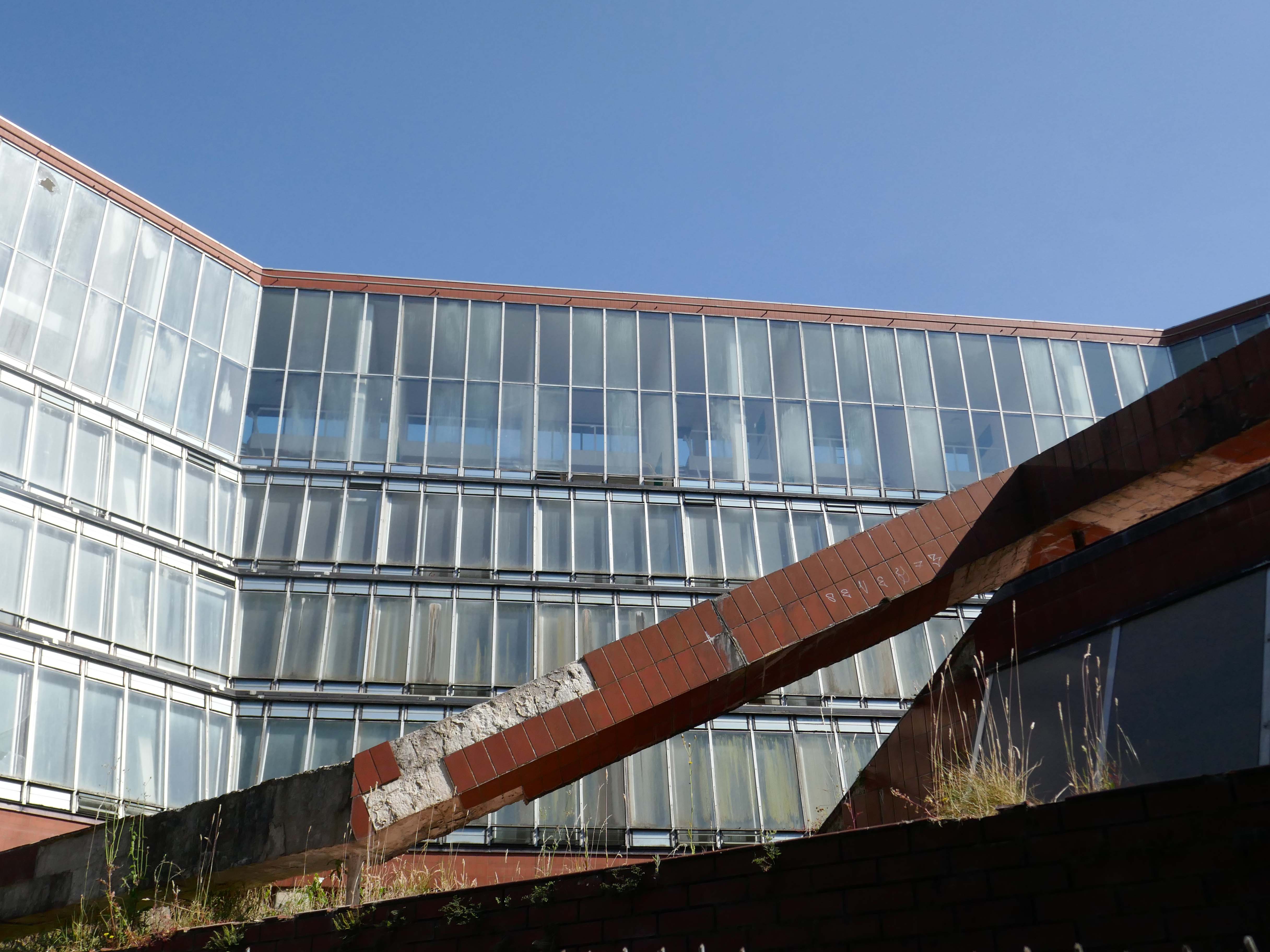
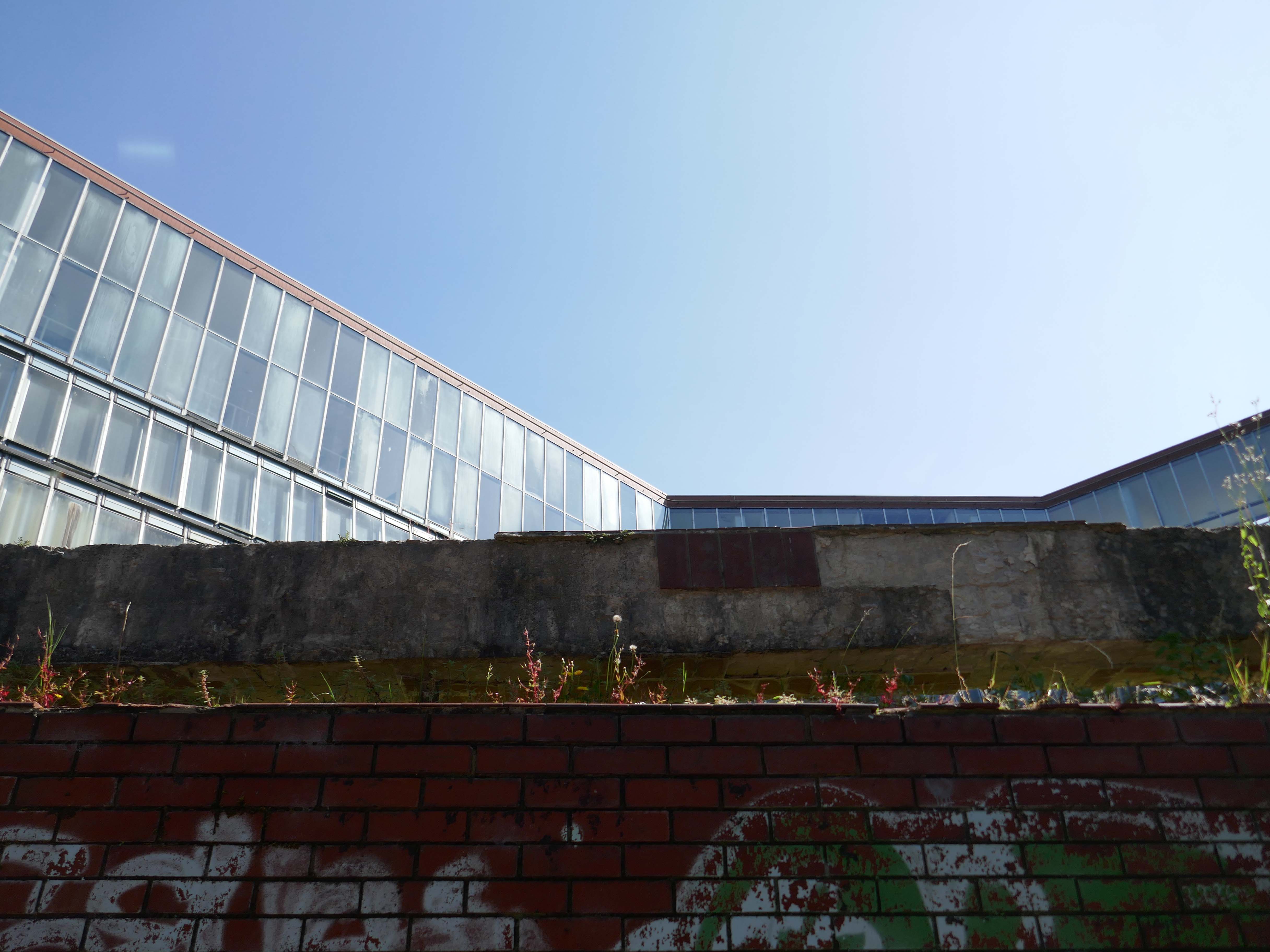
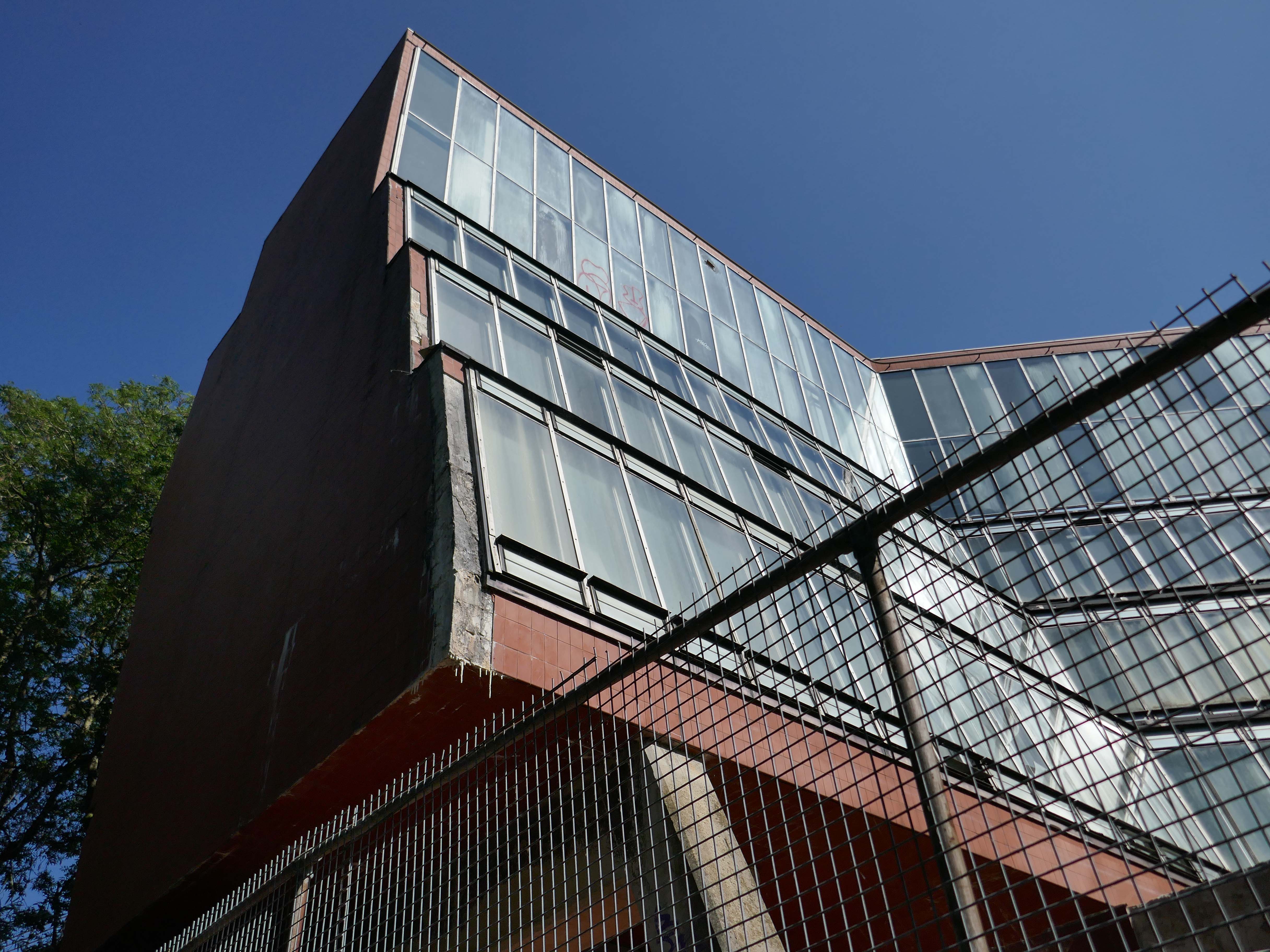
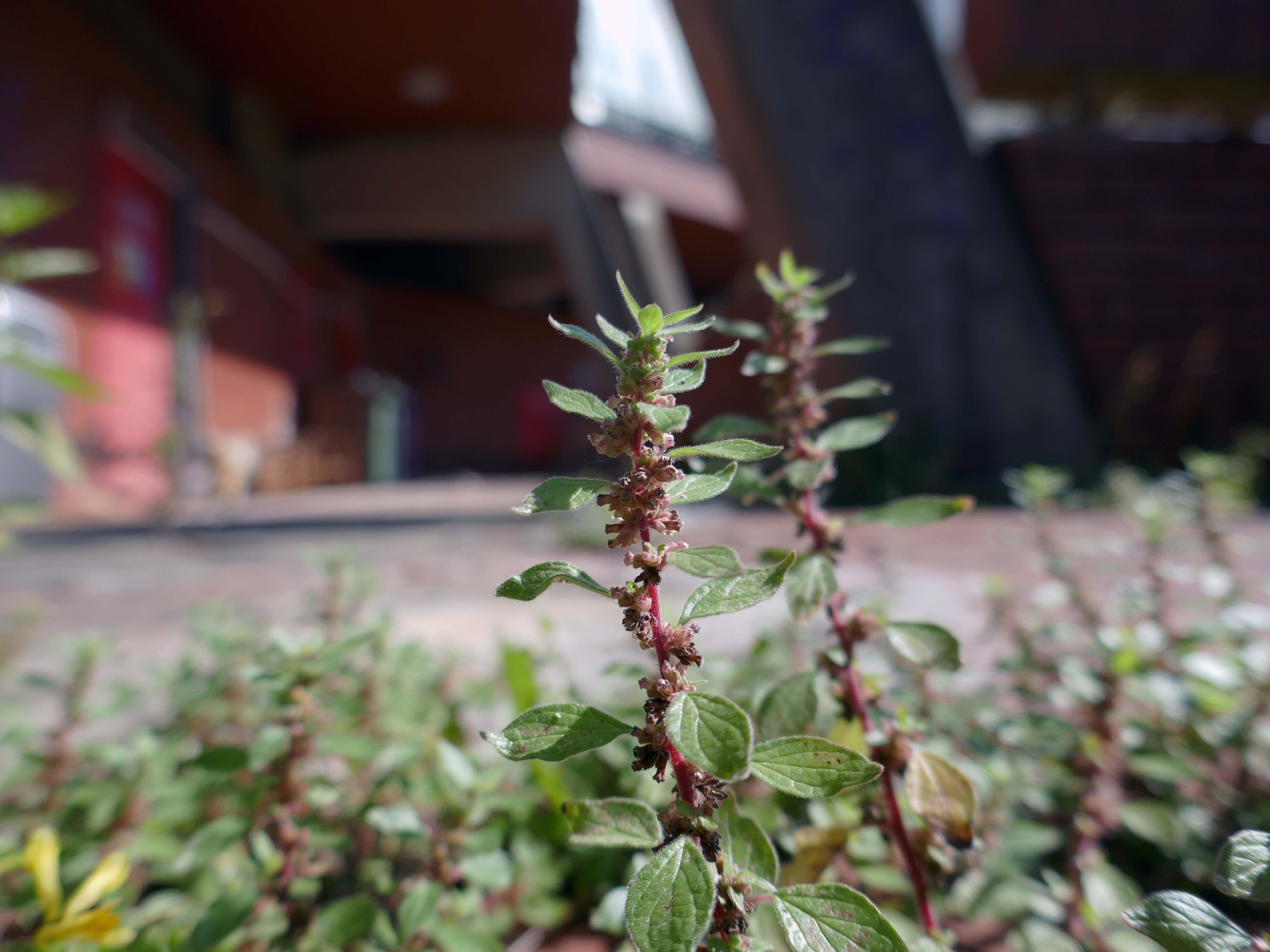
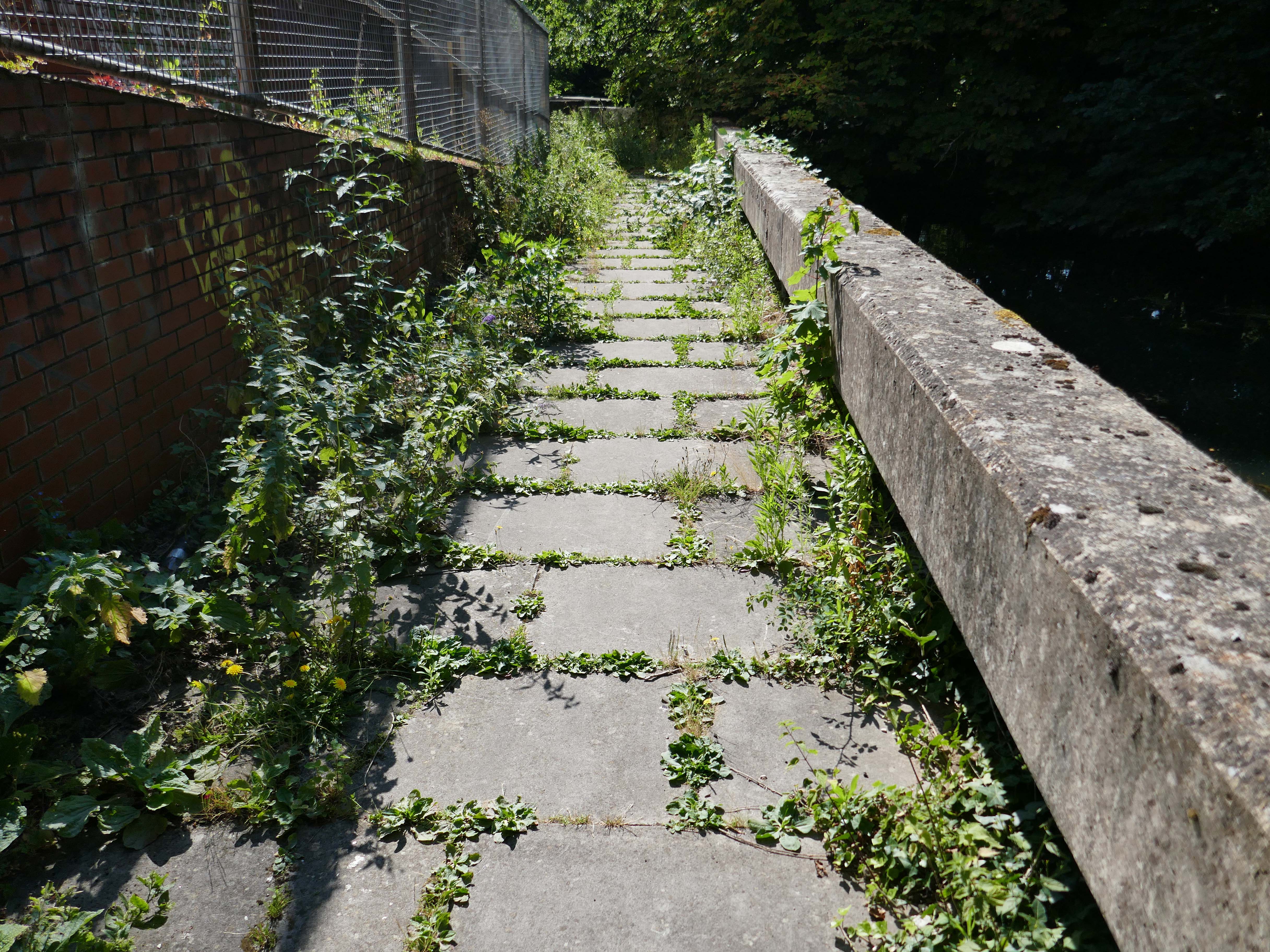
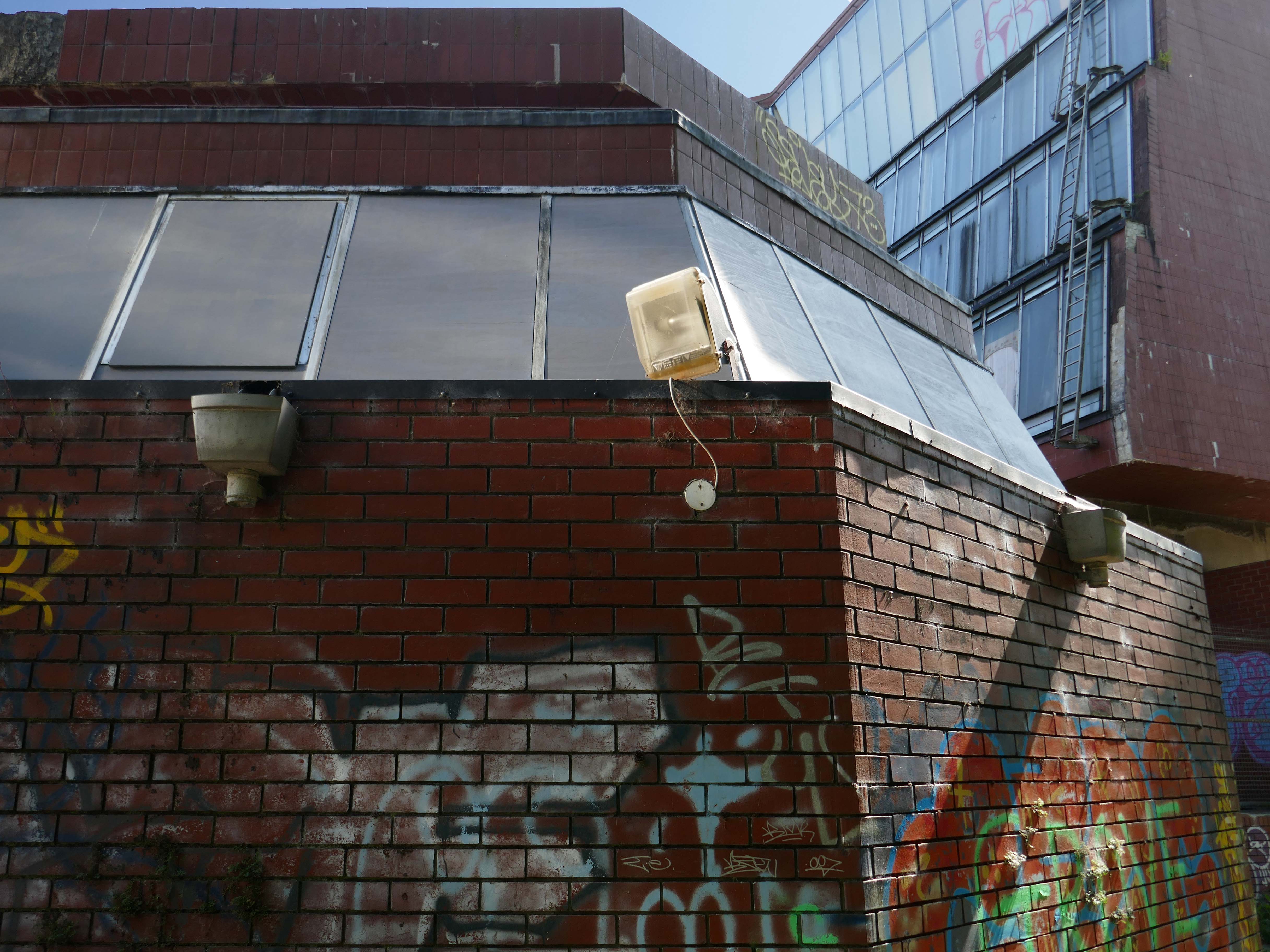
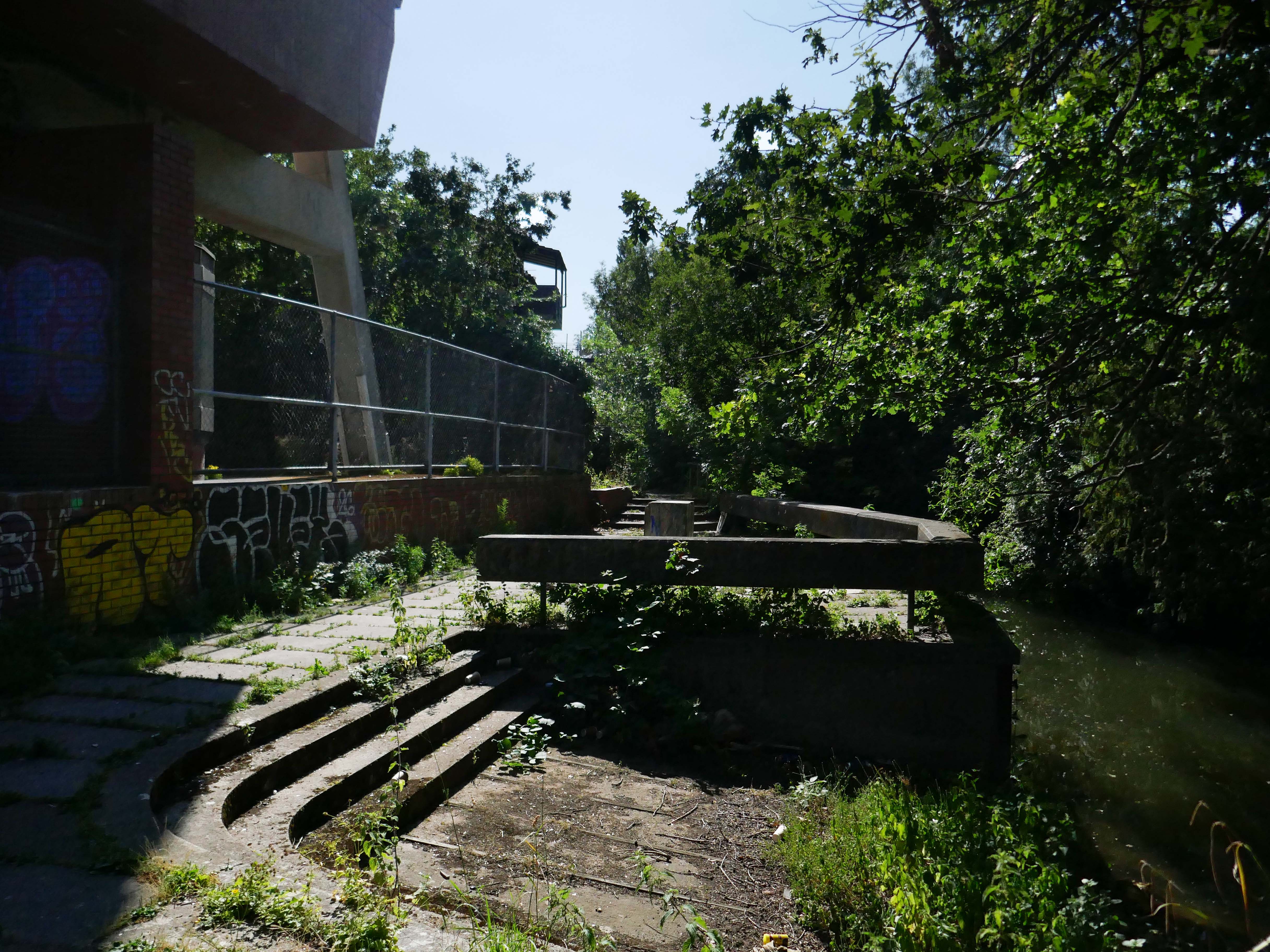
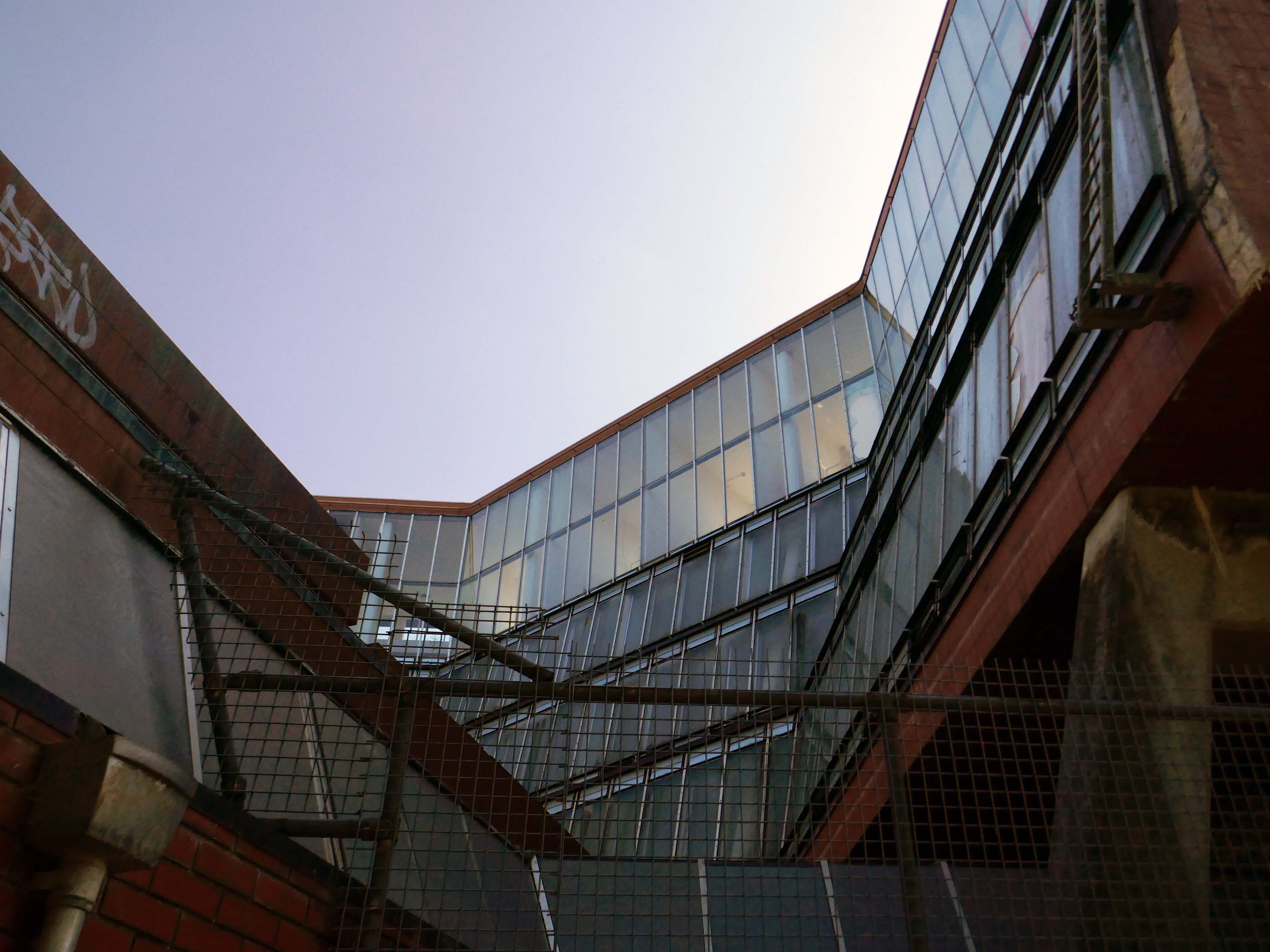
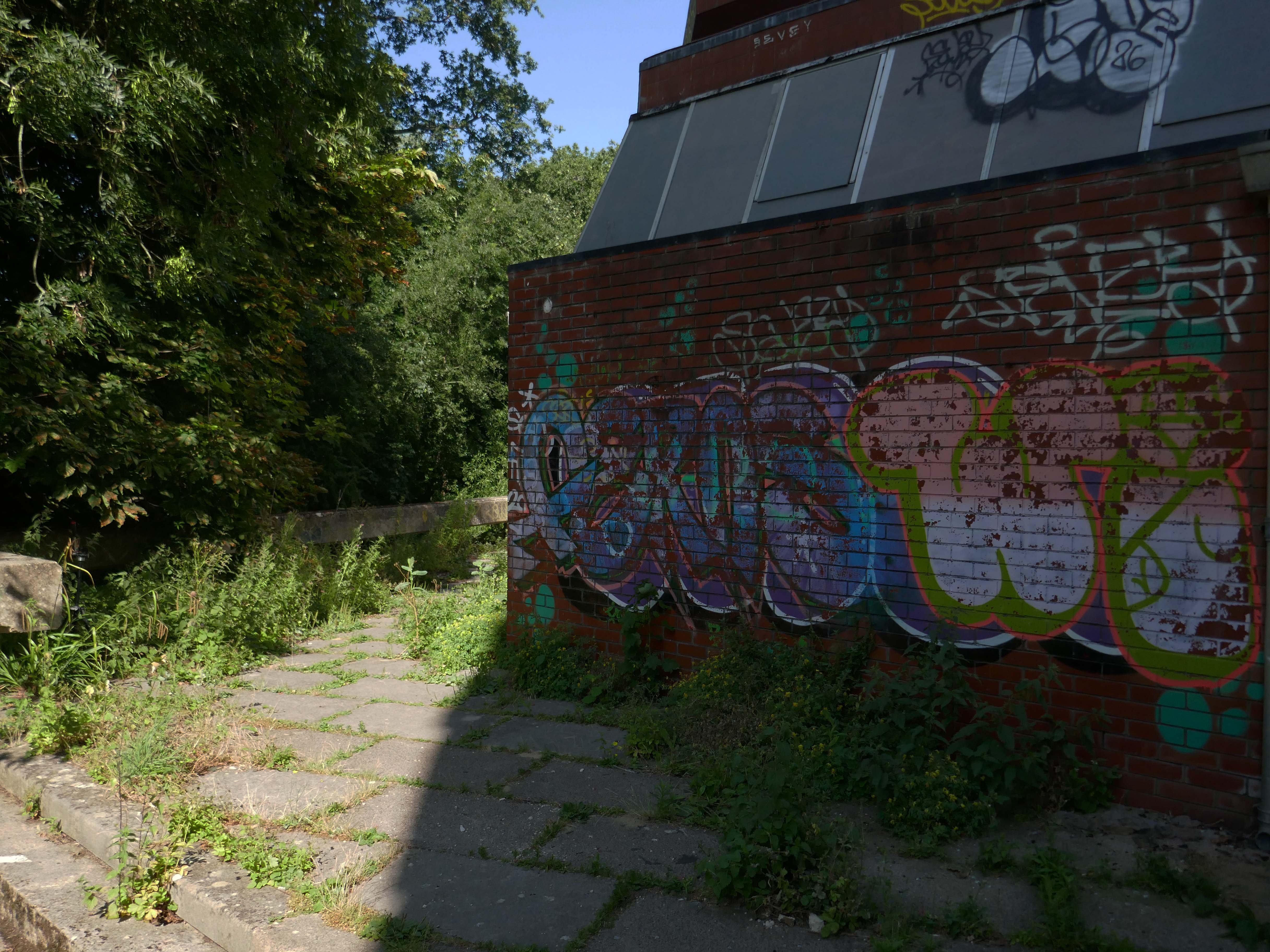
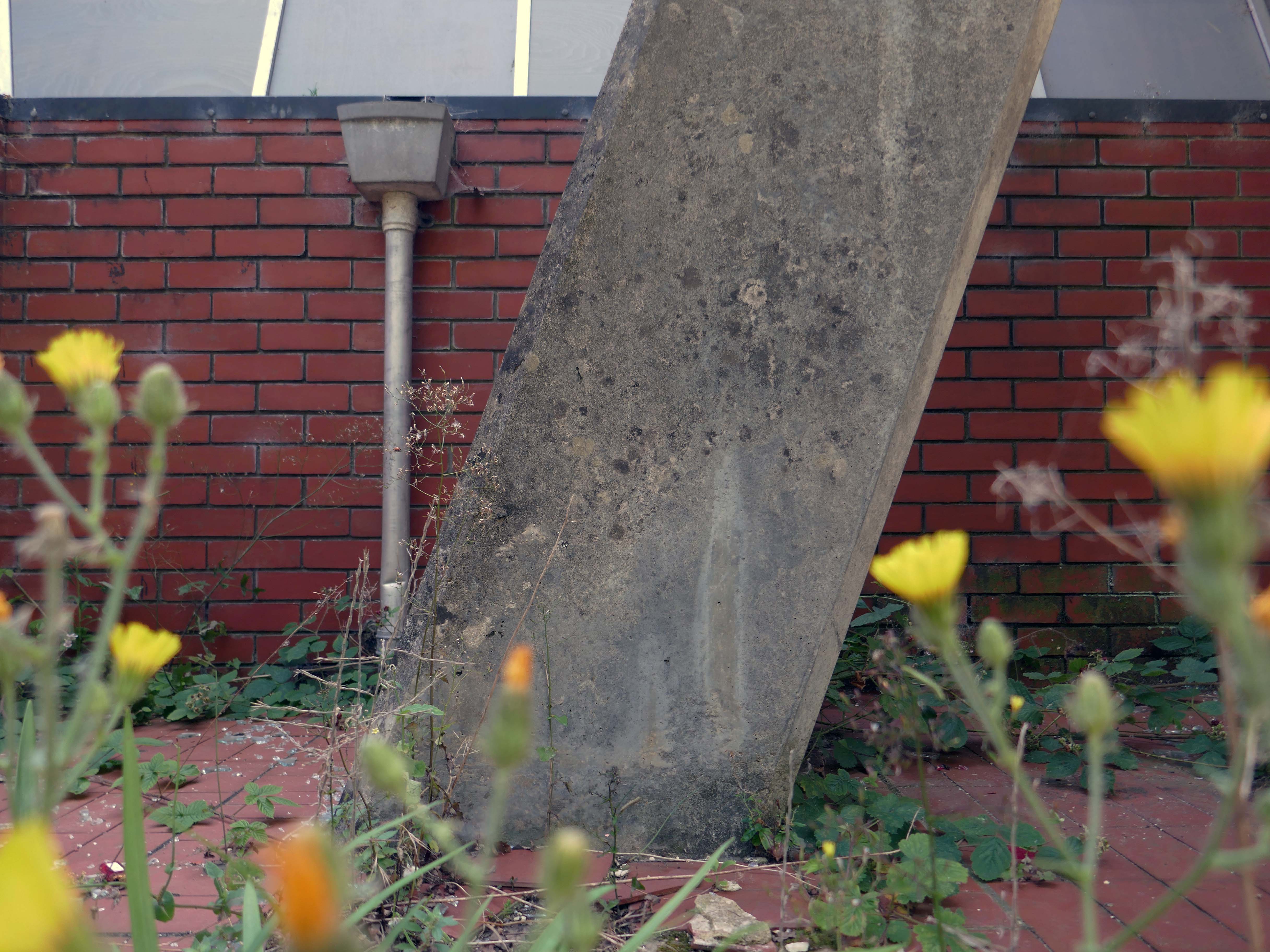
On the day of my visit the building was secured and in a state of semi-dereliction, mothballed by the owners The Queens College Oxford.
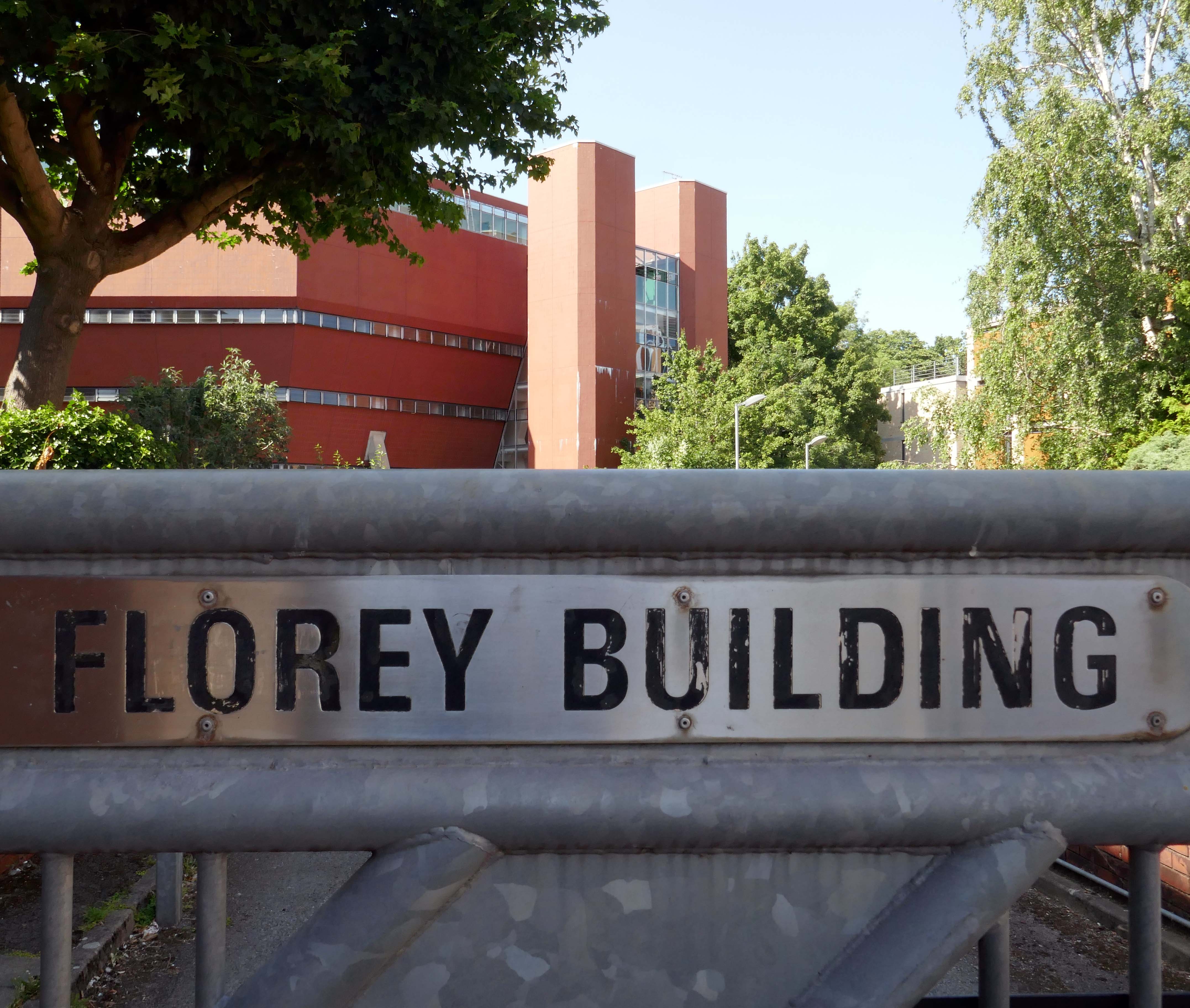
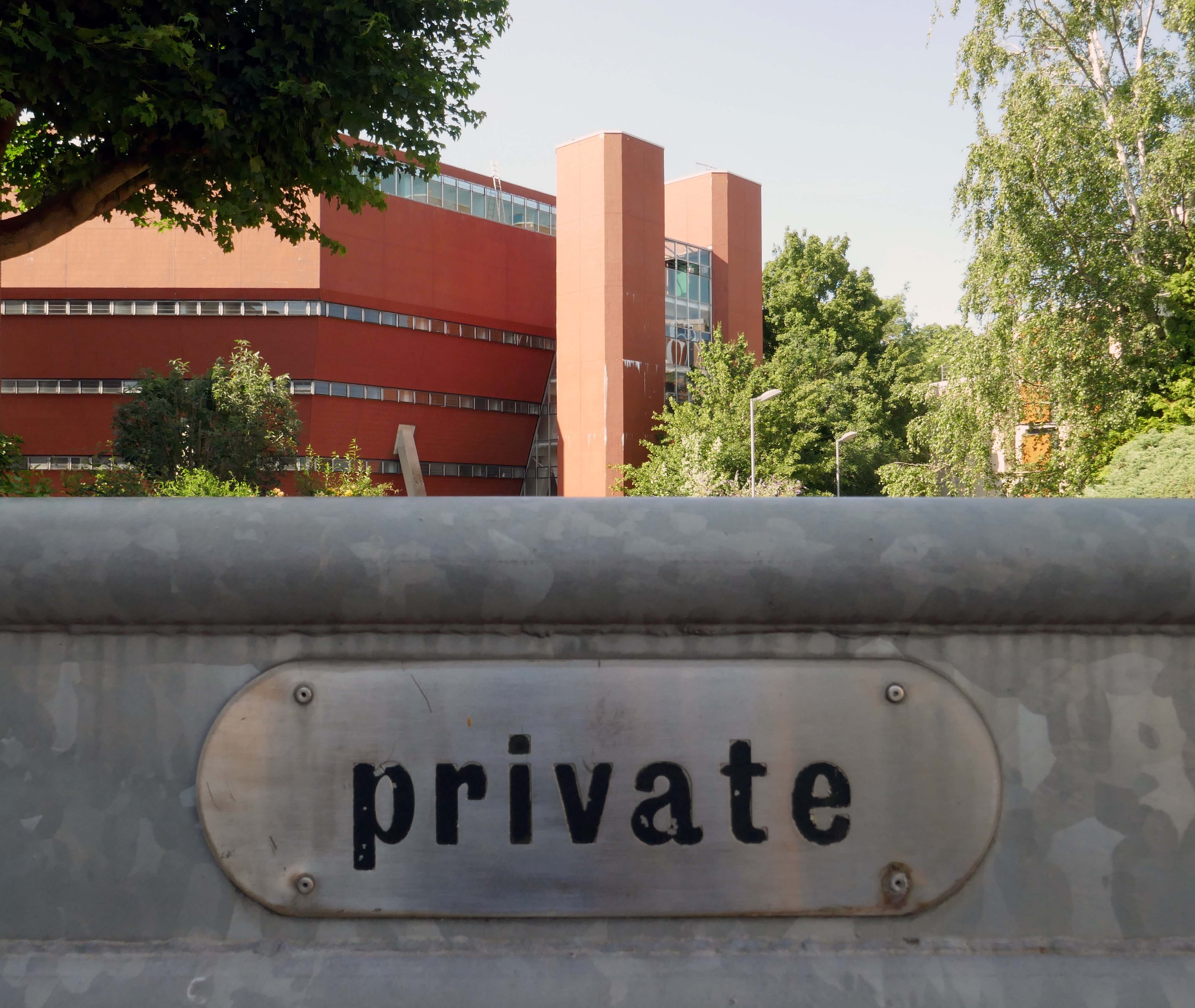
There have been plans and a competition for refurbishment:
Perhaps the most charismatic of James Stirling’s surviving buildings; the Florey Building is hugely admired worldwide for its boldness and heroism.
Despite some practical and infamous failings, the Florey has a cult presence in Oxford: a modernist’s riposte to a city defined by traditional architectural masterworks.
The Queen’s College Fellows seek a dedicated team who are inspired by Stirling’s exhilarating vision. The challenge: to use advances in technology to update the building, provide modern facilities and achieve exemplary energy design.
The competition has now concluded — 27th February 2014
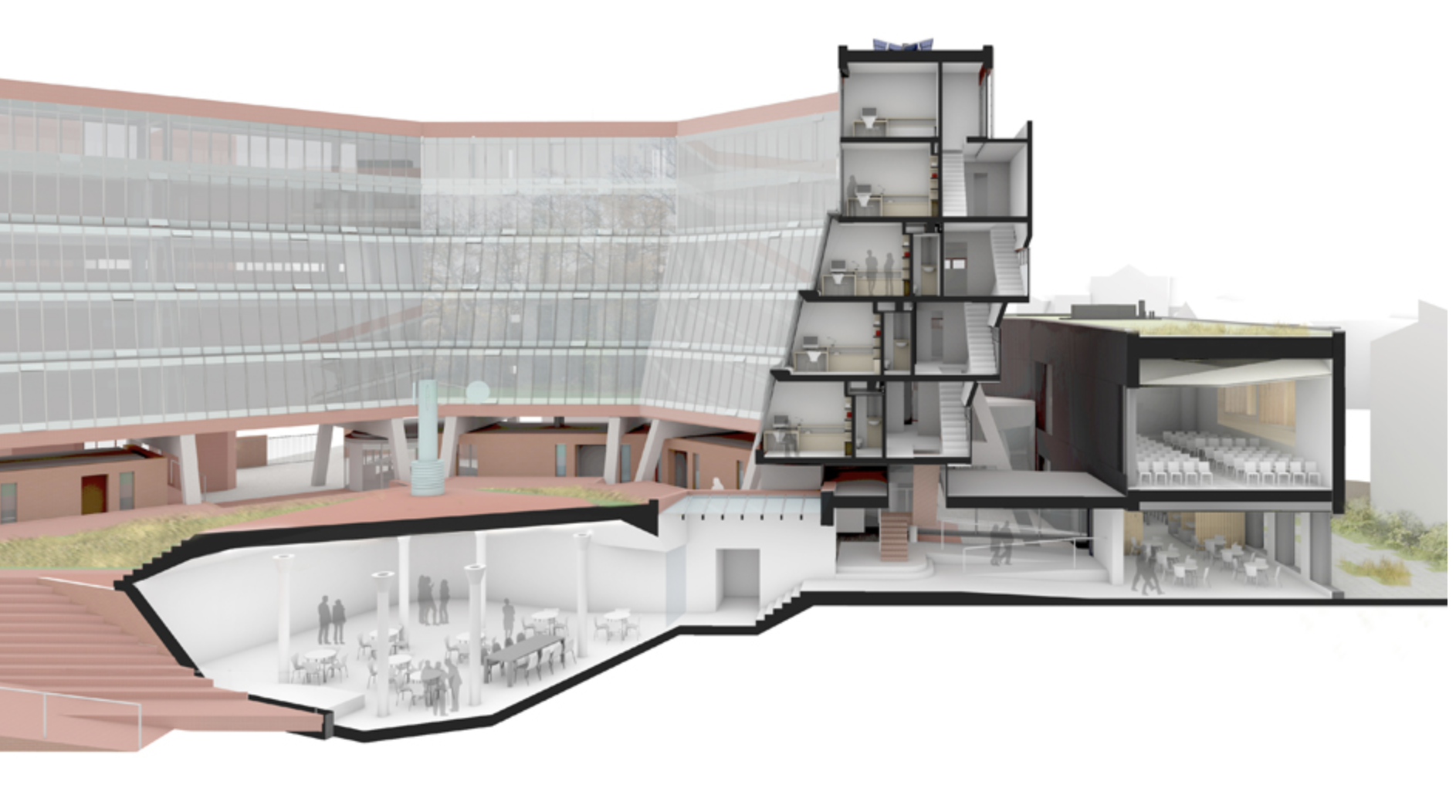
The Queen’s College, Oxford is delighted to announce that the team led by Avanti Architects has won the design competition to update the Grade II listed Florey building, widely regarded as an emblem of modernism. Avanti will now work to develop their scheme for the project and determine construction priorities.
The plans however were poorly received:
Alas the proposal for Florey lets down the practice, the college and most importantly Jim Stirling and the Modernist corpus, with a design that all but wrecks the essence of this unique building.
Alan Berman – founding partner at Berman Guedes Stretton
These proposals must be thrown out and consigned with distaste to the dustbin as a gross violation of Stirling’s intentions.
If permitted, they would constitute the comprehensive betrayal, by alteration, of one of the internationally most important buildings of the 20th century.
Thomas Muirhead – Stirling’s friend and former colleague.
Furthermore there has been a history of criticism of the building:
At the official opening in 1971, the Queen Mother was rumoured to have said it was the ugliest building she had ever seen.
College bursar AA Williams described it as – a structure revolting and inhuman in its hideousness and defective in practically every aspect of its functioning.
Just a year later, students were complaining that it leaked, was noisy, too hot in summer, too cold in winter, they couldn’t stand up straight in the showers, and there were no baths.
Lord Florey, the pioneer of penicillin after whom the building is named put up the money, and was almost the architect’s sole supporter in the college.
This culminated in a legal battle, an intense dislike of the building throughout the college, a reluctance to spend anything but the minimum on maintenance, and decades later, to the possibility of demolition.
Oxford Mail.
So with little institutional love and a soupçon of general loathing, we are left with a Listed building in limbo.
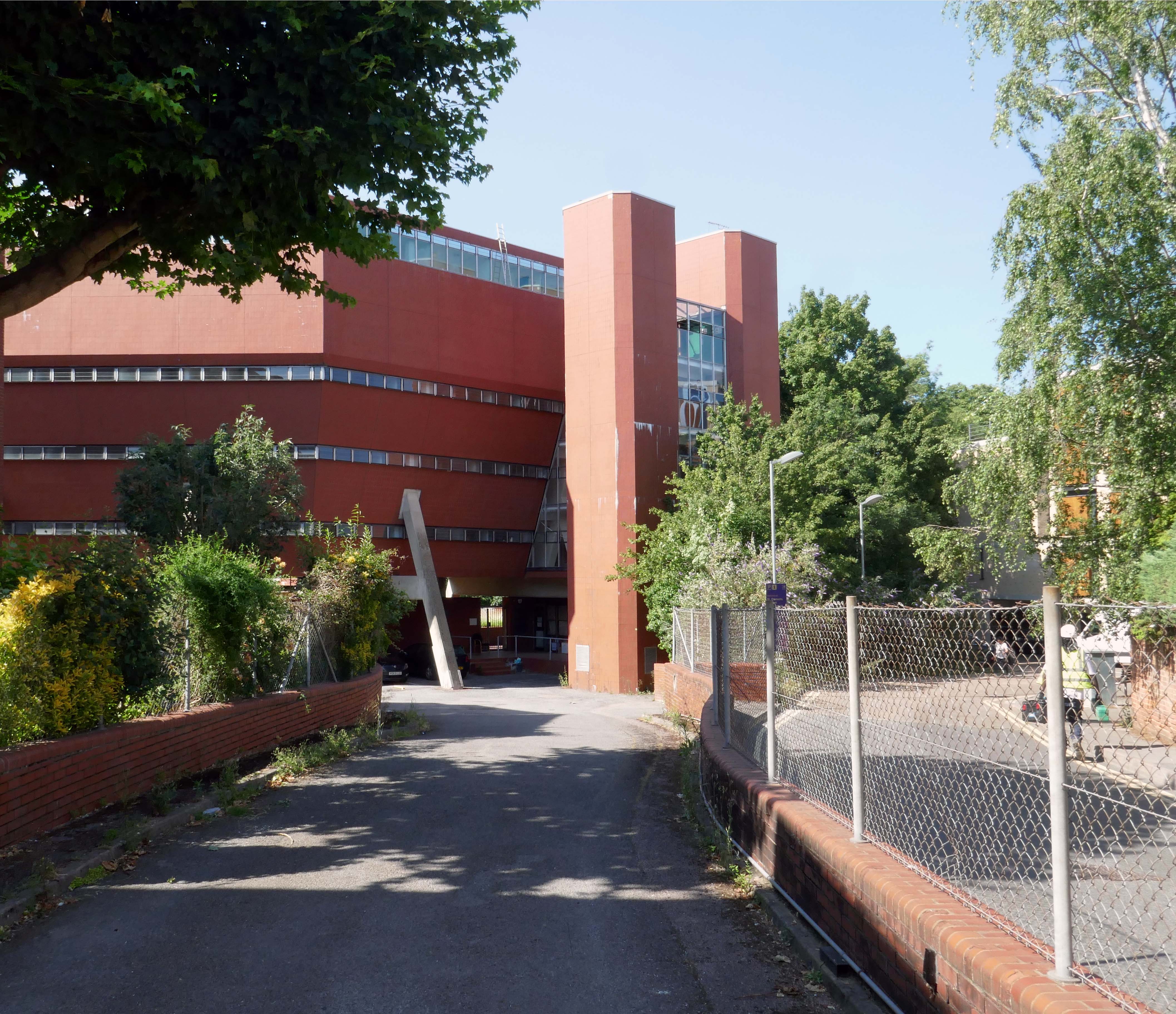



Happily Leicester University are taking care to care for their Stirling building.