Charing Cross Station – Glasgow

Dating from 1886, it was originally part of the Glasgow City and District Railway, the first underground railway in Scotland, and as such the station is built below the surface of the surrounding streets. The station was built using the cut and cover method, with the original walls being visible on the open air section at the western end of the platforms.
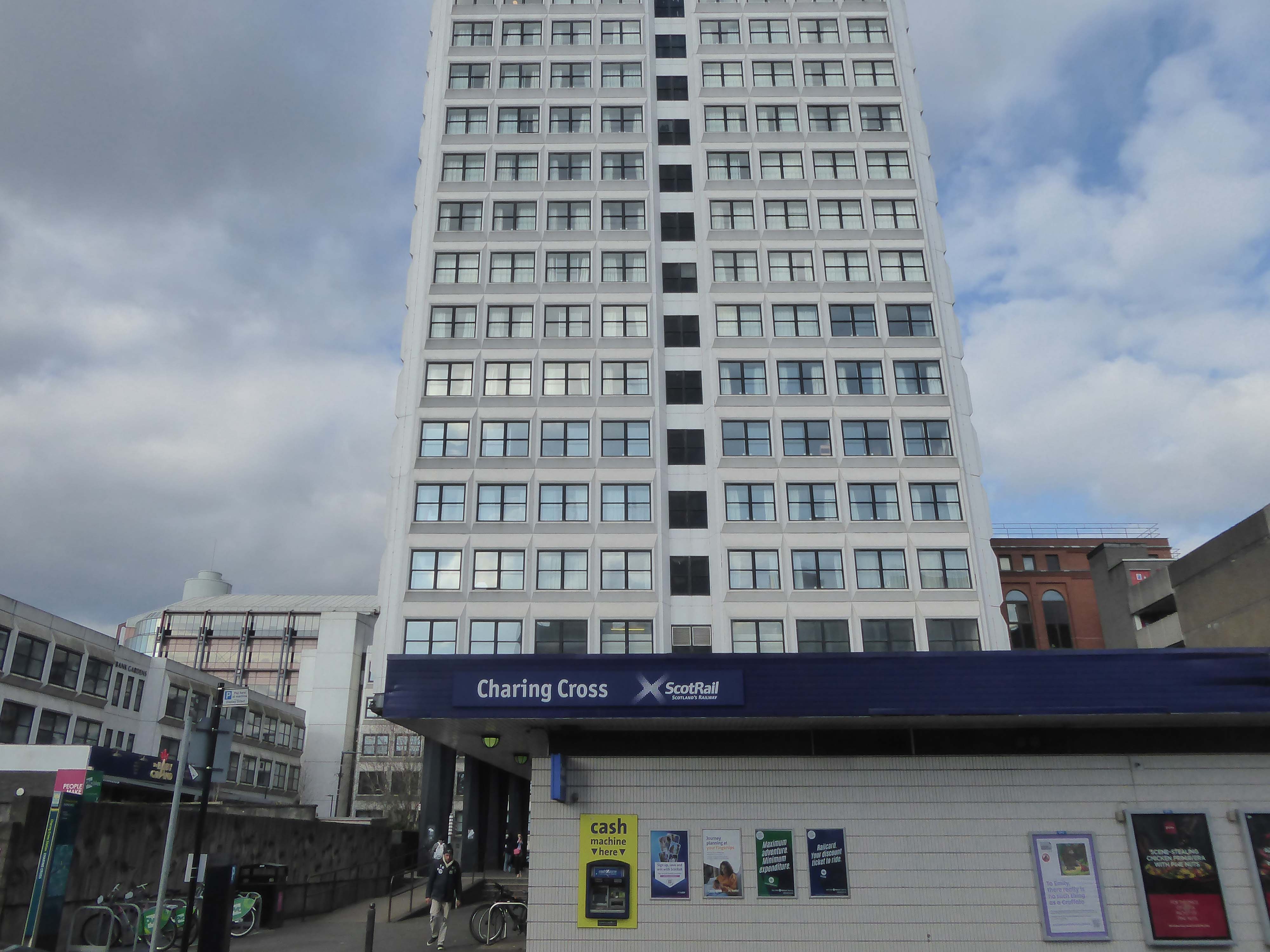
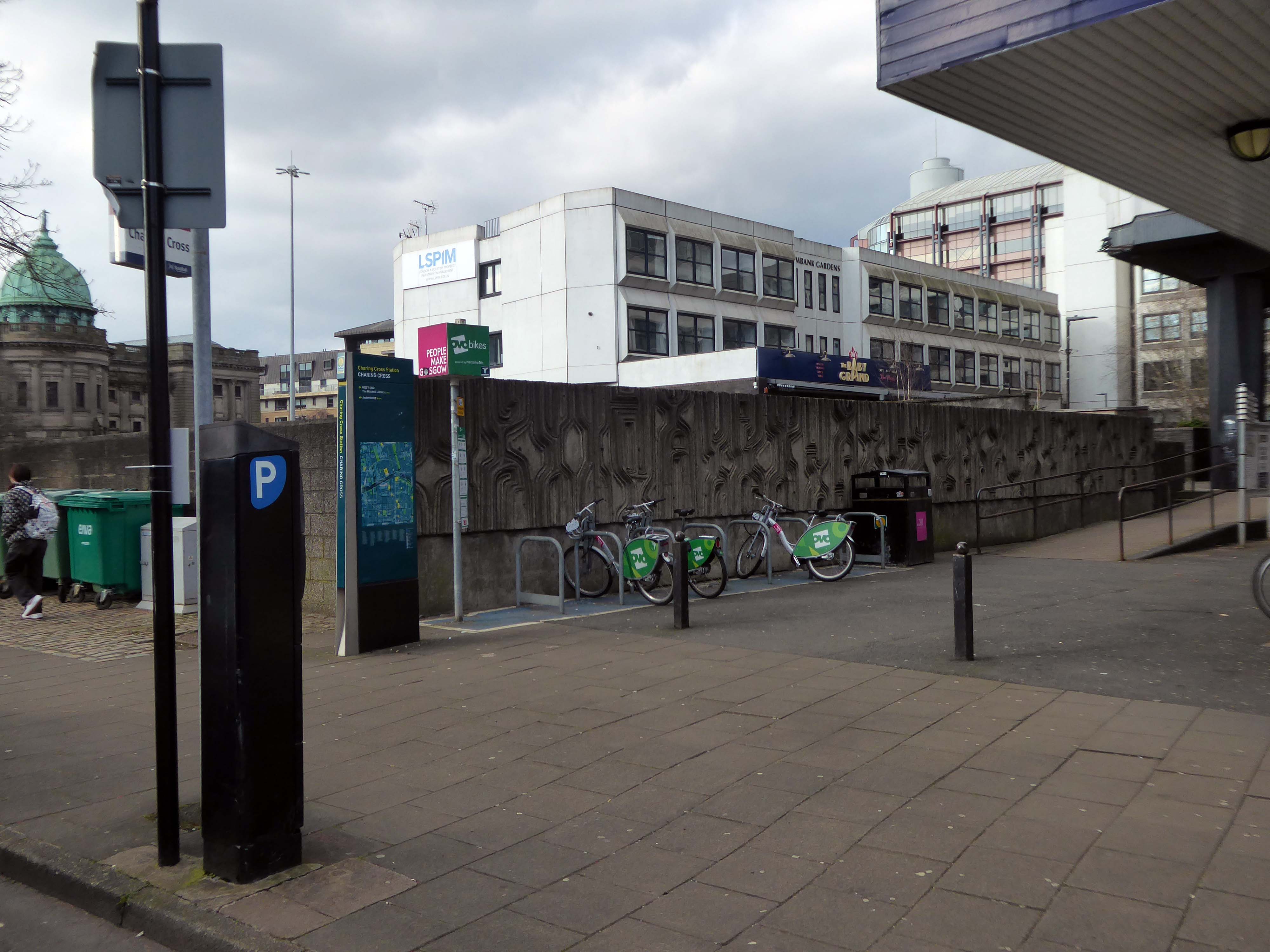
In 1968 it was demolished due to it being in the path of the new Glasgow Inner Ring Road, and the surface access to the station was moved to its eastern end, with a new surface building constructed as part of the Elmbank Gardens office complex in 1971 – the building was designed by the Richard Seifert & Partners.

Wikipedia

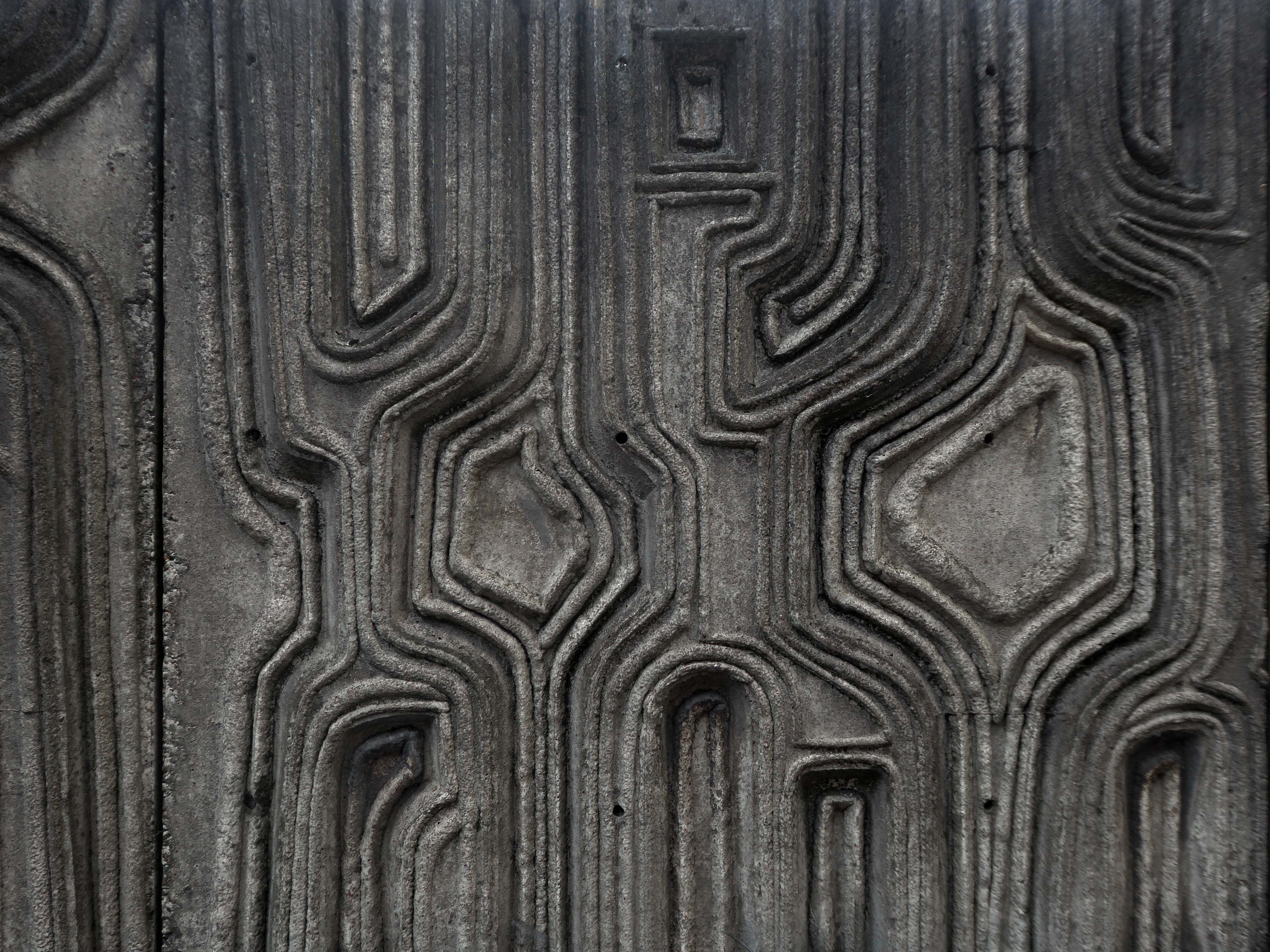
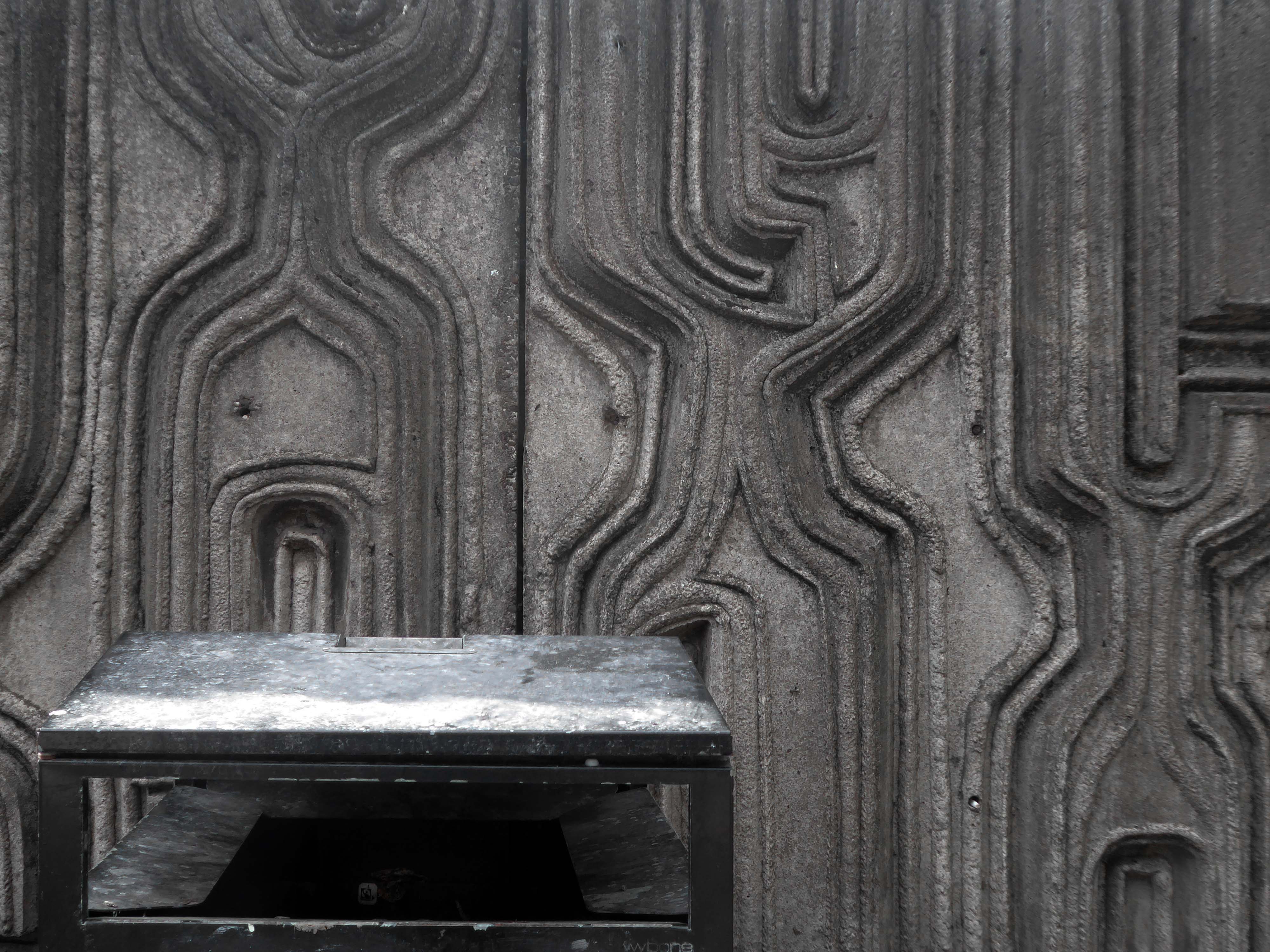
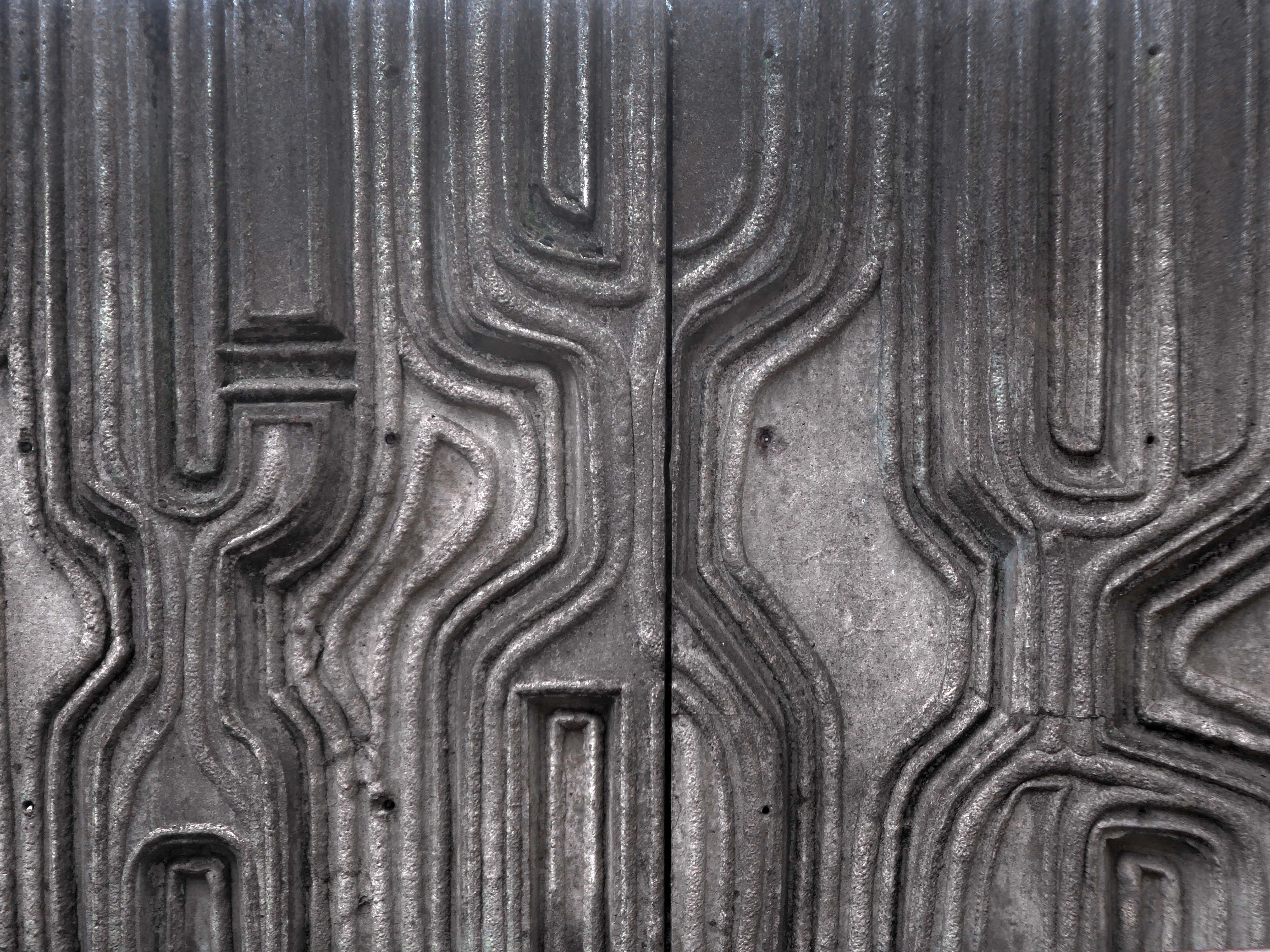
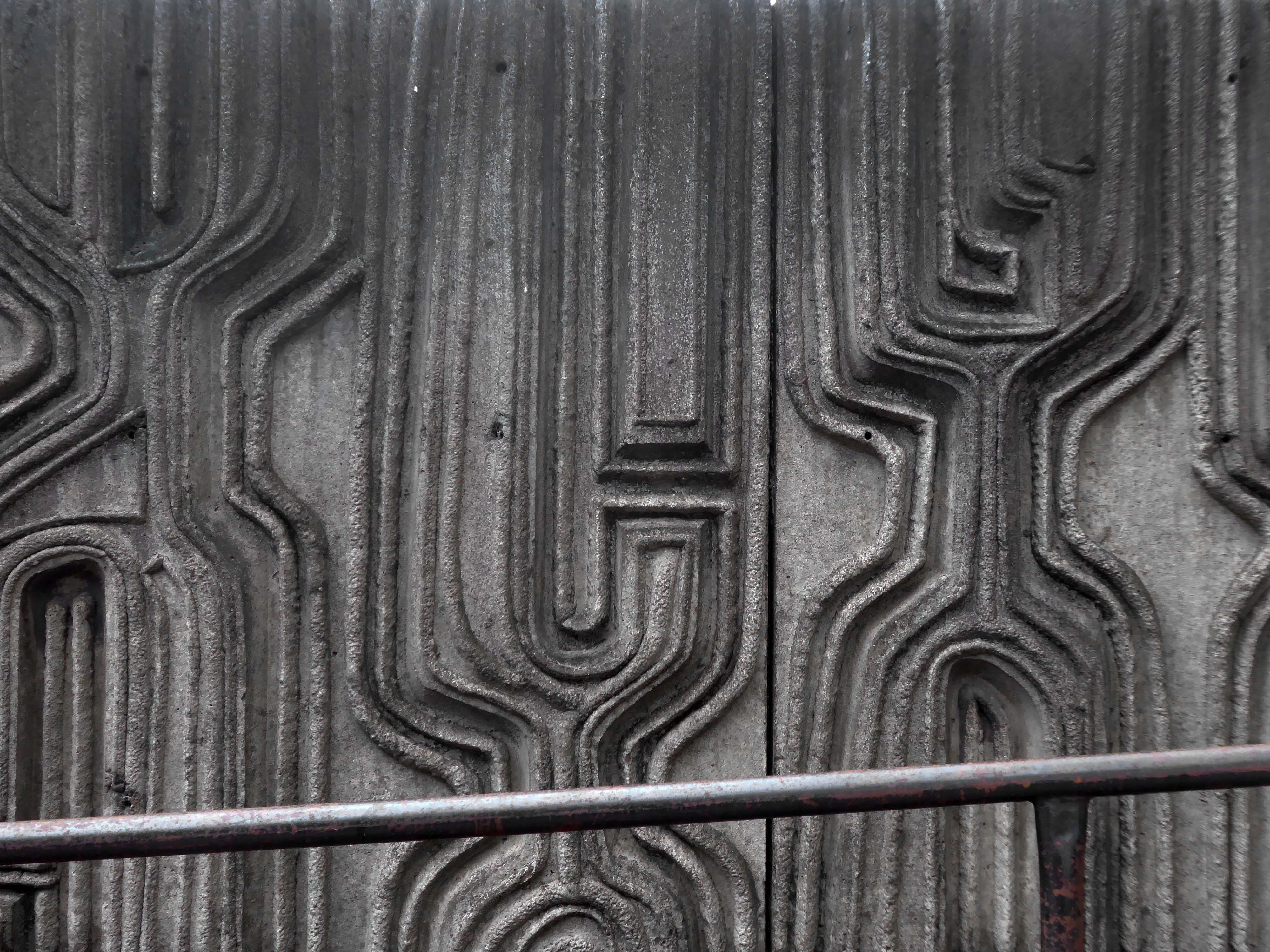
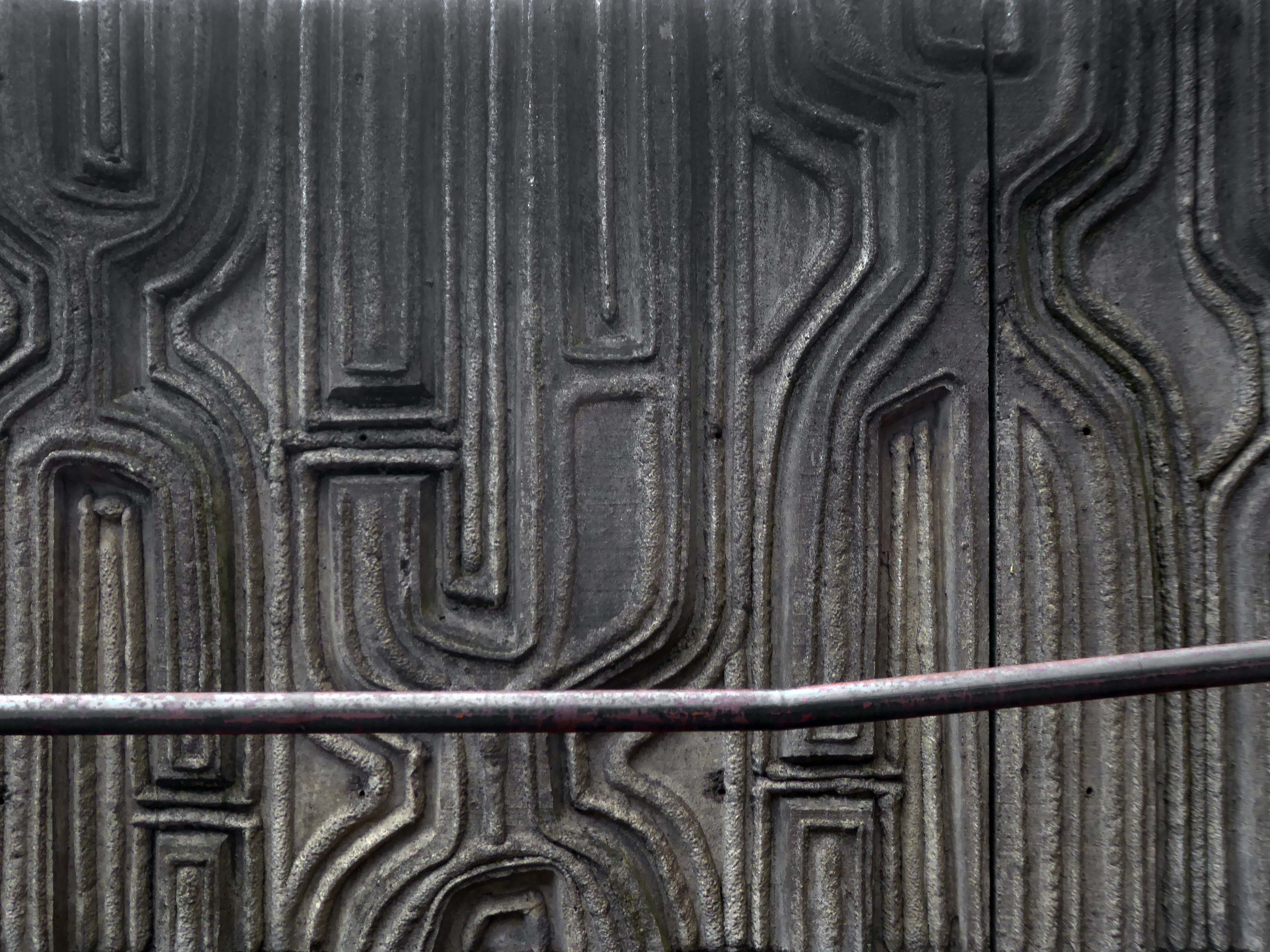
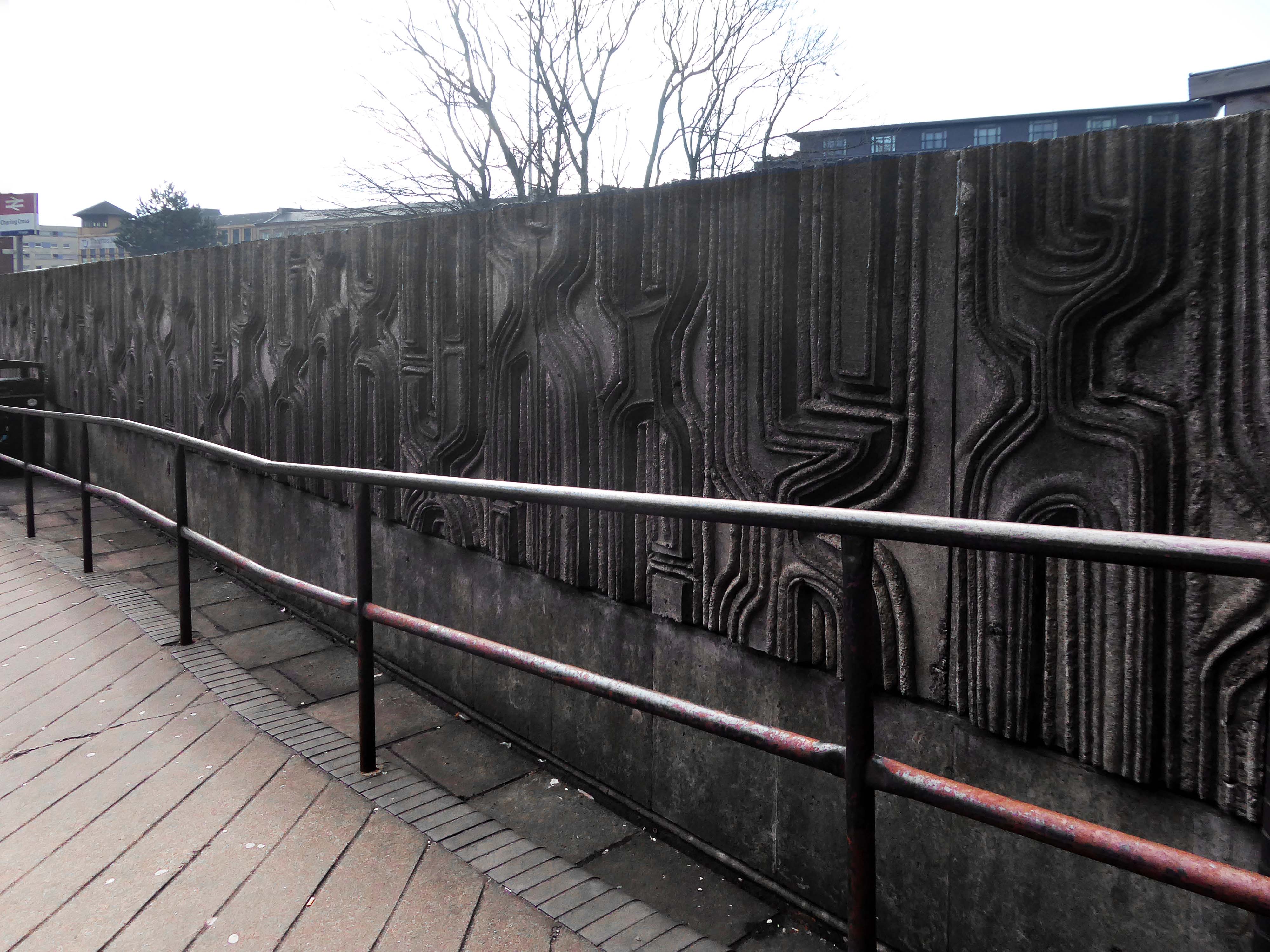
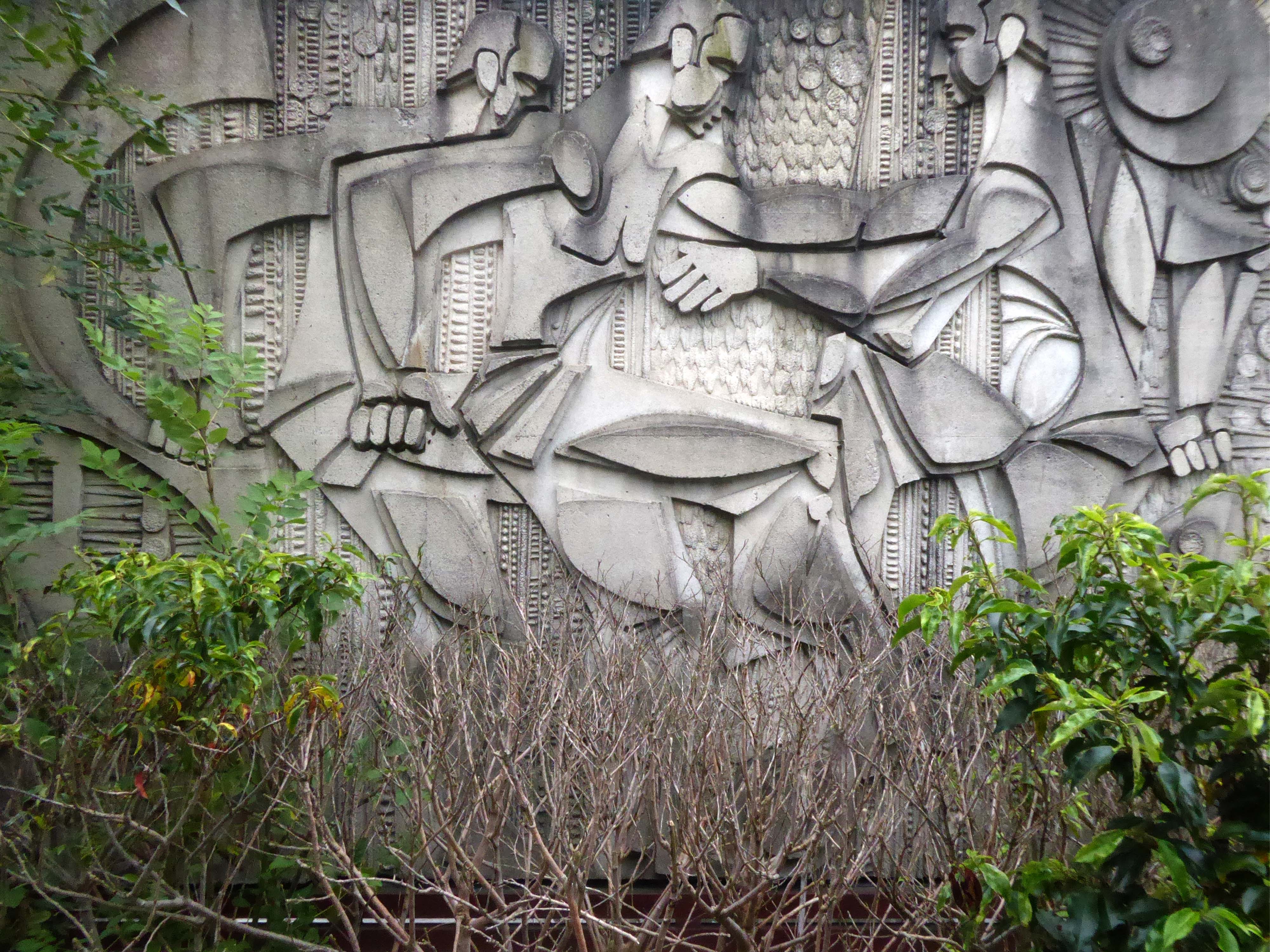
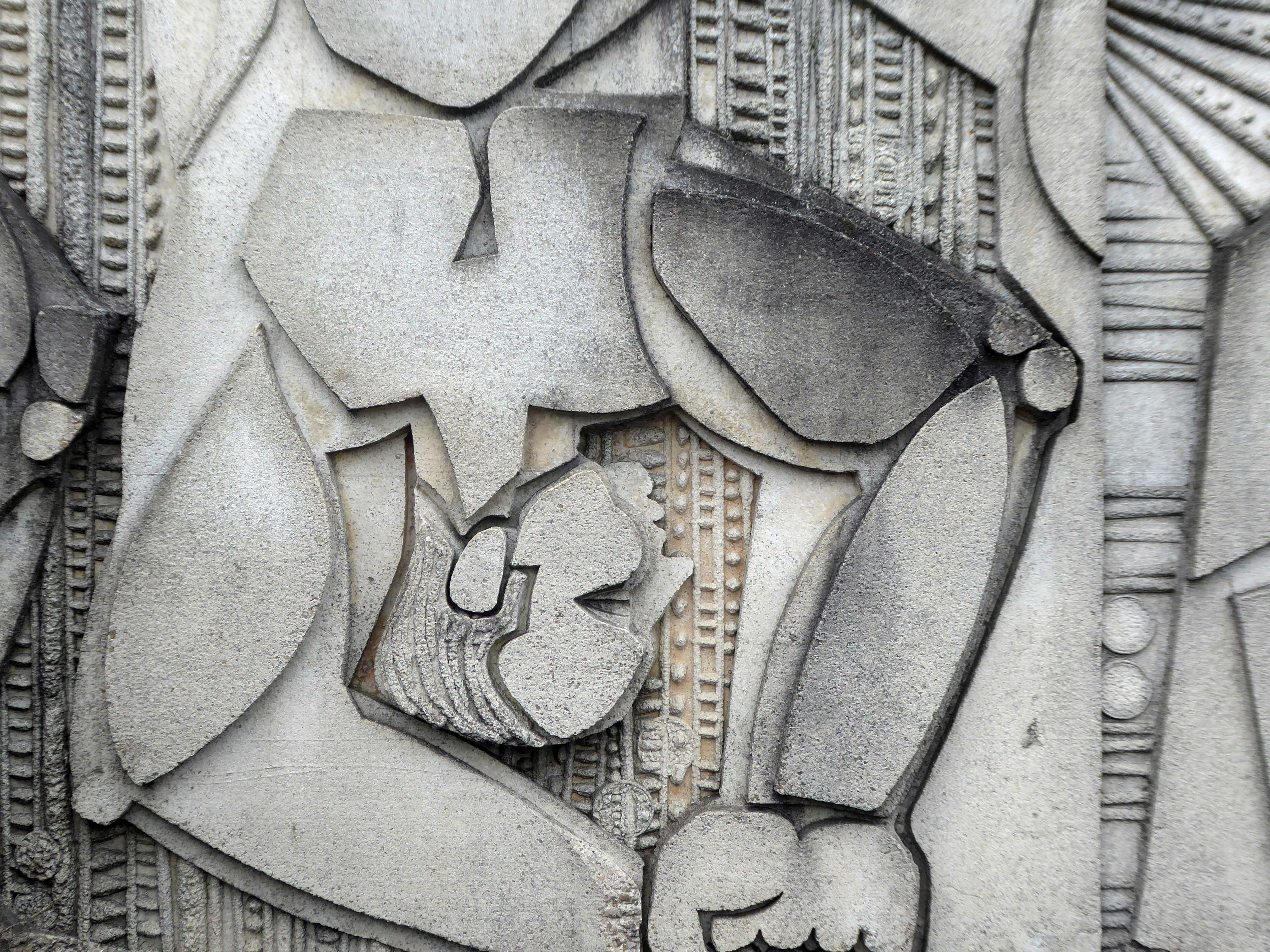
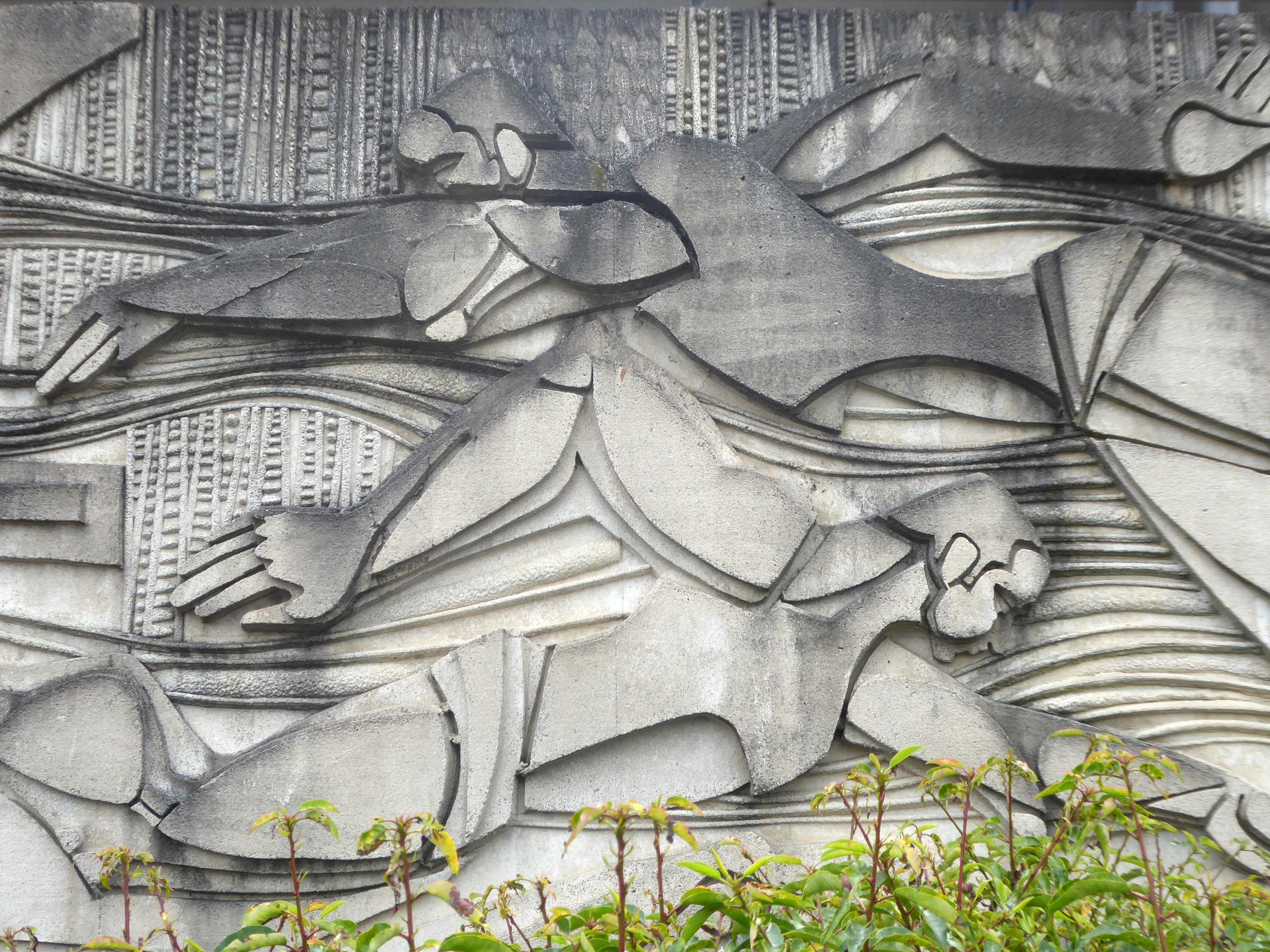
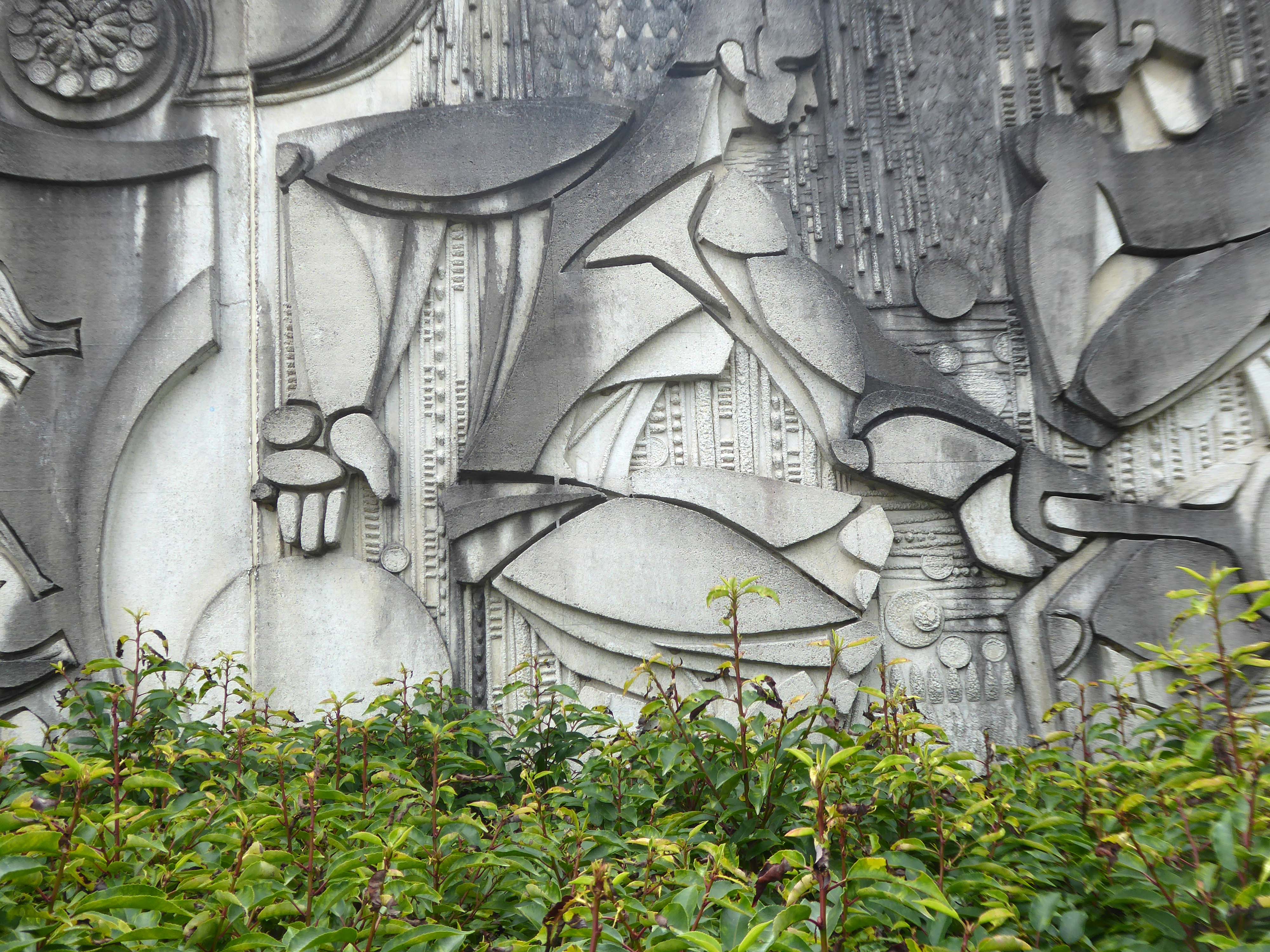
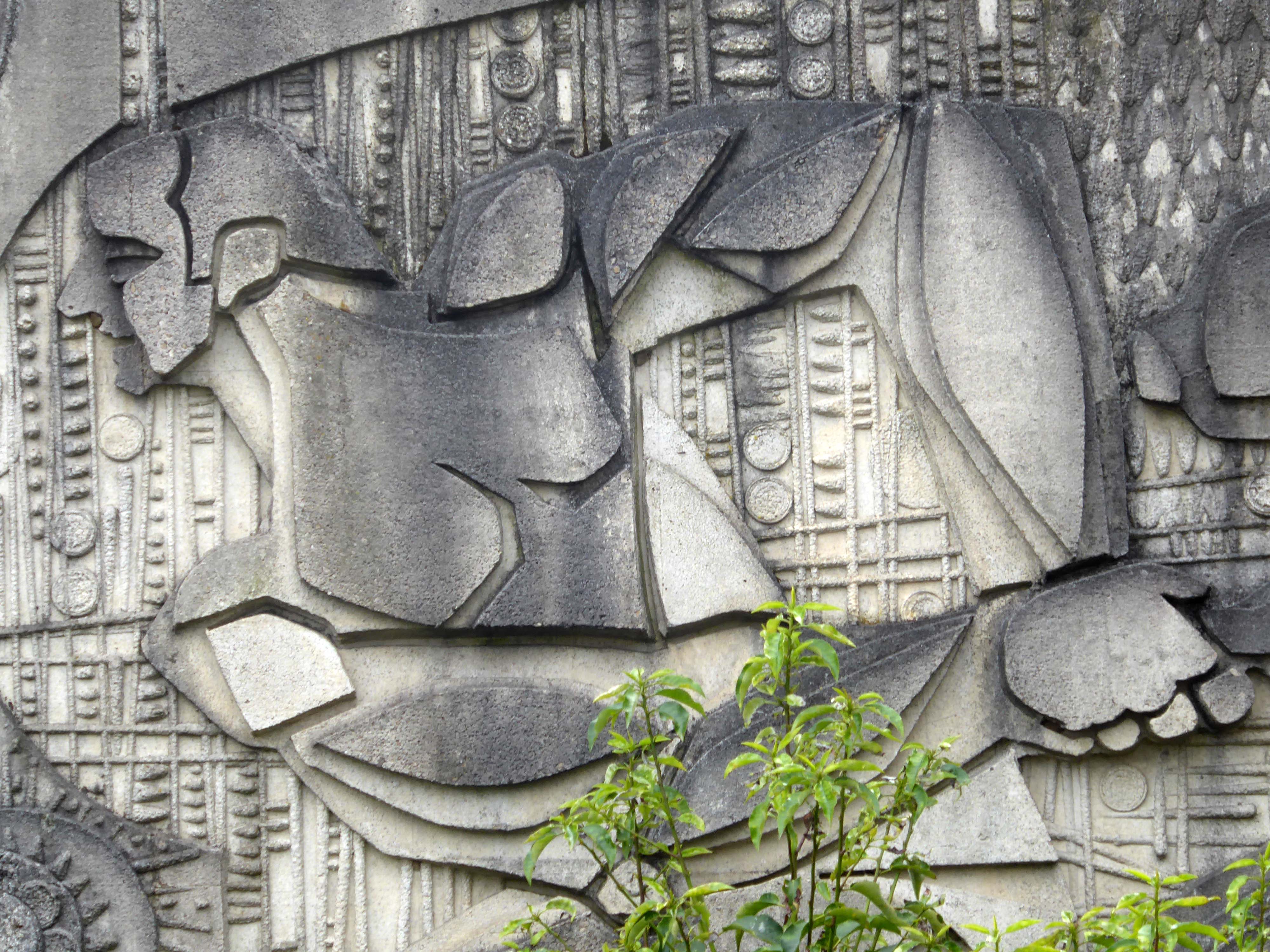
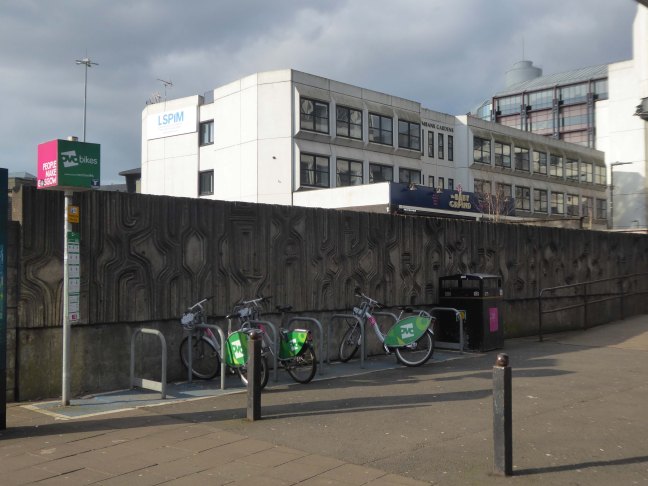
I was there in 2024 to photograph the Charles Anderson mural.

Constructed in situ – one third has now been removed at the northern end
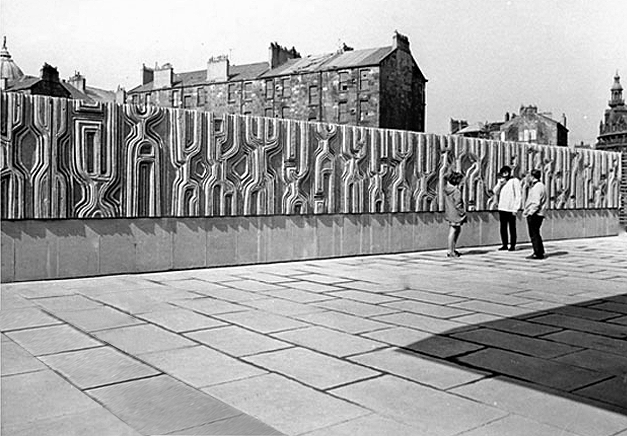
Charles Anderson studied drawing and painting at Glasgow School of Art under David Donaldson, Mary Armour etc, graduating with Diploma in 1959.  The following year he entered  The Royal Scottish Academy painting competition for Post Graduate students and  won the Chalmers Bursary.  Joan Eardley – one of the adjudicators- took a keen interest in his work and encouraged him to exhibit at the RSA the same year. 

Following a period of five years teaching art,  He worked as a professional mural painter and sculptor for the next thirty years on major art and design projects throughout the United Kingdom, carrying out commissions for  a wide variety of clients including local authorities, property developers, banks and major insurance companies.    His most prestigious commission to date was the result of winning a national sculpture competition to provide a  bronze figurative group  which is entitled “The Community”  for Livingston New Town in 1996.  In early 1997  he returned  to the painting of easel pictures and  contributed to the annual exhibitions of The Royal Glasgow Institute, the Royal  Scottish Society  of  Painters in Watercolours, The Royal Scottish Academy and The Paisley Art Institute. He has works in various private collections throughout the U.K. and abroad.

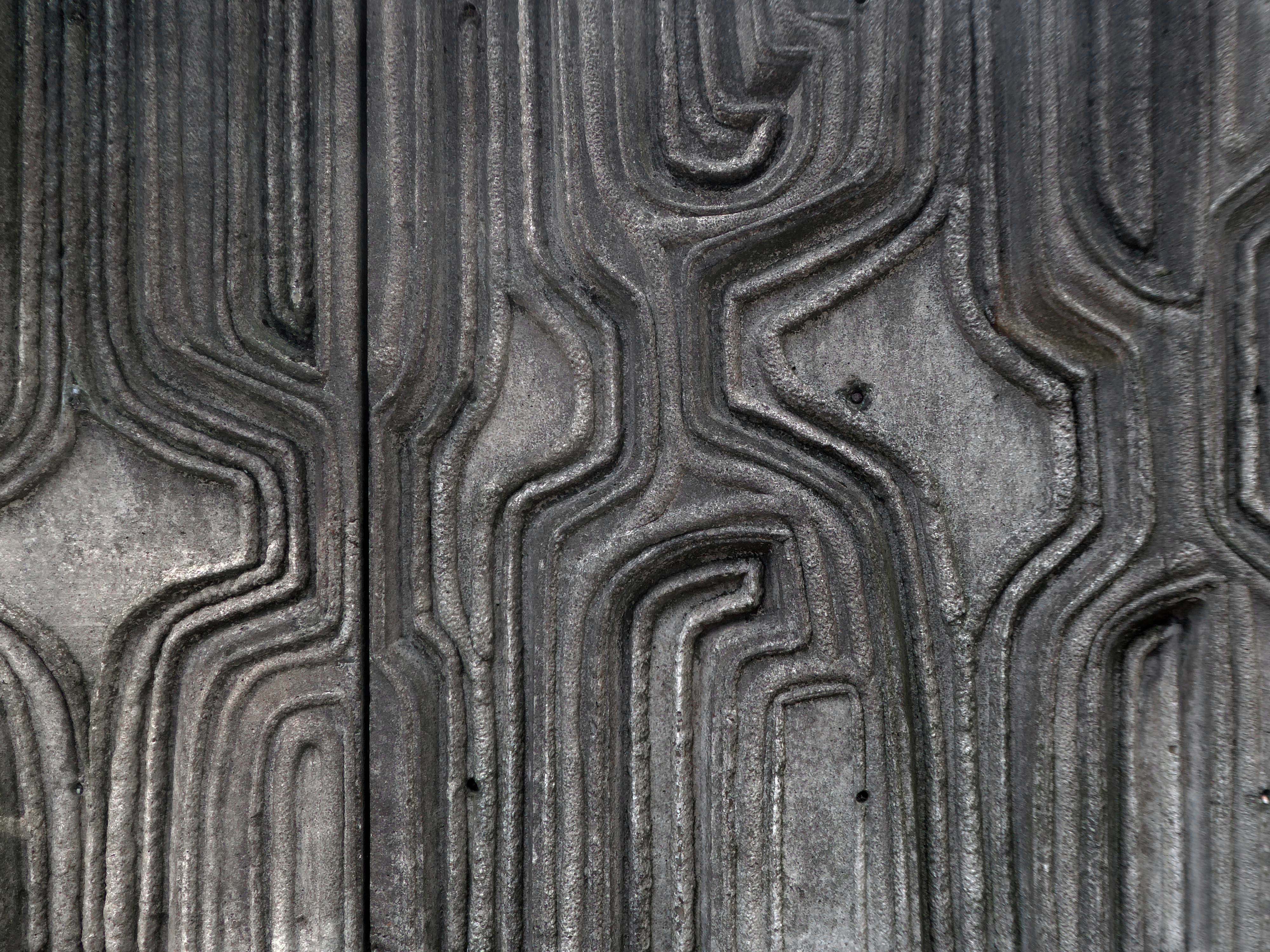
Charles Anderson Art

The £250m transformation of the Charing Cross area of Glasgow has been given the go-ahead.

The project including new homes, student accommodation, hotel space and local services has been approved by Glasgow City Council.

Developers CXG Glasgow also plan to knock down the 300 Bath Street office building, which bridges the M8 motorway.
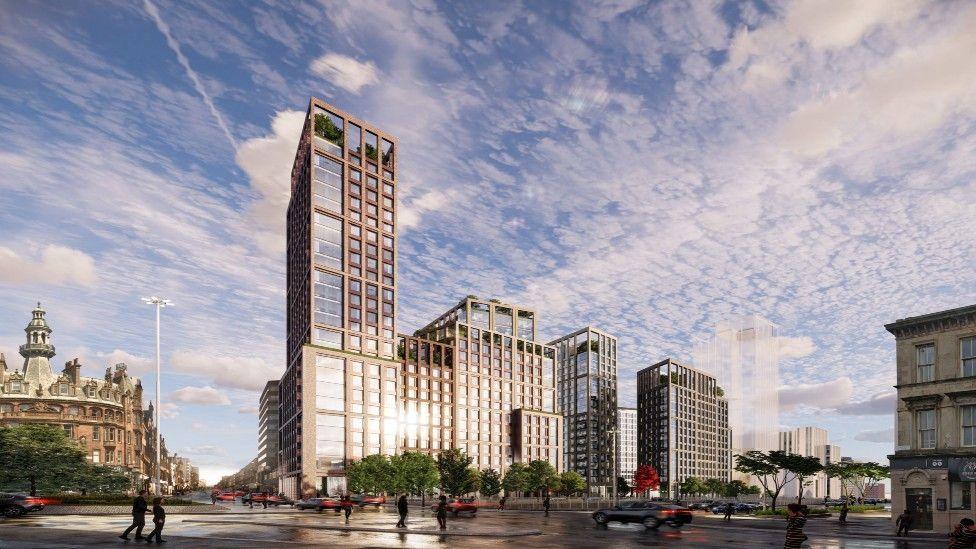
Further detailed applications will need to go before the council for approval before the Charing Cross Gateway project can begin.
BBC 2024

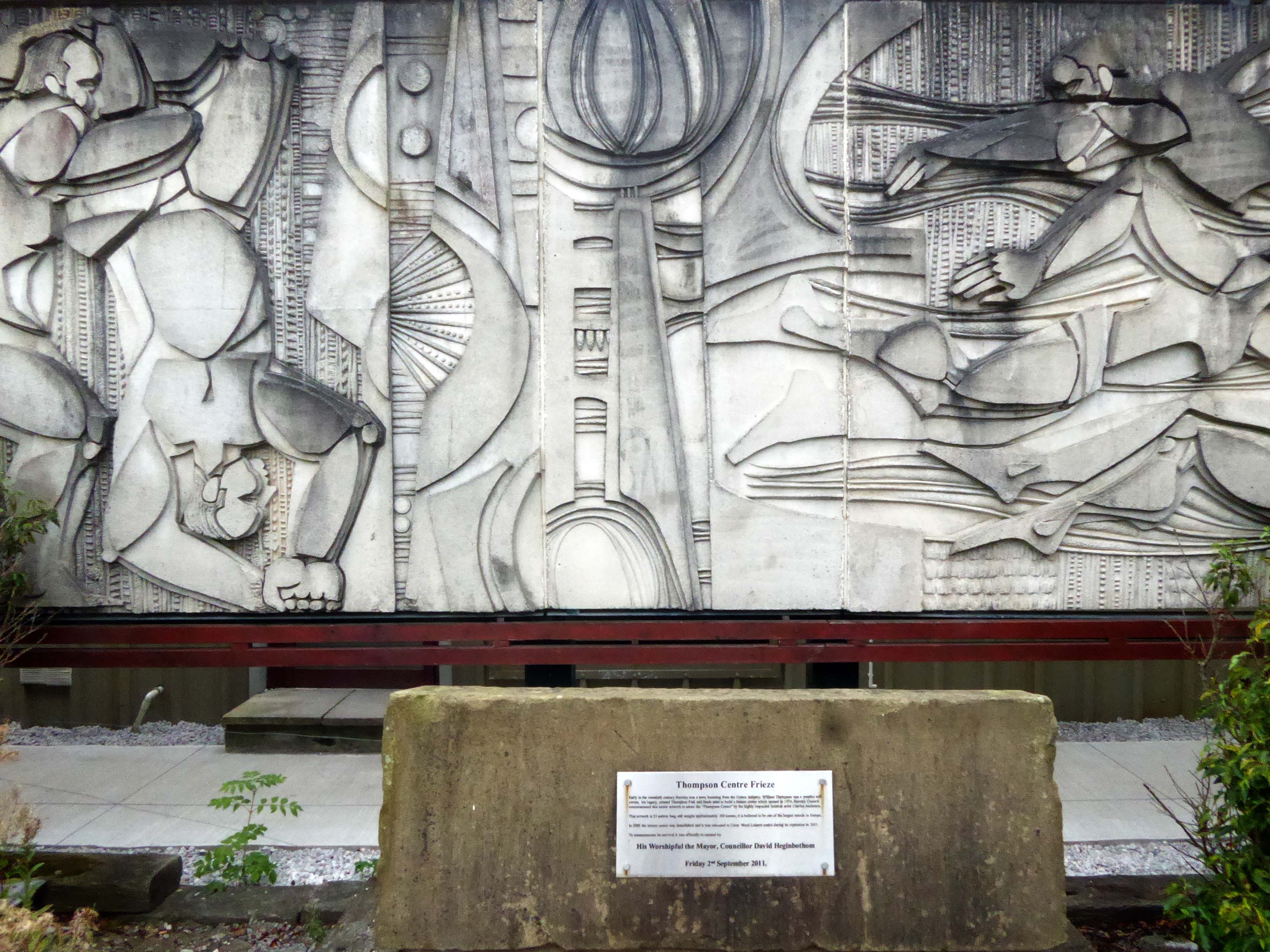
Charles Anderson Frieze – Burnley

Holme Rd Burnley BB12 0RT

Photo – Robert Wade

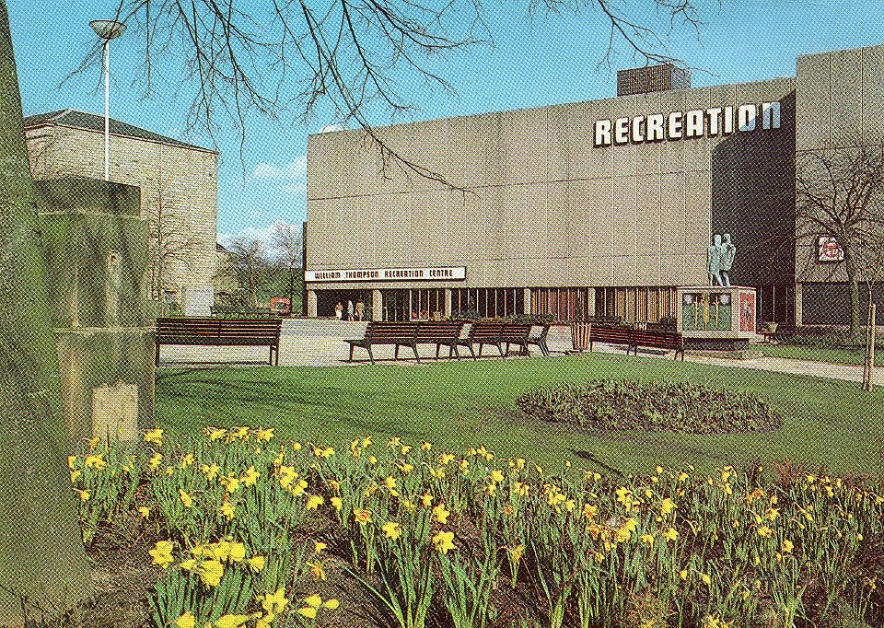
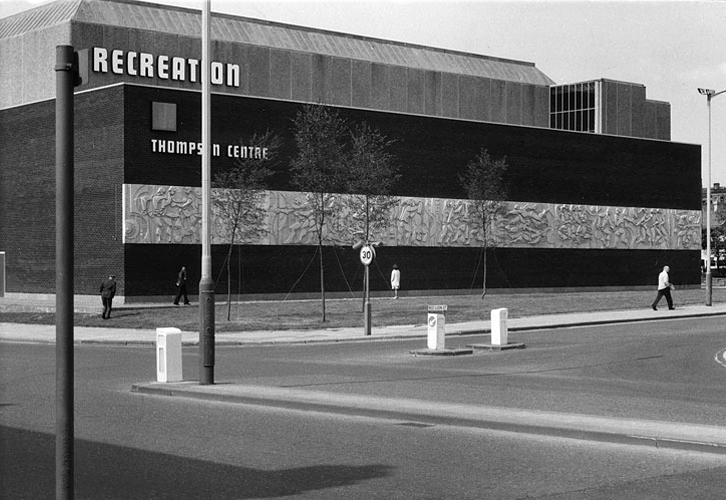
William Thompson was born at Richmond Yorkshire, the son of John and Catherine Thompson. William came to Burnley in 1908 and gained a place at Burnley Grammar school. Later he learned the trade of cotton weaving at his uncle’s shed. In time he was to become the managing director of this firm. William lived at Oak Bank Todmorden road, where in spite of his great wealth, he led a remarkably simple life. He had neither television nor radio, and his greatest pleasure appeared to be strolling in the nearby Towneley Park. About 1970, ill health forced William to move to his sister’s house at Ingleton Yorkshire. His illness became worse, and he was removed to a nursing home at Silverdale, near Lancaster, where after a prolonged infirmity he died on 18, August 1972. It was William and his sister, Sarah Witham who donated the £333,000 that was eventually used to build the Thompson Recreation Centre. William was never to see the gift he bestowed upon the town, for his death came just a few days before the official opening of the centre. It was his sister, Sarah who performed the opening, and she too was to die a short time afterwards on 8, December 1975. She was the last link in the Thompson family of Burnley.

Many thanks to local historian and author Jack Nadin

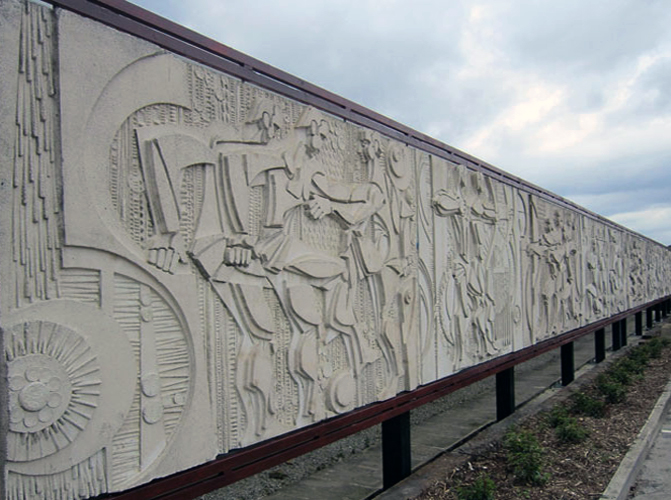
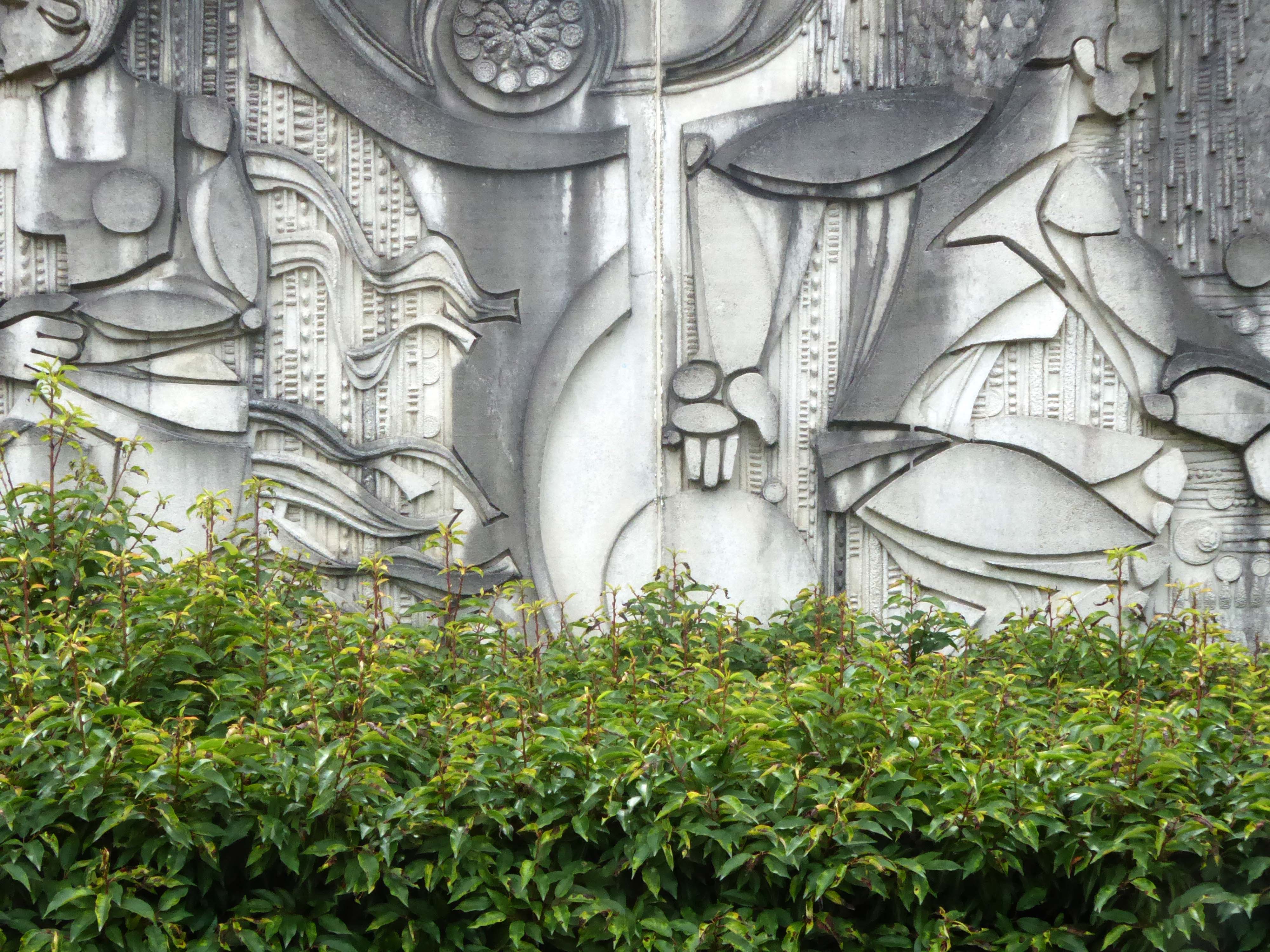
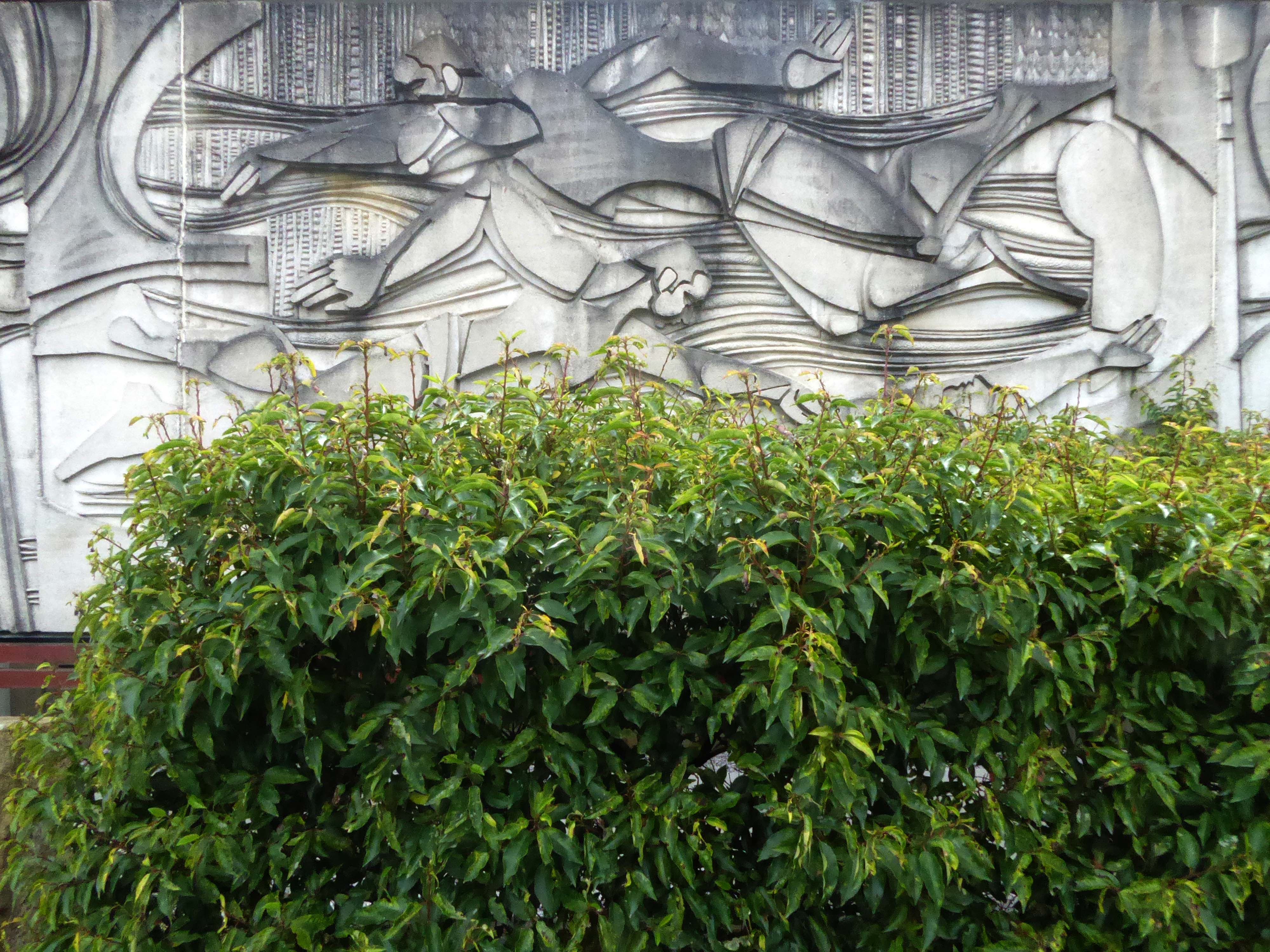
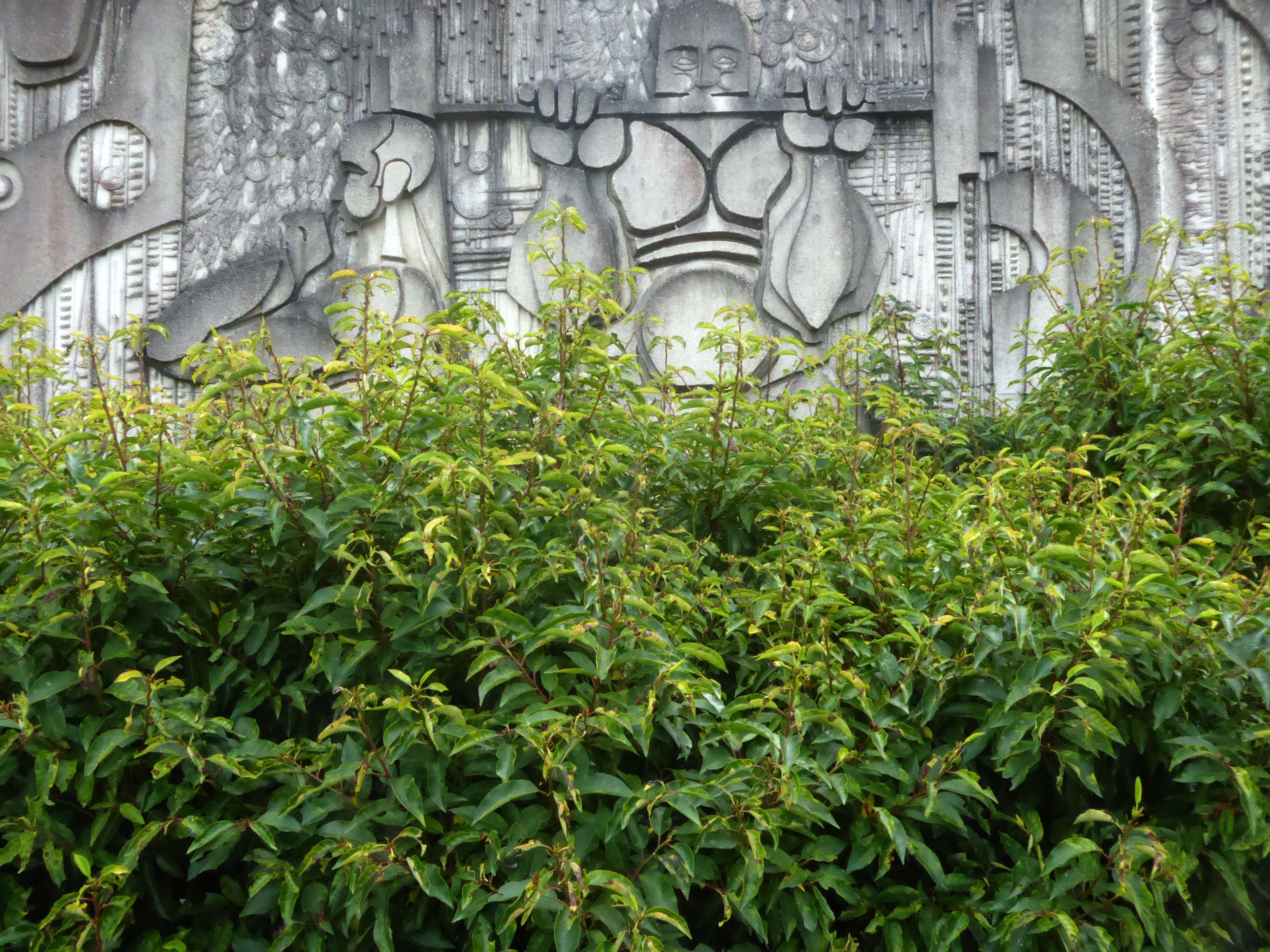
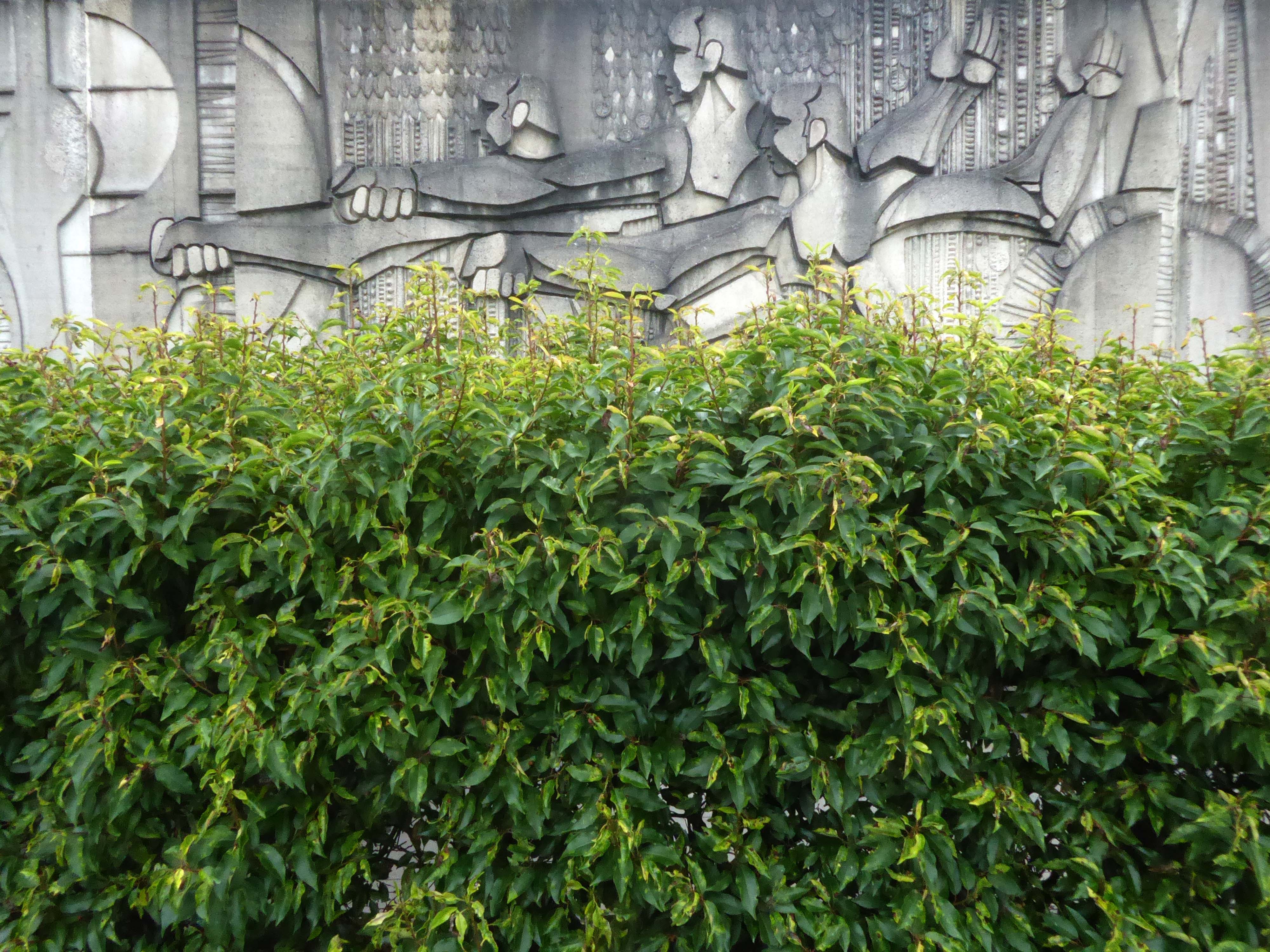
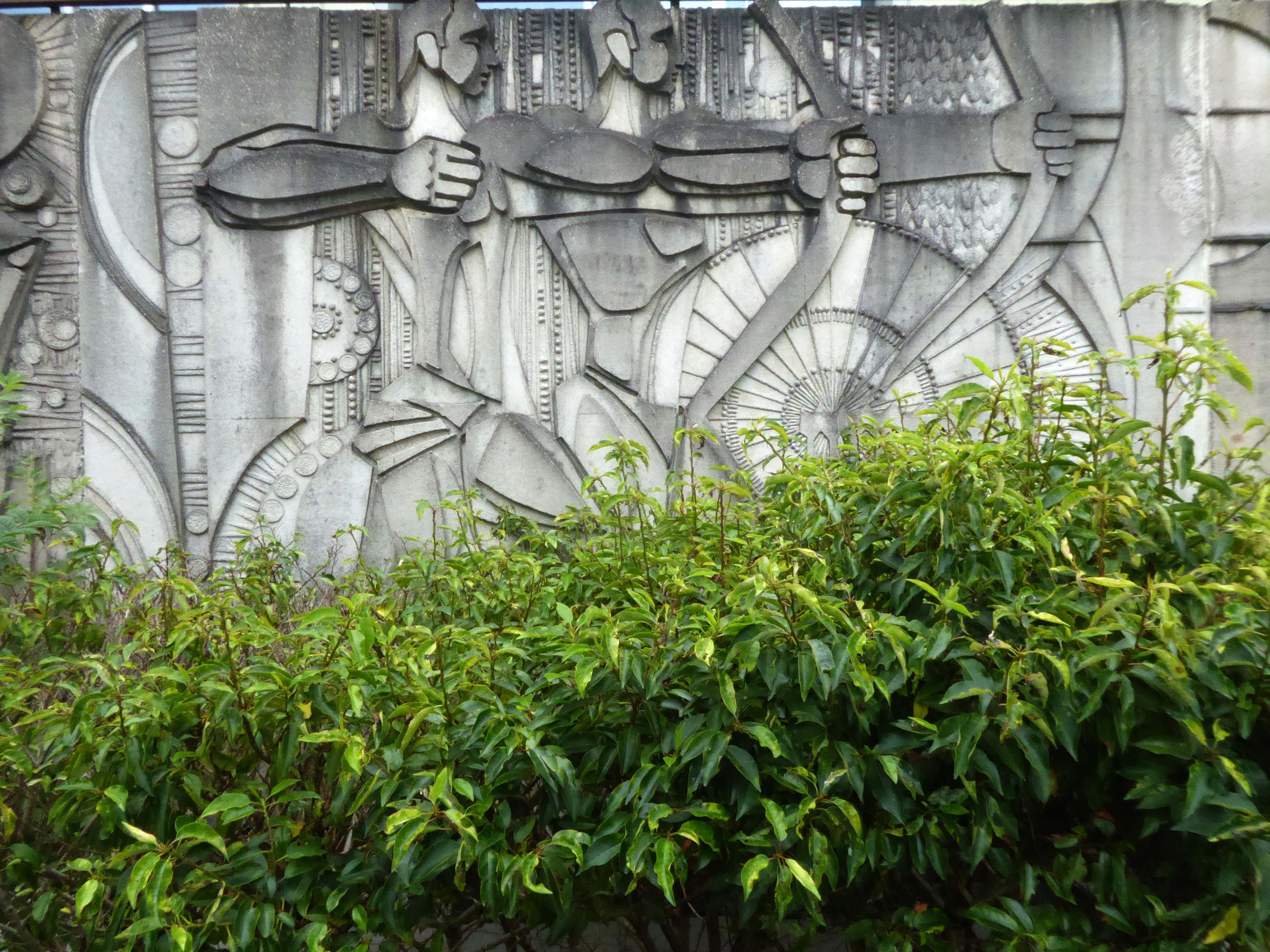
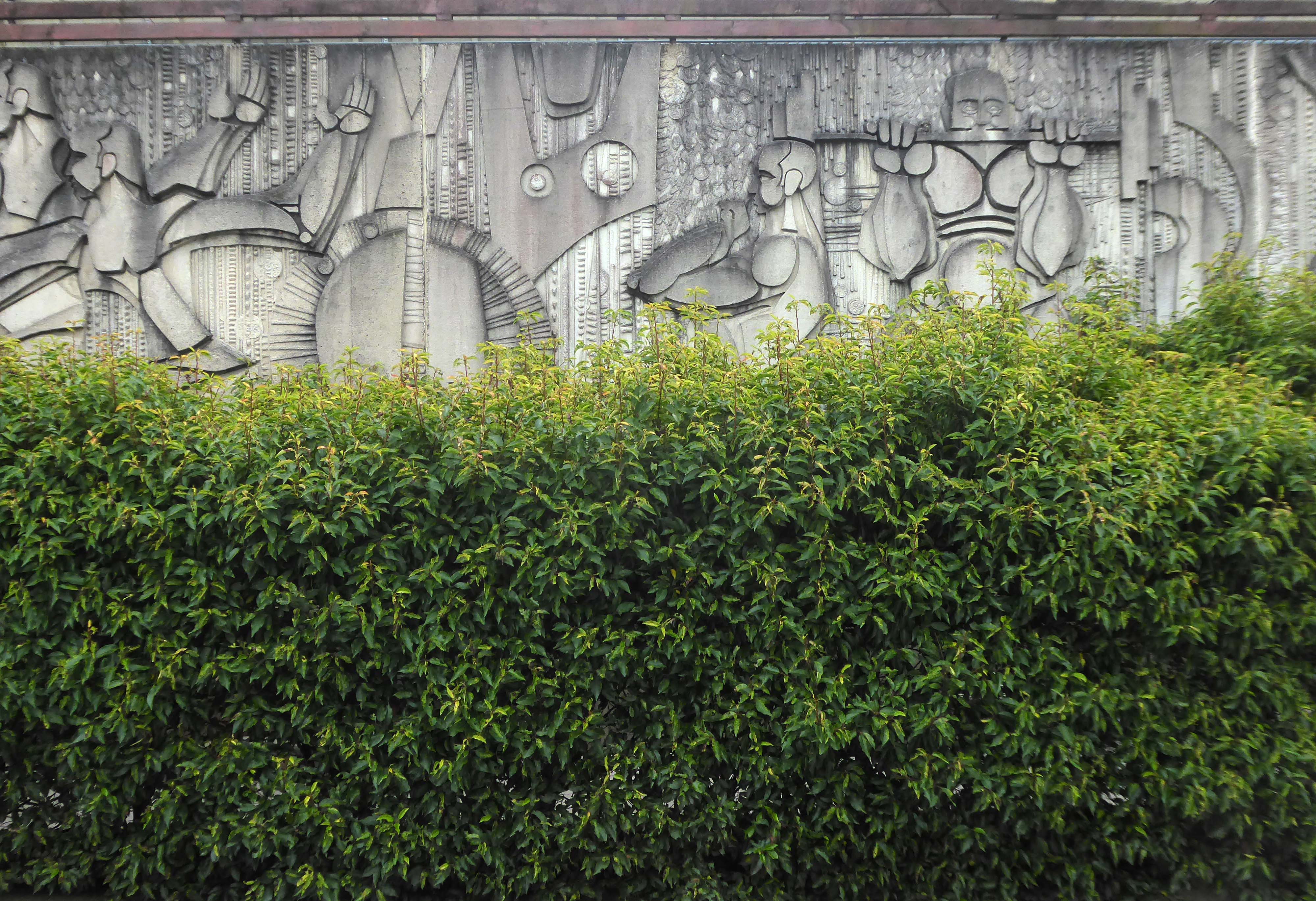
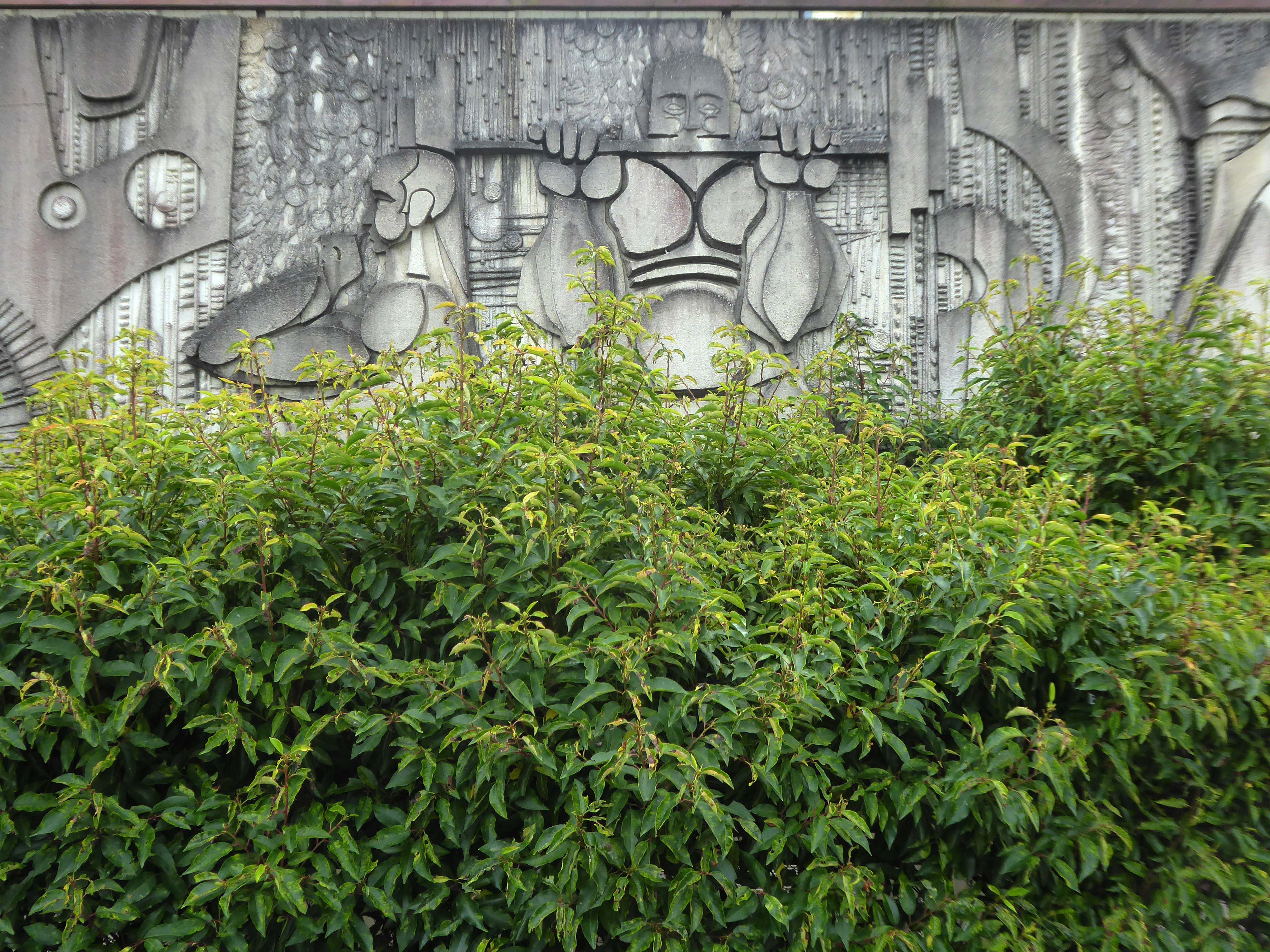
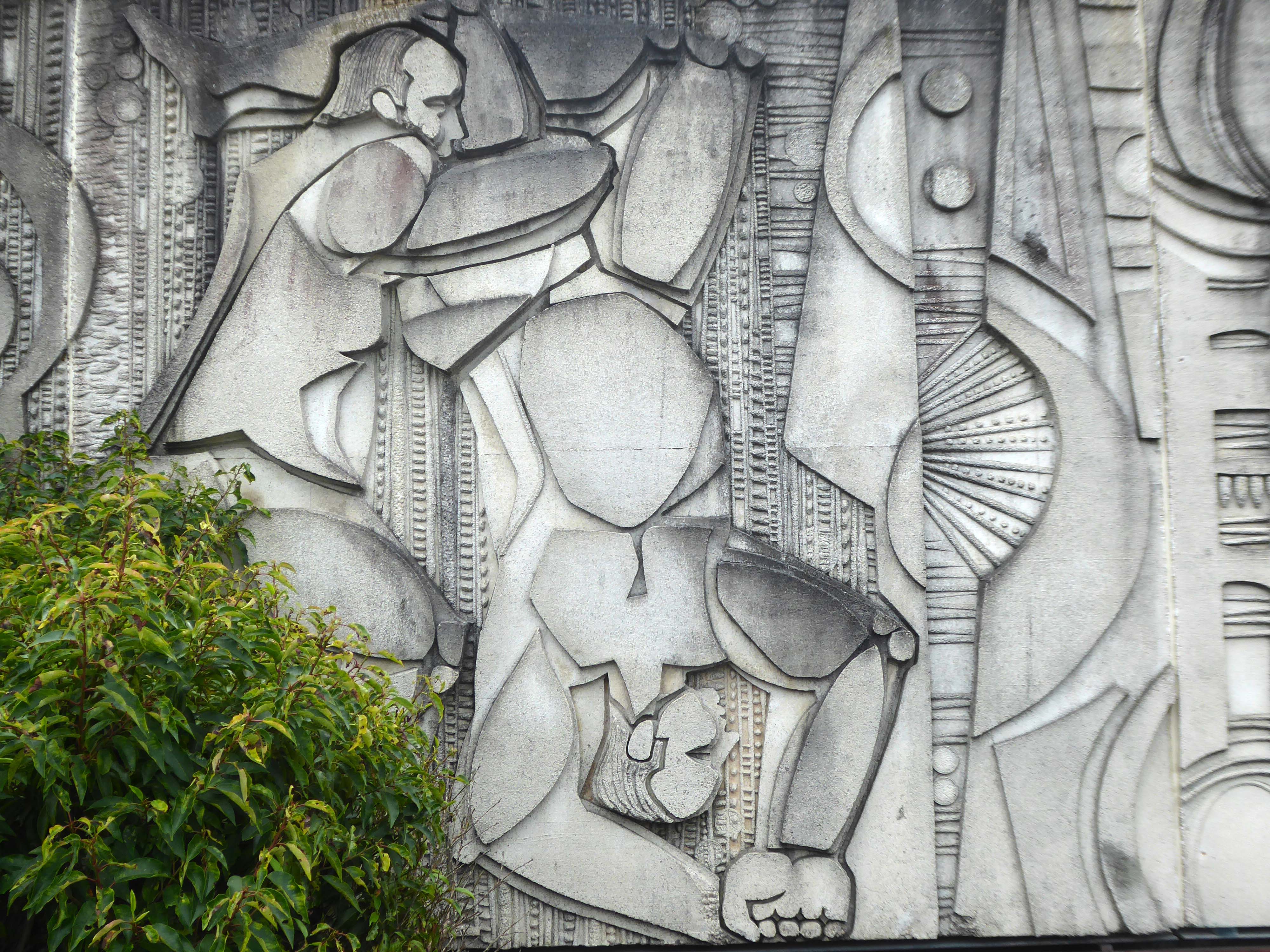
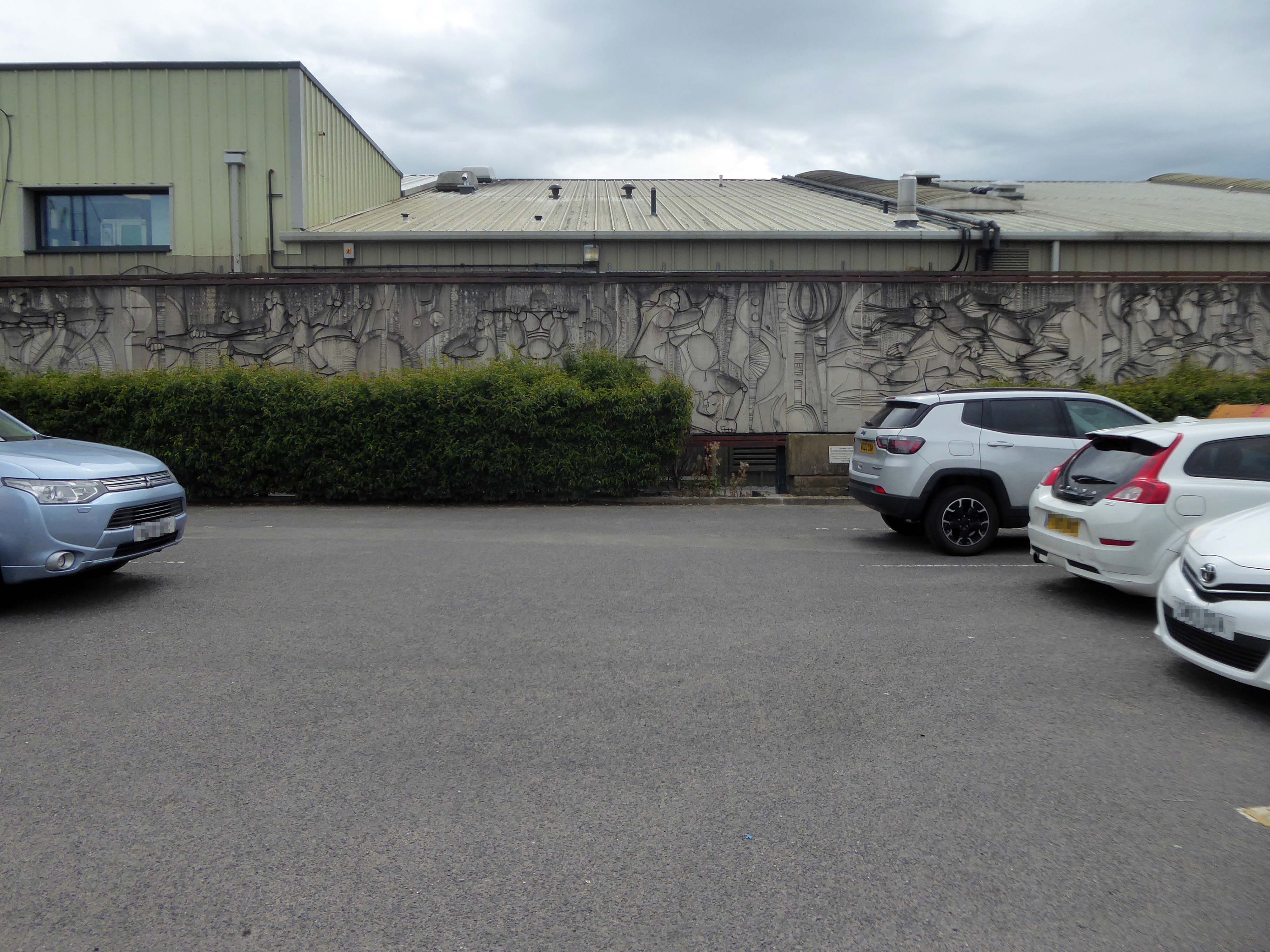
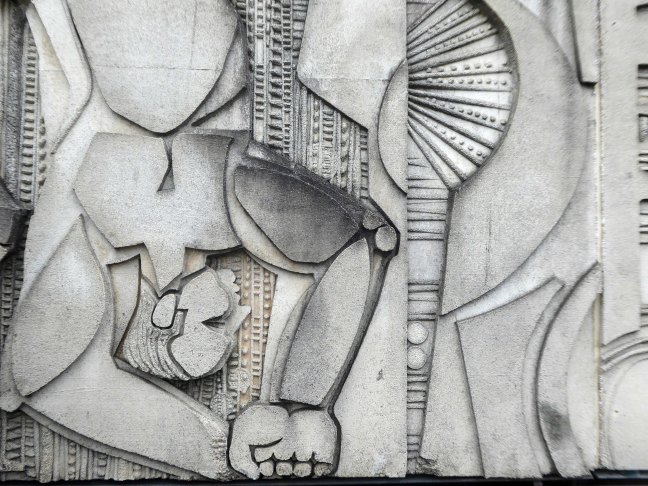
The Thompson Recreation Centre was decorated by a large concrete frieze by Scottish artist Charles Anderson.

Town Architects 1975

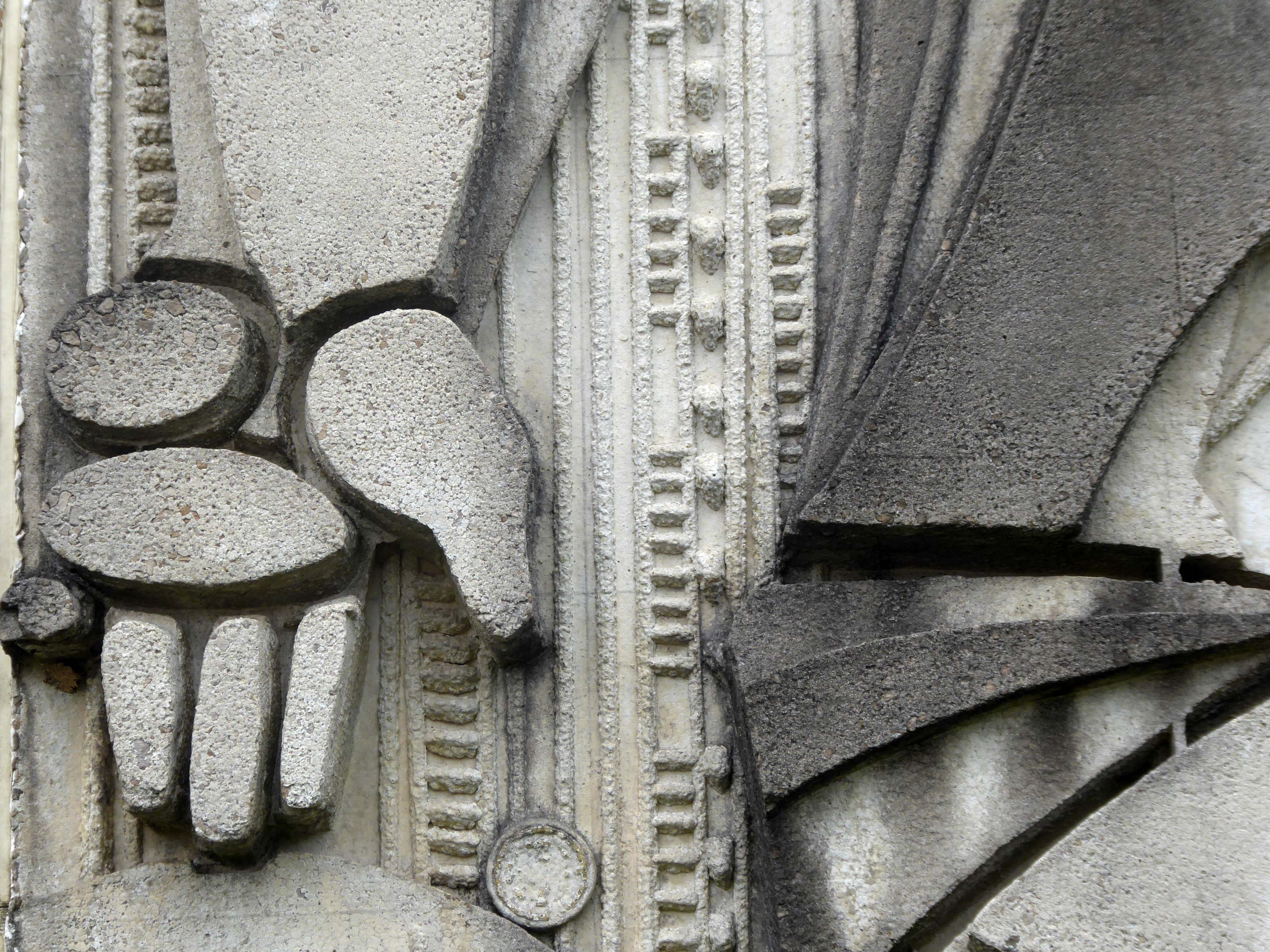
Formed from precast concrete panels against expanded polystyrene moulds – it stands 150ft long and 9ft high.

It was gifted from funds provided by the estate of local Cotton Manufacturer and major town benefactor, William Thompson. The building was a flagship symbol of progress for Burnley in 1973, it was demolished in 2006.

Fortunately, the frieze was carefully dismantled, stored and reinstated by Andrew Brown.

Mr Brown said:

This frieze has a massive place in our community. It gives me enormous pleasure to give this magnificent artwork a new home. It breathes new life into the legacy of William Thompson who did so much for Burnley.

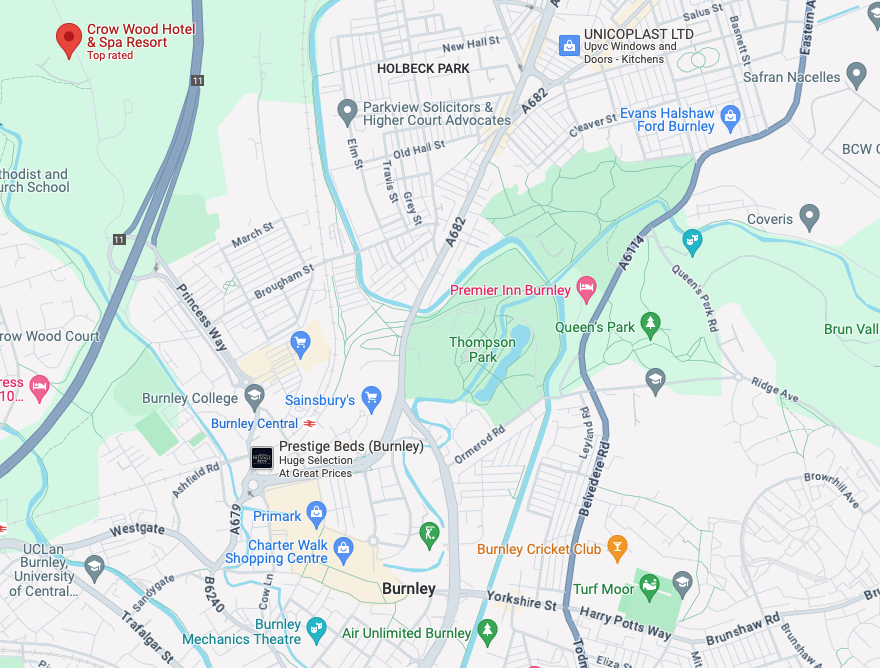
It is now located at the Crow Wood Hotel & Spa Resort. walked from the to

Charles Anderson designed the sculpture over months at his studio in Paisley said:

I was a young man of 34 when I was approached by Burnley Council to design a frieze for the centre.

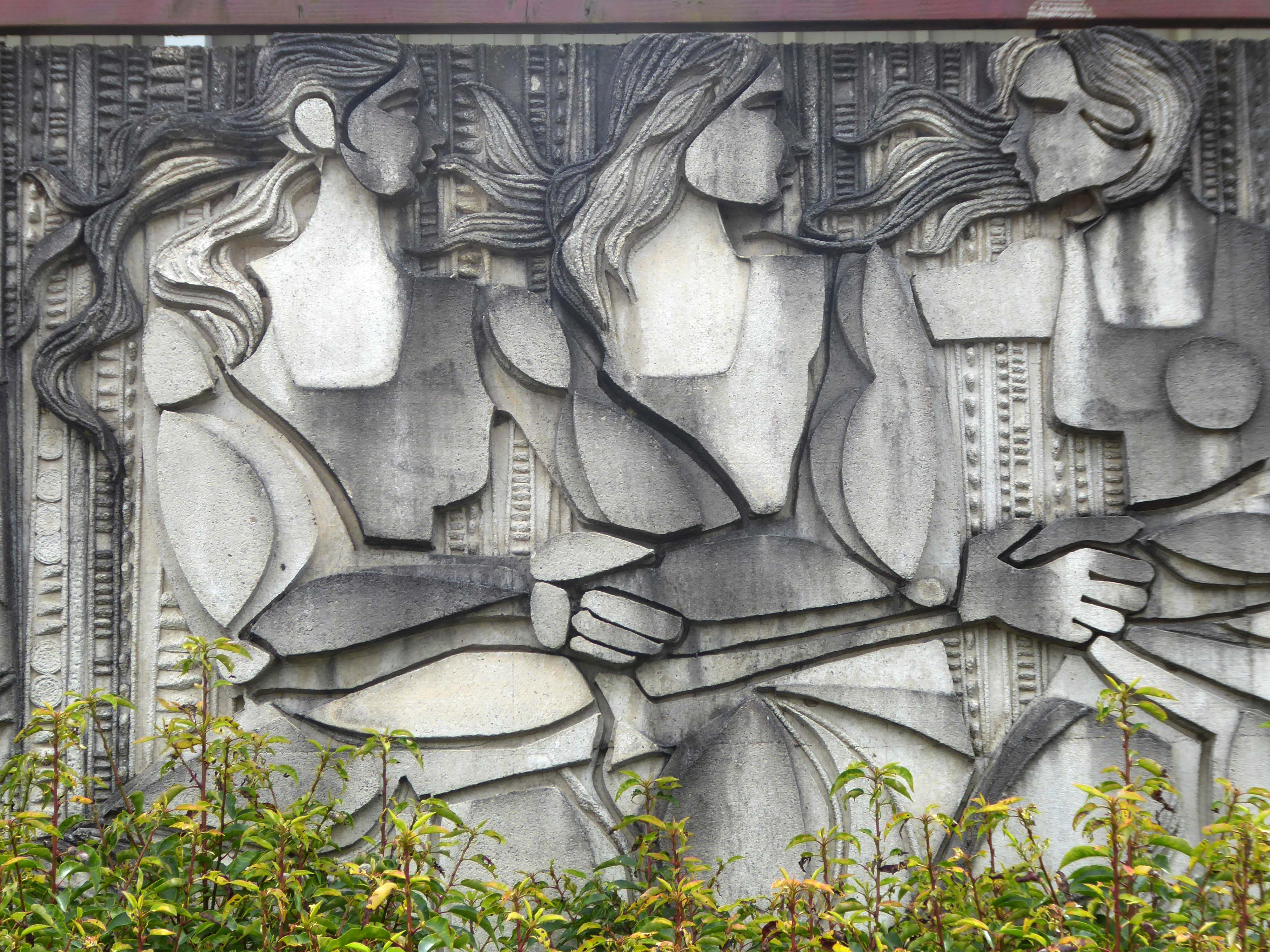
It’s one of my proudest pieces of work and definitely one of the most challenging. I was inspired by the sculptures of the Parthenon so perhaps this is Burnley’s own Elgin Marbles. It features the Three Graces from Greek mythology as well as sporting scenes such as wrestling, weightlifting, fencing, archery, football, tennis and cricket.

I walked from the town centre along Princess way in search of the work – it’s at the rear of the site, just turn right before you reach the hotel.