

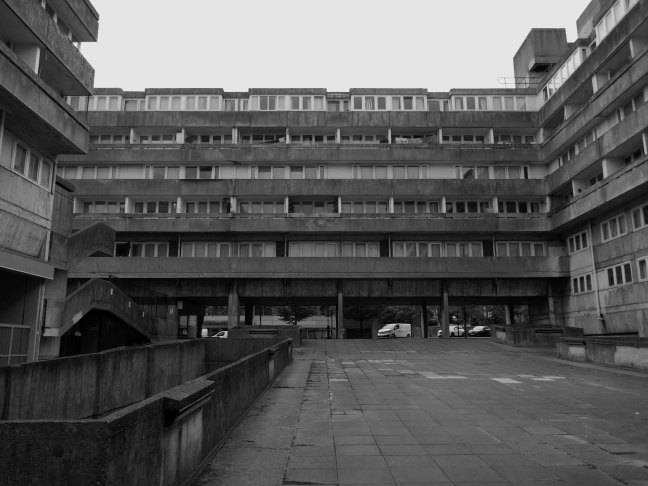
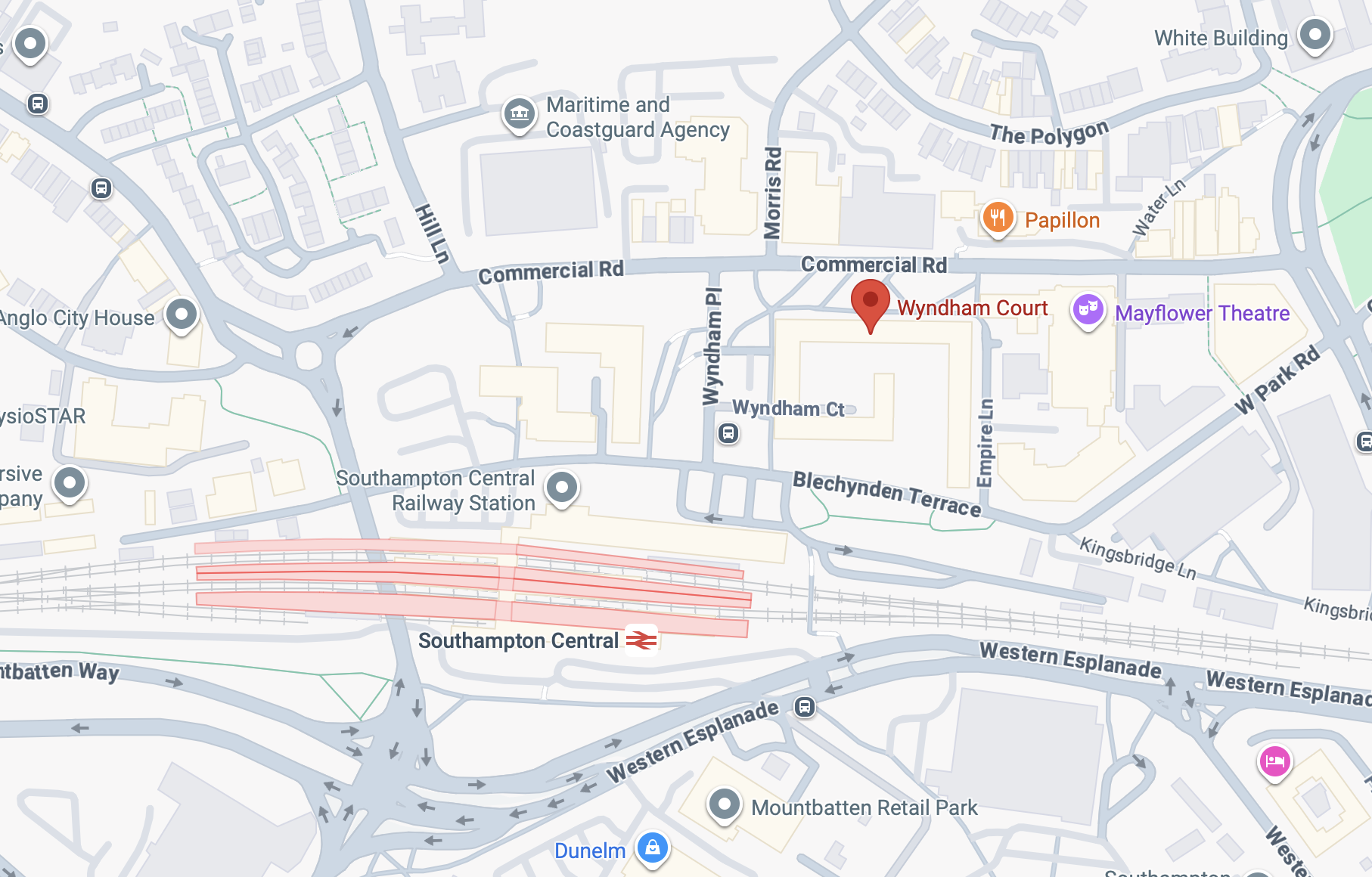
I had spent the day in Southampton in May, the first area I explored was Wyndham Court.
At the end of a long day I found myself there again, with an hour to spare before my train back to Bournemouth.
The sky was no longer blue, the sun was now occluded.
The photographs were almost monotone, so with a small tweak I made them monochrome.
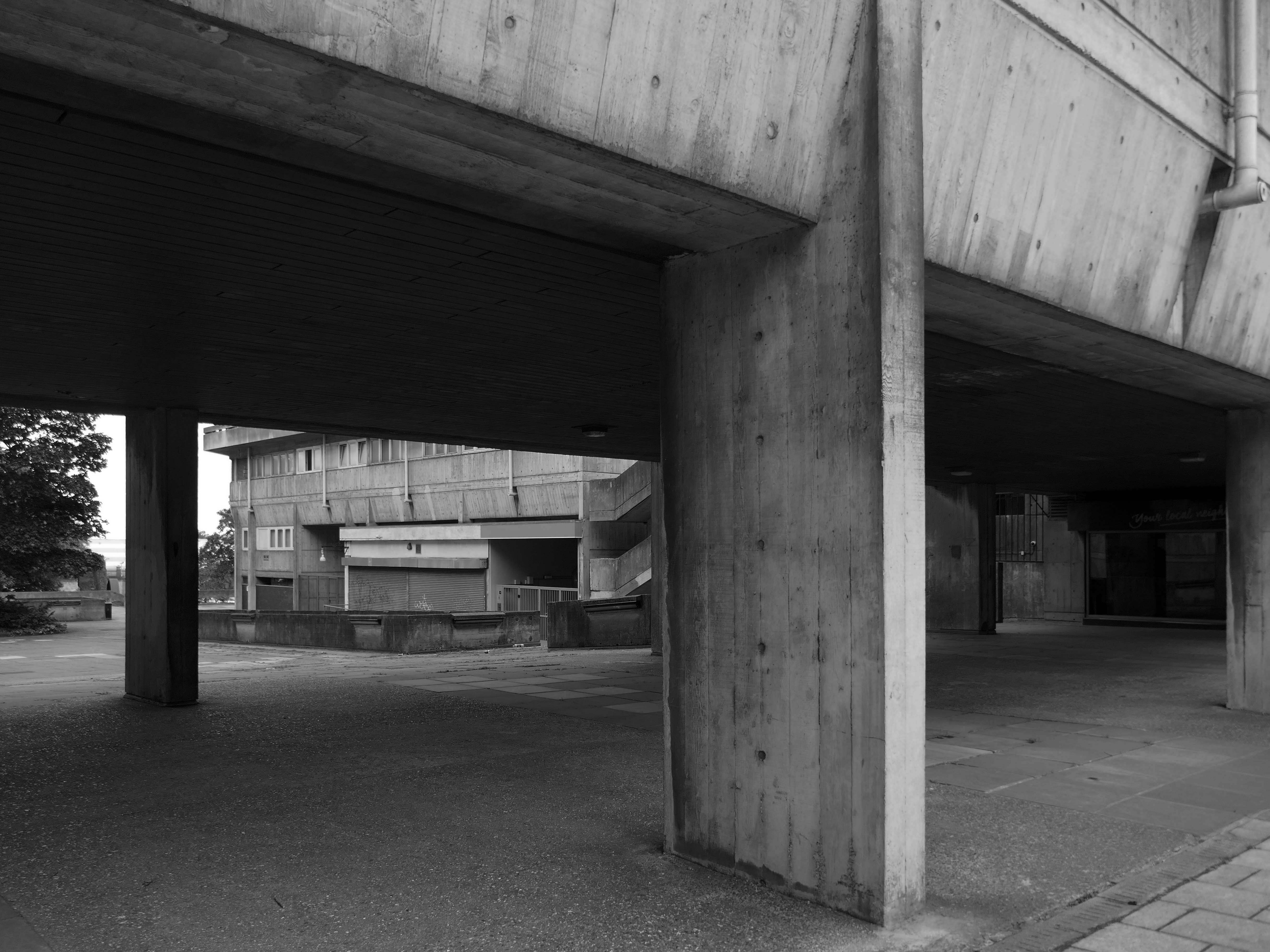
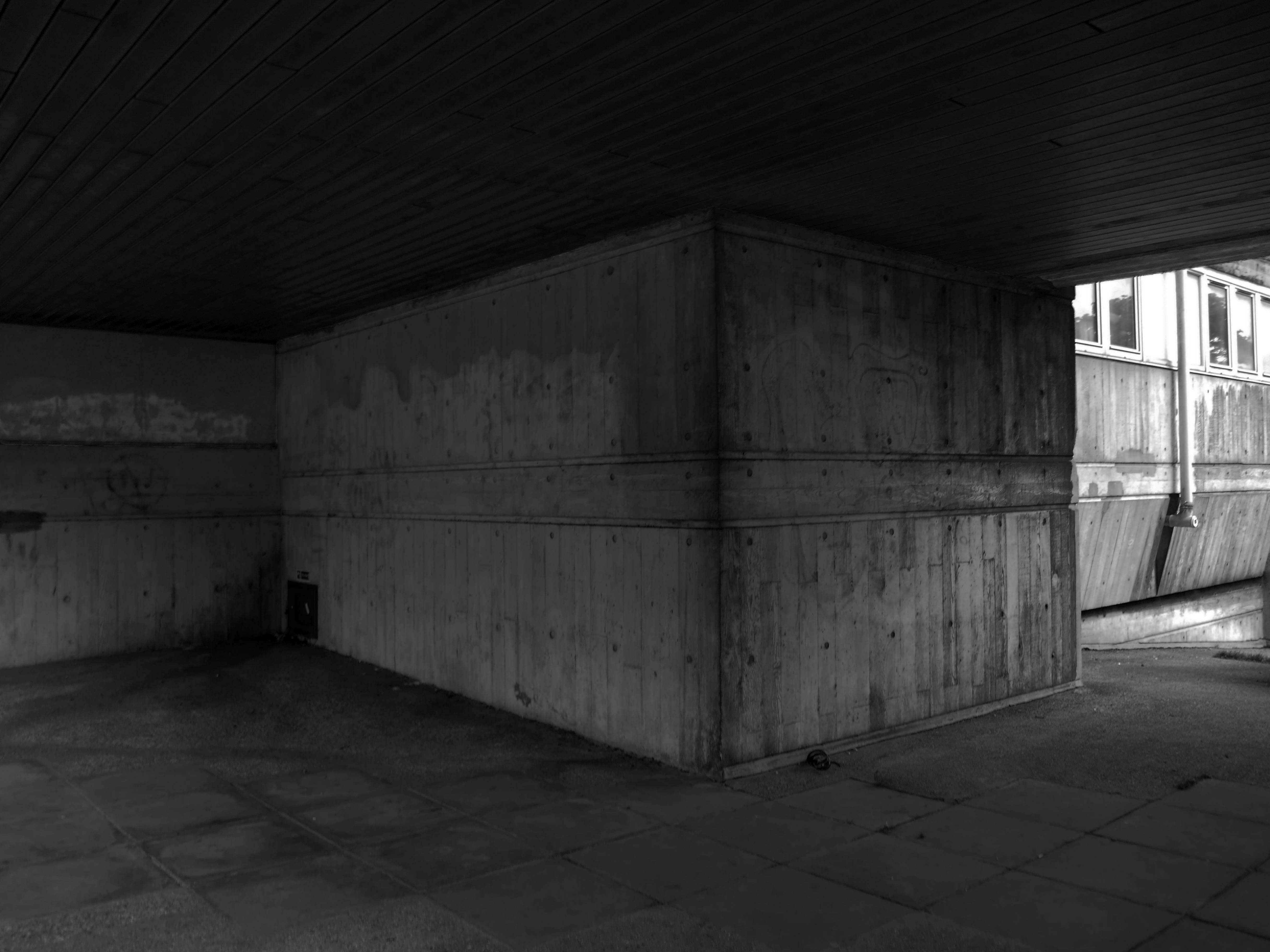
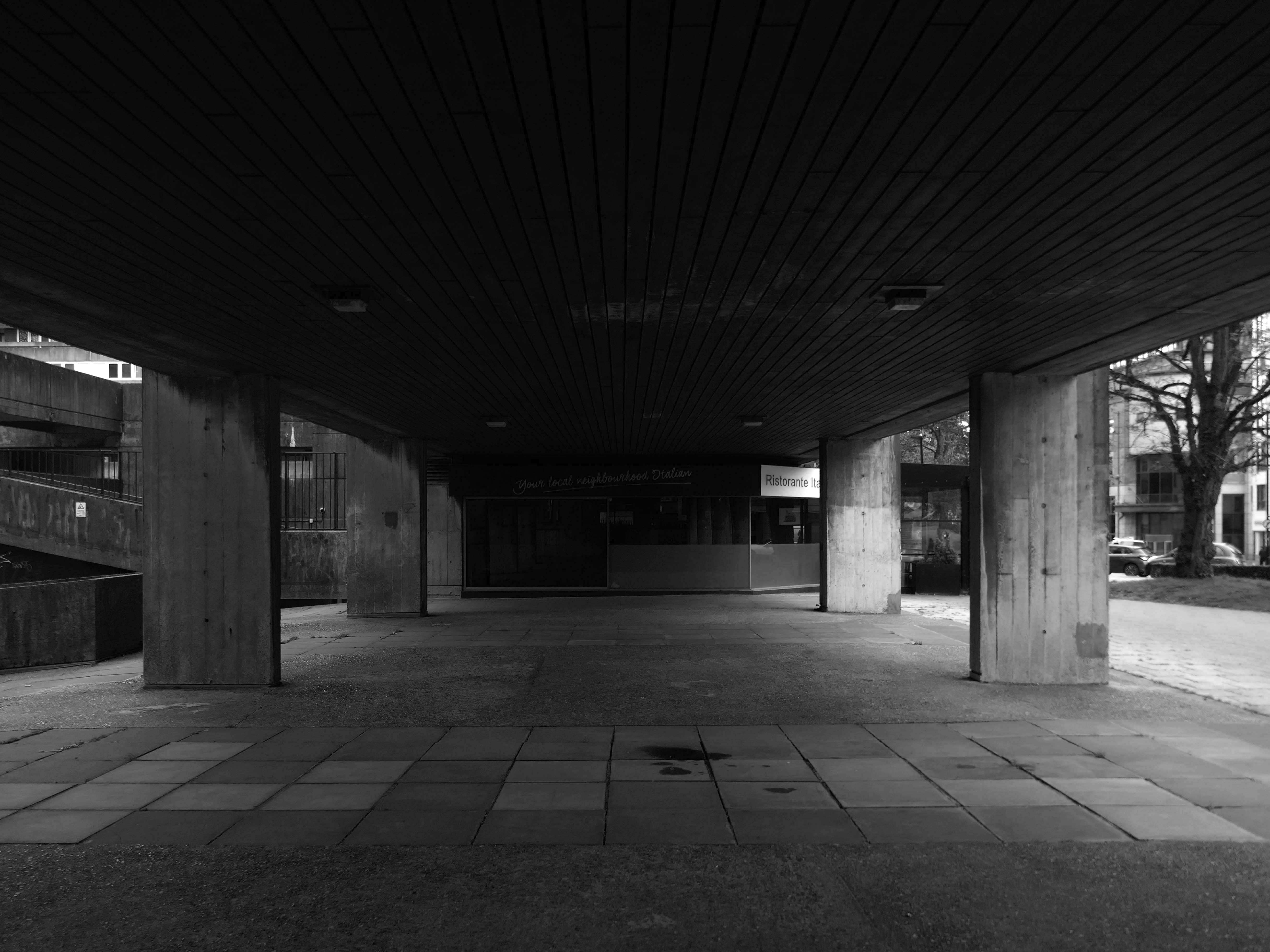
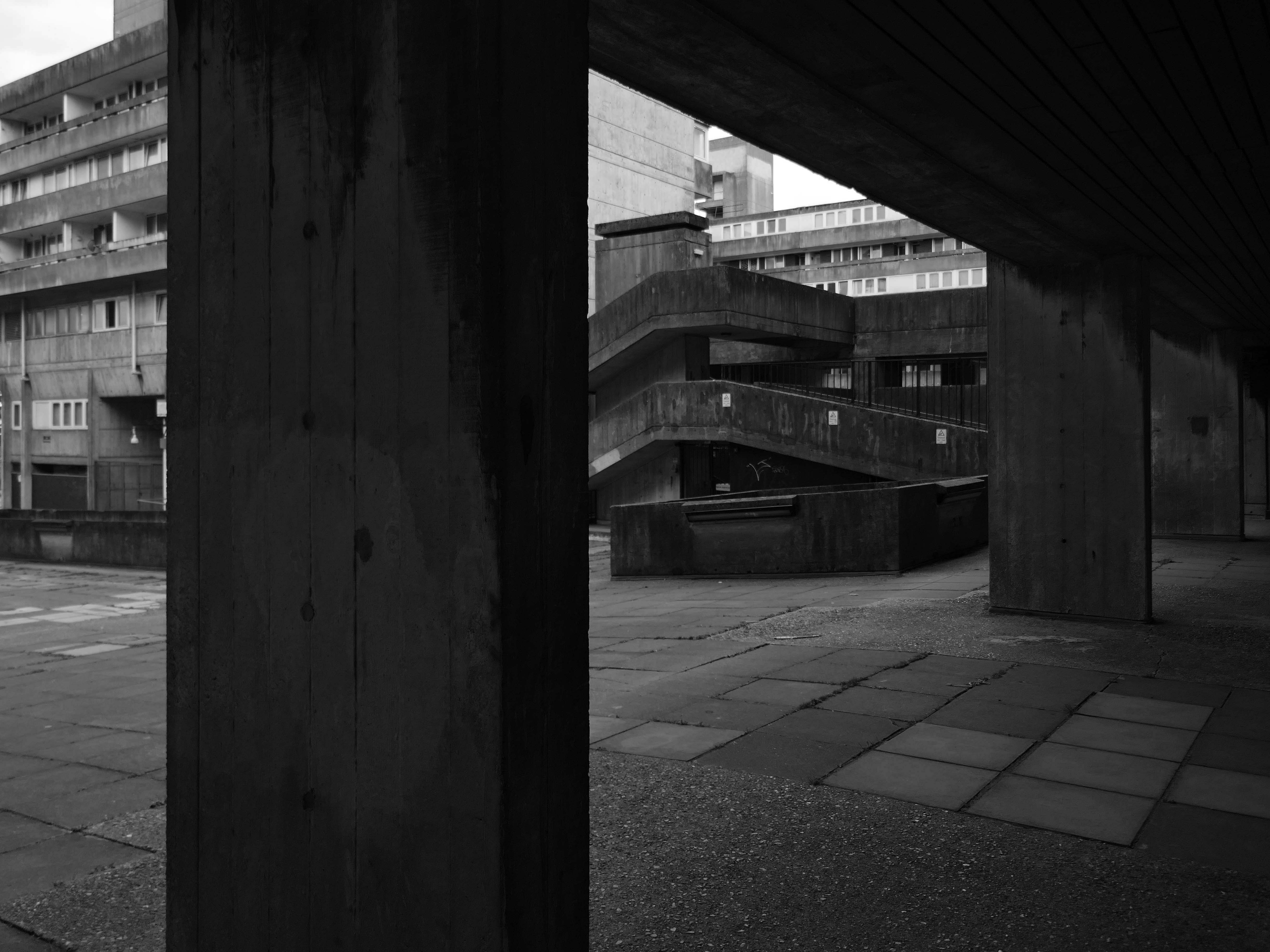

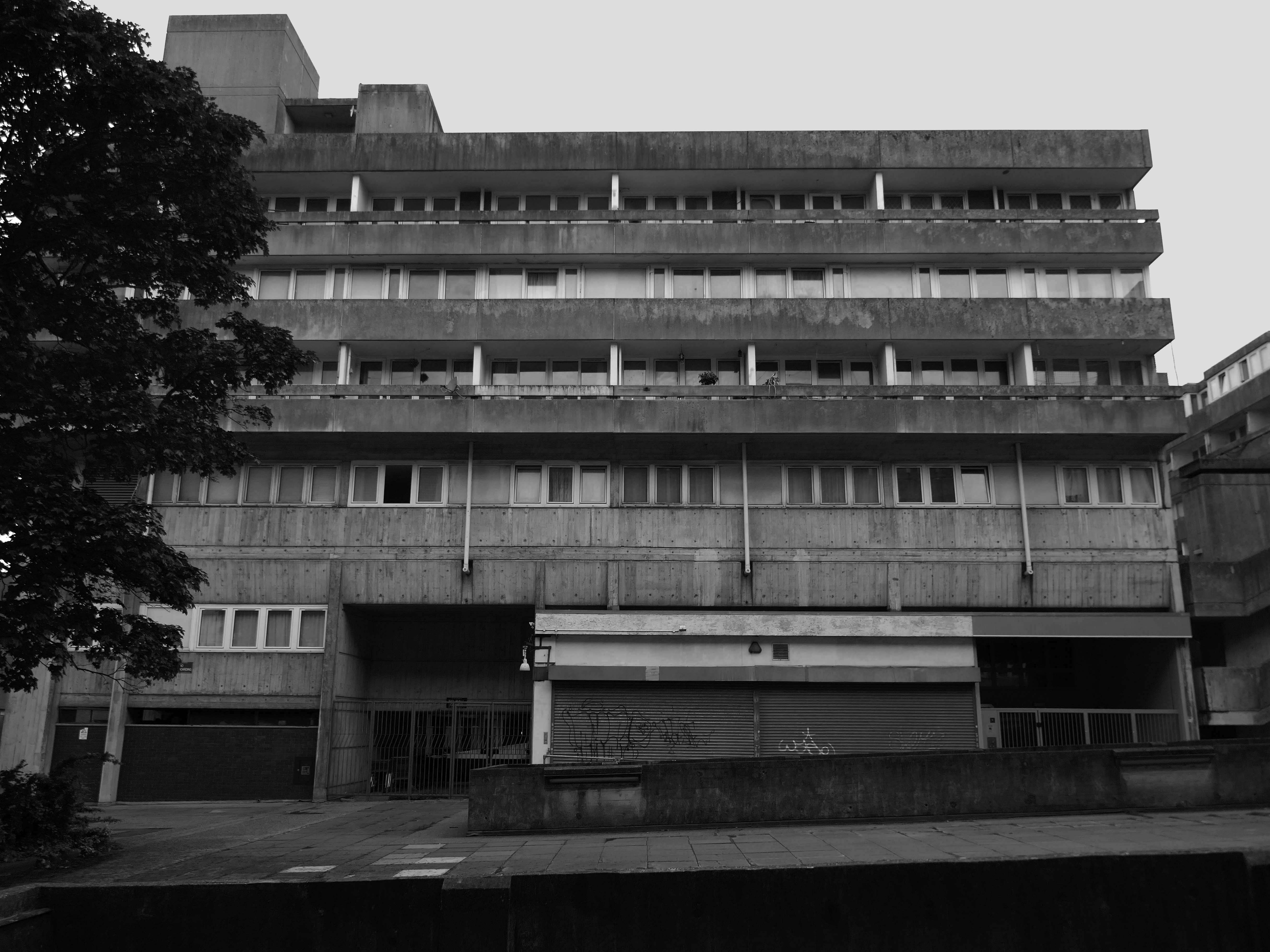
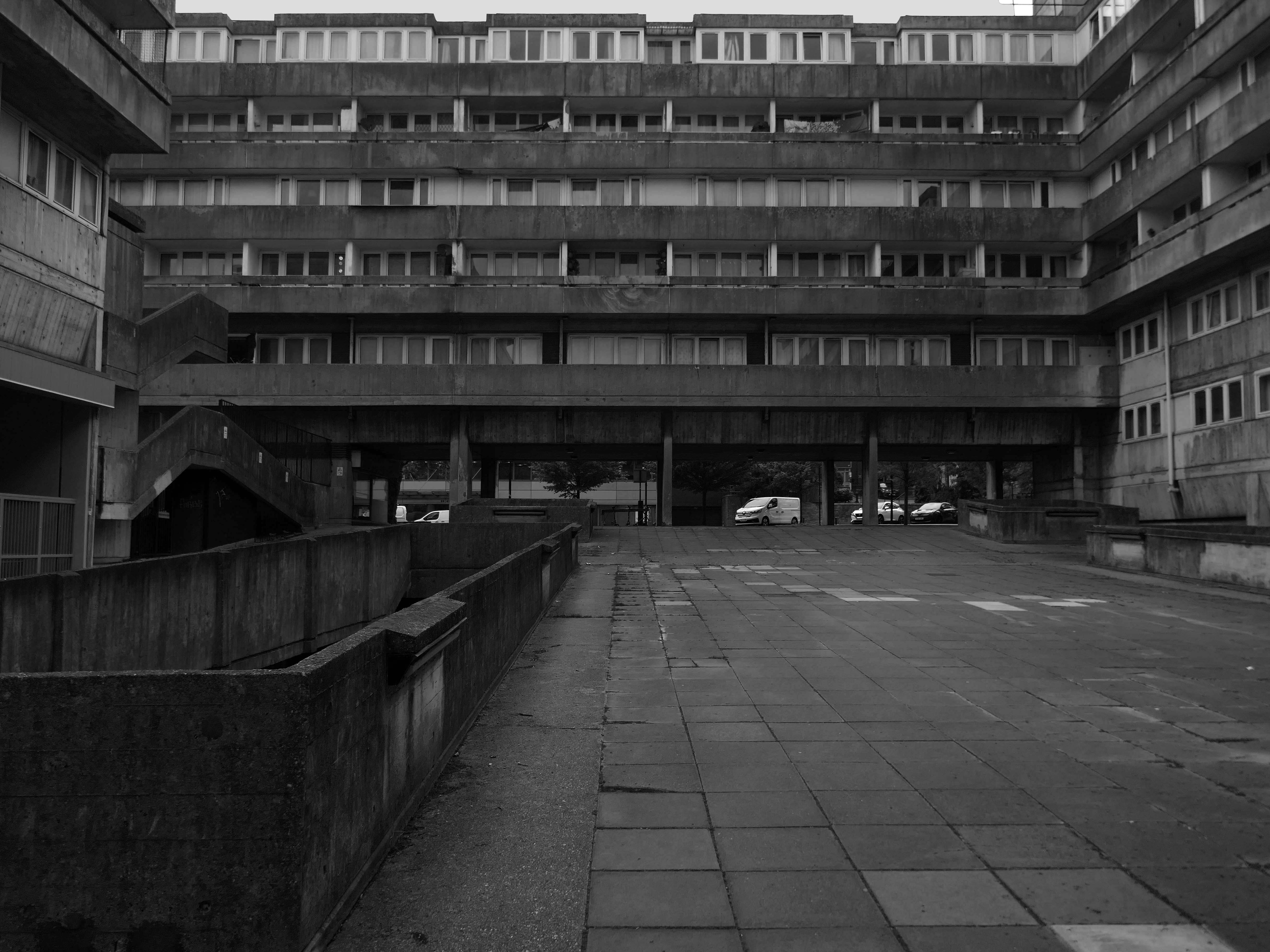
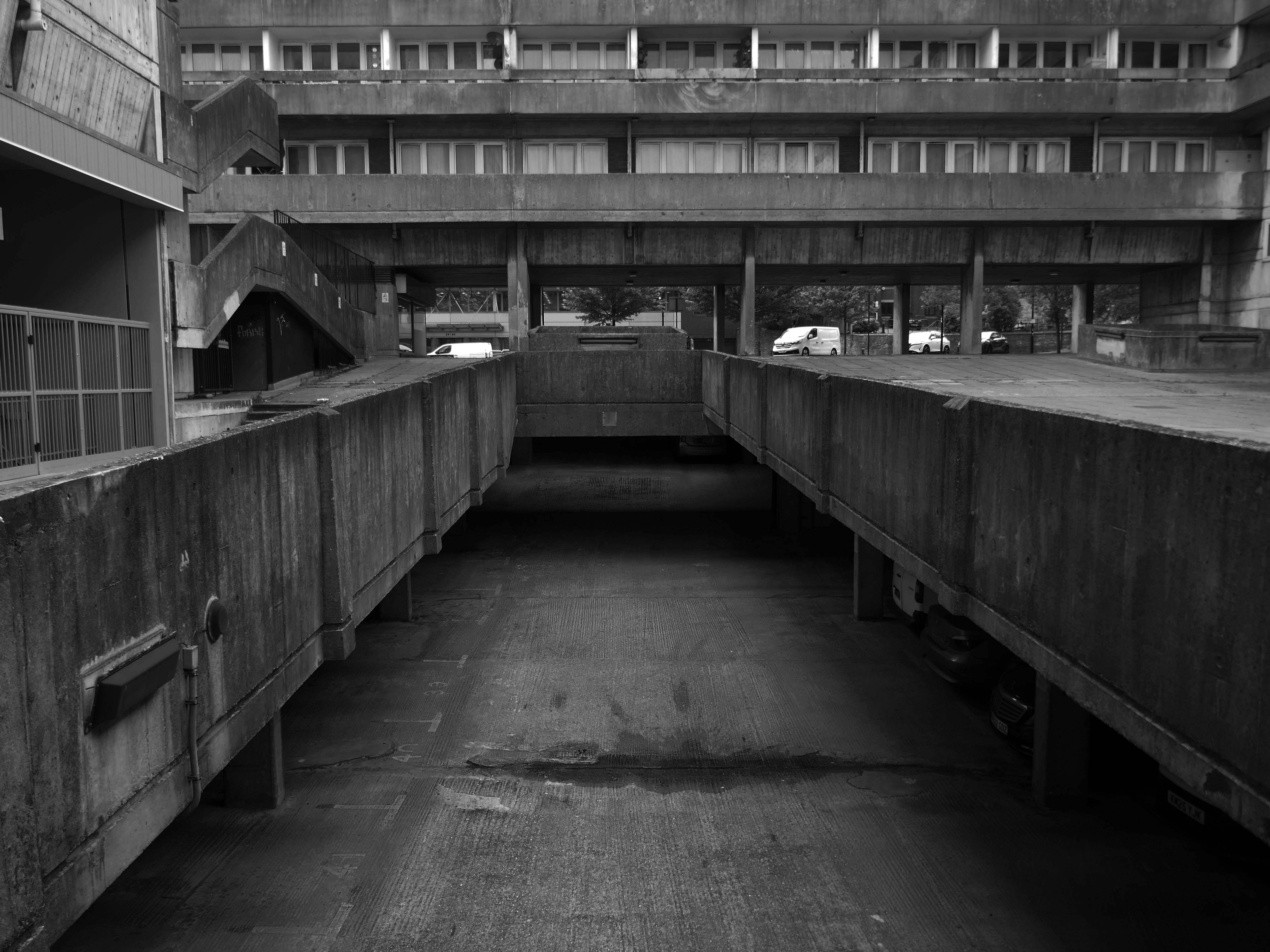
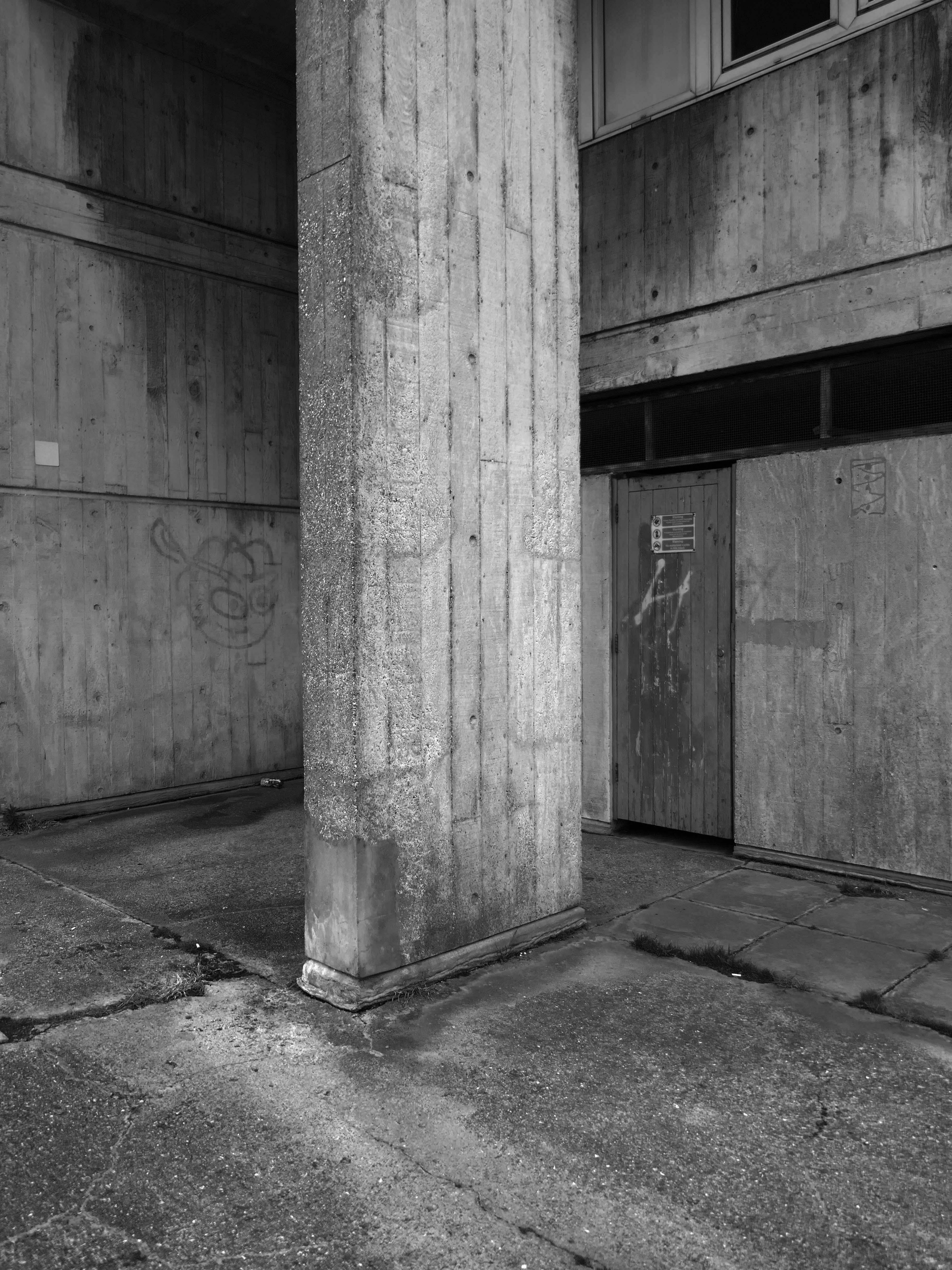
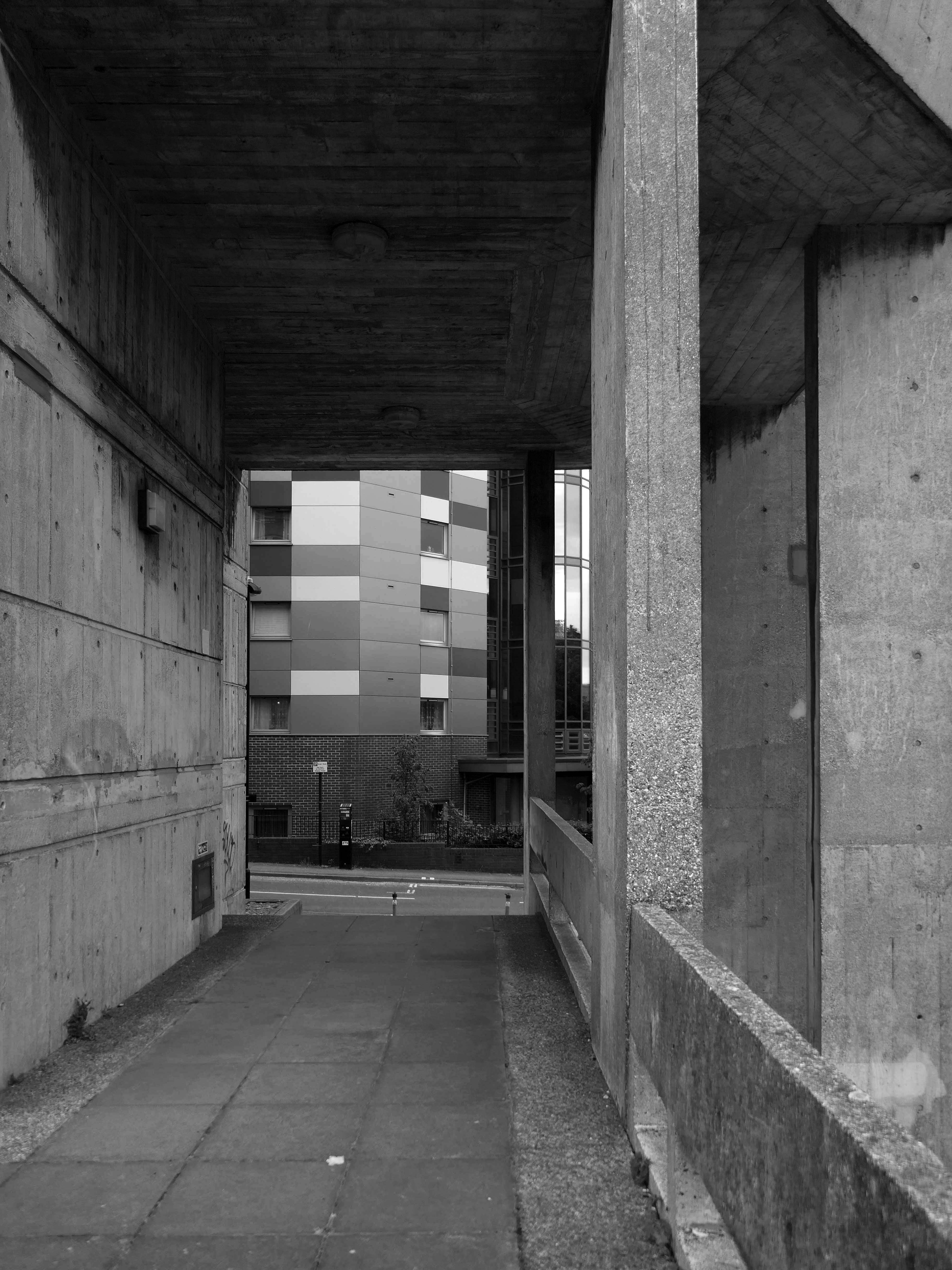
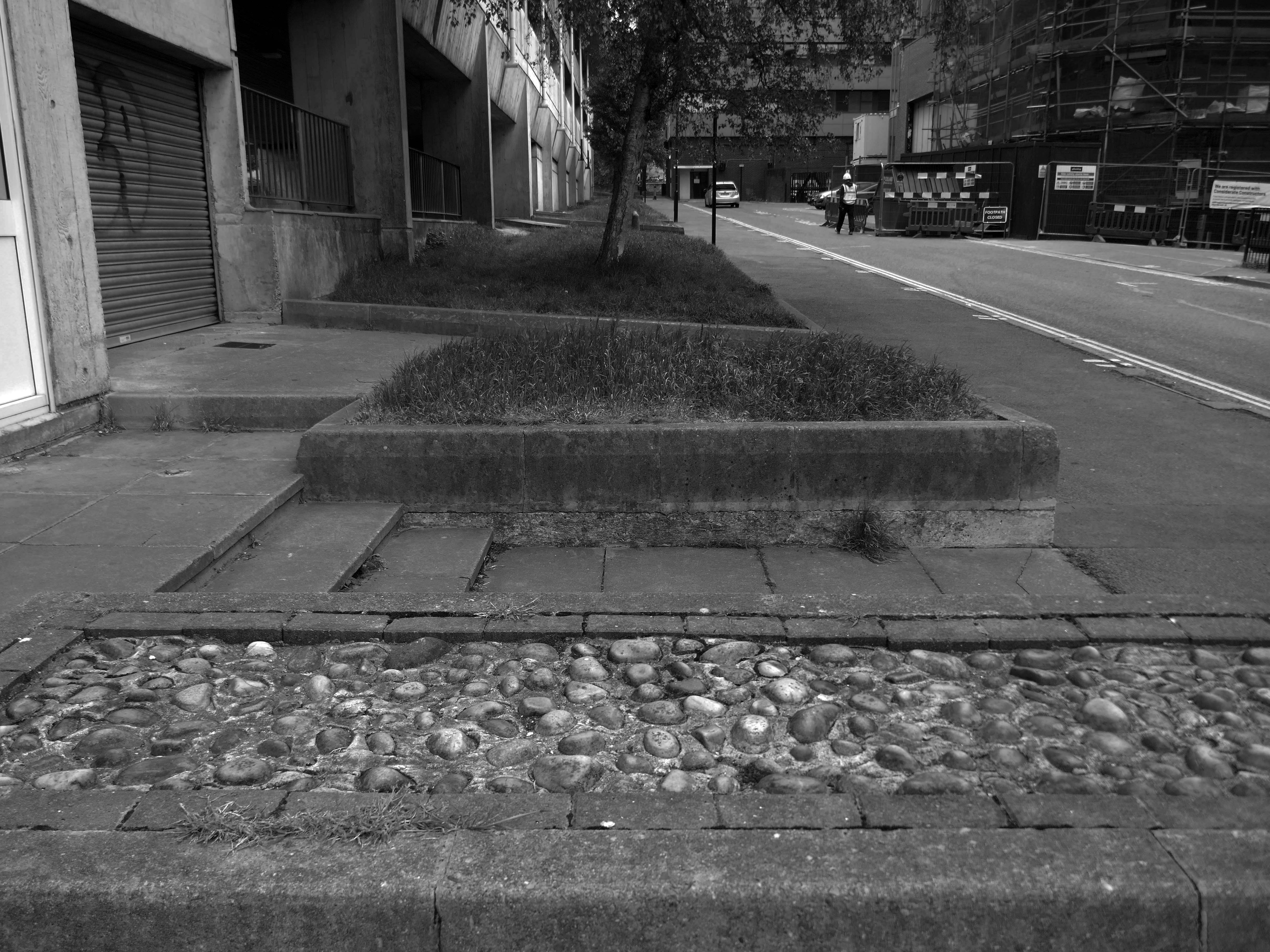
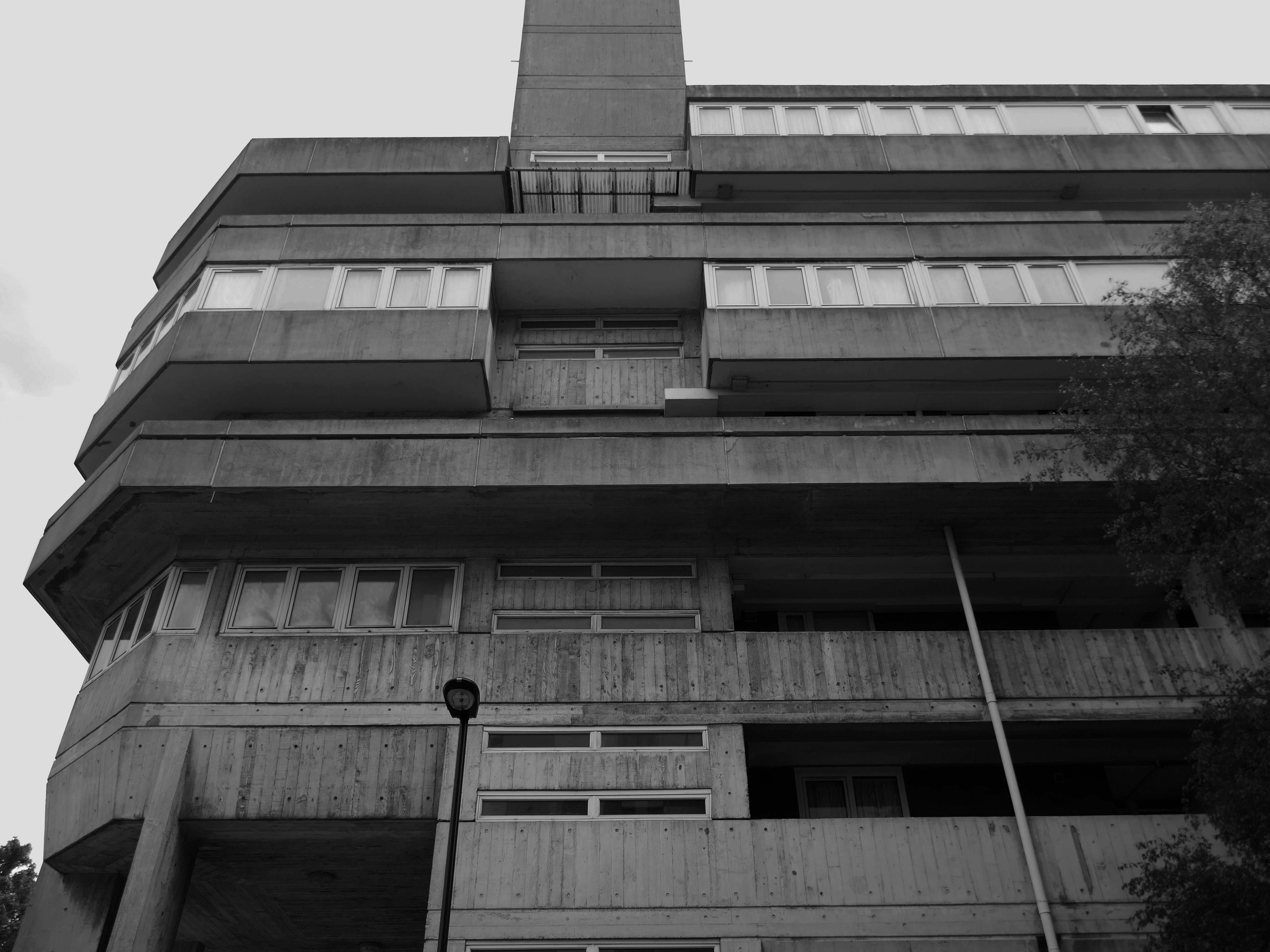
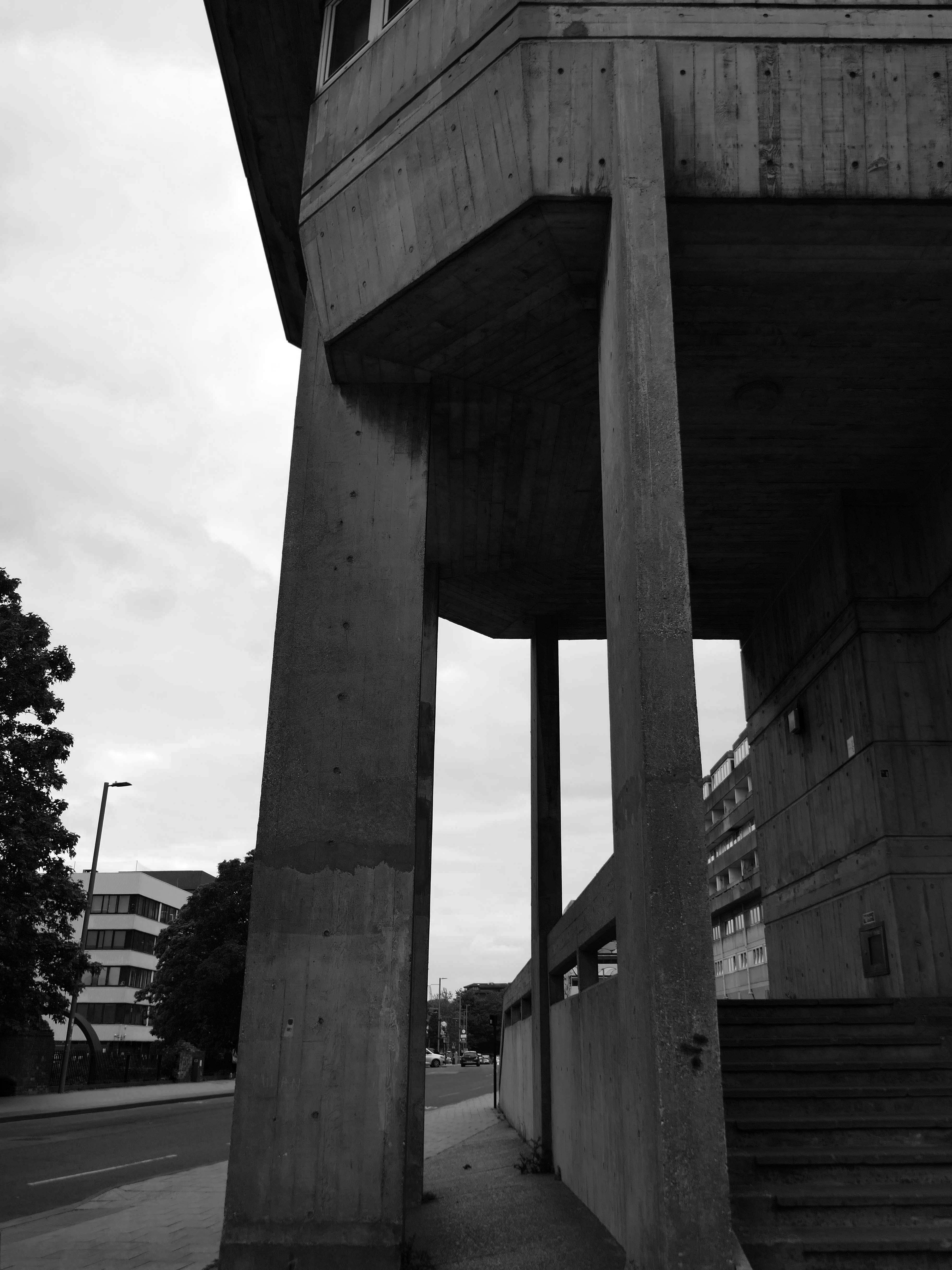
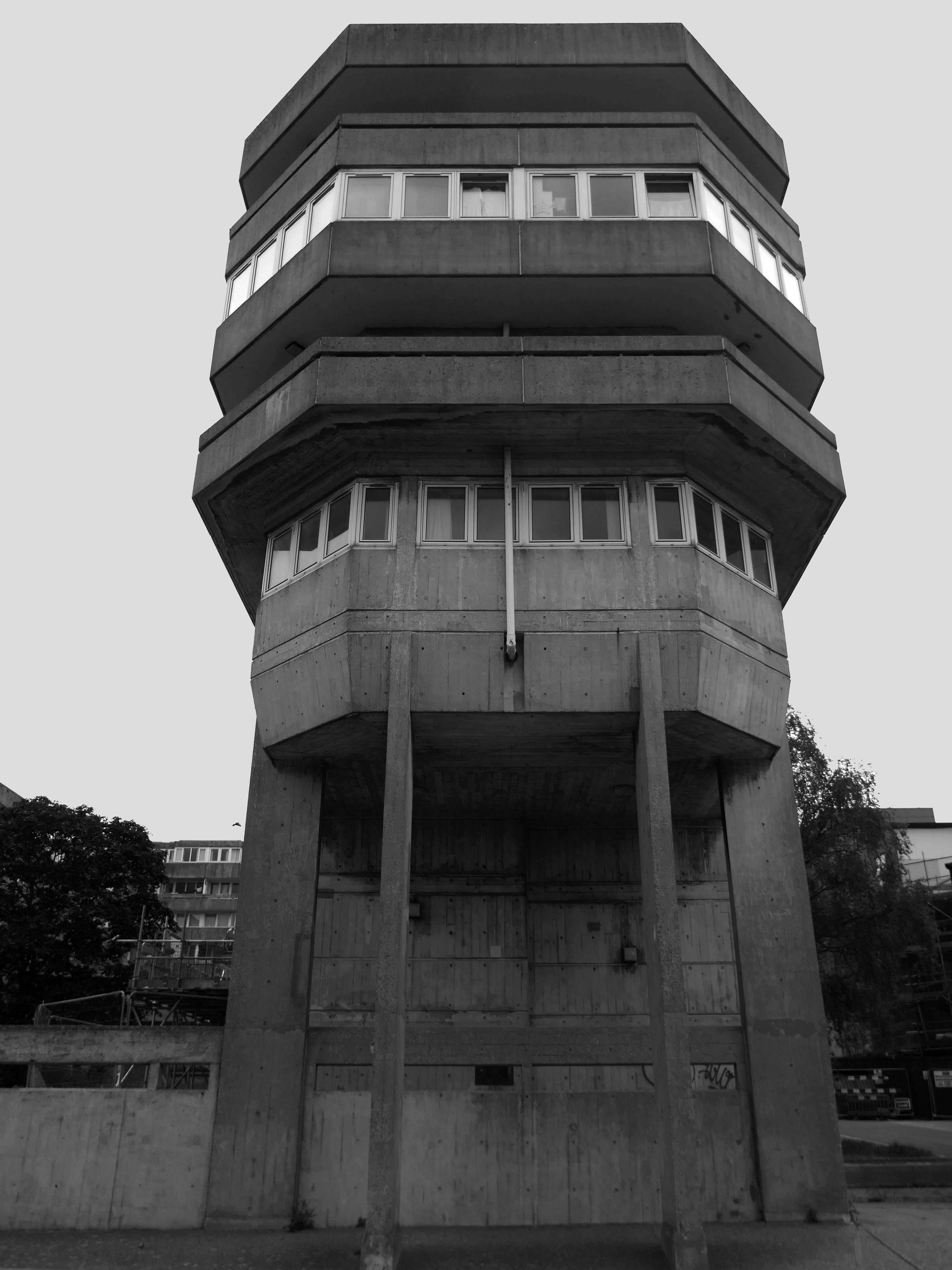
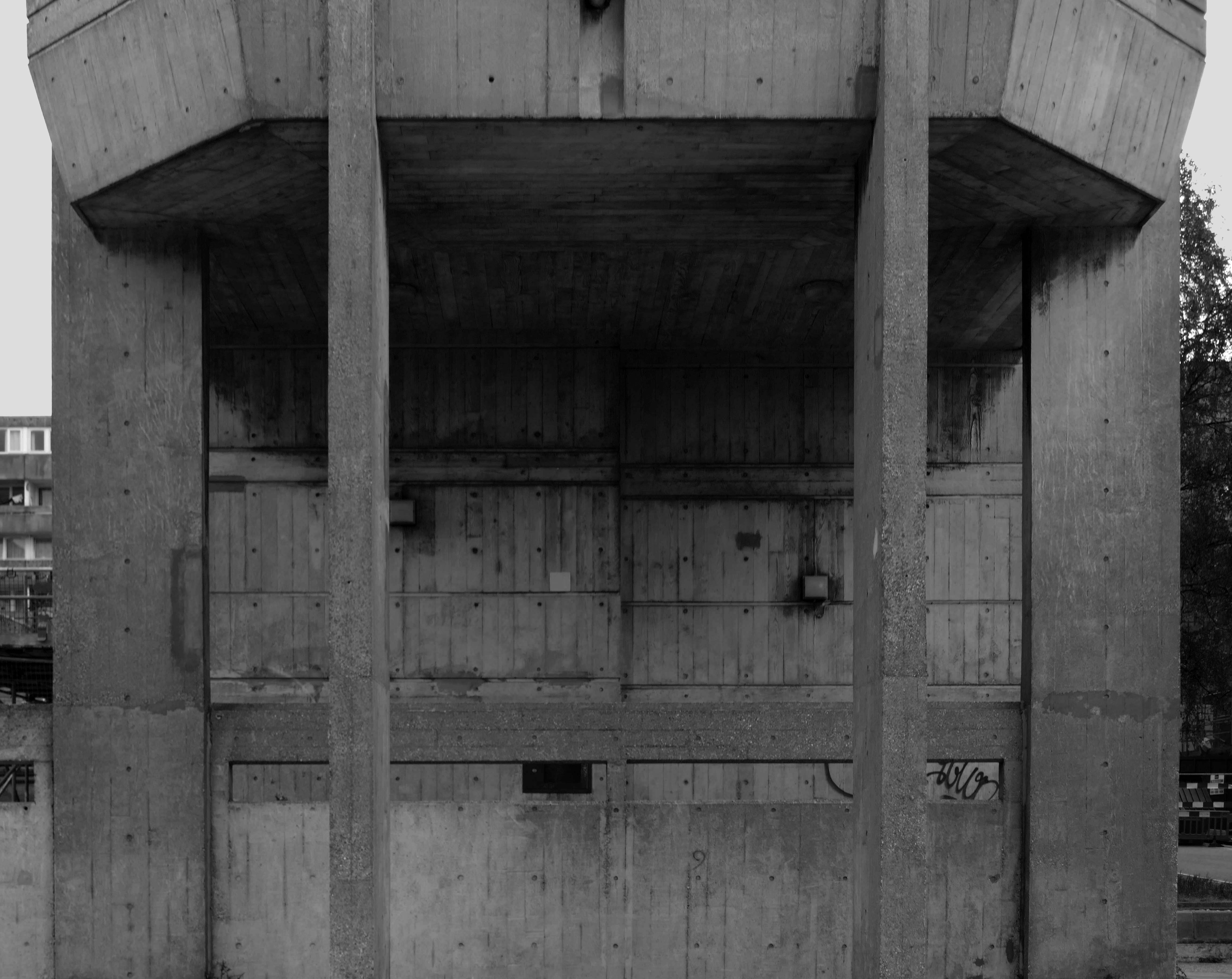
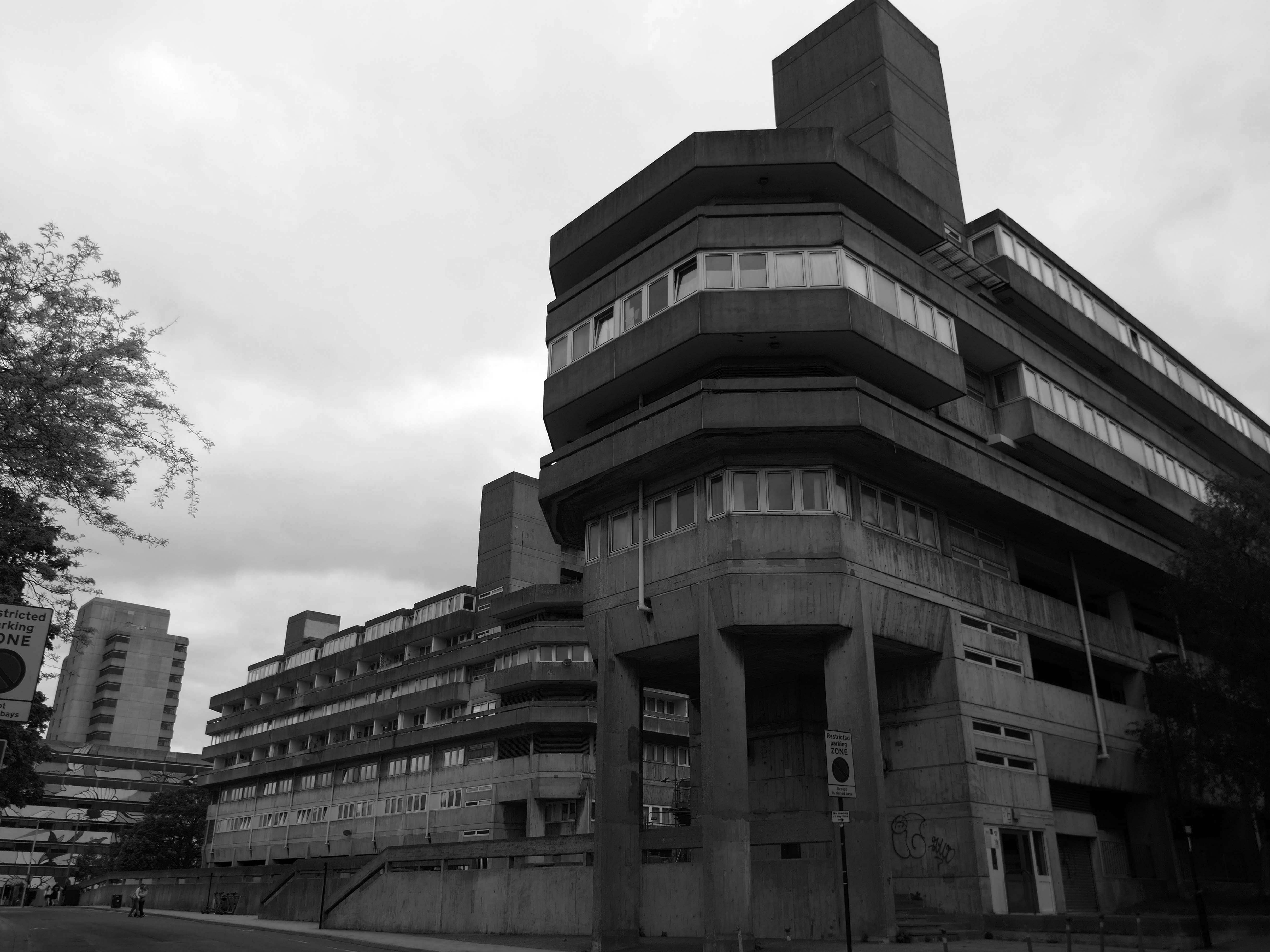

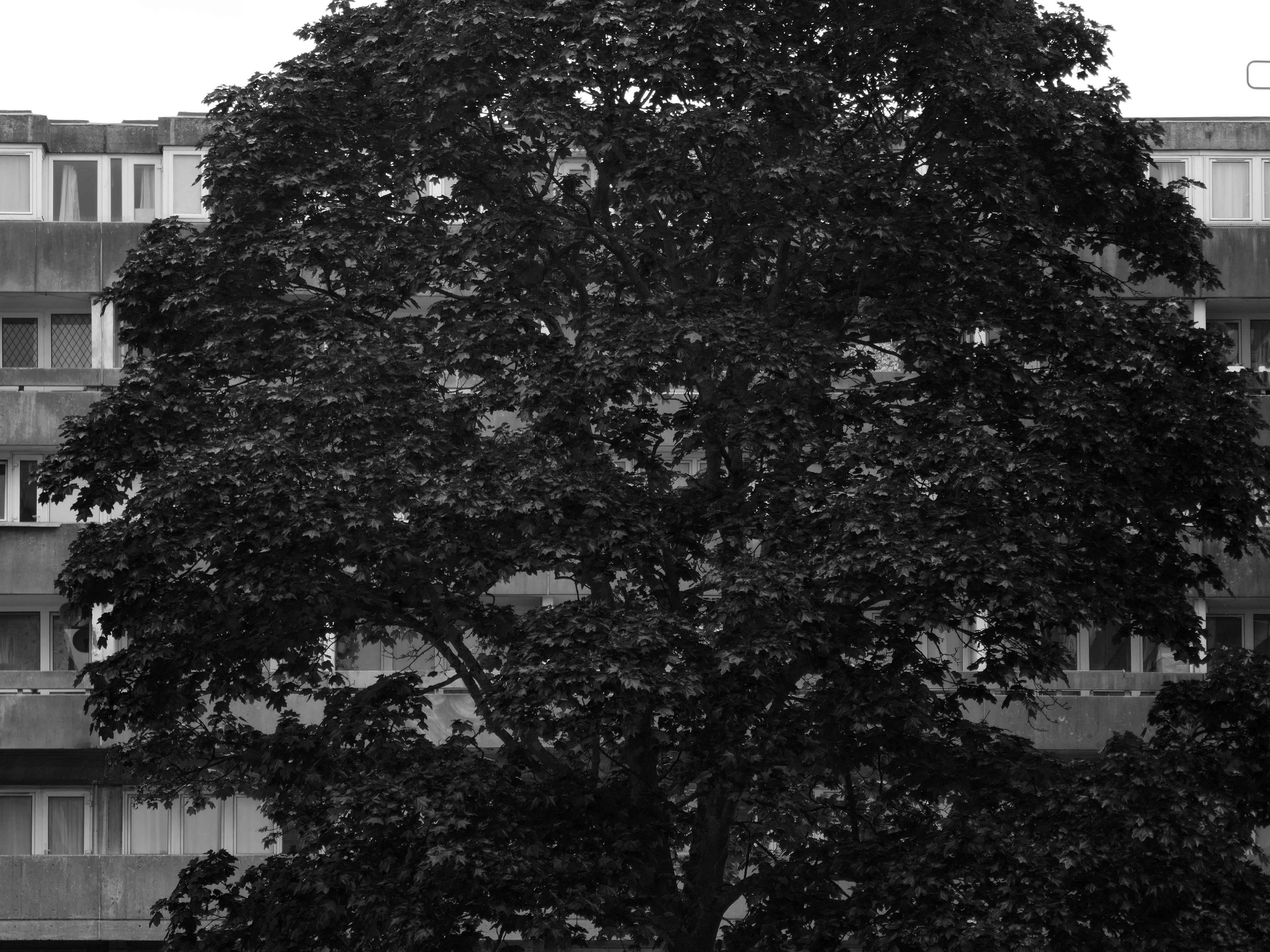
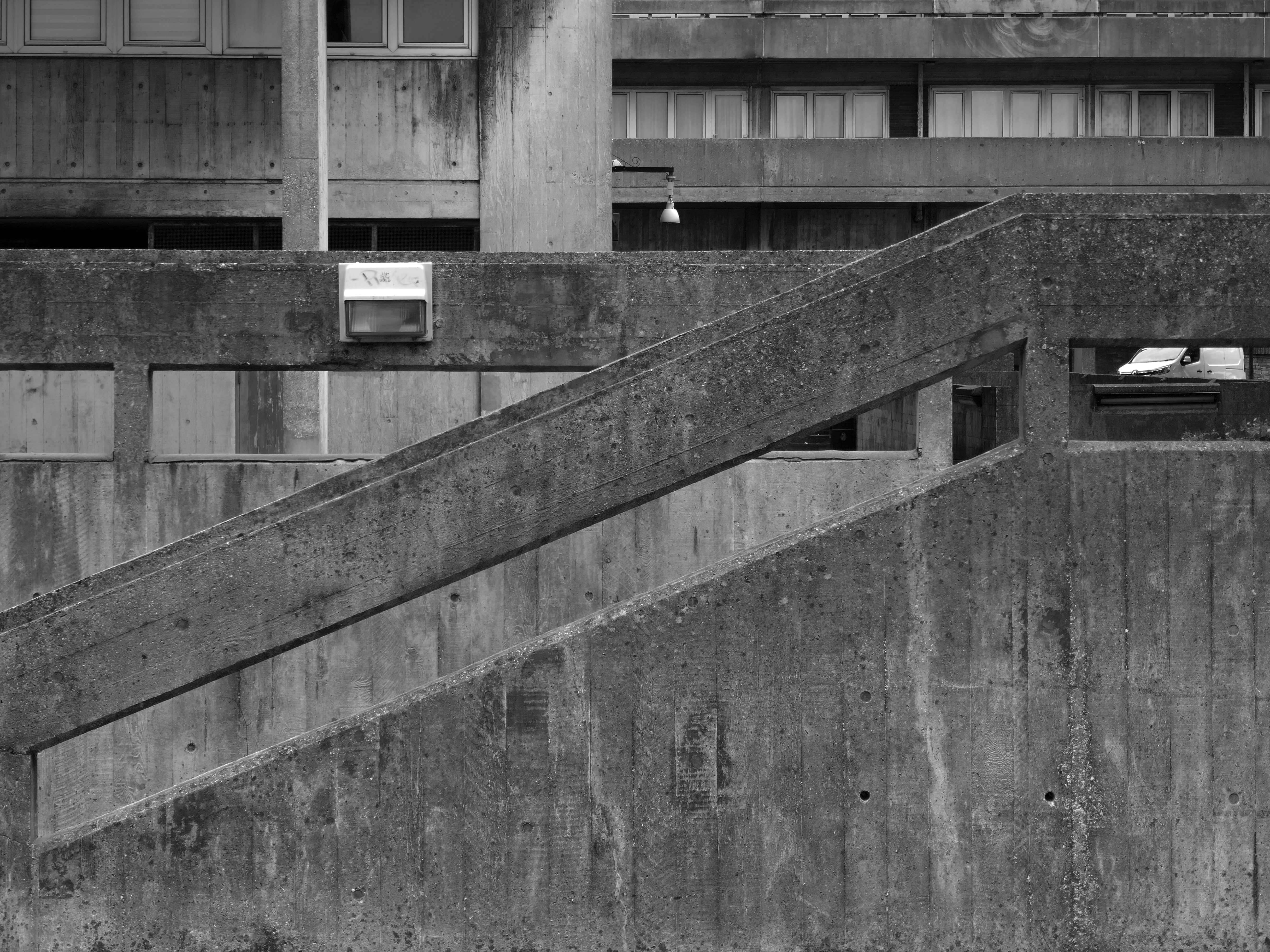
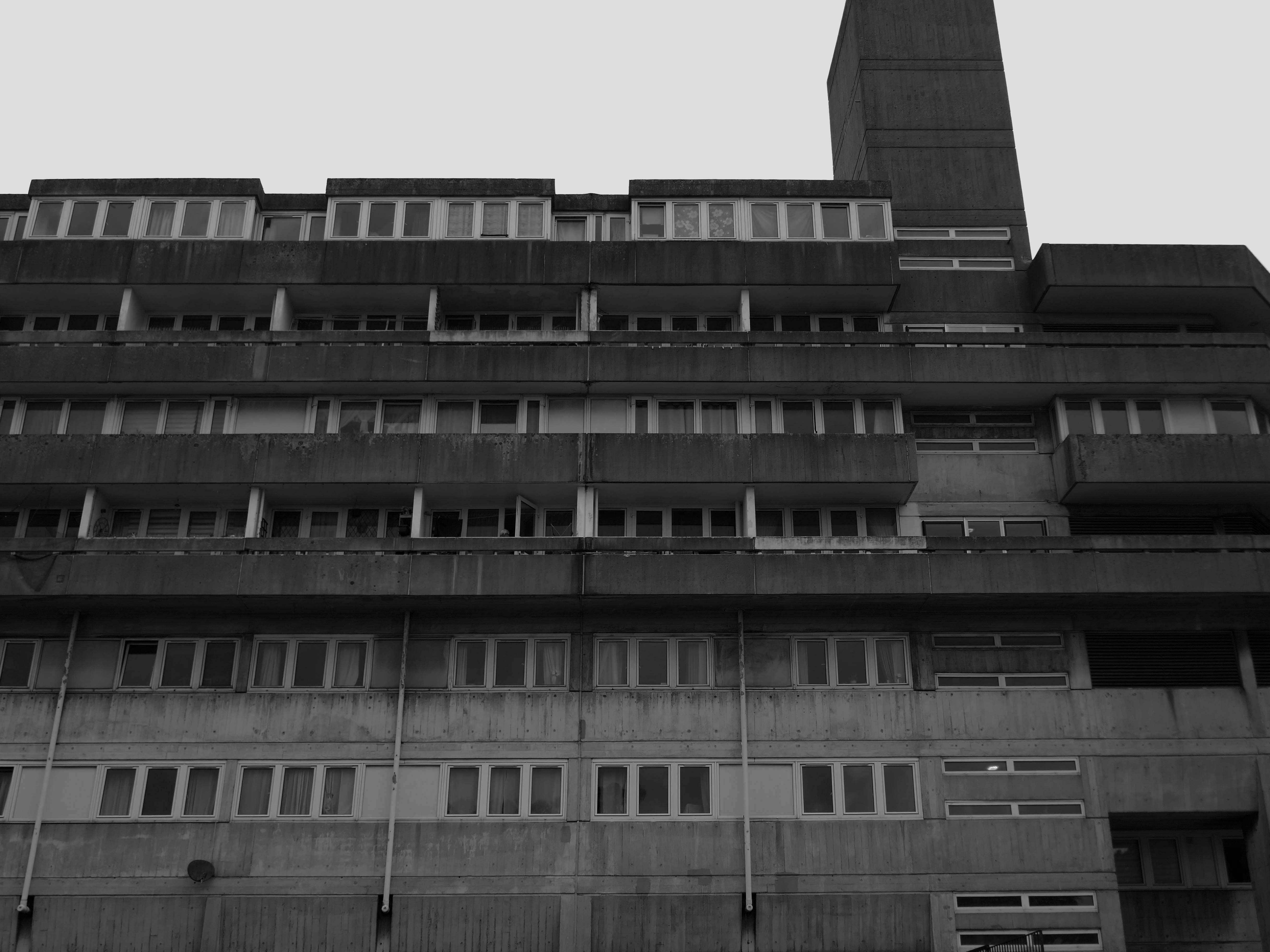

Designed by Lyons Israel Ellis for Southampton City Council in 1966, ED Lyons being the partner in charge and architects Frank Linden and Aubrey Hume also assigned to the job.
The structural engineers were Hajnal-Konyi and Myers and the firm of builders was G Minter.
The building is Grade II Listed.
Lyons Israel Ellis, though well known as a finishing school for the famed likes of Stirling, Gowan, Colquhoun et al, were the sort of Brutalists that didn’t get Yale scholarships, shiny monographs or late careers in pomo. They are found more often designing local authority housing, comprehensive schools and other unsexy things – most of them robust enough to be extant and in good nick. From their Old Vic extension through to the London School of Engineering, they were giants of big, chunky, angular neo-constructivist architecture rife with skylines, cantilevers and complex geometries, all in satisfyingly raw, tactile concrete. As Colquhoun later put it, this was architecture for those who had nothing but contempt for ‘the Englishness of English art’ and other consolatory narratives.
Their masterpiece, Wyndham Court, ought to be as well-known as the Brunswick Centre or the Barbican, and isn’t largely because of where it is. It is a monumental, civic housing project on the grandest scale. As a building, it shows more than a hint of rhetoric creeping into LIE’s usually astringent aesthetic. Placed just outside Southampton Central Station with a fine view of the docks, its service tower skyline and long, streamlined volumes have more than a hint of the ocean liner about them. Here they arc around a square, with shops on the ground floor, high-density-city centre living for council tenants rather than as an aspirational loft-living lifestyle. A magnificent vote of confidence in a city which has built little of note since, it’s also, for me, the building that announces that I’m ‘home’ far less depressingly than BDP’s repugnant West Quay shopping centre on the other side of the railway line – a massive concrete statement that another city was and still is possible.

