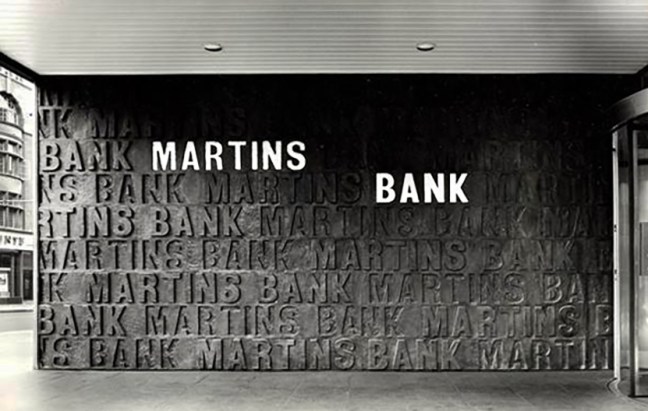
Martins Banks and Modernity

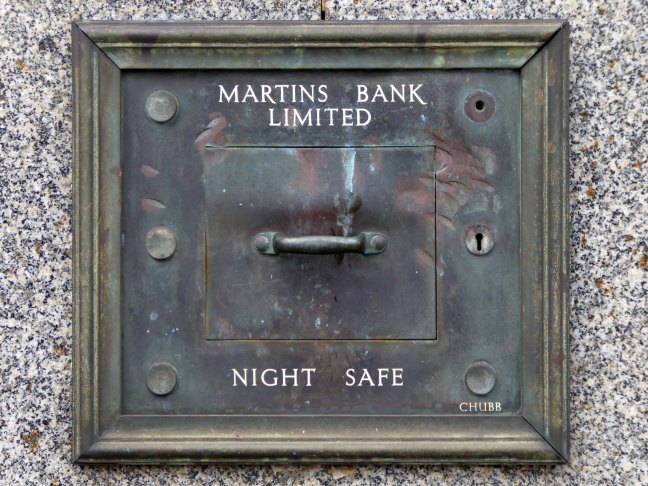
Martins Bank was a London private bank, trading for much of its time under the symbol of The Grasshopper, that could trace its origins back to Thomas Gresham and the London goldsmiths, from which it developed into a bank known as Martin’s Bank from 1890.[1] That bank was acquired in 1918 by the Bank of Liverpool, which wanted Martins to give it a London presence and a seat on the London Bankers’ Clearing House. The Martin name was retained in the title of the enlarged bank which was known as the Bank of Liverpool and Martins Limited. The title was shortened to Martins Bank Limited, without an apostrophe – in 1928, at the insistence of the directors of the Lancashire and Yorkshire Bank when it was bought by the Bank of Liverpool and Martins. The head office and managerial control remained firmly in Liverpool, cementing Martins’ place as the only English national bank to have its head office outside London. 

It was taken over in 1969 by Barclays.

Wikipedia

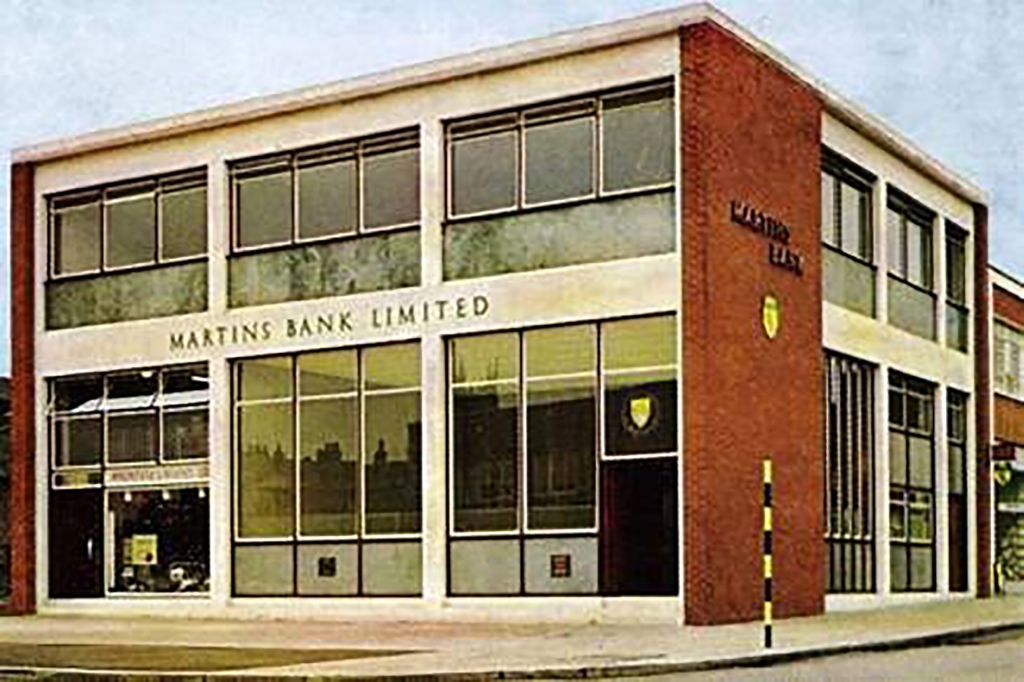
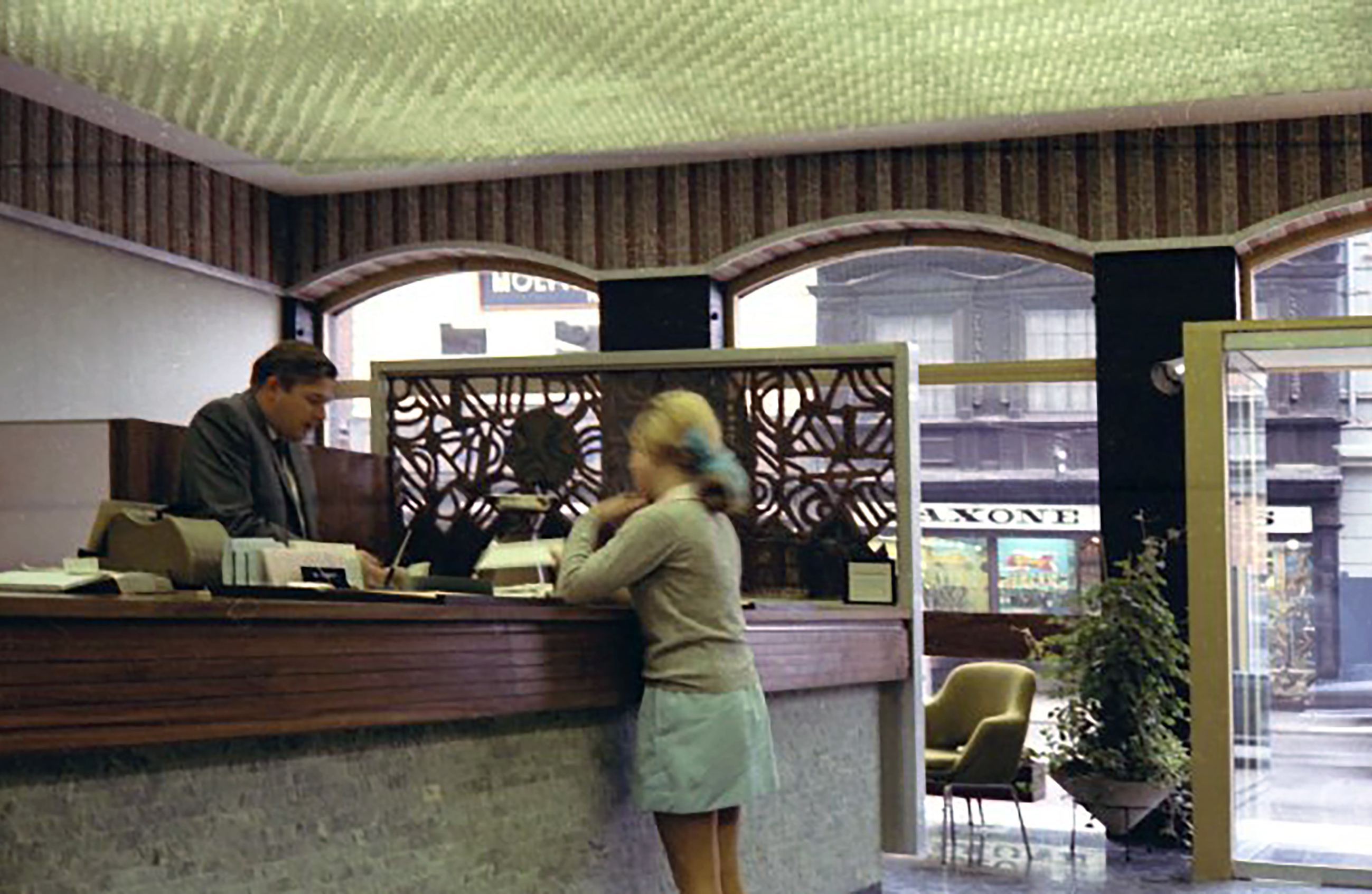
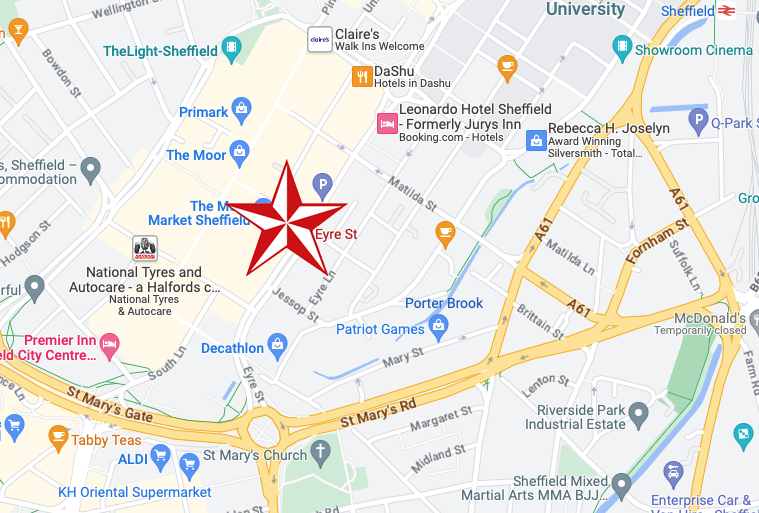
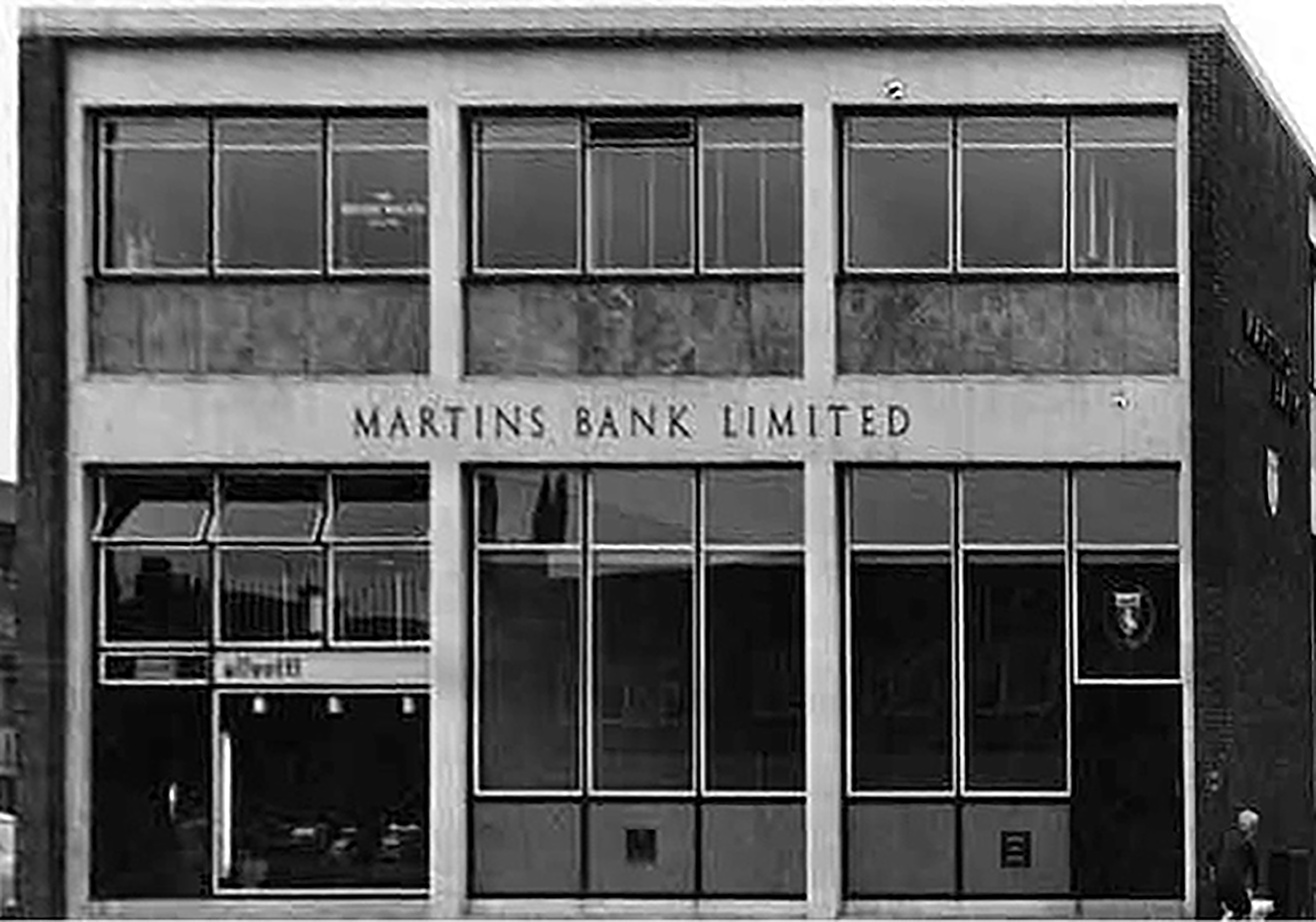
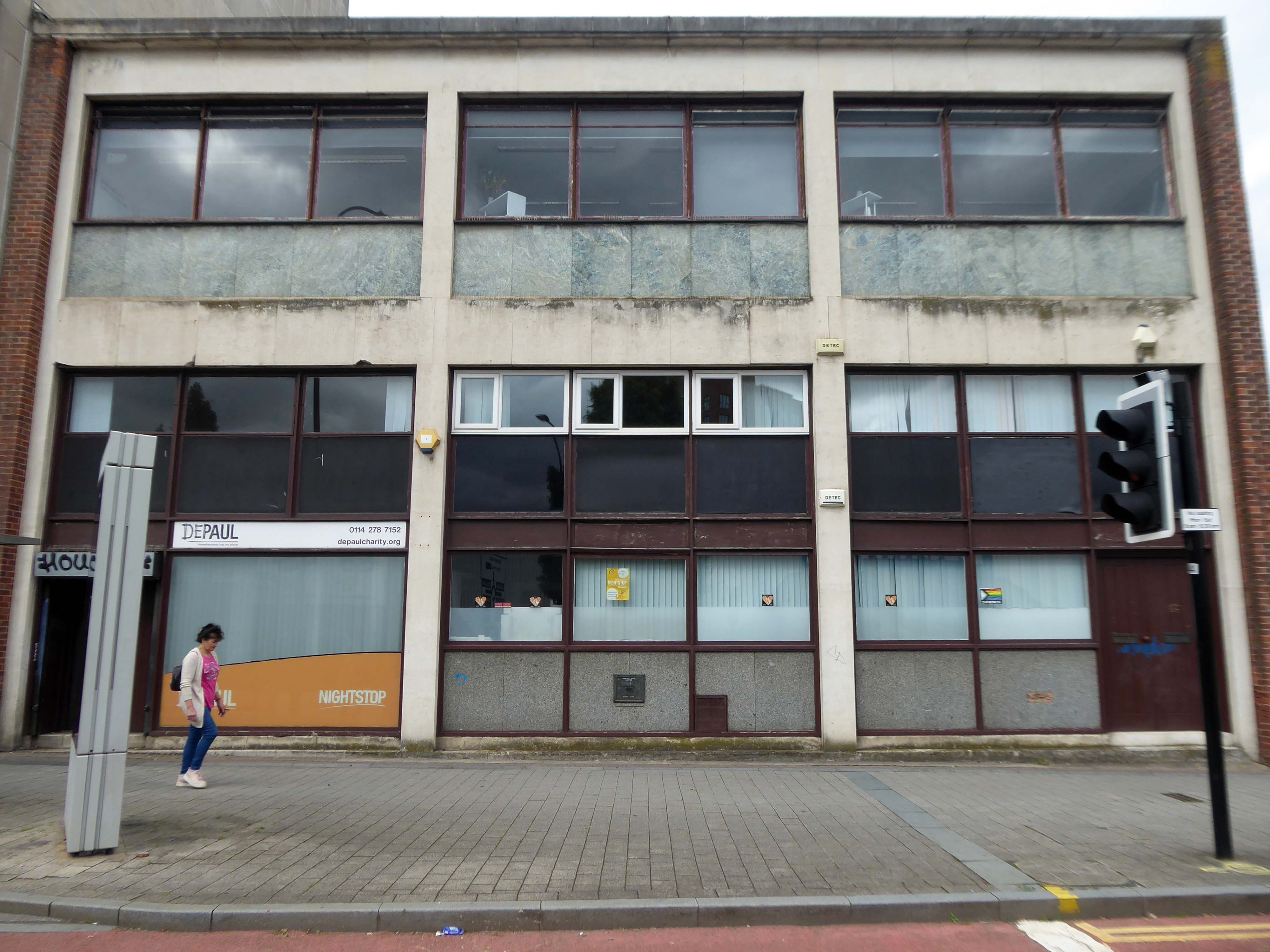
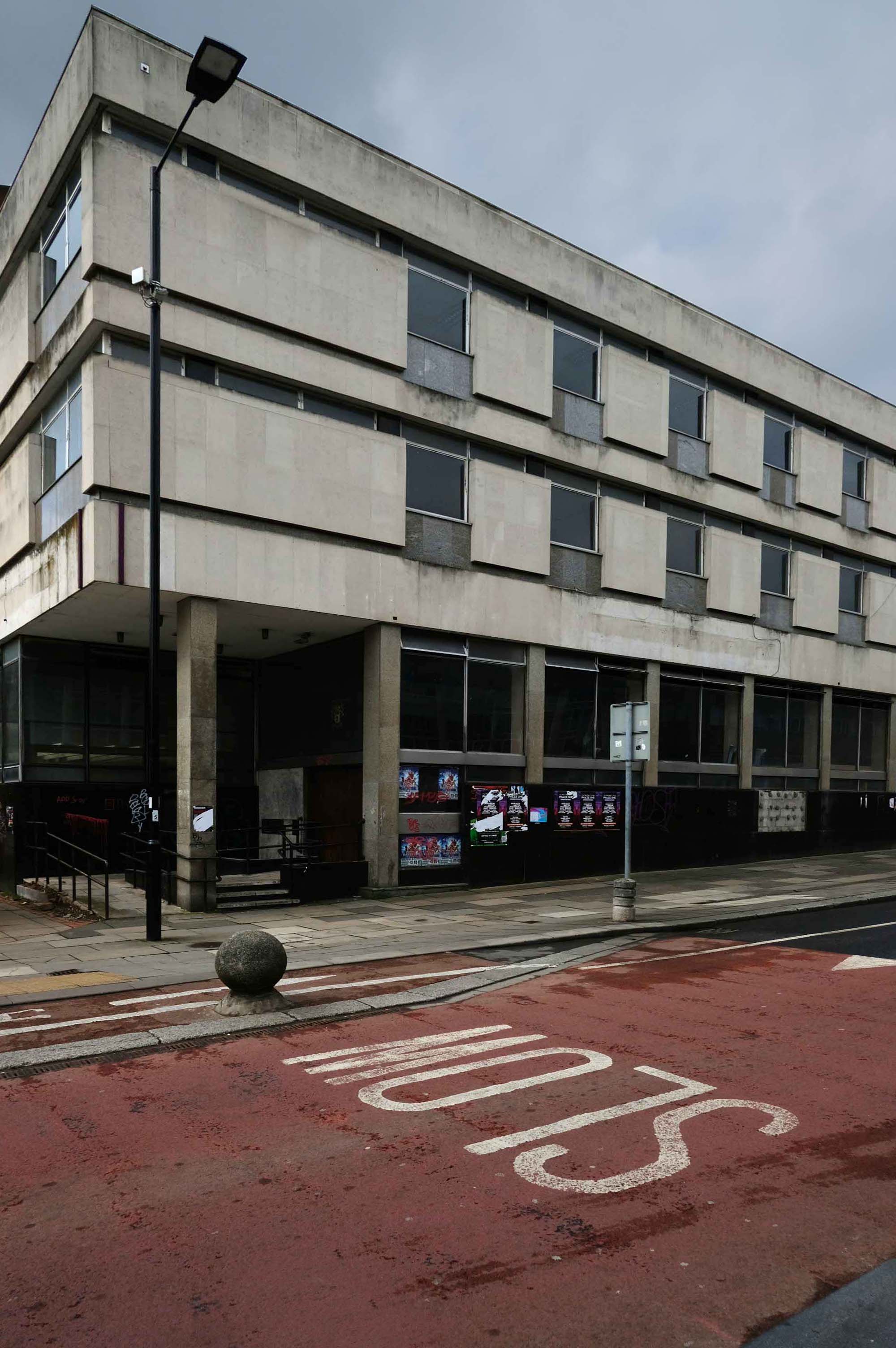
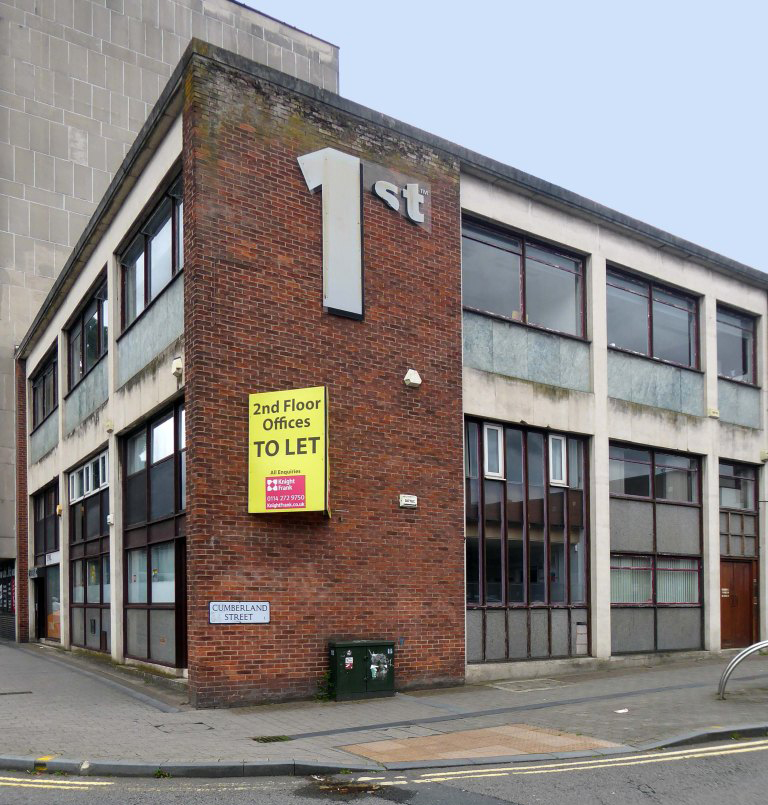
To begin at the beginning, to begin in Sheffield – at Martins Bank Eyre Street.
Opened in 1961, Martins Bank’s branch at Sheffield Moor is new and purpose built, occupying space left in the Sheffield Moor area by the bombing of the second world war. Time flies however, and more than fifty years on, the building is empty and awaiting the next chapter of its life.
Martins Archive

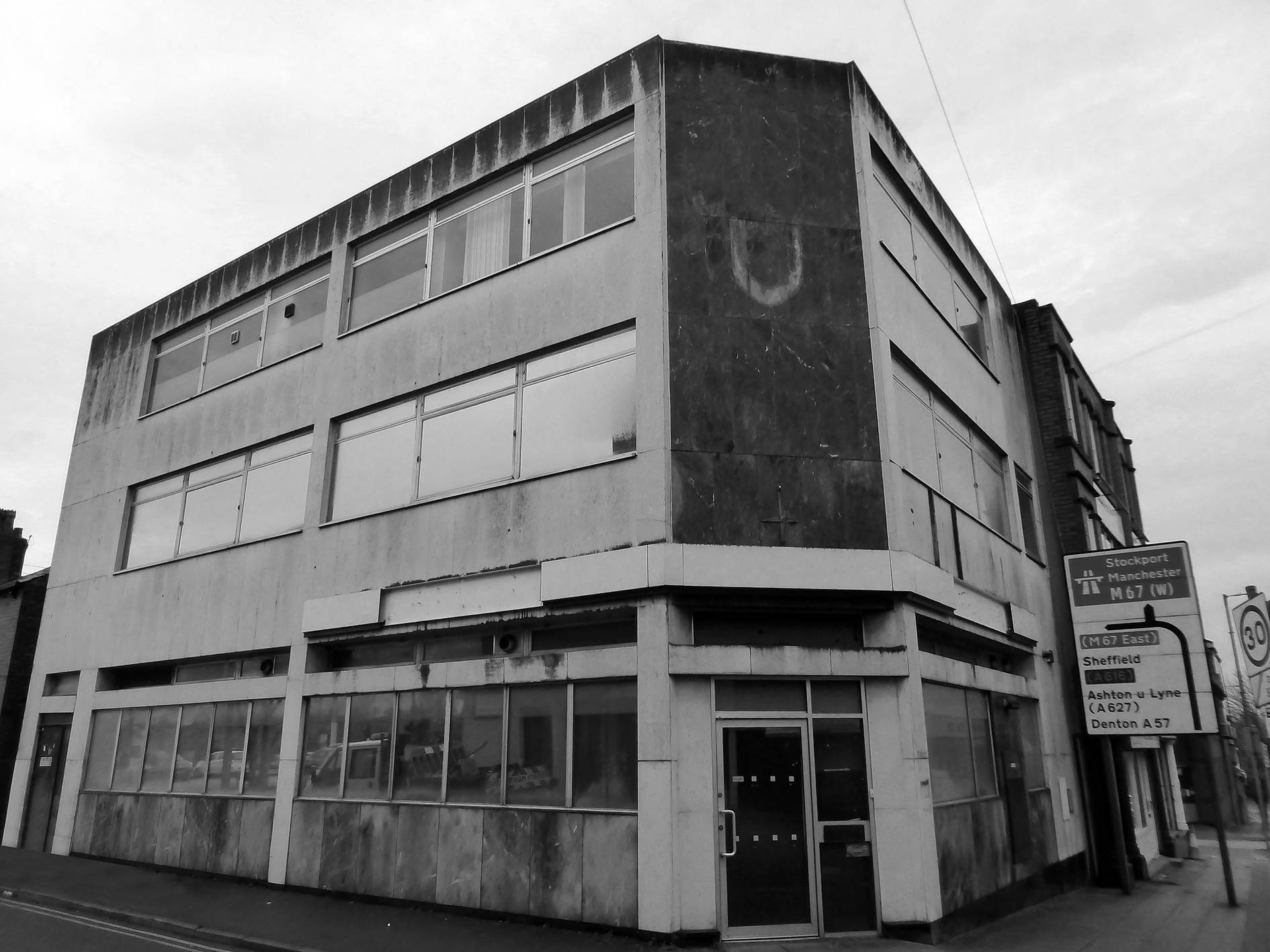
Onwards to 38 Market Street Hyde – photographed as part of my Tameside Moderne book.
Seen here in 1963 – the year of its opening.
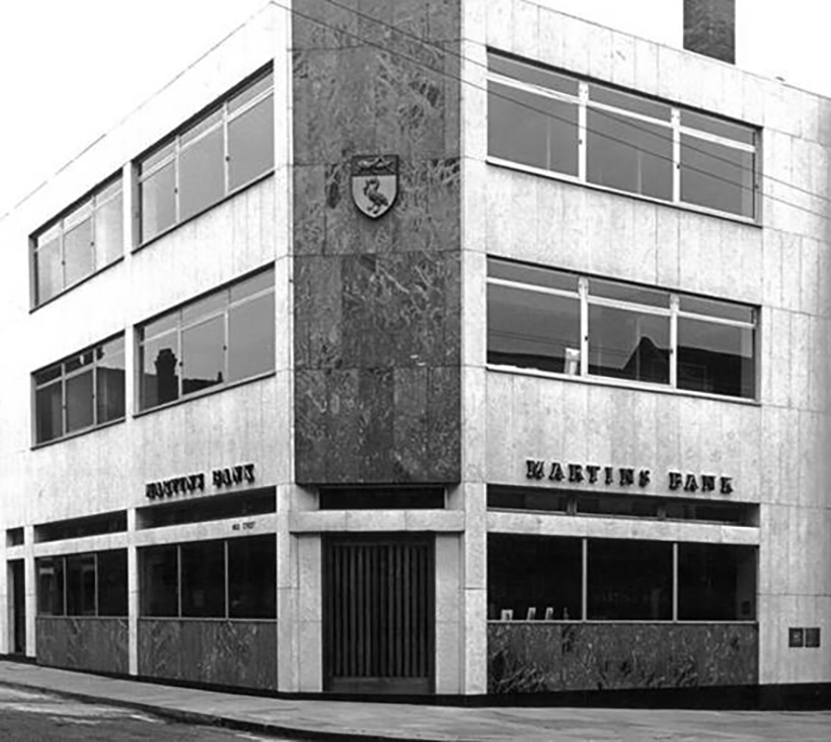
The rebuilt branch at 38 Market Street Hyde is typical of the clean lines and minimal fuss of Martins’ 60s rebuilds.  After a year or so in temporary premises at 25 Market street it re-opens in 1965, and a year later a smaller but remarkably similar looking branch is completed at Peterborough.
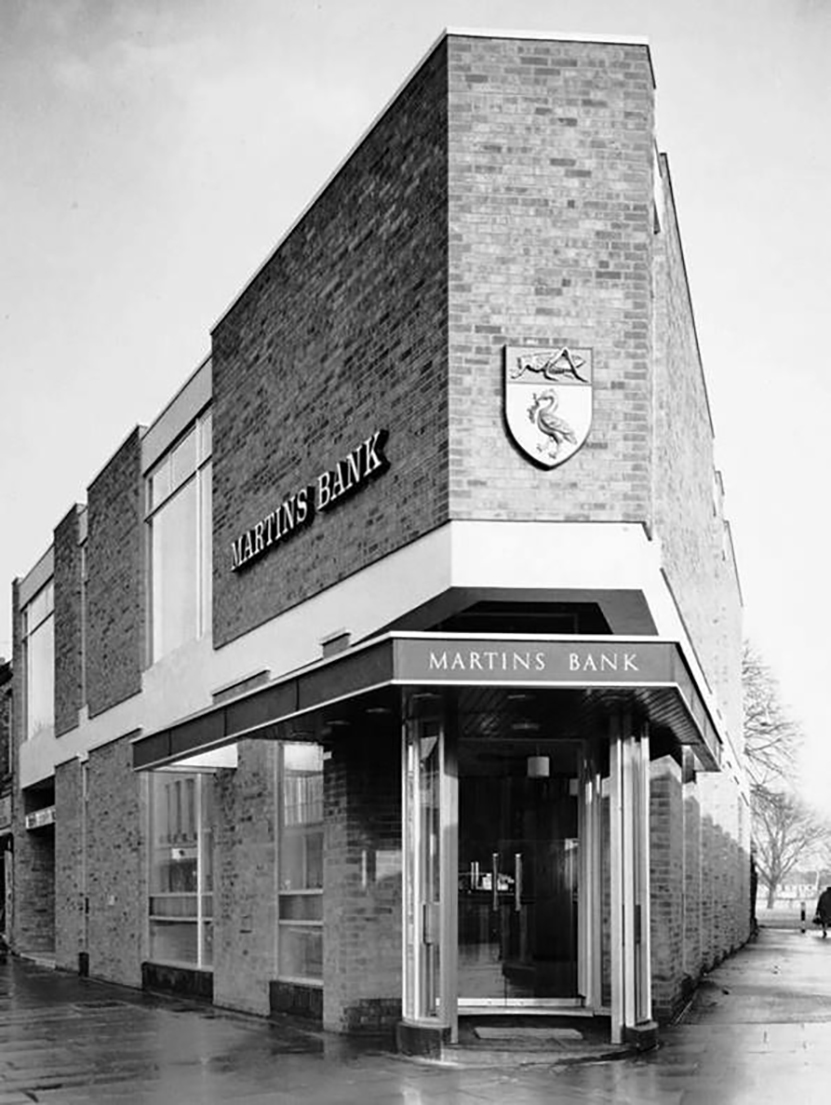
Martins Archive

Then last week in Burnley, I stumbled across another former branch, whilst on my Burnley walk – it is currently trading as the Real Food Hall, Vault Cinema and Above boutique hotel, having previously hosted a variety of retail outlets.

Architect: Mr J E Wadsworth of Samuel Taylor Son & Platt.
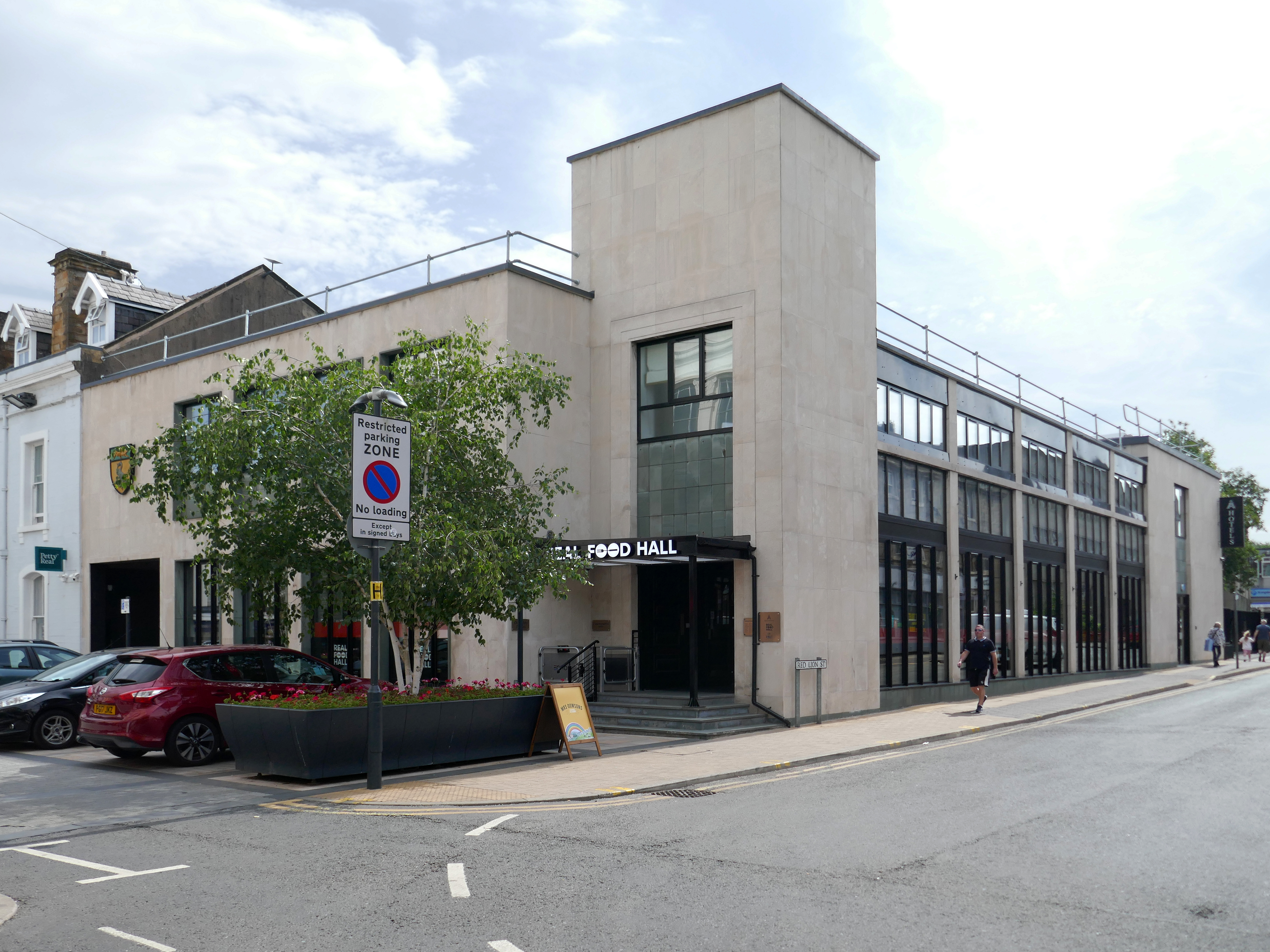
Discover Burnley’s premier destination for culinary delights. Nestled on Manchester Road, Real Food Hall offers a vibrant and diverse food experience that tantalizes every taste bud. Whether you’re craving gourmet burgers, delectable street food, or indulgent desserts, we’ve got something for everyone.

Enjoy top movies in a luxurious former bank vault, featuring high-end design, ultimate comfort, and a selection of premium snacks and beverages.

Indulge in next-level hospitality with Burnley’s largest, most intelligent hotel rooms — tailored for football fans, couples, and business travellers seeking a seamless, stylish stay.
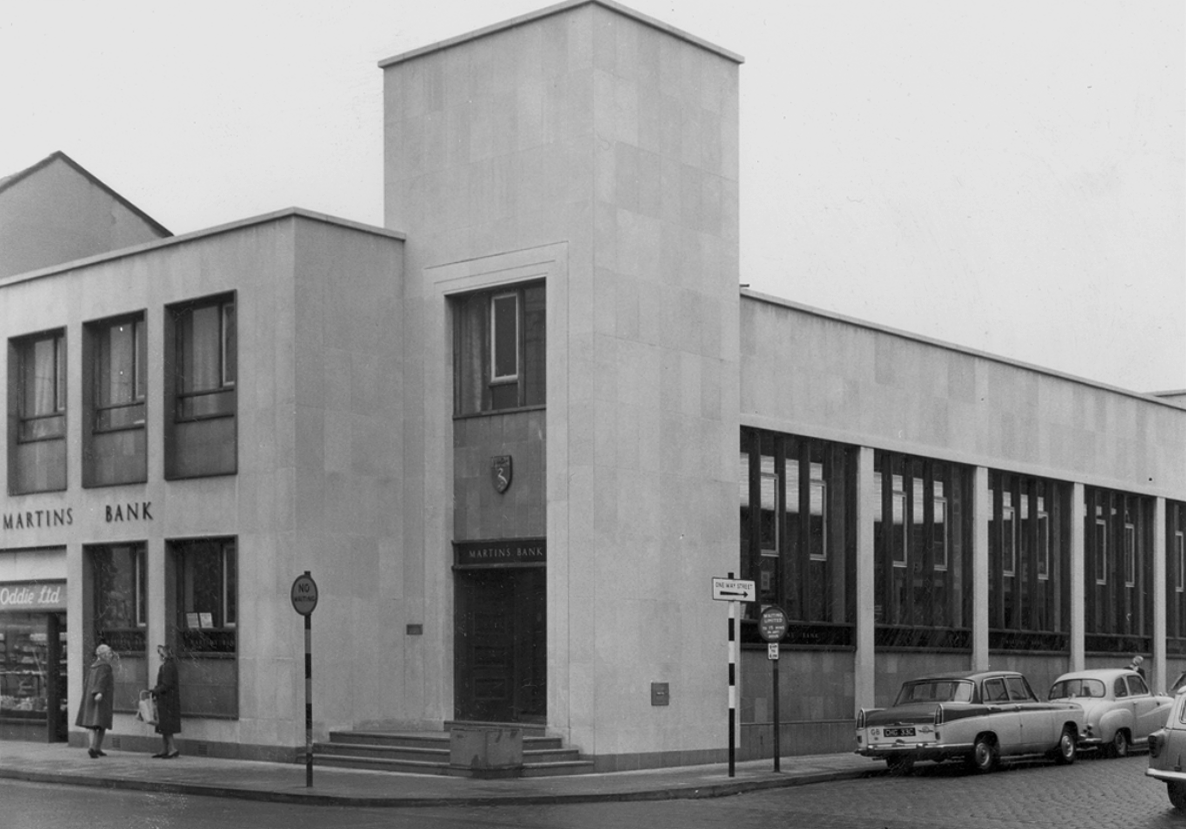
Most people will remember Whitsuntide, 1963 as a weekend of blazing sunshine spent by the sea, or on the hills, or golfing, or just sitting in the sun. The staff of the two Burnley branches will remember it as a week-end of evacuation and invasion, Dunkirk and D-Day rolled into a lost weekend, the evacuation of Hargreaves Street and St James Street into the new Manchester Road premises.

Mr Jobling, who had controlled operations throughout, created a record that can never be beaten in working twenty-four hours’ overtime in one day! We welcomed our first customers at 10 o’clock next morning and a civic visit at 11 a.m., not only proud of our lovely building but very proud of and grateful to so many who had never spared themselves to achieve what at one time seemed the impossible.

In service from 3rd June 1963 until 19th June 1991.
Martins Archive

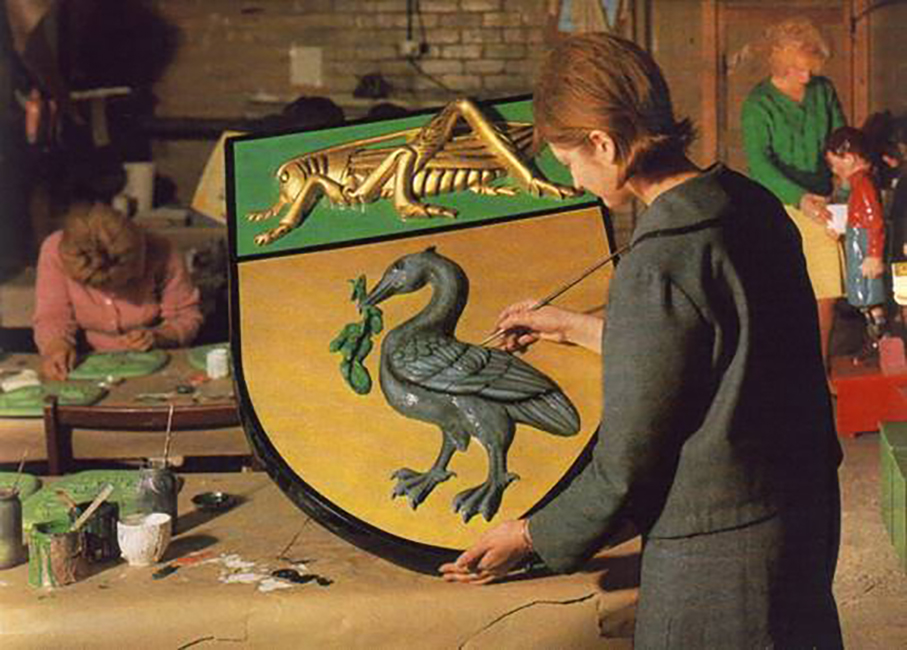
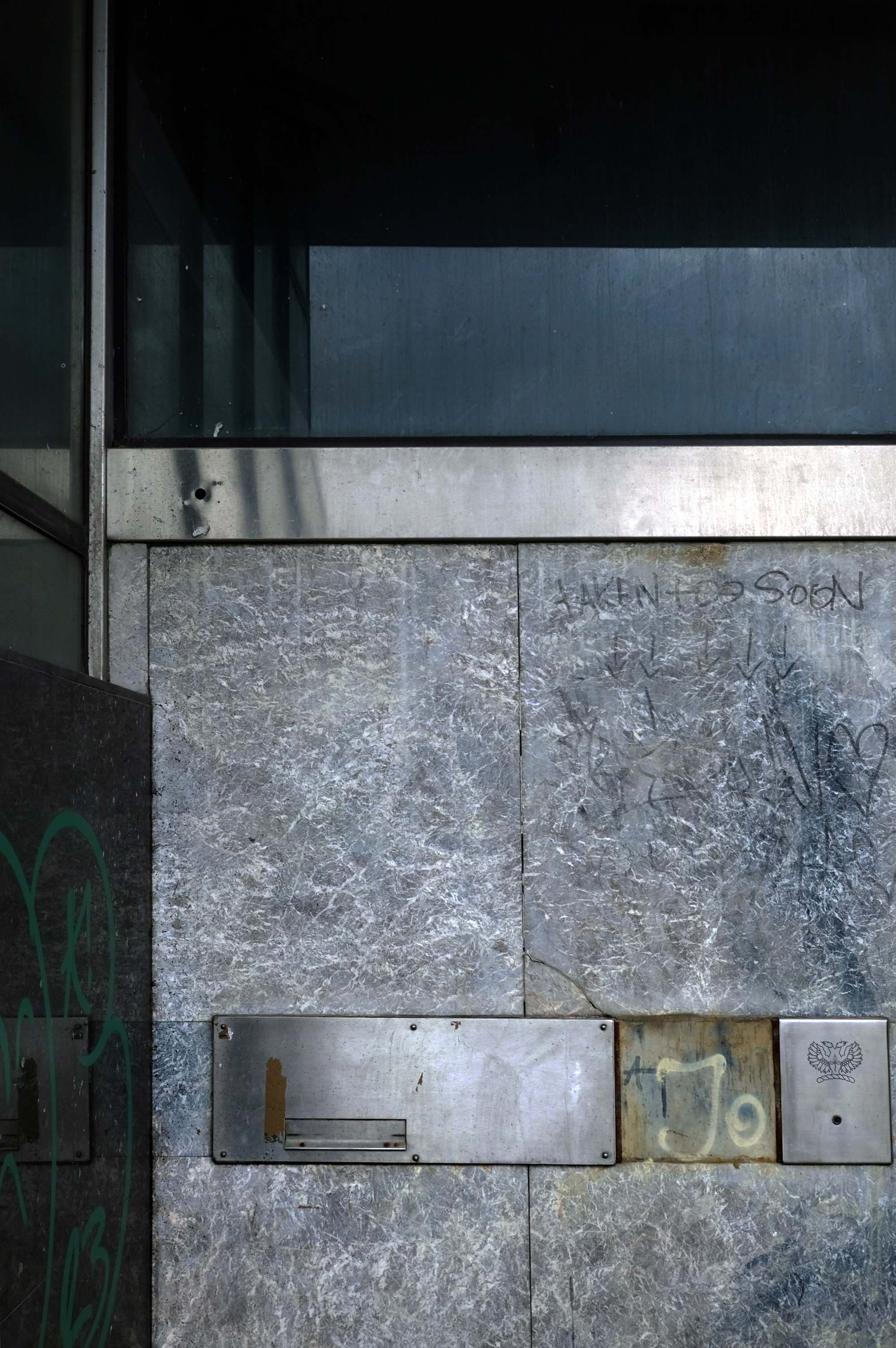
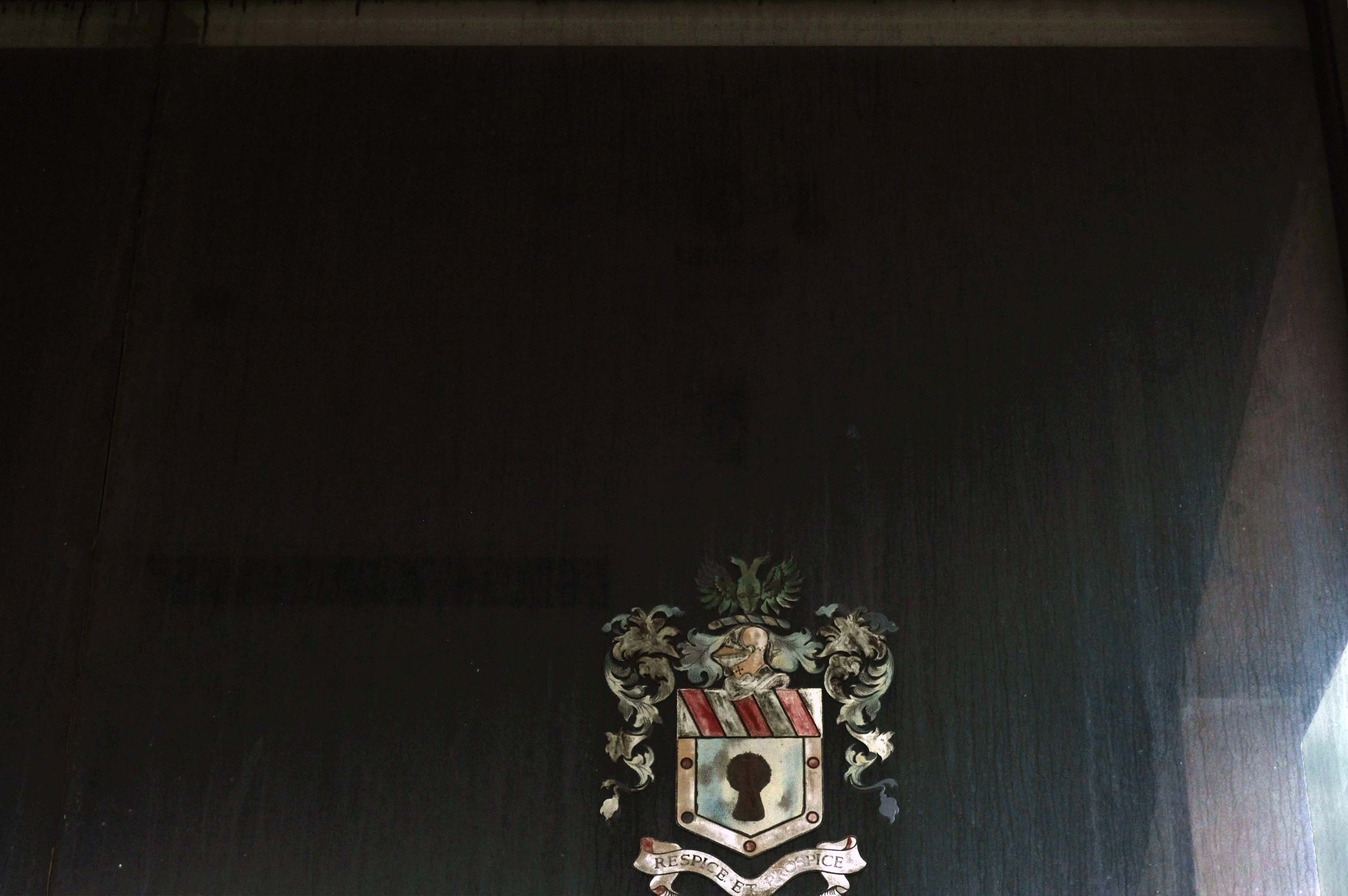
I was delighted to see that the Martins’ shield was still intact and in place.
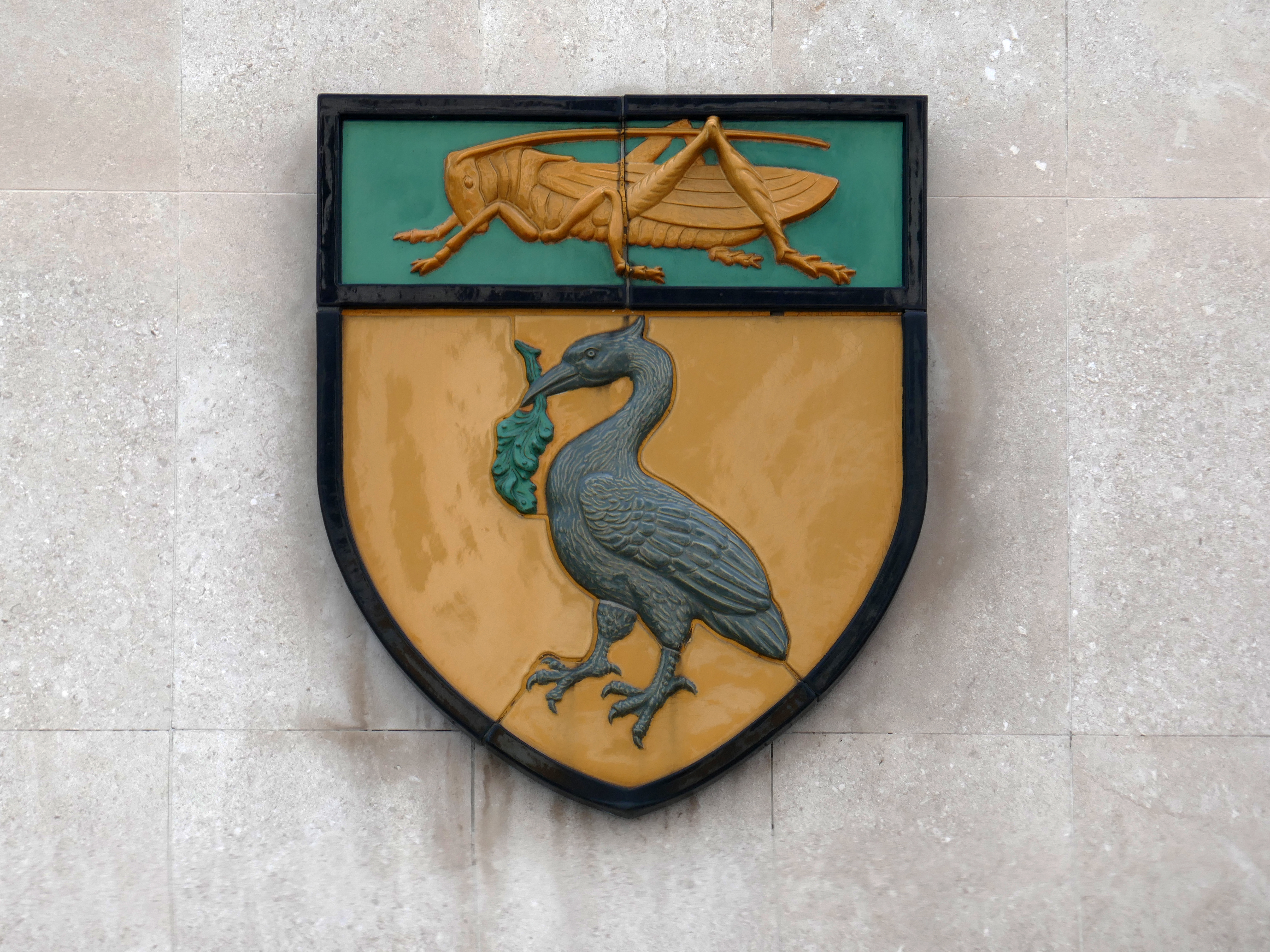
This in turn lead me to the archival Designing Martins Banks.

Since the last war the uses of fibreglass have developed to such an extent, that there are now companies engaged solely in the manufacture of fibreglass products. Such a company is Carleton Russell Limited whose works at Loughborough. The company makes fibreglass signs and displays and has produced several of our Bank signs. At the time of our visit the finishing touches were being made to the huge sign, seen in the colour photograph below, which now gleams upon customers entering our branch at Digbeth, Birmingham.  

Why fibreglass – two of its advantages, light­ness and flexibility, have much to recommend it as the material for a wall sign, either inside or outside a building. The Coats of Arms carved in stone which once surmounted the two entrances to our Leeds office, have now given way to fibre-glass reproductions. Weather resistance is another valuable property of these signs and Hove branch, for example, exposed to coastal weather, is saved frequent cleaning and retouching costs by having its exter­nal sign made from fibreglass.

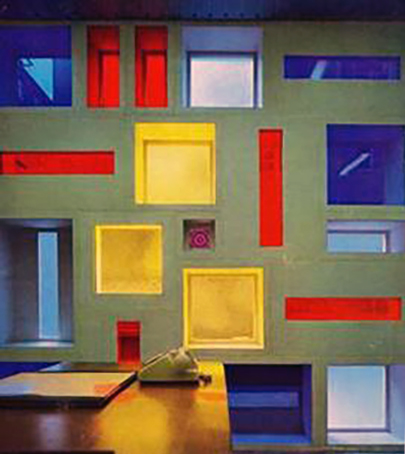
In addition to innovative materials, Martins began to employ Modernist Architecture, interiors and design to attract a younger customer base.

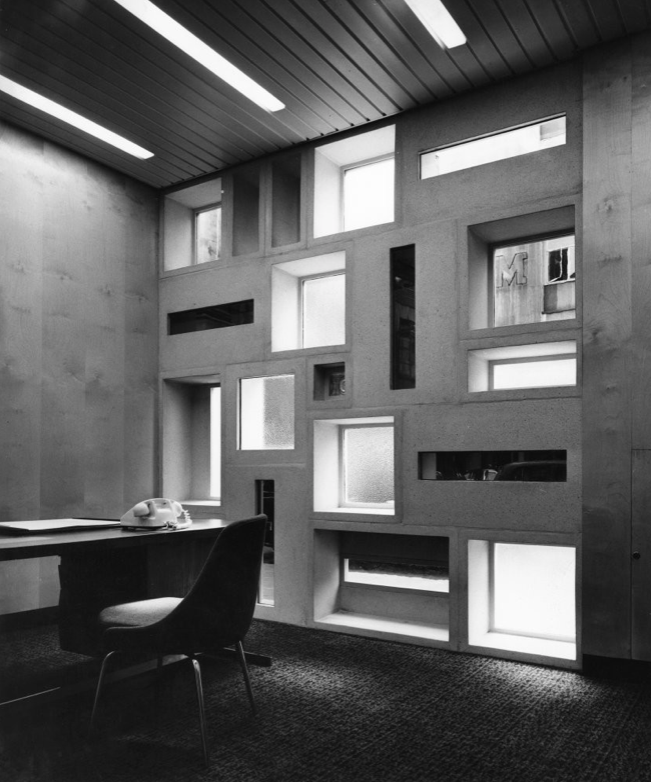
Particularly at their branch on 95 Wigmore Street London, where Ernö Goldfinger was commissioned to do away with the old and bring in only the newest of the new. 
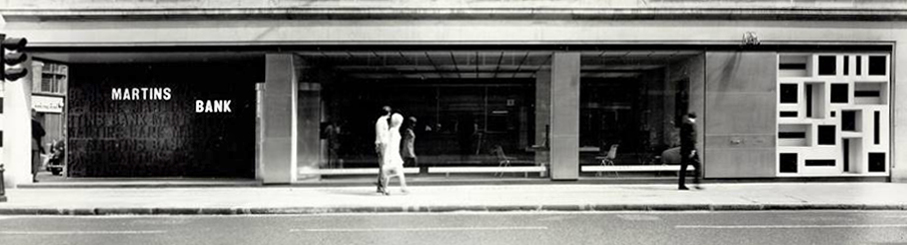
Ribapix

The Manager’s Office.
And this is 95 Wigmore Street today.
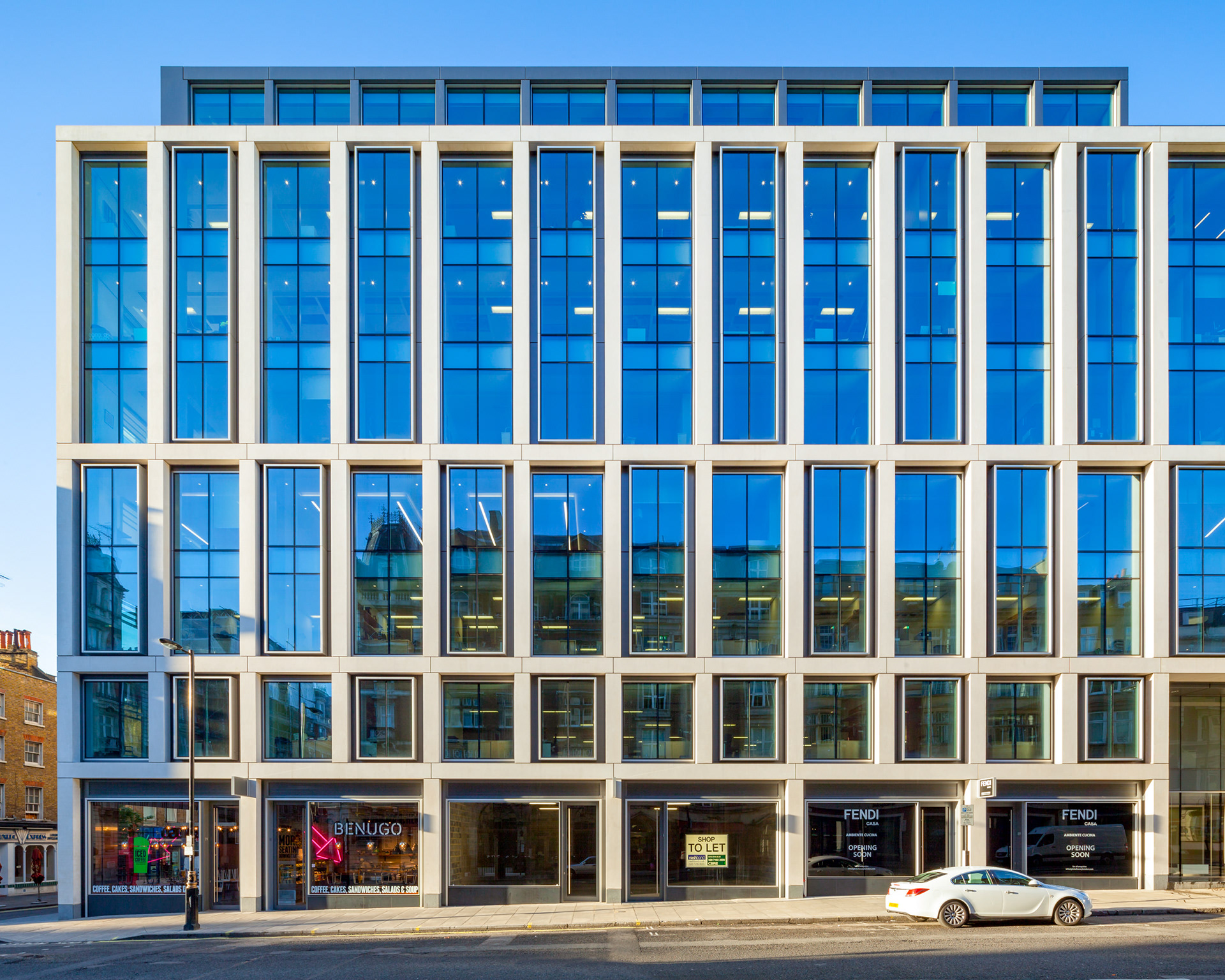
© Diane Auckland / Fotohaus Ltd

New office development for Great Portland Estates on Wigmore St. Designed by architects ORMS, 95 Wigmore Street is a new office and retail development by the Great Wigmore Partnership, completed in 2013. The building occupies a prominent site in the West End, between the thriving restaurants and bars on James Street and yards from Selfridges on Duke Street.

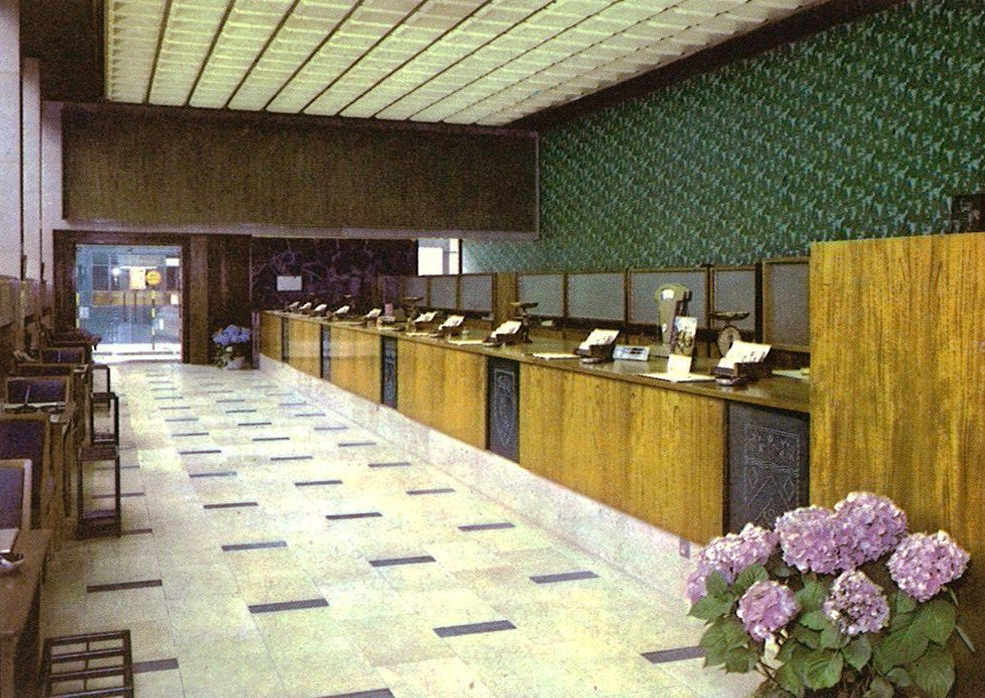
Closer to home this is the Fishergate Branch in Preston, opened in August 1965.
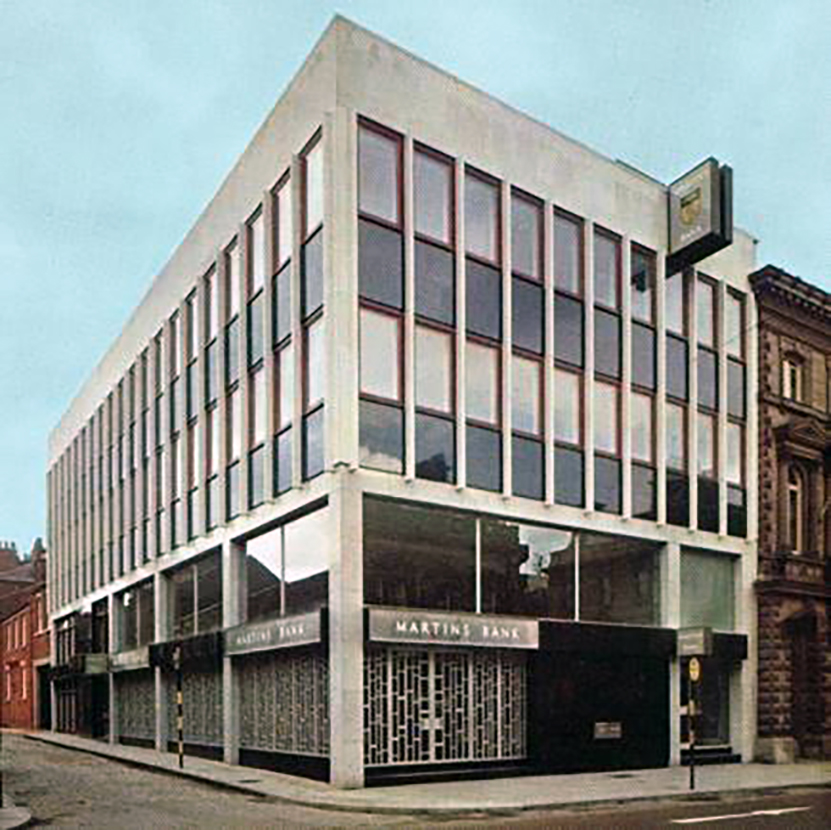
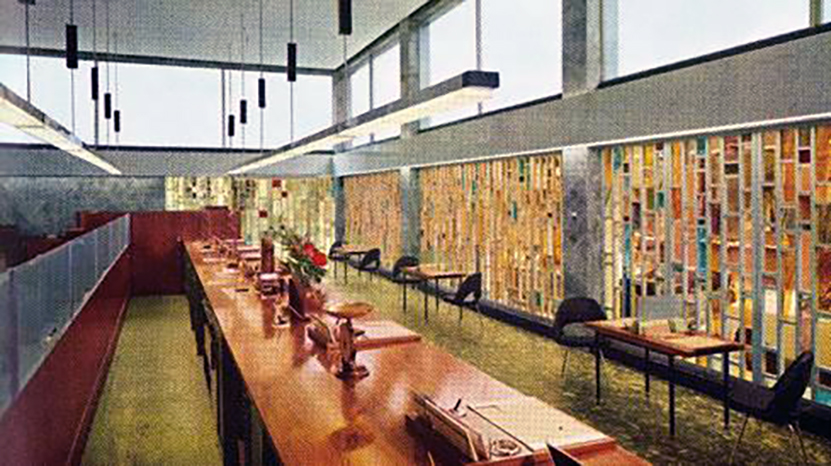
Preston branch today is not merely impressive; it is handsome. The entrance porch is of clear glass but the windows are of hand-made tinted glass set in aluminium frames, the counter is of teak, faced with Sicilian marble, and the walls of the main banking office are of wide elm boarding with one large panel of silver grey marble. 

The management rooms are lined with cedar of Lebanon against a maple background and hot water coils in the ceilings warm all the office areas. Clearly the transformation has cost a lot of money and even the more humble rooms would not disgrace the London Hilton. Does the Hilton staff kitchen, for example, have built-in teak wall cupboards with magnetised catches? 
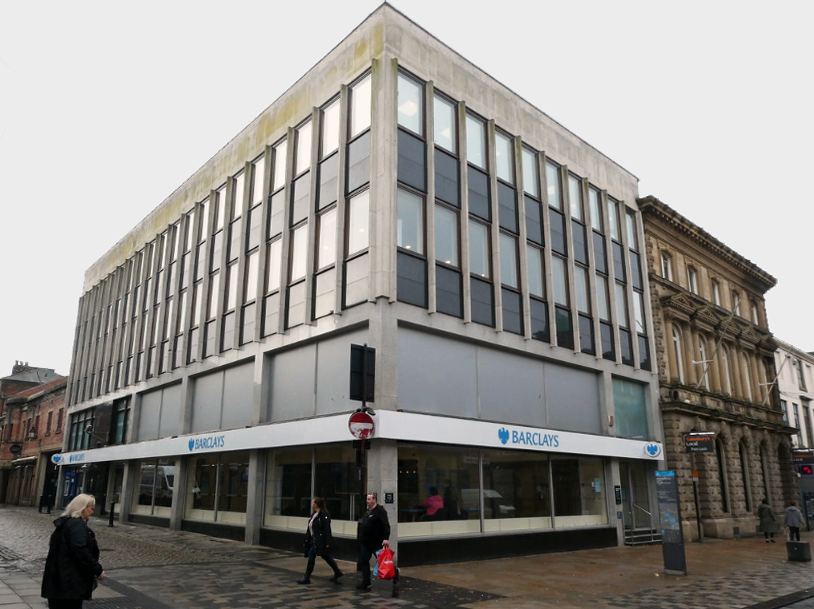
Now operating as a Barclays branch.
Maljoe Flickr

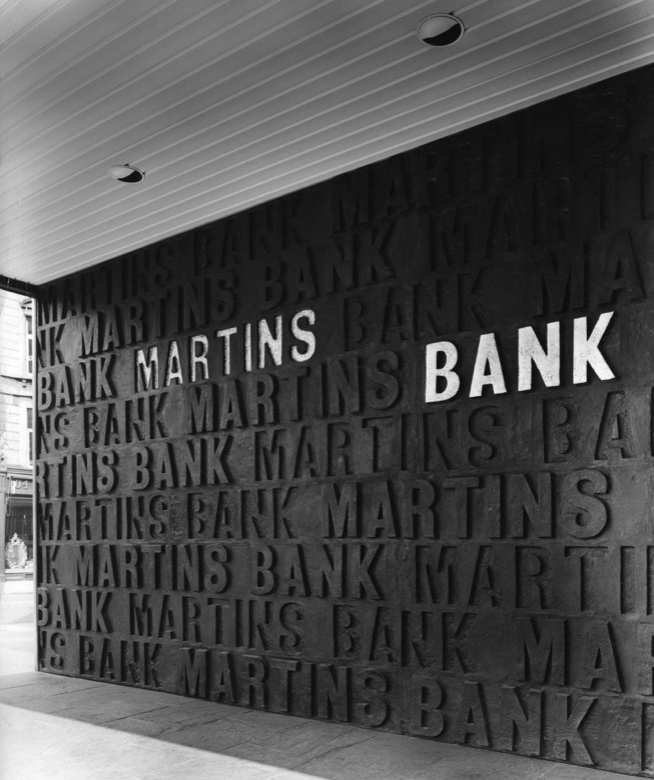
In the late 1950s,  Martins begins to commission works of art that can take pride of place in new branches, and in most cases reflect something of the local area – a kind of giving back to the people.  To begin with, this is neither a grand nor hollow gesture, and the character of many a branch is decided by its own unique internal décor and its artwork.

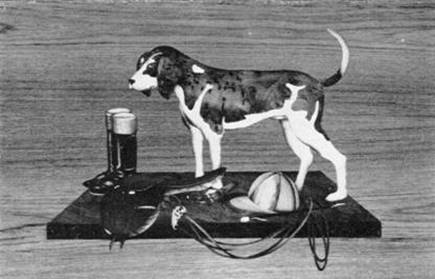
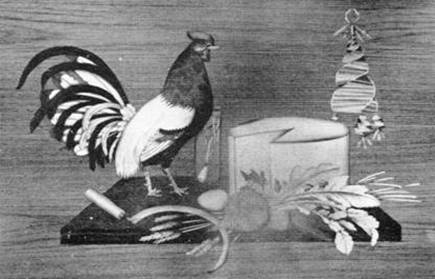
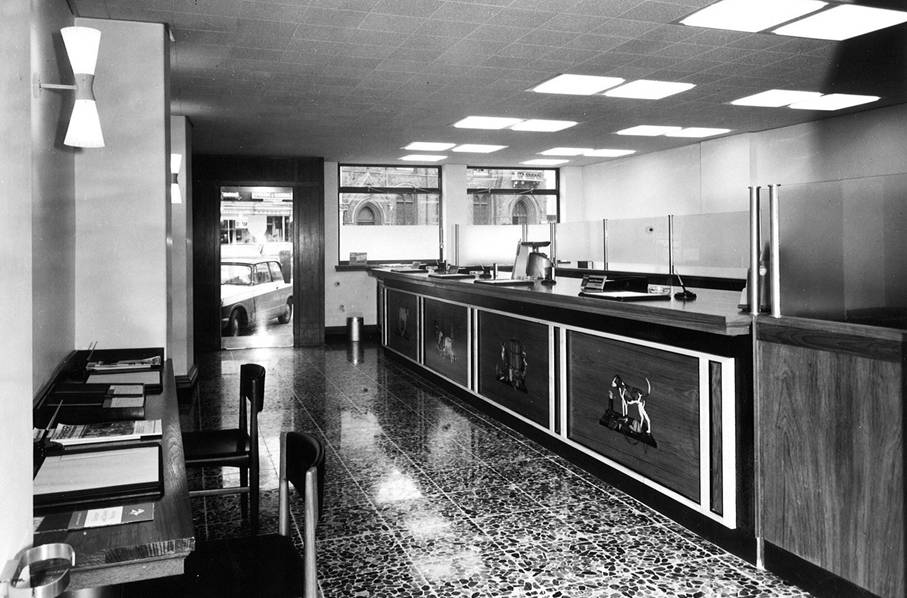
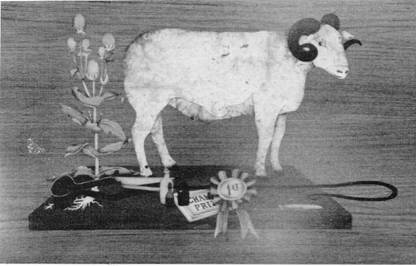
Such as the four elaborate carvings from Newbury Branch, depicting four local activities – Brewing, Weaving, Chasing and Farming.

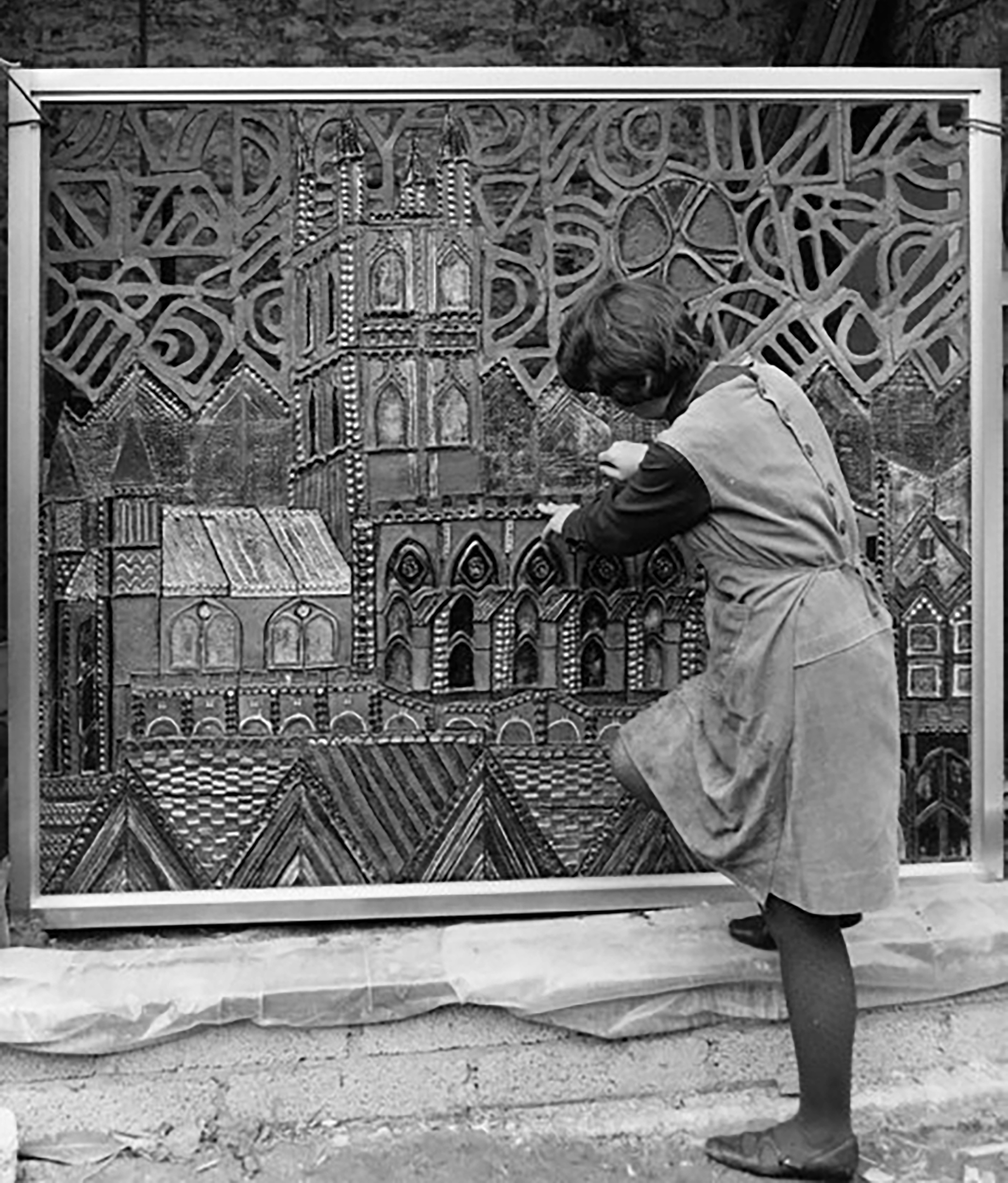
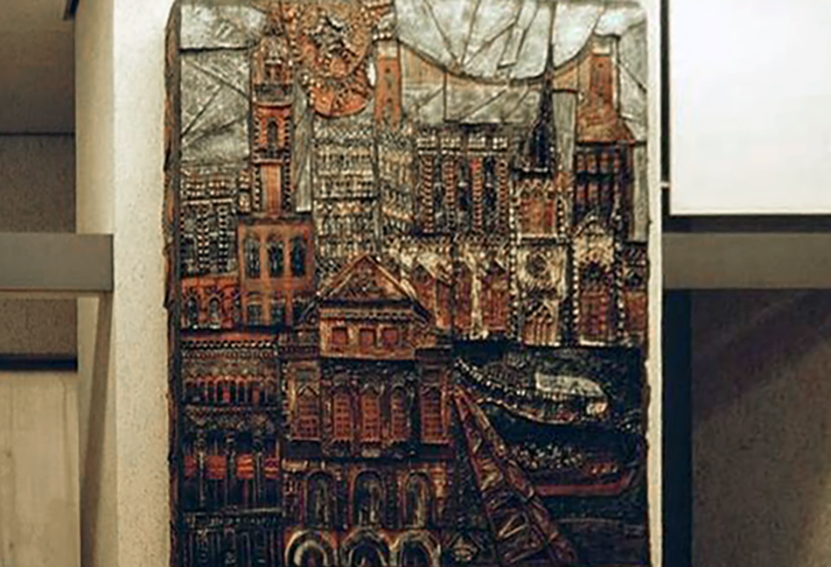
Bristol Clifton 9a Whiteladies Road – the design depicts various buildings and landmarks in Bristol.

Designer – Philippa Threlfall 1966
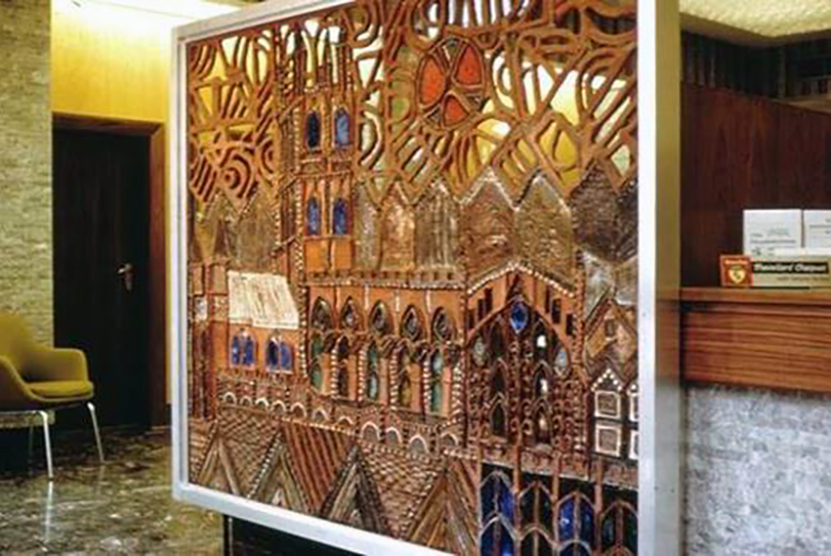
Gloucester Branch 8-10 Southgate Street

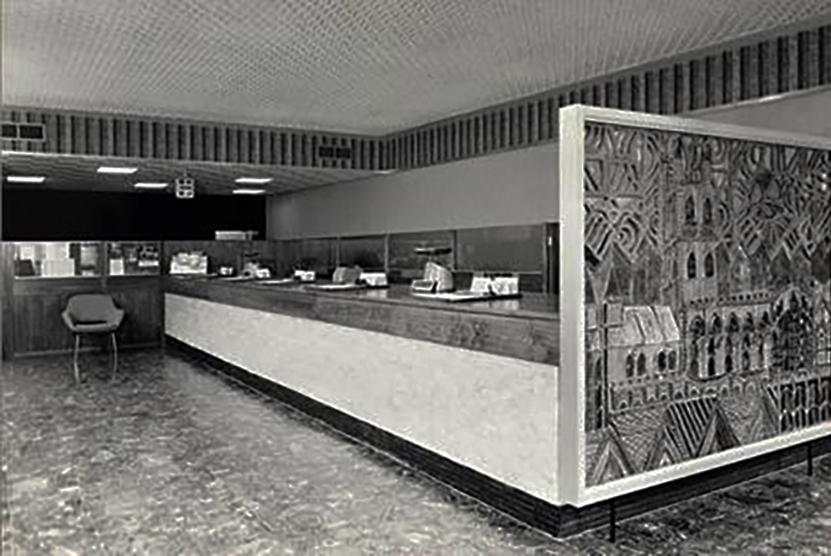
Gloucester Cathedral, viewable from both sides: shatter-proof glass prevented hands from penetrating the fretted ceramic.

Designer Philippa Threlfall 1968
© Philippa Threlfall 

Philippa Threlfall has been making relief murals in ceramic since the 1960s. Together with her husband and partner Kennedy Collings she has completed over one hundred major works on sites all over the United Kingdom and overseas. Some of these were made for private clients, but most were commissioned for display in public situations – shopping precincts, banks, building societies, an airport, hospital and office developments.

Philippa studied Illustration and Ceramics at Cardiff College of Art and went on to qualify as an art teacher at Goldsmiths College London. She taught ceramics and painting part time for six years at North London Collegiate School in Edgware, and during this time began to receive commissions for mural work. 

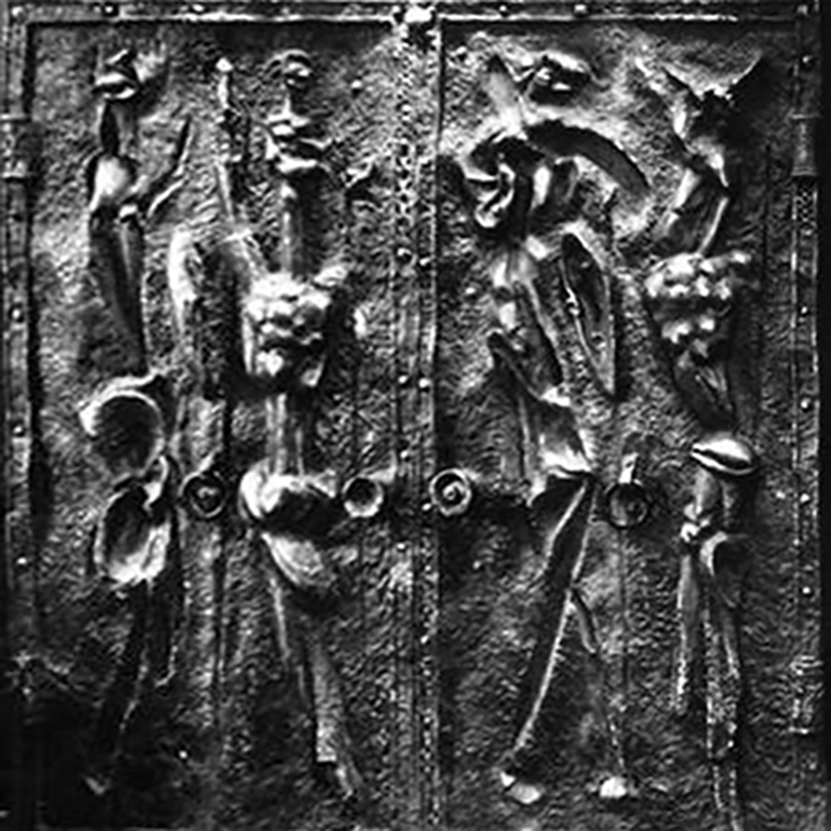
Bournemouth 39 Old Christchurch Road, where sculptor Paul Fletcher’s creation exudes locality and security at the doors of the branch.
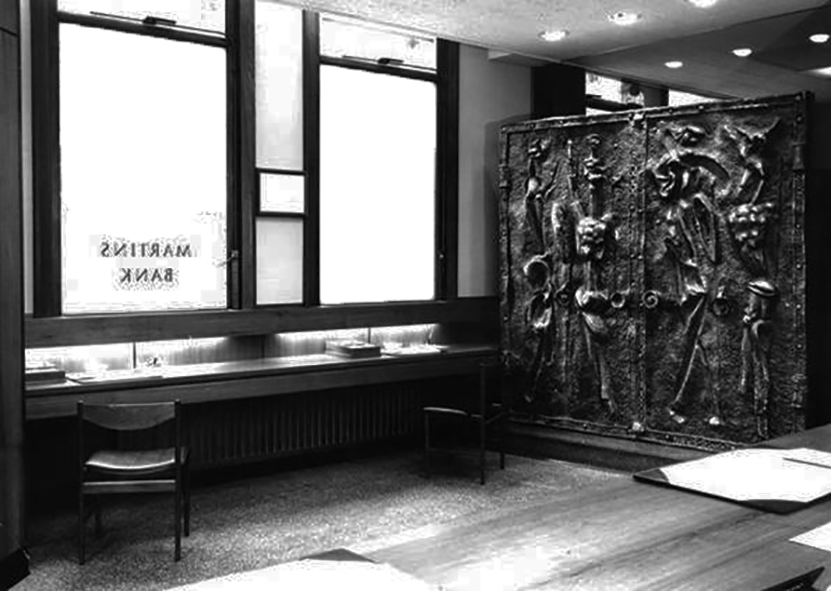
Where in the universe have we landed? Is this one of the wobbly sets from the 1960s episodes of Dr Who?  Even worse –  no need for LSD when paying in your £SD at the new Watford BranchBryan & Norman Westwood & Partners, architects 1962.
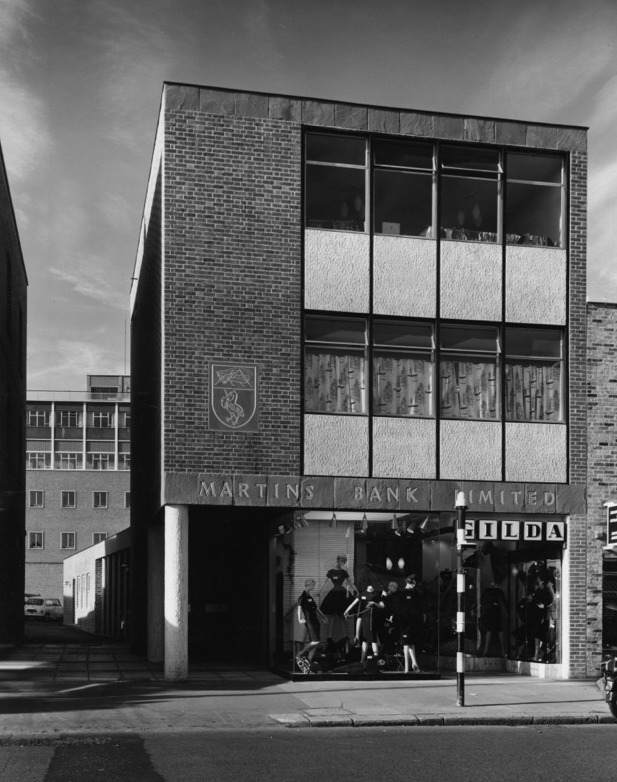
Ribapix – rear elevation.
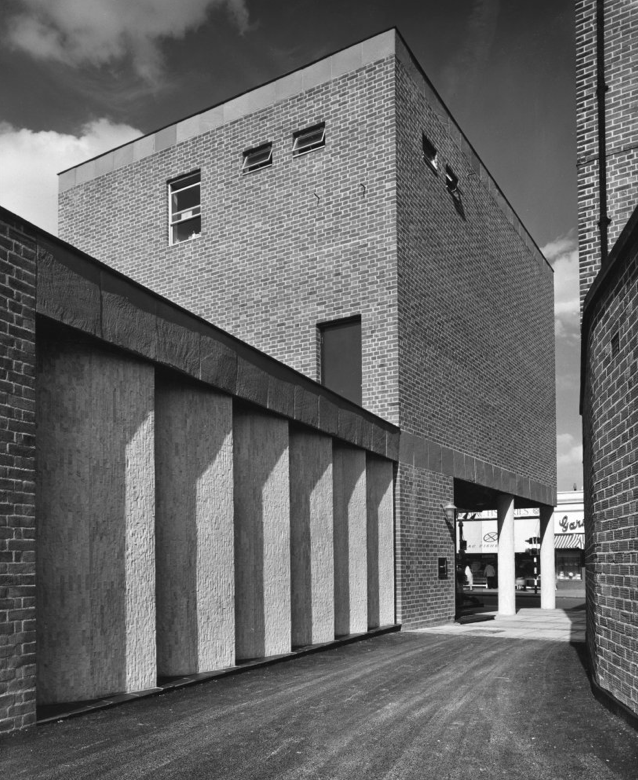
The uneven cobbled effect on the floor, clashing with walls that look as if they might close in on you at any minute, must have made for an interesting visit to Watford.
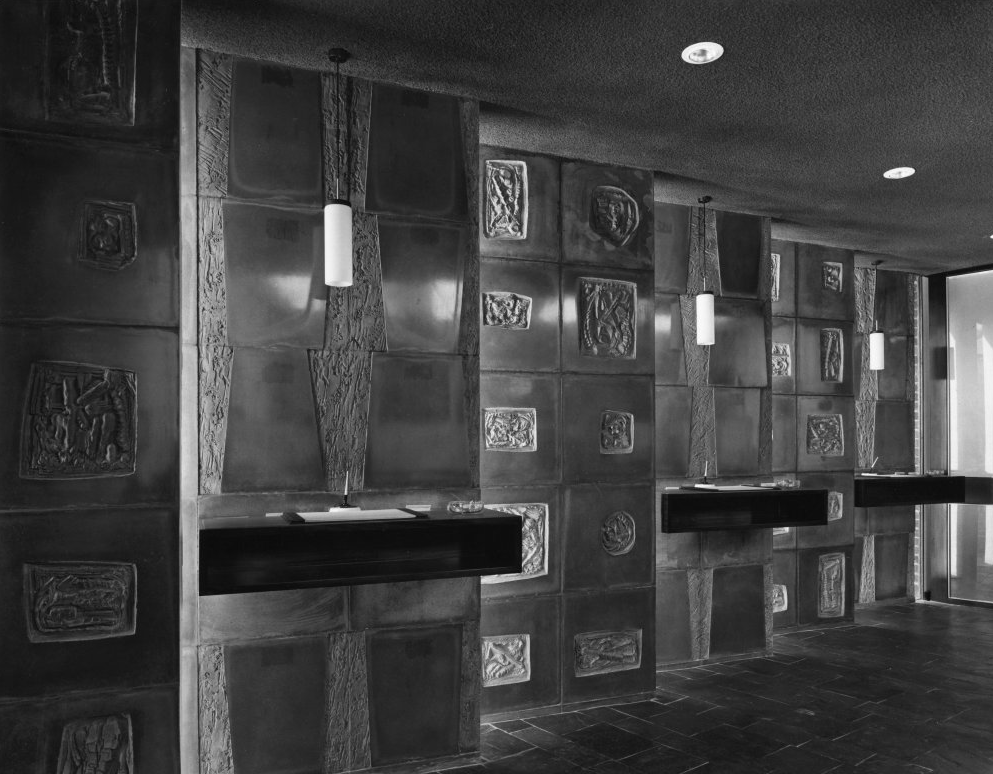
The public space is comparatively dimly lit, with a black ceiling, slate floor and dark-coloured sculptural panels by Eric Peskett placed in echelon so that as you go into the bank the wall appears to be quite solid, but on leaving you see the street through the windows set between the slabs.

The counter top is a solid piece of Afromosia. The floor is of riven Delabole slate. The sculptured slabs between the writing desks have in parts a very smooth shining surface obtained by casting against glass and the insets are rough and dark, they were cast in rubber moulds. The ceiling is roughly textured Pyrok, dark grey in colour and intensely sound-absorbing. 

The Architect and Building News – 5 September 1962
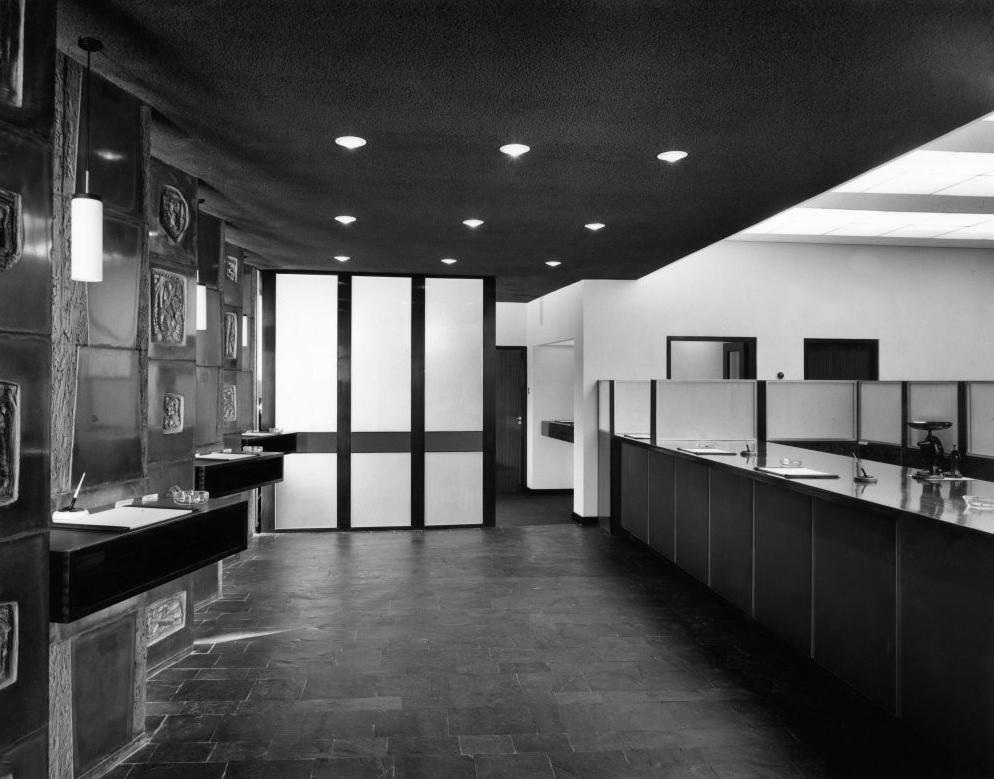
Ribapix

And finally – welcome to dystopia 1967 – or Thornaby on Tees Branch, as it is known, an office drowned in its own grey drabness, a real nightmare in concrete. How many people were subject to trudging those awkward walkways with a pram, we can only guess. 
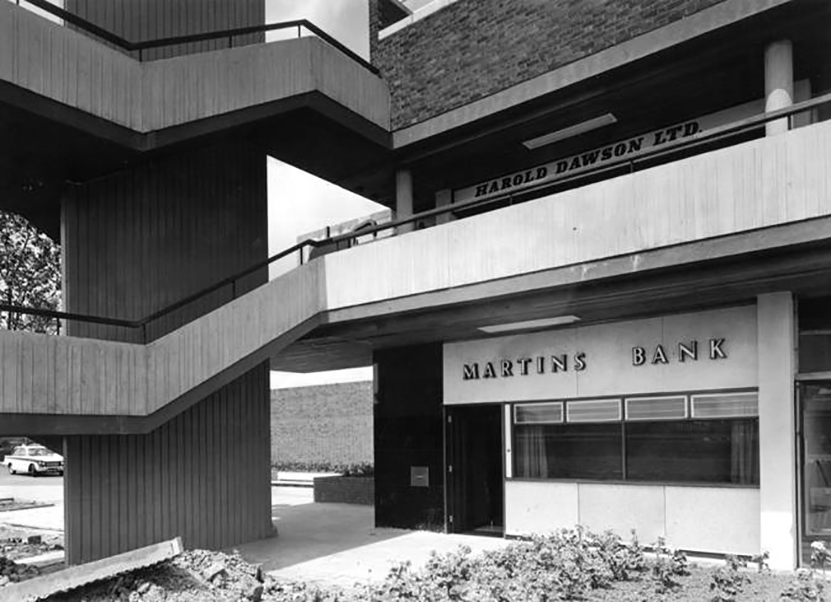
The in-house Martins’ magazine and archive may at times, have an ambivalent attitude towards Modernism, I myself, can only admire the optimism and originality, embodied in the work that the bank commissioned.

Many thanks Modern Martins, from thoroughly Modern Mooch.
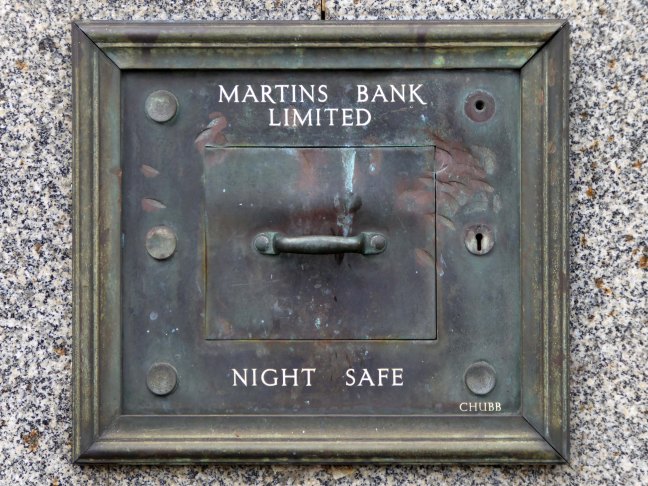
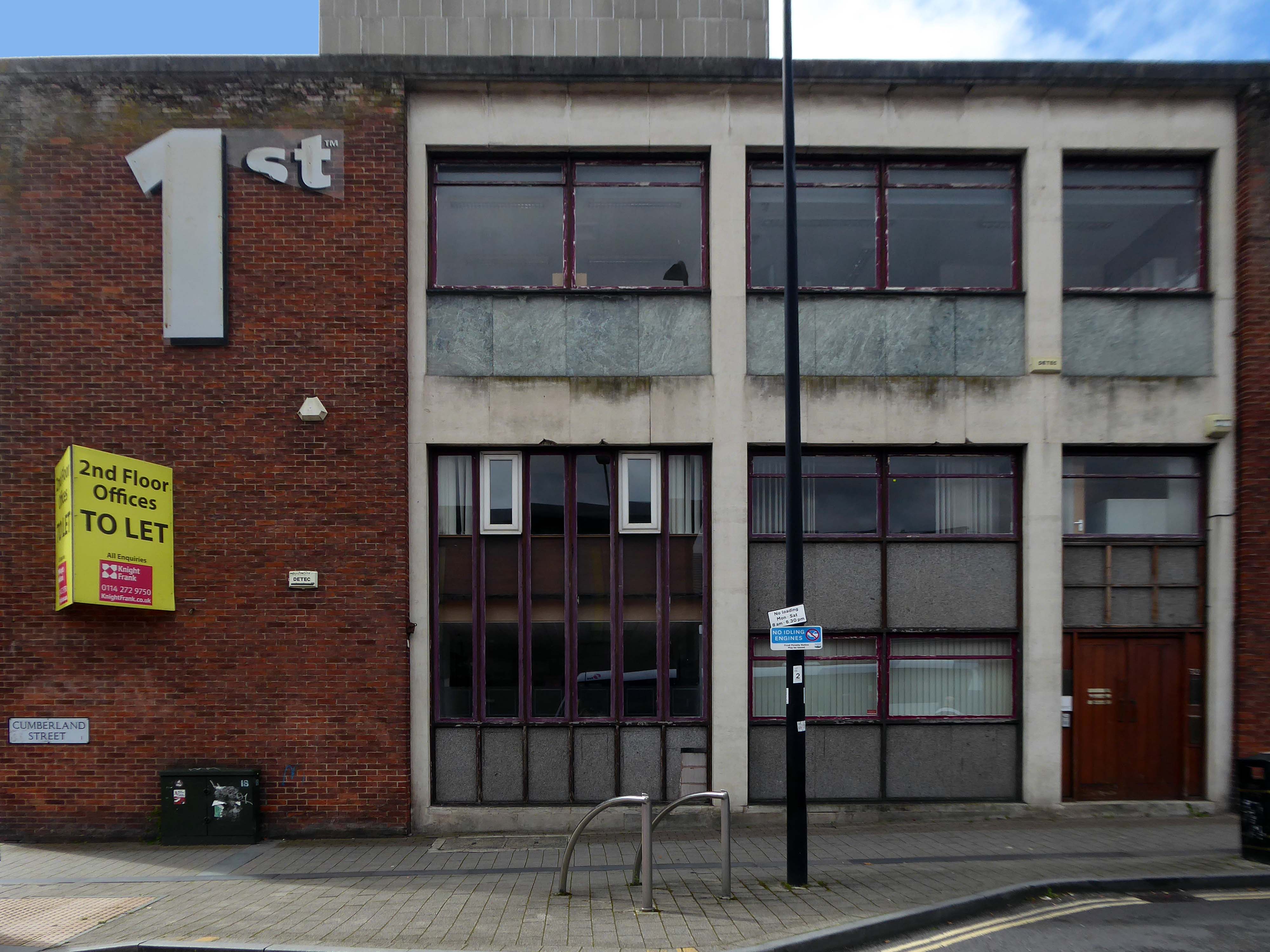
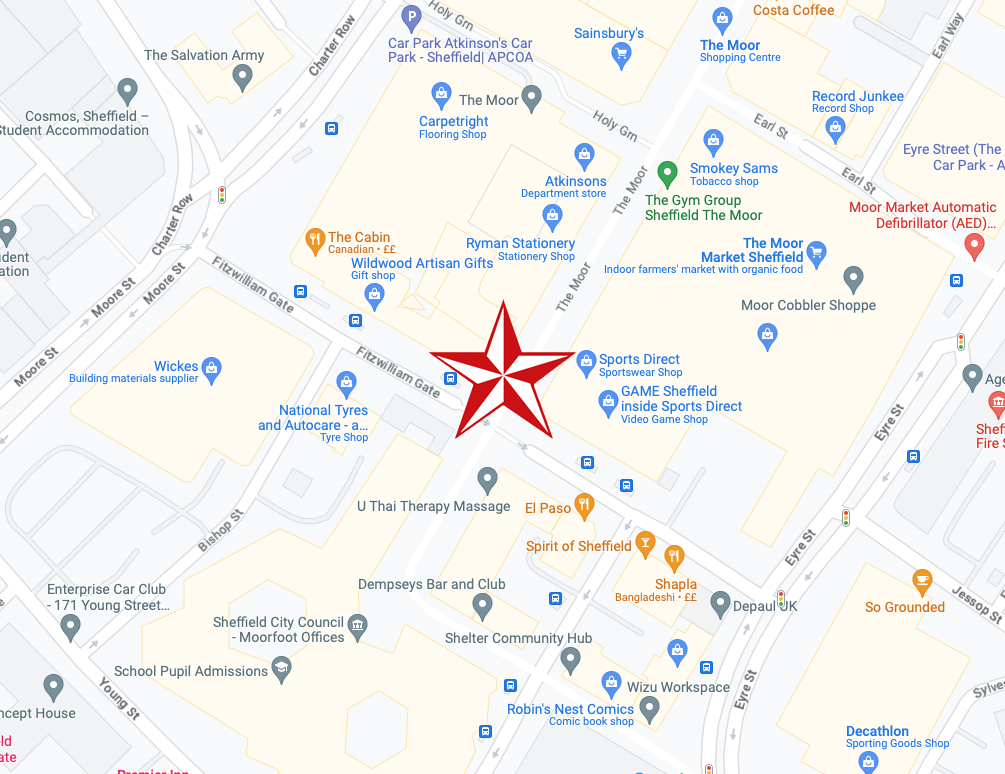
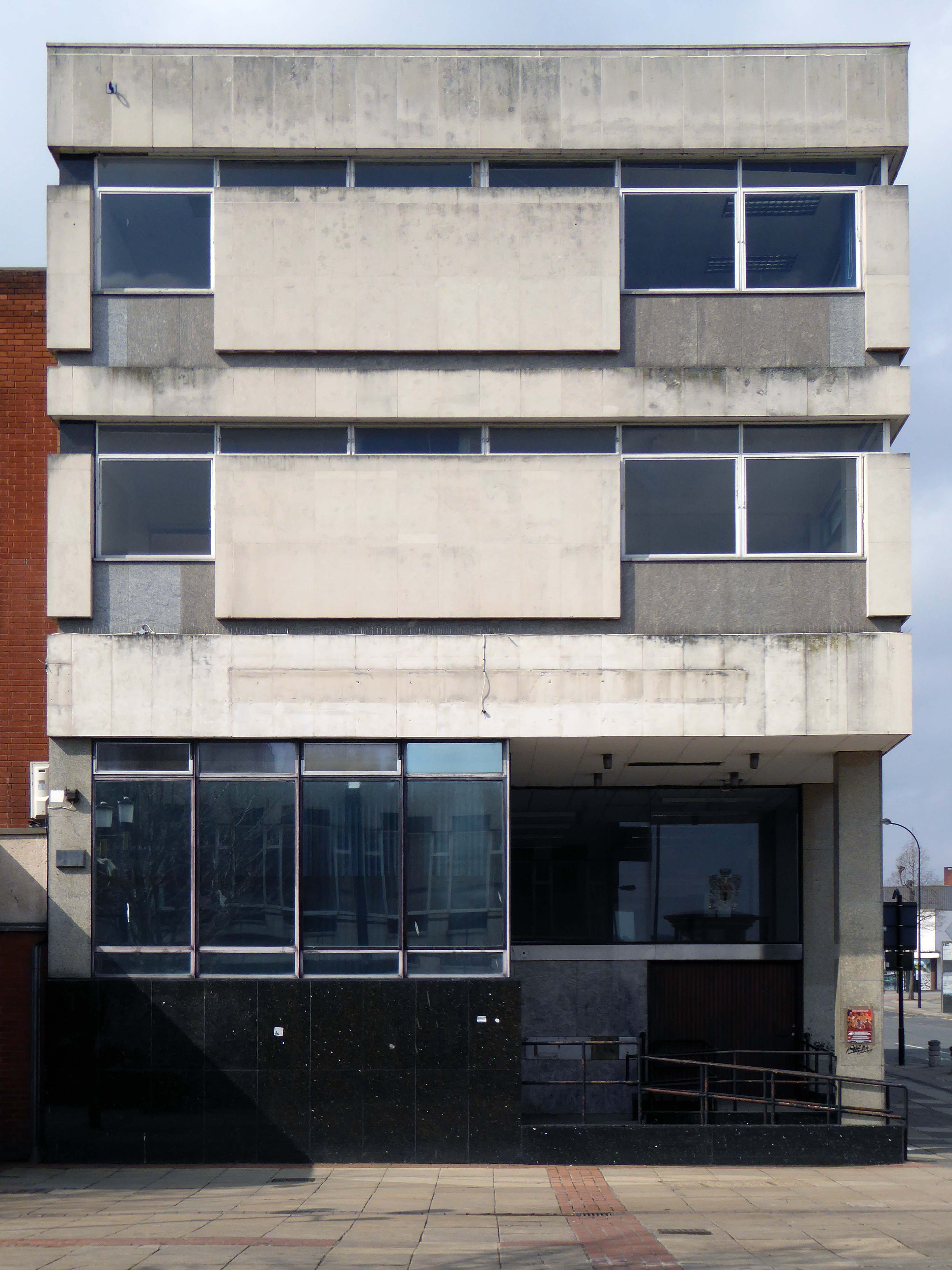
Martins Bank – Eyre Street Sheffield

176 Eyre Street Sheffield Yorkshire S1 4QZ

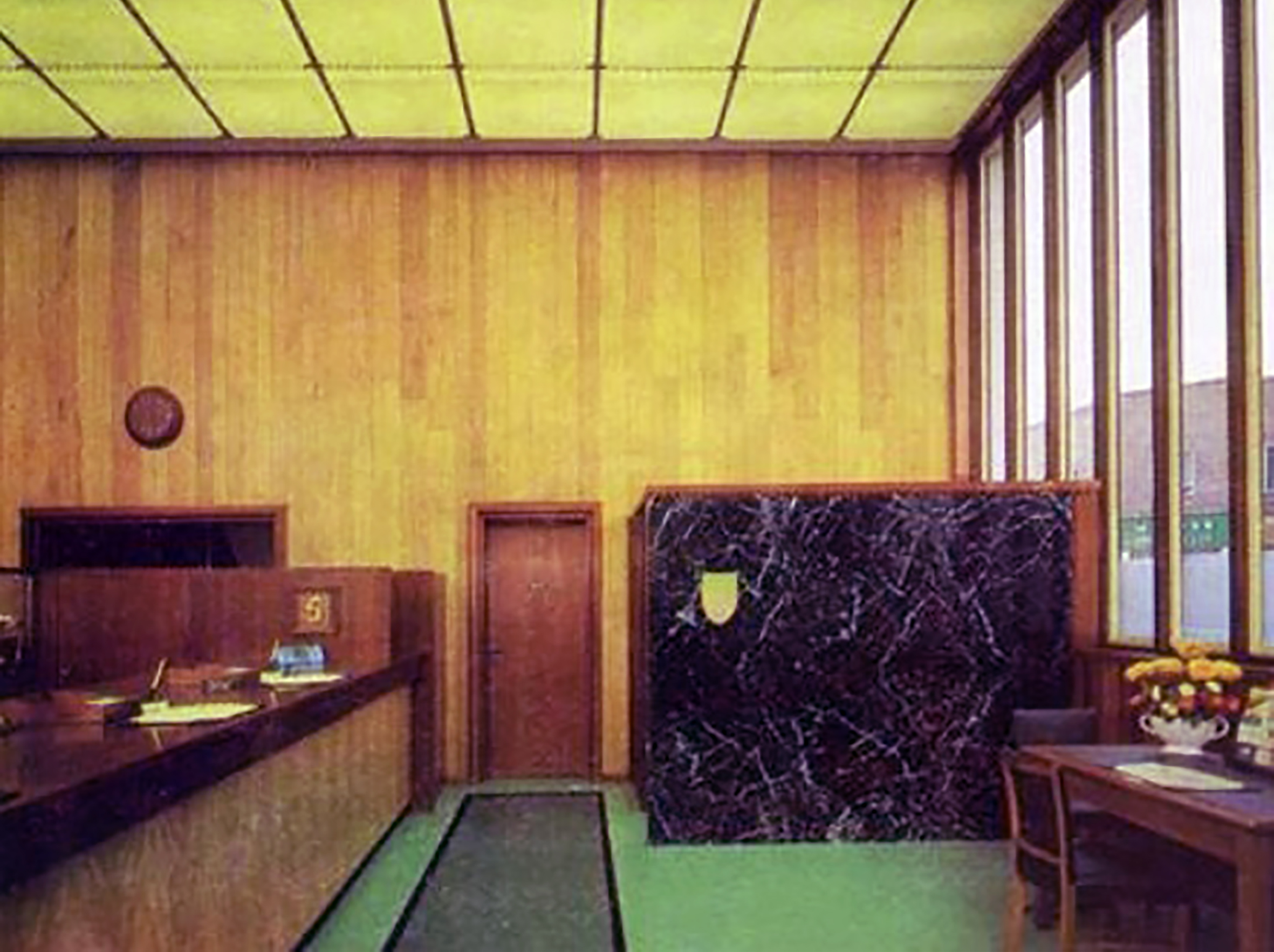
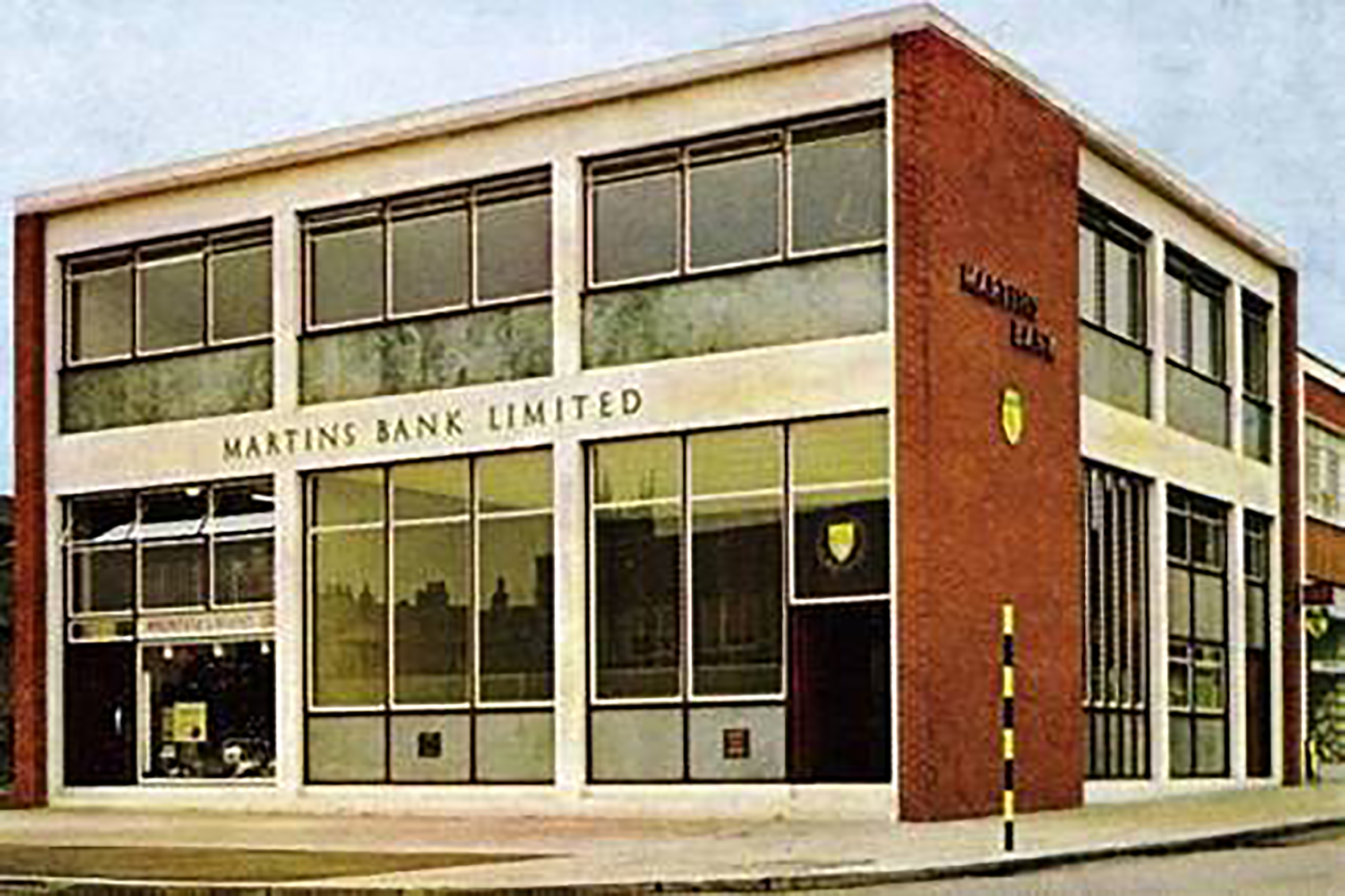
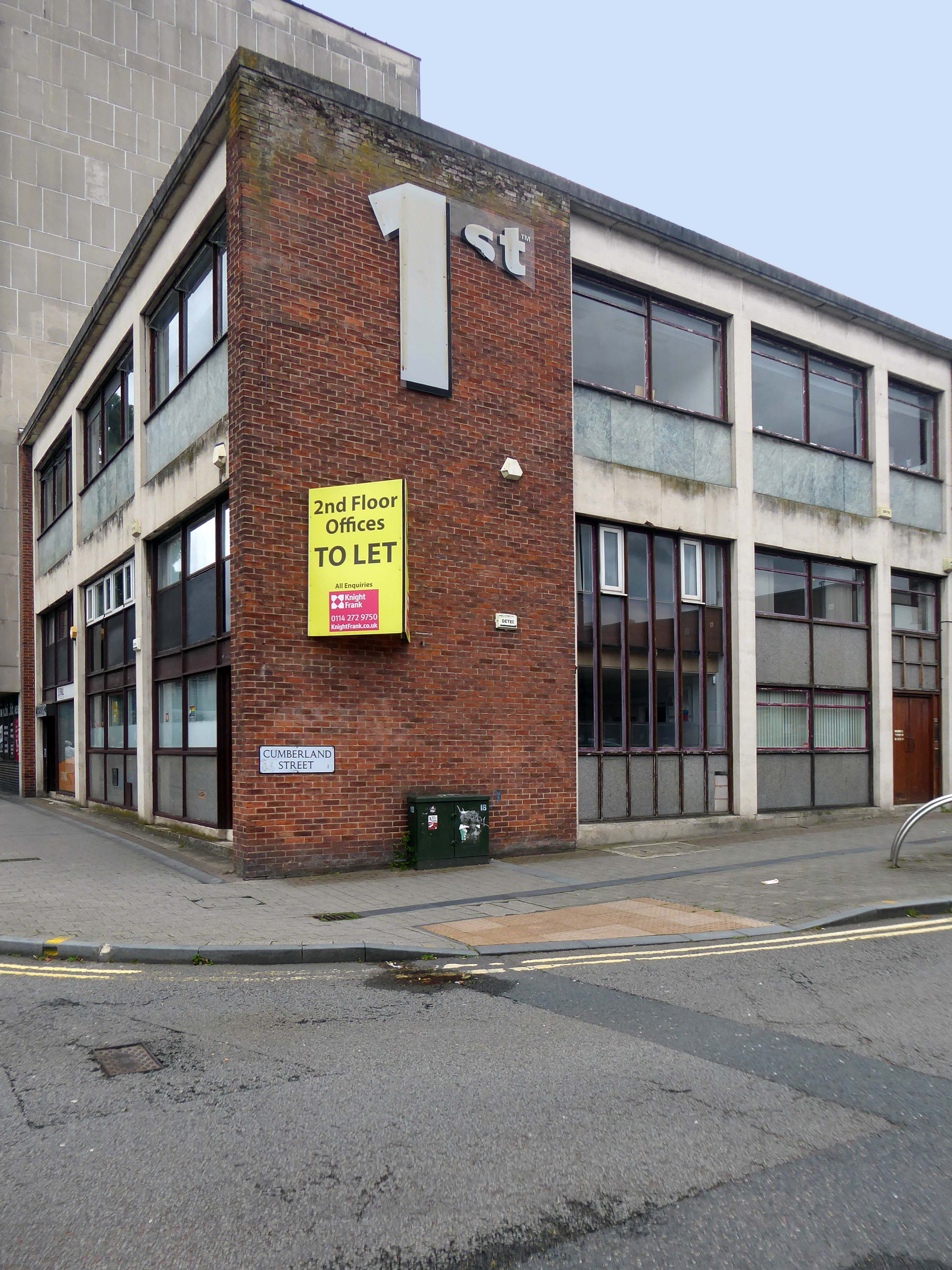
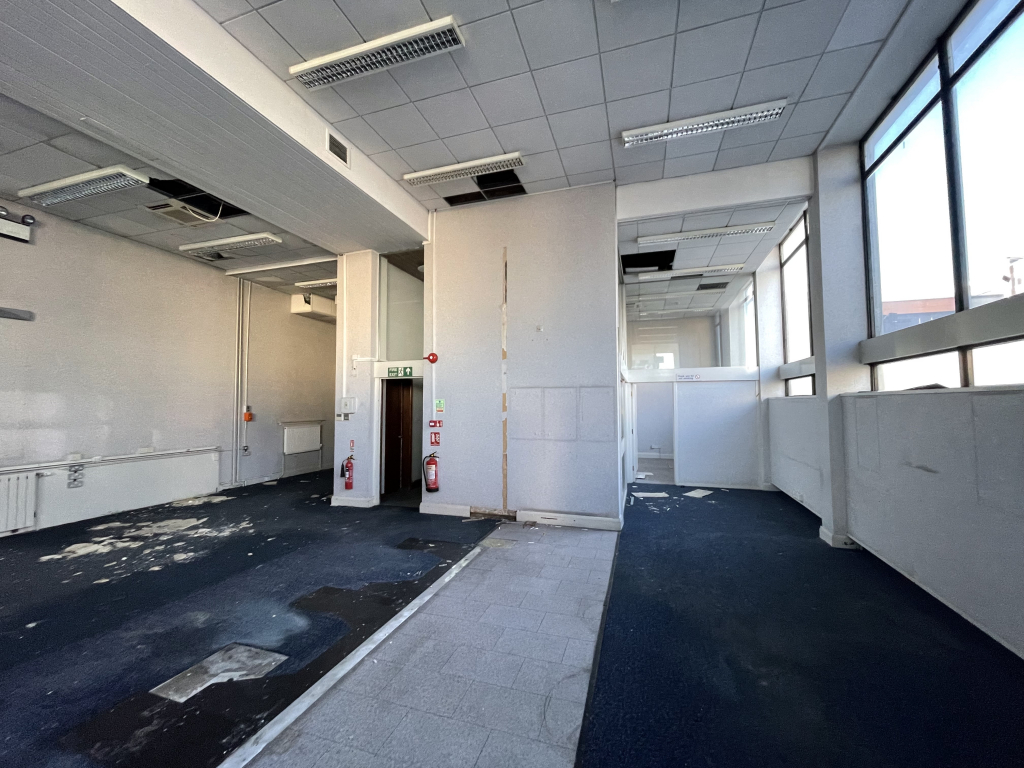
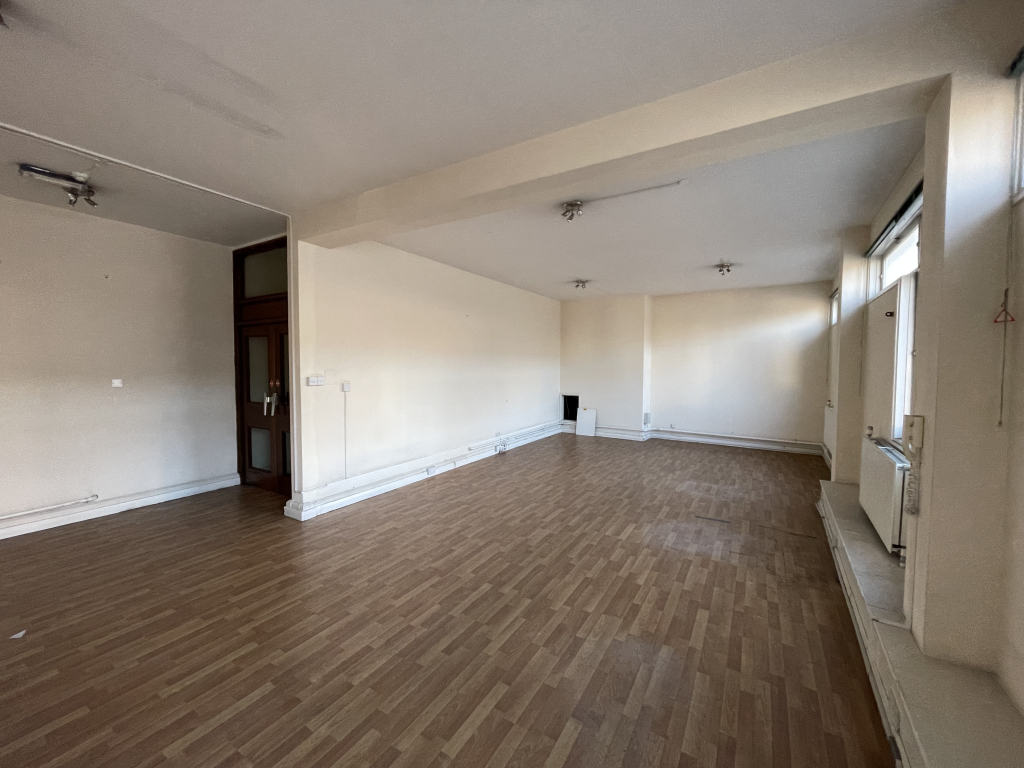
Opened in 1961, Martins Bank’s branch at Sheffield Moor is new and purpose built, occupying space left in the Sheffield Moor area by the bombing of the second world war. Time flies however, and more than fifty years on, the building is empty and awaiting the next chapter of its life.

Note the olivetti shop incorporated into the bank building.

Our New Branch at Sheffield Moor owes its existence to the extensive replanning of this area of Sheffield. Part of it was destroyed during the war and the remainder has been or is in course of being pulled down as the plan unfolds for the creation of a brand new shopping area.

It is really too far from the old commercial quarter to be effectively served by our branch at West Street and so the banks are moving in. It is a beautiful modern building with interior decor which responds to the full blaze of sunshine most cheerfully, or, on a dark day when the illuminated ceiling has to be switched on, creates an oasis of light, warmth and welcome which makes it a pleasure to step inside.

Martin’s Bank Archive

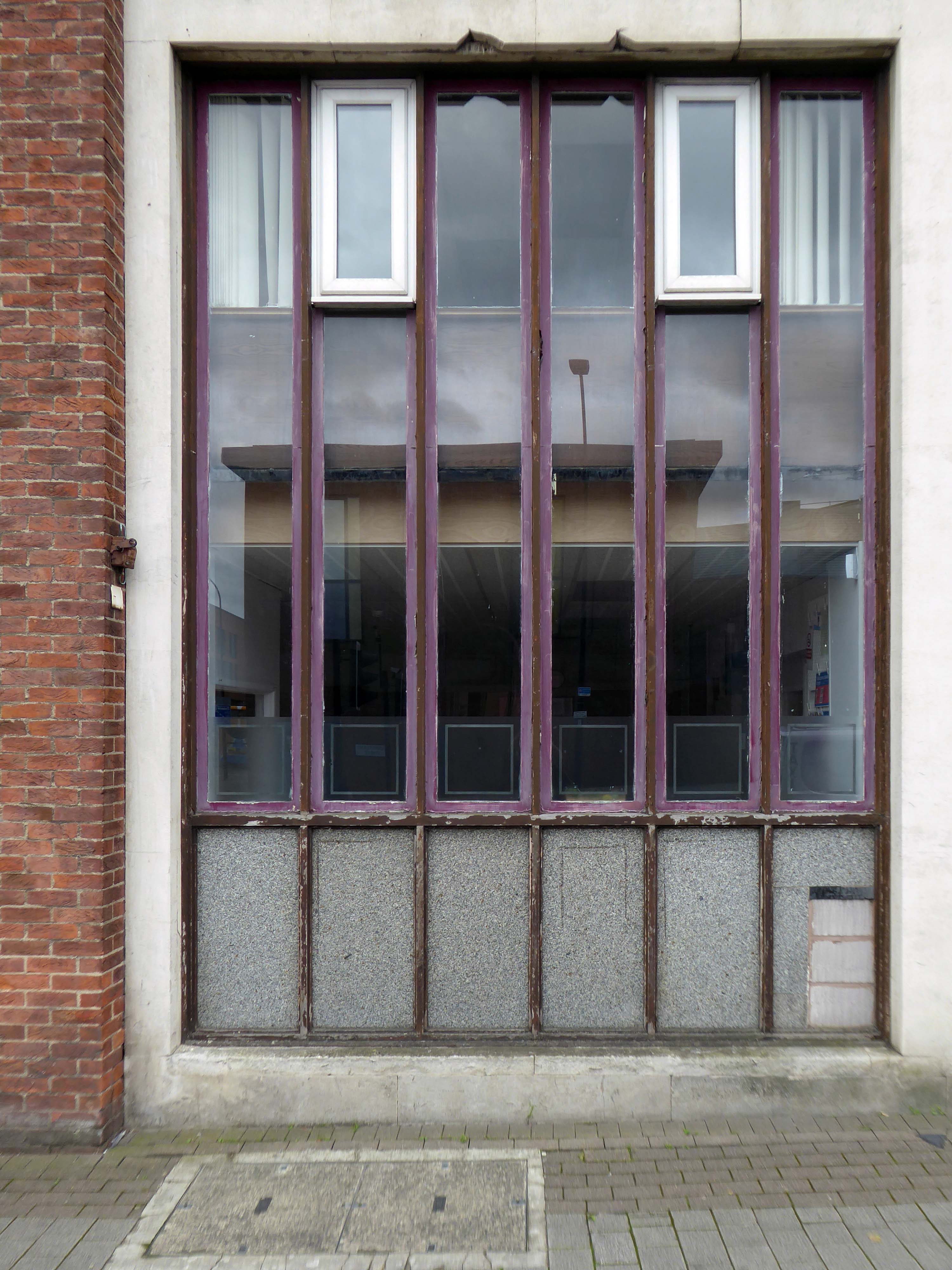
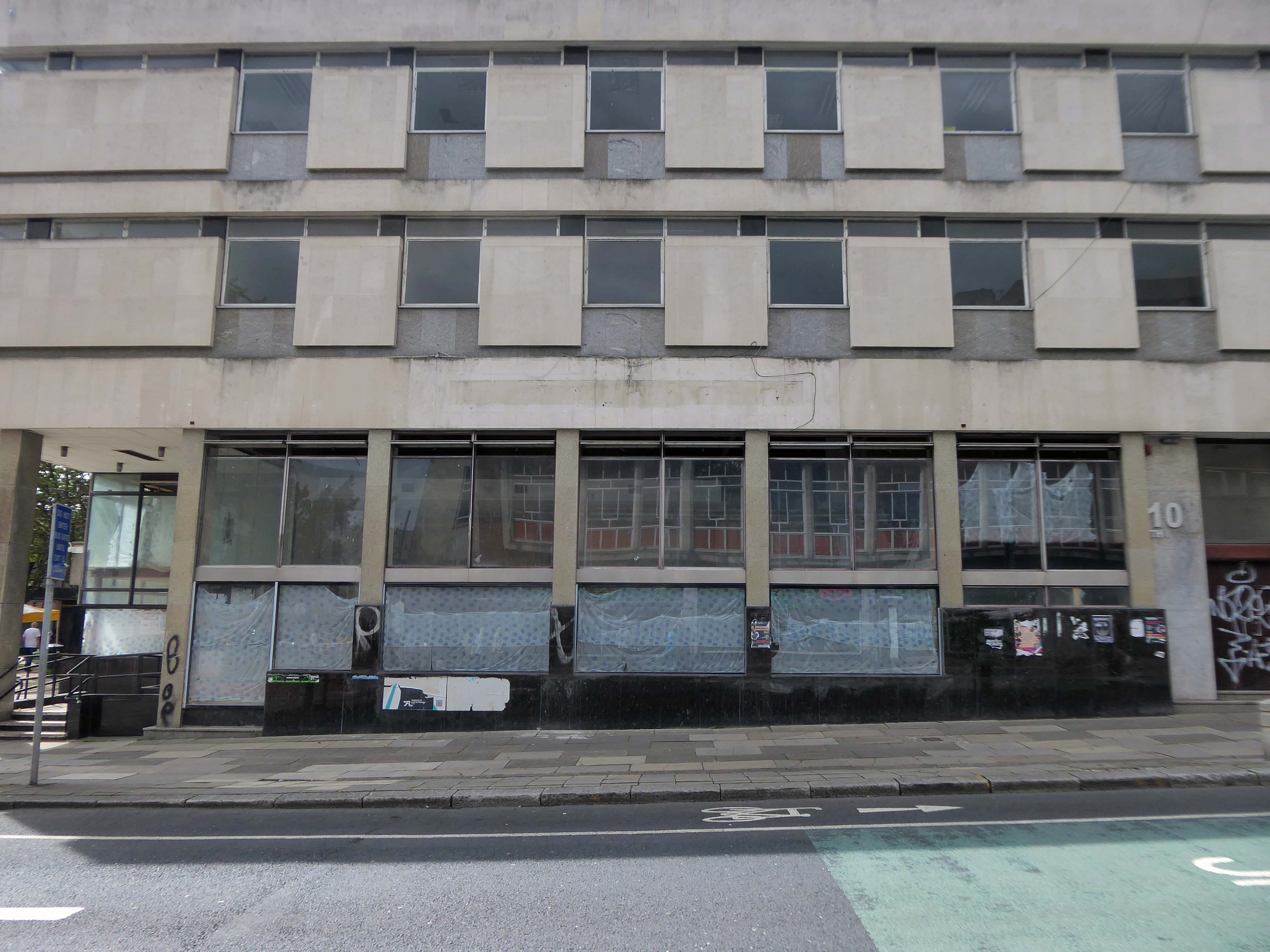
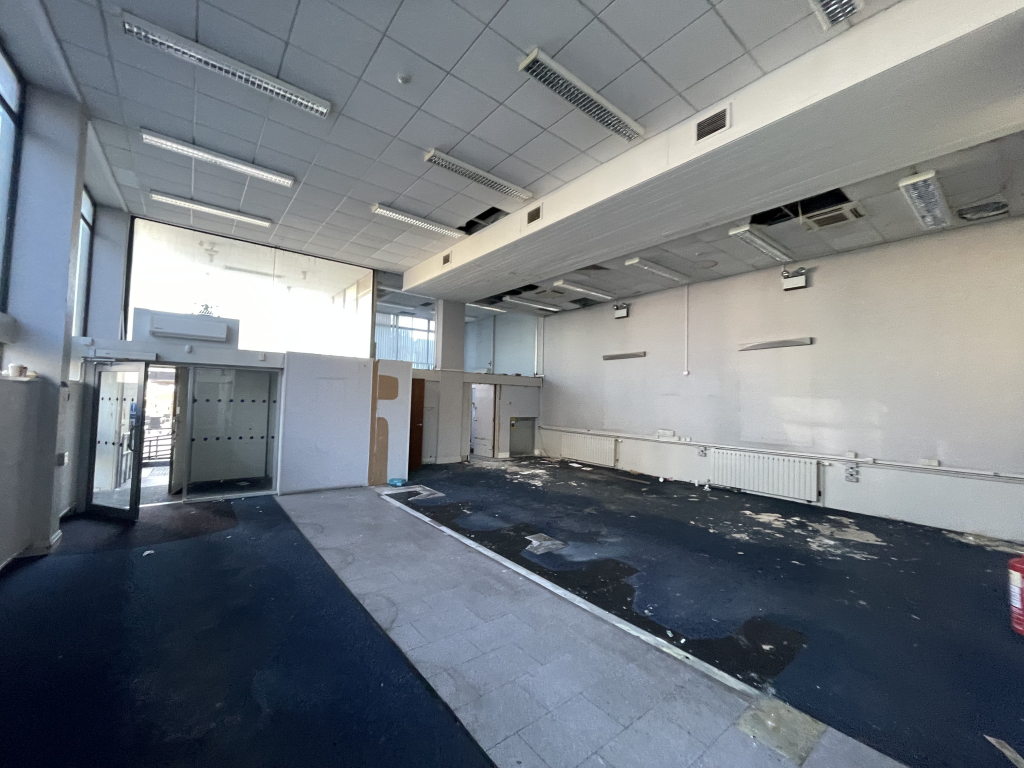
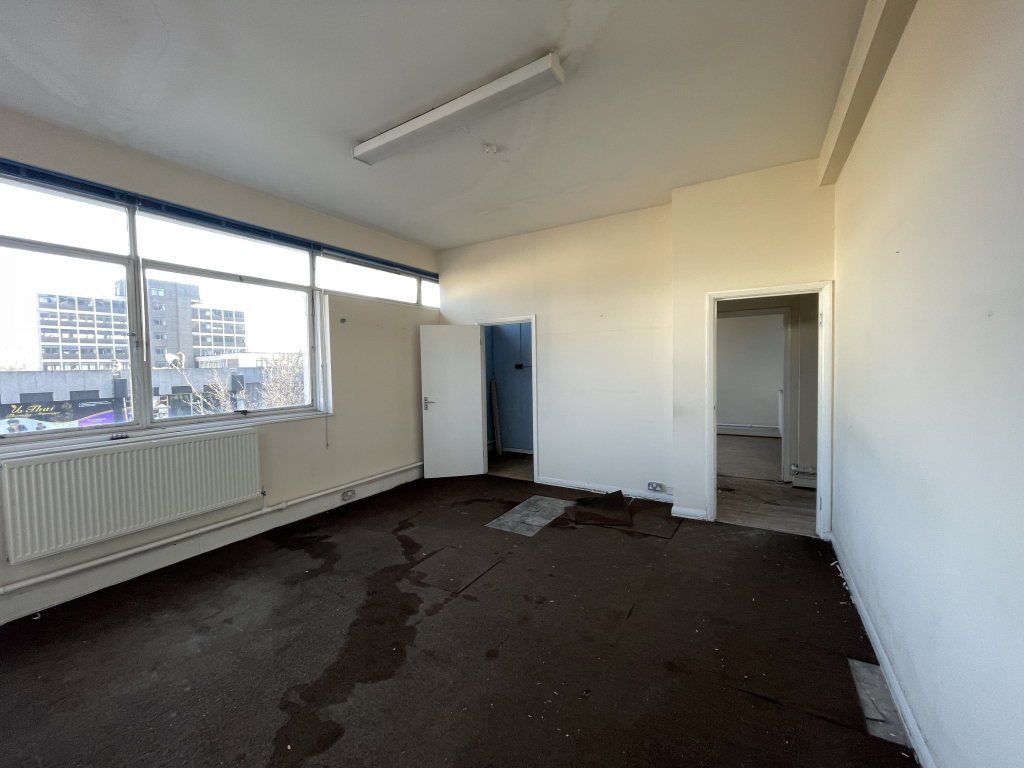
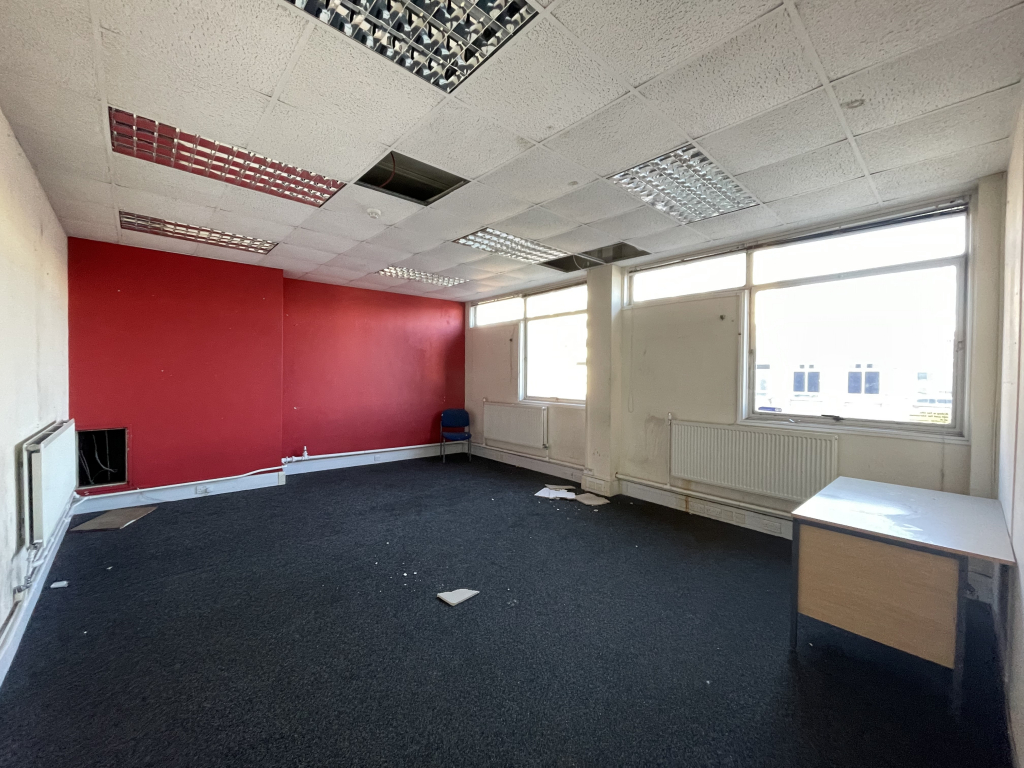
Today the building is, sadly, a shadow of its former self.

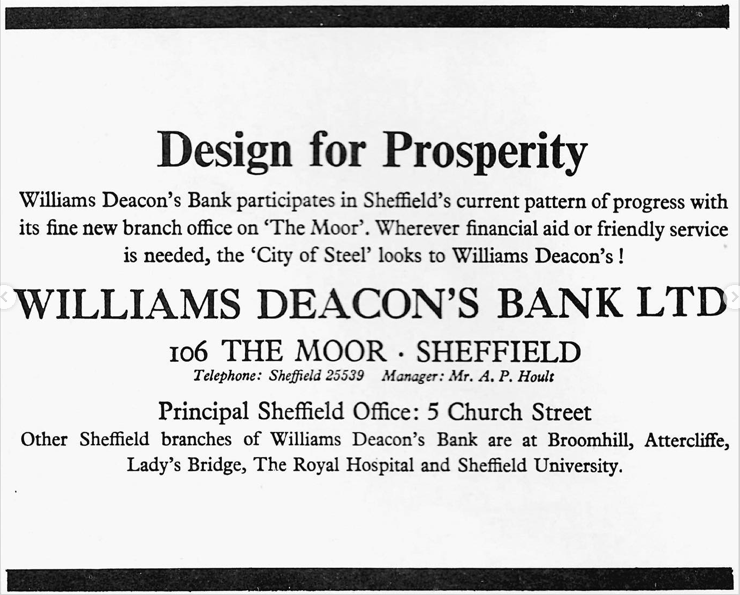
Other Sheffield banks are available- William Deacon’s, where refurbishment seems to be taking place.

Williams Deacon’s Bank – Sheffield

106 The Moor Sheffield S1 4PD

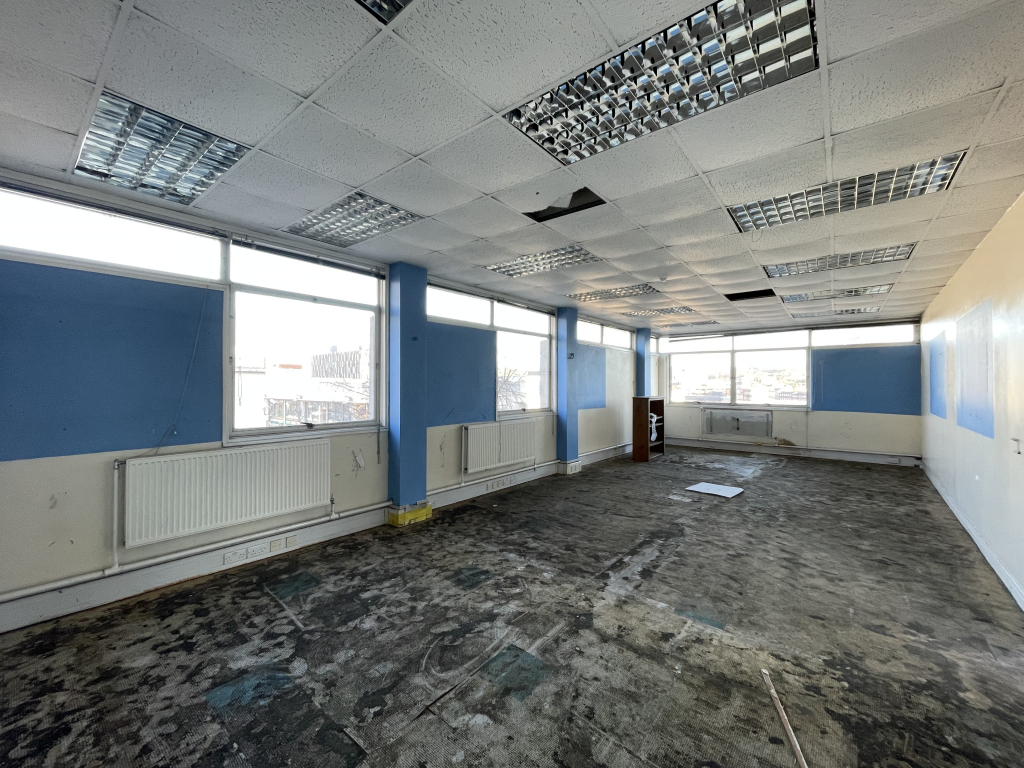
Currently to let

  • 2510 􏰀 5775 Square Feet
  • Self Contained Ground Floor Retail Unit
  • Seperate Offices Over First & Second Floor
  • WIthin Close Proximity to ongoing major redevelopment at The Moor

And looking for love.

I have often wandered by and wondered, well what were you?

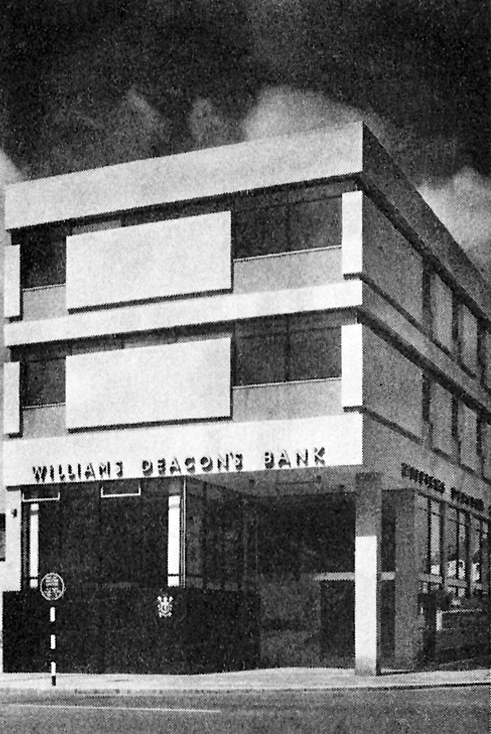
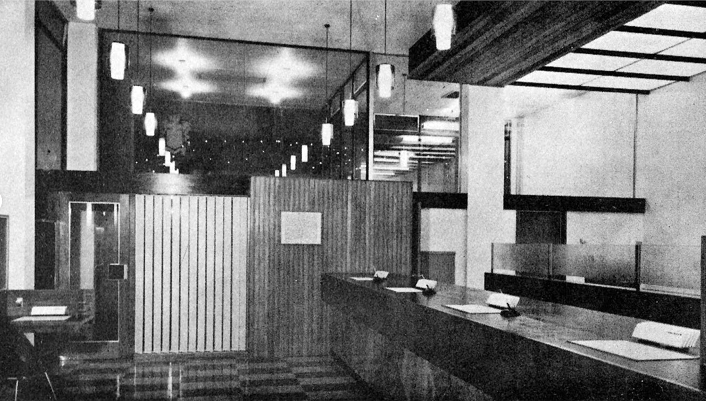
The answer arrived last week on Instagram via Sheffield Modernist

Architects: WT Gunson & Son.

Images: Design In Sheffield 2 1964/5

@sheffieldmodernist

Williams Deacon’s Bank

This joint-stock bank was established in Manchester in 1836 as Manchester & Salford Bank by a group of promoters keen to take advantage of recent legislation allowing the formation of joint-stock banks outside London. The bank had up to 15 directors and the issued capital was £1m, of which £252,100 was paid up by December 1836.

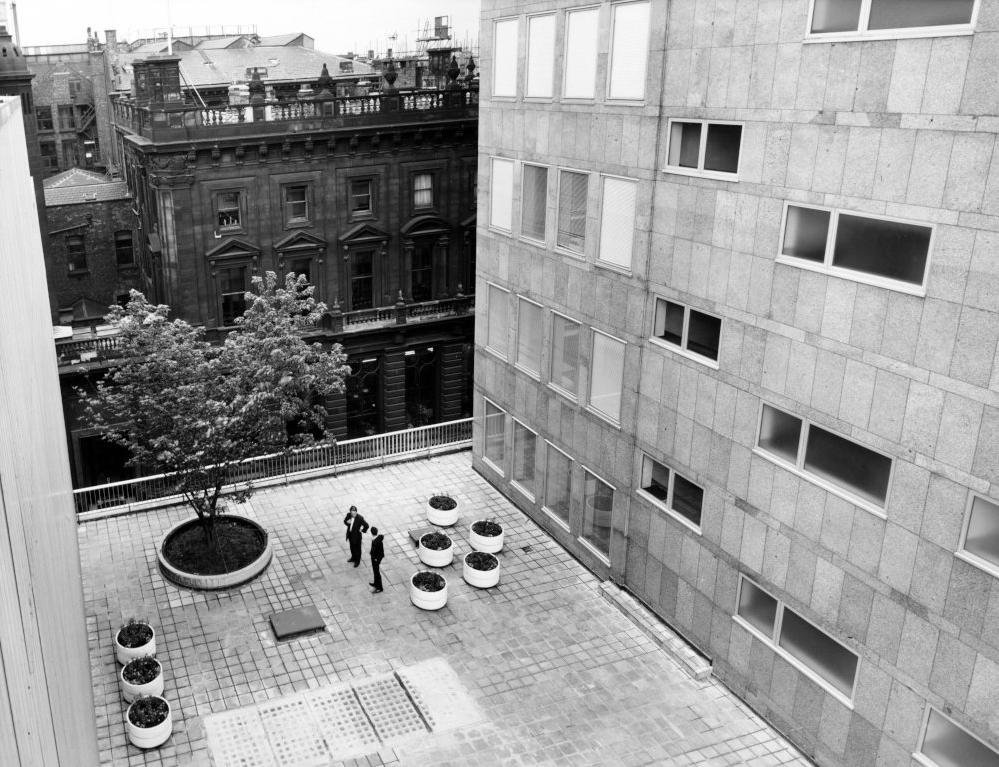
RIBA Pix: Headquarters building for William Deacon’s Bank Limited – Mosley Street Manchester: the garden at podium level.

Harry S Fairhurst & Son 1965

The first shareholders’ meeting, in May 1836, took place in temporary premises, but in August 1836 a banking house was rented in King Street. Land off Mosley Street was later acquired and a new banking house completed in 1838.

In 1969 The Royal Bank of Scotland was restructured and Williams Deacon’s became a direct subsidiary of a new holding company, National & Commercial Banking Group. The following year the holding company’s subsidiaries in England and Wales – Williams Deacon’s Bank, Glyn, Mills & Co and the English and Welsh branches of The National Bank – merged to form Williams & Glyn’s Bank.

In 1972 Williams & Glyn’s Bank joined with five other European banks to form the Inter Alpha Banks Group to exploit opportunities in the European Economic Community. In 1985 The Royal Bank of Scotland Group’s two major subsidiary holdings, Williams & Glyn’s Bank and The Royal Bank of Scotland, were fully merged as The Royal Bank of Scotland plc.

The very merry monopolies and mergers merry dance – consequently this perfectly formed Modernist bank stands alone and forlorn.

Love, for sale or to let.

Bolton Walk

Organised by the Twentieth Century Society

Text by Eddy Rhead and David French.

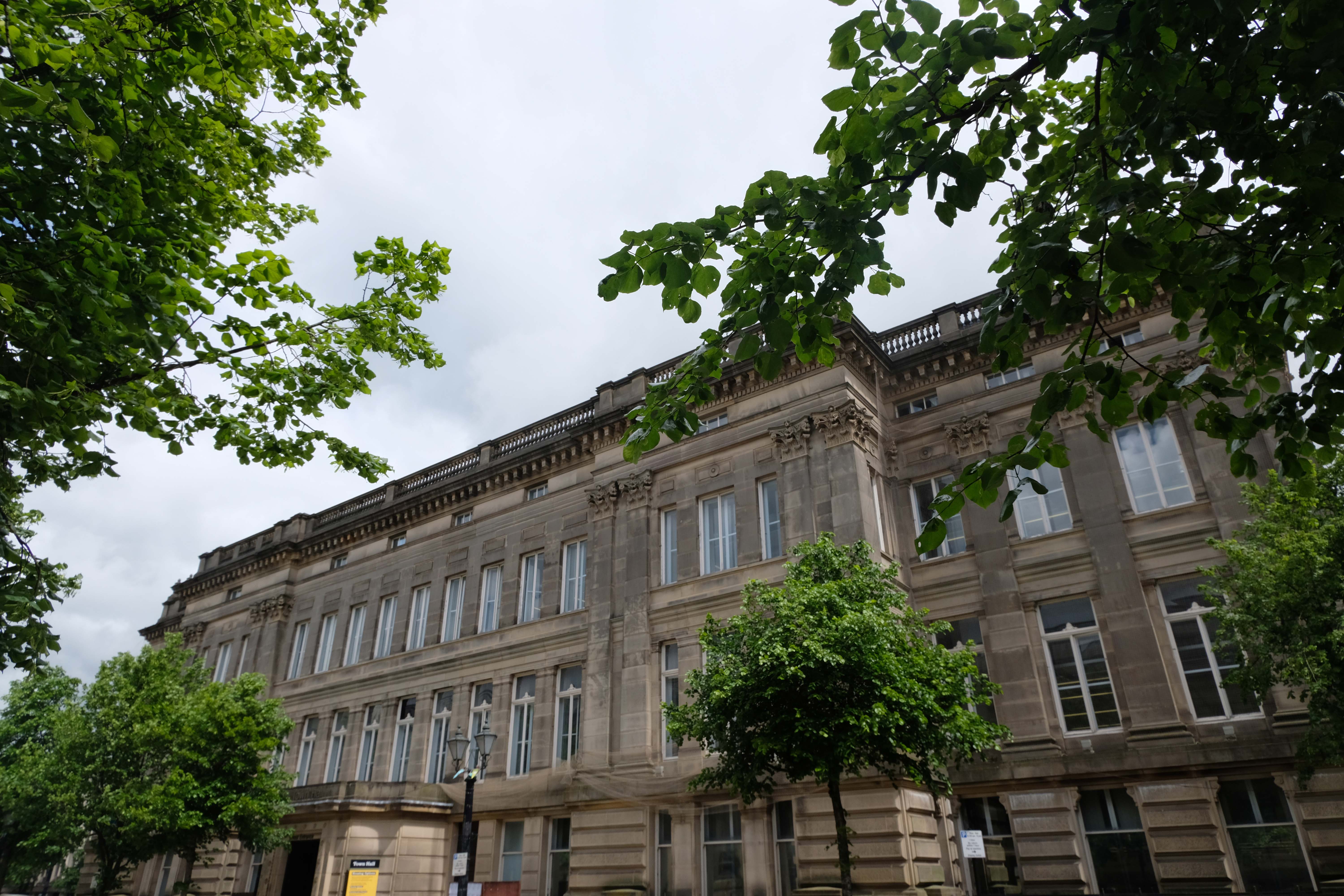
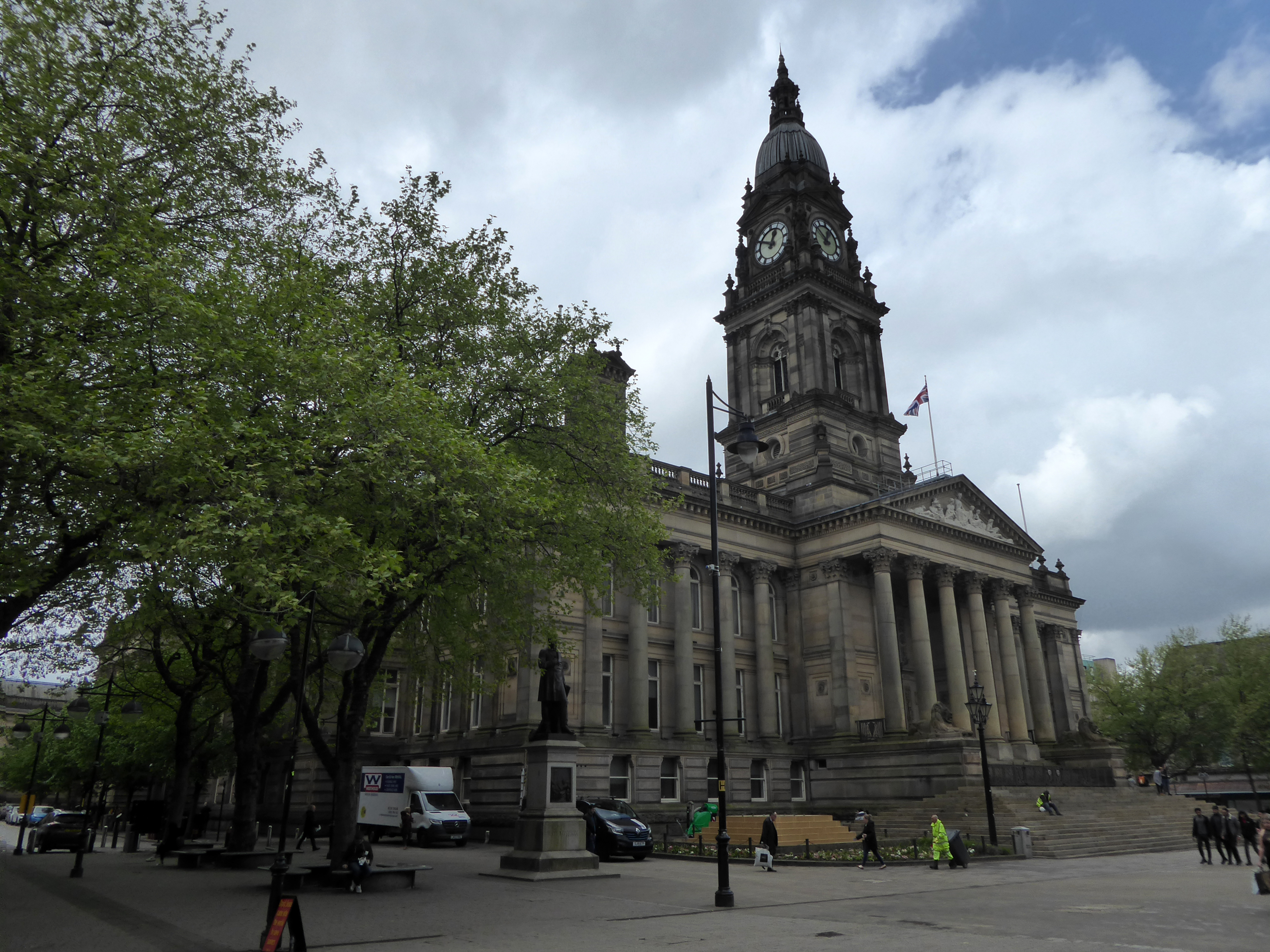
Bolton Town Hall – 1873 was designed by William Hill of Leeds, with Bolton architect George Woodhouse.

The original building was extended in 1938 by Bradshaw Gass & Hope – hereafter BGH.

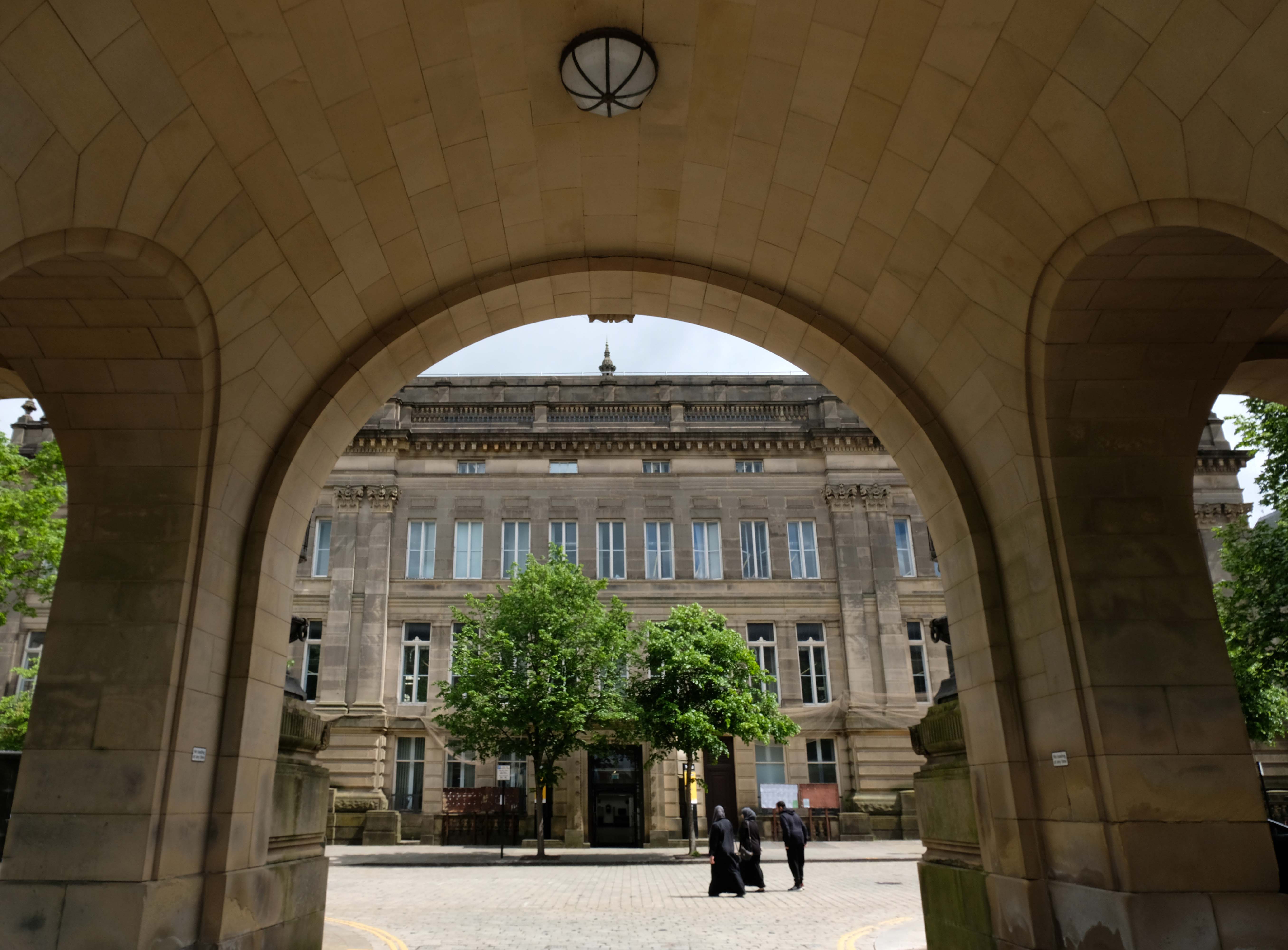
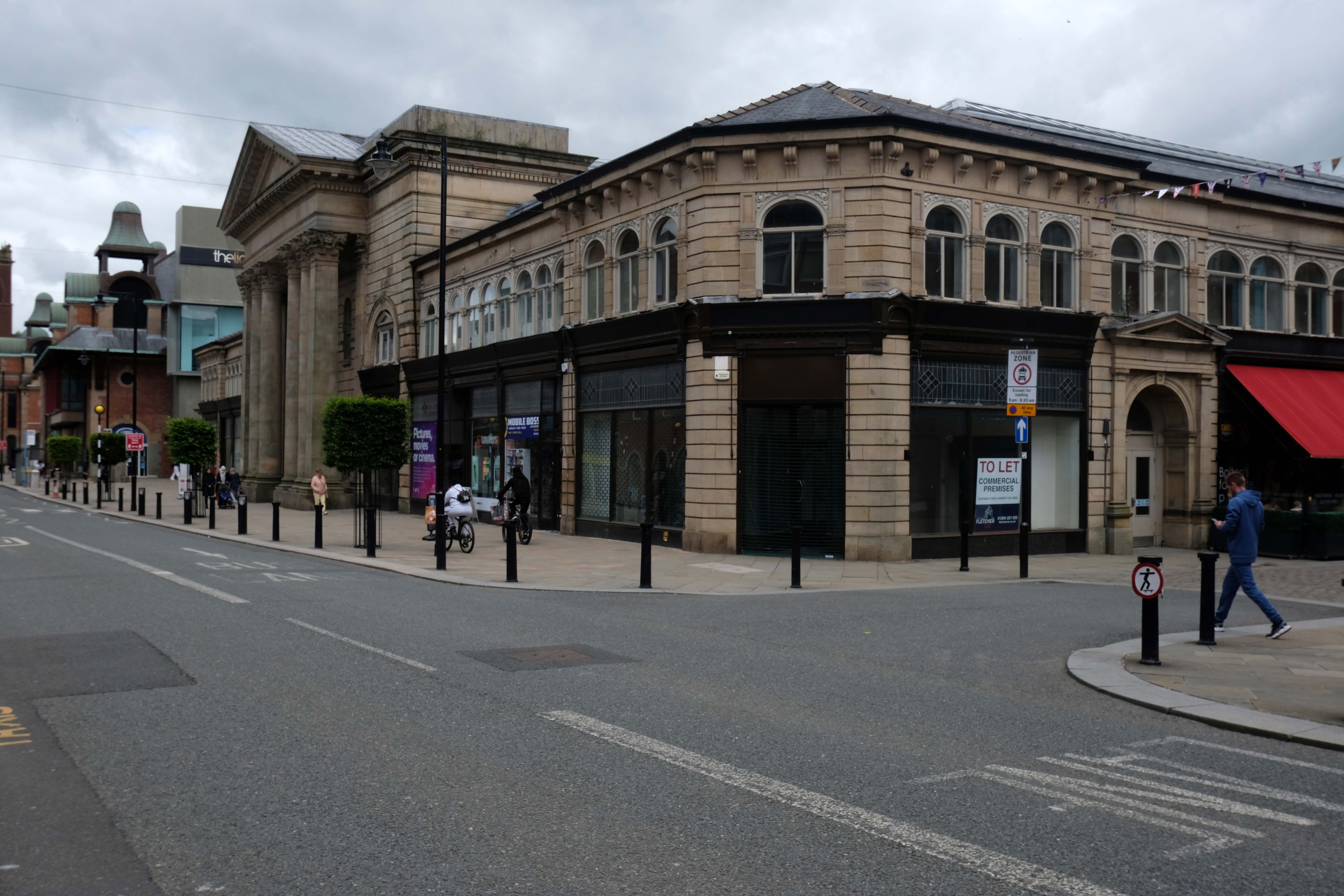
Le Mans Crescent by BGH 1932-9 well complements the Town Hall extension. Its neo-classical design is assured and confident. Pevsner remarked that:

There is, surprisingly enough, no tiredness, the panache is kept up.

Three arches pierce the Crescent’s centre but today they lead only to a potential development site. One end of the Crescent contains the Art Gallery and Library; the other used to house the former Police Headquarters and Magistrates’ Courts.

George Grenfell Baines, the founder of the Building Design Partnership, was involved in this project when he worked for BGH in the 1930s

The Octagon 1966-67 originally by Geoffrey Brooks, the borough architect, rebuilt 2018-2021. The hexagonal auditorium has apparently been retained. Pevsner states of the former building:

A welcome dose of honest Brutalism.

The Wellsprings successfully fitting with the Town Hall

The former 1931 Cooperative Society Store, on the Oxford Street corner, is by BGH. The entrance has Doric columns in deference to the Town Hall’s Corinthian ones – and Le Mans Crescent uses the Ionic for the same reason.

We pass Paderborn House 1968 -69 Sutton of Birmingham clad in moulded concrete, with Traverine around the entrance.

Former Lloyds Bank on Deangate corner, clad in white faience, looks BGH-ish but it’s not listed in the Lingards’ BGH monograph.

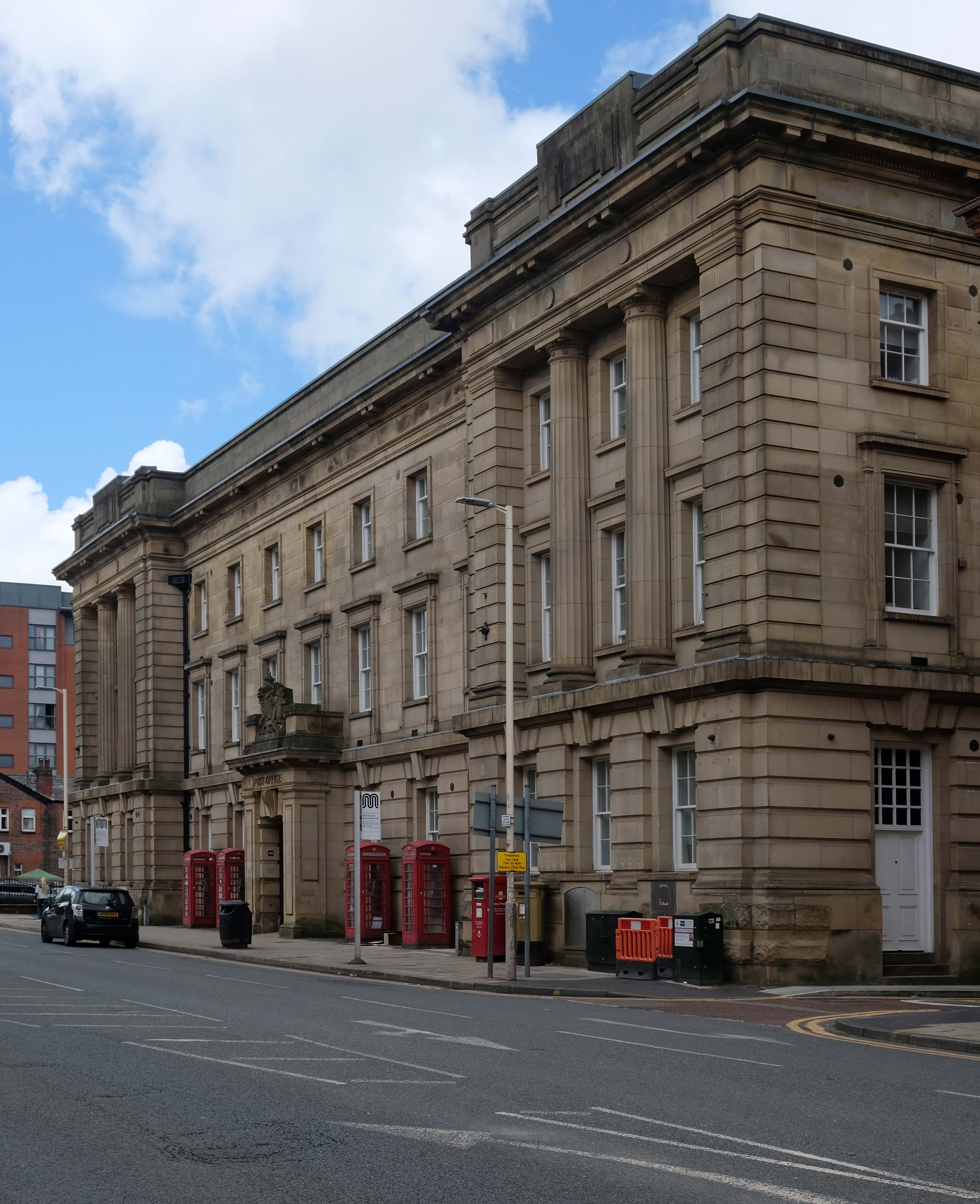
Across the way the unlisted Post Office – complete with listed phone boxes.

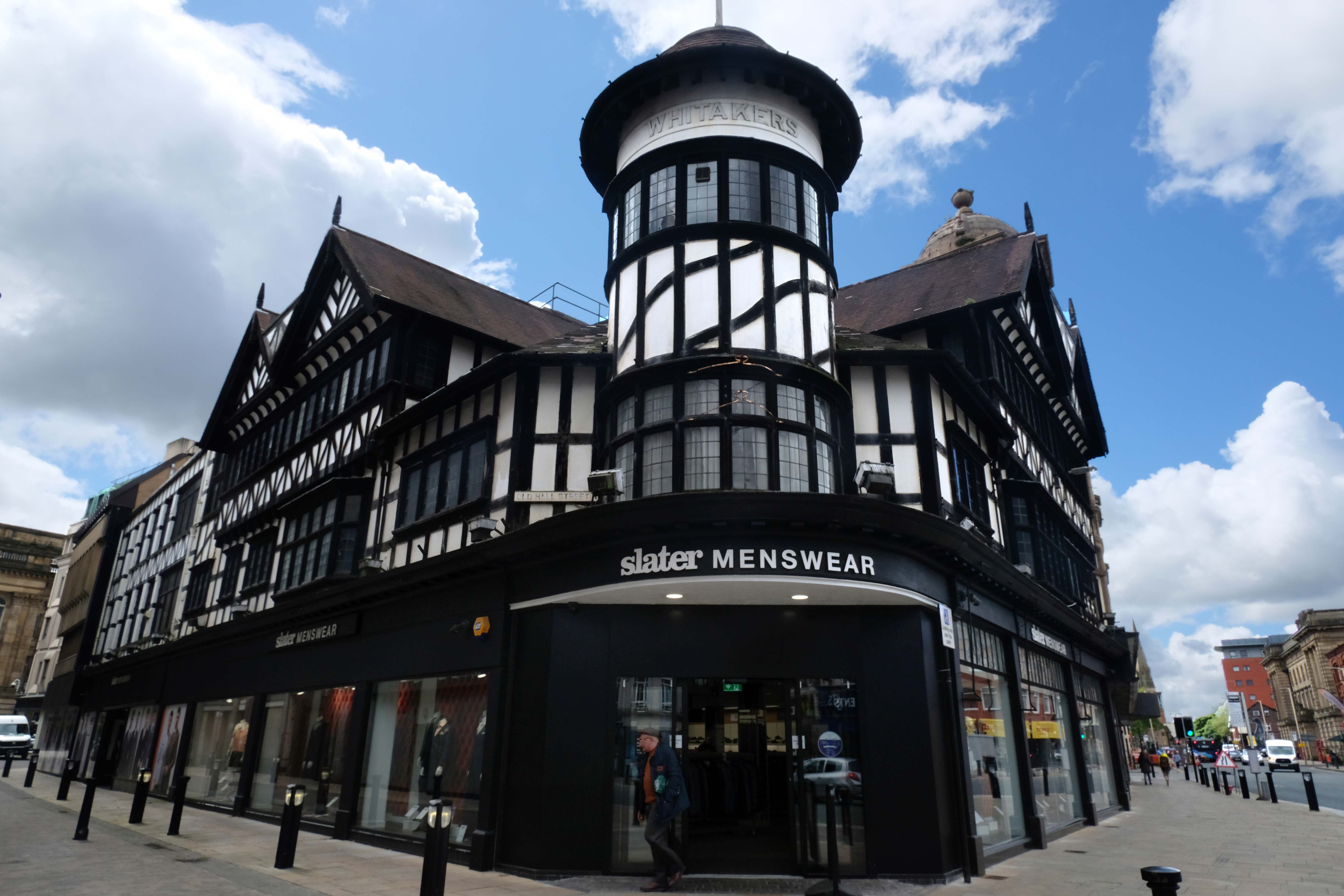
Whitakers 1907 by George Crowther.

Pastiche timber-framed with pepper-pot turret.

Incorporates genuine Tudor timbers from a demolished building nearby.

To the north of Deansgate, down Knowsley and Market Streets, is GT Robinson’s 1851-6 Market Hall. The interior is, according to Matthew Hyde: a lucid structure simply revealed.

He contrasts it with Market Place Centre 1980-88 by Chapman Taylor Partners: In that most ephemeral of styles, a jokey Postmodernism.

It does however echo Victoria Hall 1898-1900 BGH.

Chapman Taylor also did the 1980-8 Market Place Shopping Centre. The Market Hall was built over an impressive brick undercroft above the River Croal which has recently been opened up and is a destination.

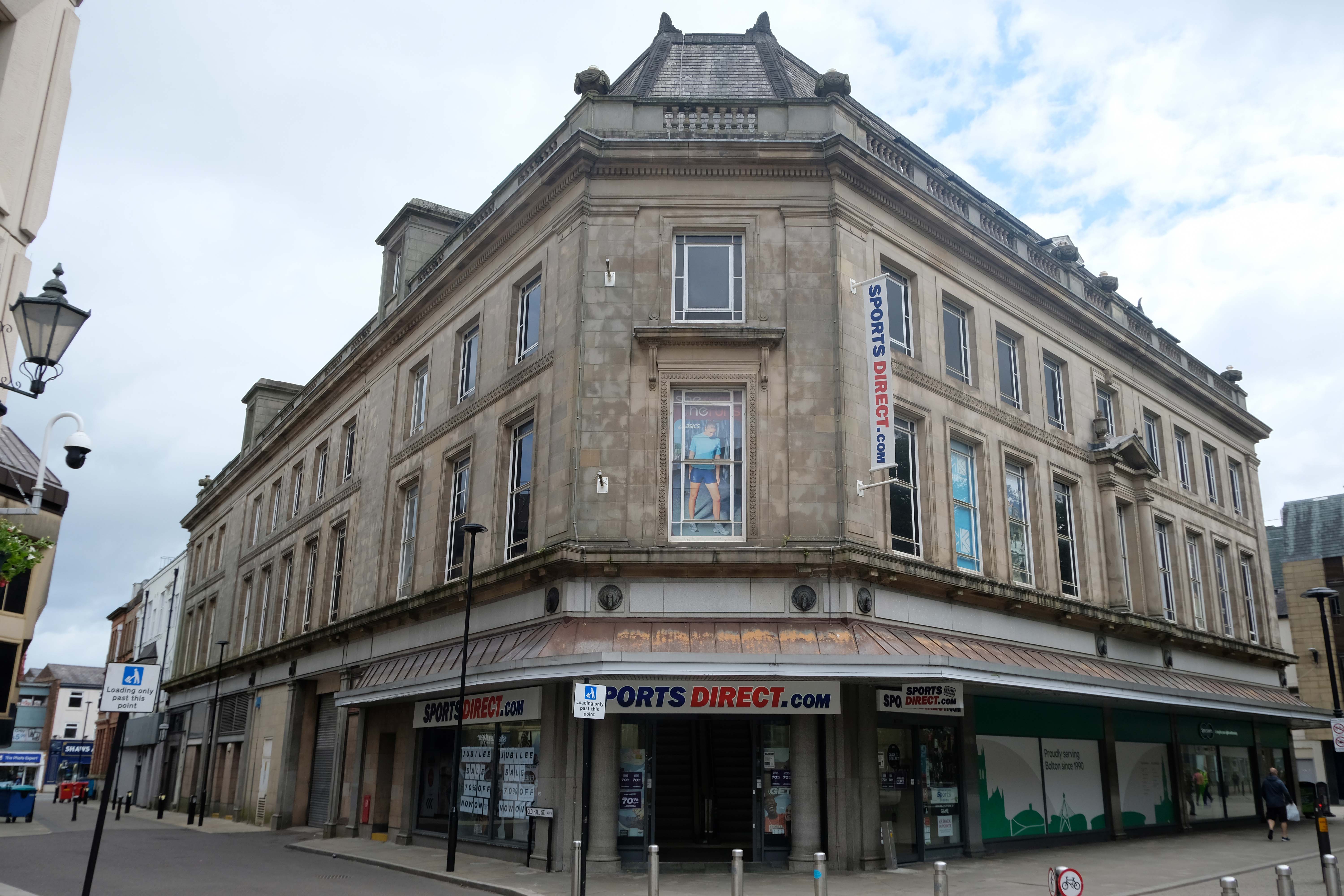
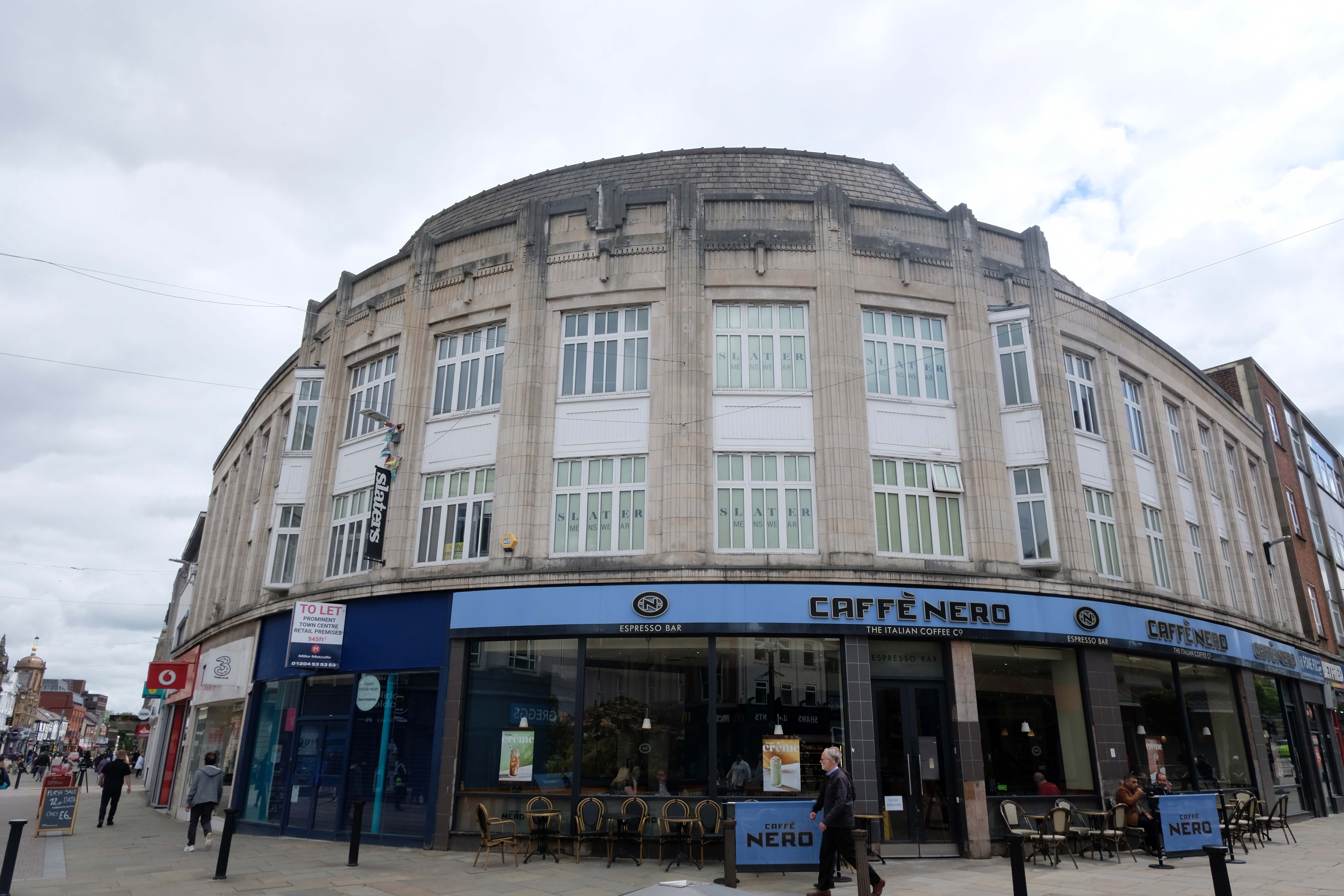
At the Oxford Street corner, Slater Menswear, above Caffé Nero, has Art Deco white faience upper storeys.  Further down is the imposing Marks & Spencer, faced in dark stone 1965-67.

The mansard roof was added later.

Along Market Street, Clinton Cards is clad in white faience with Art Deco window details.

At the corner of Bridge Street is a charming 1960s clock; the building would not look out of place in Coventry.

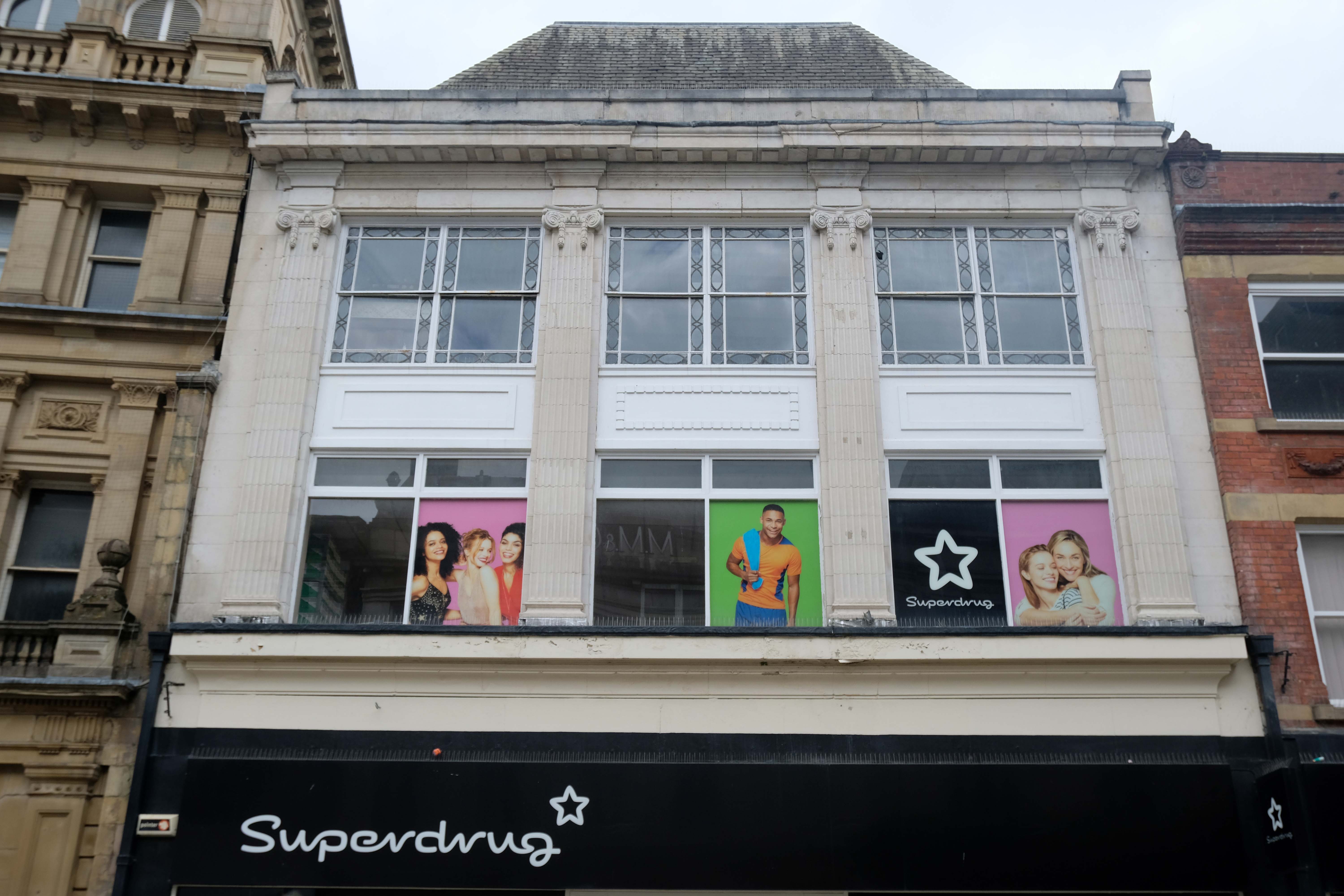
Other buildings of interest on Deansgate include Superdrug – with some Art Deco features; Greggs by Ernest Prestwich of Leigh who trained with WE Riley. 

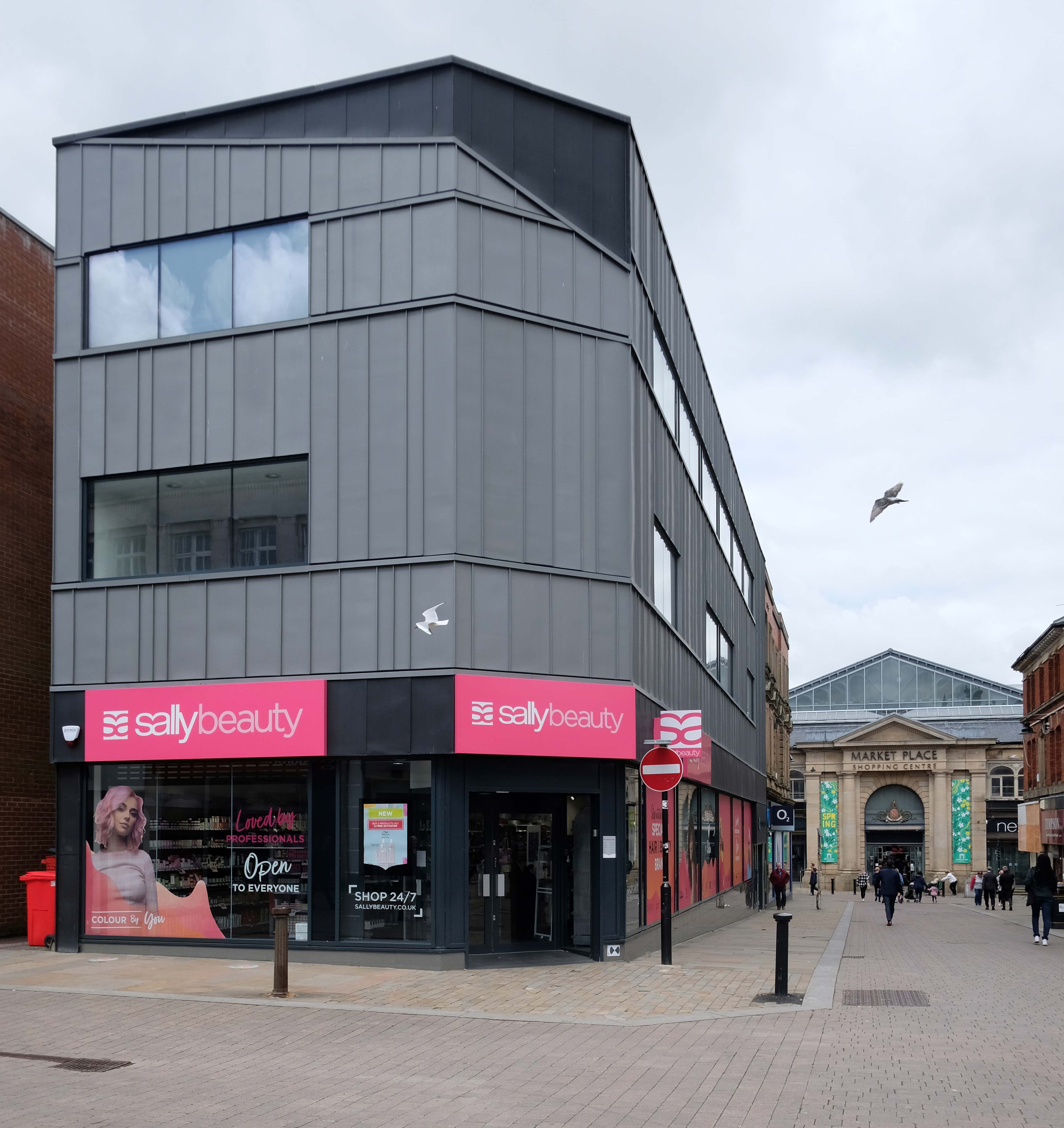
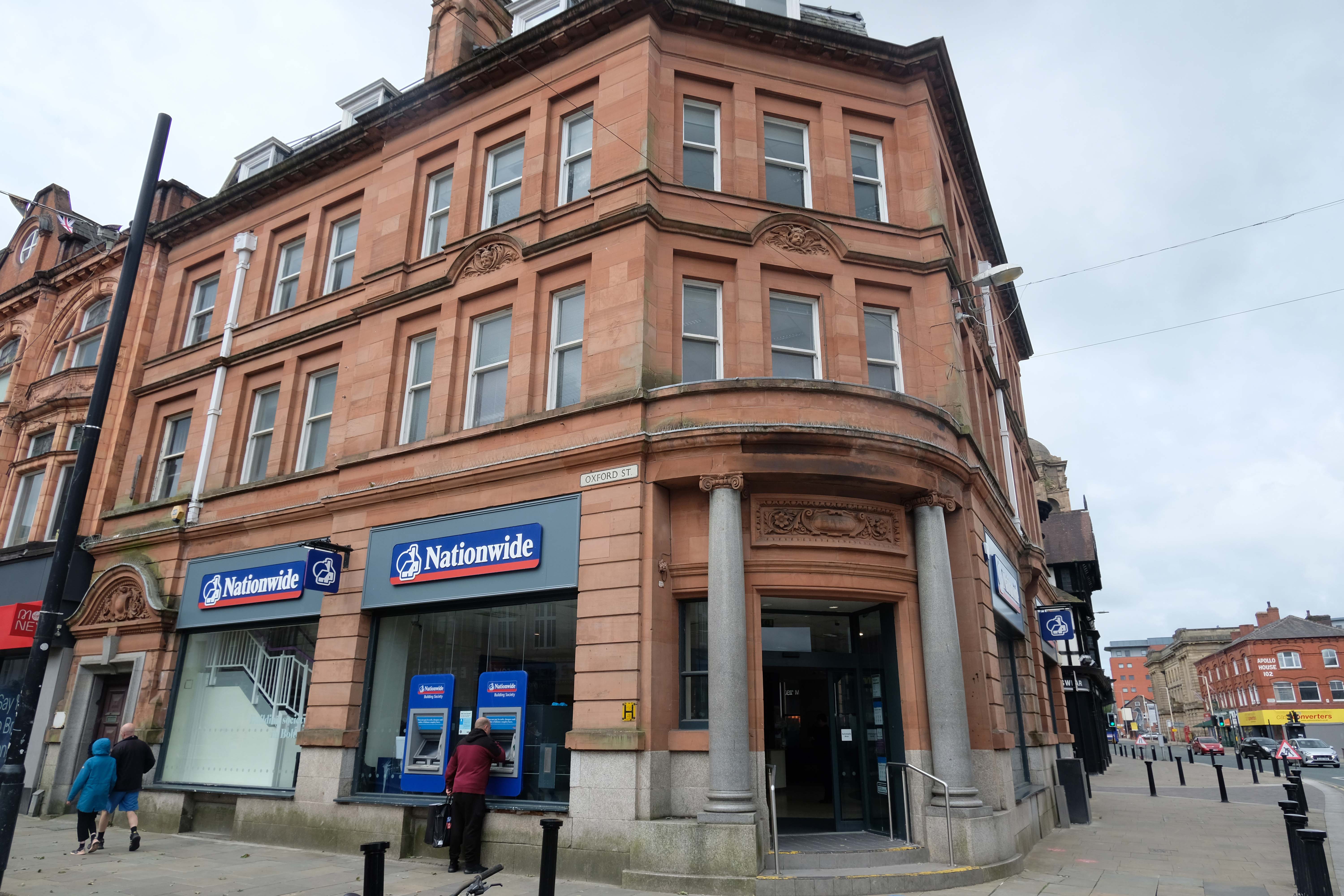
Sally Beauty and the Nationwide – entrance by William Owen of BGH.

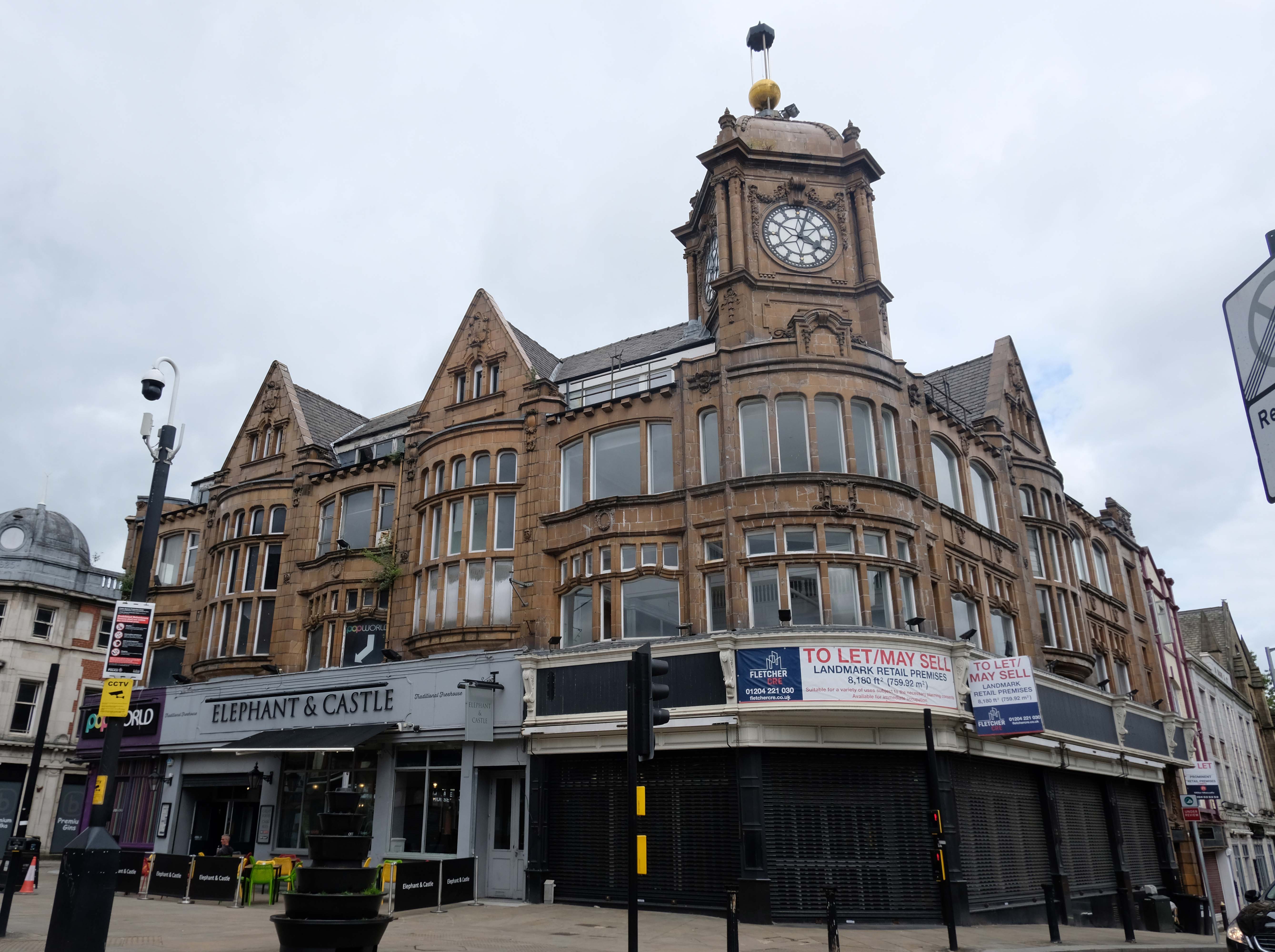
The former Preston’s jewellers, on the corner of Bank Street, has terracotta, by Thomas Smith & Sons 1908-13, a prolific local firm. It had a time ball, on the clock tower, which was raised daily at 9am and dropped at 10am, on receipt of a telegraph signal from Greenwich.
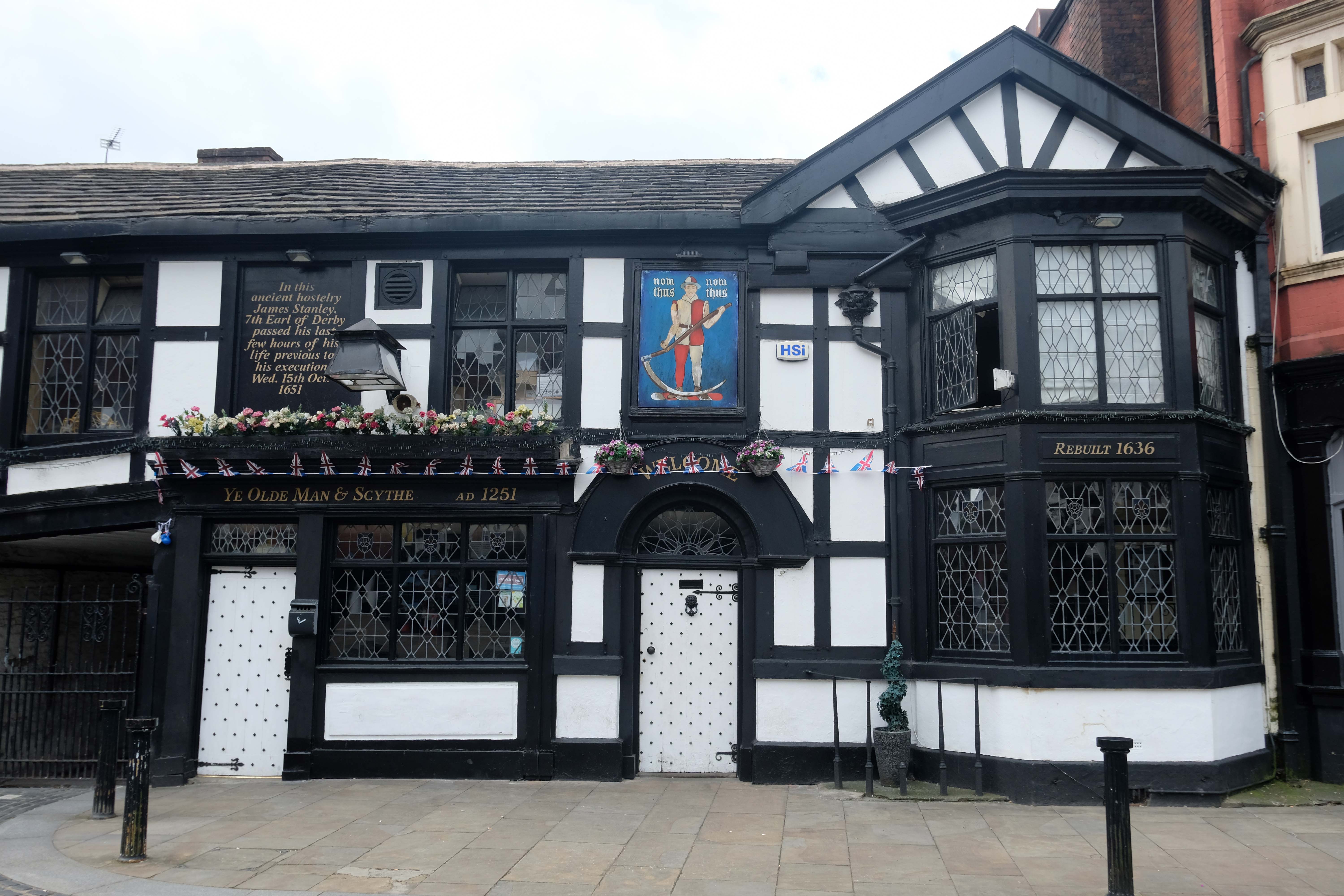
The 1909 Bolton Cross, in Dartmoor granite, by BGH replaced an earlier one which is now kept at Bolton School. Churchgate contains the 1636 Ye Olde Man & Scythe; the former coaching inn Swan Hotel, reconstructed in the 1970s to look more genuinely Georgian and Ye Olde Pastie Shoppe 1667. 
Stone Cross House 1991 was built for the Inland Revenue in an aggressively red brick and spiky style. It has a rather desperate chandelier in the foyer. 

The gates of St Peter’s church EG Paley 1871 are framed by Travel House, Newspaper House -1998 and Churchgate House and Huntingdon House 1974.

St Peter’s has a Neo-Gothic font and cover by N Cachemaille-Day 1938. The gates and gate piers may look early C20 but they are late C18.

Samuel Crompton 1753-1827, the inventor of the mule, is buried under the large granite monument, erected in 1861.

At the corner of Silverwell and Institute Streets is WT Gunson & Son’s 1970 Friends Meeting House: decent with a light elevated roof corner.  It has a tilted roof floating on the glazed upper walls.

Scott House has a charming 1926 plaque commemorating Sir James Scott and his wife Lady Anne. Scott started the Provincial Insurance Company.

The two storey offices of Fieldings and Porter are a successful piece of infill by BGH.

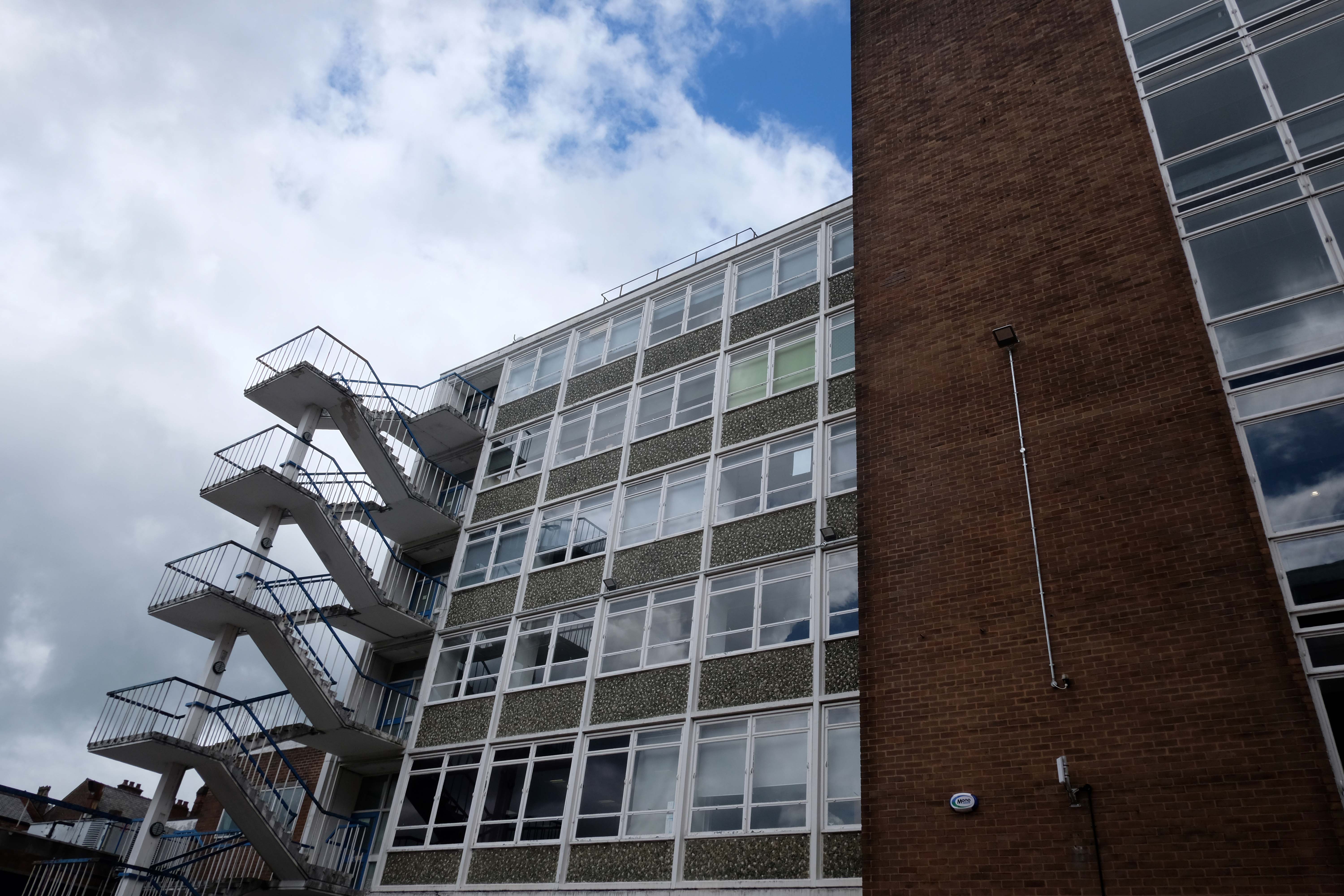
Nip around the back to get a glimpse of this cracking stairway.

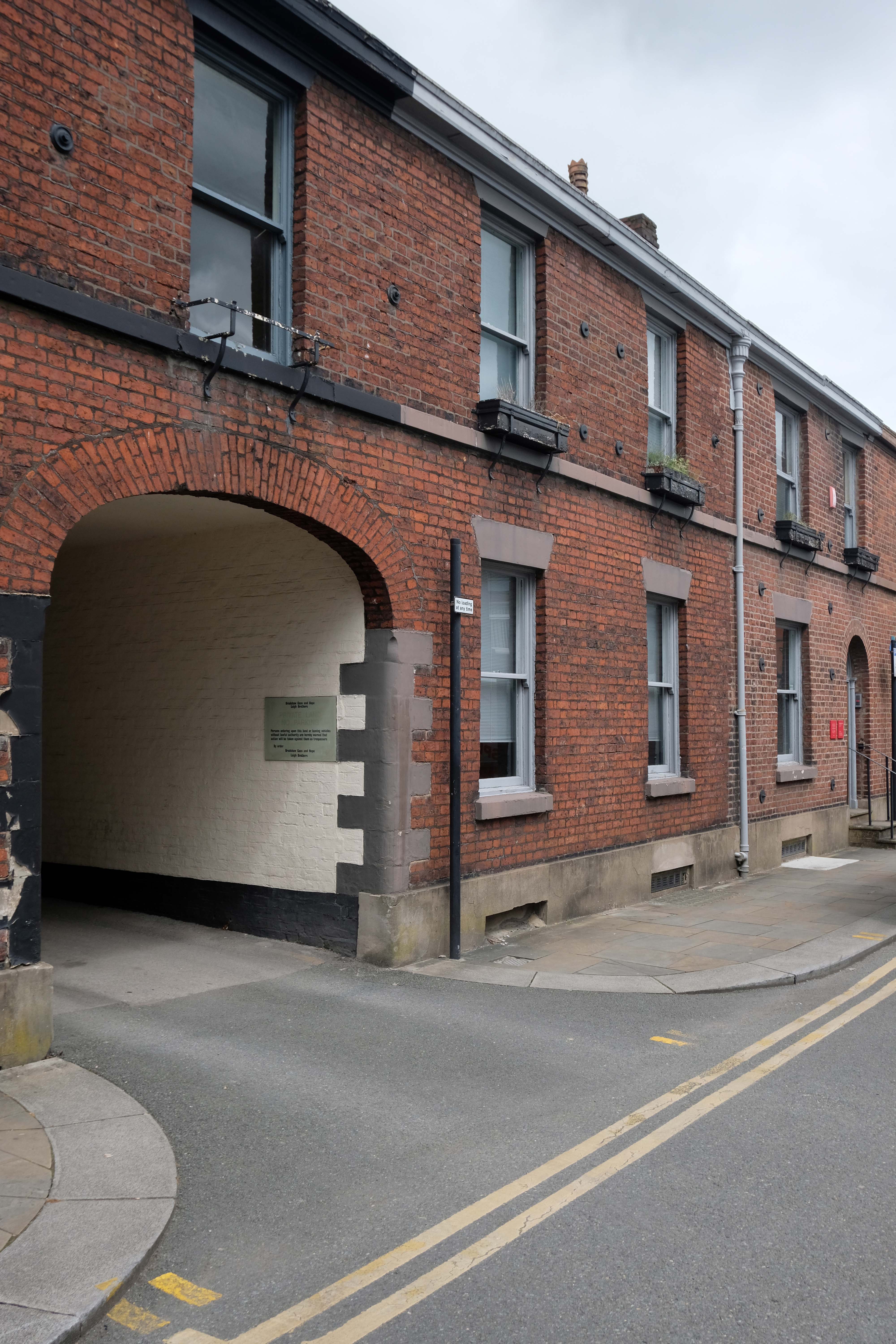
Silverwell Street 1810 is named after the Silver Well. Bradshaw Gass & Hope now self­-described as Construction Design Consultants, not architects, are at number 19. Note the plaque to JW Wallace, founder of the Eagle Street College, dedicated to the works of the American poet, Walt Whitman. Wallace worked there from 1867 to 1912. The plaque is ringed by a quote from Whitman:

All architecture is what you do to it when you look upon it.

Whitman corresponded with his Bolton admirers; the Museum contains early editions of his works and his stuffed canary. 

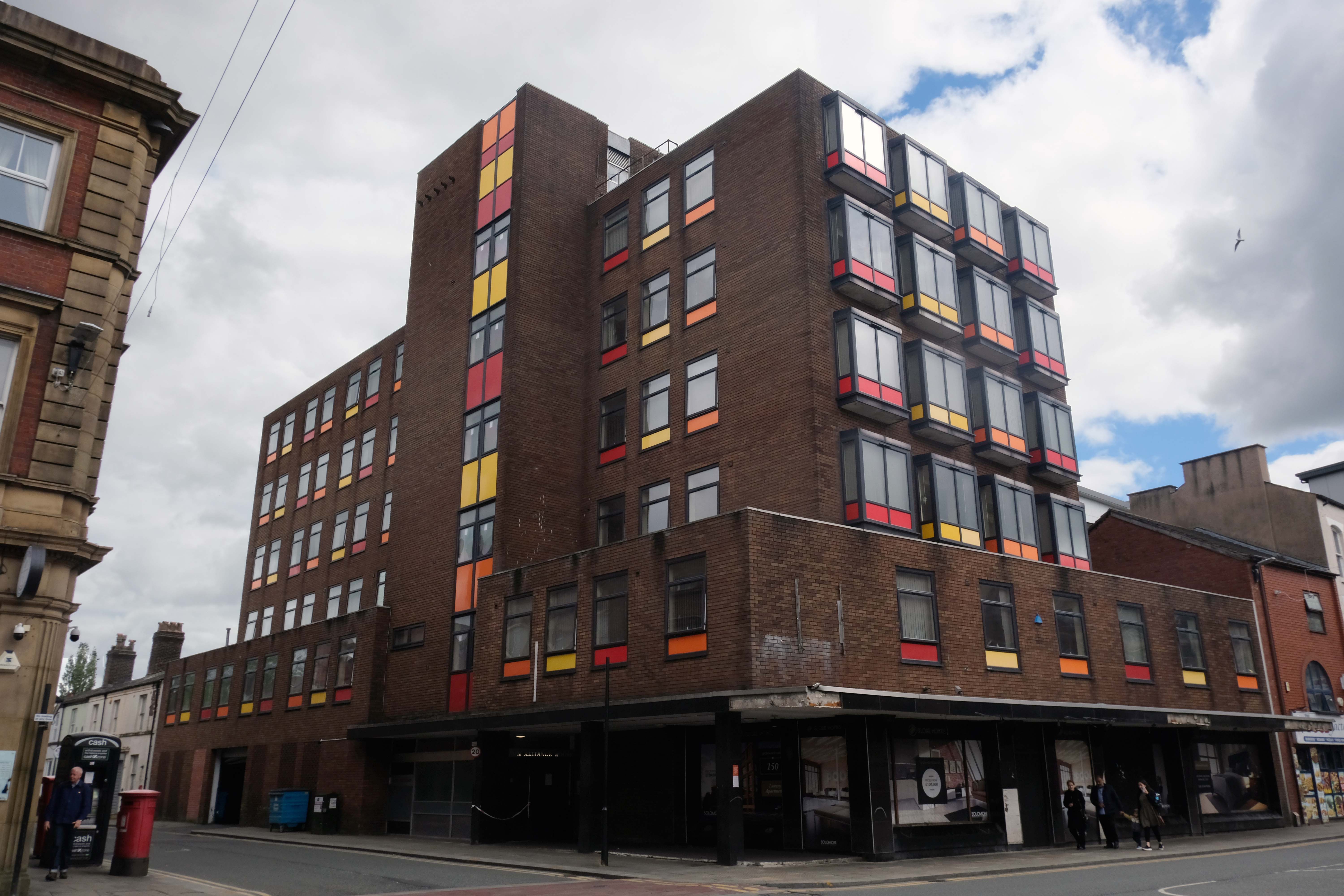
Further down Silverwell Street is the 1903 Estate Office of the Earl of Bradford who still owns a large area of Bolton.  At the end of Silverwell Street is the former Sun Alliance House, now converted to flats, the colourful panels are a later addition.

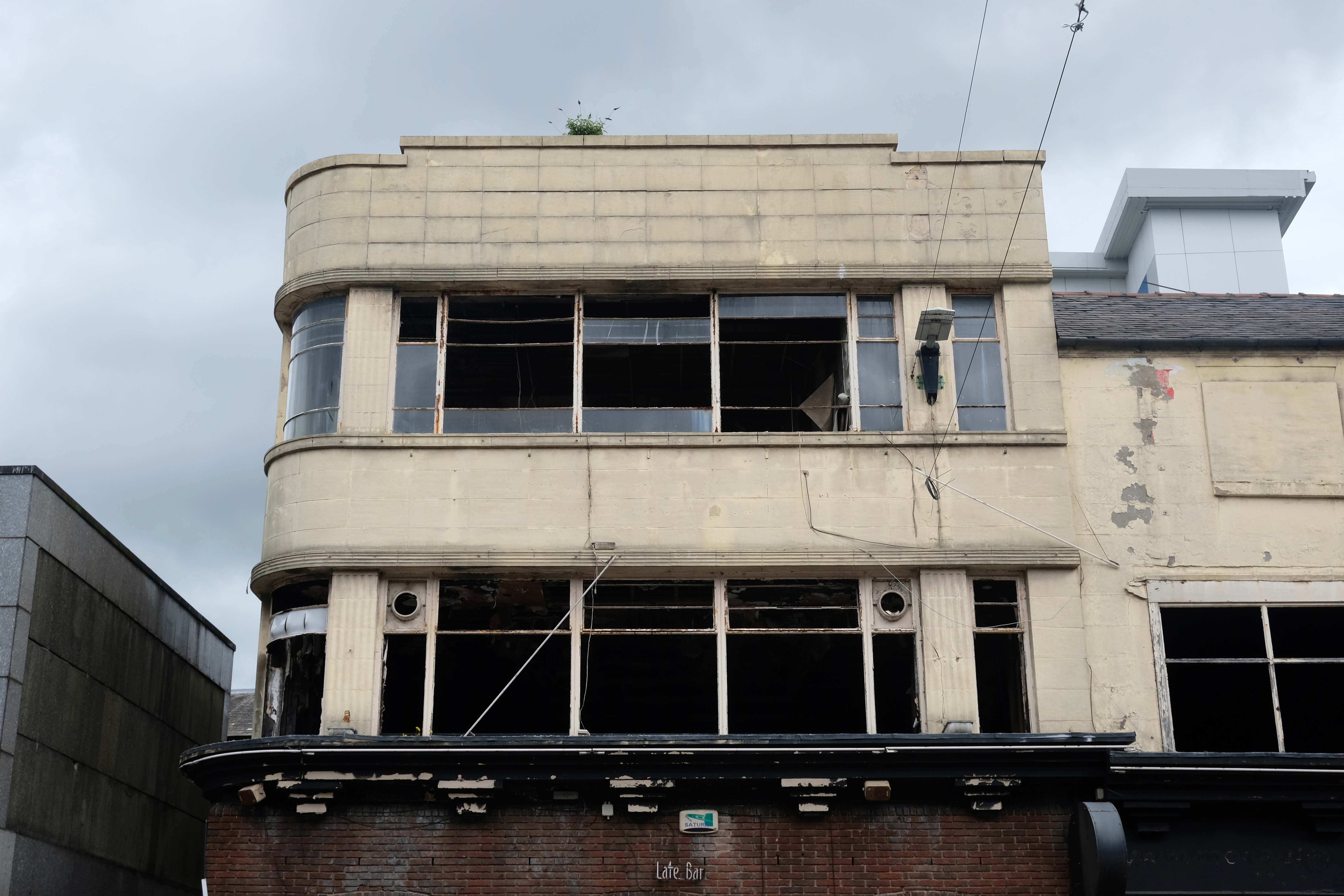
Bradshawgate and Silverwell lane corner has a former café bar with original curved Moderne windows. This was originally Vose’s tripe restaurant, later UCP – United Cattle Products. It was most stylish and elegant, decorated in 1930s streamline Moderne style, with starched white tablecloths, silver service and smart waitresses. 

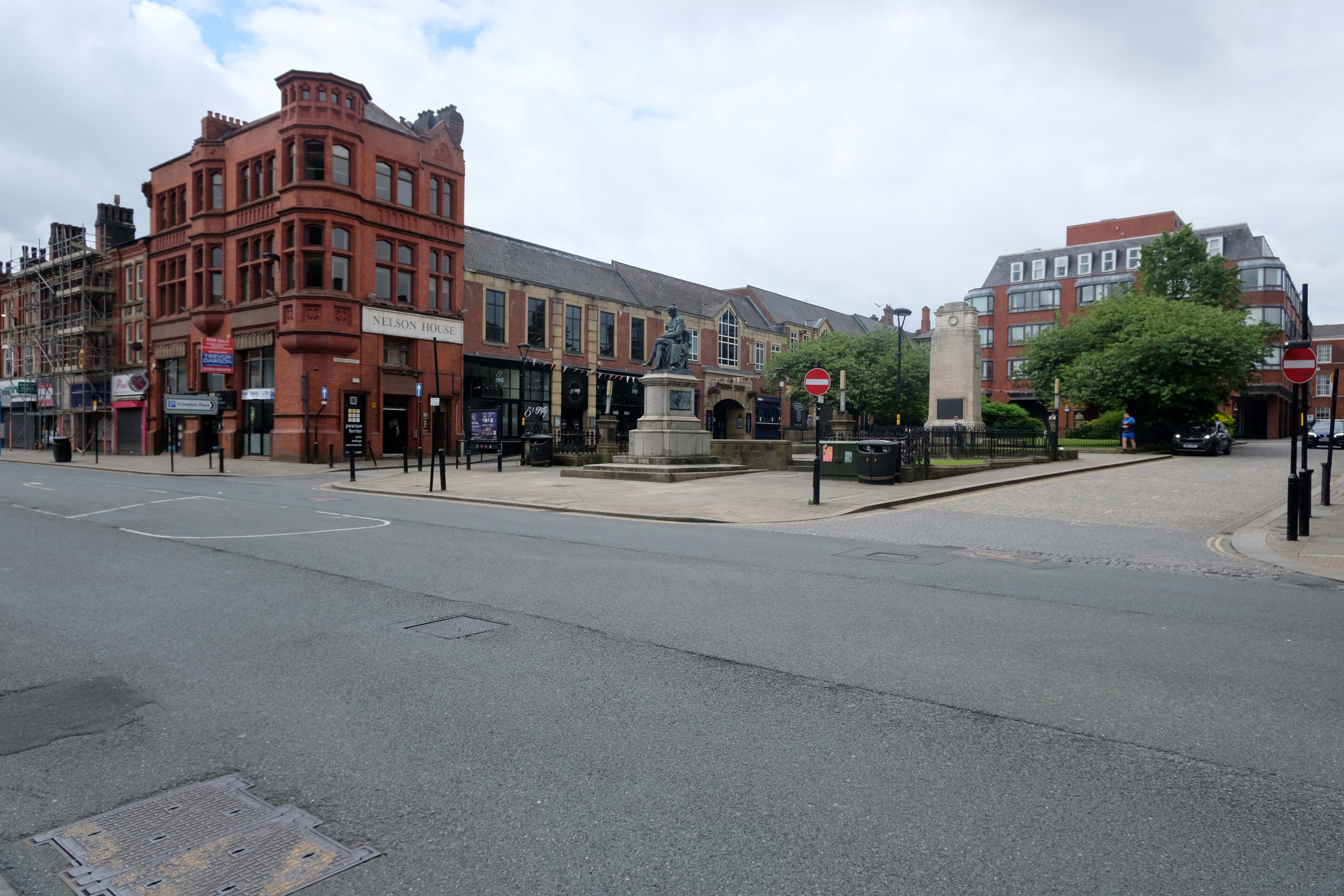
Nelson Square was opened on March 23, 1893. The cenotaph memorial to the Bolton Ar­tillery is by Ormrod, Pomeroy & Foy 1920. Calder Marshall sculpted the statue of Samuel Crompton 1862. The shiny red former Prudential Assurance office 1889 isn’t by Waterhouse but by Ralph B. Maccoll of Bolton. Matthew Hyde in Pevsner describes the early C20 faience facades of Bradshawgate as:

A plateful of mushy pea, ginger nut, liver, tripe and blood orange shades.

Infirmary Street has a 1970s office block with an octagonal, nicely lettered plaque to WF Tillotson, newspaper publisher. Round the corner in Mawdsley Street, the former County Court 1869 TC Sorby, 1869. Opposite, at the corner, is GWBD Partnership’s 1987 St Andrew’s Court, containing a somewhat whimsical recreation of a Victorian shopping street in miniature. The job architect was J Holland. Matthew Hyde says:

Neatly contrived on a tight site. 

Into Exchange Street and through the former Arndale Centre 1971; low and mean according to Pevsner 2004, now re-branded as Crompton Place 1989 Bradshaw, Rose & Harker and still dreary, we go to Victoria Square and the Town Hall. The classical building on the left is the former Bolton Exchange 1824-5 Richard Lane.

The square was pedestrianised in 1969, to the Planning Department’s designs, under RH Ogden. It was quite an early scheme which won three awards including one, unsurprisingly, from the Concrete Society. The fountains  were designed by Geoffrey Brooks and the trees were planted by the Earl of Bradford.

Owen Hatherley in Modern Buildings in Britain says of the town

It feels as if you’re in a real city, like in Europe, and you can drink your cup of tea in repose while admiring the monuments. 

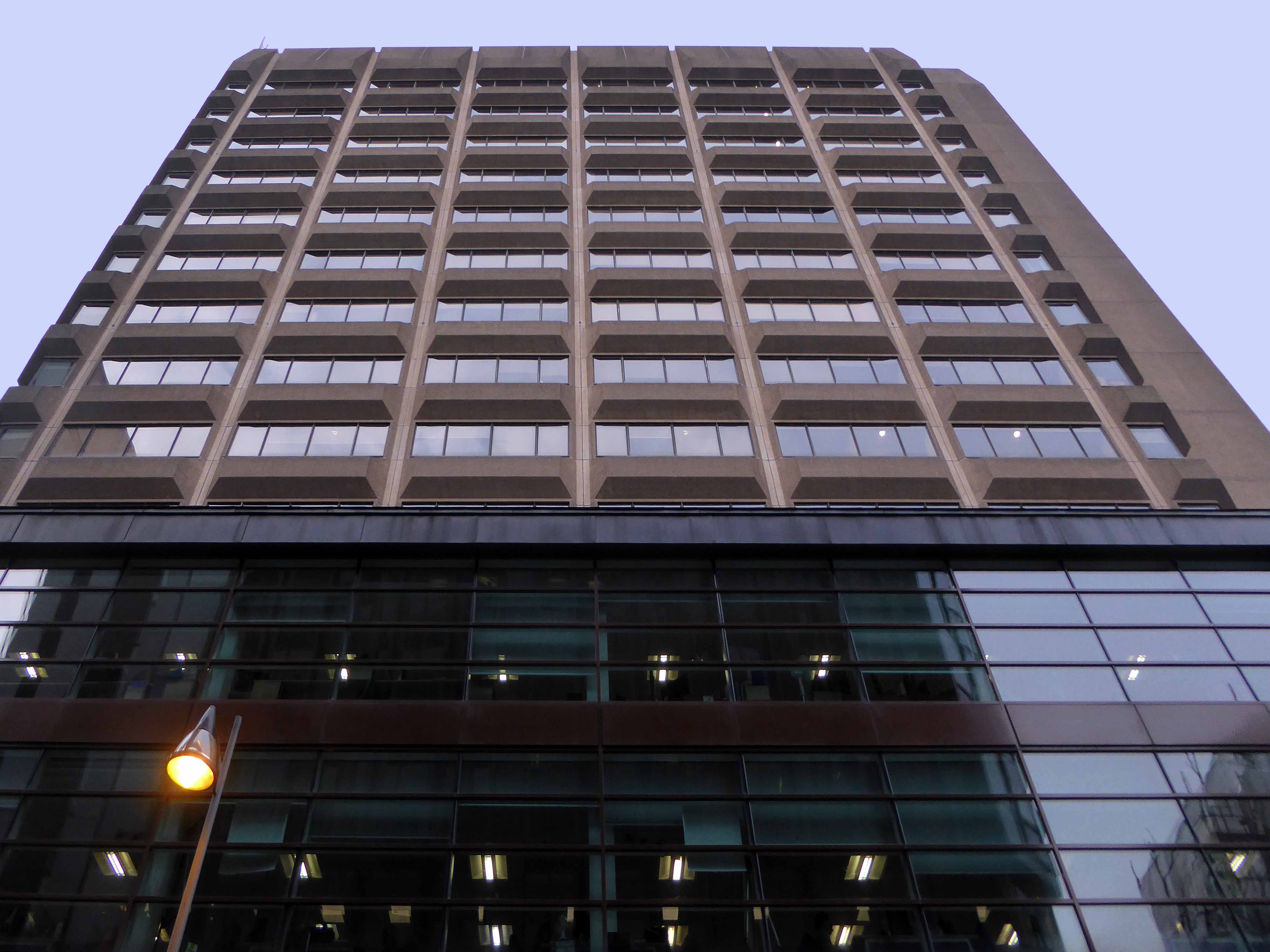
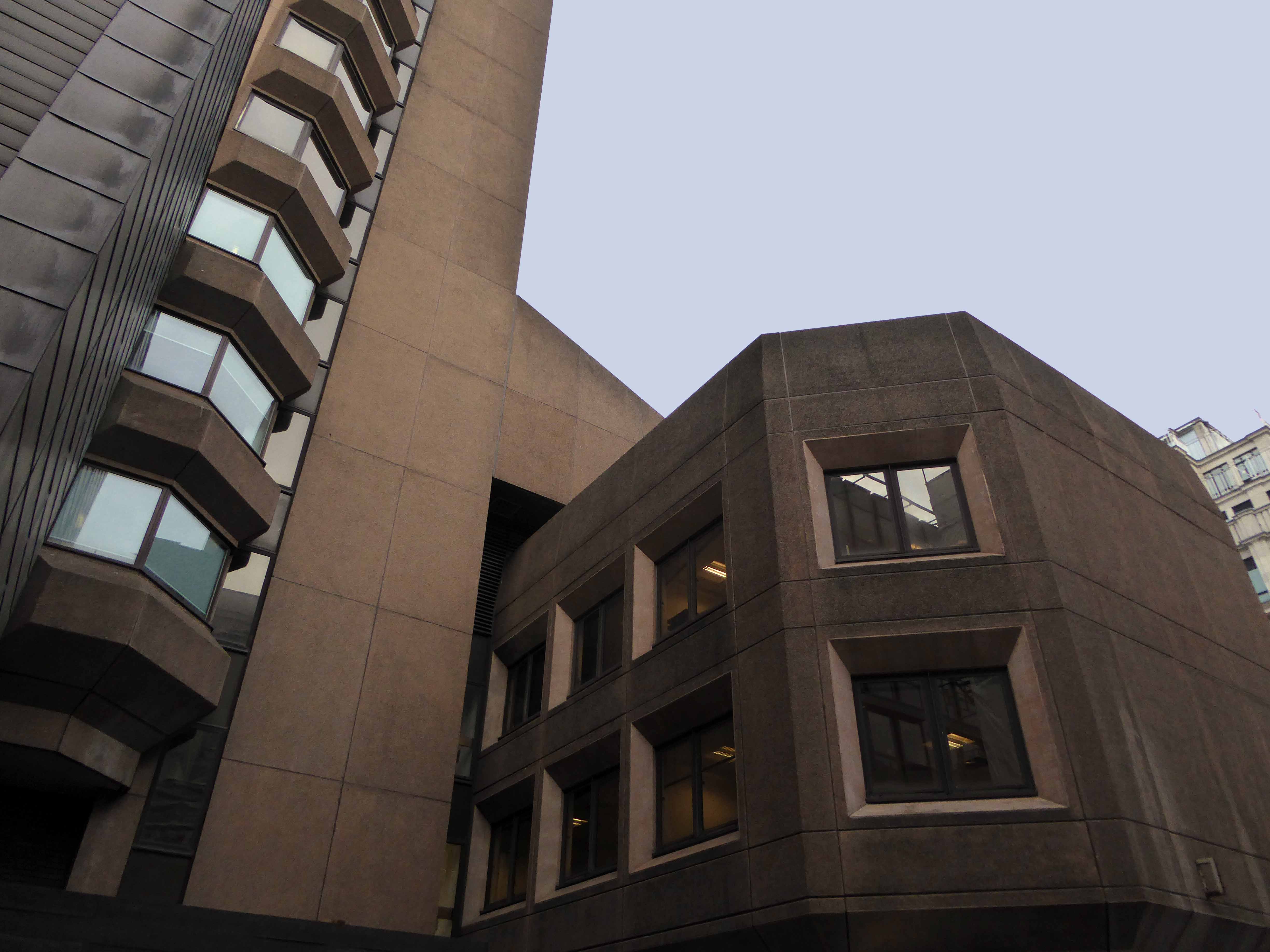
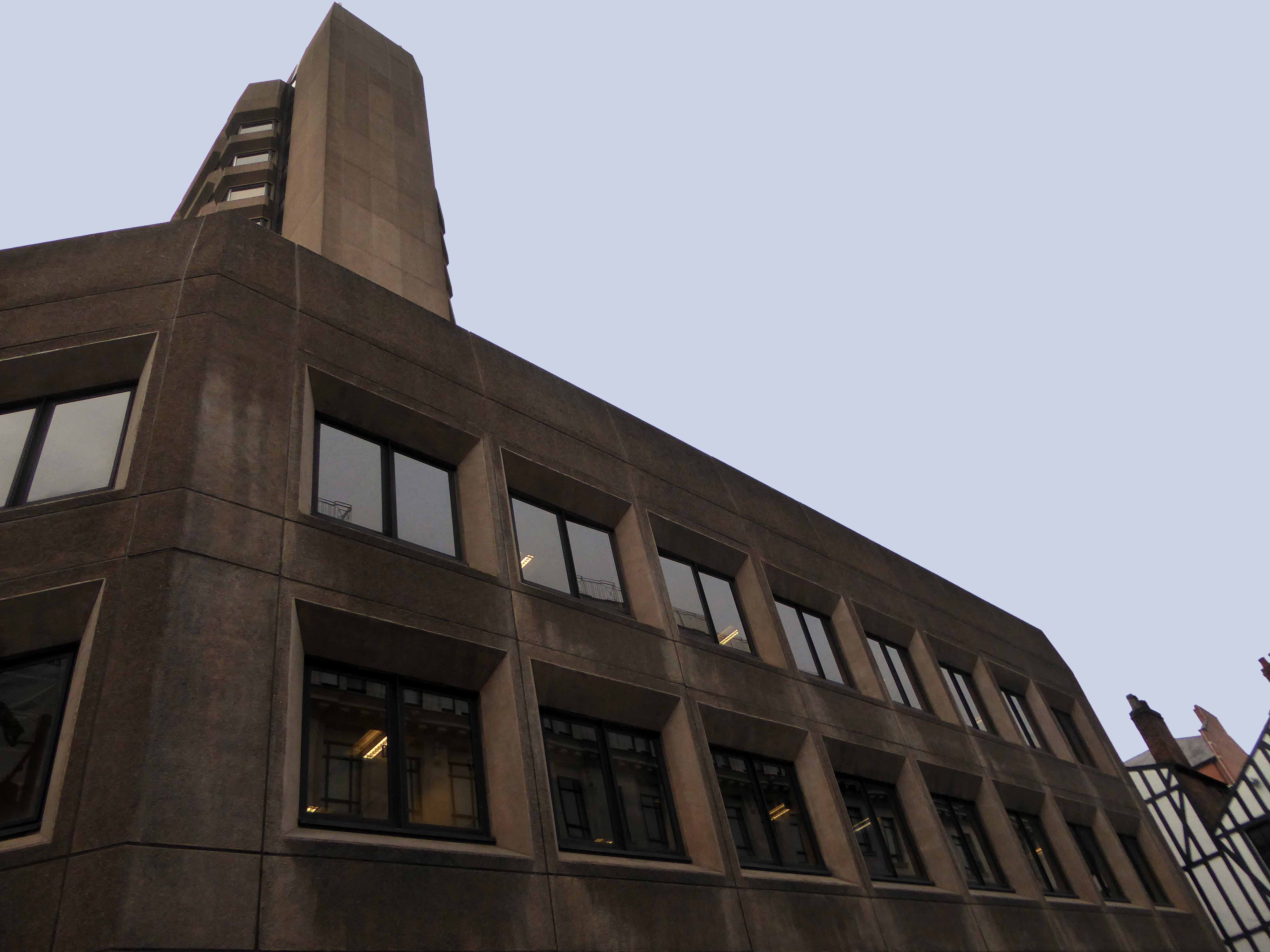
Lowry House – Manchester

17 Marble St, Manchester M2 3AW

Situated in a prime location between King Street and Market Street, Lowry House is convenient for Manchester’s main financial district as well as being adjacent to the city’s main retail core. Well-positioned for a range of quality eateries and public transport connections at Piccadilly Gardens, the building is a great choice for businesses looking to create a quality impression.

Part of Bruntwood’s extensive property portfolio across the city.

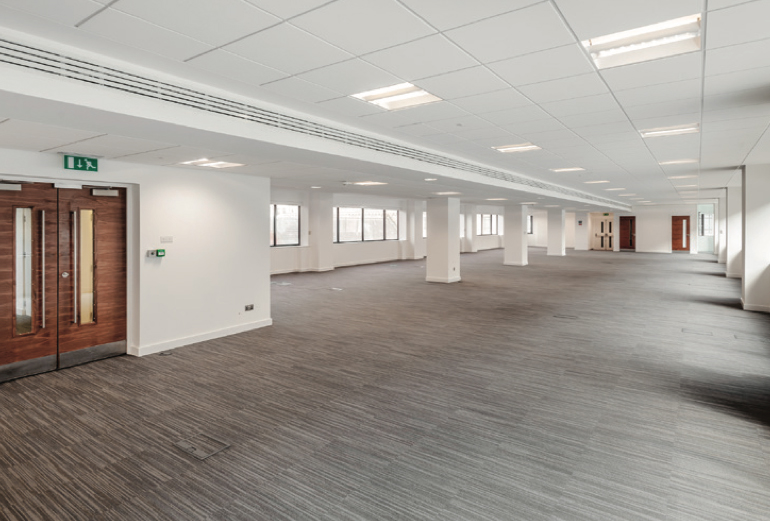
Painfully modern and anonymous interiors for the modern business – this could be your dream location.

Screen Shot 2018-10-03 at 22.25.51 copy

This area has been at the vortex of power and wealth for over a hundred years.

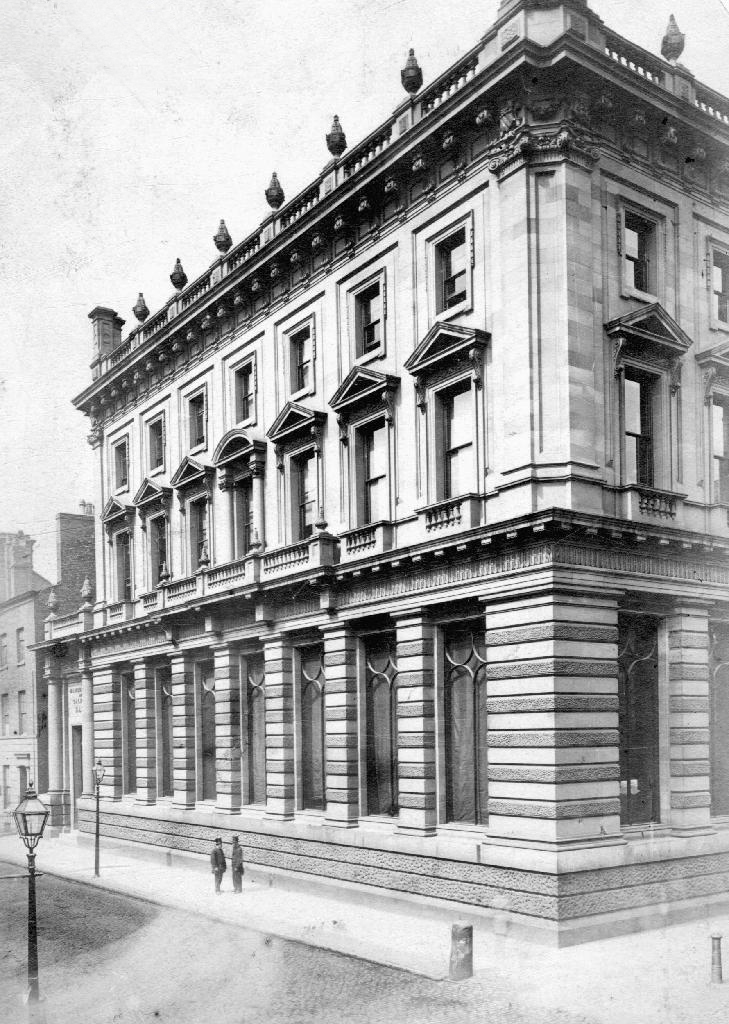
1866

Manchester and Salford Bank 1866


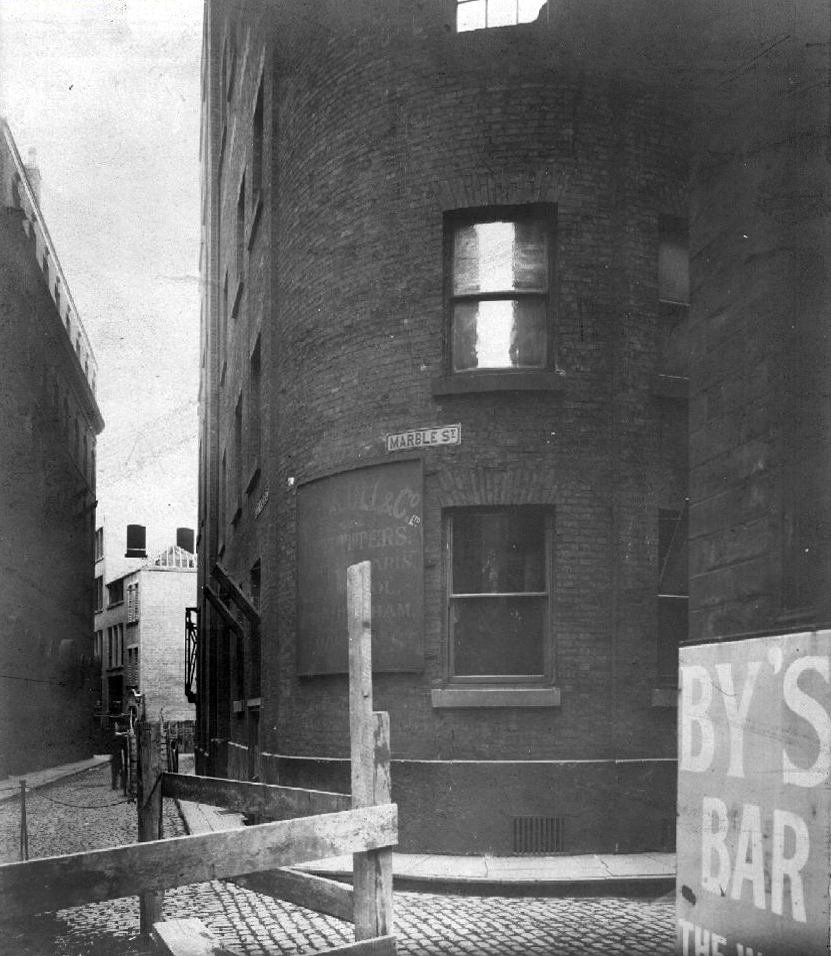
1909

Marble Street 1909


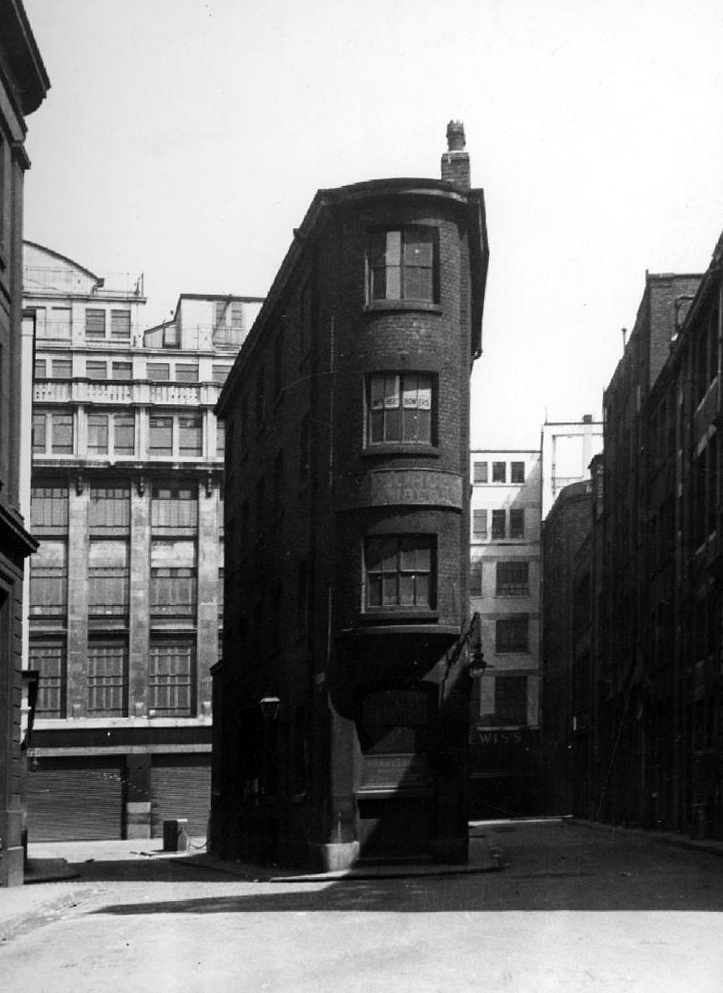
1970

Marble Street 1970

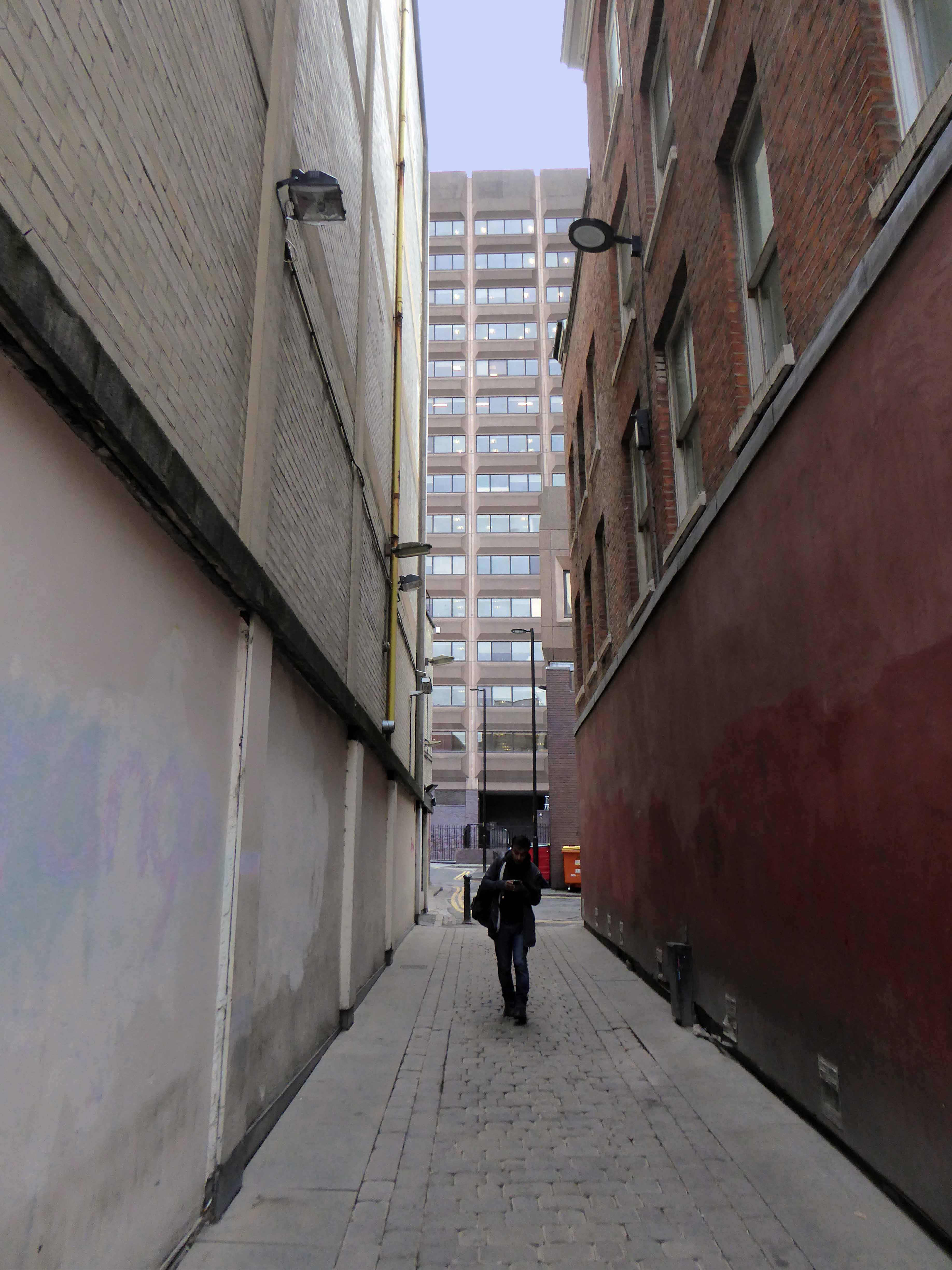
Narrow winds enclosing light and space.

Controlling pounds, shillings and pence.

P1300030

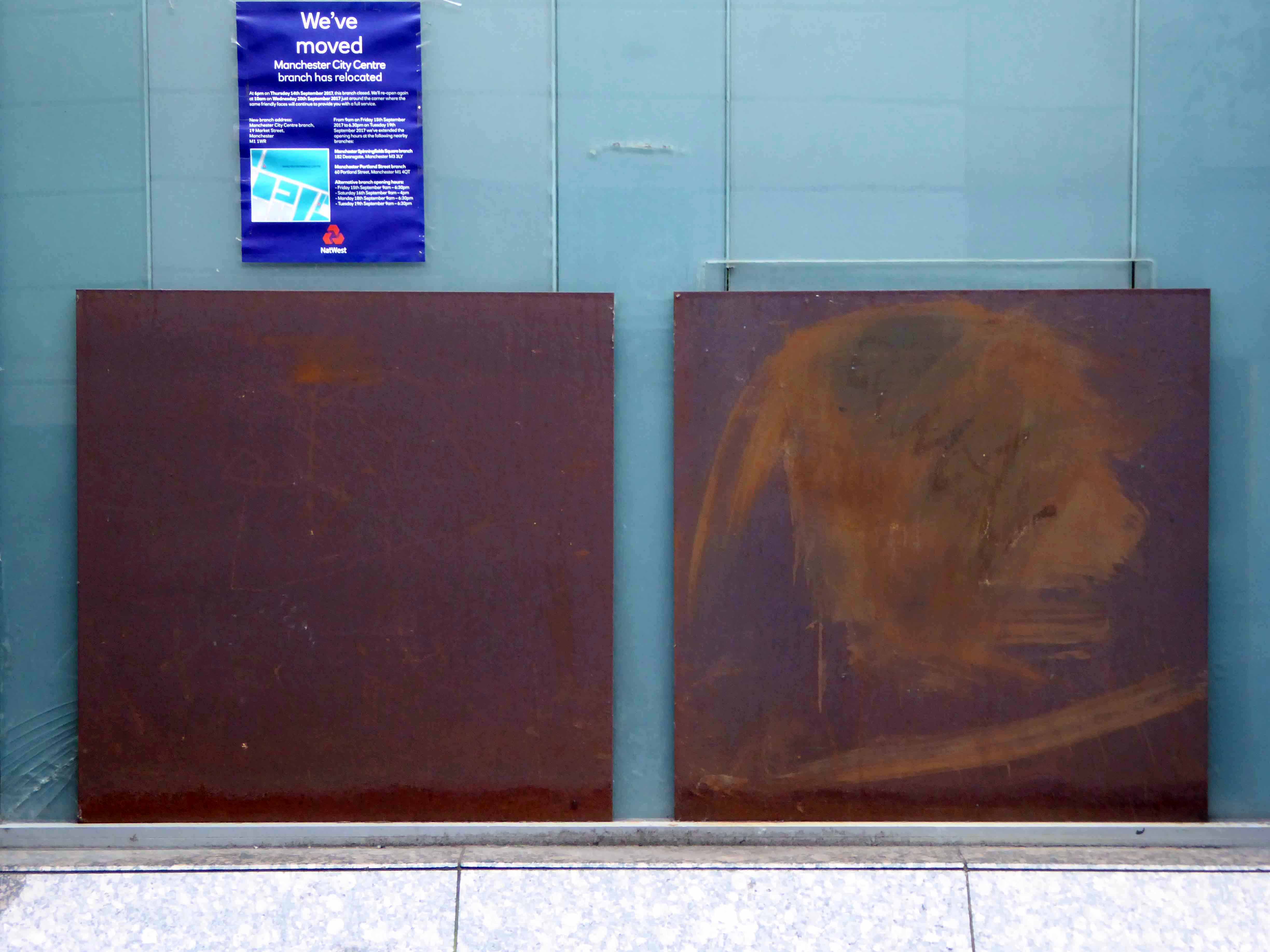
The final withdrawal has been made.

The ATM encased in oxidised steel.

The Nat West has gone west.

Rust we are told never sleeps.

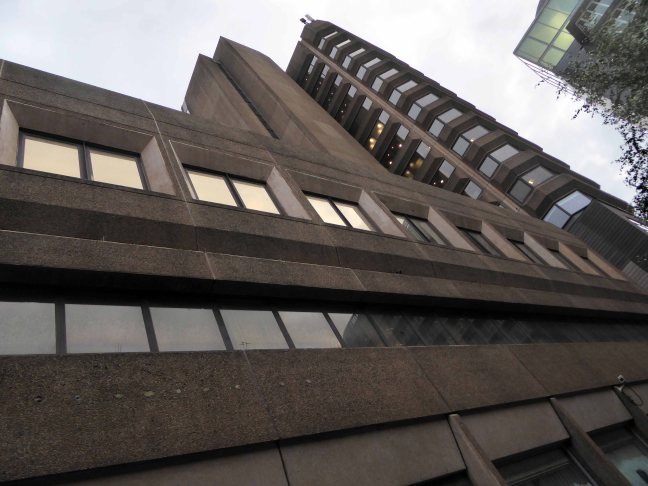
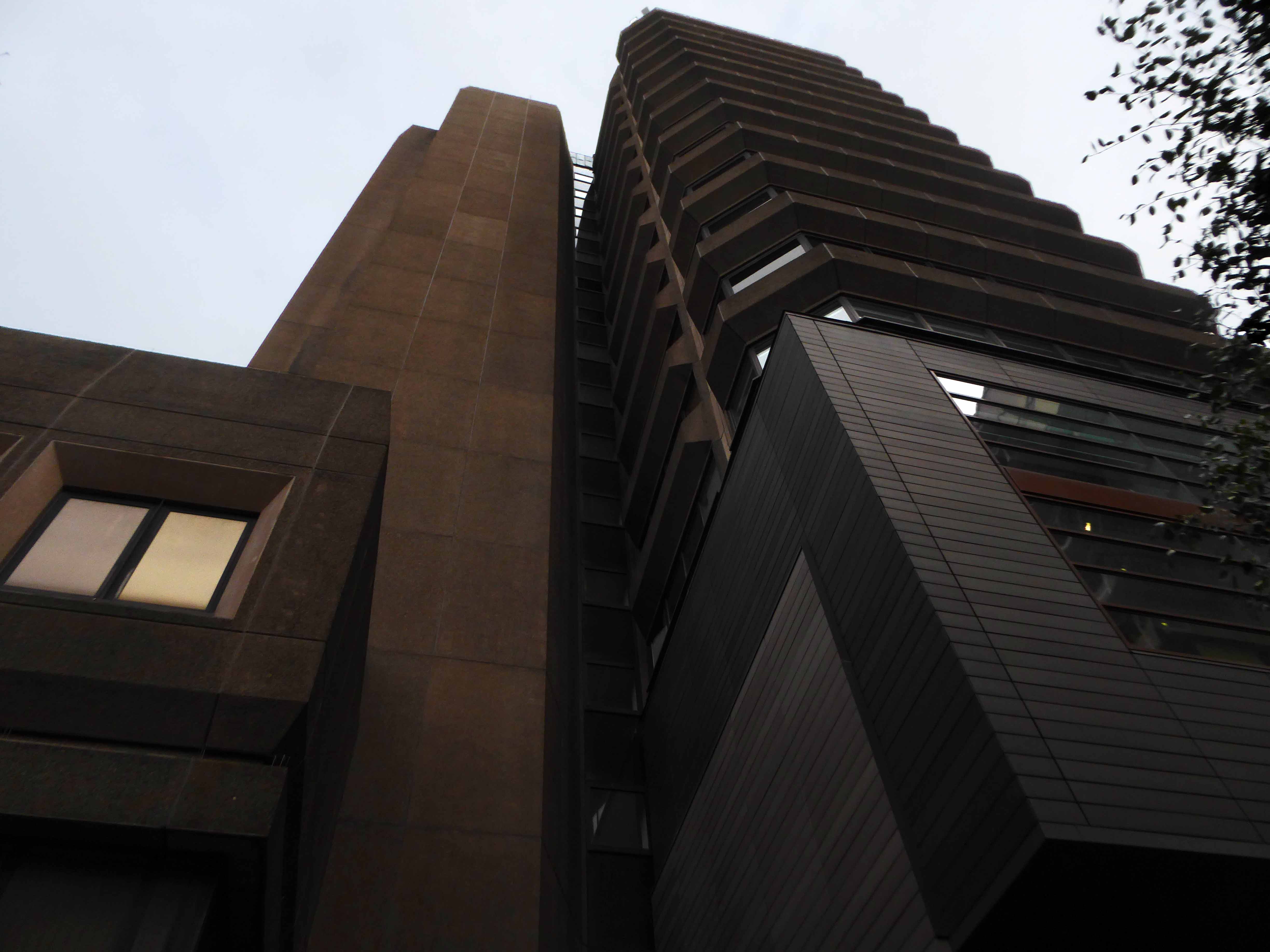
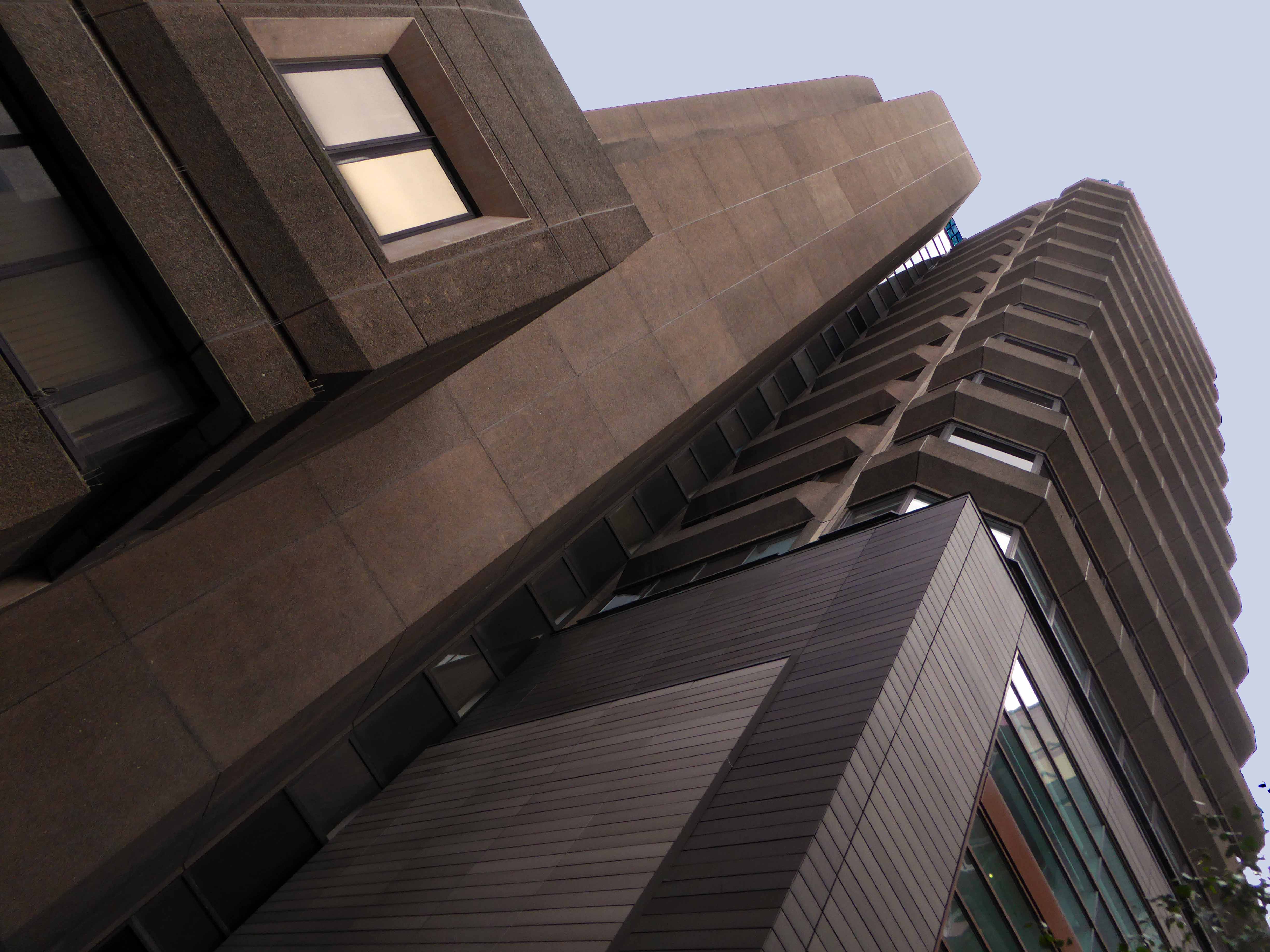
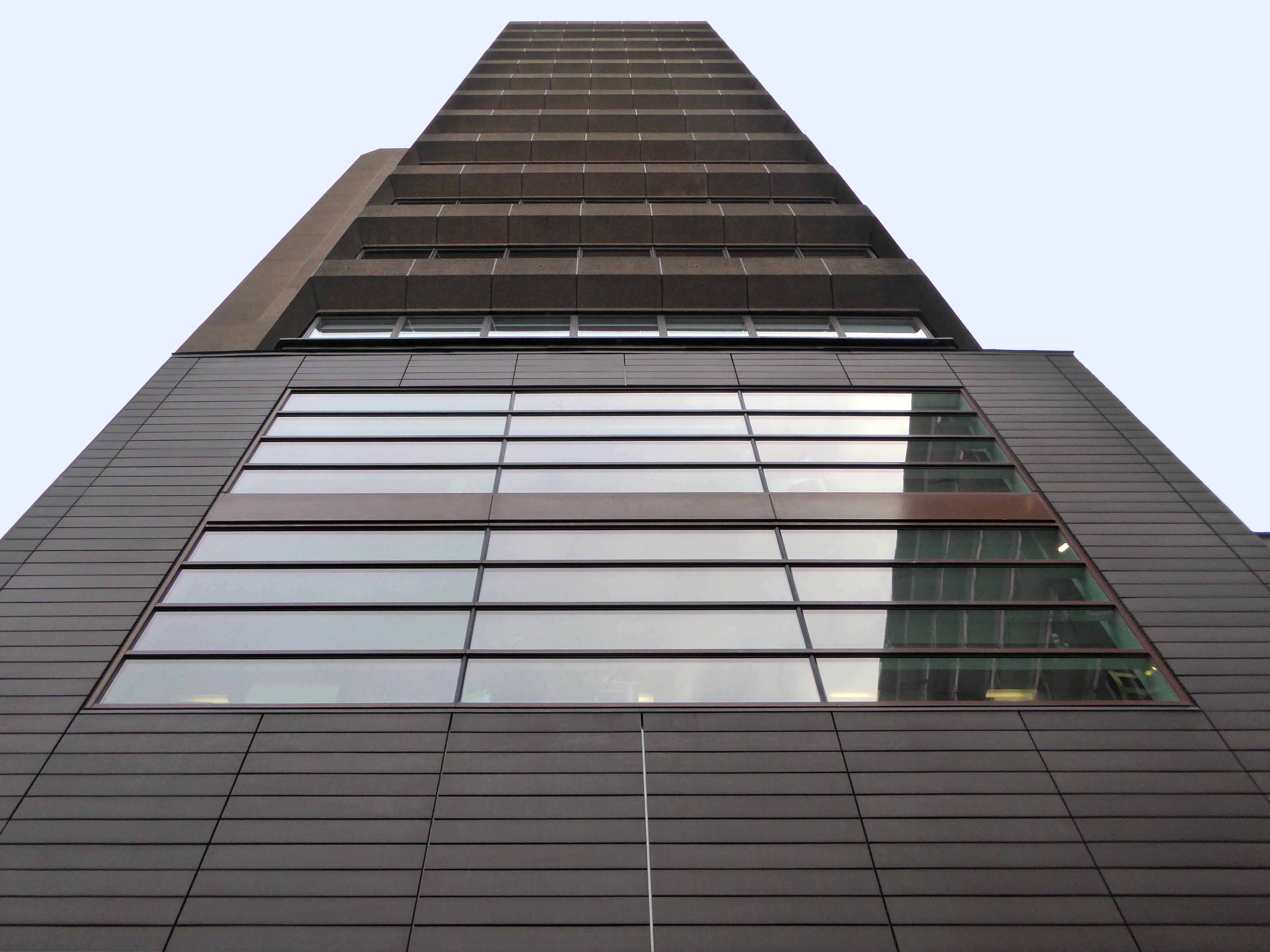
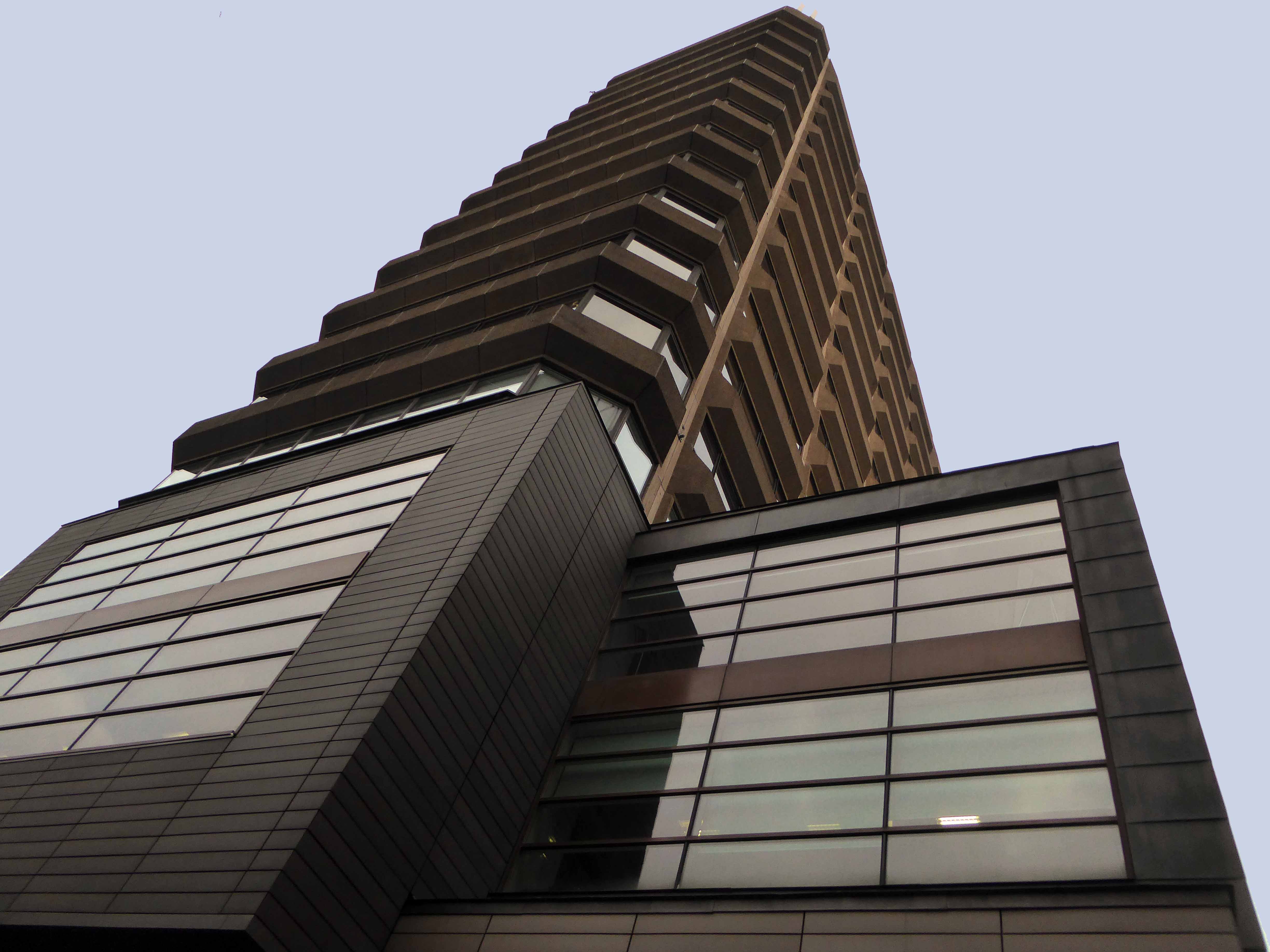
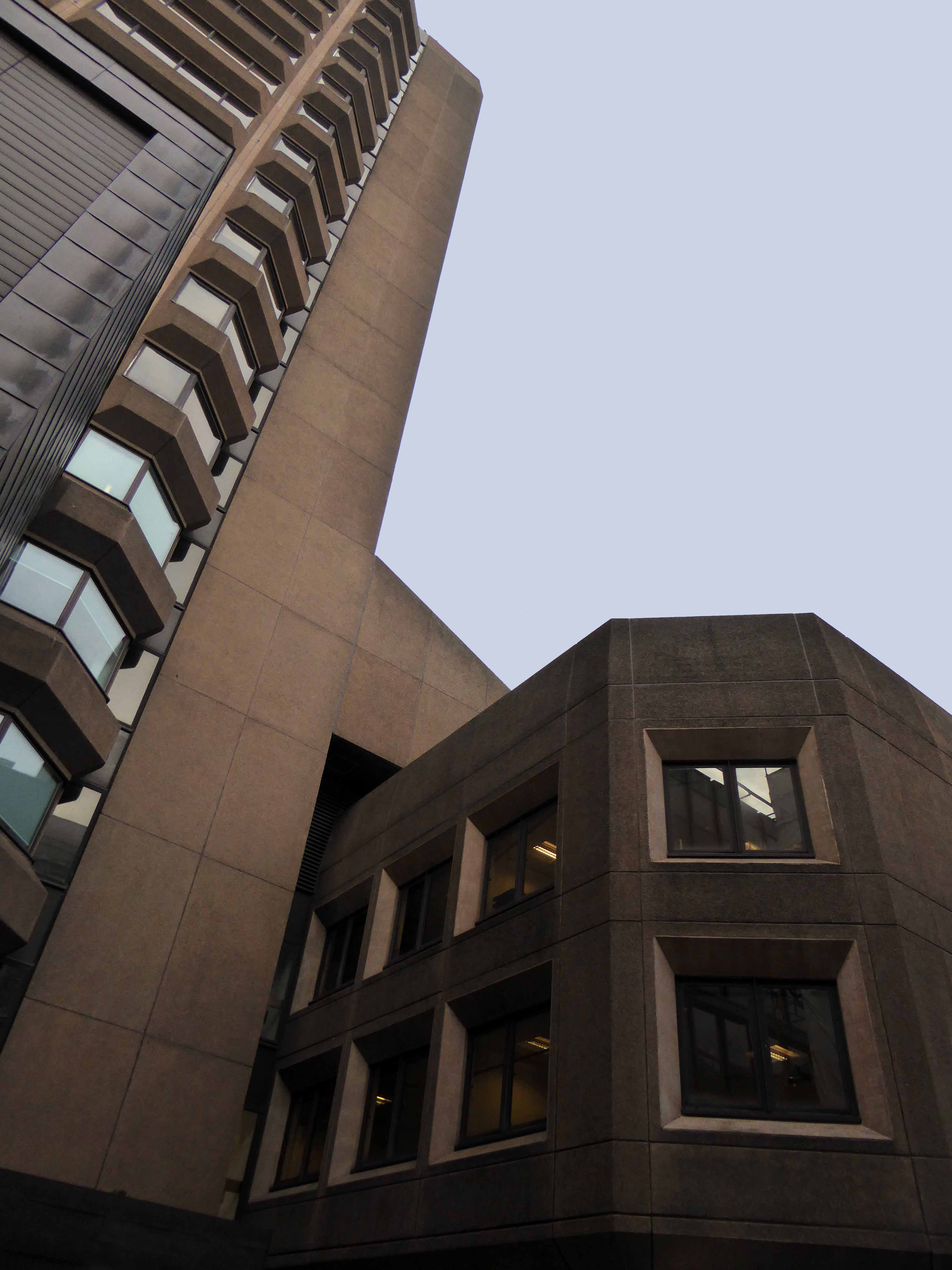
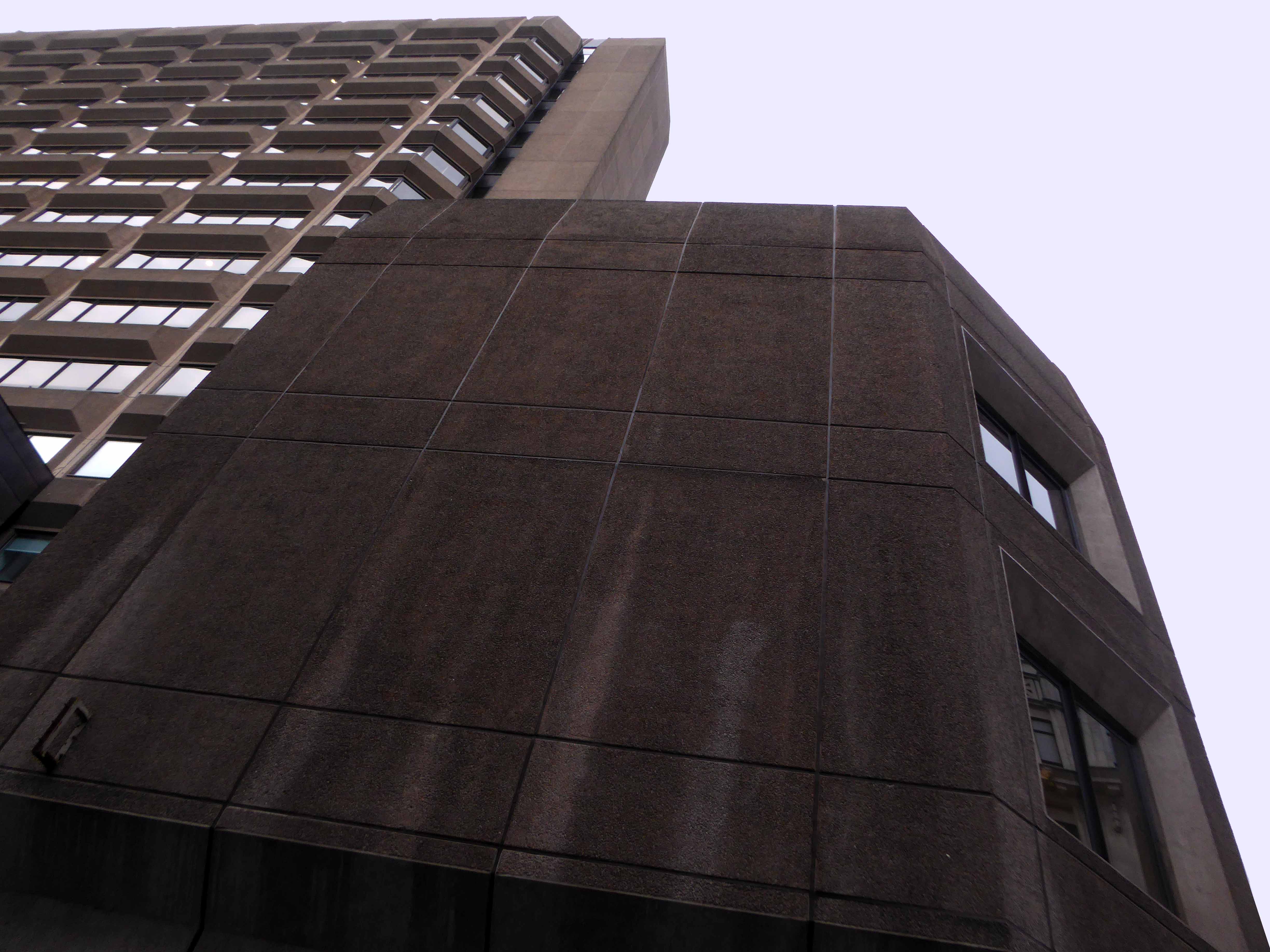
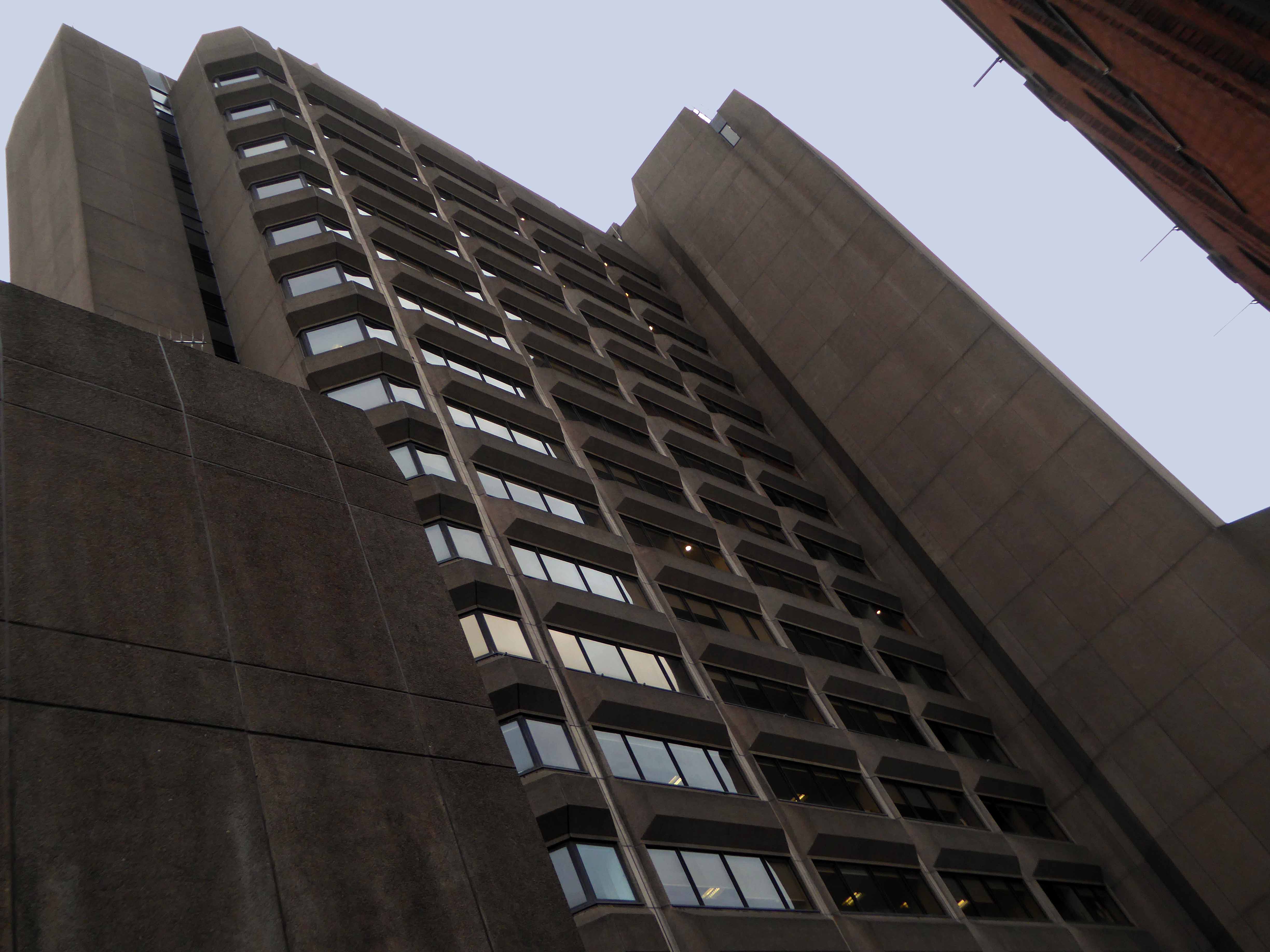
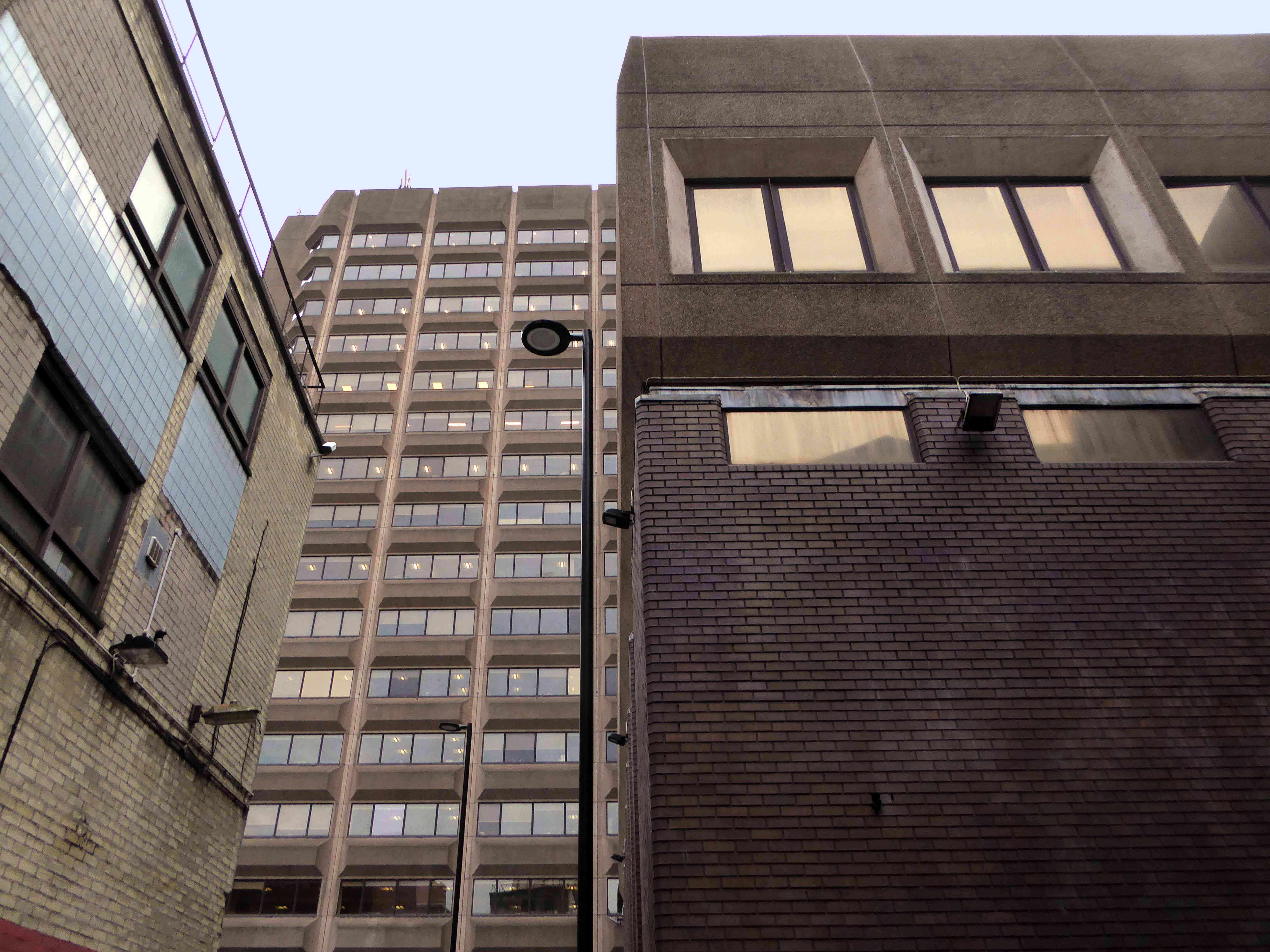
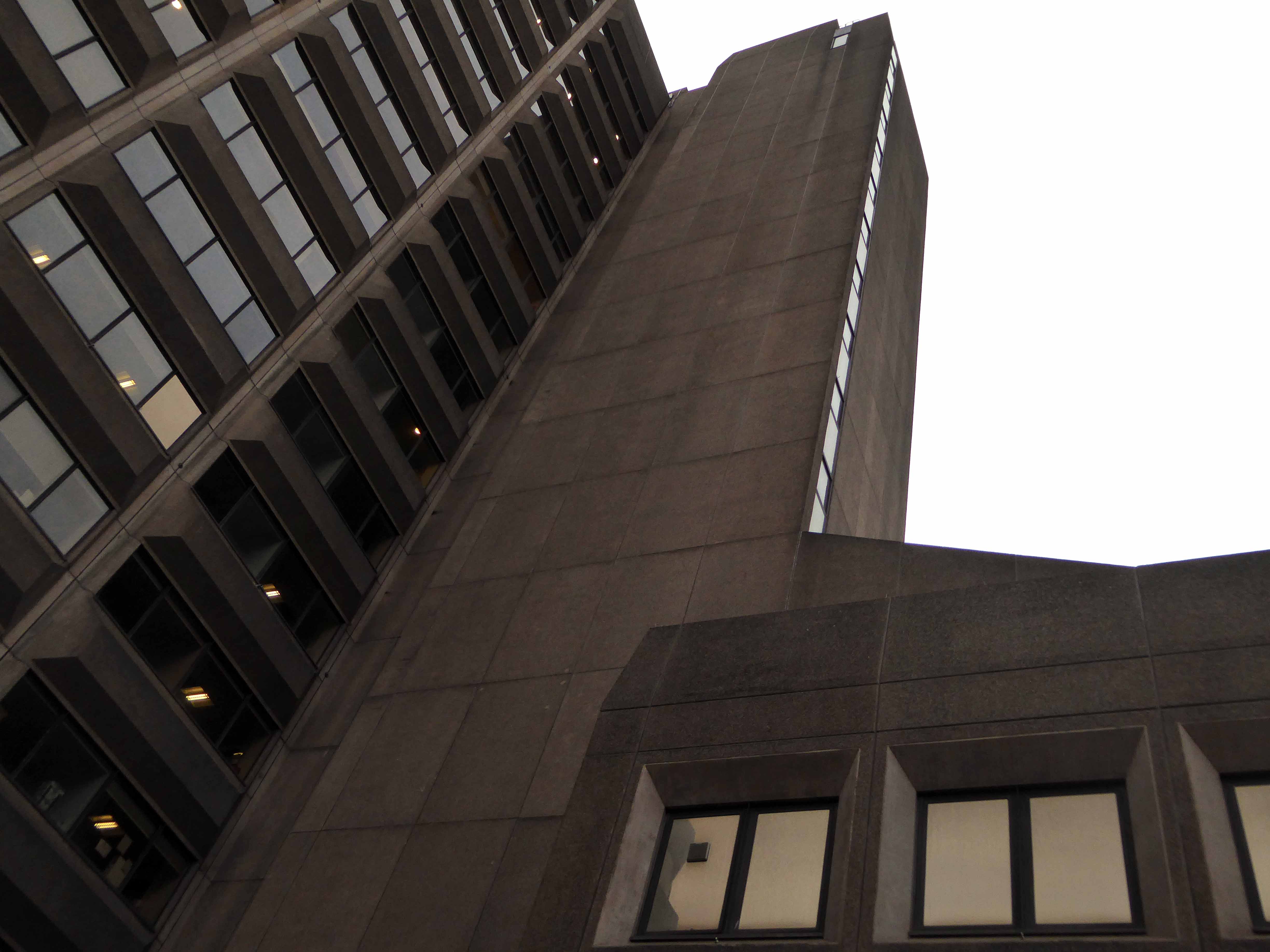
Built in 1973 by architects Robert Swift and Partners, renovated in 2006 by Bruntwood, adding cladding and a certain je ne sais pas.

I do admire its precast modular lift and mass almost towering over its surroundings.

The late afternoon sun adds a certain beguiling warmth to the pale pinkish concrete.

Take a swerve off of the hustle and seemingly unnecessary bustle of Market Street and marvel at this Marble Street structure.

Let’s follow in the imaginary footsteps of Manchester man Thomas de Quincey.

No huge Babylonian centres of commerce towered into the clouds on these sweet sylvan routes: no hurricanes of haste, or fever-stricken armies of horses and flying chariots, tormented the echoes in these mountain recesses.


P1300038

P1300040

P1300041

P1300042

P1300043

P1300044

P1300045

P1300046

P1300047

P1300048

P1300050

P1300051

P1300053

P1300054