
Hamtun Street Mural – Southampton

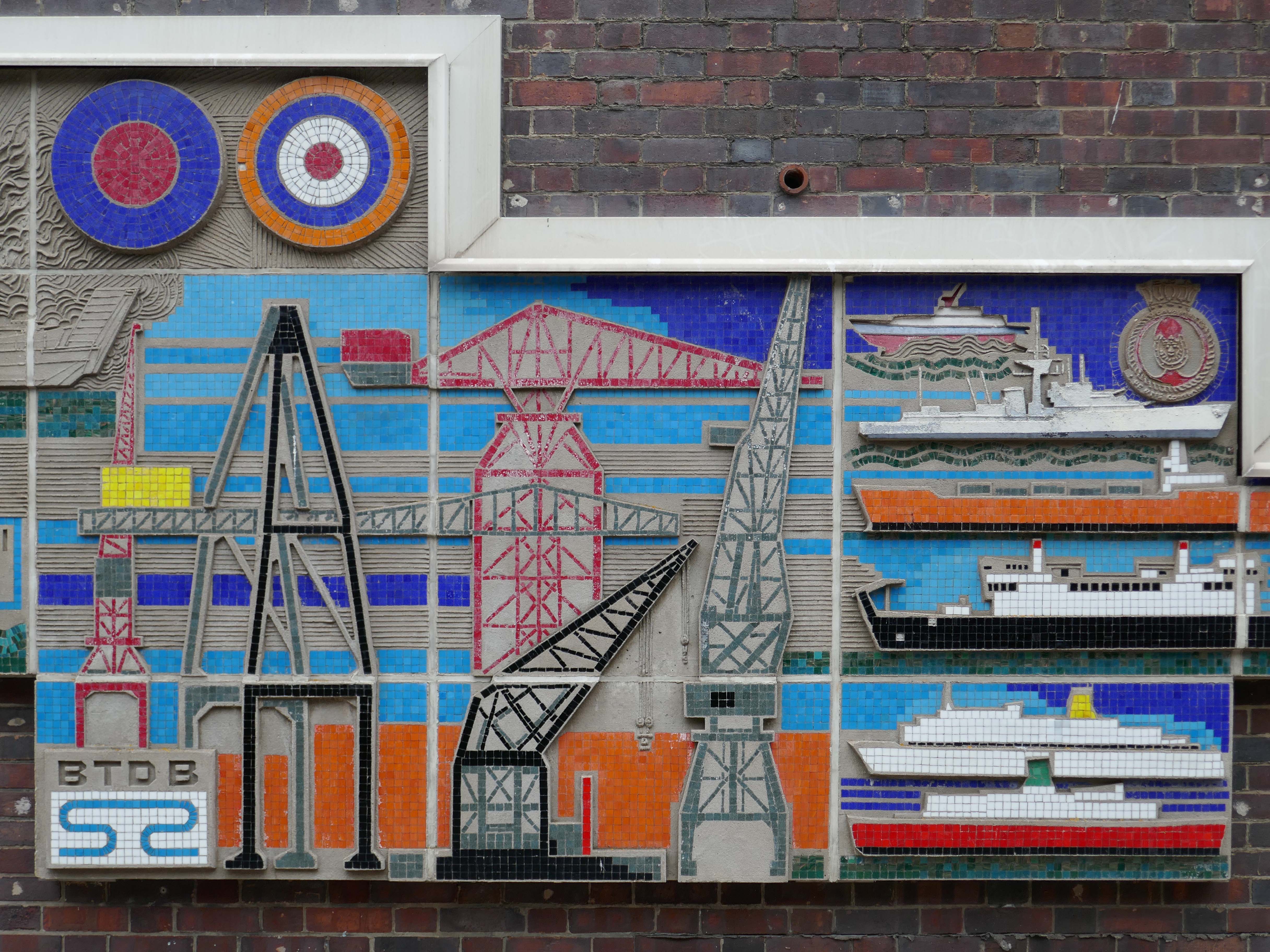
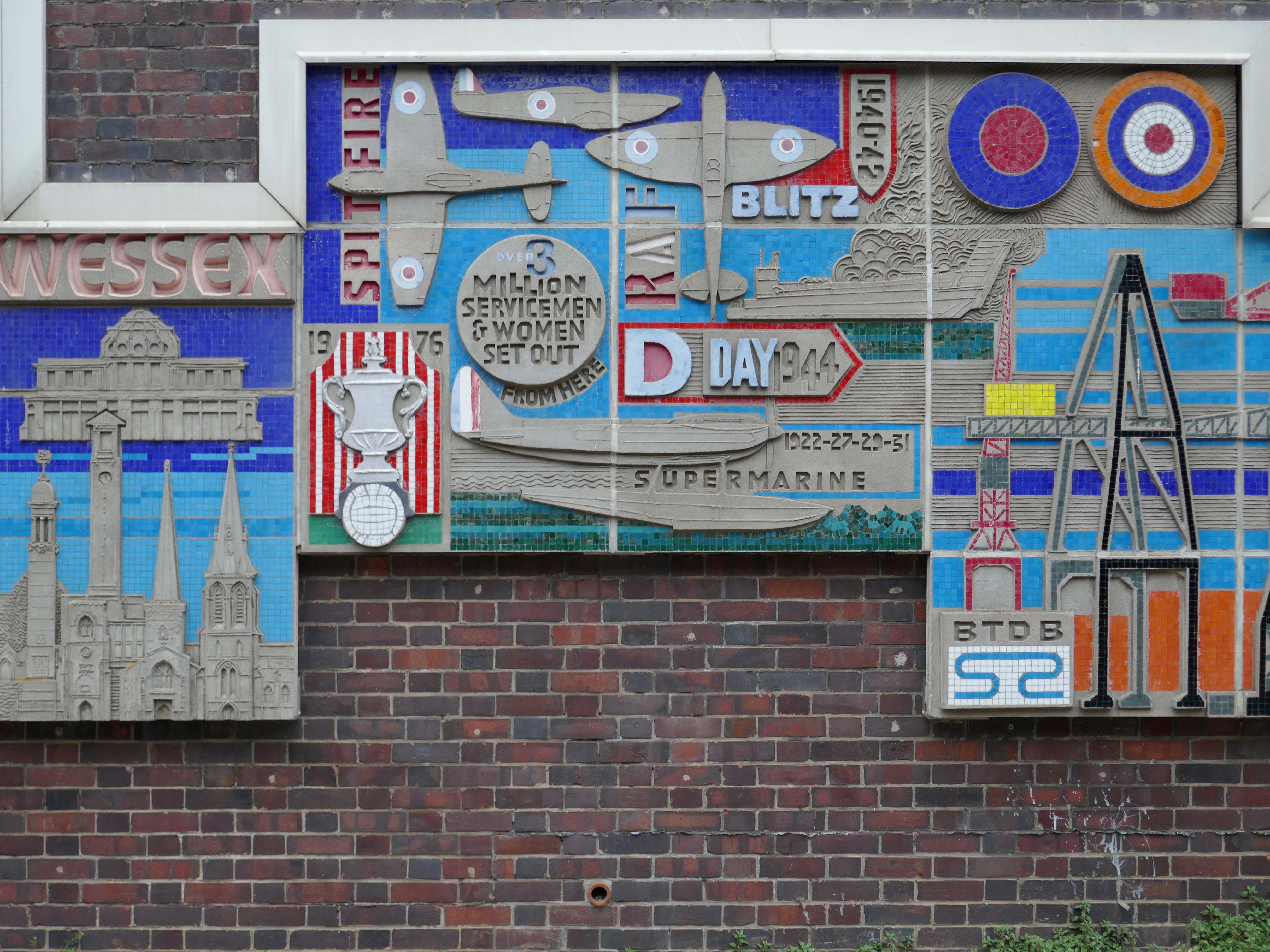
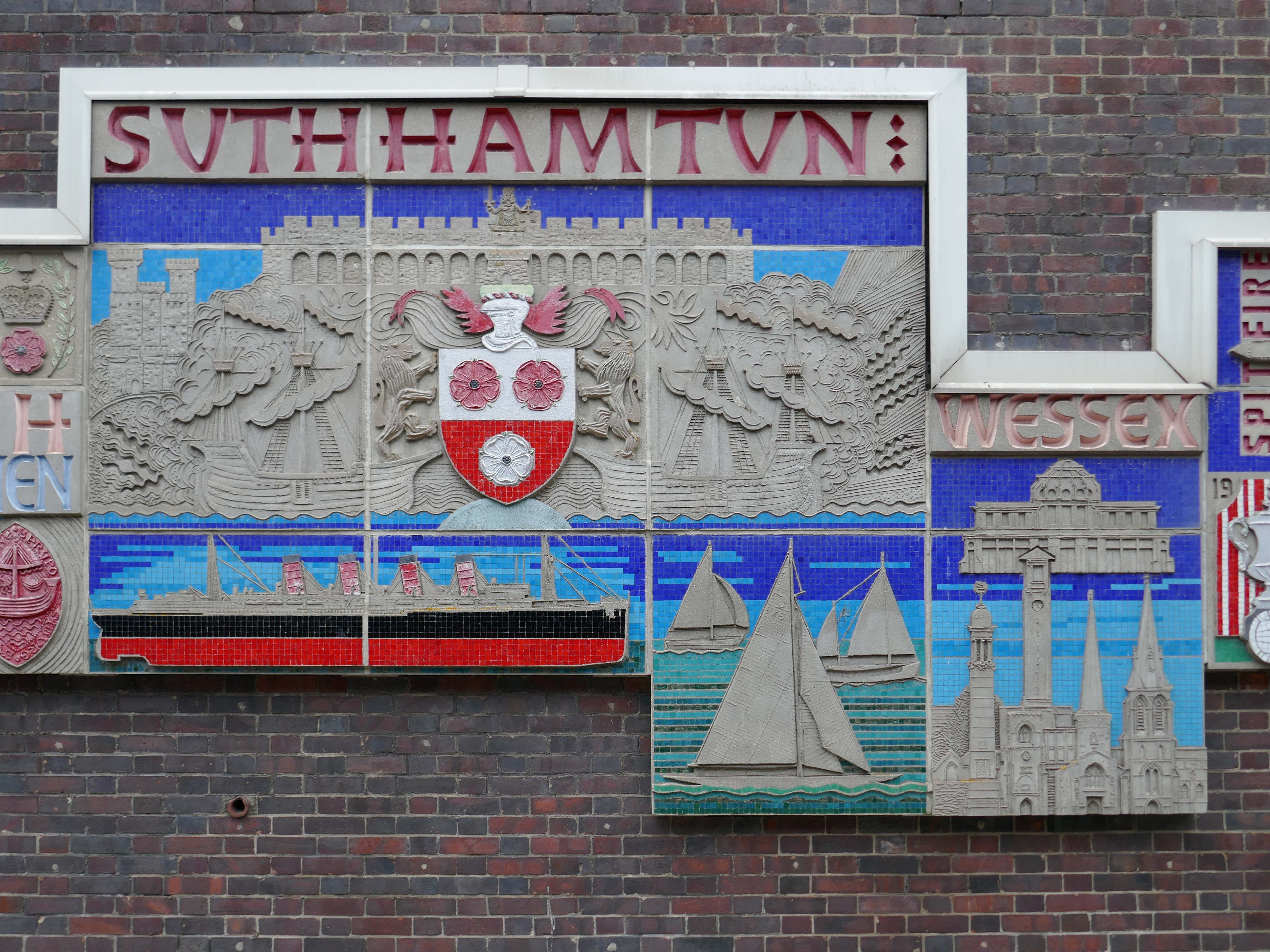
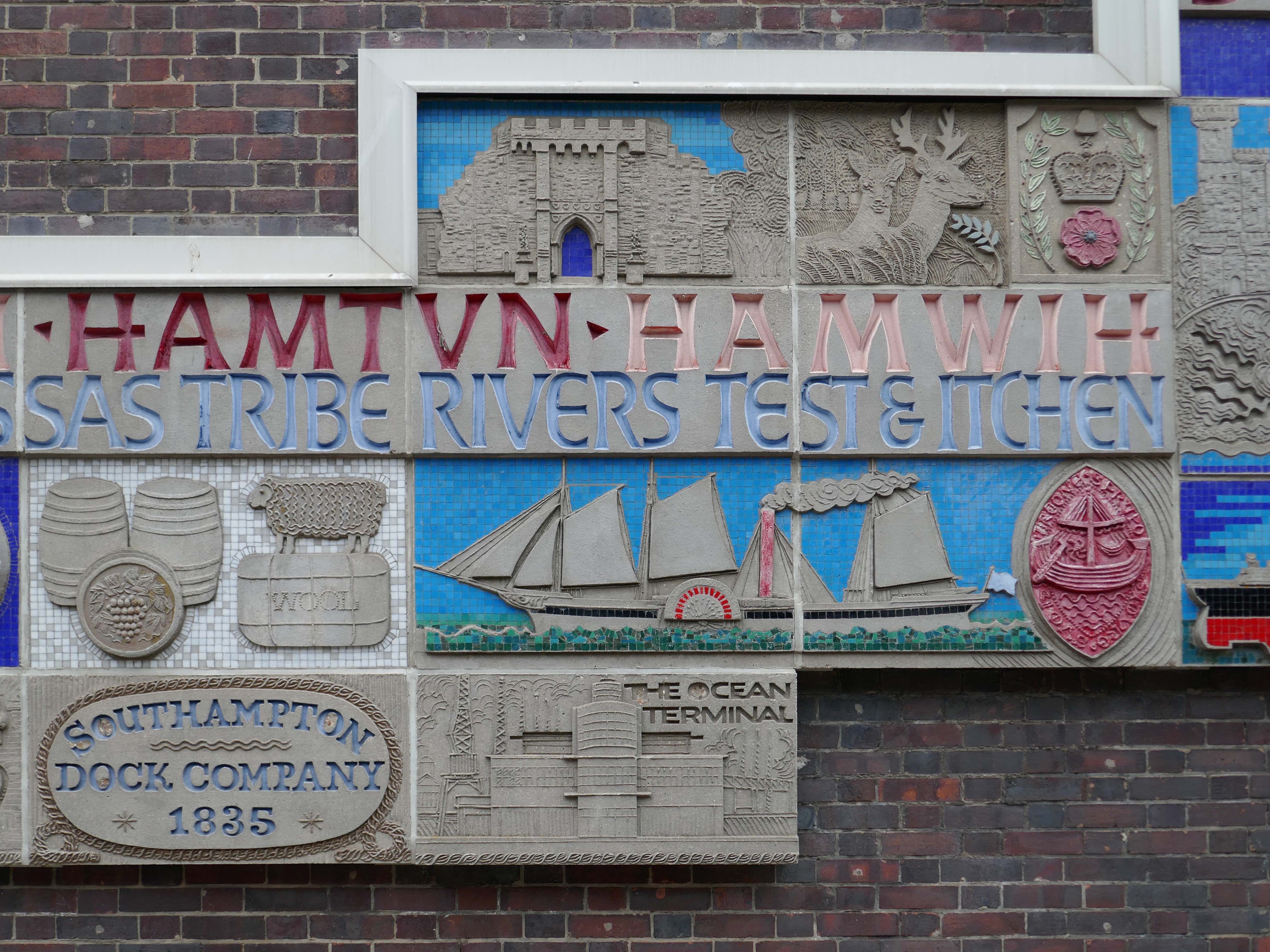
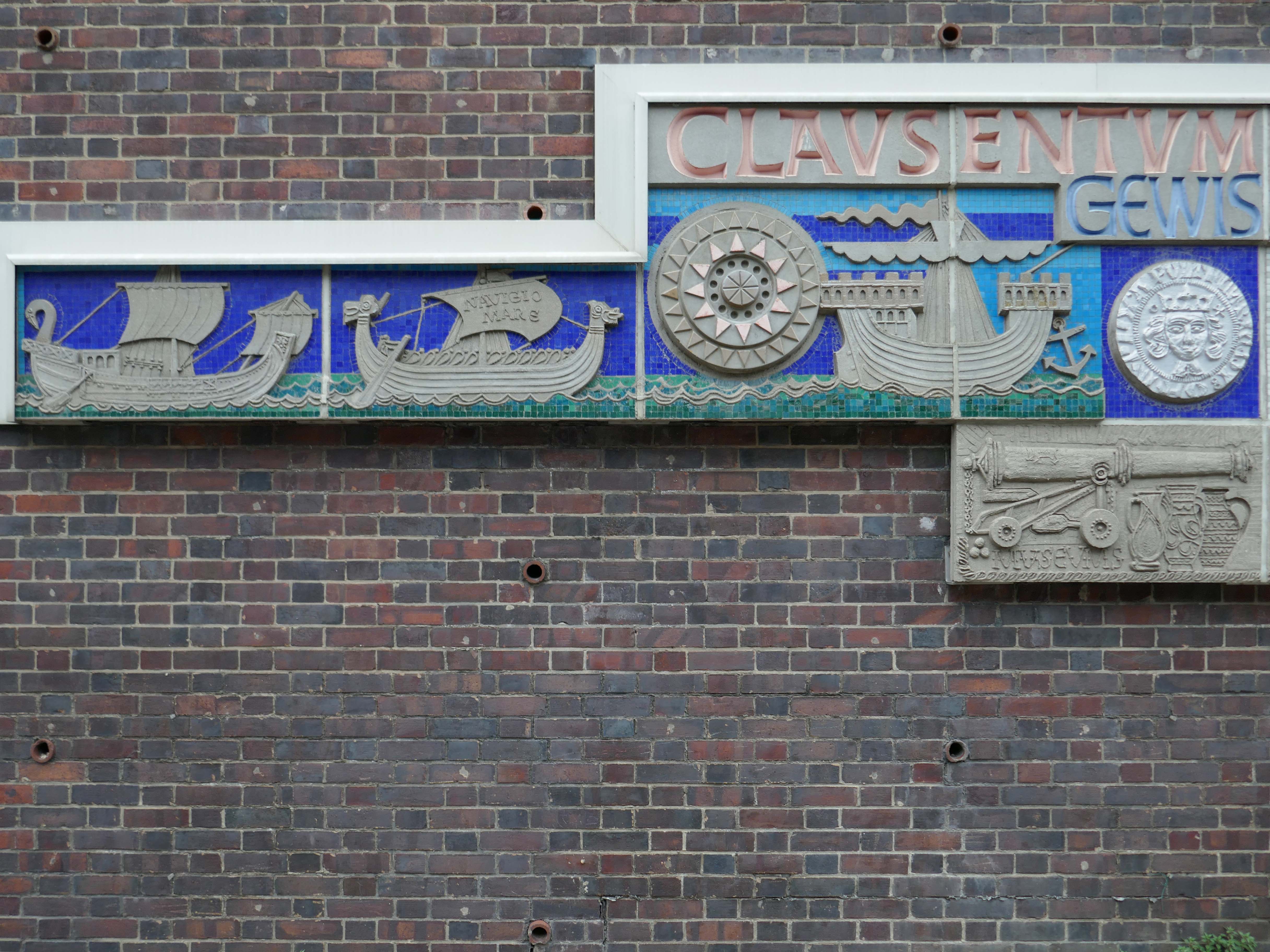
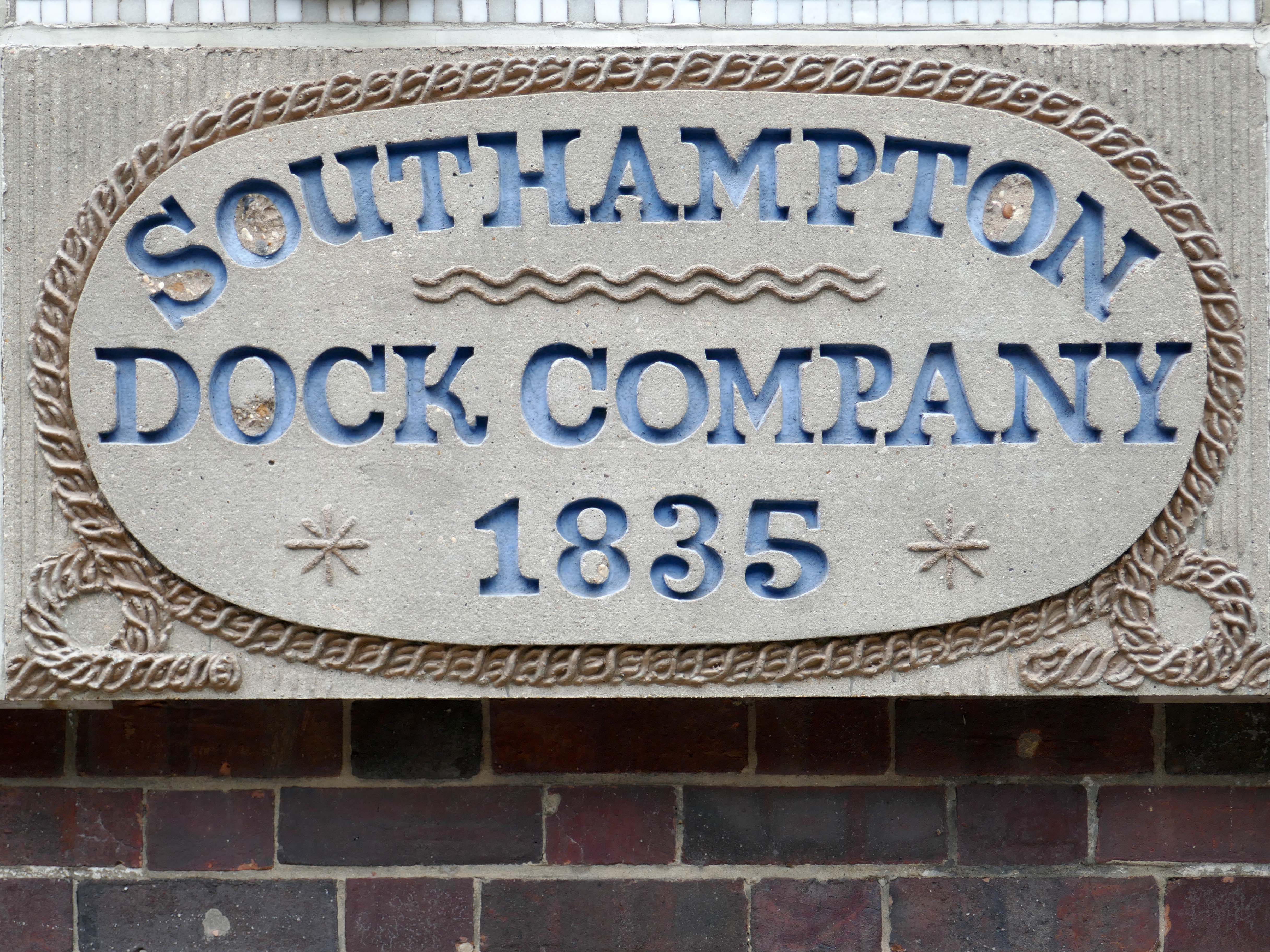
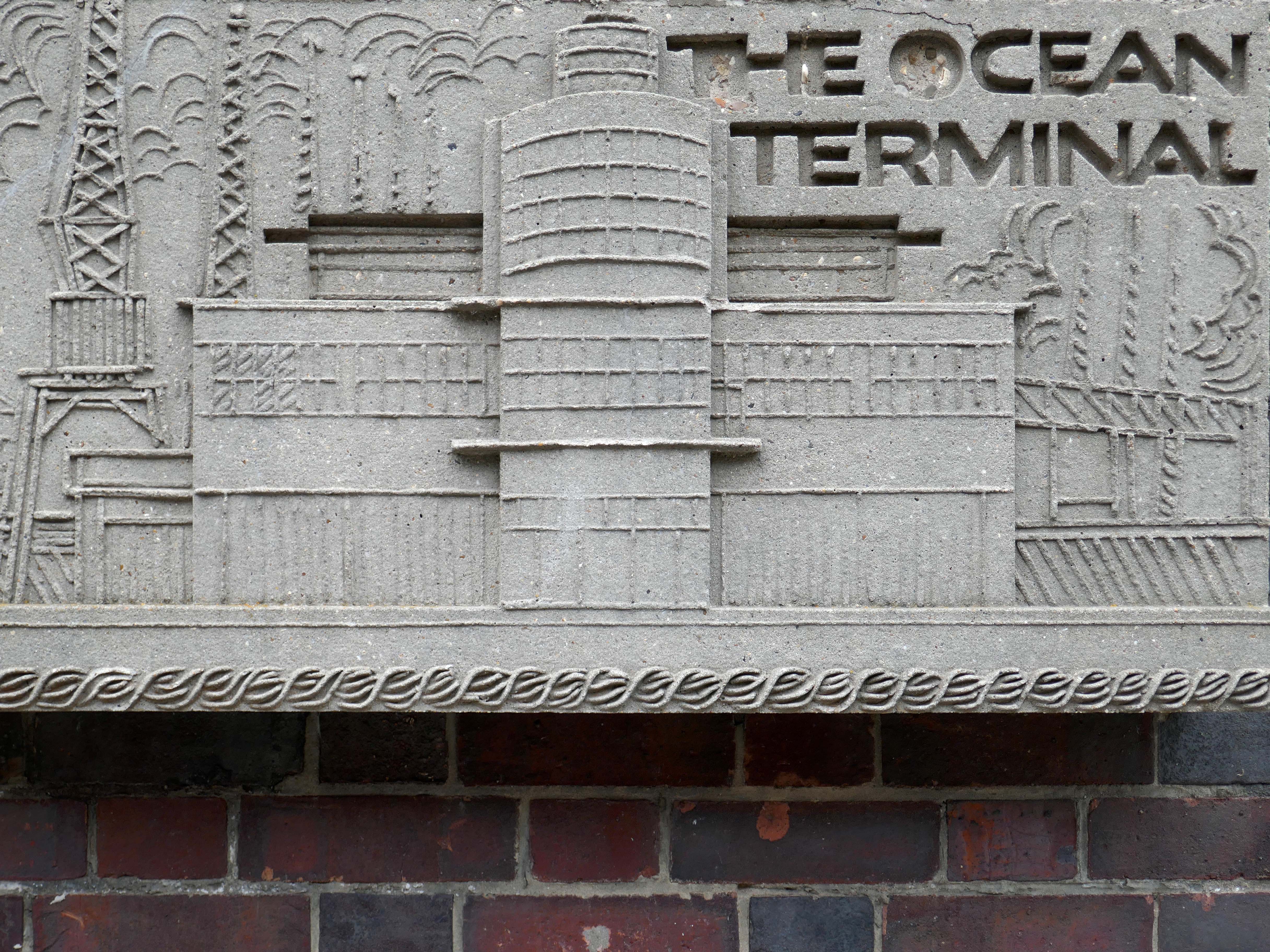
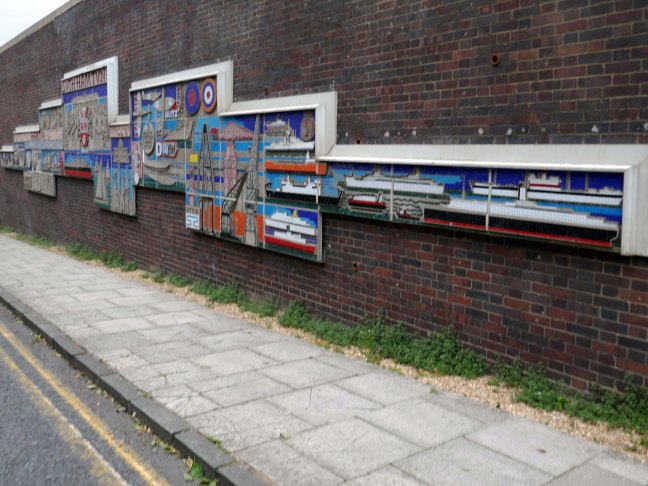
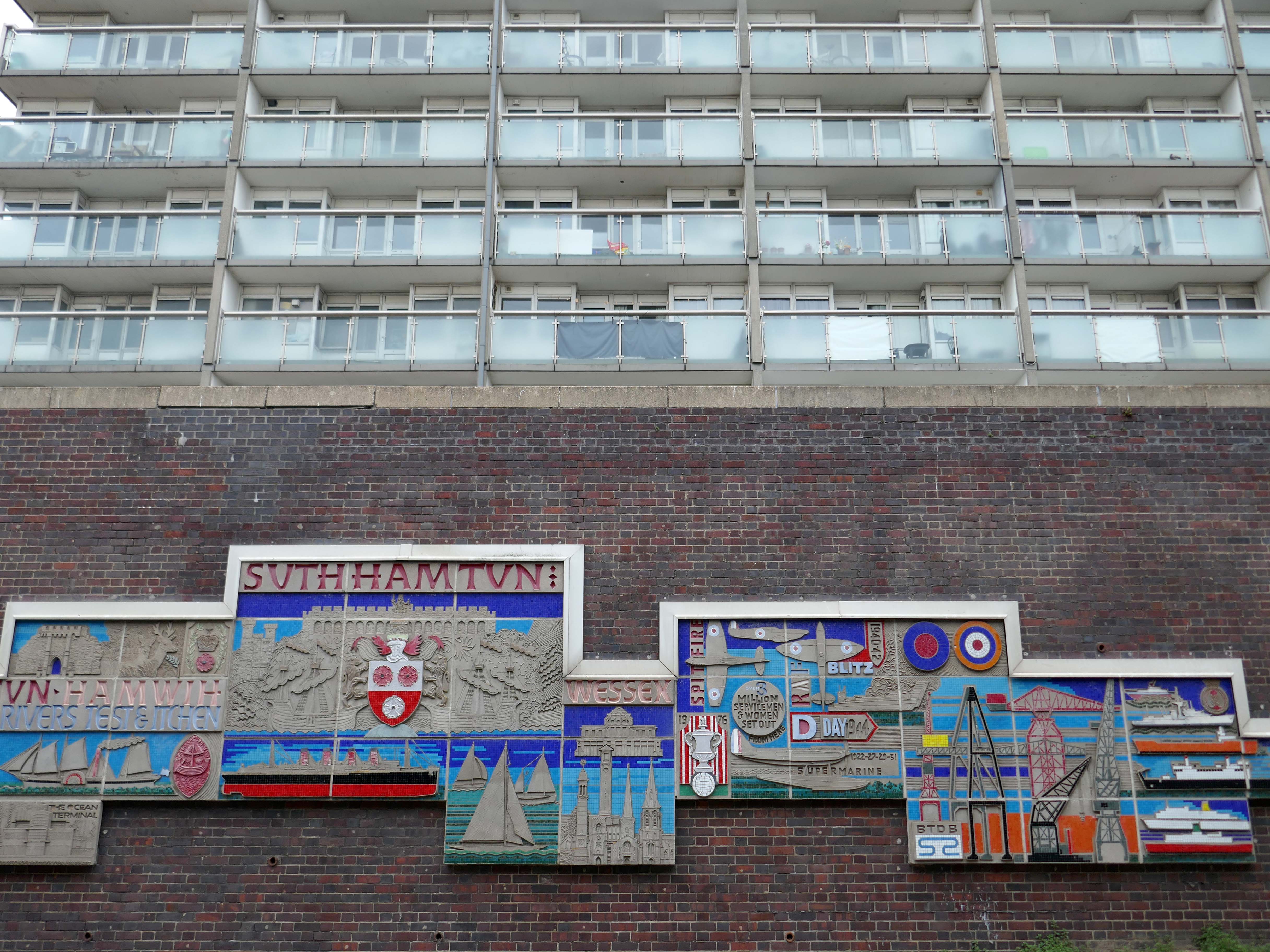
The large and colourful mural in Hamtun Street in Southampton’s Old Town charts the history of the city from Roman Clausentum and Saxon Hamwic, to the modern docks and football.

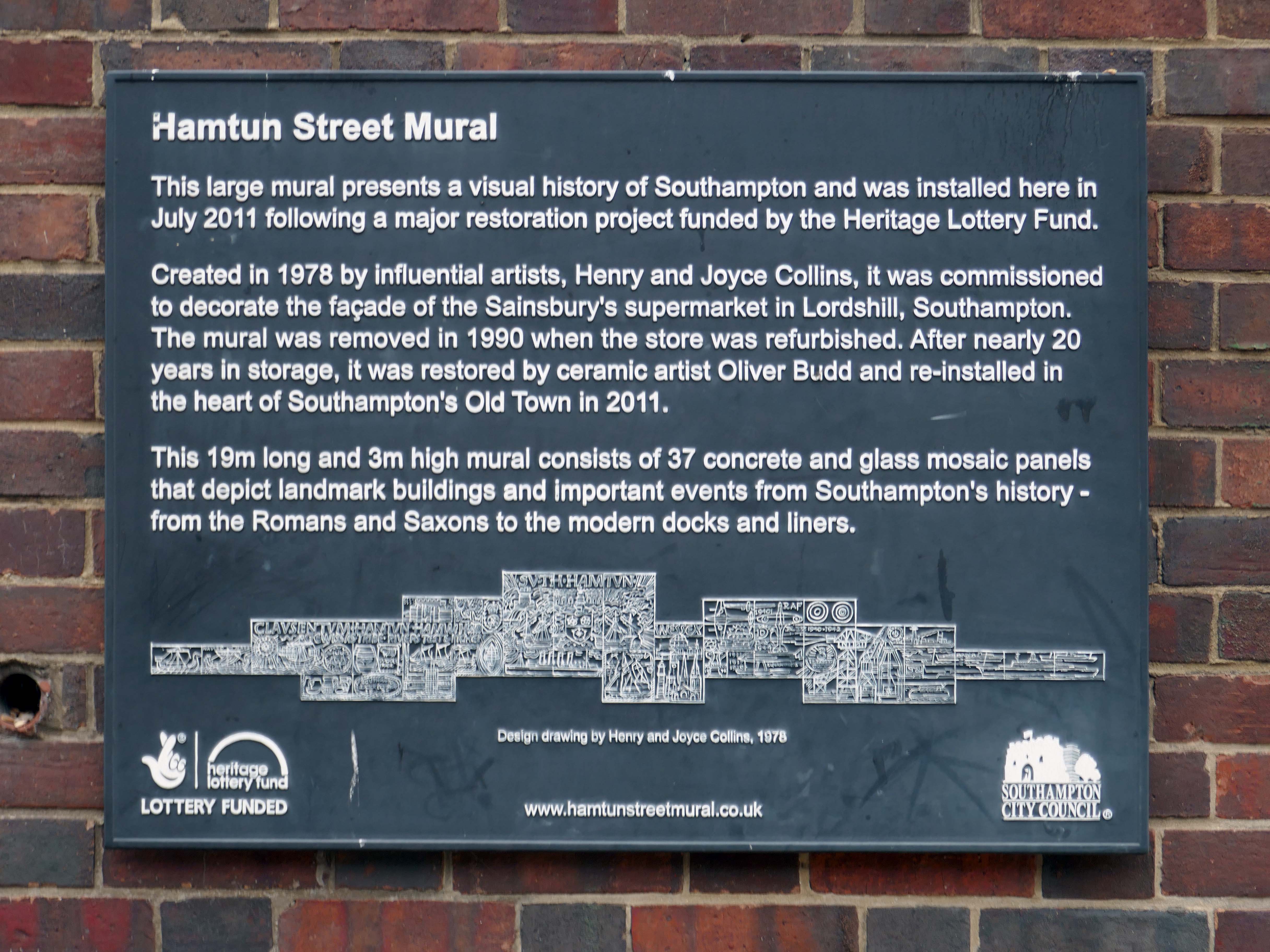
Created in 1978 by influential artists Henry and Joyce Collins,

The mural was commissioned by Sainsbury’s to decorate the façade of their supermarket in Lordshill, Southampton.

The 19m long and 3m high mural consists of thirty seven concrete and glass mosaic panels depicting landmark buildings and iconicevents from Southampton’s history. 

Thanks to a grant from the Heritage Lottery Fund, the mural was cleaned and restored by ceramic artist Oliver Budd.

Artist and conservator Oliver Budd creates and restores mosaics for public and private commissions. Budd Mosaics was set up in 1960 by Kenneth Budd, a contemporary of Henry and Joyce Collins. Kenneth invented the technique of prefabricating mosaics in the studio on aluminium mesh panels.

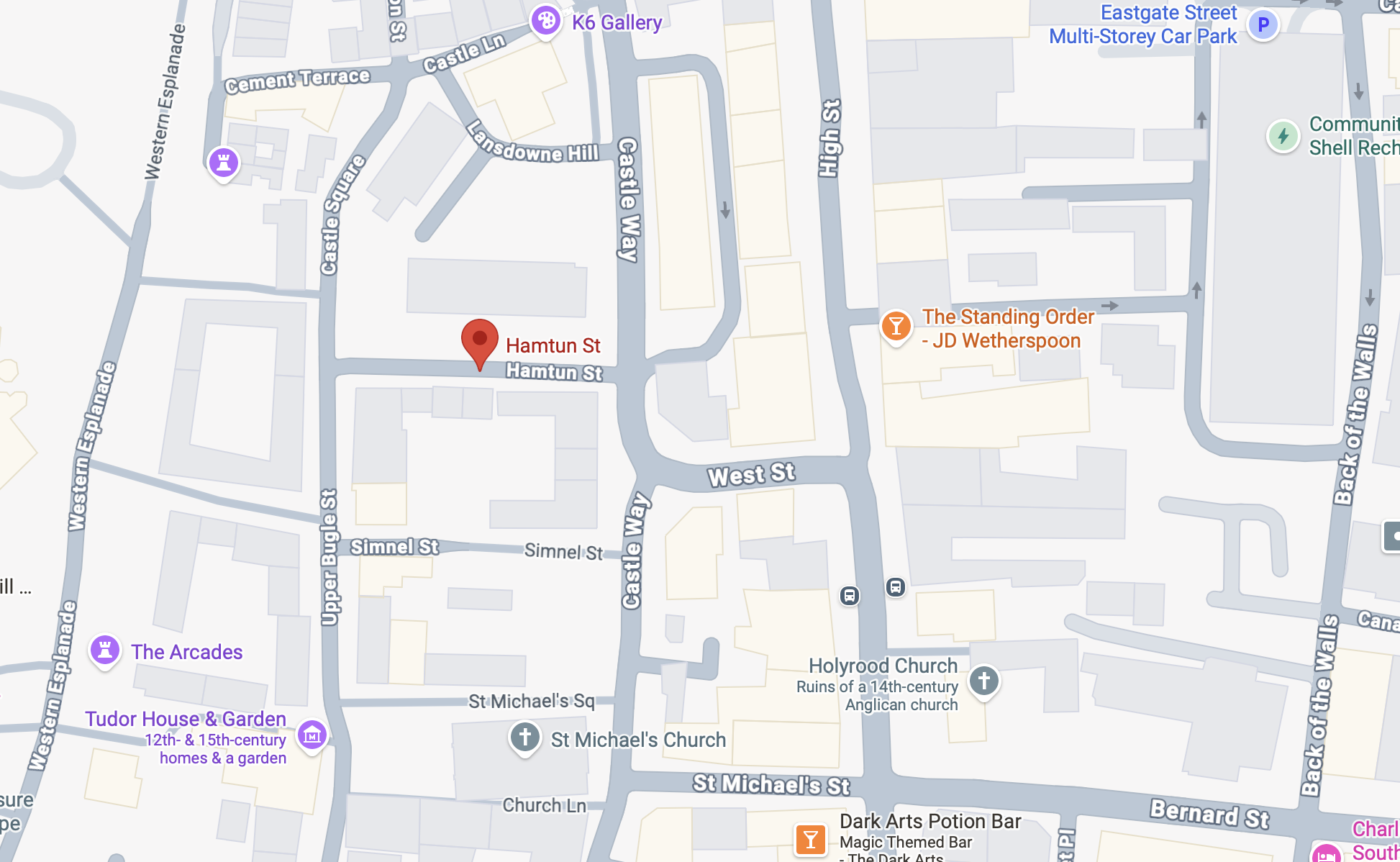
By July 2011 it was installed at Hamtun Street in the heart of the Old Town.
Tudor House and Garden

Here it is with Castle House in the background.
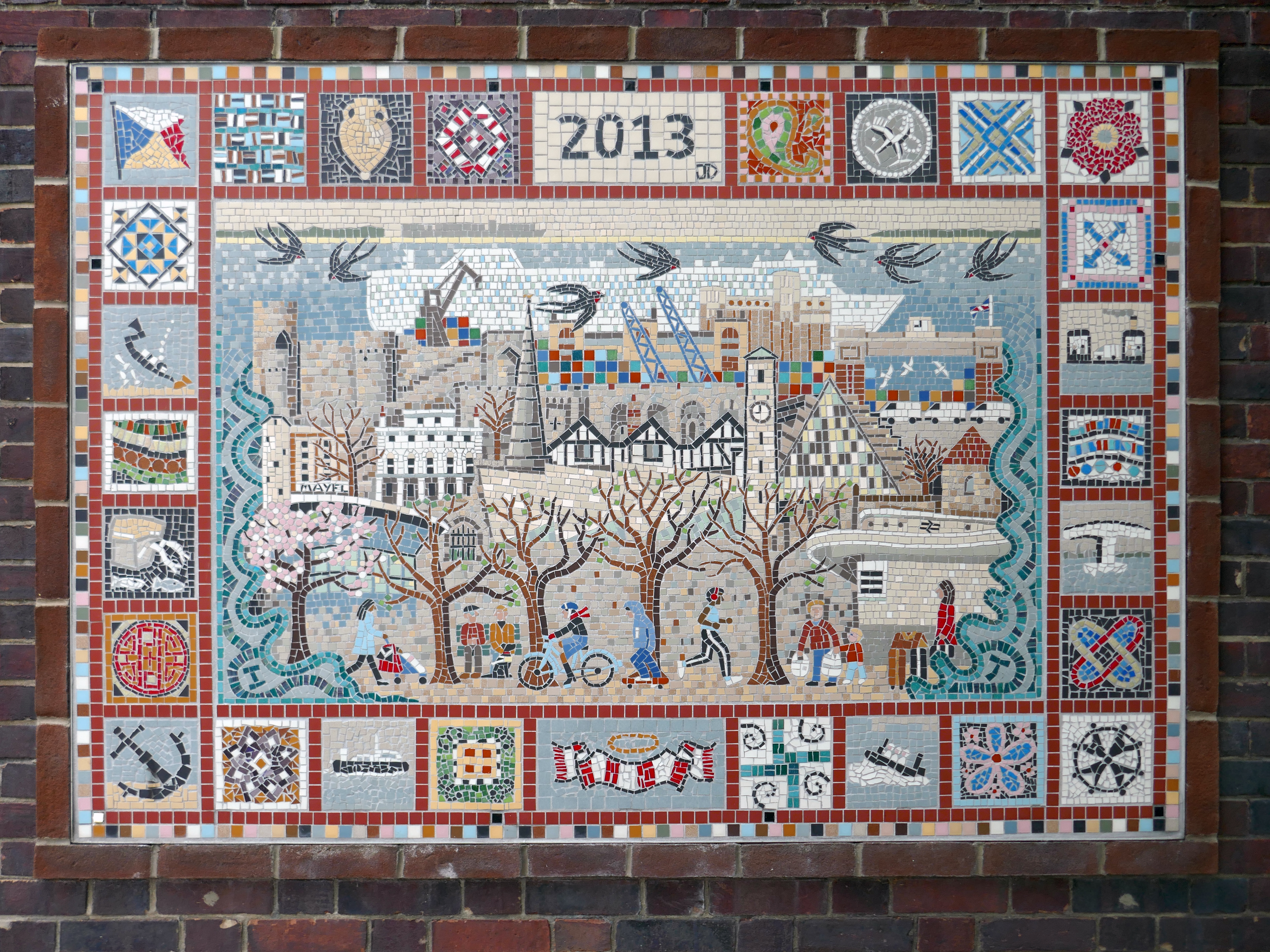
Southampton Mural 2013.
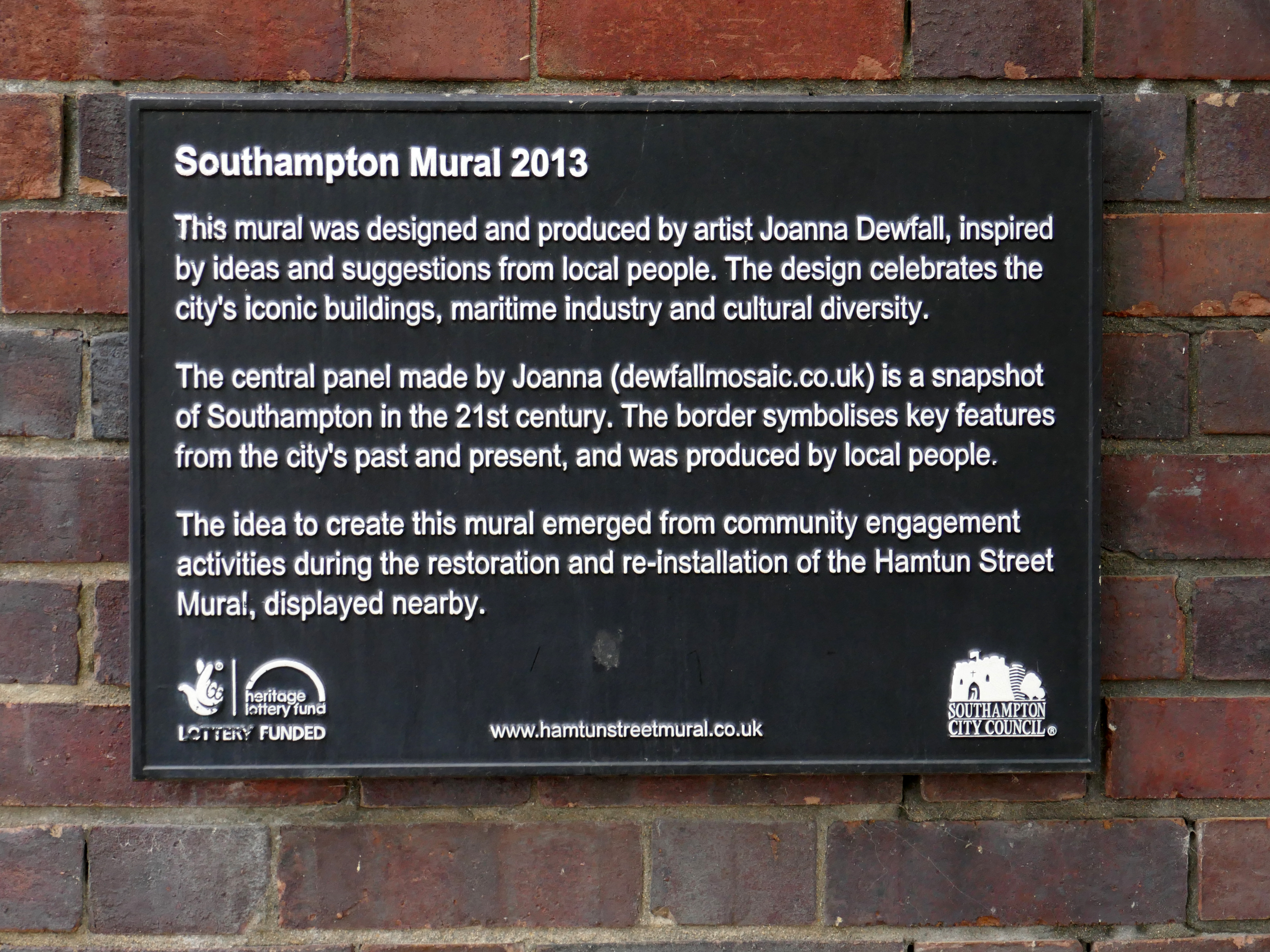
A cross-section of the local community helped create a new mural depicting contemporary Southampton. The design was inspired by ideas from young people at Prince’s Trust, residents of Ironside Court, parents from St. John’s School and local people who attended mosaic workshops led by artist Joanna Dewfall.

Joanna Dewfall’s design captures the city’s iconic buildings, maritime industry and present-day life. The border, made during mosaic workshops, contains themes from past and present celebrating Southampton’s cultural diversity.

The new mural is located on Castle Way, round the corner from the Hamtun Street Mural.
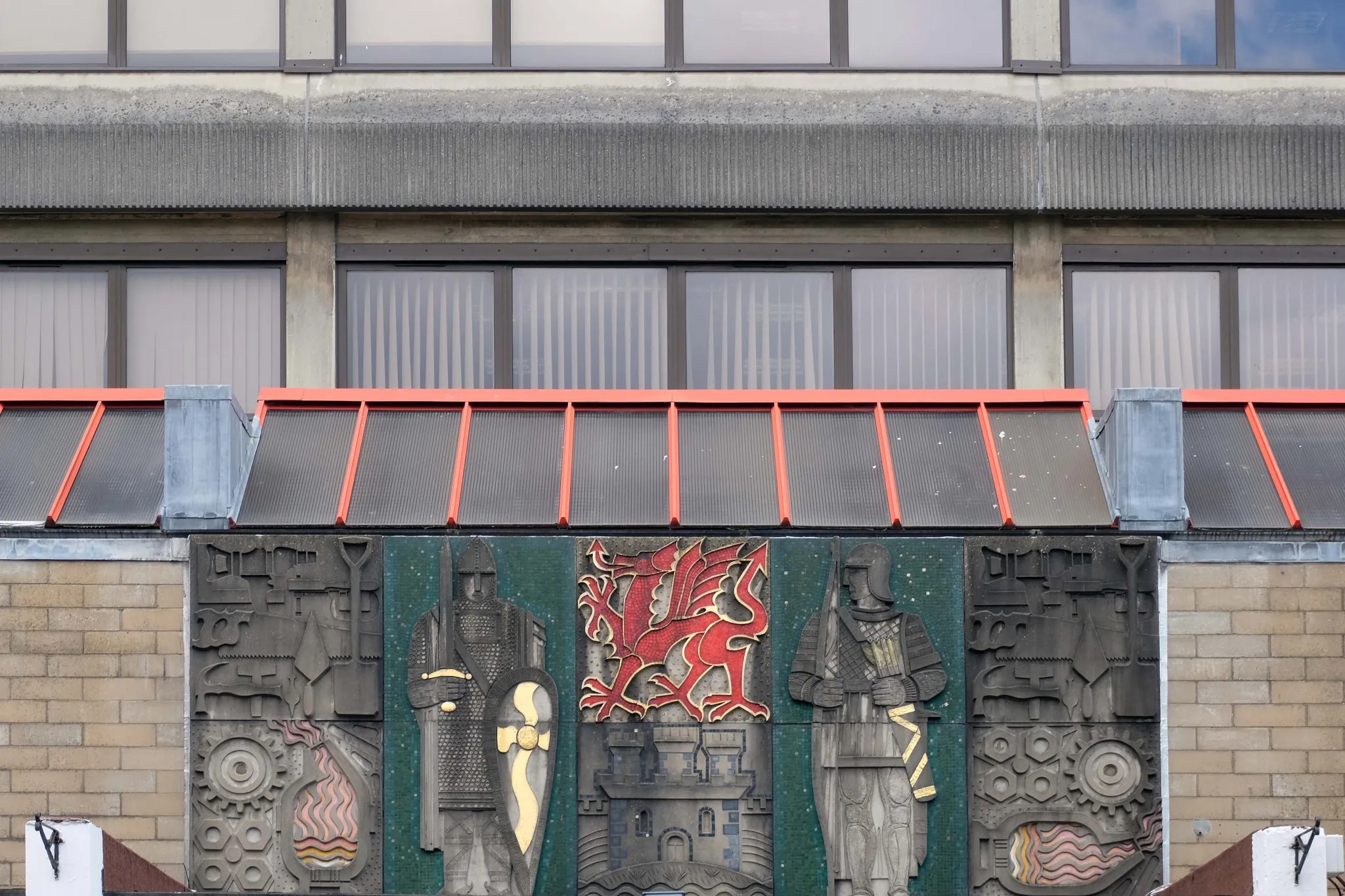
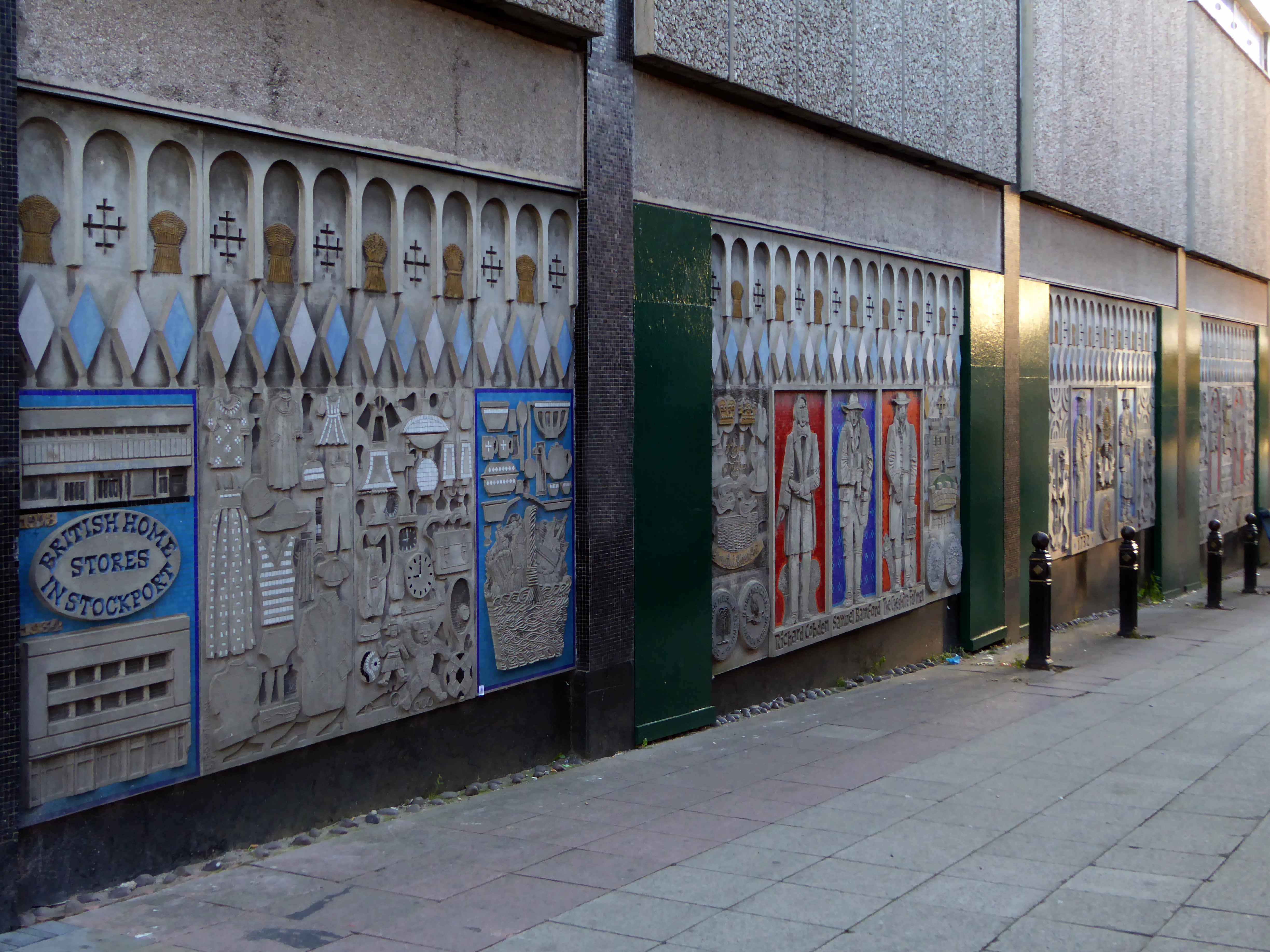
My first encounter with the work of Henry and Joyce Collins, was on the side of the former BHS in Stockport.
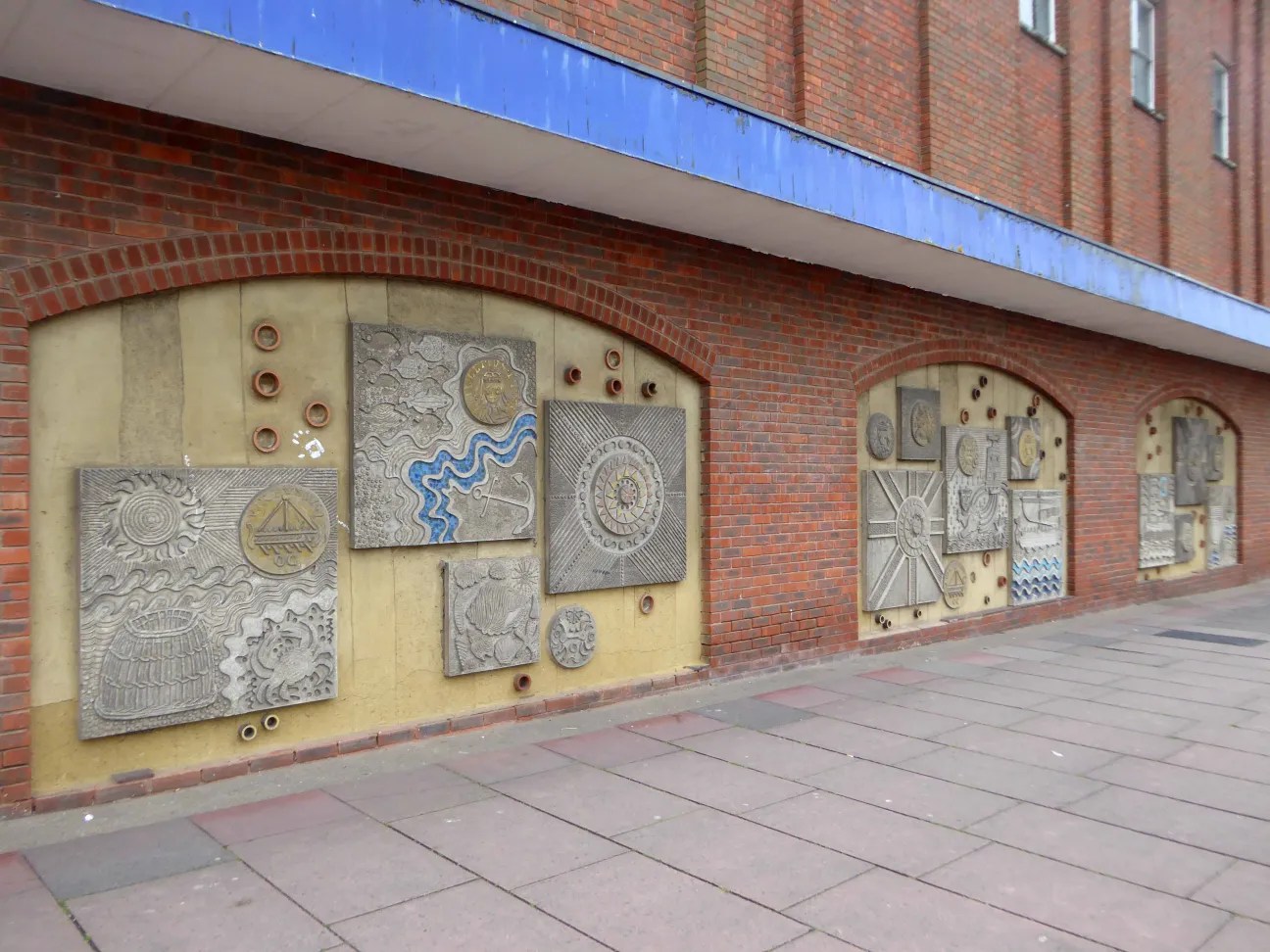
I have subsequently visited their work in Bexhill on Sea.
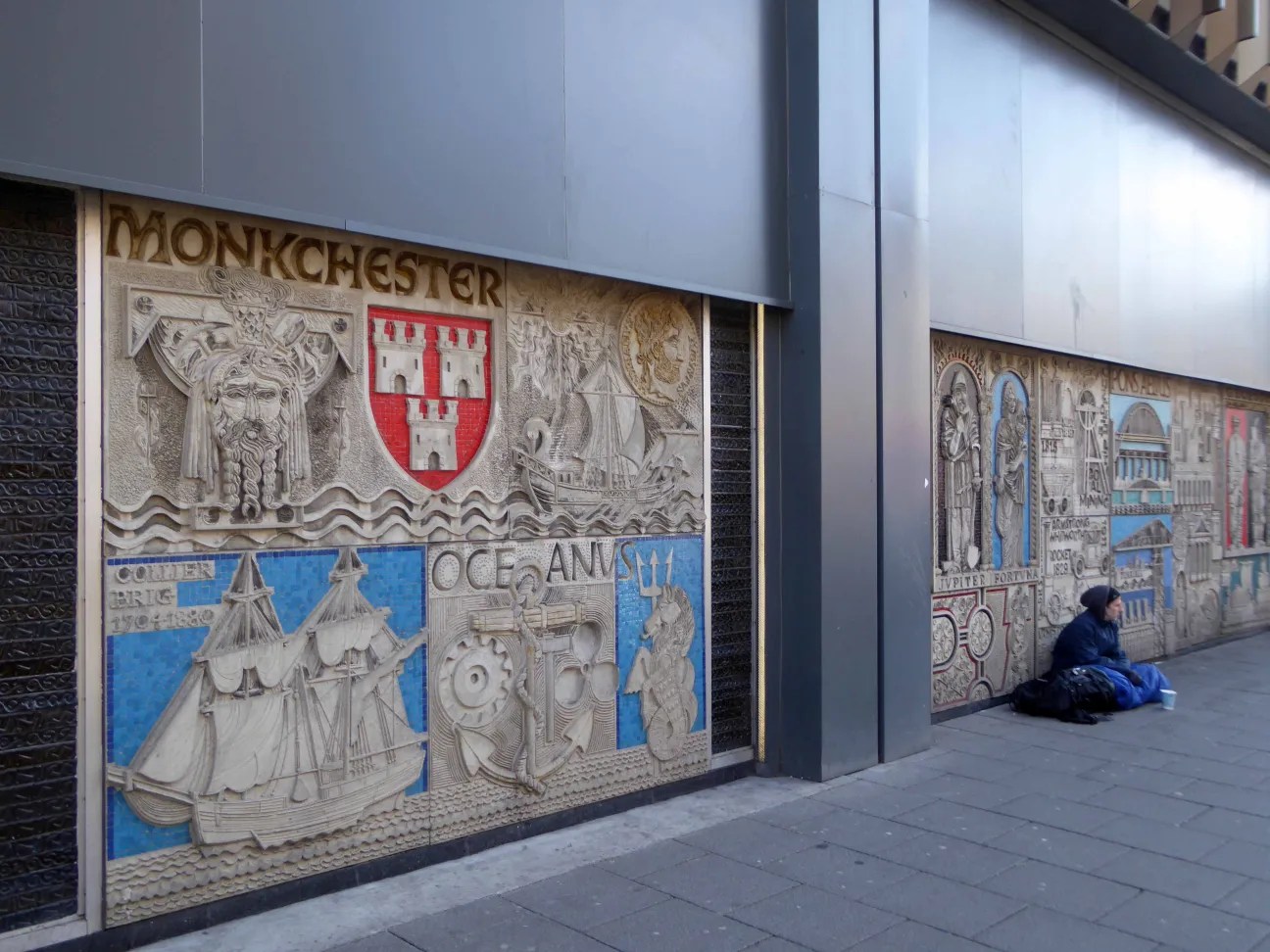
Newcastle upon Tyne

And Cwmbran.

Castle House Co-op Store – Sheffield

So here we are outside, you and I in 2015 – it seems like yesterday.

Whereas yesterday I was inside not outside, but more of that in a moment.

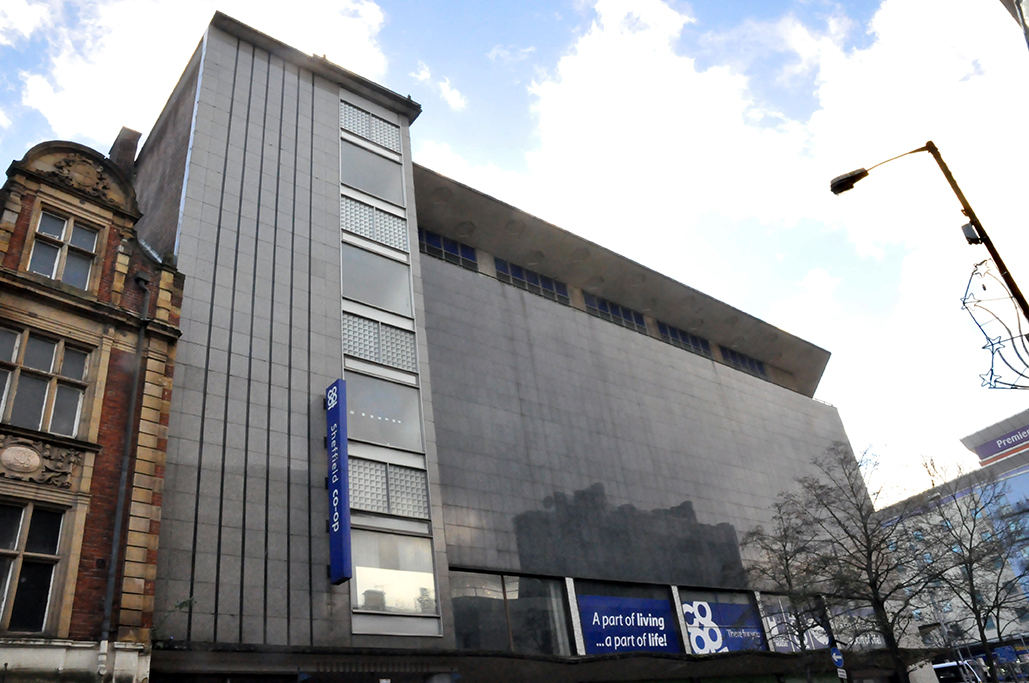
It seems that you were listed in 2009 and deservedly so.

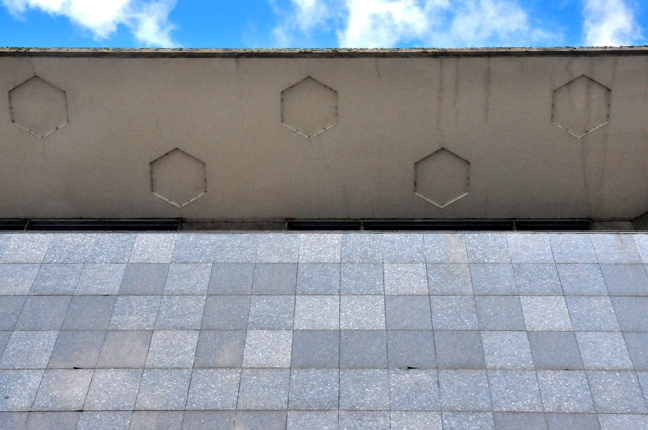
1964 by George S Hay, Chief Architect for CWS, with interior design by Stanley Layland, interior designer for CWS. Reinforced concrete with Blue Pearl granite tiles and veneers, grey granite tiles and veneers, buff granite blocks, glass, and brick.

There’s just so much to stand and stare and marvel at.

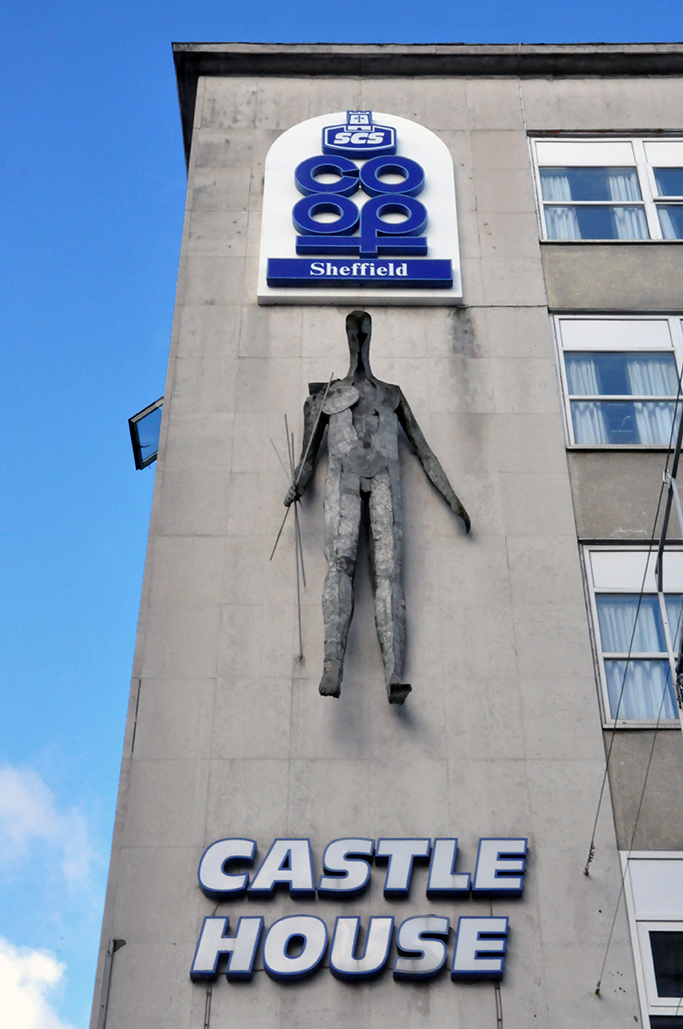
Vulcan by Boris Tietze commisioned by Horne Brothers 1961 for their head office building No. 1 King Street. Glass fibre on a metal armature the 8 foot high figure holding a bundle of metal rods.

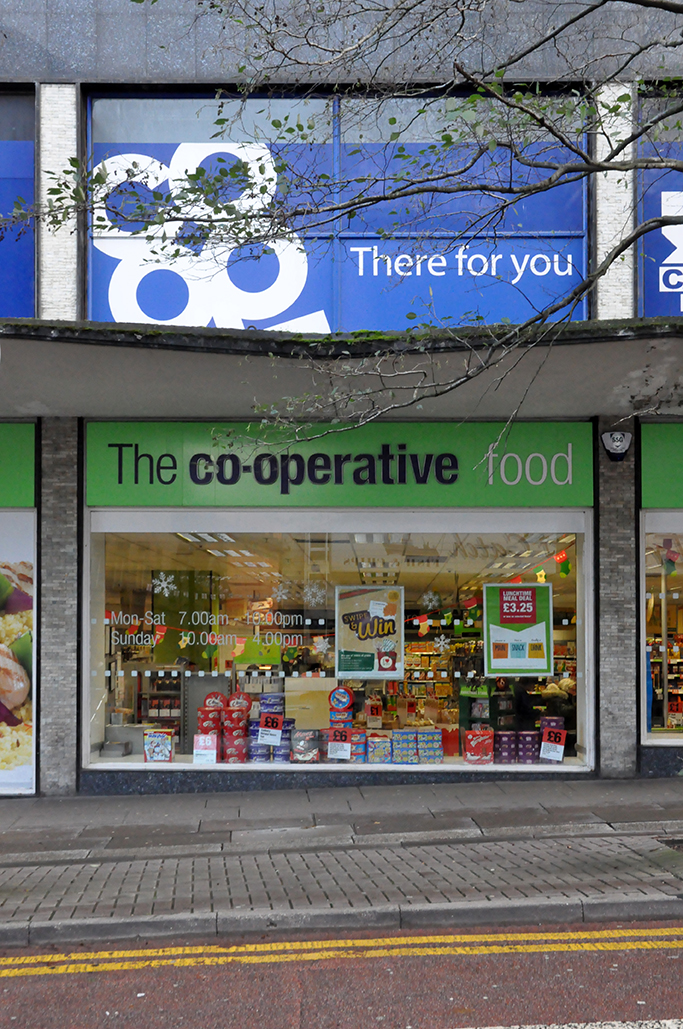
You were just about still open then, then you weren’t, then you were again – but a Co-op no more alas.

Fast forward to 2018

Work is underway on plans for a tech hub in Sheffield after a funding package was agreed.

Followed by a casual stroll towards 2019 where we are talking a peep inside courtesy of owners Kollider and book shop La Biblioteka.

I’d never ever seen the interior, save through the photographs of Sean Madner who captured the key features in 2014, prior to refurbishment.

So the Modernists and I pitched up this Sunday afternoon, the conclusion of our Sheffield Walk.

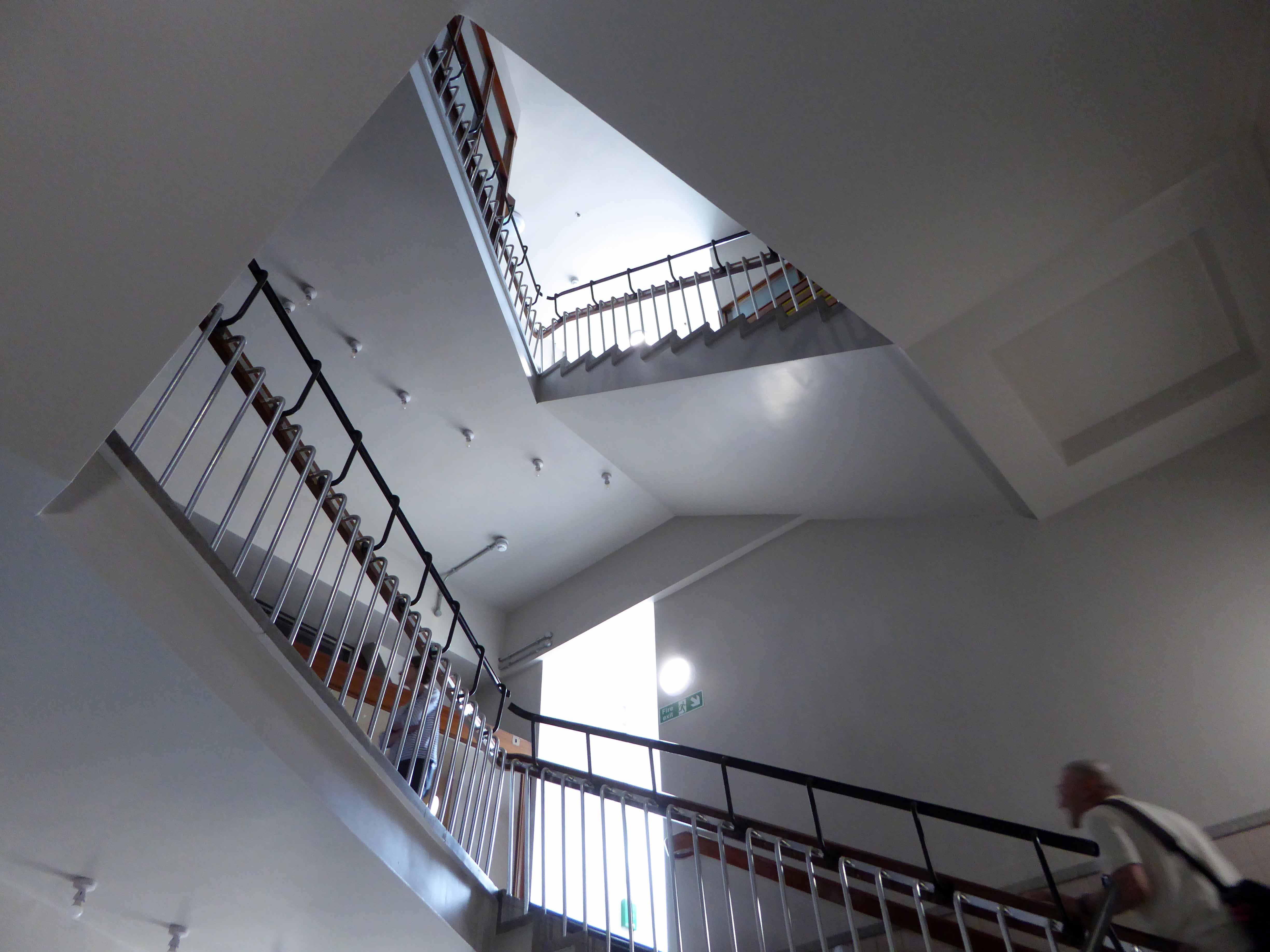
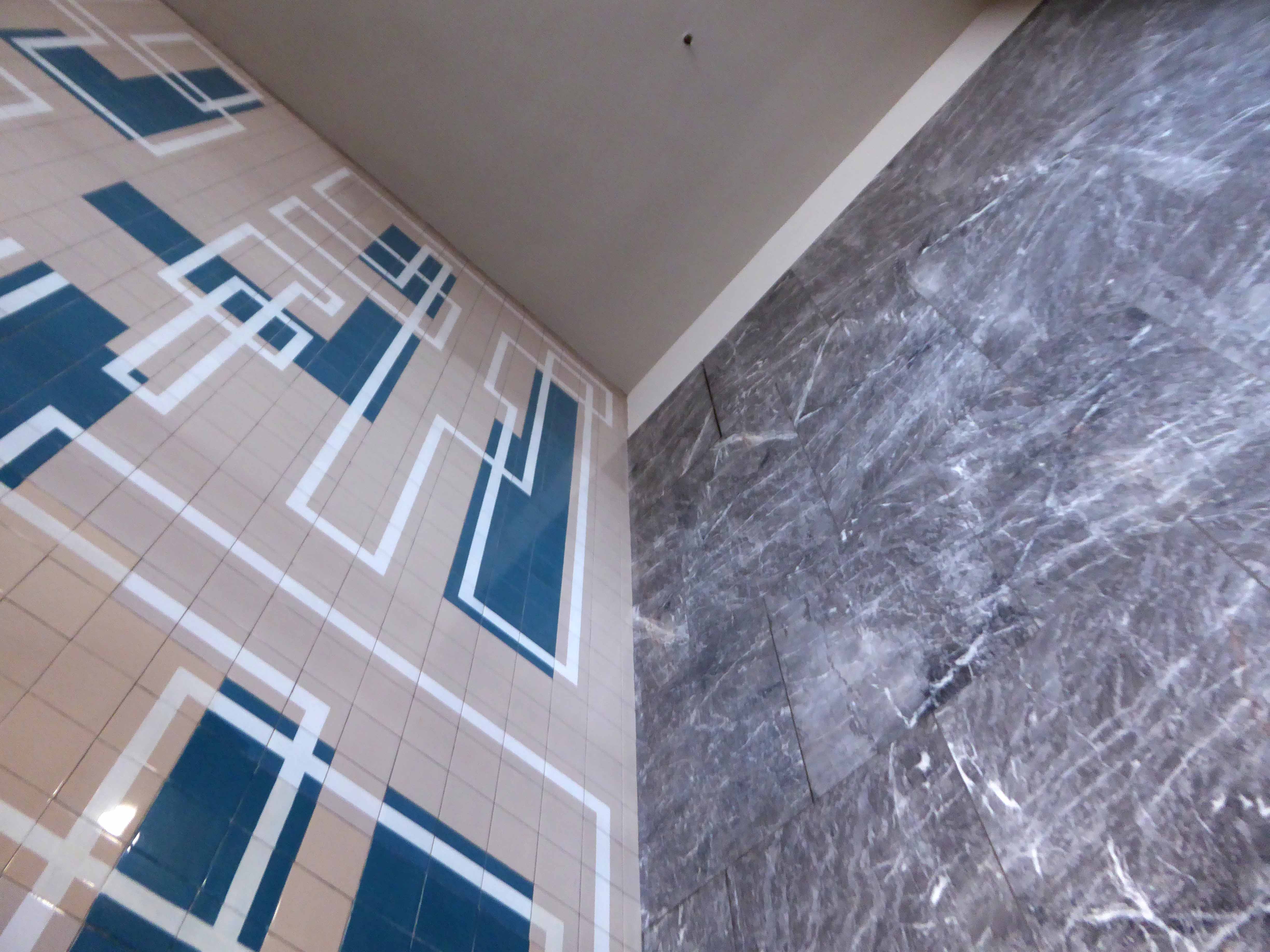
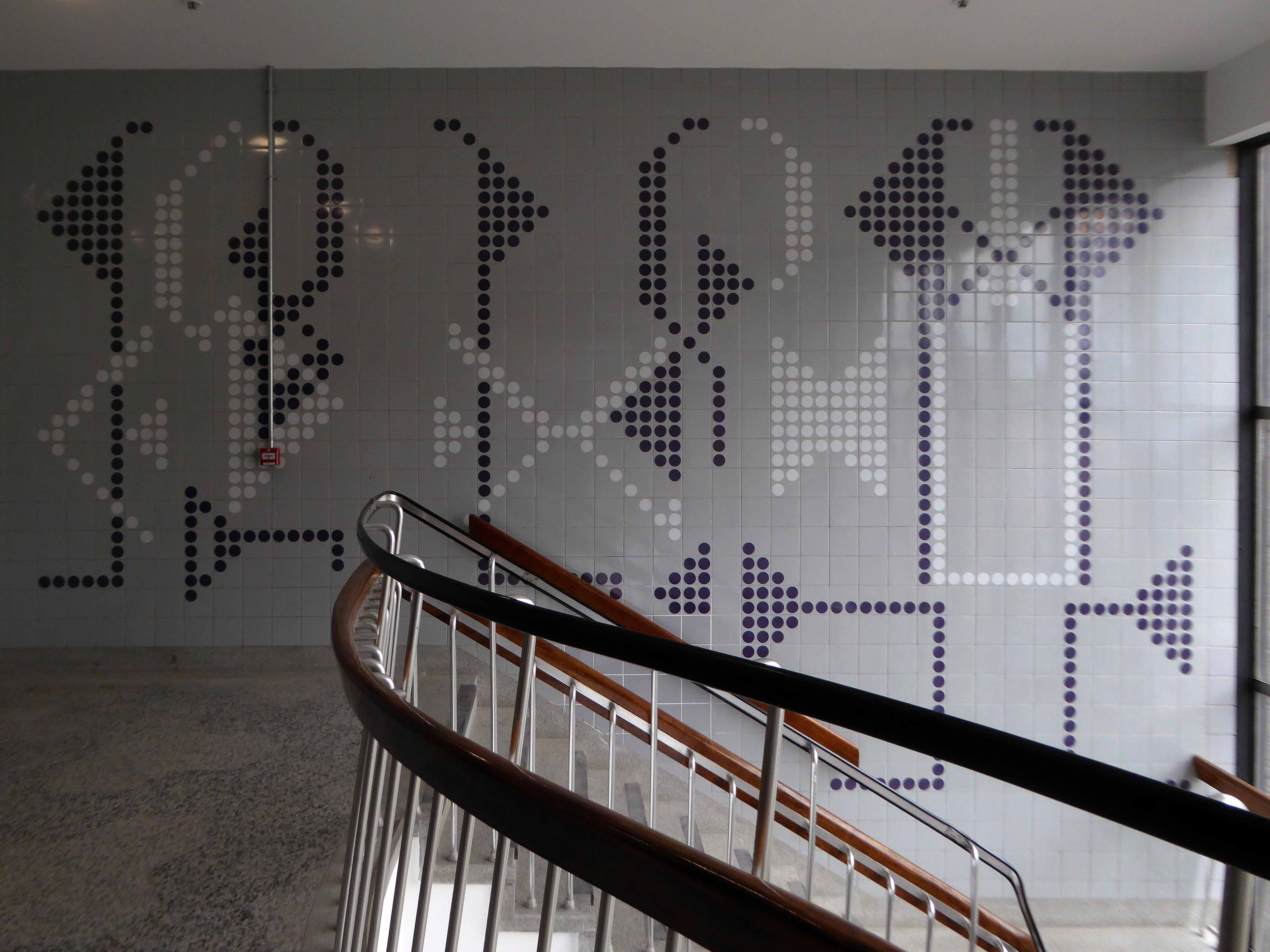
Lets take a look at the end stairwells, two very distinct designs one dotty one linear, both using Carter’s Tiles.

Configured from combinations and rotations of these nine modular units and two plain tiles.

Configured from combinations and rotations of these twelve modular units and two plain tiles.

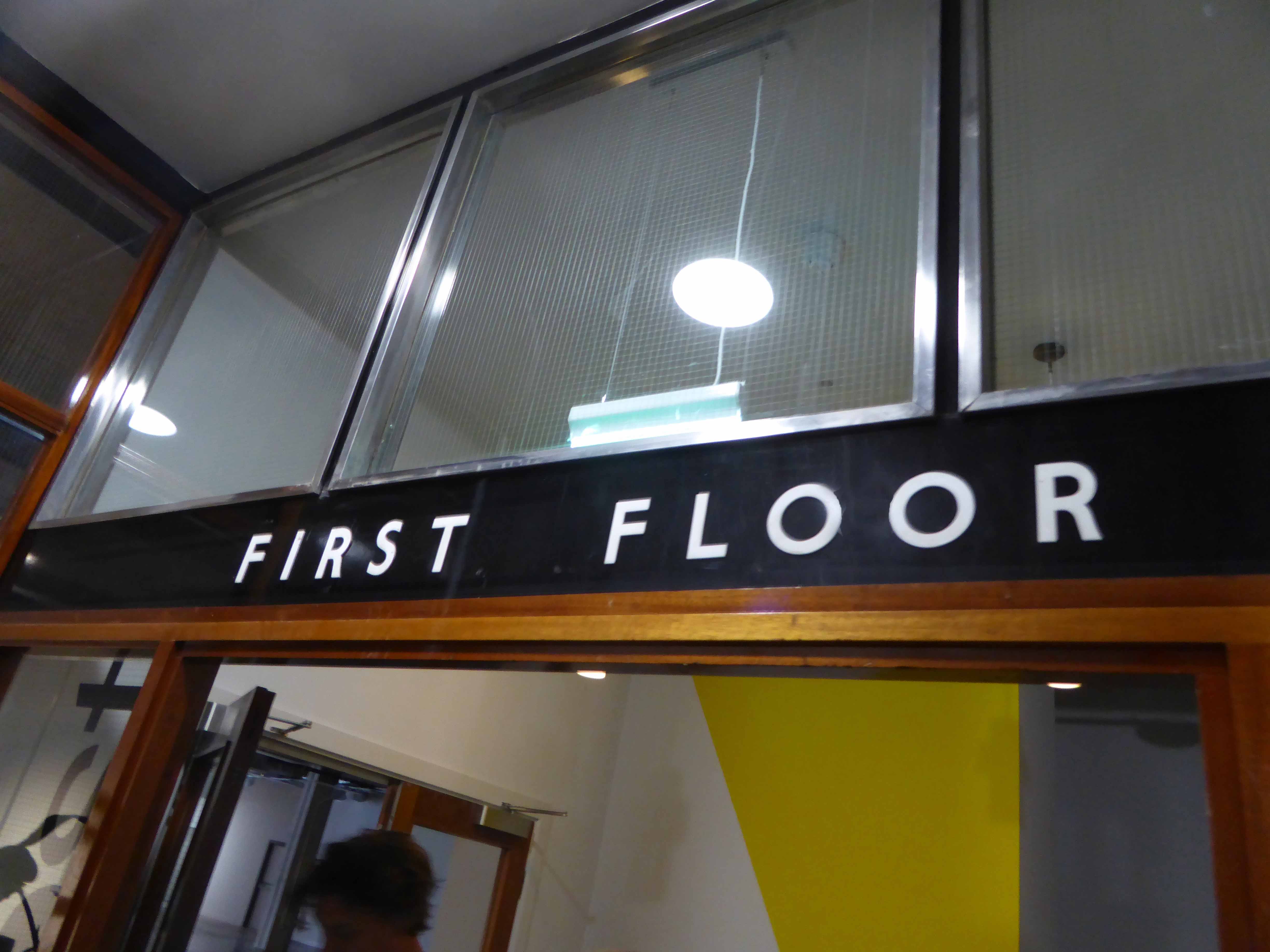
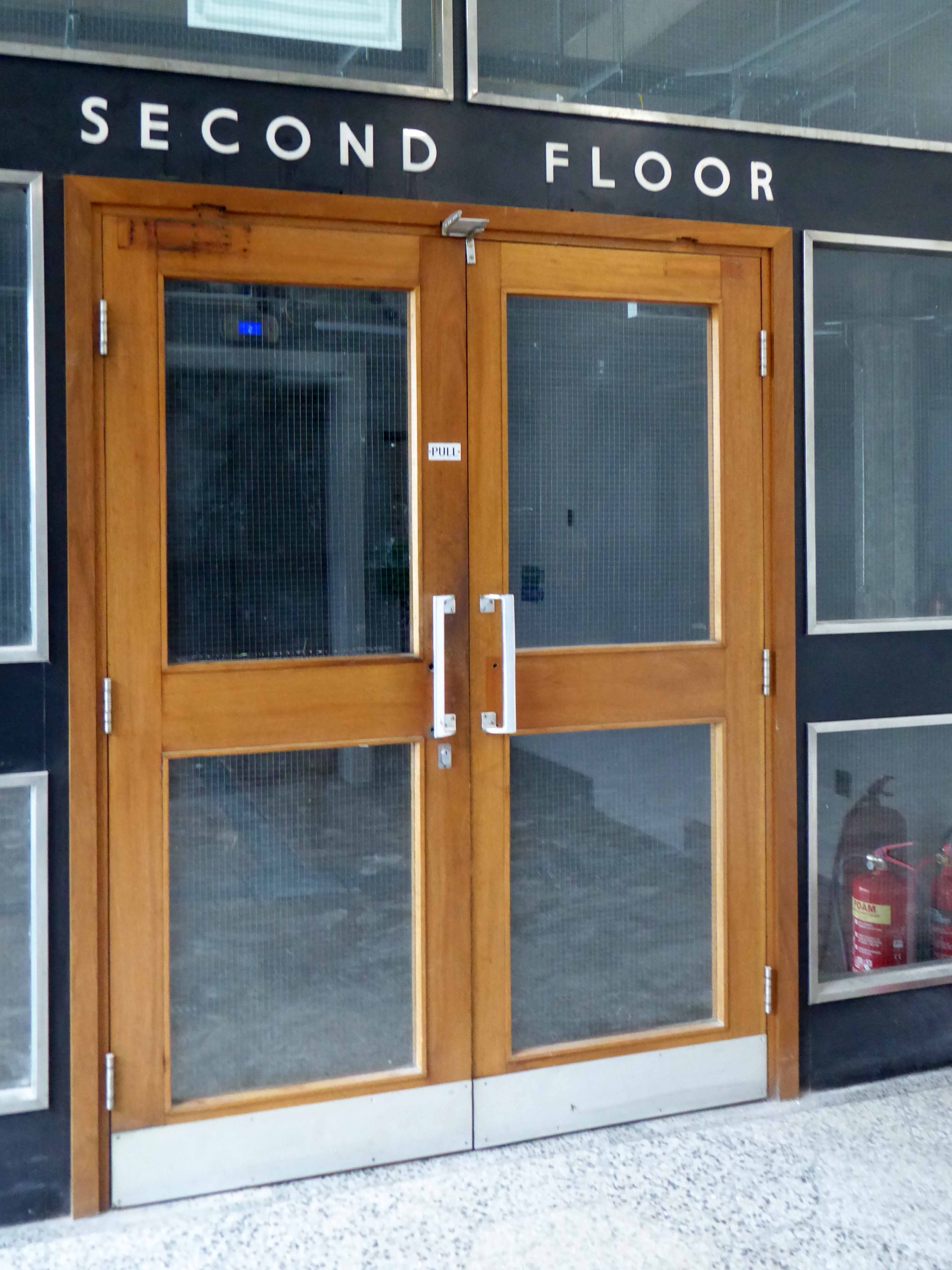
The site has retained some of its original architectural typography.

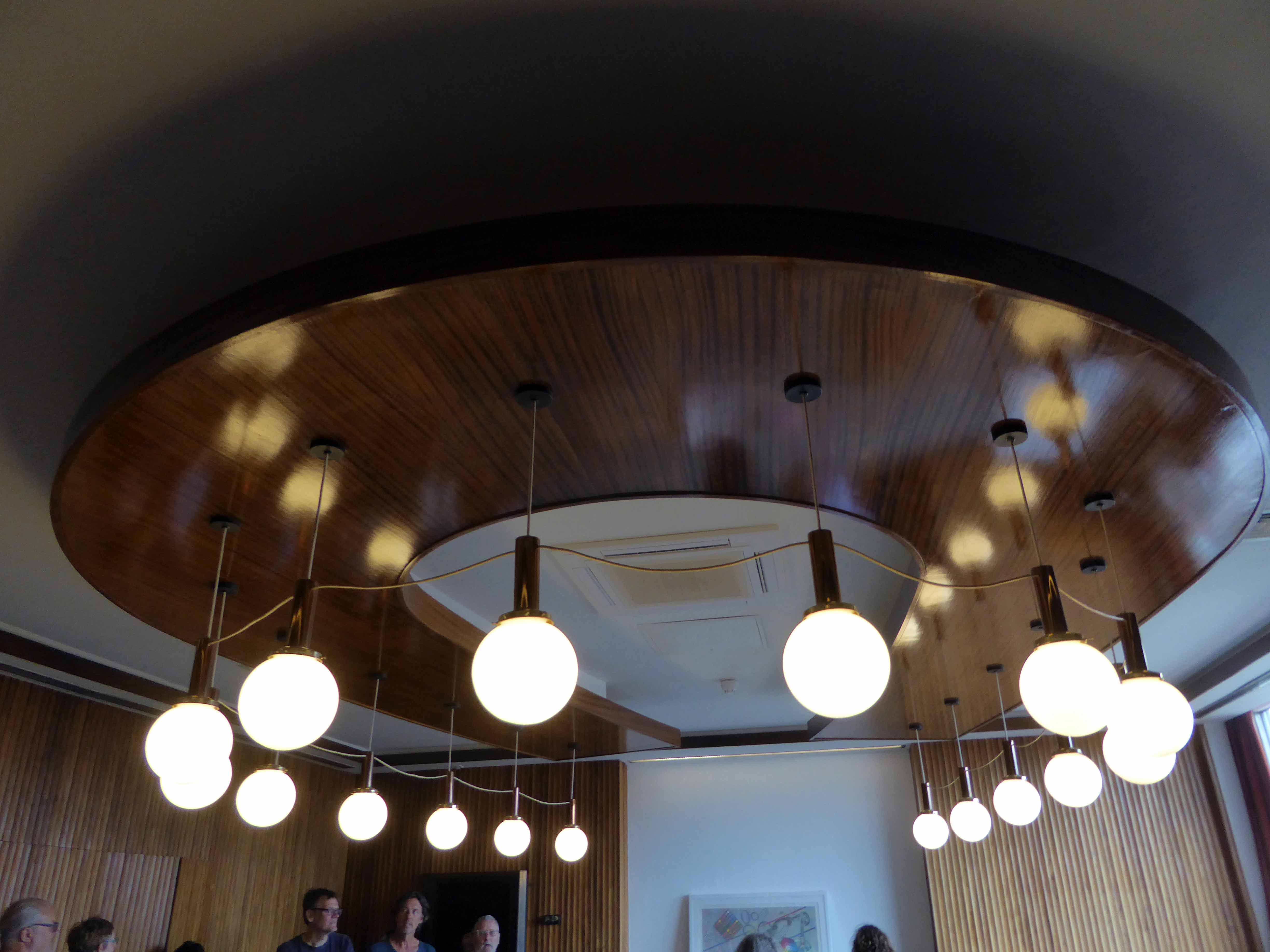
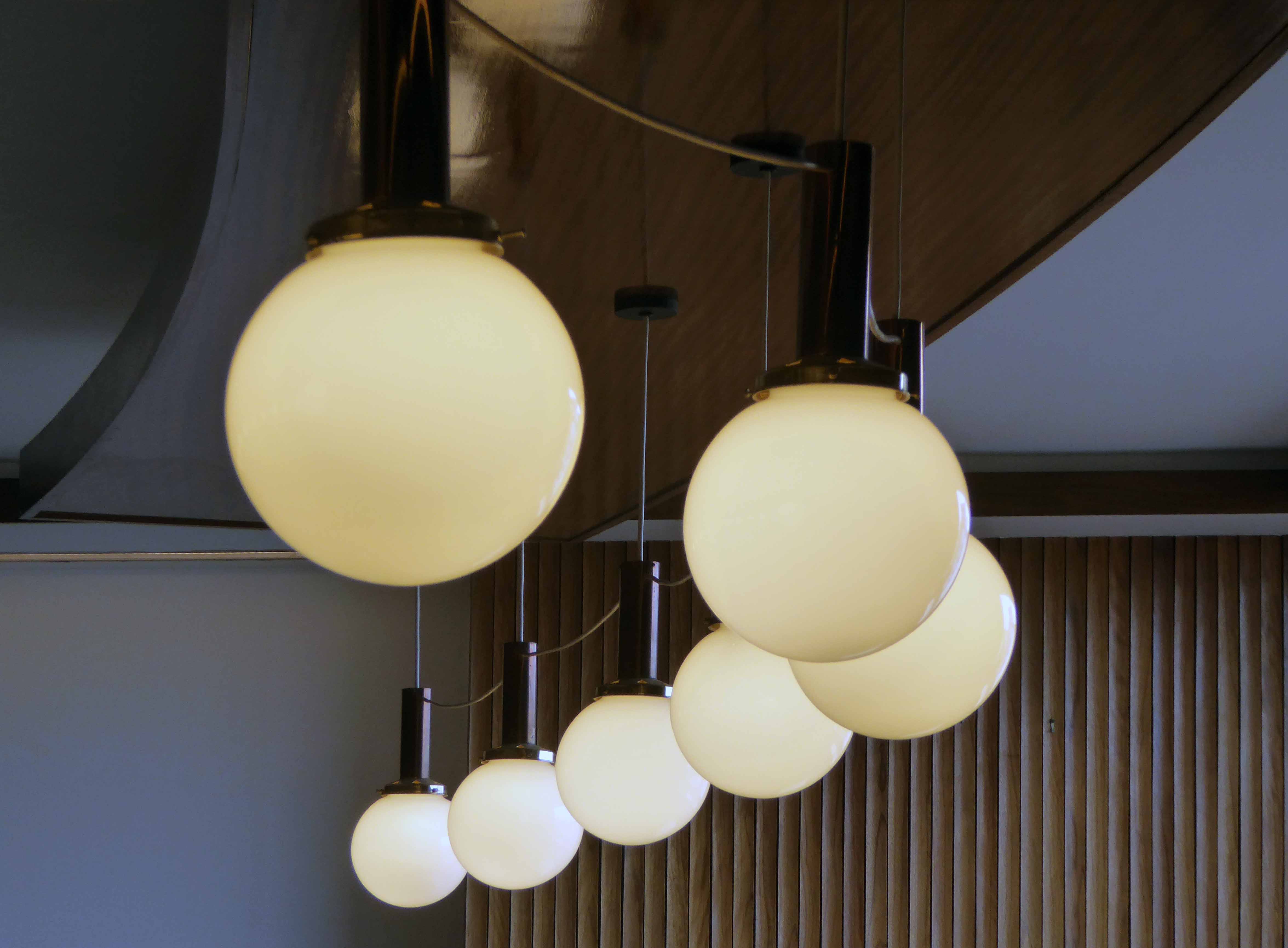
The former top floor restaurant has a suspended geometric ceiling with recently fitted custom made lighting.

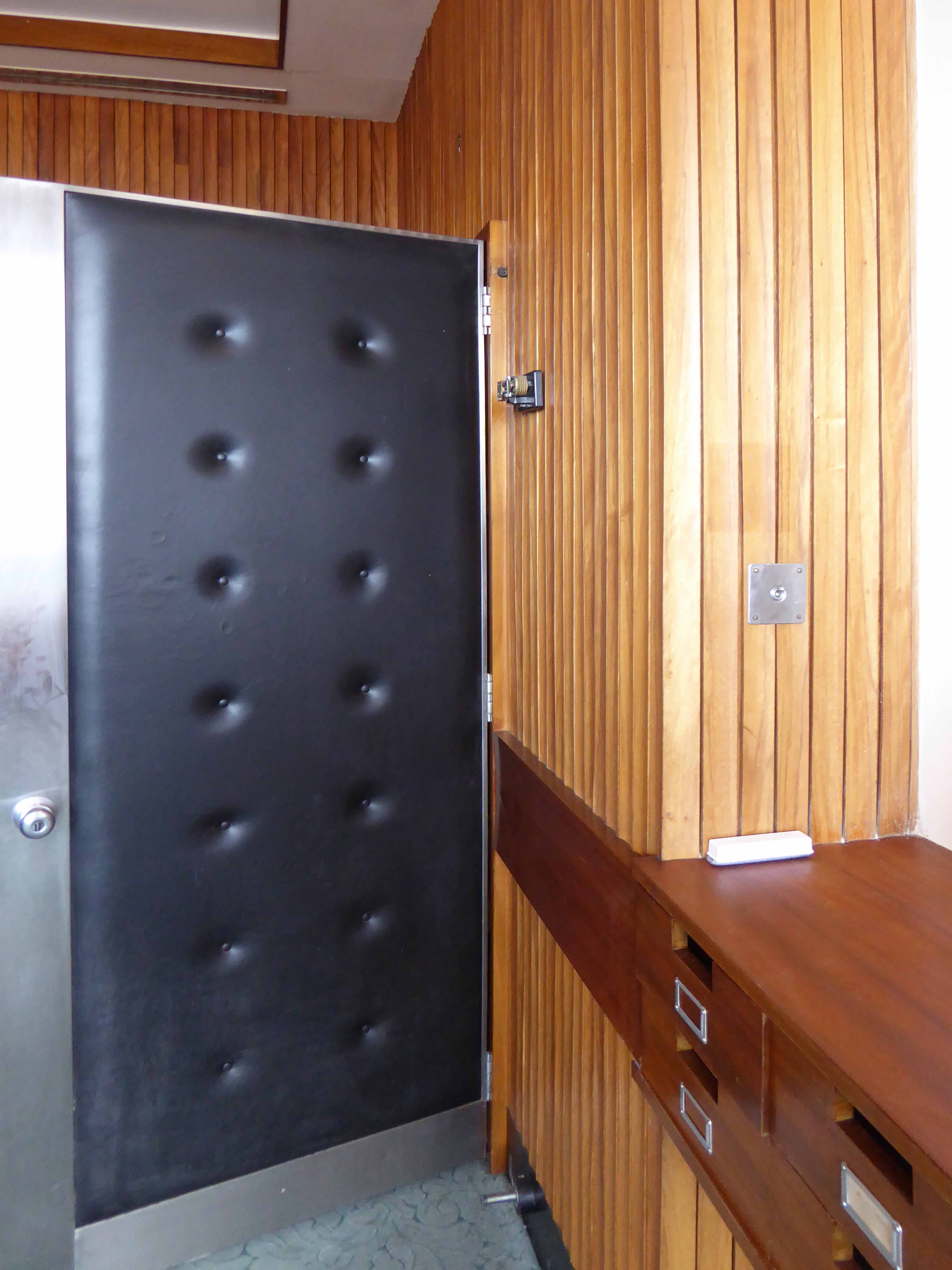
The timber-lined boardroom has a distinctive horseshoe of lighting, augmenting the board room table – which is currently away for repair, oh yes and a delightful door.

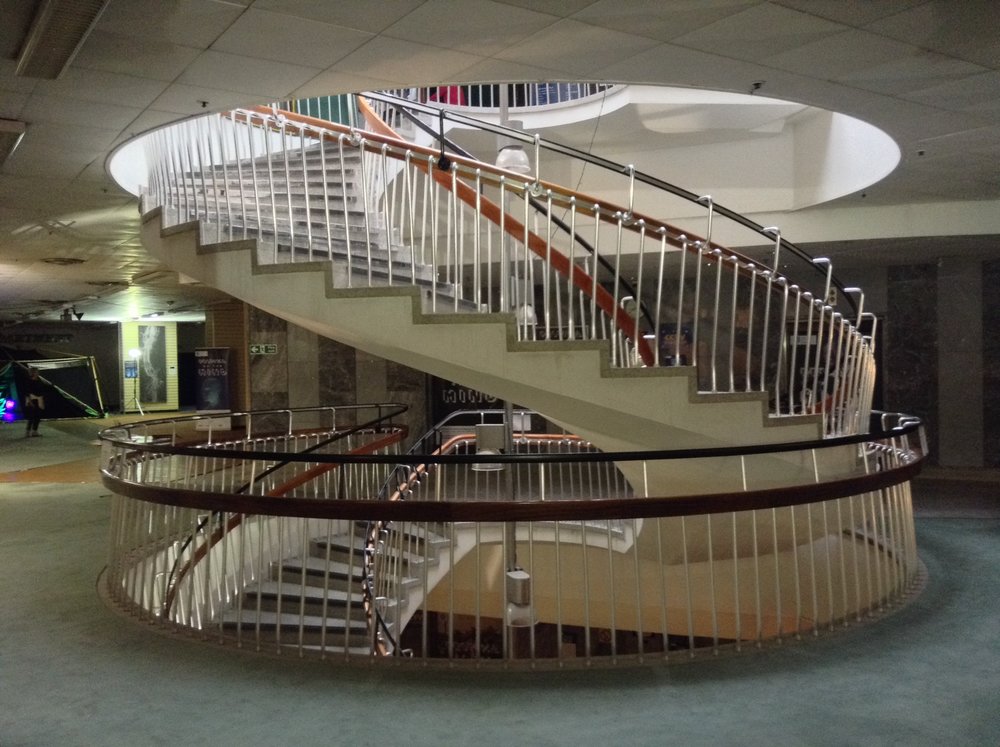
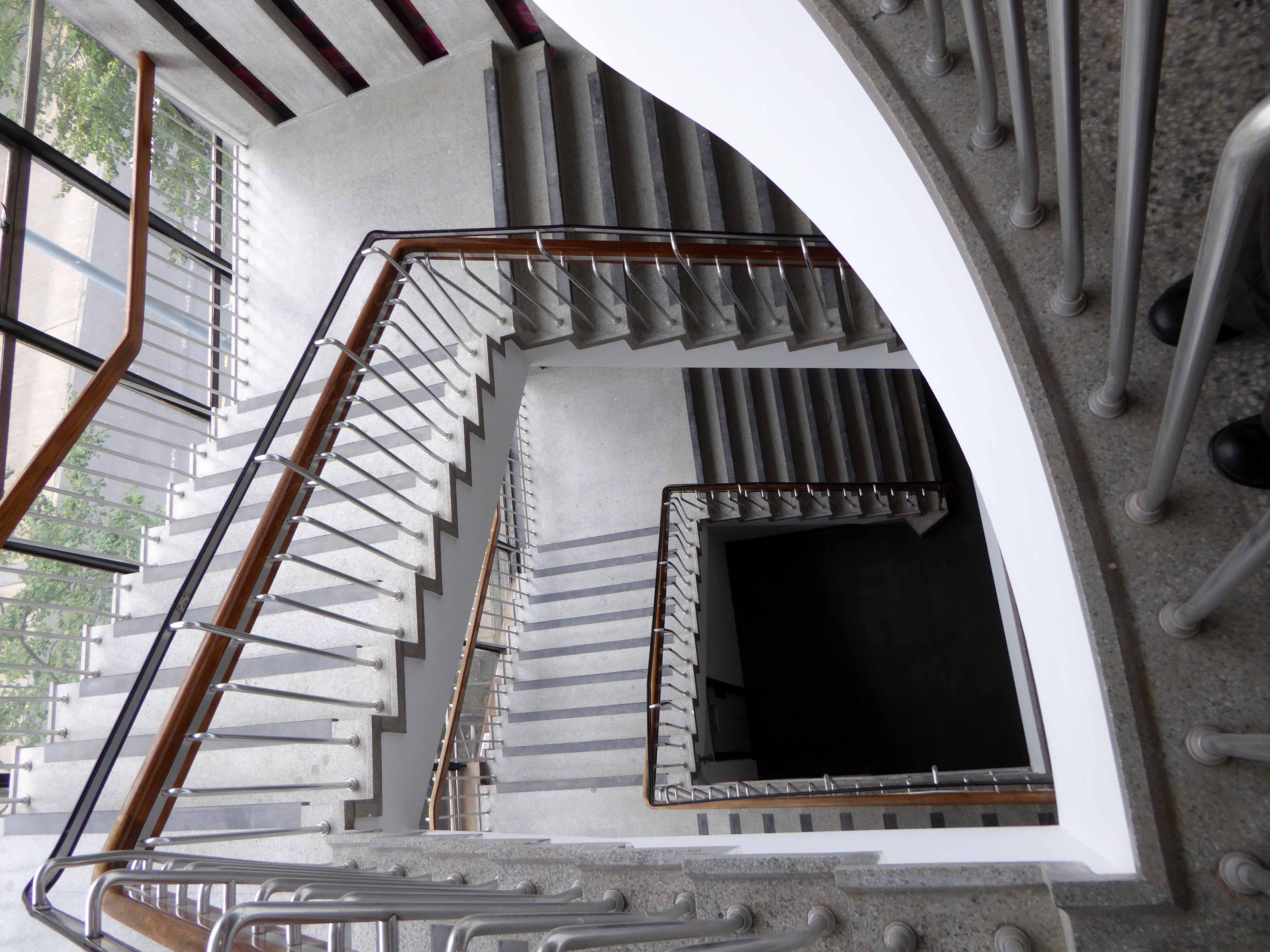
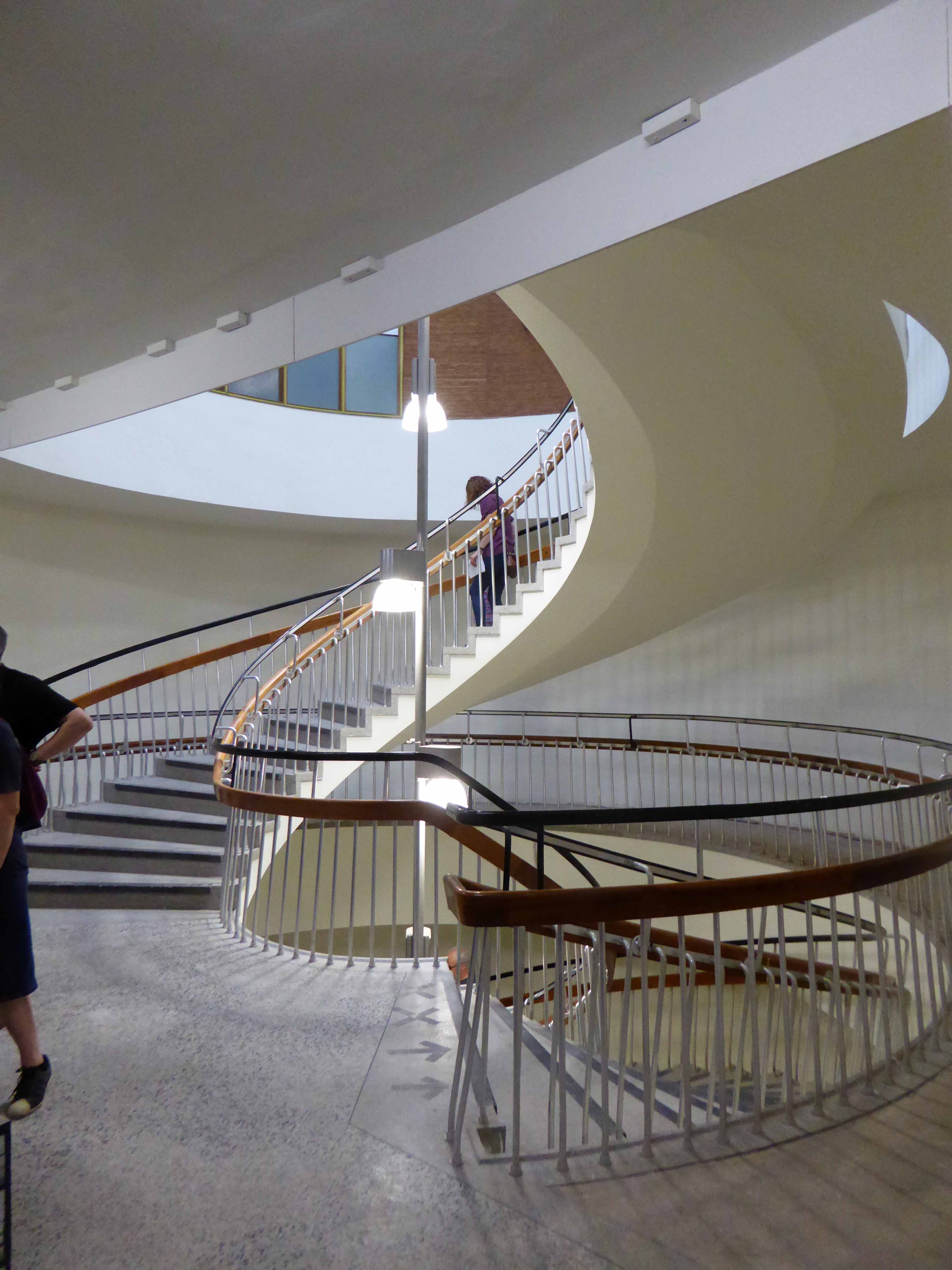
High atop the intoxicating vertiginous swirl of the central spiral stairway is the relief mural representing a cockerel and fish made of aluminium, copper and metal rod, with red French glass for the fish’s eye and cockerel’s comb.

Illuminated from above by this pierced concrete and glass skylight.

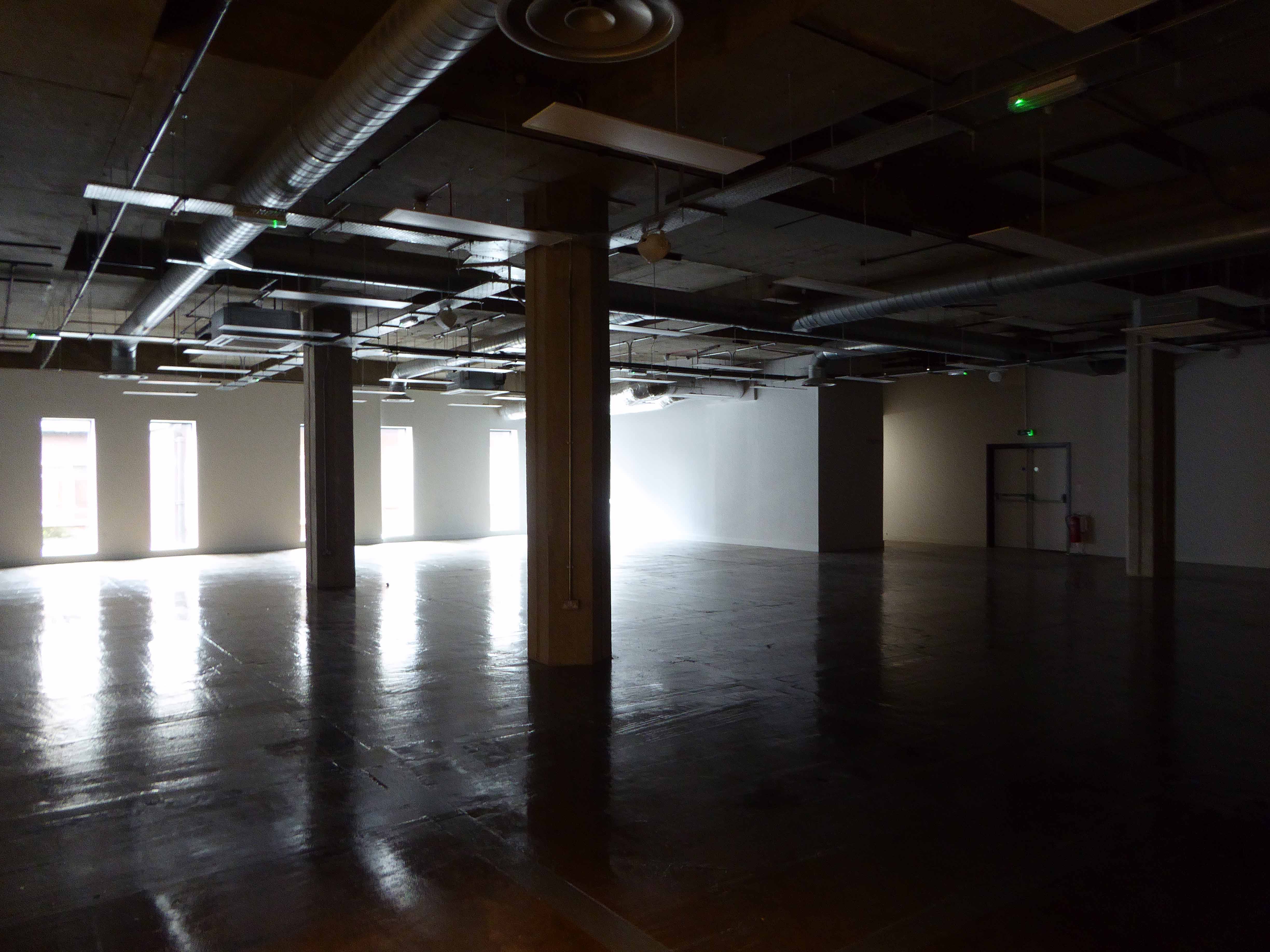
Many of the internal spaces have been ready for their new tenants.

This is a fine example of Modernist retail architecture saved from decay and degradation by the timely intervention of a sympathetic tenant.

Long may they and Castle House prosper – Sheffield we salute you!