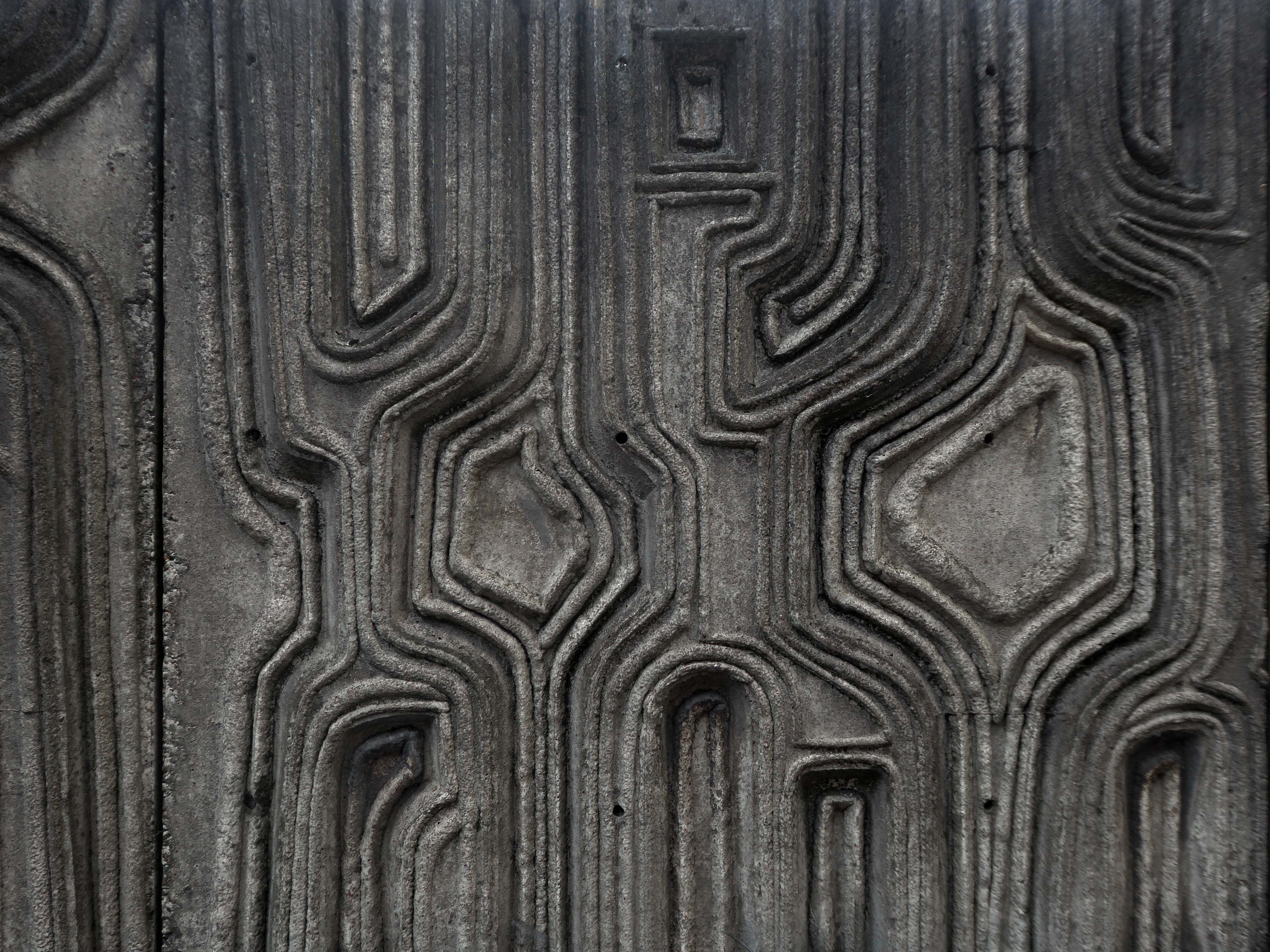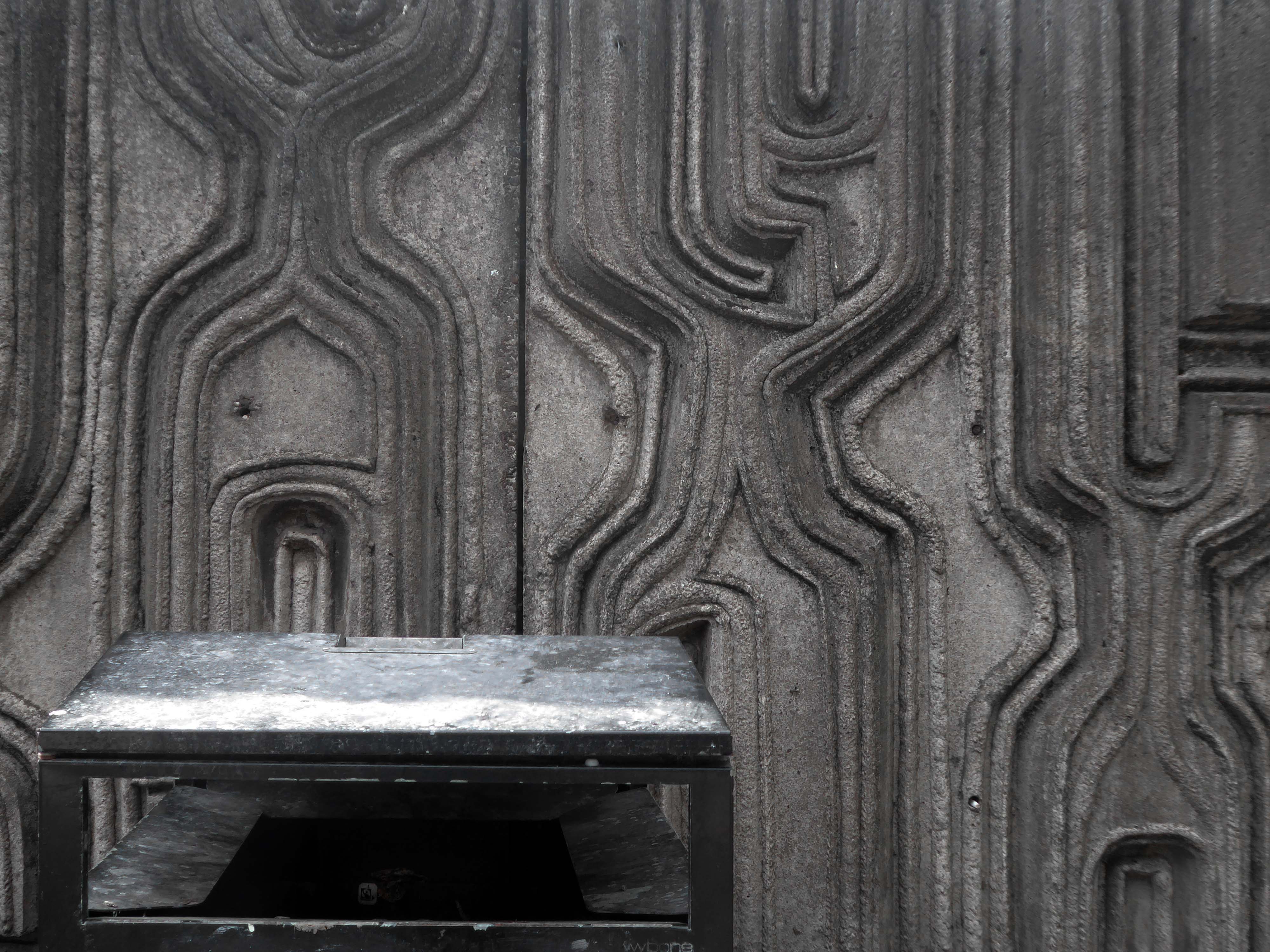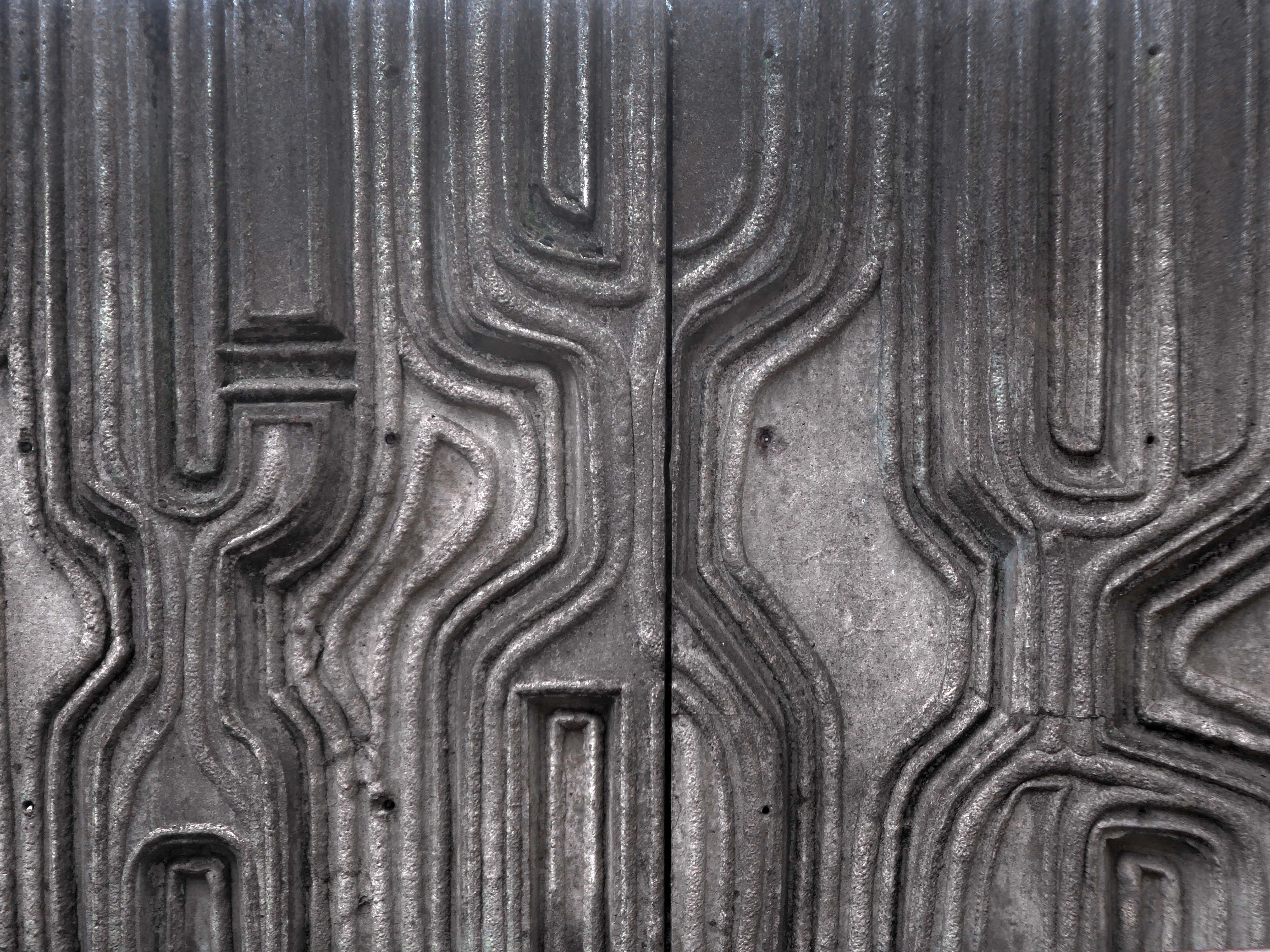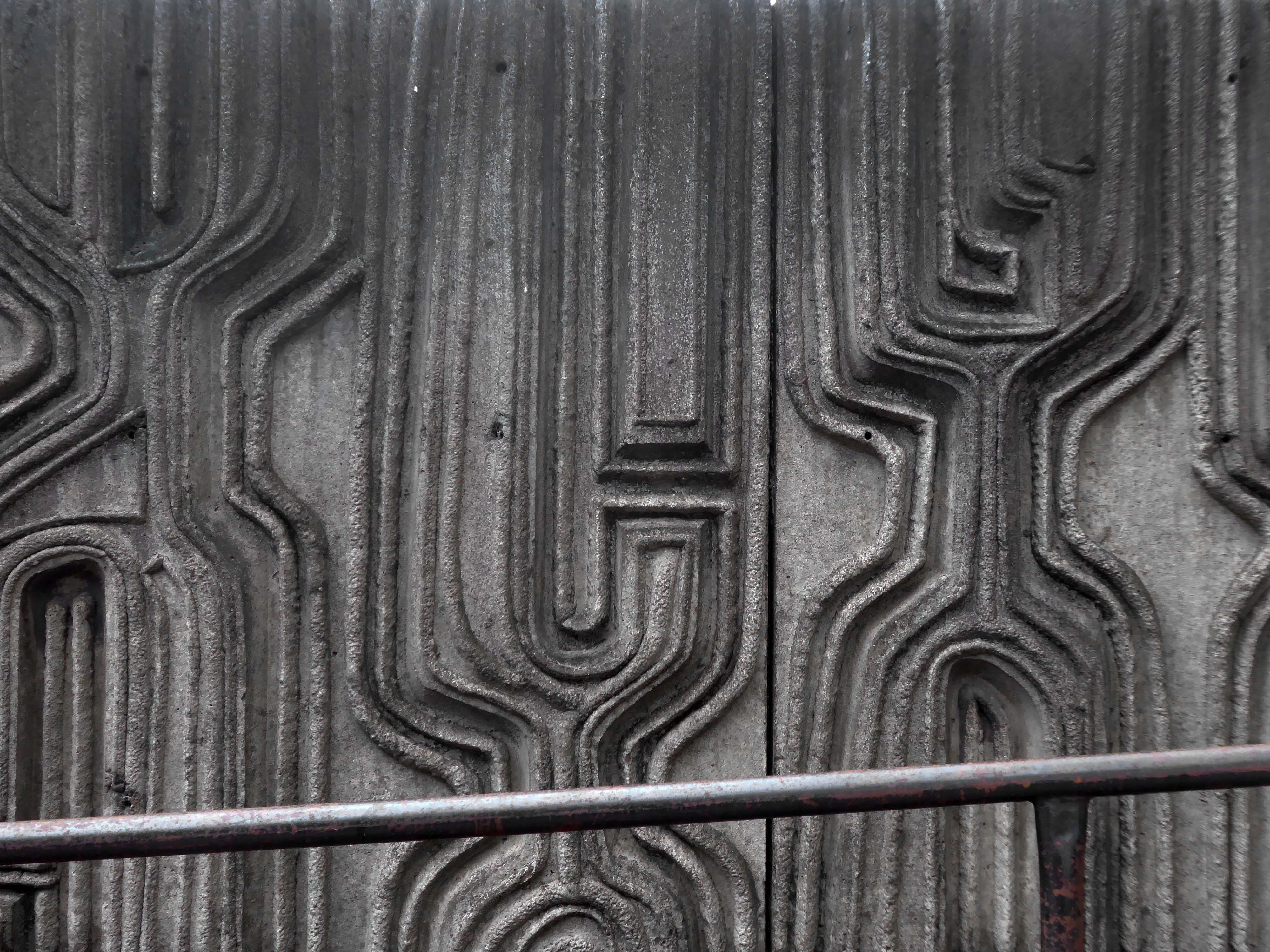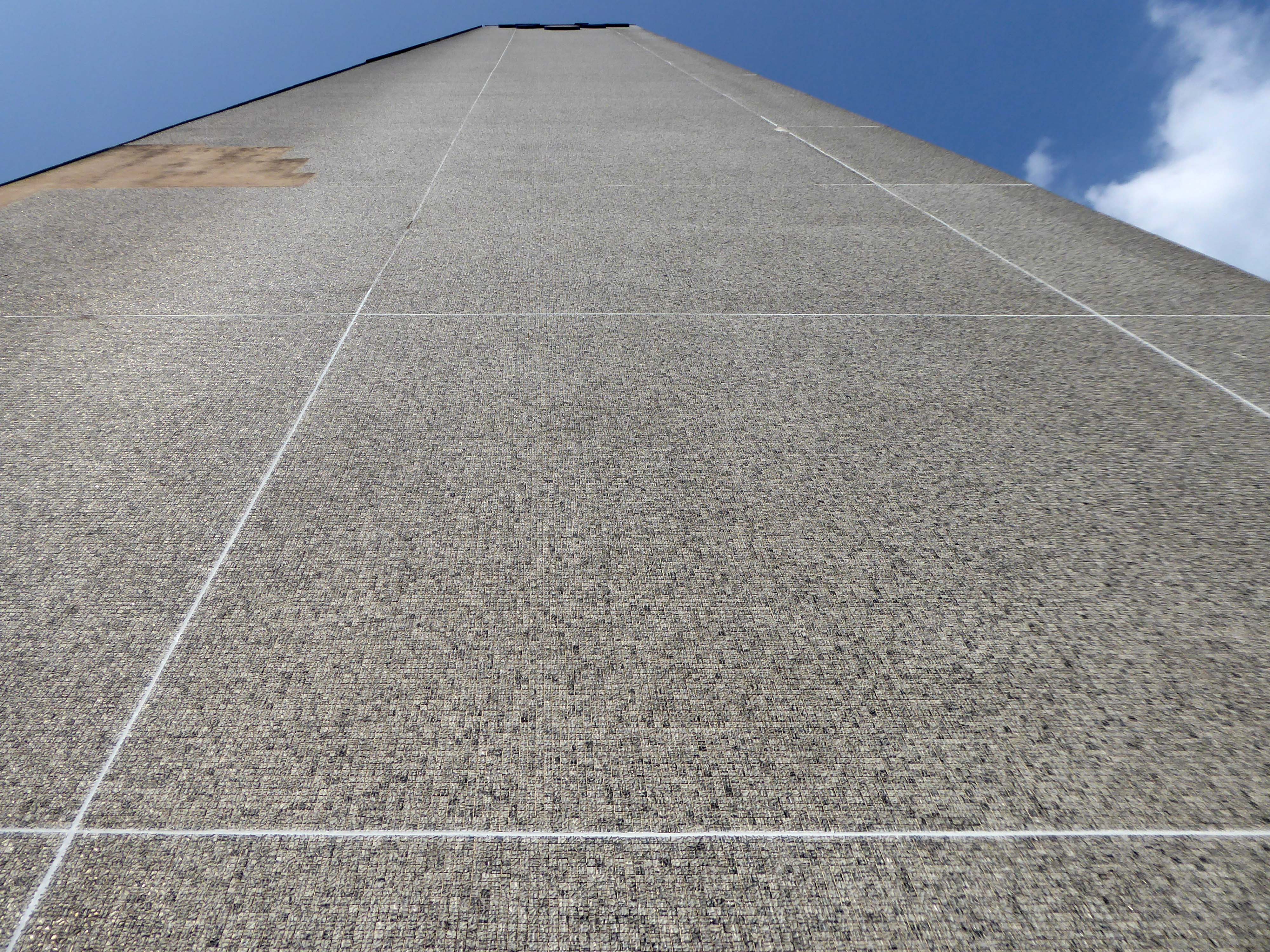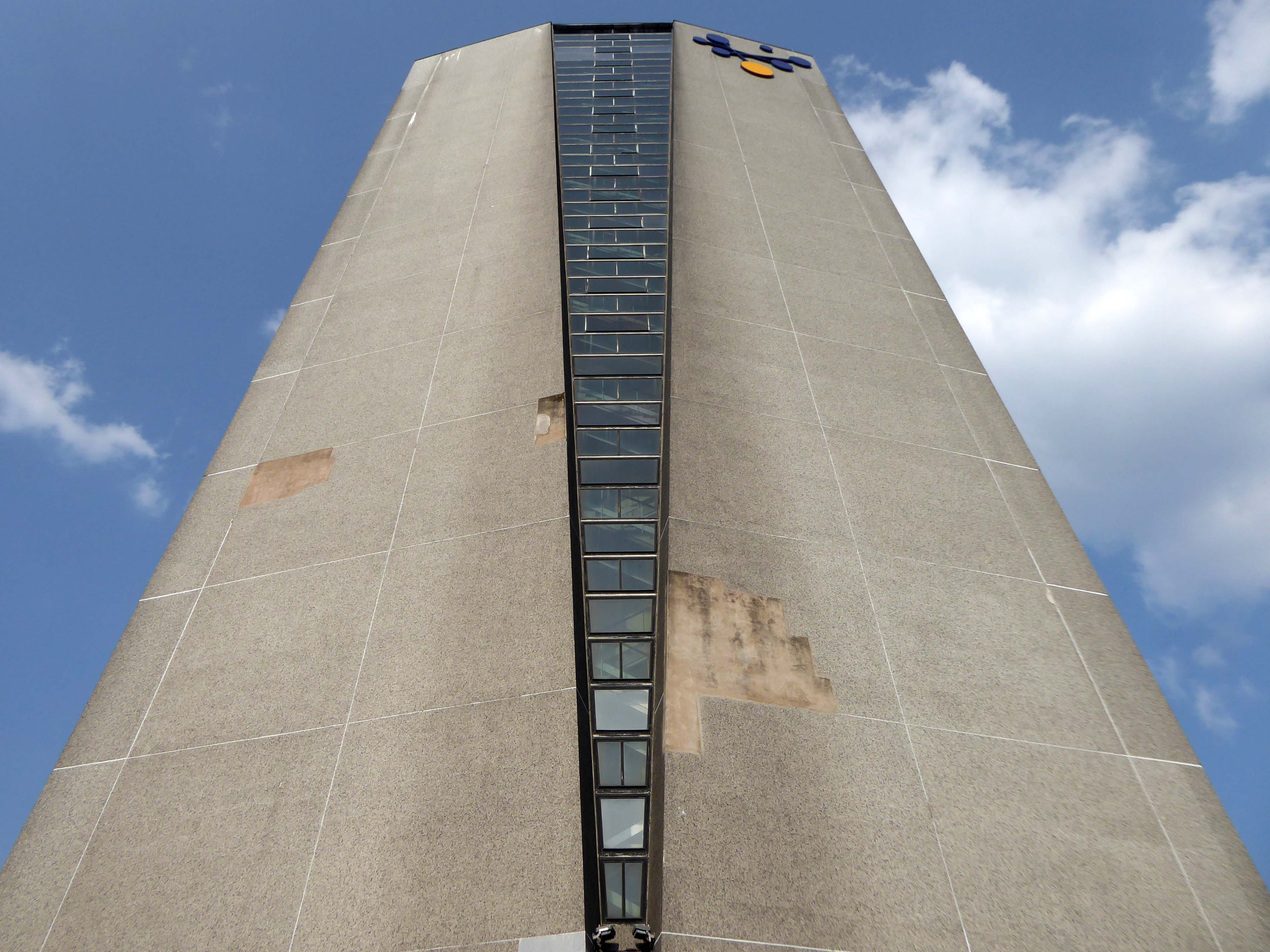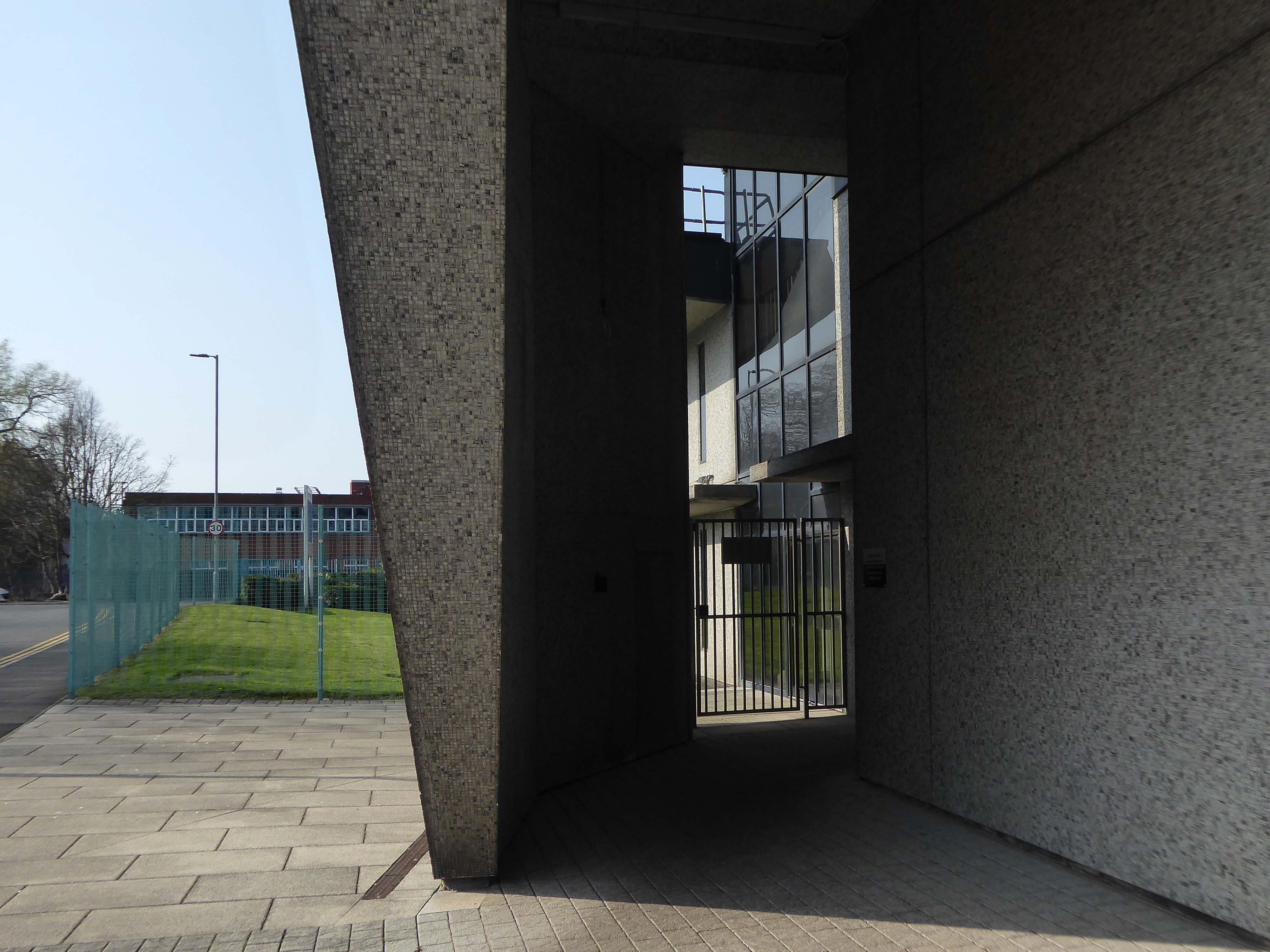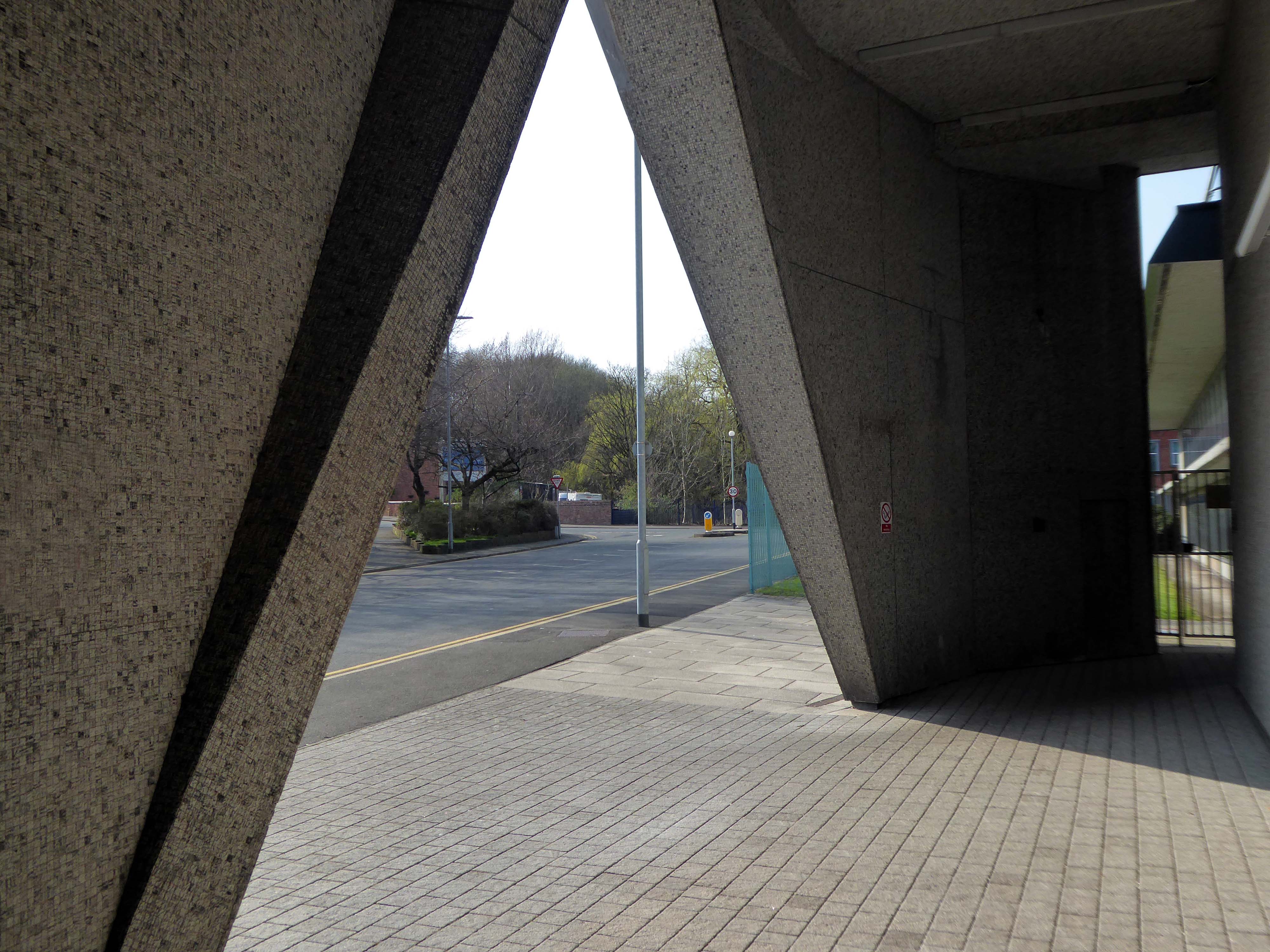
Charing Cross Station – Glasgow

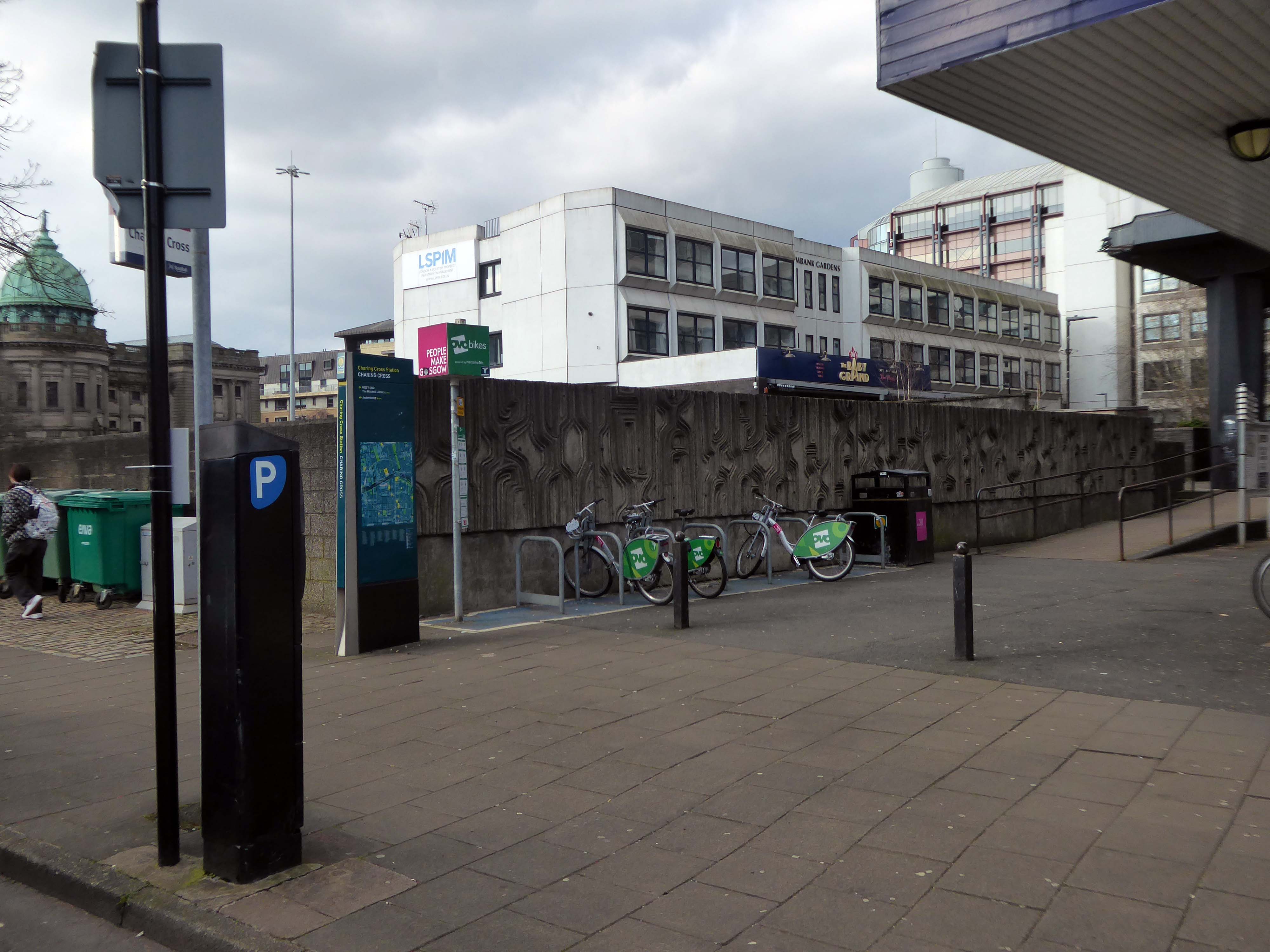
Dating from 1886, it was originally part of the Glasgow City and District Railway, the first underground railway in Scotland, and as such the station is built below the surface of the surrounding streets. The station was built using the cut and cover method, with the original walls being visible on the open air section at the western end of the platforms.
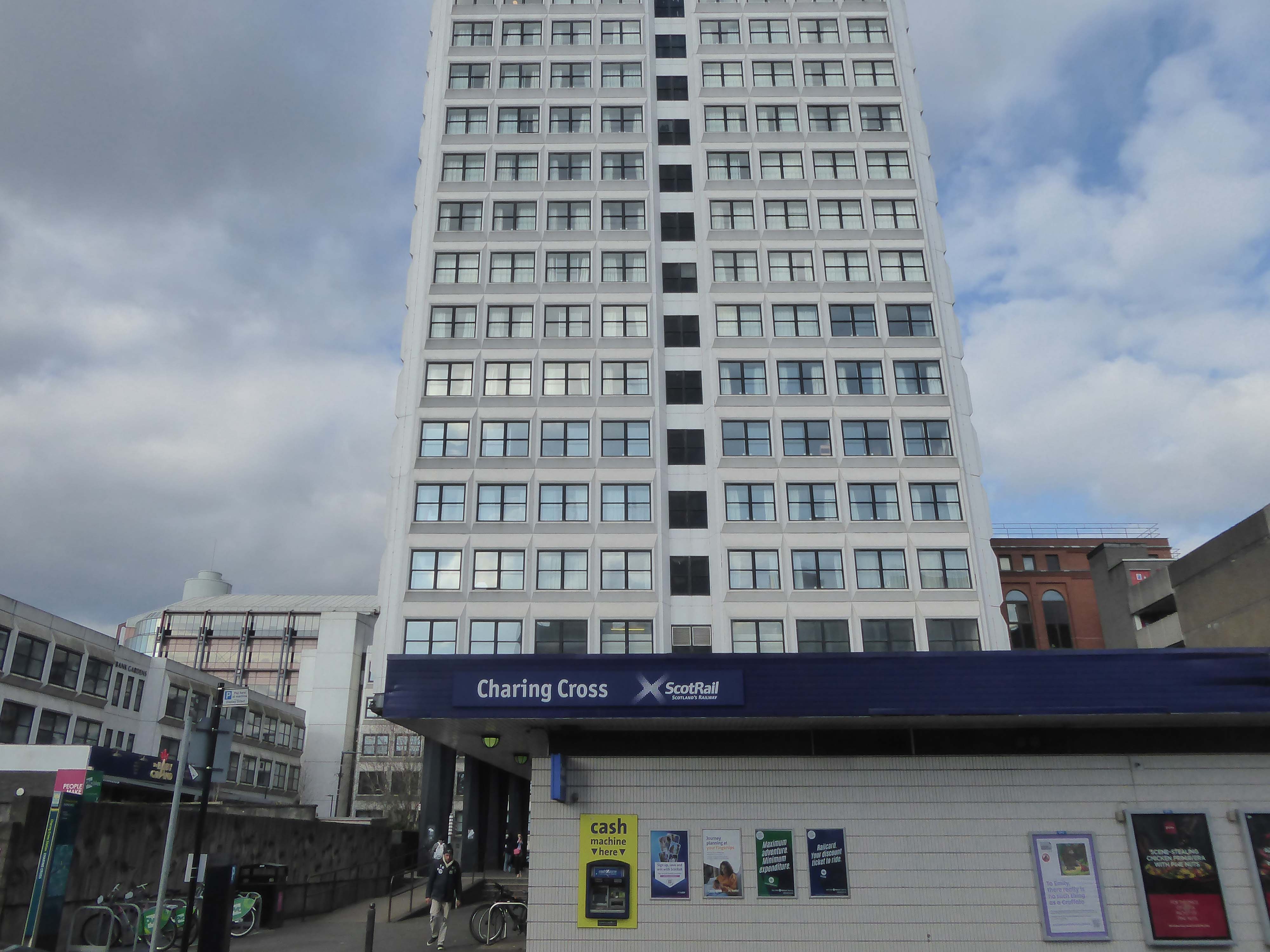
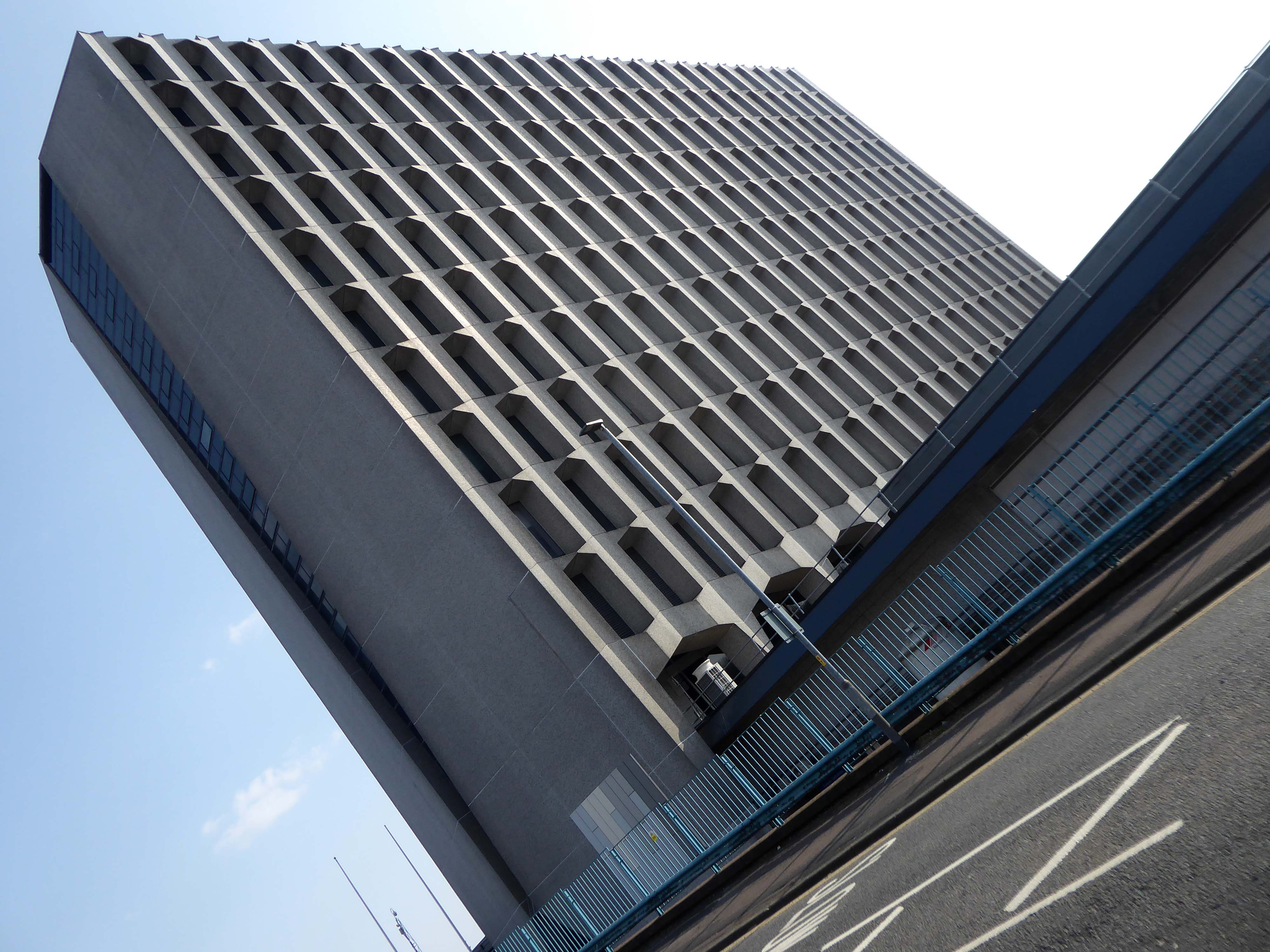
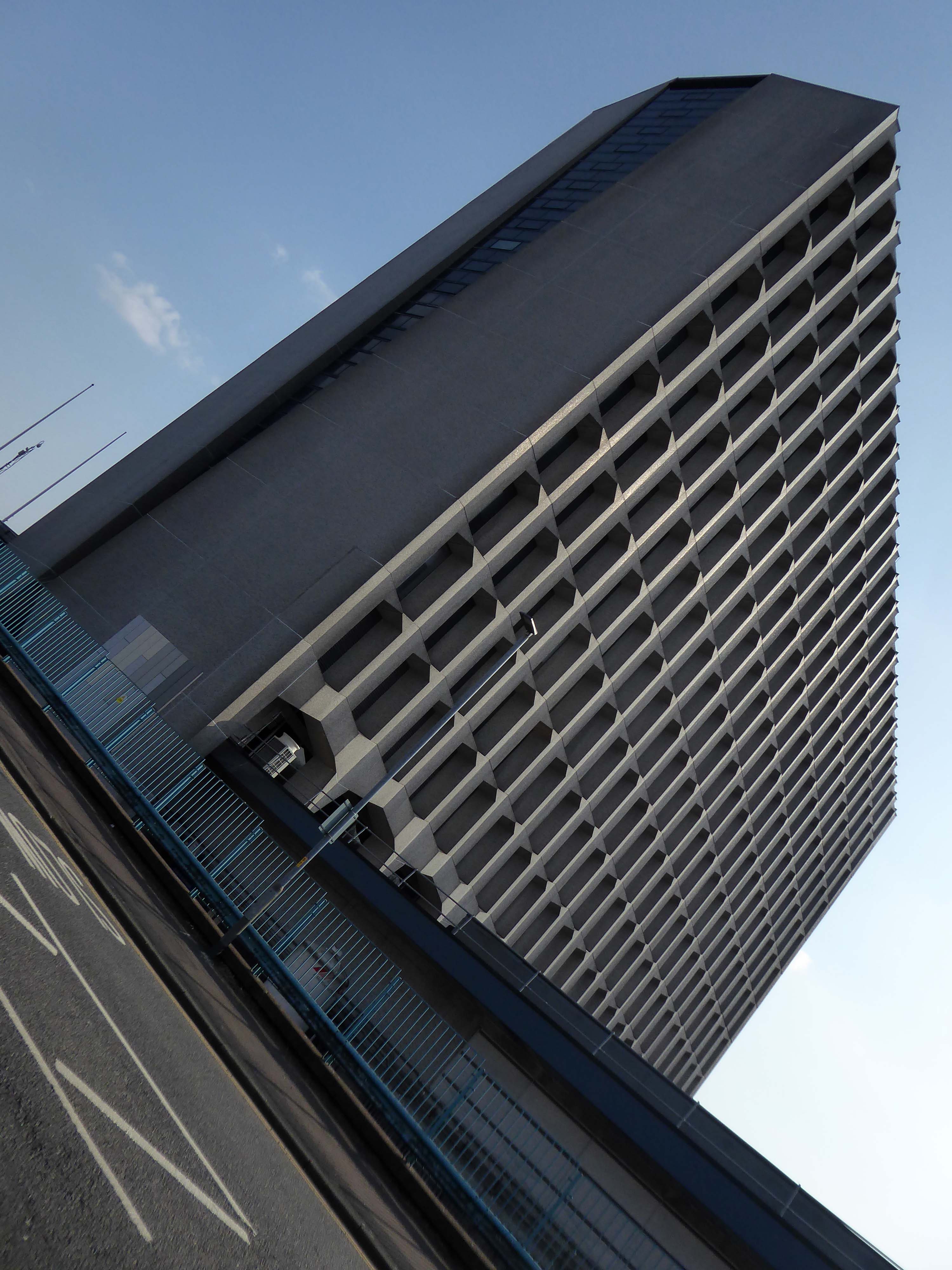
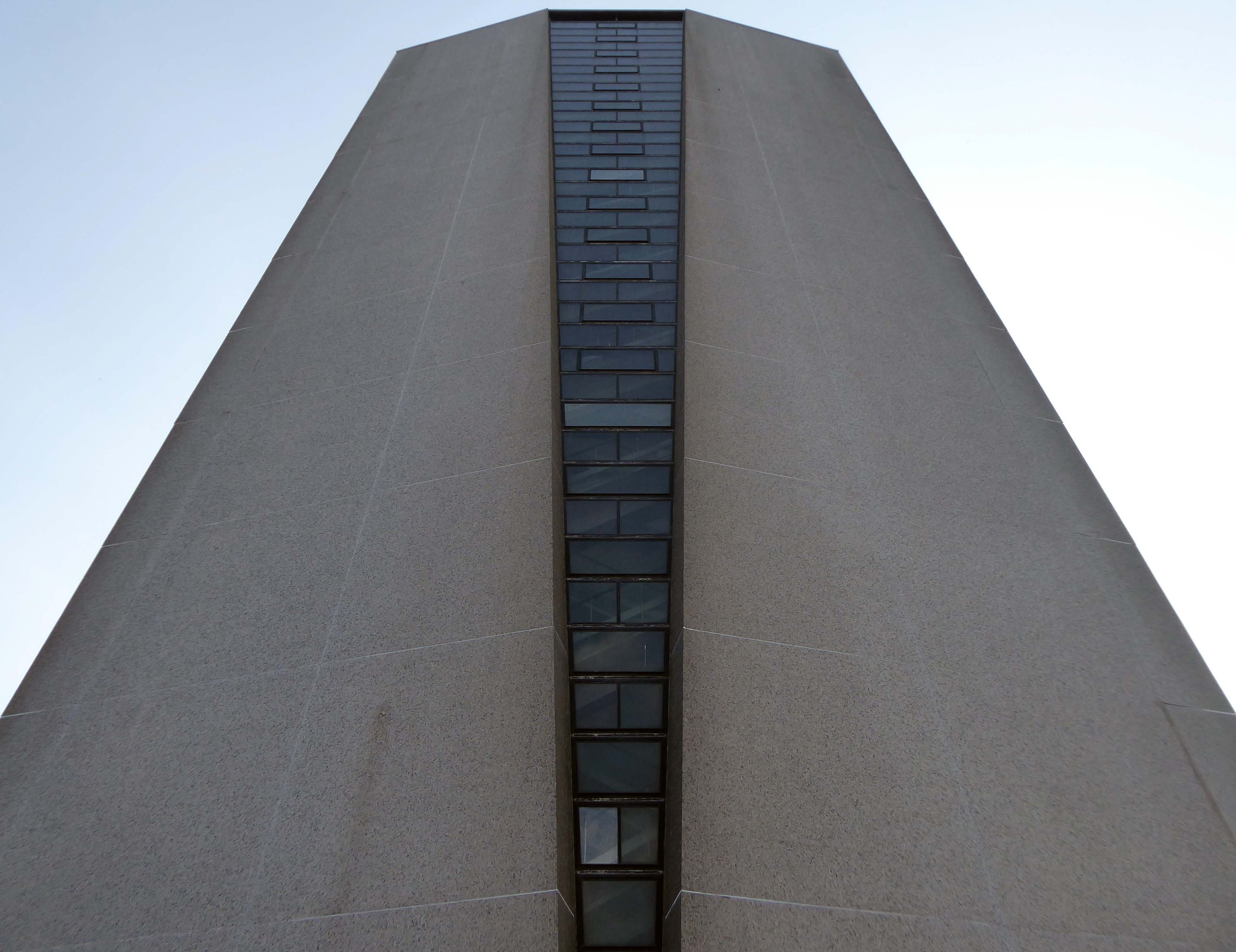
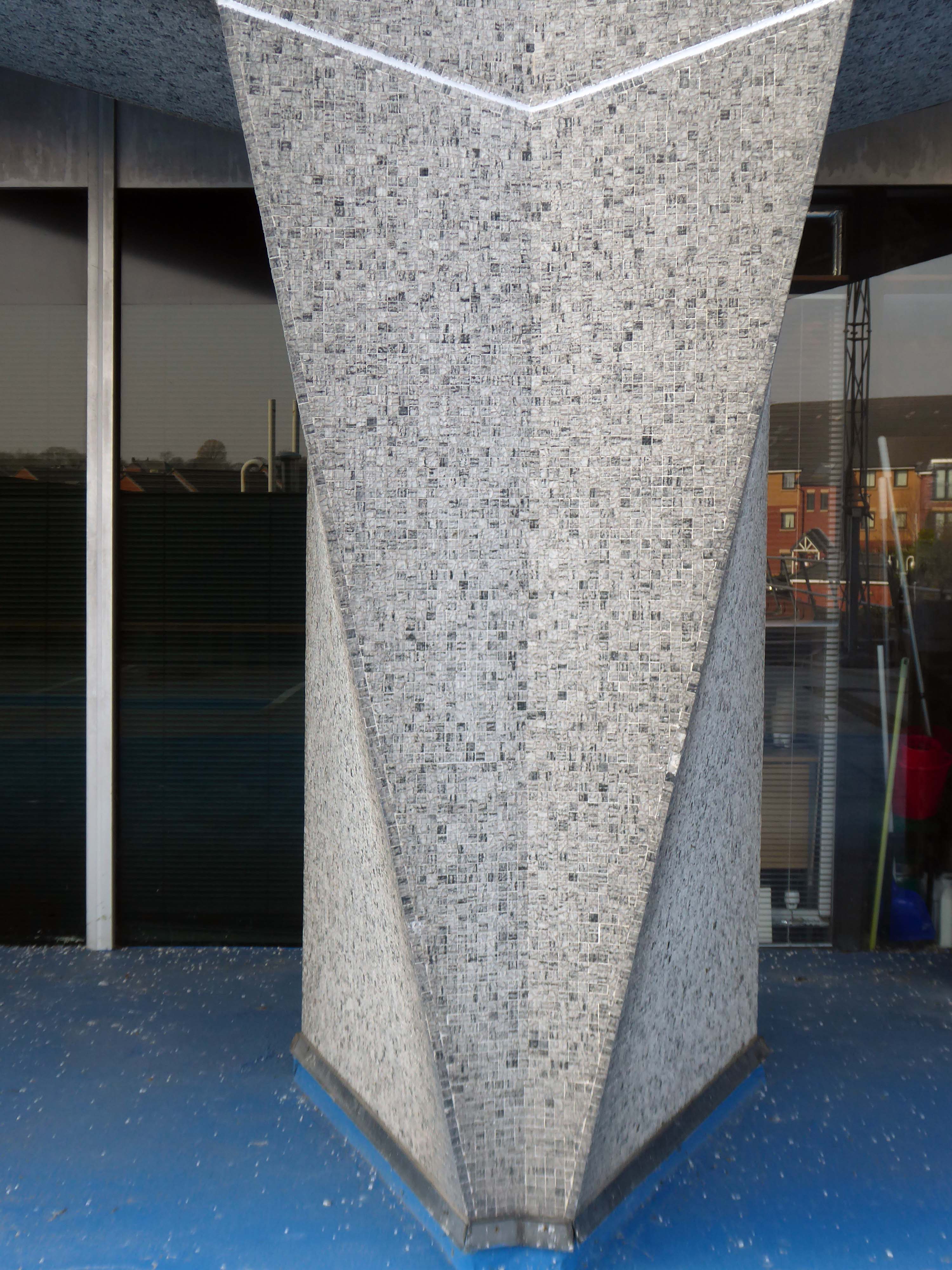
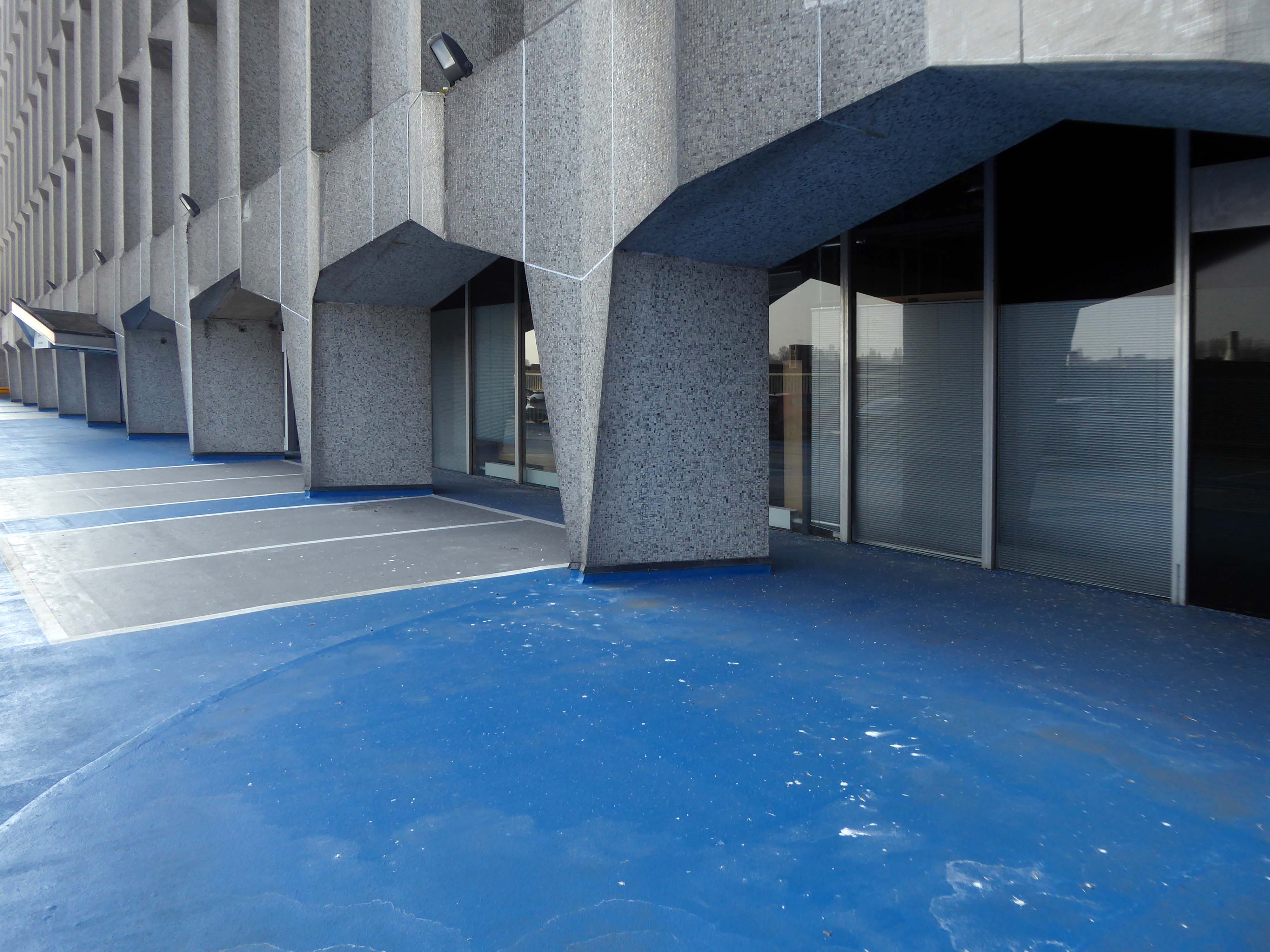
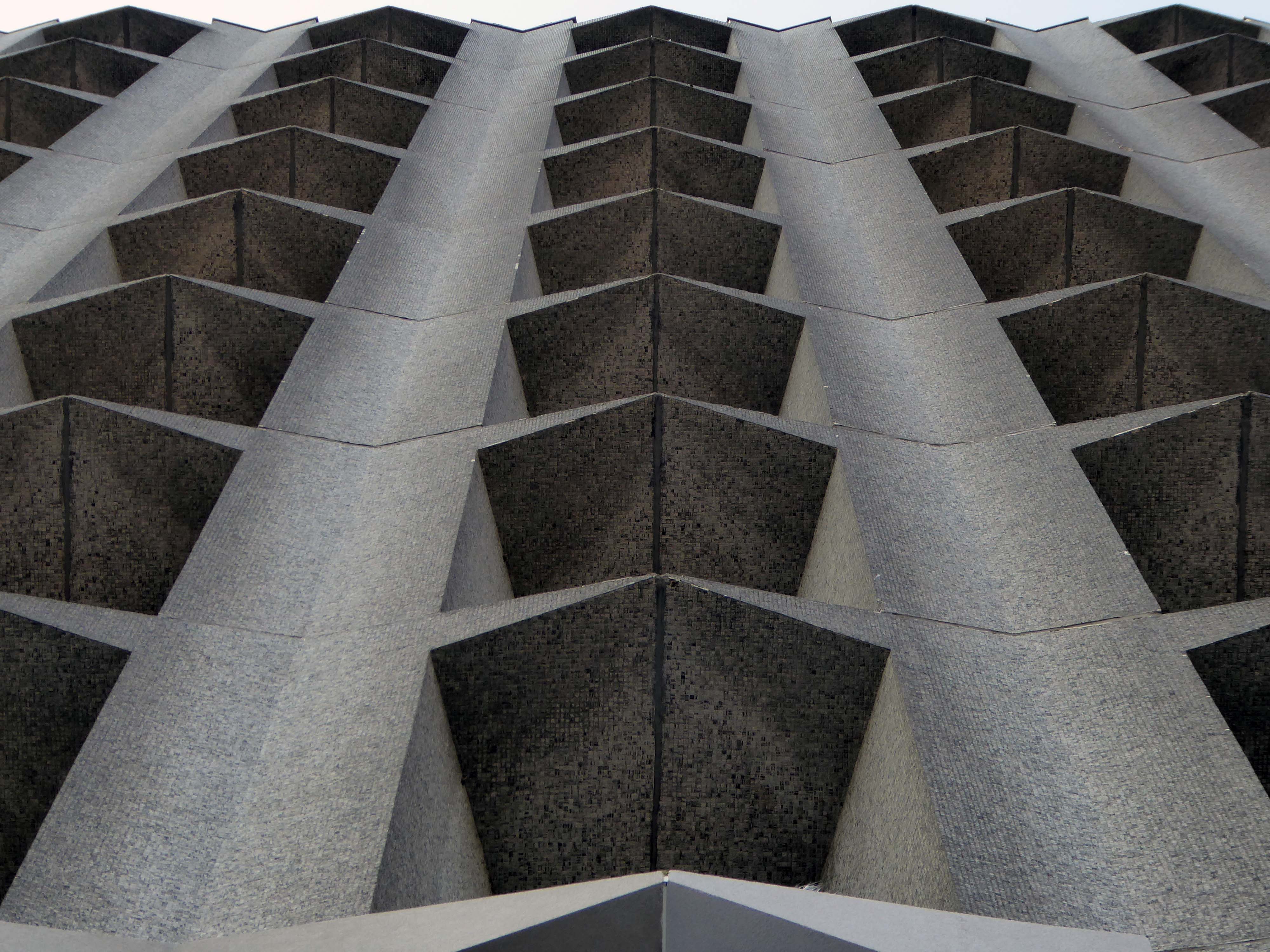
In 1968 it was demolished due to it being in the path of the new Glasgow Inner Ring Road, and the surface access to the station was moved to its eastern end, with a new surface building constructed as part of the Elmbank Gardens office complex in 1971 – the building was designed by the Richard Seifert & Partners.

Wikipedia

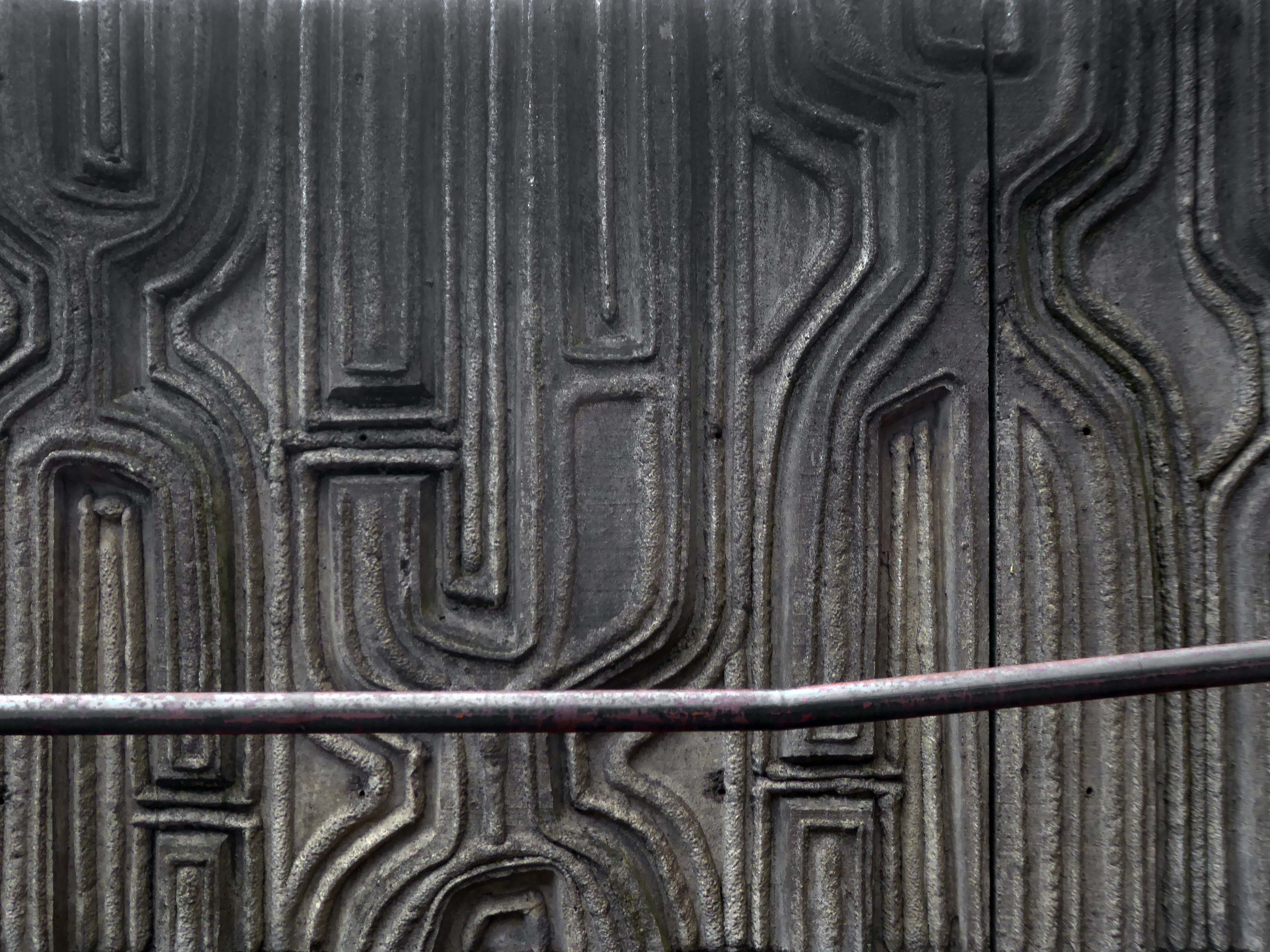
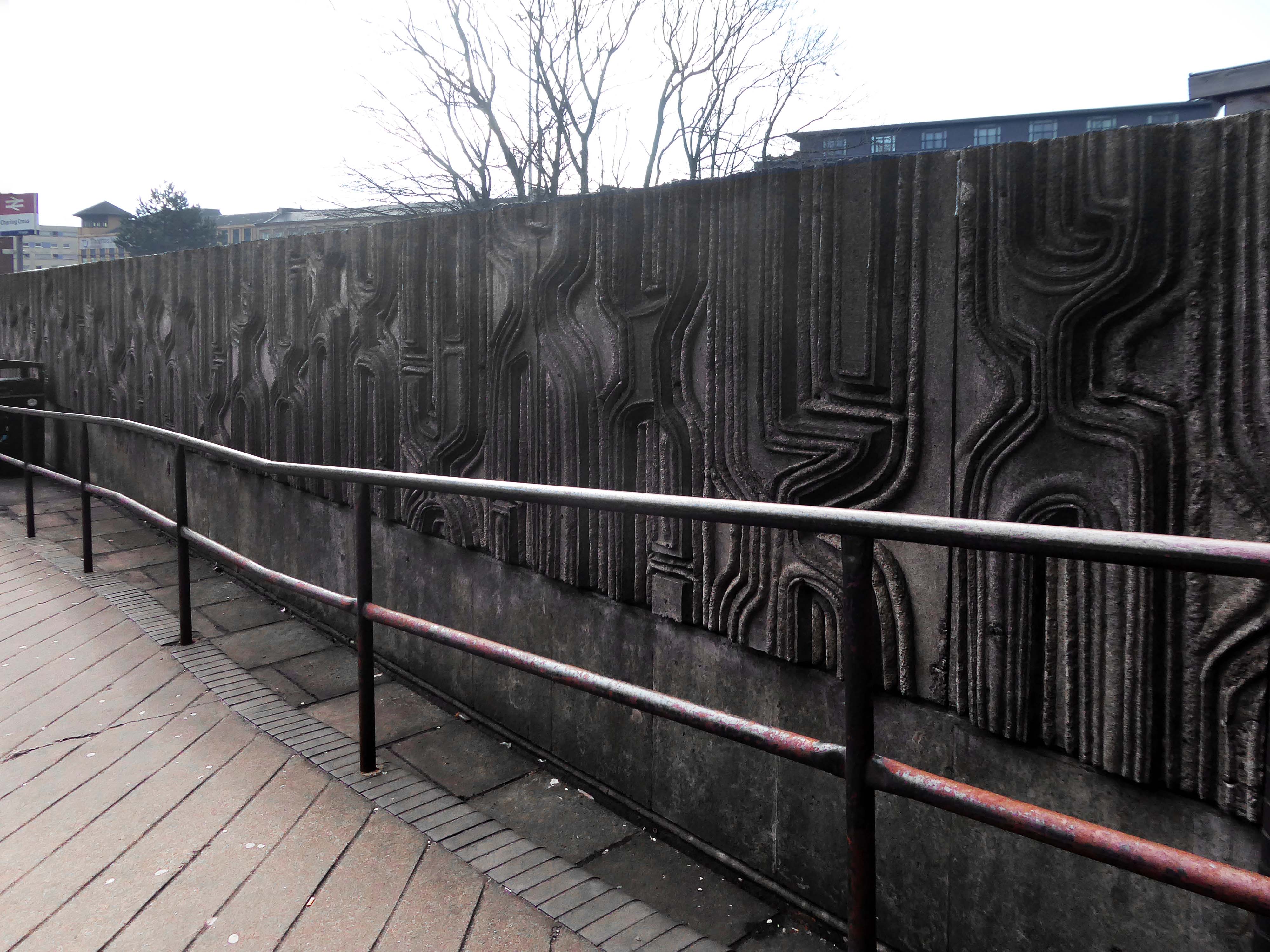
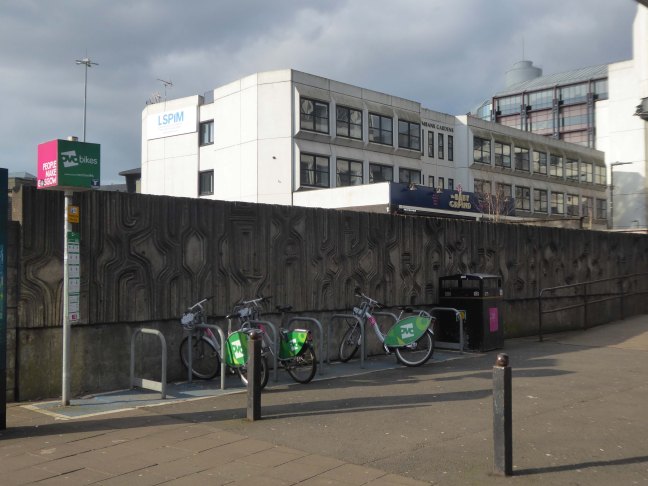
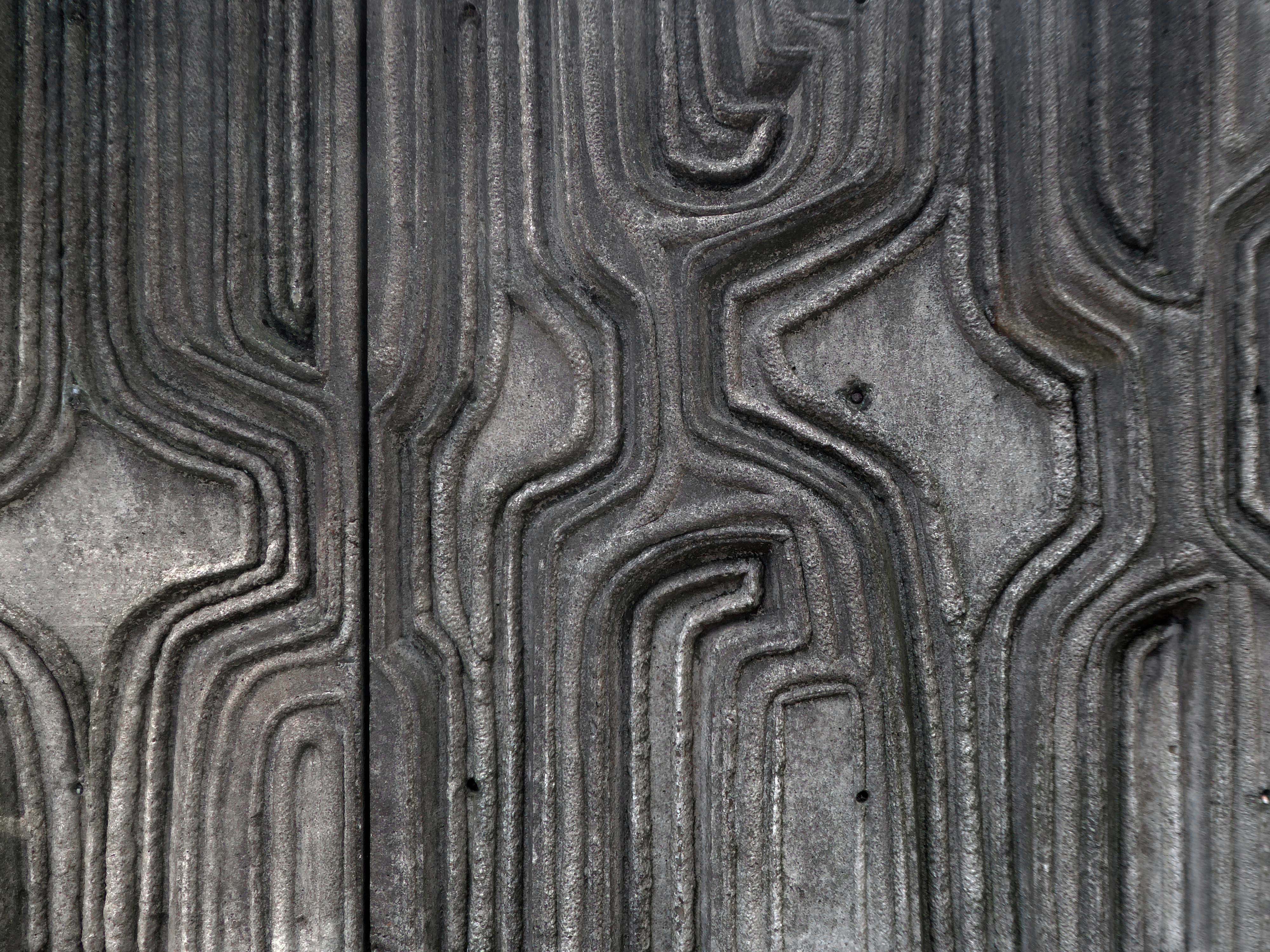
I was there in 2024 to photograph the Charles Anderson mural.

Constructed in situ – one third has now been removed at the northern end
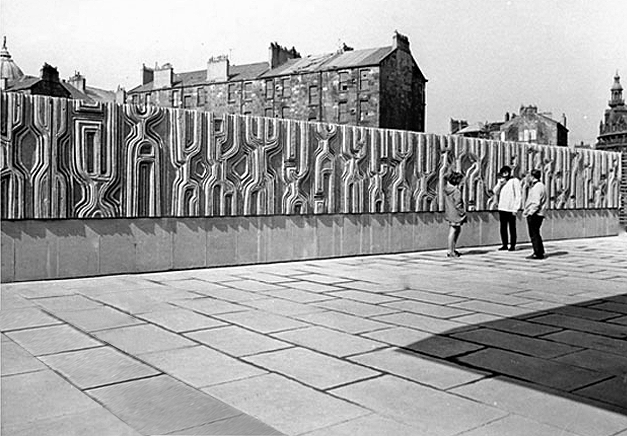
Charles Anderson studied drawing and painting at Glasgow School of Art under David Donaldson, Mary Armour etc, graduating with Diploma in 1959.  The following year he entered  The Royal Scottish Academy painting competition for Post Graduate students and  won the Chalmers Bursary.  Joan Eardley – one of the adjudicators- took a keen interest in his work and encouraged him to exhibit at the RSA the same year. 

Following a period of five years teaching art,  He worked as a professional mural painter and sculptor for the next thirty years on major art and design projects throughout the United Kingdom, carrying out commissions for  a wide variety of clients including local authorities, property developers, banks and major insurance companies.    His most prestigious commission to date was the result of winning a national sculpture competition to provide a  bronze figurative group  which is entitled “The Community”  for Livingston New Town in 1996.  In early 1997  he returned  to the painting of easel pictures and  contributed to the annual exhibitions of The Royal Glasgow Institute, the Royal  Scottish Society  of  Painters in Watercolours, The Royal Scottish Academy and The Paisley Art Institute. He has works in various private collections throughout the U.K. and abroad.

Charles Anderson Art

The £250m transformation of the Charing Cross area of Glasgow has been given the go-ahead.

The project including new homes, student accommodation, hotel space and local services has been approved by Glasgow City Council.

Developers CXG Glasgow also plan to knock down the 300 Bath Street office building, which bridges the M8 motorway.
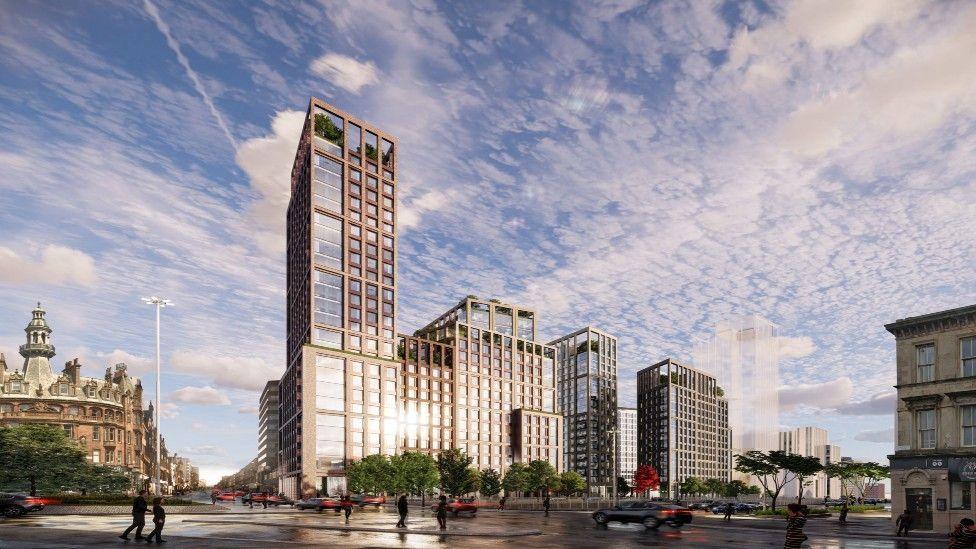
Further detailed applications will need to go before the council for approval before the Charing Cross Gateway project can begin.
BBC 2024

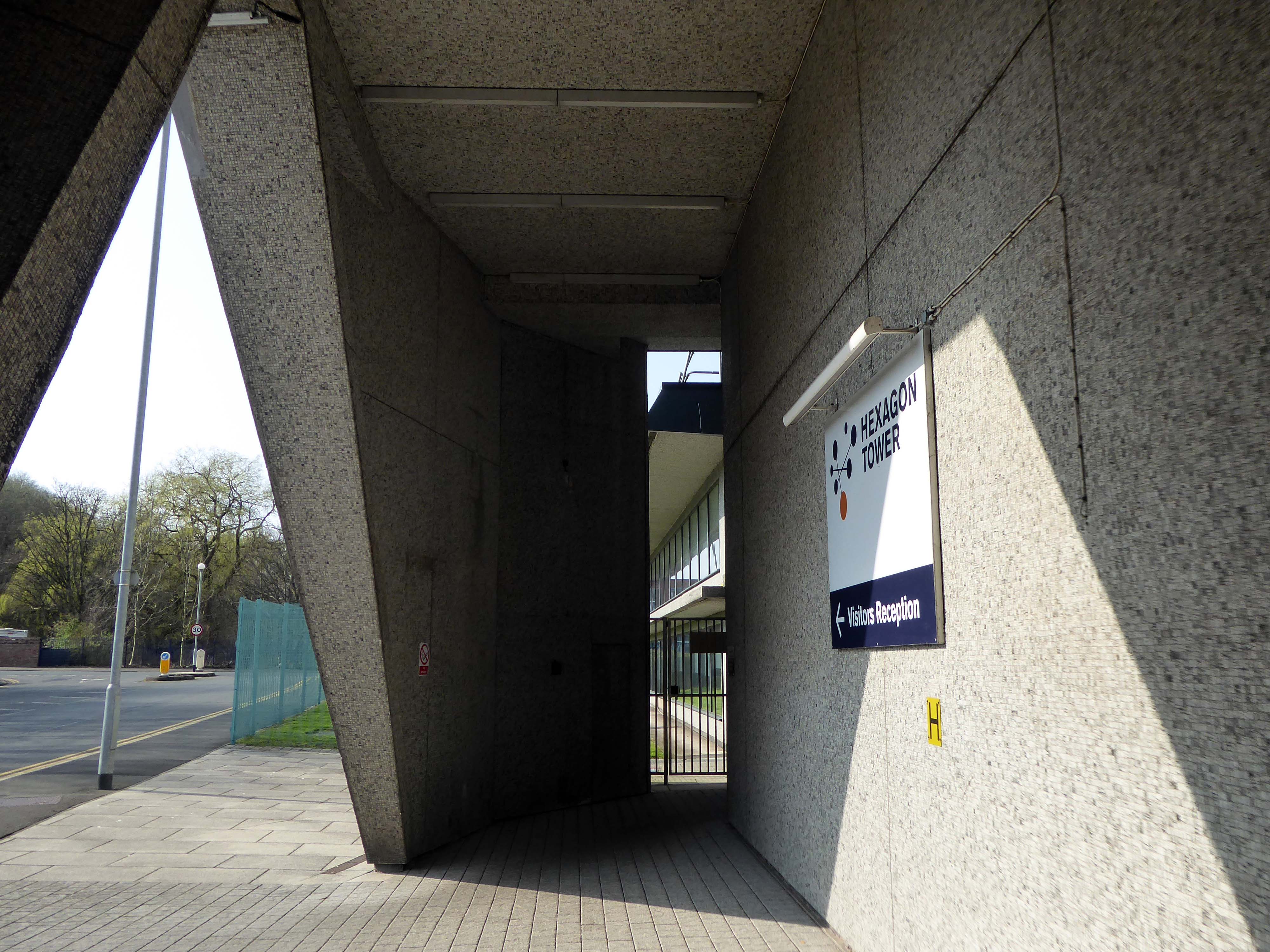
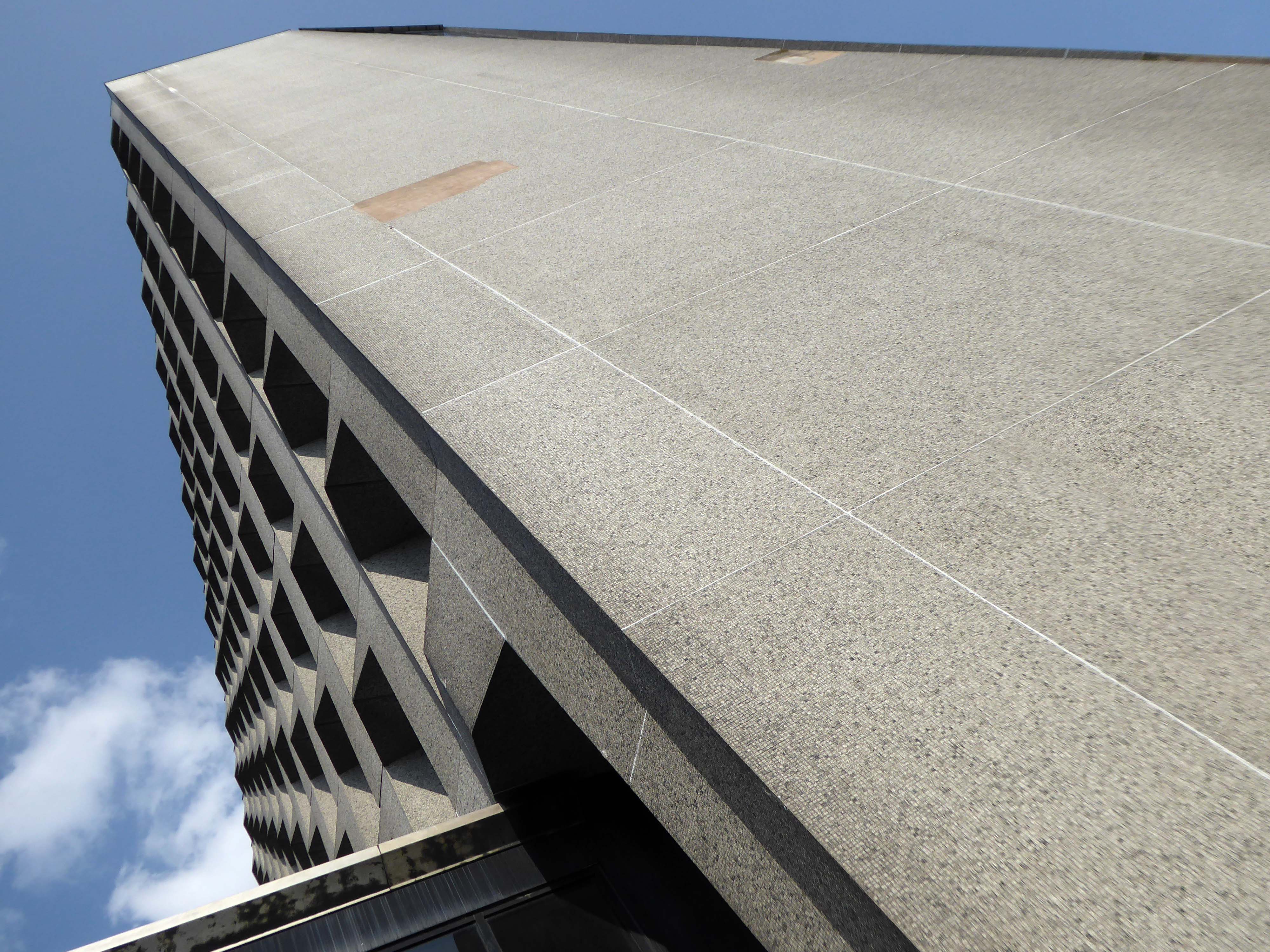
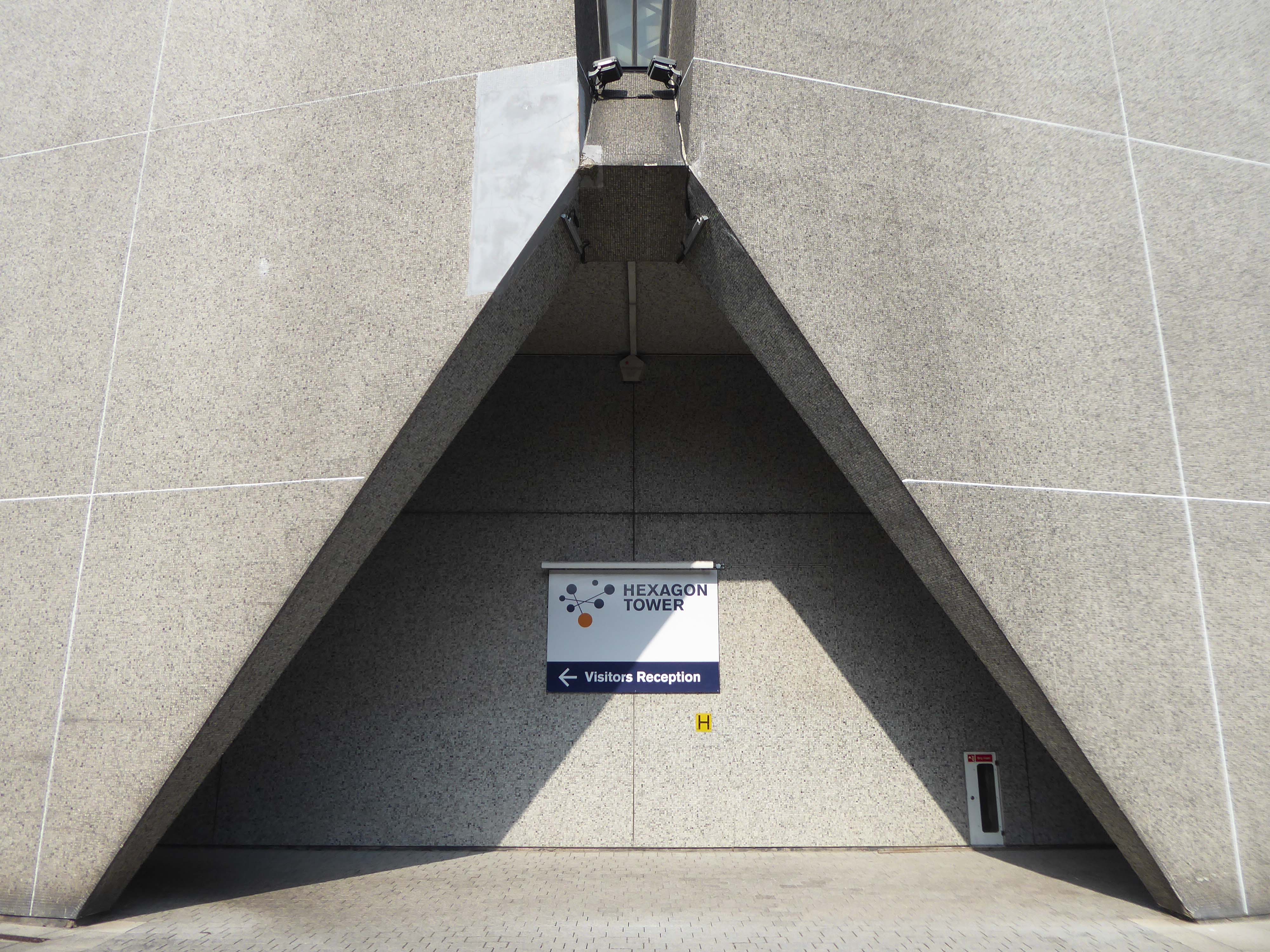
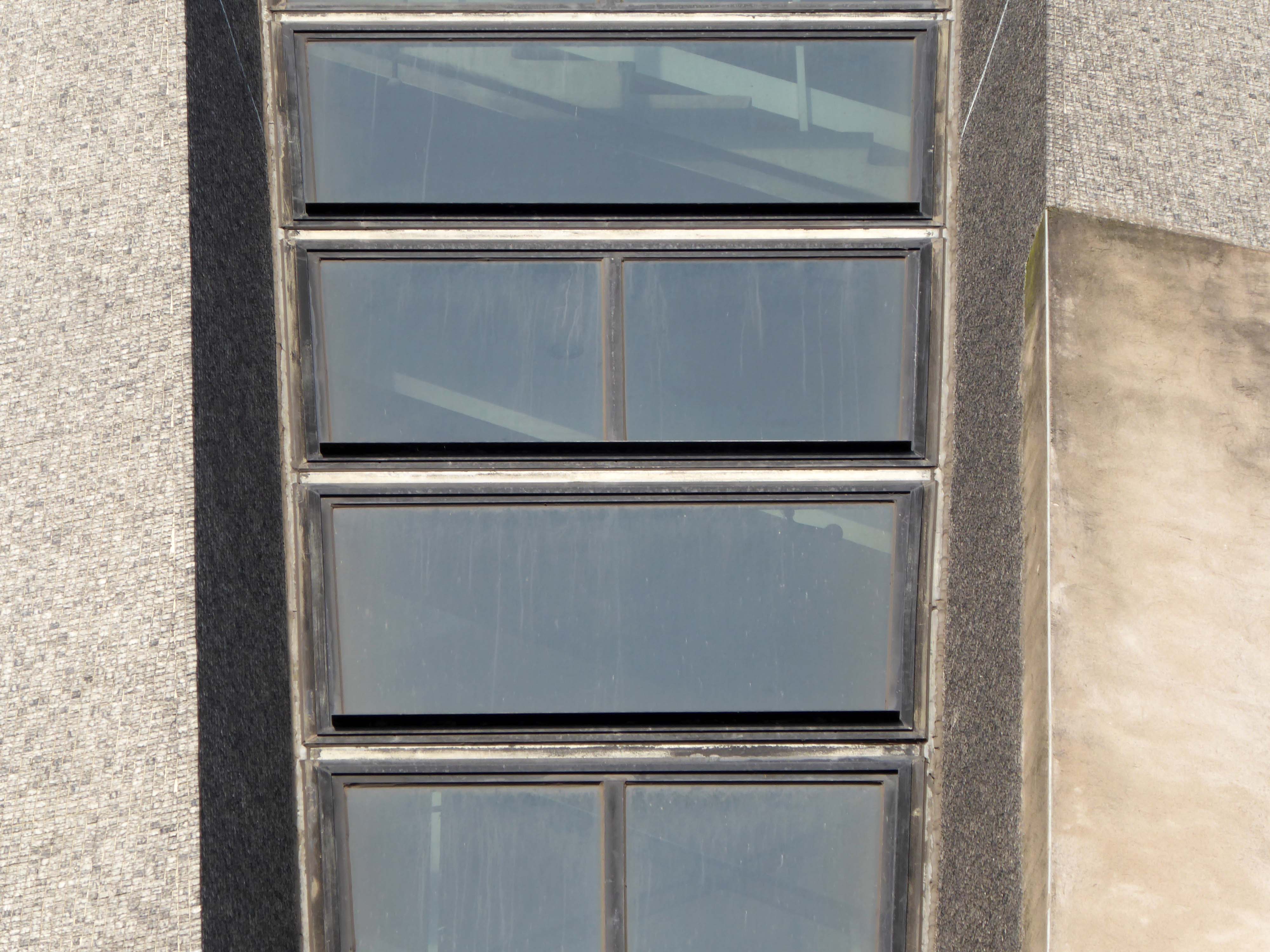
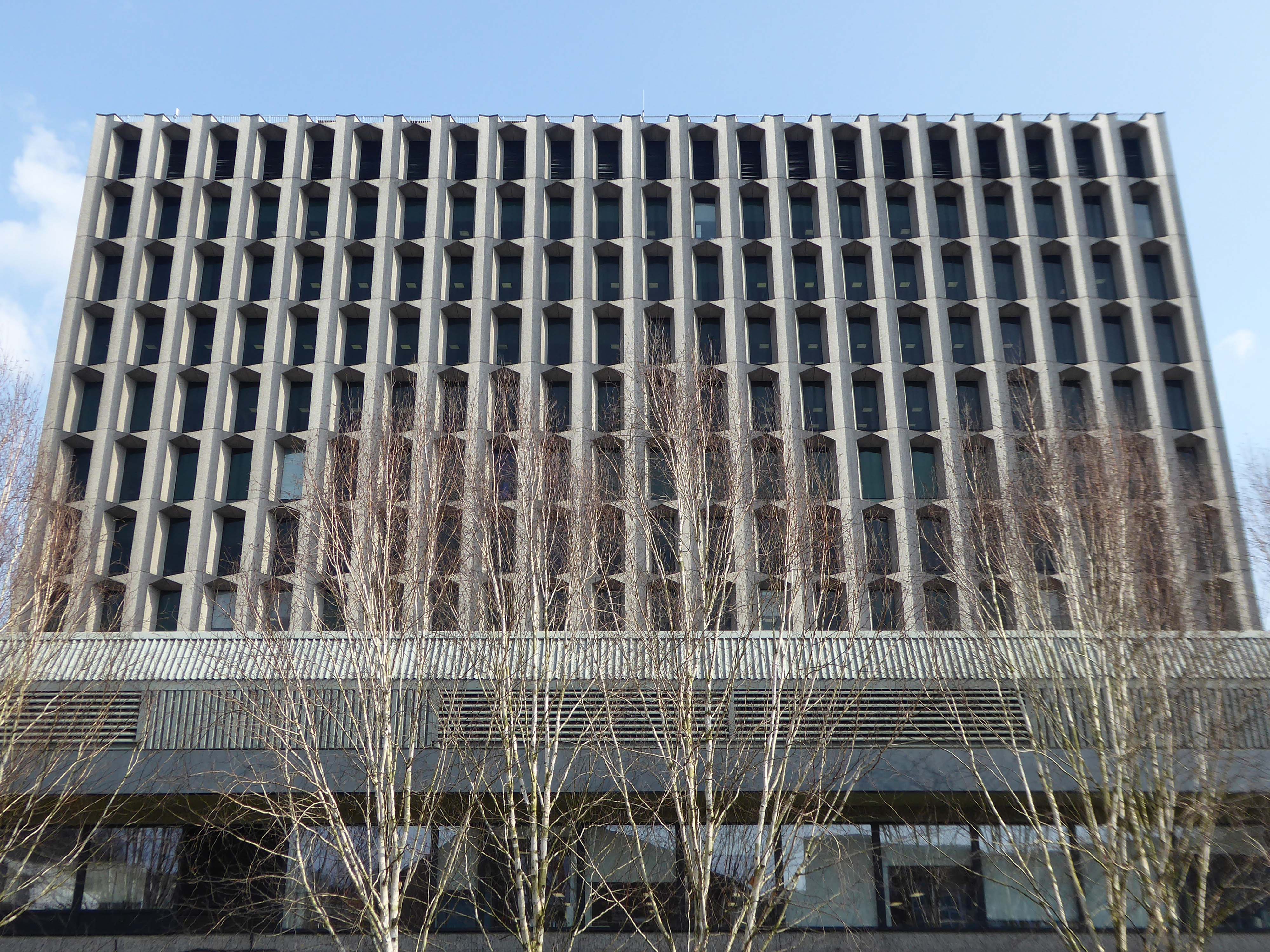
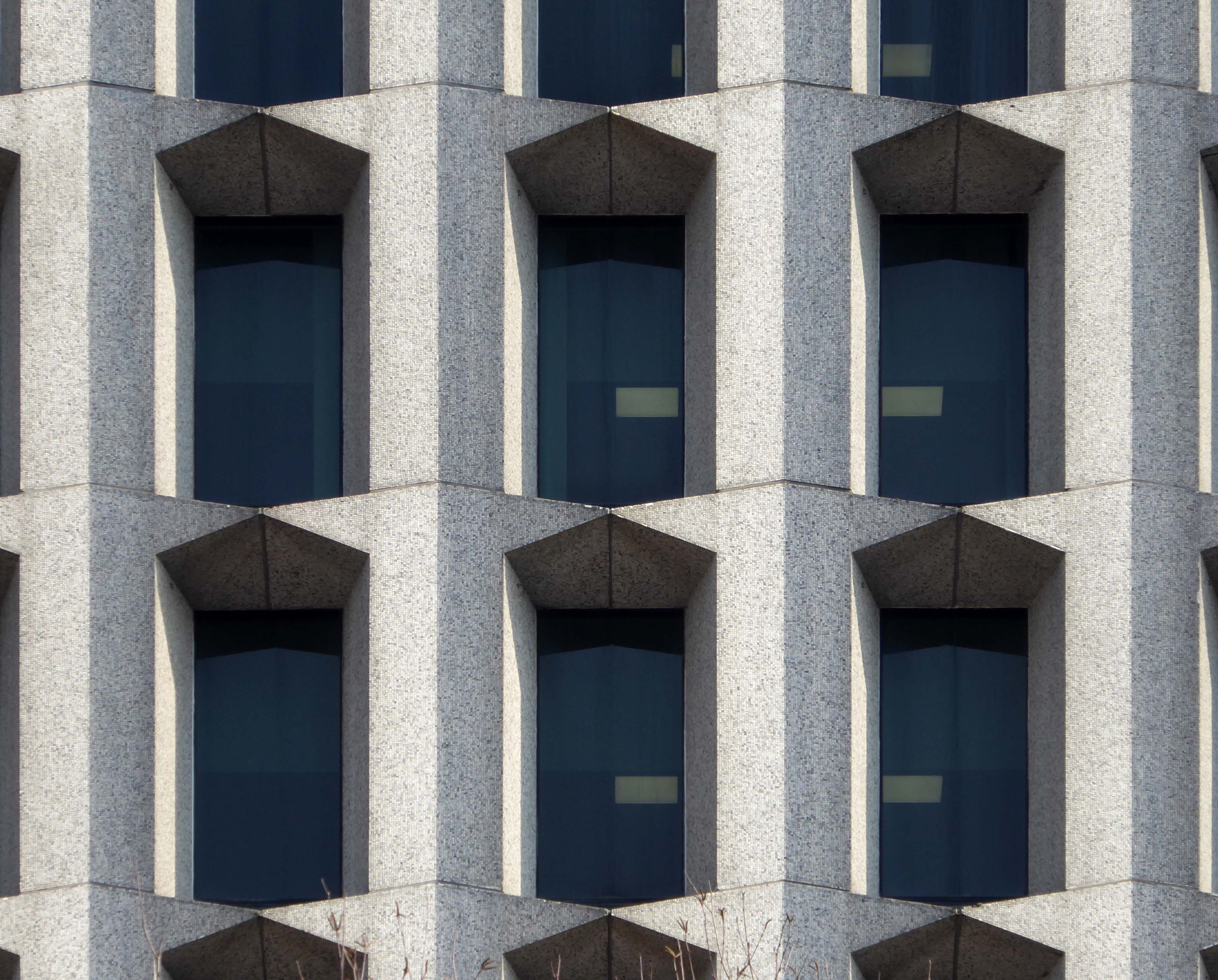
Hexagon Tower – Blackley Manchester

Crumpsall Vale Blackley Manchester M9 8GQ

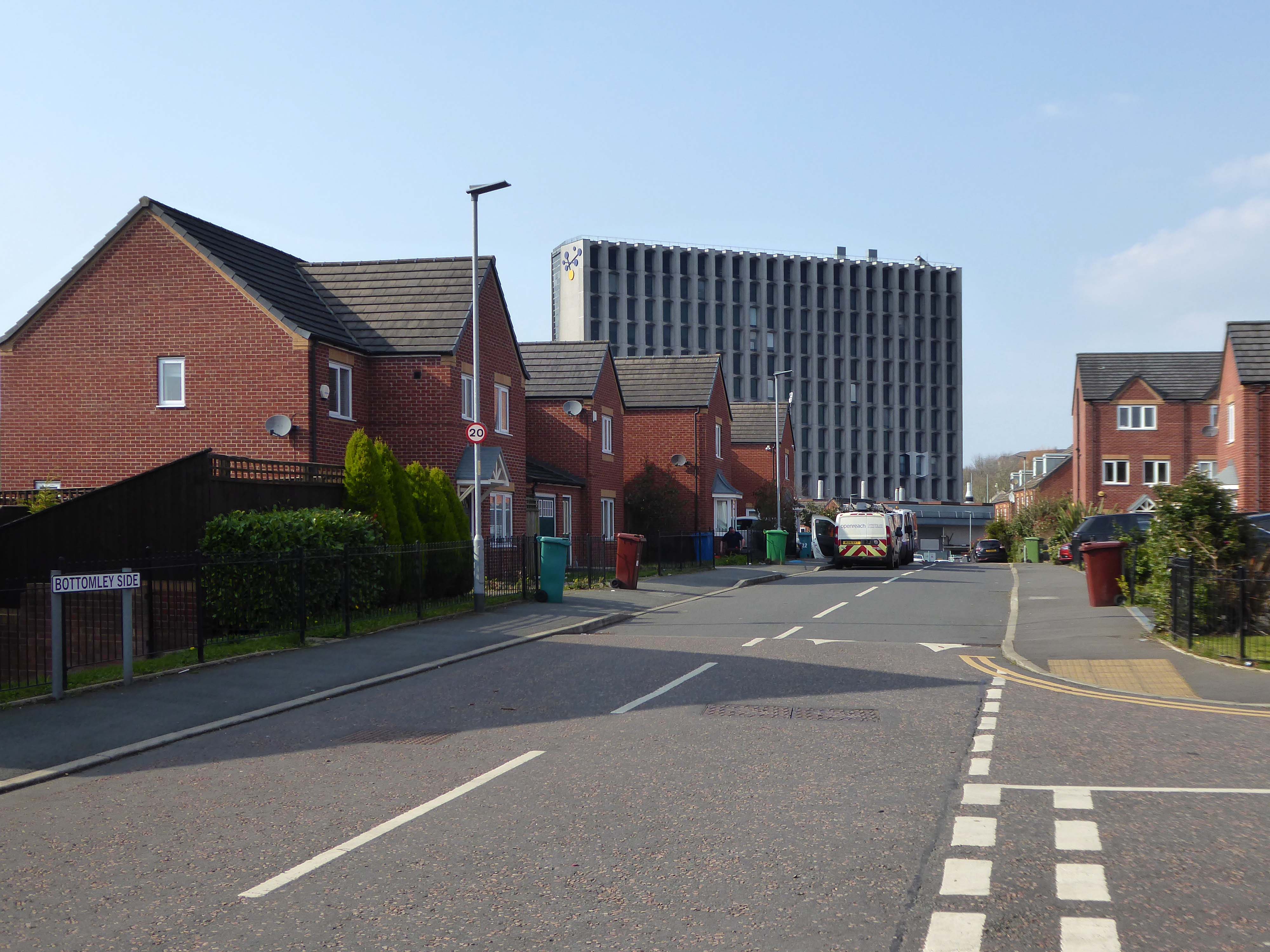
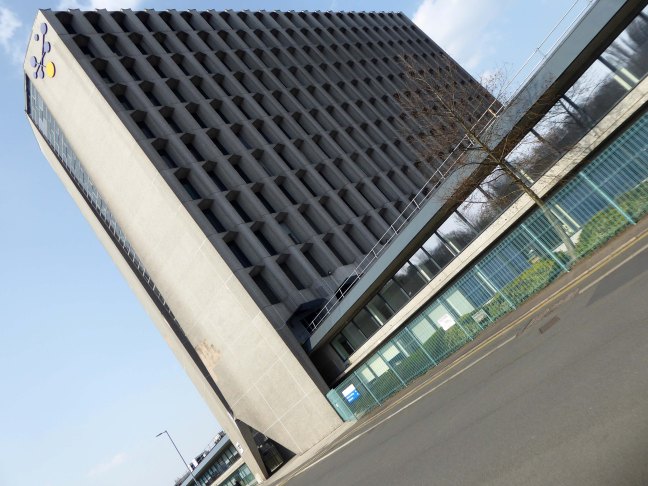
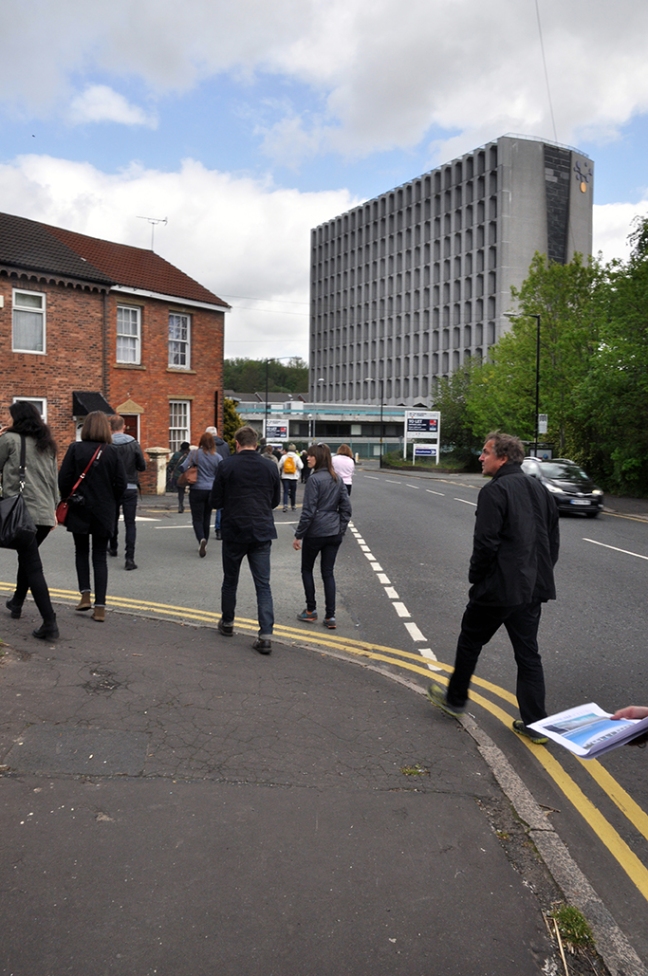
I was last here at the Hexagon Tower in 2015 – on a Manchester Modernist Society magical Orbital Bus Tour.

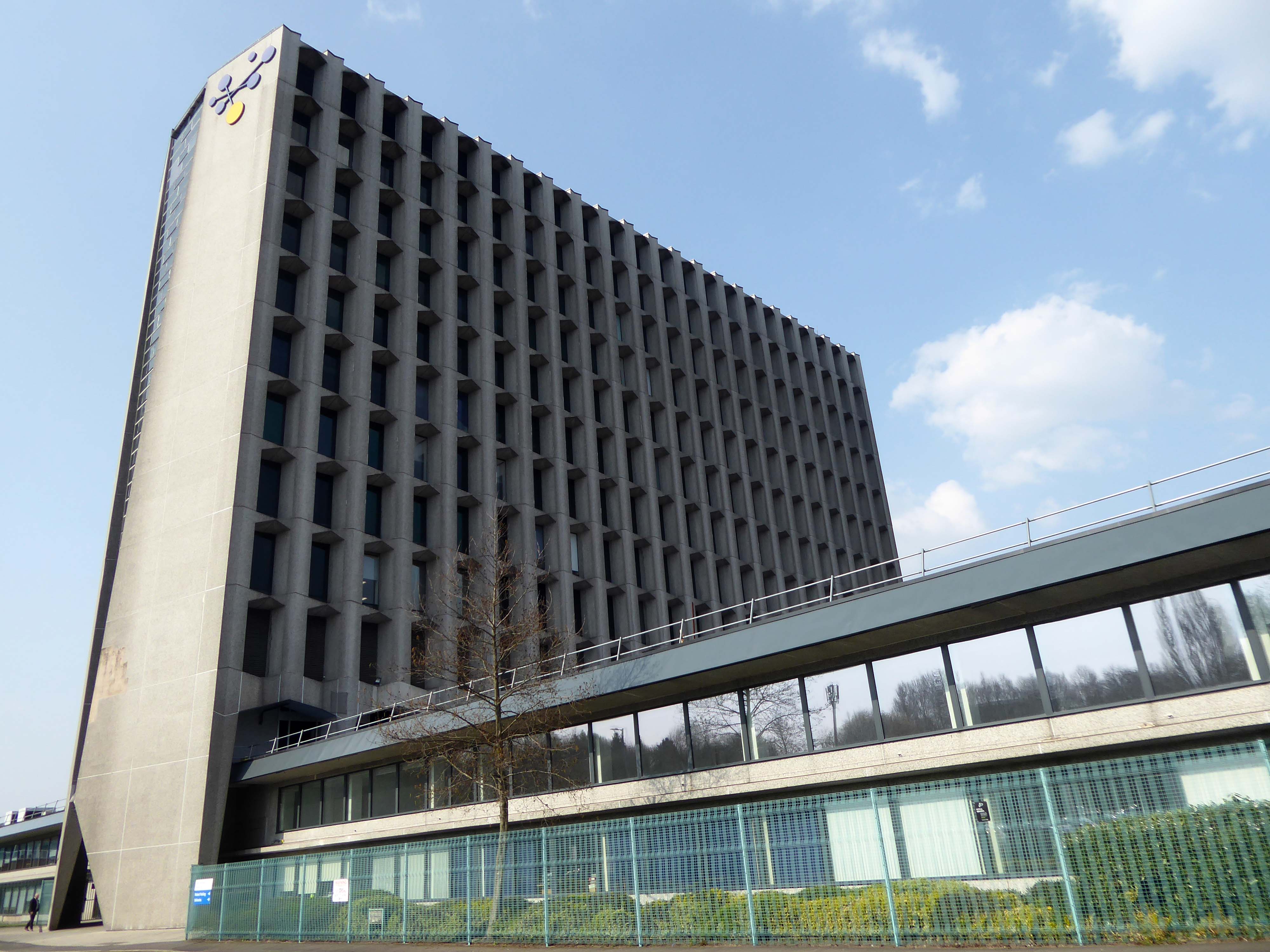
ICI commissioned the building from Richard Seifert in September 1969, as a research, development and production centre.

I returned in 2022 whilst cycling/walking the River Irk.

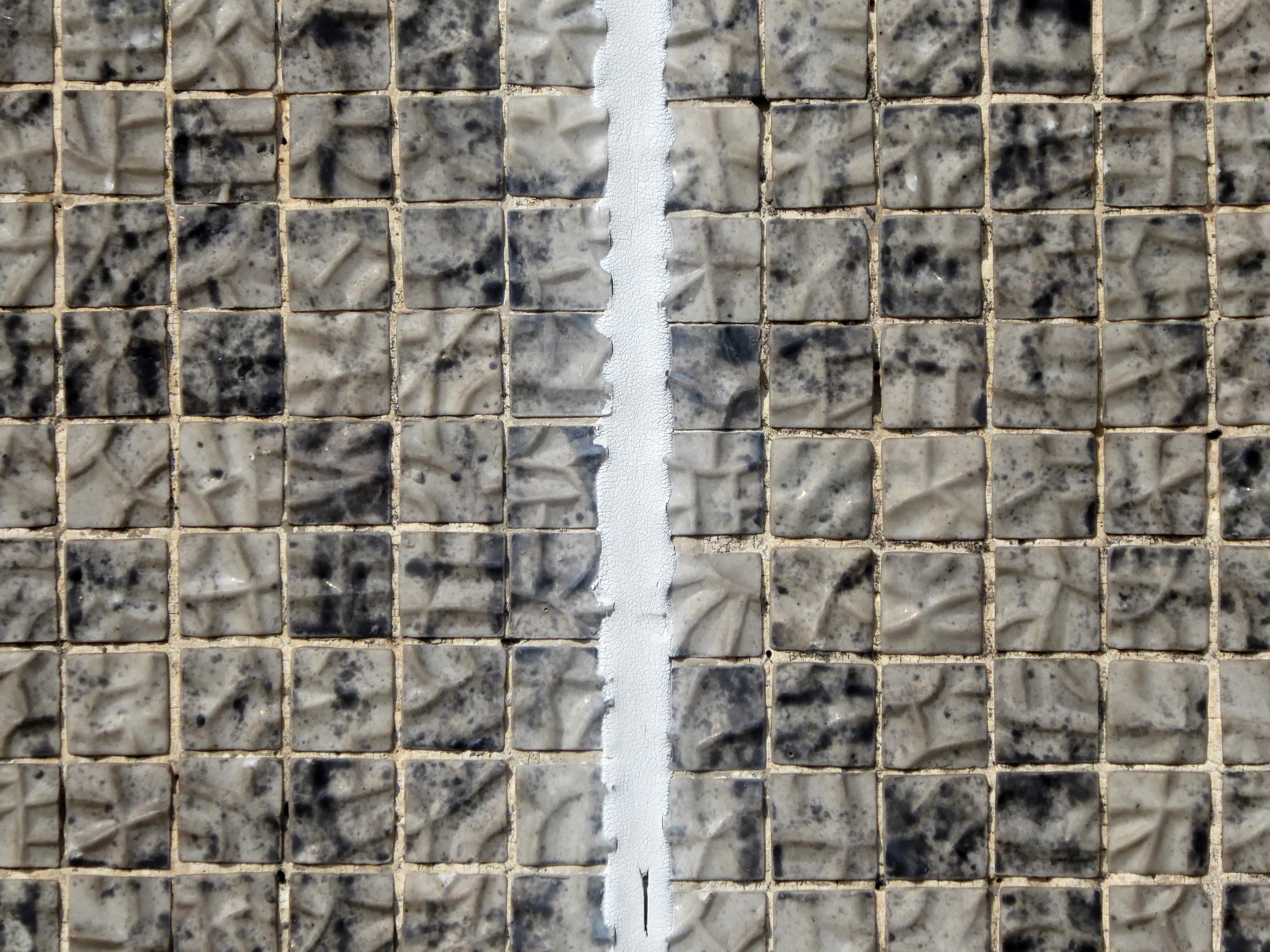
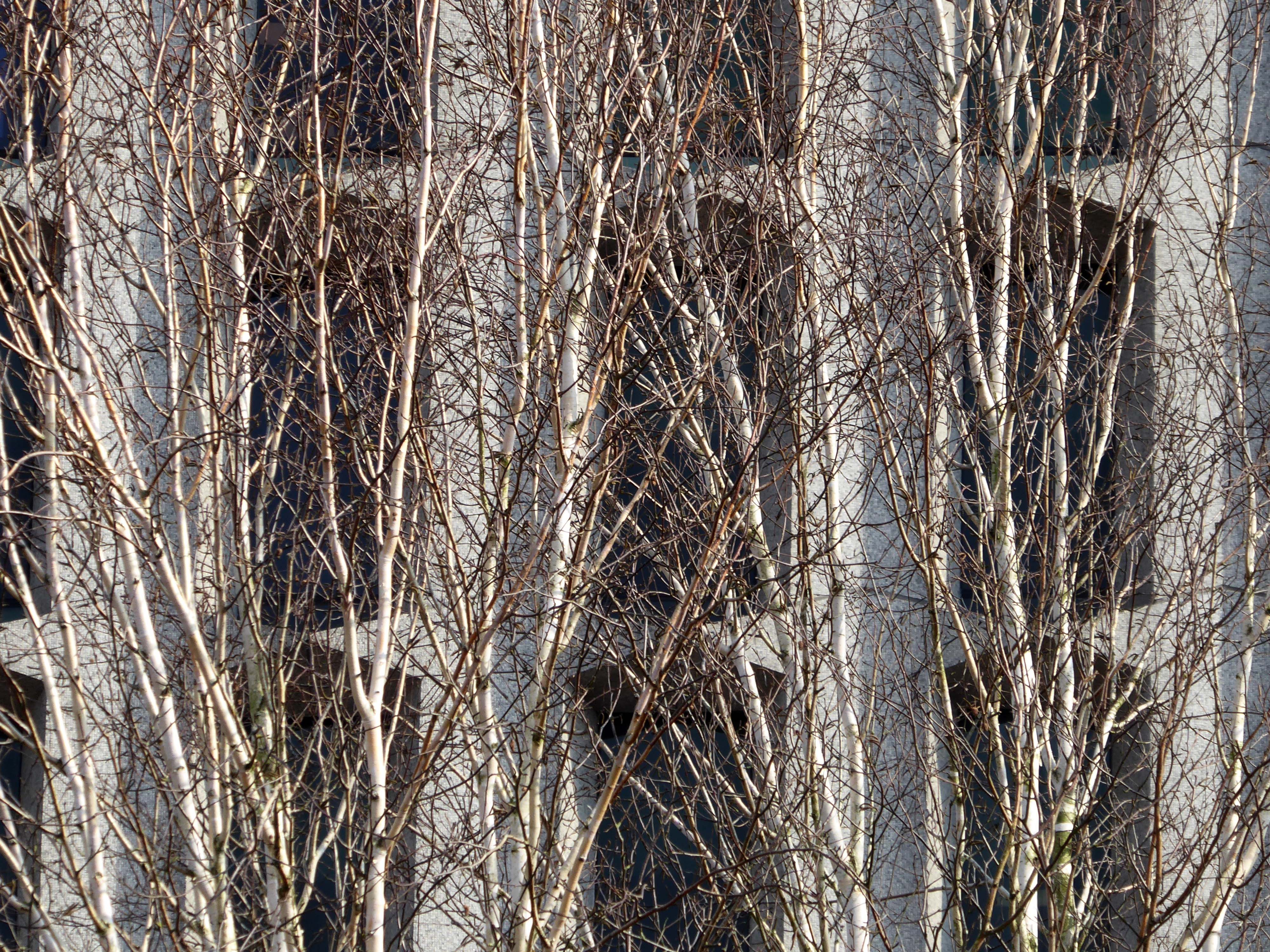
Since my previous visit the tower has been made good – after a fashion.
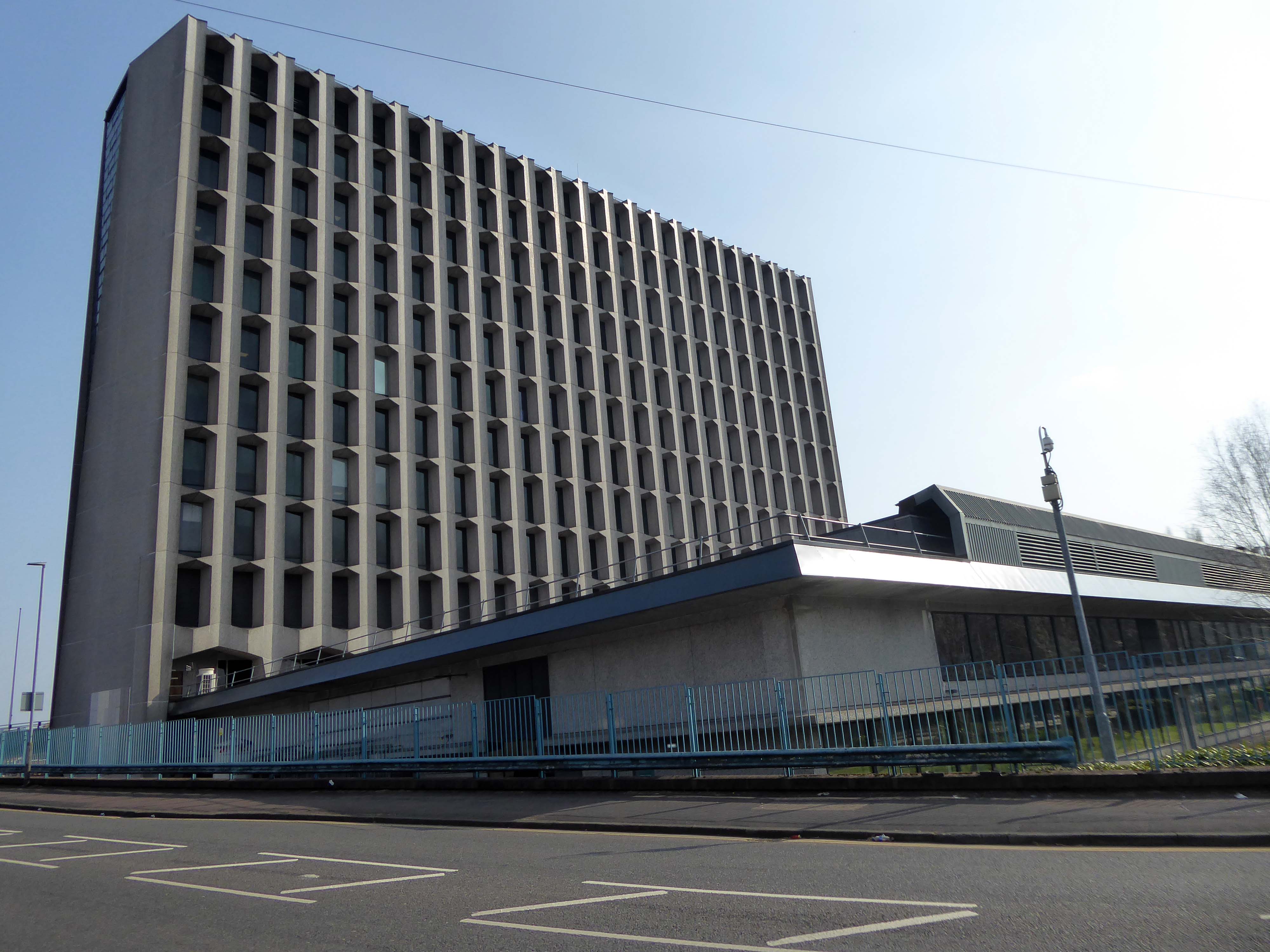
It looked splendid in the late March sun, as I approached along Imperial Way.
Imperial Way named for its progenitor ICI – the Imperial Chemical Industries.

ICI’s Dyestuffs Division had its headquarters at Blackley in north Manchester, in a complex known as the Hexagon, which included its main R & D labs, and an experimental manufacturing plant.

John Rylands Library

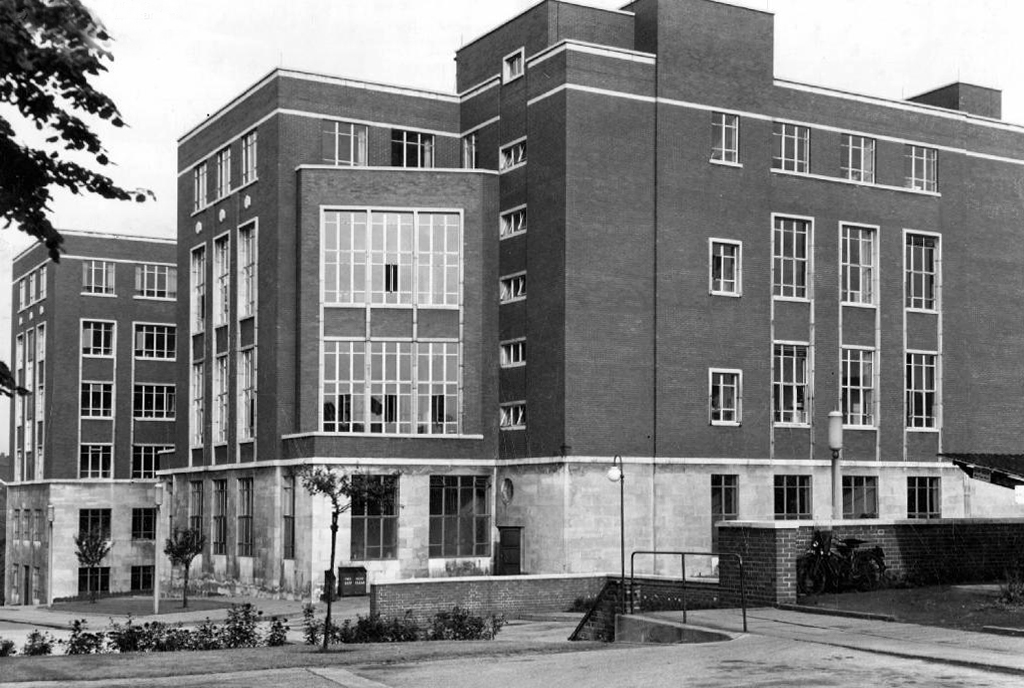
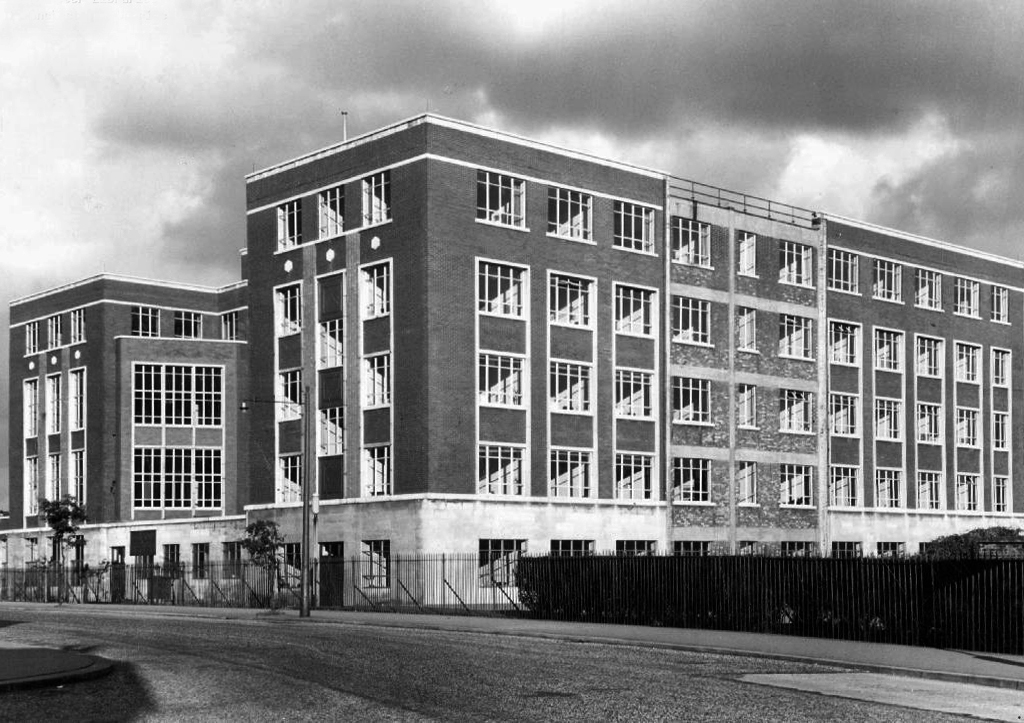
New Hexagon House 1958 architect: Harry Fairhurst

Manchester Local Image Collection.

Now I find myself outside the new Hexagon Tower 2022.

Now home to multiple chemical users under the auspices of WAPG.

Tudor House – Wakefield

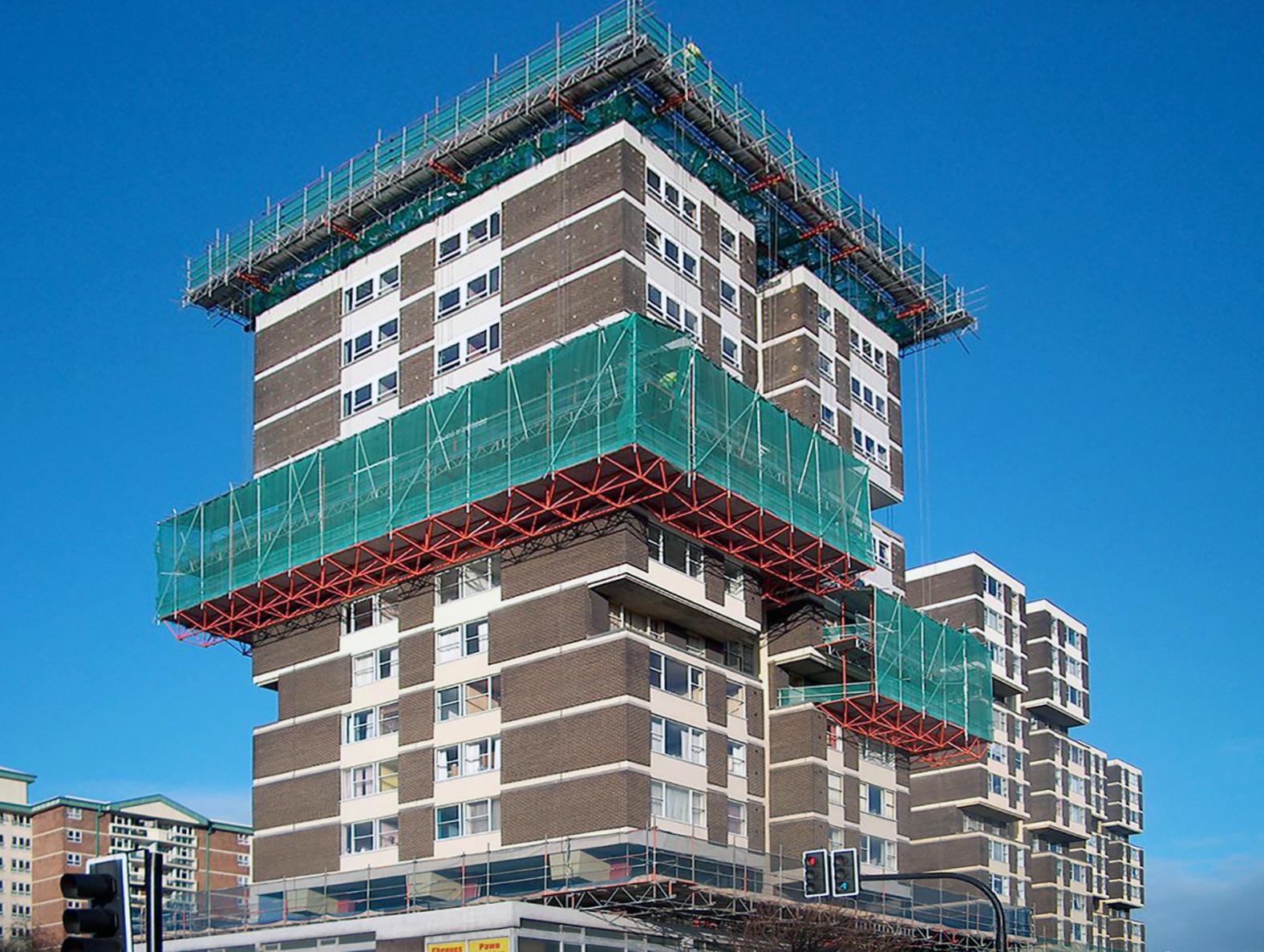
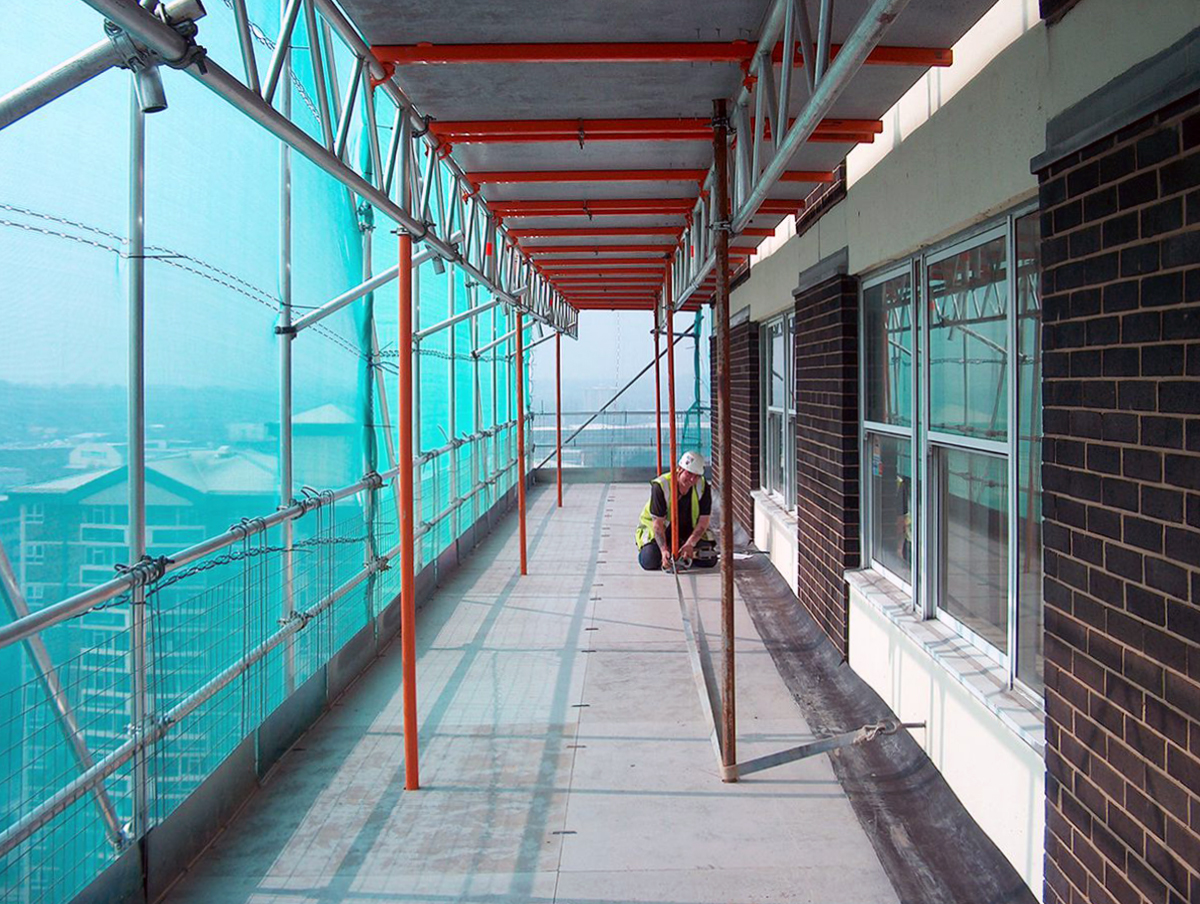
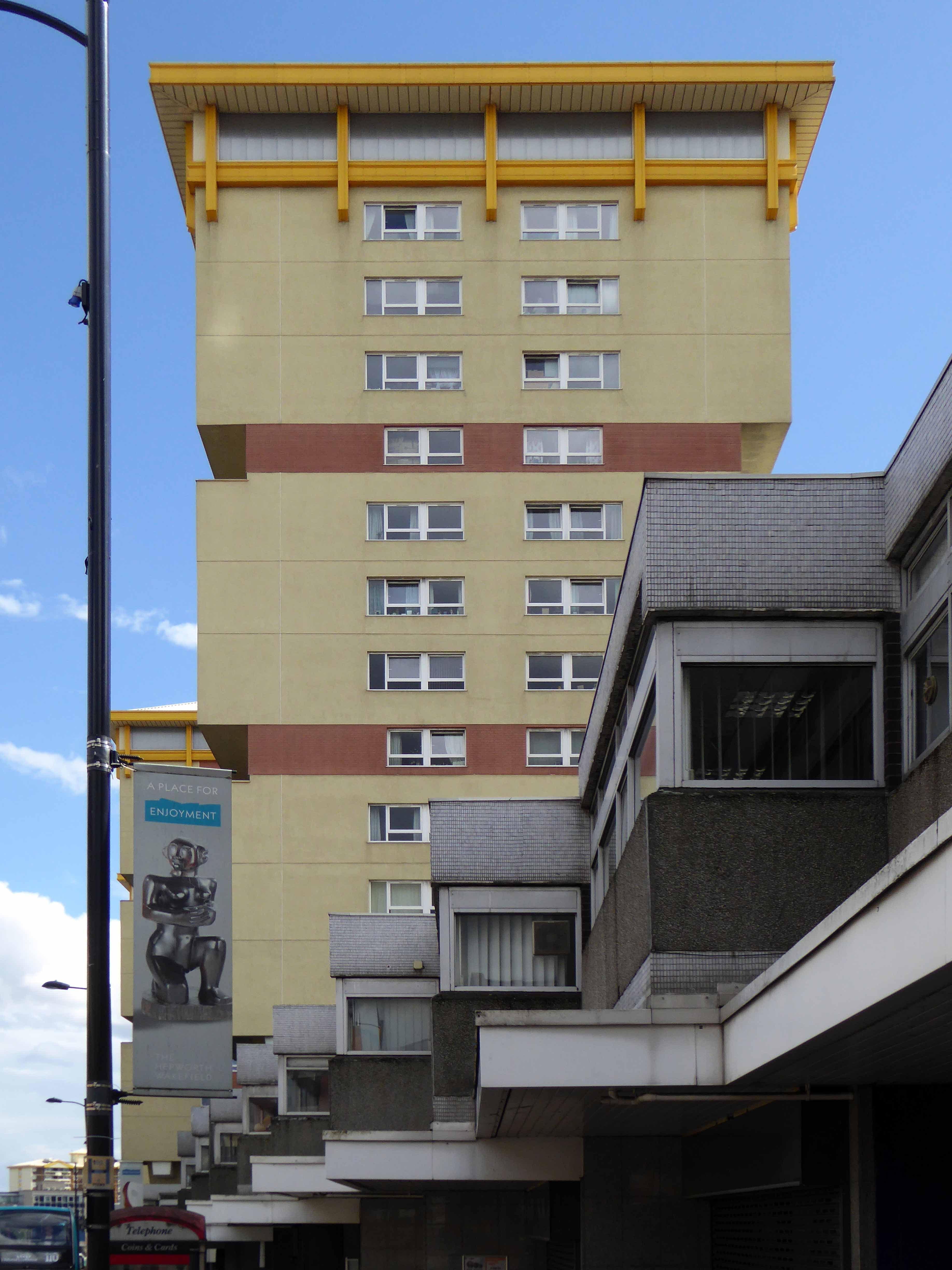
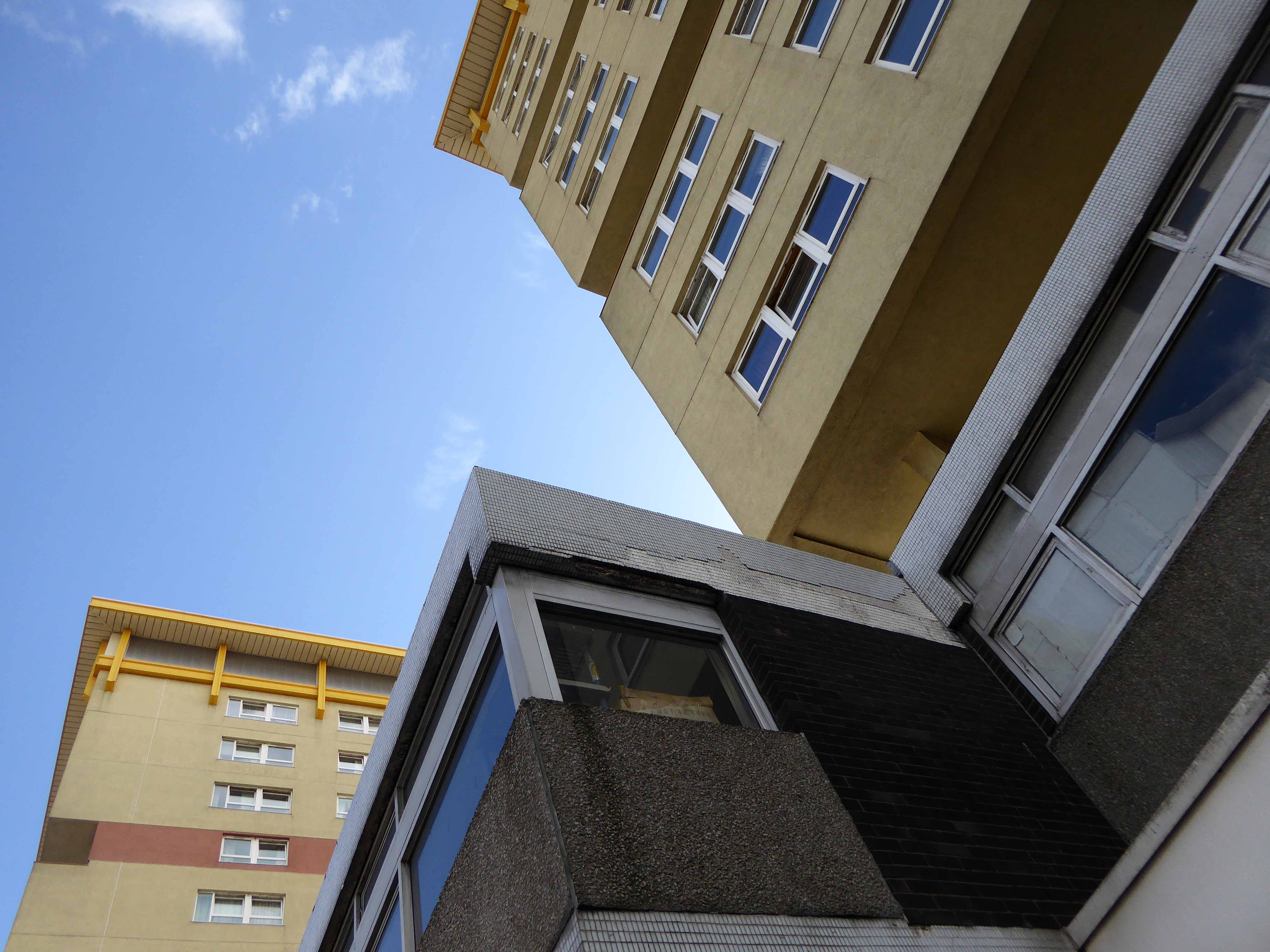
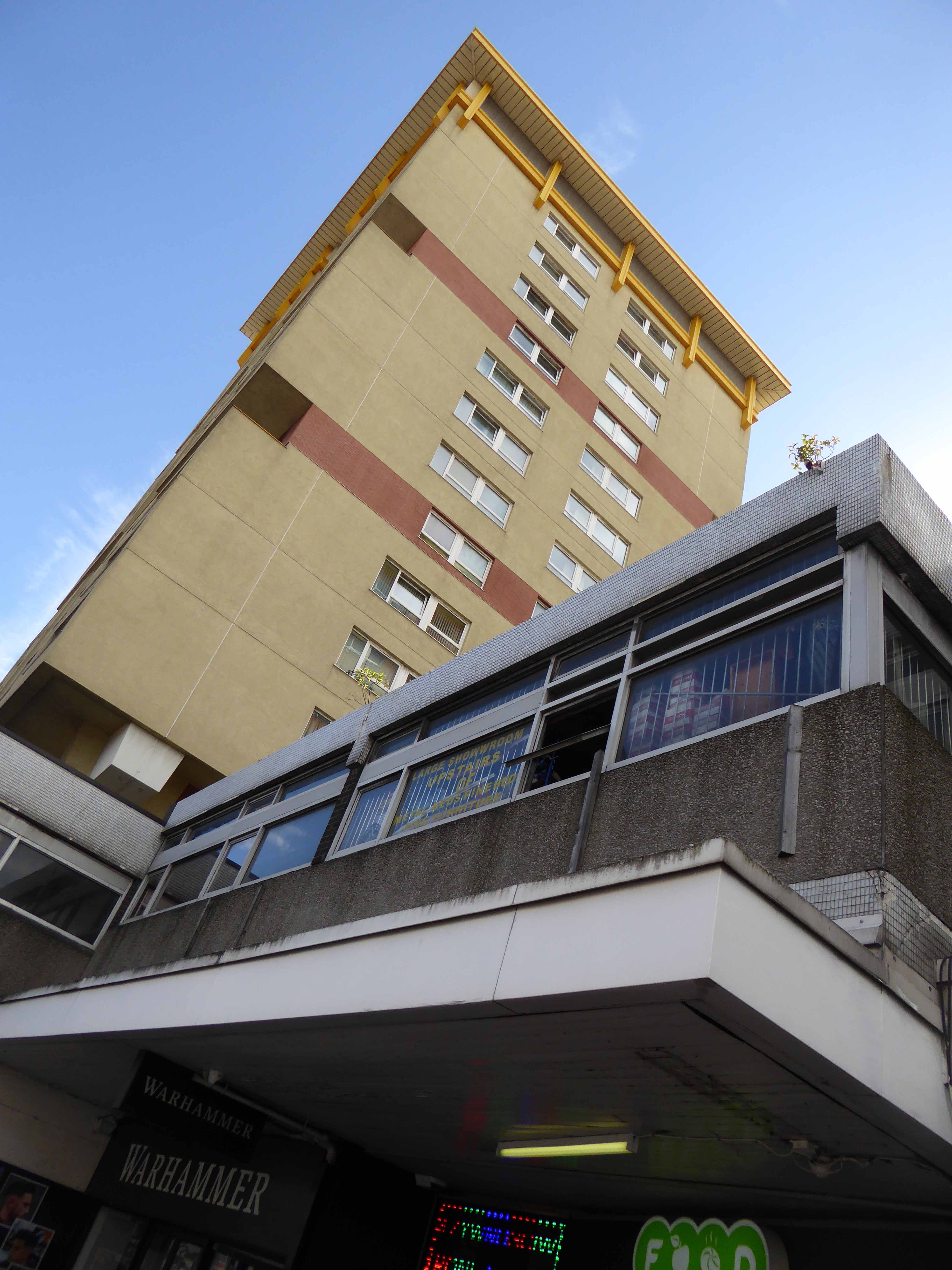
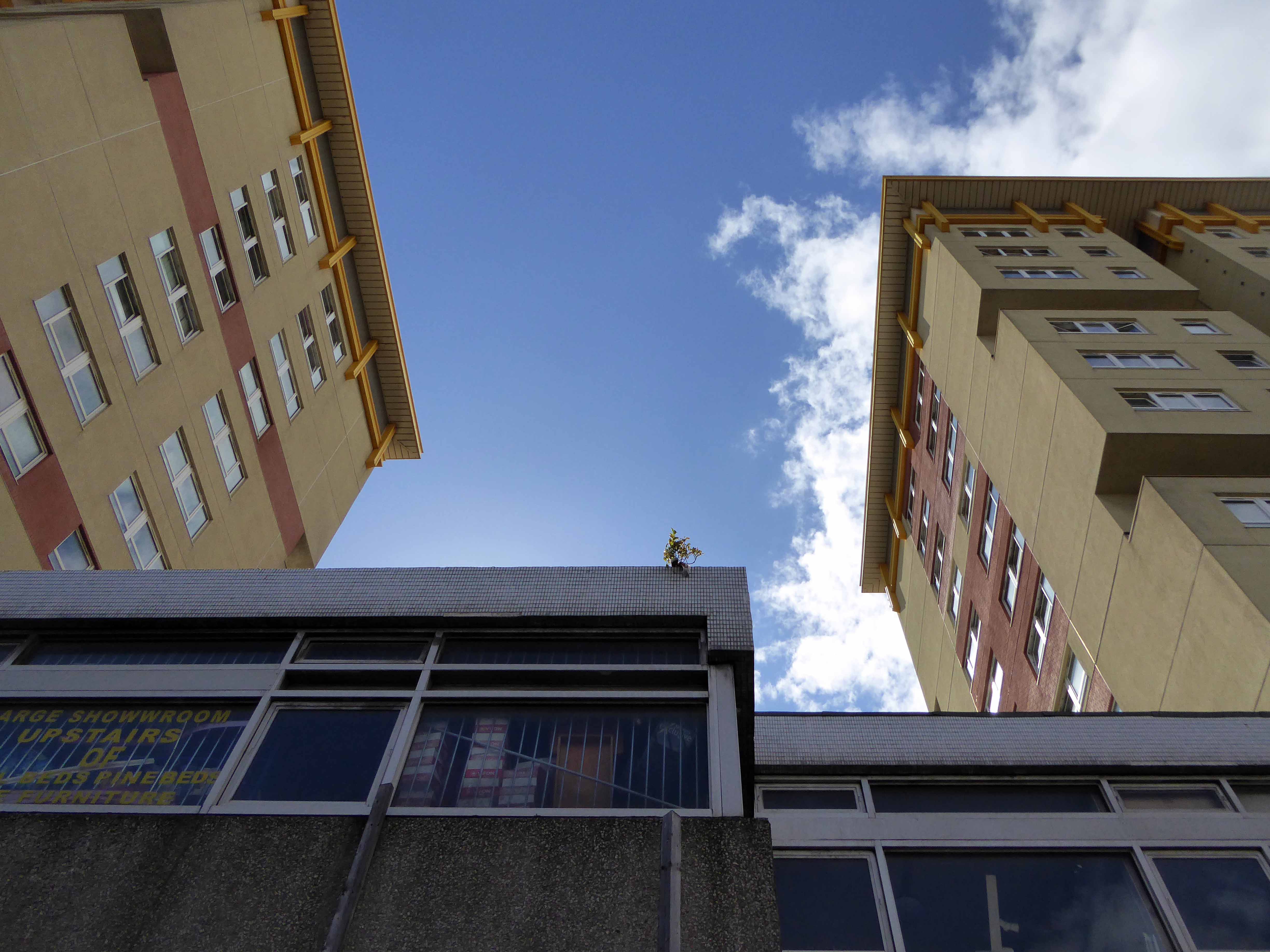
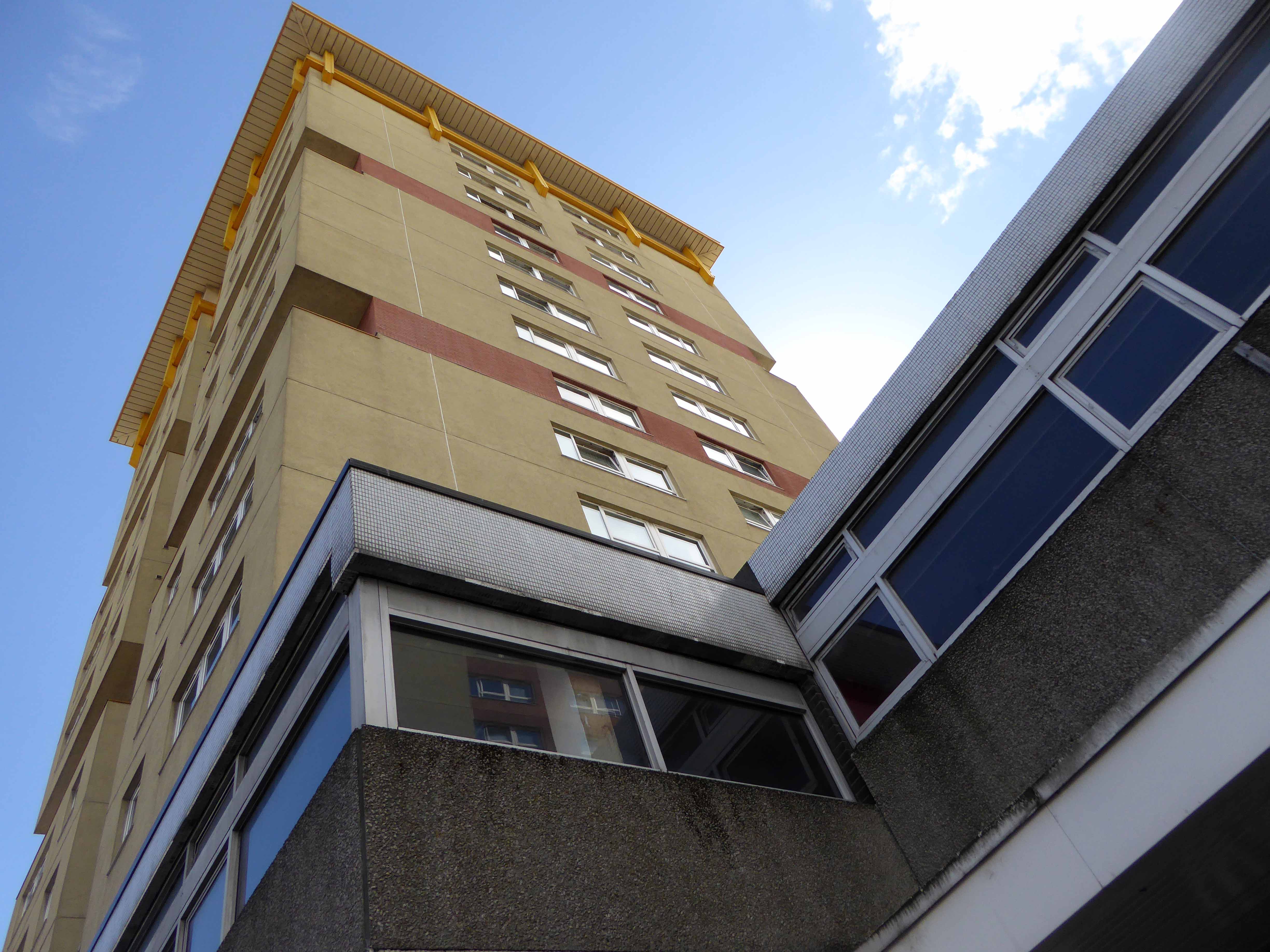
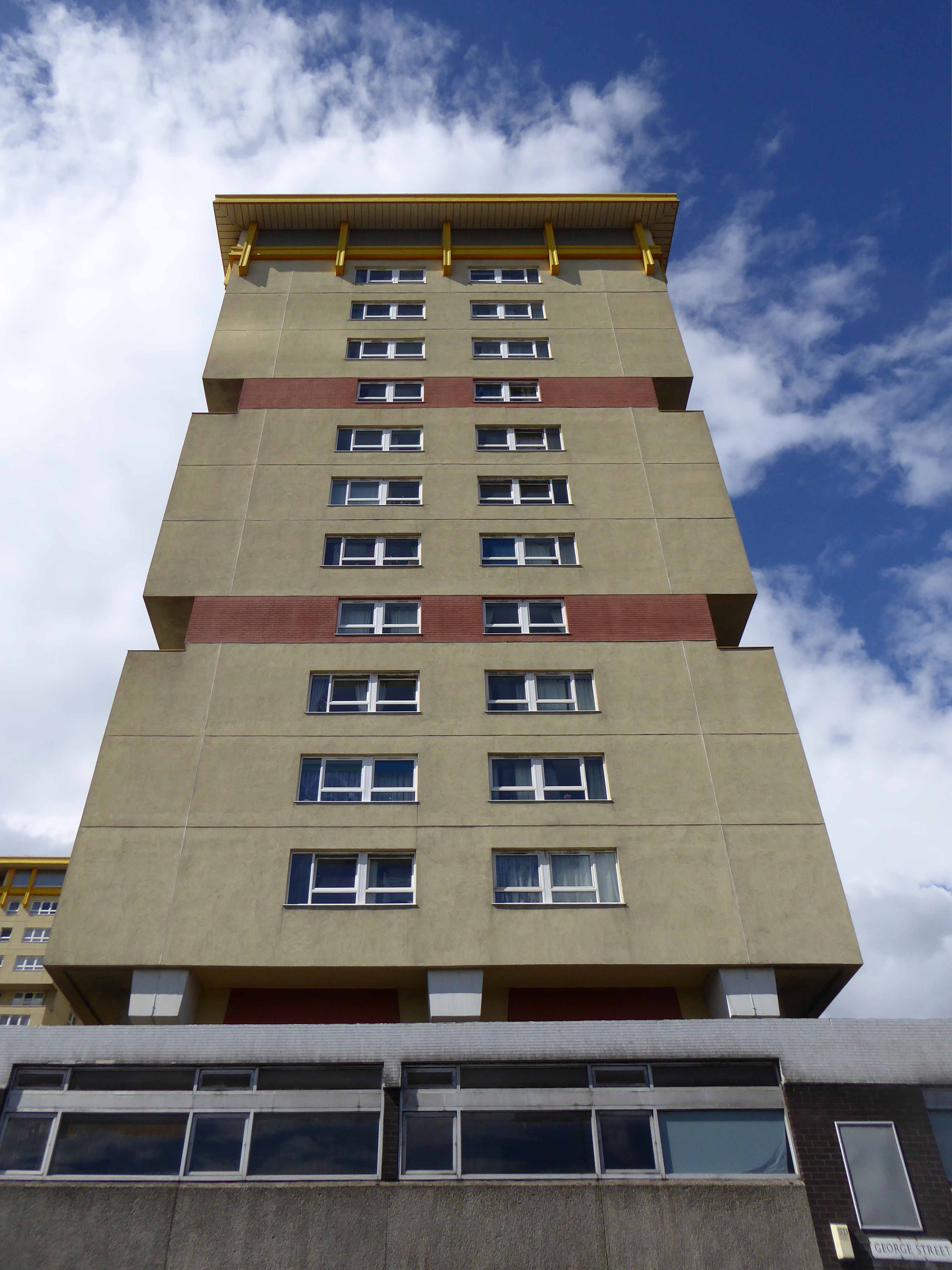
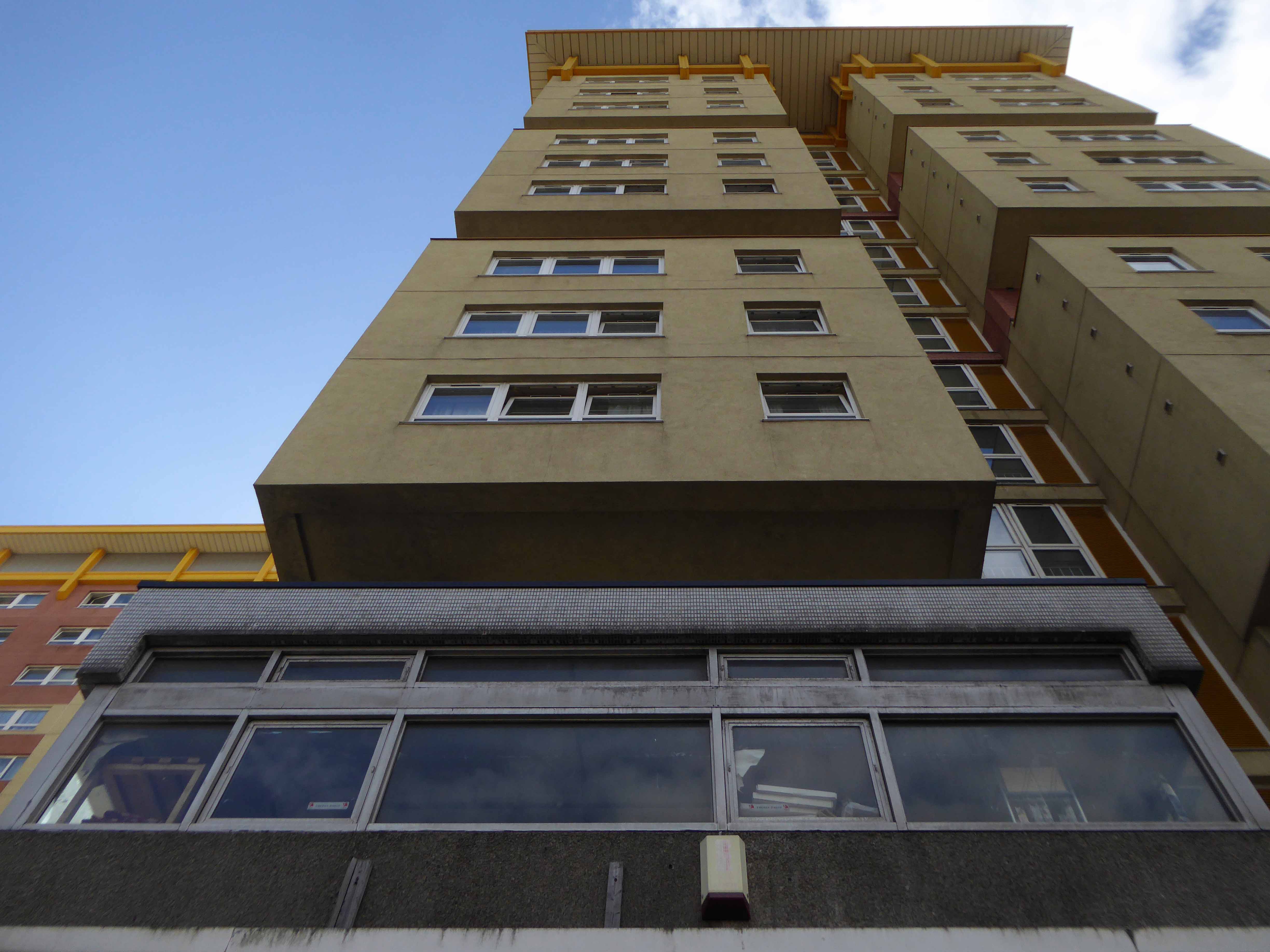
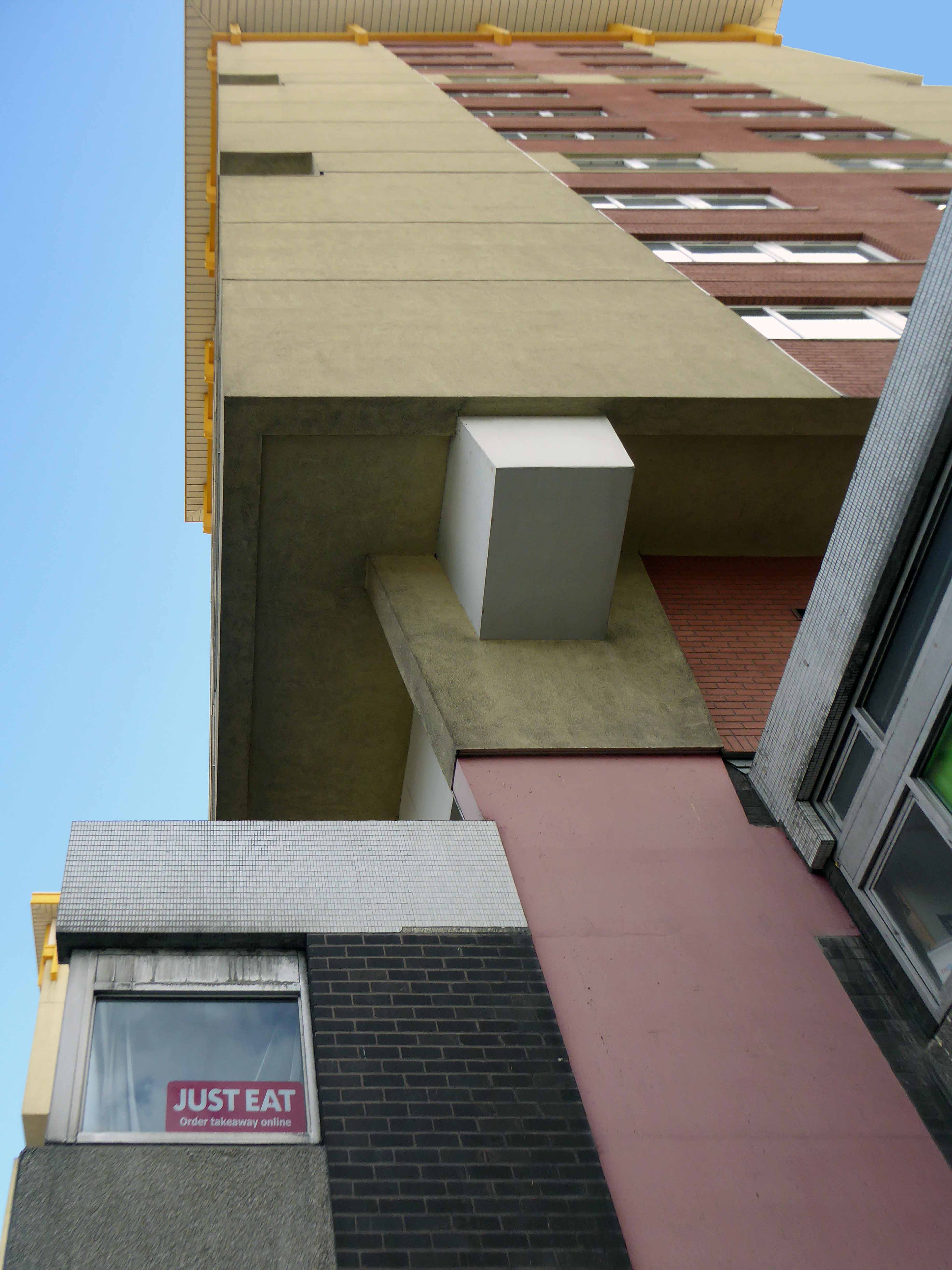
You wouldn’t ever want a bad case of the cladding, the triumph of the expedient over the purist aesthetic. We all may wish to be warm, dry and free from unwanted ingress, whilst exercising a degree of discernment and restraint, regarding the manner in which we are clad.

In Wakefield and in local authorities throughout this fair land there seems to have been a distinct lack of discernment and restraint, regarding the manner in which modern tower blocks are clad.

Cloaking concrete in coloured surfaces better suited to Toytown than our town.

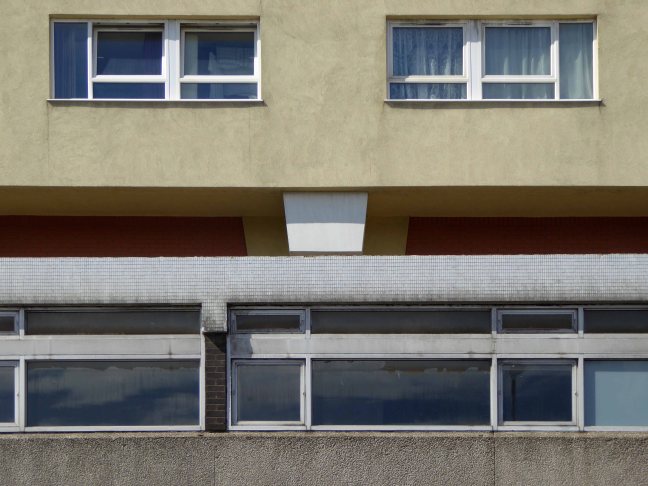
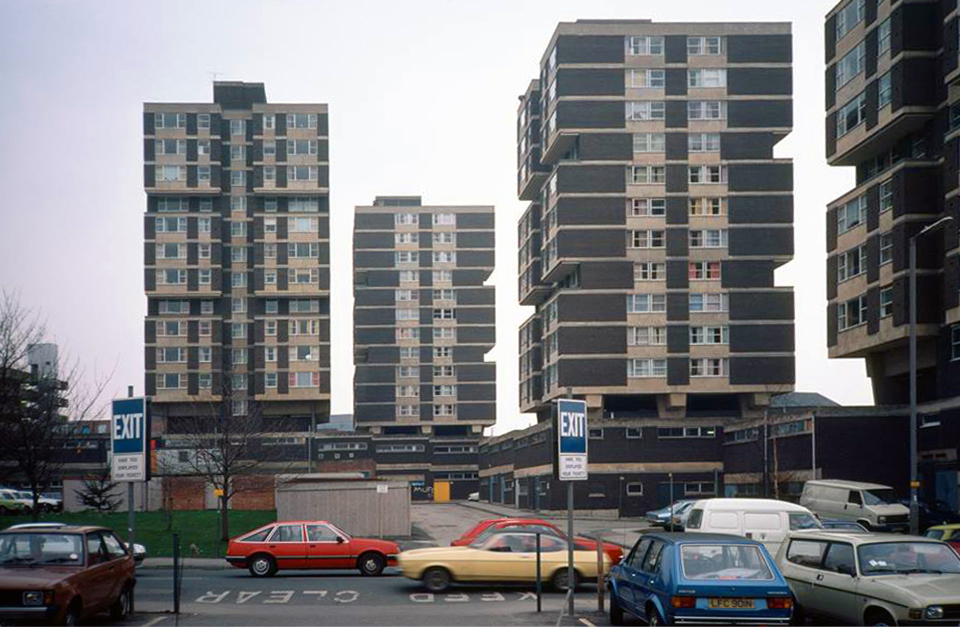
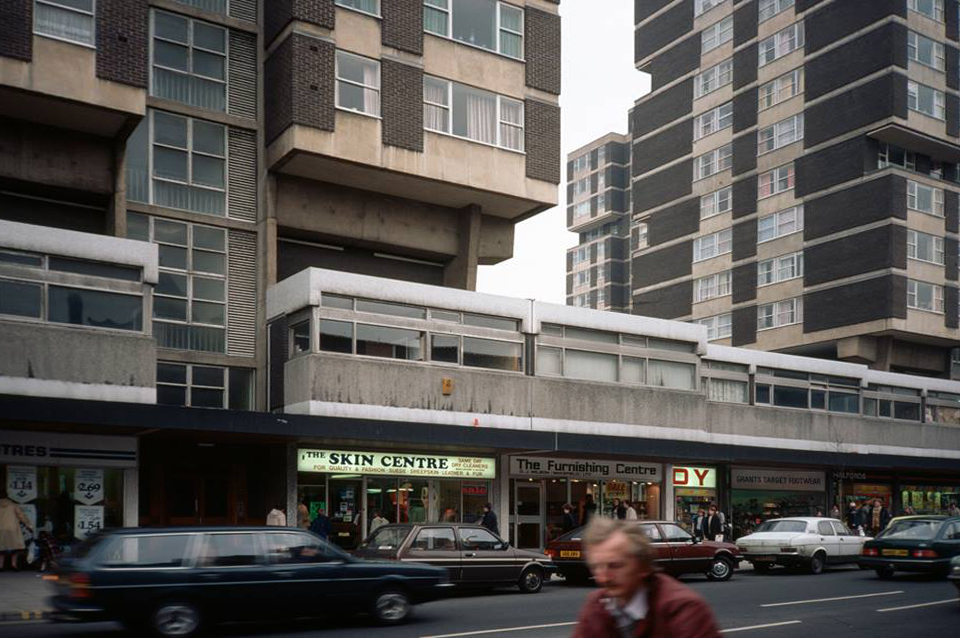
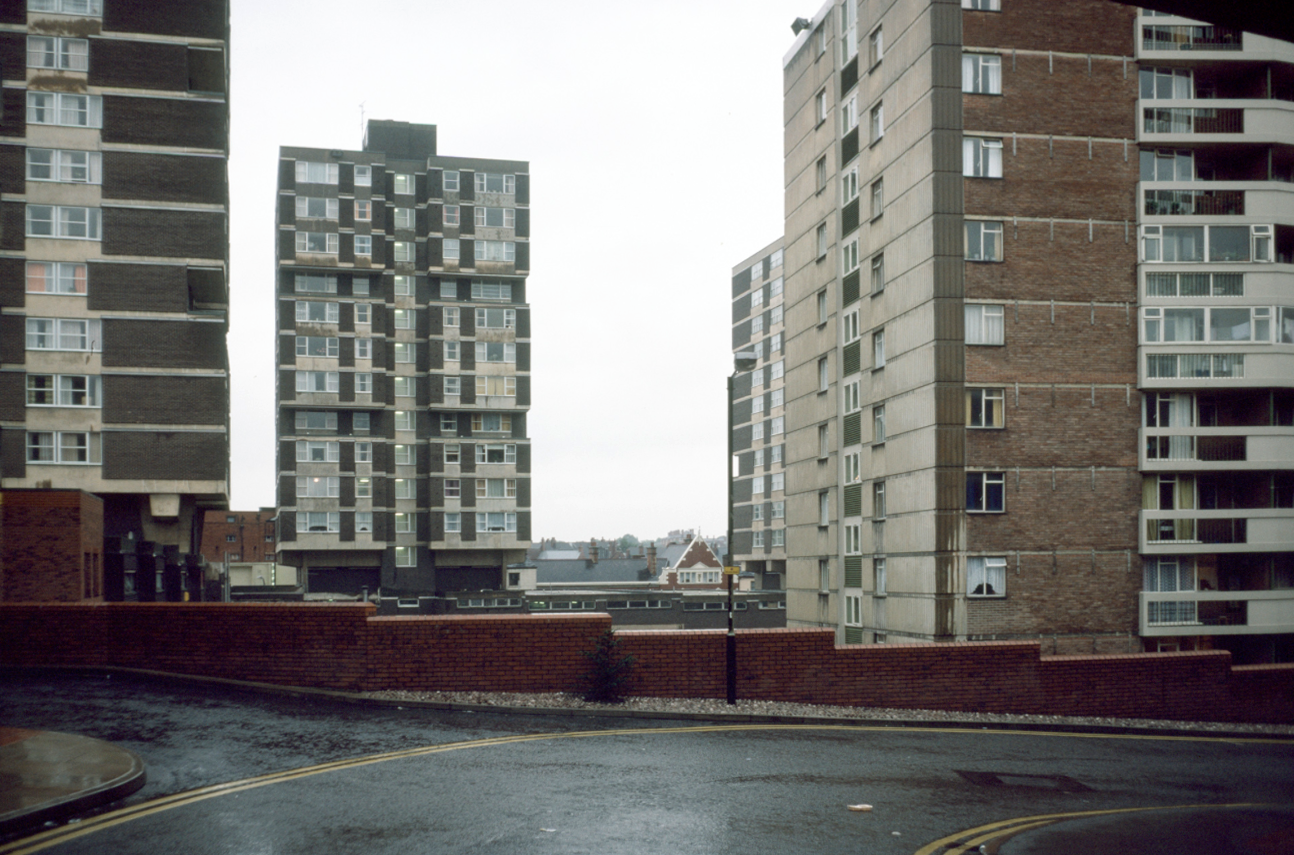
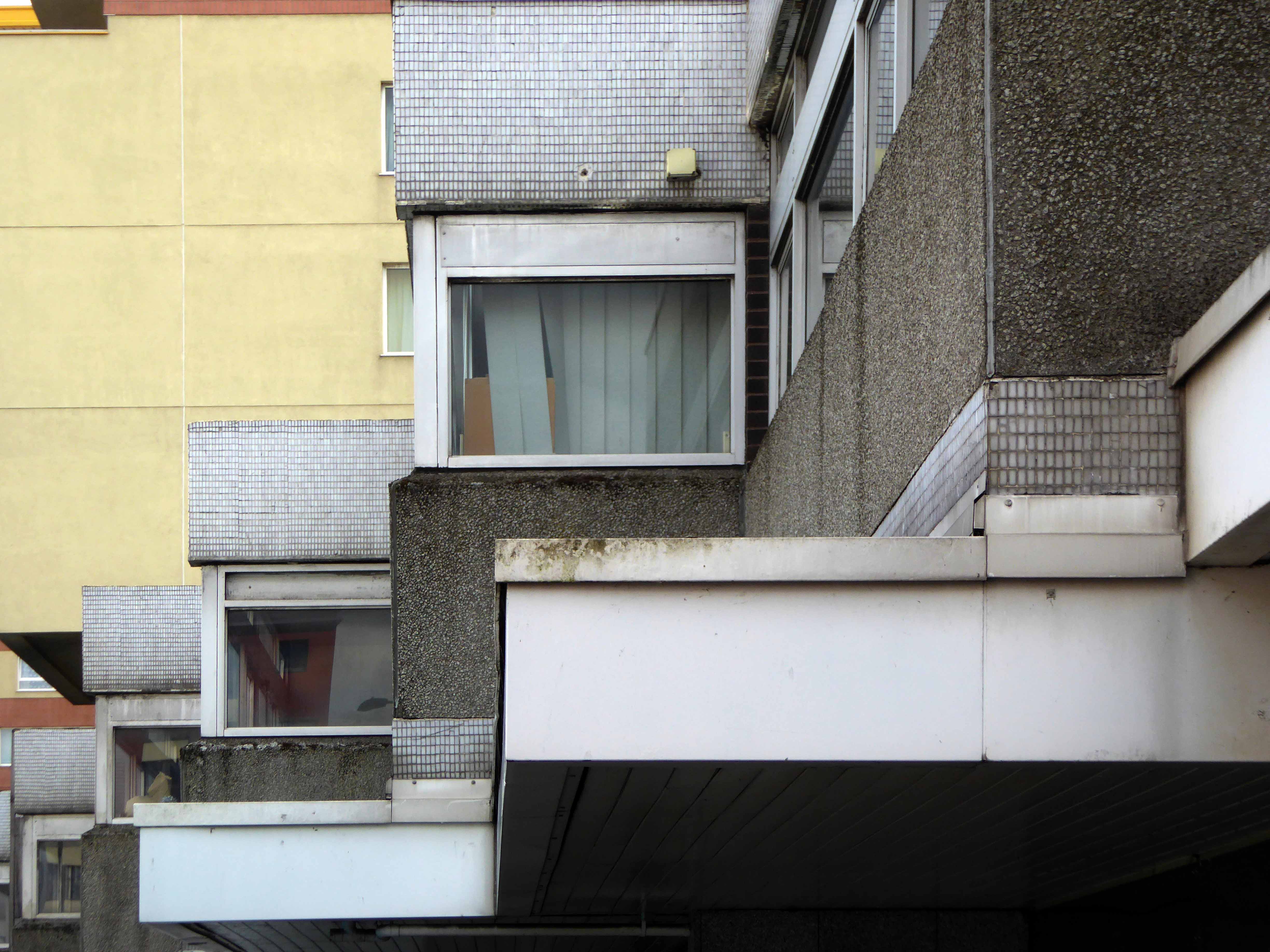
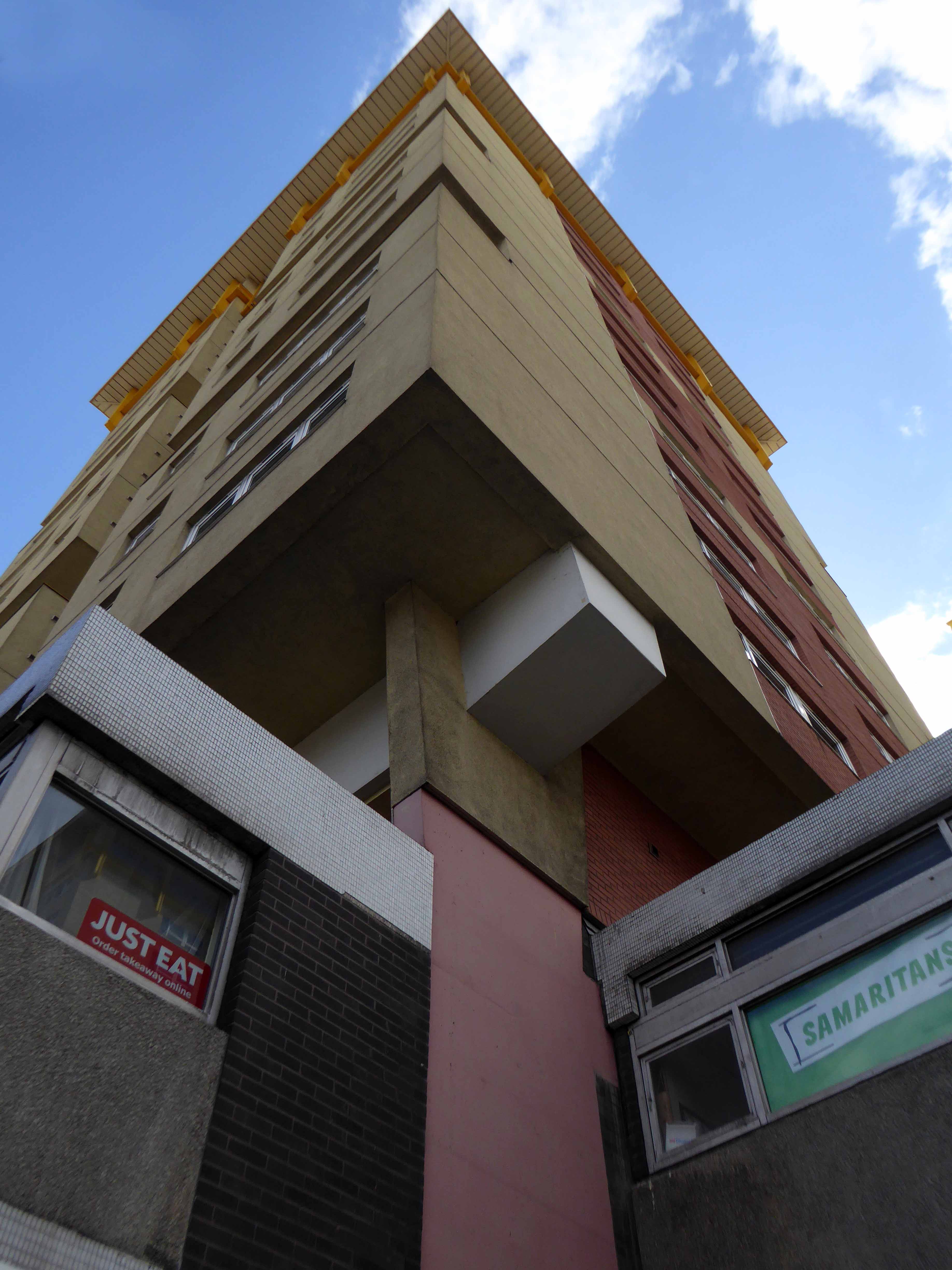
Four twelve-storey H-plan tower blocks built as public housing as part of the central area development of lower Kirkgate. The blocks rise out of other low-rise development. Each block contains 44 one and two-bedroom flats, providing 176 dwellings in total. The consulting architects for the development were Richard Seifert & Partners. Construction is of concrete frame with brick infill panels. The blocks were approved by committee in 1964.

Tudor House aka Lower Kirkgate Comprehensive Development area as was:

13669171_10154435787311600_6732873241408697456_n

13873008_10154435787336600_5185297045755258748_n

Screen Shot 2017-08-01 at 13.37.59

Photographs Tower Block

Ain’t it funny how time and integrity slips away?

wakefield_flats2l

wakefield_flats3l

Photographs Alan White Design

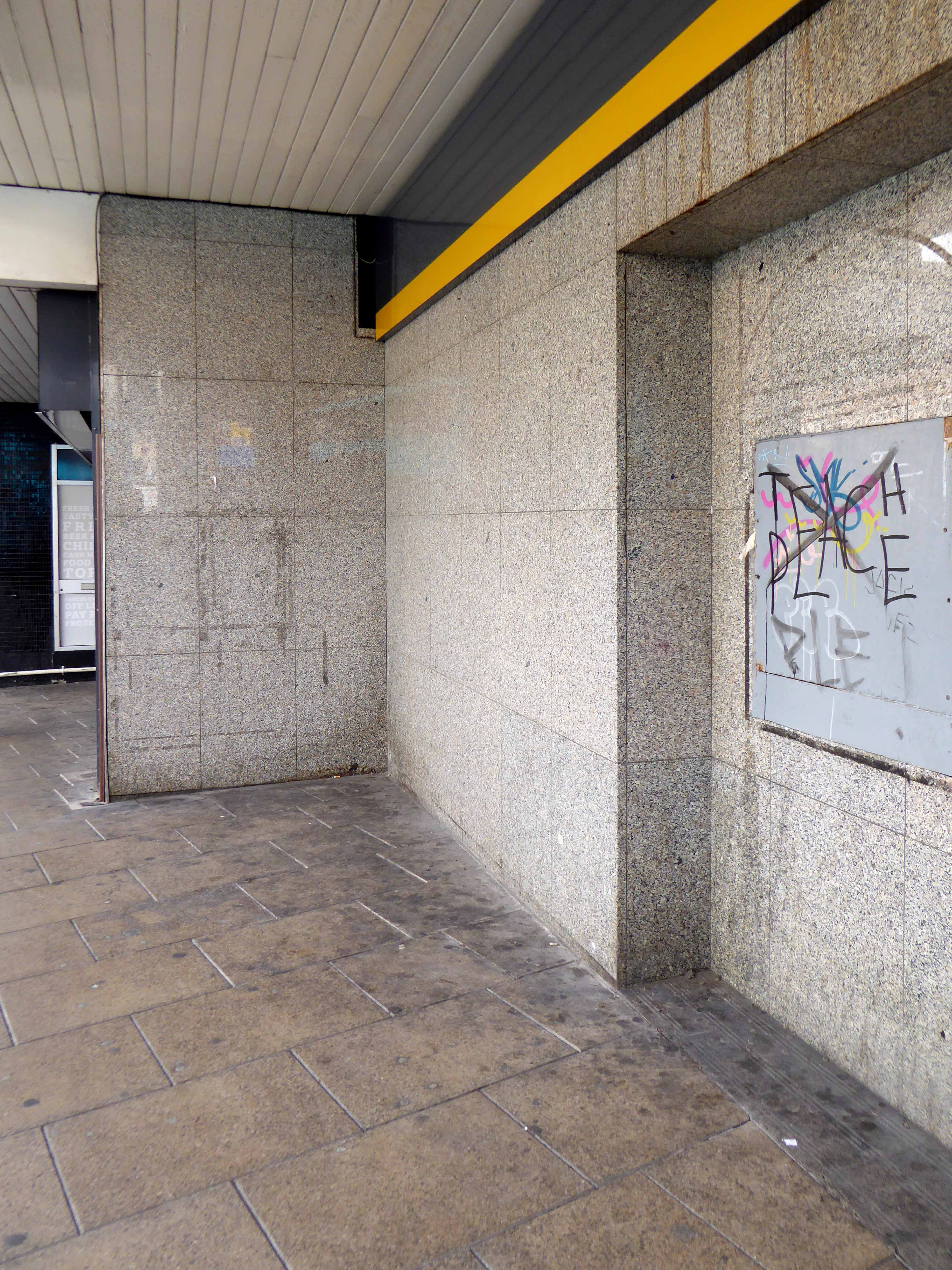
Gone the bold flat roofed, cuboid contrasting concrete and brick towers, whilst confusingly the ground floor retail development remains untouched.

P1180757

P1180759

P1180760

P1180761

P1180762

P1180763

P1180765

P1180766

P1180767

P1180768

P1180769

P1180770