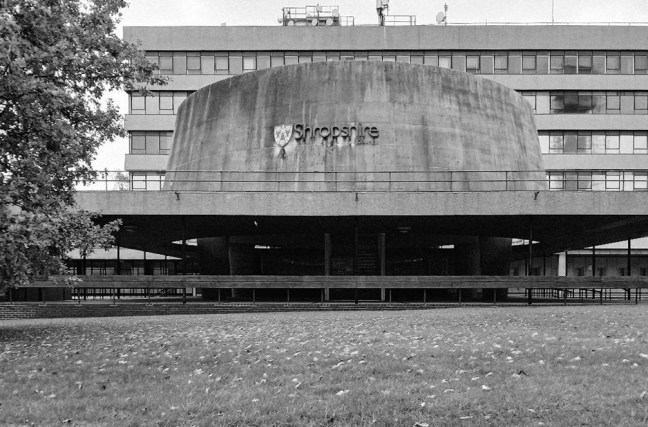
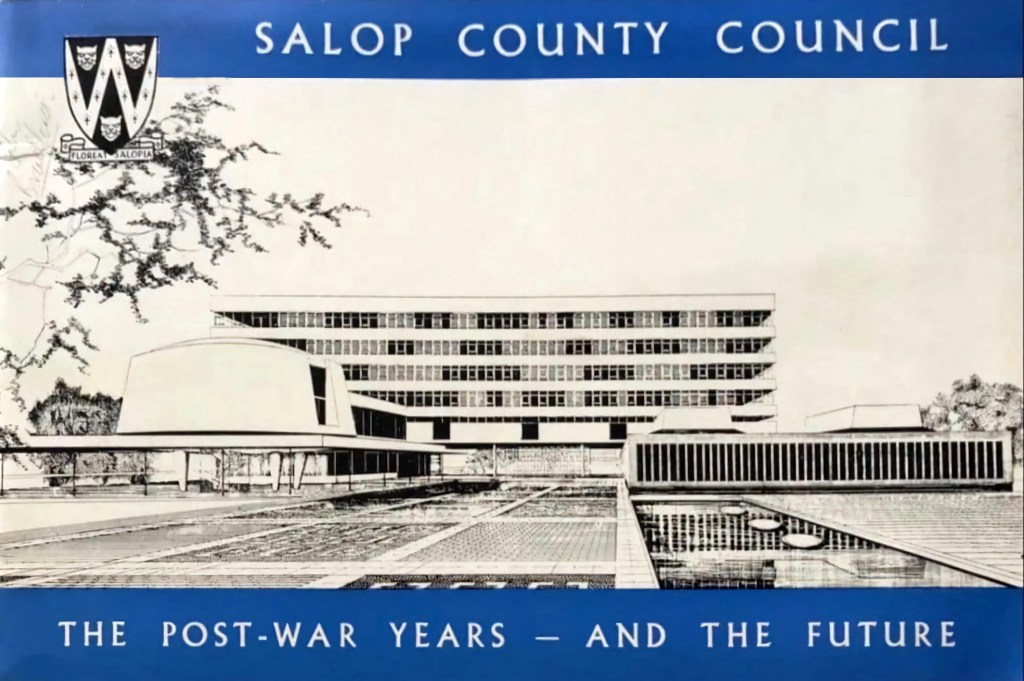
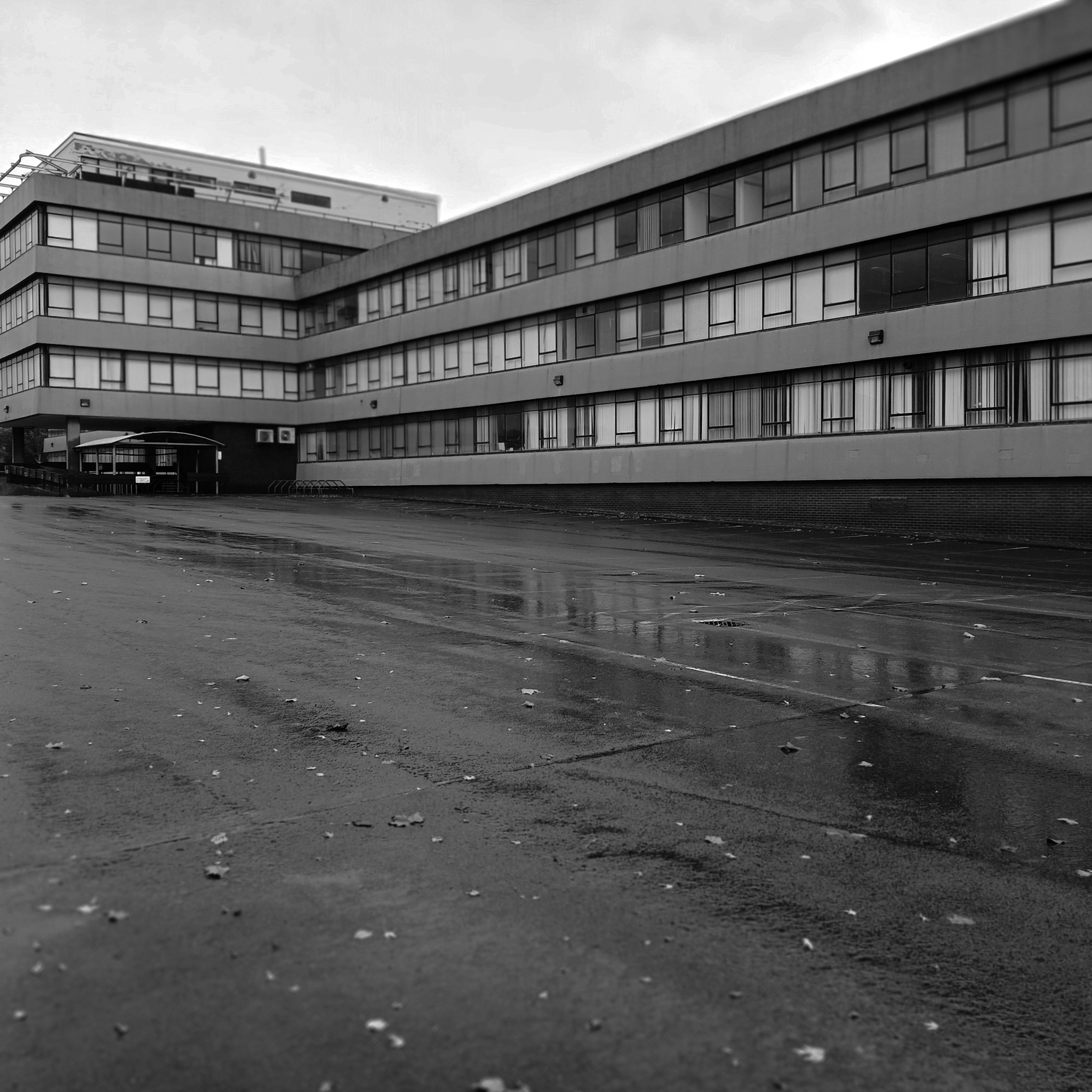
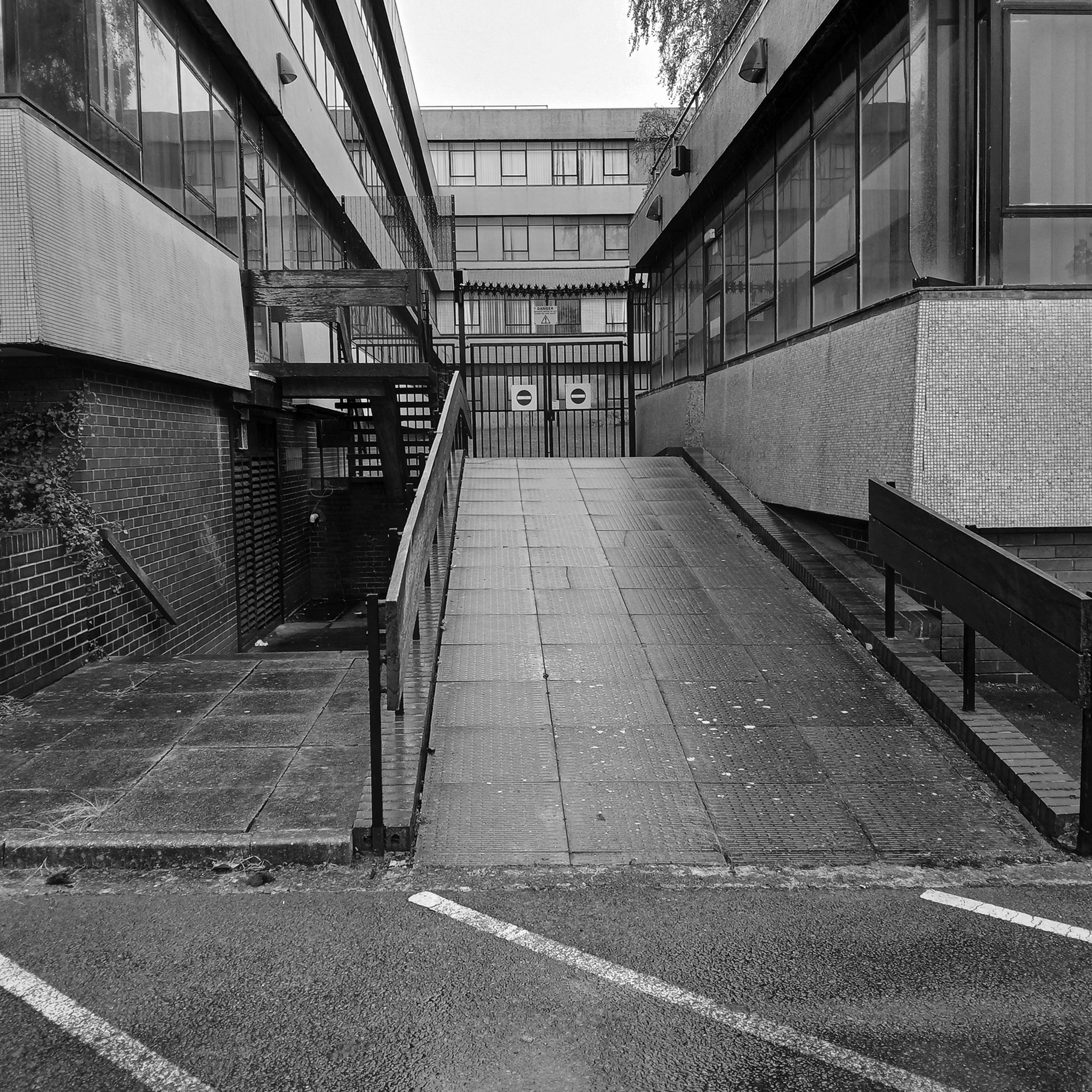
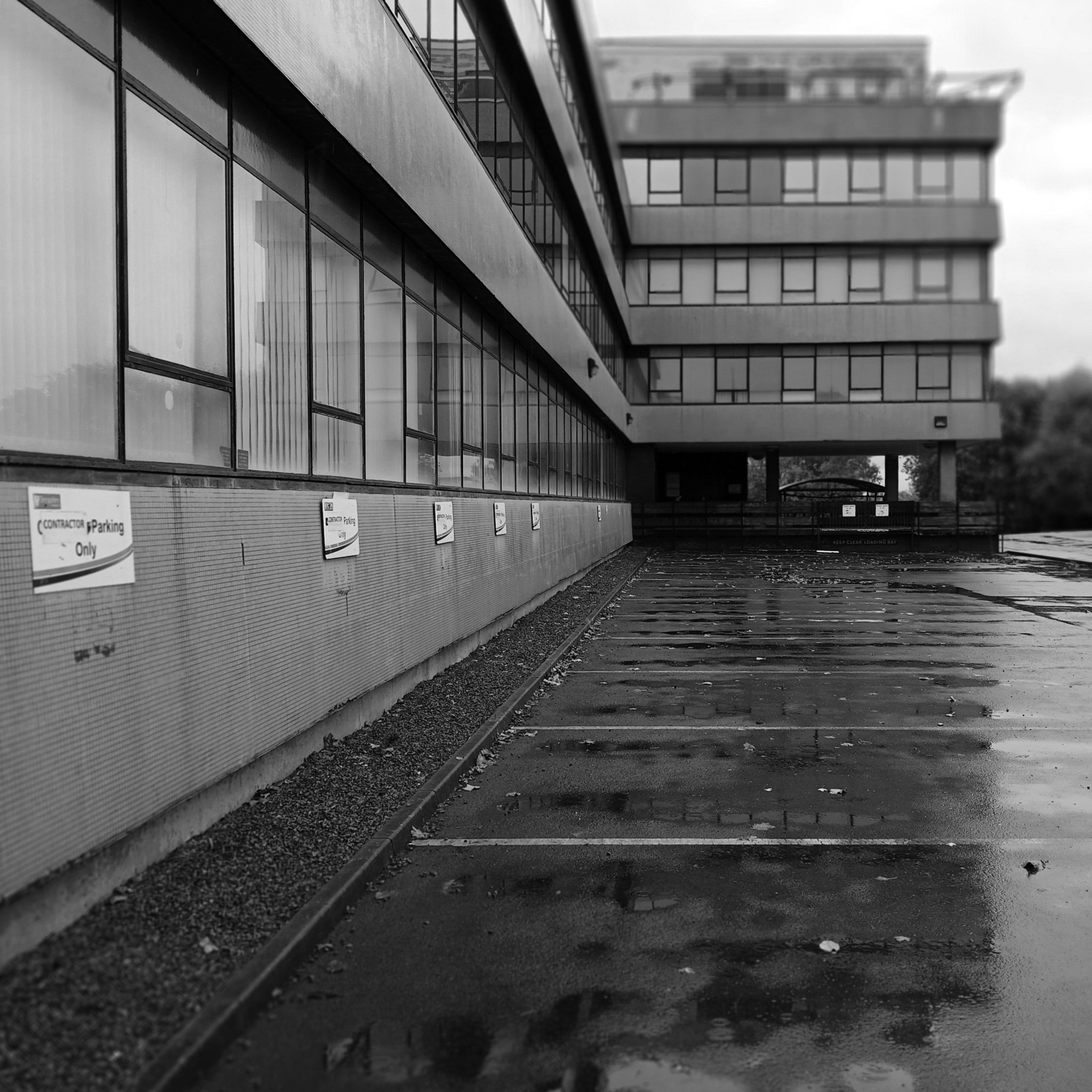
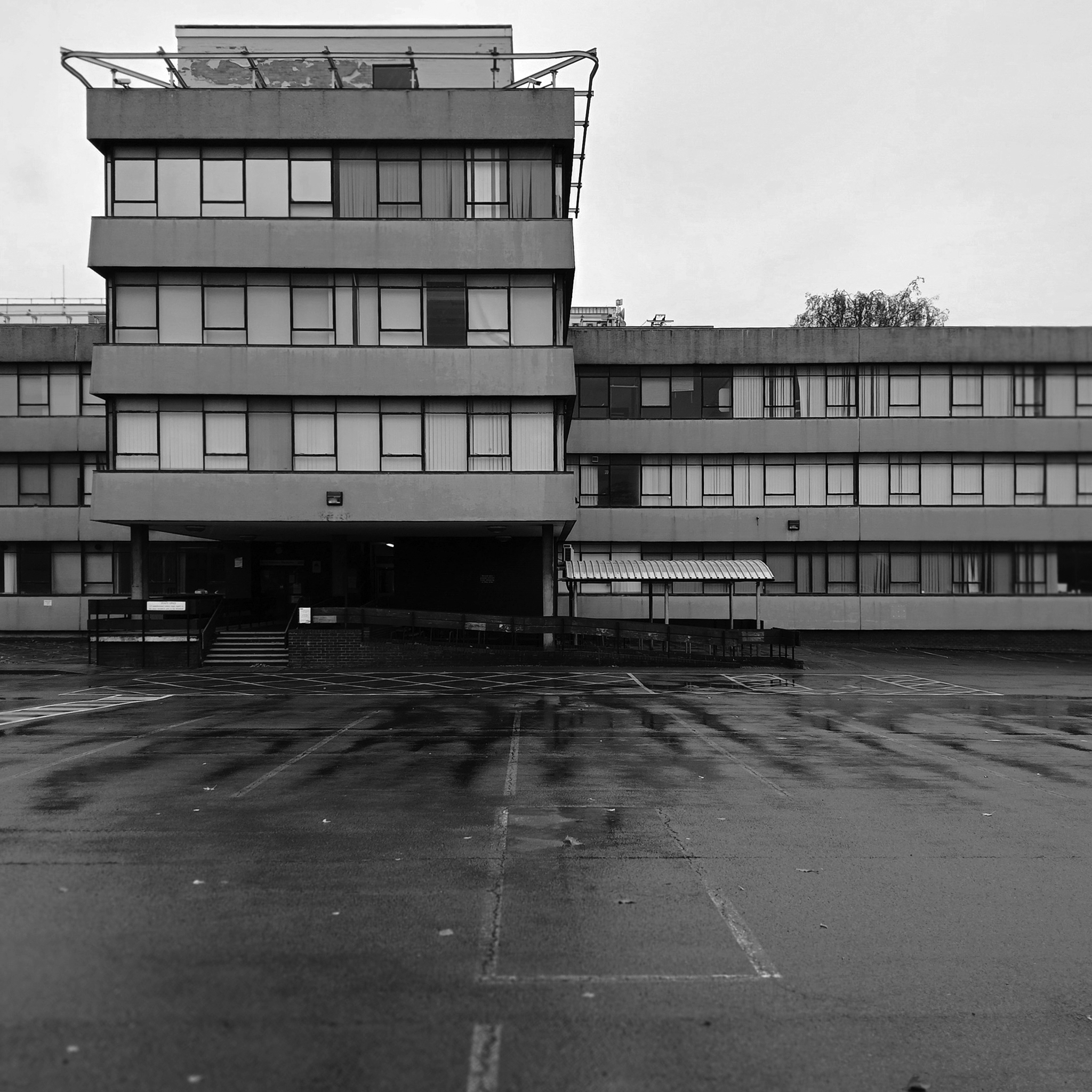
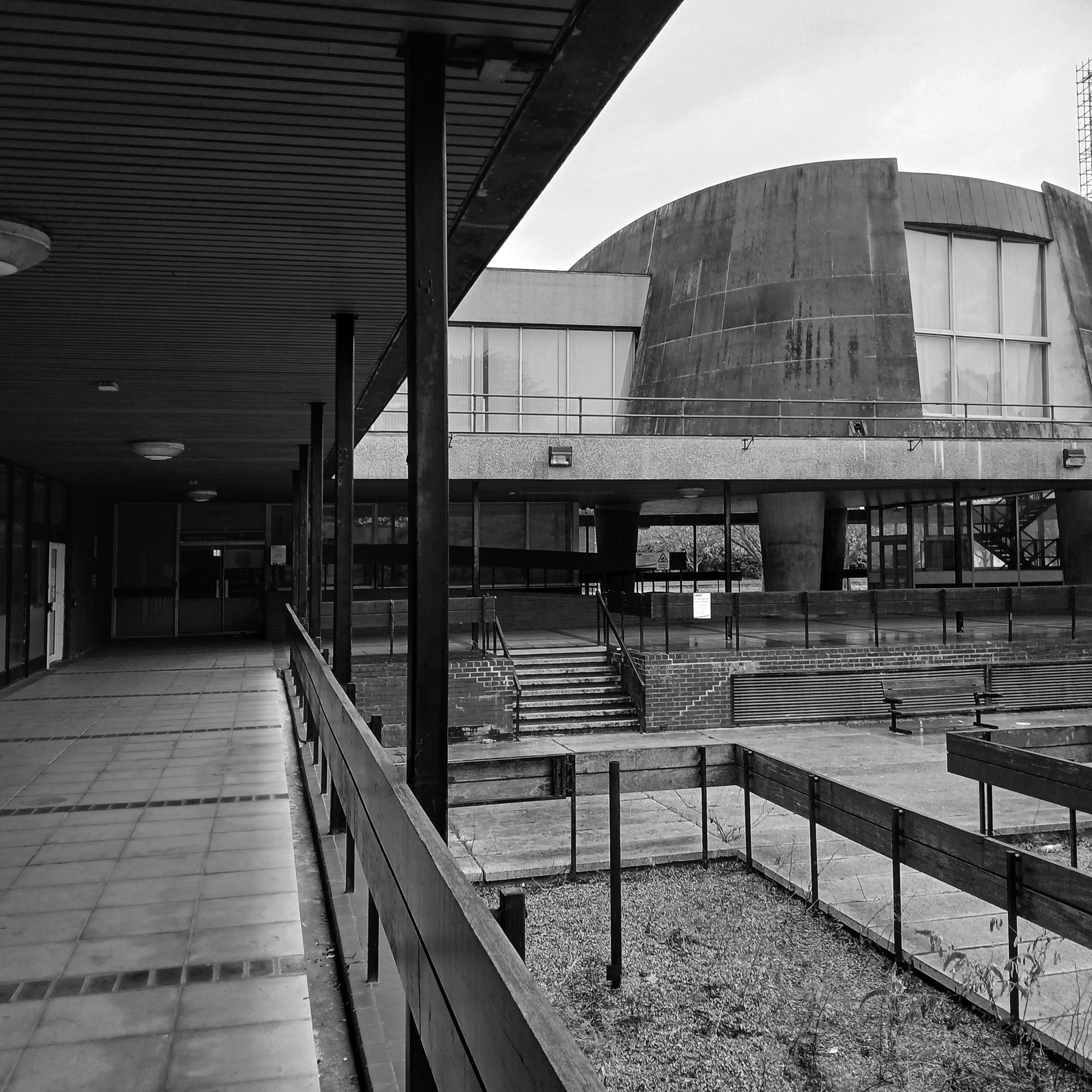
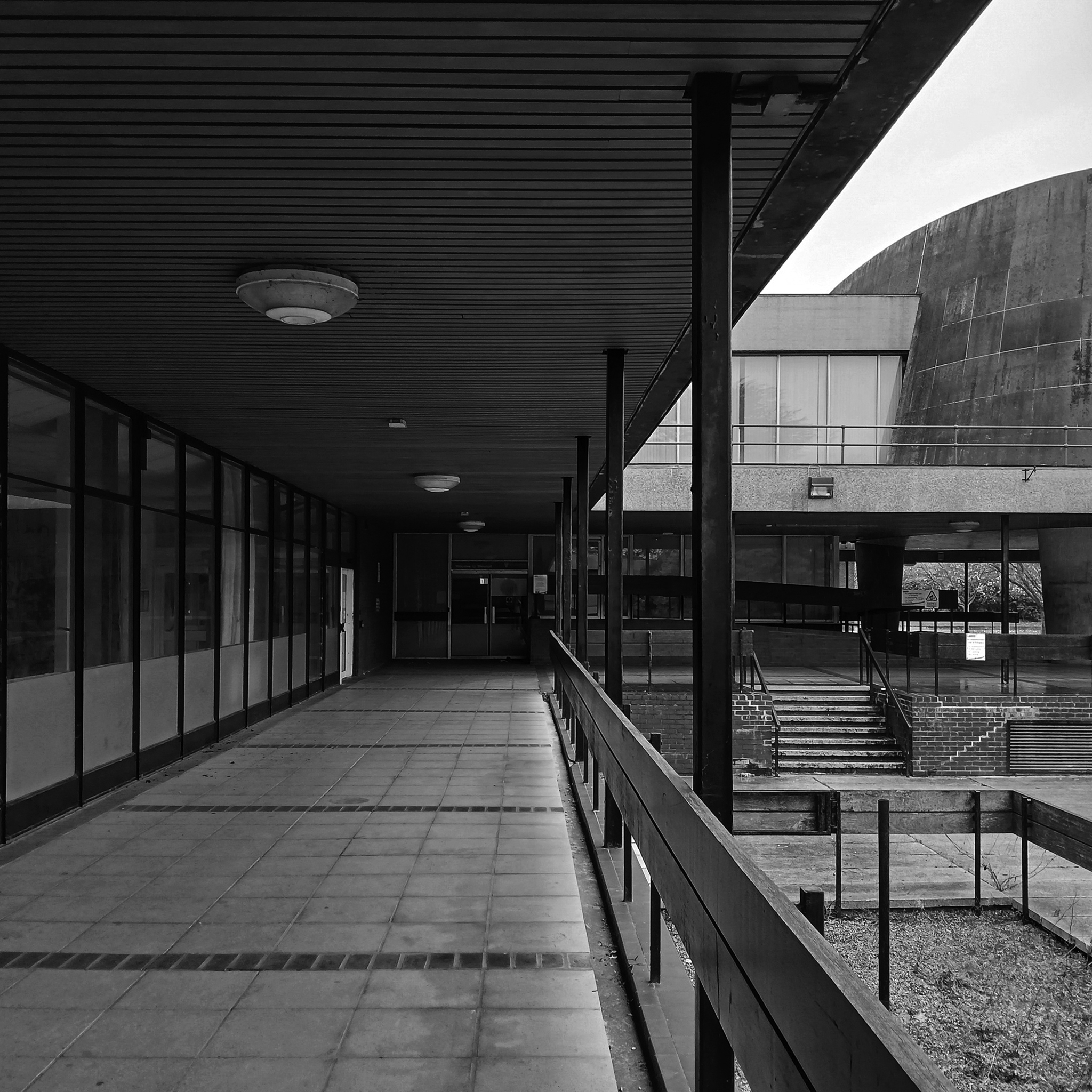
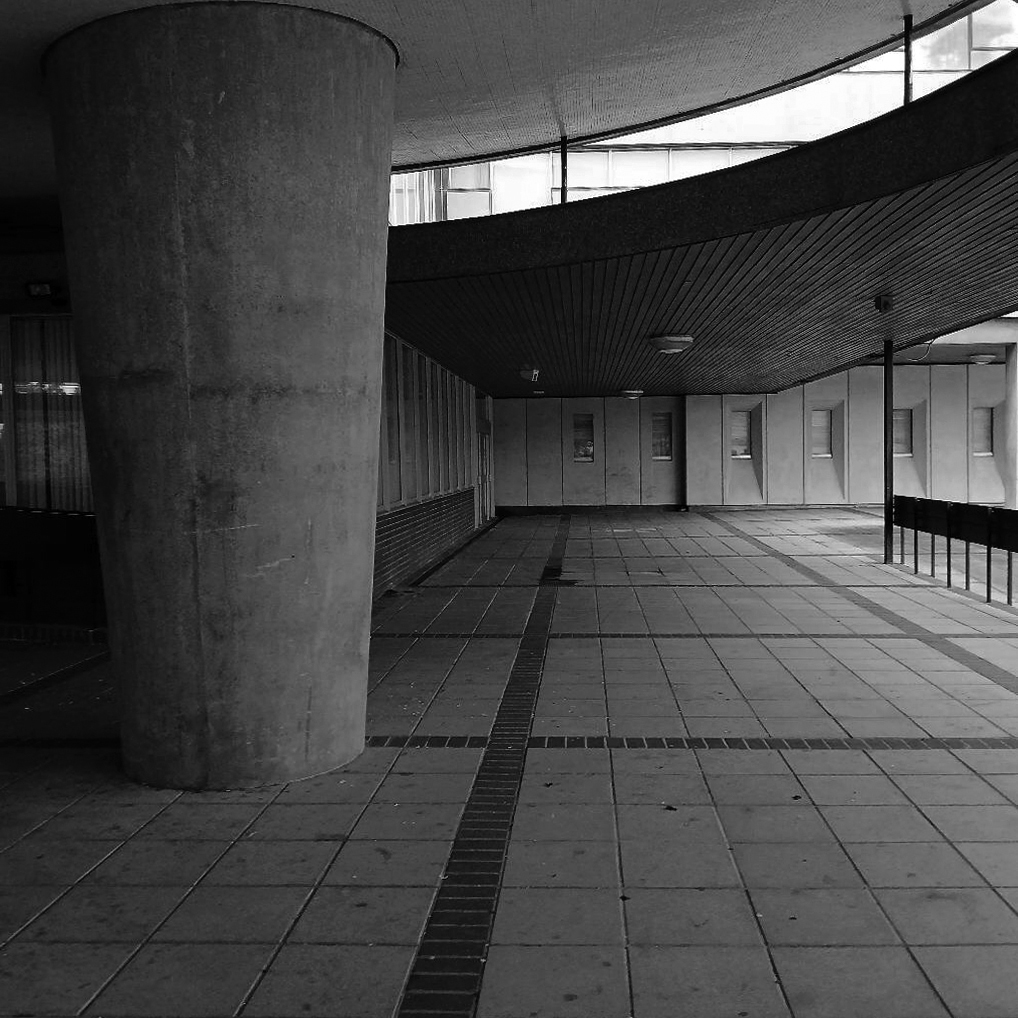
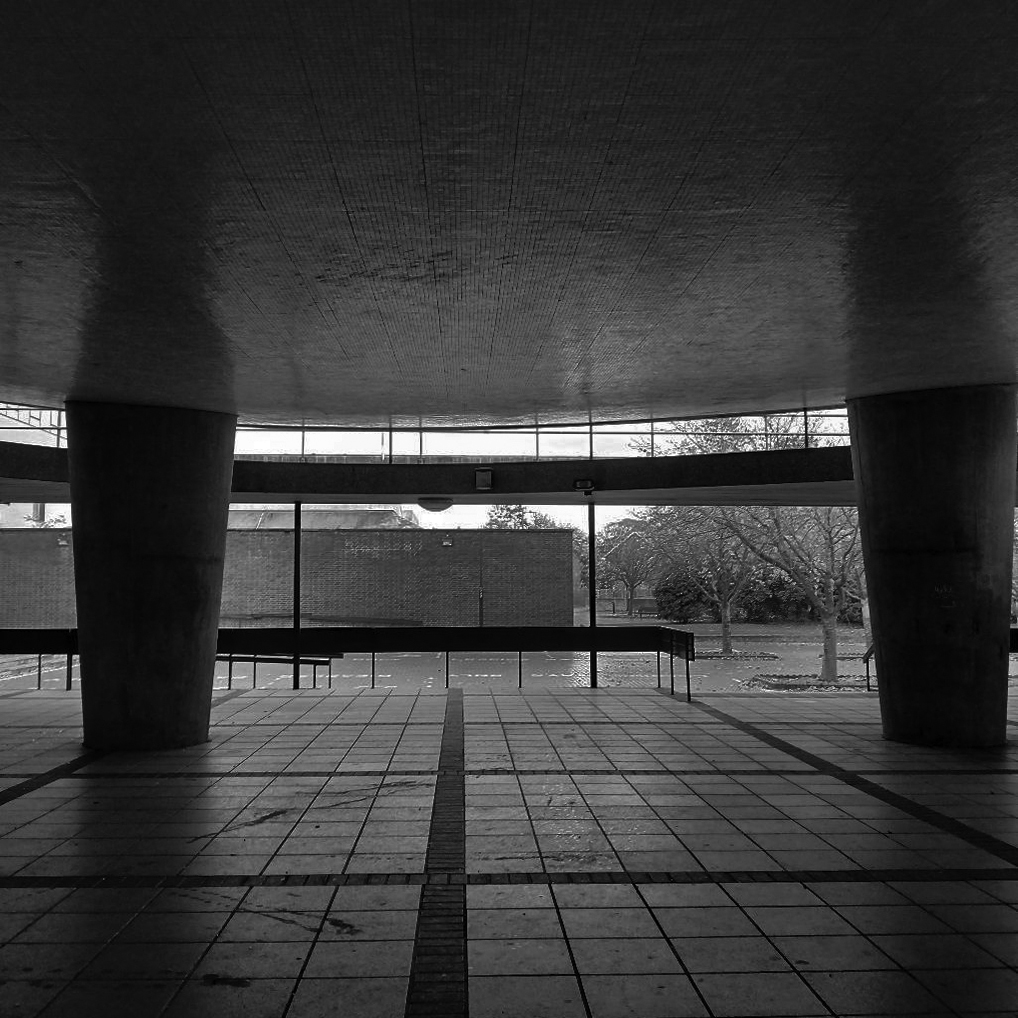
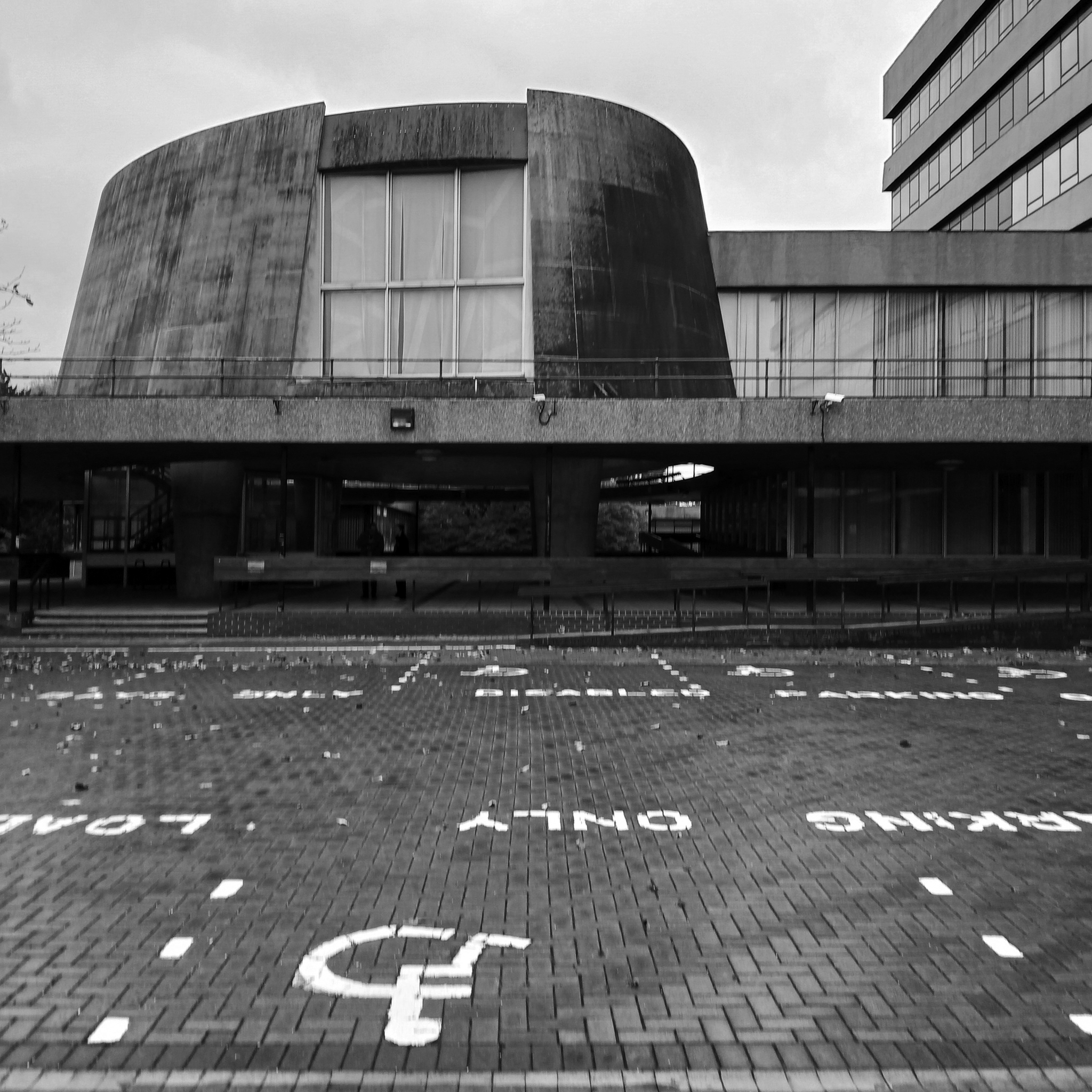
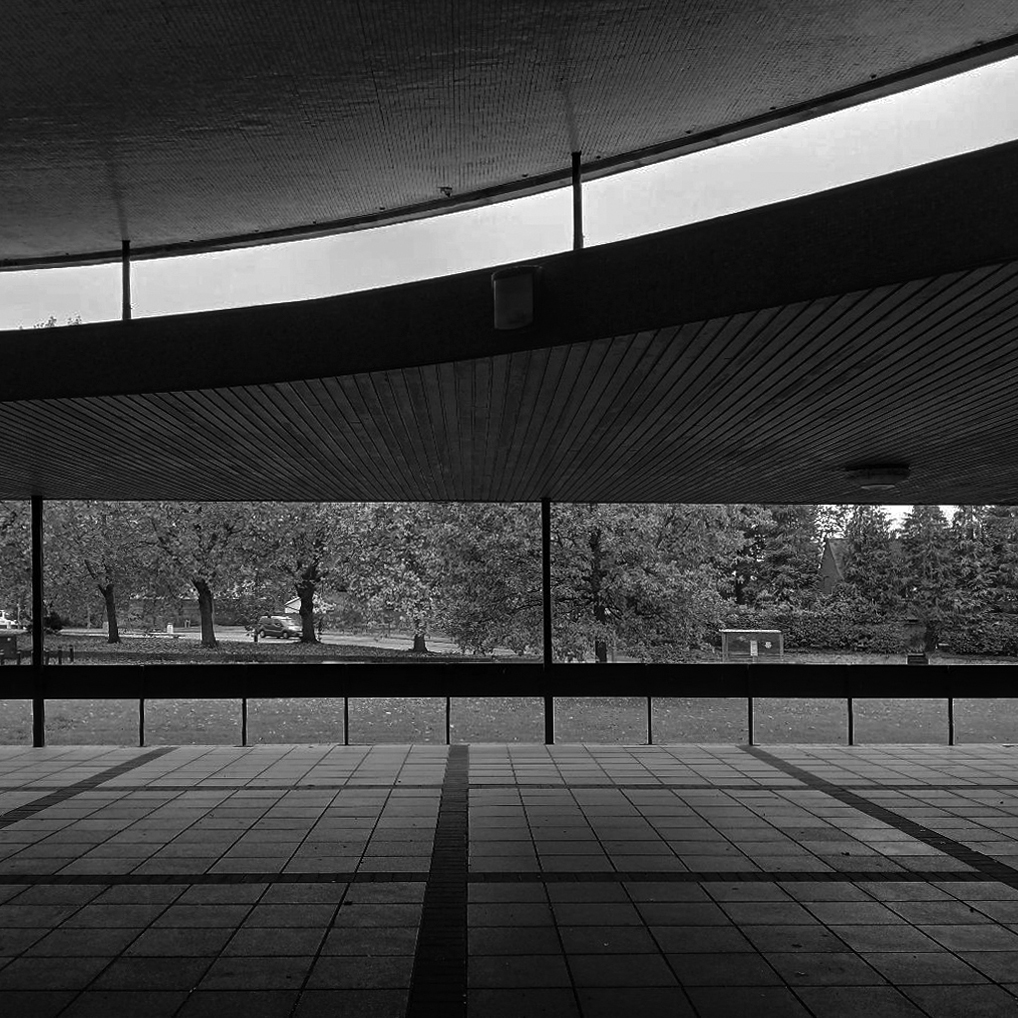
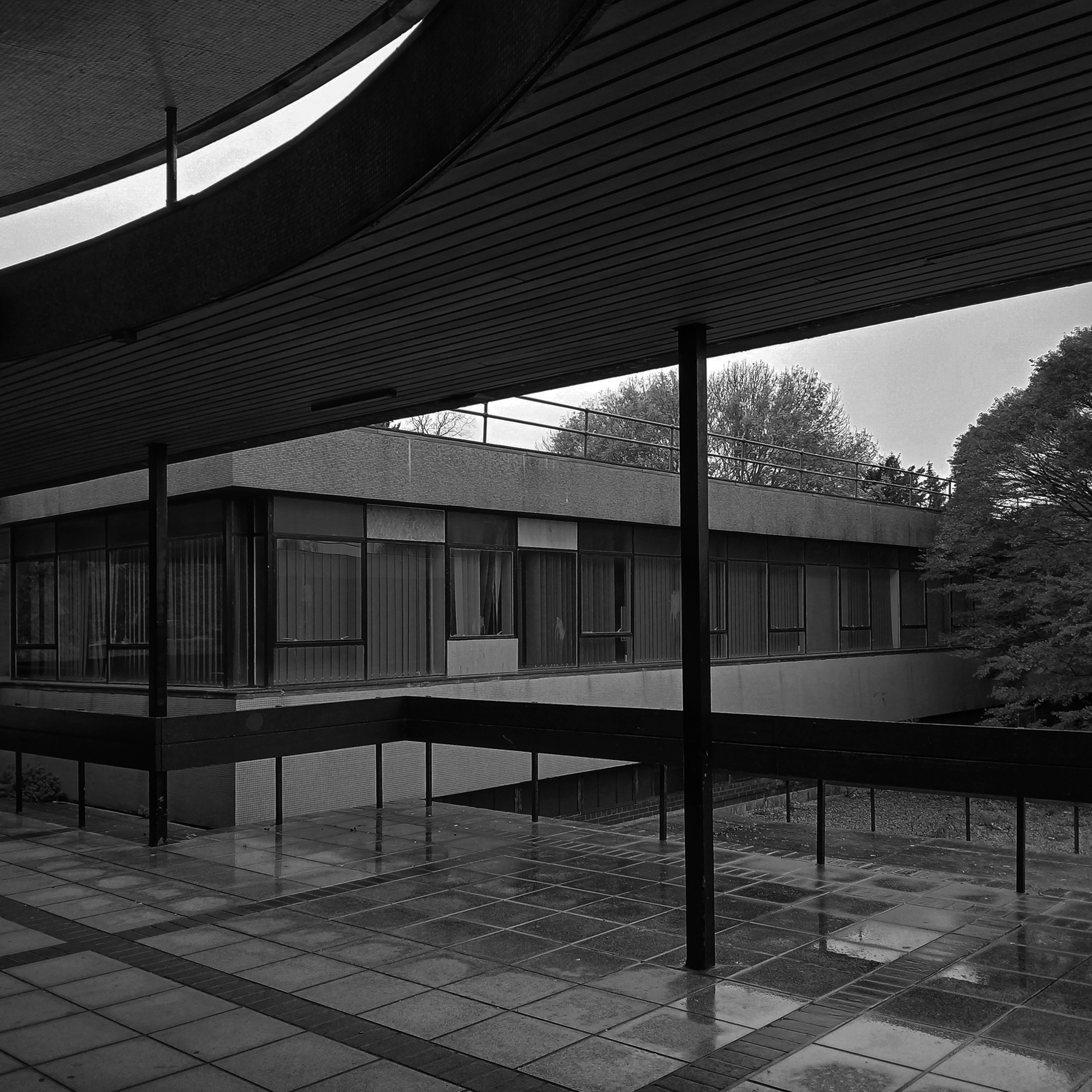
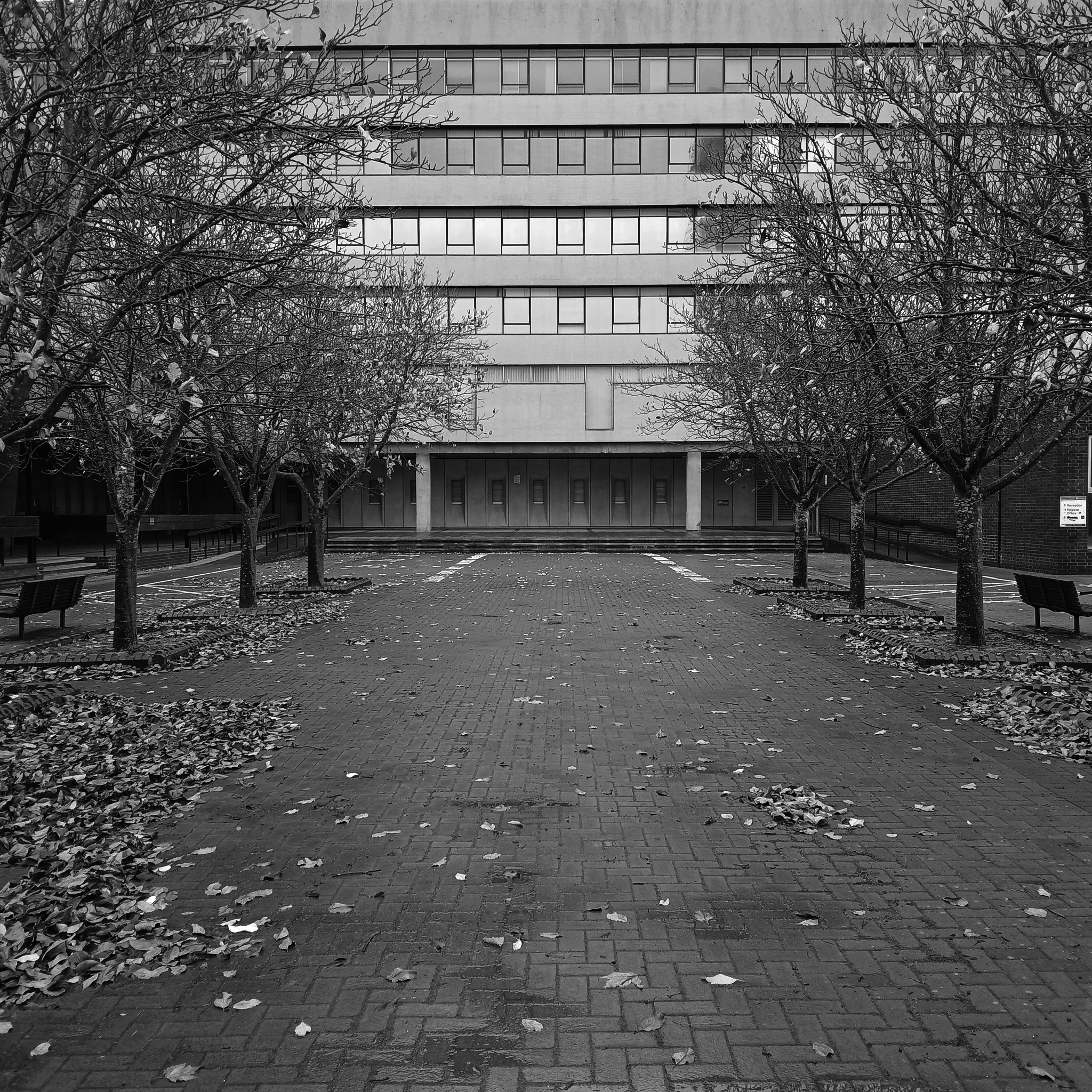
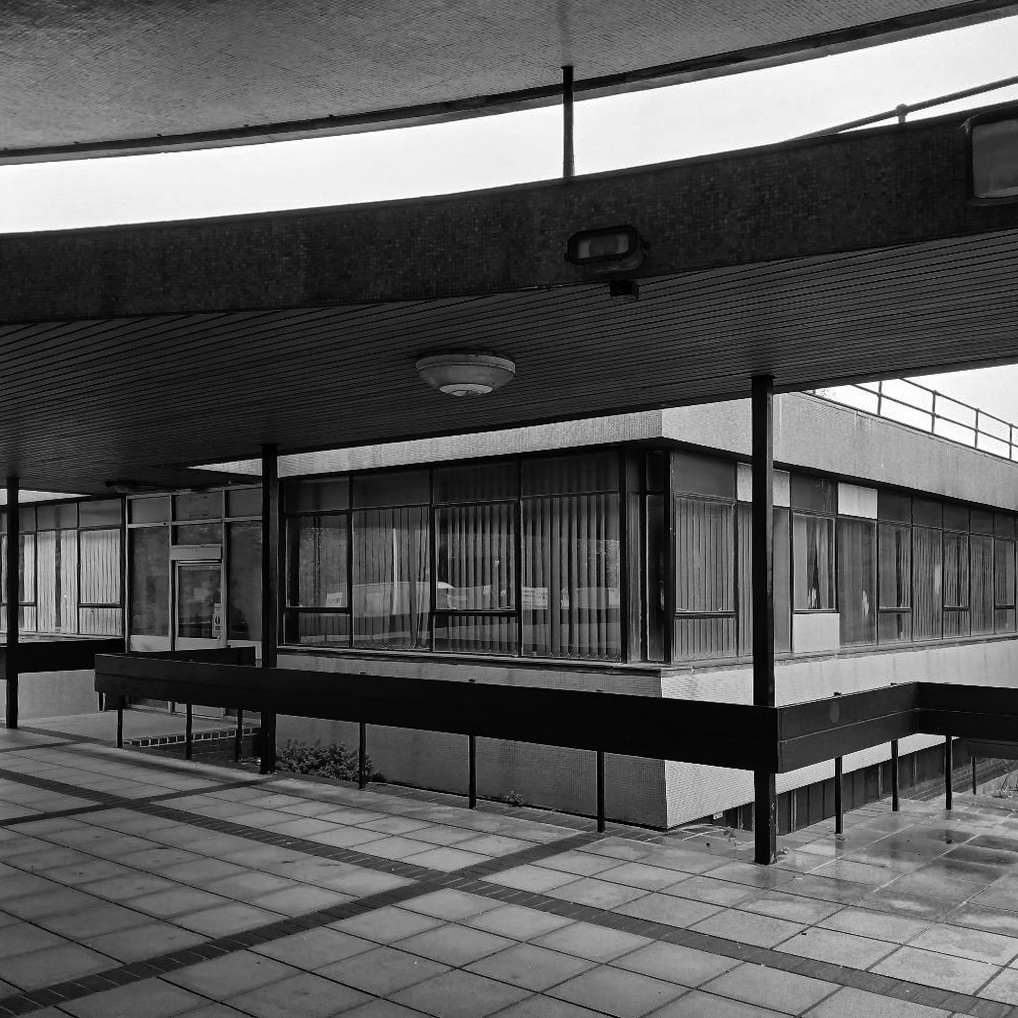
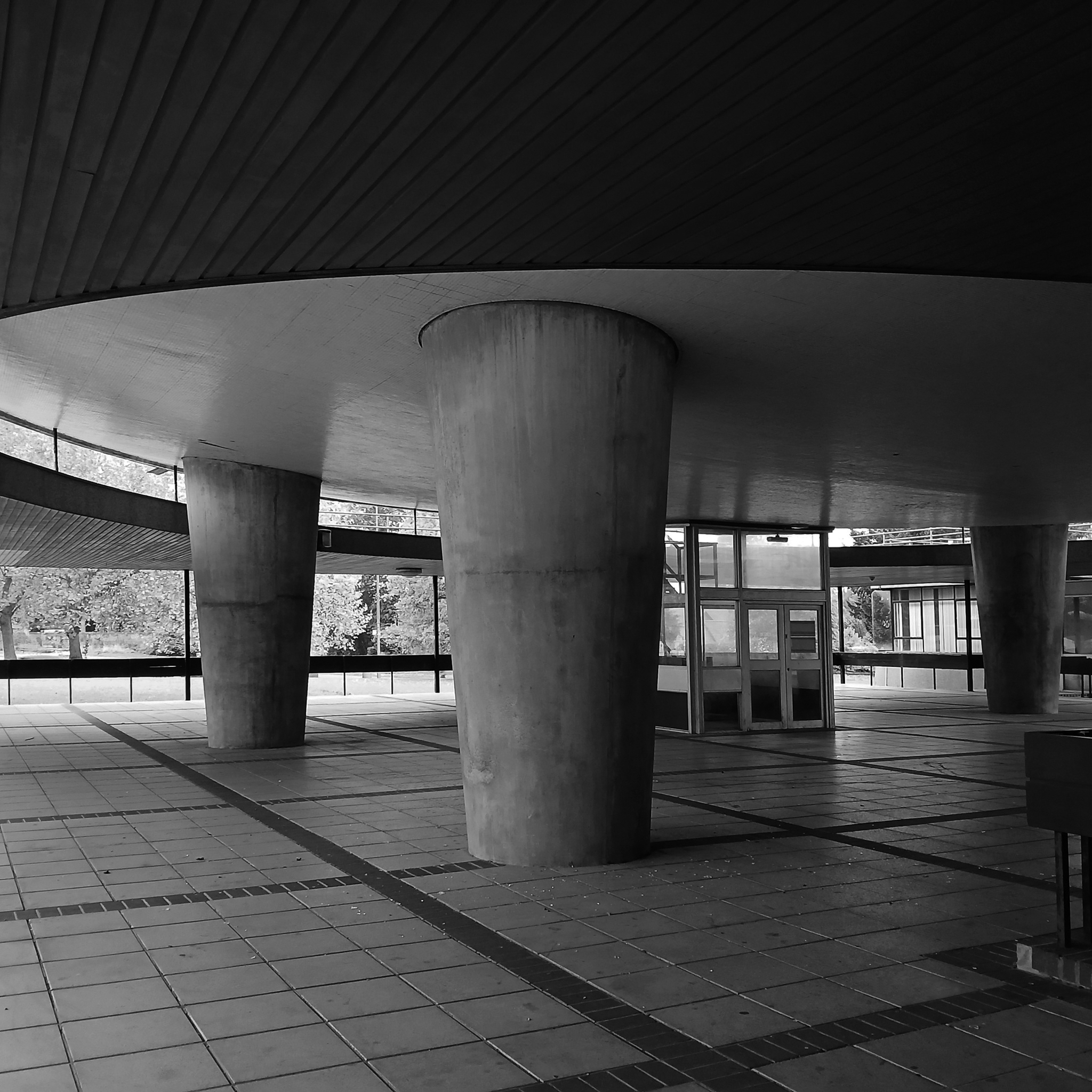
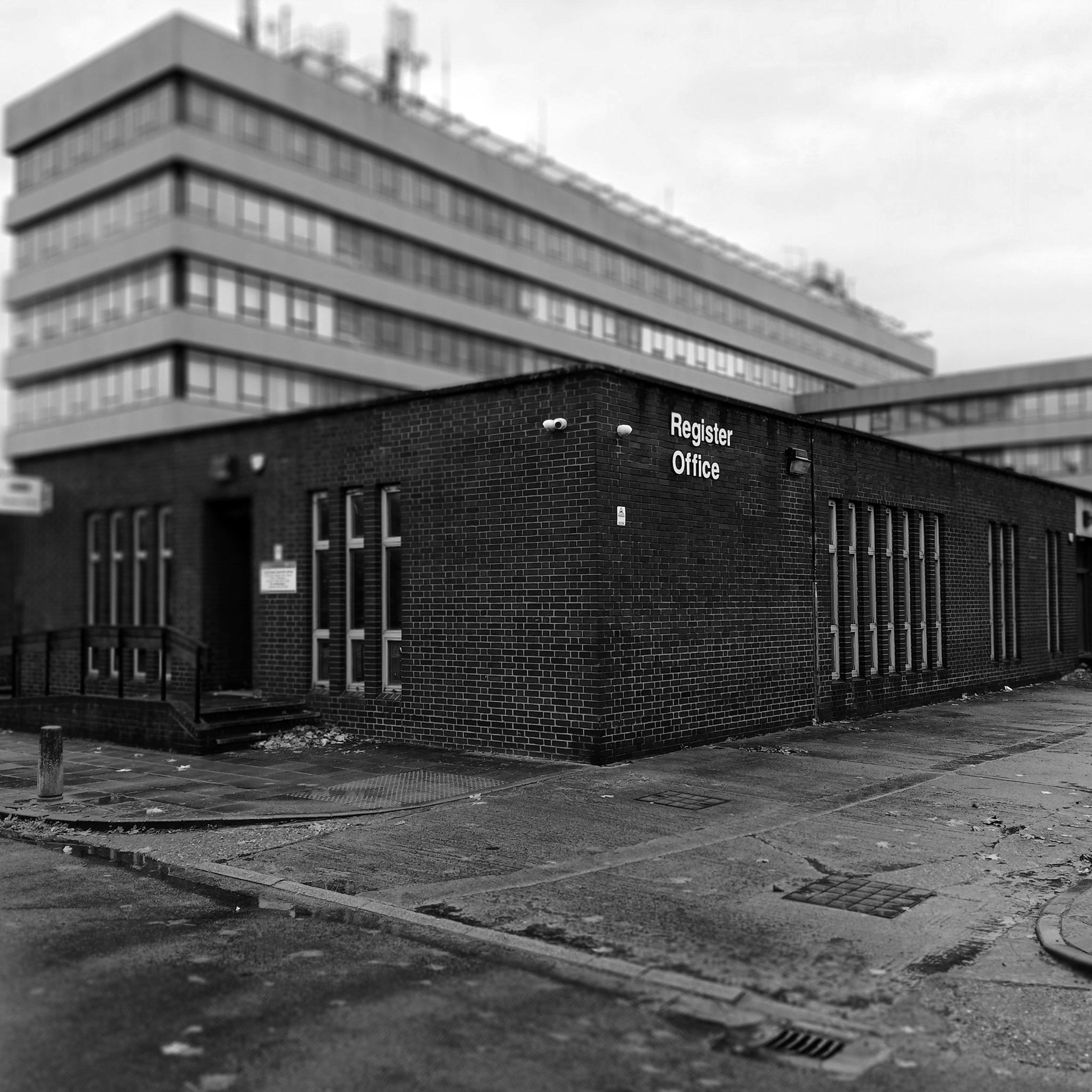
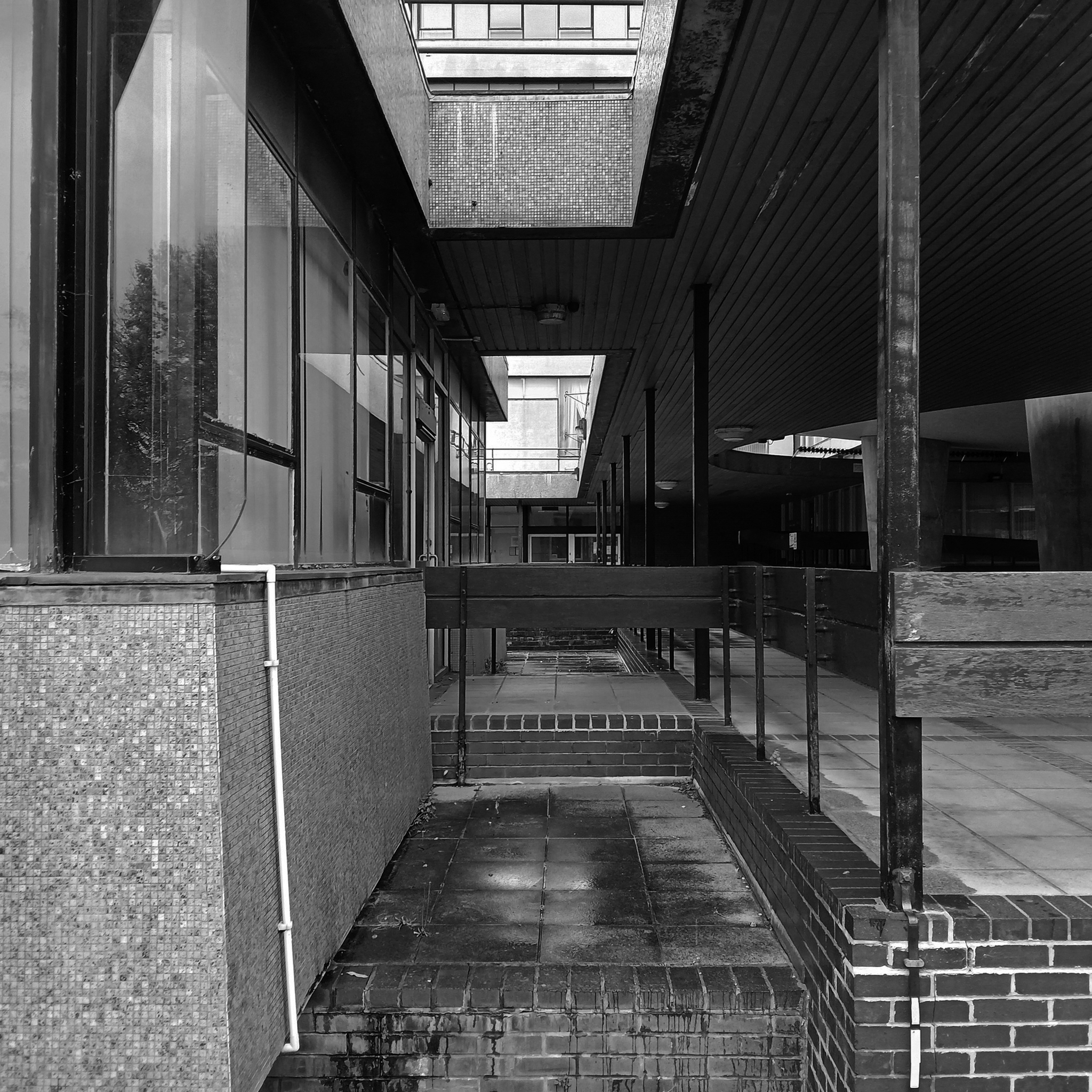
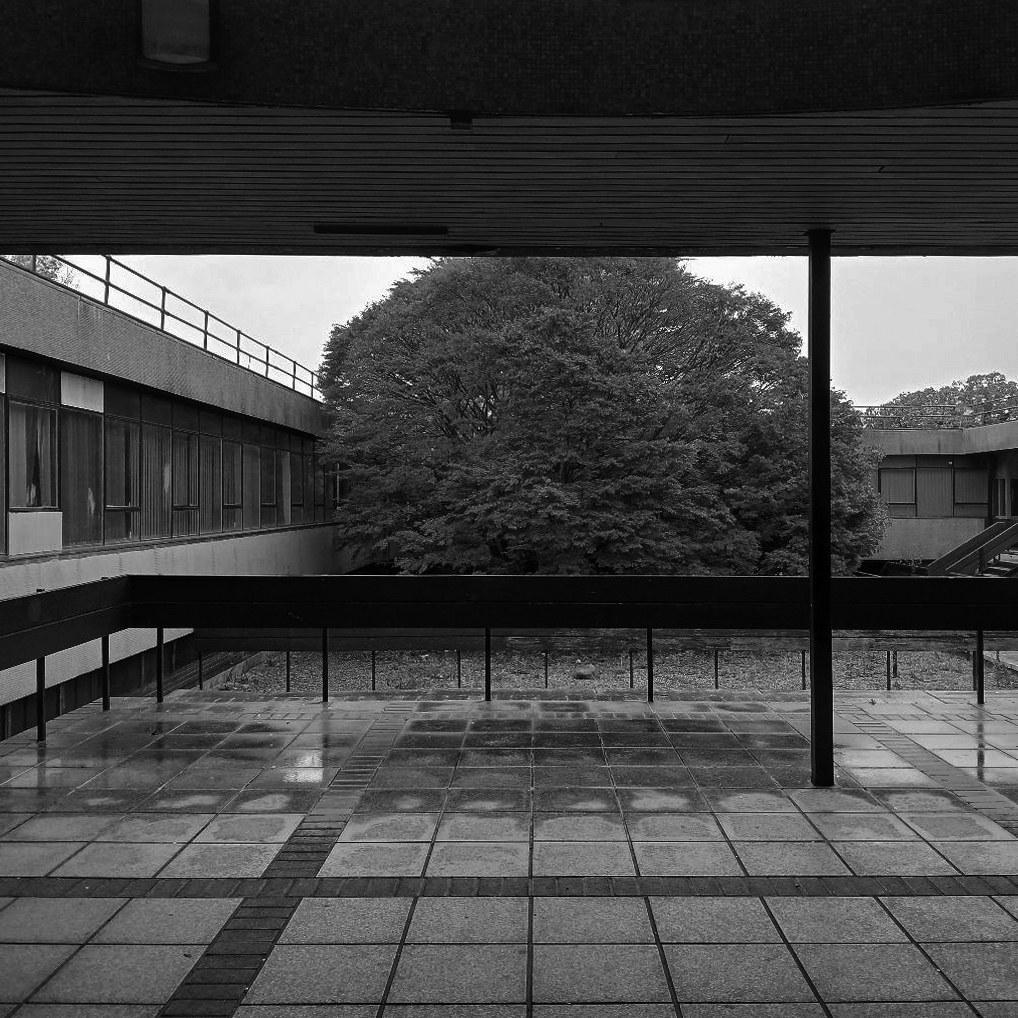
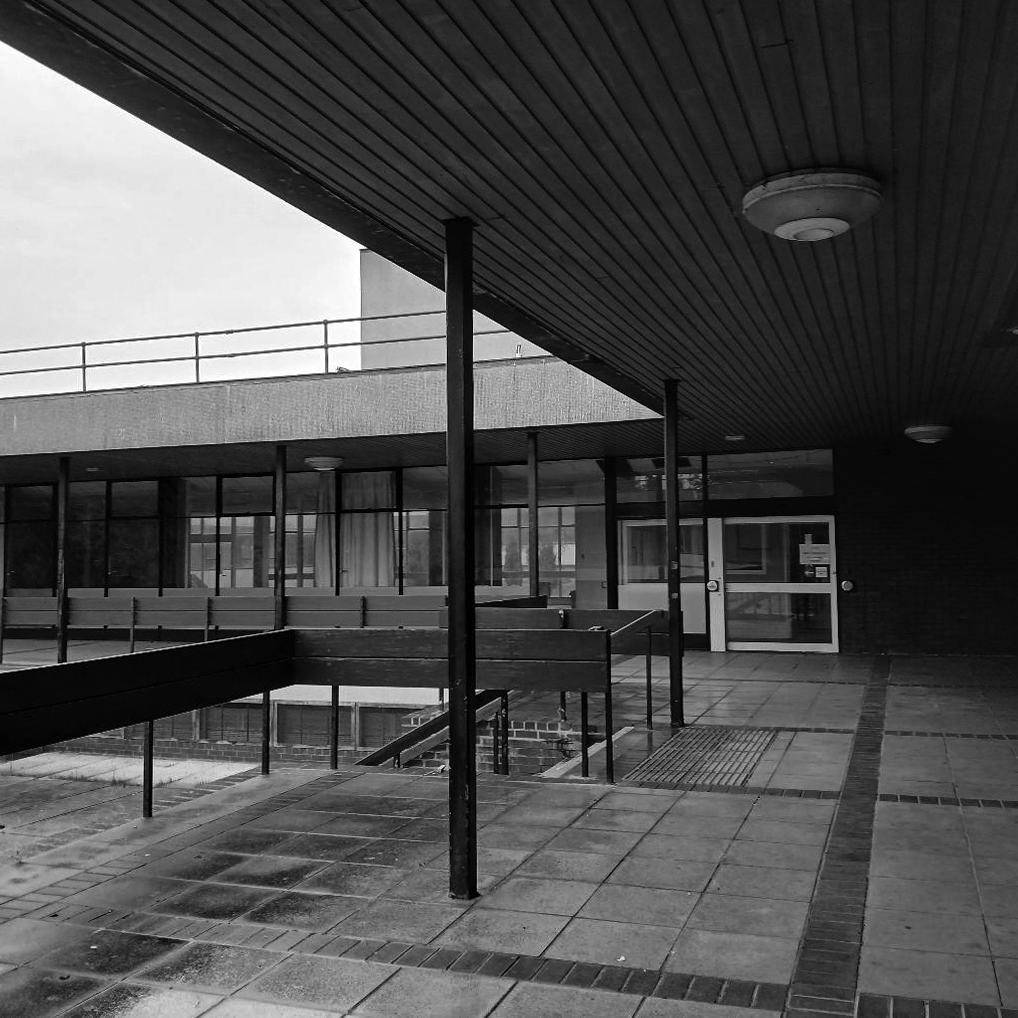
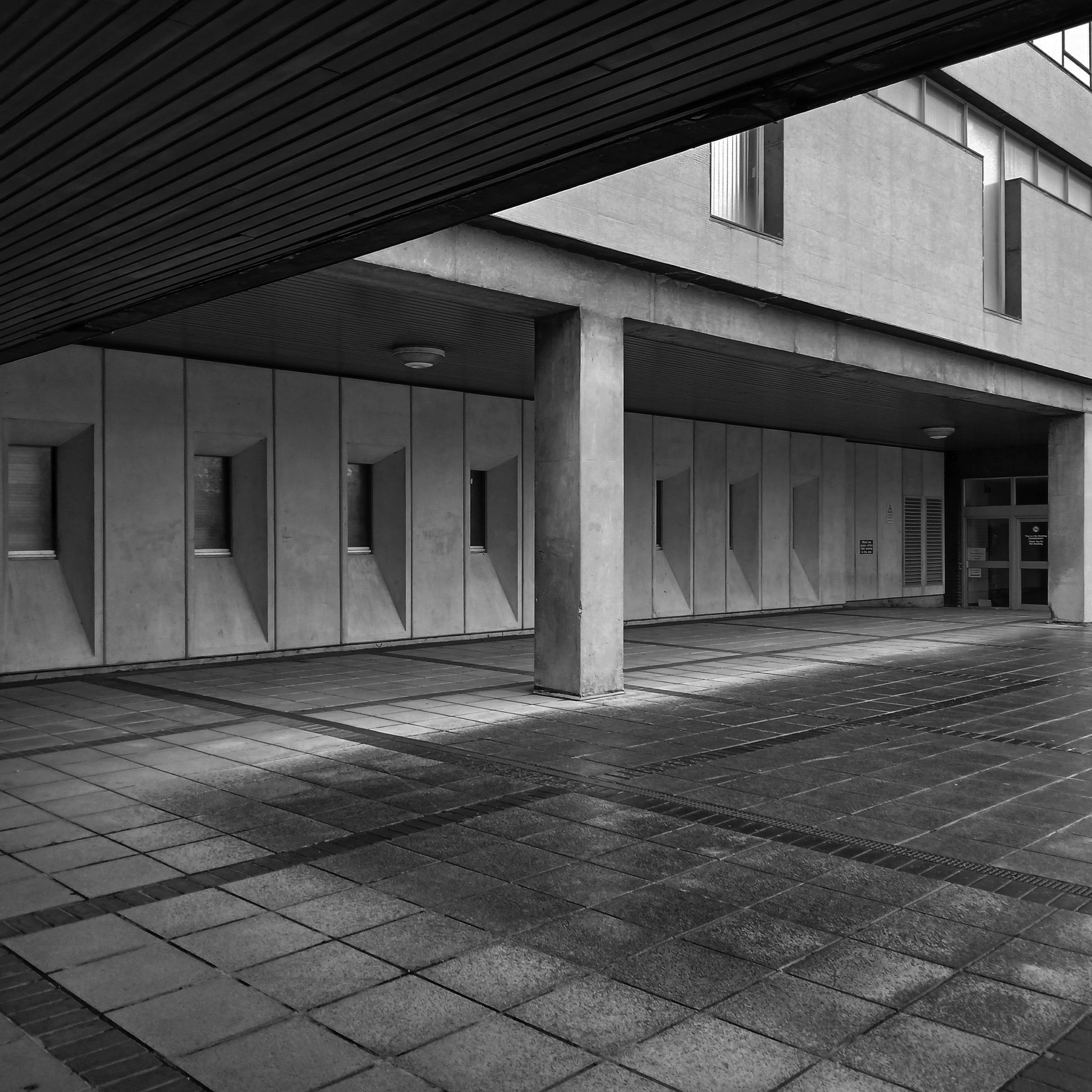
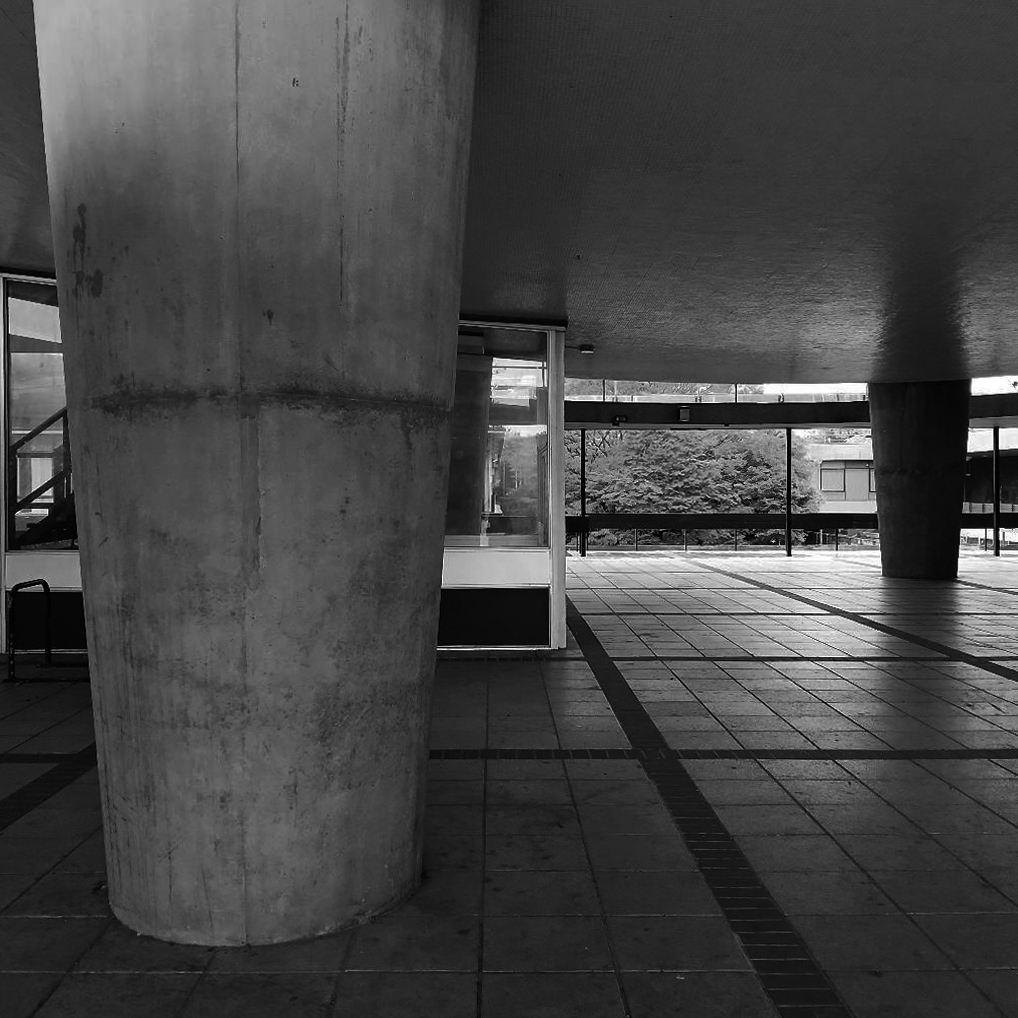
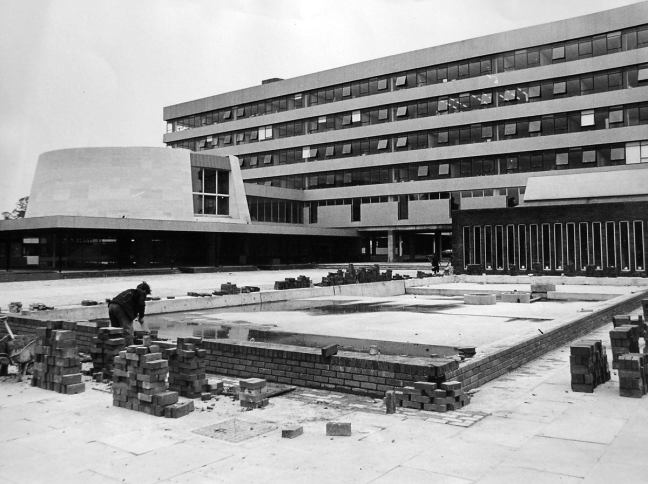
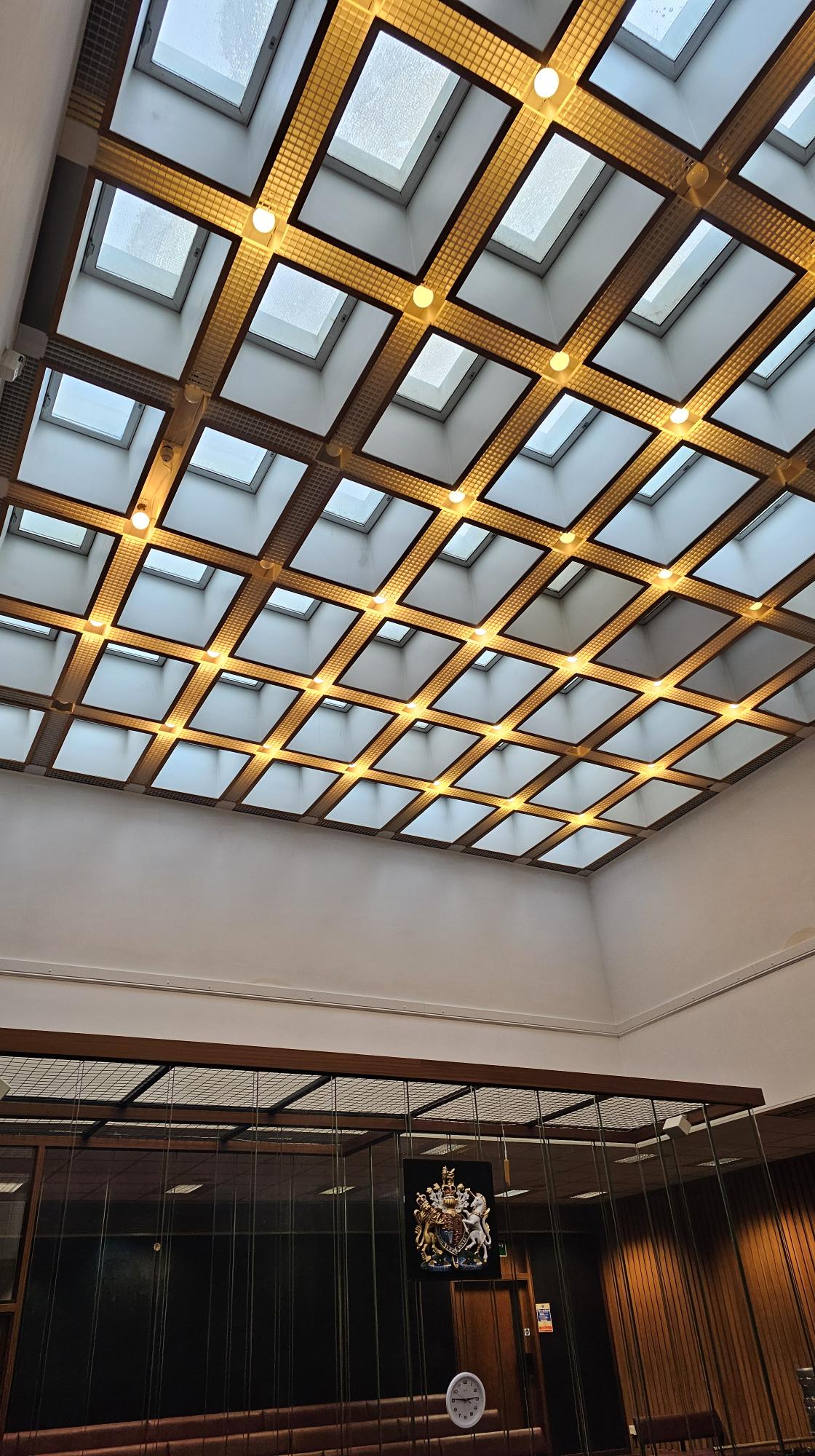
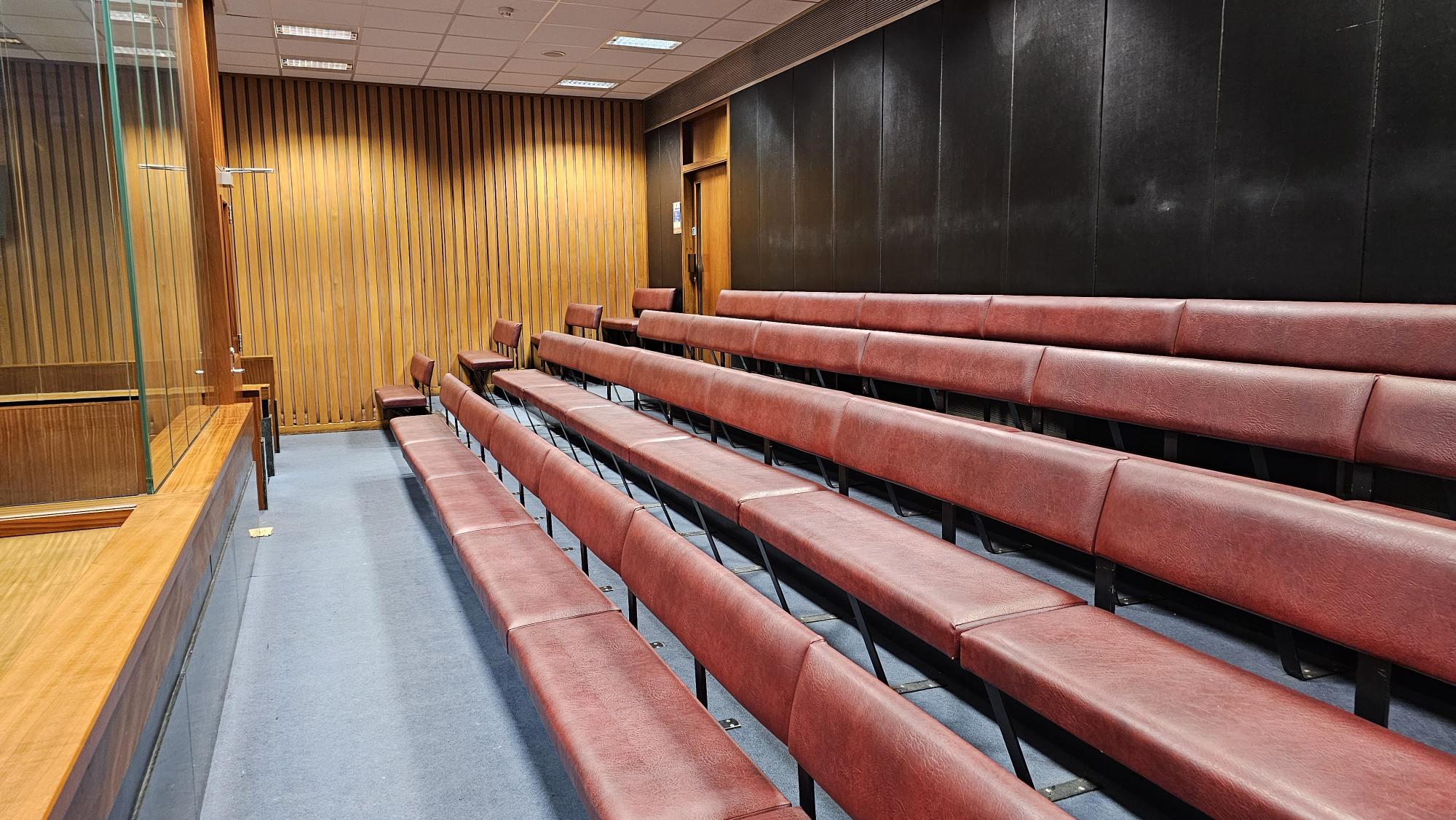
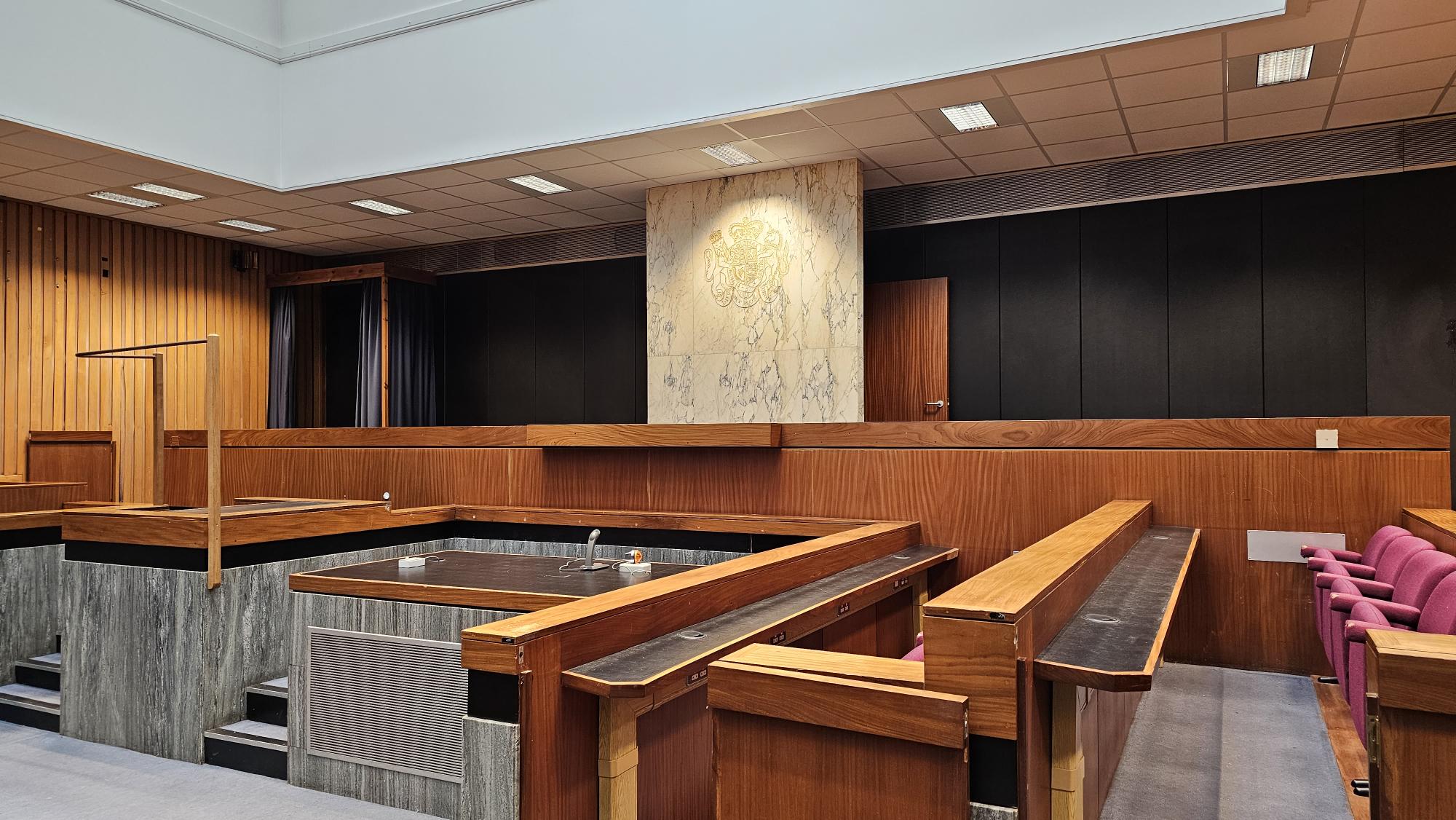
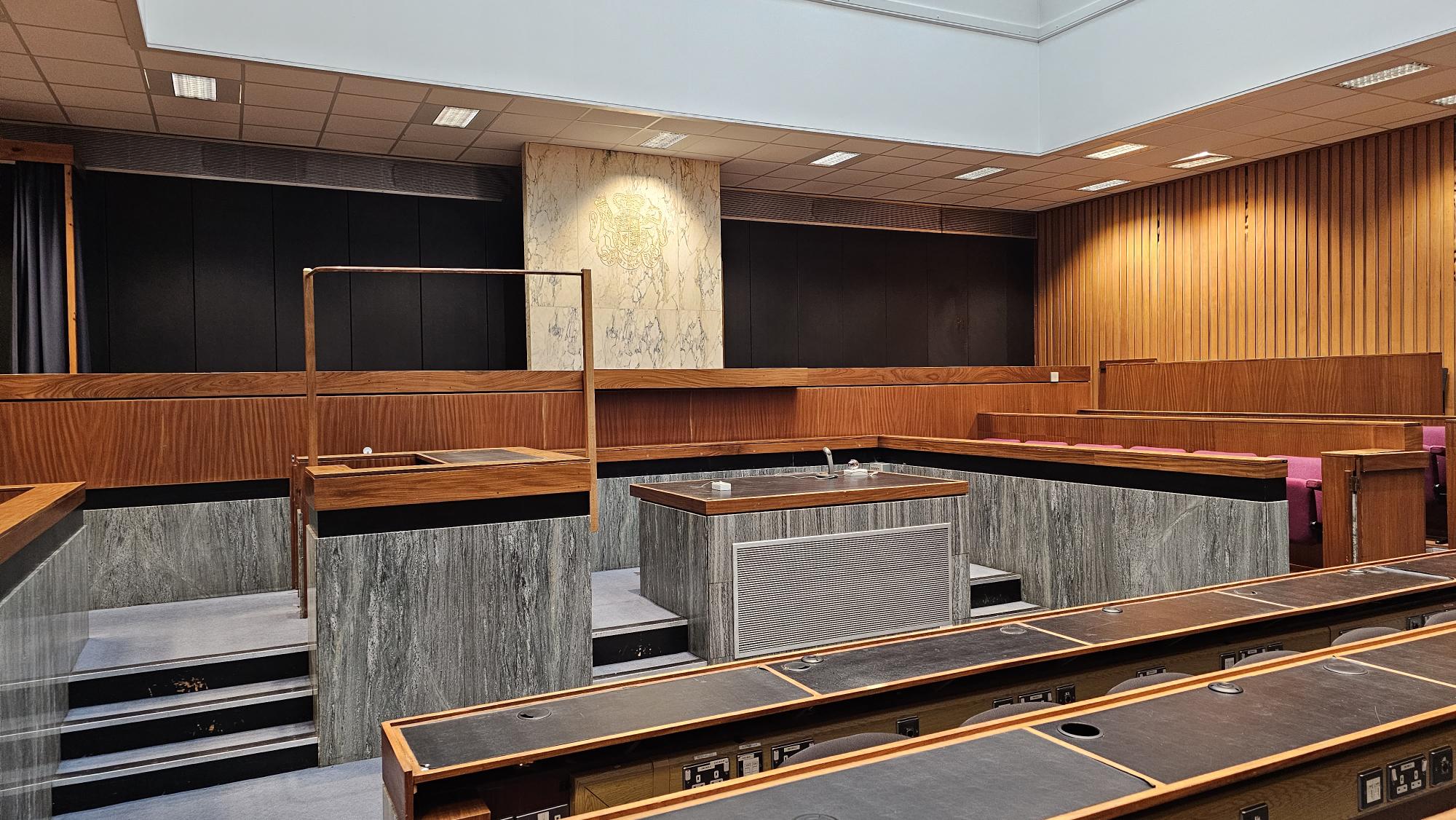
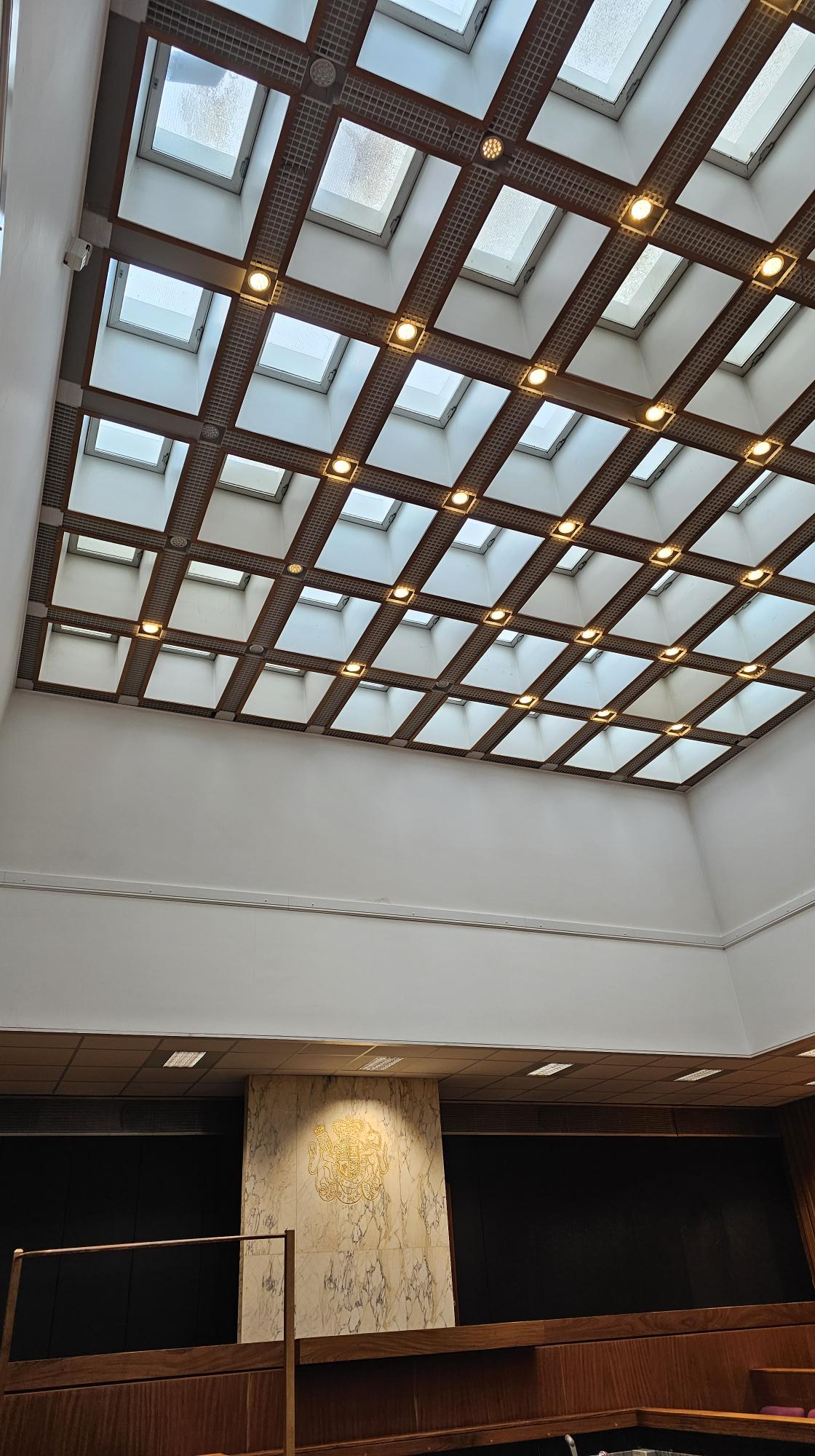
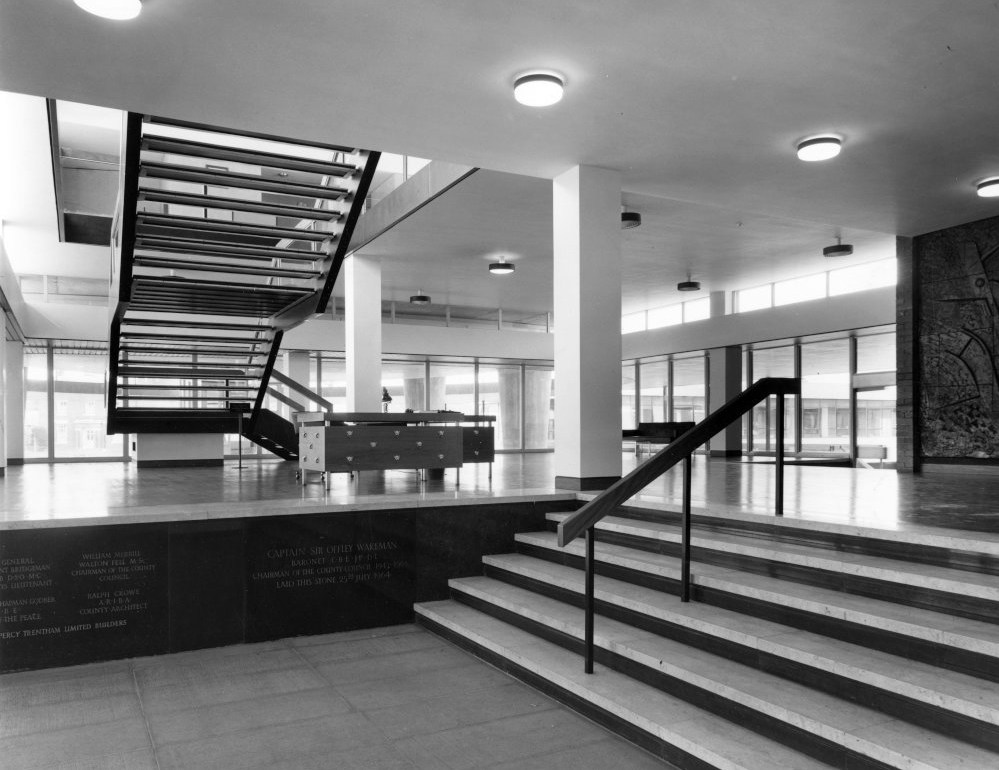
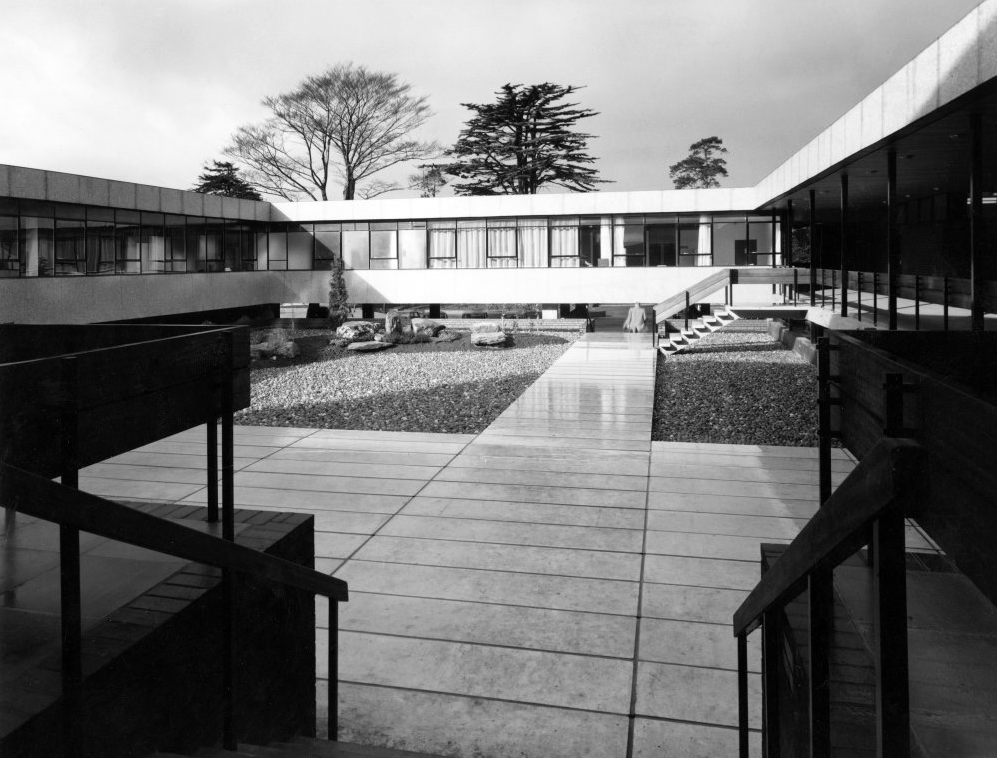
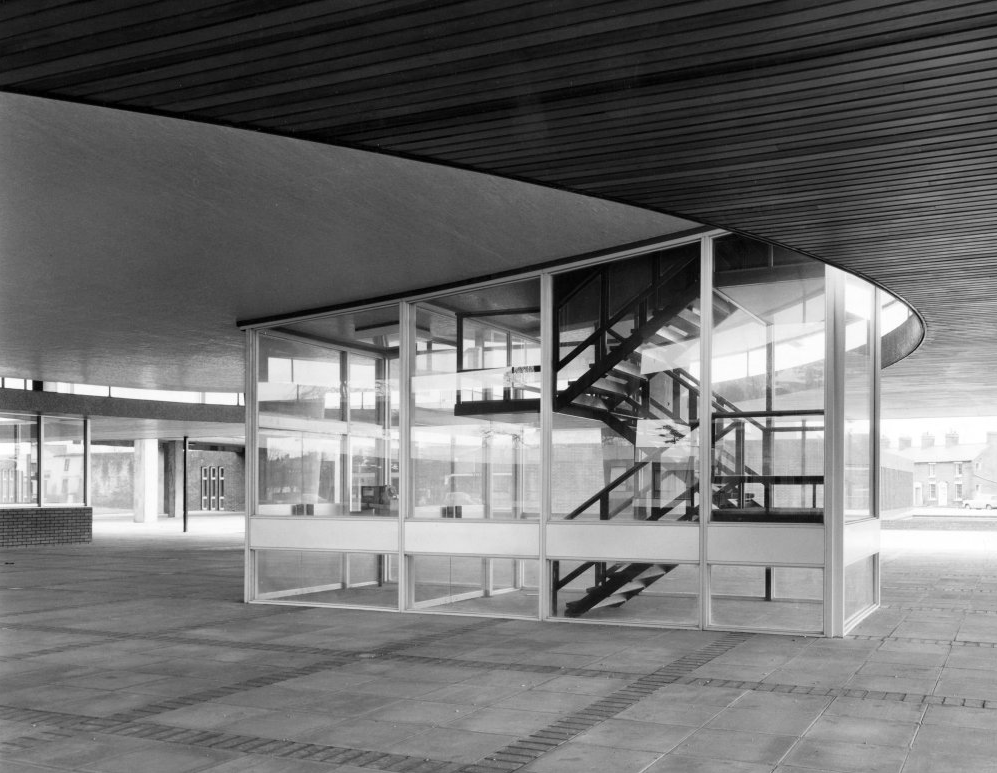
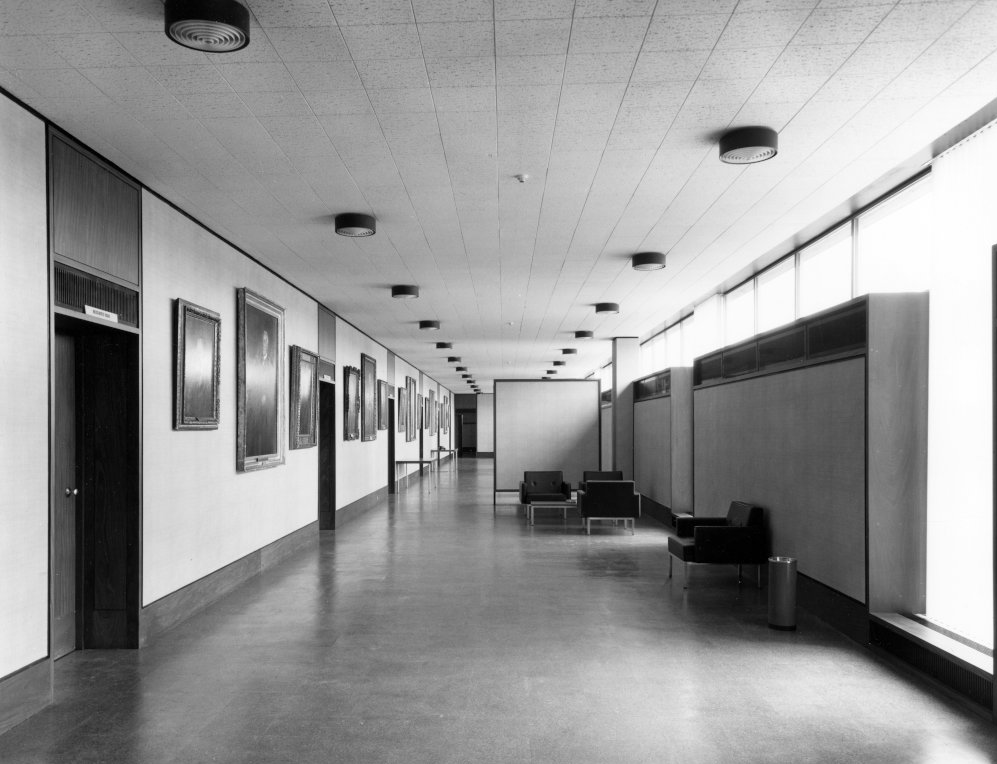
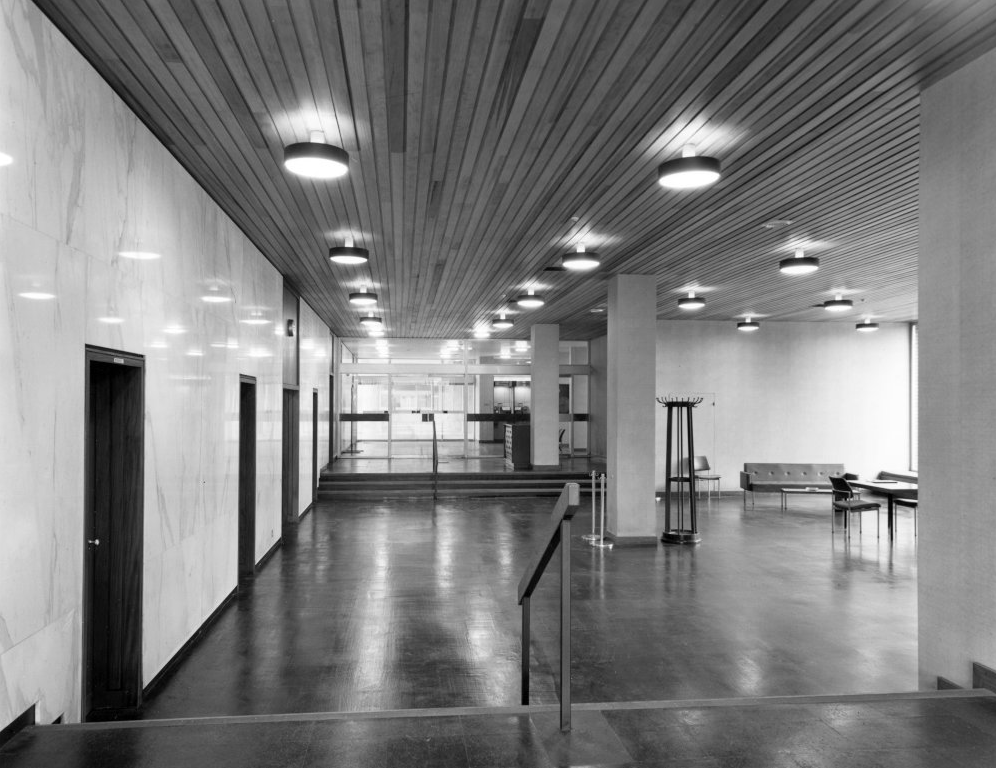
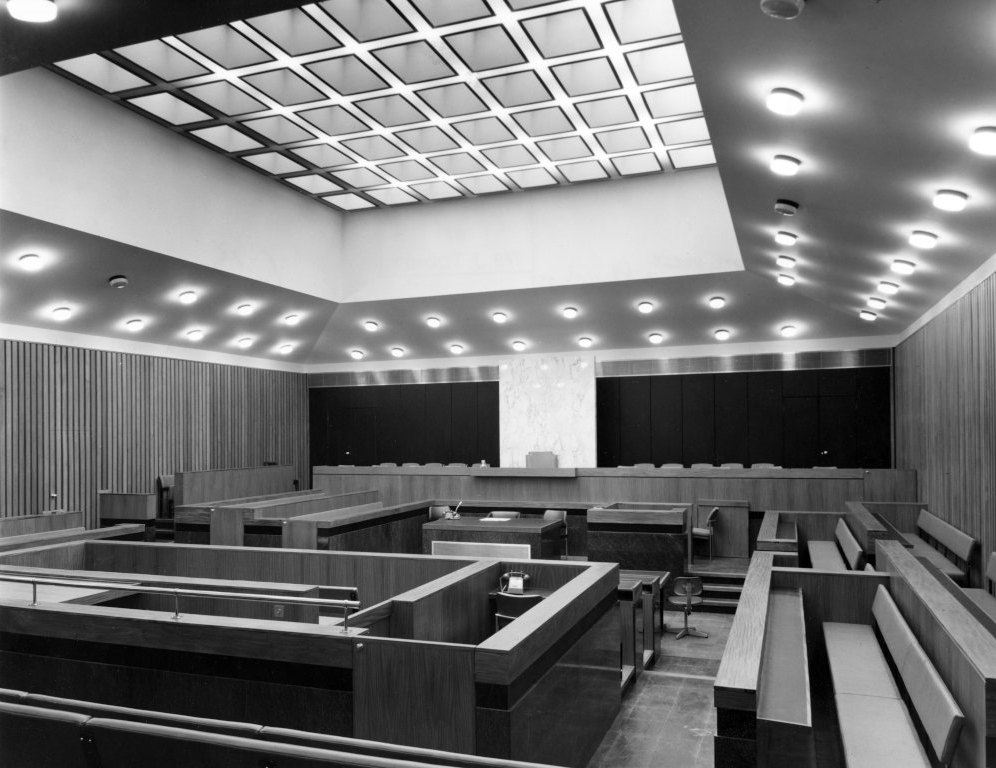
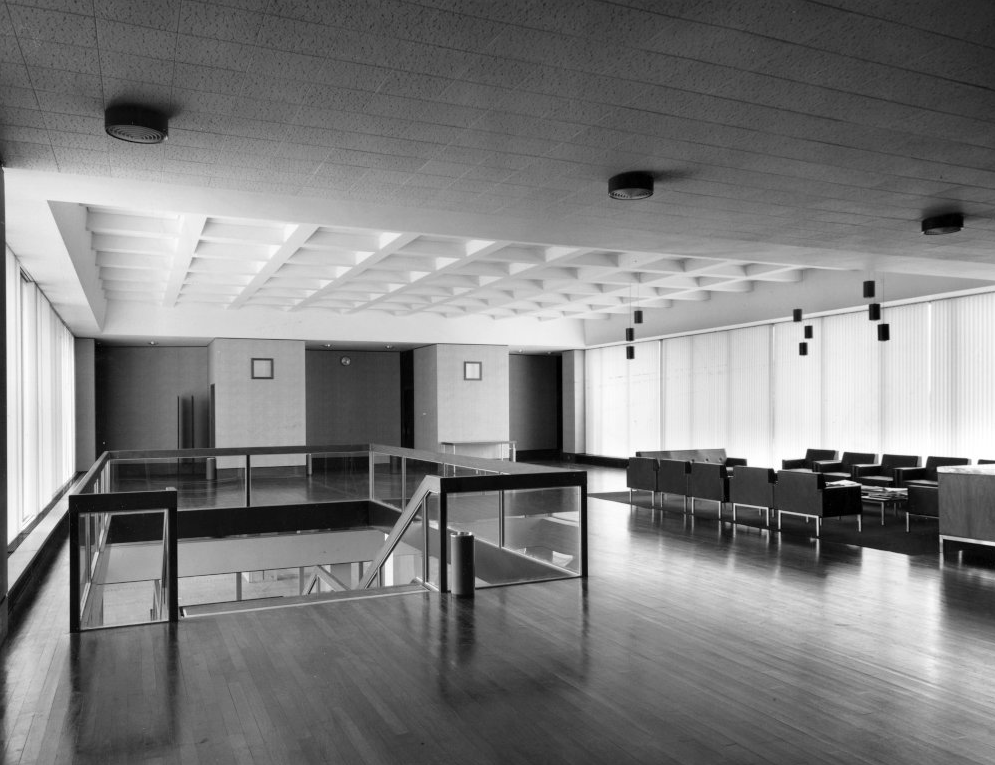
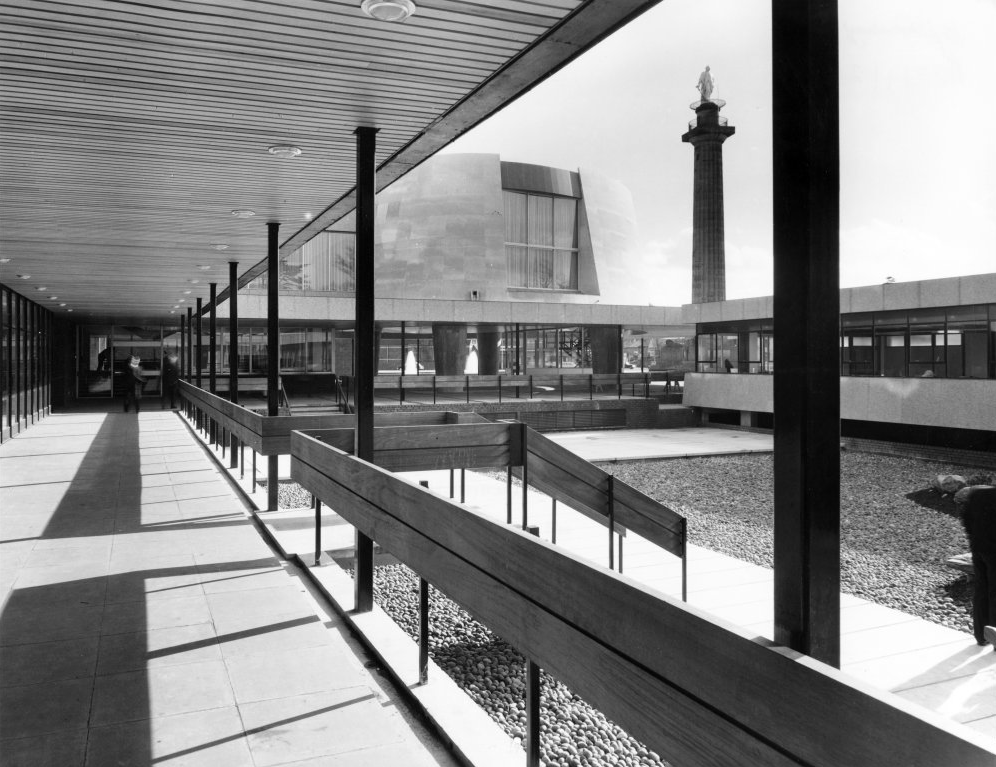
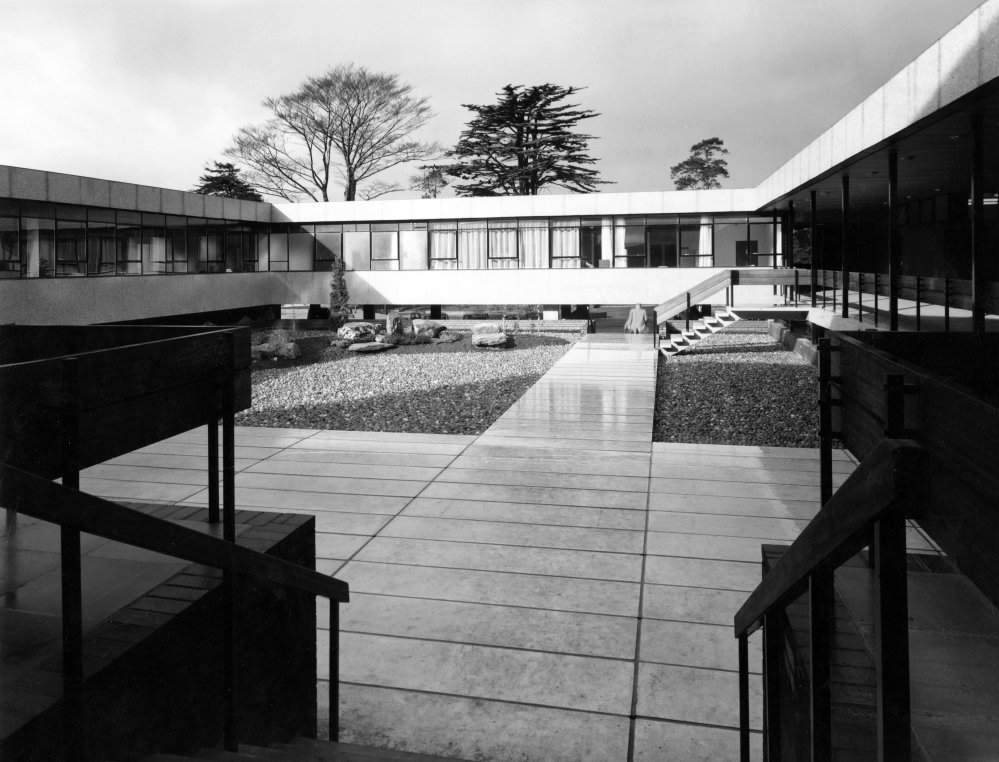
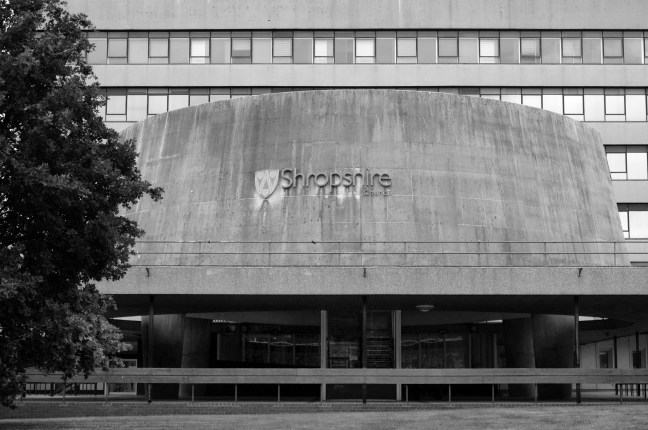
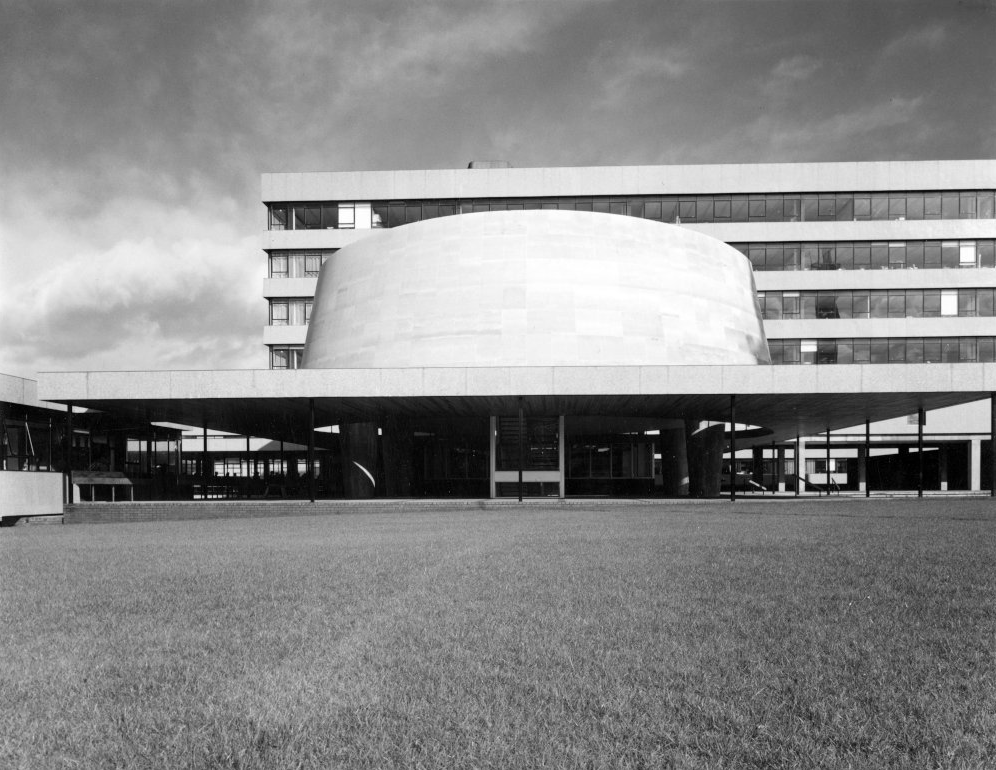
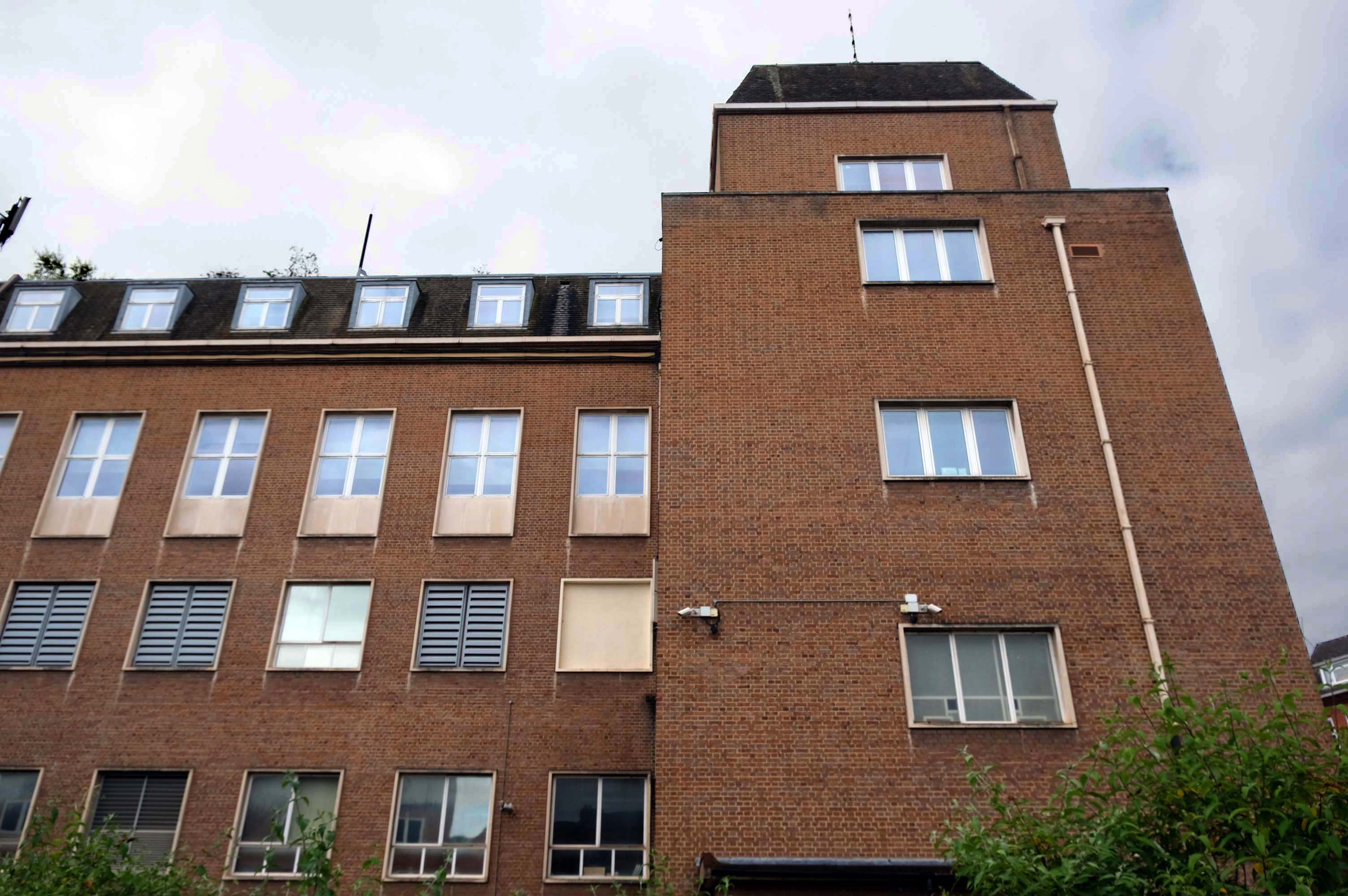
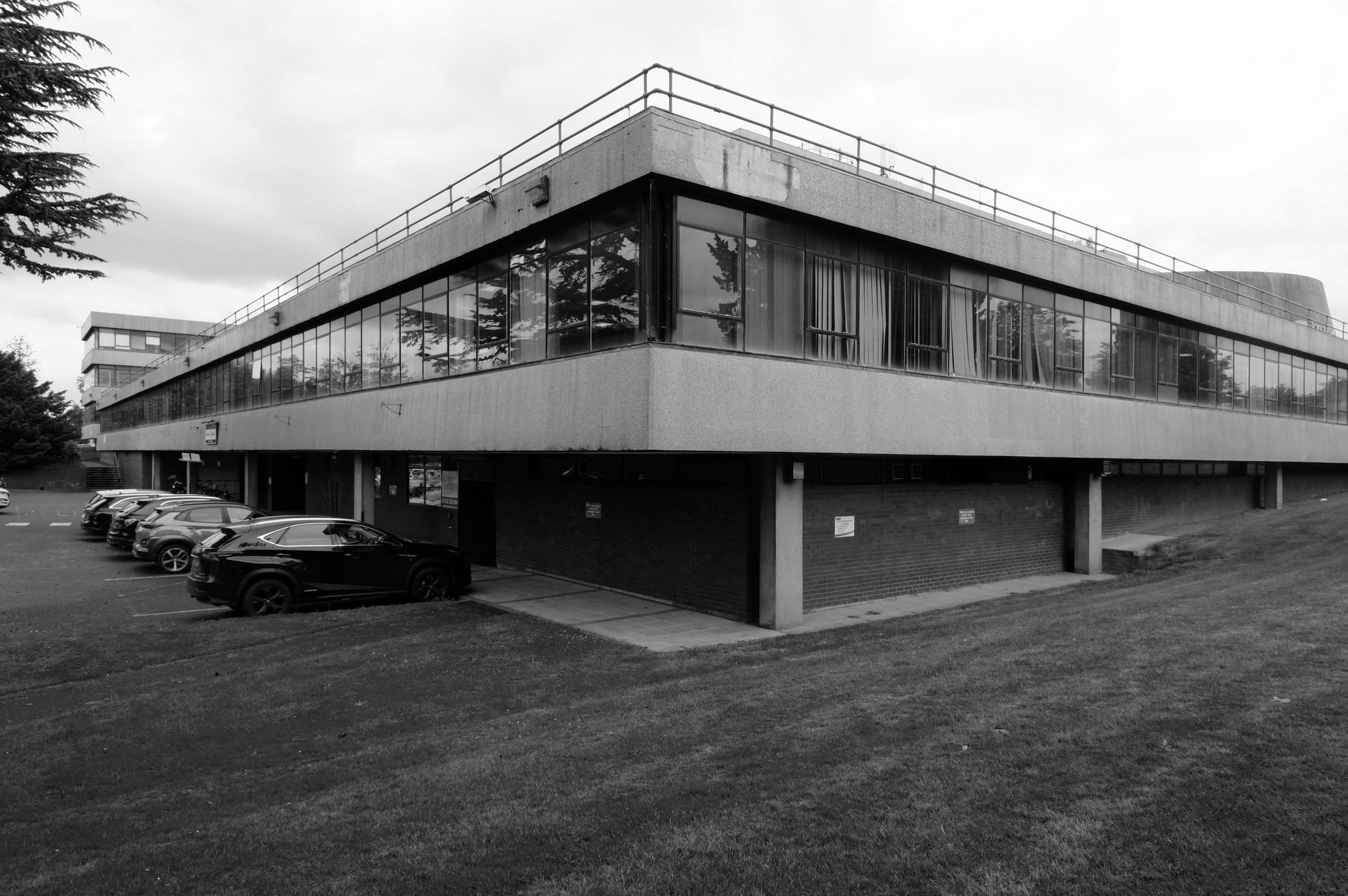
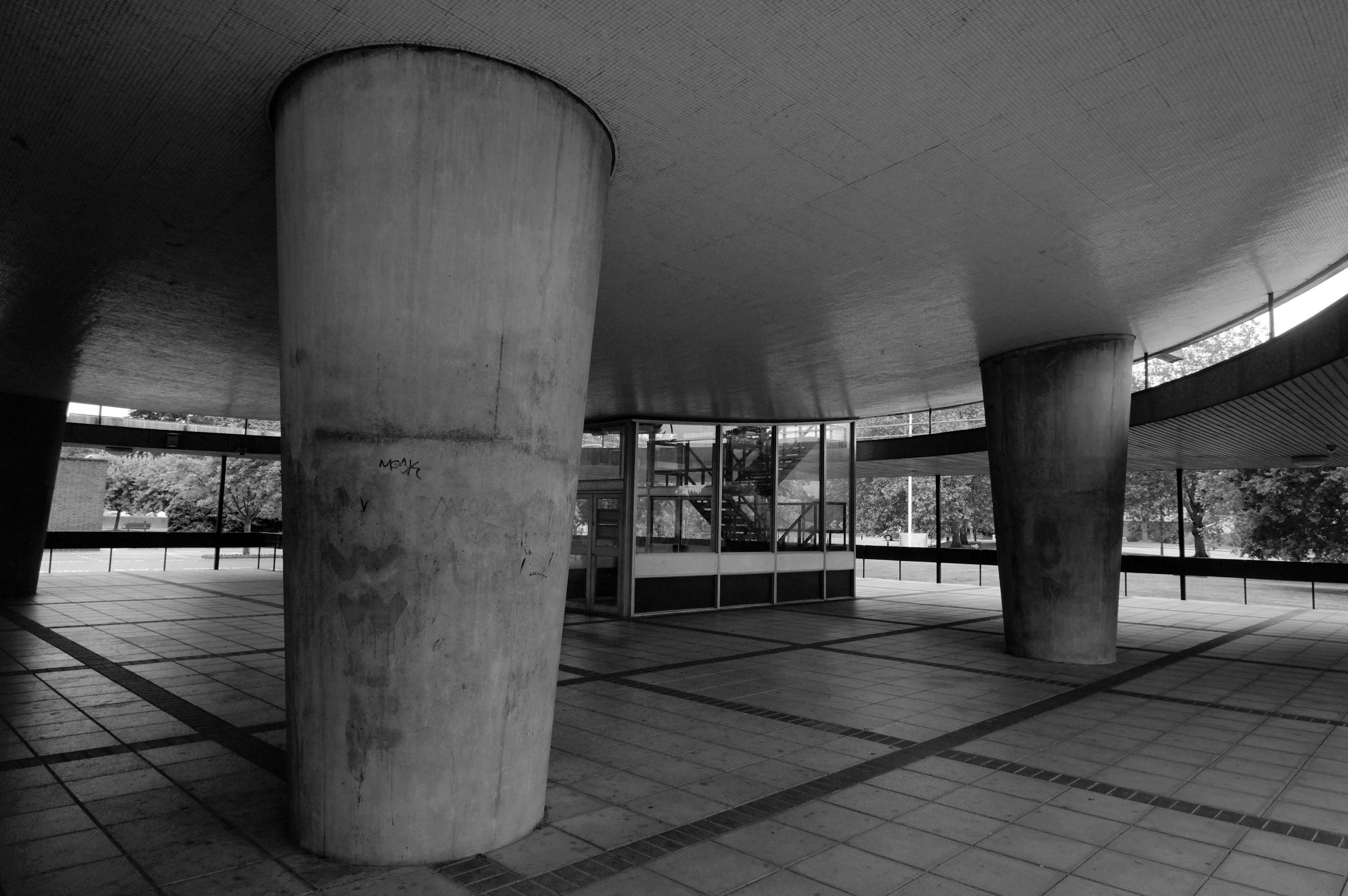
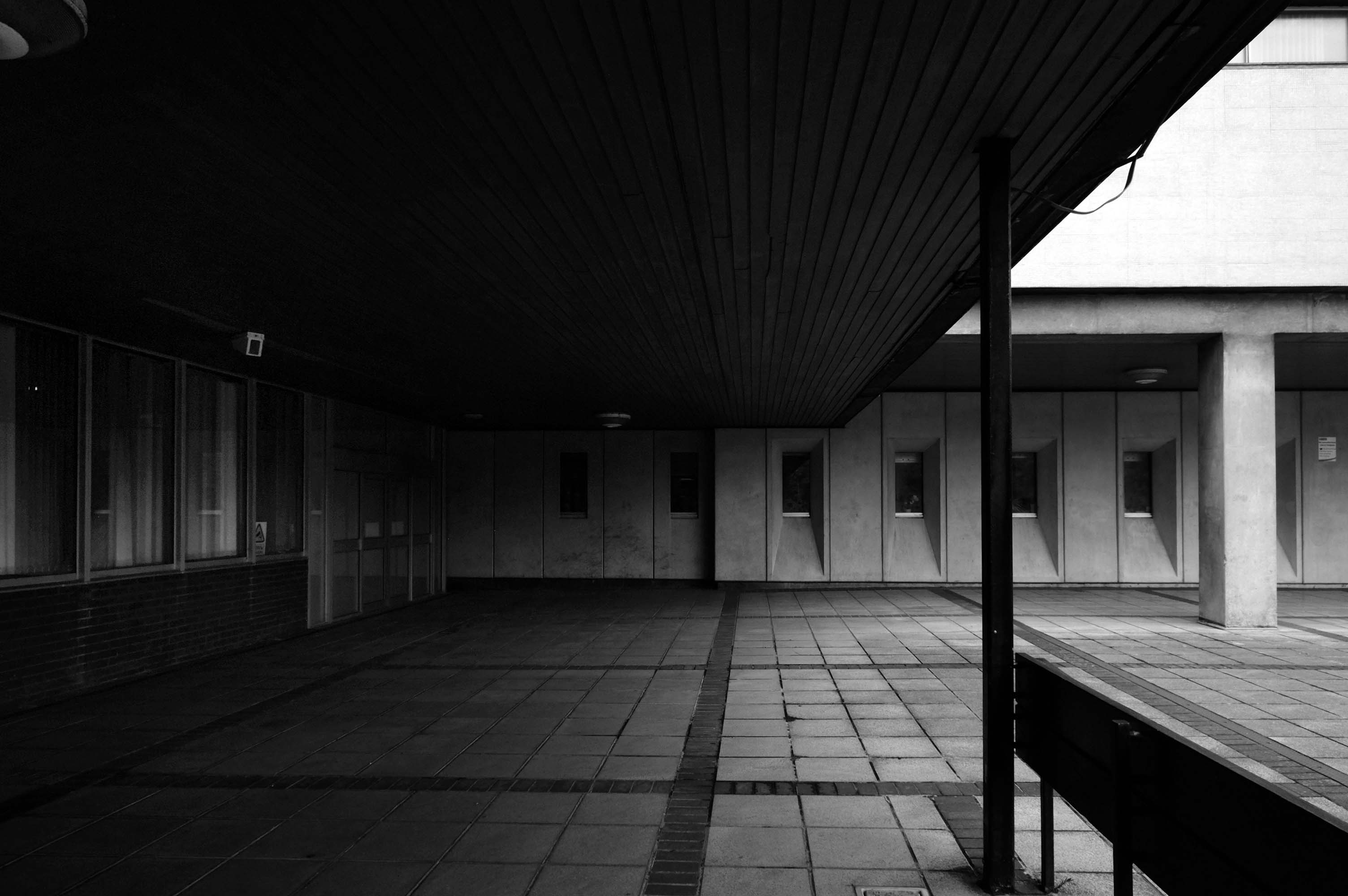
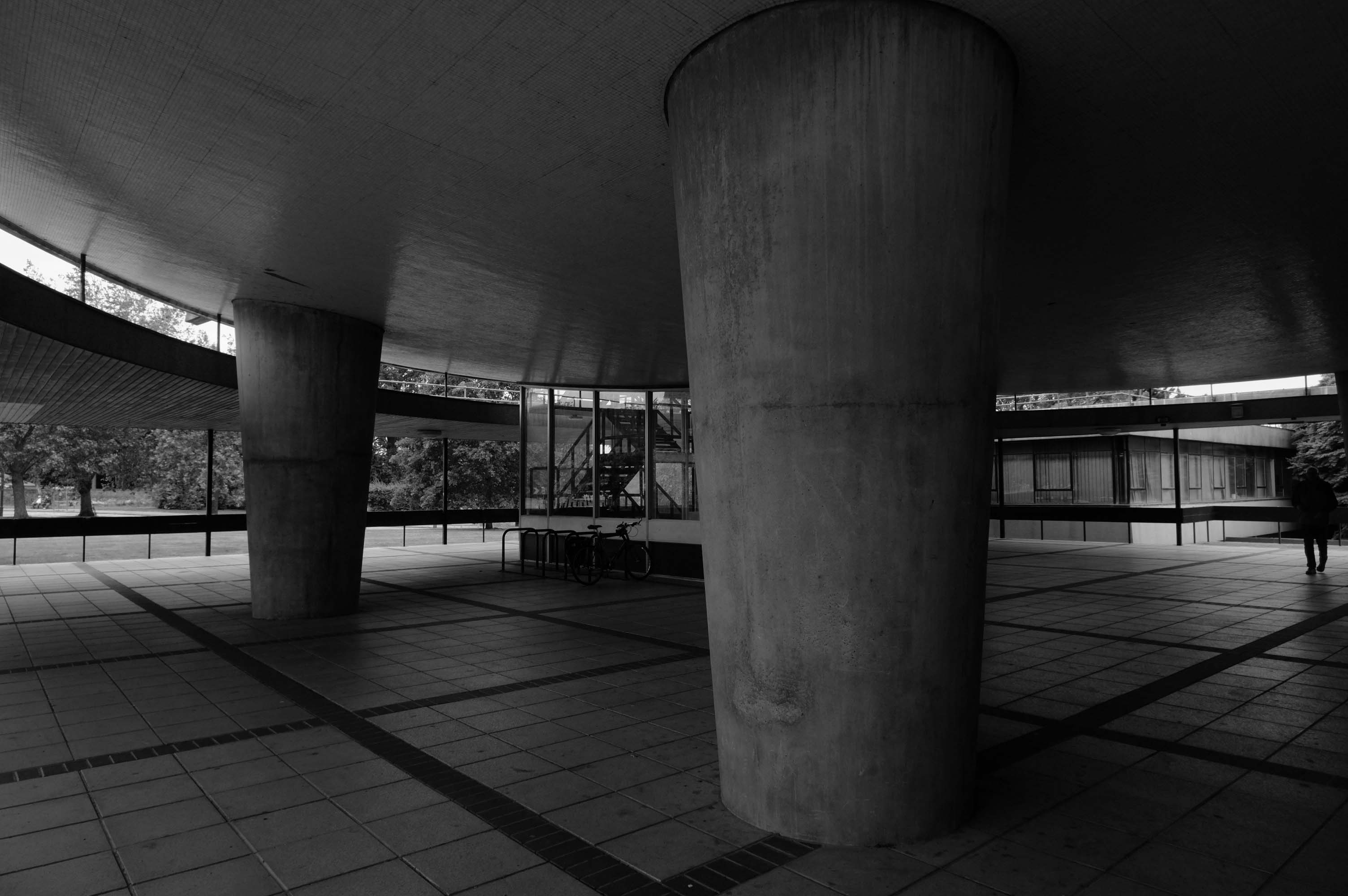
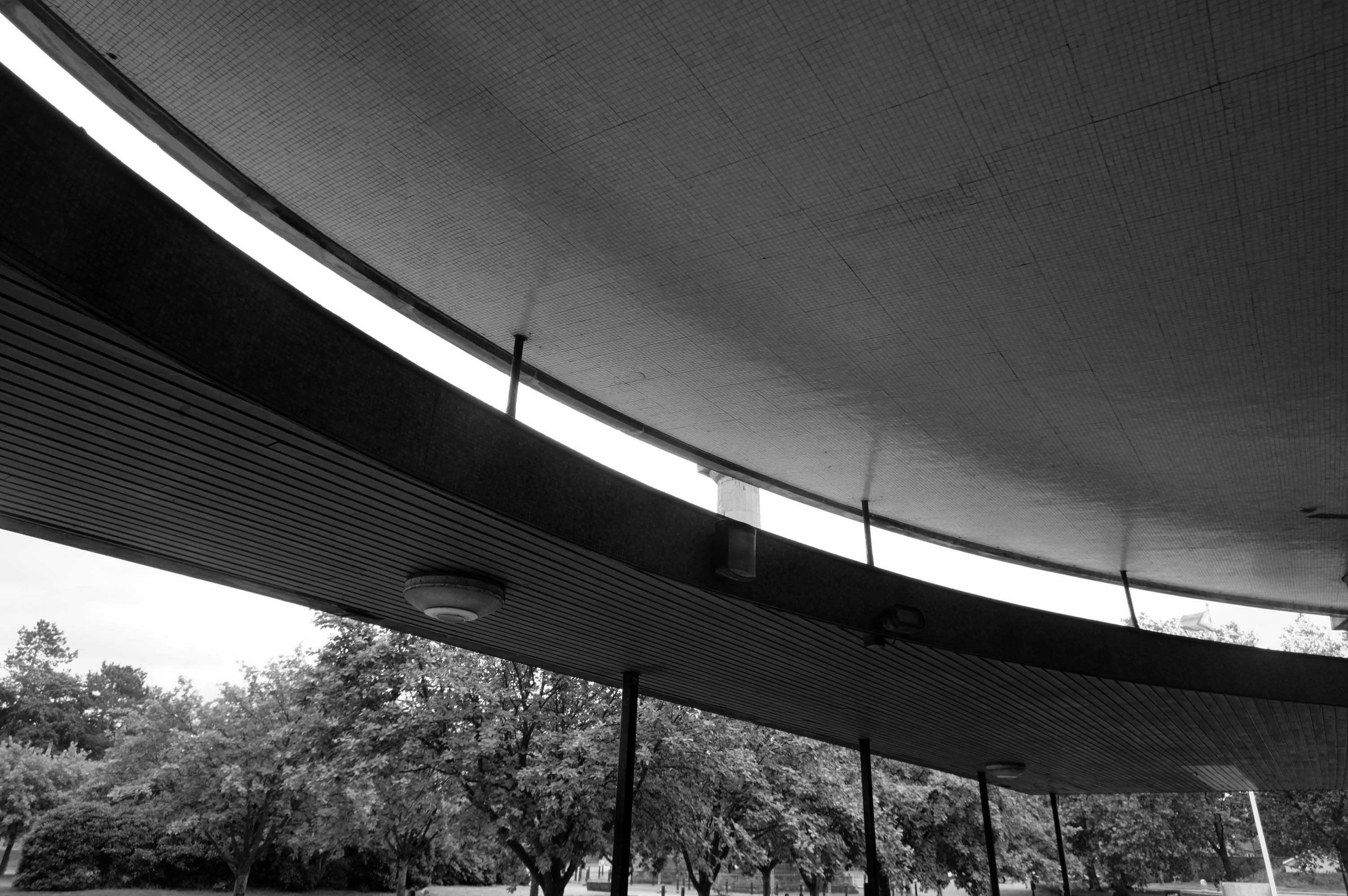
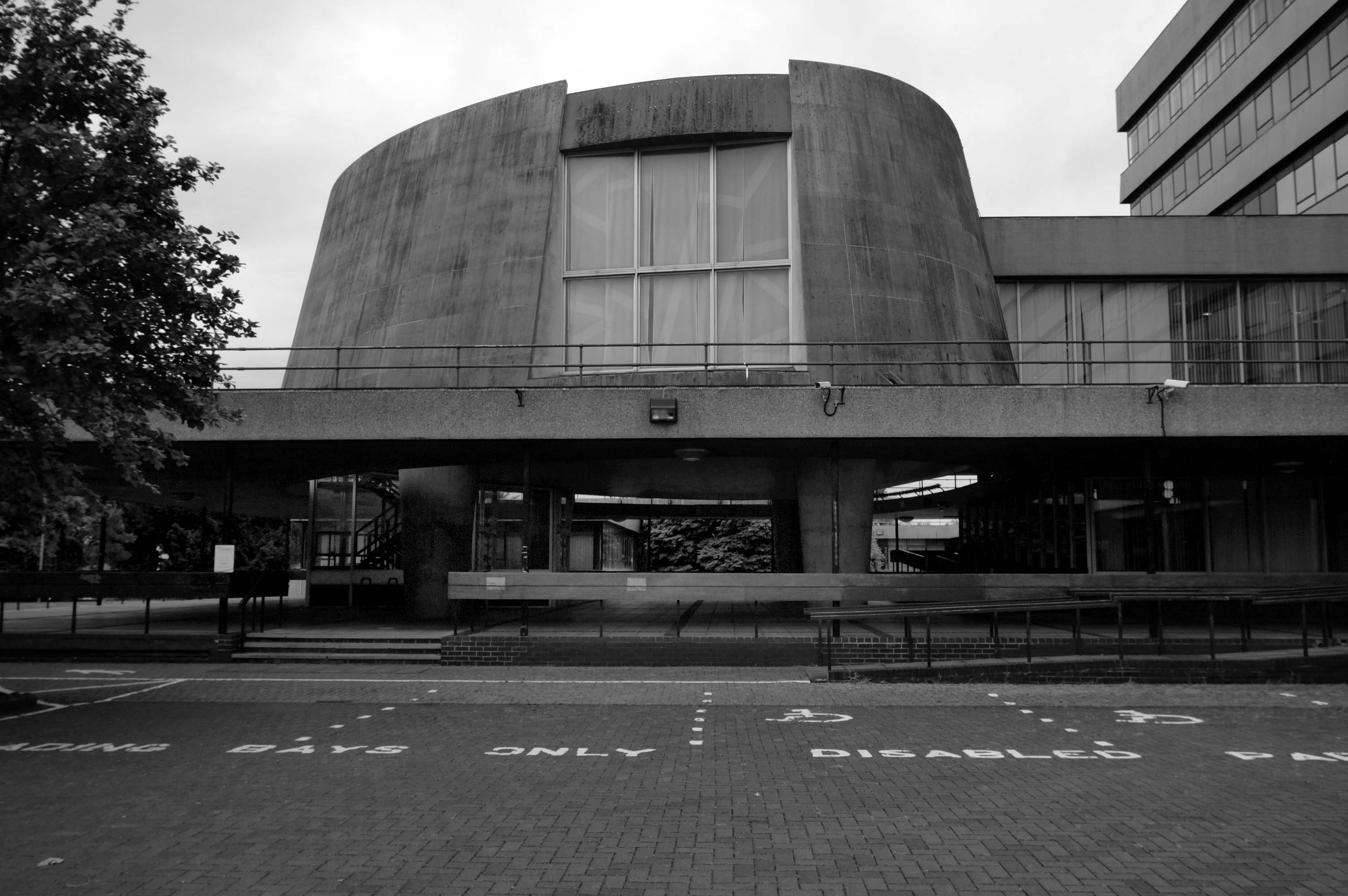
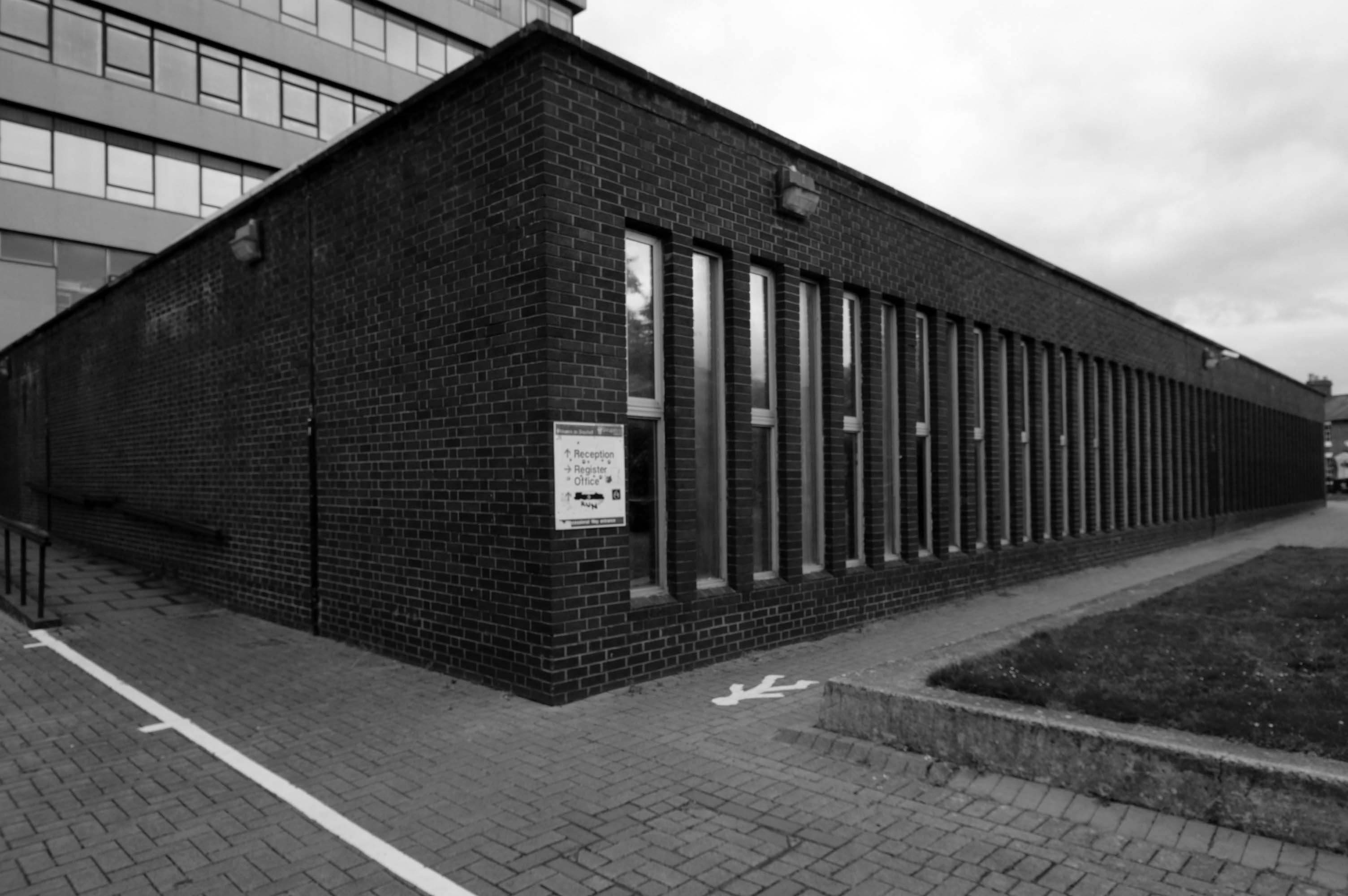
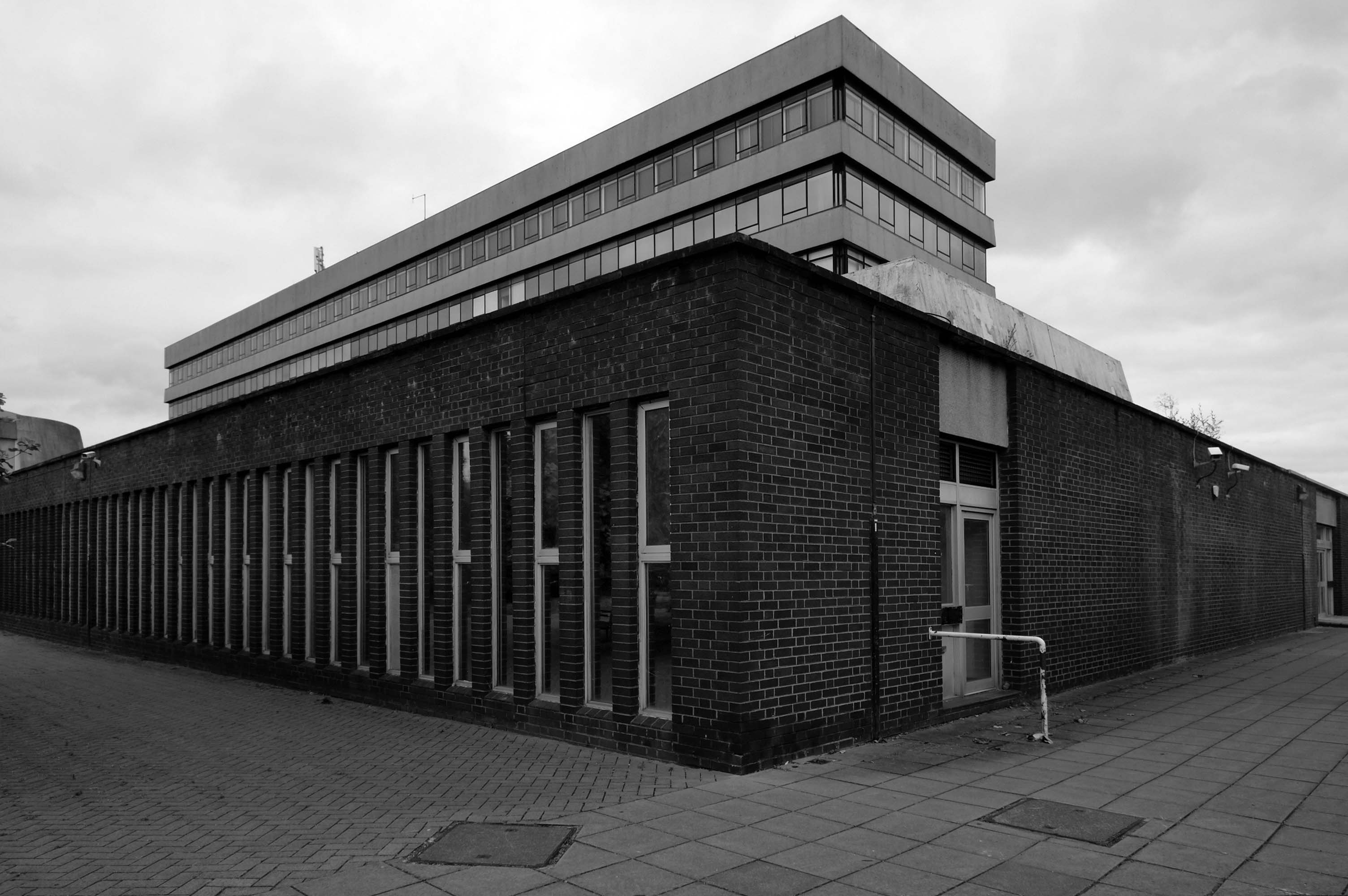
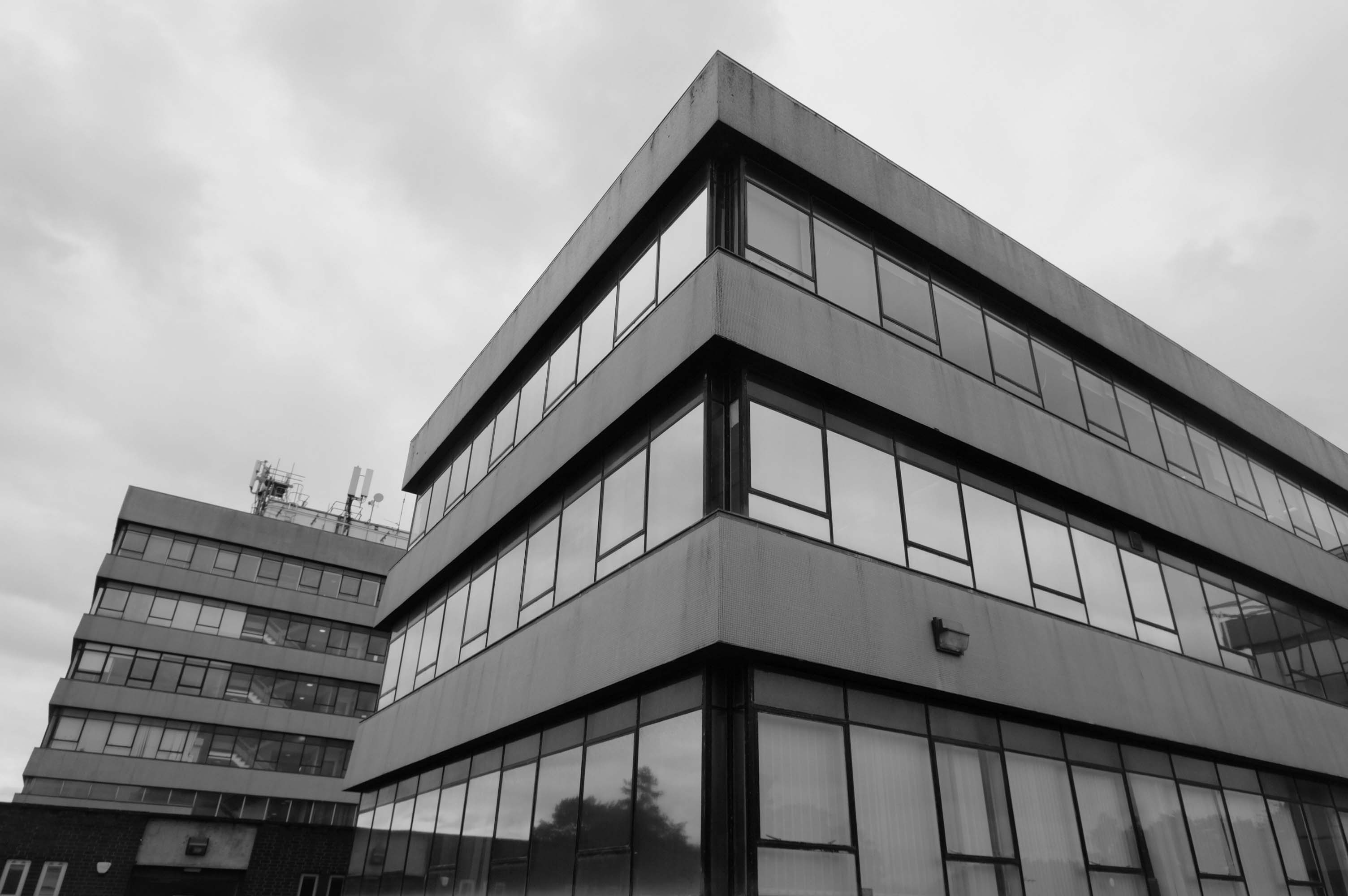
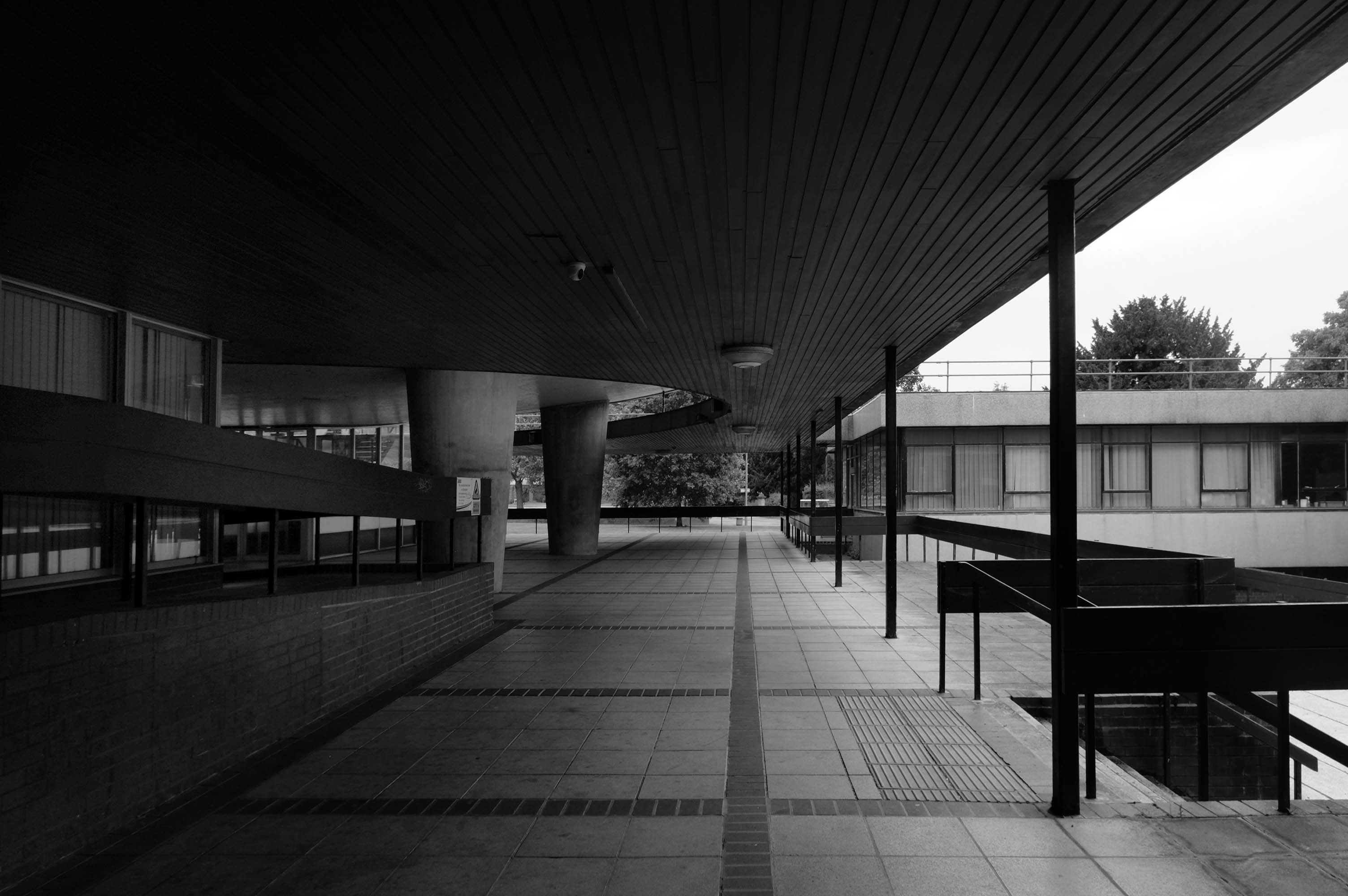
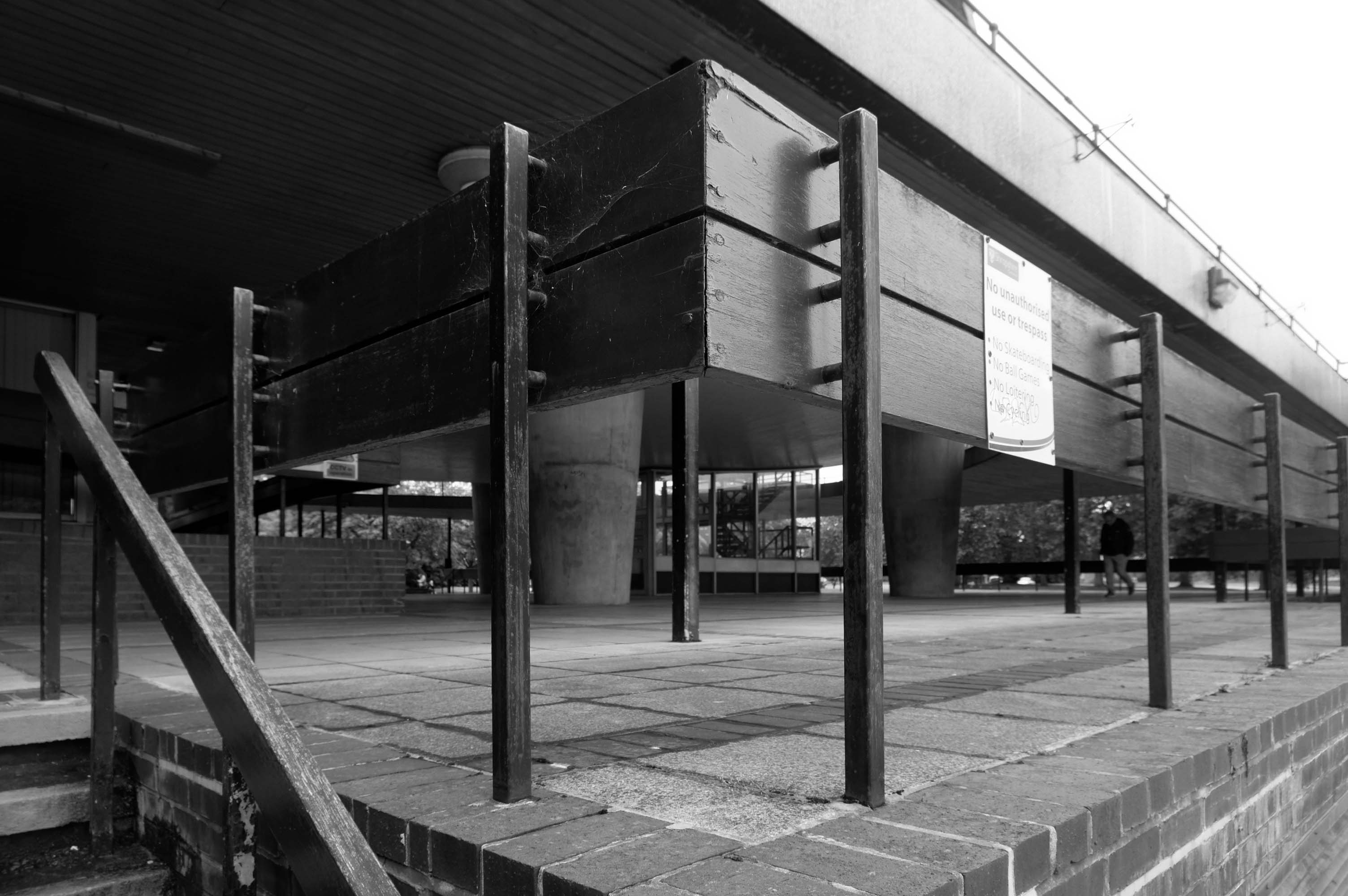
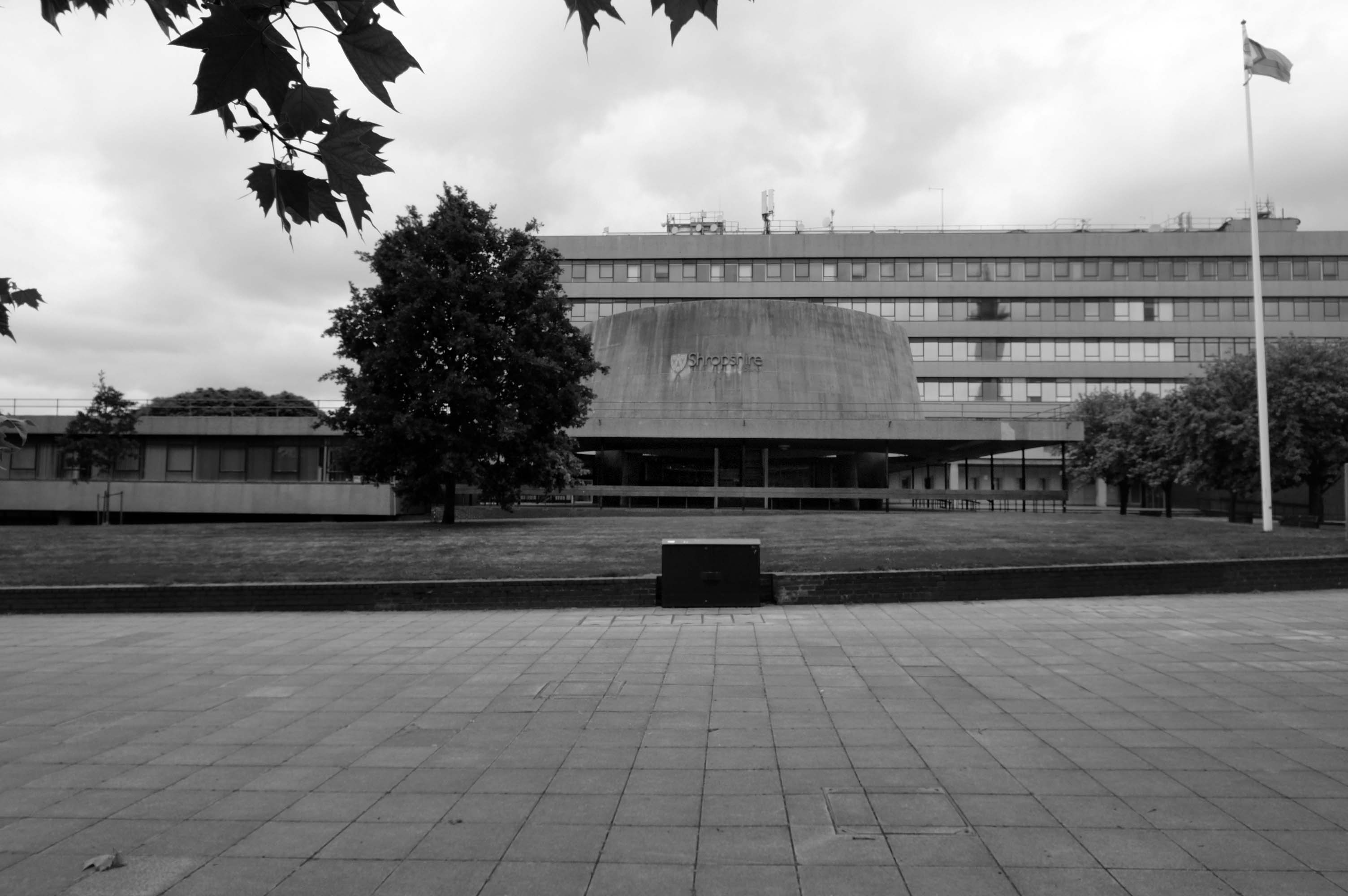
The foundation stone for the new building was laid by Sir Offley Wakeman, a former chairman of the county council, on 25 July 1964. It was designed by Ralph Crowe, the County Architect, in the Modernist style, built at a cost of £1.8 million and was completed in April 1966.
Having visited and snapped way back in June 2024, I returned in October 2025.
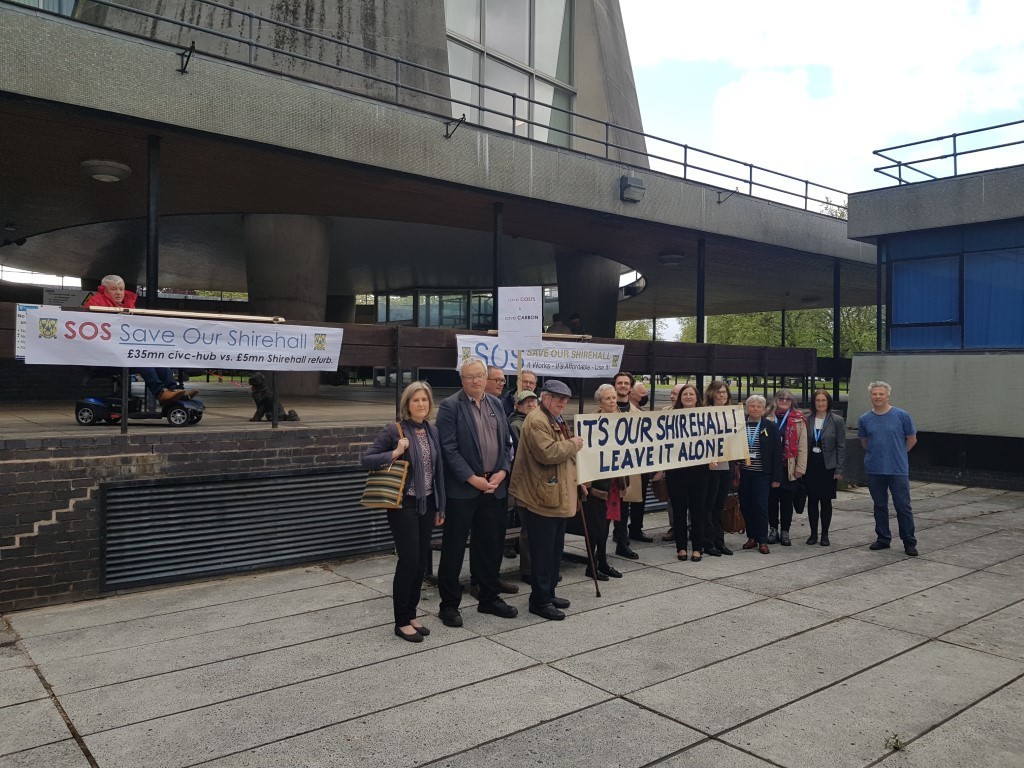
I had been asked to speak to the Shrewsbury Civic Society, regarding the history of Modernism in support of their campaign to save Shirehall.
The previous County Council were disposed toward demolition, the current administration are a little more circumspect.
Shropshire Council is considering a return to its former headquarters, less than a year after it moved out. The authority moved from 1960s-built Shirehall in Shrewsbury to the Guildhall in Frankwell, and said doing so would save up to £600,000 per year.
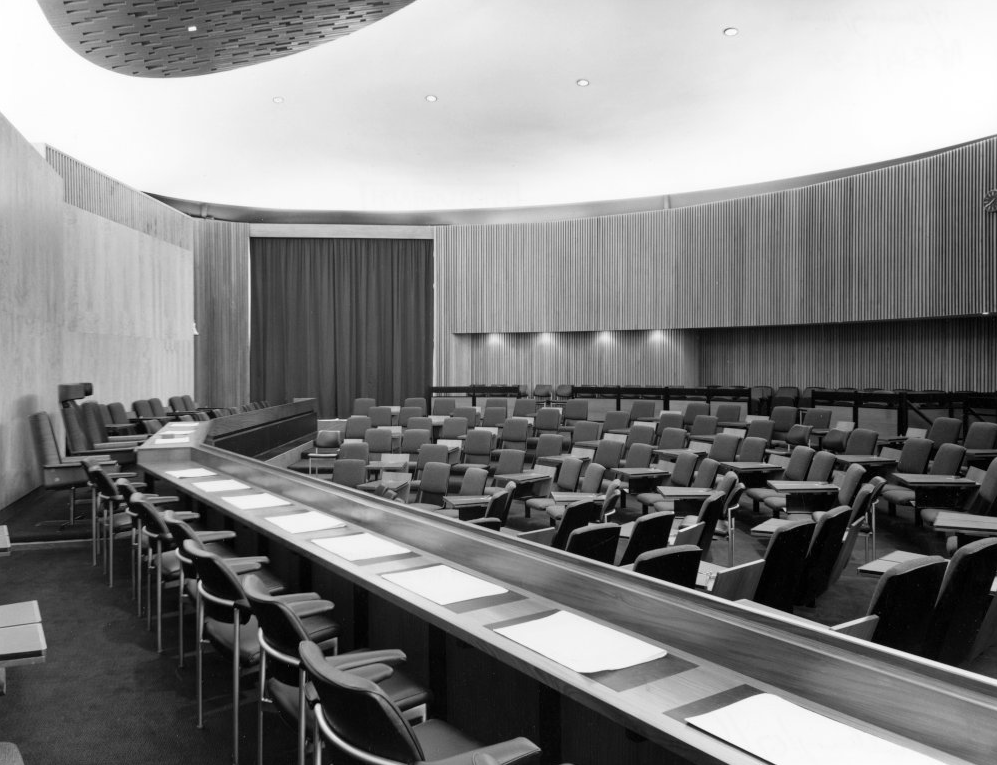
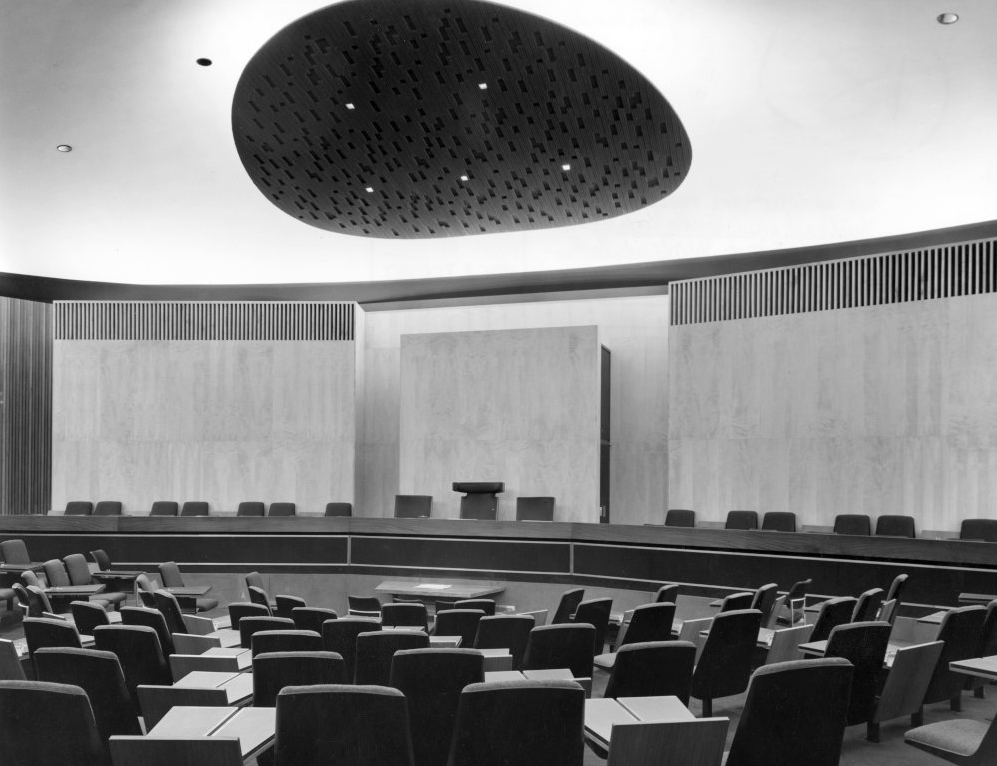
At a meeting on Wednesday, cabinet member for finance Roger Evans said the Liberal Democrats, who lead the council, had paused the demolition and sale of the land, and may retain parts of the building – but only if it could afford to do so.
“We would like to retain the council chamber and some of the associated buildings, but we do need to take account for the cost both in cash terms and in net zero terms,” he said. “What we have done is paused this decision and asked experts to look at it again, look at the whole site, do a reappraisal. The results are just now being recieved.
“I want to keep it as much as we can afford, both environmentally and cash-wise. Whether we can or not will depend, the council is strapped for cash.”
They have campaigned tirelessly to save the building which is under threat, the local authority wishing to demolish the site.
There has long been a split in Shropshire Council between councillors who want to keep Shirehall and this that want to demolish it and move to the town centre. Last December, the council agreed to dispose of the building in the next few years after work on Civic Hub in the town centre is completed. That Civic Hub is still in the ideas stage and there is no clear idea of where the money will come fund it. Unless the council sells the 3.5 hectare Shirehall site for housing boosting its capital reserves which were depleted by the £51m purchase of the shopping centres in Shrewsbury town centre.
The budget plans agreed two weeks ago days propose that Shirehall is sold before April 2025 to make a saving of £325,000 in 2024/25.
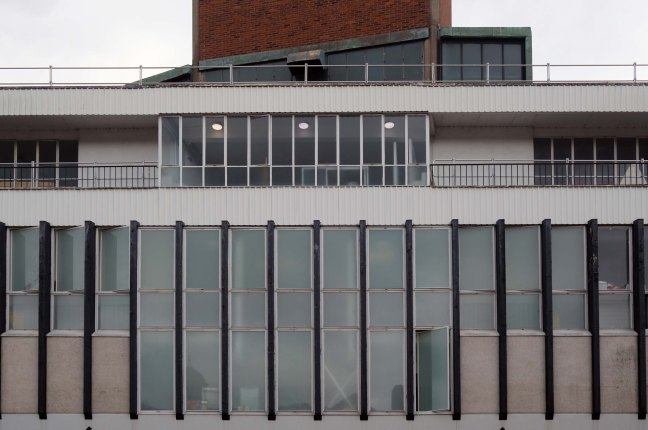
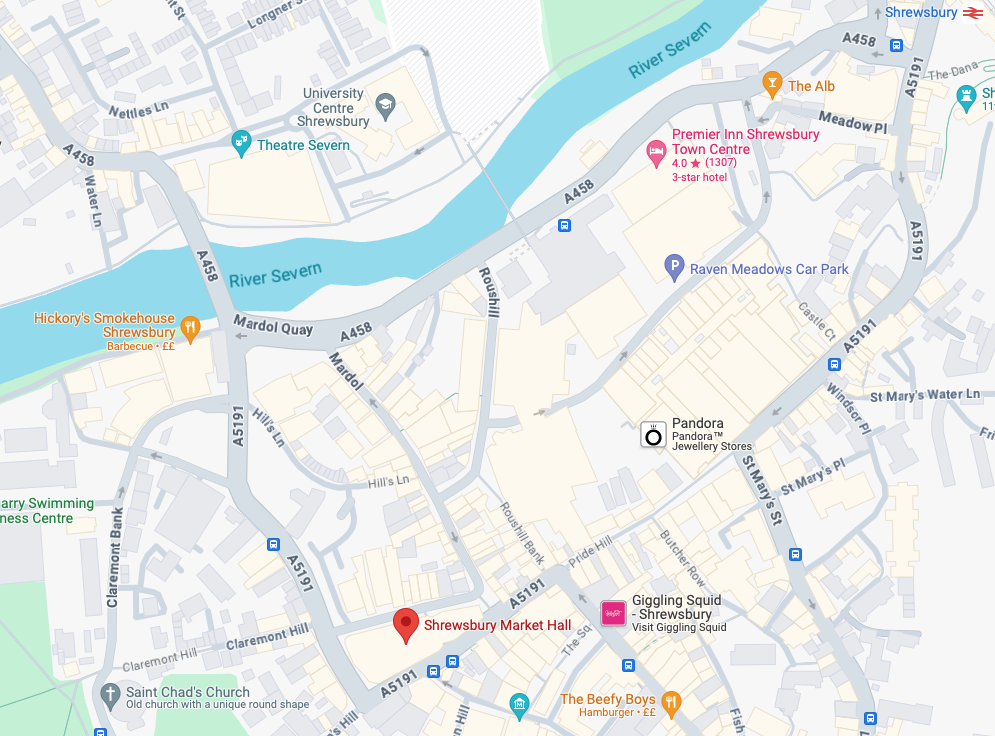
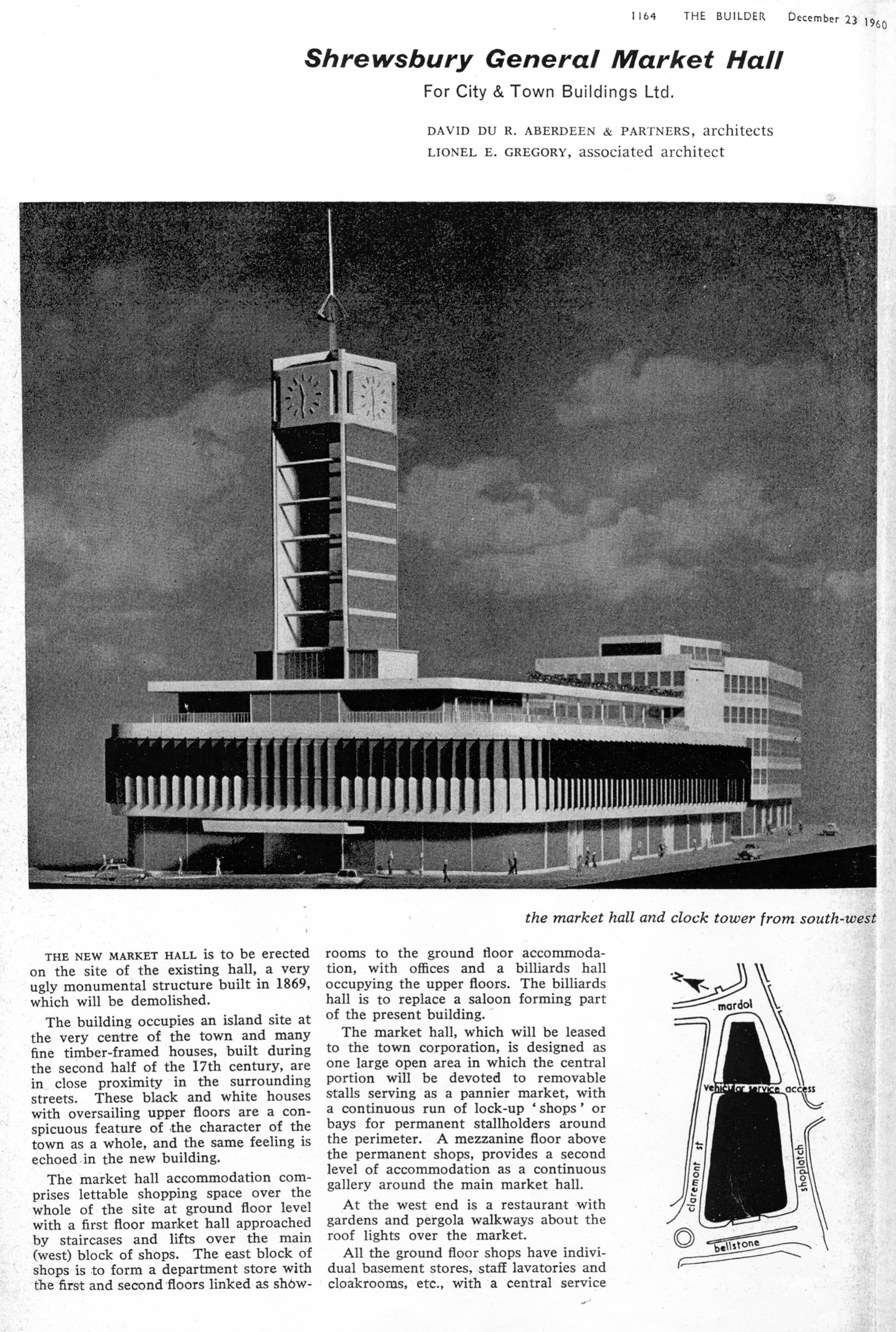
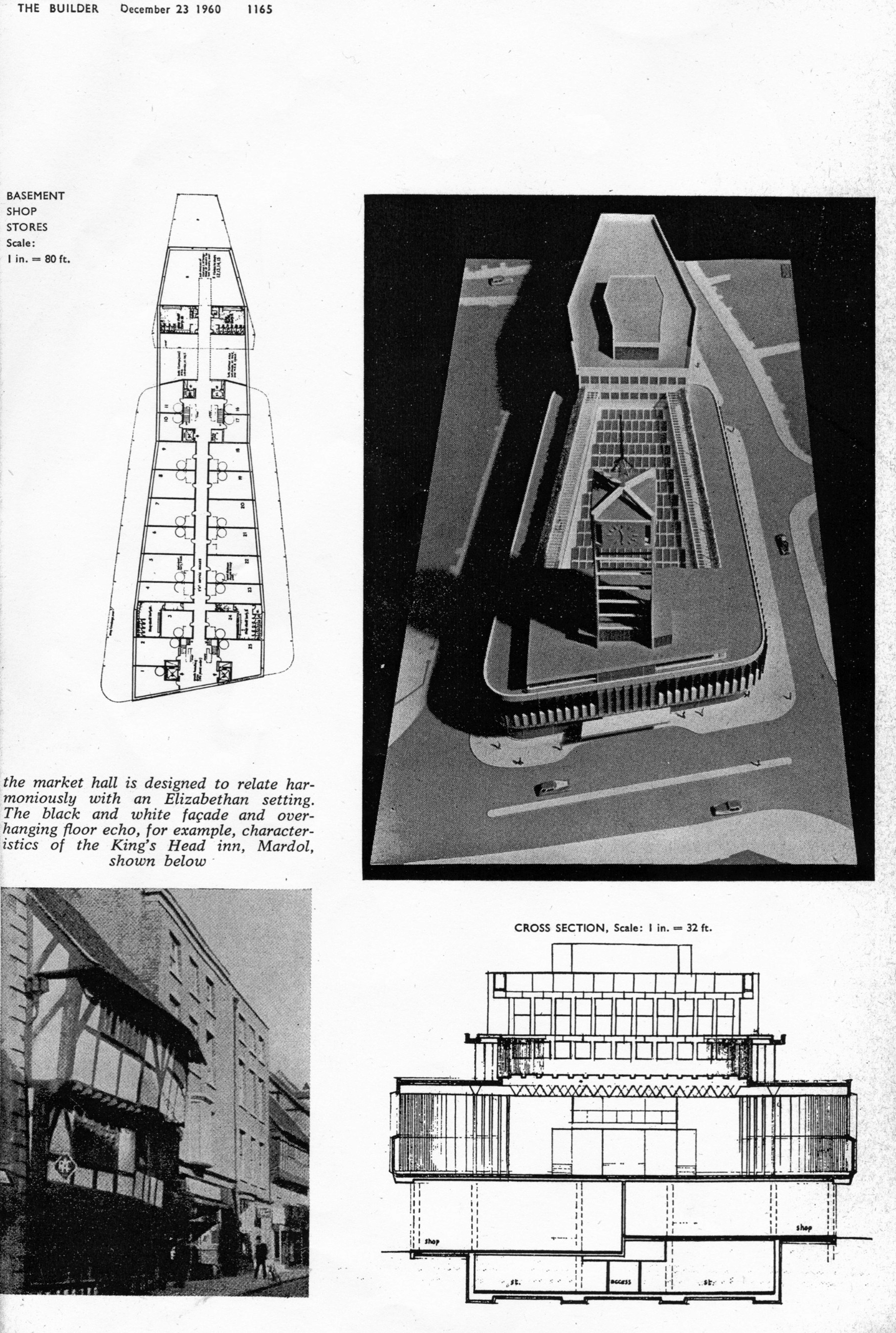
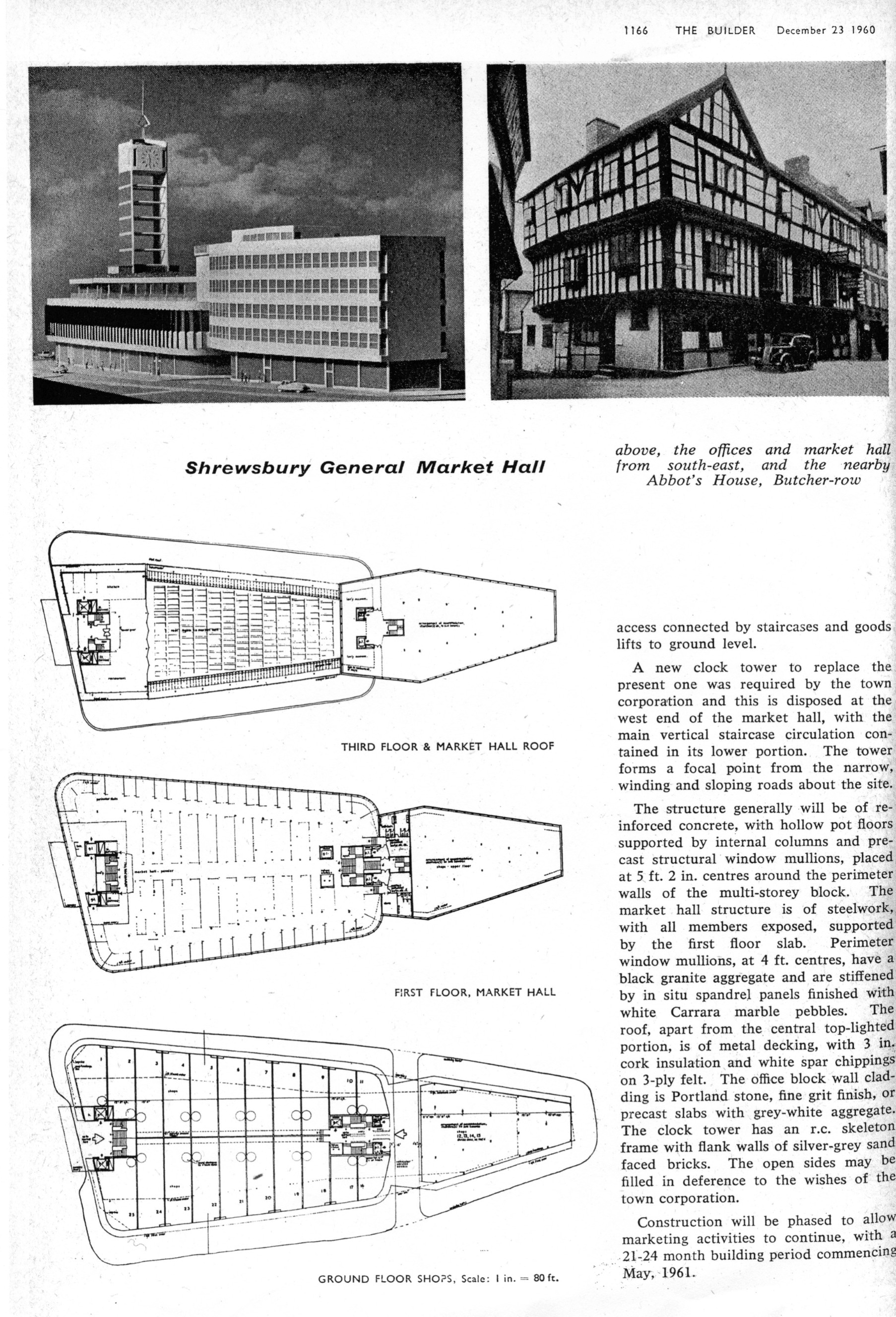
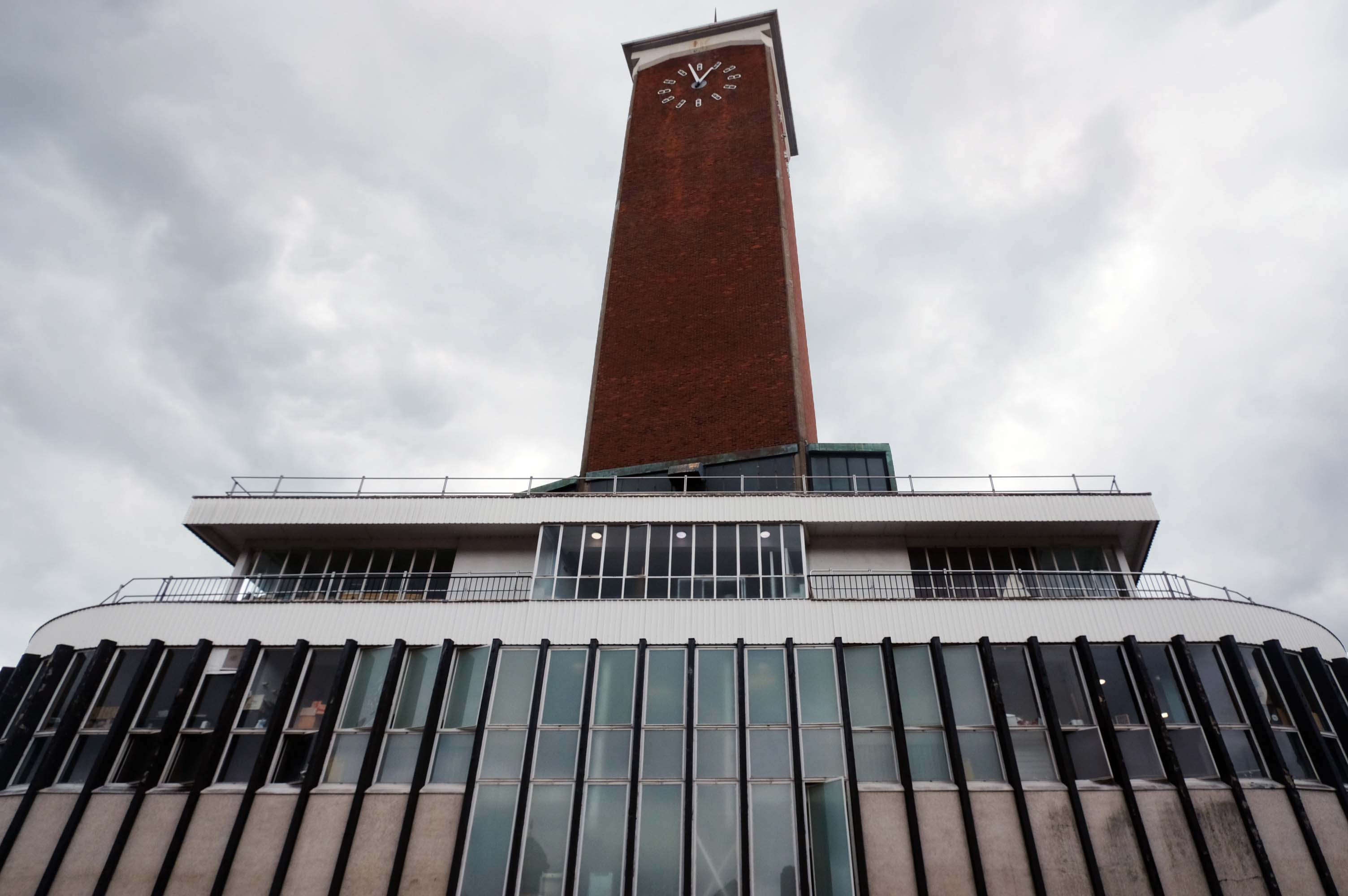
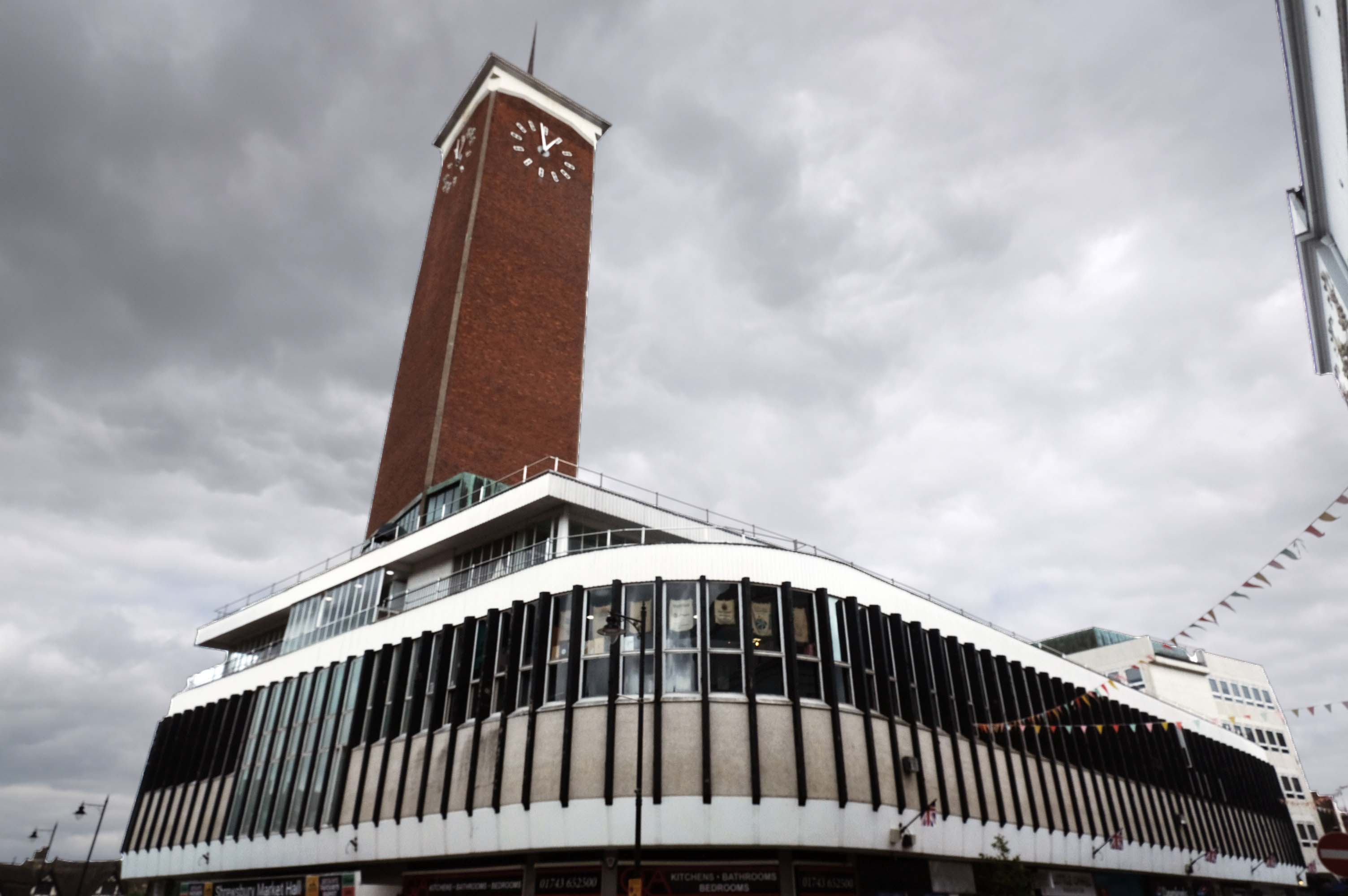
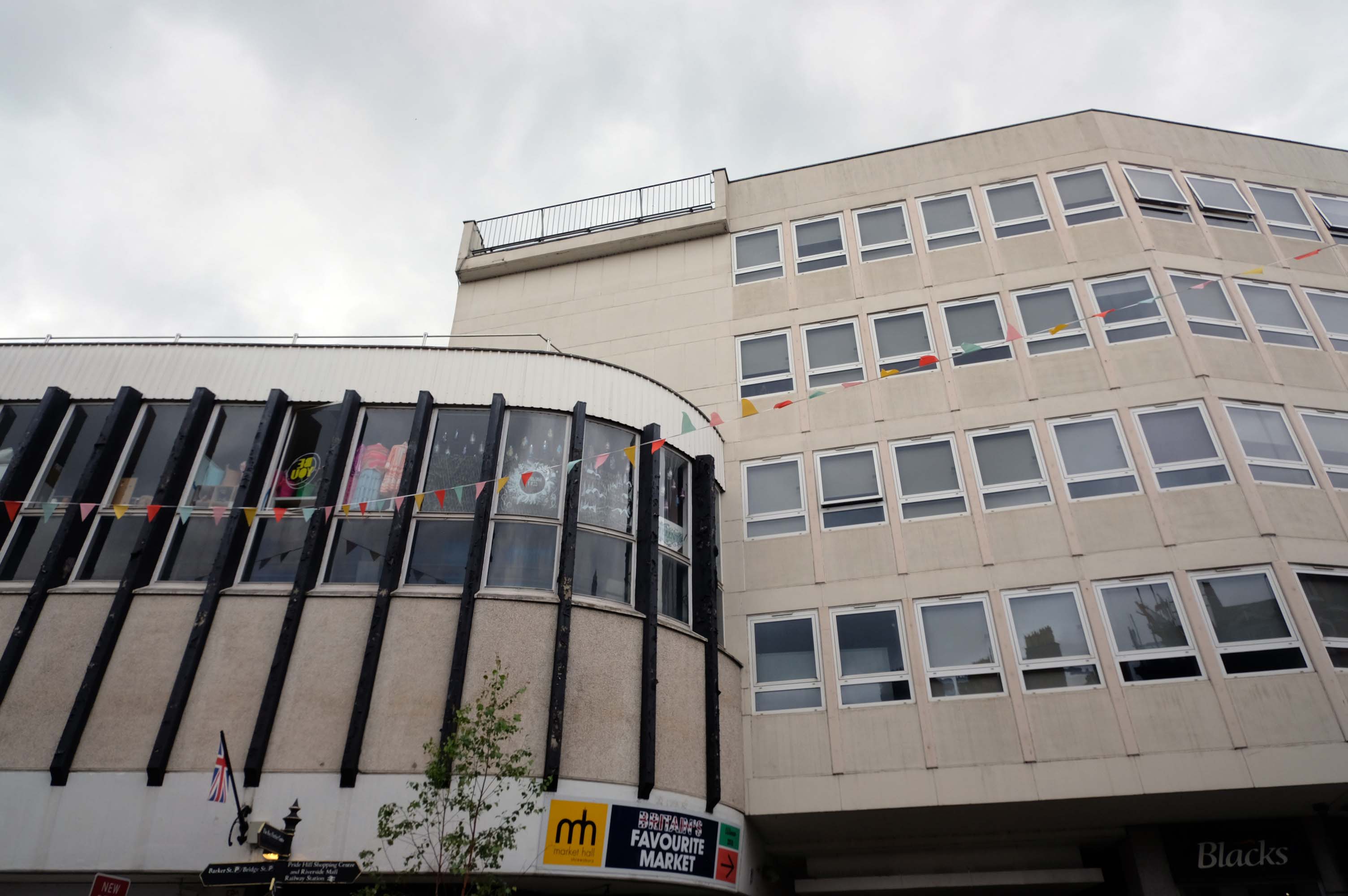
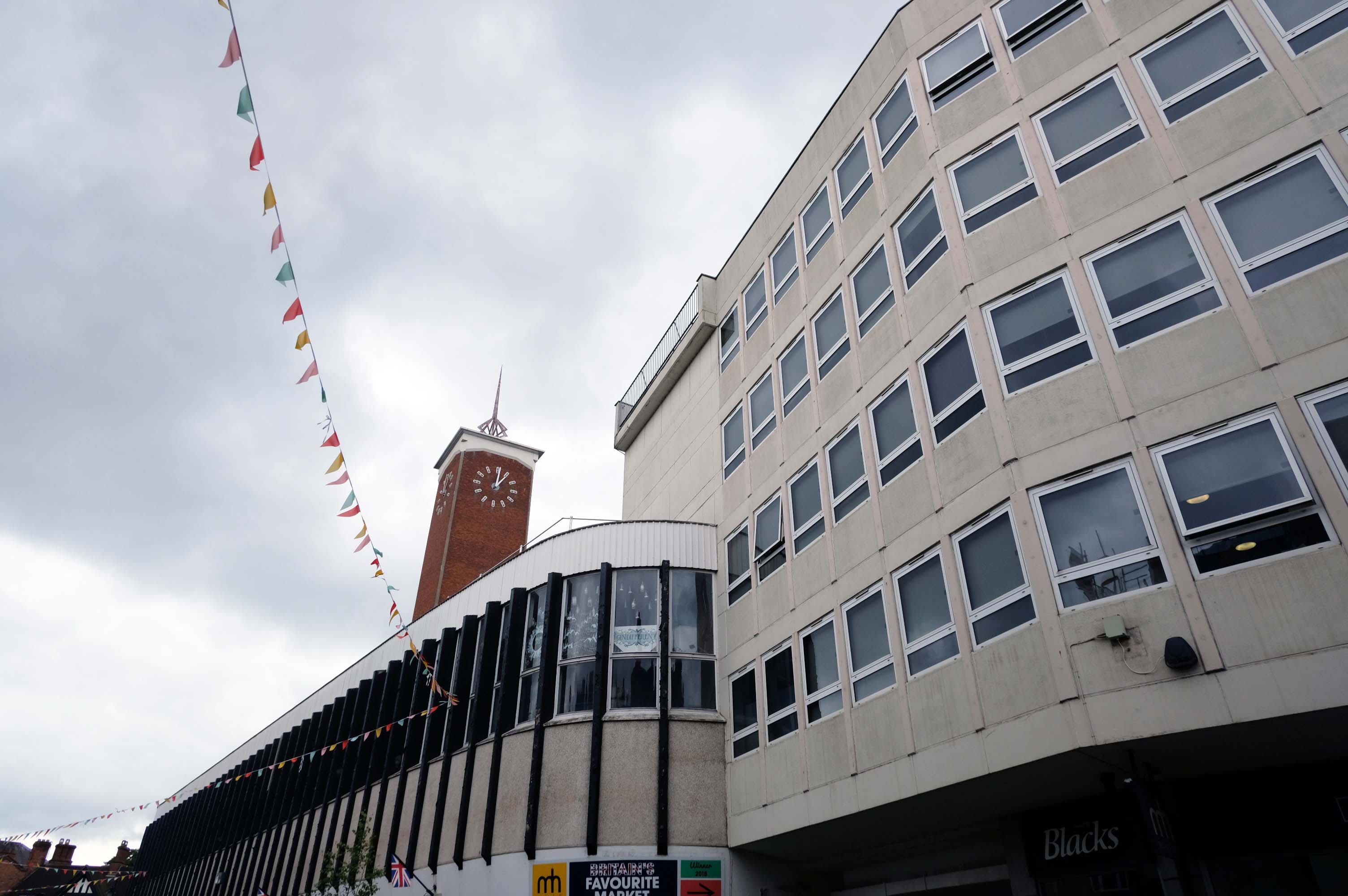
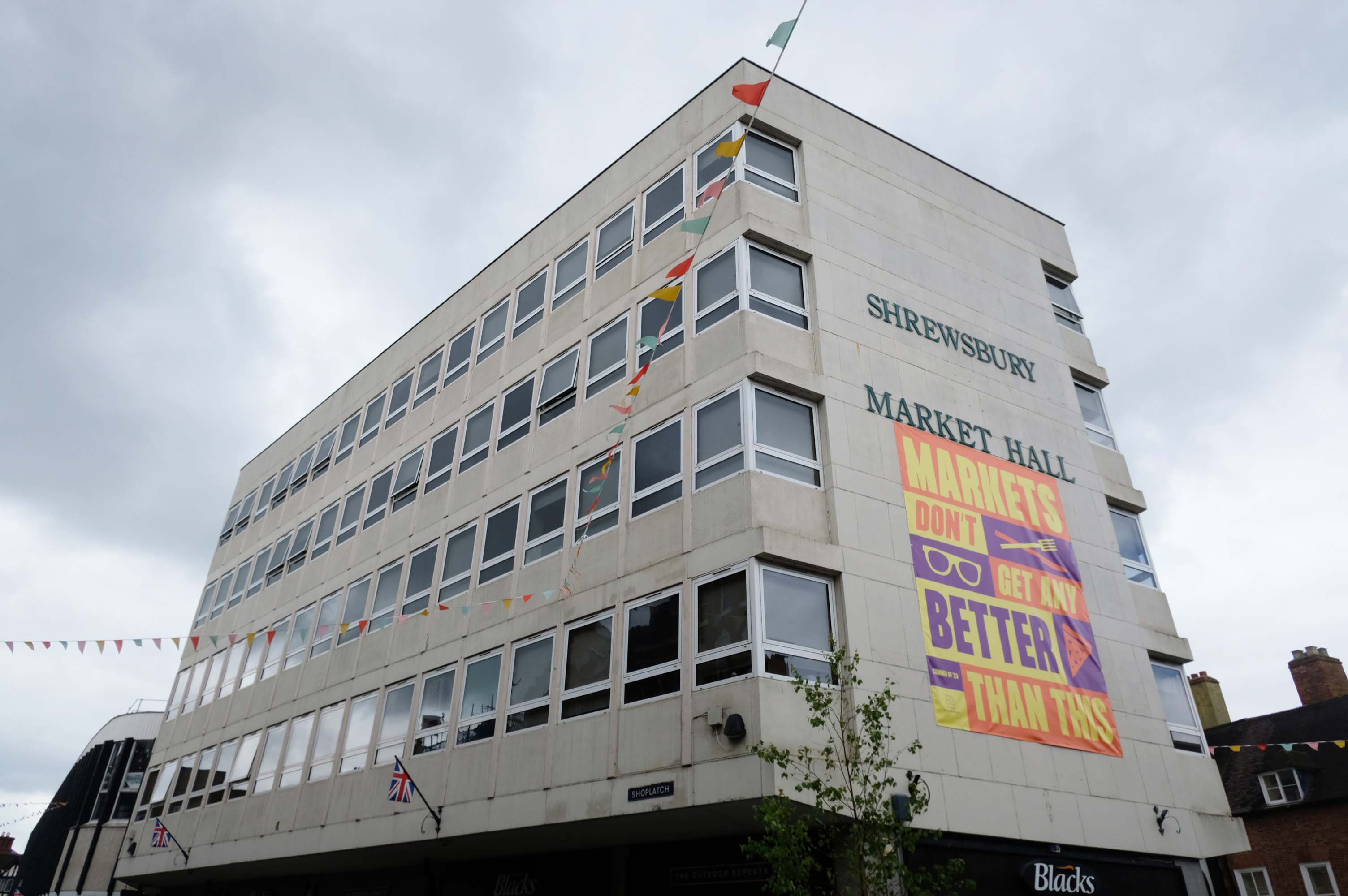
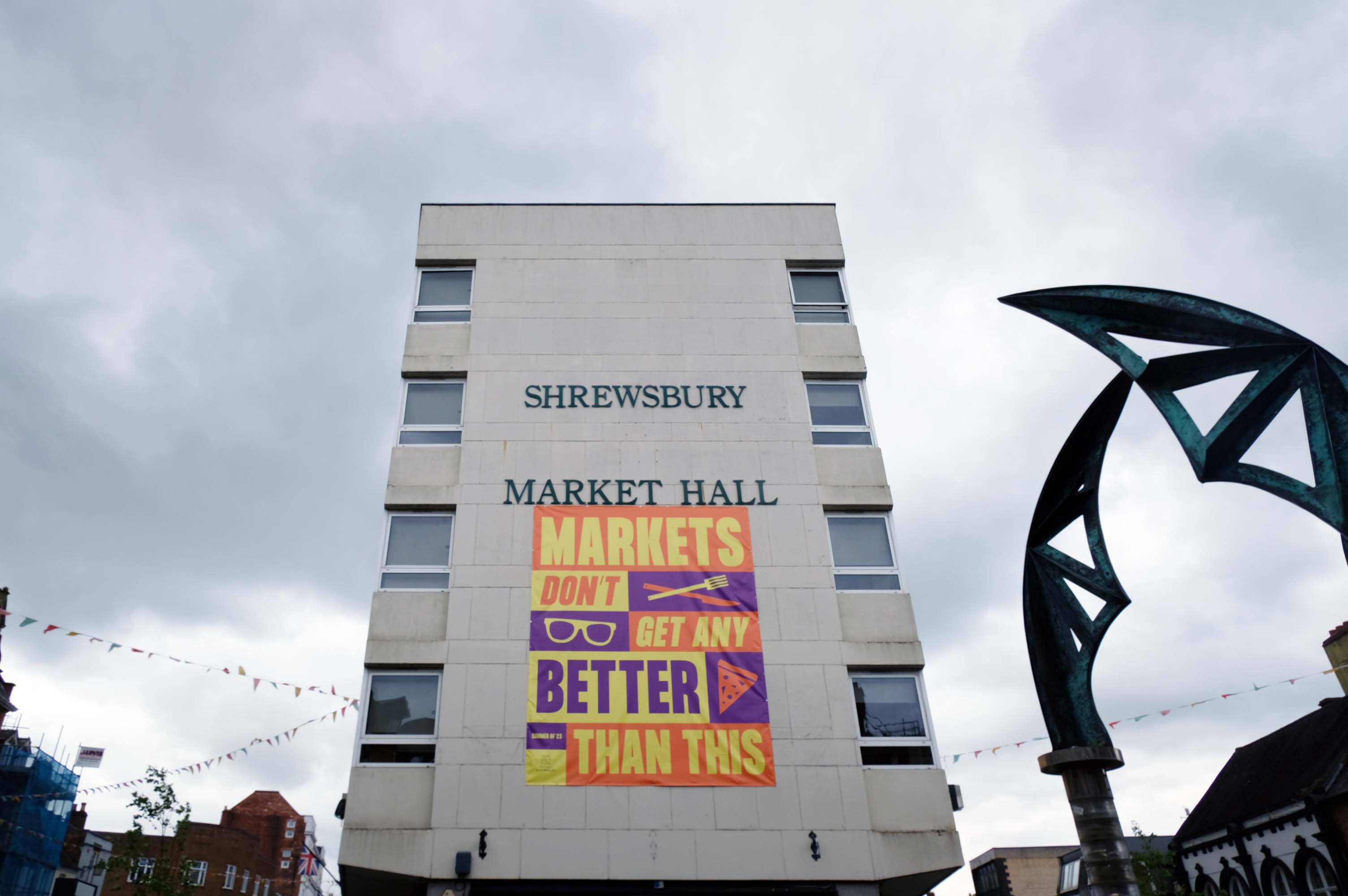
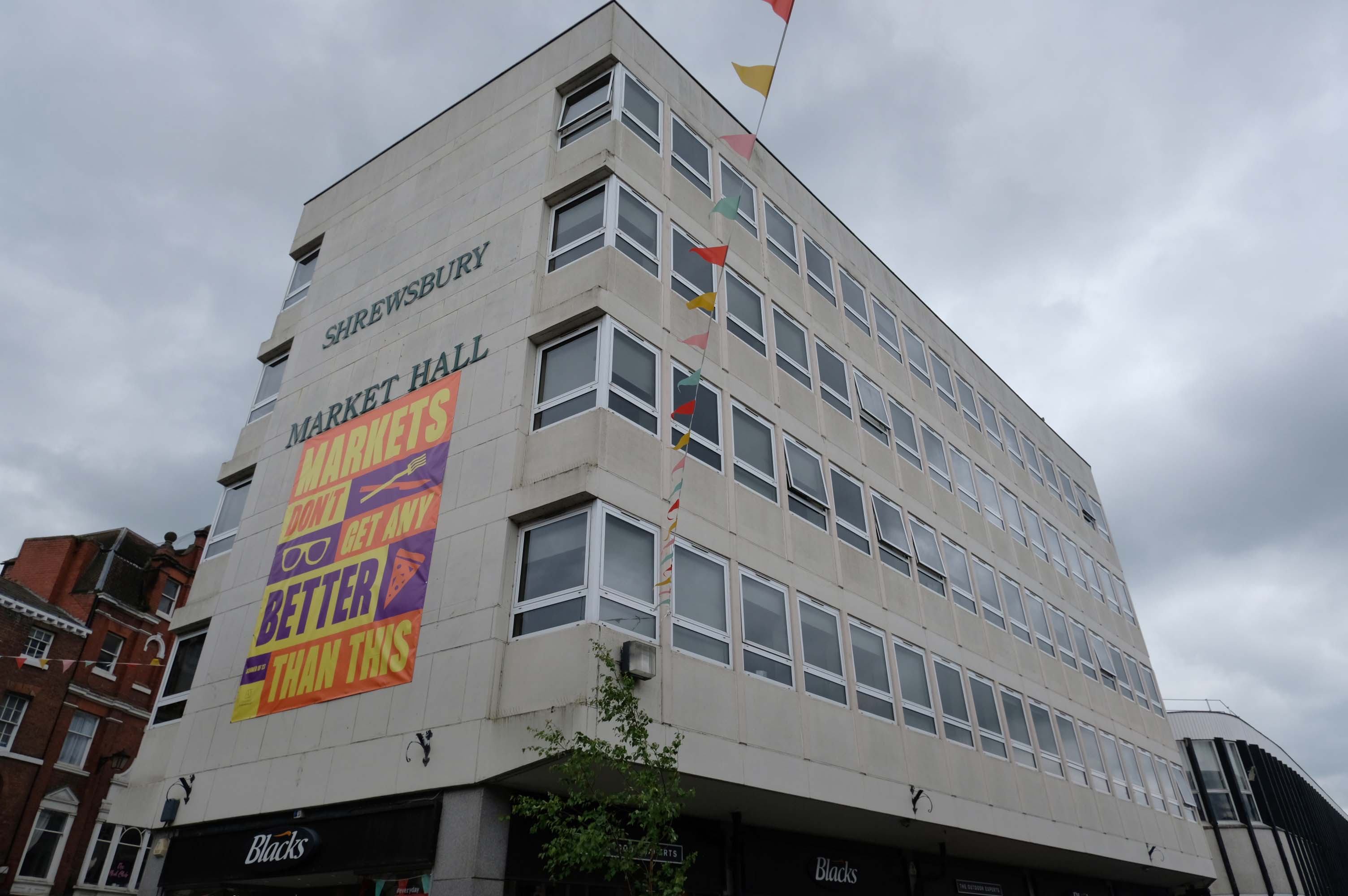
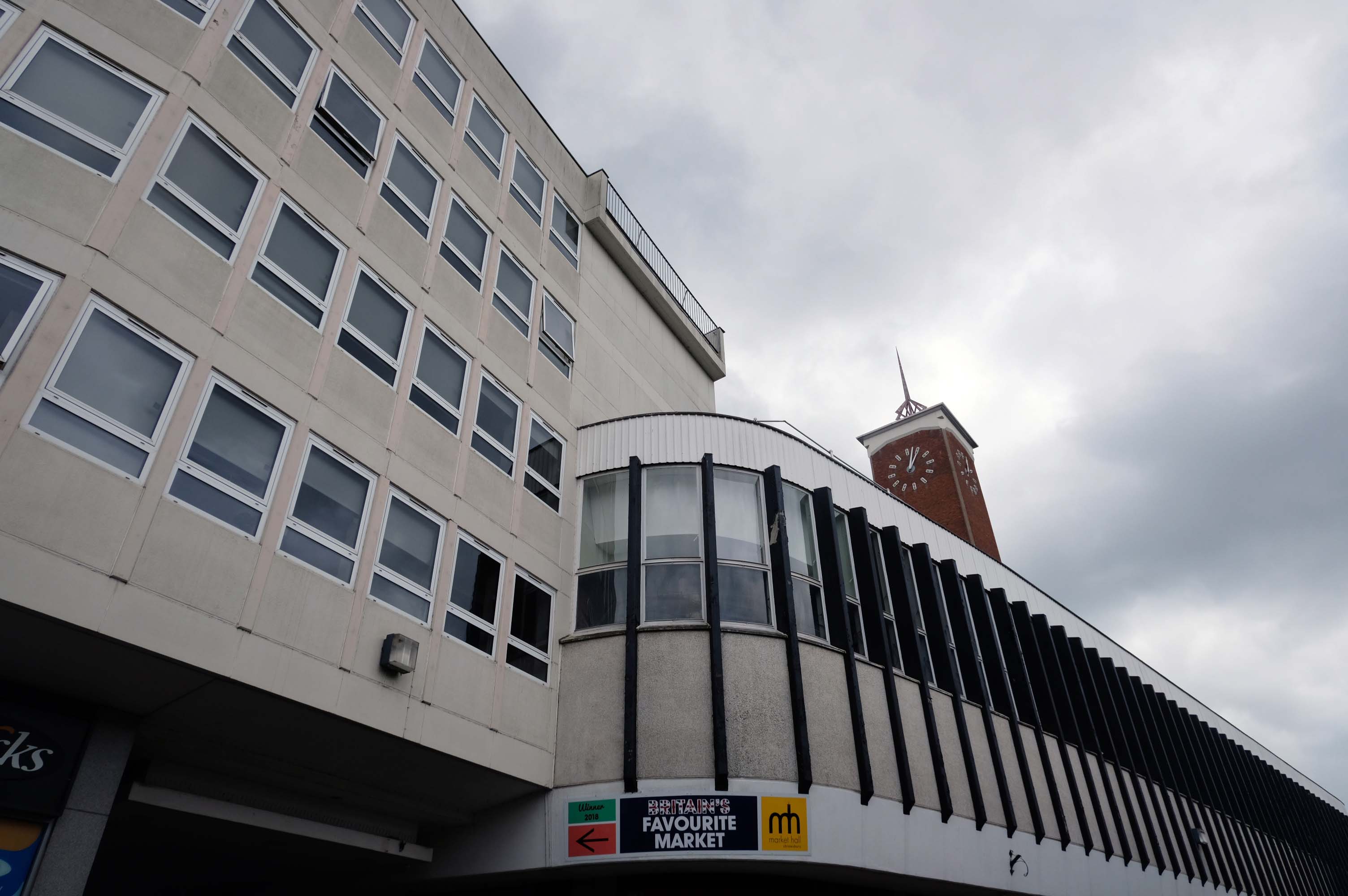
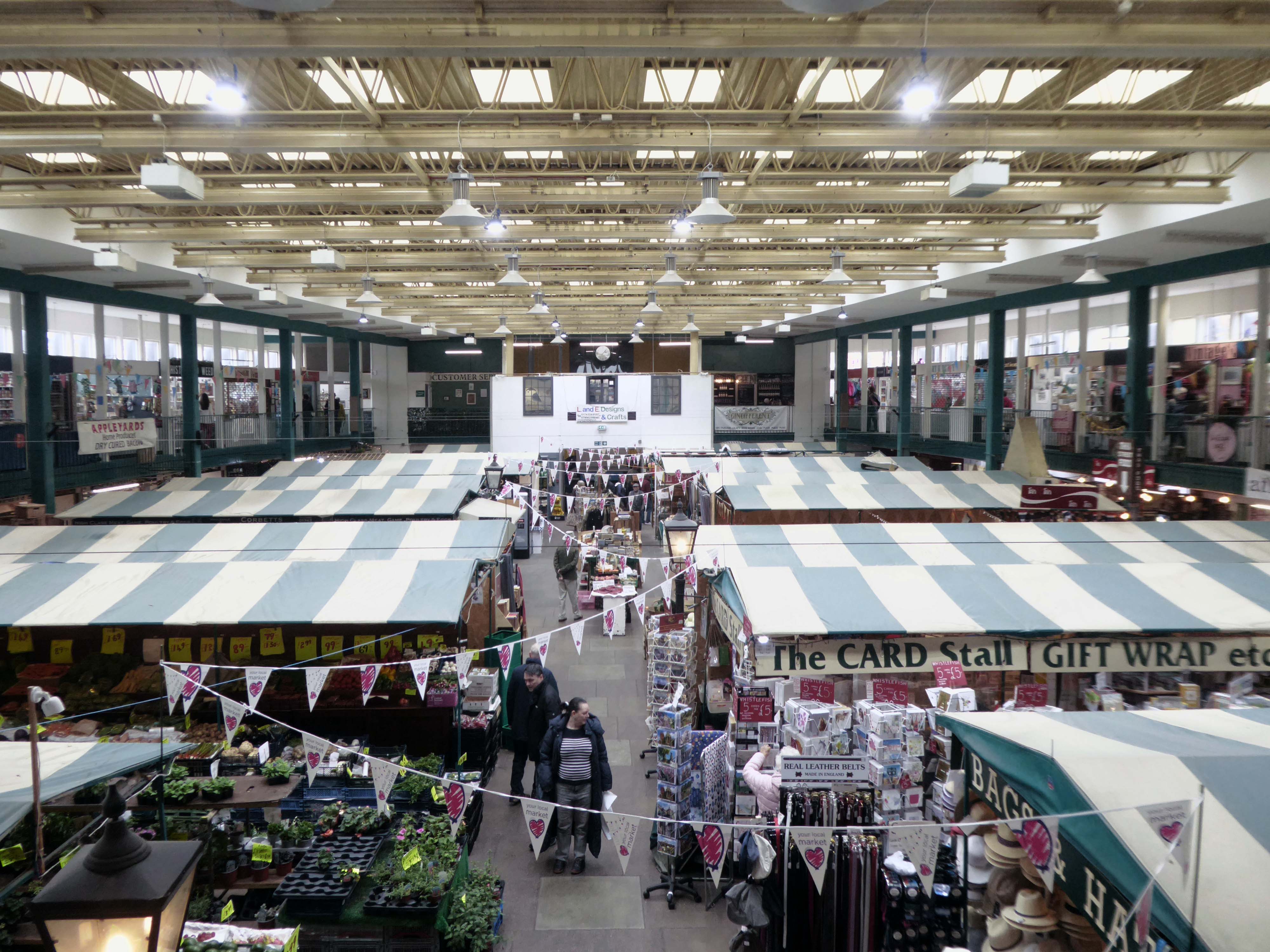
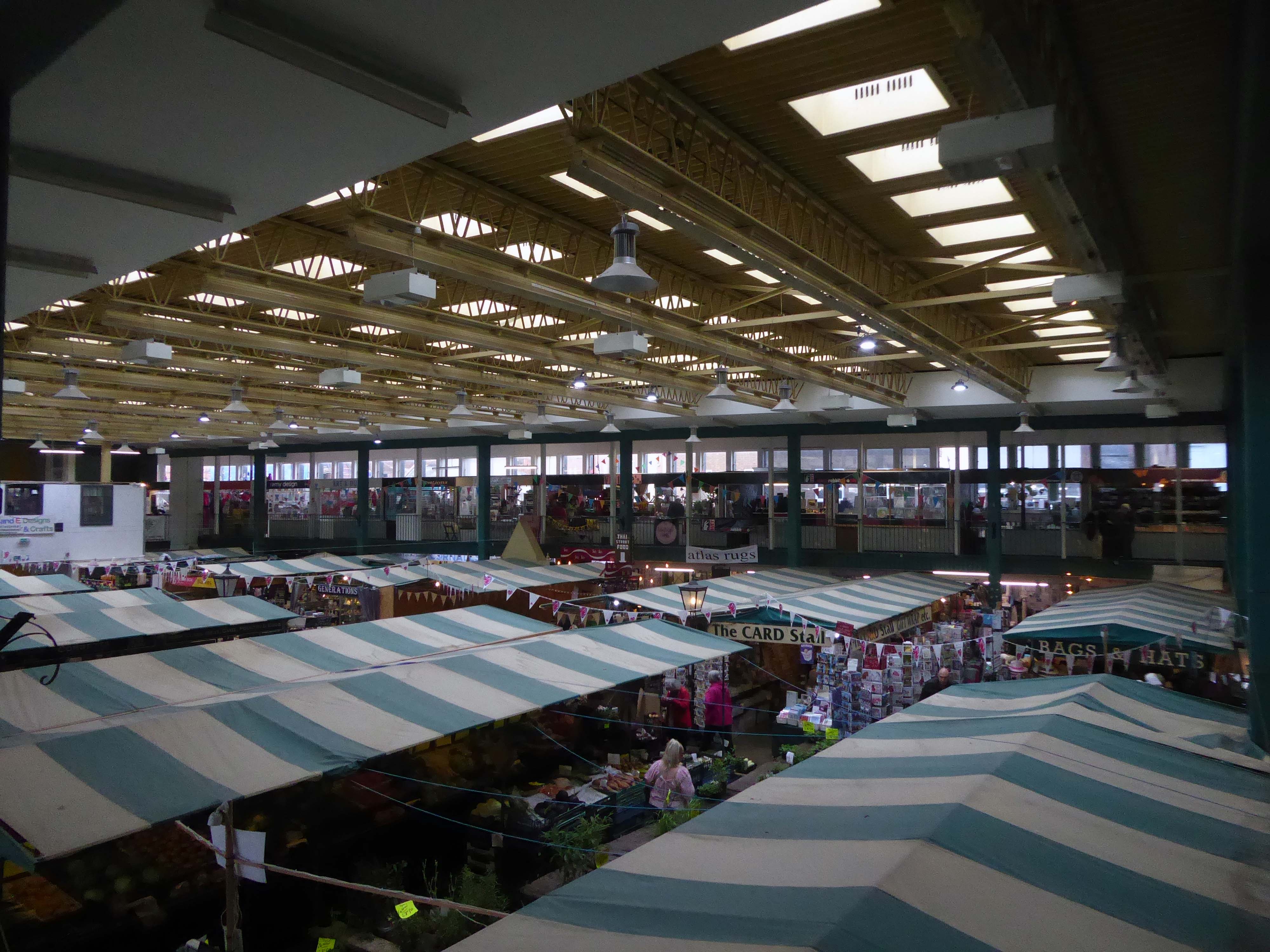
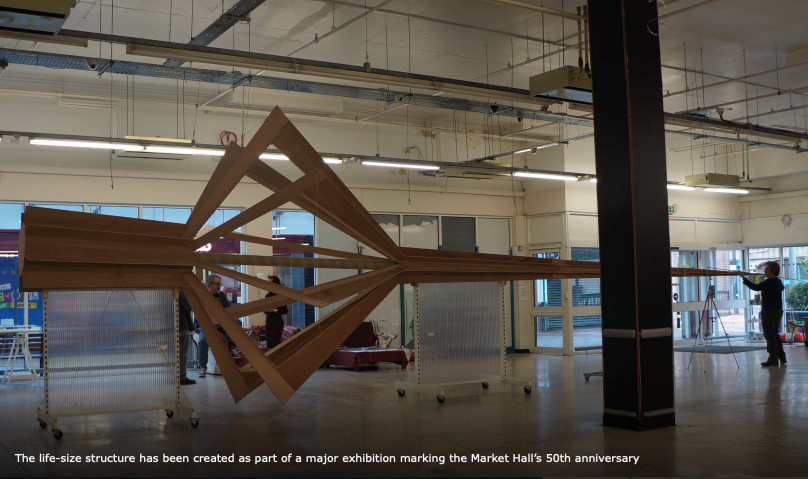
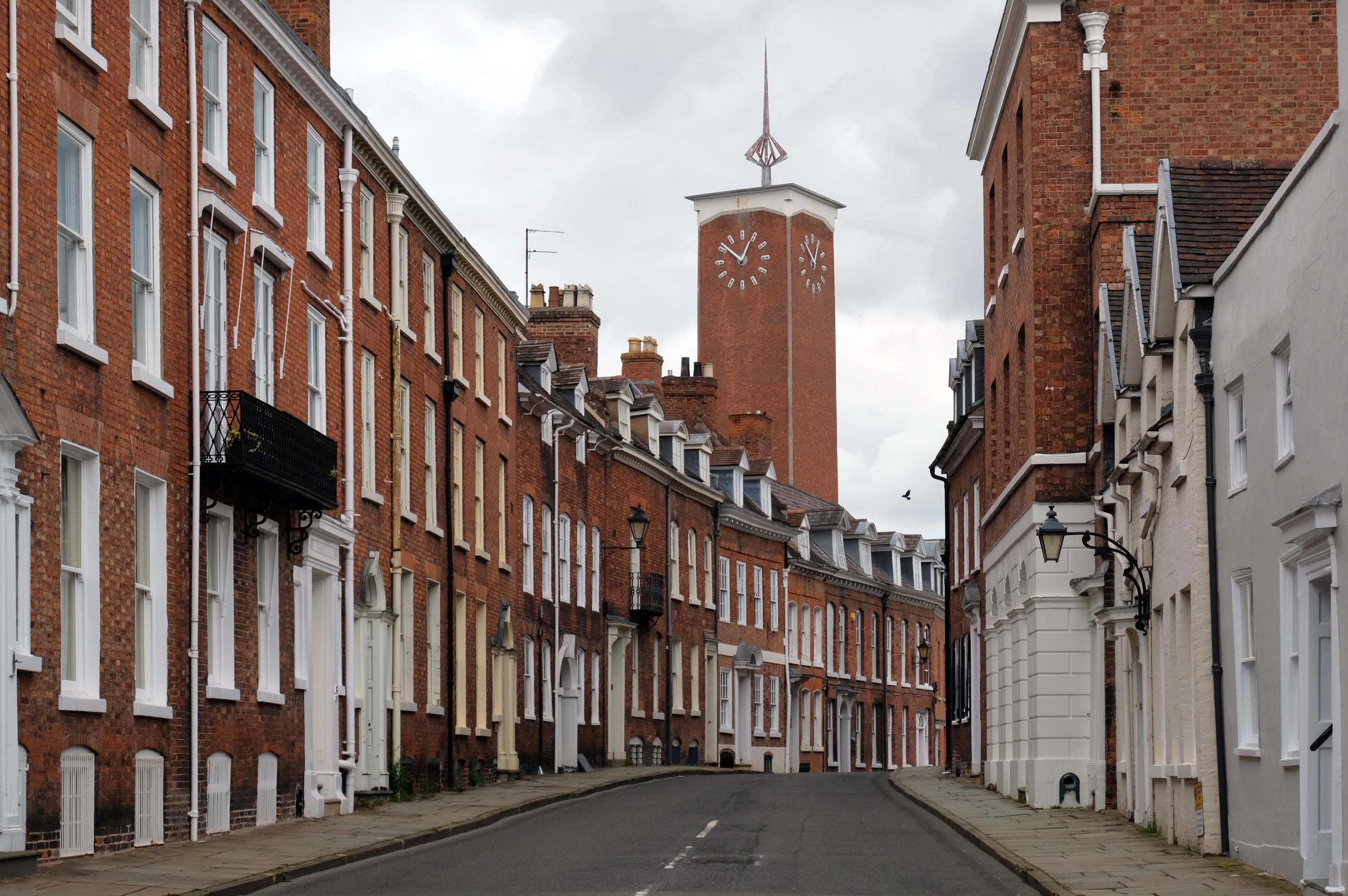
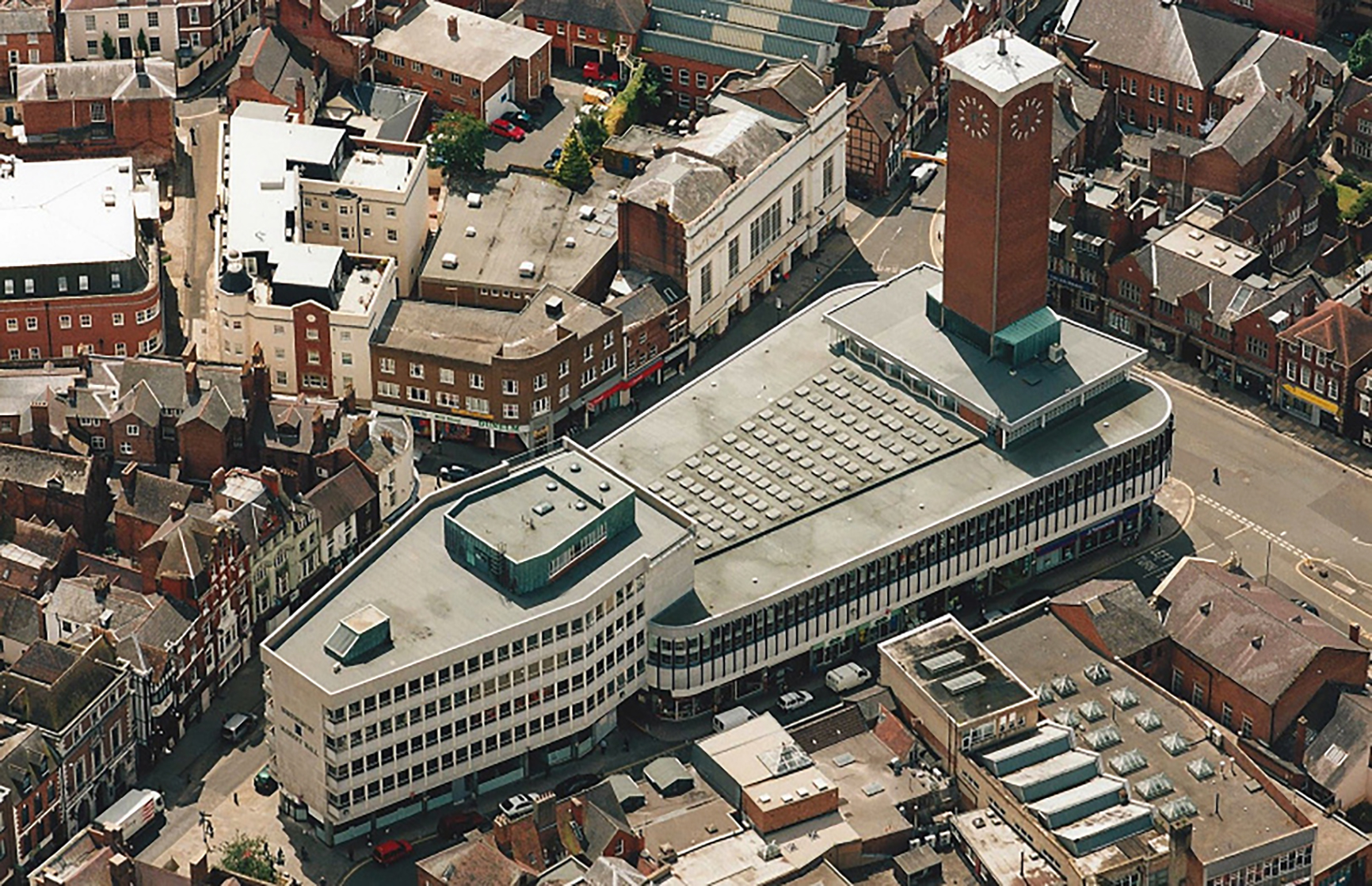
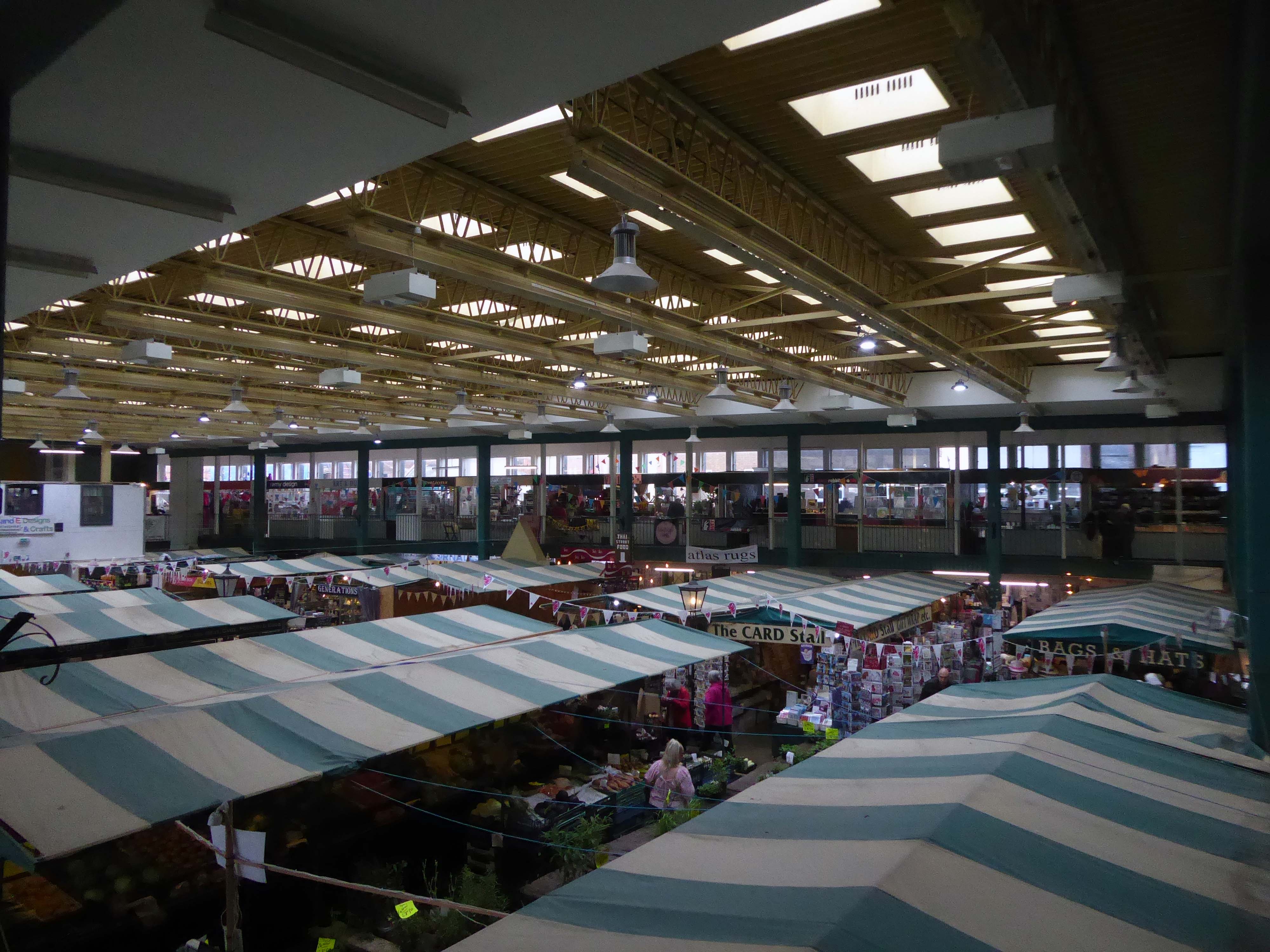
The Market Hall was considered to be a prime example of cutting edge modern architecture when it was officially opened amid a blaze of publicity and civic pageantry on September 16 1965.
It replaced a large Victorian market hall of similar proportions that was in a poor state of repair and was condemned as unhygienic, dingy and “no longer fit for purpose”.
Developed by the Second Covent Garden Property Company, the new Market Hall cost £1 million to build and was designed by a respected architect of his day, David du Rieu Aberdeen. Aberdeen designed major buildings in London and made his name when he won a national competition to design Congress House for the TUC in Bloomsbury. Today Congress House is described as a “modernist masterpiece”.
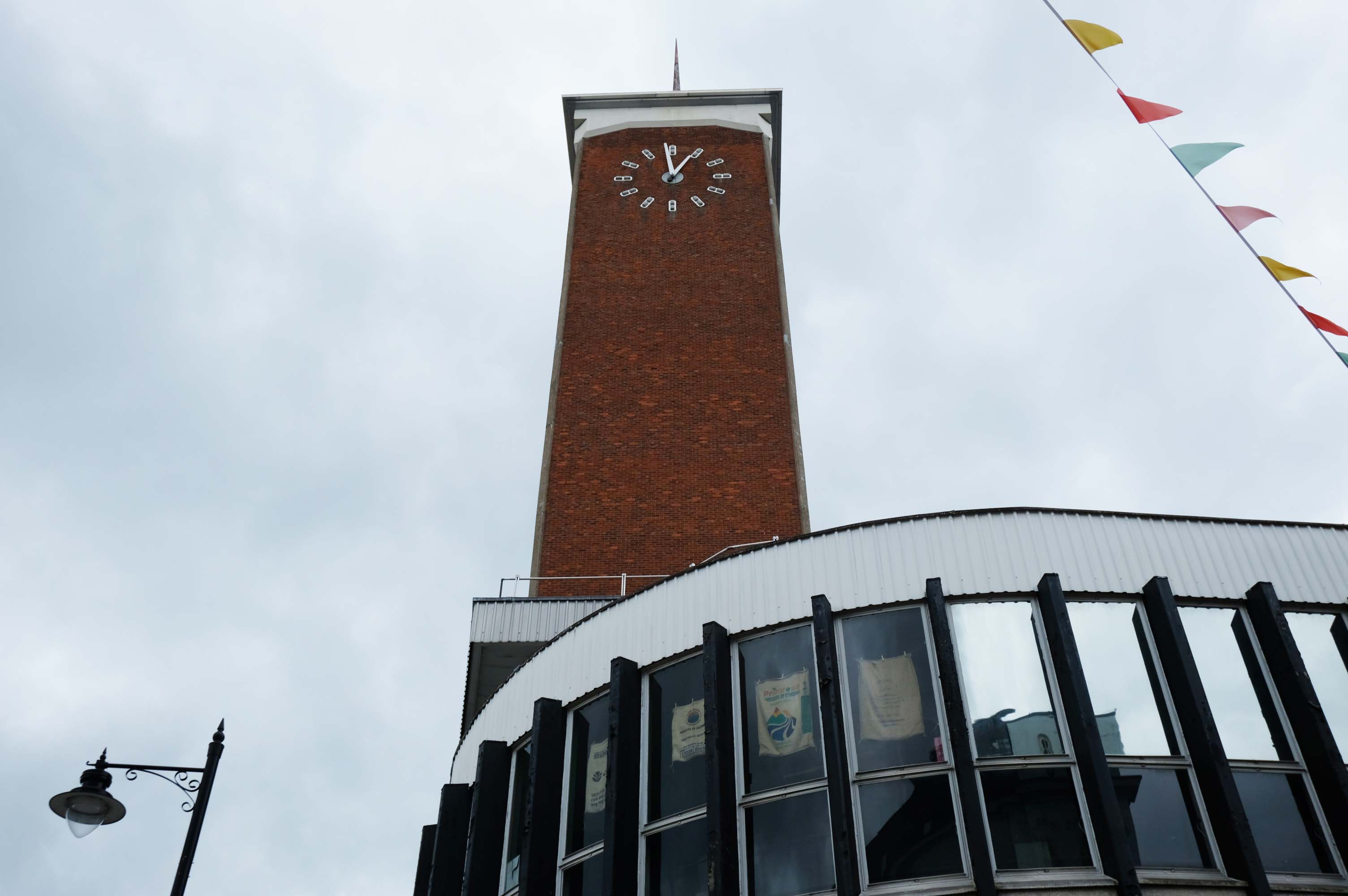
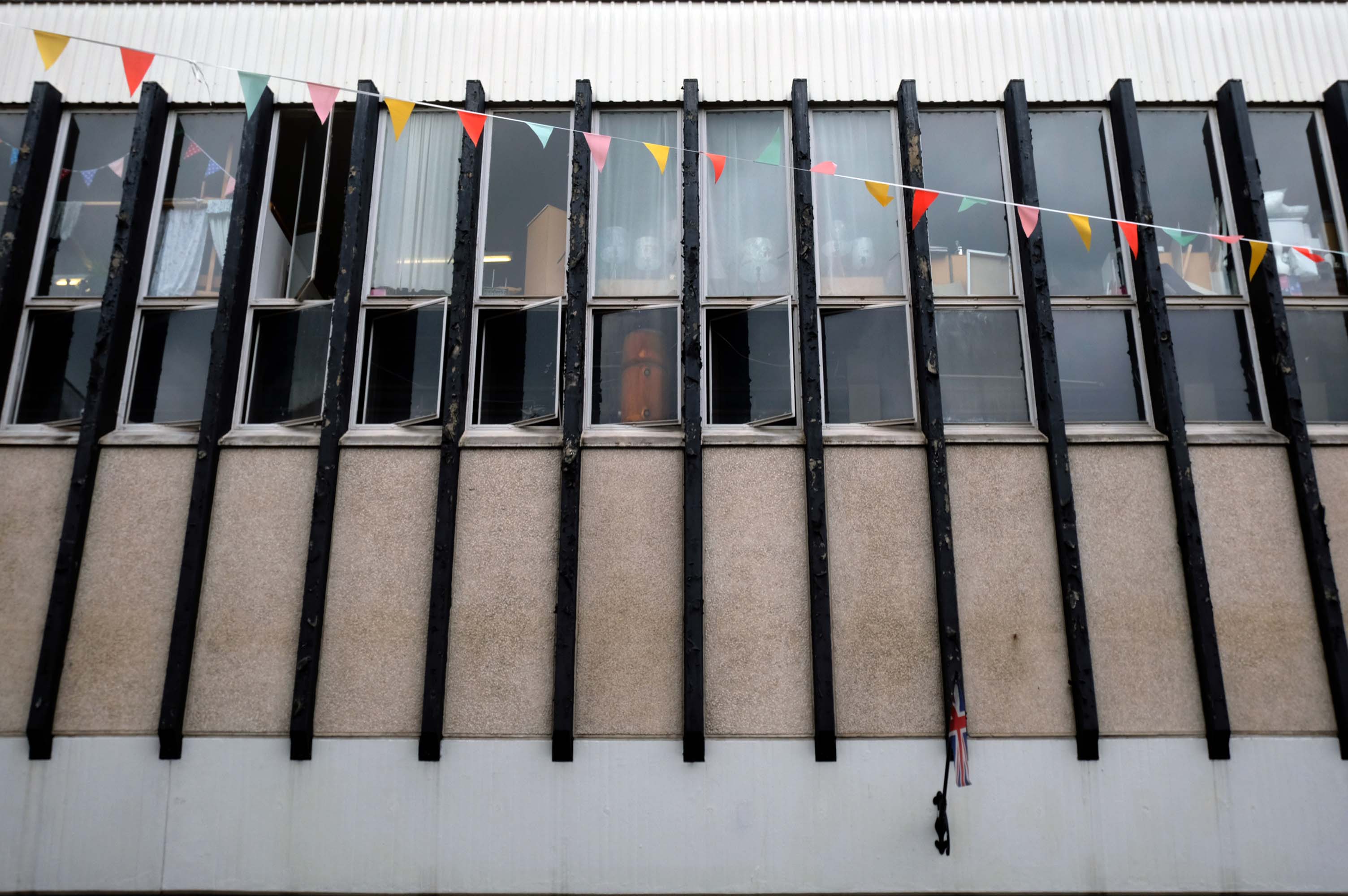
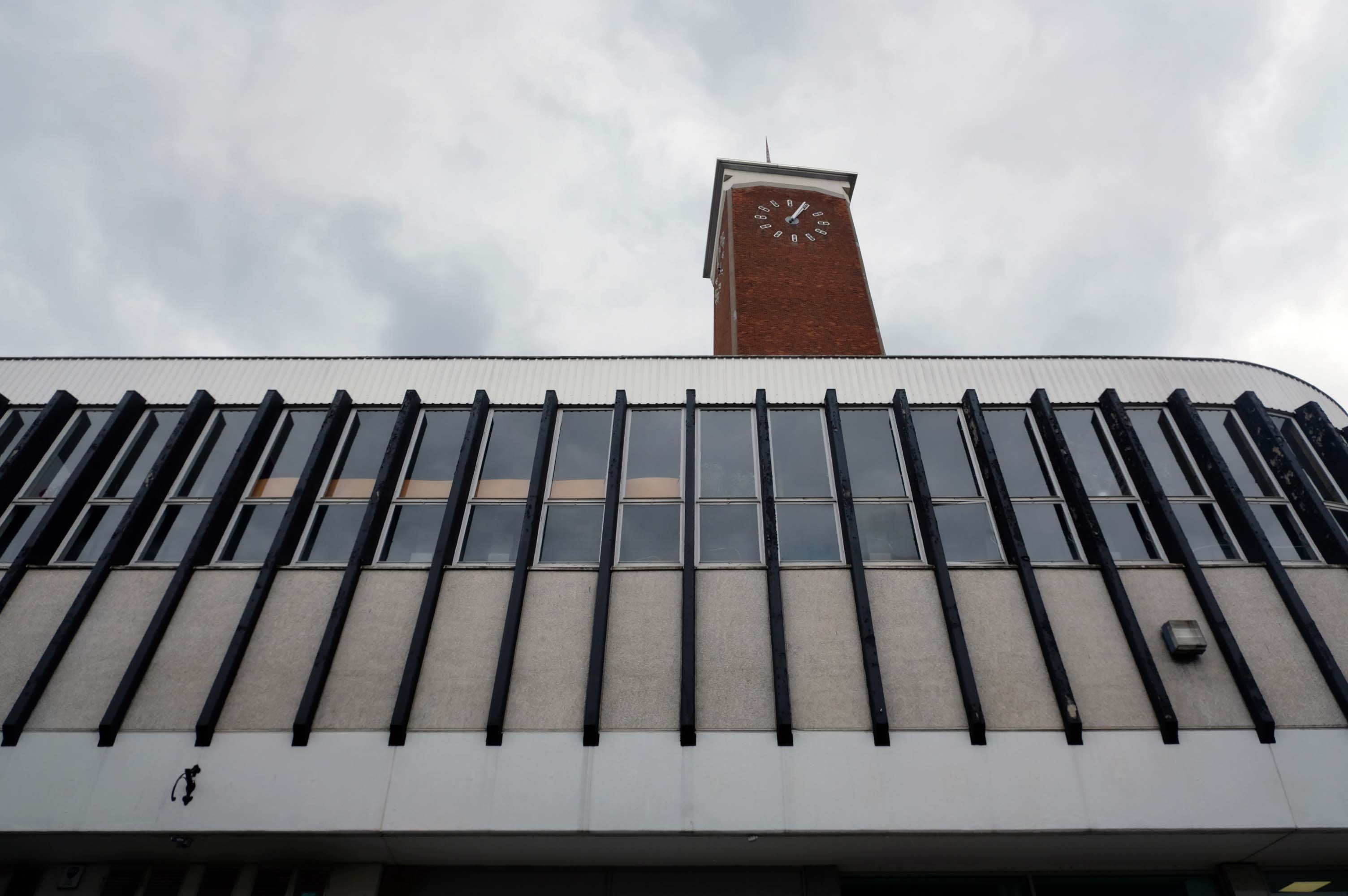
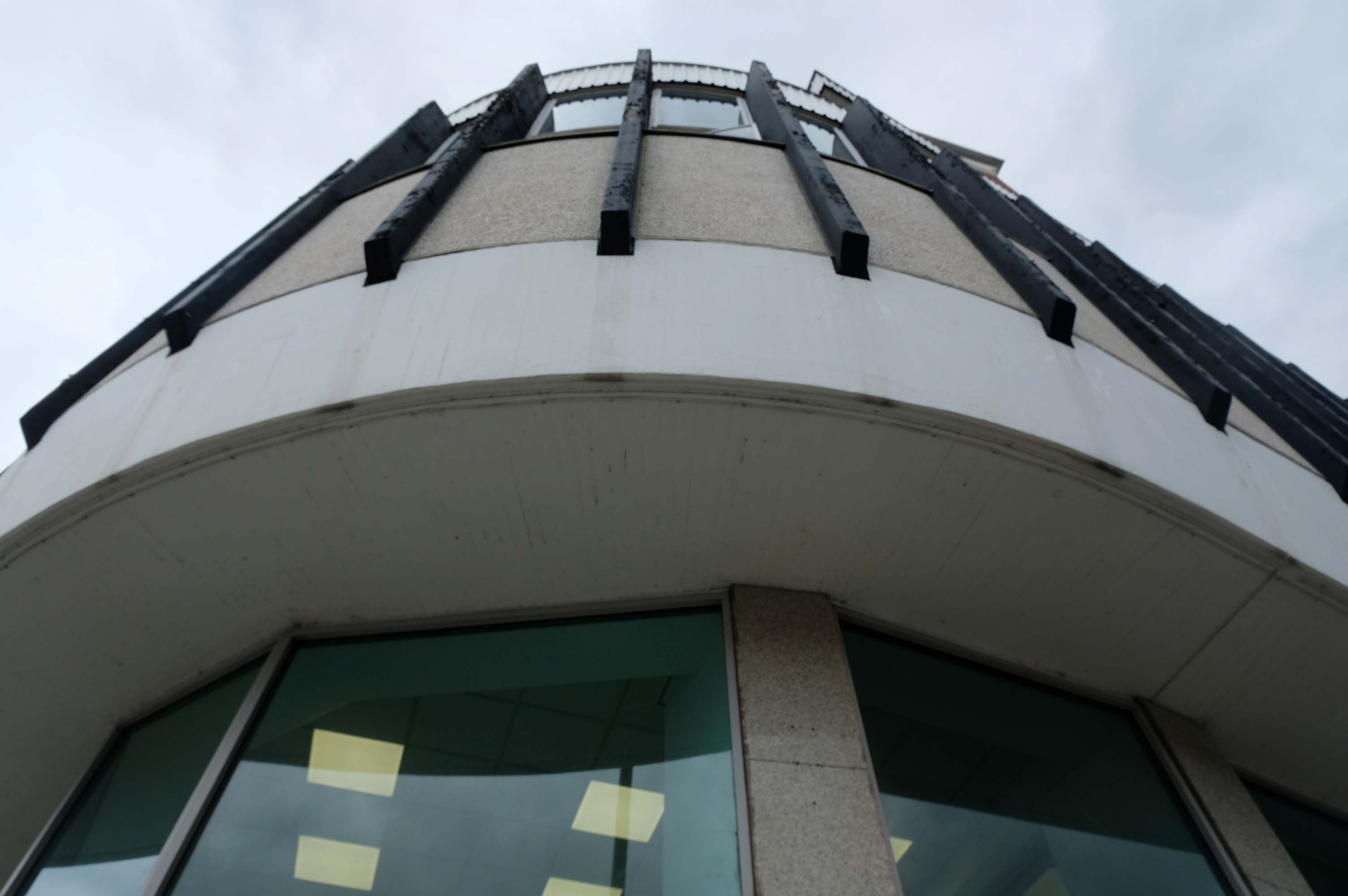
The Pevsner Architectural Guide pronounced the new Market Hall “a good example of modern architecture”, with “its clean lines and simple forms. But the town’s timber-framed tradition is also evoked. The upper storey is jettied out on a reinforced concrete structure and faced with vertical fins in an echo of close studding,” it stated. “The tall slender red brick clock tower mingles effectively in distant views with the town’s medieval steeples.”
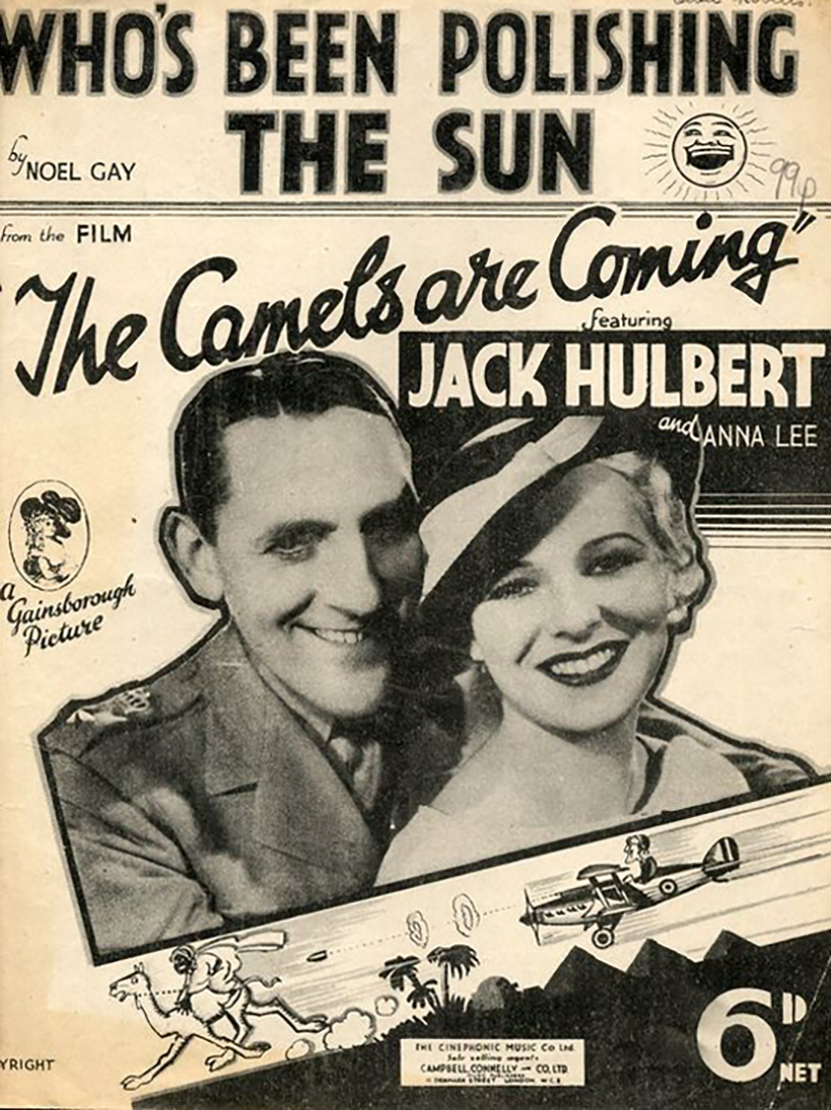
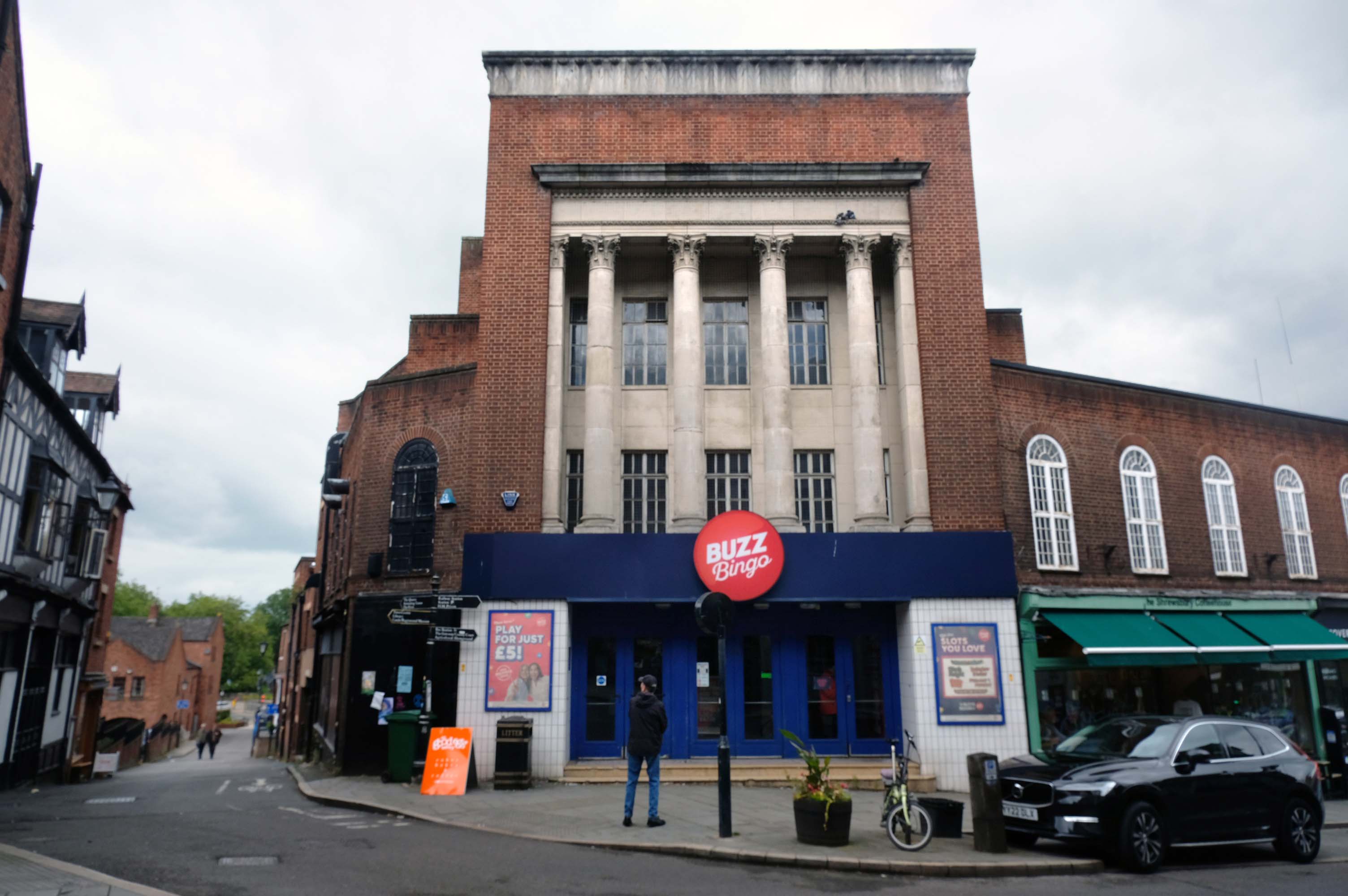
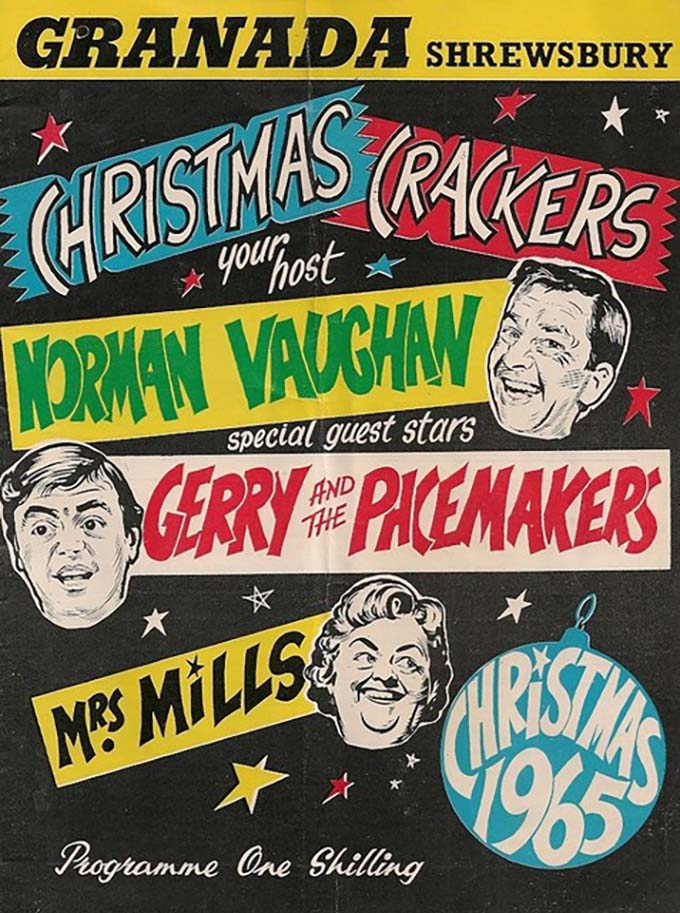
Built and operated by Shrewsbury Empires Ltd, the Granada Theatre opened on 14th November 1934 with Jack Hulbert in The Camels Are Coming.
It closed as a cinema on 31st March 1973 with Charles Bronson in The Valachi Papers and Anatomy of a Pin-Up.
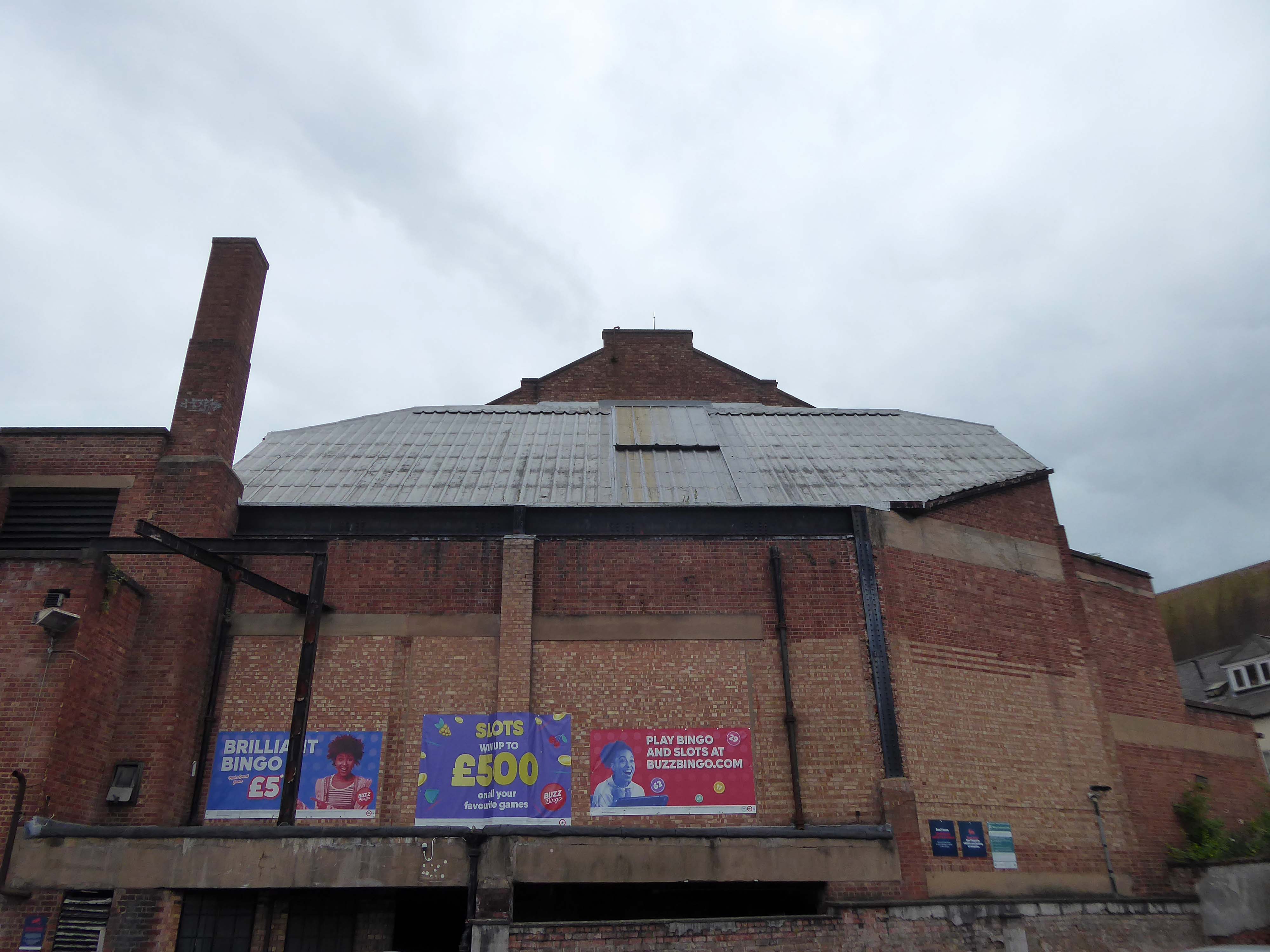
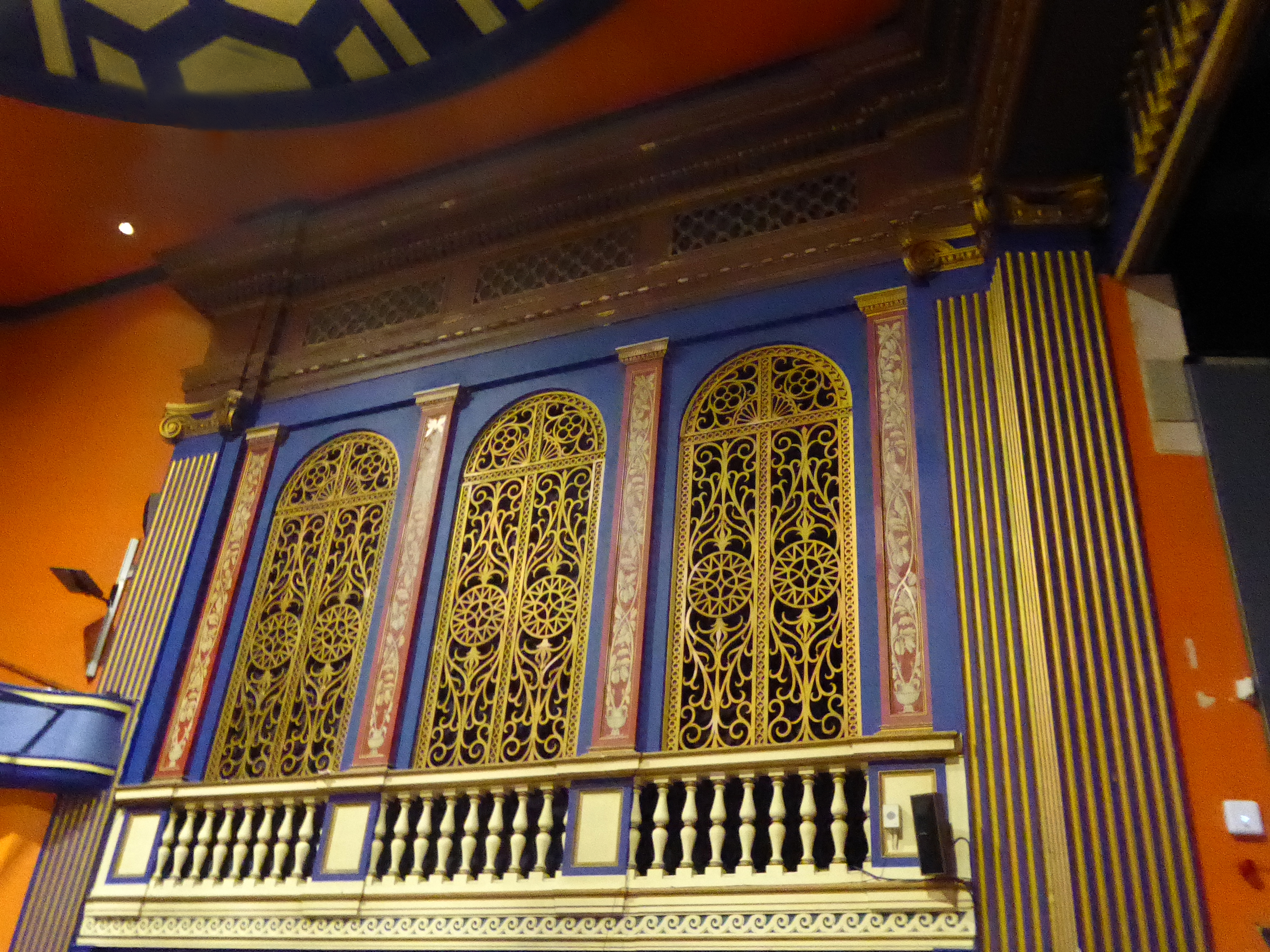
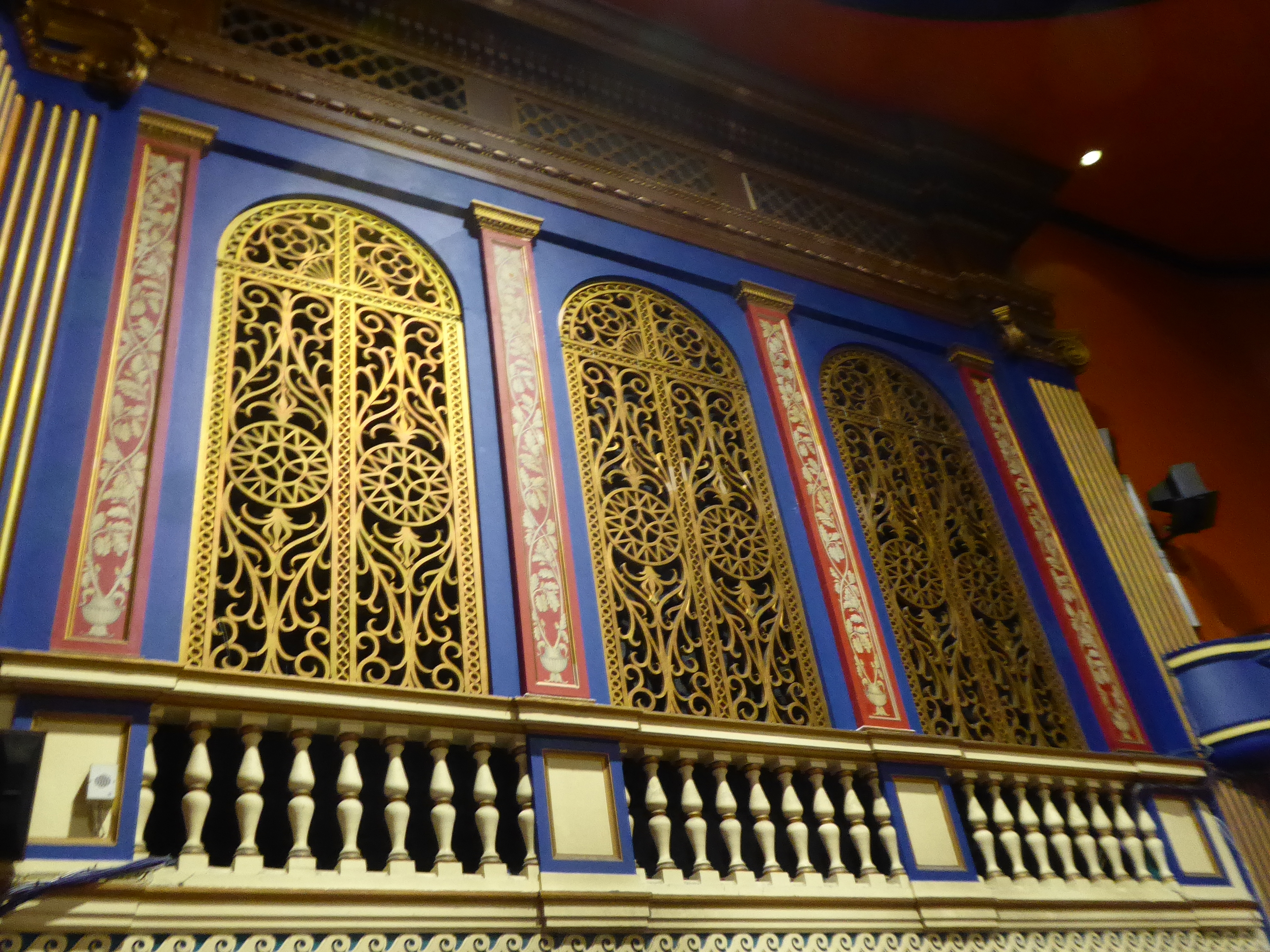
The Granada circuit was famous for its lavishly decorated interiors created by a Russian émigré called Theodore Komisarjevsky, the most famous examples of which are at Woolwich and Tooting – both now operate as bingo halls. The Shrewsbury Granada was by far the best cinema in the area, and in addition to Komisjarevsky, the scheme was designed by Cecil Massey, with some work being carried out by a local architect called Arthur Williams. The architecture of the Shrewsbury hall is often referred to as being a “standard” Granada, and the interior was very similar to the Granadas at Bedford now demolished and Maidstone which wasdestroyed by sub-division. There were less than 20 theatres built for the circuit, of which Shrewsbury was number five, although many existing cinemas were taken over and renamed, making the Granada Theatres an important group, although in numbers they were far behind Odeon and ABC.
On 17th November 1995, the Granada Theatre was designated a Grade II Listed building by English Heritage.
Many thanks to the staff of Buzz Bingo for allowing us access.
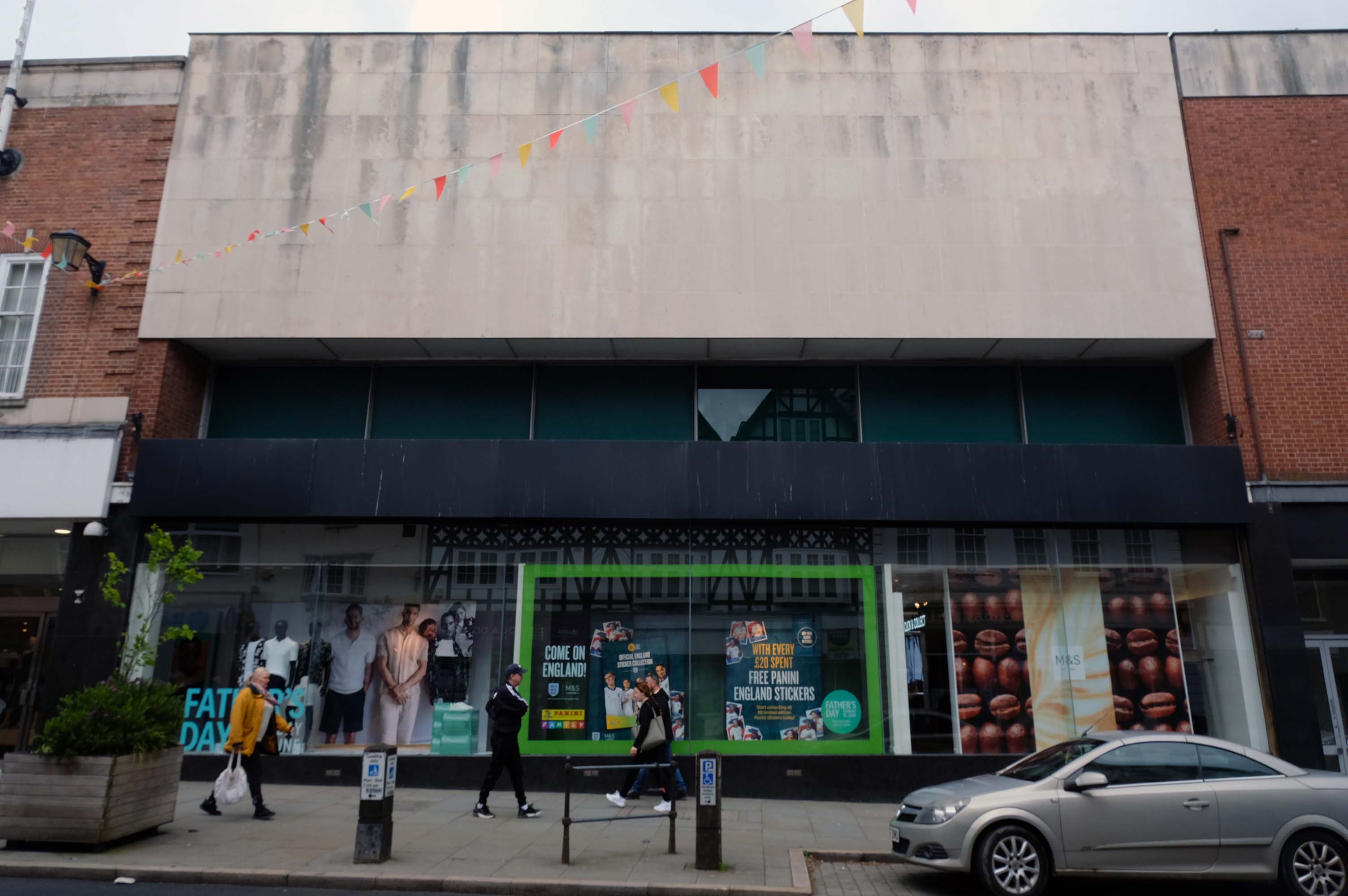
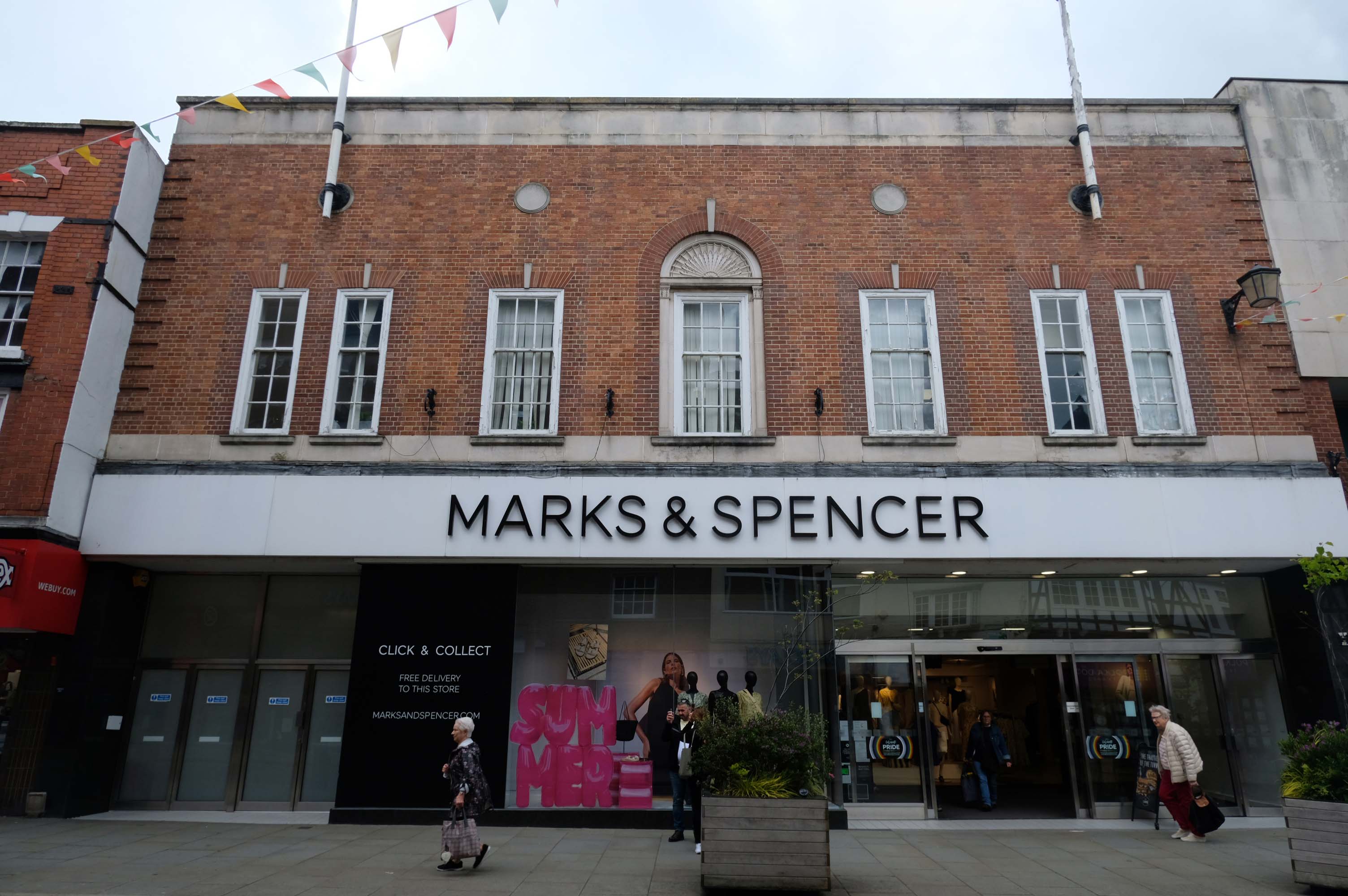
Next up is a Marks & Spencers store very much a shop of two halves – marrying post-war Brutalism with interwar Classicism, unified by a glazed ground floor.
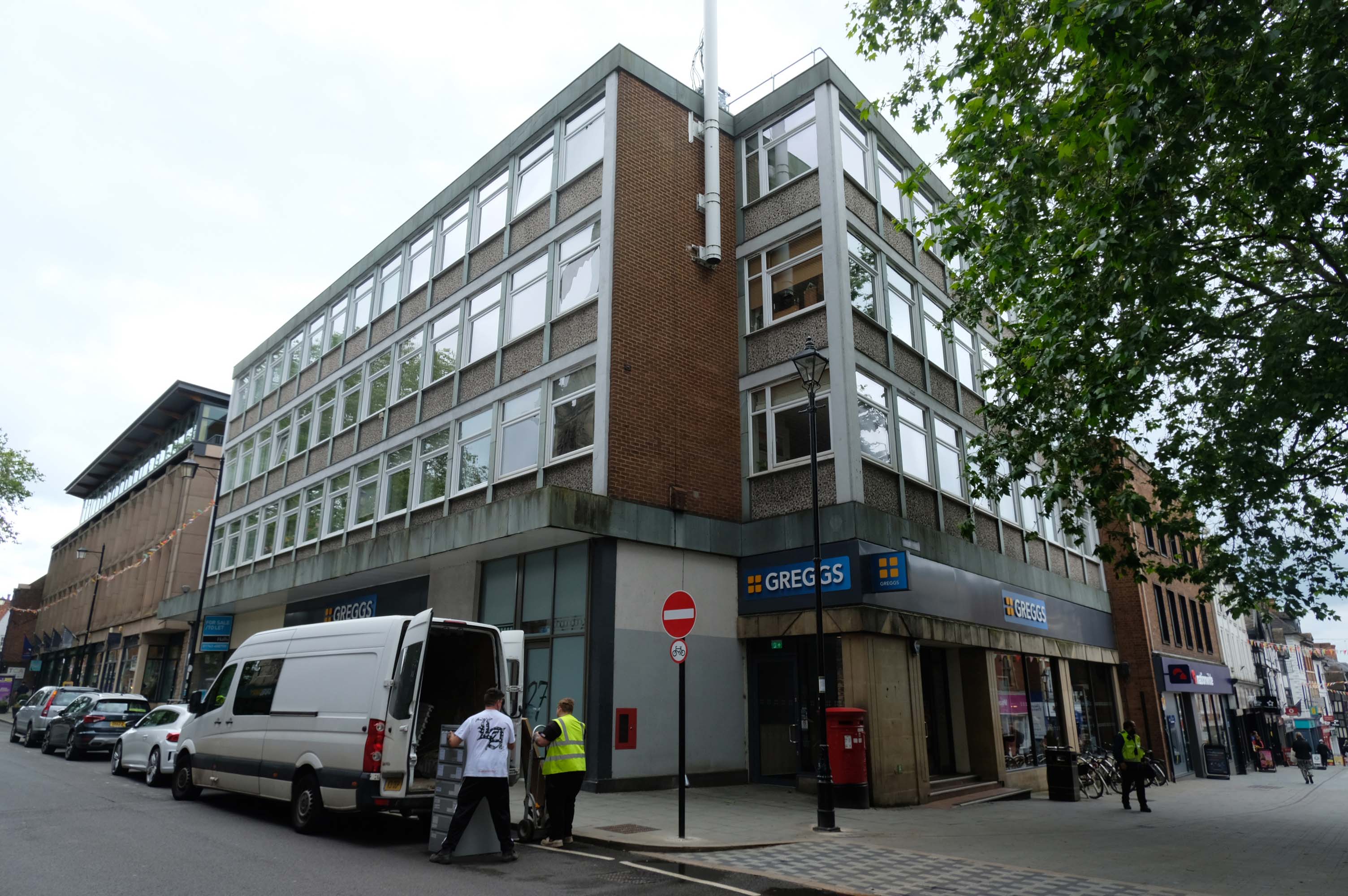
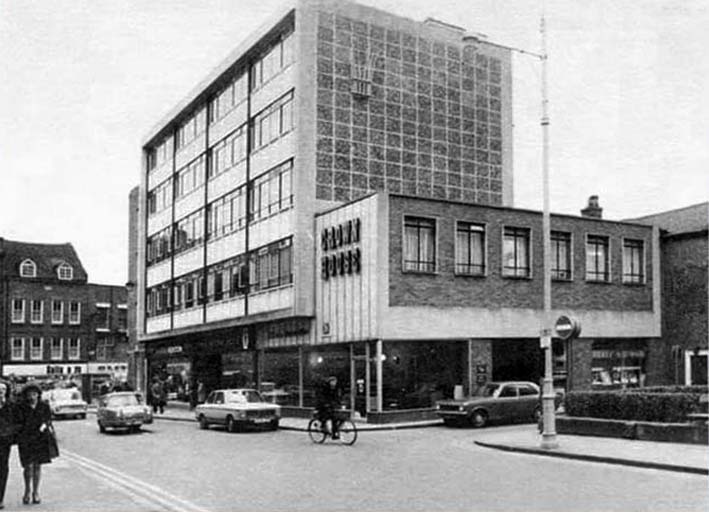
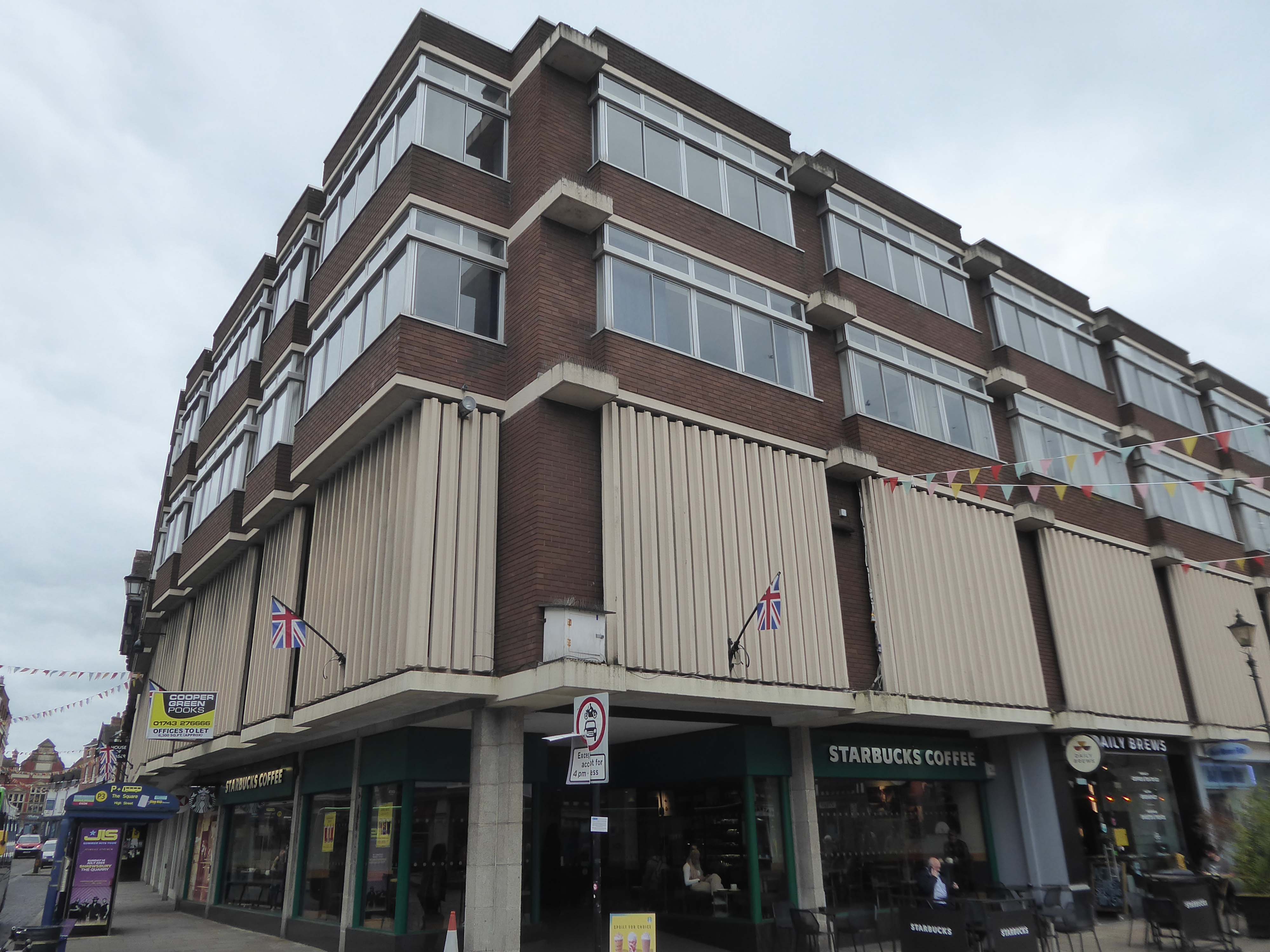
Across the way, a 60s corner site development, with a dual-entry Greggs.
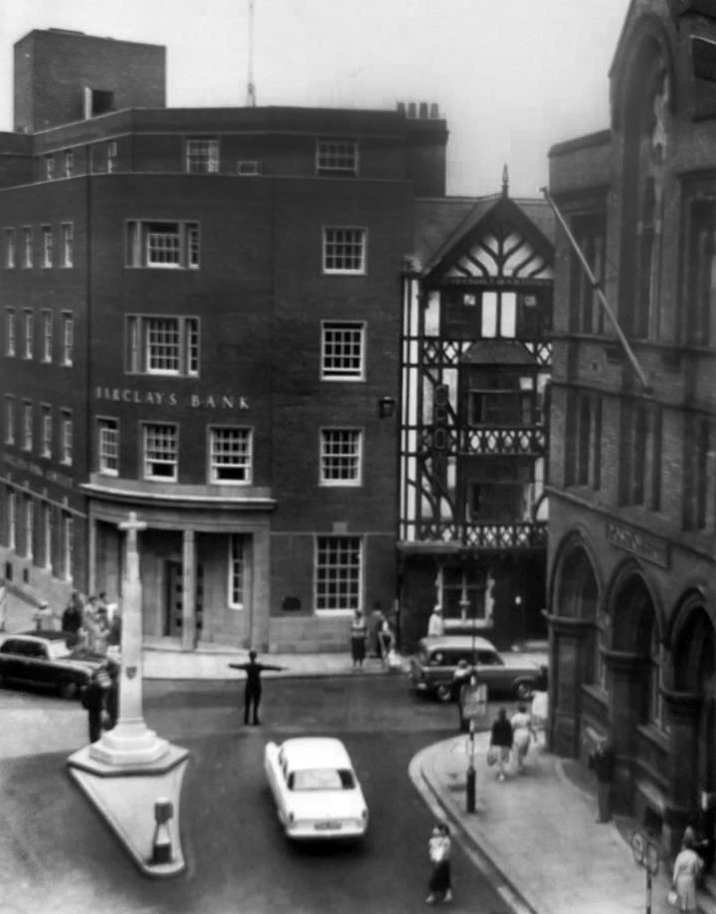
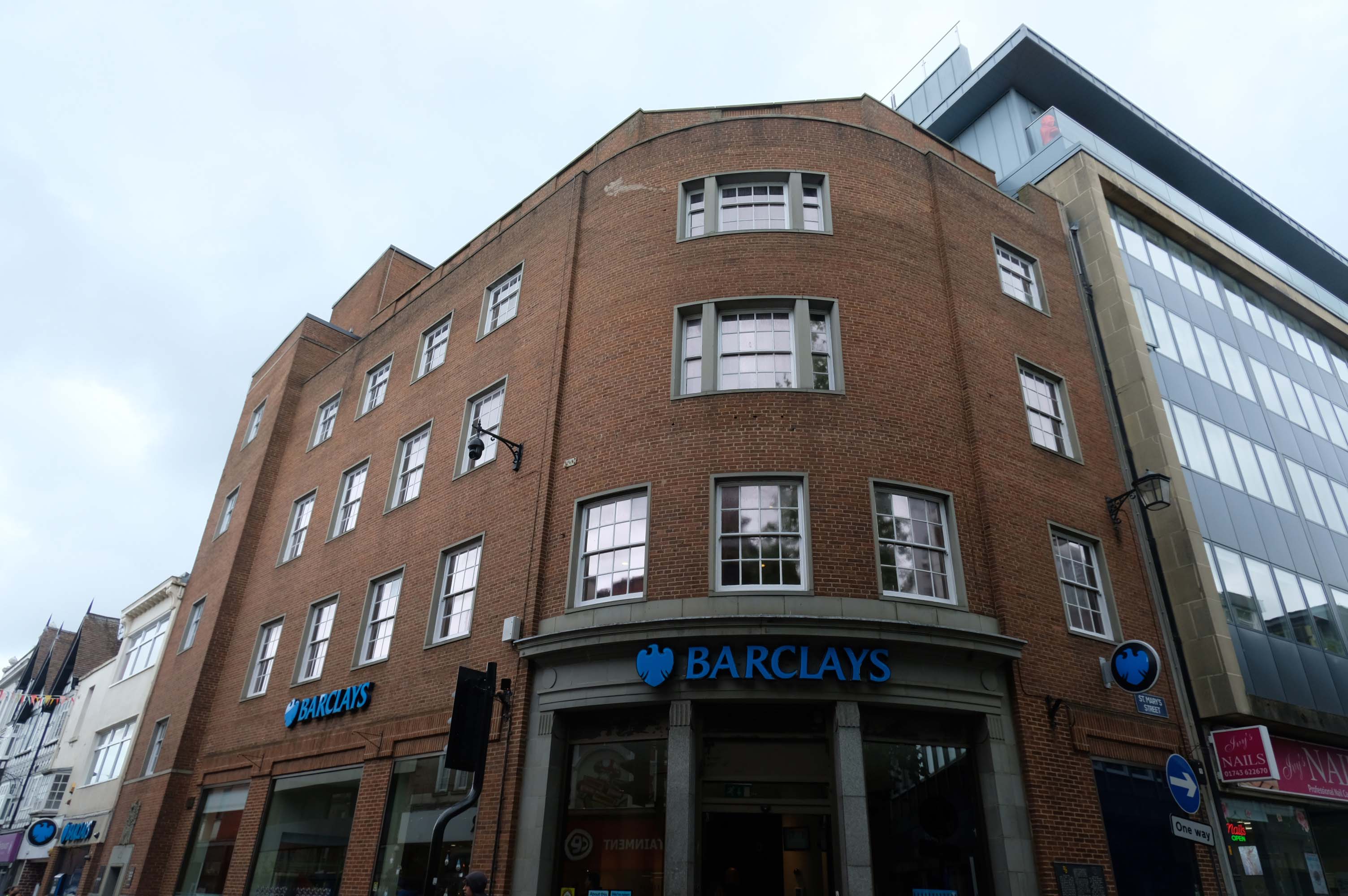
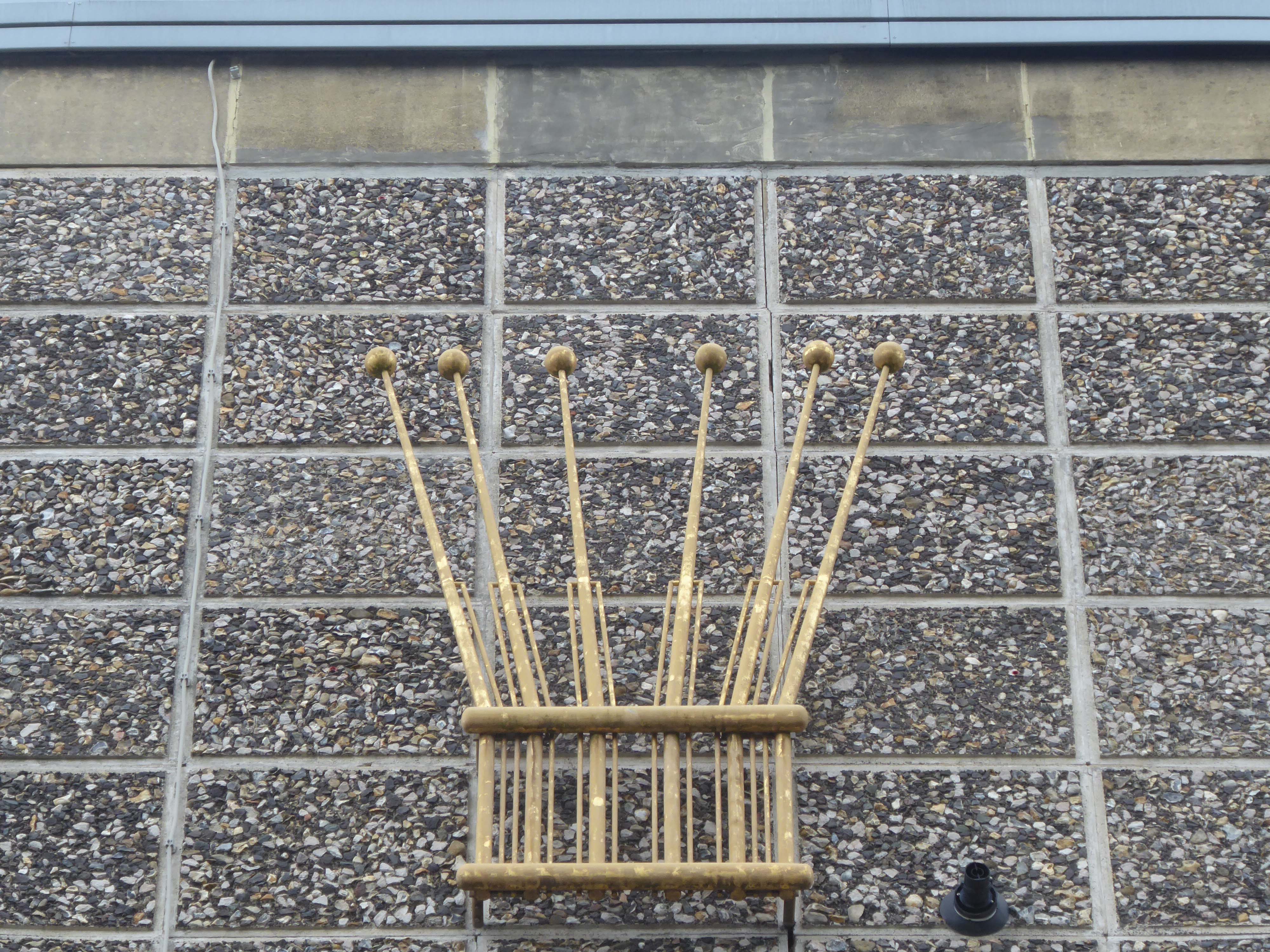
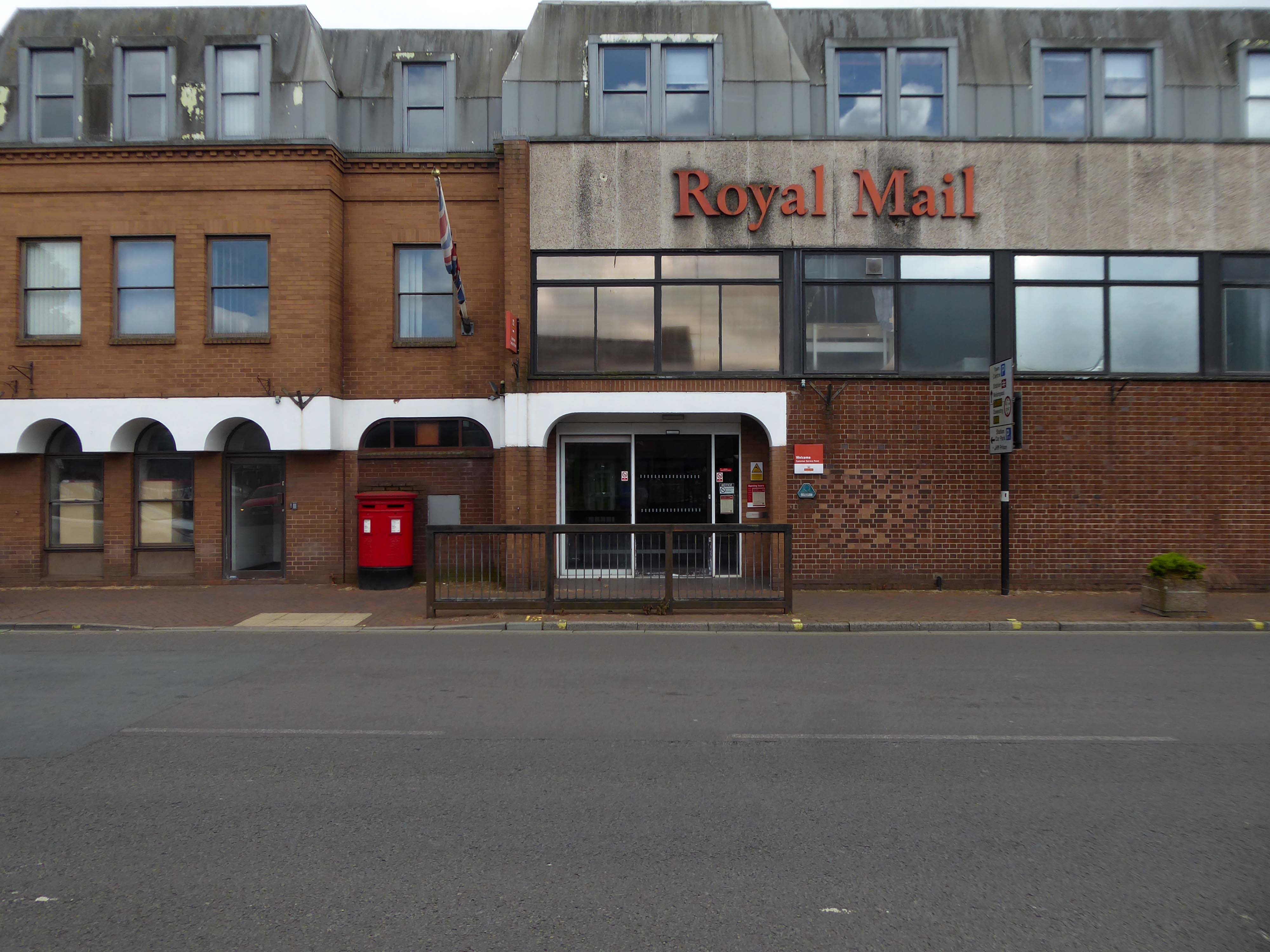
Formerly the site of the Post Office – demolished in 1959, and next to the Barclays bank the long gone Crown Hotel.
On the adjacent corner a curvaceous Barclays Bank, built in the post war Ministry of Works manner.
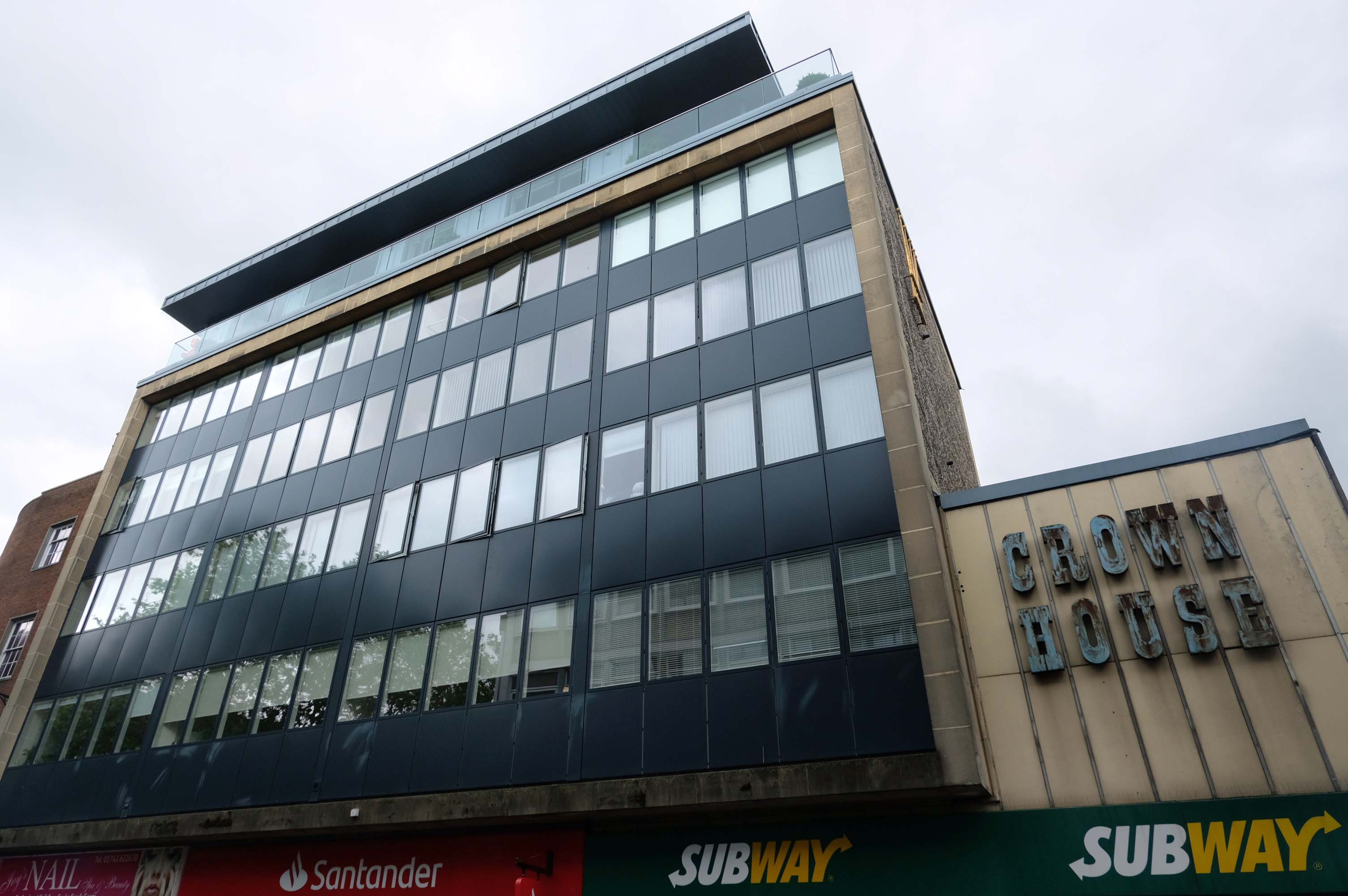
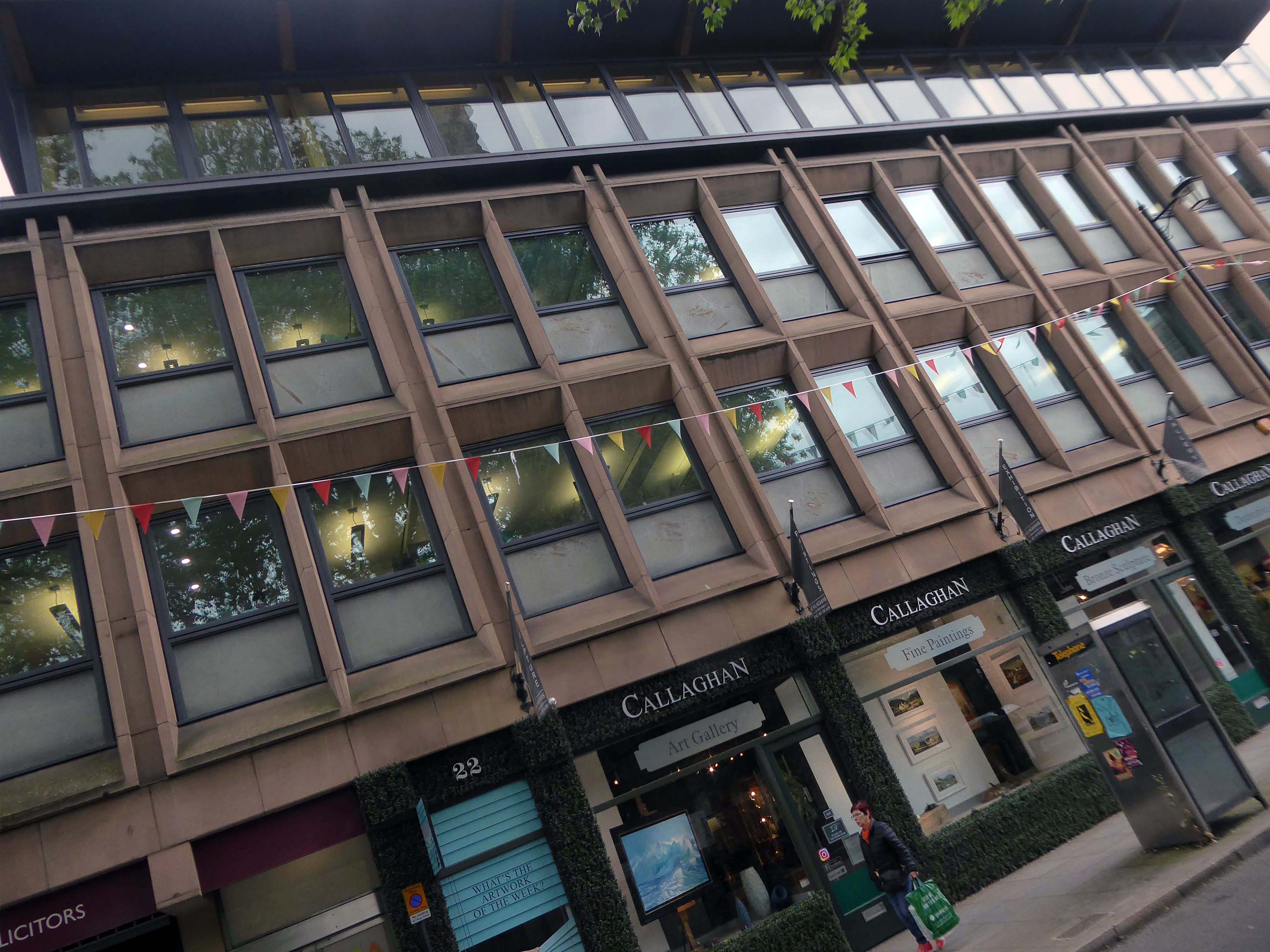
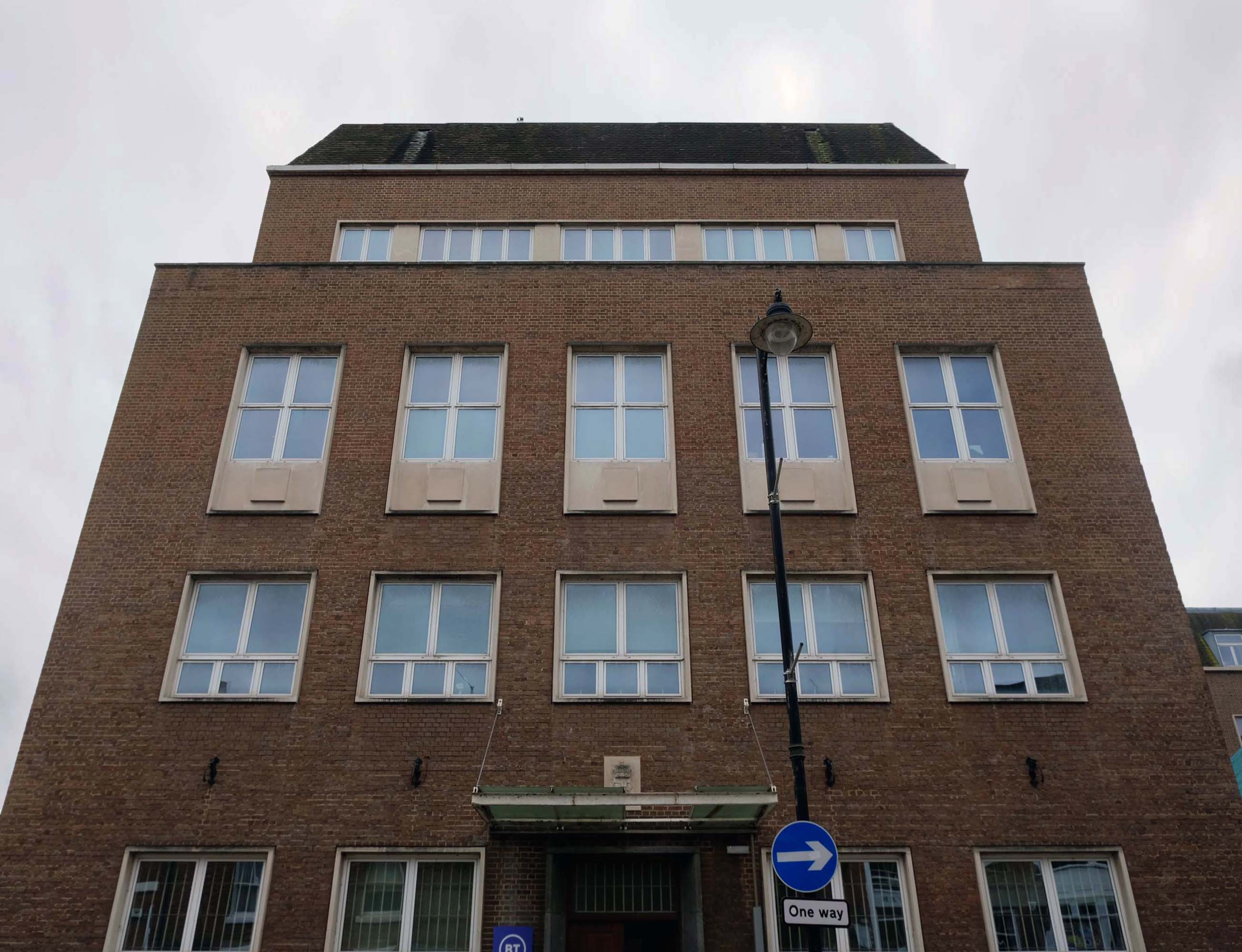
Next door is Crown House – refurbished but with it’s architectural type intact.
One of Marshall Structures’ biggest projects to date was the conversion of Crown House from a tired office block to a complex featuring 14 luxury apartments, providing a much-needed improvement to the site. The work involved in this project included large amounts of steel work and timber design.
The biggest challenge faced during the completion of this project was trying to fit an additional storey without loading quite an old existing structure. To do this, the new storey was designed out of a lightweight timber frame. By doing this, the client’s brief could be met while also ensuring that the existing 1950s building wasn’t overloaded in the process.
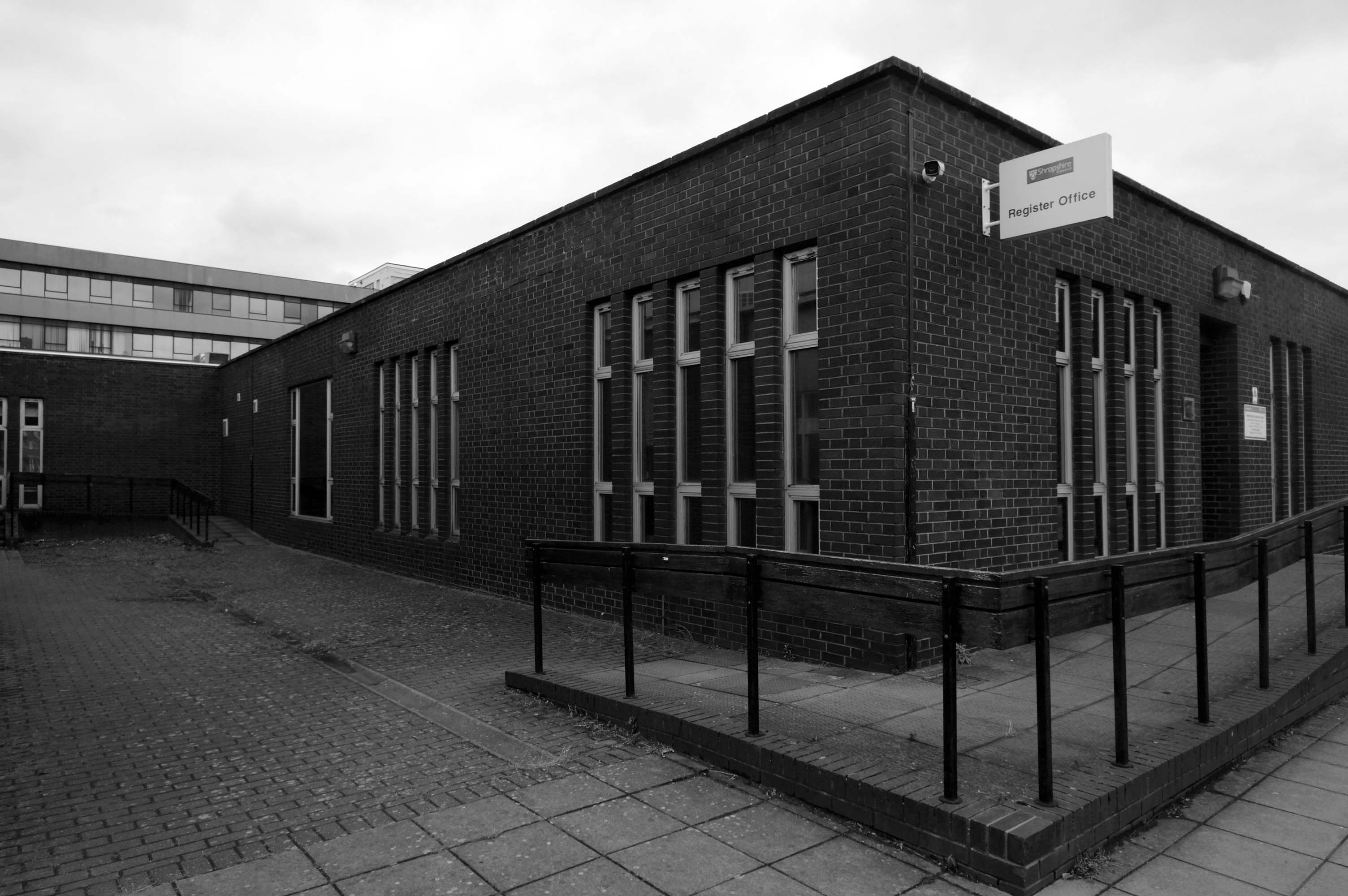
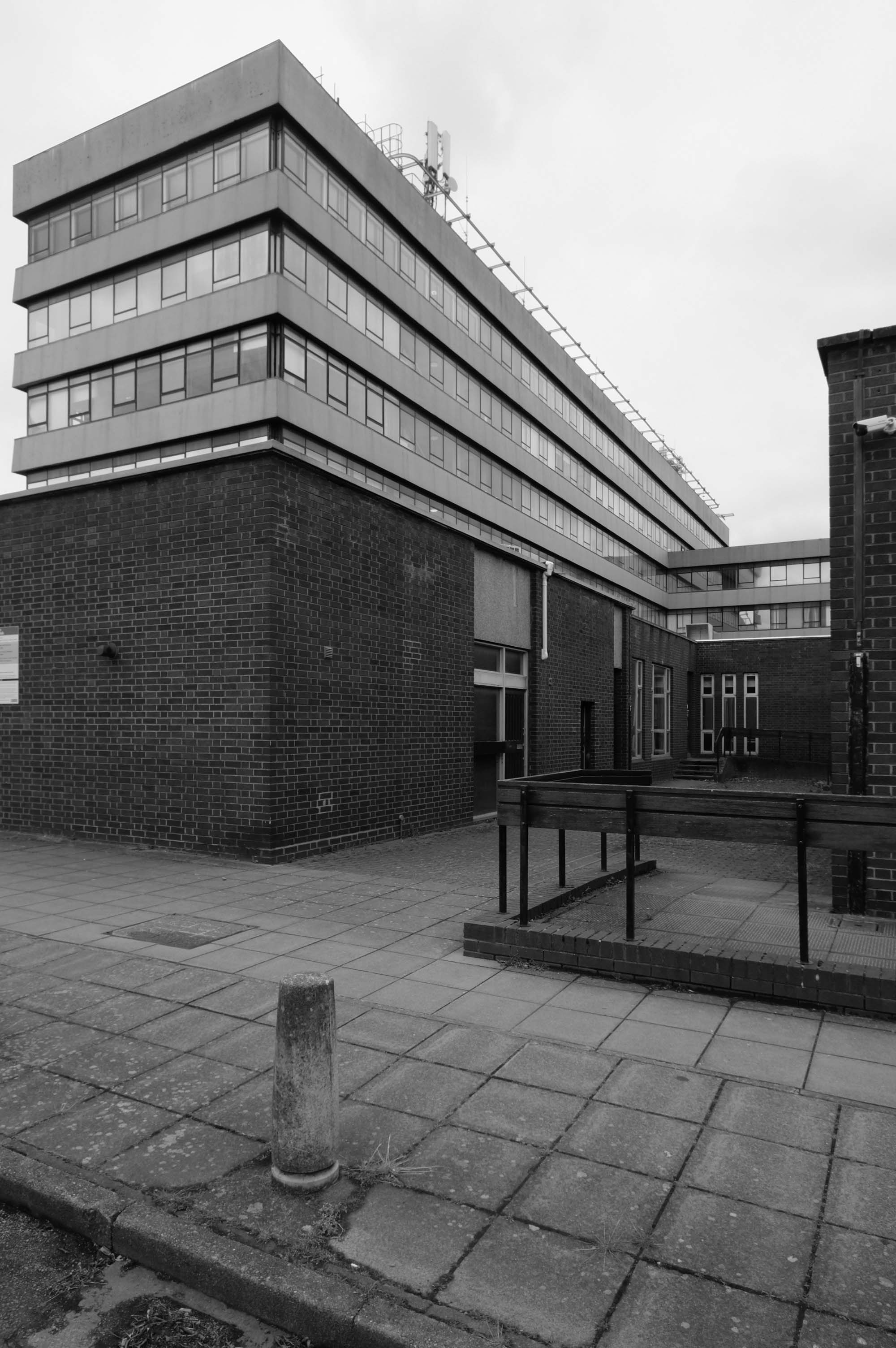
The foundation stone for the new building was laid by Sir Offley Wakeman, a former chairman of the county council, on 25 July 1964. It was designed by Ralph Crowe, the County Architect, in the Modernist style, built at a cost of £1.8 million and was completed in April 1966.
Pevsner described the building as – the major monument to post-war modernism in the county.
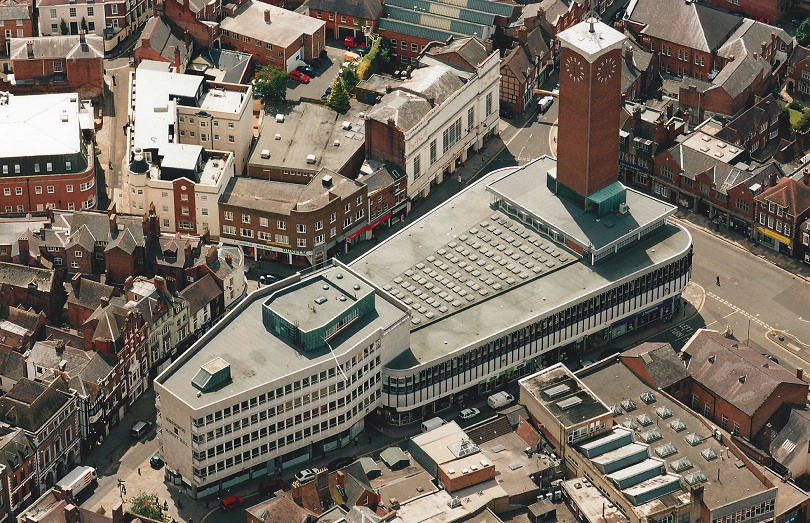
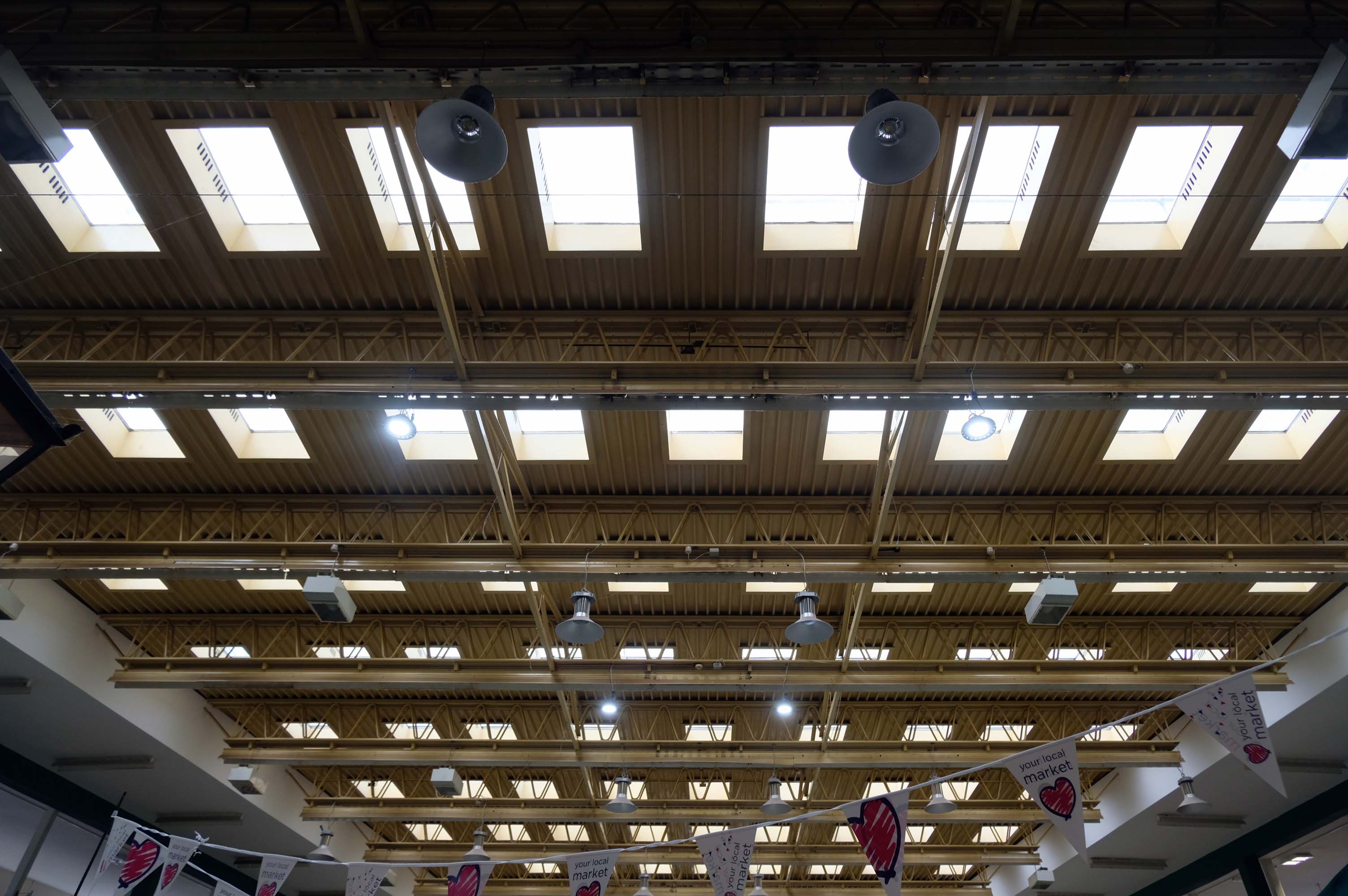
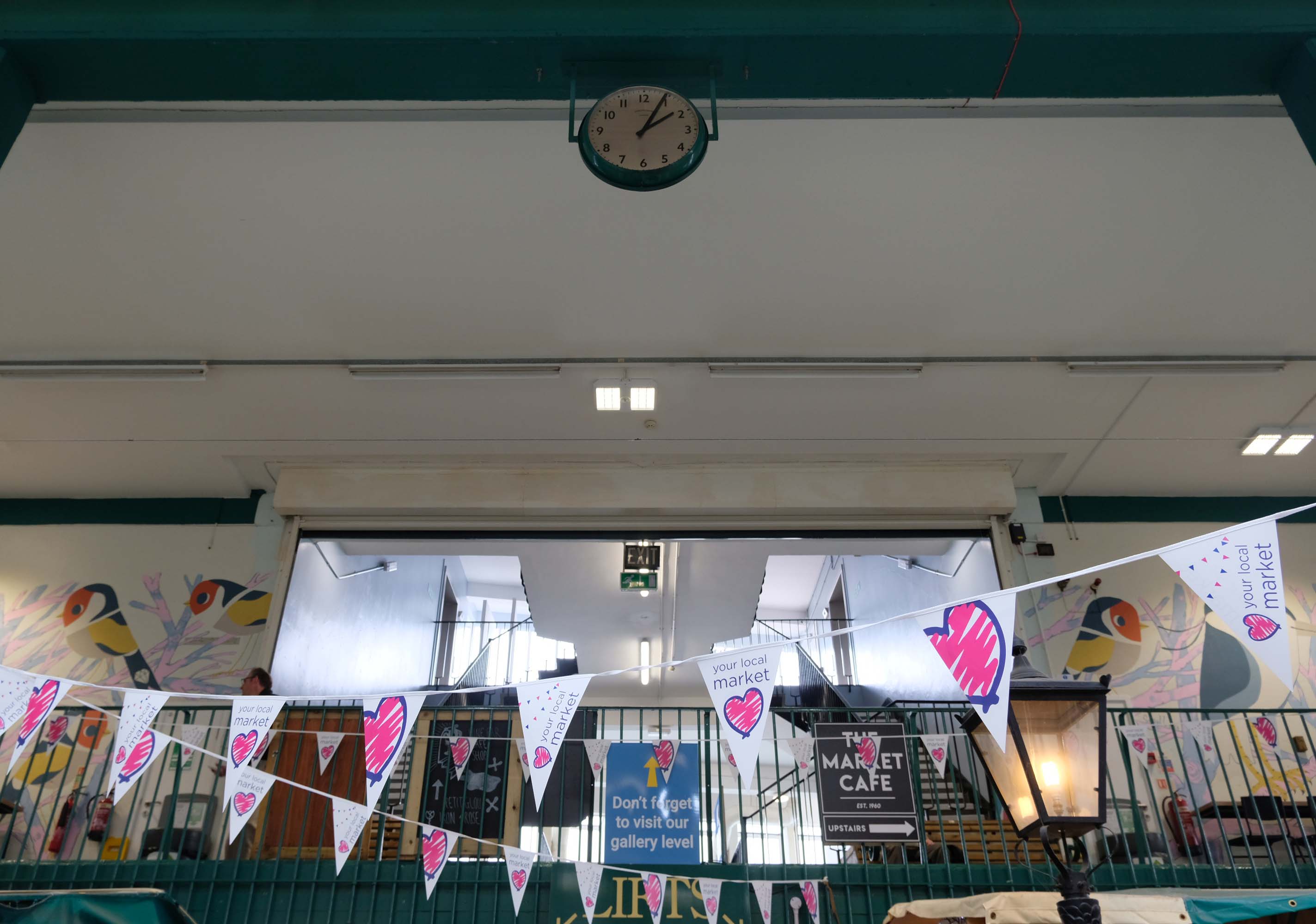
The Market Hall, which includes the town’s 240ft clock tower, an indoor market and a ground-floor shopping centre, was hailed the most modern building in Shropshire when it opened in September 1965.
Developed by the Second Covent Garden Property Company Ltd to replace an ailing Victorian market hall, it cost £1 million to build and was designed by award-winning architect David du Roi Aberdeen who also famously designed the Trade Union Congress headquarters, Congress House, in London, and the Swiss Centre in Leicester Square.
Today the Market Hall’s 1960’s architecture might not be to everyone’s taste, but its indoor market is thriving with over 70 small businesses ranging from popular contemporary cafes and gift retailers to artisan producers and traditional market stalls selling fresh produce.
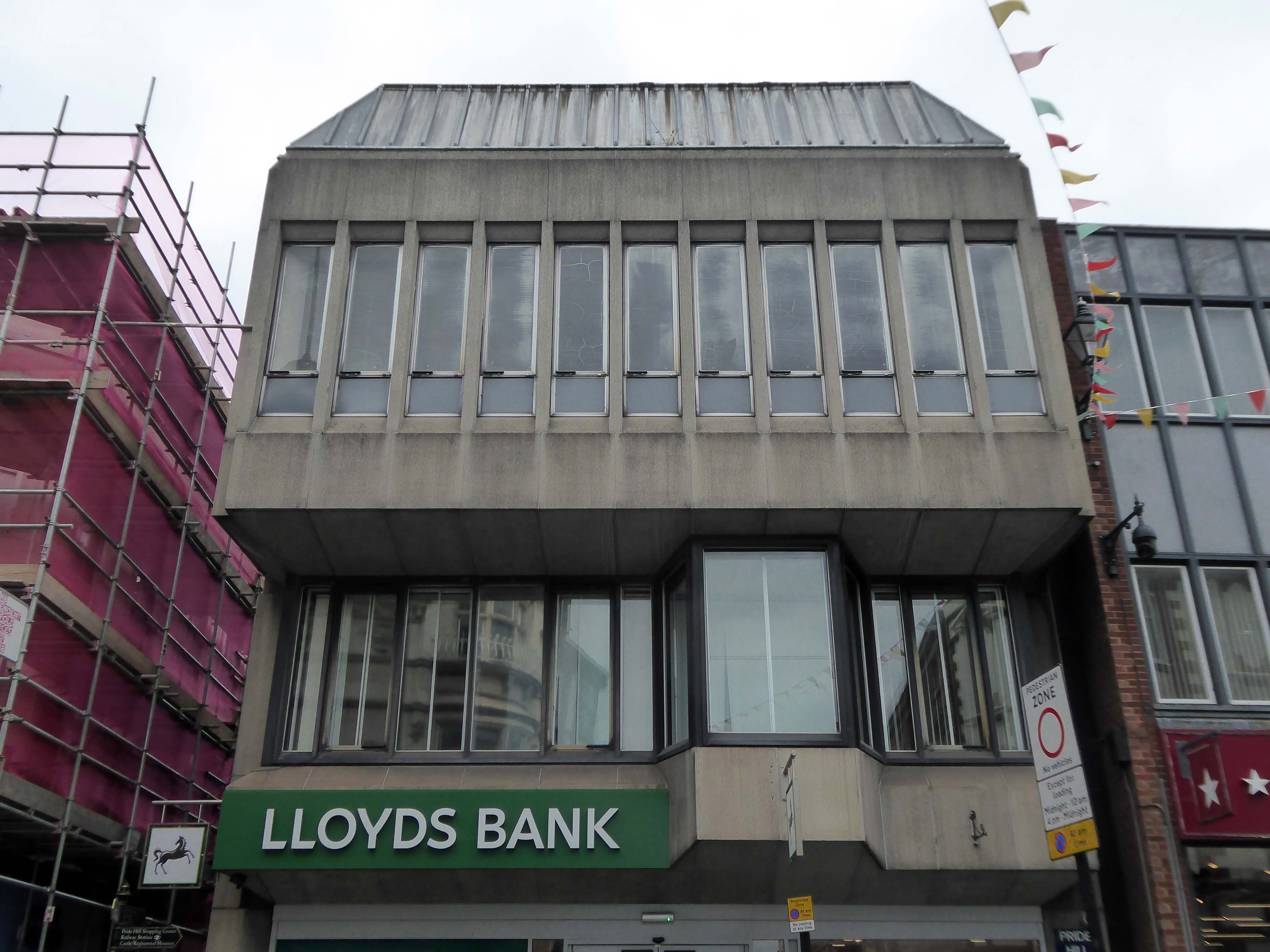
Bobbing toward the centre – a striking Lloyds Bank.
A conscious effort to reflect the nearby Tudor architecture of Ireland’s Mansion and Pride Hill. Lloyds Bank is considered a good example of Brutalist architecture, and proof that bold modern buildings can be successfully slotted into traditional historic streets.
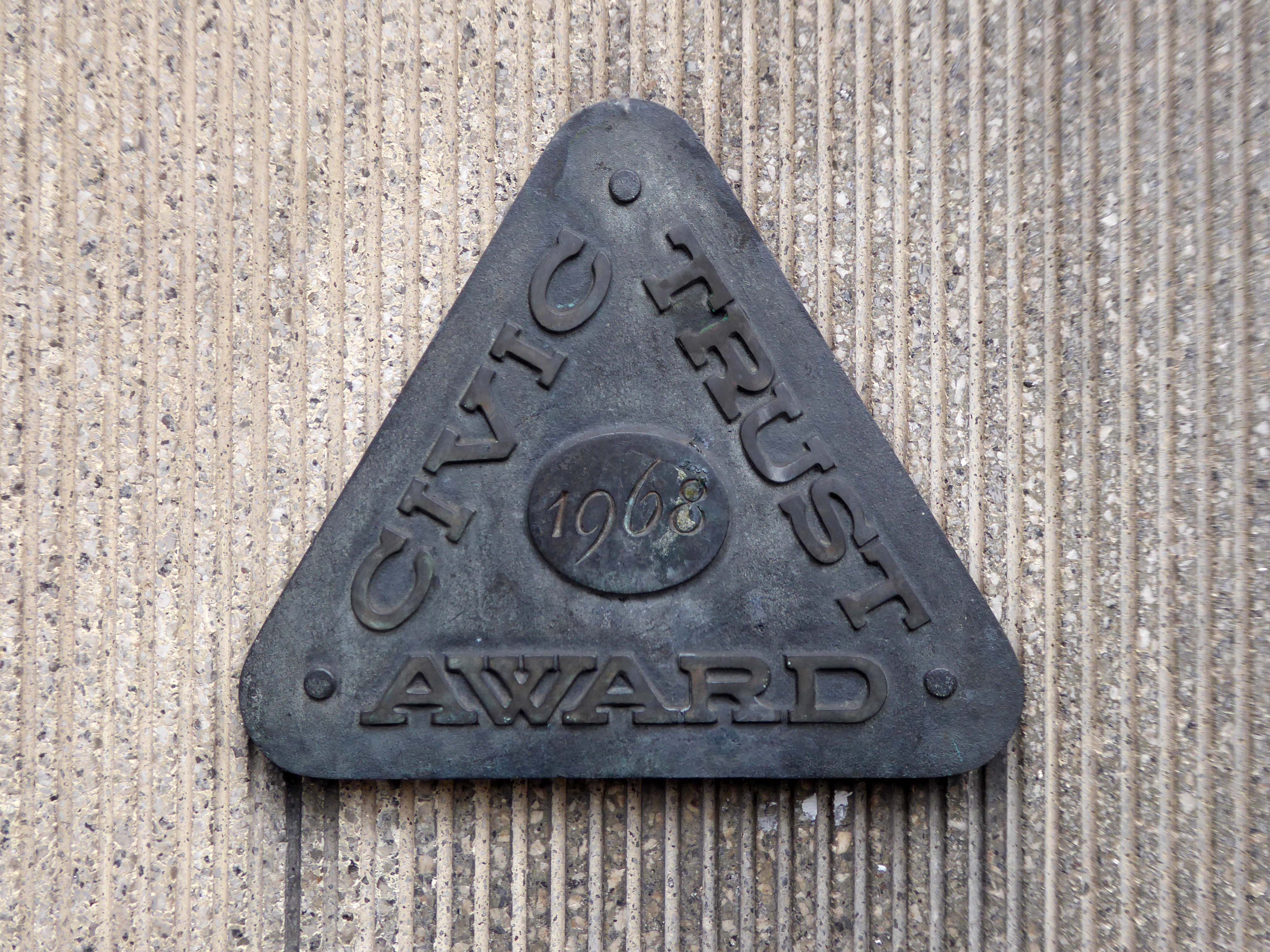
Possibly Shrewsbury’s finest post-war building, but of course it has its detractors. It was well received by critics of the period including the assessors for the Civic Trust who bestowed an award in 1968. They noted the quandary that the architects faced of building in such a historic setting and terminating the vista along one of the town centre’s main streets. In their opinion the architects ‘faced the problem squarely and their building, brave in its conception and immaculate in its detail’ and that it was ‘uncompromisingly of today but beautifully sympathetic to the great buildings it rests with’. Pevsner’s original assessment of it being the ‘boldest modern response to the town’s half-timbering’ was not shared by the authors who revised the Shropshire edition and viewed it as an ‘aggressive display of exposed and textured concrete’.
It was also shortlisted for the European Cement Association awards, one of only two British buildings to make the grade. Opting to draw on the Tudor traditions of the town, partner W Marsden, working with project architect W Allan Clark and assistants Malcolm Lovibond and Keith Maplestone, used cantilevered floors, vertical structural and sub-structural members, oriel windows and a black and white tonal palette deploying anodized aluminium window frames against finely ribbed concrete panels. The standing seam zinc roof adopted the town’s norm of pitched roofs without gables in order to blend with the street scene. Concrete Quarterly referred to it as ‘a skilful bridging of the centuries in a way that would not offend a purist’ . The main contractor was Henry Willcock and Company Limited.
The foundation stone for the new building was laid by Sir Offley Wakeman, a former chairman of the county council, on 25 July 1964. It was designed by Ralph Crowe, the County Architect, in the Modernist style, built at a cost of £1.8 million and was completed in April 1966.
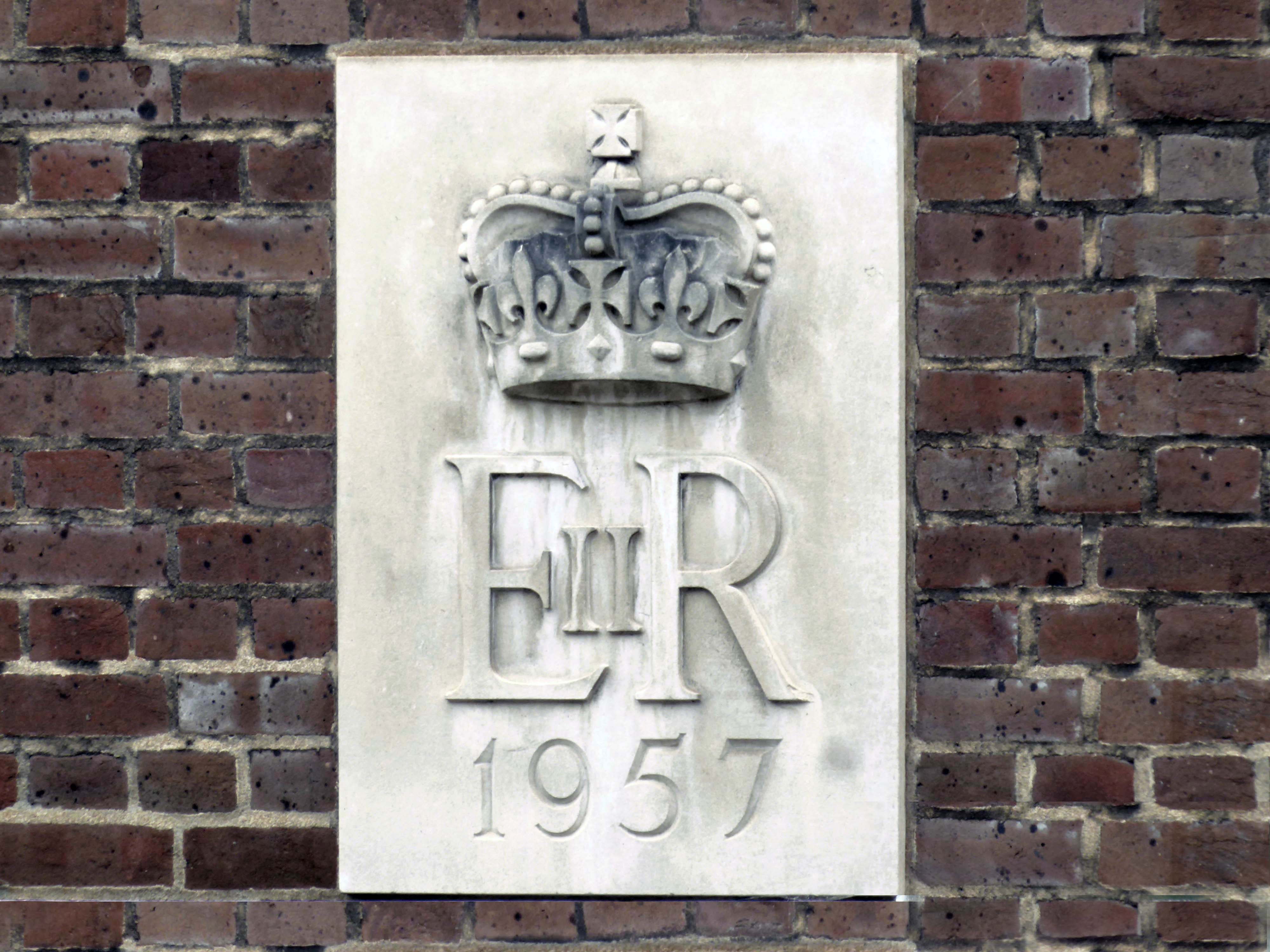
It was officially opened by Queen Elizabeth II, accompanied by the Duke of Edinburgh, on 17 March 1967.
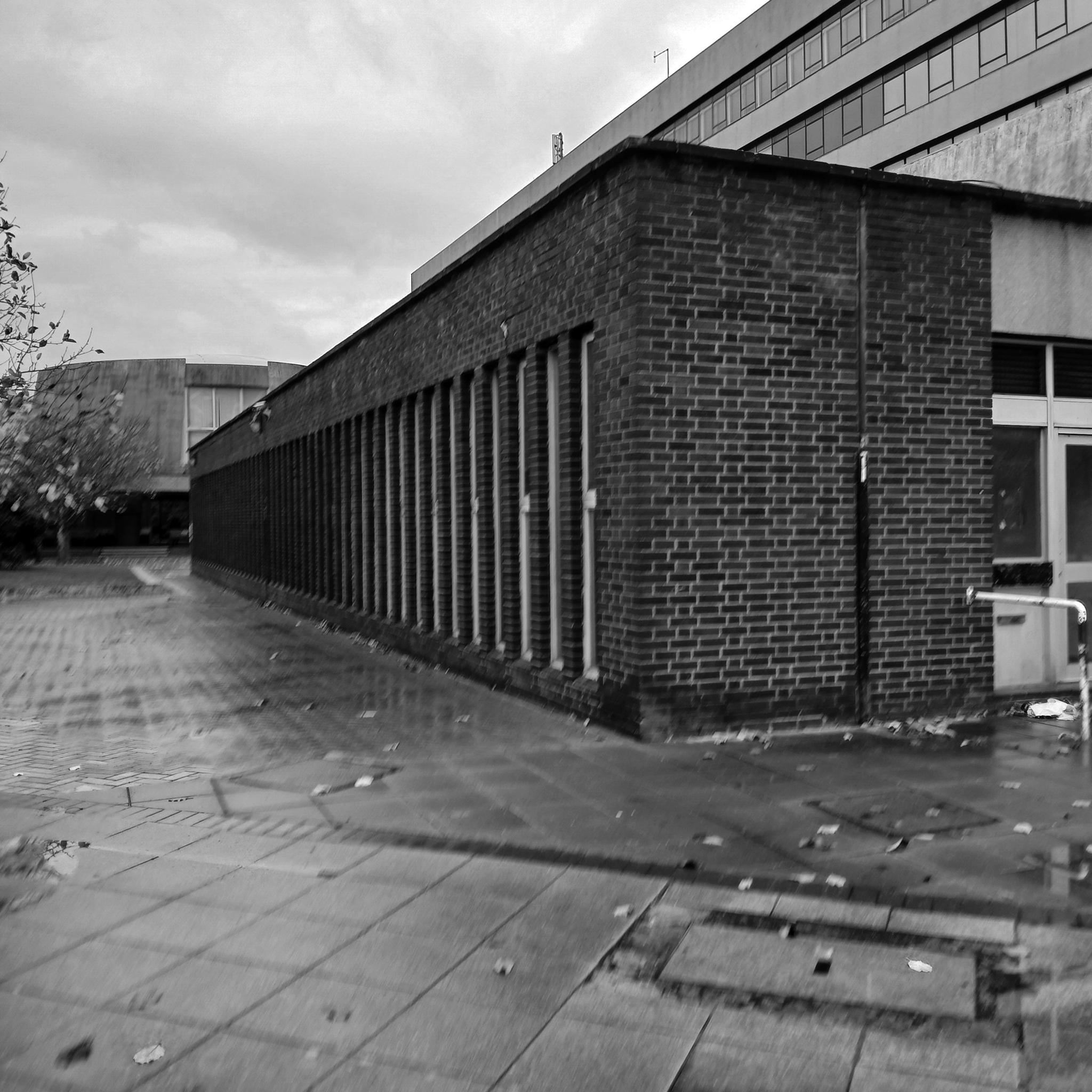
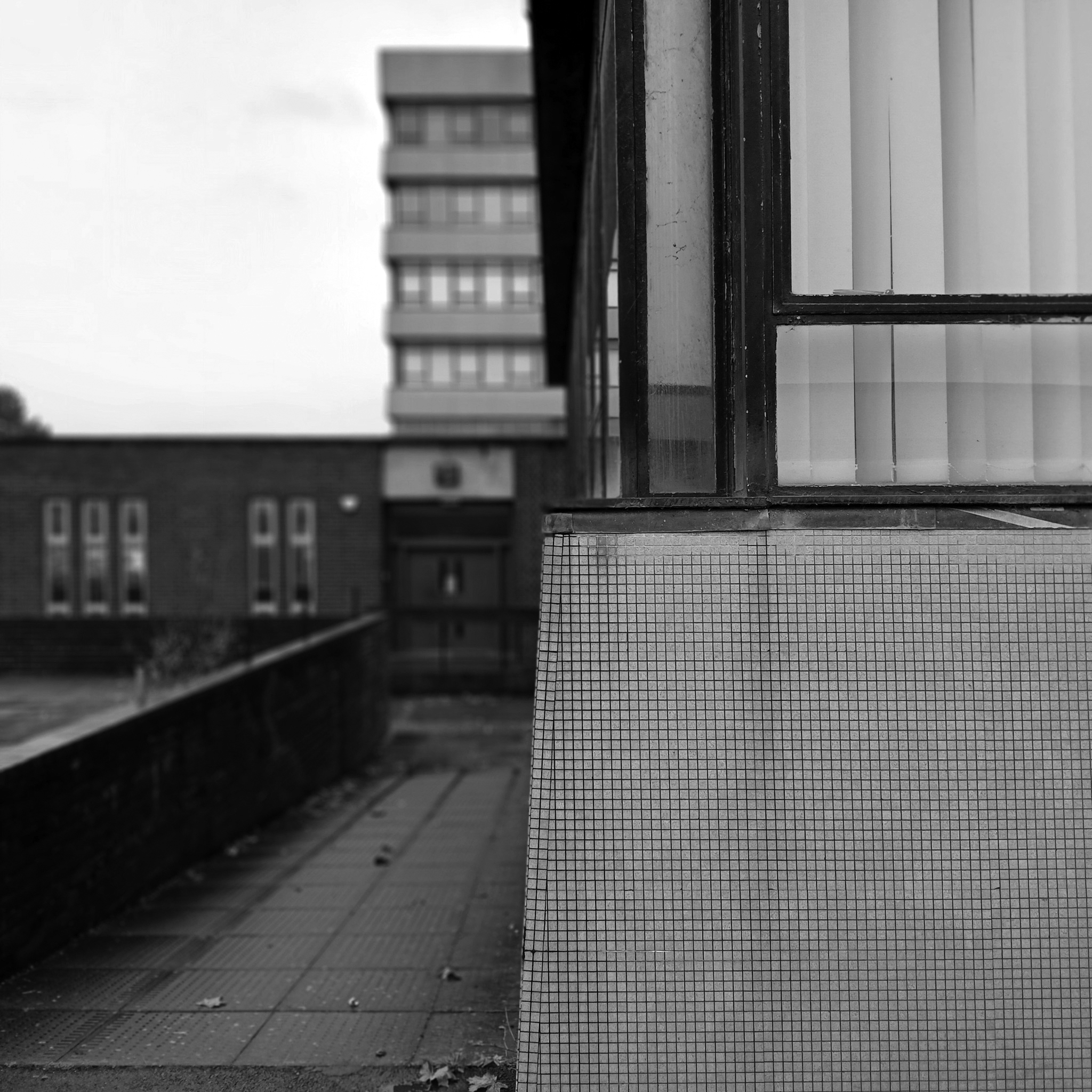
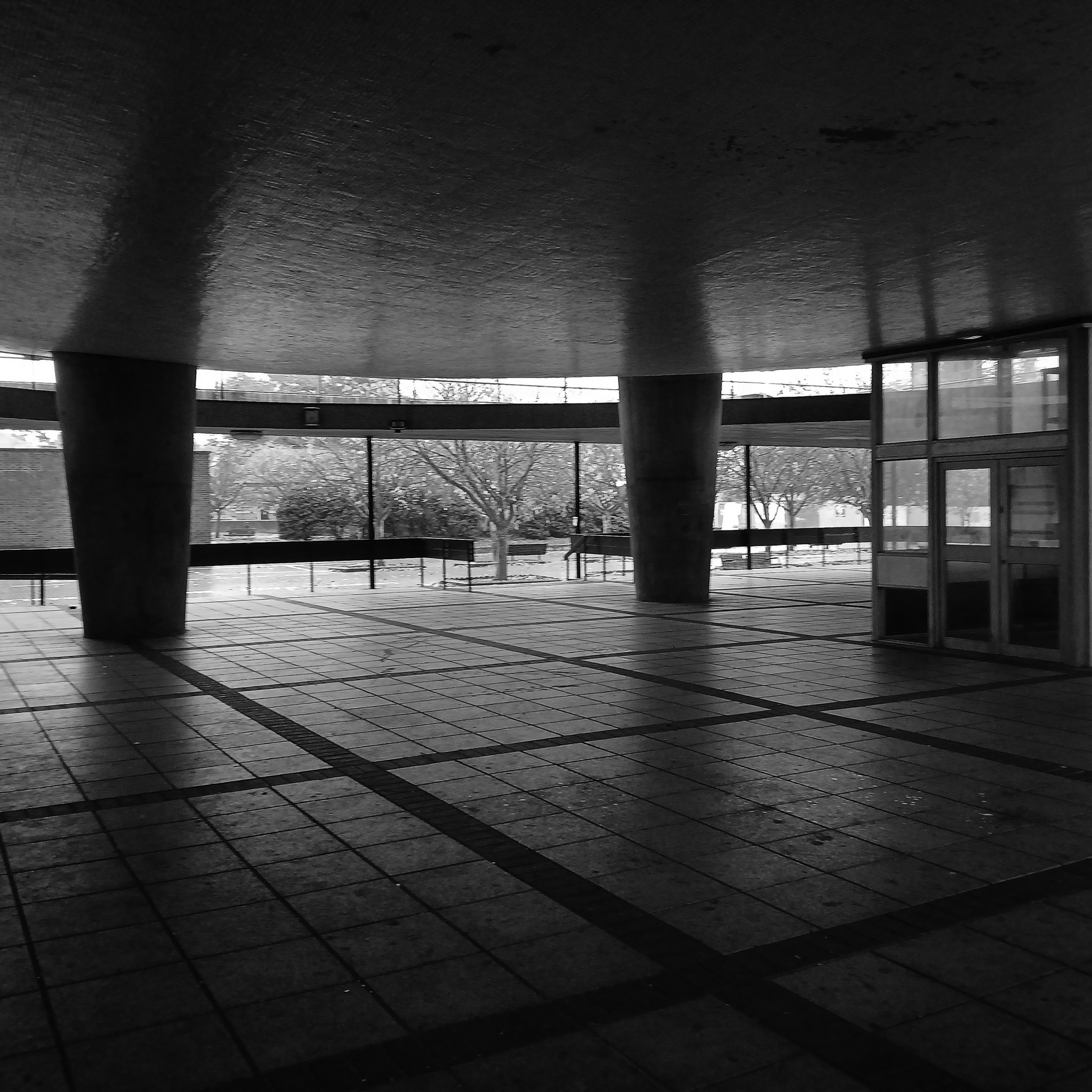
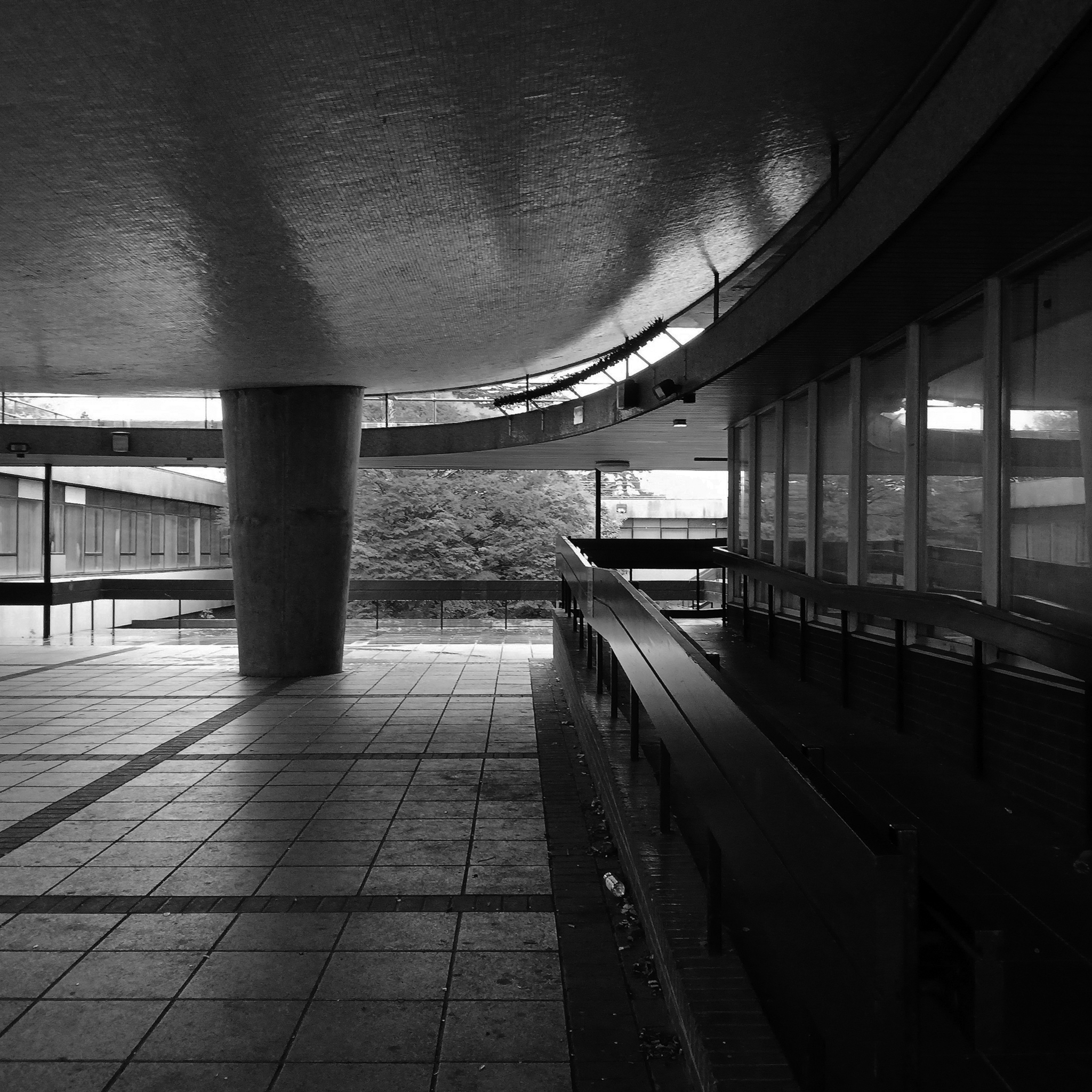
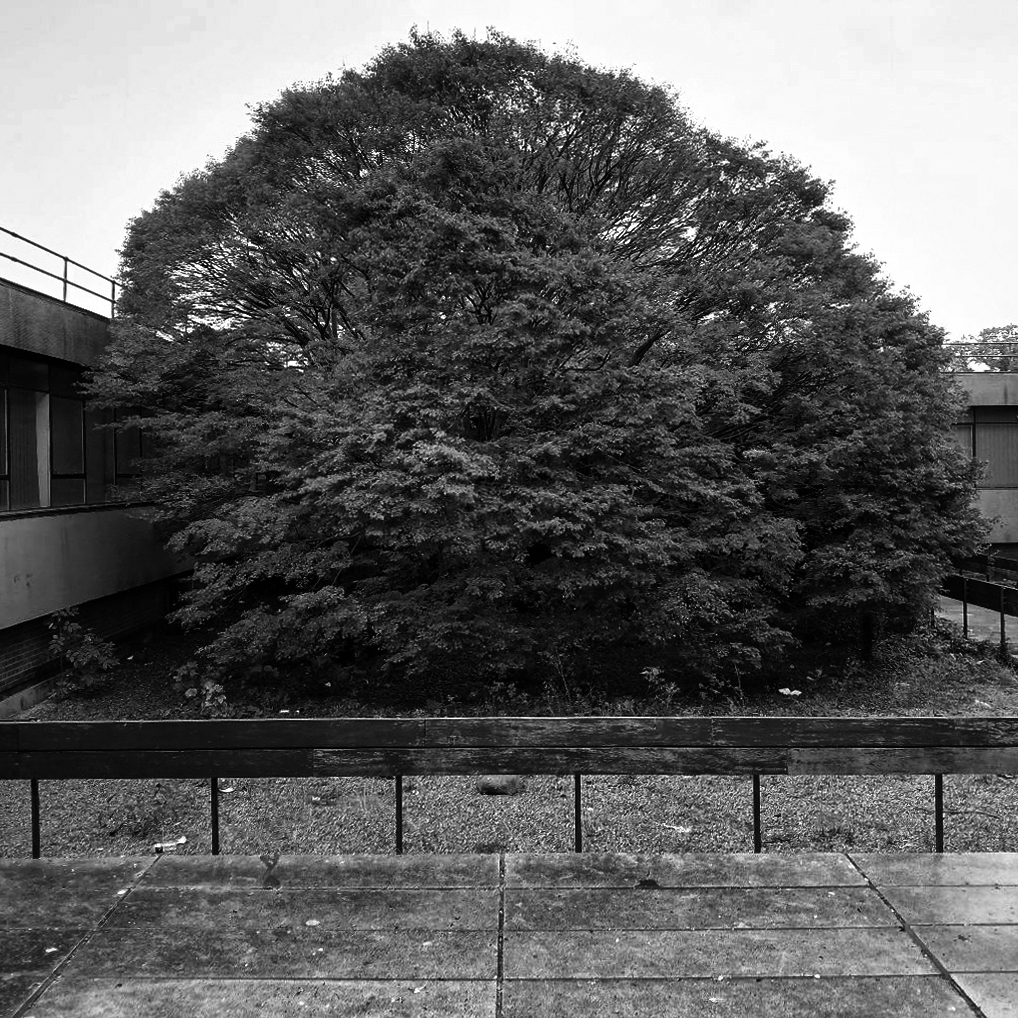
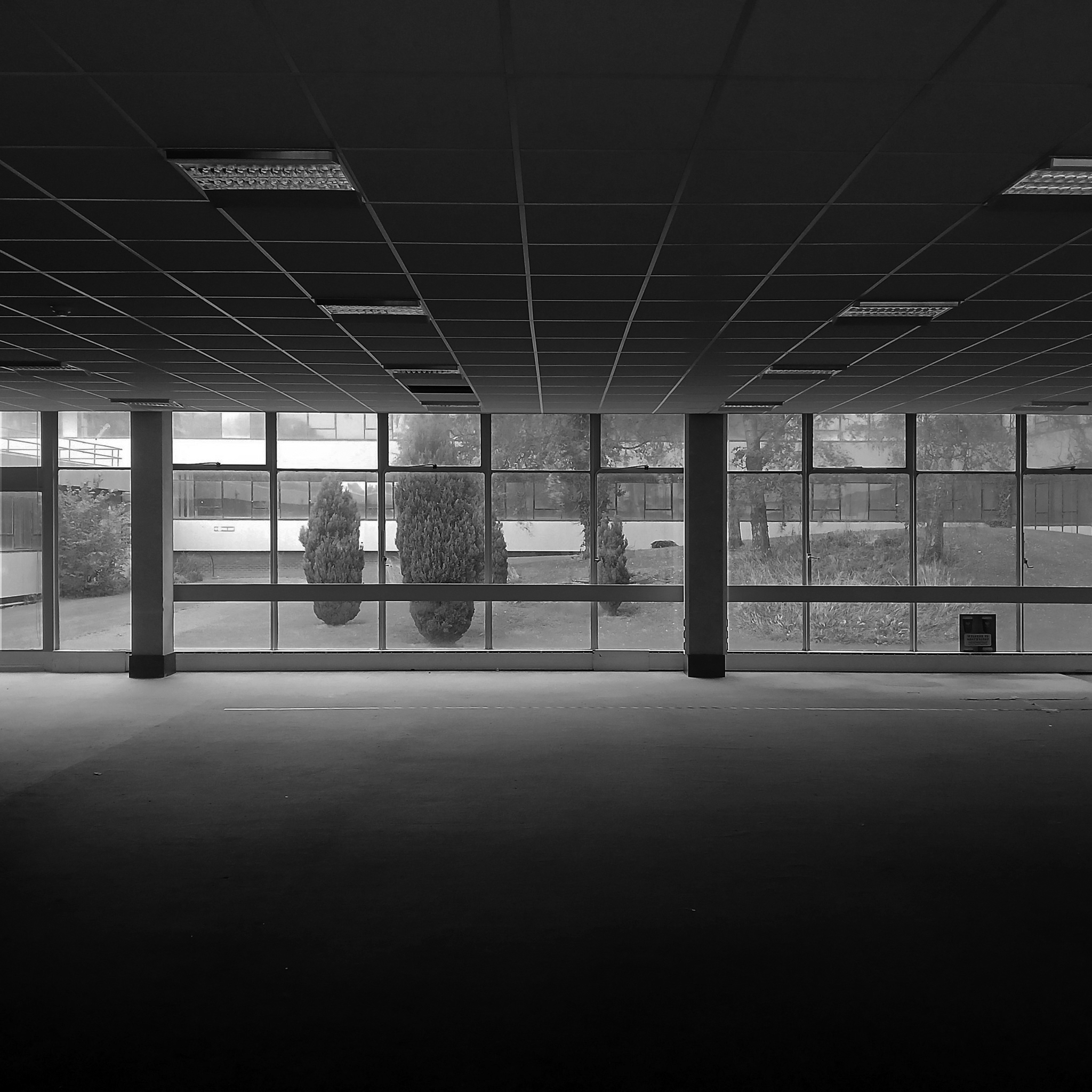
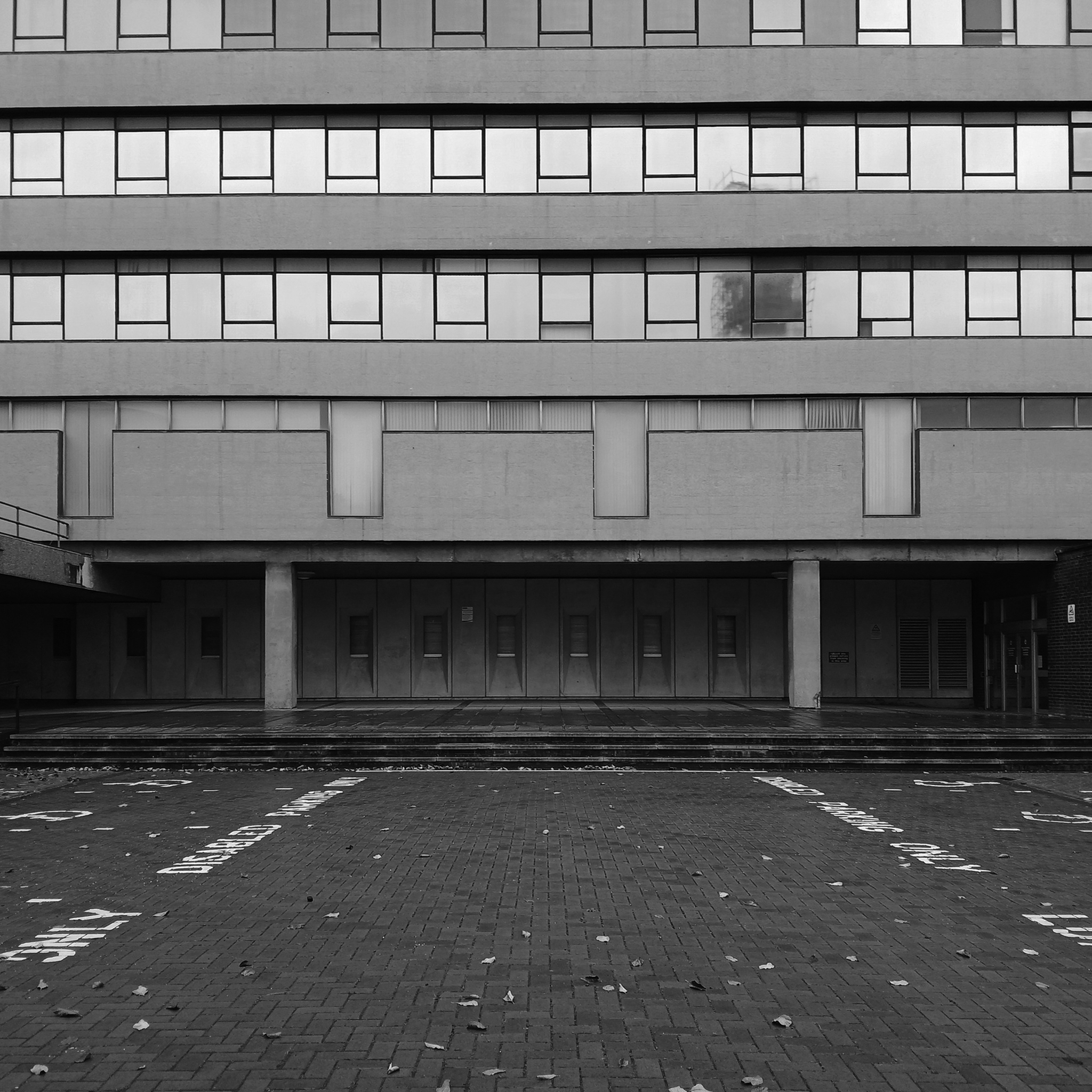
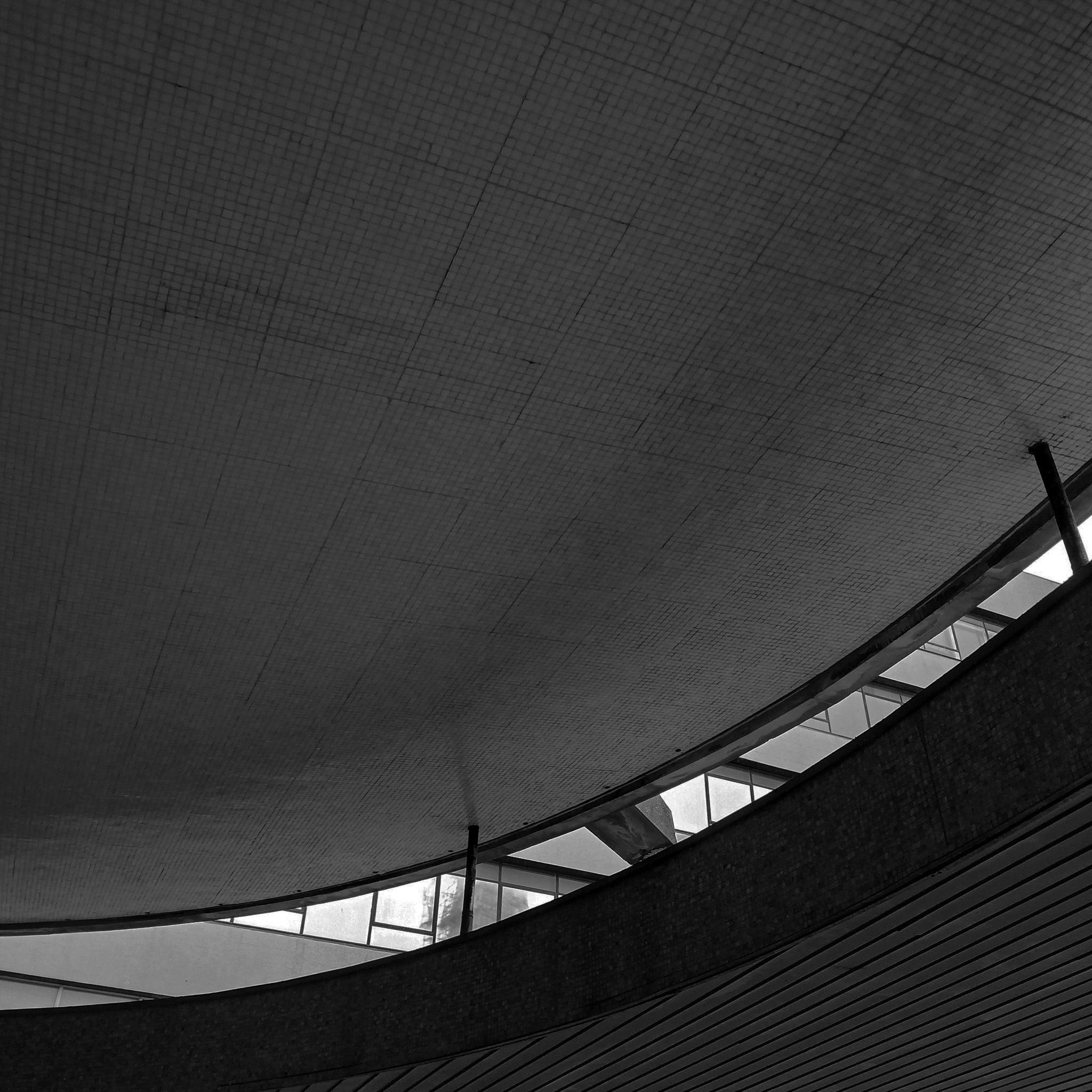
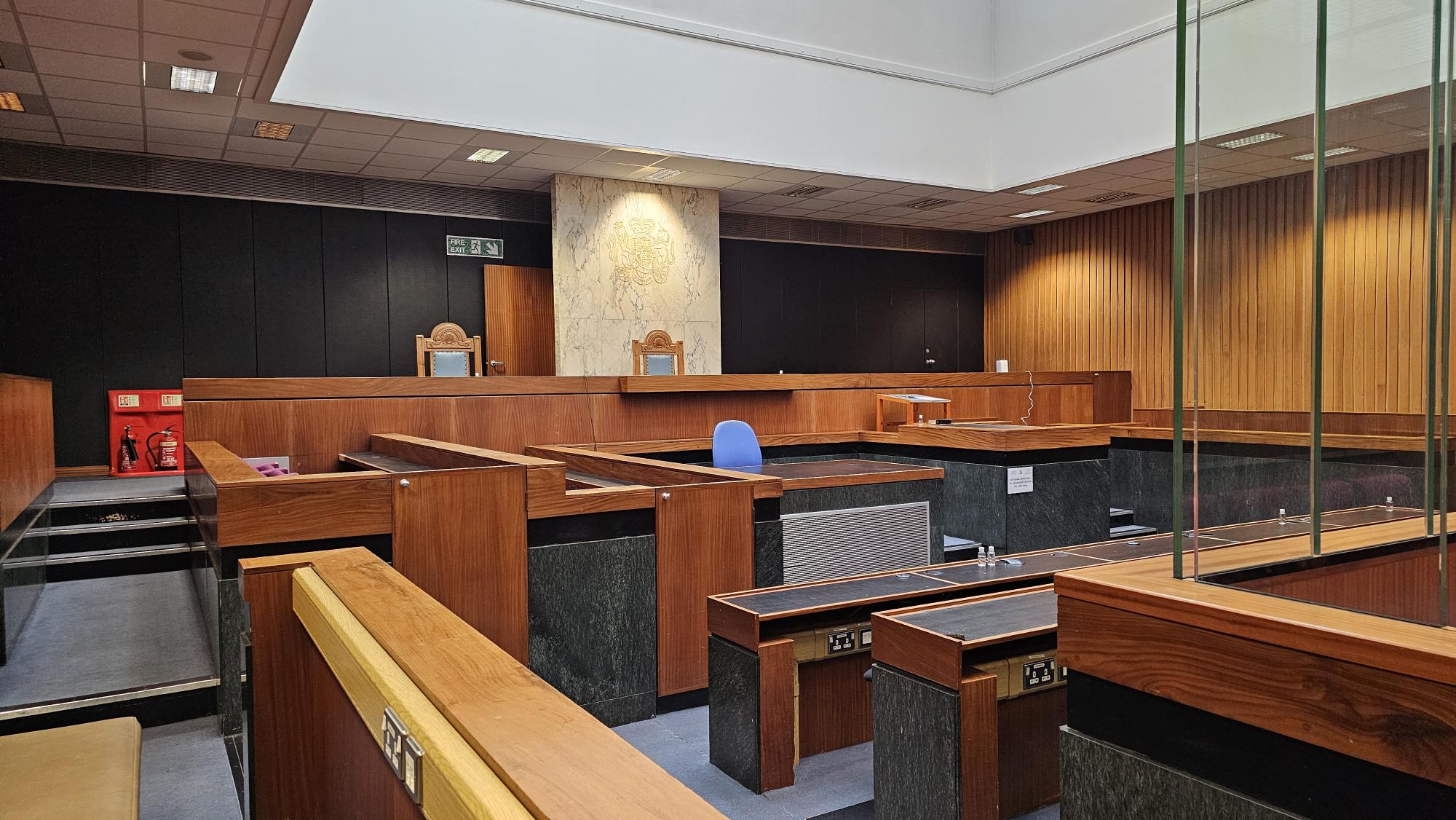
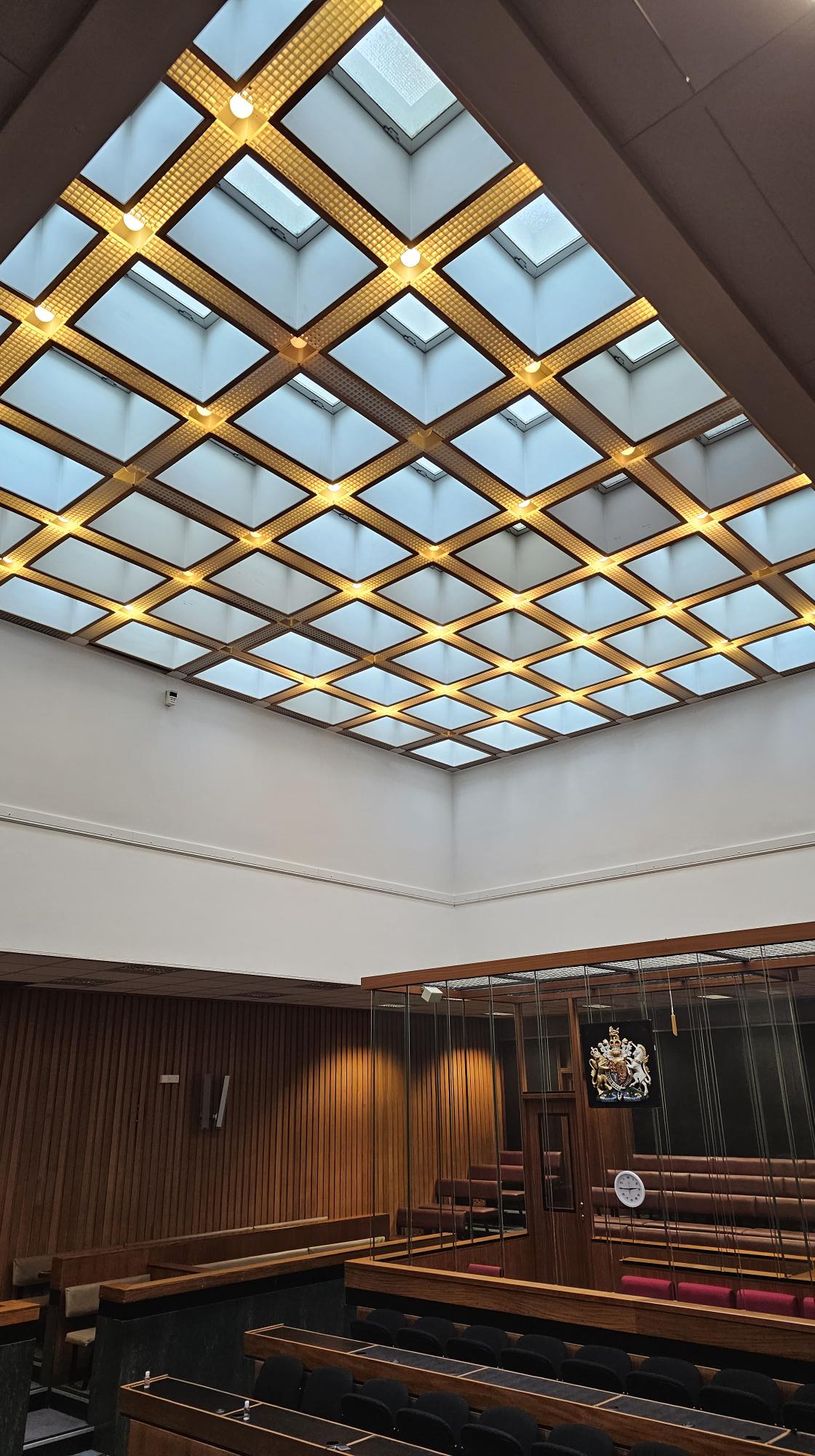
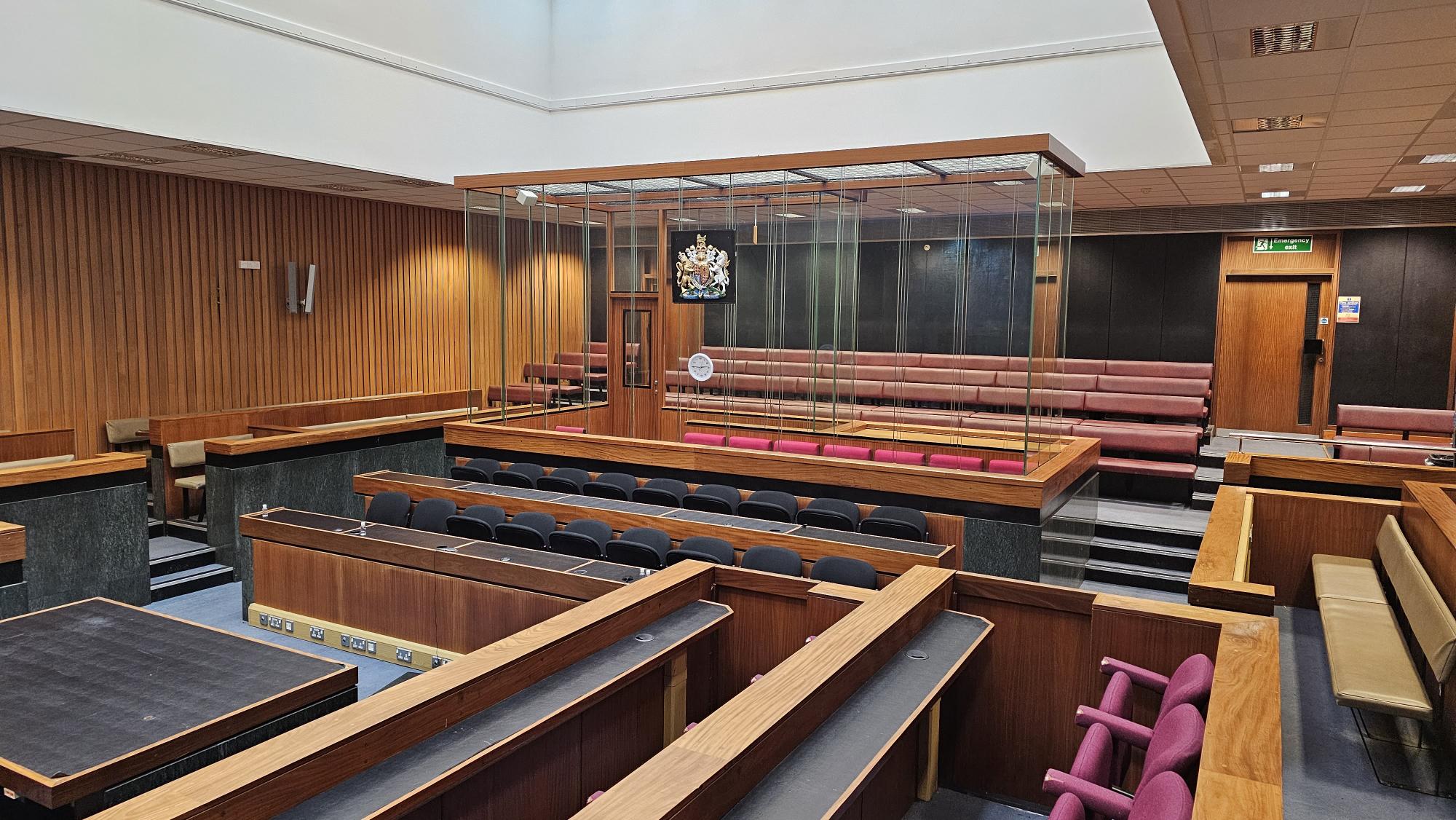
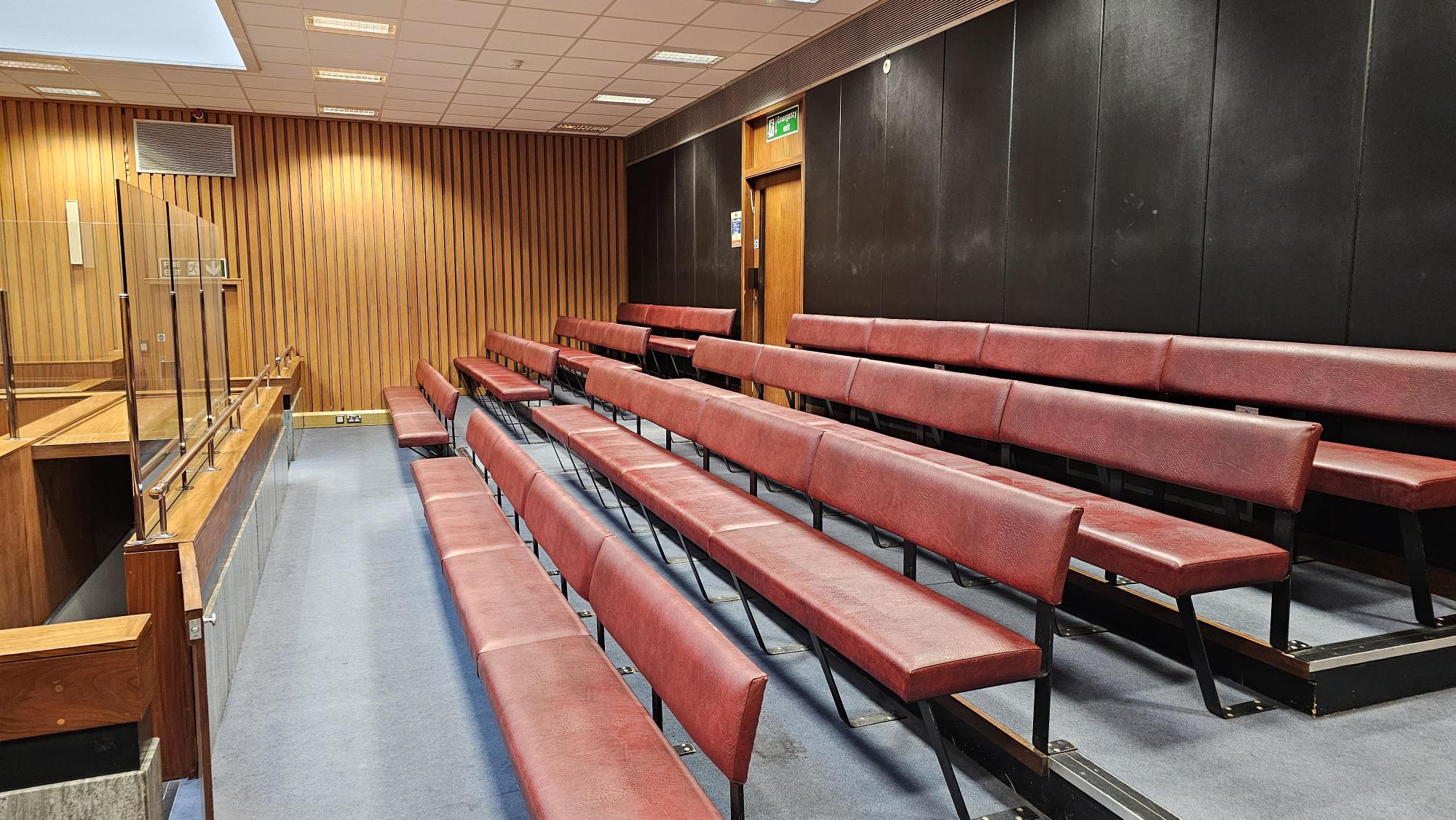
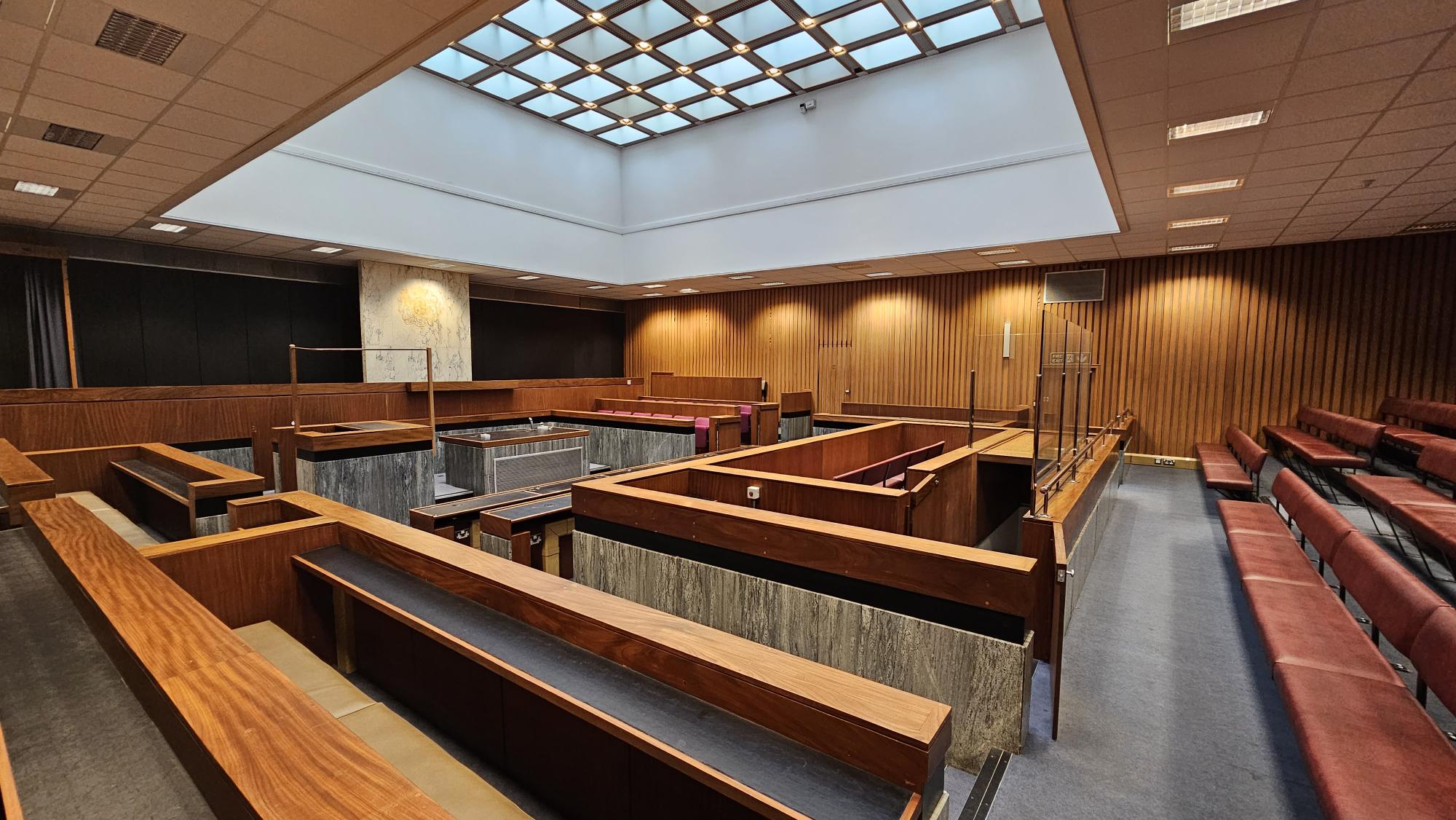
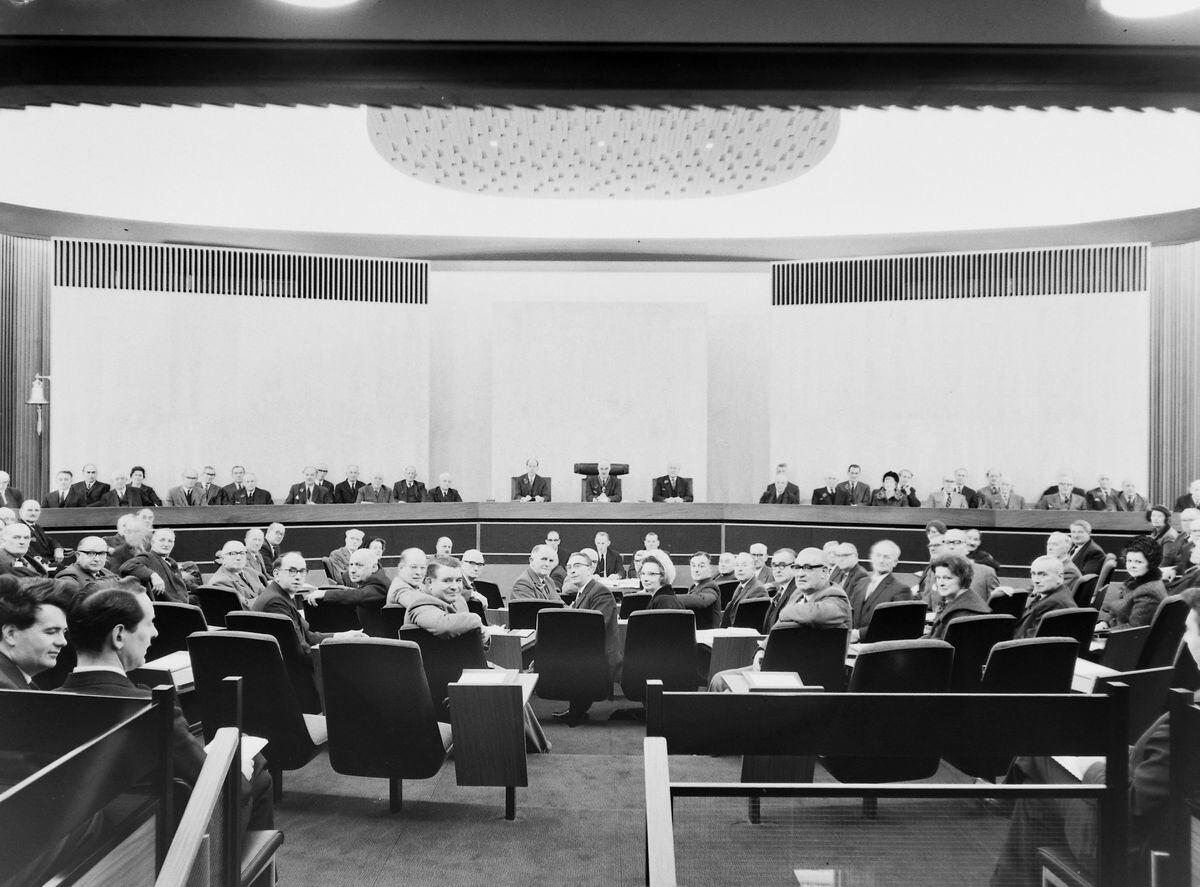
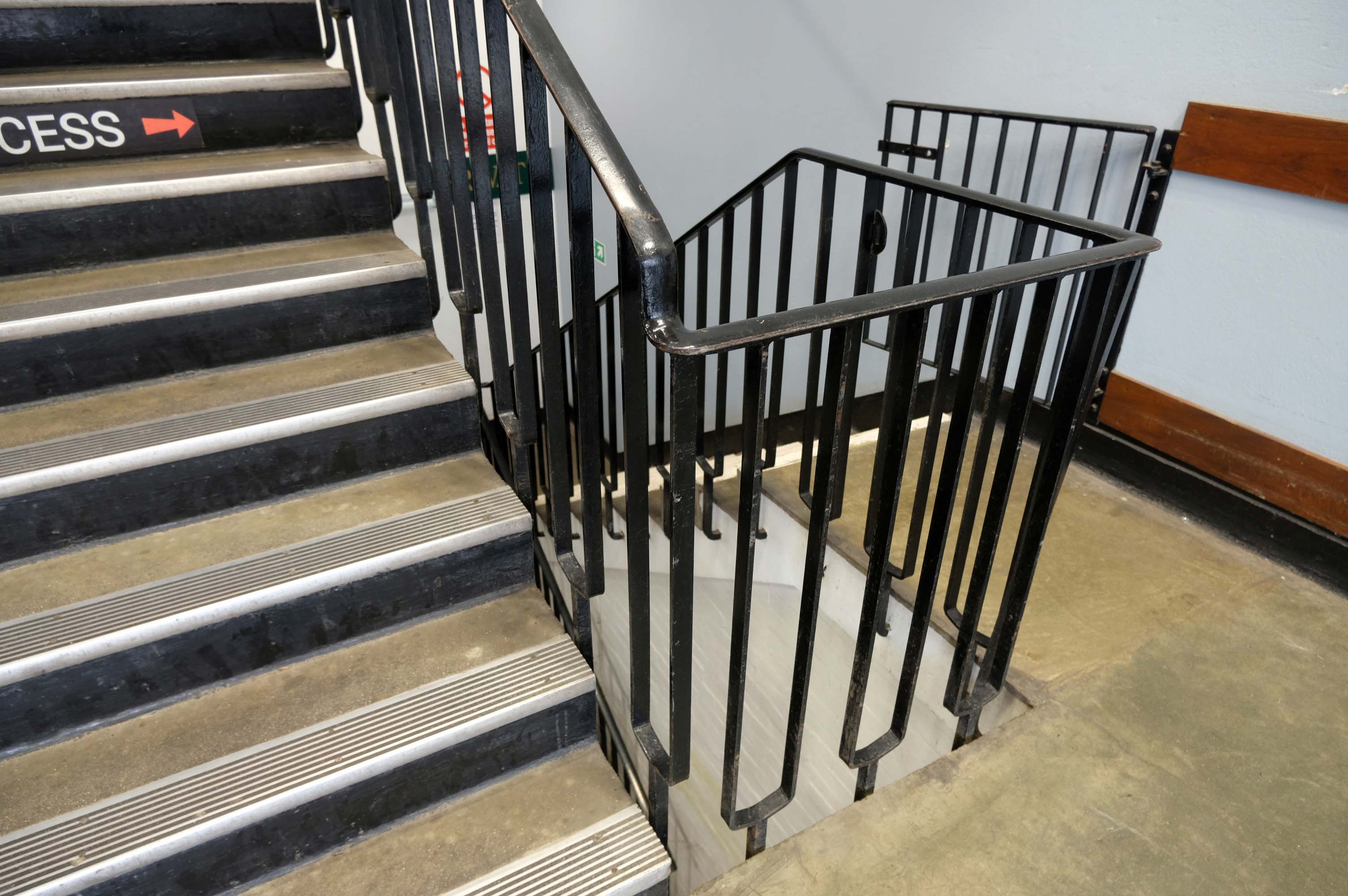
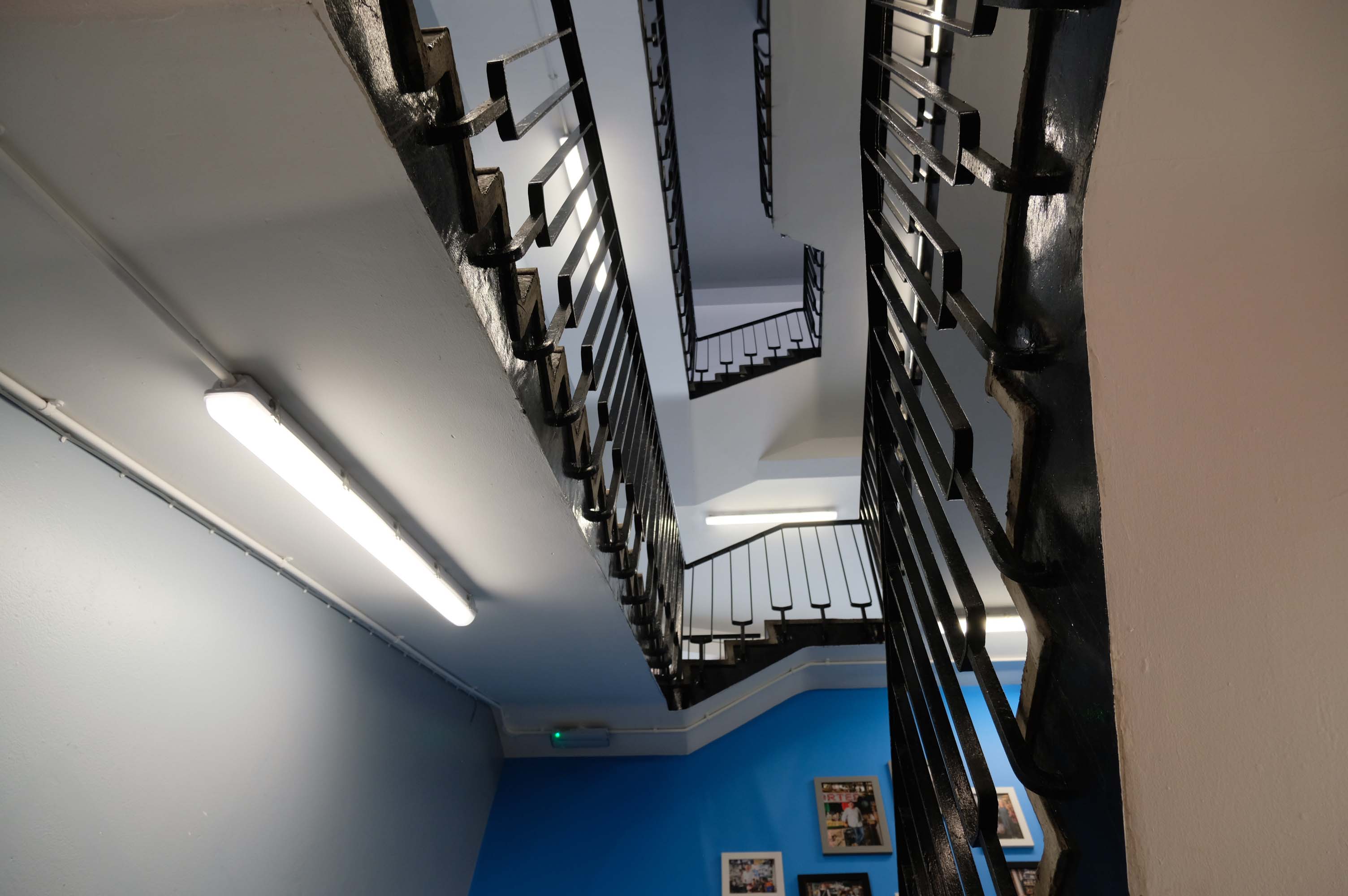
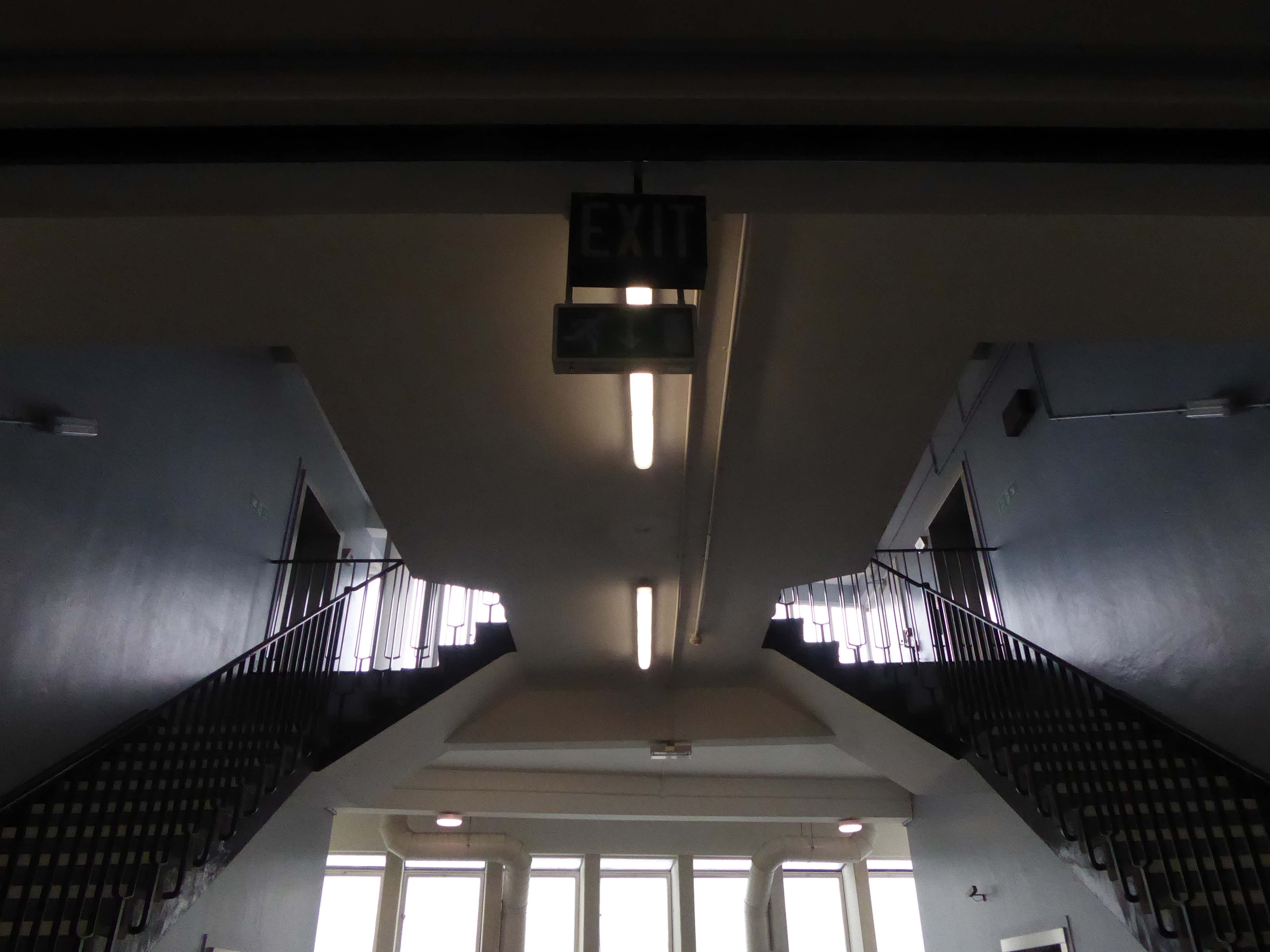
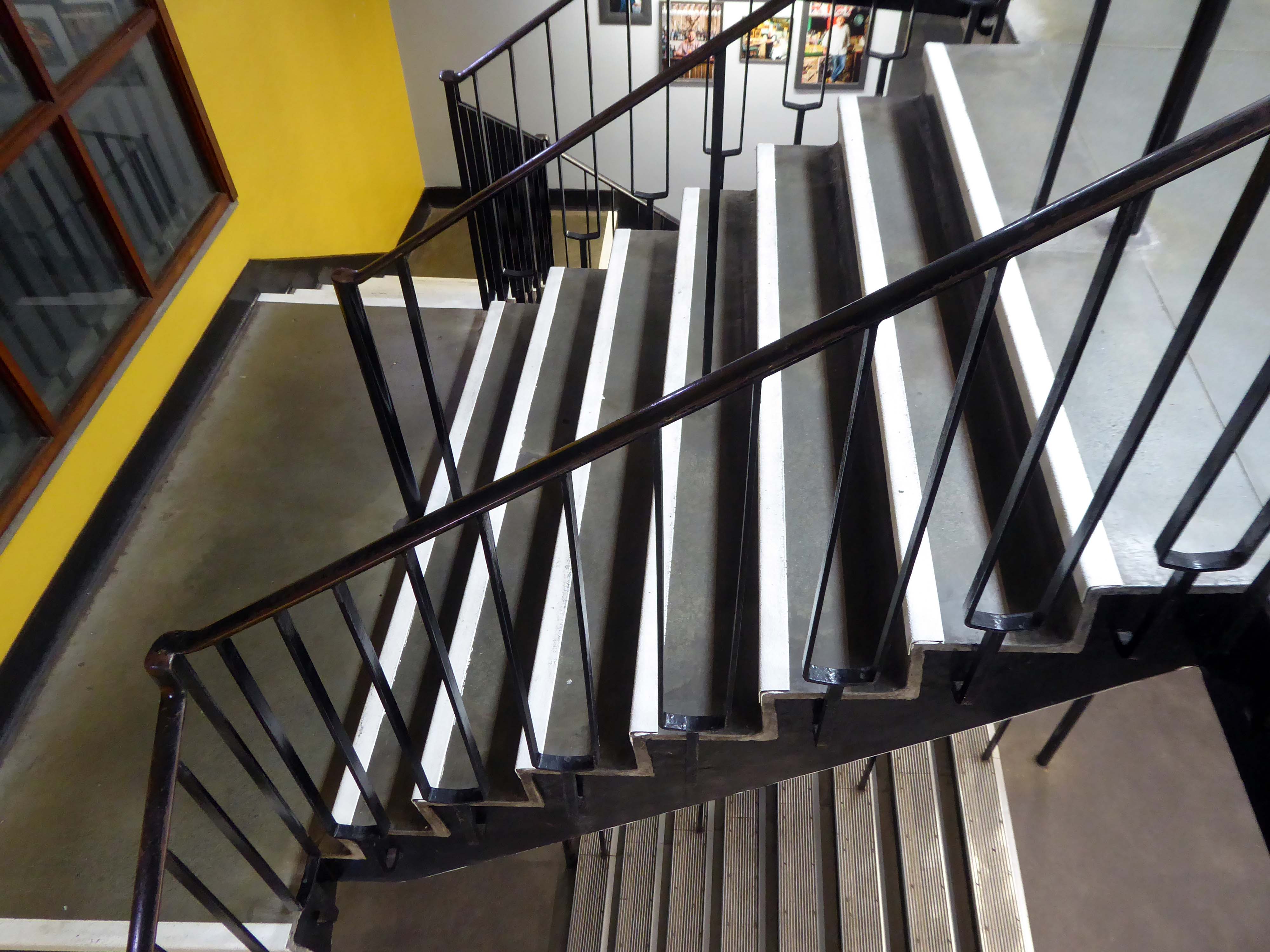
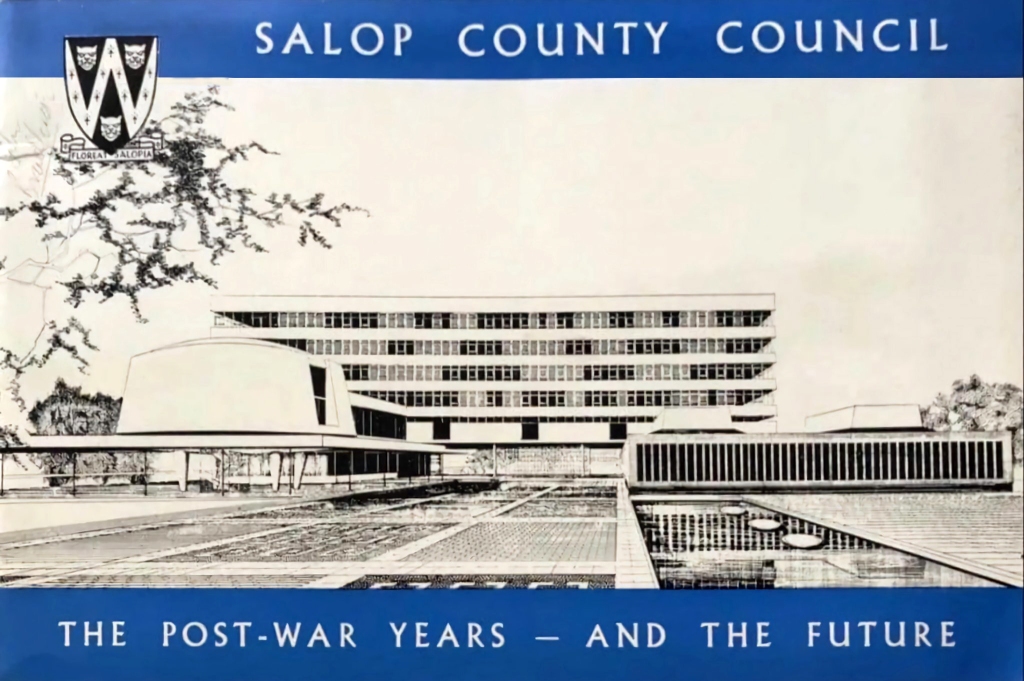
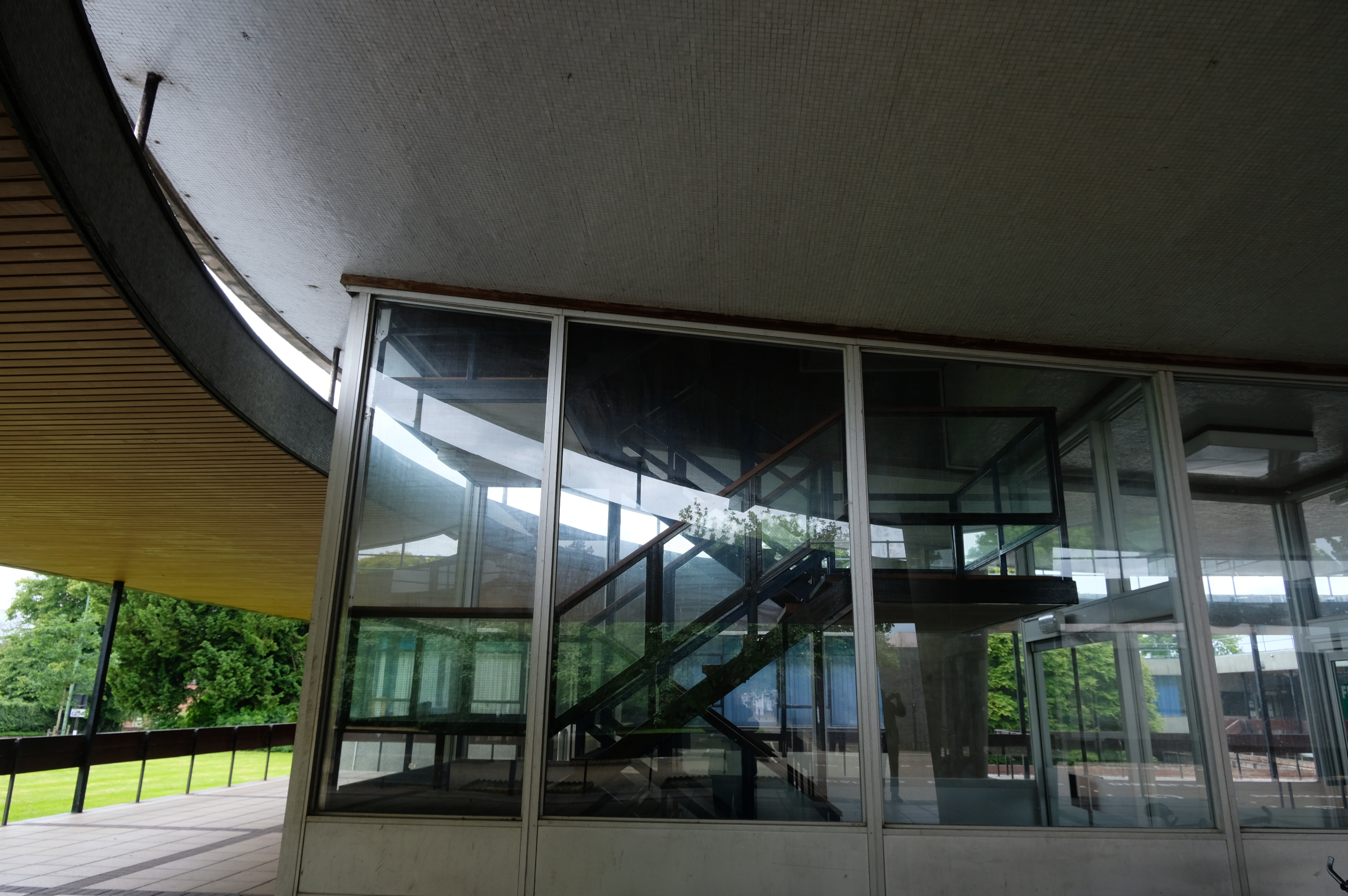
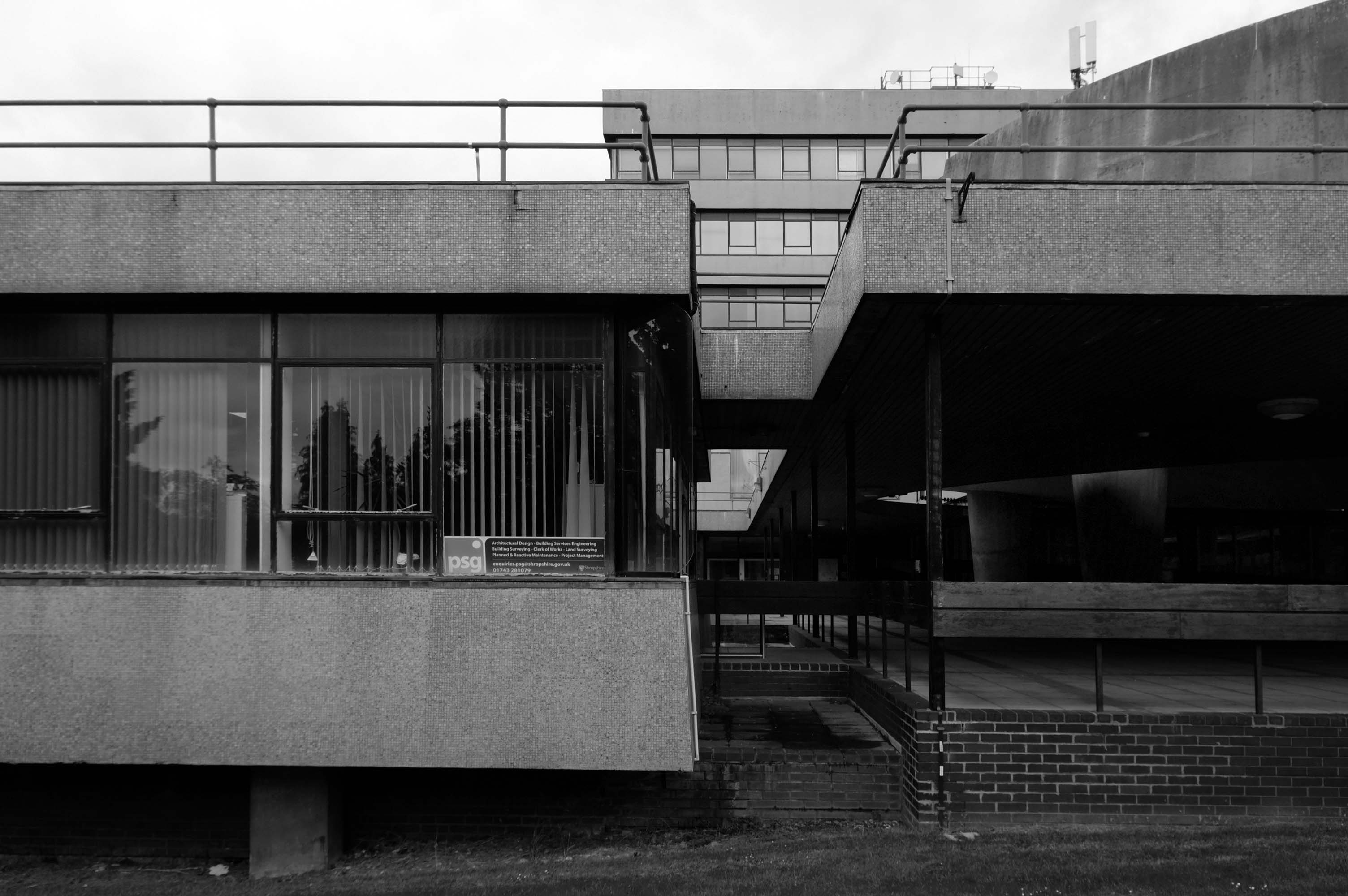
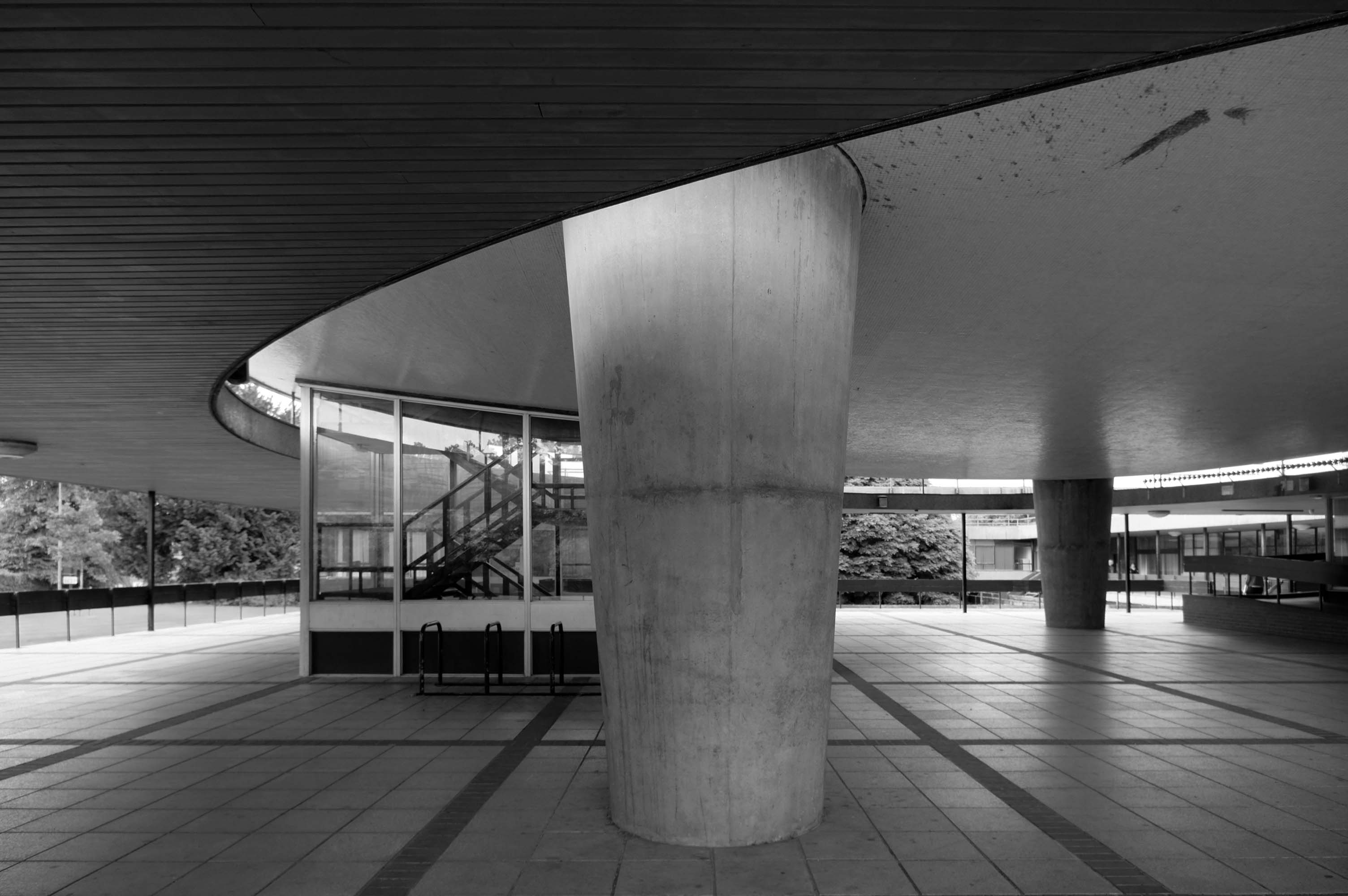
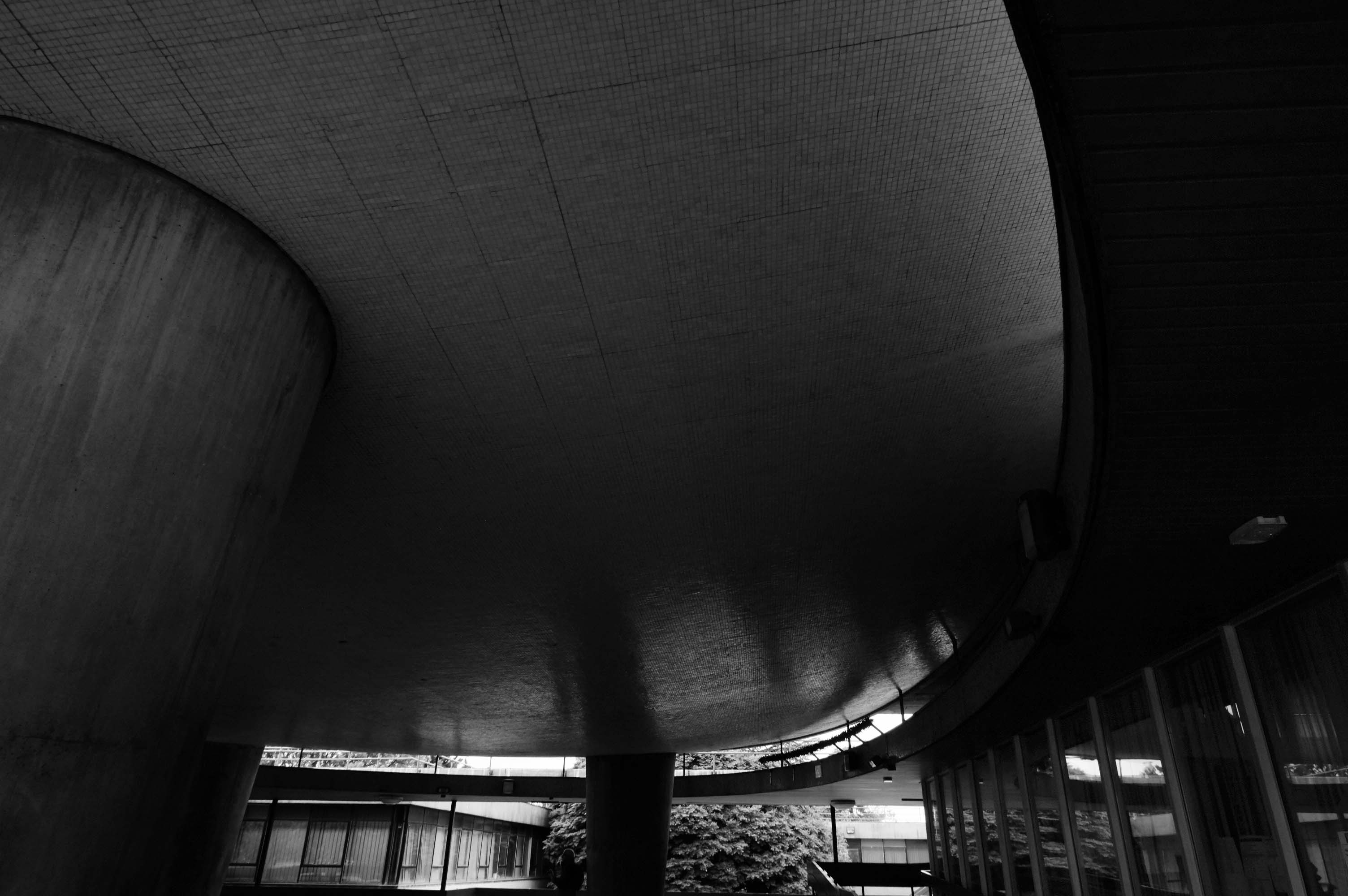
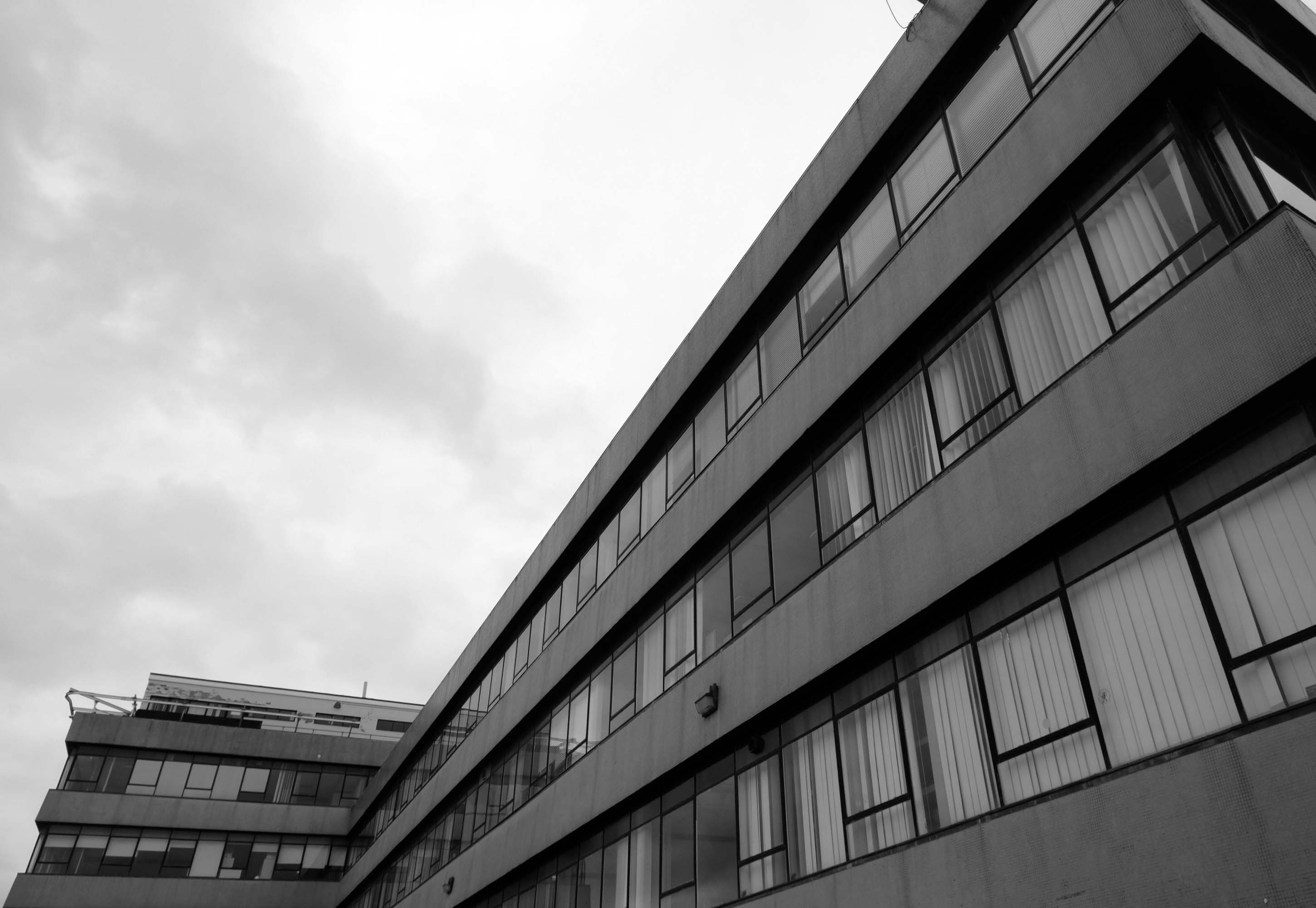
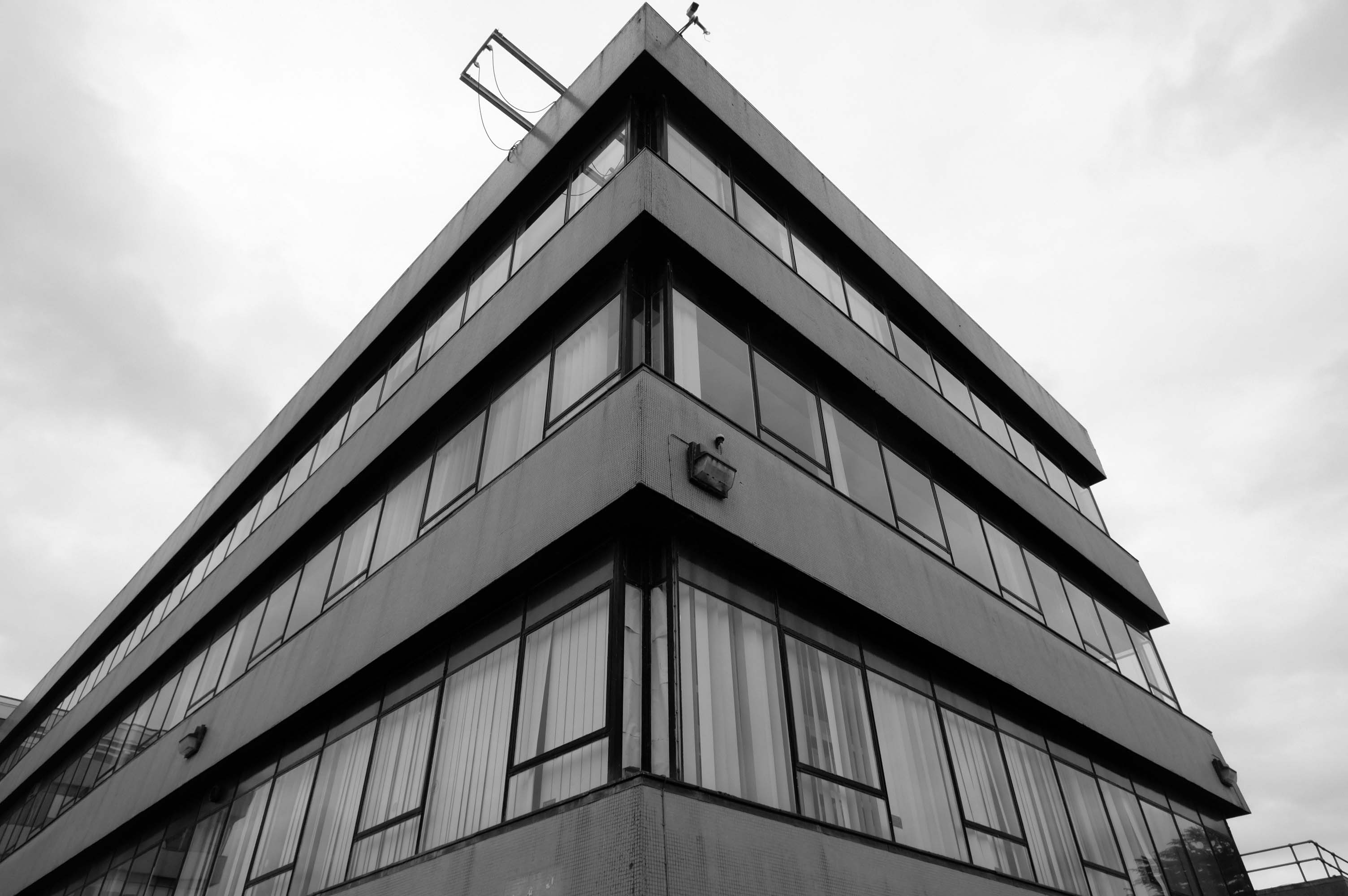
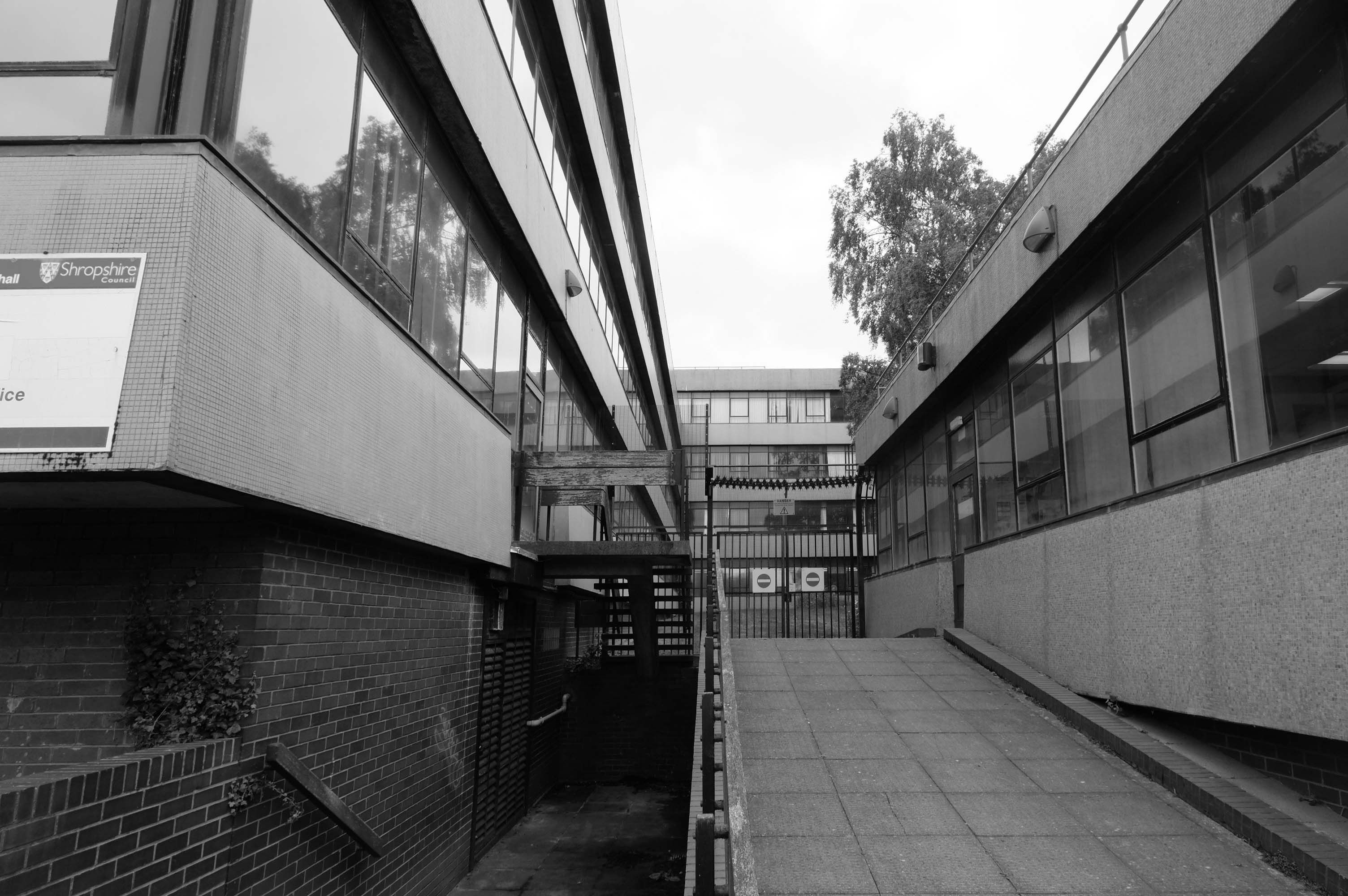
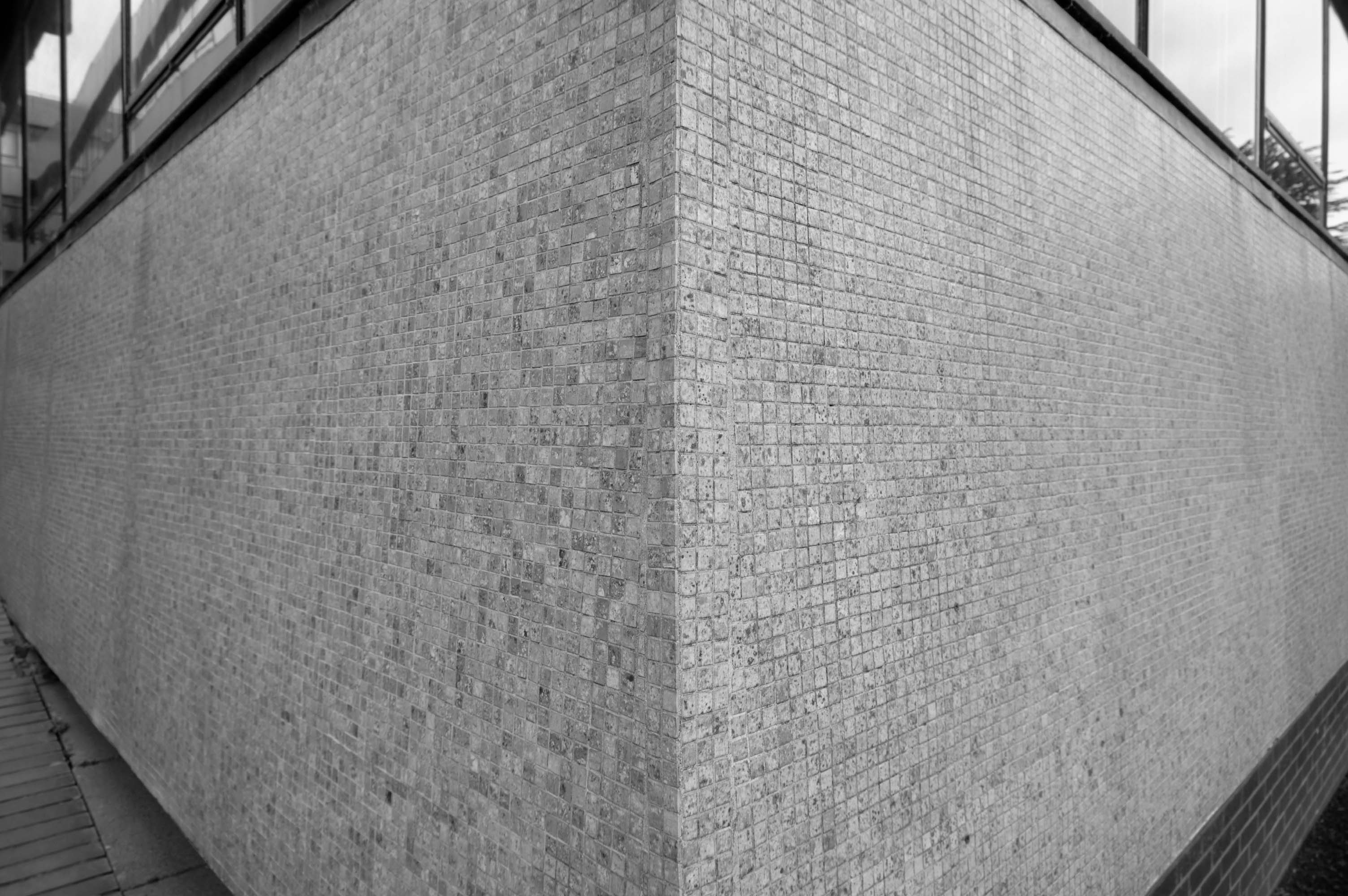
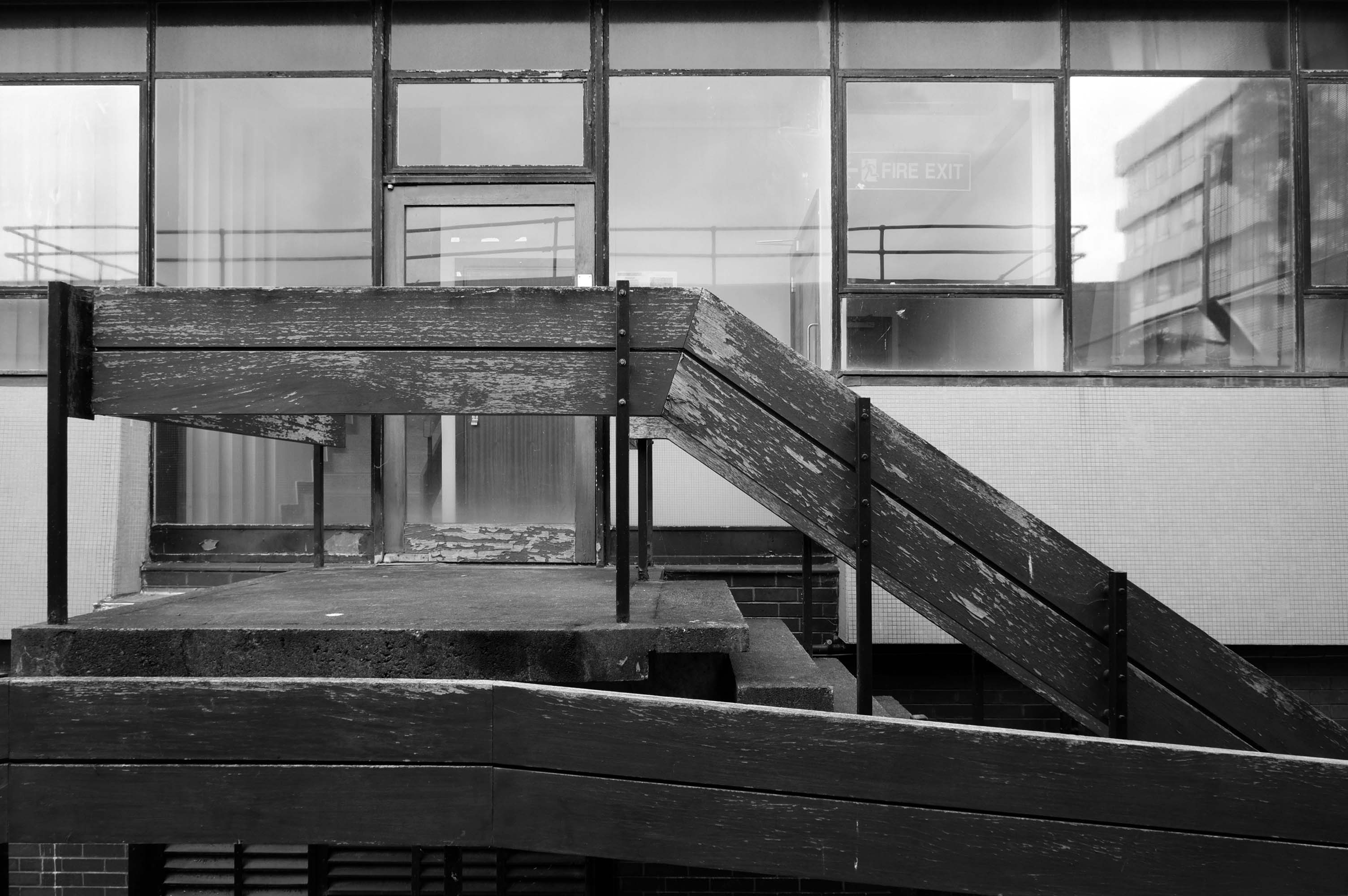
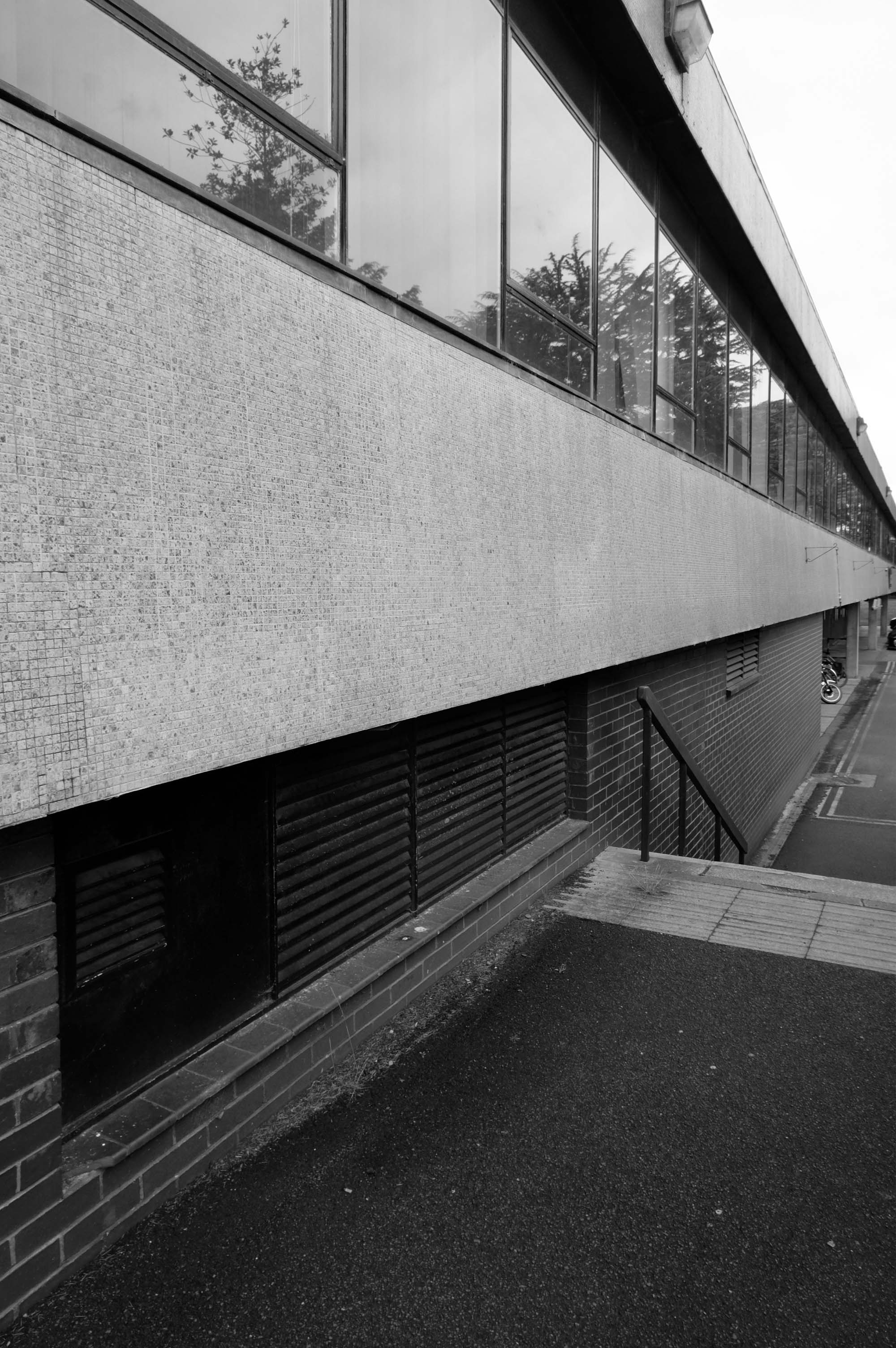
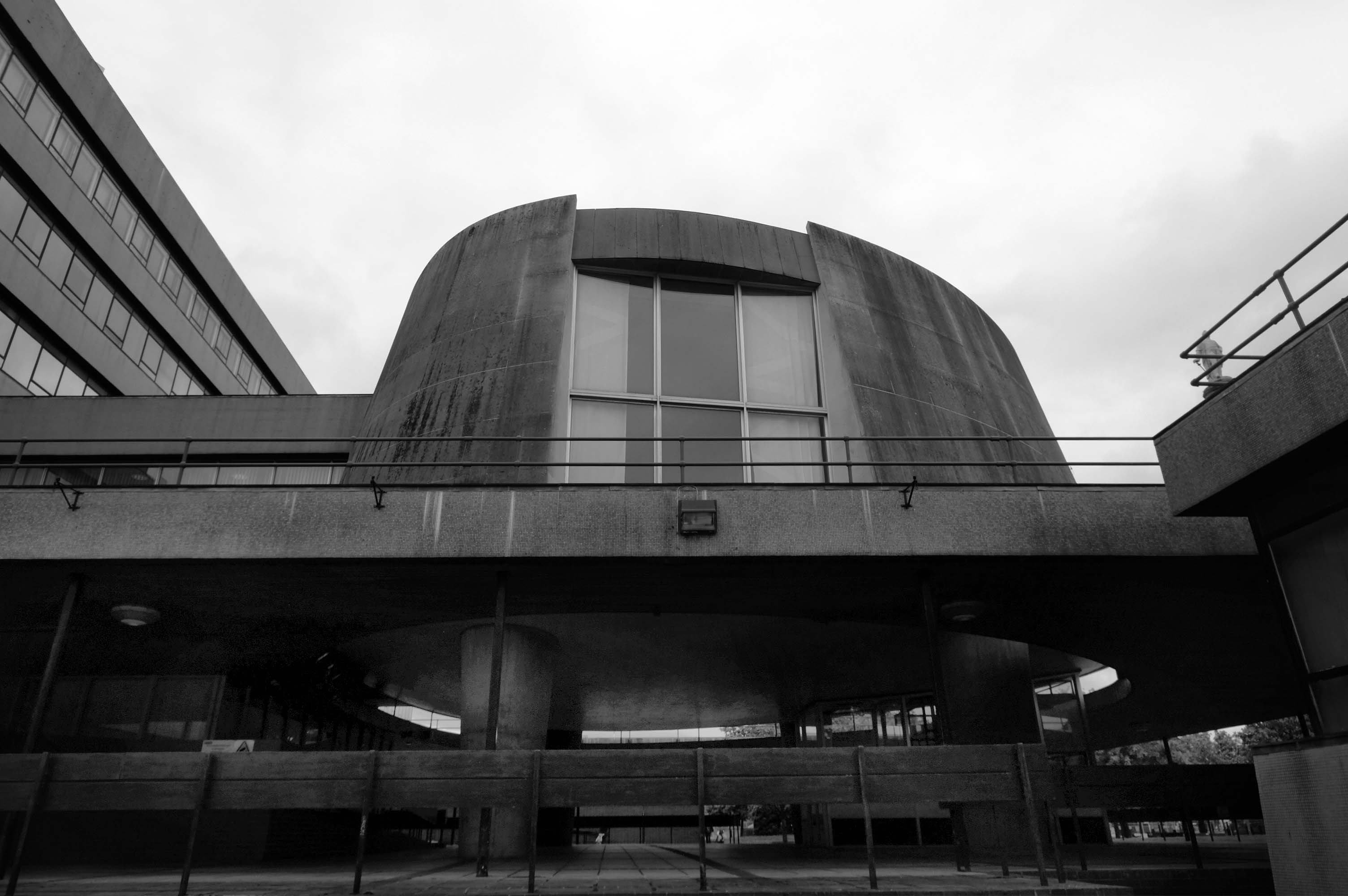
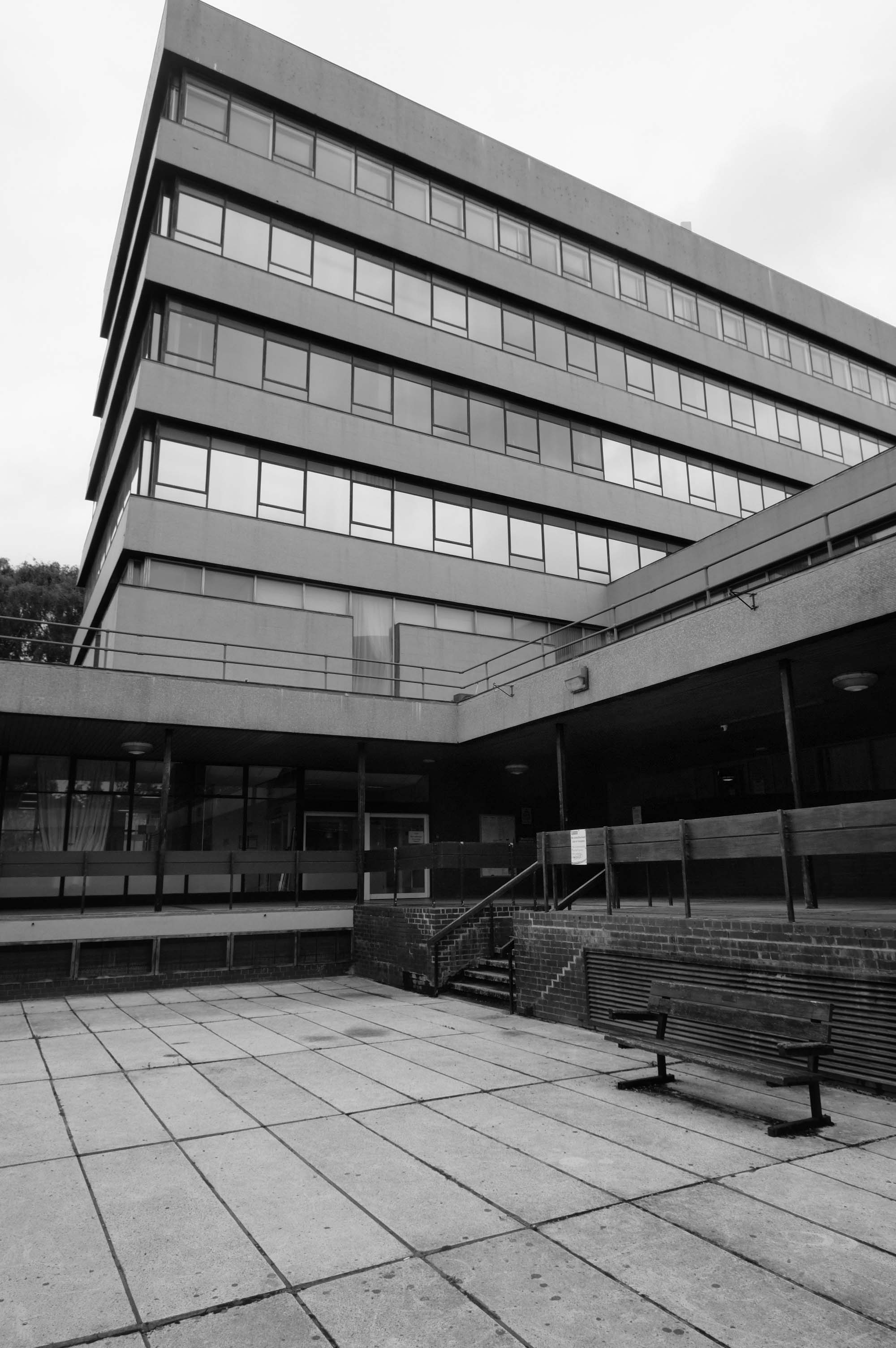
The design for the six-storey building facing Abbey Foregate involved continuous bands of glazing with concrete panels above and below: it also included an unusual ovoid-shaped council chamber which jutted out to the south-west of the main building.
Pevsner described the building as – the major monument to post-war modernism in the county.
Shropshire Council initially backed a scheme drawn up by HLM Architects in 2017 to revamp Shirehall to provide modern working facilities as well as commercial opportunities. However this plan has not progressed and the local authority has said that making the building fit for purpose would require ‘a multi-million pound investment’.
in September 2020, the council indicated that it would rather sell the building and move to the town centre. Then in October 2020, following an application for a certificate of immunity from listing requested by the county council, English Heritage decided not to list County Hall as the building did not meet the criteria for listing post-1945 buildings.
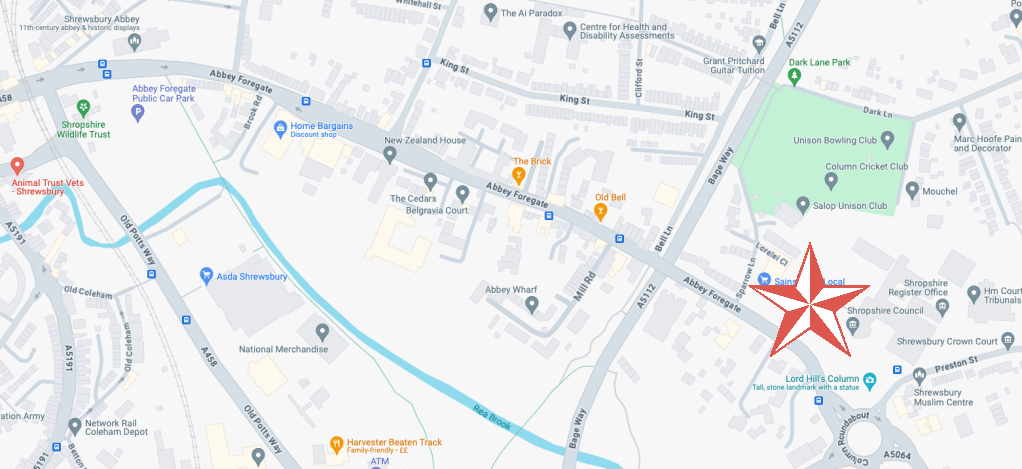
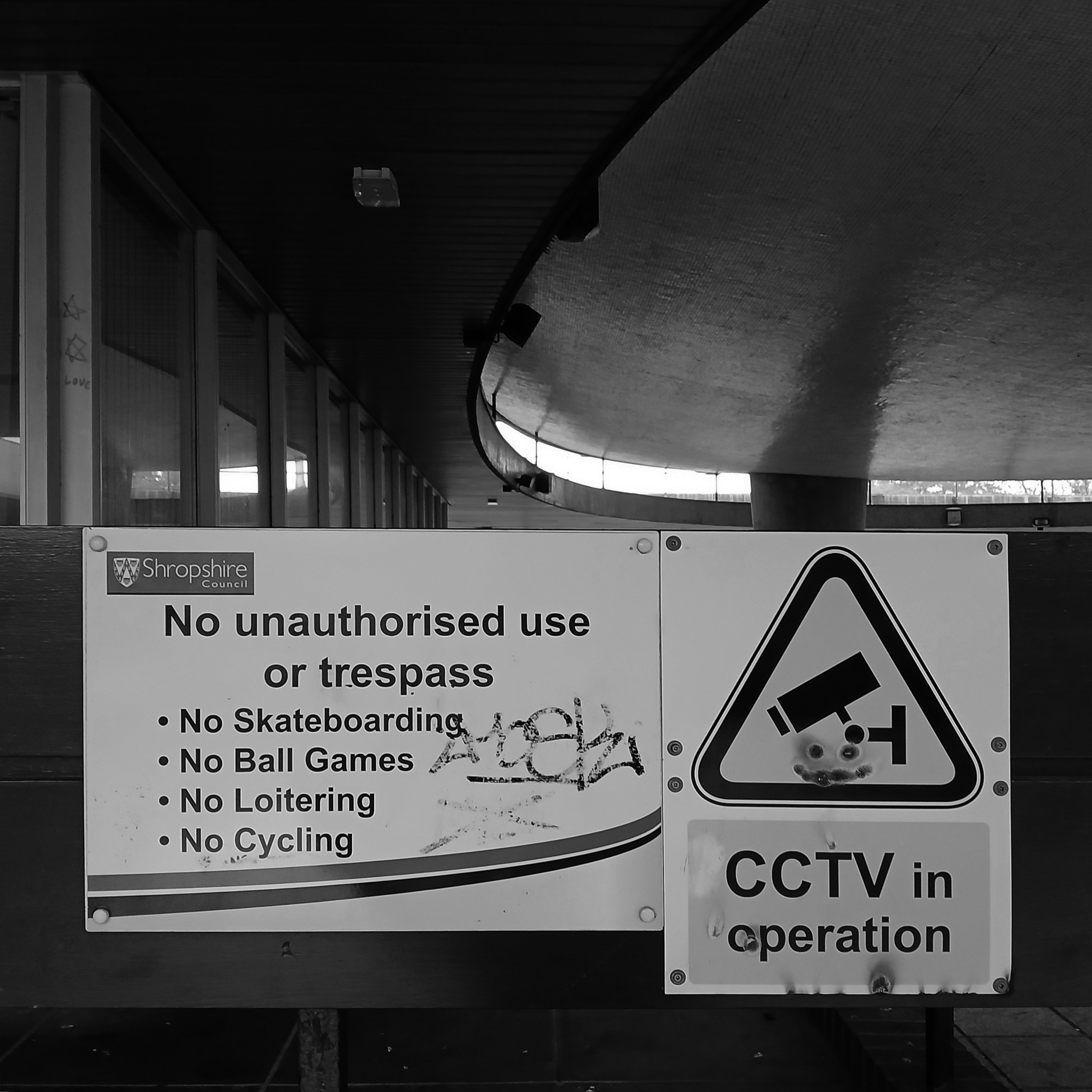
Shropshire Council Raven Meadows Shrewsbury SY1 1PL
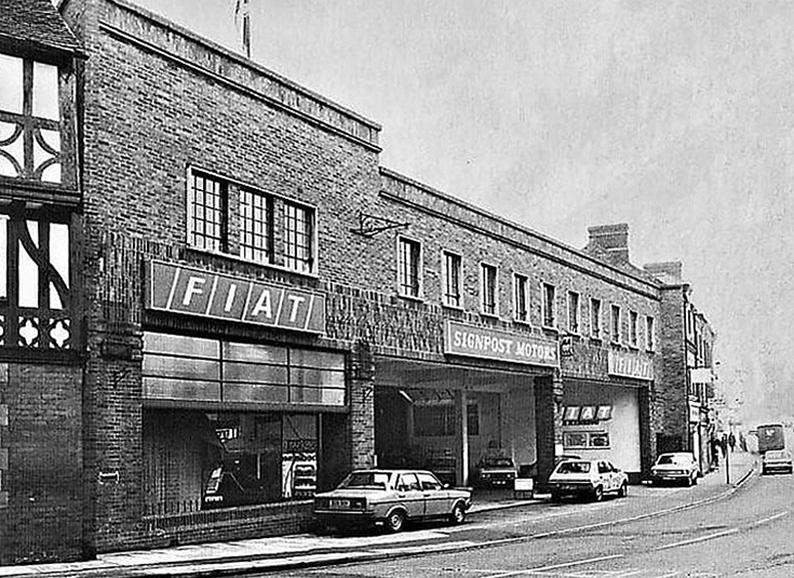
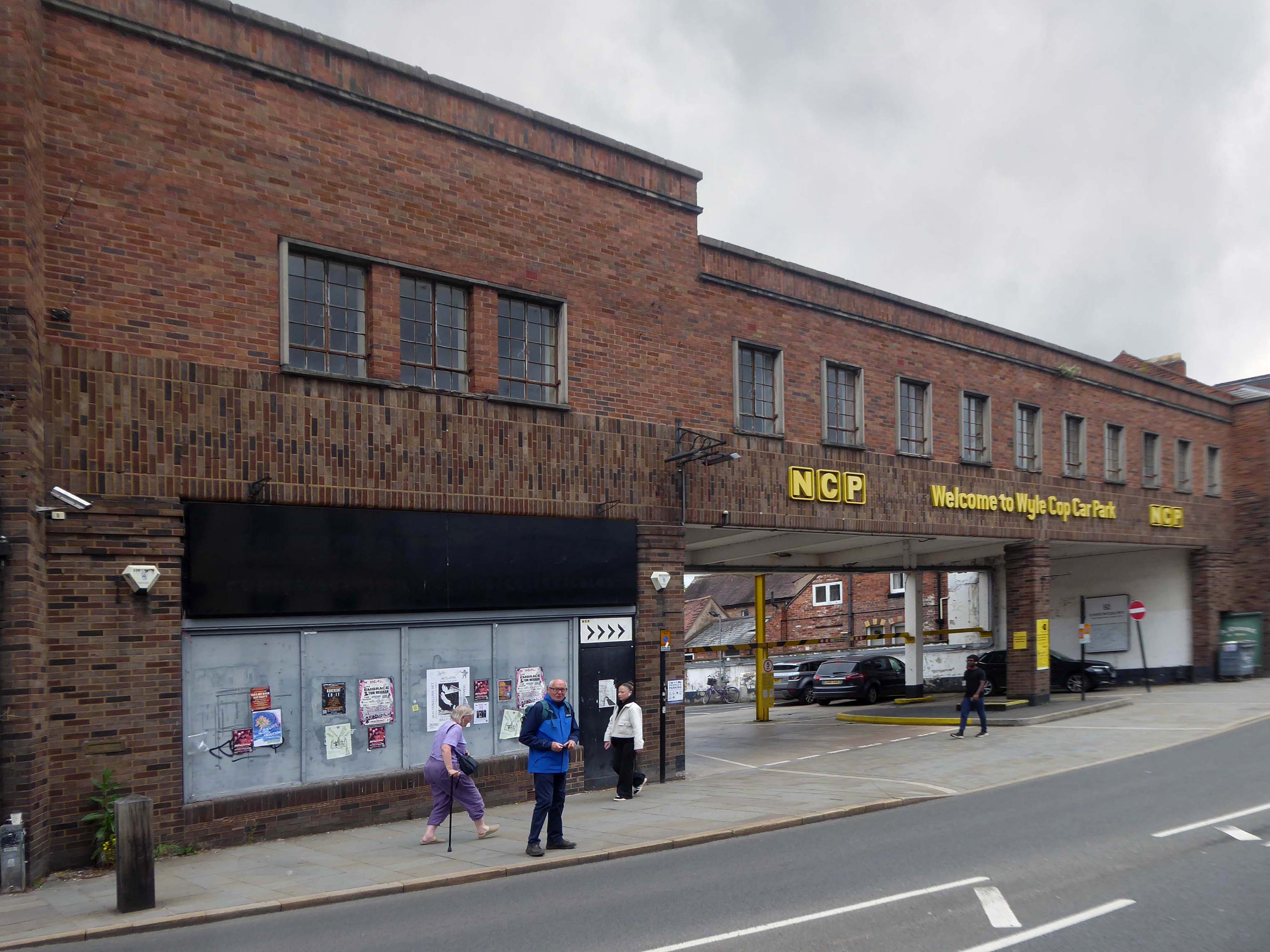
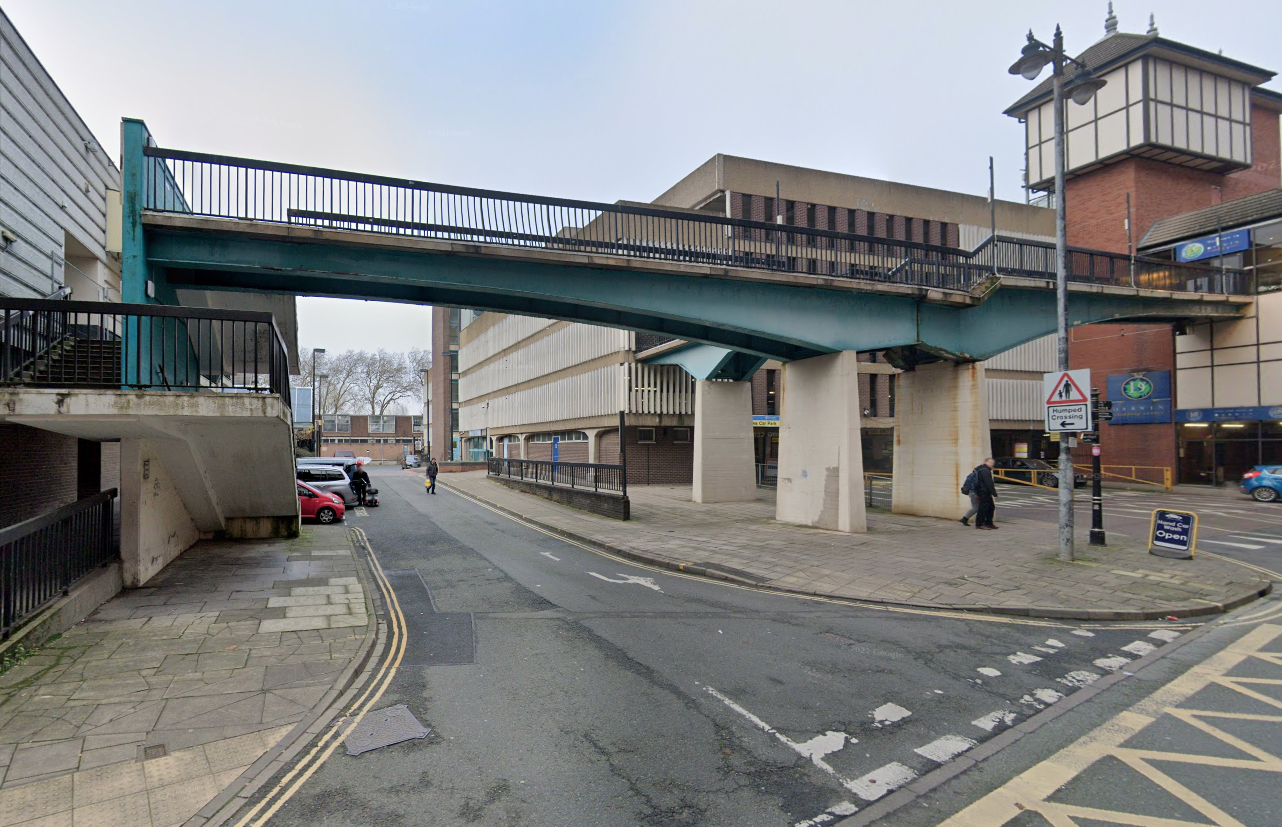
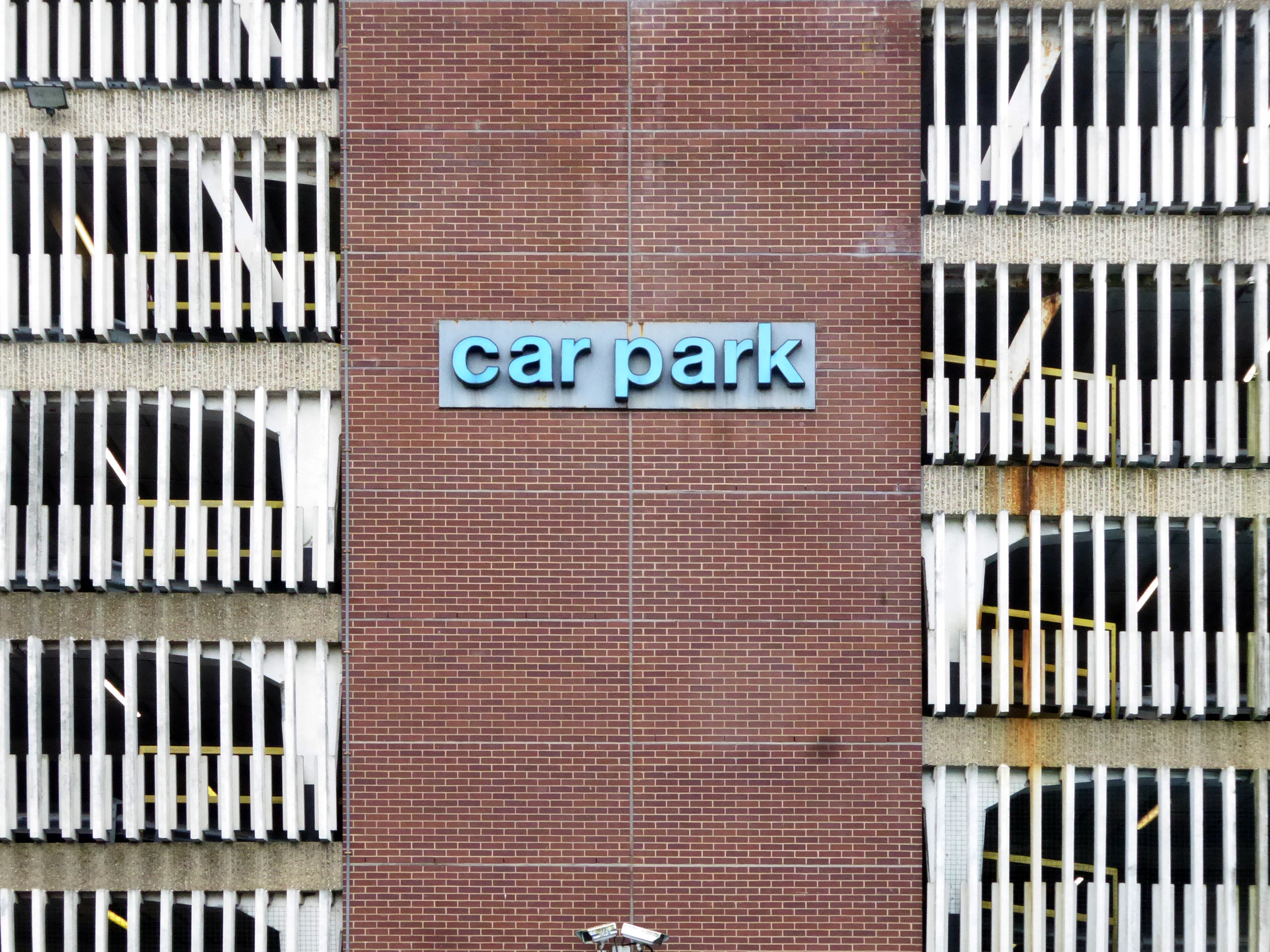
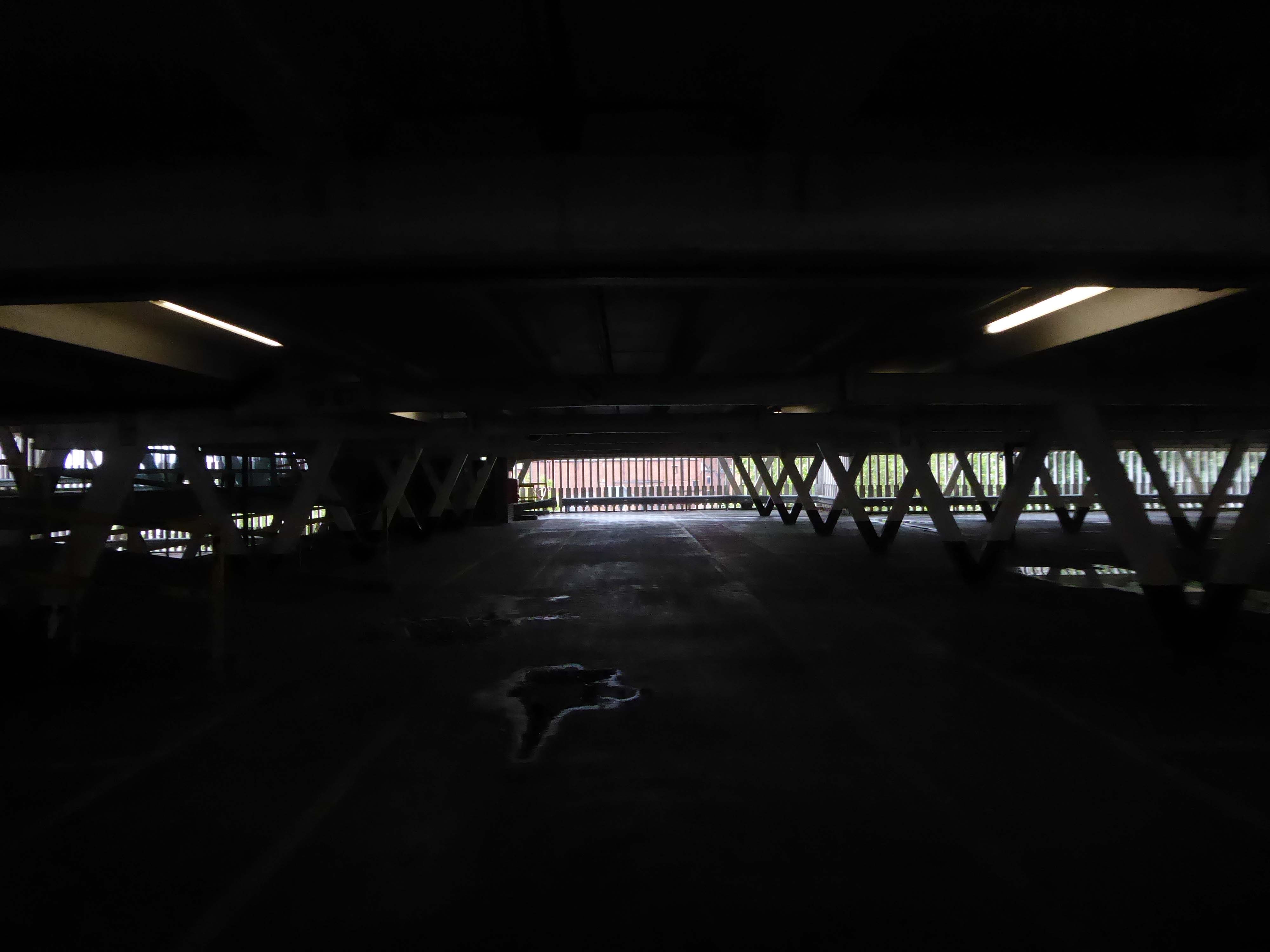
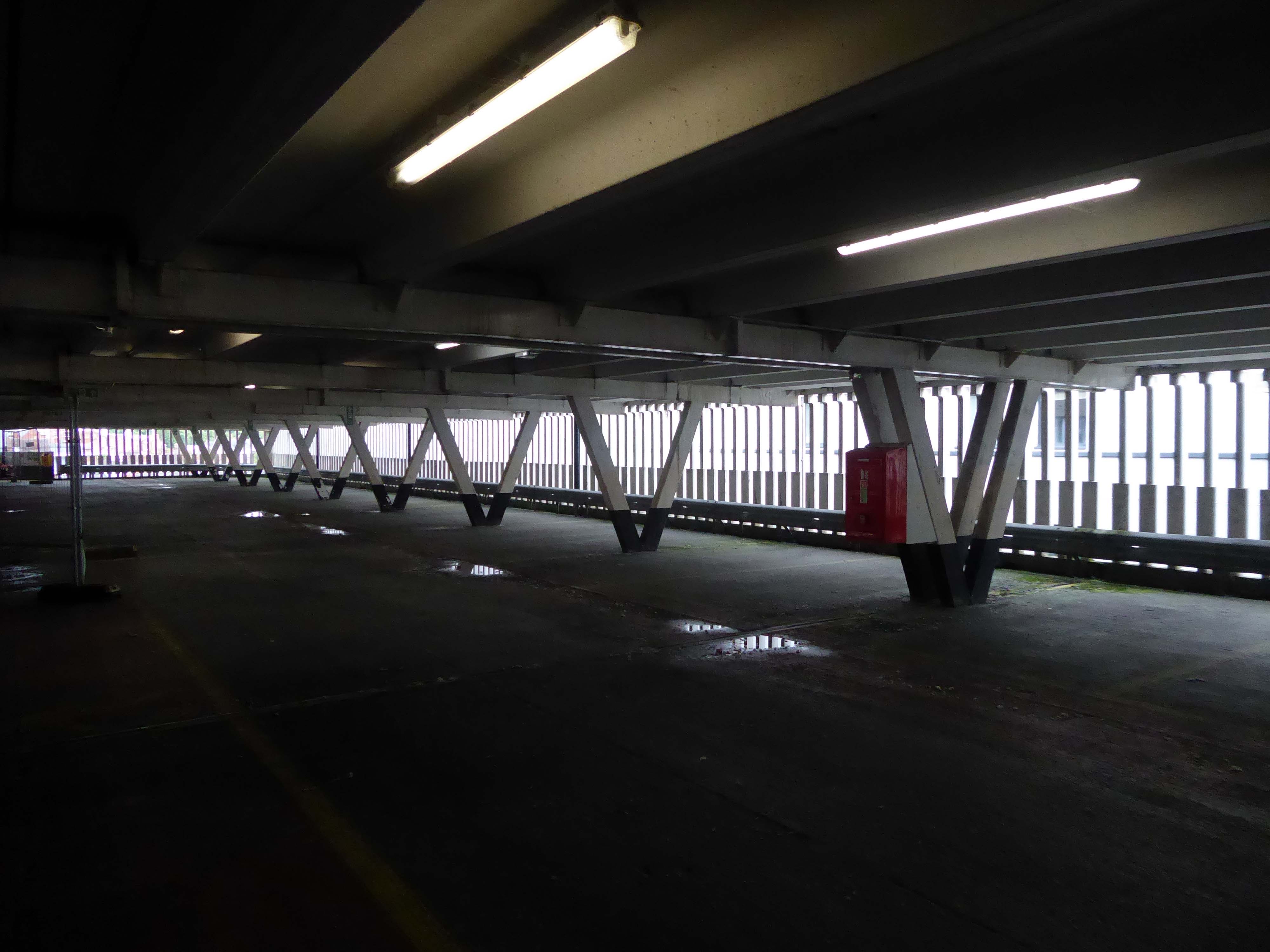
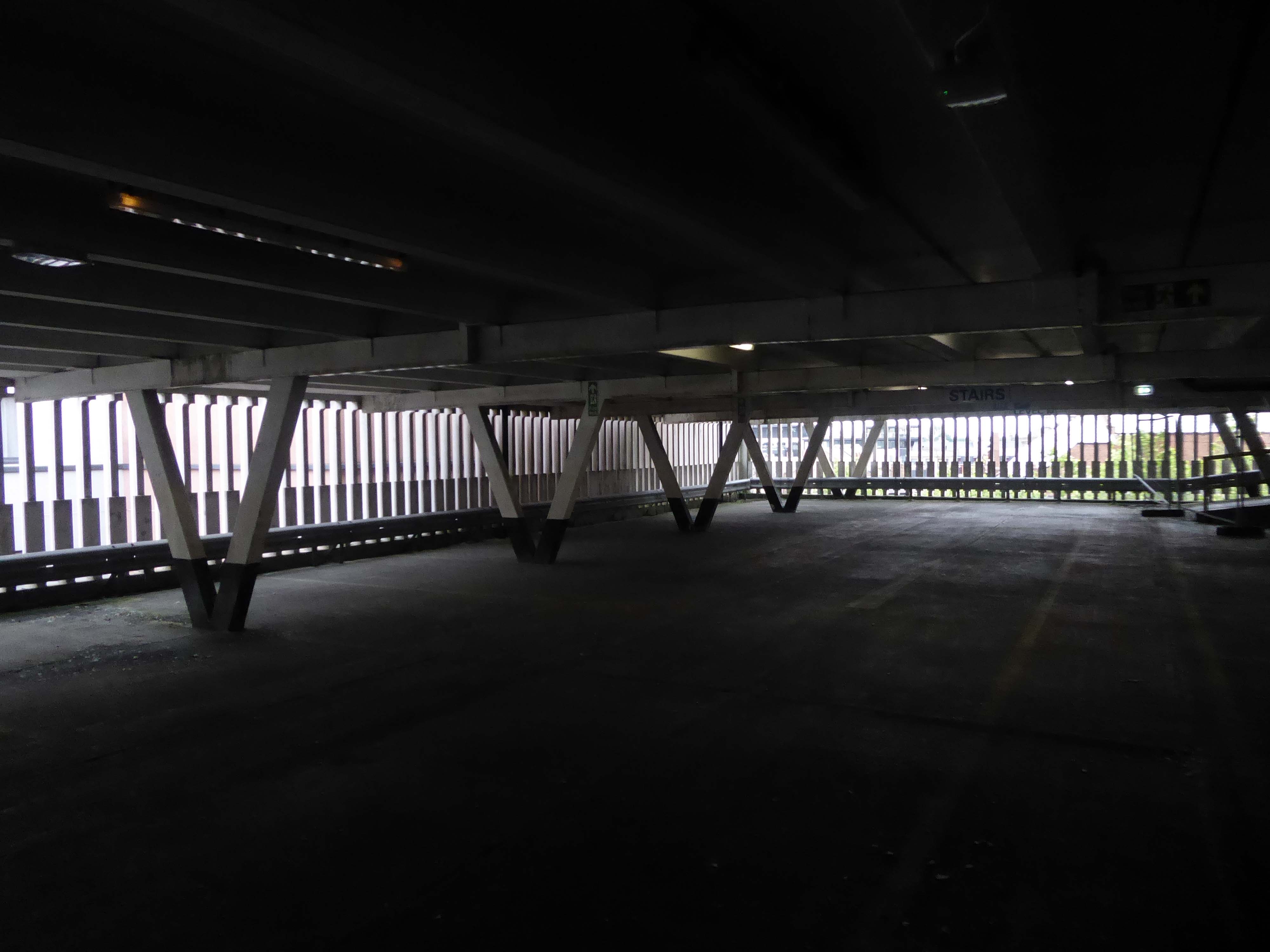
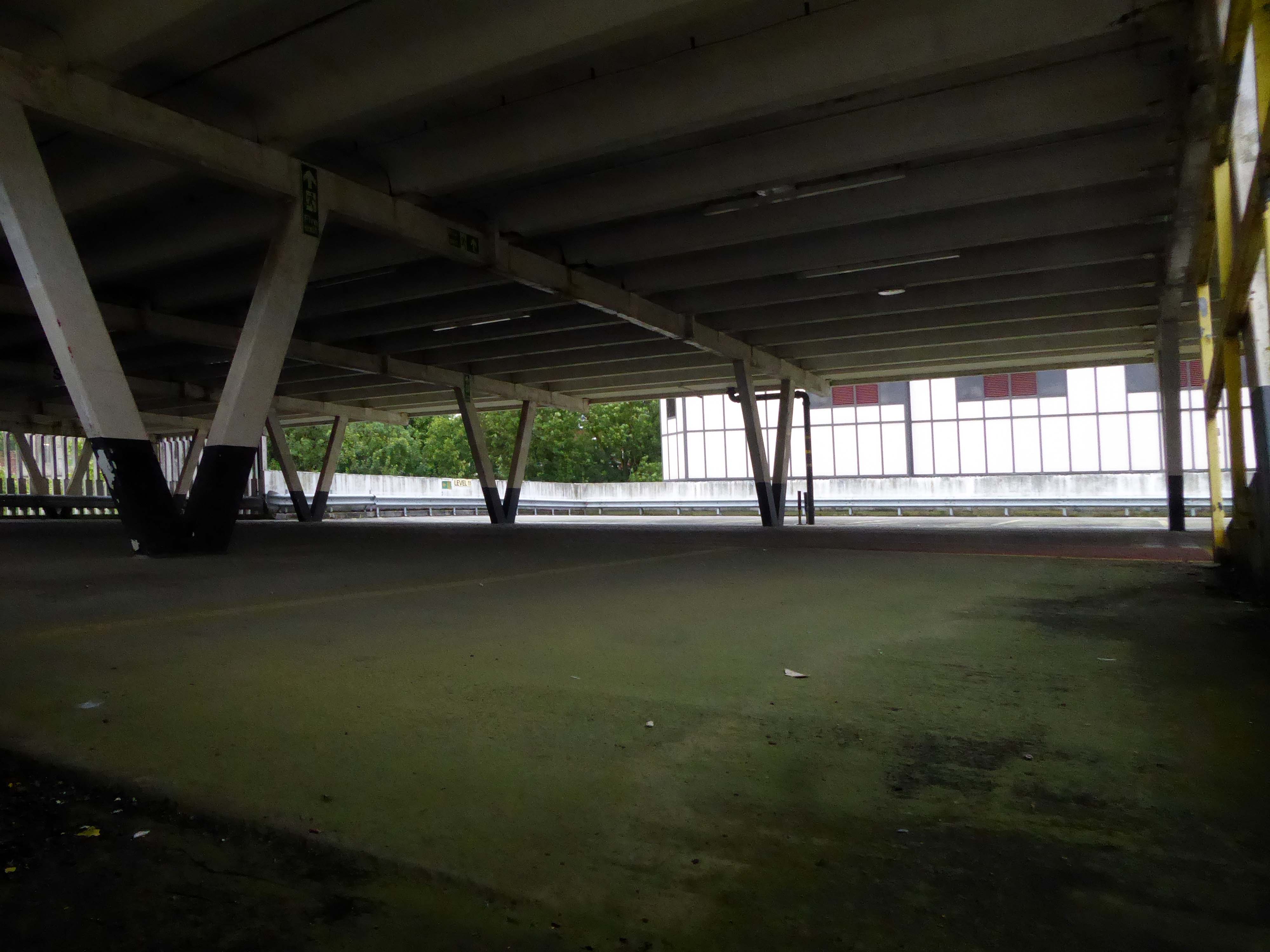
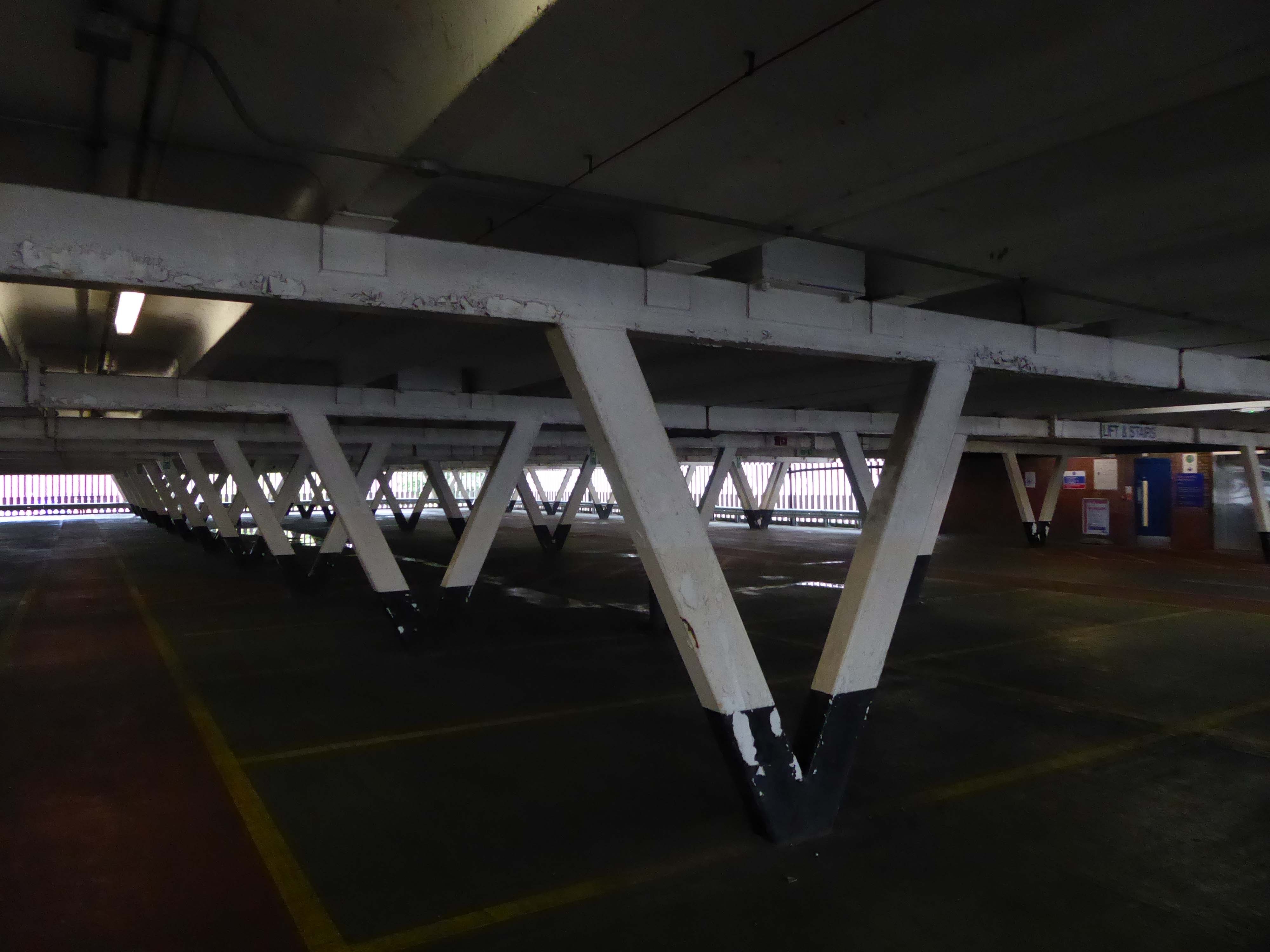
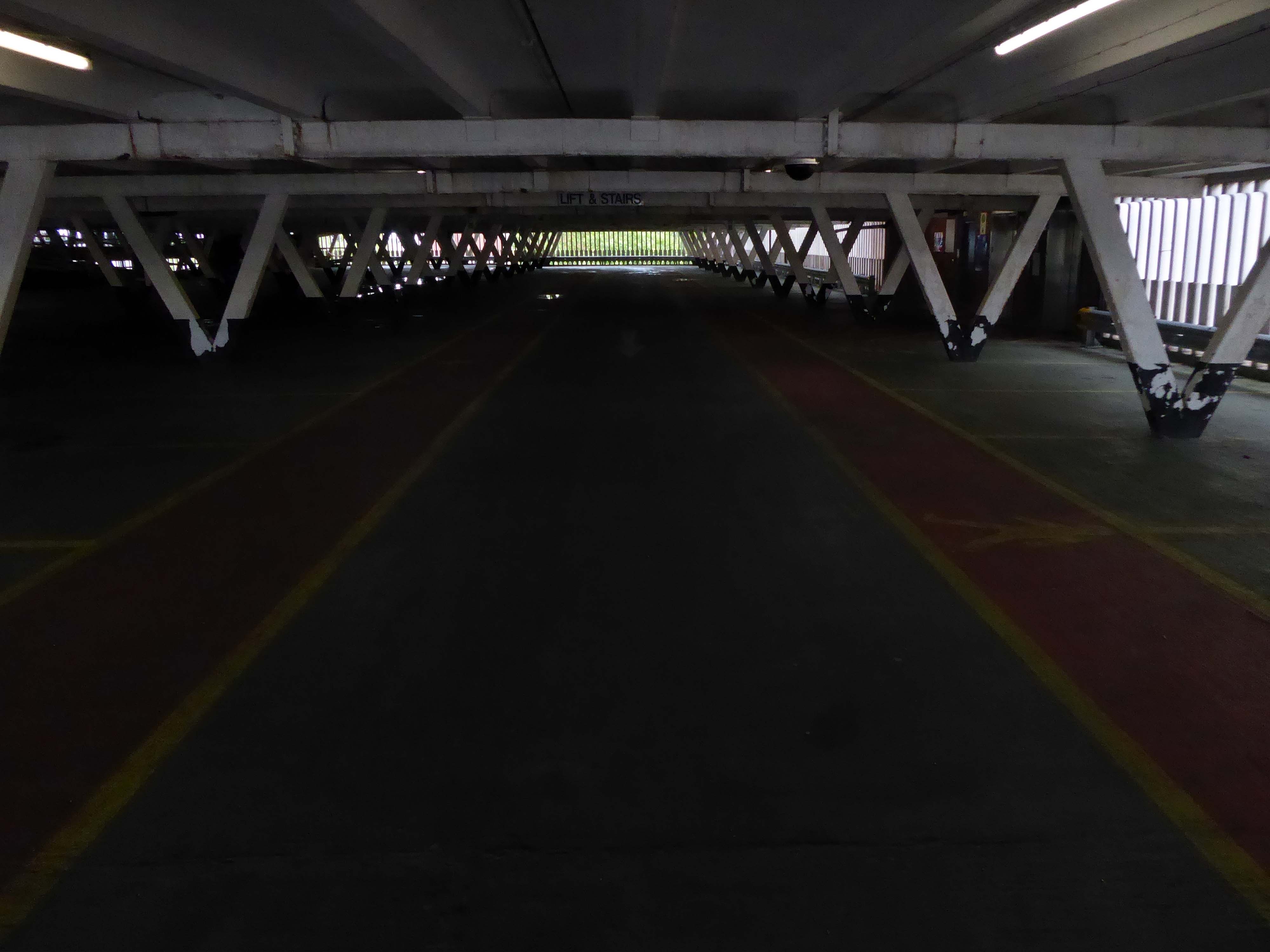
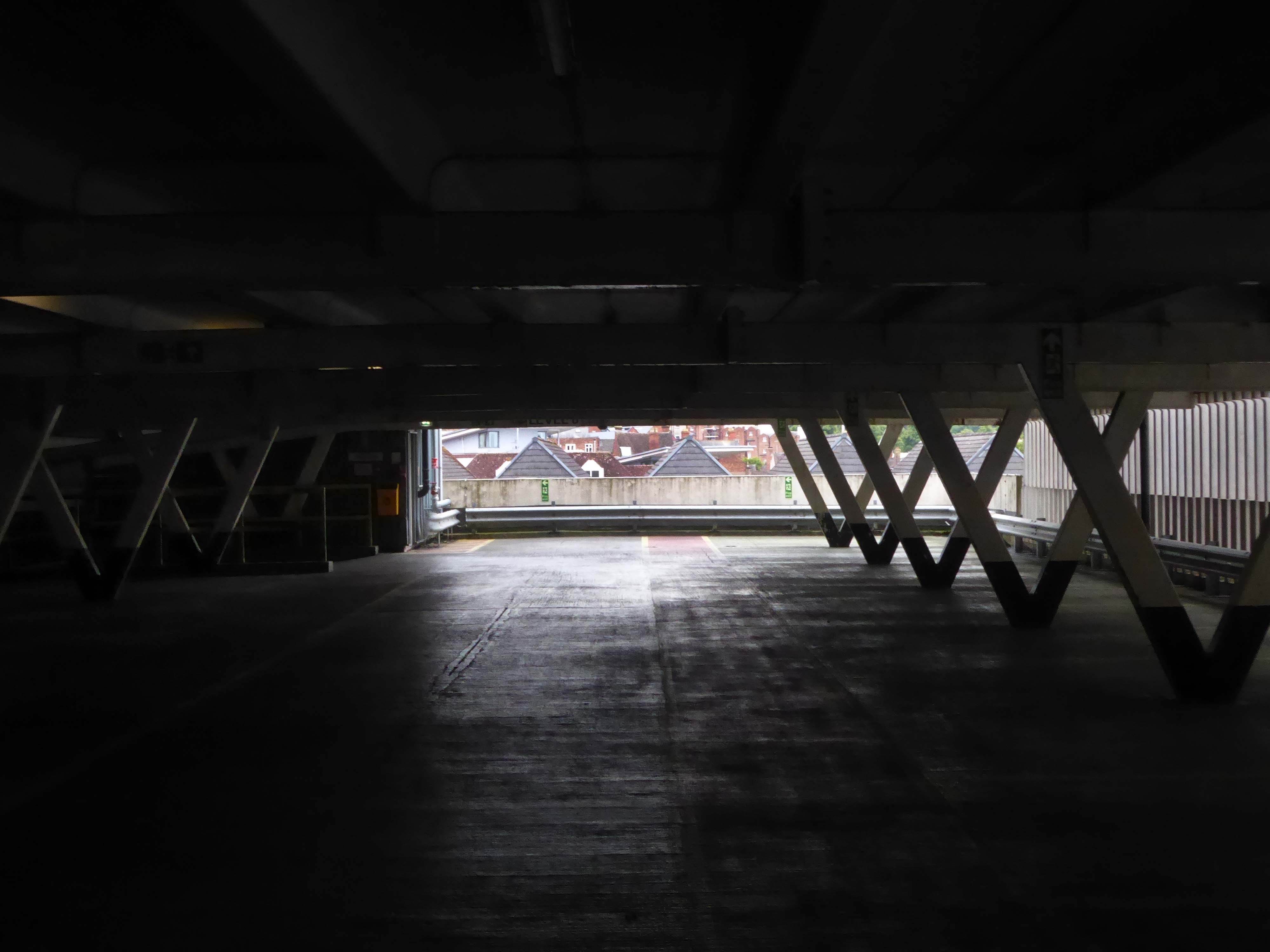
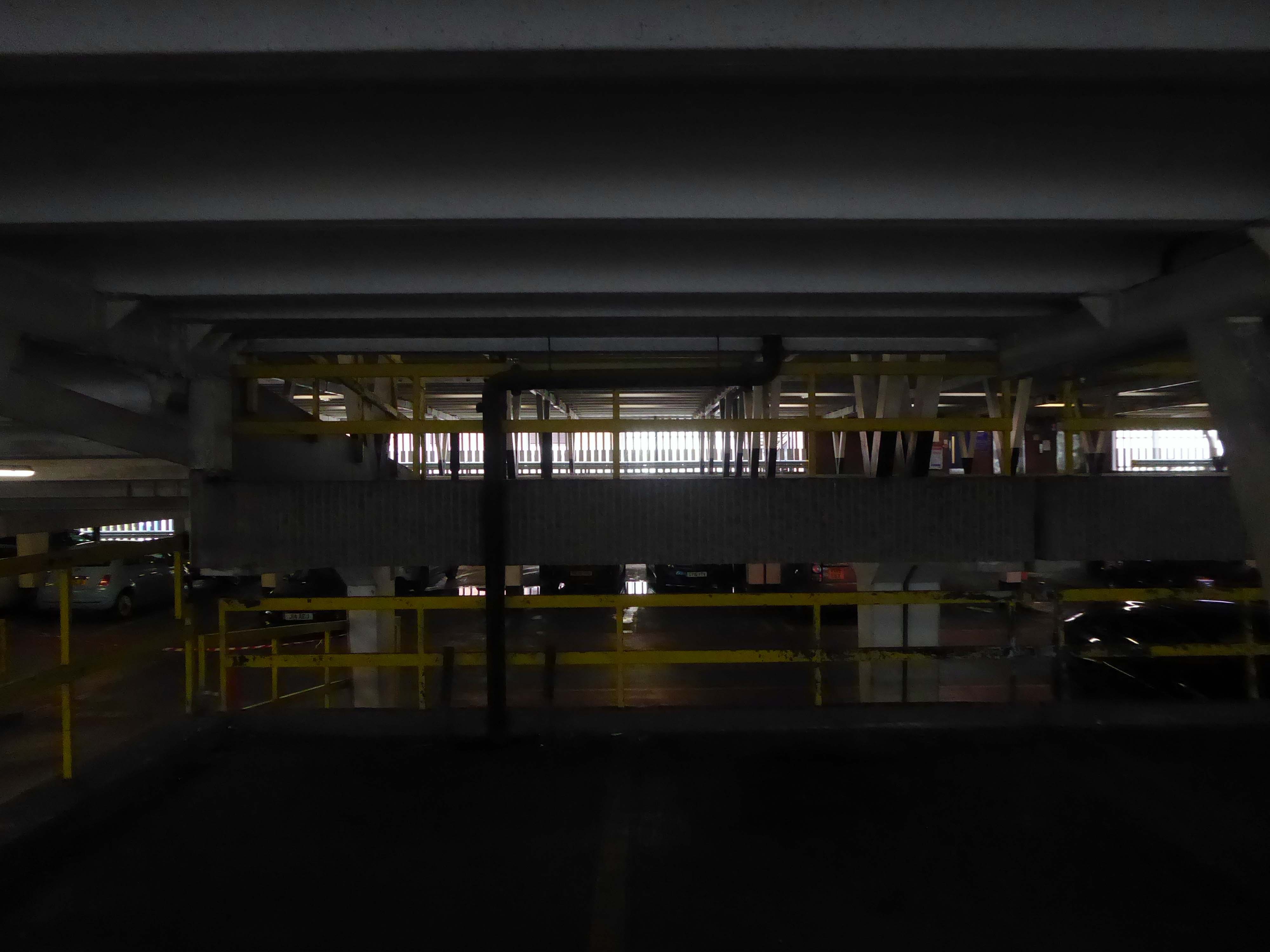
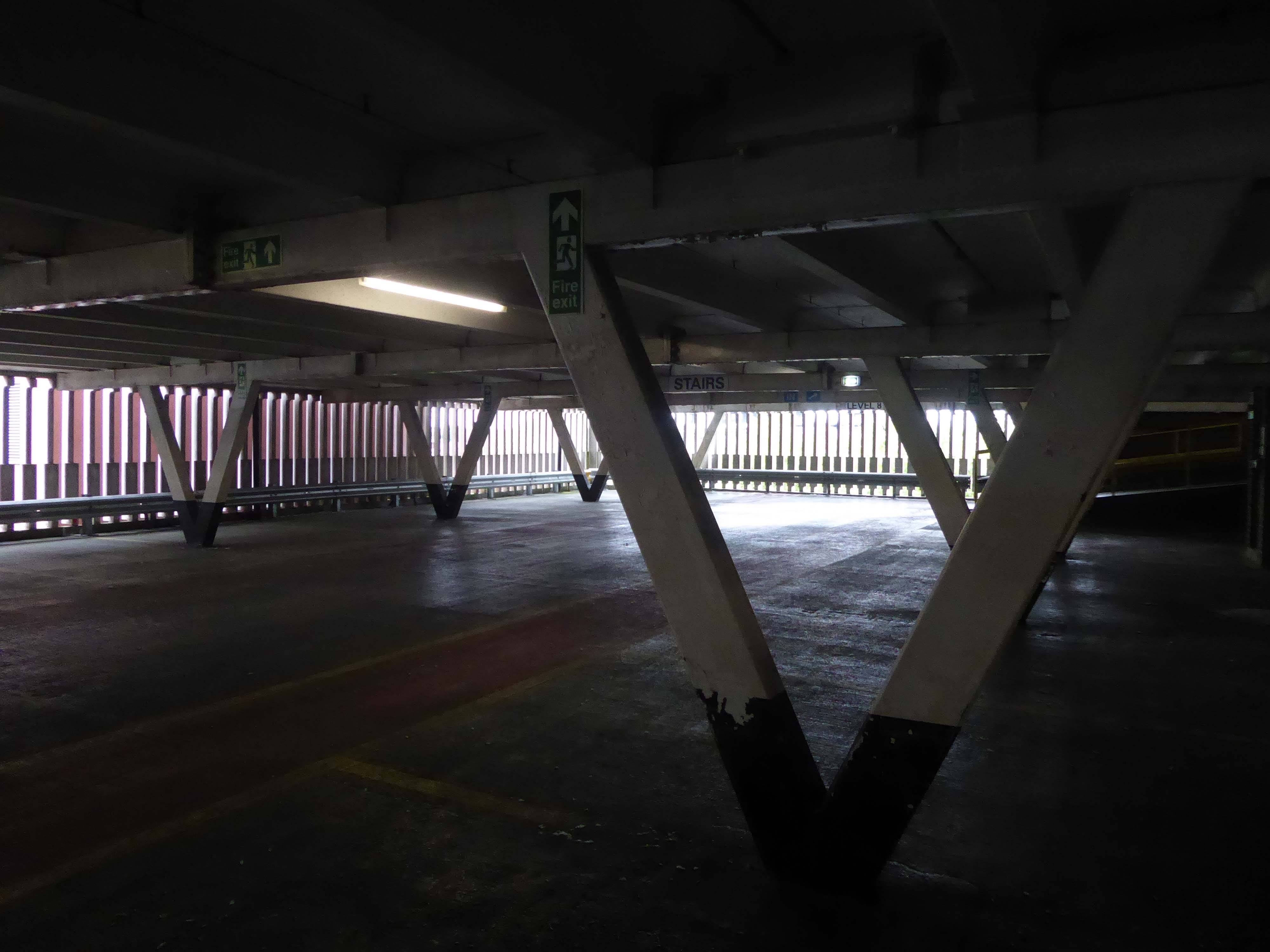
Built by Truscon Ltd. – 1969
I am a disabled driver and found a lot of the direction signs worn away. When I came to leave I wanted to use the machine on the ground floor. This was out of order, as a lot of other people found. The office was empty as the staff were outside smoking. I then had to negotiate stars back to the 7th floor where the next machine was located. There was no sign on the ground floor machine telling it was out of use and where the next machine was located.
If staff want to have a smoke they should at least leave someone in the office.
Most of the parking spaces are very tight and I would not recommend the use of this car park unless you have a small car and a crystal ball to find the disabled parking and the payment meters.
The rudest man at the kiosk, that I have ever had an encounter with, over a ticket that was blurred. He had a go at me for not going to him straight away – I went when I went to leave and it wouldn’t work. He also had a go at me because I pressed the buzzer on the intercom. Very strange unhelpful man. Made an issue for no reason! Awful to deal with I never write reviews, but I hope this gets back to him and with hope he will gain some manners.
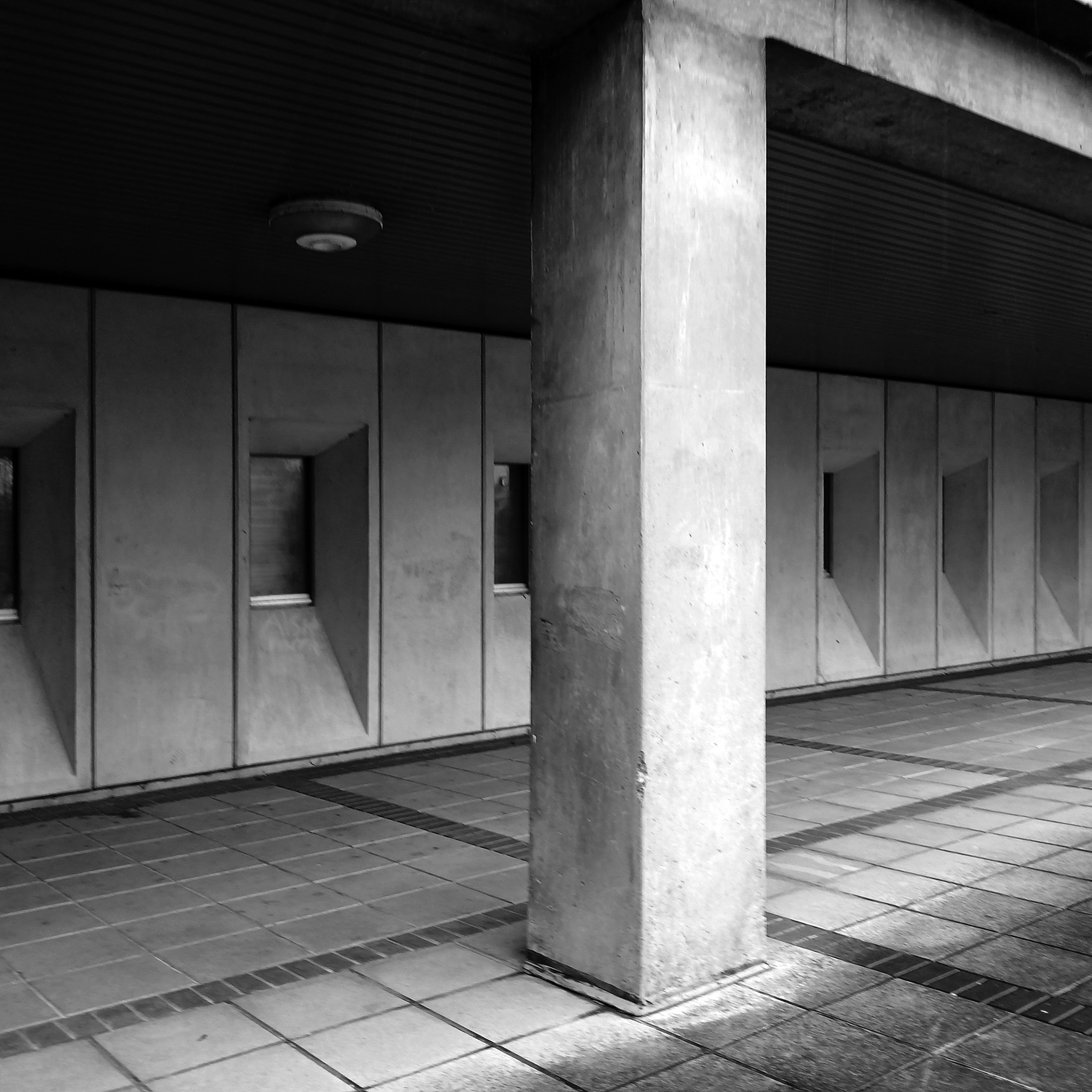
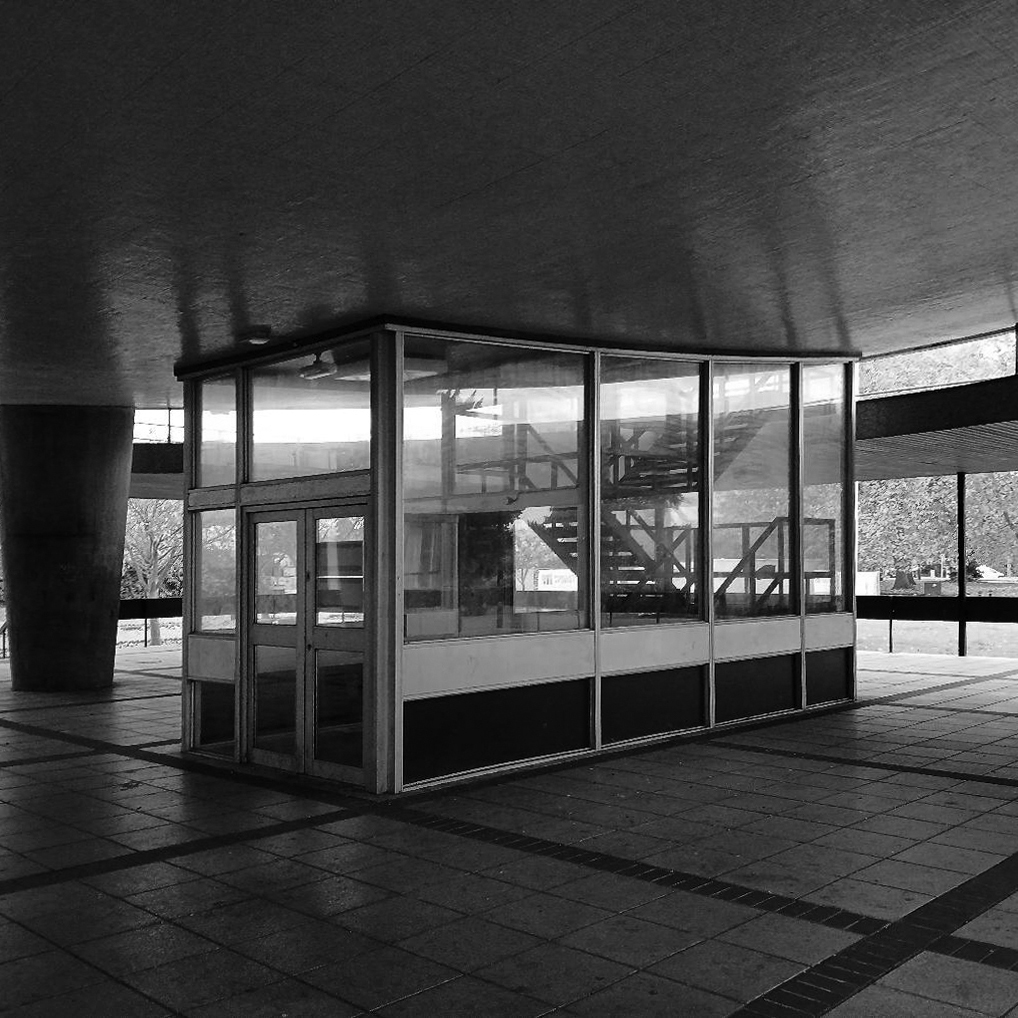
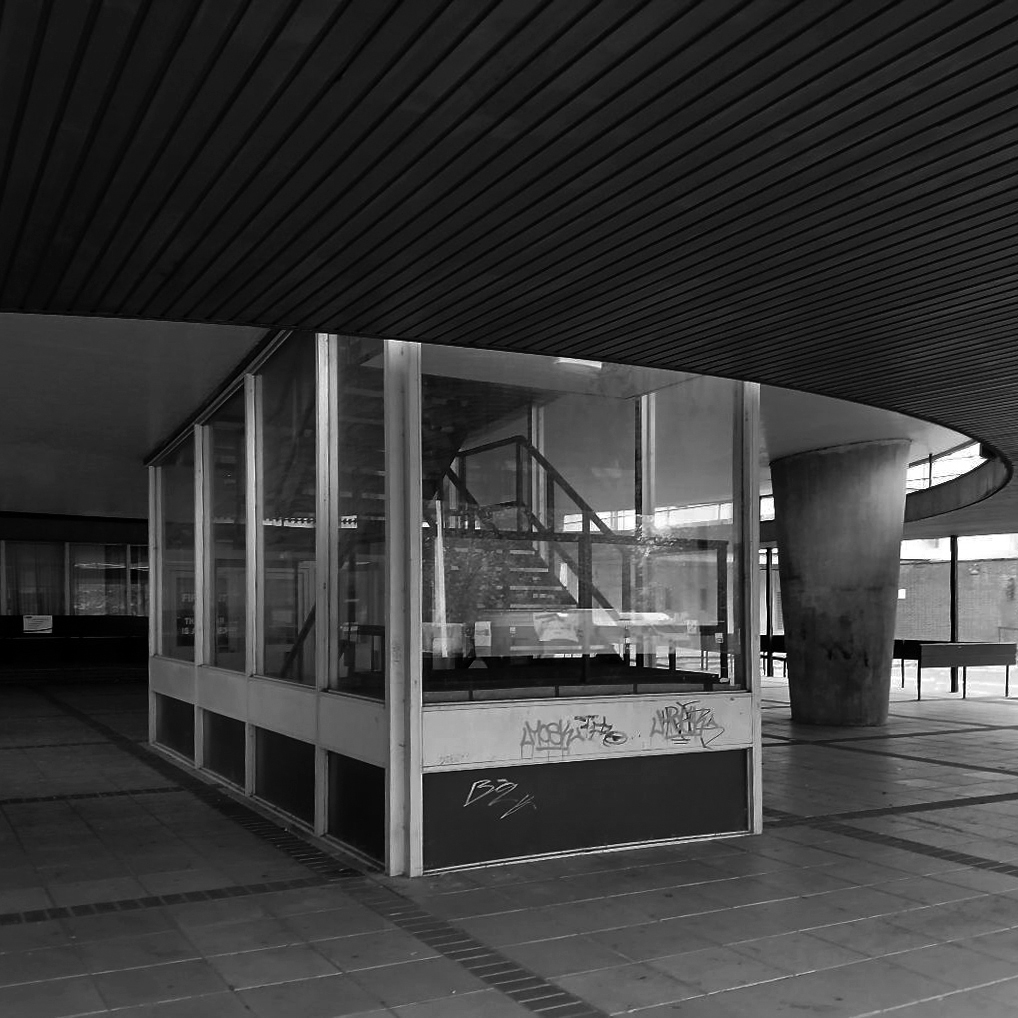
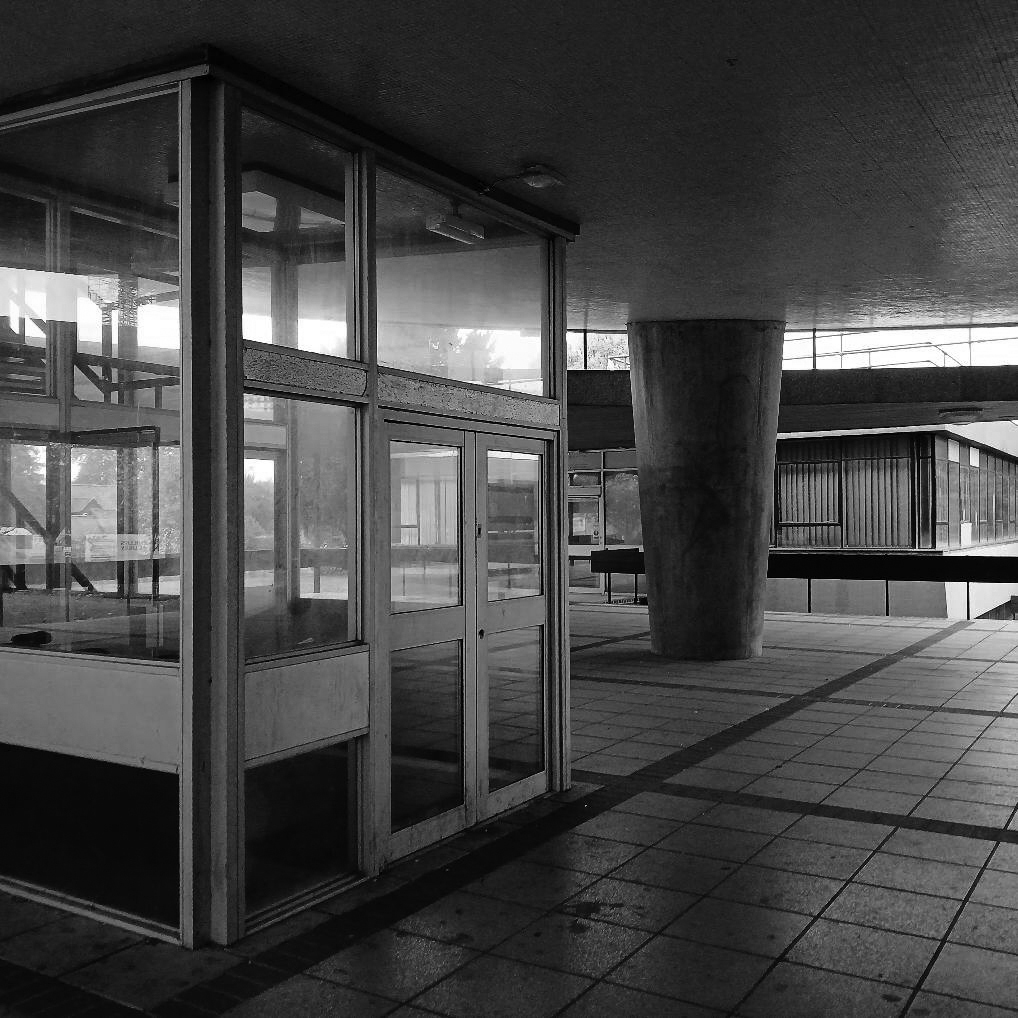
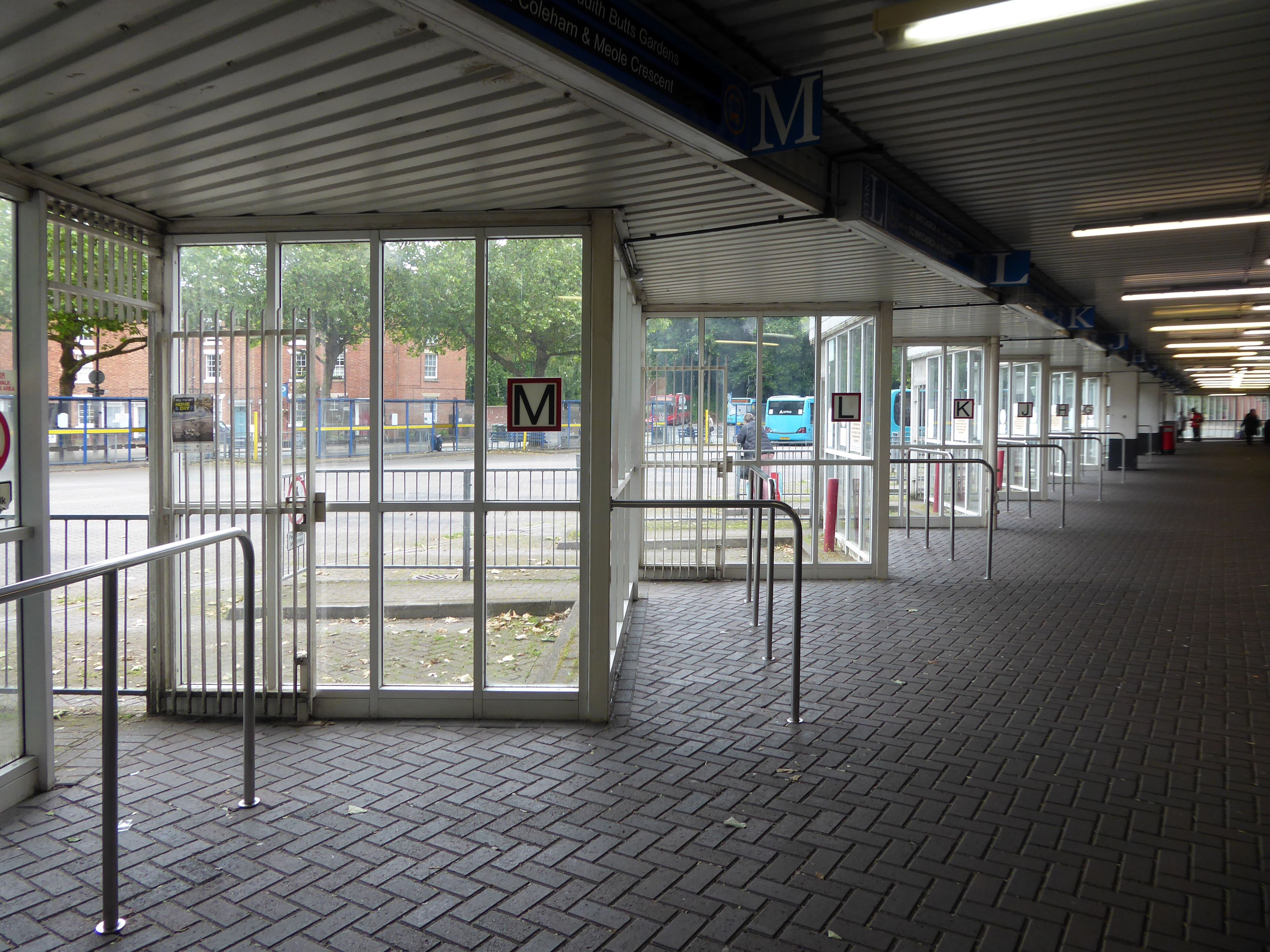
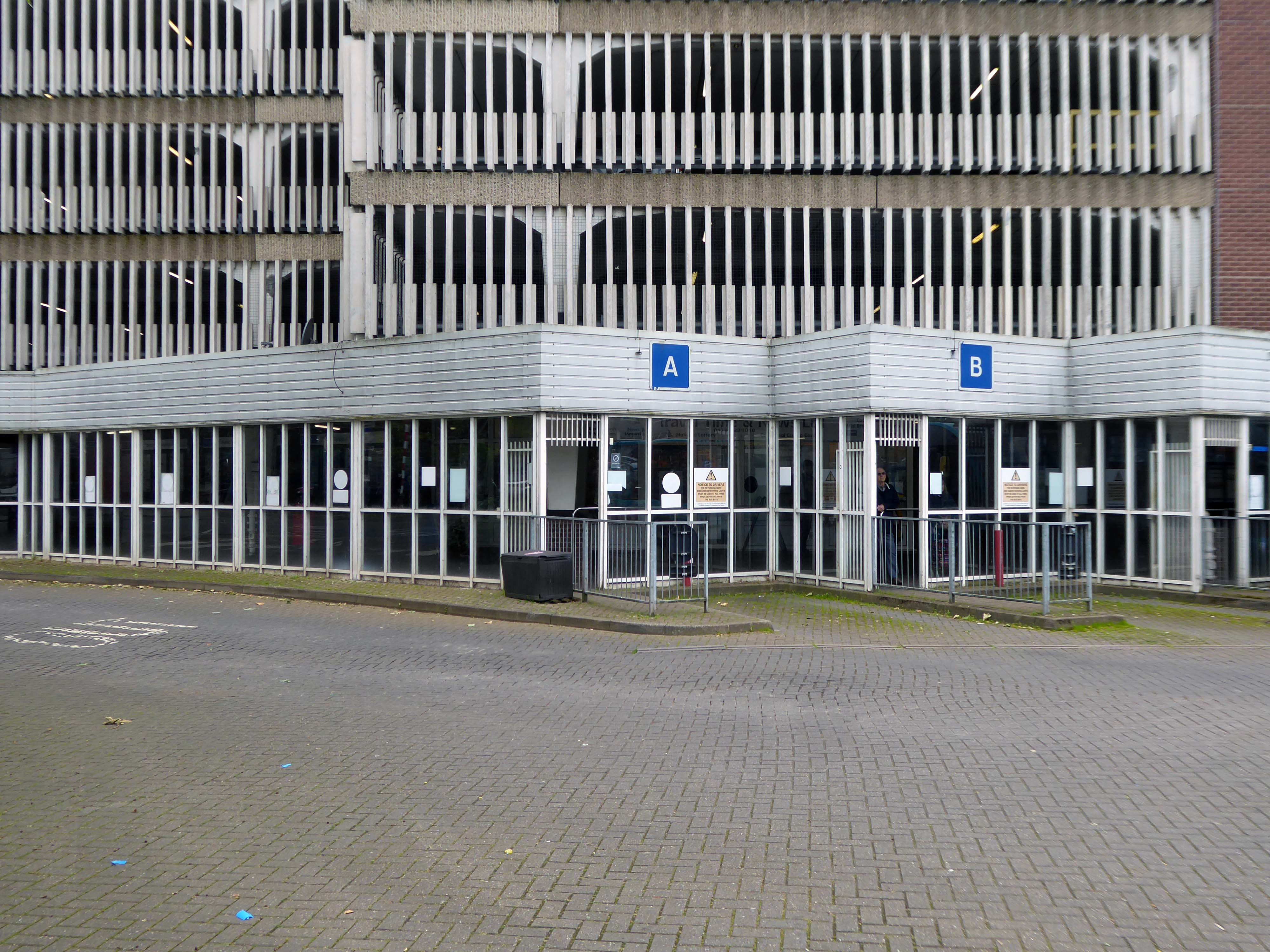
Being a pedestrian, I entered through the bus station on foot.
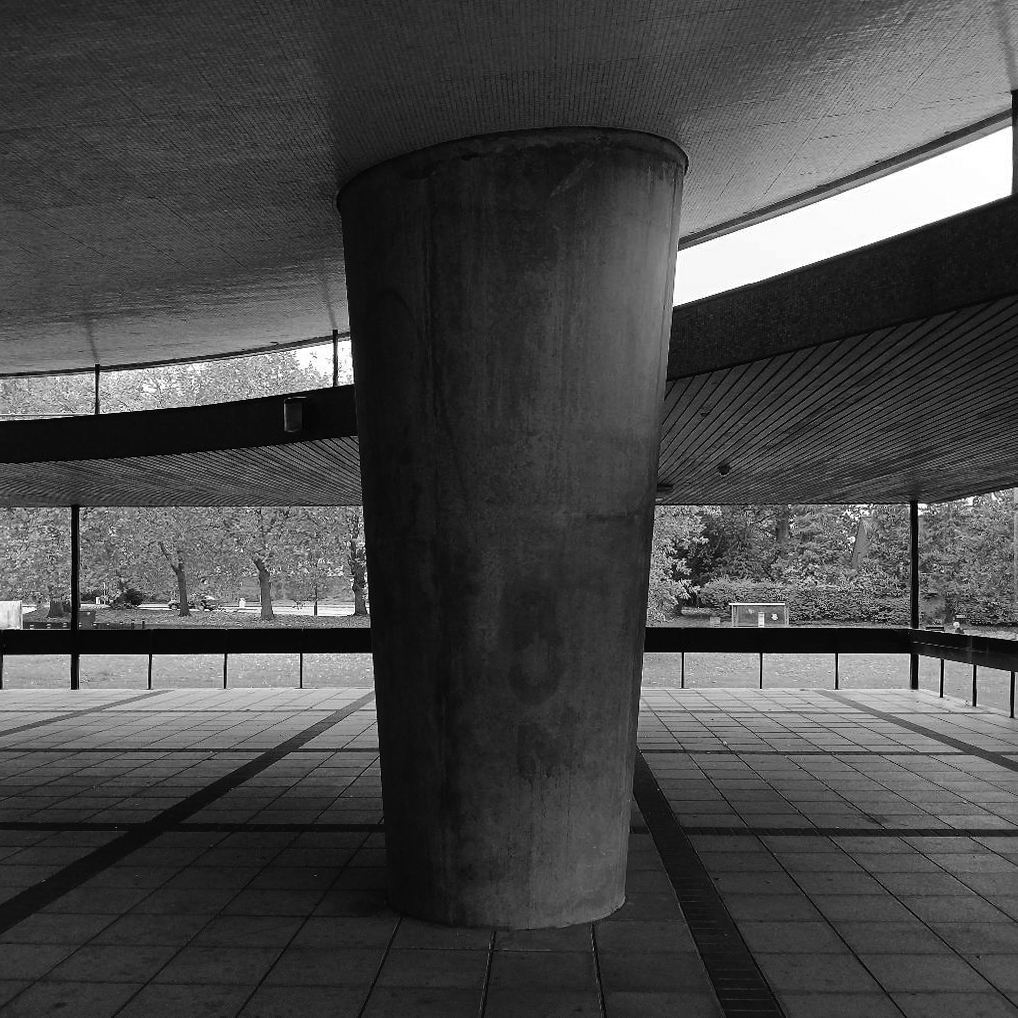
The station is considered to be dated due to its 1980s architecture partially under a 1960s multi-storey car park. There have been plans for the station to be modernised and rebuilt, or even demolished completely, as part of the town’s Big Town Plan. The demolition of the station would mean the town would not have a central bus terminus and would instead use smaller sites on the town’s Park and Ride routes.
Shrewsbury Bus Station is a disgrace. I am embarrassed to use it. I don’t feel comfortable with using it. Yet, it is the bus hub for our county. It is one of the main gateways into Shrewsbury and Shropshire for those travelling by public transport.
New bus hubs and interchanges have been developed around the country. Shropshire Council meanwhile ignores Shrewsbury Bus Station. It promises a new bus interchange, but that is in Phase 4 of its plans to redevelop Shrewsbury town centre between Pride Hill and the riverfront. In the current financial climate and with the council stretched to the limit on existing funding, Phase 4 is probably more than a decade away.



















































 Modern Mooch