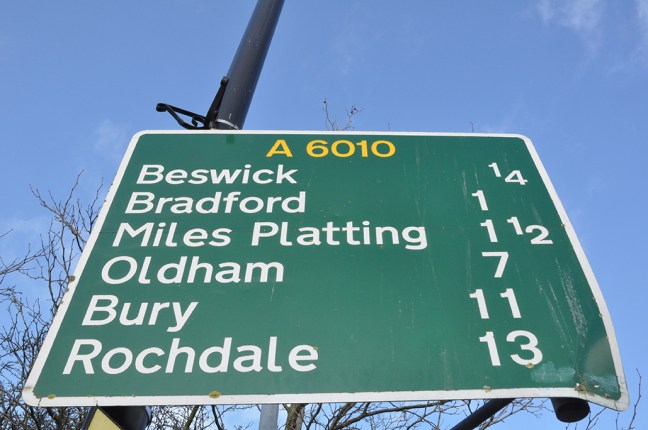
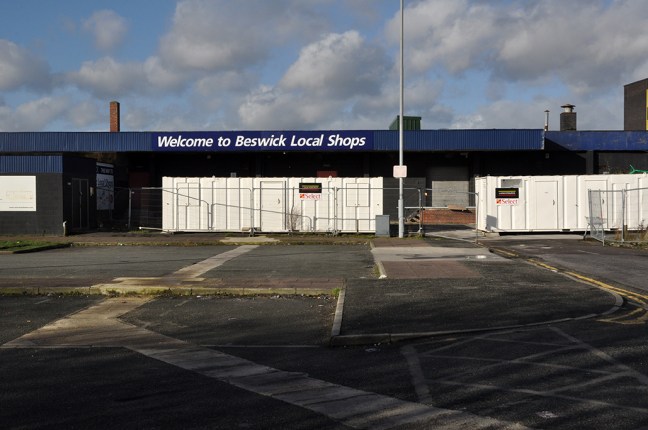
You’re never more than a thousand yards from a main road, six feet from a rat, or a quarter of a mile from Beswick, one of many Beswicks.
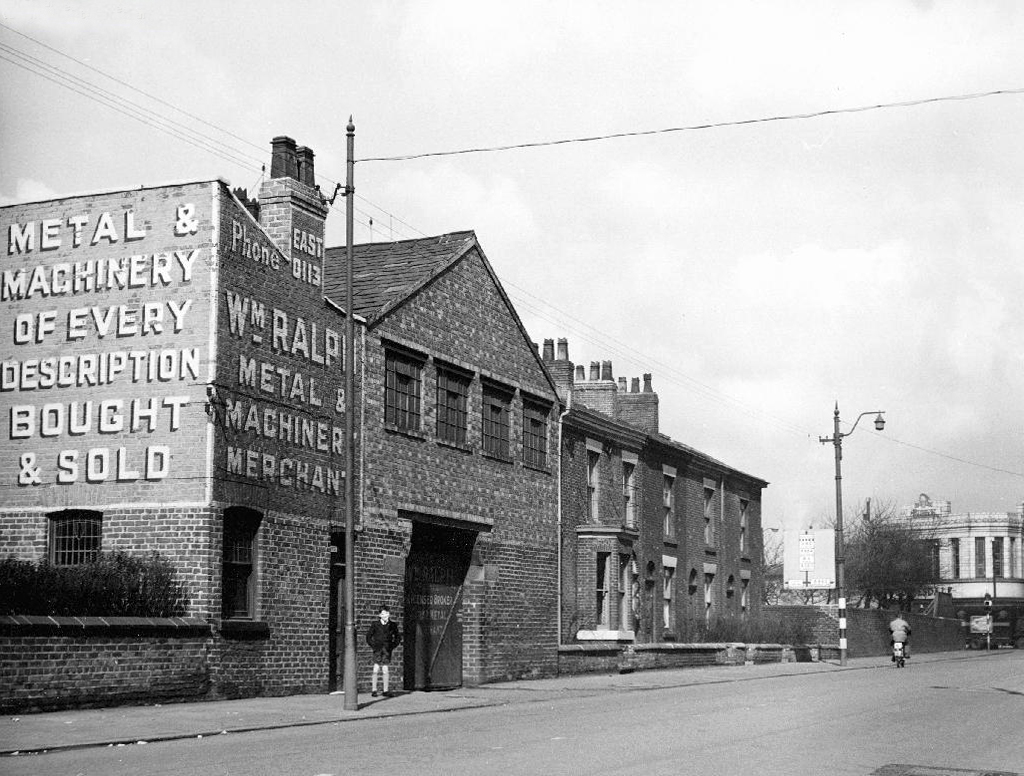
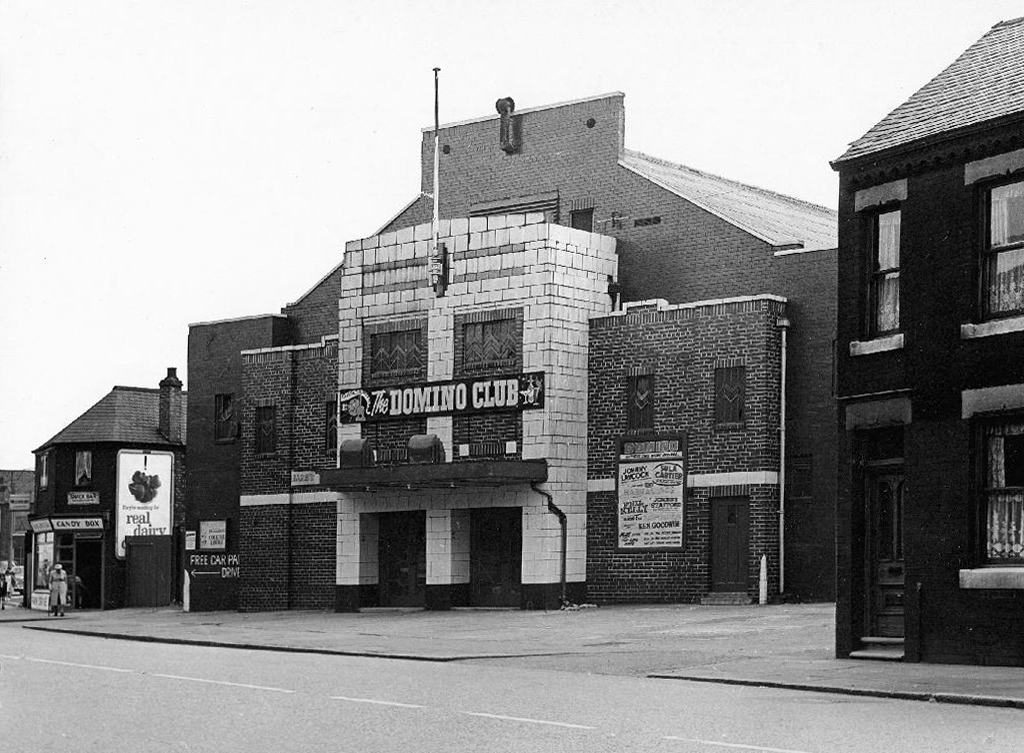
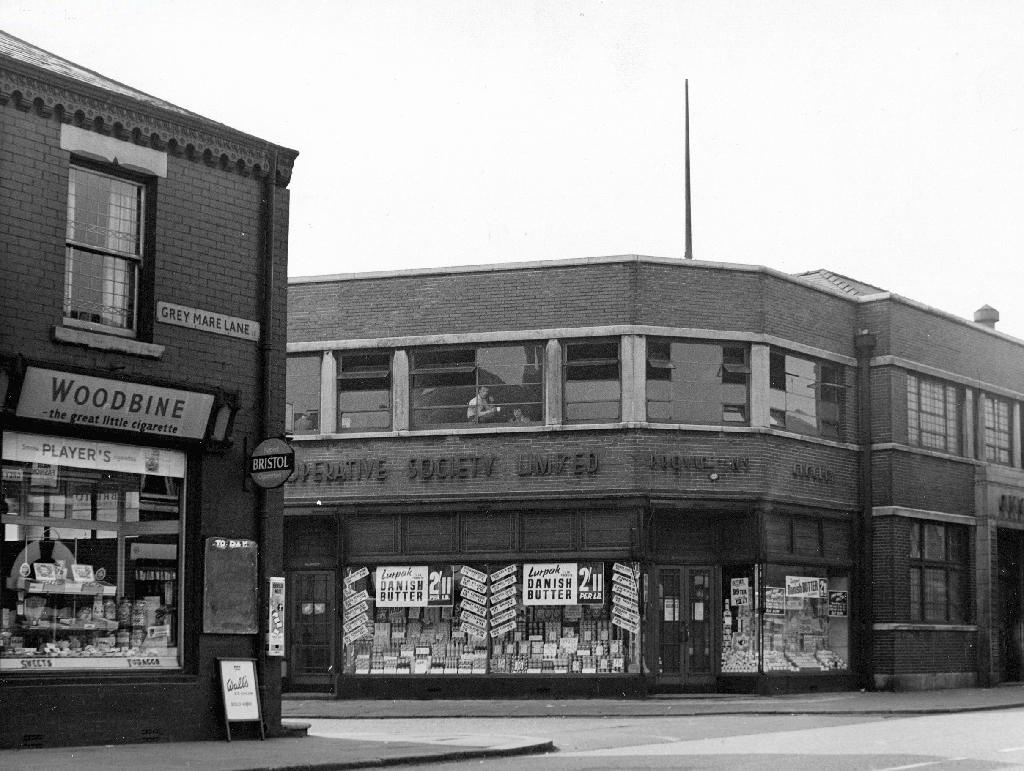
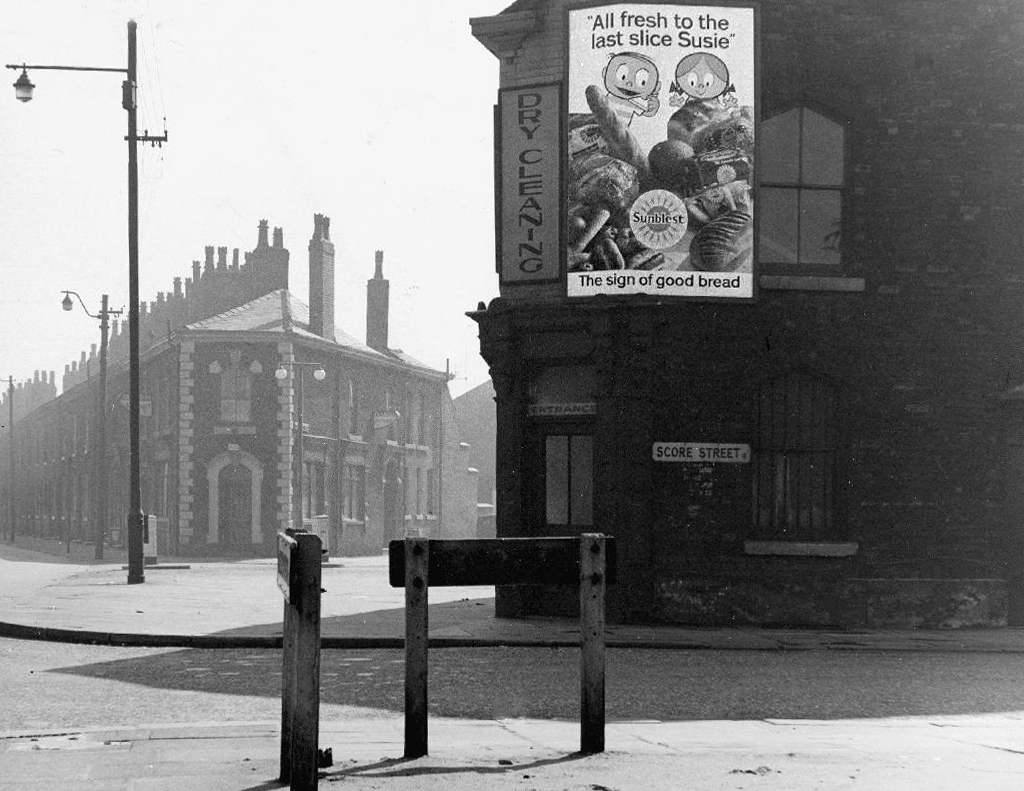
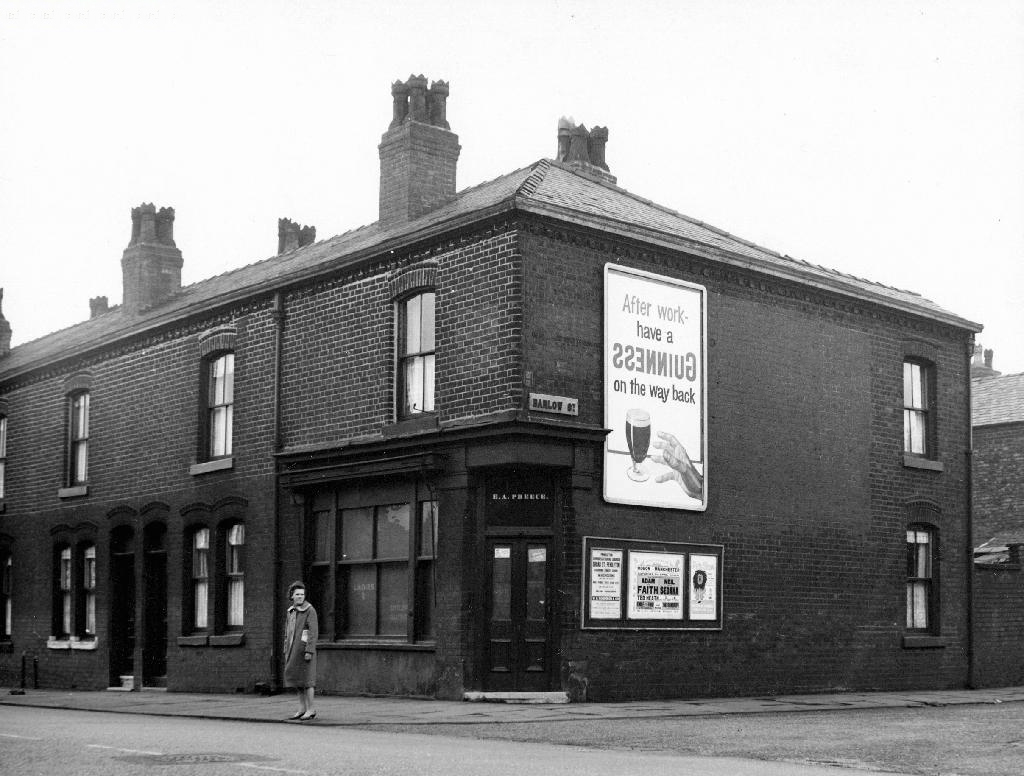
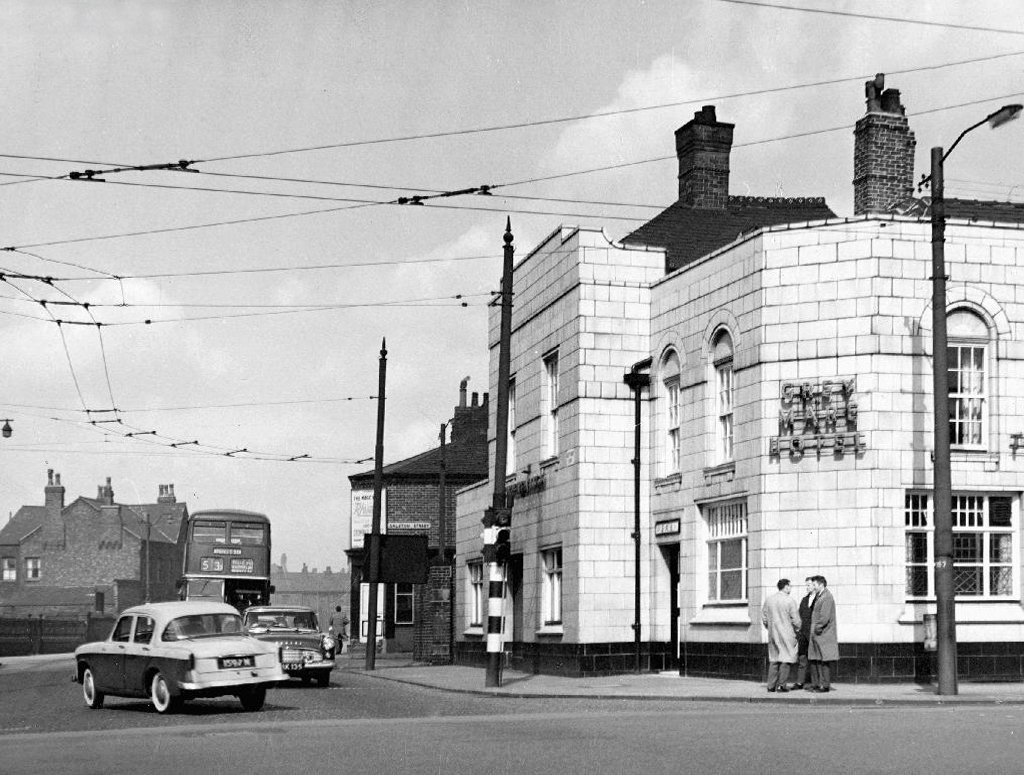
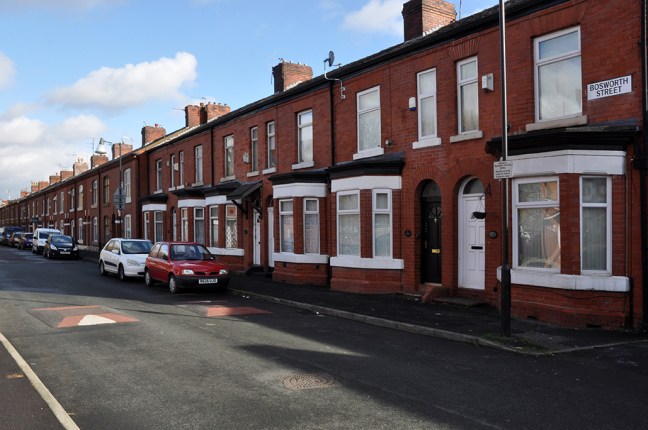
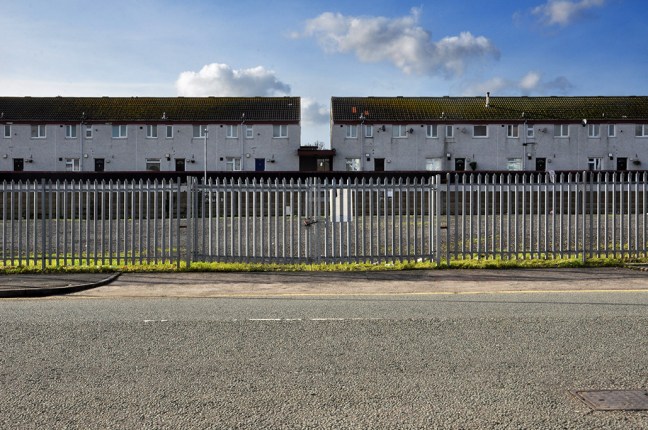
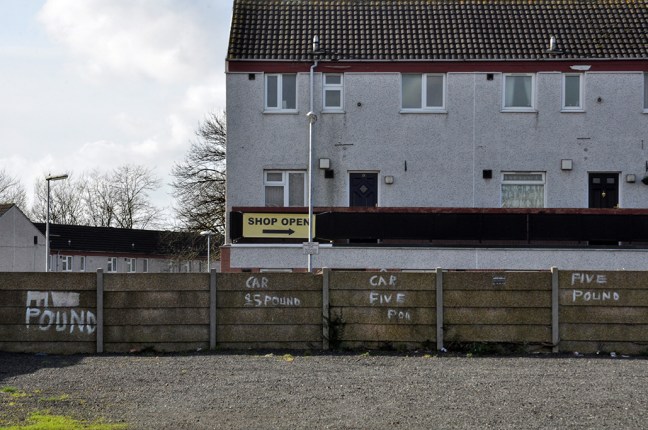
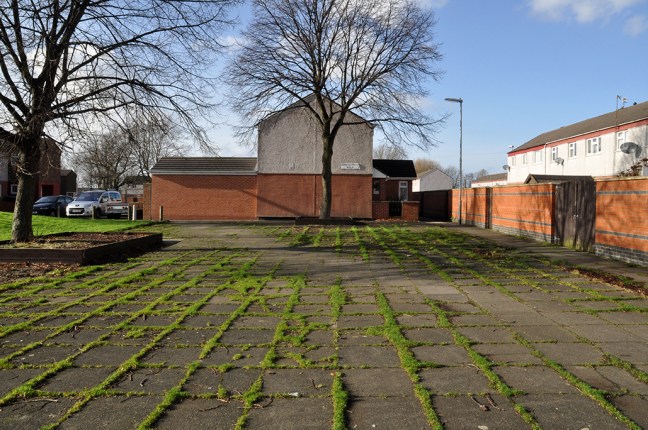
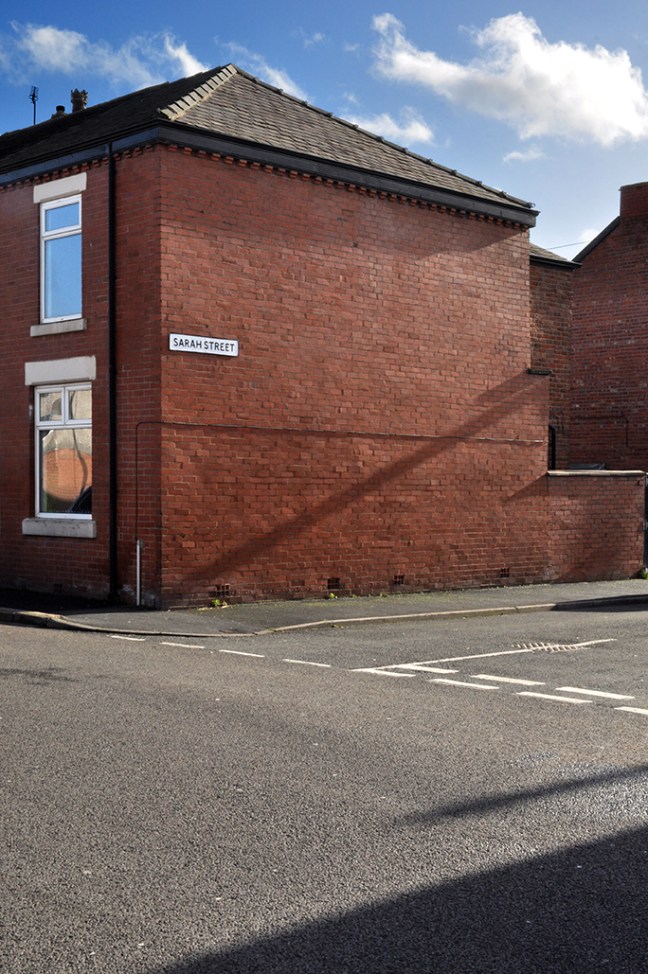
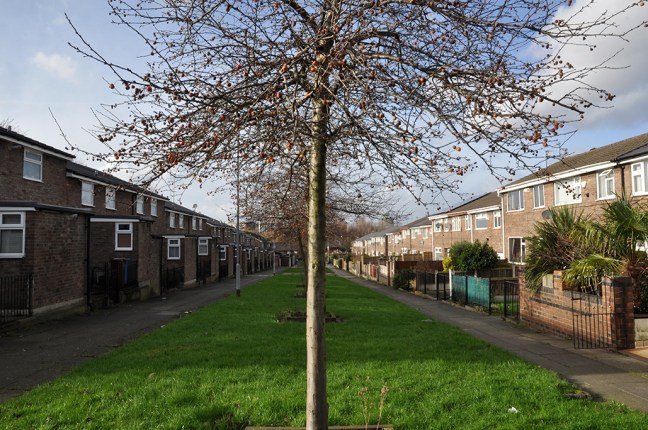
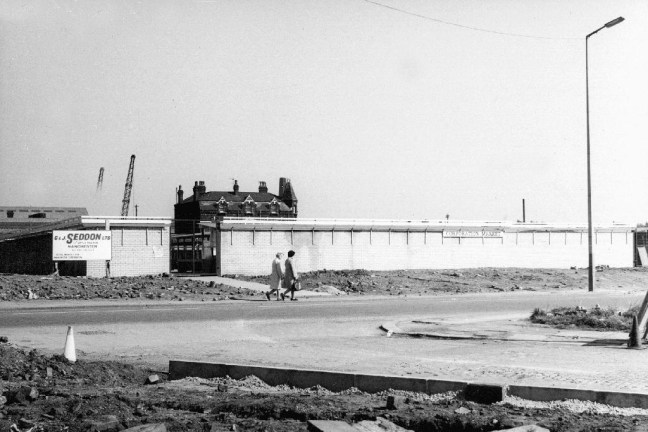
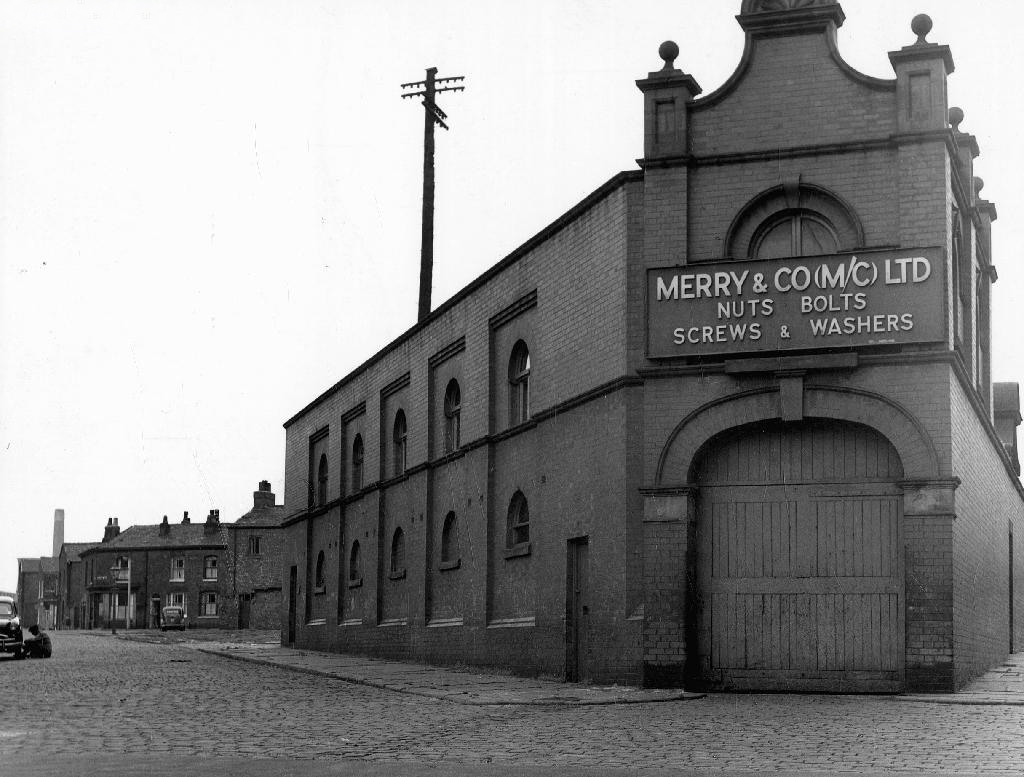
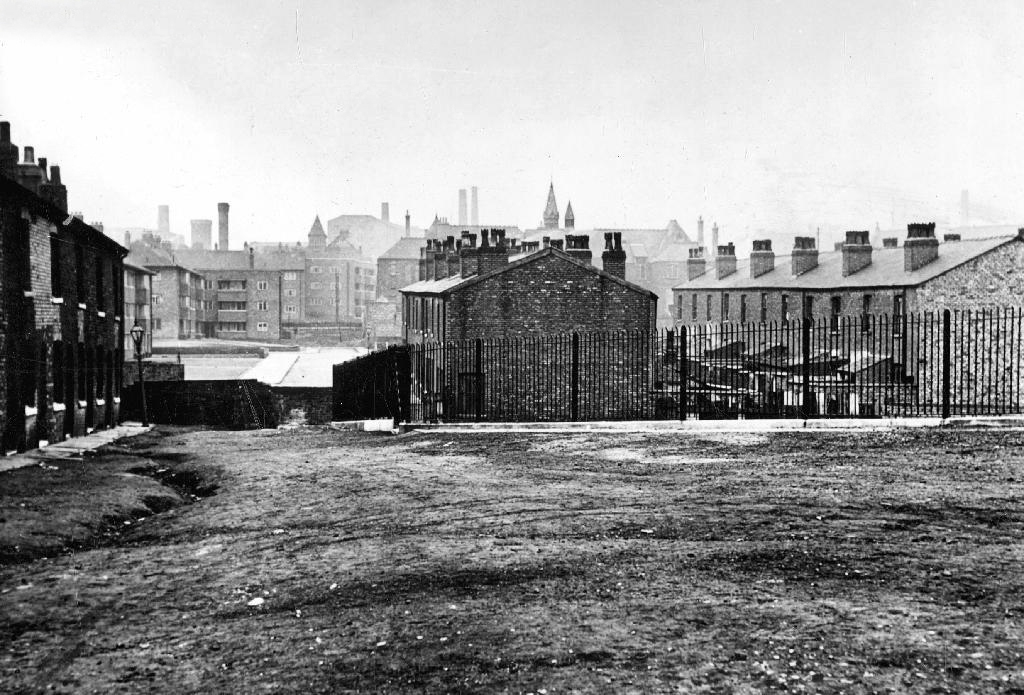
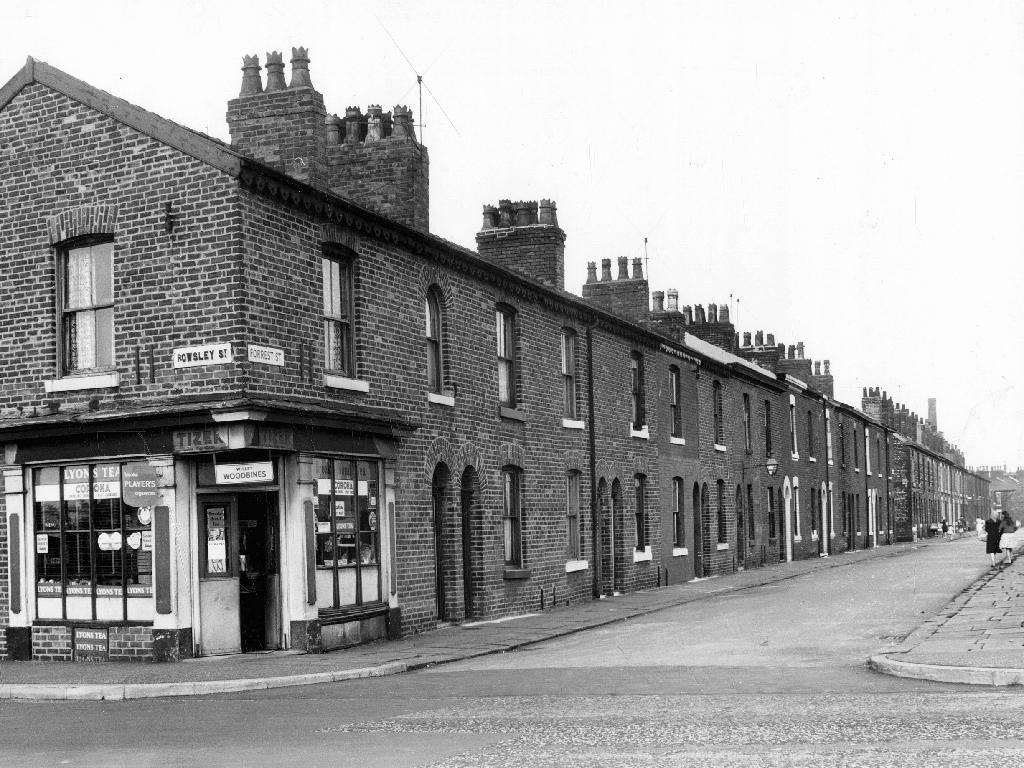
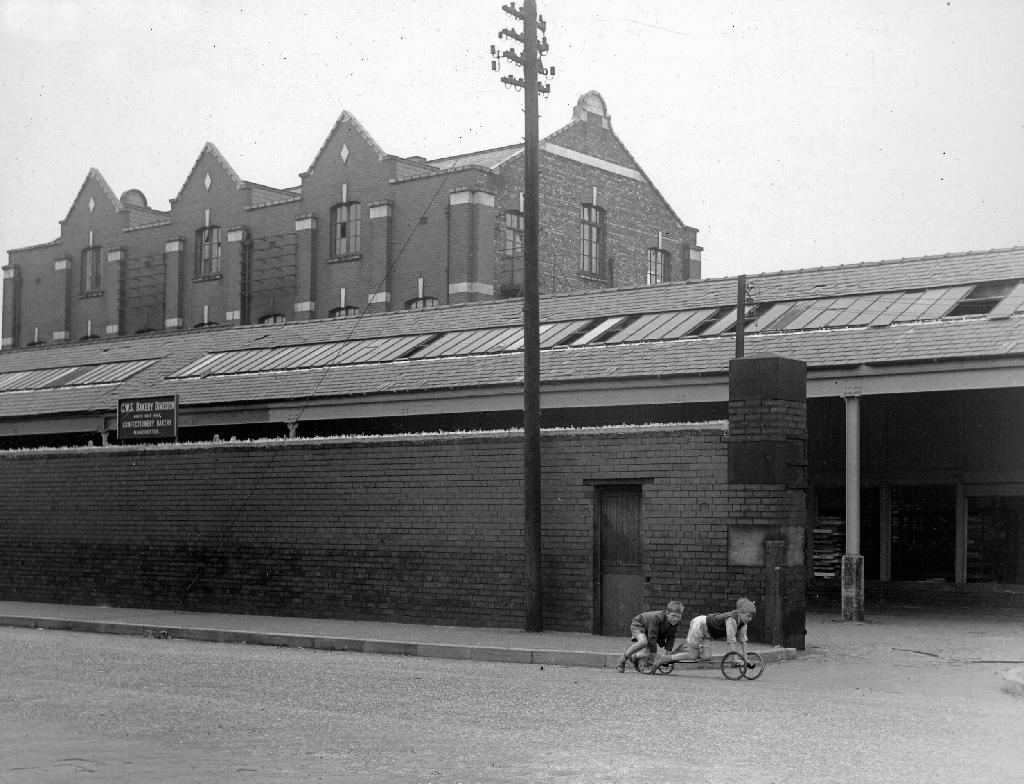
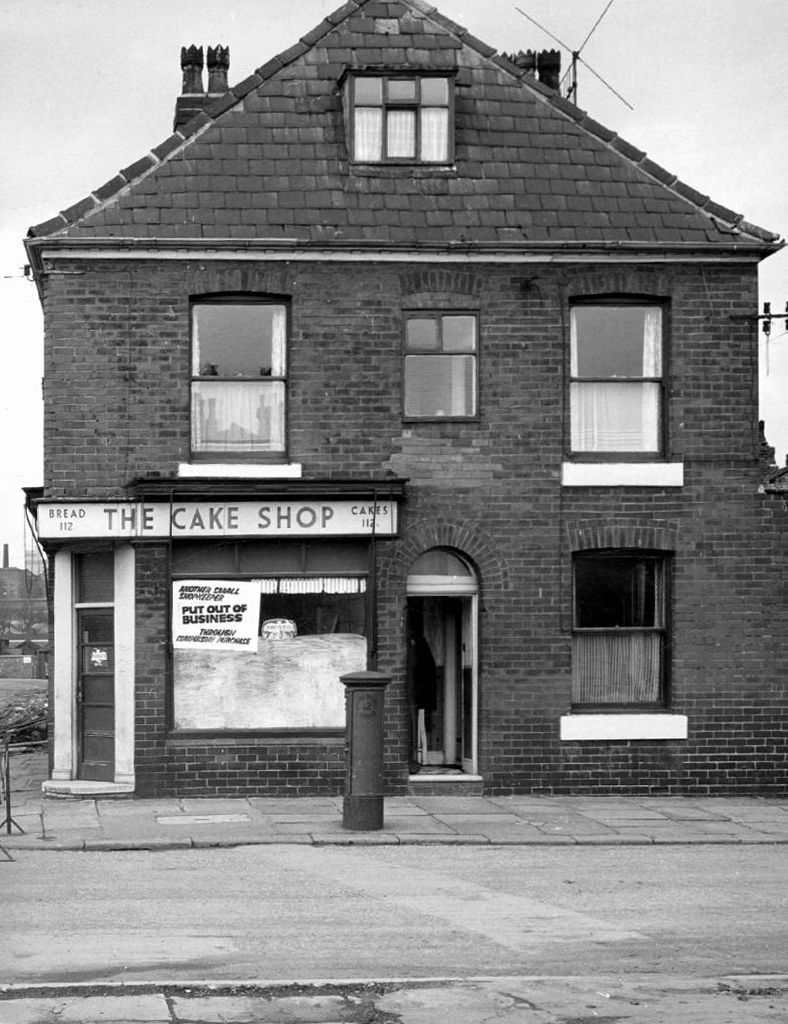
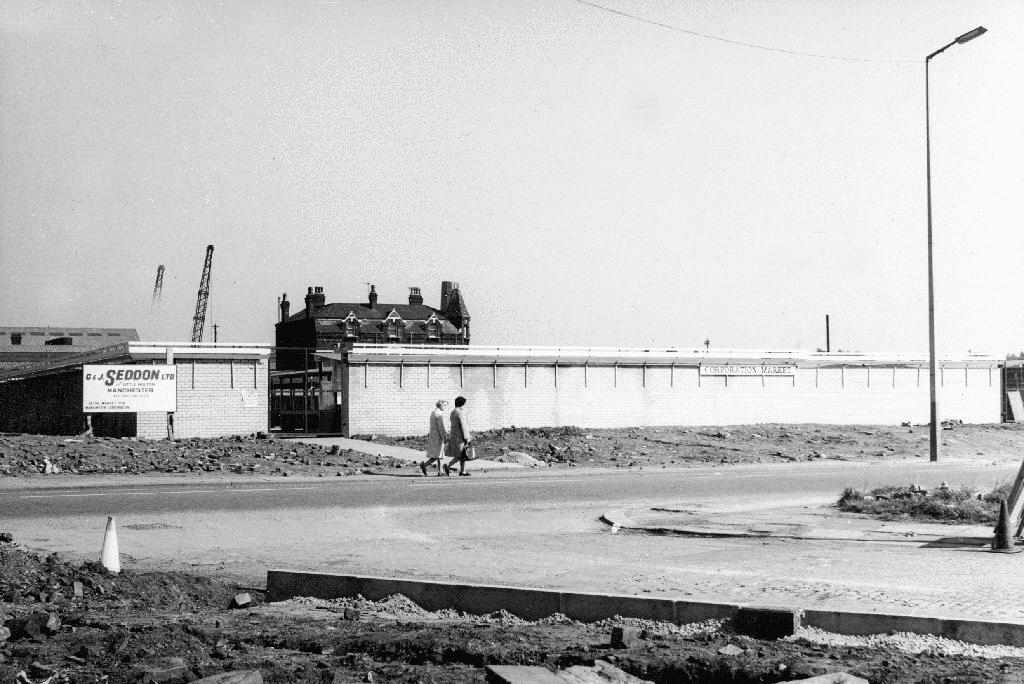
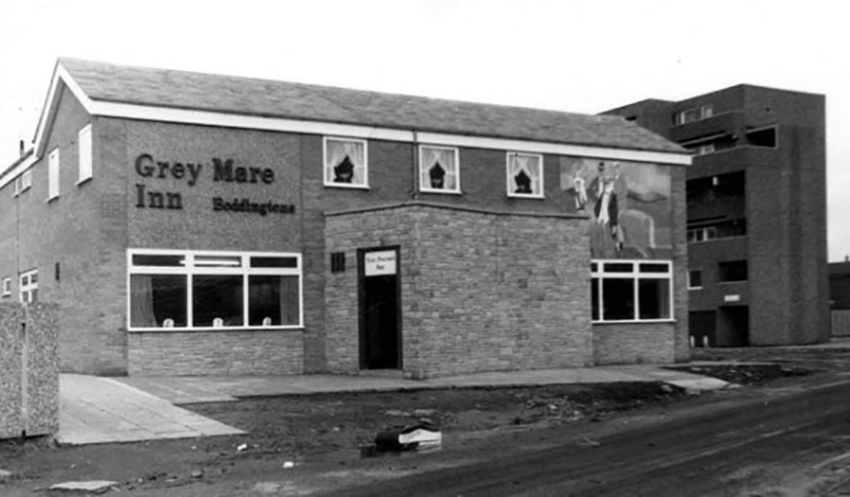
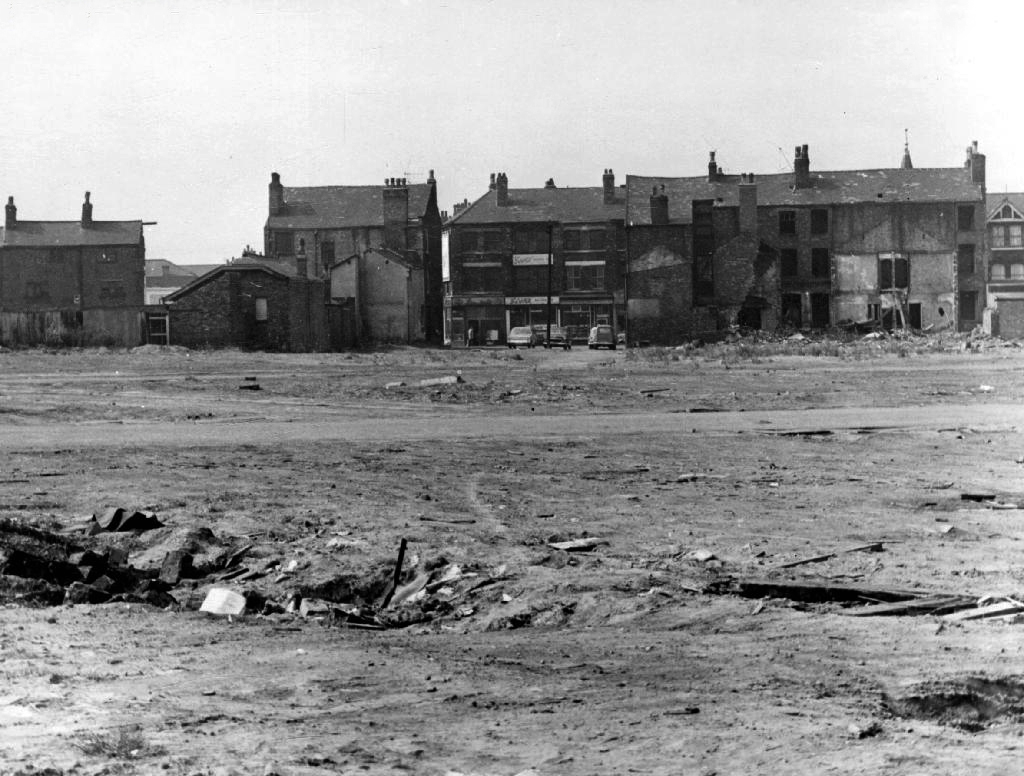
Beswick was once a bustling mixed industrial and residential area of east Manchester, alive with back to back terraced housing, pubs, clubs, shops and people.
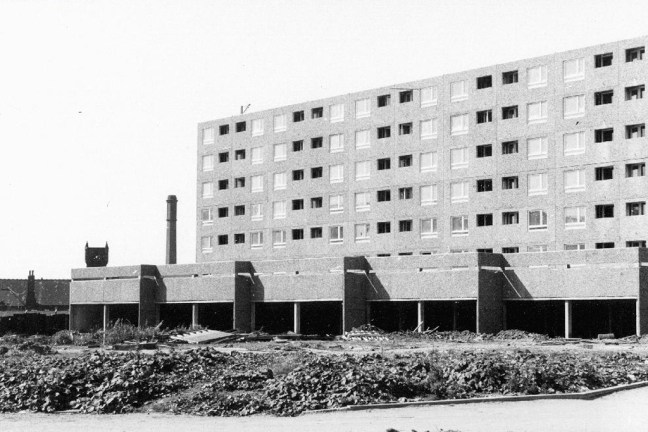
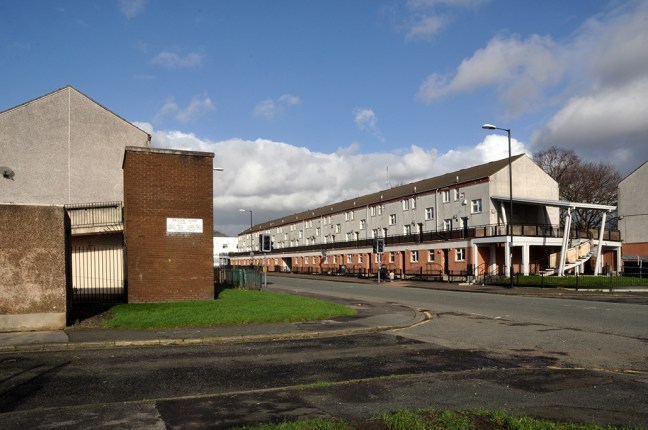
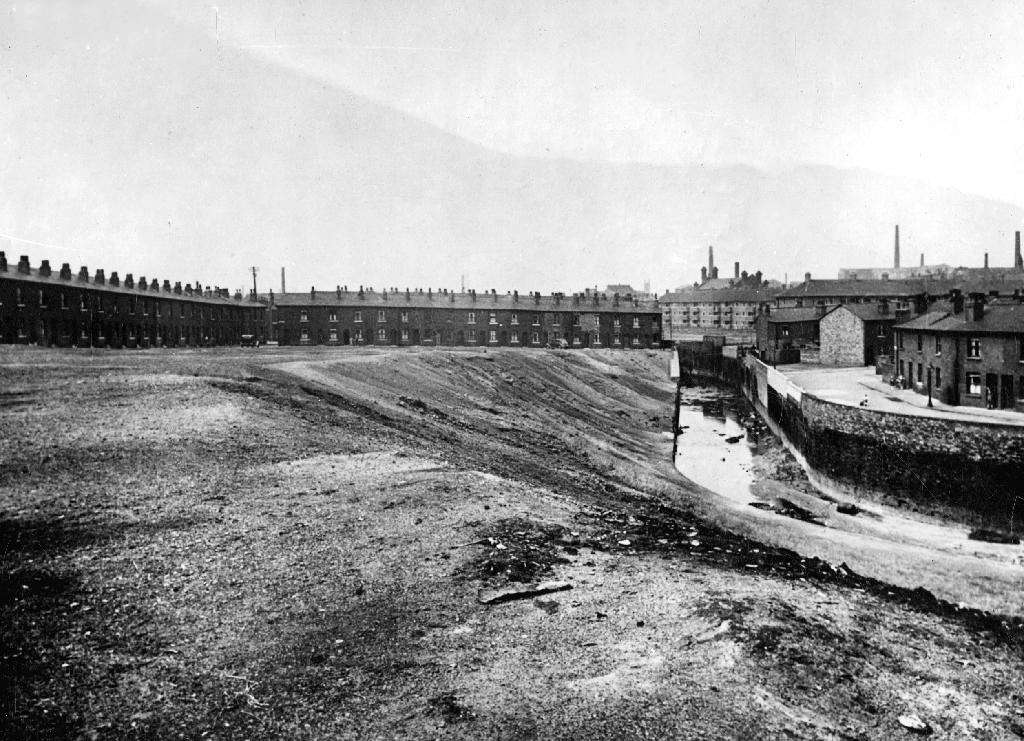
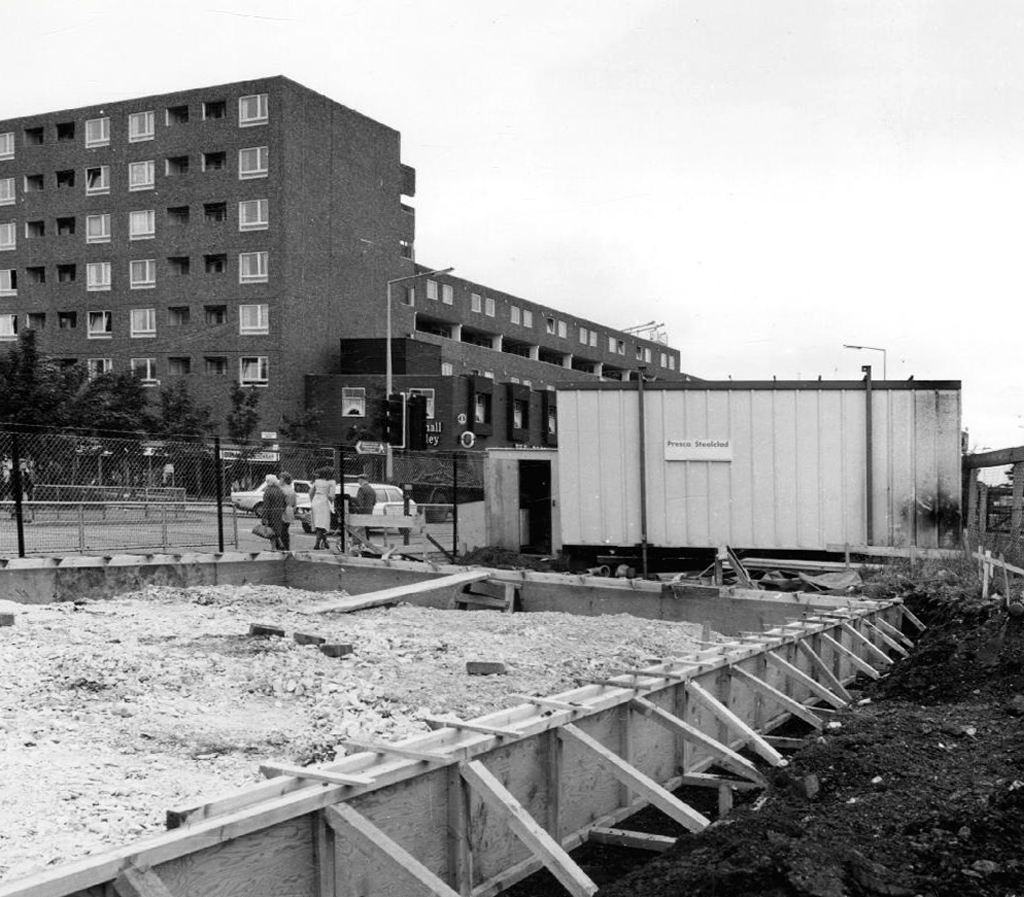
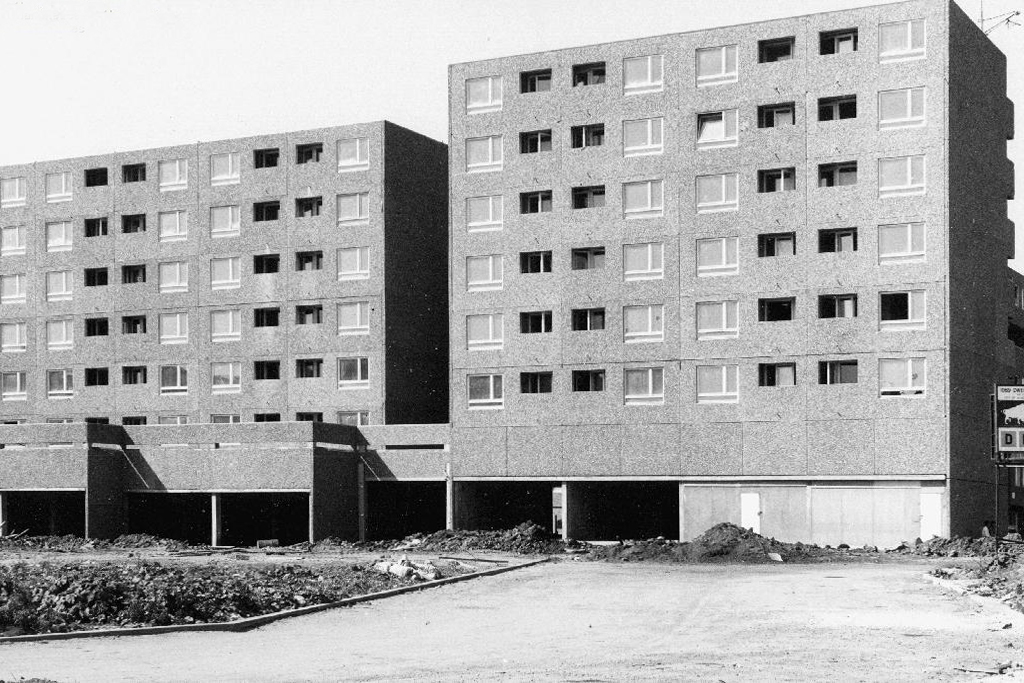
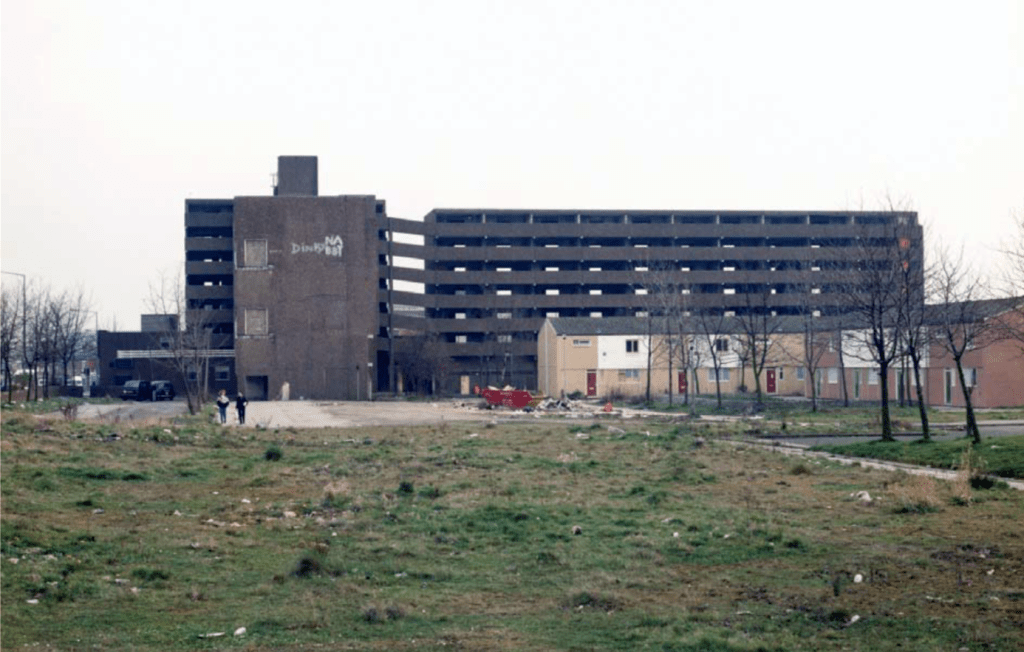
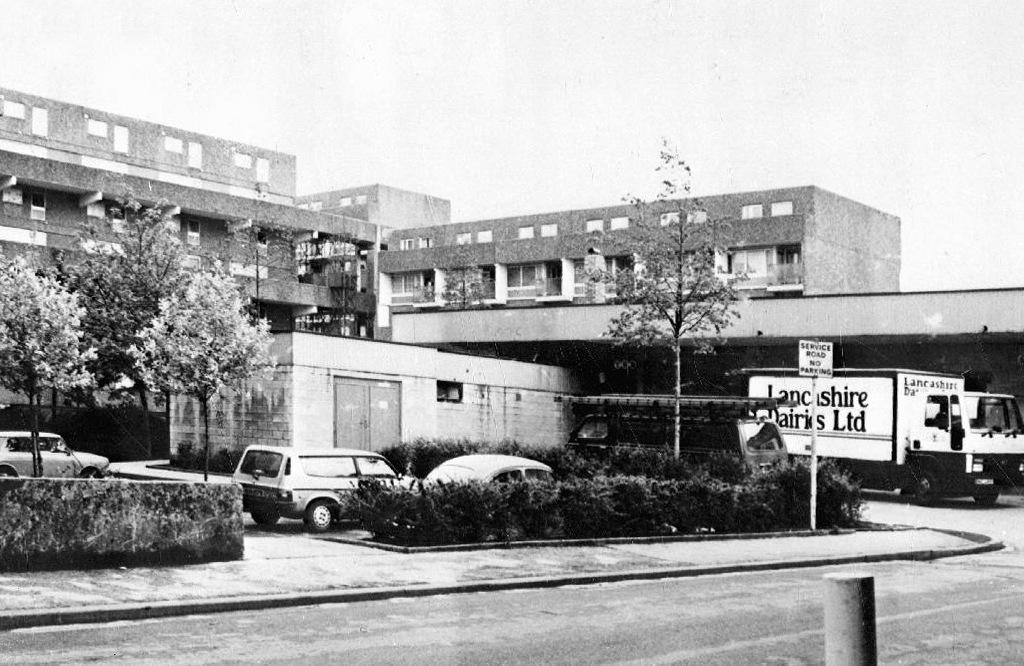
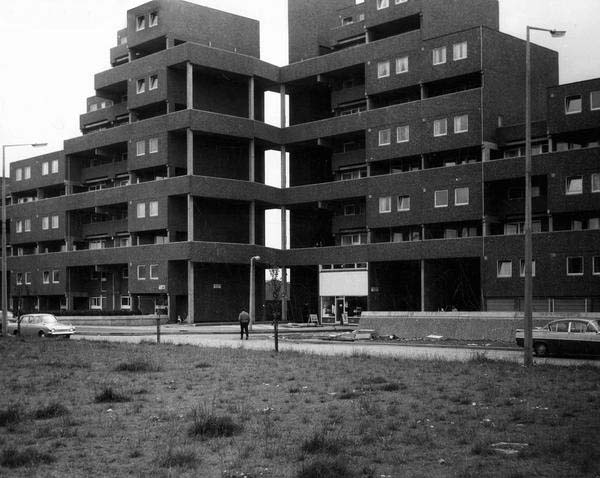
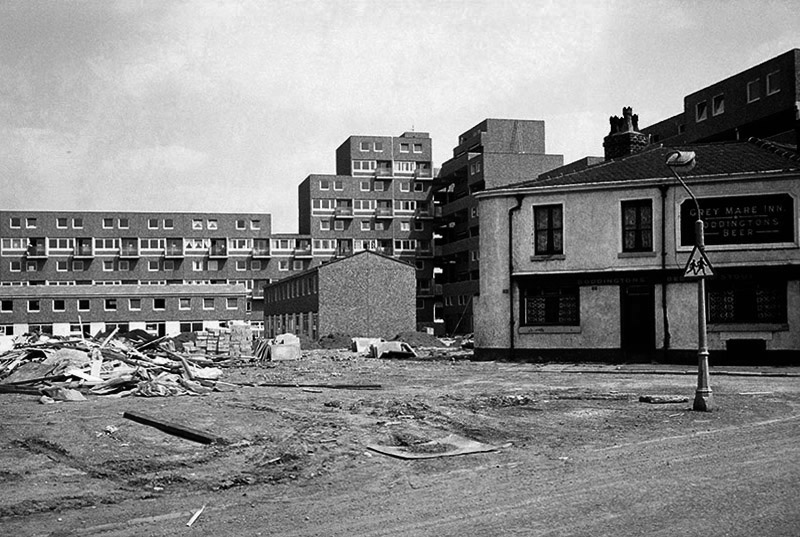
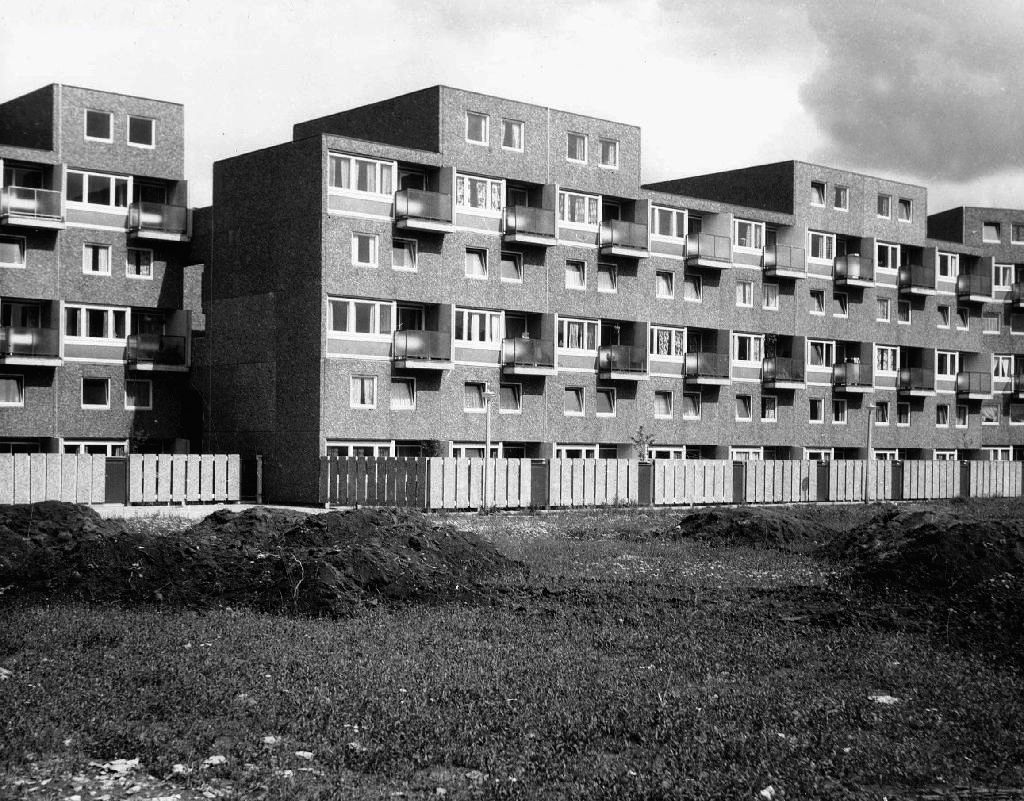
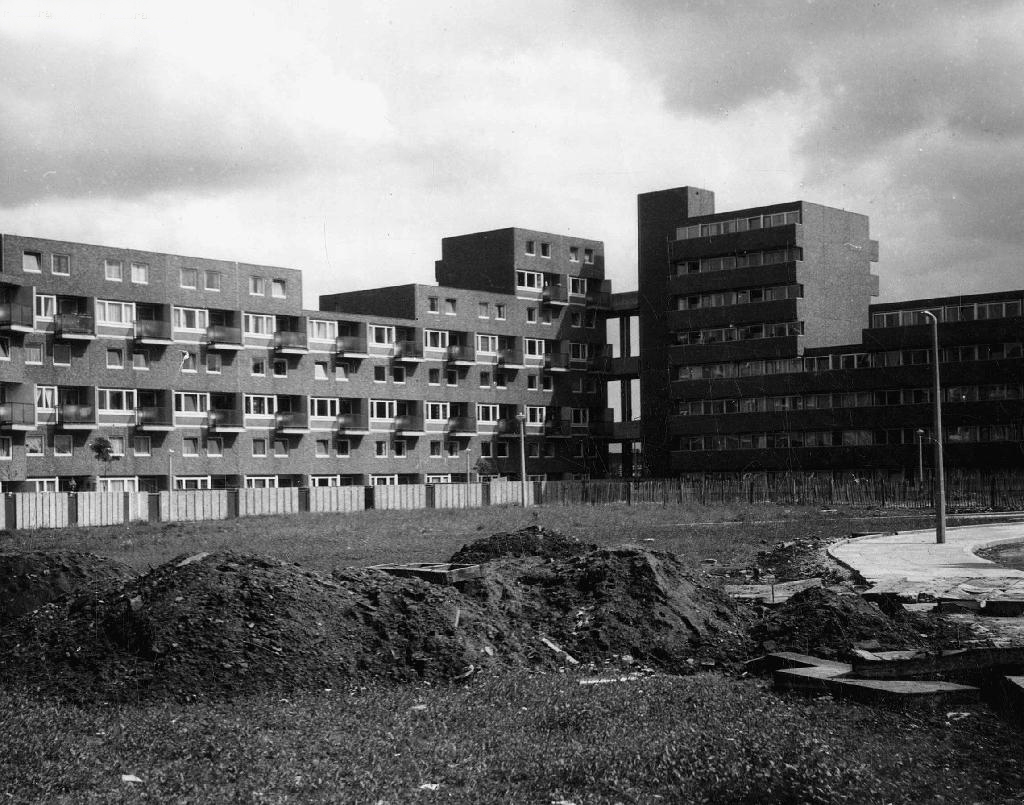
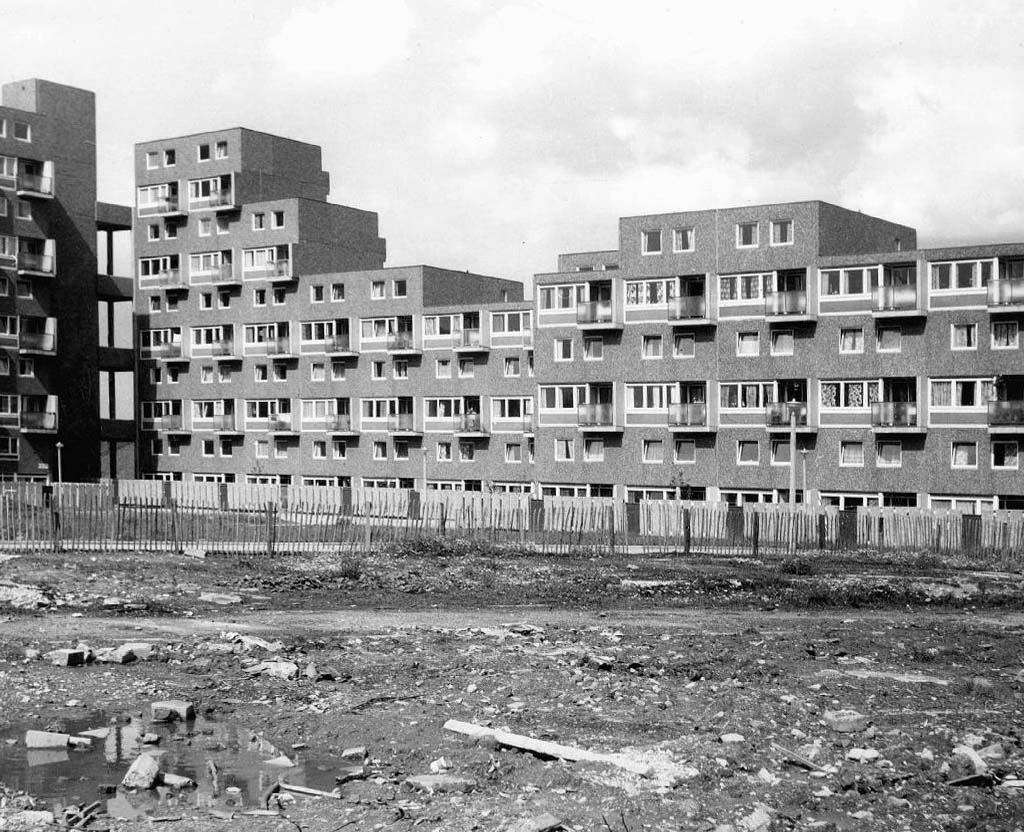
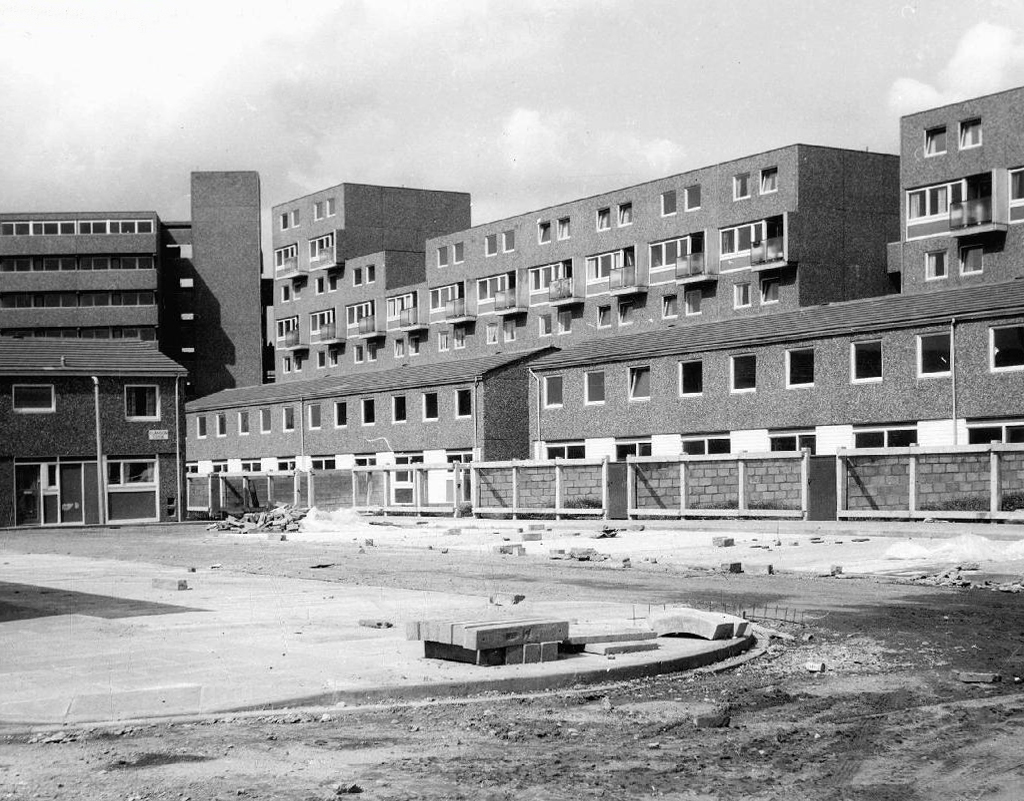
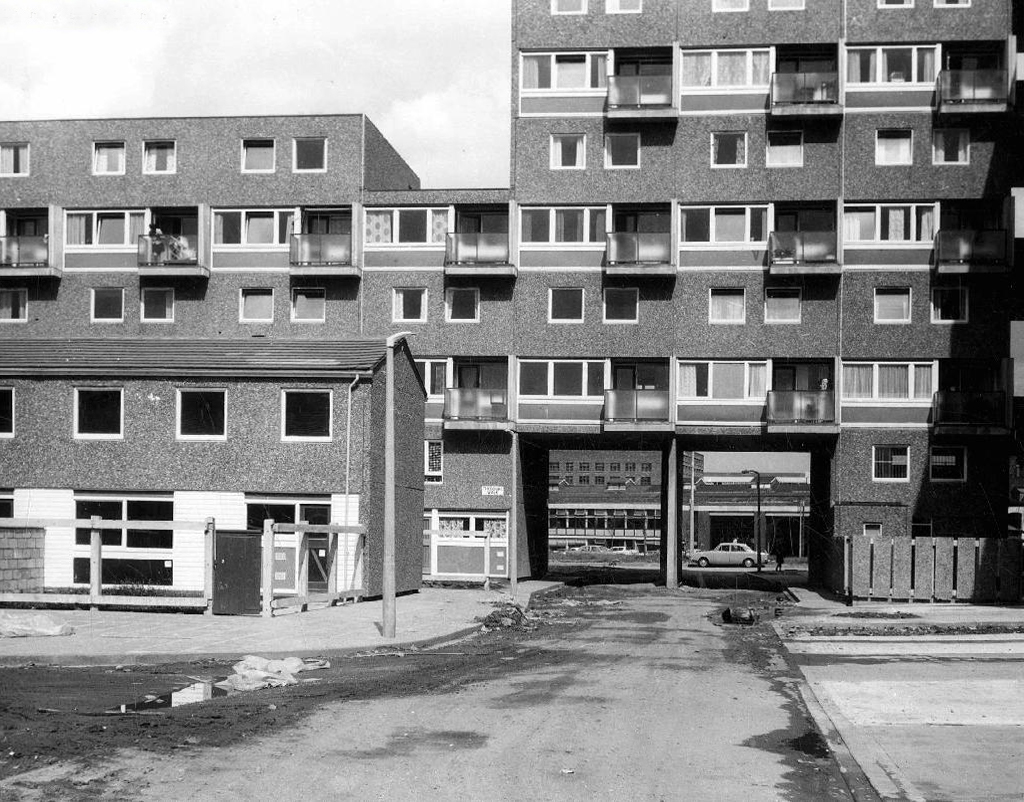
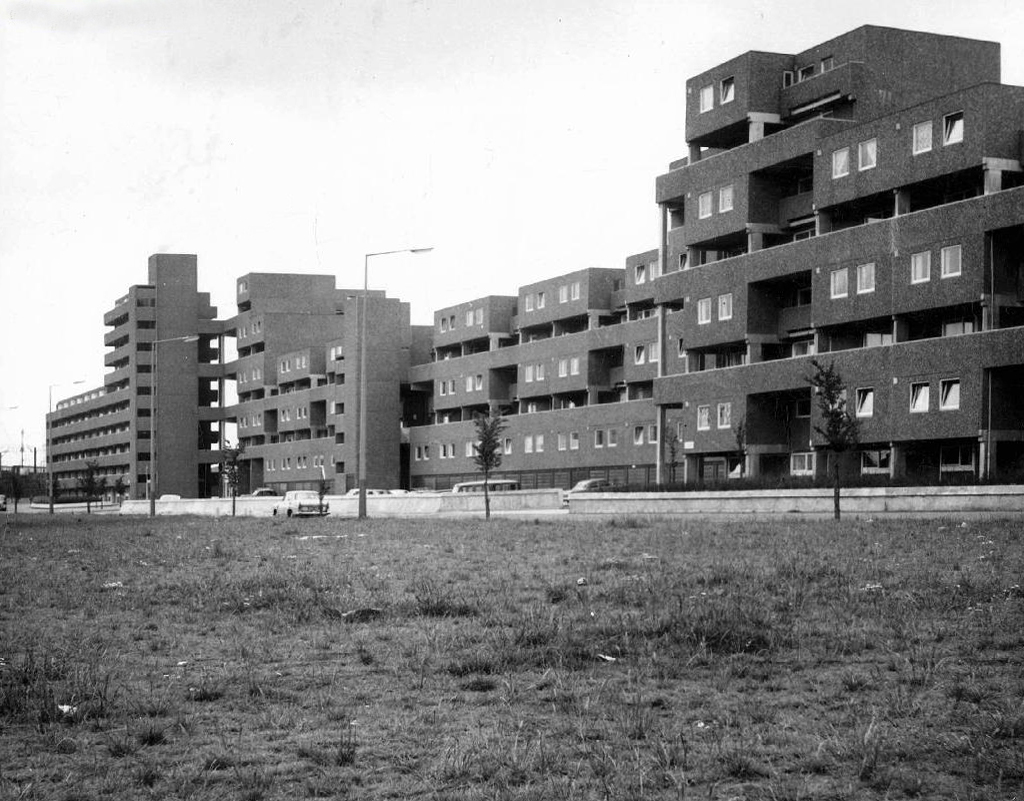
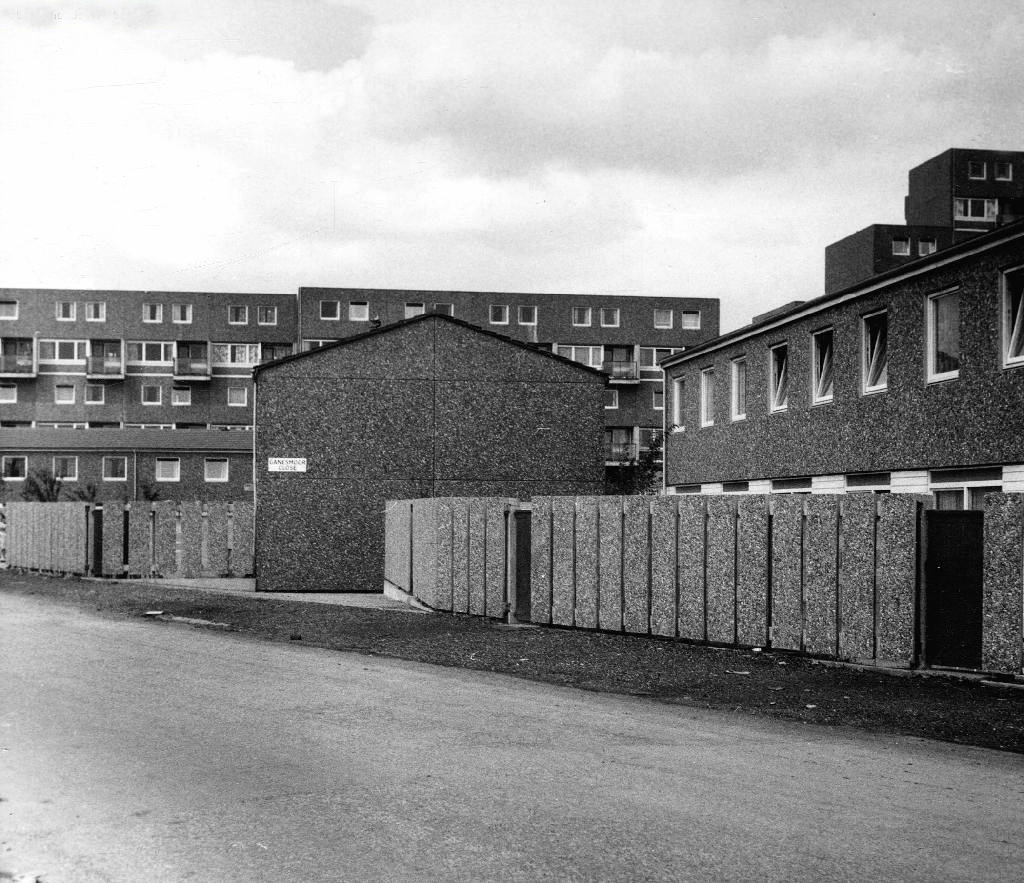
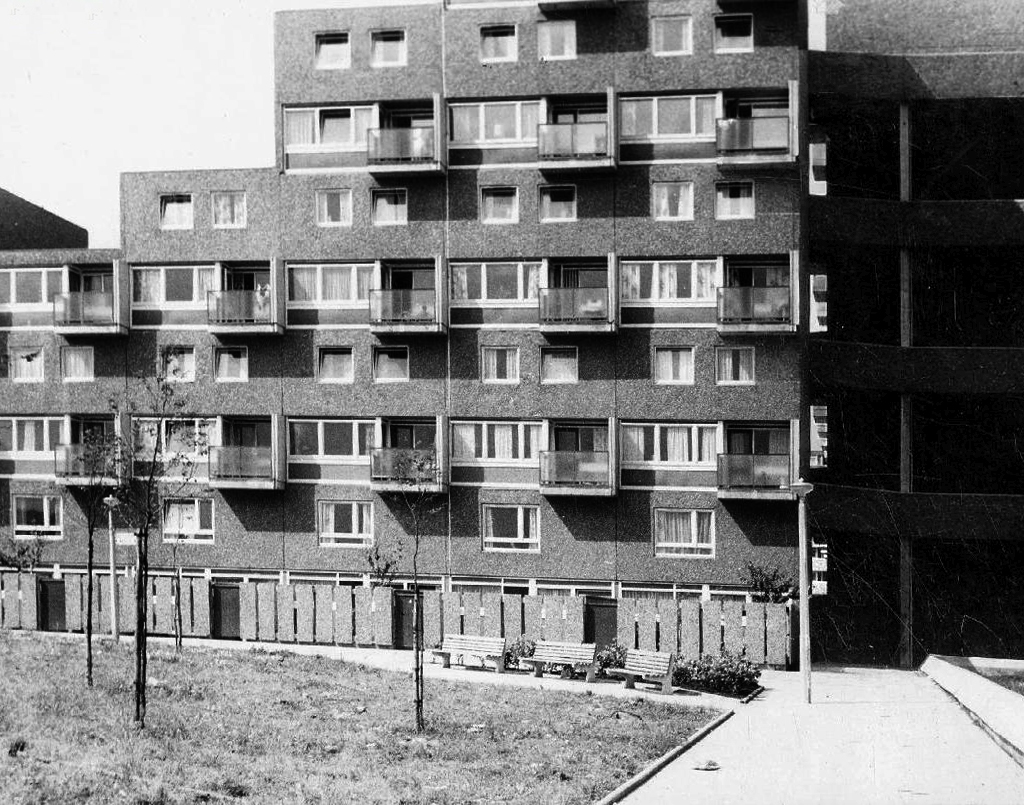
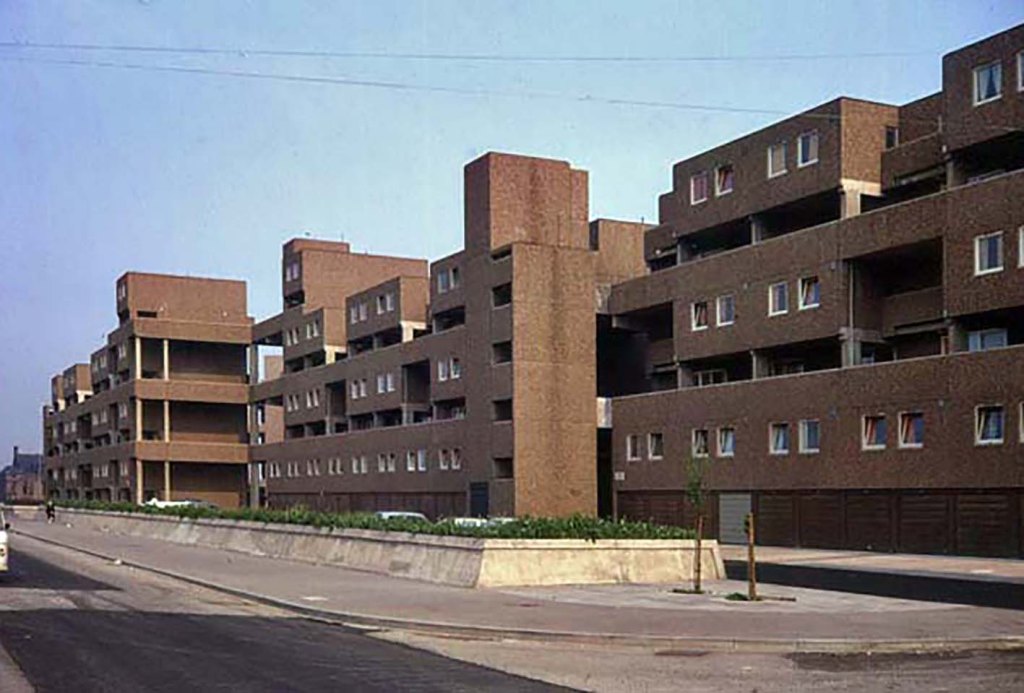
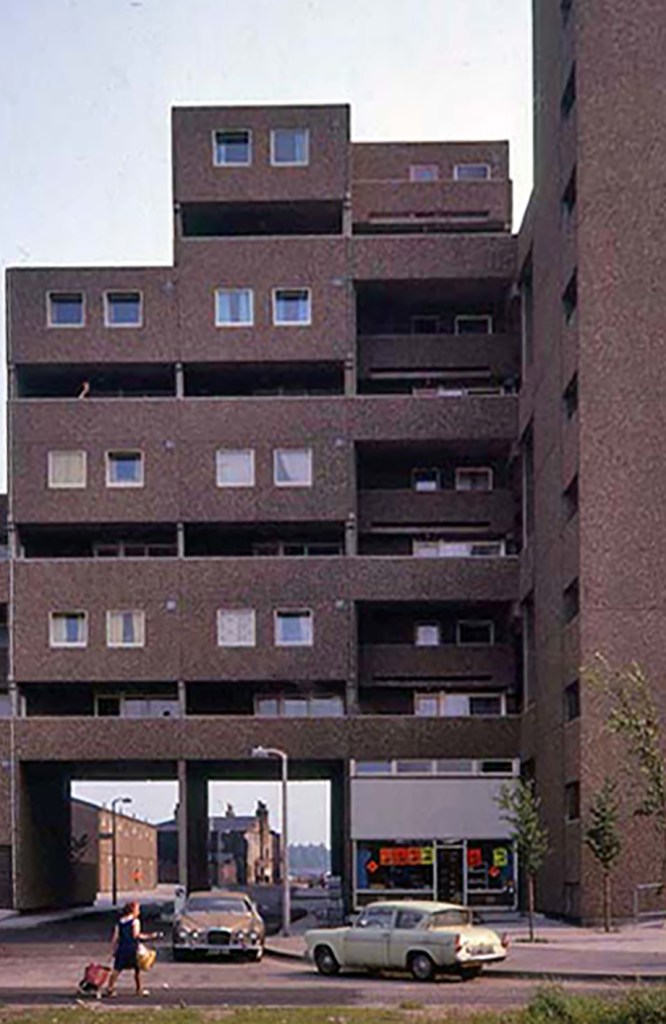
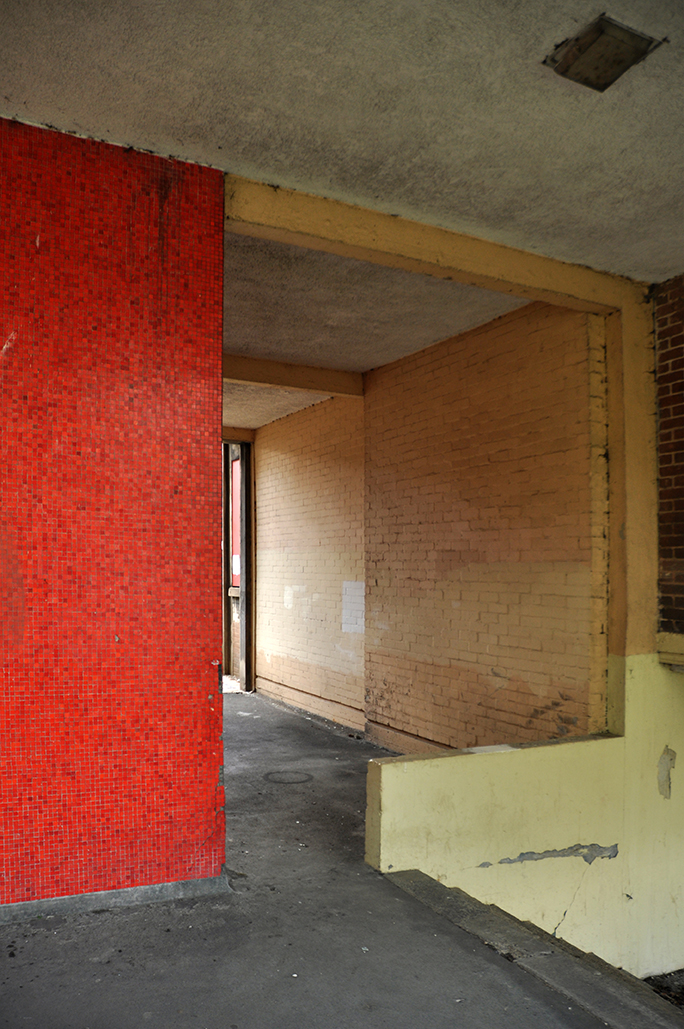
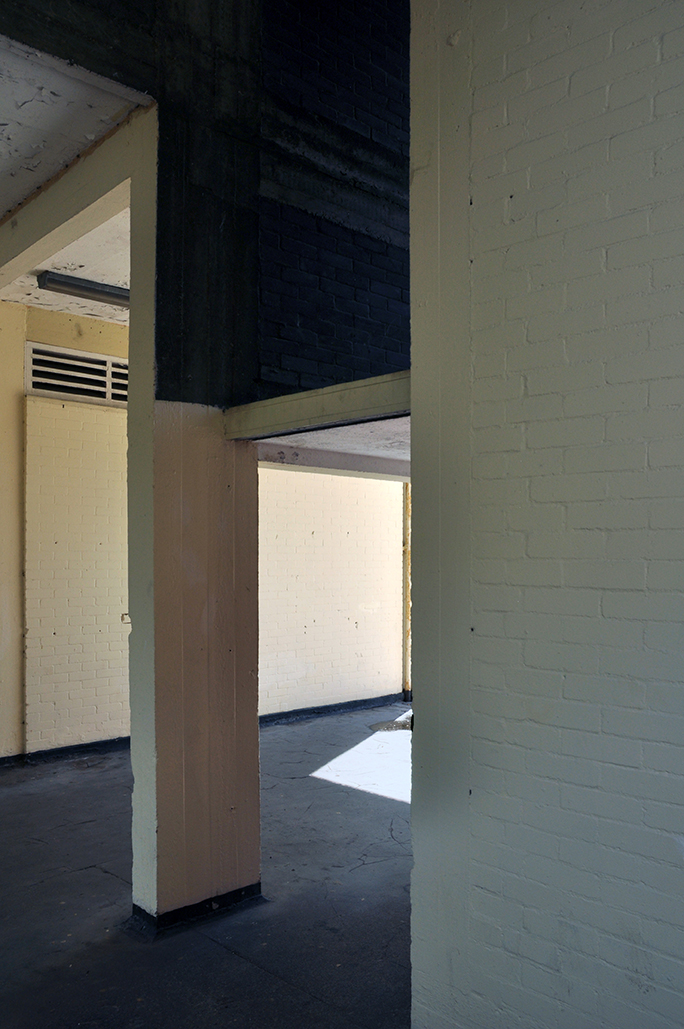
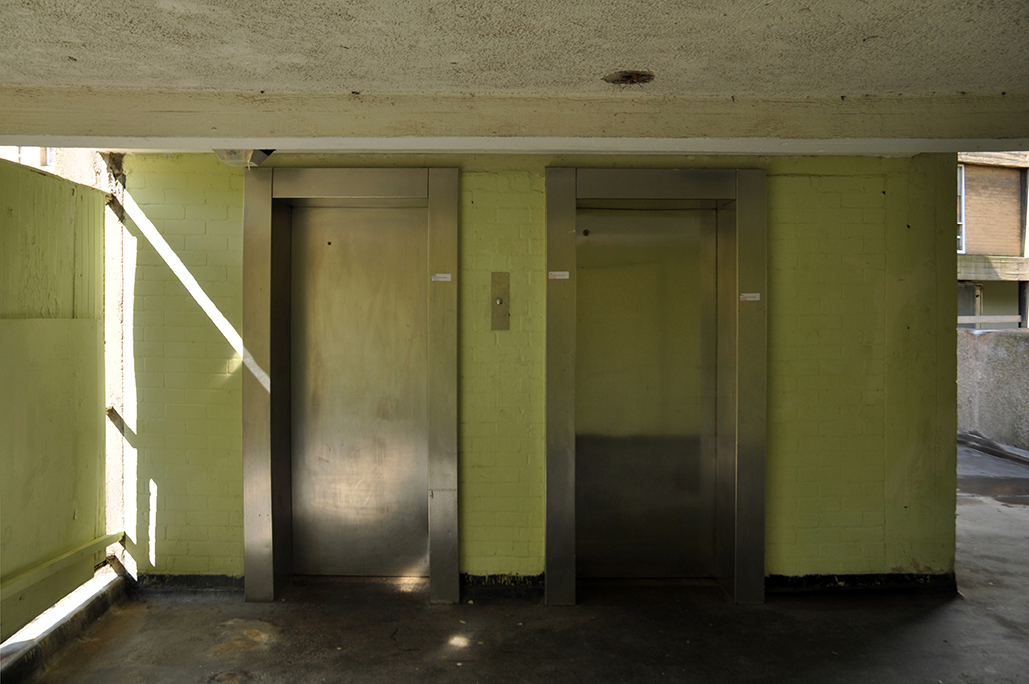
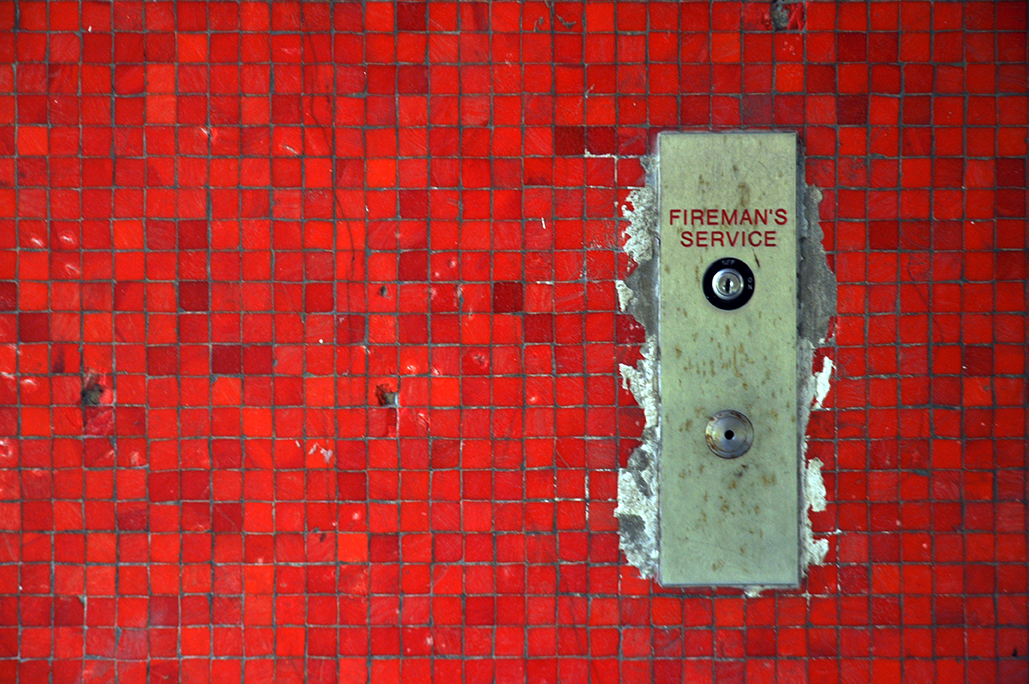
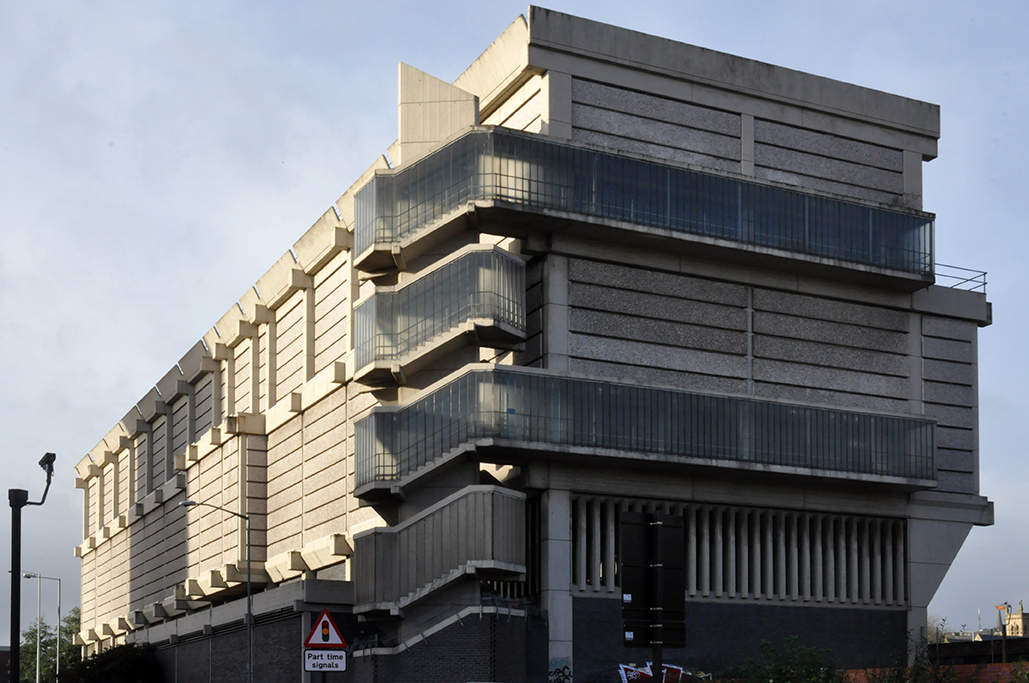
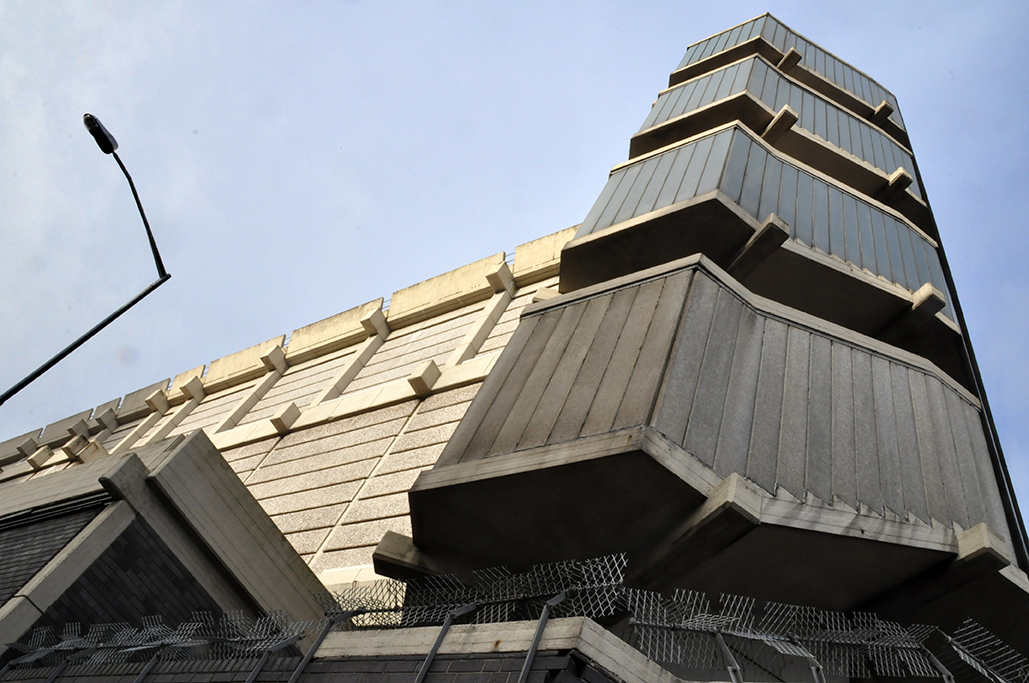
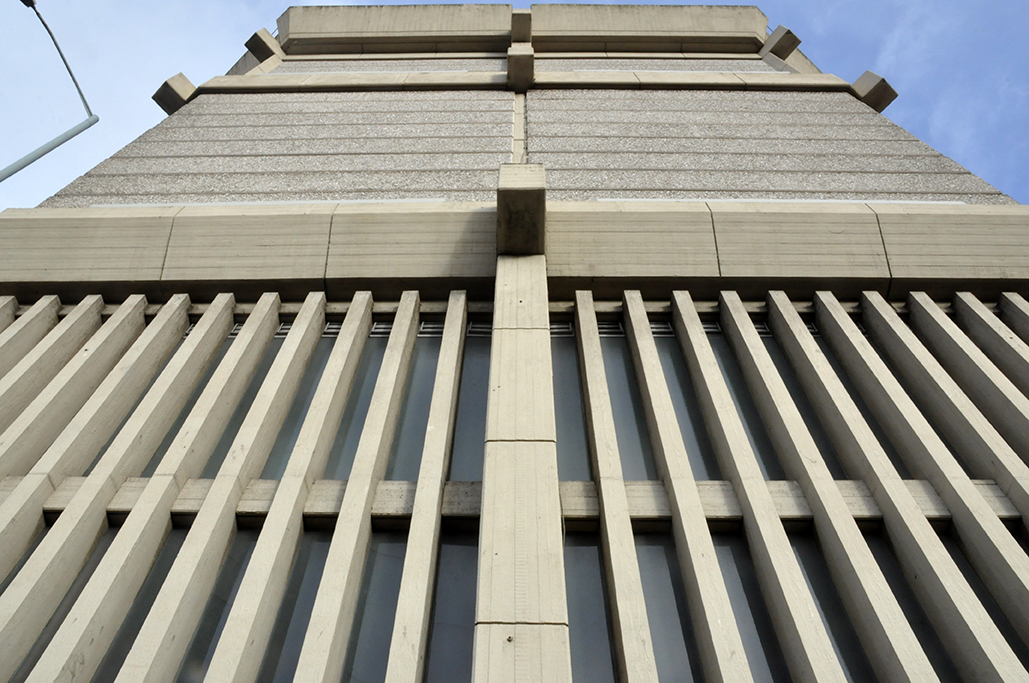
Sixties slum clearance swept away most of its past when Fort Beswick was built.
Remember the Alamo?
Forget Fort Beswick.
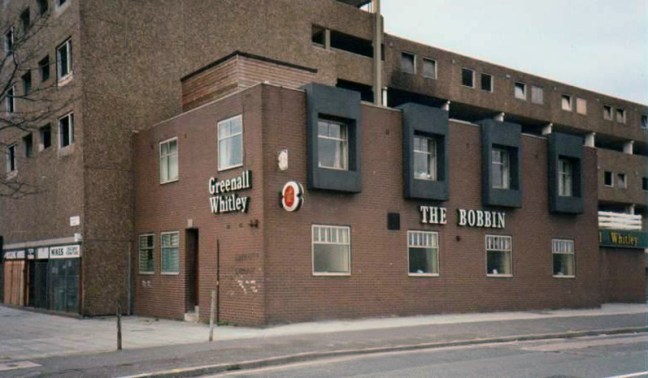
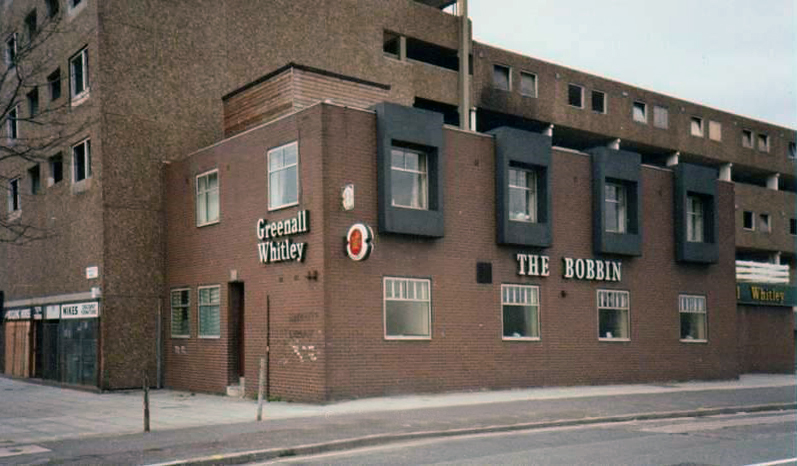
It’s gone – wind the Bobbin up.
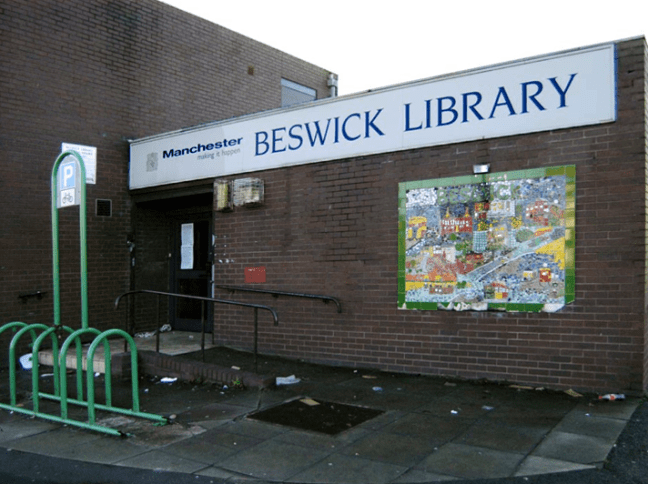
Turn it into a Library
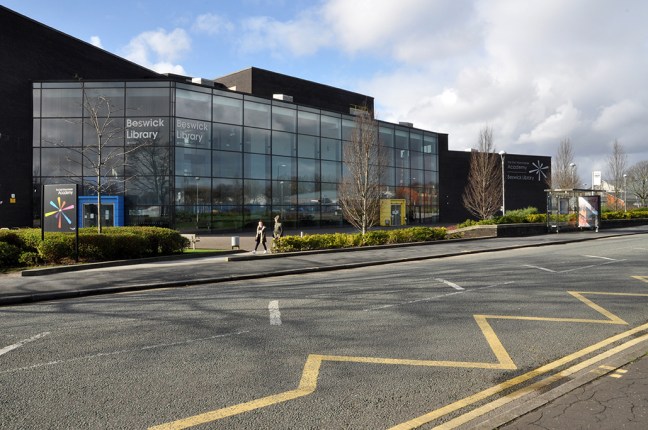
Wind the library up
Build another
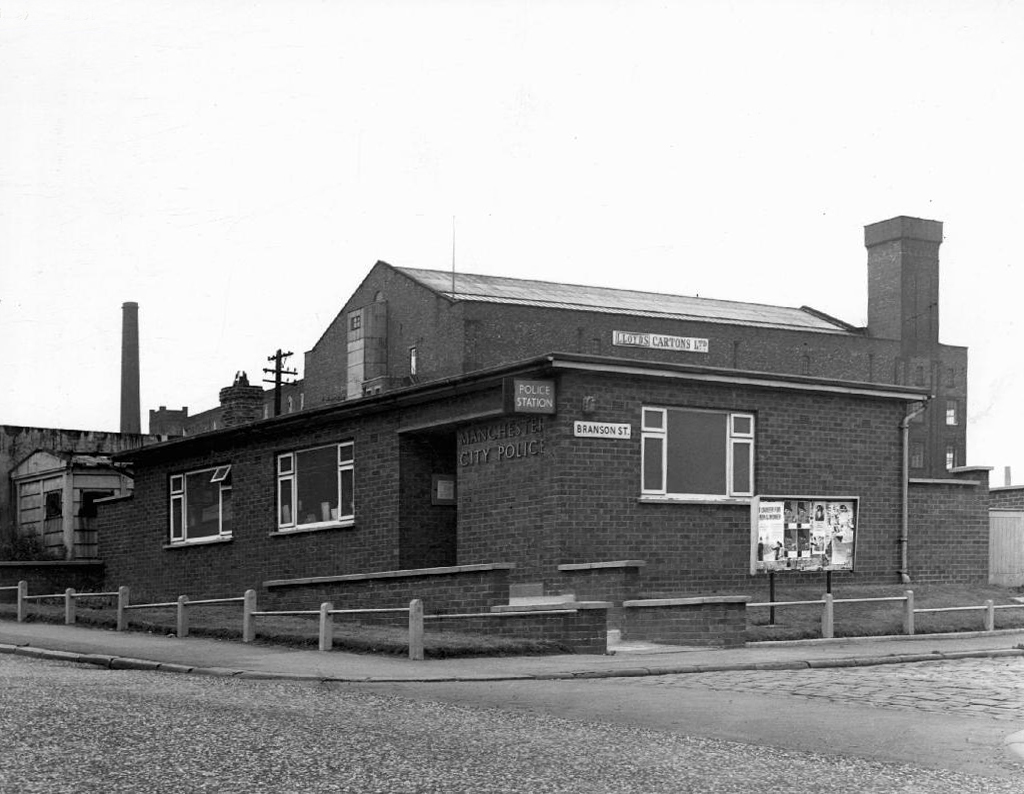
Call the Police!
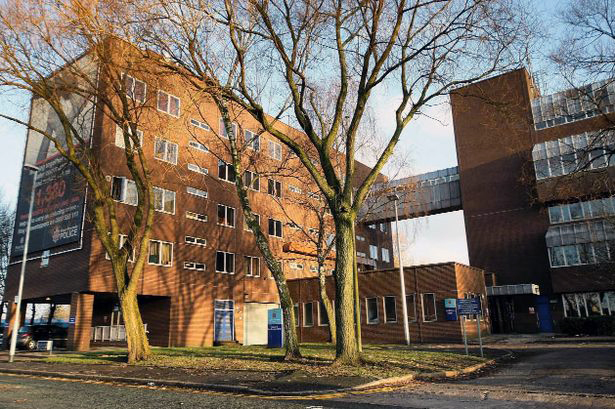
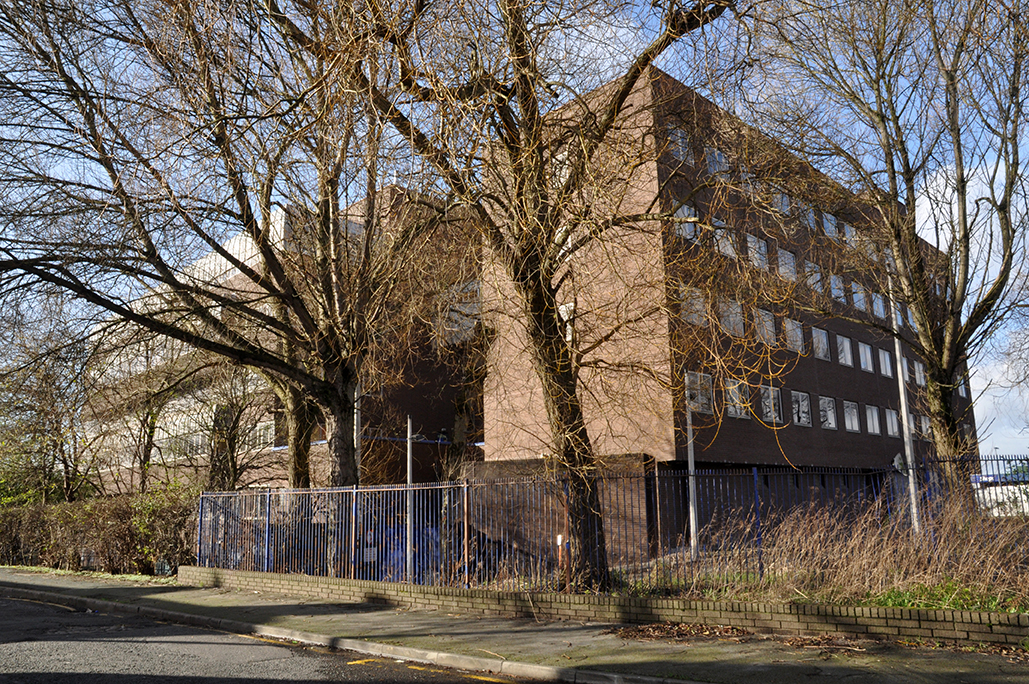
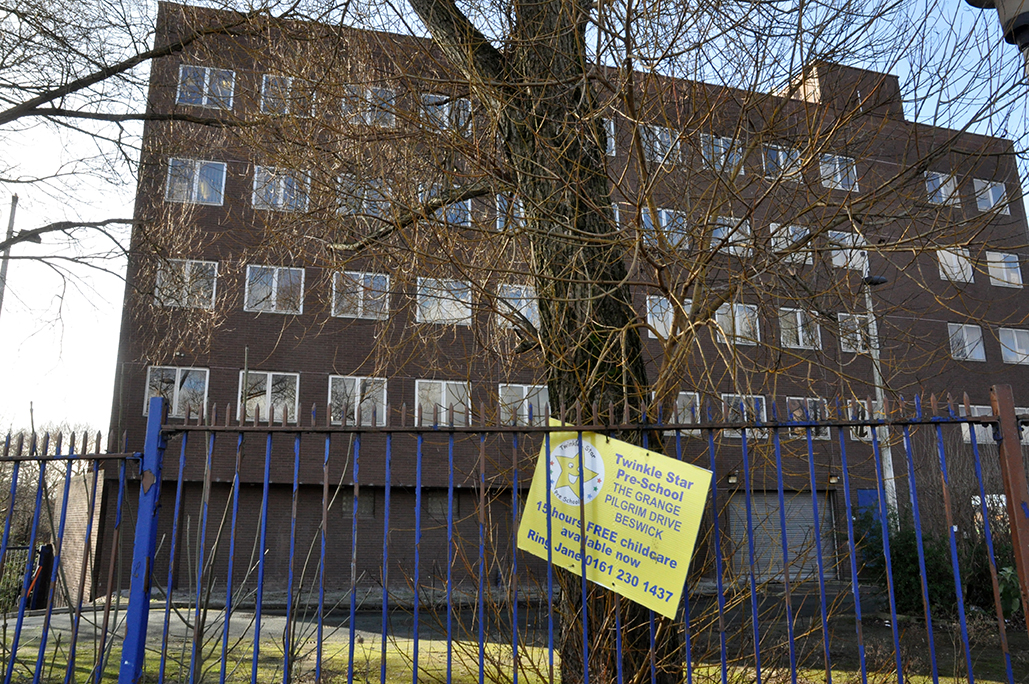
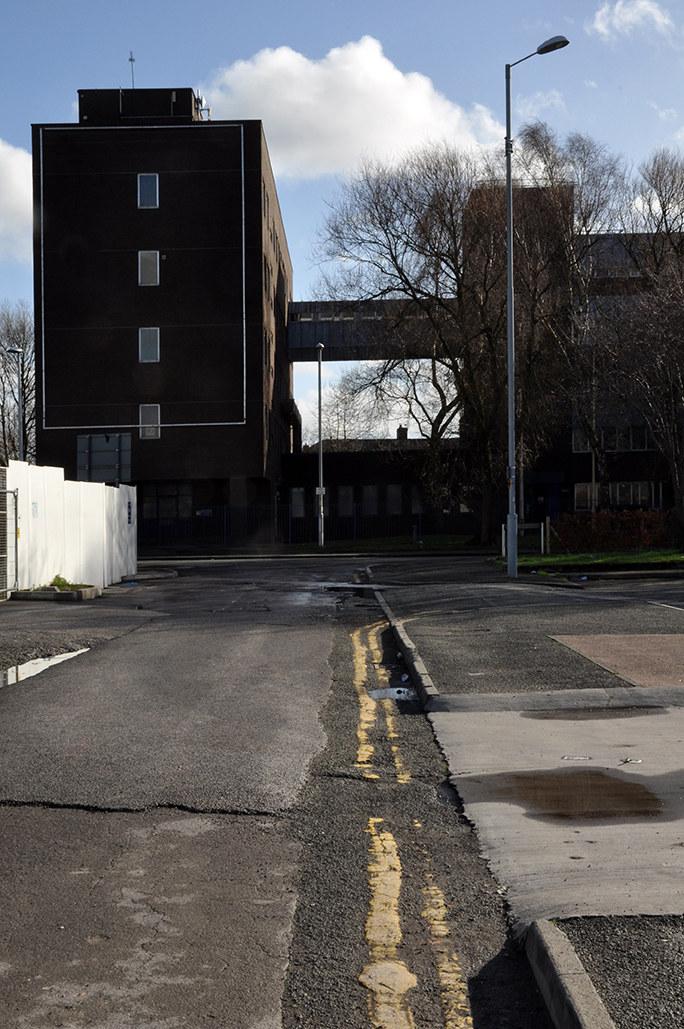
But the Police Station has closed now, and moved further on.
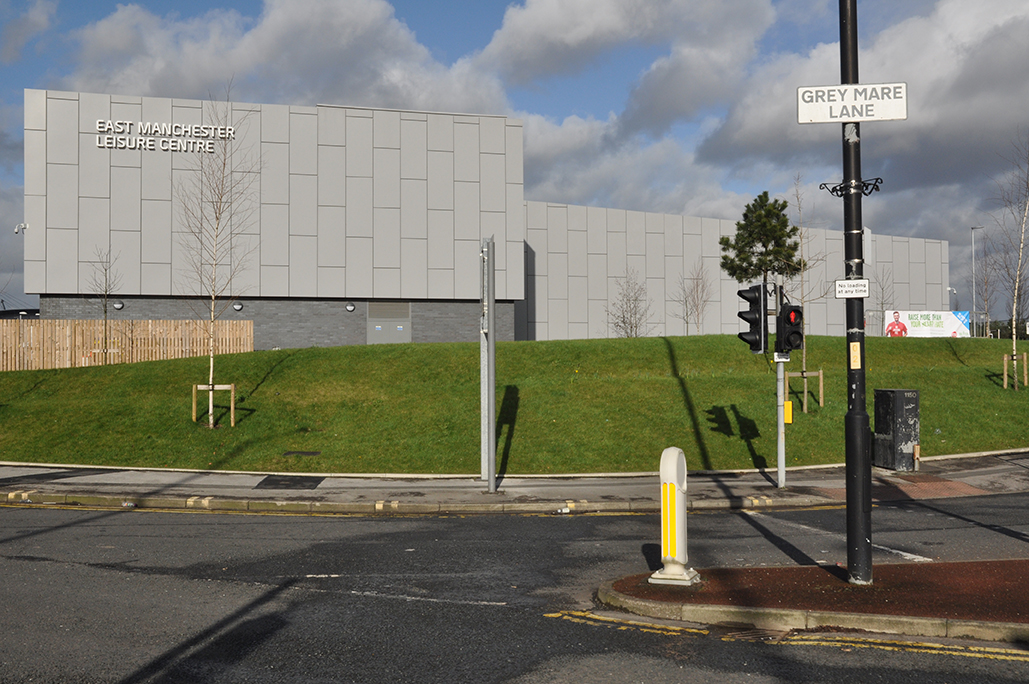
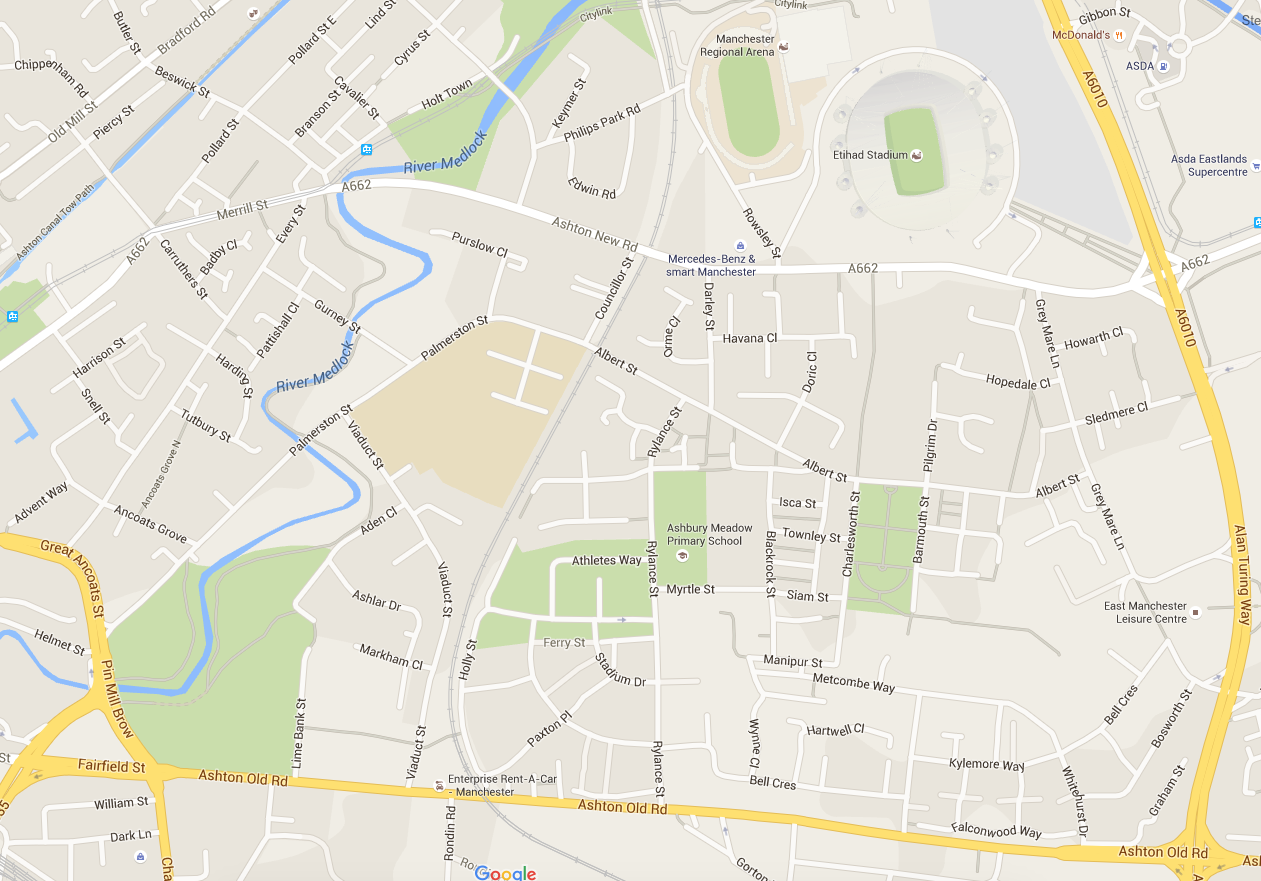
Beswick is a small district located on the east side of Manchester bounded by Ashton Old Road, Ashton New Road and Grey Mare Lane and was incorporated into Manchester in 1838. Pronounced Bes-ick the “w” is silent. Before 1066, in Saxon times, the district was called Beaces Hlaw – Hlaw was an old word for a small hill, often used as a burial mound. By the 13th century it had changed to “Beaces Wic” indicating that the area was predominantly farm land. Who or what the Bes element of the placename signified is open to interpretation, though the simplest and most plausible is that it belonged to a person called Bes or Bess.
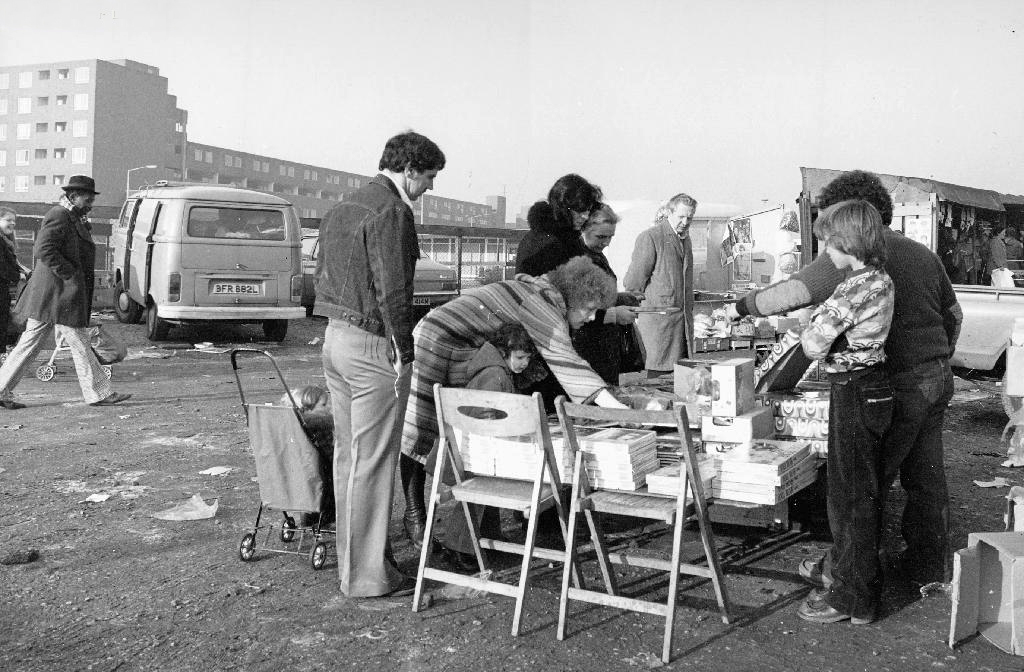
In the 60s it was, as I remember it, a typically vibrant mixed East Manchester community, industry, housing, retail, entertainment and goodness knows what bumping along together incautiously, down tight streets of Victorian terraced housing. I worked in the area as a Mother’s Pride van lad, hauling bread, cakes and galvanised trays in and out of a plethora of superabundant corner shops.
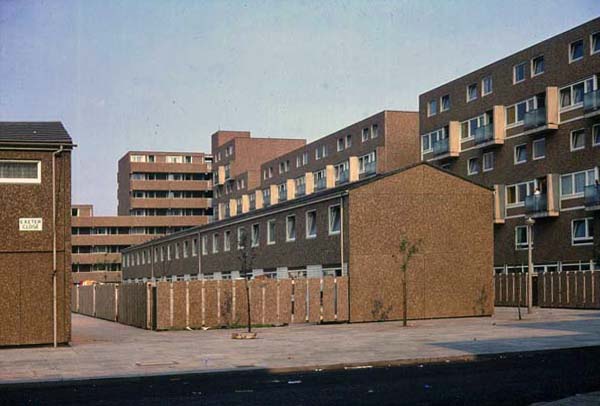
The year of 1970, approximately, dawns, ushering in a decade of great change, slum clearance and the building of brand new homes – the end, by and large, of the back to back corner shop world.
10 years later, and long gone the years of postwar full employment, and the made round to go round world of the weekly wage.
The early 1980s saw growing unemployment and world-wide recession. The large new estates suffered most. Inner city districts of Manchester saw street riots in 1981, as did many other major cities around Britain. Manchester had suffered badly as a result of the recession. In 1986, over 59% of adult males living in Hulme were unemployed; in Miles Platting the figure was 46%; Cheetham Hill and Moss Side both had an unemployment rate of 44%. The main group of unemployed were young people under the age of 21. Hulme’s youth employment was recorded at 68%, and Cheetham Hill suffered 59%.
It is true that the new developments have great advantages in many ways over the terraces they replaced. Tenants who live in houses without baths or indoor sanitation and with no hot water are delighted to move into bright new flats and maisonettes, with indoor plumbing, with baths, and accommodation which has more rooms and far better kitchen facilities and central heating, even though they sometimes grumble at the cost of that central heating.
But although we can build a new housing development, we cannot easily recreate the warm community spirit which has vanished with the terraces which have been demolished. There is the noise from neighbours on the deck above and the deck below. The wind-swept balconies along which tenants have to walk are not as cosy as the streets from which they have come. Those welcoming corner shops, with their bright lights on winter evenings, have gone, and sometimes a new development has no new shops for too long a period. Even when they come, there are not enough of them.
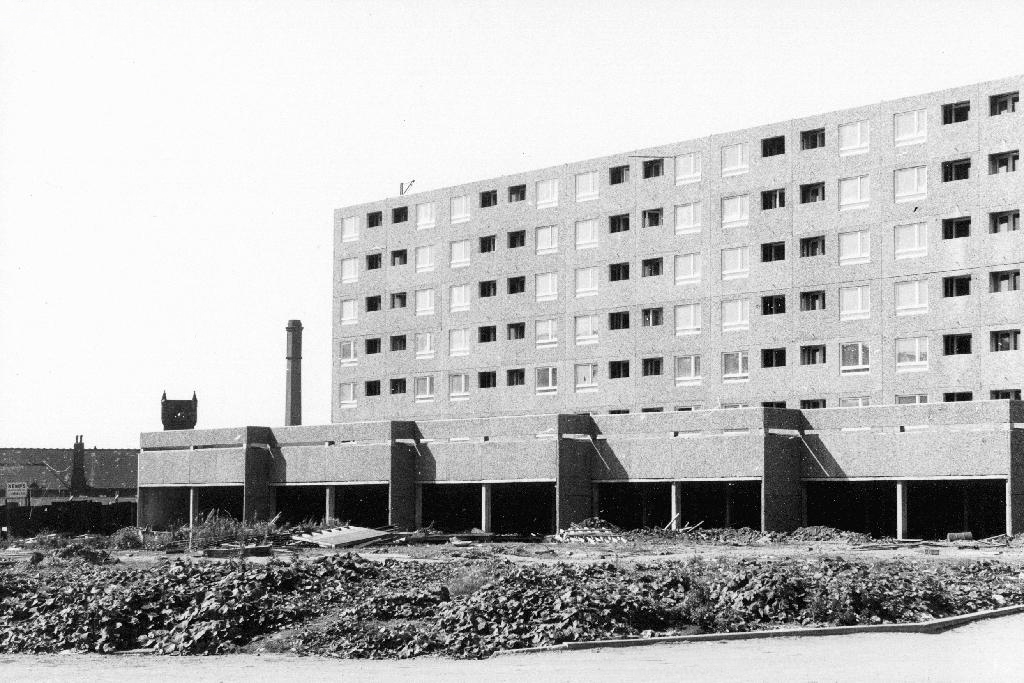
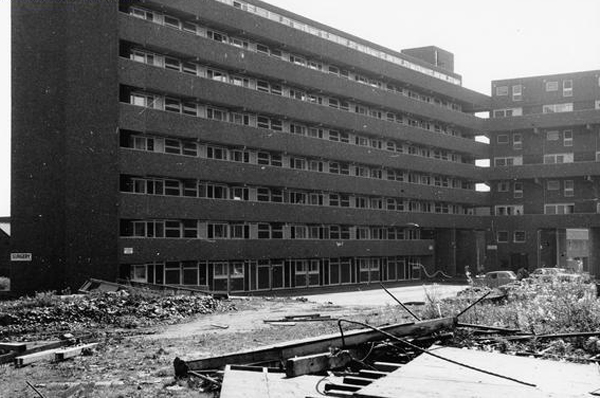
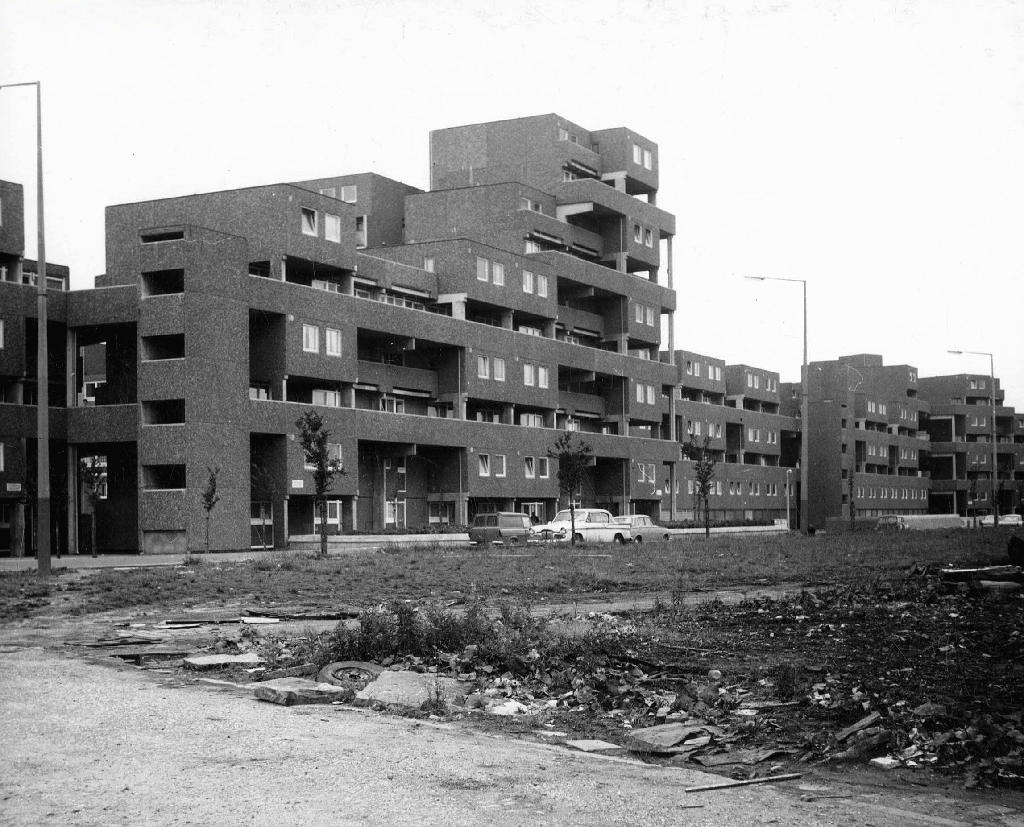
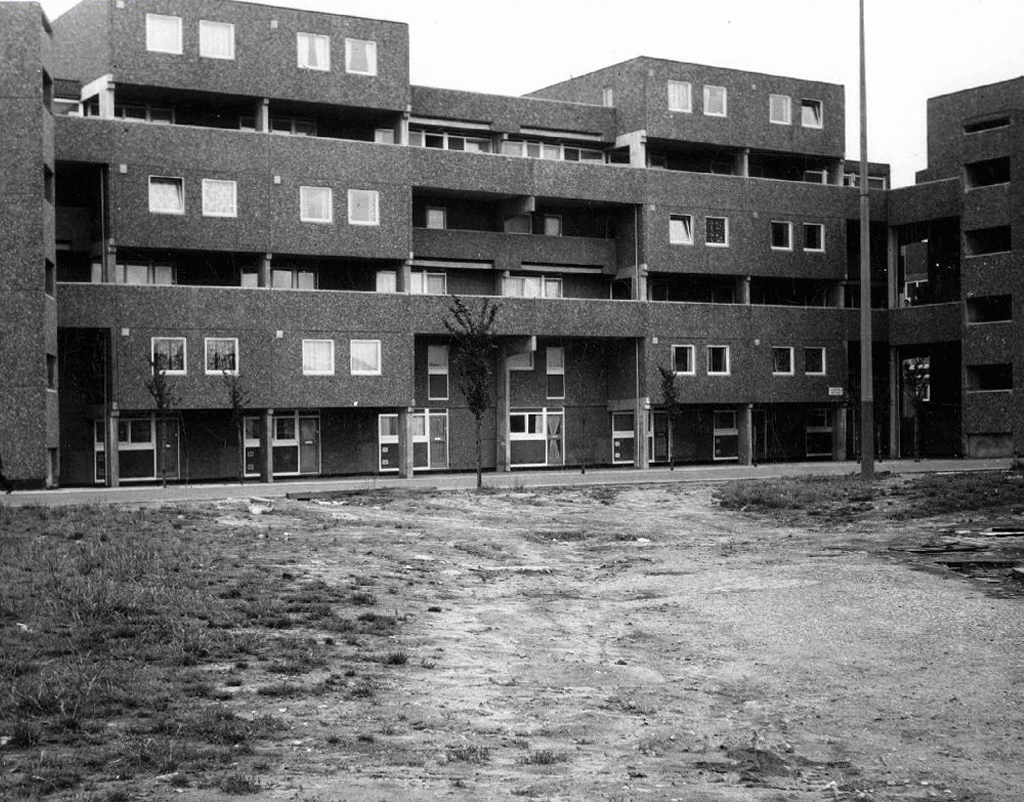
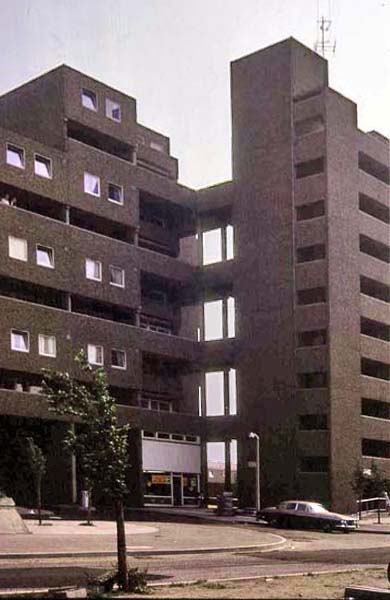
The scale of the buildings is often daunting. I have in mind Fort Beswick and Fort Ardwick in my own constituency. The design is frequently all too forbidding. That is why the two estates are called Forts.
When the tenants of these development have lived in cosy old houses, however inadequate they were in terms of physical provision, they are bitterly disappointed by the shortcomings of new property which they have looked forward to occupying.
The year of 1990, approximately, dawns, ushering in a decade of great change, multi-storey development clearance and the building of brand new homes – the end, by and large, of the one on top of another topsy-turvy world.
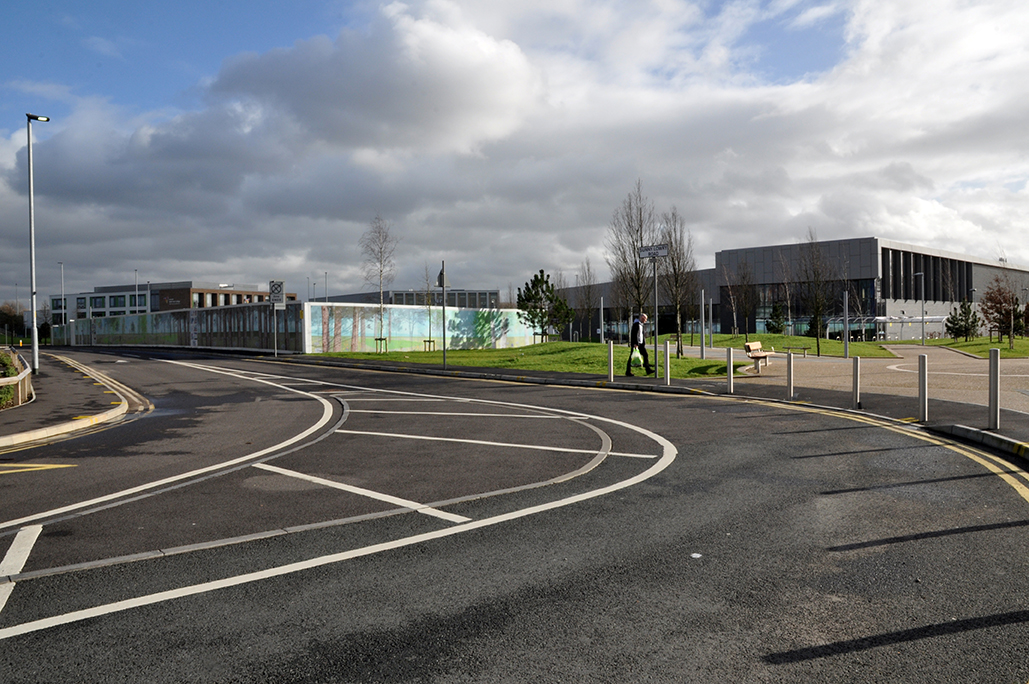
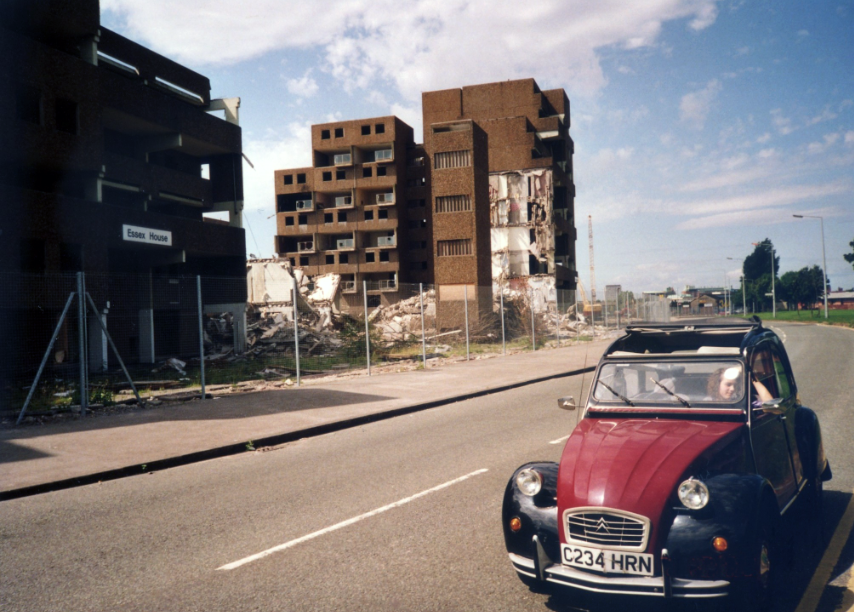
Fort Beswick was subsequently demolished.
The beat goes on as Len Grant records the most recent redevelopment of East Manchester.
And the M.E.Nshouts loud and proud from the roof tops, heralding a brand new, privately funded public domain
The road to Hell is paved with good intentions and as it would subsequently transpire, loosely attached Bison concrete wall-frame system panels.
Wythenshawe apart, the City of Manchester admitted that it had 68,000 houses described as “grossly unfit” by 1959.
Its solution was to demolish 90,000 dwellings between 1954 and 1976 and to erect 71,000 dwellings by way of high rise flats and to move residents out to newly prescribed “overspill” estates – at Heywood and Langley in the north, Hyde in the east and Worsley in the west.
Most of these displaced people, however, found themselves resettled in tall tower blocks, which, no matter how architecturally innovative, or how improved their facilities, proved disastrous in social terms.
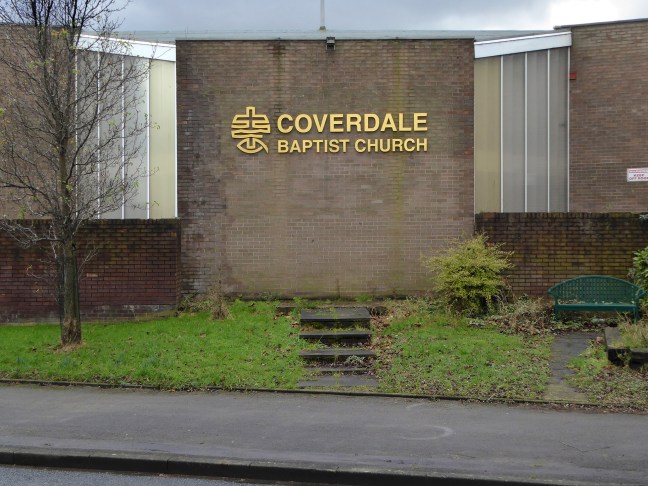
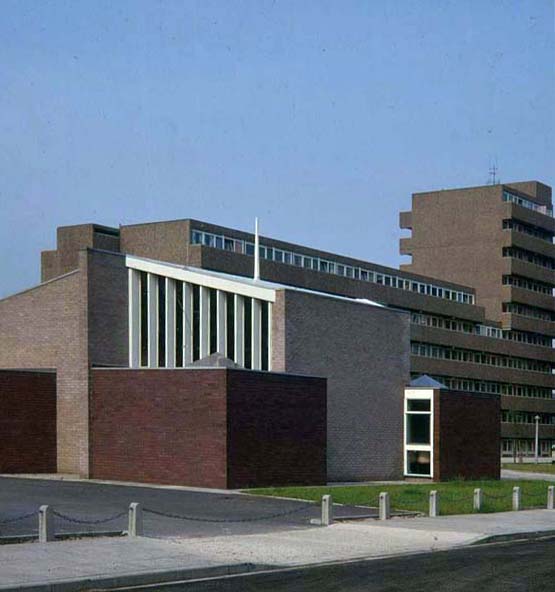
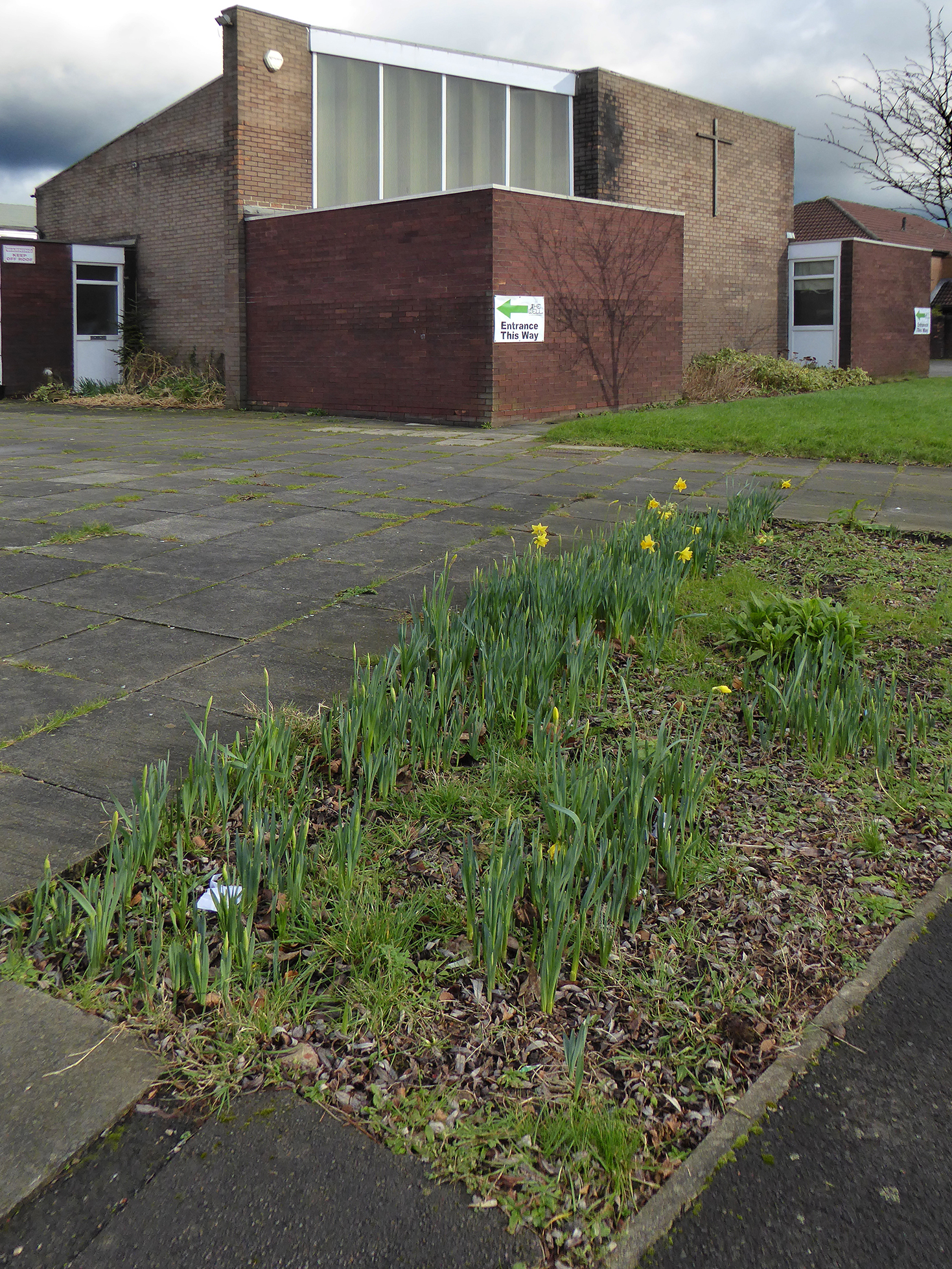
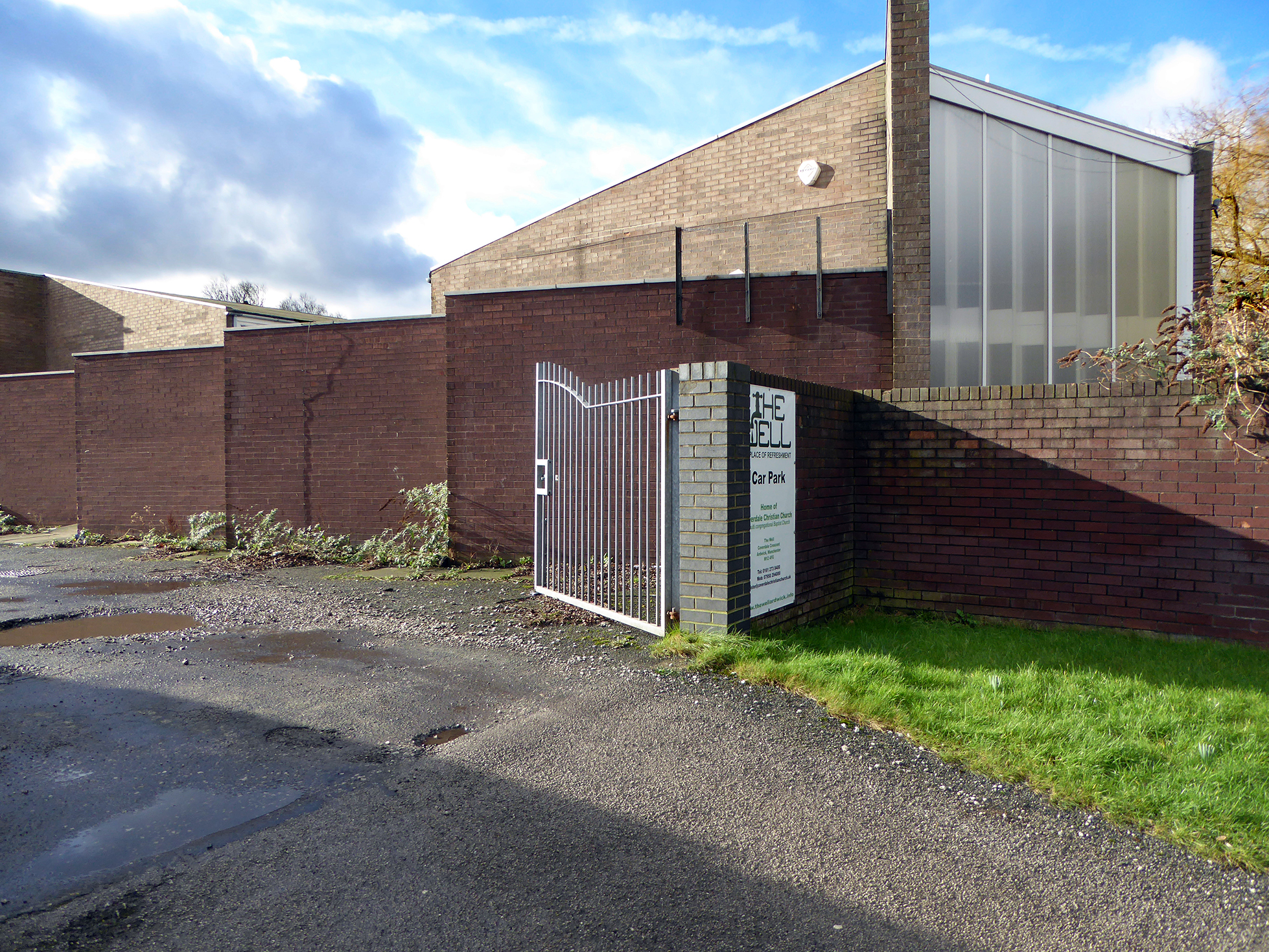
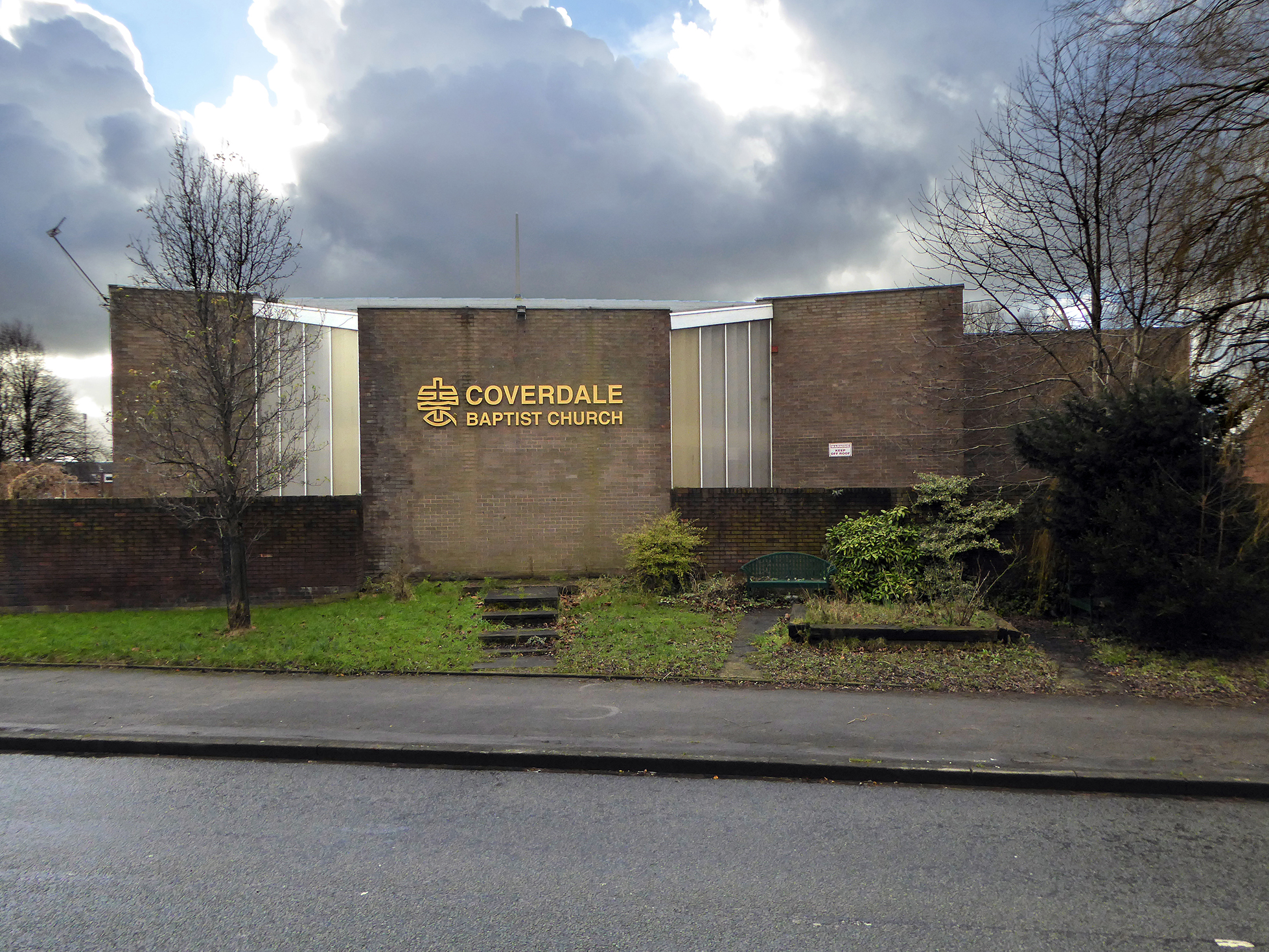
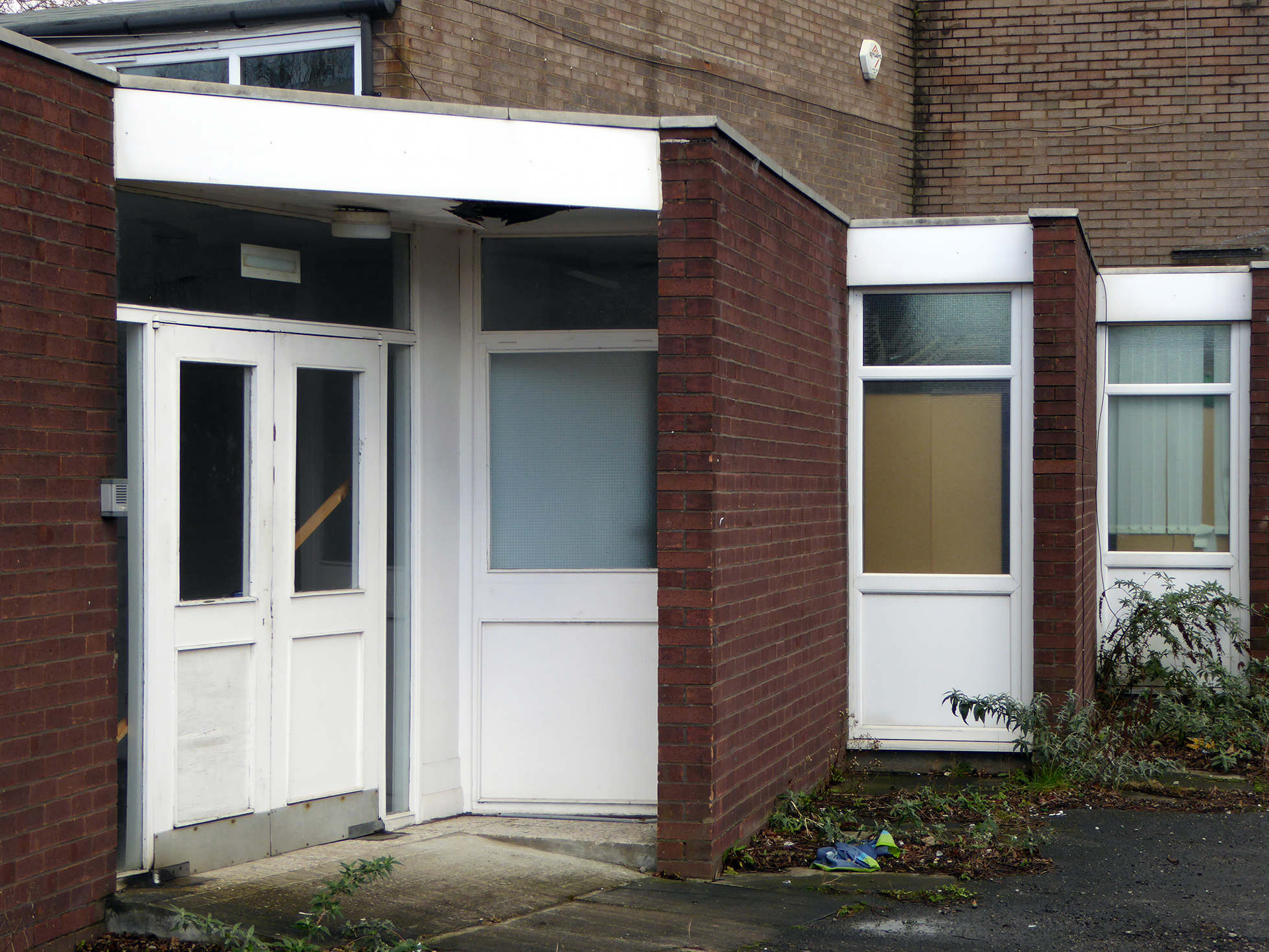
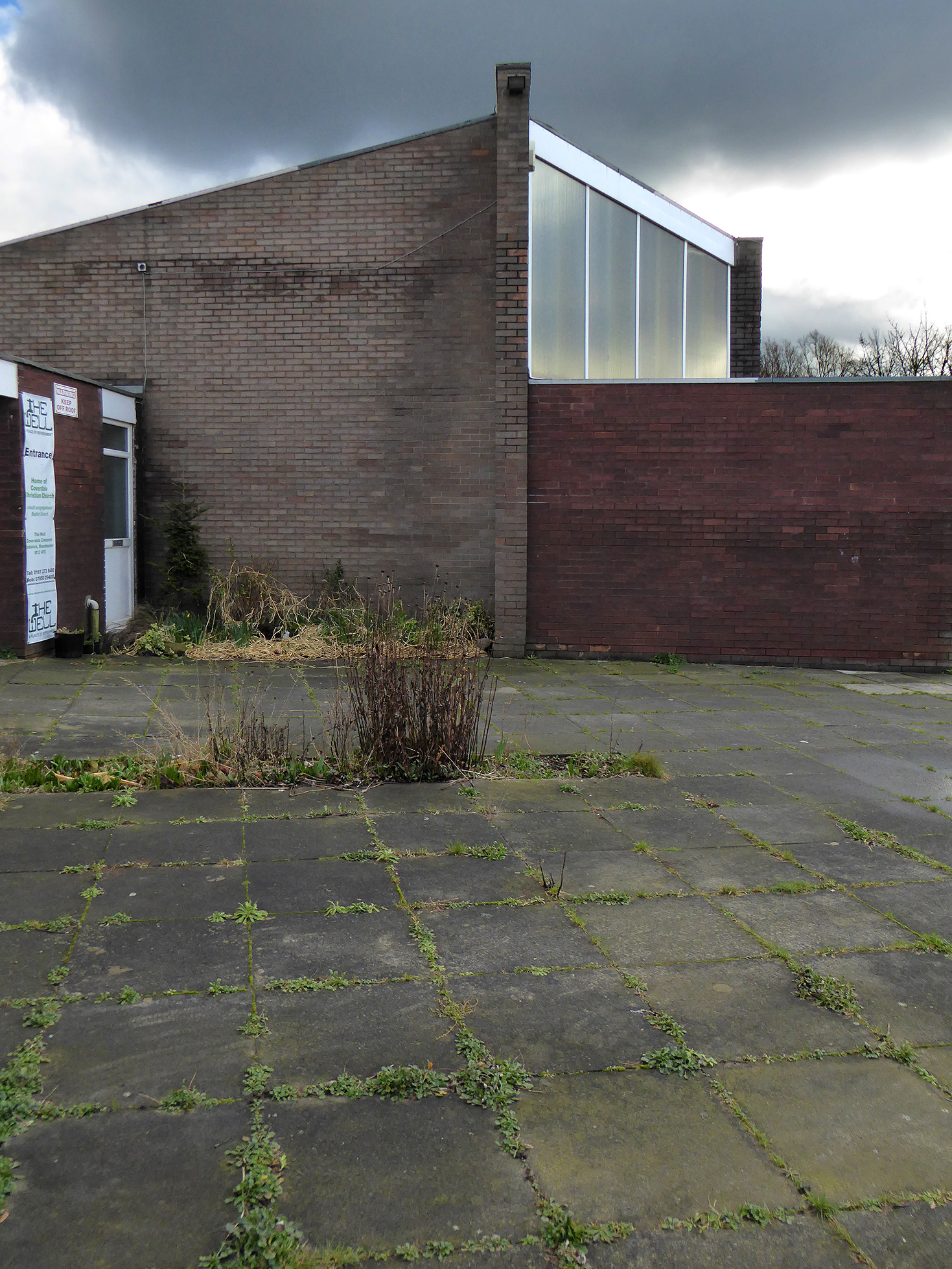
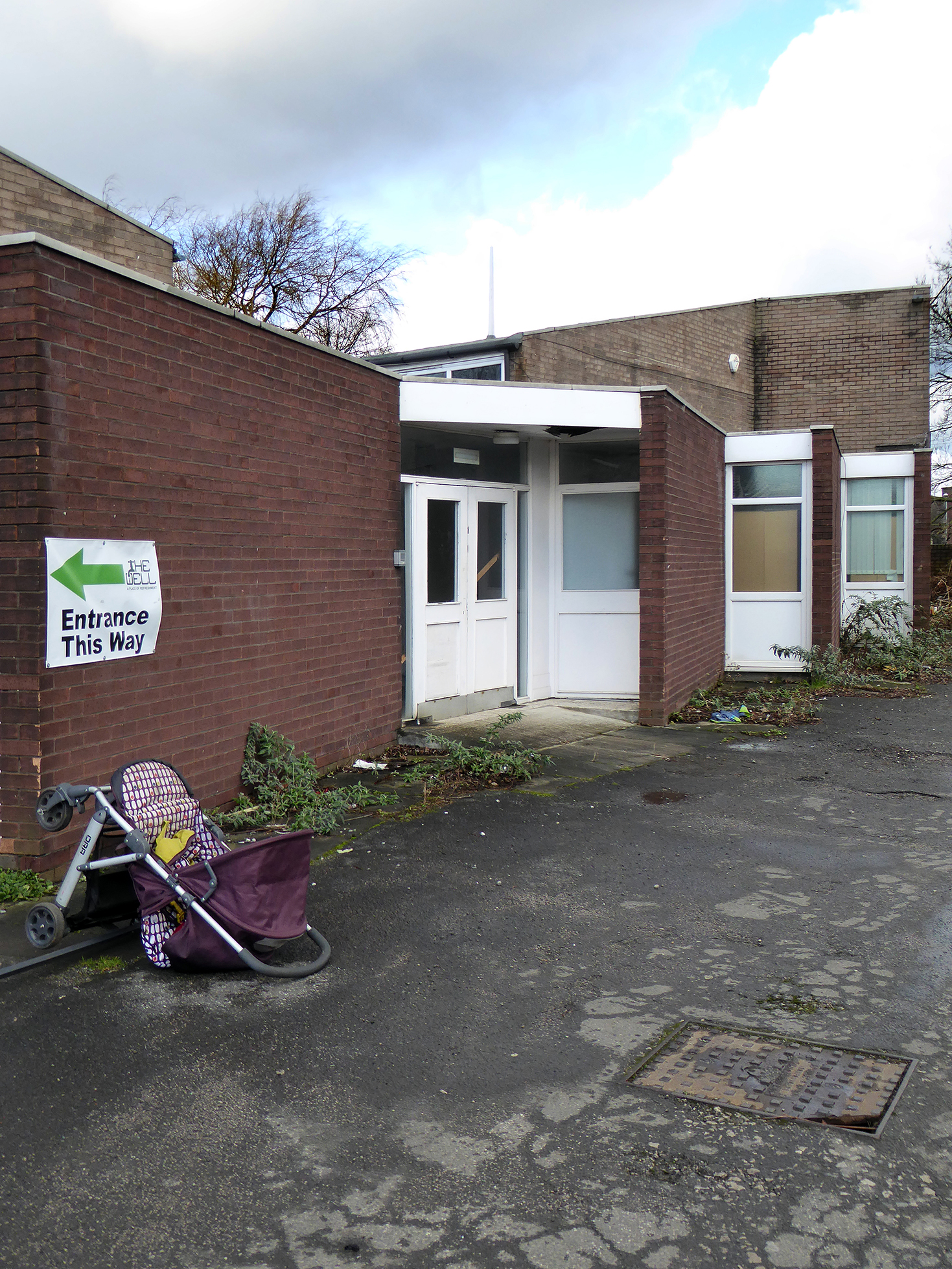
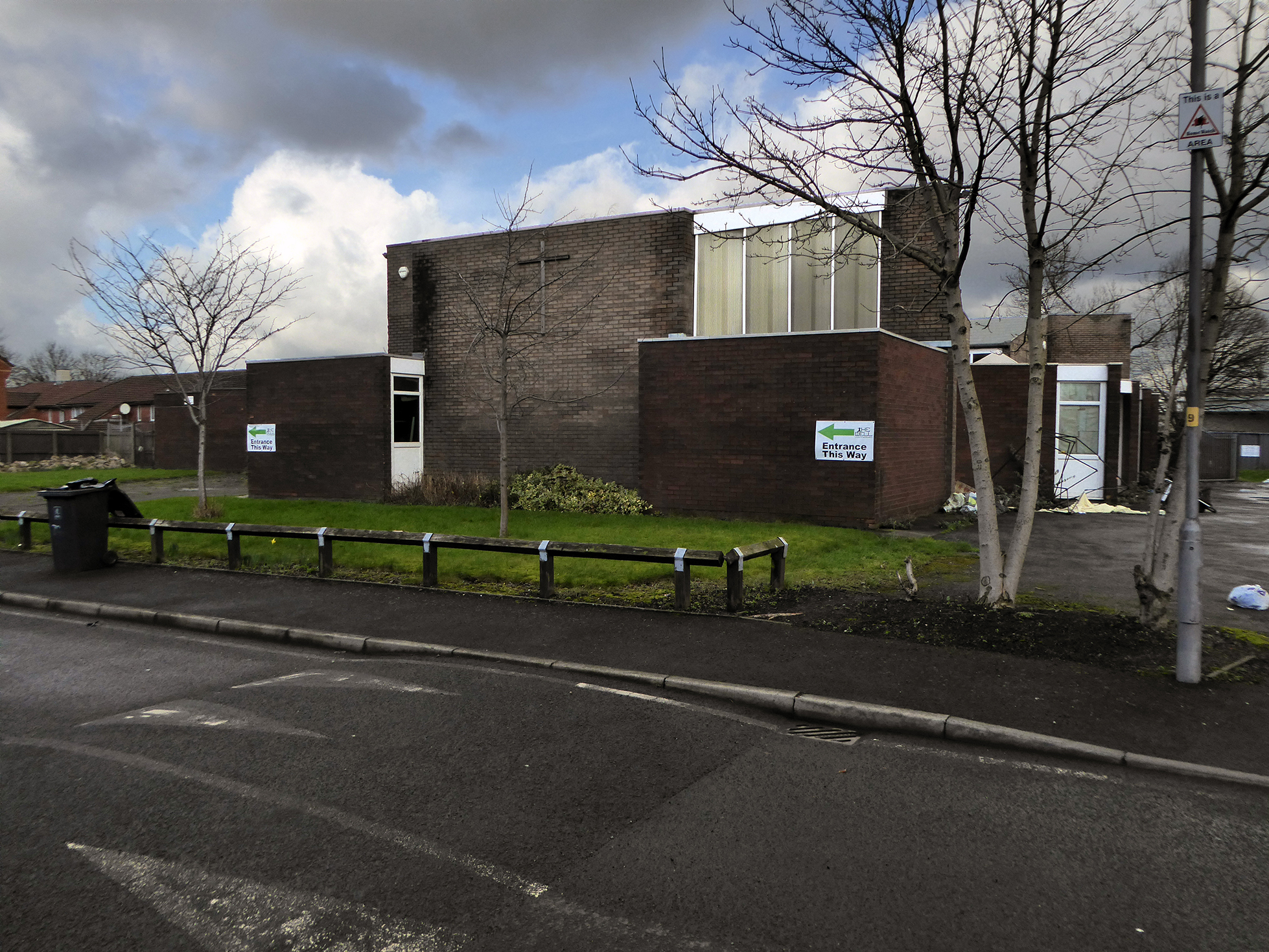
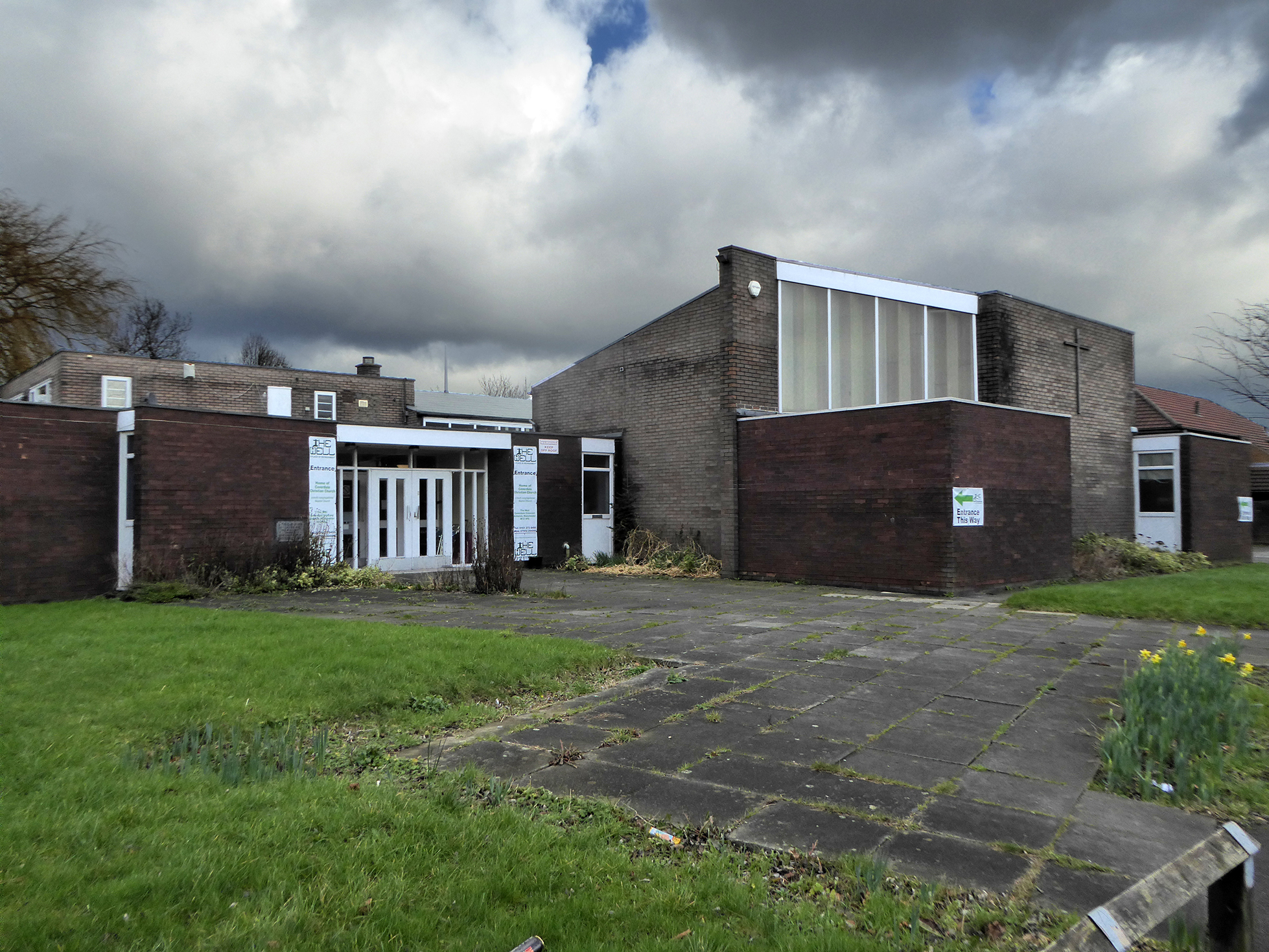
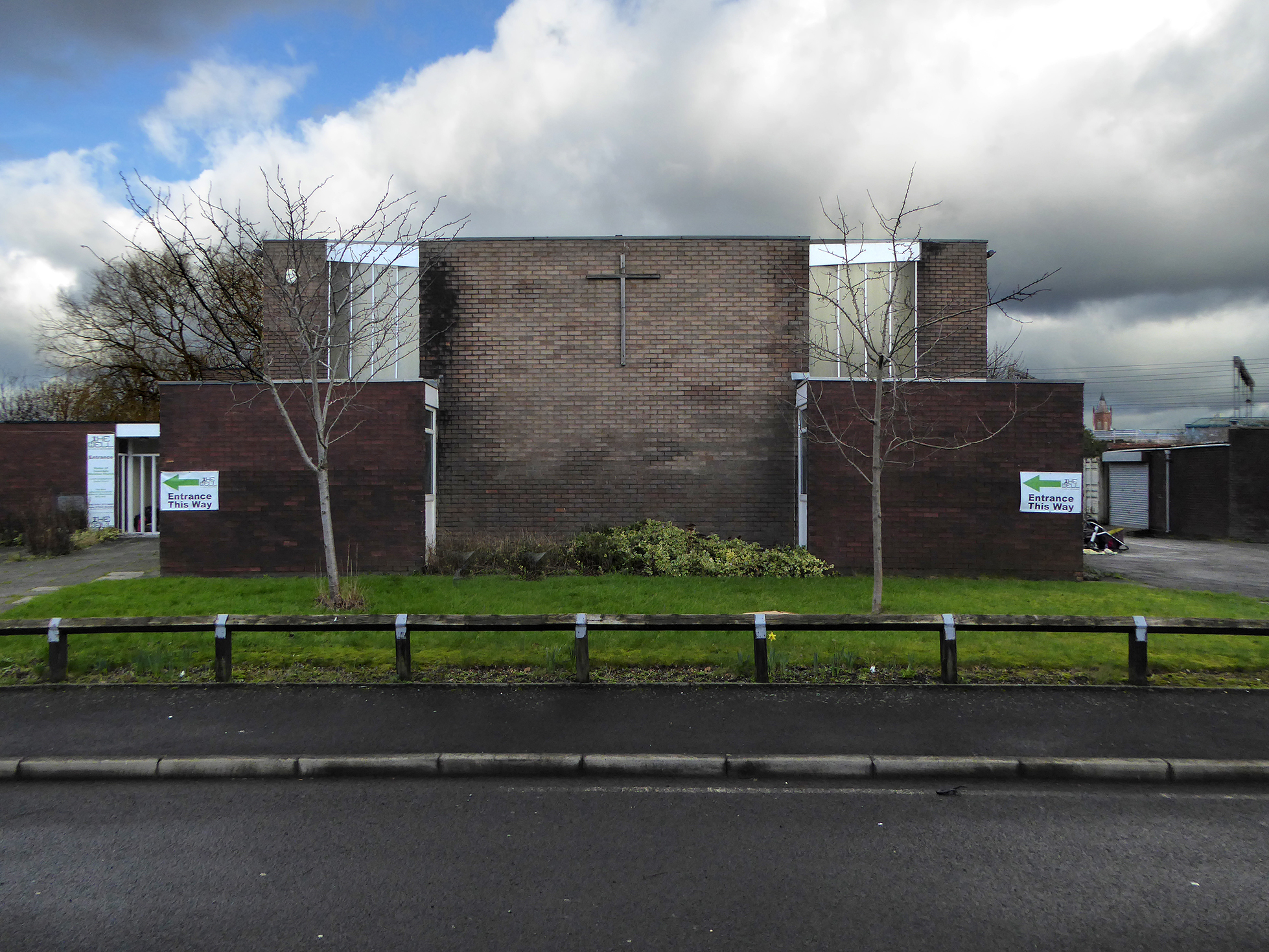
In Coverdale Crescent Ardwick such an architecturally innovative development was built.
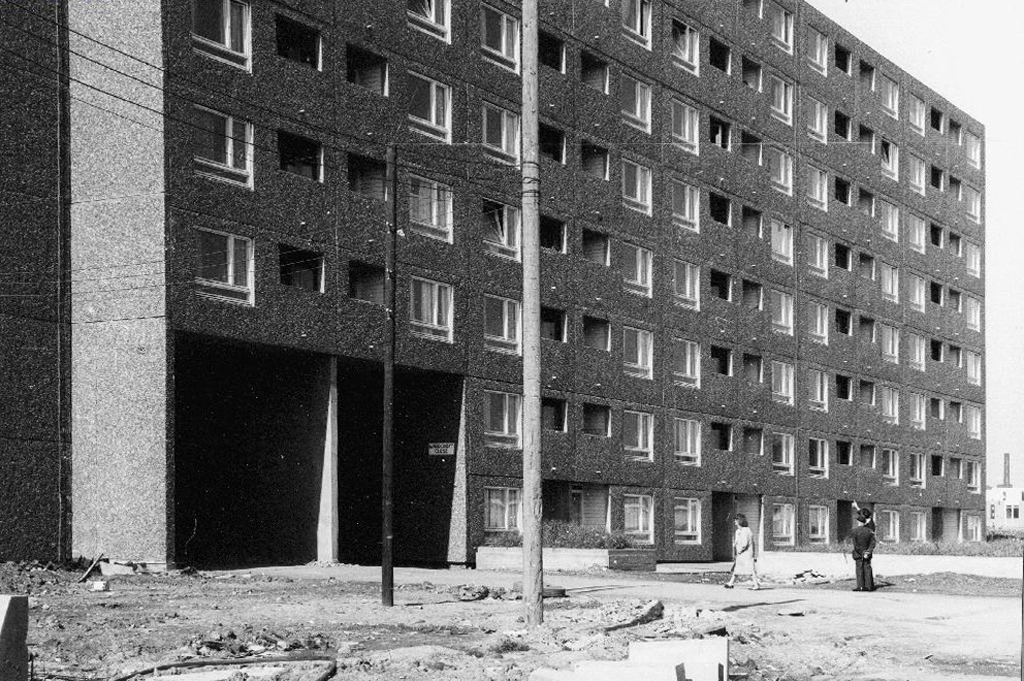
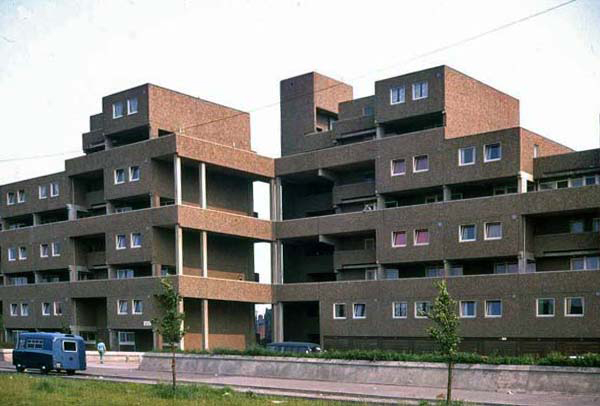
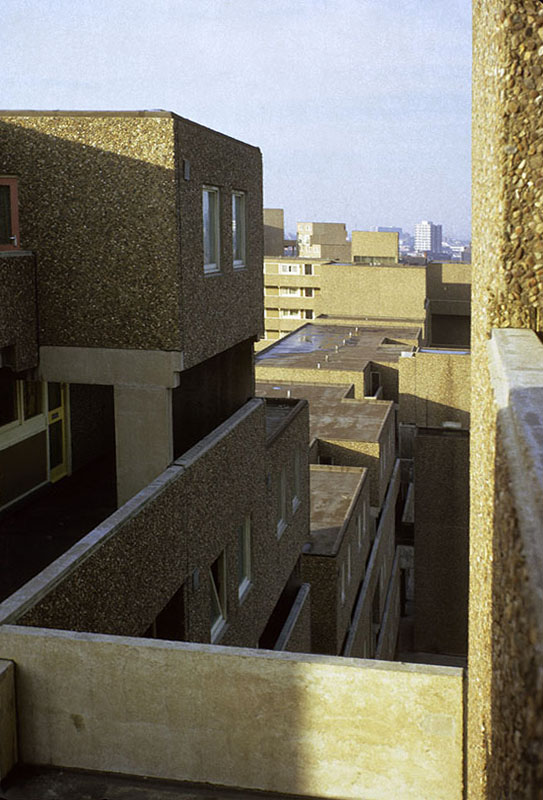
The estate, which became known as Fort Ardwick, was a deck access block of 500 homes. Completed in 1972, it was built with the same Bison concrete wall-frame system that had been used in neighbouring Fort Beswick.
By the mid-1980s it was clearly suffering from structural faults. The council employed a private firm of consultants to survey the estate, which found that water was leaking through roofs, steel fixings were corroded and concrete was breaking away. The council had to spend £60,000 immediately to bolt 1,100 panels back on to the building’s internal skin. The city architect, David Johnson, claimed that the report highlighted the rapid deterioration of Fort Ardwick’s fabric.
They said it was shoddy, thrown up, not enough care taken. The concrete panels weren’t made properly – the holes didn’t quite line up. You know what it’s like – you’re putting a flatpack cupboard together and something’s not in the right place but you just bodge it instead of sending it back, starting again, because you want the cupboard up and you’ve got other shit to do.
They had to get these consultants in, after they’d finished, to rebolt all the panels or something , so the whole thing didn’t fall down. Cost a bloody fortune my nan said, and that’s our taxes. And even then the rain got in. They’d put straw between the concrete, which sounds a bit medieval to me, and no-one wants wet straw walls, right? Cockroaches and rats and mould and that.
My nan remembers when they knocked down the terraces. I remember when they knocked down the fort. And maybe they had a point about it being shoddy, because soon as the diggers got their claws in, the whole thing fell to pieces, like it was made out of cardboard and bits of sellotape, not concrete and glass. A fort one week, a pile of rubble the next. No-one wept for it, they say.
I didn’t cry, but I stood at the end of the street and watched the diggers pawing at the walls, ripping the place to bits, our old kitchen wall gone and the cooker and the cupboards and the crap plastic clock just there for everyone to see. Except there was no-one else looking.
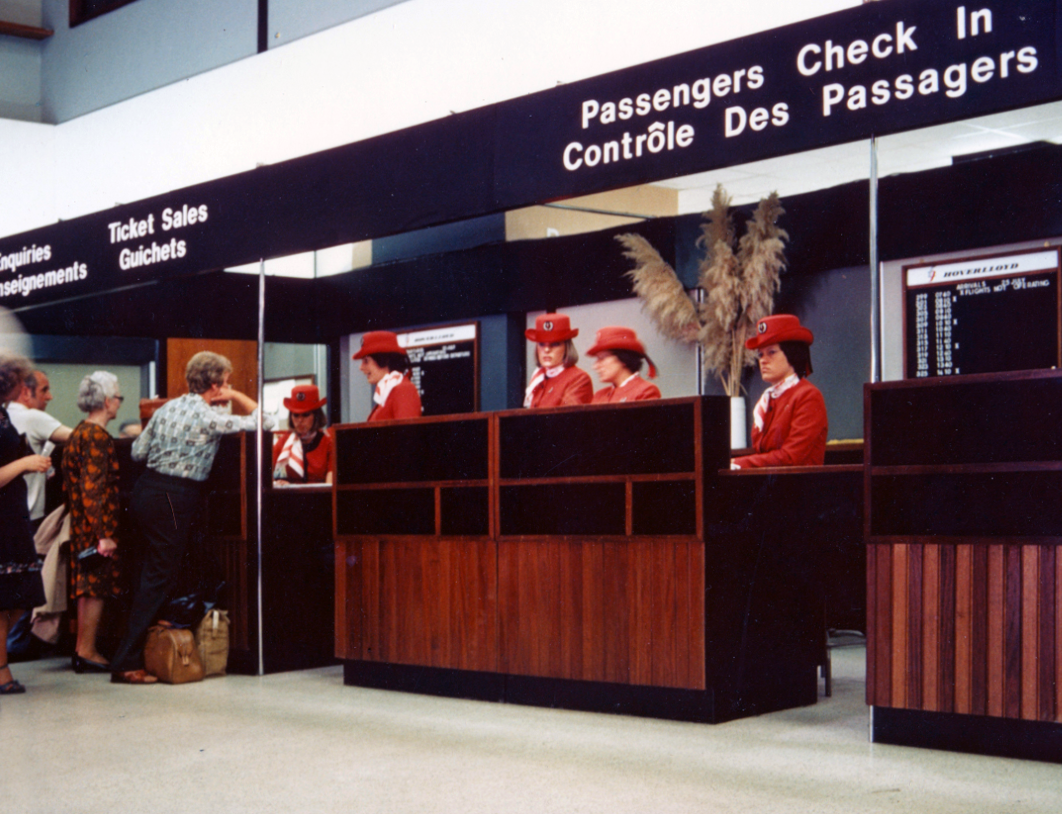
The passengers’ every need was attended to with alacrity and style.
“As a Stewardess your appearance was paramount, a beautician would come in during training to teach us how to apply make up.”
But it simply wasn’t enough.
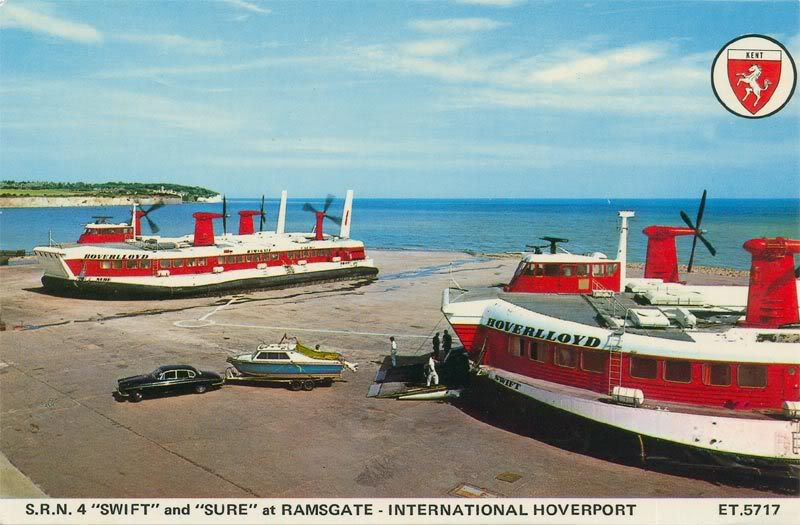
The life of Christopher Cockerell’s bold British invention, was short and bumpy.
Genevieve Payne, a former stewardess:
“I remember the summer of 1979 as a year of really bad weather and rough seas.”
“I was working on a craft in a force 8, so on this day we were literally hitting the ceiling, passengers were throwing up everywhere.”
“One lady became hysterical I had to slap her to calm her down.”
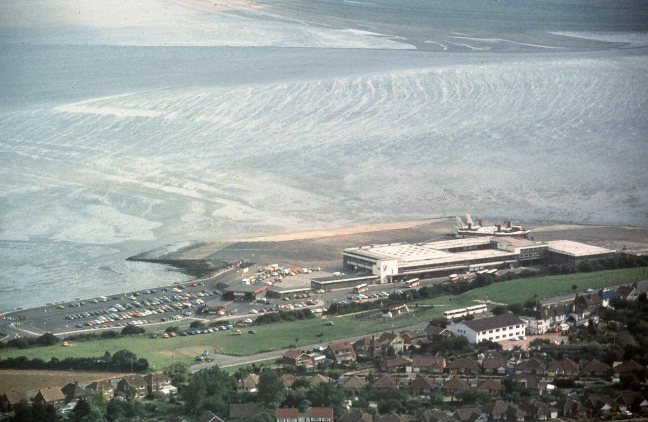
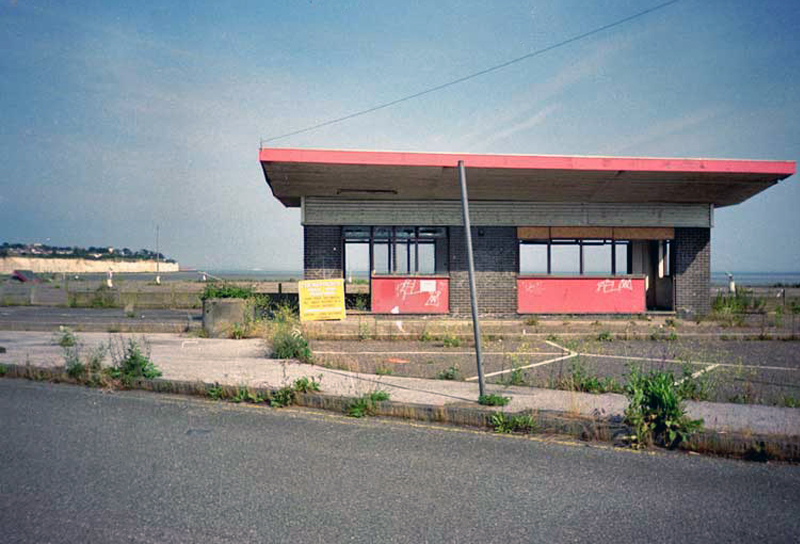
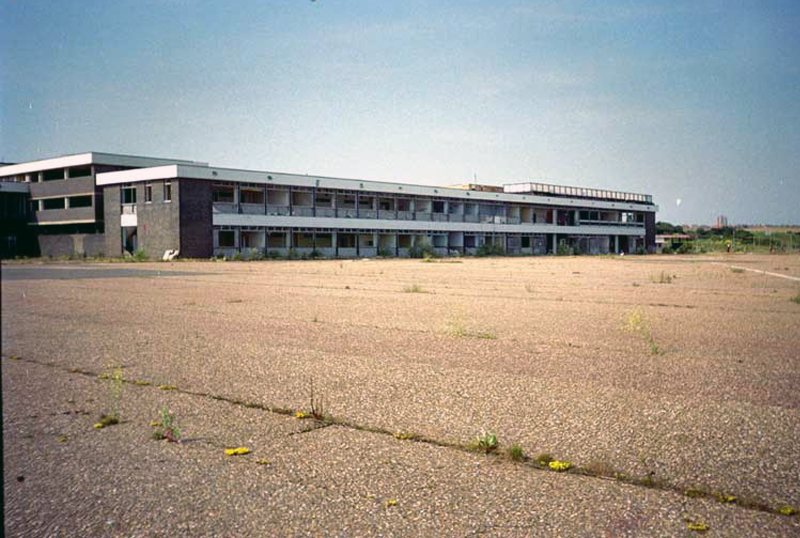
By the 1980’s Pegwell and the hovercraft were in terminal terminus decline.
It’s a lot less bother without a hover.
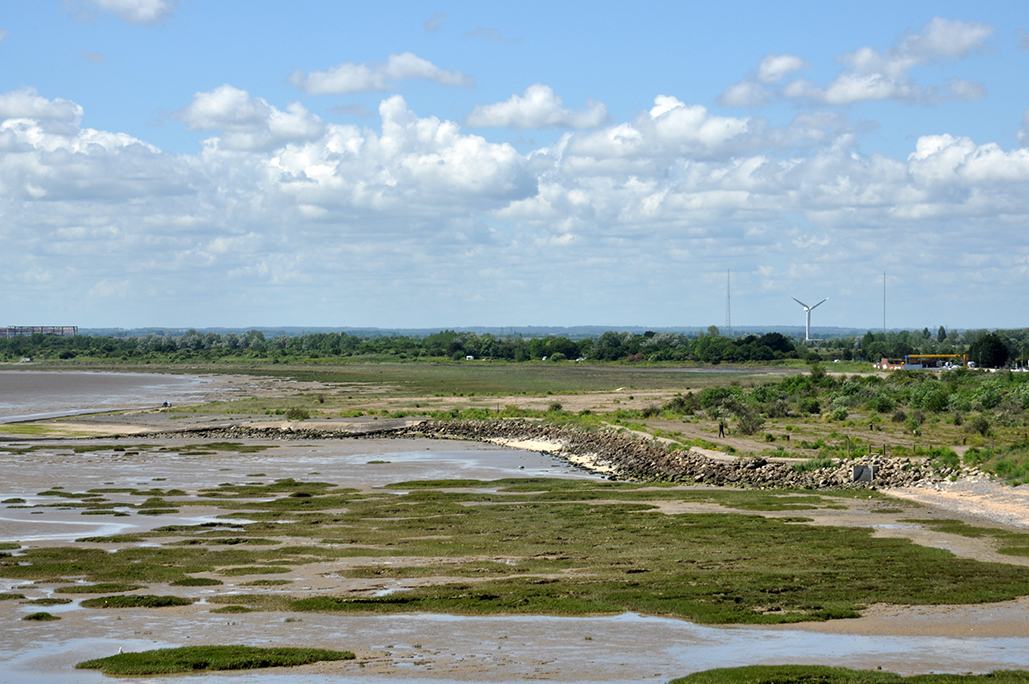
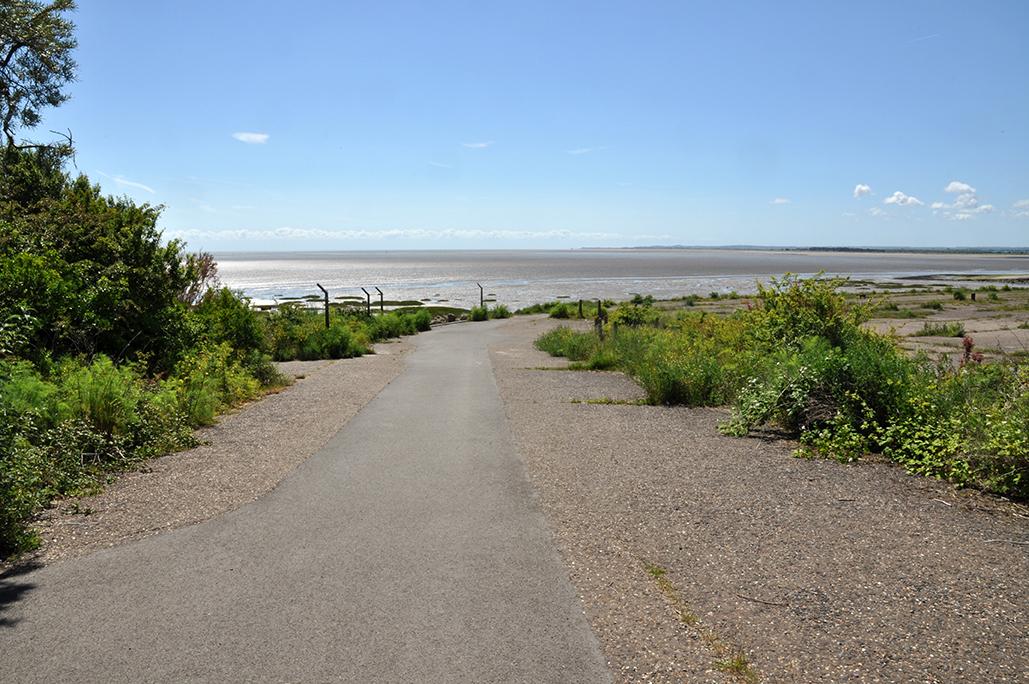
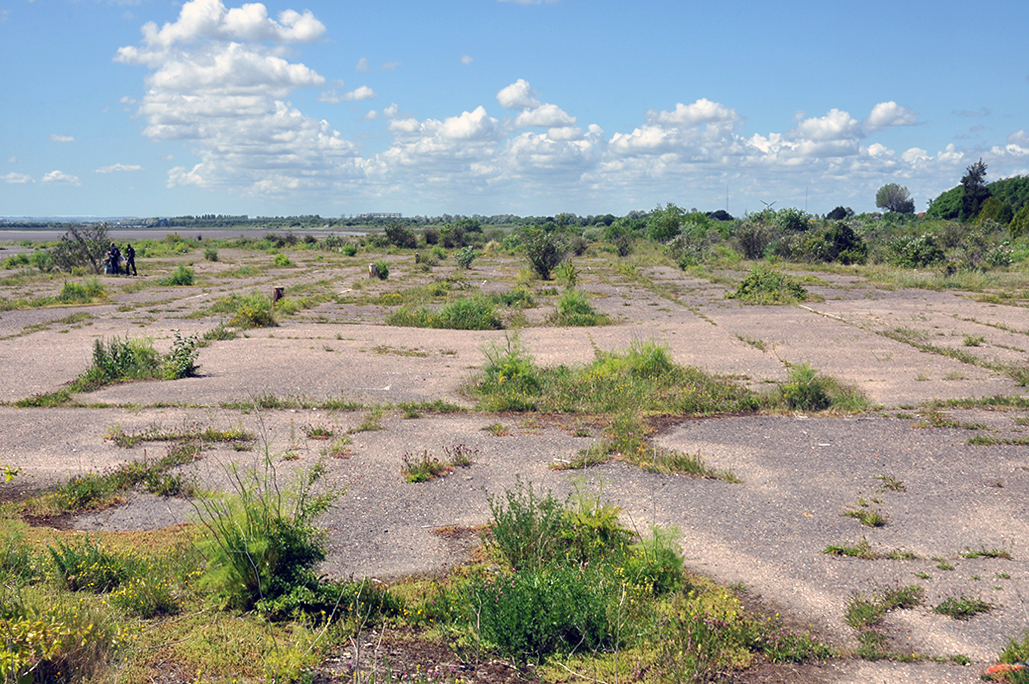
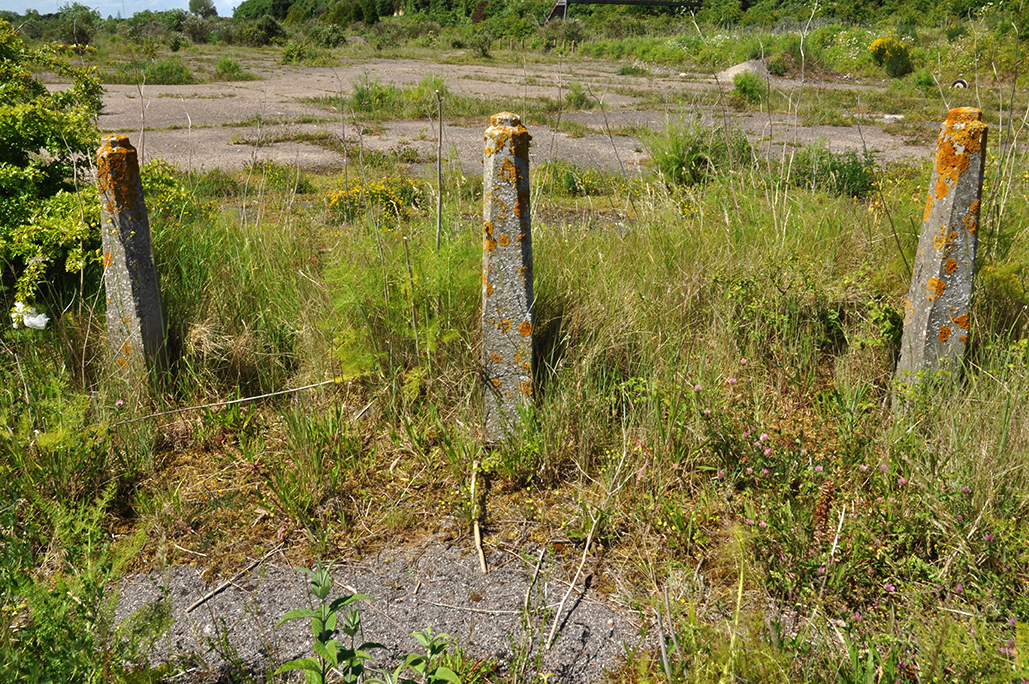
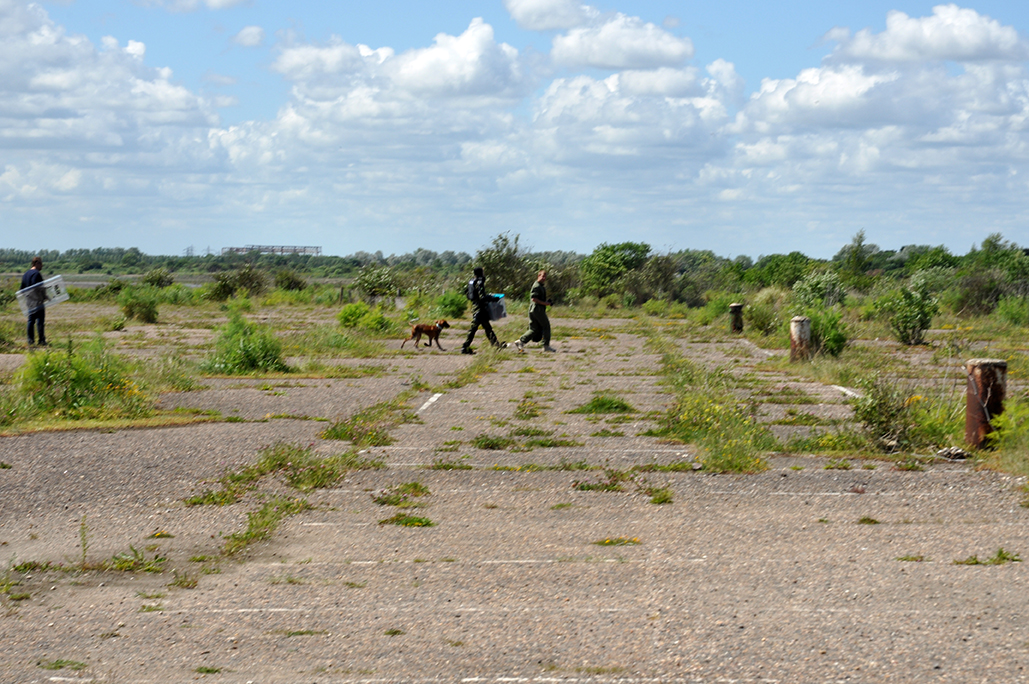
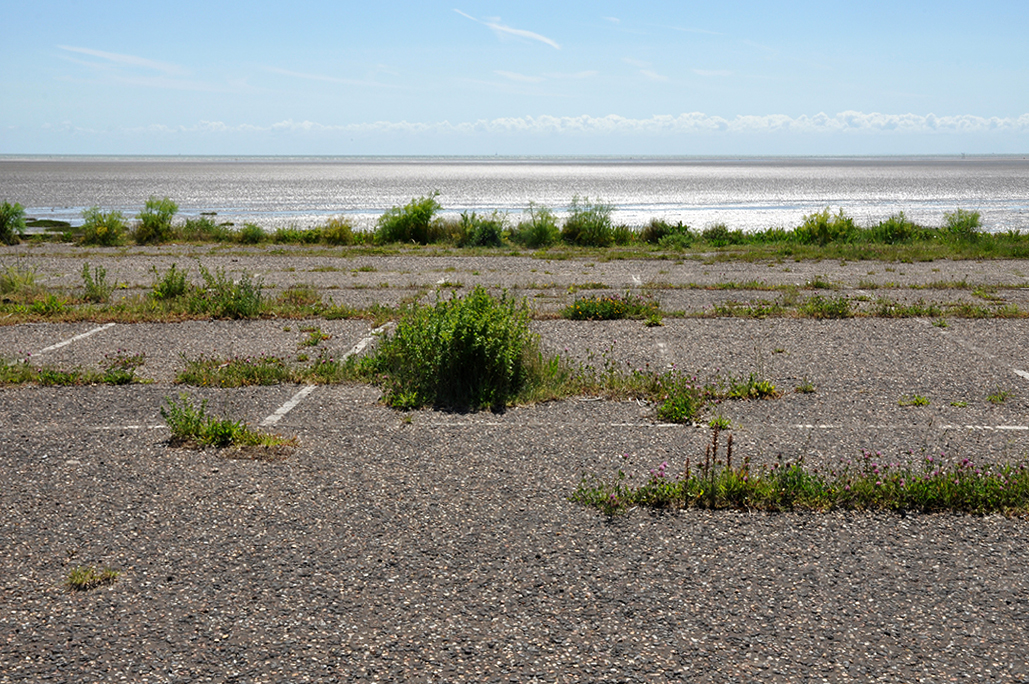
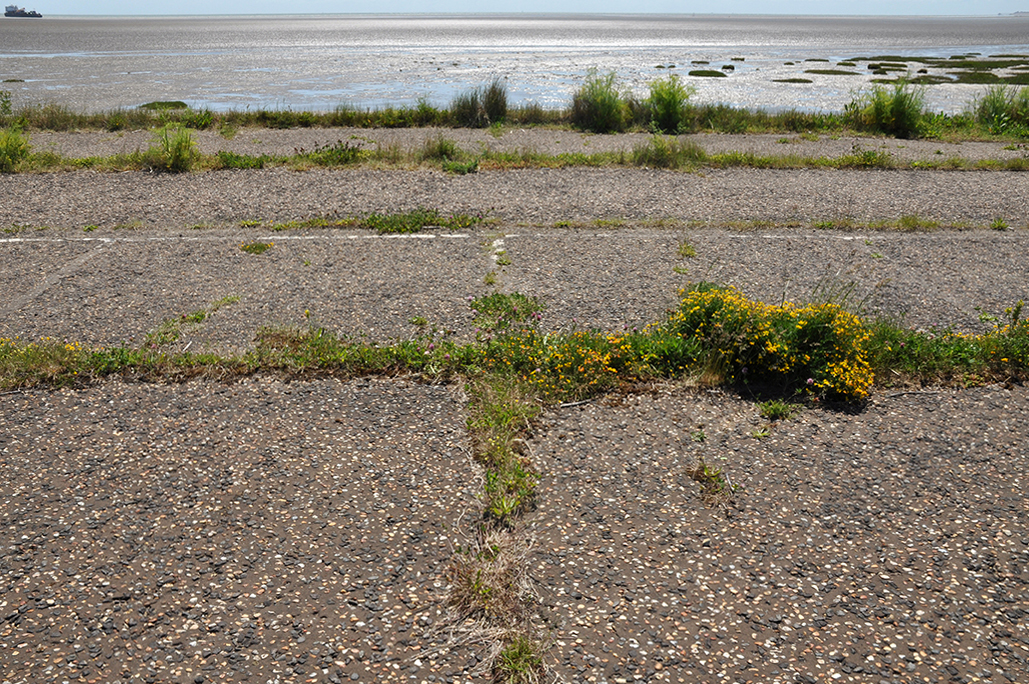
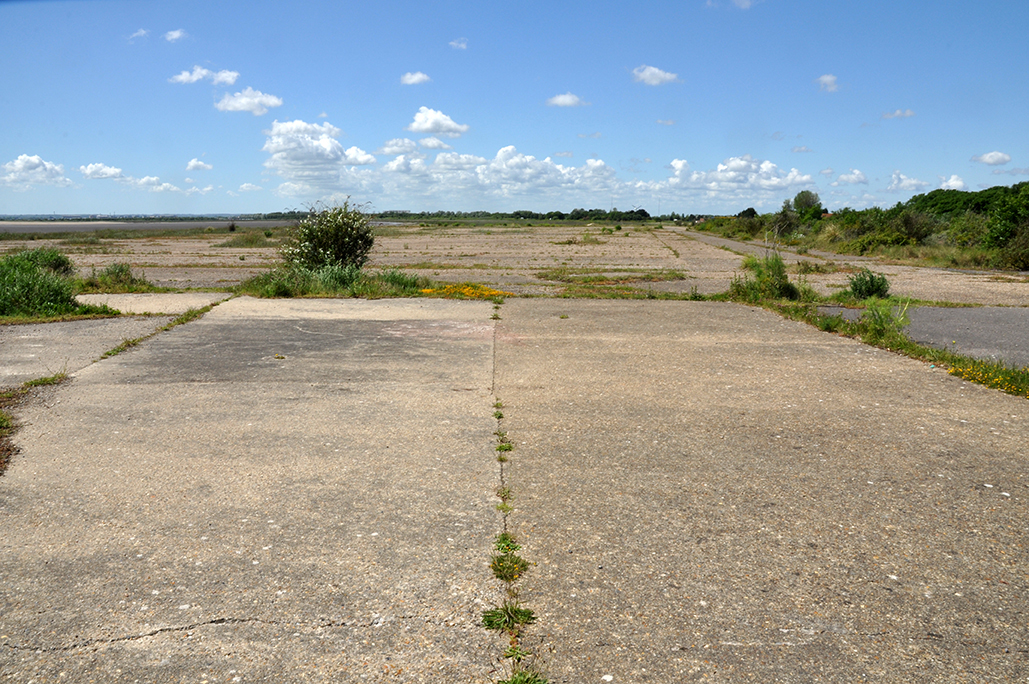
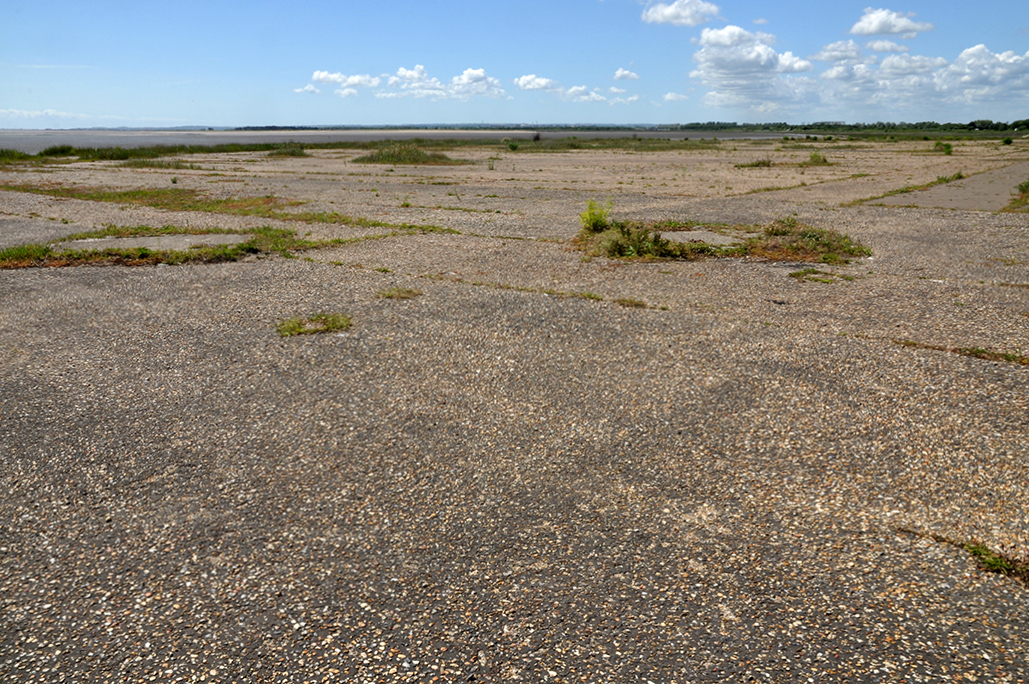
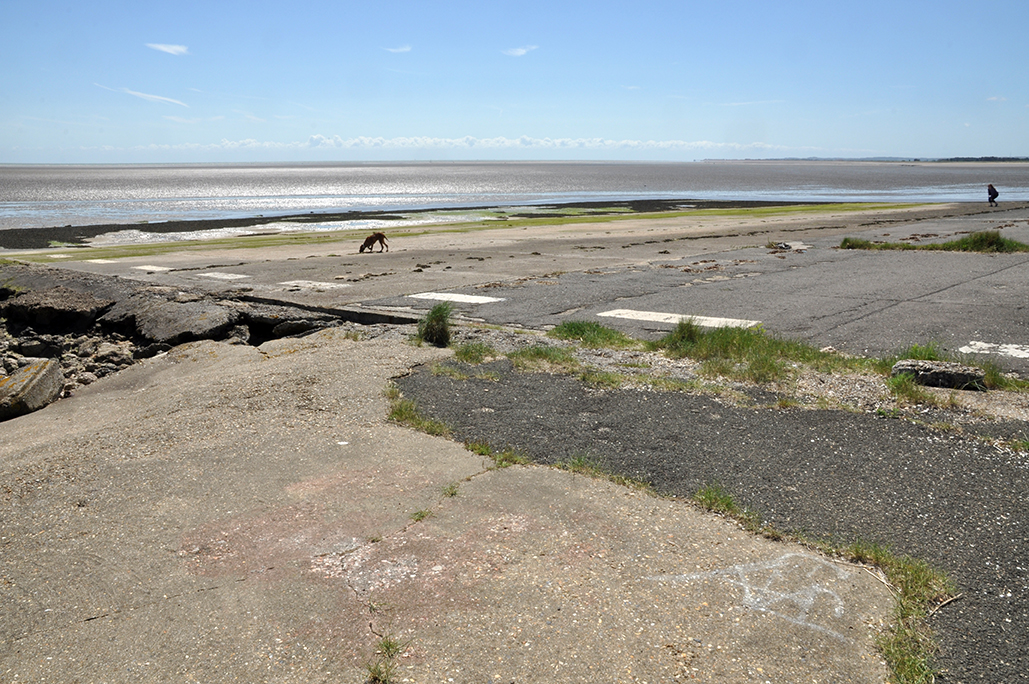
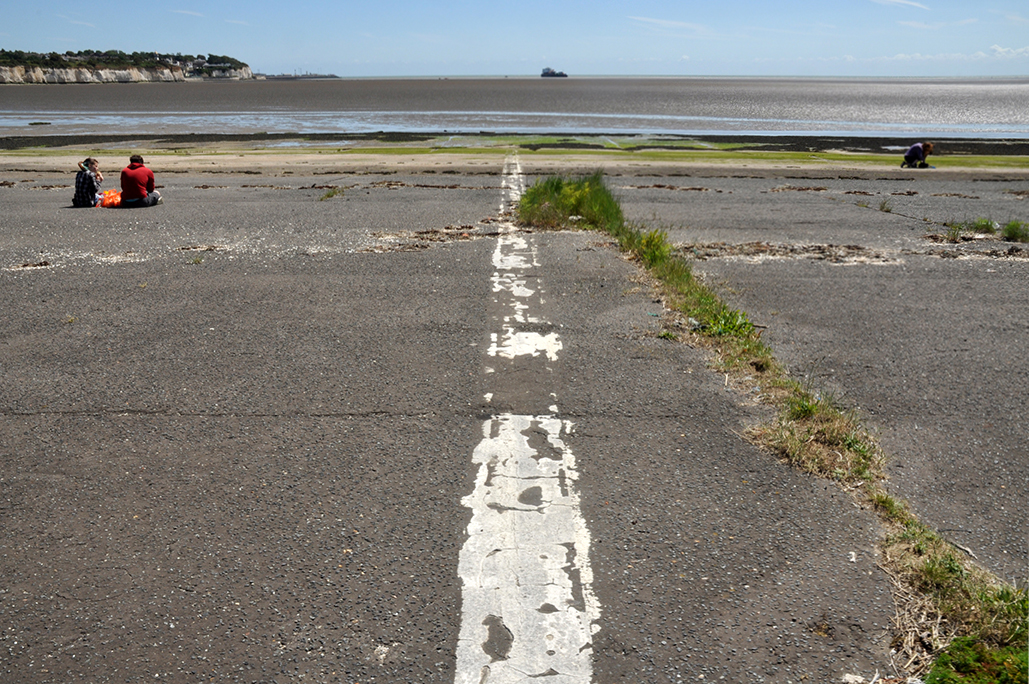
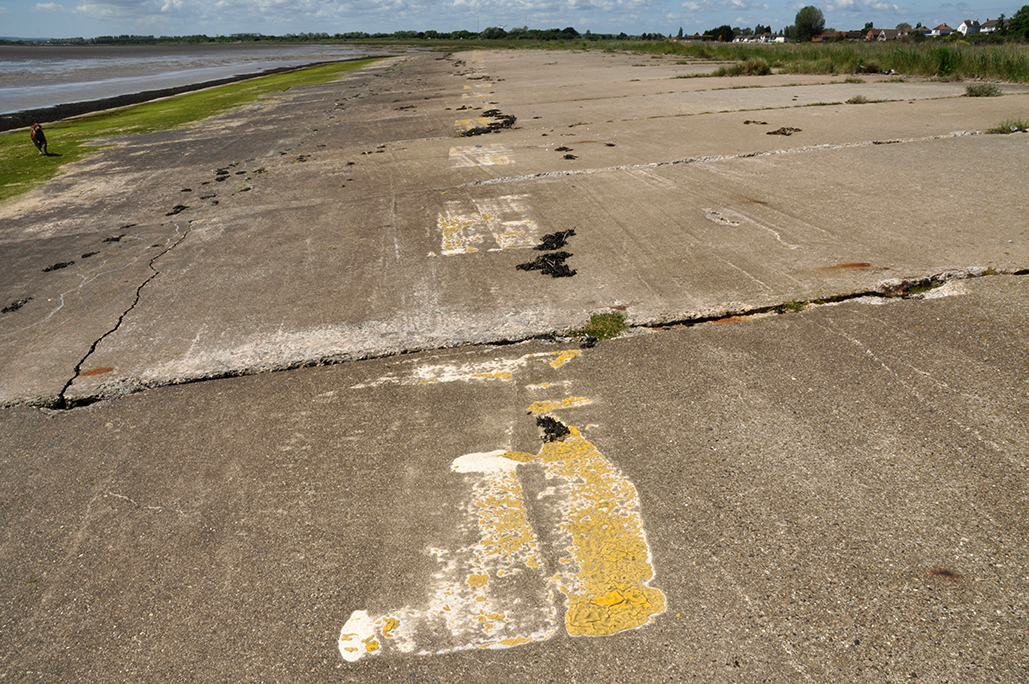
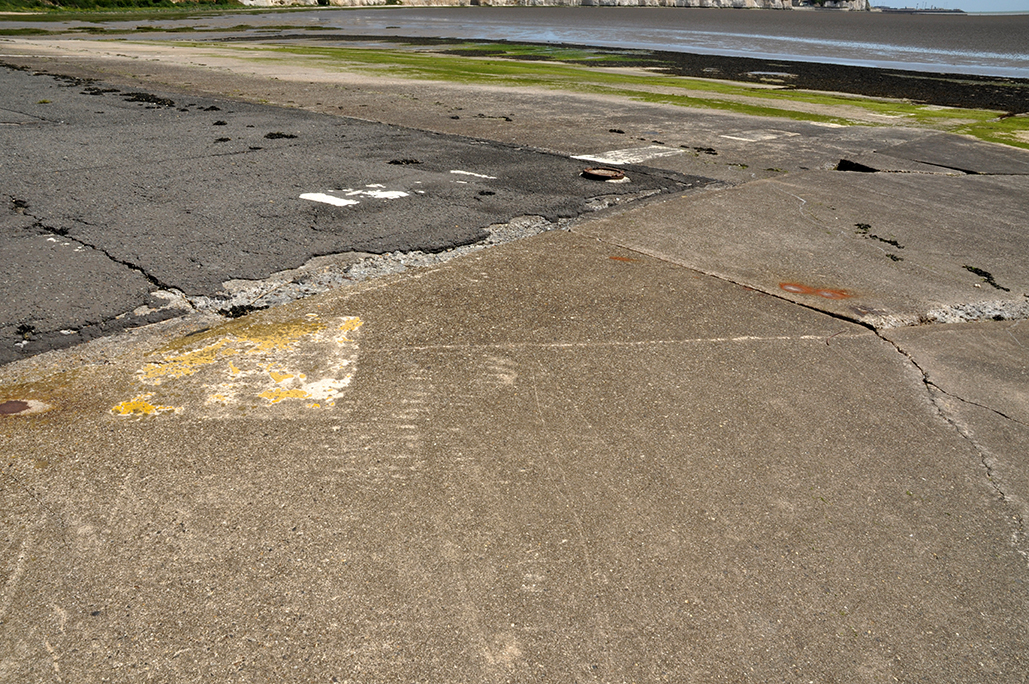
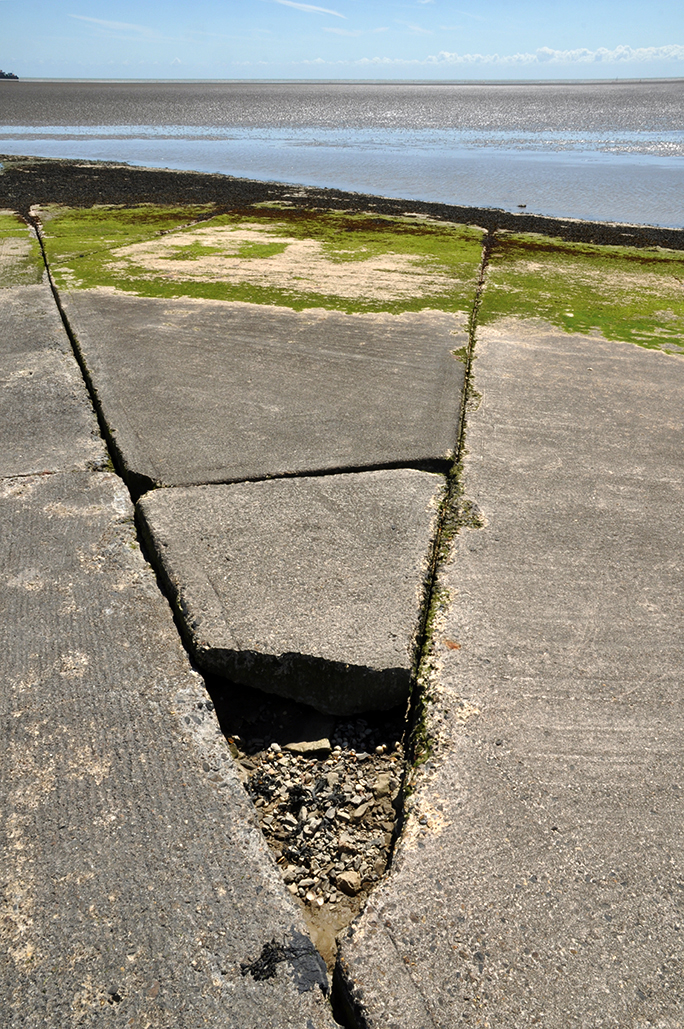
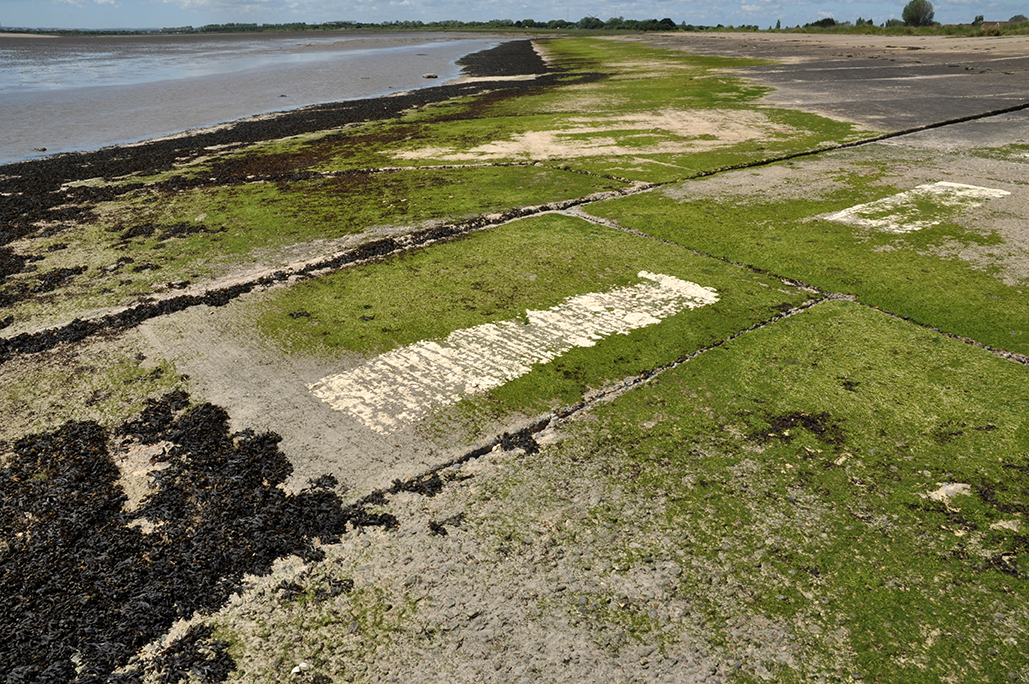
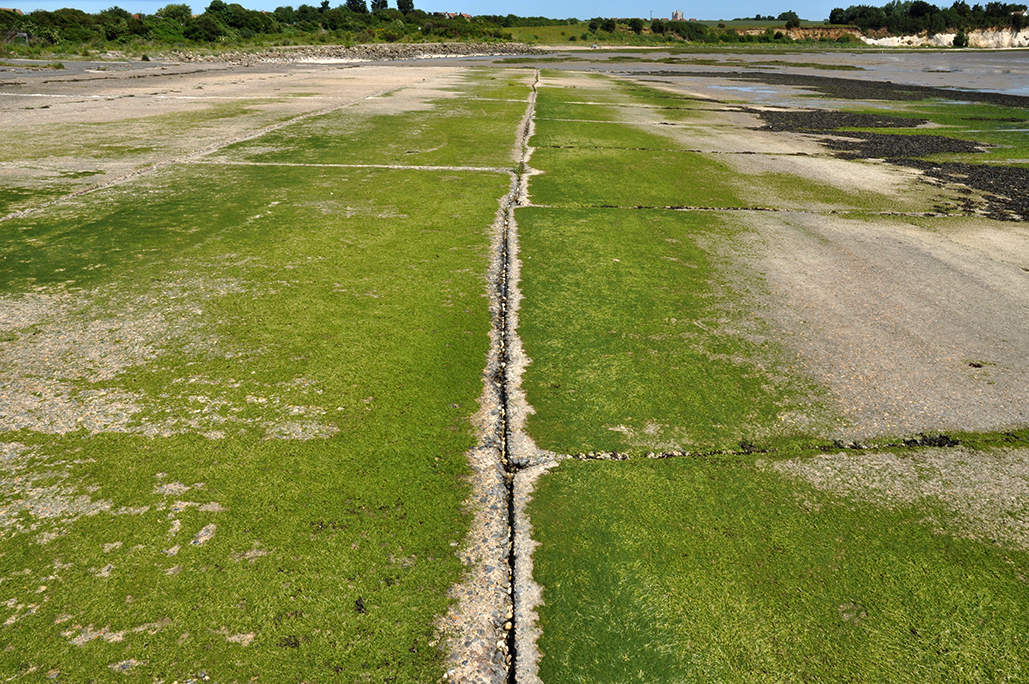
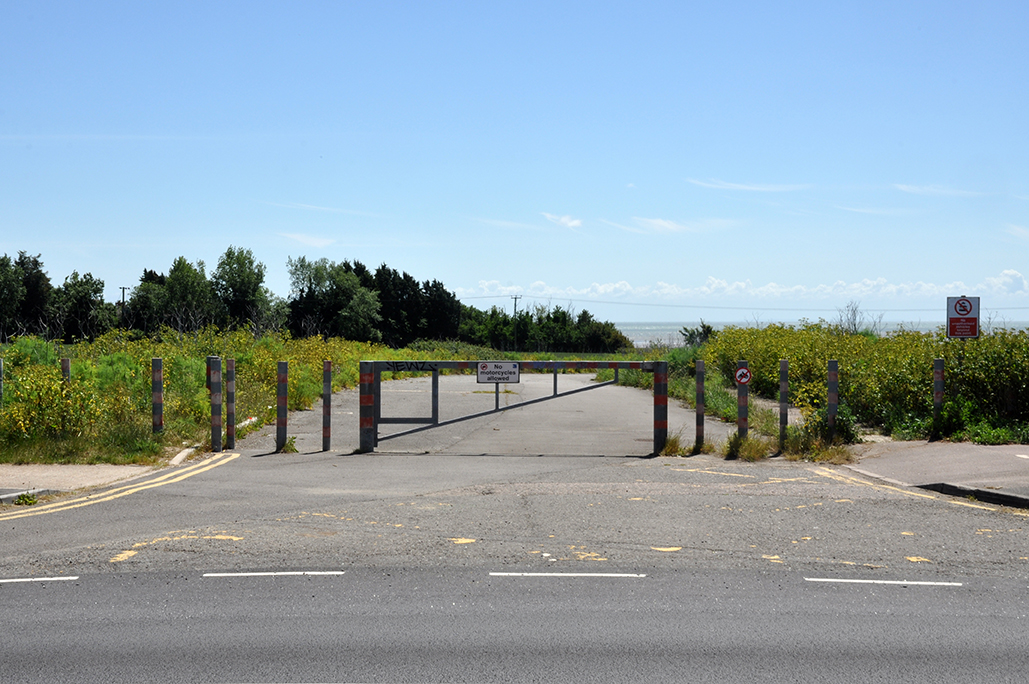
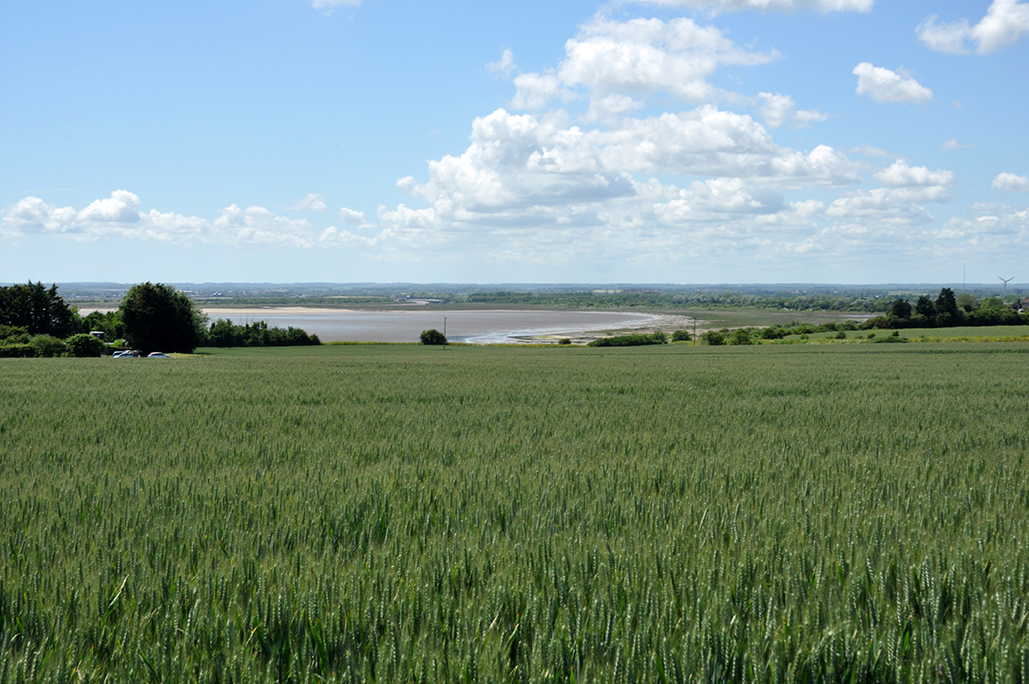
What prevails is the shoreline, a concrete landing skirt and the slow process of reclamation, as nature decides that the council is quite right to decide to create a nature reserve.
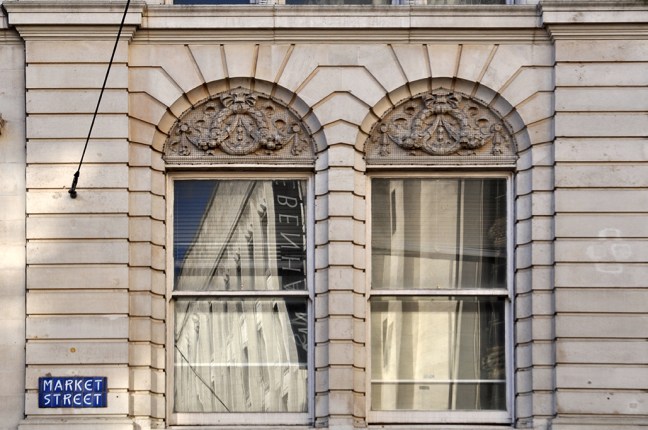
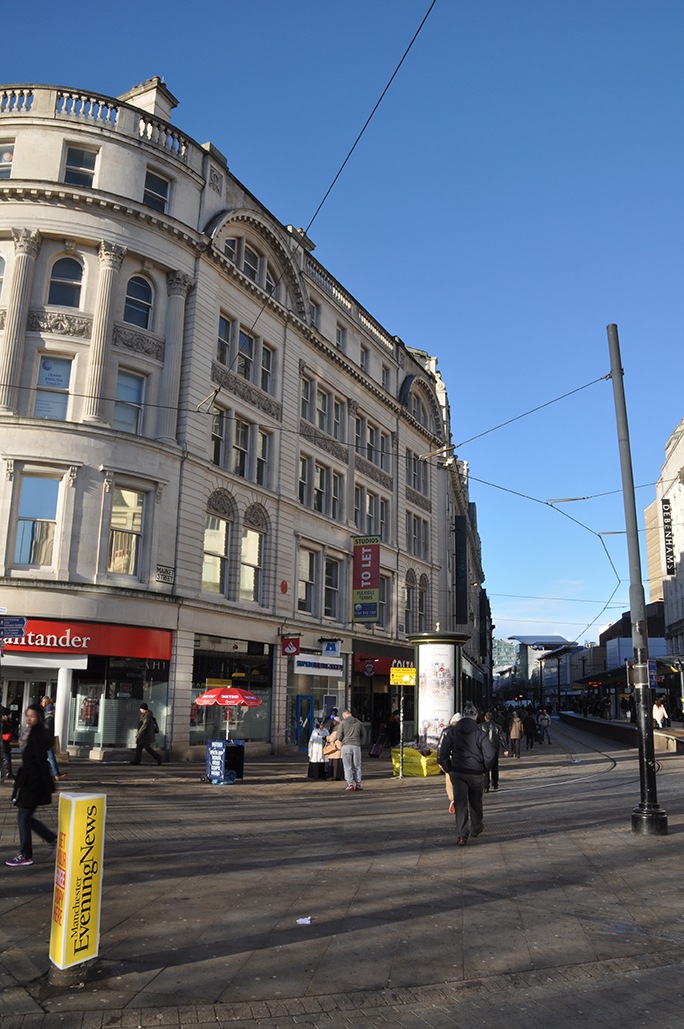
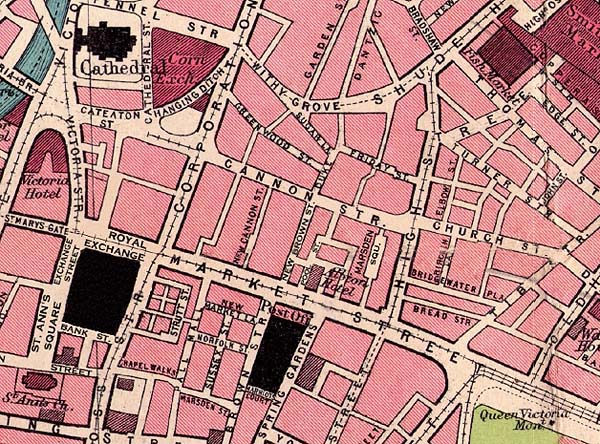
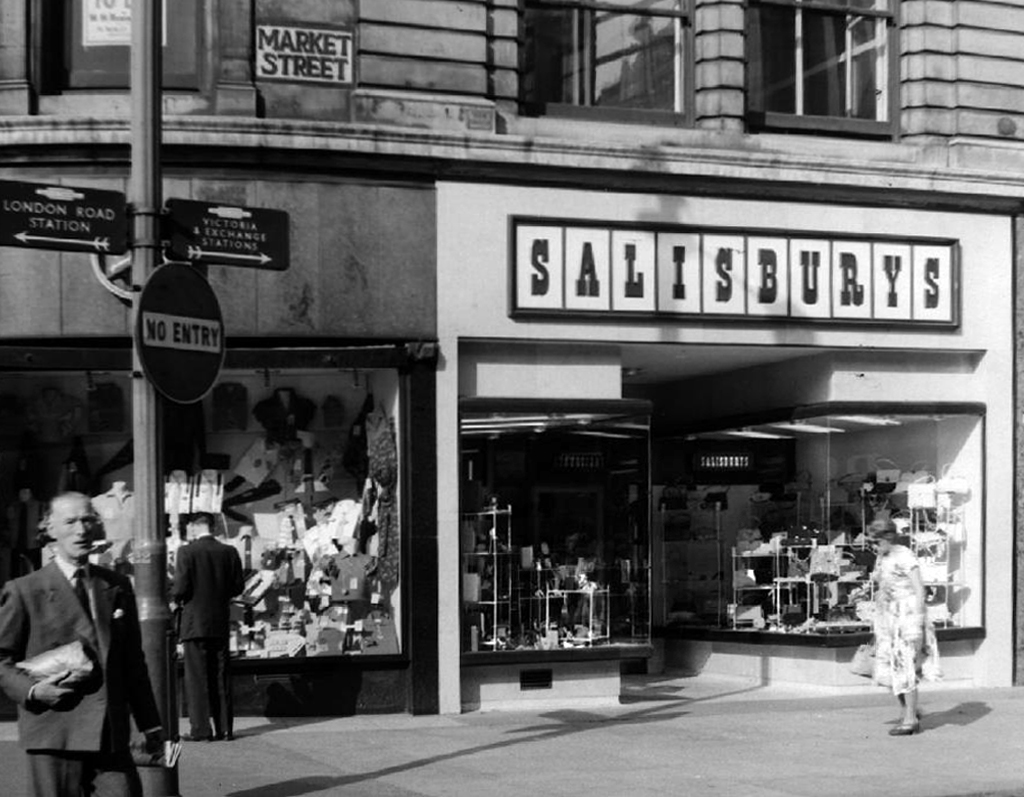
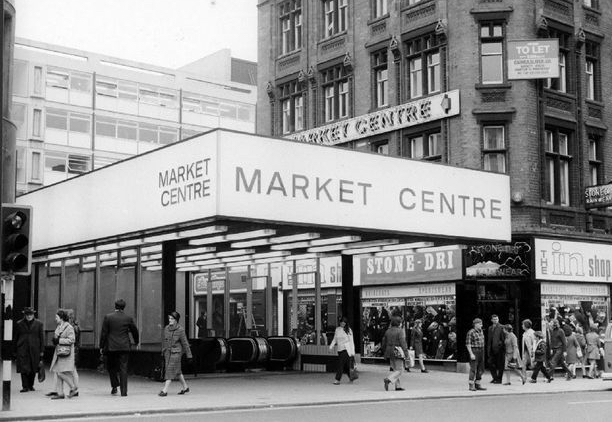
Following my previous post on Market Street, using archive material from the 60s and 70s, I was prompted to record the current state of the street.
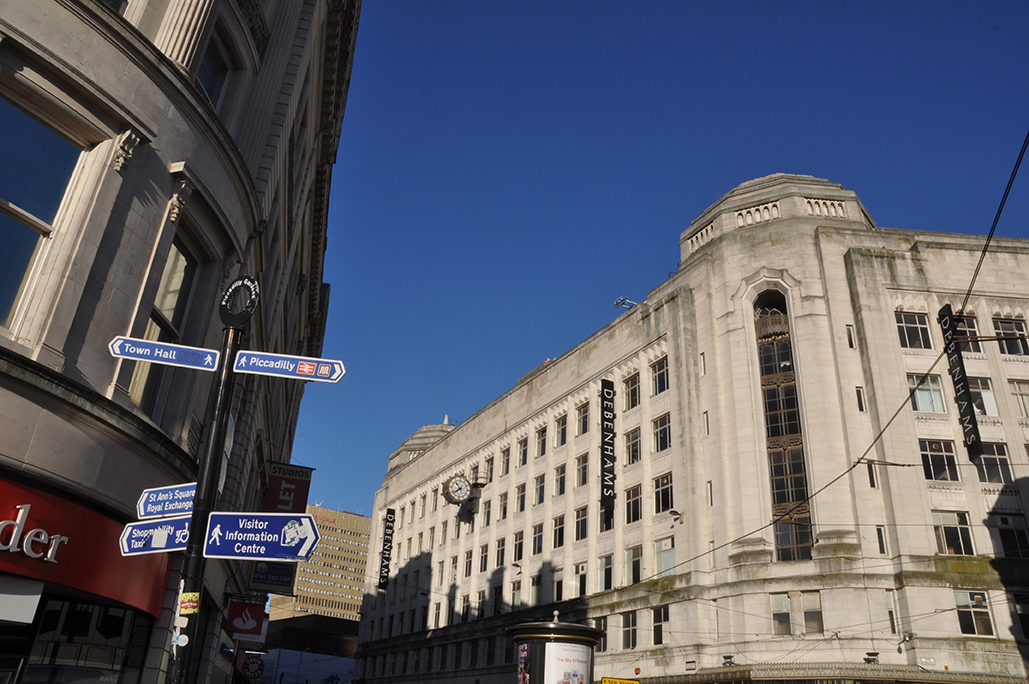
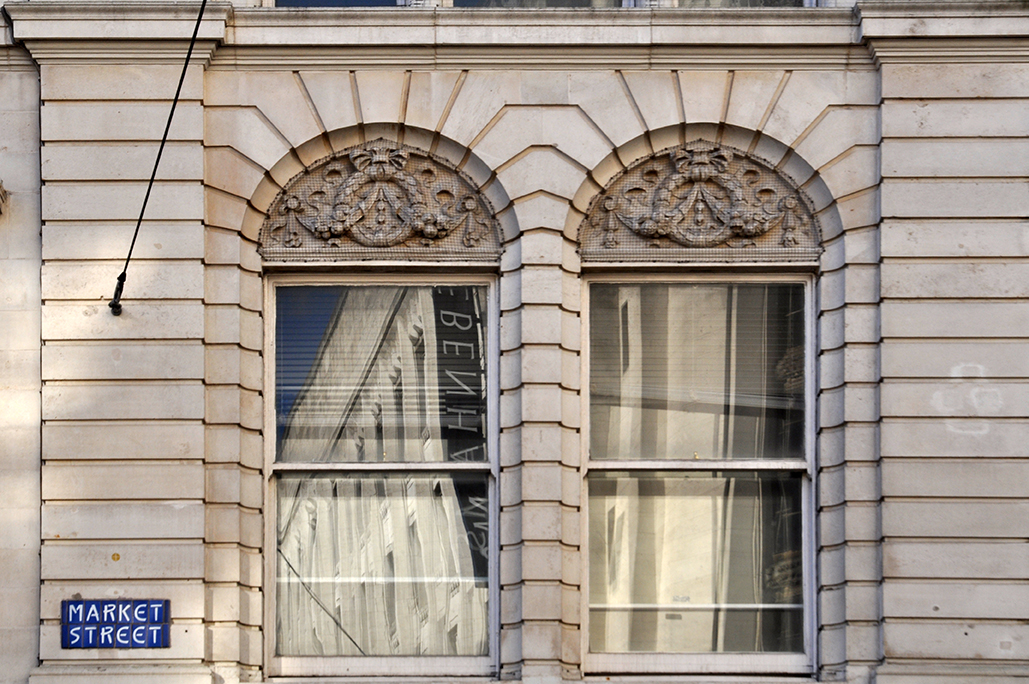
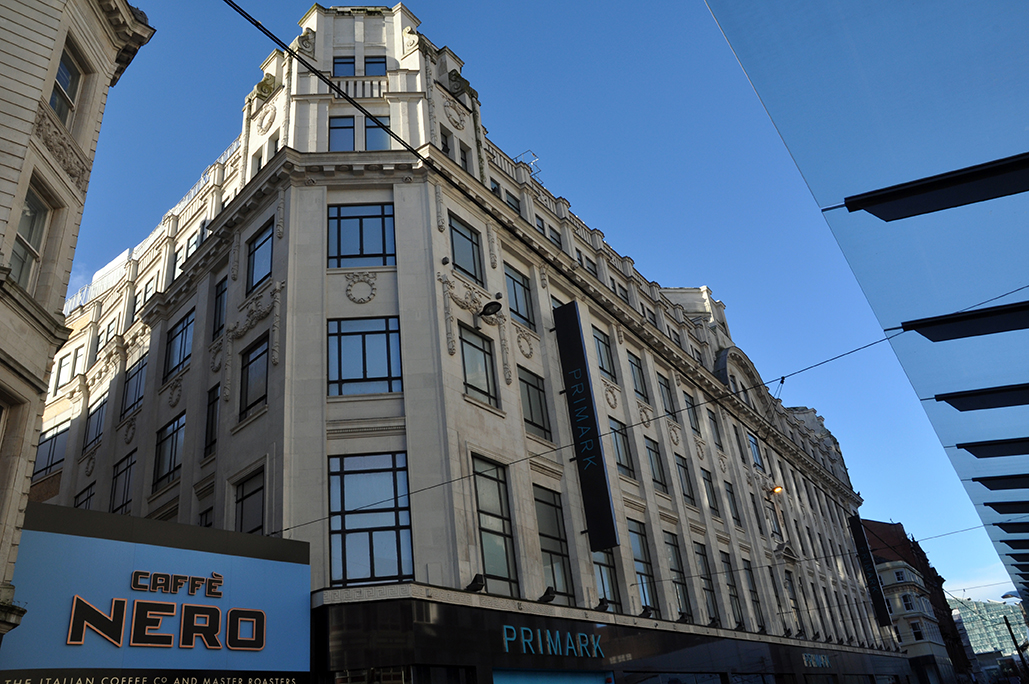
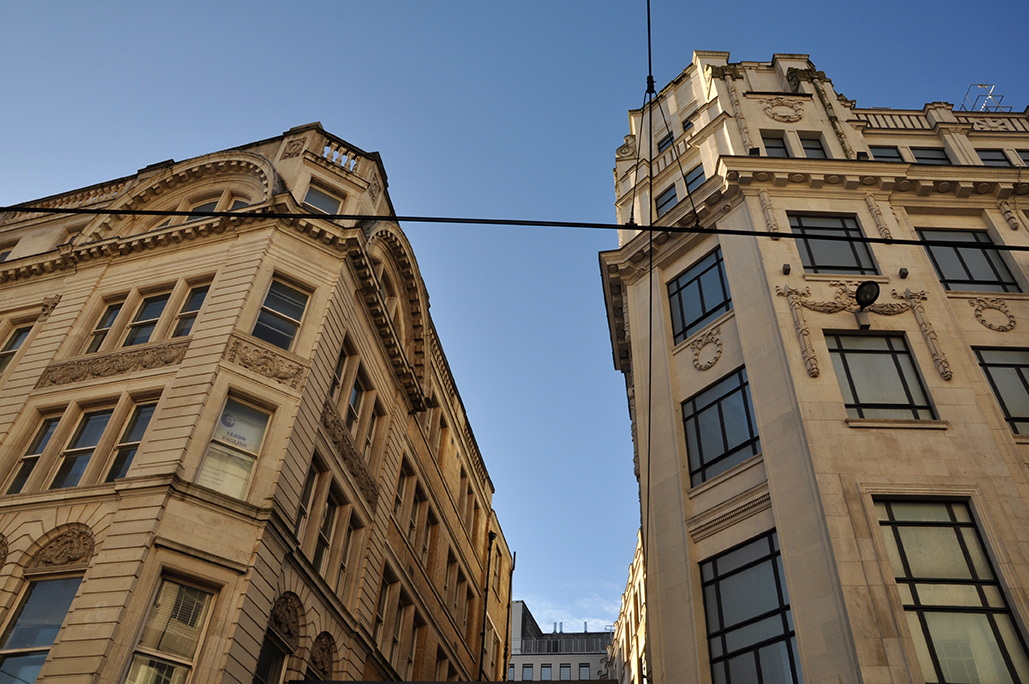
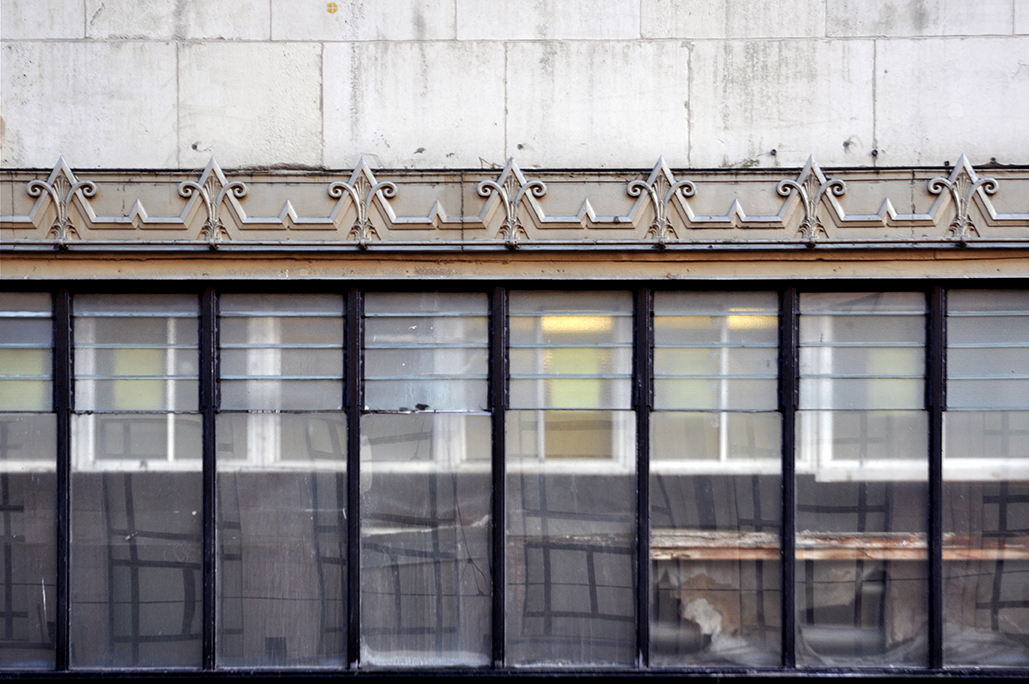
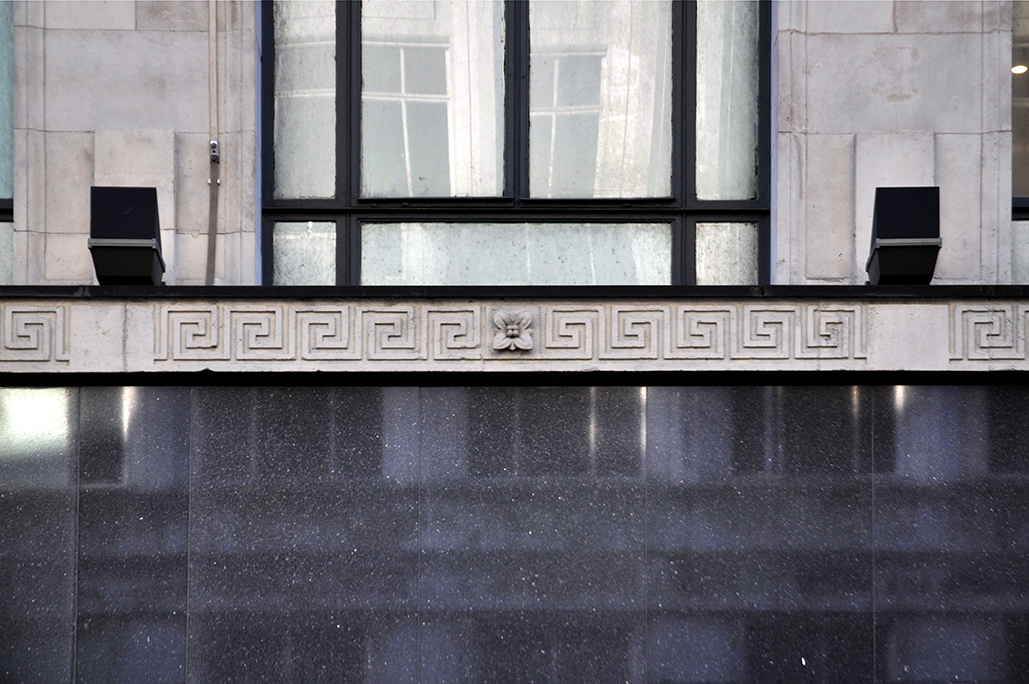
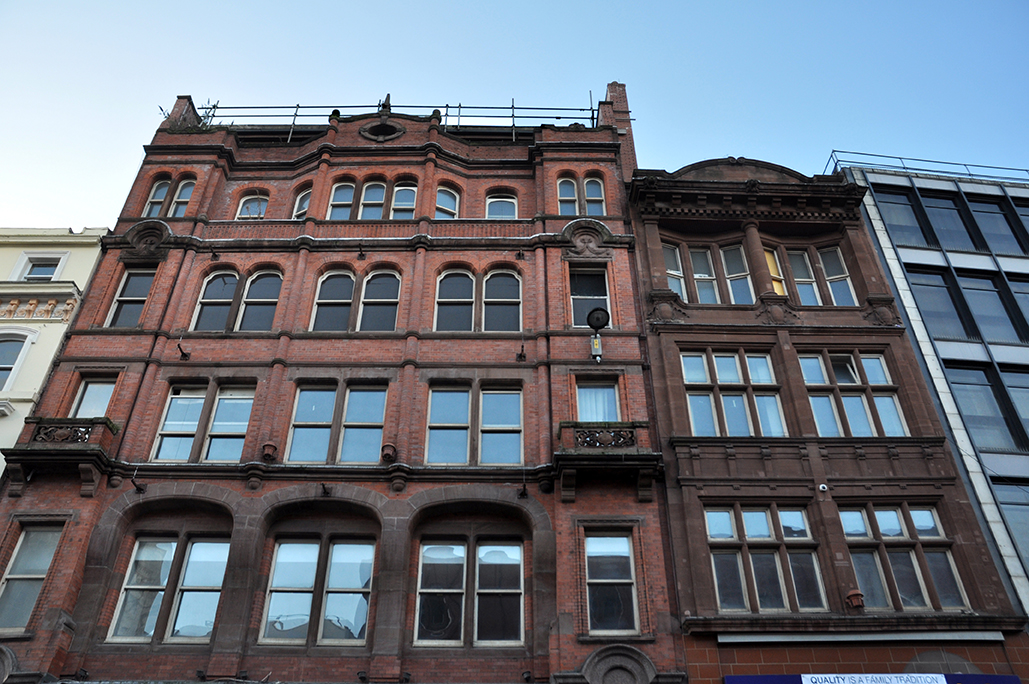
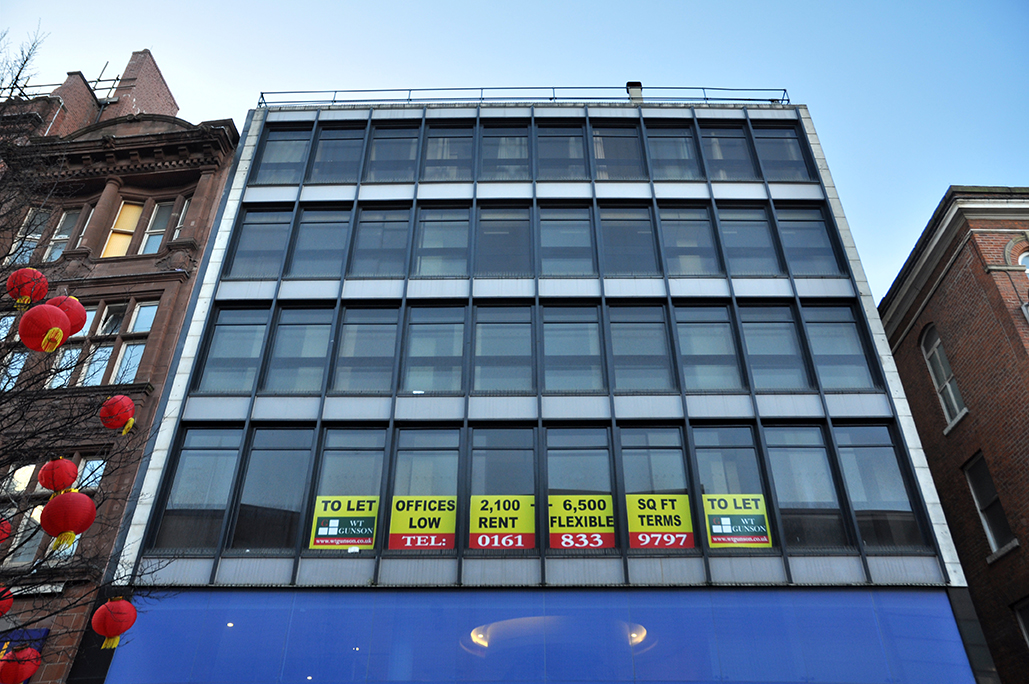
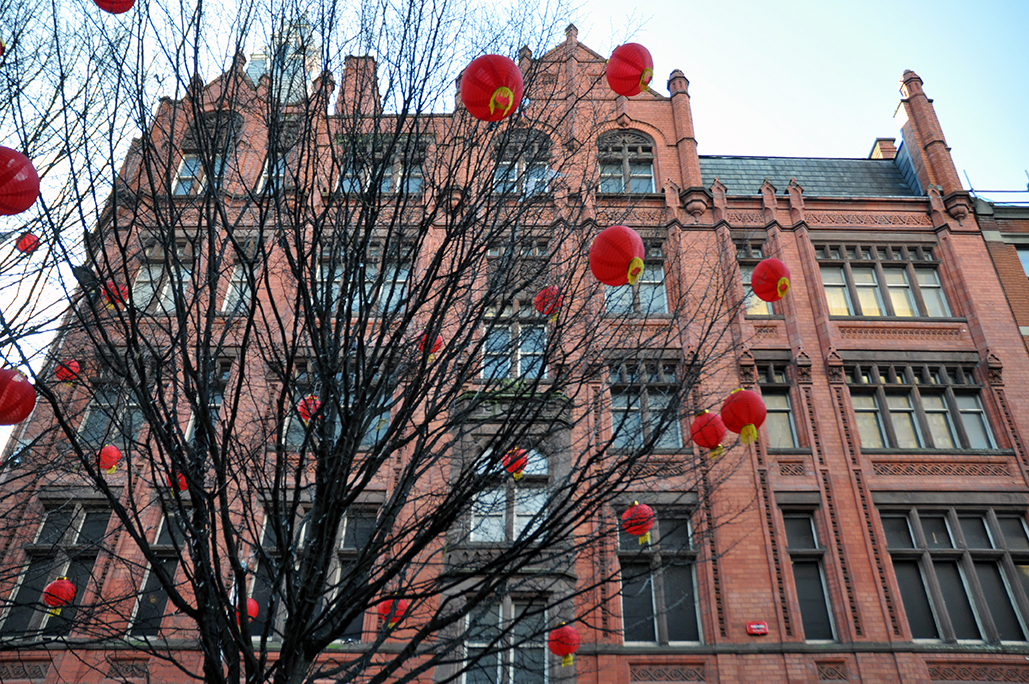
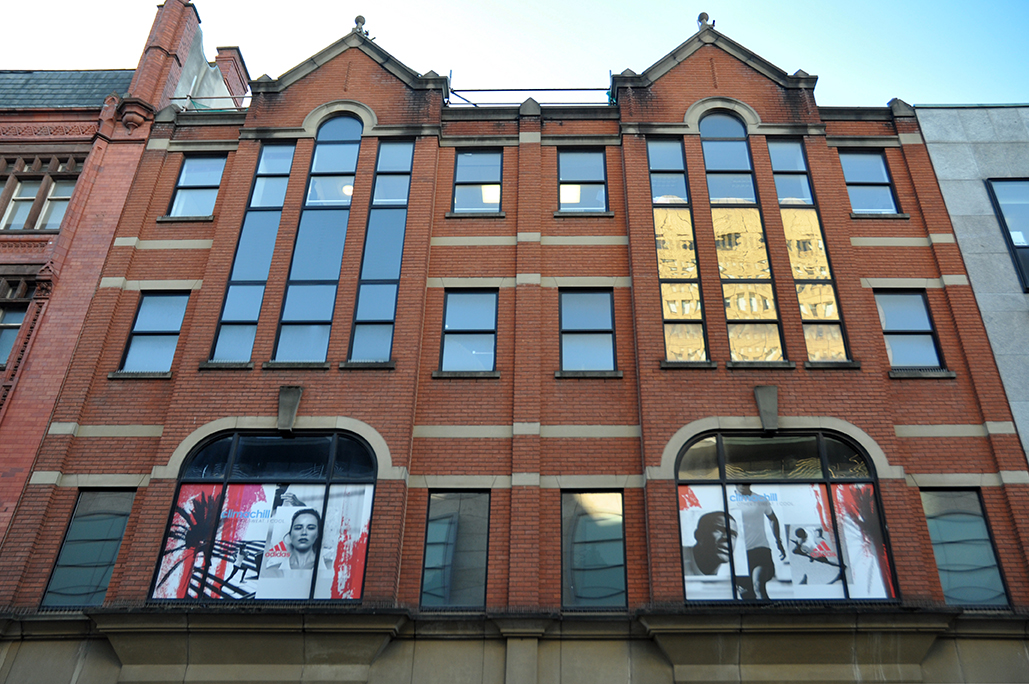
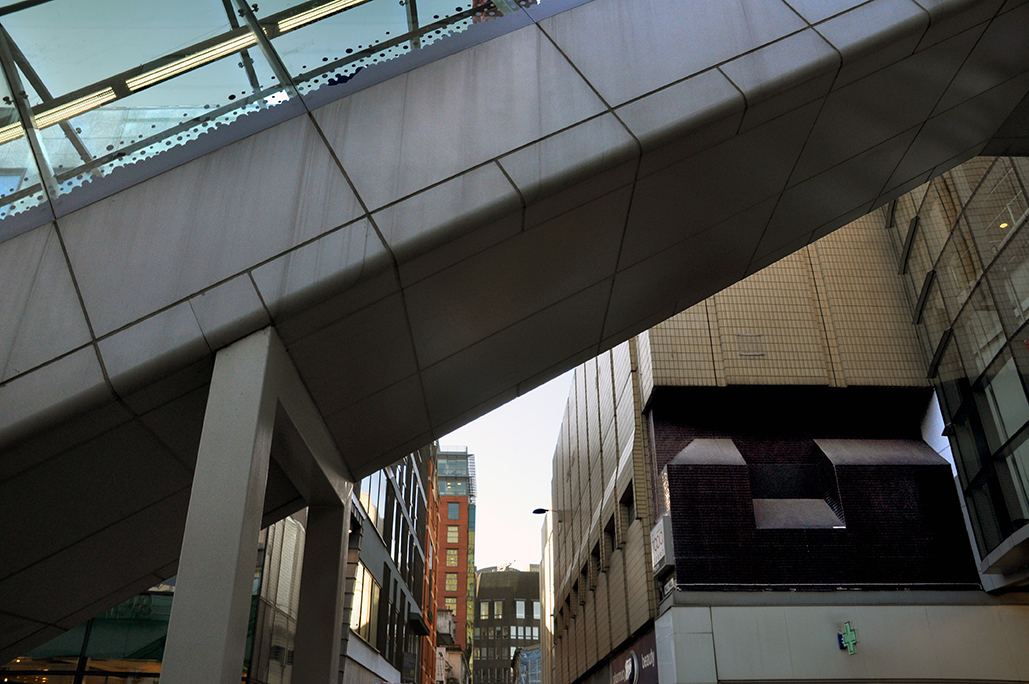
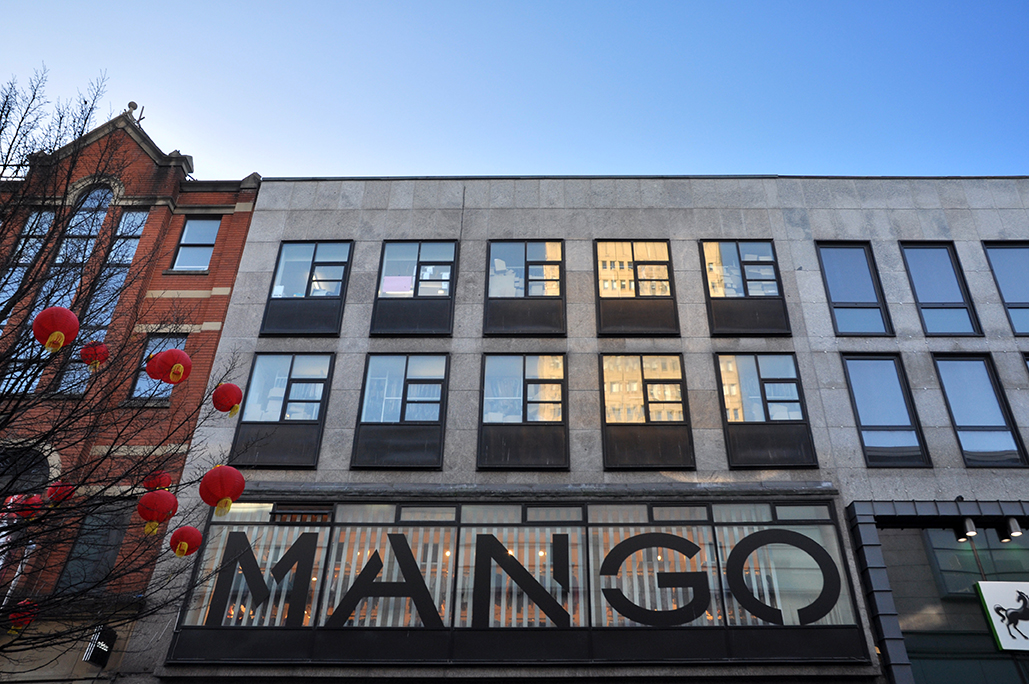
To the east is the Arndale, I chose to concentrate on the western elevation and the extant facades that chart a story from Victorian to Moderne – with a little rebuild, pastiche and grandiose Classicism in between.
See what you think, the sooty deposits have long been sandblasted away, much of the previous exciting noise and clutter, of above eye level signage ceases to shout, from just below the rooftops.
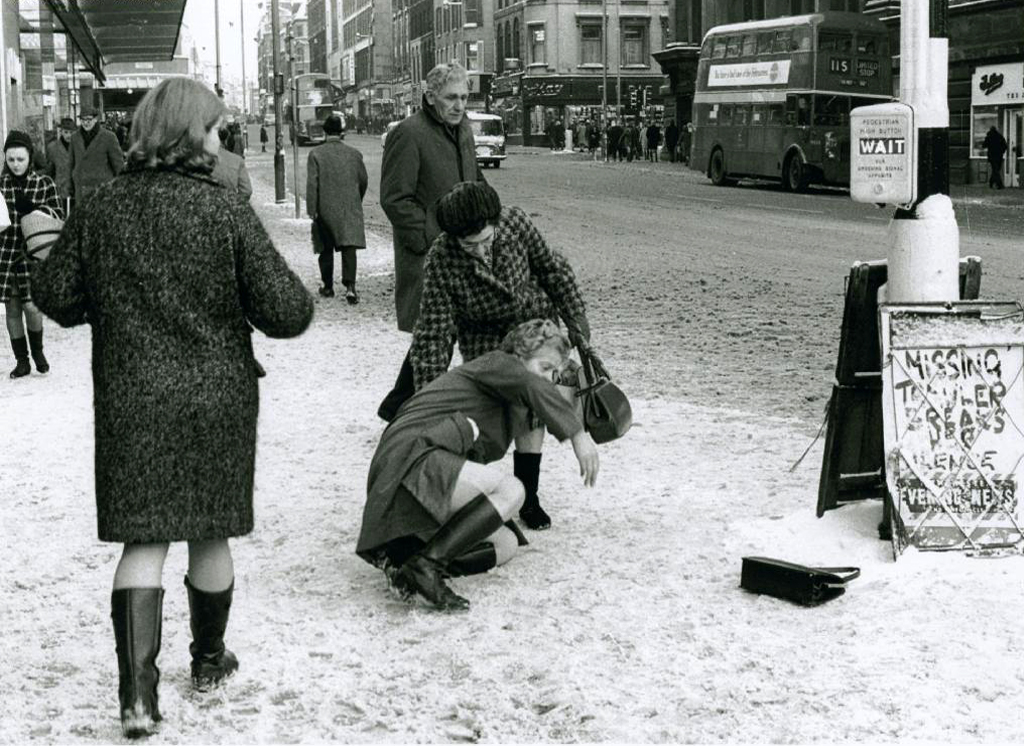
City streets are by their nature subject to movement and change, things literally come and go – in milliseconds, days and decades. People and places are shaped by the forces of function and fashion, economics and history.
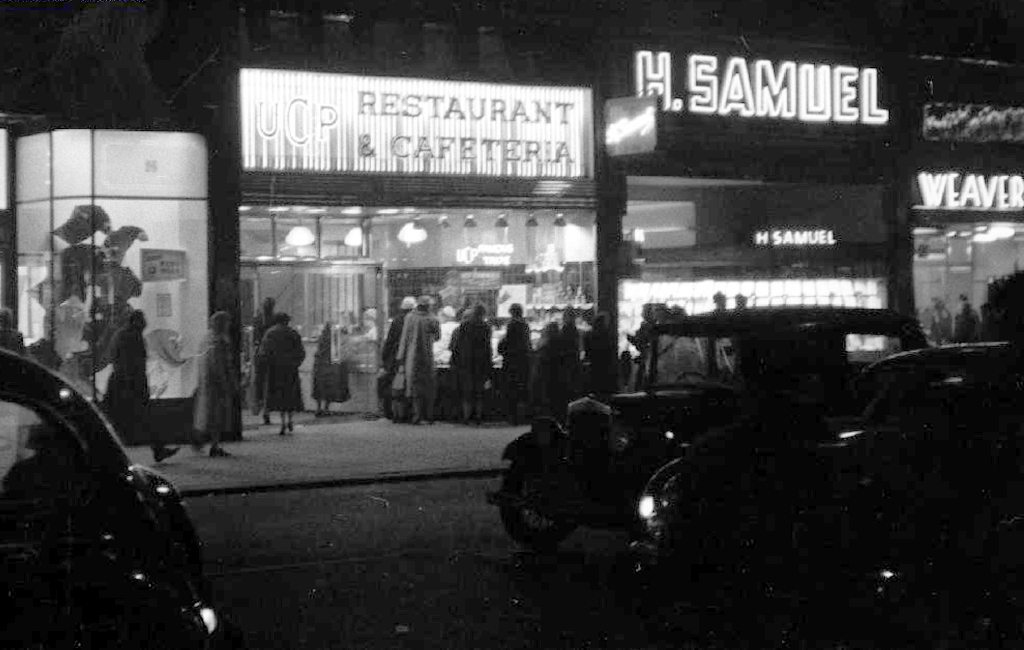
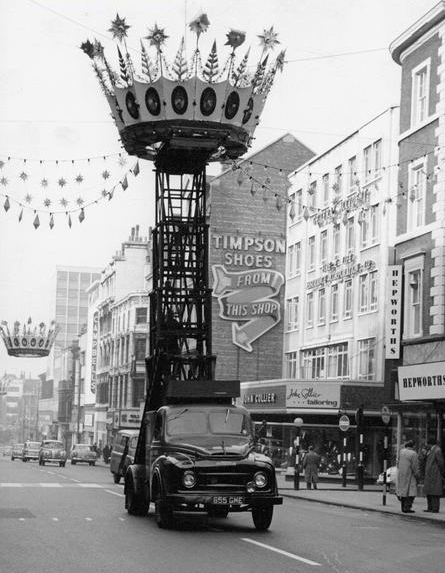
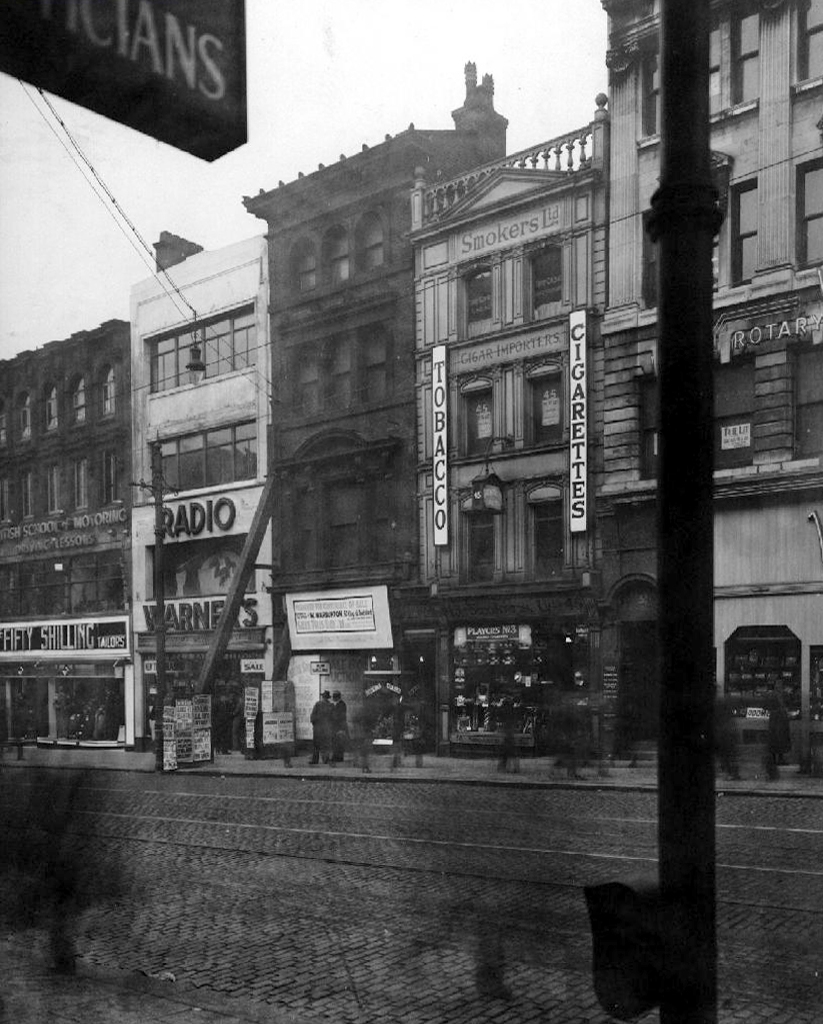
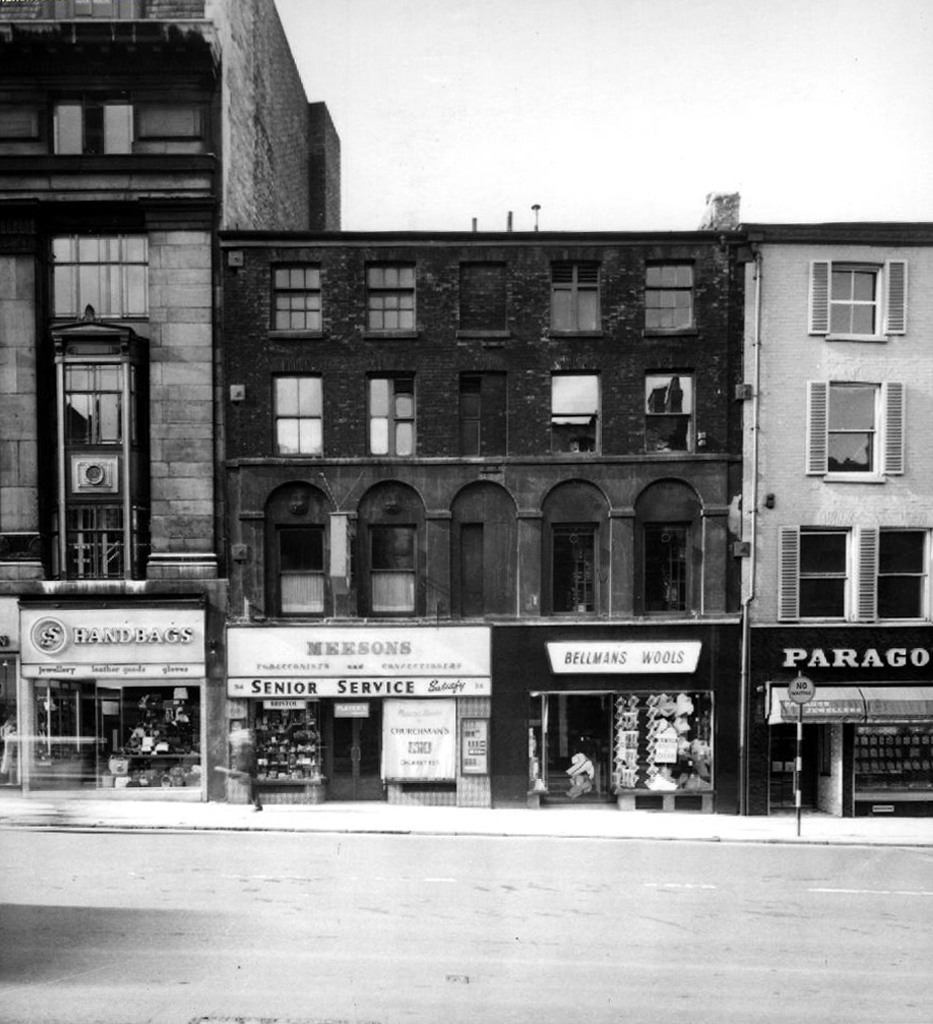
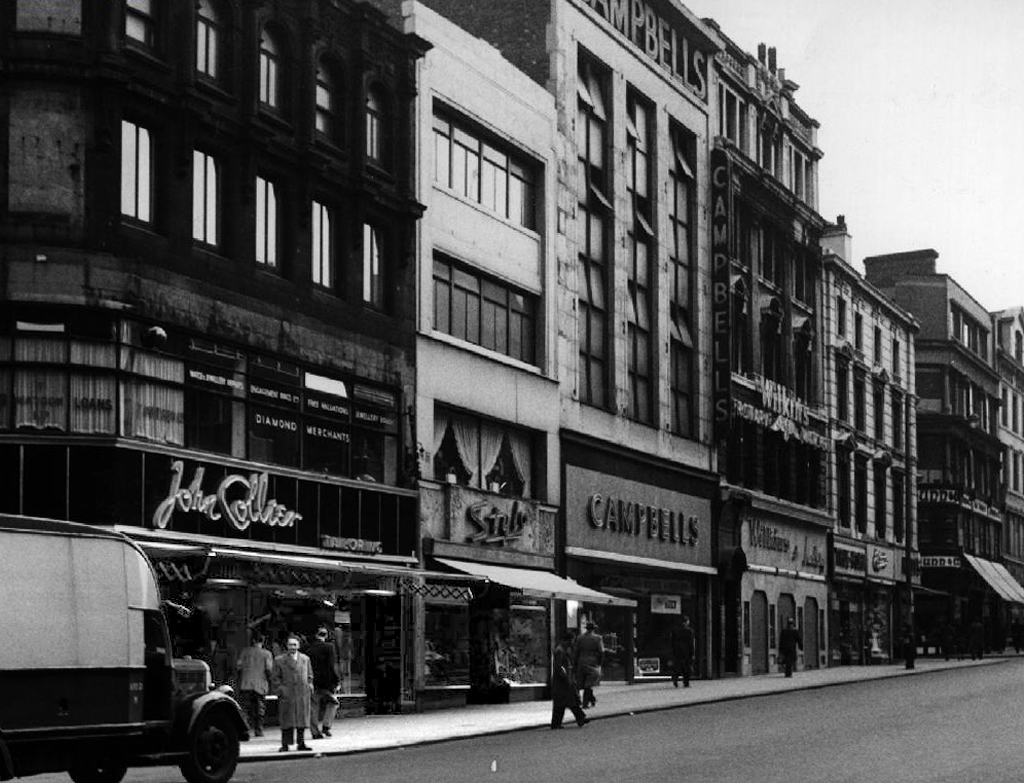
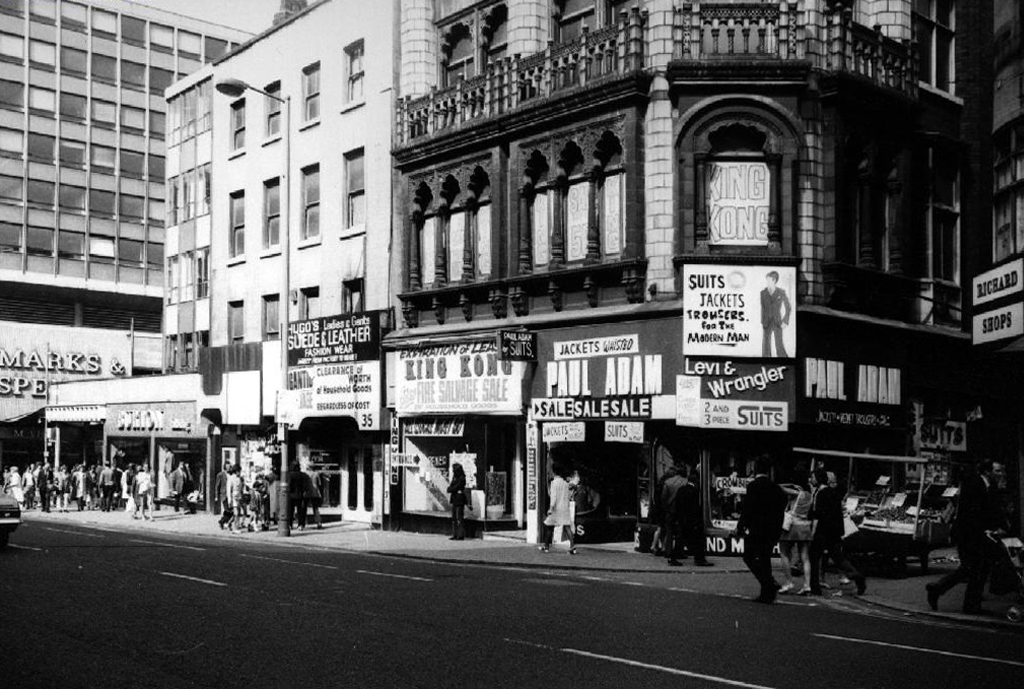
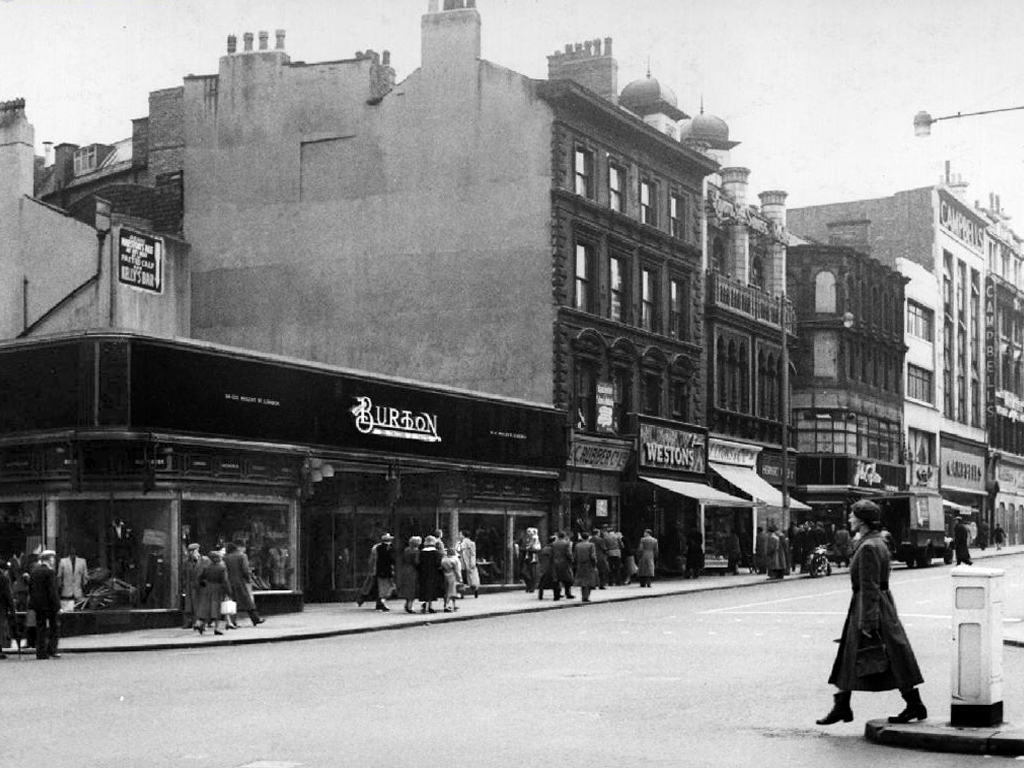
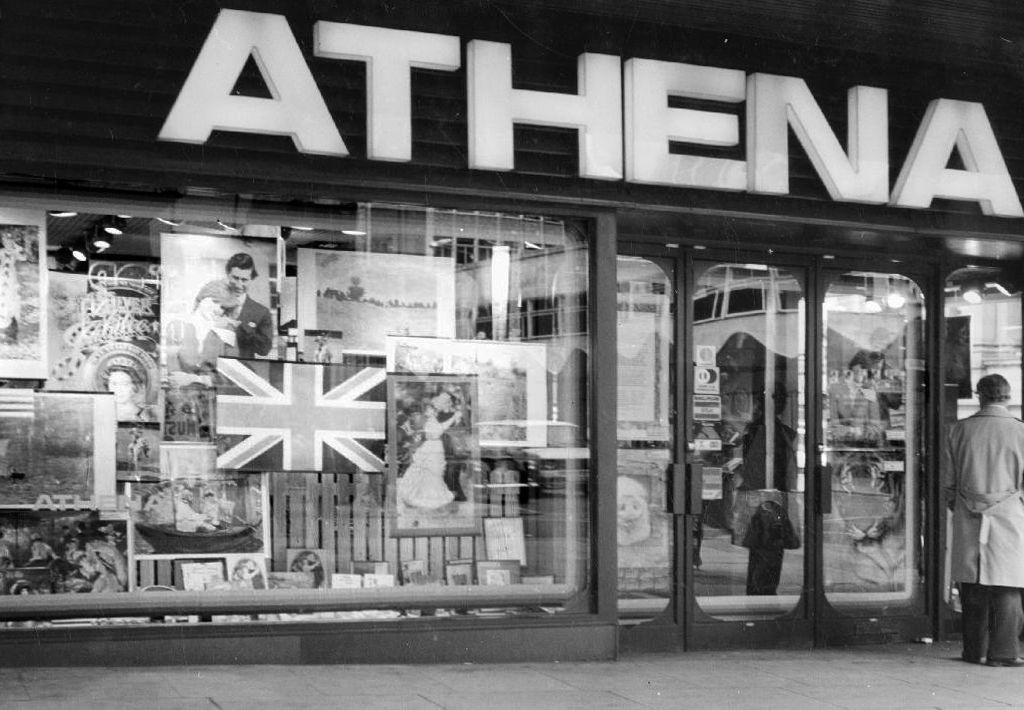
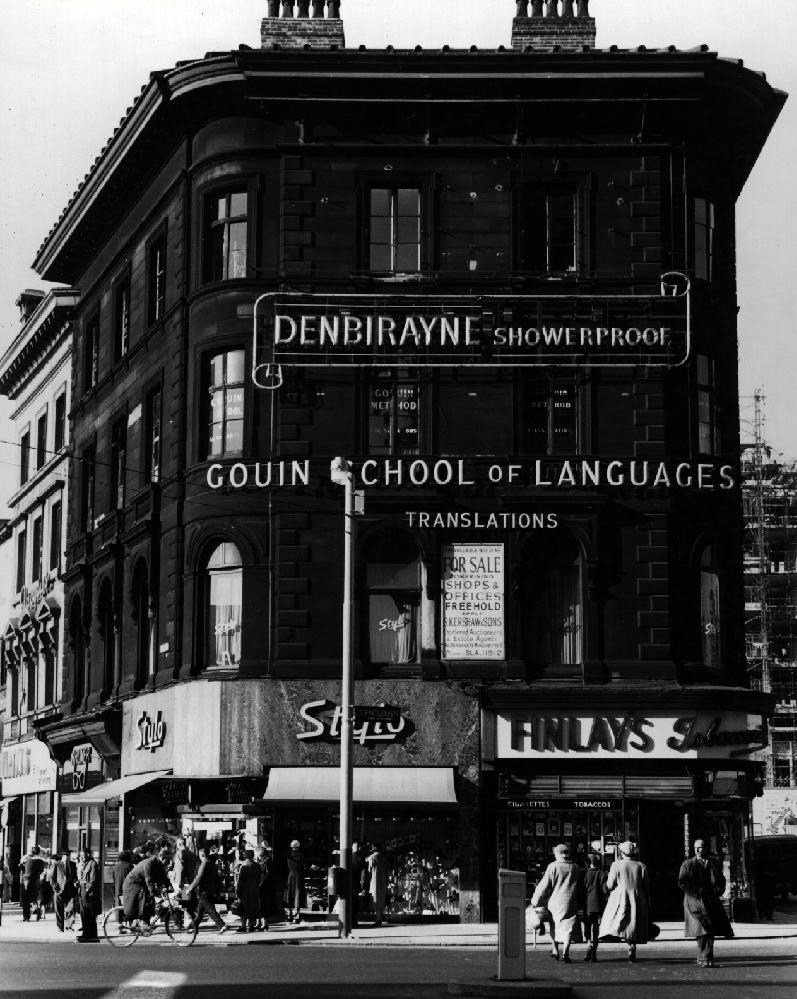
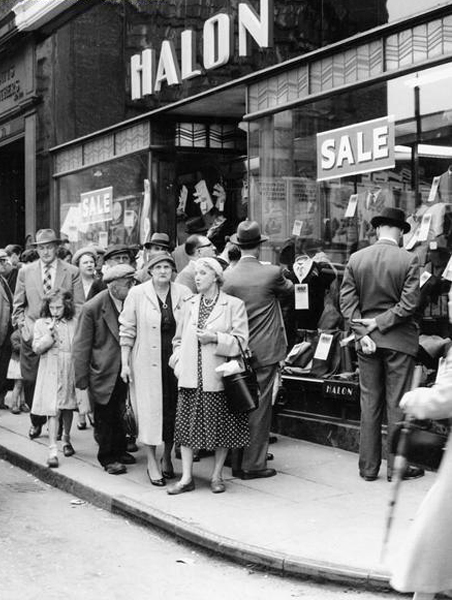
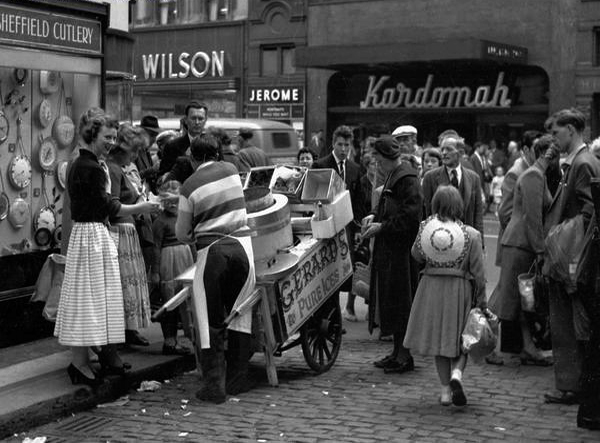
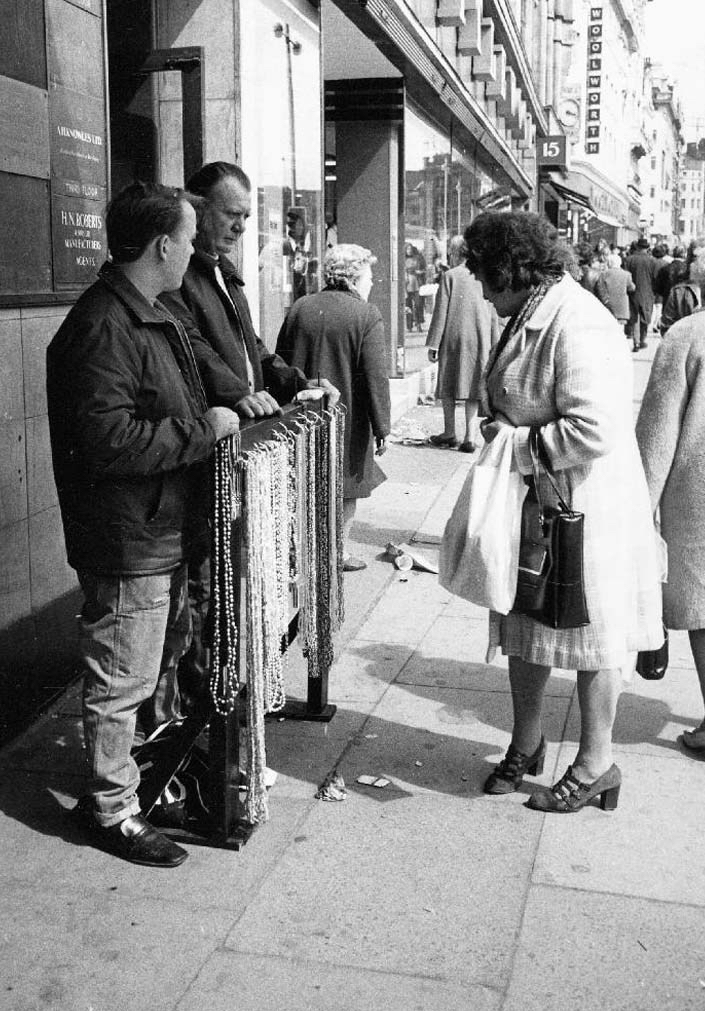
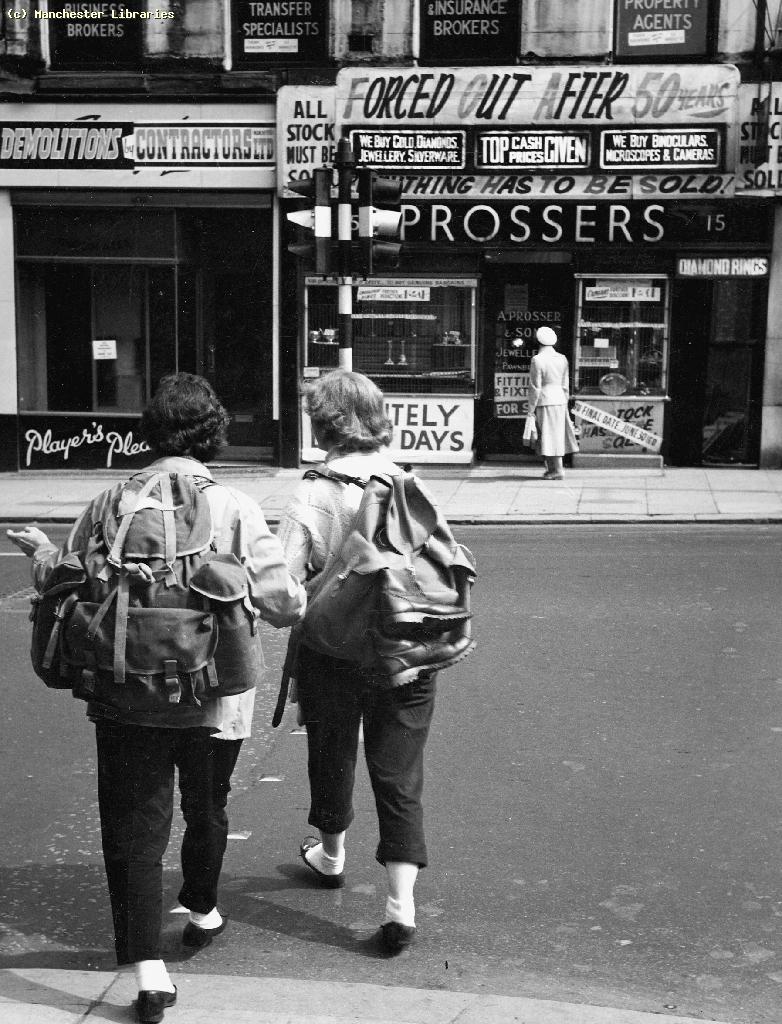
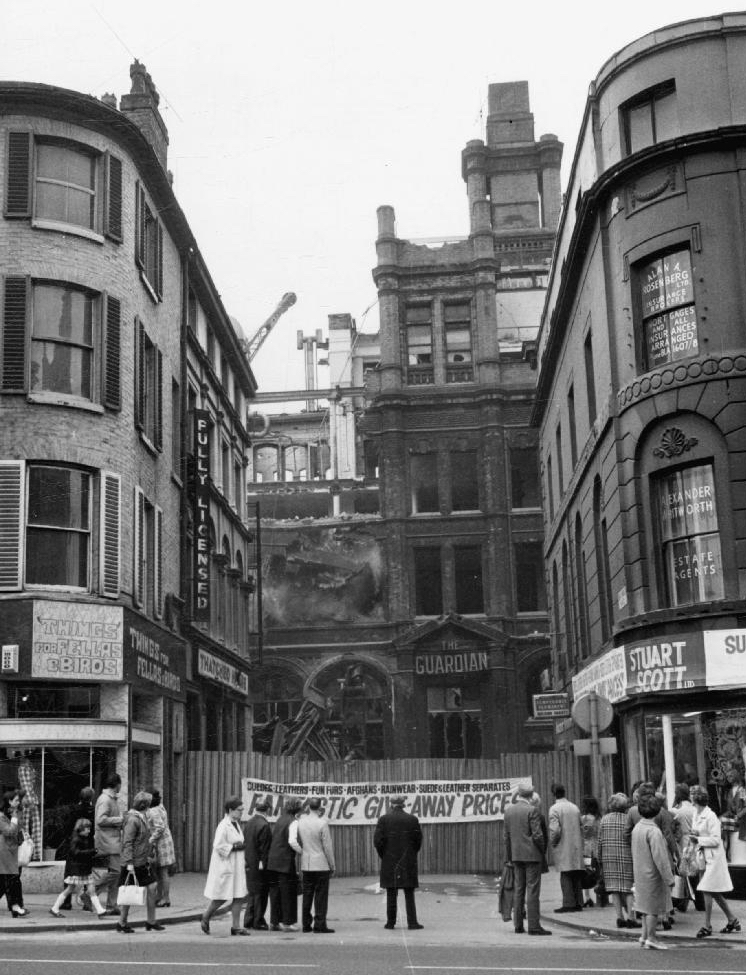
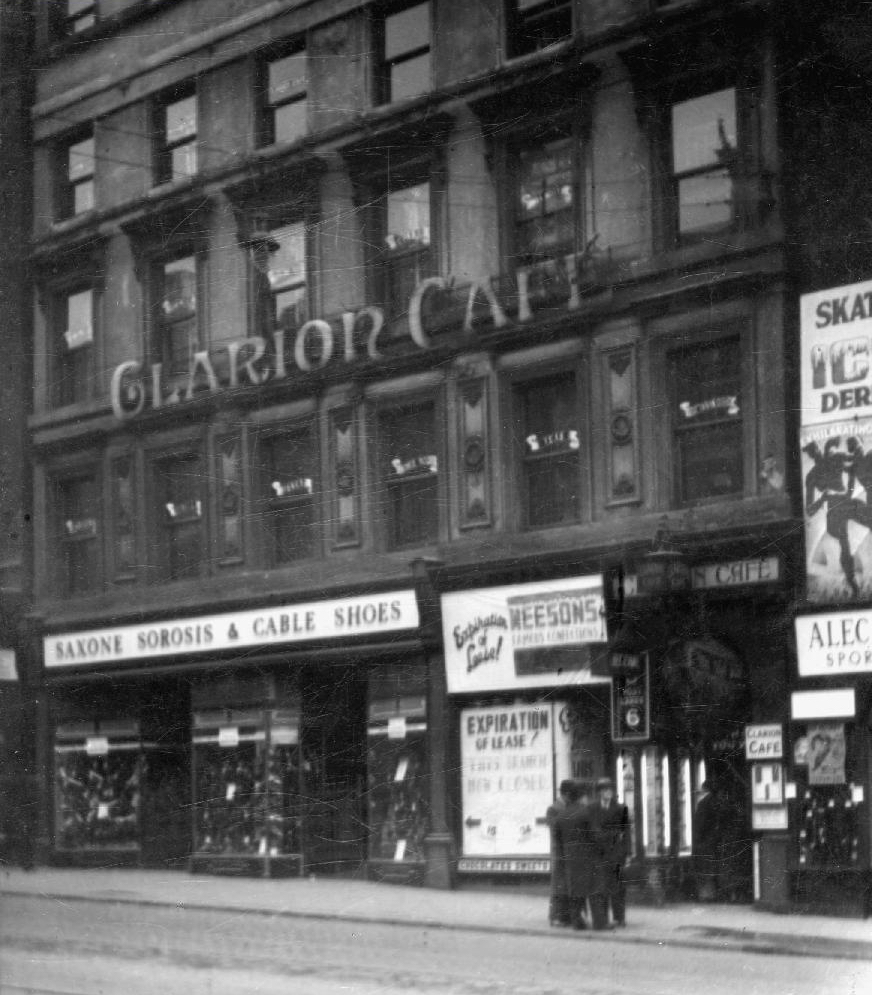
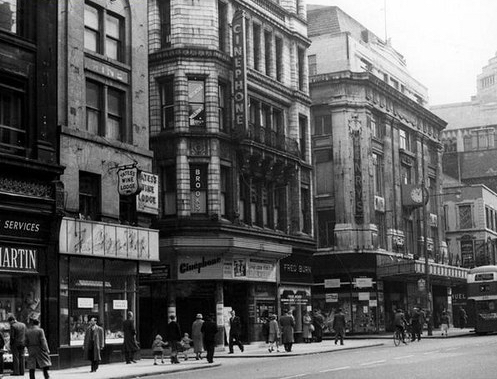
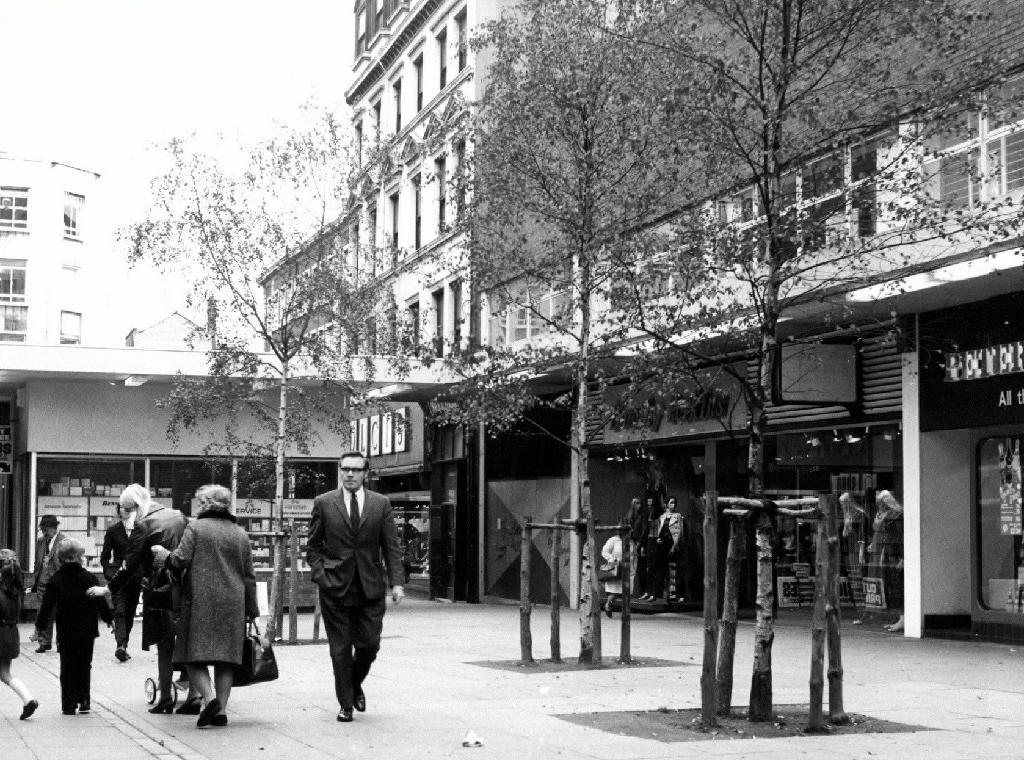
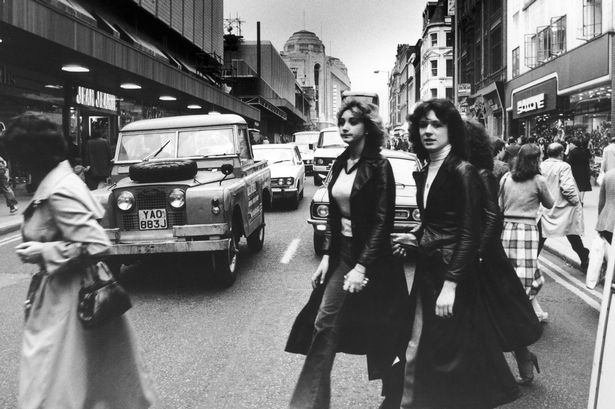
Before the Arndale, pre-pedestrianisation, Market Street, from the Fifties until the Seventies, was one of Manchester’s key arterial, retail thoroughfares. Mixing mixed traffic, shops, cafés and restaurants, bars, cinemas, offices and administration.
The architectural skyline, had the raggedy silhouette, of a century of build and rebuild.
Lower your eyes, there’s Classical, Gothic, Baroque, local Rococo, Deco, Moderne and Modern – that’s right Madam no two the same, four for a pound, get it while you can.
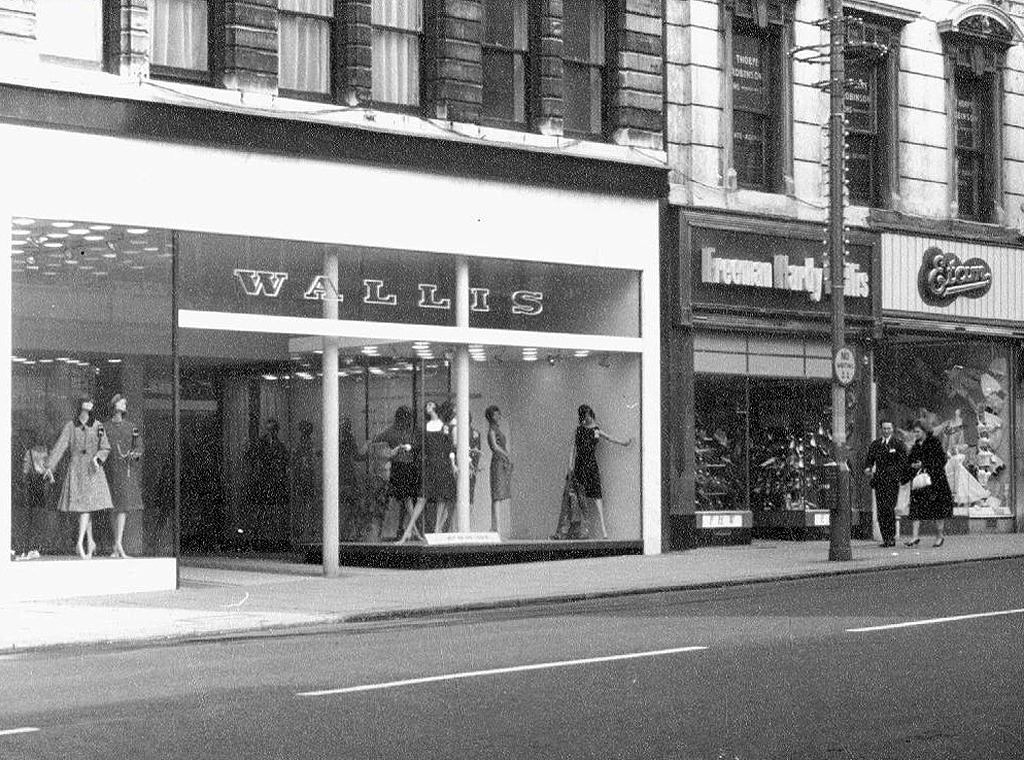
Lower still, things are still never still, a riot of colour in black and white Vitrolite.
Neon abounds, the names are never changed to protect the innocent.
Local traders are slowly replaced by national and international multinationals.
You have nothing to lose but but your chain-store now.
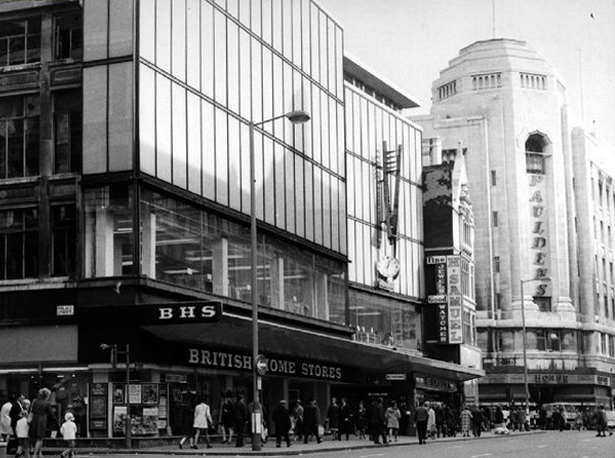
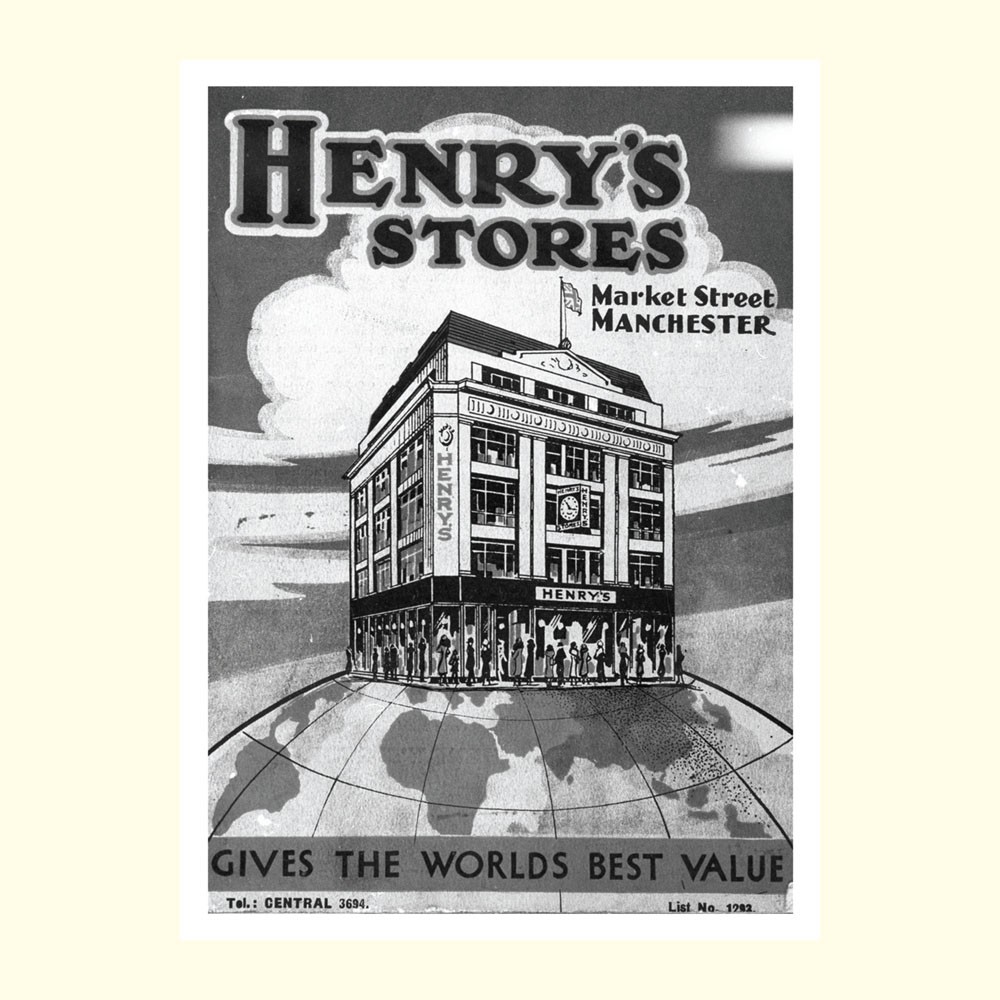
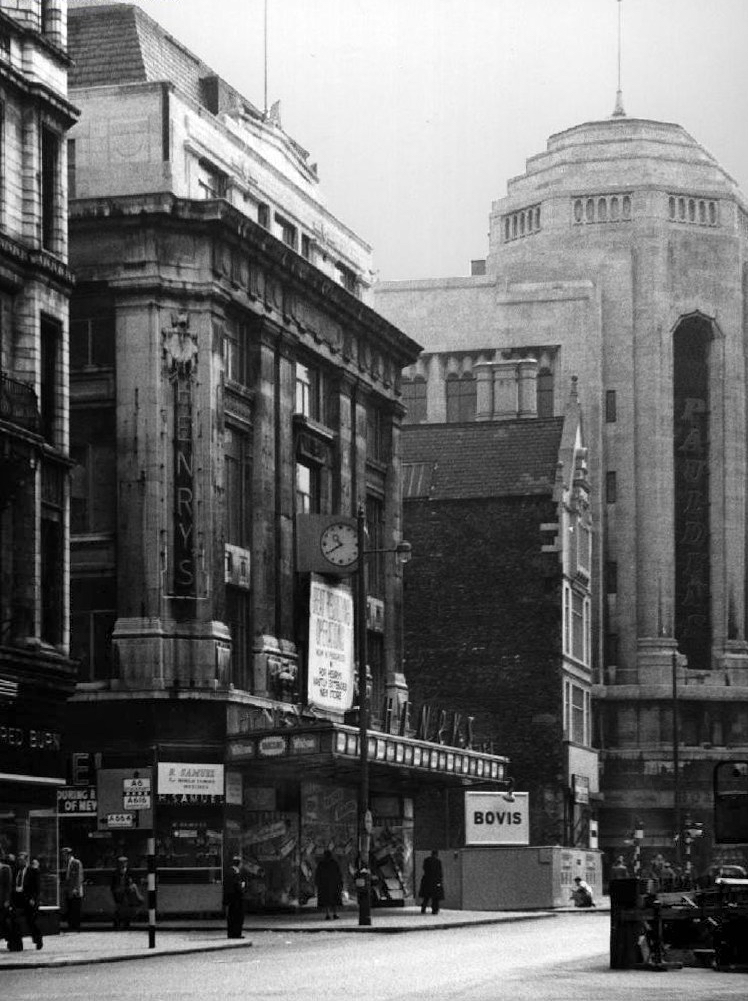
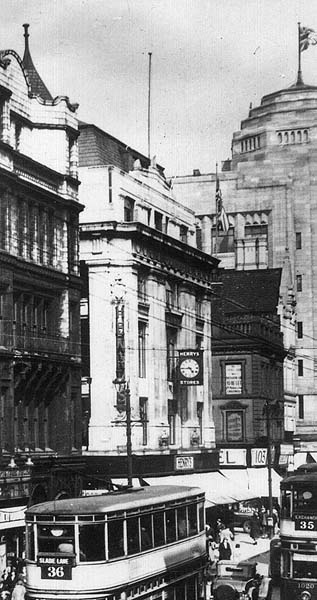
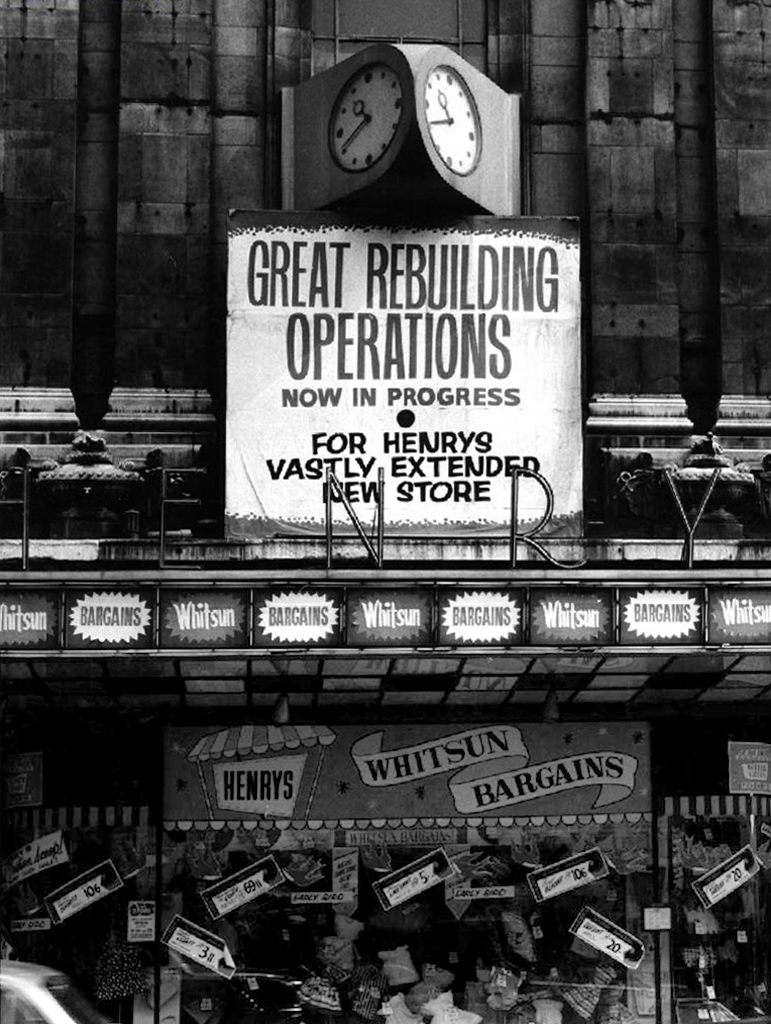
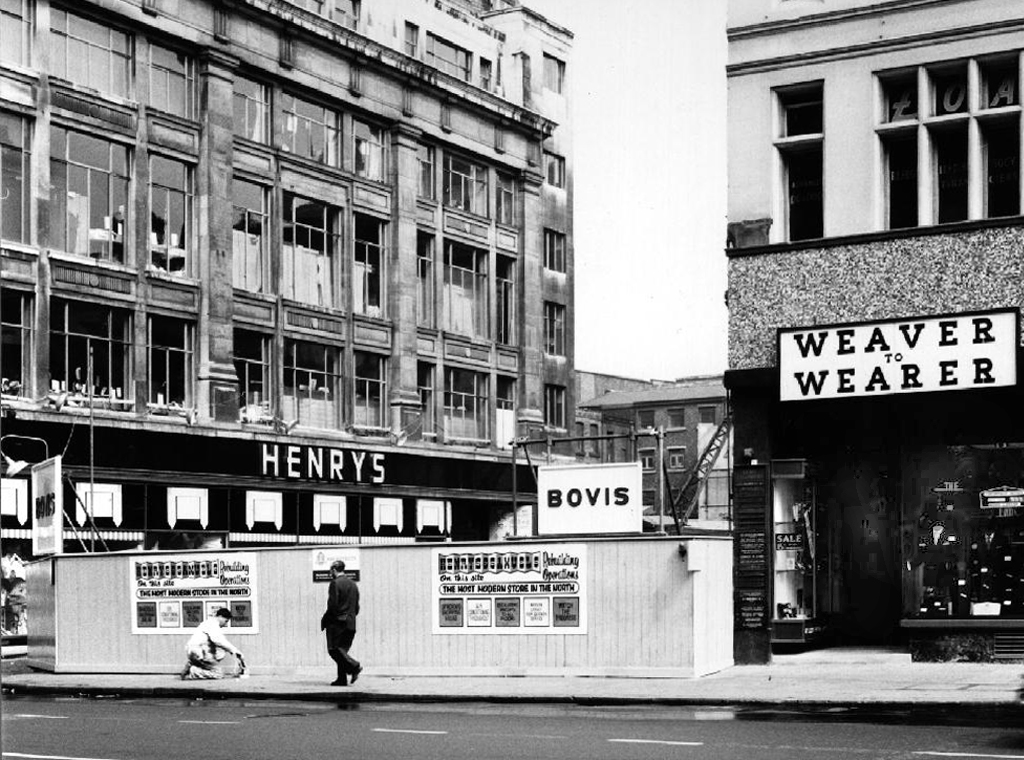
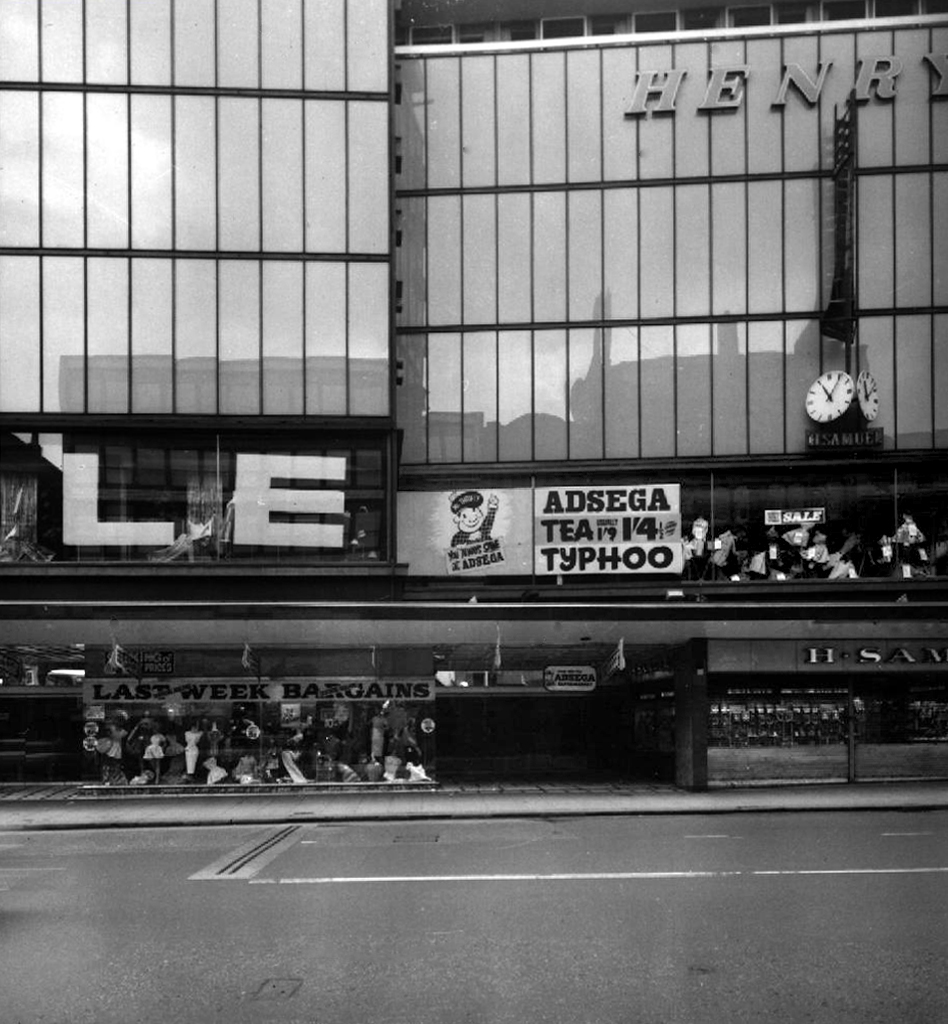
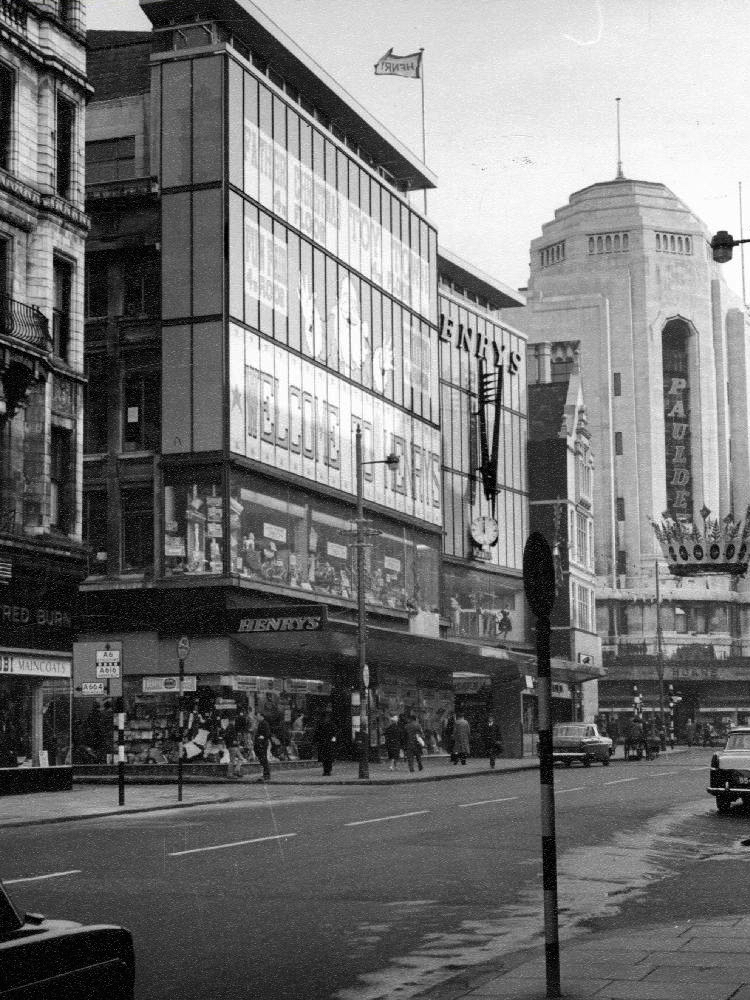
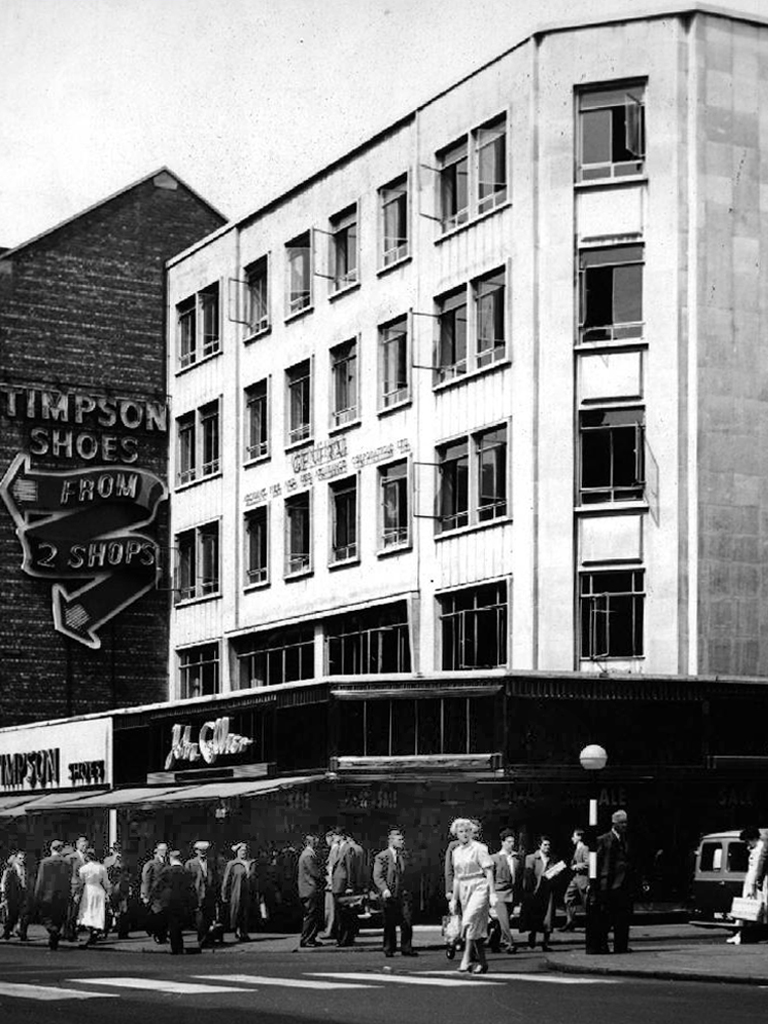
Henry Cohen came to Manchester around 1880. In 1910 he opened a men’s clothing outlet at the corner of Market Street called the Smart Outfitting Company. Having turned down a chance to join Marks and Spencer, he eventually built his department store in Market Street which opened in 1923. Henry’s Stores was redeveloped in the early 60’s acquiring an extension and a unifying Modernist façade, the site and store was acquired by BHS in the mid 60’s.
Rylands Building is a Grade II listed building in the building was originally built as a warehouse by the Rylands textile company which was founded by John Rylands. The building was designed by the eminent Manchester architects, Fairhursts, in an Art Deco style. It is clad in Portland stone and features a decorative corner tower and eclectic ‘zig zag’ window lintels.
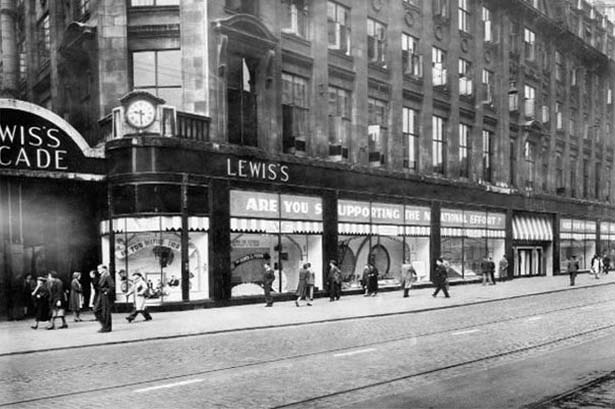
Following a fire, in 1957, which totally destroyed the premises of Paulden’s Department Store, in All Saints, the company acquired the Rylands warehouse building and converted it to a store. This was then a direct rival to the Lewis’s store, on the opposite side of Market Street. In 1973 Debenhams, the owner of Pauldens rebranded the store in their name. Since that time it has remained Debenhams.
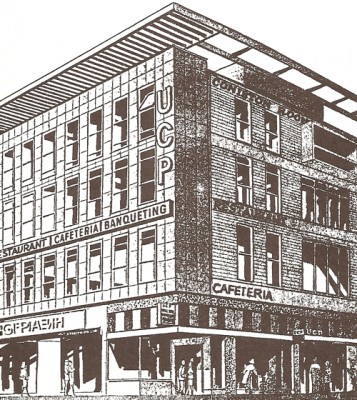
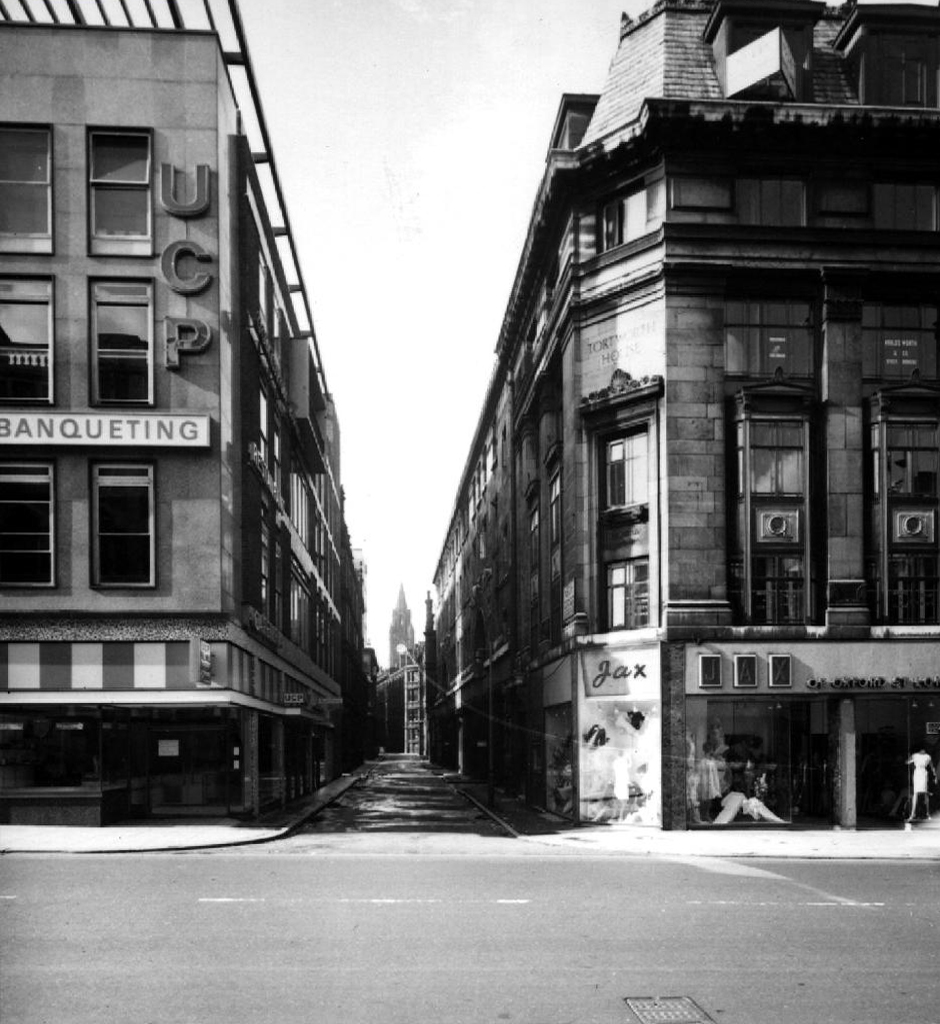
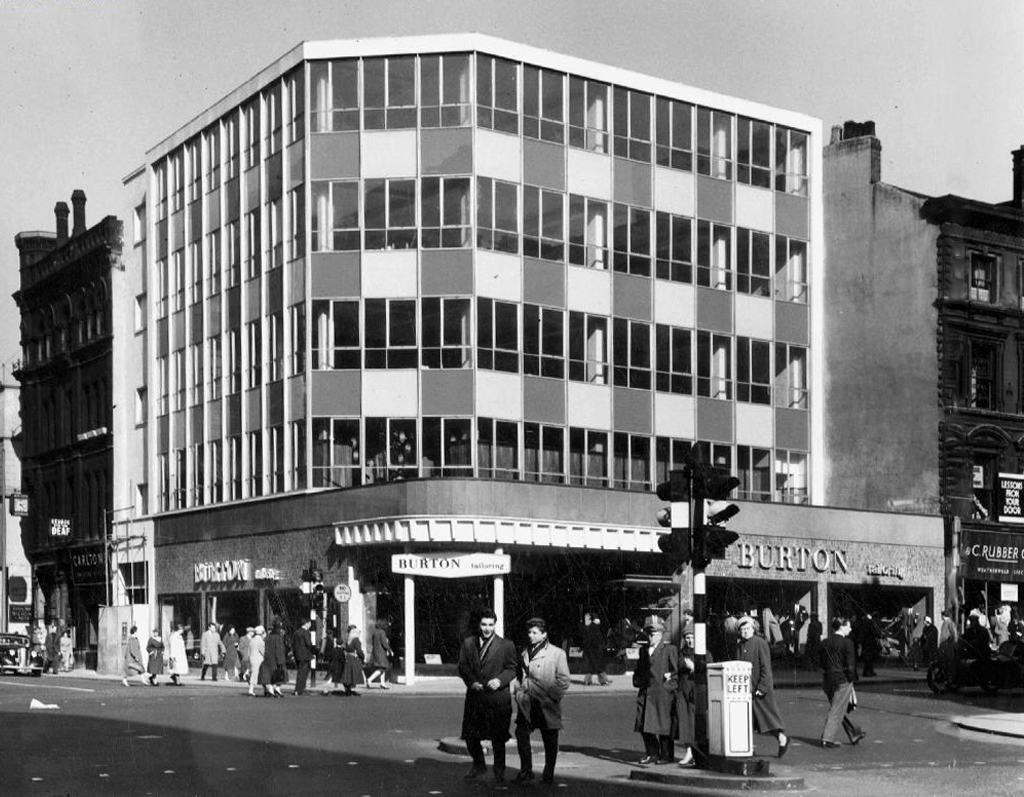
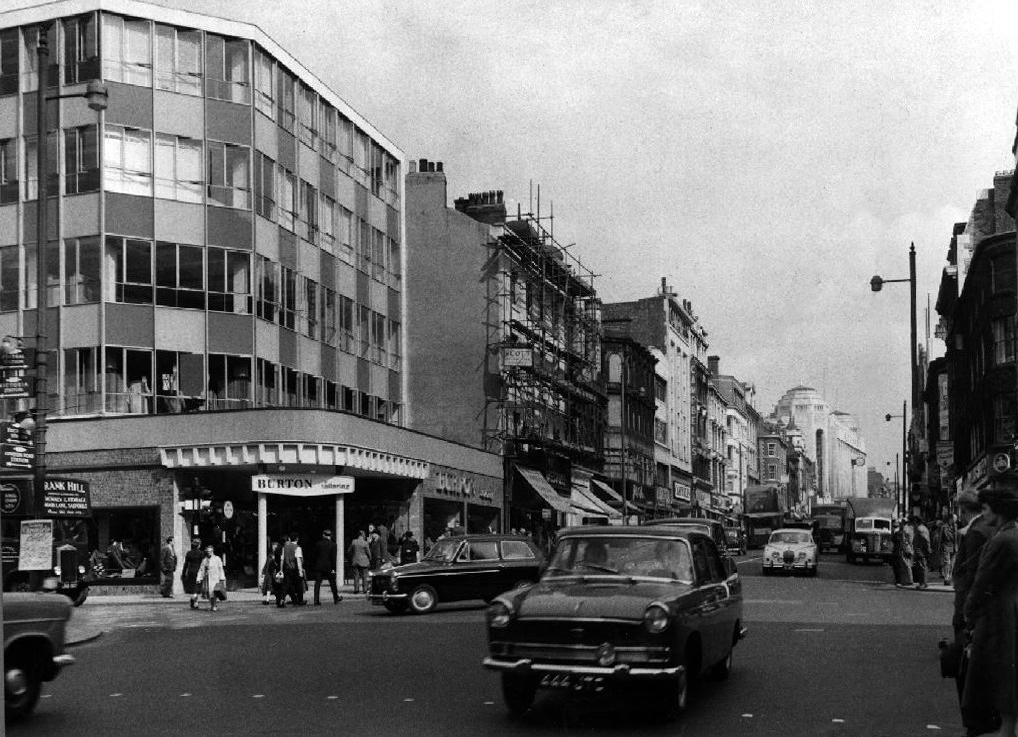
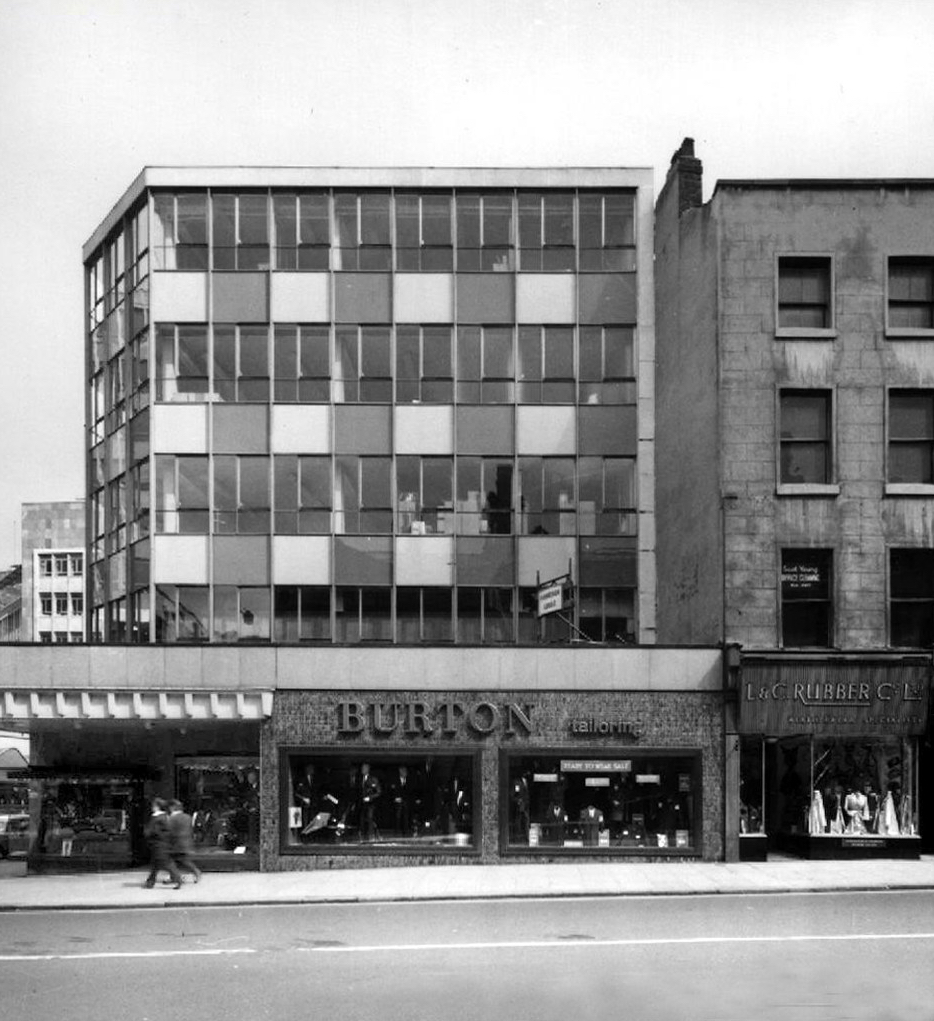
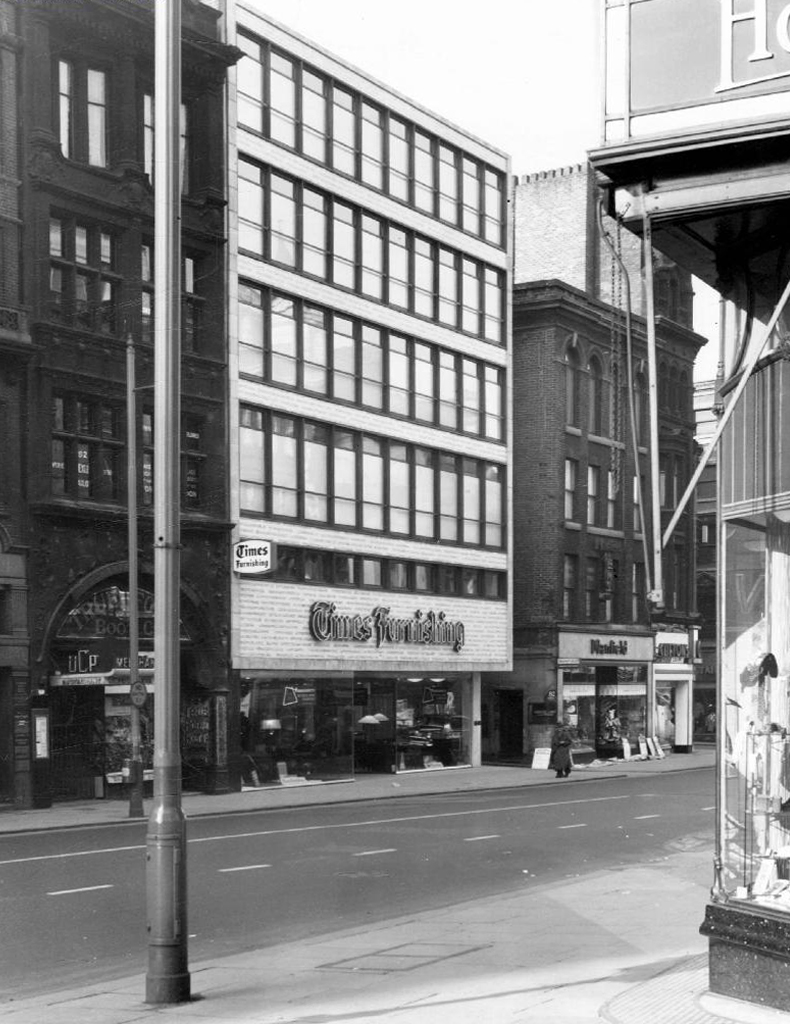
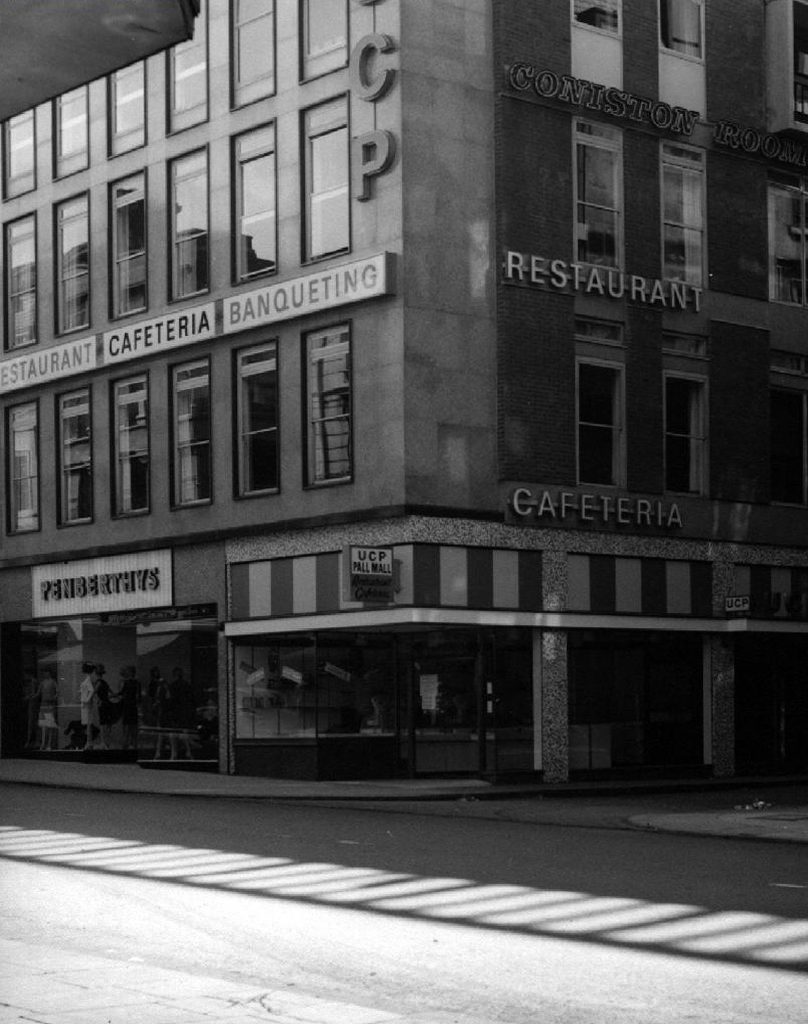
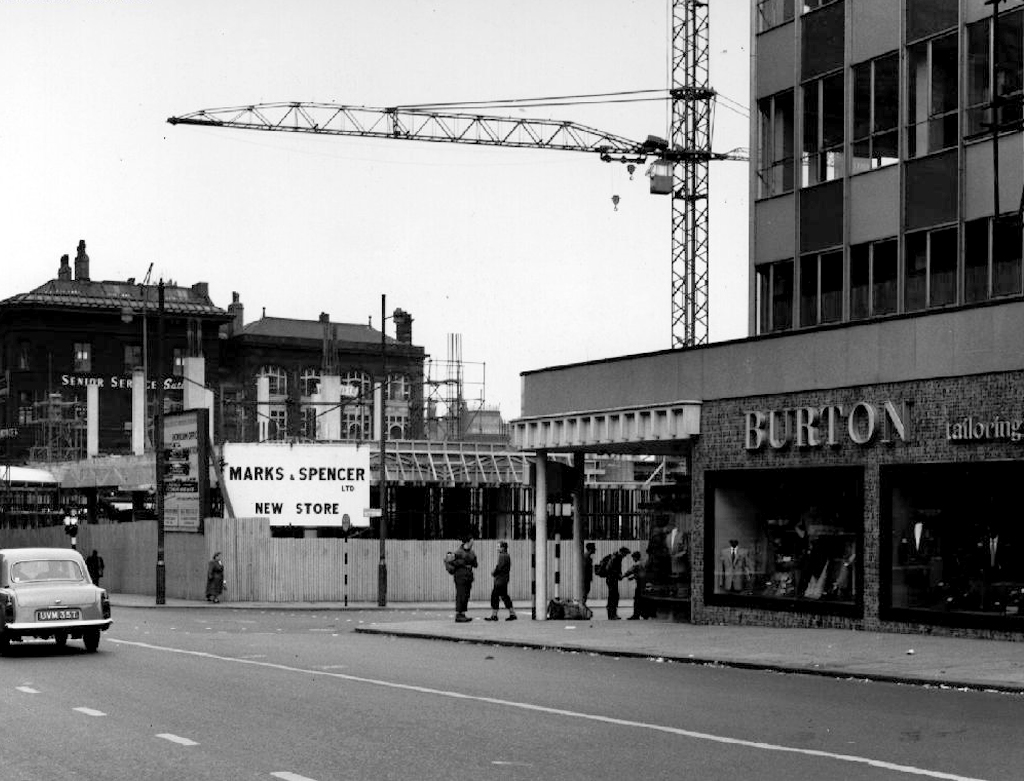
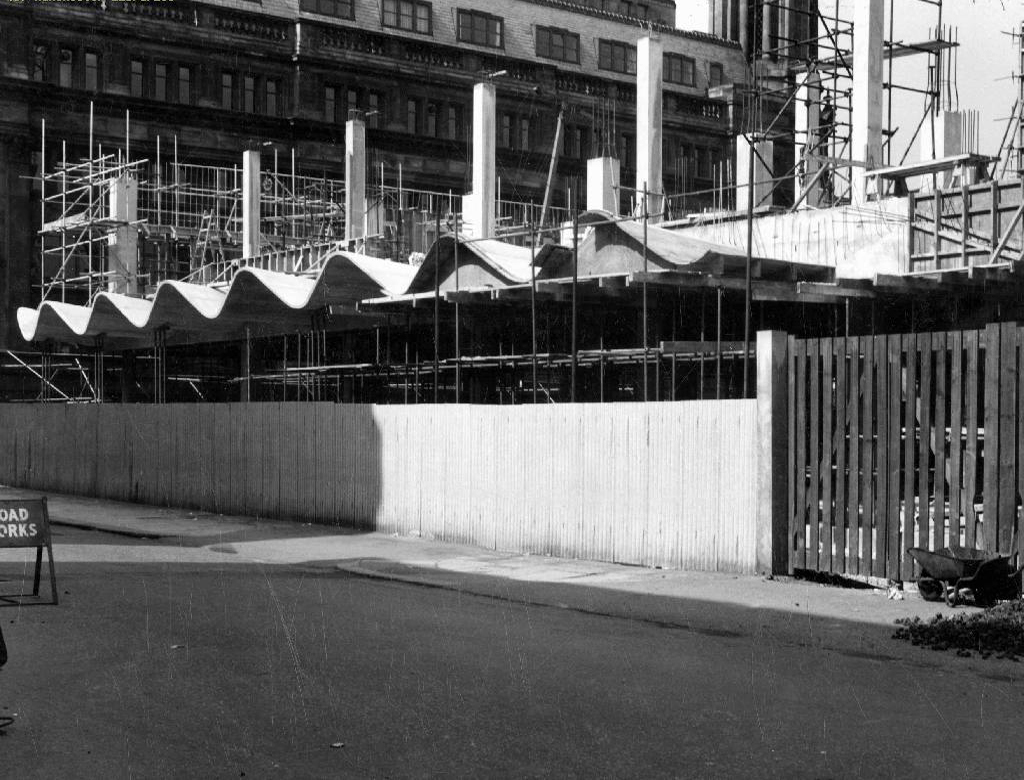
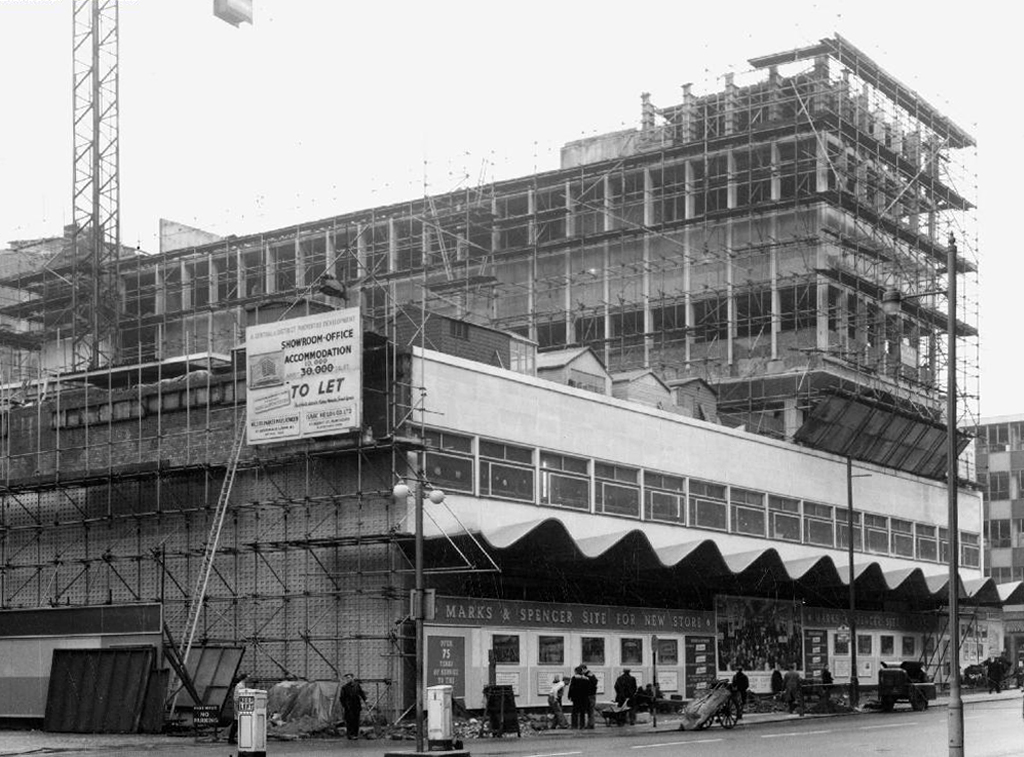
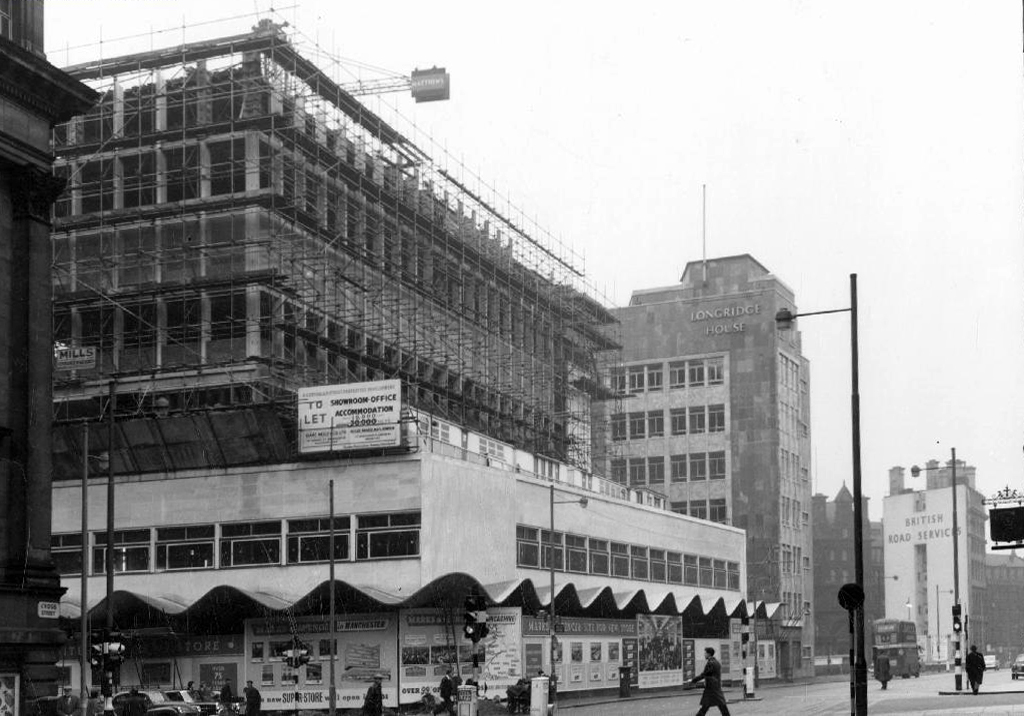
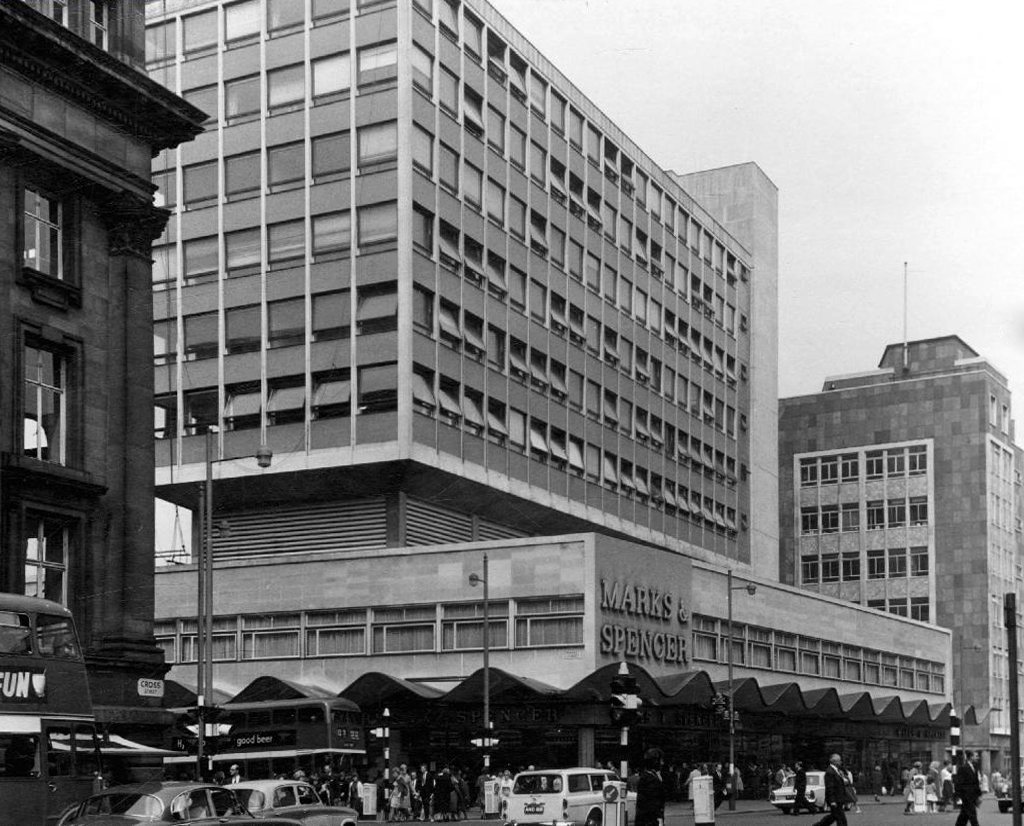
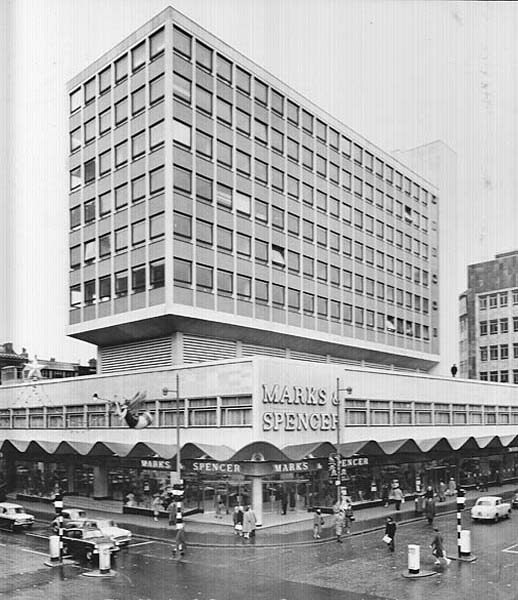
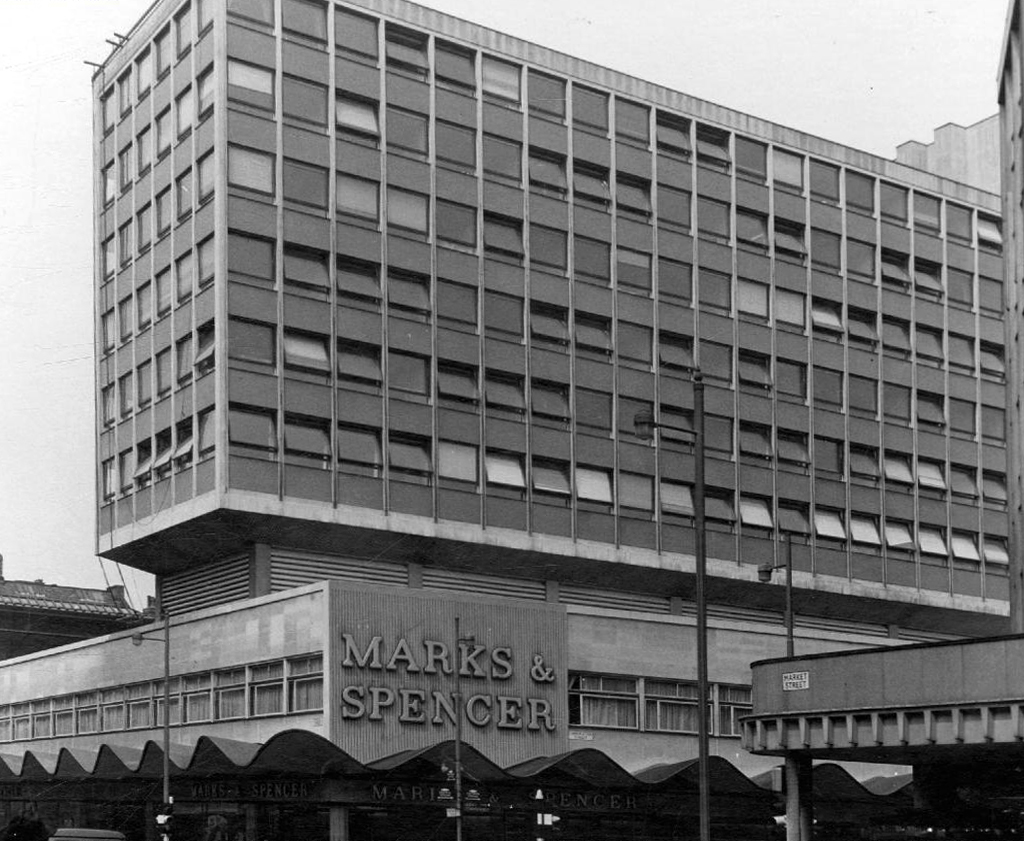
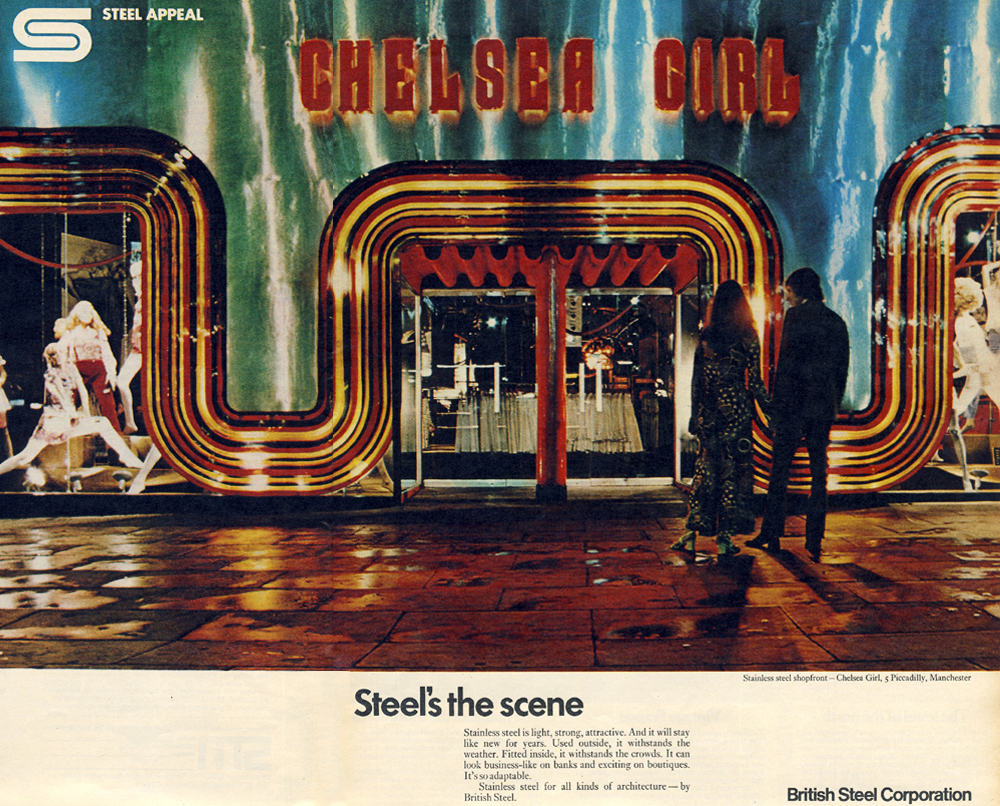
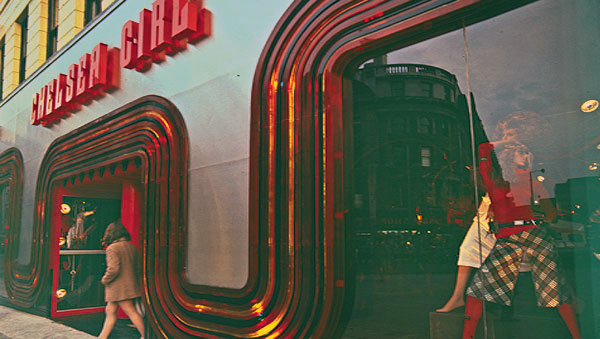
Marks and Spencers and Burton’s both undertook extensive Modernist building in the early 60’s on on the Corporation Street site, neither have survived. The Chelsea Girl steel frontage, UCP Restaurant beloved of the Manchester Modernists, Kardomah Café and countless other landmarks are long gone. Lewis’s has become Primark.
The double indignity of the Arndale and a bomb have changed things forever.
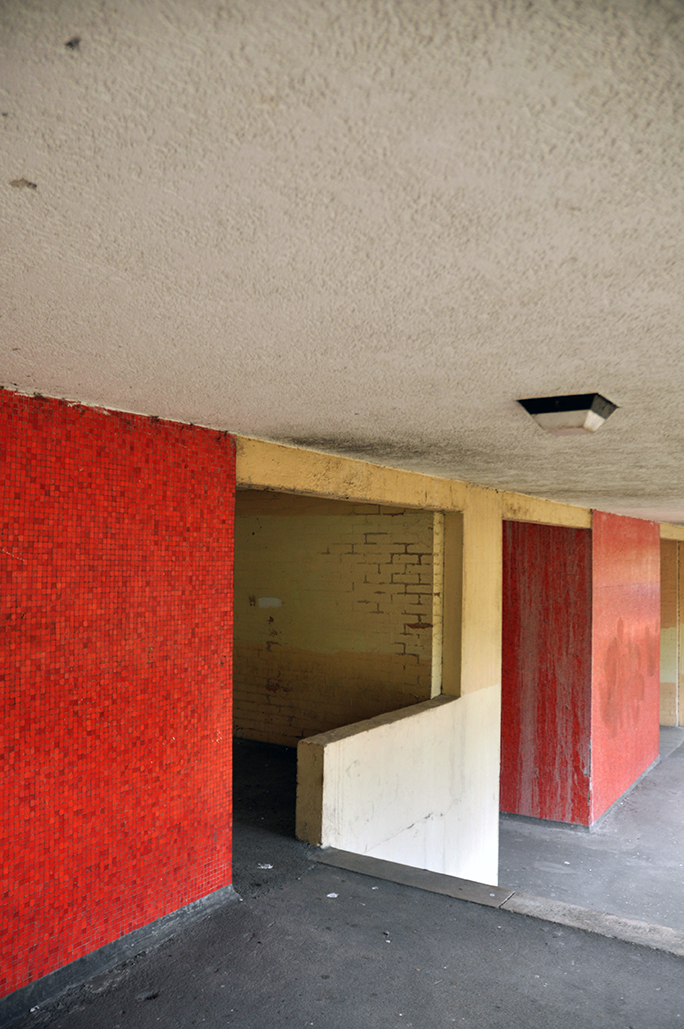
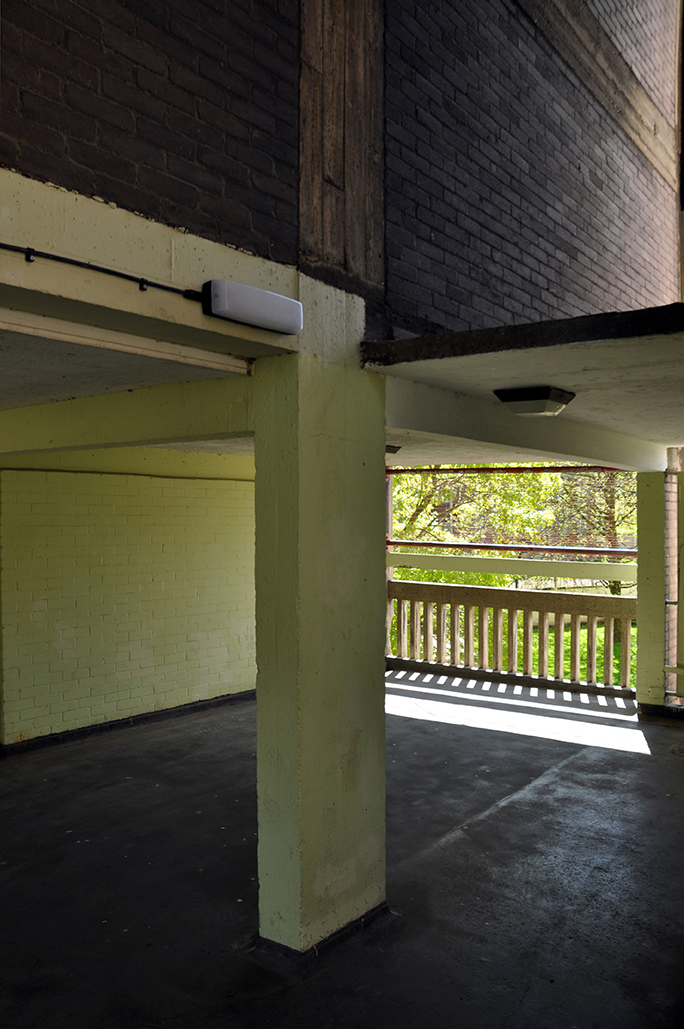
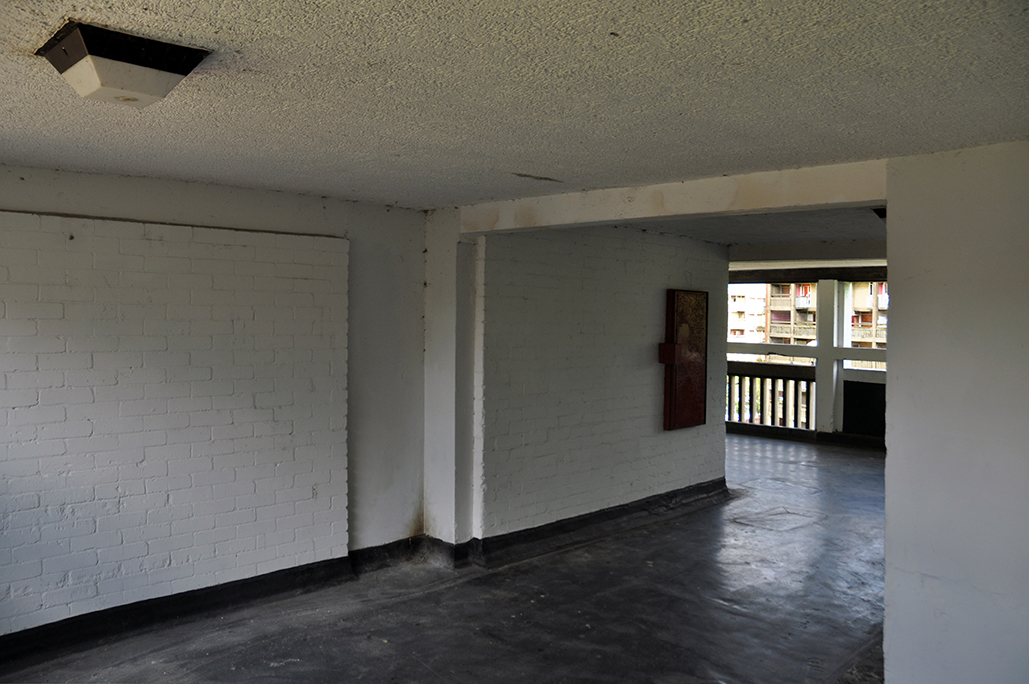
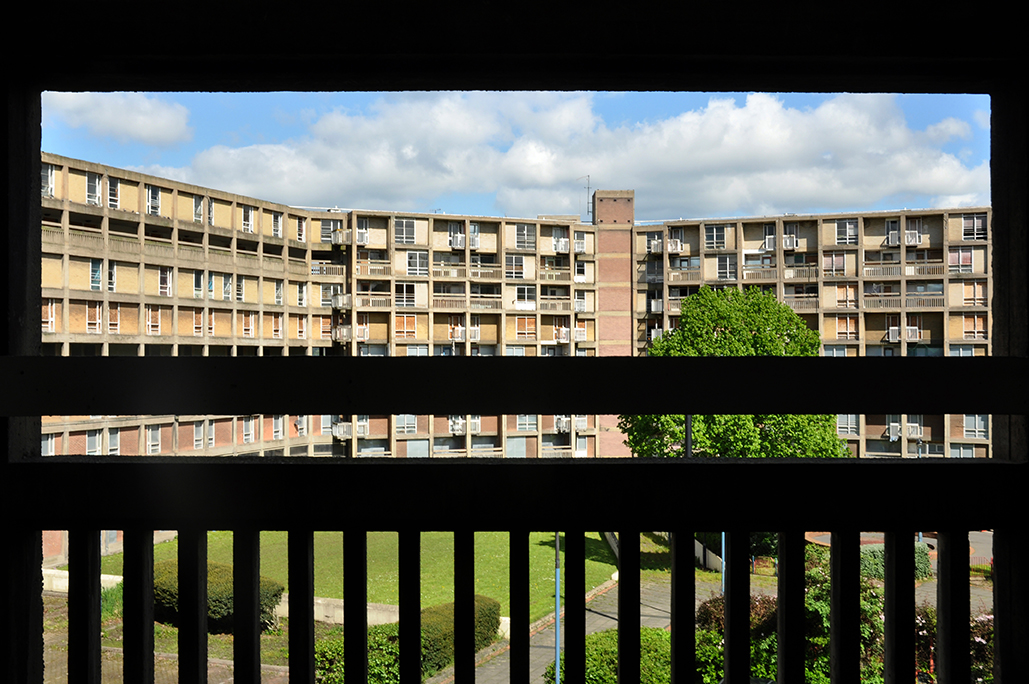
Once a beacon of Modernist design, now a listed concrete grid, in arrested decline, an essay in status and stasis, high above the city of Sheffield.
A handful of former residents of the once acclaimed social housing, cling to the western edge.
Phase one of the Urbansplash redevelopment has carefully coloured in a portion of the eastern corner, then exited, their cladding tucked tightly under their arms.
Impasse.
All tinned up with nowhere to go, to walk the walkways, is to enter a ghost town, where no tumbleweeds tumble. Billy the corporation cleaner is happy to work alone, sweeping the empty spaces.
“Some don’t like working up here, I don’t mind my own company. Even if there was just one resident left, we’d still have to keep the place in order. You’d love my house, it’s an Army Barracks in the centre of town. Wife’s the caretaker, been in her family for three generations.”
This is the second of three visits I have made from across the Pennines.
Mark – “Why are all these photographers coming here from Manchester?”
“Been here some time, this is the second flat I’ve had, just missed out on one of the new ones though. Had this one nine years. Bloke threw himself off last week, he had a wife kids, parked up and just jumped.”
Standing on the corner watching all the world go by.
Reflecting on and reflecting it’s older neighbours.
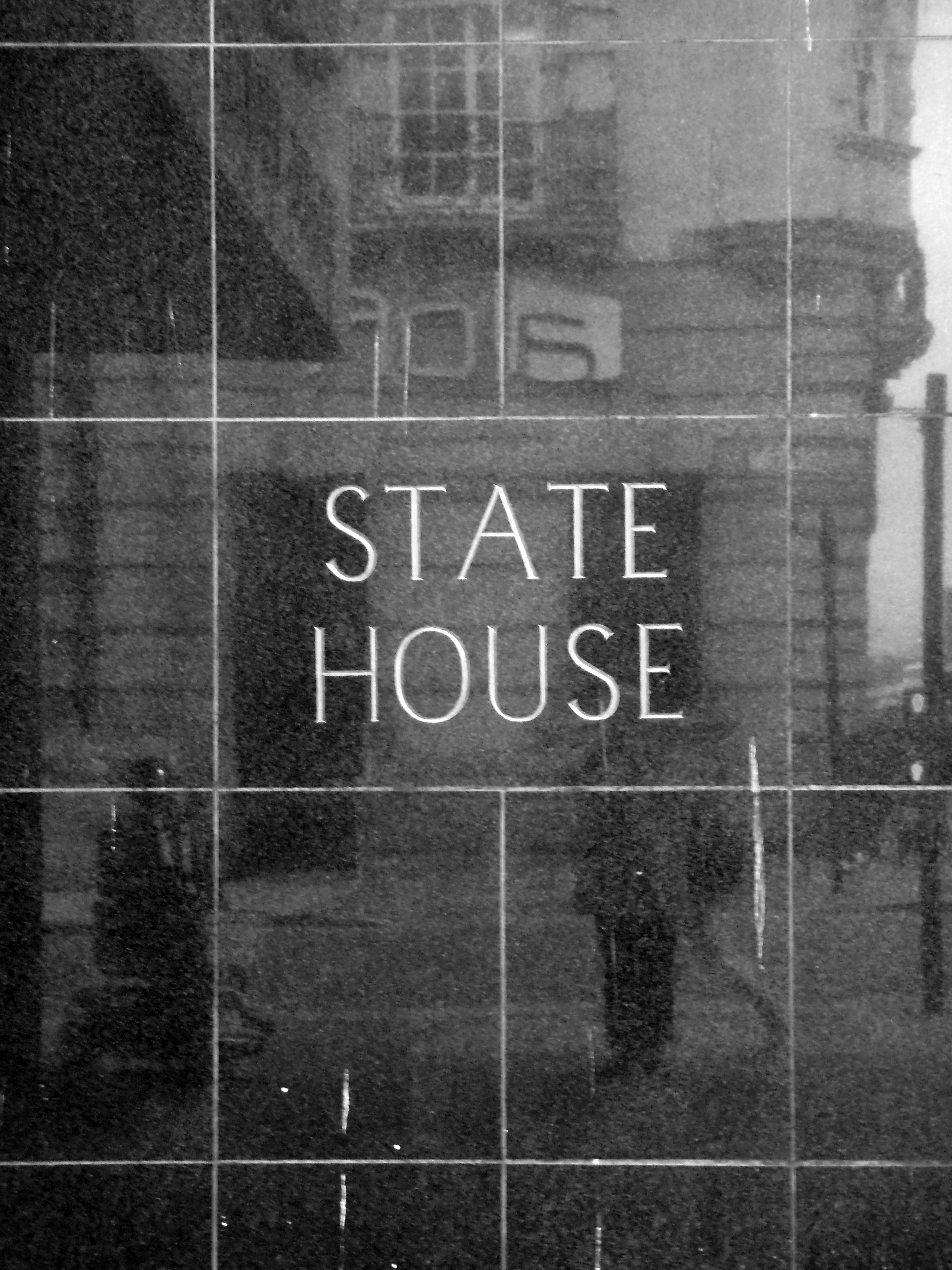
State House Dale Street.
“Built 1962 to the designs of Edmund Kirby & Sons. It has an assertive service tower, apparently clad in polished granite. Unusually, above the entrance is a concrete slab with a relief depicting what looks like a coat of arms above the building’s name. Kirby’s practice moved into the building for a time.”
Three well proportioned volumes – a central service tower, main block and outriding, lower level base.
An exciting conflation of grids, contrasting in scale and finish.
127 Dale Street, corner of North Street, just by the Ship and Mitre, across from the Queensway Tunnel entrance?
Yes that’s the one, Liverpool’s most remarkable, least remarked upon building.
So clean, so modern, so new, a delightful grid of materials, glass, steel, polished marble, brick and patinated beaten metal.
Stand back and wonder, move in and sigh with delight.
As I went about my snappy business, I was approached by a local – Mark.
Surprised by my curiously, up close, slow scrutiny of the building, he went on to explain that he was familiar with the architect Derek Jones who had worked on the design for Ormrod and Partners in 1964.
Formerly home to Higson’s Brewery offices, now housing the Merseyside Museums administration and design teams, the exterior is largely intact.
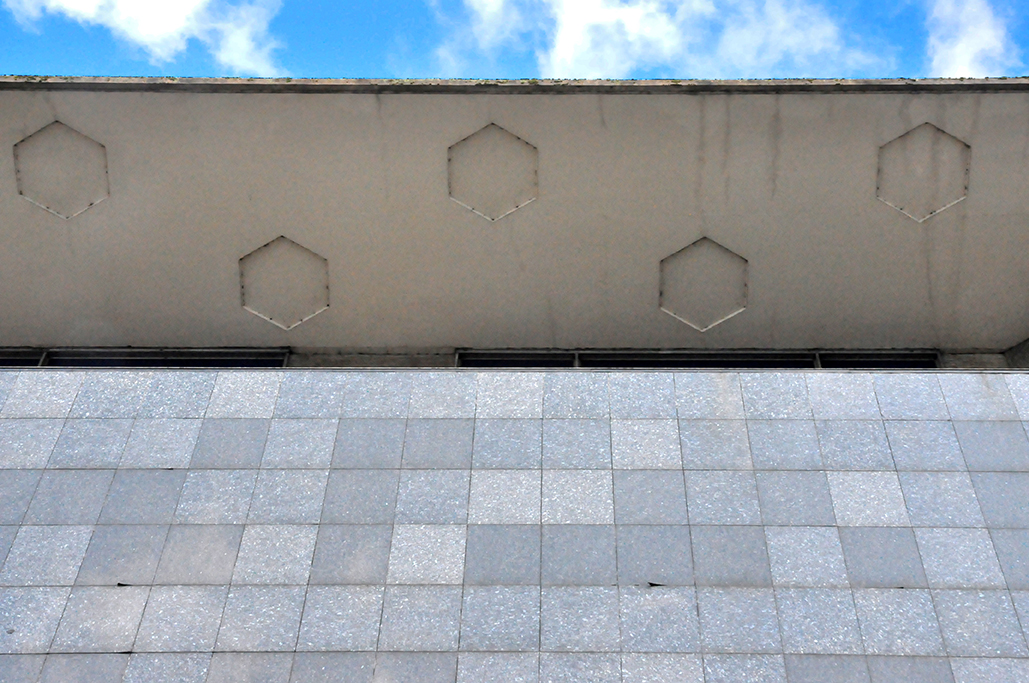
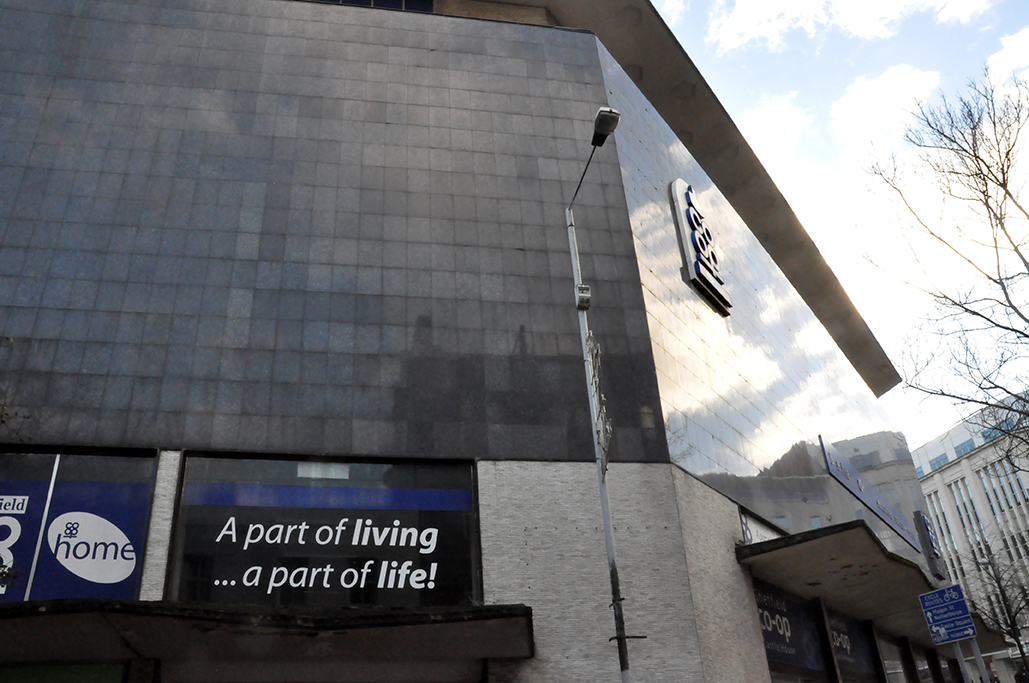
“1964 by George S Hay, Chief Architect for CWS, with interior design by Stanley Layland, interior designer for CWS. Reinforced concrete with Blue Pearl granite tiles and veneers, grey granite tiles and veneers, buff granite blocks, glass, and brick.”
The Liberal Democrat Council objected, saying
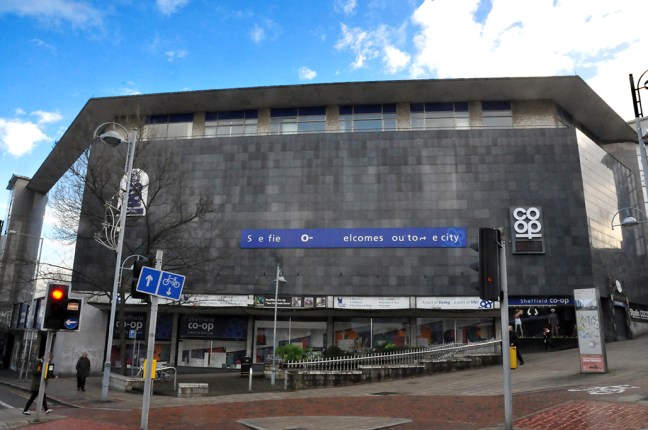
“It could be a major barrier to regenerating Castlegate.”
There is now the possibility of redevelopment as a creative hub.
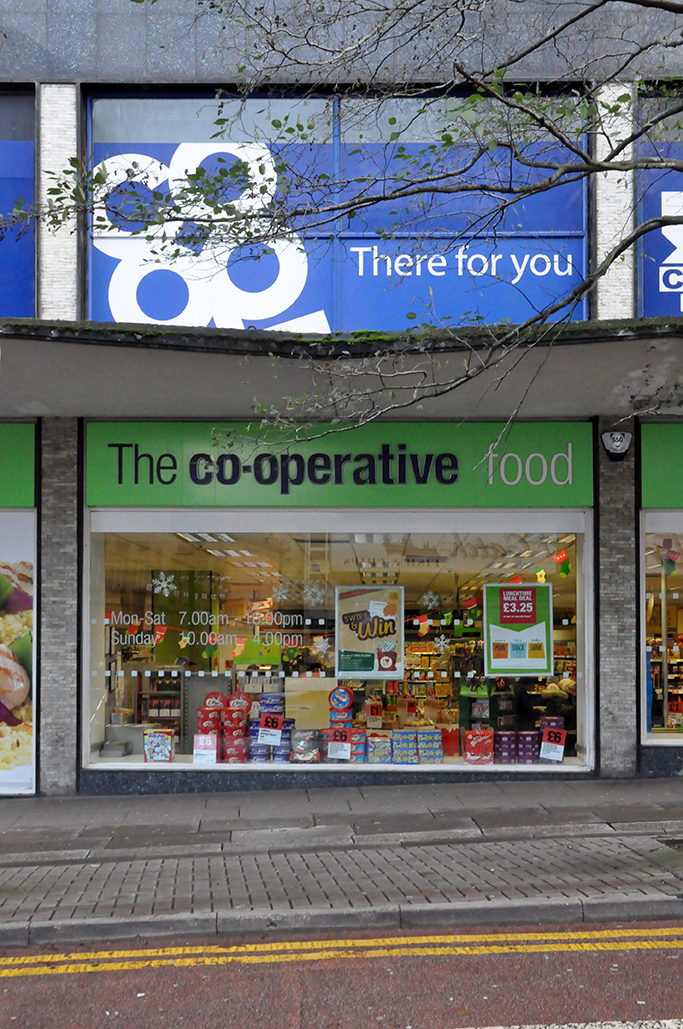
It was a Co-op on the grandest of scales.
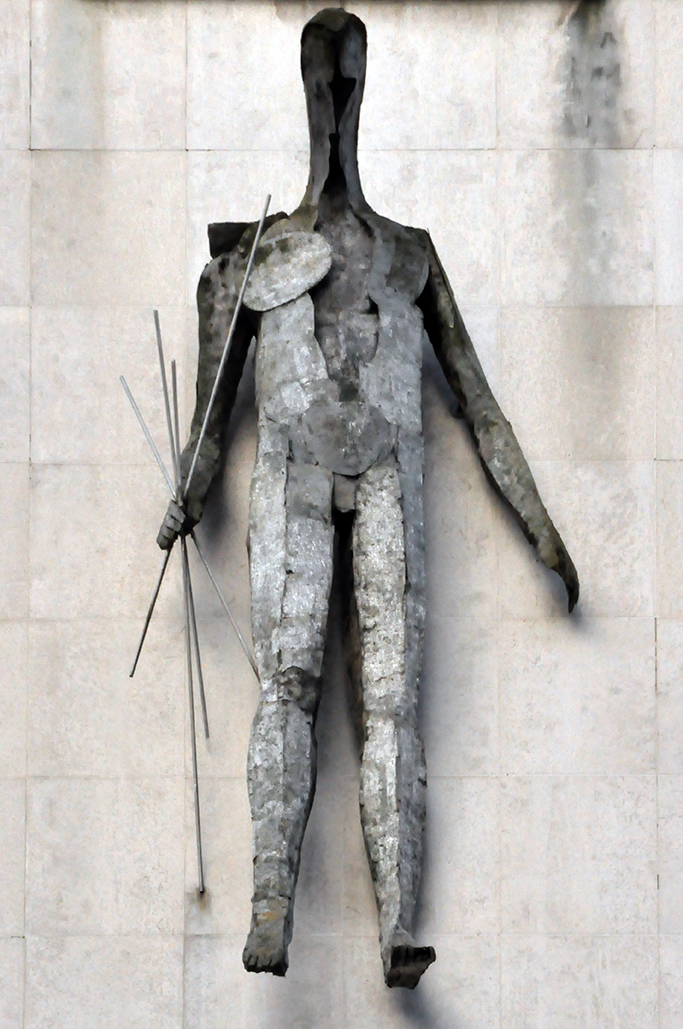
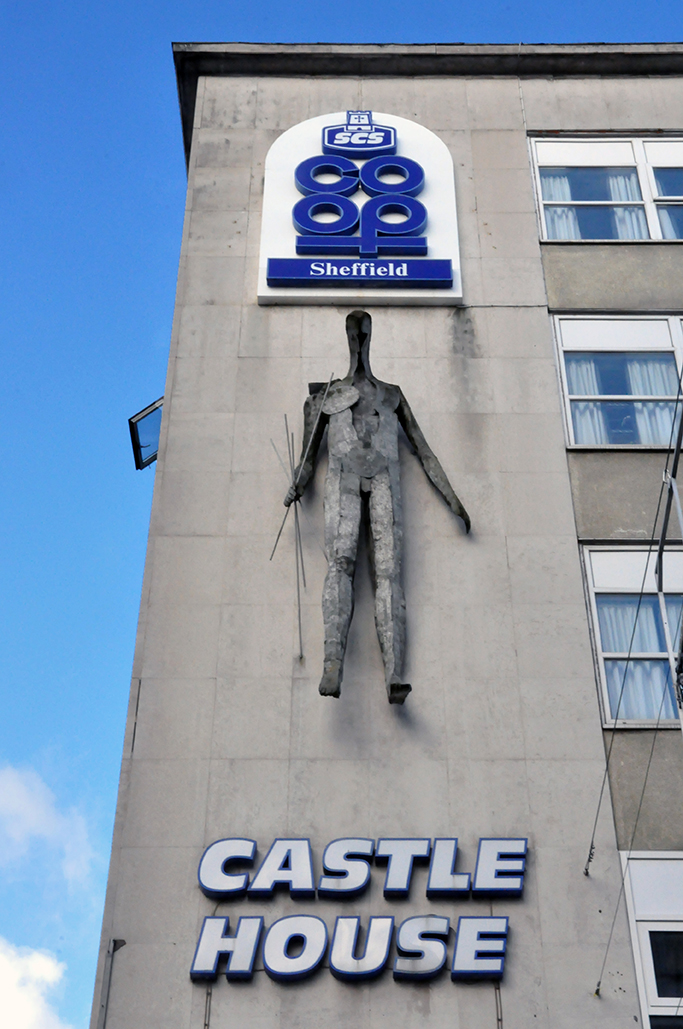
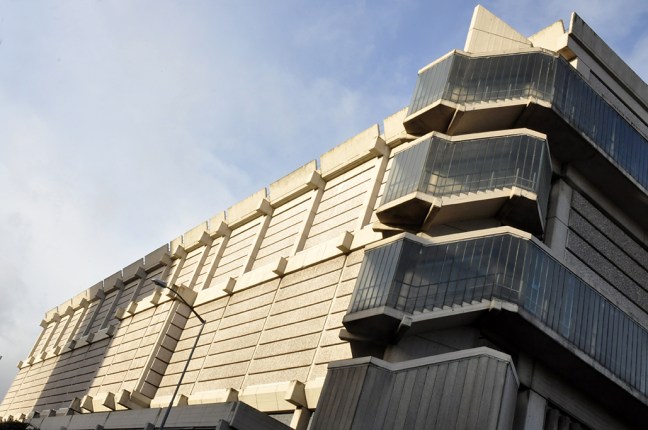
It has it all, public art, monolithic proportions and finish, bags of detail and scale in abundance. A fascinating building to explore and certainly one that fills my little heart with joy in superabundance
A building of period distinction, it deserves its preservation.
We do not require another patch of steel and wilfully wayward clad nowheresville non- architecture, replete with aspirational retail agogo.
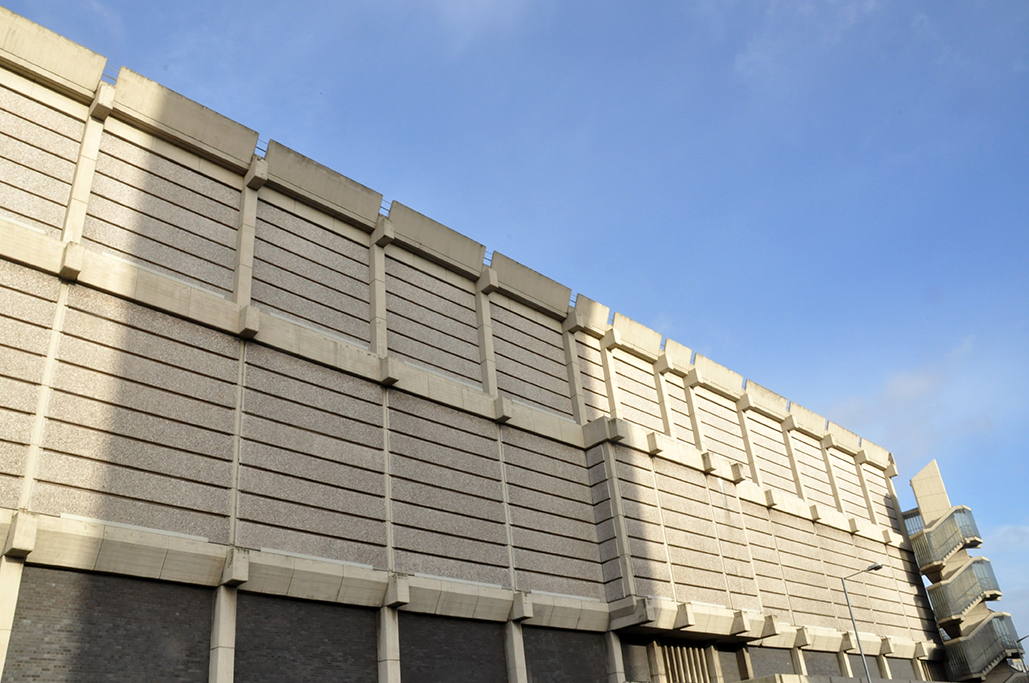
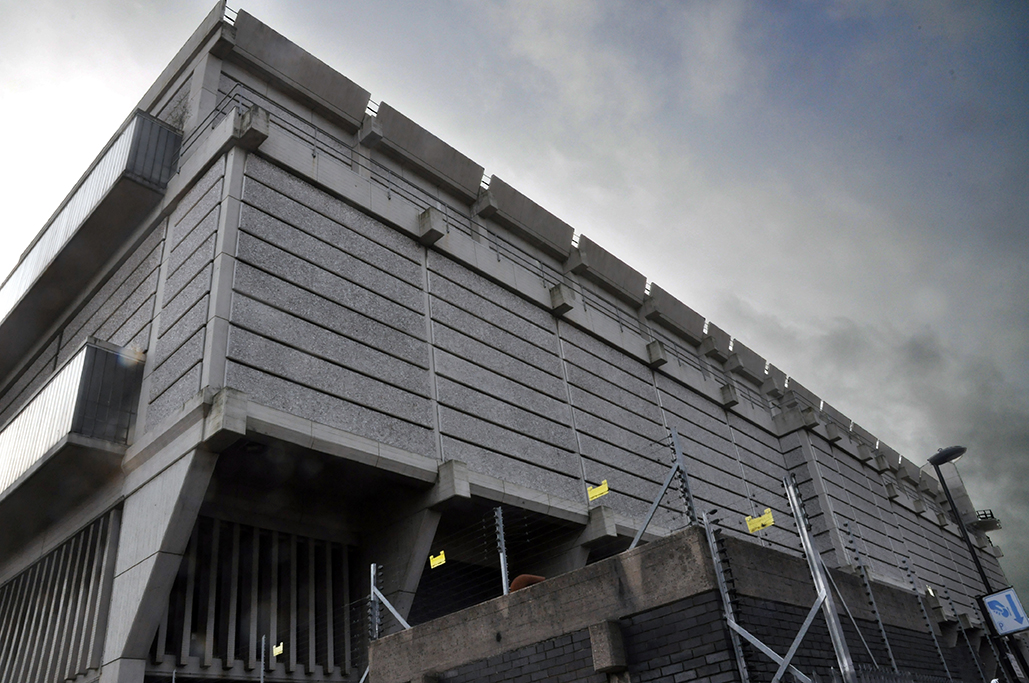
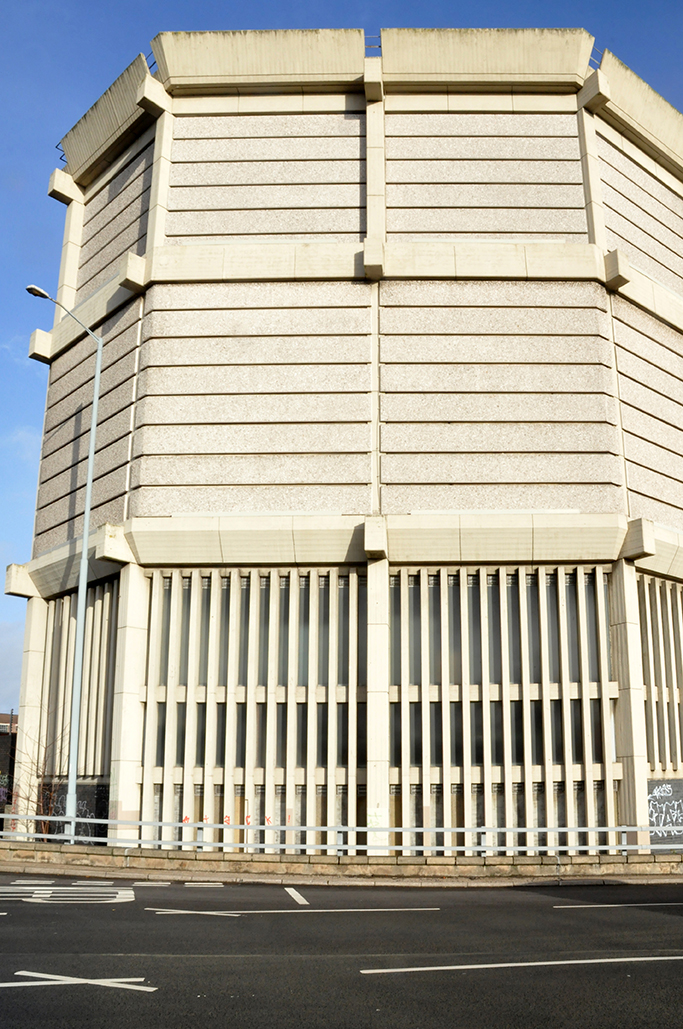
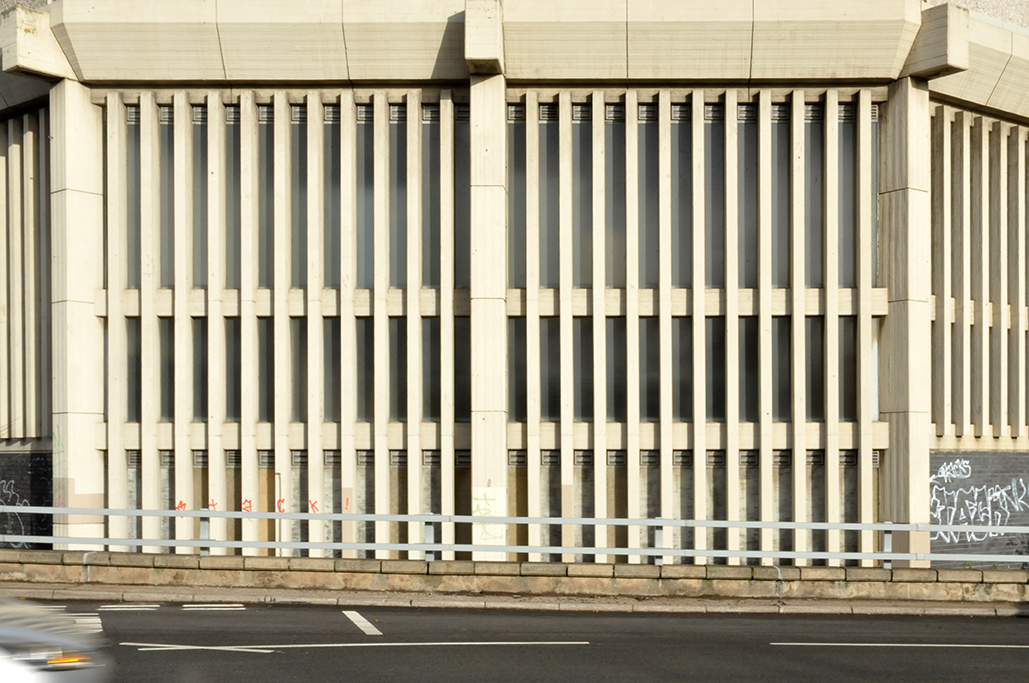
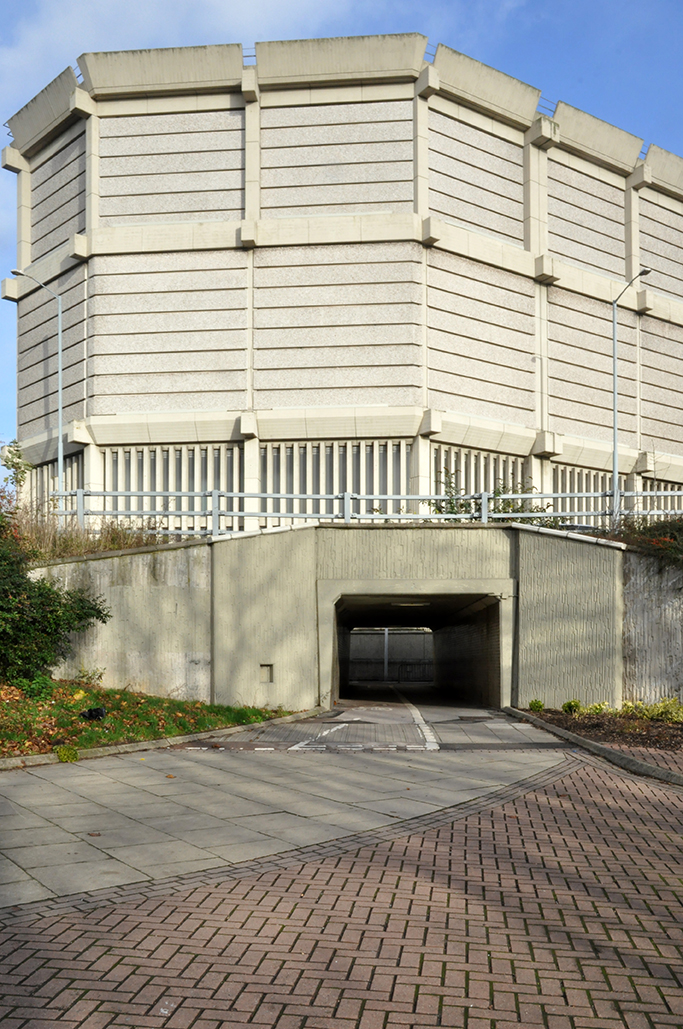
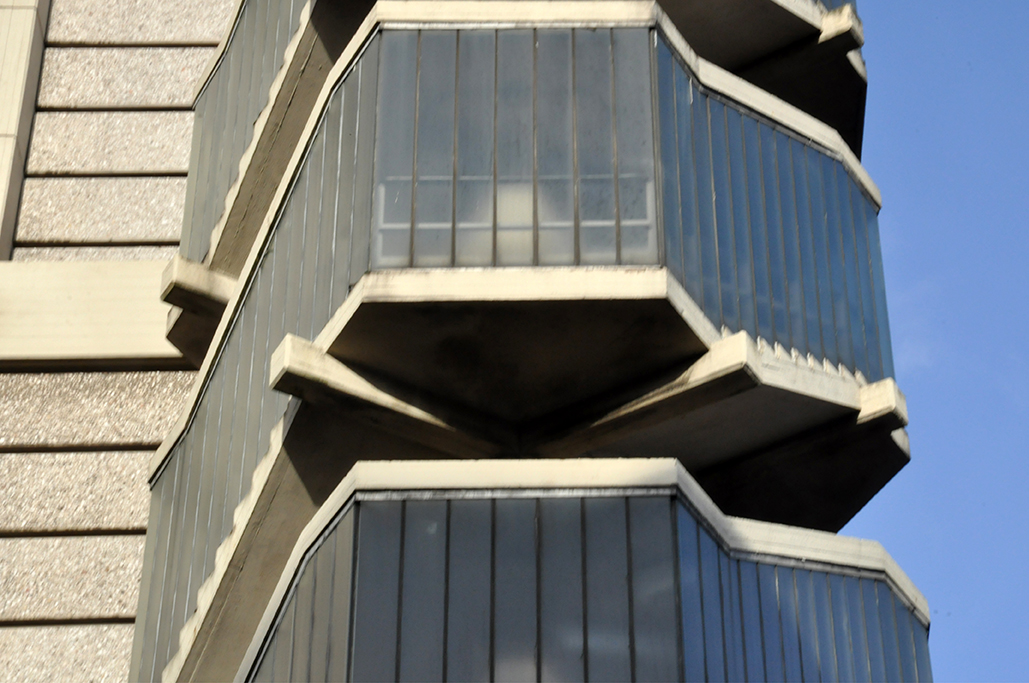
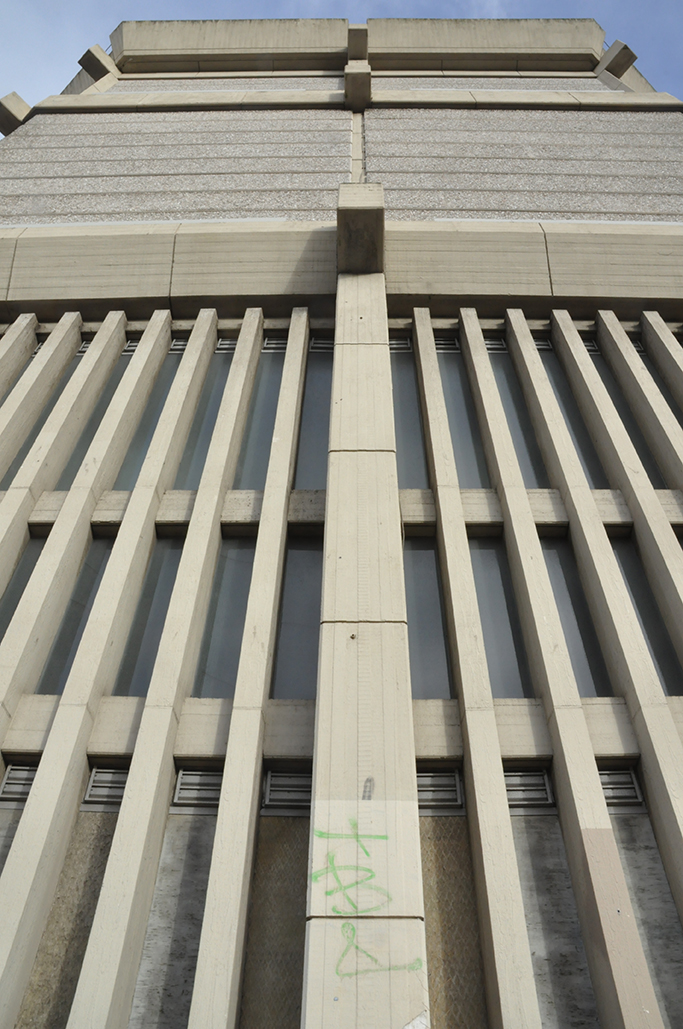
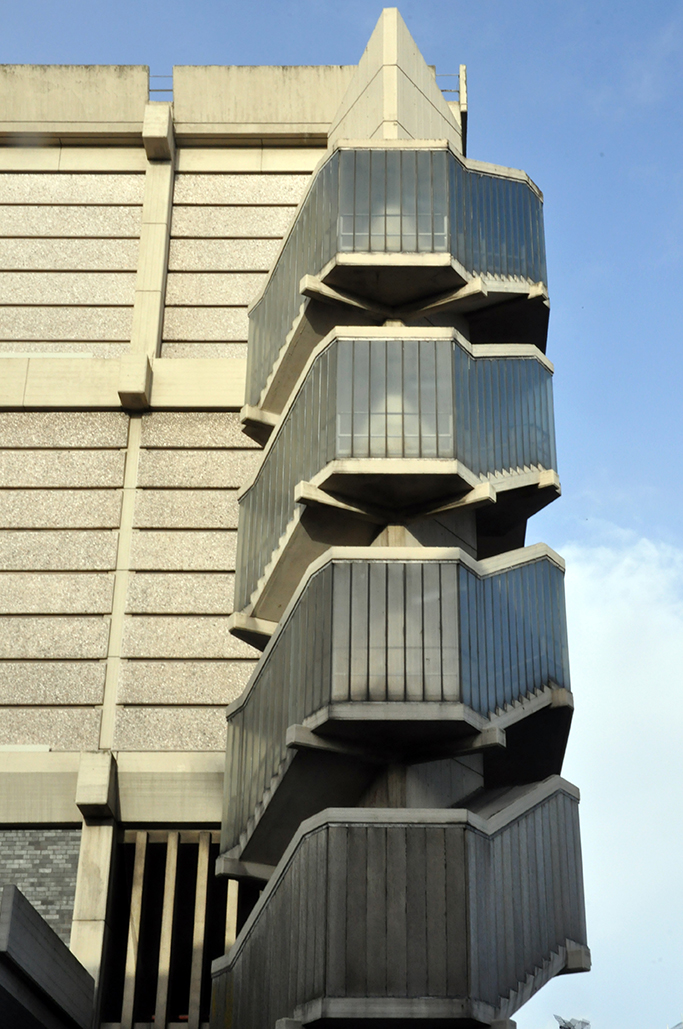
“Electricity substation. 1968 to designs by consulting architects Jefferson, Sheard and Partners, Sheffield, led by Bryan Jefferson, in association with the Regional Civil Engineers’ Department of the CEGB North East Region. Contractors, Longden & Sons Ltd, Sheffield. Reinforced concrete frame with board-marked finish with formwork bolt marks, construction and daywork joints emphasized, concrete floor slabs, blue engineering facing bricks, cladding panels of Cornish granite aggregate.”
Go see for yourself, if you don’t believe my eyes.
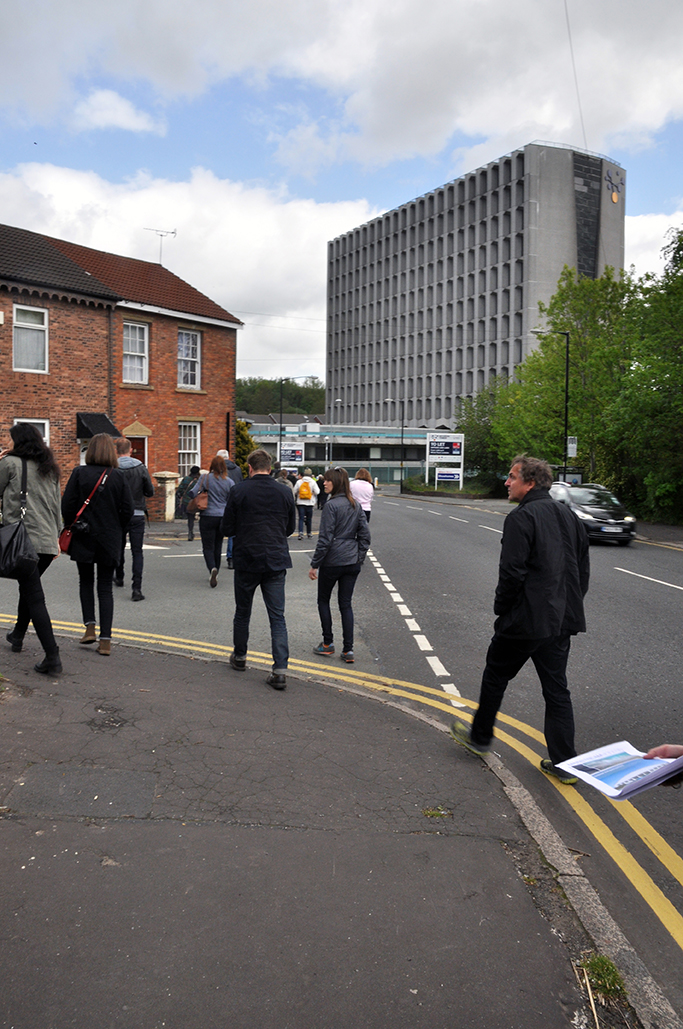
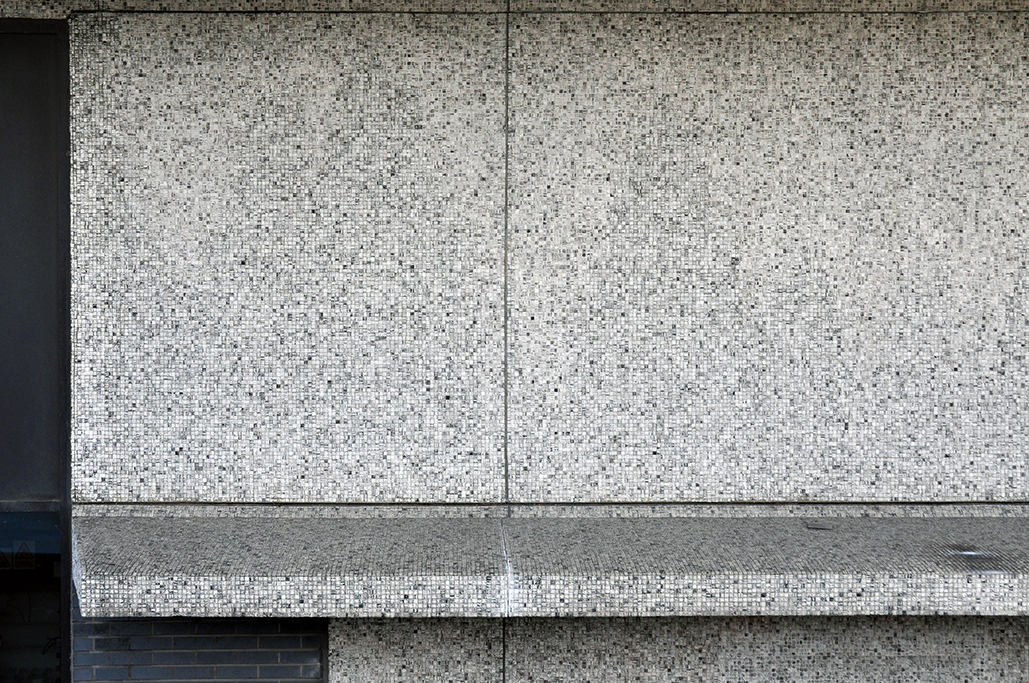
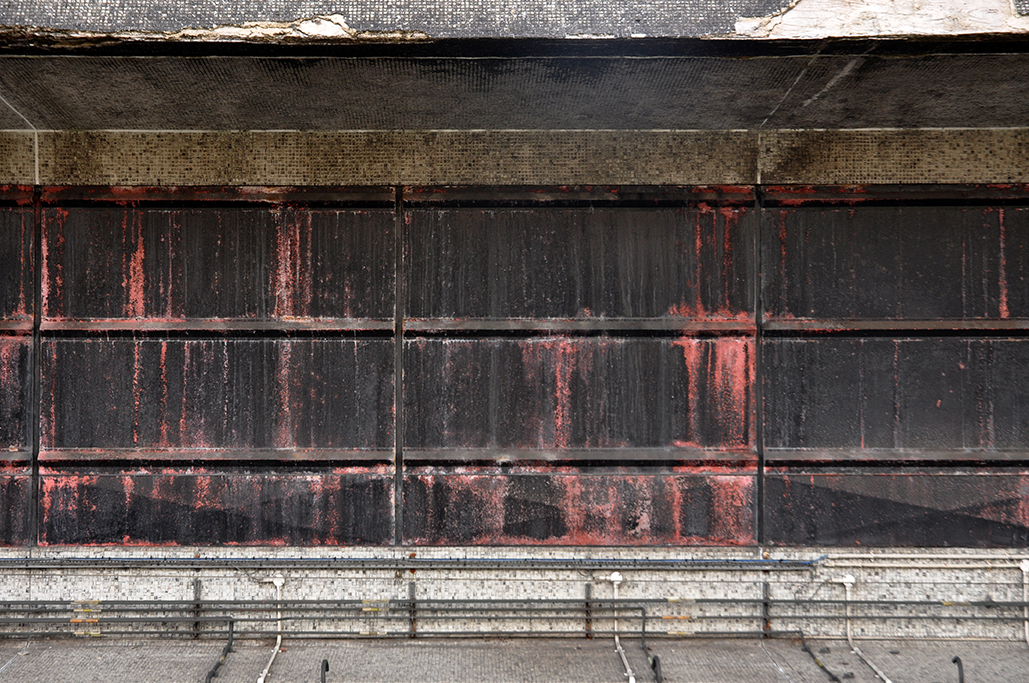
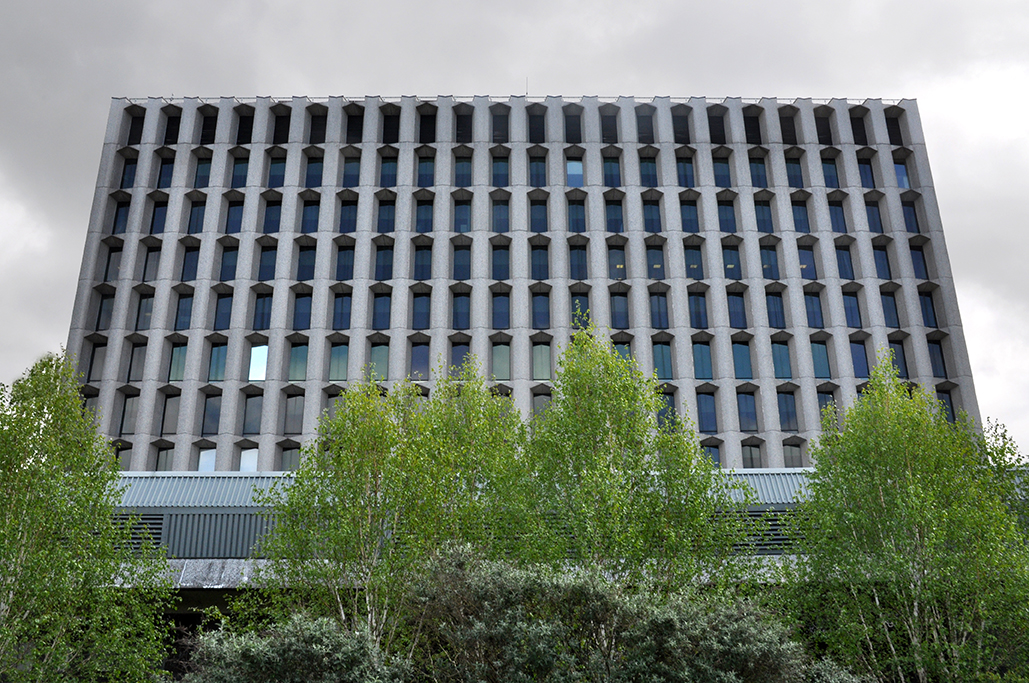
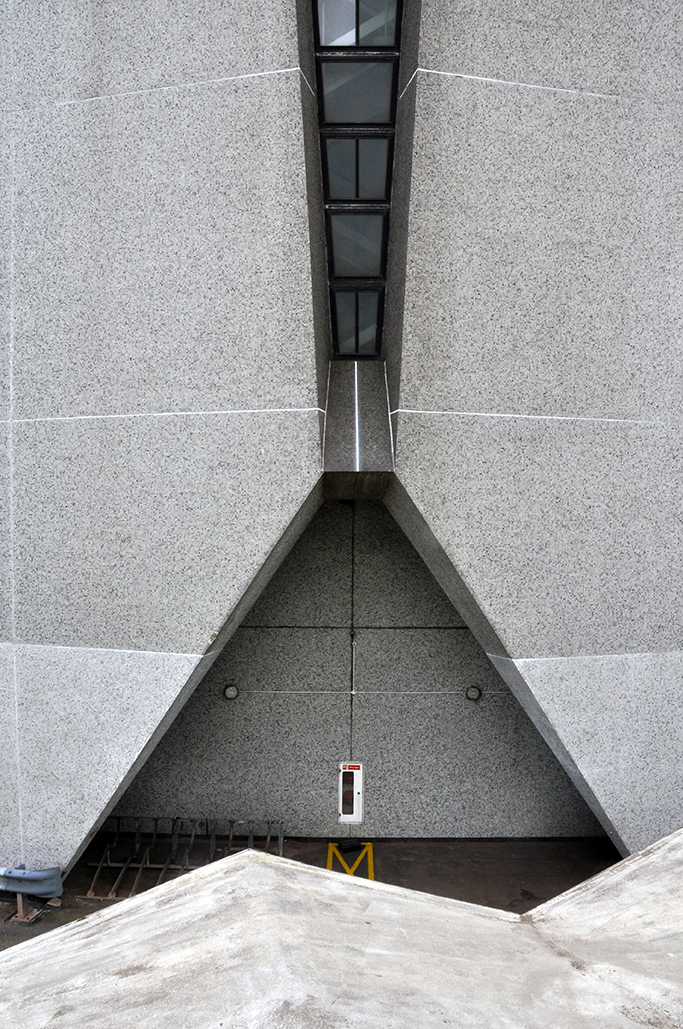
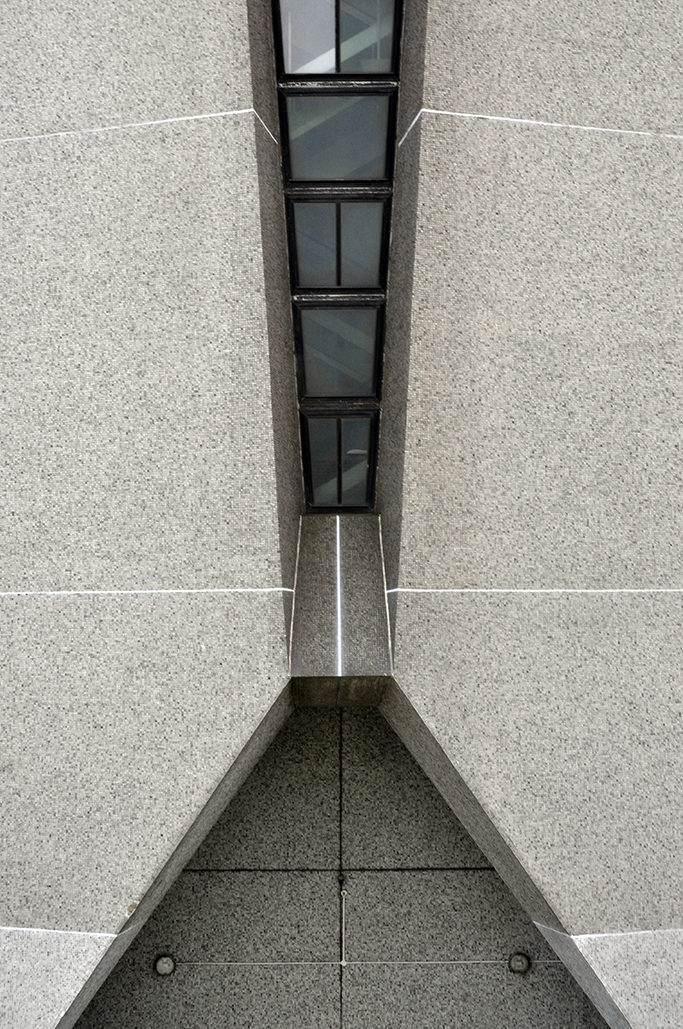
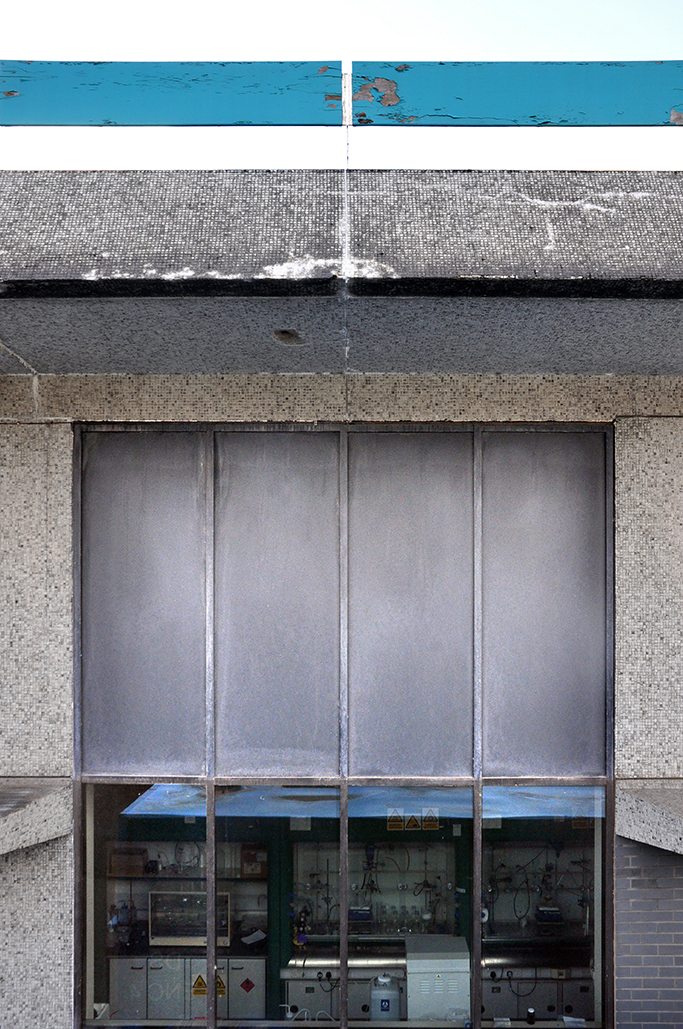
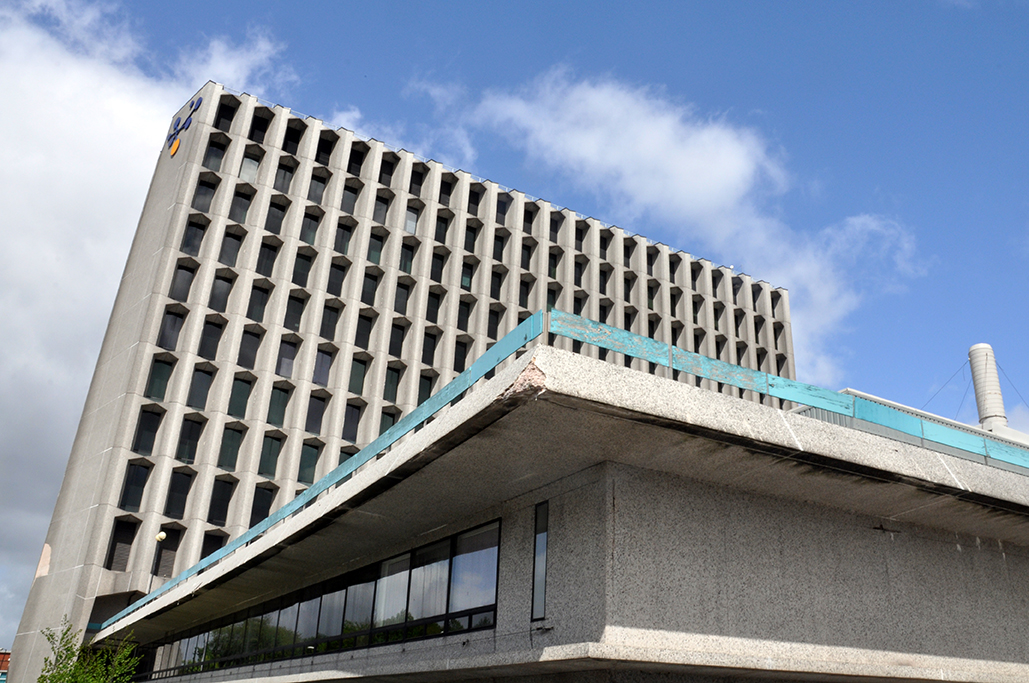
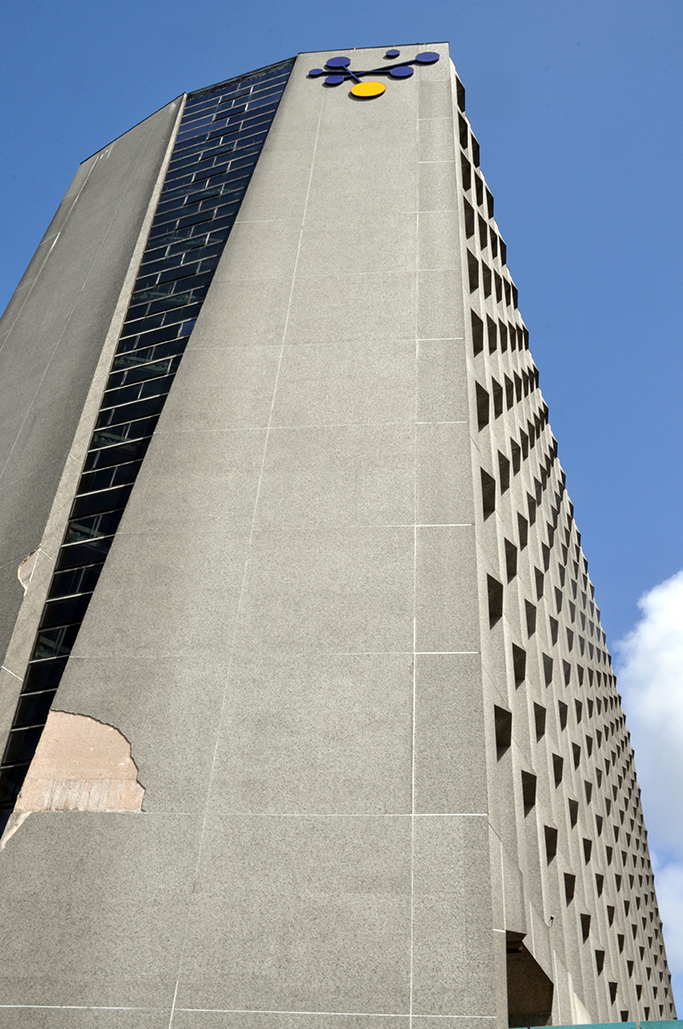
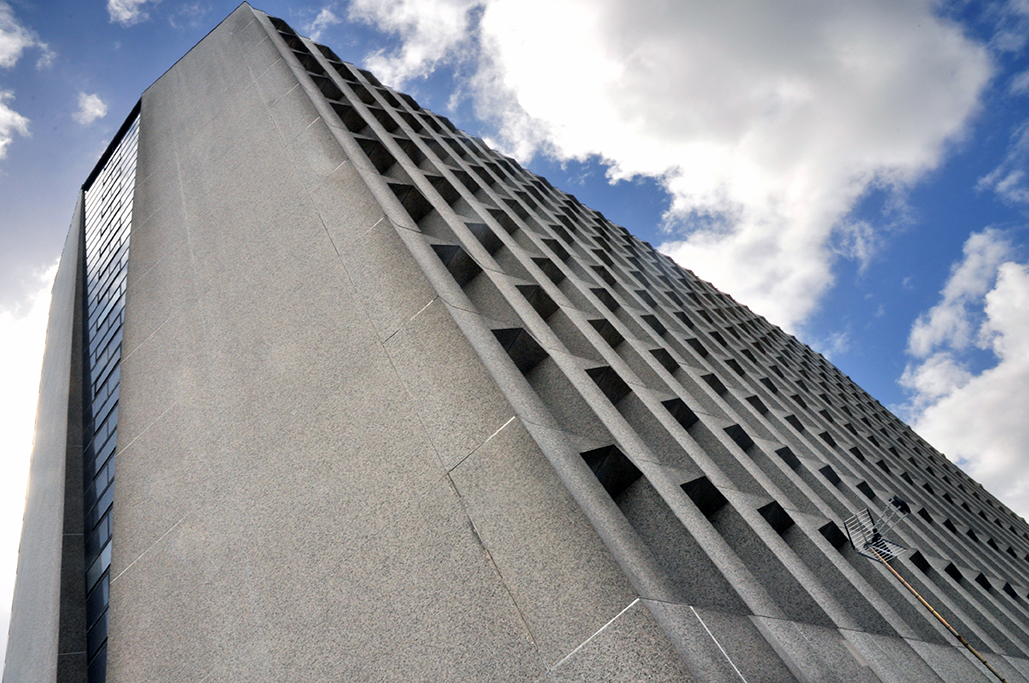
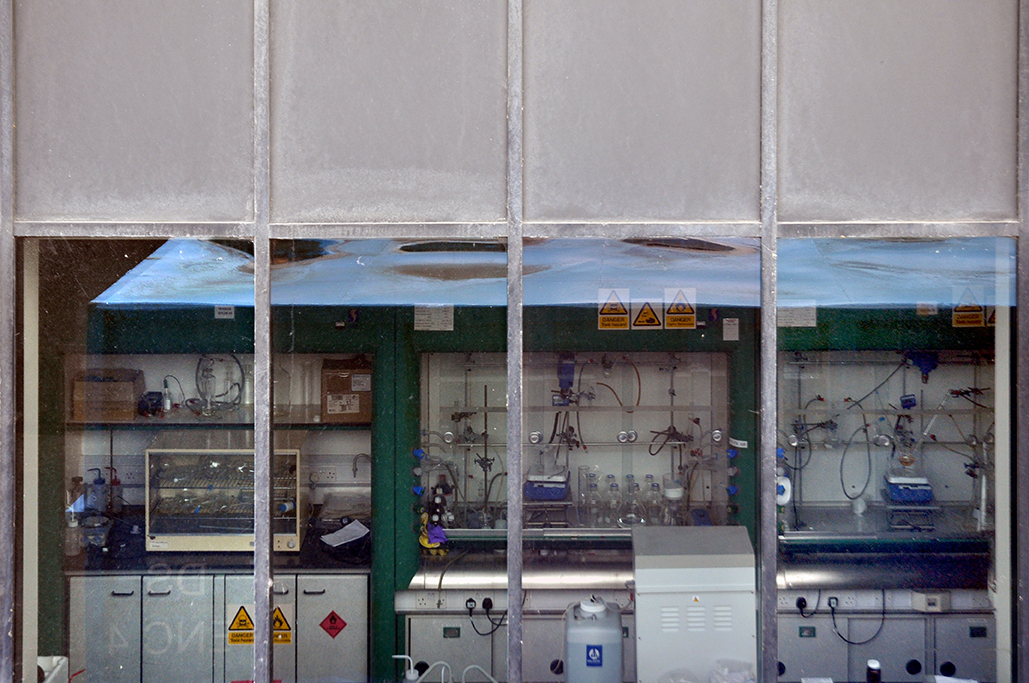
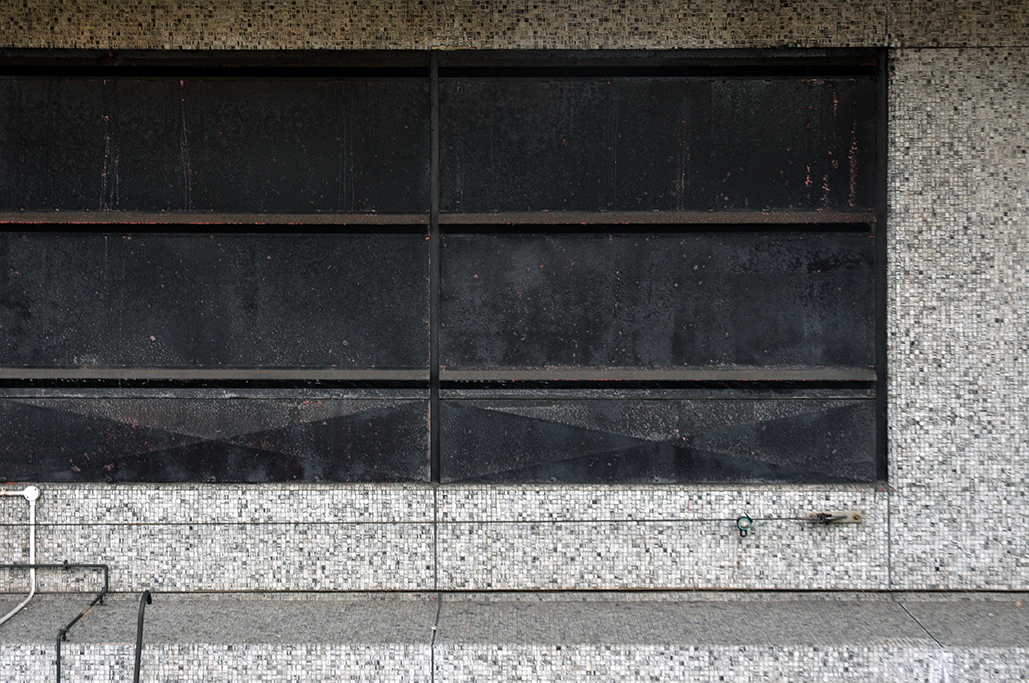
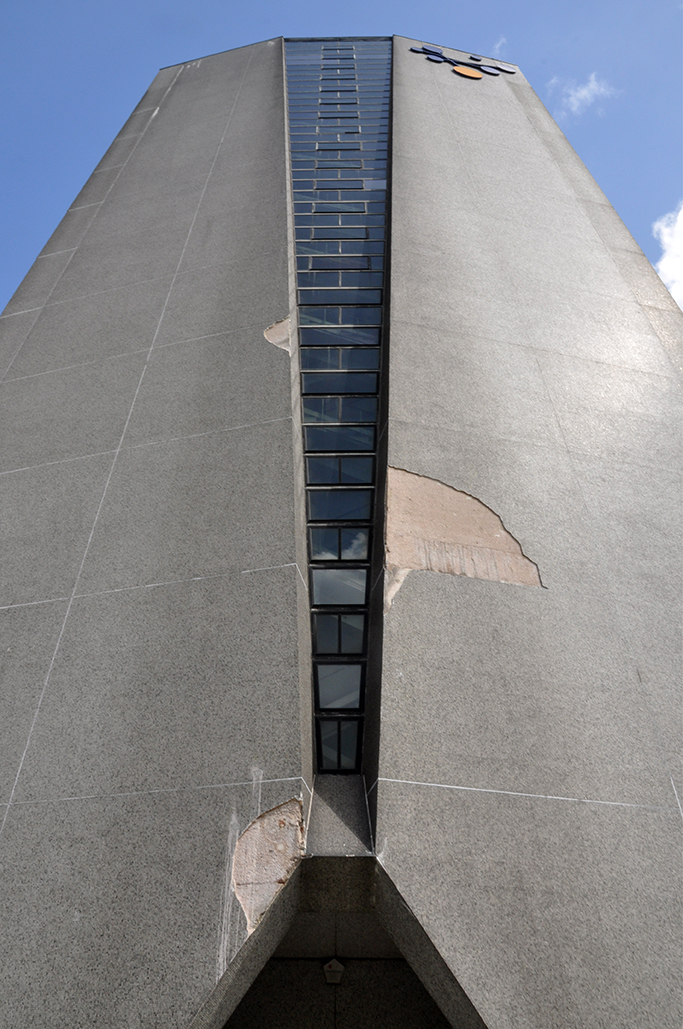
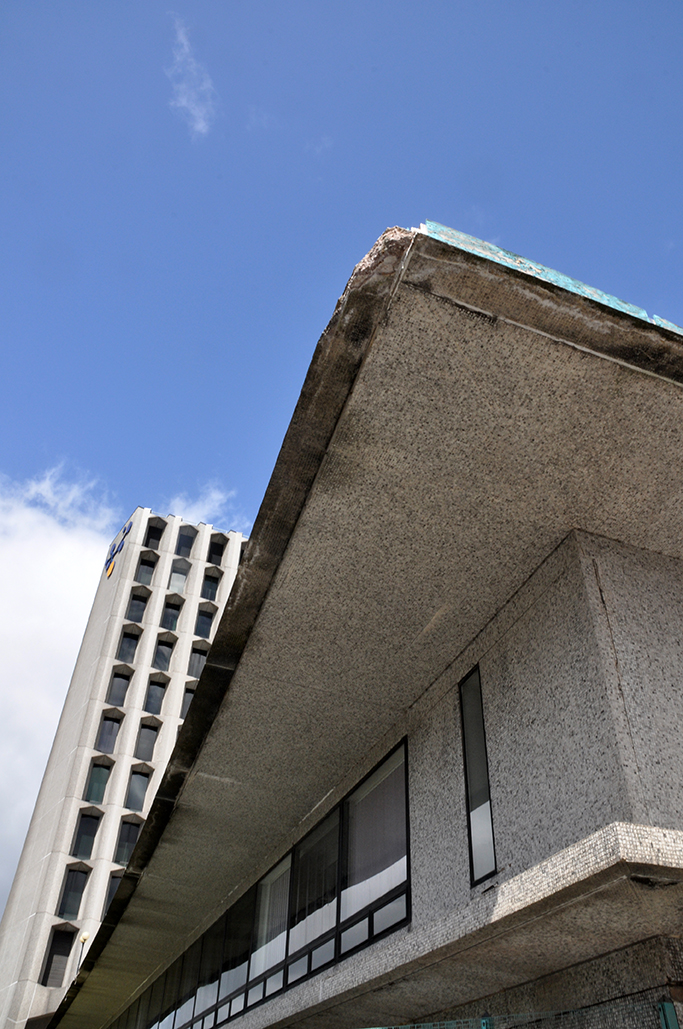
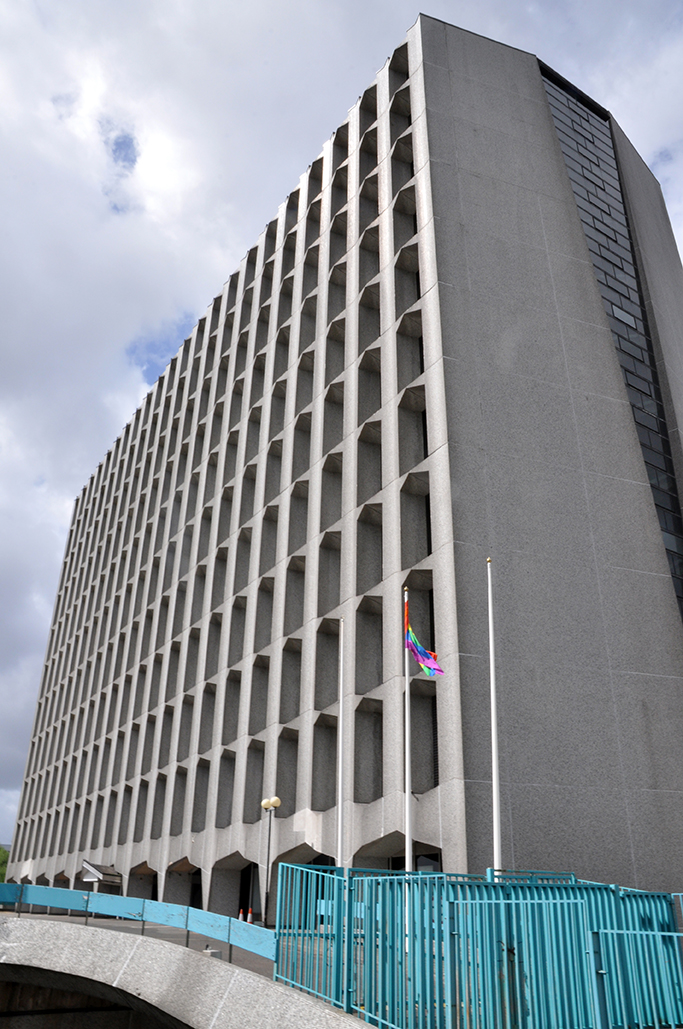
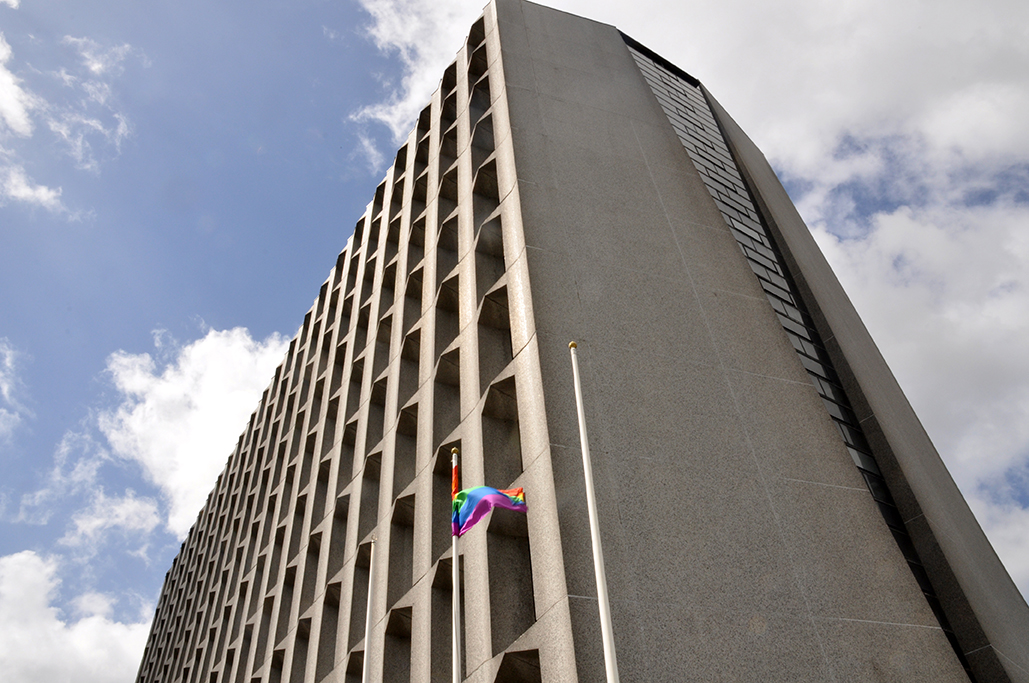
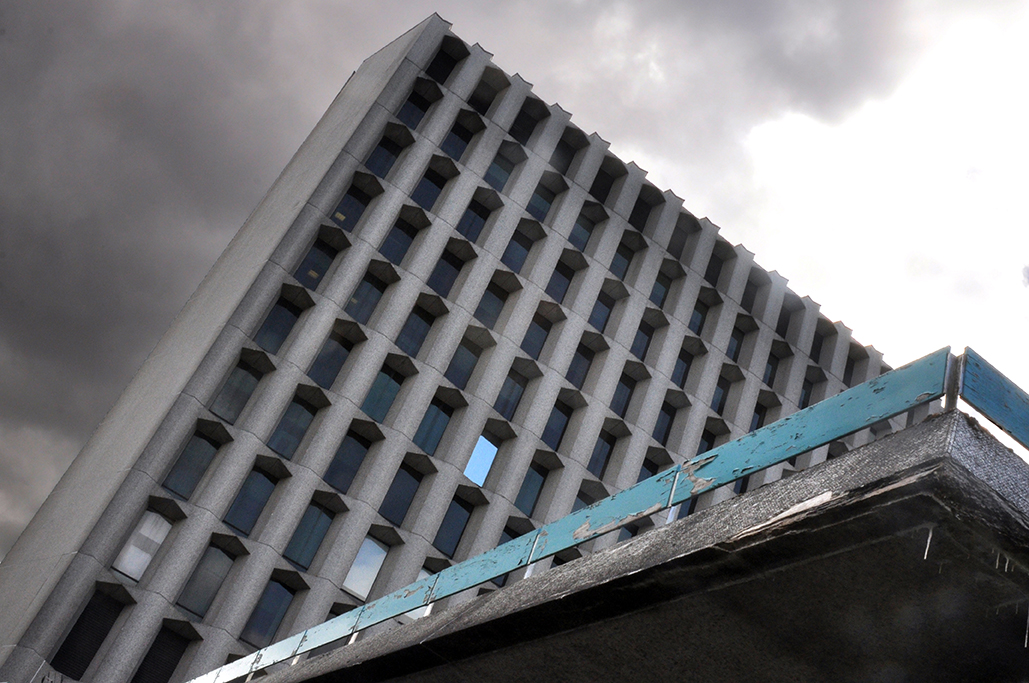
“Seifert’s corporate buildings were regularly bold, those in Manchester no exception, but this is perhaps the most monolithic of his North-West schemes. The site, in a depression adjacent the River Irk in Blackley, was formerly owned by ICI, by whom the building was commissioned. At one time, a four storey ICI laboratory building by émigré architect Serge Chermayeff also stood close. Here, the simple massing, formed by the junction of horizontal and vertical volumes, bears several of Seifert and Partners trademark gestures; the hexagonal geometries, the cut away sections of wall to form entrance ways between structural elements, and the repetitive facade. The end wall is reminiscent of Tolworth Tower, also by Seifert. The tower and podium configuration is a product of the brief; the machine hall had to be at ground level and have no construction above. The narrow tower has no internal columns, the structural grid is mirrored in the services arrangement and the two co-exist outside the usable volume of the laboratory space, in the walls and floor. This solution is expressed in the deep reveals of the main façade, services travel vertically between the window modules. Whilst somewhat hidden, the building reveals itself fantastically from elevated vantage points, the tram south from Bowker Vale station being one such location. Originally it was intended that four of these towers would be built and run along the river valley in some sort of massive futurist domino arrangement.”









































 Modern Mooch