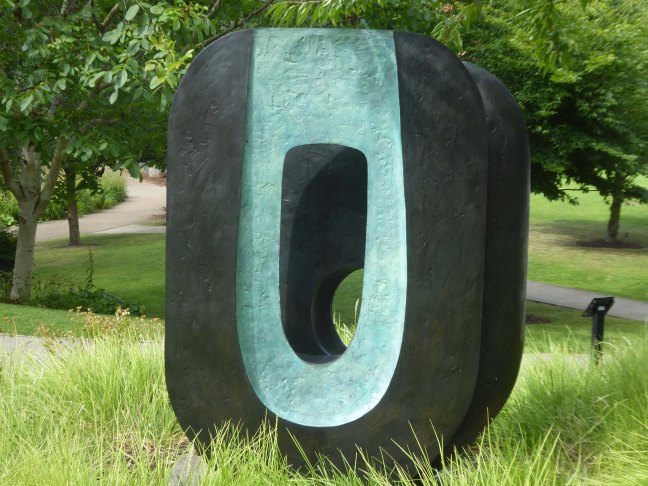
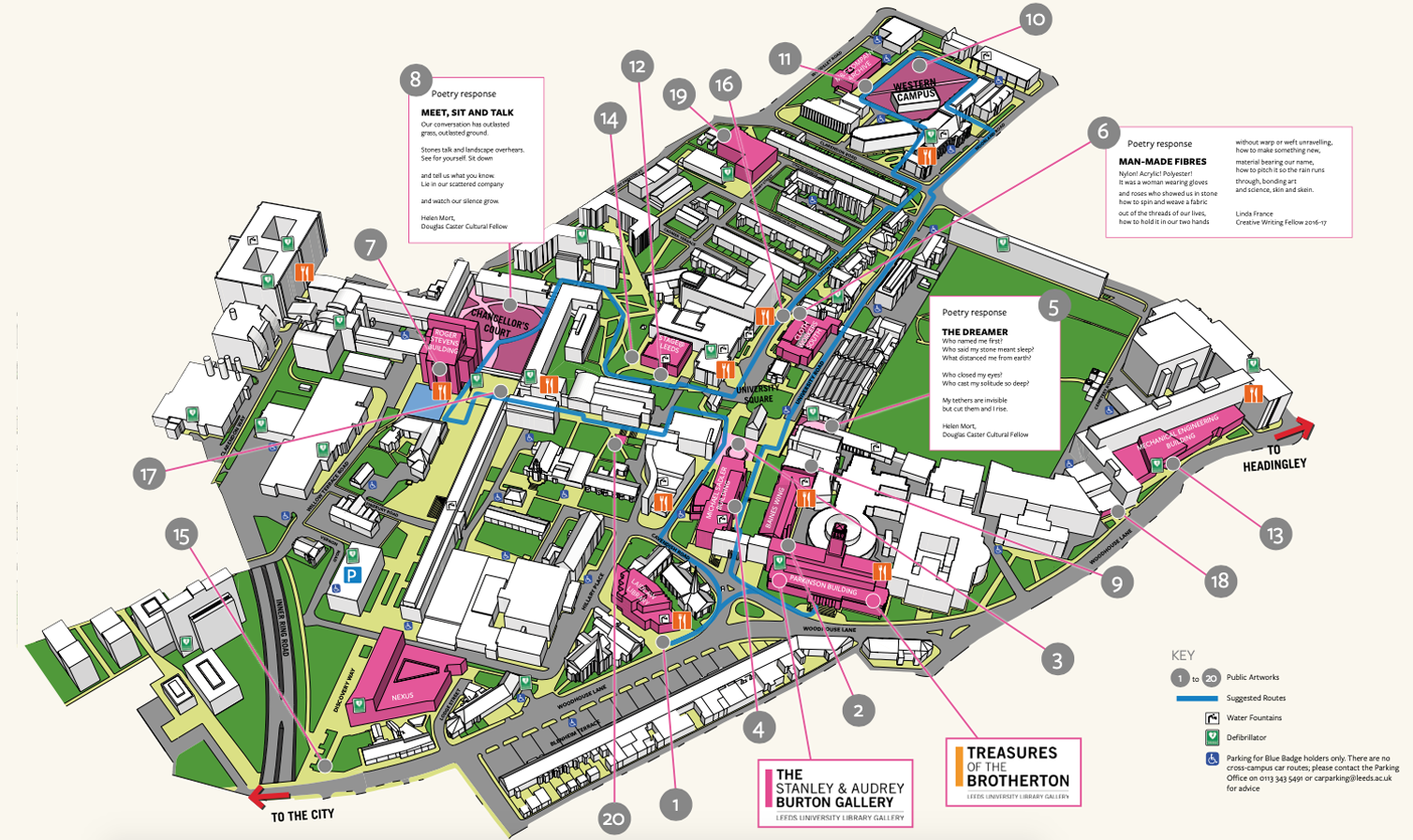
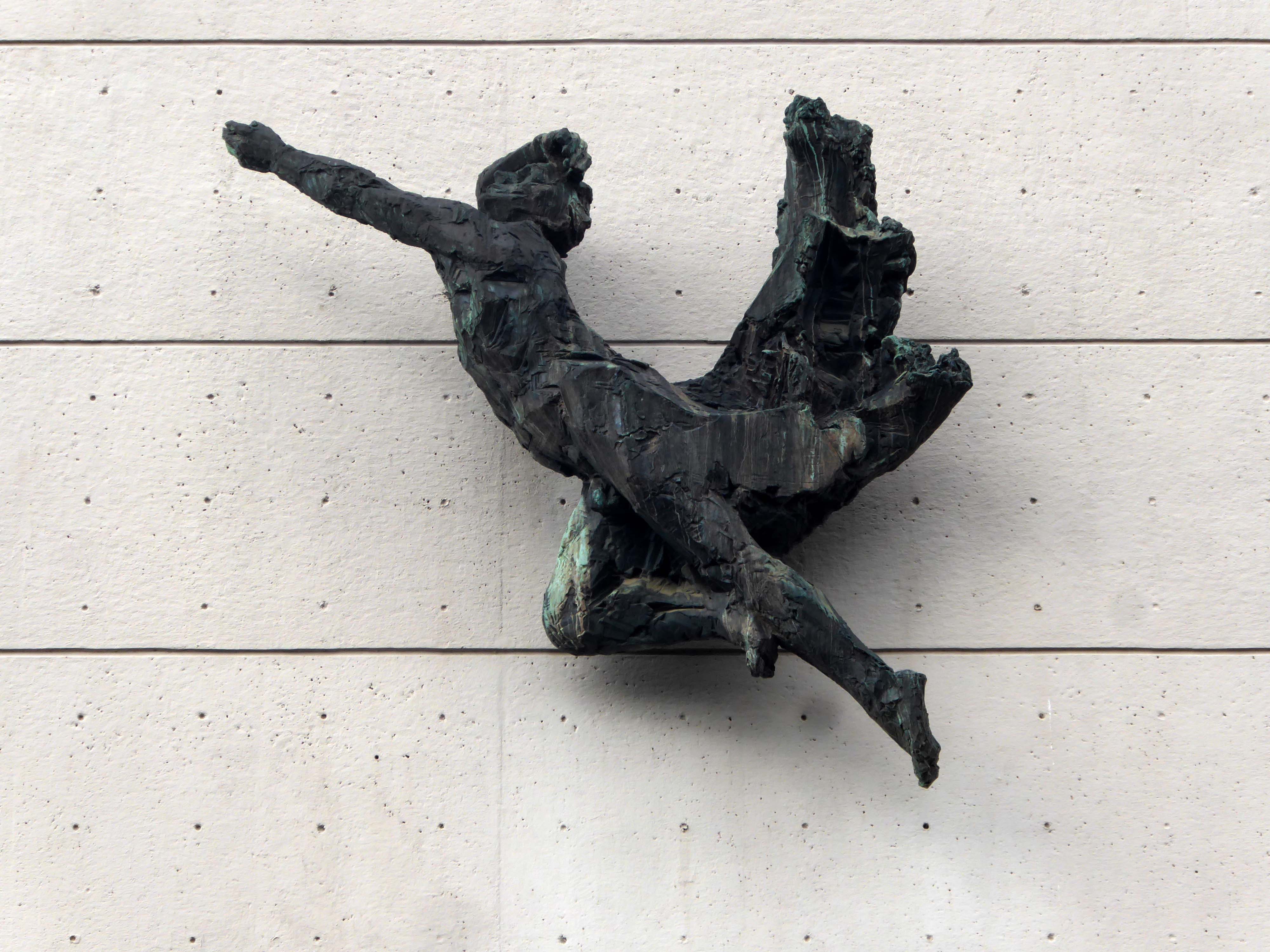
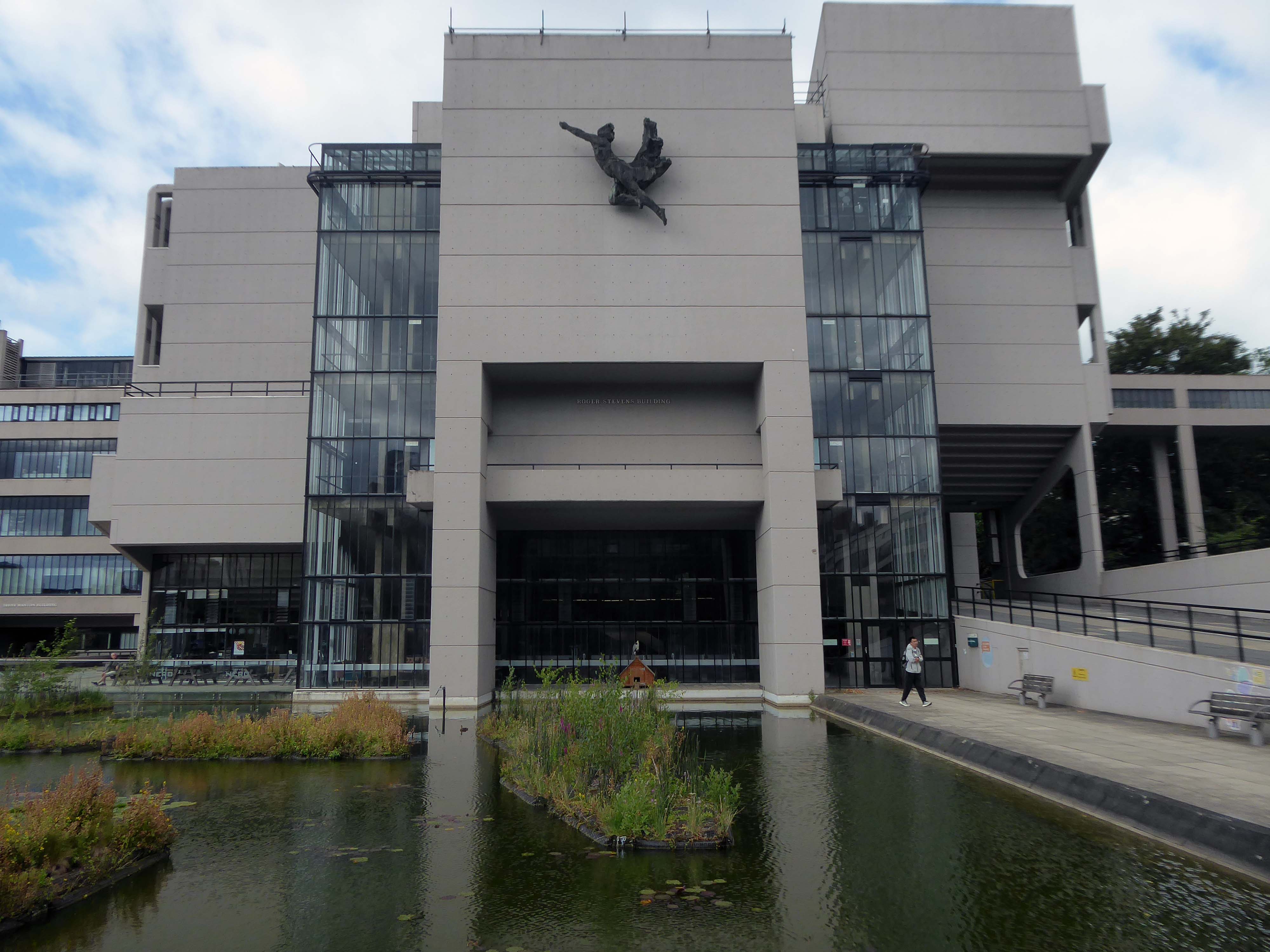
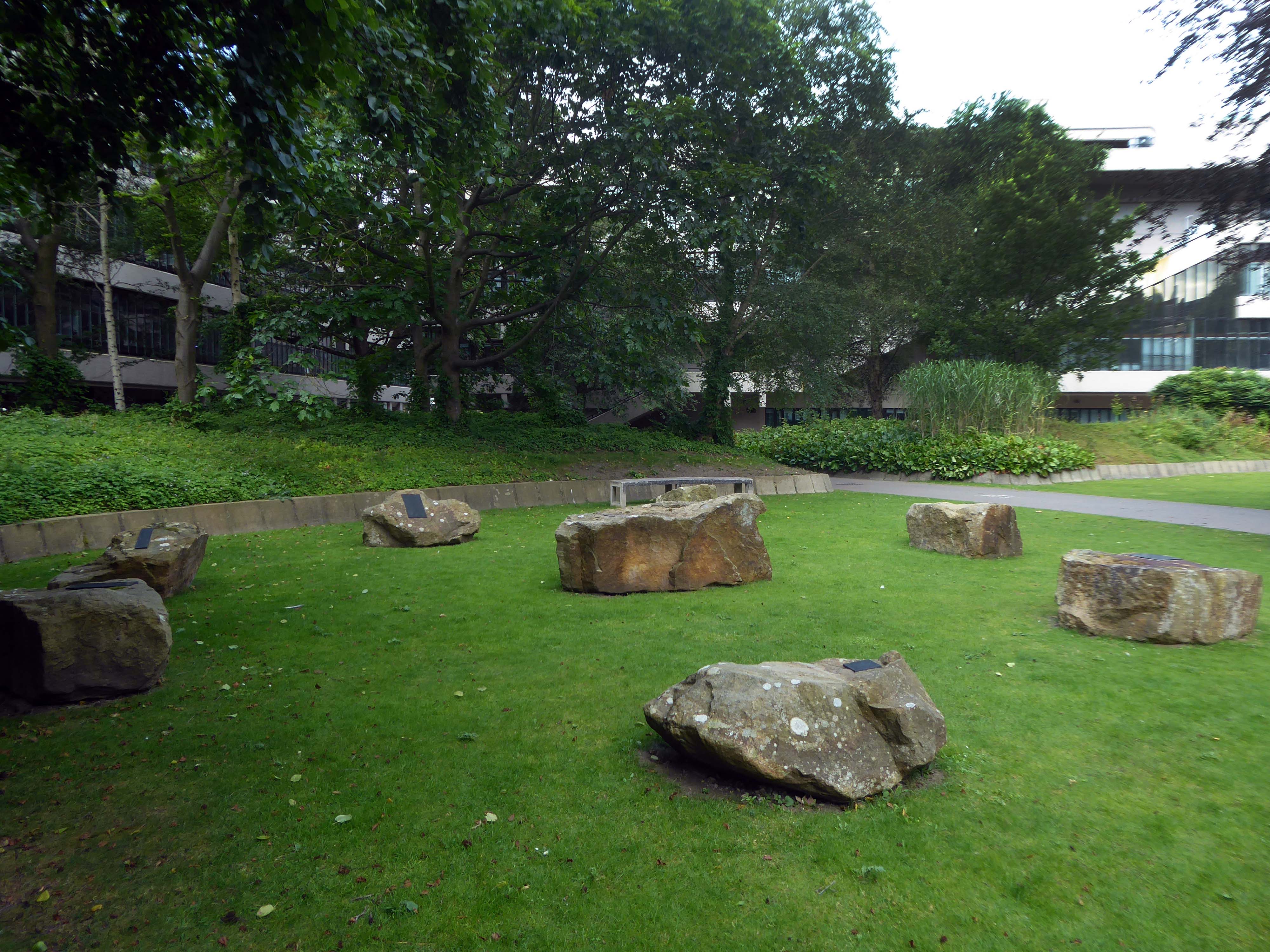
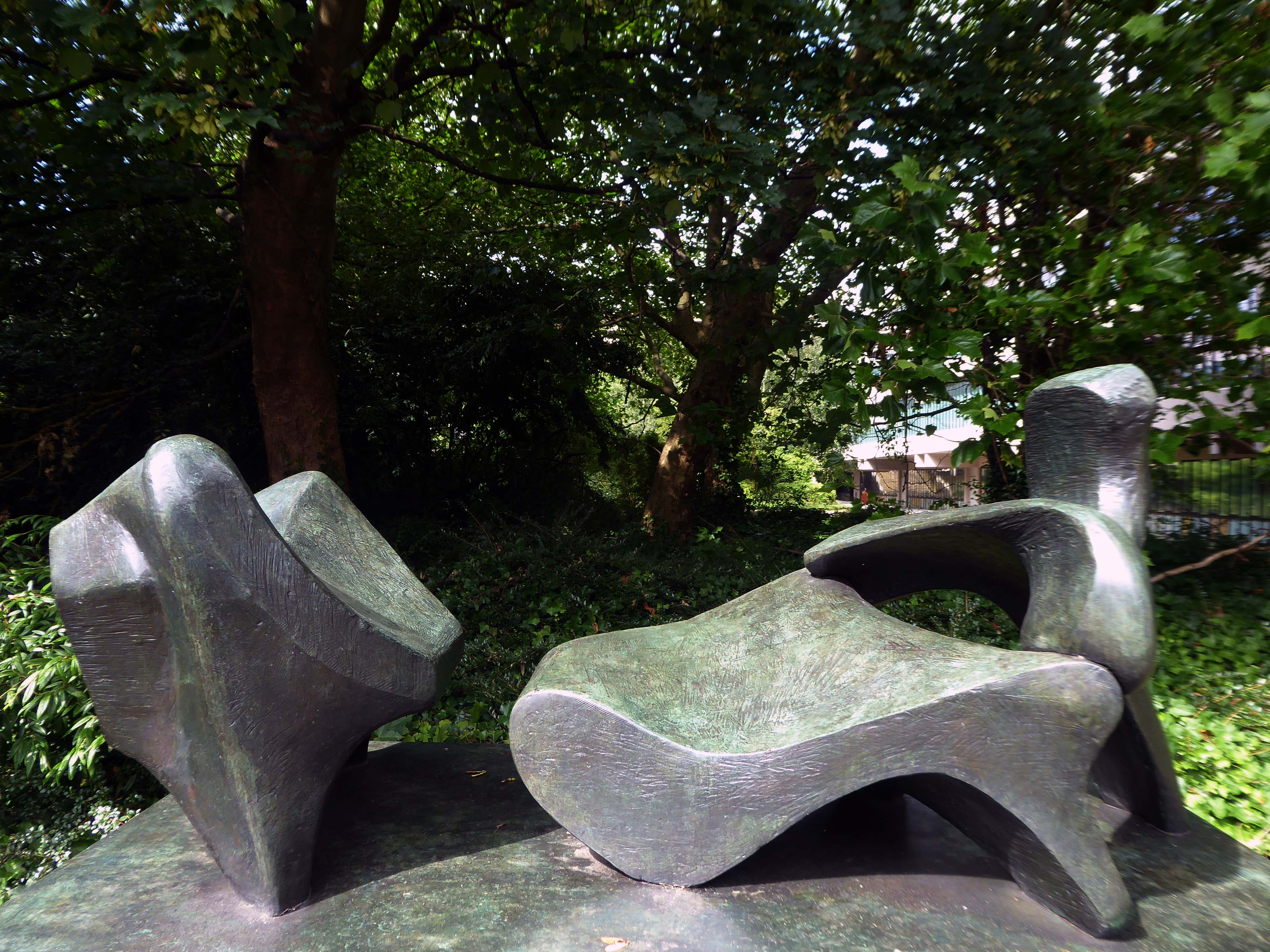
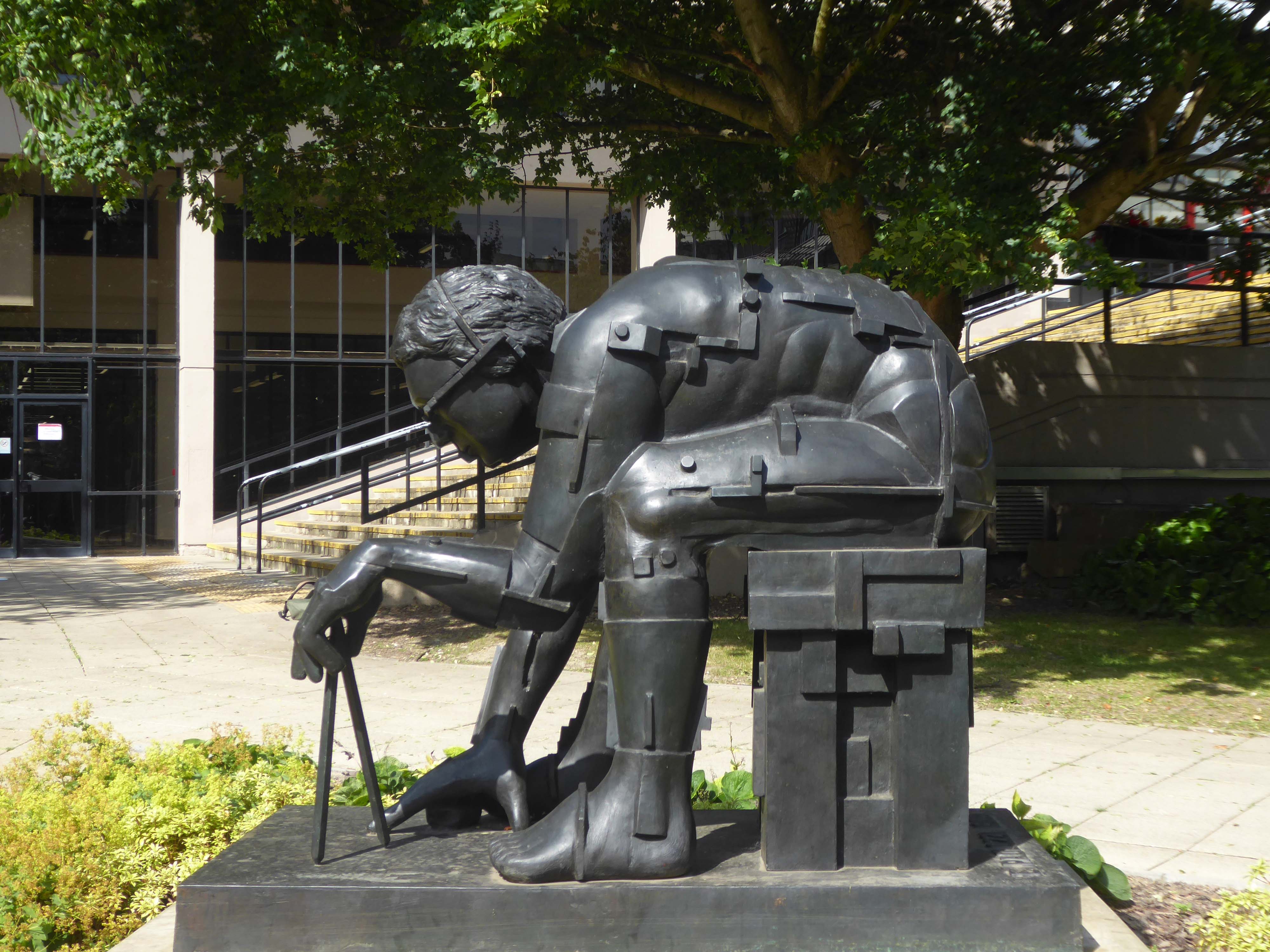
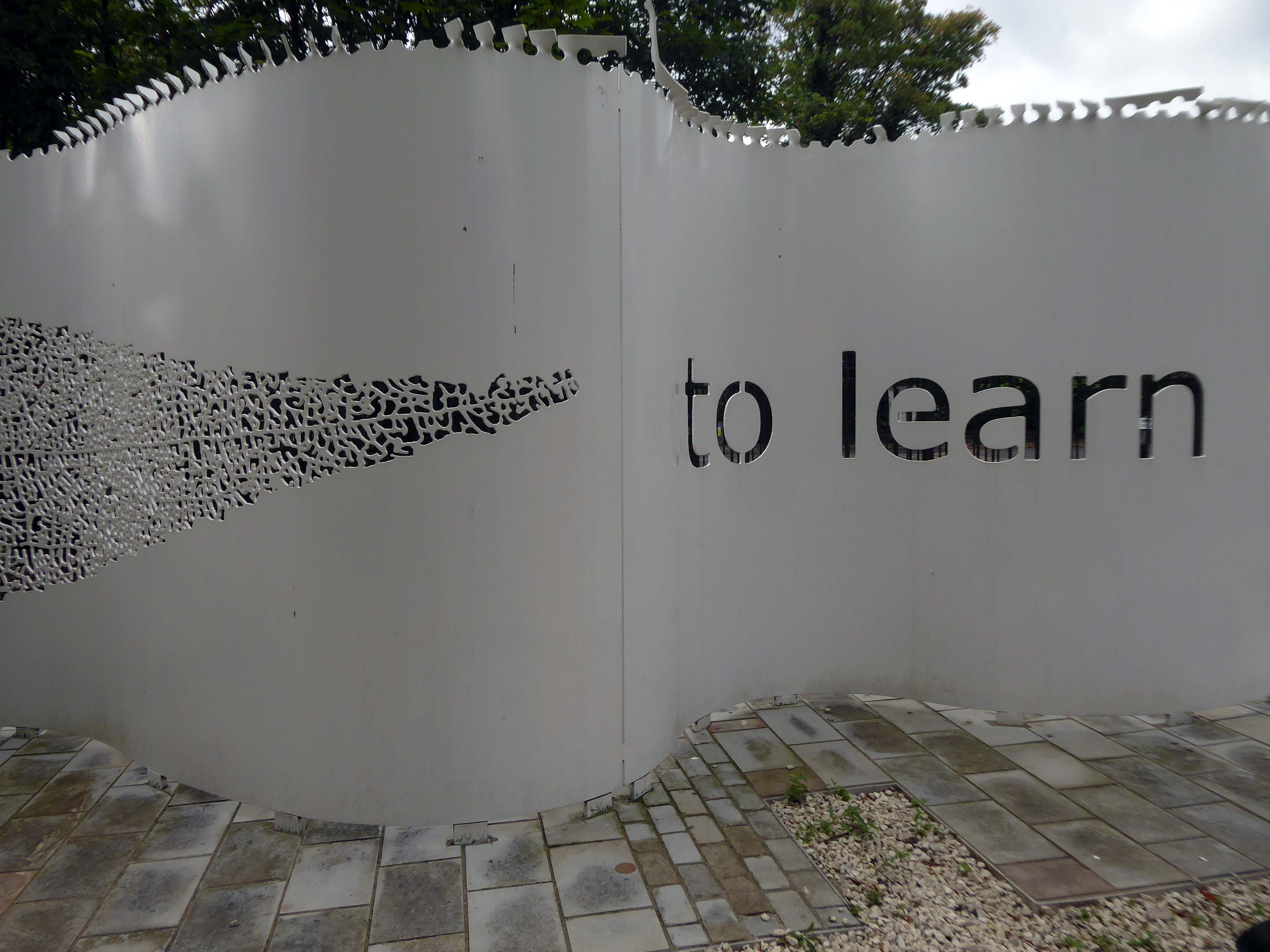
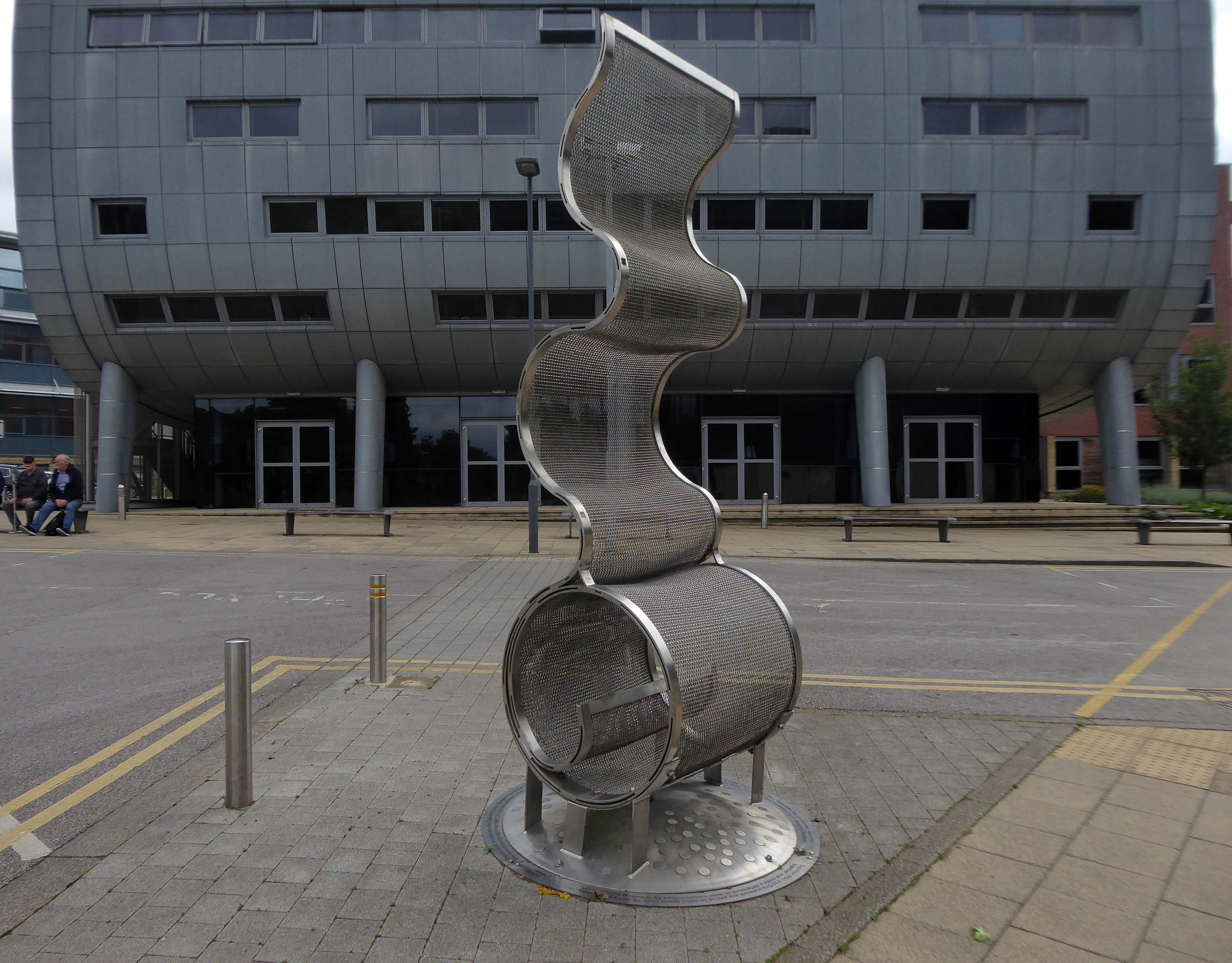
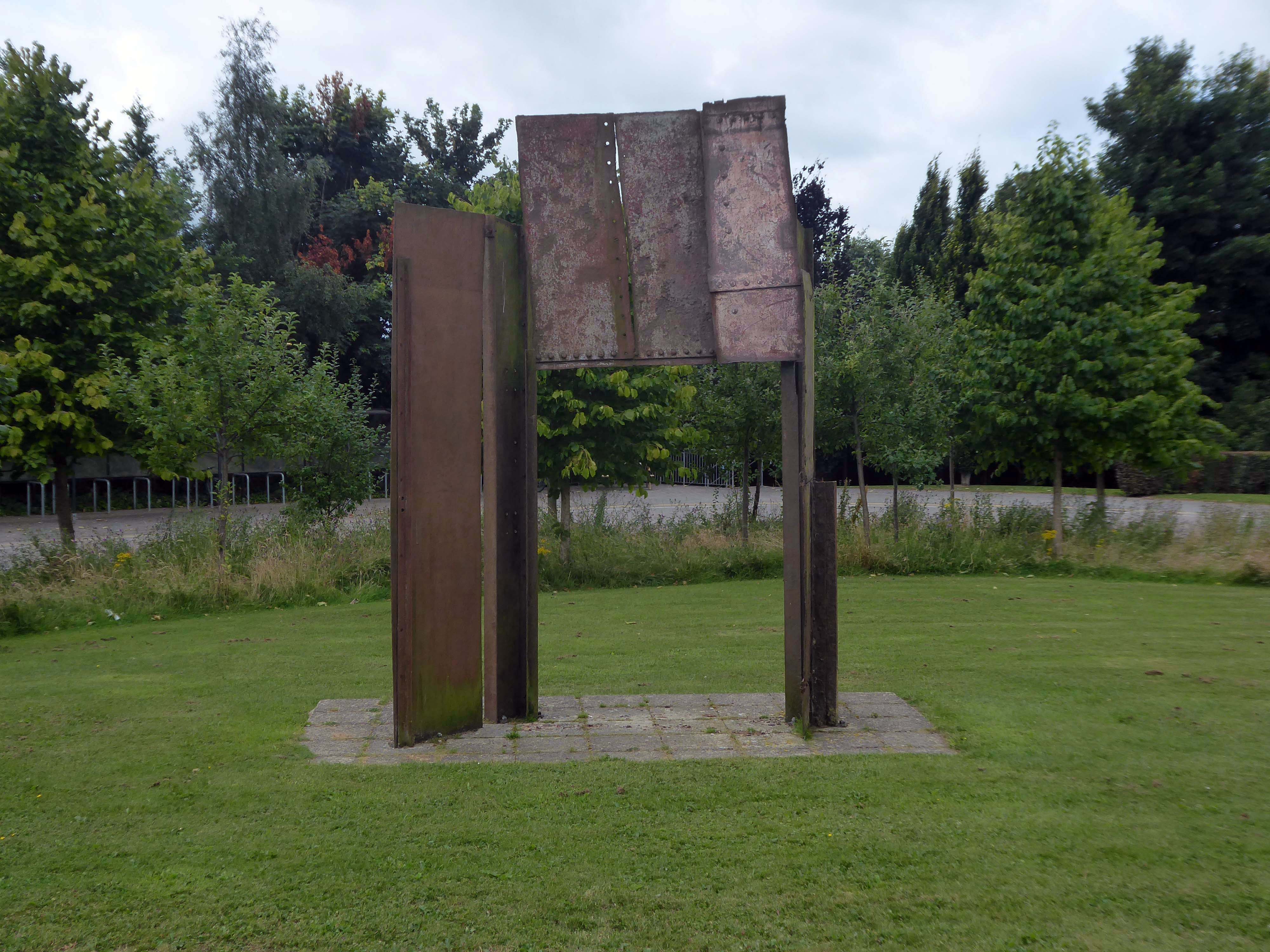
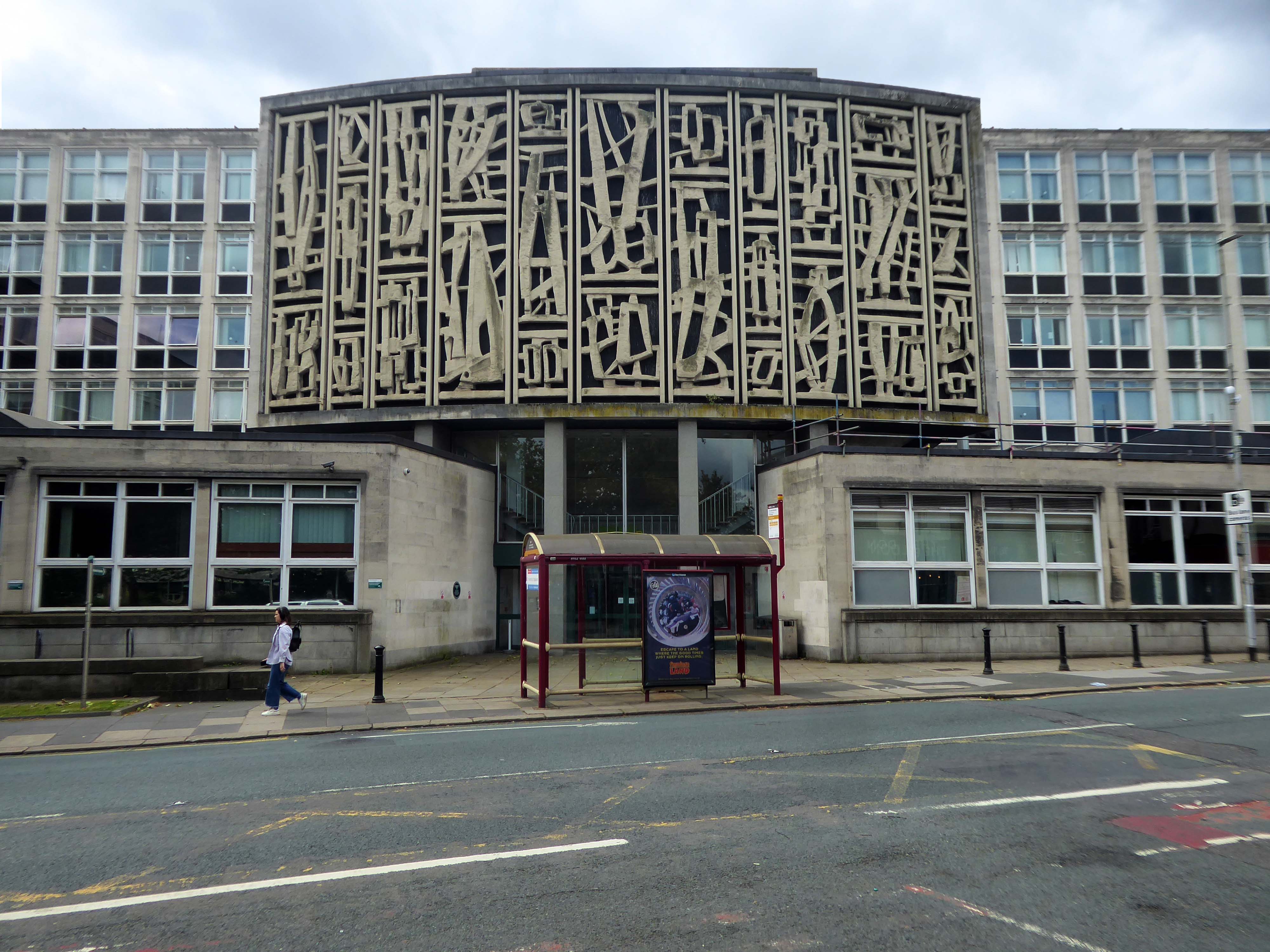
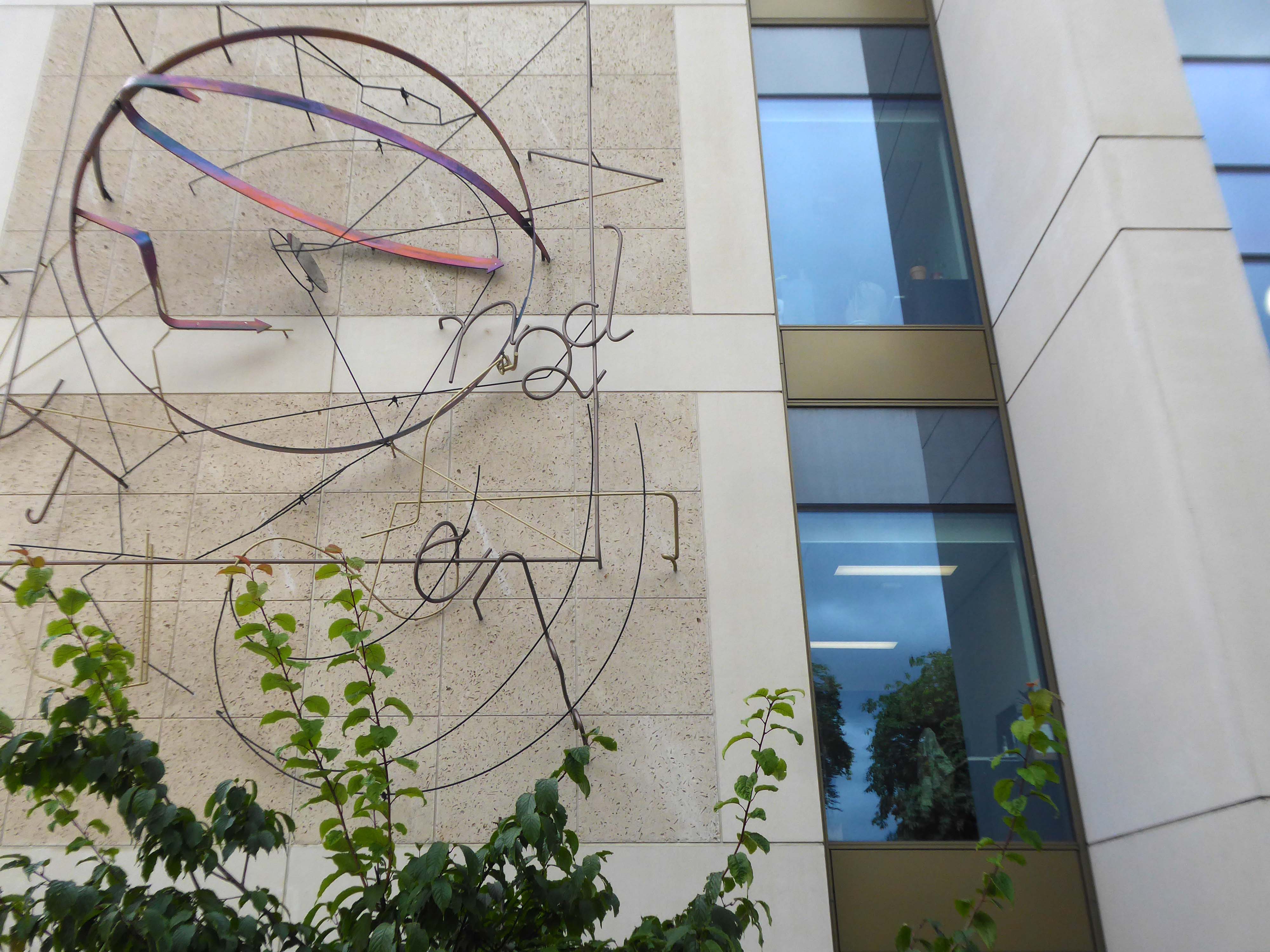
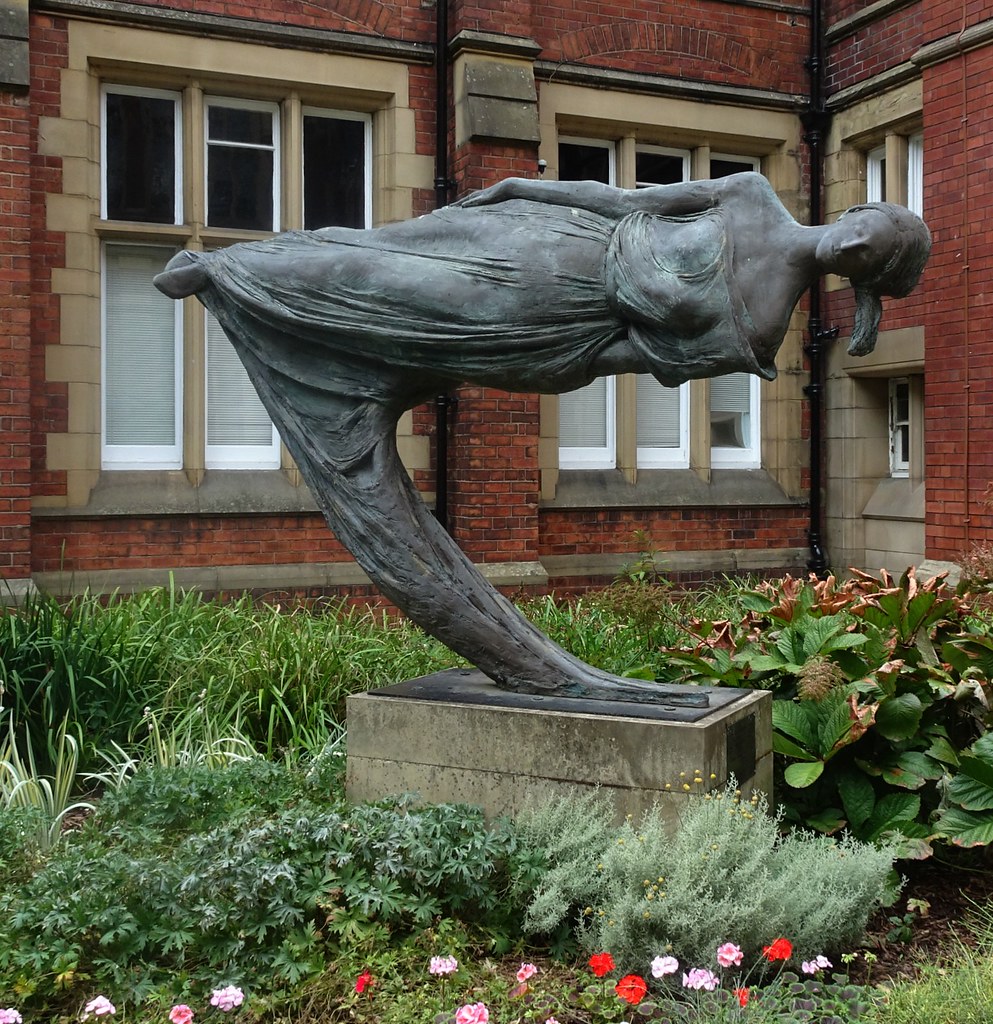
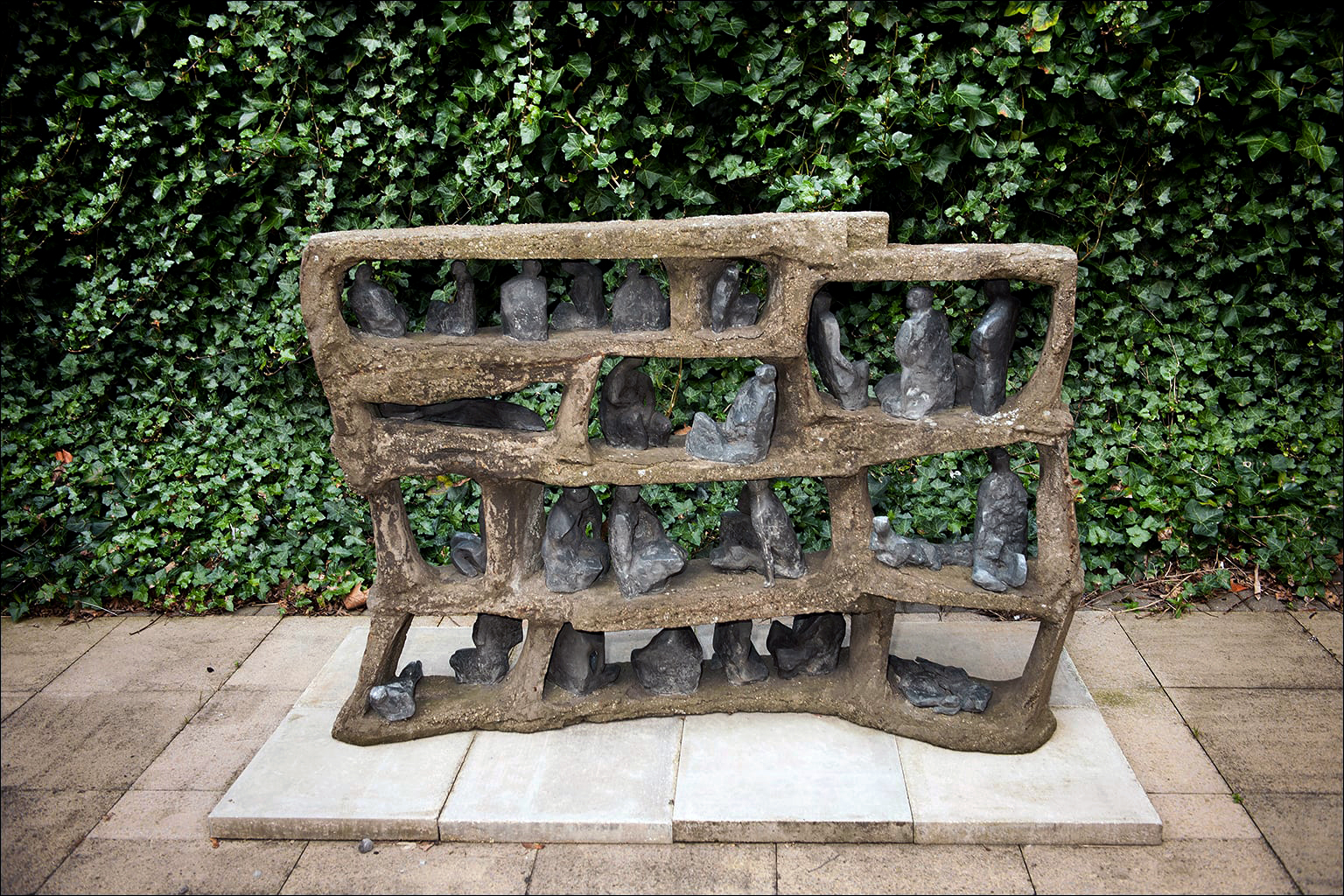
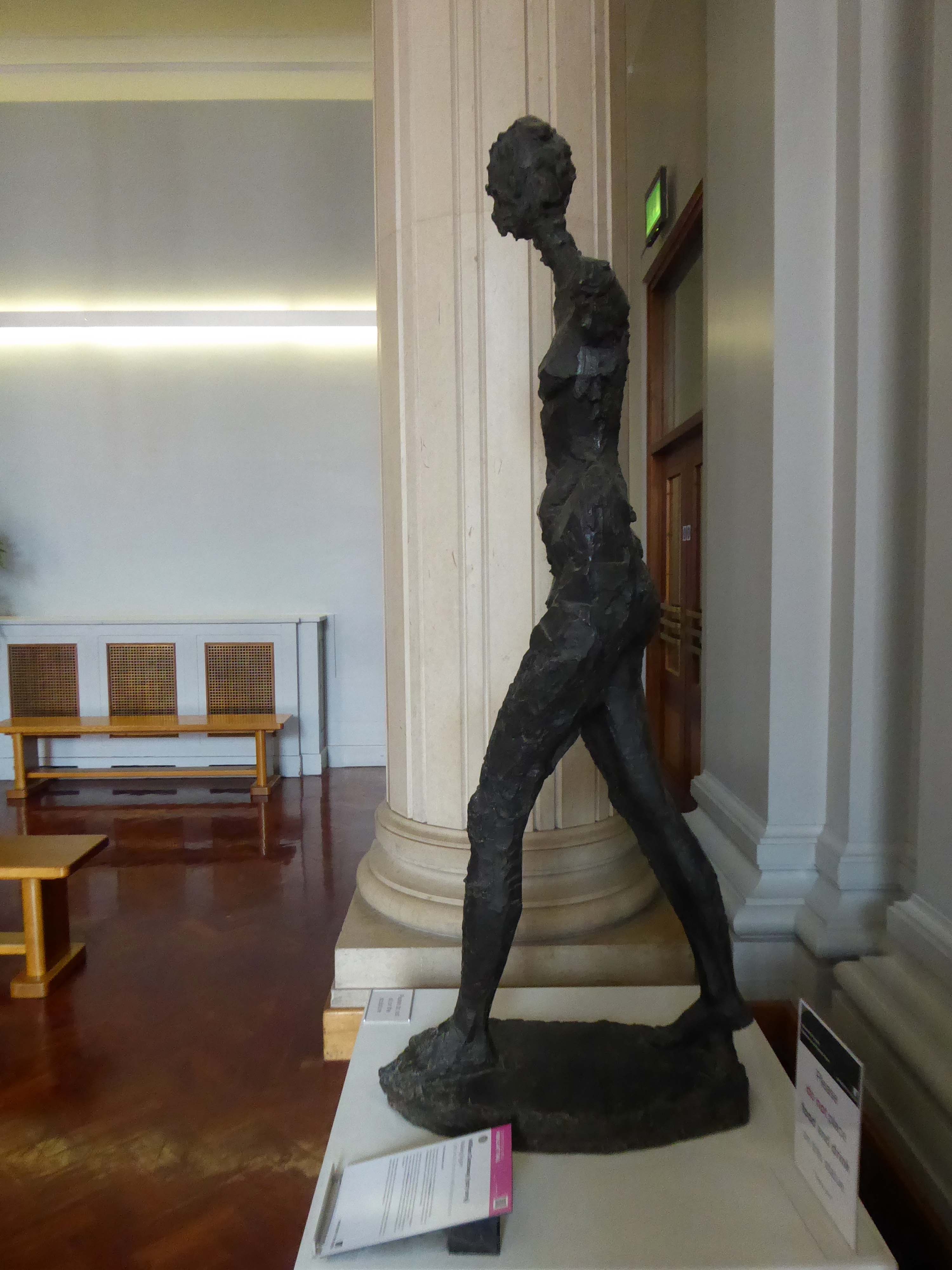
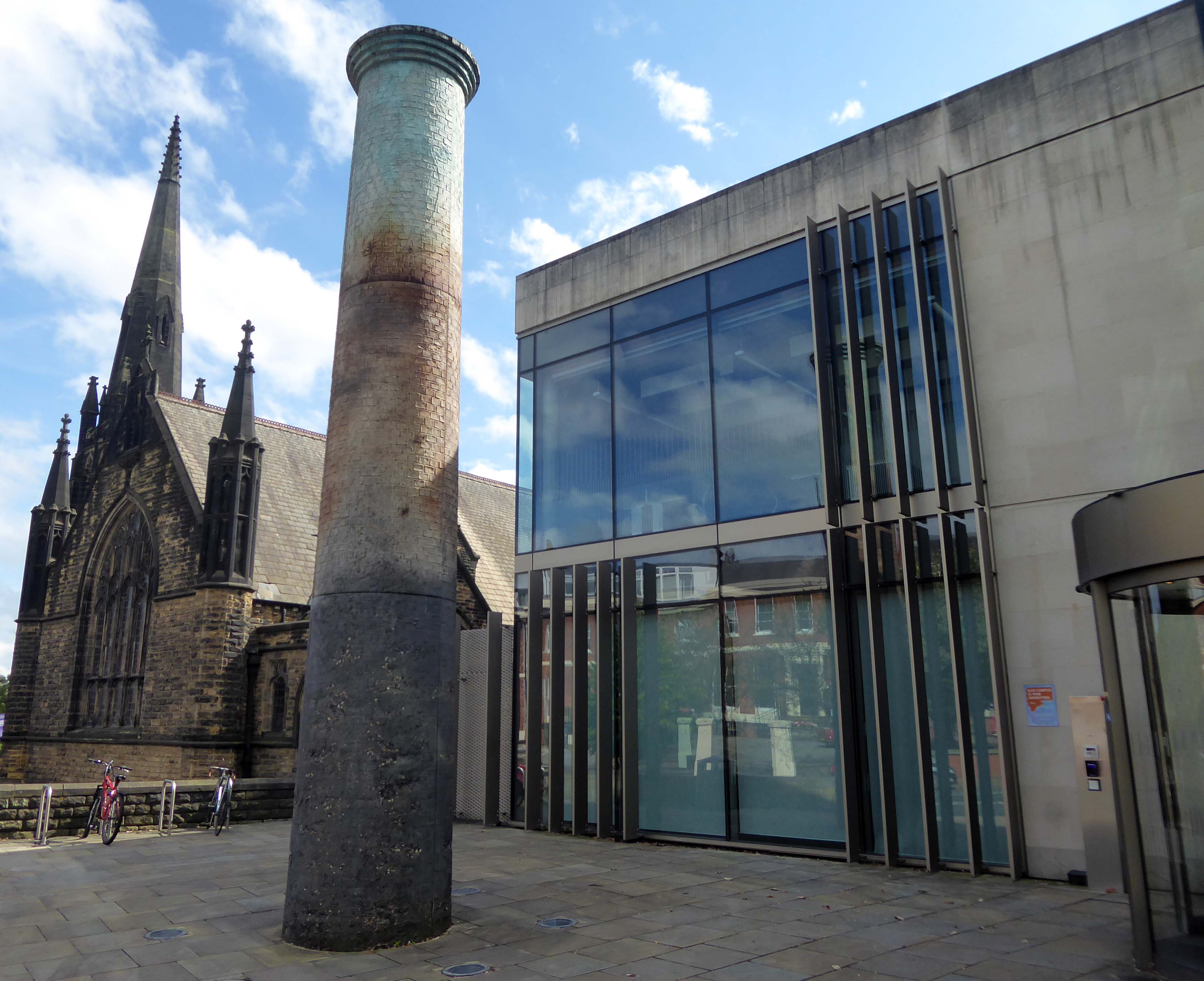
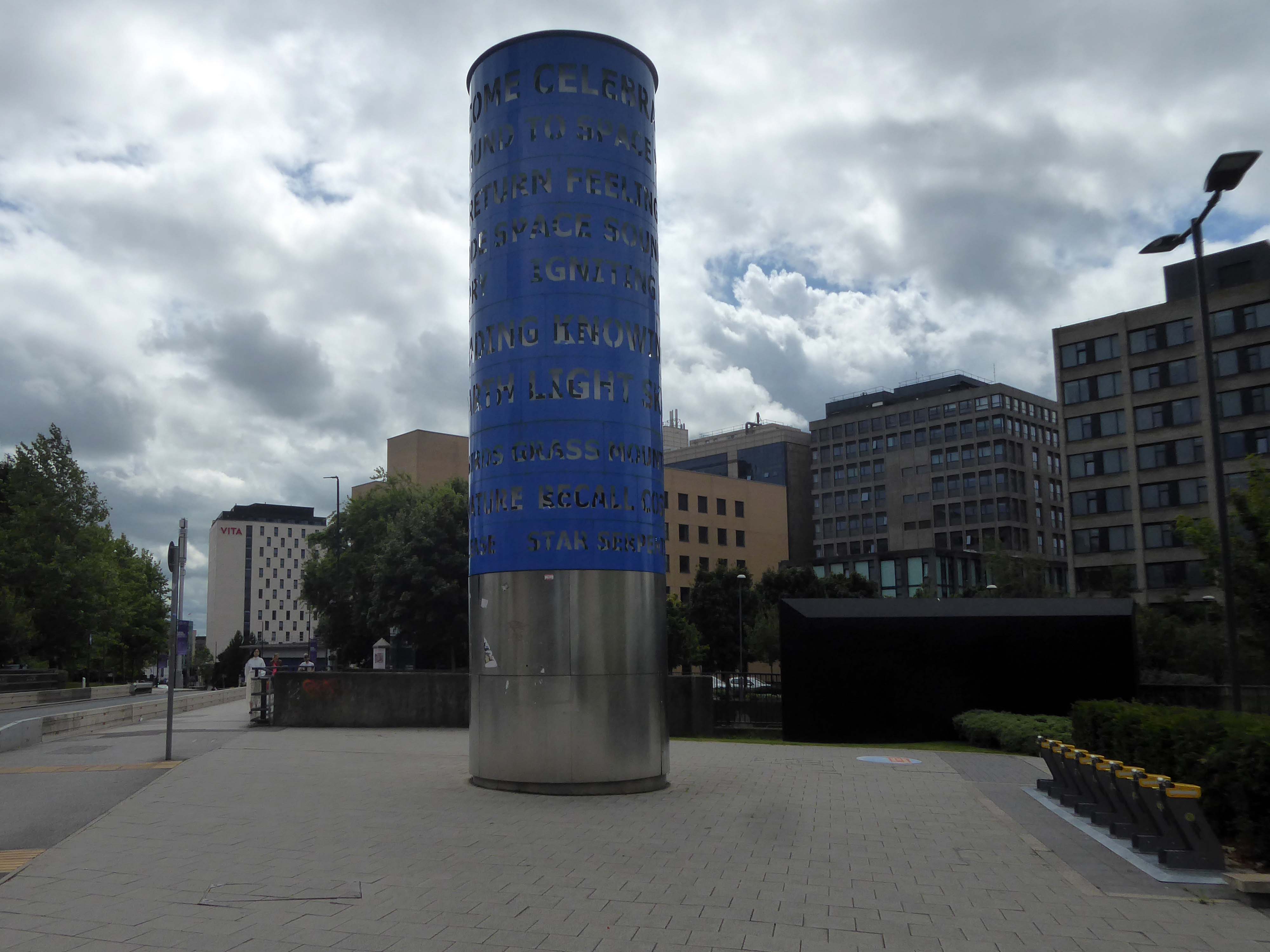
The University of Leeds has a long established collection of public art, this has now been formalised into an Art Trail around the campus. Each of the pieces on this largely accessible display, has a QR code with a supporting audio tour, along with an information panel.
Printed guides are also available from the Stanley & Audrey Burton Gallery, or online here.
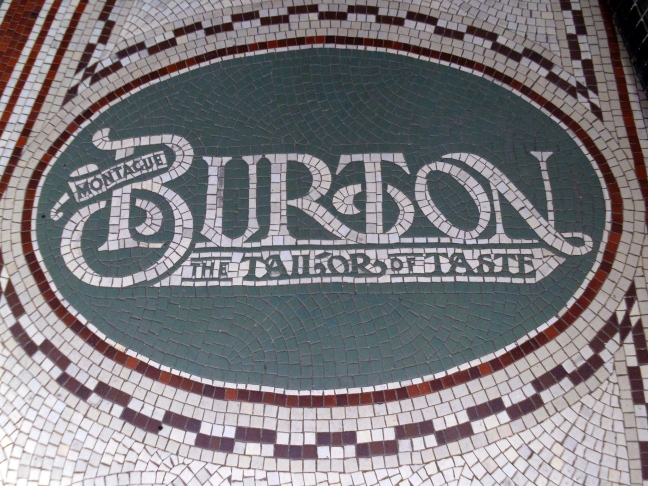
Burton’s – The Tailor of Taste, have long been benefactors of the collection – here’s a little of the company’s history.
Sir Michael Sadler, University Vice Chancellor 1911-1923, was instrumental in developing an interest in Modernist art, through his own collection.
Sadler felt that a student’s education was greatly enhanced by a cultured and harmonious environment. He set about creating such an environment through the public display of pictures from his collection.
Take some time to wander around and consider the works in context, set against two centuries of architectural style and fashion, along with generous open and green spaces.
You can devise your own route around the trail, this is mine.
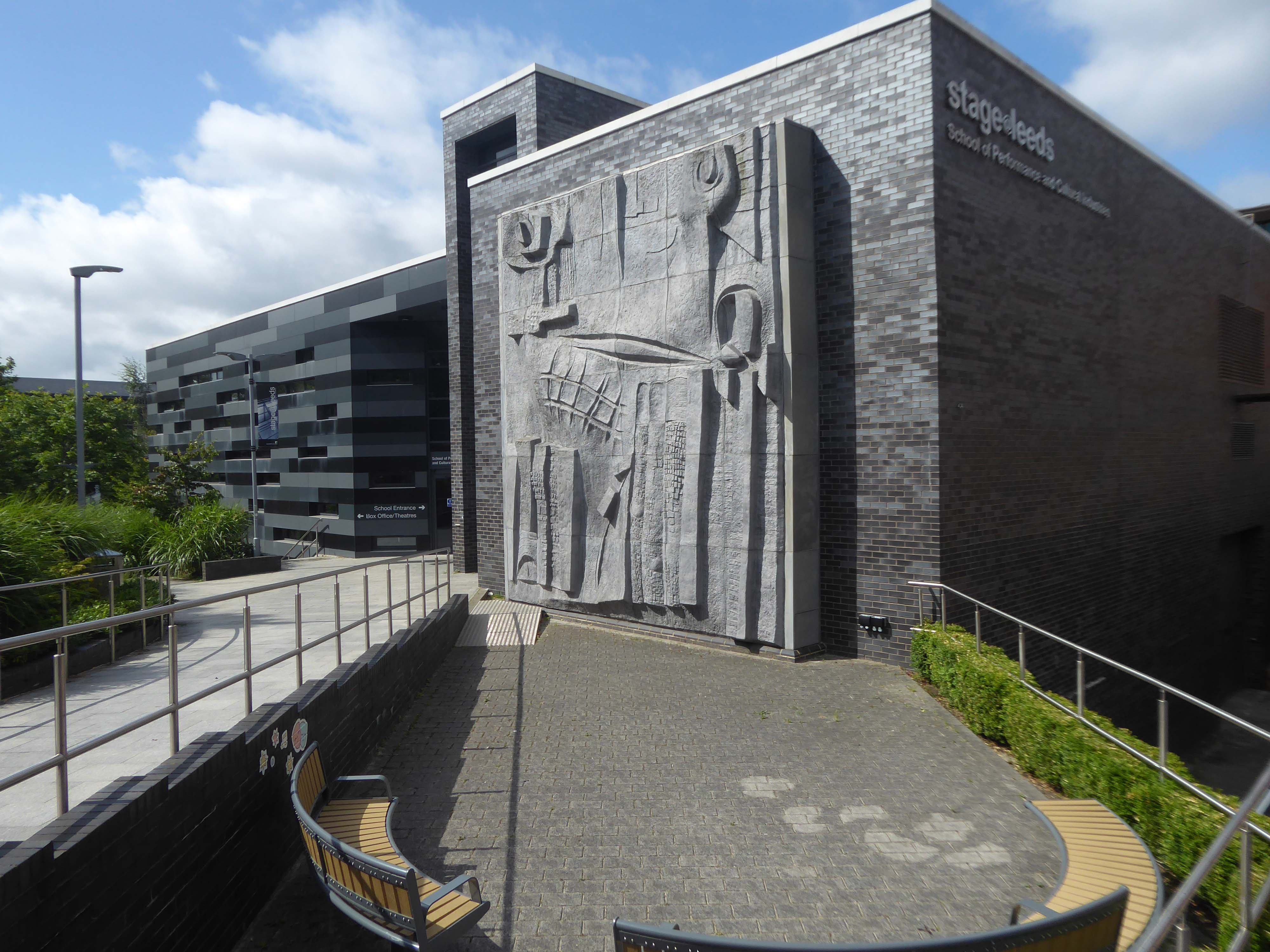
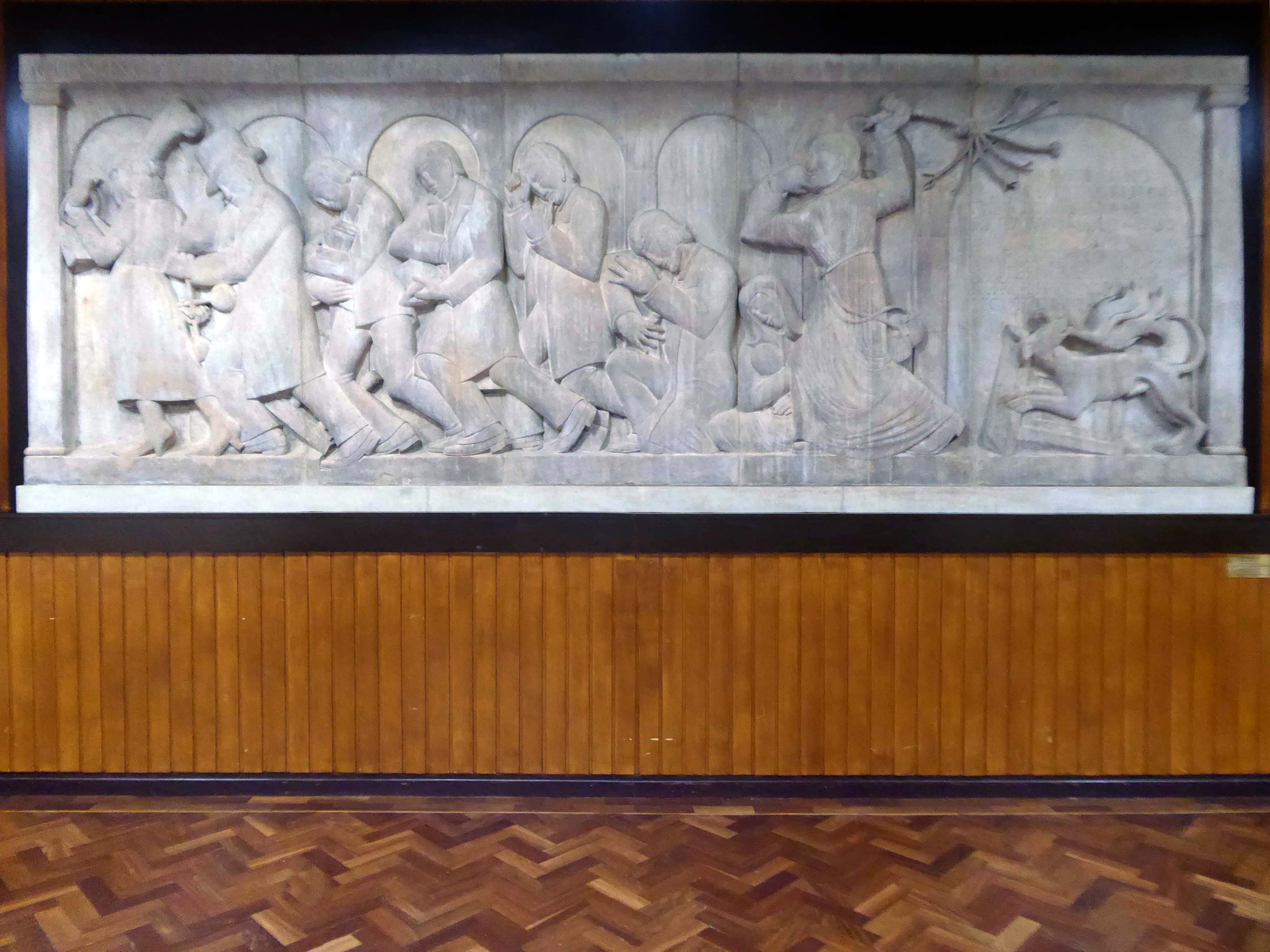
#4 Christ Driving The Moneylenders From the Temple – Eric Gill
The trustees operate within these two positions: we absolutely condemn Eric Gill’s abuse of his daughters with no attempt to hide, excuse, normalise or minimise, yet we also have a duty to protect, display and interpret the art work we hold in our collections.
Like many of the original Odeon Theatres built by Oscar Deutsch, the site chosen was a little out of the main town centre – where land prices were cheaper, and the Odeon Morecambe is a good example of this. It is located at the corner of Euston Road and Thornton Road in this Lancashire seaside town. The Odeon was opened on 2nd September 1937 with Sandy Powell in “It’s a Grand Old World”. It had seating provided for 1,084 in the stalls and 476 in the circle.
Taken over by the Classic Cinemas chain in December 1967, it was re-named Classic Cinema, and was closed on 28th February 1976 with Kenneth Williams in “Carry On Behind”.
The stunning Moderne style exterior much of which including the projectionists walkway is now much deteriorated.
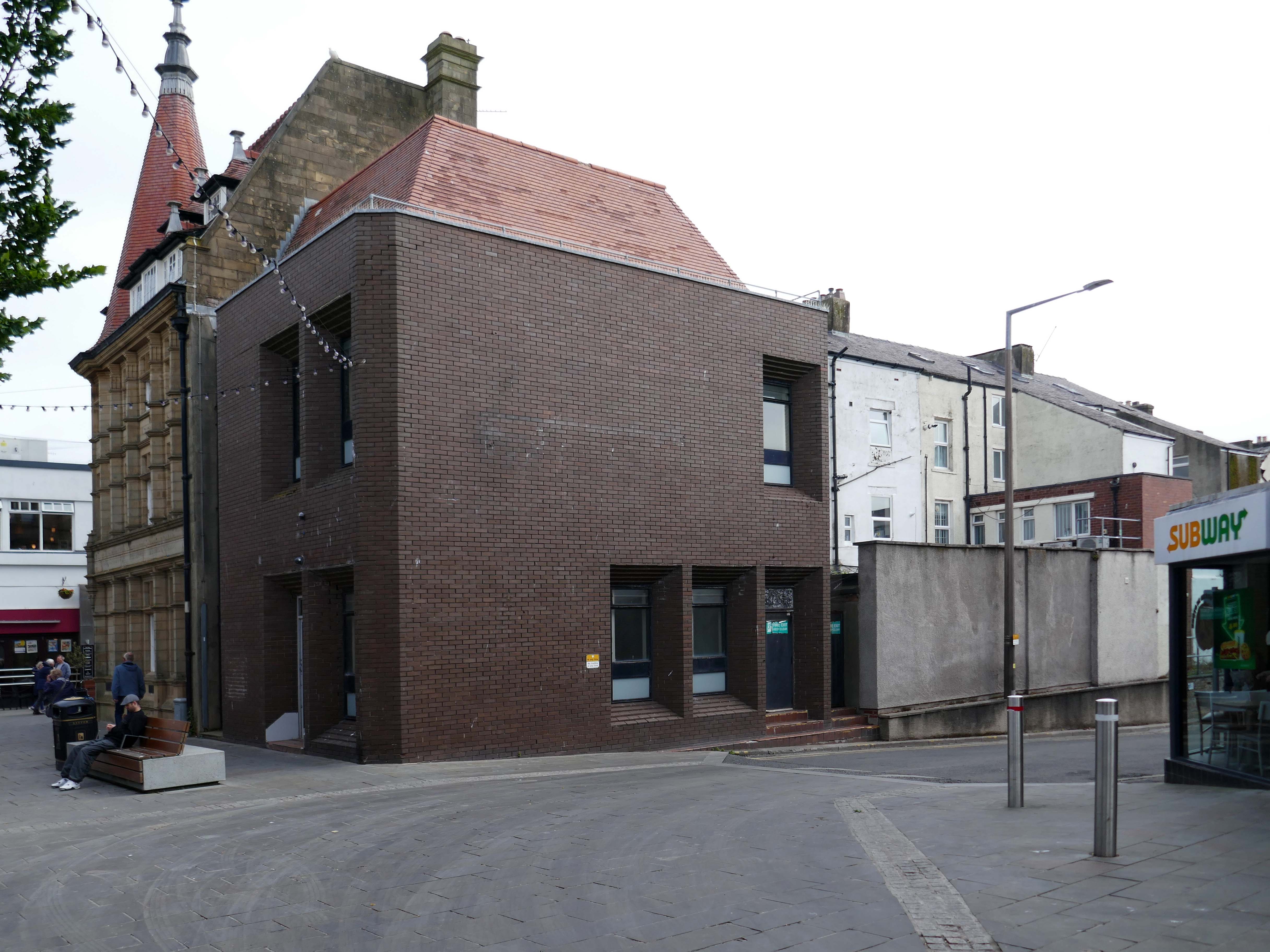
Next to the Police Station another Roger Booth building – recently seen on the small screen in The Bay.
Backtracking to take in the Crescent Café entrance.
Which became Hart’s Restaurant now trading as the Black Thai.
Into the town centre to look at the former Centenary HouseCo-op 1927.
Bought by the city council as part of the West-End Masterplan, the intention is to refurbish the building’s upper floors to provide affordable housing and accommodation for local arts businesses, retaining the Co-op late shop that occupies one-half of the ground floor.
Let’s take a look along the front – where we find a former Woolworths.
Along with other stores from the same period.
Alongside sits the former Littlewoods.
By 1939 there were 24 stores. A number of these were purpose-built for Littlewoods to designs by J S Quilter & Son. John Salmon Quilter – 1841-1907 was, in fact, long dead, but his architectural practice had been continued by his son Cecil Molyneux Quilter – 1879-1951. Quilter specialised in commercial architecture, notably public houses. He designed a new Blackpool store for Littlewoods, on the corner of Church Street and Corporation Street, which was faced in Empire stone. He also designed a store in Chester, and may have been responsible for the one in Morecambe. This faience-clad art deco building is the best surviving example of a pre-war Littlewoods store – indeed, it may be the best surviving Littlewoods of all time – even preserving diamond L motifs on the entrance lobby floors. These clearly copied Woolworth’s diamond W.
Finally to the Midland Hotel 1932-3 by Oliver Hill
Concrete and rendered brickwork, painted white. Curved plan, with convex side facing west towards the sea. Three storeys. Windows are steel-framed casements with rendered surrounds. Above each storey are projecting horizontal bands. The entrance front has a rounded left-hand corner, and a convex central staircase projection rising above roof level. This projection has a tall window of steel casements above the doorway, divided into three by mullions, both of which are capped by sea horses, painted red, which were carved by Eric Gill. Projecting at the right is a single-storey cafe of circular plan, now known as the Ravilious Restaurant. The west side has a single-storey projecting sun lounge, which is an addition, its windows replaced in PVC-coated steel. Between the solid centre and ends of the facade the 1st and 2nd floors have their walls recessed to form balconies.
Interior: above the cantilevered circular open-well staircase is a ceiling panel carved in low relief by Eric Gill and painted by Denis Tegetmeier. They were also responsible for the pictorial map of north-west England in what was originally the children’s room at the south end of the building. Also in this room is Eric Gill’s Portland stone panel, originally in the lounge, carved in low relief with a representation of Odysseus and Nausicaa. It was moved to its present position when internal walls were demolished during the 1970s. The cafe walls were originally painted with frescoes by Eric Ravilious, representing morning and evening in an idyllic seascape setting. These deteriorated rapidly because the plaster and paint used were incompatible and were obliterated within 2 years of completion, but were repainted in the late 1980s using photographic evidence.
The Super Swimming Stadium at Morecambe, Lancashire, was one of the grandest of the 1930s modernist seaside lidos. This massive structure measuring 396ft. by 110ft. was said to be the largest outdoor pool in Europe when it opened in 1936, accommodating some 1200 bathers and 3000 spectators. Unusually for an inter-war lido, it was designed not in-house by a Borough Engineer but by two architects, Kenneth MB Cross and Cecil Sutton, who styled it to harmonise with the Streamline Moderne of Oliver Hill’s adjacent Midland Hotel.
The stadium was closed down in 1975 on grounds of structural problems and demolished just a year later.
Although there is evidence in the local area of occupation since the Iron Age, it was still a small village until the 19th century when it became a seaside resort, and was connected with local towns and cities by a railway, and two piers were built. The growth continued until the second half of the 20th century, when tourism declined and some local industries closed. A regeneration programme is being undertaken with attractions including the Helicopter Museum, Weston Museum, and the Grand Pier. The Paddle Steamer Waverley and MV Balmoral offer day sea trips from Knightstone Island to various destinations along the Bristol Channel and Severn Estuary. Cultural venues include The Playhouse, the Winter Gardens and the Blakehay Theatre.
I arrived mid-morning on Saturday 25th July 2015 – having travelled some two hundred miles or so from Stockport by train.
The Iron Age seemed to be over and regeneration slowly but surely under way.
This marked the start of another coastal tour, following last year’s epic which began in Hastings.
This time I was heading for Hastings – but that can wait until tomorrow, let’s have a look around town.
Directly opposite the station is a group of Seaside Moderne homes in various states of whiteness – standing in line along Neva Road.
Reasonably priced, cheaper than Frinton – check it out
I pushed my bike along the prom heading for my pre-booked digs in a stylish seafront hotel.
Past the Marine Causeway linking the shore to some kind of modern day Post Modern Shangri-La.
A mystical, harmonious valley, gently guided from a lamasery, enclosed in the western end of the Kunlun Mountains, possibly not.
You can stroll onto Knightstone Island, where you will find some cafes serving light snacks and refreshments, or to the other side which takes you along the causeway, accessible to walk across according to the tides. At the other side of the Causeway you will find a small rocky beach with tidal rockpools ideal for exploring.
Just along the prom stands one of my all time favourite seaside shelters.
Even further along – what’s all this here then?
The foundation stone of the Birch-designed Birnbeck Pier was laid in 1864. It opened on 5th June 1867 and consisted of a 1040 foot cantilever construction to Birnbeck Island and a short jetty extending westwards from the island.
It seems to have changed hands several times in its relatively short life, including the stewardship of the infamous Urban Splash and the mysterious mystery owners, the current custodians it seems, have done little to secure a secure future.
It remains alone and untended, stretching aimlessly out to sea.
In April 2015, Friends Of The Old Pier Society created a novel fund raising scheme in which 1p and 2p coins would be lined up to stretch from the Grand Pier to Birnbeck Pier.
September 2019 Councillor Mr Crockford-Hawley said:
It’s this end of Weston which is the sore, it’s the carbuncle, it’s clearly well past its prime and it needs some serious attention. I mean it would be wonderful if somebody came along with an open ended bank account and said ‘yup, I’d love to restore it for the sake of restoring it’, but quite clearly there’s got to bean economic future for the pier, there’s got to be a purpose for the pier.
Possibly a wealthy Beatle could bail the ailing pier out of deep water?
Having made a bob or two since they appeared here in 1963.
Next thing I know I’m outside the imposing and impressive sounding Ocean Hotel. Sad to say on the day/night of my visit it wasn’t just this weary traveller that appeared to be over tired, happy to report the the New Ocean Hotel has been revamped and in tip-top condition by all accounts.
Any road up, let’s get out, take a walk up the road – have look at some local type.
Watney’s mythical Red Barrel.
Watney’s was the Evil Corporation which sought to crush plucky small brewers and impose its own terrible beer on the drinking public. It acquired and closed beloved local breweries, and it closed pubs, or ruined them with clumsy makeovers.
Its Red Barrel was particularly vile – a symbol of all that was wrong with industrial brewing and national brands pushed through cynical marketing campaigns.
Keeler Productions has taken over Locking Road Car Park, opposite Tesco, and The Regent Restaurant, in Regent Street, to film a BBC period series The Trial of Christine Keeler, based on the Profumo Affair in the 1960s.
Enough of all that period drama, let’s have a look at some period architecture.
Madeira Court – 67 flats built in 1988.
Weekly Social Activities include – coffee mornings, card evenings and occasional days out, organised by social club. New residents accepted from sixty years of age, both cats and dogs generally accepted.
I can find no reference for this dalle de verre stained glass window.
Boulevard United Reformed Church – Waterloo Street
Architects Gordon W. Jackson and Partners 1959
Constructed on part of the site of the former Electric Premier Cinema, the Odeon Theatre was opened on 25th May 1935 with Jack Buchanan in Brewster’s Millions. Built as one of the original Odeon Theatres in the then emerging Oscar Deutsch Odeon Theatres circuit, it was built on a prime corner street position in this sea-side town and was the first of several Odeon Theatre’s to be designed by architect Cecil T Howitt.
The Weston-super-Mare Odeon was built by C Bryant & Son Ltd of Birmingham on the site of the former Electric Premier Cinema. It opened on 25 May 1935, at which time it was described in the souvenir programme as ‘modernity at its best’, with seating accommodation that was ‘luxurious and spaced to give ample room for true comfort’.
A short walk along the prom snapping shelters and the sheltered – no two the same.
I then chanced to fall into a Beer Festival and bad company – the rest is a blur, see you all tomorrow there’s some cycling to be done.








 Modern Mooch