Deep in the heart, just on the edge of central Manchester, there exists a dilemma.
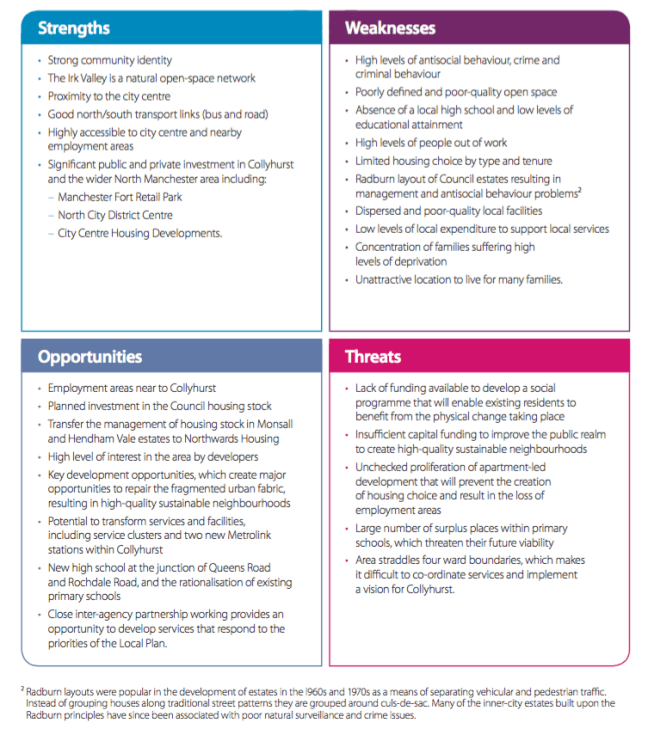
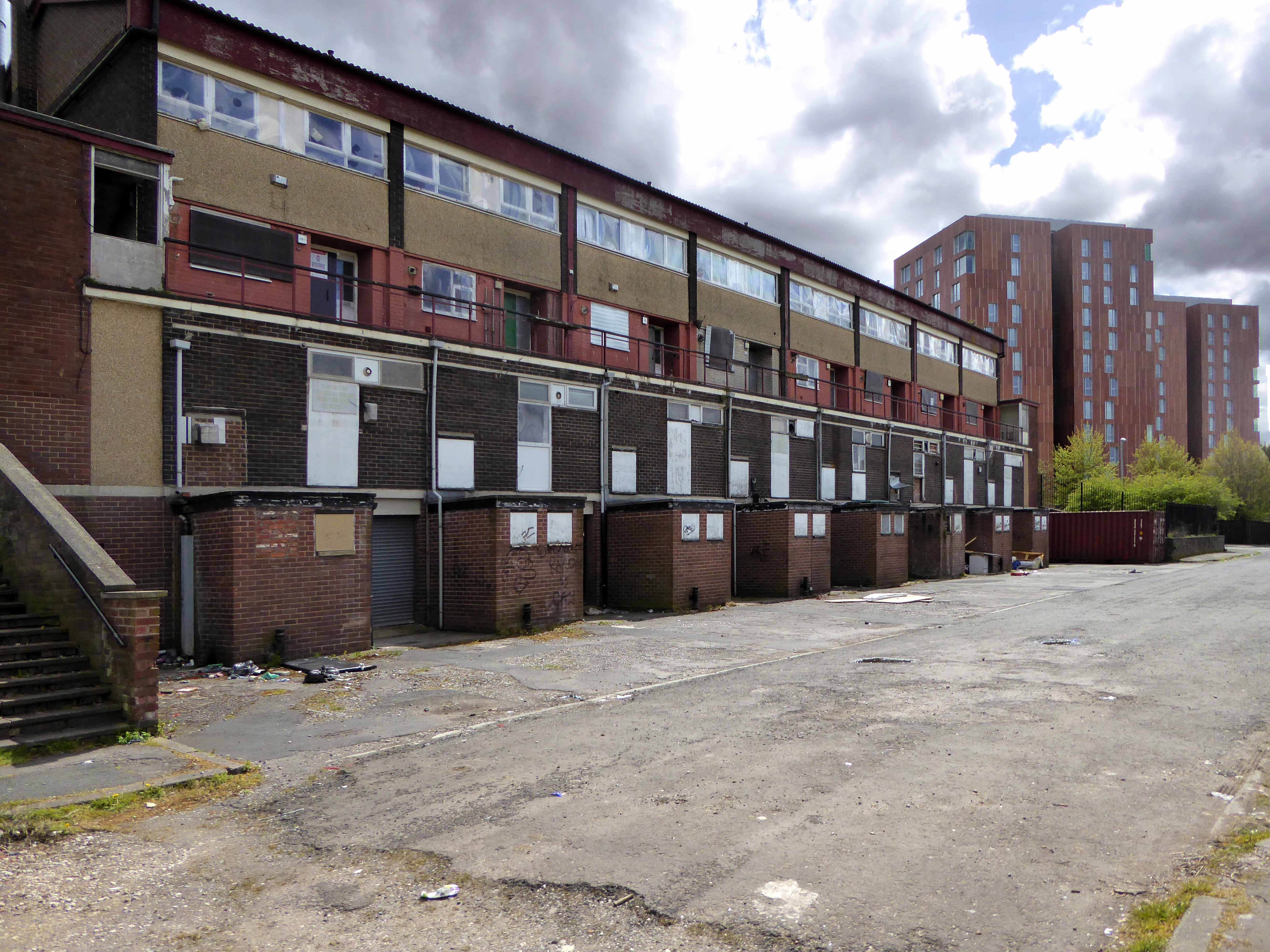
Once a place of full employment and home occupation, time has not been kind to Collyhurst. Work is scarce and the area blighted by a reputation for crime and social problems. Yet it sits by an area of inner city wealth, economic expansion and a growing professional class.
The plan is to expand this growth outside of the fringes of city and into north Manchester, since 2008 this has been the stated aim of the local authority. Tram stops, academies, and retail parks apart, change seems slow to arrive.
There is a chronic shortage of public funding and seemingly an absence of private capital and speculative development – life is elsewhere.
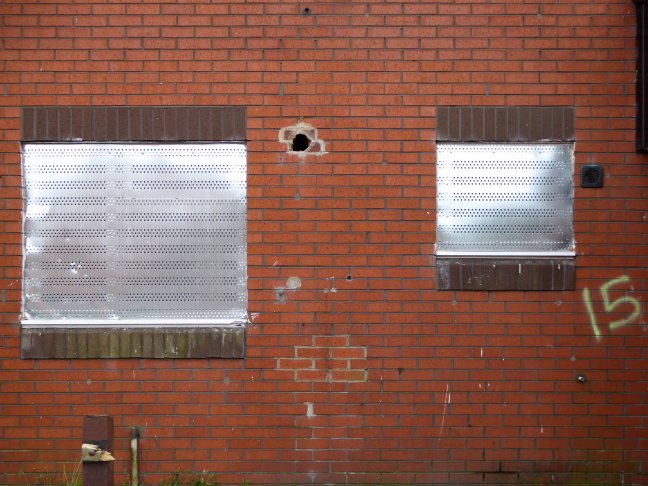
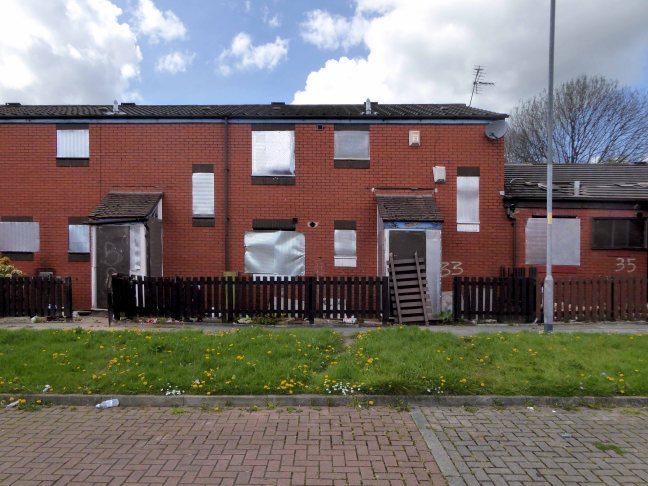
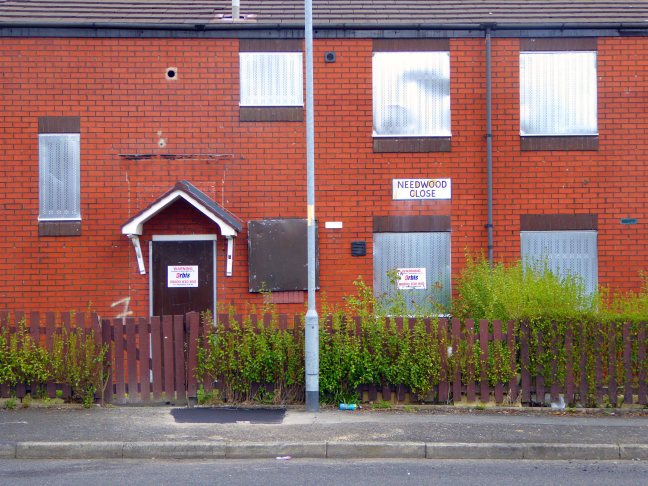
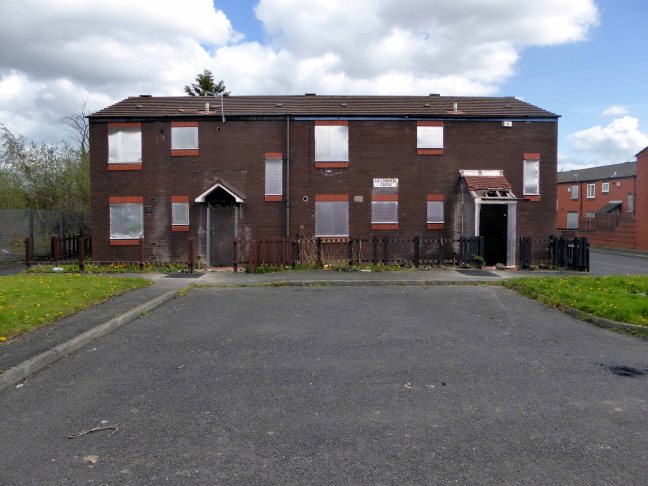
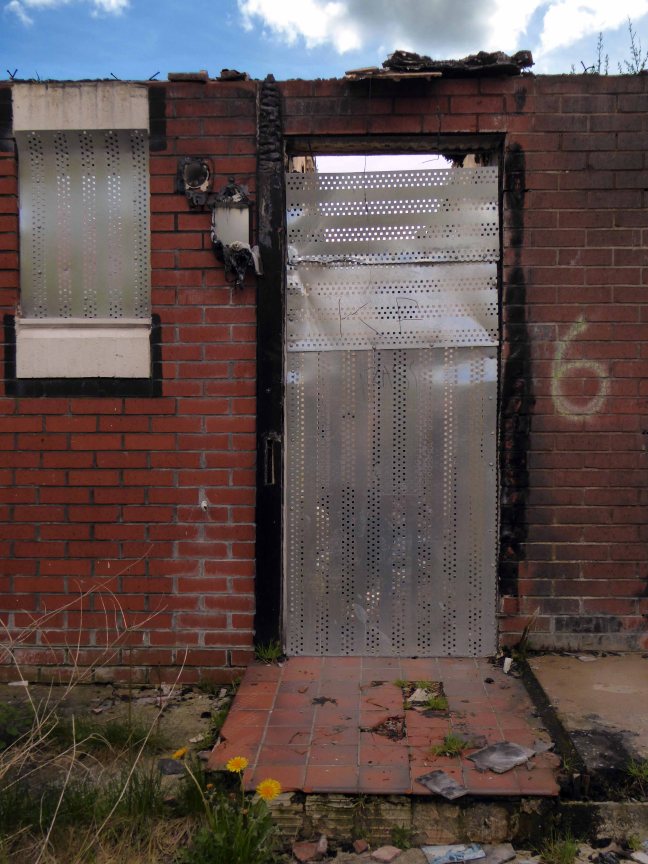
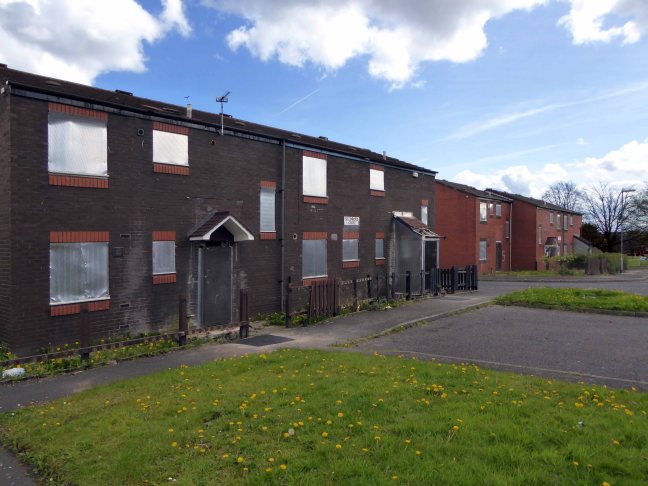
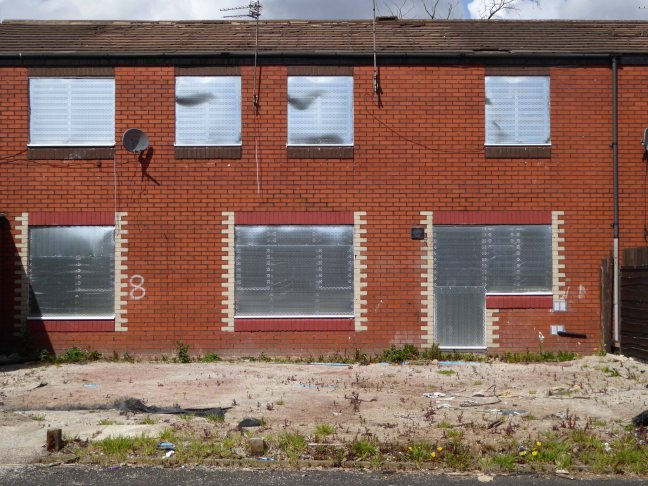
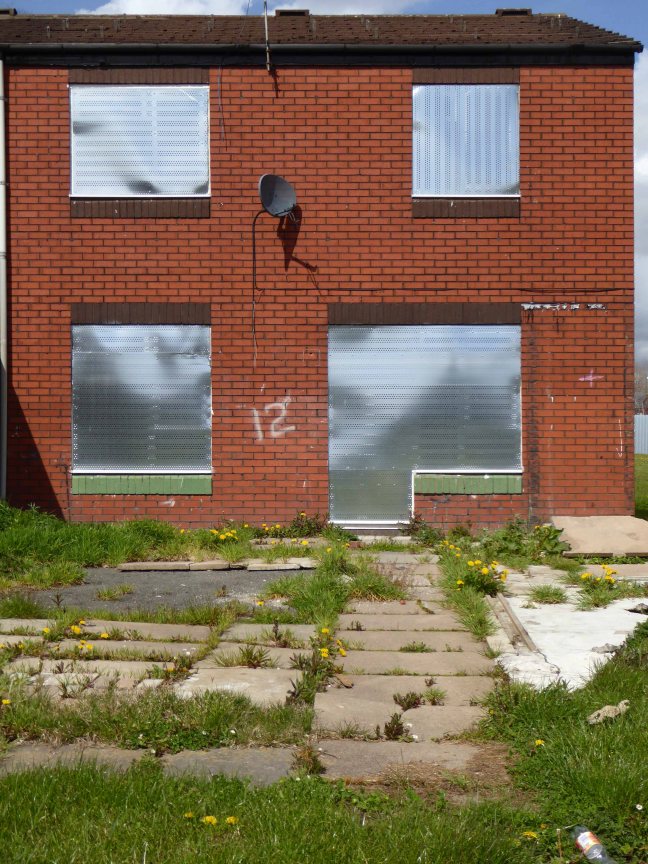
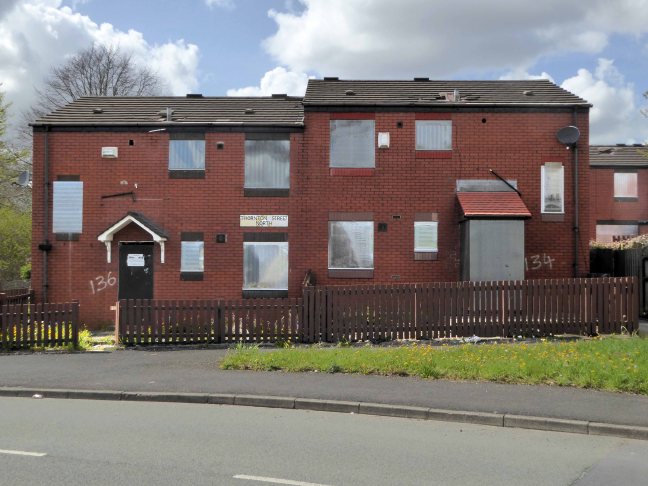
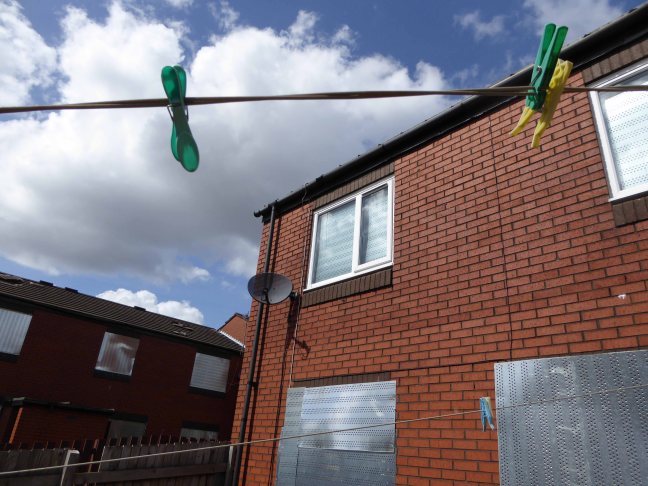
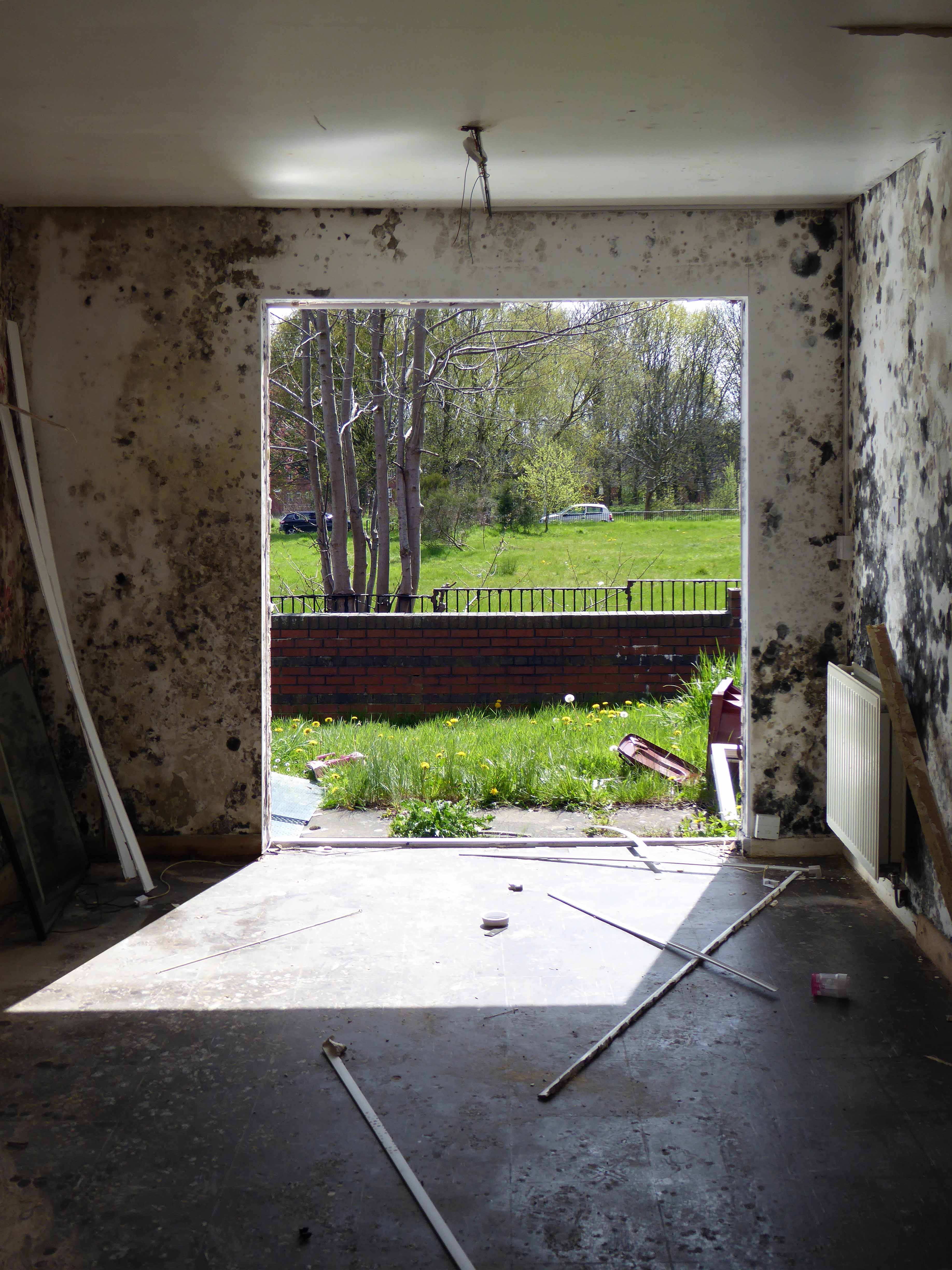
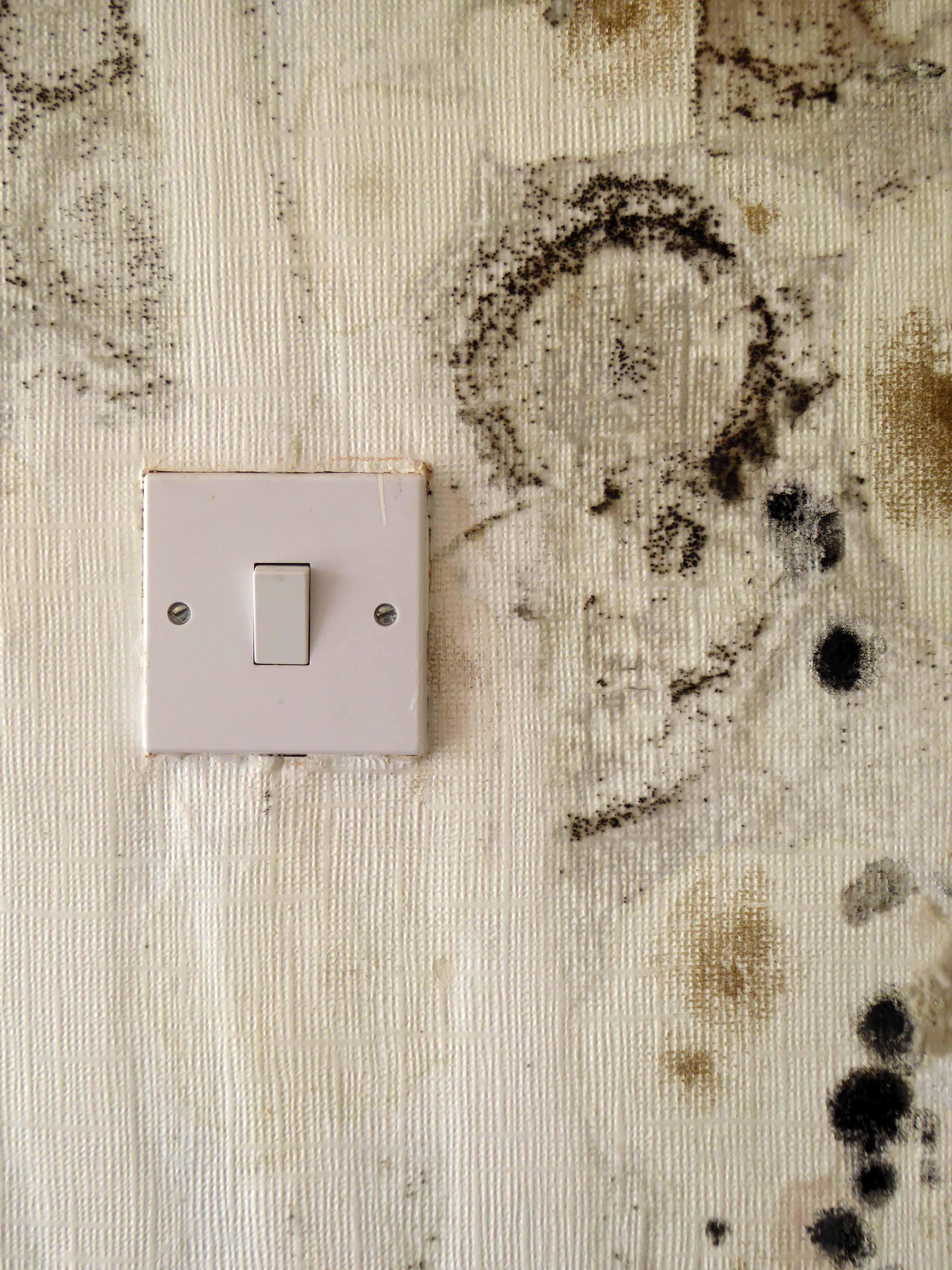
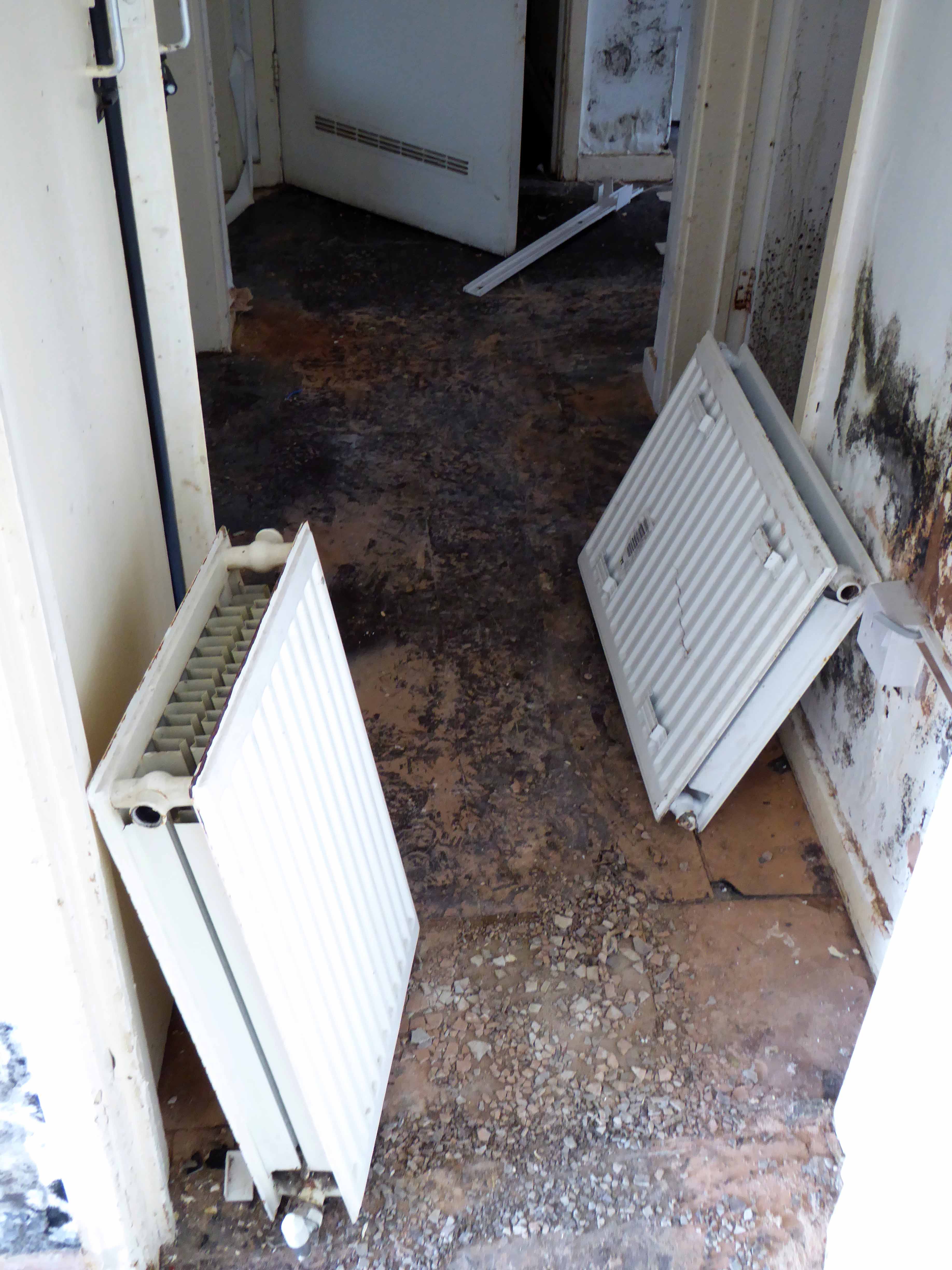
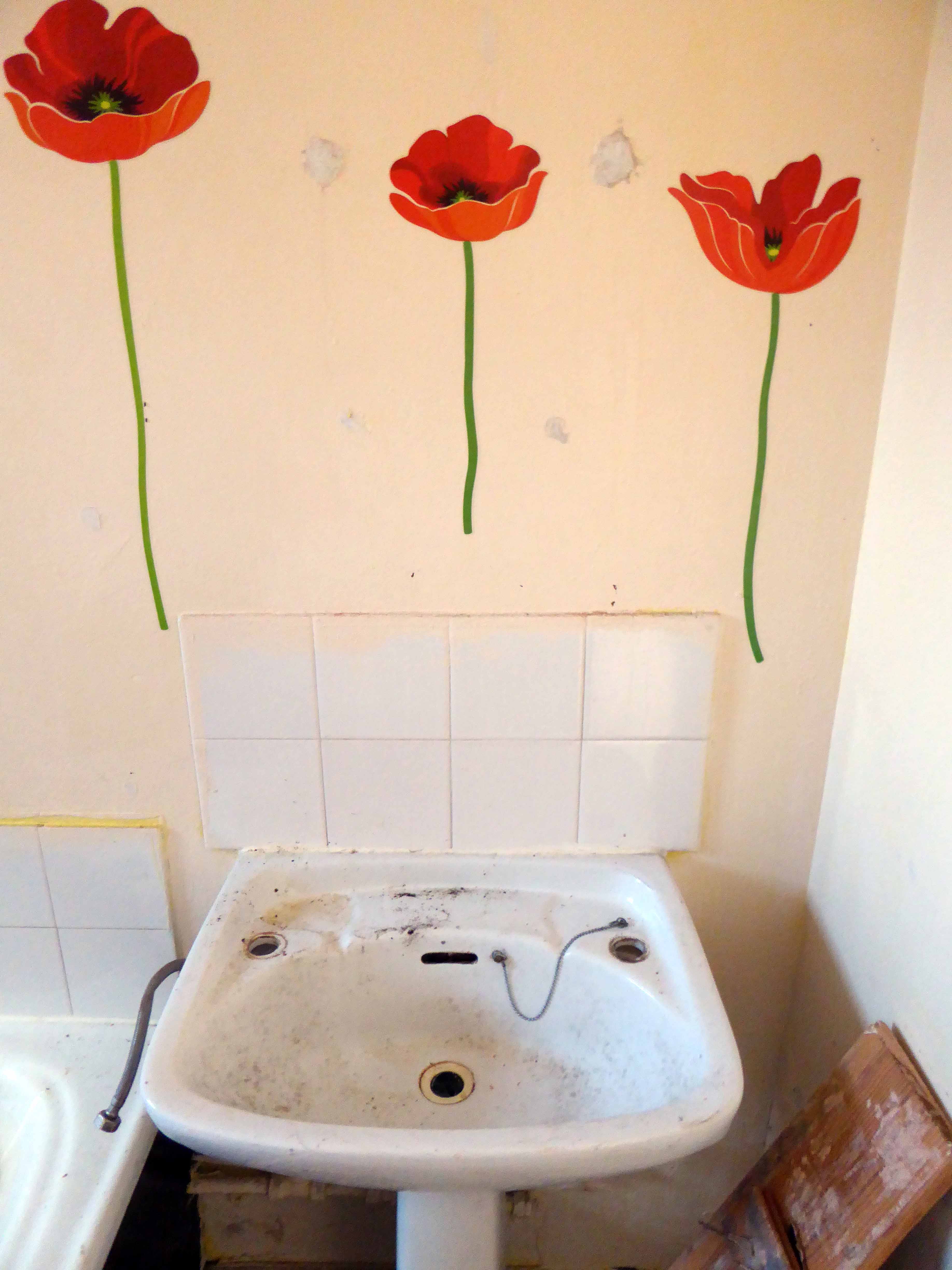
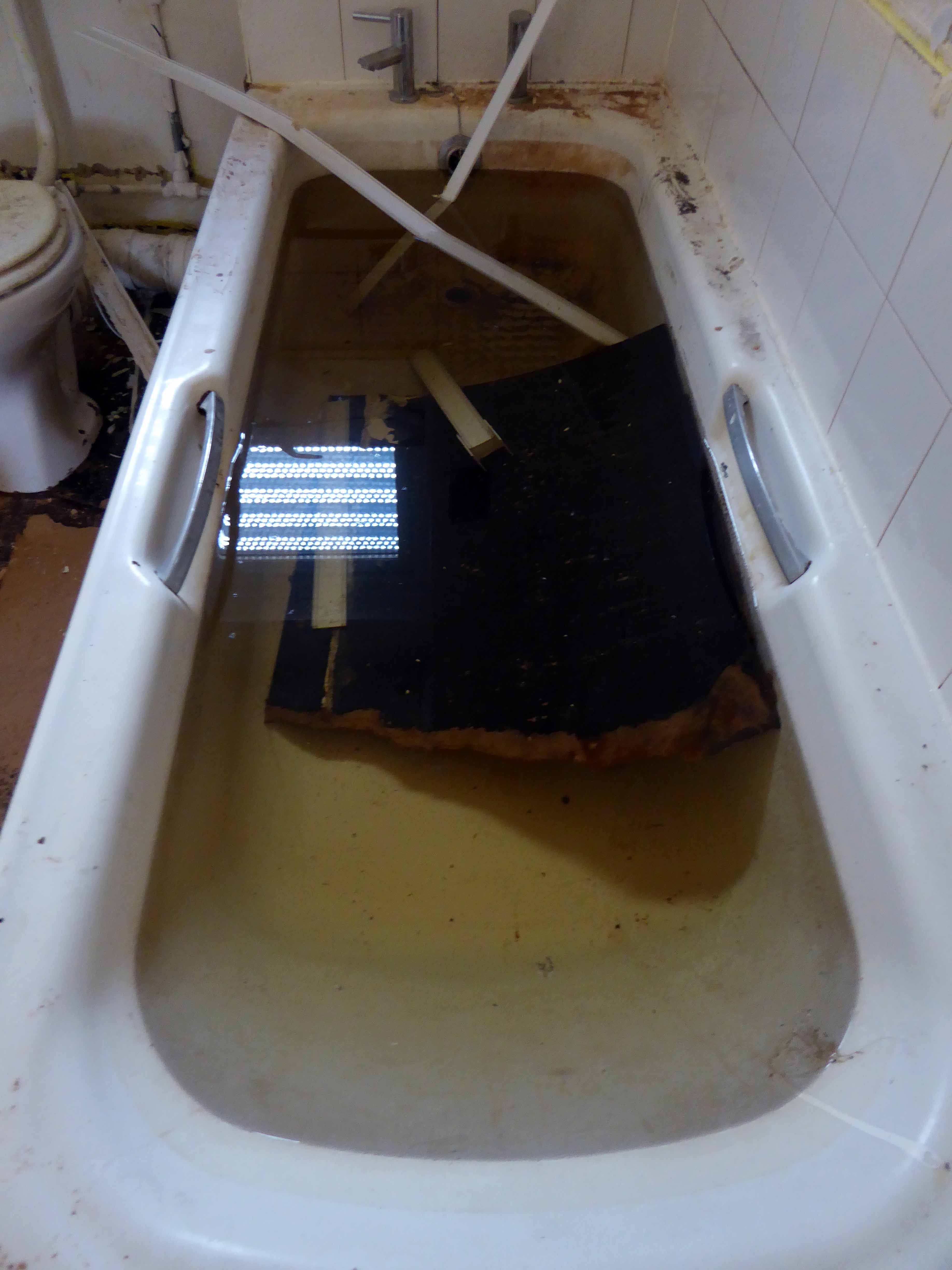
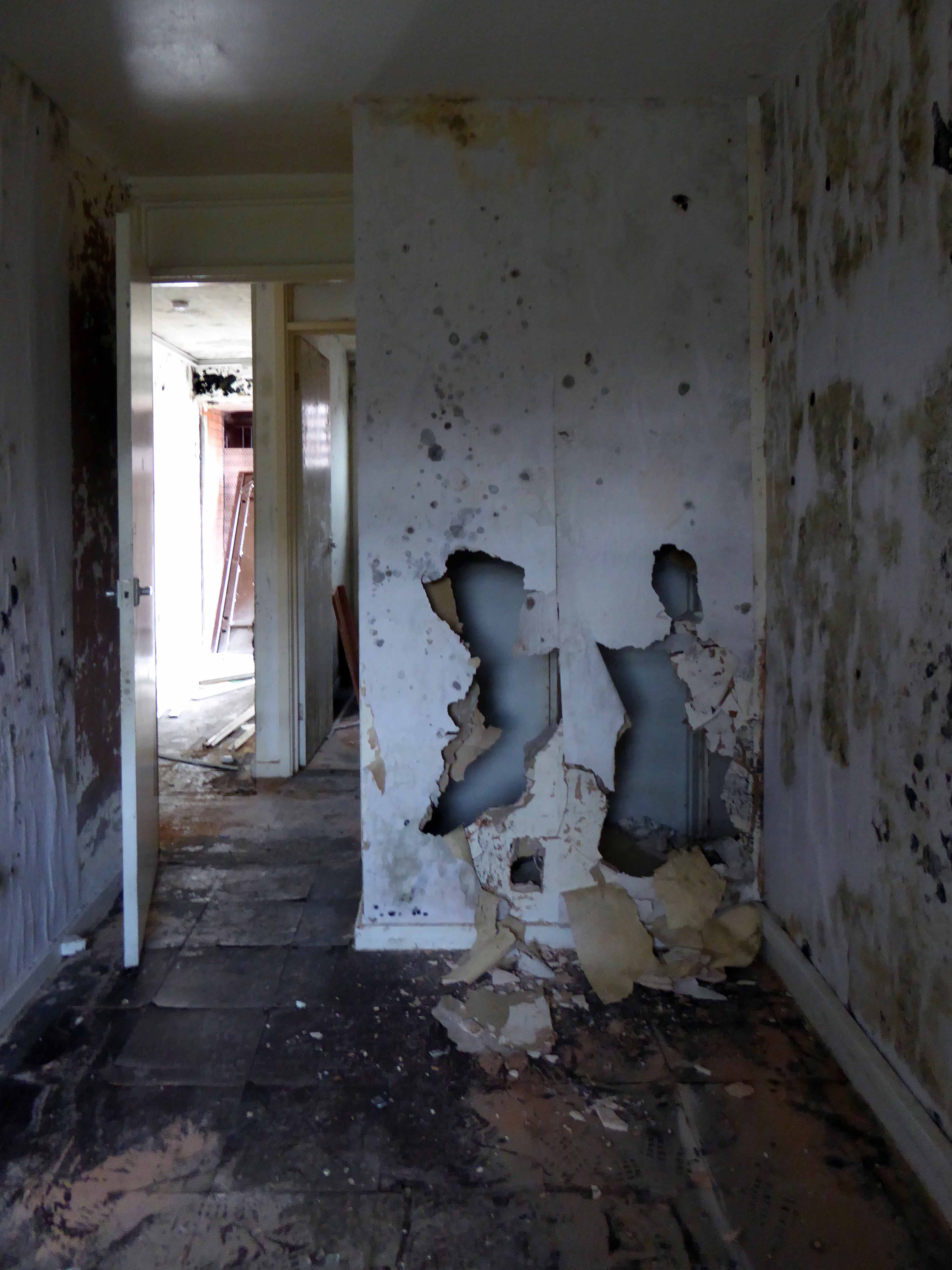
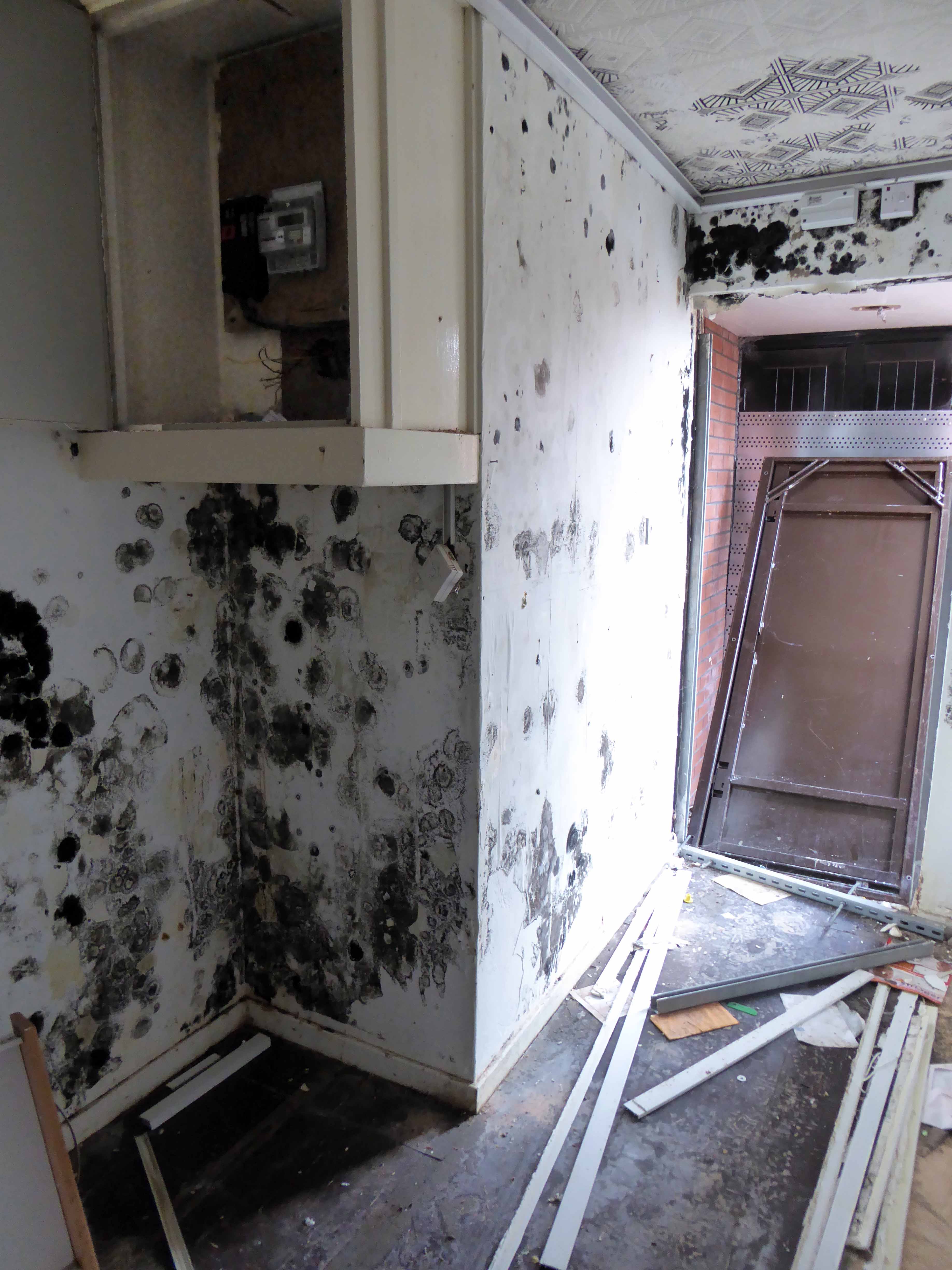
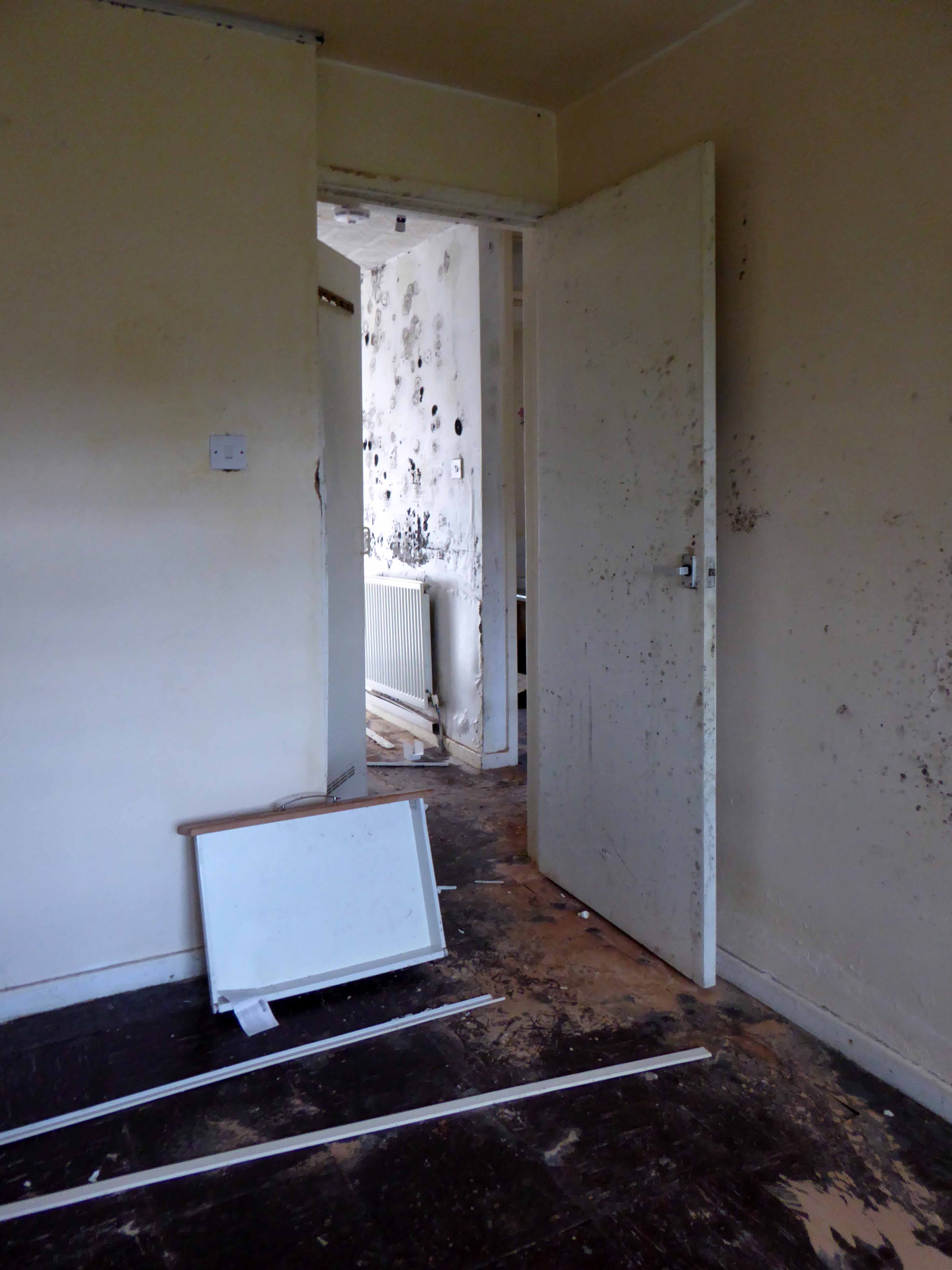
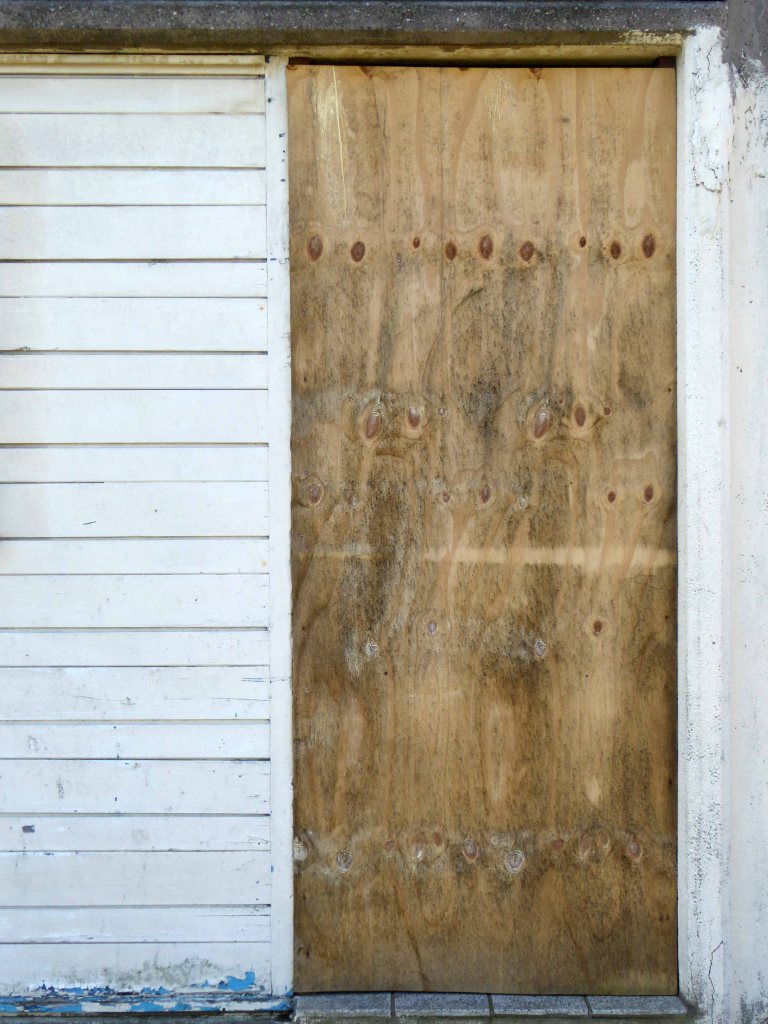
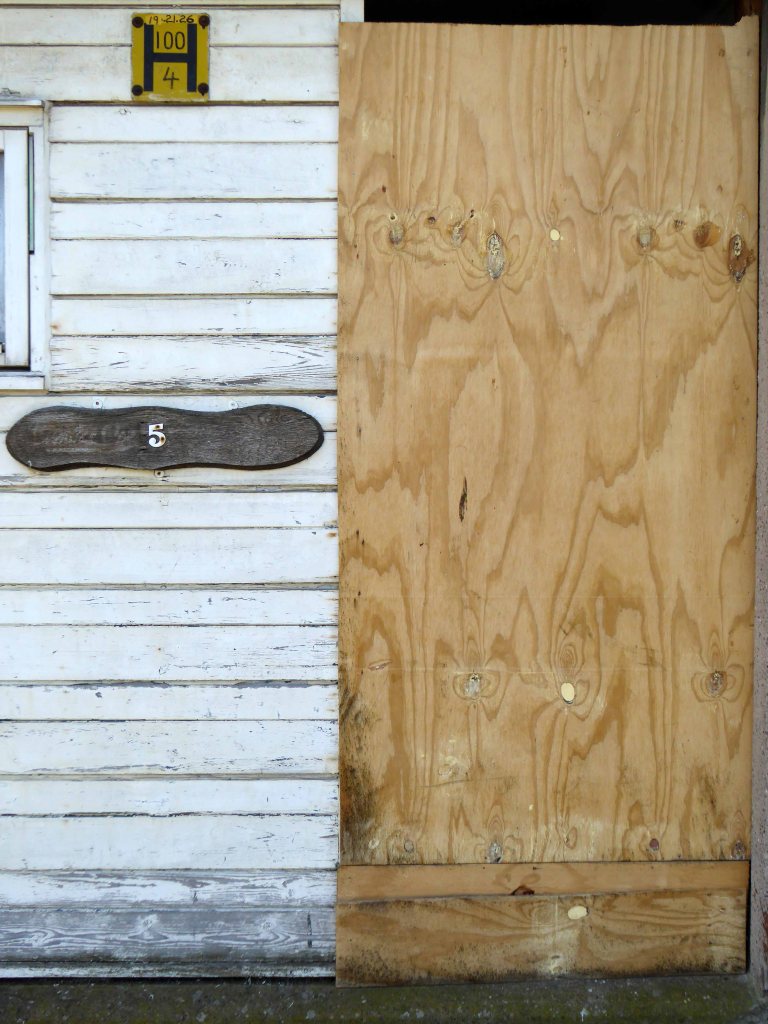
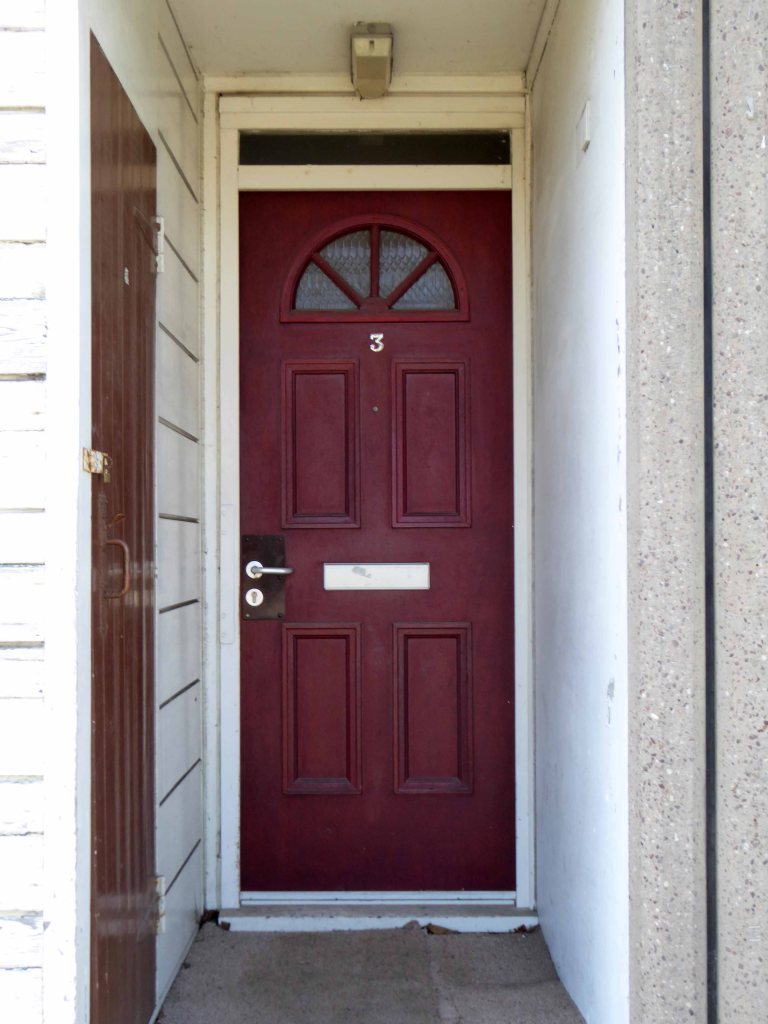
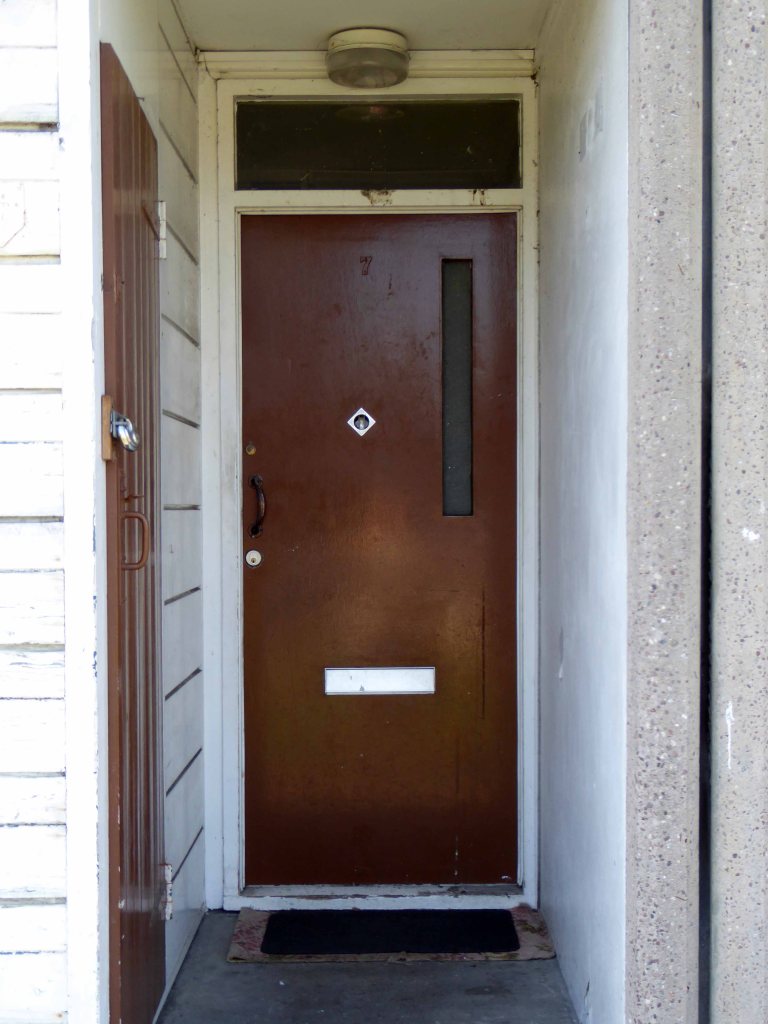
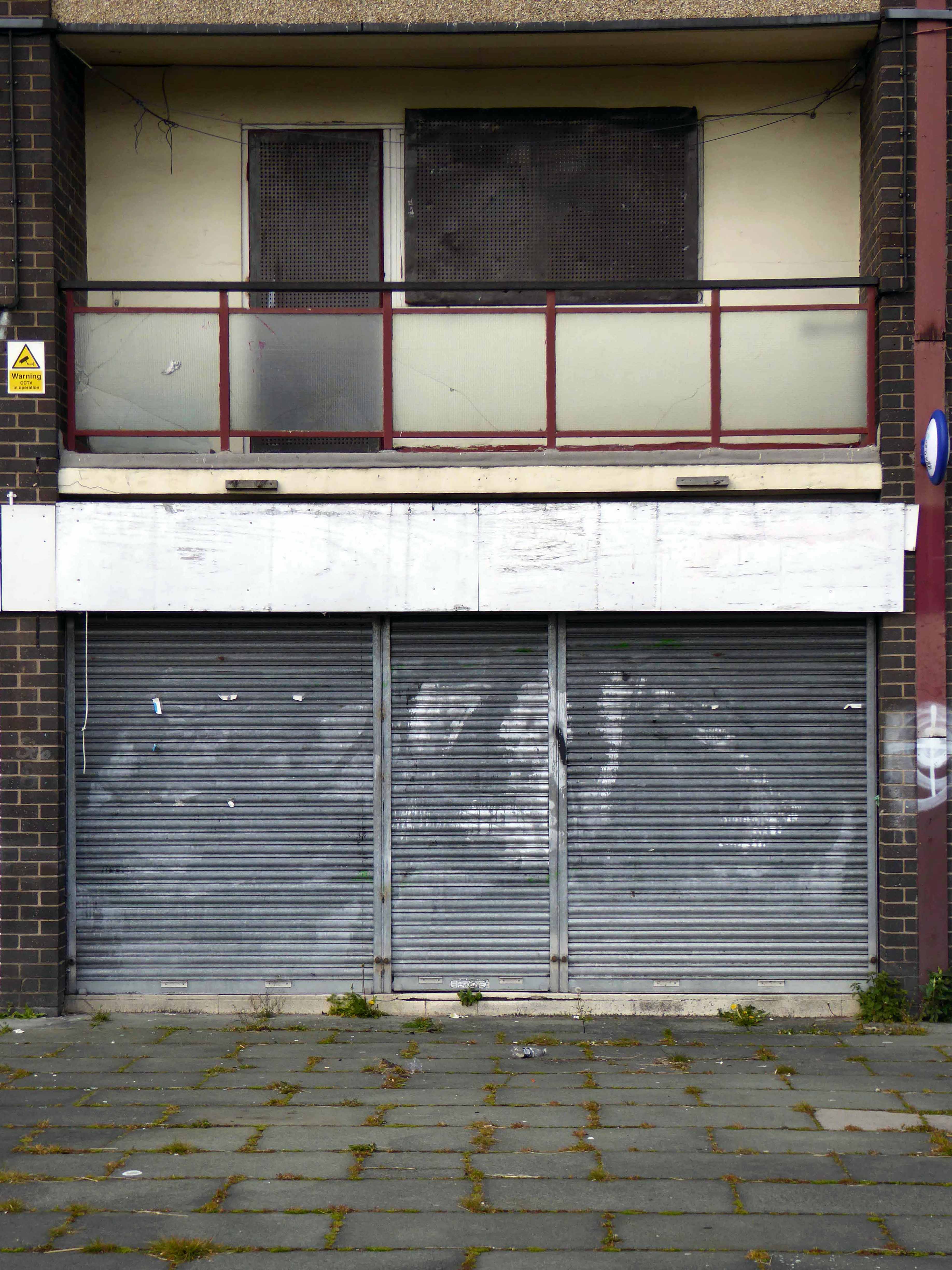
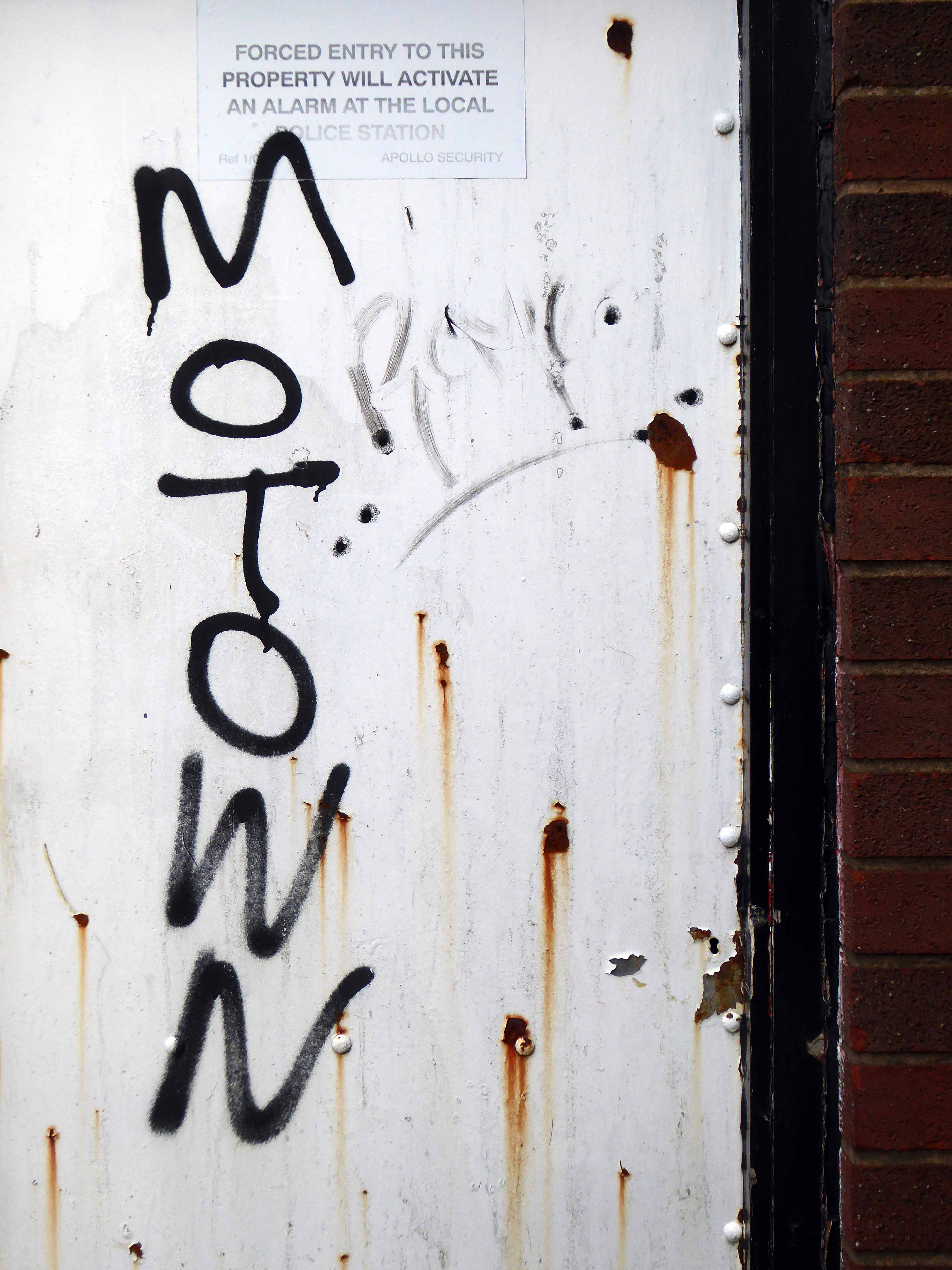
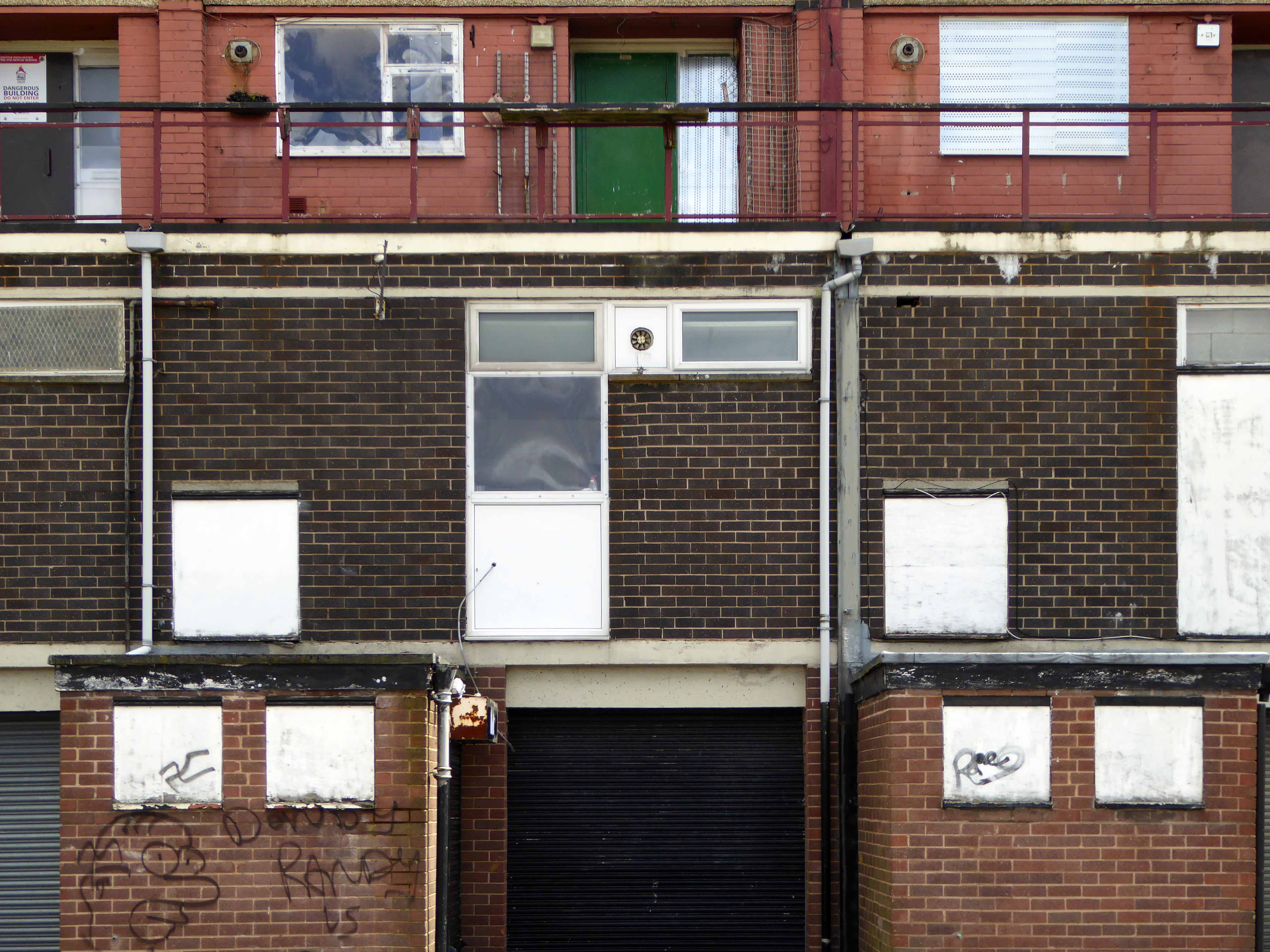
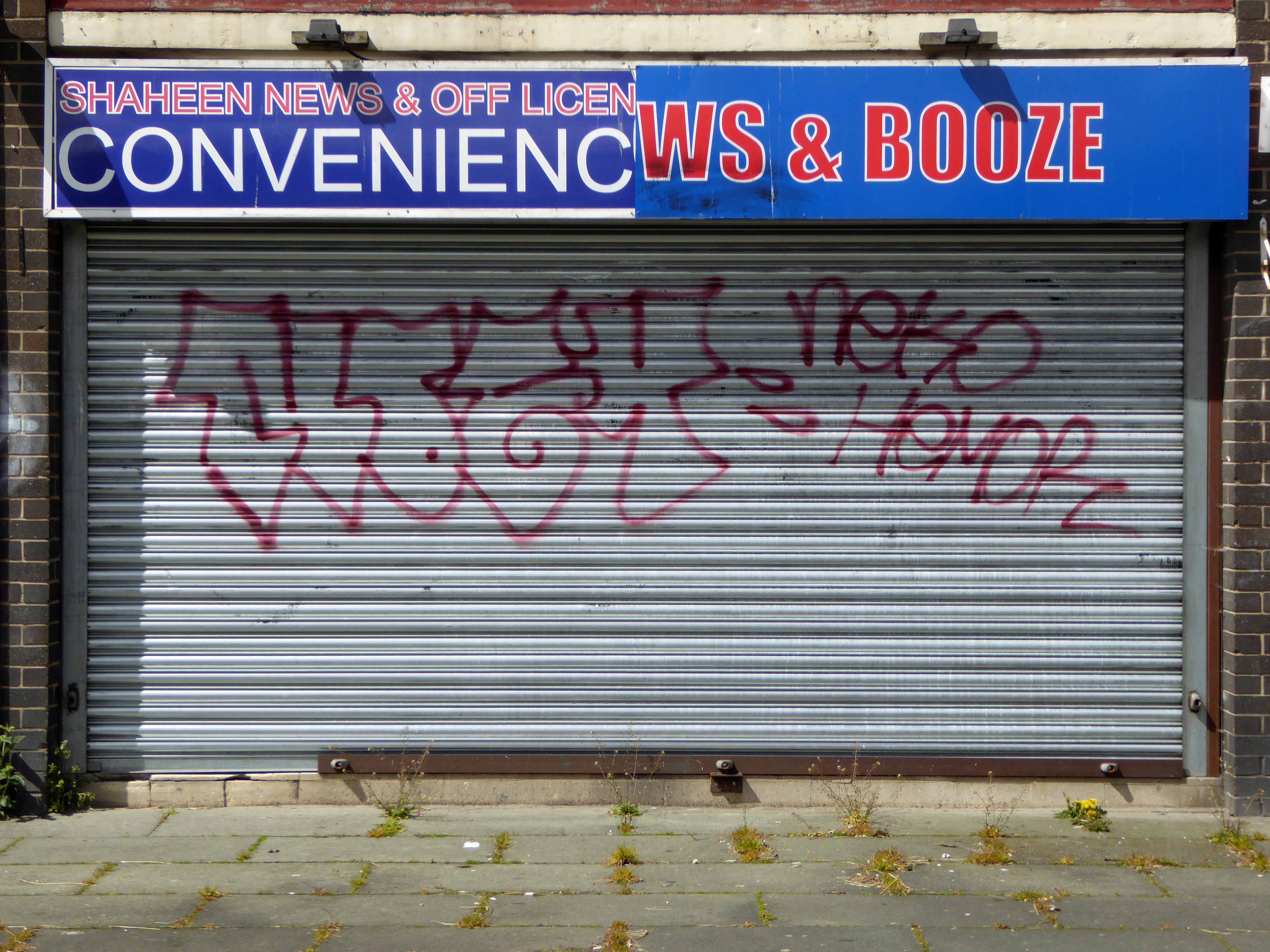
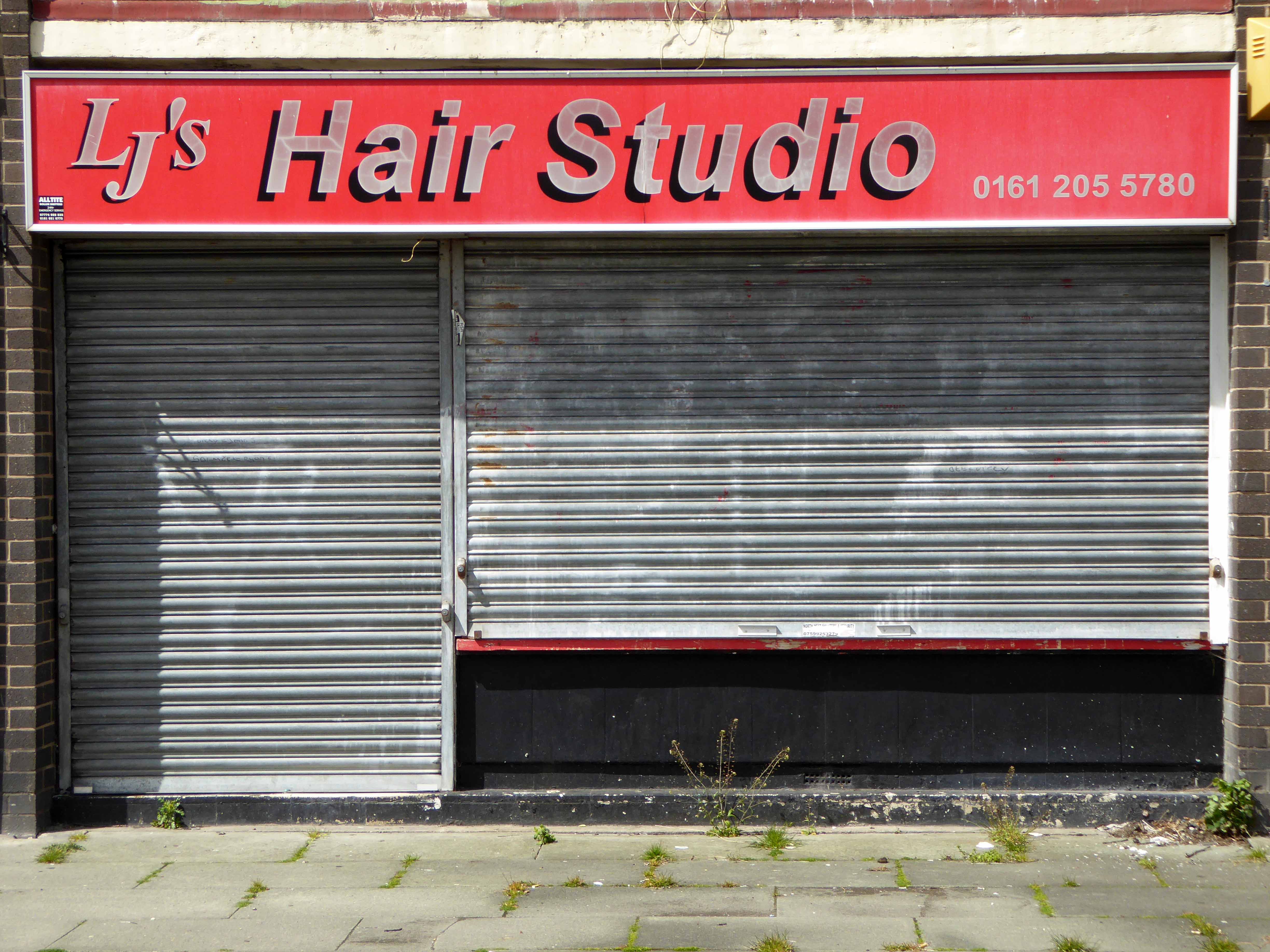
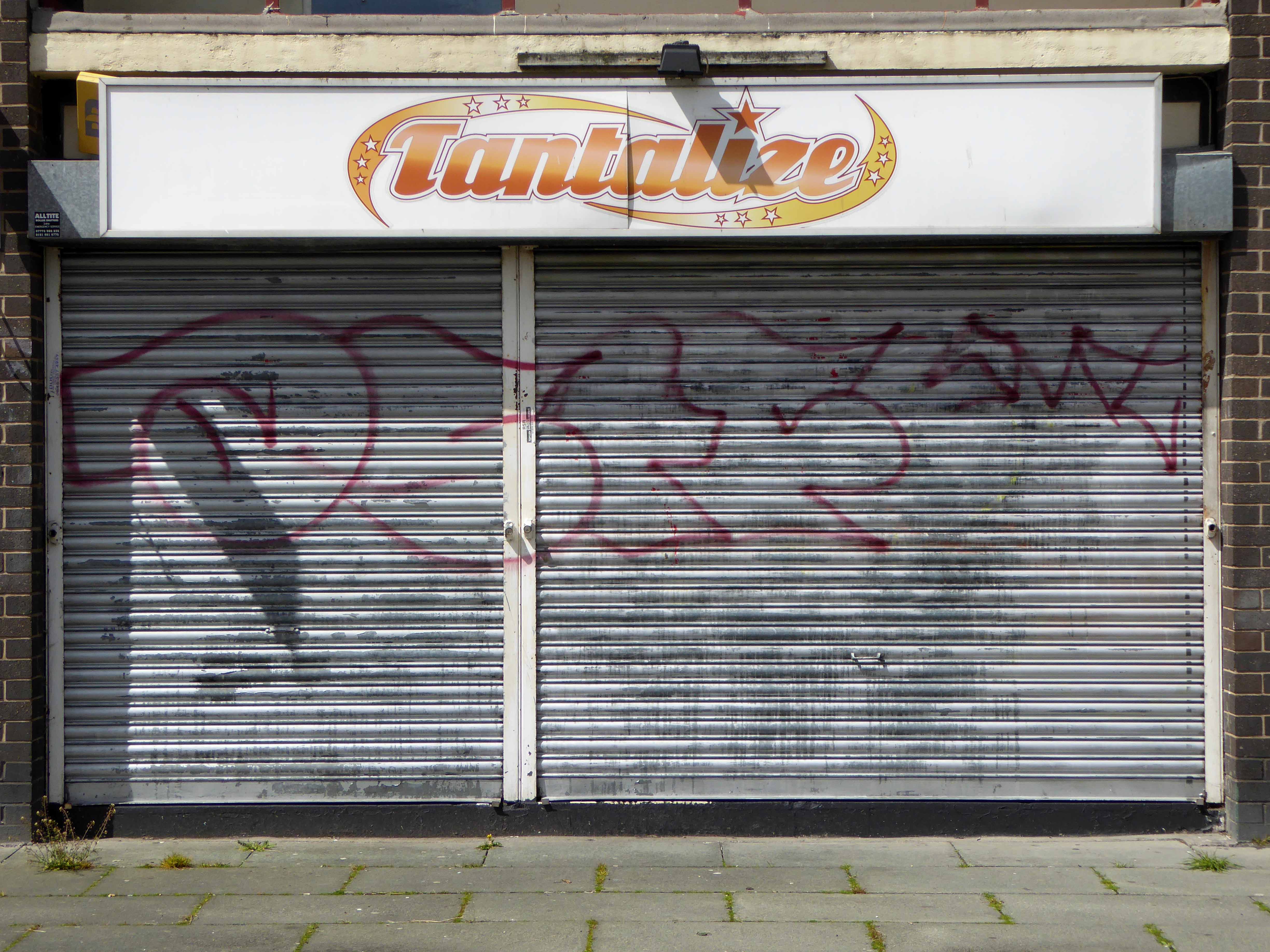
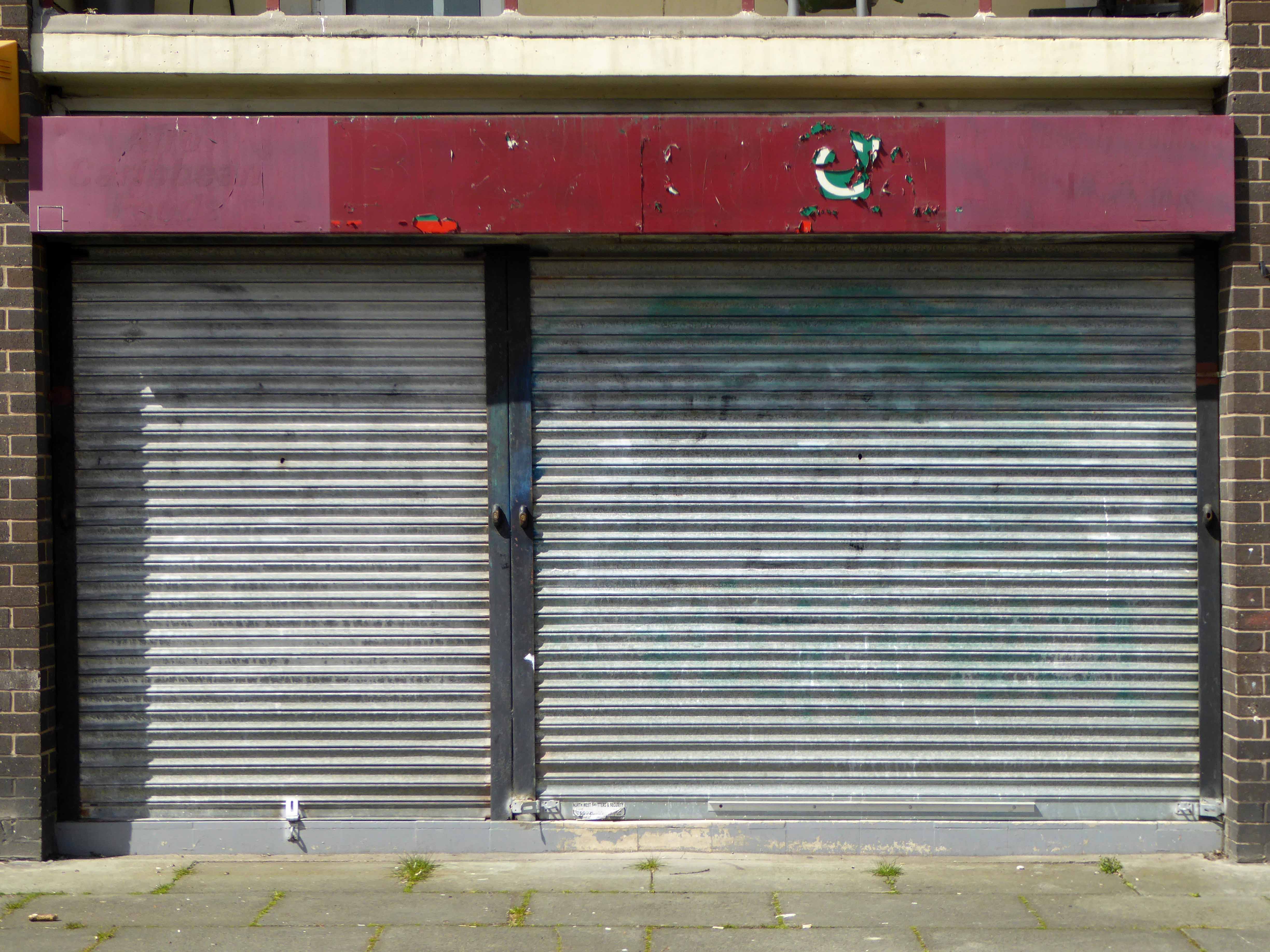
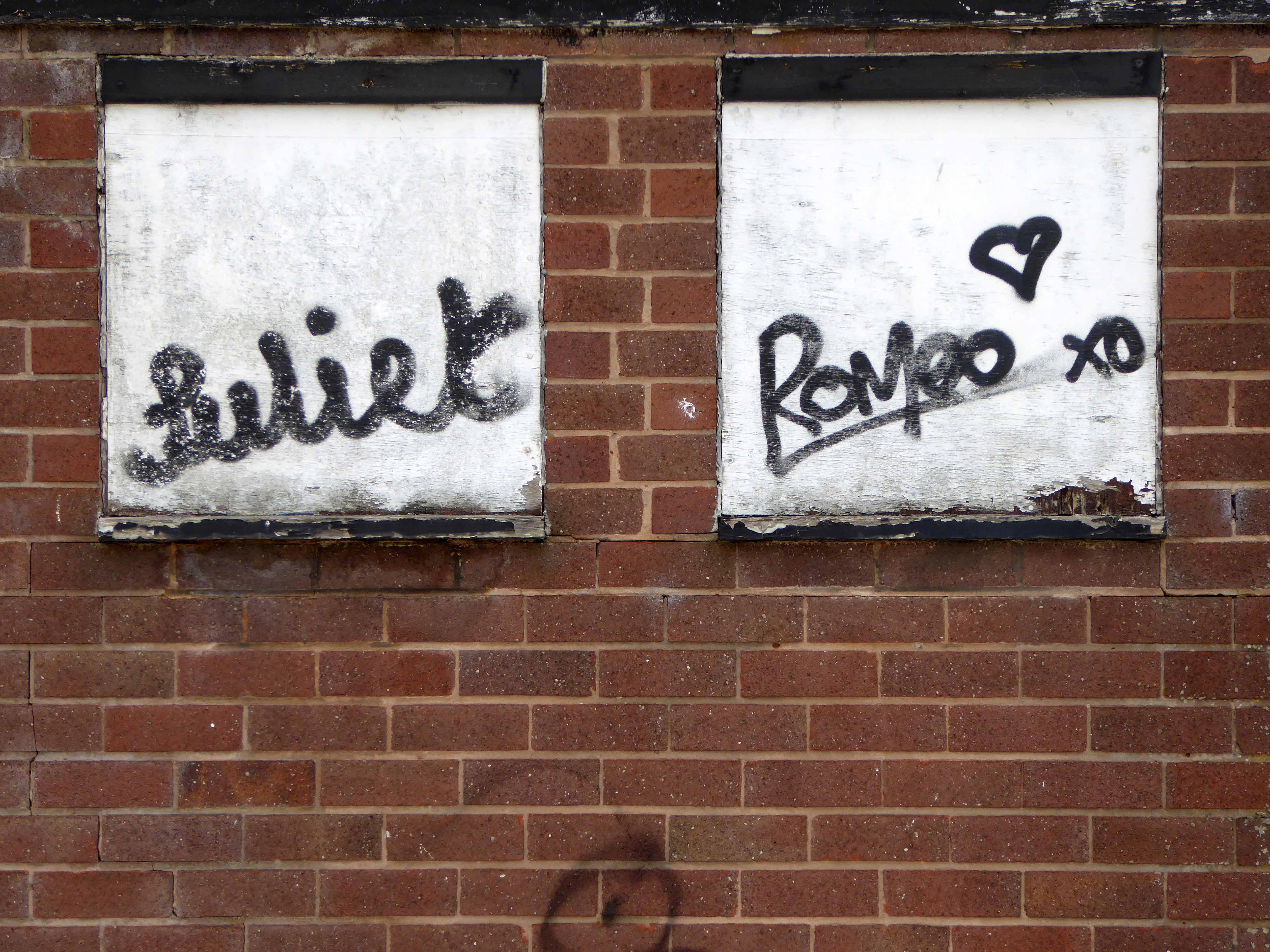
In the mean time there are properties tinned up awaiting a new dawn.
I have no wish to take issue, with the finer thoughts and feelings of Deborah A. Ten Brink.
However.
There is a sense that our earthly endeavours, may serve to assist us in avoiding the void, the cold dark inevitability of eternity, that everyday here today, gone tomorrow feeling.
However.
Nothing lasts forever, except forever and nothing.
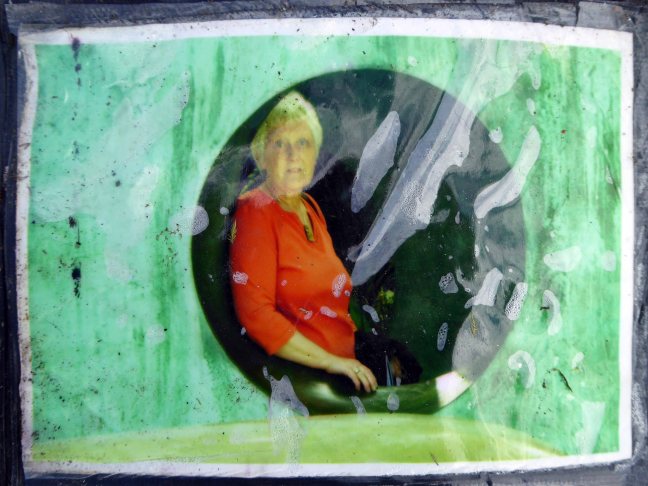
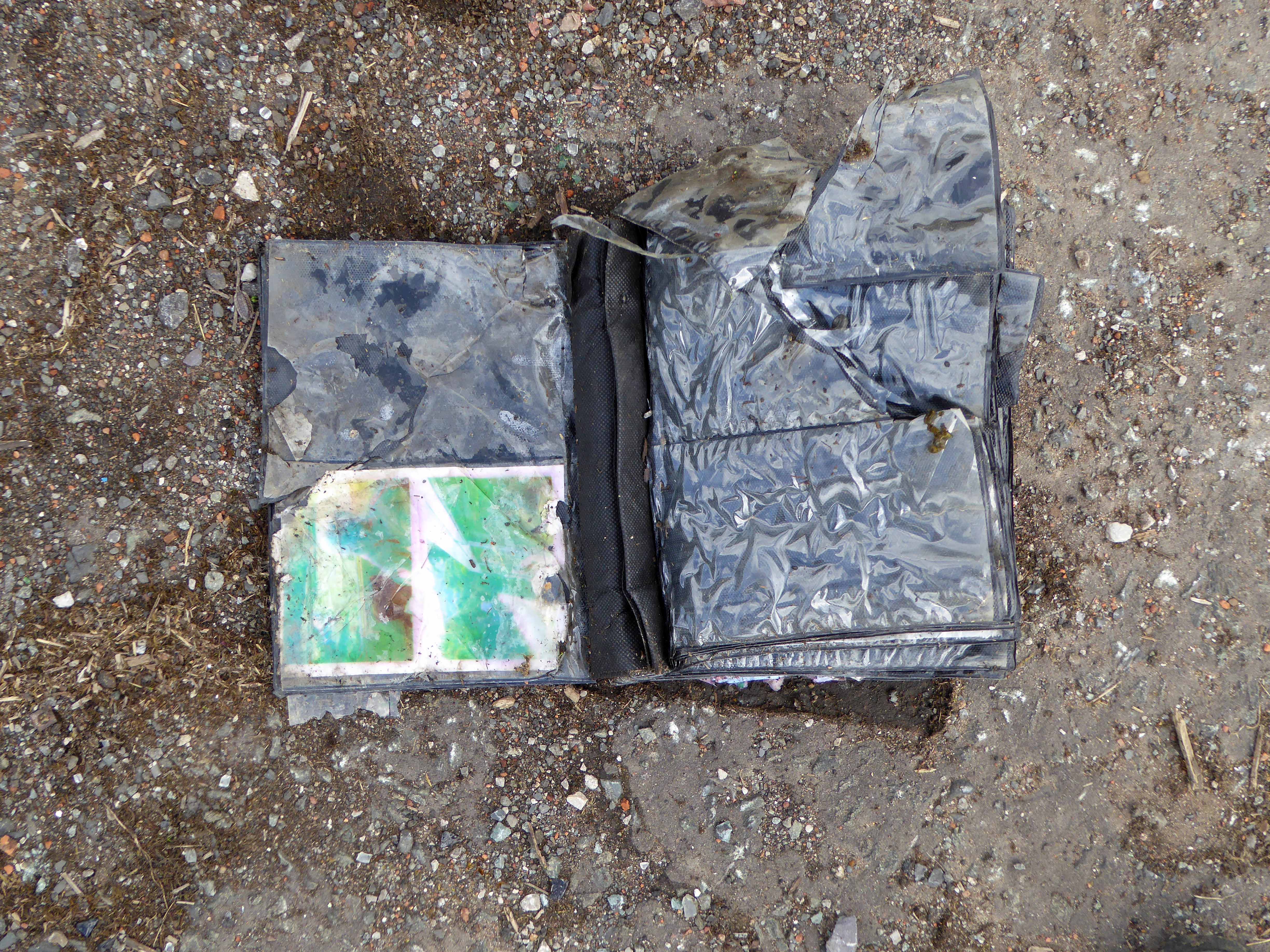
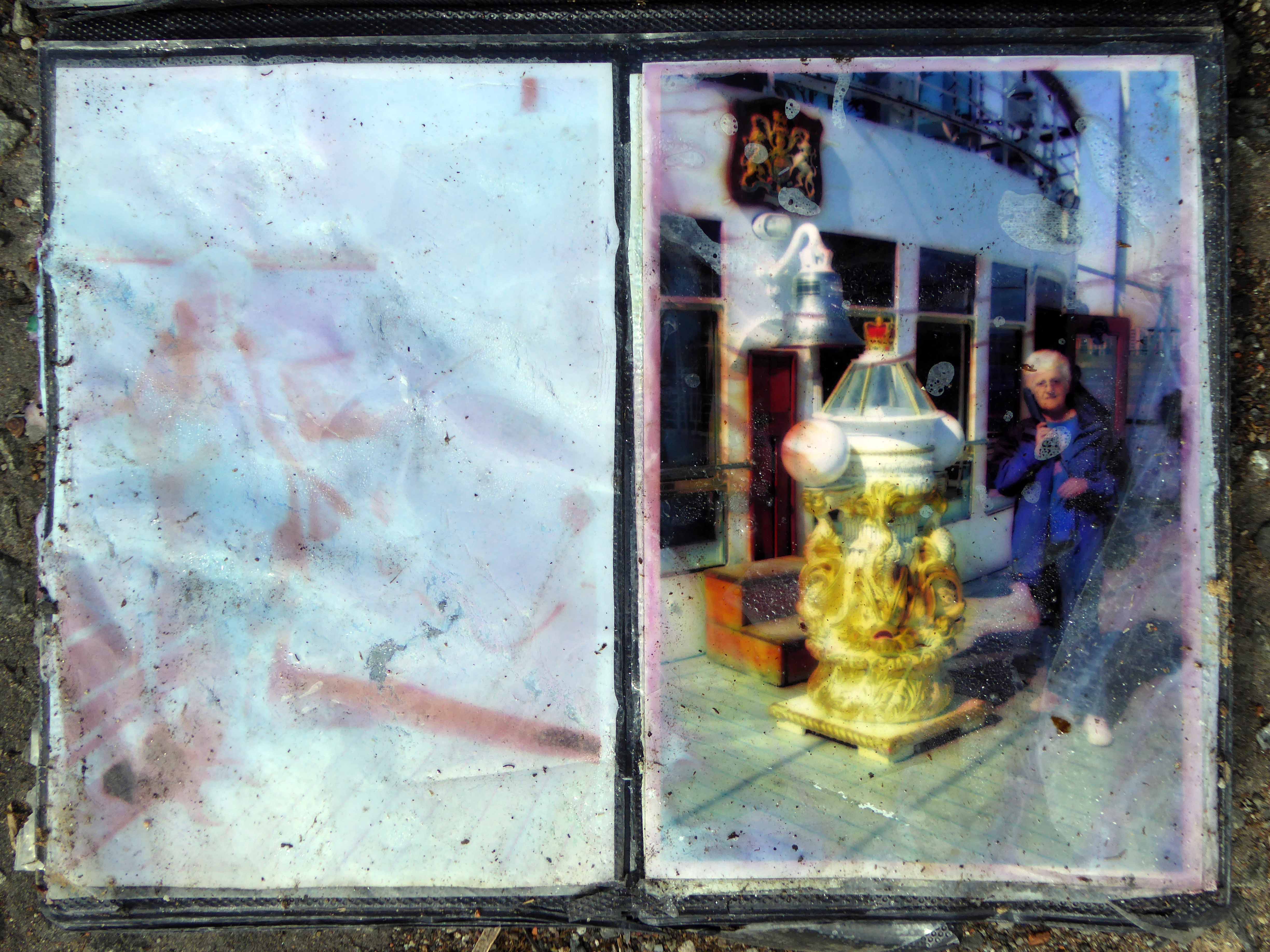
The cherished memories, condensed in a fraction of a second, rendered corporeal in photographic emulsion, carefully stored in family albums.
Are but a trick of light, a slight of hand, heart and mind.
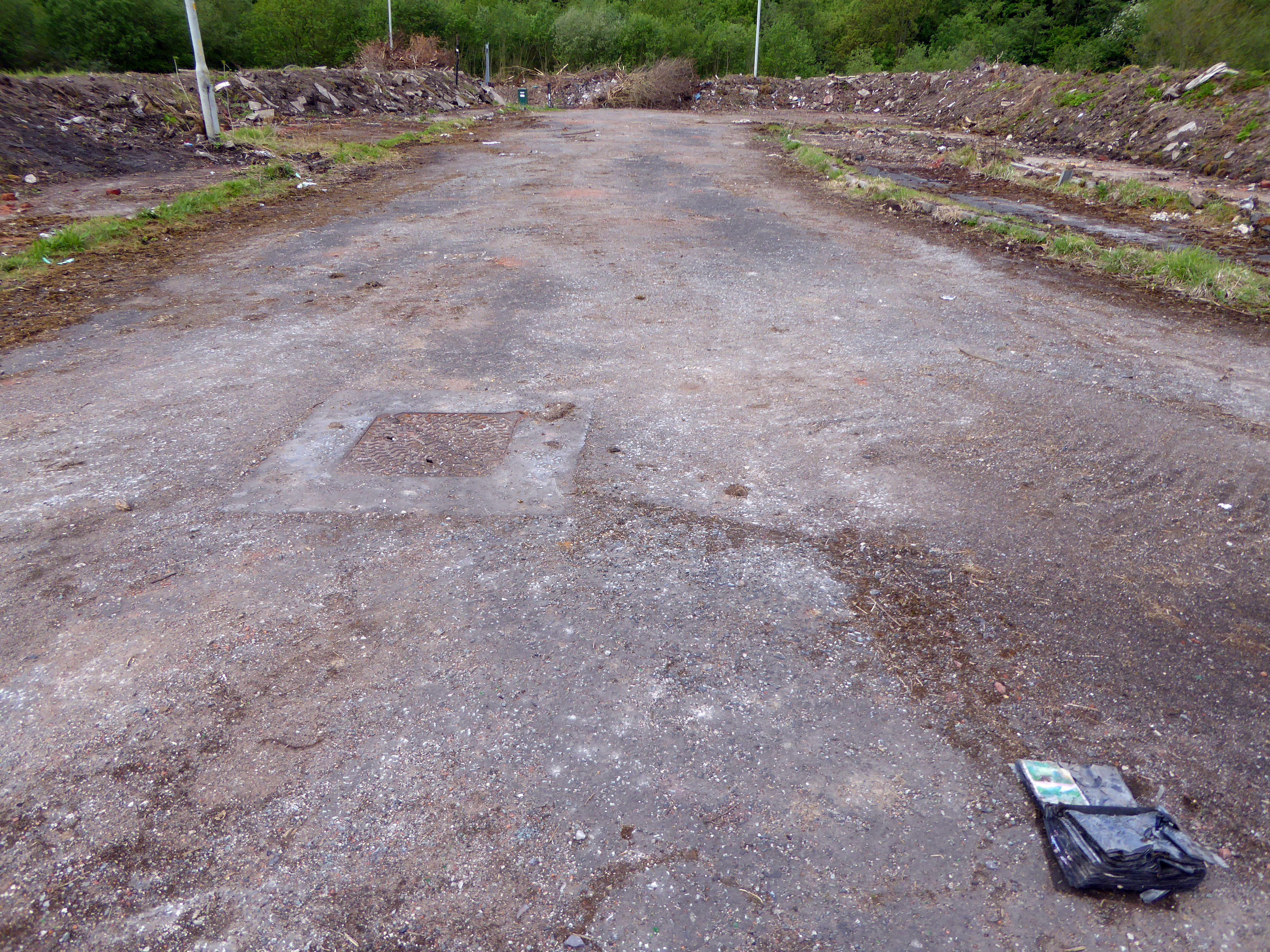
It’s the end of the road, for the middle of the street.
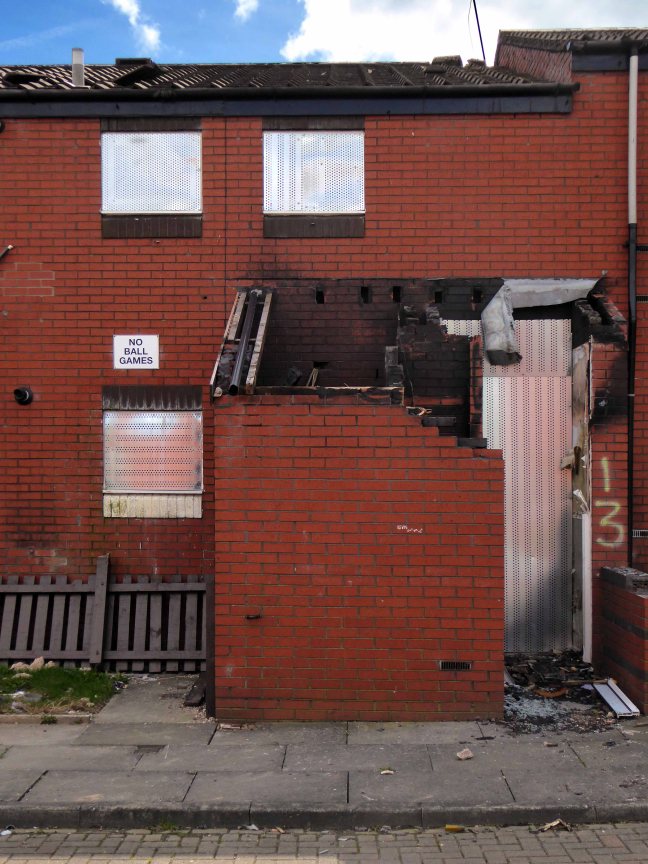
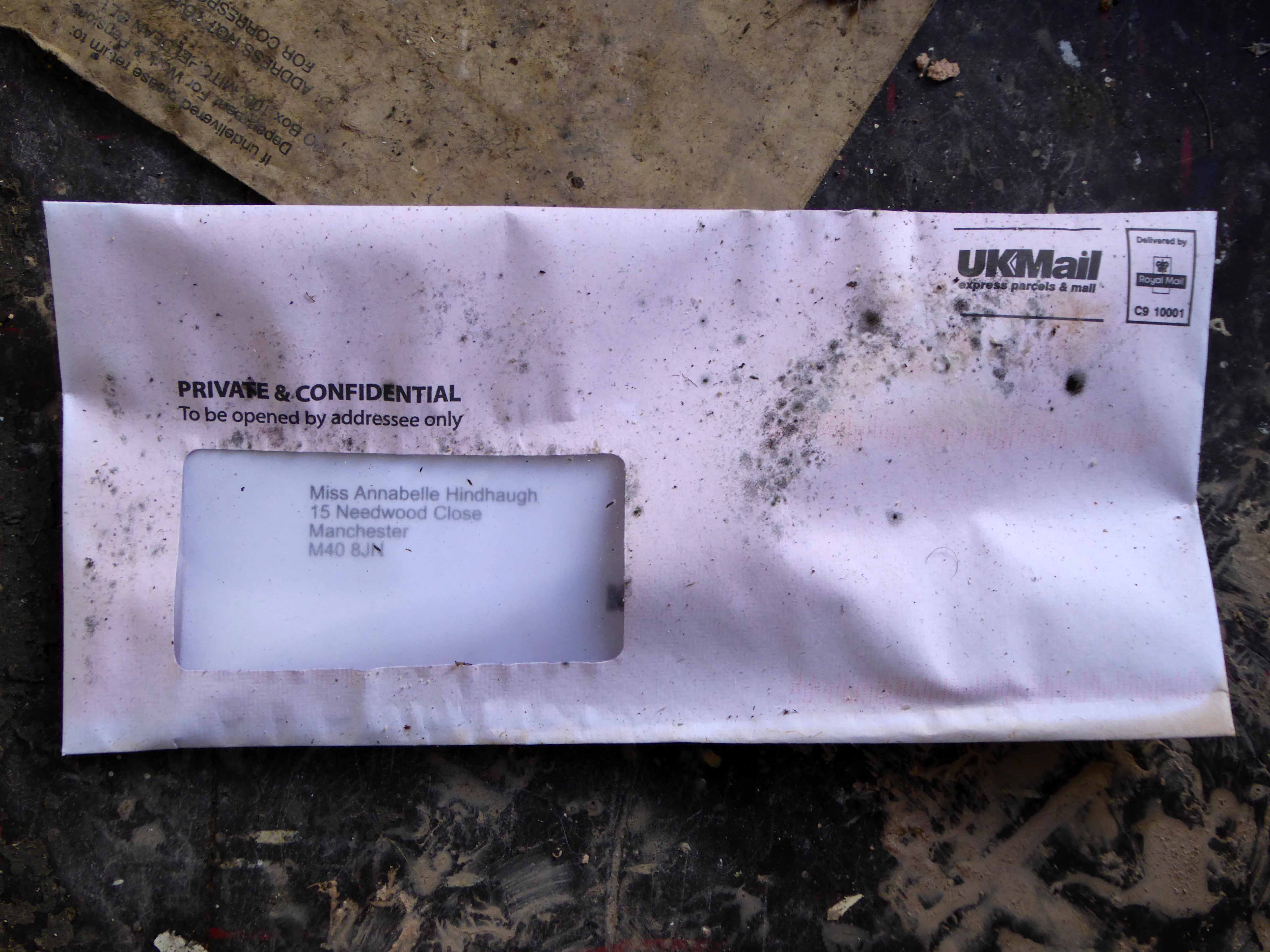
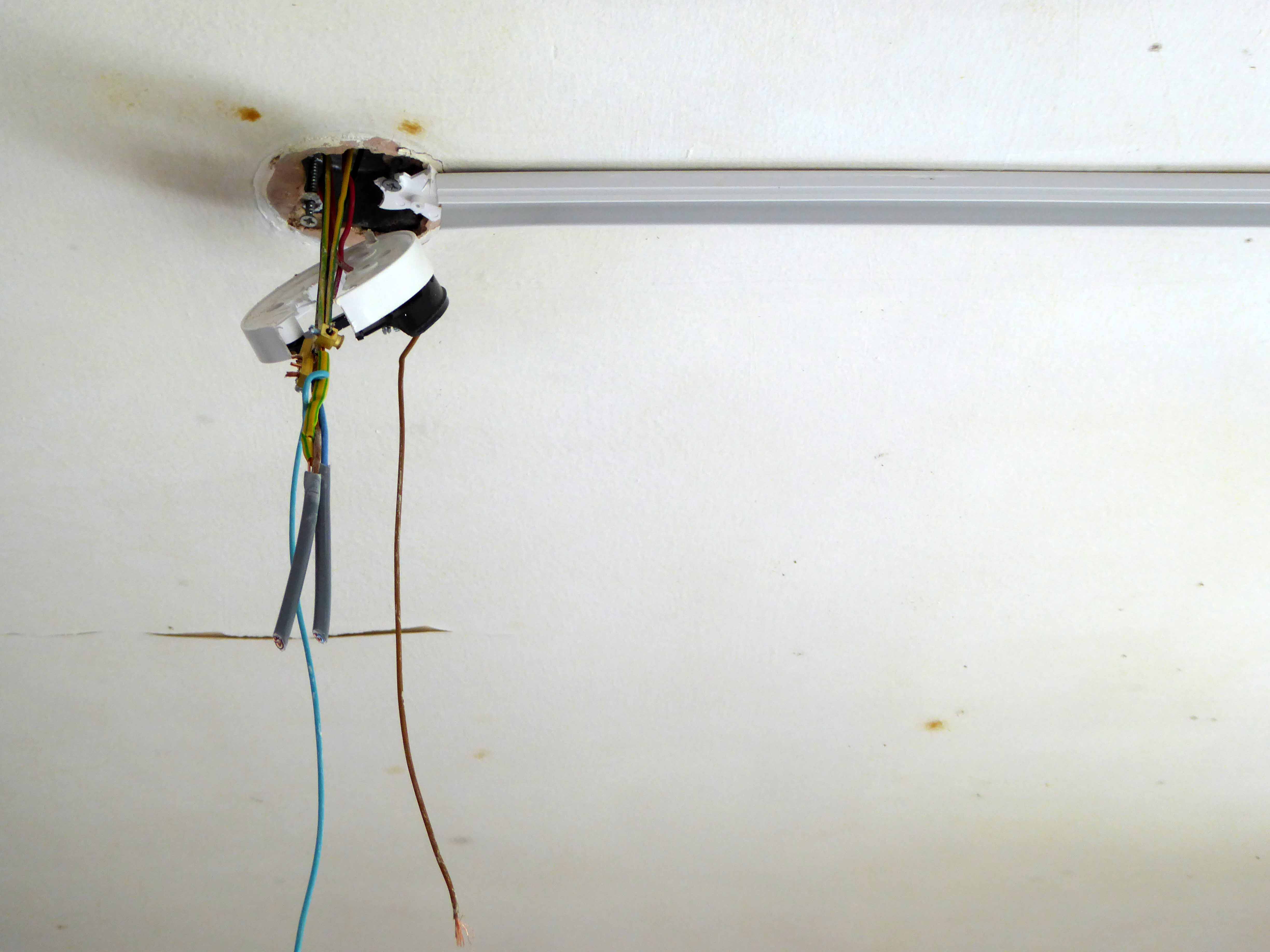
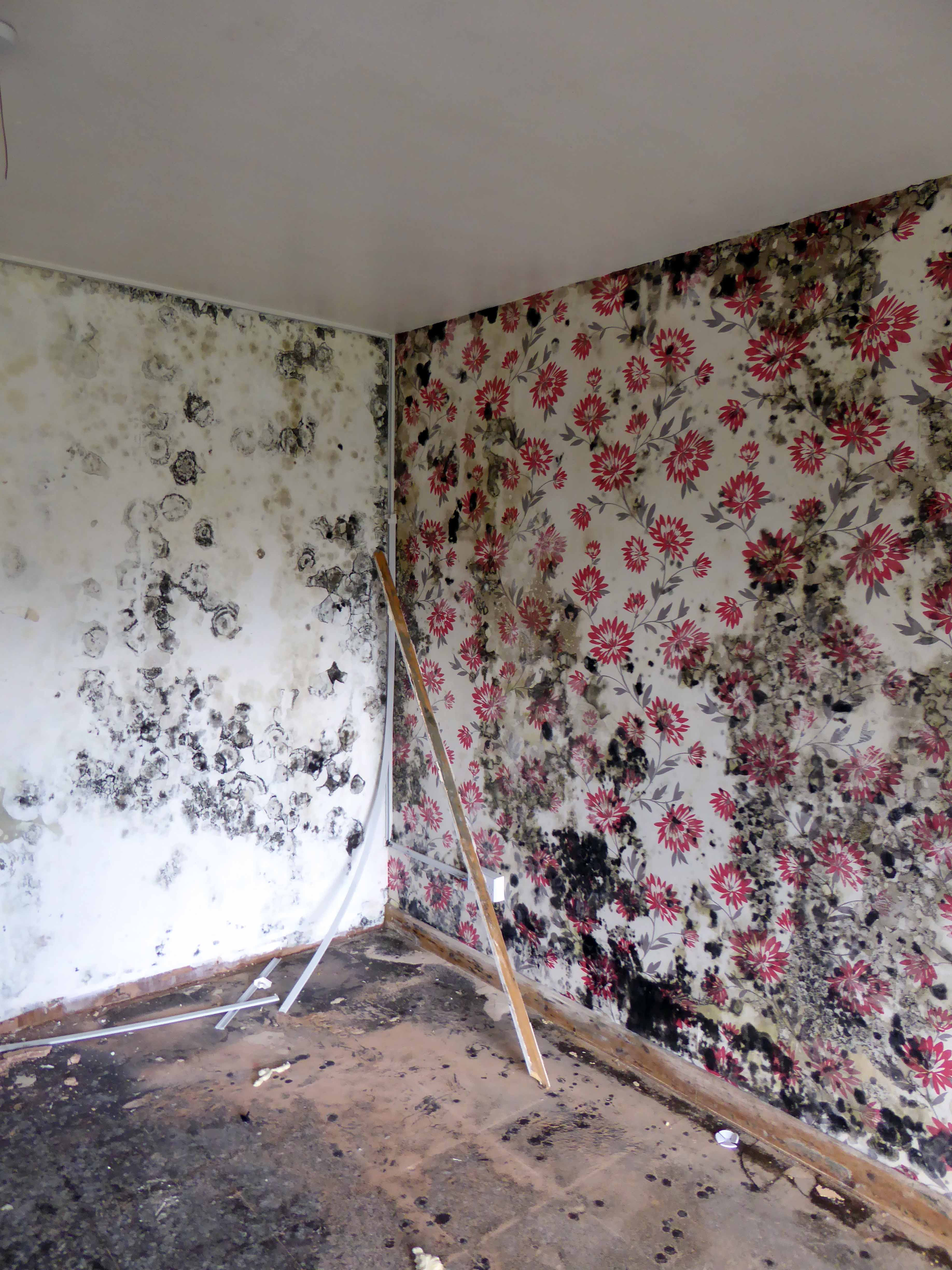
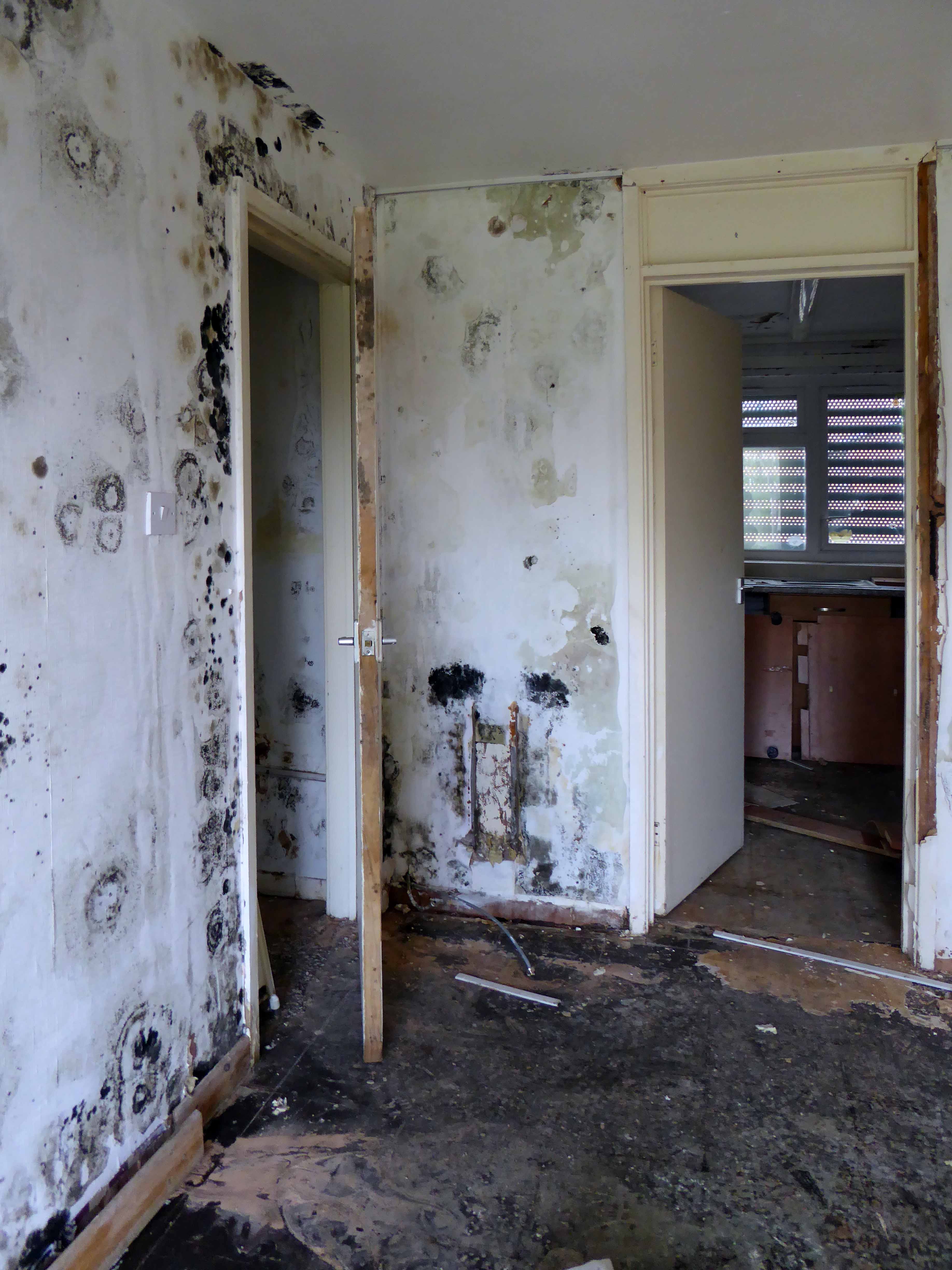
Needwood Close Collyhurst is closed.
An area that has suffered the slings, swings and arrows of failed PFI bids, absent partners and putative city fathers.
2012
After missing out on £252m of state investment when the Government cut the Homes and Communities Agency budget, Manchester is now trying another approach to deliver the much needed regeneration of Collyhurst.
The masterplan is part of Manchester Place, a joint initiative between Manchester City Council and the Homes & Communities Agency that looks to create a pipeline of development-ready sites to help the city meet its ambitious target of creating 55,000 new homes by 2027 as set out in the Manchester Residential Growth Prospectus.
Manchester Place will work with investors, such as Manchester Life, a £1bn, partnership between Manchester City Football Club and Abu Dhabi United Group, the privately owned investment company which also owns Manchester City Football Club, to bring 6,000 new homes to east Manchester over the next 10 years.
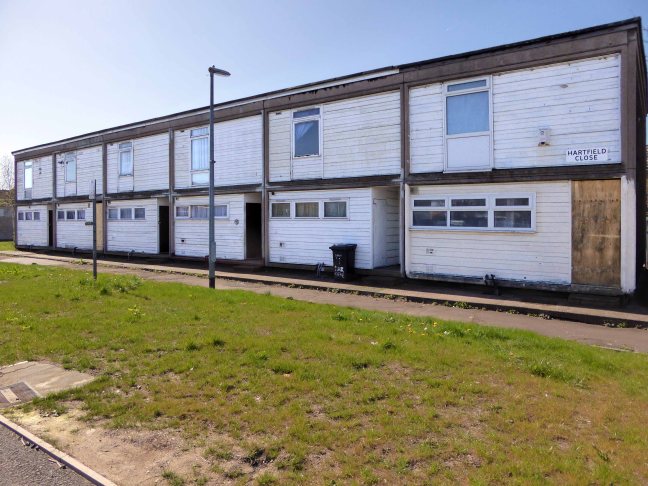
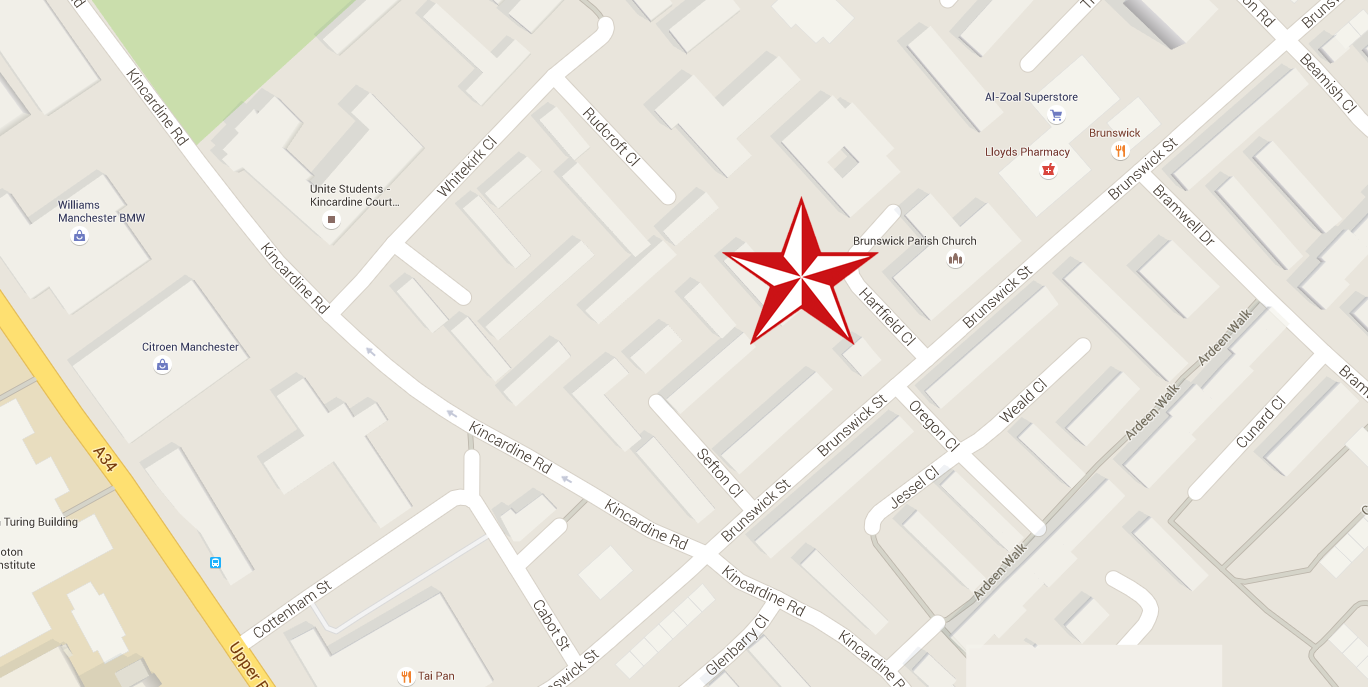
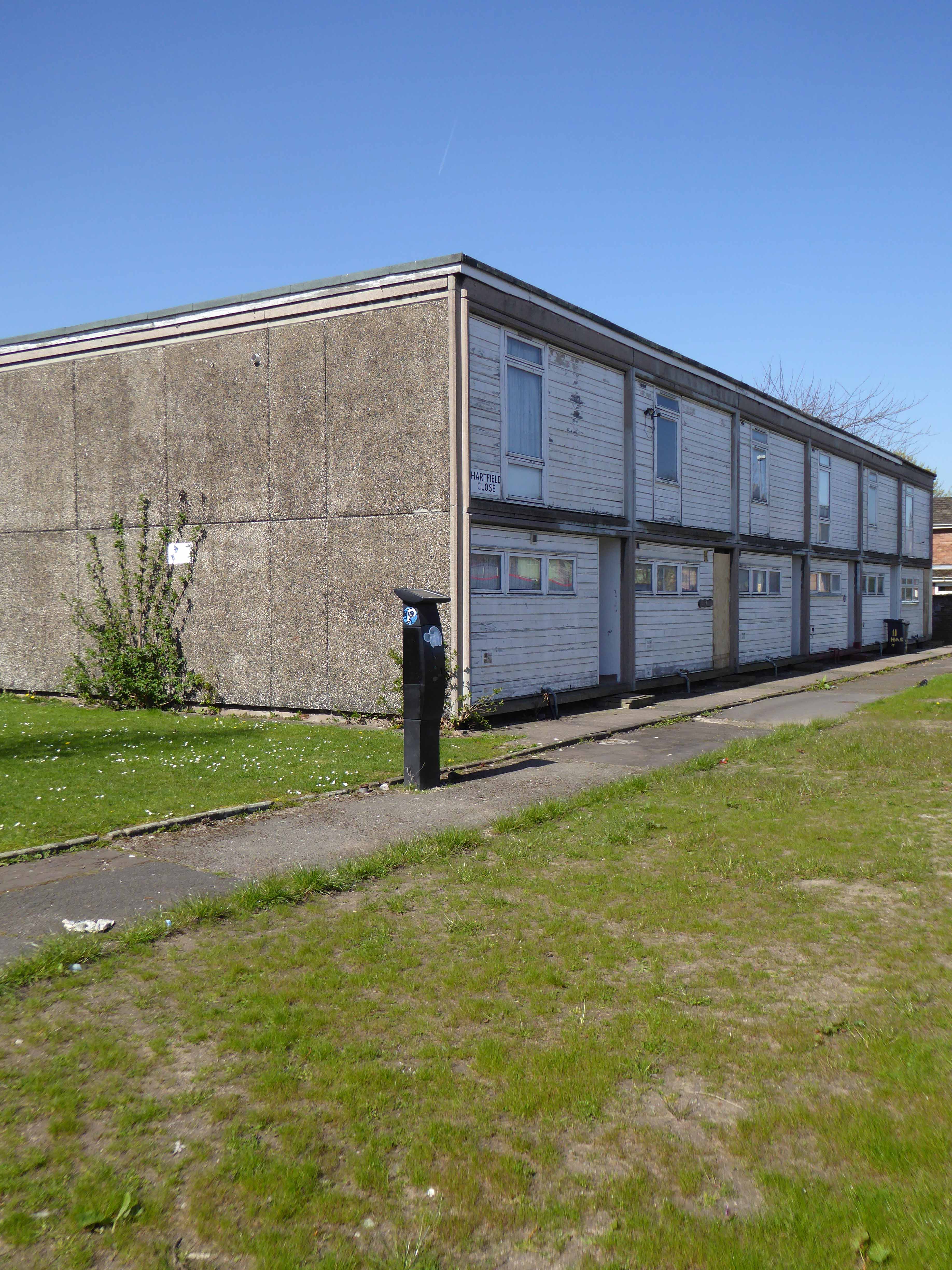
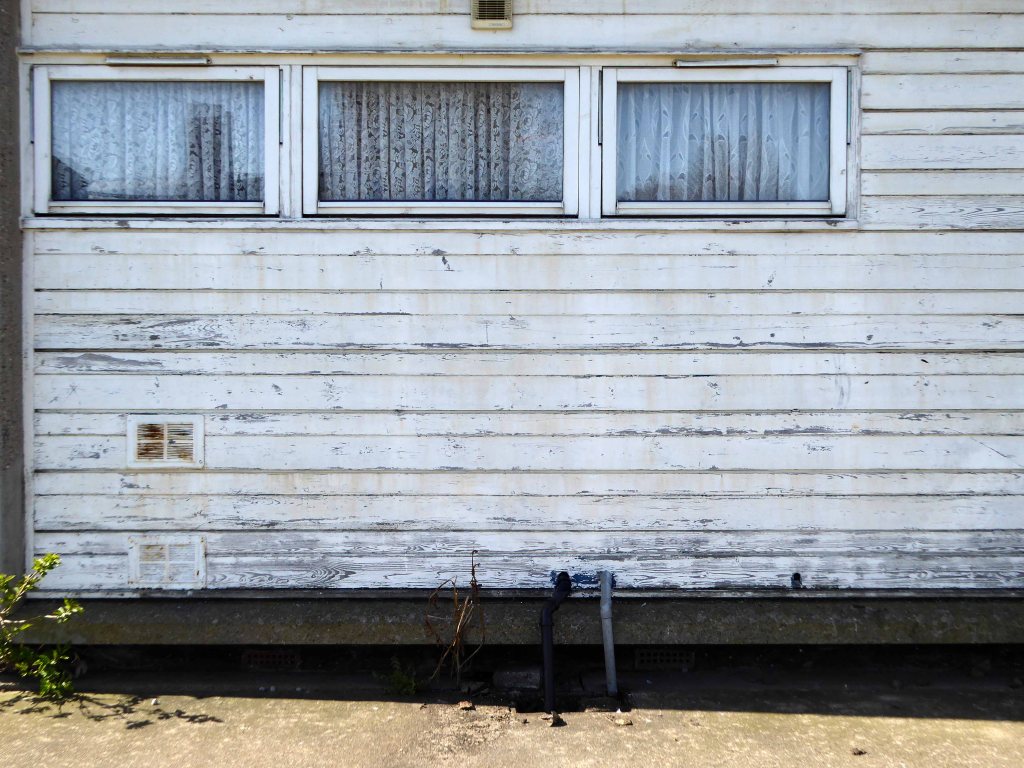
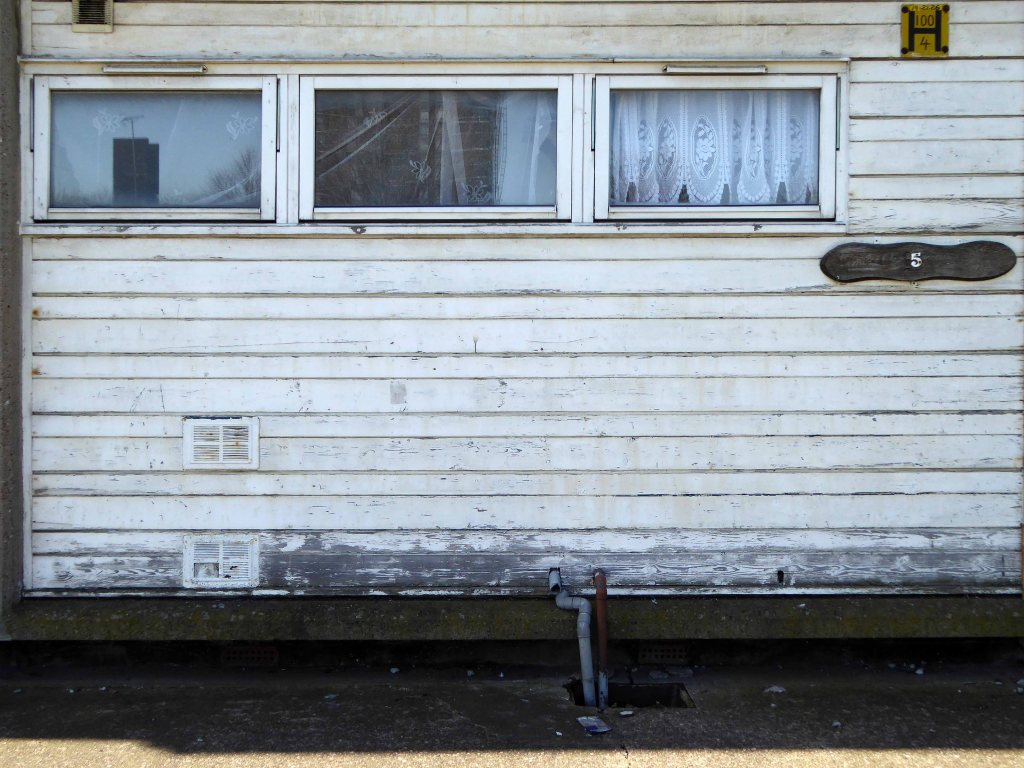
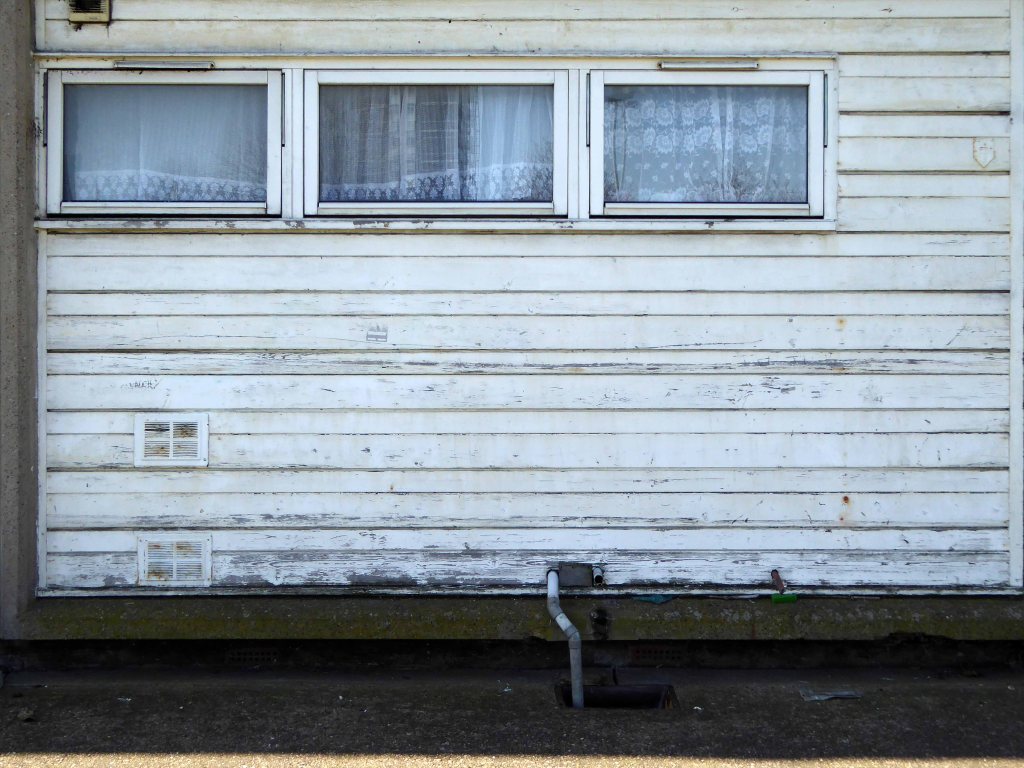
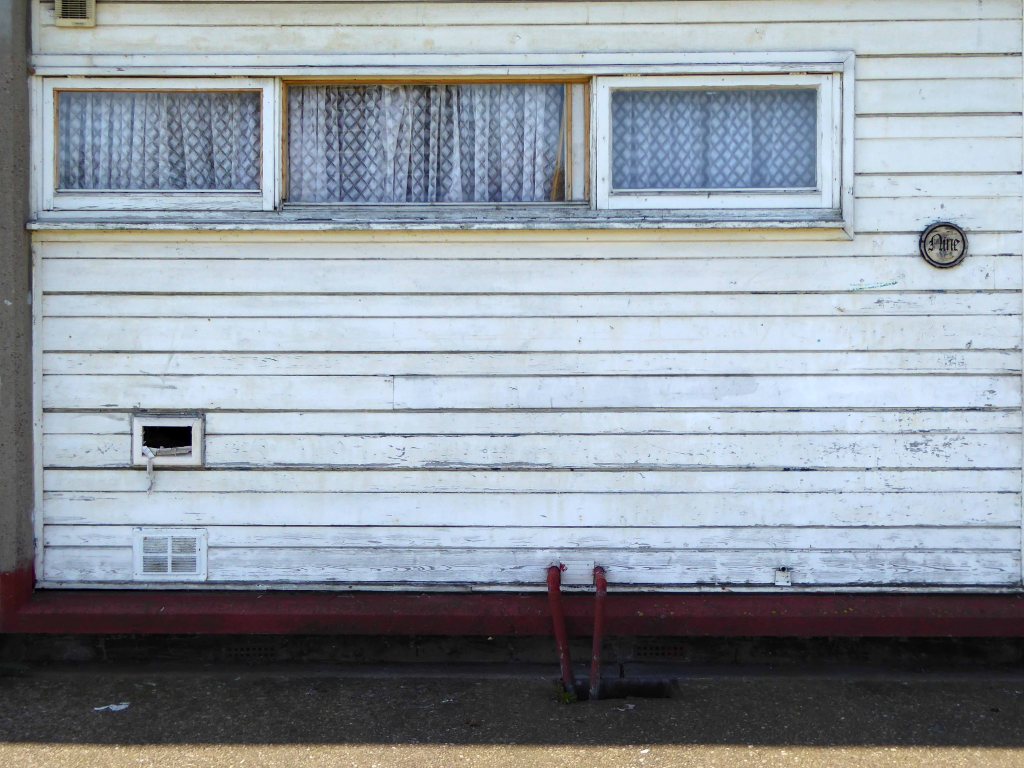
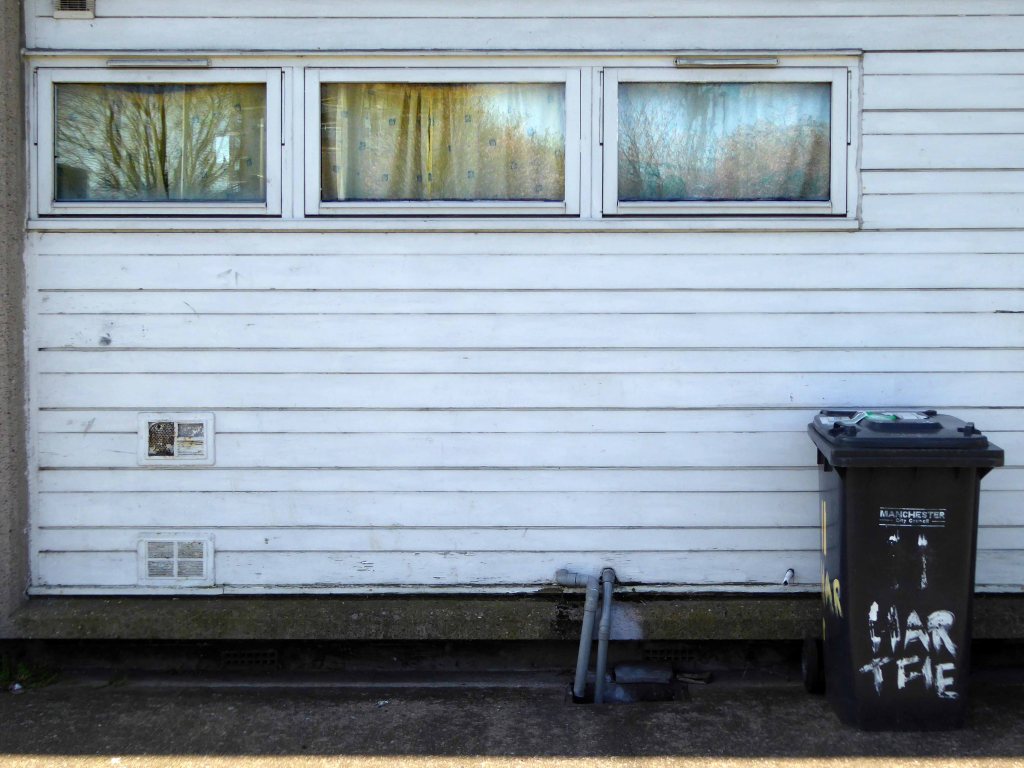
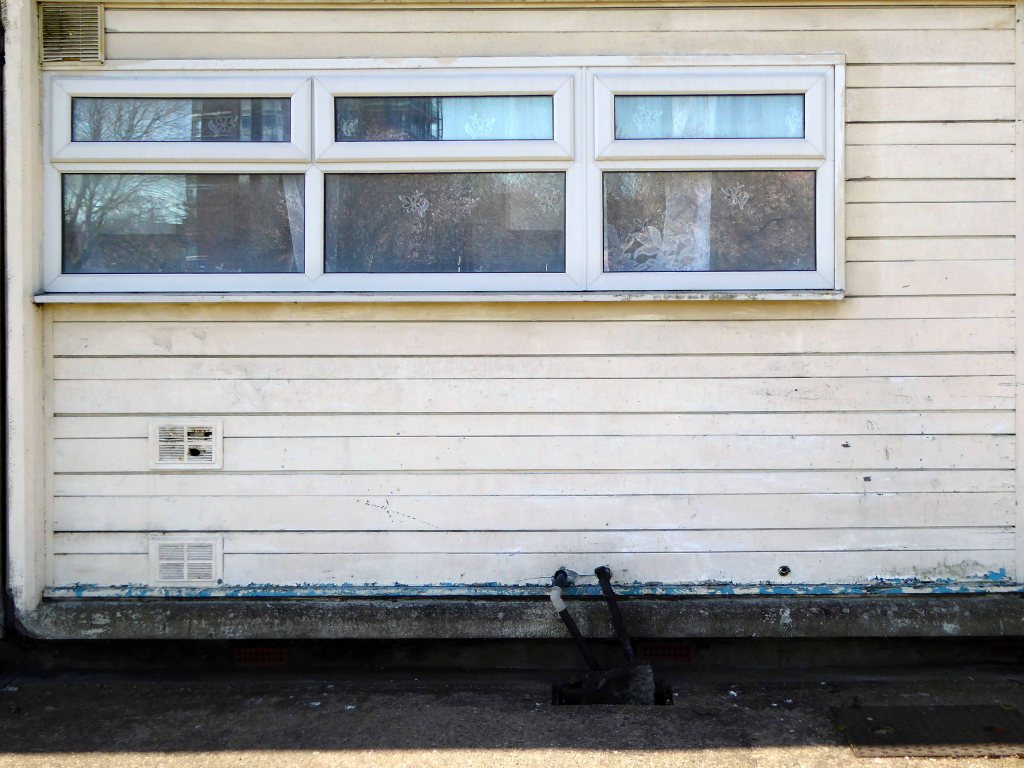
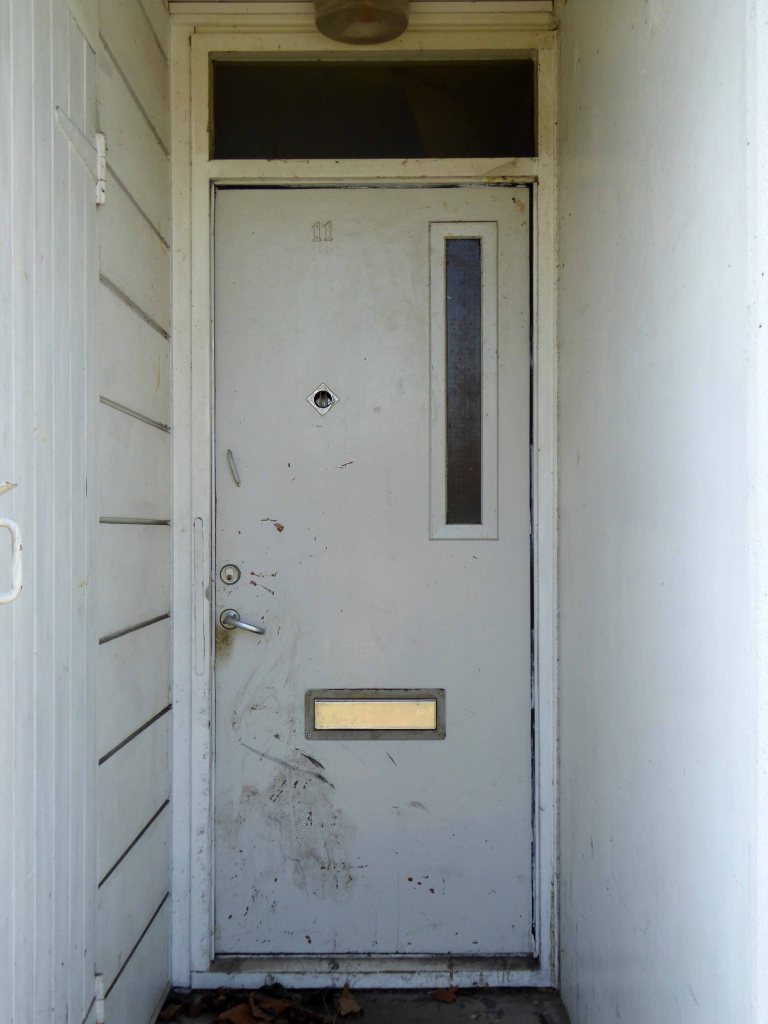
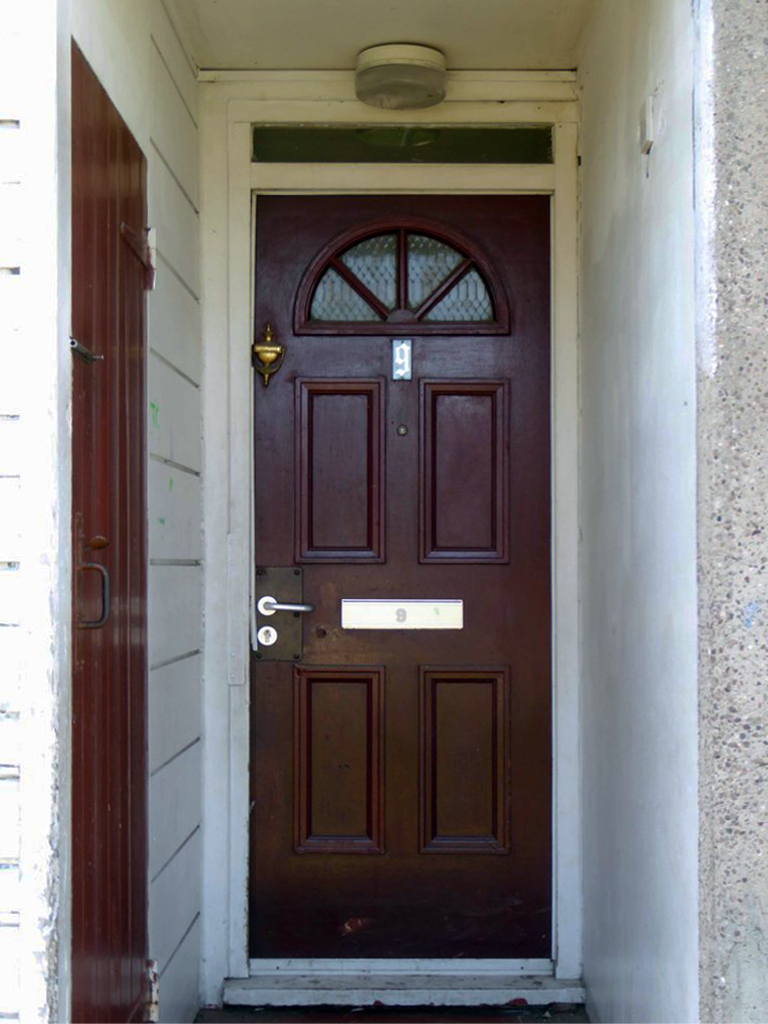
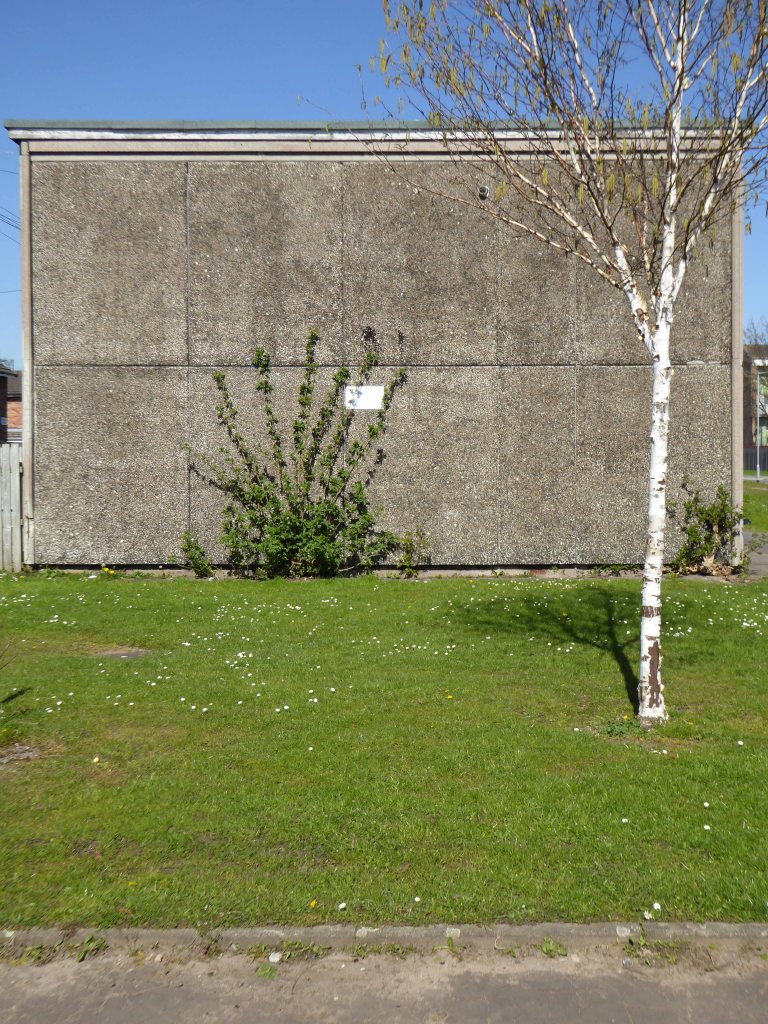
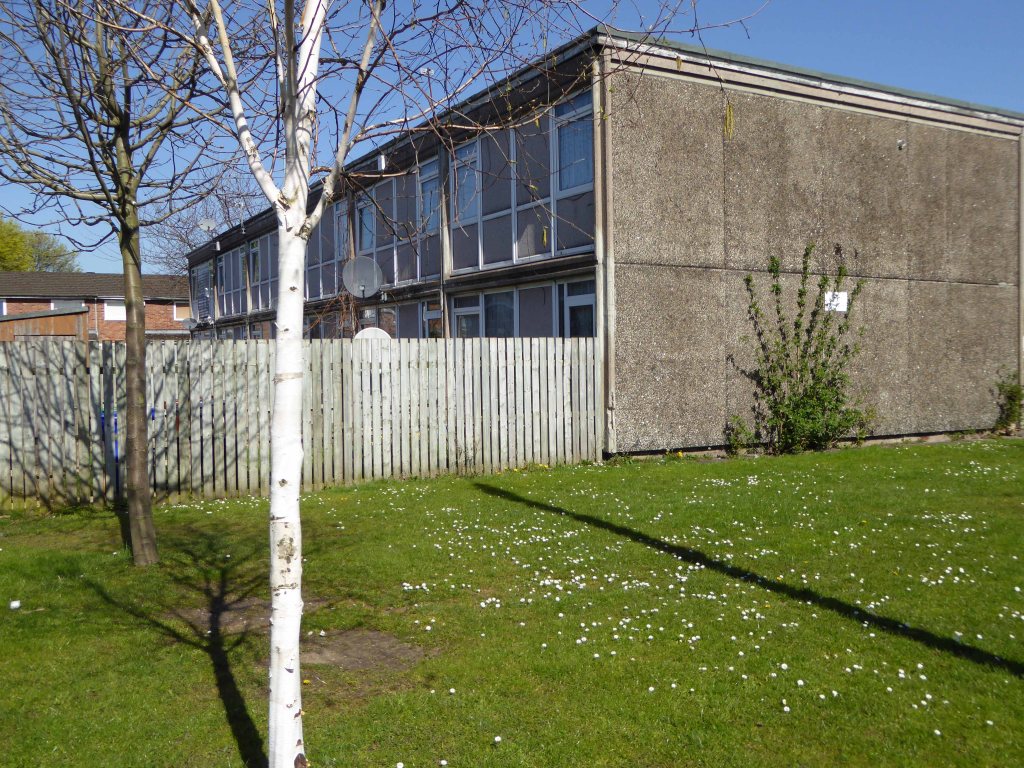
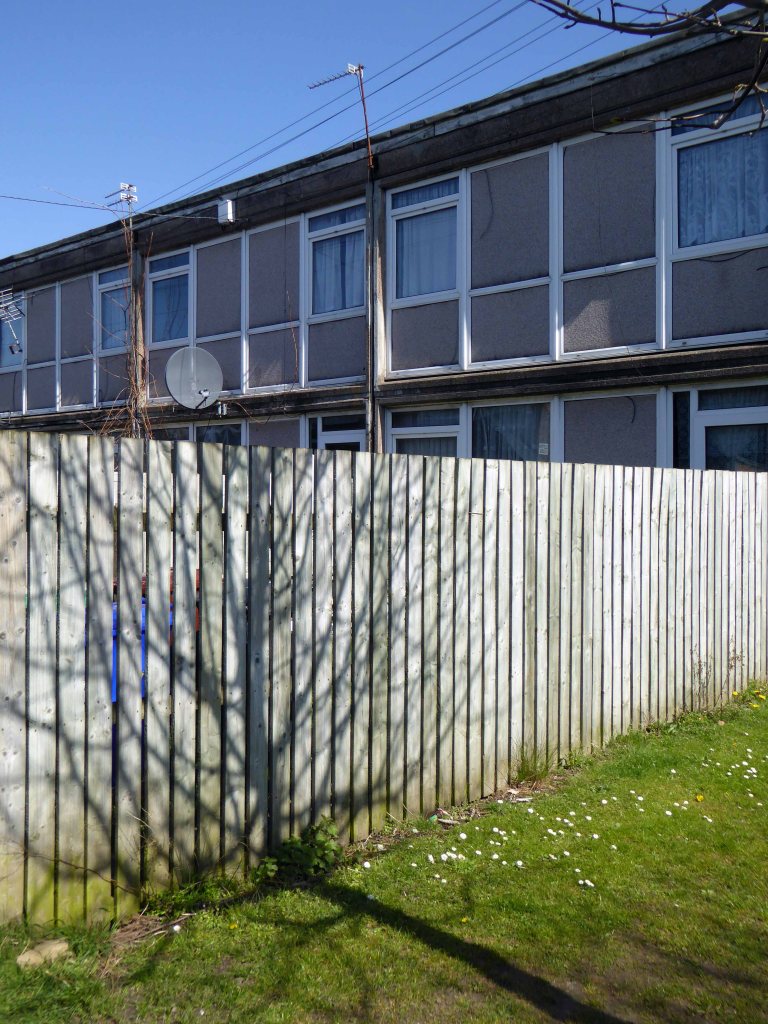
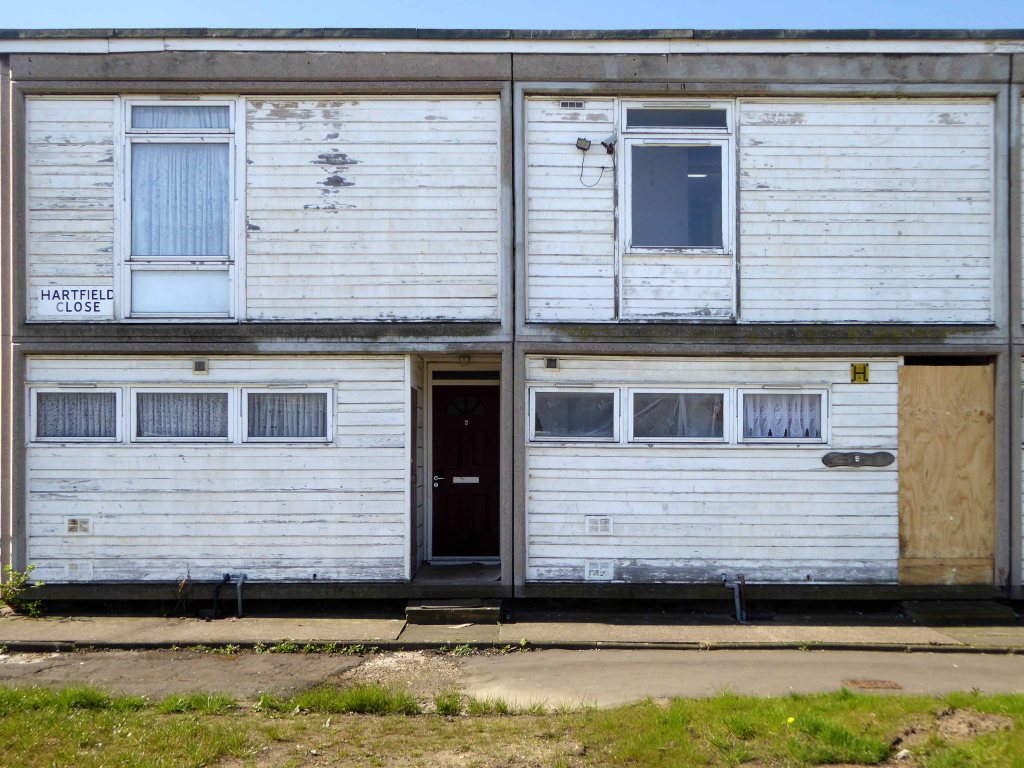
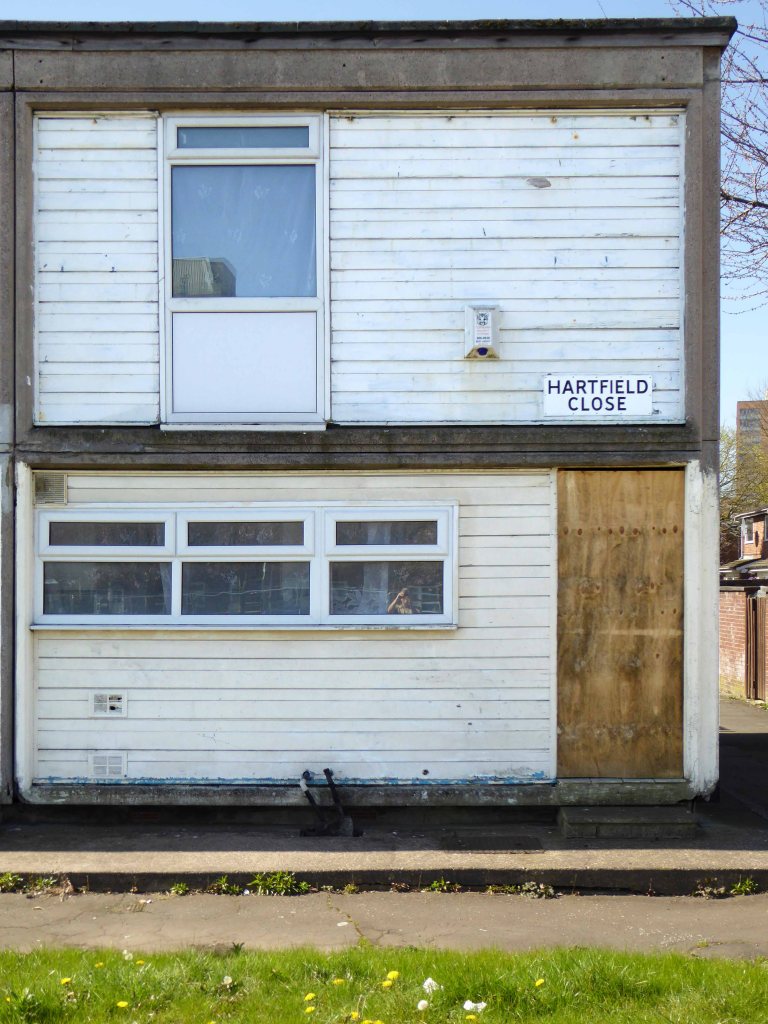
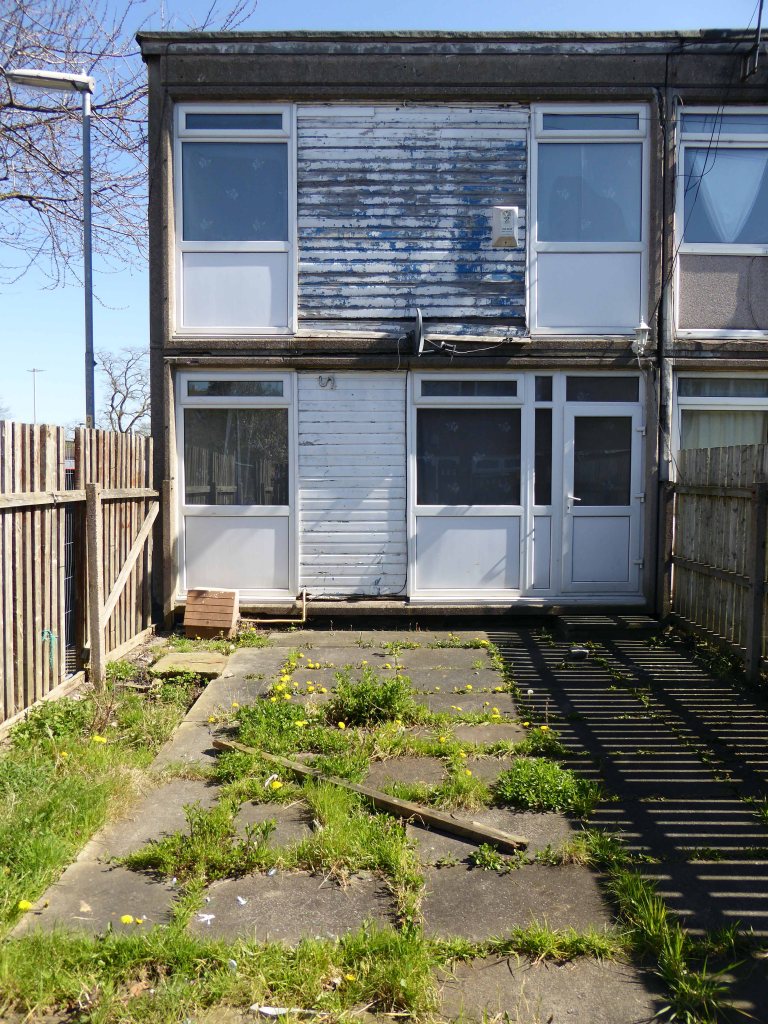
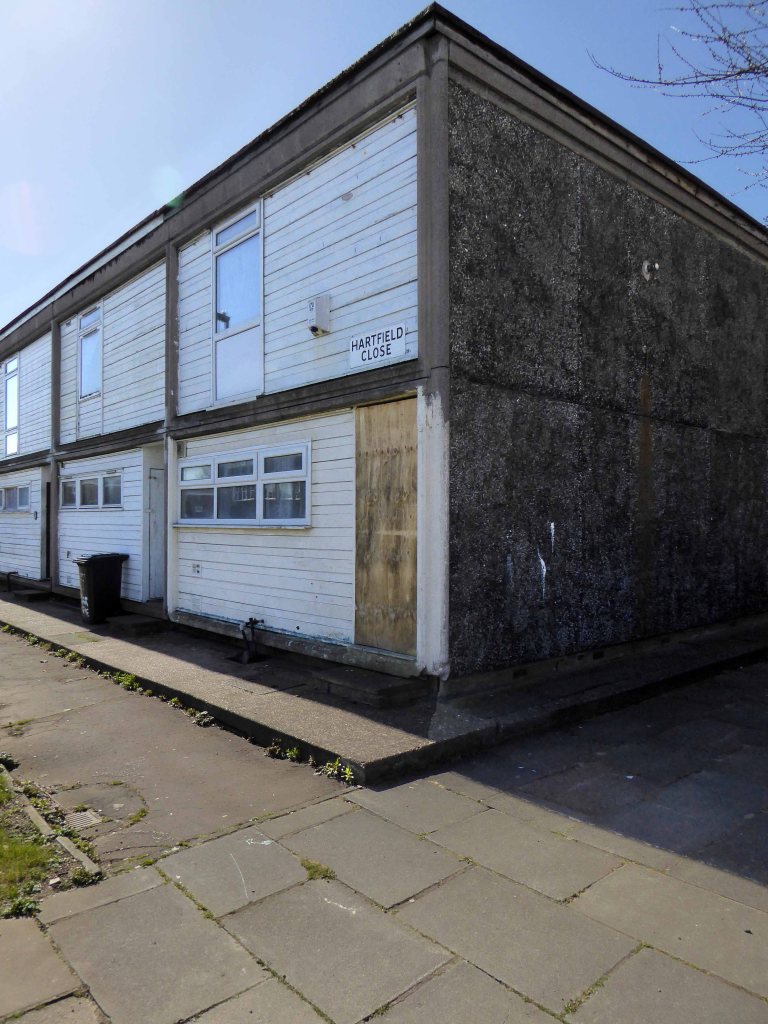
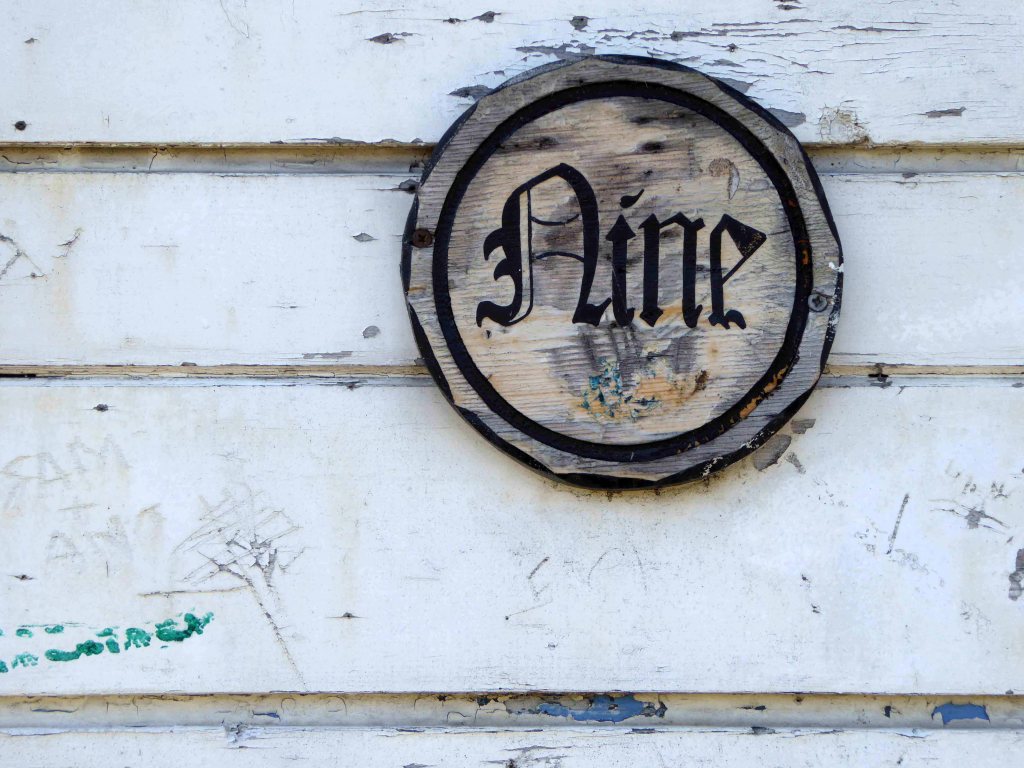
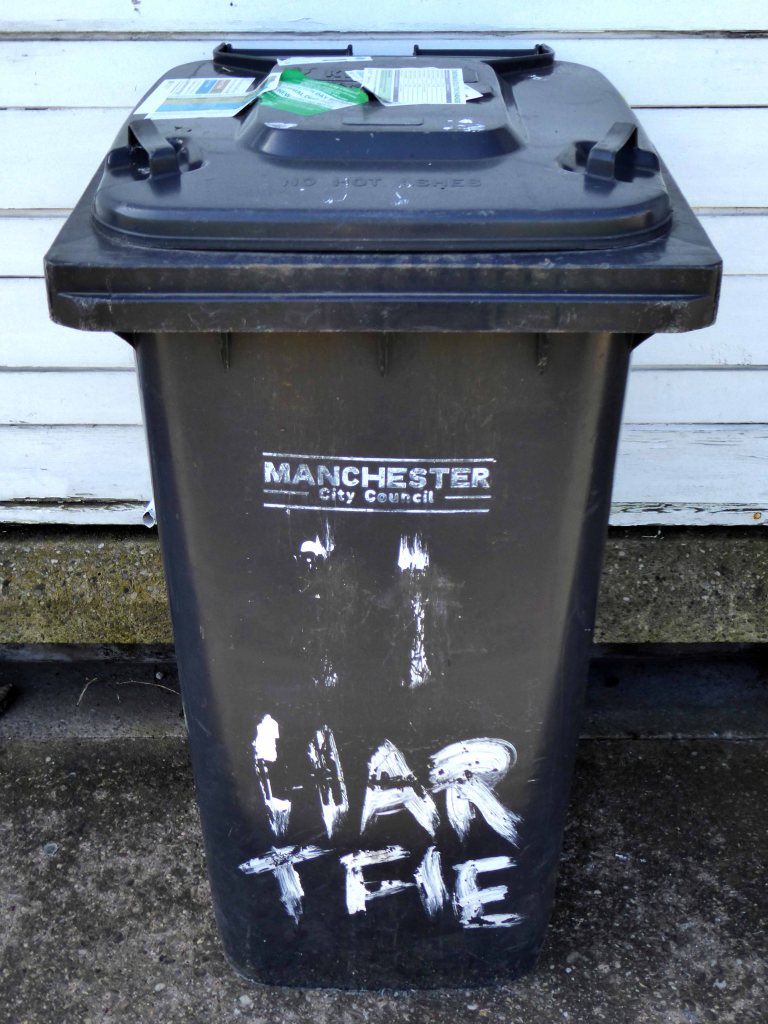
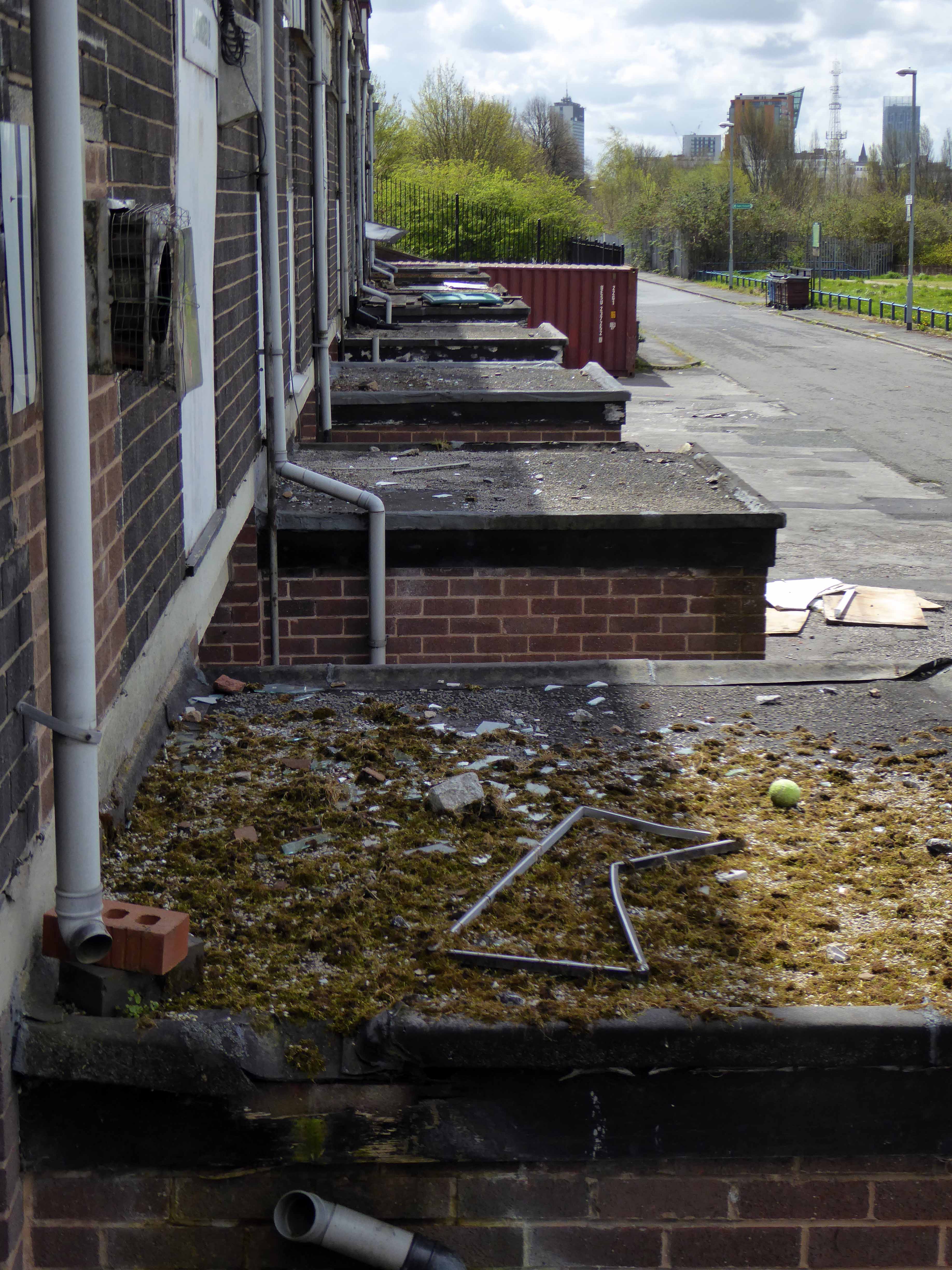
Just around the corner was Hartfield Close a low, white two-storey terrace of six homes, each with a small fenced garden to the rear, facing onto a large open grassed area, backed by further housing.
It was difficult to discern whether they were empty or inhabited – two seemed to have residents. Curious in a city with a growing population and a demand for vacant property. Are they in limbo, between redevelopment, refurbishment or CPO?
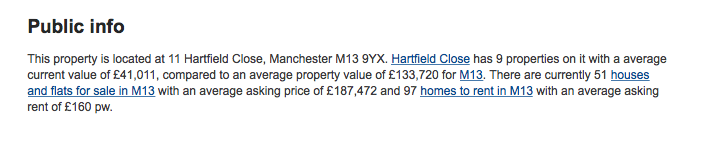
They have ben offered to the market within the last year.
At a value way below comparable properties, currently they seem to be adrift in an uncaring world, a tiny lost island of Municipal Modernism.
I don’t know much about the Yorkshire Building Society, I must say I have less than a passing interest in Building Societies generally.
I more of a building societies man myself.
But I do know this
In 1993 the former Hammonds Sauce Works Band was renamed as the Yorkshire Building Society Band. The building society supported the main band and also the YBS Hawley Band and YBS Juniors. The building society ceased its sponsorship in December 2004 although the YBS initials were retained in the band’s name until 2008. From January 2009 the band was renamed the Hammonds Saltaire Band.
Which seems a particularly cruel way, to treat a sauce works band.
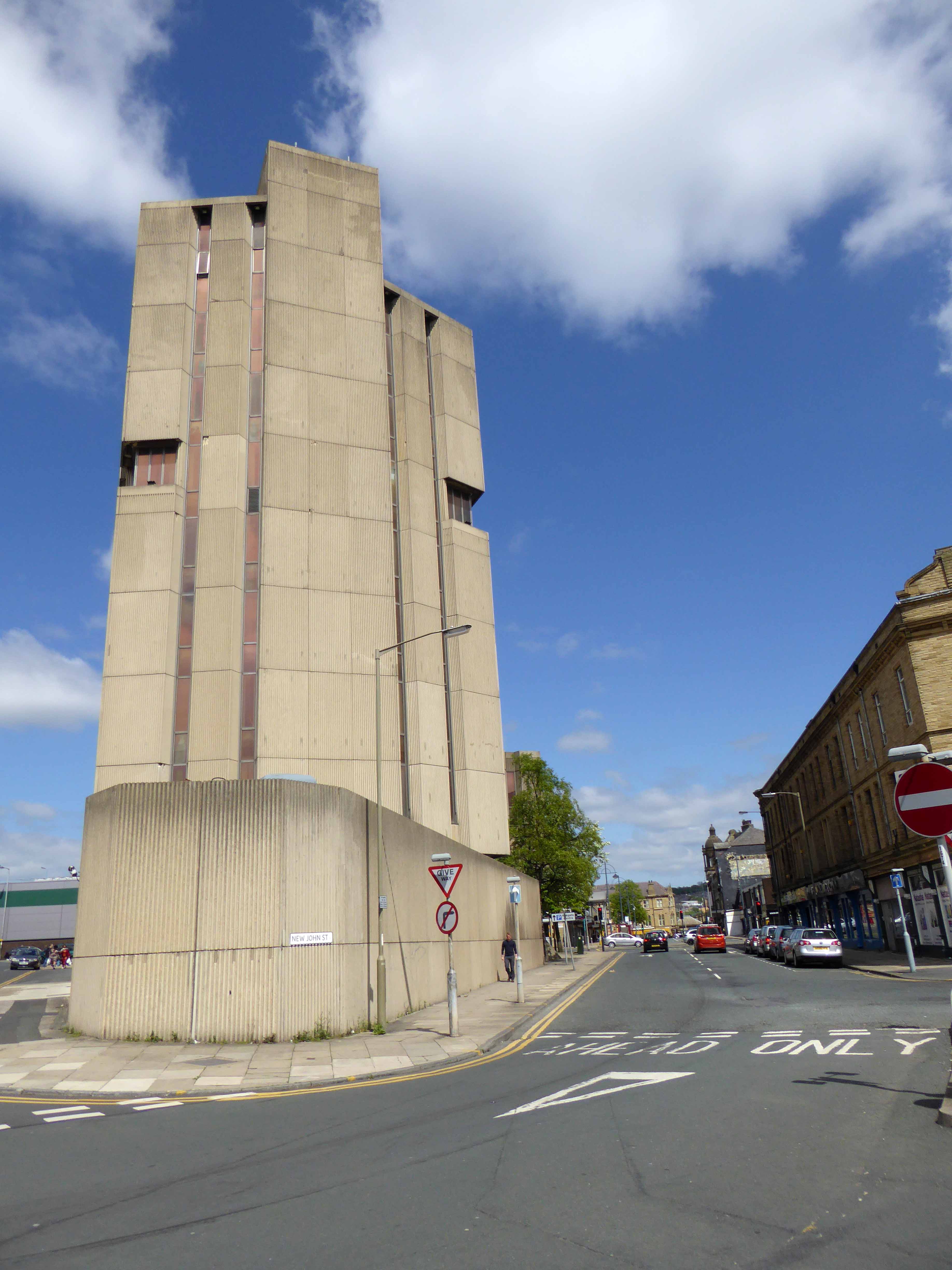
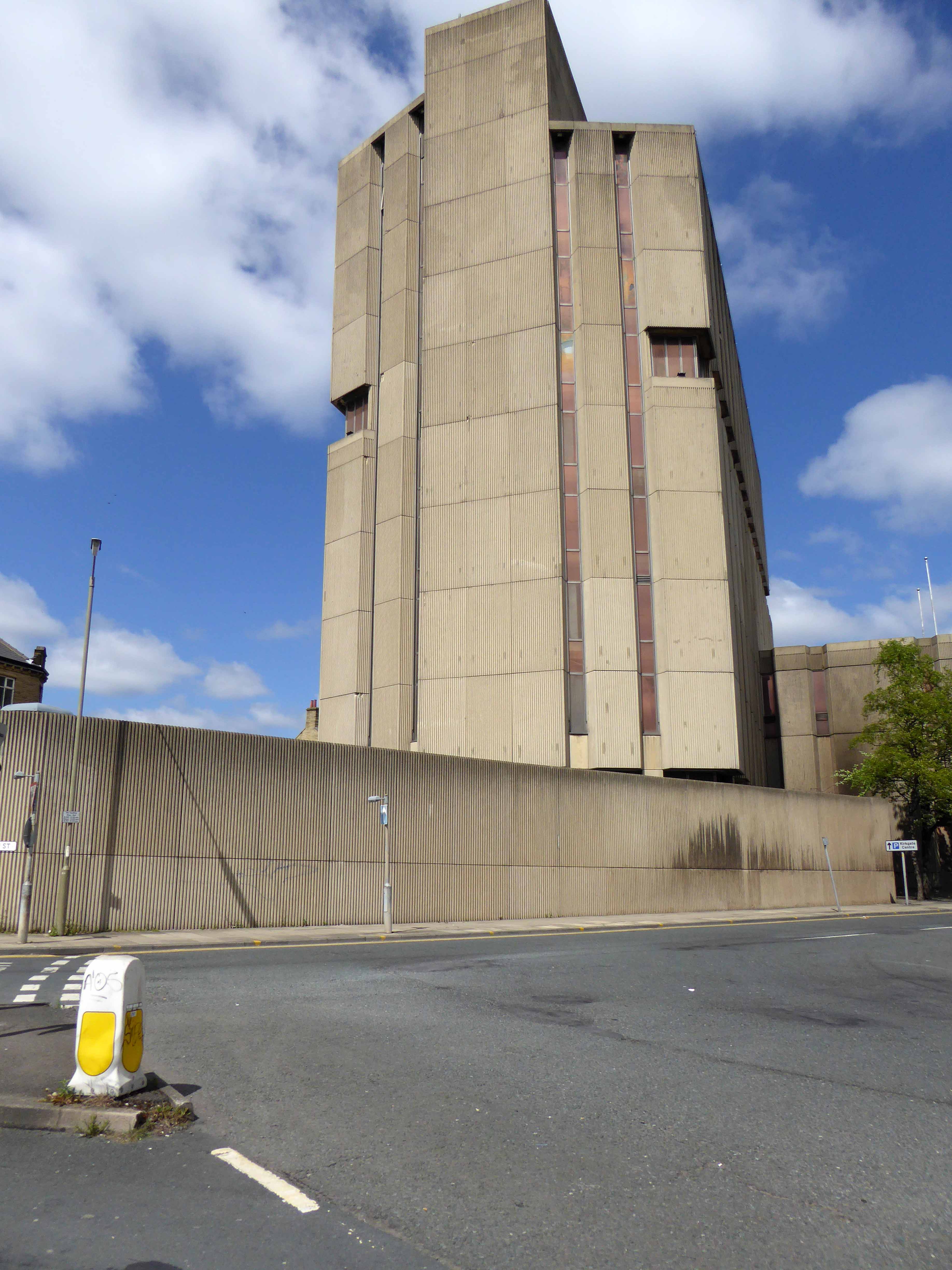
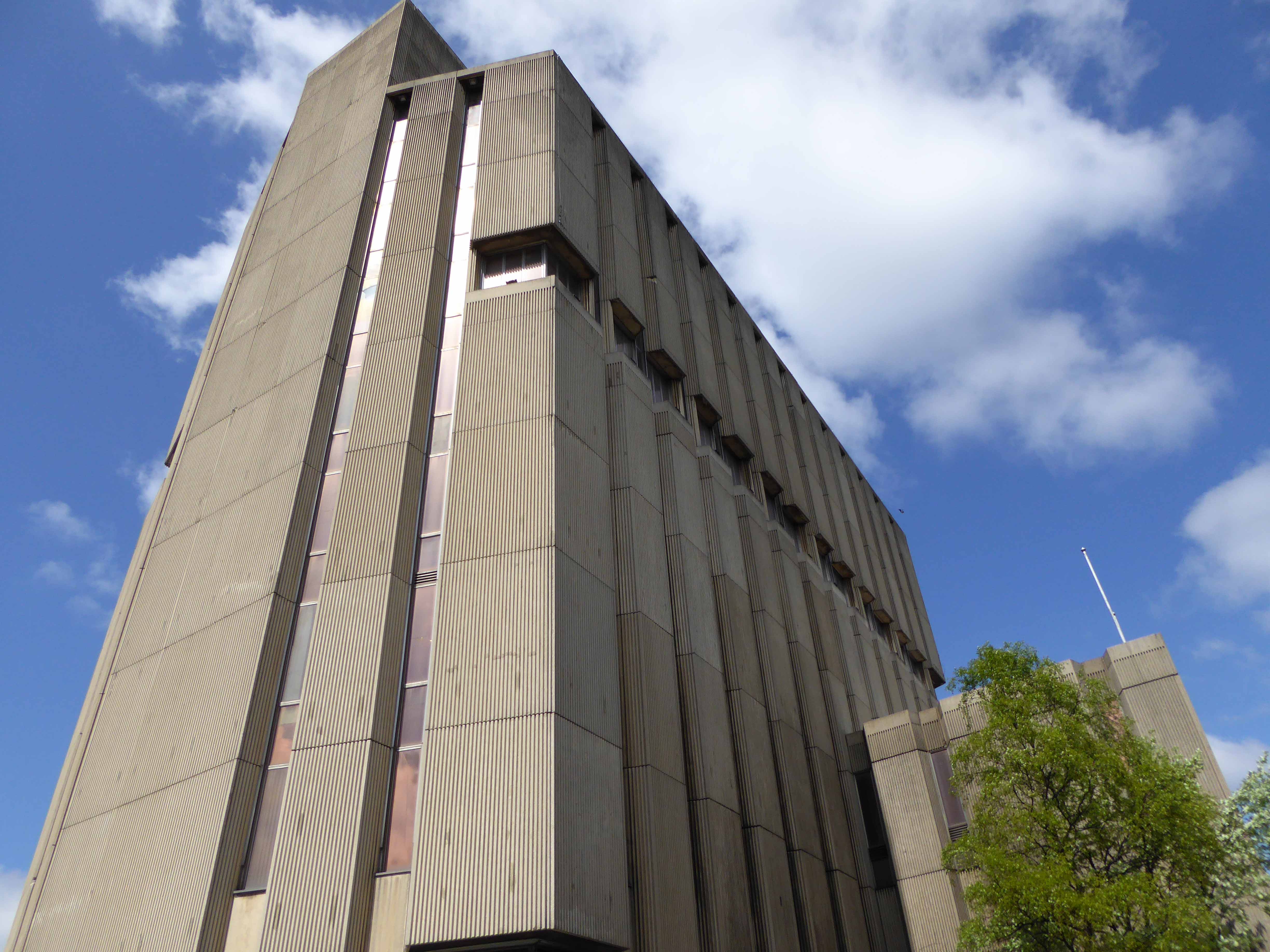
Their former HQ has been standing on the corner, watching all the world go by.
Time has not been kind to North Manchester, successive slumps, double-dip depressions, economic downturns, and centrally imposed recession hurts.
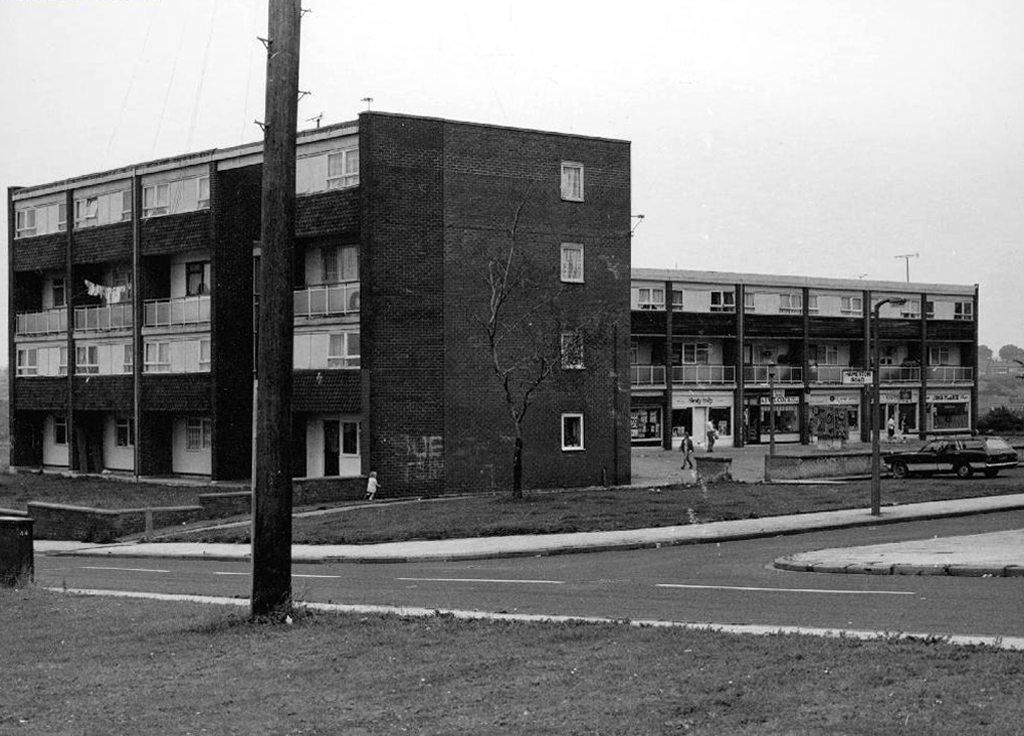
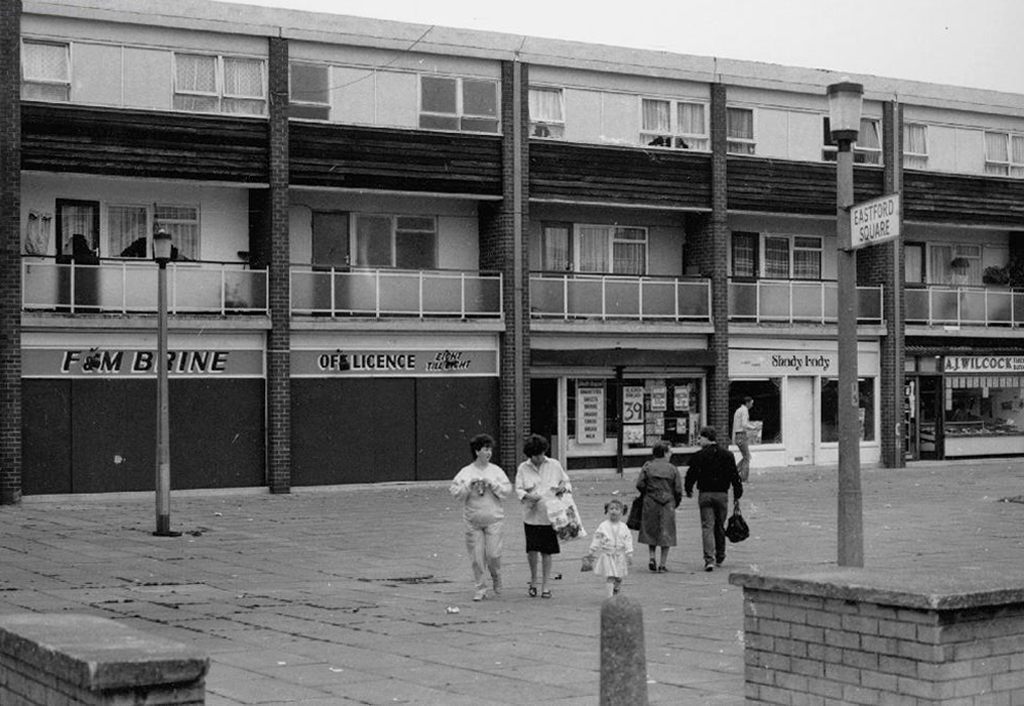
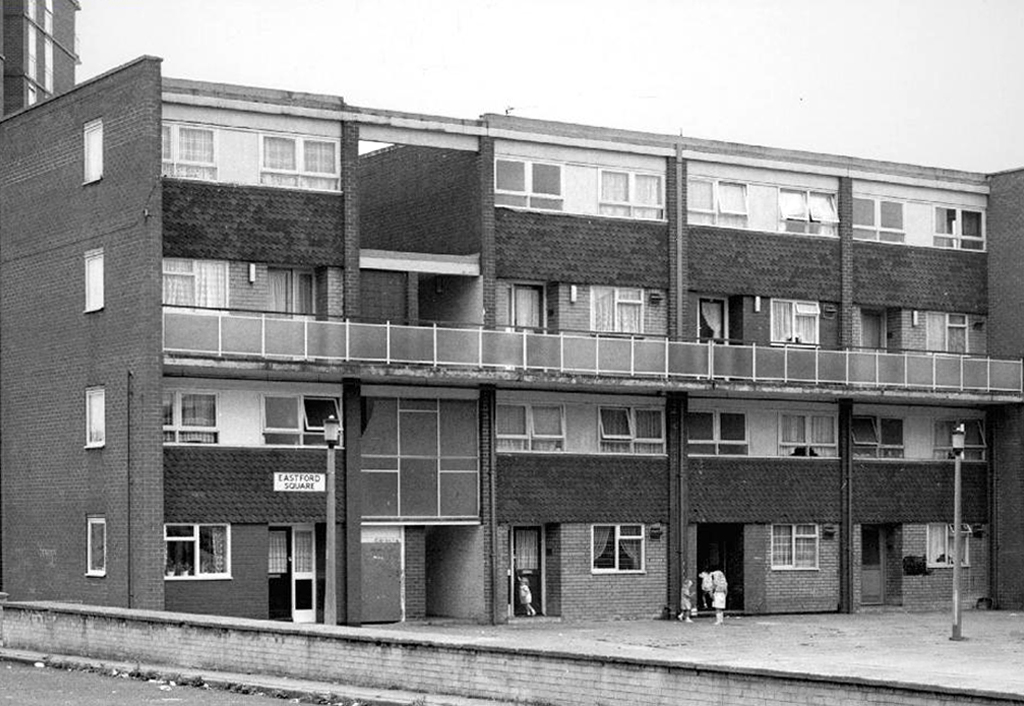
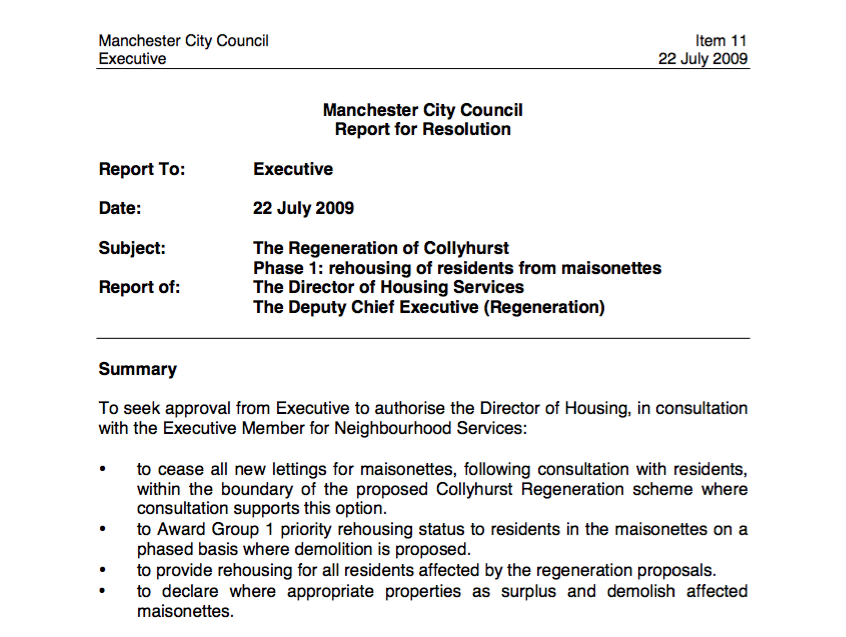
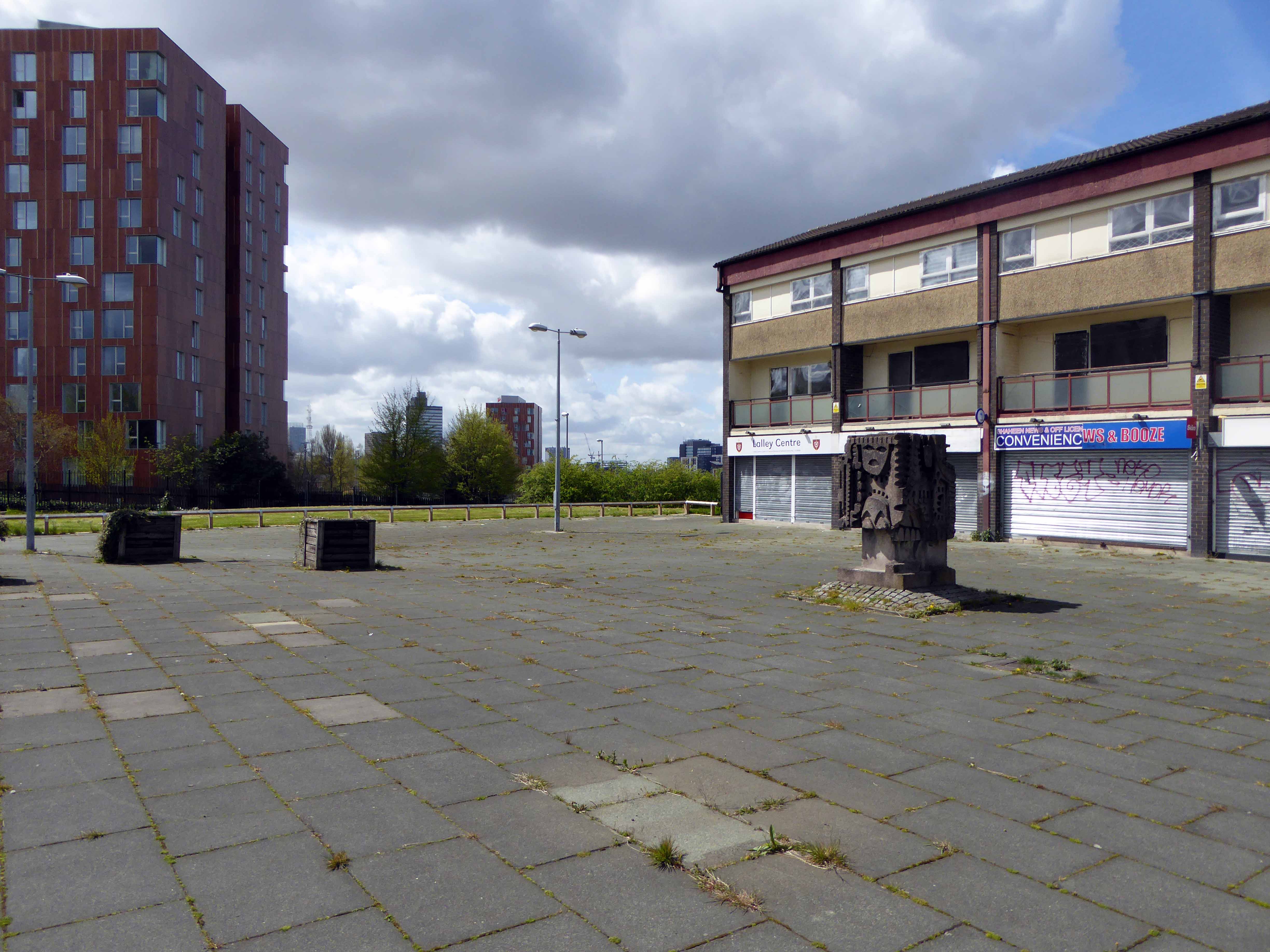
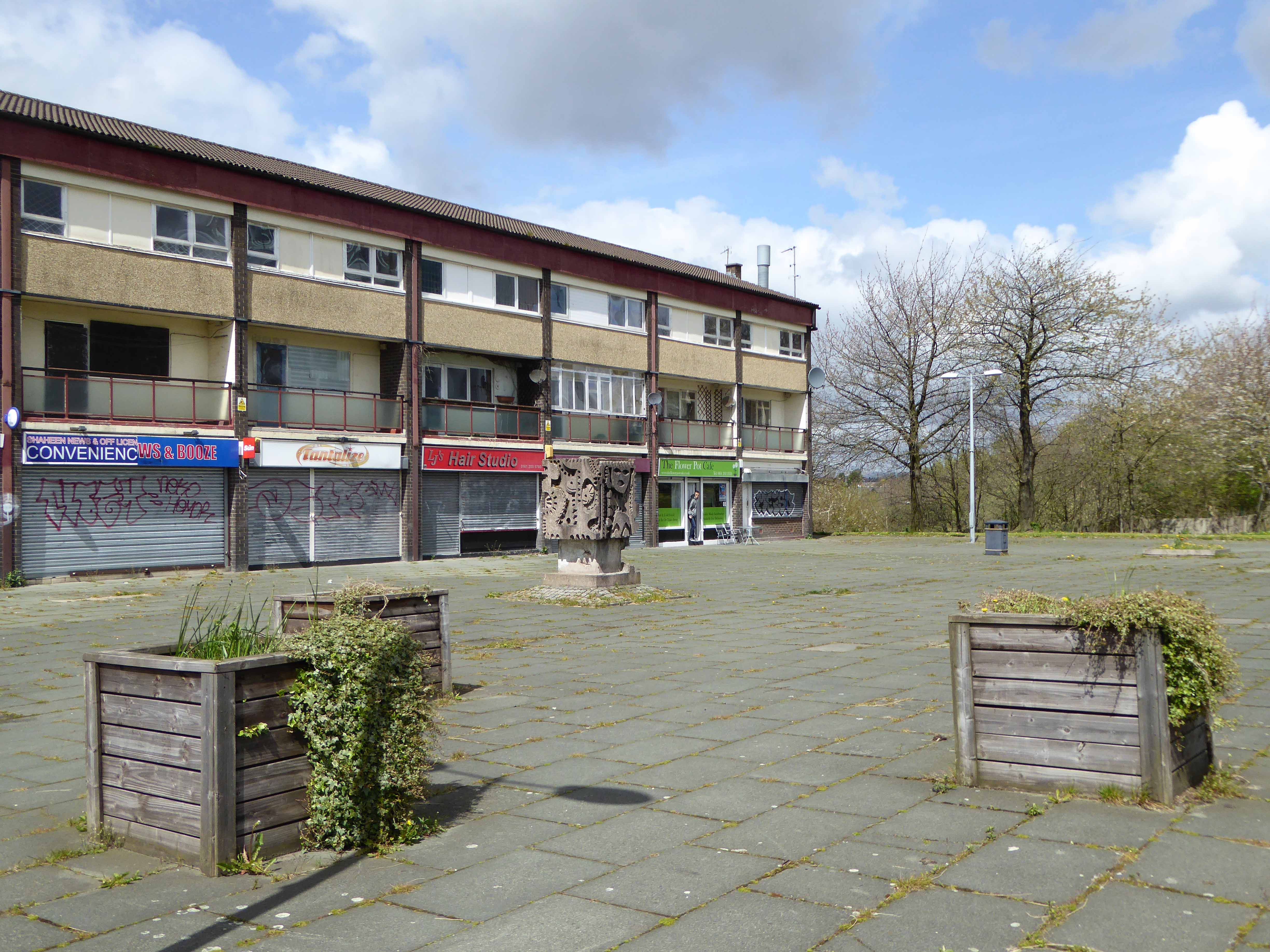
The local authority steps in, from 2009 the fate of Eastford Square is sealed.
Regeneration.
Spells demolition.
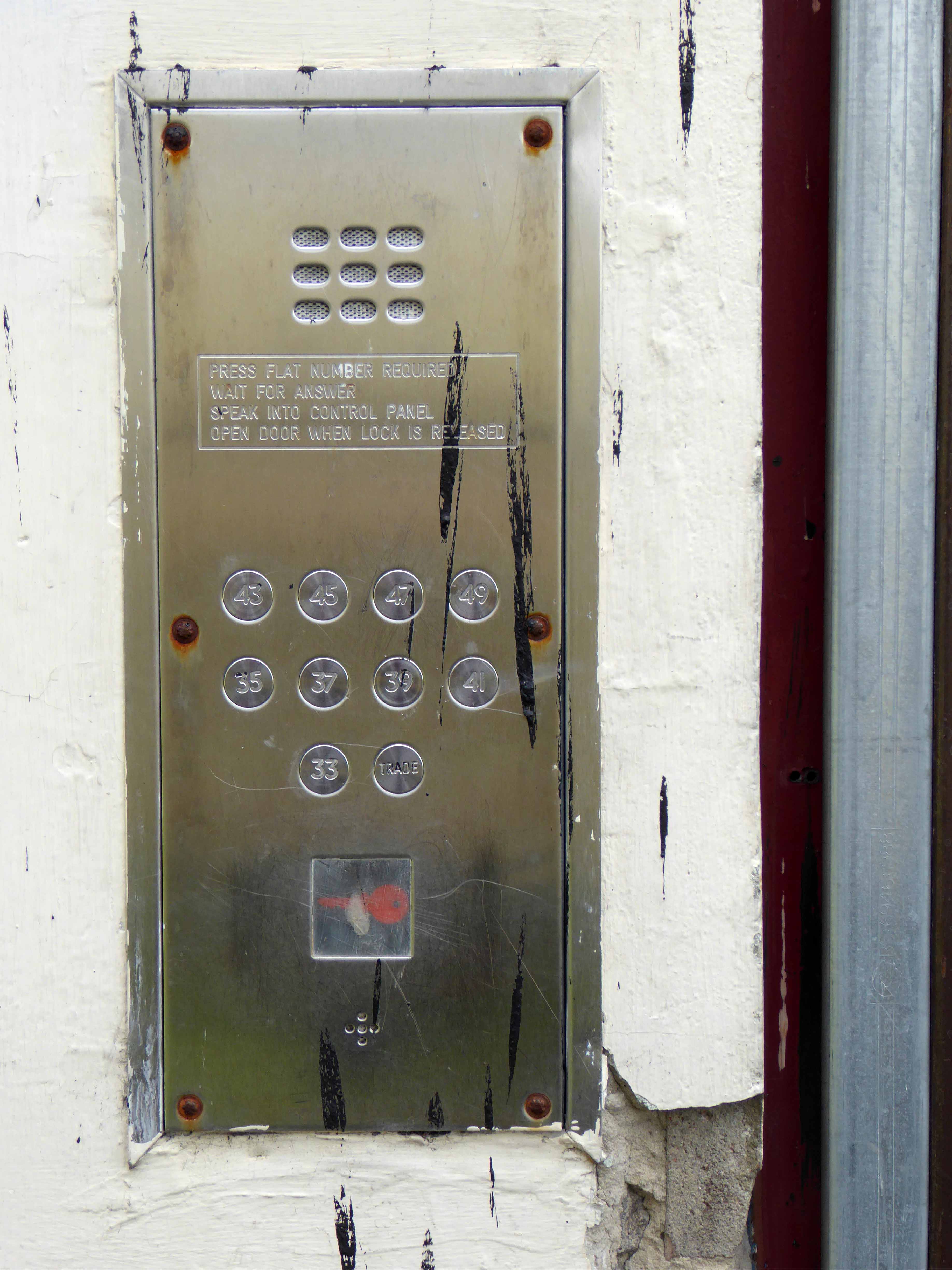
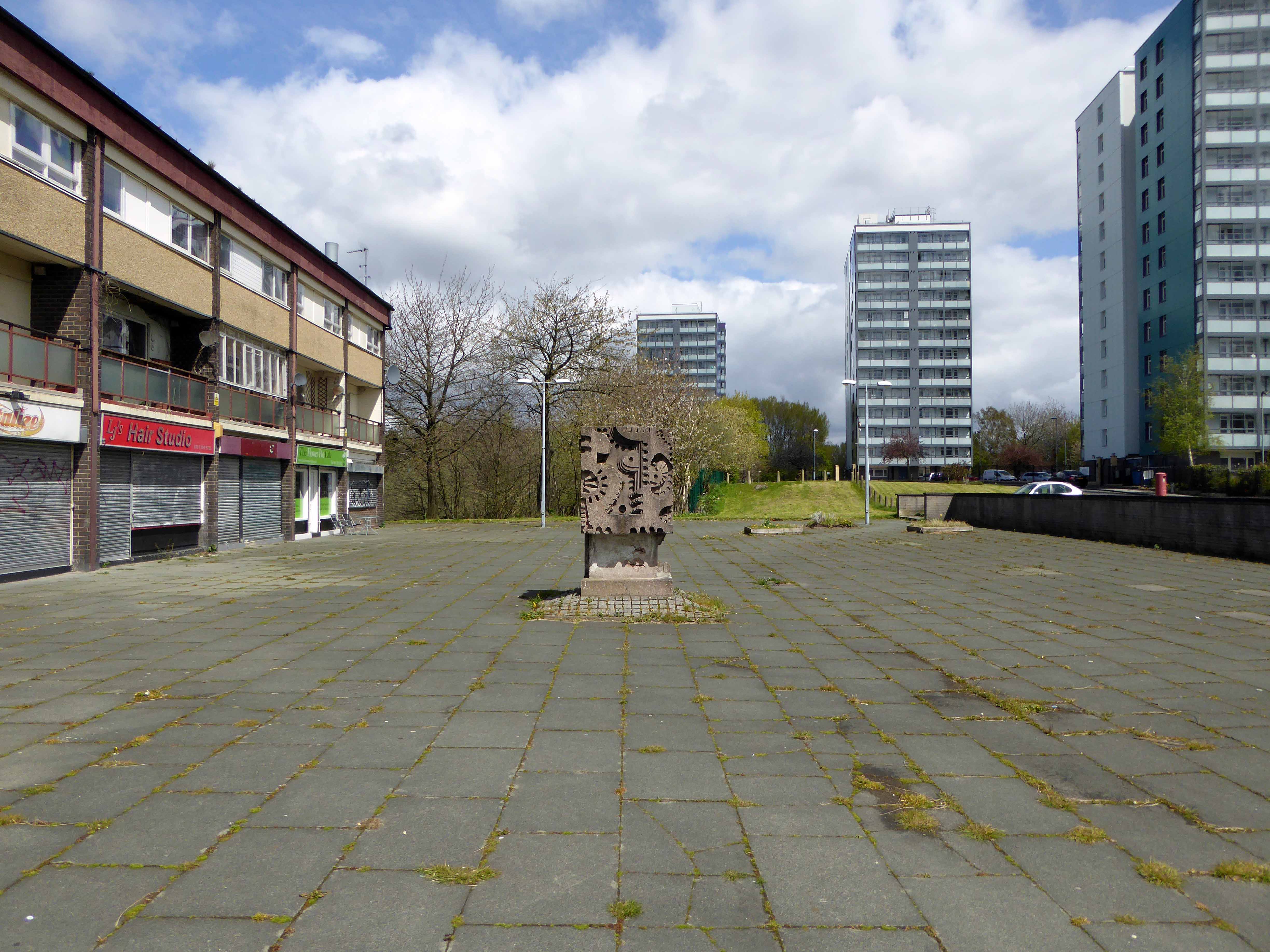
One wing is already gone, the maisonettes are tinned up.
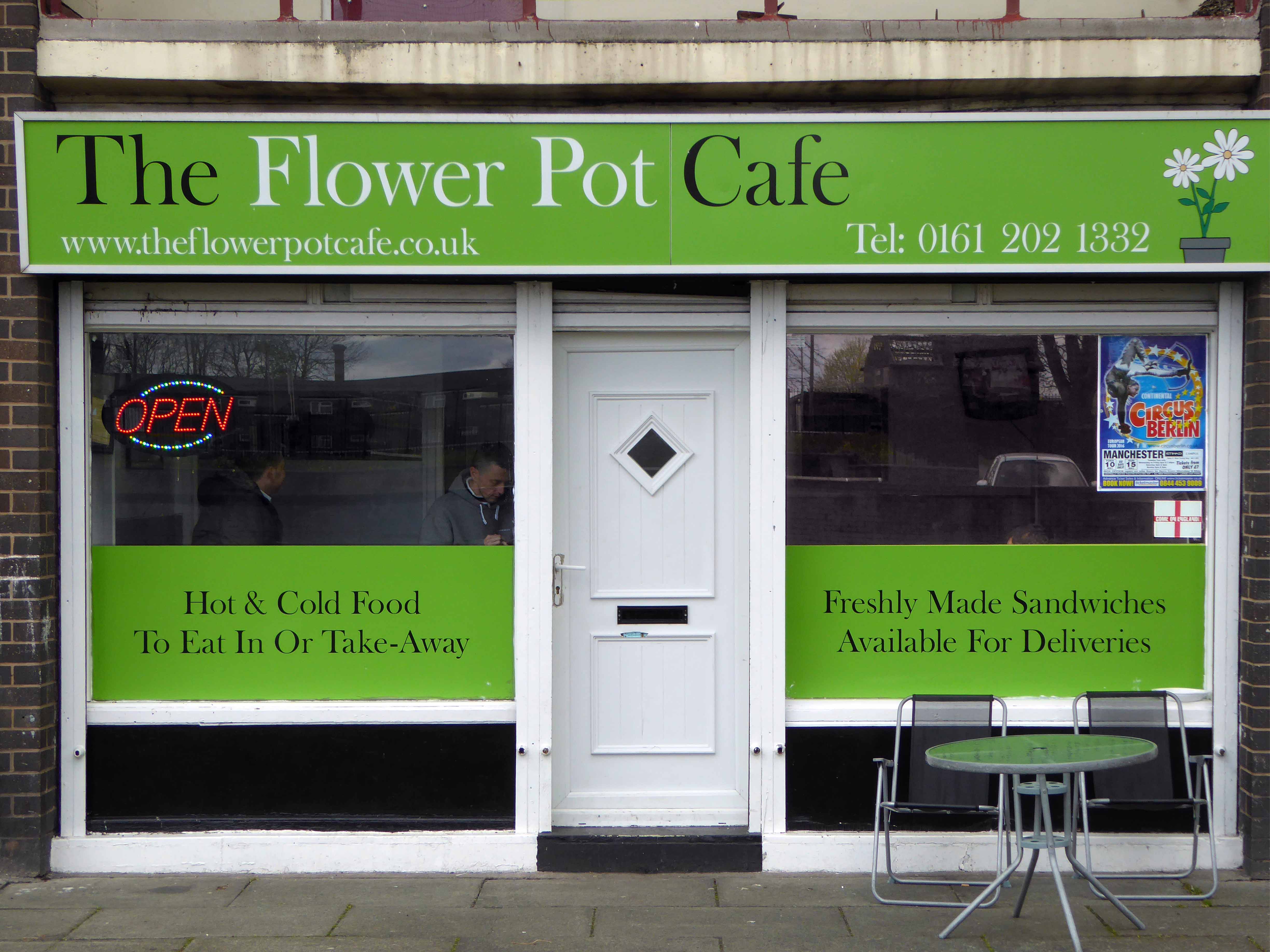
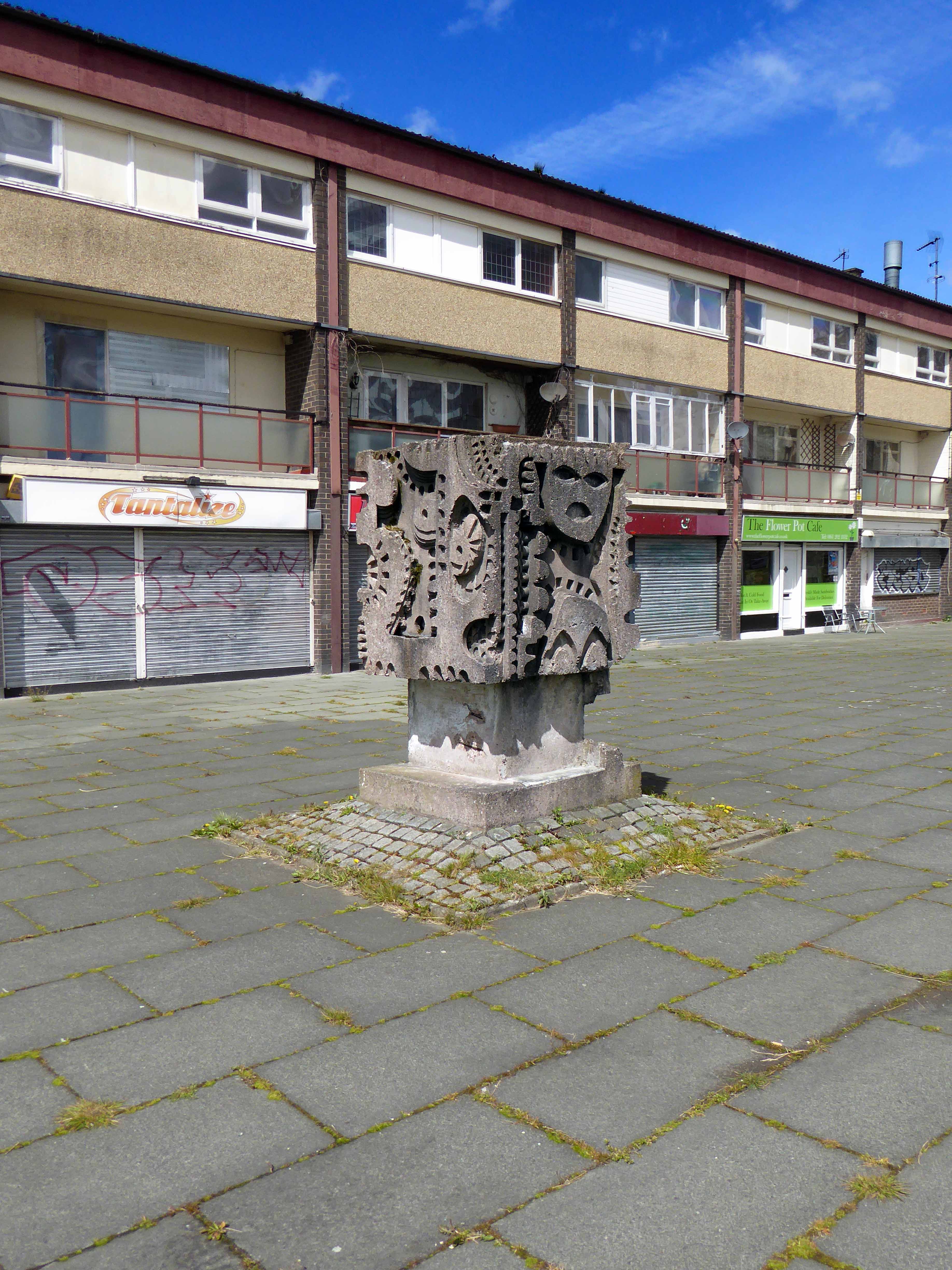
The Flower Pot Café, still fully functional, fed me well for £2, Lee the proprietor is living on borrowed time though, hoping for relocation within the new development.
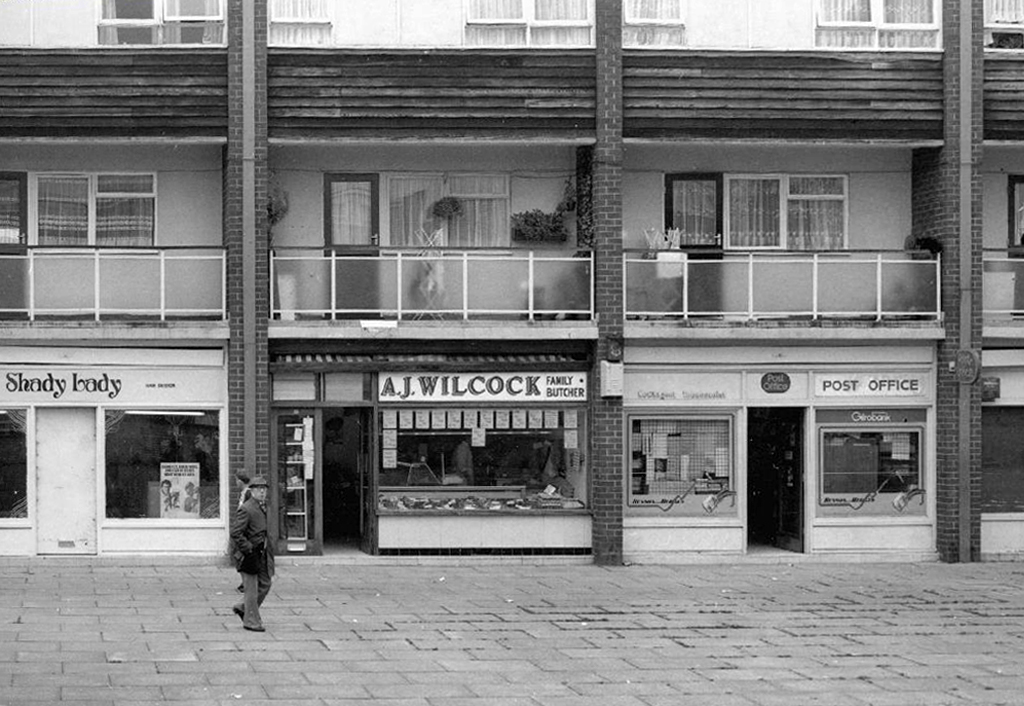
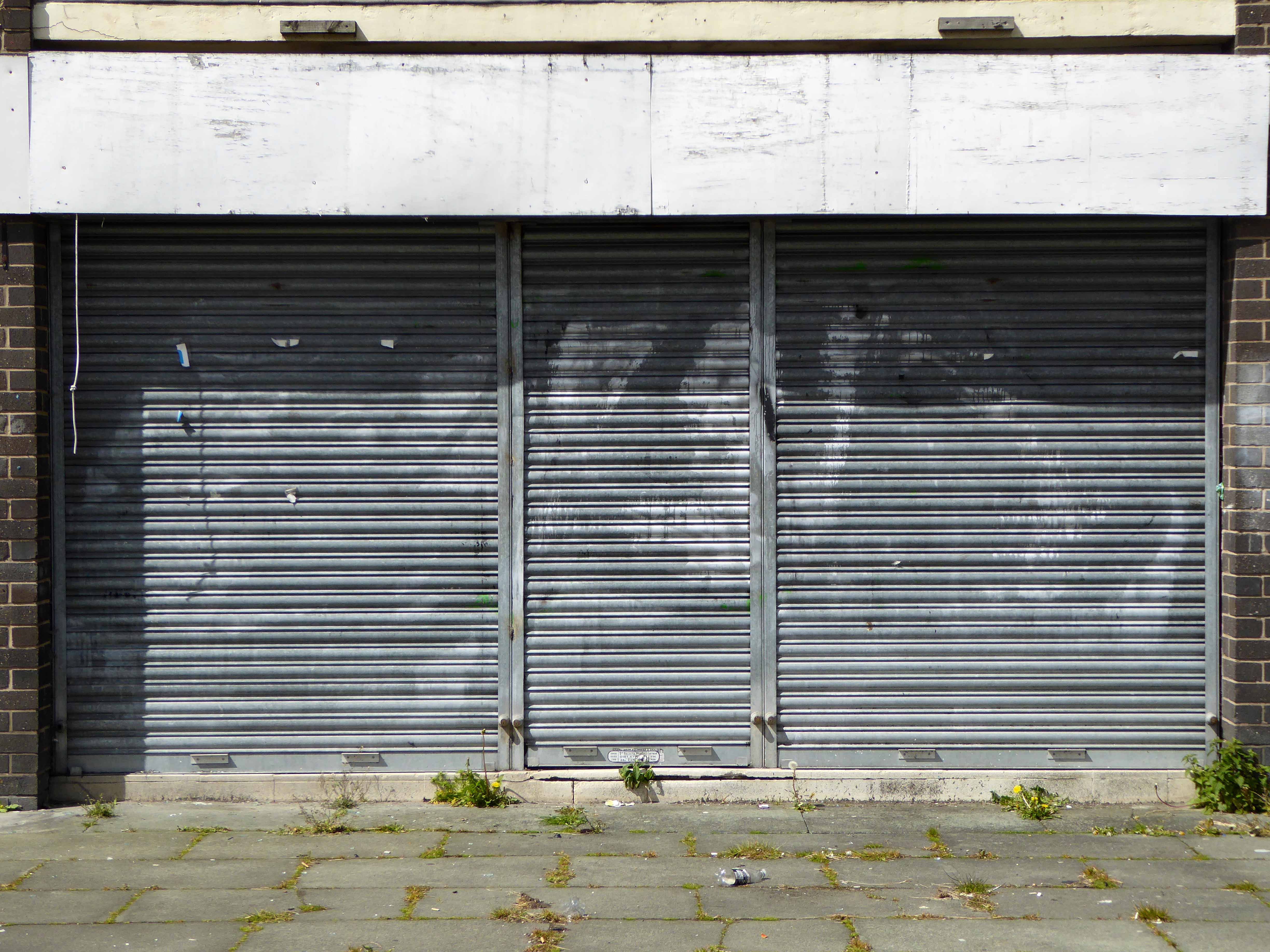
Other businesses have not survived the transition, awaiting CPO and who knows what.
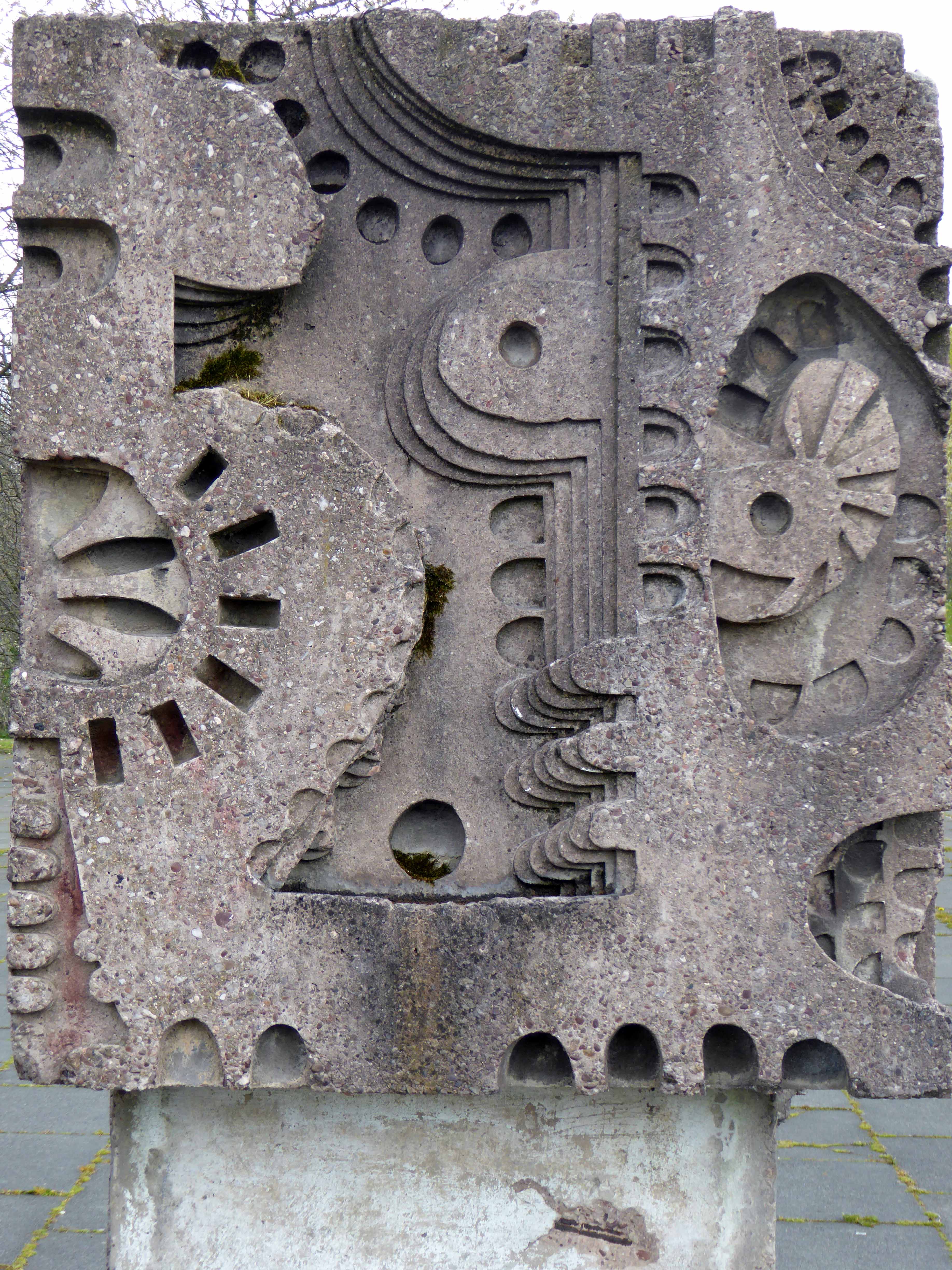
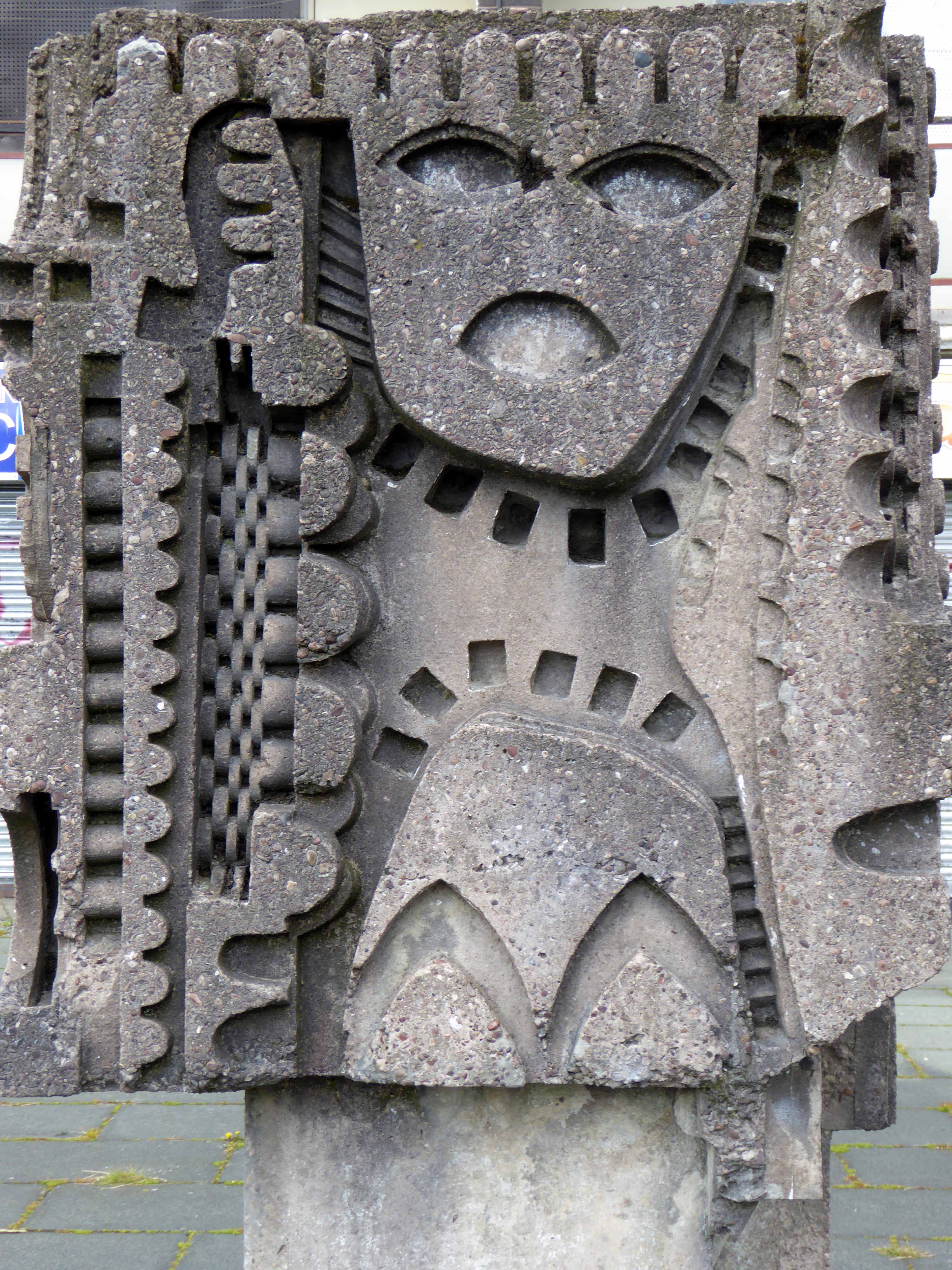
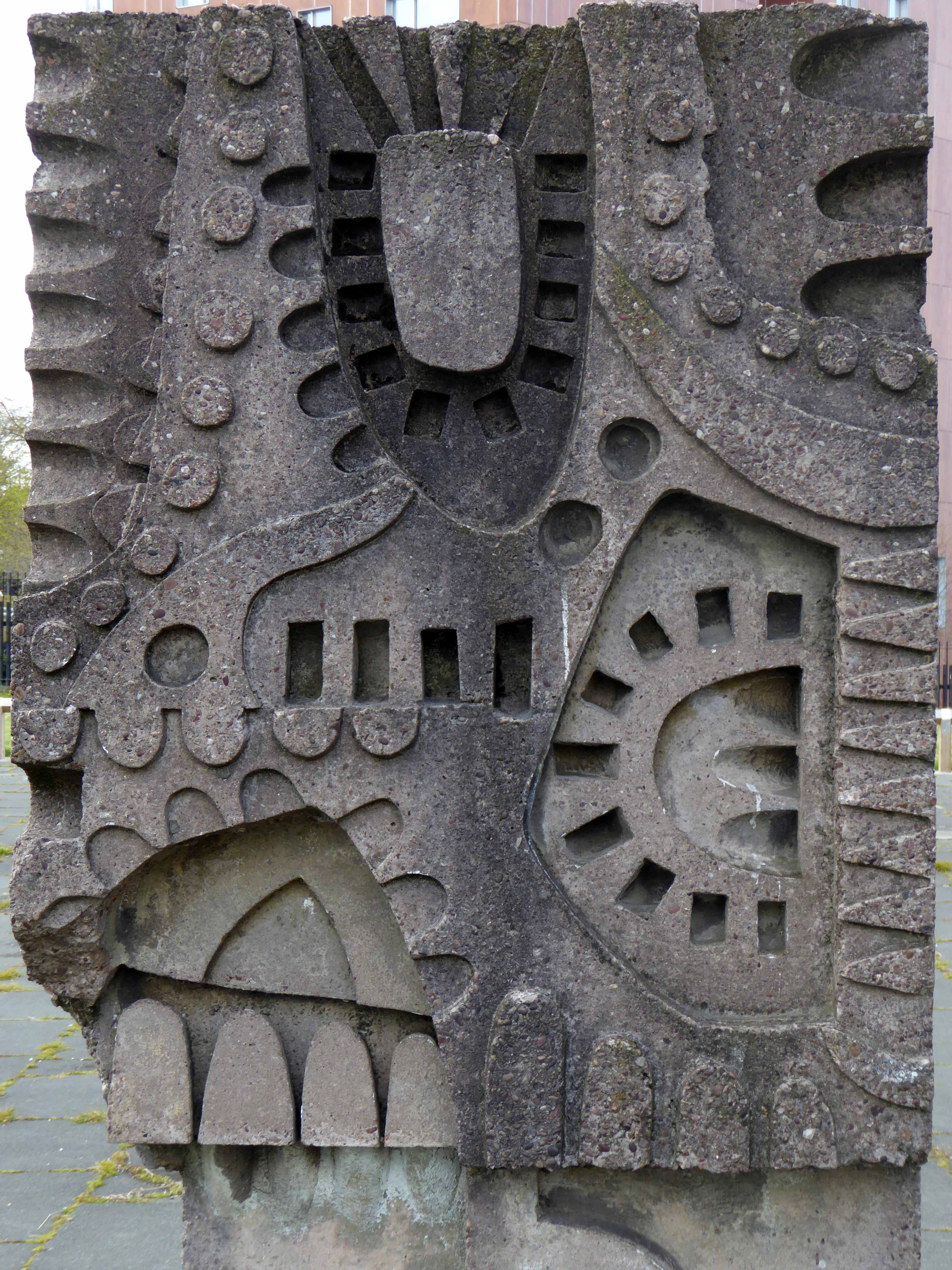
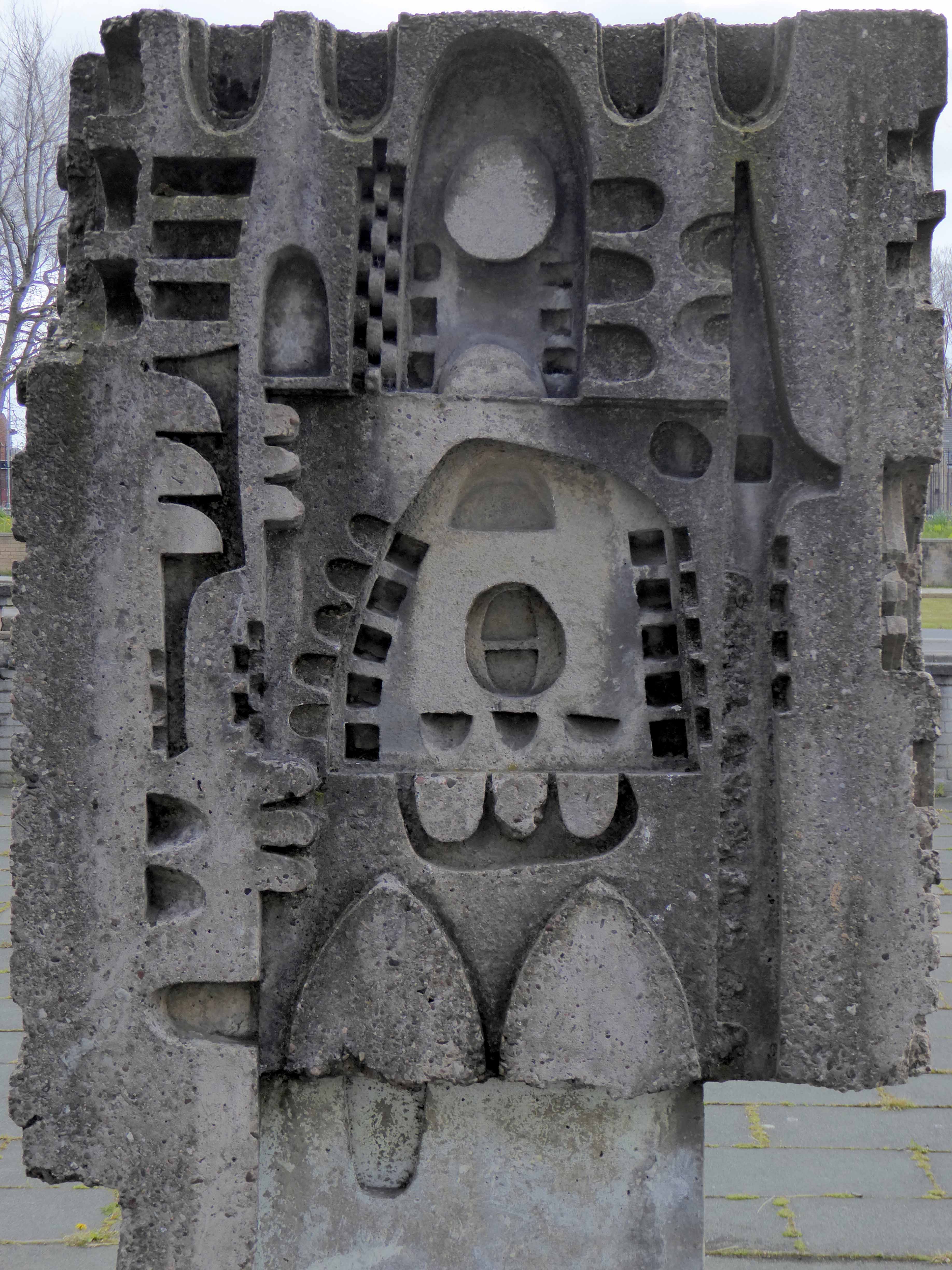
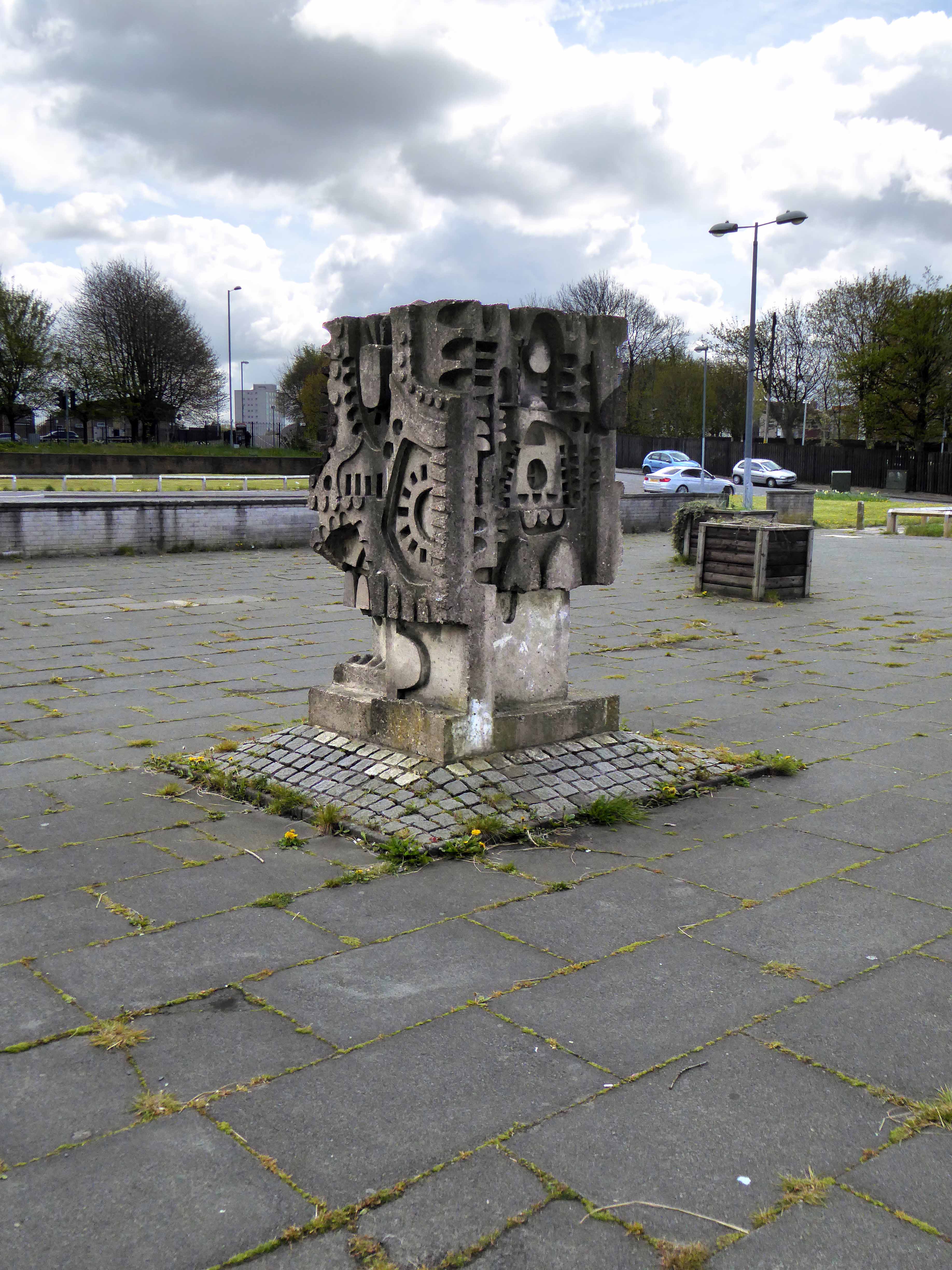
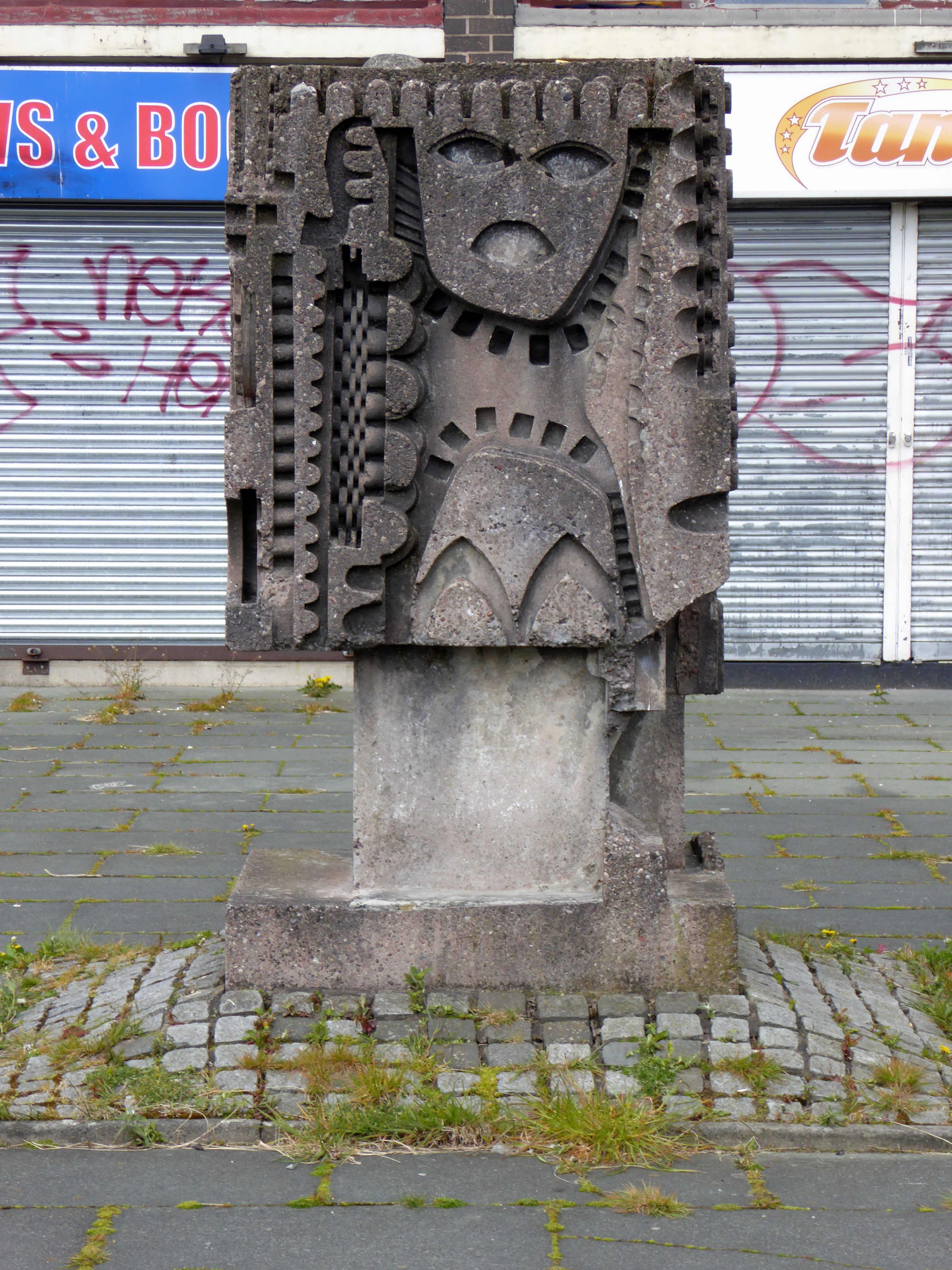
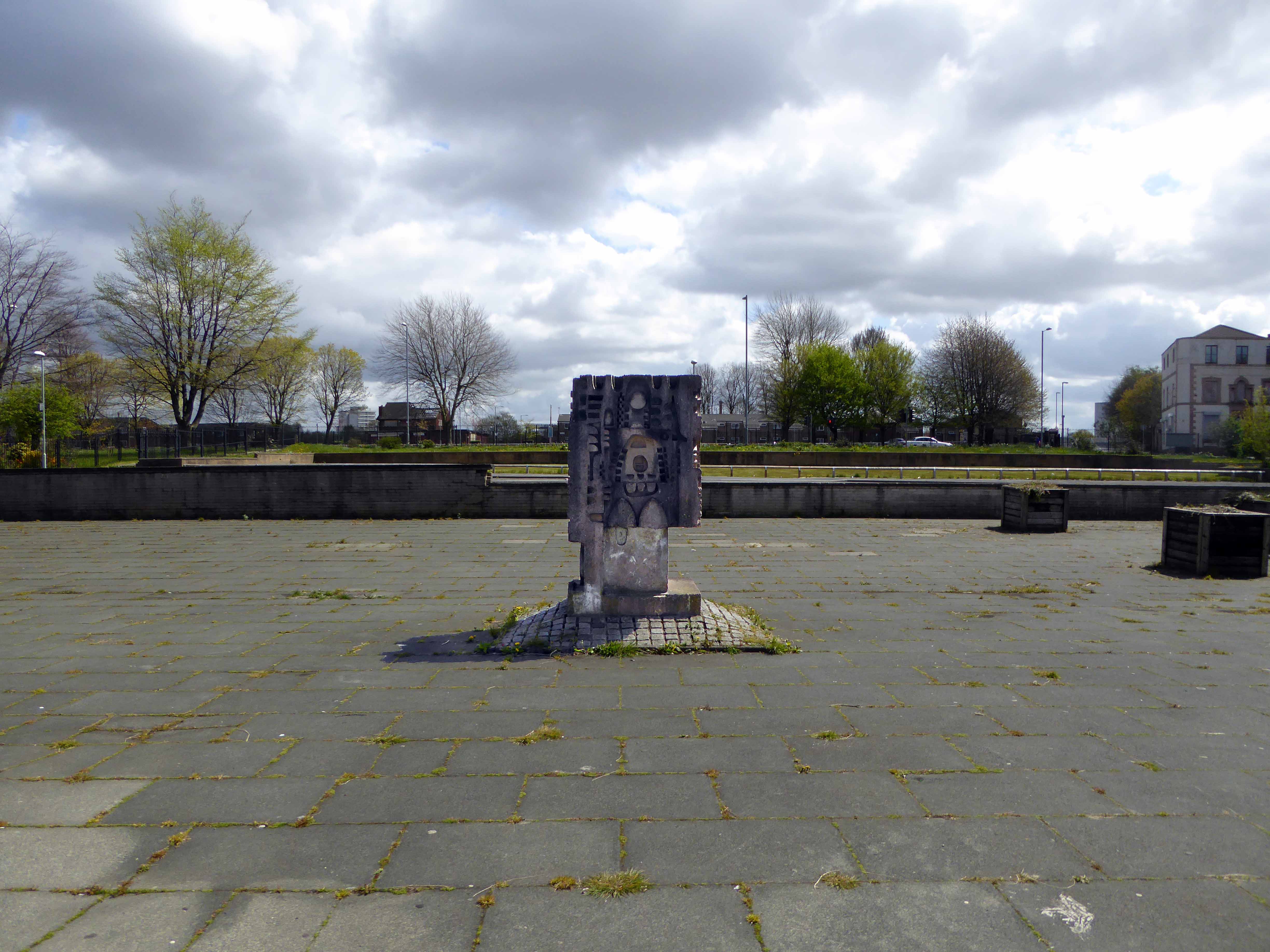
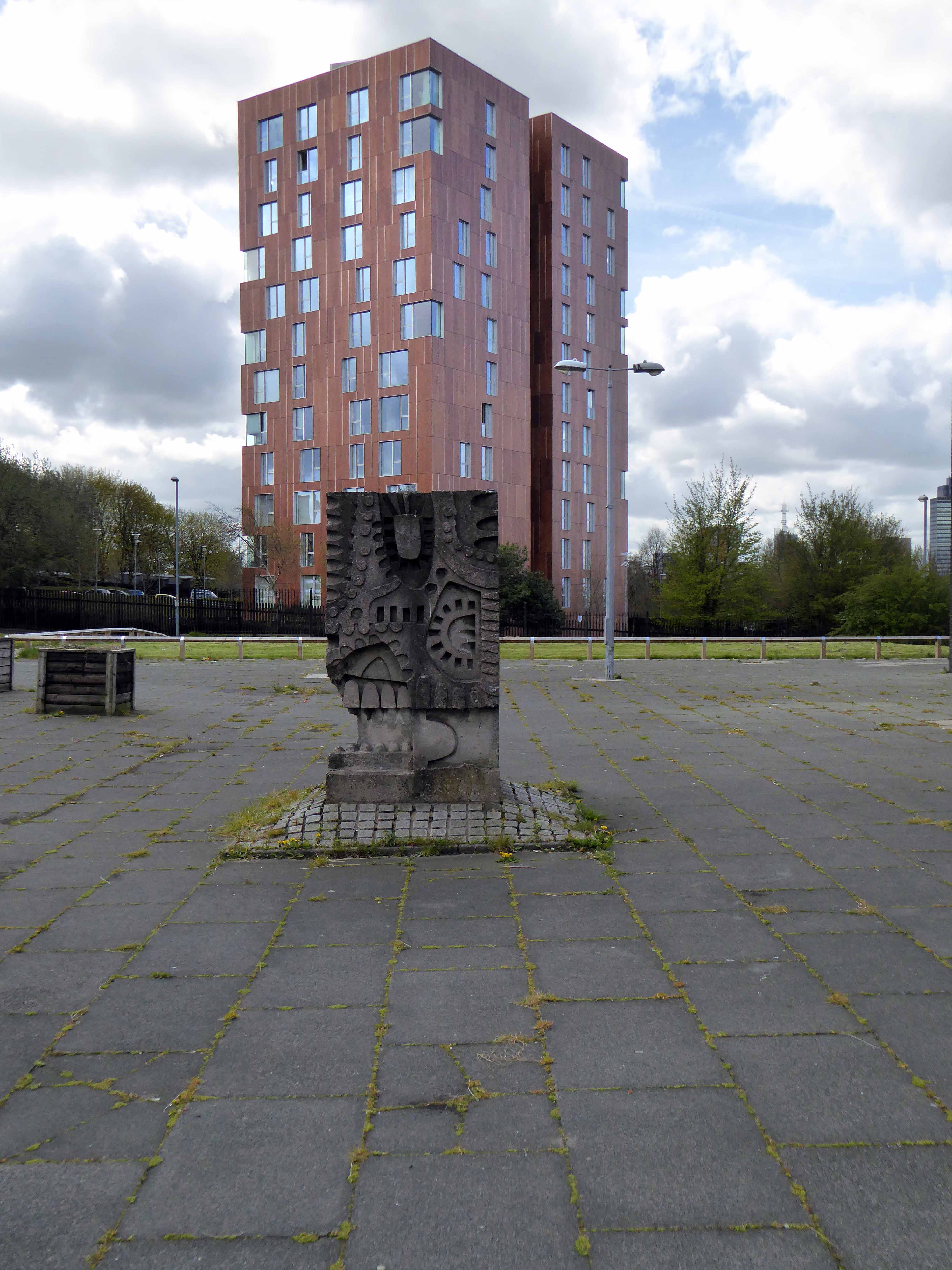
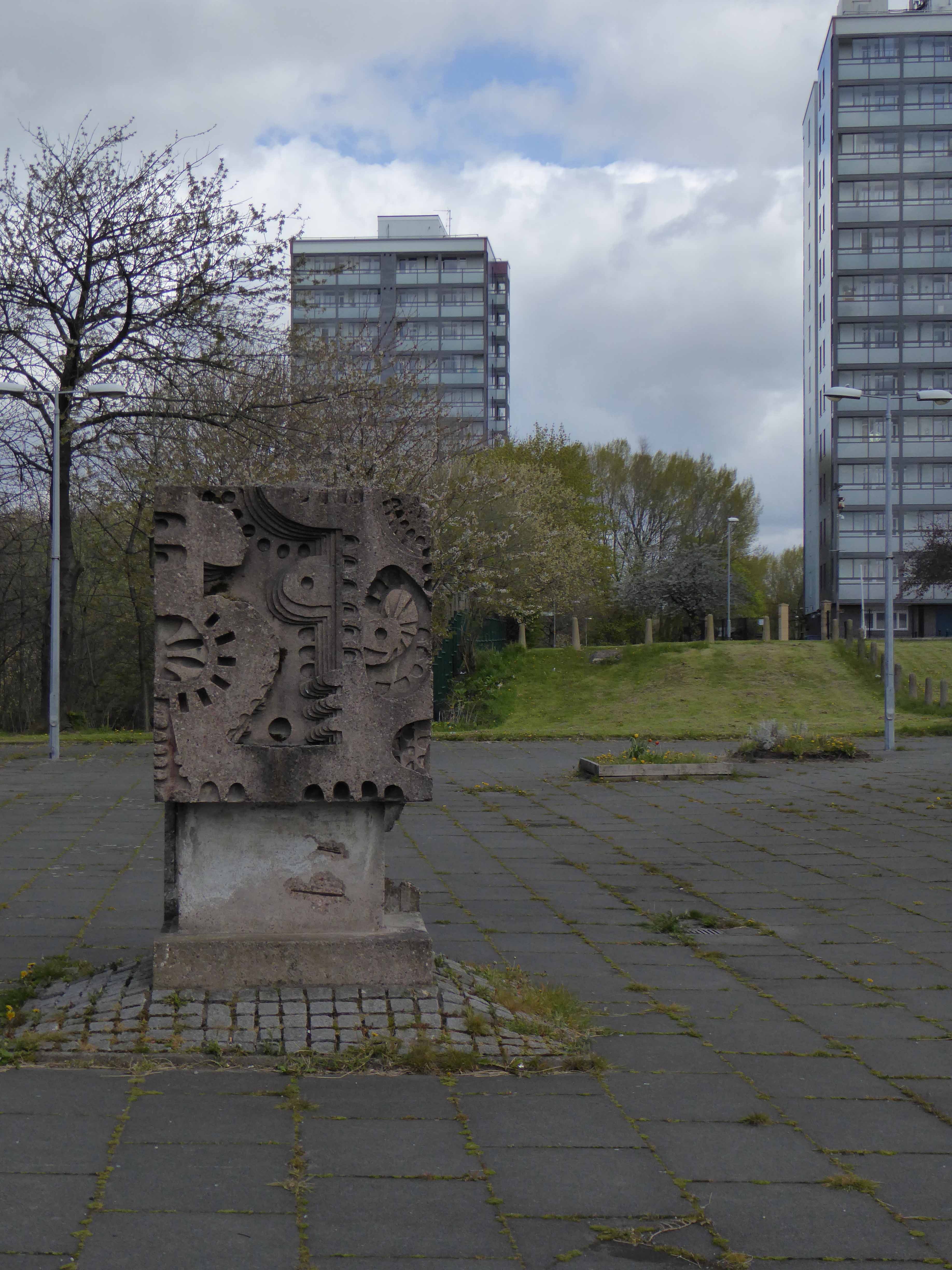
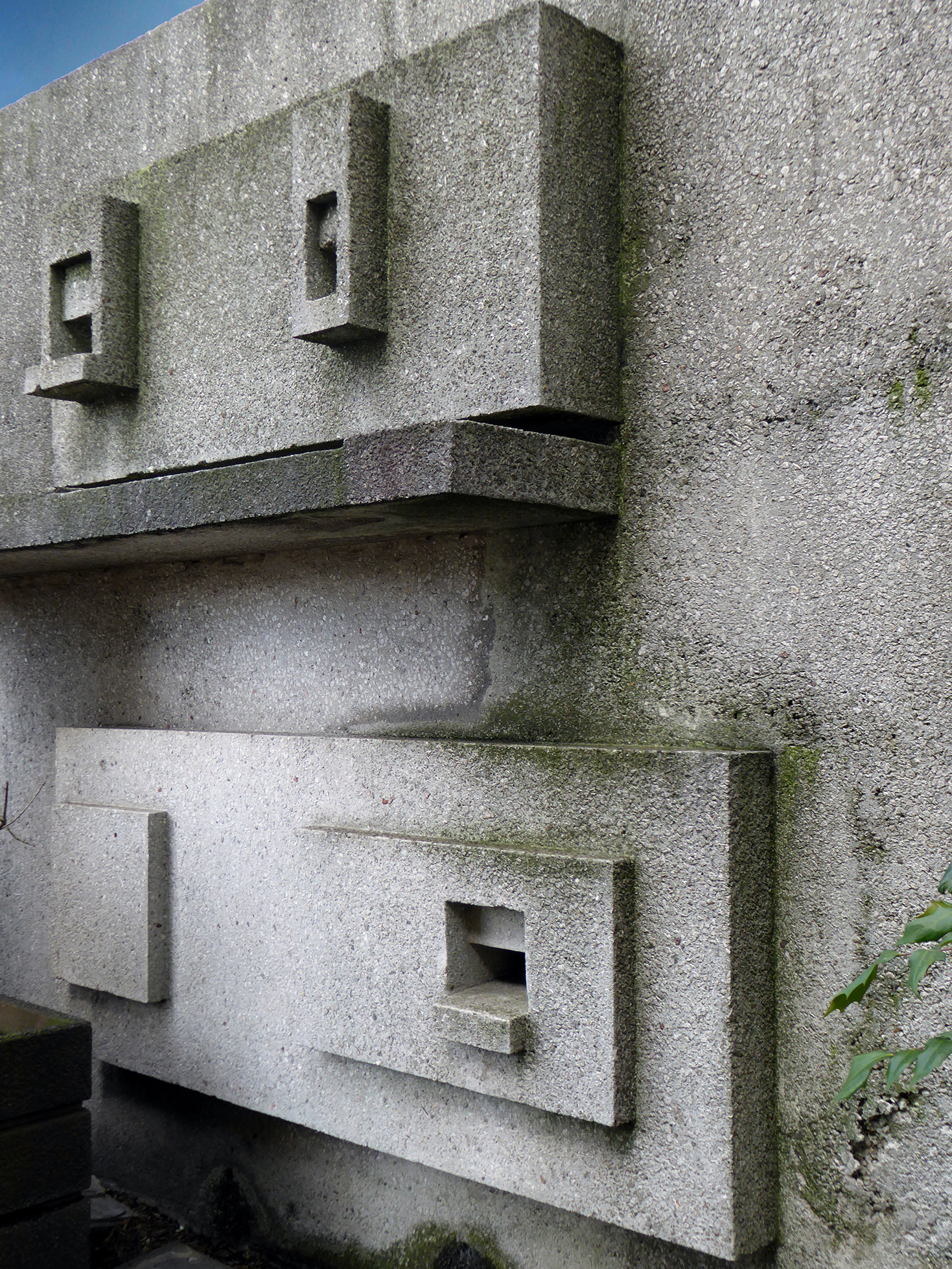
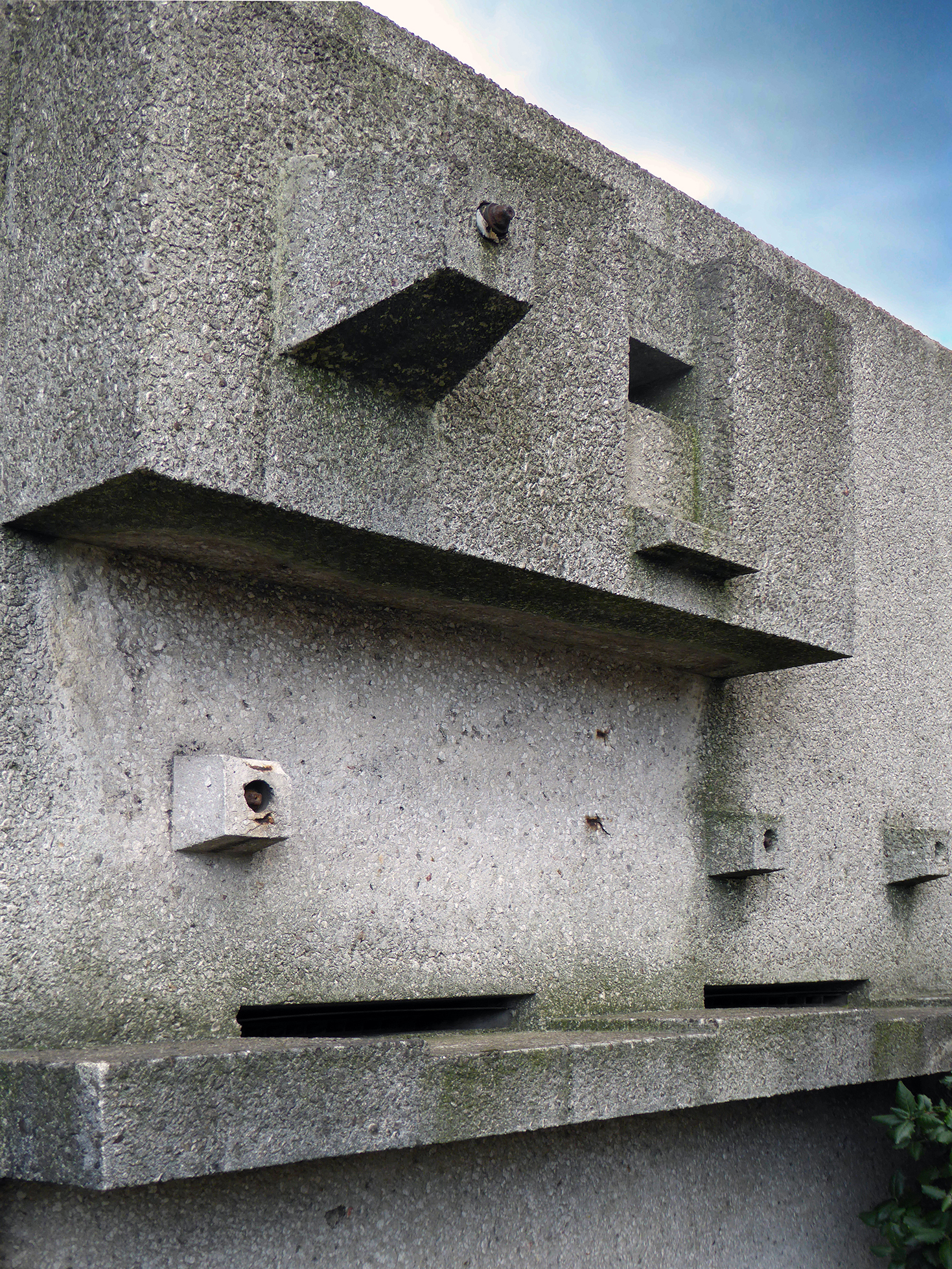
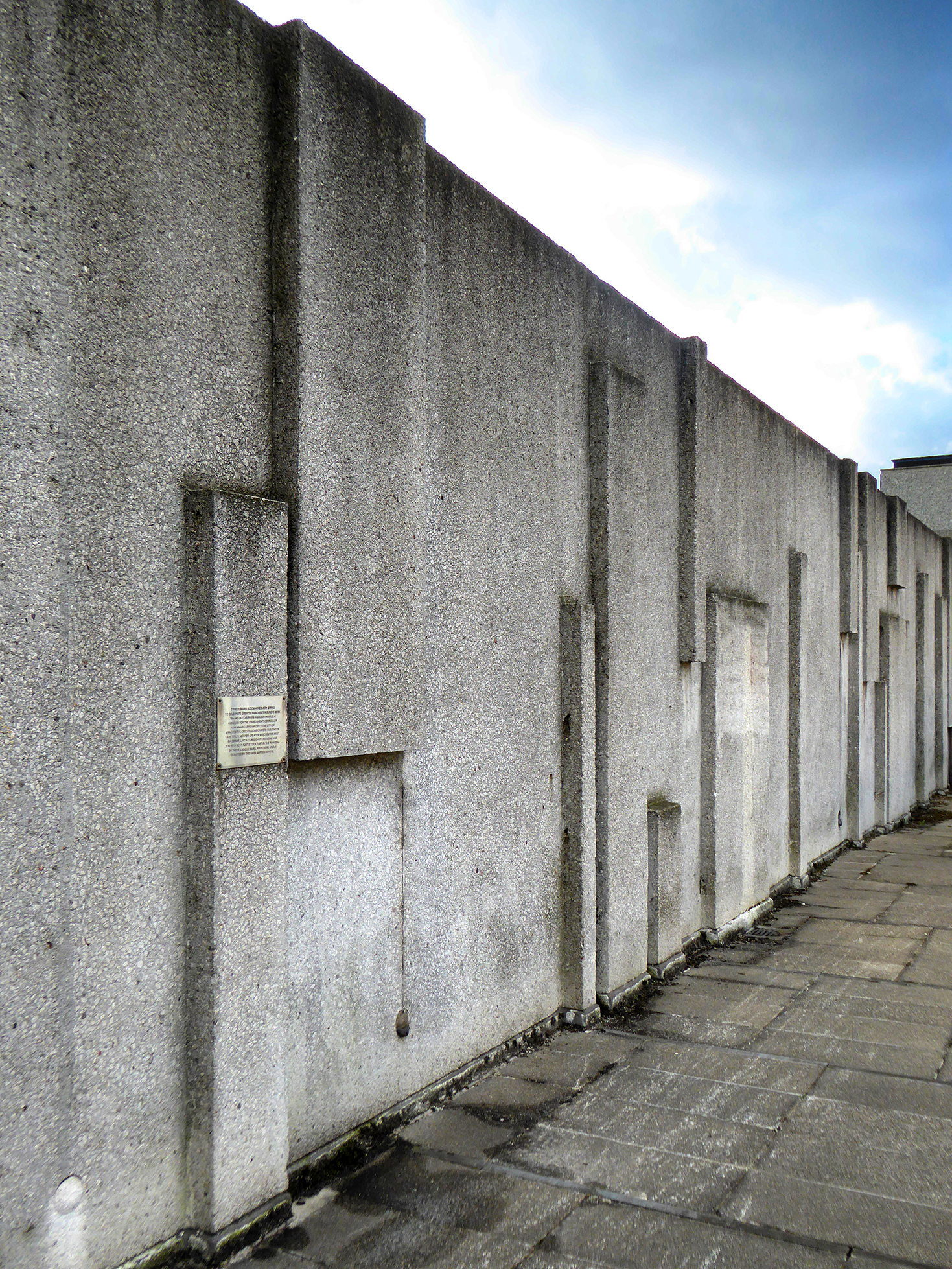
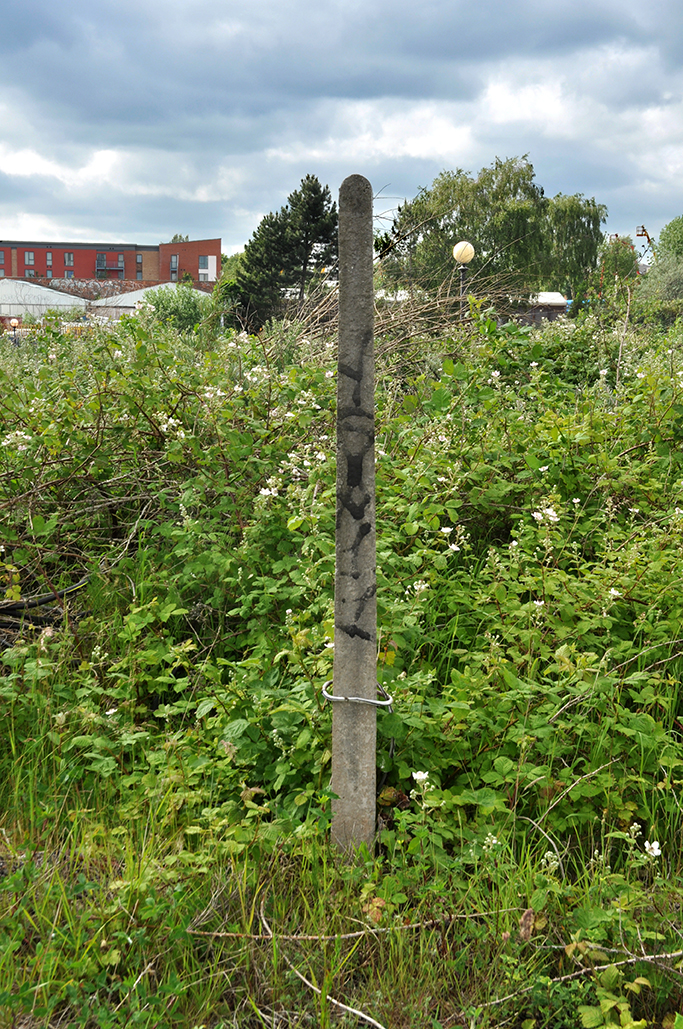
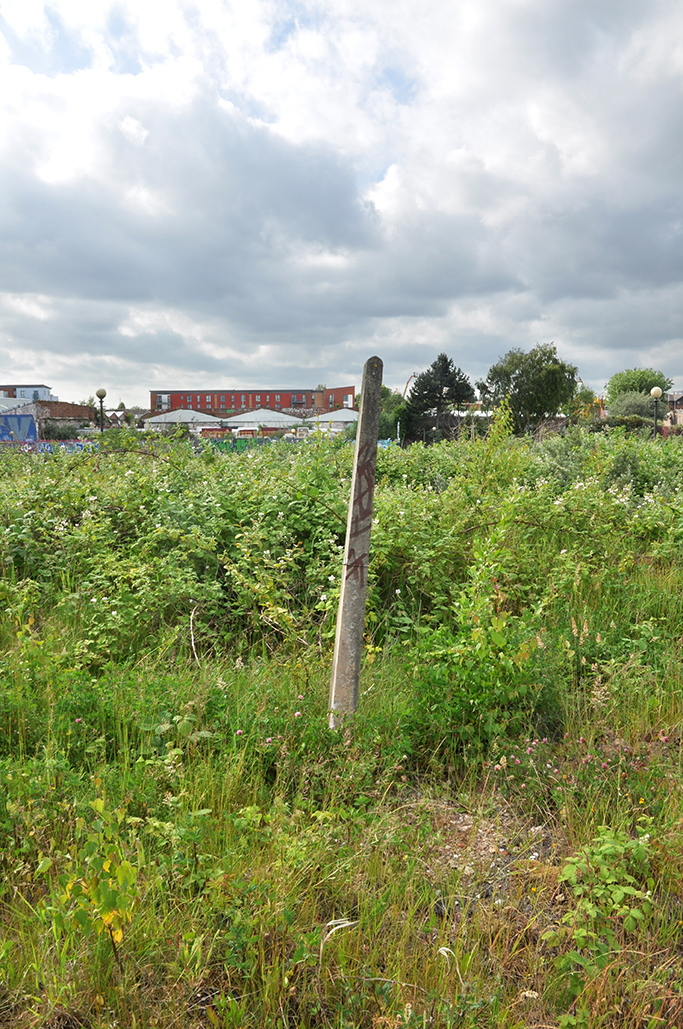
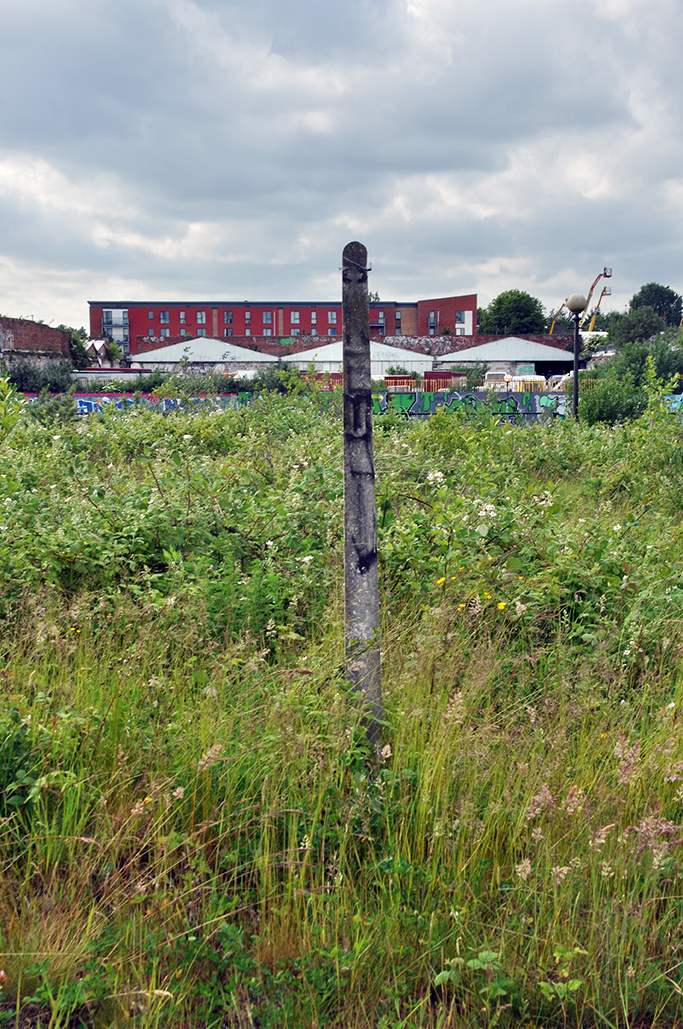
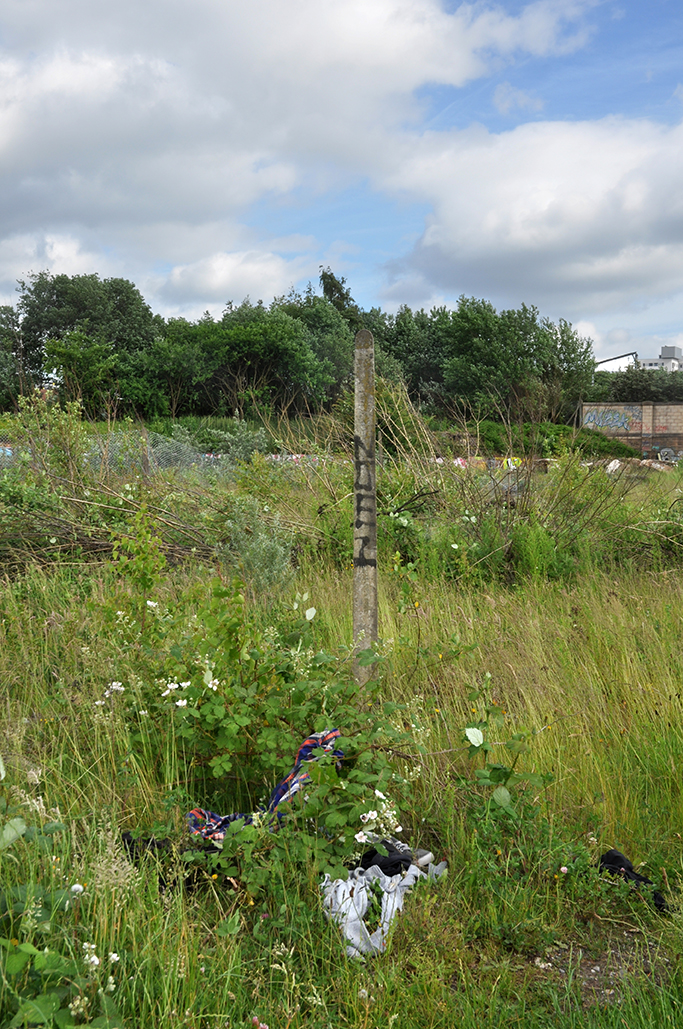
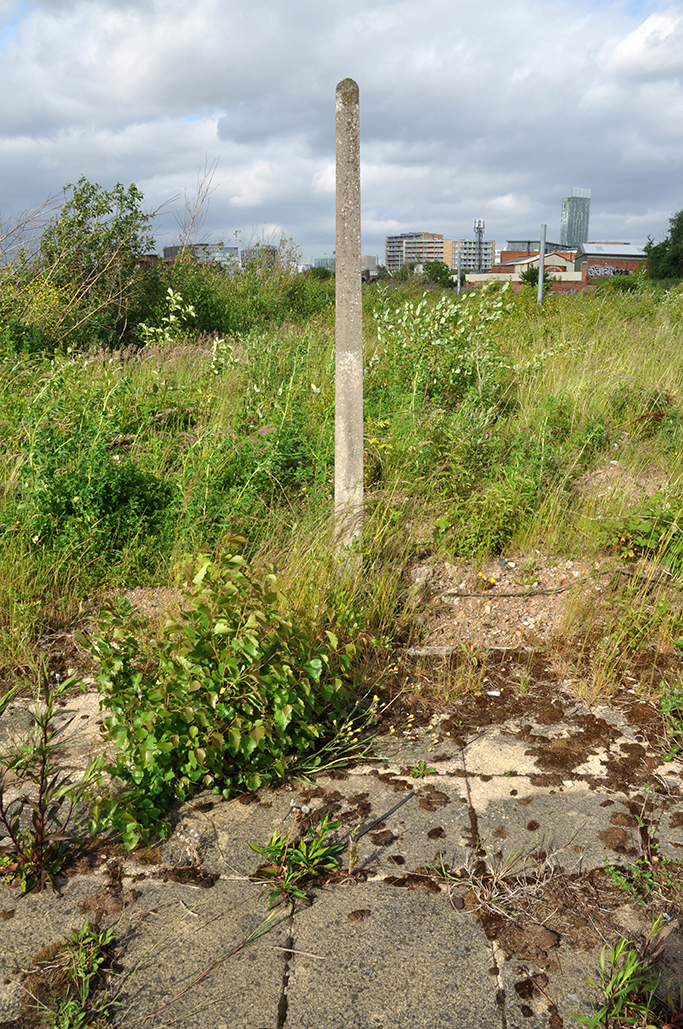
The square is blessed with a concrete sculpture, whose fate I hope is secured, somehow.
This as ever, is a time of change, I hope that the area and its current inhabitants live to tell the tale, rather than fall victim to the tide of gentrification, forcing them further afield.
“But now I have come to believe that the whole world is an enigma, a harmless enigma that is made terrible by our own mad attempt to interpret it as though it had an underlying truth.”
Umberto Eco
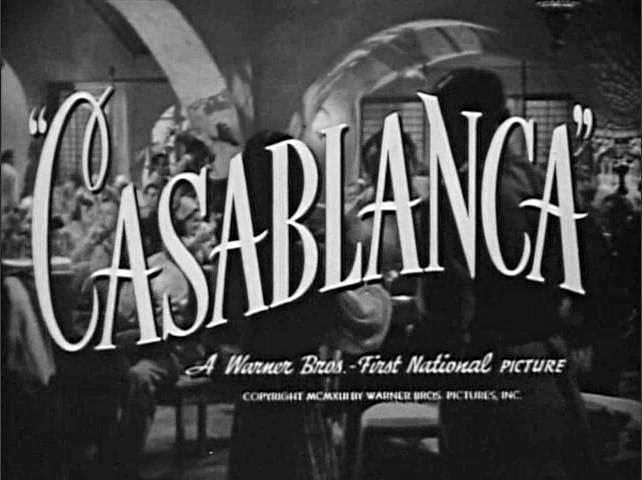
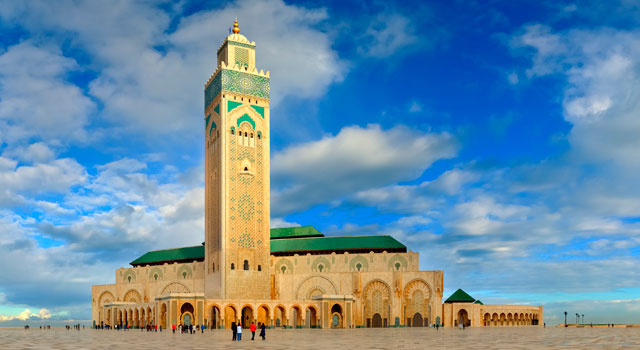
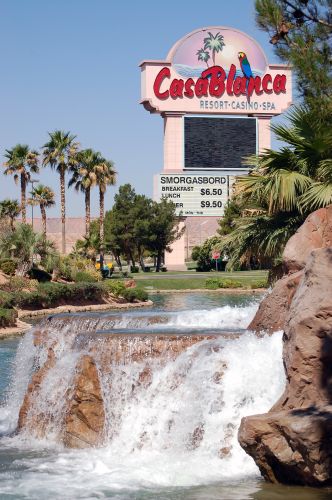
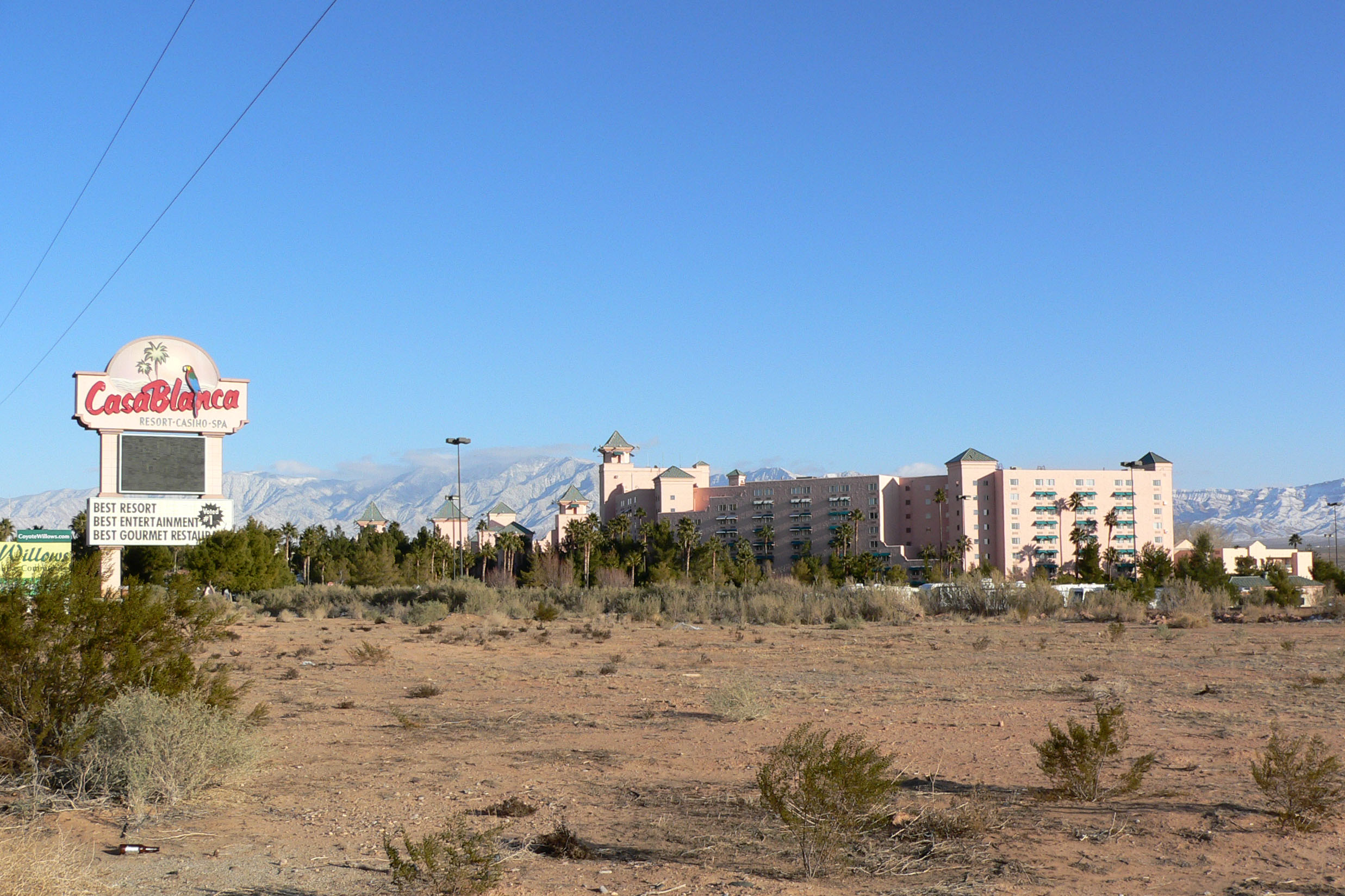
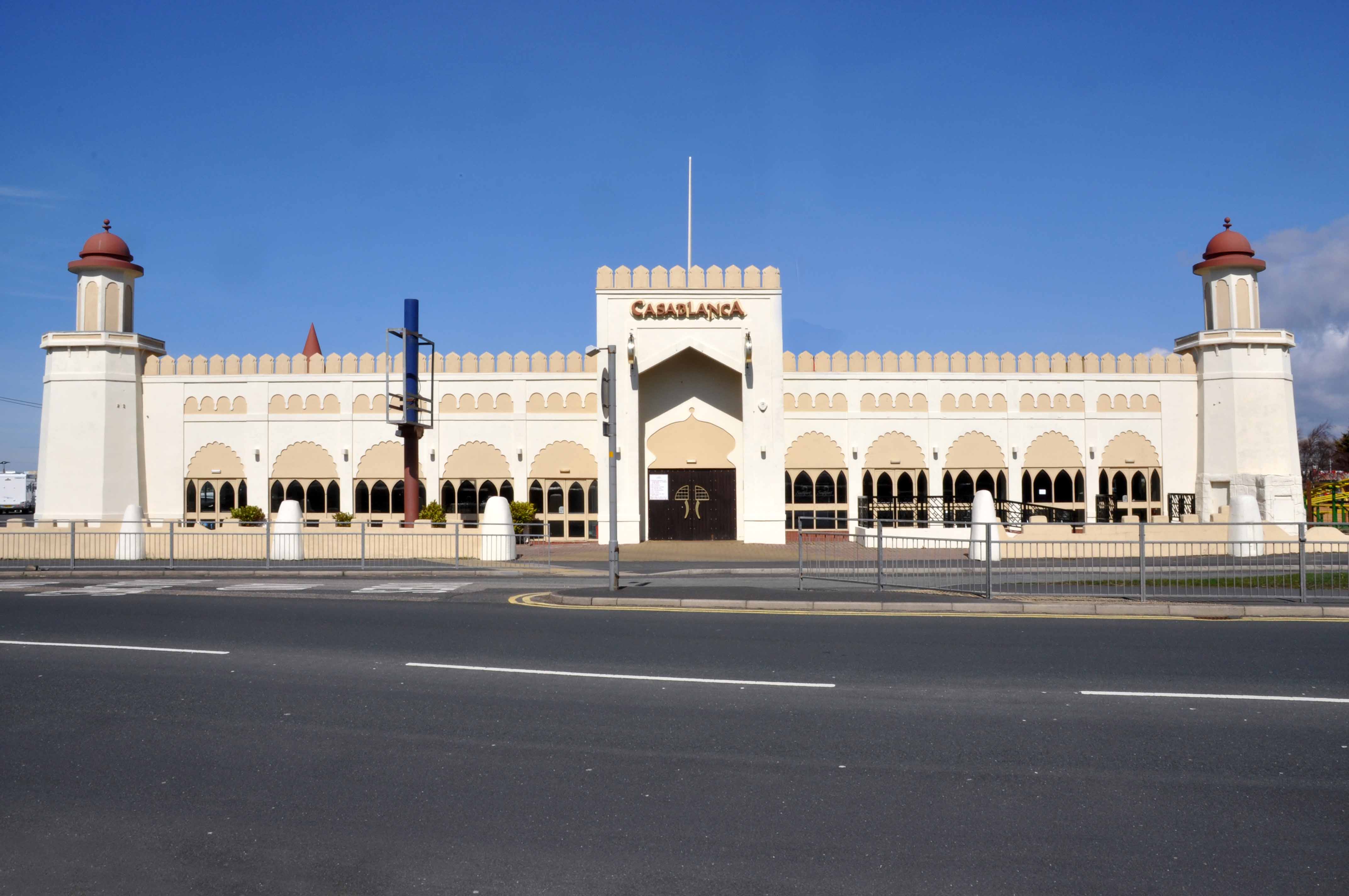
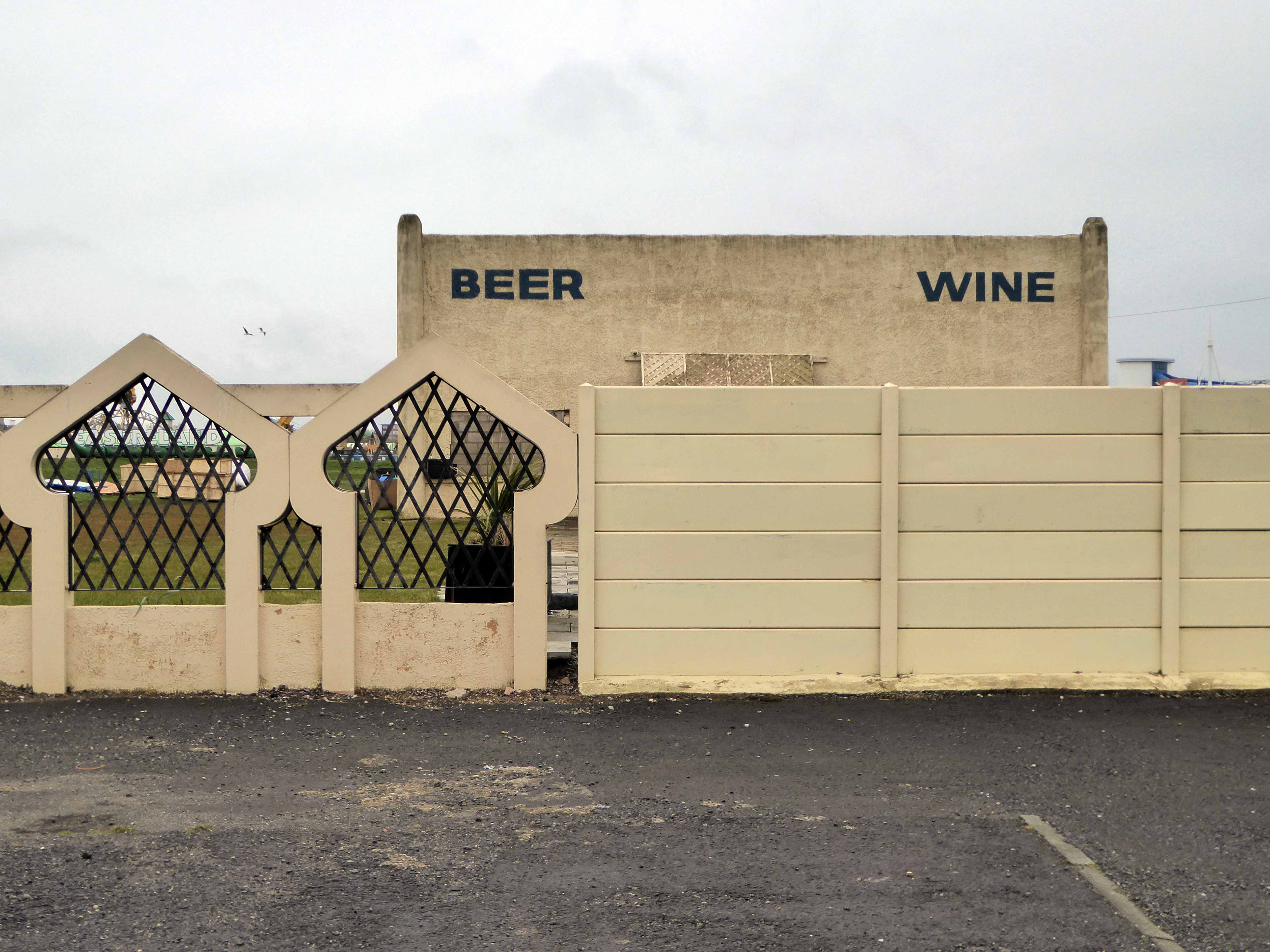
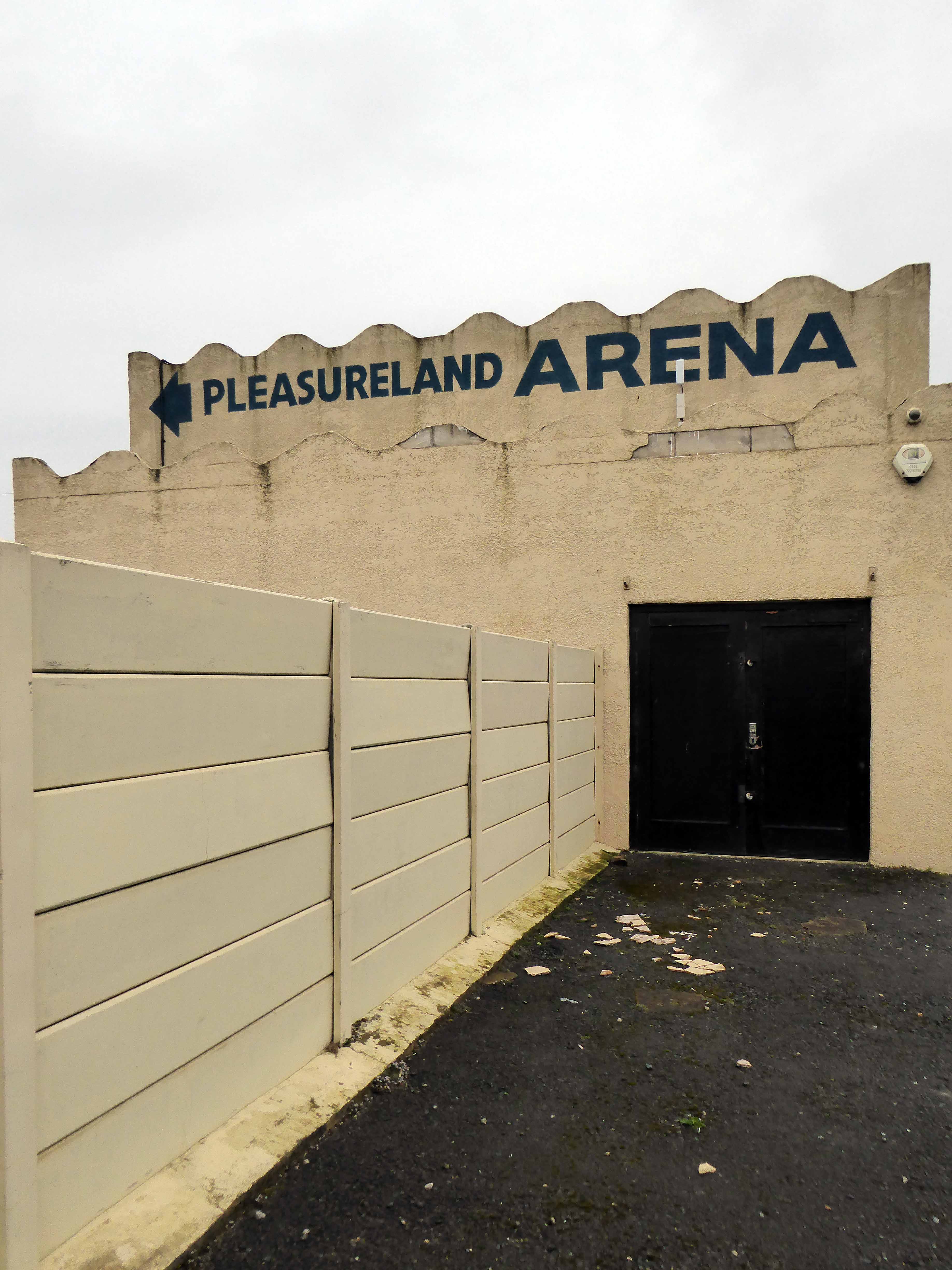
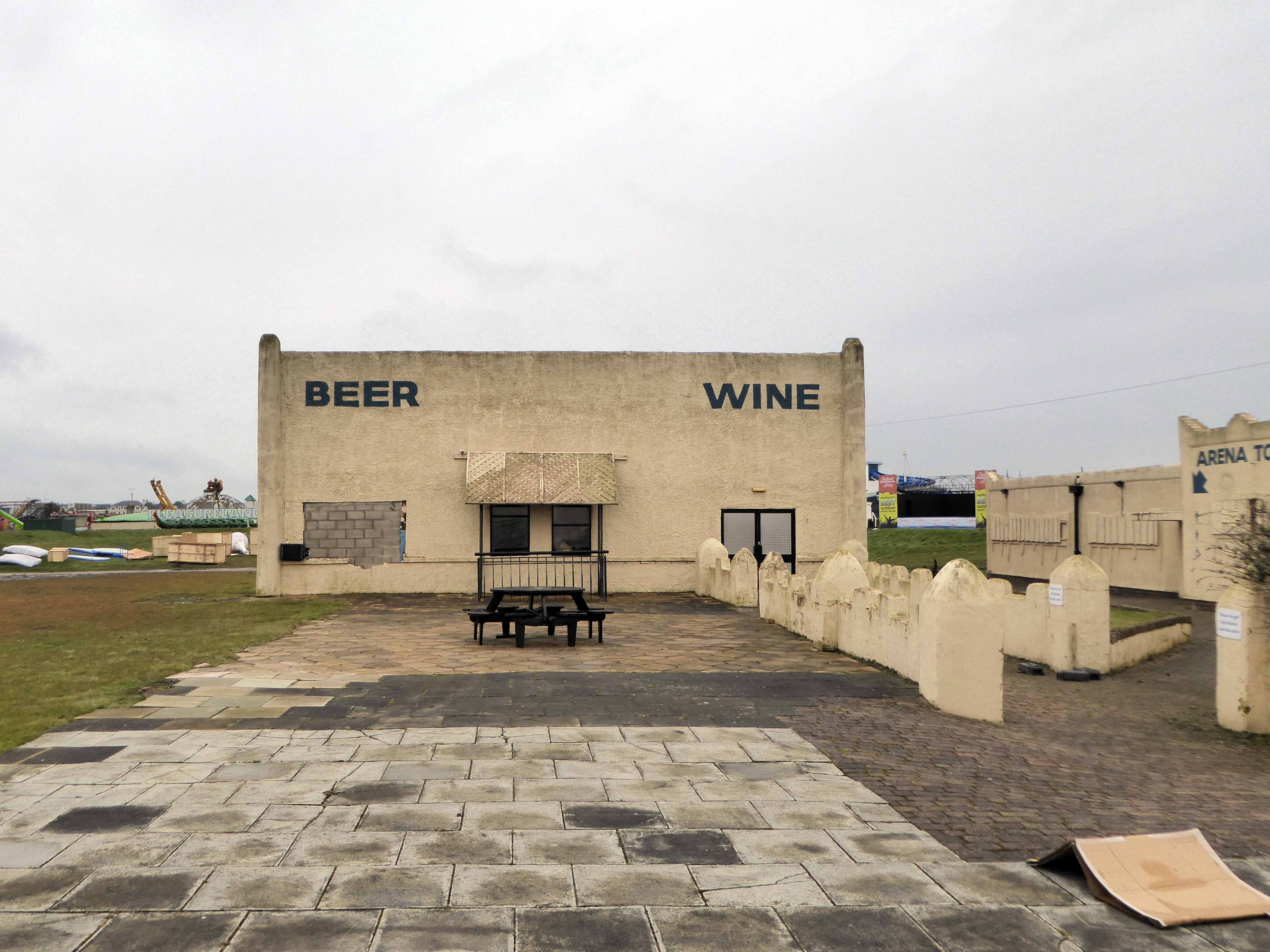
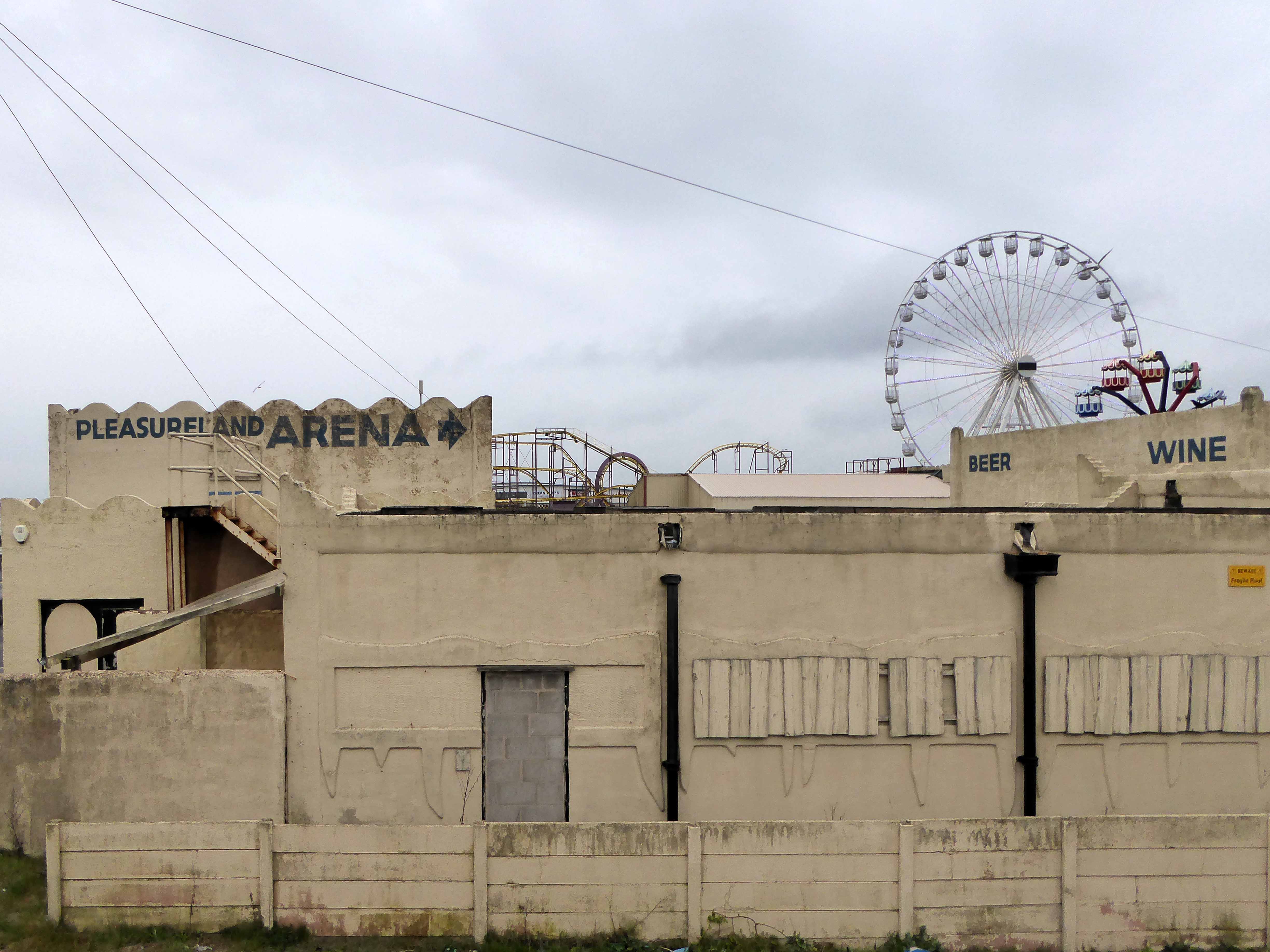
Somewhere between Las Vegas Nevada and Casablanca Morocco lies Southport.
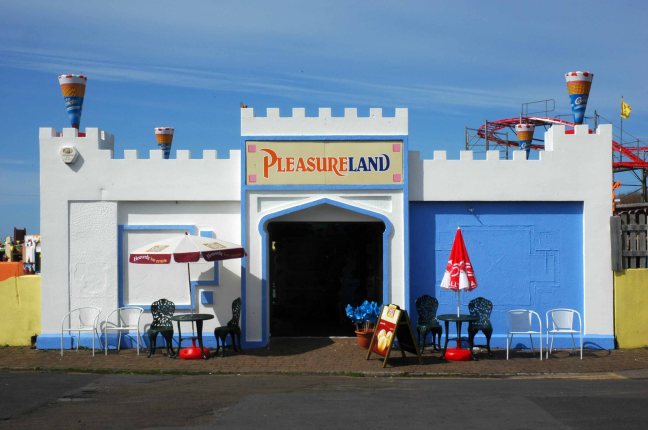
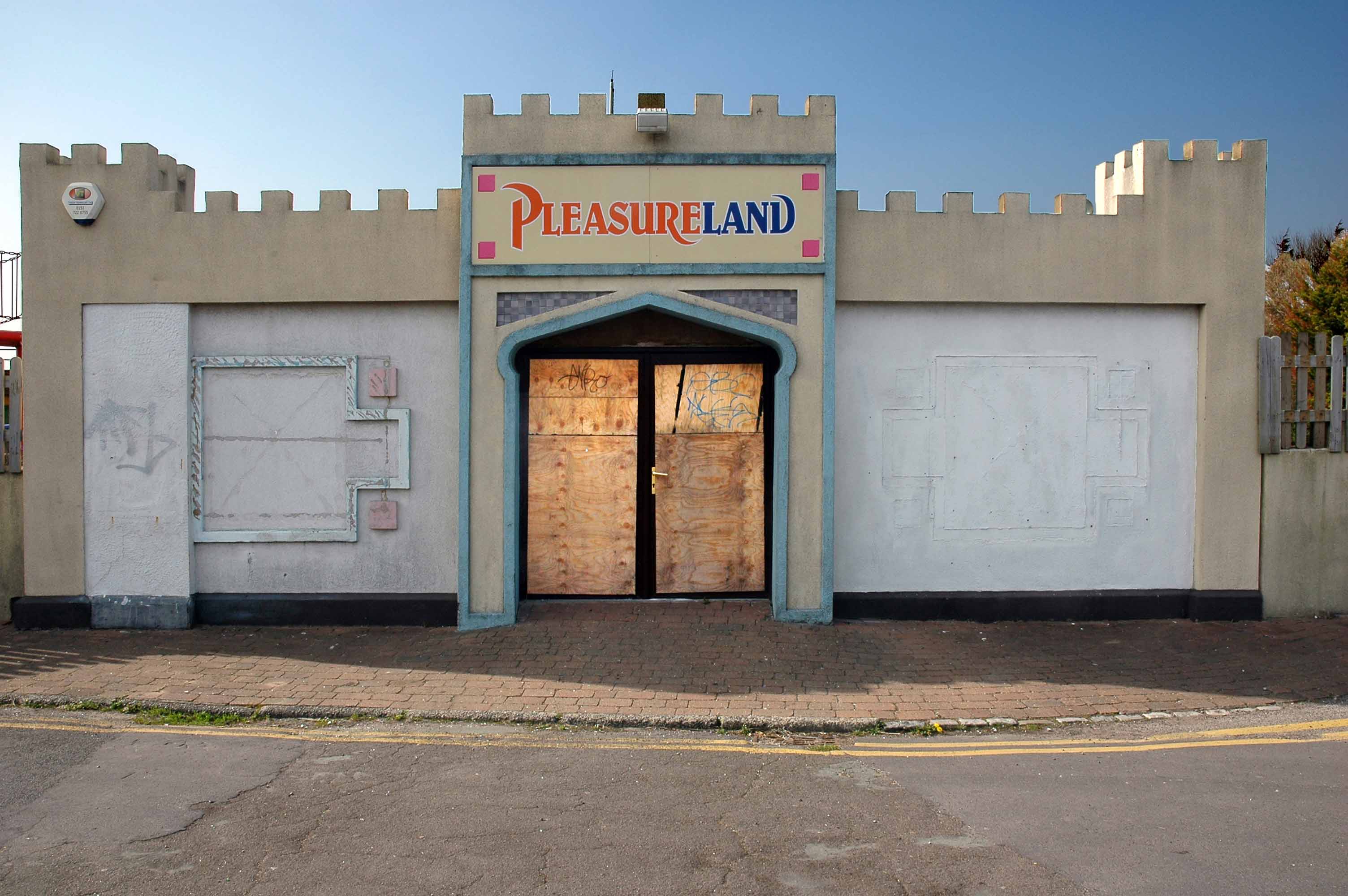
Somewhere in Southport lies Pleasureland.
Separated by oceans and oceans of artifice.
A puzzle wrapped in a riddle, wrapped in an enigma, wrapped in a wind blown fish and chip paper, tipped lazily onto the edge of Lancashire.
The seaside itself an invention of the railways, and an expanding leisured class.
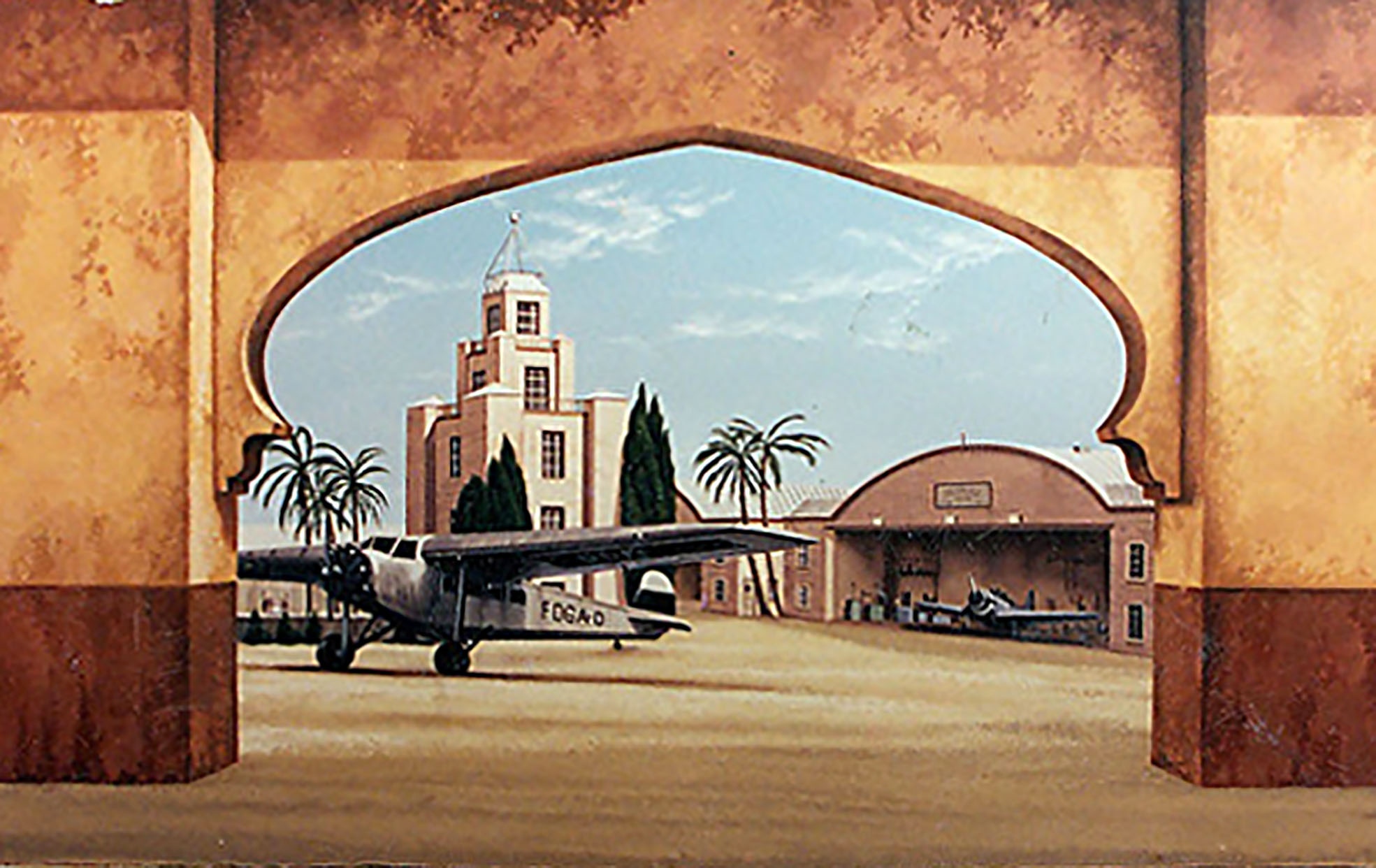
To begin in the middle, the Hollywood cinema creates an Orientalist mythology around Morocco. A confection of exotic confinement, conspiratorial glances and romance.
Who are you really, and what were you before?
What did you do and what did you think, huh?
We said no questions.
Here’s looking at you, kid.
Which in turn becomes parody of itself, constructing an airport that apes its own constructed image, a brash reflection in an eternally wonky mirage of a mirror.
The same mirror that reflects across the Atlantic, to that cap it all capital of Kitsch.
A veritable smorgasbord of visual treats and retreats in Mesquite Nevada.
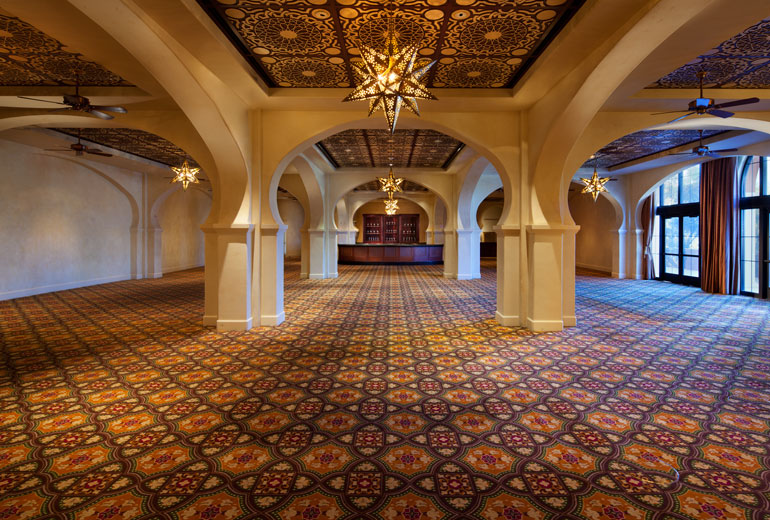
Or the Casablanca Ballroom Westin Lake Hotel – Las Vegas.
Flying home to the Warner Brothers Stage 16 Restaurant
Or indeed Southport.
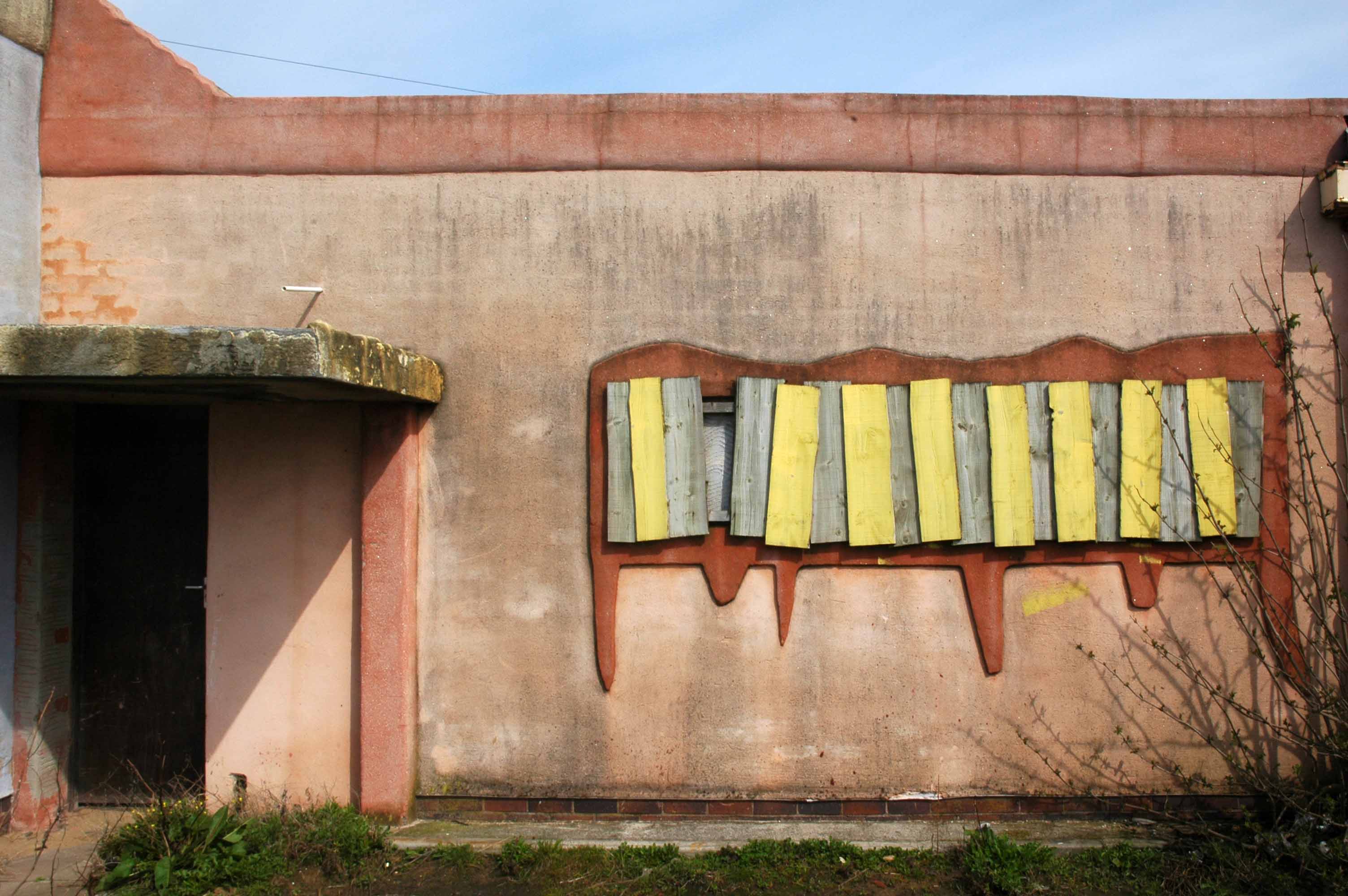
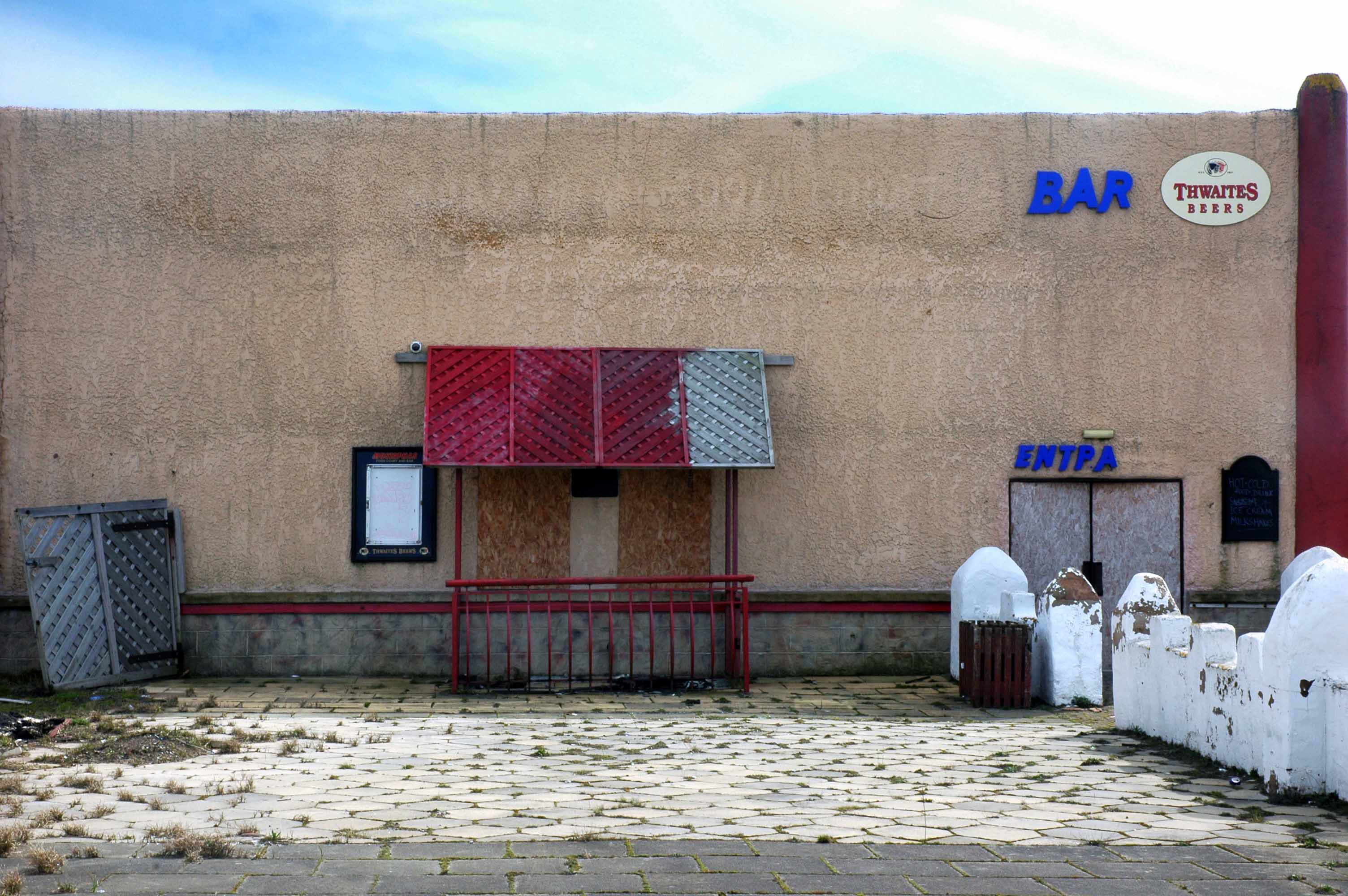
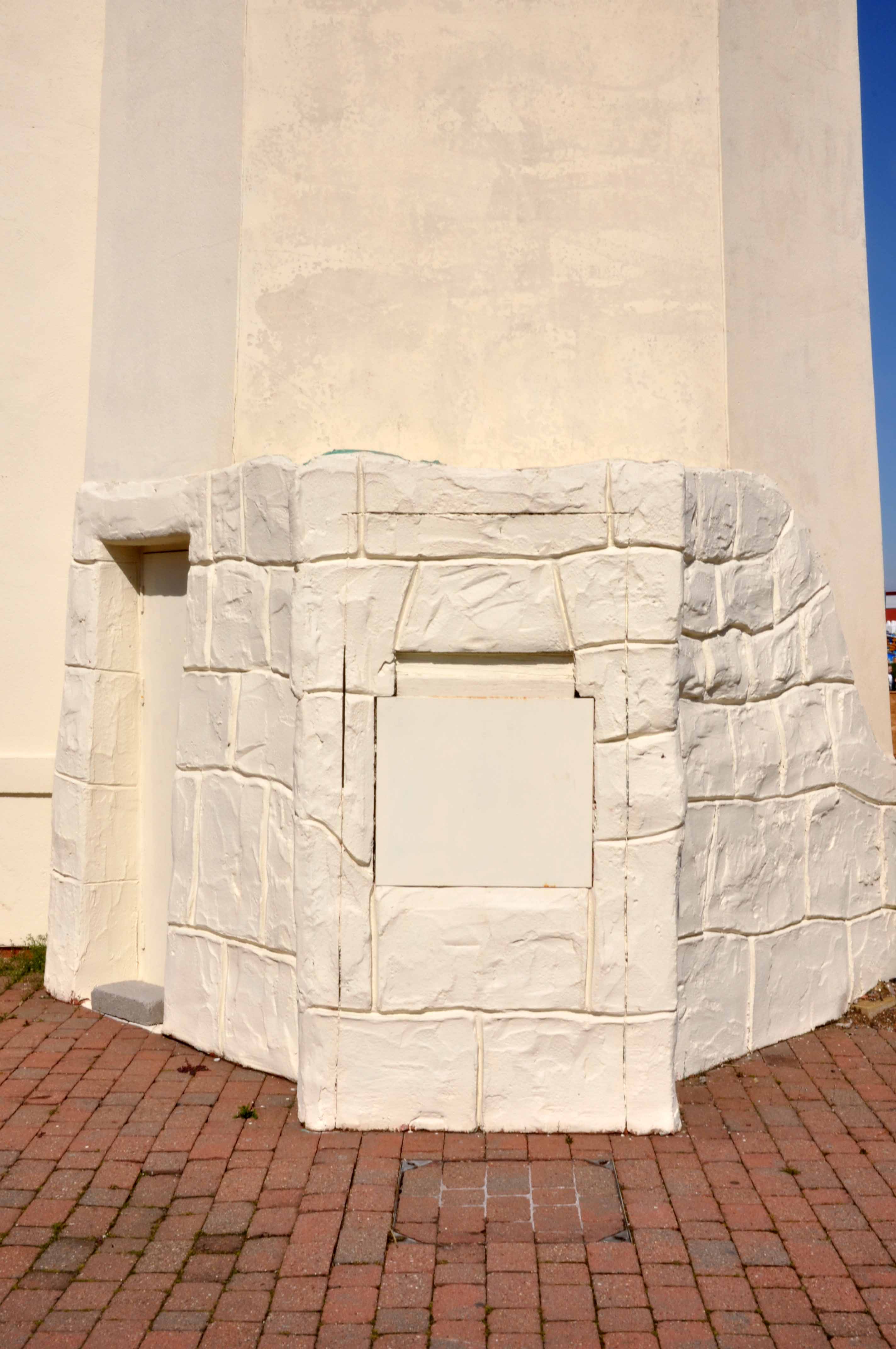
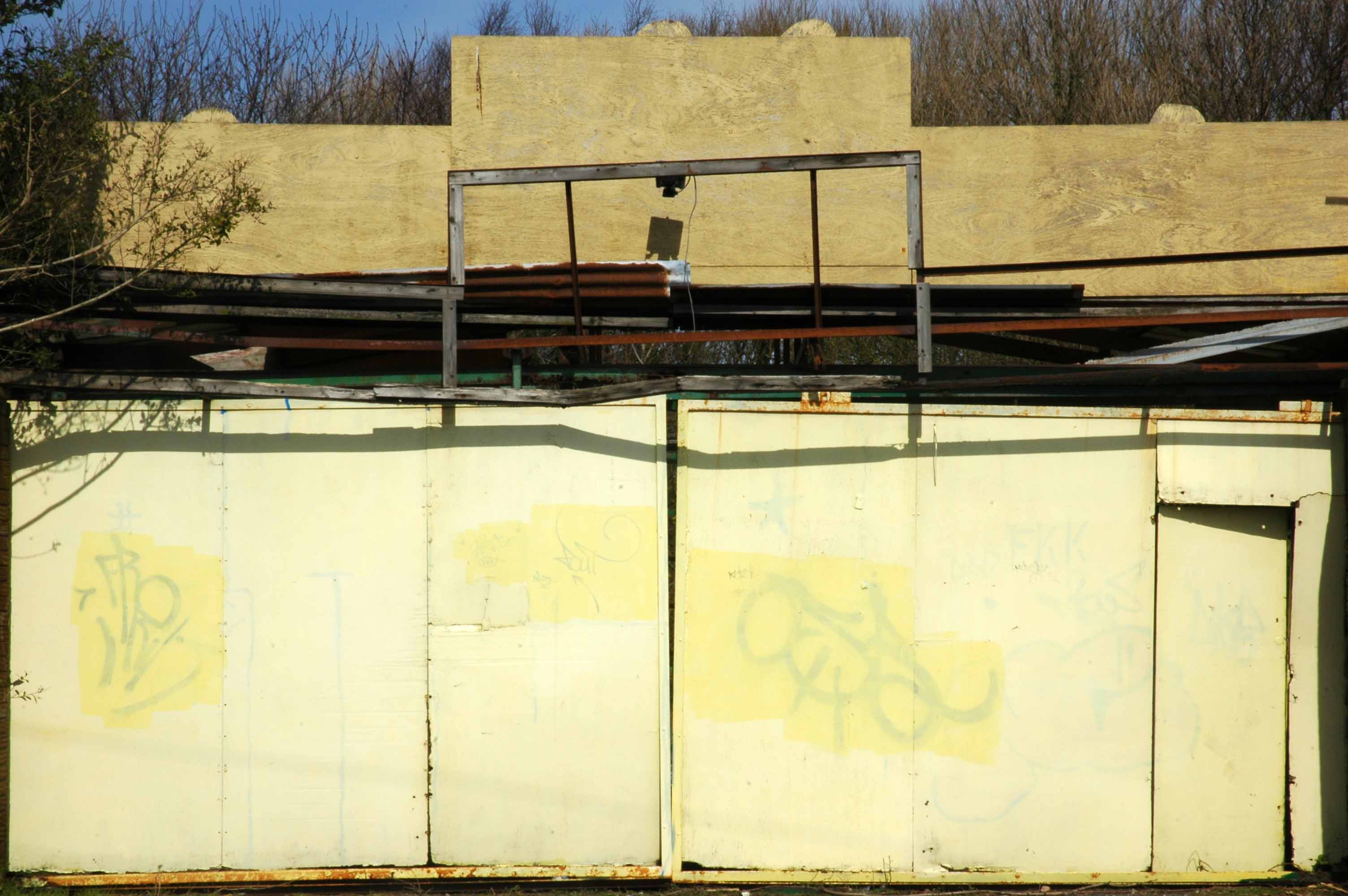
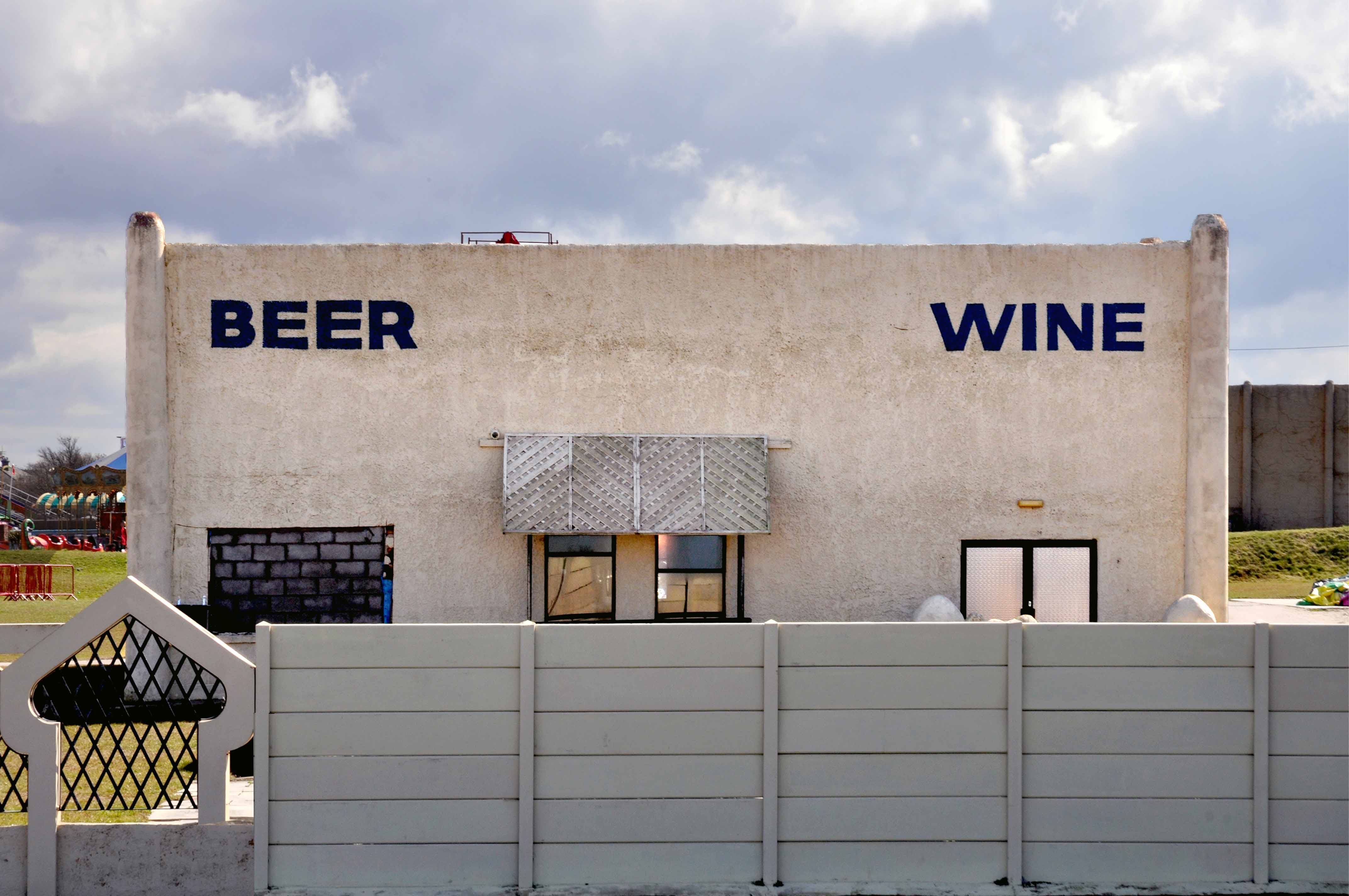
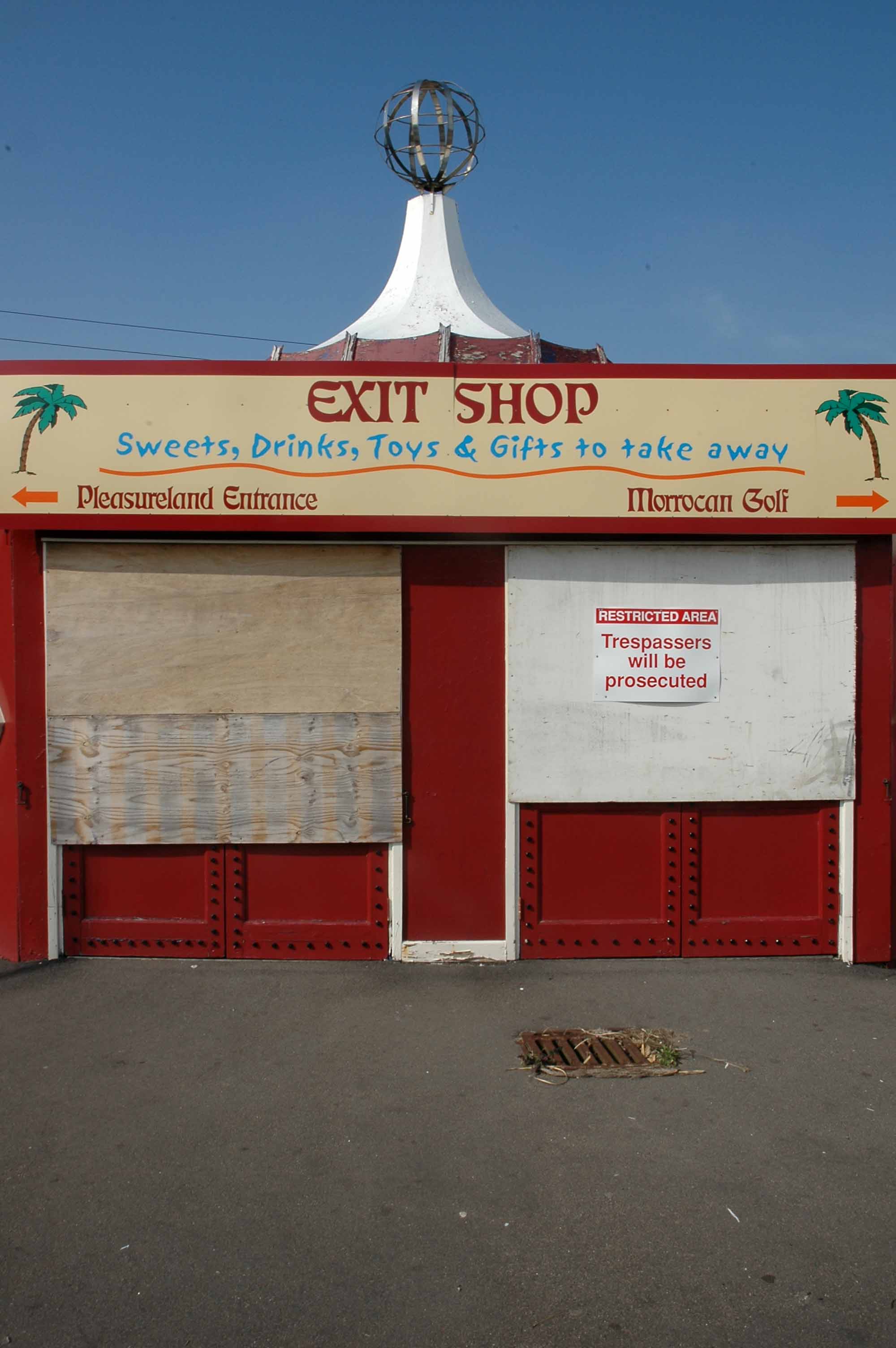
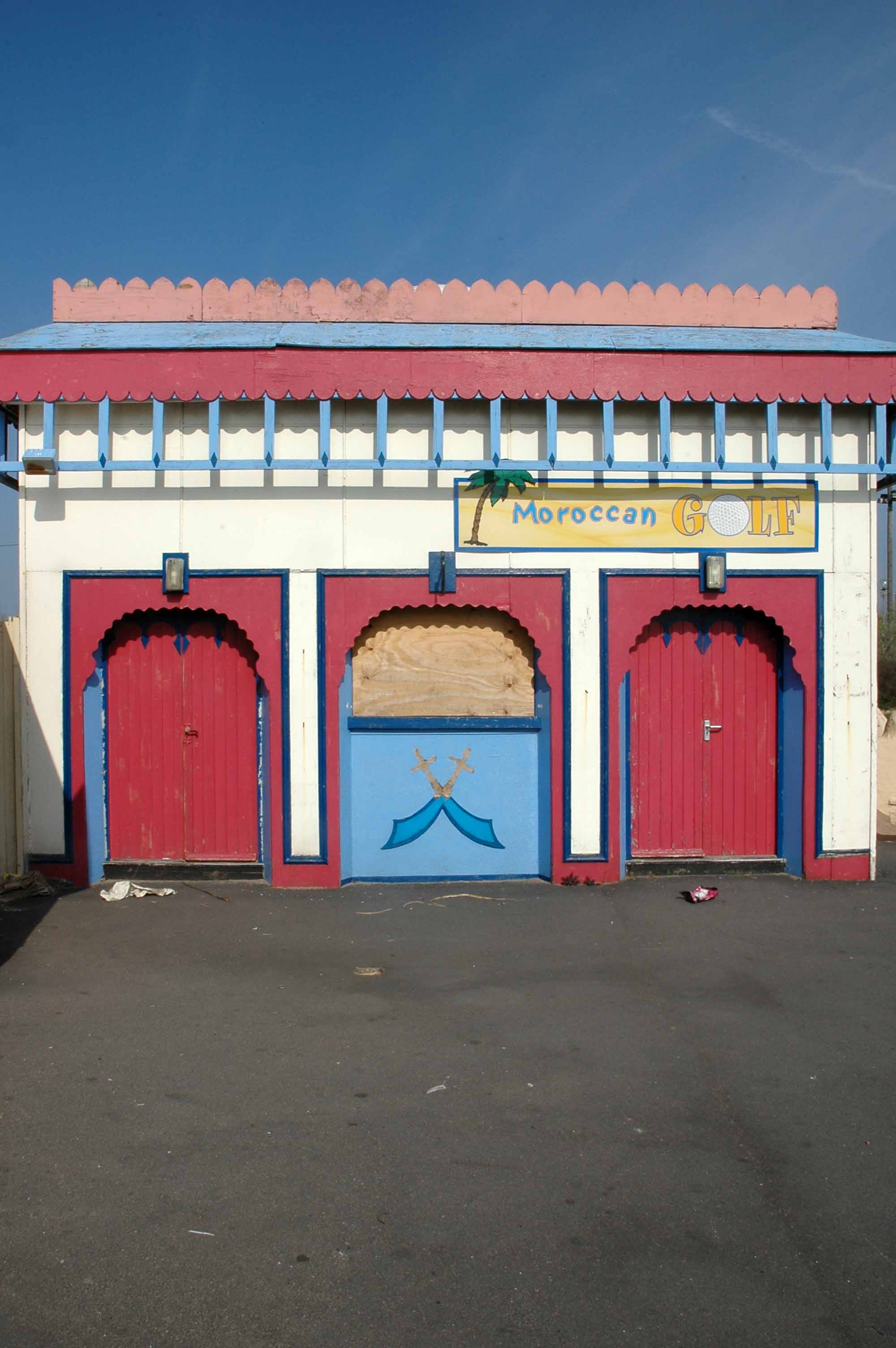
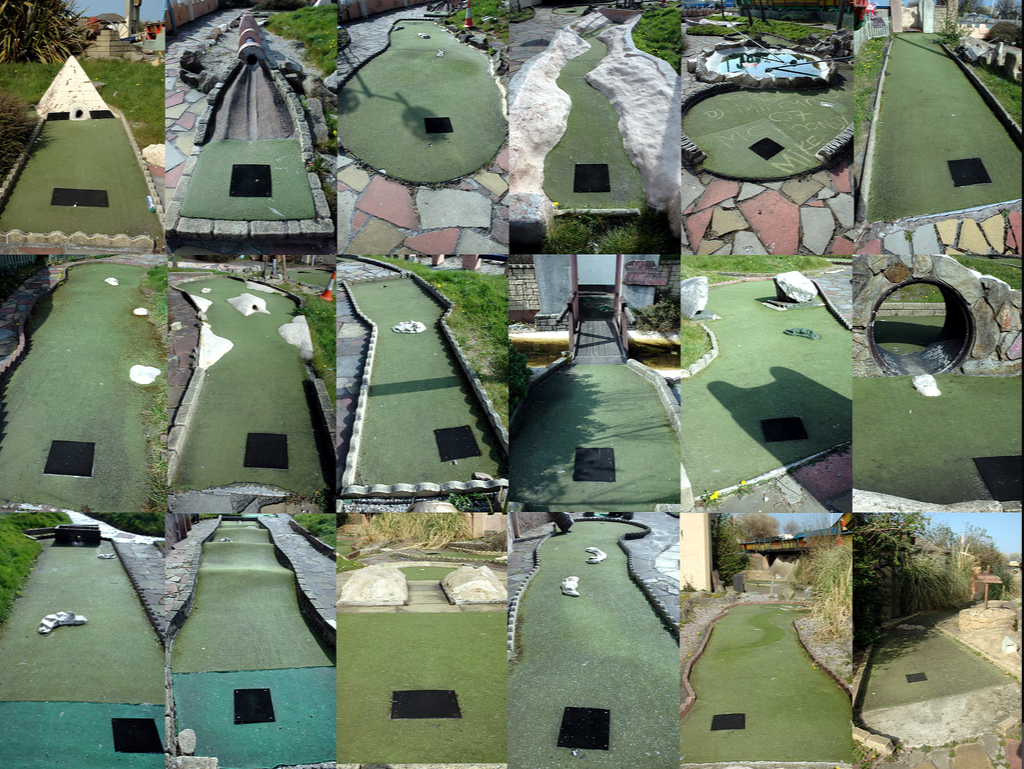
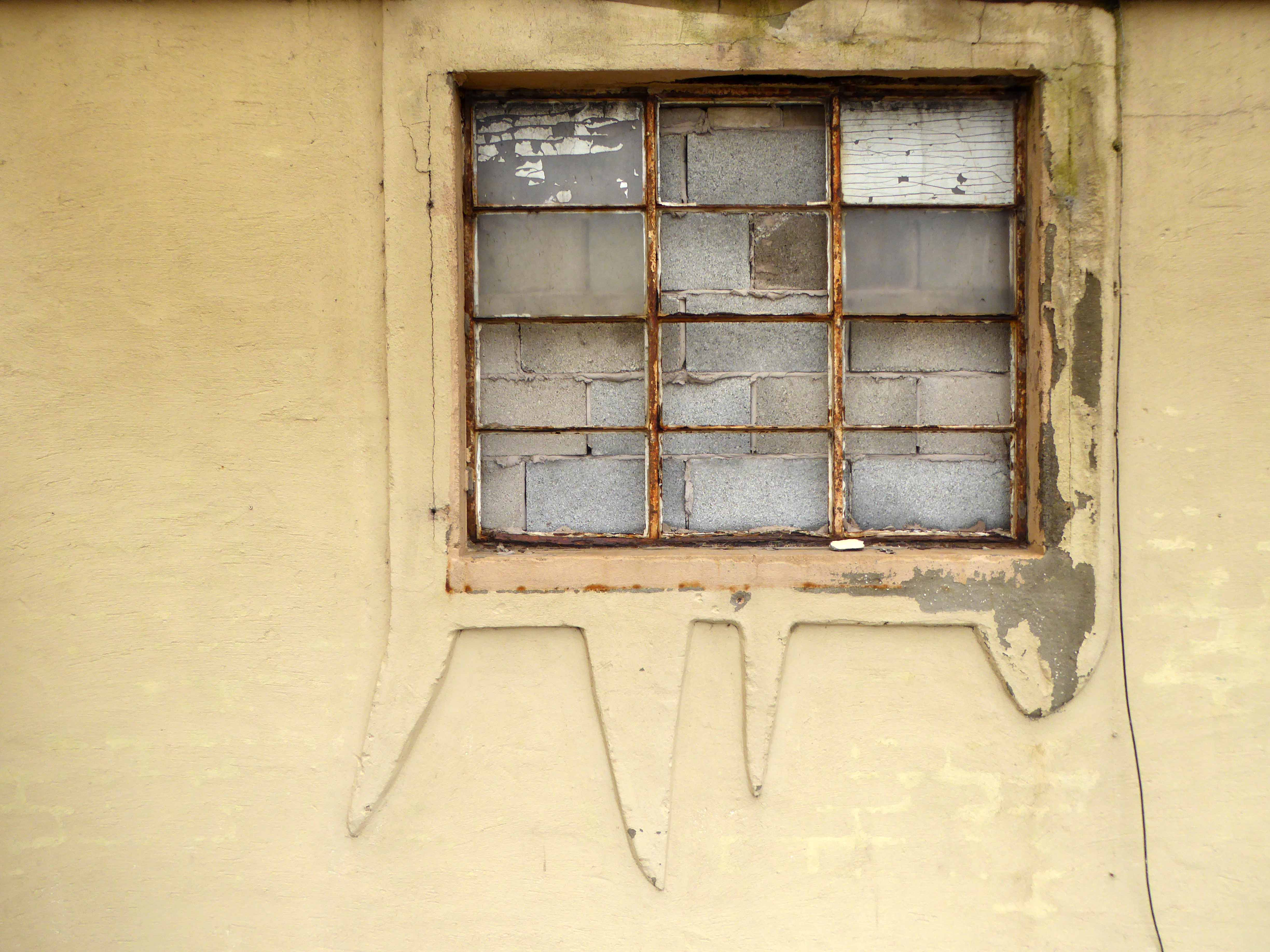
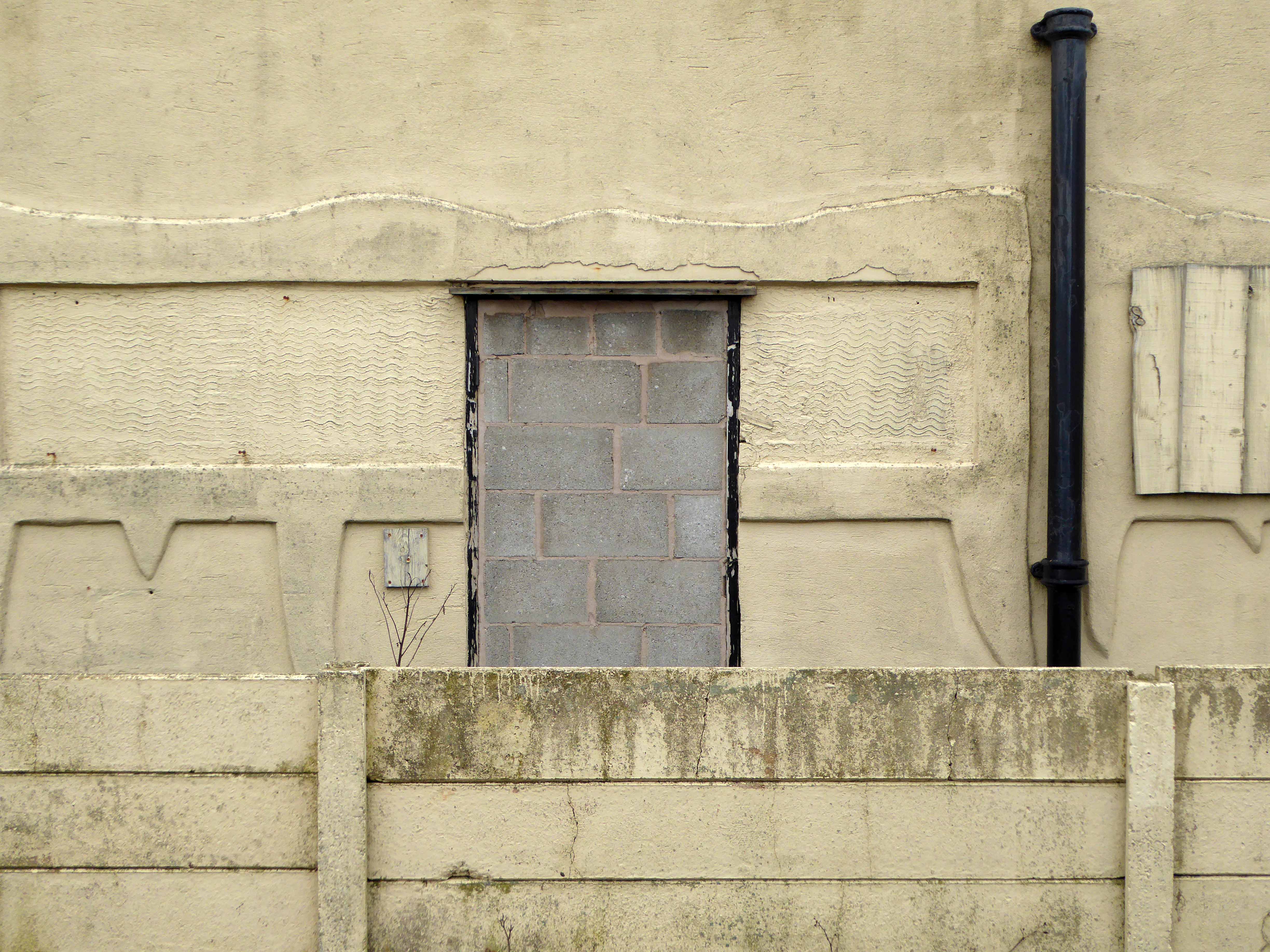
2011 – I had my first close up and personal encounter with the wood frame, chicken wire and faux adobe render rendering of North Africa, on the coast of North West England. It was in a state of semi-advanced neglect, an extraordinary experience. Pleasureland had already faked it’s own demise, a pre-boarded up, boarded up frontier town.
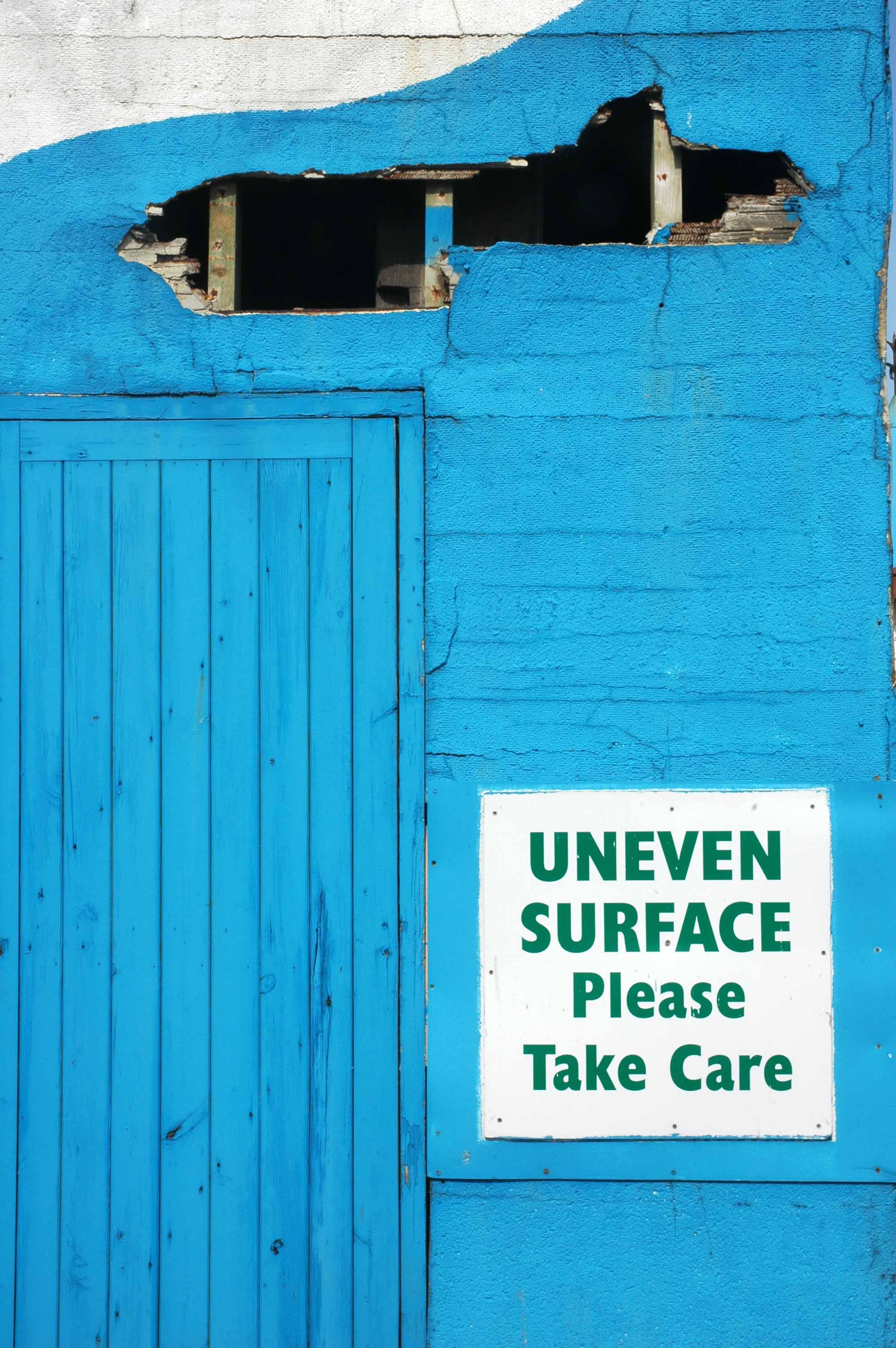
Where the edges of meaning are blurred beyond belief, take care.
We are dealing with uneven surfaces.
Who could resist a Moroccan themed crazy golf course?
You are now entering a Scoobidoo-esque scenario, where the mask is never finally removed, nothing is revealed.
2016 – I returned, the world had turned a revival was in part taking place, some of the pleasure returned to Pleasureland, whilst the seafront facing bars remained empty.
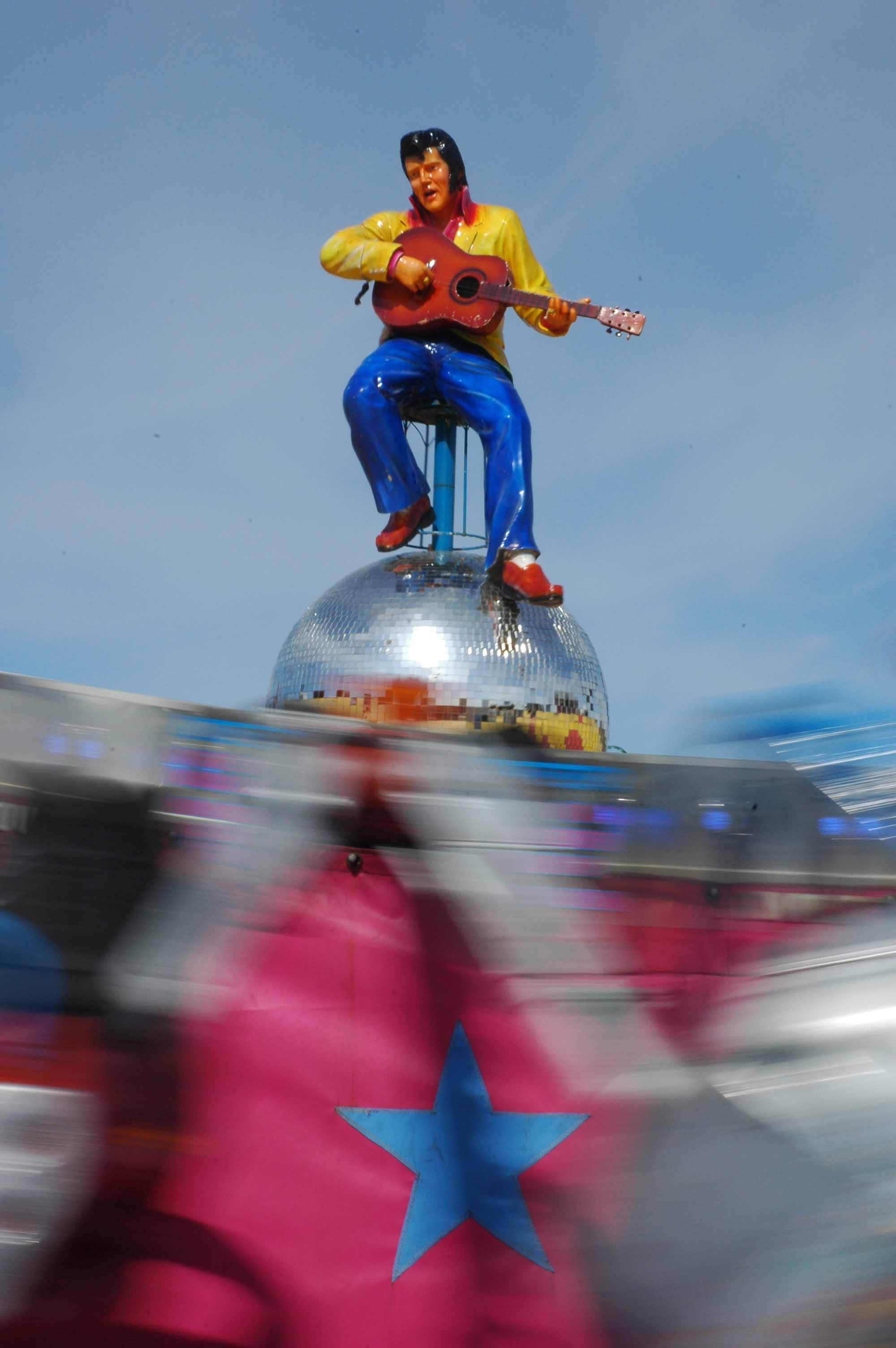
One man holds the key the glue, that bonds these distant lands.
The myth to end all myths.
For he is forever in his own orbit, omniscient.
Make the world go away And get it off my shoulders Say the things you used to say And make the world go away
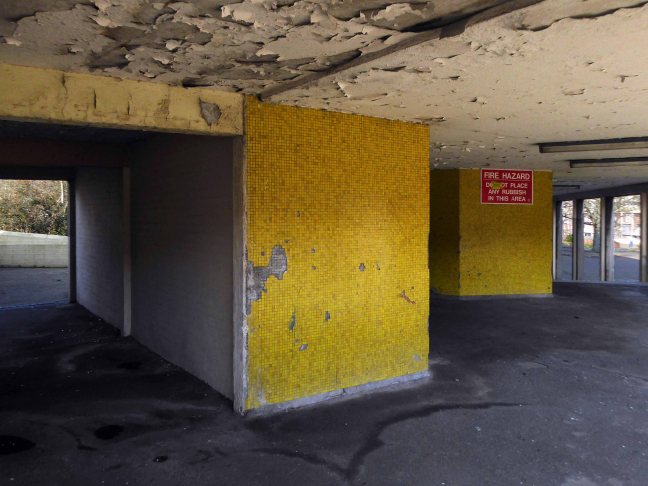
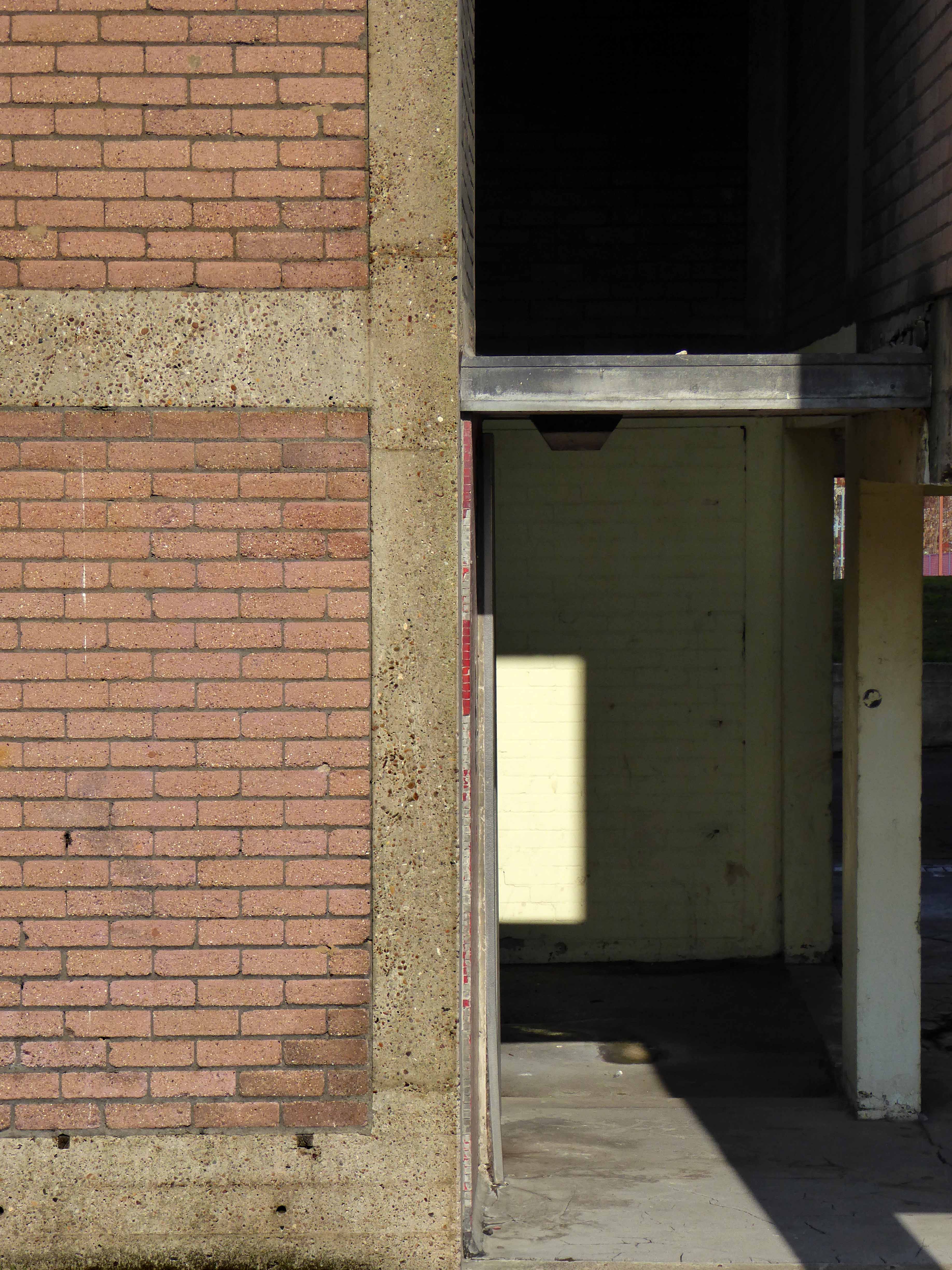
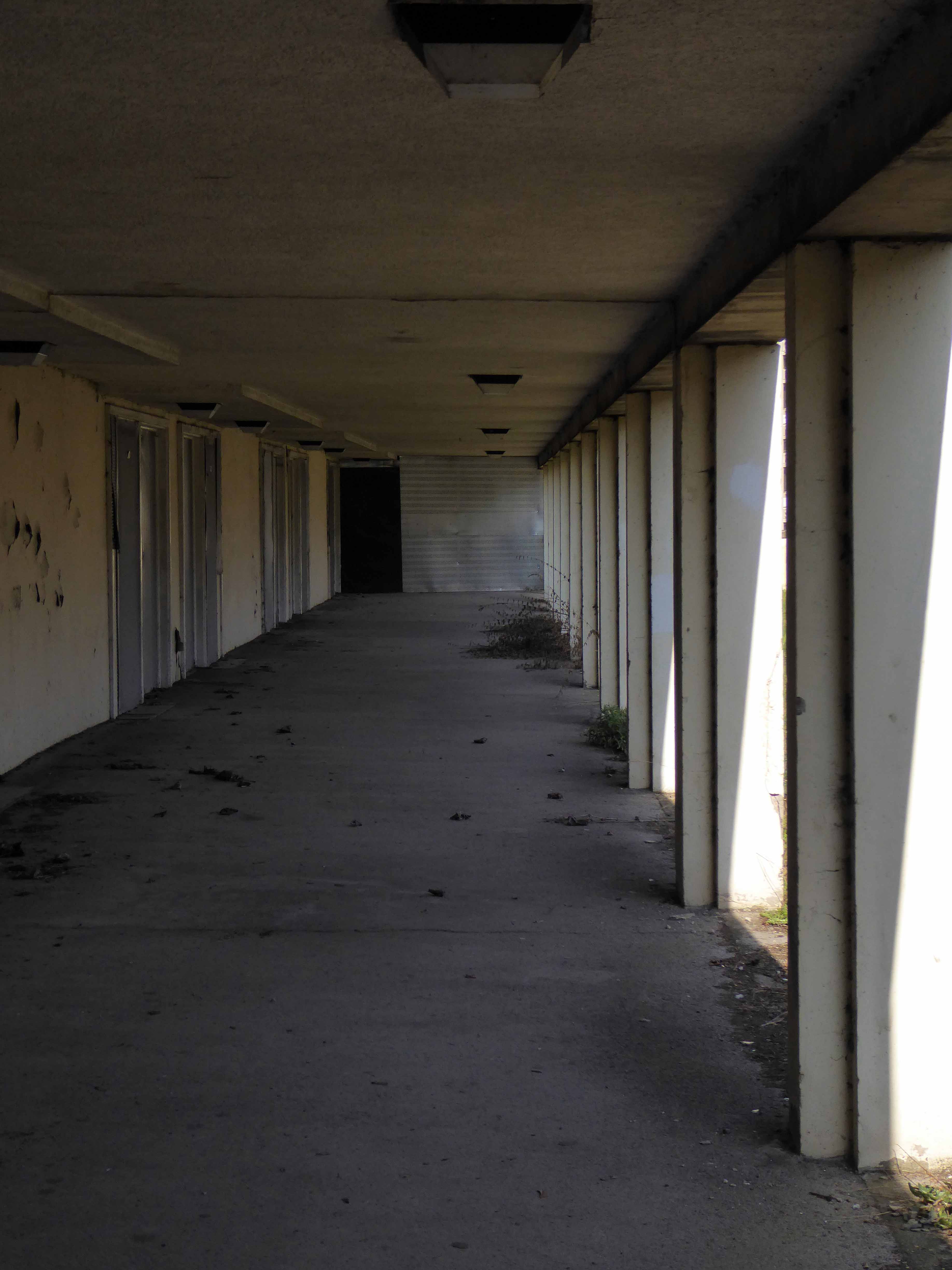
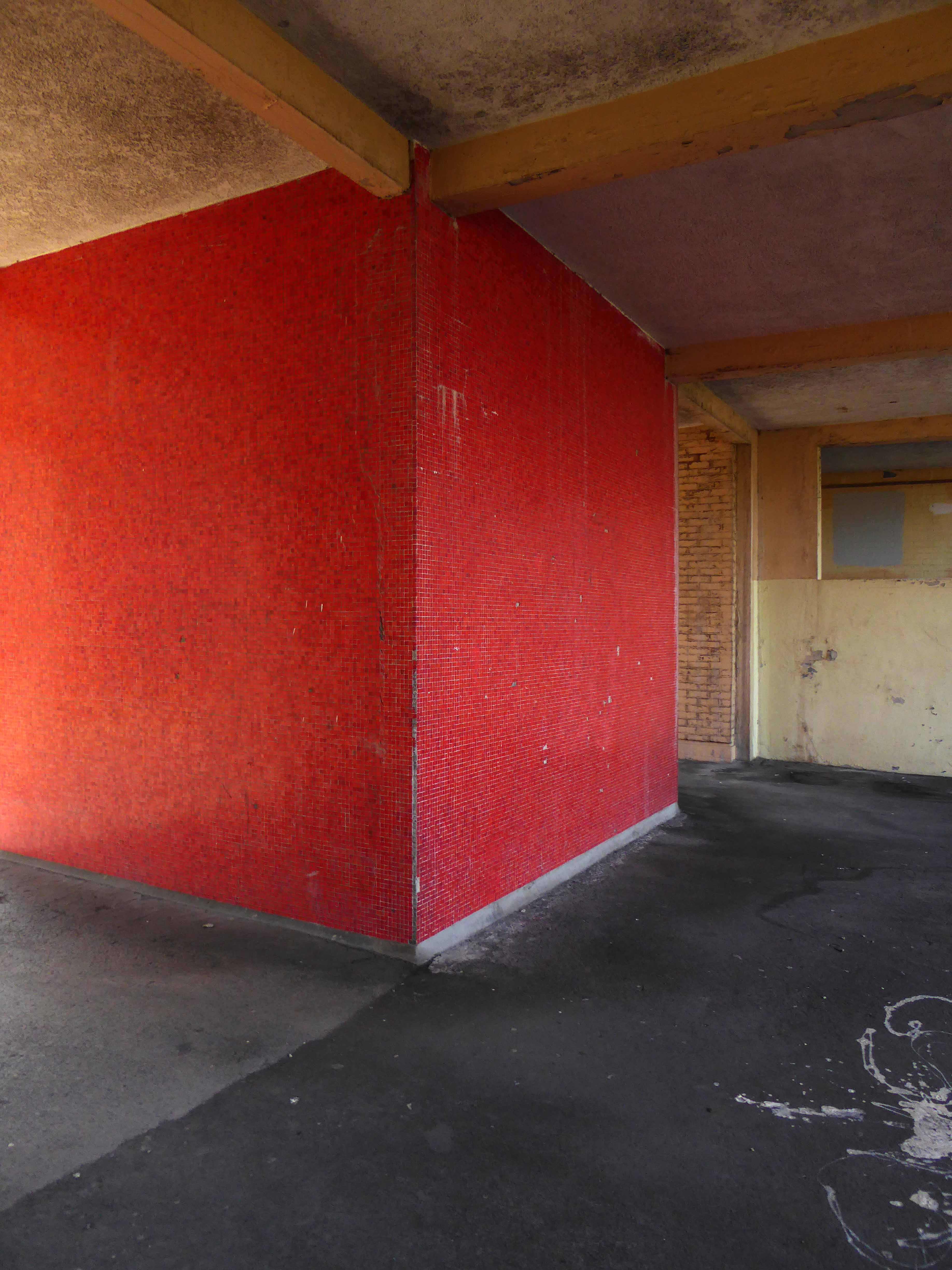
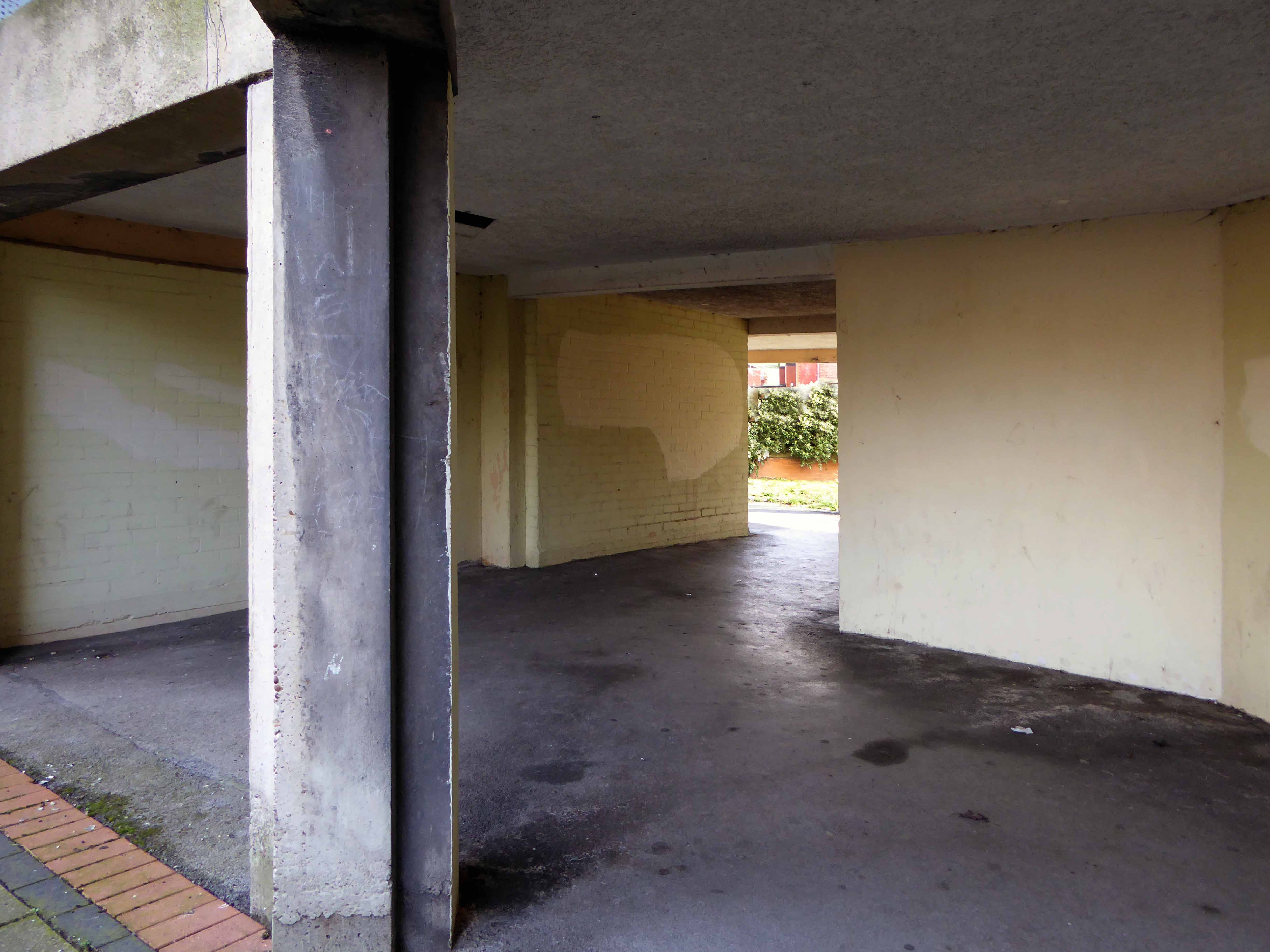
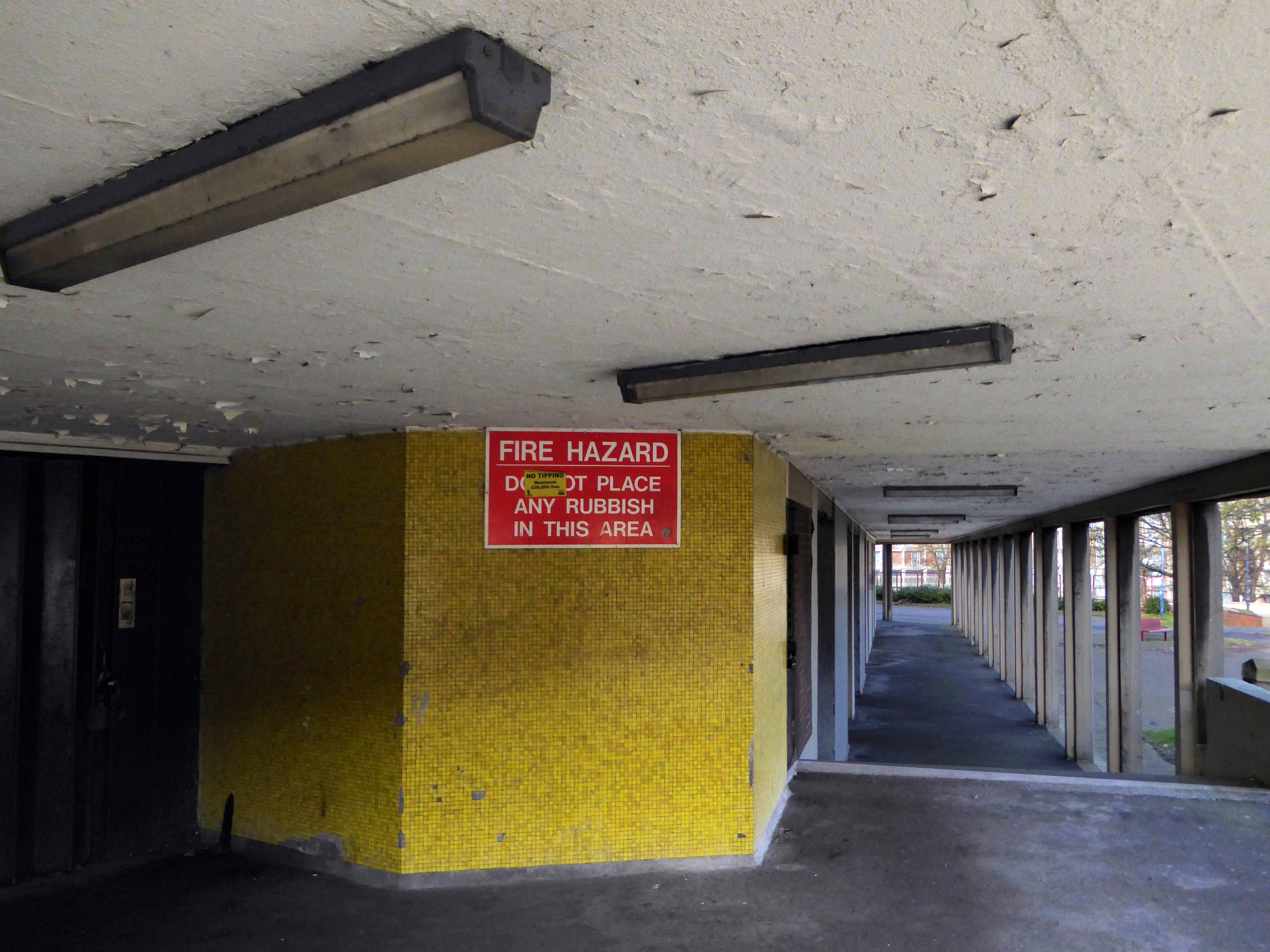
Their homes tinned up, the walkways and stairways too – once these streets in the sky could accommodate a milk float, they now echo emptily, with the sound of a restless wind.
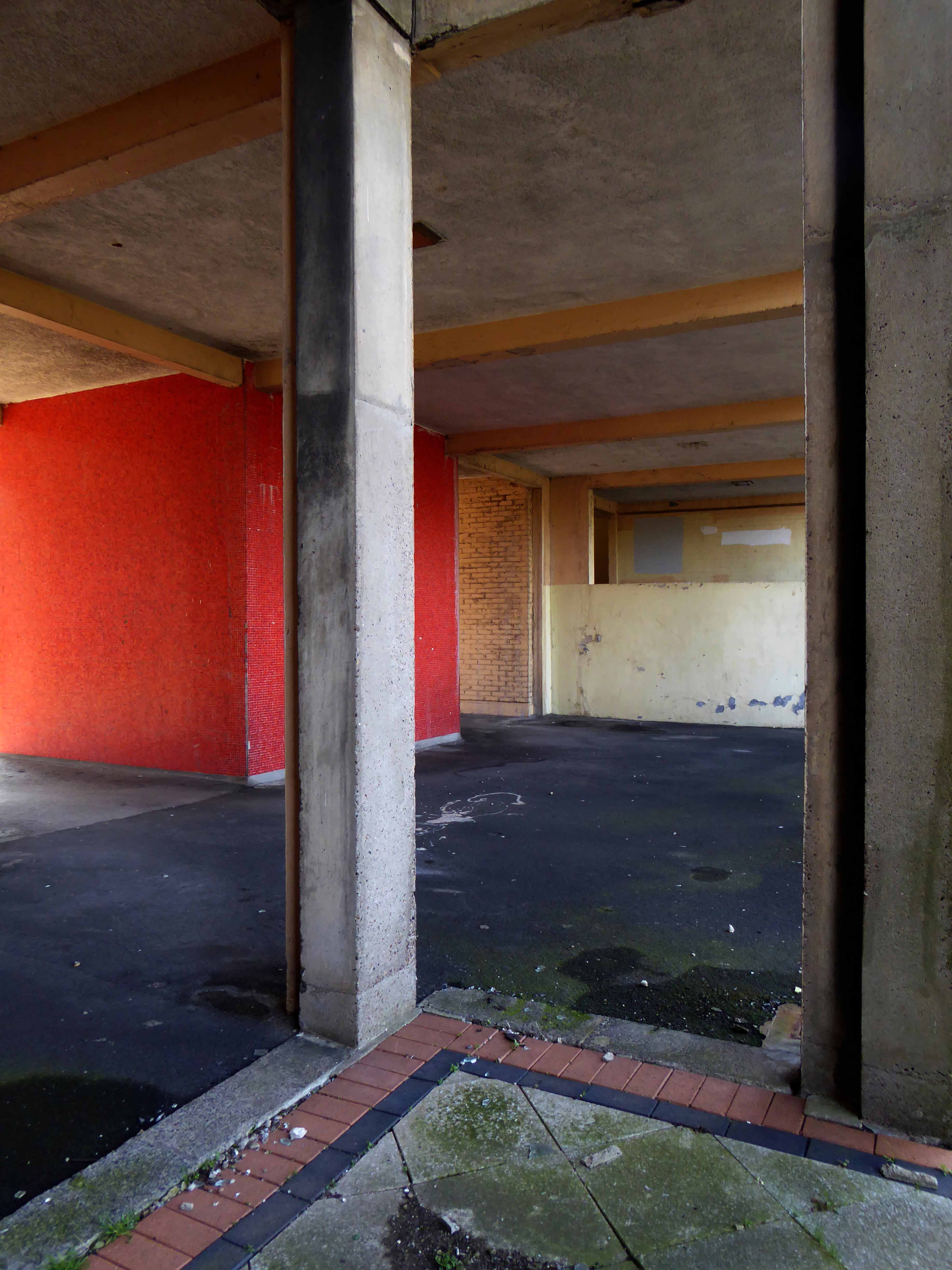
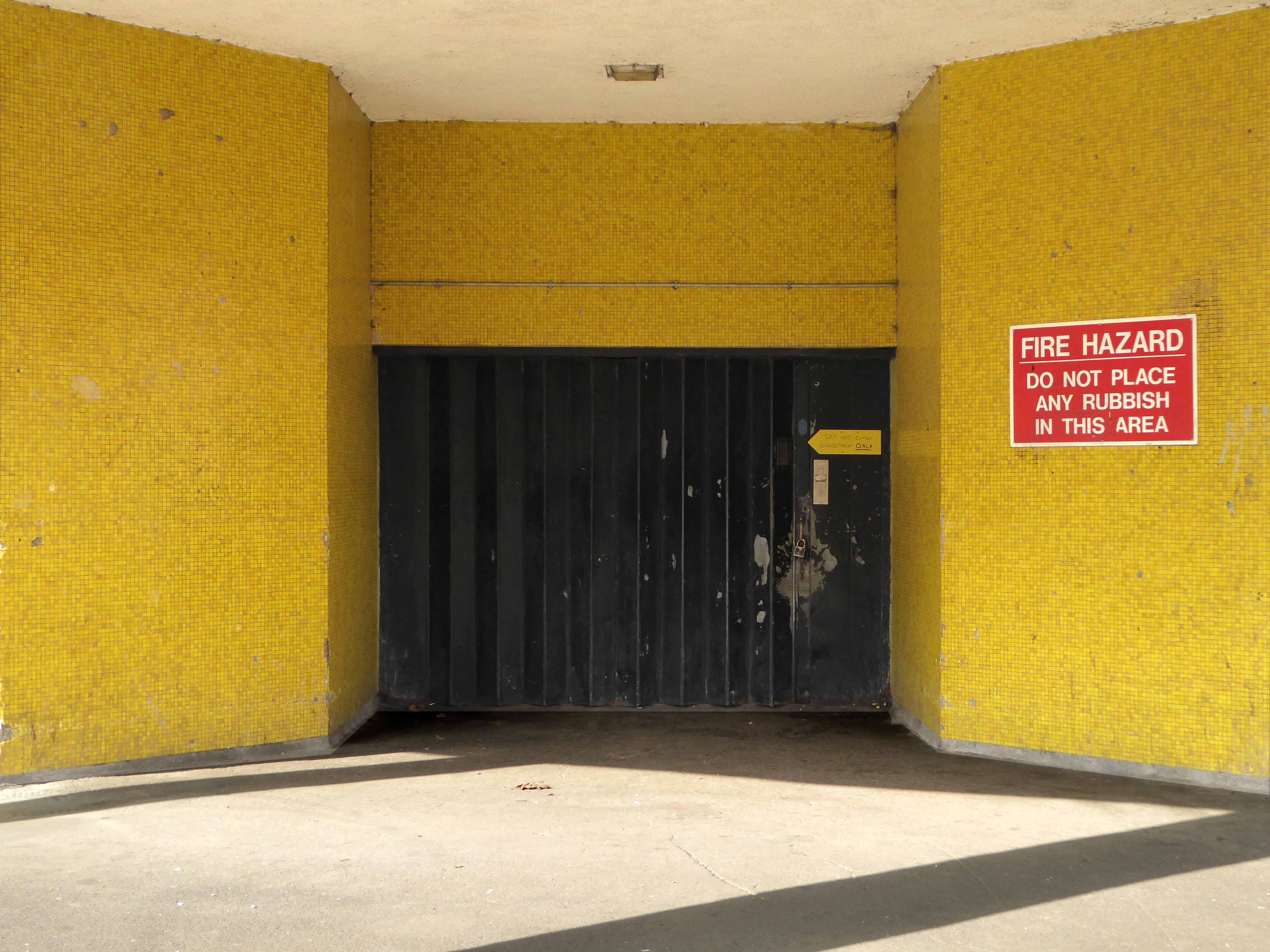
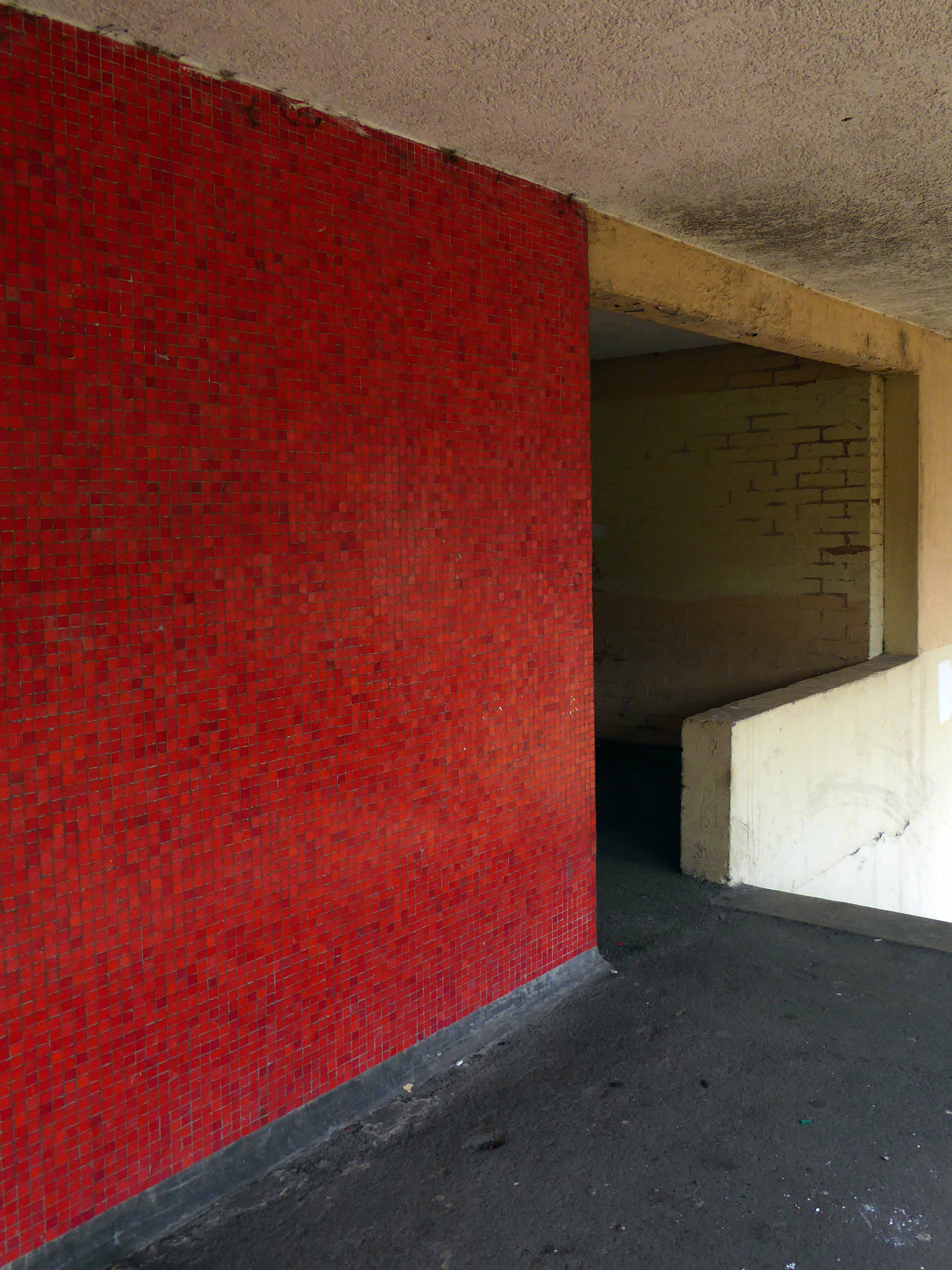
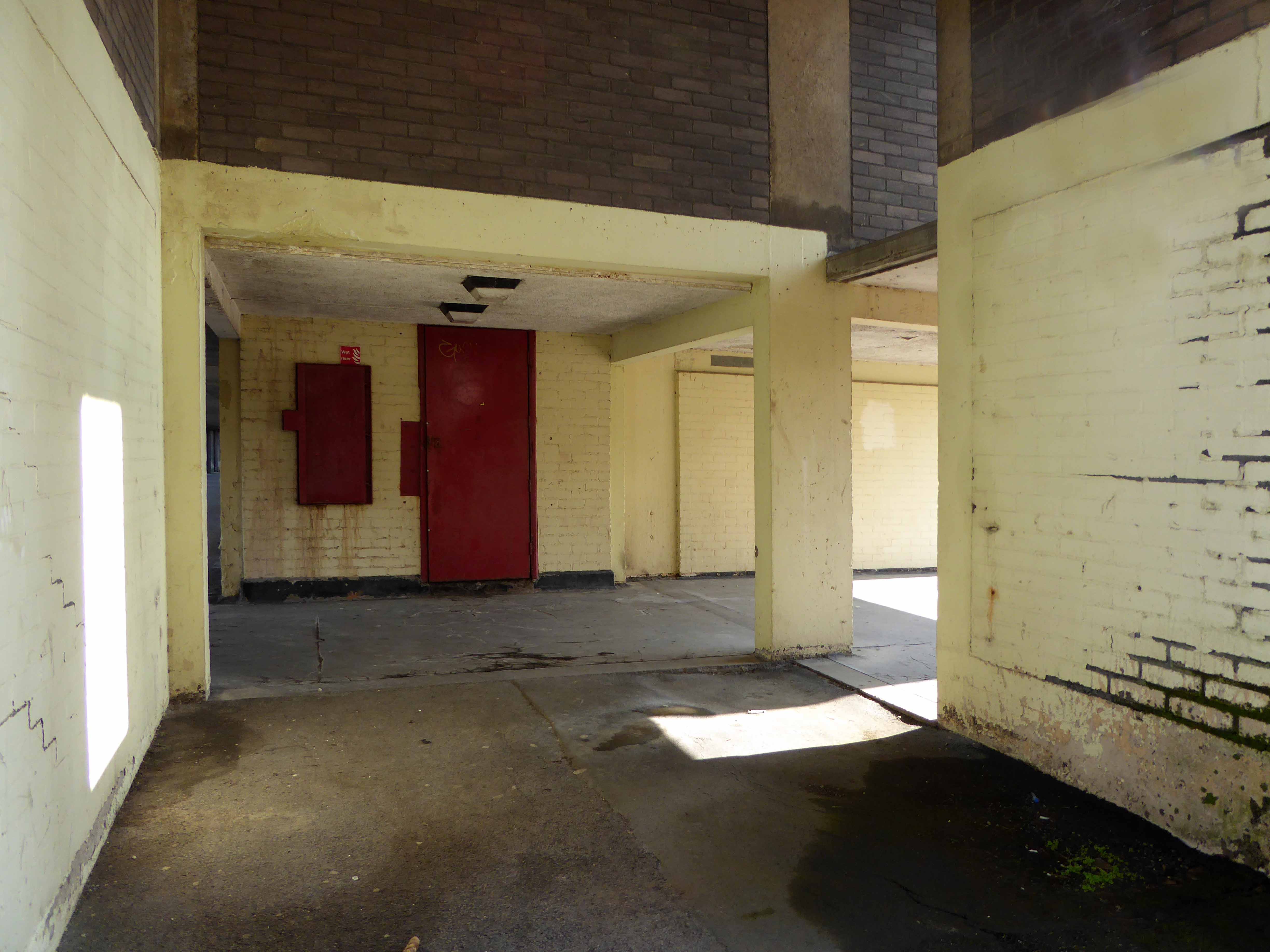
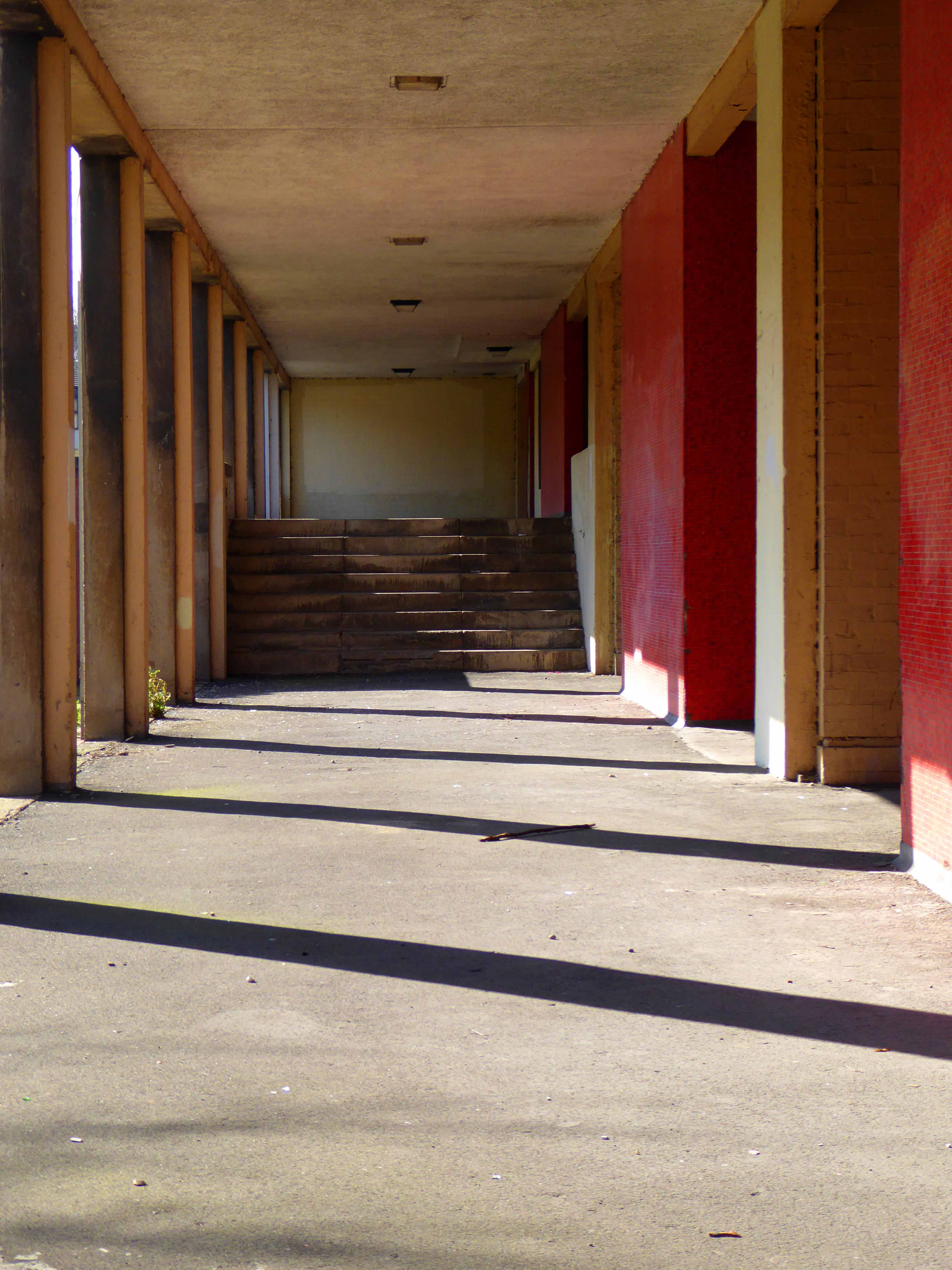
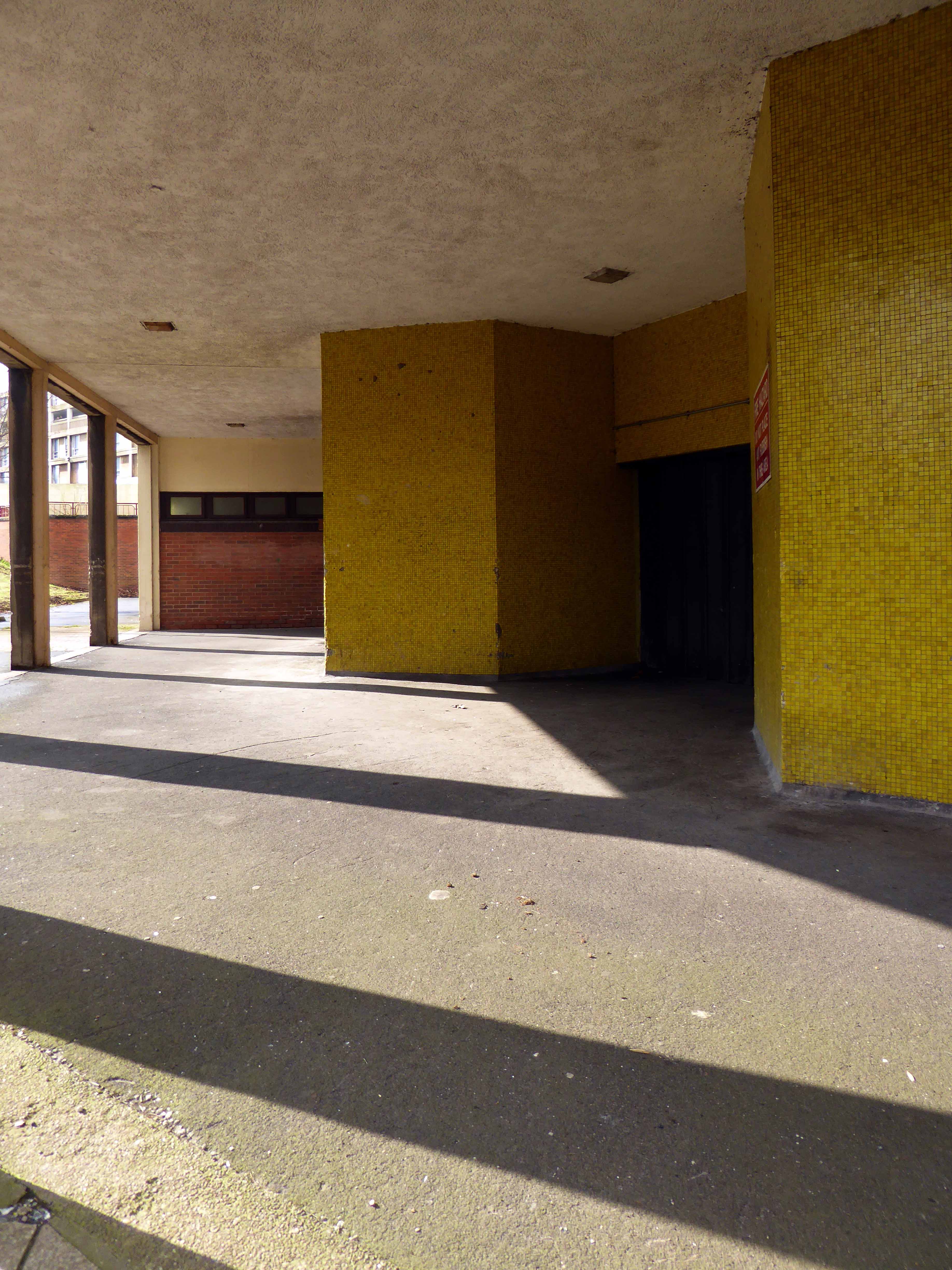
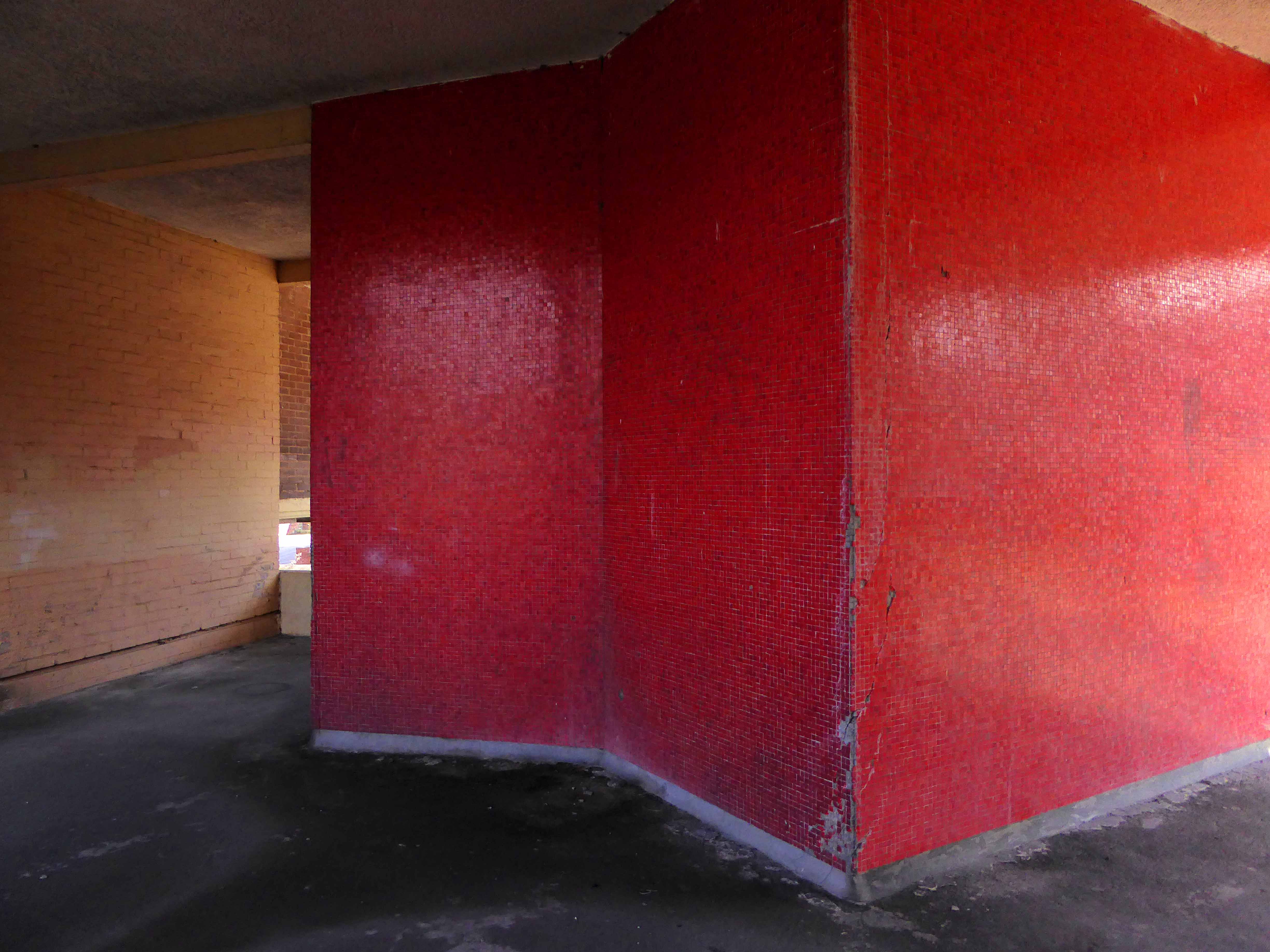
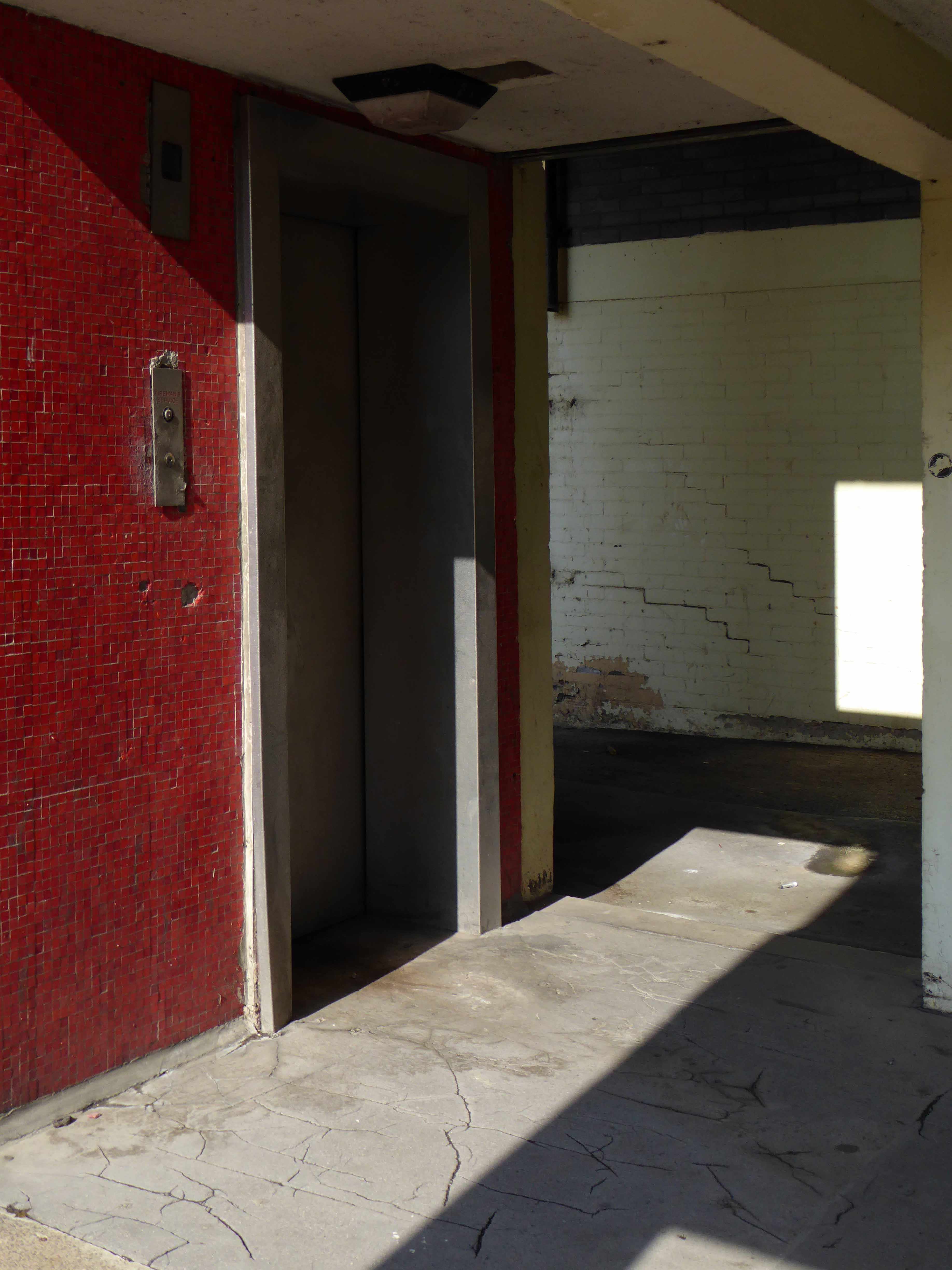
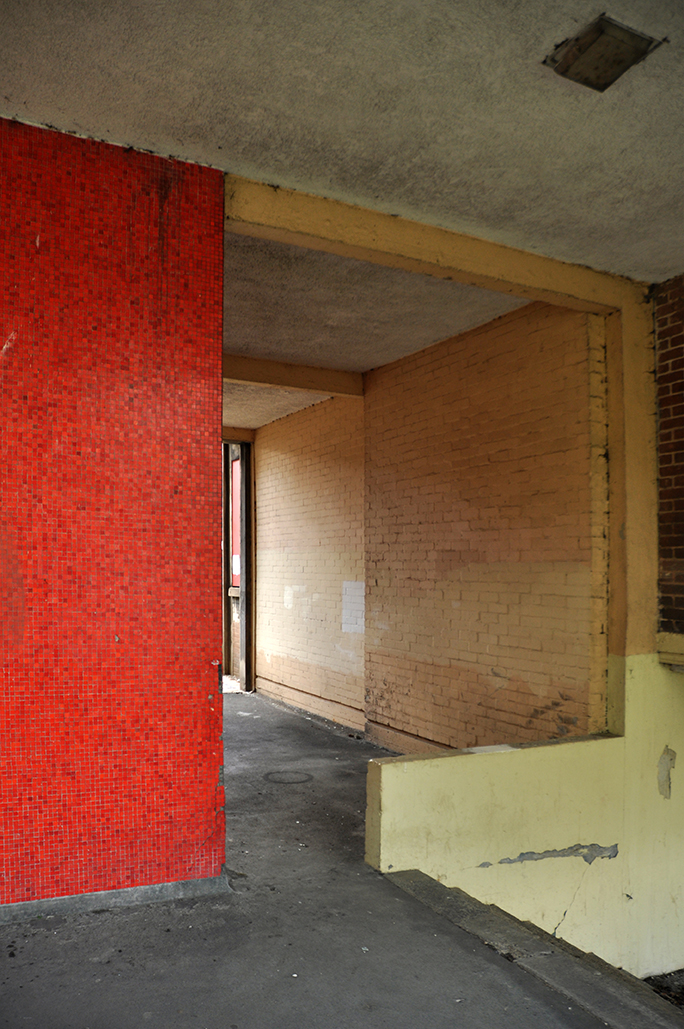
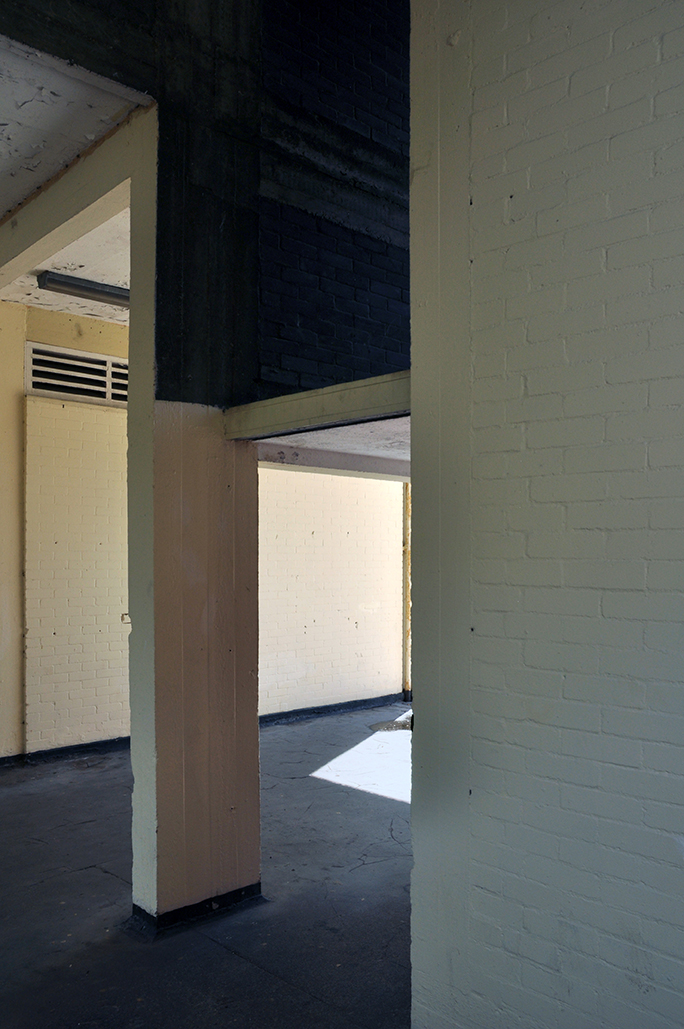
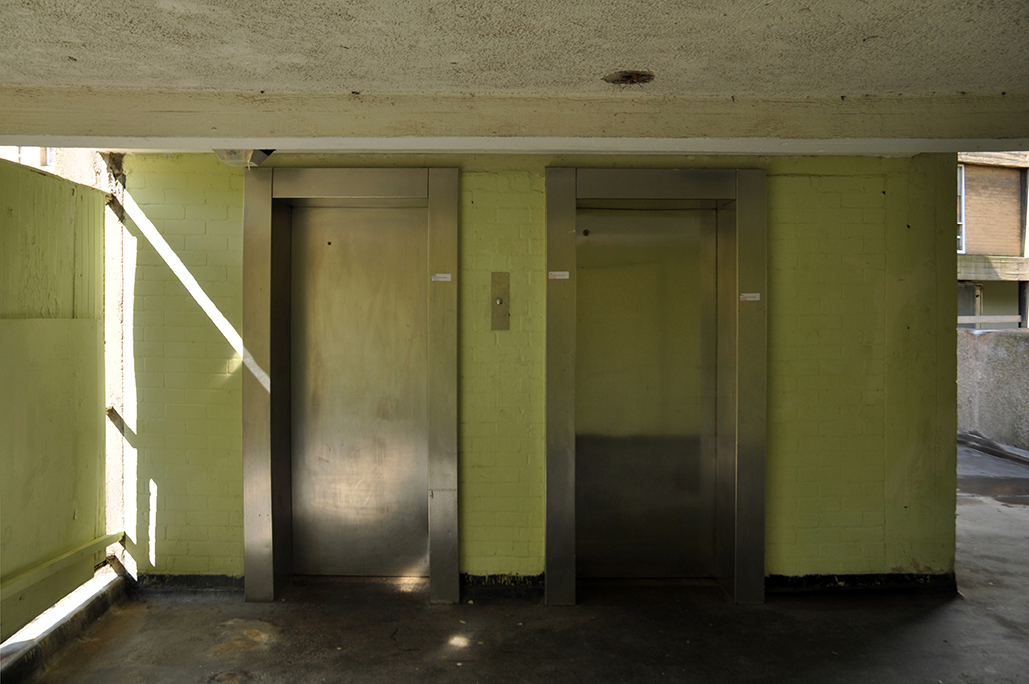
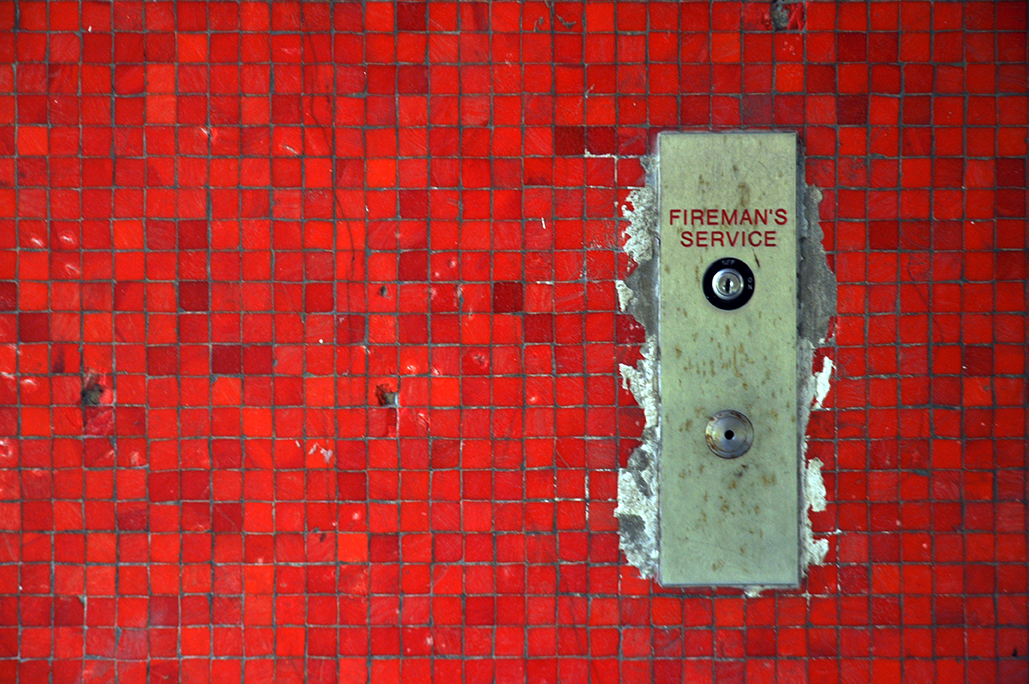
And so, in early sunny Sunday morning light, heavy hearted I wandered the open areas, colonnades, service lifts and terrazzo walls.
A small gift to the families, folks, workers, planners and architects who brought this estate to life – a celebration of the modern aesthetic in clear, broad daylight.
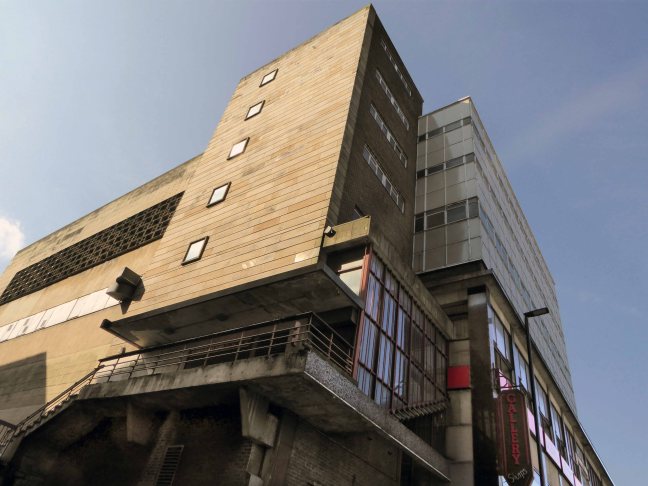
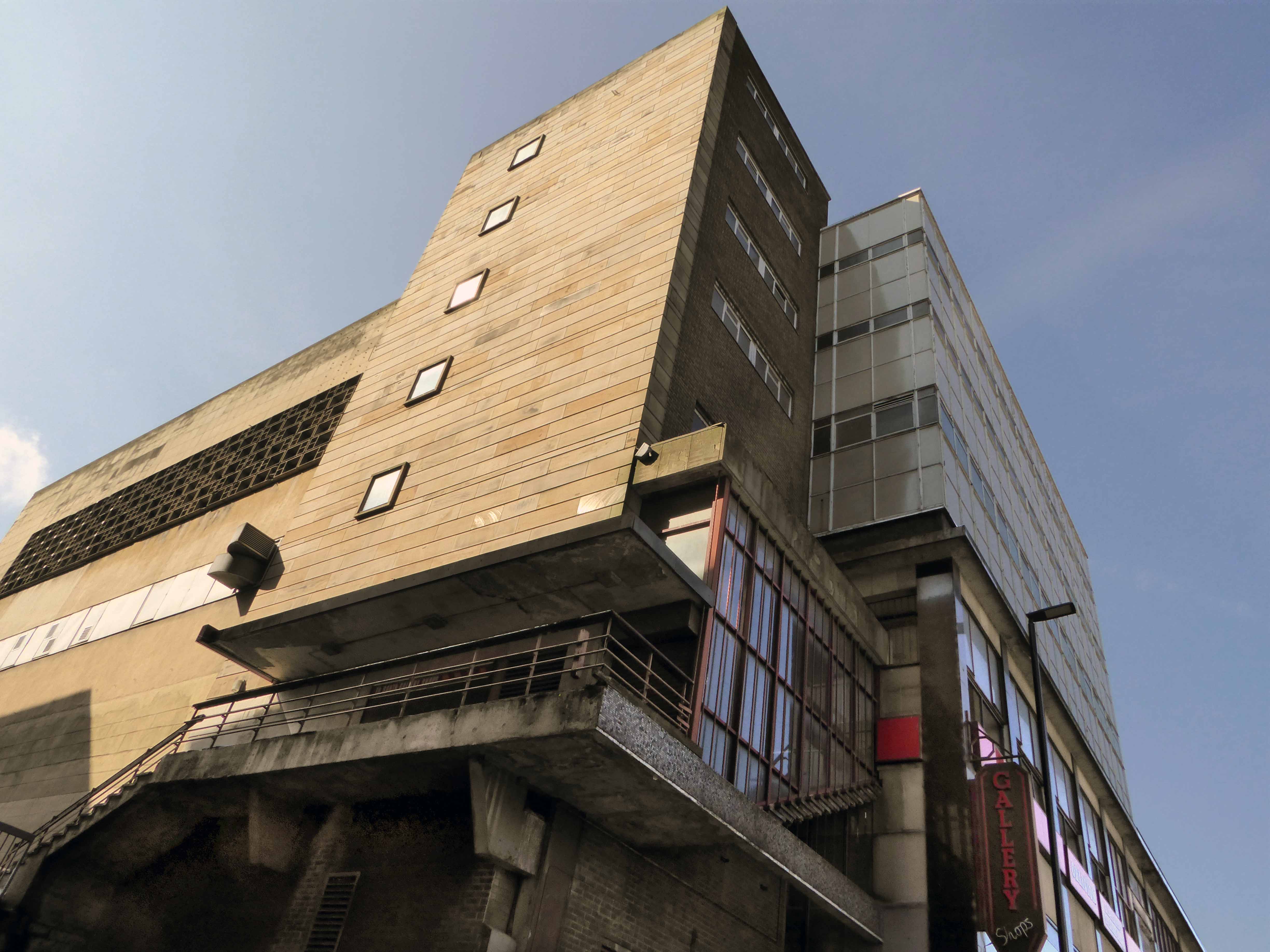
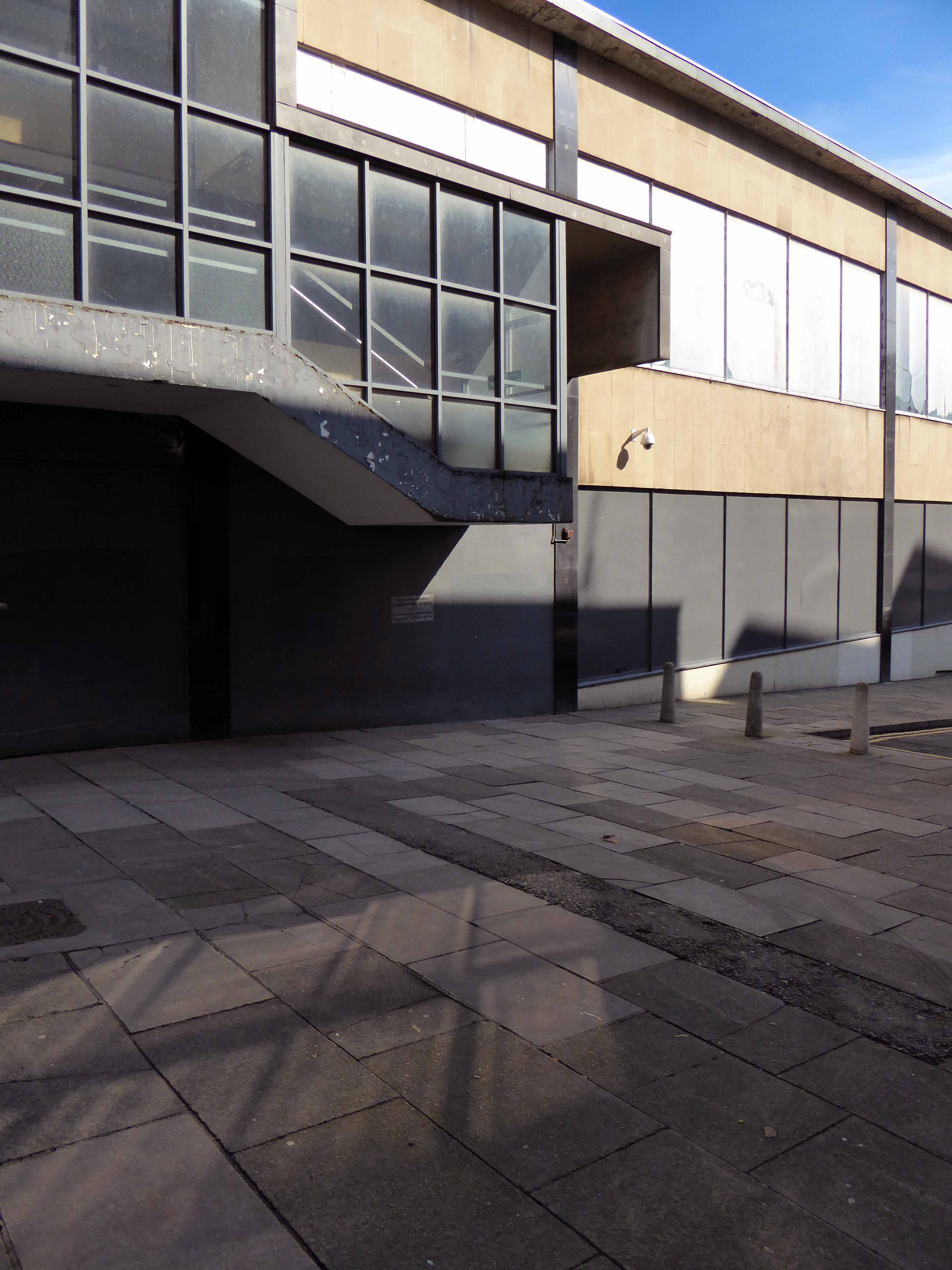
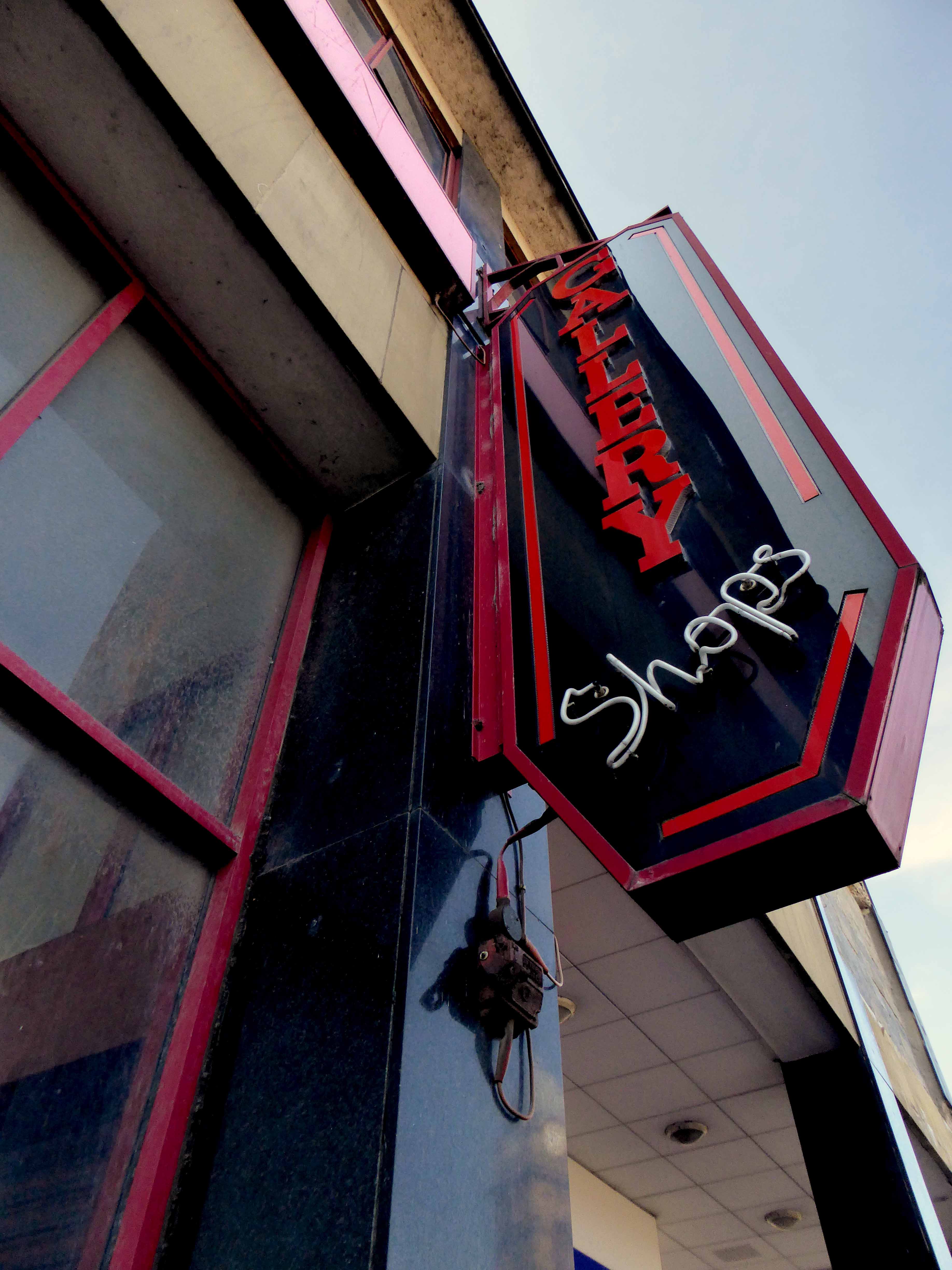
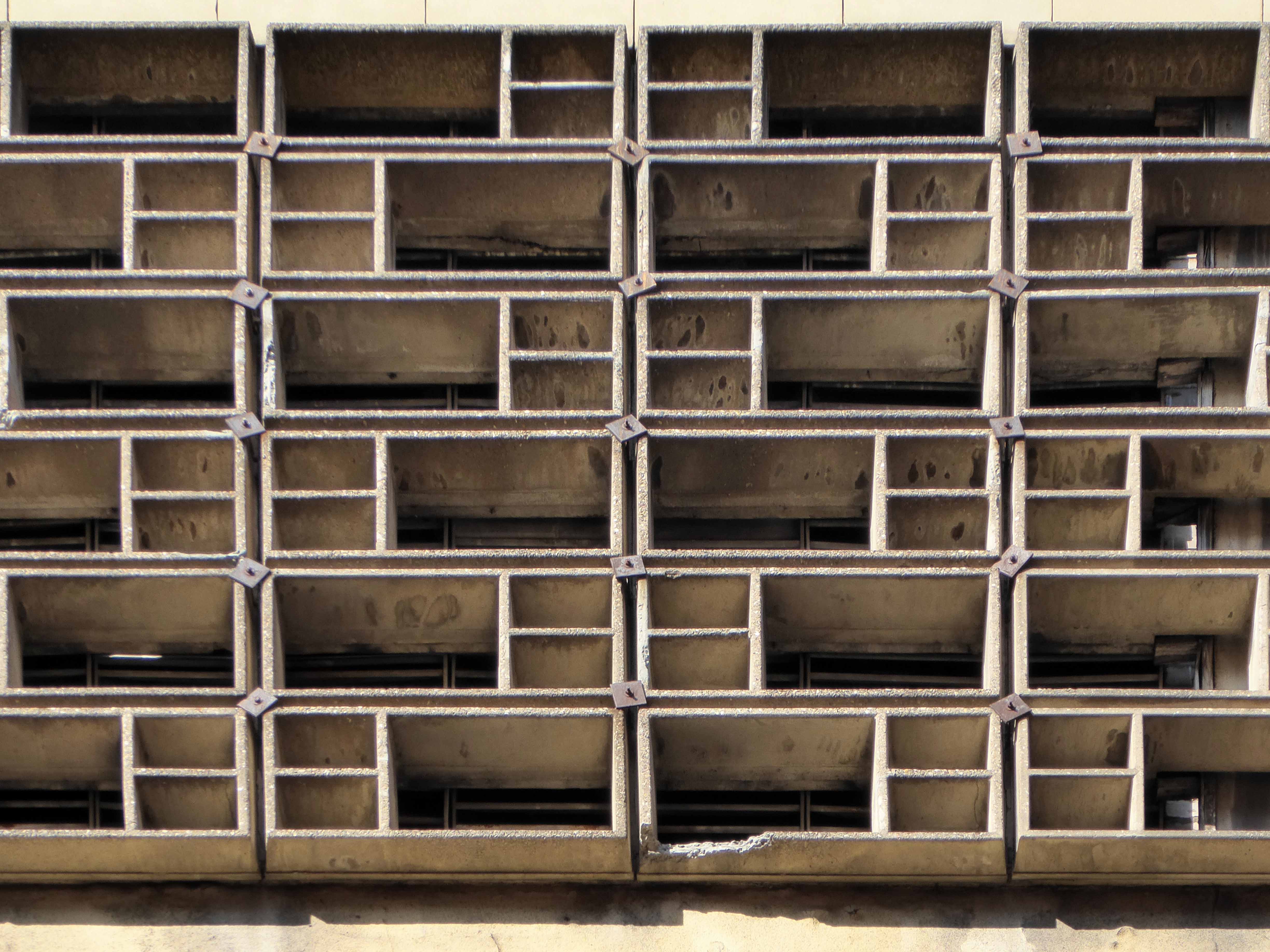
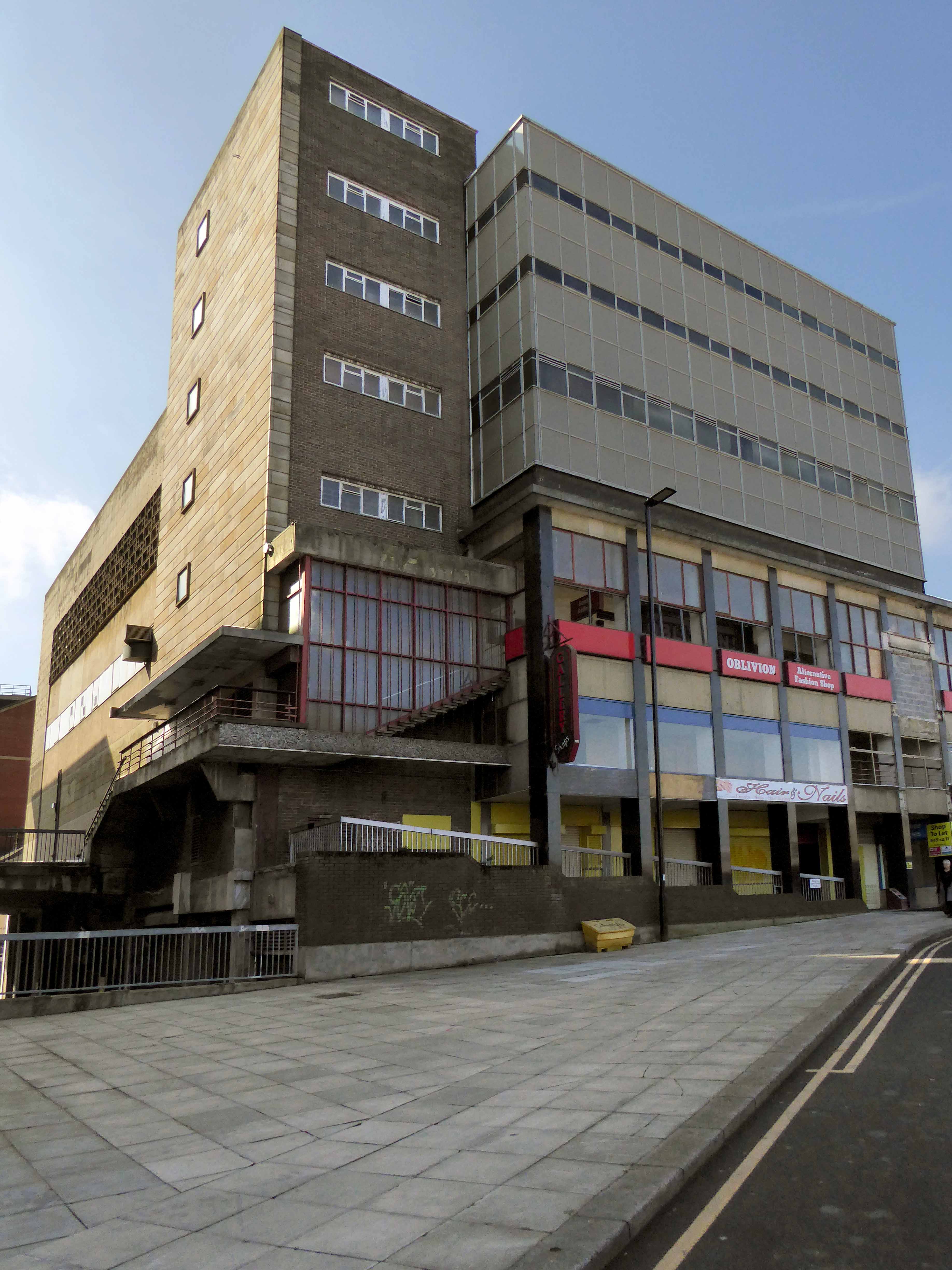
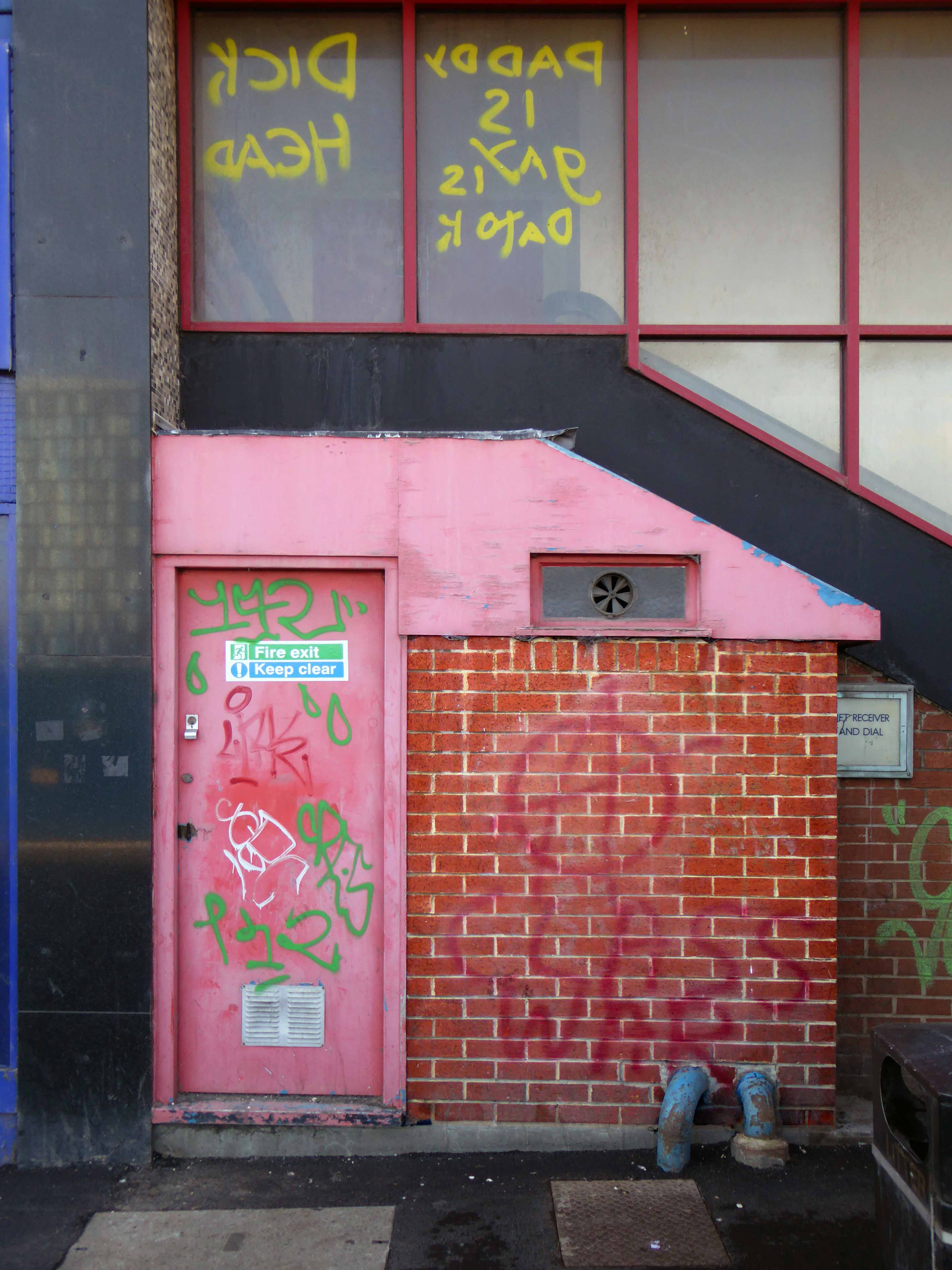
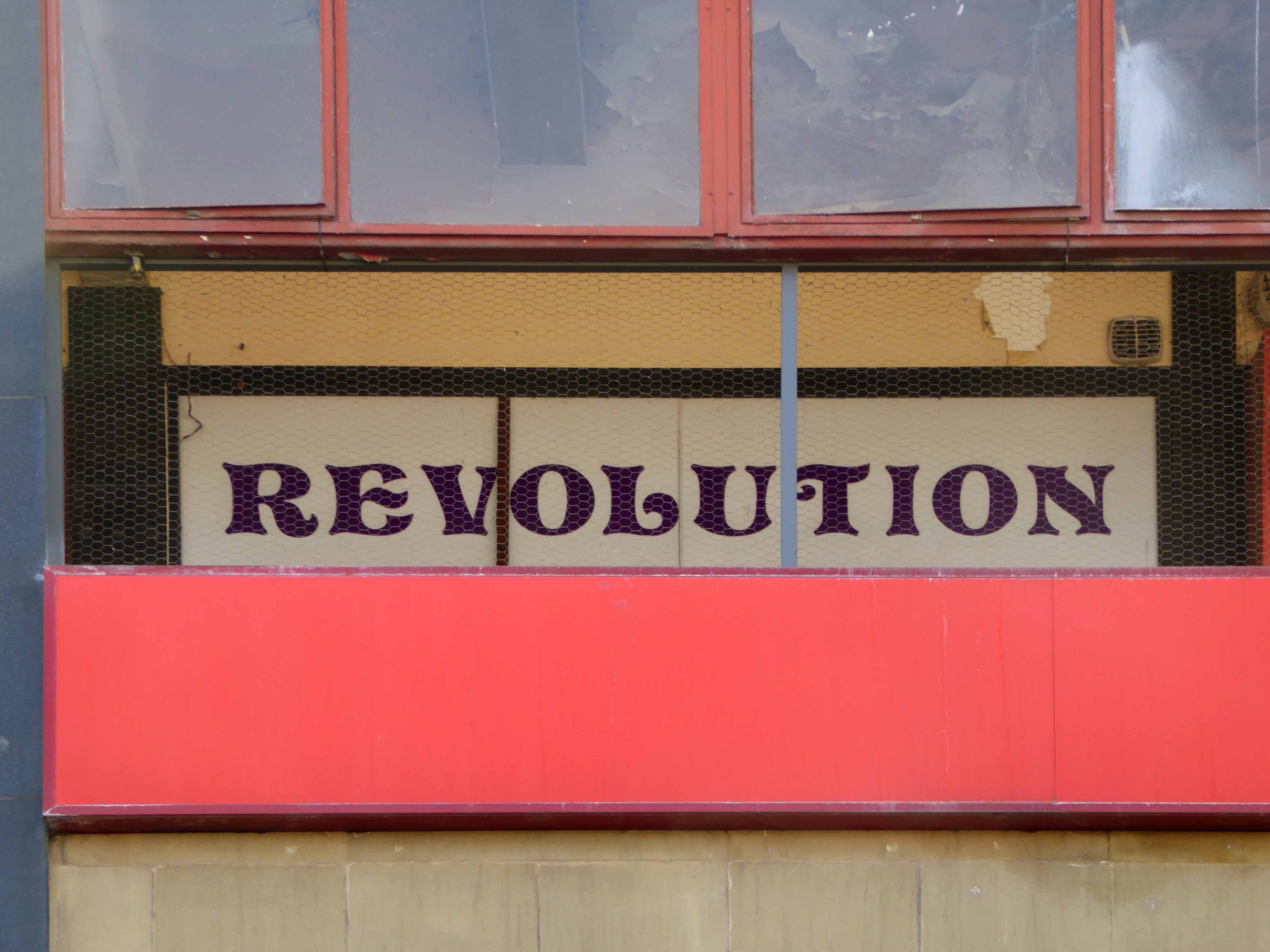
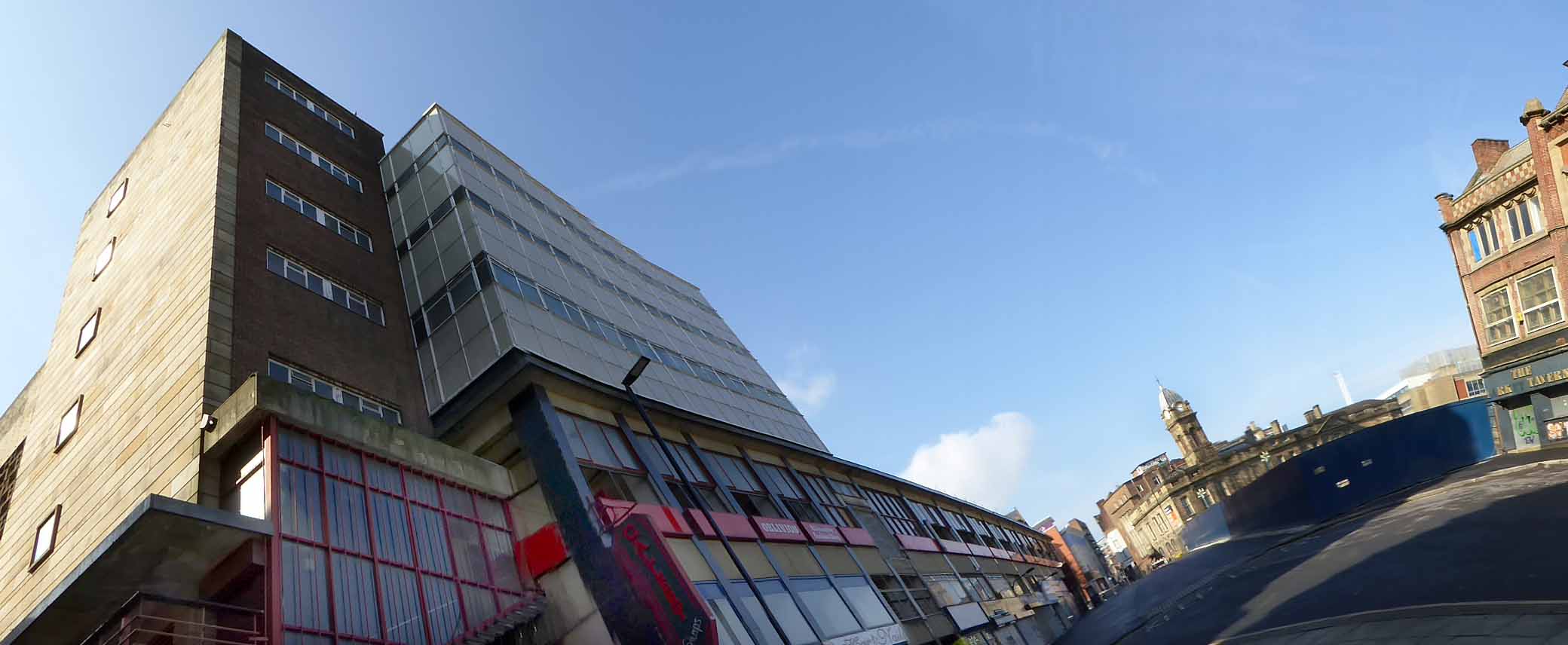
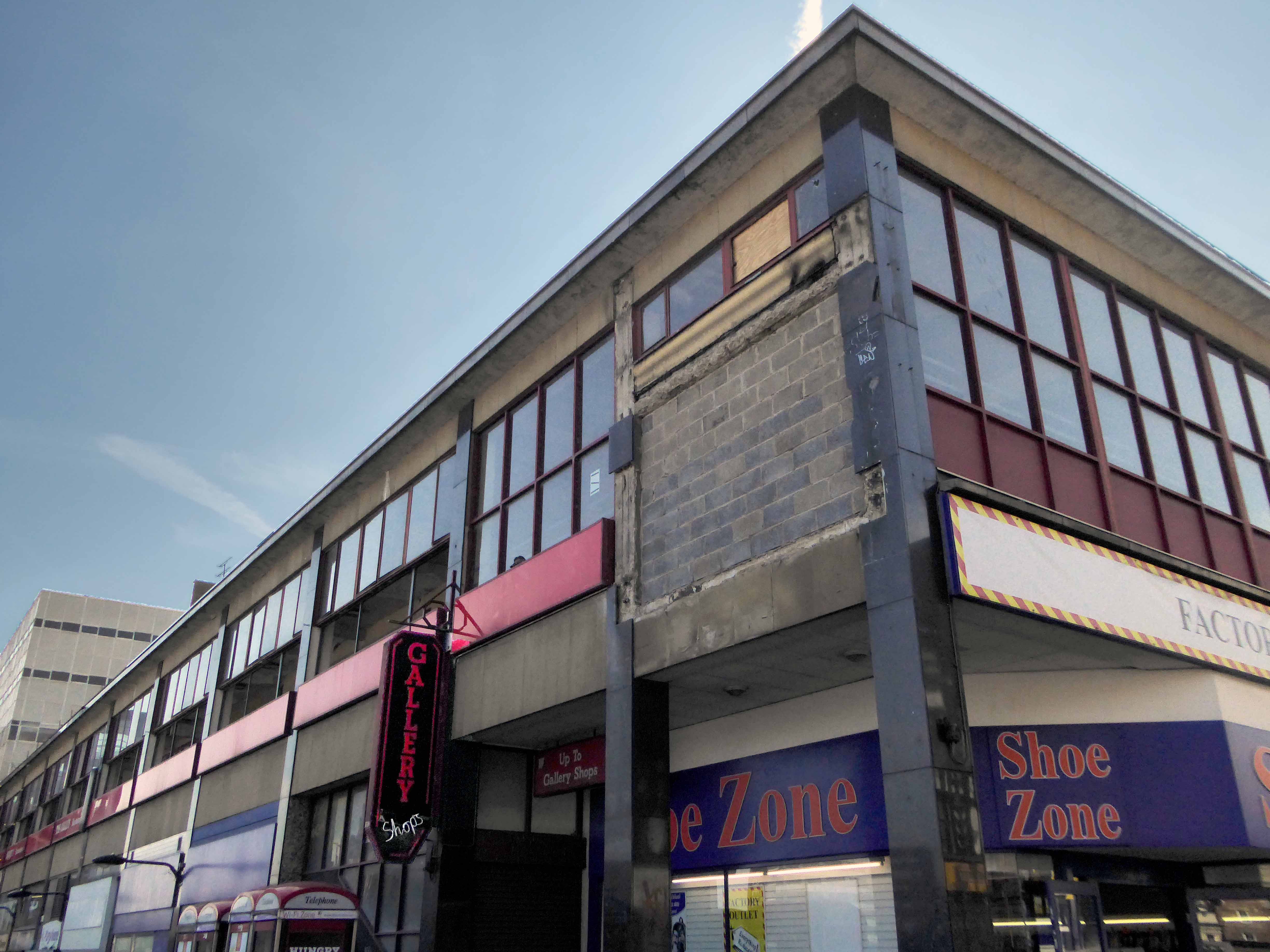
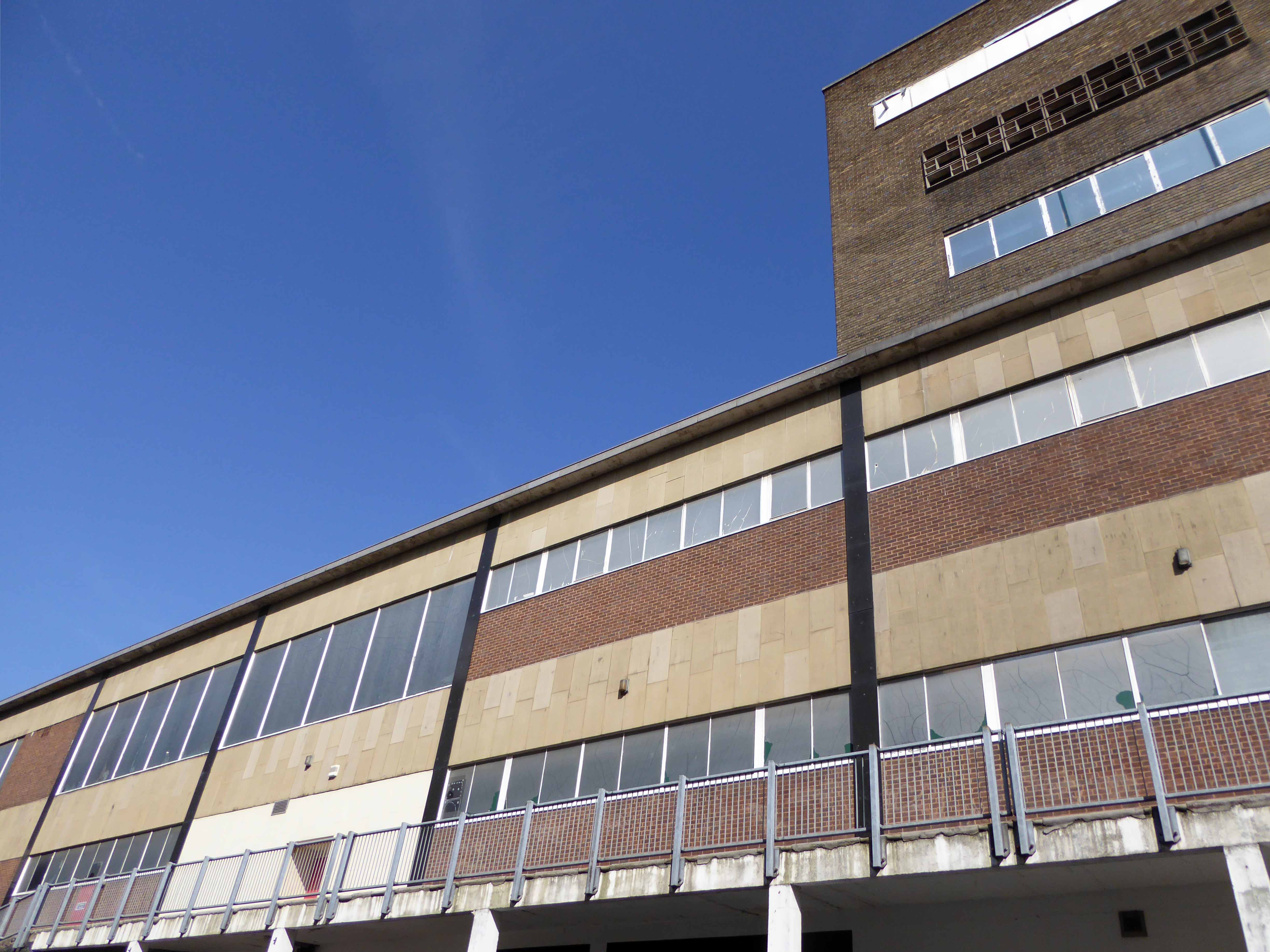
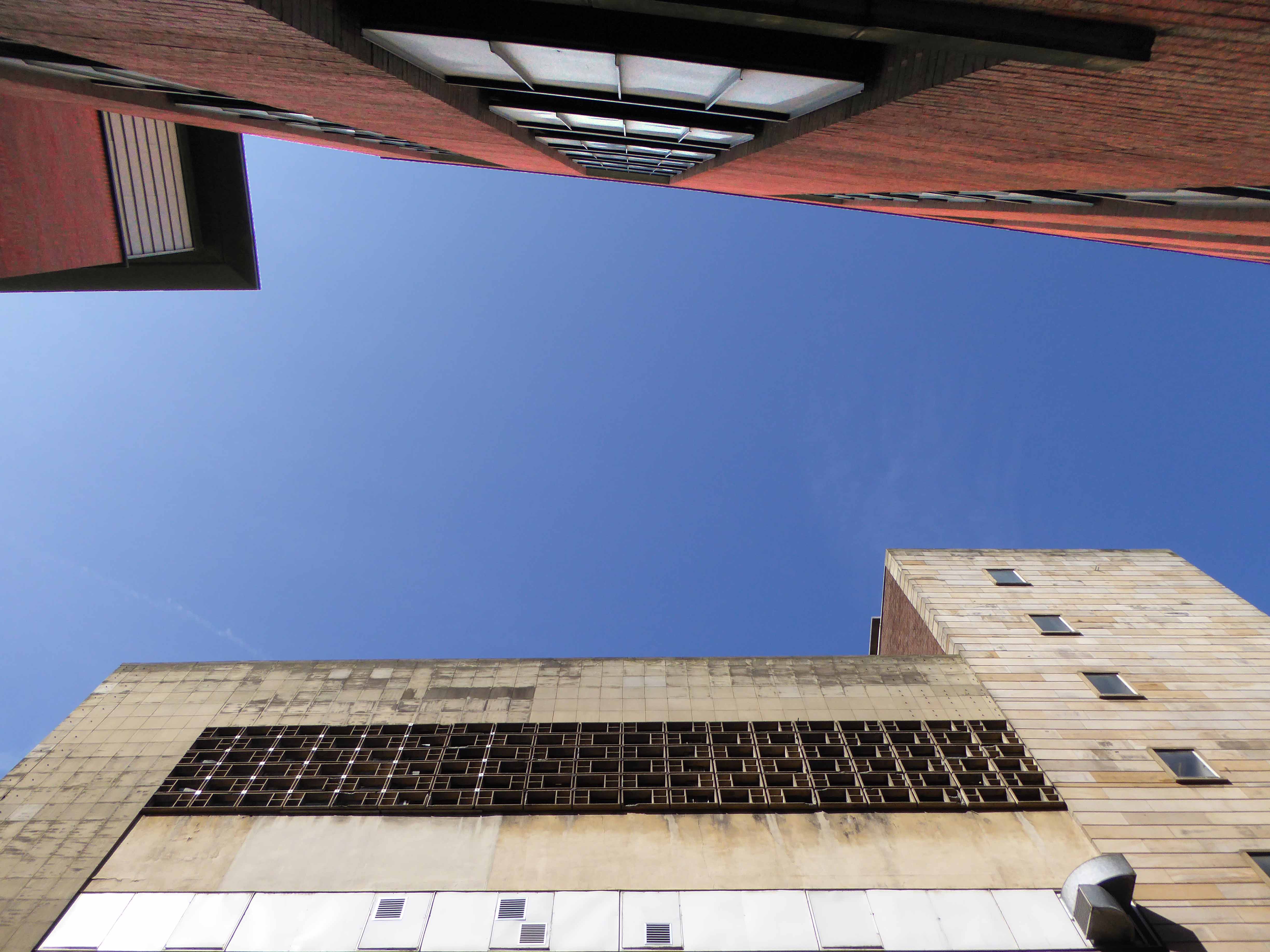
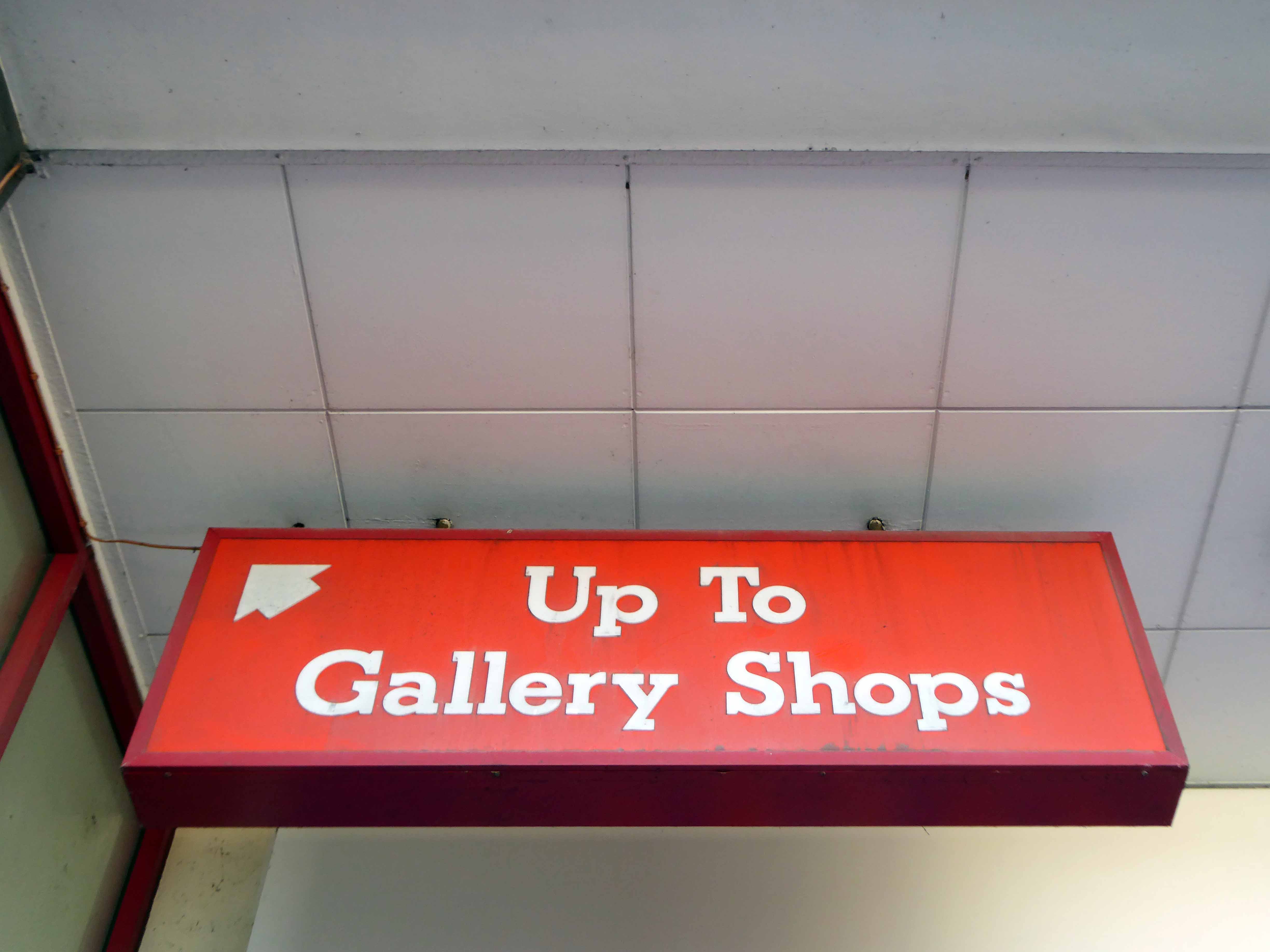
Once part of a larger retail complex, embracing the Castle Market area – regrettably demolished in 2015, the Gallery Shops are themselves, but a wrecking ball away from nothingness.
Linked by walkways, once populated by a multitude of rosy-cheeked, cheery shoppers, independent units and stalls operated in what was the better end of the High Street.
Over time, like many modern city the axis of energy shifts elsewhere, to newer more shiny developments – leaving hollow shells, echoing only to the footsteps of long gone ghosts.
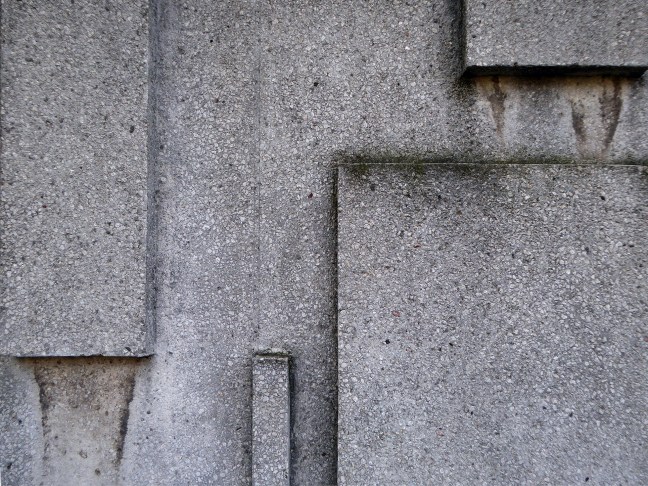
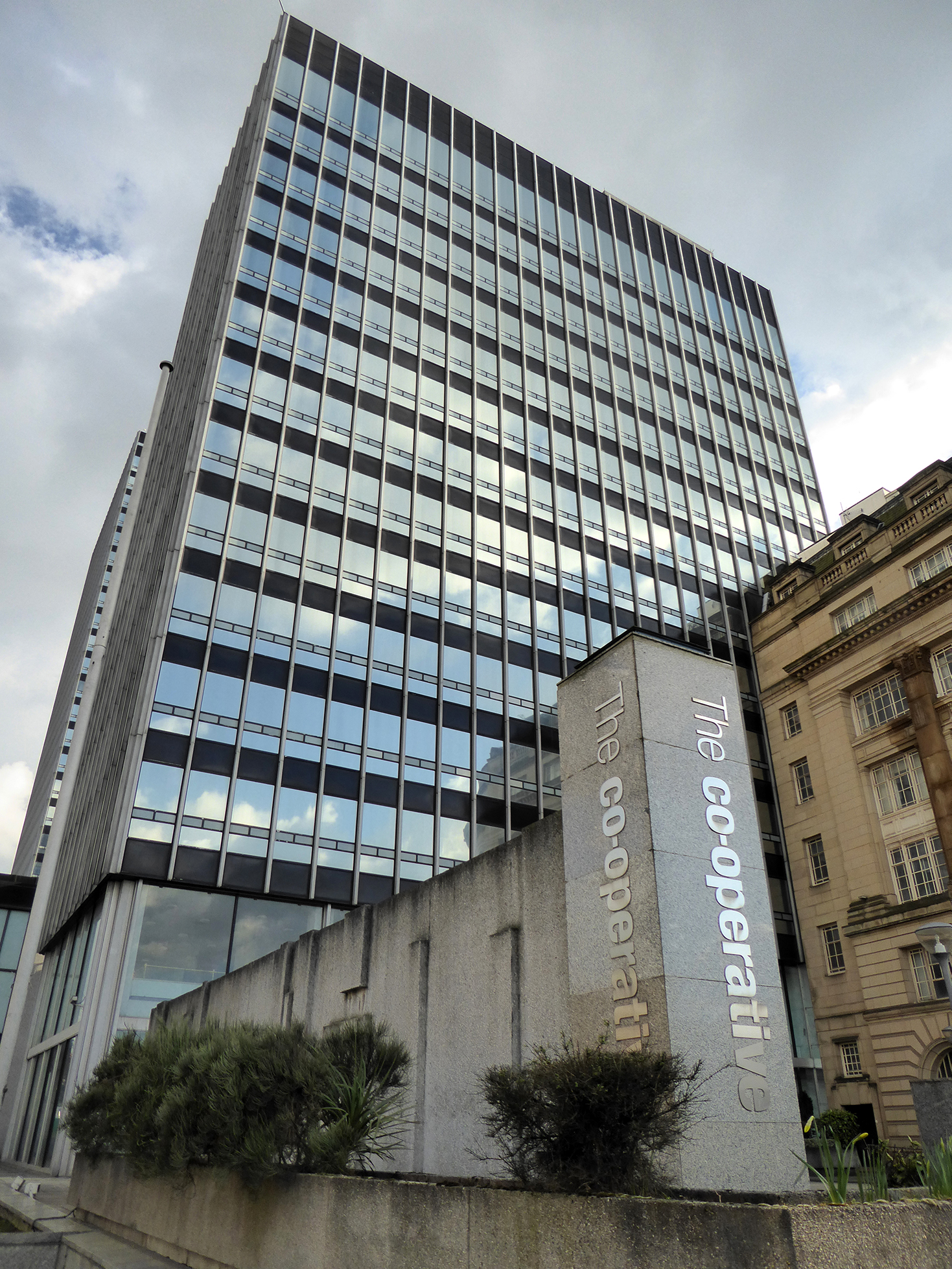
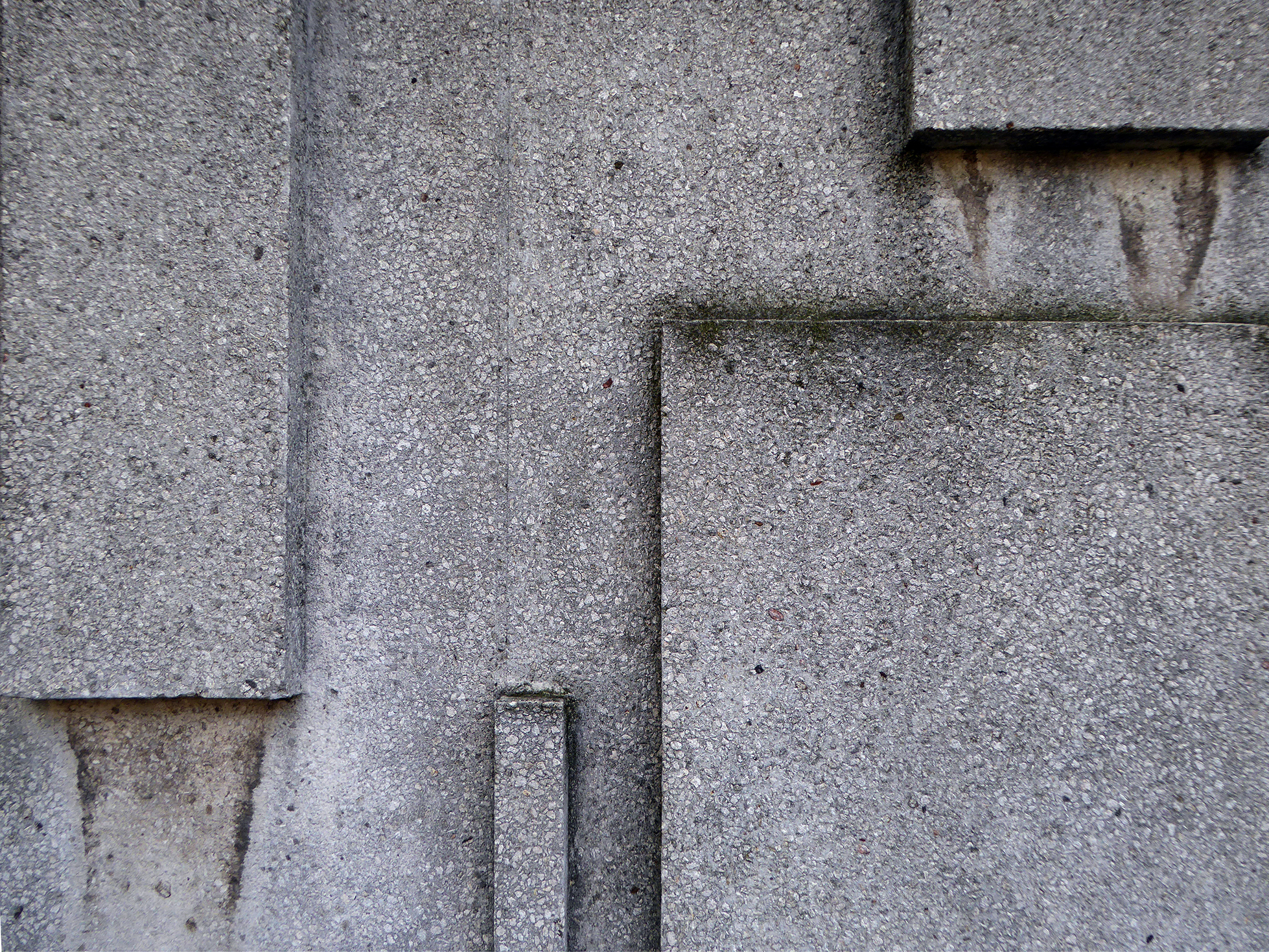
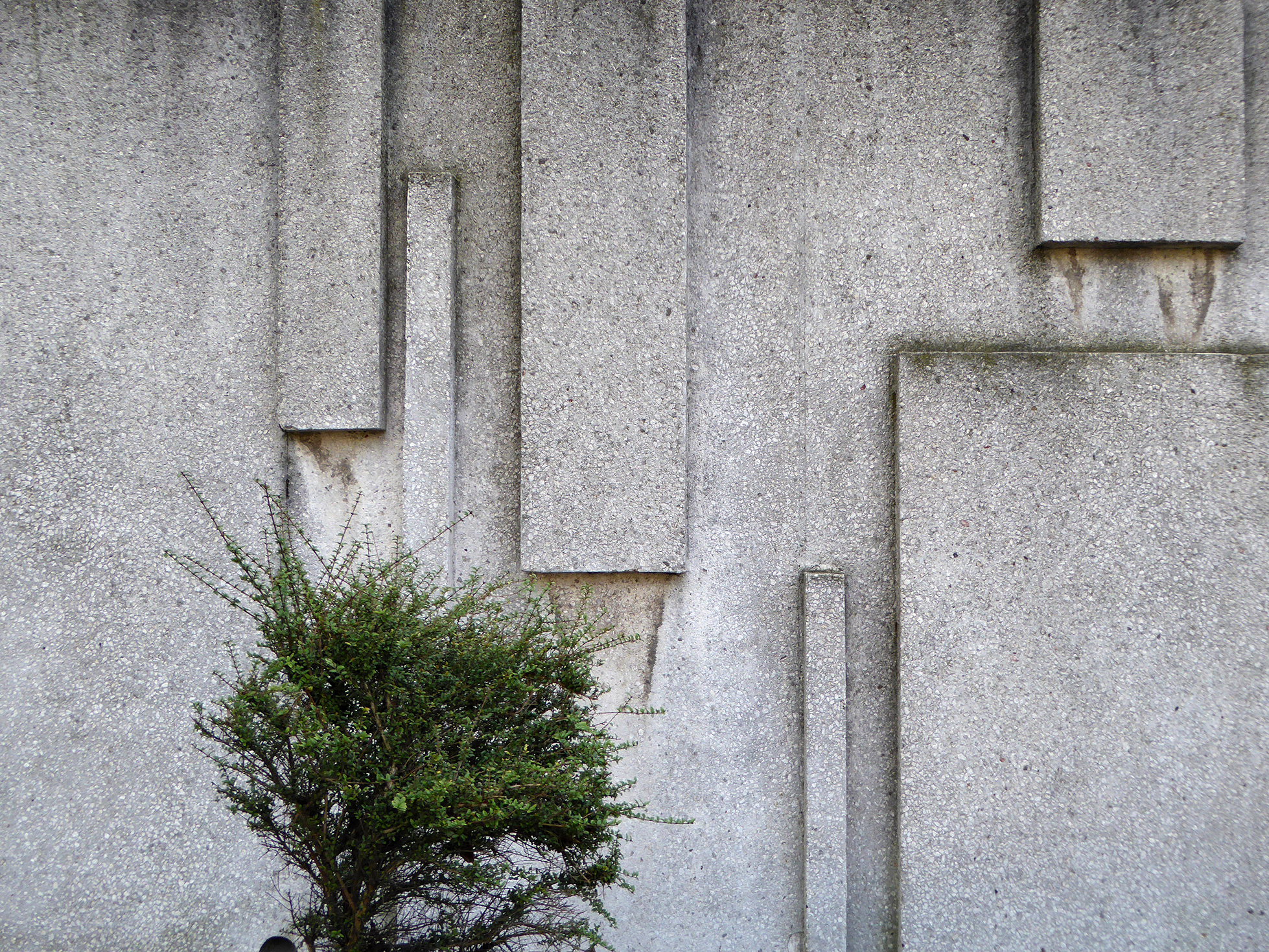
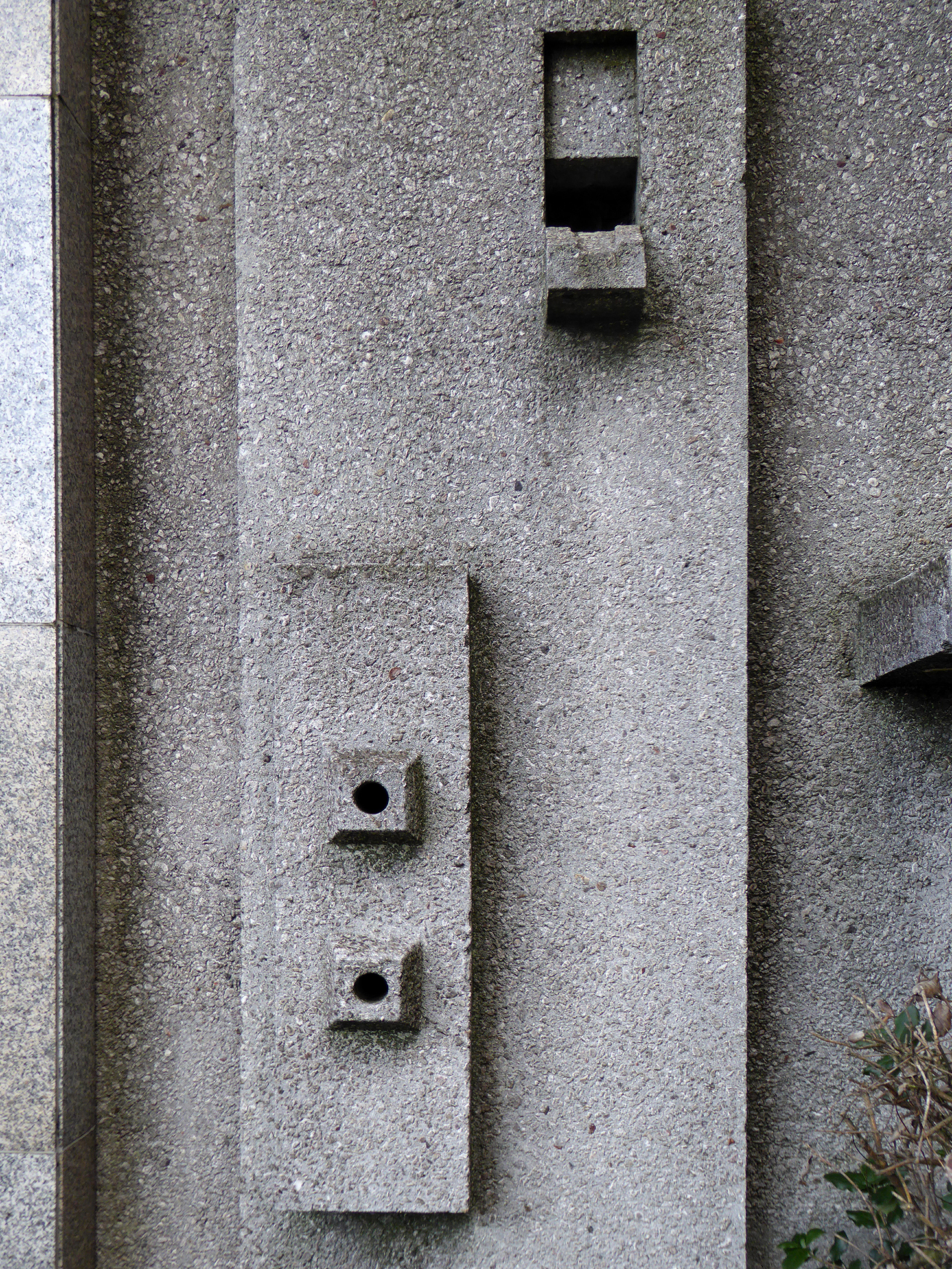
Set to the north-east side of the building’s entrance forecourt is a concrete sculptural screen wall by John McCarthy with an abstract relief to the south-west side facing into the forecourt. The wall is aligned at a right angle to the building’s main entrance and has a shallow rectangular pool (now drained) set in front. The wall includes numerous openings from which water originally flowed into the pool, but the system is no longer in working order. The pool also originally incorporated small fountains.
At a time when the whole of the centre of the city seems alive with construction, refurbishment, gentrification and more quarters than you could shake a stick at, this forlorn and seemingly unloved gem stands, shrouded in shrubs.
I’m a carpenter of love and affection, who would not care to see, this particular wall:
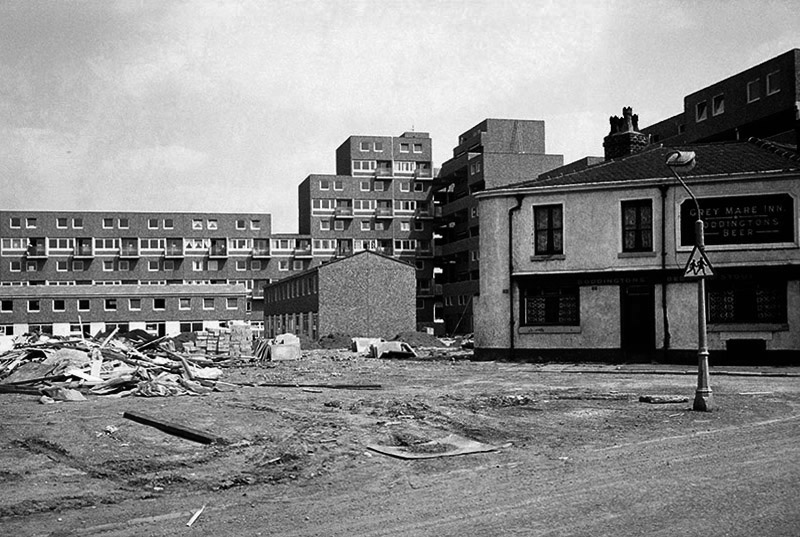
Beswick is a small district located on the east side of Manchester bounded by Ashton Old Road, Ashton New Road and Grey Mare Lane and was incorporated into Manchester in 1838. Pronounced Bes-ick the “w” is silent. Before 1066, in Saxon times, the district was called Beaces Hlaw – Hlaw was an old word for a small hill, often used as a burial mound. By the 13th century it had changed to “Beaces Wic” indicating that the area was predominantly farm land. Who or what the Bes element of the placename signified is open to interpretation, though the simplest and most plausible is that it belonged to a person called Bes or Bess.
In the 60s it was, as I remember it, a typically vibrant mixed East Manchester community, industry, housing, retail, entertainment and goodness knows what bumping along together incautiously, down tight streets of Victorian terraced housing. I worked in the area as a Mother’s Pride van lad, hauling bread, cakes and galvanised trays in and out of a plethora of superabundant corner shops.
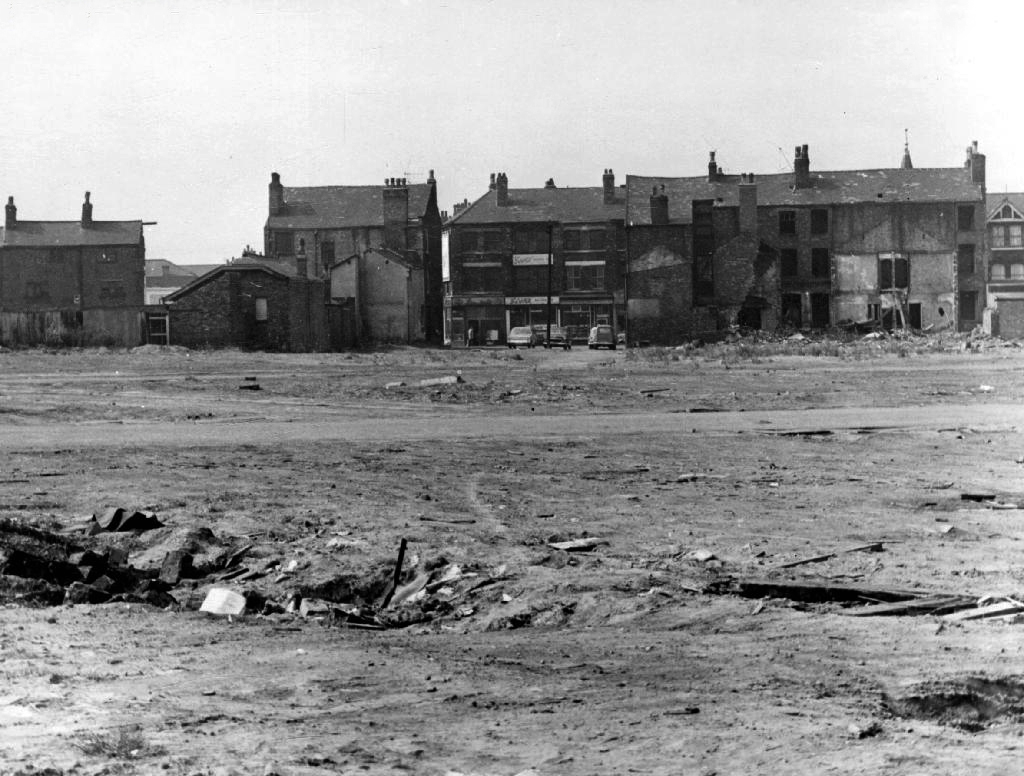
The year of 1970, approximately, dawns, ushering in a decade of great change, slum clearance and the building of brand new homes – the end, by and large, of the back to back corner shop world.
10 years later, and long gone the years of postwar full employment, and the made round to go round world of the weekly wage.
The early 1980s saw growing unemployment and world-wide recession. The large new estates suffered most. Inner city districts of Manchester saw street riots in 1981, as did many other major cities around Britain. Manchester had suffered badly as a result of the recession. In 1986, over 59% of adult males living in Hulme were unemployed; in Miles Platting the figure was 46%; Cheetham Hill and Moss Side both had an unemployment rate of 44%. The main group of unemployed were young people under the age of 21. Hulme’s youth employment was recorded at 68%, and Cheetham Hill suffered 59%.
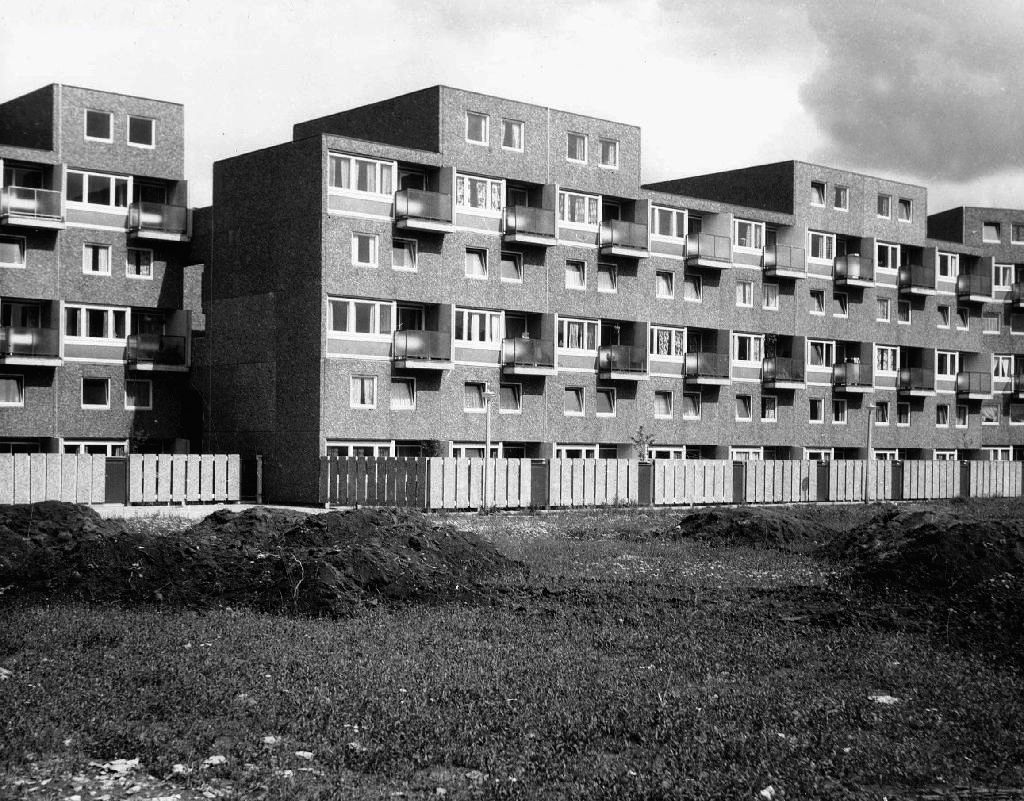
It is true that the new developments have great advantages in many ways over the terraces they replaced. Tenants who live in houses without baths or indoor sanitation and with no hot water are delighted to move into bright new flats and maisonettes, with indoor plumbing, with baths, and accommodation which has more rooms and far better kitchen facilities and central heating, even though they sometimes grumble at the cost of that central heating.
But although we can build a new housing development, we cannot easily recreate the warm community spirit which has vanished with the terraces which have been demolished. There is the noise from neighbours on the deck above and the deck below. The wind-swept balconies along which tenants have to walk are not as cosy as the streets from which they have come. Those welcoming corner shops, with their bright lights on winter evenings, have gone, and sometimes a new development has no new shops for too long a period. Even when they come, there are not enough of them.
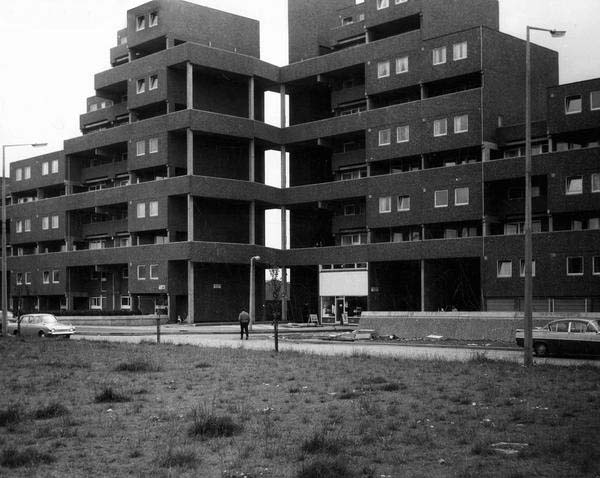
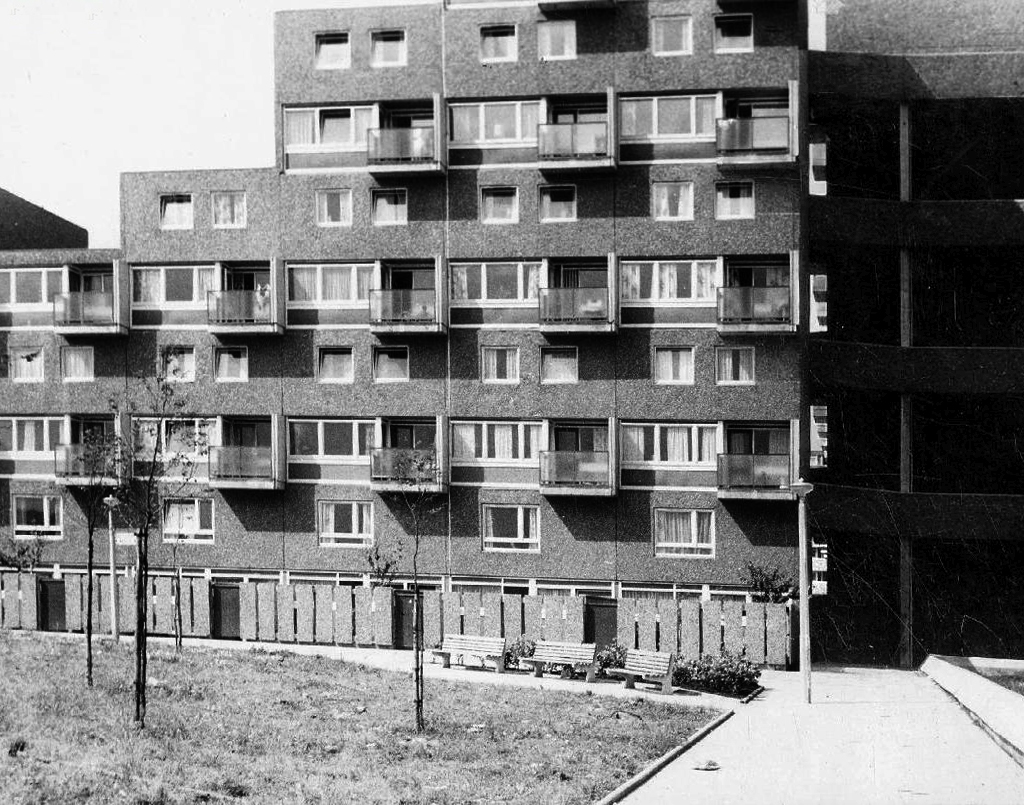
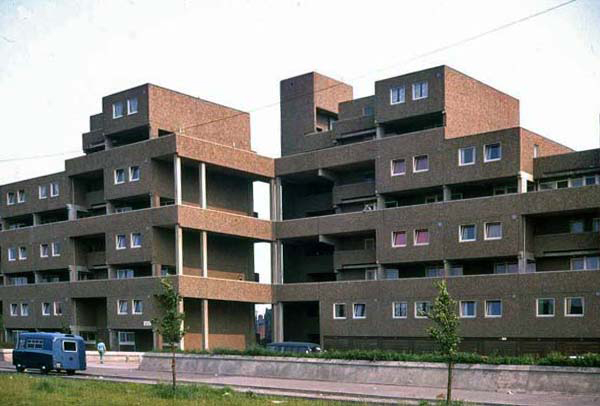
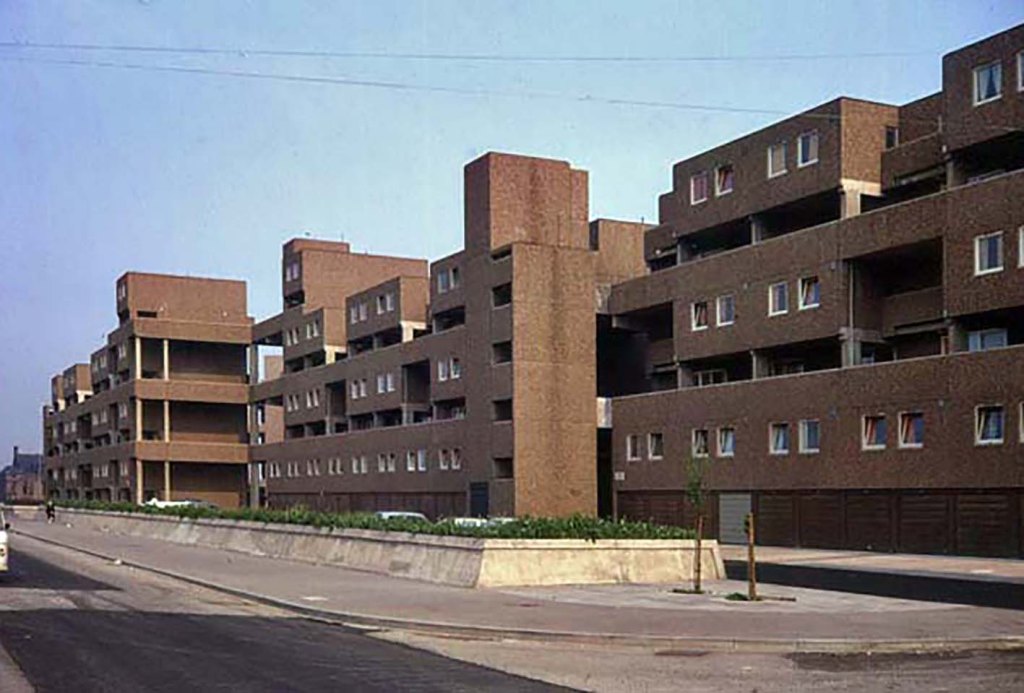
The scale of the buildings is often daunting. I have in mind Fort Beswick and Fort Ardwick in my own constituency. The design is frequently all too forbidding. That is why the two estates are called Forts.
When the tenants of these development have lived in cosy old houses, however inadequate they were in terms of physical provision, they are bitterly disappointed by the shortcomings of new property which they have looked forward to occupying.
The year of 1990, approximately, dawns, ushering in a decade of great change, multi-storey development clearance and the building of brand new homes – the end, by and large, of the one on top of another topsy-turvy world.
Fort Beswick was subsequently demolished.
The beat goes on as Len Grant records the most recent redevelopment of East Manchester.
And the M.E.Nshouts loud and proud from the roof tops, heralding a brand new, privately funded public domain
The road to Hell is paved with good intentions and as it would subsequently transpire, loosely attached Bison concrete wall-frame system panels.
Wythenshawe apart, the City of Manchester admitted that it had 68,000 houses described as “grossly unfit” by 1959.
Its solution was to demolish 90,000 dwellings between 1954 and 1976 and to erect 71,000 dwellings by way of high rise flats and to move residents out to newly prescribed “overspill” estates – at Heywood and Langley in the north, Hyde in the east and Worsley in the west.
Most of these displaced people, however, found themselves resettled in tall tower blocks, which, no matter how architecturally innovative, or how improved their facilities, proved disastrous in social terms.
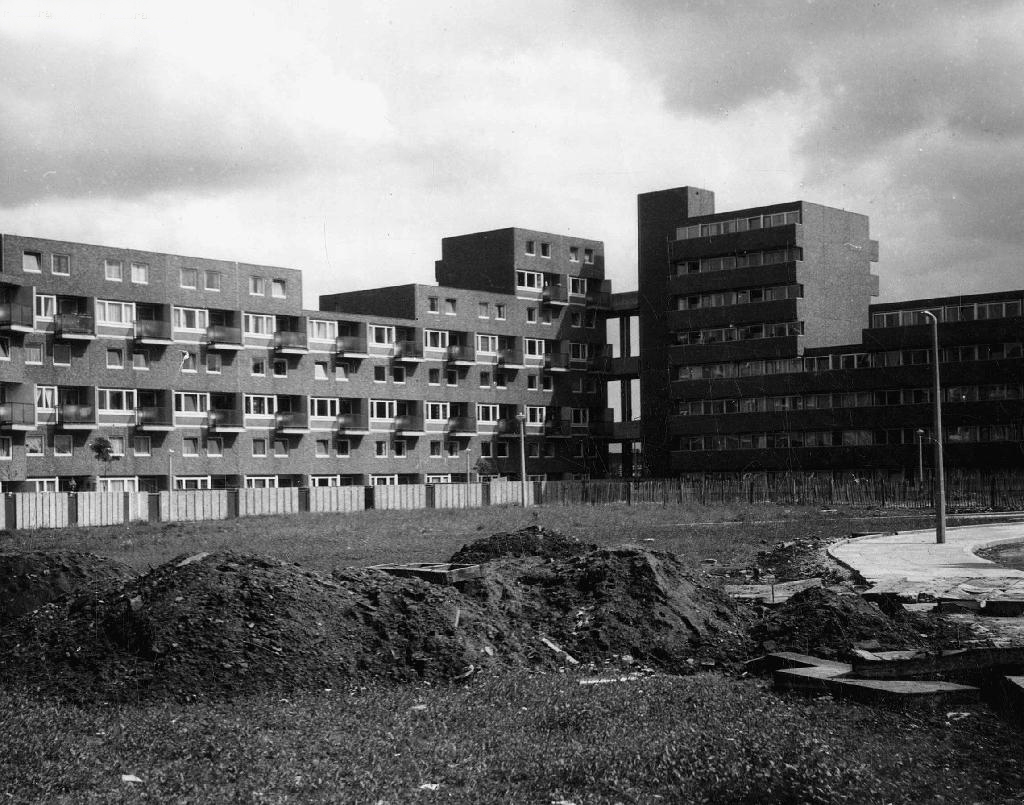
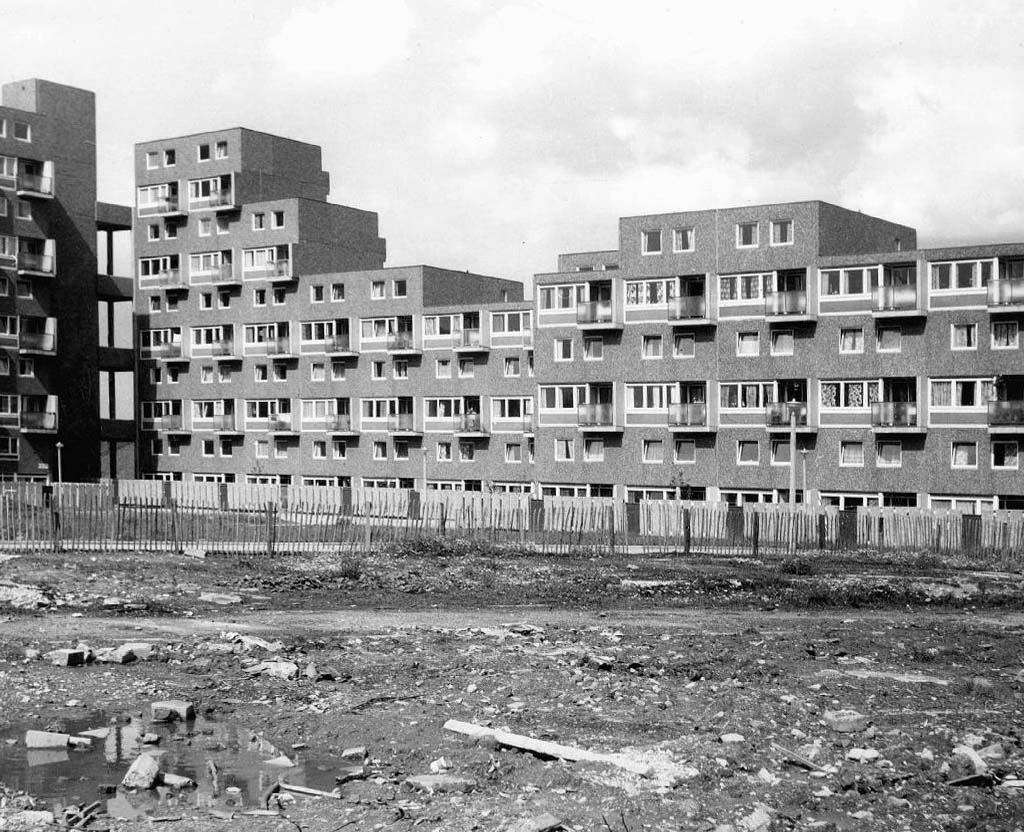
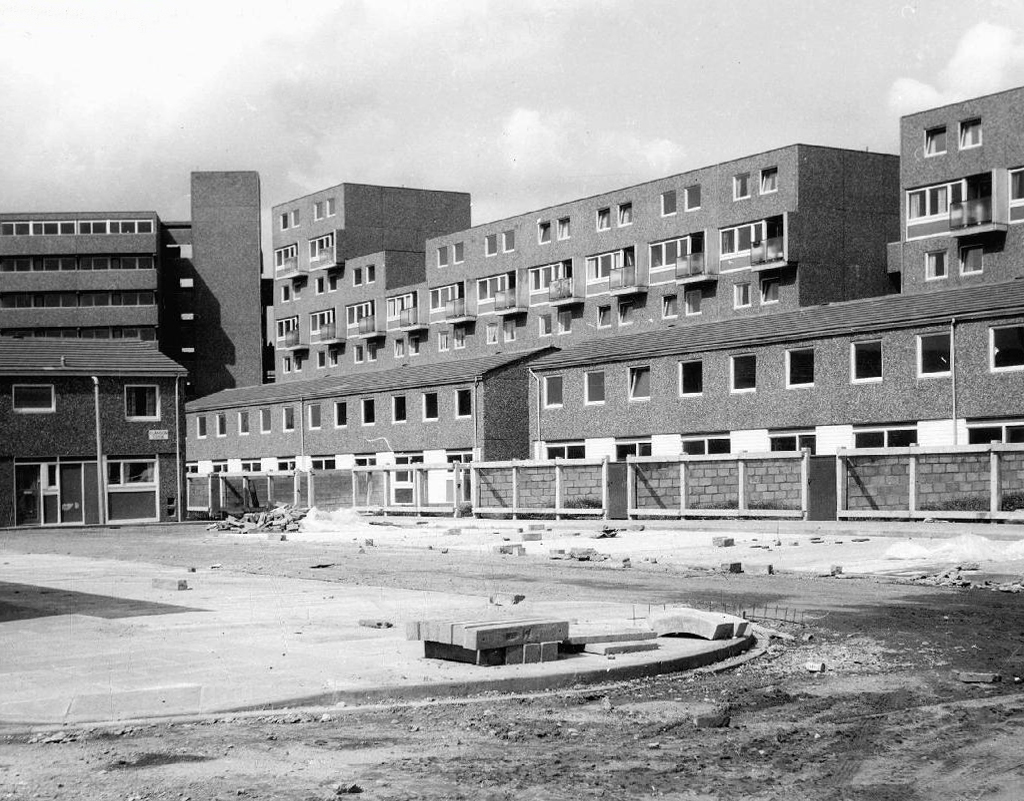
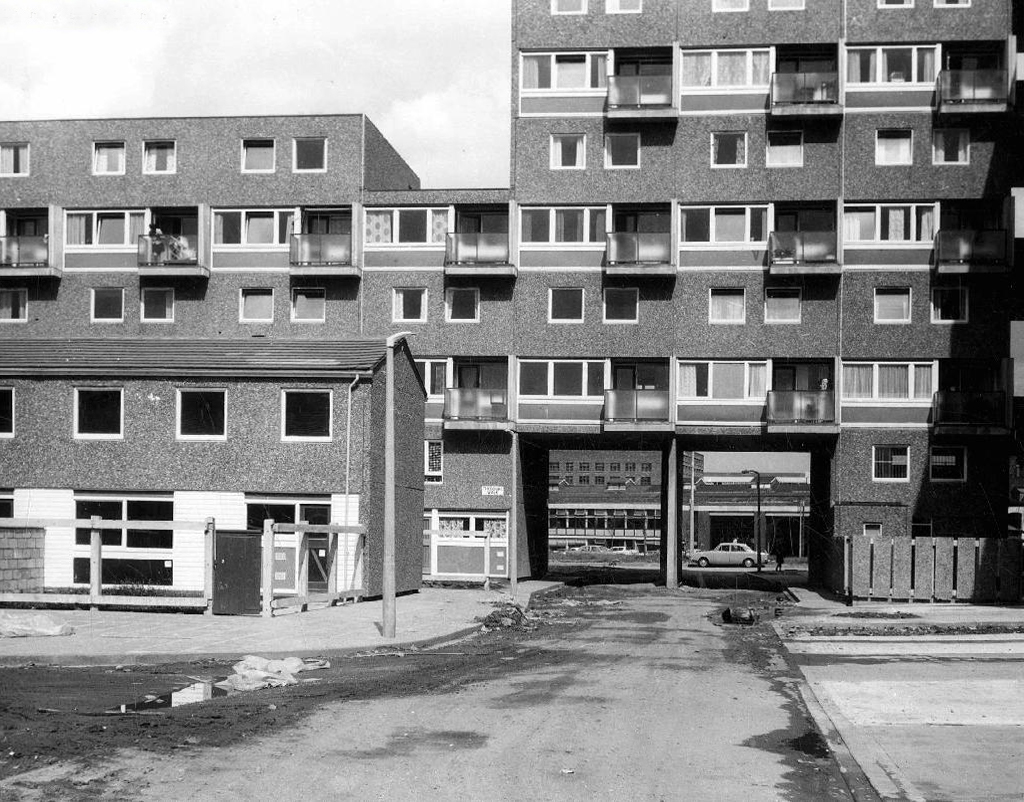
In Coverdale Crescent Ardwick such an architecturally innovative development was built.
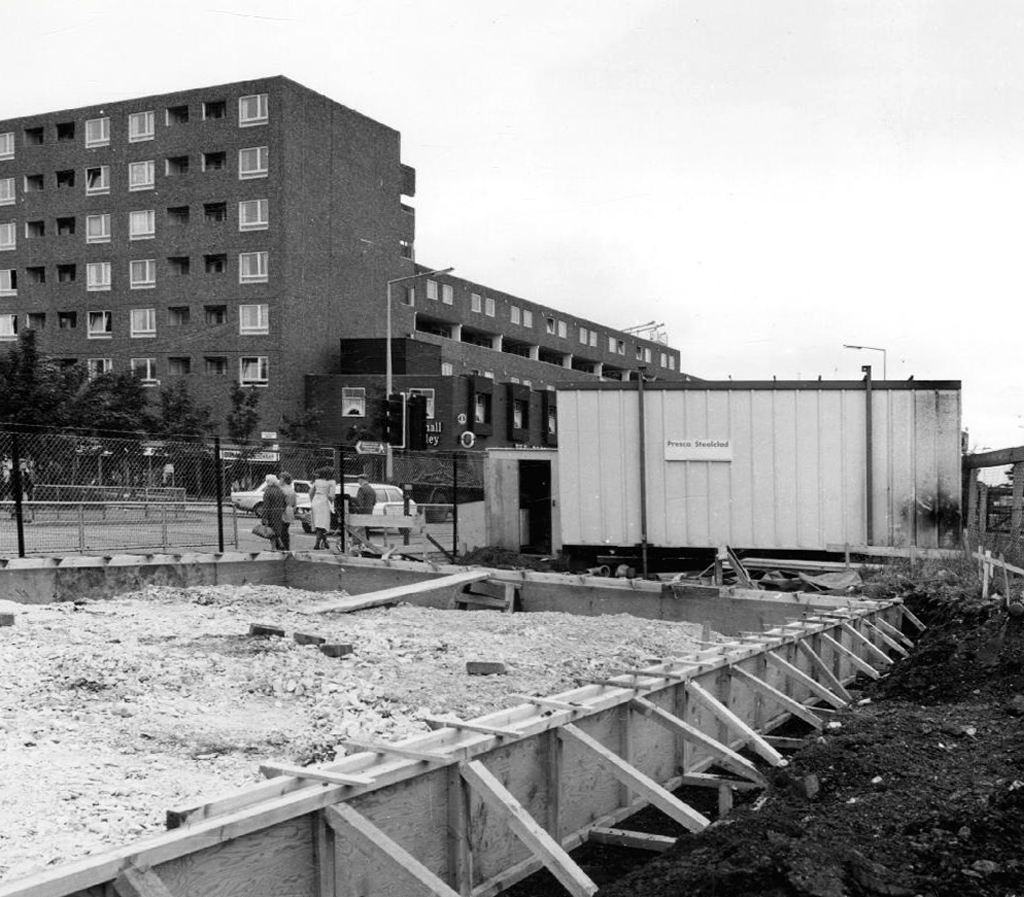
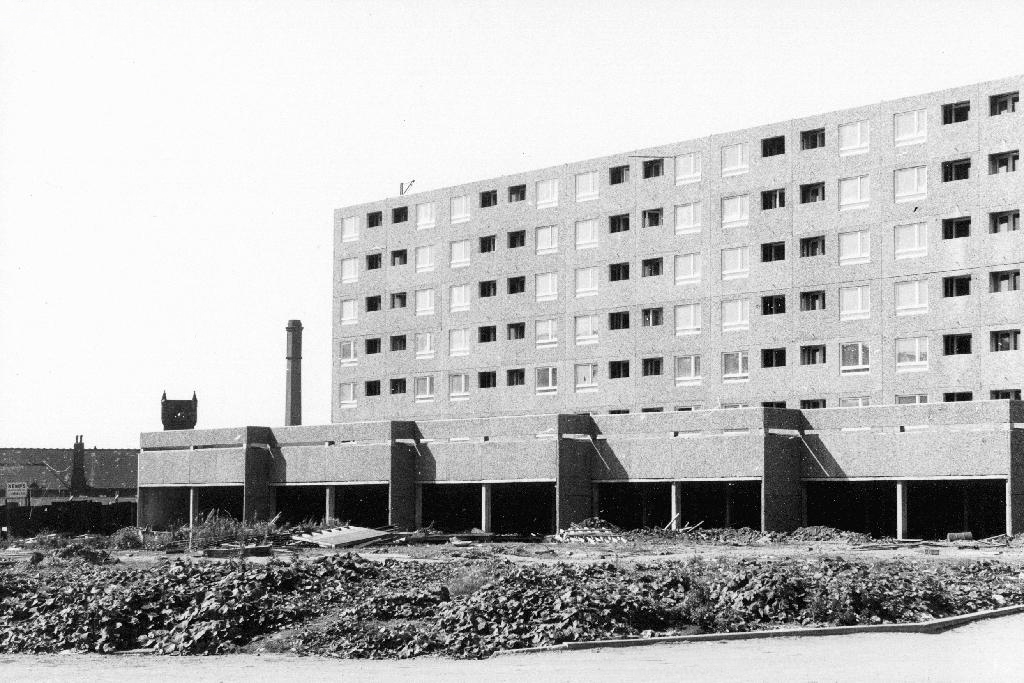
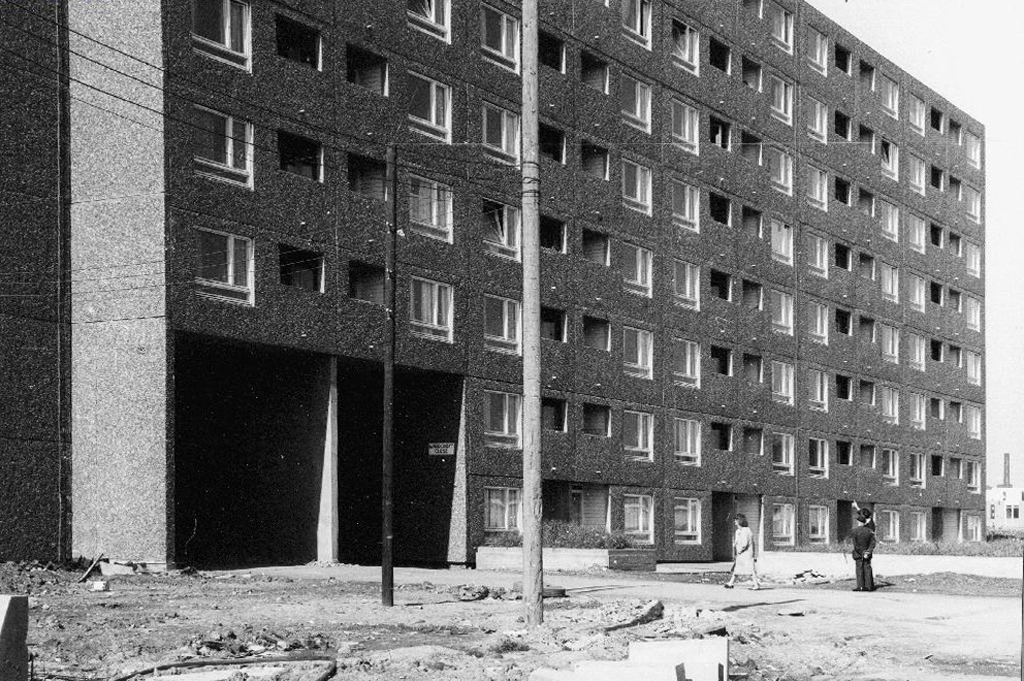
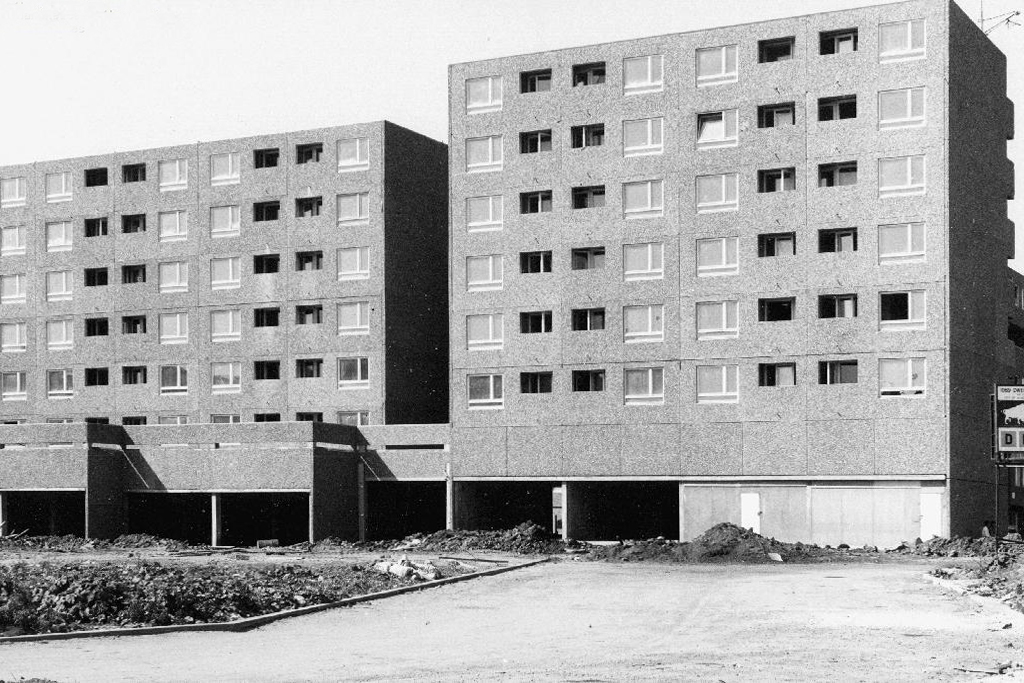
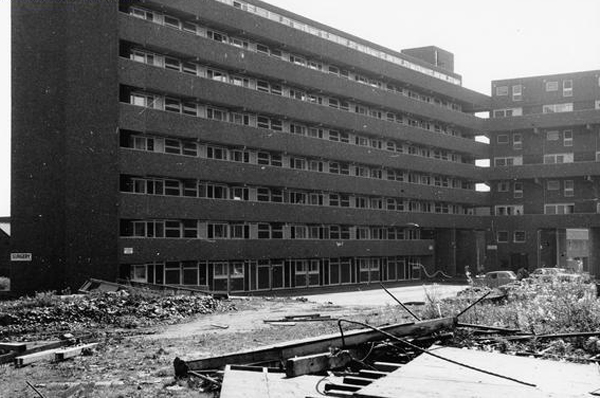
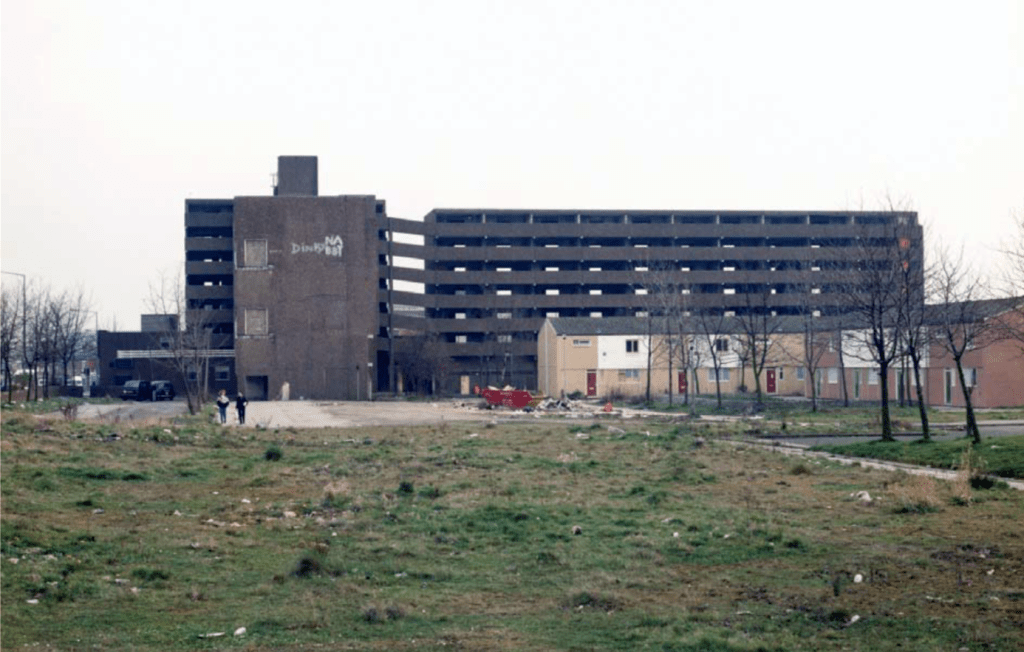
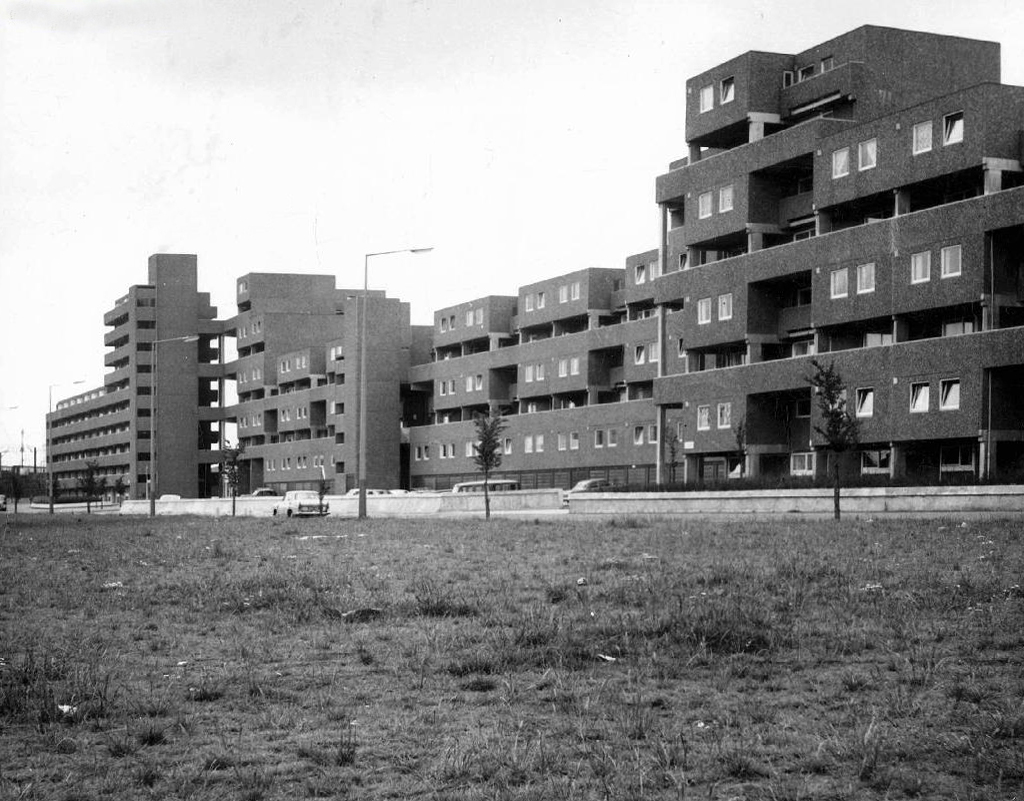
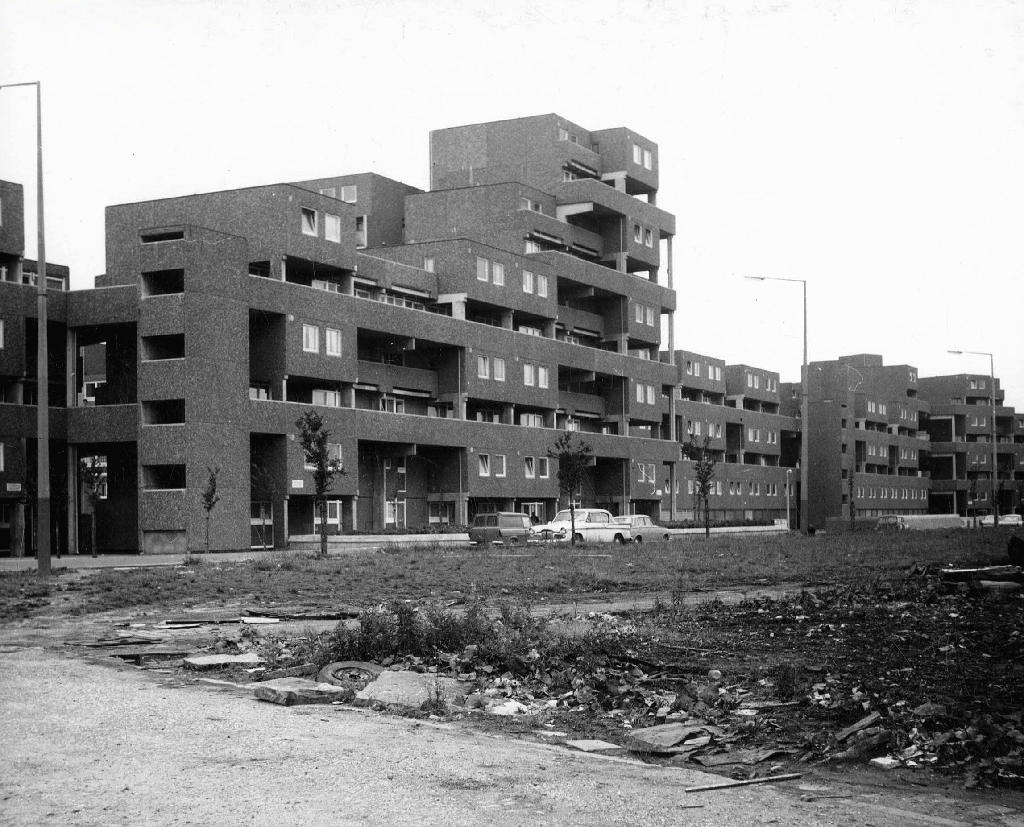
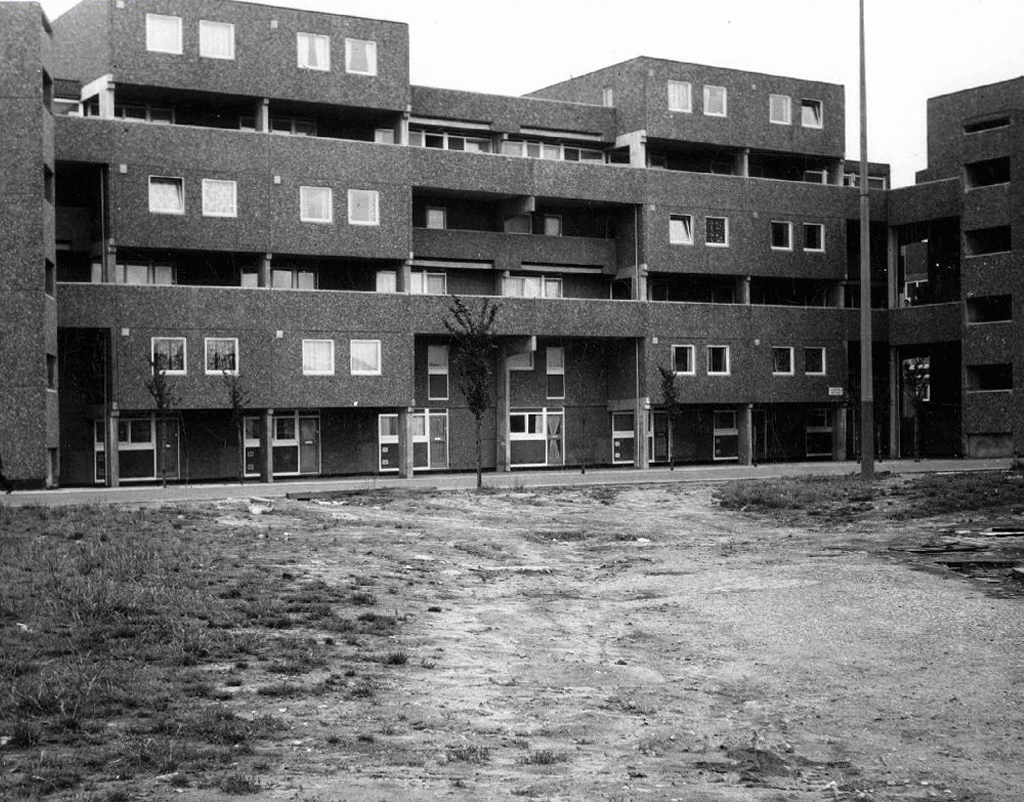
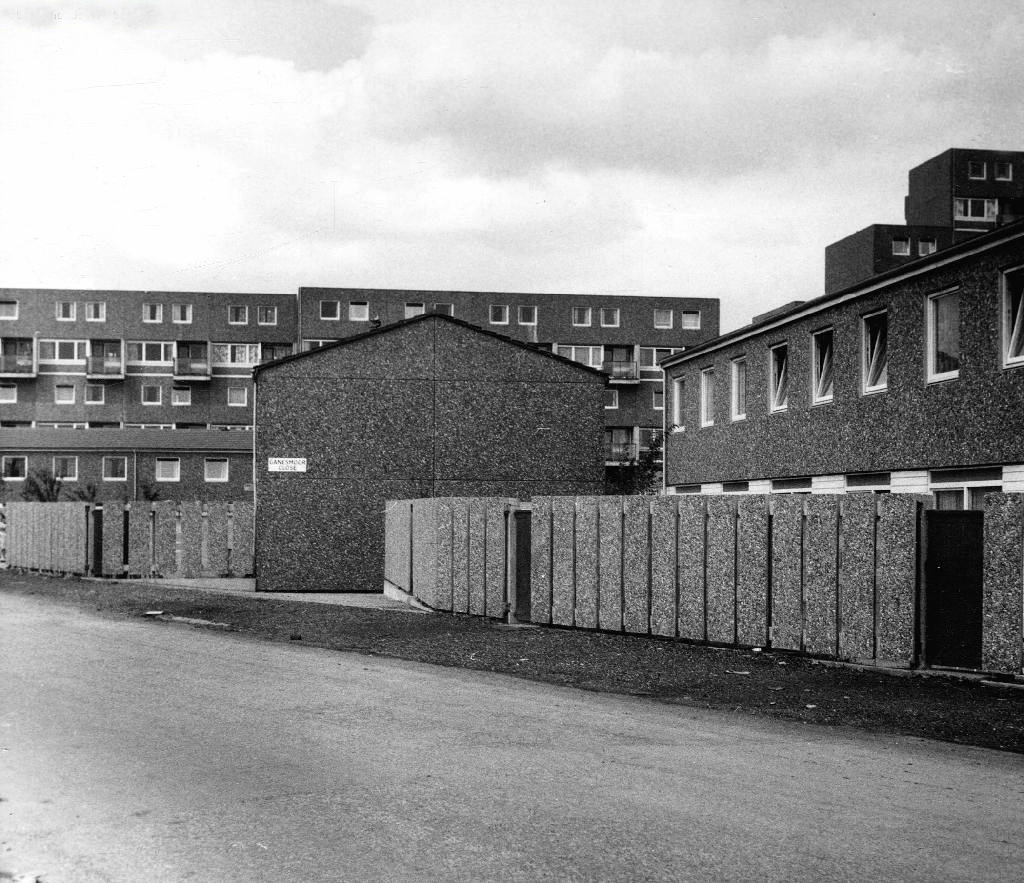
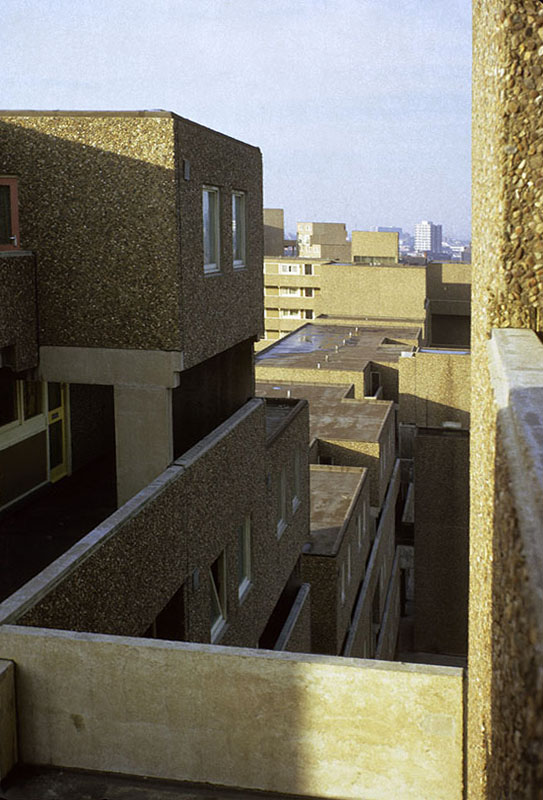
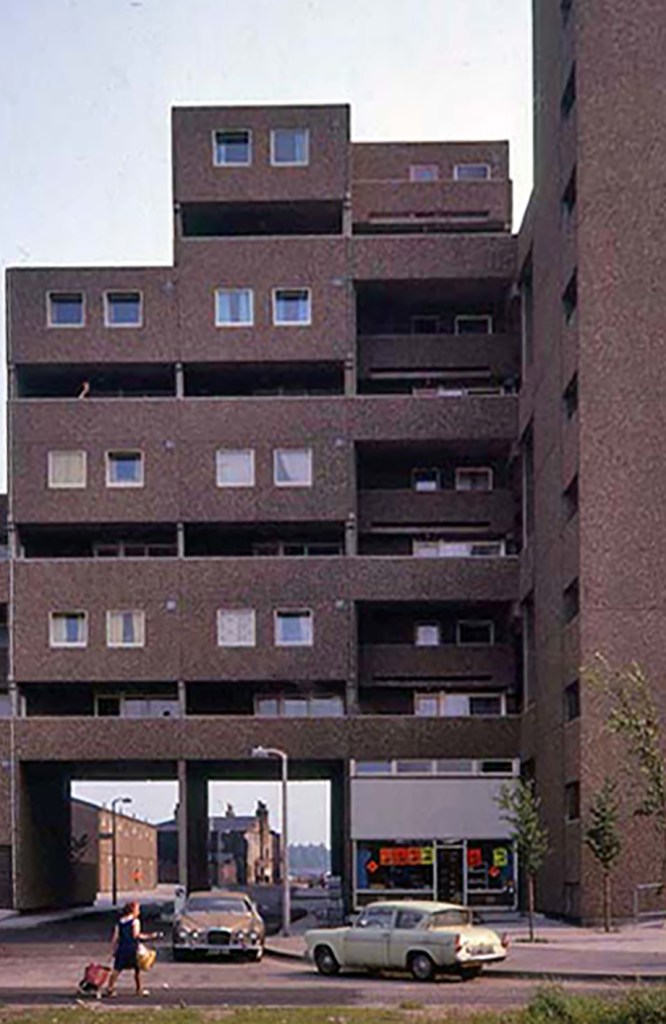
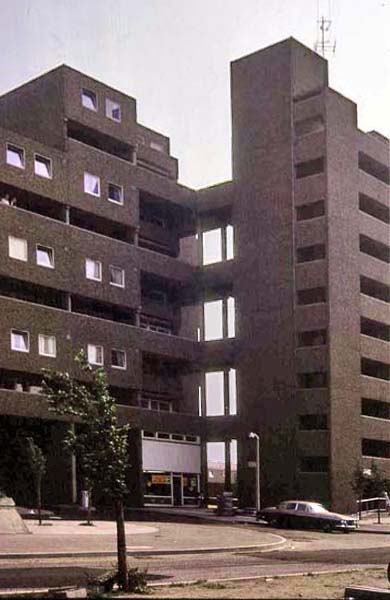
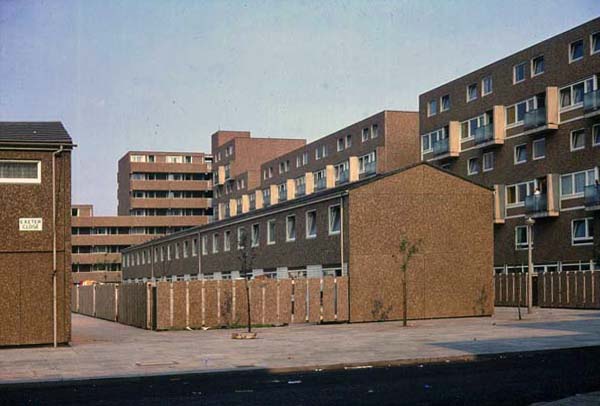
The estate, which became known as Fort Ardwick, was a deck access block of 500 homes. Completed in 1972, it was built with the same Bison concrete wall-frame system that had been used in neighbouring Fort Beswick.
By the mid-1980s it was clearly suffering from structural faults. The council employed a private firm of consultants to survey the estate, which found that water was leaking through roofs, steel fixings were corroded and concrete was breaking away. The council had to spend £60,000 immediately to bolt 1,100 panels back on to the building’s internal skin. The city architect, David Johnson, claimed that the report highlighted the rapid deterioration of Fort Ardwick’s fabric.
They said it was shoddy, thrown up, not enough care taken. The concrete panels weren’t made properly – the holes didn’t quite line up. You know what it’s like – you’re putting a flatpack cupboard together and something’s not in the right place but you just bodge it instead of sending it back, starting again, because you want the cupboard up and you’ve got other shit to do.
They had to get these consultants in, after they’d finished, to rebolt all the panels or something , so the whole thing didn’t fall down. Cost a bloody fortune my nan said, and that’s our taxes. And even then the rain got in. They’d put straw between the concrete, which sounds a bit medieval to me, and no-one wants wet straw walls, right? Cockroaches and rats and mould and that.
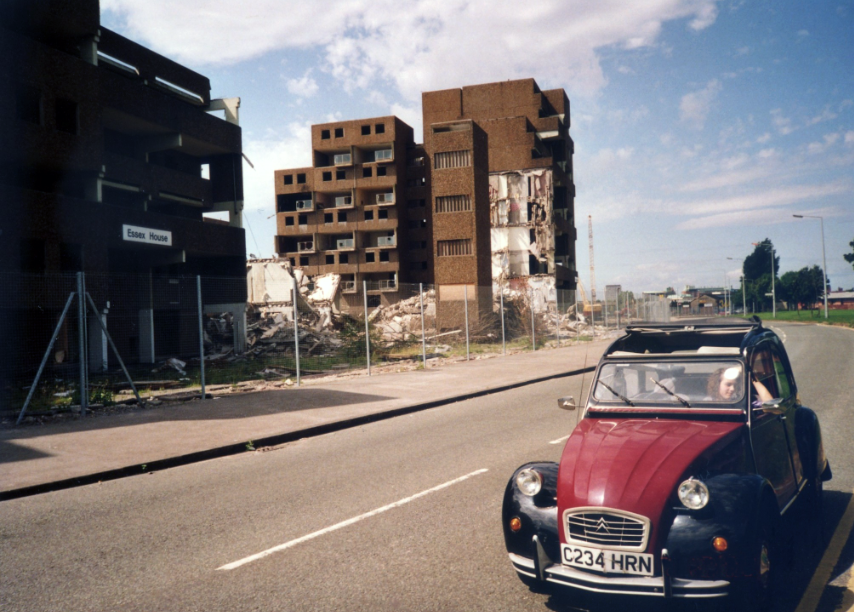
My nan remembers when they knocked down the terraces. I remember when they knocked down the fort. And maybe they had a point about it being shoddy, because soon as the diggers got their claws in, the whole thing fell to pieces, like it was made out of cardboard and bits of sellotape, not concrete and glass. A fort one week, a pile of rubble the next. No-one wept for it, they say.
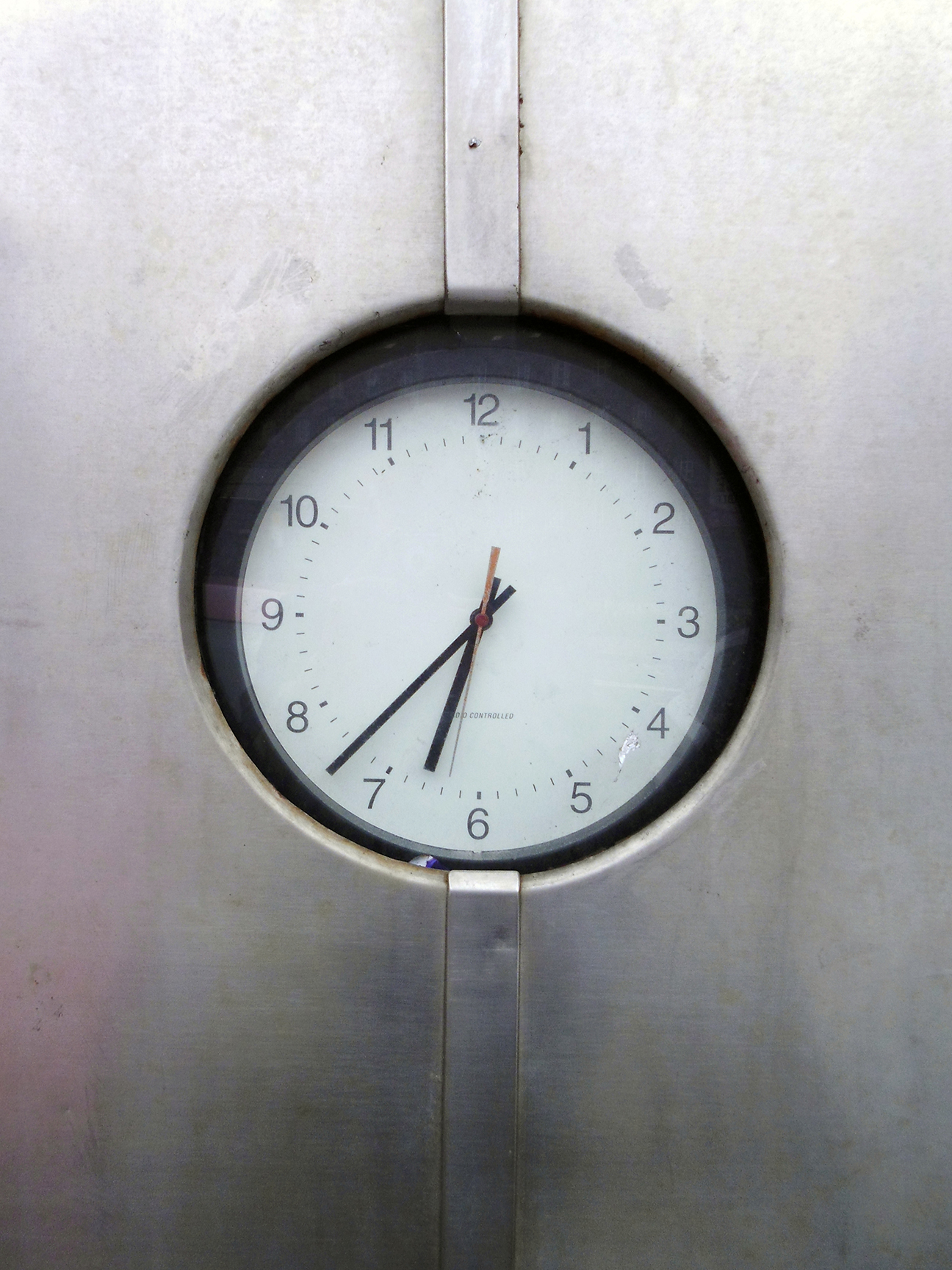
I didn’t cry, but I stood at the end of the street and watched the diggers pawing at the walls, ripping the place to bits, our old kitchen wall gone and the cooker and the cupboards and the crap plastic clock just there for everyone to see. Except there was no-one else looking.
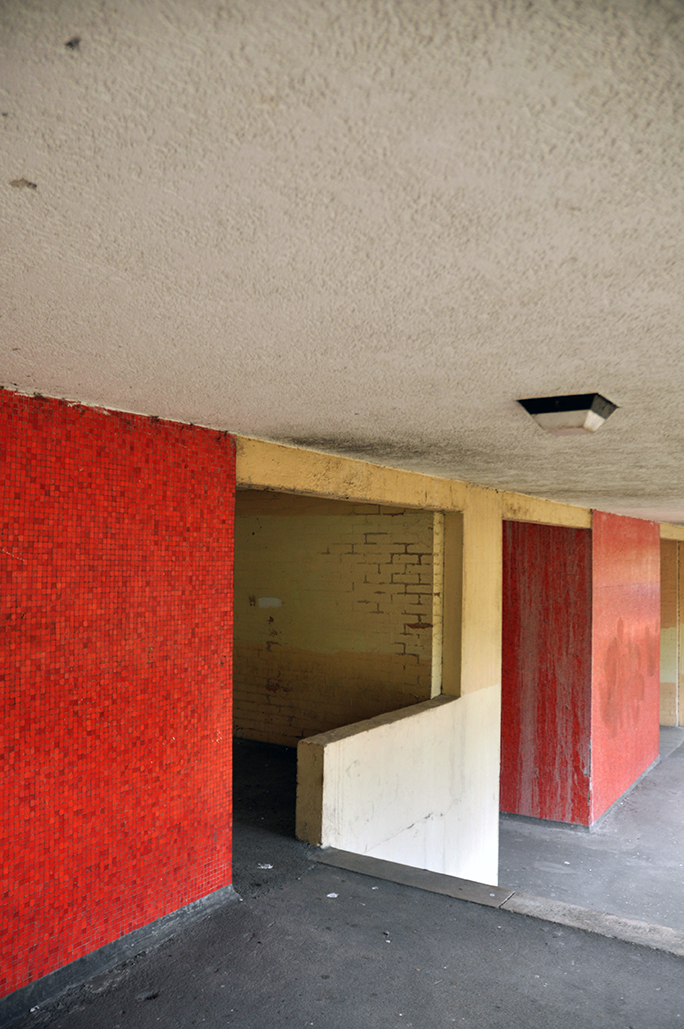
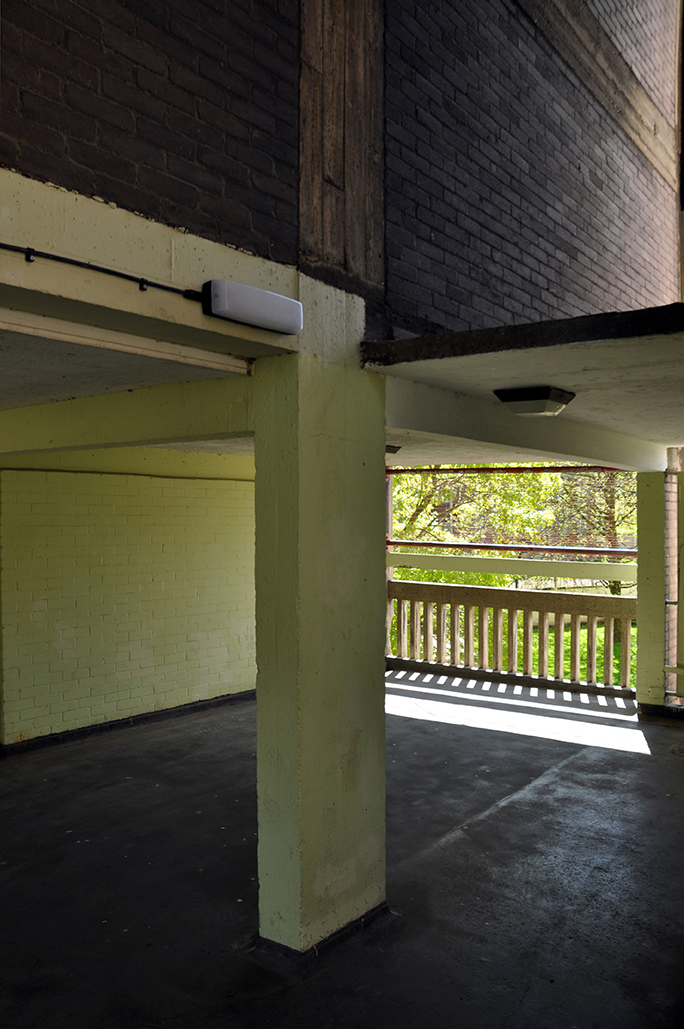
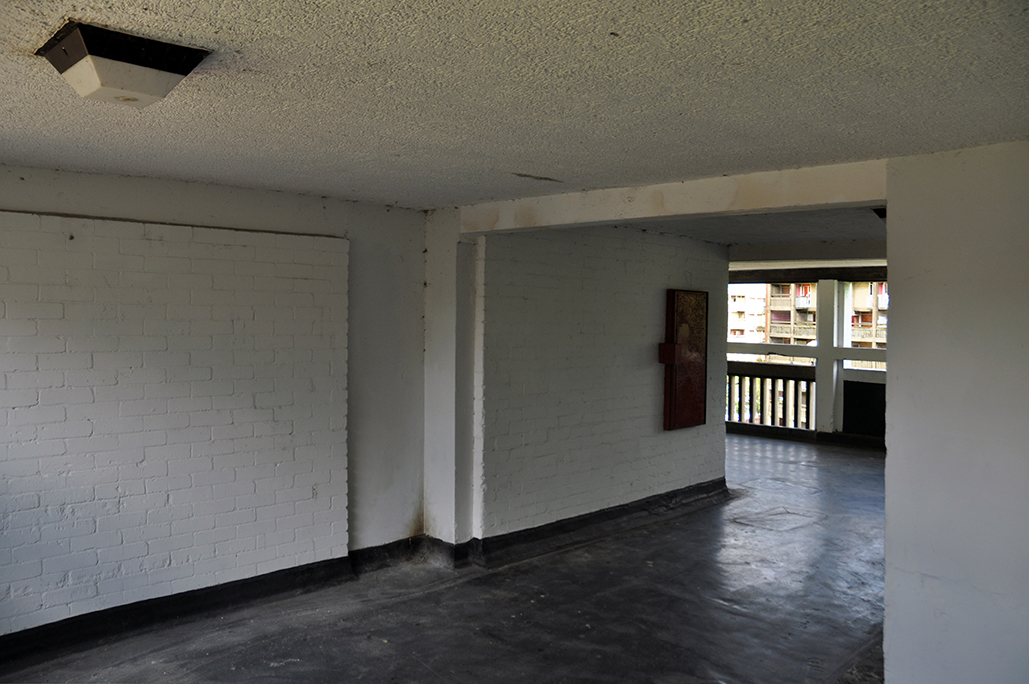
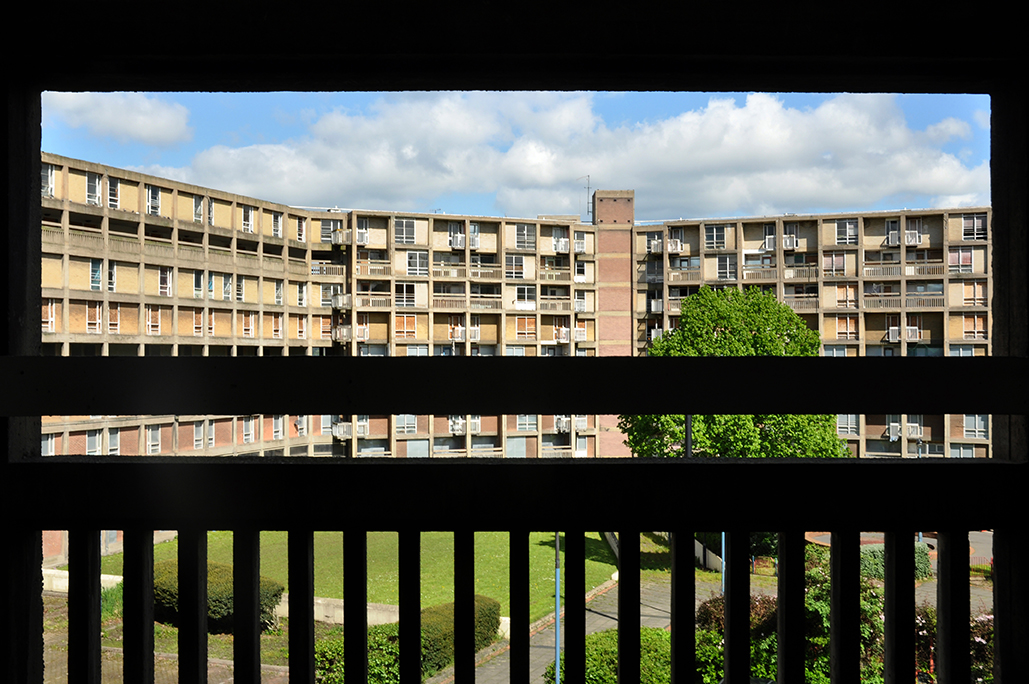
Once a beacon of Modernist design, now a listed concrete grid, in arrested decline, an essay in status and stasis, high above the city of Sheffield.
A handful of former residents of the once acclaimed social housing, cling to the western edge.
Phase one of the Urbansplash redevelopment has carefully coloured in a portion of the eastern corner, then exited, their cladding tucked tightly under their arms.
Impasse.
All tinned up with nowhere to go, to walk the walkways, is to enter a ghost town, where no tumbleweeds tumble. Billy the corporation cleaner is happy to work alone, sweeping the empty spaces.
“Some don’t like working up here, I don’t mind my own company. Even if there was just one resident left, we’d still have to keep the place in order. You’d love my house, it’s an Army Barracks in the centre of town. Wife’s the caretaker, been in her family for three generations.”
This is the second of three visits I have made from across the Pennines.
Mark – “Why are all these photographers coming here from Manchester?”
“Been here some time, this is the second flat I’ve had, just missed out on one of the new ones though. Had this one nine years. Bloke threw himself off last week, he had a wife kids, parked up and just jumped.”
Somewhere at the edge of the World ice cream vans go to die, I know I saw them from the train back from Brighton, I just had to go and have a look. I was received warmly by the busy proprietors going busily about their business, readying the working vans for their working day on the coast. It seems they break the invalids up for spares keeping the ageing vehicles on the road for another season – dispensing joy to jolly girls and boys in cornet, tub and lolly form. There is however something inevitably heartbreakingly poignant, seeing the signage fade, in the southern sun, as brambles weave in and out of open window, steering wheel, wheel arch and fridge. Ask not for whom the chimes chime.They chime for you.Nevermore.
What happens to functionalist architecture when it ceases to function?
It ceases to function.
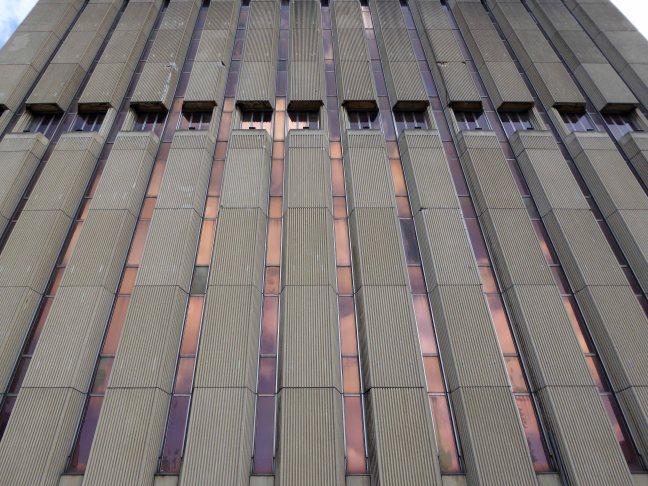
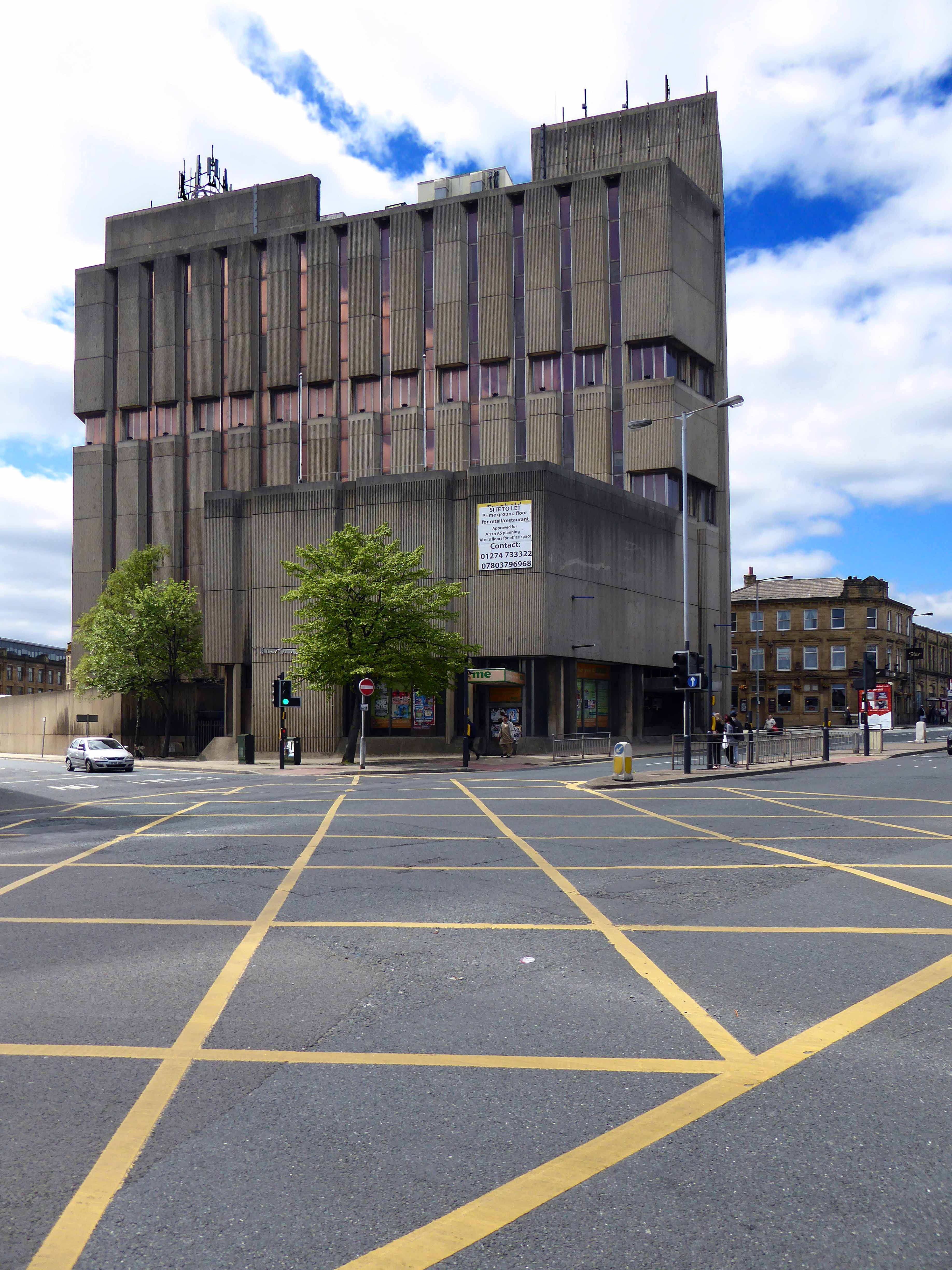
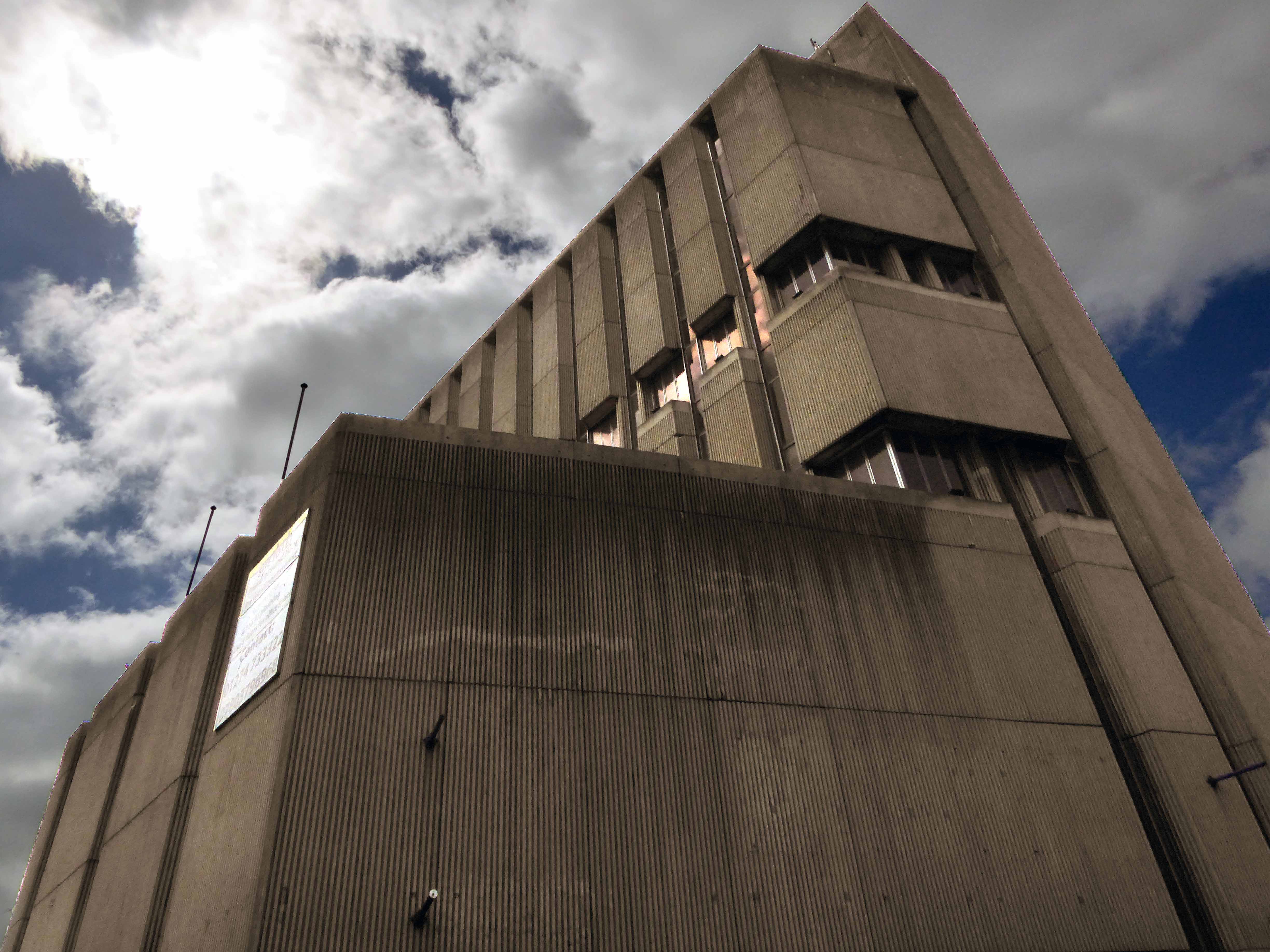
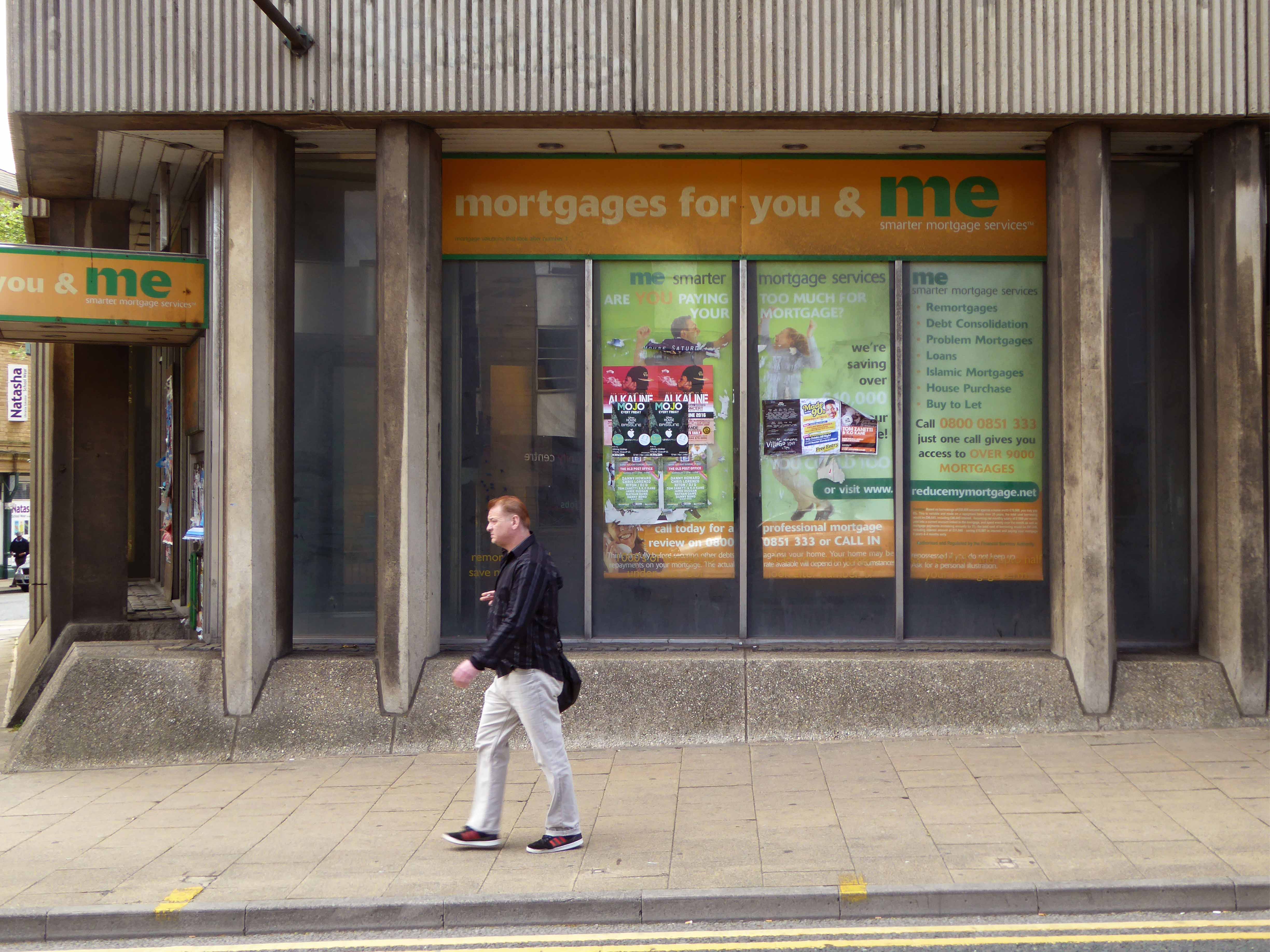
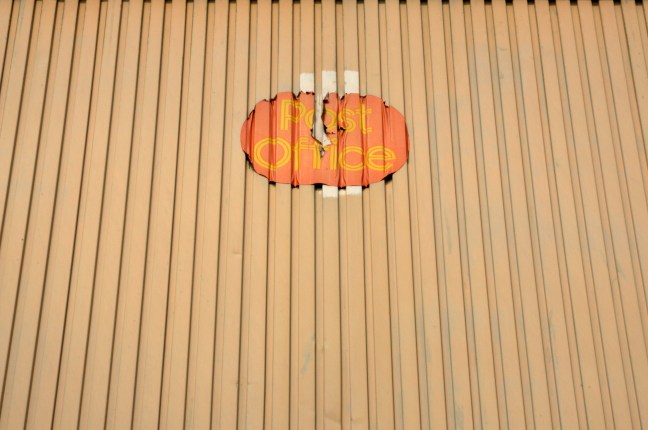
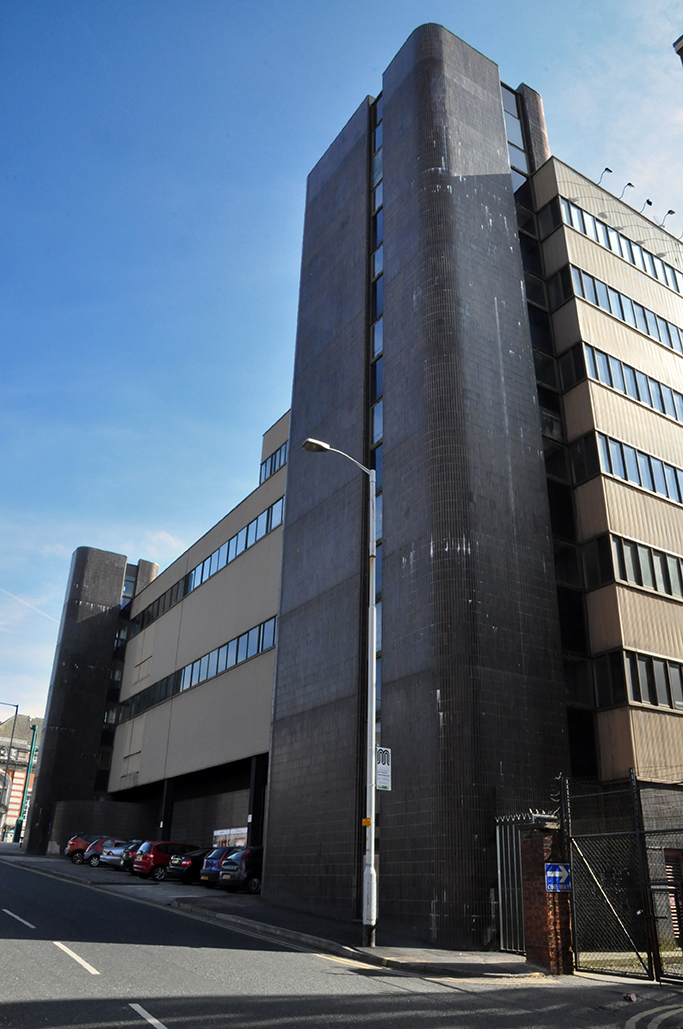
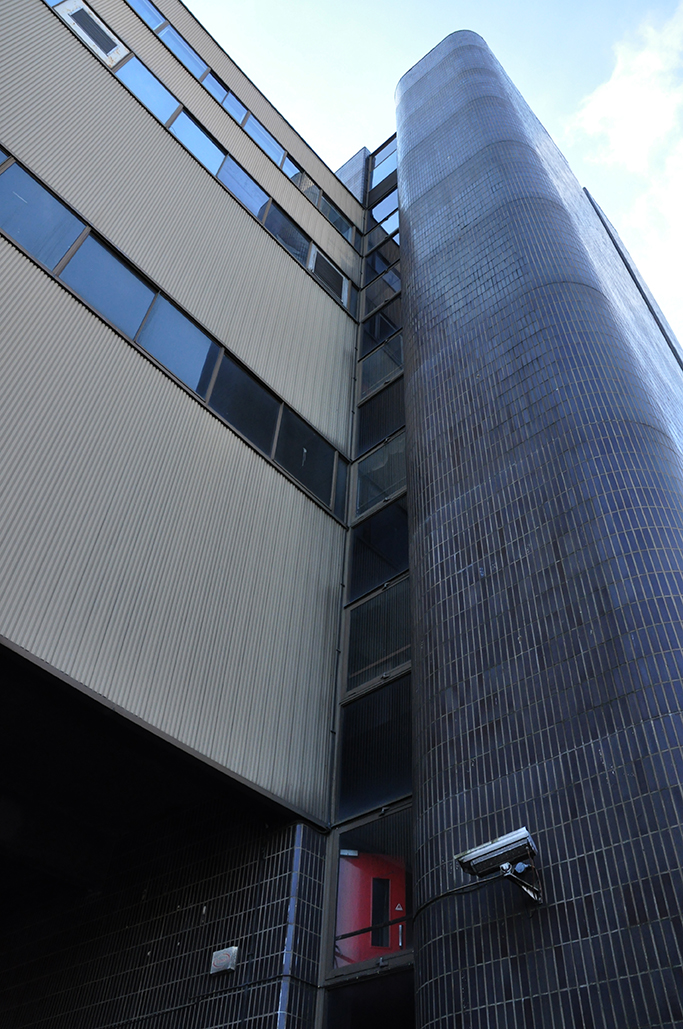
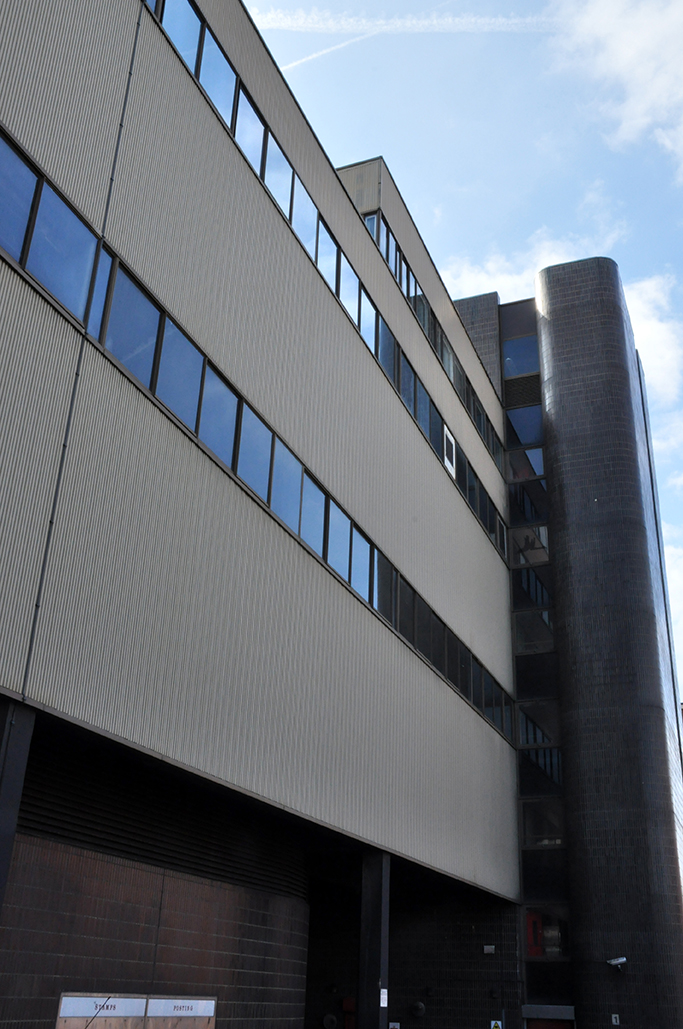
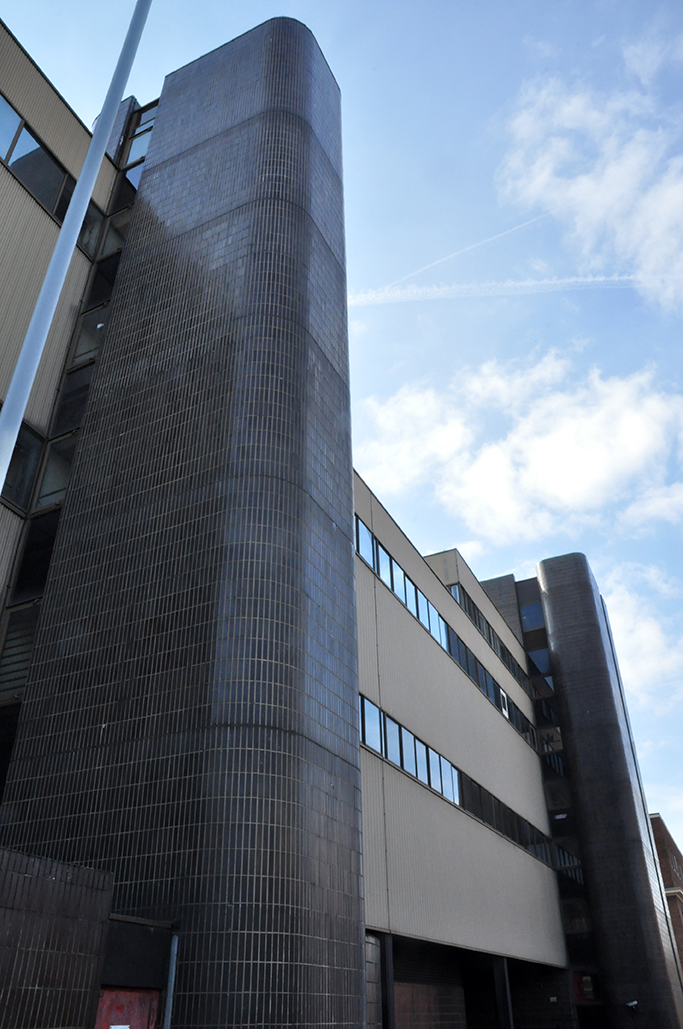
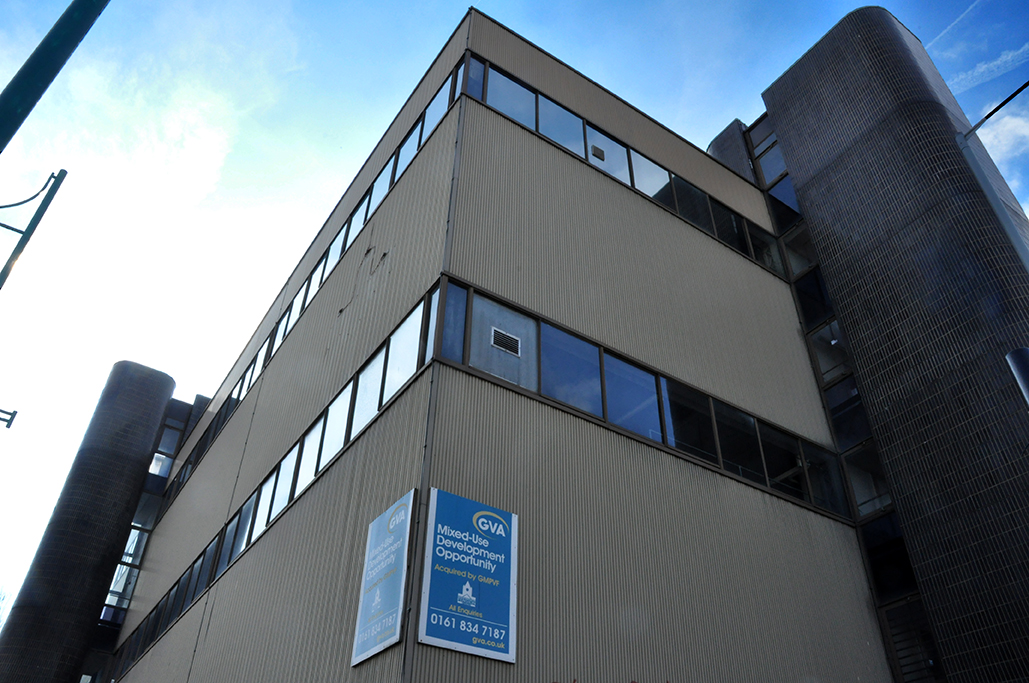
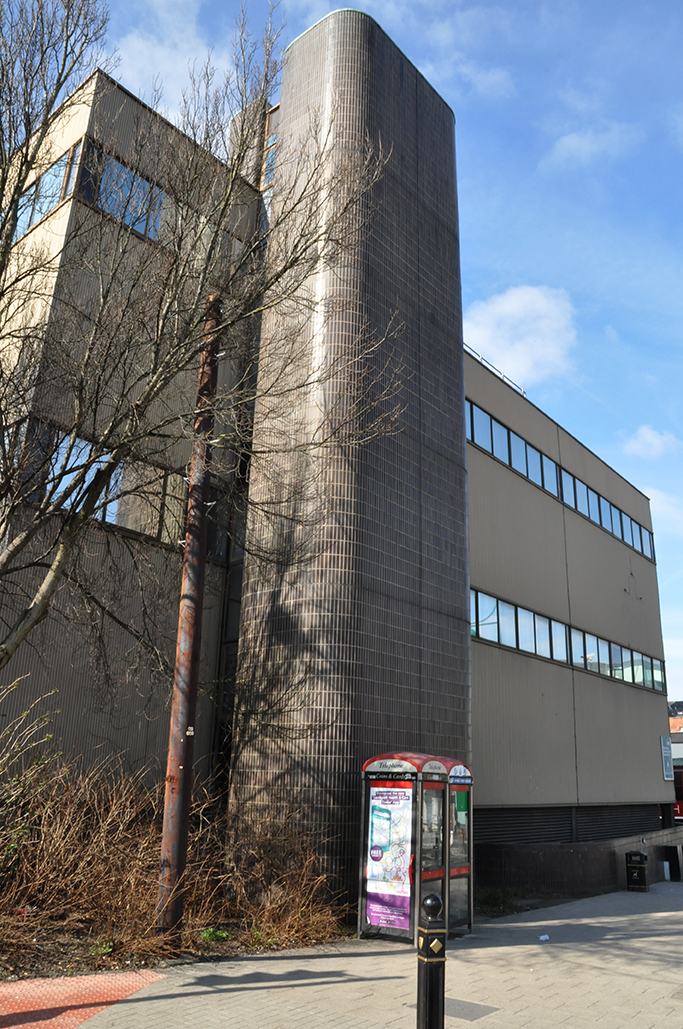
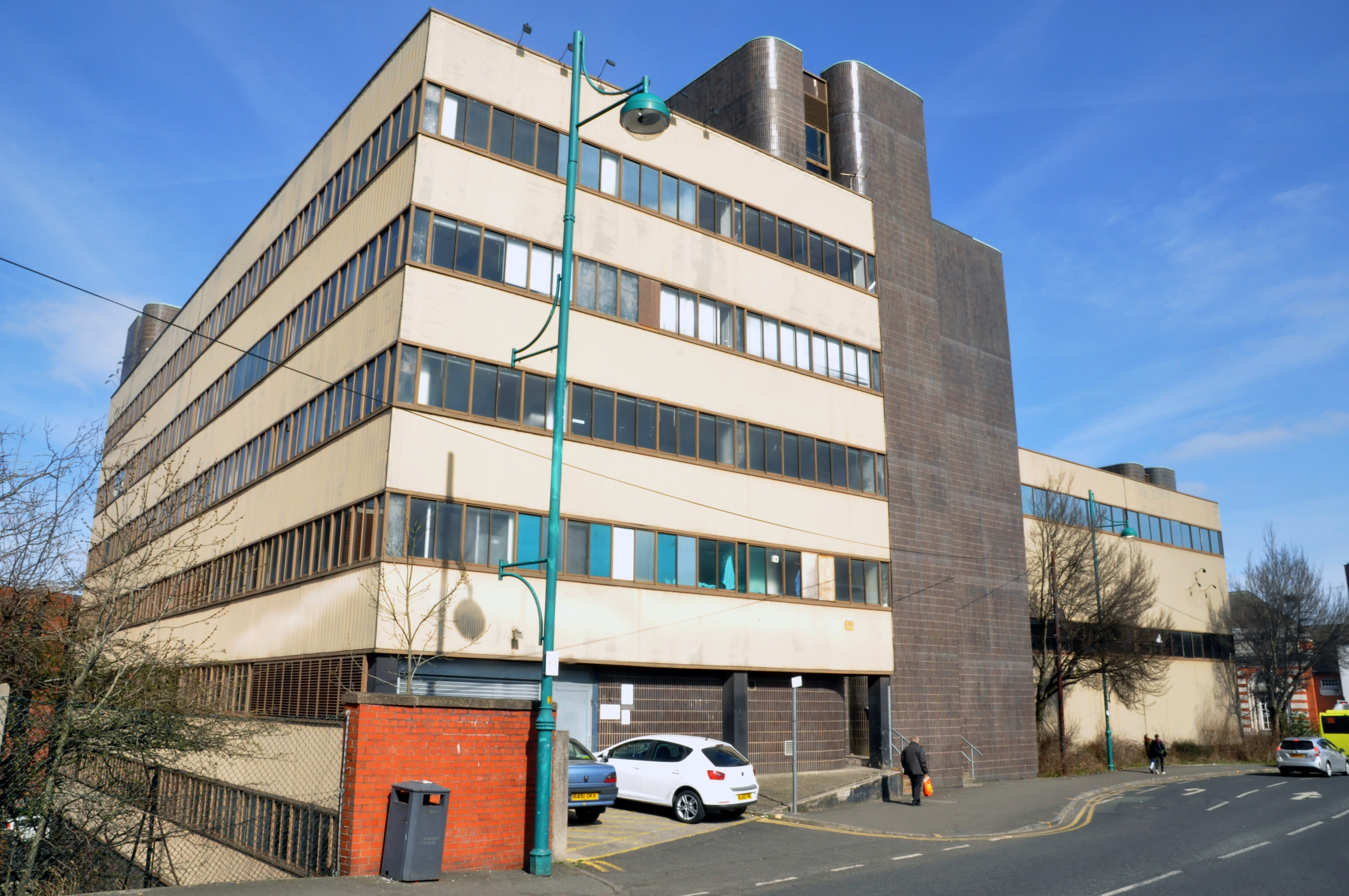
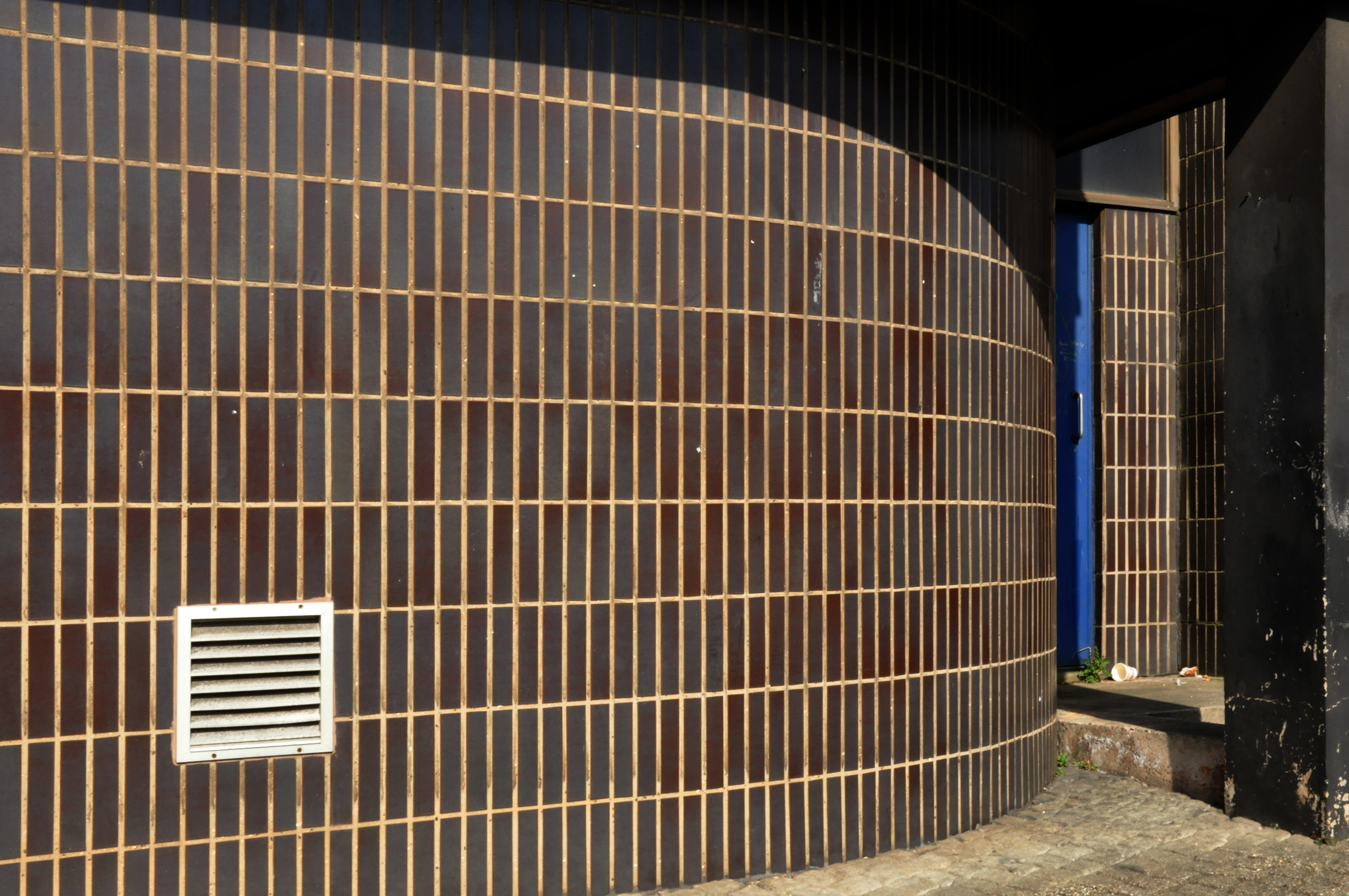
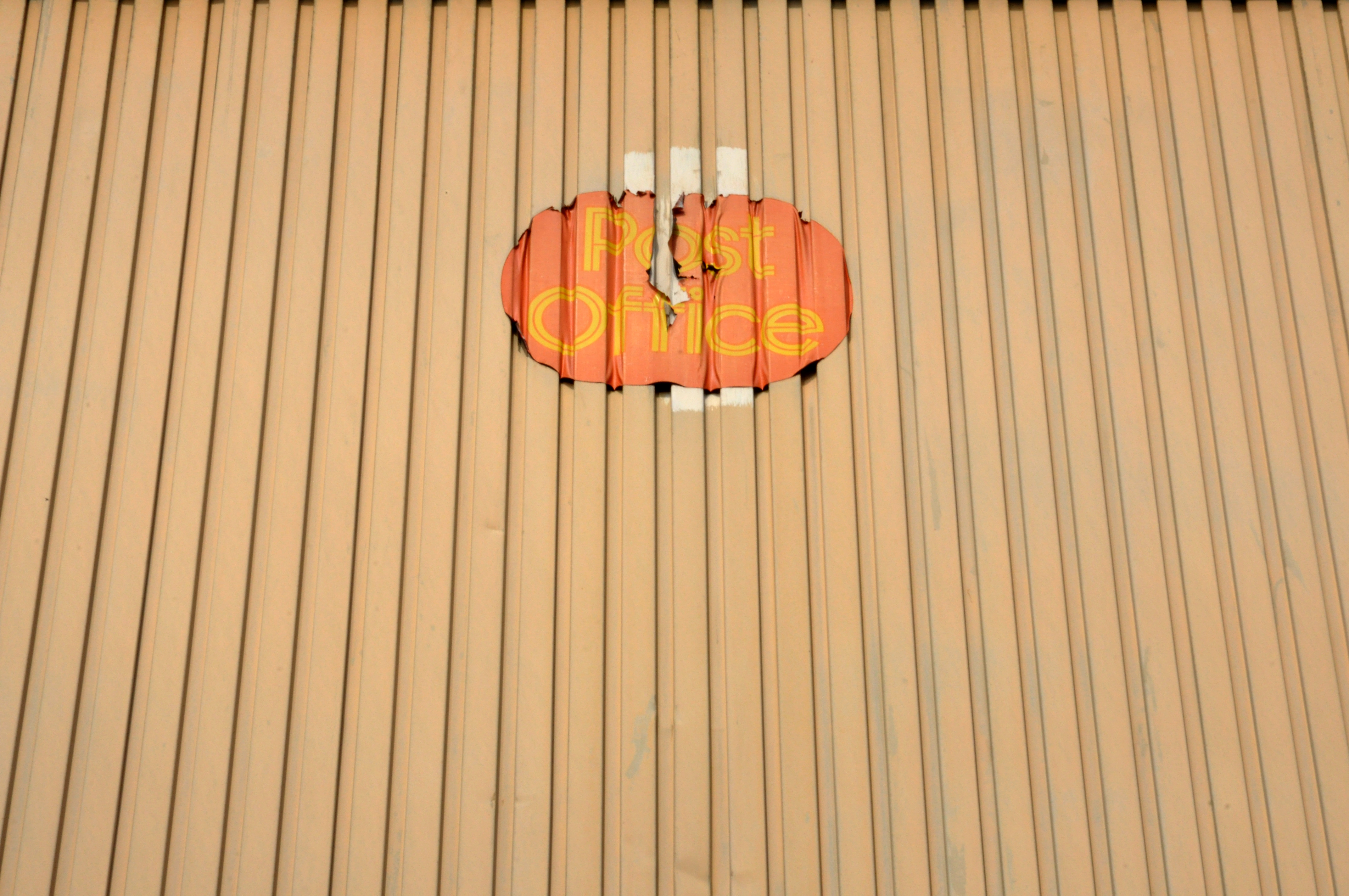
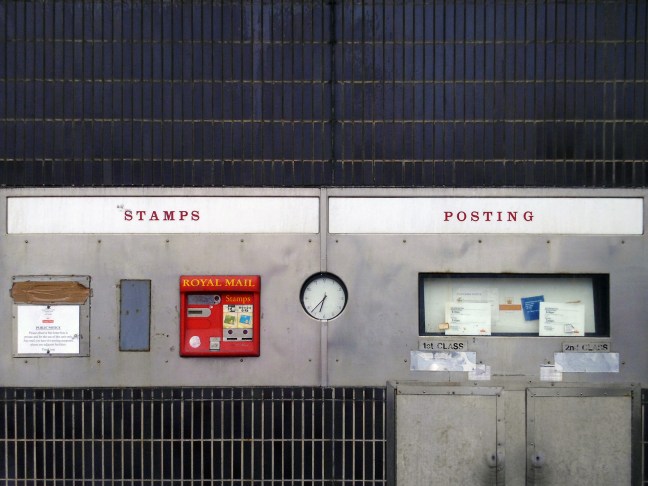
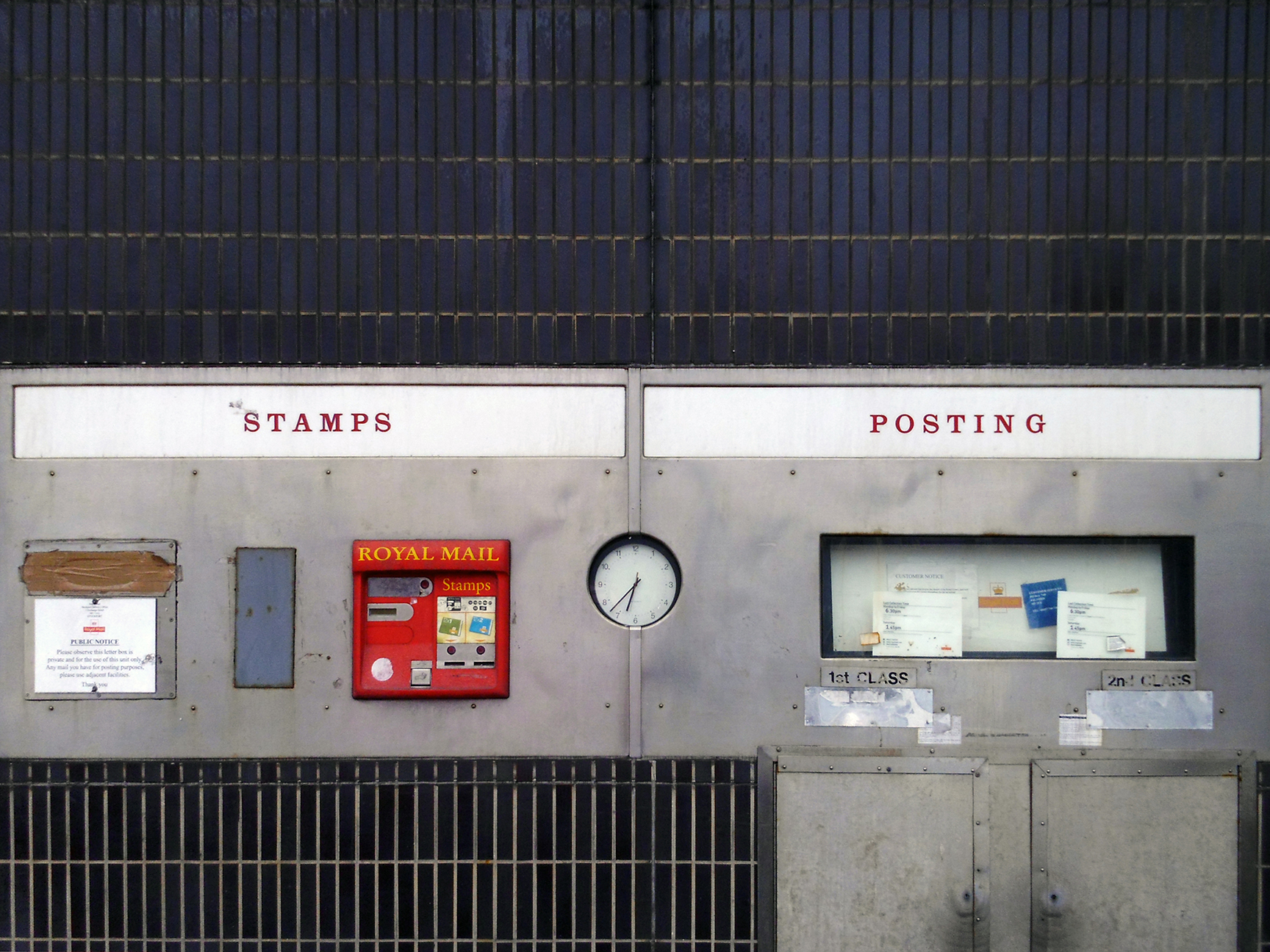
Standing on the A6 in the centre of the town, once home to a warren of postal workers, sorting mail in preparation for the two delivery a day walks. This was a communications hub before they even thought of communications hubs.
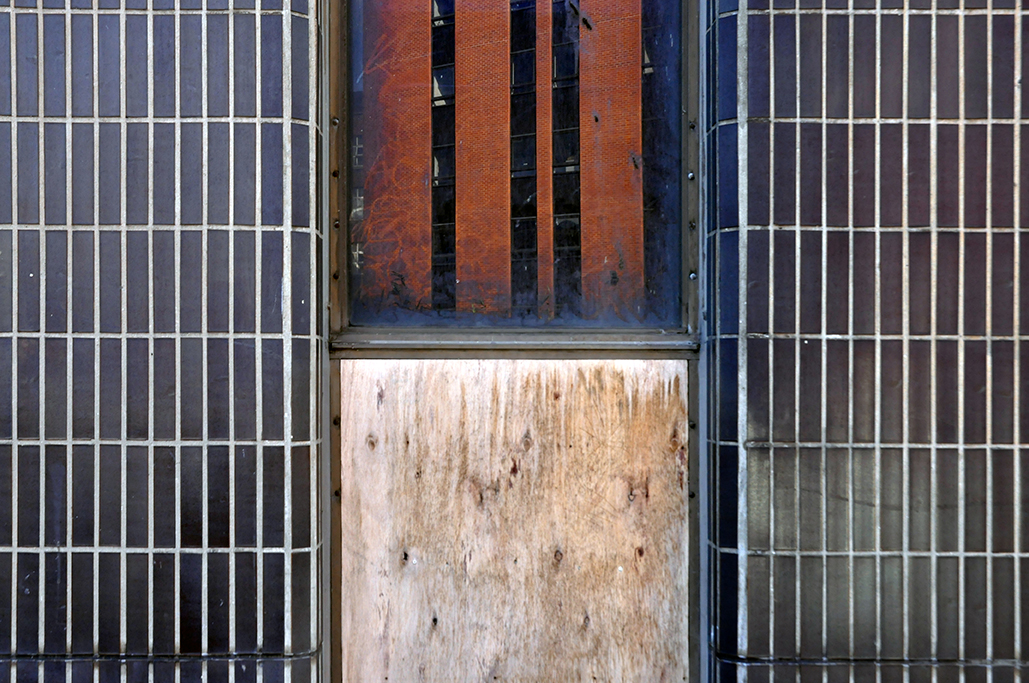
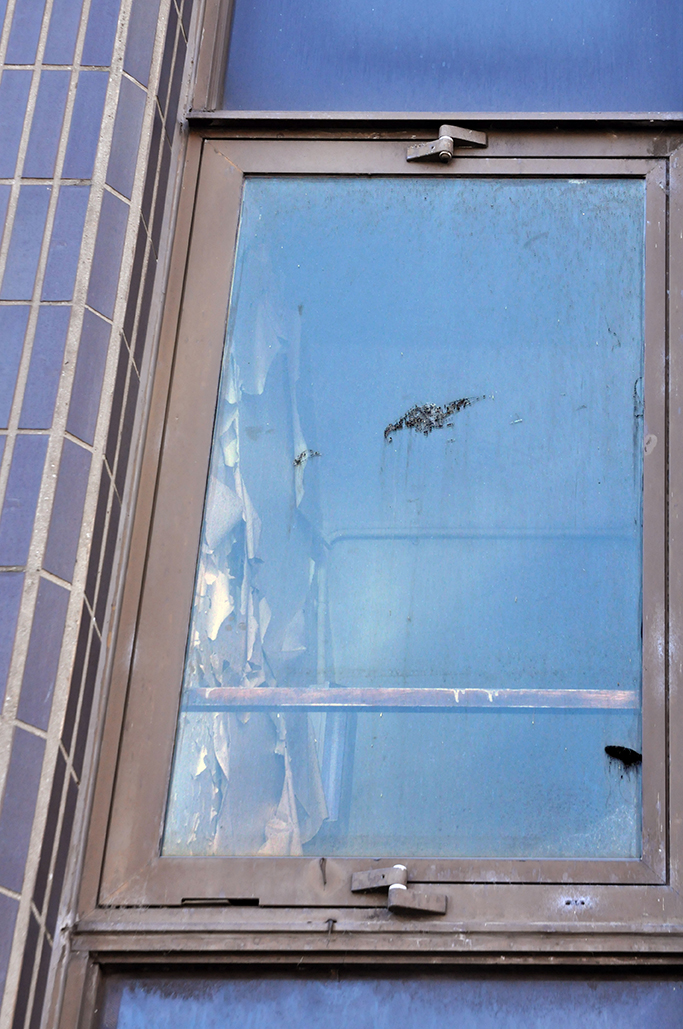
The office stands empty, inside the paint slowly peels.
Following changes in working practices the posties now sort their own round, for a single daily delivery. The process has become mechanised, requiring new technologies and an appropriate anonymous architecture, on the edge of town.
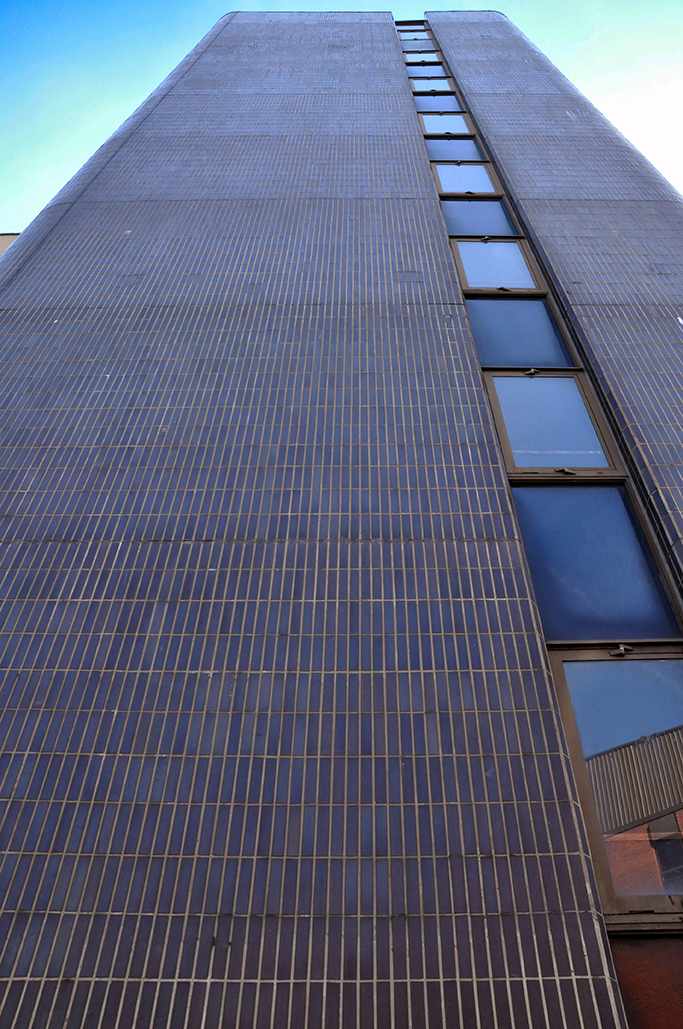
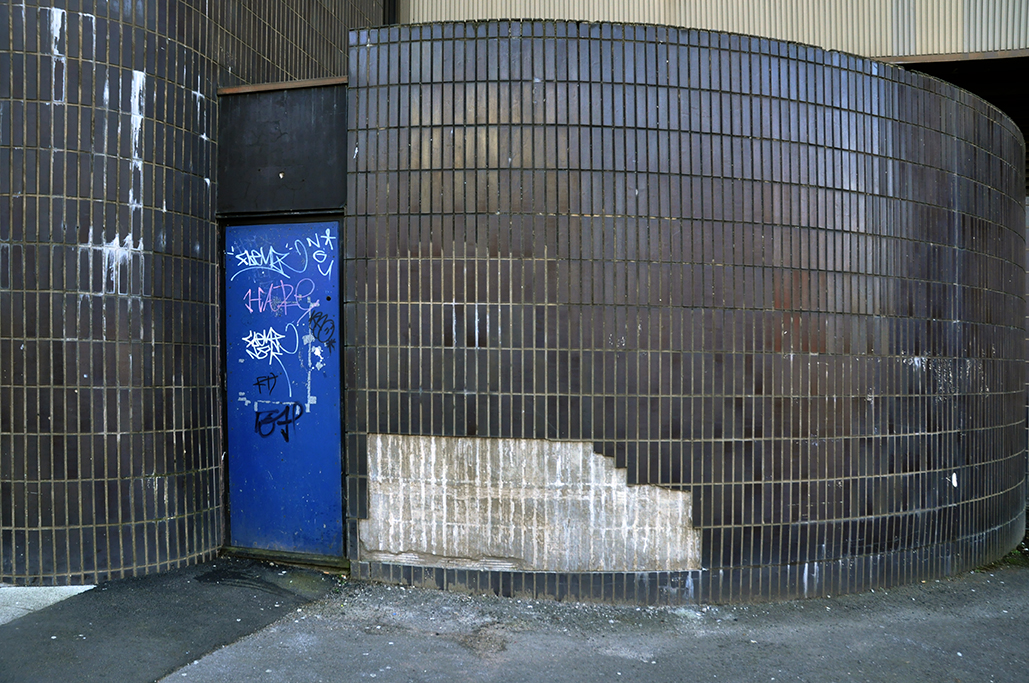
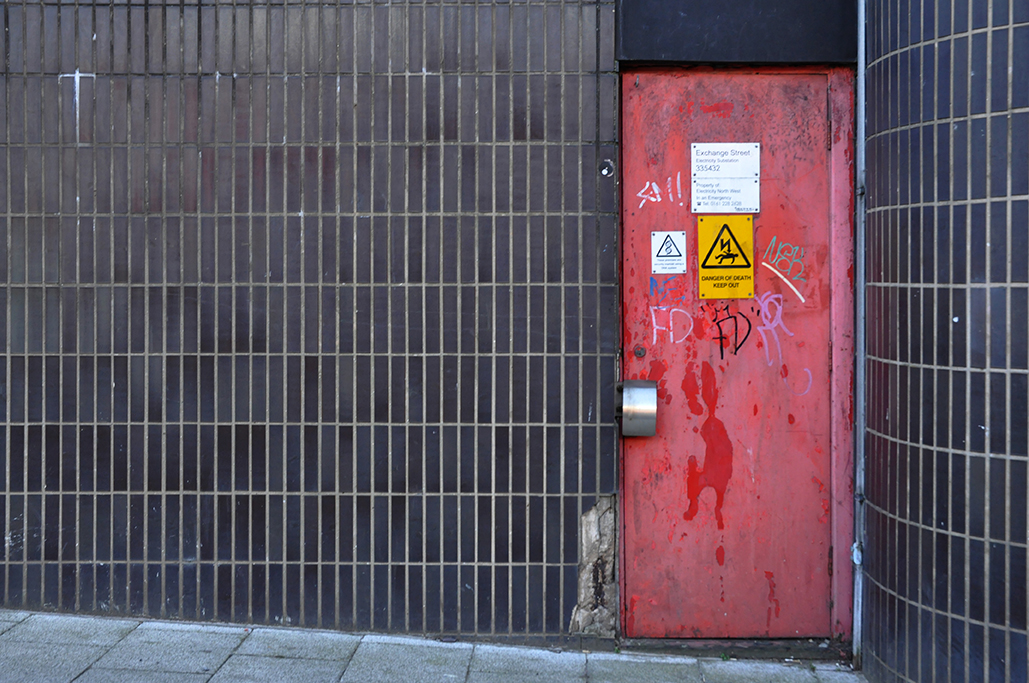
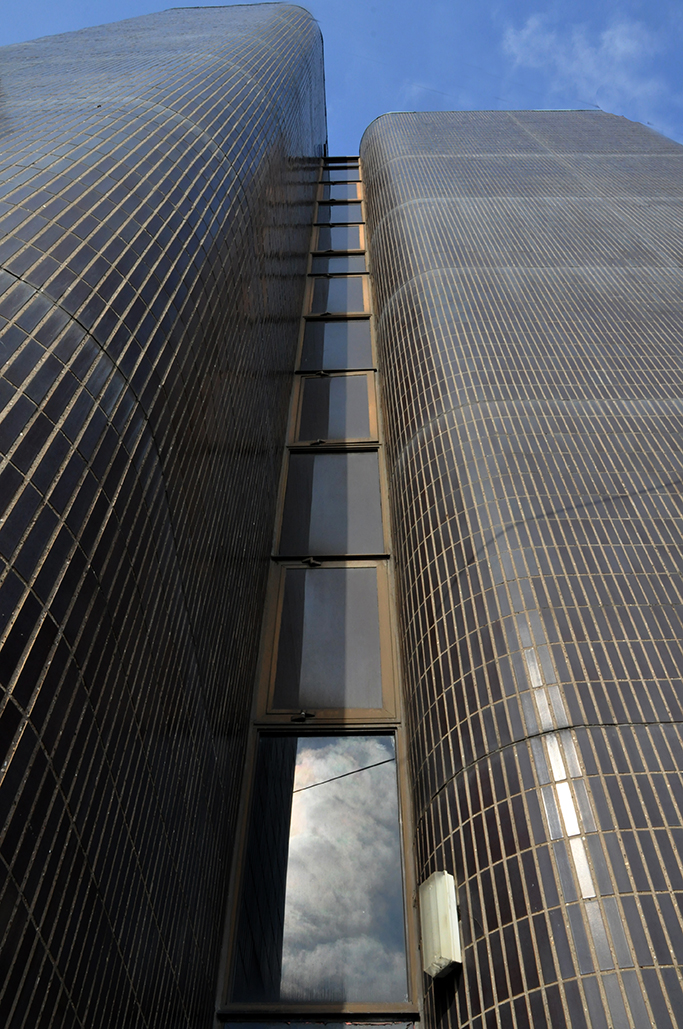
The building however, continues to reflect a 70s optimism, monumental – fading, as optimism is apt to do.
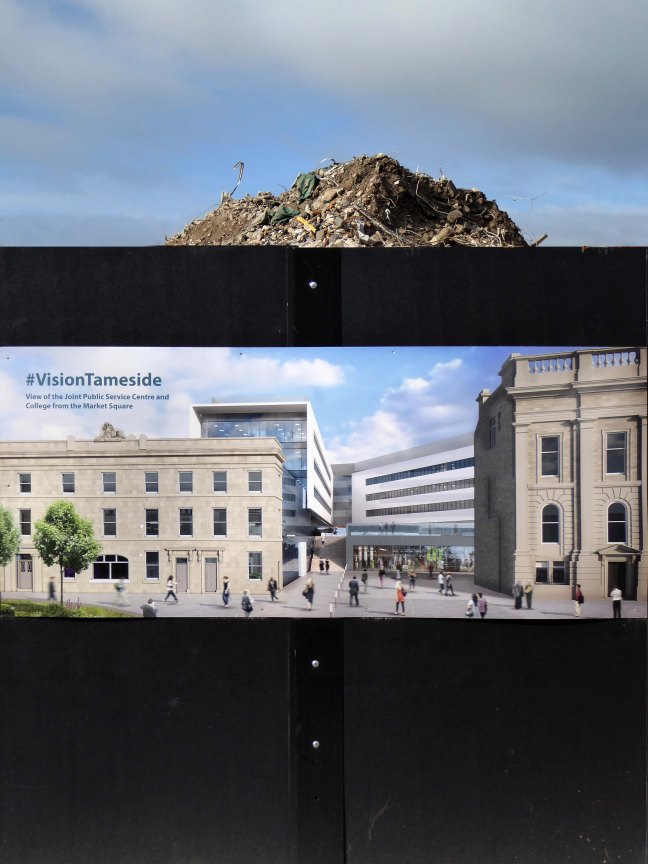
An exciting composition of curved tiled volumes and boxy glass and steel modernism, in a delightfully battered brown and cream. Now in the ownership of the Greater Manchester Pension fund, its future would seem, to say the least, uncertain. This whole Grand Central site clustered around the railway station has been subject to a series of speculative leisure developments. As in other locations they seem to fade, just as quickly as the boarded hoardings, shrouded in designers’ digital piazza visualisations.
So we stand and stare at each other lovingly, our heads in a cloud of municipal stasis.














































 Modern Mooch