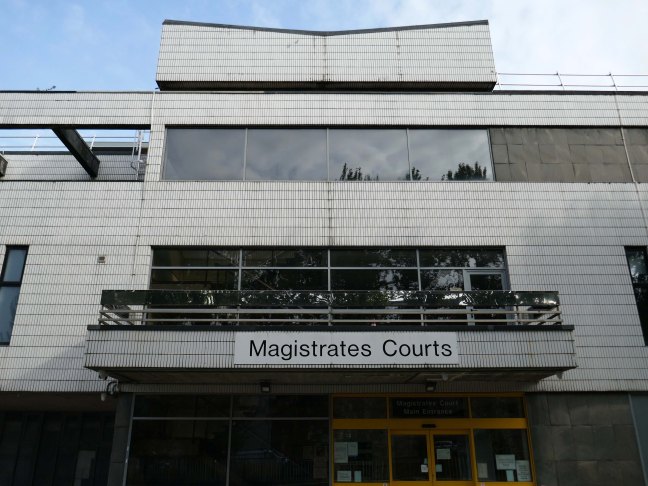
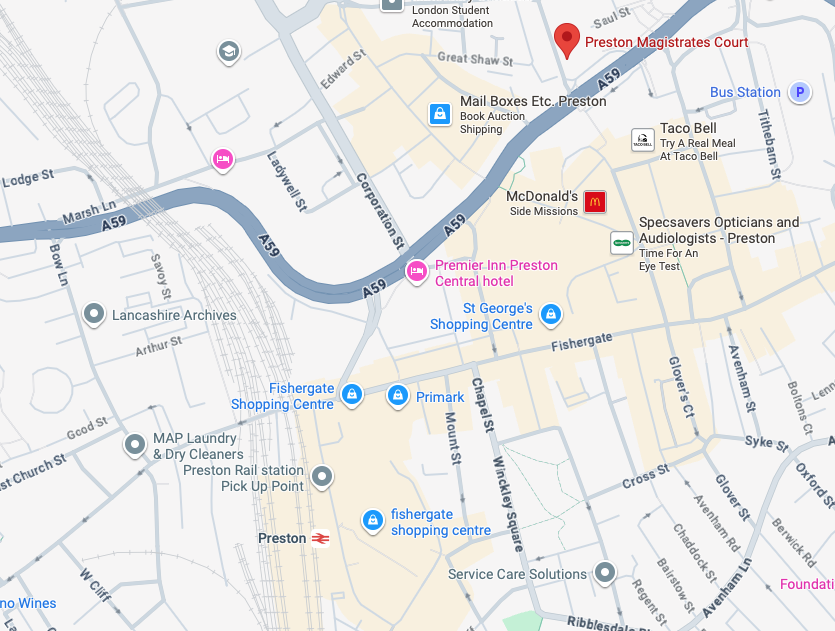
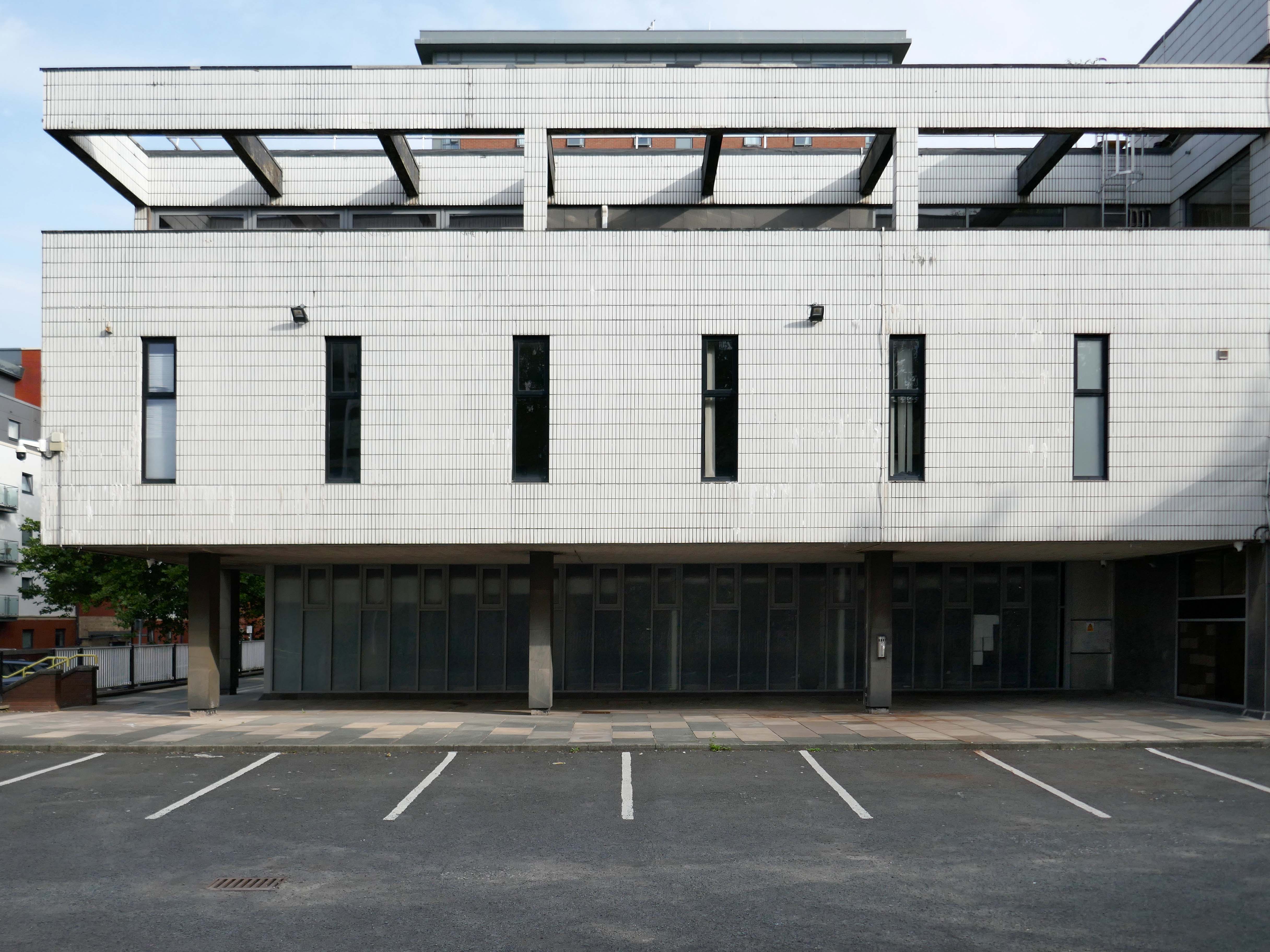
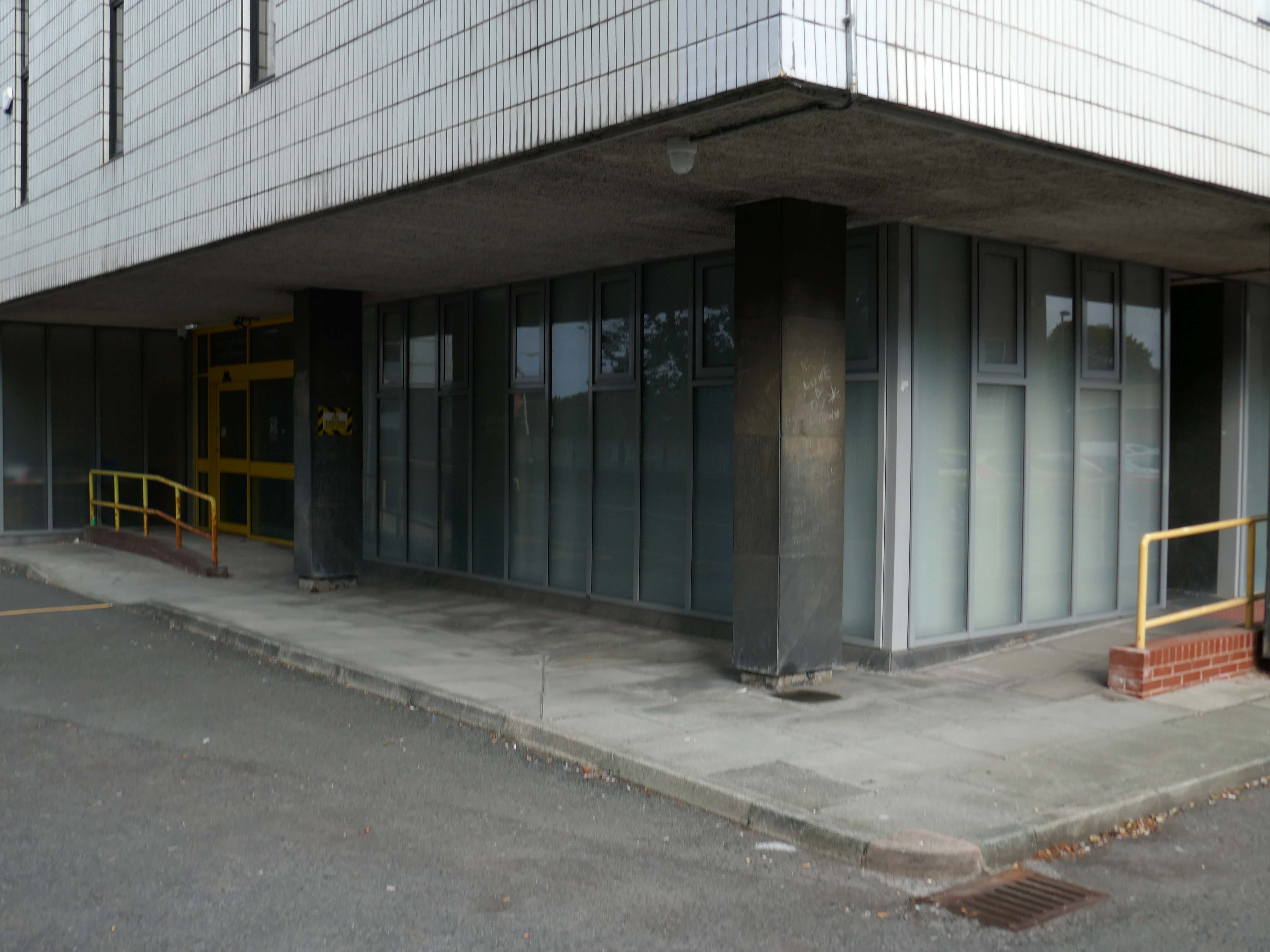
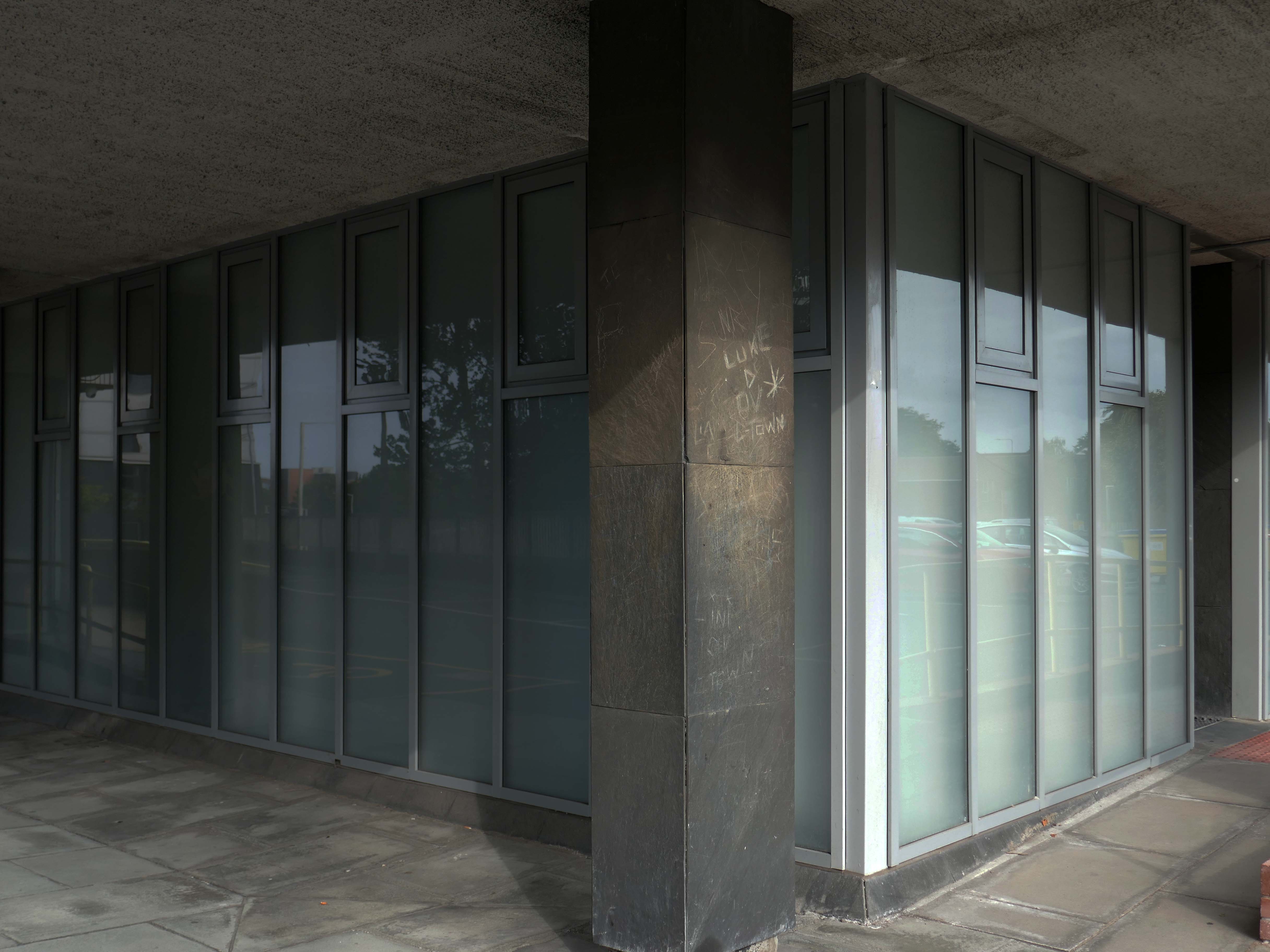
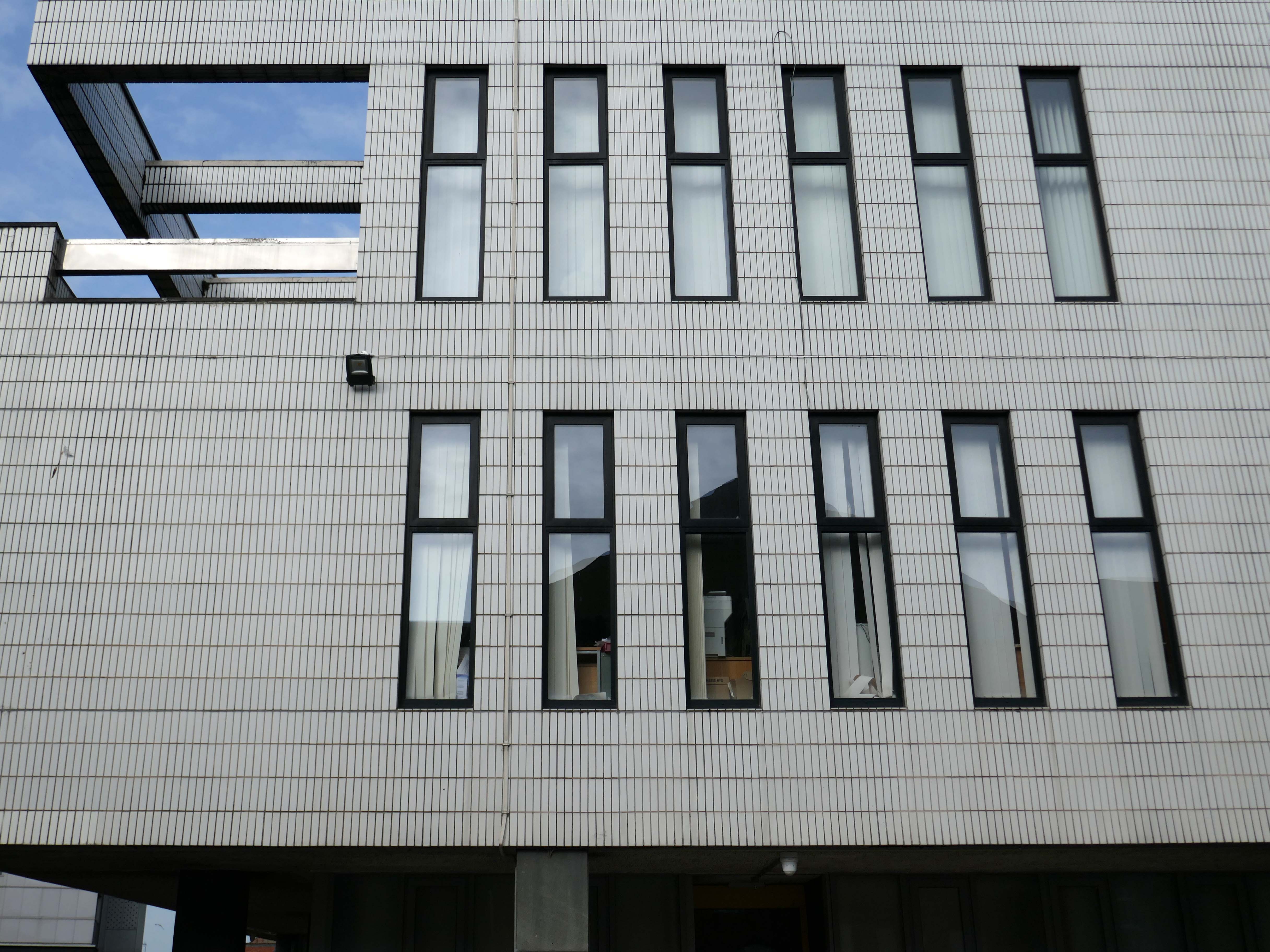
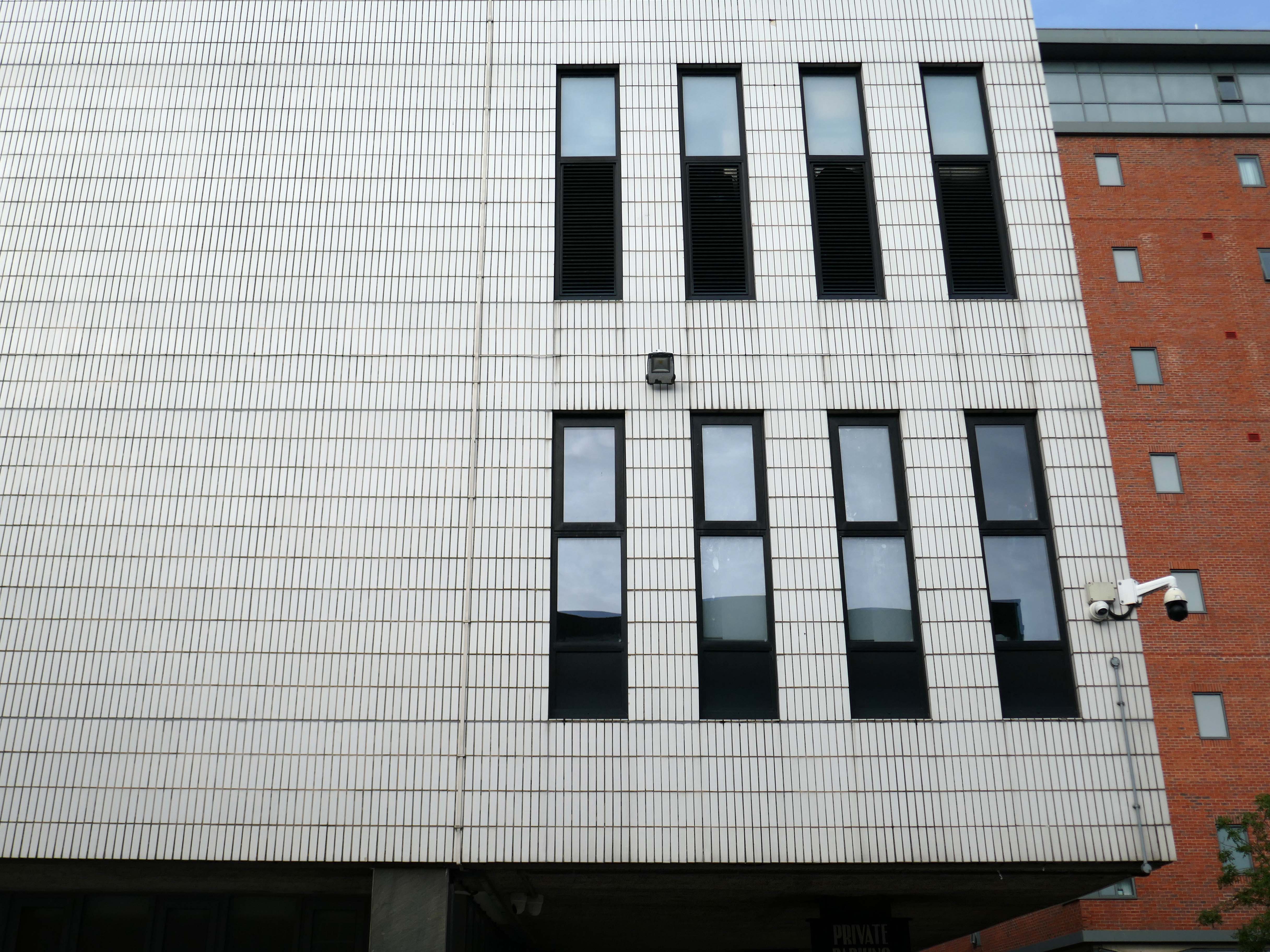
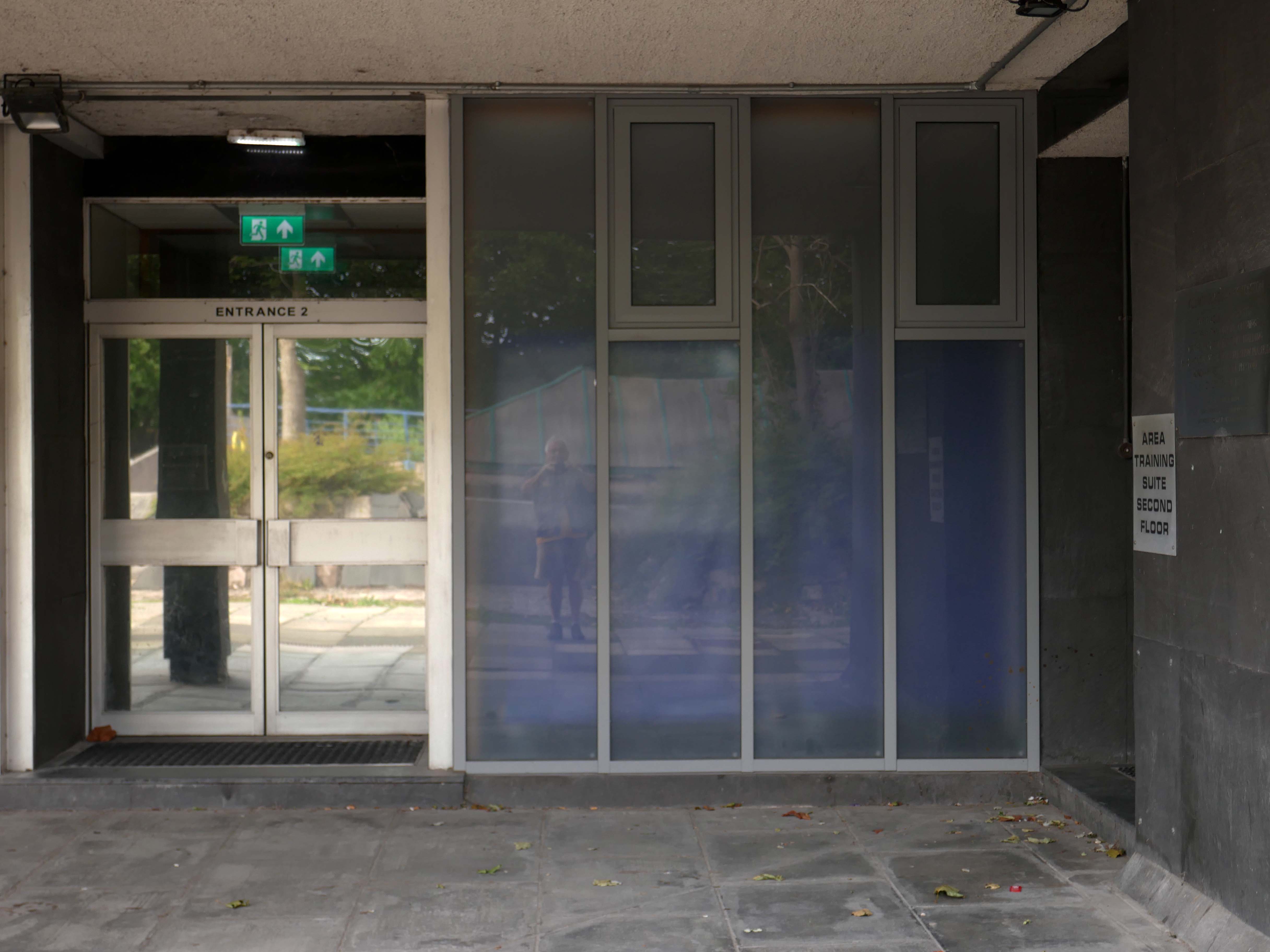
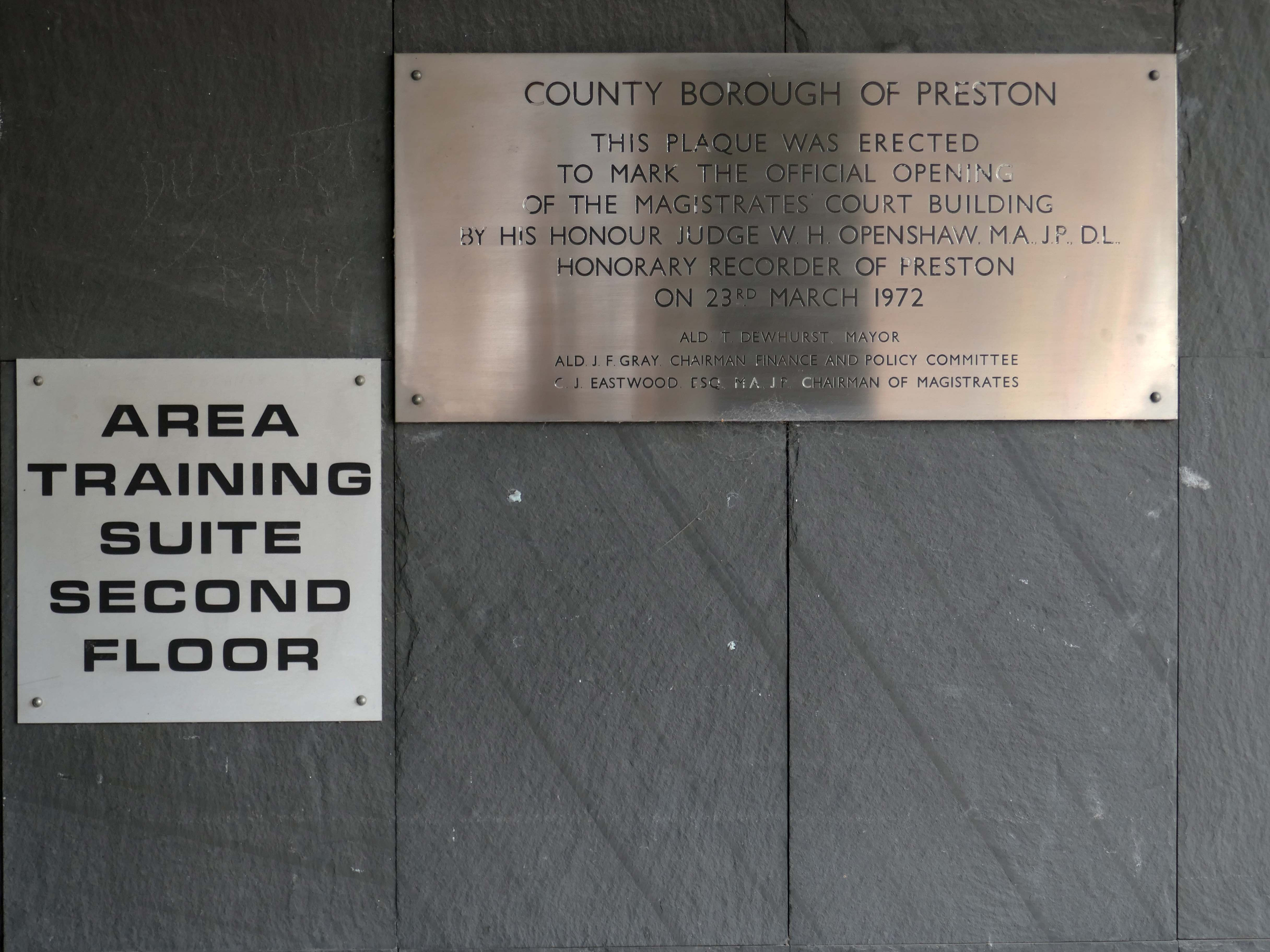
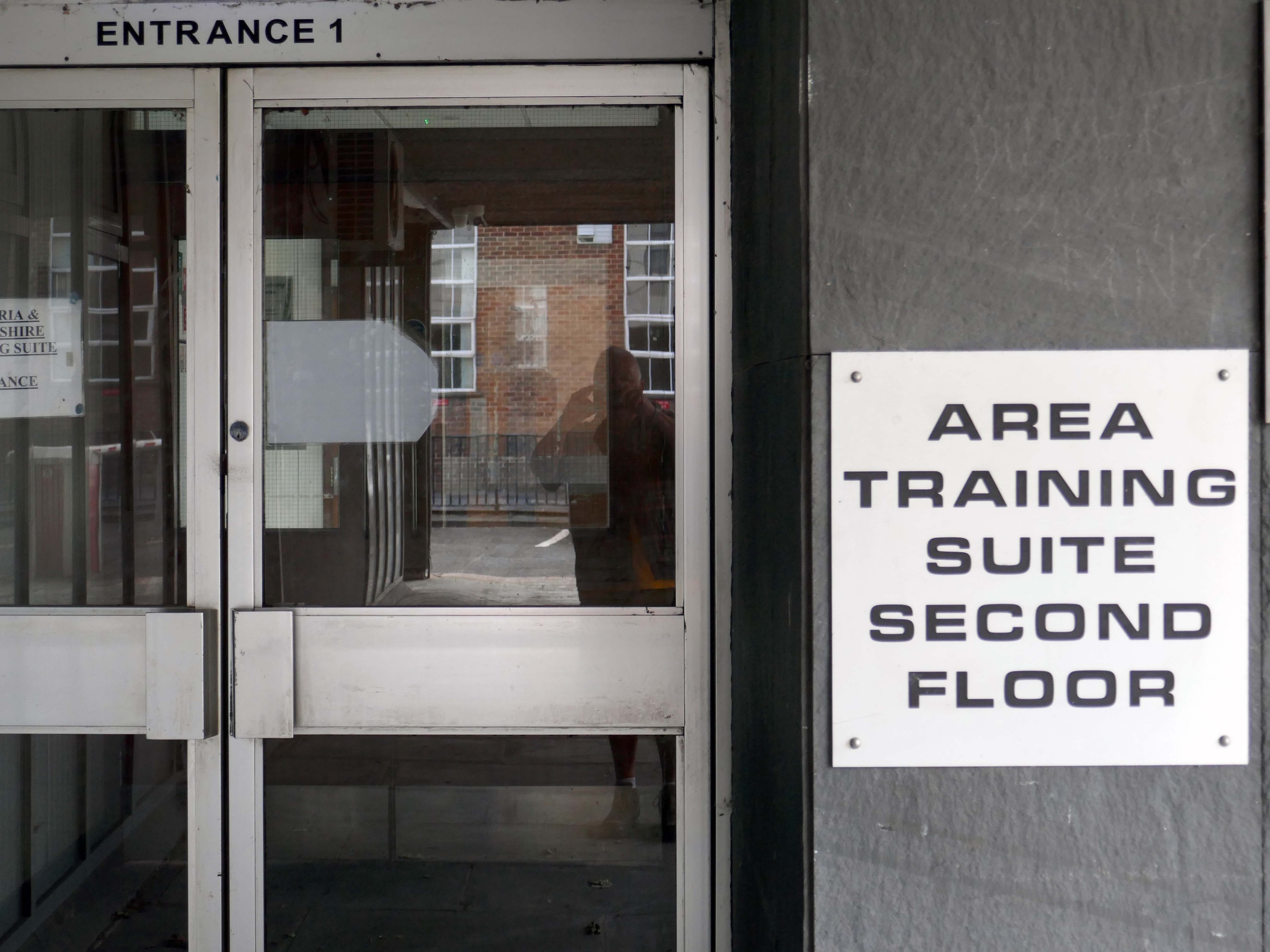
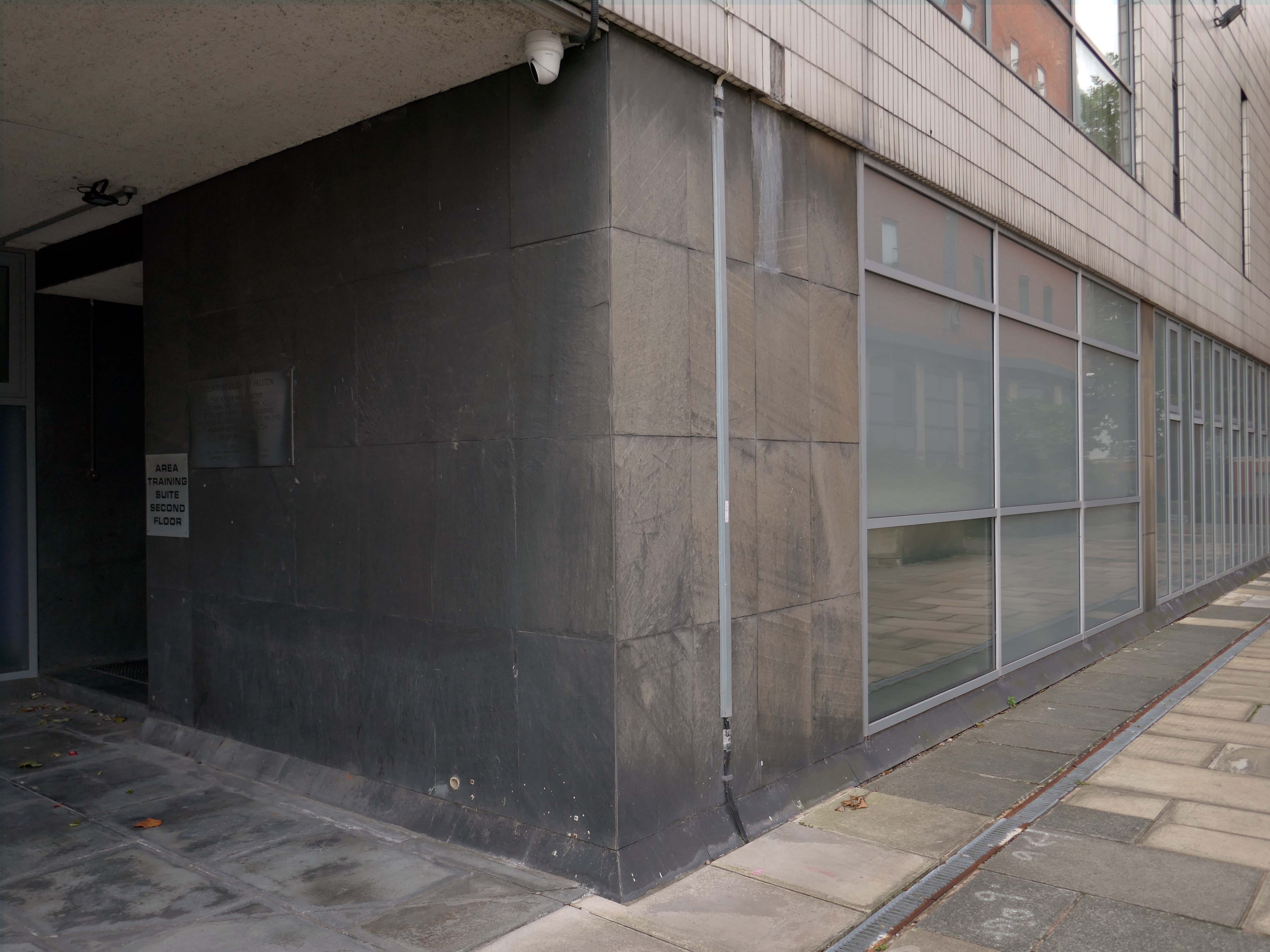
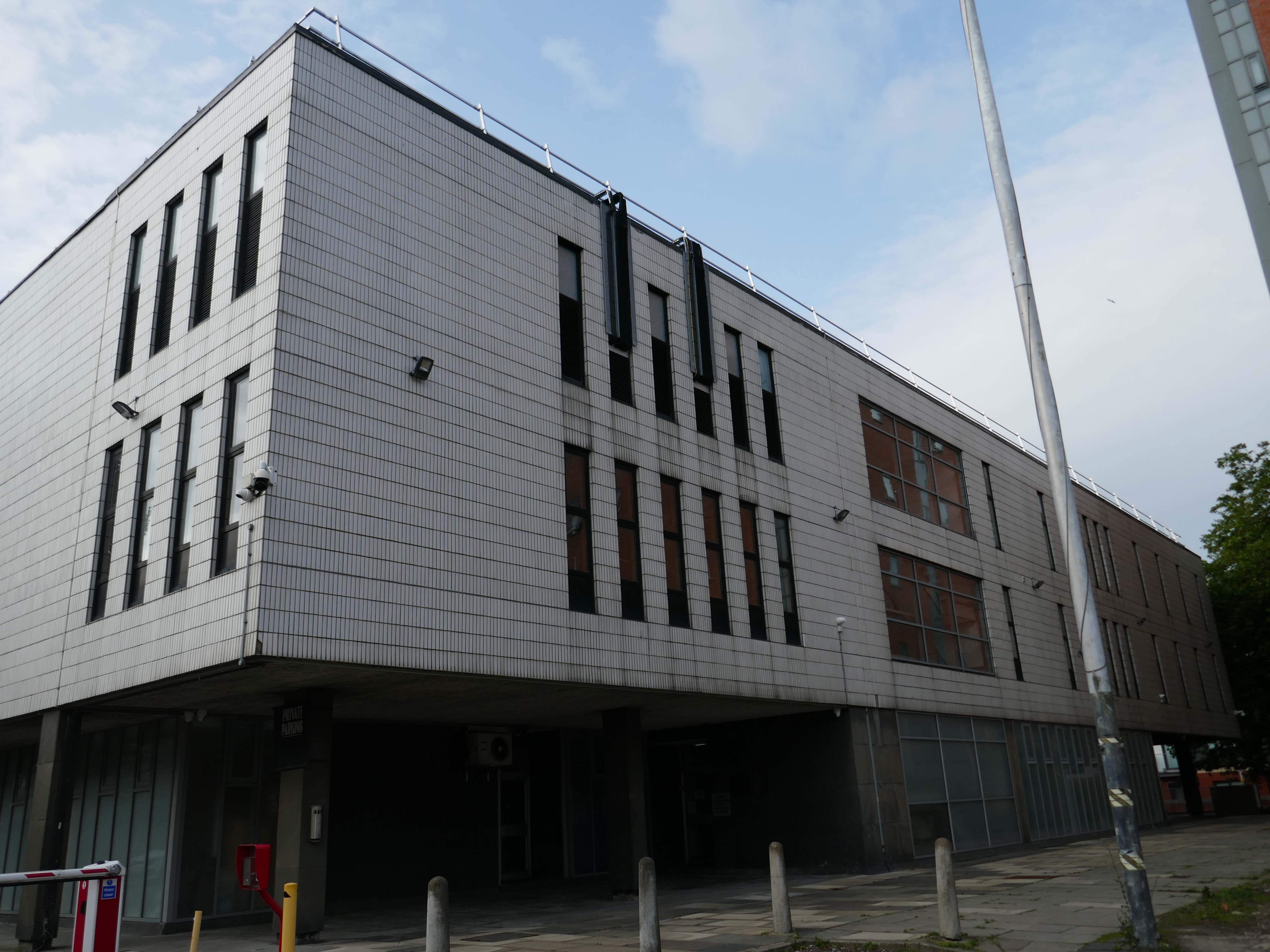
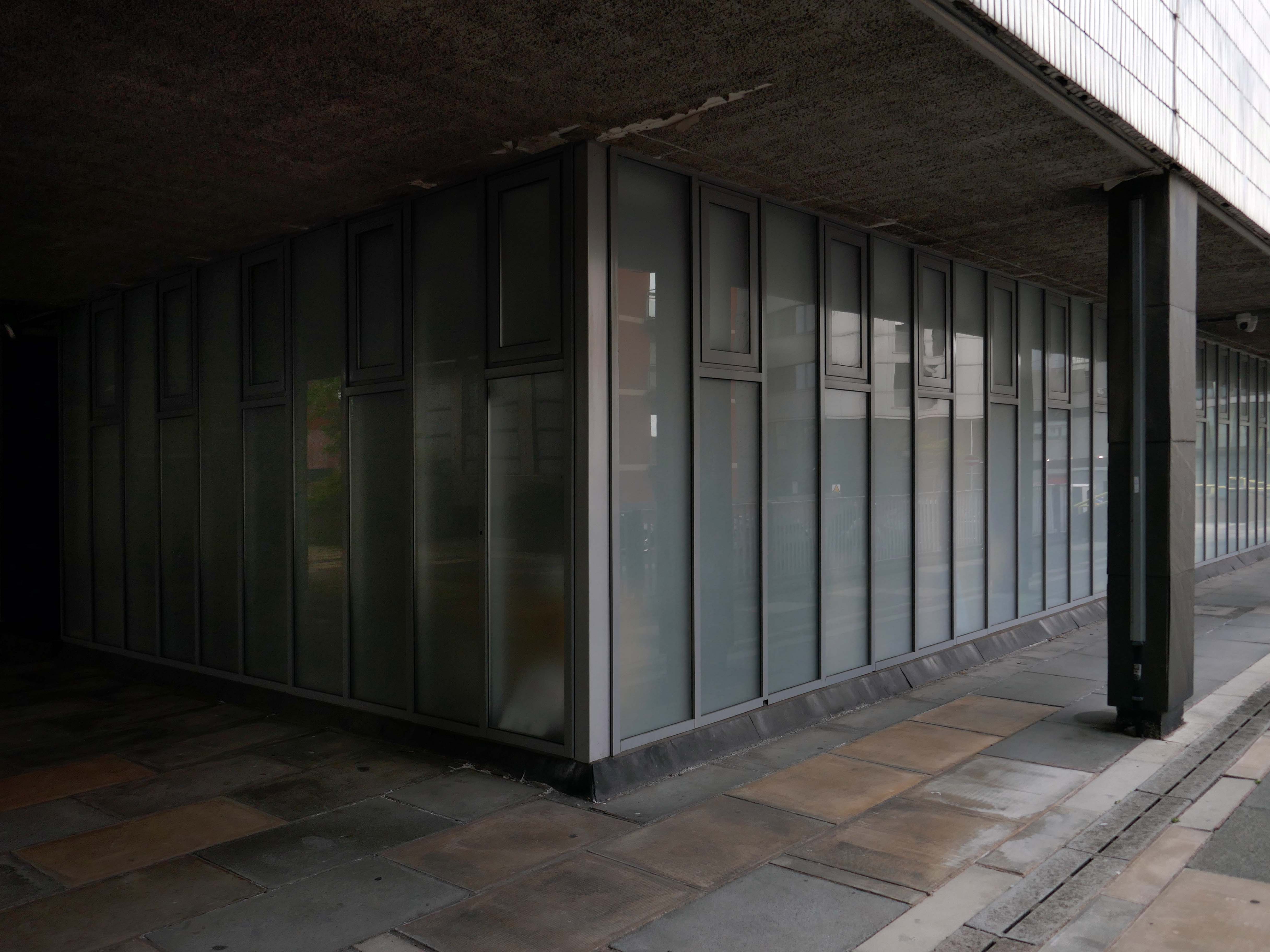
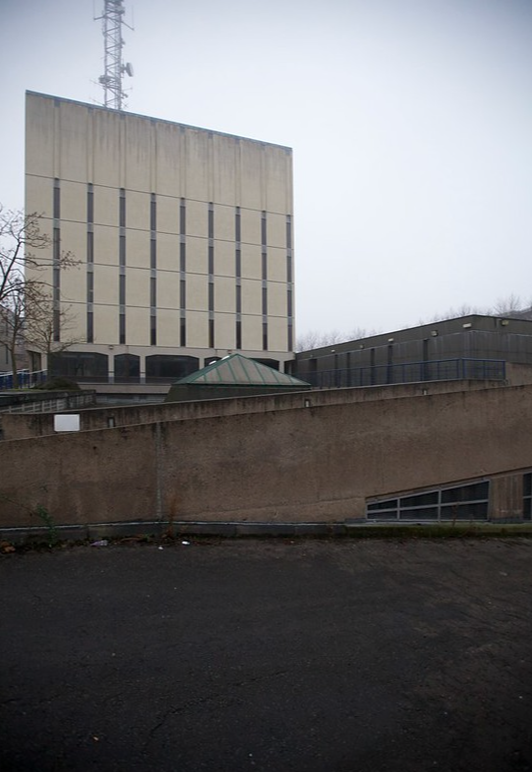
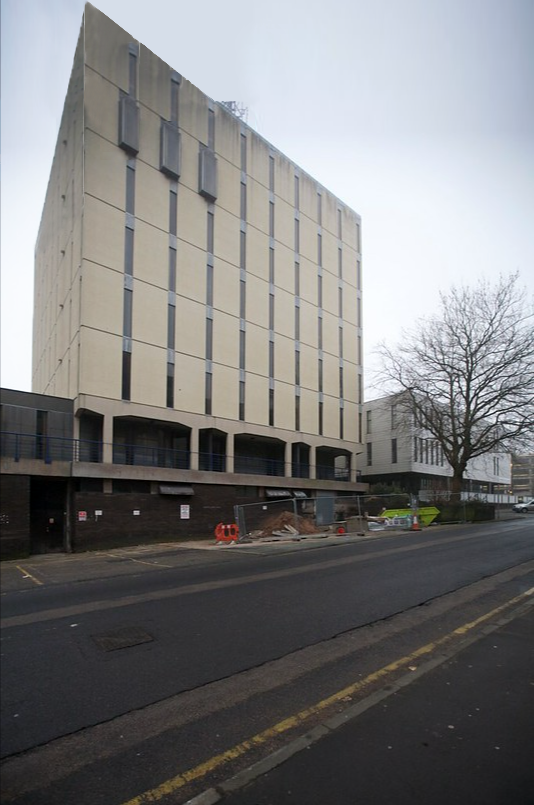
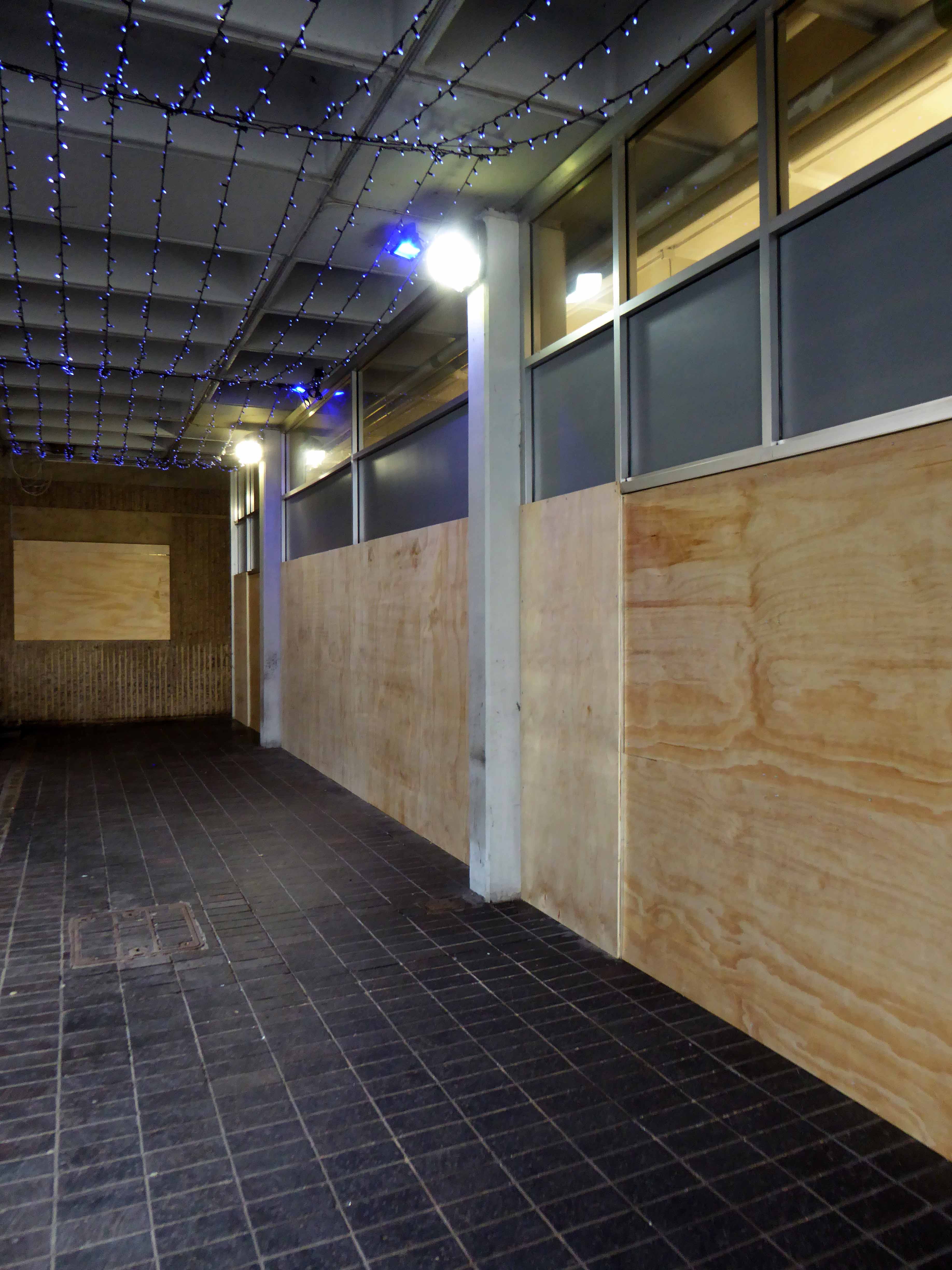
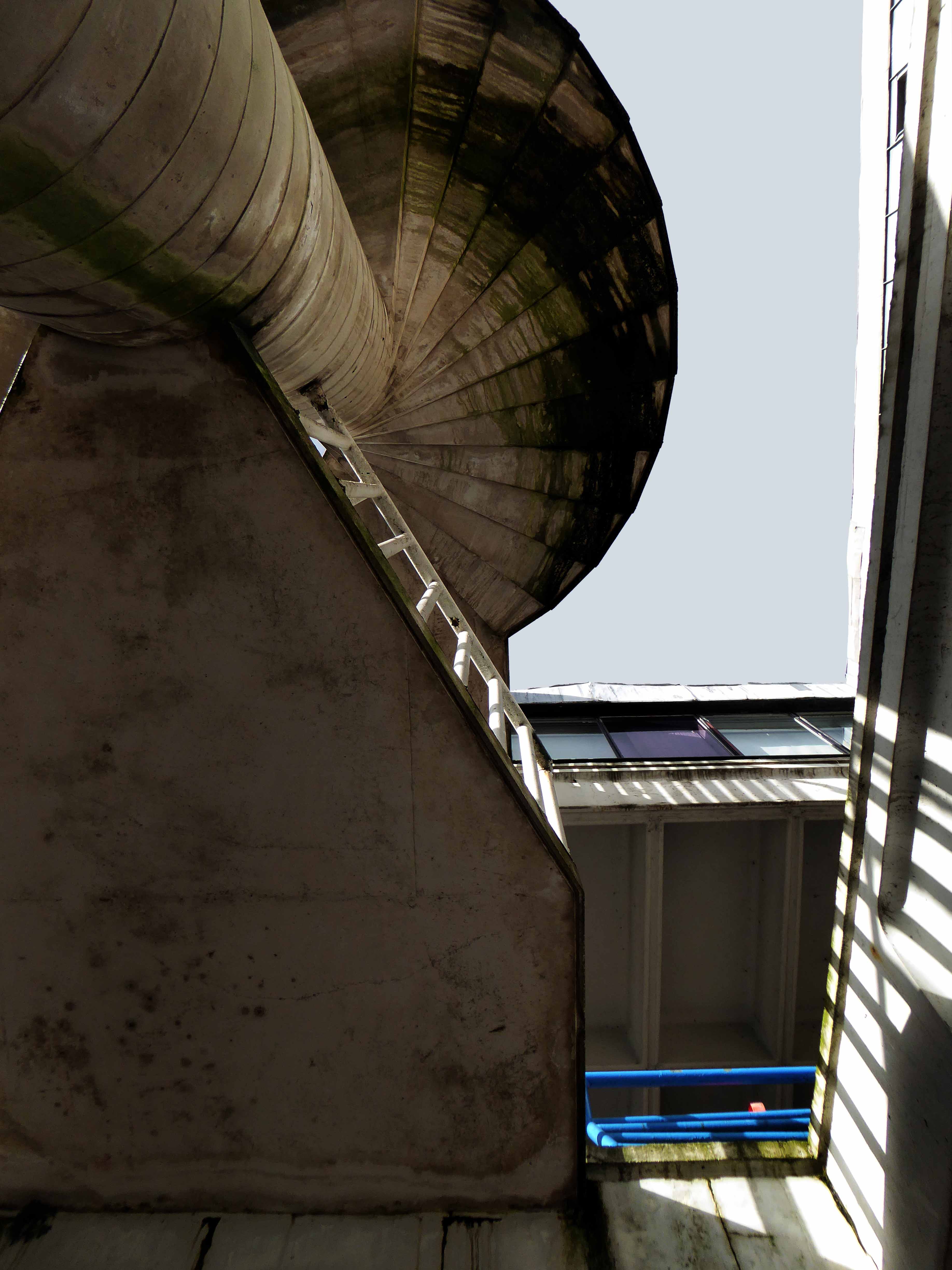
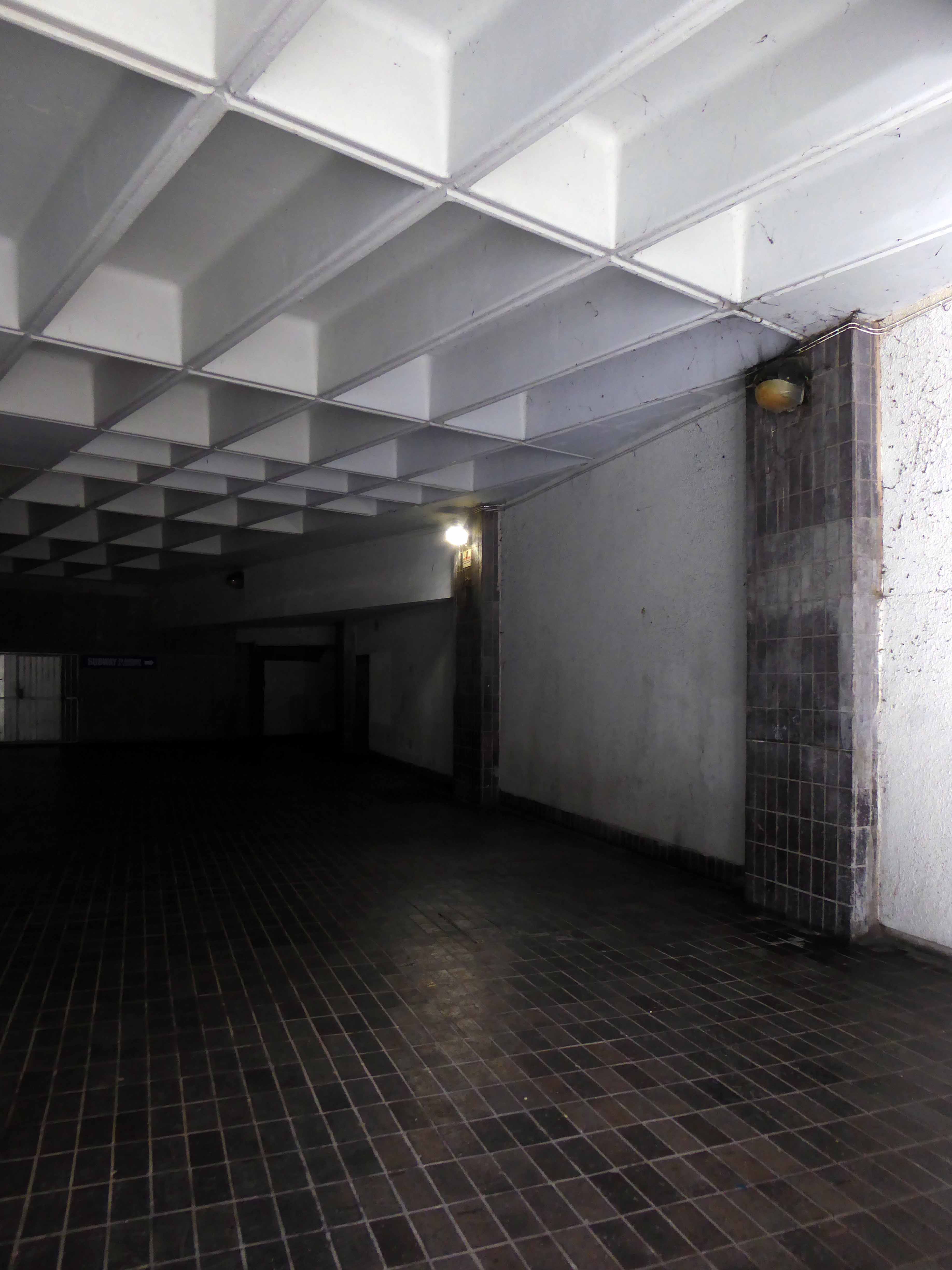
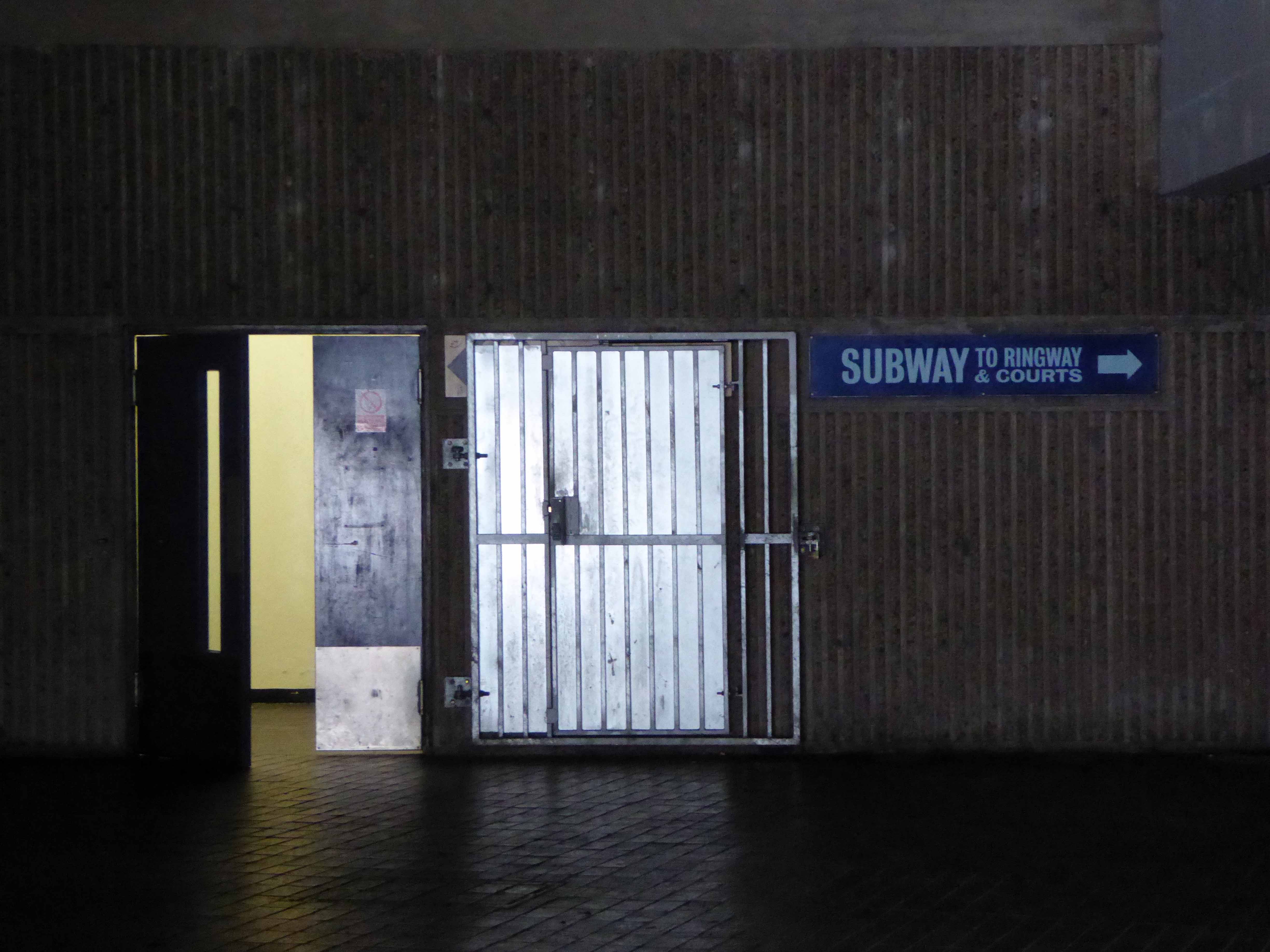
We have often walked by the Magistrates’ Courts on the Preston Walk.
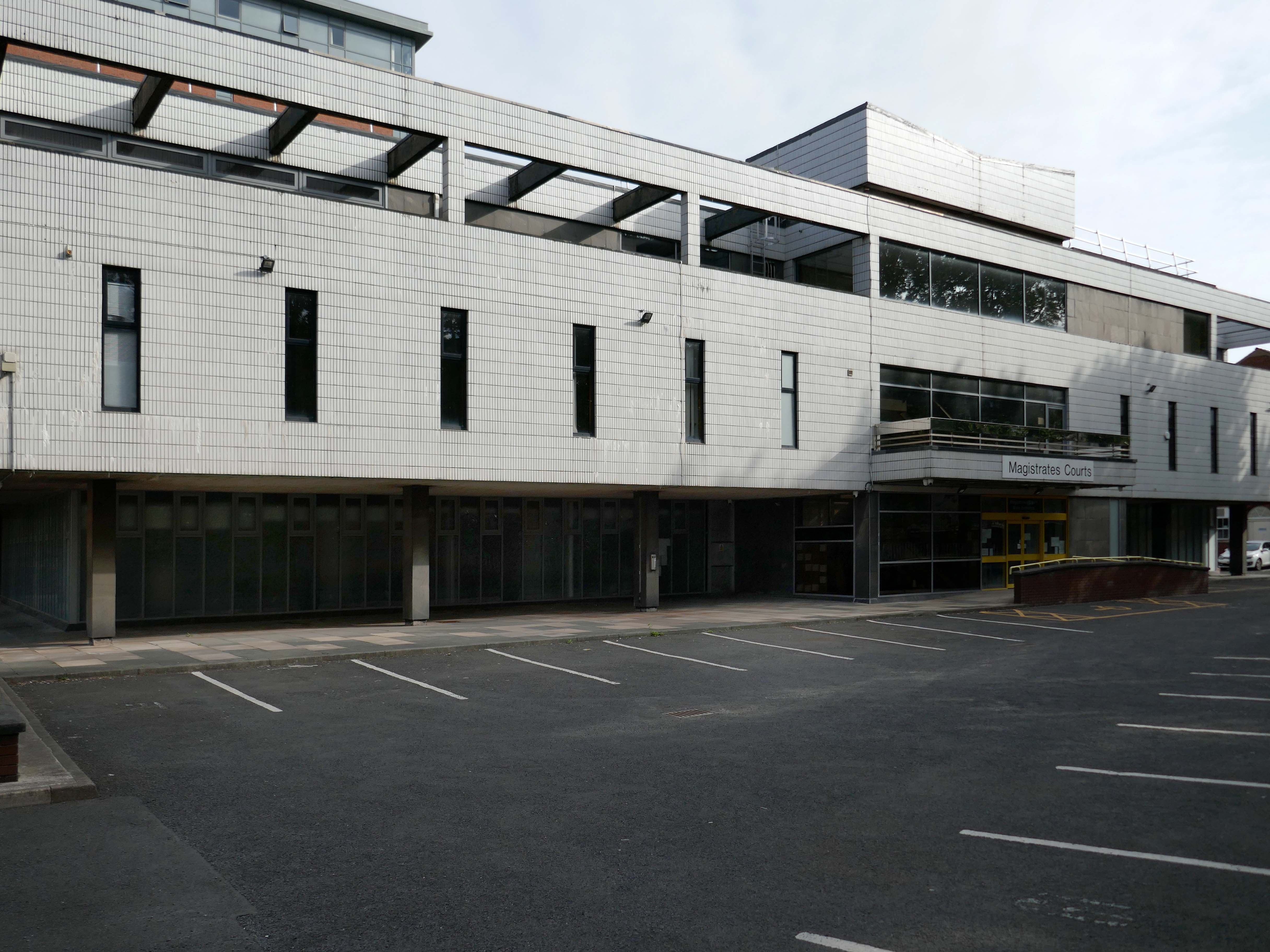
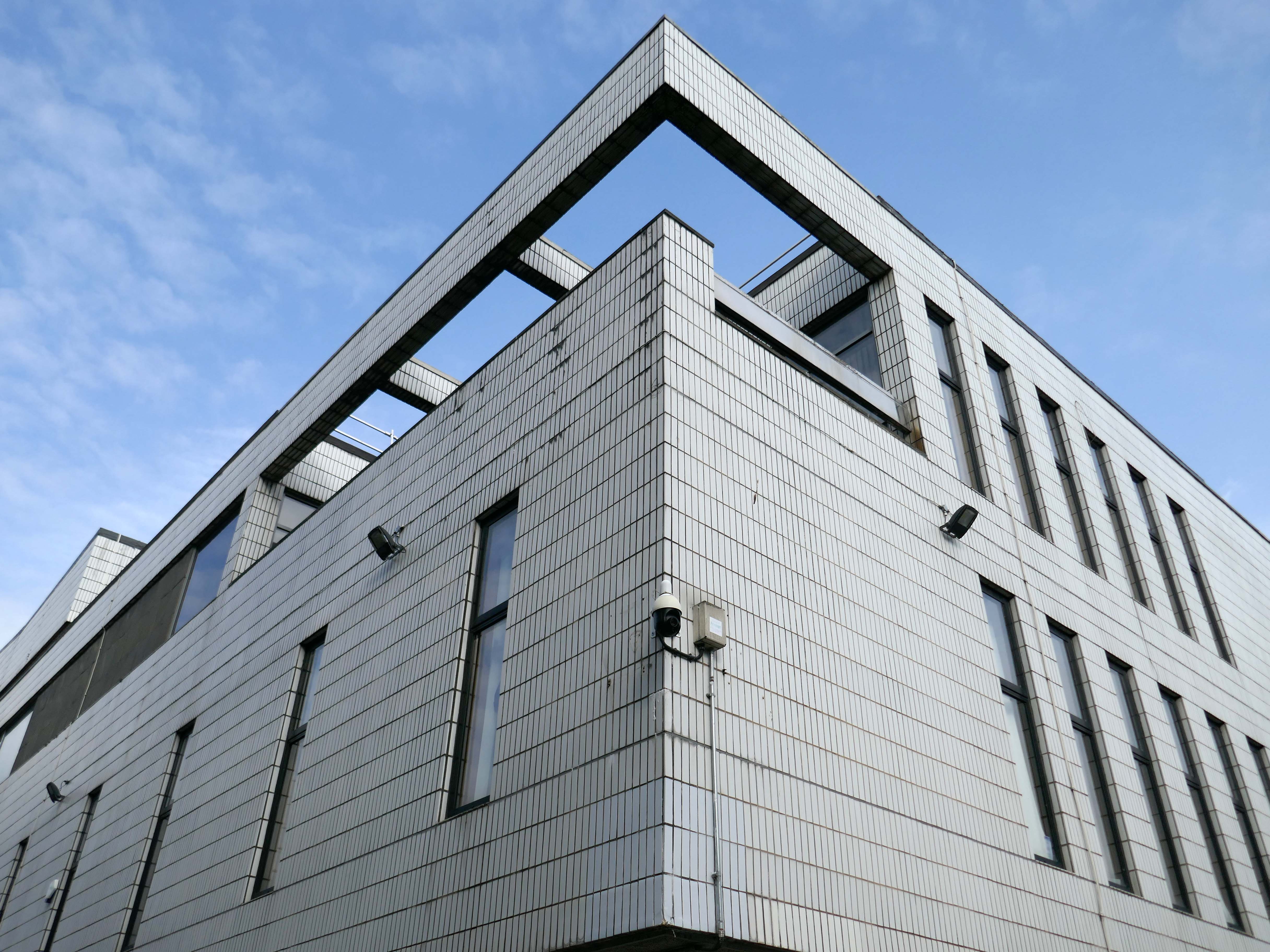
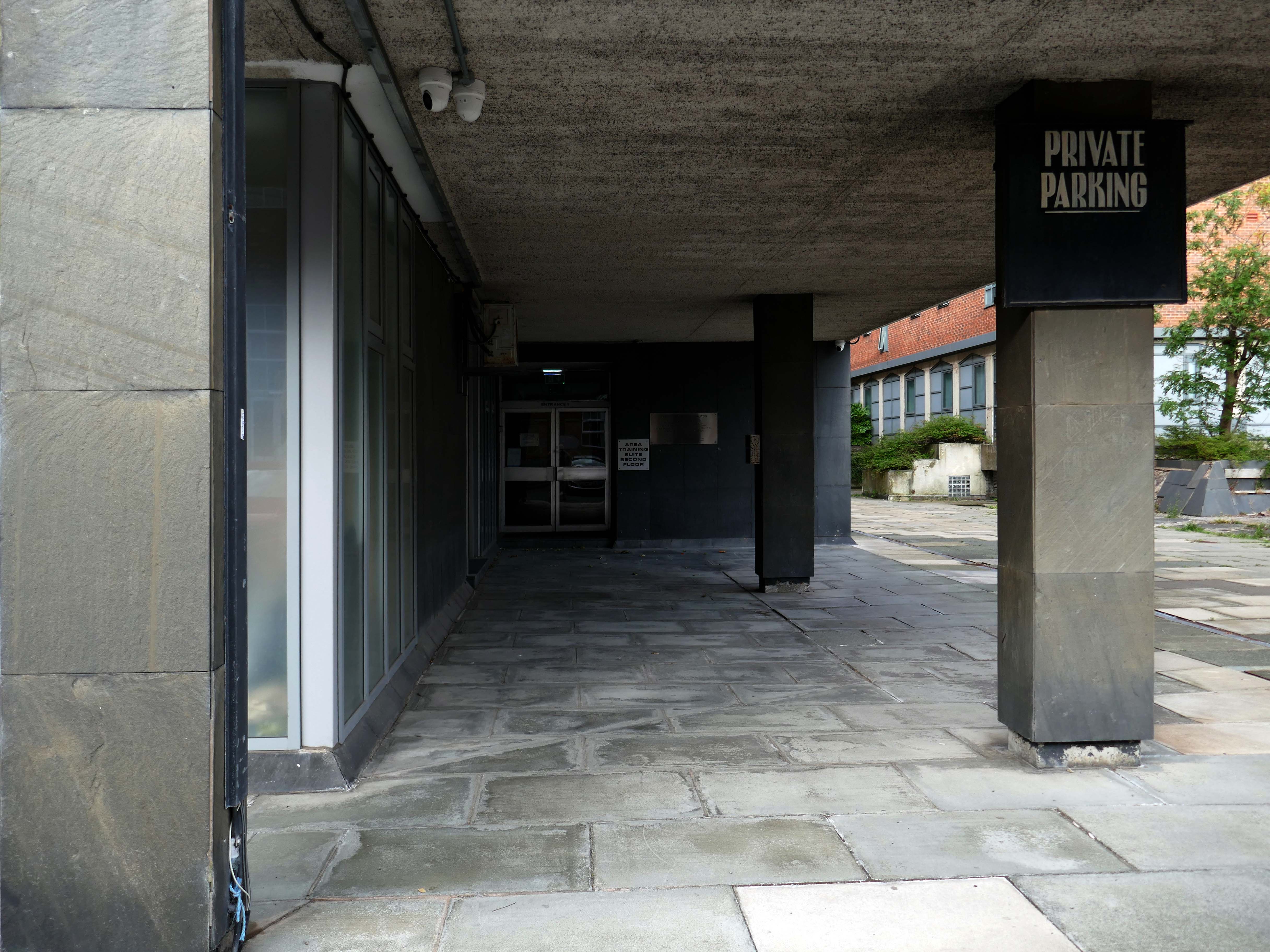
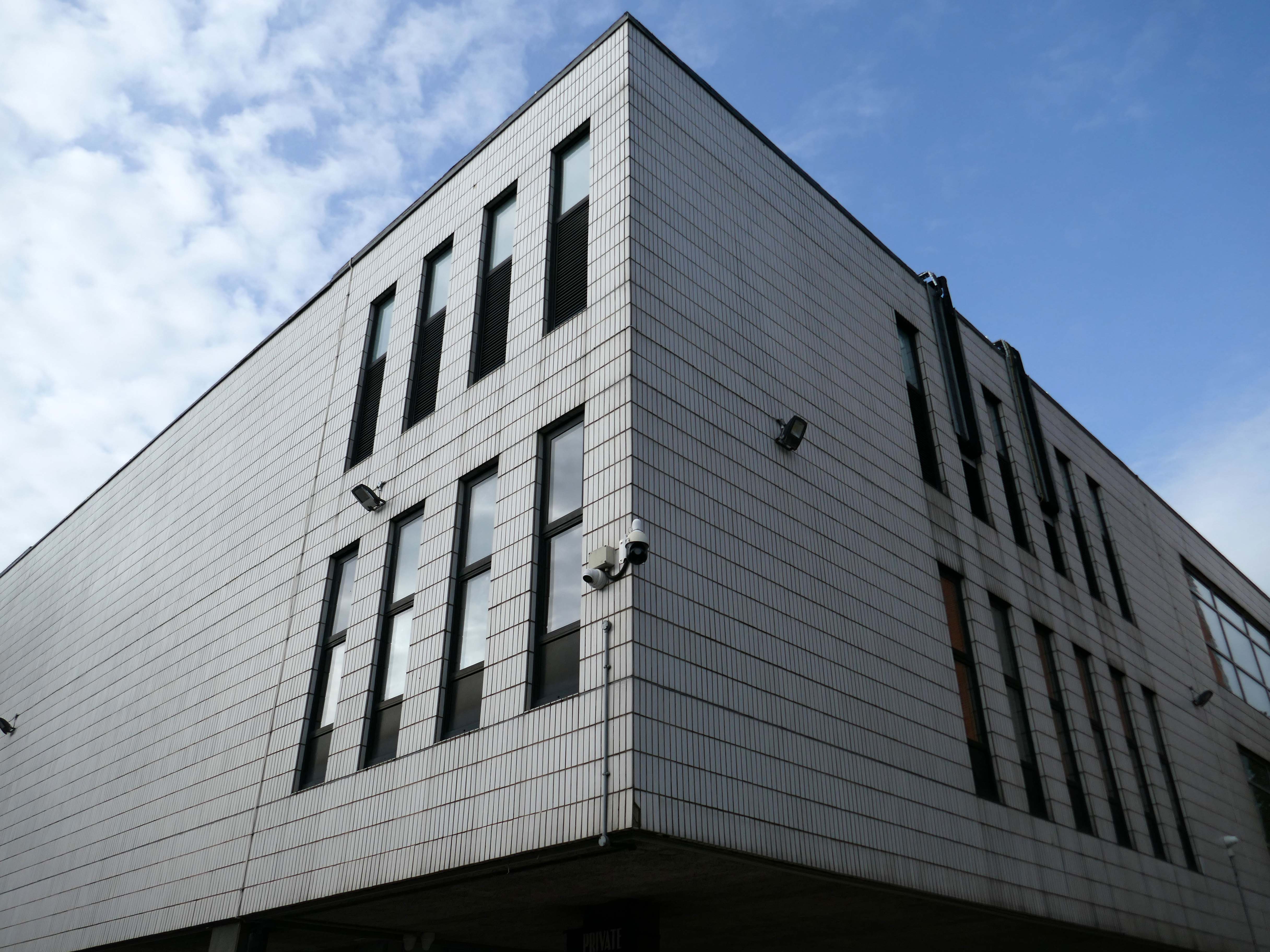
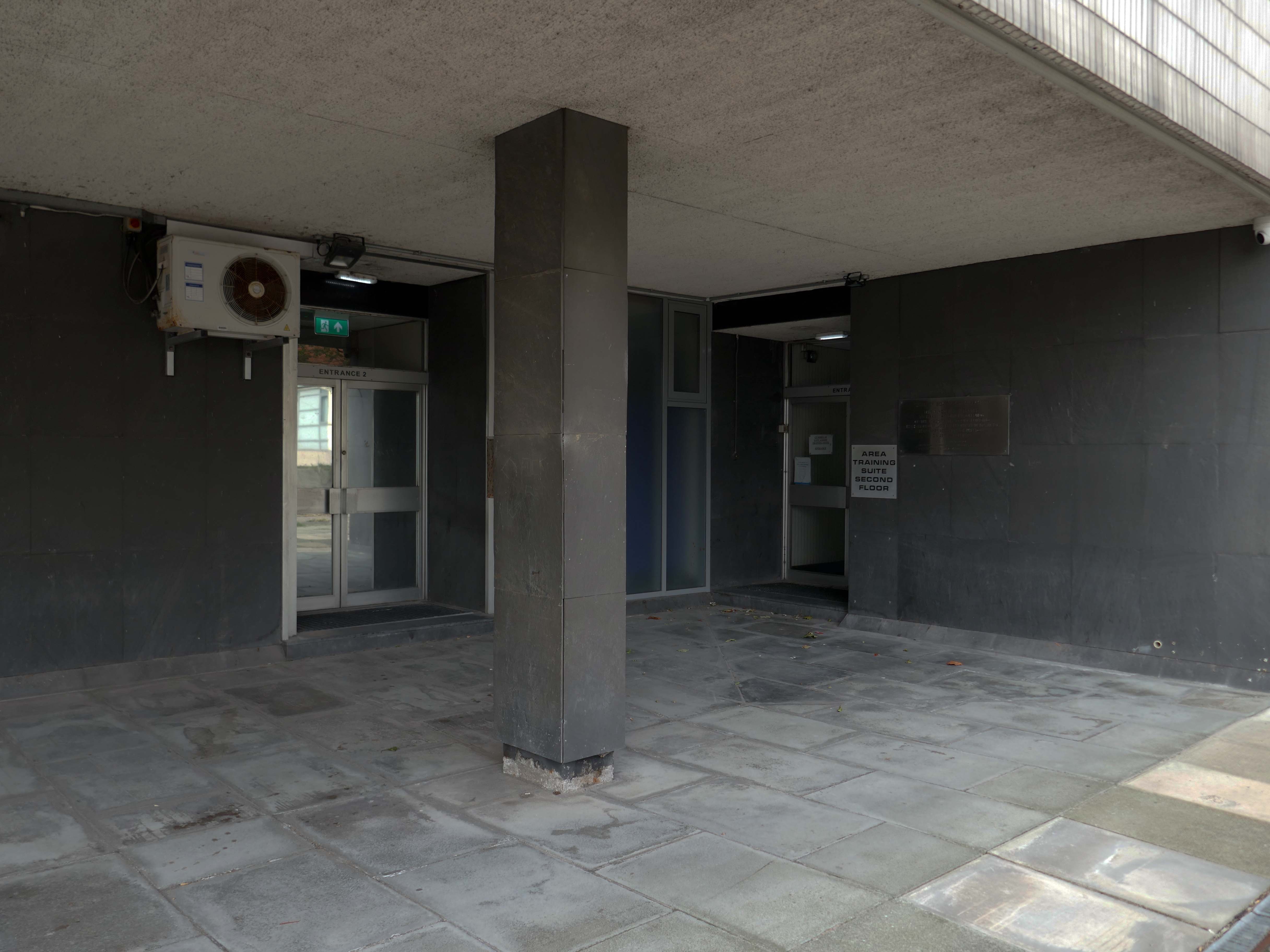
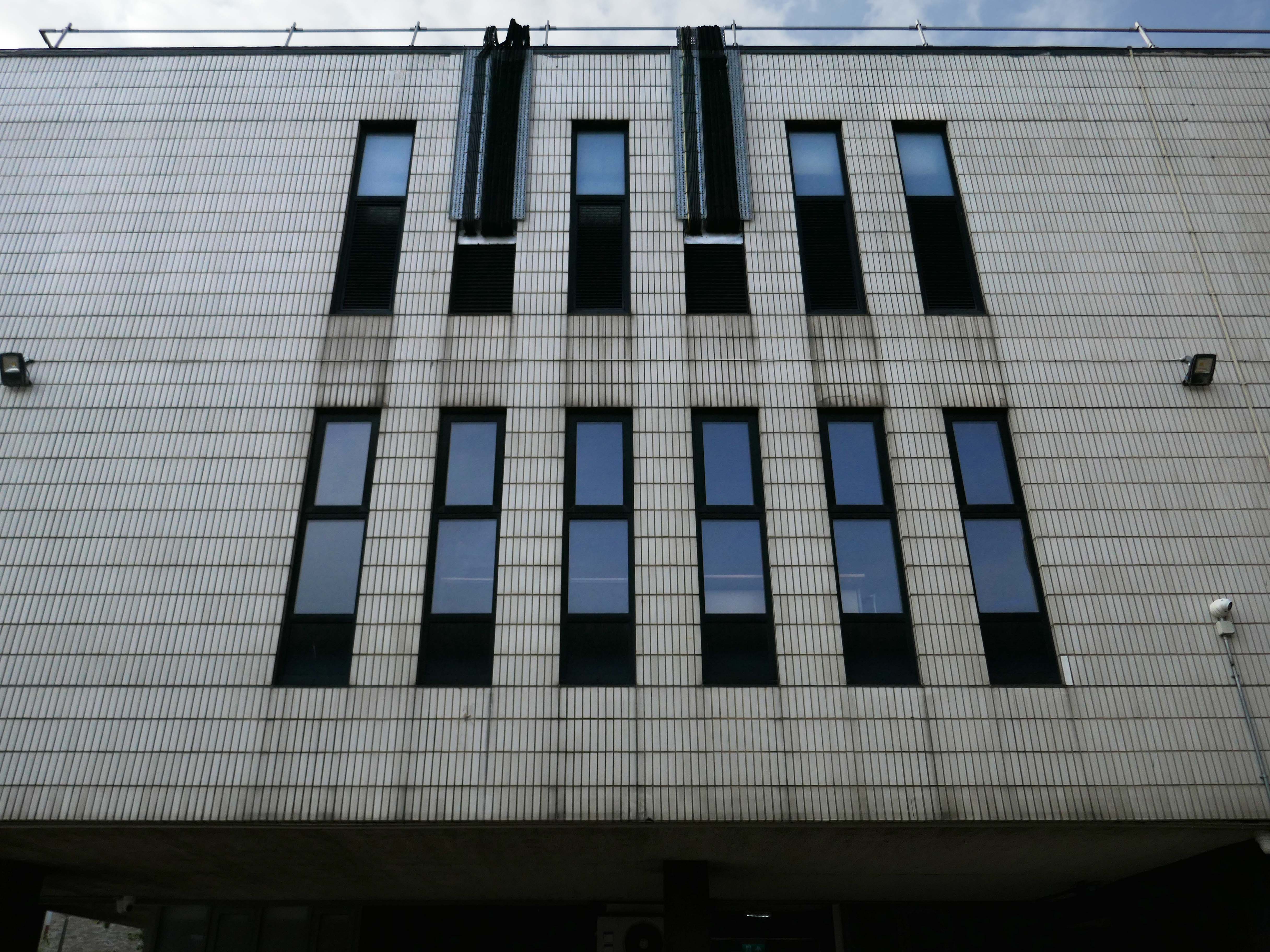
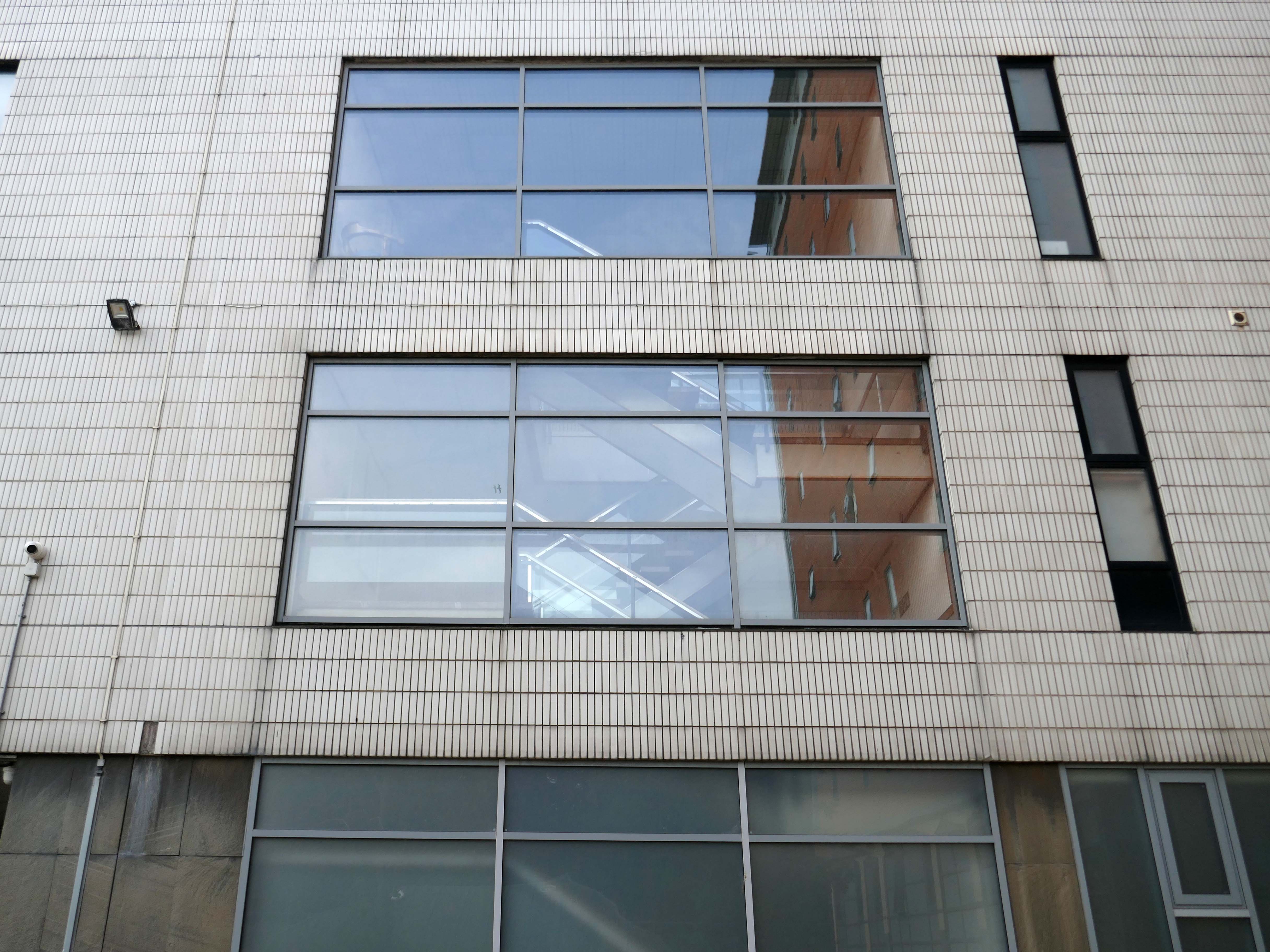
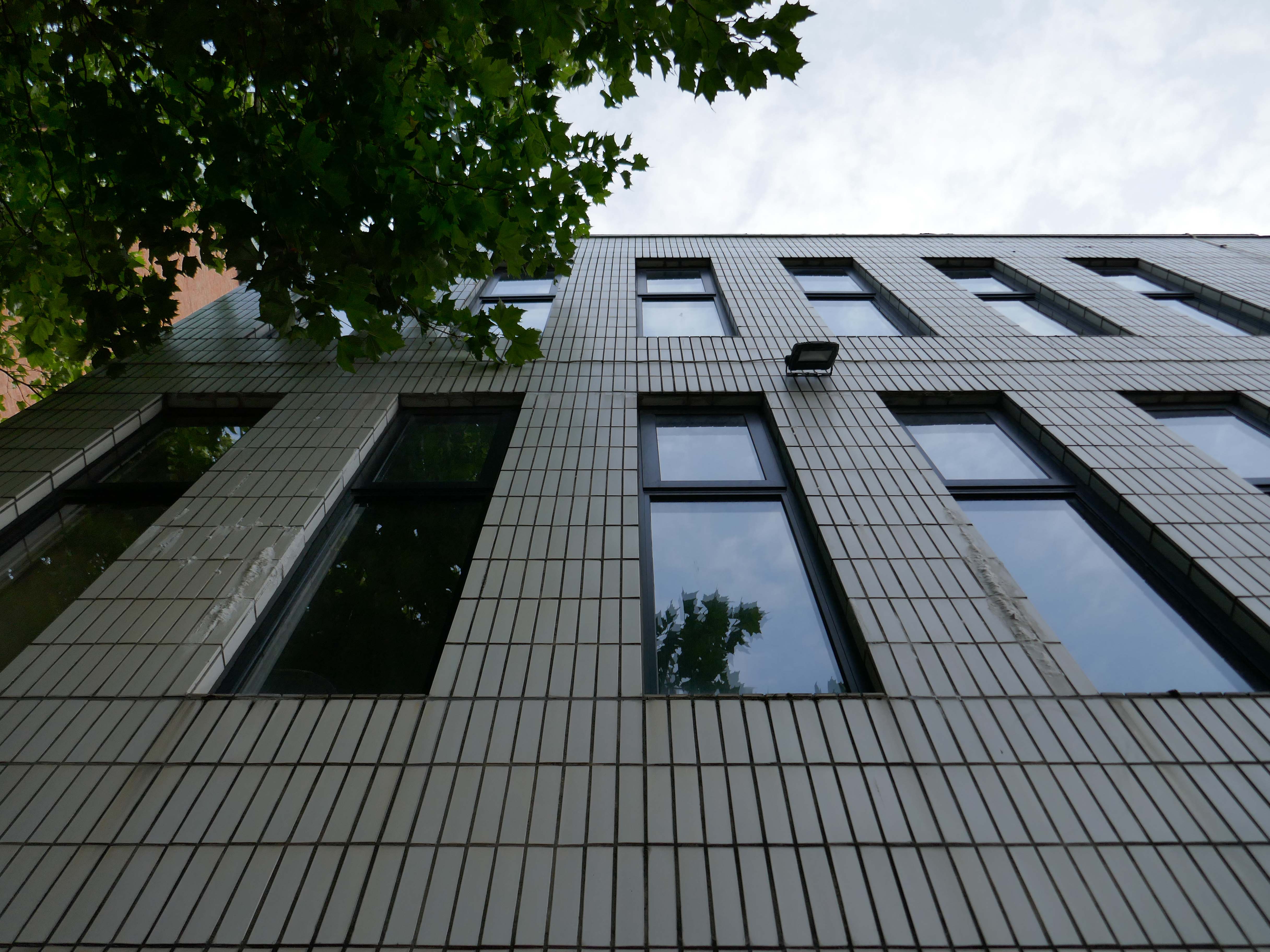
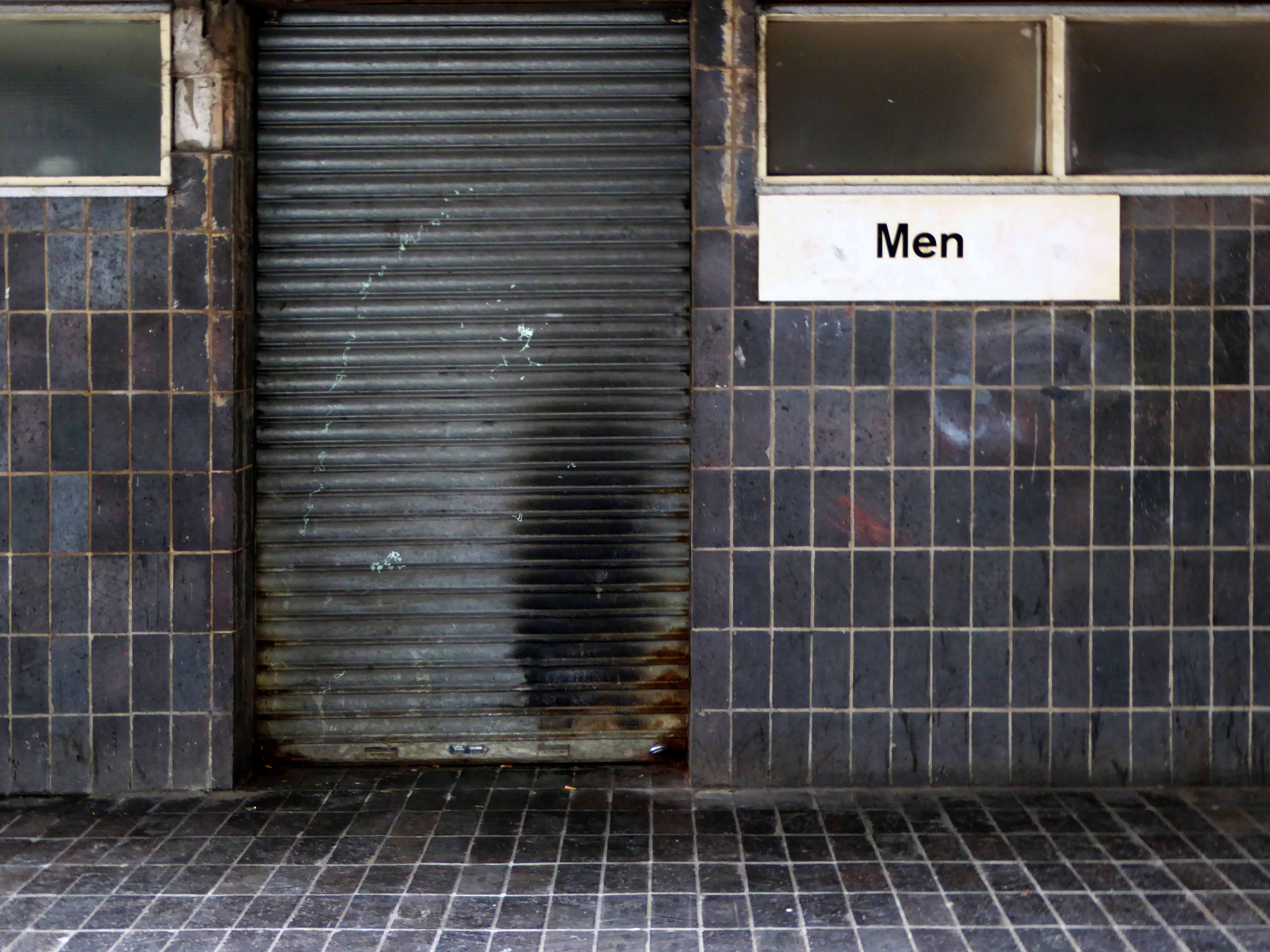
So, it’s about time this low lying white tiled delight received some well deserved attention.
Though recently there have been structural problems:
The safety of everyone who uses our courts is paramount and the decision to temporarily close Blackpool and Preston Magistrates’ courts was made in line with professional advice following the detection of defective Reinforced Autoclaved Aerated Concrete. These court buildings will reopen once they are assessed as safe by professionals following the completion of required remedial works.
There have also been solutions:
Preston Magistrates’ Court is currently scheduled to reopen in January 2024.
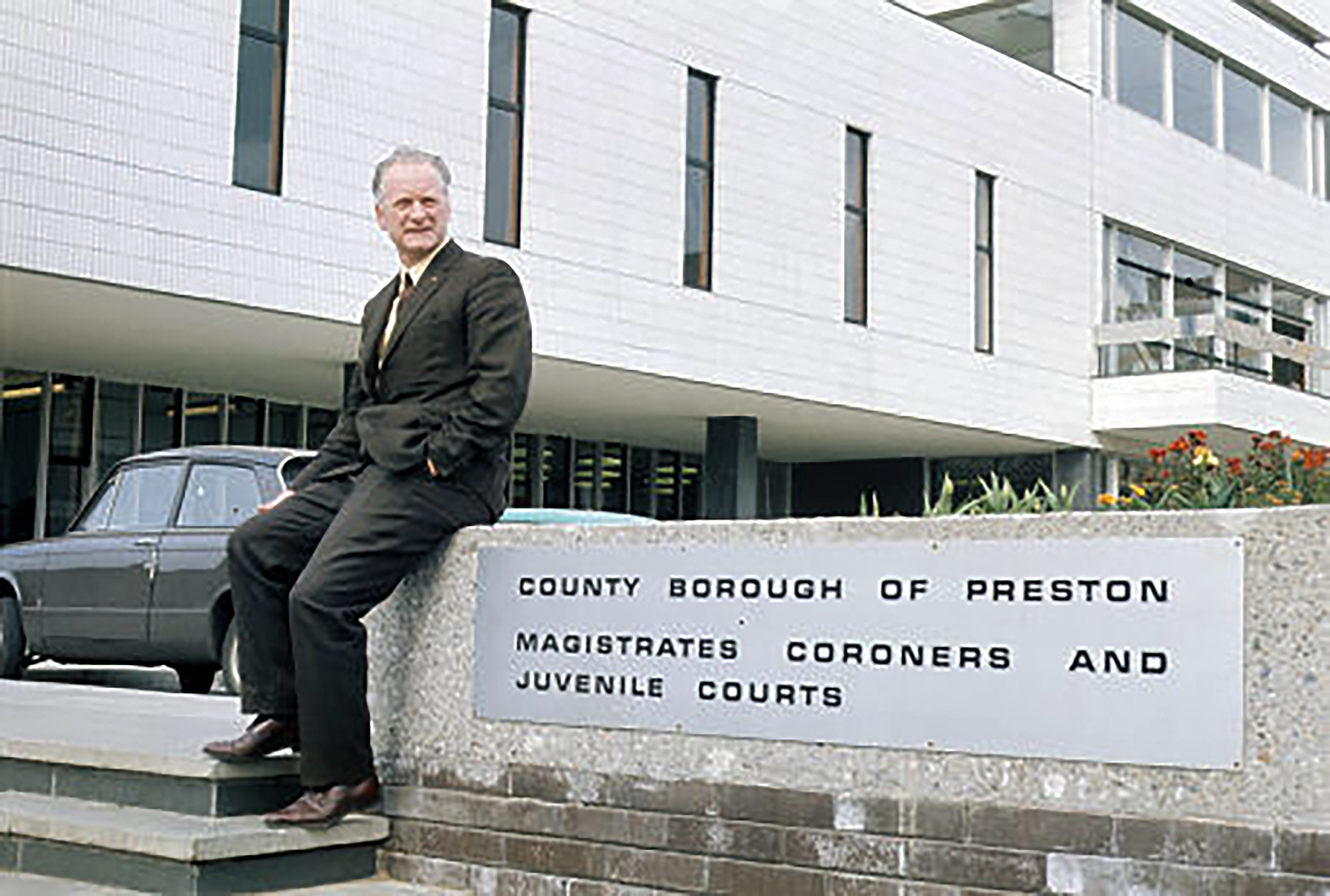
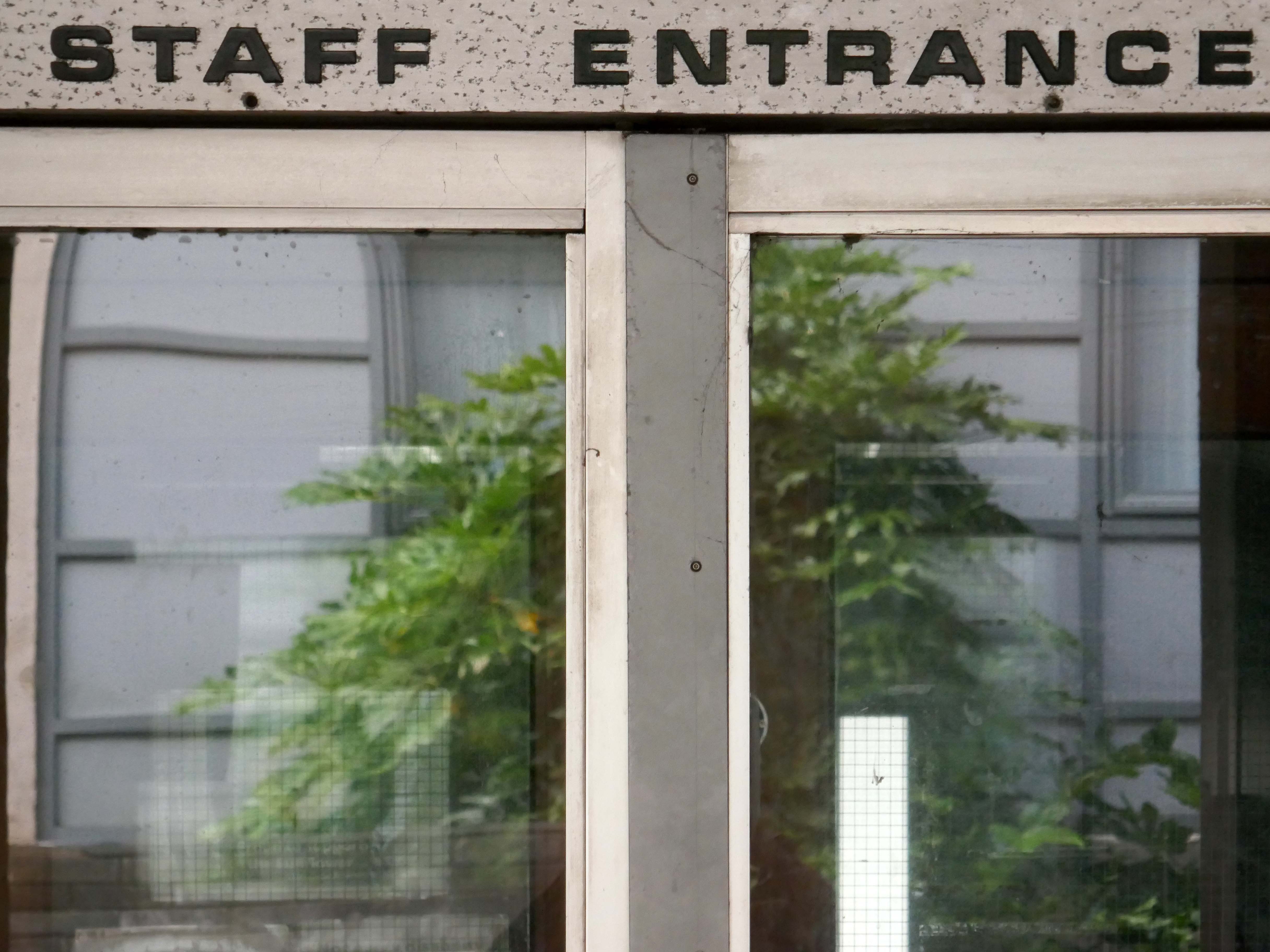
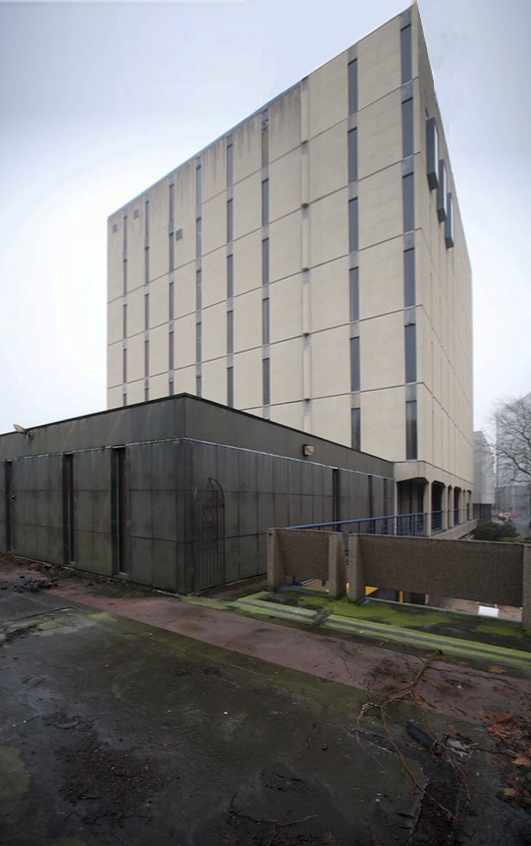
Local lad Tom Finney was unable for comment, though saddened to hear that the Microgramma sign was no longer in situ.
Copyright Rex Shutterstock
Microgramma is a sans-serif typeface designed by Aldo Novarese and Alessandro Butti for the Nebiolo Type Foundry in 1952. It became popular for use with technical illustrations in the 1960s, and was a favourite of graphic designers by the early 1970s.
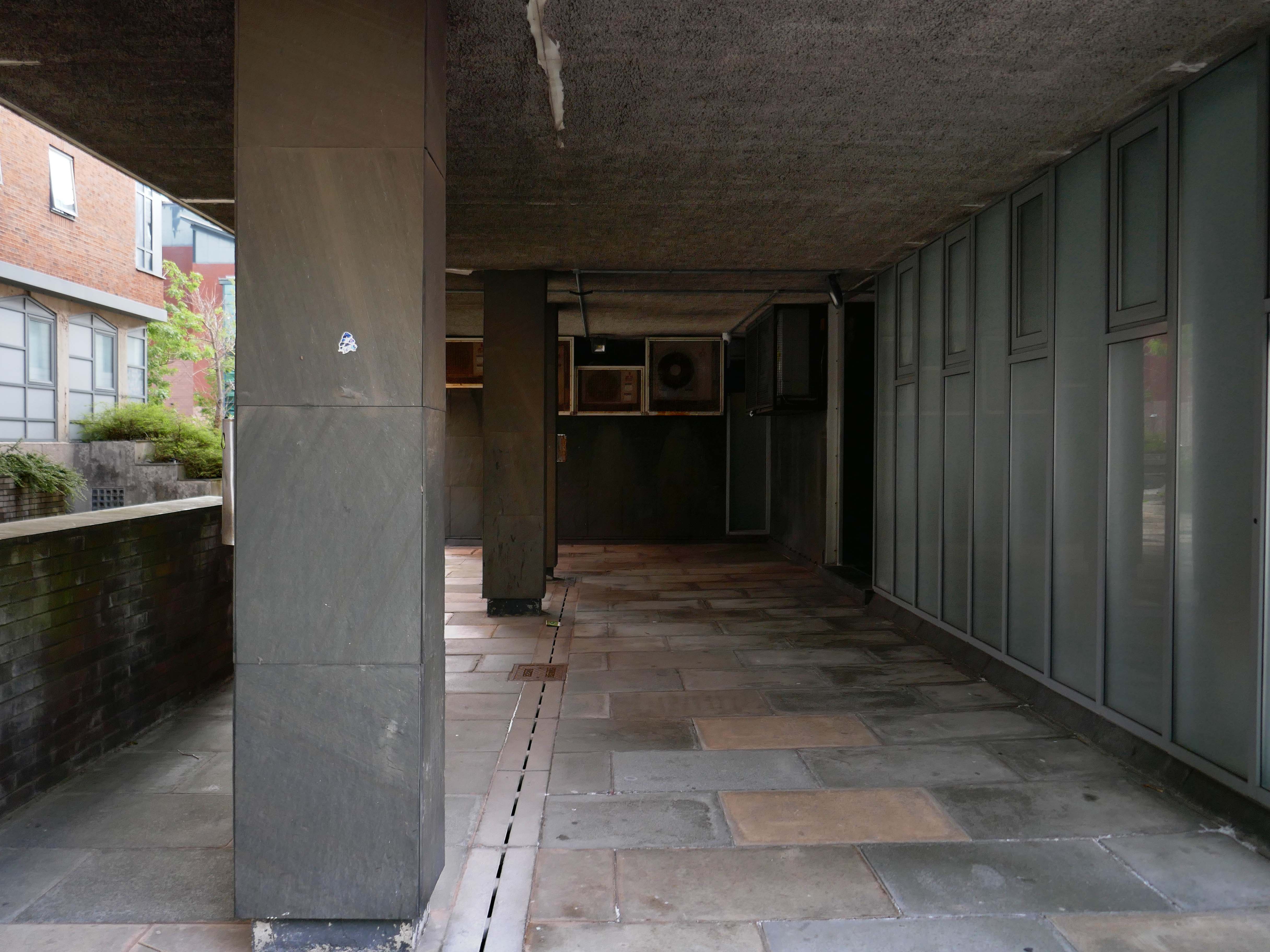
The building is the work of the Borough Architects under John Hatton – though I am reliably informed that County Architect Roger Booth took an advisory role.
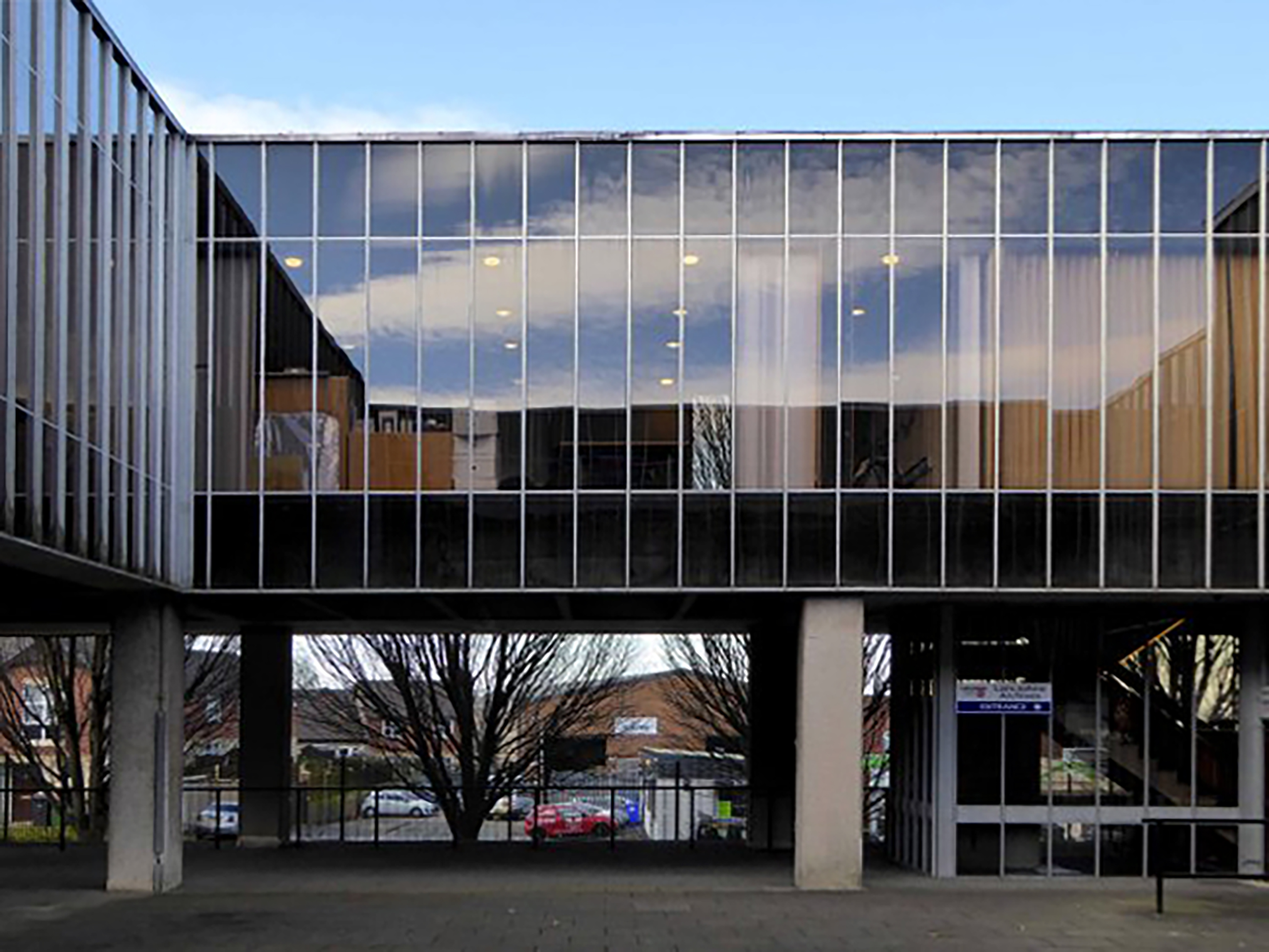
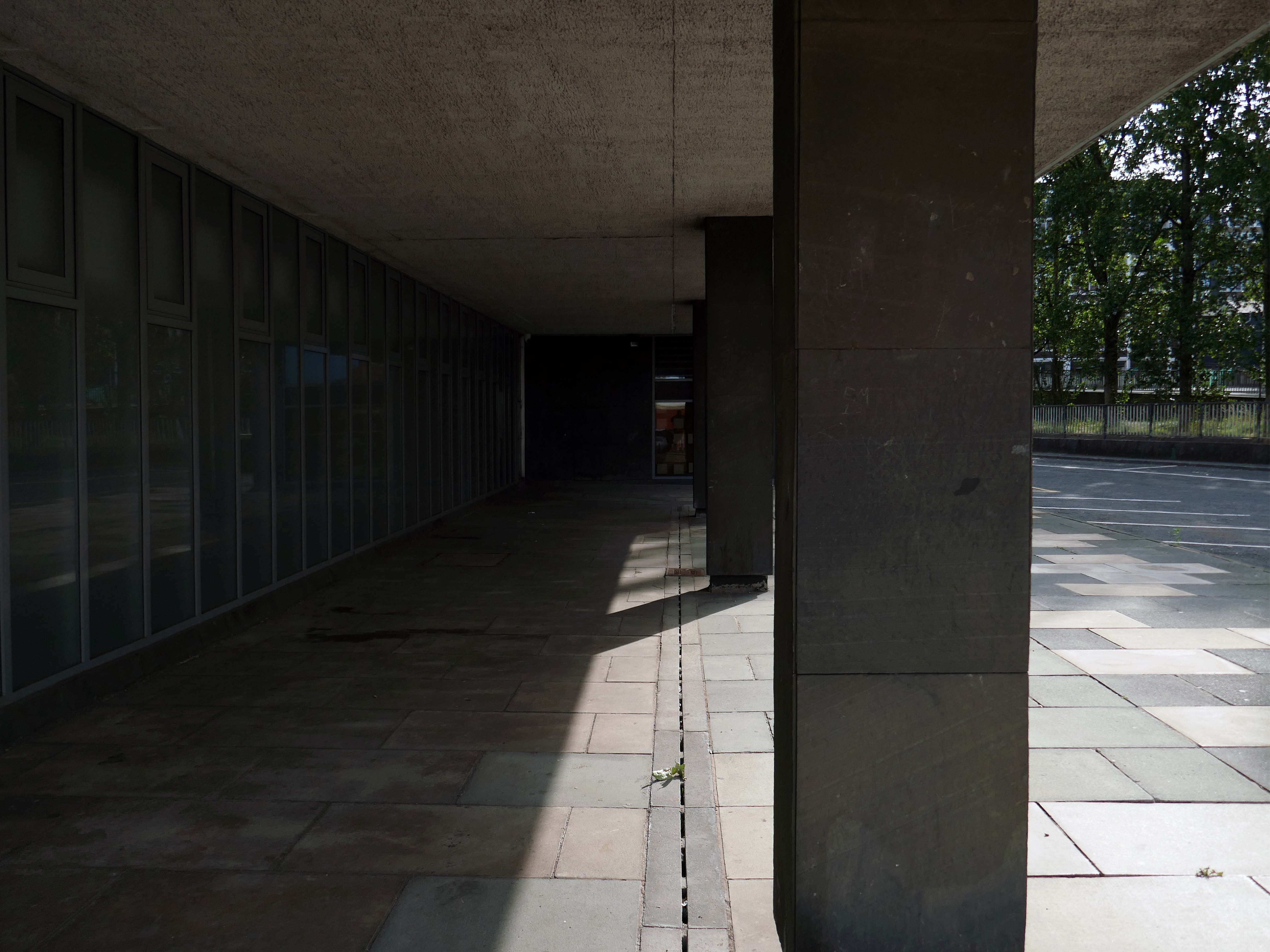
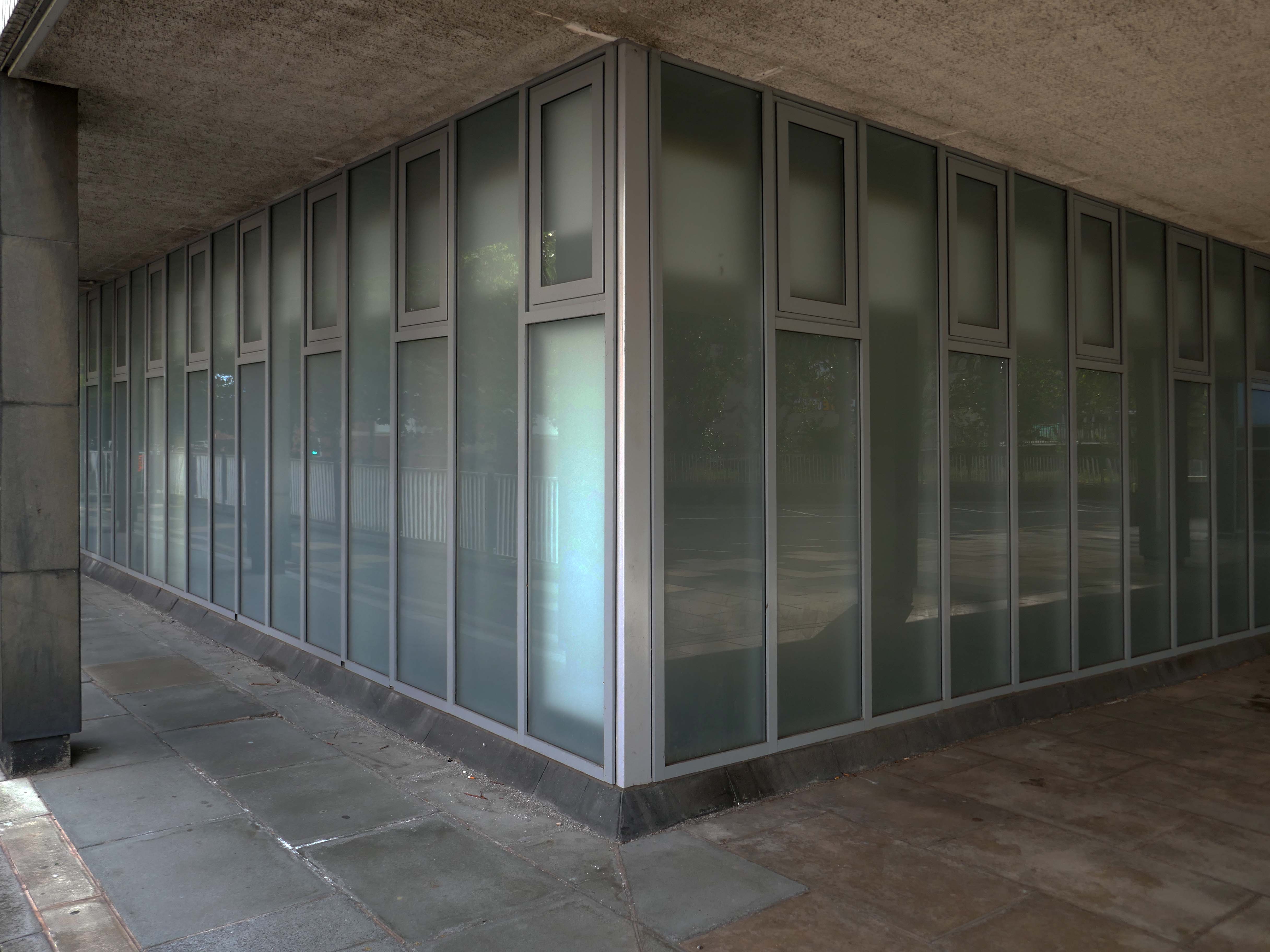
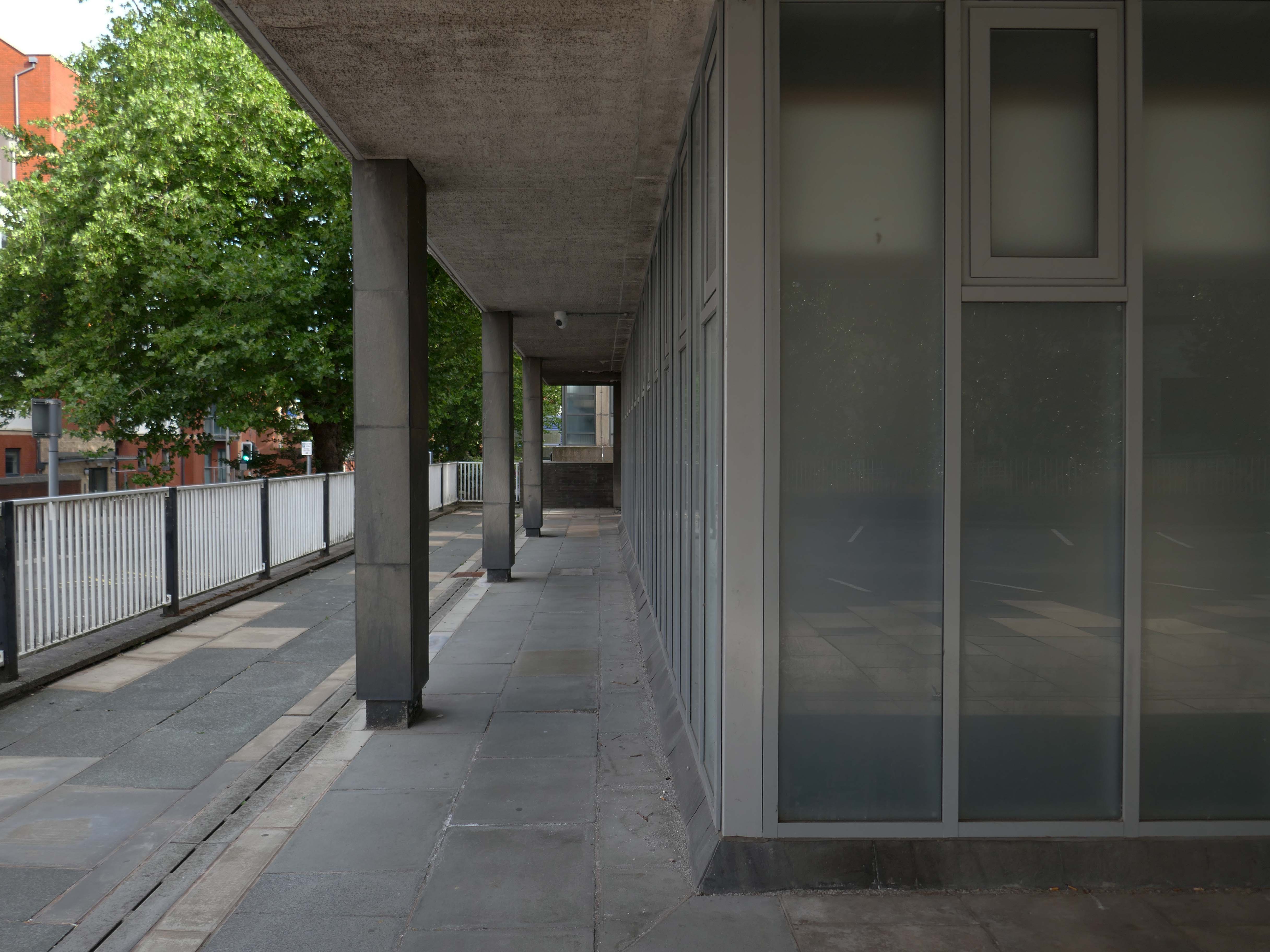
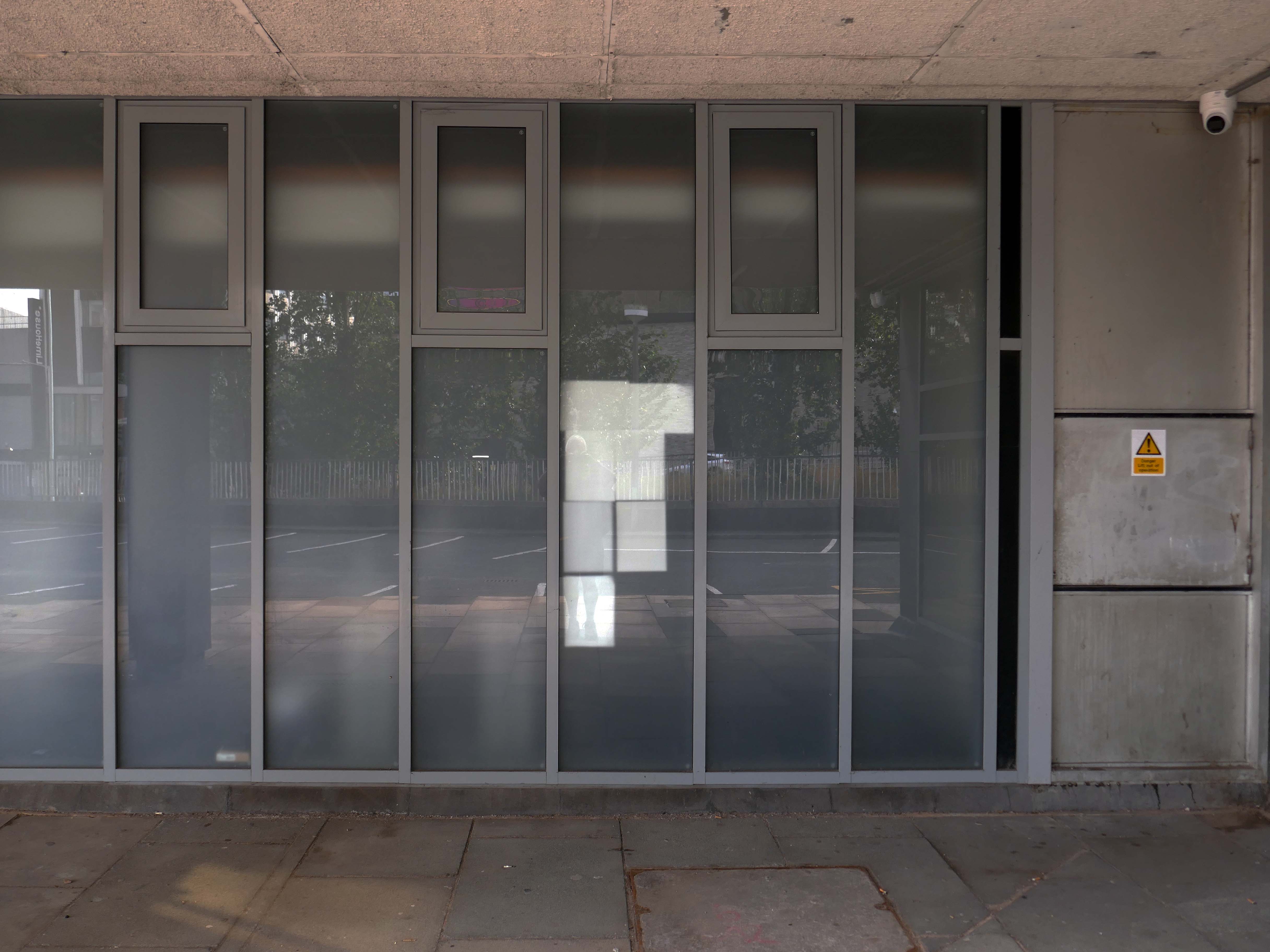
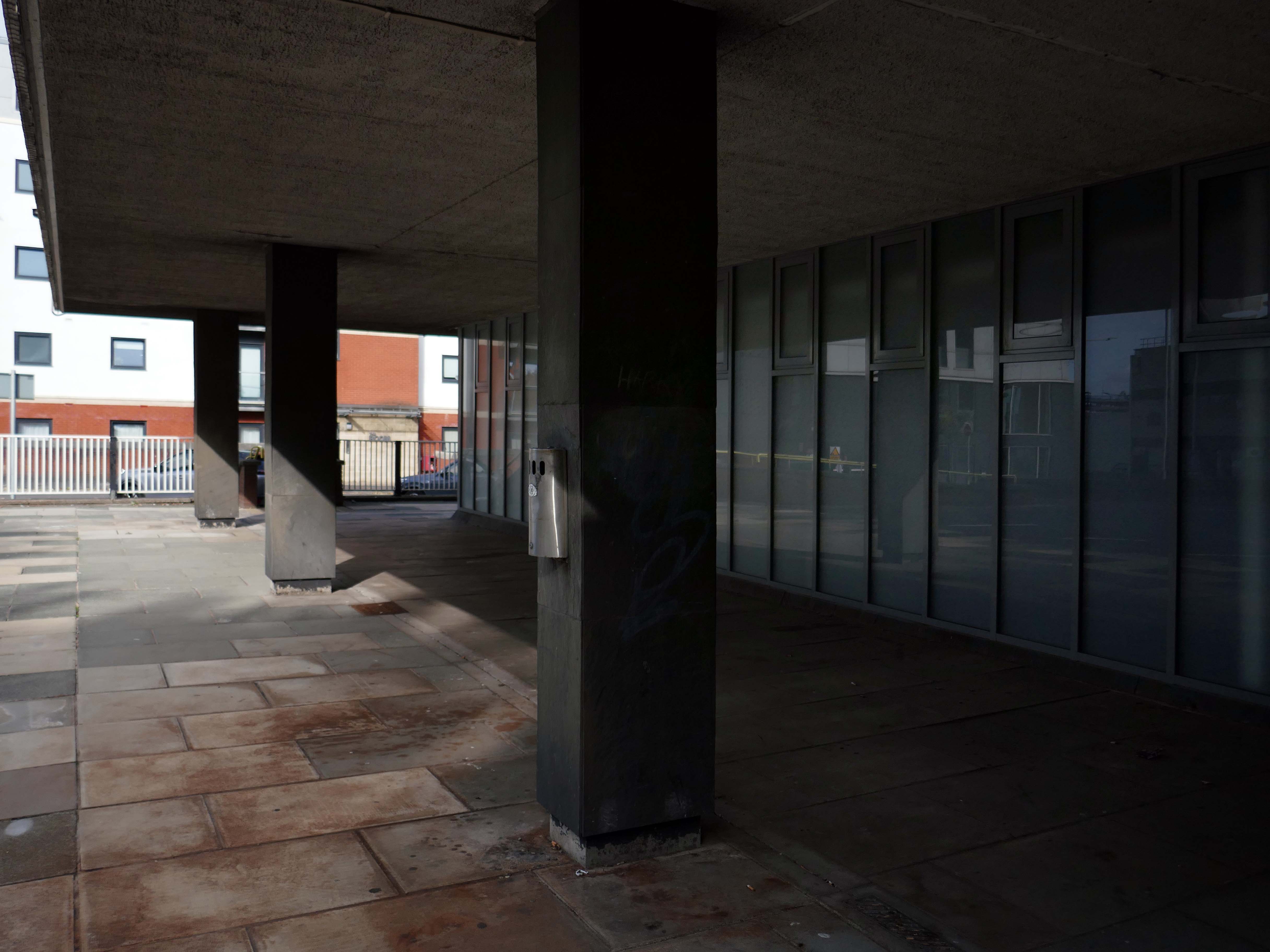
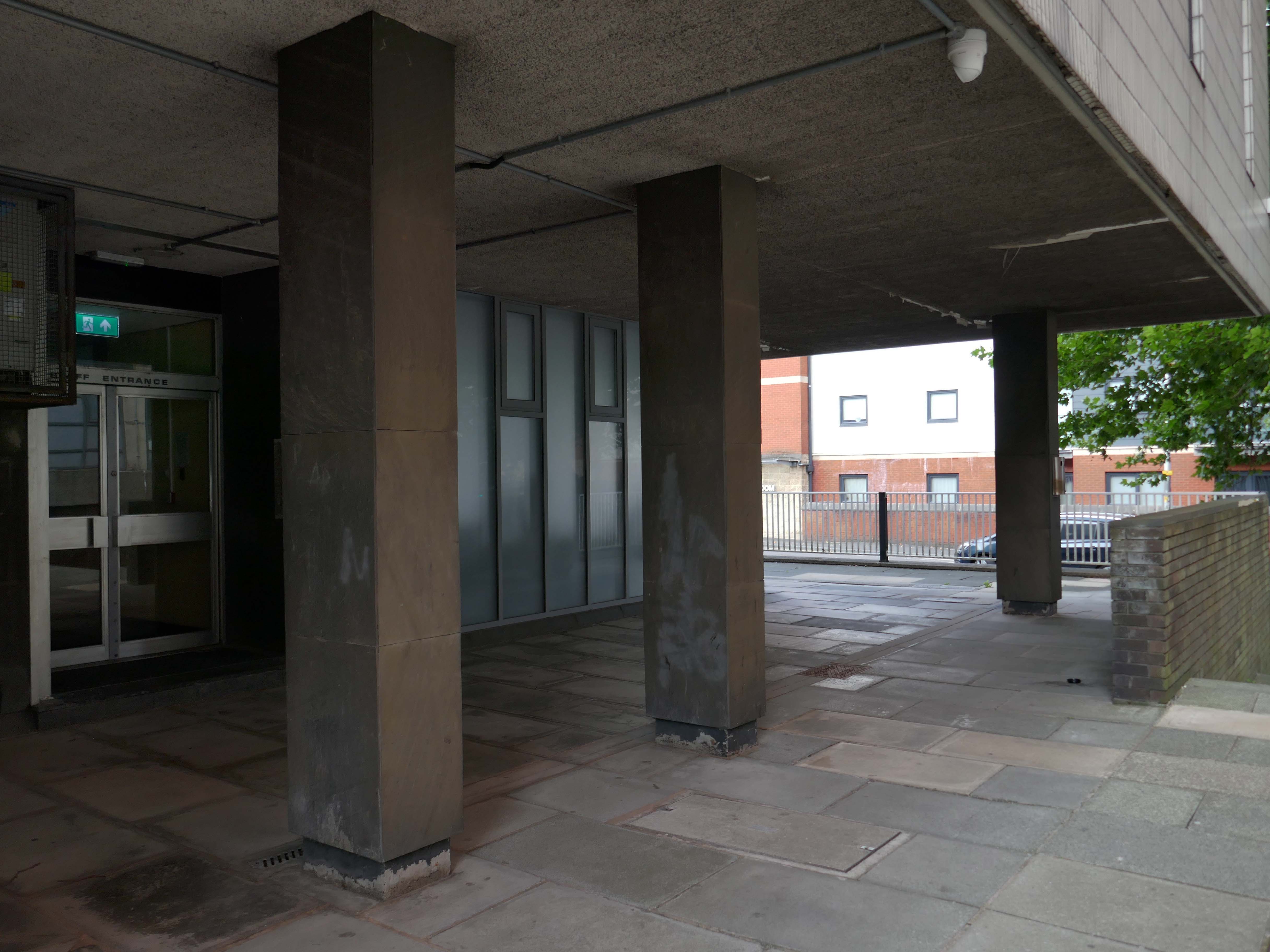
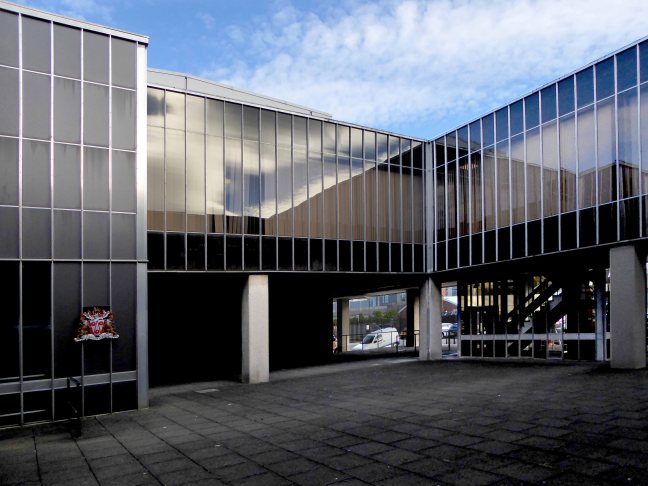
The Courts certainly echoes many of the stylistic and material characteristics of his work, particularly the County Archives, with similar piloti and glazing.
So let’s take a circuitous tour.
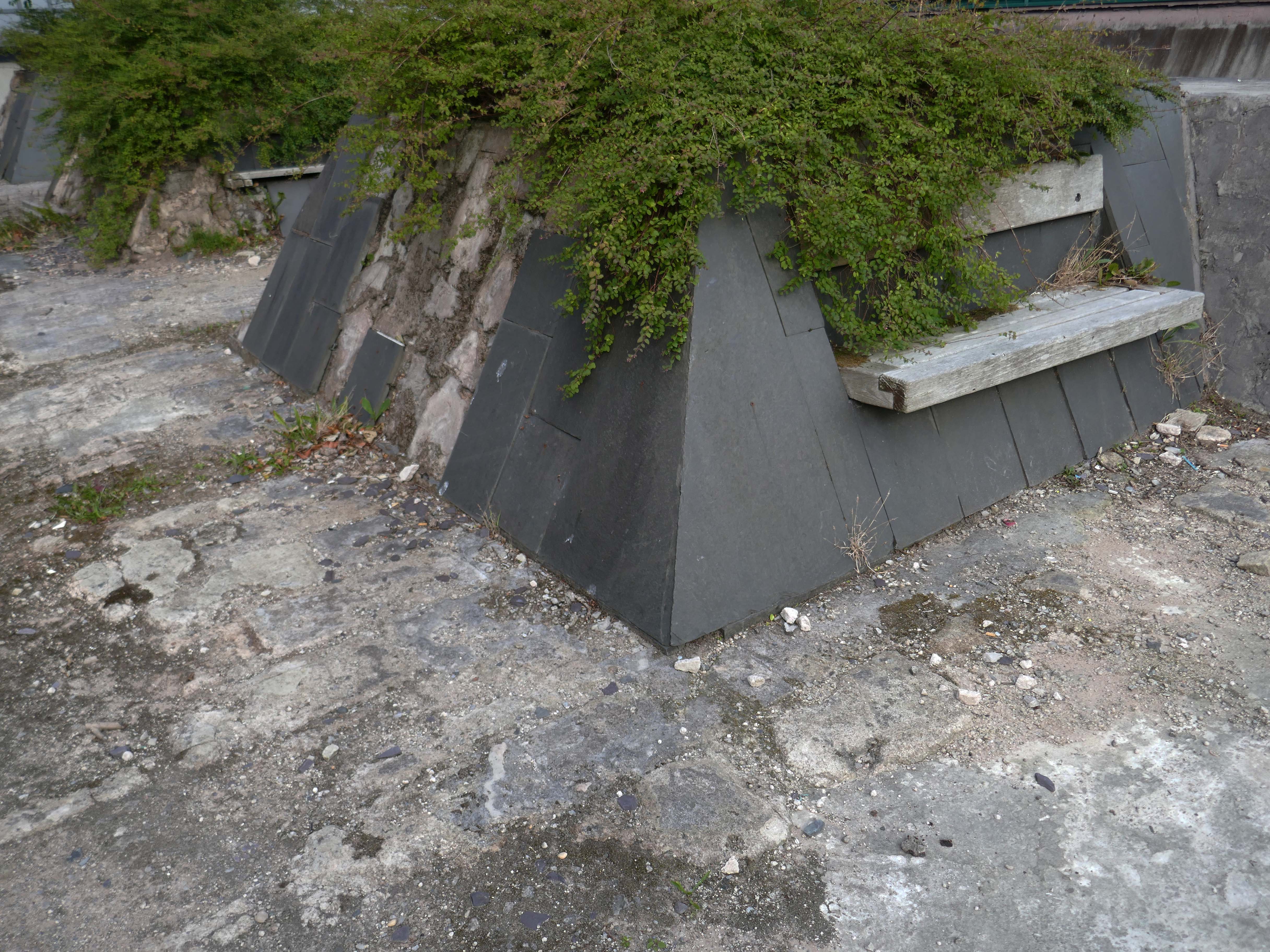
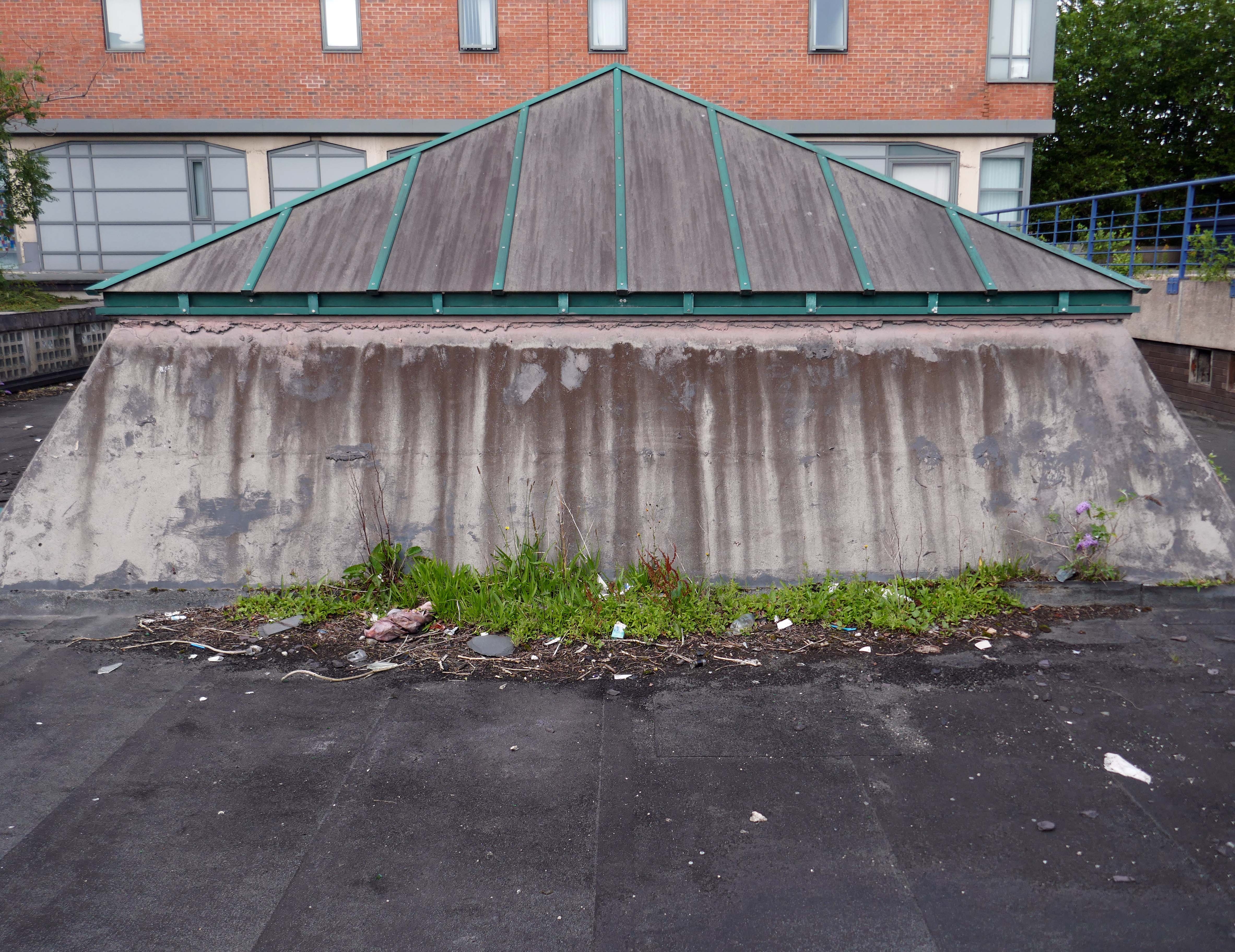
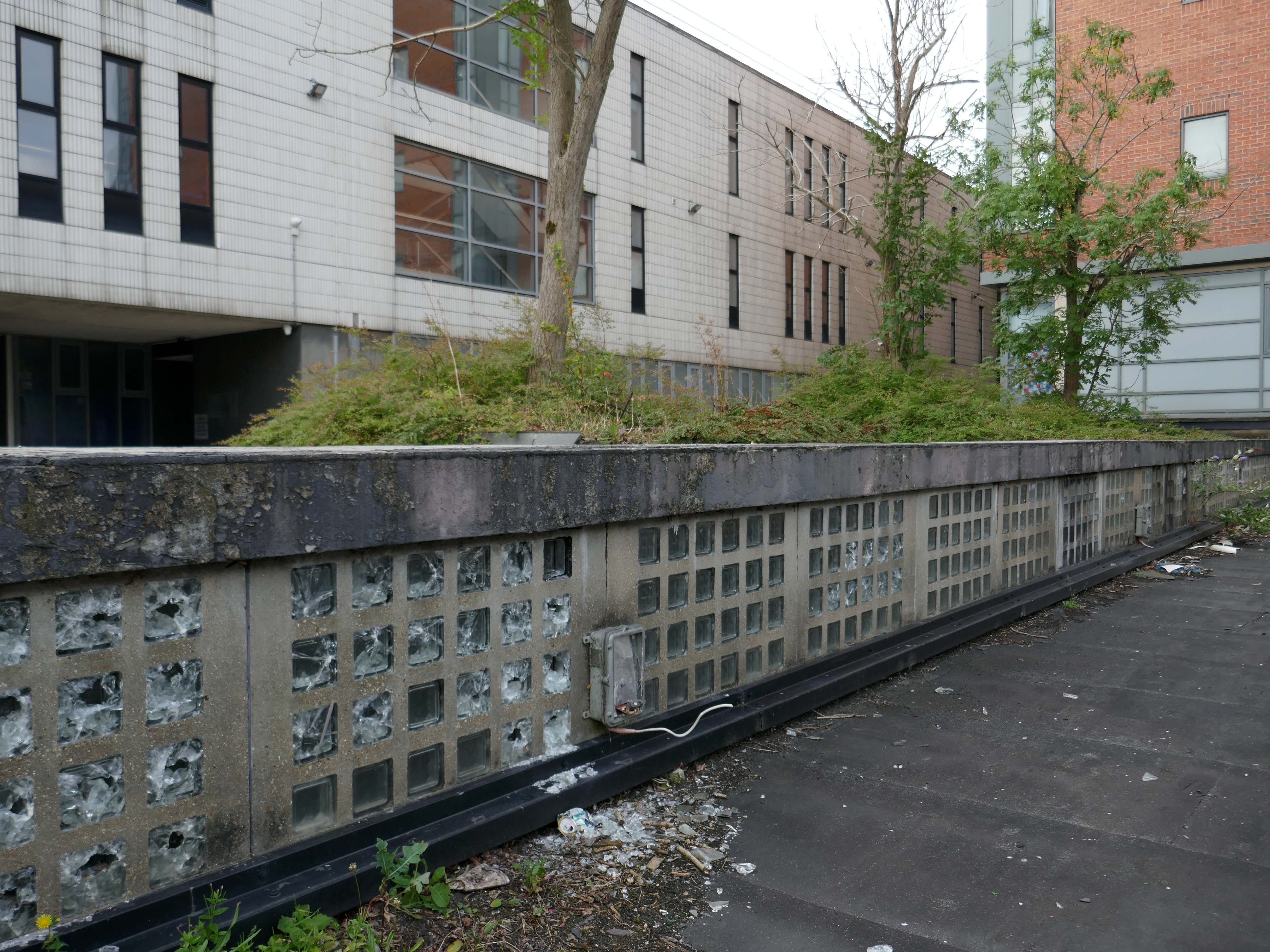
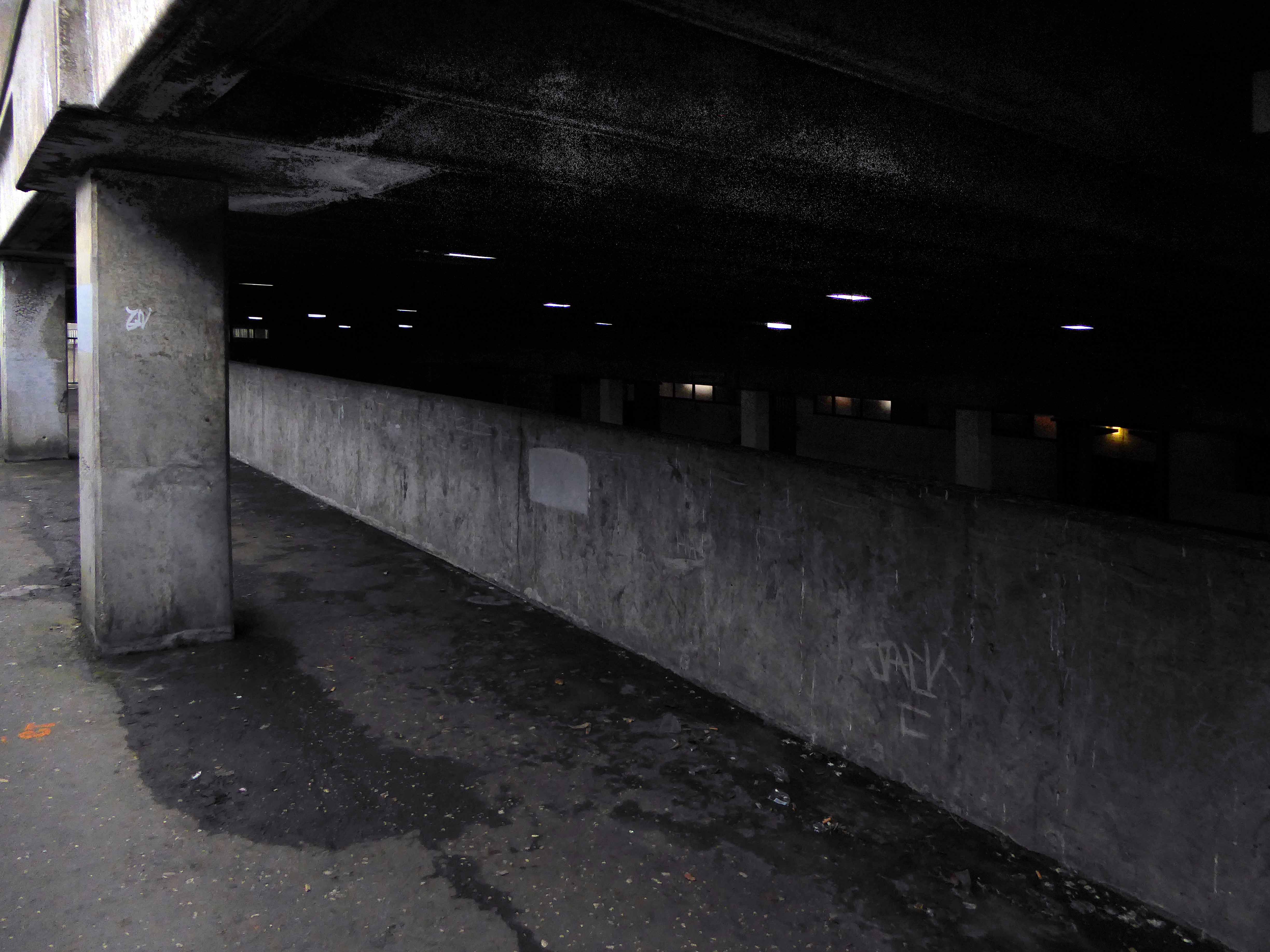
This is the seriously neglected seating area.
The Courts once had a Roger Booth Police Station as a neighbour.
Photographs – Richard Brook
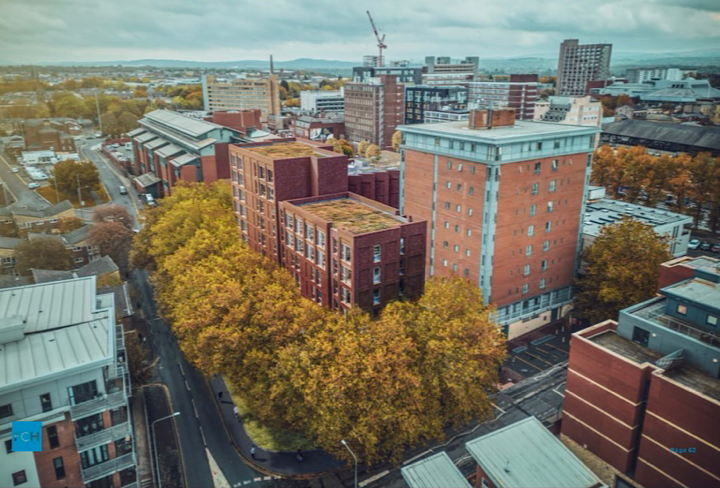
Converted to apartments in 2013, with current plans for further developments.
More than 200 student flats are set to be built on part of Preston’s former divisional police headquarters.Preston City Council planning officers have recommended that councillors give the go-ahead to the scheme – at the junction of Walker Street and Lawson Street, to the rear of the magistrates’ and crown courts.
The part of the plot where the new ‘studio apartments’ would be erected is currently occupied by a multi-level public car park, accessed from Saul Street, which has been operated as a pay and display facility by Chorley-based Parking Eye for the last nine years.
Other Roger Booth police stations have also been visited by the wrecking ball, Blackpool and Bury are now no longer extant.
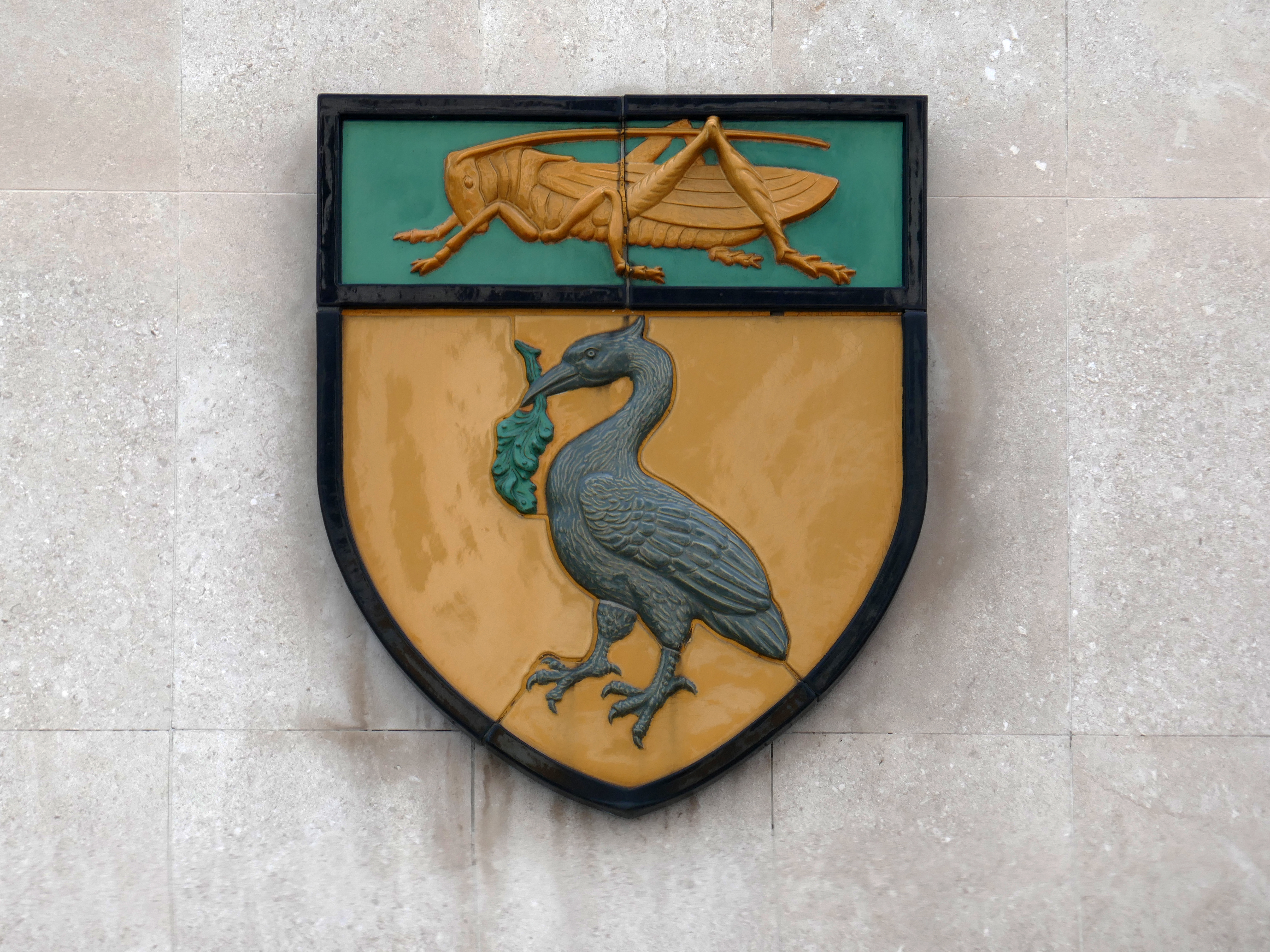
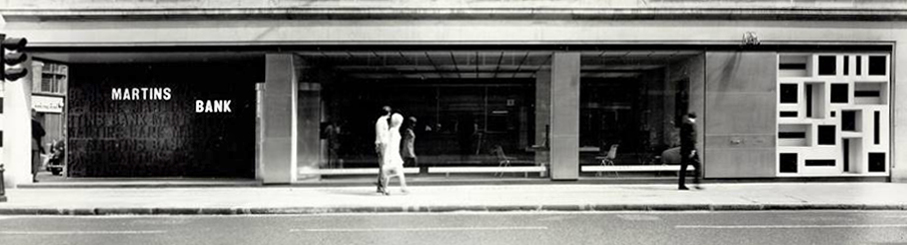
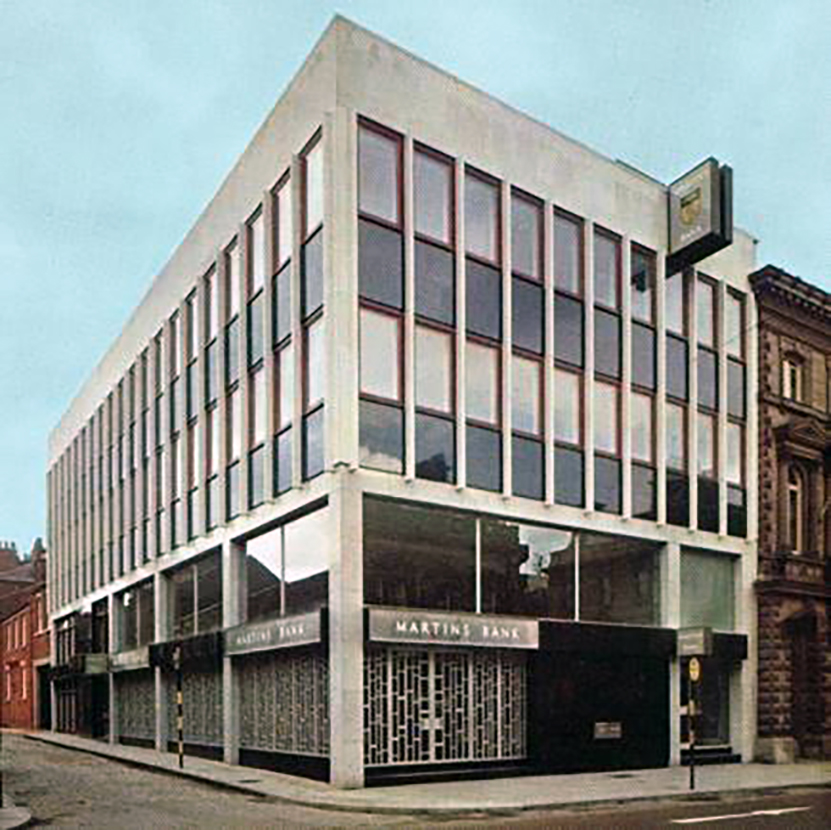
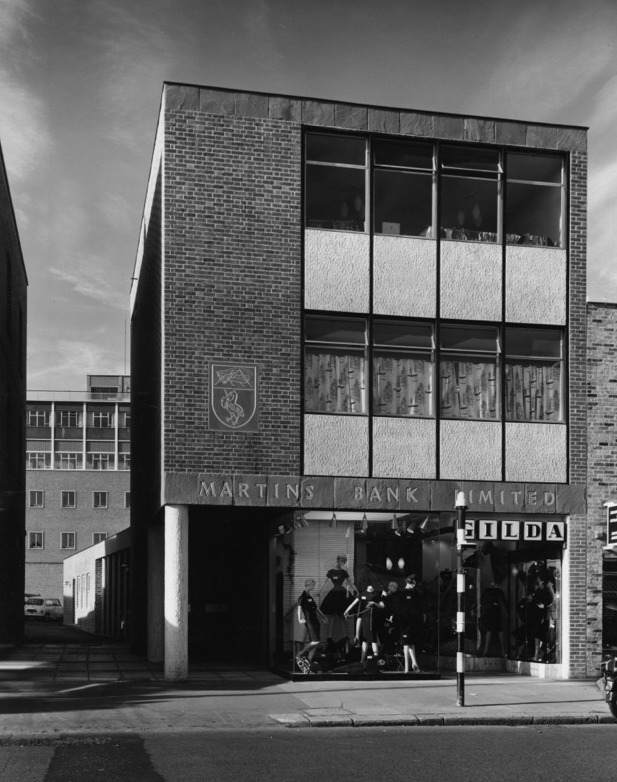
Martins Bank was a London private bank, trading for much of its time under the symbol of The Grasshopper, that could trace its origins back to Thomas Gresham and the London goldsmiths, from which it developed into a bank known as Martin’s Bank from 1890.[1] That bank was acquired in 1918 by the Bank of Liverpool, which wanted Martins to give it a London presence and a seat on the London Bankers’ Clearing House. The Martin name was retained in the title of the enlarged bank which was known as the Bank of Liverpool and Martins Limited. The title was shortened to Martins Bank Limited, without an apostrophe – in 1928, at the insistence of the directors of the Lancashire and Yorkshire Bank when it was bought by the Bank of Liverpool and Martins. The head office and managerial control remained firmly in Liverpool, cementing Martins’ place as the only English national bank to have its head office outside London.
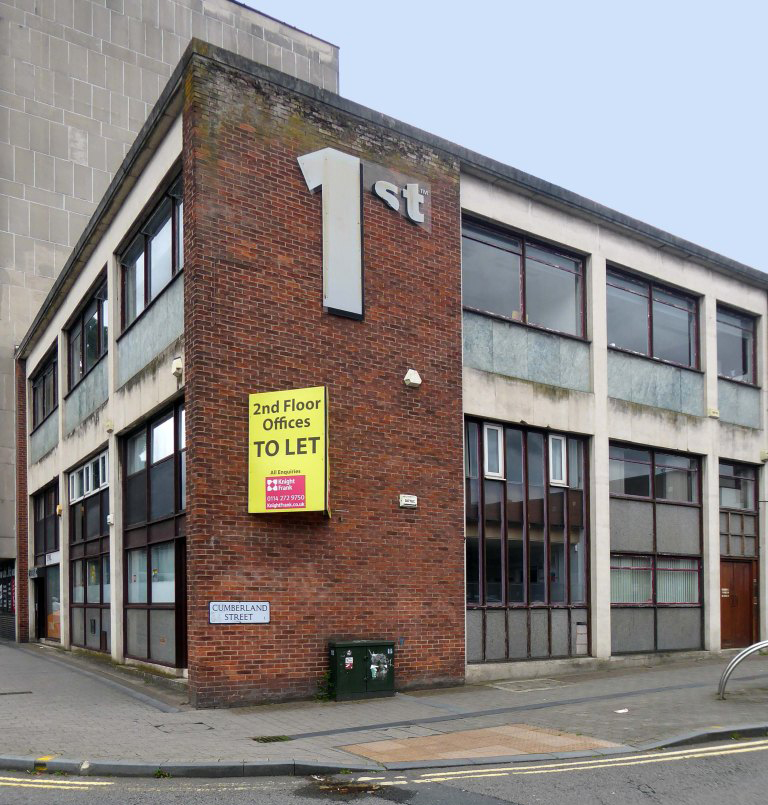
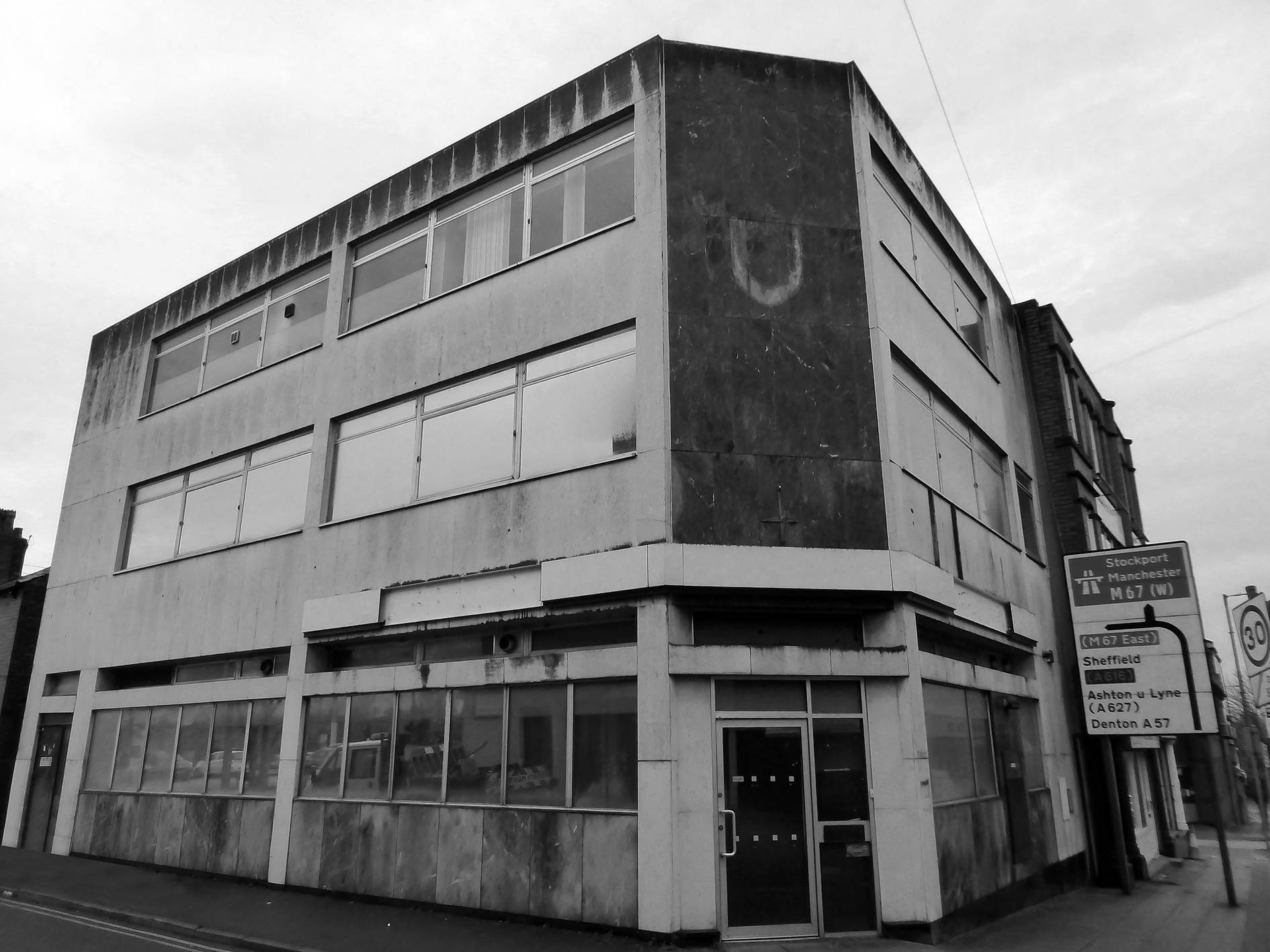
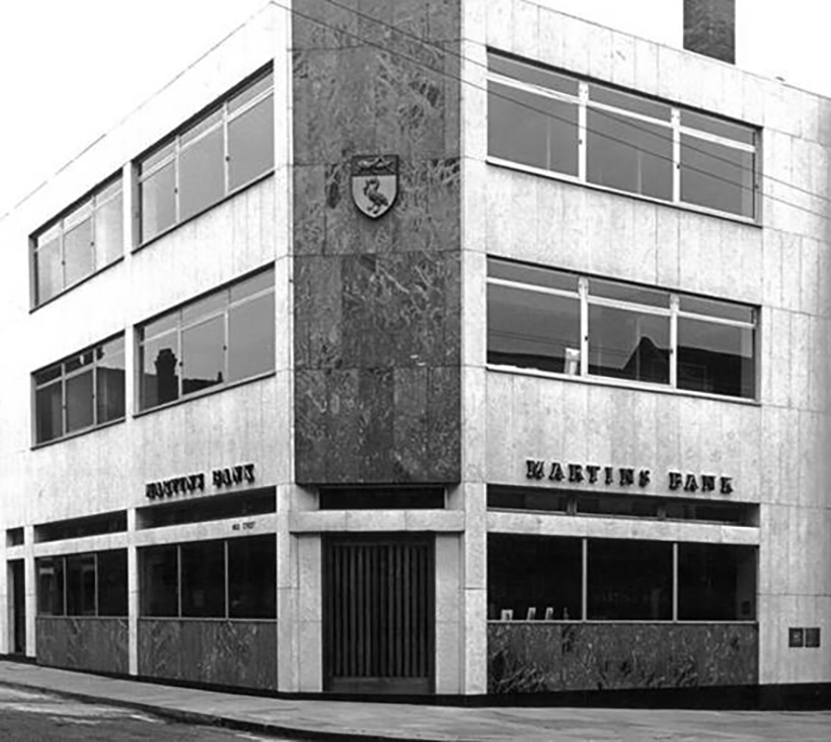
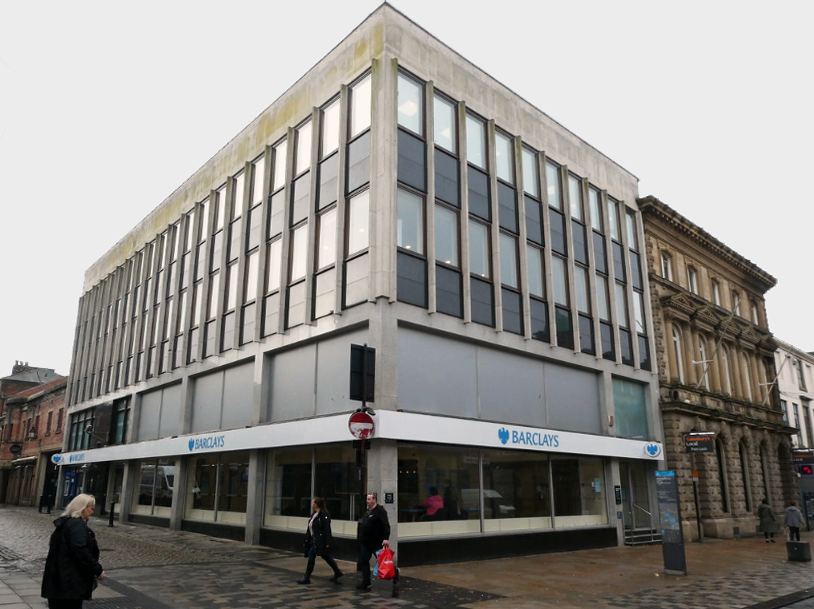
Opened in 1961, Martins Bank’s branch at Sheffield Moor is new and purpose built, occupying space left in the Sheffield Moor area by the bombing of the second world war. Time flies however, and more than fifty years on, the building is empty and awaiting the next chapter of its life.
Onwards to 38 Market Street Hyde – photographed as part of my Tameside Moderne book.
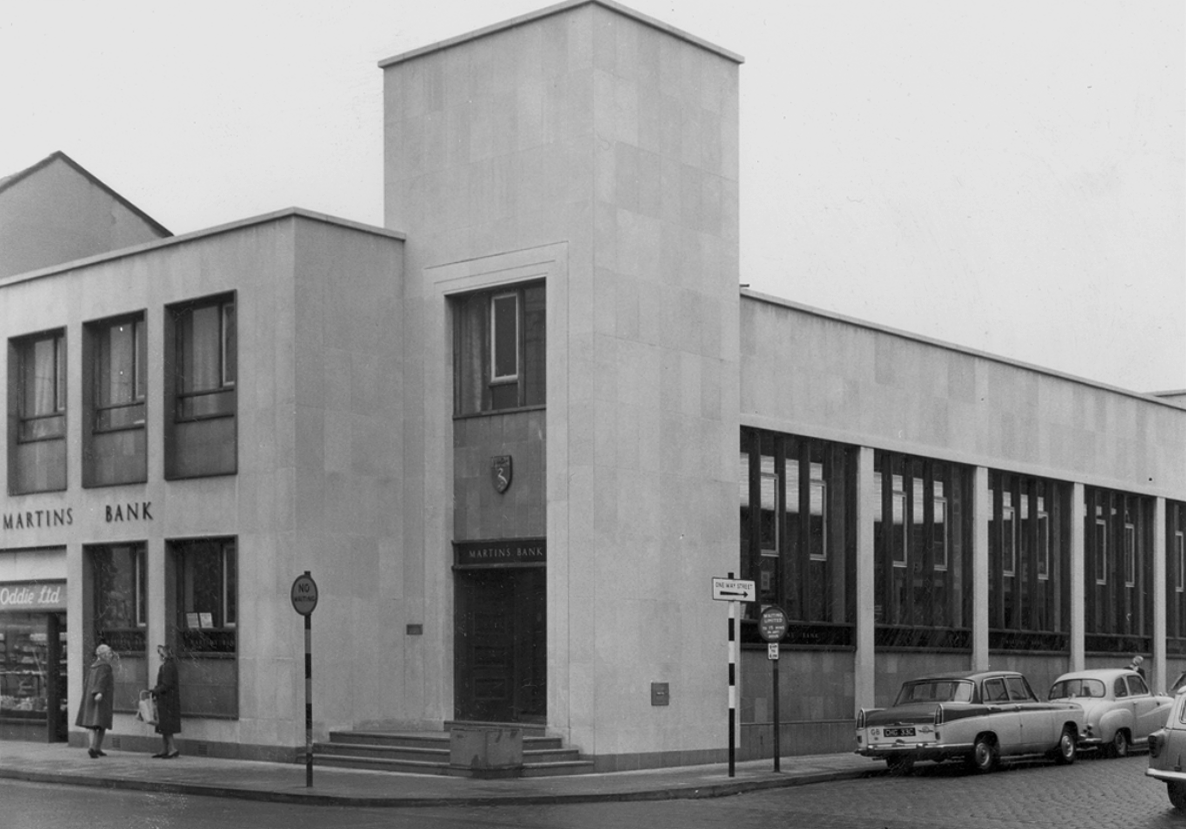
Seen here in 1963 – the year of its opening.
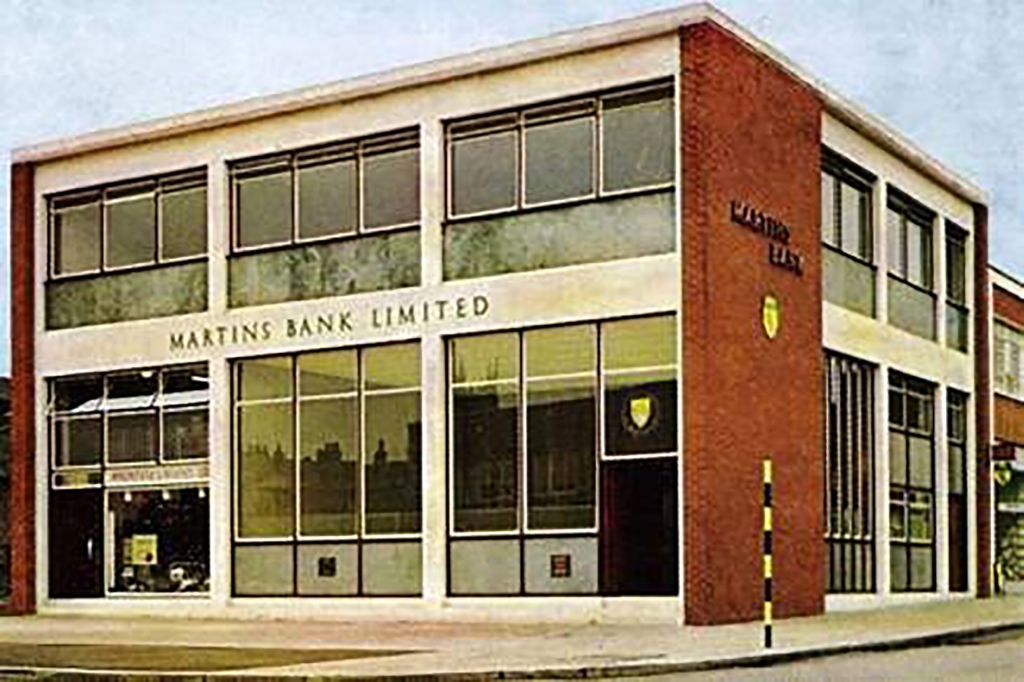
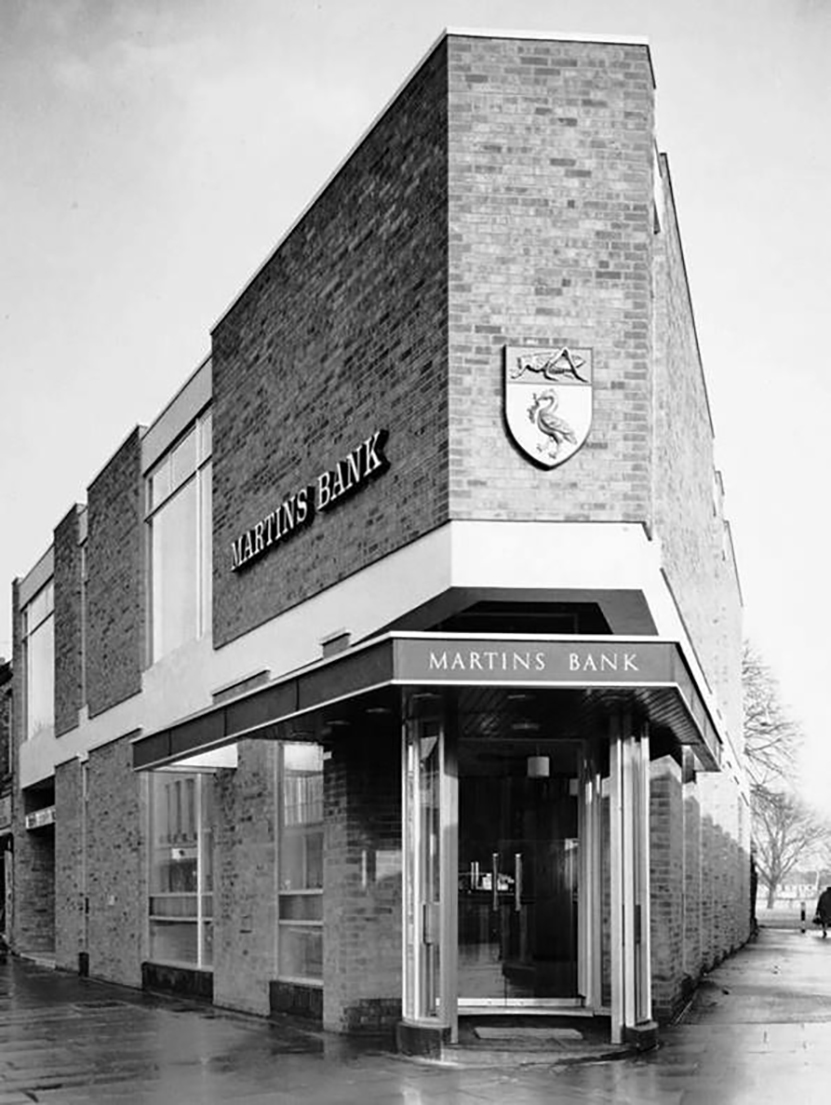
The rebuilt branch at 38 Market Street Hyde is typical of the clean lines and minimal fuss of Martins’ 60s rebuilds. After a year or so in temporary premises at 25 Market street it re-opens in 1965, and a year later a smaller but remarkably similar looking branch is completed at Peterborough.
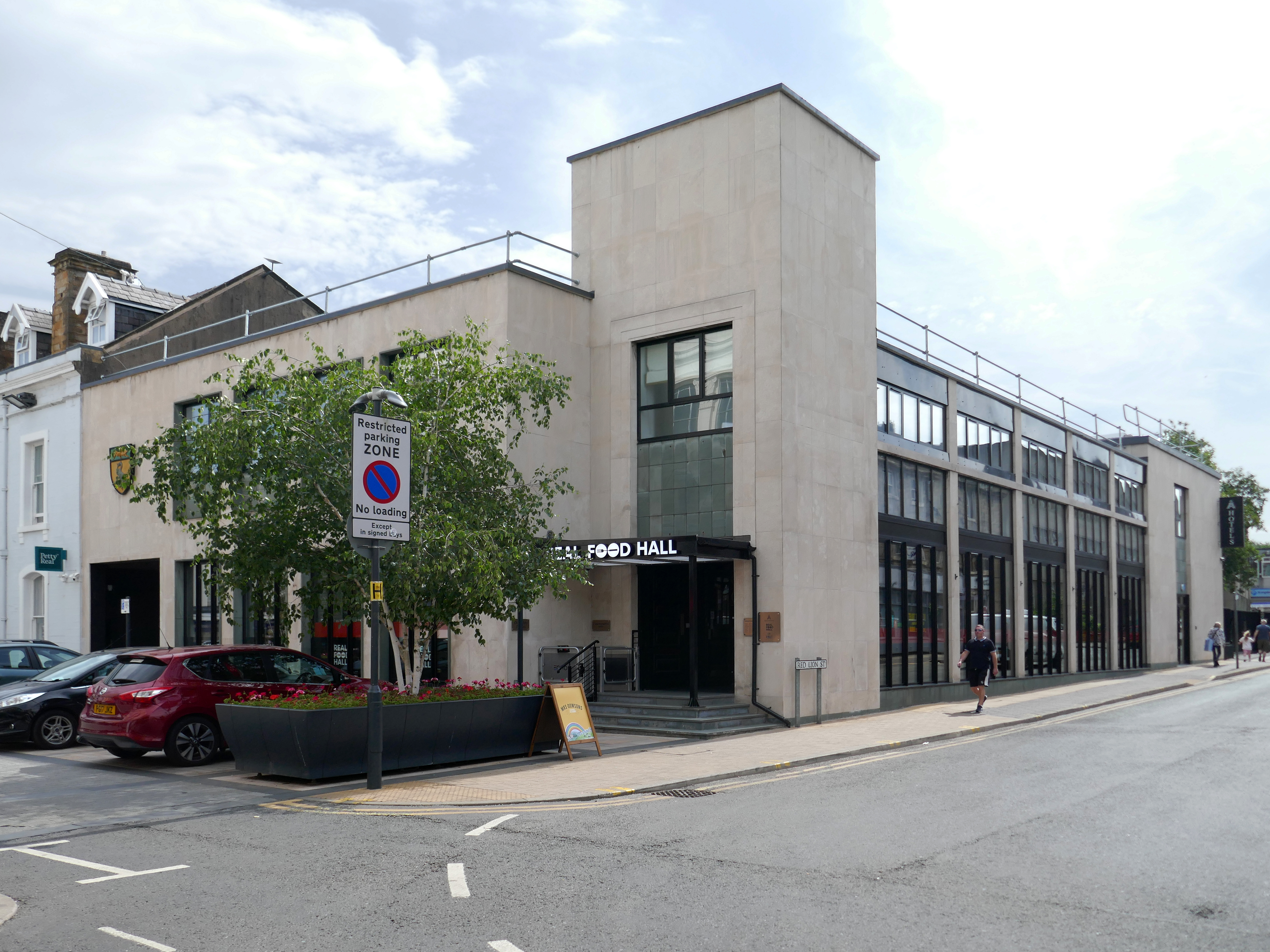
Then last week in Burnley, I stumbled across another former branch, whilst on my Burnley walk – it is currently trading as the Real Food Hall, VaultCinemaandAboveboutique hotel, having previously hosted a variety of retail outlets.
Architect: Mr J E Wadsworth of Samuel Taylor Son & Platt.
Discover Burnley’s premier destination for culinary delights. Nestled on Manchester Road, Real Food Hall offers a vibrant and diverse food experience that tantalizes every taste bud. Whether you’re craving gourmet burgers, delectable street food, or indulgent desserts, we’ve got something for everyone.
Enjoy top movies in a luxurious former bank vault, featuring high-end design, ultimate comfort, and a selection of premium snacks and beverages.
Indulge in next-level hospitality with Burnley’s largest, most intelligent hotel rooms — tailored for football fans, couples, and business travellers seeking a seamless, stylish stay.
Most people will remember Whitsuntide, 1963 as a weekend of blazing sunshine spent by the sea, or on the hills, or golfing, or just sitting in the sun. The staff of the two Burnley branches will remember it as a week-end of evacuation and invasion, Dunkirk and D-Day rolled into a lost weekend, the evacuation of Hargreaves Street and St James Street into the new Manchester Road premises.
Mr Jobling, who had controlled operations throughout, created a record that can never be beaten in working twenty-four hours’ overtime in one day! We welcomed our first customers at 10 o’clock next morning and a civic visit at 11 a.m., not only proud of our lovely building but very proud of and grateful to so many who had never spared themselves to achieve what at one time seemed the impossible.
In service from 3rd June 1963 until 19th June 1991.
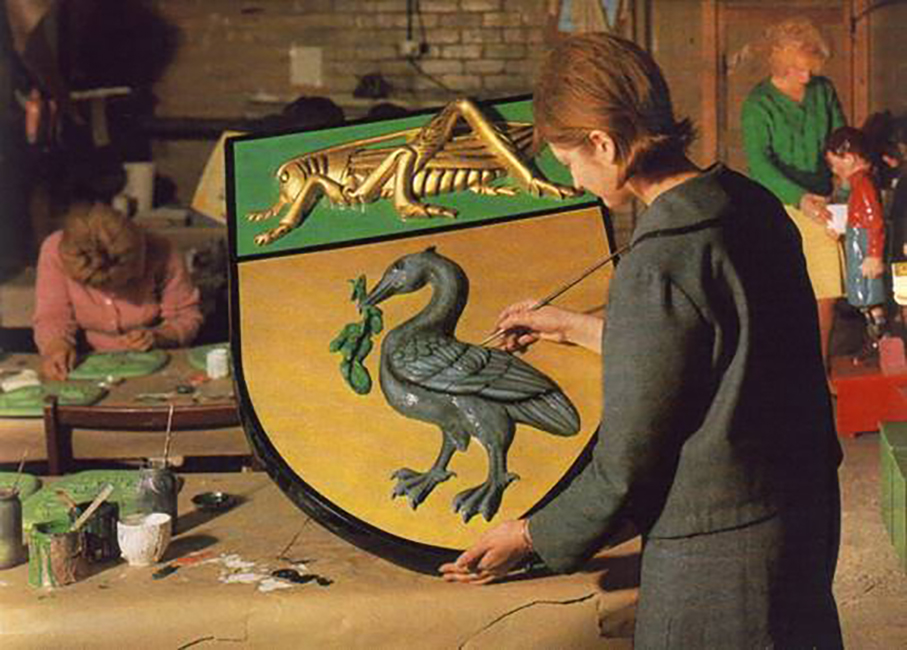
Since the last war the uses of fibreglass have developed to such an extent, that there are now companies engaged solely in the manufacture of fibreglass products. Such a company is Carleton Russell Limited whose works at Loughborough. The company makes fibreglass signs and displays and has produced several of our Bank signs. At the time of our visit the finishing touches were being made to the huge sign, seen in the colour photograph below, which now gleams upon customers entering our branch at Digbeth, Birmingham.
Why fibreglass – two of its advantages, lightness and flexibility, have much to recommend it as the material for a wall sign, either inside or outside a building. The Coats of Arms carved in stone which once surmounted the two entrances to our Leeds office, have now given way to fibre-glass reproductions. Weather resistance is another valuable property of these signs and Hove branch, for example, exposed to coastal weather, is saved frequent cleaning and retouching costs by having its external sign made from fibreglass.
In addition to innovative materials, Martins began to employ Modernist Architecture, interiors and design to attract a younger customer base.
Particularly at their branch on 95 Wigmore Street London, where Ernö Goldfinger was commissioned to do away with the old and bring in only the newest of the new.
New office development for Great Portland Estates on Wigmore St. Designed by architects ORMS, 95 Wigmore Street is a new office and retail development by the Great Wigmore Partnership, completed in 2013. The building occupies a prominent site in the West End, between the thriving restaurants and bars on James Street and yards from Selfridges on Duke Street.
Closer to home this is the Fishergate Branch in Preston, opened in August 1965.
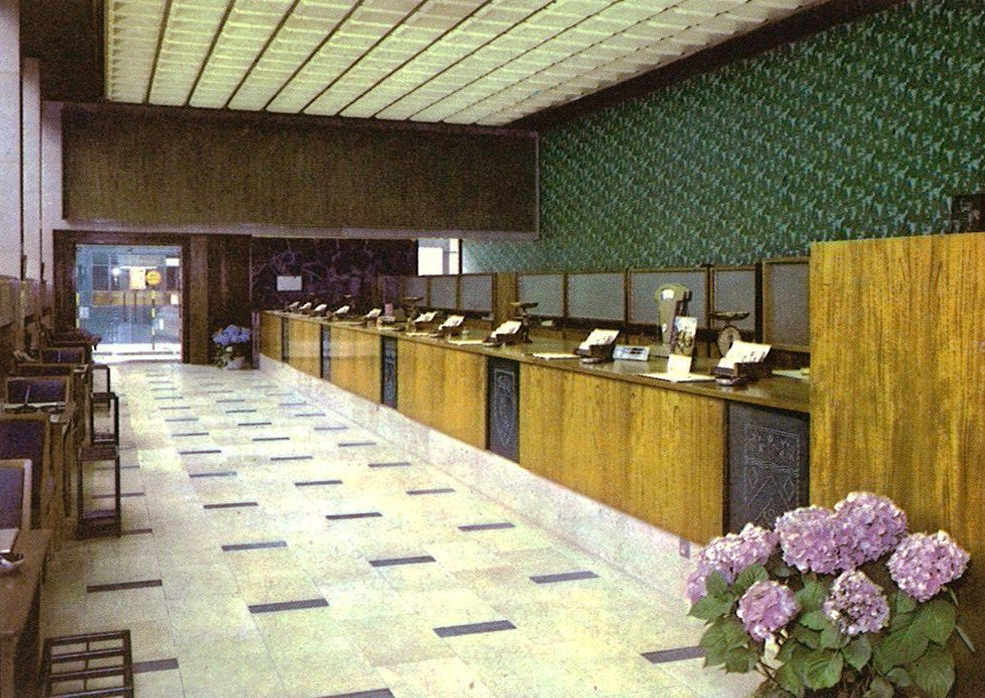
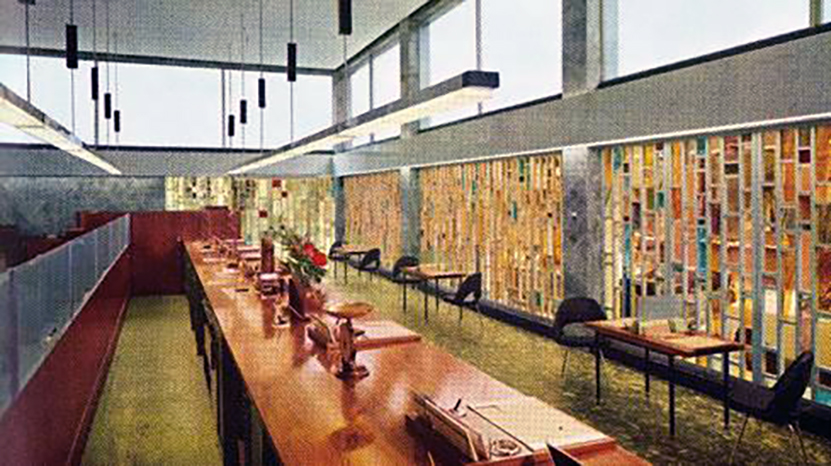
Preston branch today is not merely impressive; it is handsome. The entrance porch is of clear glass but the windows are of hand-made tinted glass set in aluminium frames, the counter is of teak, faced with Sicilian marble, and the walls of the main banking office are of wide elm boarding with one large panel of silver grey marble.
The management rooms are lined with cedar of Lebanon against a maple background and hot water coils in the ceilings warm all the office areas. Clearly the transformation has cost a lot of money and even the more humble rooms would not disgrace the London Hilton. Does the Hilton staff kitchen, for example, have built-in teak wall cupboards with magnetised catches?
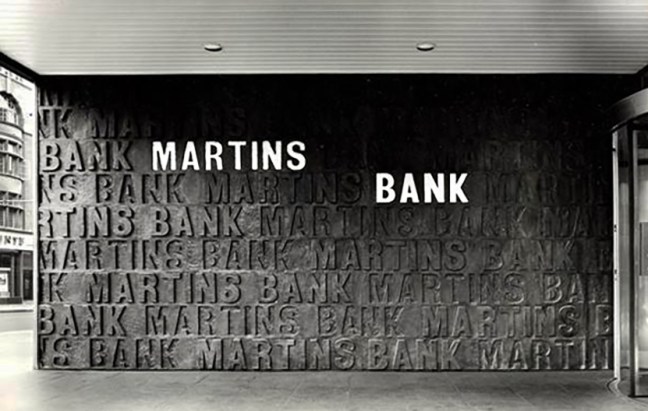
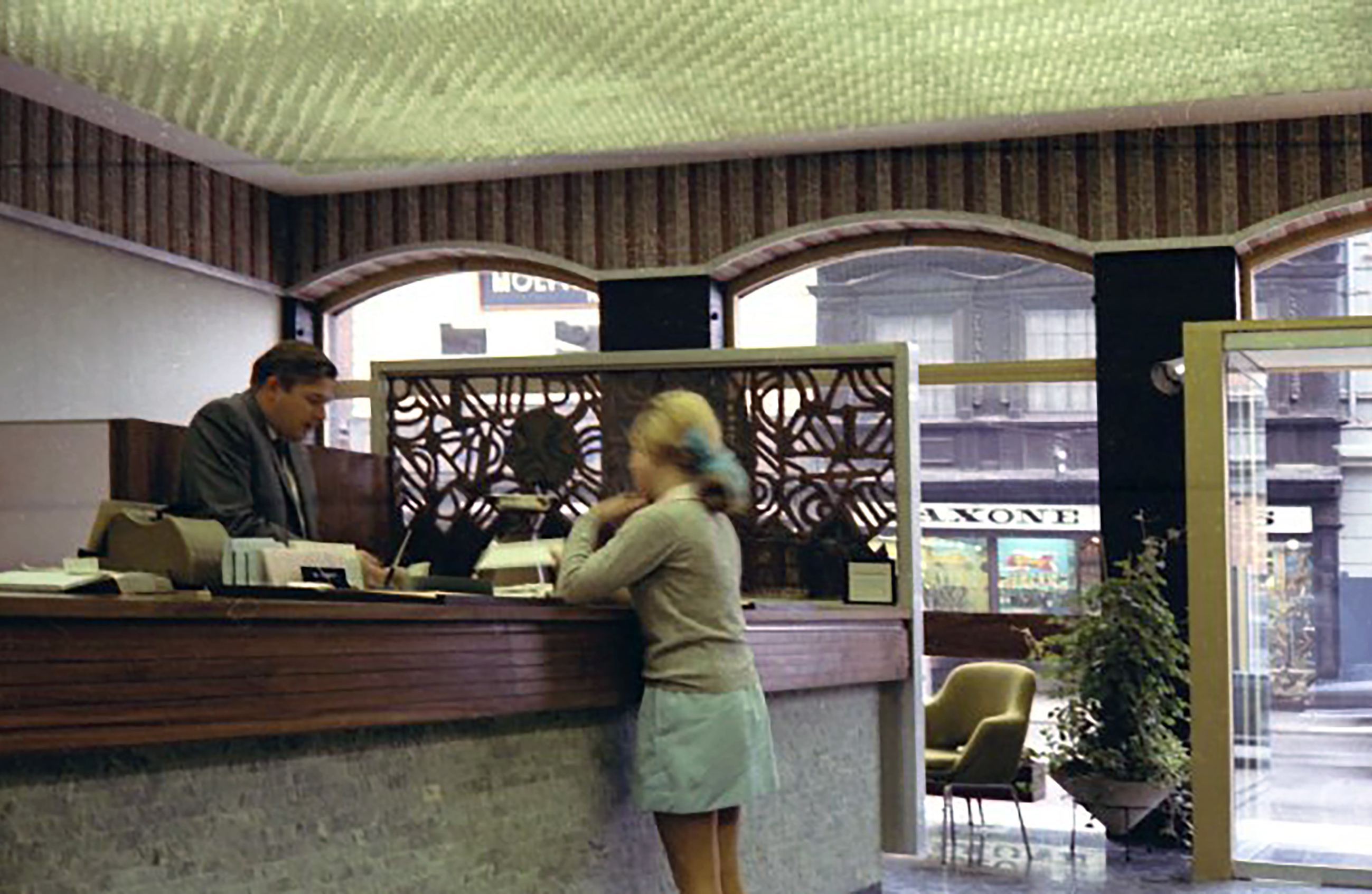
In the late 1950s, Martins begins to commission works of art that can take pride of place in new branches, and in most cases reflect something of the local area – a kind of giving back to the people. To begin with, this is neither a grand nor hollow gesture, and the character of many a branch is decided by its own unique internal décor and its artwork.
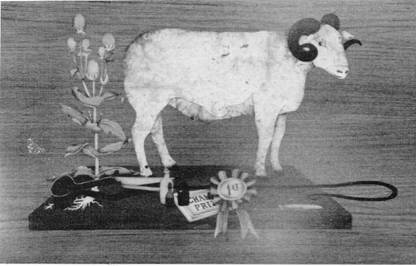
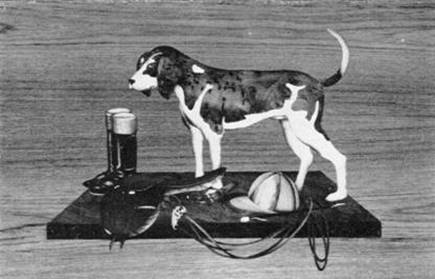
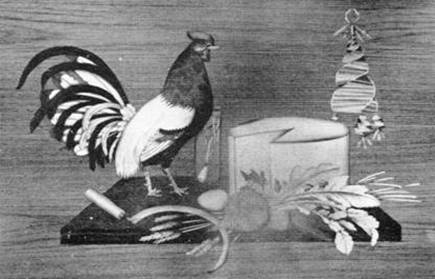
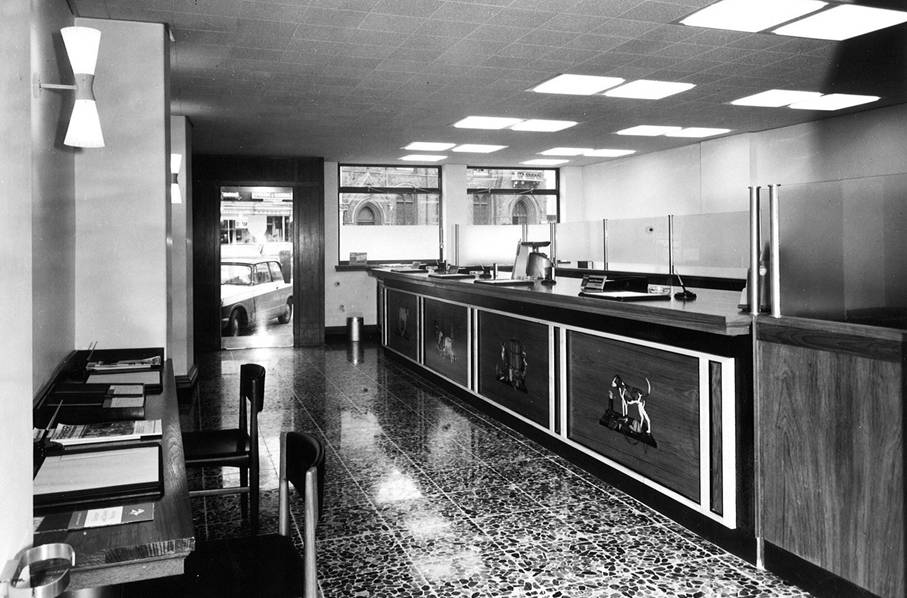
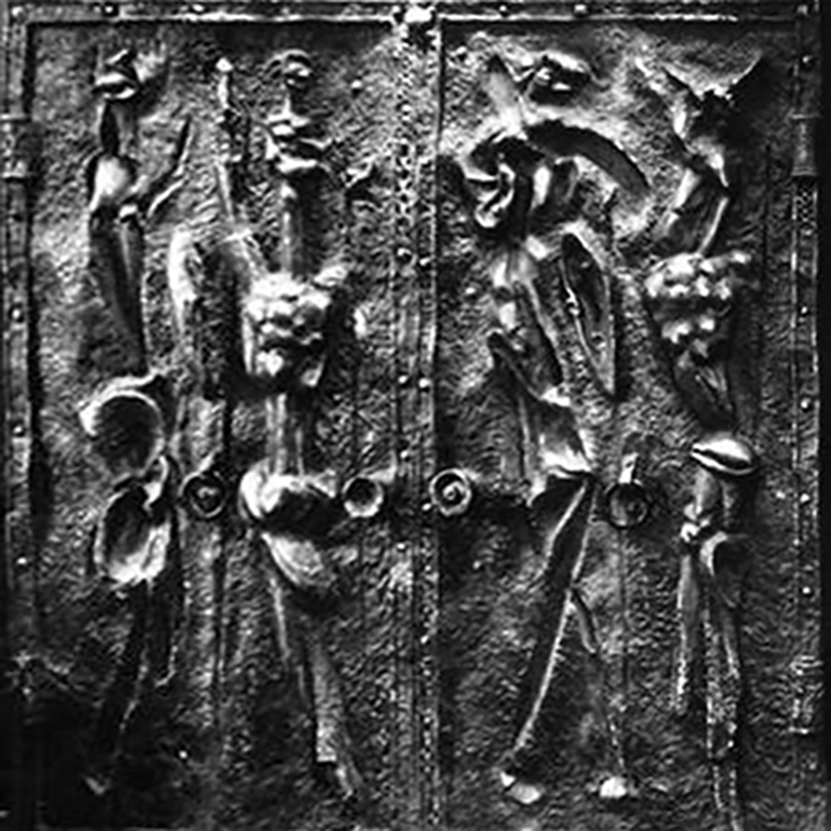
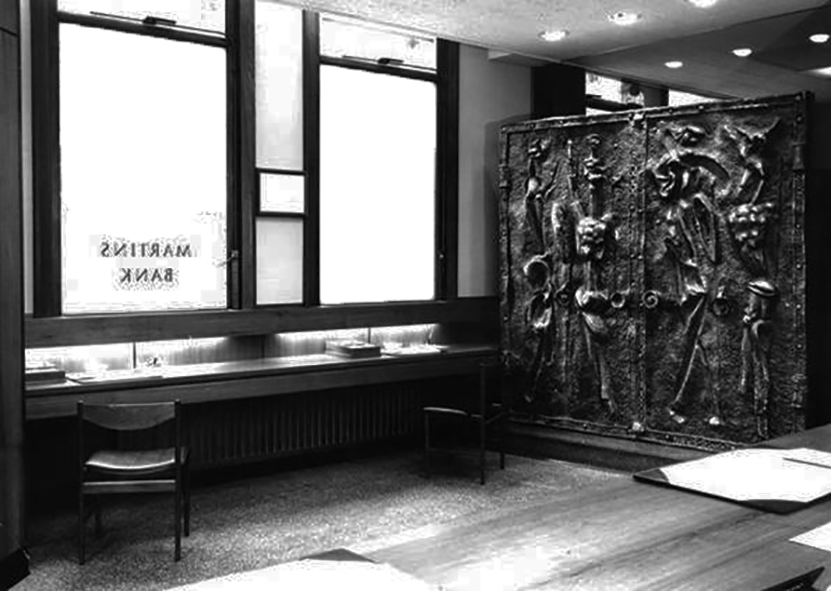
Such as the four elaborate carvings from Newbury Branch, depicting four local activities – Brewing, Weaving, Chasing and Farming.
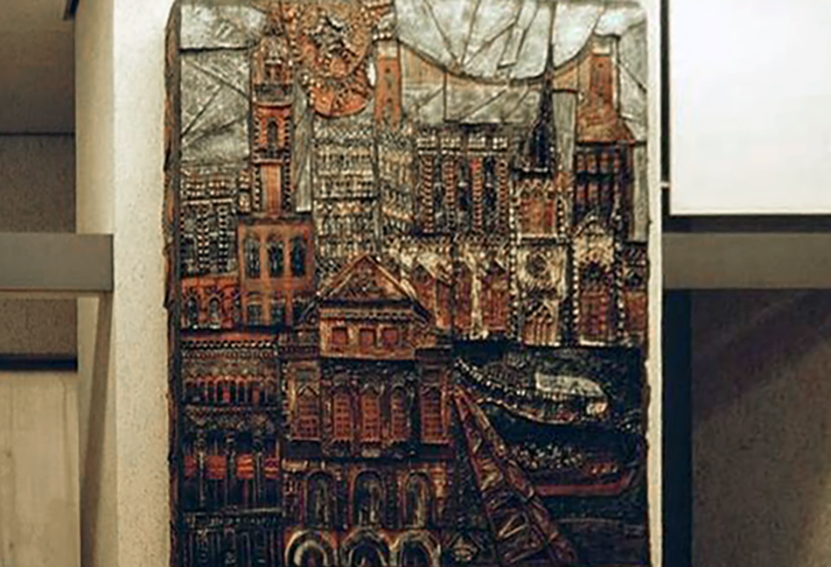
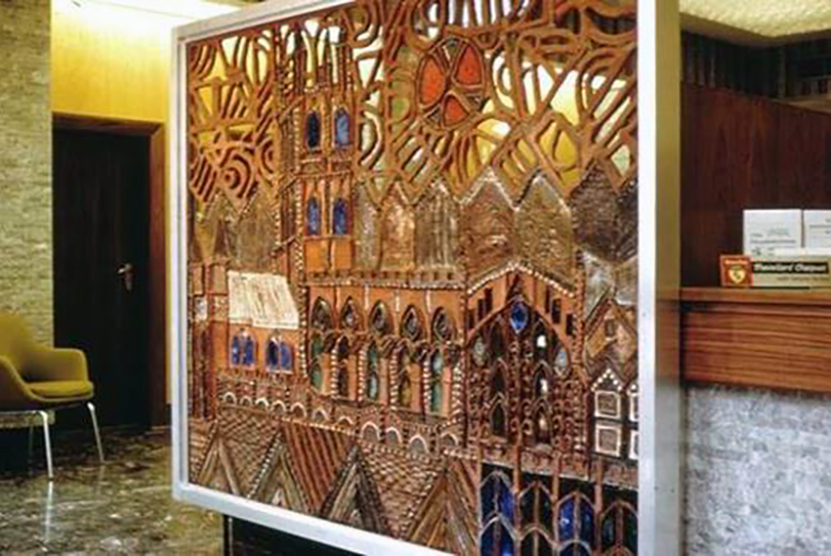
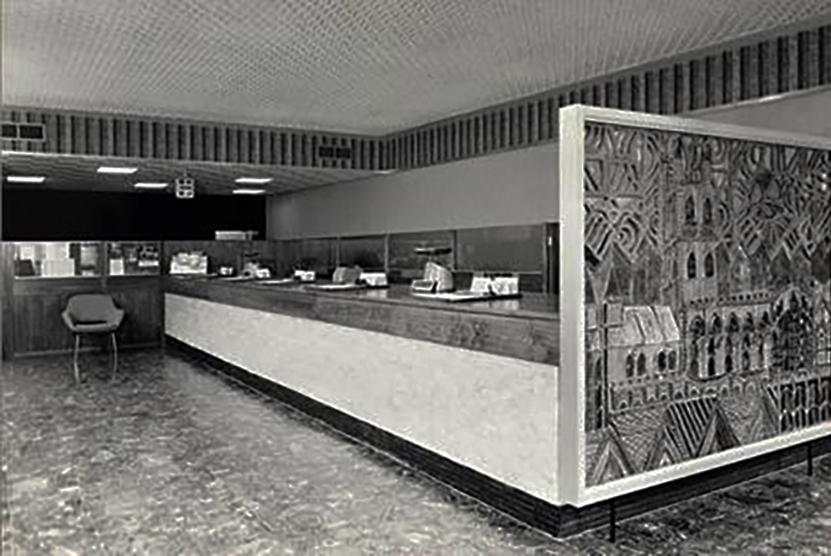
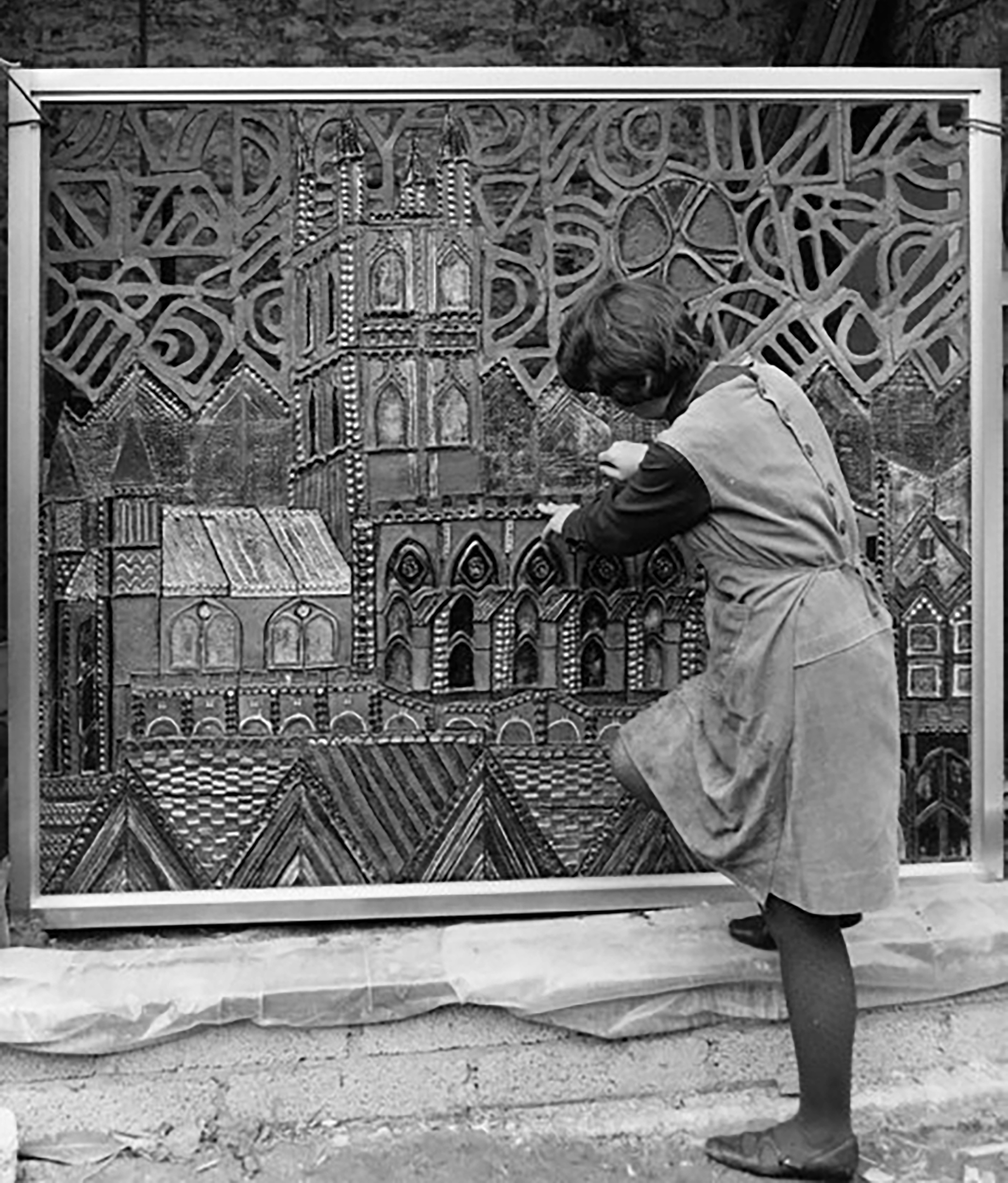
Bristol Clifton 9a Whiteladies Road – the design depicts various buildings and landmarks in Bristol.
Philippa Threlfall has been making relief murals in ceramic since the 1960s. Together with her husband and partner Kennedy Collings she has completed over one hundred major works on sites all over the United Kingdom and overseas. Some of these were made for private clients, but most were commissioned for display in public situations – shopping precincts, banks, building societies, an airport, hospital and office developments.
Philippa studied Illustration and Ceramics at Cardiff College of Art and went on to qualify as an art teacher at Goldsmiths College London. She taught ceramics and painting part time for six years at North London Collegiate School in Edgware, and during this time began to receive commissions for mural work.
Bournemouth 39 Old Christchurch Road, where sculptor Paul Fletcher’s creation exudes locality and security at the doors of the branch.
Where in the universe have we landed? Is this one of the wobbly sets from the 1960s episodes of Dr Who? Even worse – no need for LSD when paying in your £SD at the new Watford Branch – Bryan & Norman Westwood & Partners, architects 1962.
Ribapix – rear elevation.
The uneven cobbled effect on the floor, clashing with walls that look as if they might close in on you at any minute, must have made for an interesting visit to Watford.
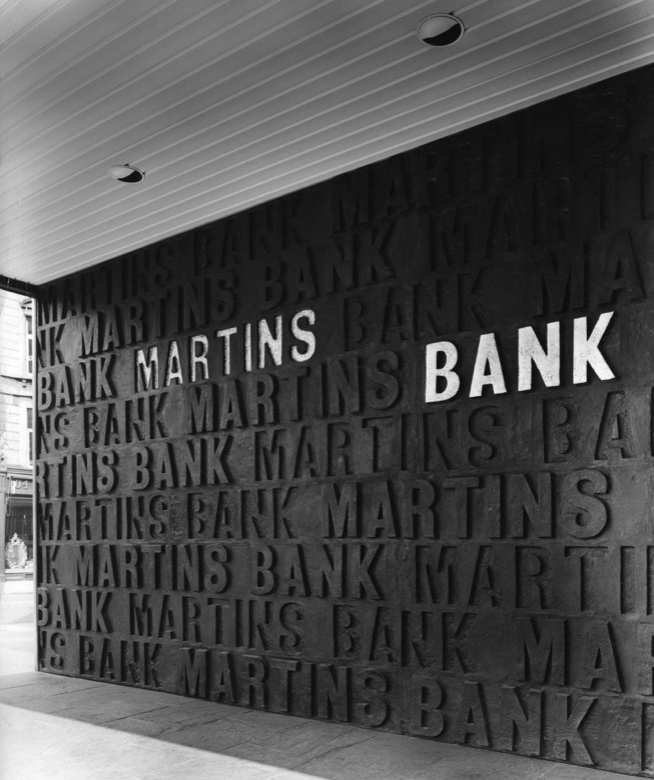
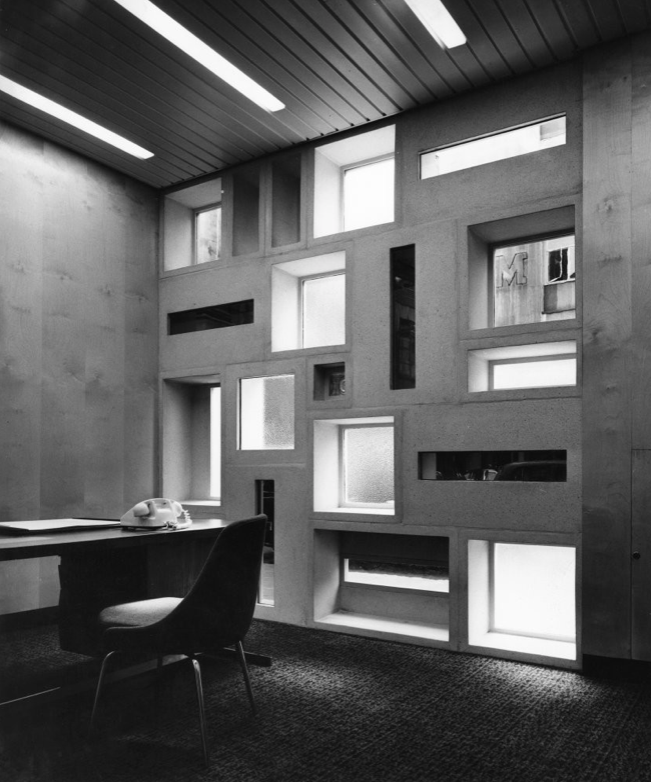
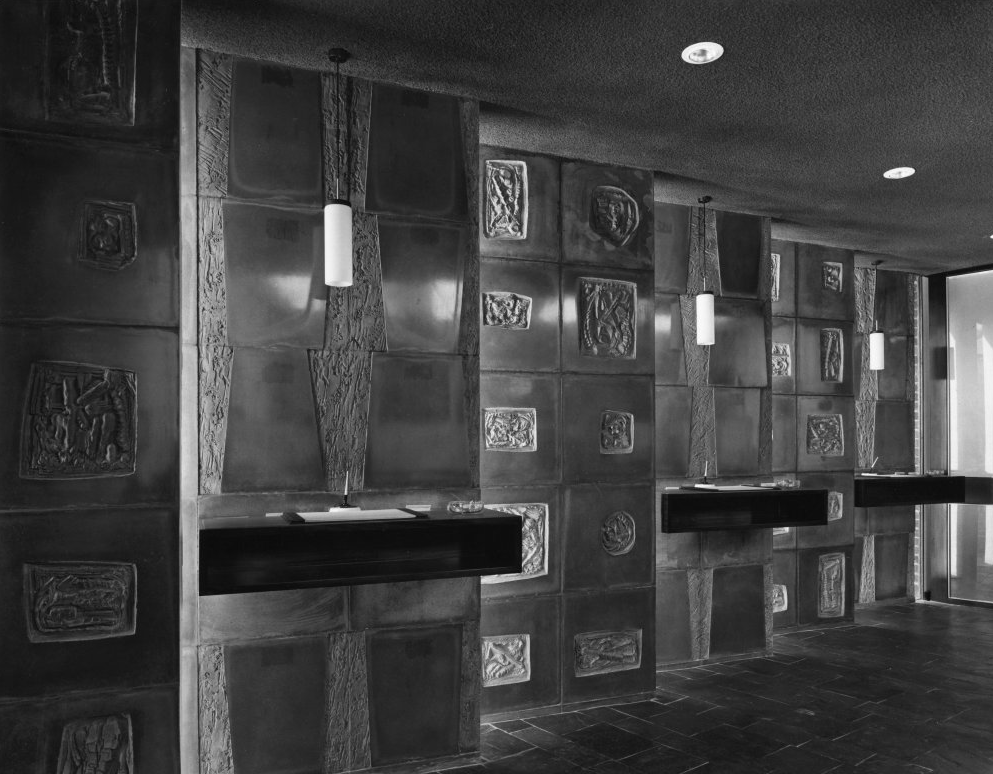
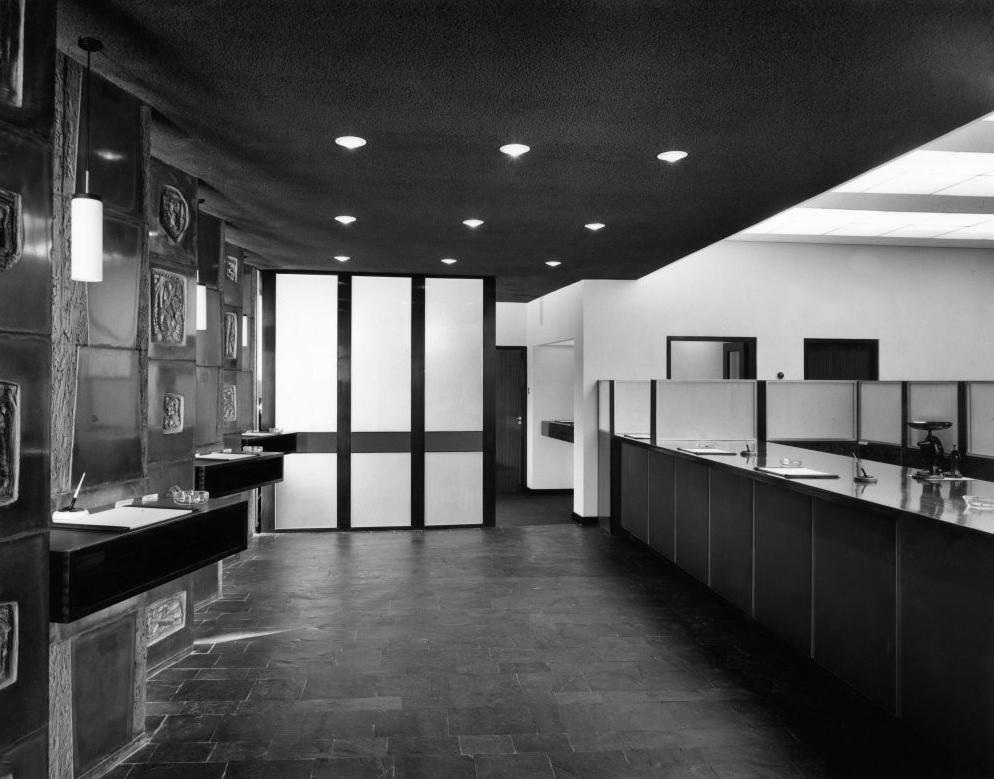
The public space is comparatively dimly lit, with a black ceiling, slate floor and dark-coloured sculptural panels by Eric Peskett placed in echelon so that as you go into the bank the wall appears to be quite solid, but on leaving you see the street through the windows set between the slabs.
The counter top is a solid piece of Afromosia. The floor is of riven Delabole slate. The sculptured slabs between the writing desks have in parts a very smooth shining surface obtained by casting against glass and the insets are rough and dark, they were cast in rubber moulds. The ceiling is roughly textured Pyrok, dark grey in colour and intensely sound-absorbing.
The Architect and Building News – 5 September 1962
Ribapix
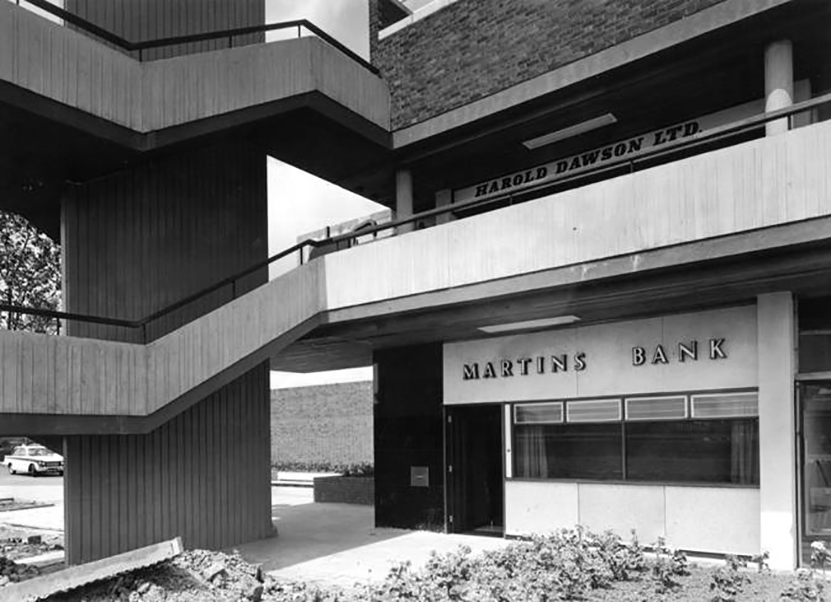
And finally – welcome to dystopia 1967 – or Thornaby on TeesBranch, as it is known, an office drowned in its own grey drabness, a real nightmare in concrete. How many people were subject to trudging those awkward walkways with a pram, we can only guess.
The in-house Martins’ magazine and archive may at times, have an ambivalent attitude towards Modernism, I myself, can only admire the optimism and originality, embodied in the work that the bank commissioned.
Many thanks Modern Martins, from thoroughly Modern Mooch.
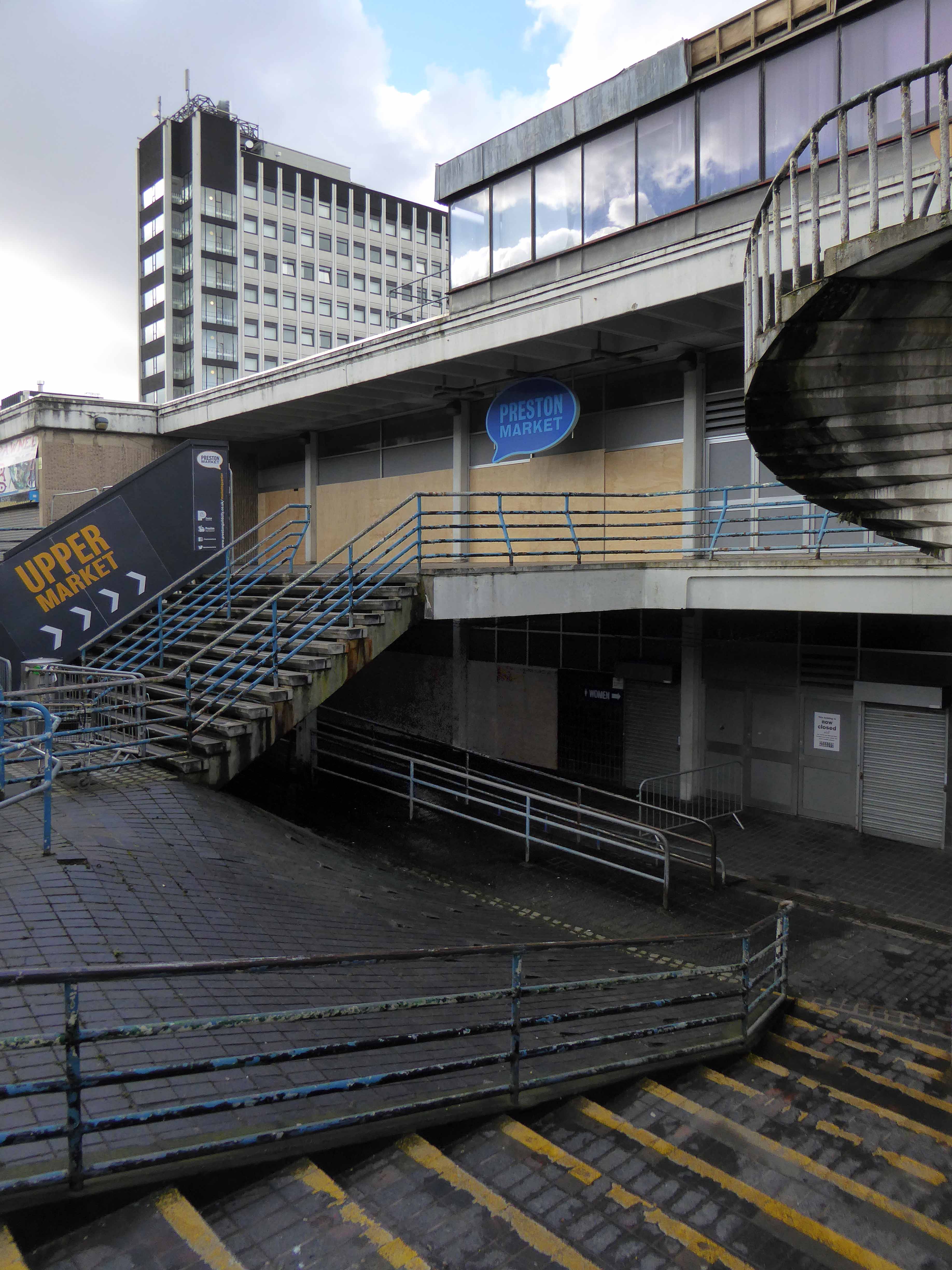
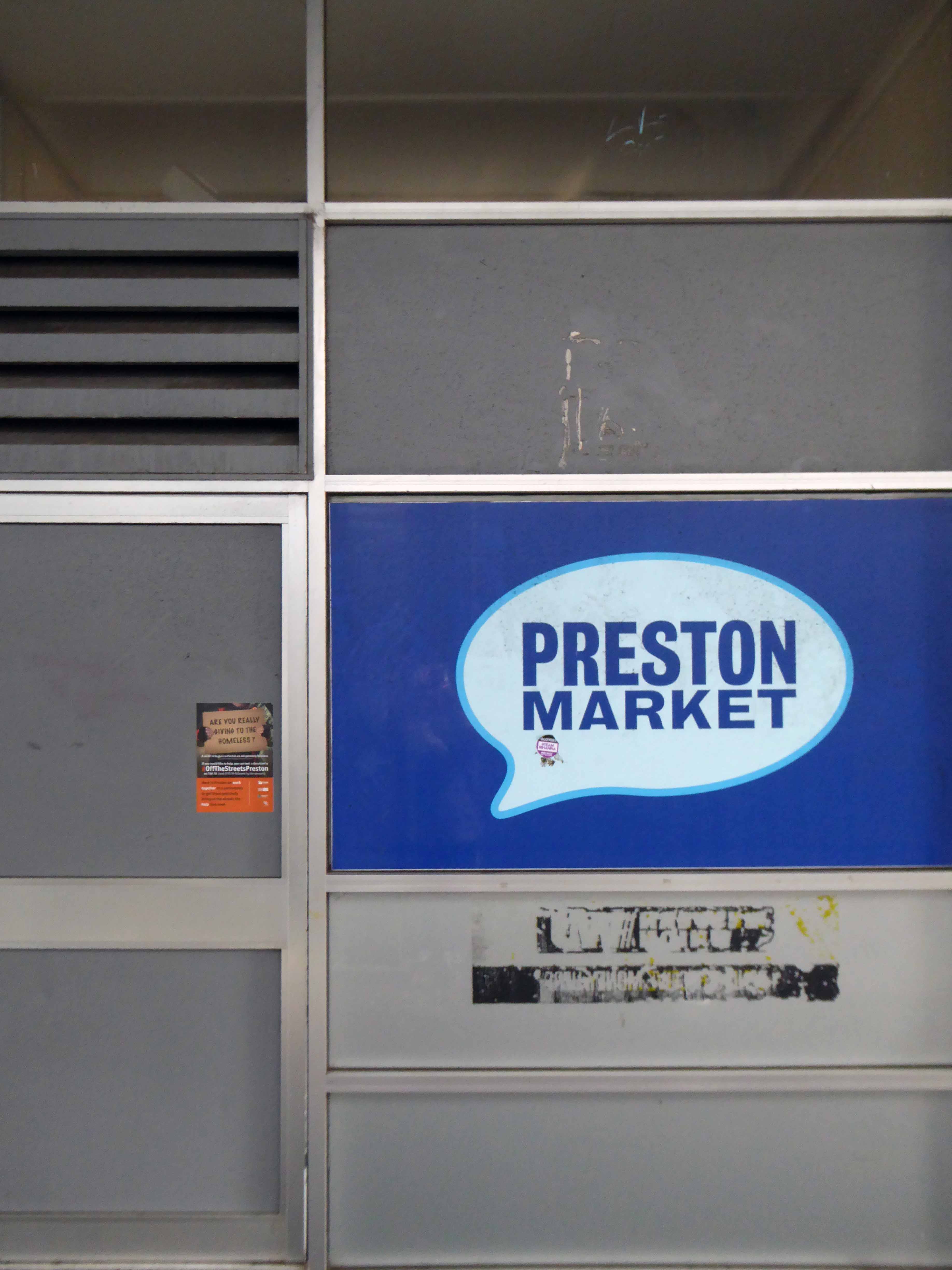
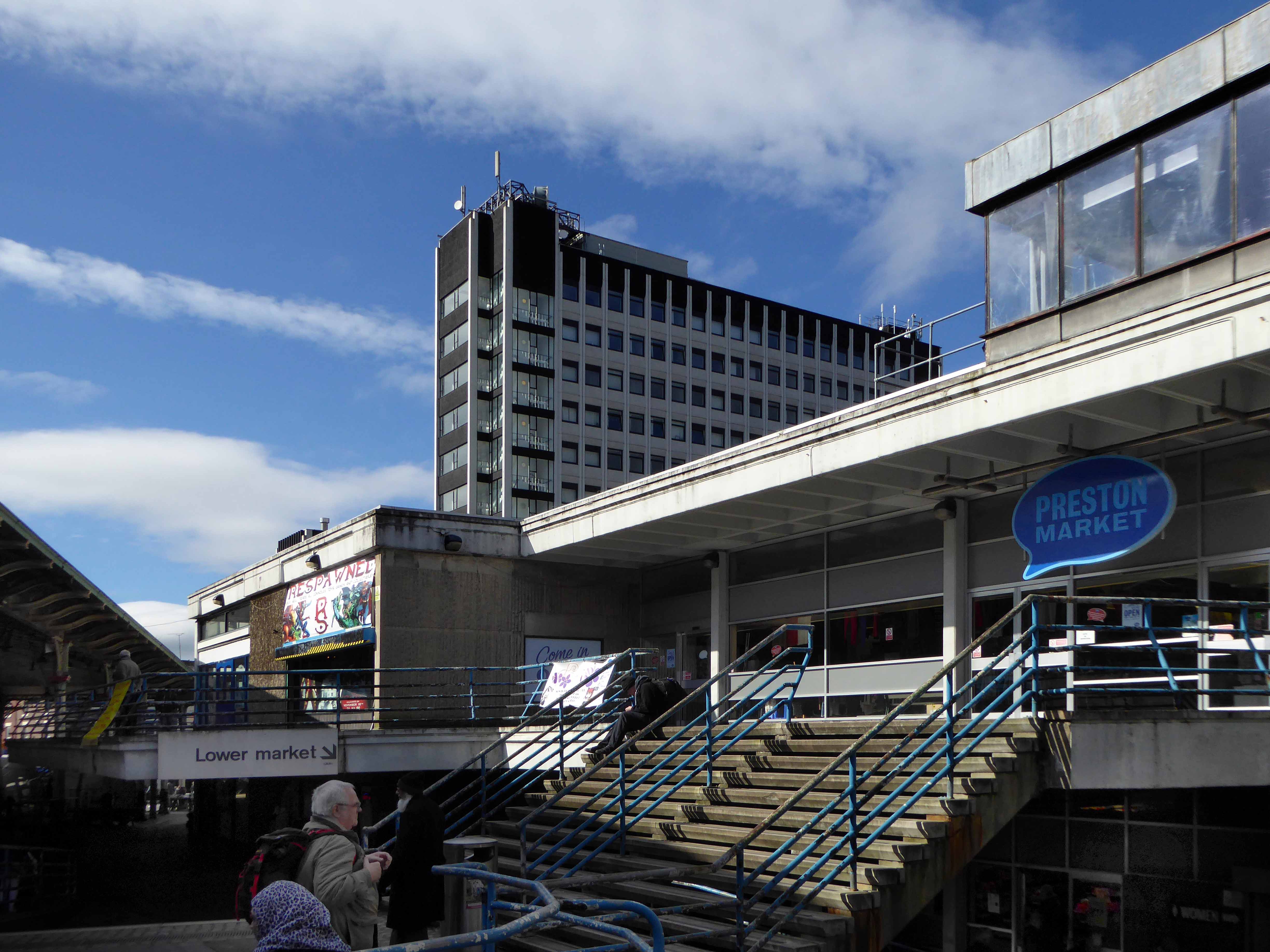
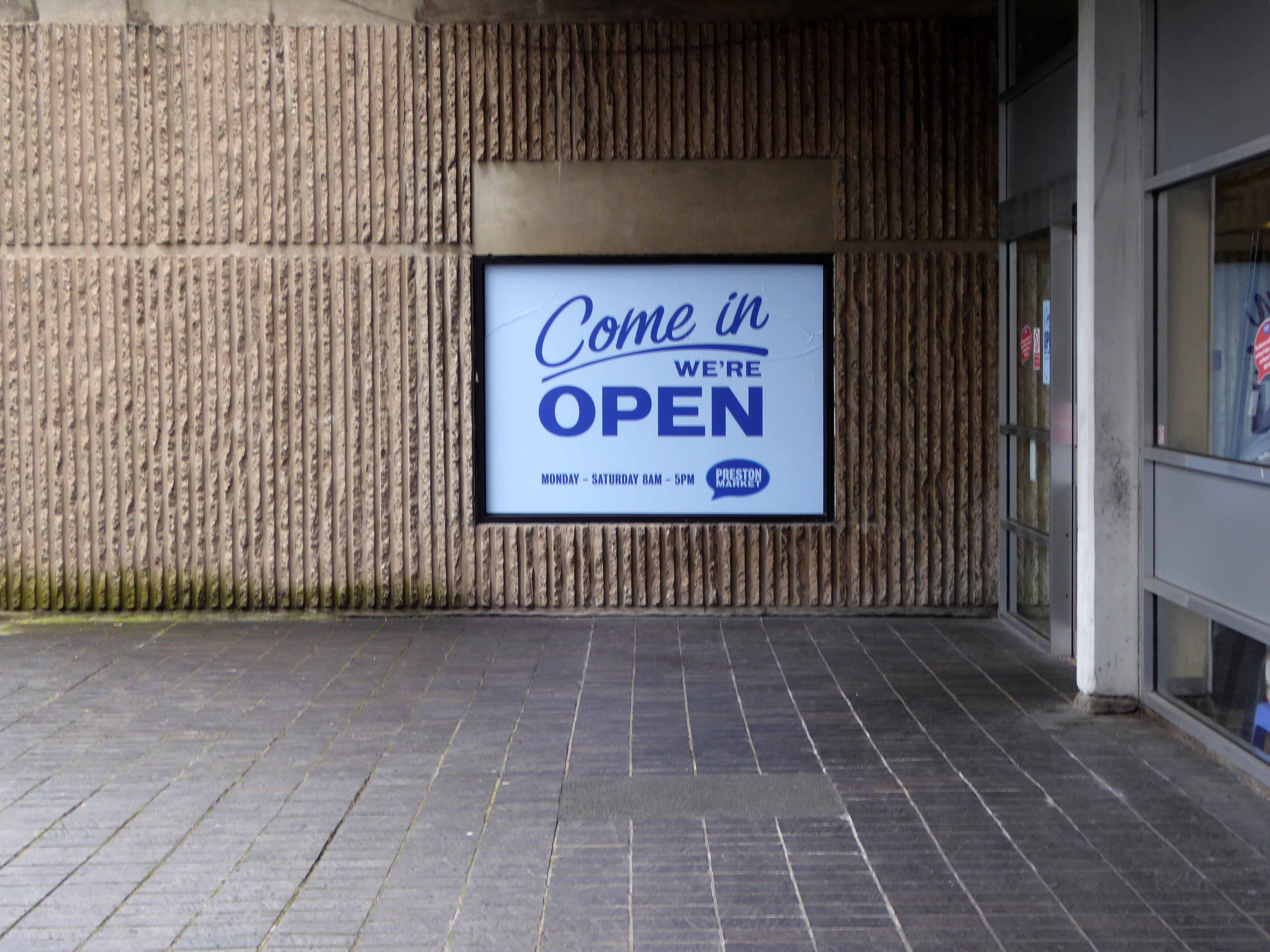
I’ve been here, before recording the prelude to the epilogue, here at Preston’s Indoor Market.
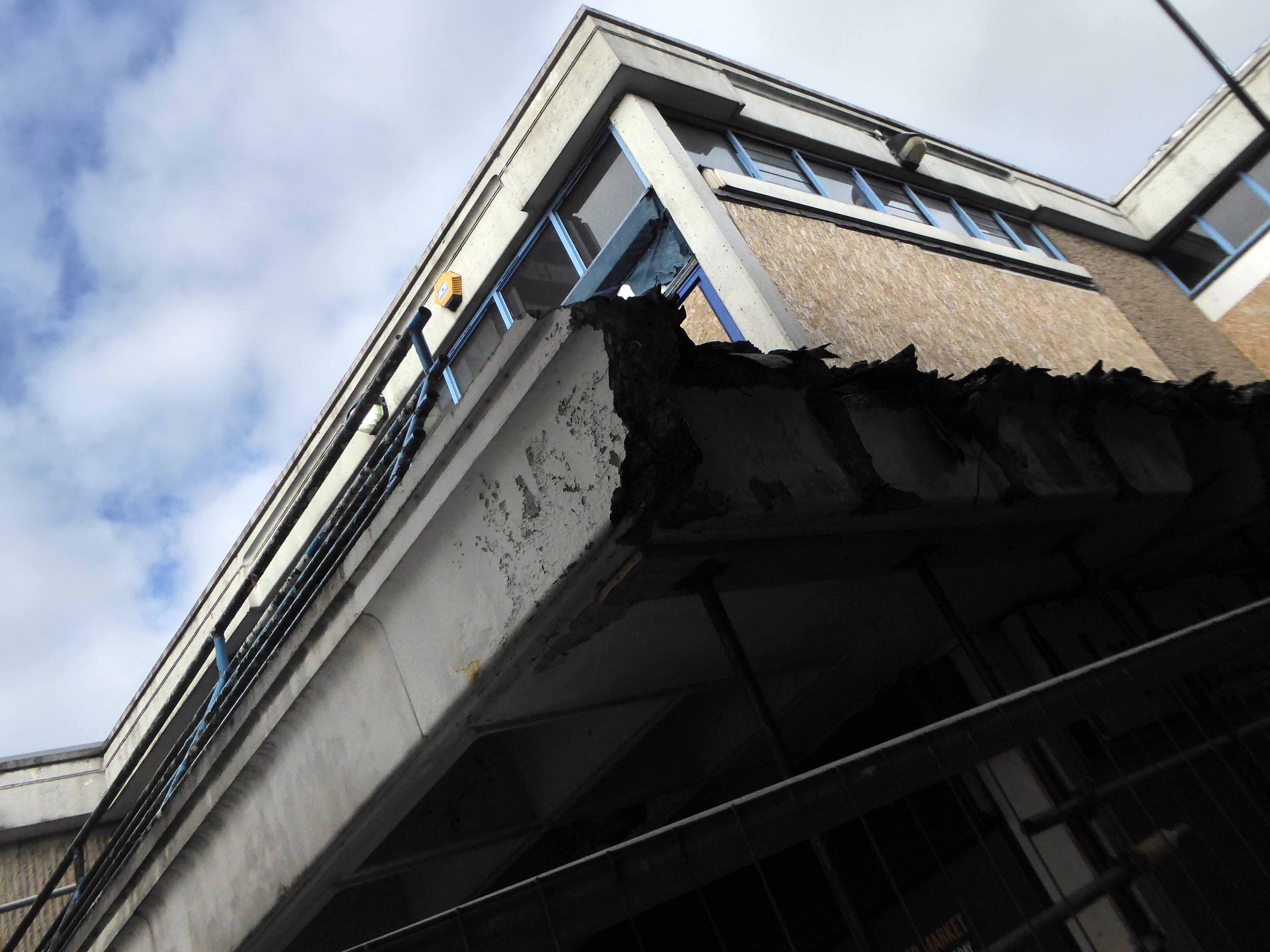
So on my return this February, I find that the inevitable end, is indeed now past nigh.
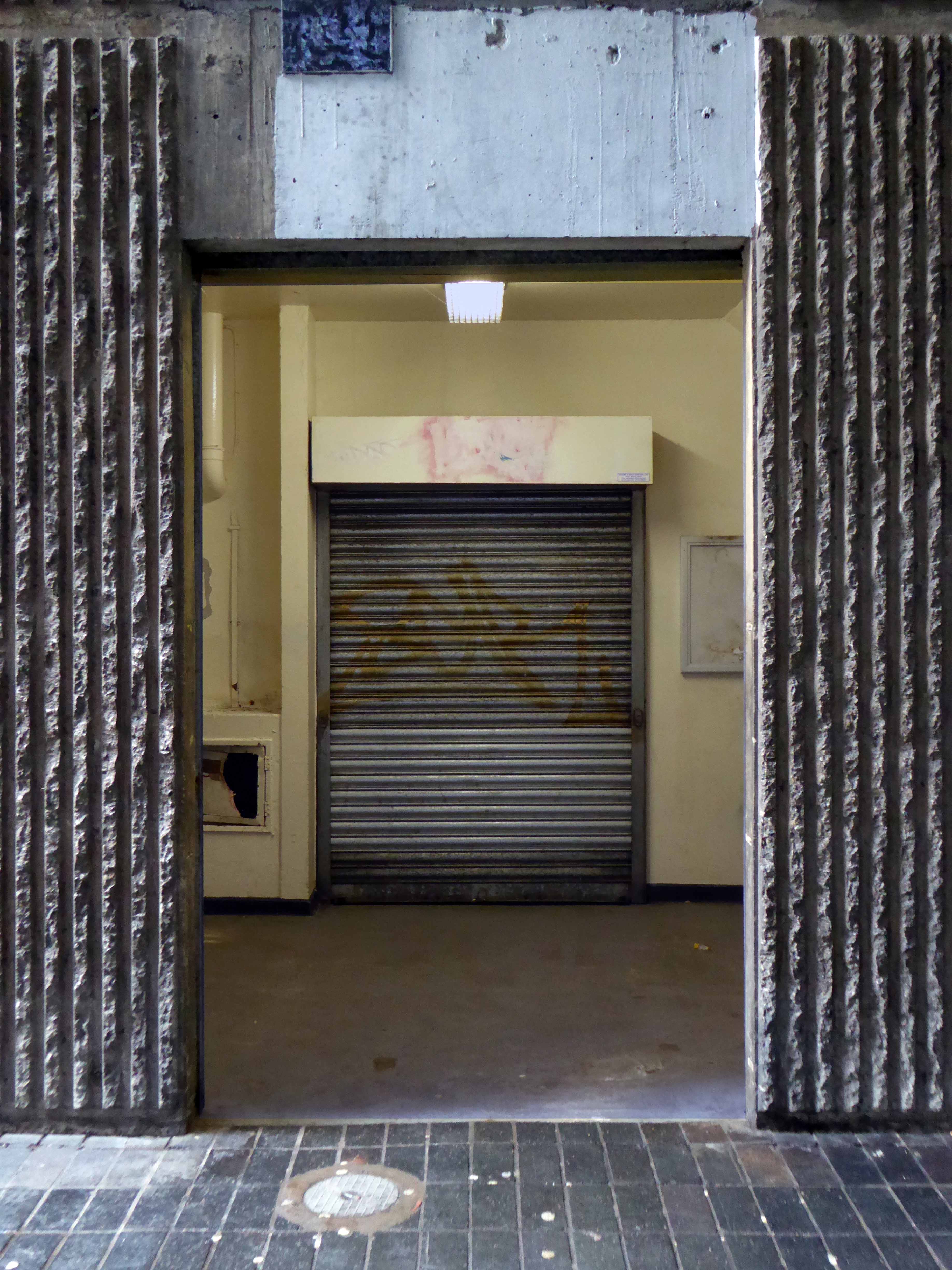
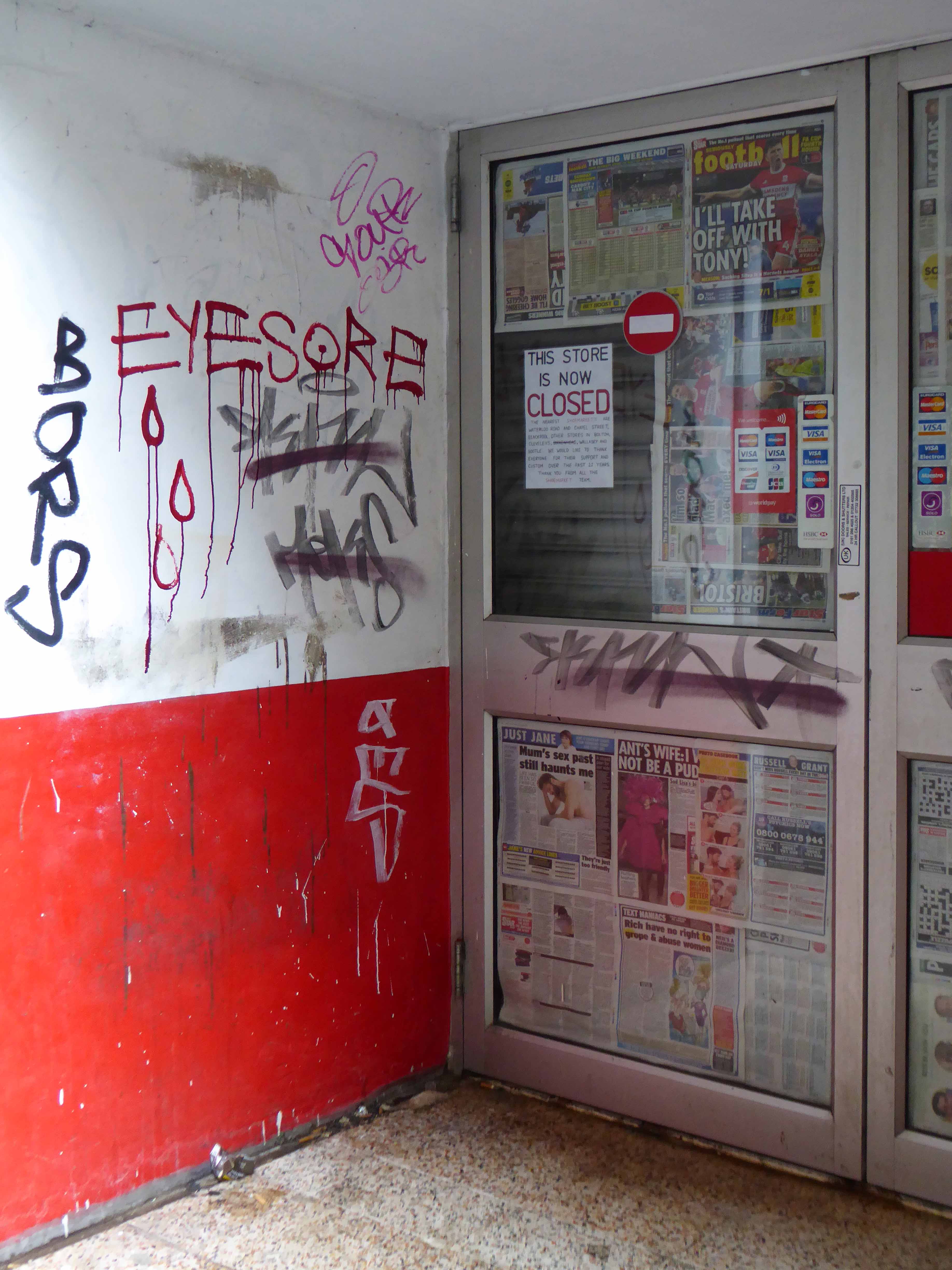
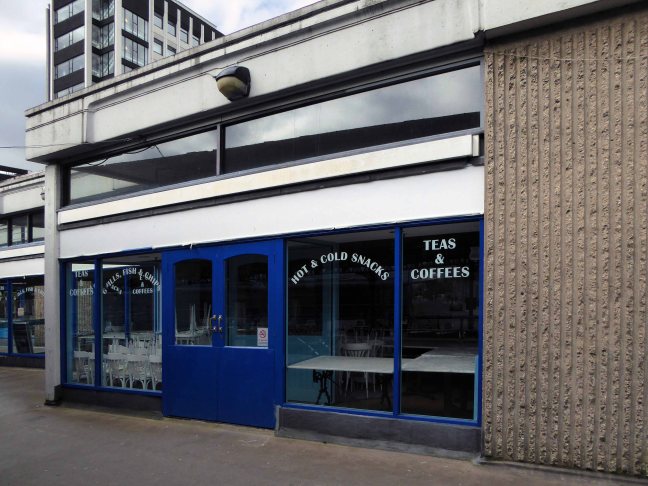
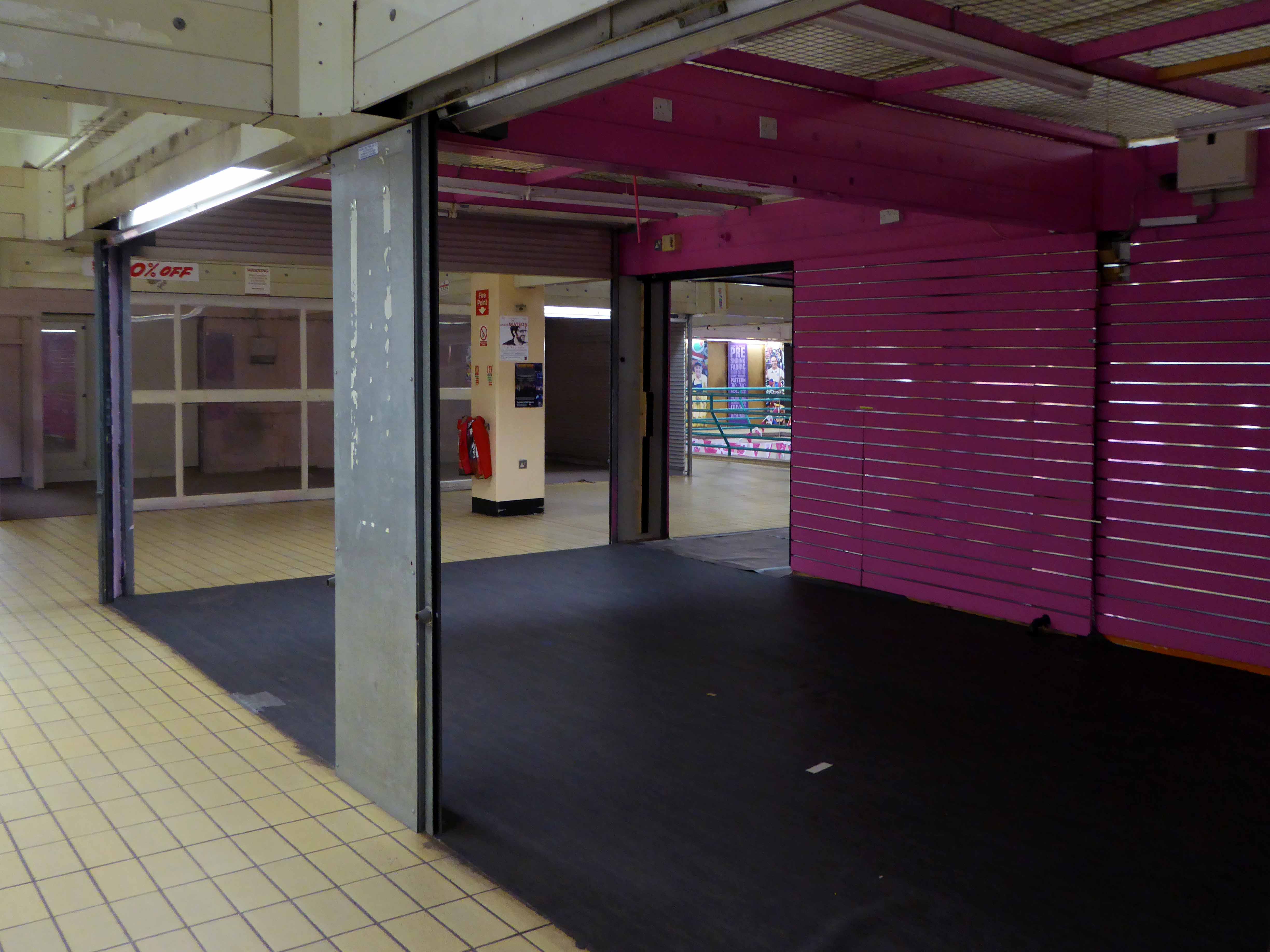
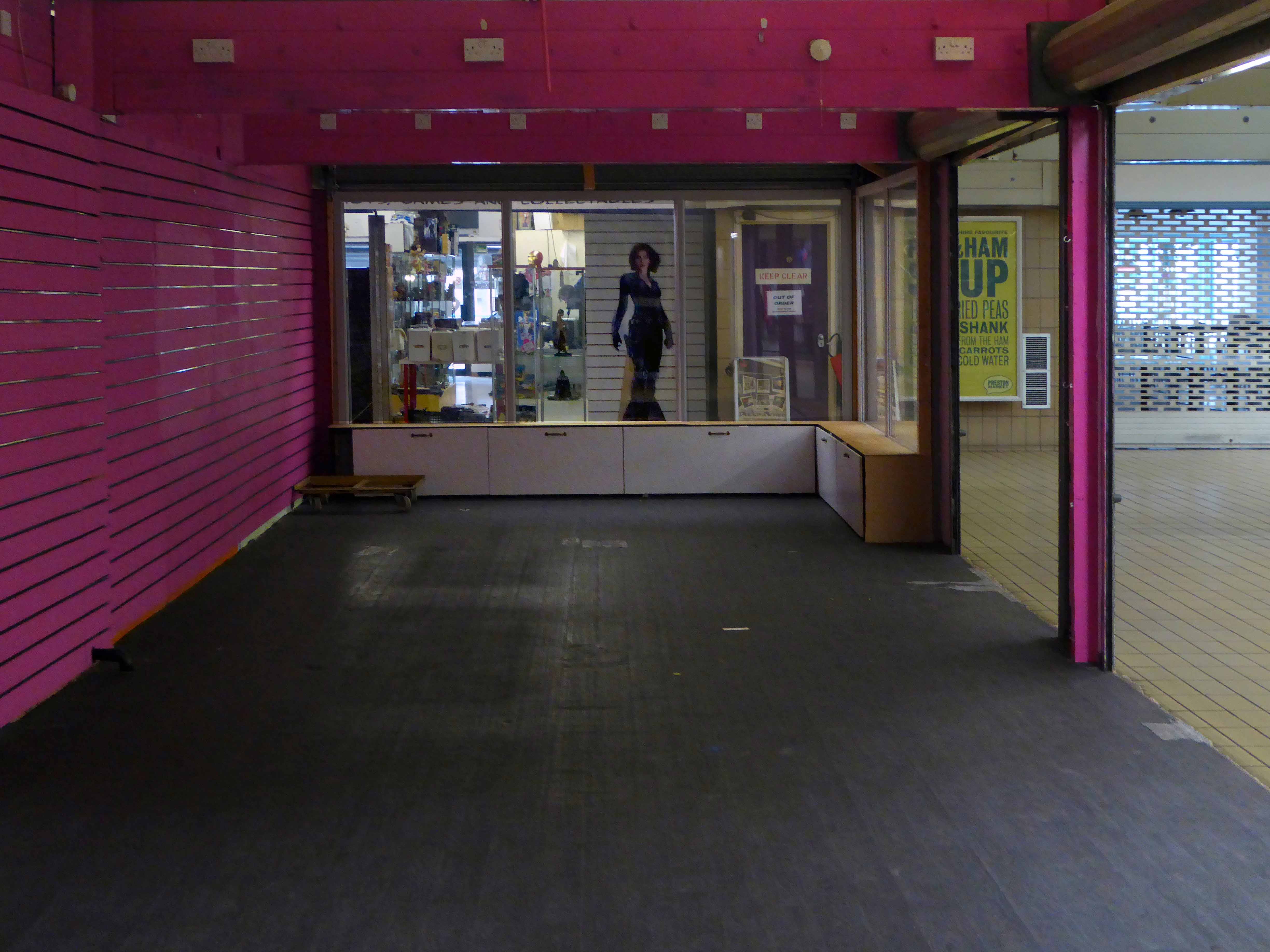
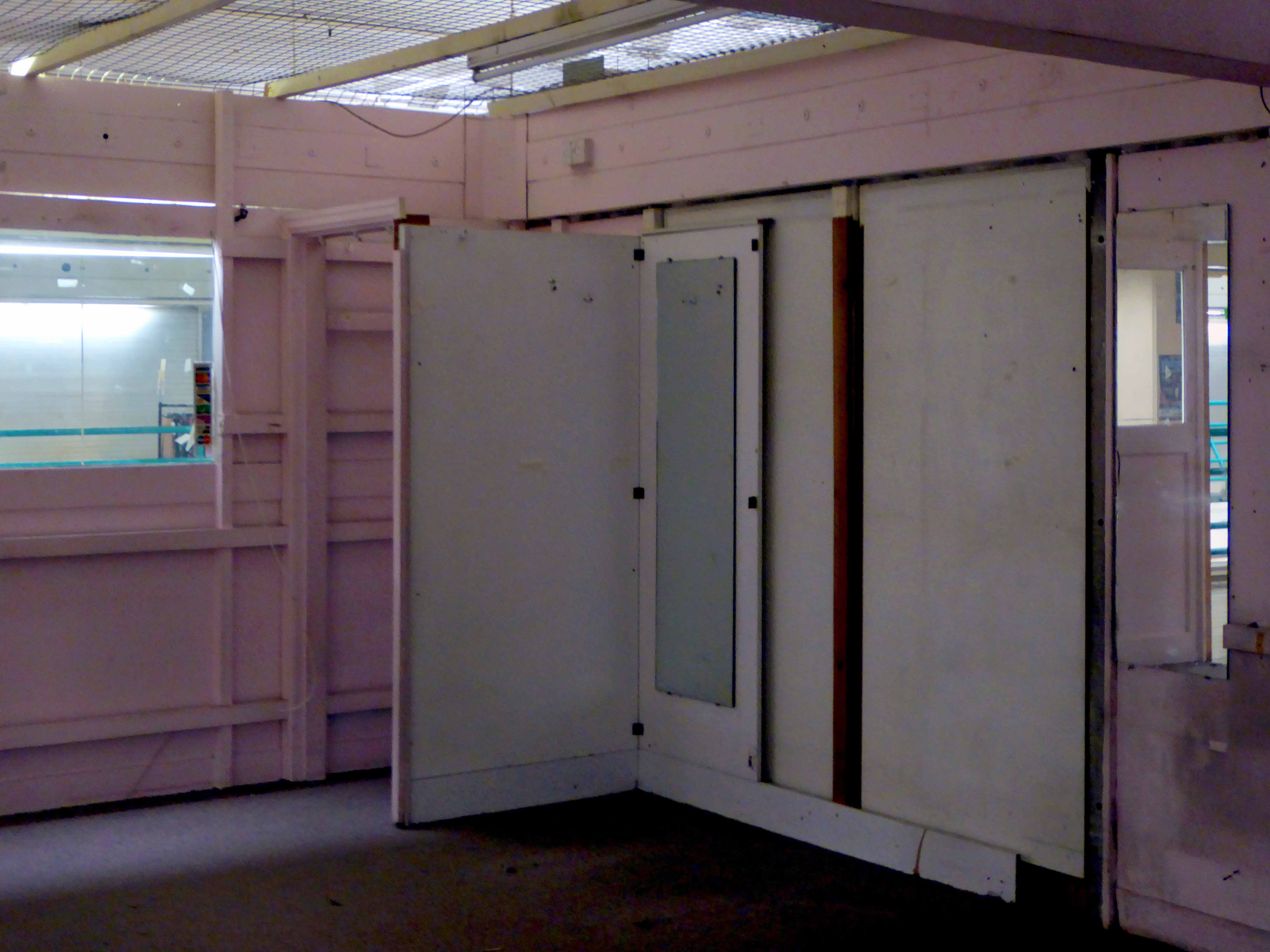
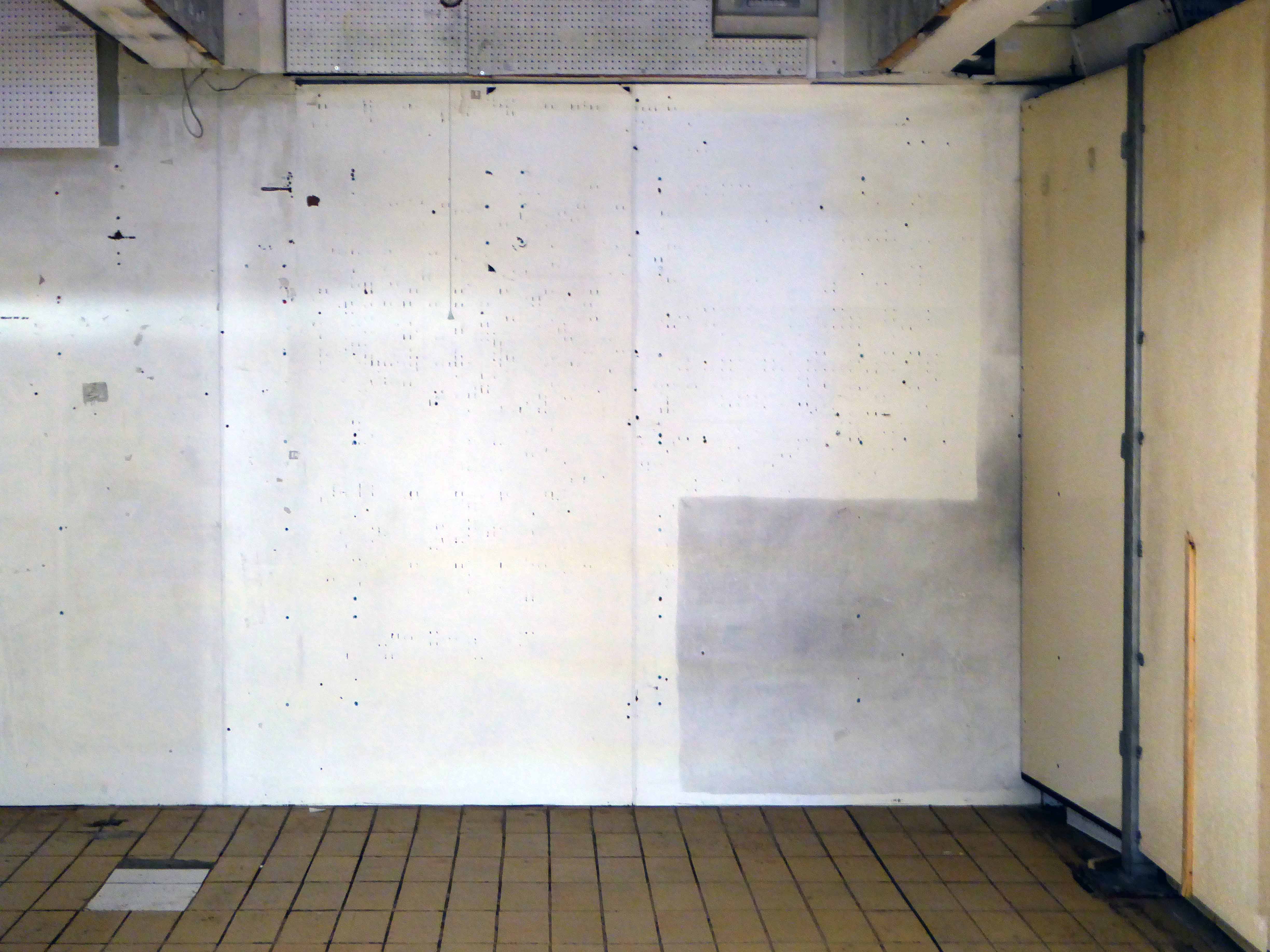
Boarded and shuttered awaiting demolition – Waiting for The Light to shine:
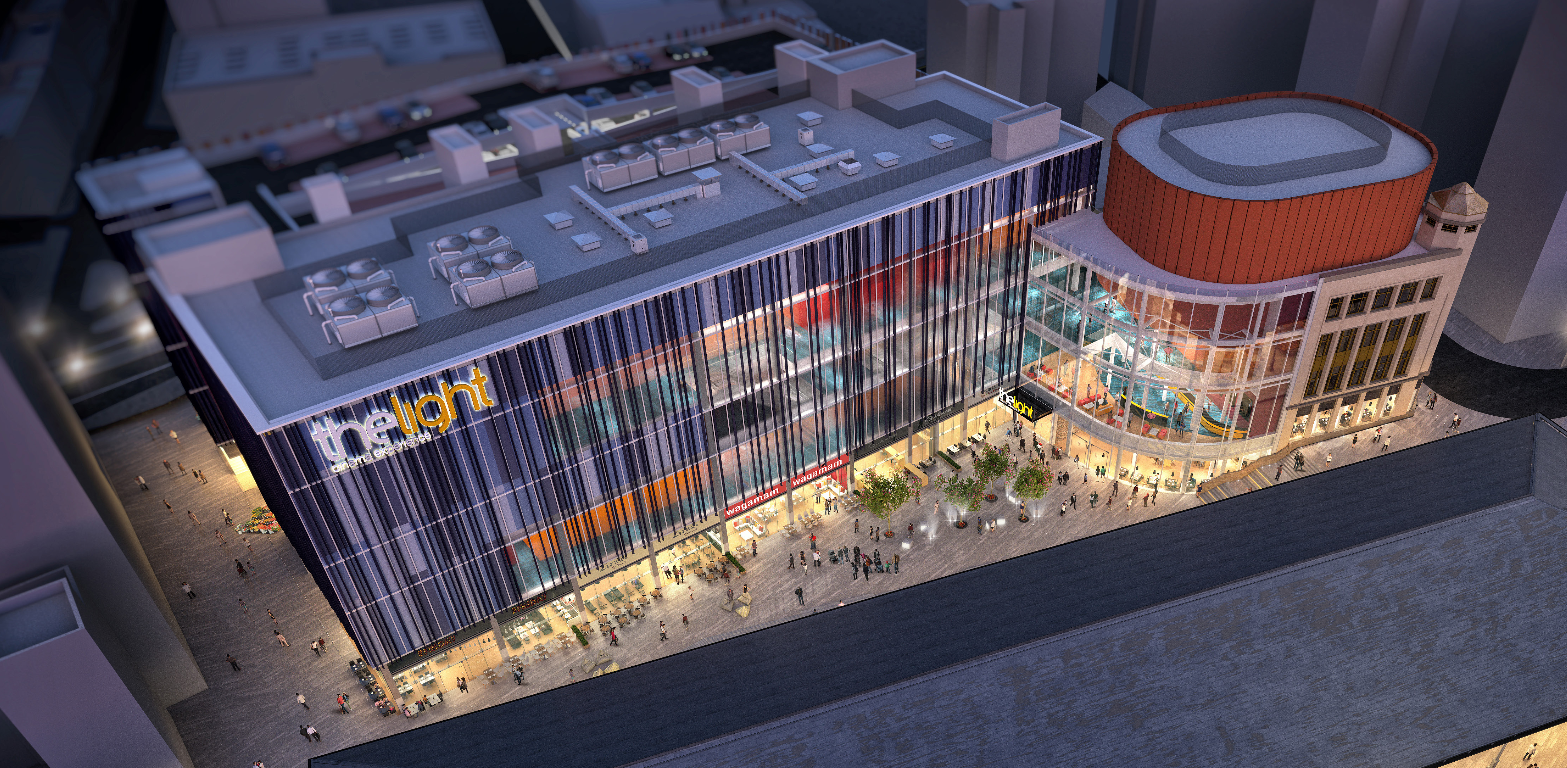
Preston City Council has granted planning permission to Muse Developments’ £50m cinema-led leisure scheme in the city centre.
Muse is working in partnership with the council on the plans, made up of an 11-screen cinema operated by The Light, seven family restaurants, a 593-space multi-storey car park and public realm improvements.
The project forms part of the wider regeneration of the Markets Quarter which includes the full refurbishment and redecoration of the grade two-listed market canopies and the construction of a glazed Market Hall.
Preston to their credit have become an exemplar for inward urban regeneration, and the work undertaken so far in the market area is bringing new life and trade to the area.
That said, it is always saddening to see the architecture of the Sixties swept aside.
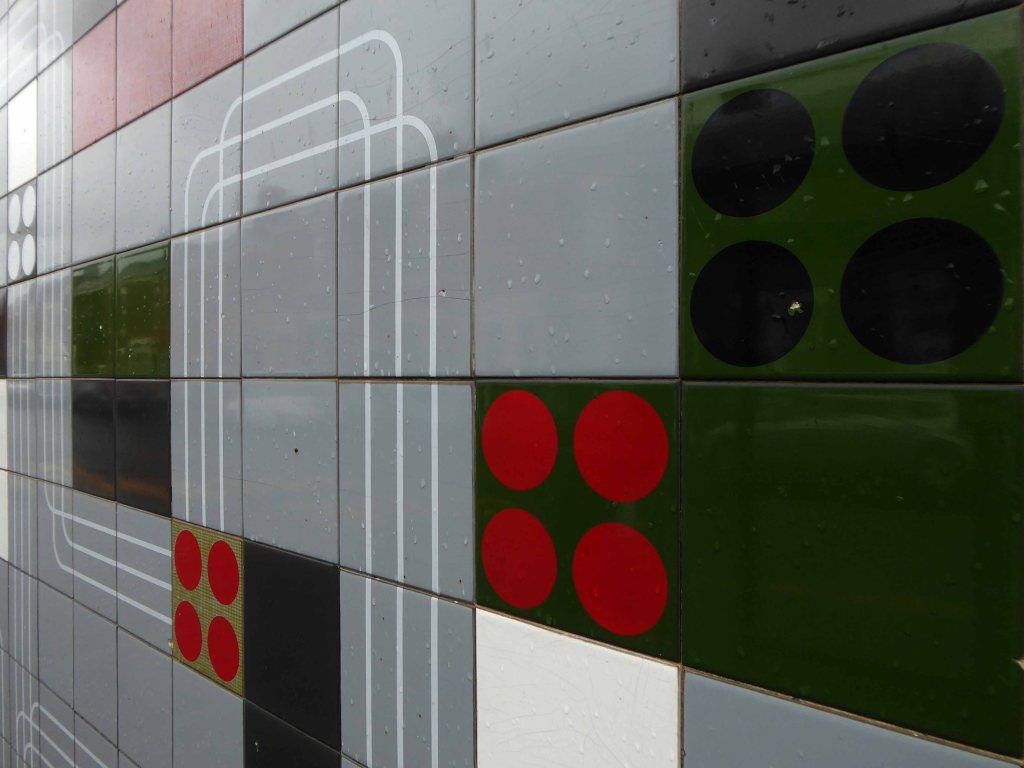
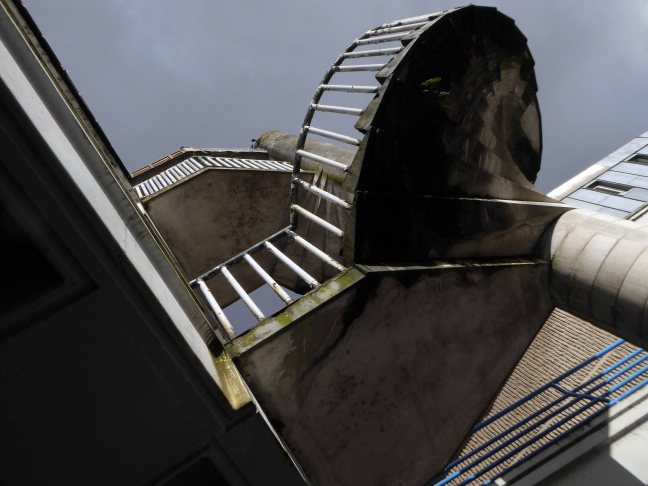
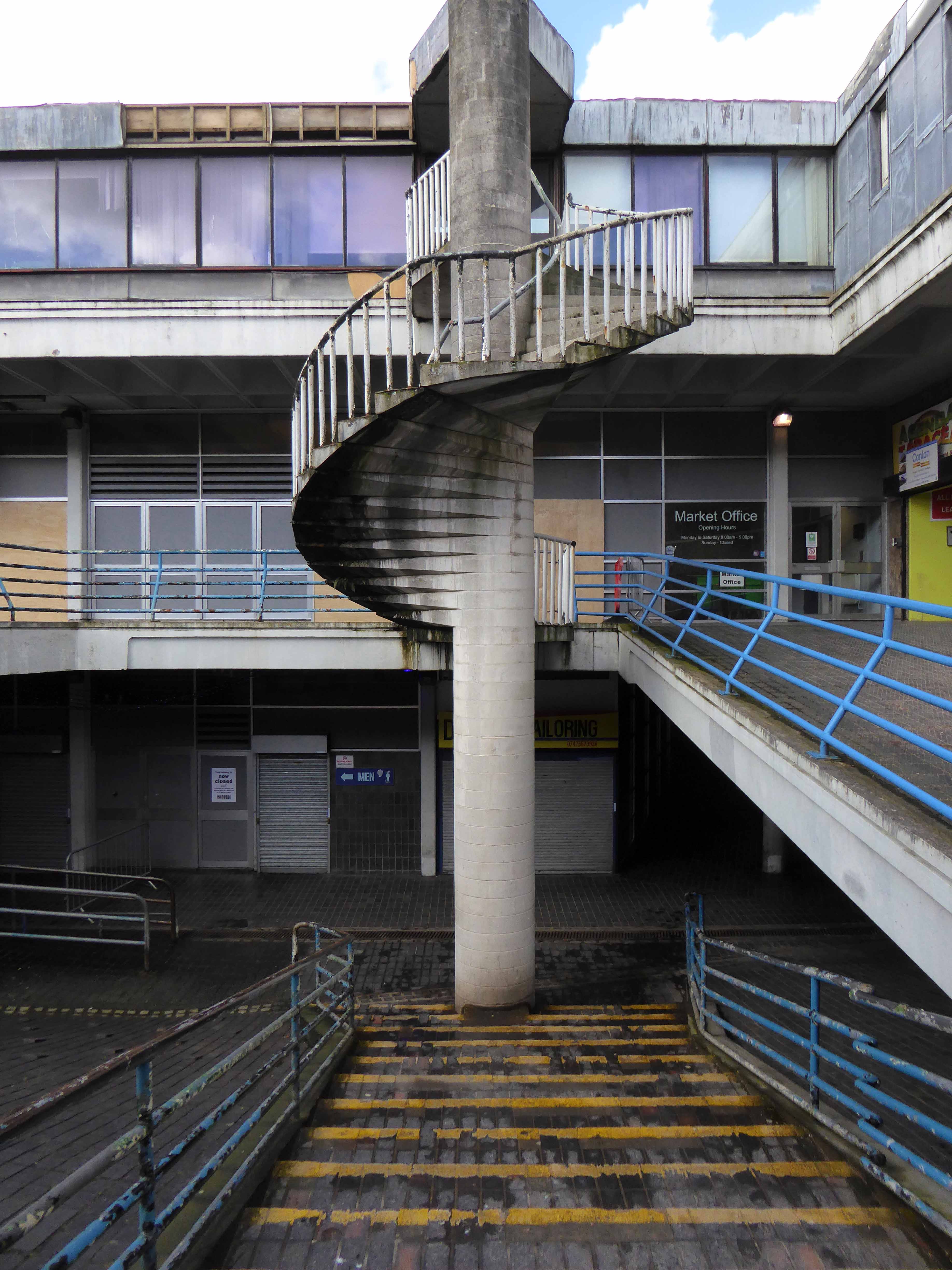
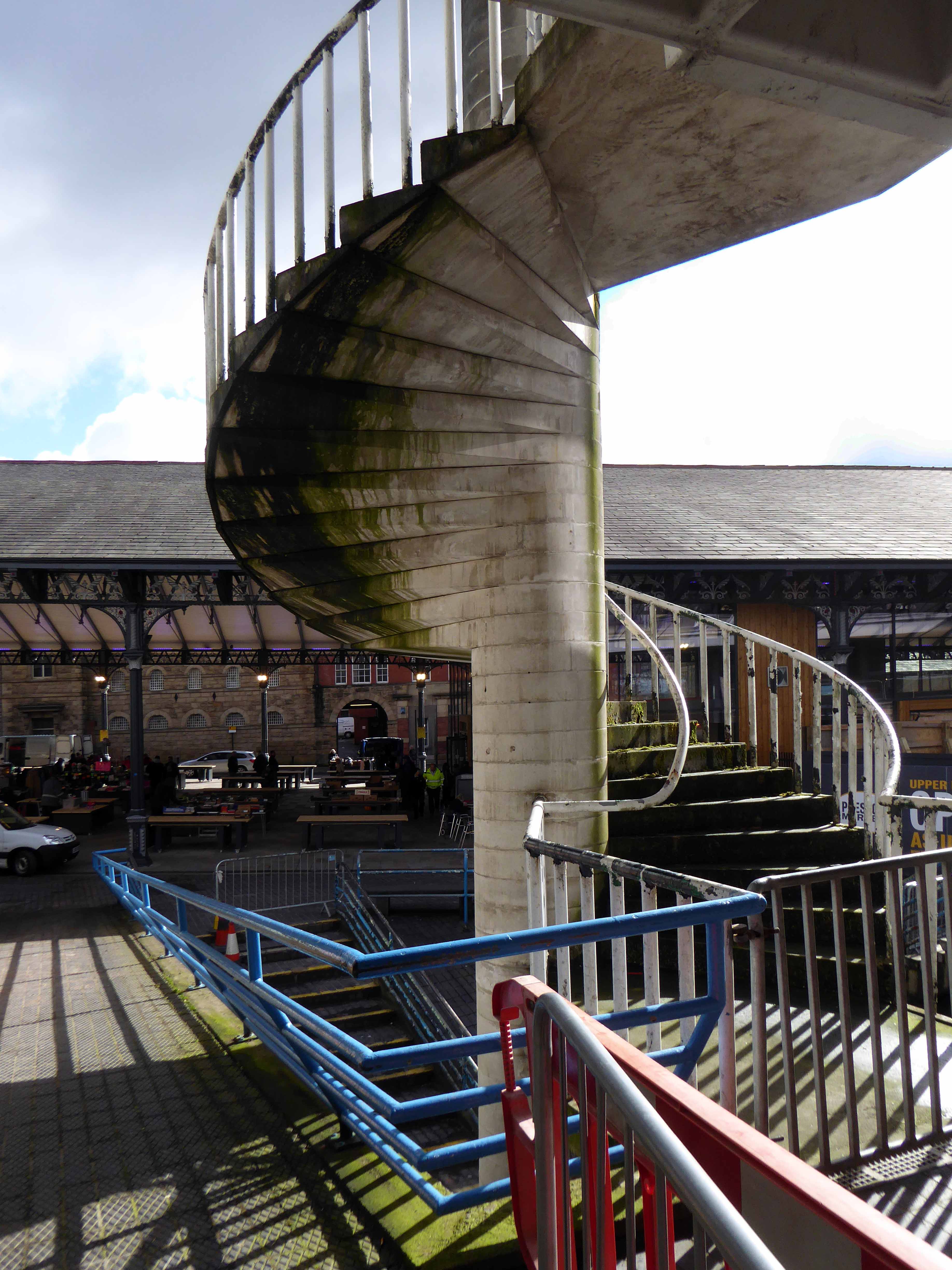
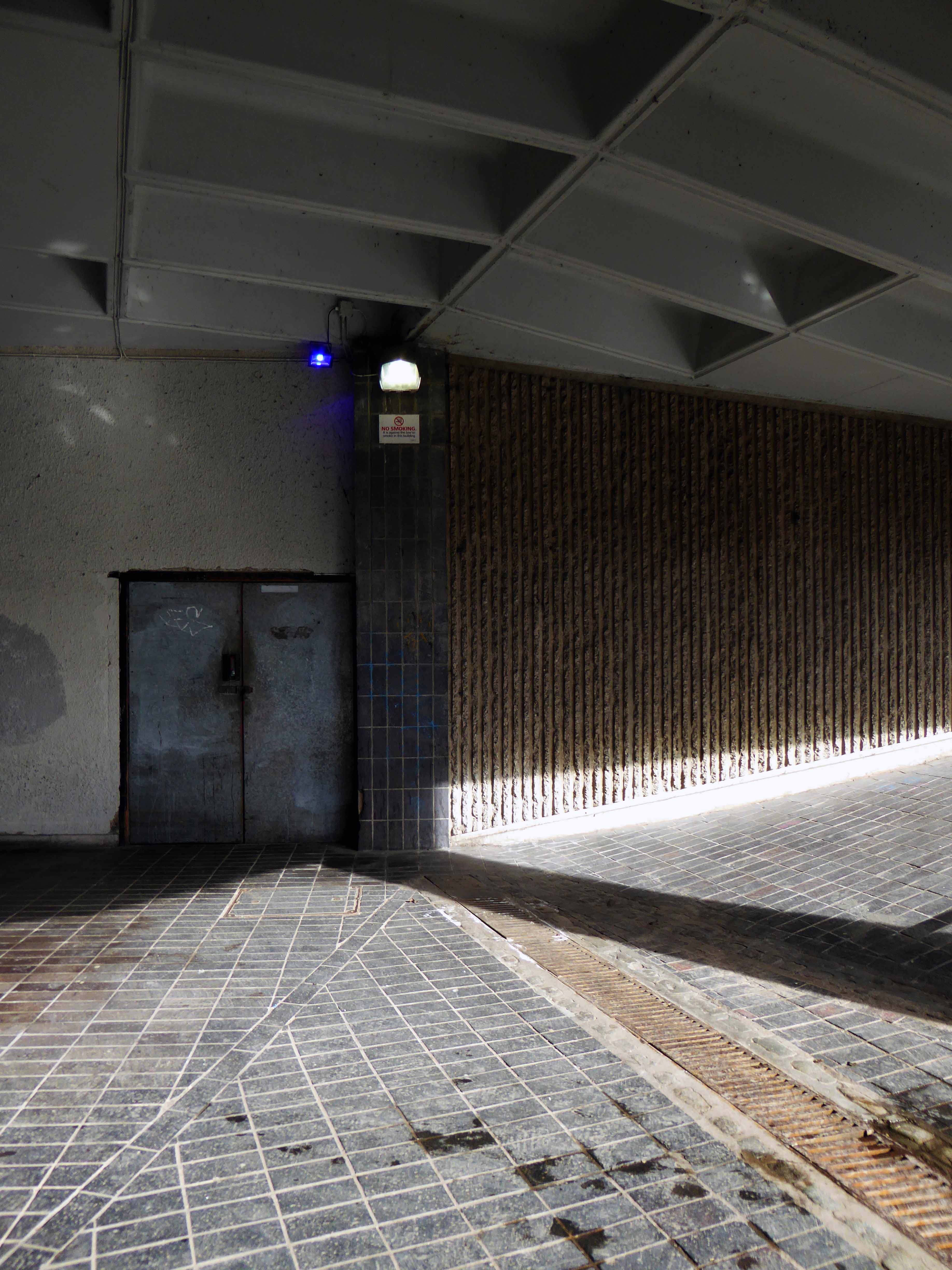
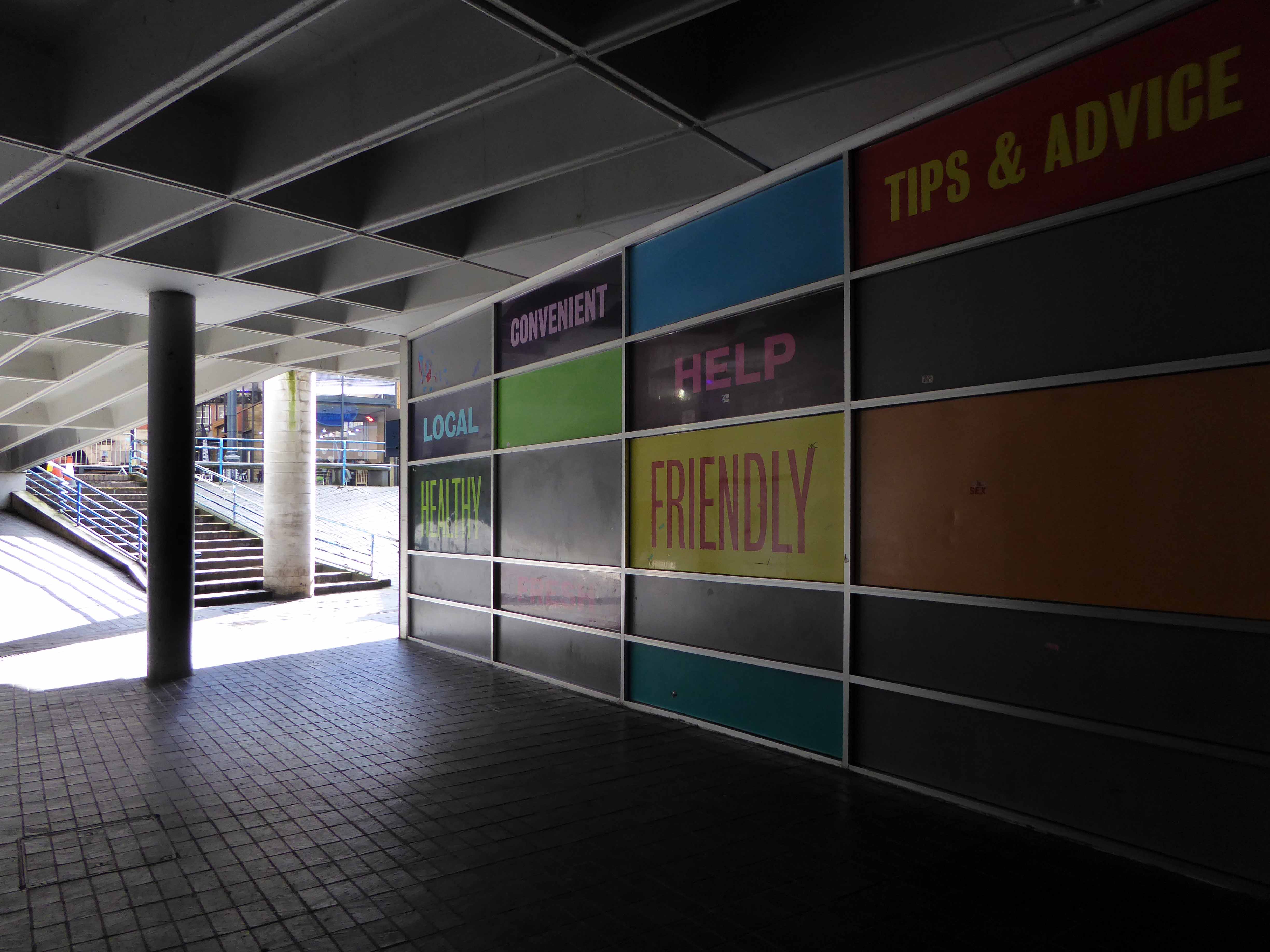
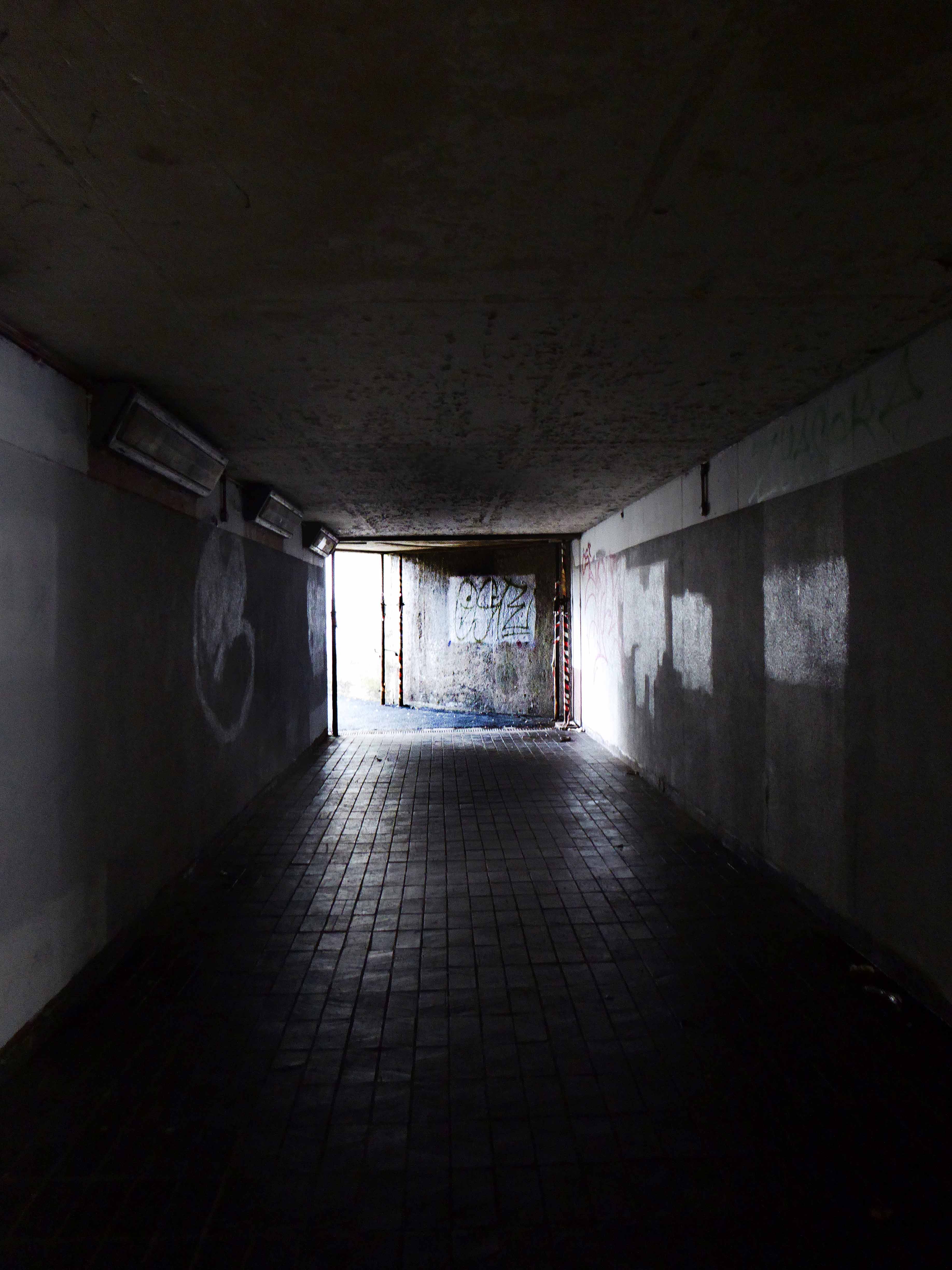
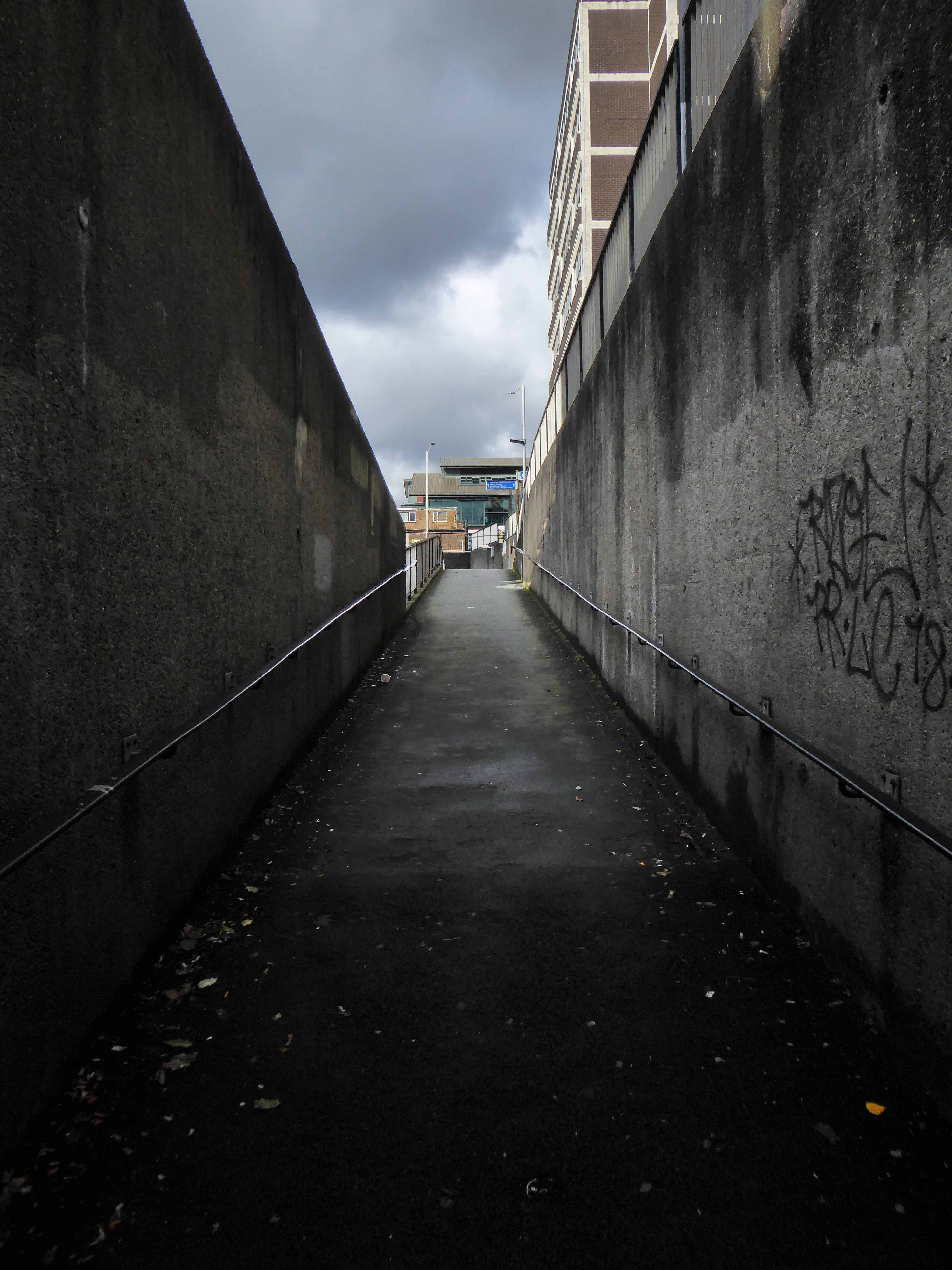
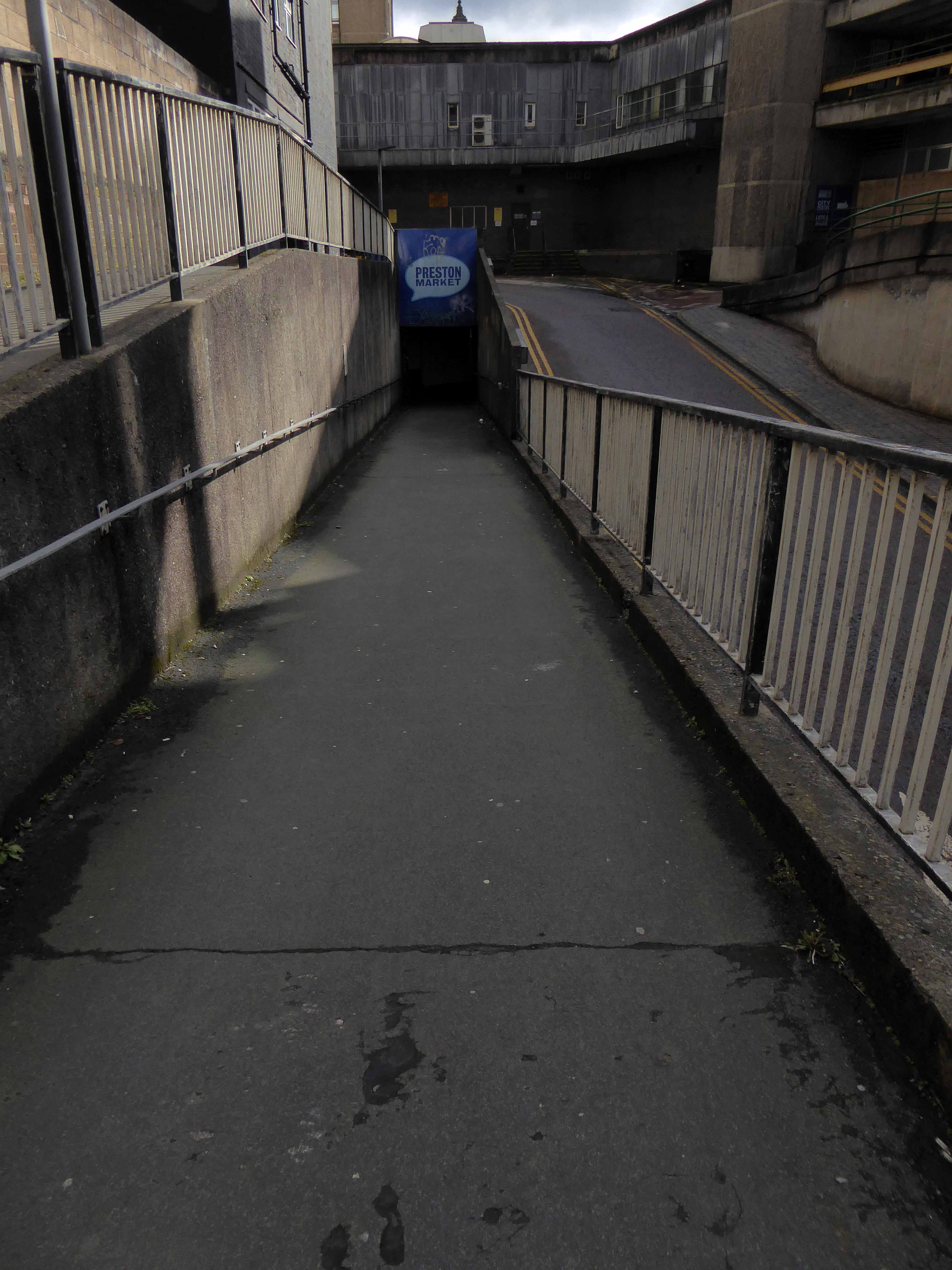
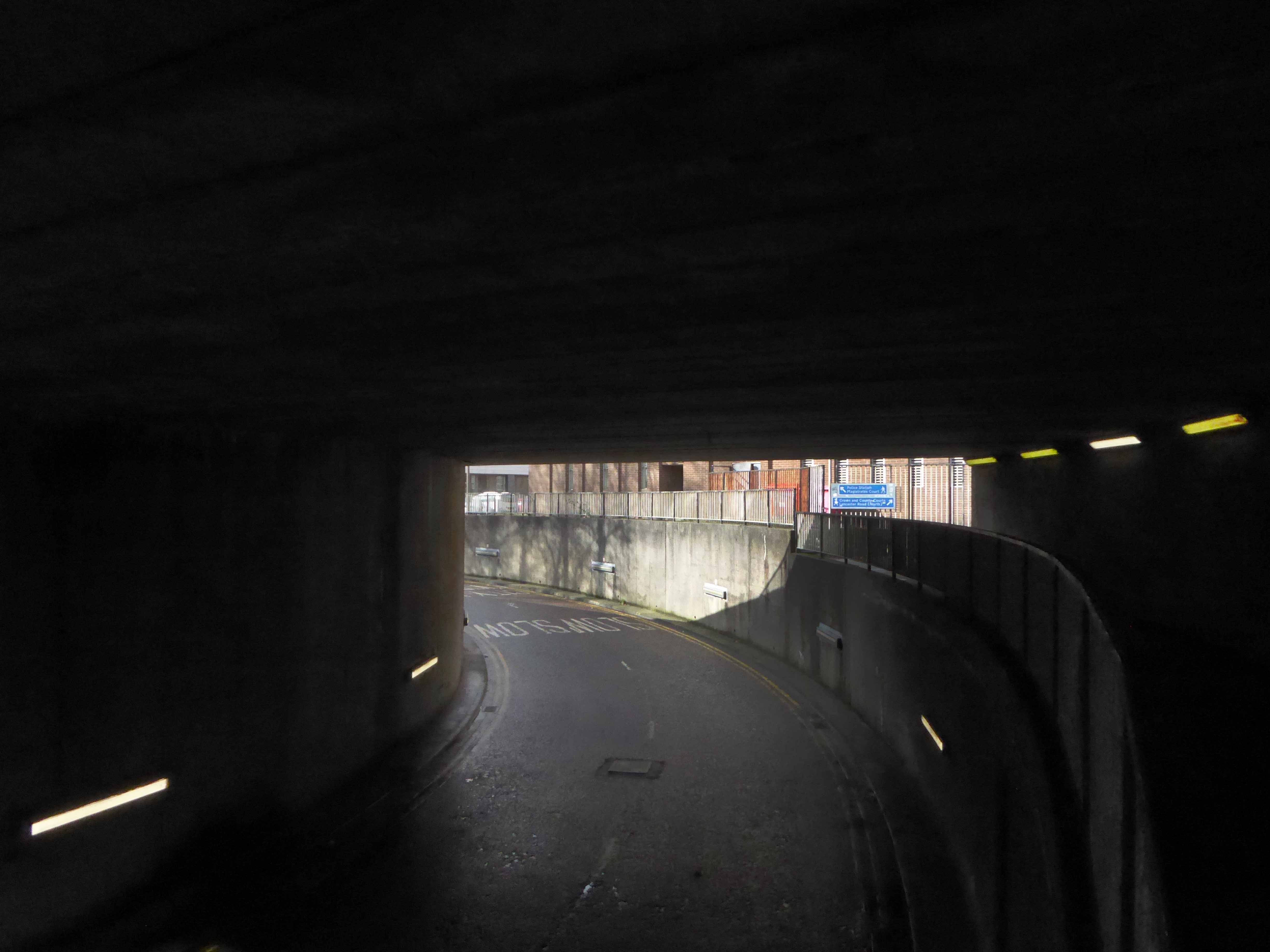
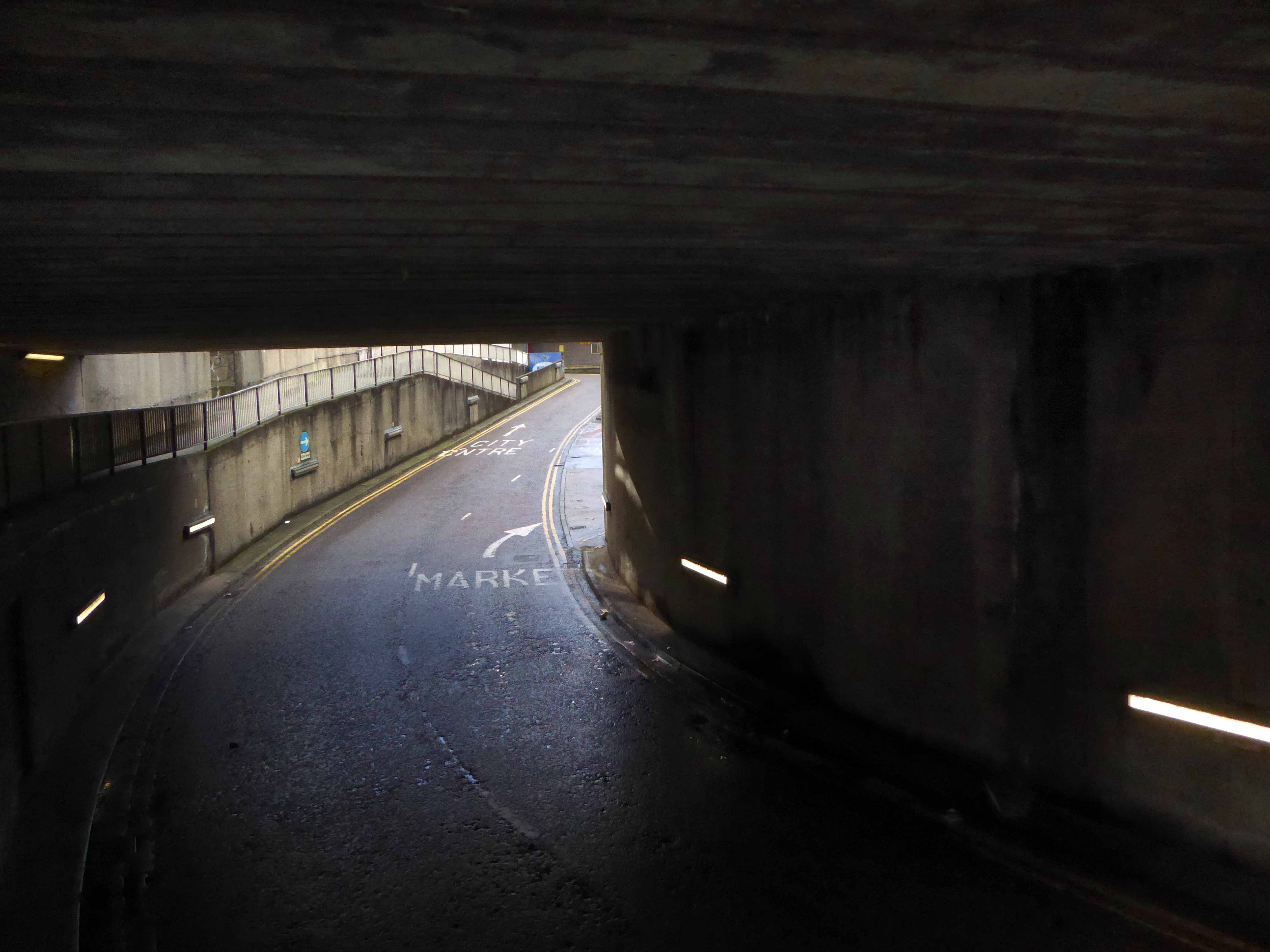
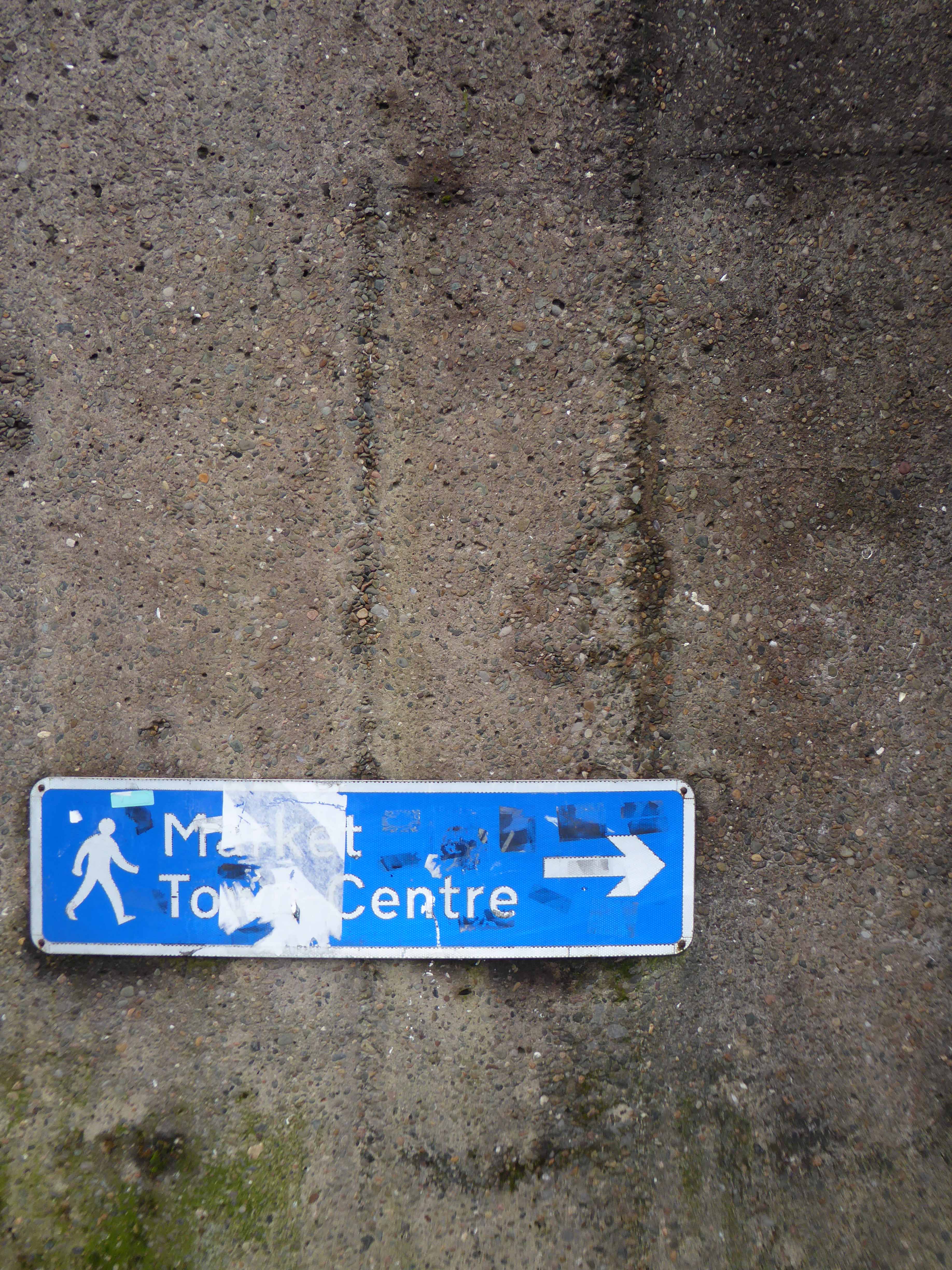
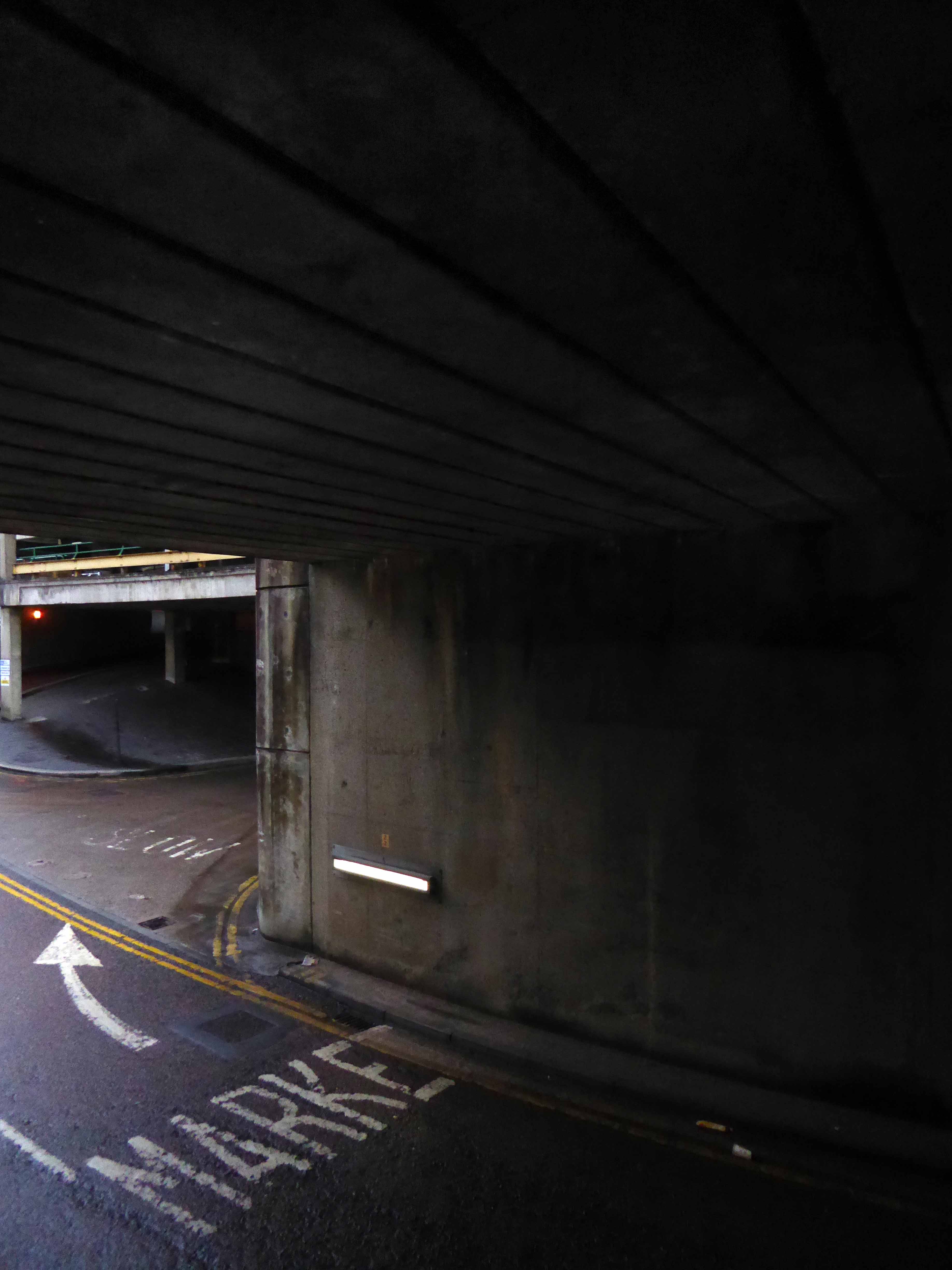
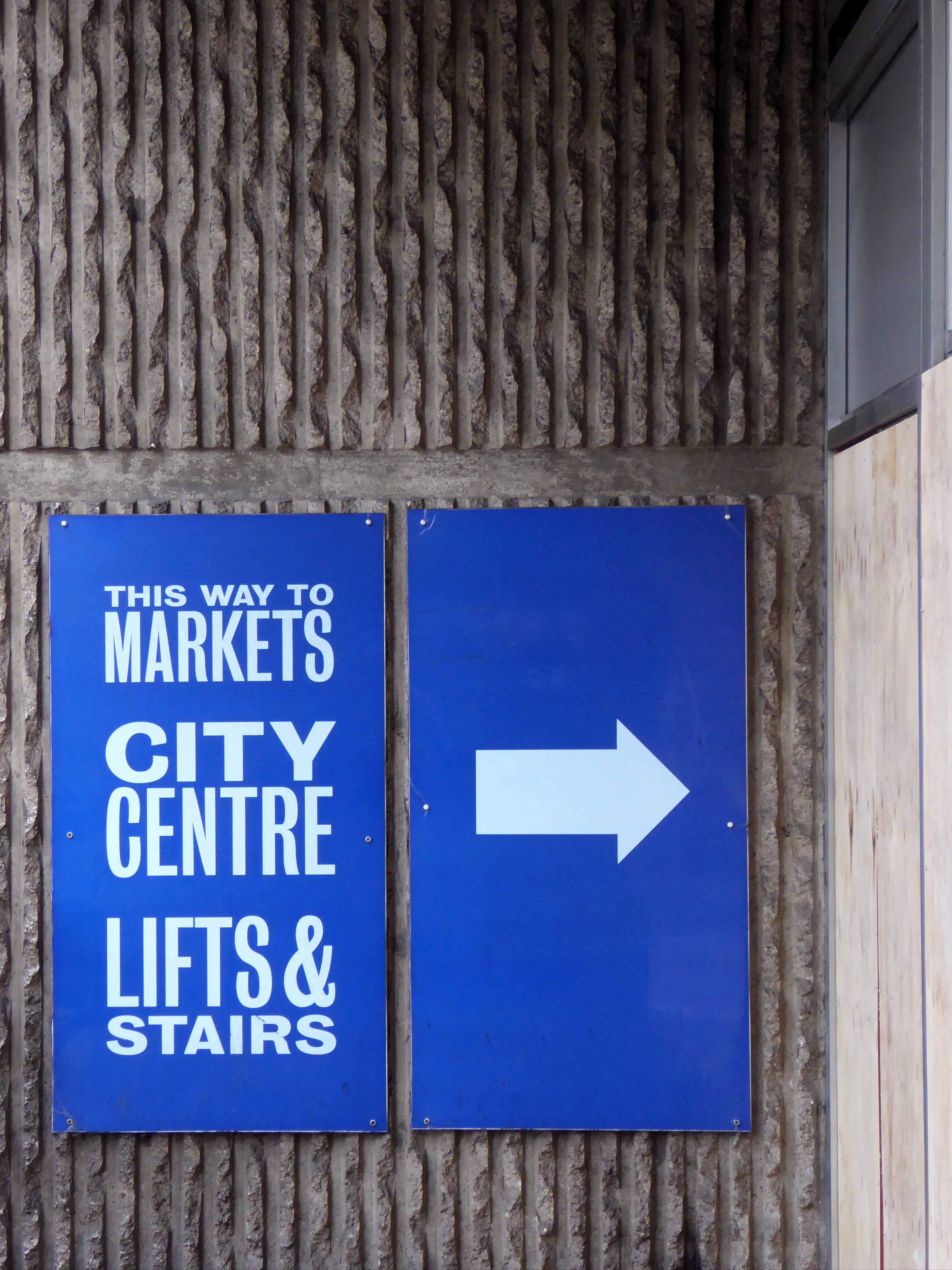
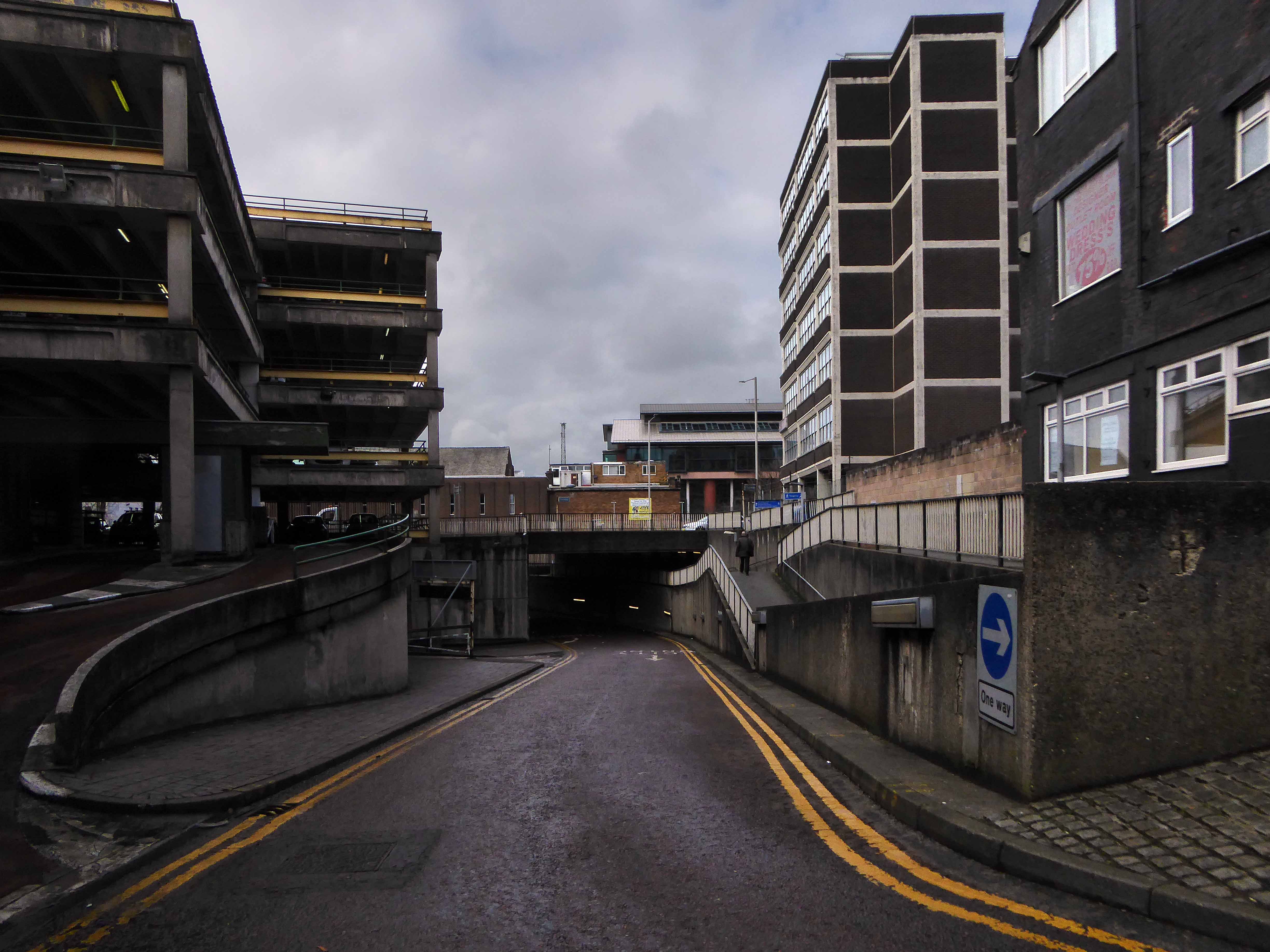
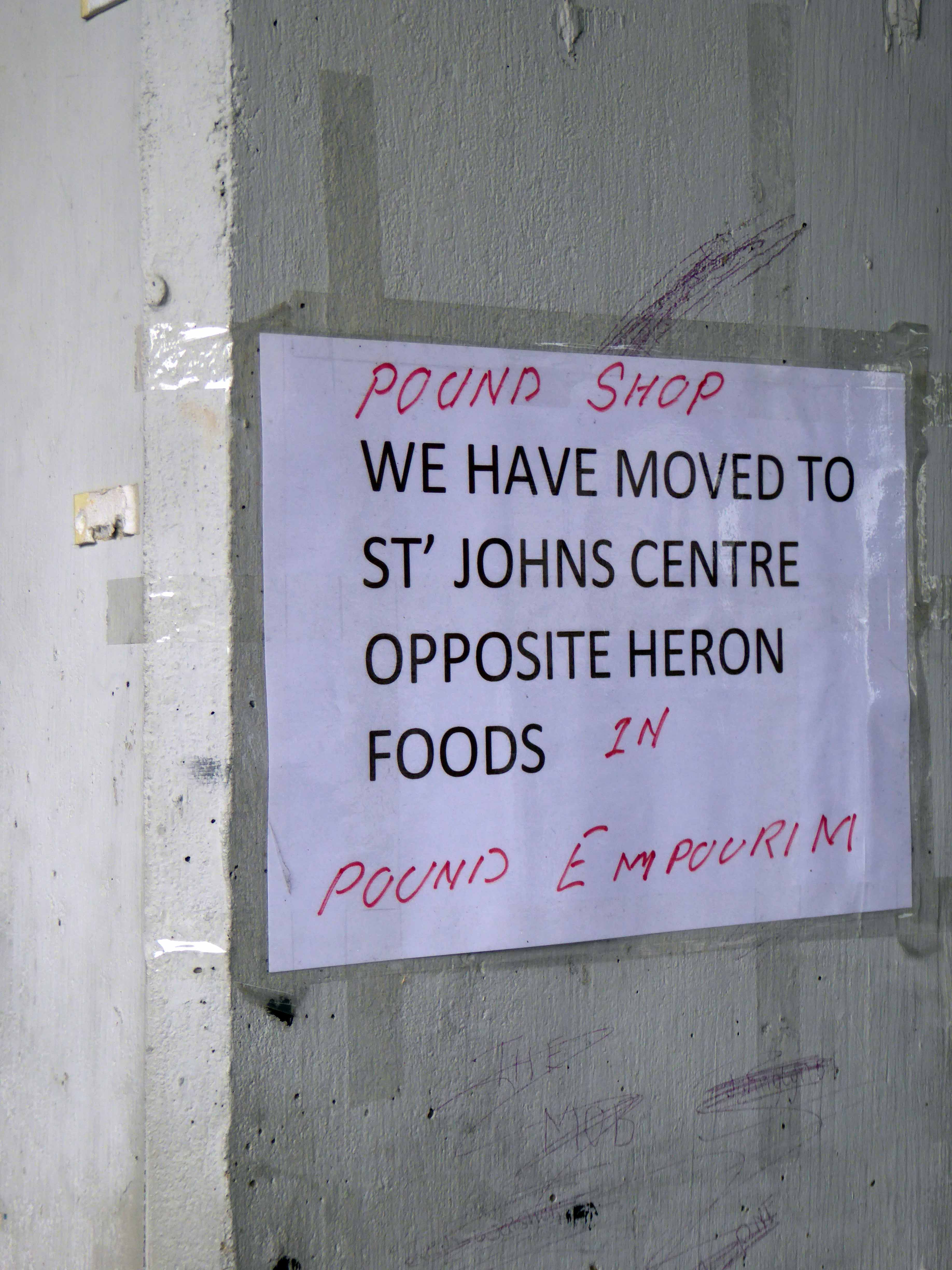
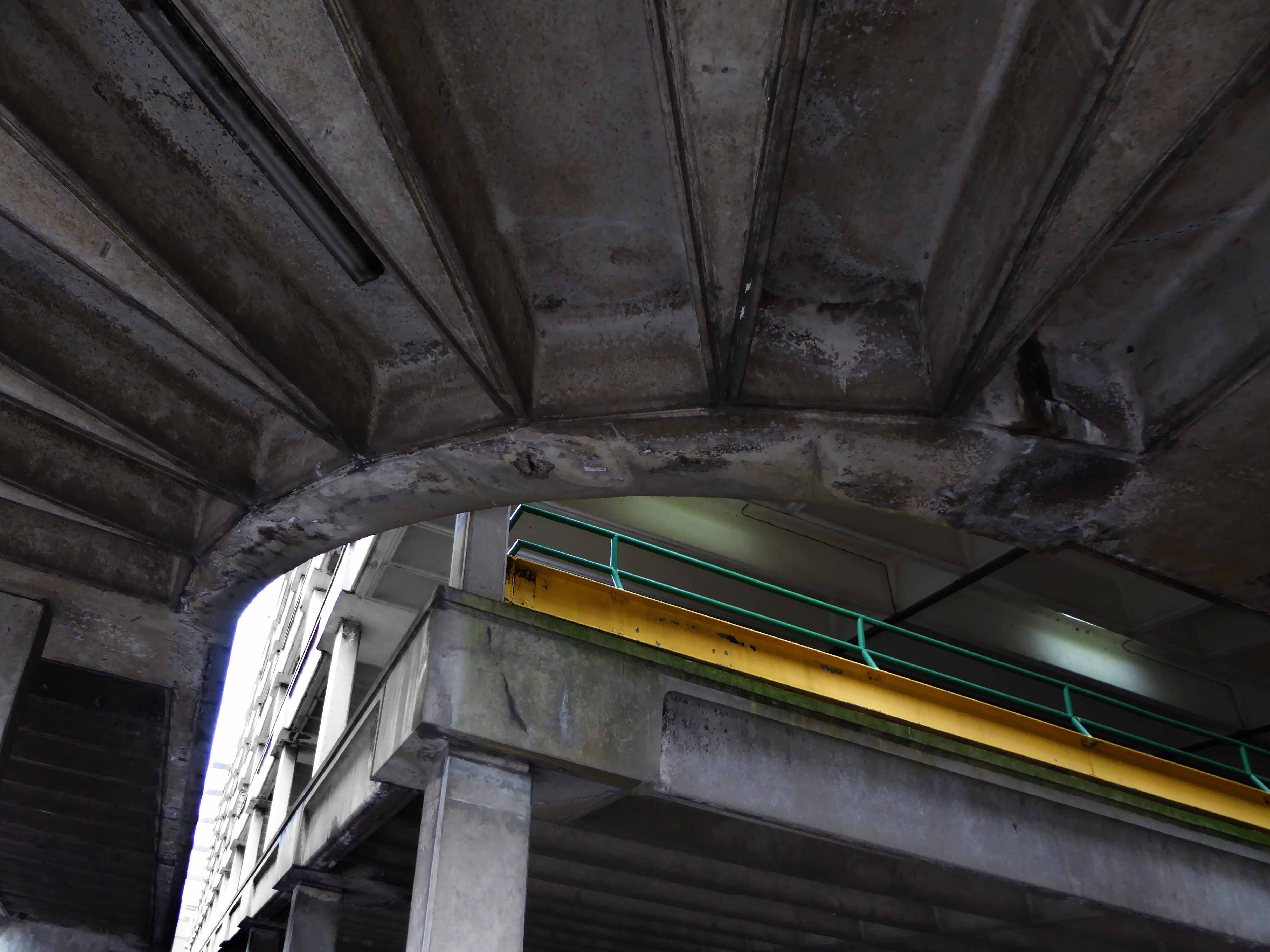
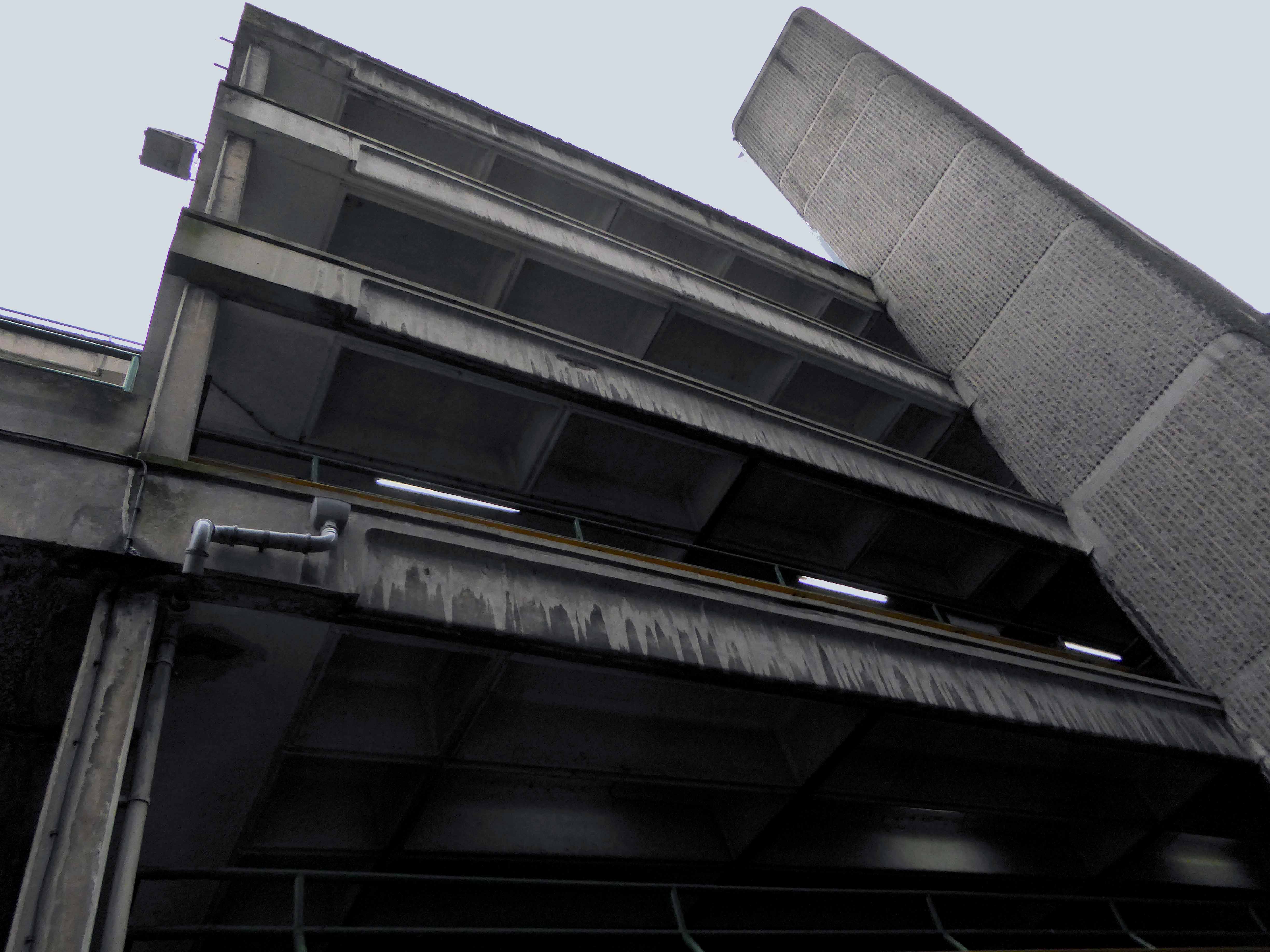
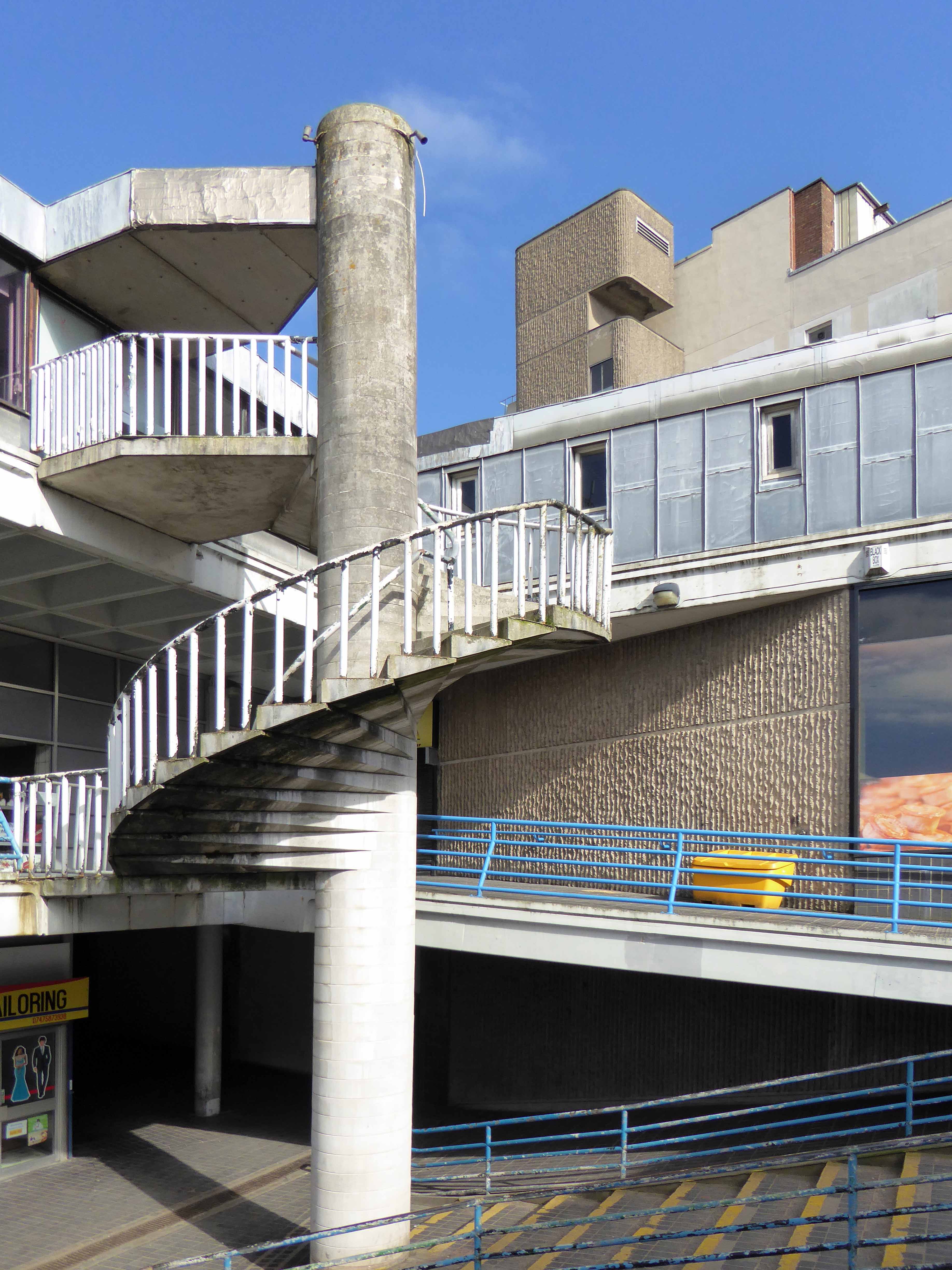
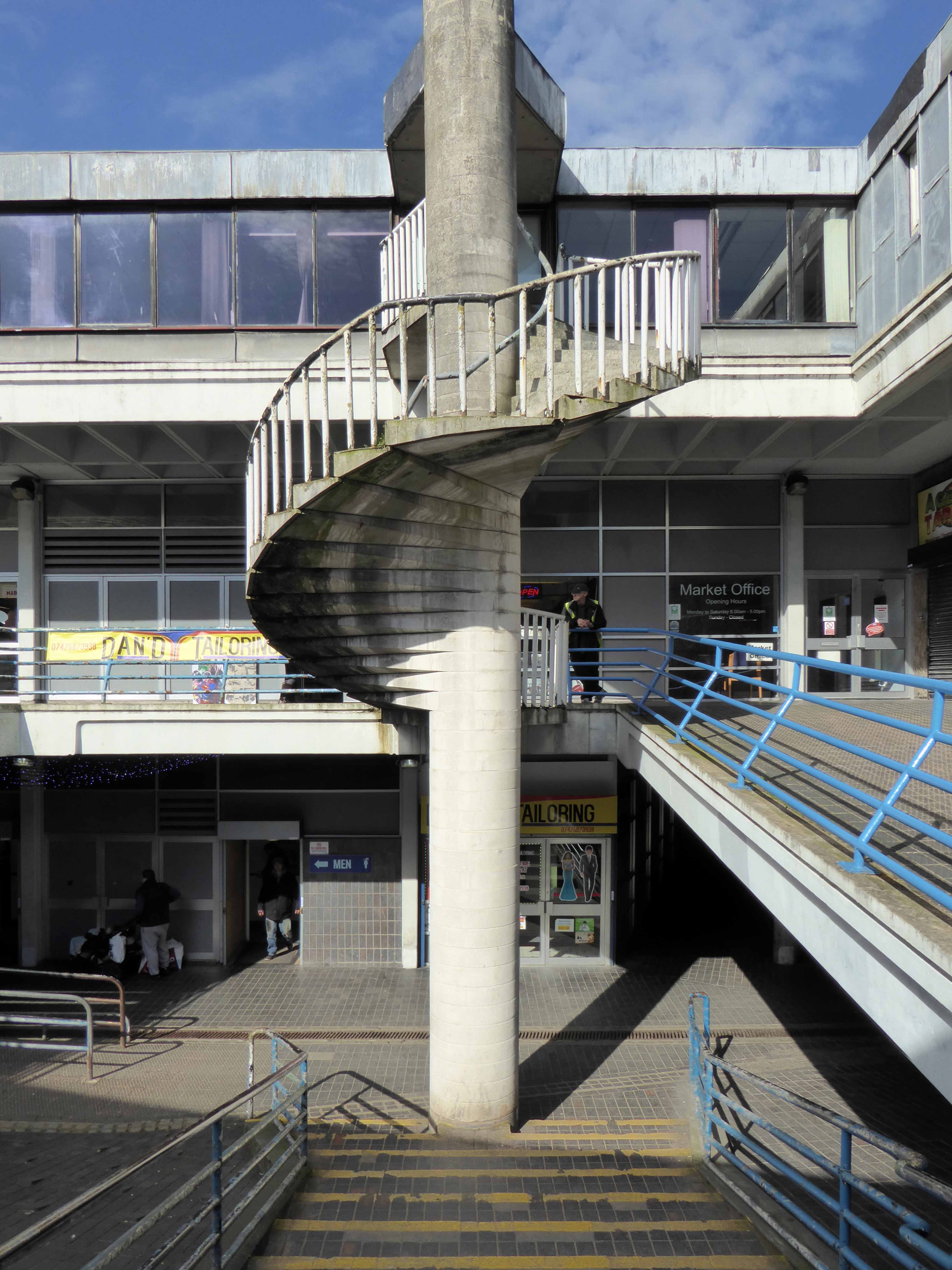
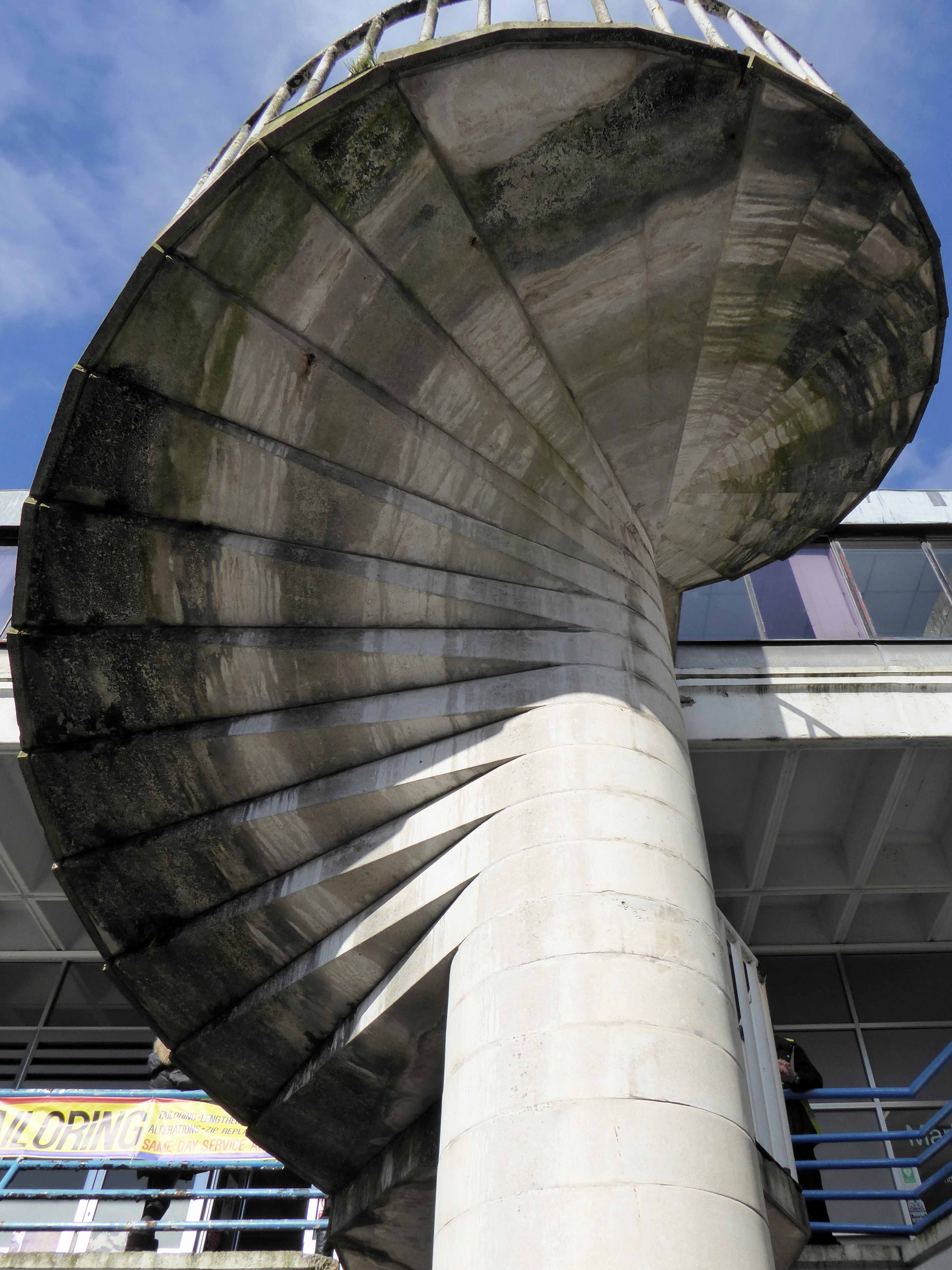
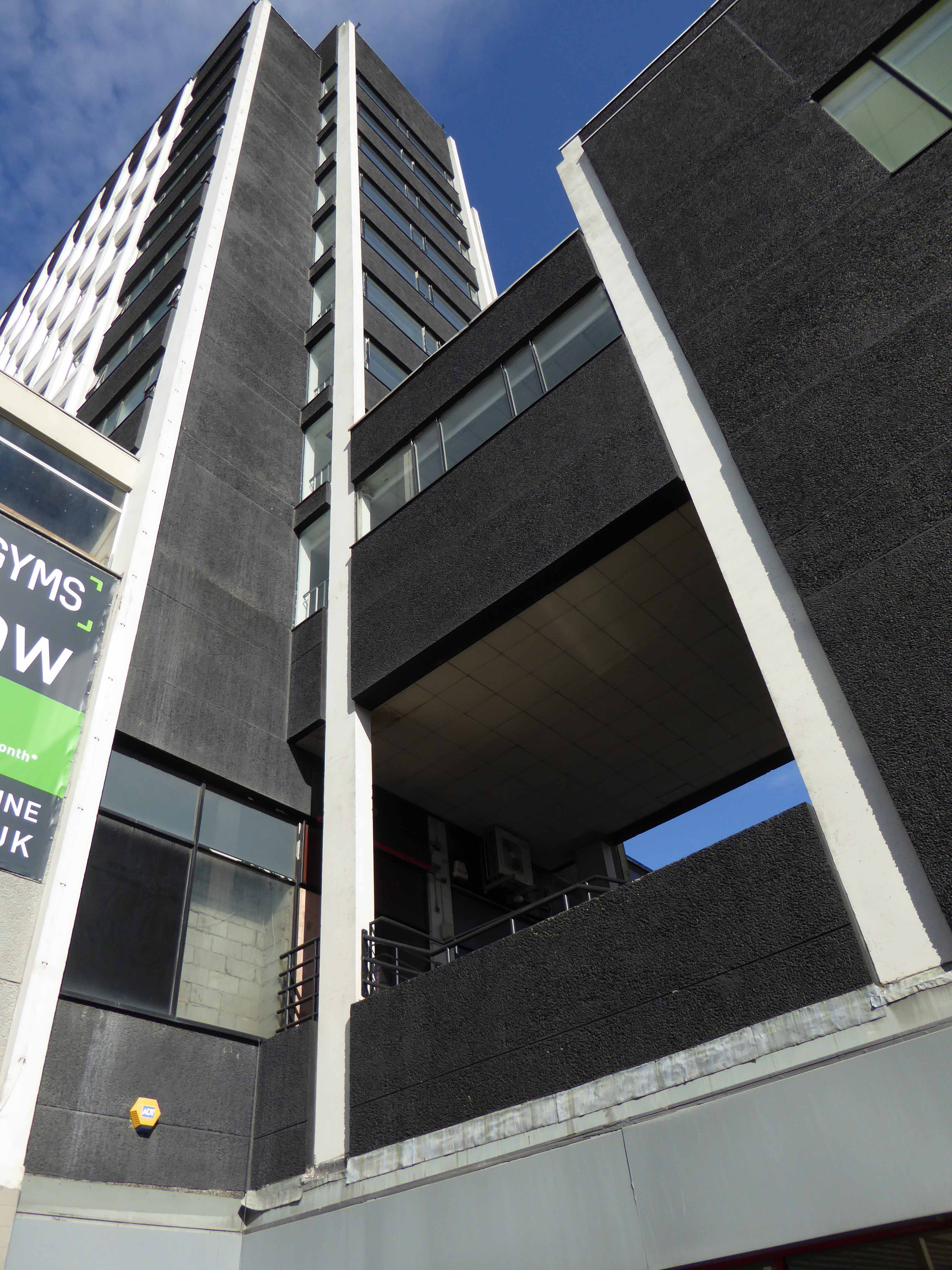
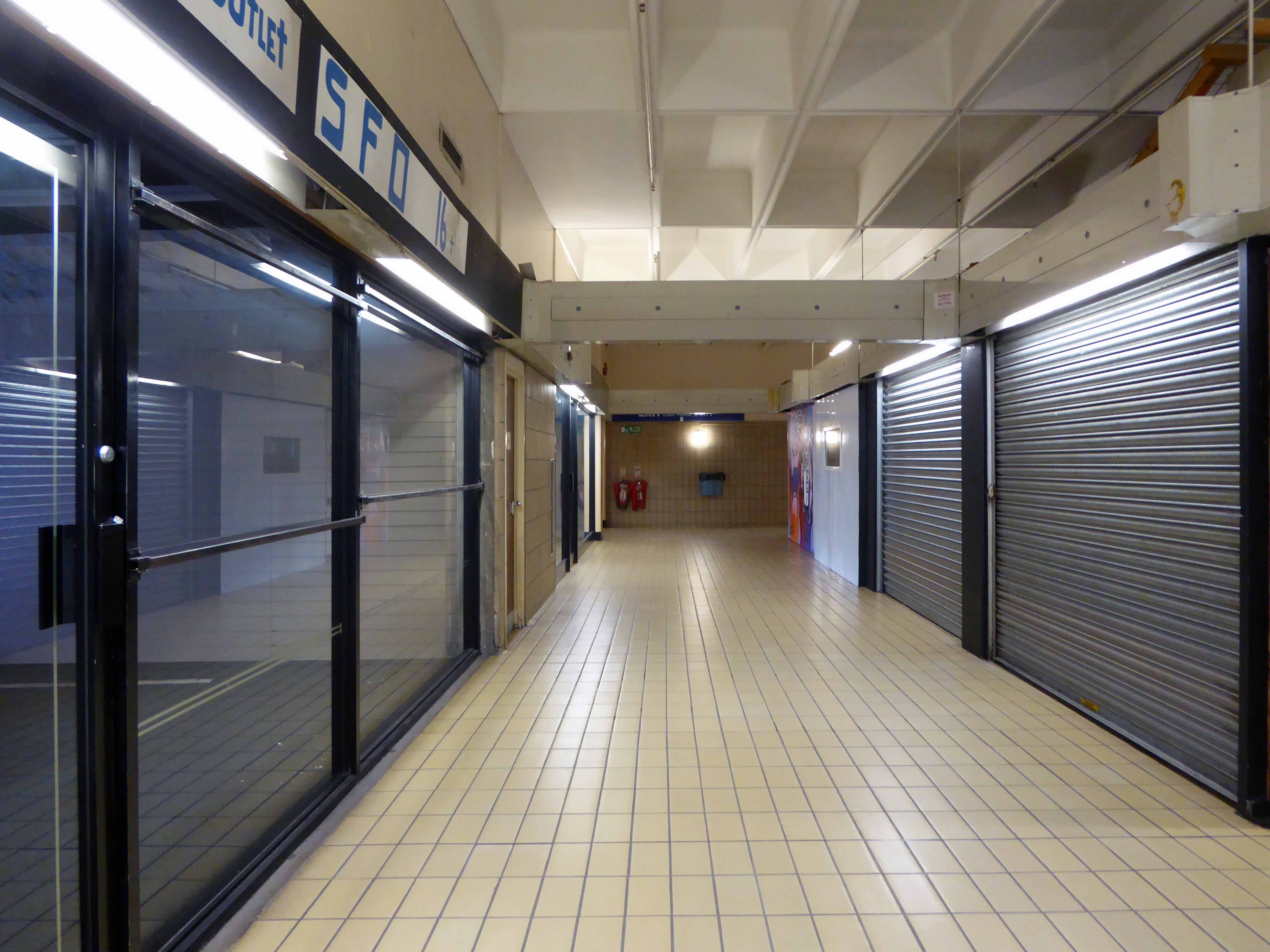
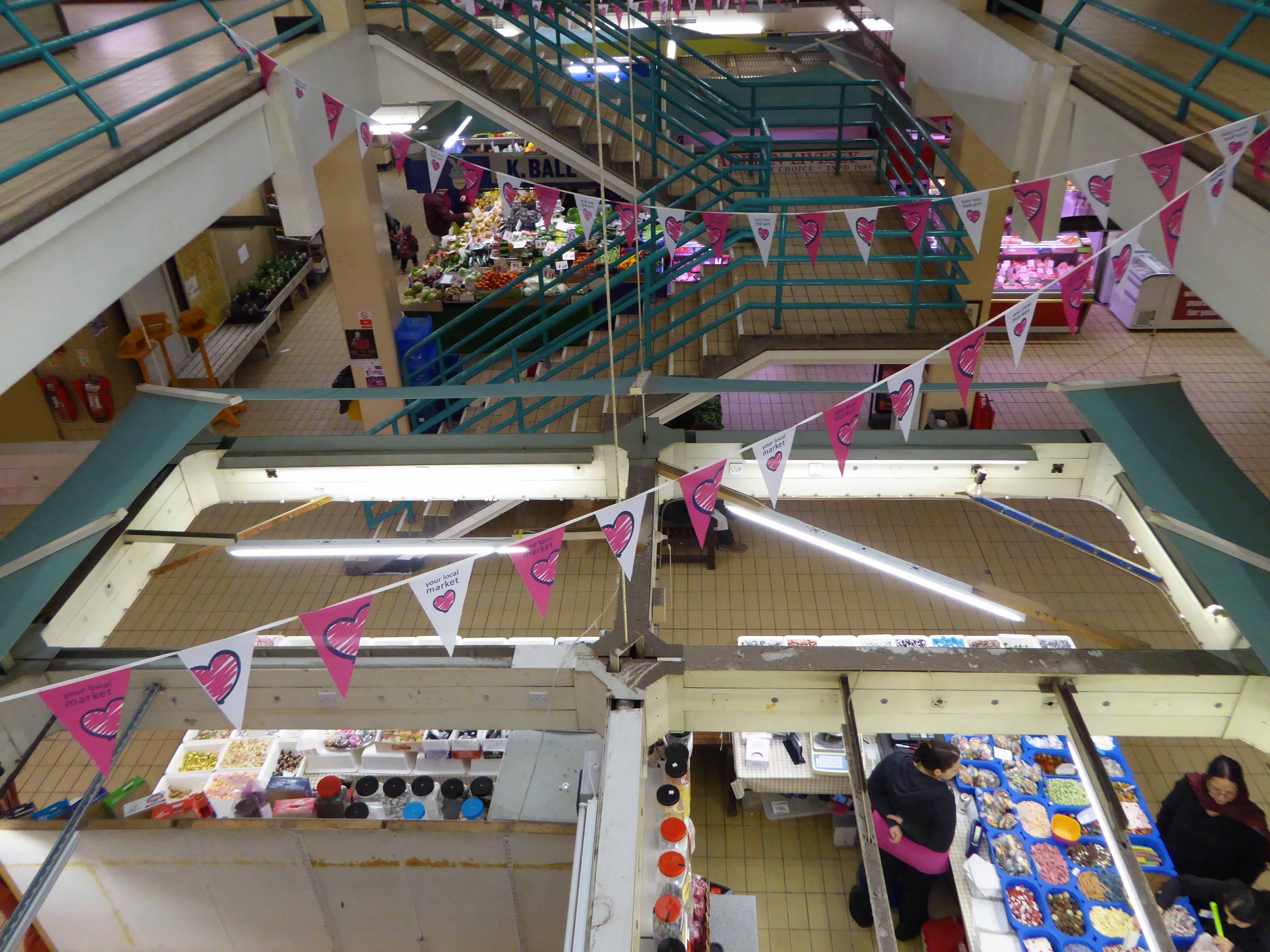
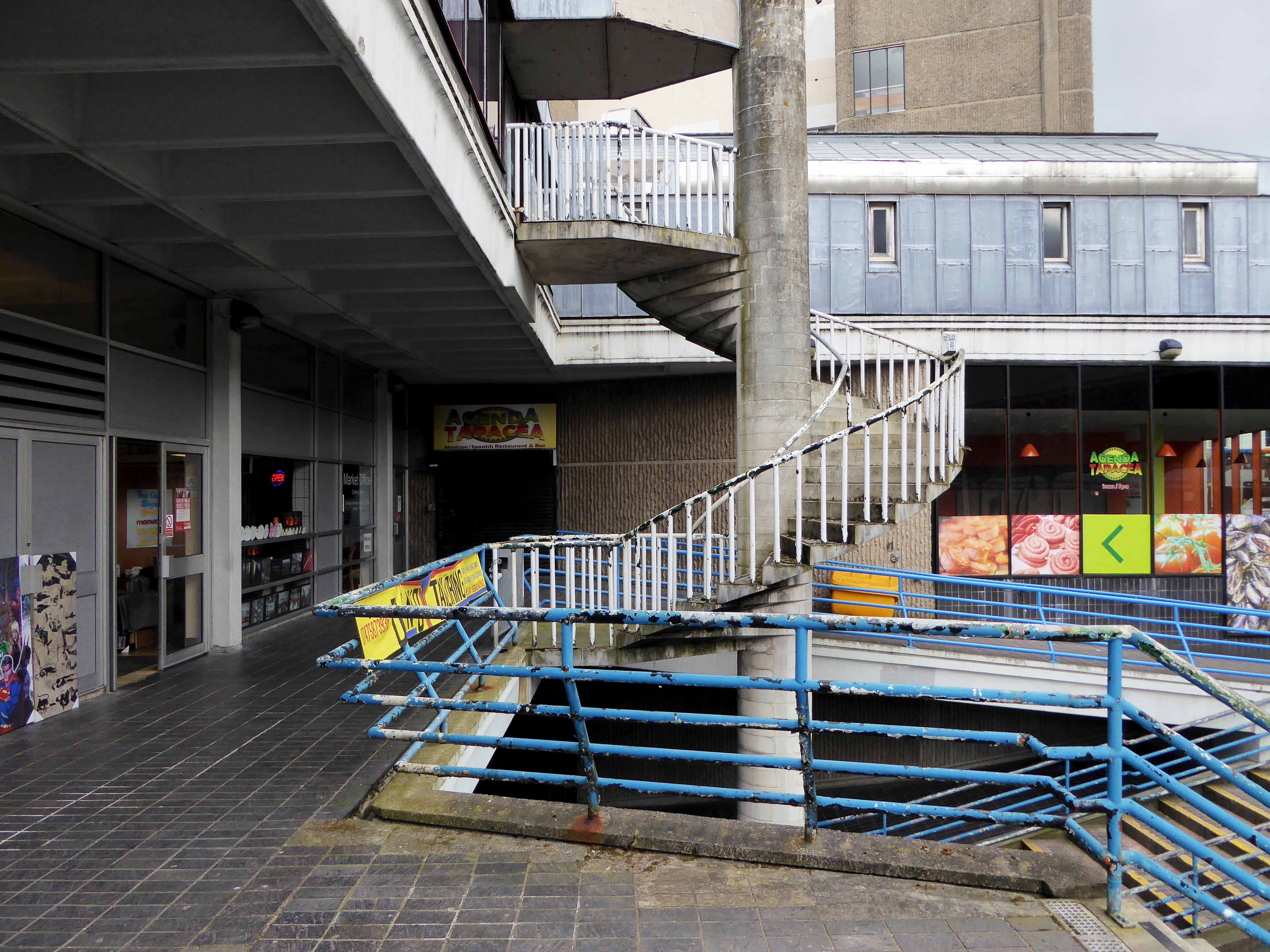
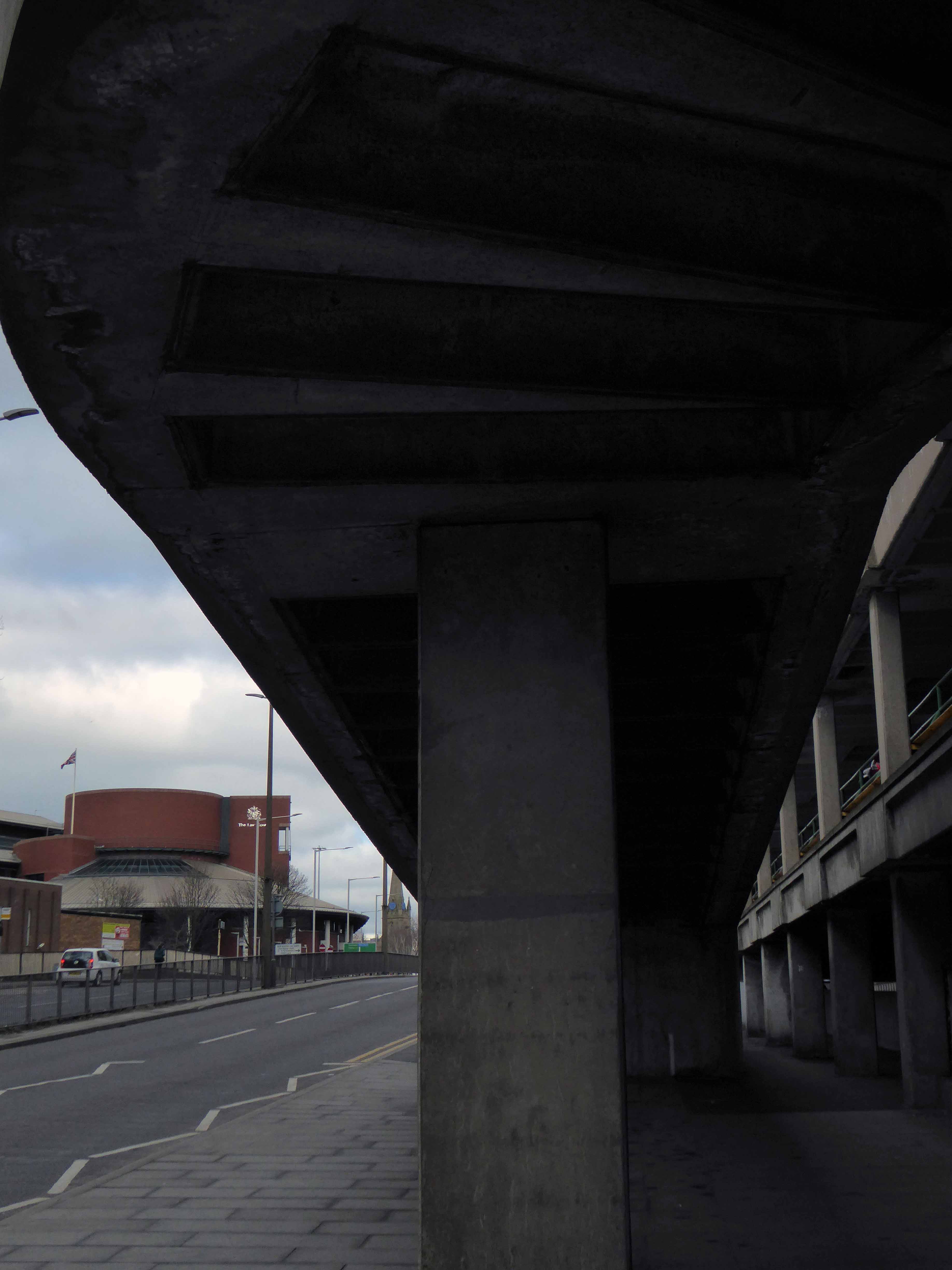
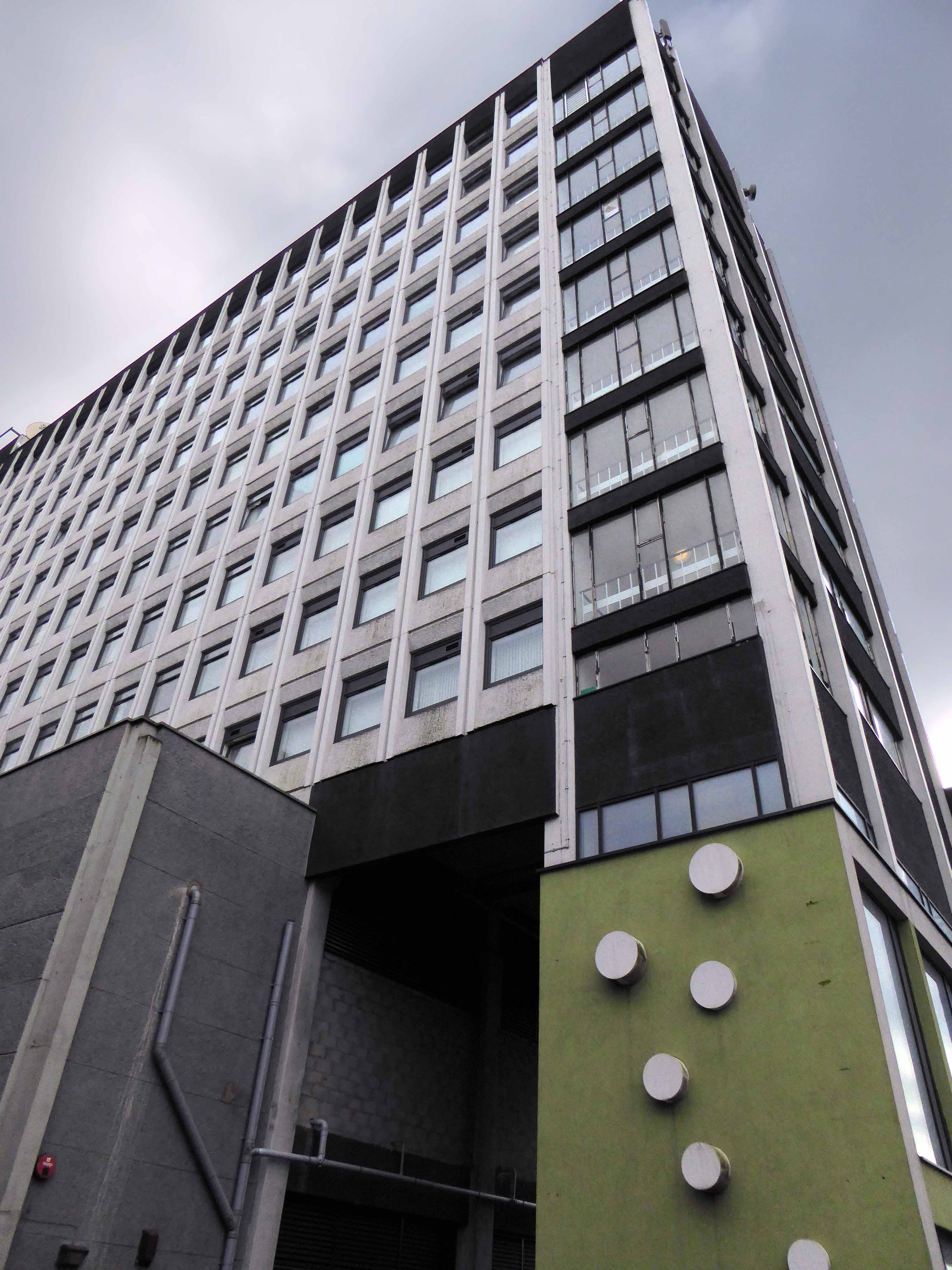
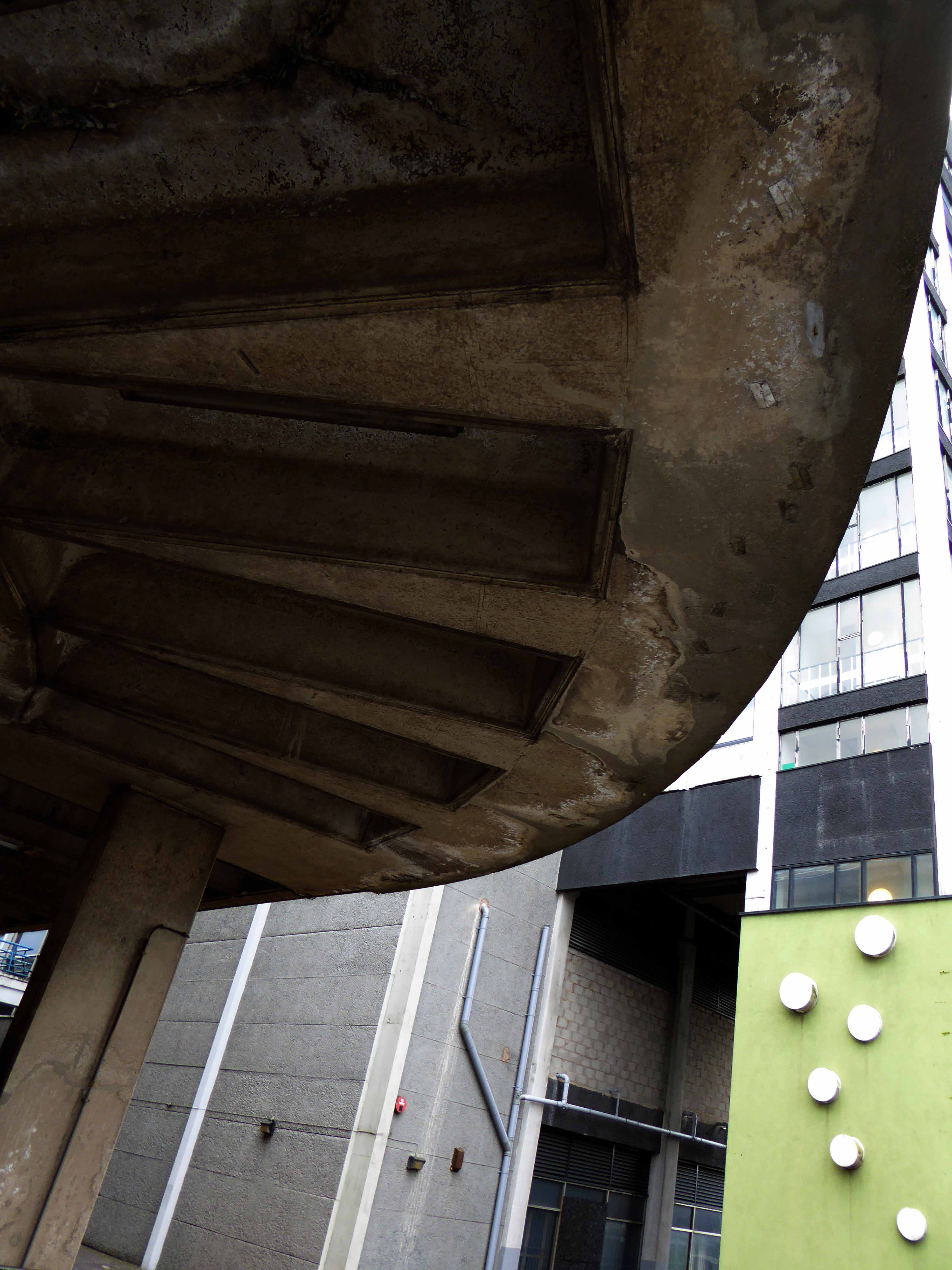
So come take one last wander through the concrete warren of ramps, underpasses and tunnels of the unwanted indoor market.
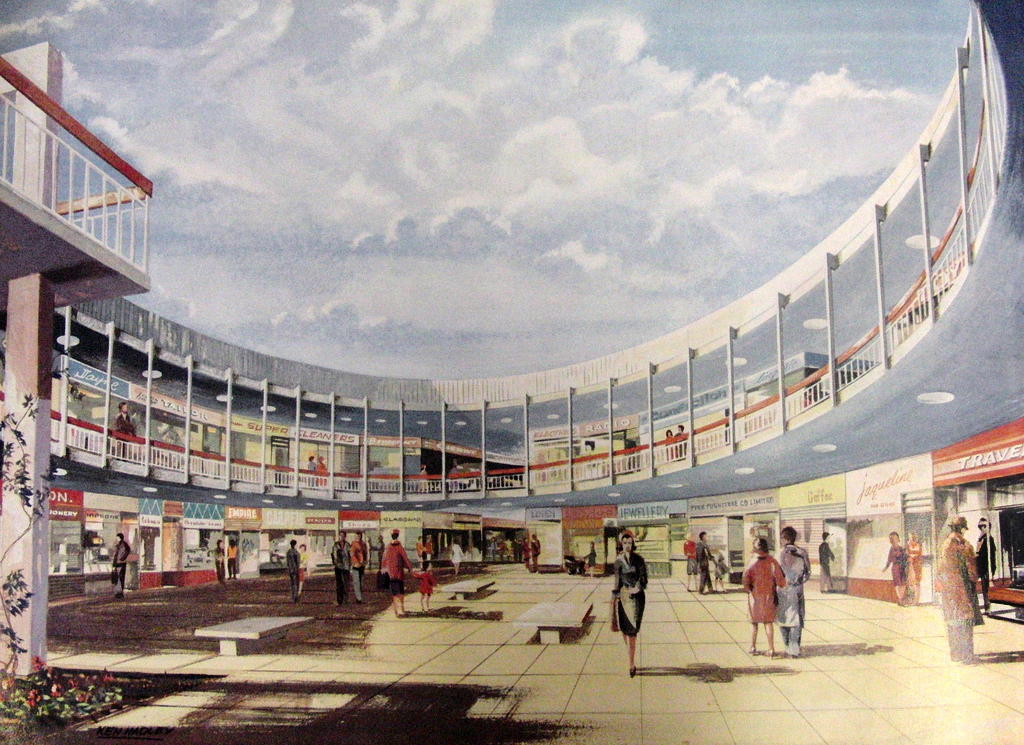
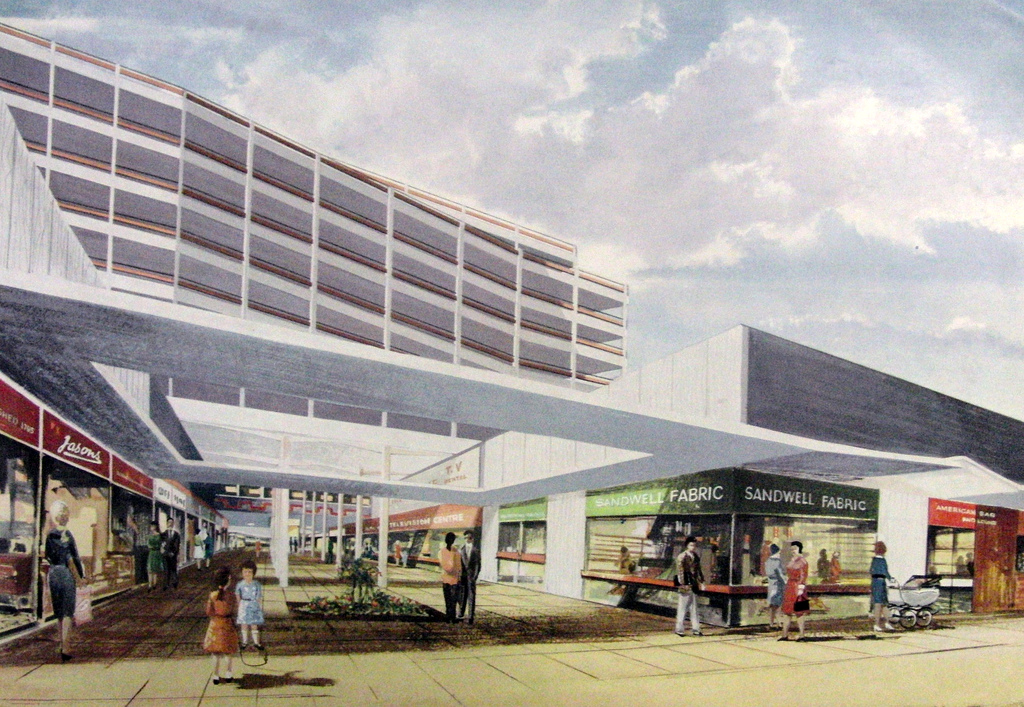
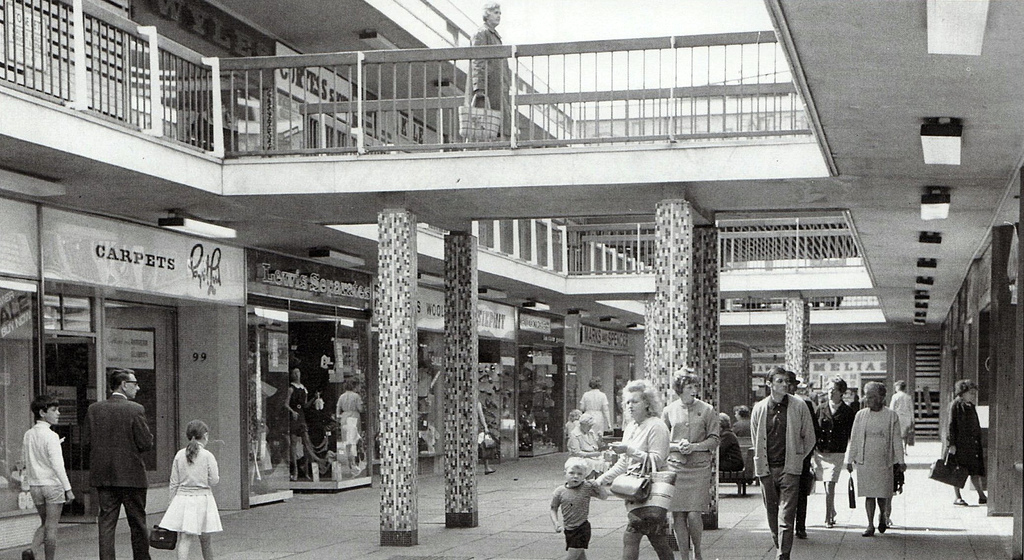
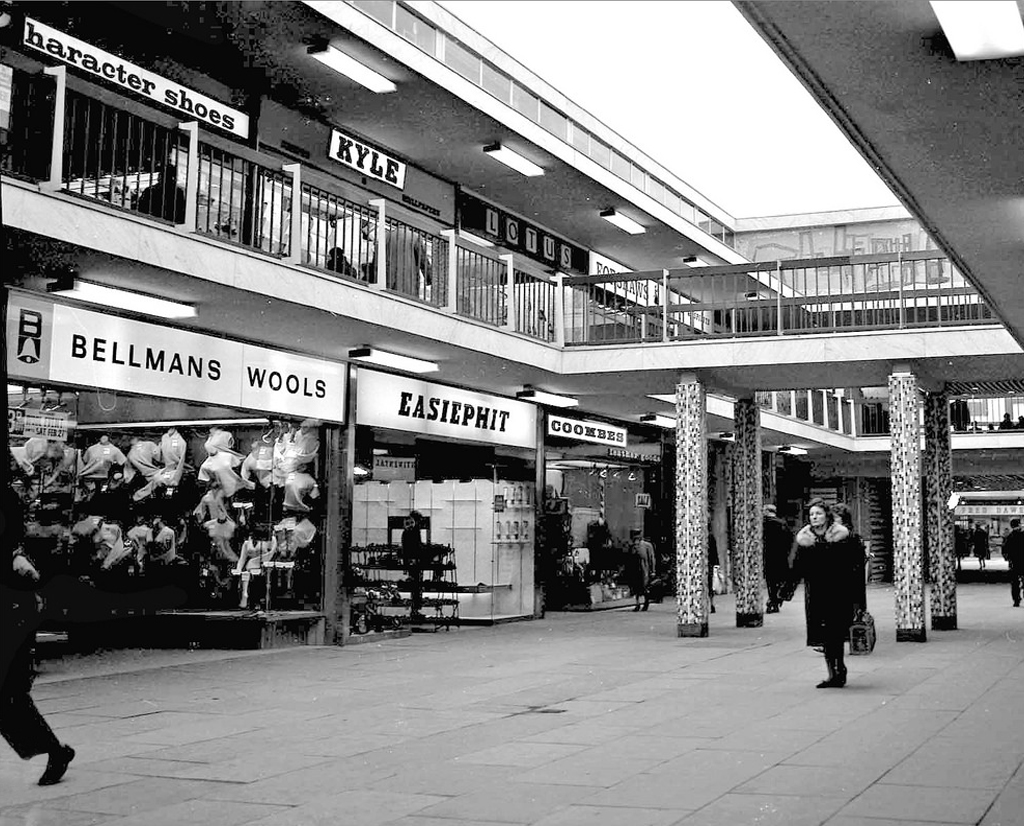
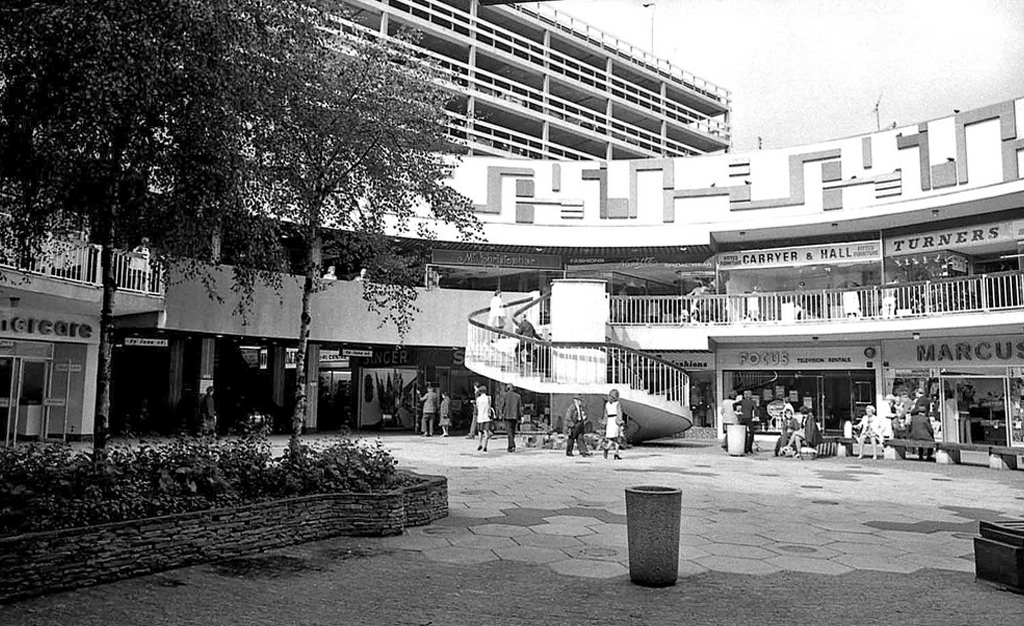
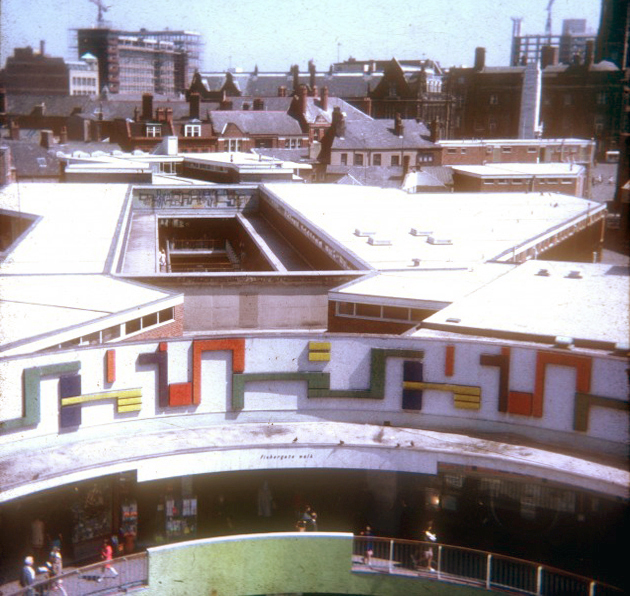
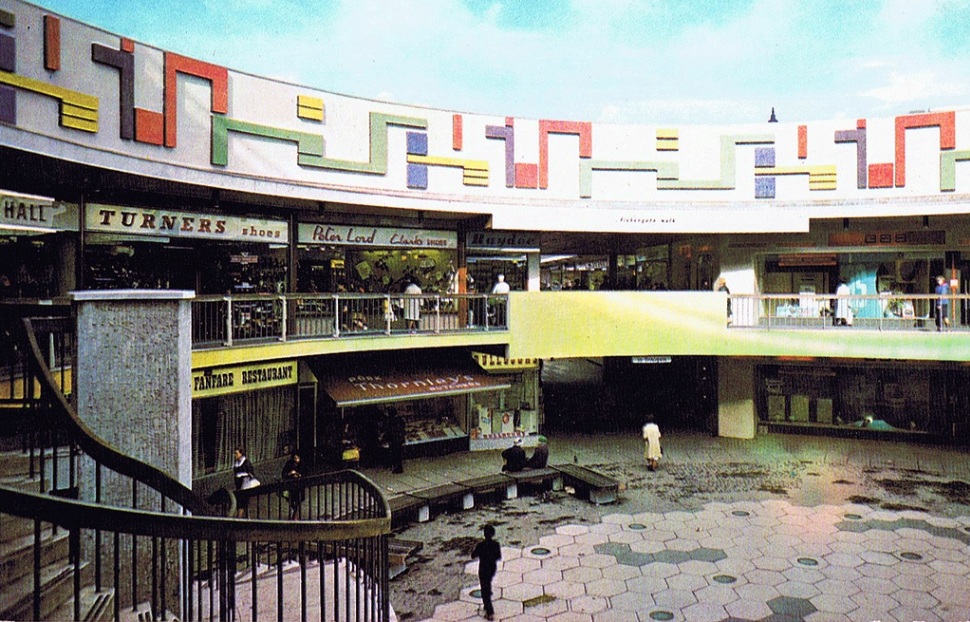
Once upon a time the future was shop-shaped and utopian, the Modernist reliefs a welcome relief from post-war doom and gloom, public decorative art was off the ration for good, or so it seemed. Small retail units, housed small local operators, their shiny well-washed fascias, glowing with graphic pride and diversity, slab serif and decorative script the order of the day.
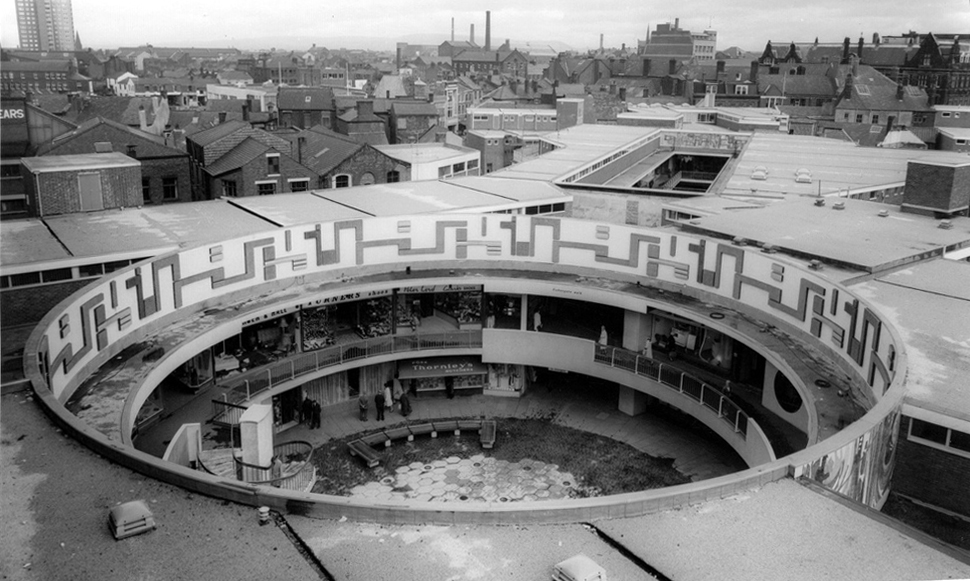
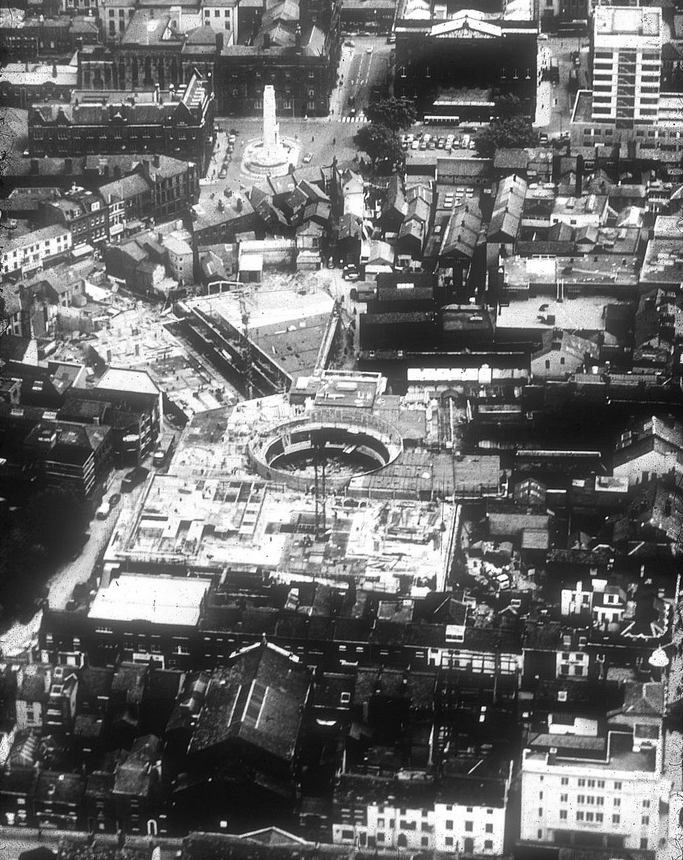
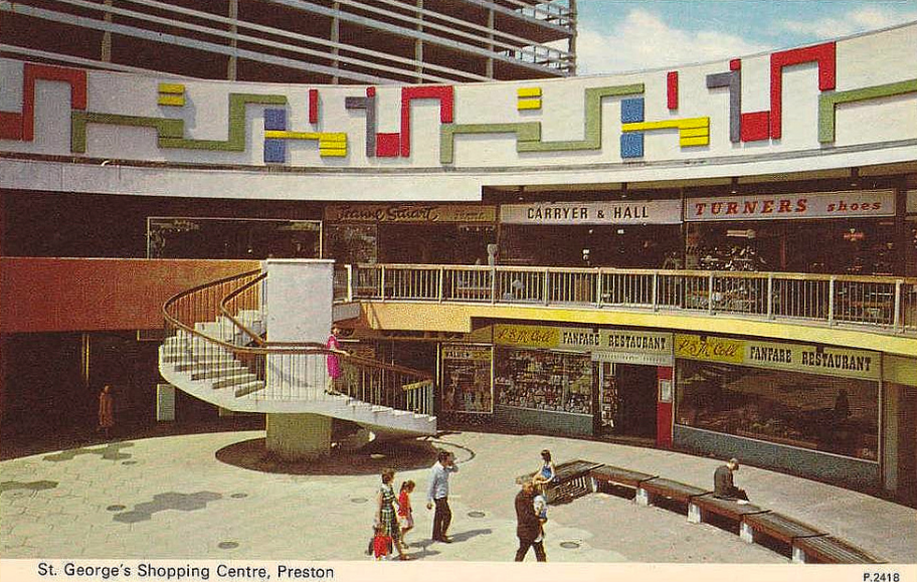
Architects J Seymour Harris and Partners envisaged a brave new water-coloured open-aired world for the grey austerity-tinted folk of Preston.
And lo it came to pass and underpass – the future was here yesterday.
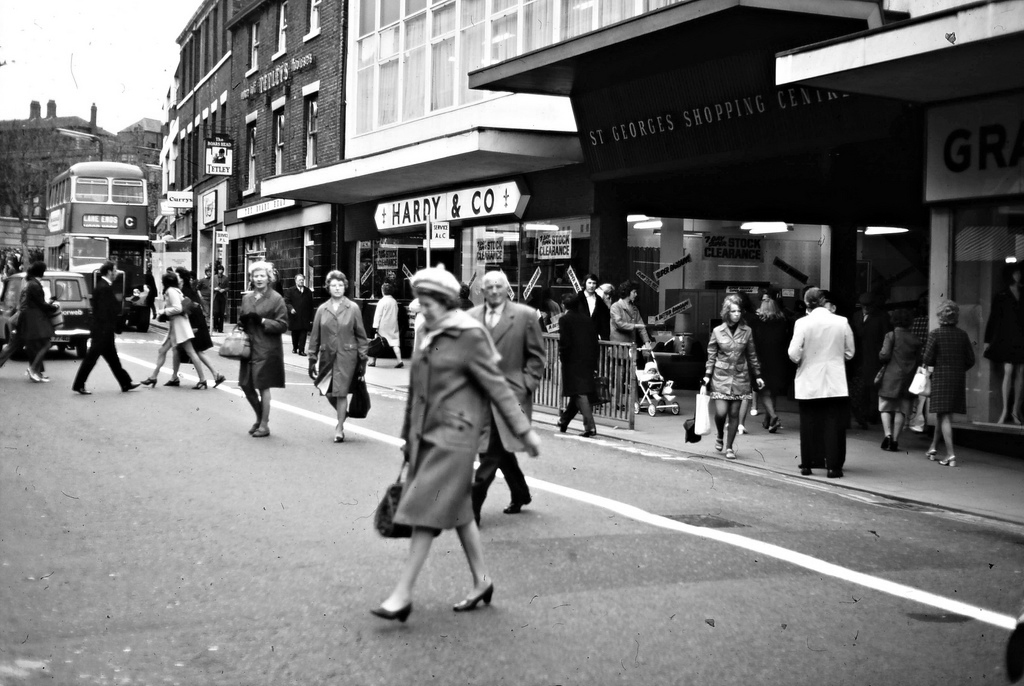
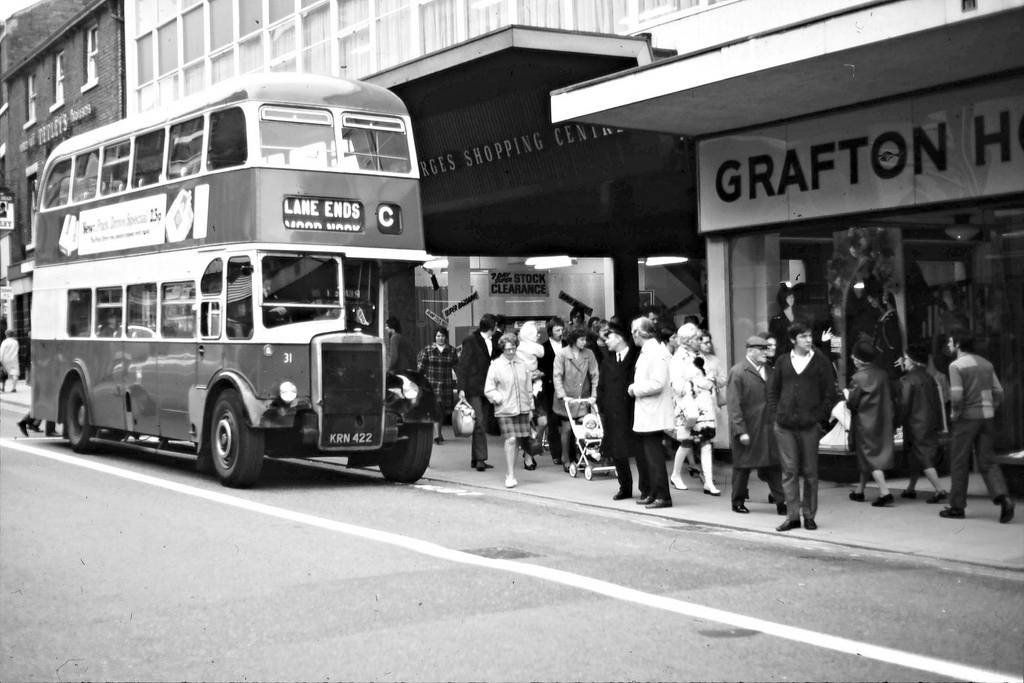
Get off the bus on Fishergate and walk right on in.
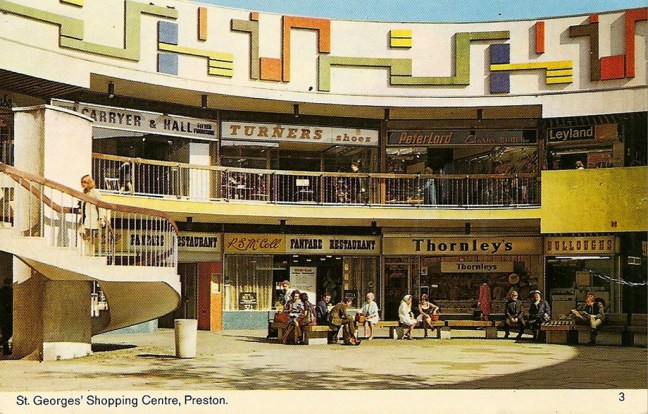
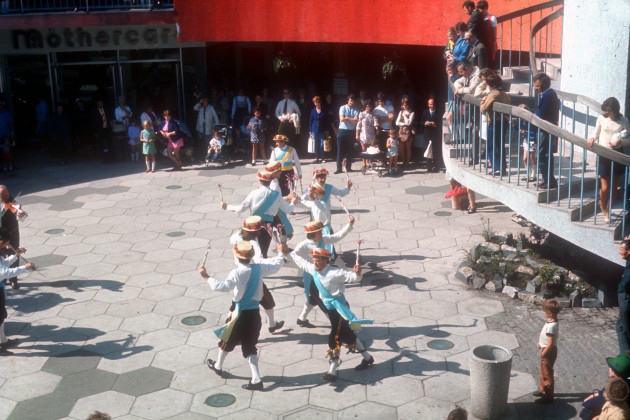
The shopping centre opened on 22 March 1966 as St George’s Shopping Centre.
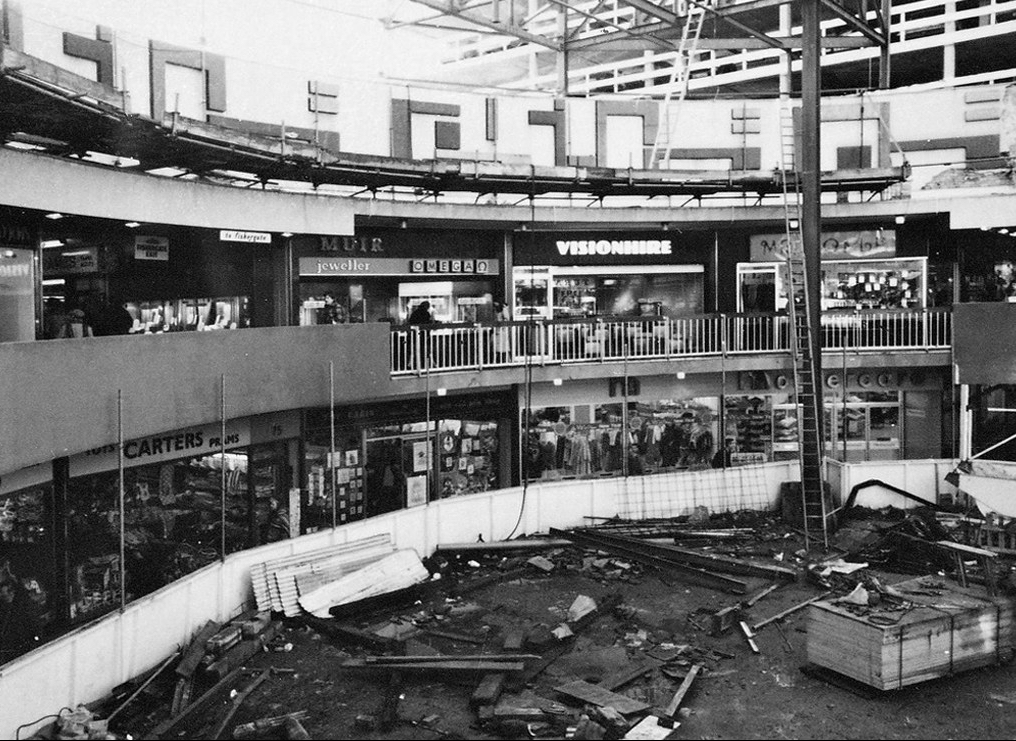
It was originally an open air centre, and was roofed over during refurbishment in 1981. It was further refurbished in 1999.
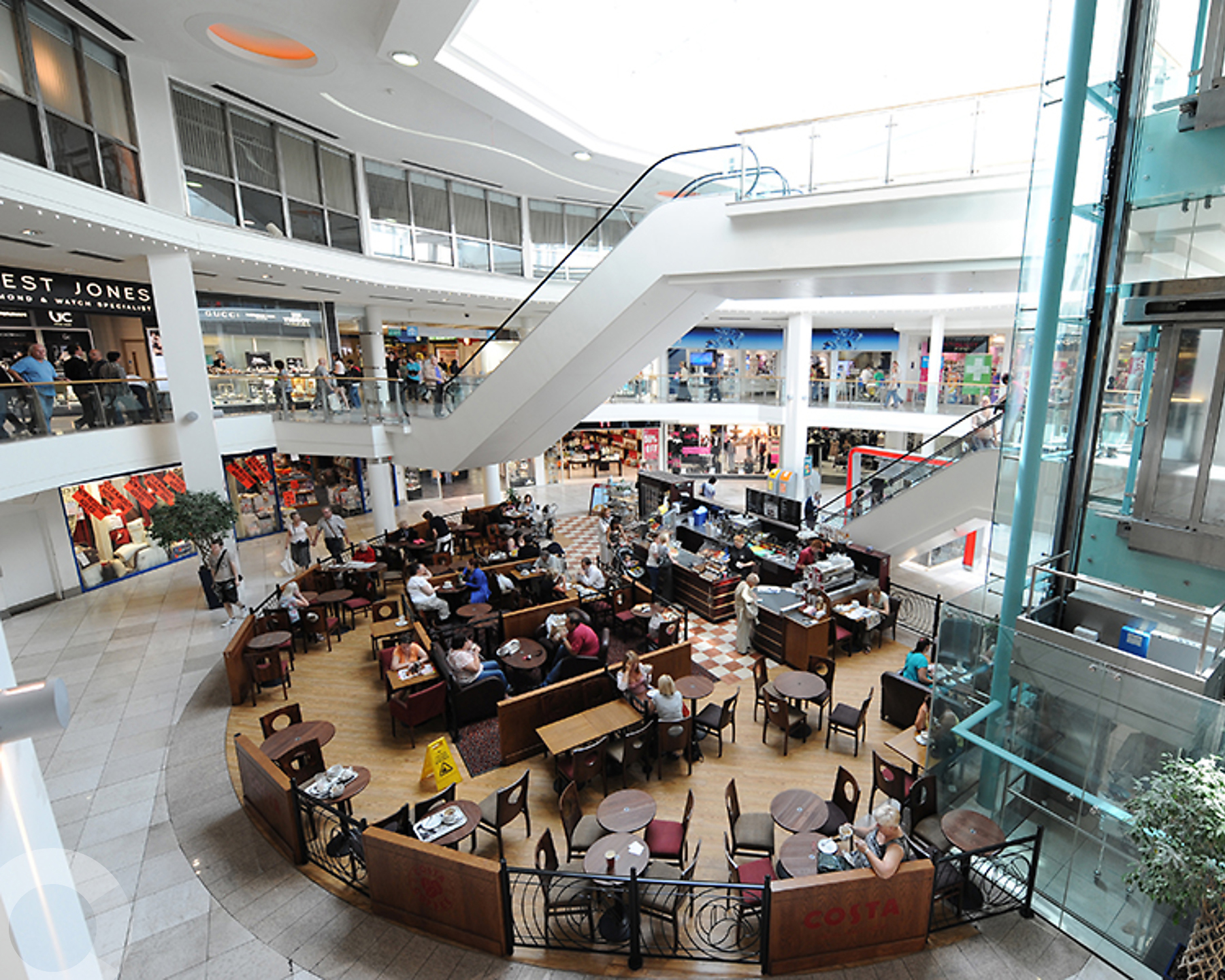
In May 2004, when The Mall Company took over the centre, they were greeted with an ageing shopping centre. The shopping centre was rebranded as The Mall, and a massive development scheme was planned. Small stalls, main shops, cafes, restaurants, toilets, and escalators were overhauled.
In March 2010, the shopping centre was acquired by Aviva Investors for £87 million. In September 2010, The Mall was rebranded under its original name St George’s Shopping Centre.
Built in 1973 scheduled to be closed and demolished in ten days time.
The future is not so red rosey for yet another traditional local market.
A typically boxy arrangement of steel, concrete, asbestos glass and brick, the complex of trading units, stalls and parking is not without charm. Though as with many other developments of its type, it seems to be without friends, then inevitably without customers and traders.
Following a template originated at London’s Borough Market, developers and councils seem to favour the modern artisan over the proletarian . This concept when meshed with the multi-plex and chain restaurant/bar amalgam, provides a shiny new future, for the shiny new shape of all our retail and leisure needs.
So ta-ta to another world of hats and socks, fruit and veg, workwear for workers.
The things that you see from a passing train, those things that arouse your curiosity.
Blackpool bound, to the left a horizontal slab on stilts.
Well, well.
Whatever could that be?
Well we shall see, shall we?
Some days later alighting at Preston Station, I hotfooted it hurriedly down the road to who knows where.
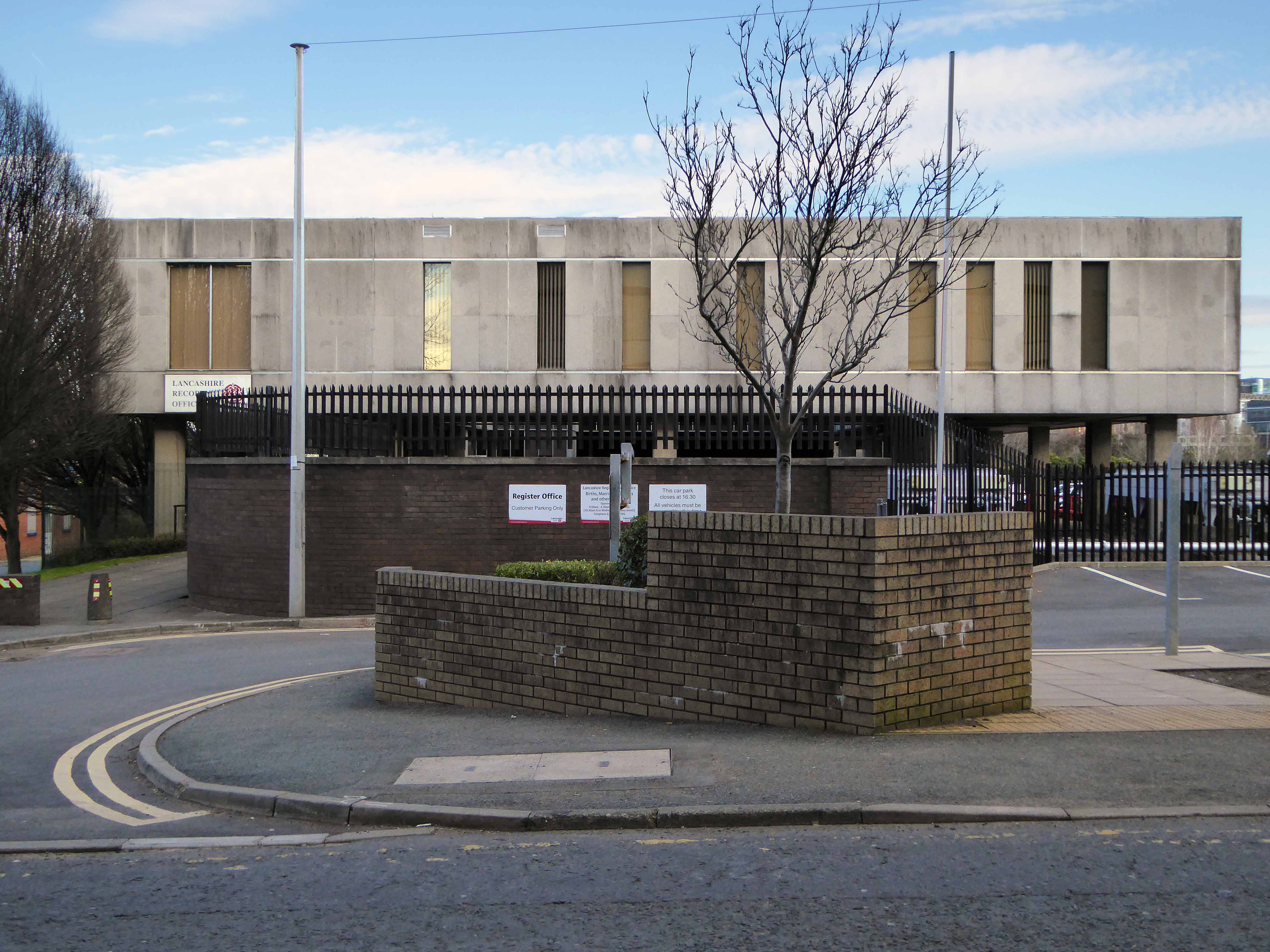
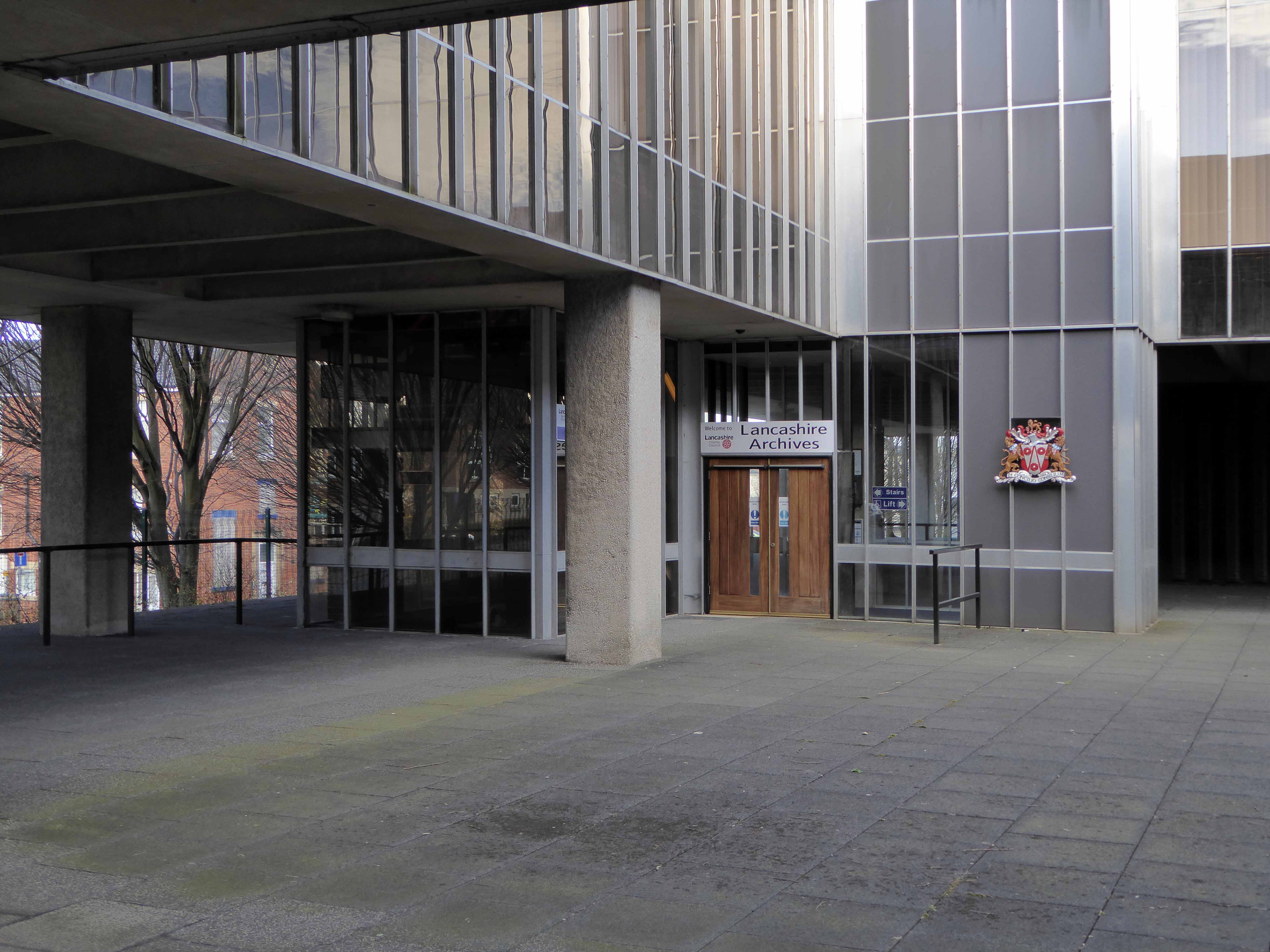
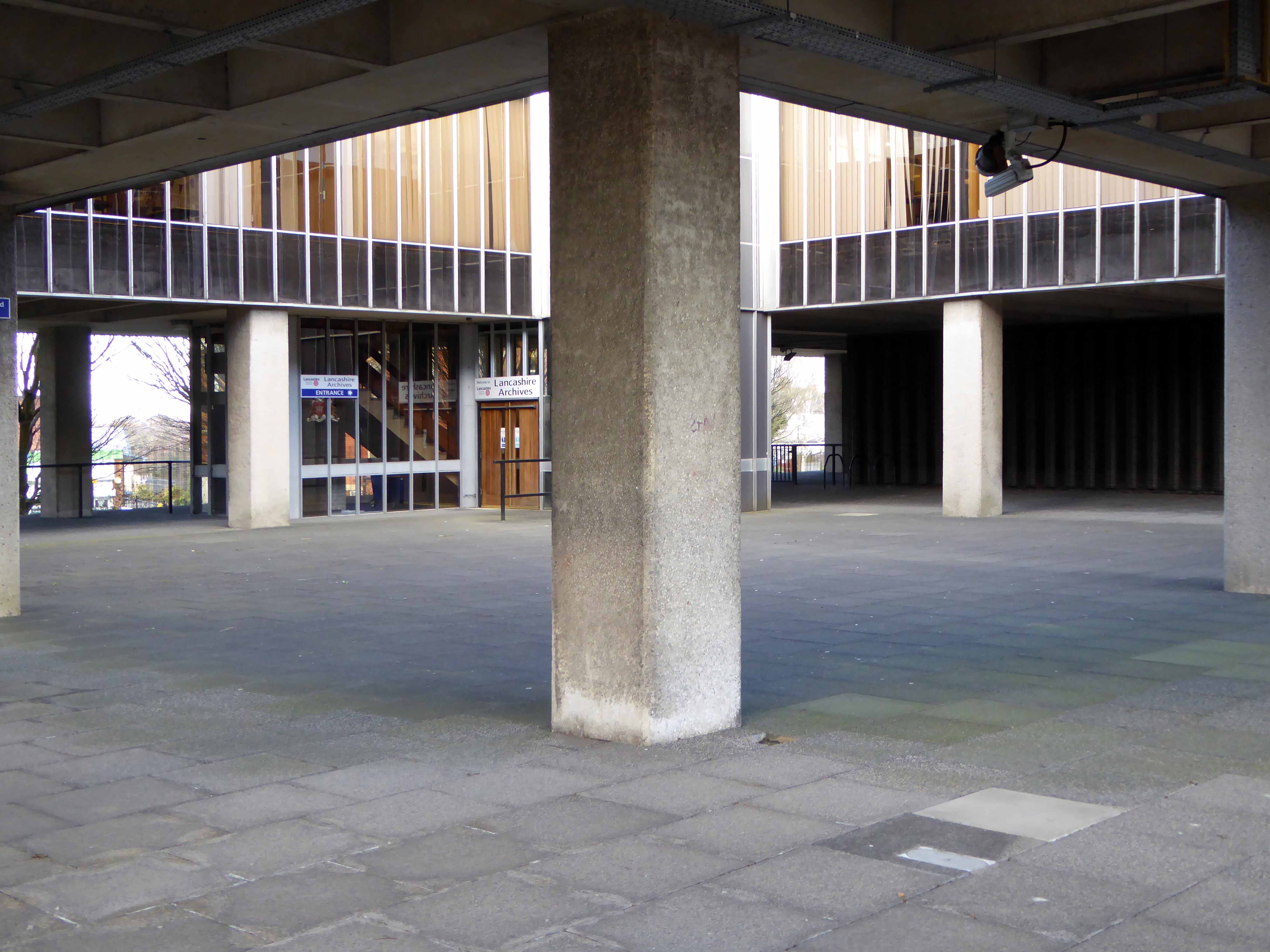
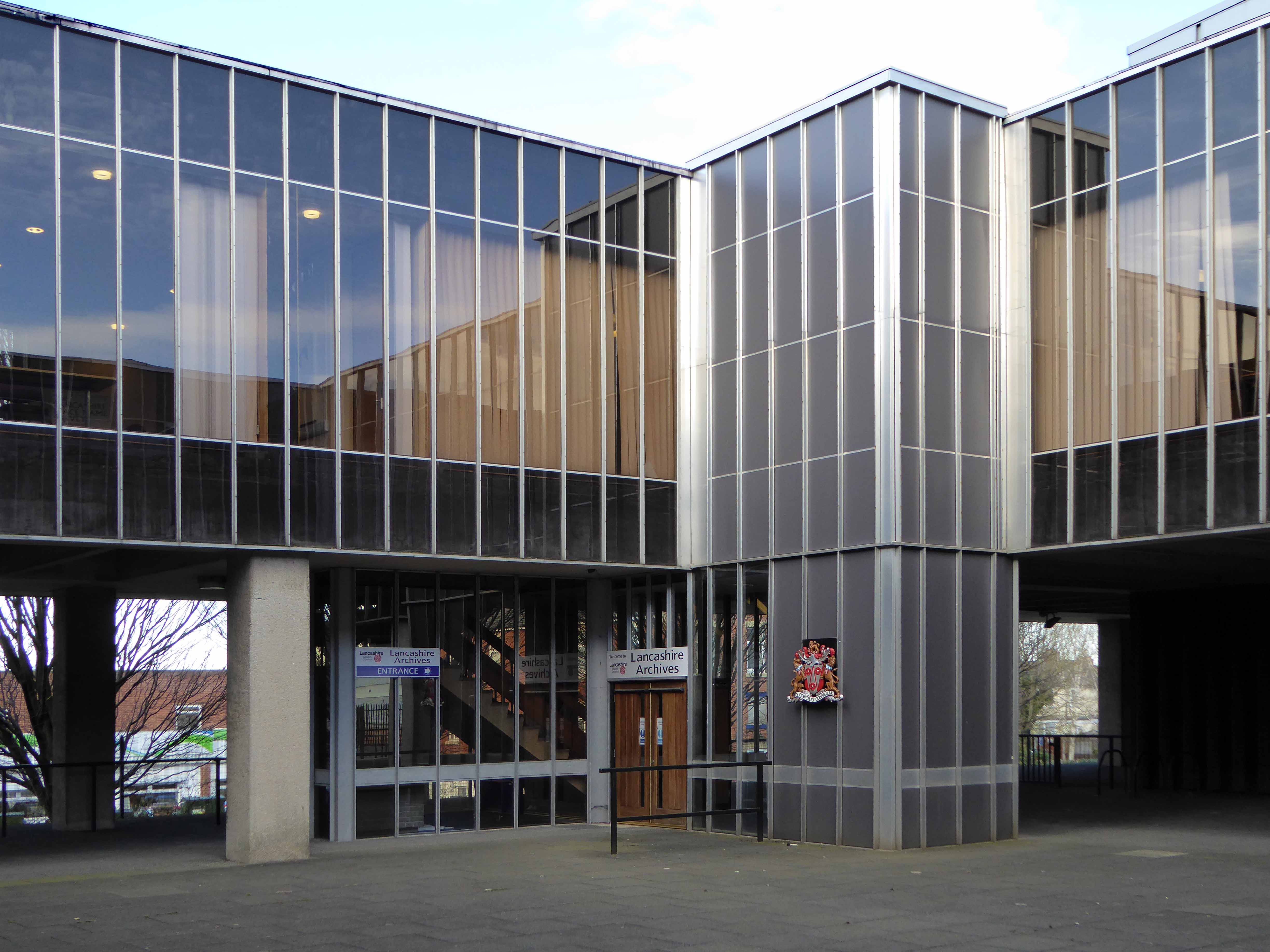
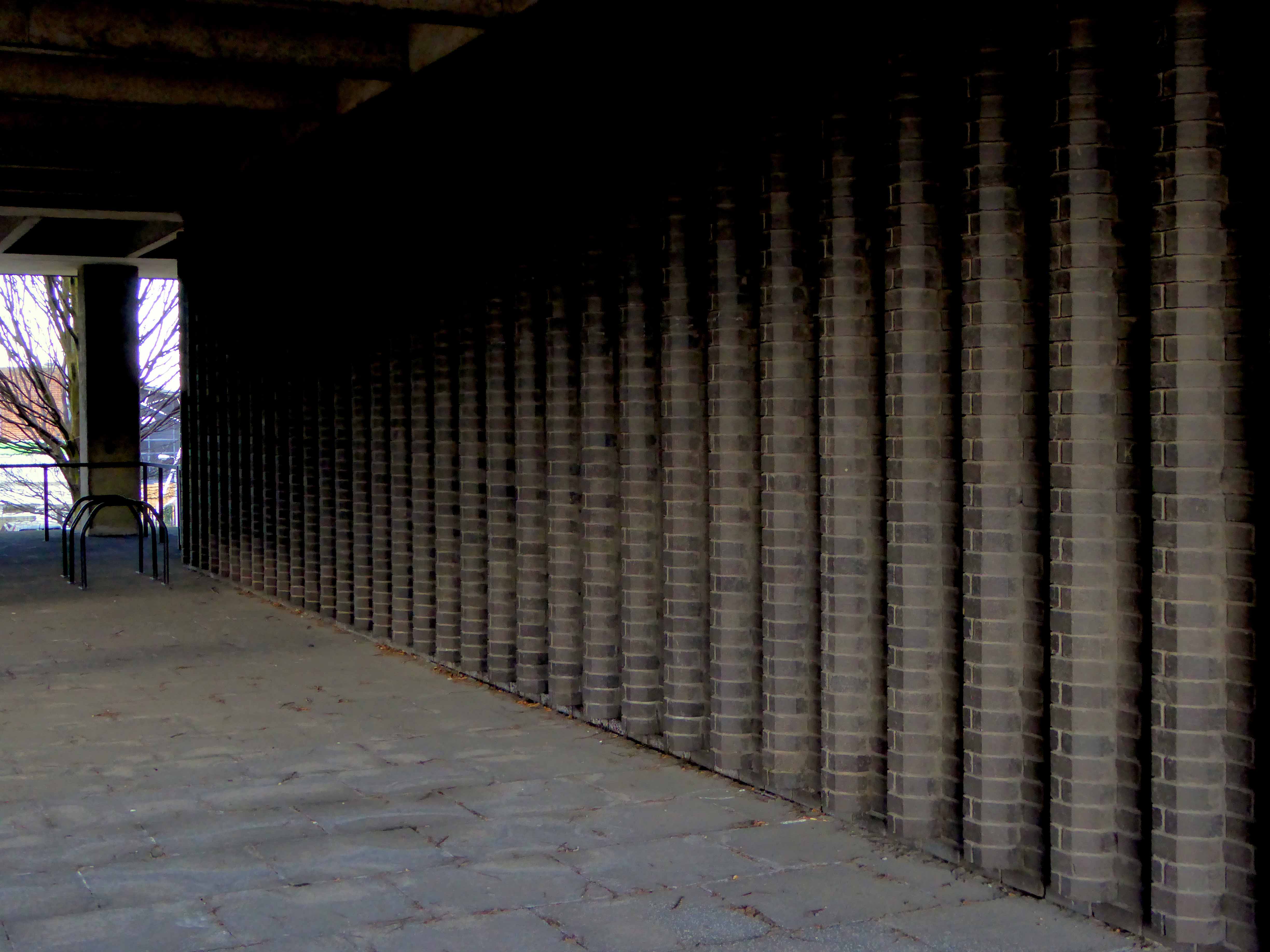
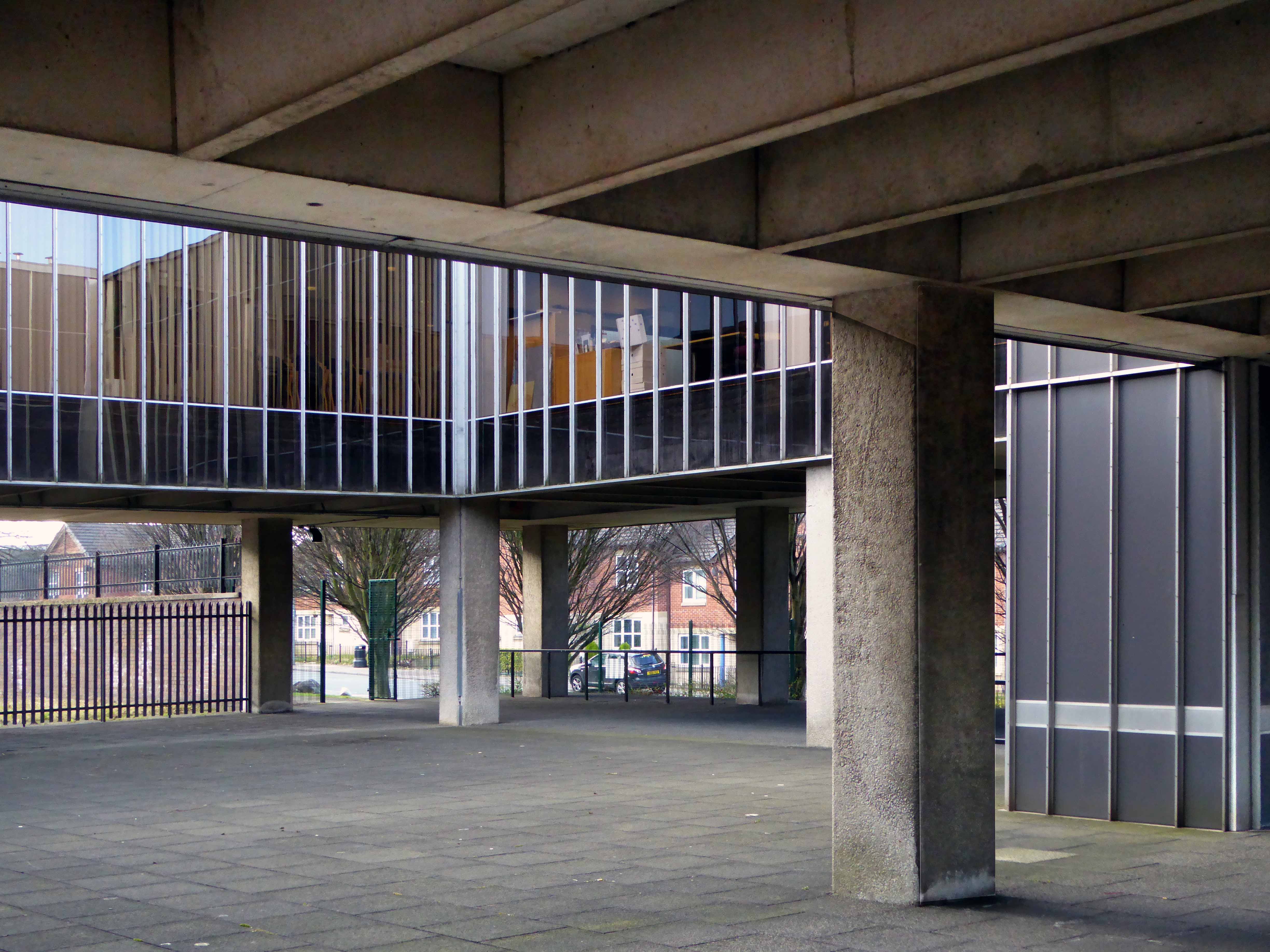
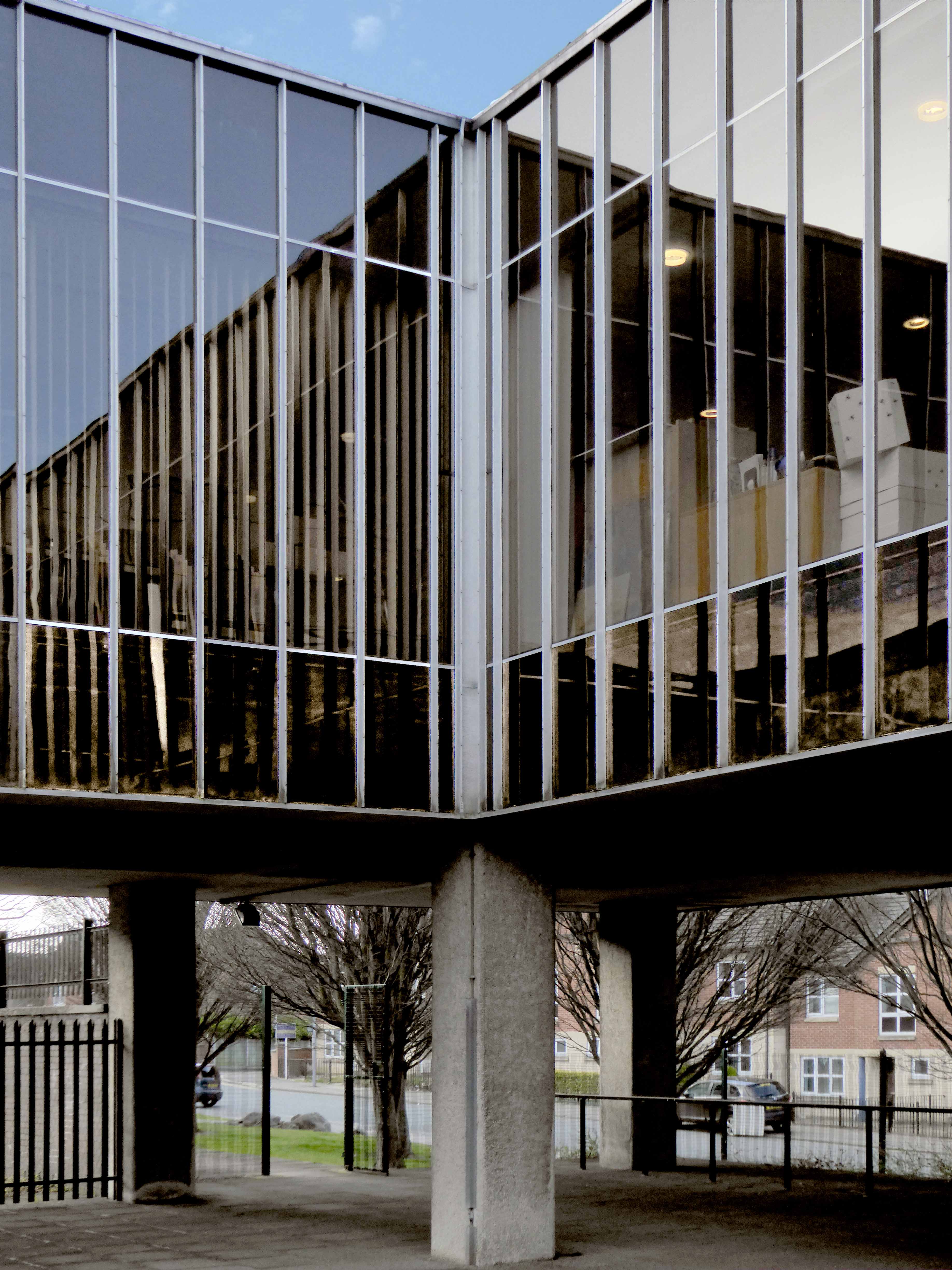
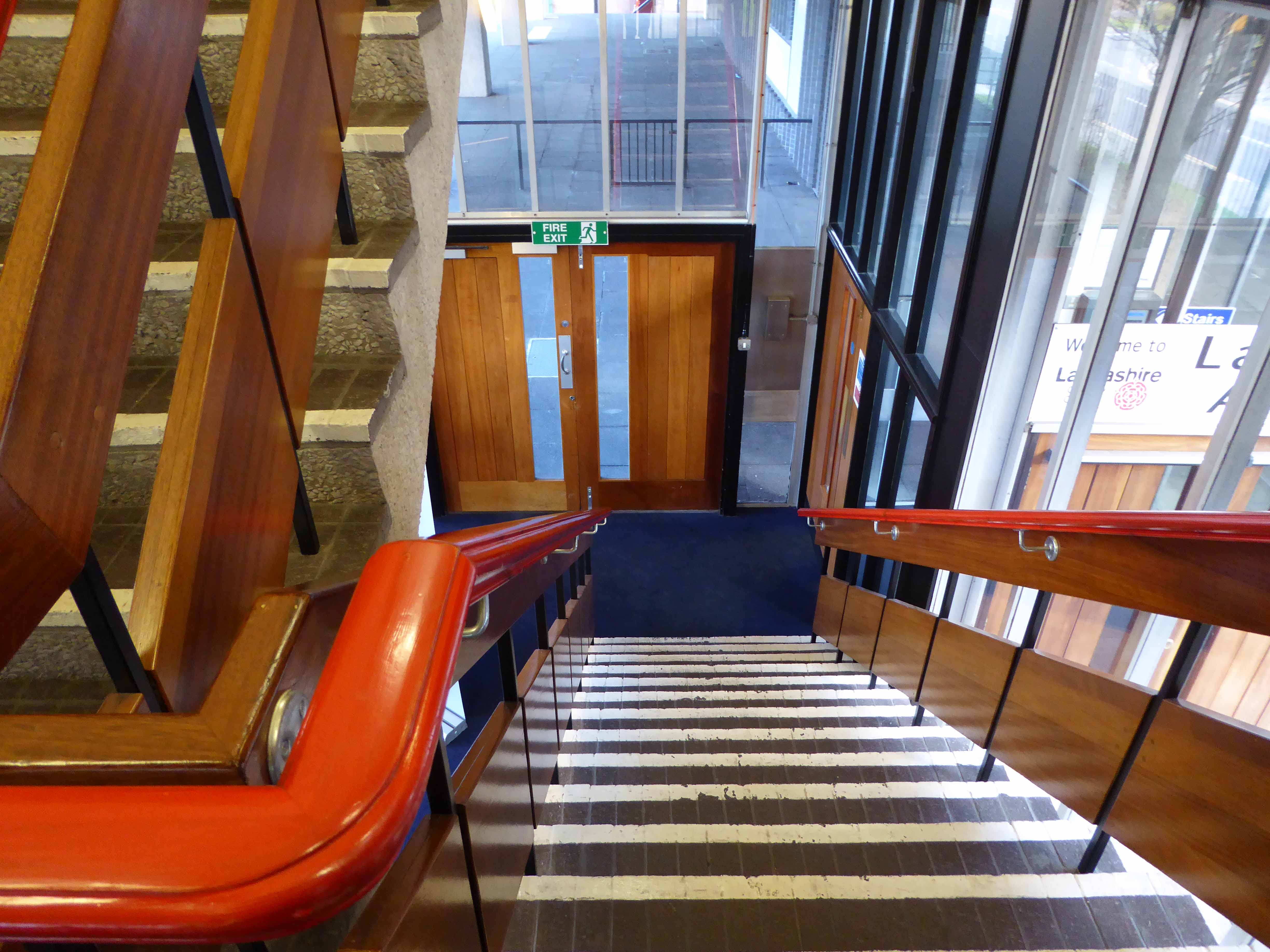
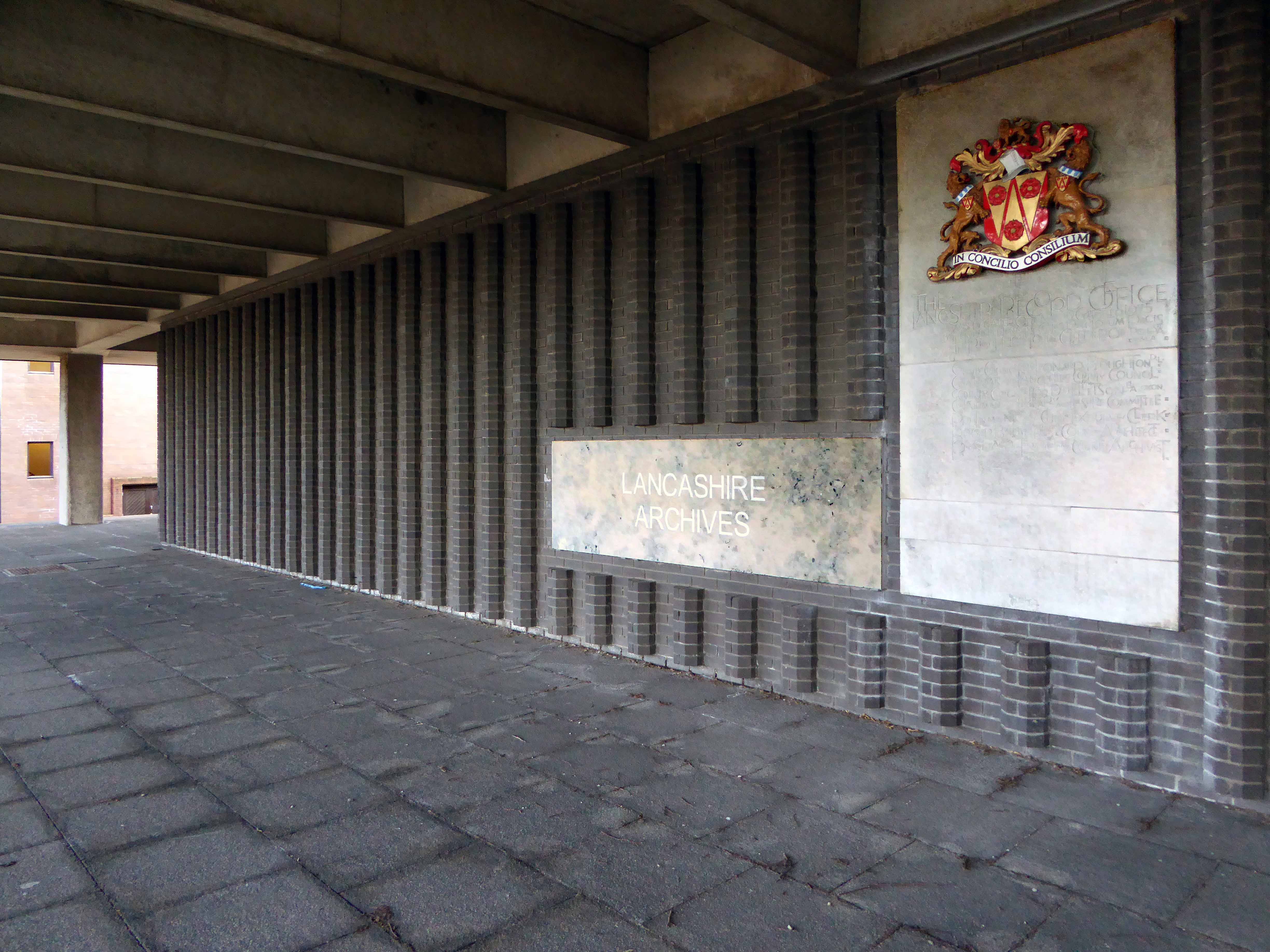
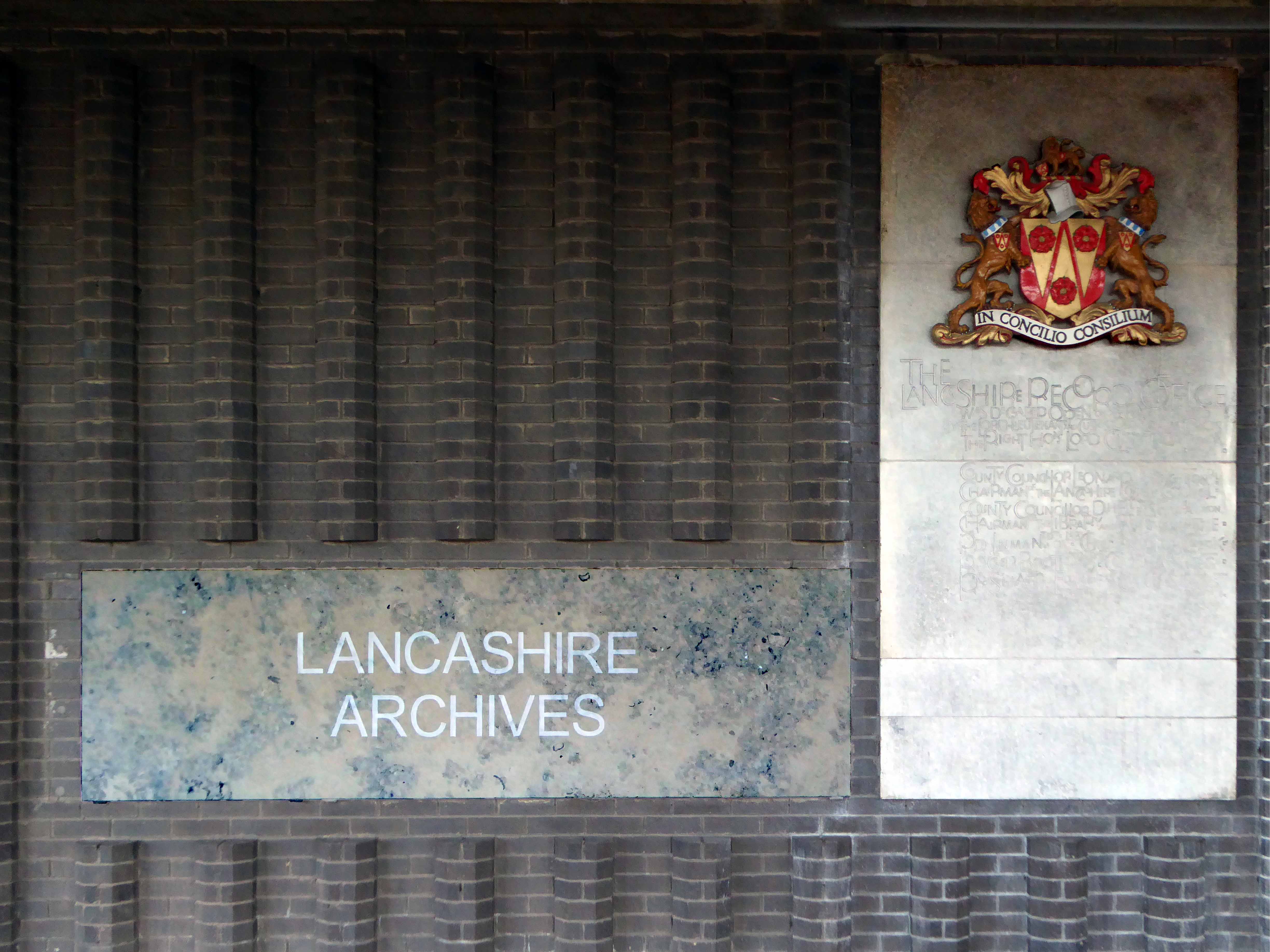
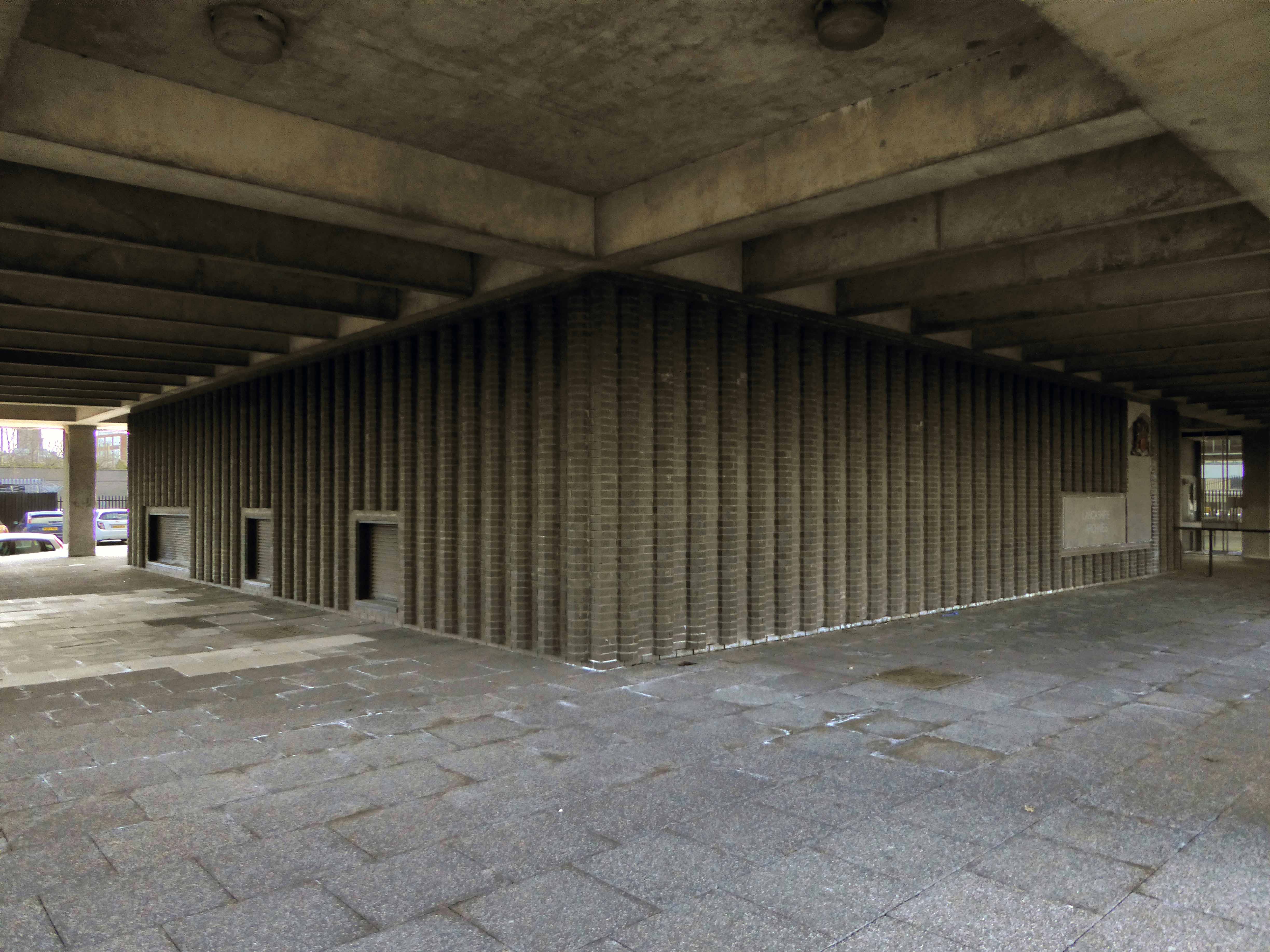
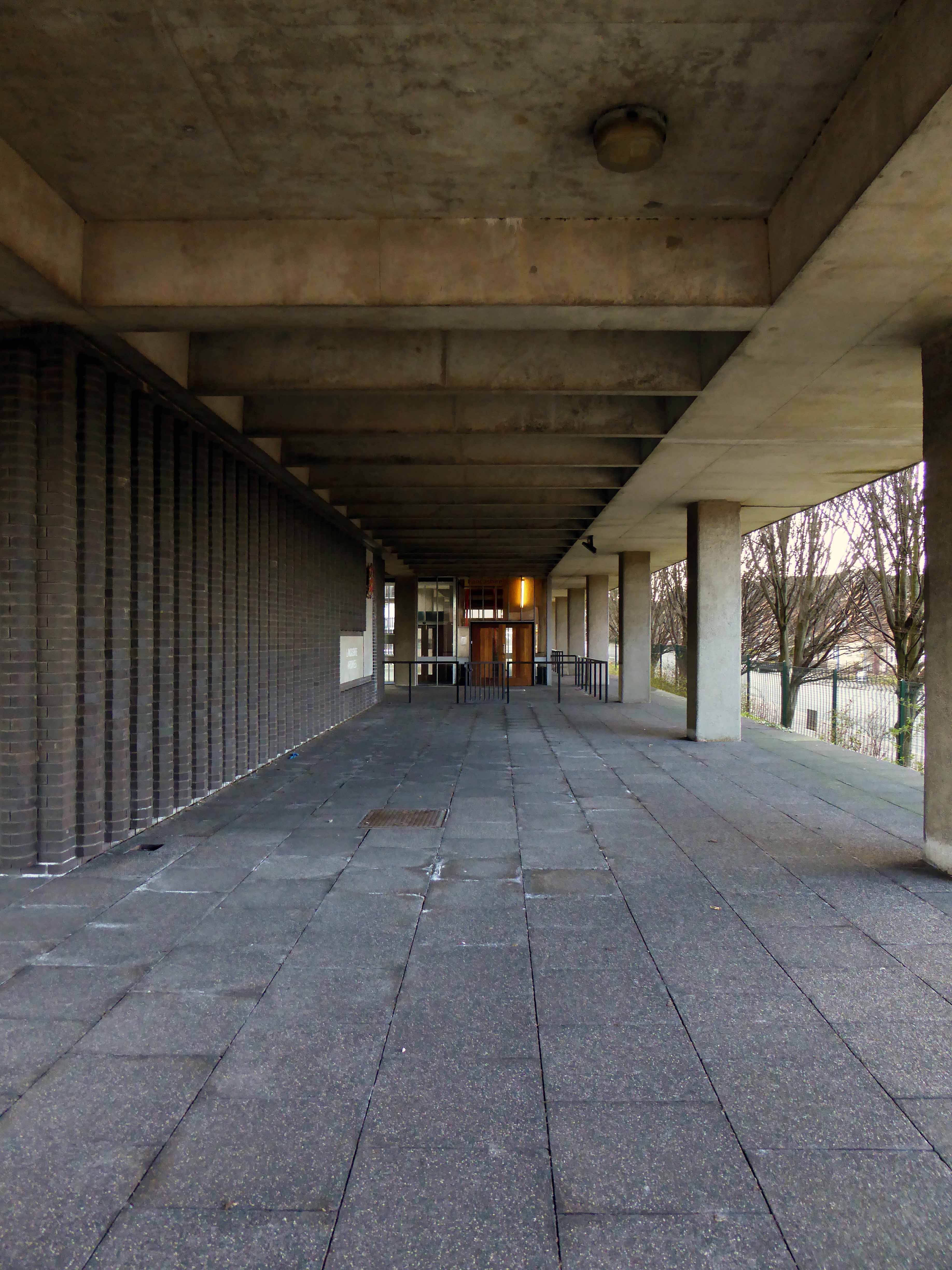
Peeping coyly from behind the surrounding trees, in the shadow of County Hall – the Lancashire Archives, yet more of Roger Booth’s handiwork.
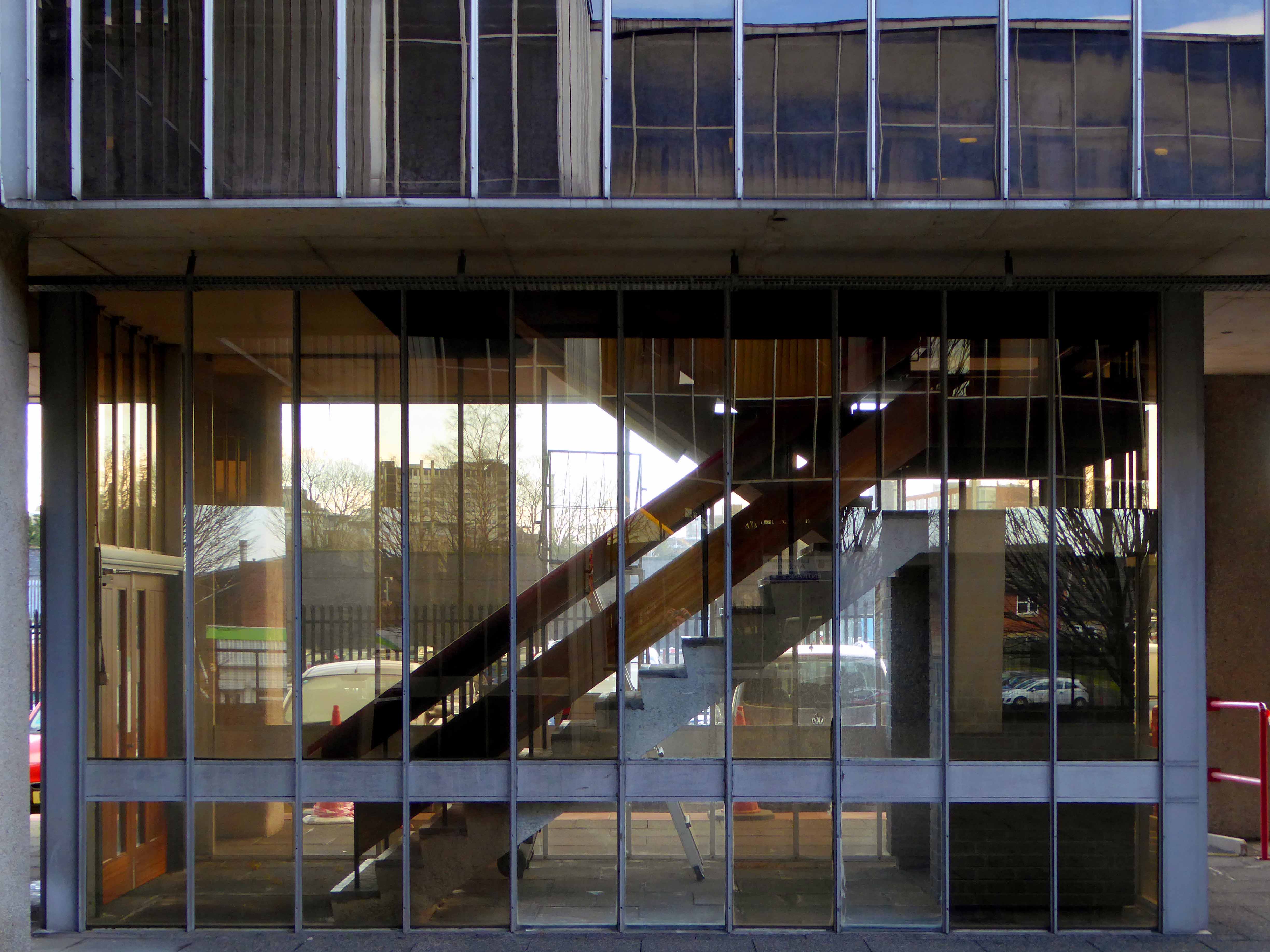
A low stone clad block stood elegantly on slender supports, inside the courtyard, a grid of aluminium and glass, the people peeping out. The core of the building shrouded in a solid serrated brick screen.
















 Modern Mooch