Sheffield Modernists

The outline of a presentation for Photonorth – November 16th 2023.
I was asked to talk about the photographs which Sean Madner had selected for exhibition on behalf of the Sheffield Modernists.

Illustrating a wide range of building types in and around Sheffield sheltering beneath the broad umbrella of Modernism.

By way of context the photographs are all Topographic in nature –  in which a landscape subject is photographed, devoid of people, framed orthogonally and lacking artifice or effect.

Practiced most famously by the 1970s New Topographics photographers, including Robert Adams, Lewis Baltz, Nicholas Nixon, and Bernd and Hilla Becher.

Bernd and Hilla’s photographs lead us to:

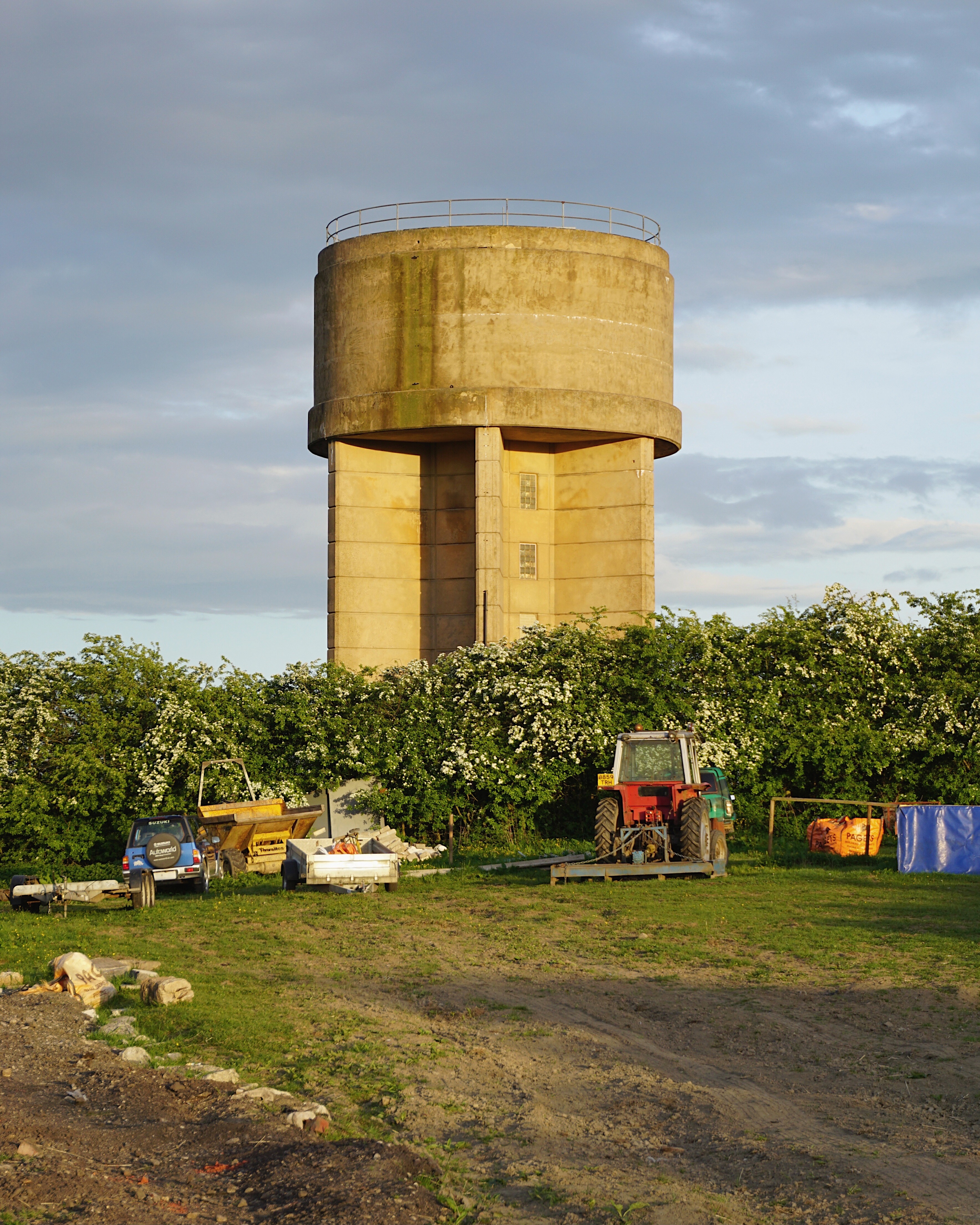
1 Potter Hill Water Tower

The British Water Tower Appreciation Society
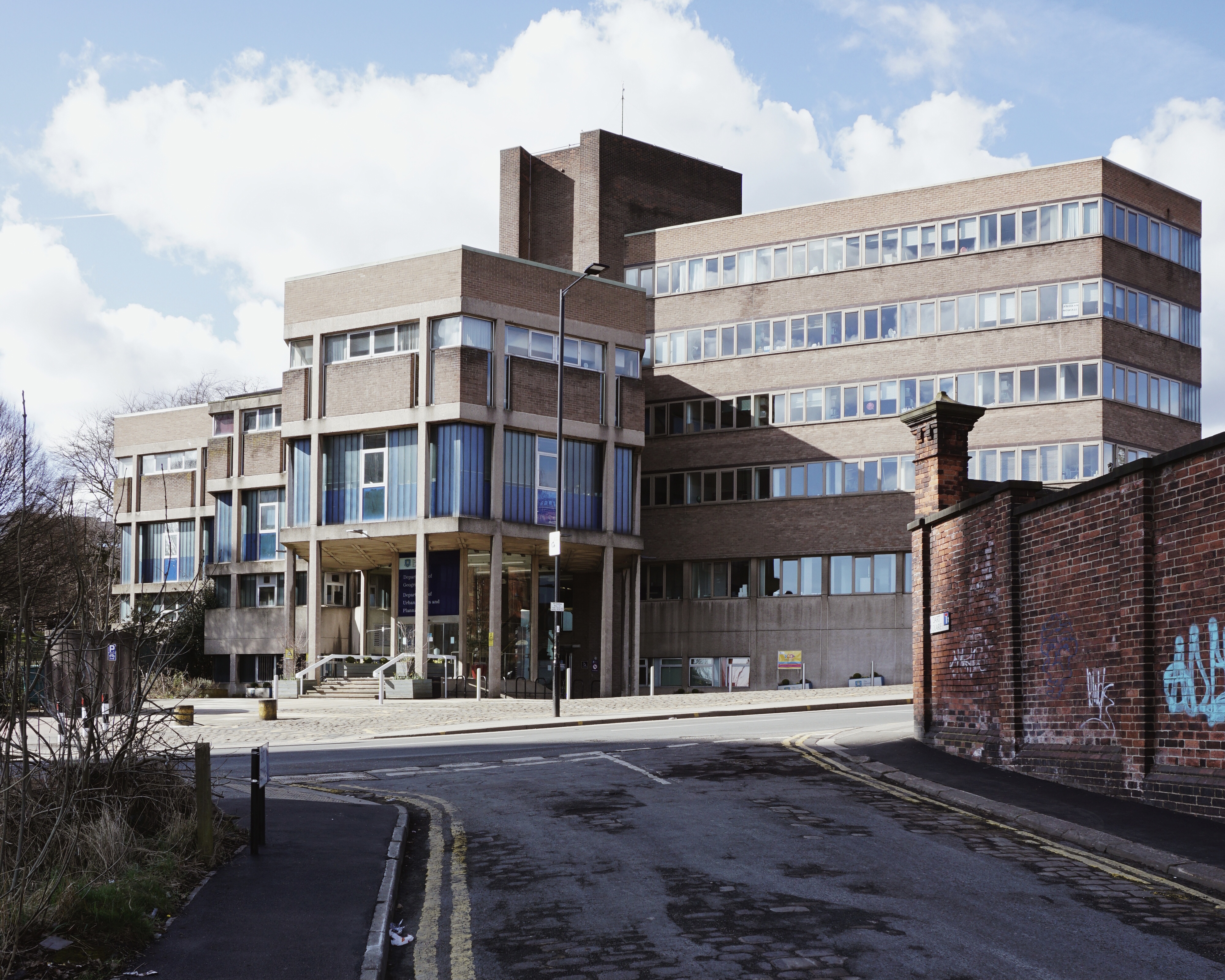
2 Geography Building 1970 Sir William Whitfield

Alterations made 2022
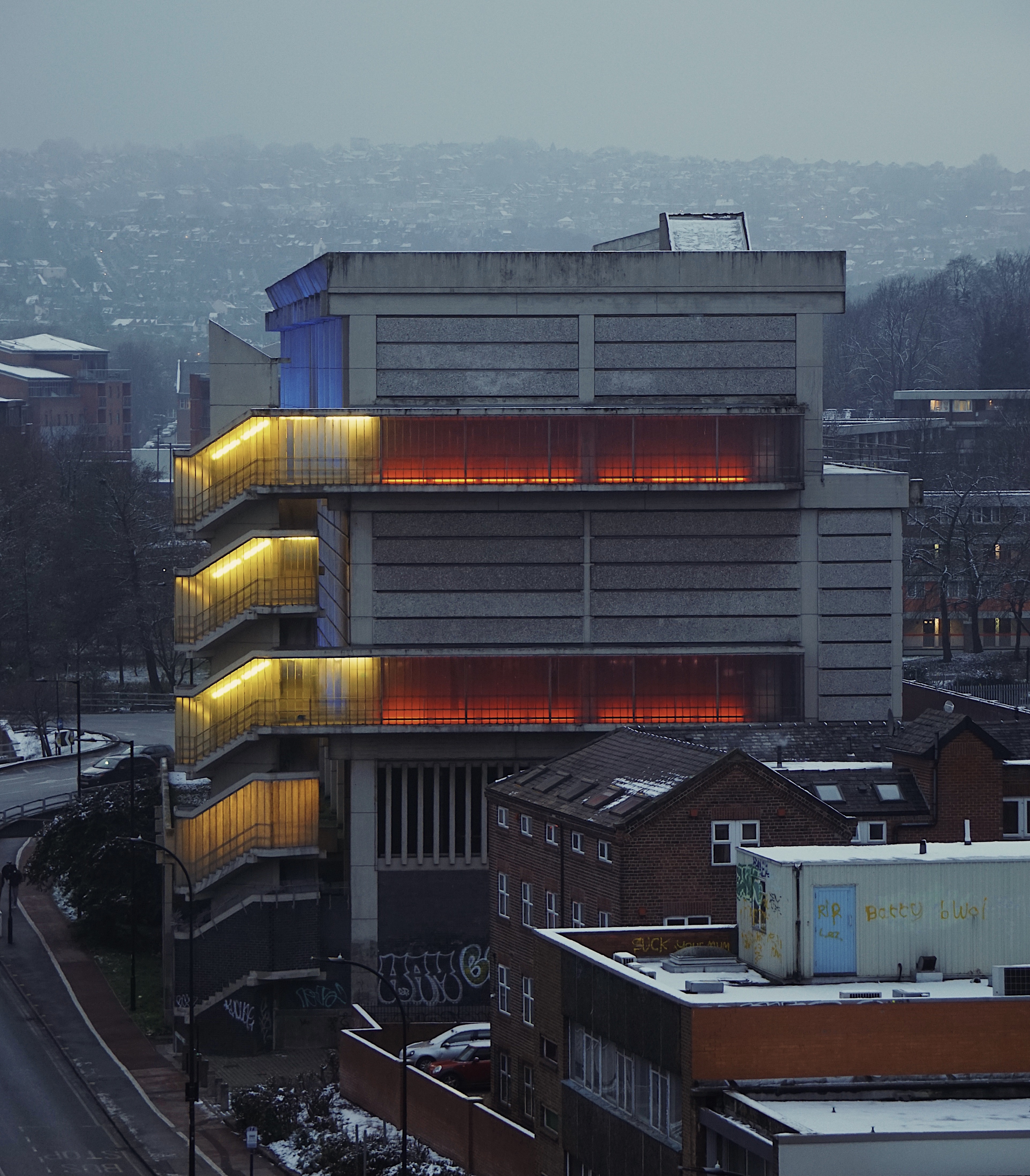
3 Moore Street Substation 1968 Jefferson Sheard

Owen Hatherley describes it as:

A shocking paroxysm of a building, an explosion in reinforced concrete, a bunker built with an aesthete’s attention to detail, a building which is genuinely Brutalist in both senses of the term.
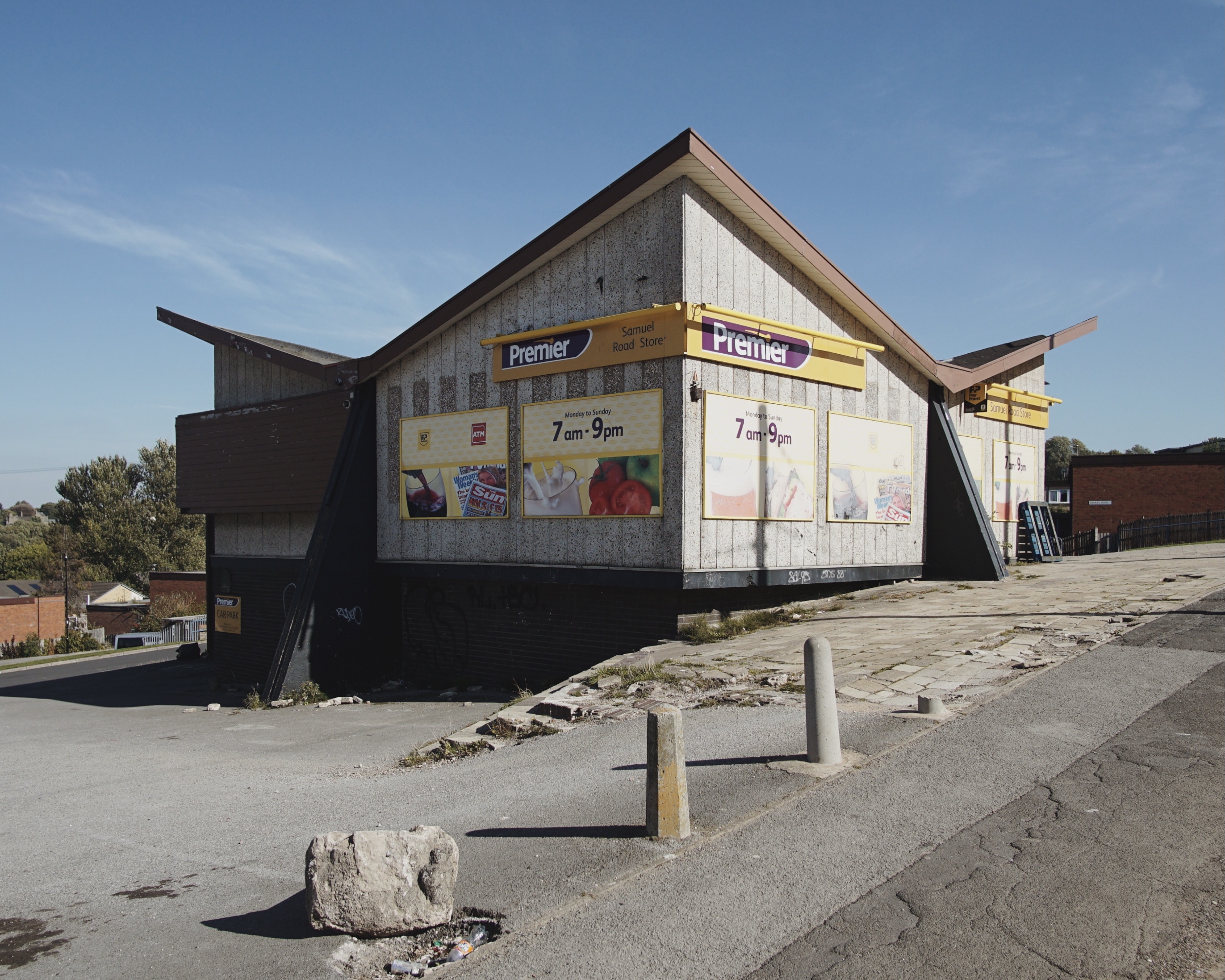
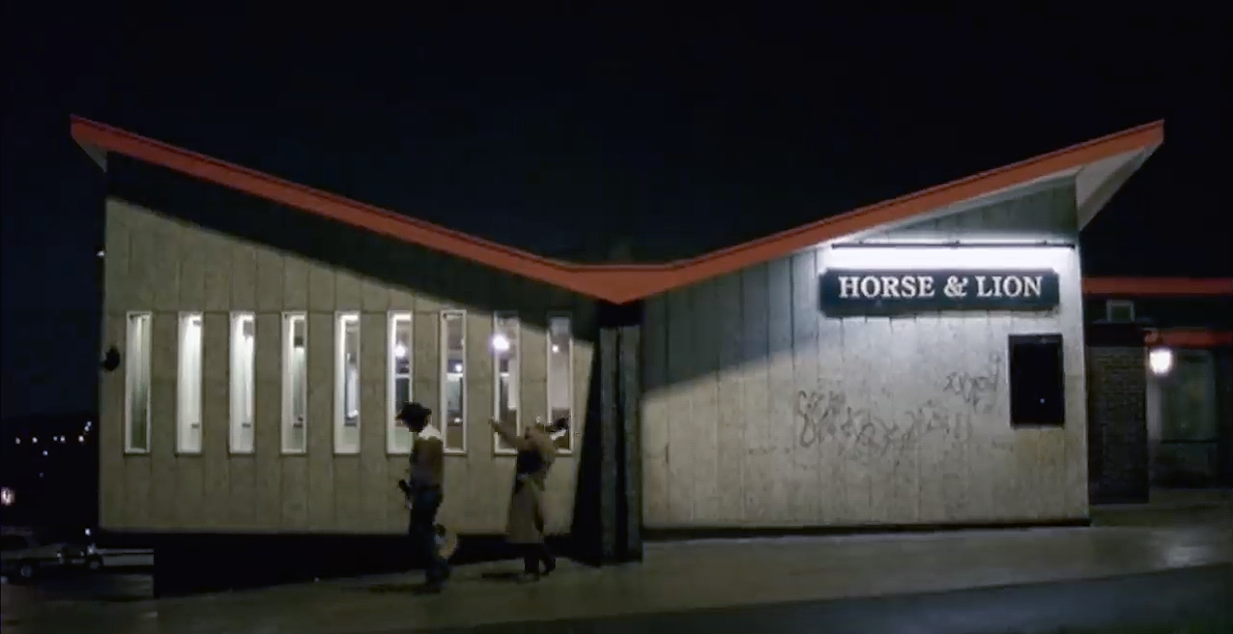
4 Horse and Lion Pub – Bass Charringtons

Prime example of a so-called Estate Pub.

With a hyper parabolic roof a doubly-curved surface that resembles the shape of a saddle, that is, it has a convex form along one axis, and a concave form on along the other.
Featured in the video for the Arctic Monkeys’ 2006 number one hit – When the Sun Goes Down at 1.21.
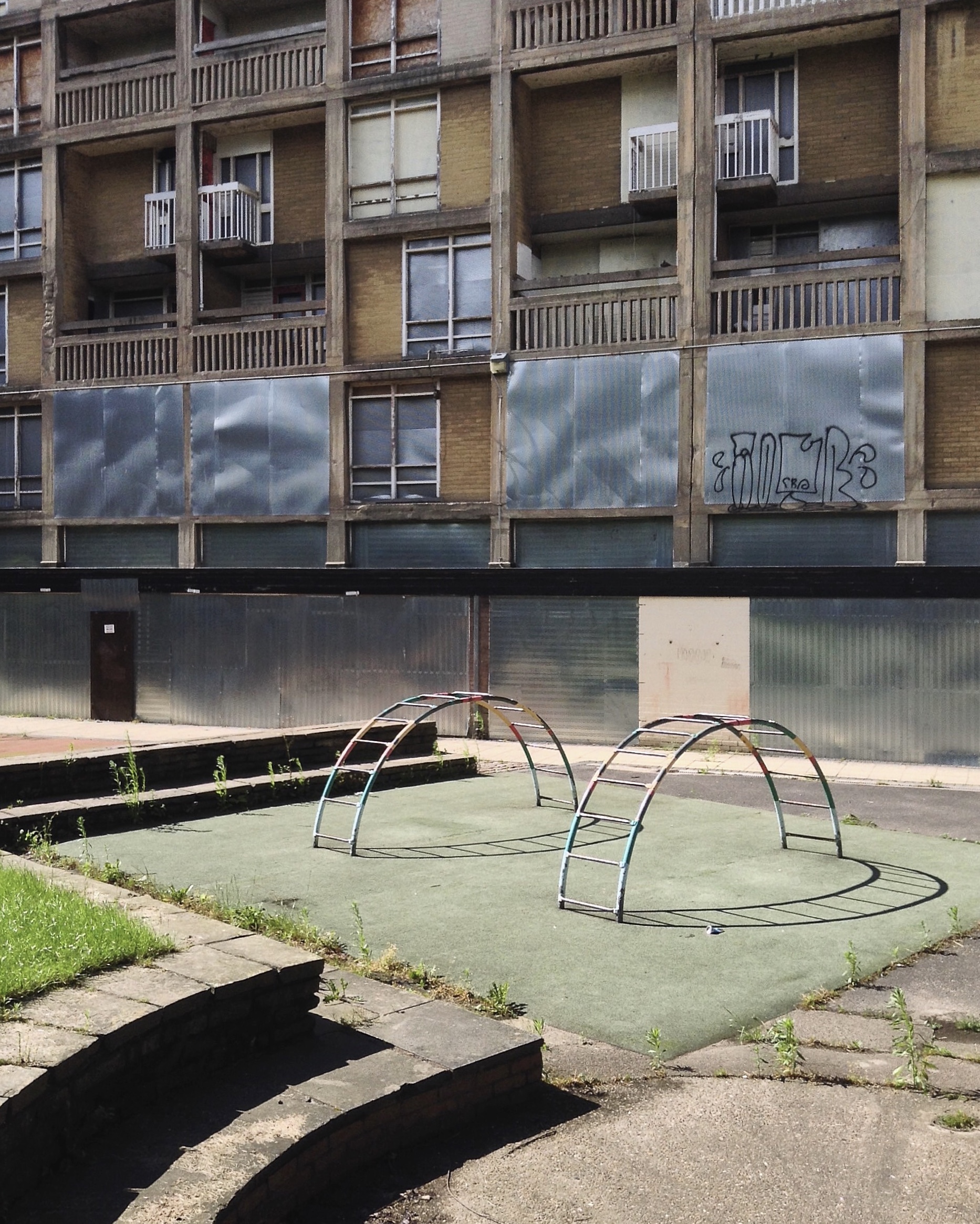
5 Park Hill – 1957 and 1961 Jack Lynn and Ivor Smith under the supervision of JL Womersley, 

Grace Owen Nursery – with two Wicksteed climbing frames

The Play Ground should not be put in a corner behind railings, but in a conspicuous and beautiful part of a Park, free to all, where people can enjoy the play and charming scenery at the same time; where mothers can sit, while they are looking on and caring for their children.

Charles Wicksteed
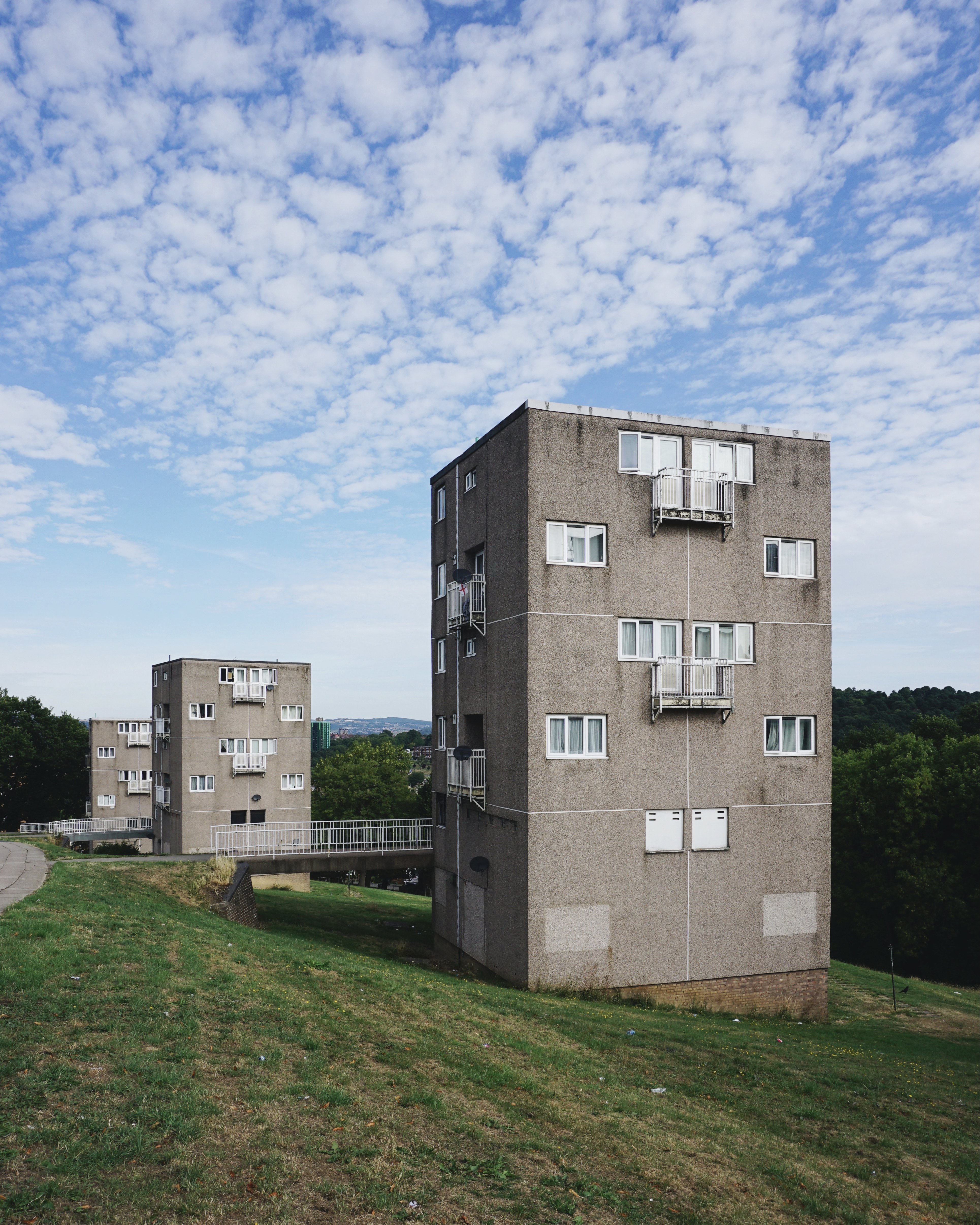
6 Gleadless Estate 1963 Lewis Wormersley City Architect

The Sheffield Blitz in December 1940 killed almost 700 and damaged some 82,000 homes, over half the city’s housing stock. As the city looked to rebuilding, its 1952 Development Plan estimated the need to replace 20,000 unfit homes and build a further 15,000 to cater for the natural increase of population.

Supreme, but often overlooked, achievement … is the Gleadless Valley Estate which combined urban housing types and the natural landscape so effectively that it still looks stunning, especially on a bright winter’s day.

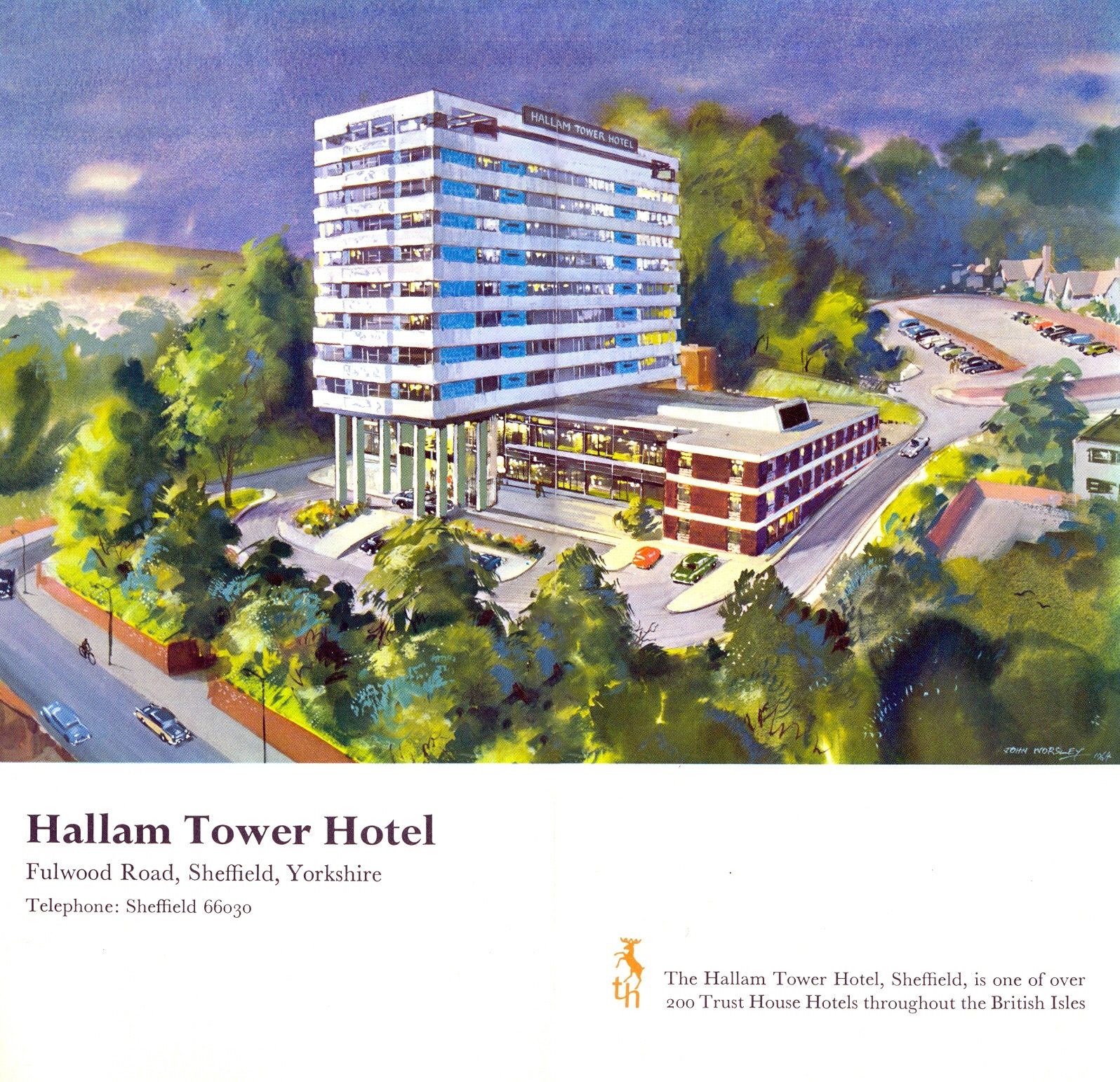
7 Hallam Tower Hotel 1965 Nelson Foley of Trust House Architectural Department

It opened officially on 24th March 1965 and was the first luxury hotel to be built in the north of England since the Second World War. The exterior was designed to complement Sheffield’s post-war modernist developments; the interior by Colefax and Fowler of Mayfair offered warm, gay colours to contrast with the black and grey tones of the city.

8 Hope Cement Works

The plant started its first full year of production in 1929 

The plant was located at Hope, because it is at the edge of where carboniferous limestone of the Monsal Dale Group, meets Edale Shale, the two main components of finished cement.

Since 1951, when the Peak District National Park was created, most of the outbound traffic from the plant has been exported by rail.
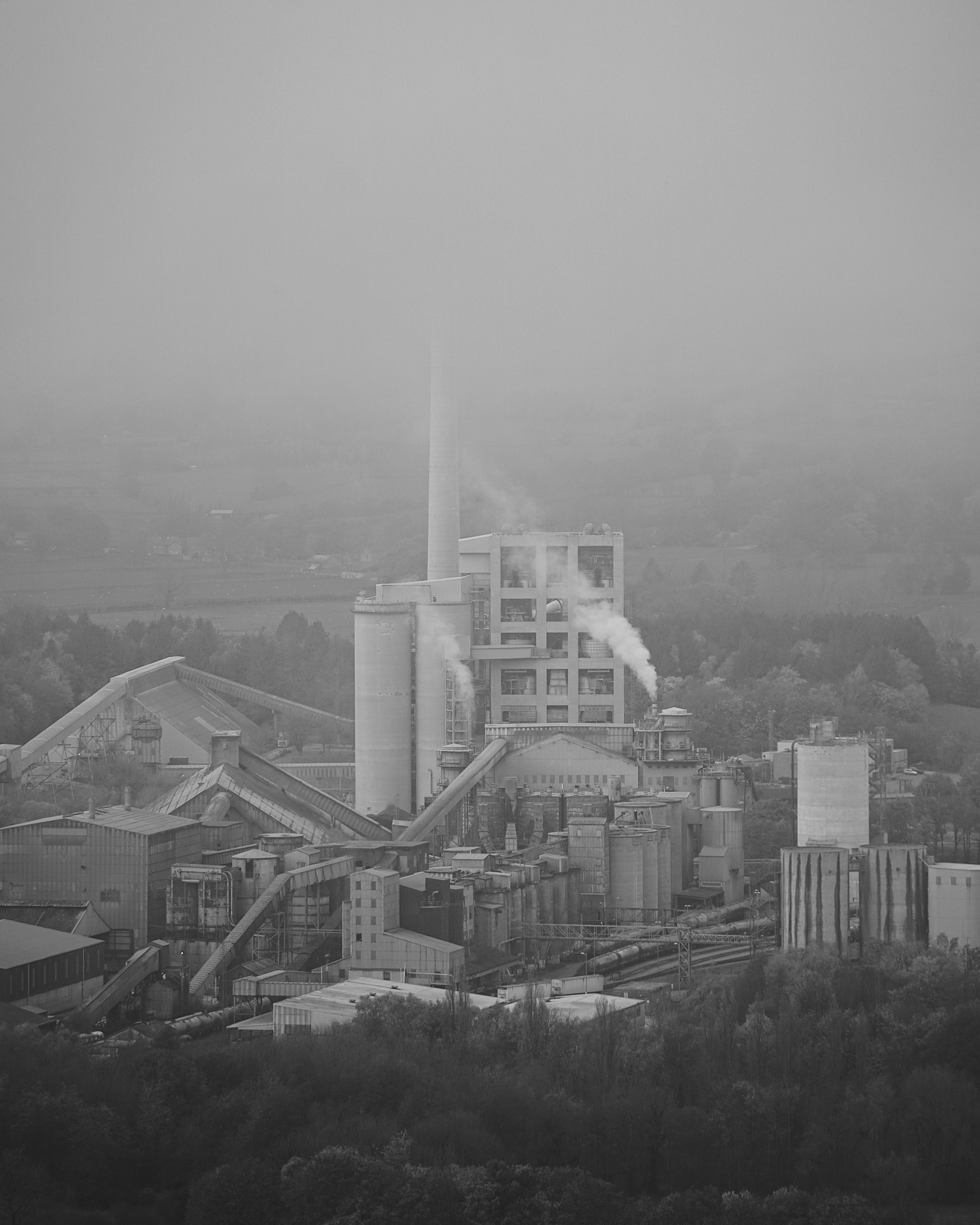
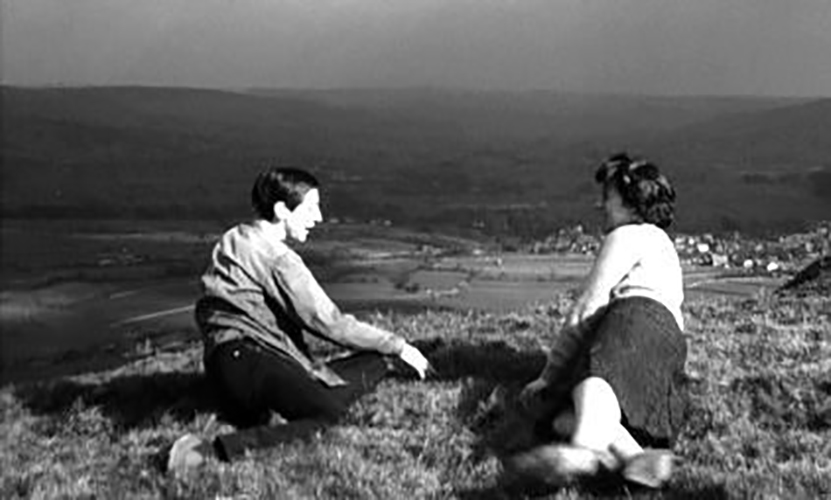
As seen in the Channel 4 TV ident.

The same location used in Shelagh Delaney’s A taste of Honey.
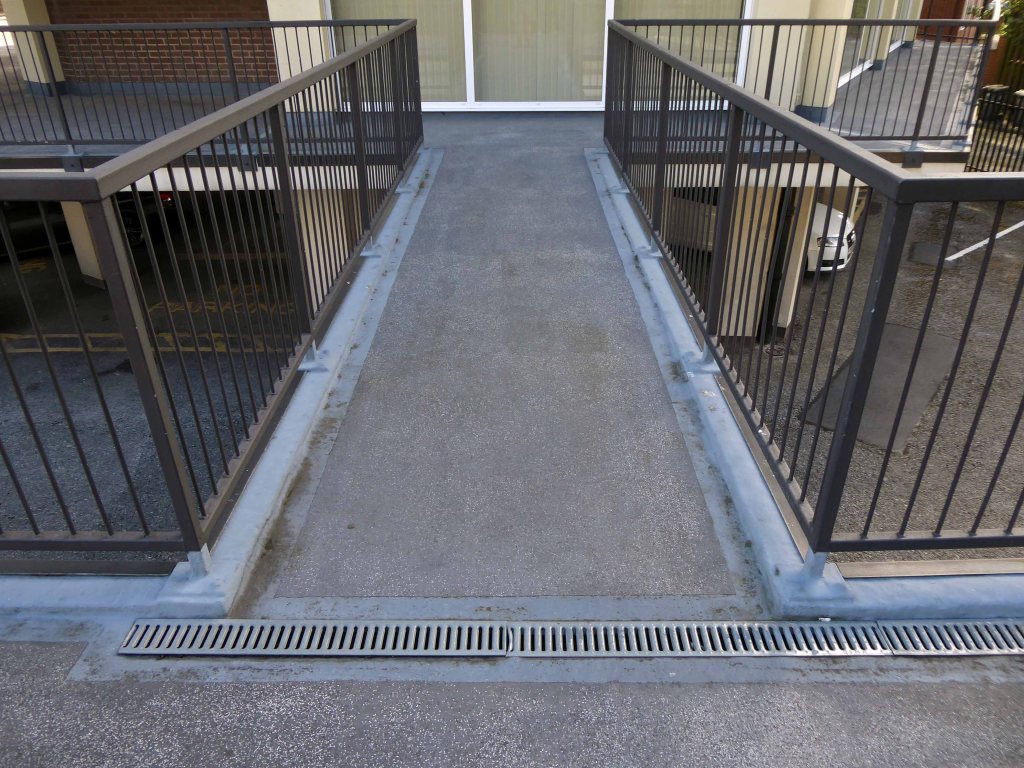
9 Droppingwell FootbridgeWest Riding County Architect Colonel Stuart Maynard

Colleagues in the team included Bill Varley, Ron Bridle, Sri Sriskandan and FA Joe Sims. The team was responsible for the introduction of a great deal of new computing technology into bridge design, as well as for some of the most imaginative bridge engineering going on anywhere in the country. Their design efforts were supported by close involvement in research and testing work, for example, on half-joints and concrete hinges. All the above named engineers went on to considerable seniority, some in the Department of Transport, and Sims and Bridle in particular have published various papers and contributed to books on the history of Britain’s motorway development.

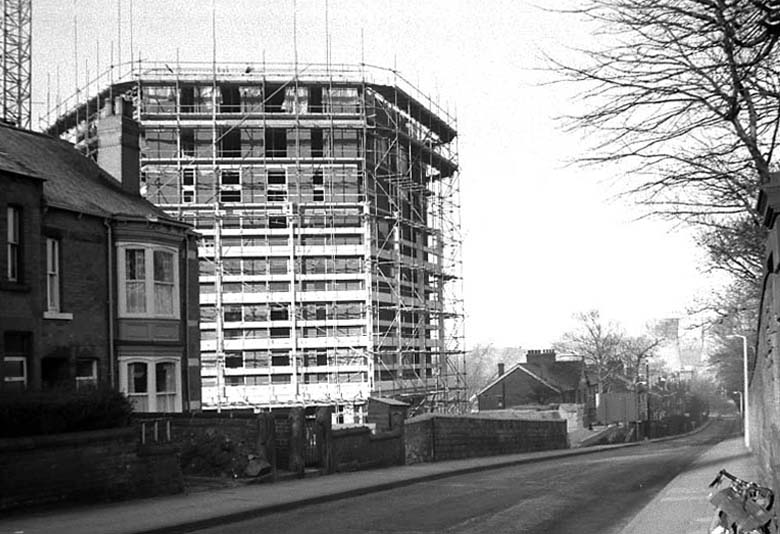
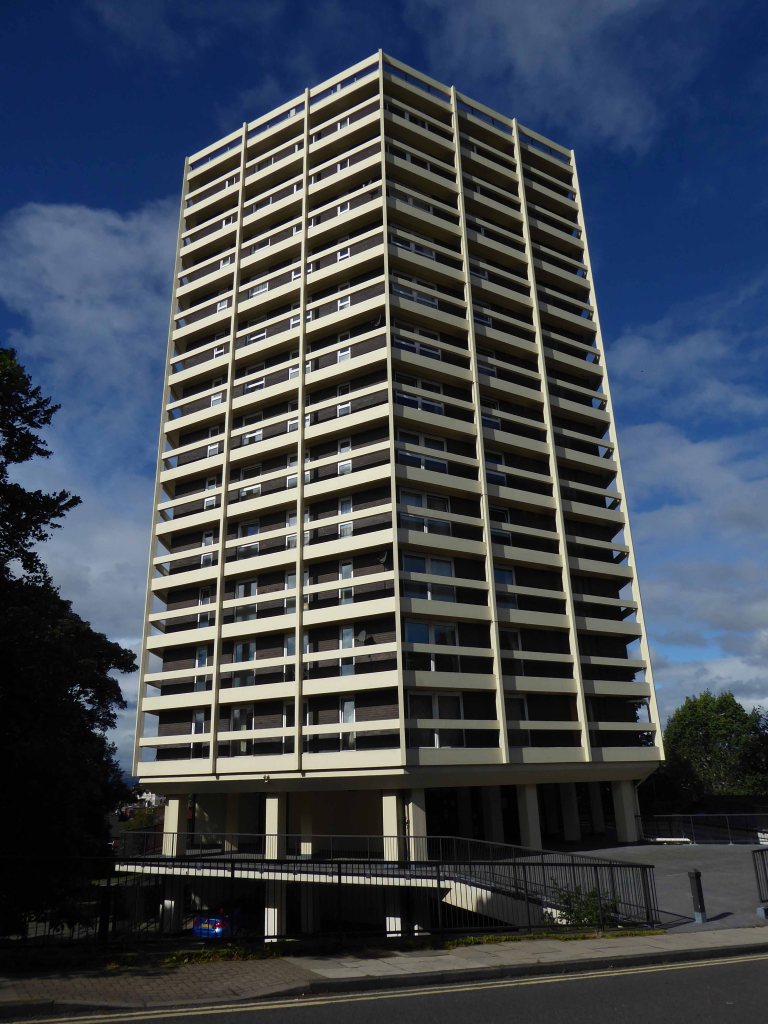
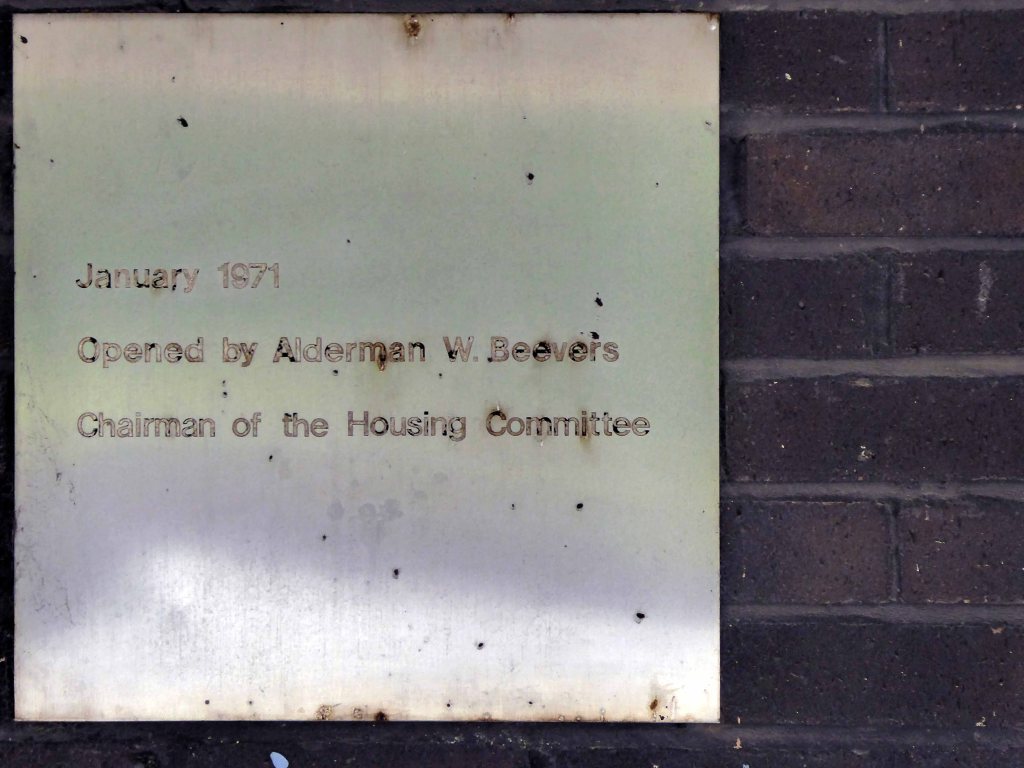
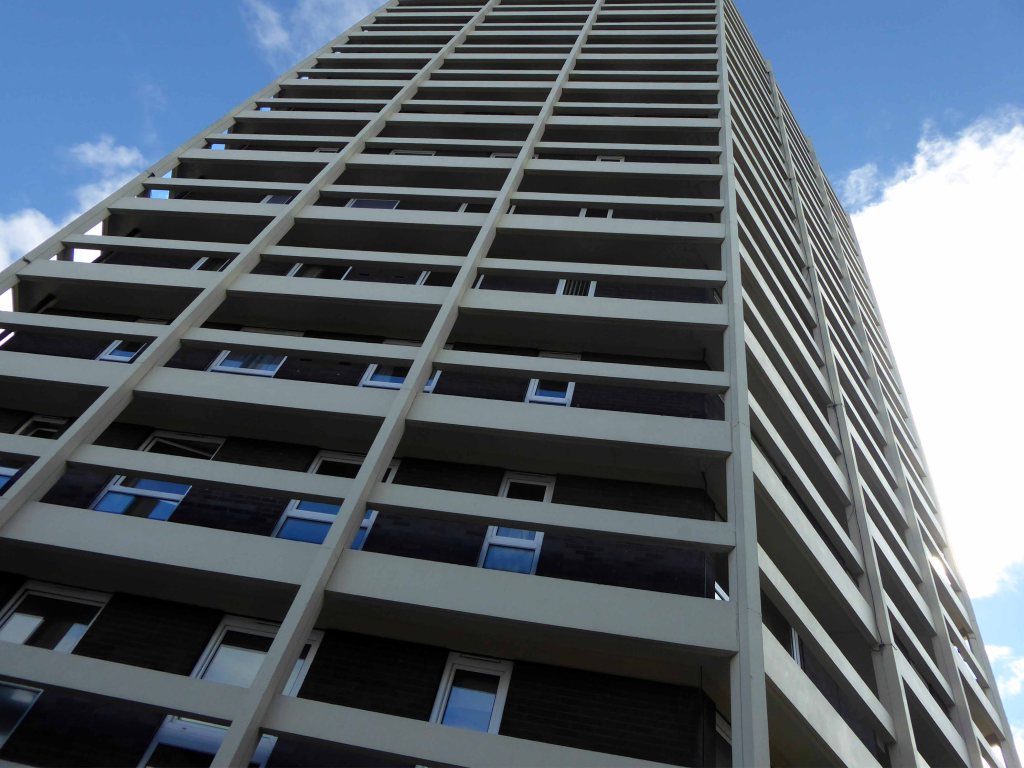
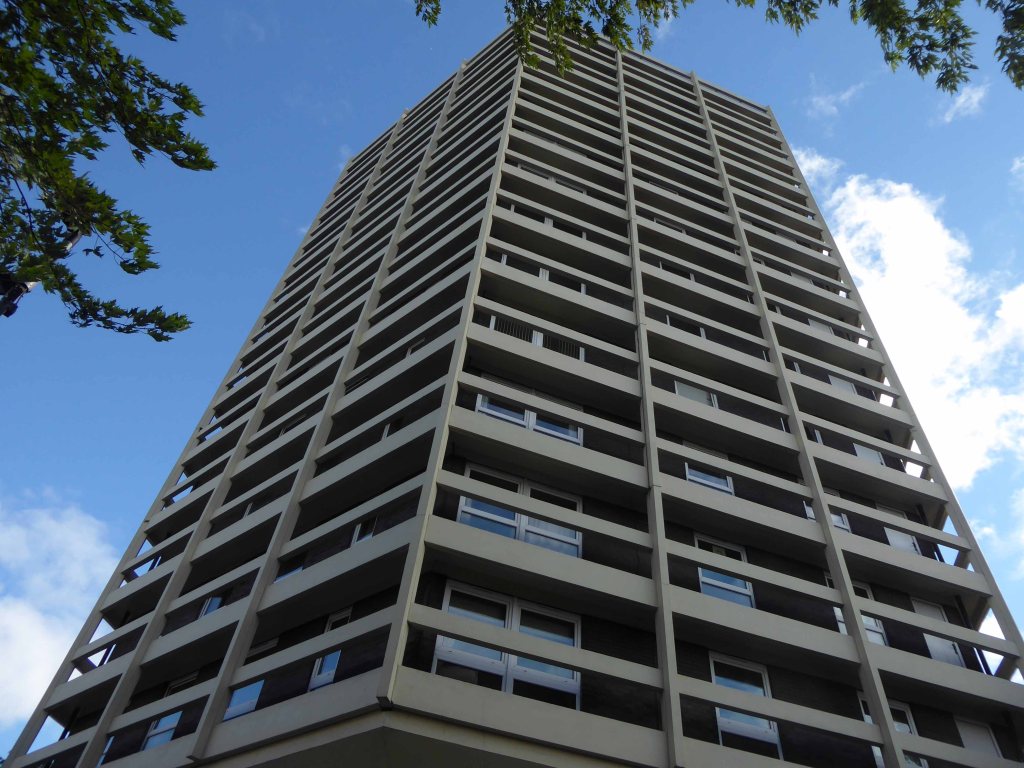
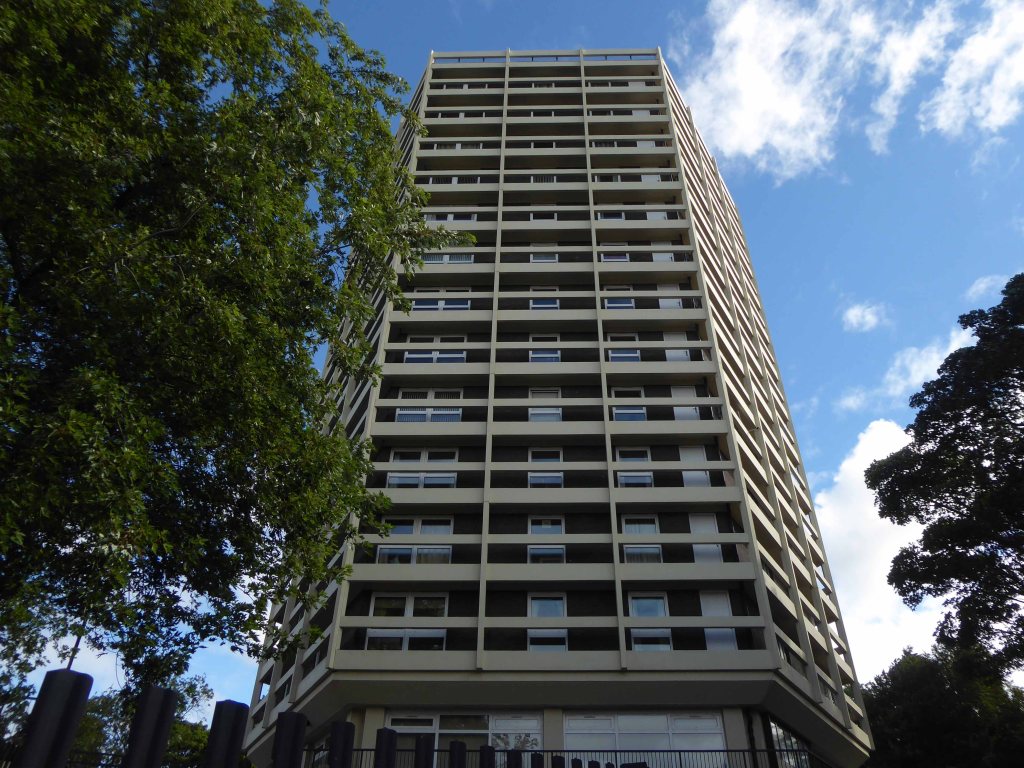
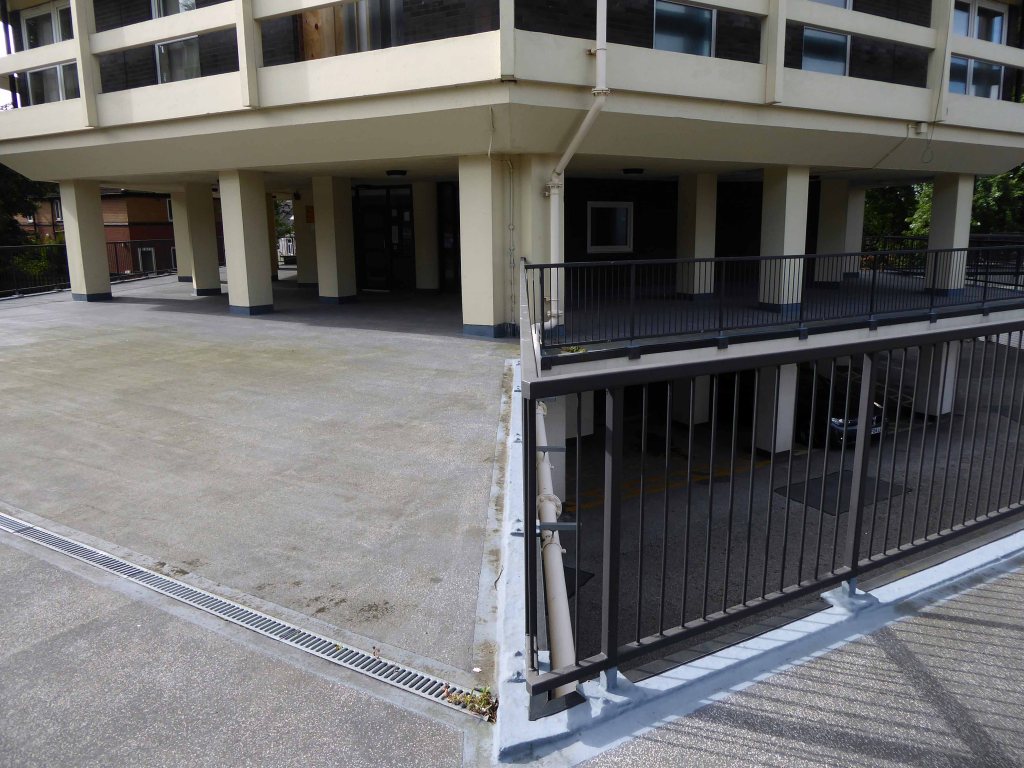
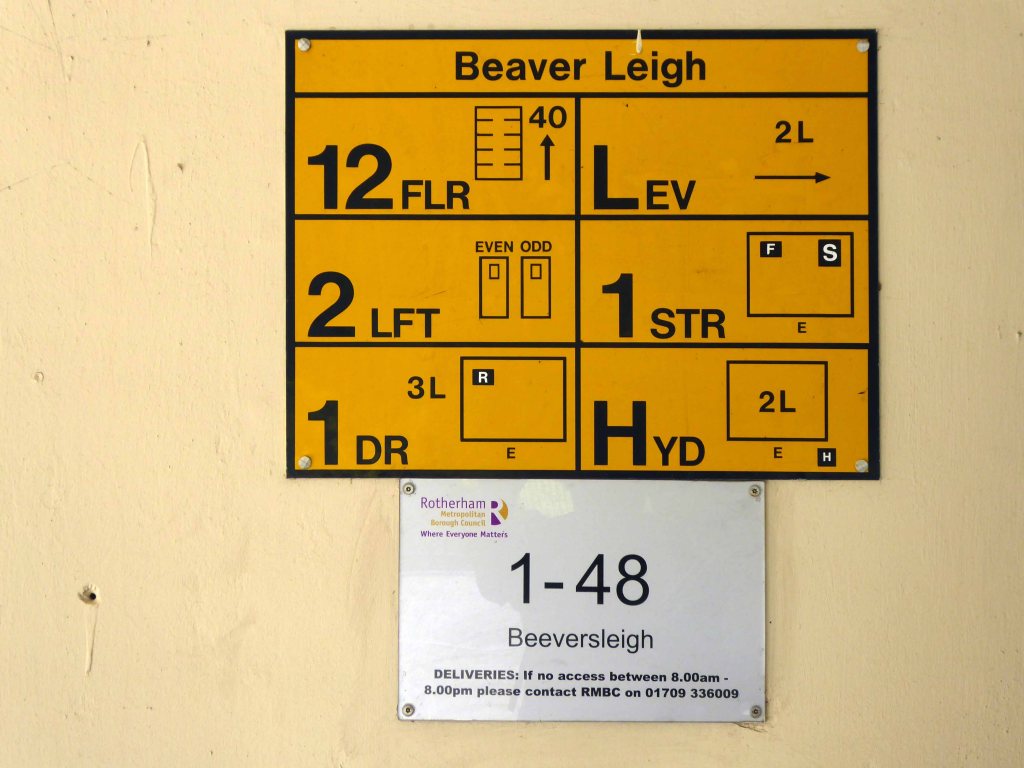
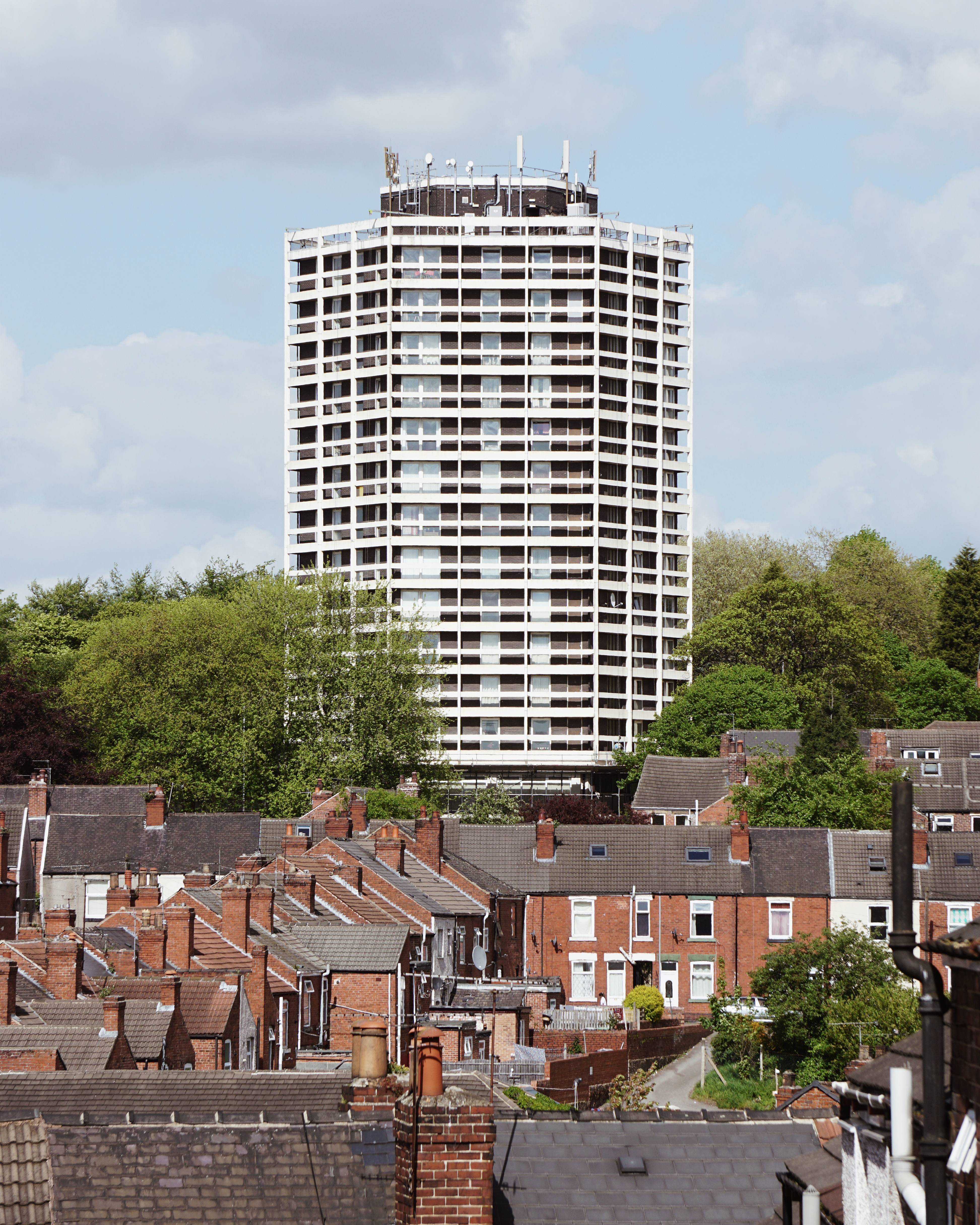
10 Beeversleigh Rotherham 1968-71 Main contractors J Finnegan 

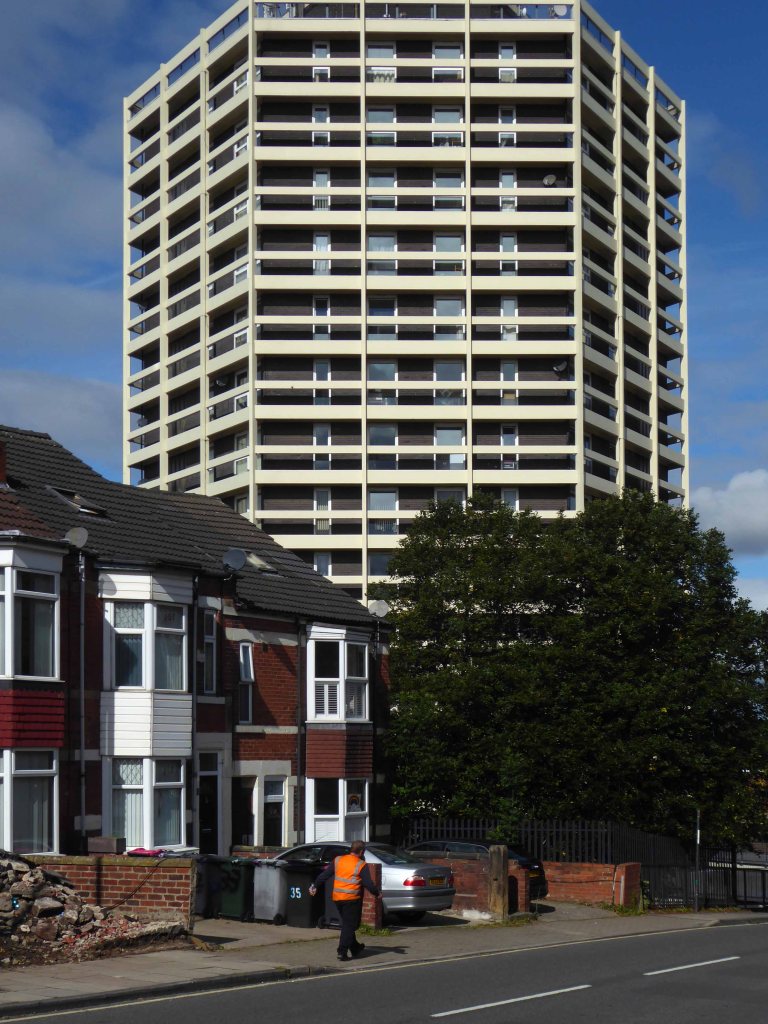
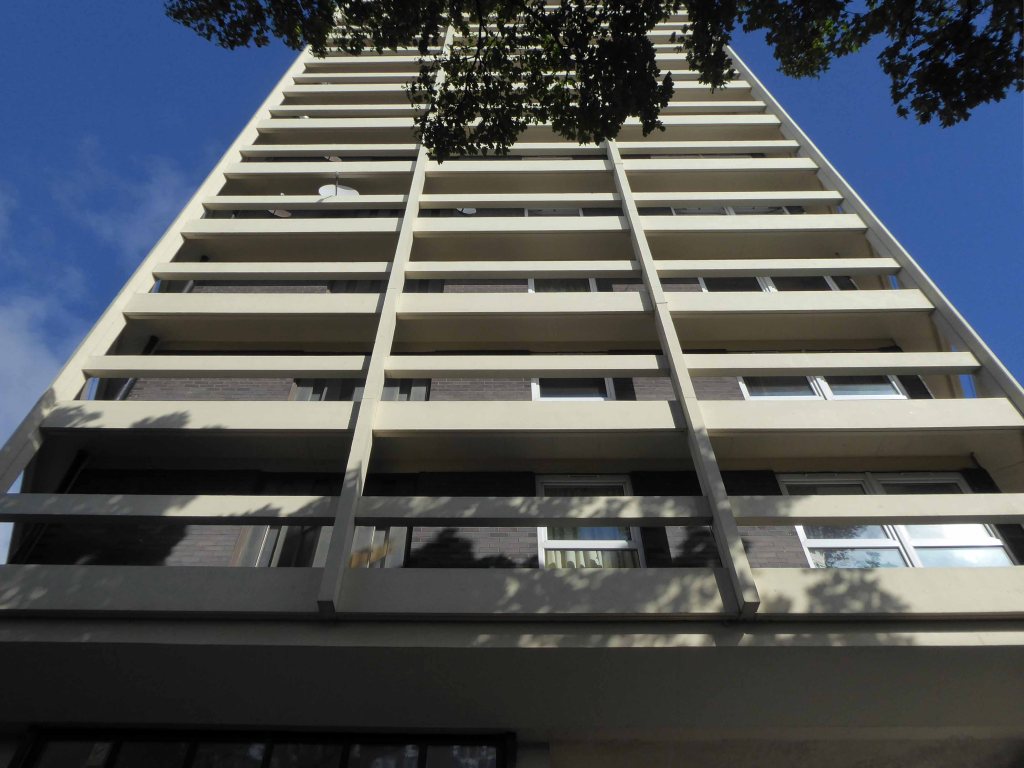
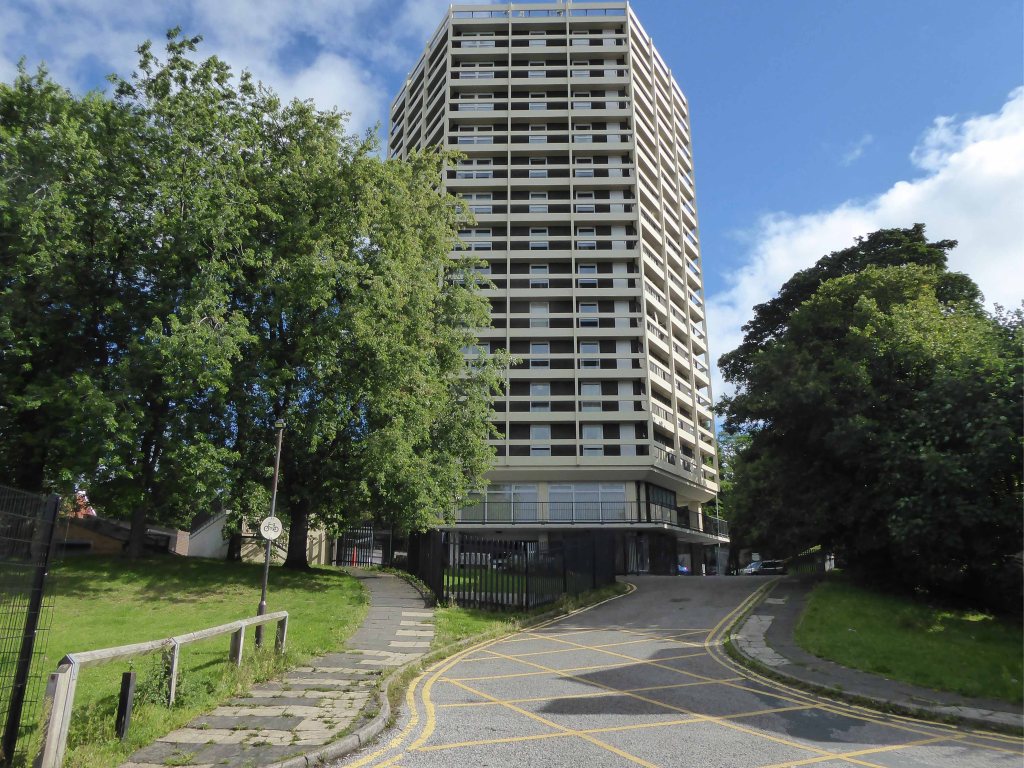
It’s thirteen storeys high – housing forty eight dwellings.
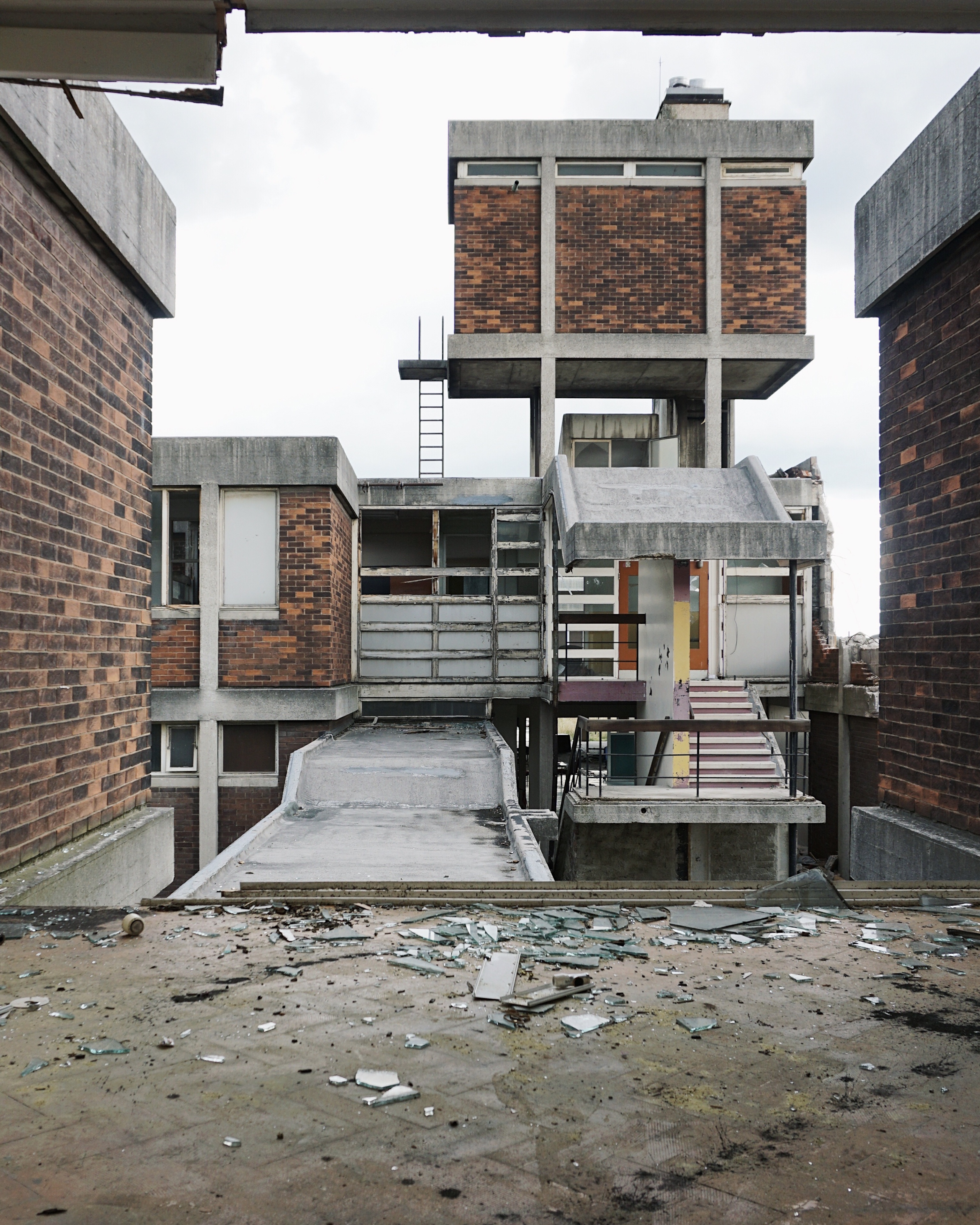
11 Park House School 1964 Lyons Israel Ellis Gray

Listed in 2017 – then demolished.
12 Magistrates Court 1978 B Warren City Architect

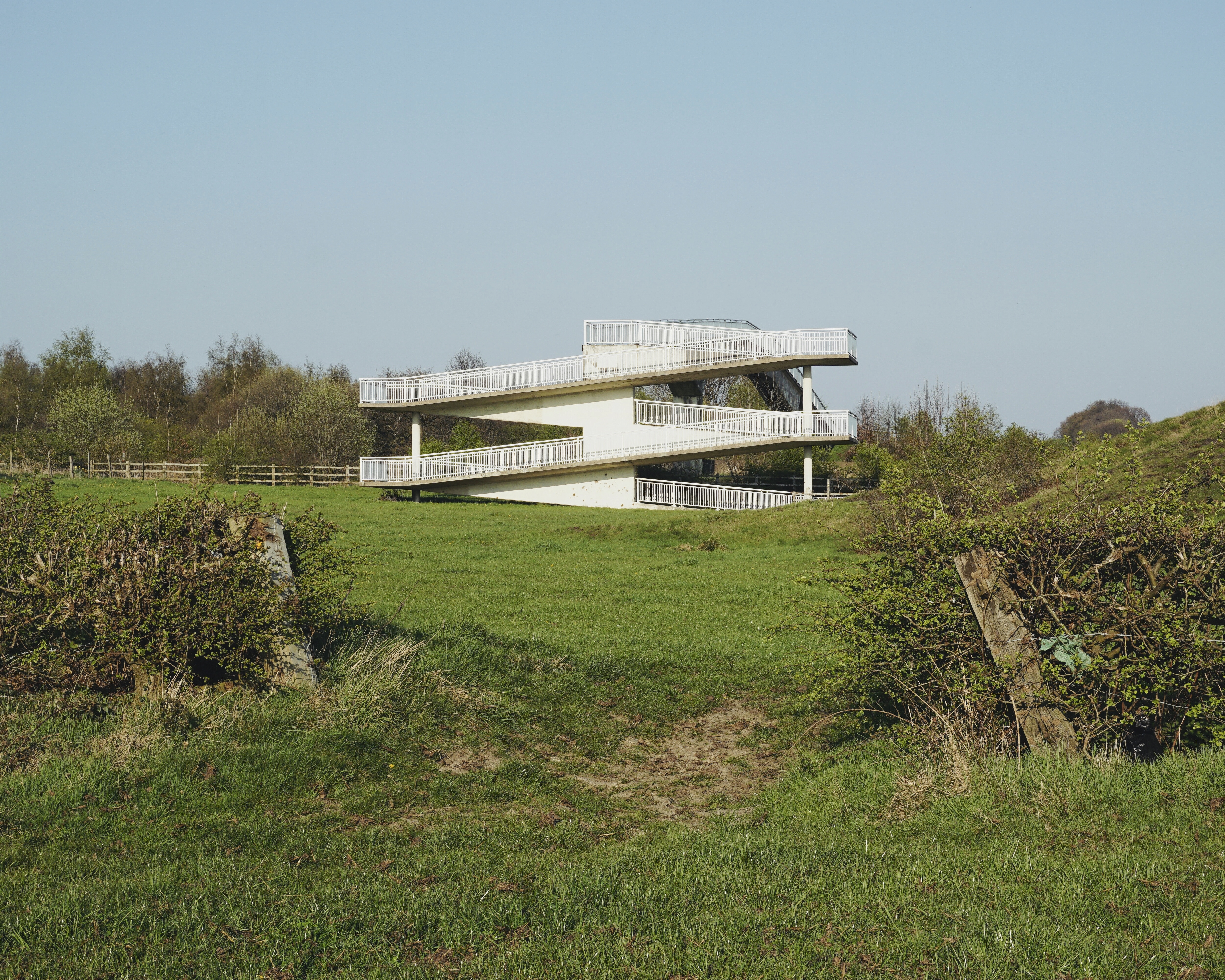
13 Smithy Wood Footbridge

Built using a structure developed by EM Wincher in Pittsburgh 1930.
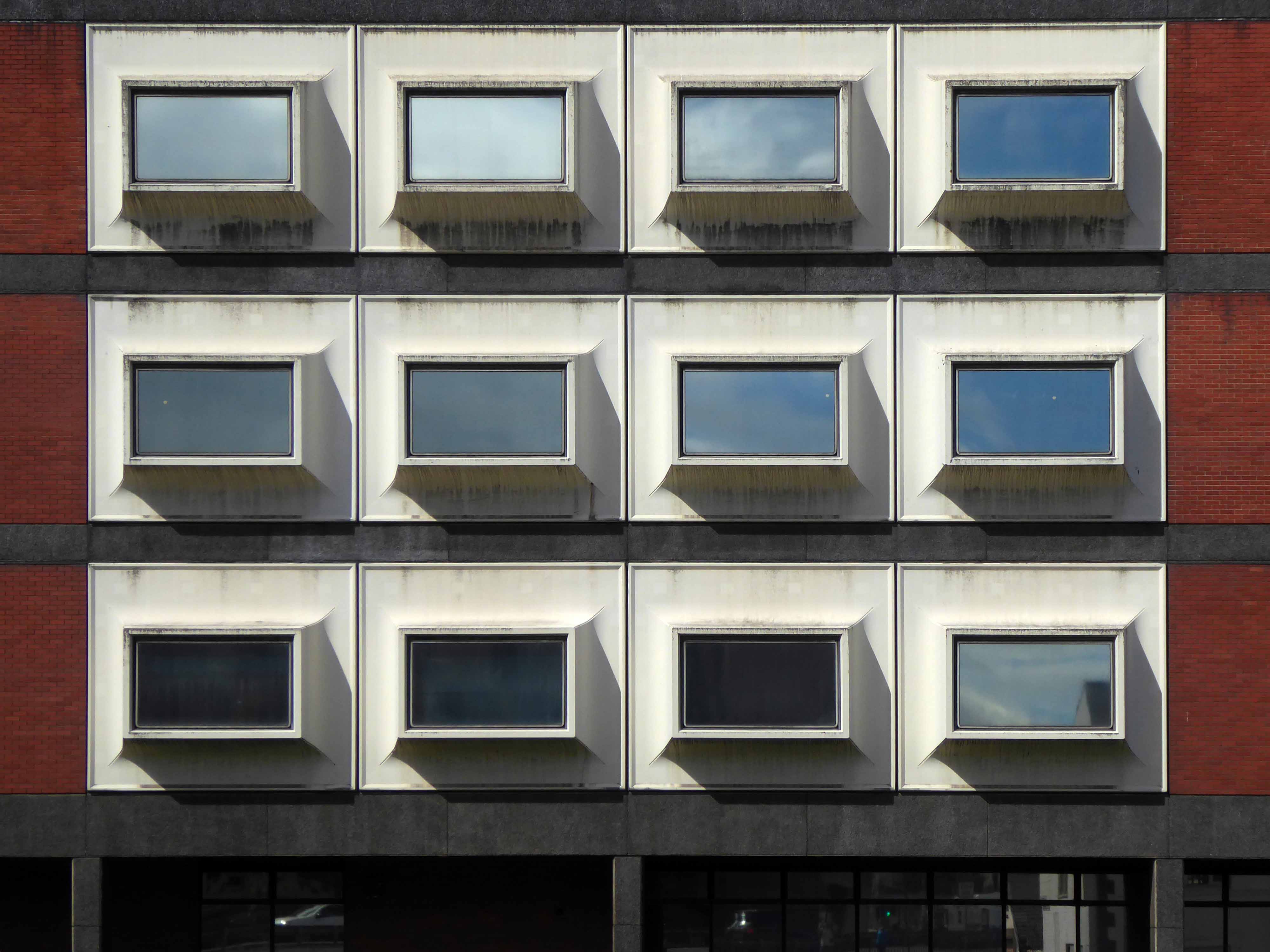
14 Westfield Estate Mosborough

Formerly Waterthorpe Farm Estate a rural township which was subsumed by Sheffield’s expanding housing schemes.

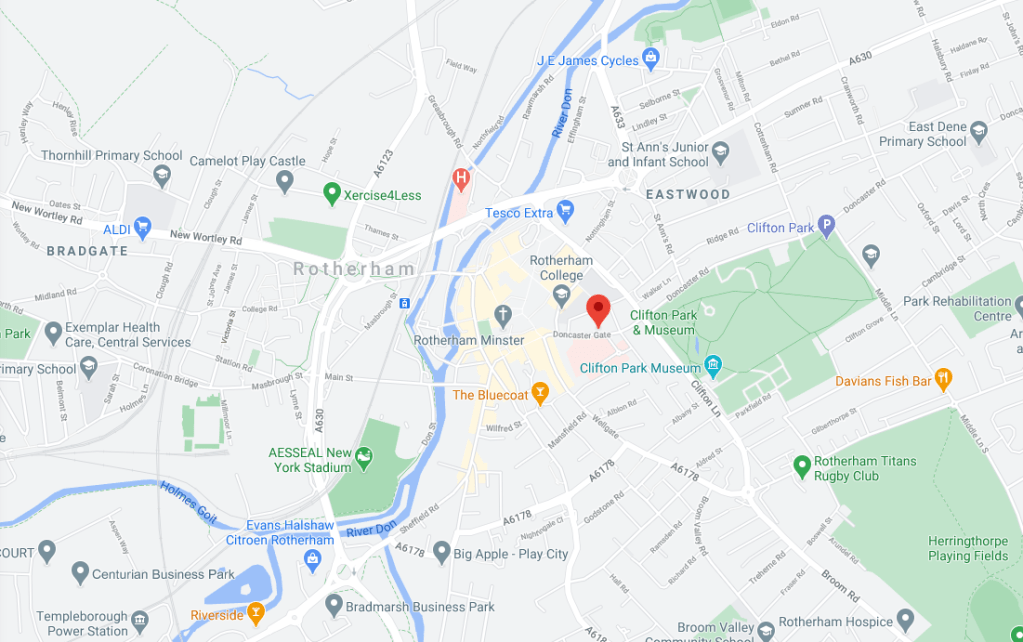
Rotherham Modernism

There comes a time in everyone’s life, when one simply must go to Rotherham, at least once – so I did.

To keep company with my personal town guide, Sheffield Modernist and local resident, Helen Angell.

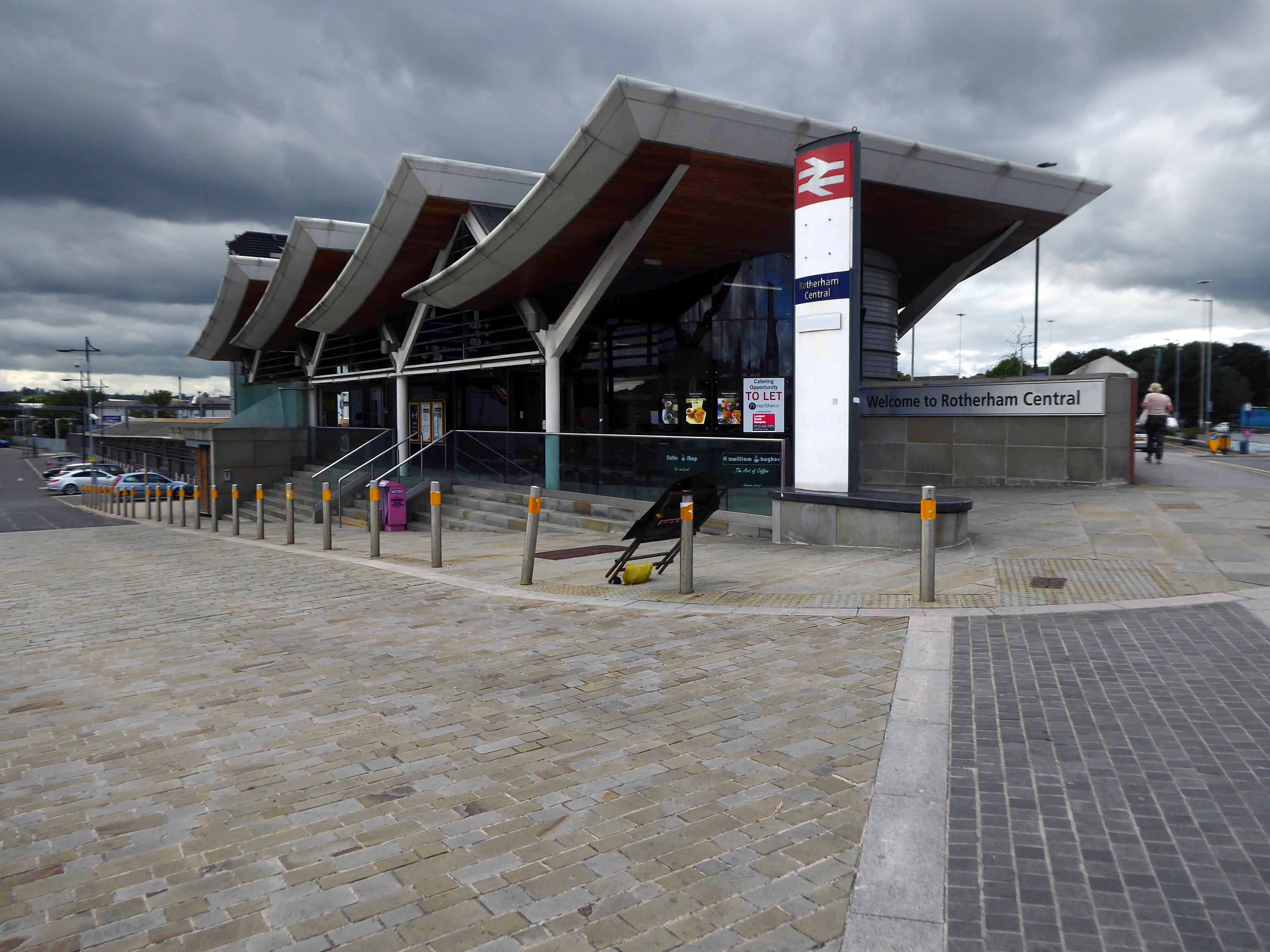
I arrived early at Rotherham Central, so went for a solo wander.

The station was originally named Rotherham, becoming Rotherham and Masborough in January 1889 and finally Rotherham Central on 25 September 1950.

The newish Rotherham Central station was opened to passengers on 11 May 1987, the present iteration on Friday 24 February 2012, as part of the Rotherham Renaissance plans for the regeneration of the town.

Wikipedia

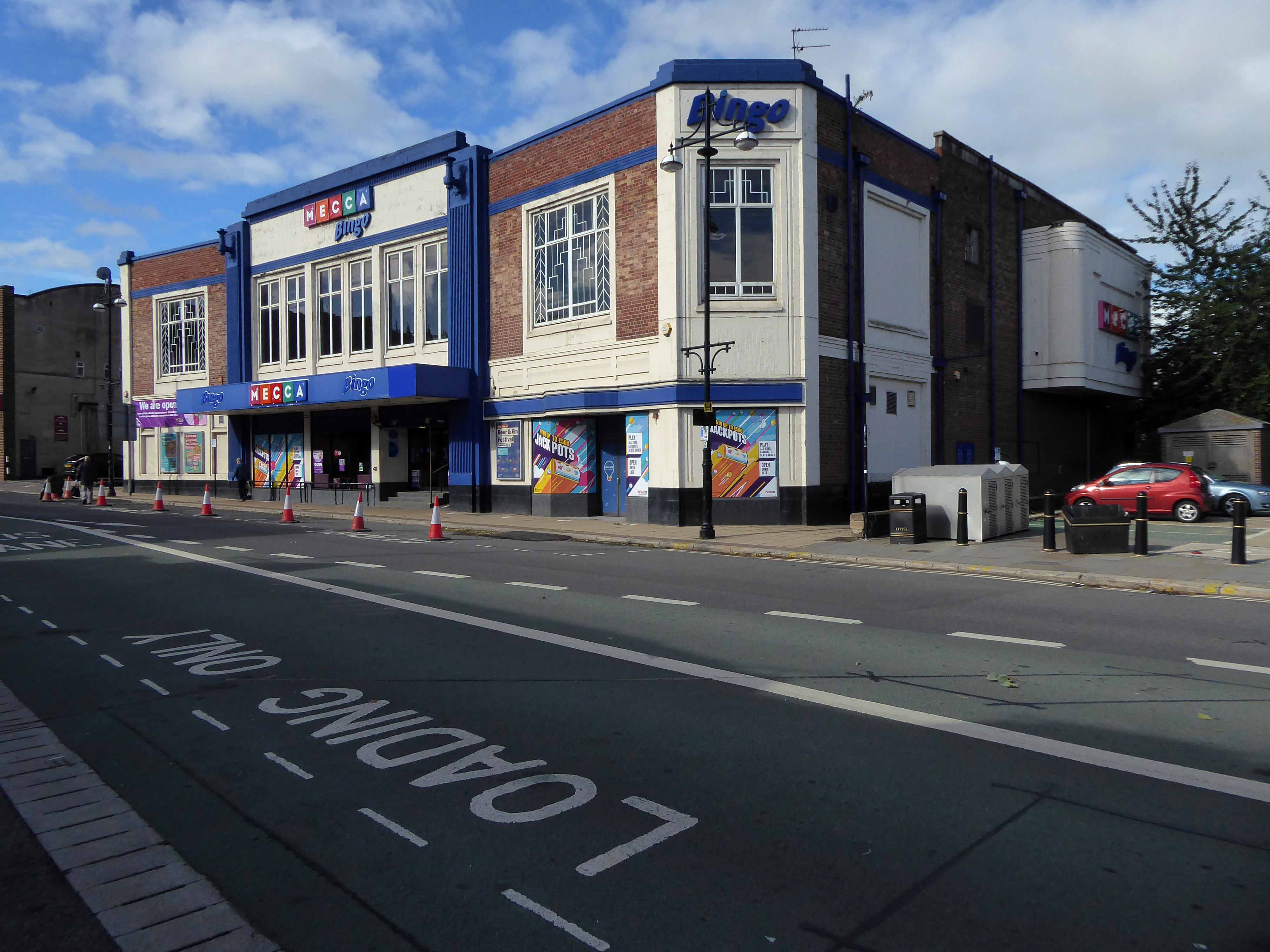
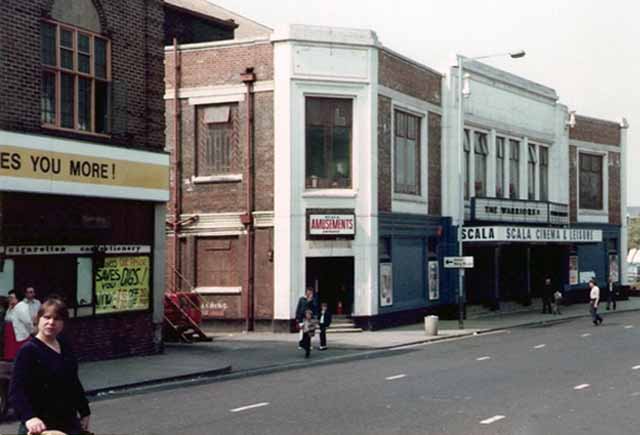
Opened 22 December 1934 as the Regal Cinema with Leslie Howard in Girls Please. Sandy Powell, the famous comedian attended opening night this 1,825 seat. It was designed by the Hull based architectural firm Messrs Blackmore & Sykes for local exhibitor Thomas Wade and was leased to the Lou Morris chain.

By 1937 it was operated by the London & Southern Super Cinemas Ltd. chain. The Regal Cinema was leased to the Odeon circuit in 1946 and was re-named Odeon. It was sold by the Rank Organisation to an independent operator in 1975 and renamed Scala Cinema, by 1981 using the circle only.

Closed 23rd September 1983 with the film Porky’s.

Became a bingo hall initially named Ritz but now Mecca. On 20th February 2020 the building was put up for sale by auction at an asking price of £600,000+, but failed to sell, with the maximum reached £590,000. Mecca bingo continues in the building.

Cinema Treasures

Curious corner retail development and sculpture of the Sixties – with pub archeology.

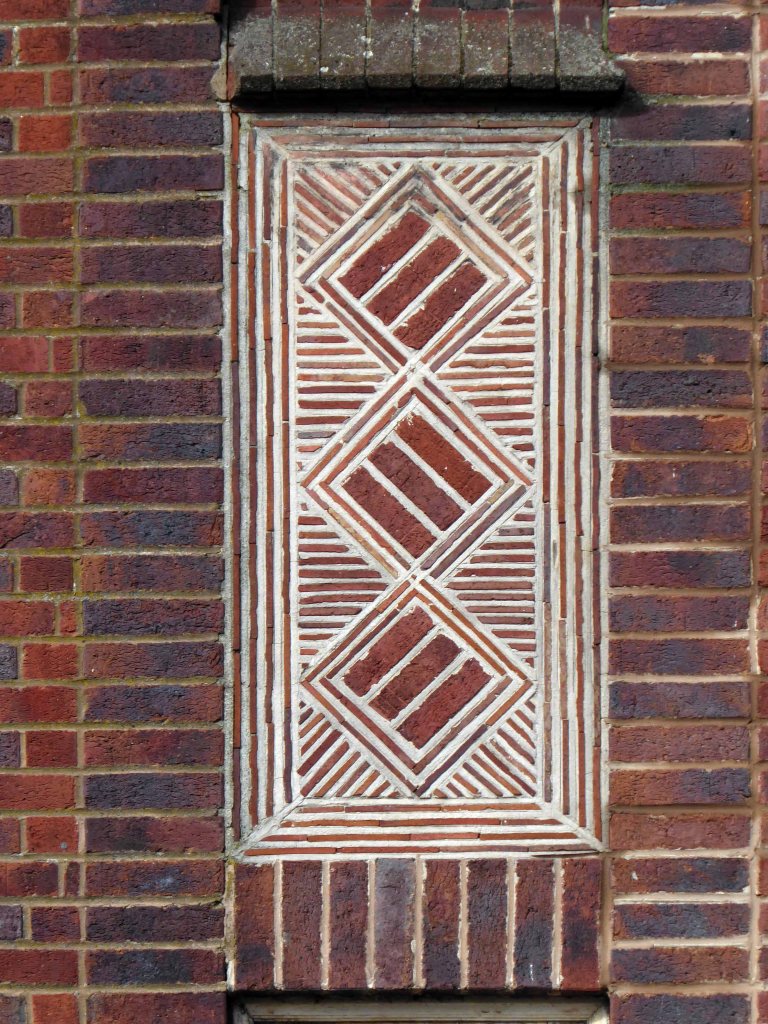
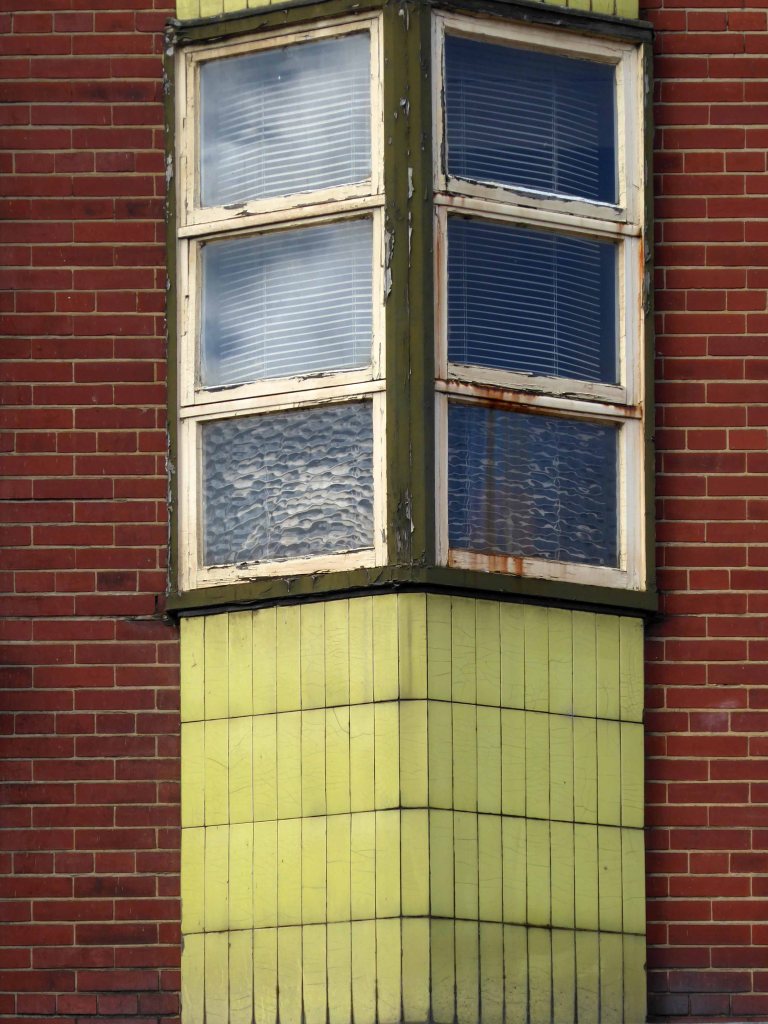
Art Deco detail and tiling.

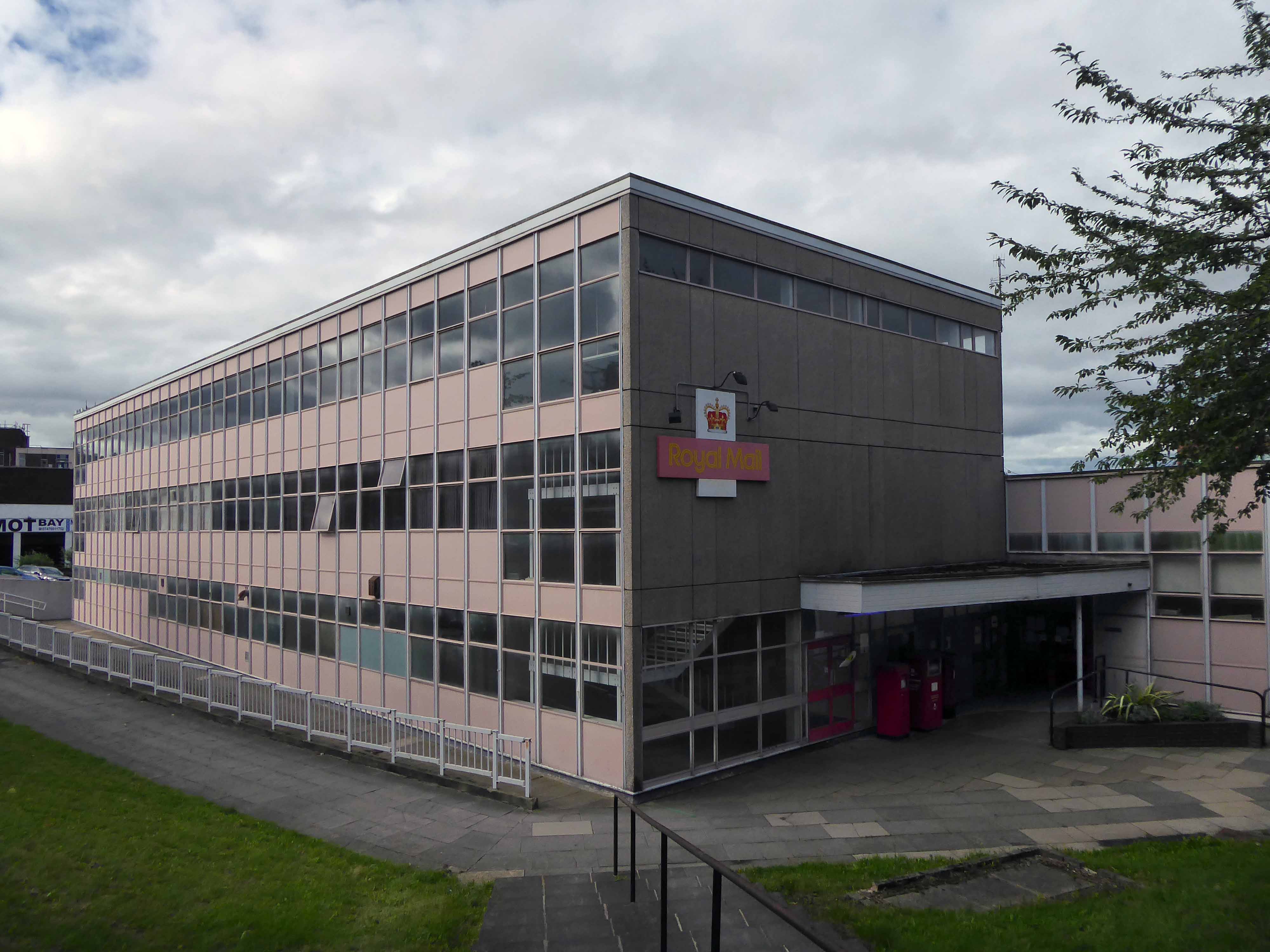
Royal Mail Sorting Office.

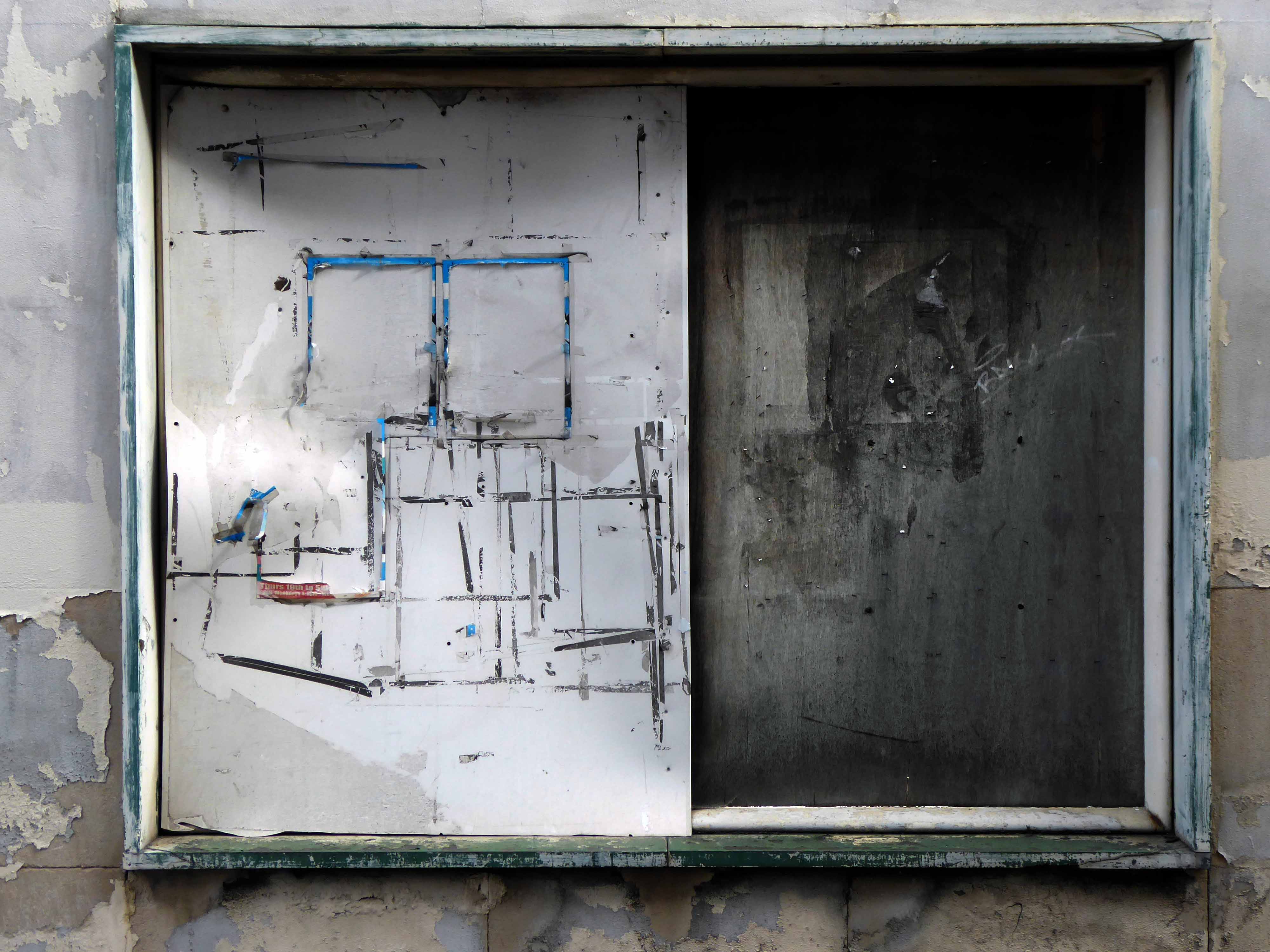
Retail detail.

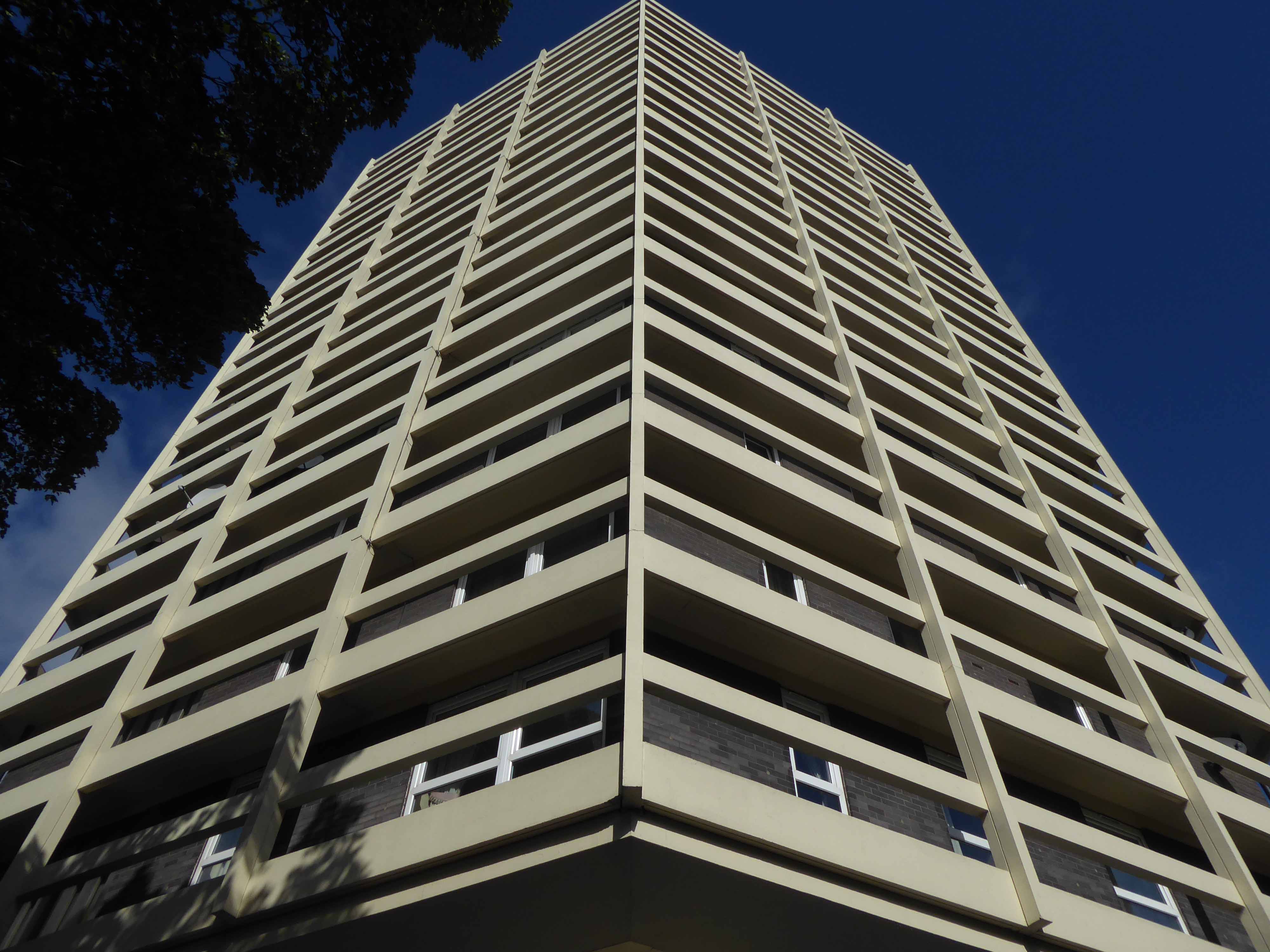
Beeversleigh Flats – built between 1968-71. 

Main contractors J. Finnegan it’s thirteen storeys high – housing forty eight dwellings.

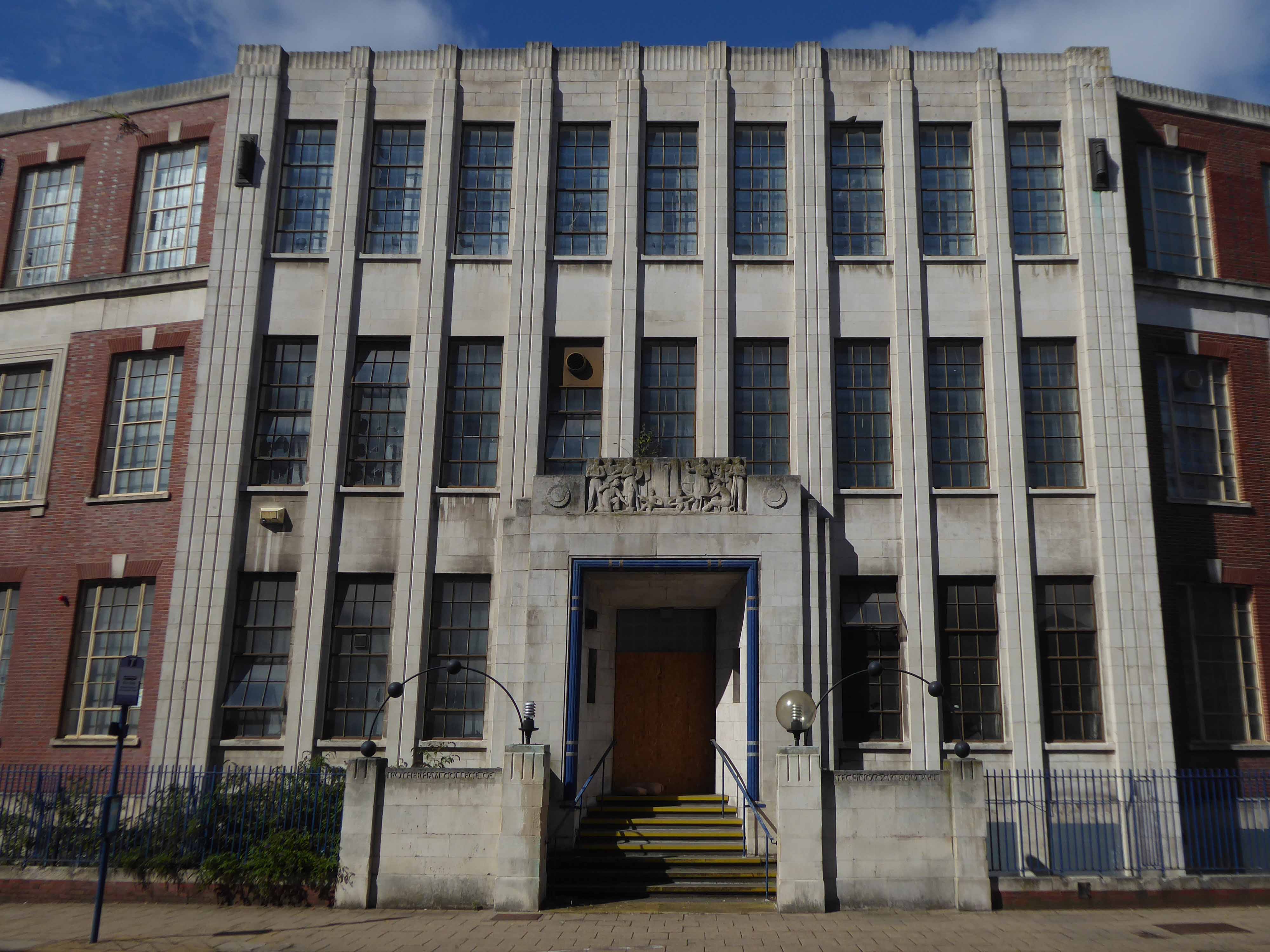
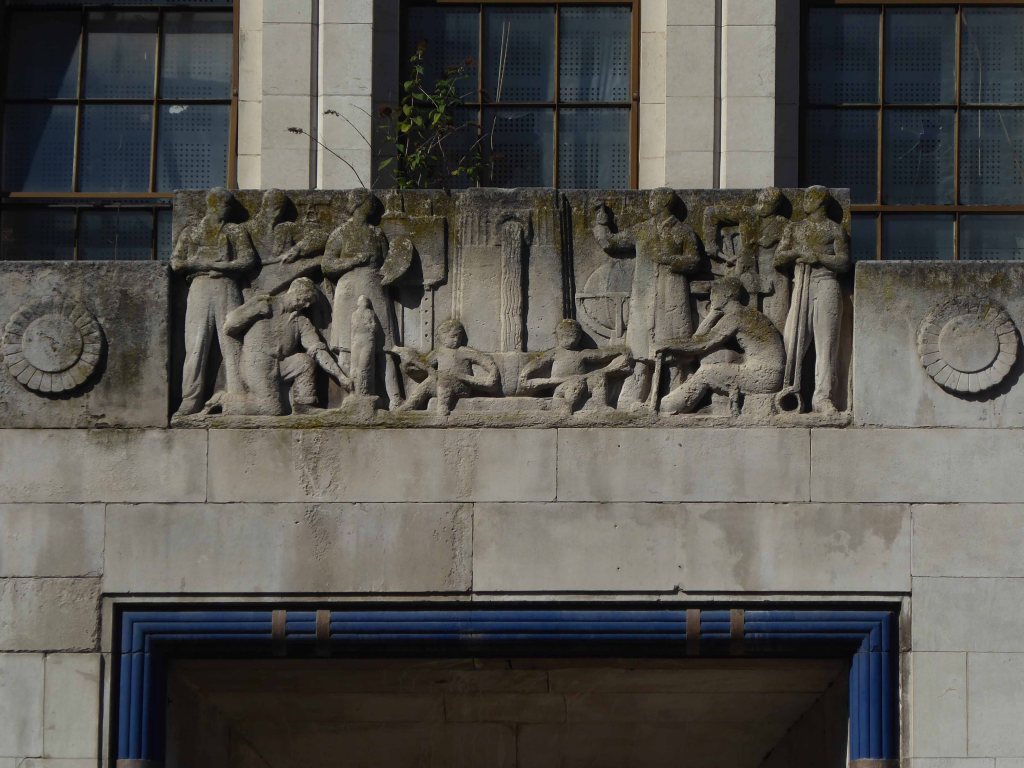
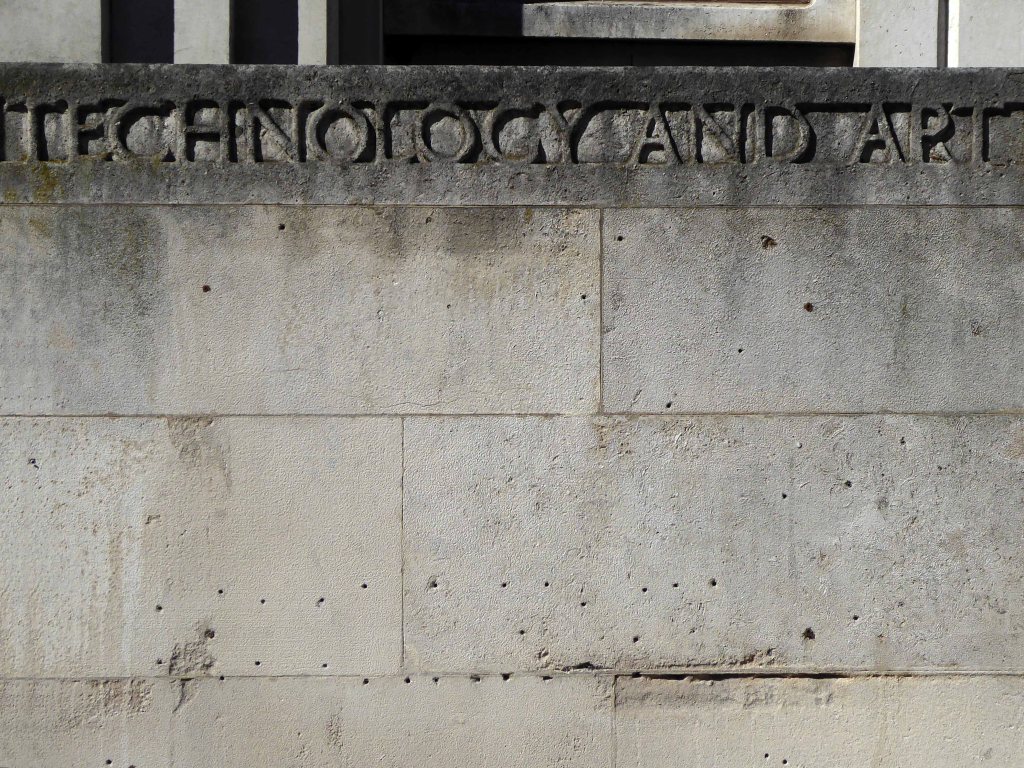
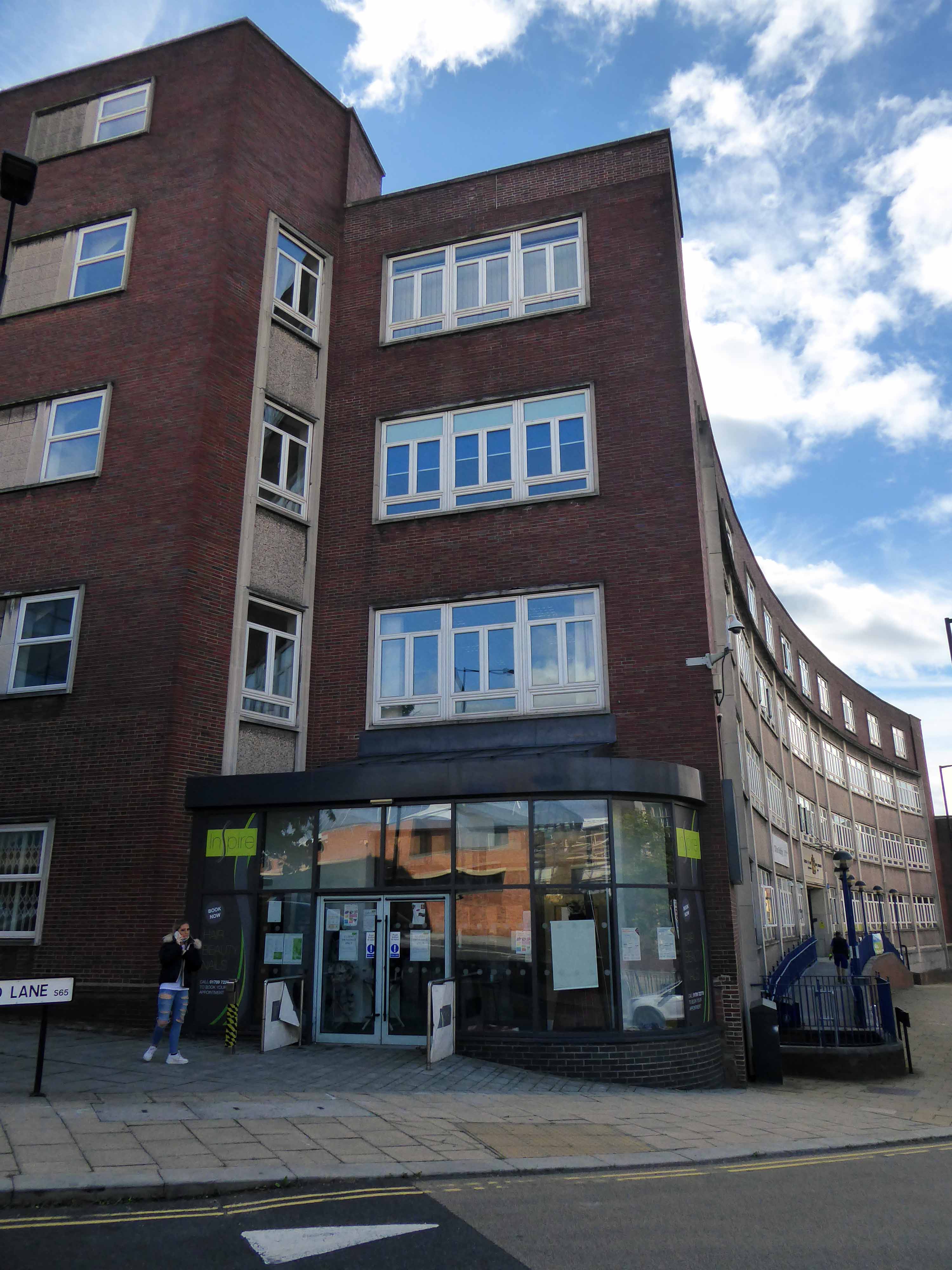
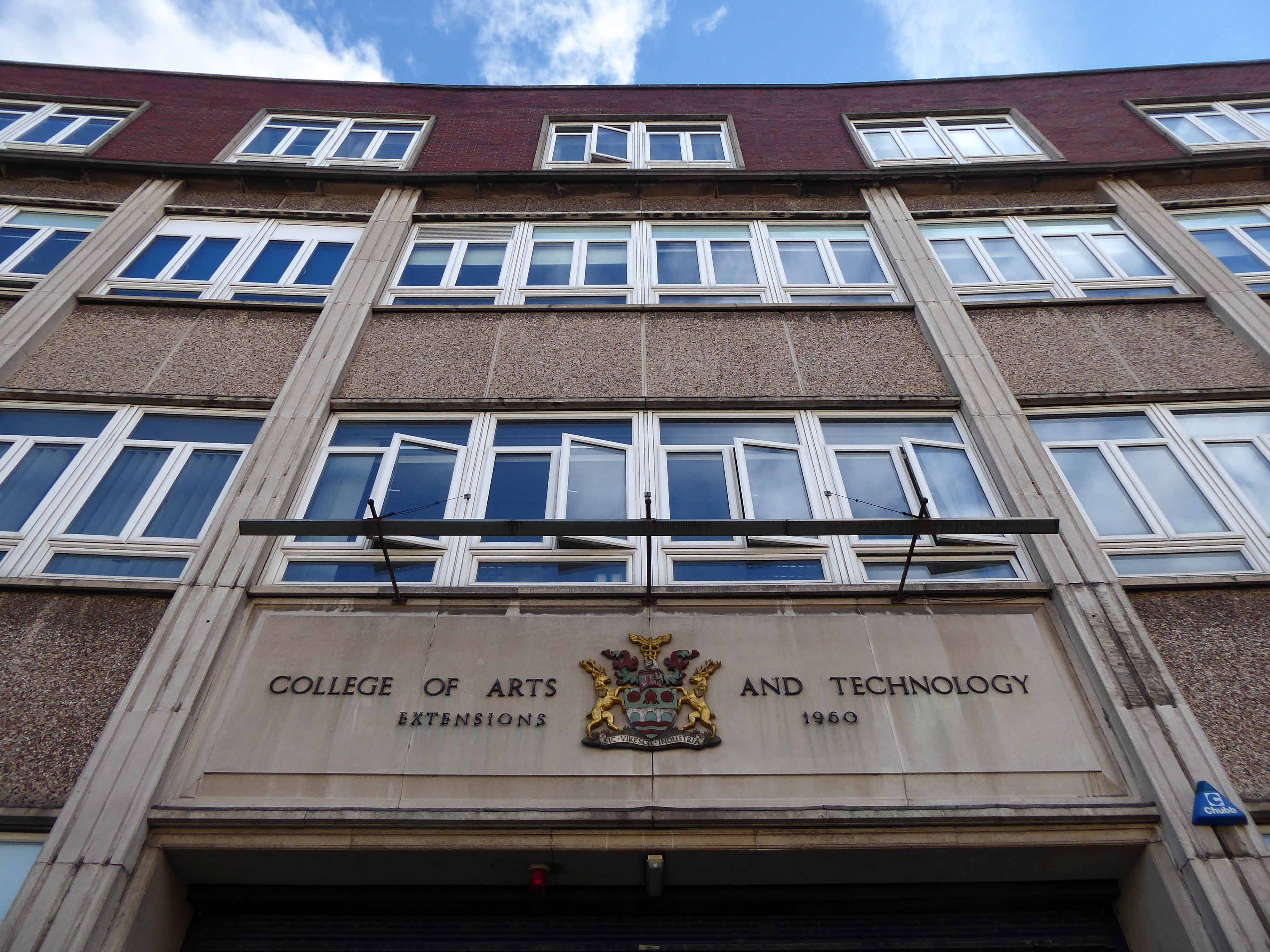
Interwar Technical College – Howard Building

From the 1930s, it provided technical-orientated education from the Howard Building on Eastwood Lane, Rotherham. In 1981, three neighbouring colleges of arts, technology and adult education were merged into one. As a result, the college became known as Rotherham College of Arts and Technology.

Revised plans to convert the historic Howard Building in Rotherham town centre into self-contained studios and apartments have been approved by the planning board at Rotherham Council.

The prominent former college building was sold prior to going to auction last September after it was advertised as a development opportunity and given a guide price of £250,000 by local auctioneers, Mark Jenkinson & son.

2015

28 Days Later

A group of rogue property directors with links to a prominent derelict building in Rotherham have been banned for a total of 54 years. The six, of Absolute Living Developments, were found to have misled more than 300 people to invest at least £12 million in residential properties.

The firm was linked through a lender to Avro Developments, which had plans passed in 2015 to renovate former college block the Howard Building in Rotherham town centre.

Rotherham Advertiser 2019

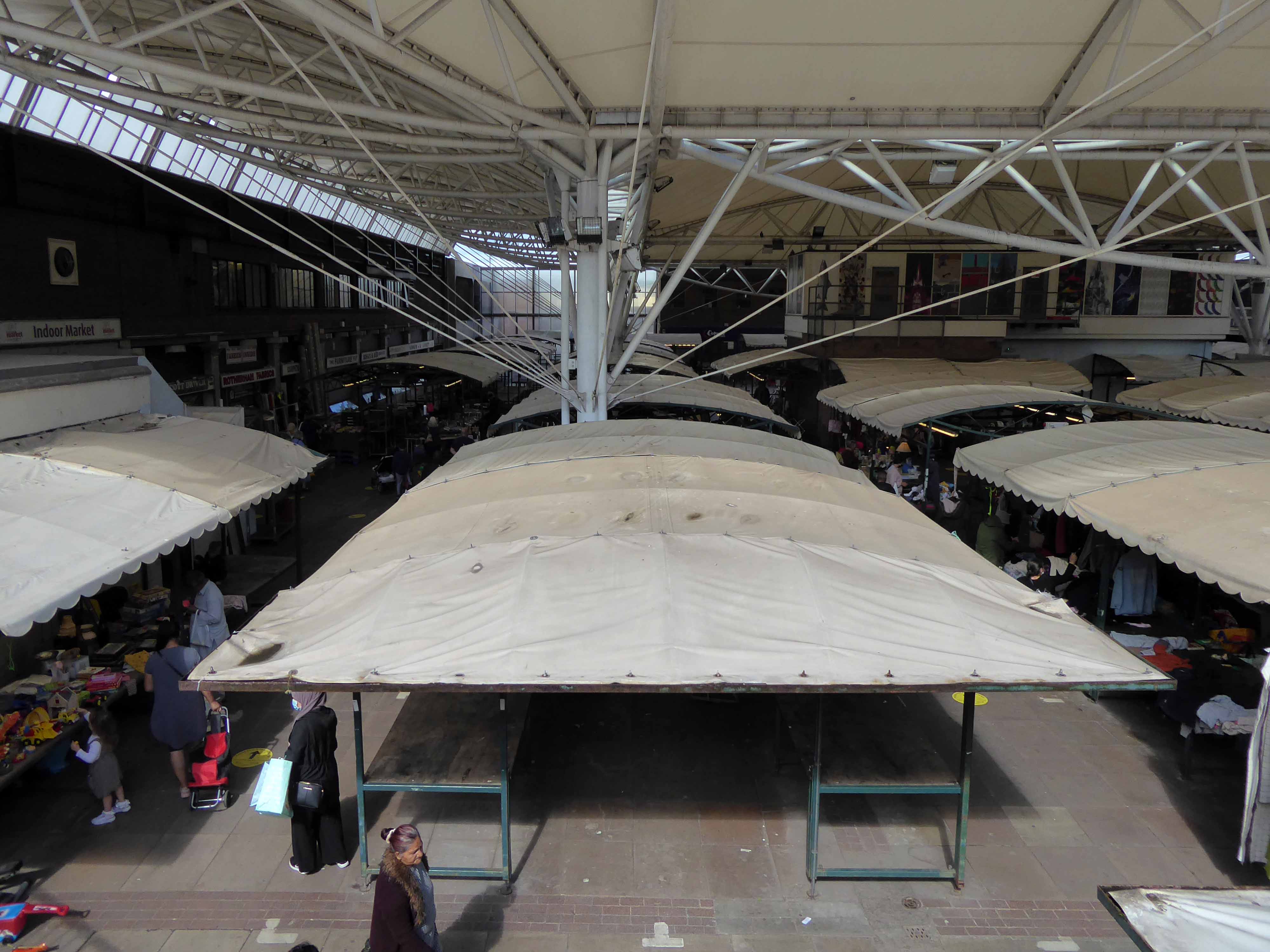
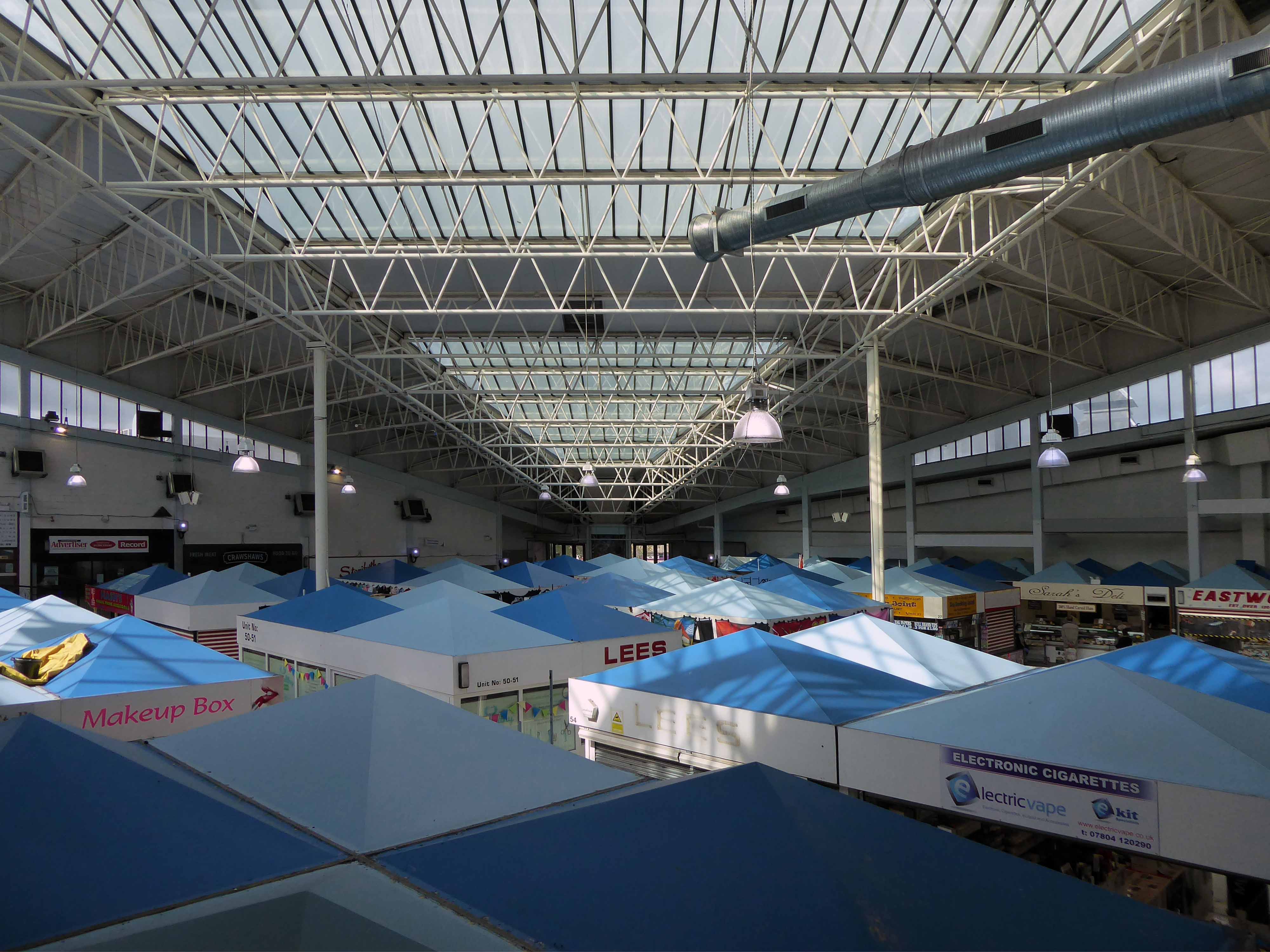
Clifton Building

Next to the market.

With a strident high tech canopy, very recently added – though Rotherham’s history stems back 800 years when it is thought that the original royal market charter was granted by King John in the year 1207.

There are traces of the 1970’s rebuild.

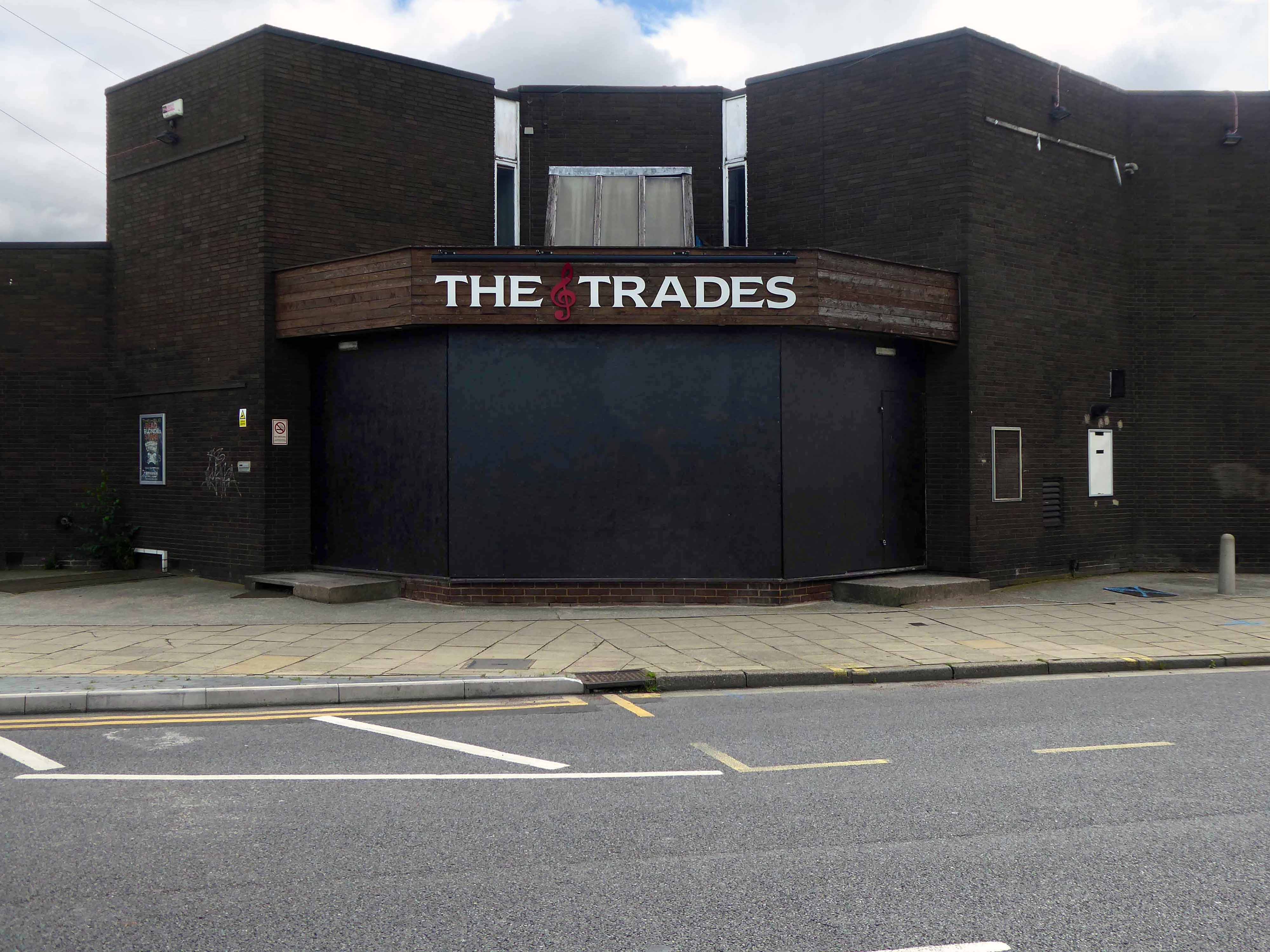
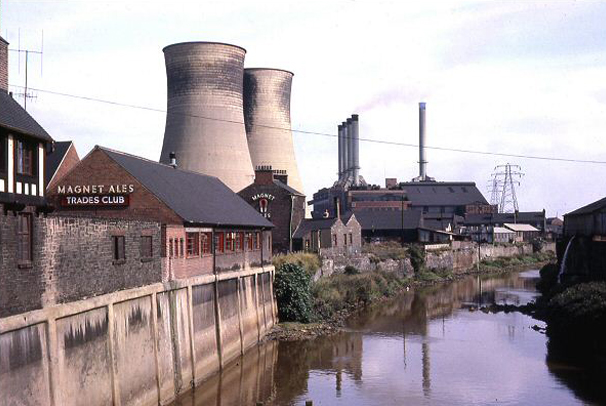
Bunker-like The Trades former music venue/pub, which replaced the former riverside Trades Club.

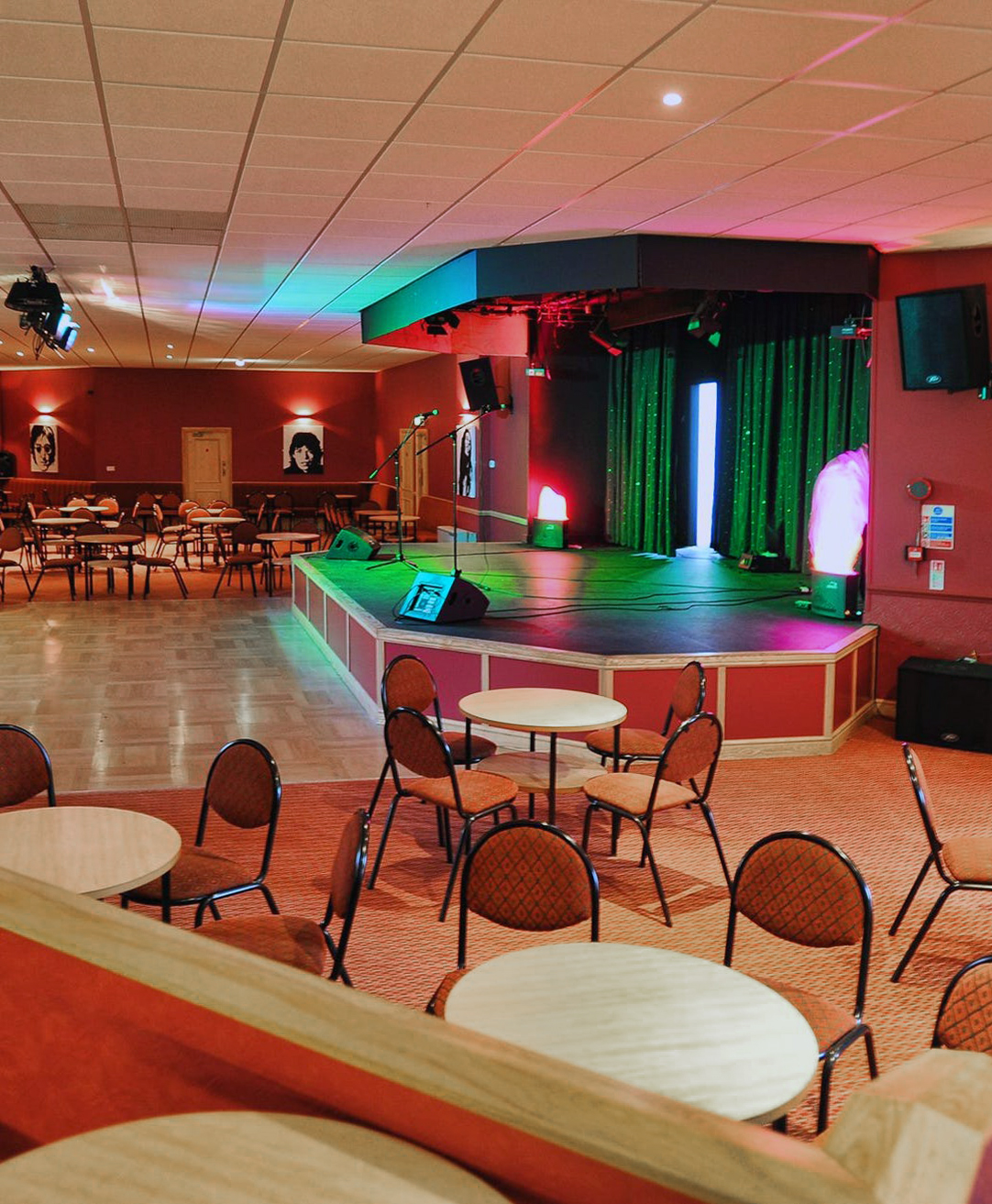
The PA now silenced.

This was an amazing event. The bands were really good and the drinks offers, while limited, were good. The ceiling in the ladies toilets had fallen through and was dripping, presumably there had been a leak from all the rain, but this didn’t lessen the awesome experience.

October 2019

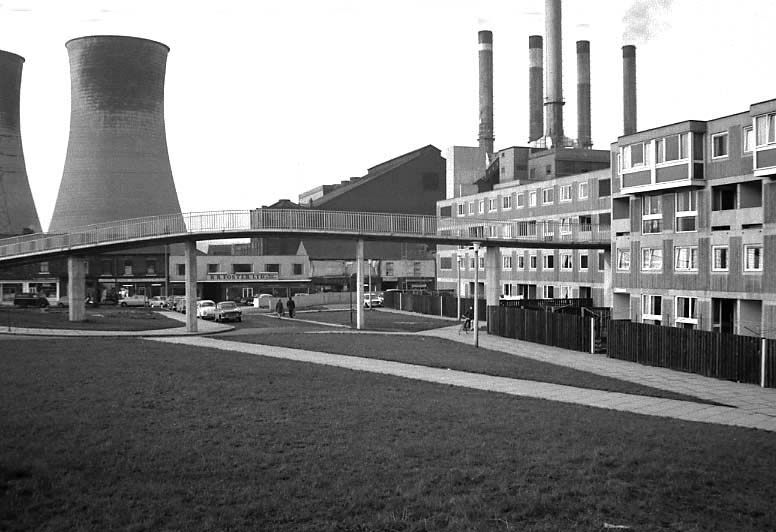
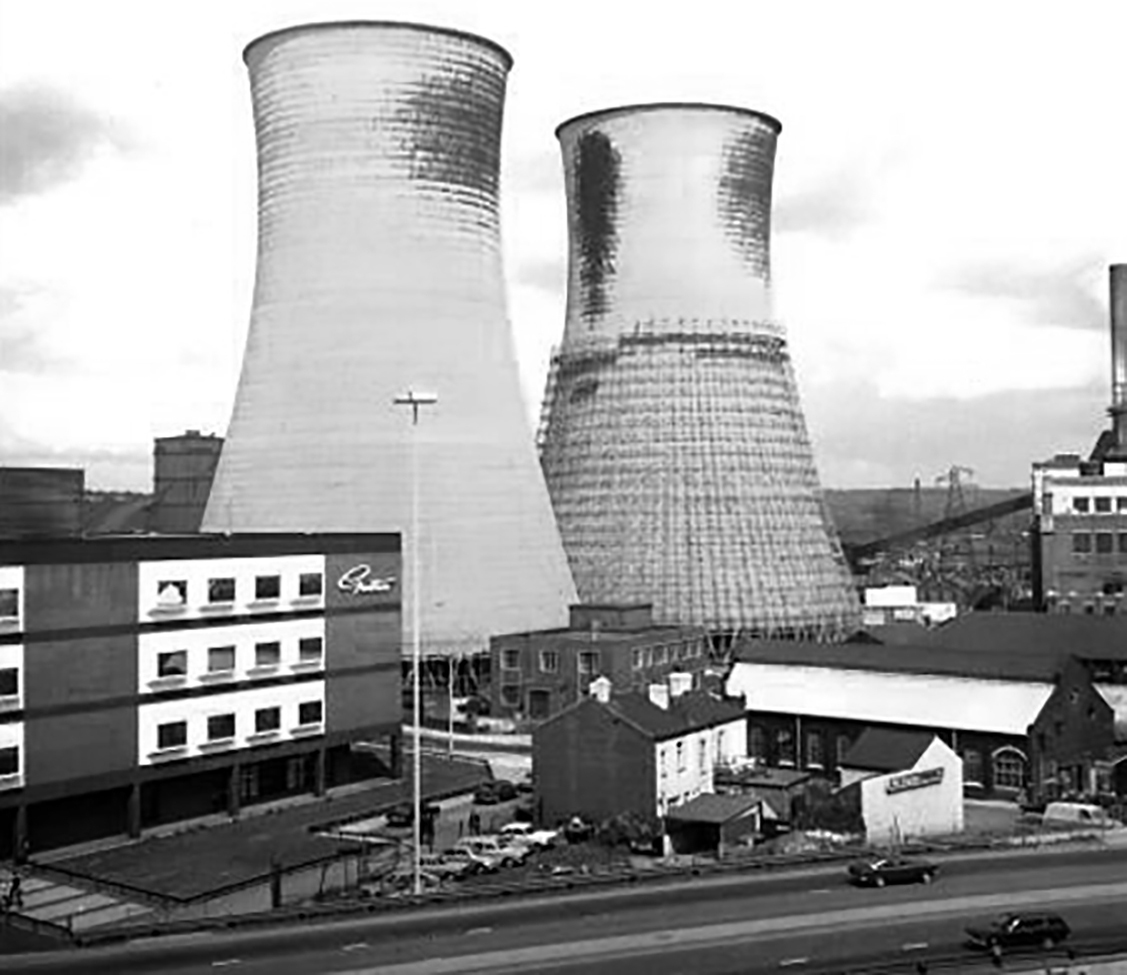
The cooling towers and flats are long gone – the coal-fired power station operated from 1923 until October 1978.

The Prince of Wales Power Station in Rotherham was located on Rawmarsh Road and was opened by the Prince of Wales – the future King Edward VIII.

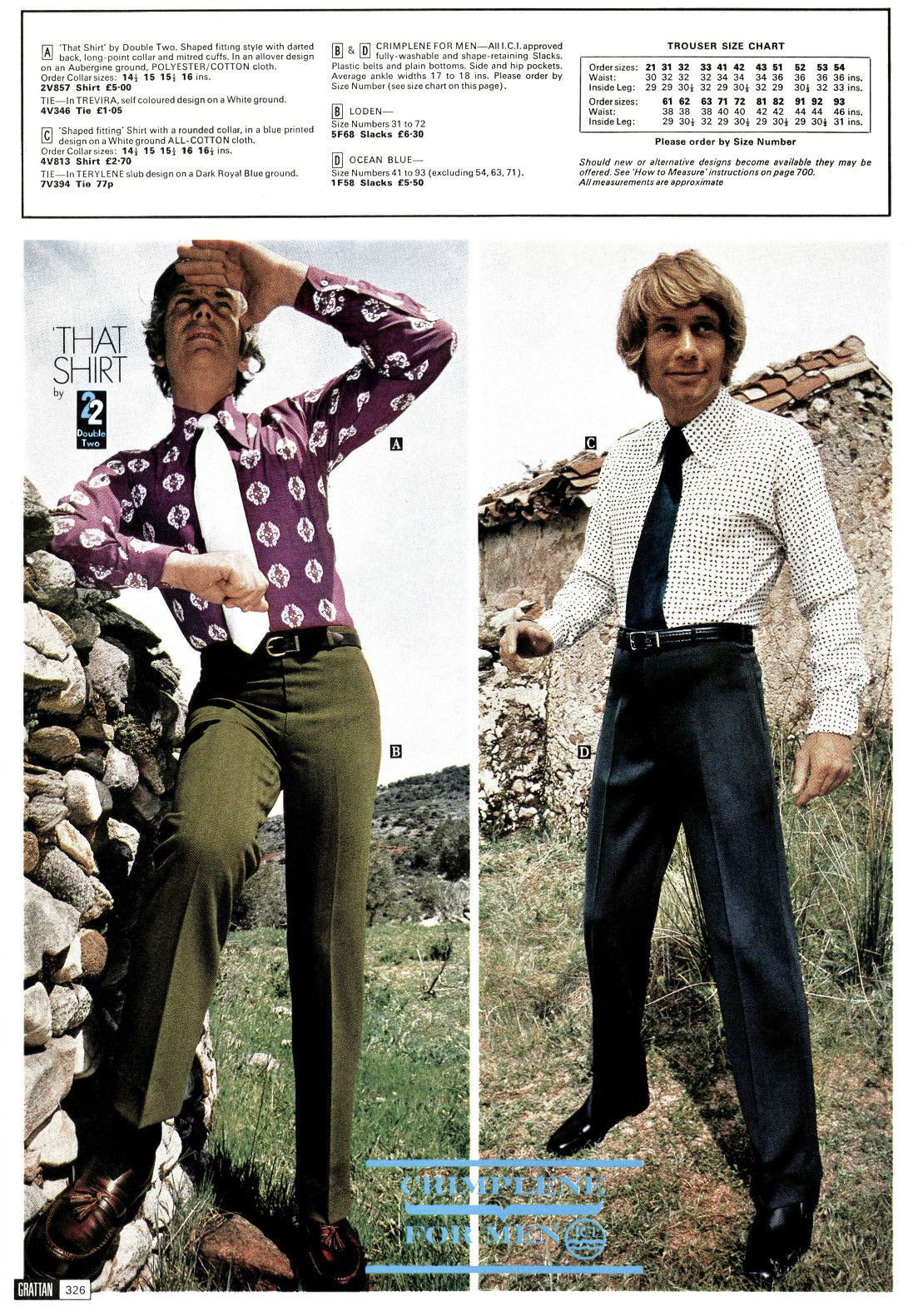
The former Grattans catalogue offices can be seen to the left.

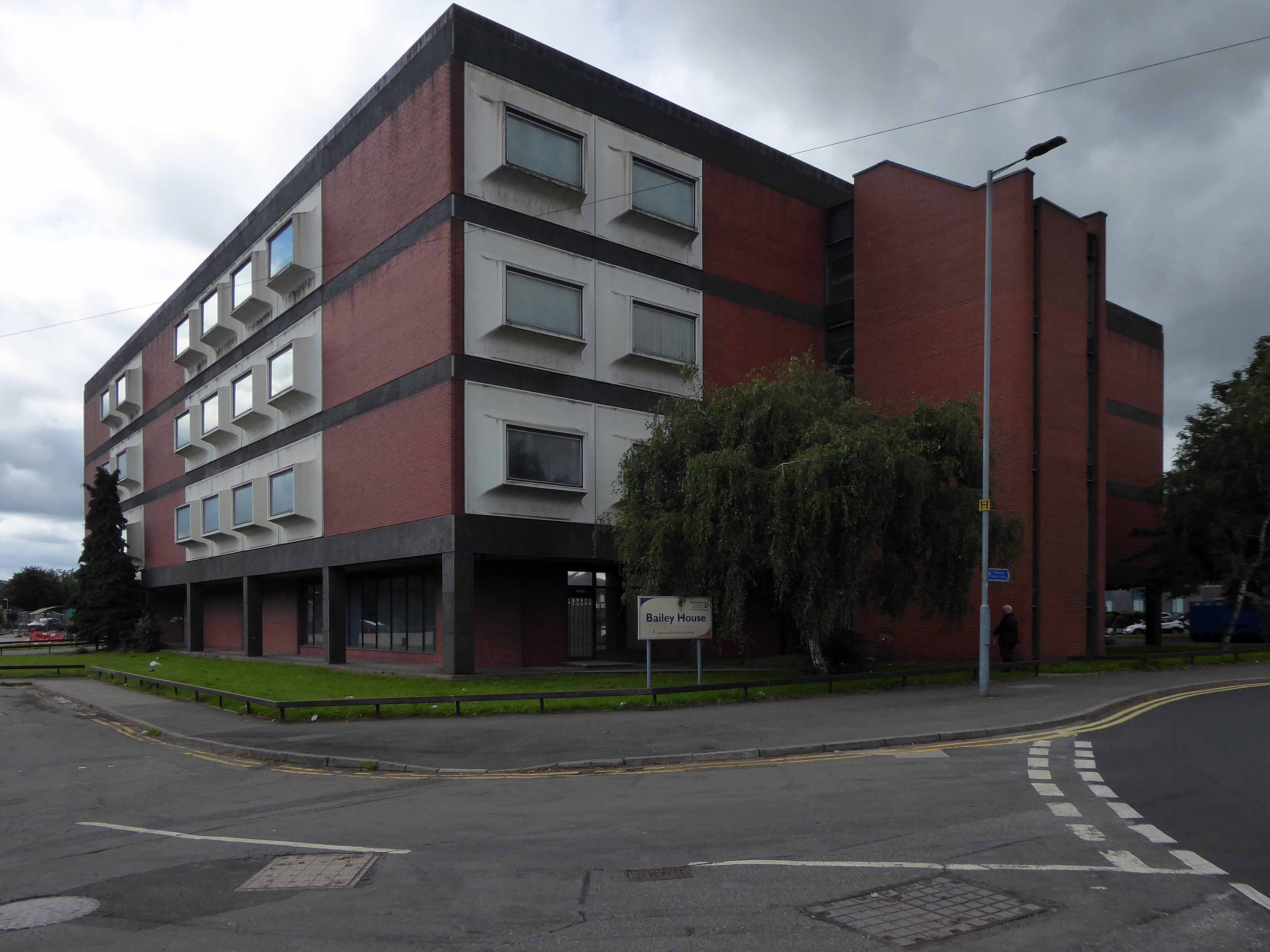
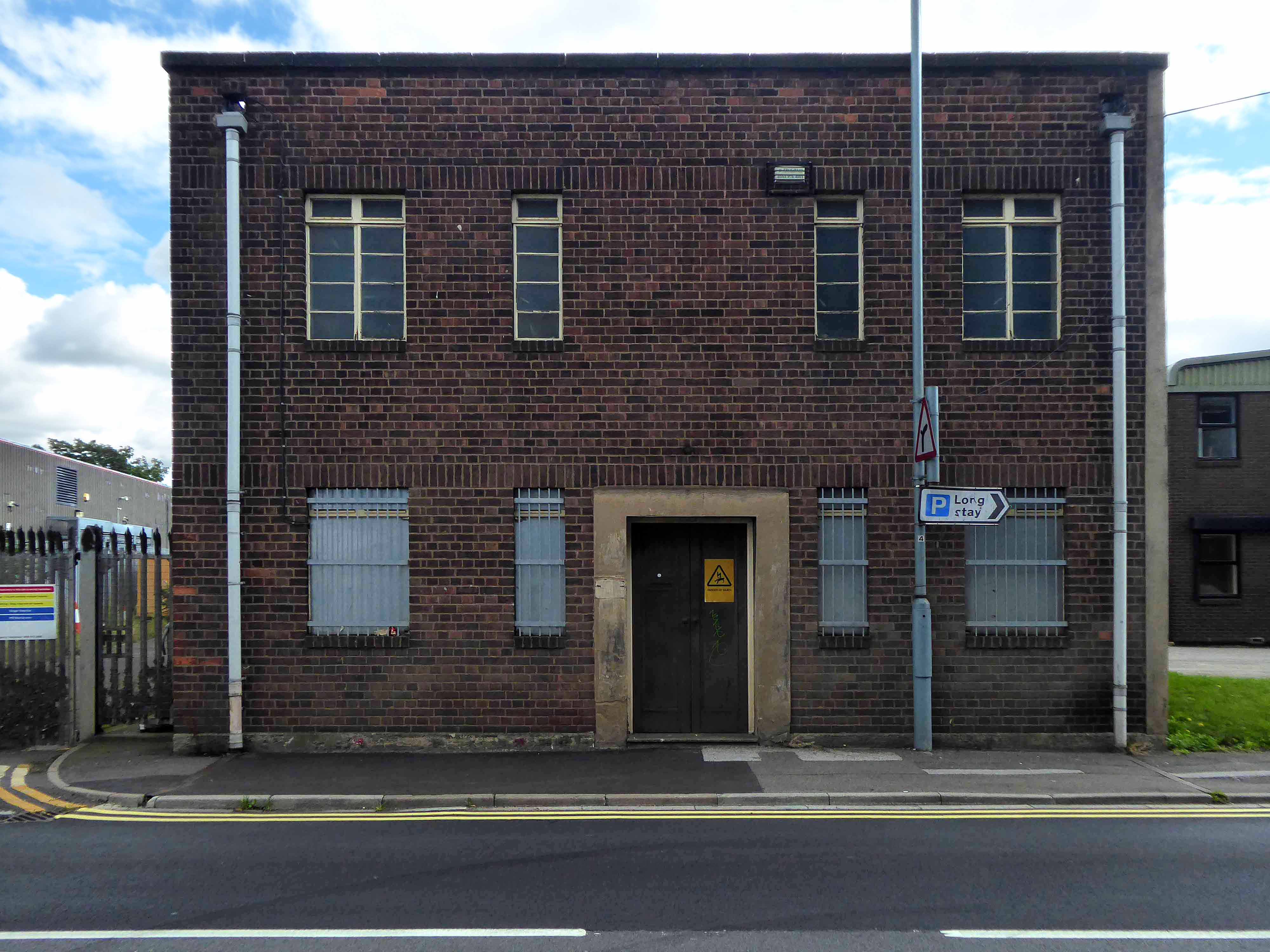
Renamed Bailey House and still in use by the local authority, its days it seems are numbered.

The building is named after Rotherham-born engineer Sir Donald Bailey whose ingenious bridge designs played a key role in shortening World War II, the house in which Bailey was born, 24 Albany Street is still standing.

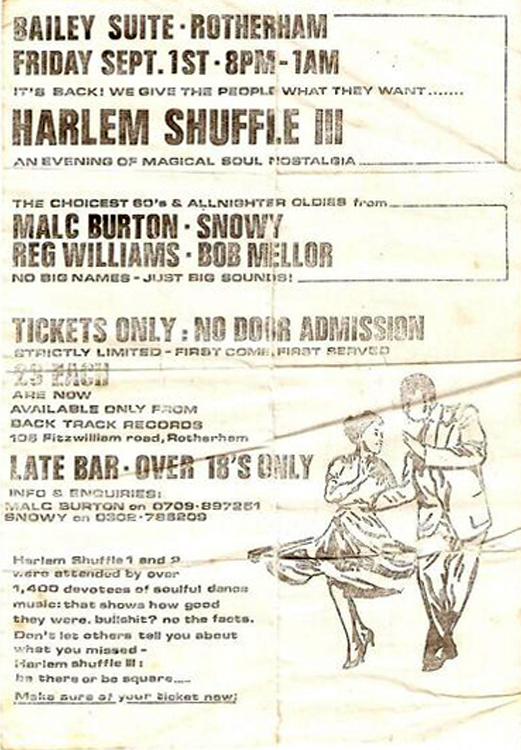
Sadly no longer home to the Harlem Shuffle

No big names – just big sounds.

There are some surviving power station buildings.

Along with electrical infrastructure.

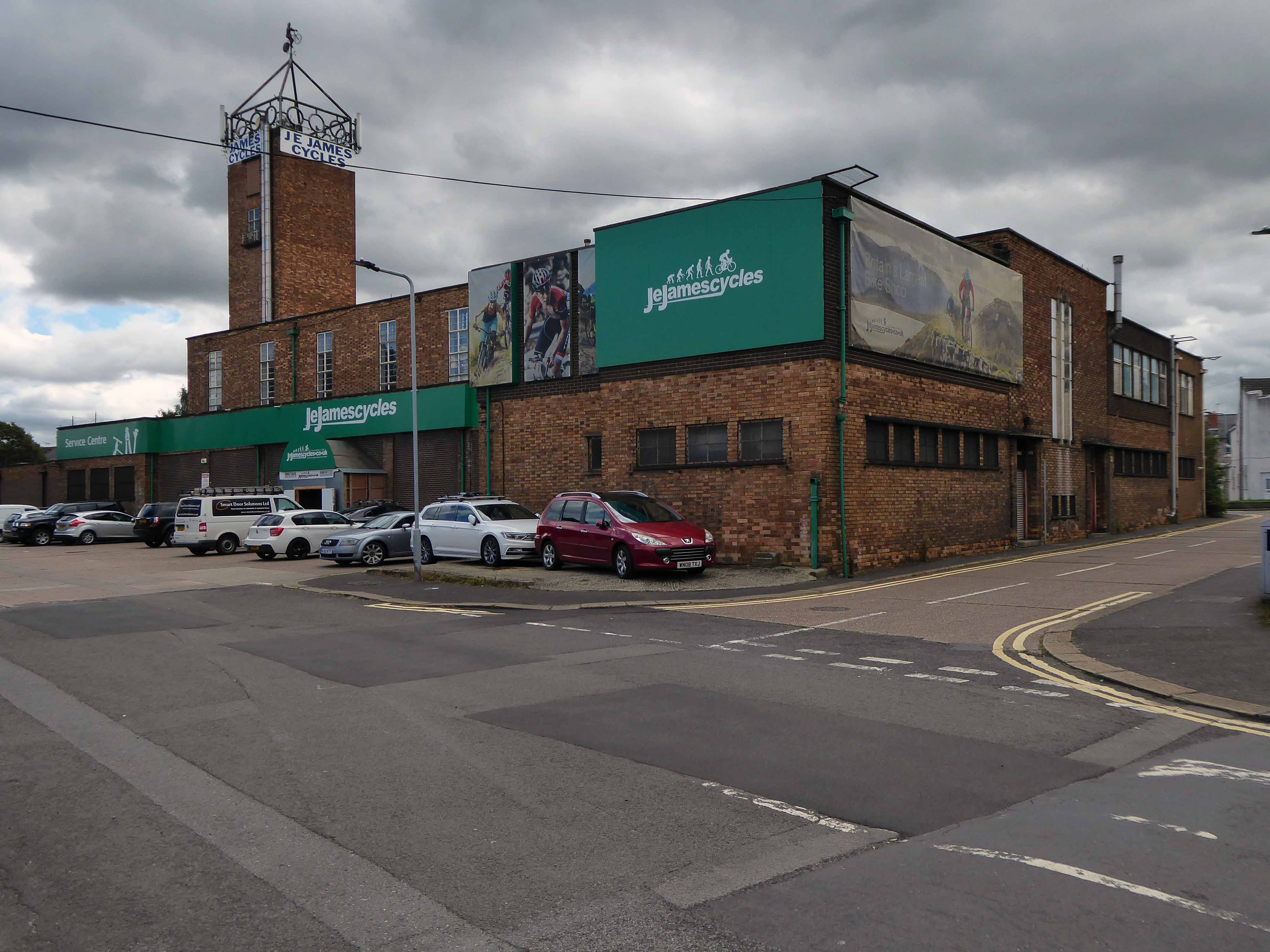
Up the road next, to the former fire station, which now houses J E James Cycles.

It is surrounded by typically atypical inter war housing.

I could make the wild assumption, that these flat roofed maisonettes were originally homes fit for firefighters.

A passing nod towards a former Methodist Chapel.

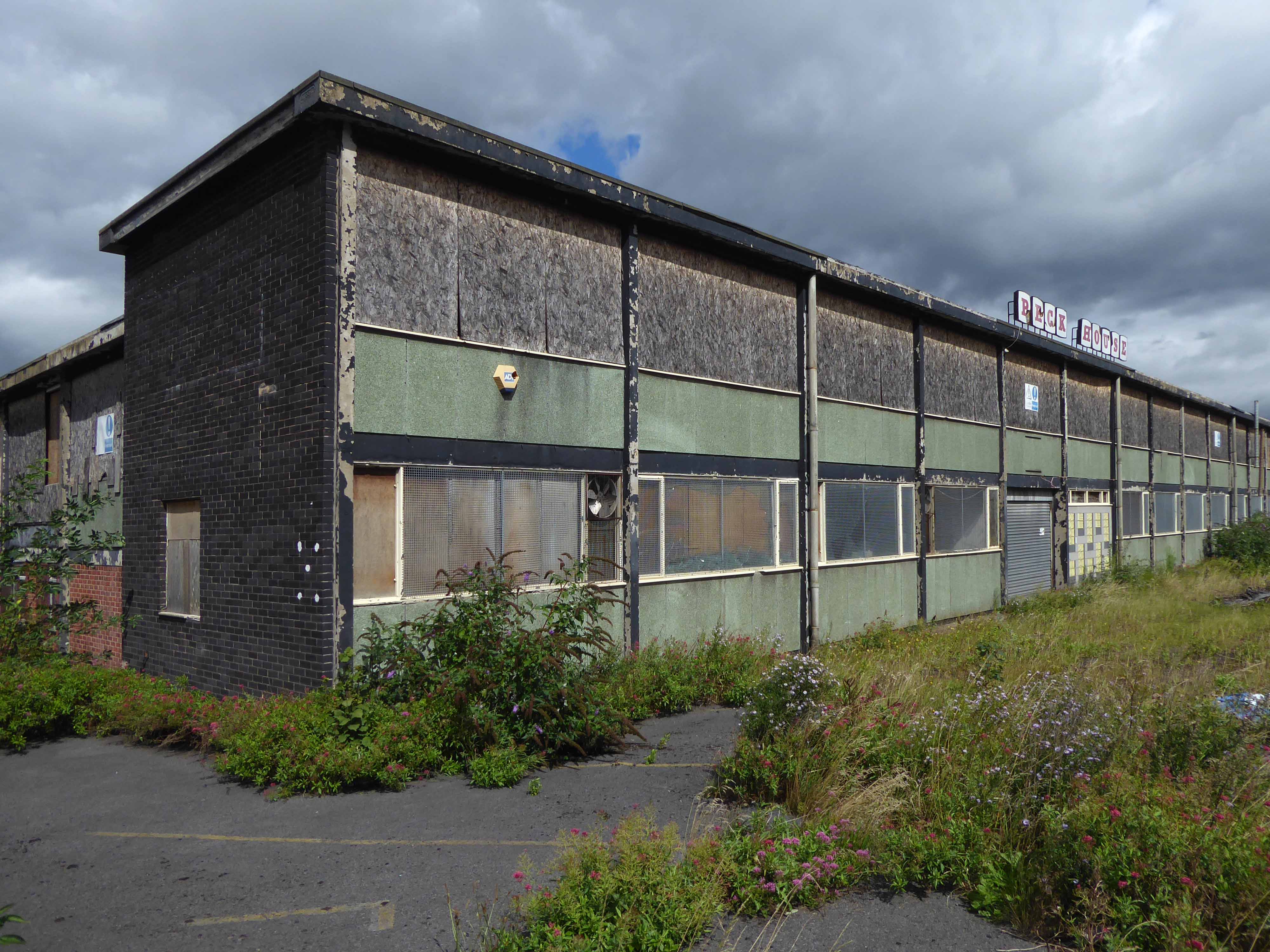
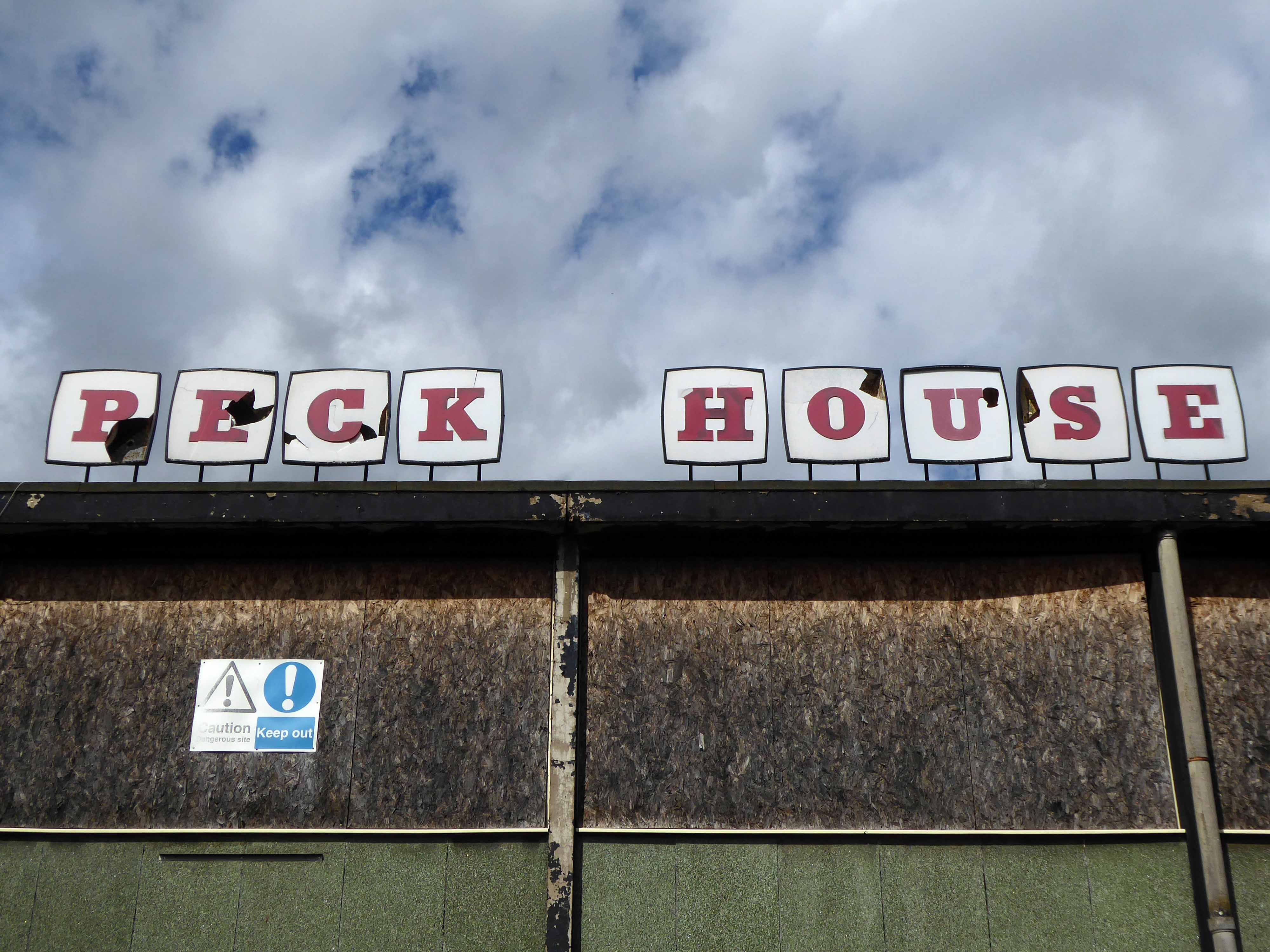
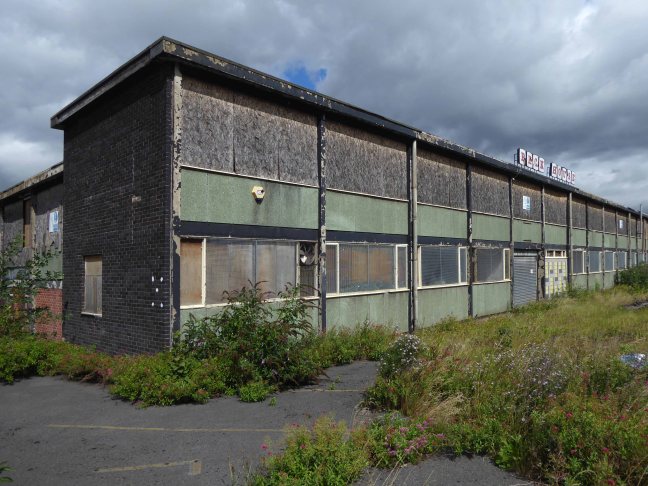
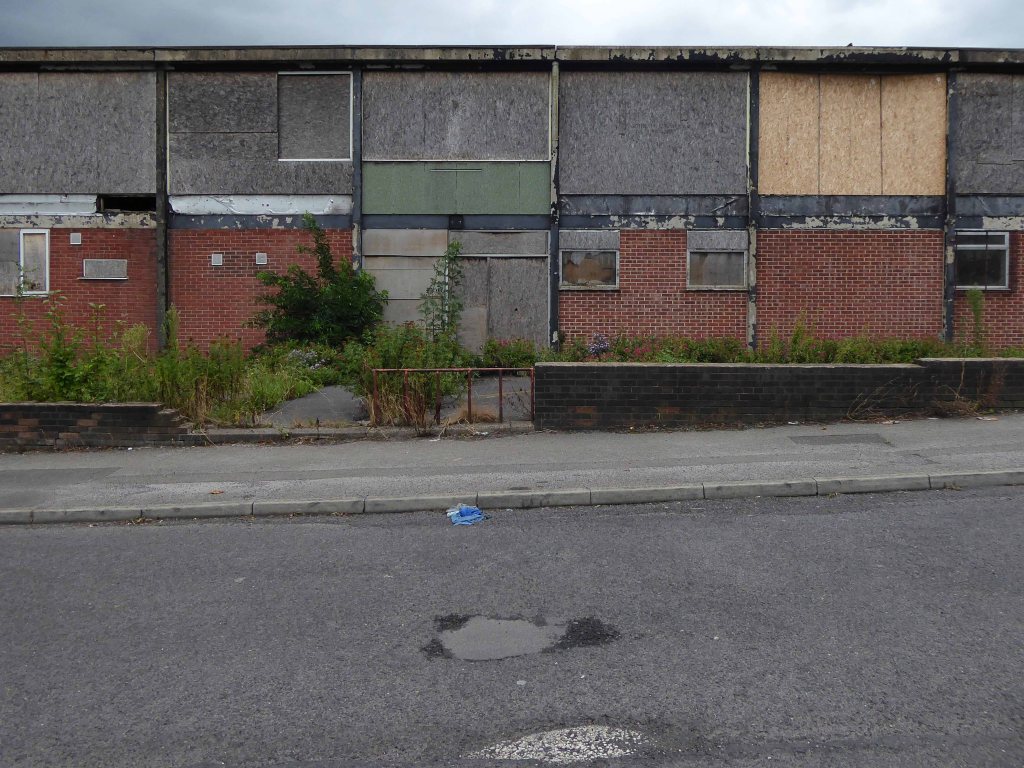
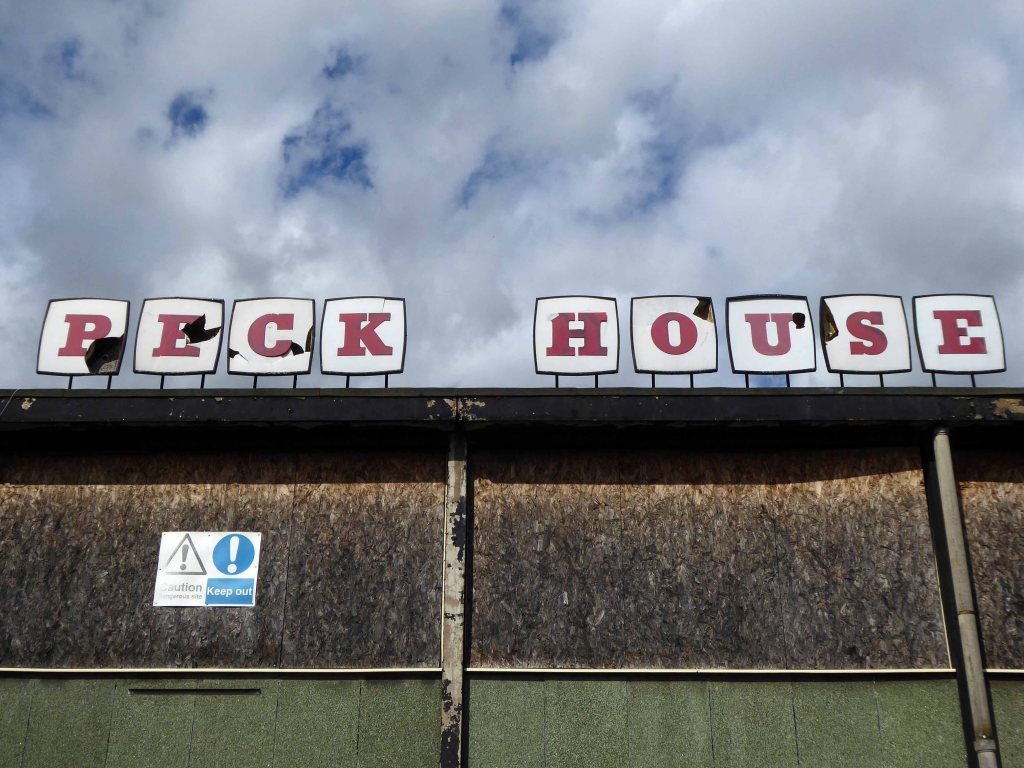
Further on up the road to Peck House.

And the attendant tiles.

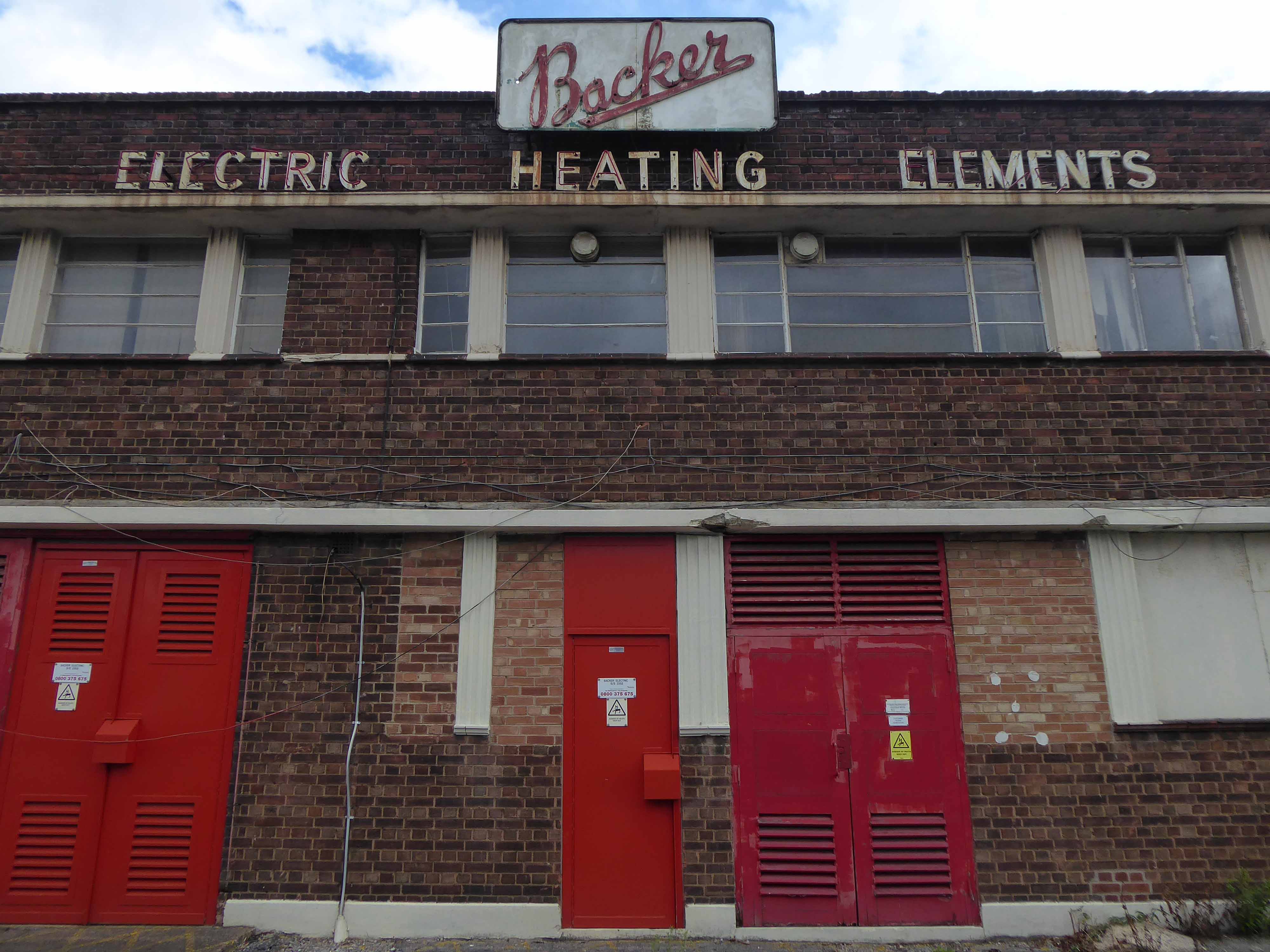
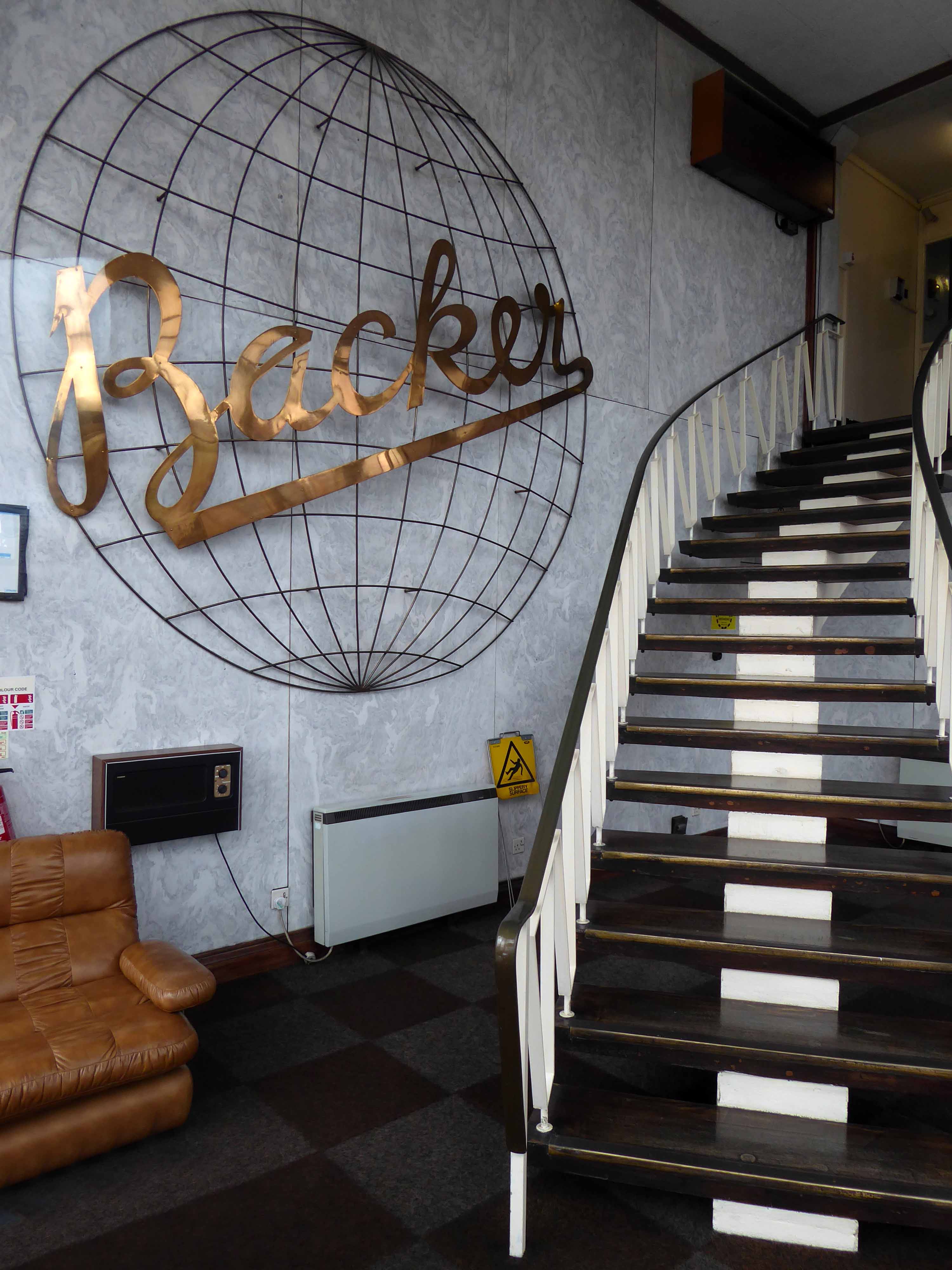
Just around the corner Backer Heating – still trading.

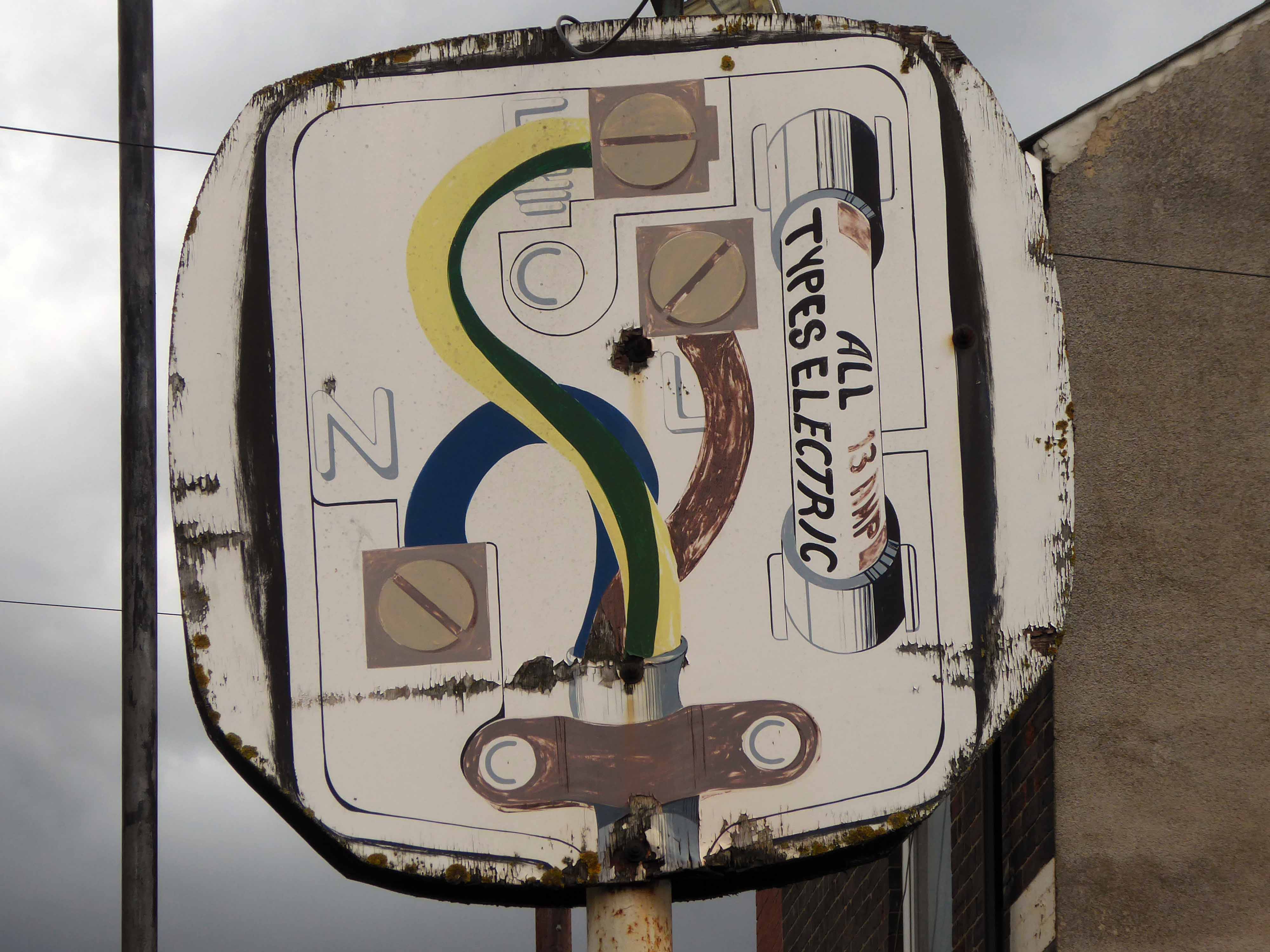
Returning toward town and enchanted by a giant 13 amp plug.

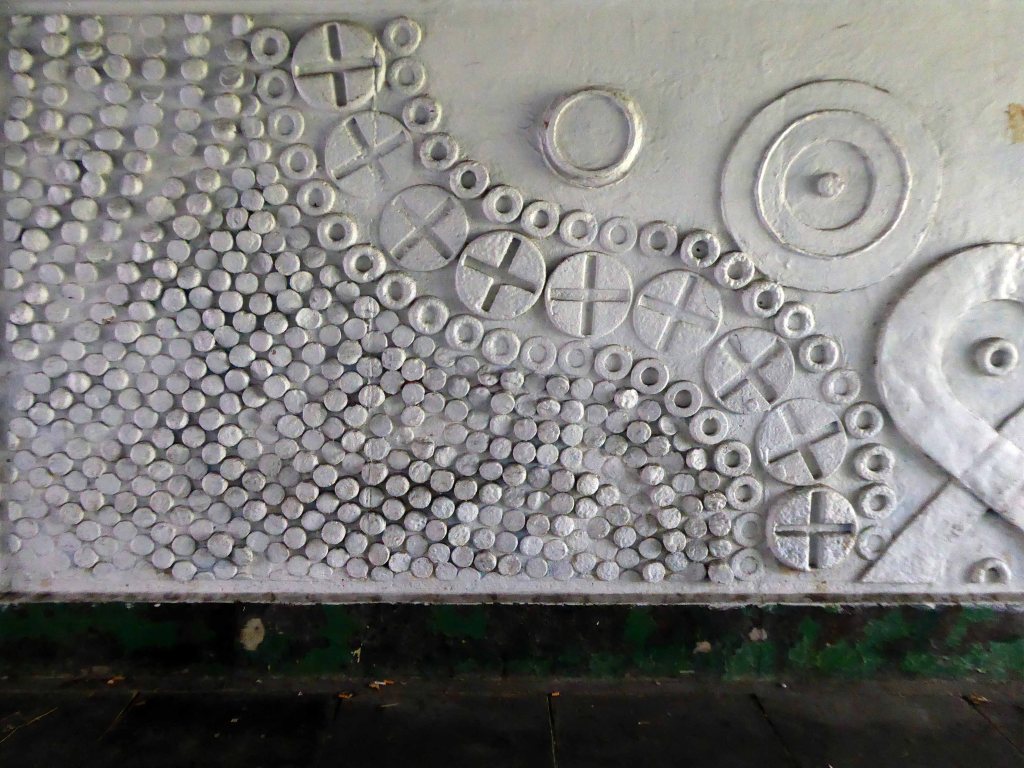
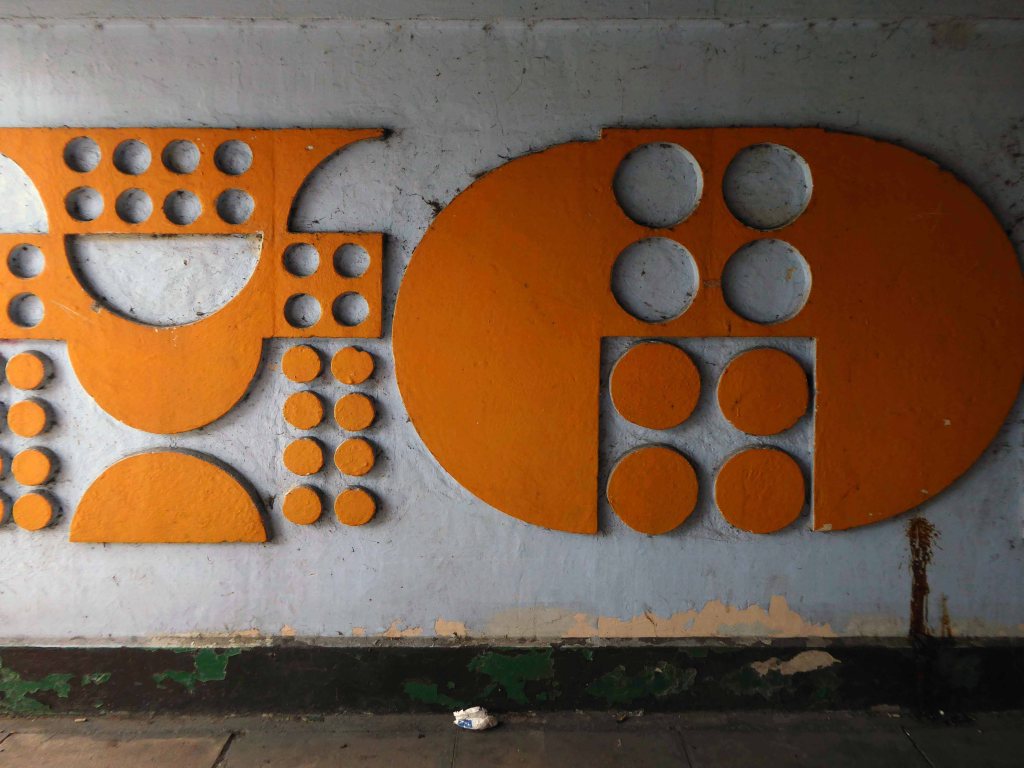
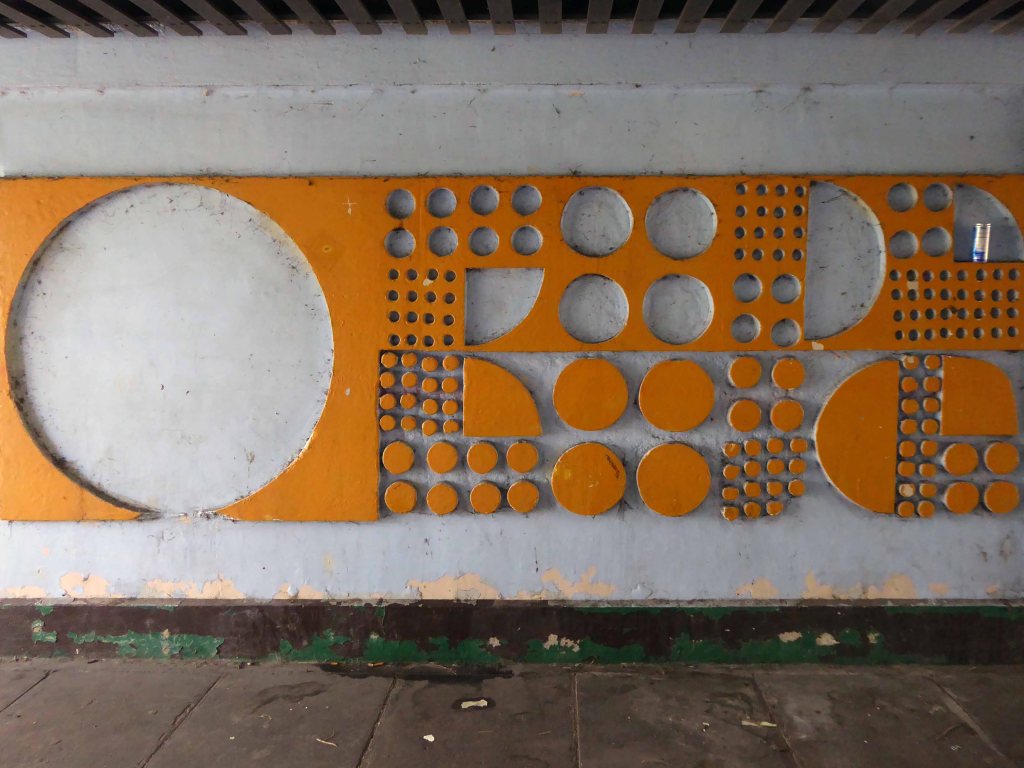
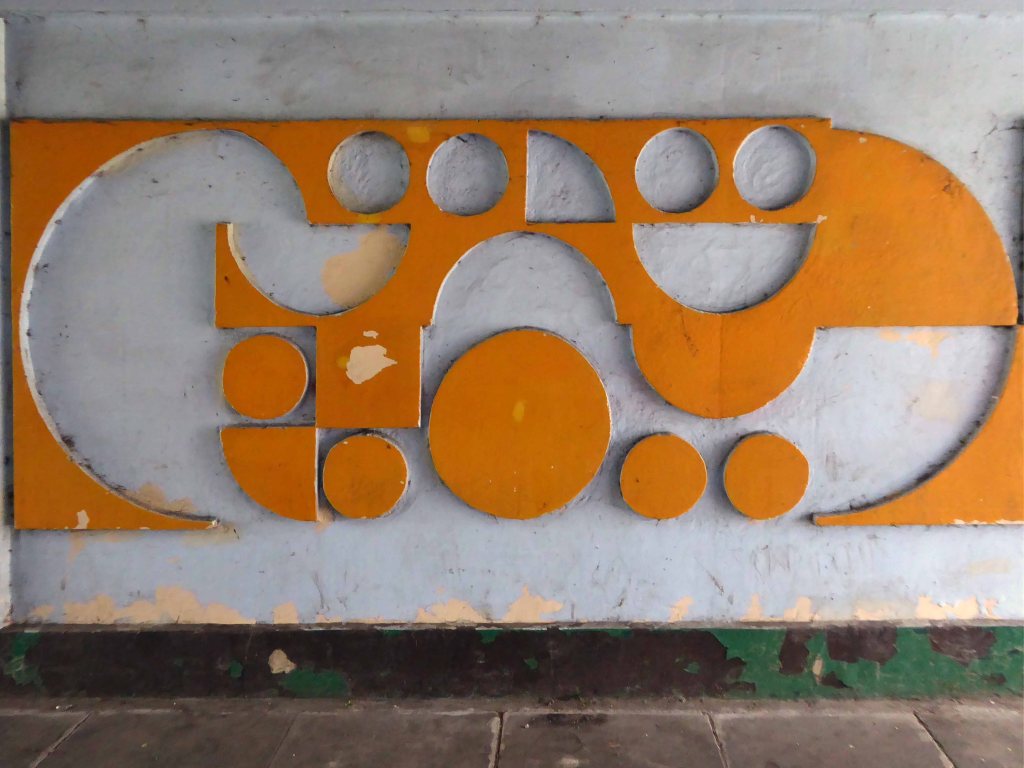
Under the underpass.

Then the other underpass.

Finally through the last underpass.

With a final notable note regarding Rotherham’s hand painted council commissioned signage – I’d like to think that they have a sign writer in their employ.

Many thanks to my learned companion Helen – thanks for a fine day out, so much to see and do!

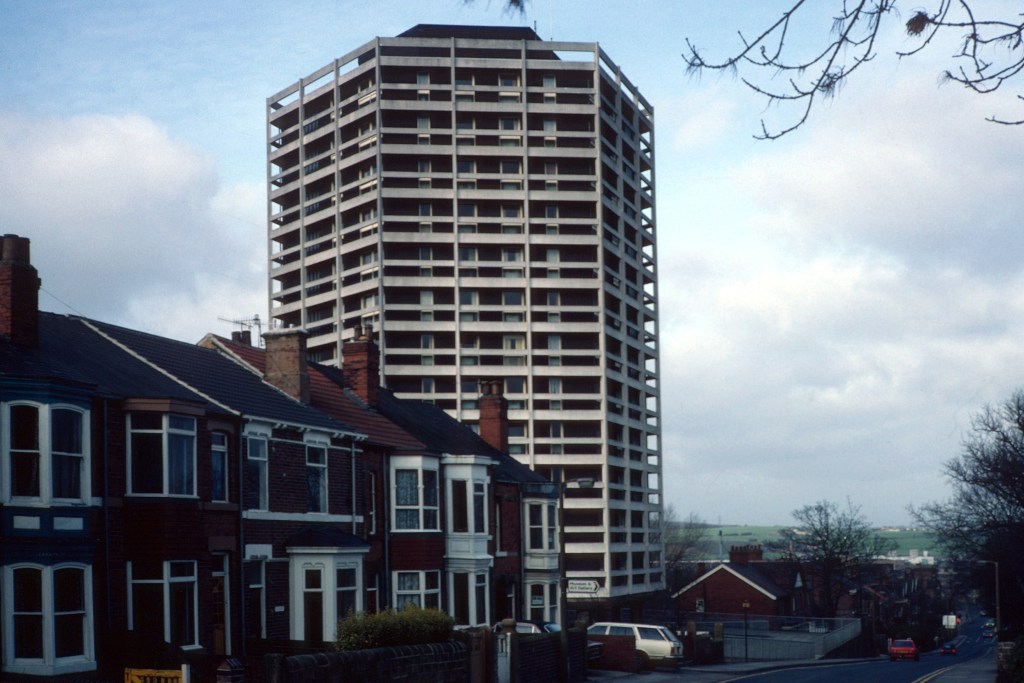
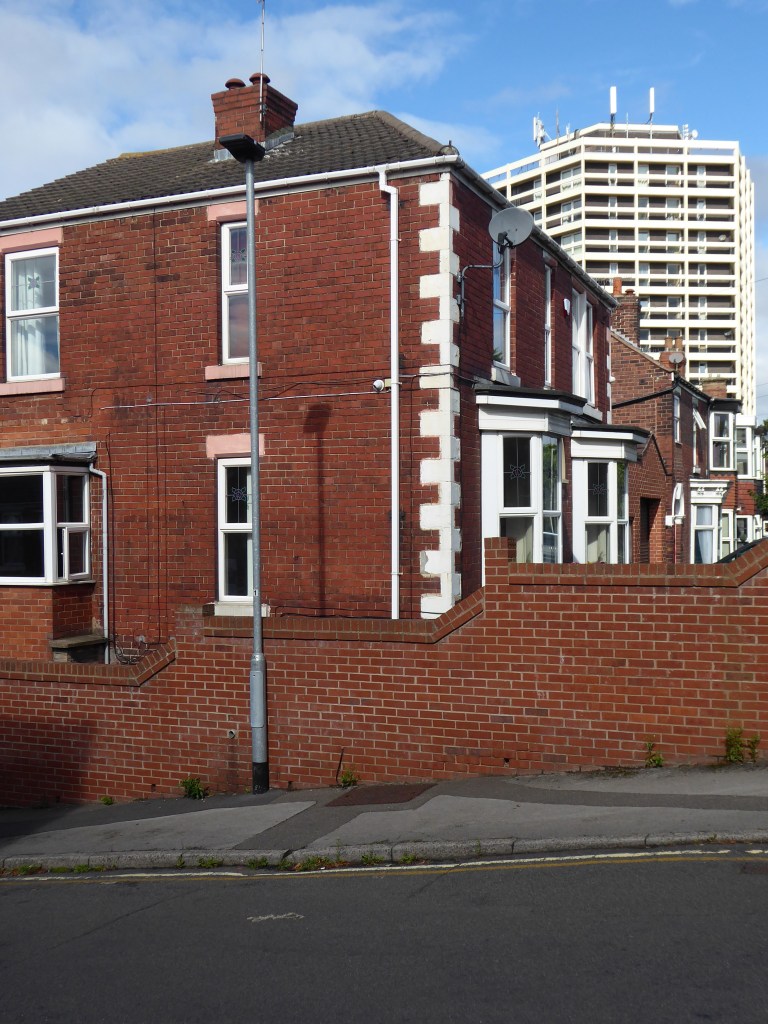
Beeversleigh Flats Clifton Rotherham

What’s got six faces and several legs and stands next to Clifton Park?

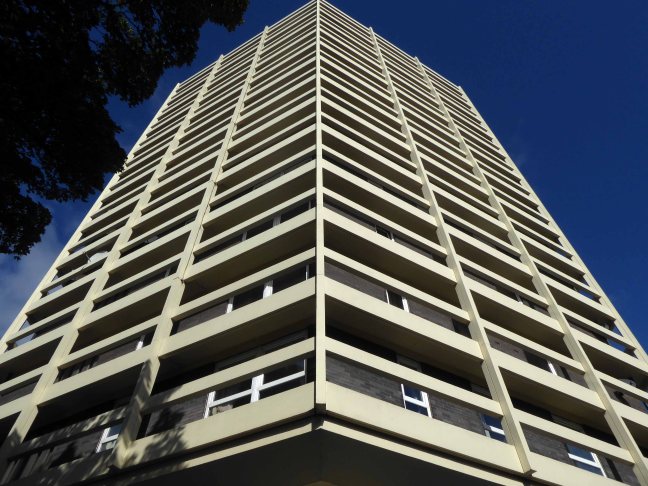
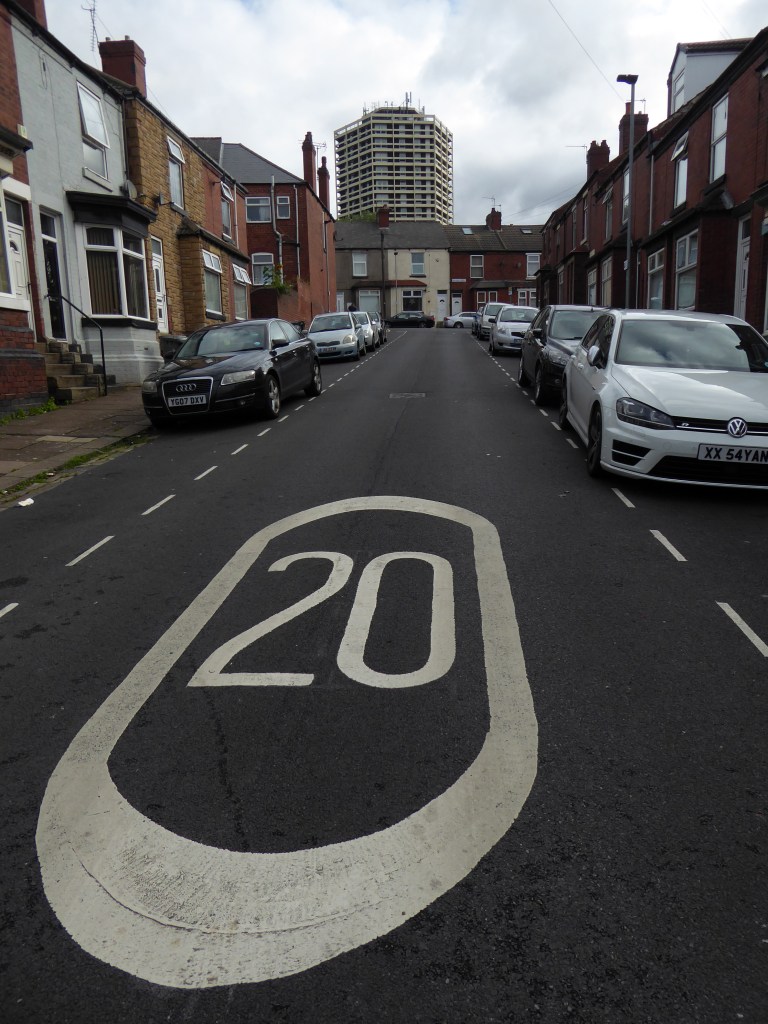
The Beeversleigh tower block that’s what!

Built between 1968-71.

Main contractors J. Finnegan it’s thirteen storeys high – housing forty eight dwellings.

Tower Block

It can be seen clearly from the town below, Rotherham’s only high rise.

I wandered on.

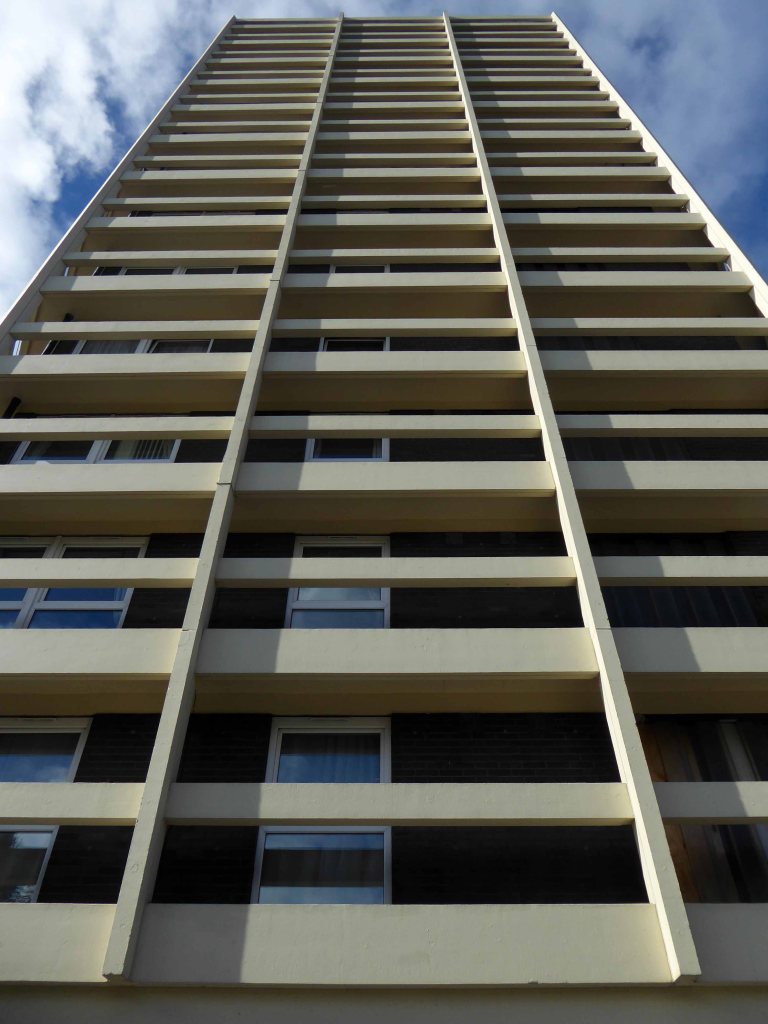
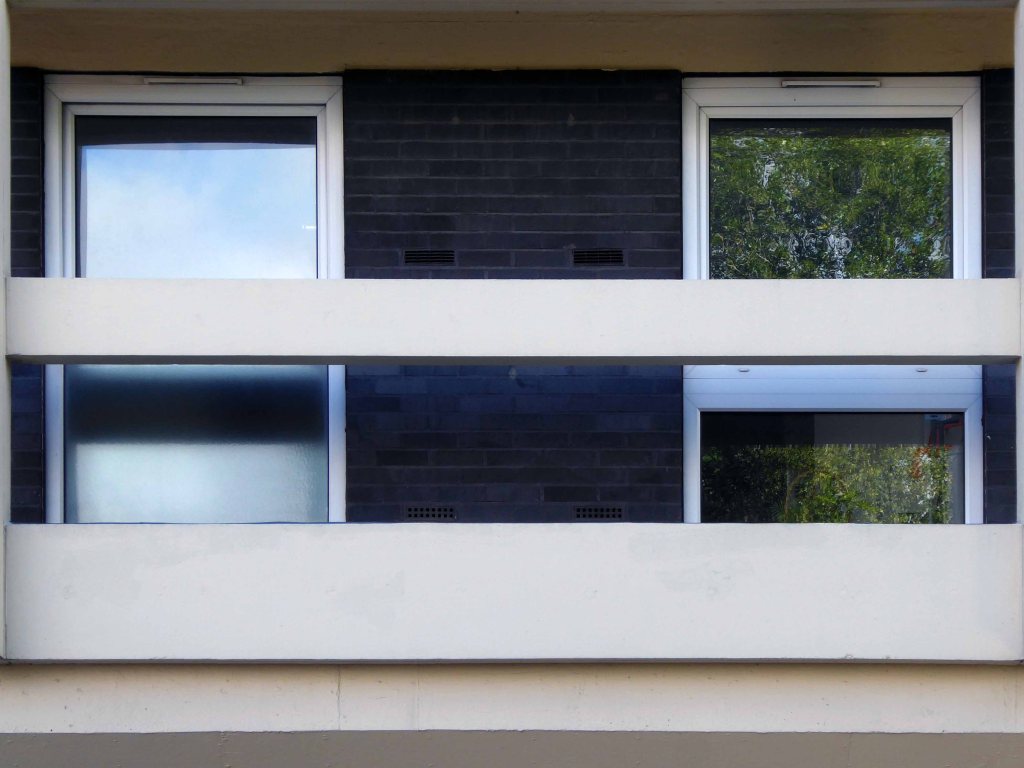
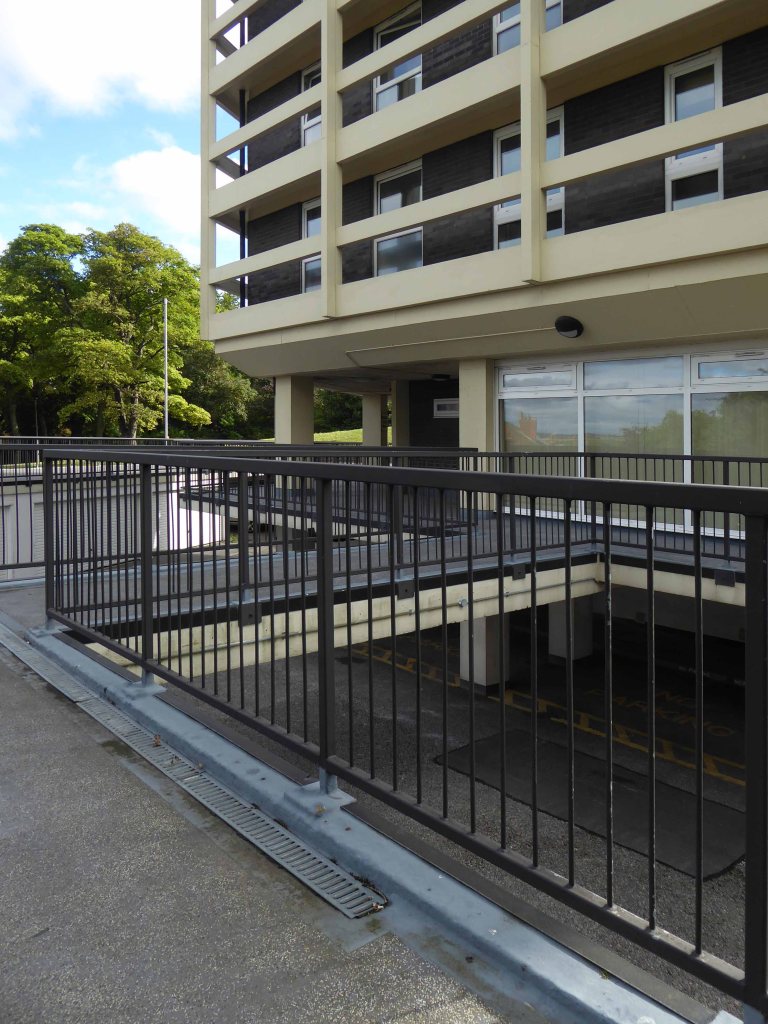
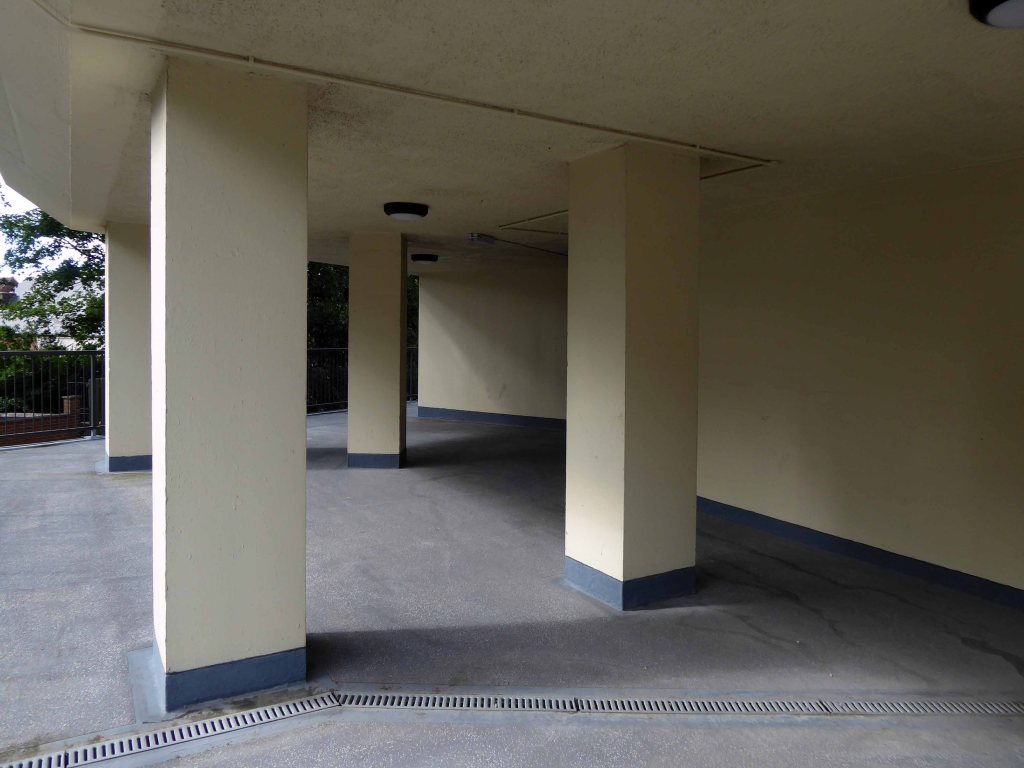
With an unusual exterior grid of concrete encasing the central hexagonal structure, creating balconies which encircle the homes.
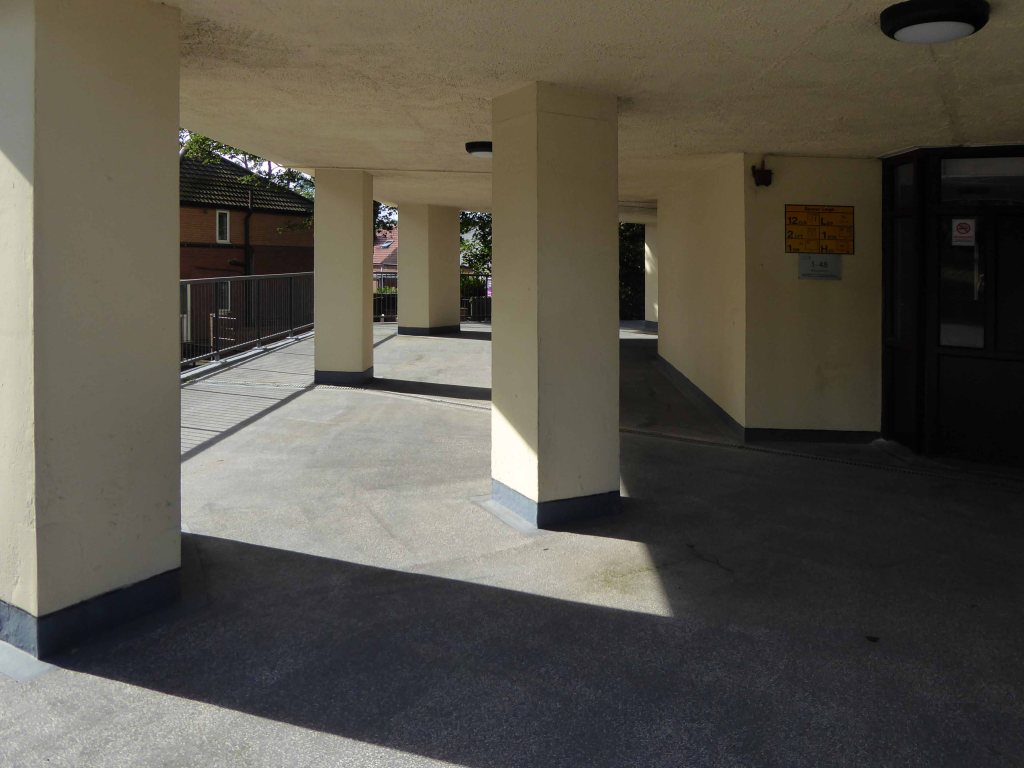
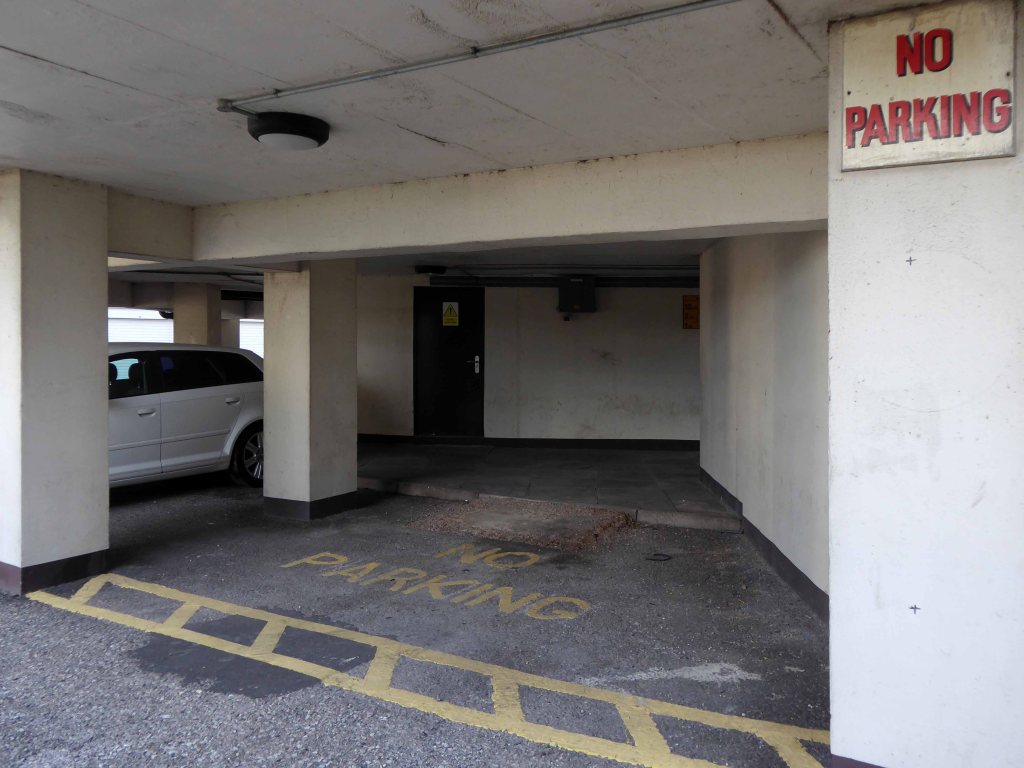
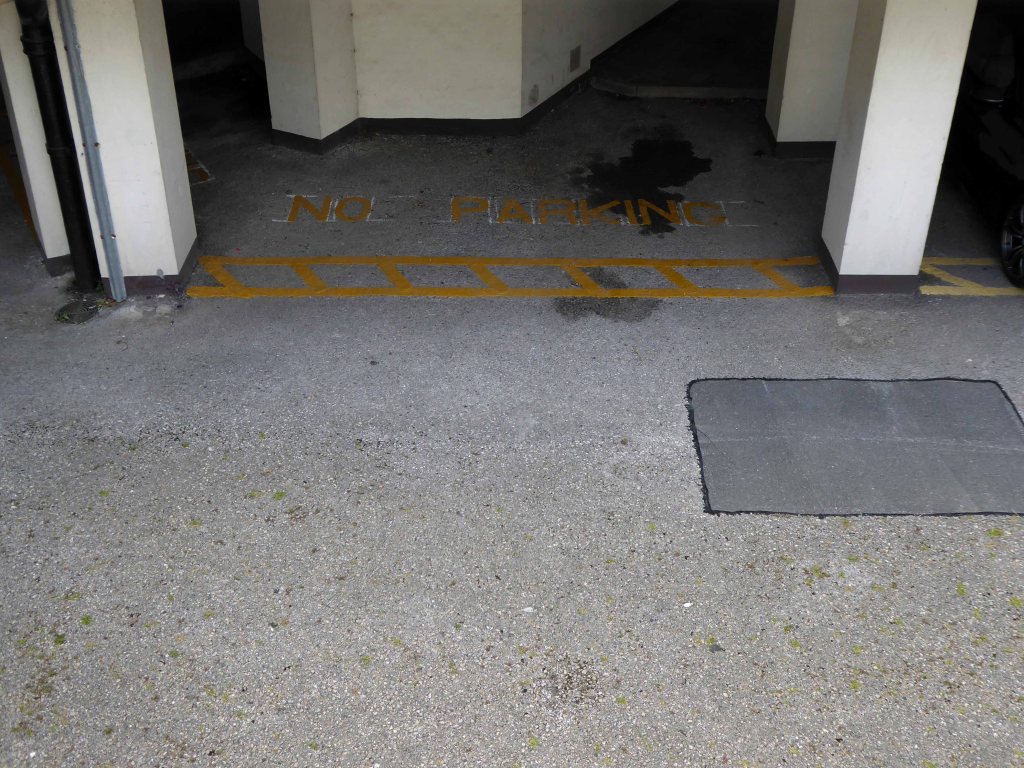
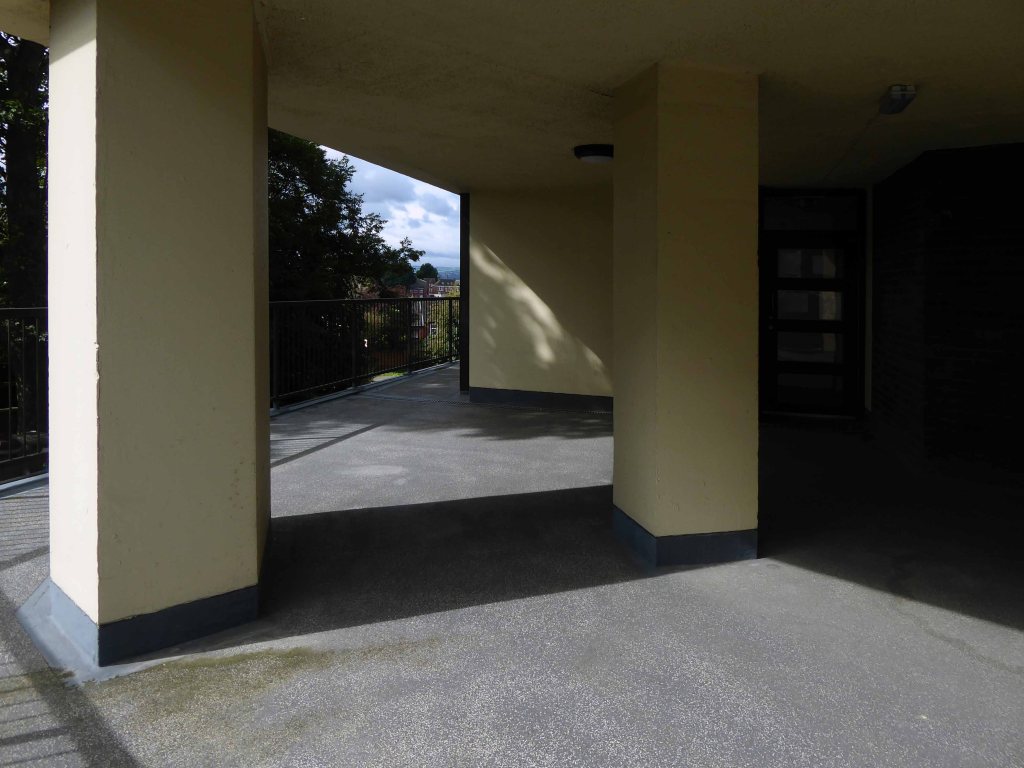
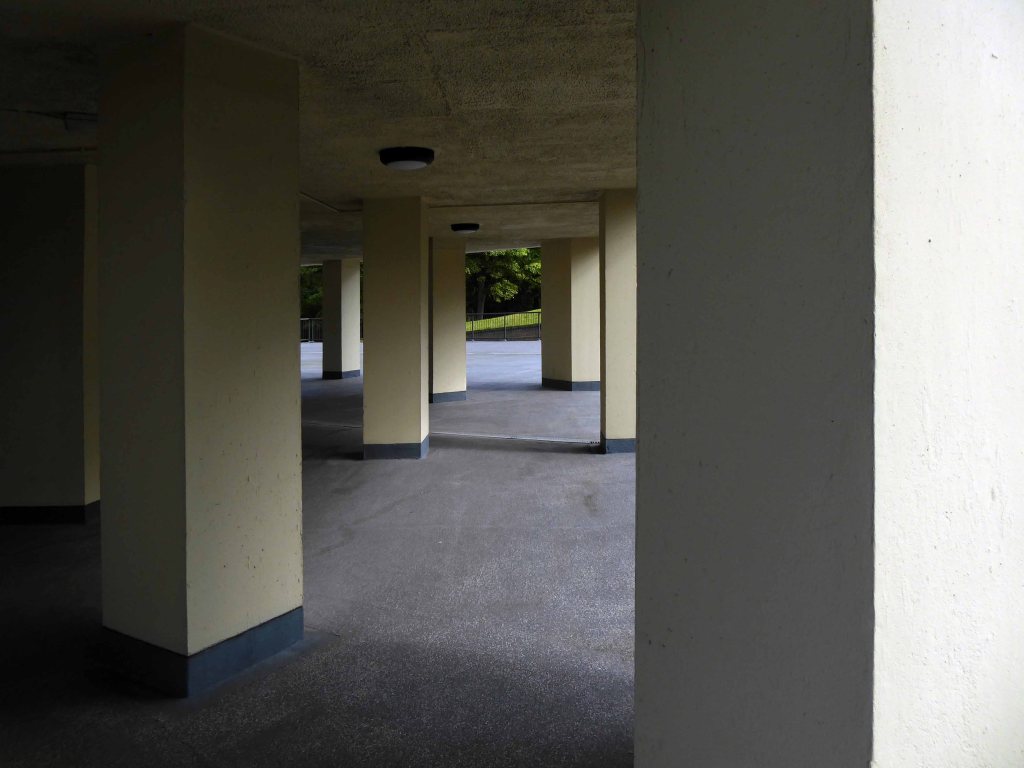
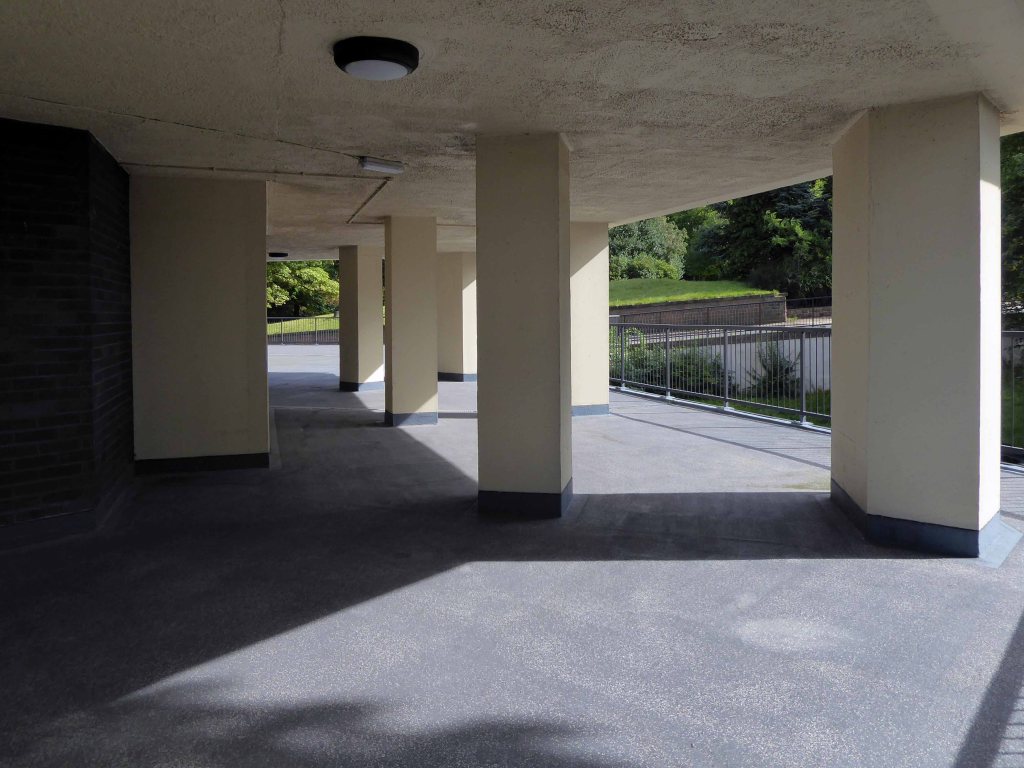
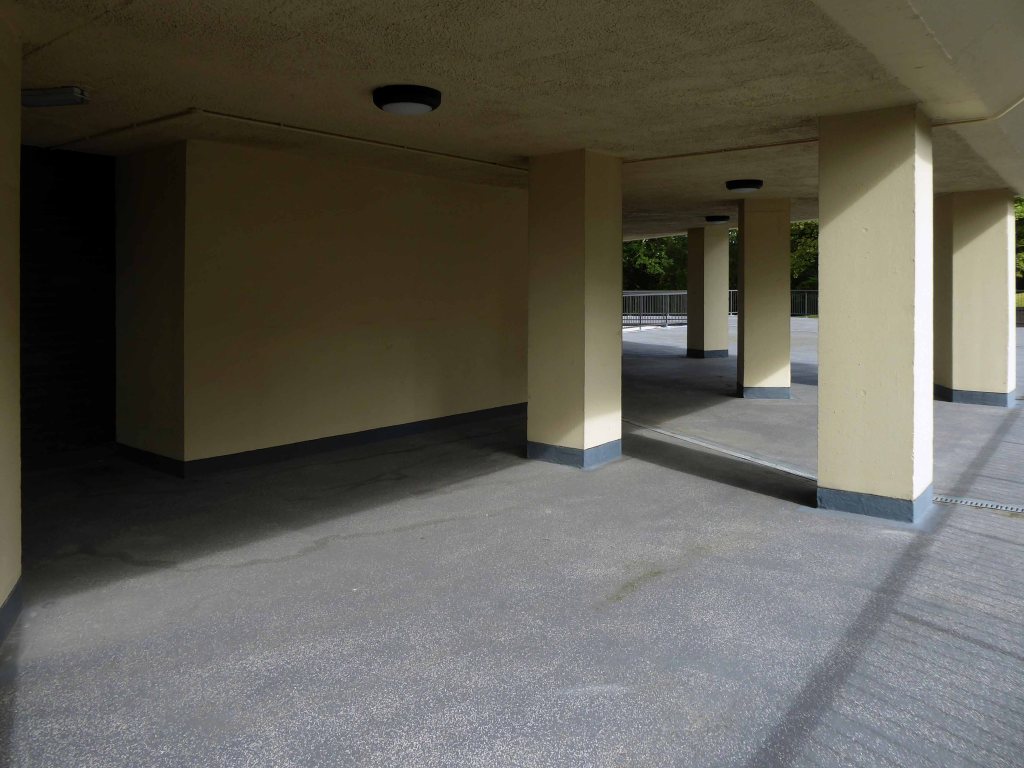
Perched on two levels of concrete columns, on a sloping site.

Looking luminous on a bright August morning.

I was enchanted and amazed, taking time to walk around look and snap.

Peck House Rotherham

Peck House, a long vacant commercial property on a prominent route into Rotherham, could be flattened for redevelopment as the owners begin discussions with the Council over its future.

The building on Eastwood Trading Estate, and its unique stylings, was the headquarters of Joseph Peck departments stores
.

Rotherham Business News 2017

The owners of the site, Backer Electric, occupy the adjacent building where they continue to manufacture heating elements, supplying products in high volume to the majority of household brand names. Options to reuse Peck House and the site have been investigated for a number of years.
A structural survey was carried out which found the building to be structurally sound and secure and therefore the Council has not been in a position to insist on its demolition.
In 1985, plans came forward to change of use of the retail/wholesale store to a church. In 2004, outline plans were submitted for a development including a hotel, restaurant, hot food takeaway and petrol station for the wider area. In 2014, Peck House was one of a number of sites discounted as the location for a new £5m primary school.

As of Wednesday 26th August 2020 it’s still there underdeveloped and overgrown.

In the company of local resident Helen Angell and having become aware of the site through the paintings of Mandy Payne and the photographs of Sean Madner – I was eager to pay a visit.

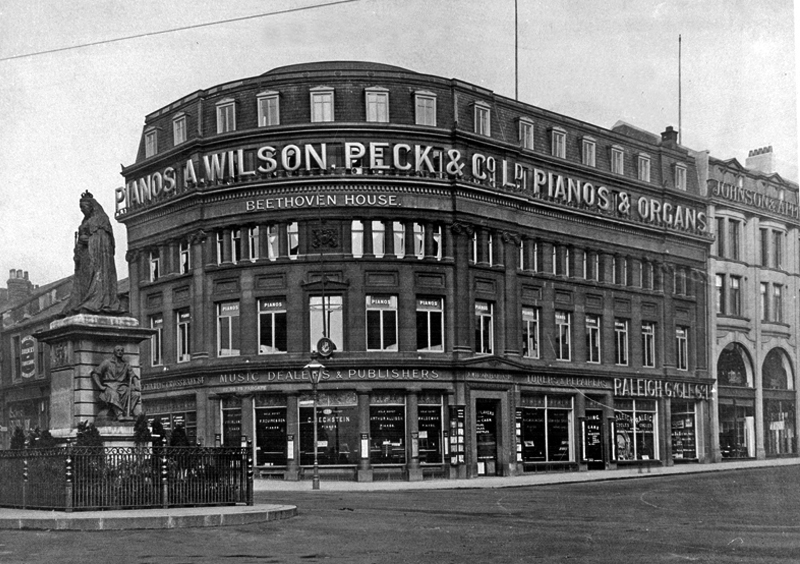
Joseph Peck departments stores originated in Rotherham in the late 1800s and had branches in Worksop, Barnsley and Sheffield.

I have only been able to find evidence of the Sheffield store – which may not be linked.

Though there are references to a Rotherham store on Bridgegate.

Joseph Peck was in Bridgegate in Rotherham, and in the late 40’s at Christmas, they had a grotto and a Father Christmas. The queues of parents and children would go down the yard and up Bridgegate. My mum and dad always took my brother and I to see Father Christmas and get a present from him. The store was a department store selling just about everything that was available just after the war. Mum took my brother and I coming up to one Christmas, she was trying to find a bicycle for my brother and I, but they didn’t have one. As we came out of the store, one of old fashioned three wheel railway delivery lorries was just pulling out of the yard. On the back was a blue bike. Mum stopped the driver and asked him where he was taking it. He told her ‘Redgates at the bottom of Ecclesall Road in Sheffield. She shouted ‘Taxi’, and told the driver to ‘follow that lorry’. Just before the lorry arrived on The Moor, she told the taxi driver to overtake the lorry and go to Redgates. We rushed in, she found the manager and asked him about the bike. He hadn’t known that one was being delivered so Mum told him she’d have it without even asking the price. The lorry driver didn’t even have to take it off the lorry, and delivered it to our house next day.
My elder brother had it first, then me, then my younger brother, and finally our young sister. It was still being used when I flew the nest in 1959. 

Merry Christmas everybody.

Sheffield Forum

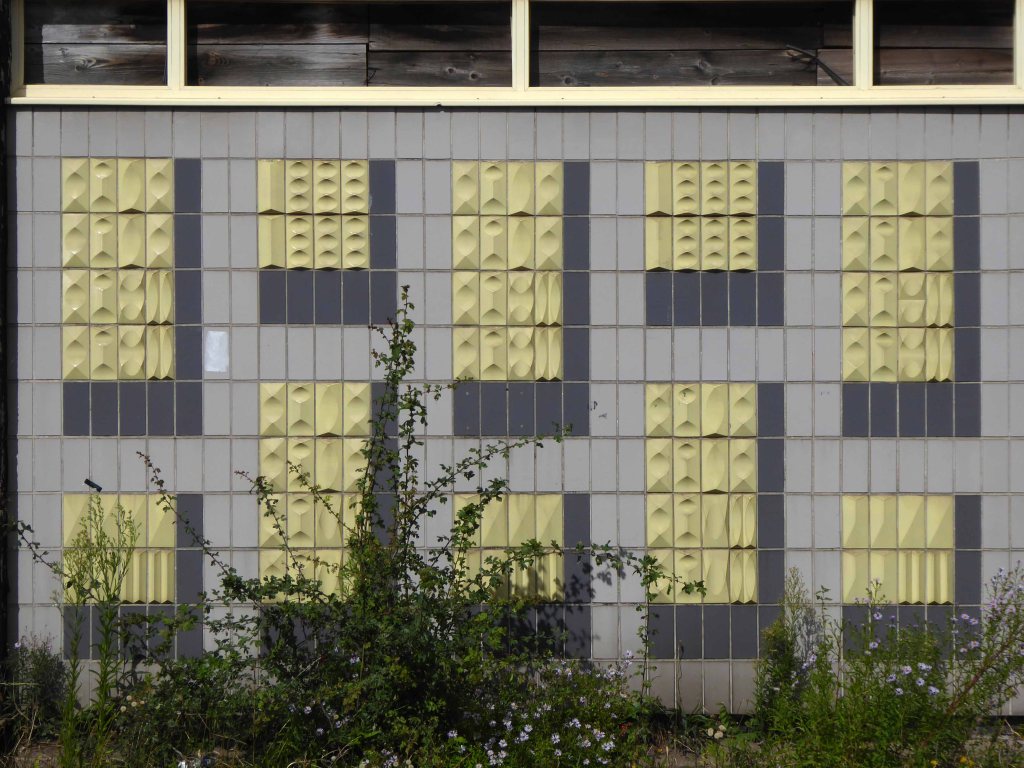
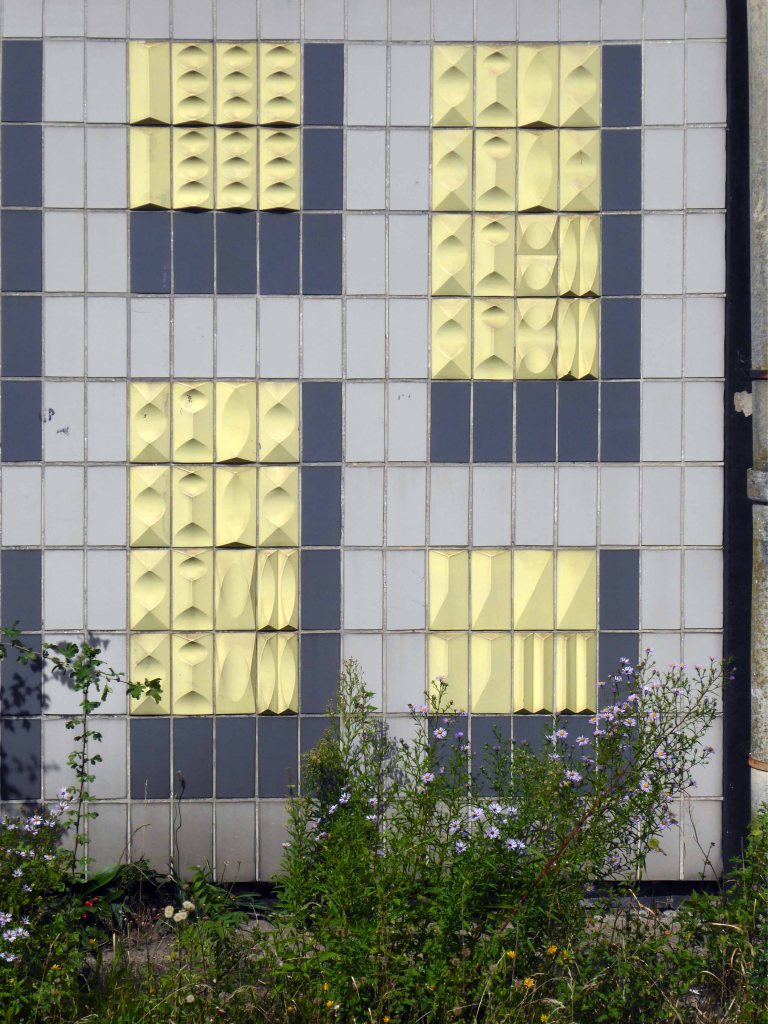
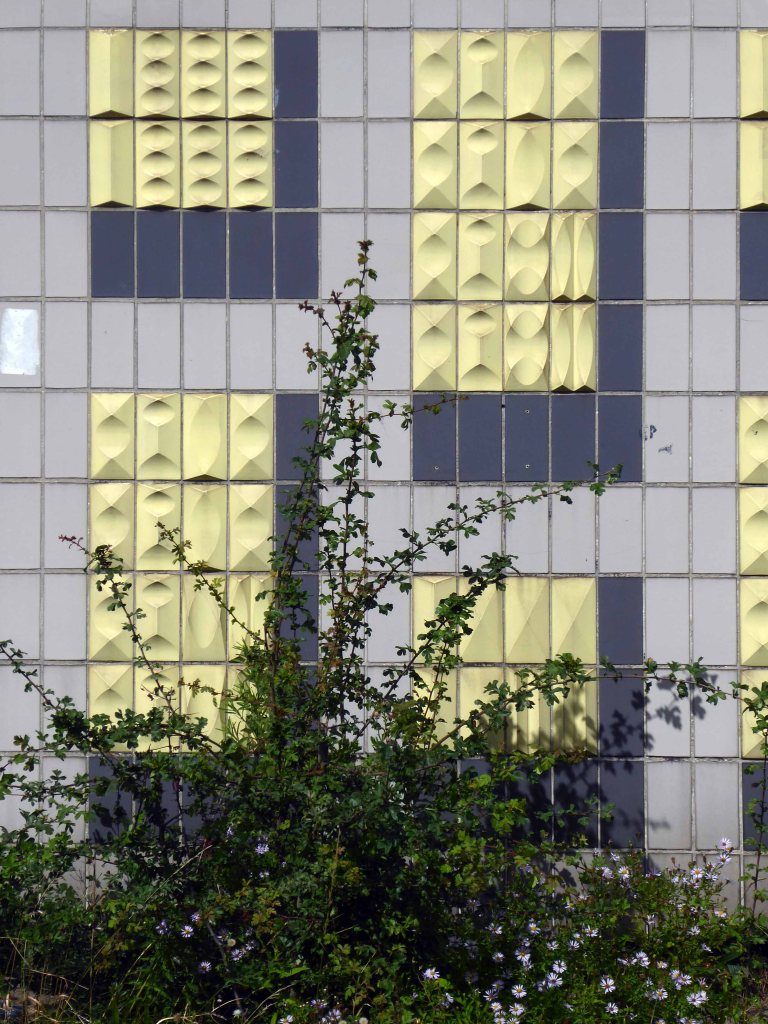
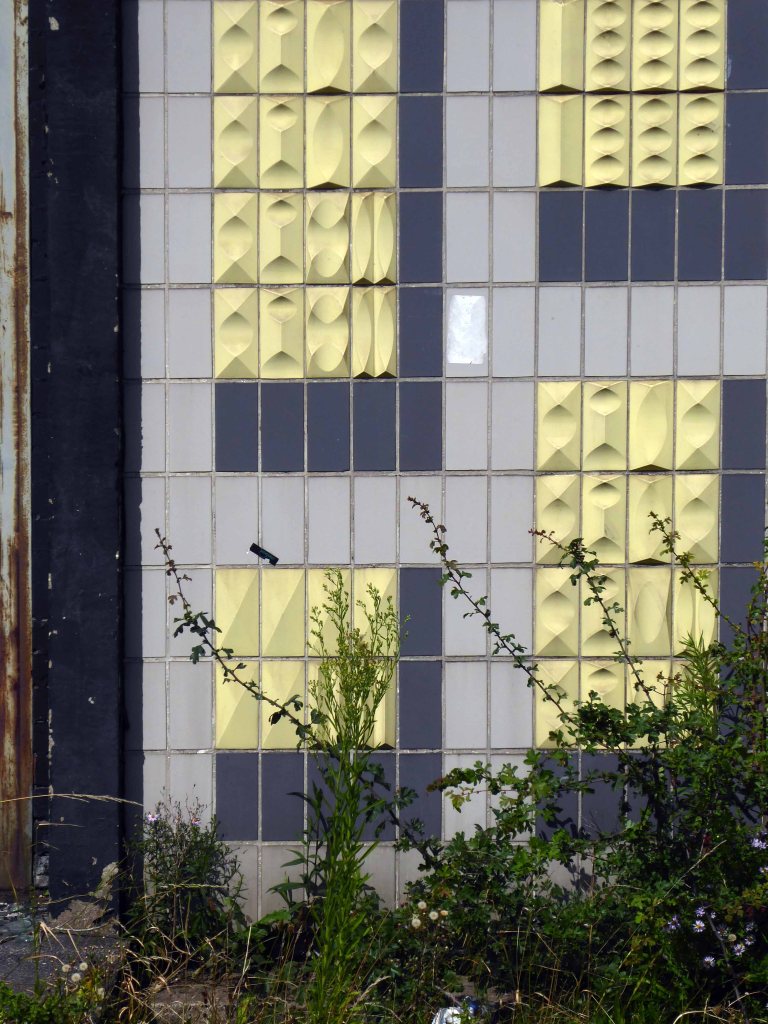
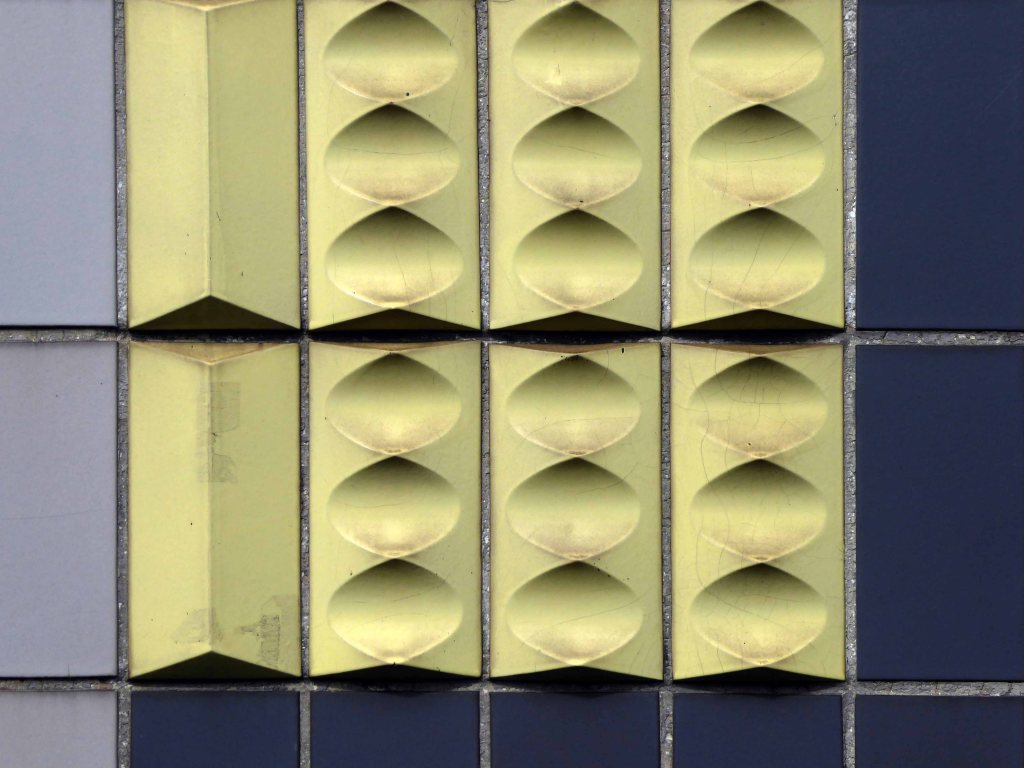
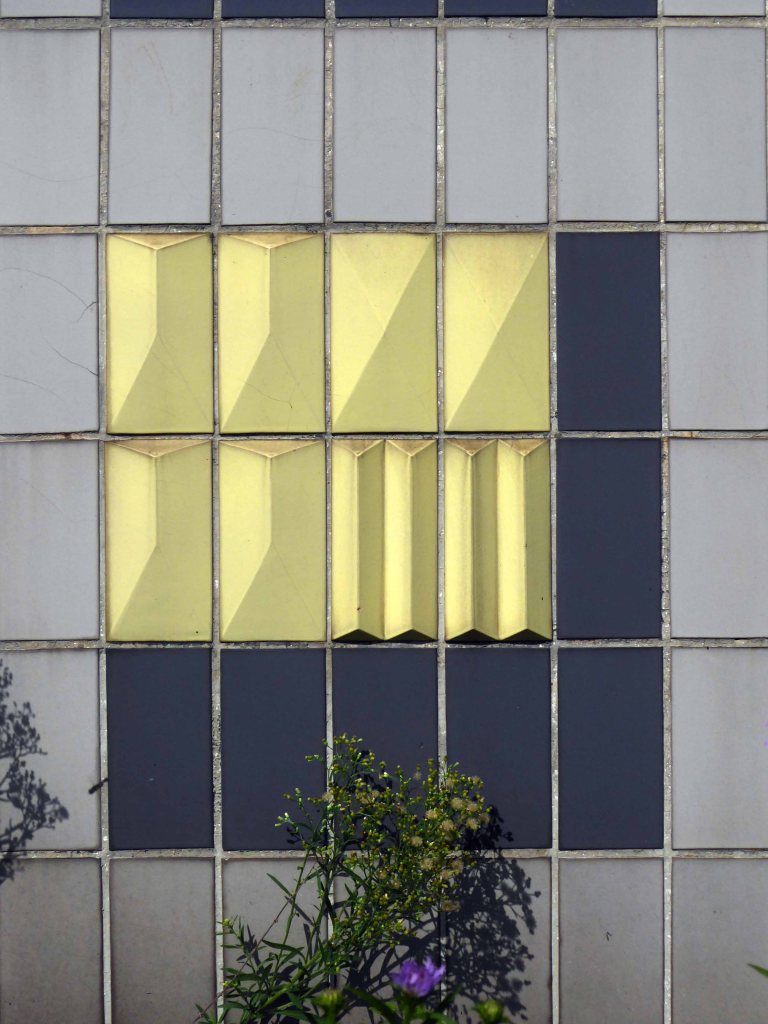
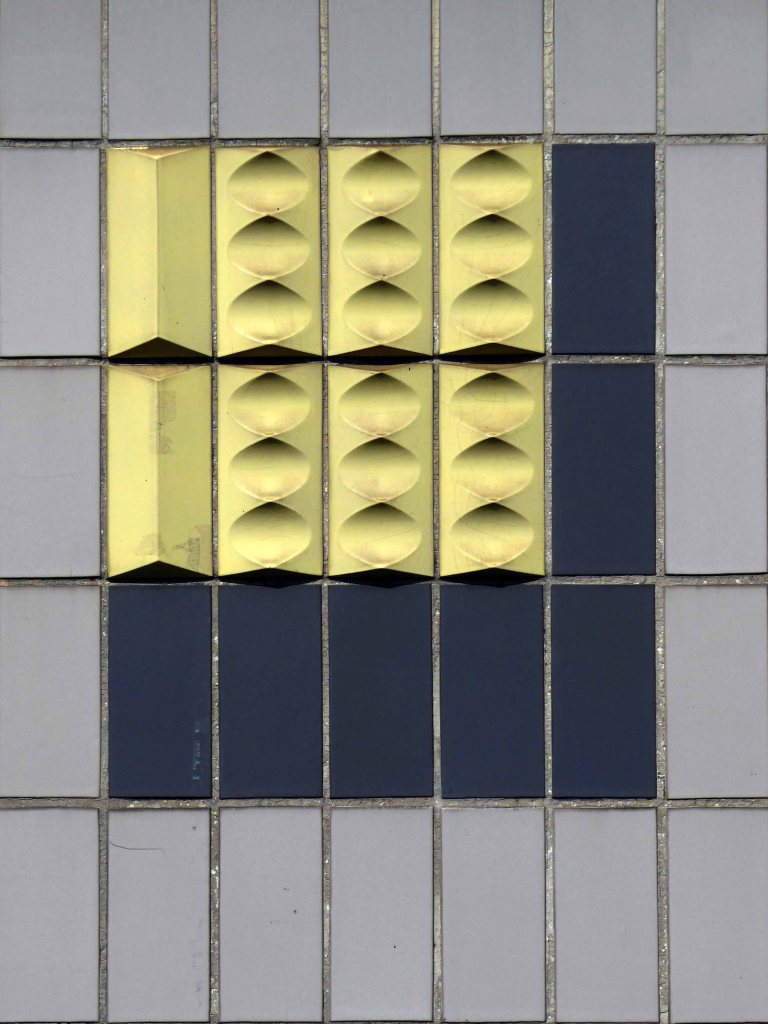
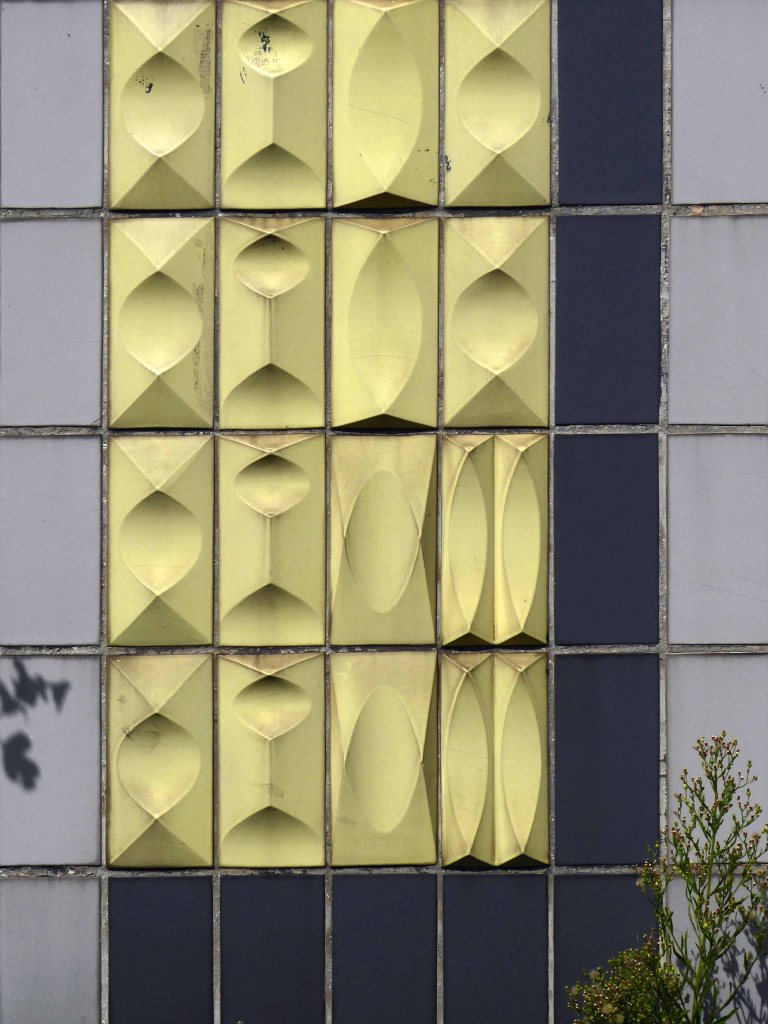
So here we are confronted with some tip top architectural type high atop the low-rise industrial facility.

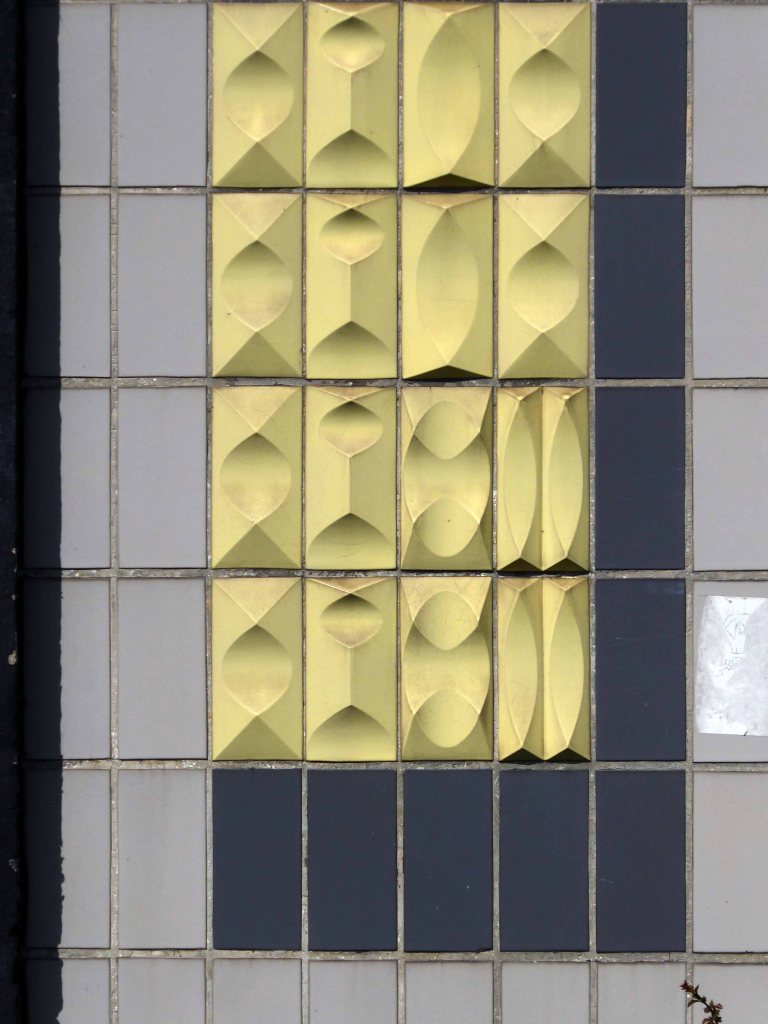
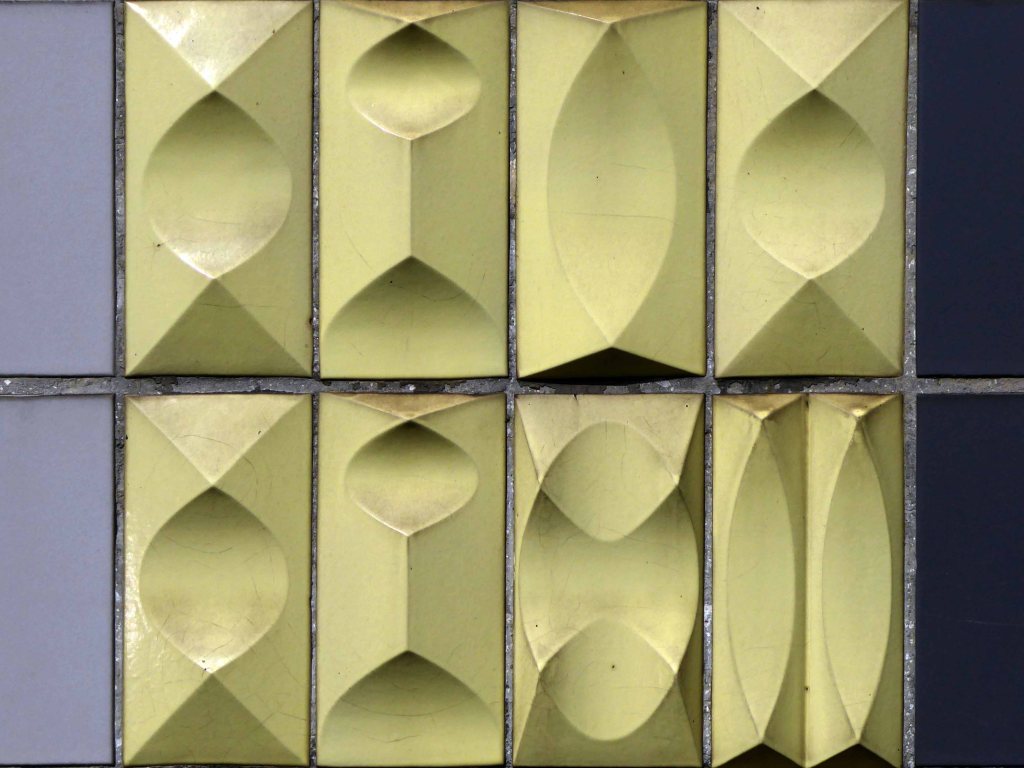
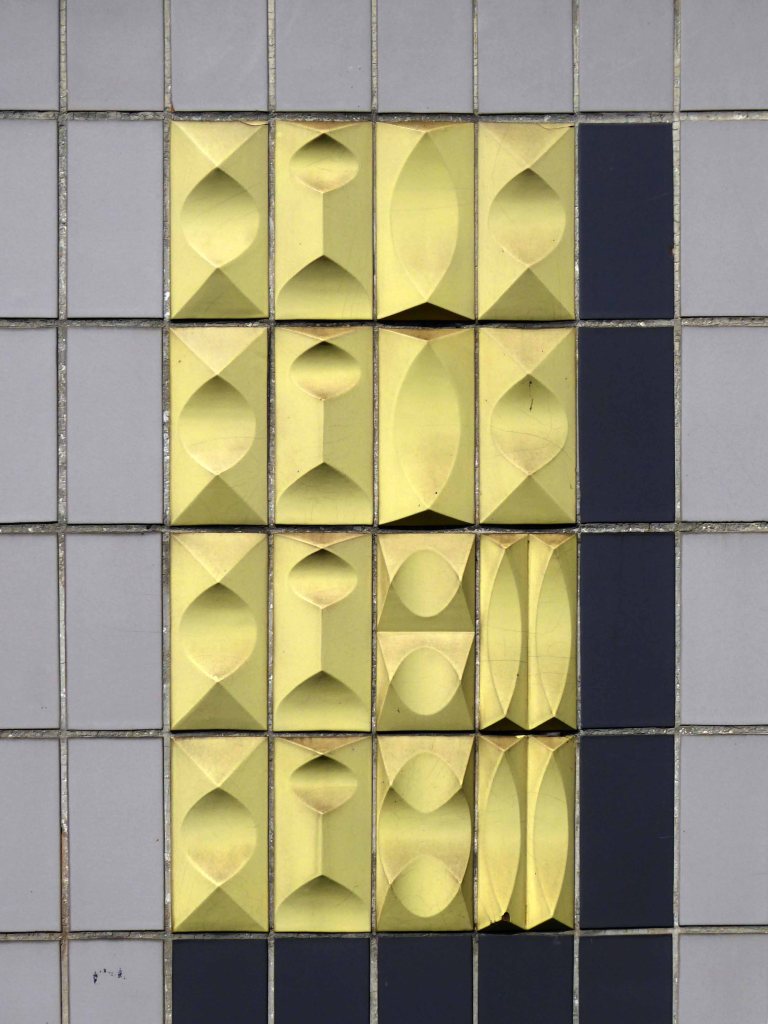
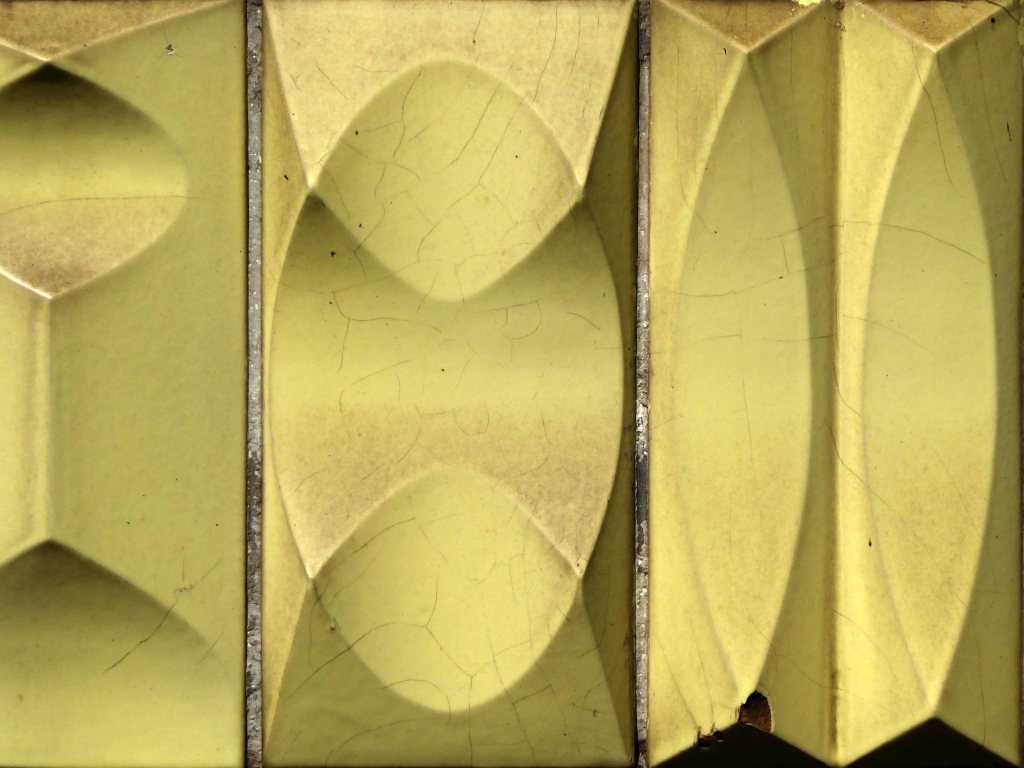
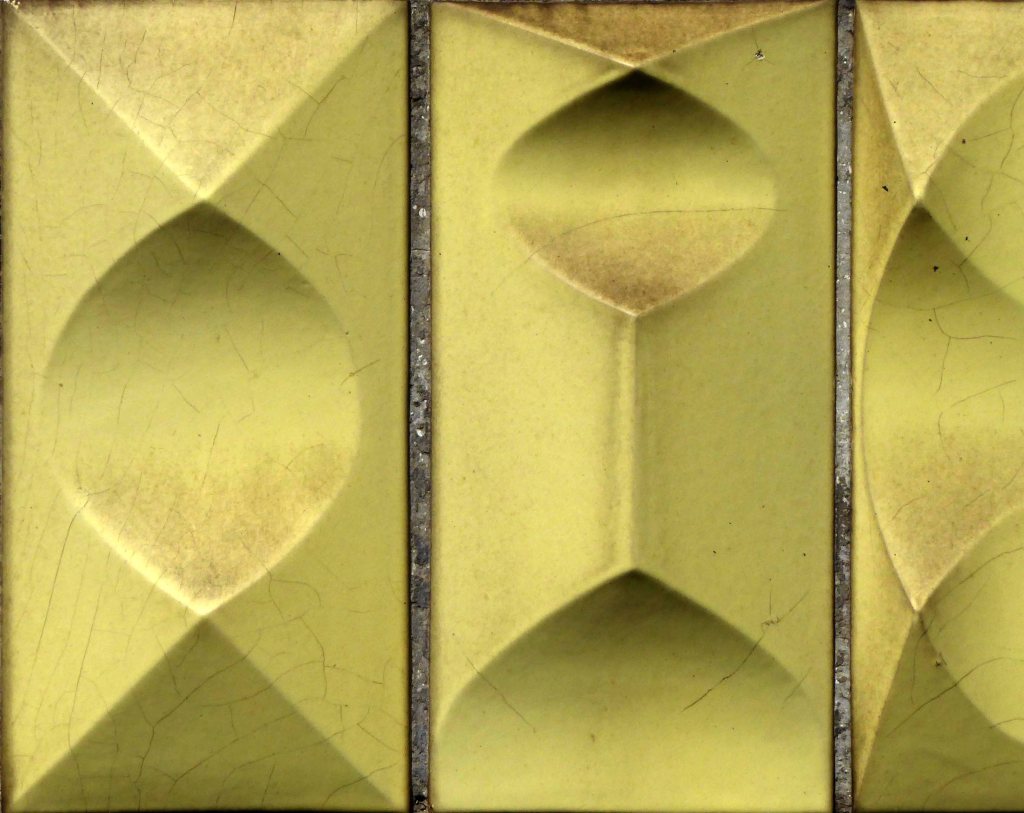
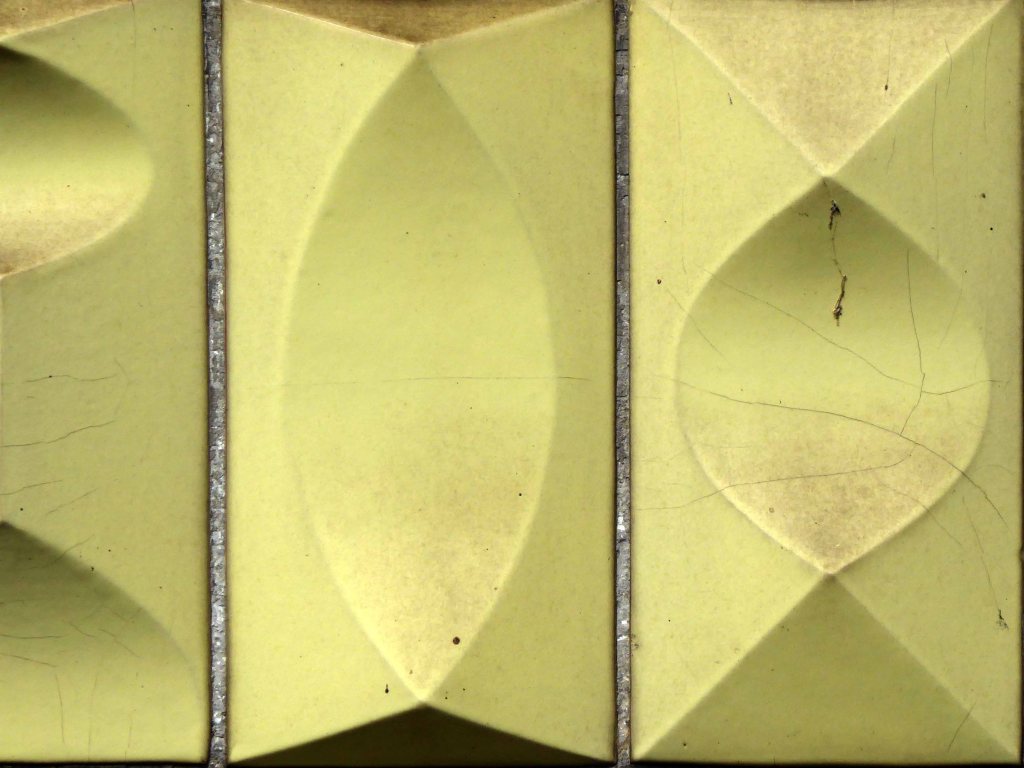
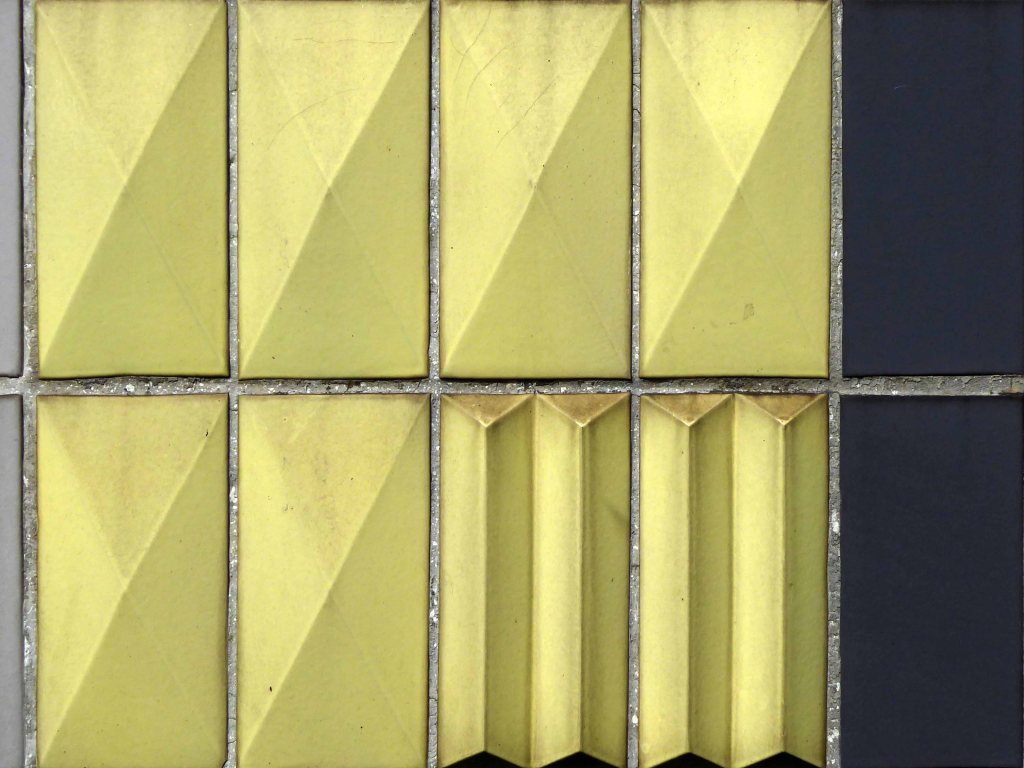
What’s more there is a panel of ceramic tiles many with a pronounced profile in relief – a fugue in lemon, grey and a deep Prussian Blue.

No reference to the manufacturer or date online sadly, suffice to say that they are truly enchanting – look!

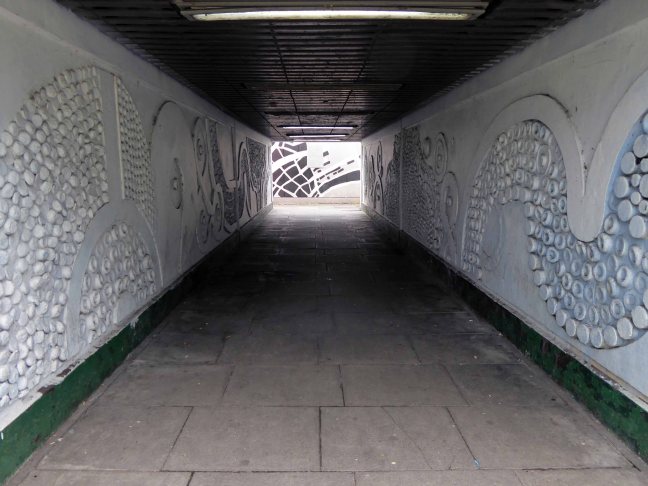
Rotherham Underpass #3

First there was the first, then secondly the second – this is the third and last underpass.
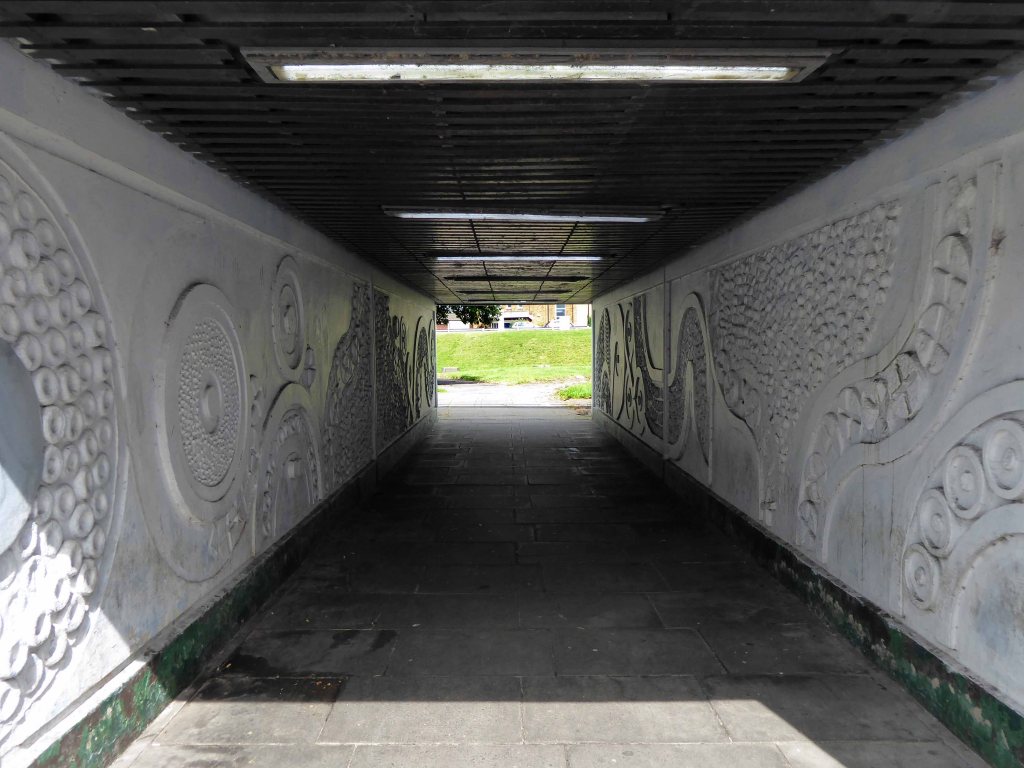
A fitting finish to the series as we pass through the final subterranean frontier out into the clear light of the South Yorkshire day.
Each one is a neglected gem of municipal modernism, the underpass a feature under threat, the pedestrian often subsumed by the drive to accommodate the motor car.

As of last Wednesday, we all seem to have tenuously hung on in there.

Oh we’ll hear the thunder roar, feel the lightning strike.
At a point we’ll both decide to meet at the same time tonight
.

Rotherham Underpass #2

Having posted the first underpass – let’s take a look at the second.

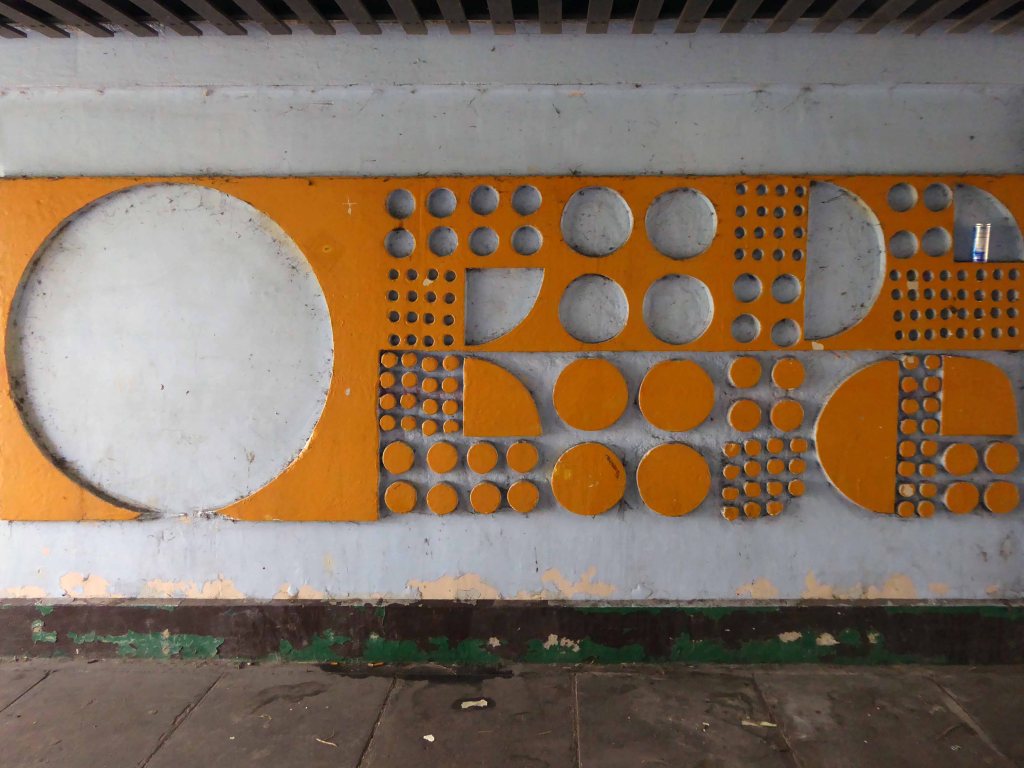
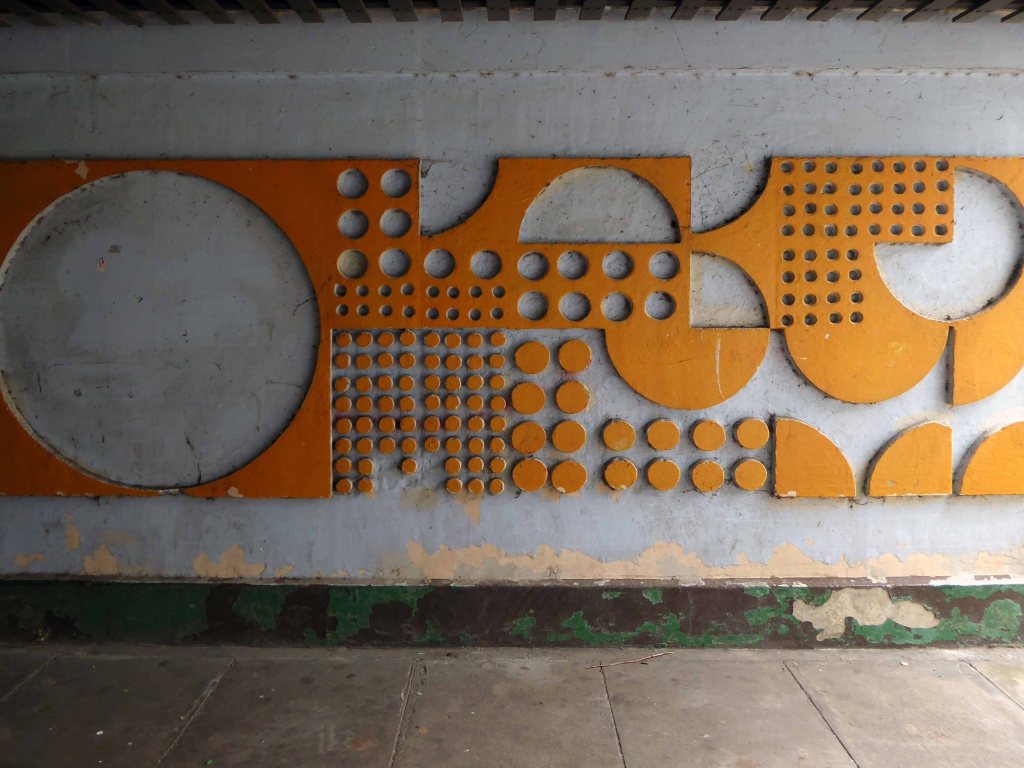
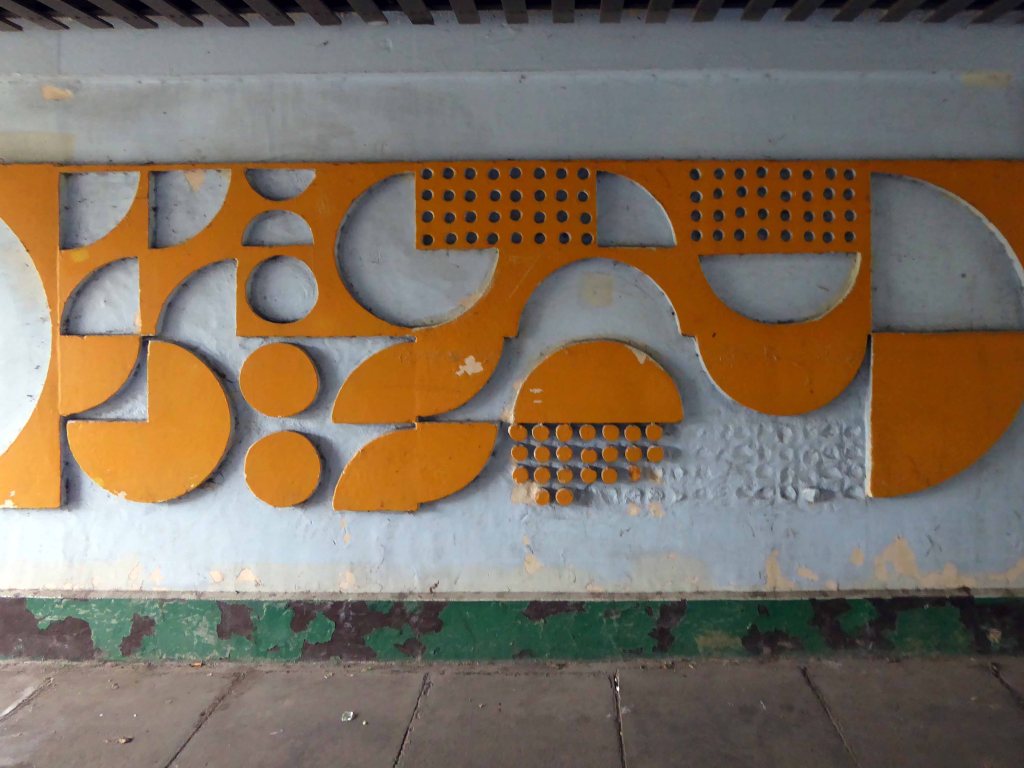
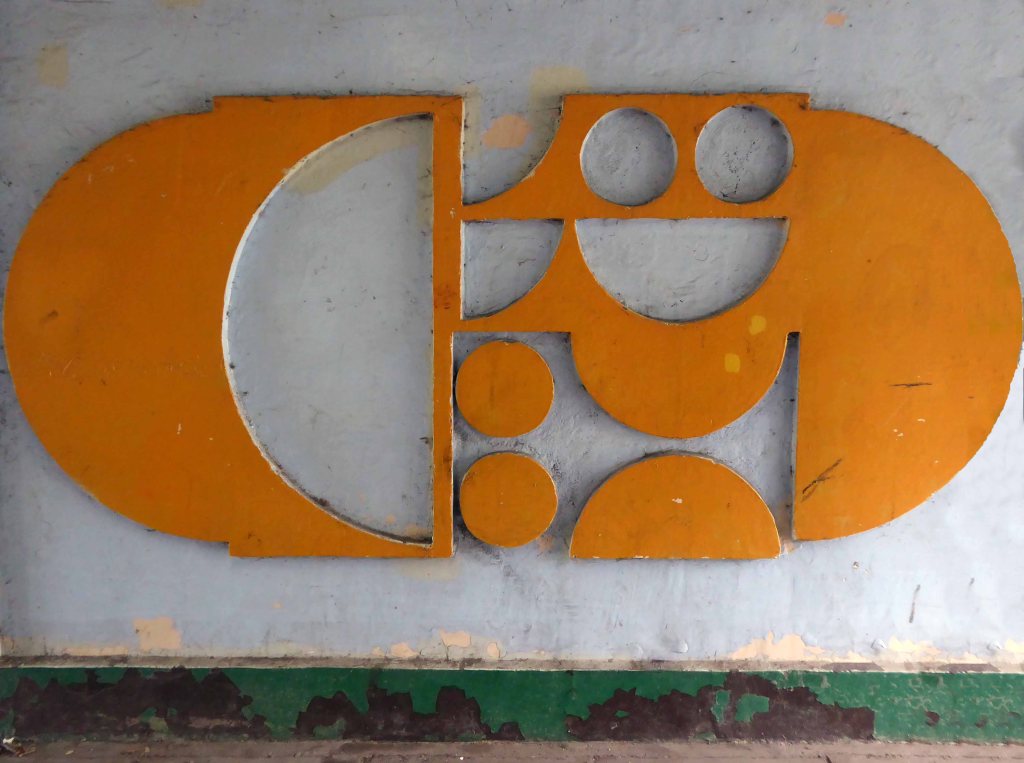
Orange on white, circles within circles squared.

Rotherham Underpass #1

I had seen a photograph posted by Mandy Payne of an underpass in Rotherham – illustrating a delightful concrete relief.

Enlisting the assistance of friend and local resident Helen Angell, we set out on a mission to visit the roundabout in back of the big Tesco, which housed the three underpasses.

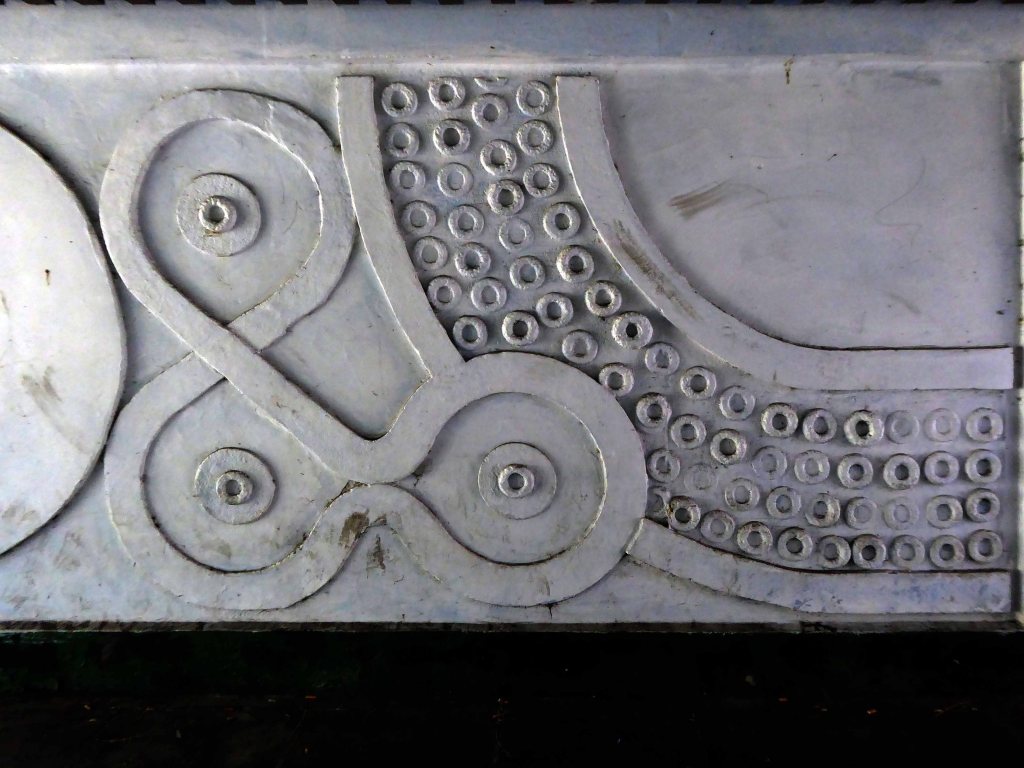
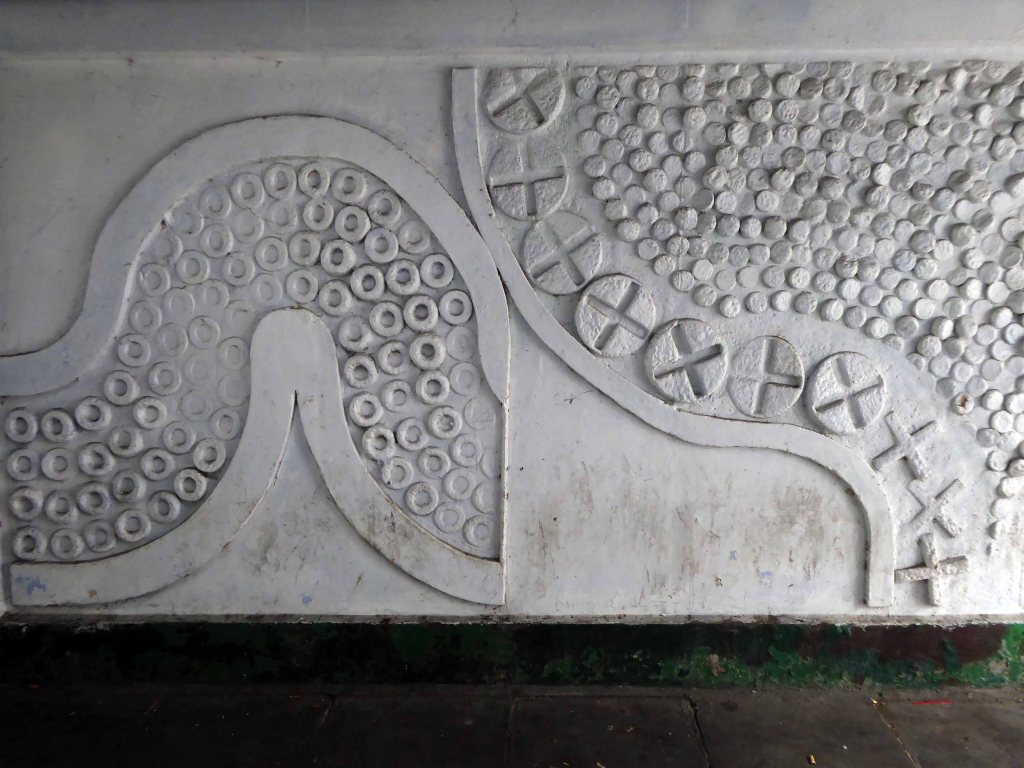
This is the first – painted white, well whiteish – more than somewhat disabused by the passage of time and the passage of users of the underpass.

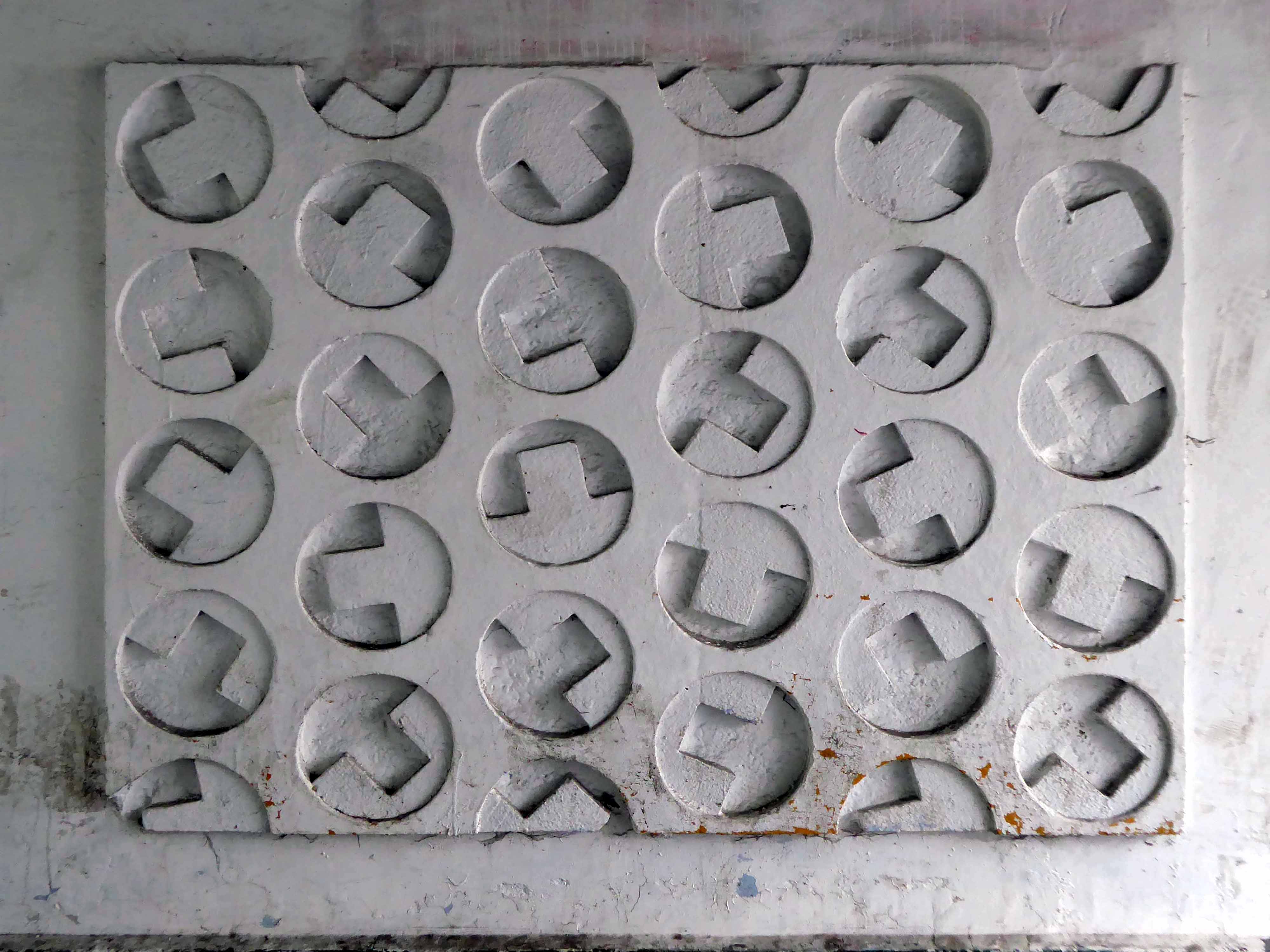
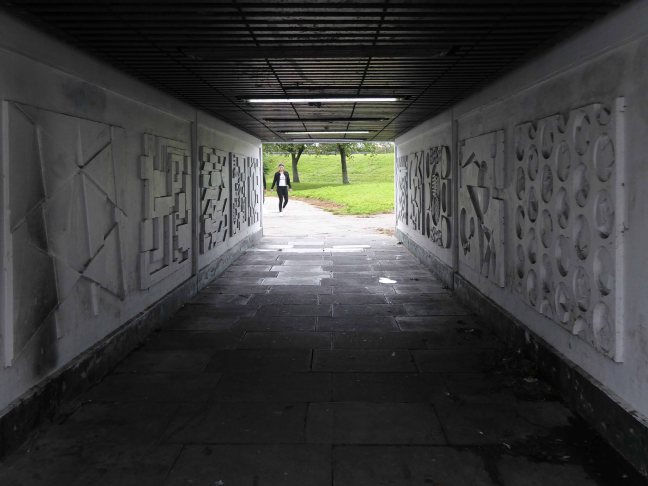
Brute and angular, incised and cursive and currently lacking authorship or attribution.