Newtown, a town of tiny delights, my journey through Wales by bike took me there.
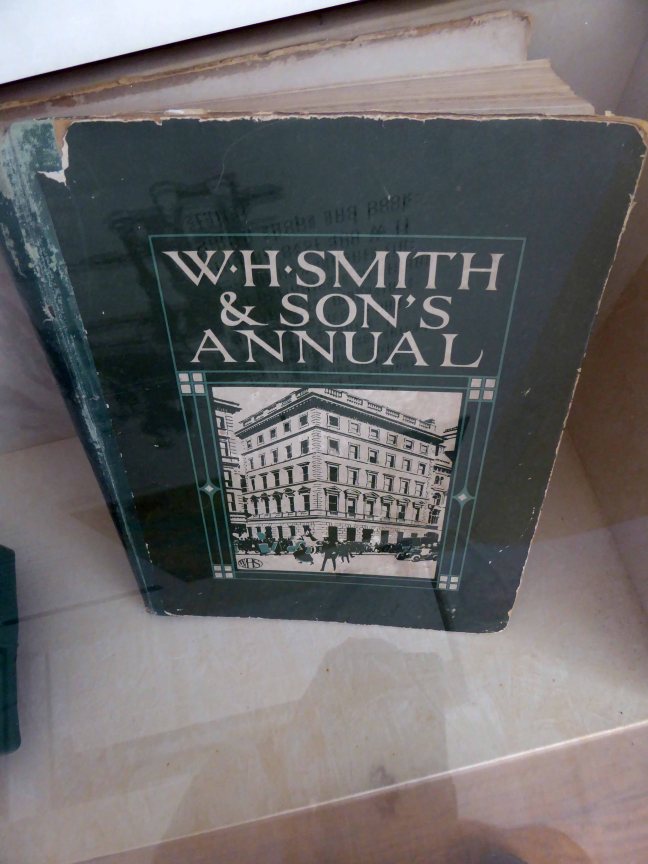
None more delightful and surprising than the branch of WH Smiths, its exterior adorned with the most beautiful of signs, tiles and lamps.
Curious, curiously I explored further, the porch housed a newspaper and magazine stall with further tiled images.
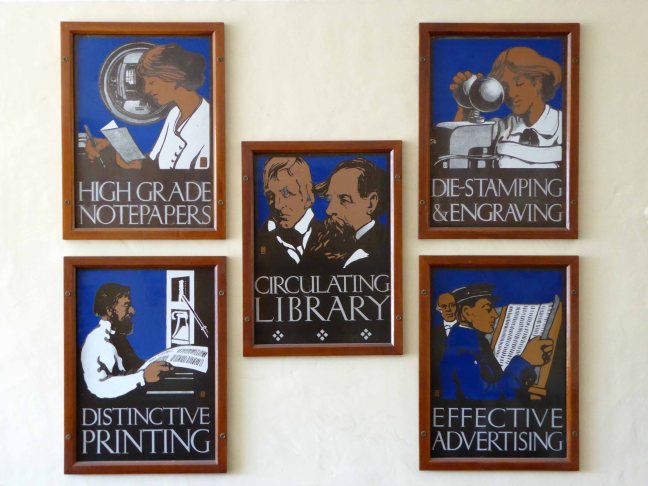
These tiles were made by Carter & Co. at their pottery works in Poole, Dorset in the 1920s. Commissioned by the retailer, they were installed in the entrance ways of a number of its branches. They were intended to advertise the wide selection of books and other items on sale, however their distinctive Art Deco style and the scenes depicted also expose a great deal about society at that time.
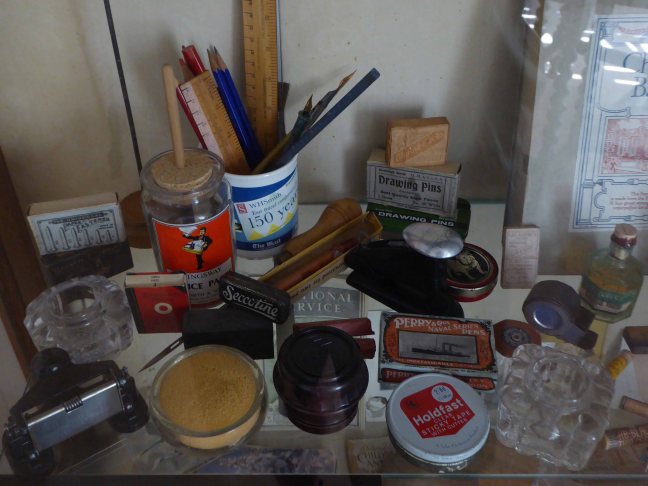
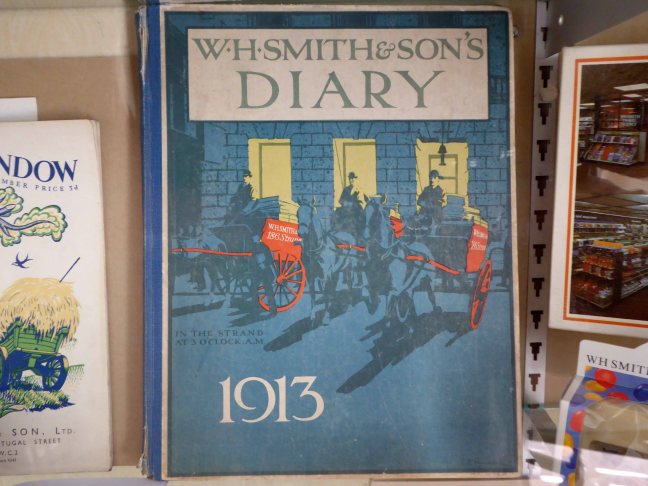
In subsequent decades, particularly during periods of refurbishment from the 1960s, many shops lost their decorative panels, either being removed or covered over. Only seven branches of WHSmith are known to have their tile panels intact, with a few surviving in private collections. Many tiles were rescued by WHSmith and these can now be seen in a museum housed in the Newtown branch in Powys.
Though never six feet from a rat, or a mile from a main road.
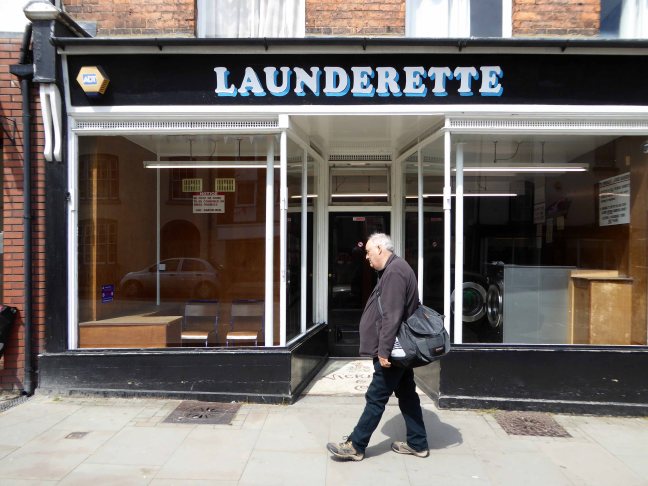
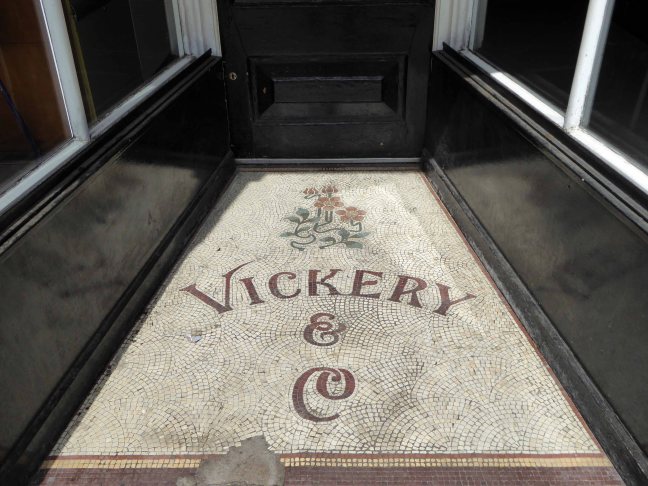
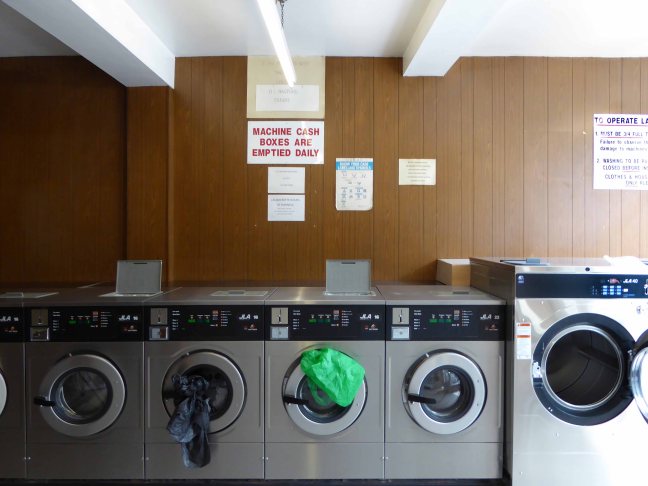
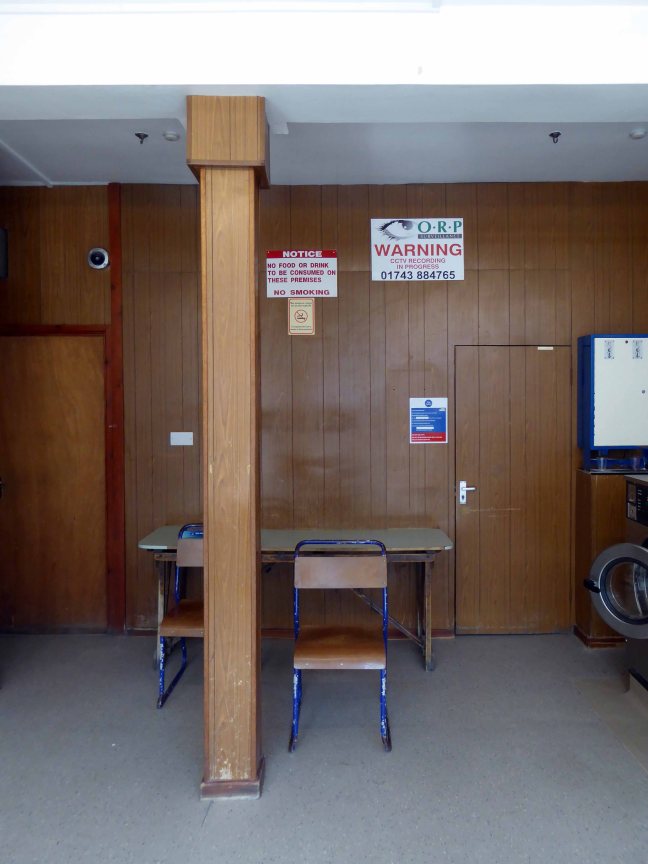
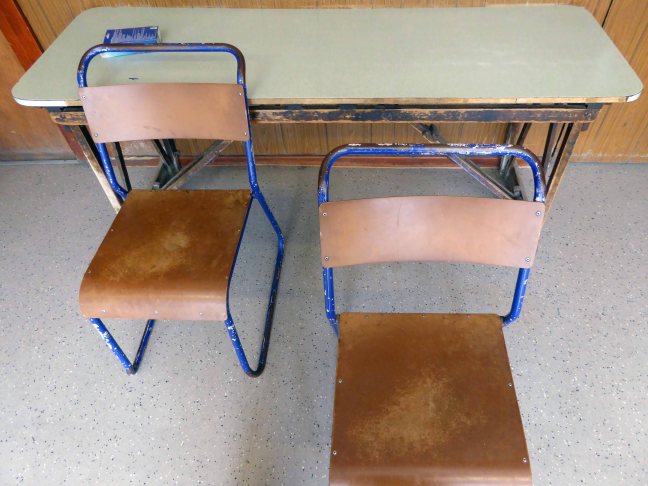
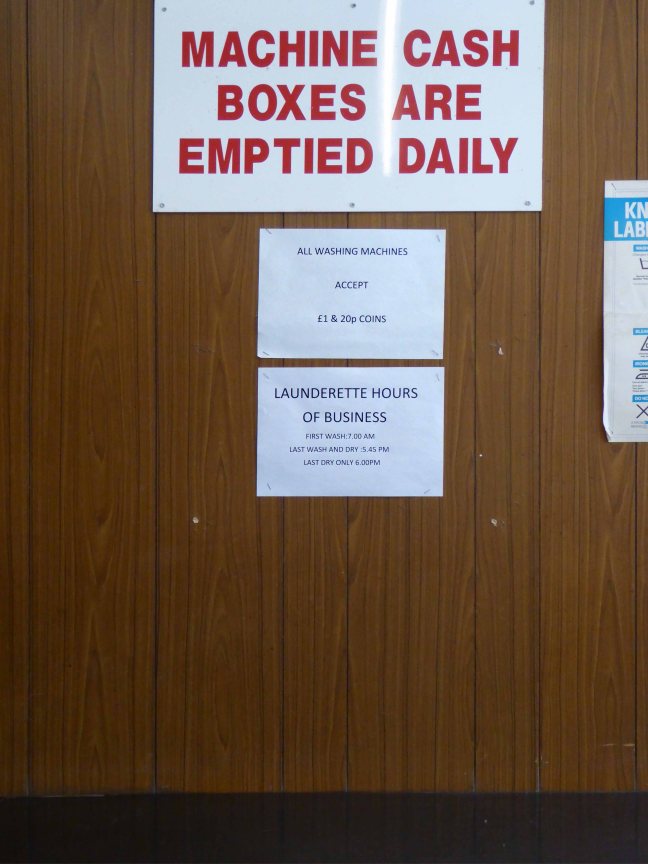
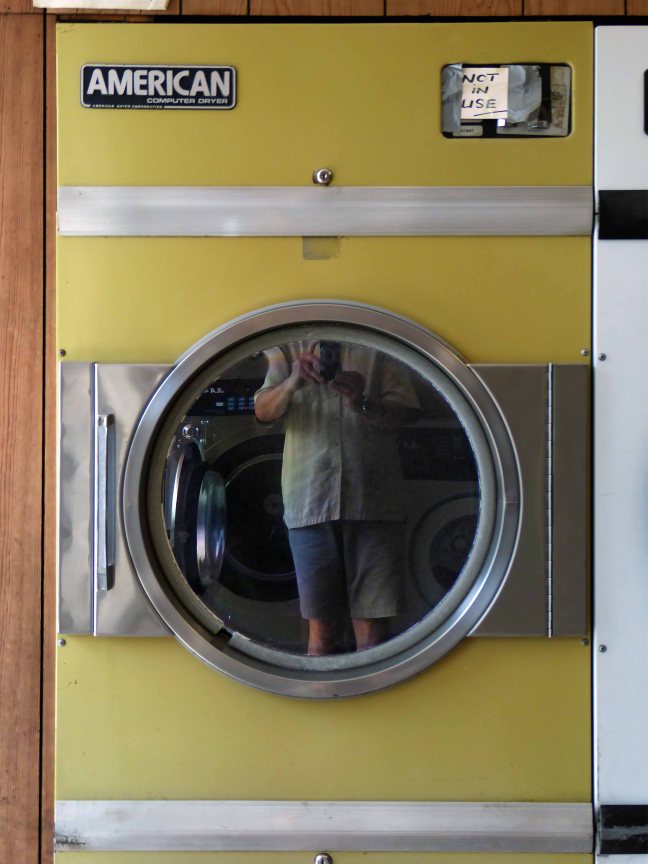
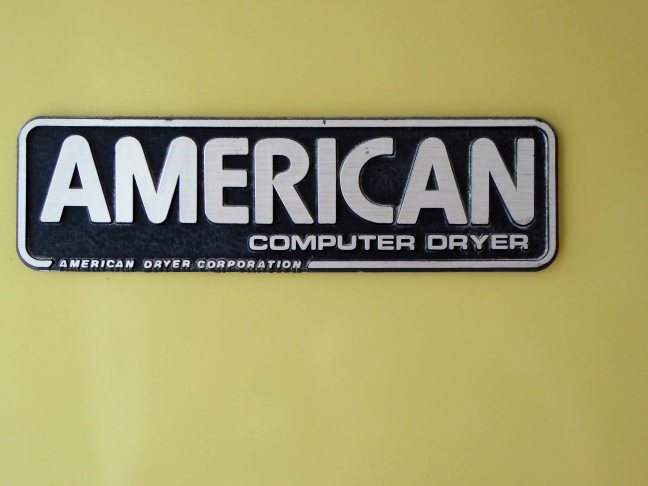
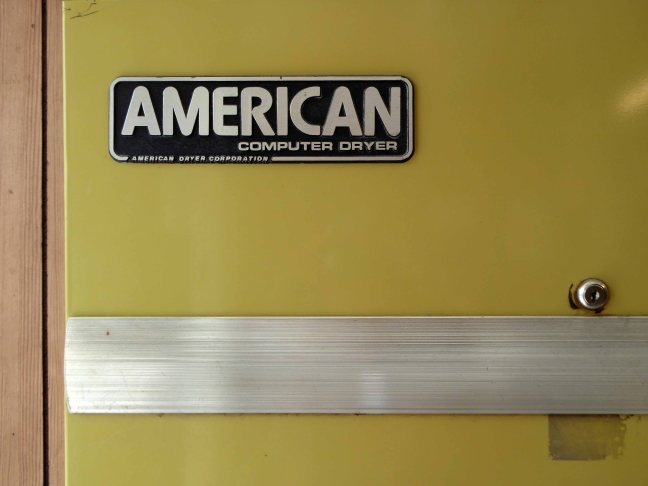
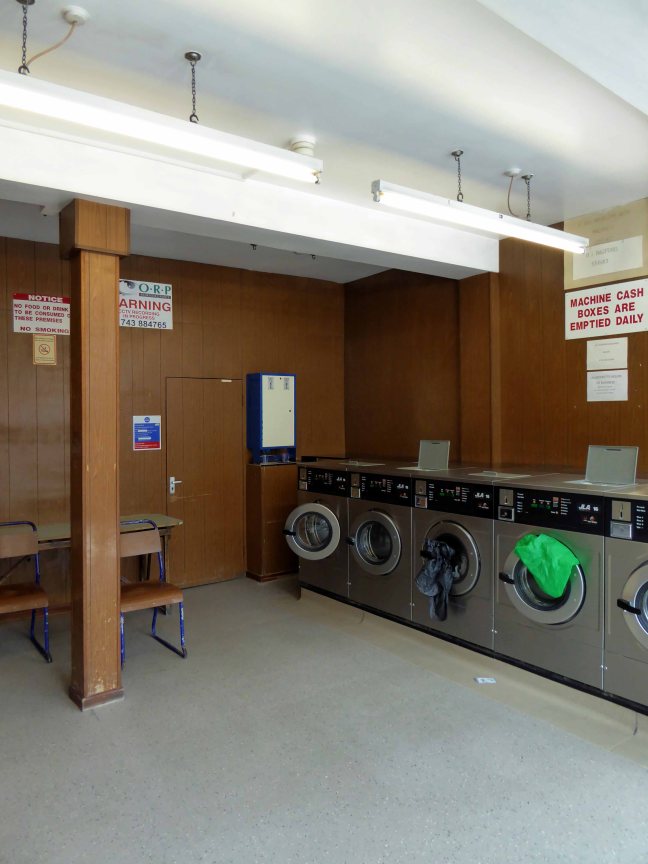
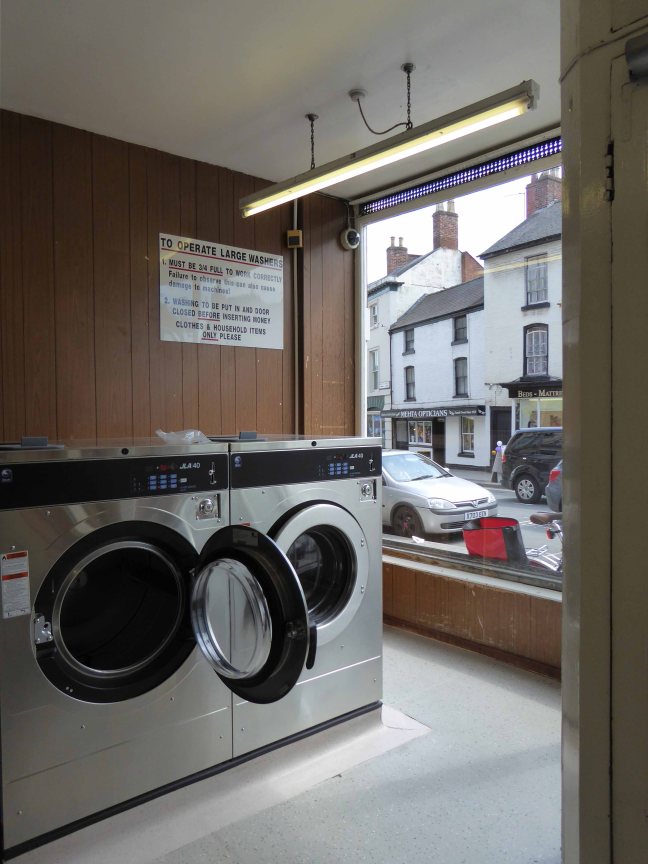
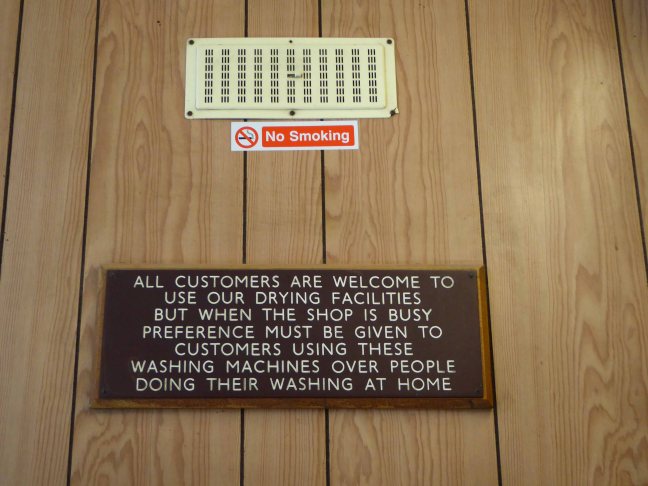
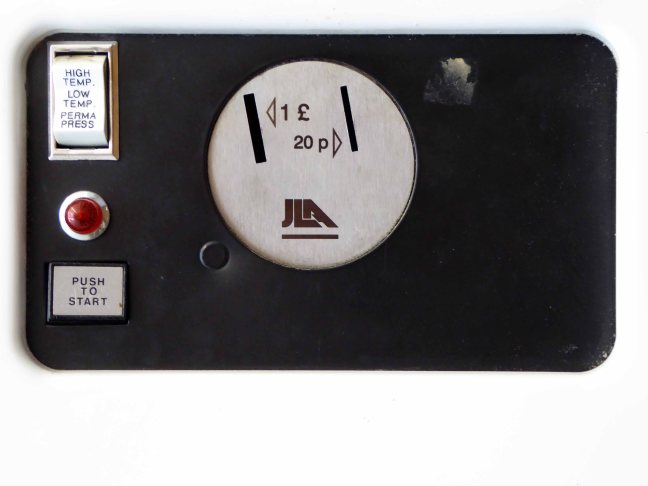
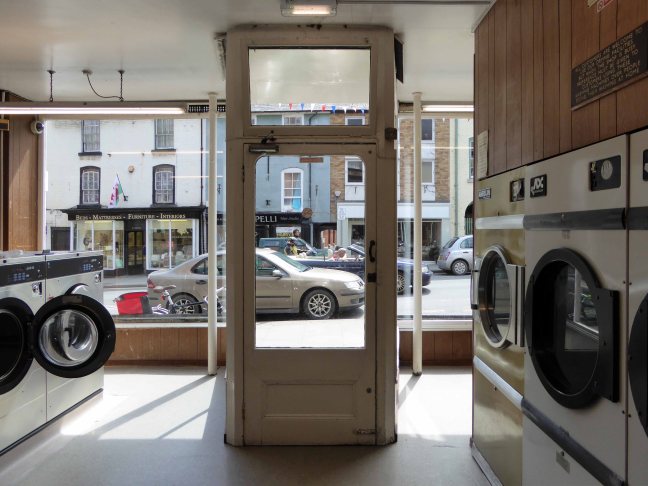
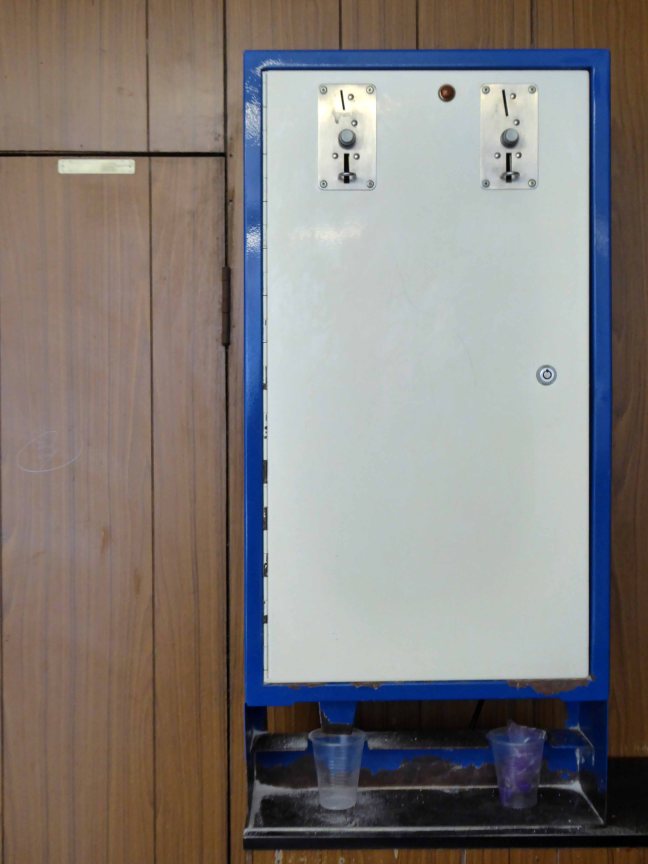
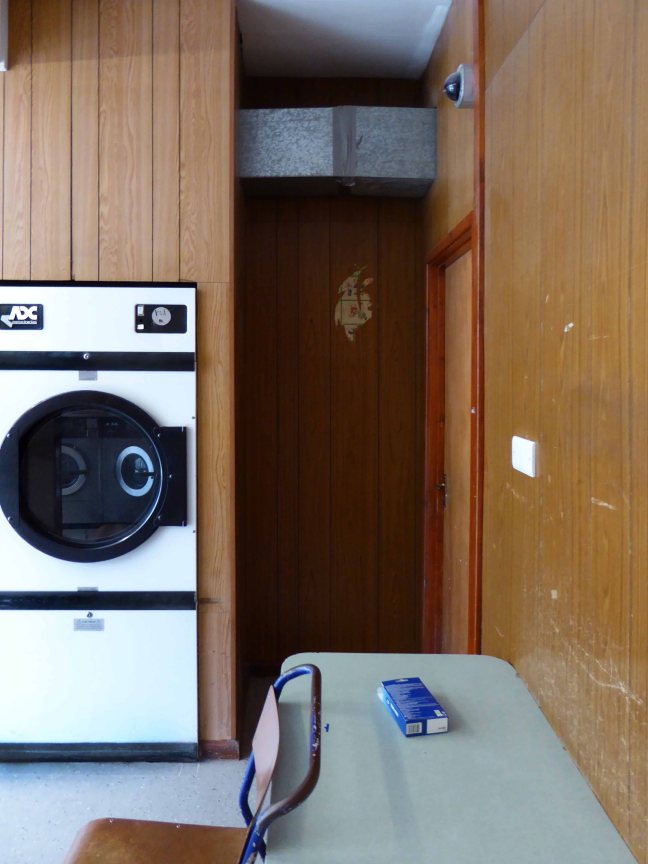
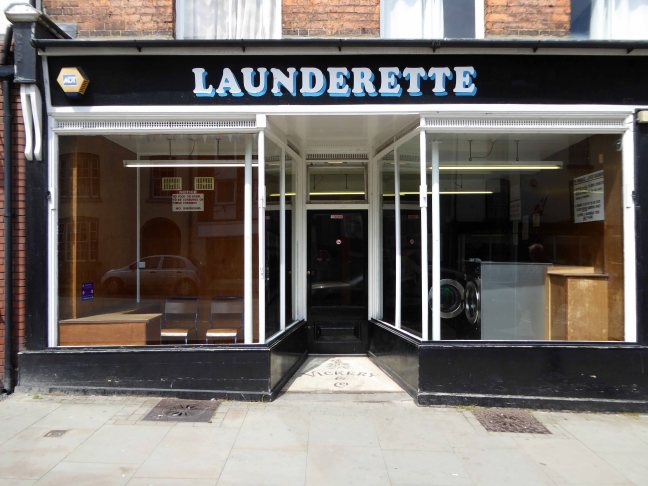
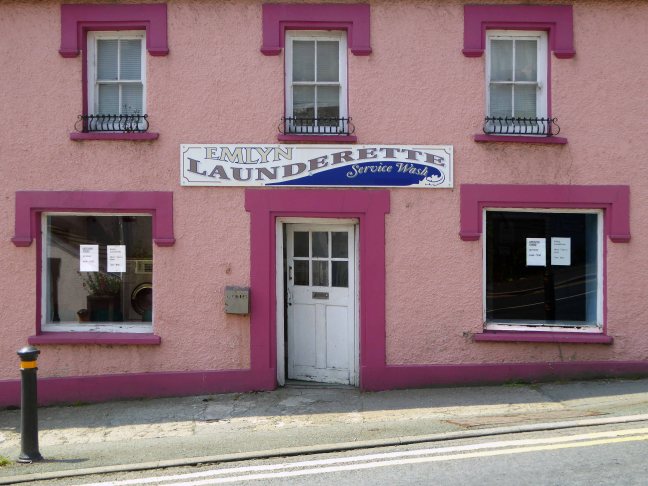
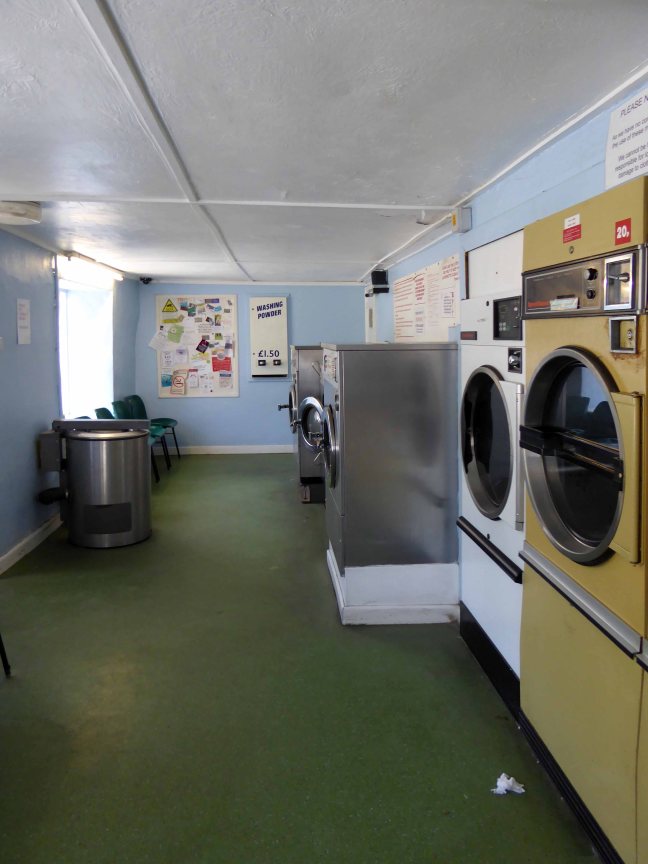
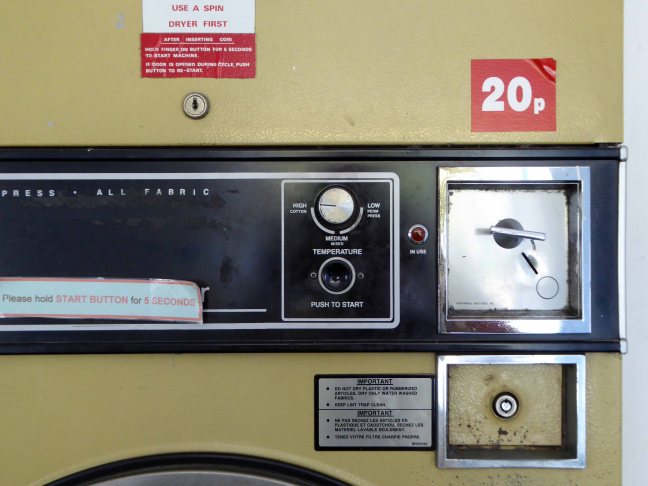
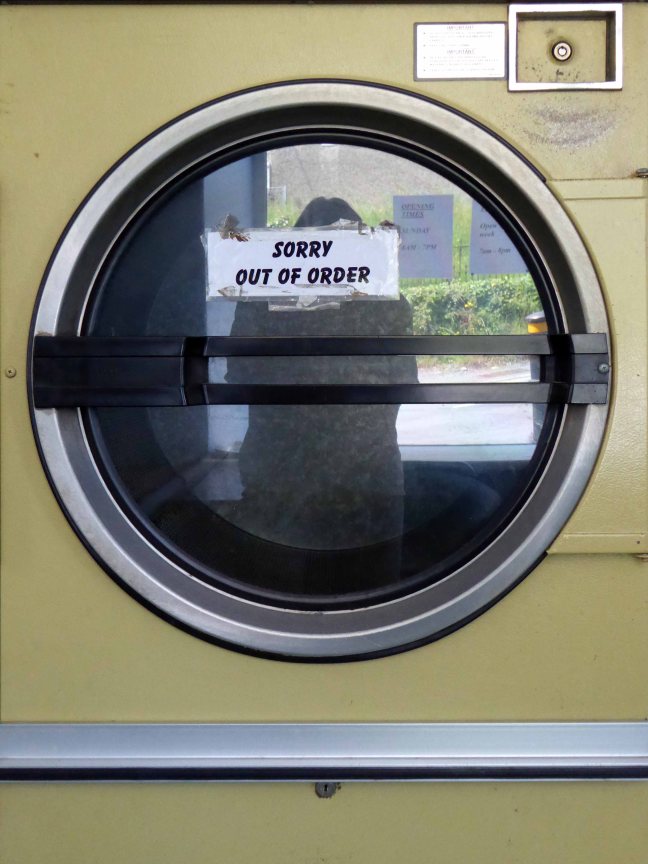
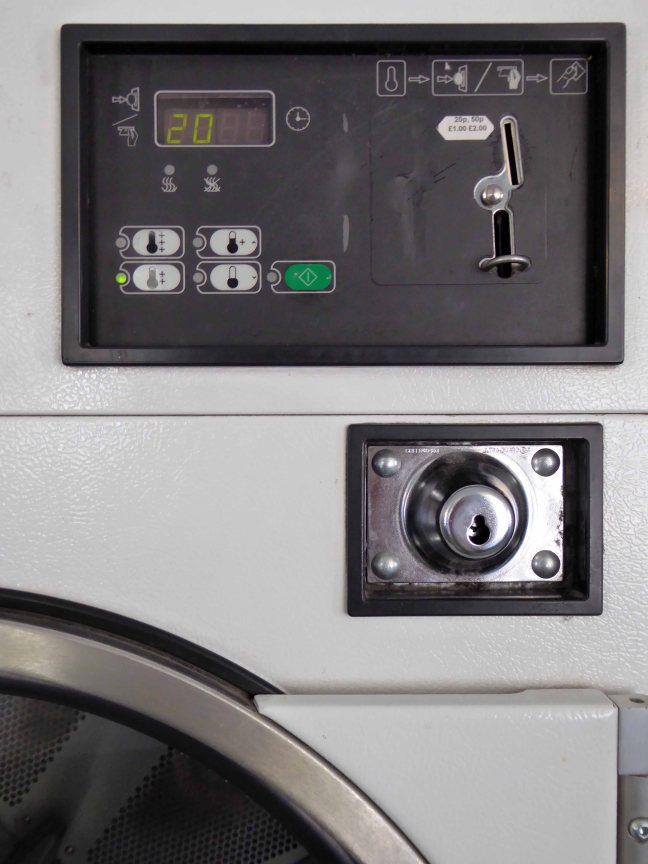
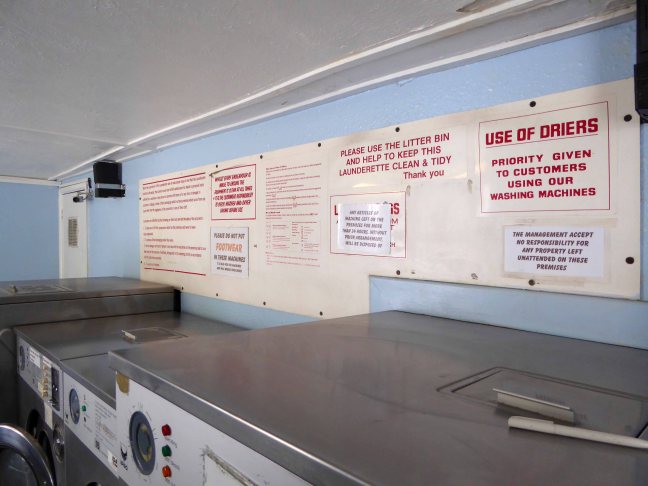
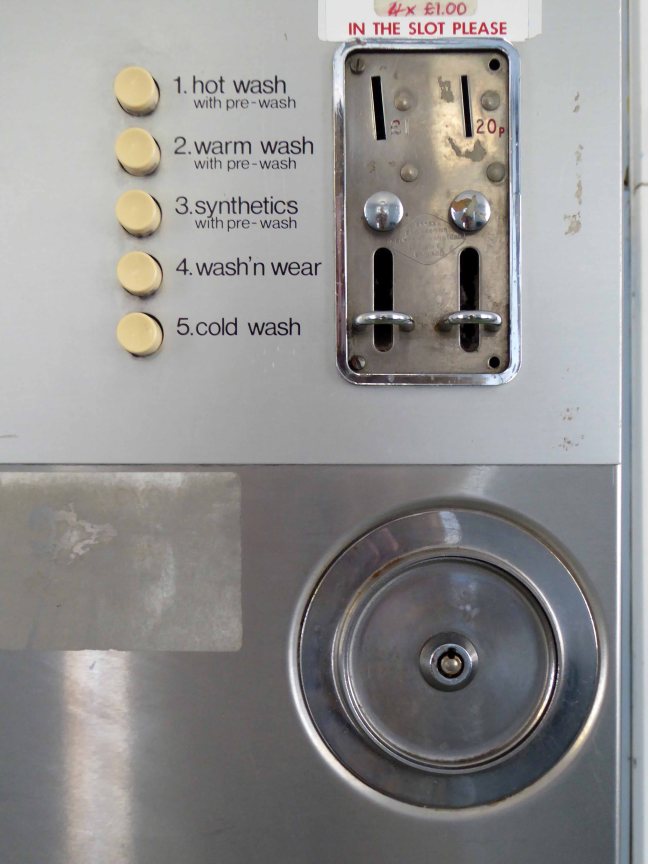
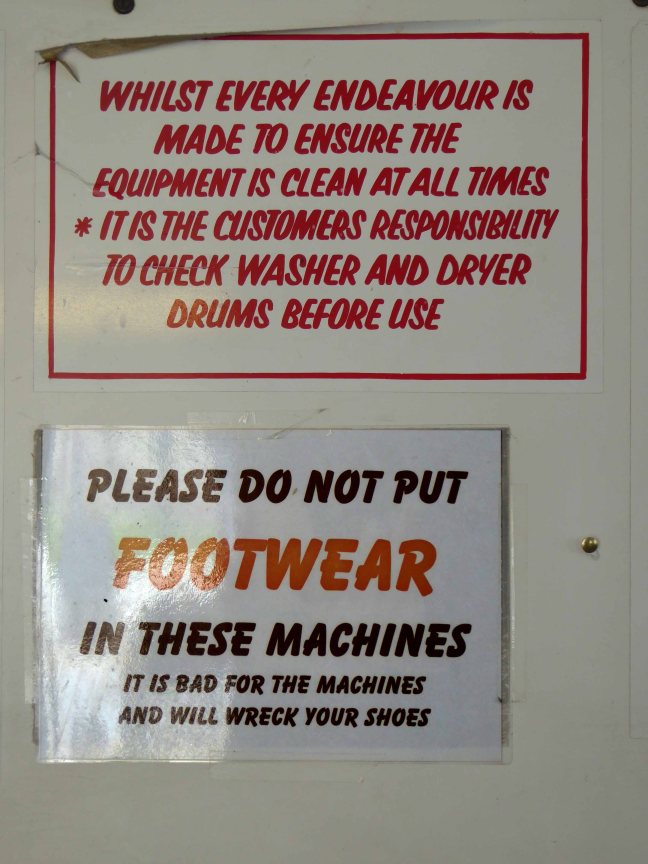
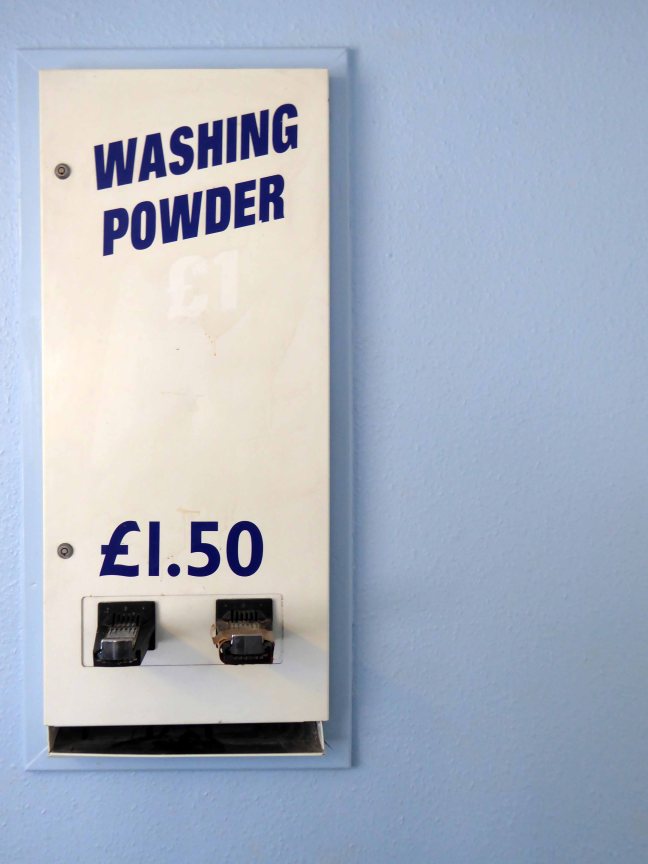
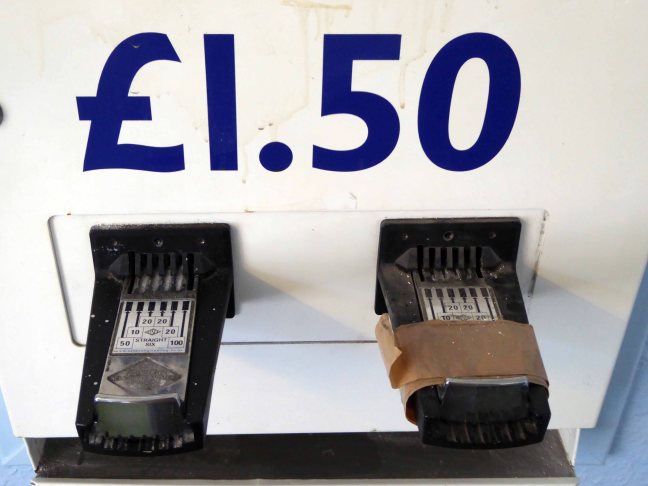
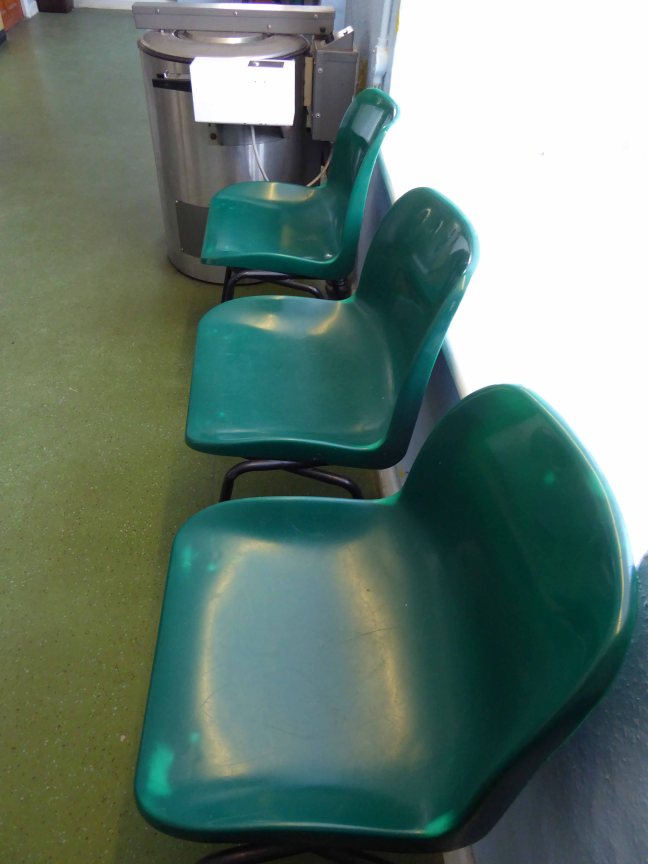
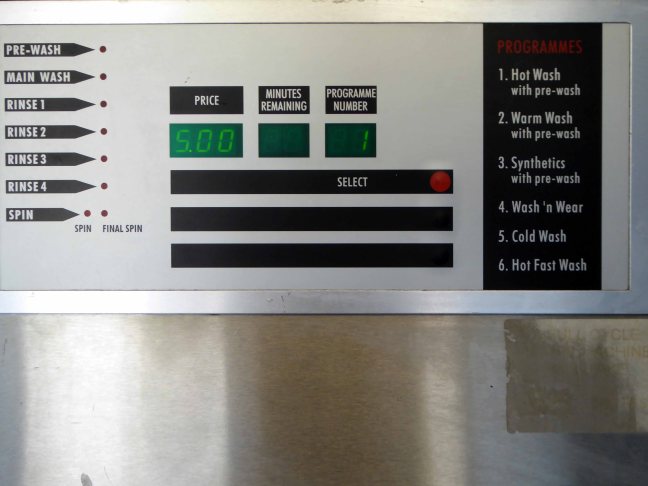
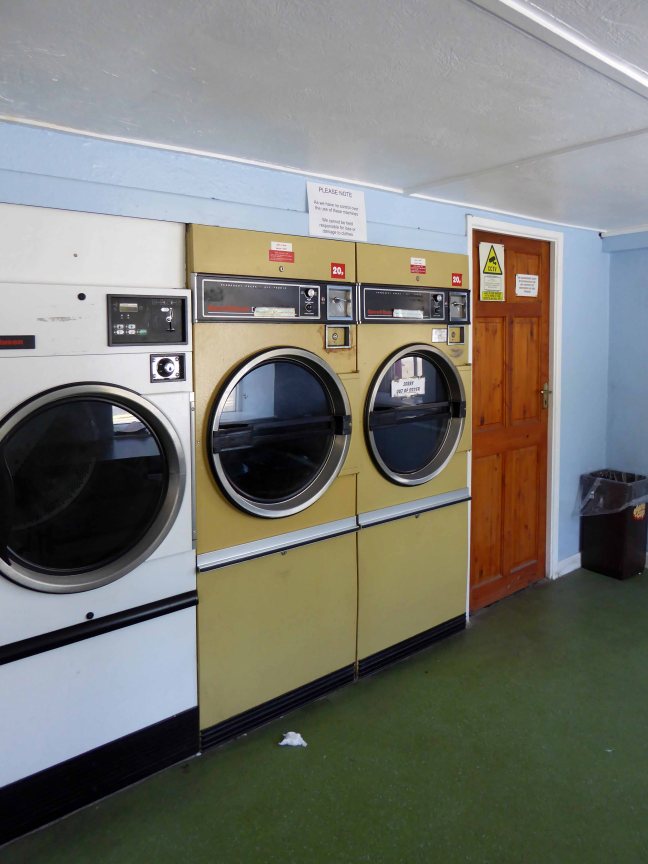
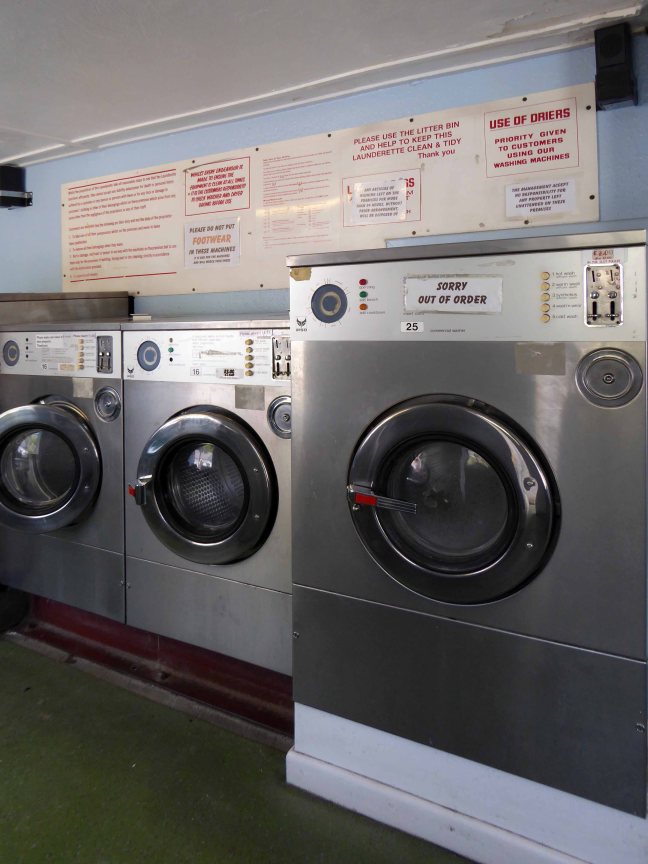
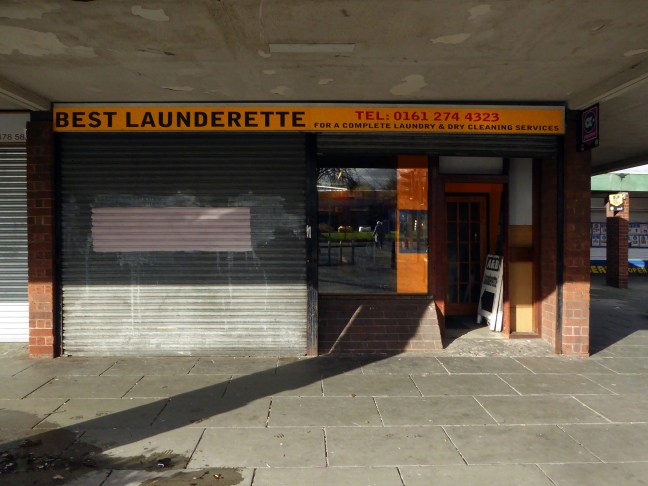
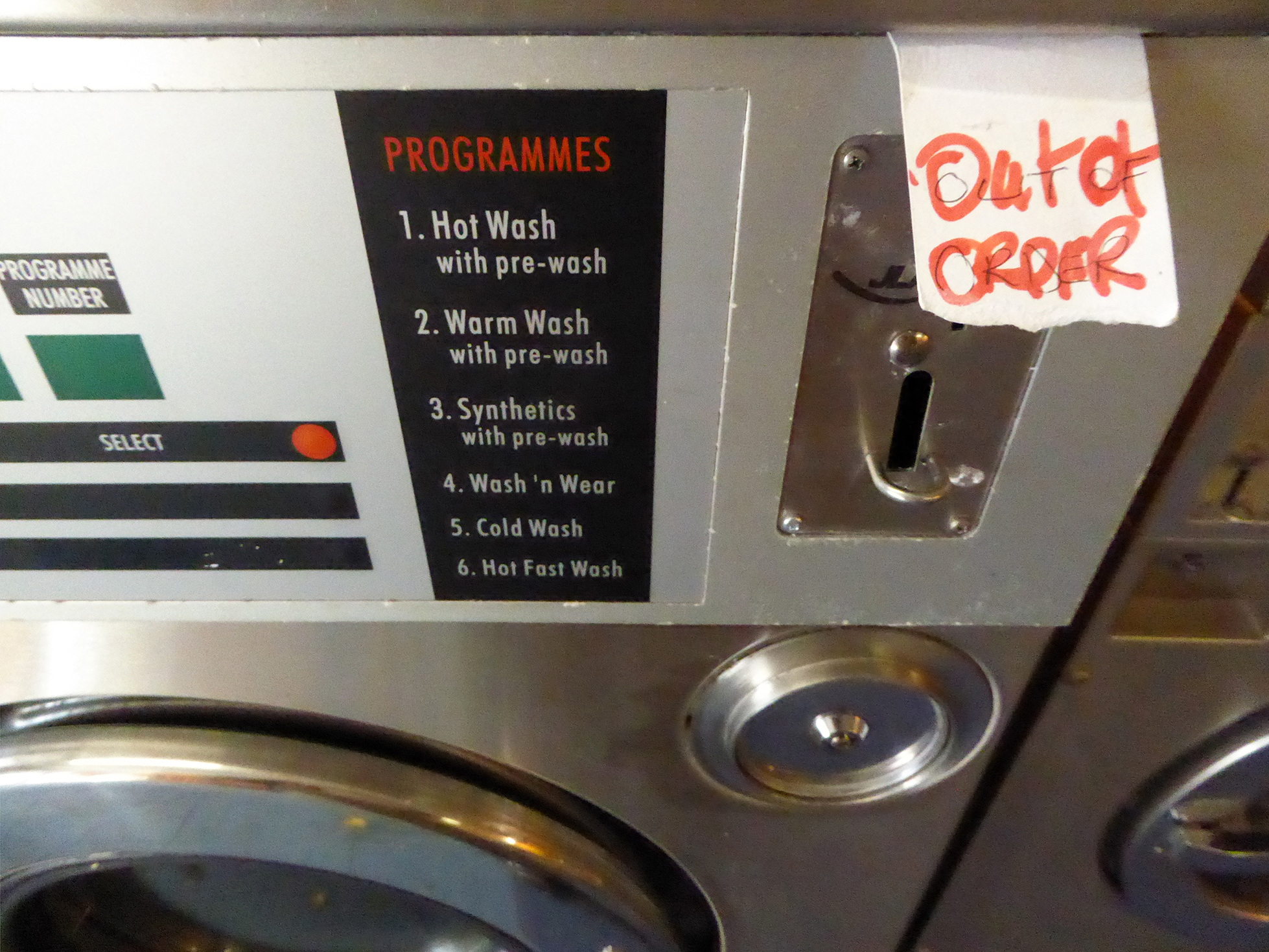
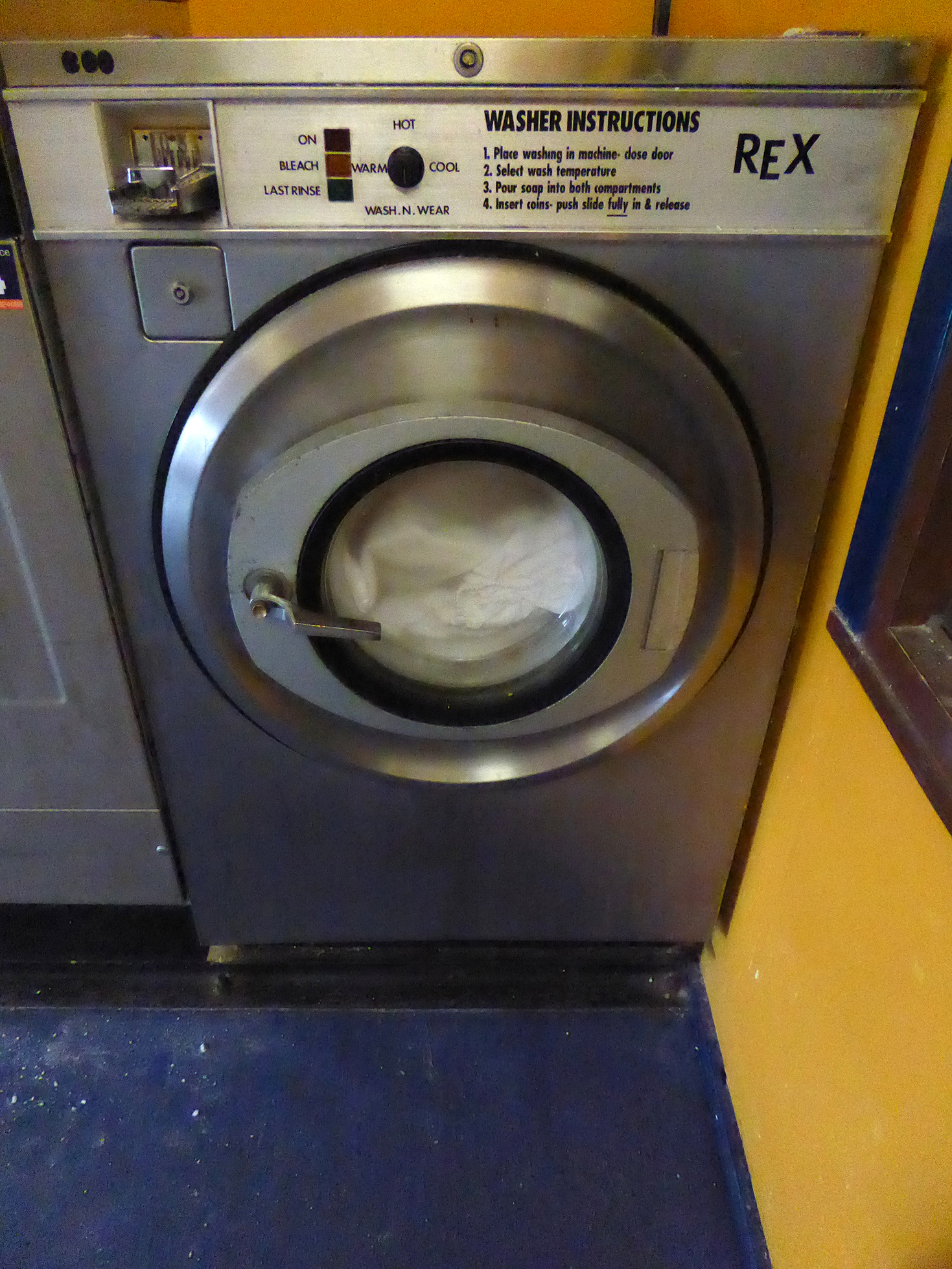
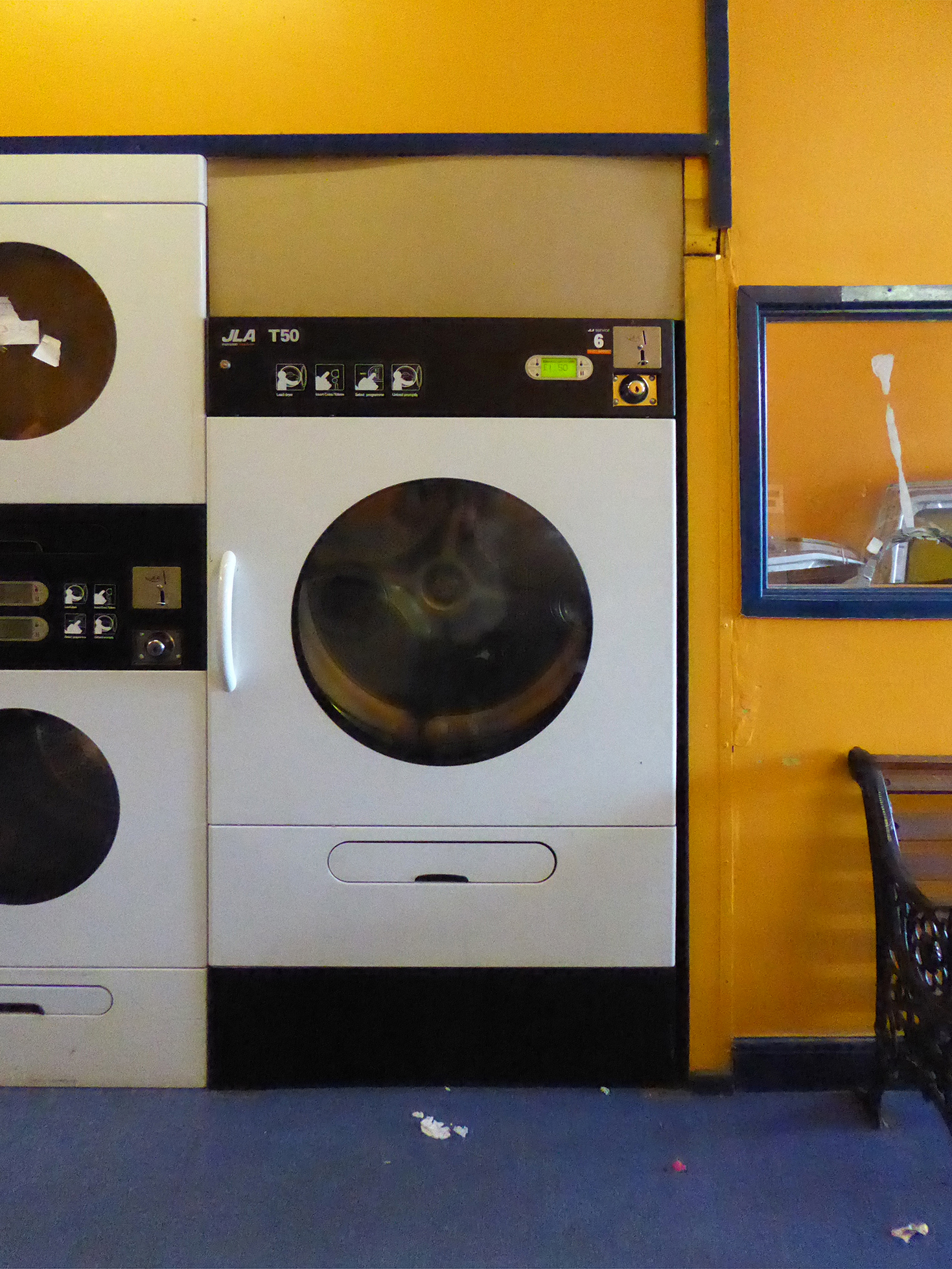
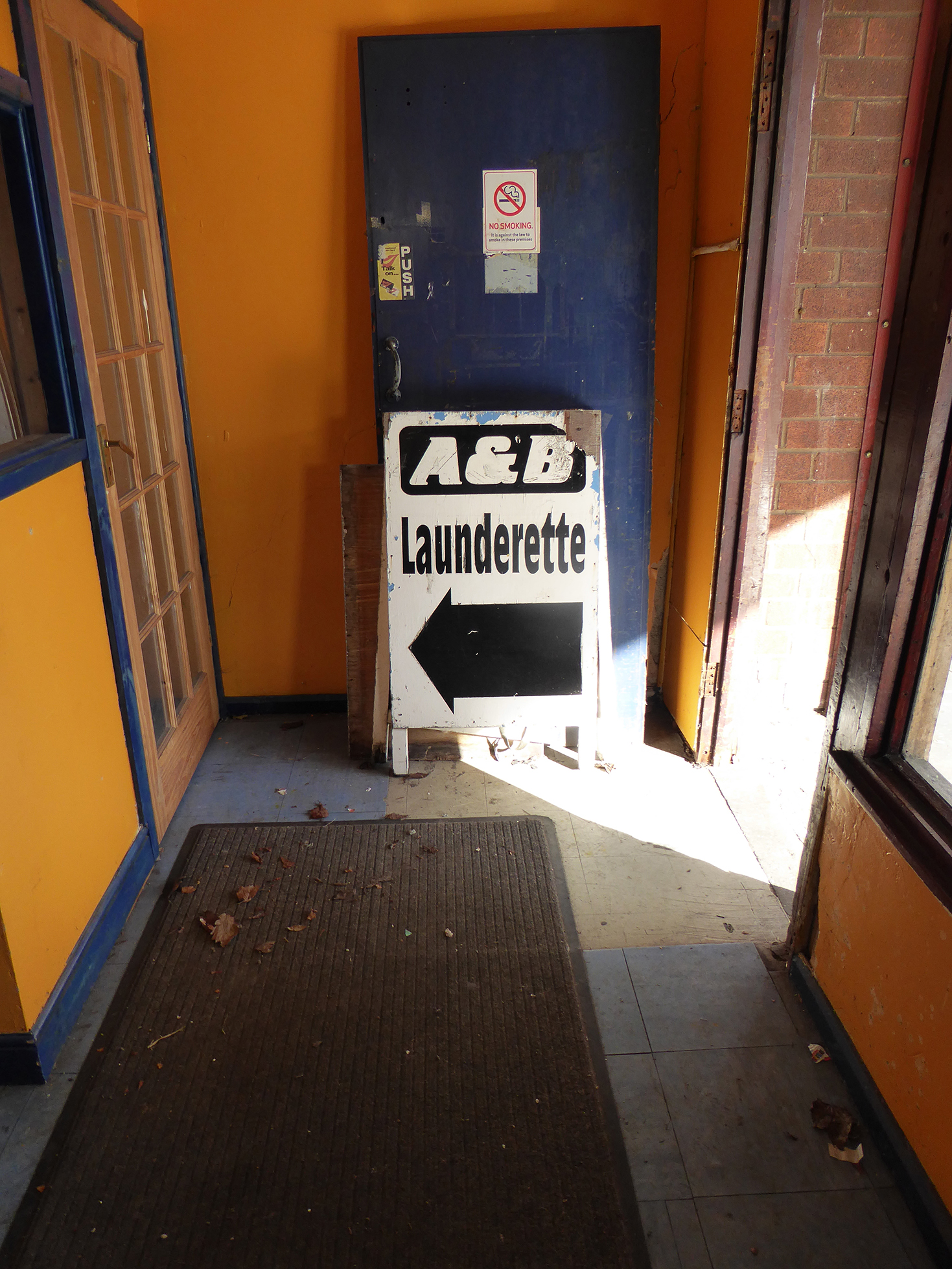
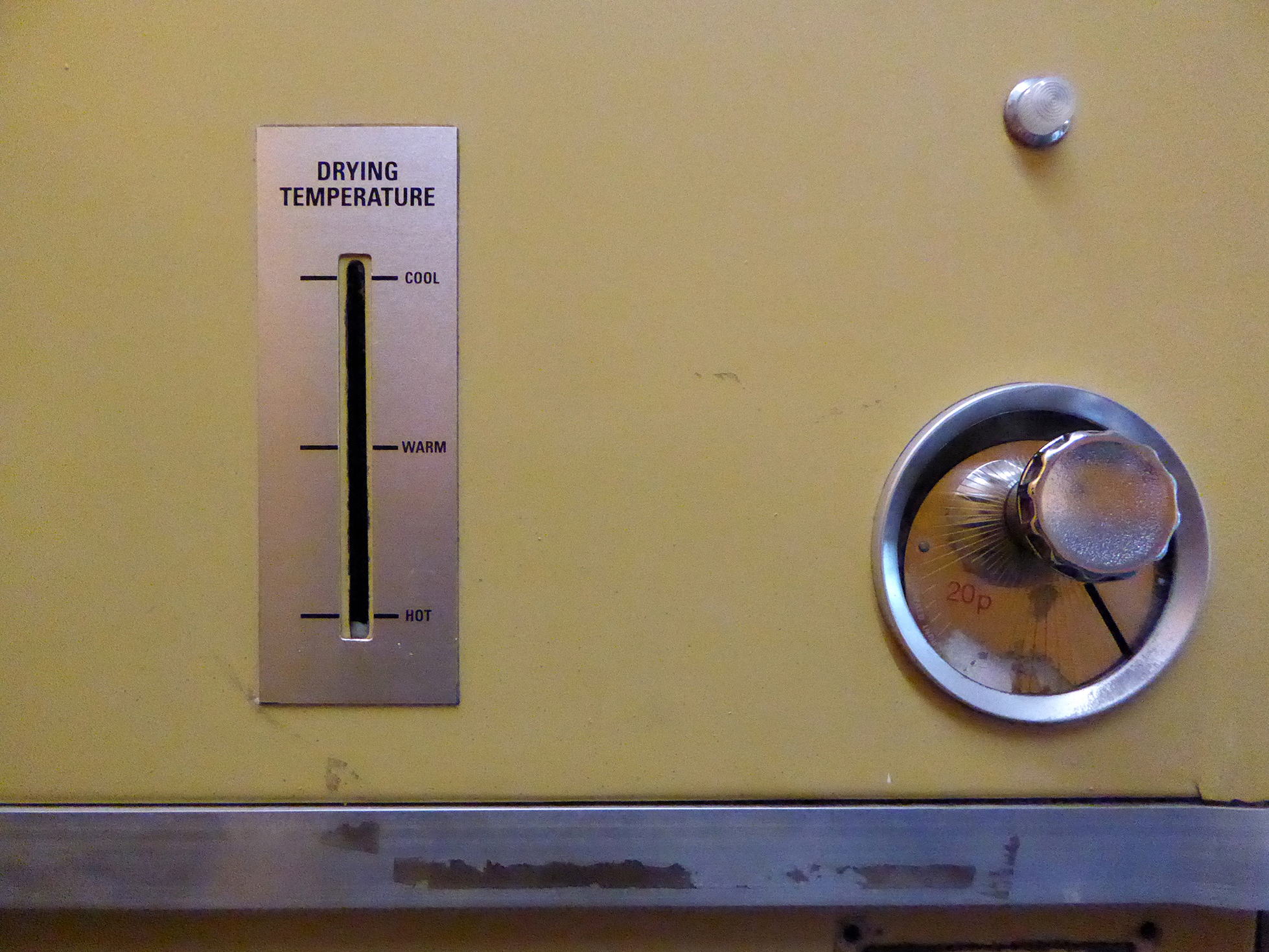
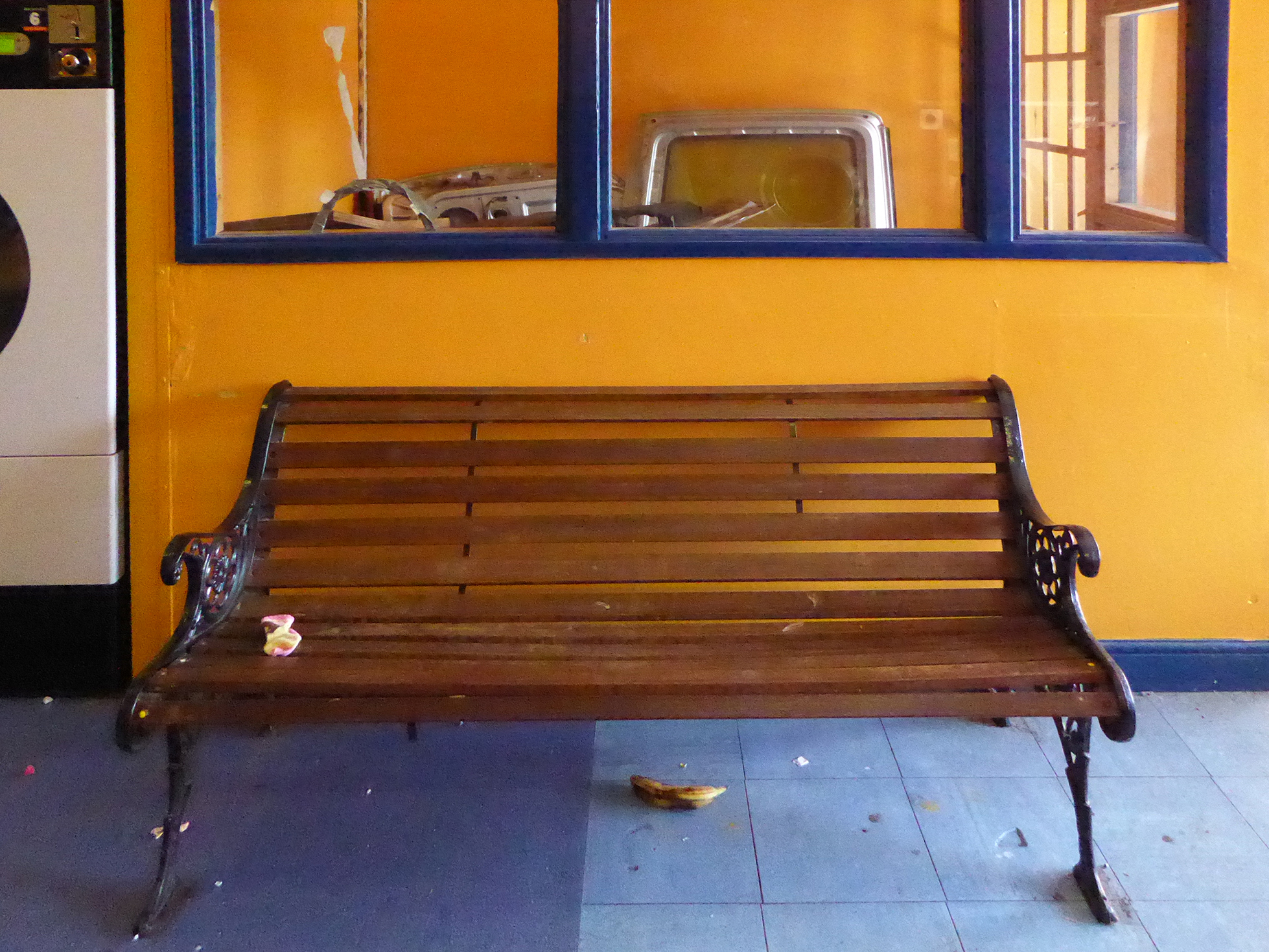
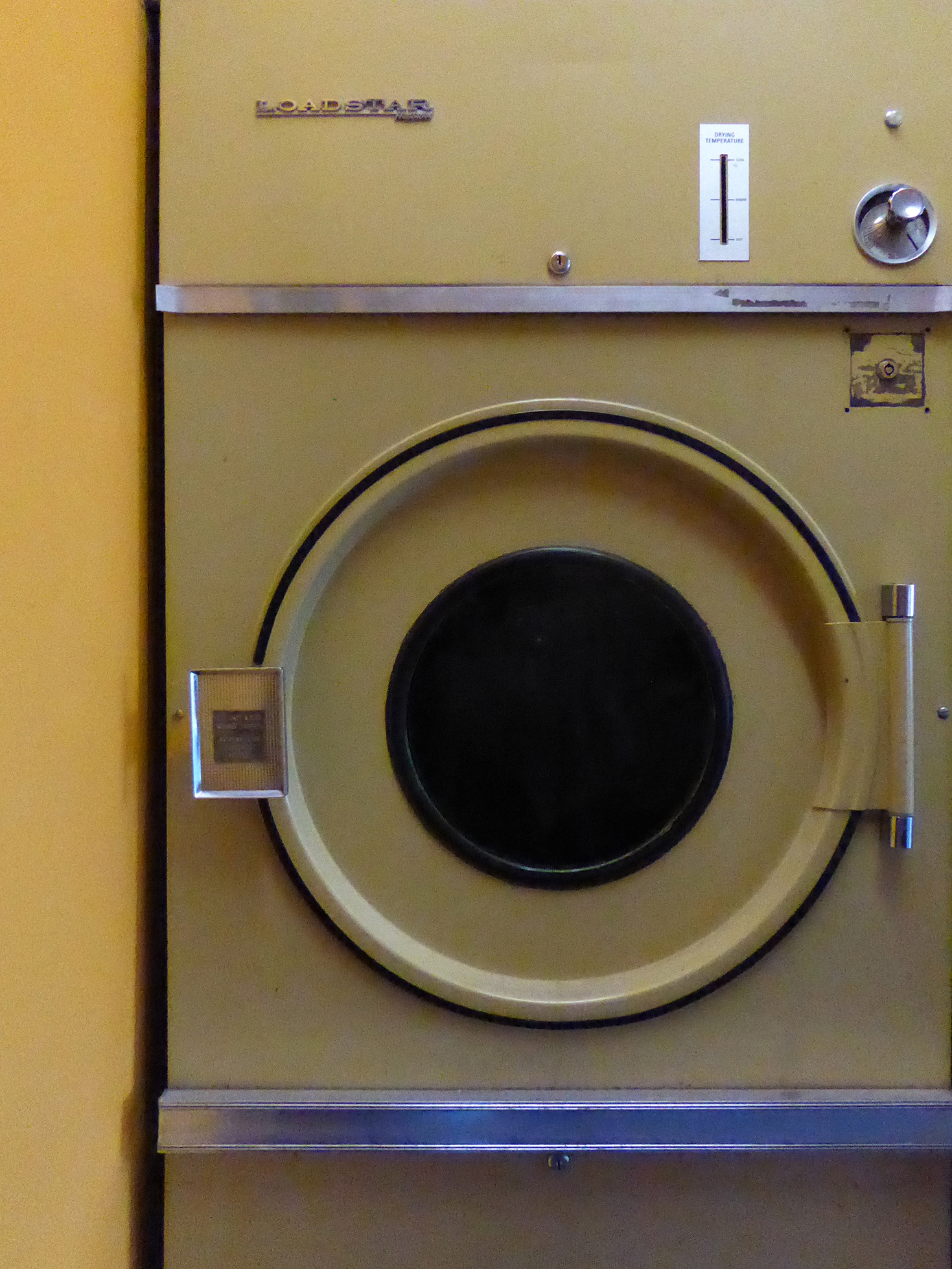
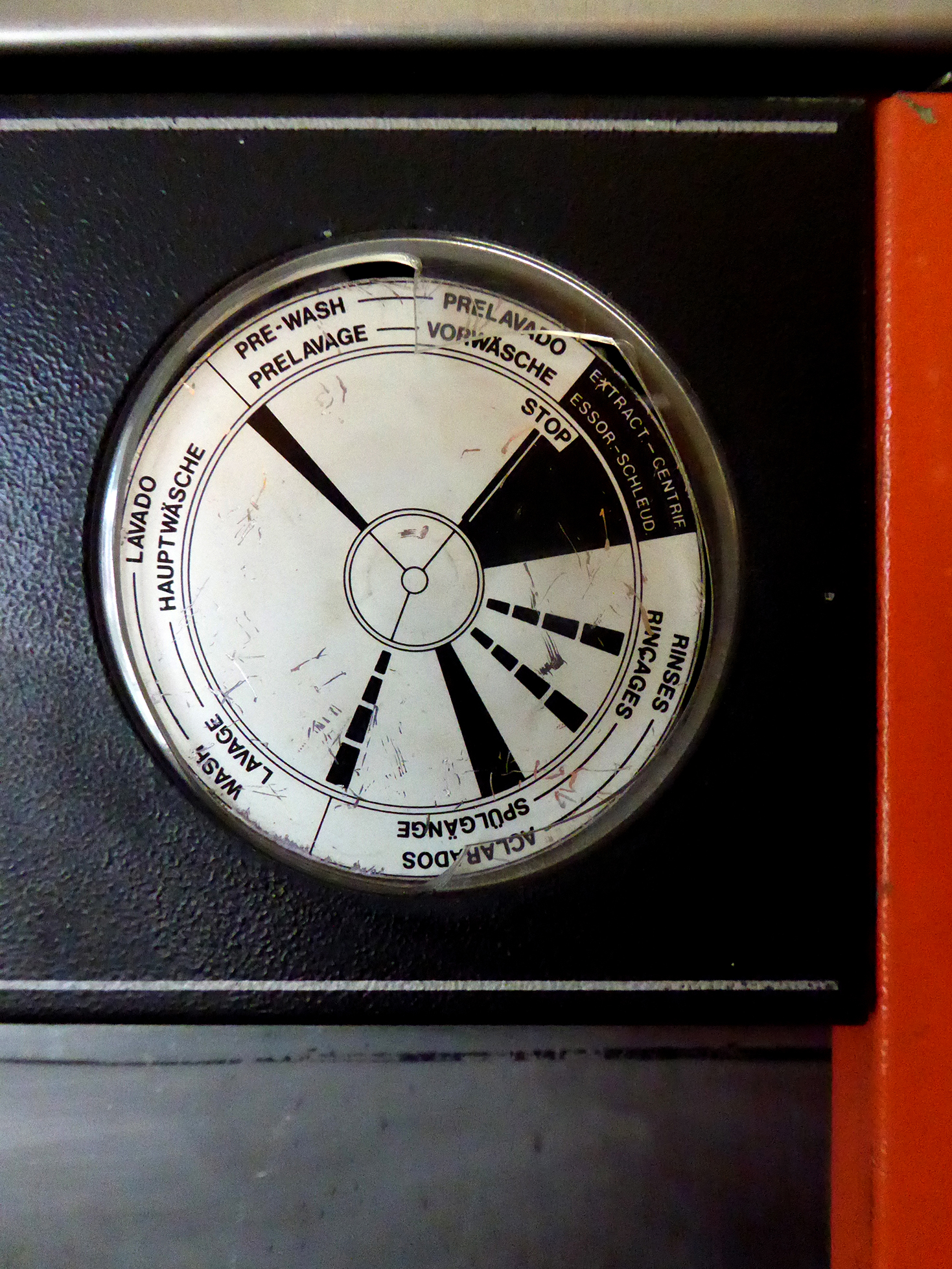
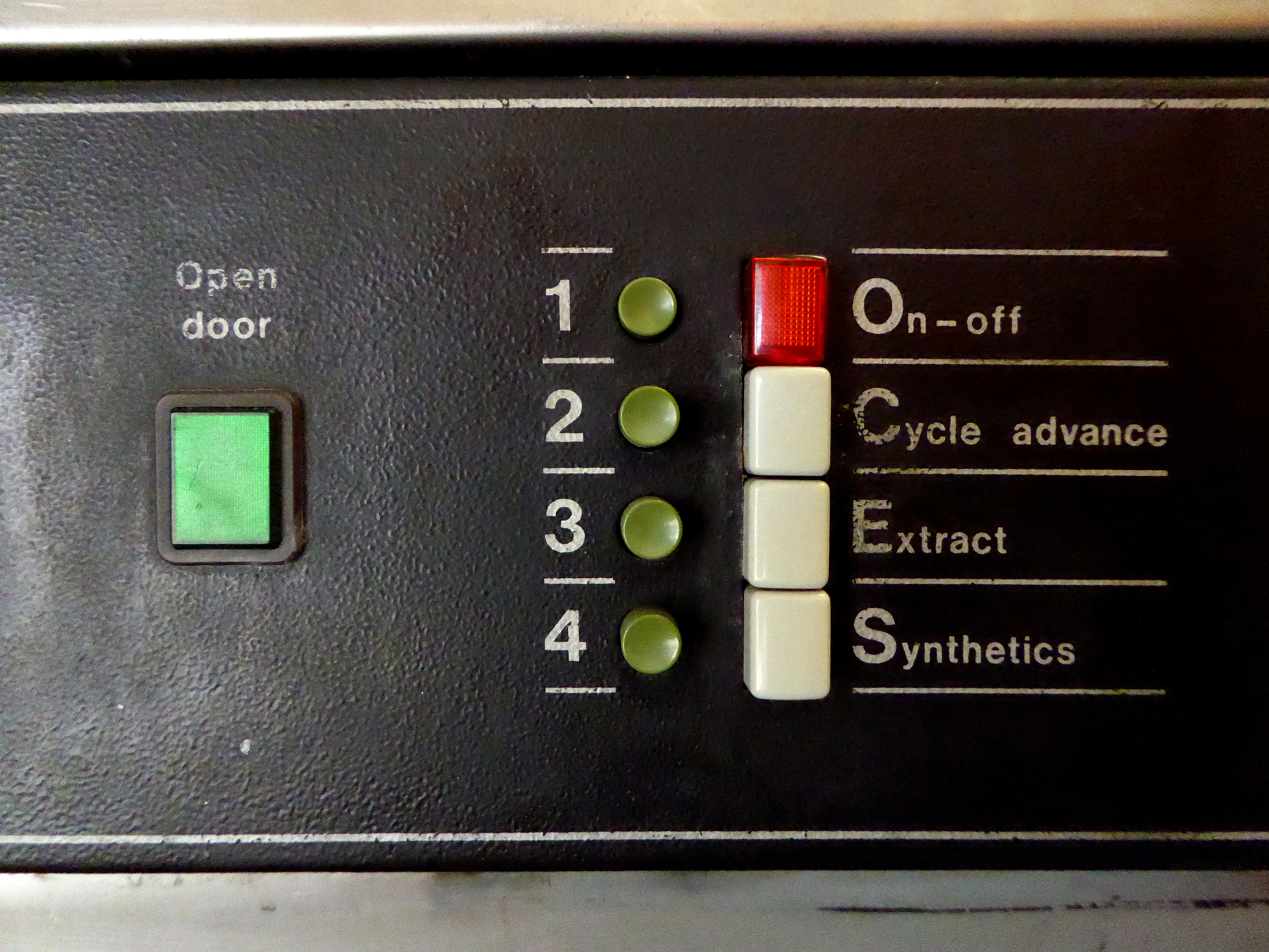
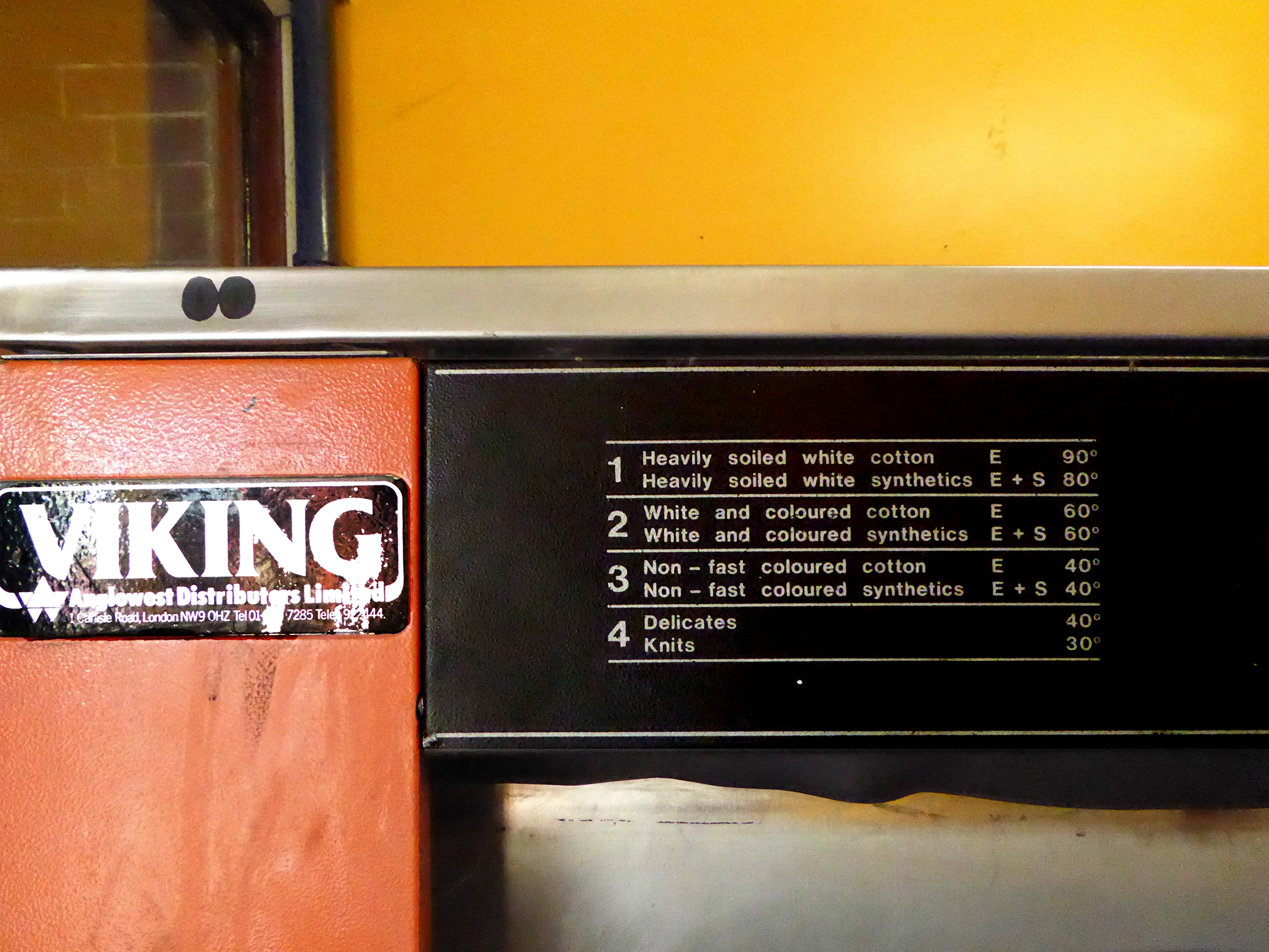
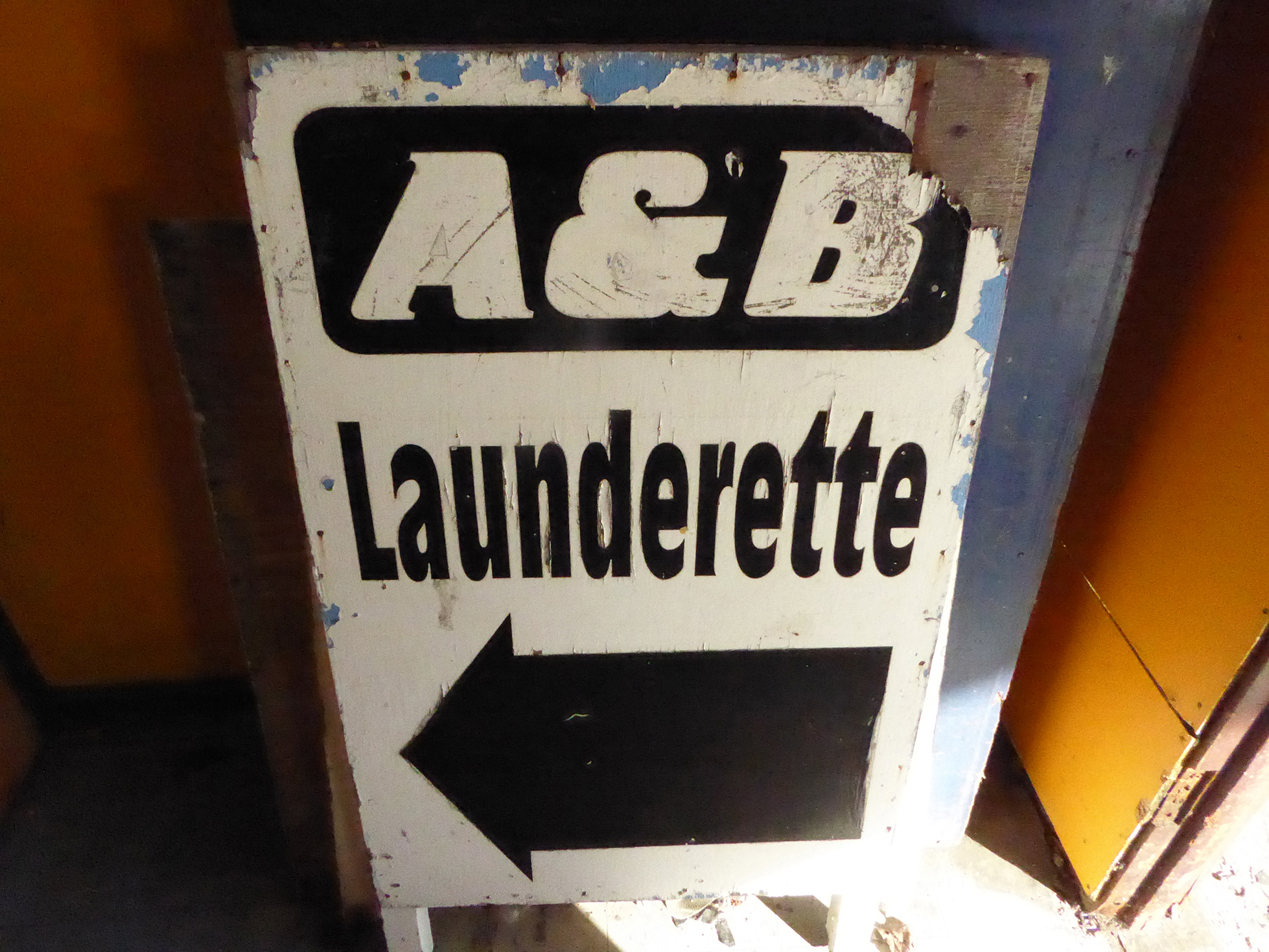
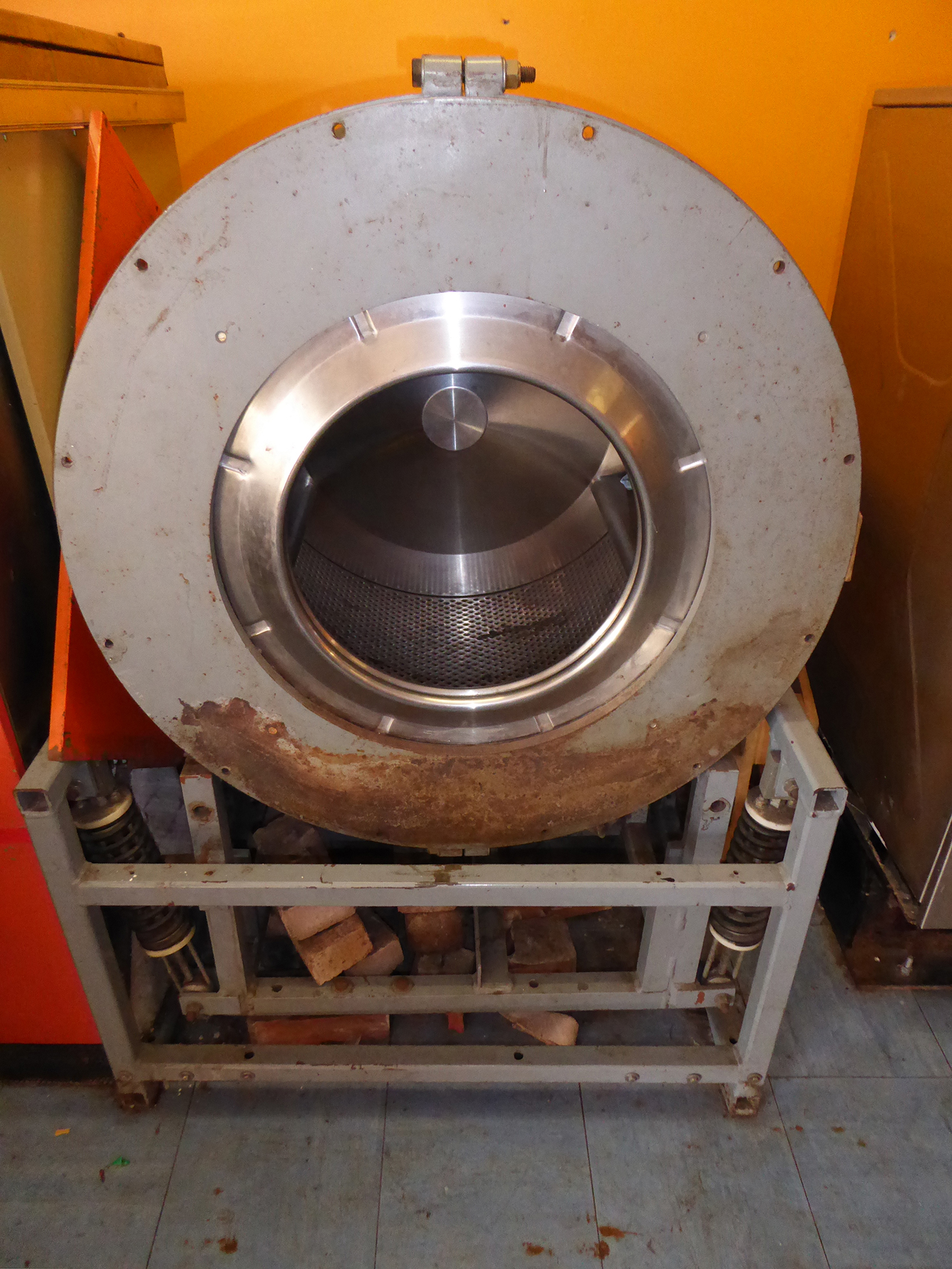
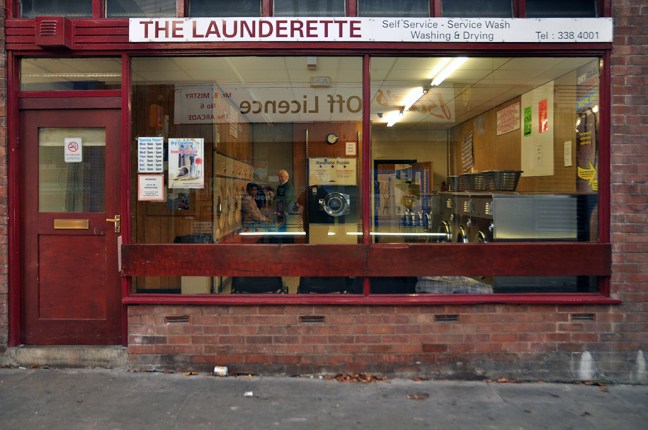
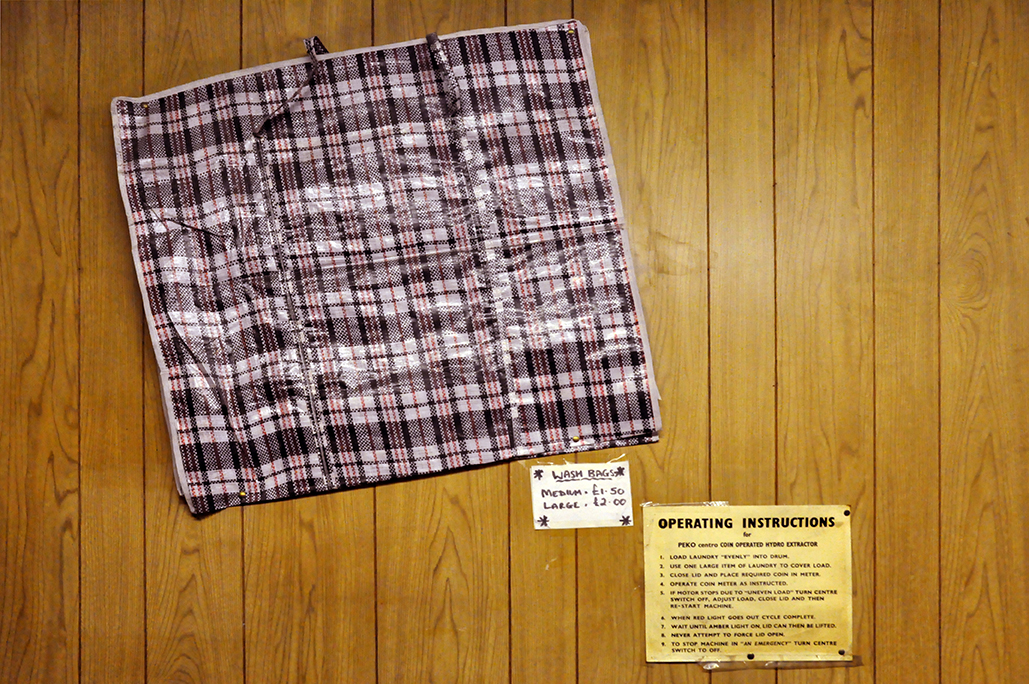
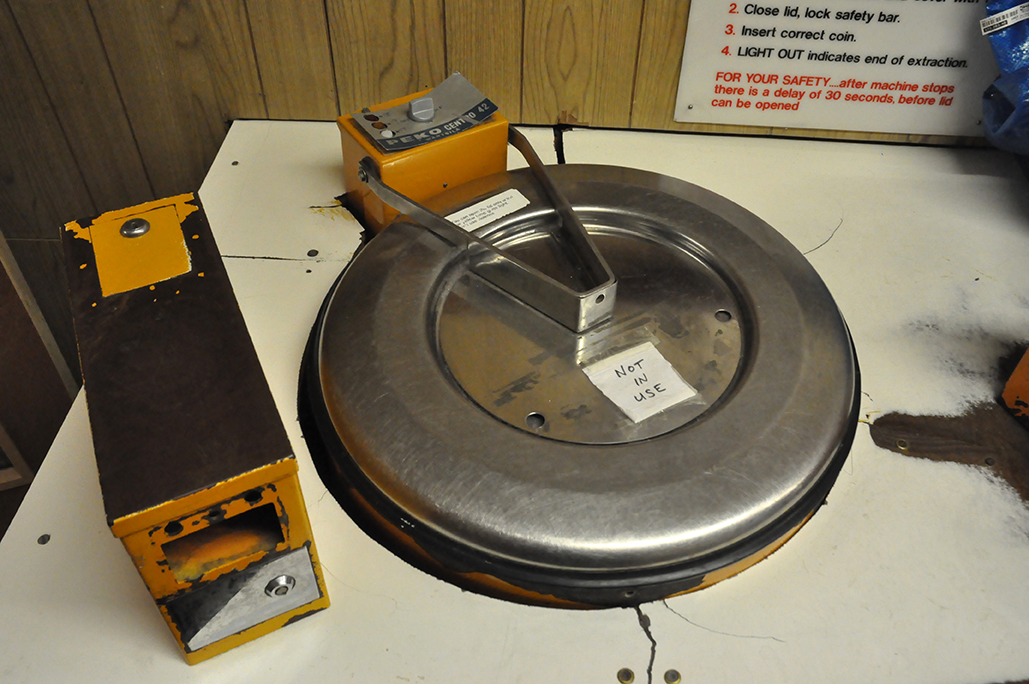
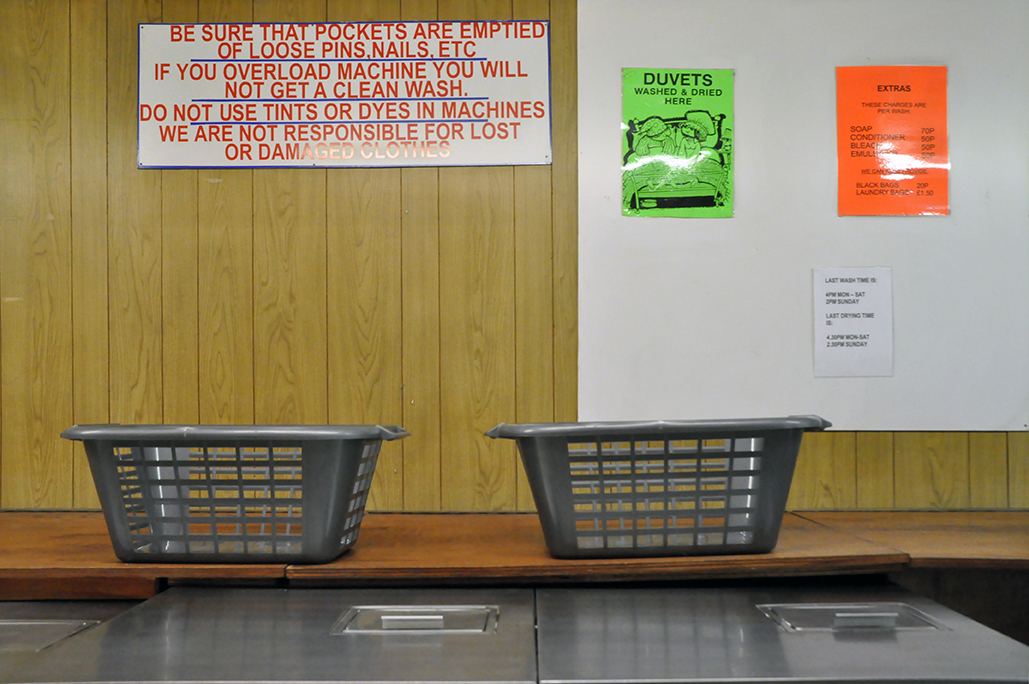
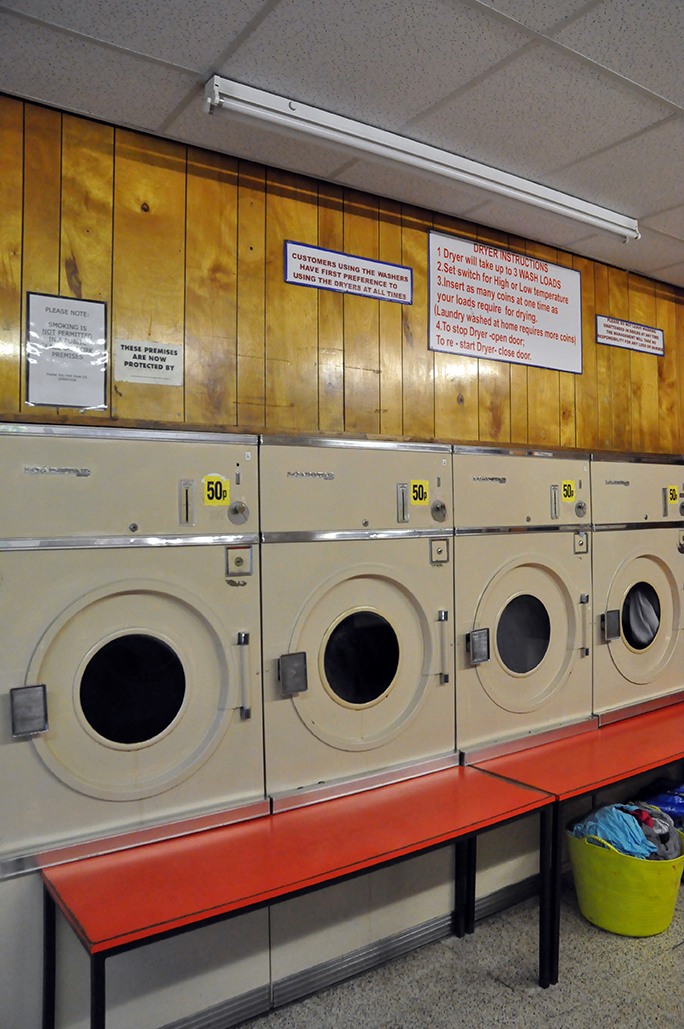
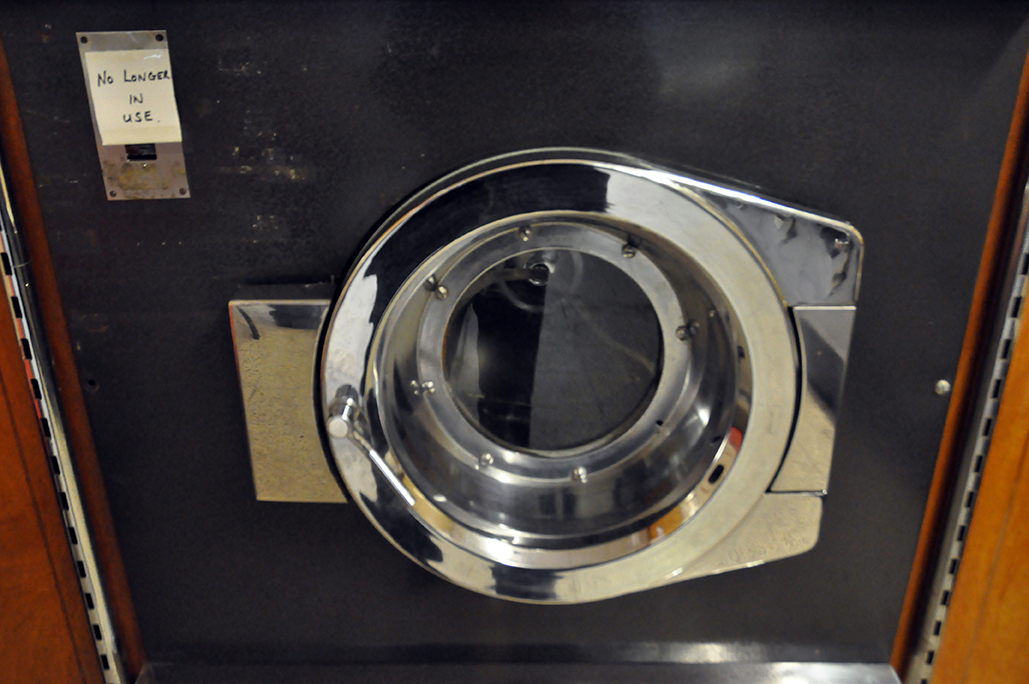
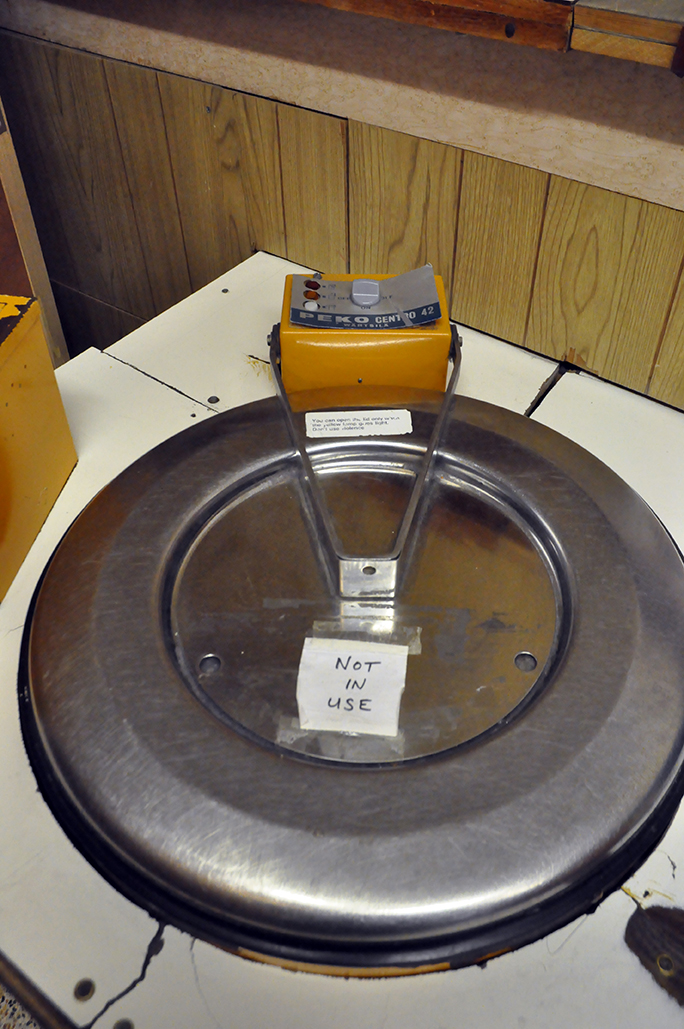
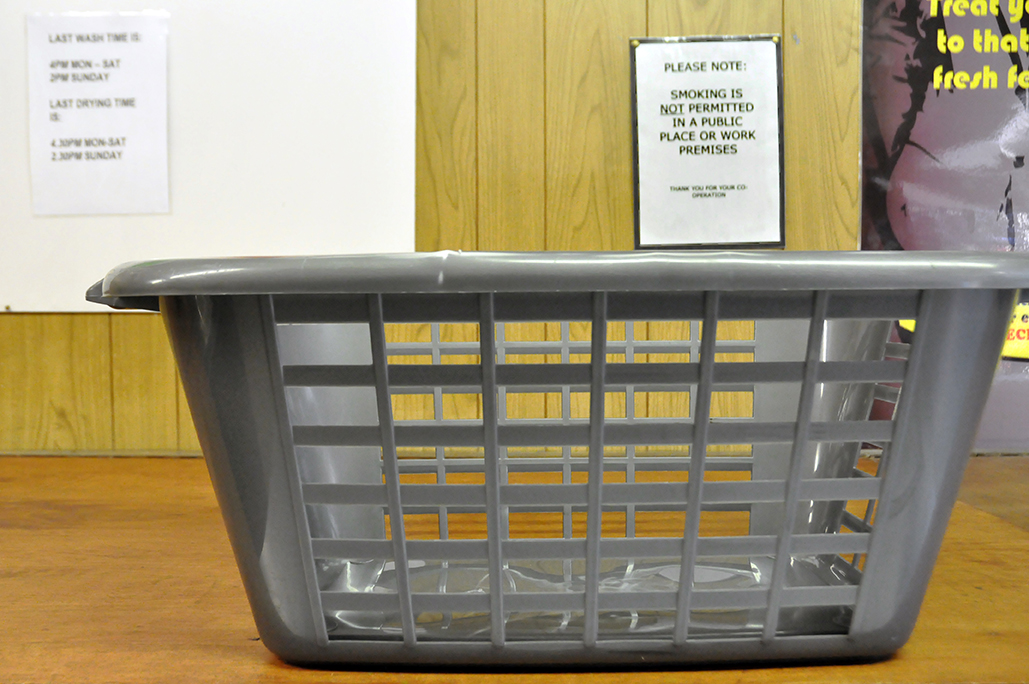
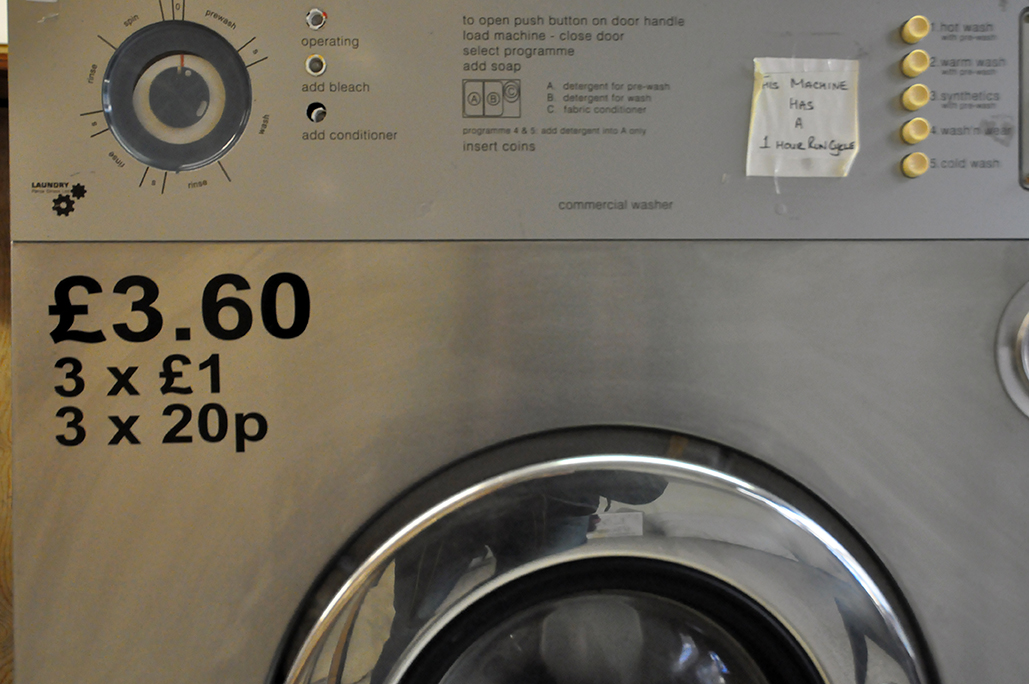
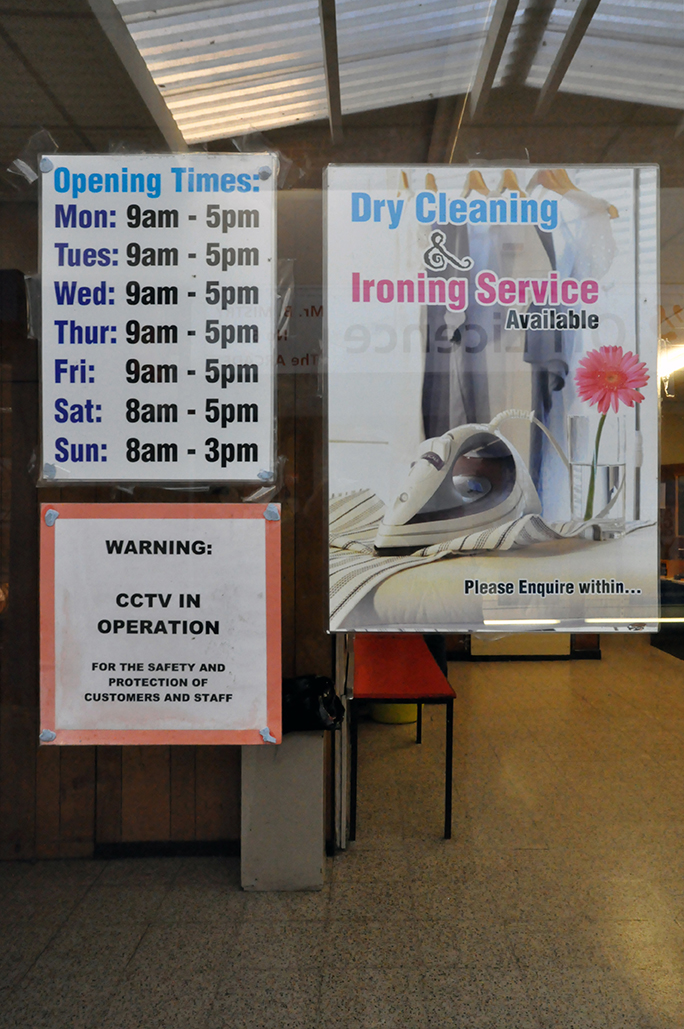
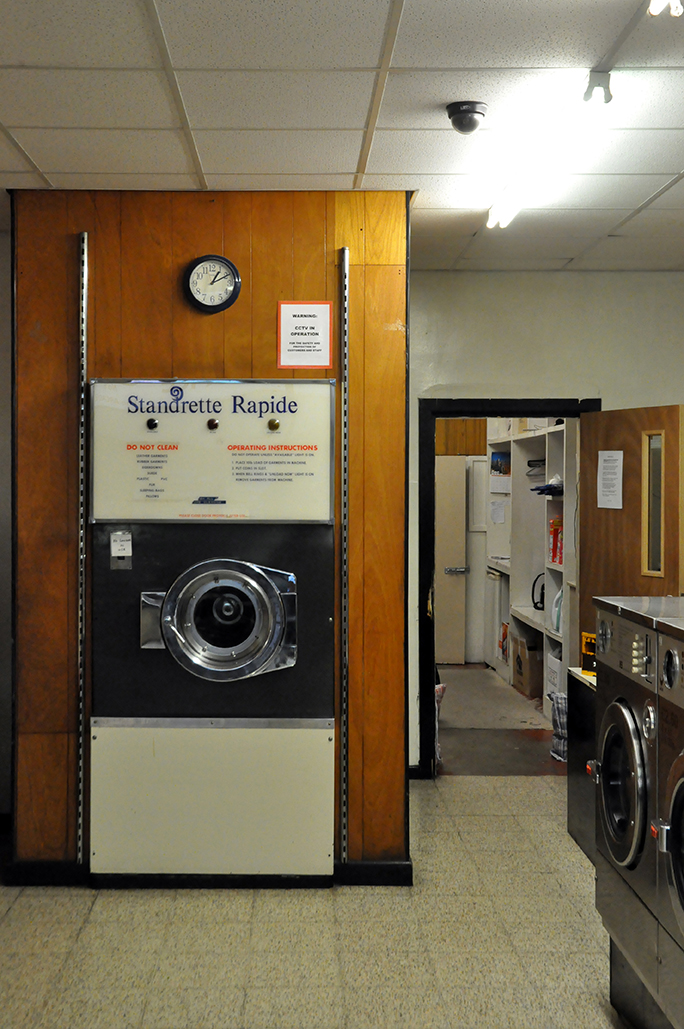
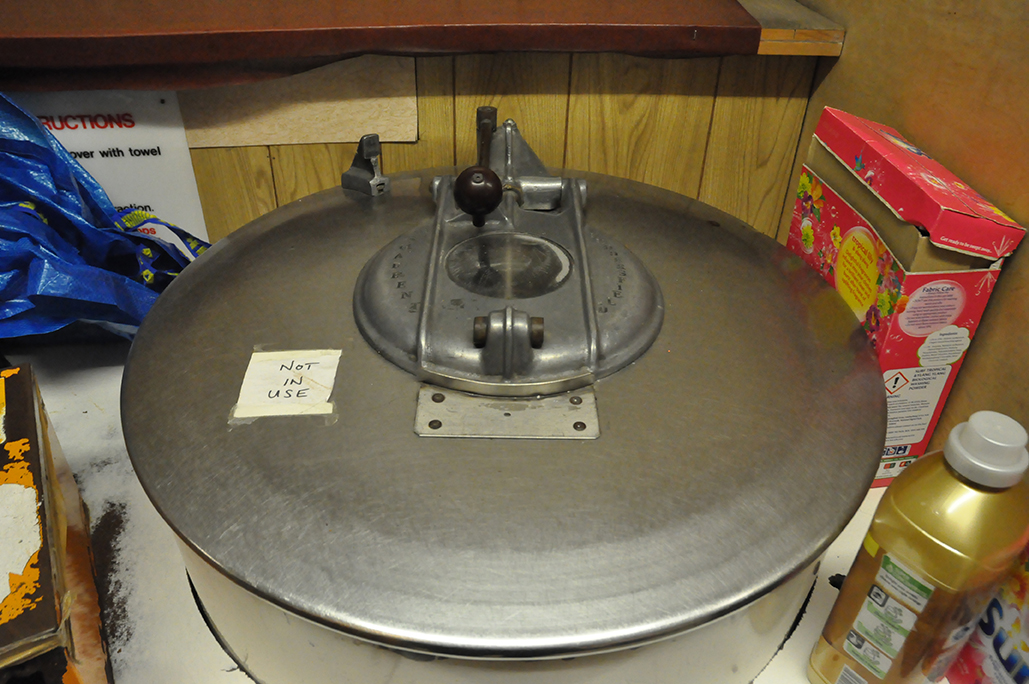
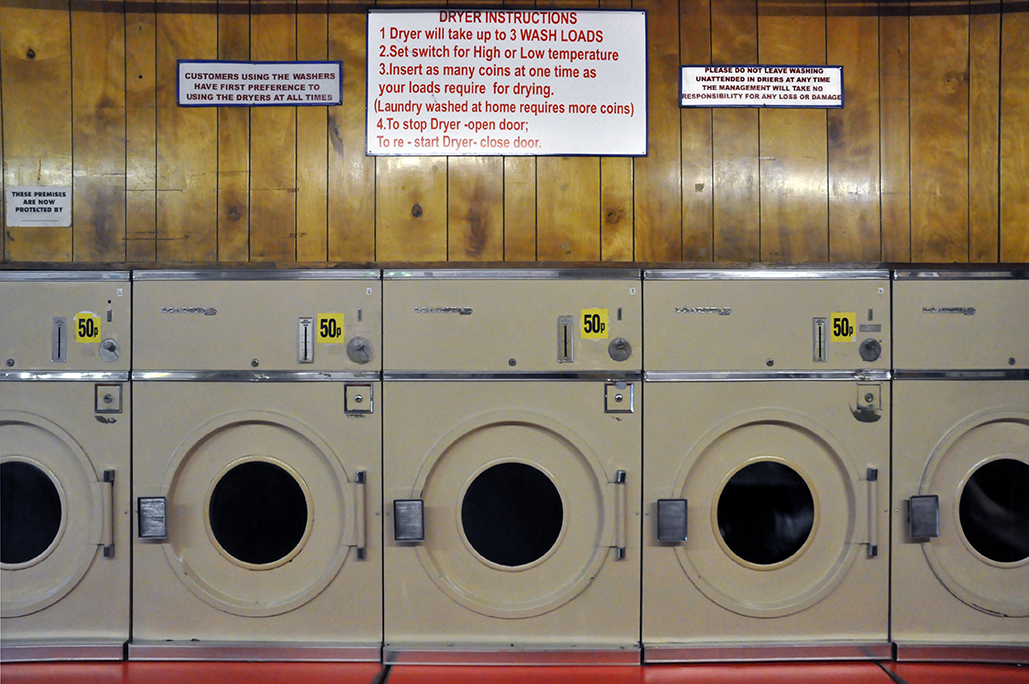
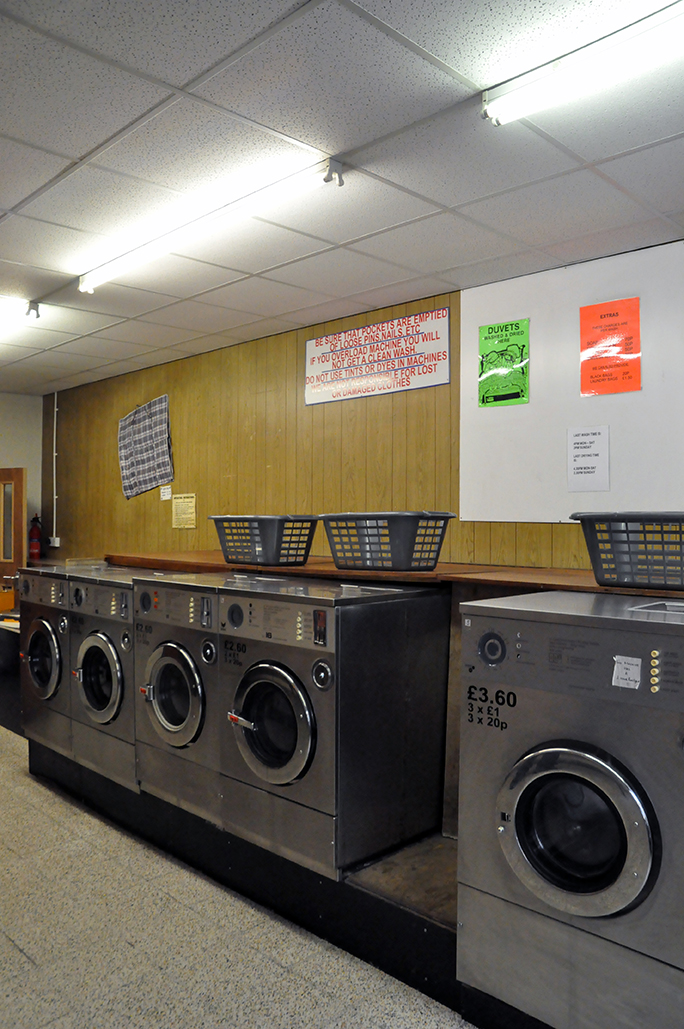
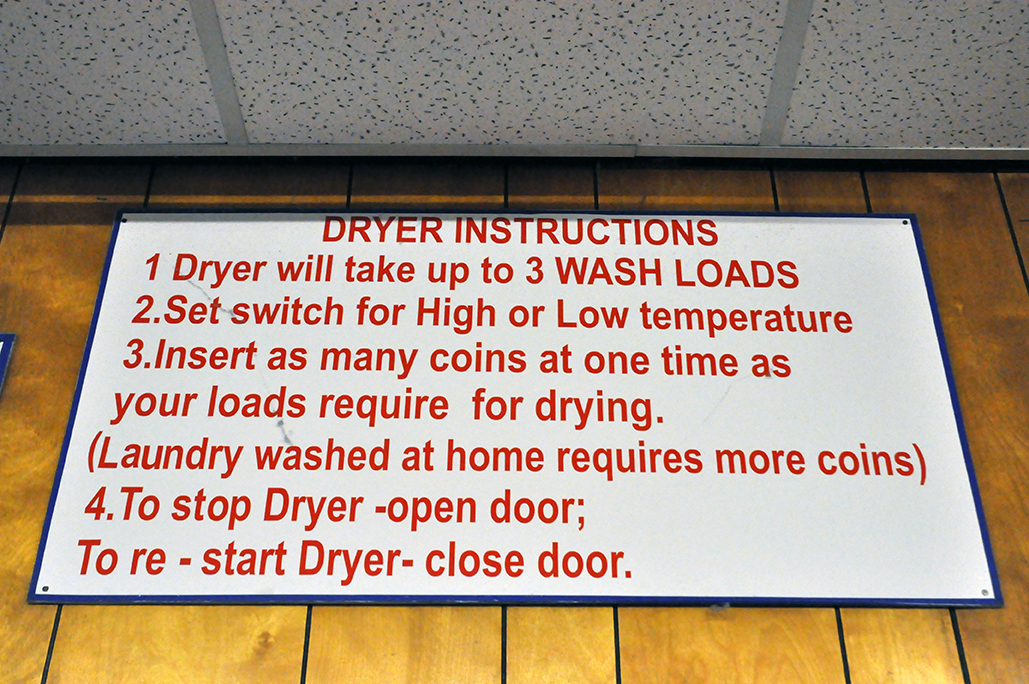
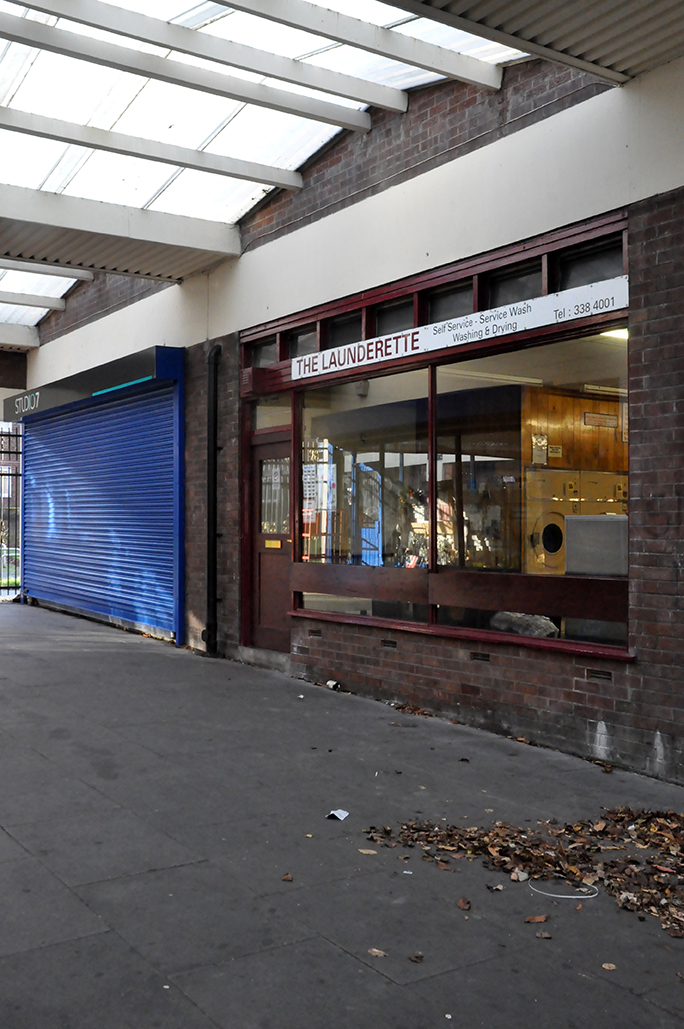
Moments away from a laundrette.
Imagine my amazement, on arrival in a town straddling the border of the counties of Ceredigion and Carmarthenshire in west Wales and lying on the River Teffi.
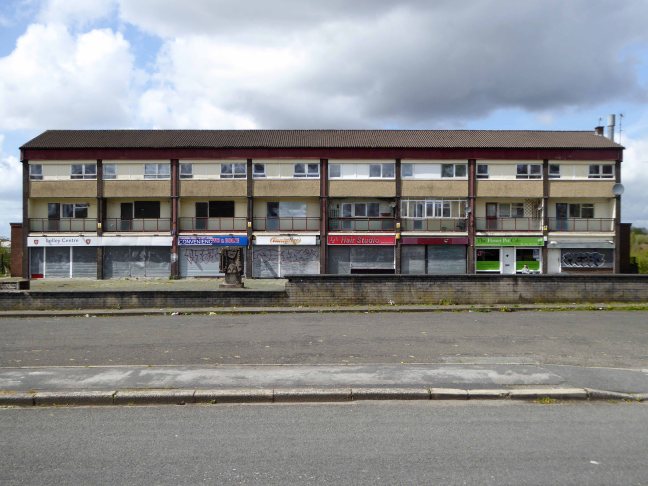
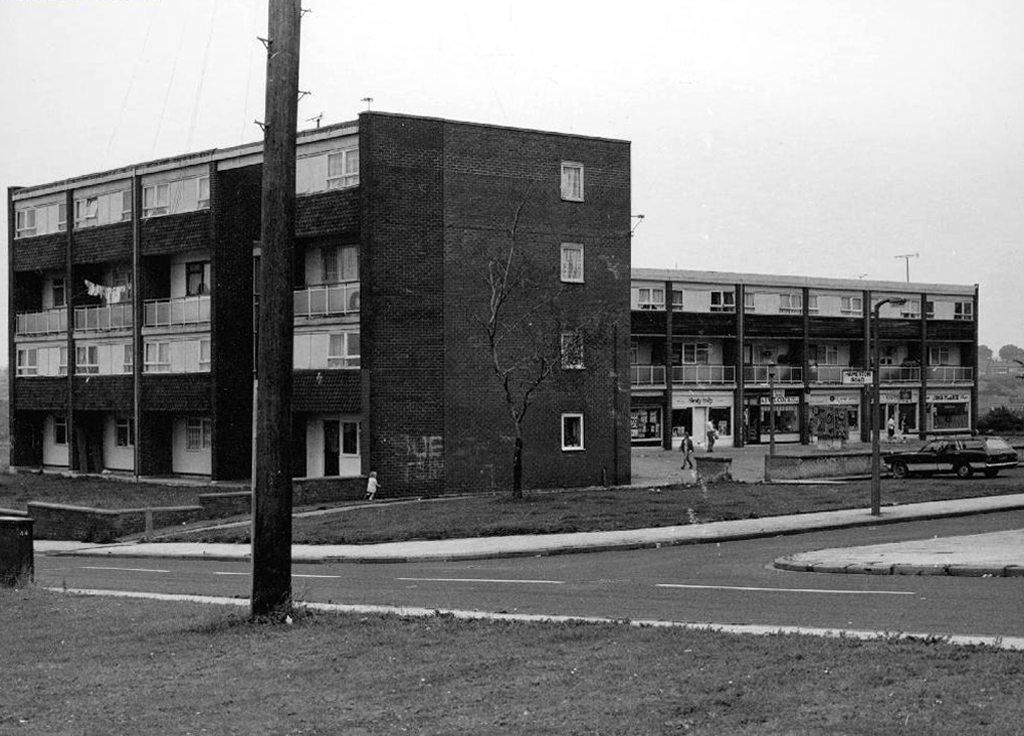
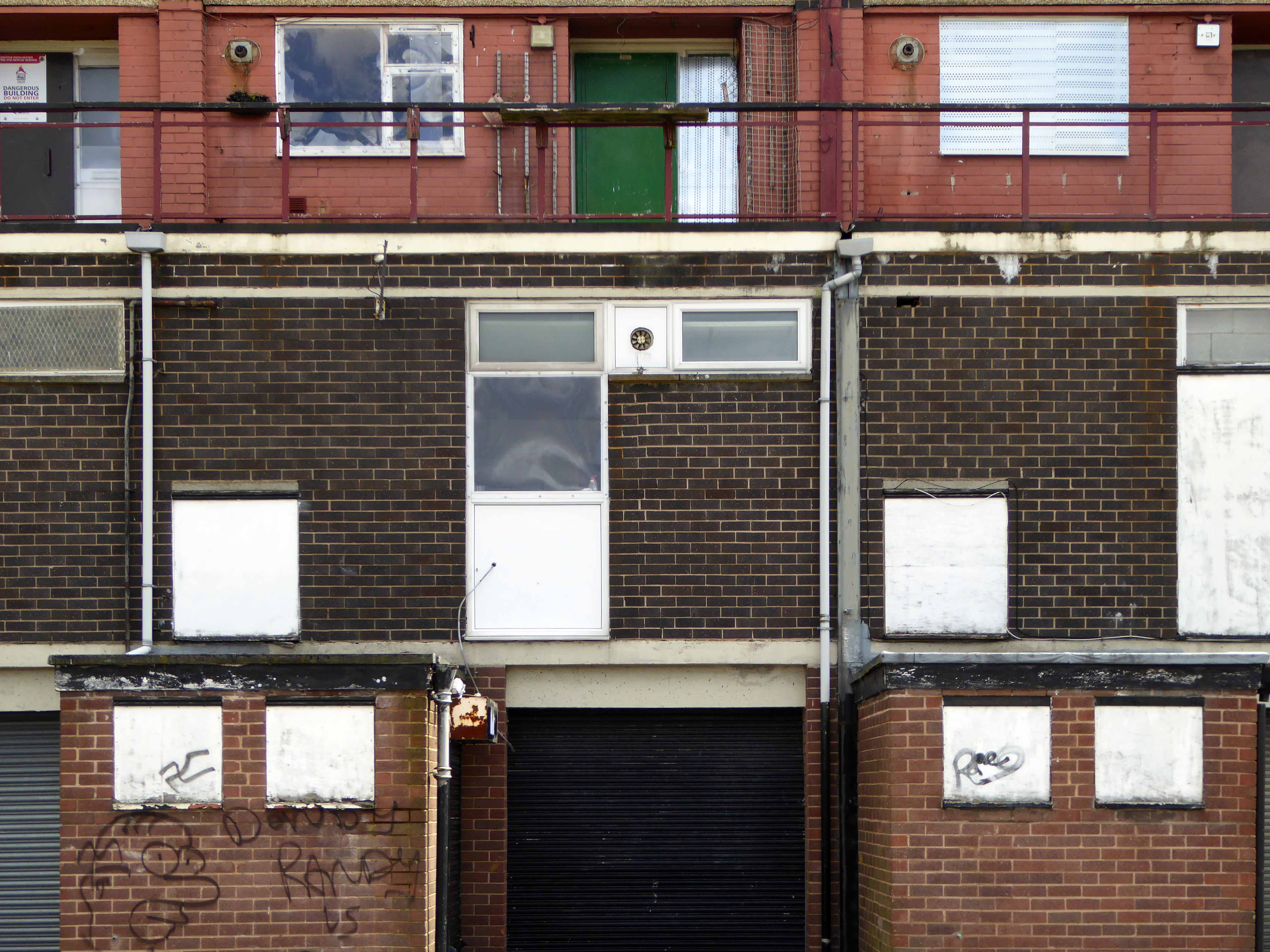
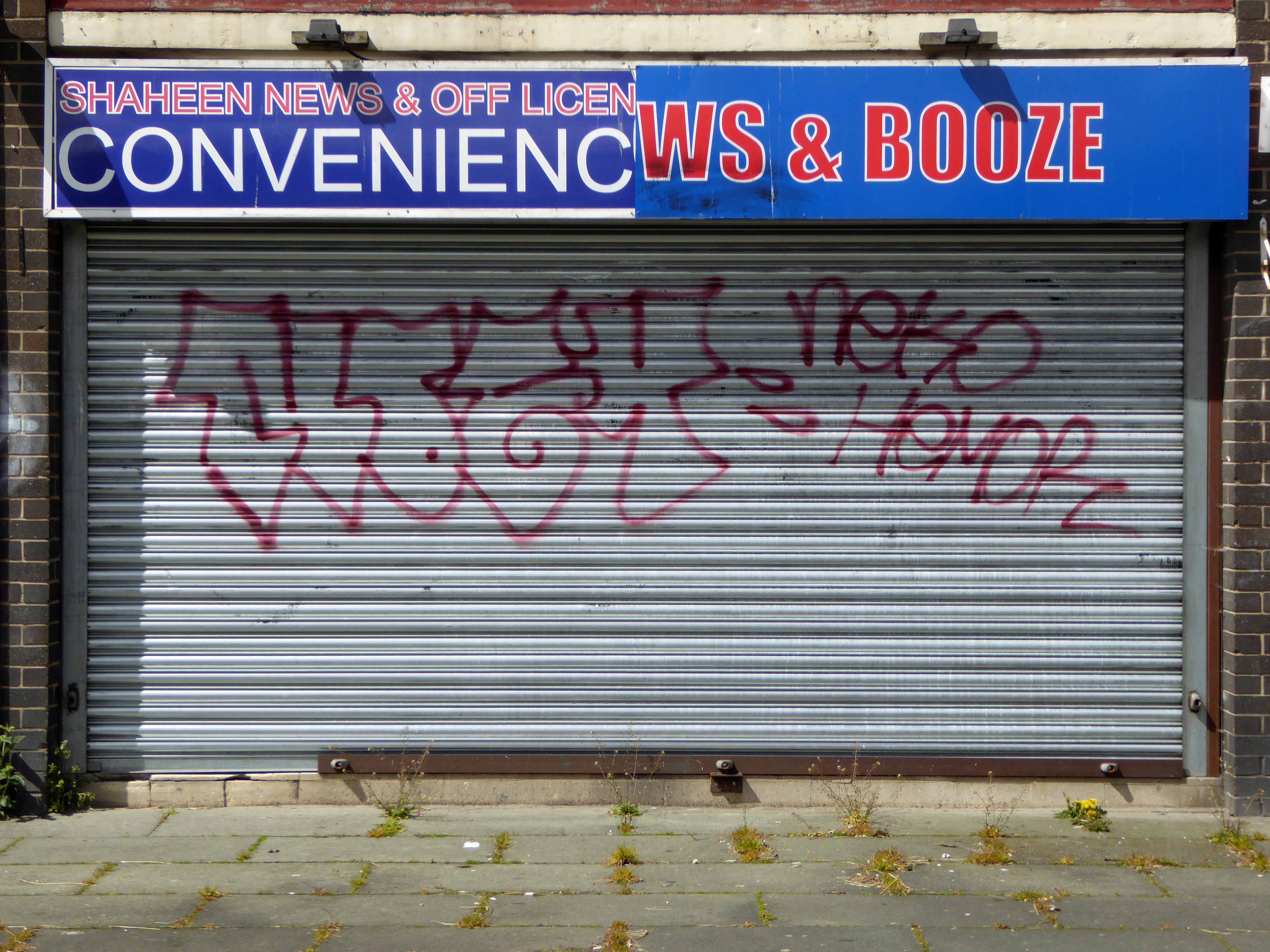
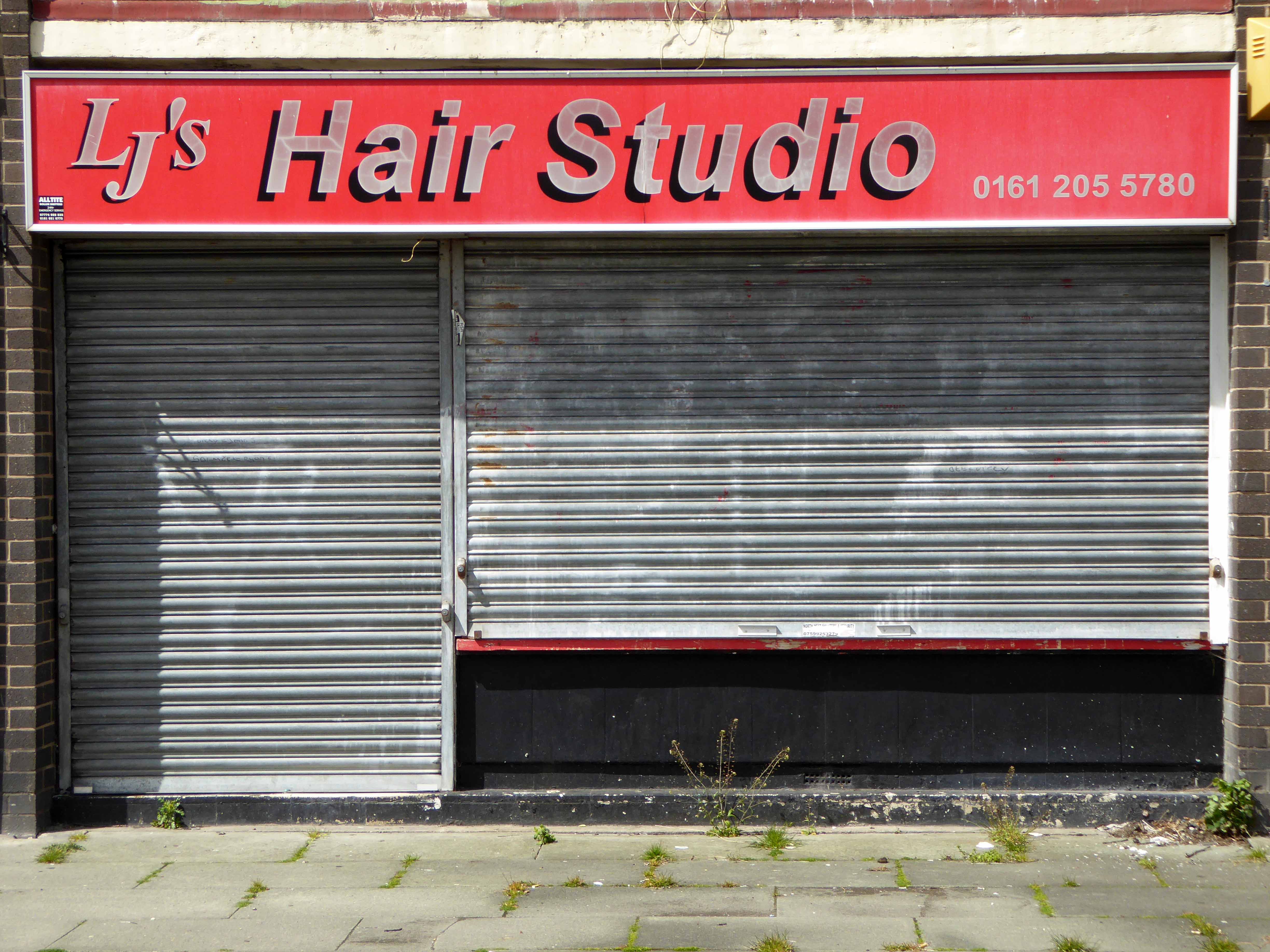
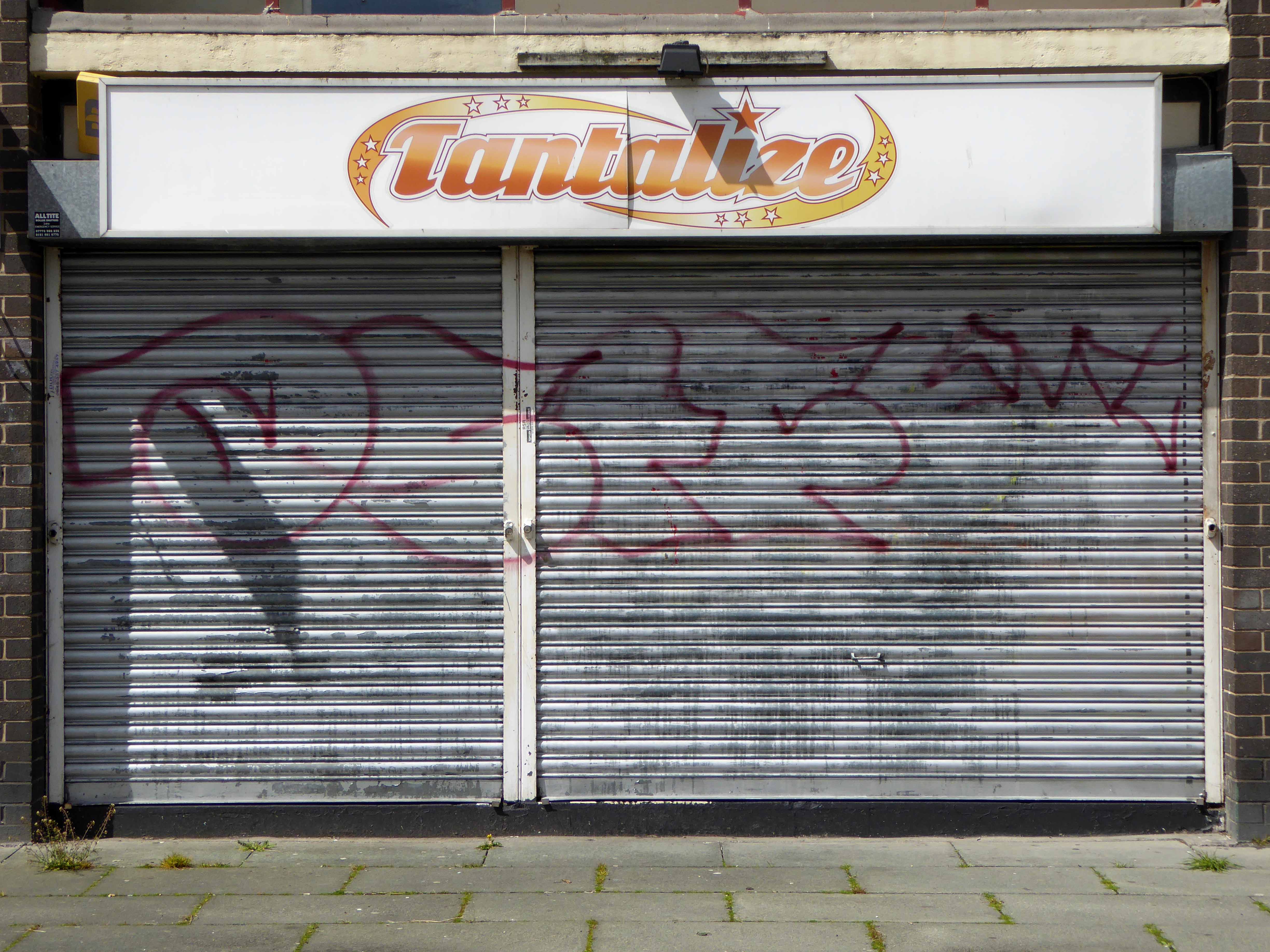
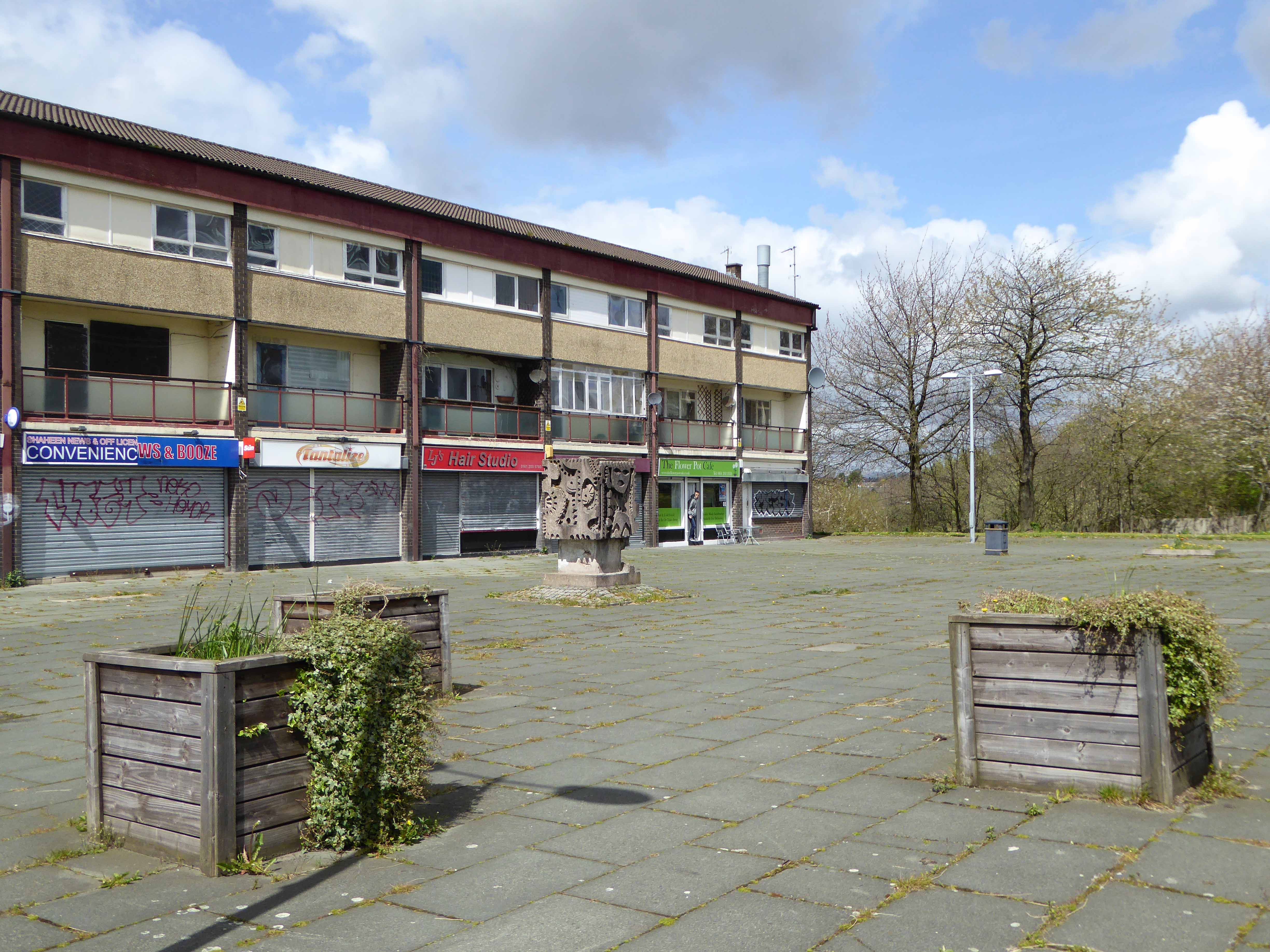
Time has not been kind to North Manchester, successive slumps, double-dip depressions, economic downturns, and centrally imposed recession hurts.
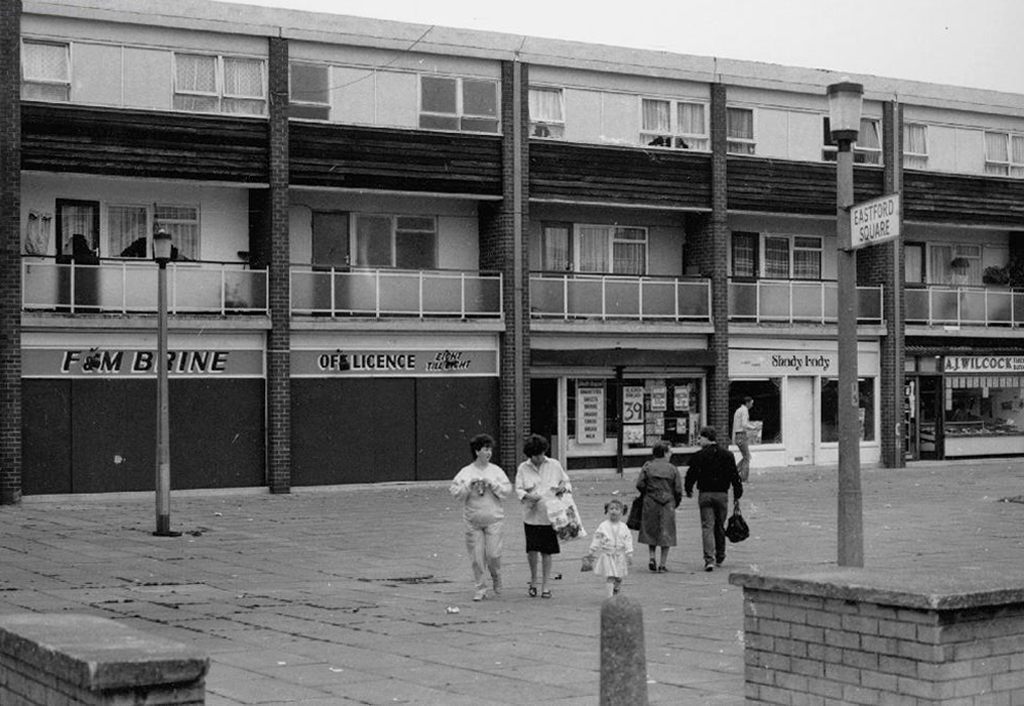
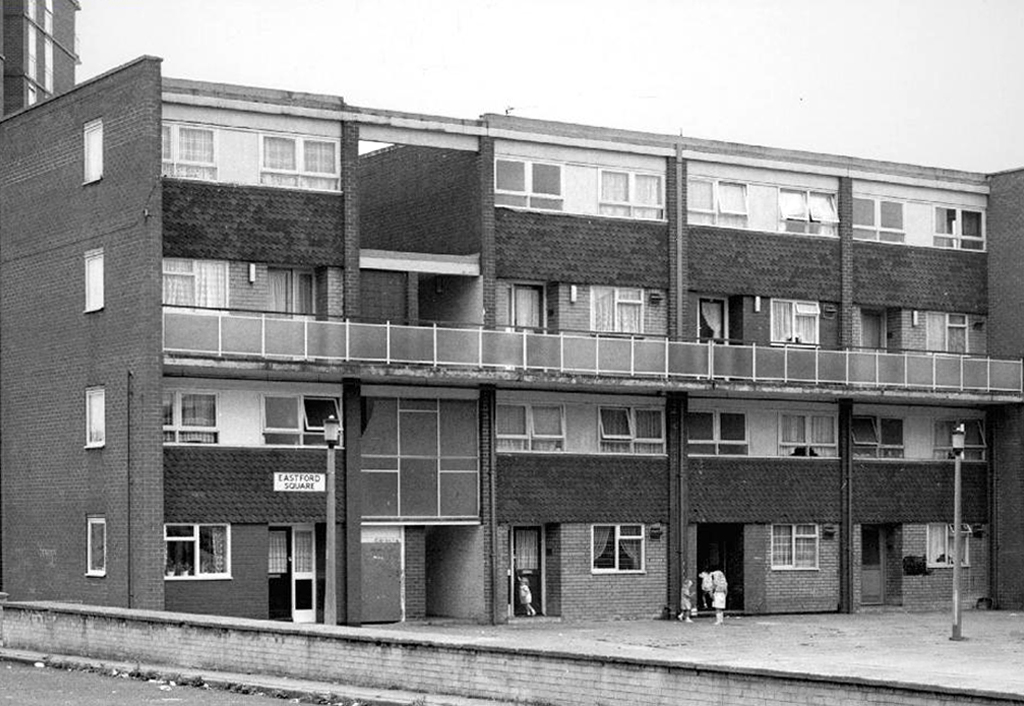
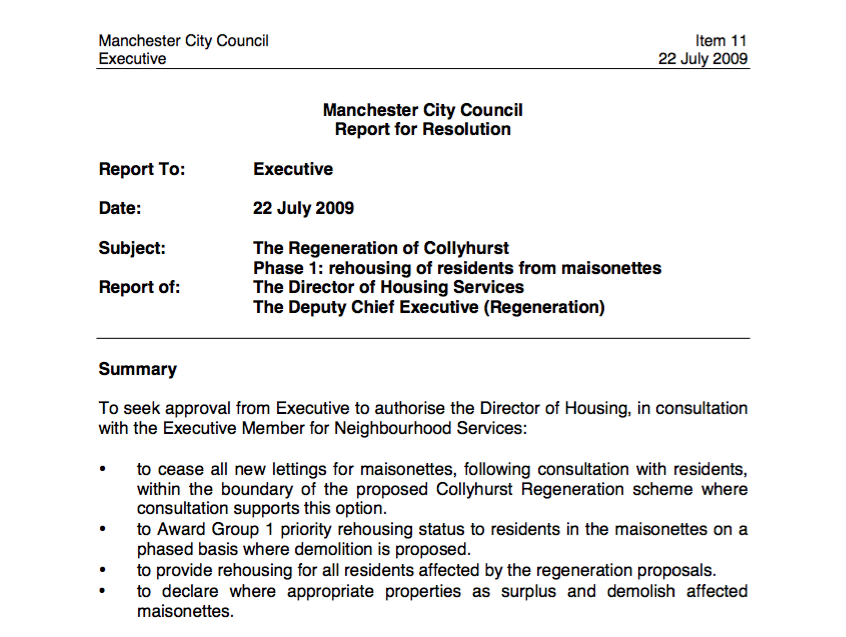
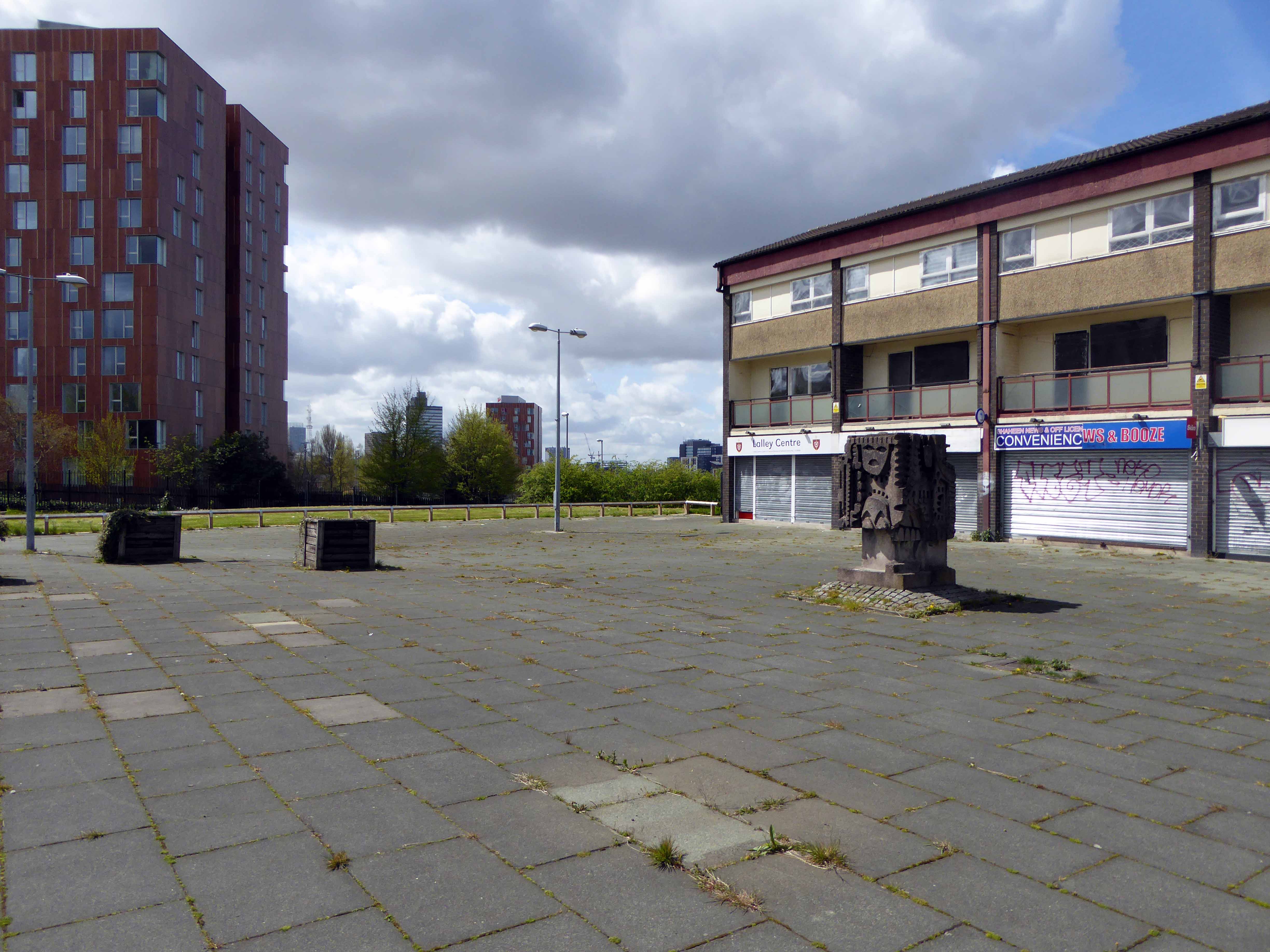
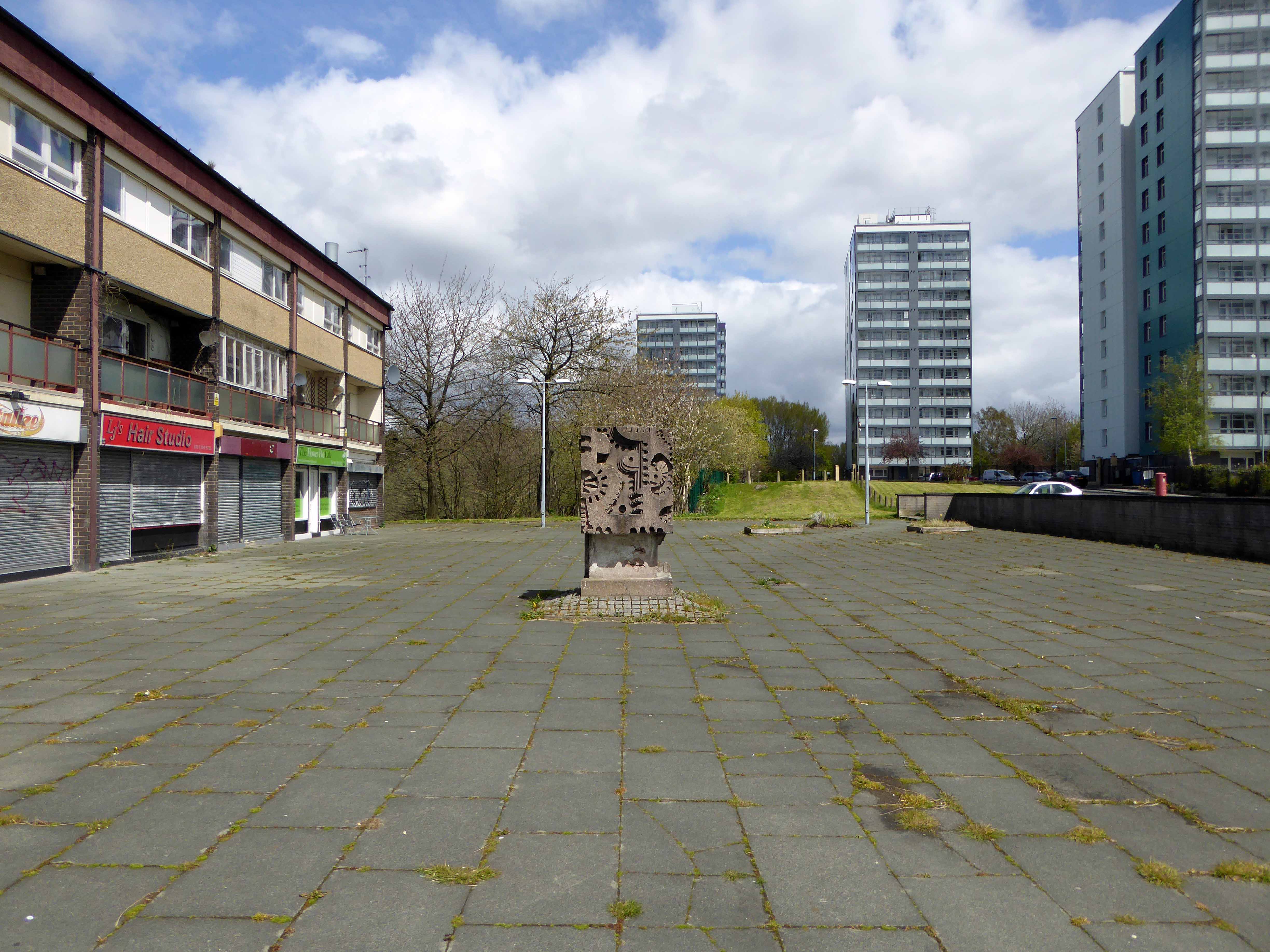
The local authority steps in, from 2009 the fate of Eastford Square is sealed.
Regeneration.
Spells demolition.
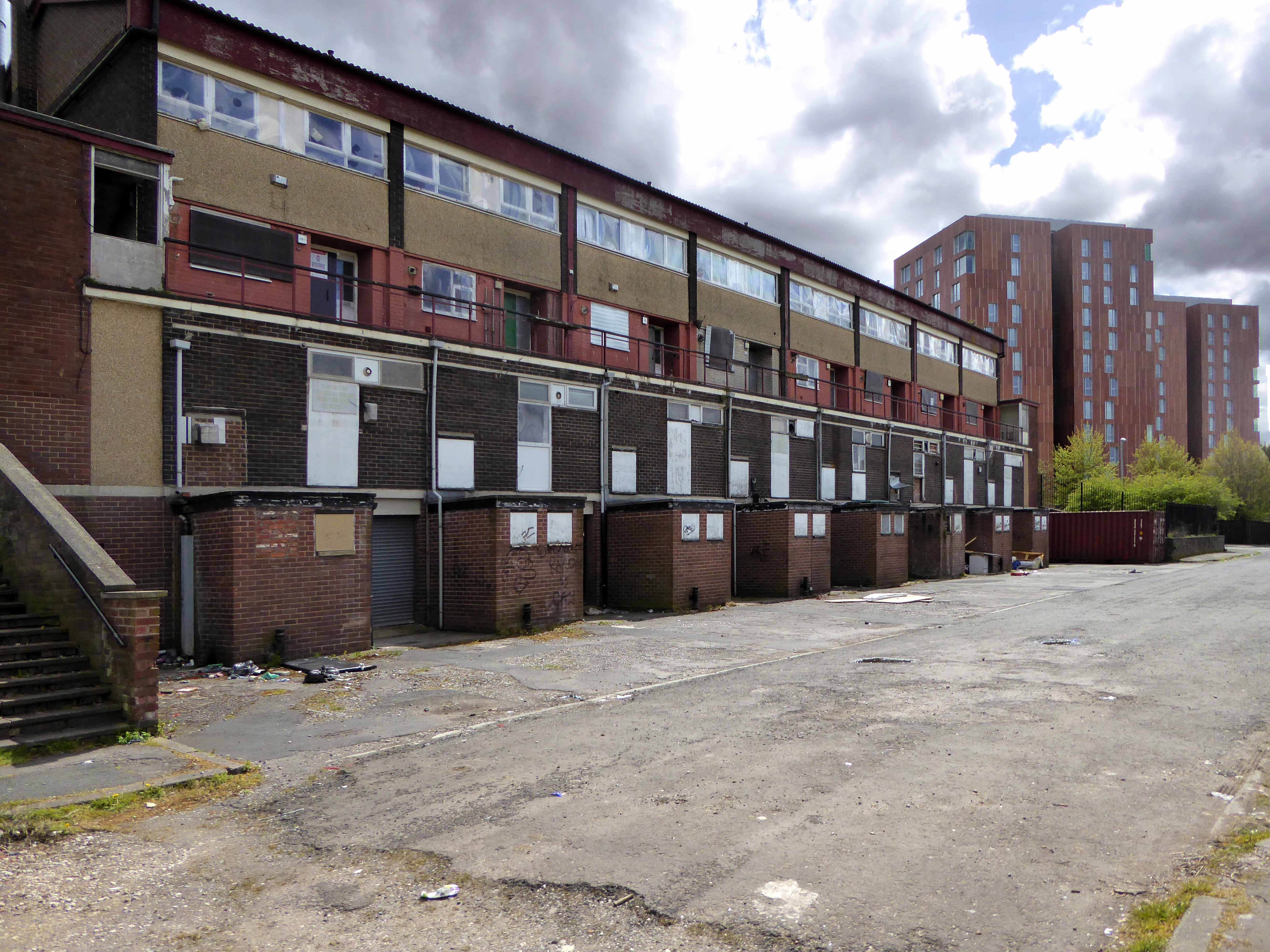
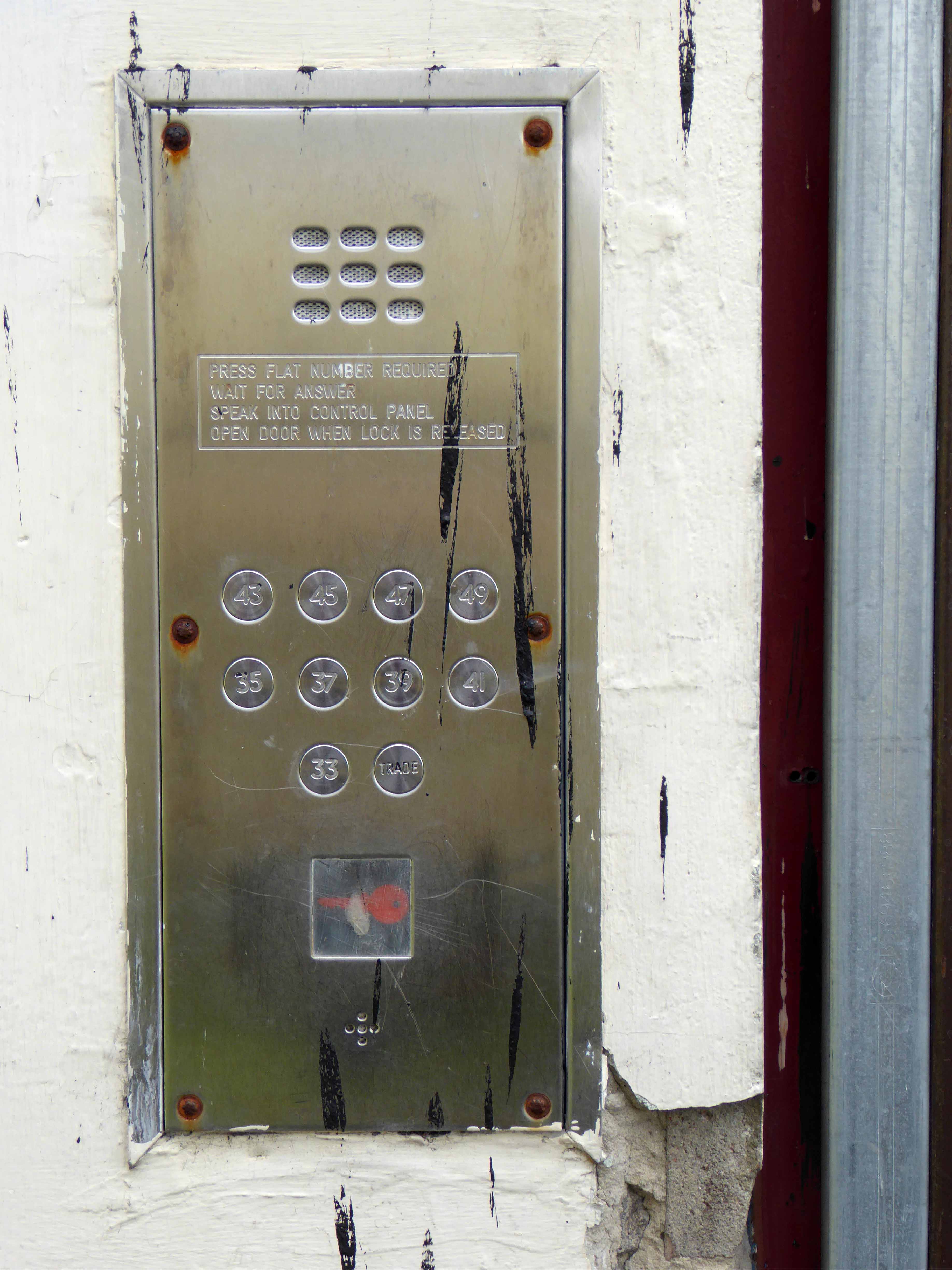
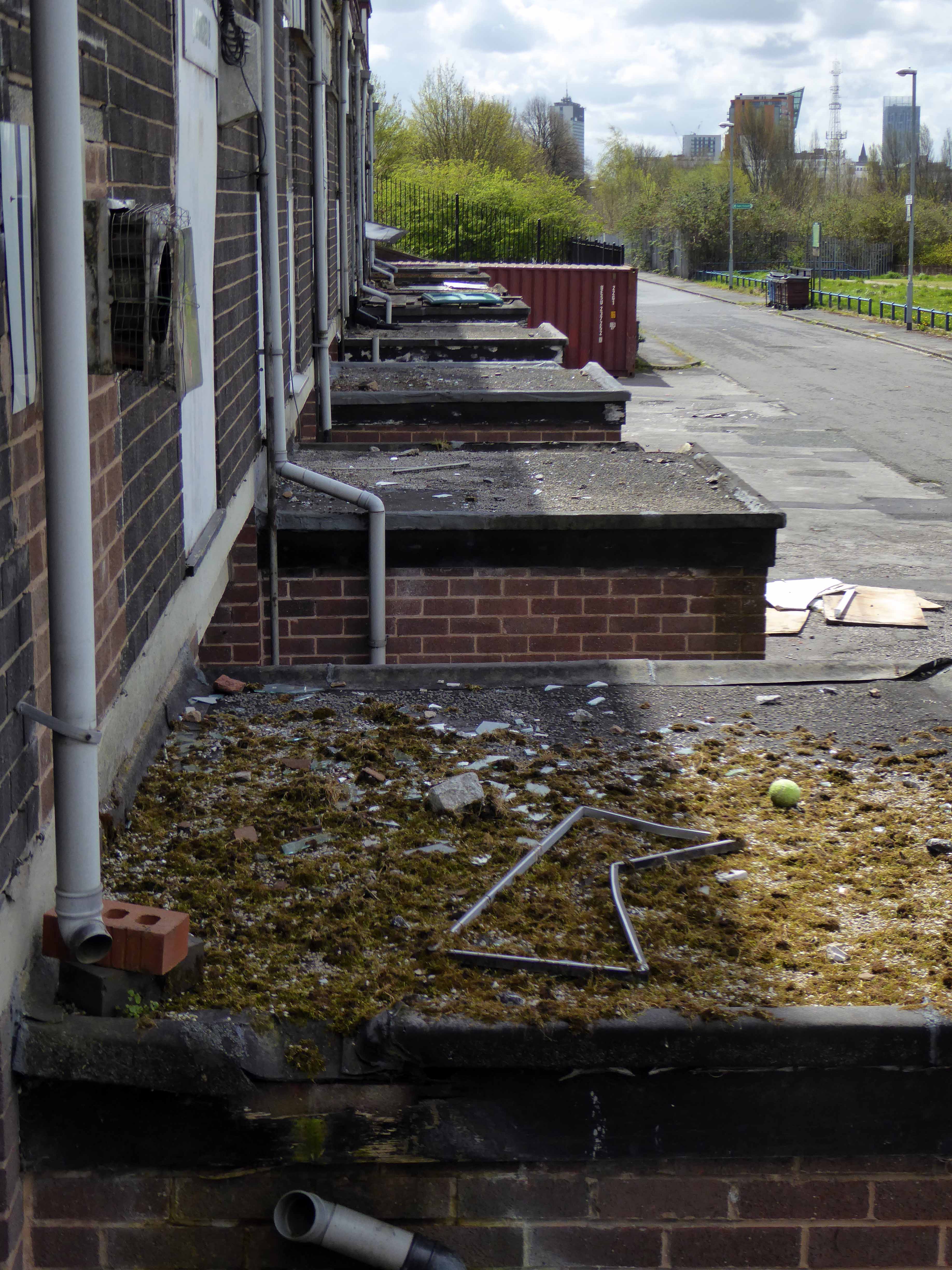
One wing is already gone, the maisonettes are tinned up.
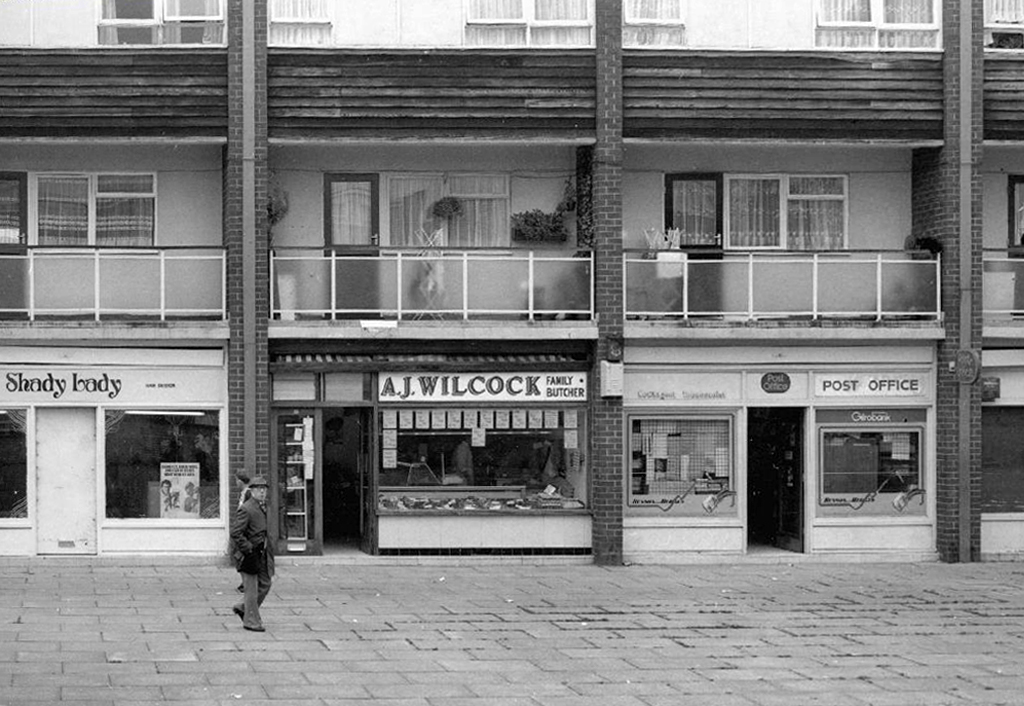
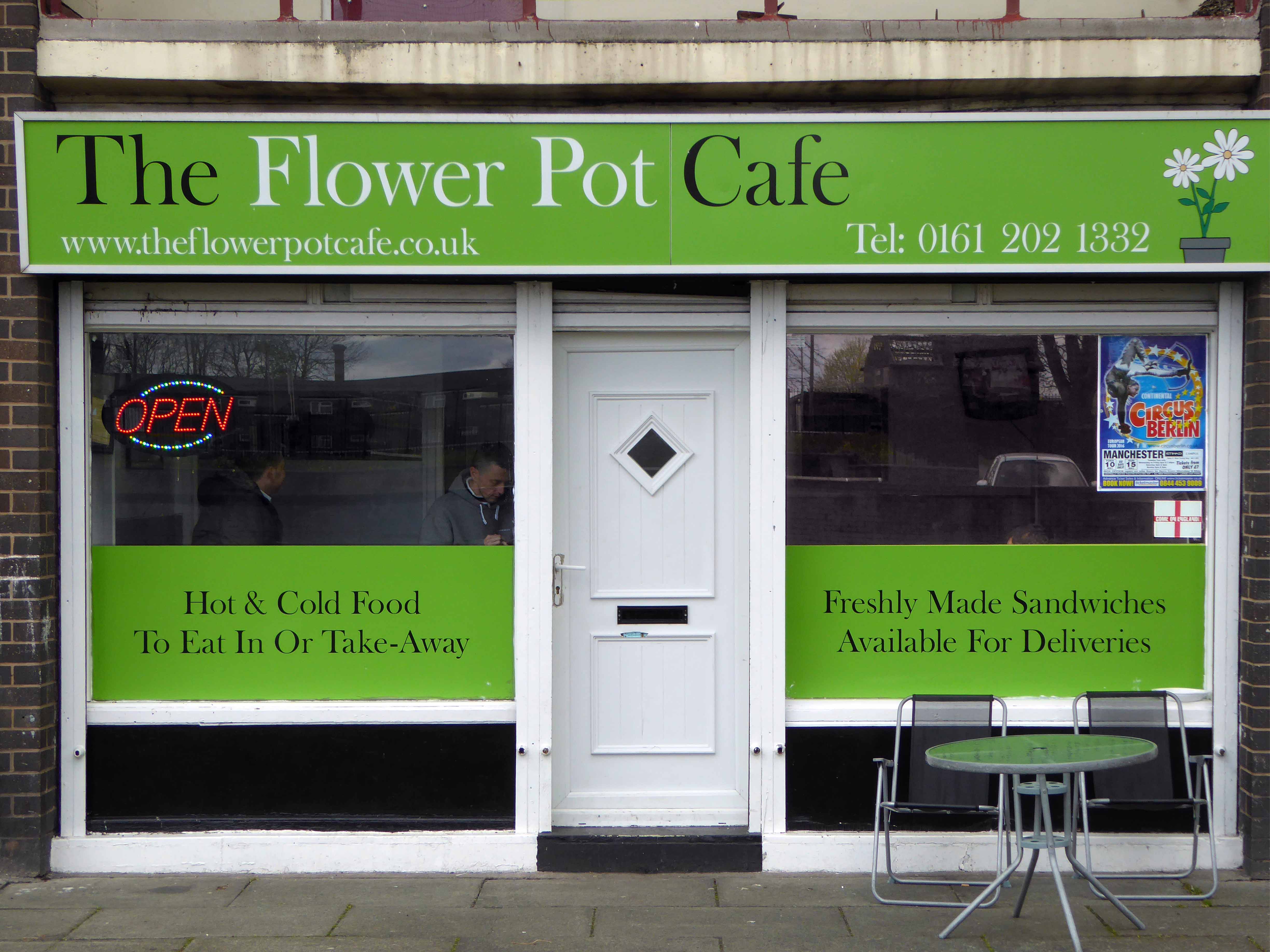
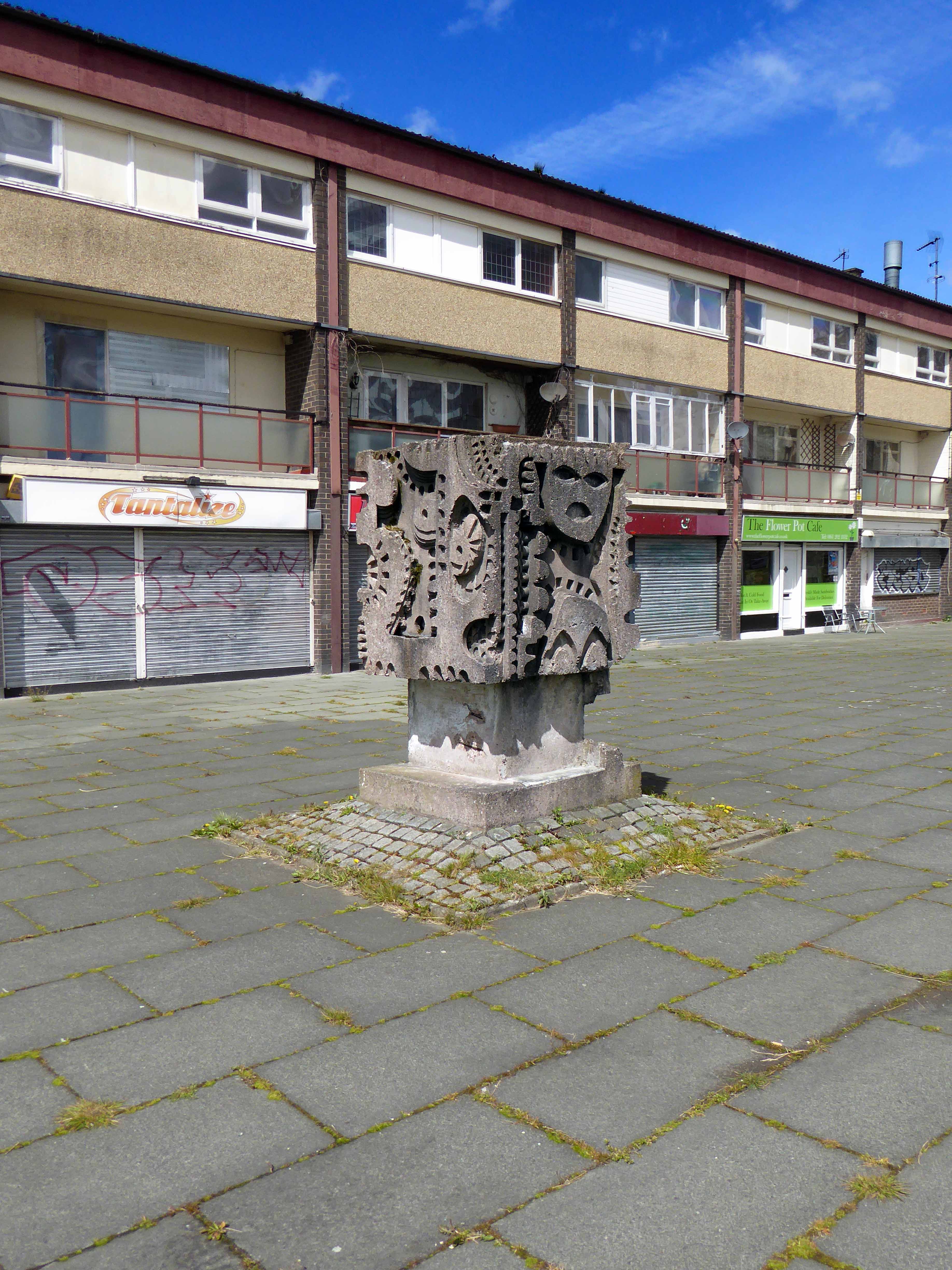
The Flower Pot Café, still fully functional, fed me well for £2, Lee the proprietor is living on borrowed time though, hoping for relocation within the new development.
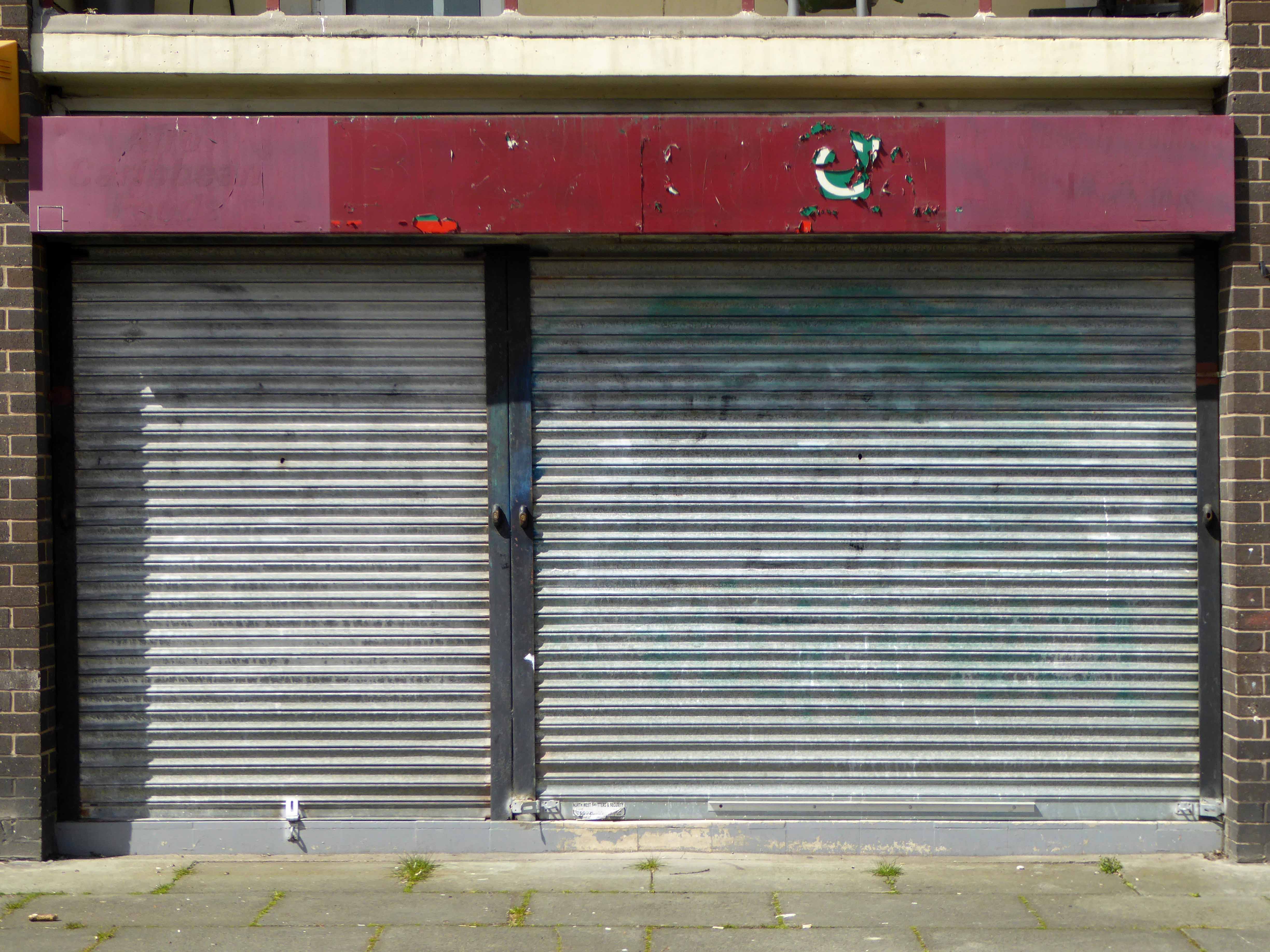
Other businesses have not survived the transition, awaiting CPO and who knows what.
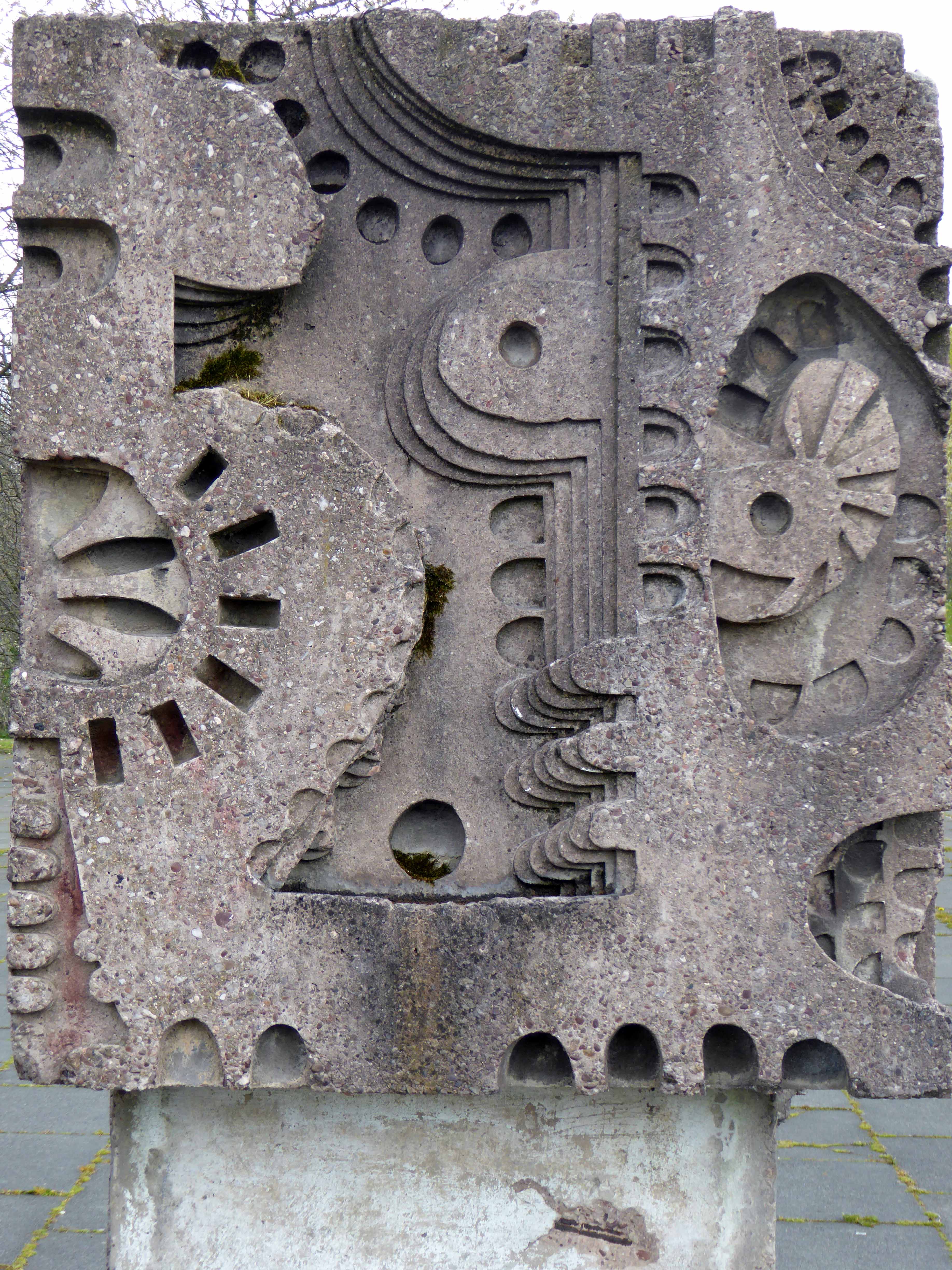
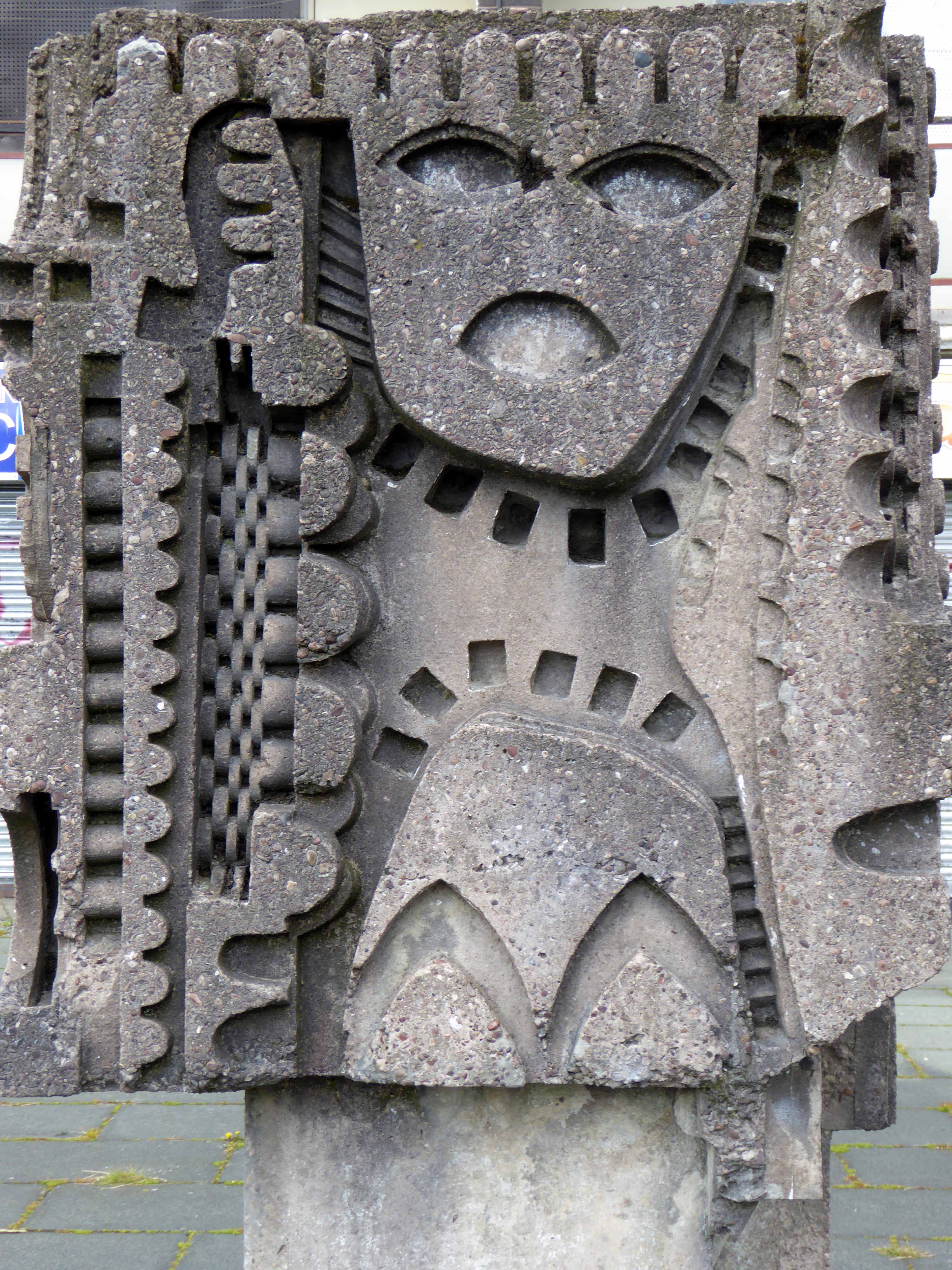
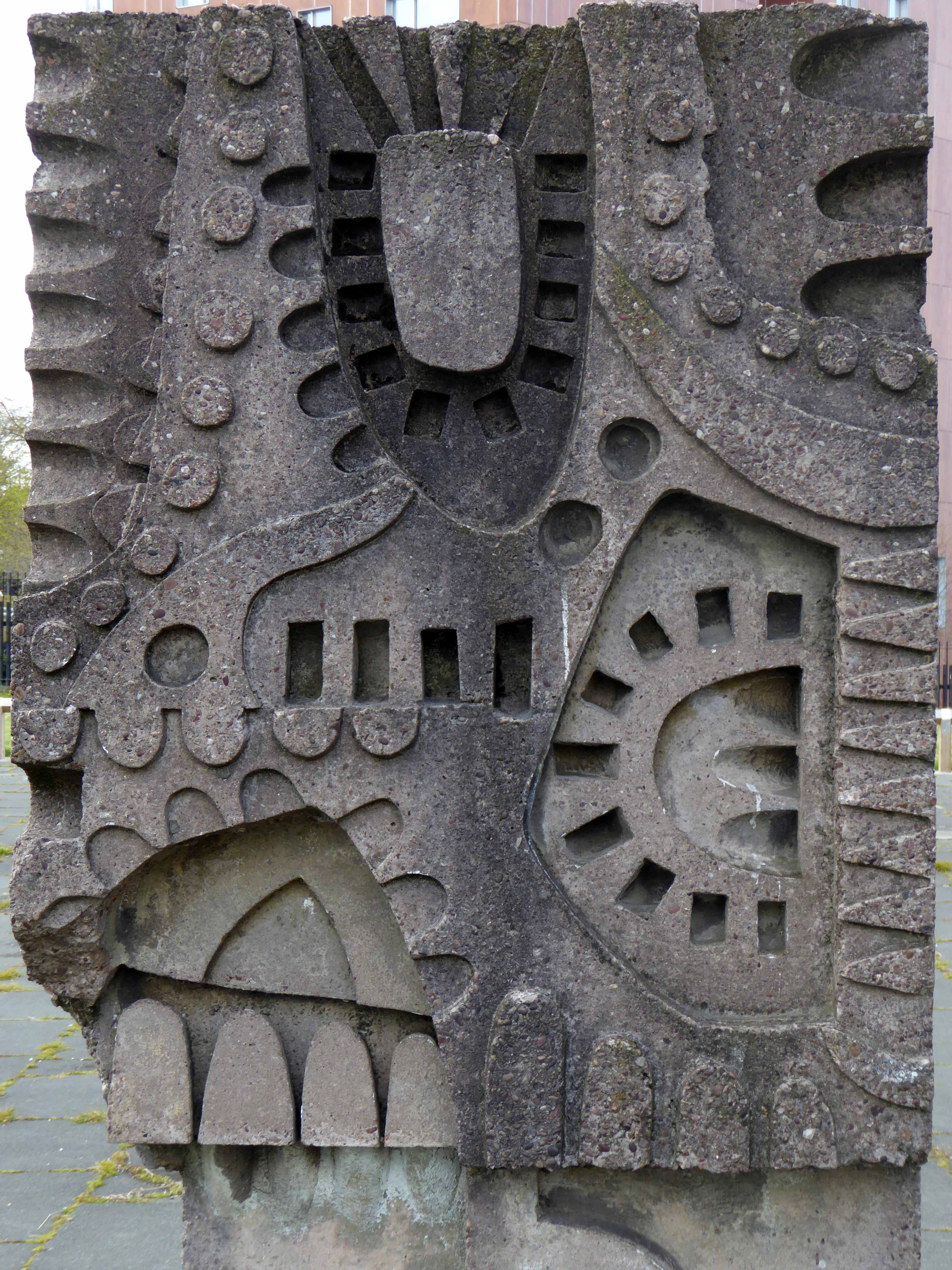
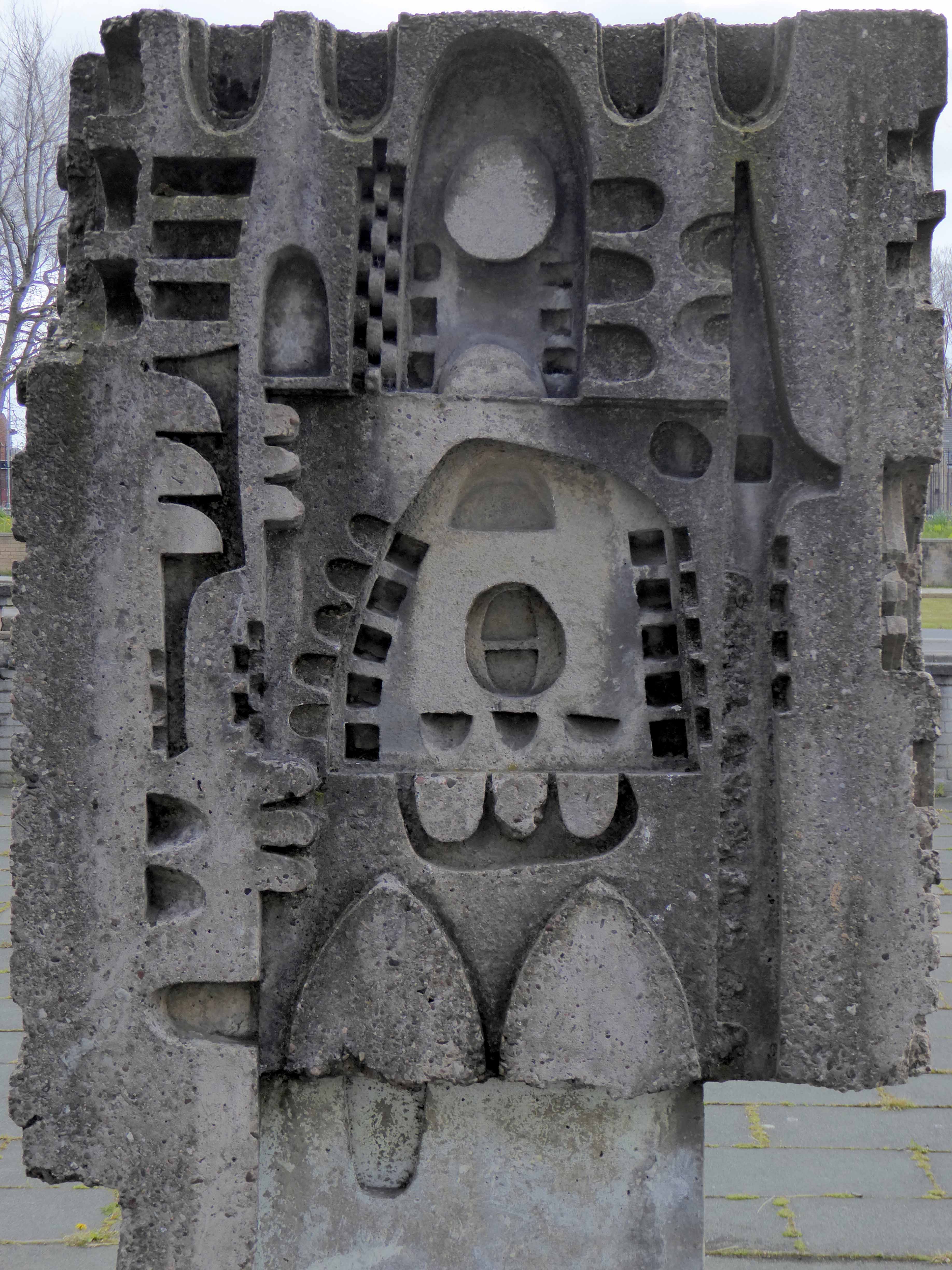
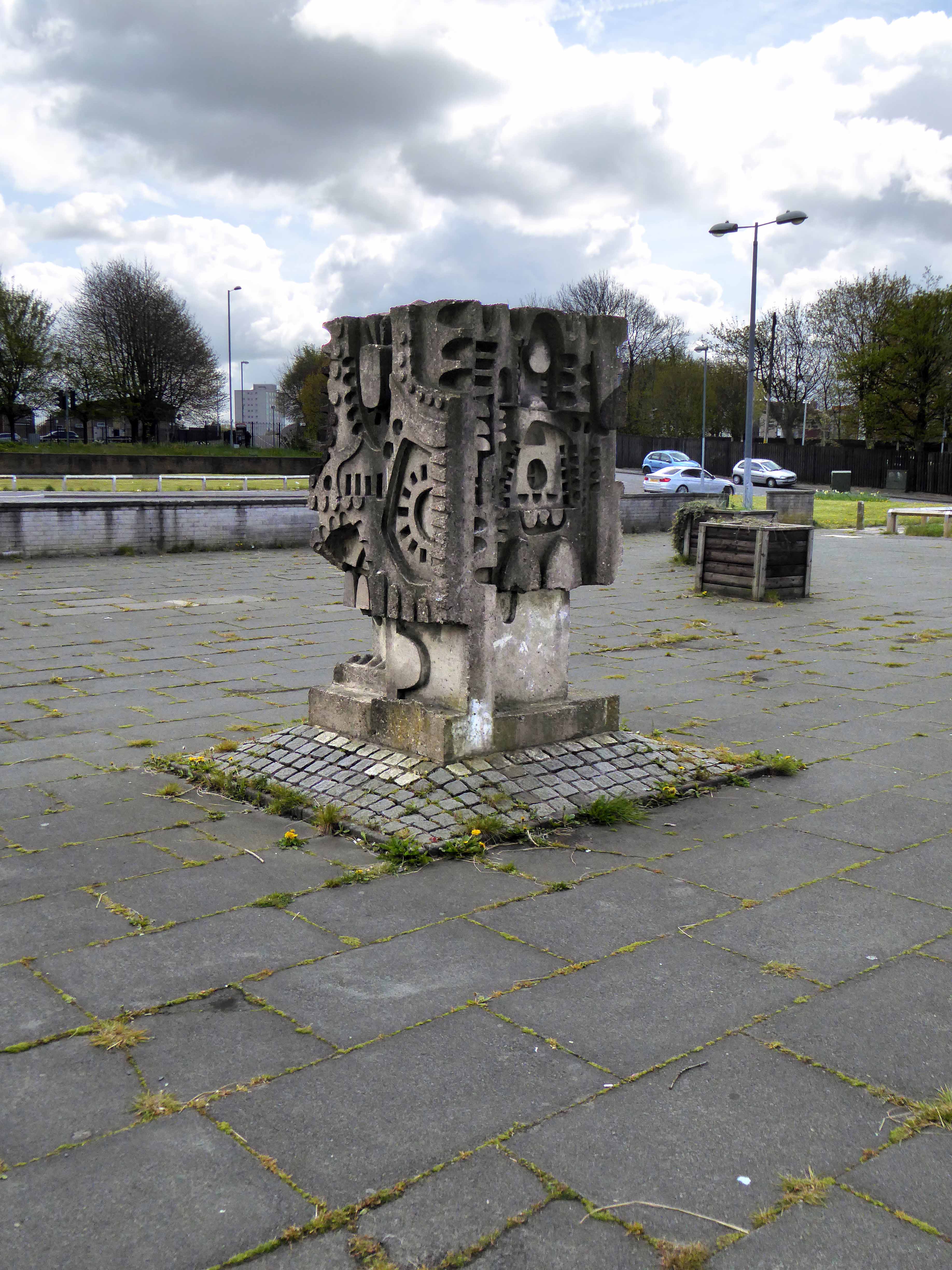
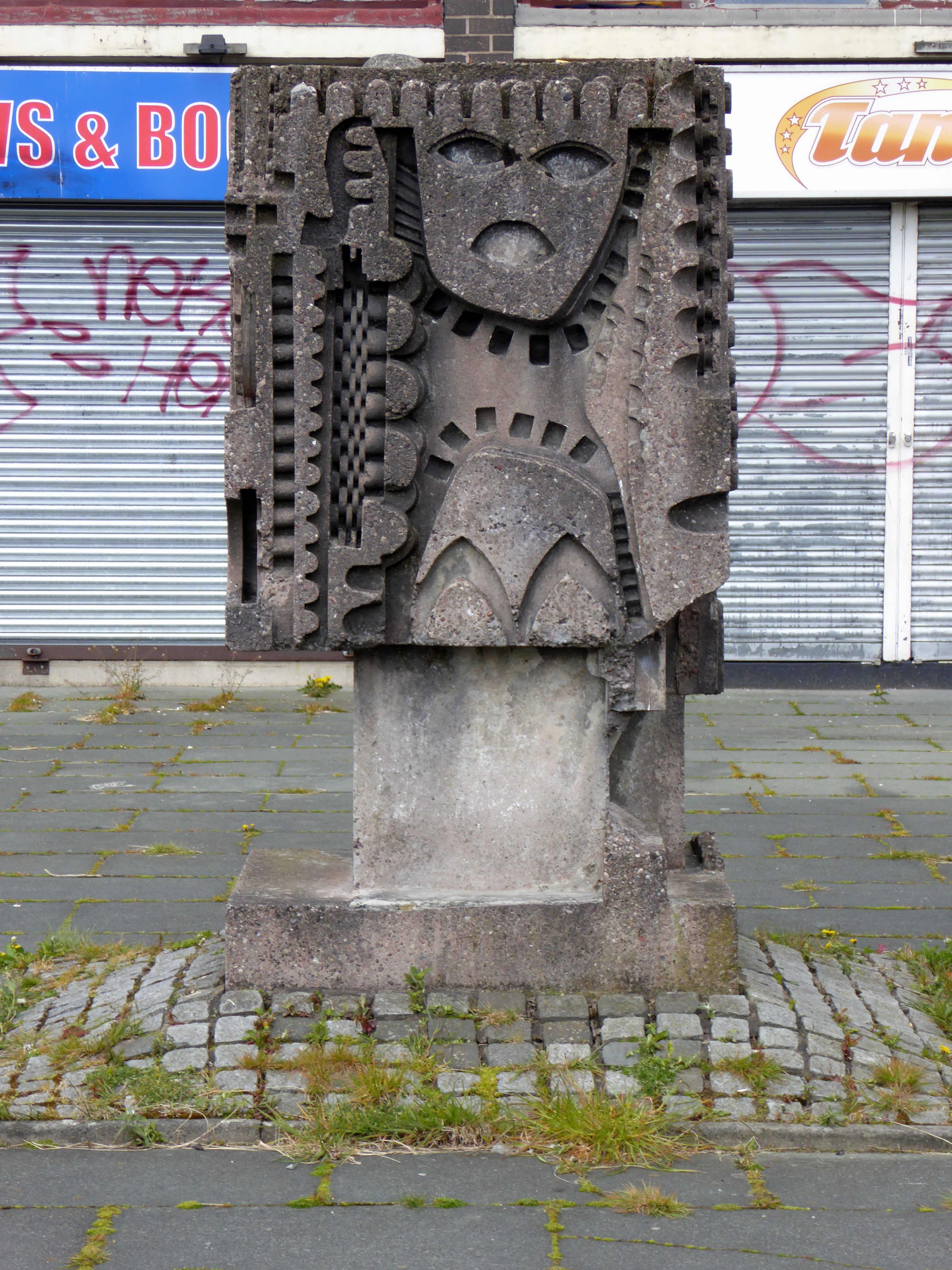
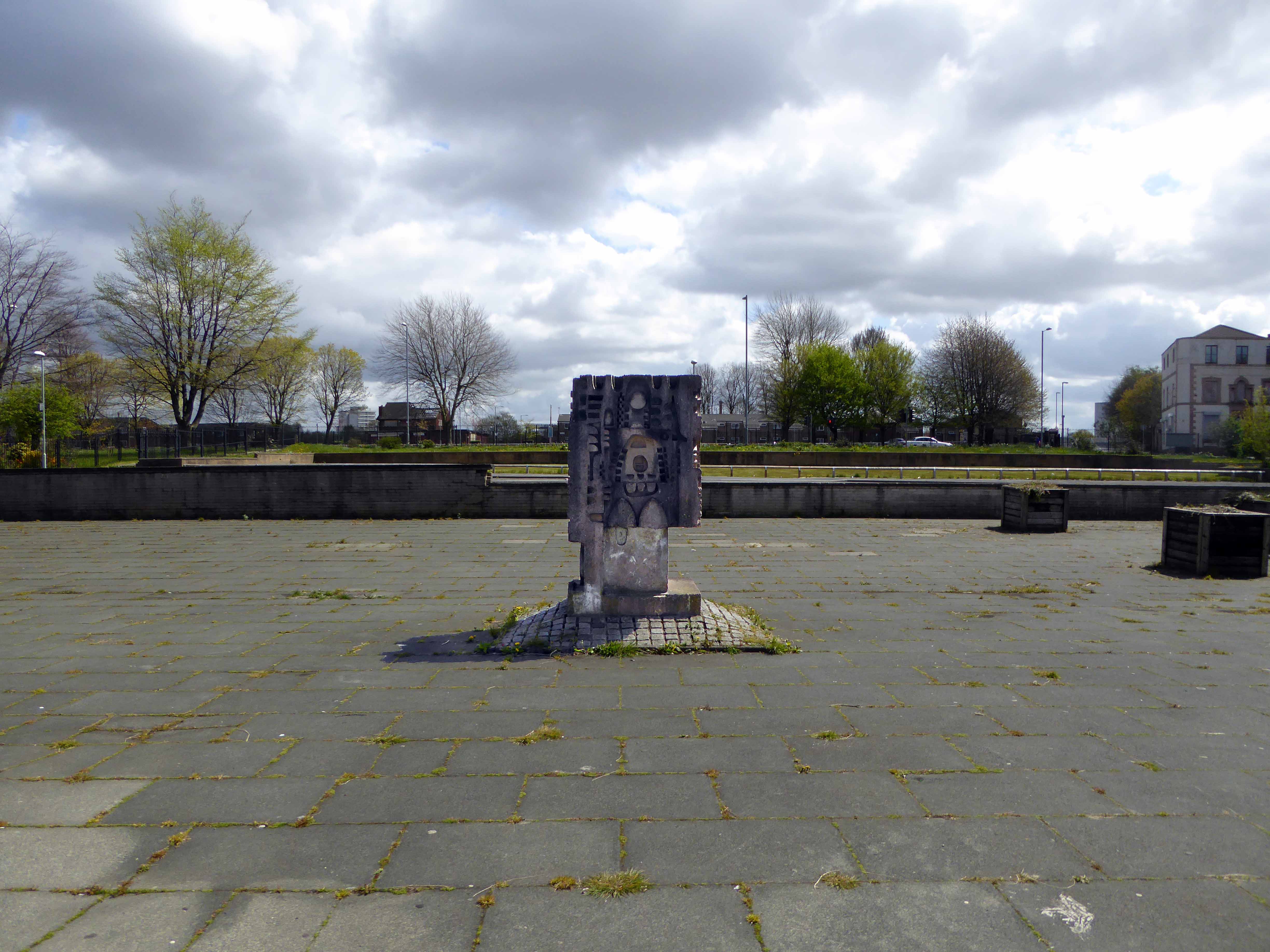
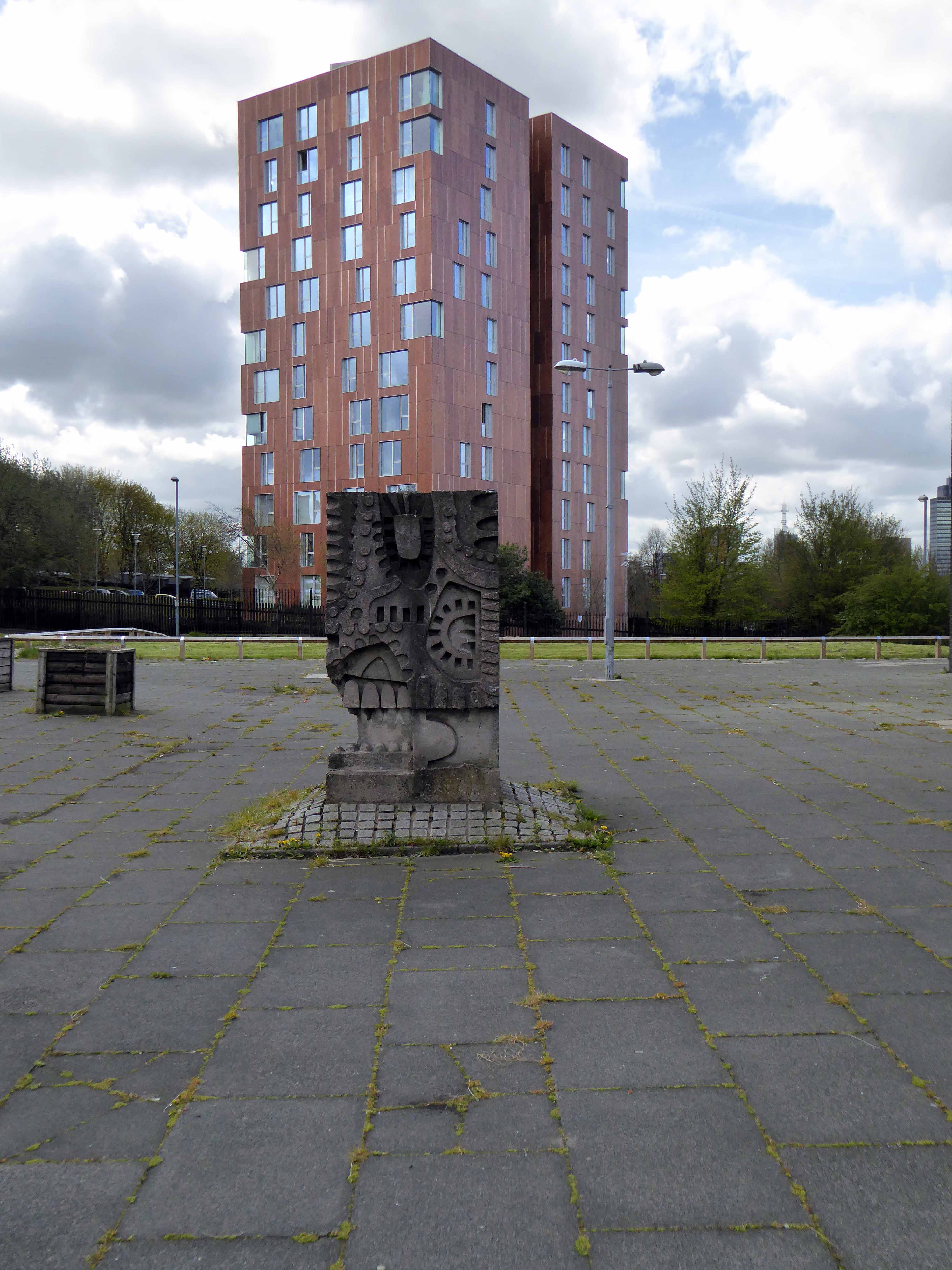
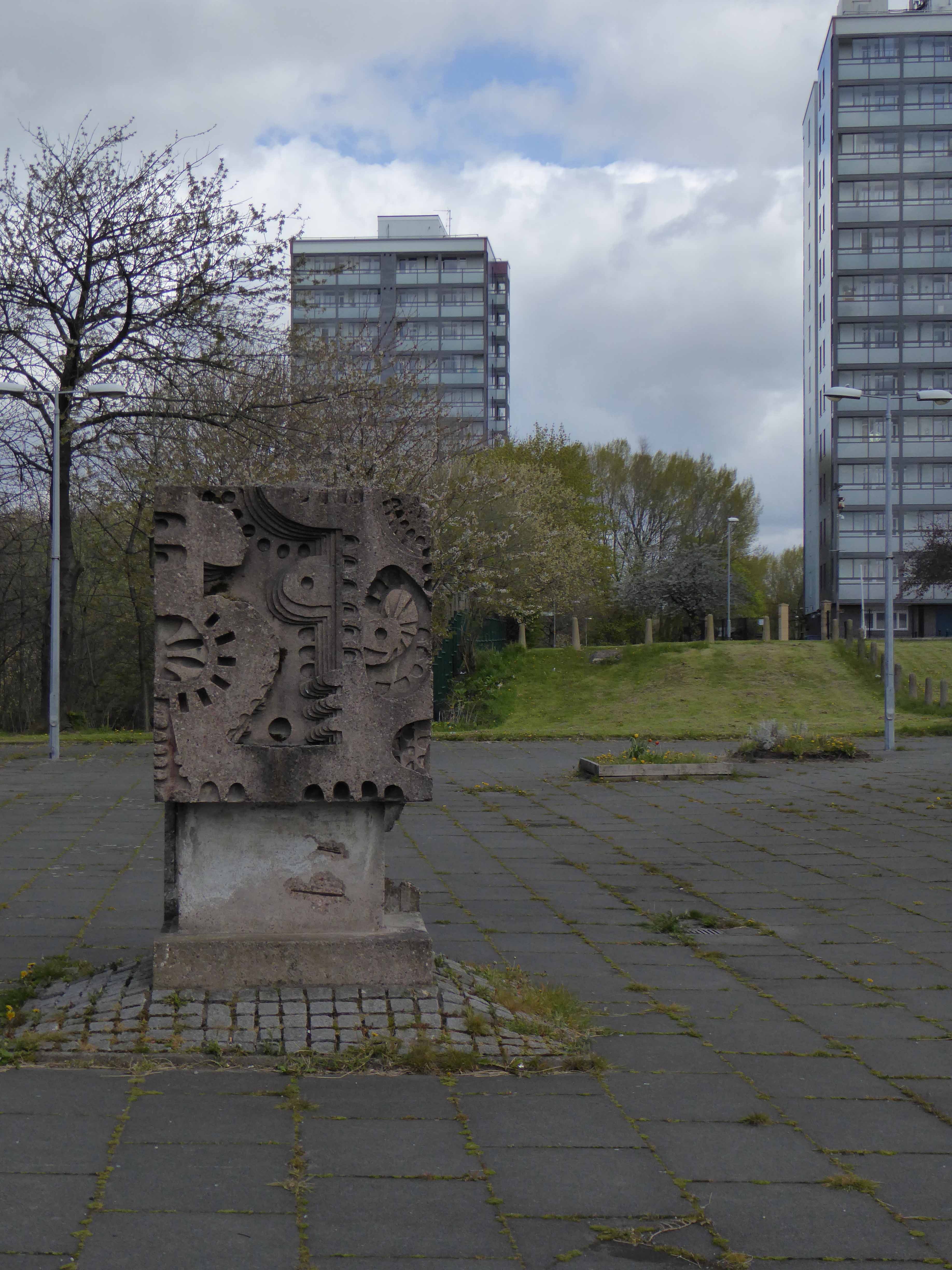
The square is blessed with a concrete sculpture, whose fate I hope is secured, somehow.
This as ever, is a time of change, I hope that the area and its current inhabitants live to tell the tale, rather than fall victim to the tide of gentrification, forcing them further afield.
“But now I have come to believe that the whole world is an enigma, a harmless enigma that is made terrible by our own mad attempt to interpret it as though it had an underlying truth.”
Umberto Eco
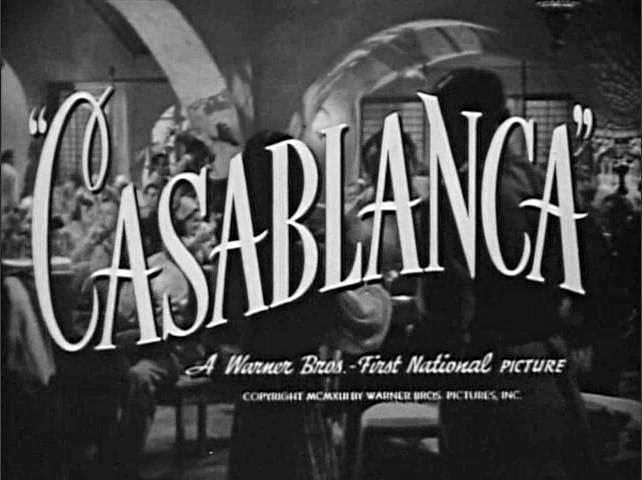
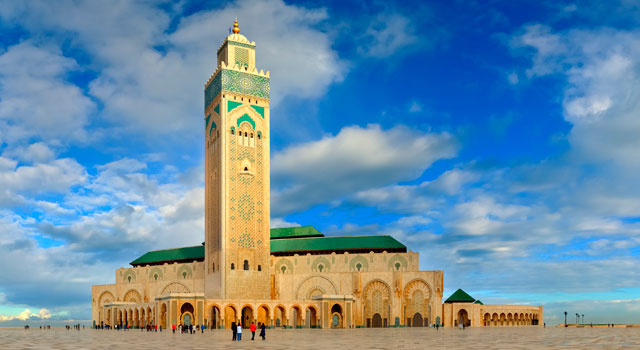
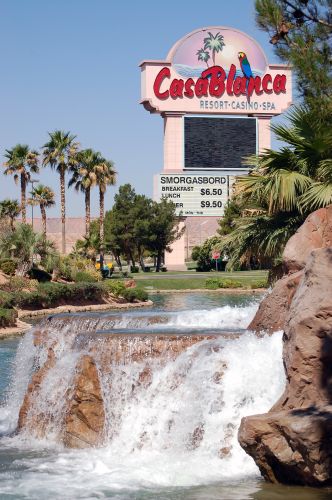
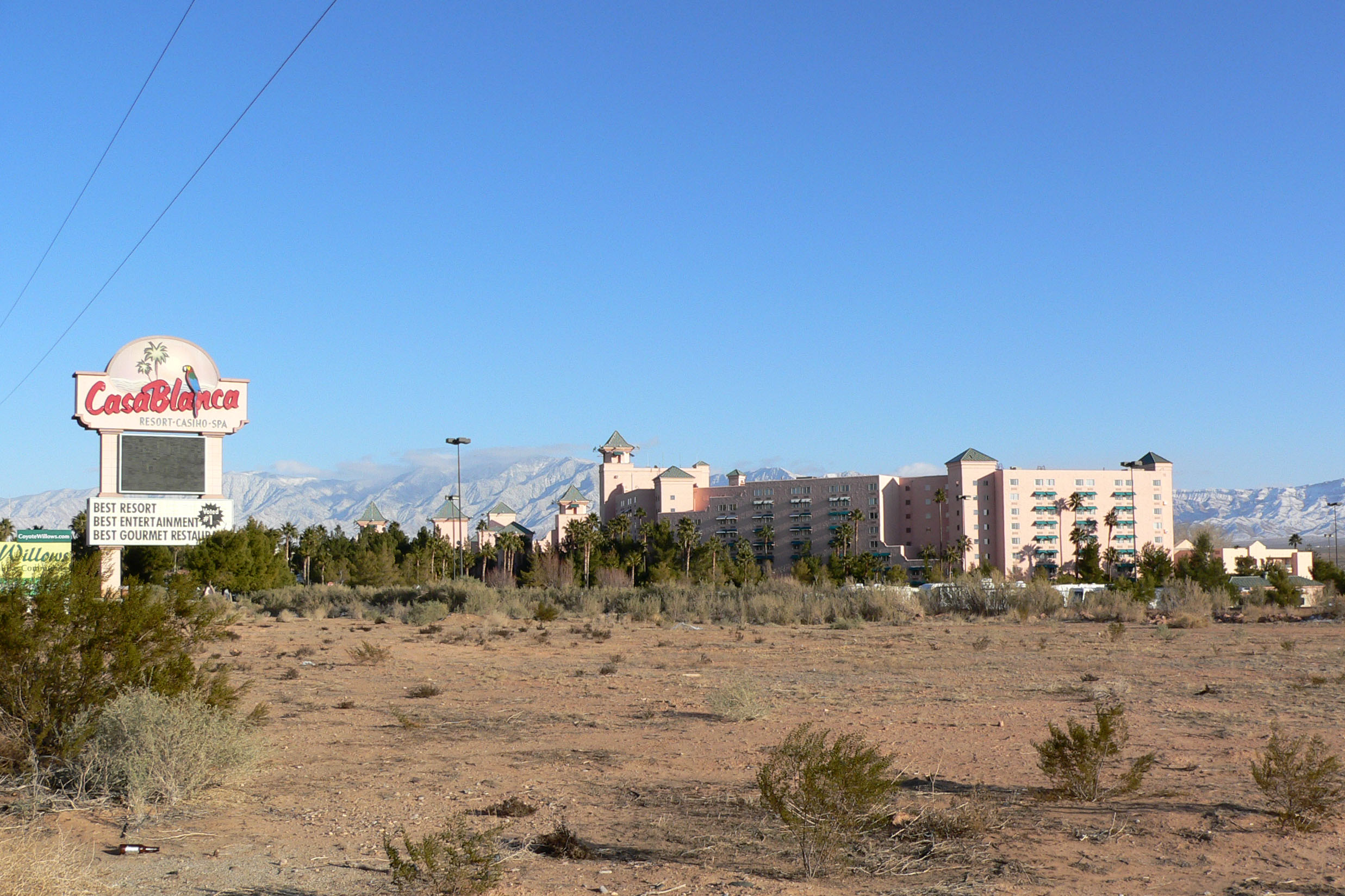
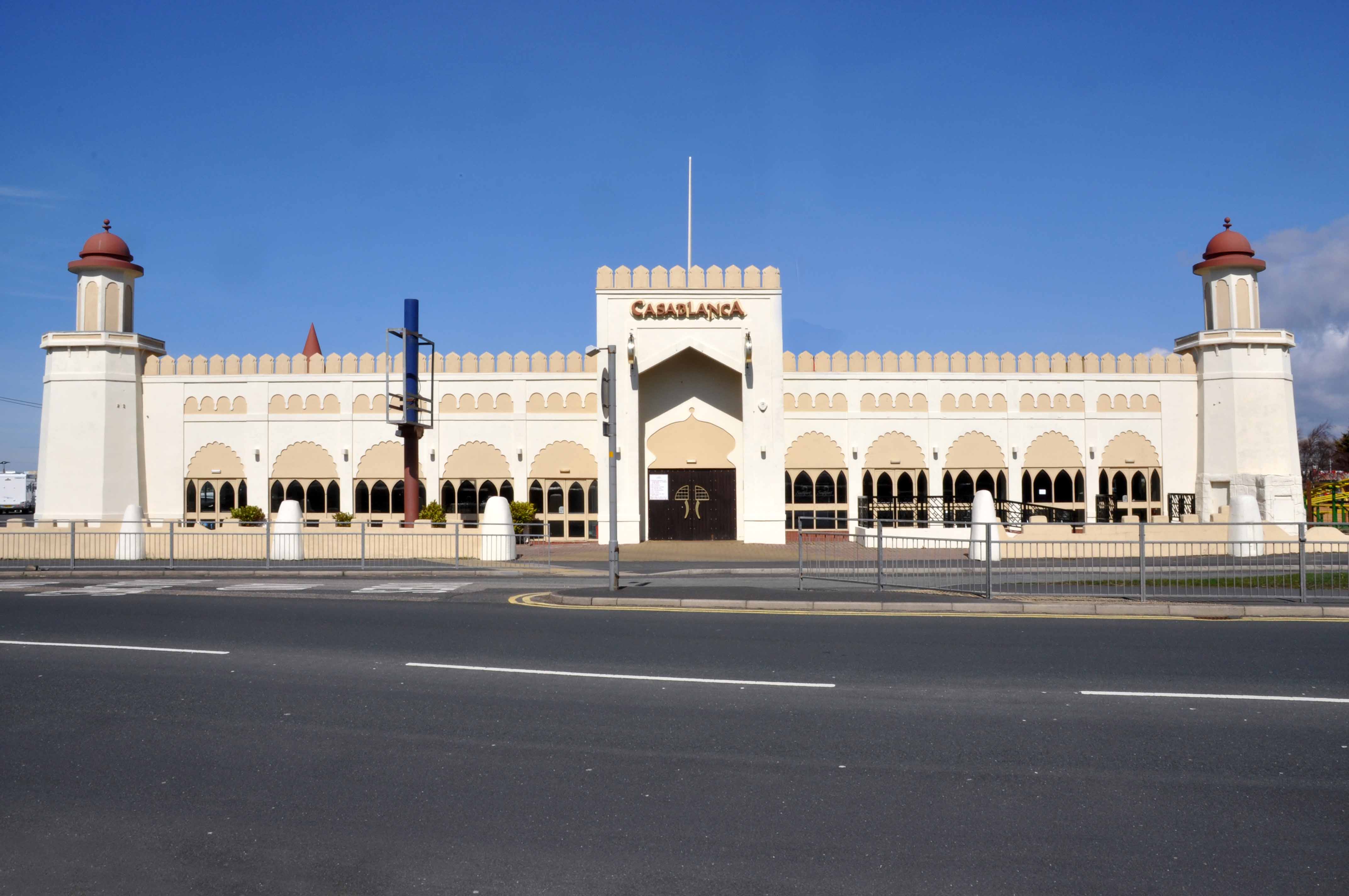
Somewhere between Las Vegas Nevada and Casablanca Morocco lies Southport.
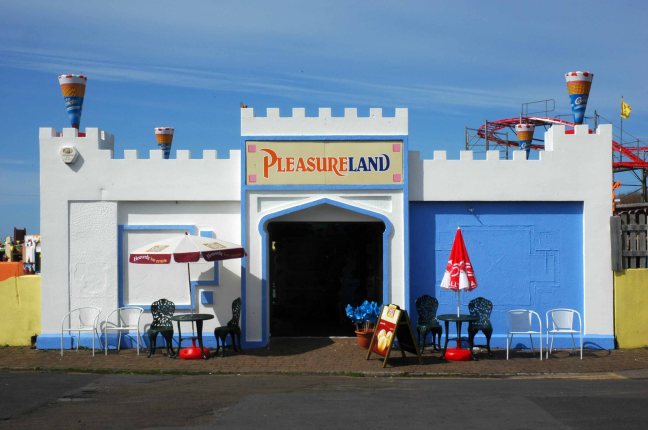
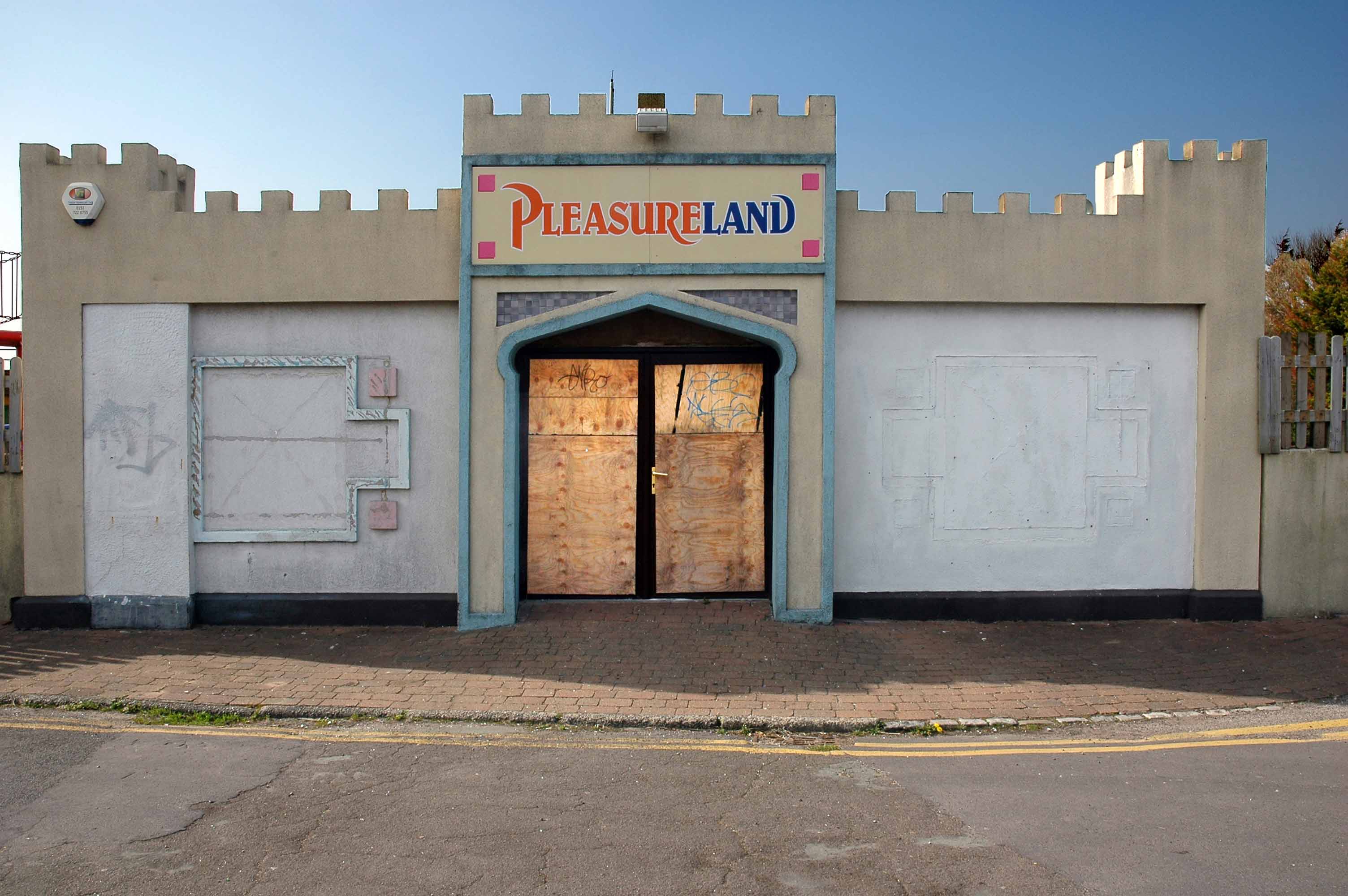
Somewhere in Southport lies Pleasureland.
Separated by oceans and oceans of artifice.
A puzzle wrapped in a riddle, wrapped in an enigma, wrapped in a wind blown fish and chip paper, tipped lazily onto the edge of Lancashire.
The seaside itself an invention of the railways, and an expanding leisured class.
To begin in the middle, the Hollywood cinema creates an Orientalist mythology around Morocco. A confection of exotic confinement, conspiratorial glances and romance.
Who are you really, and what were you before?
What did you do and what did you think, huh?
We said no questions.
Here’s looking at you, kid.
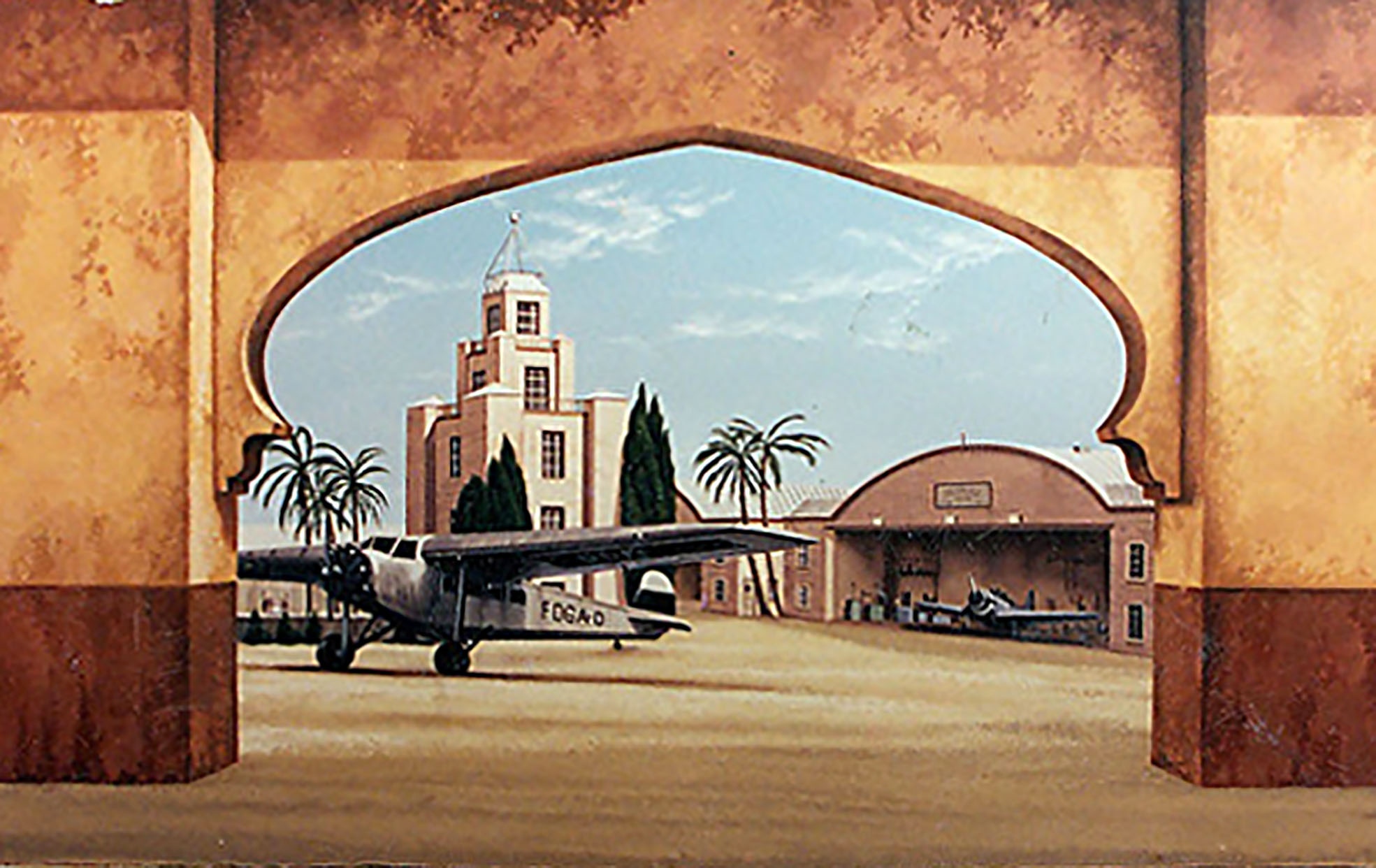
Which in turn becomes parody of itself, constructing an airport that apes its own constructed image, a brash reflection in an eternally wonky mirage of a mirror.
The same mirror that reflects across the Atlantic, to that cap it all capital of Kitsch.
A veritable smorgasbord of visual treats and retreats in Mesquite Nevada.
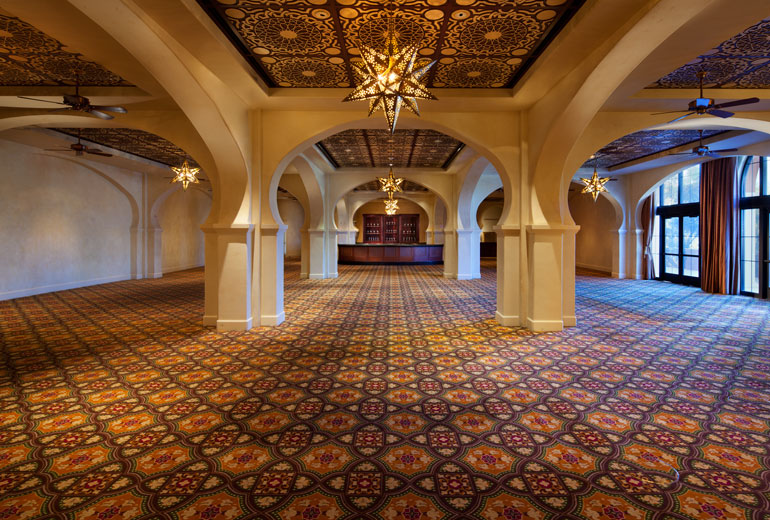
Or the Casablanca Ballroom Westin Lake Hotel – Las Vegas.
Flying home to the Warner Brothers Stage 16 Restaurant
Or indeed Southport.
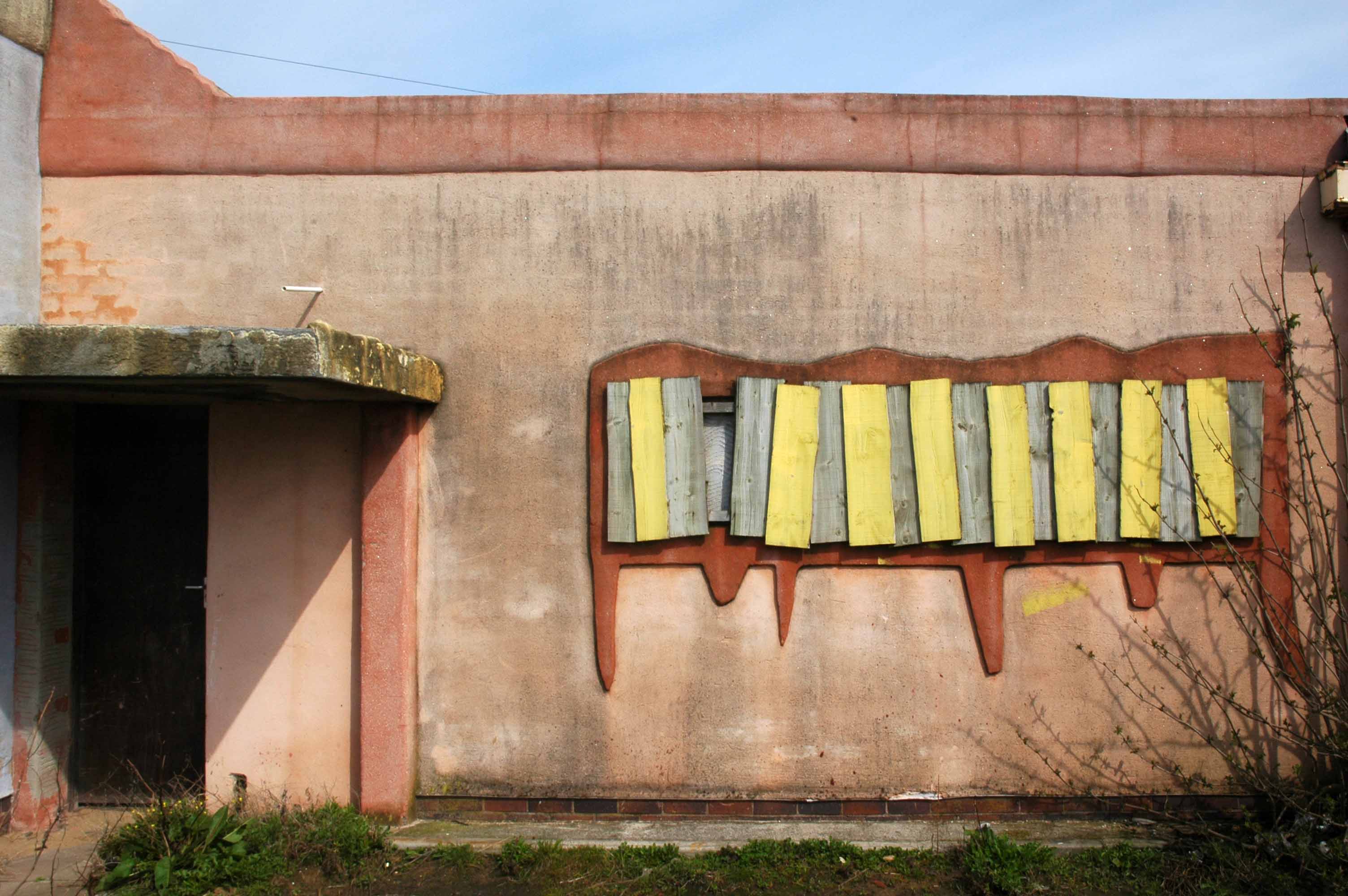
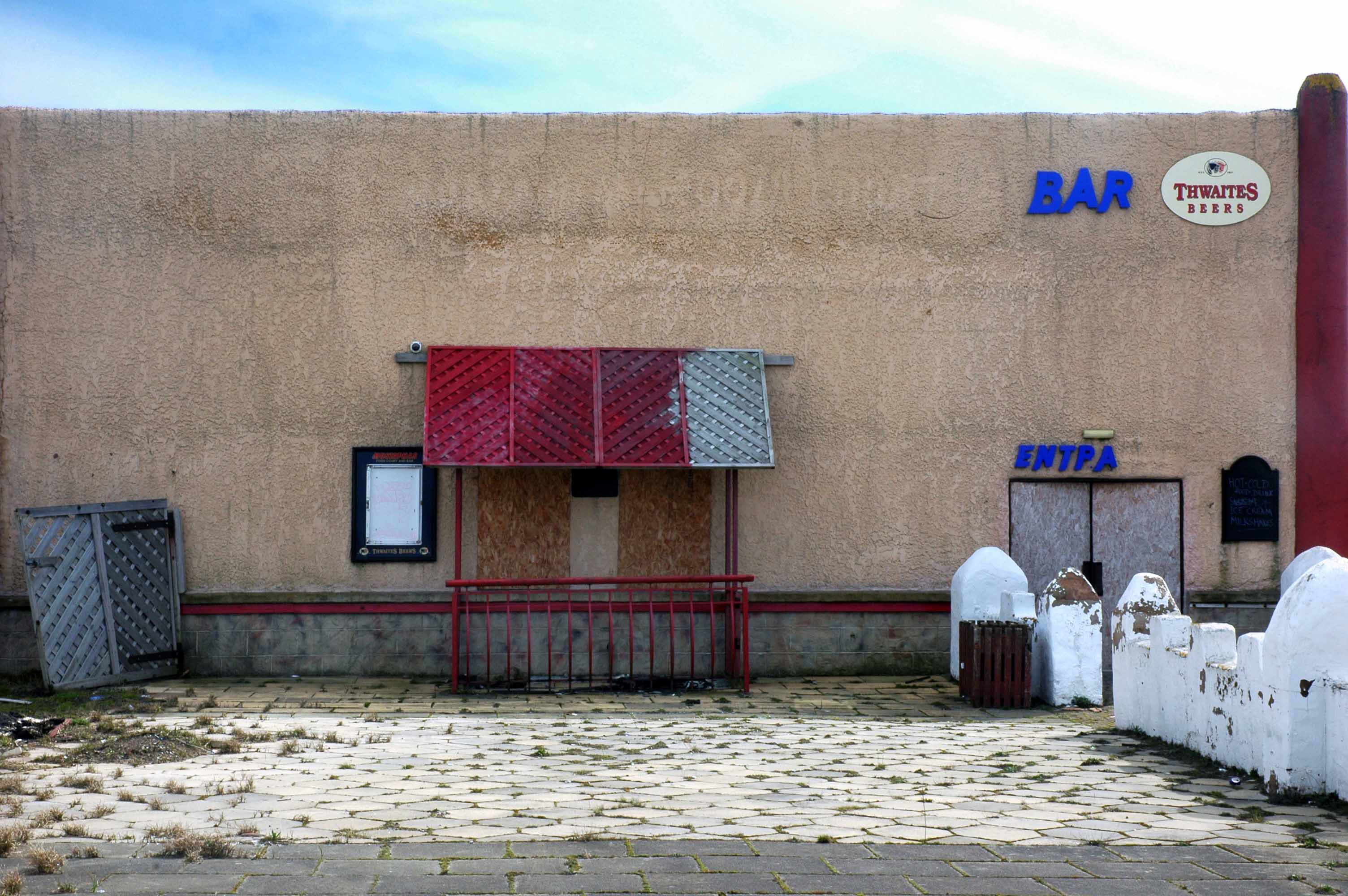
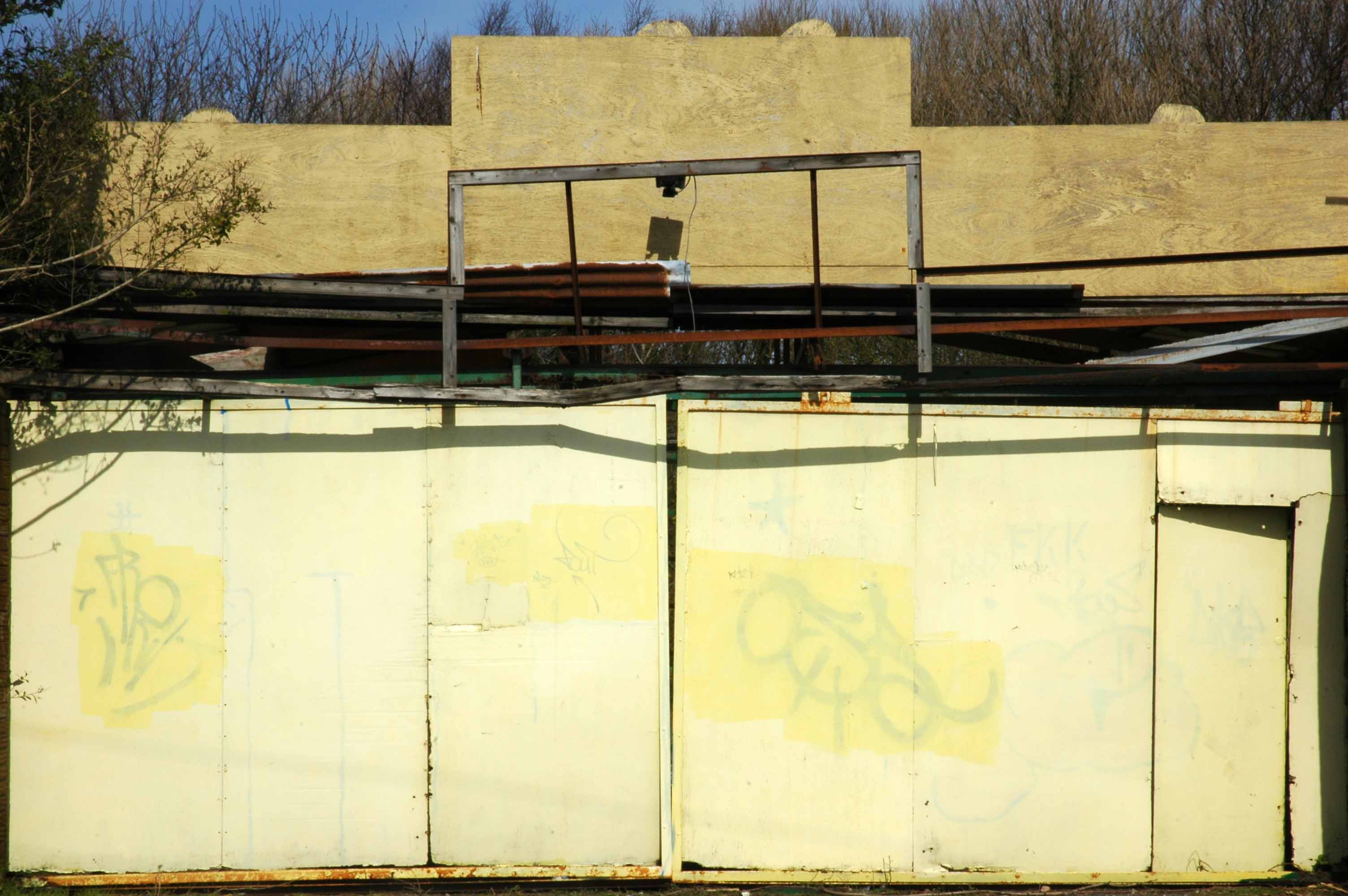
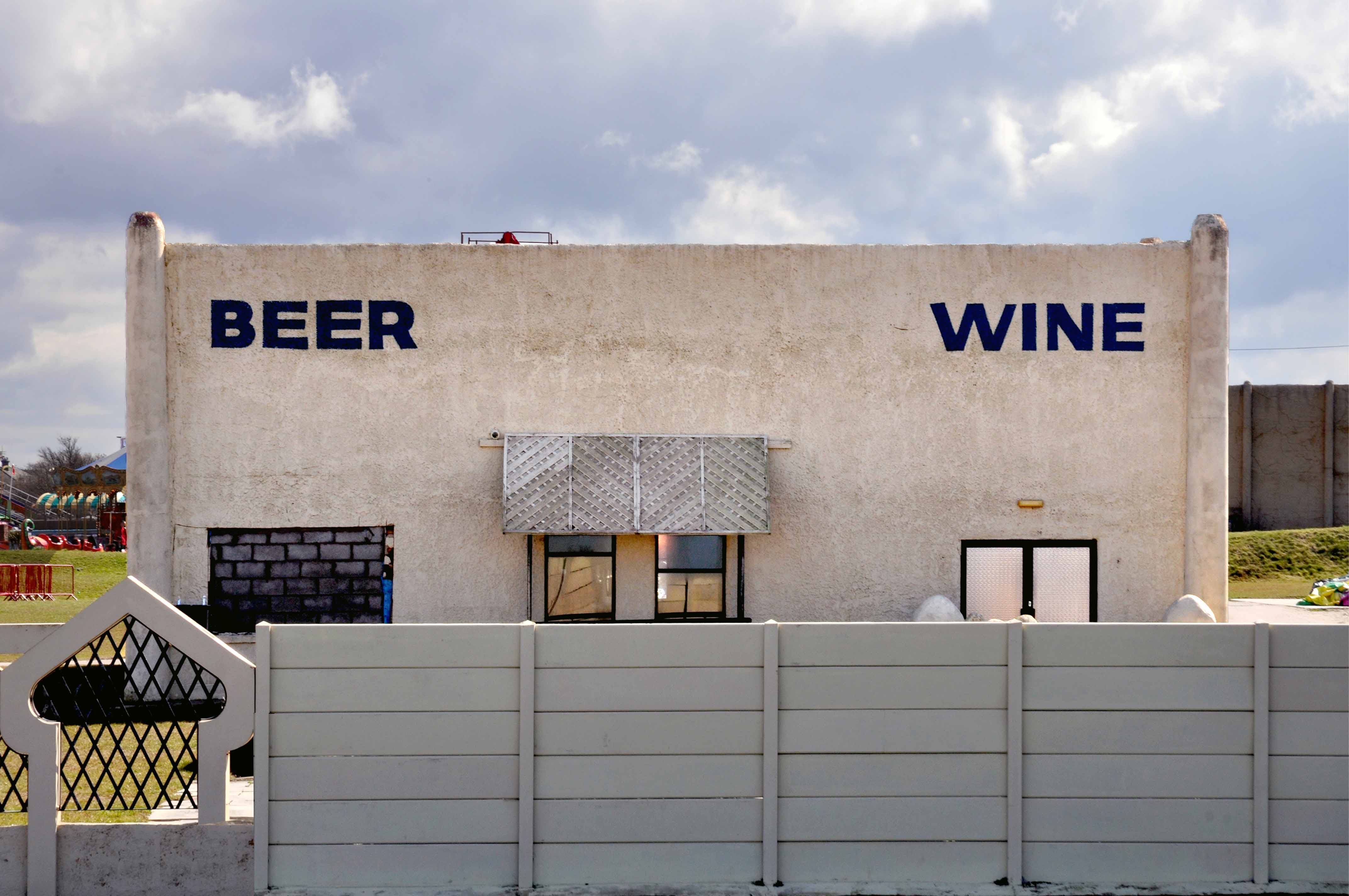
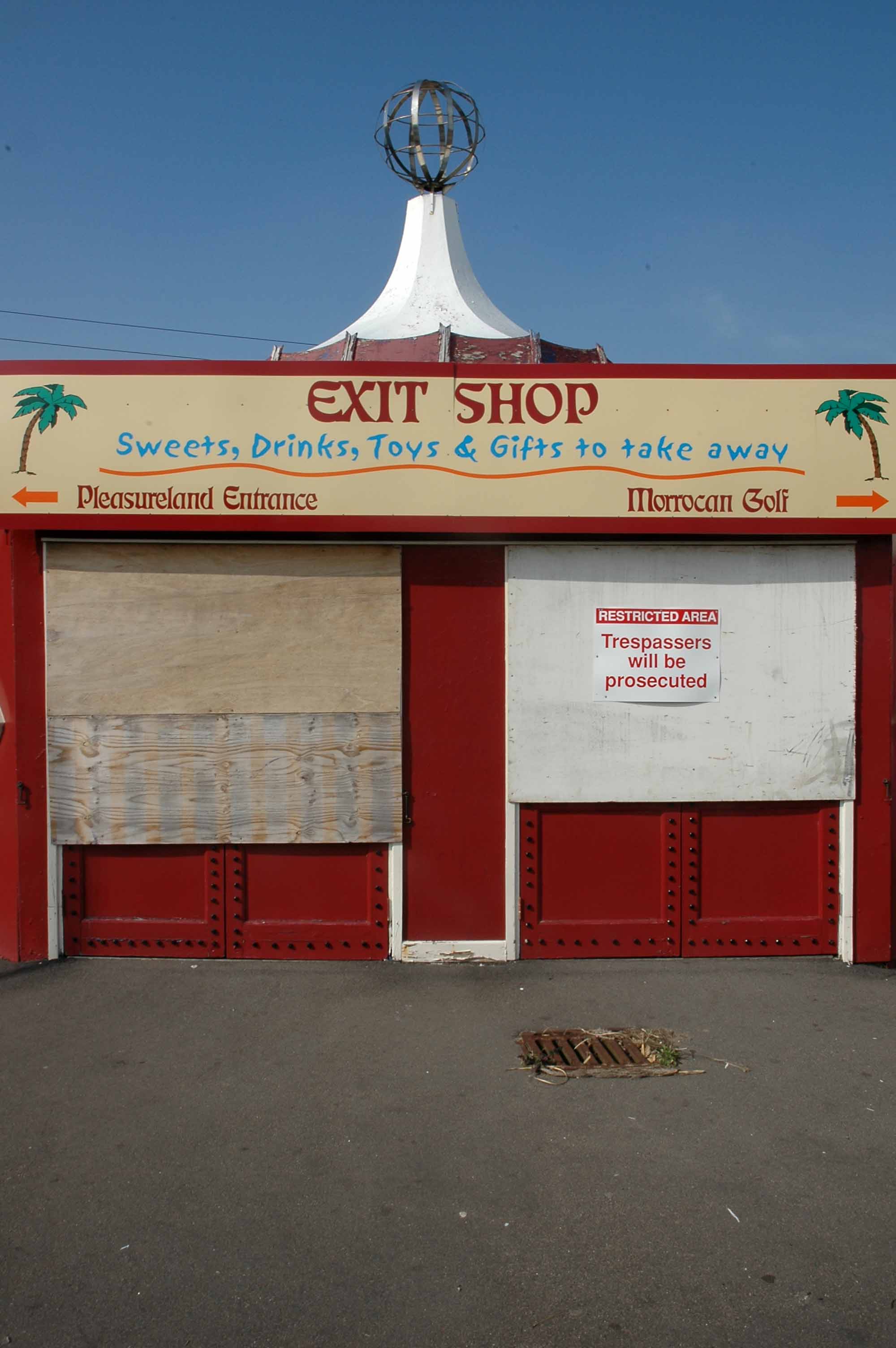
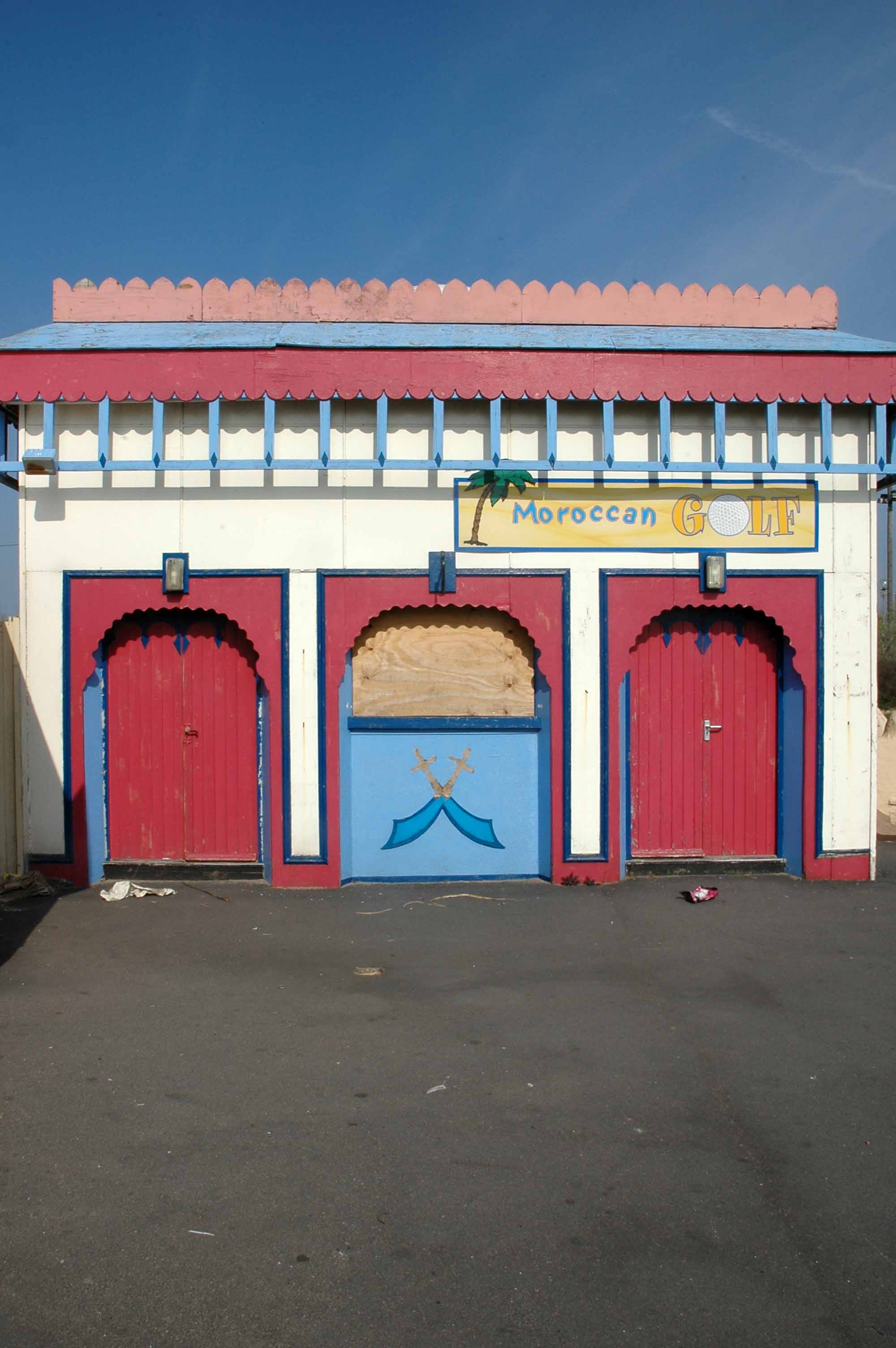
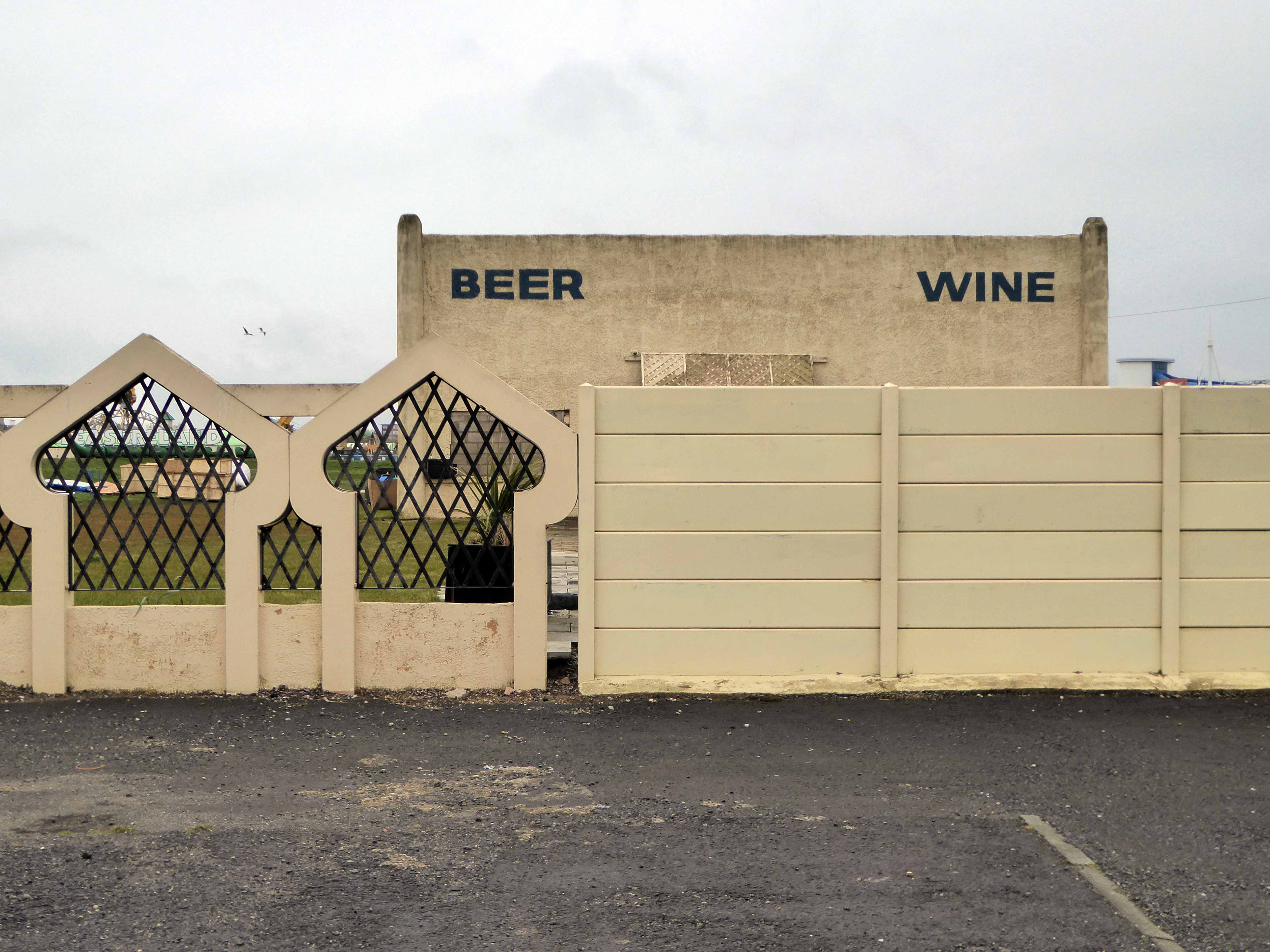
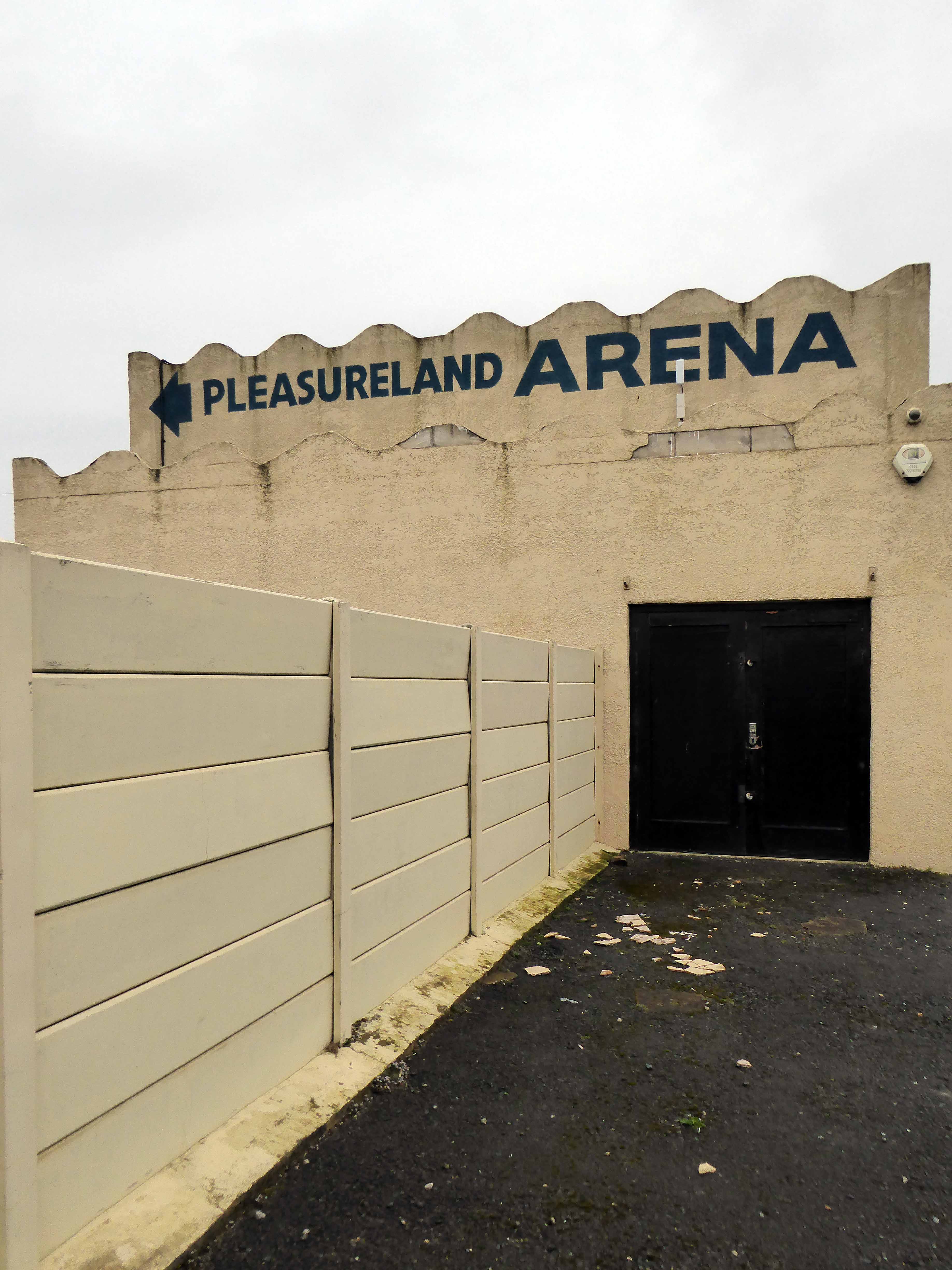
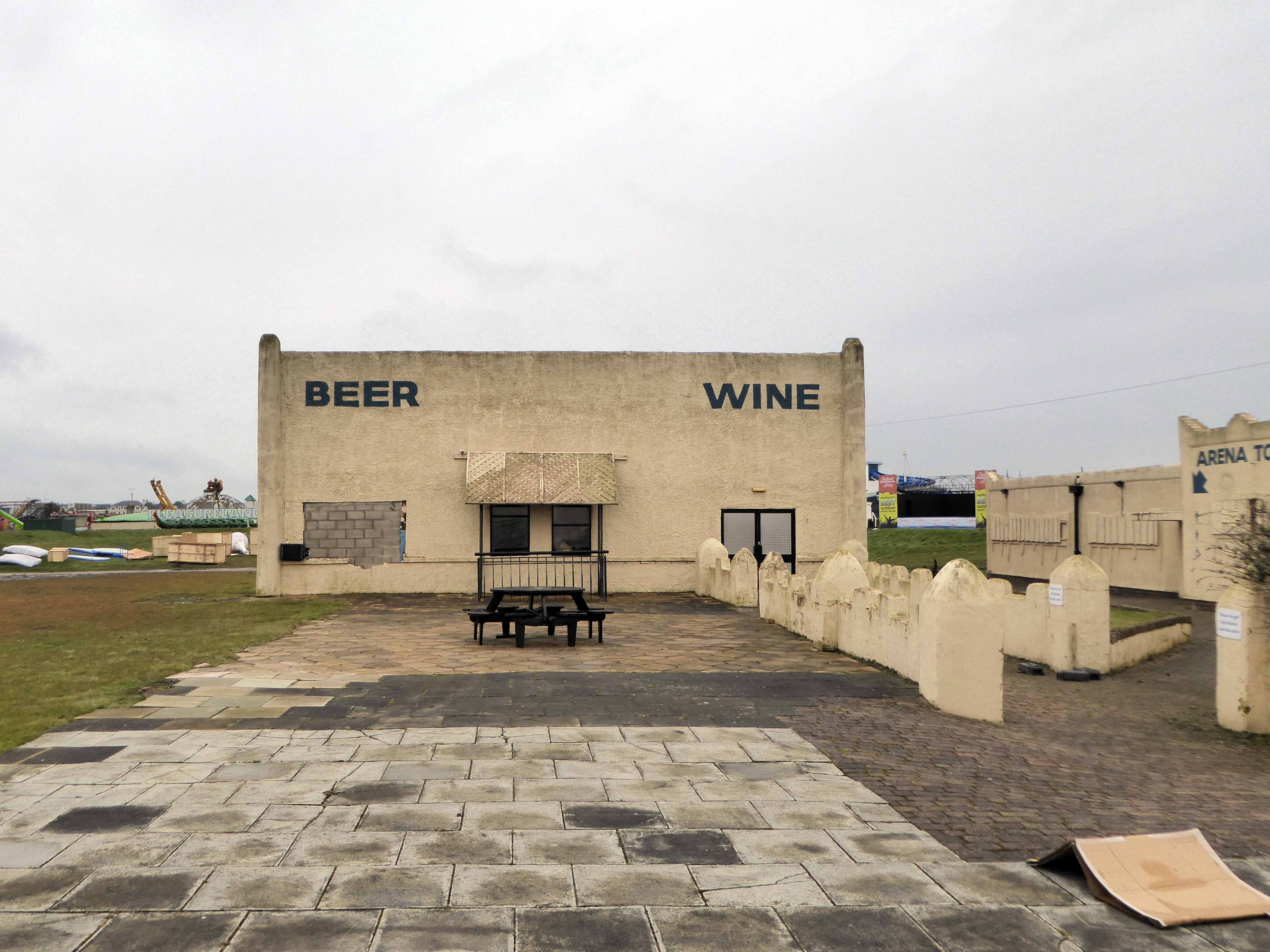
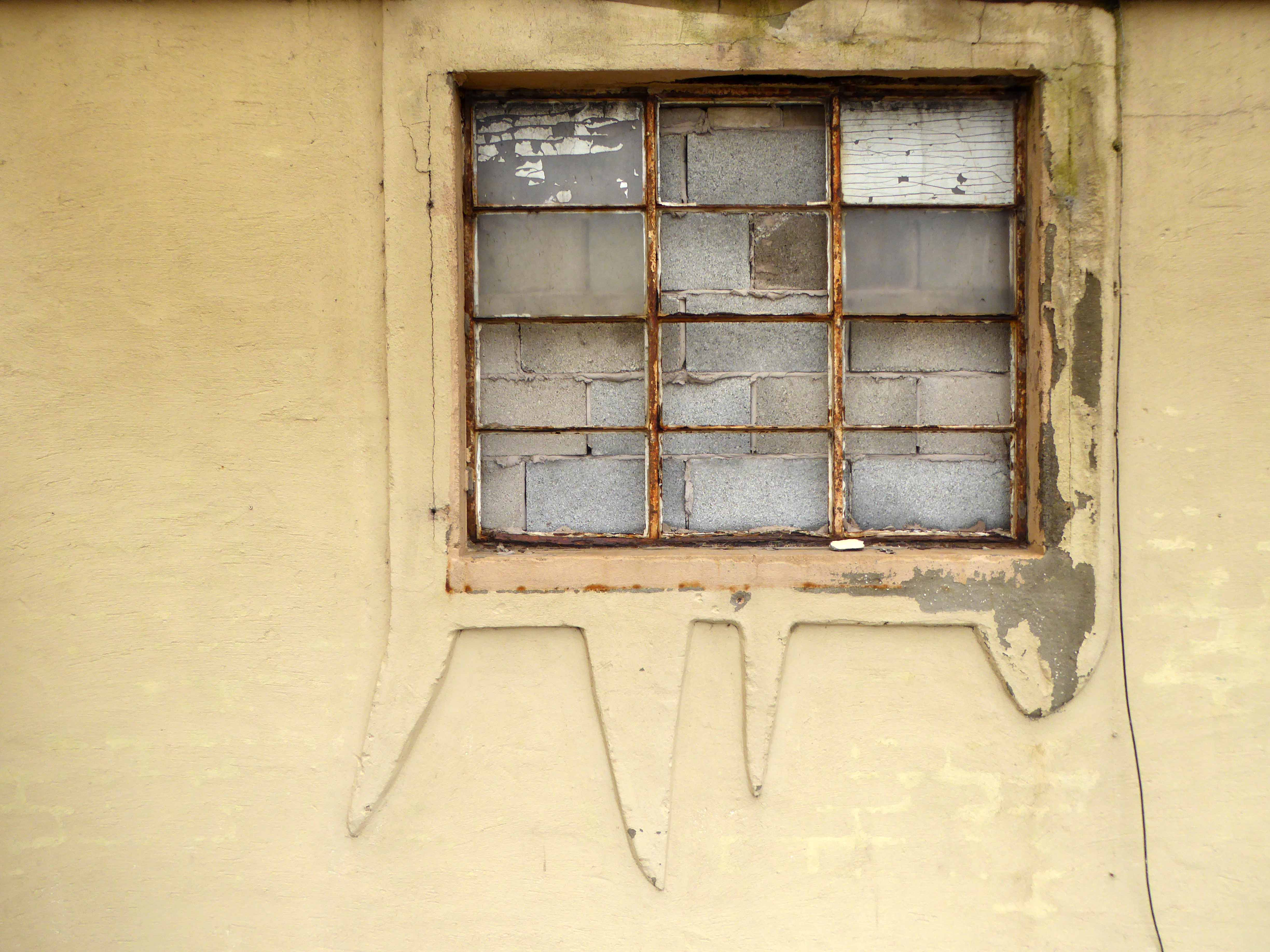
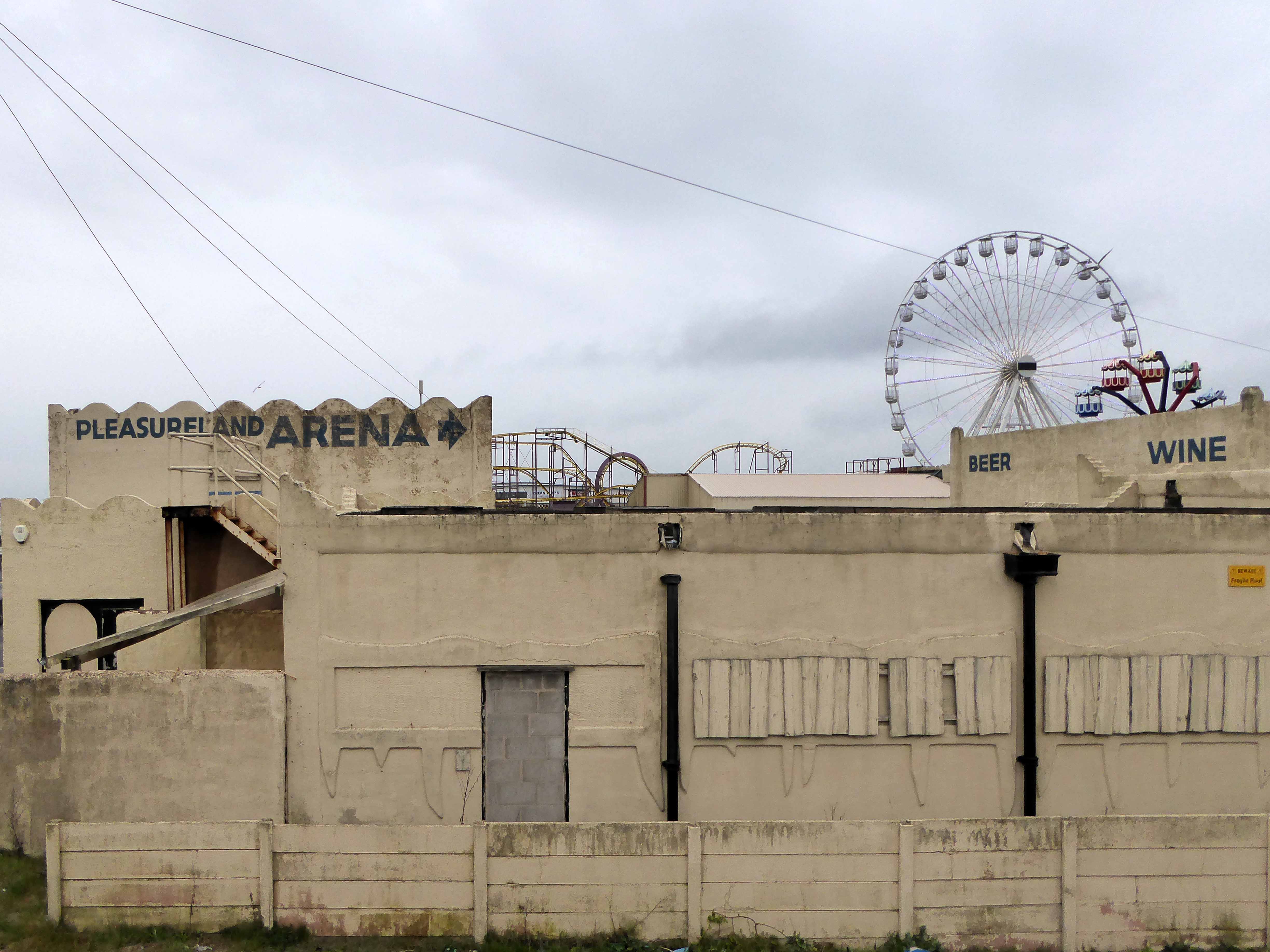
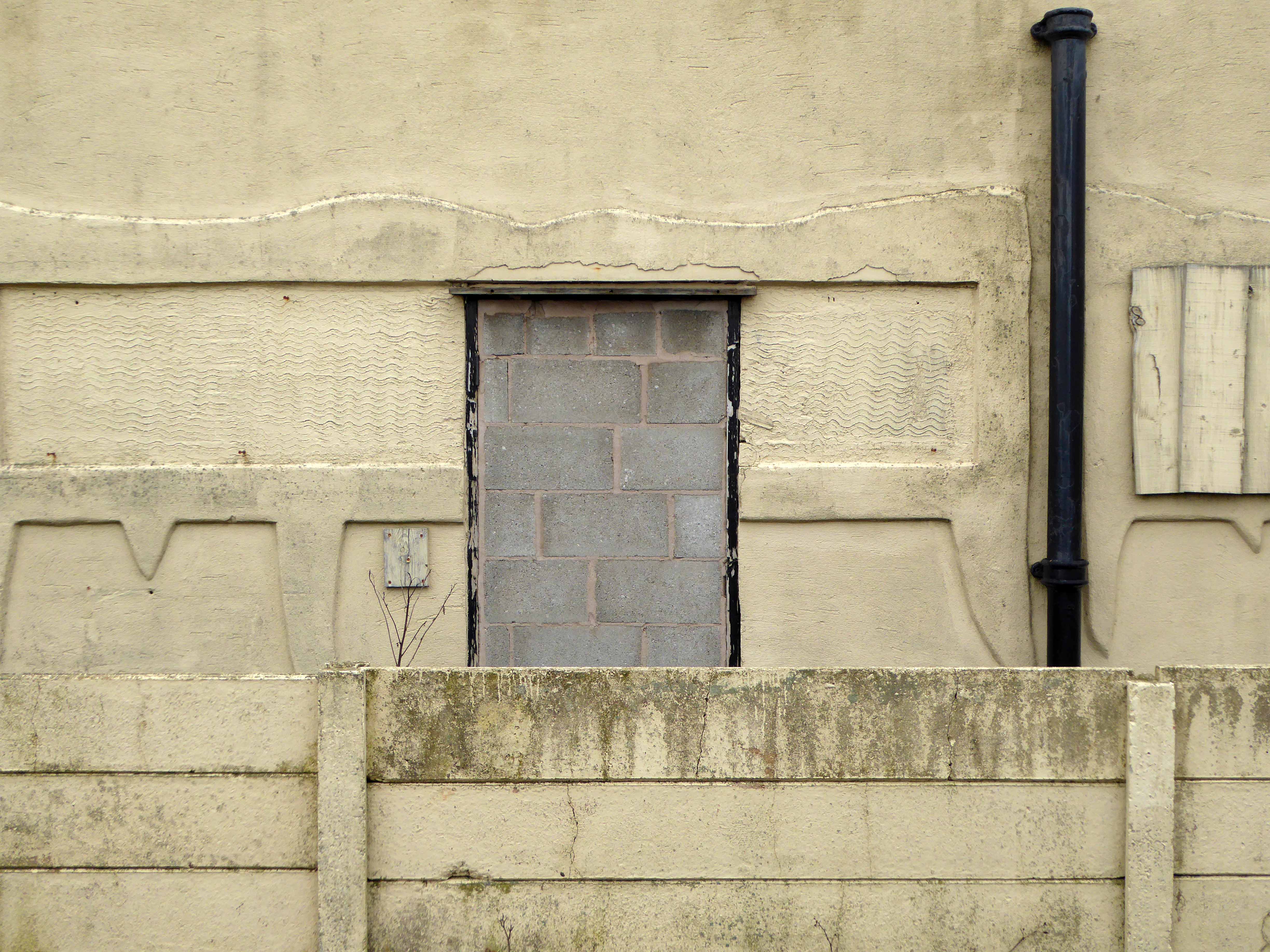
2011 – I had my first close up and personal encounter with the wood frame, chicken wire and faux adobe render rendering of North Africa, on the coast of North West England. It was in a state of semi-advanced neglect, an extraordinary experience. Pleasureland had already faked it’s own demise, a pre-boarded up, boarded up frontier town.
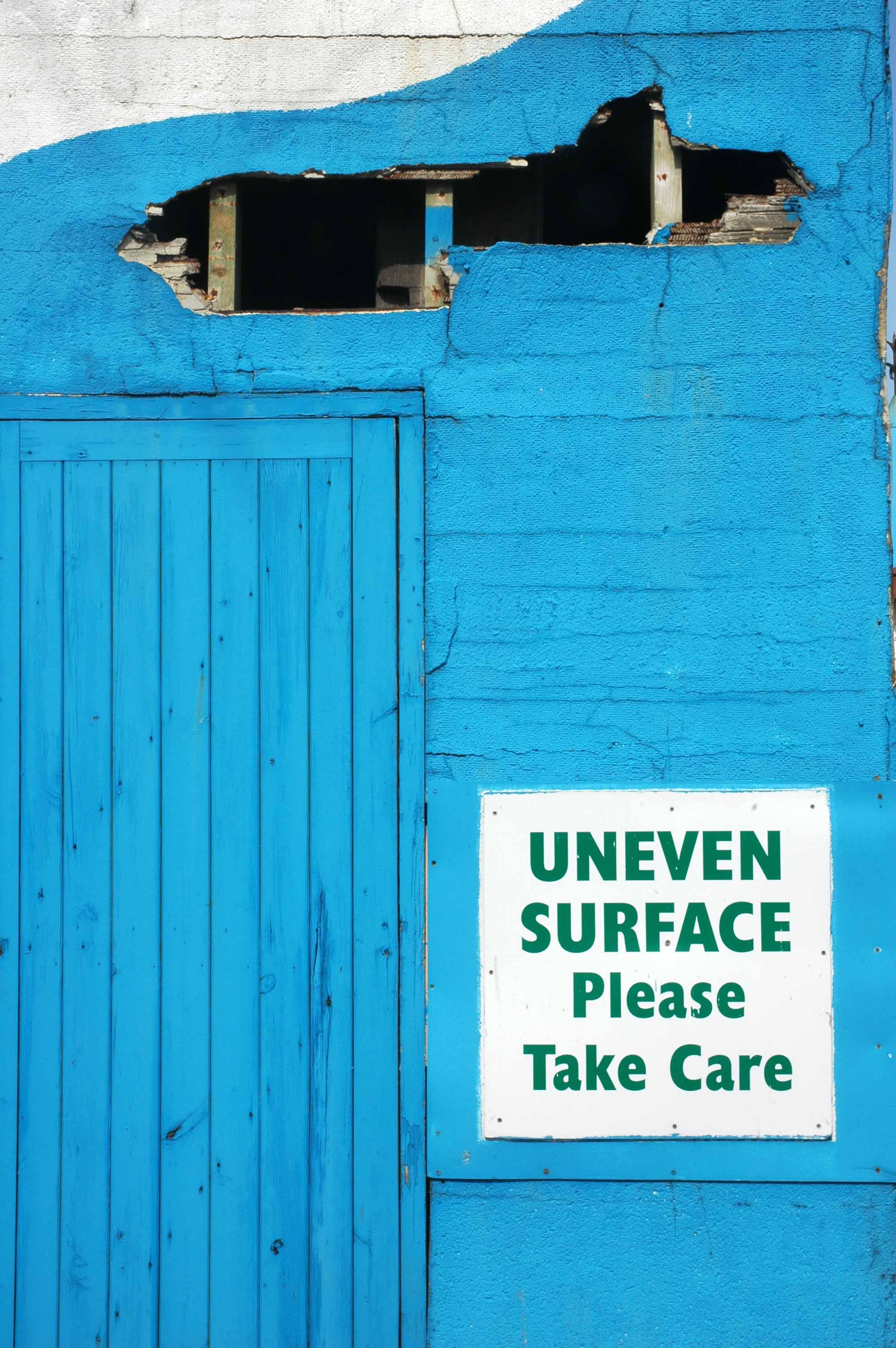
Where the edges of meaning are blurred beyond belief, take care.
We are dealing with uneven surfaces.
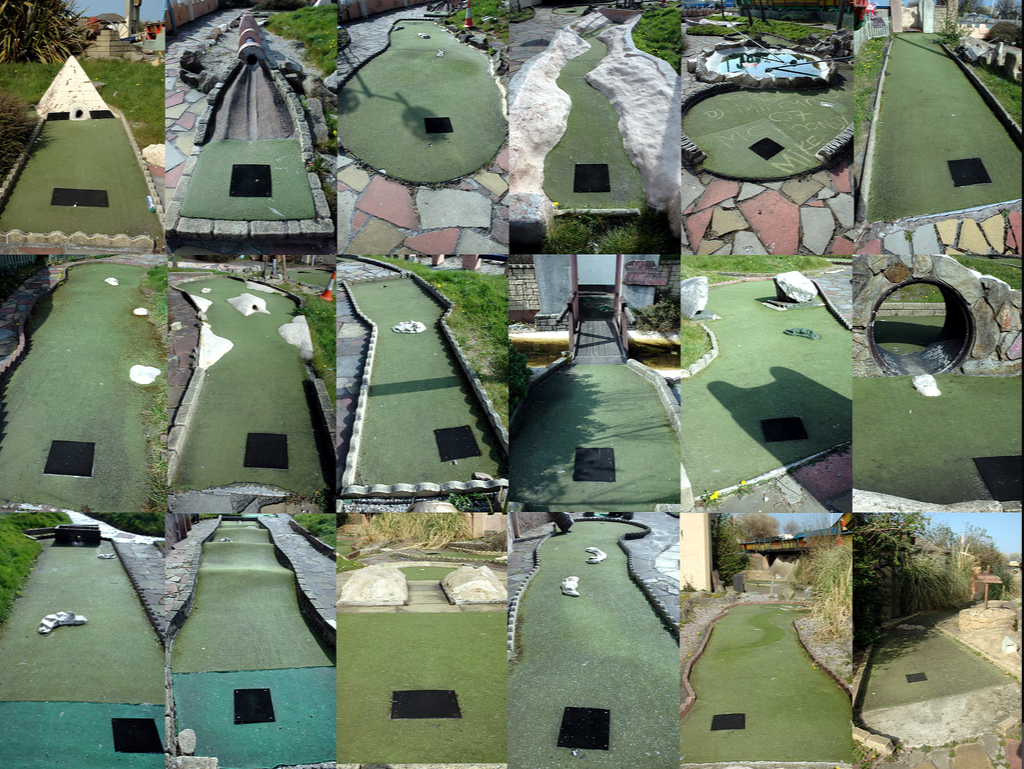
Who could resist a Moroccan themed crazy golf course?
You are now entering a Scoobidoo-esque scenario, where the mask is never finally removed, nothing is revealed.
2016 – I returned, the world had turned a revival was in part taking place, some of the pleasure returned to Pleasureland, whilst the seafront facing bars remained empty.
One man holds the key the glue, that bonds these distant lands.
The myth to end all myths.
For he is forever in his own orbit, omniscient.
Make the world go away And get it off my shoulders Say the things you used to say And make the world go away
I’ve never ever been here before – my thanks to the Sheffield Modernist Society for arranging the visit, part of a walking tour of the city, the first of many, one hopes.
Or possibly simply bump into them, casually walking around Sheffield and environs.
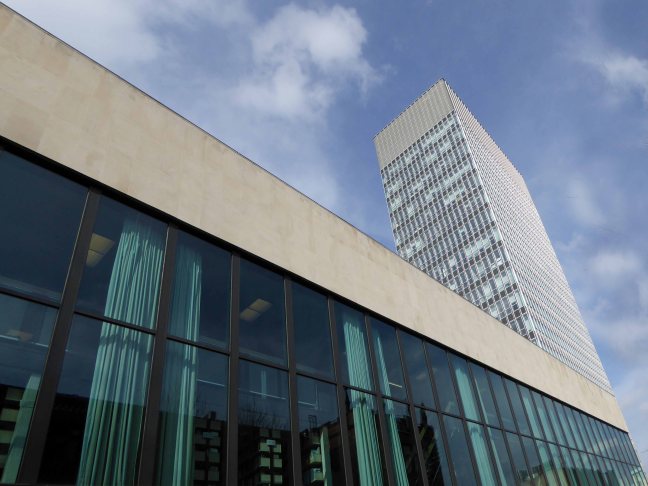
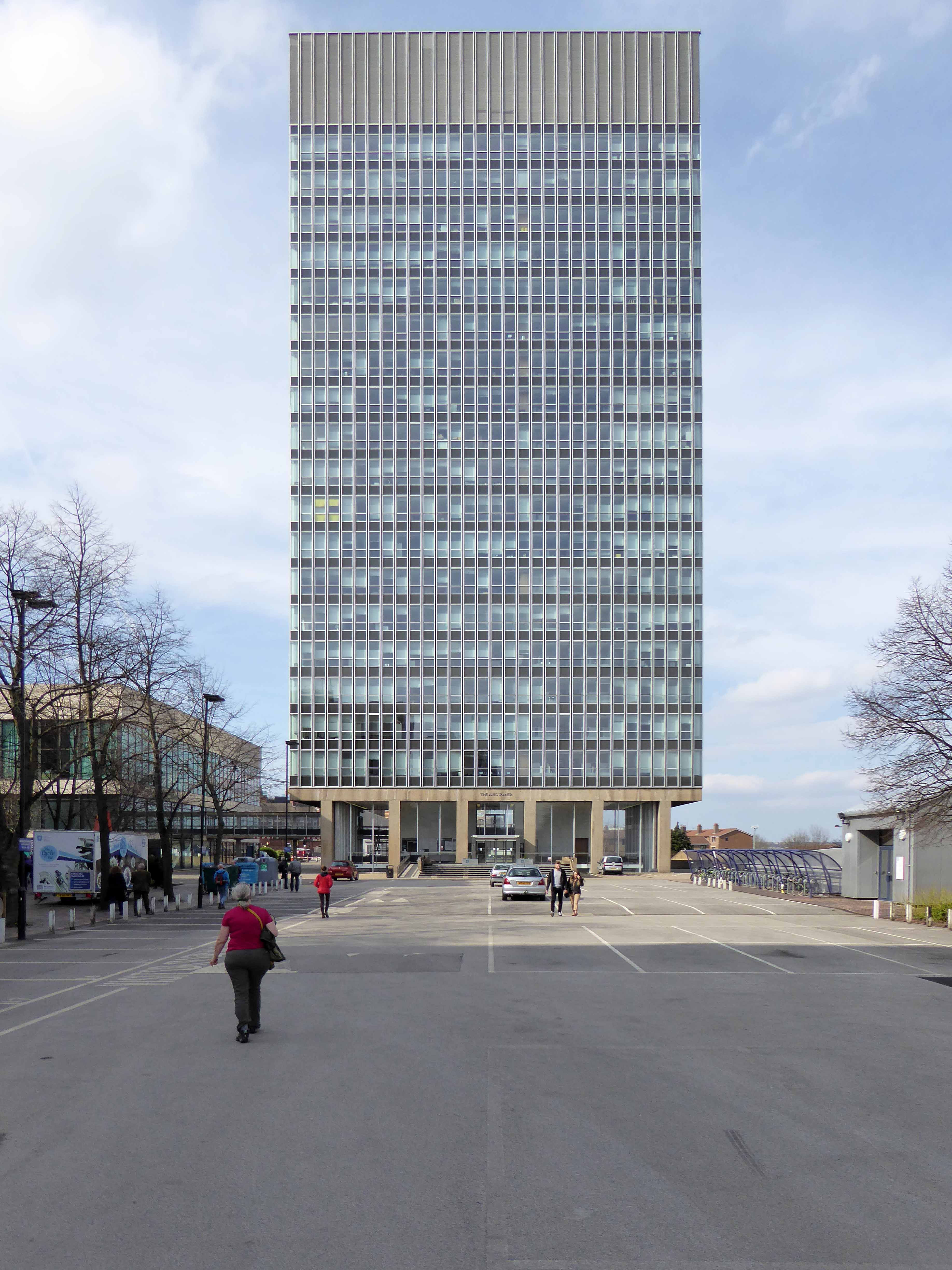
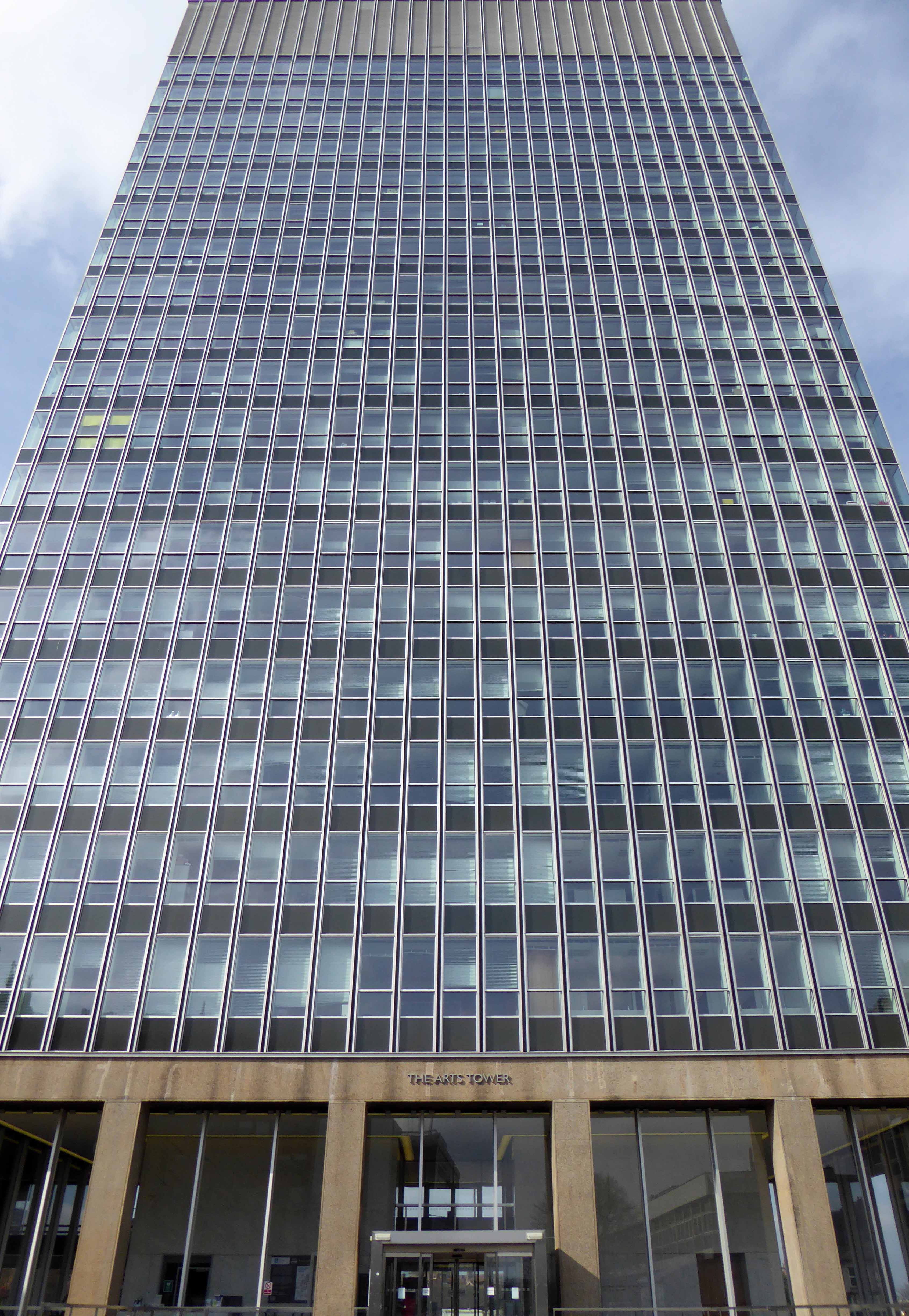
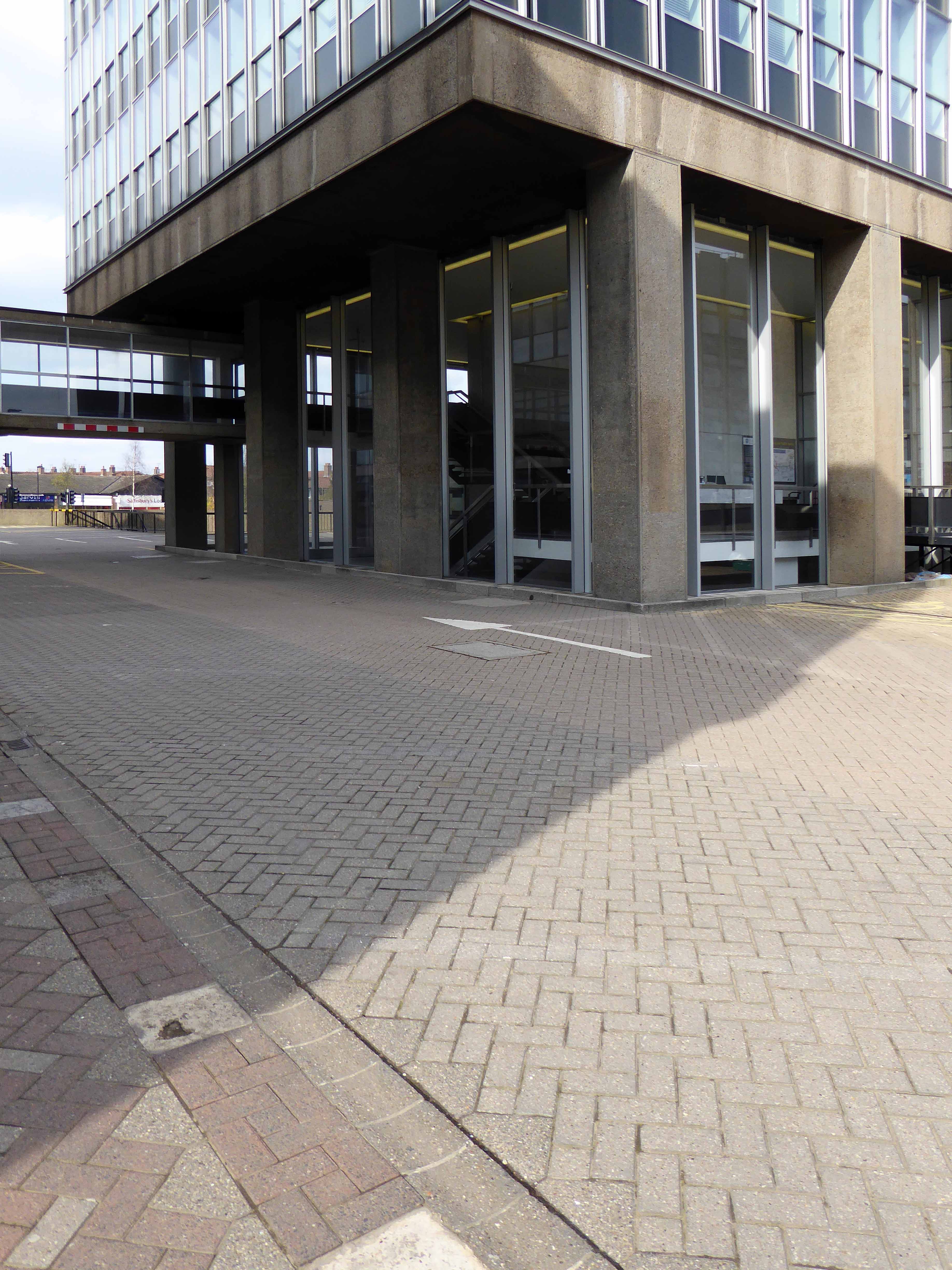
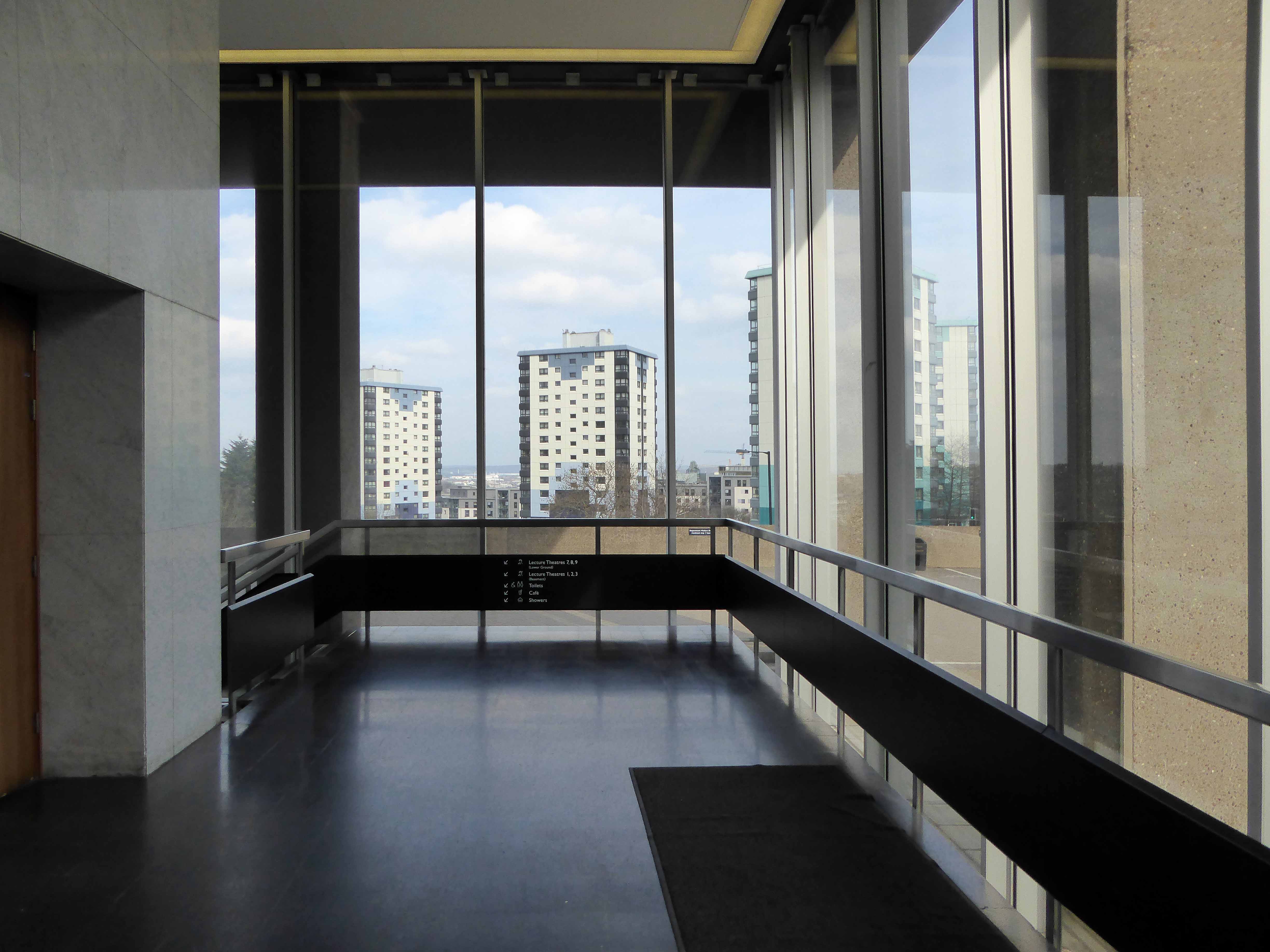
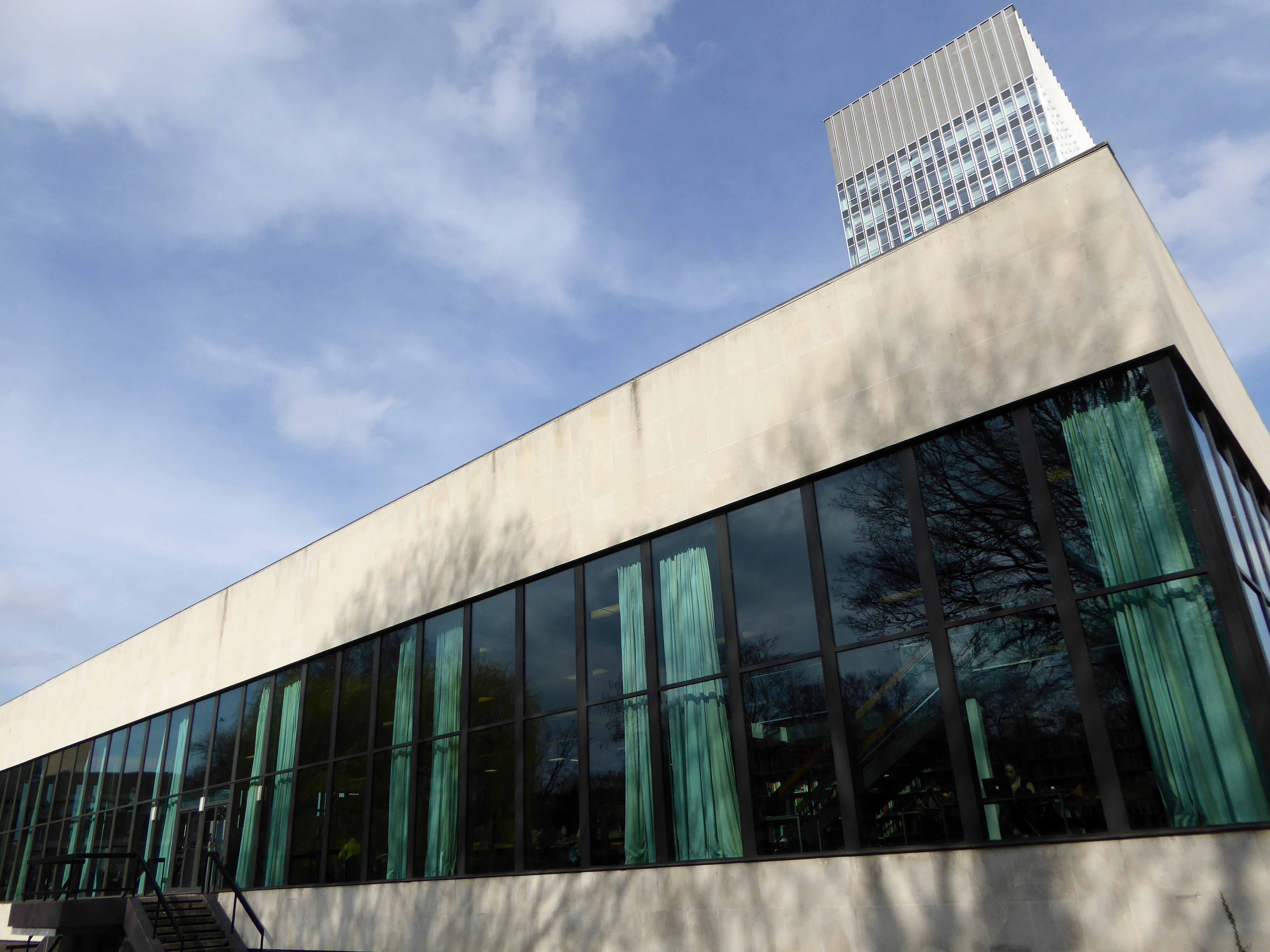
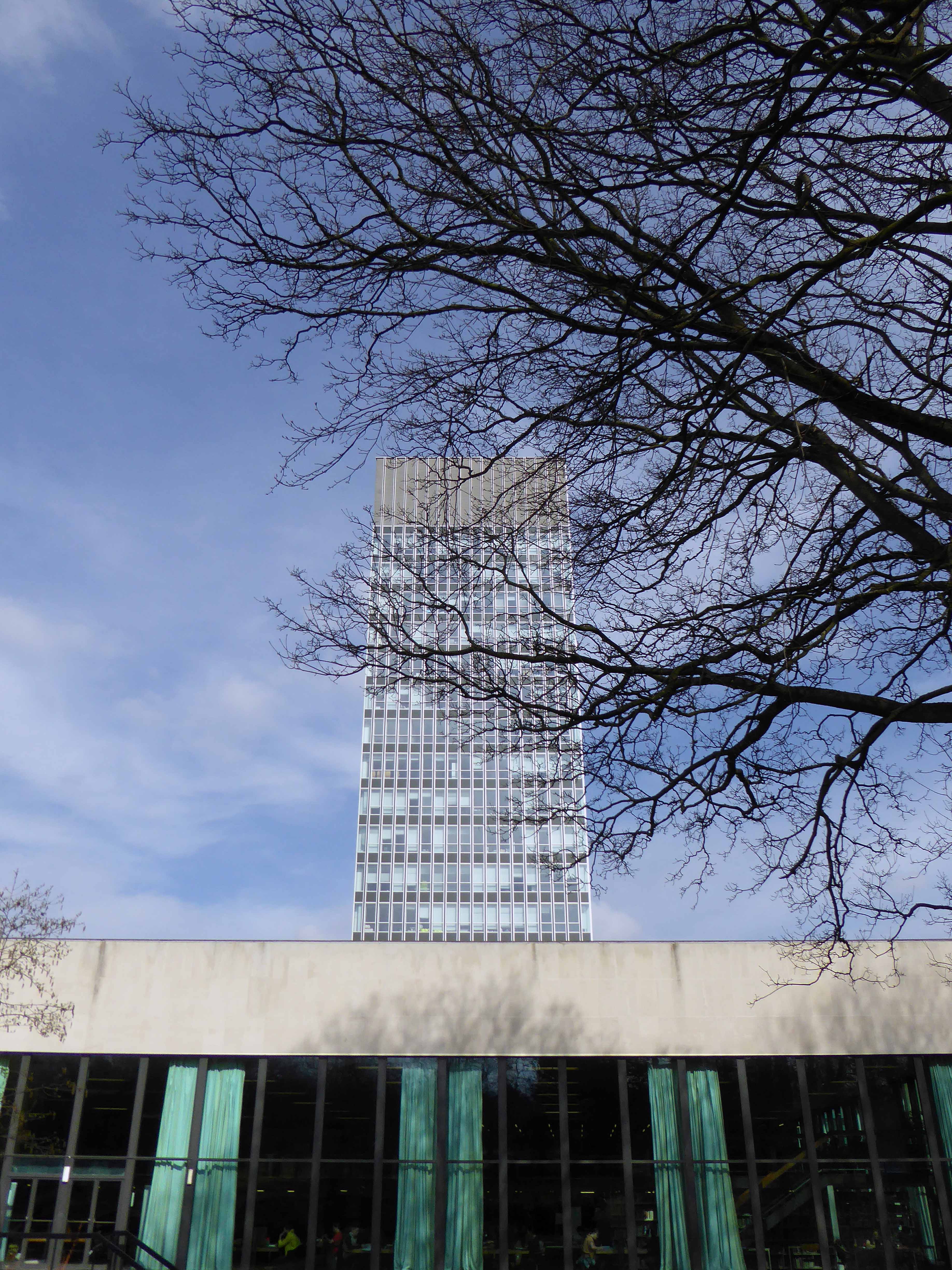
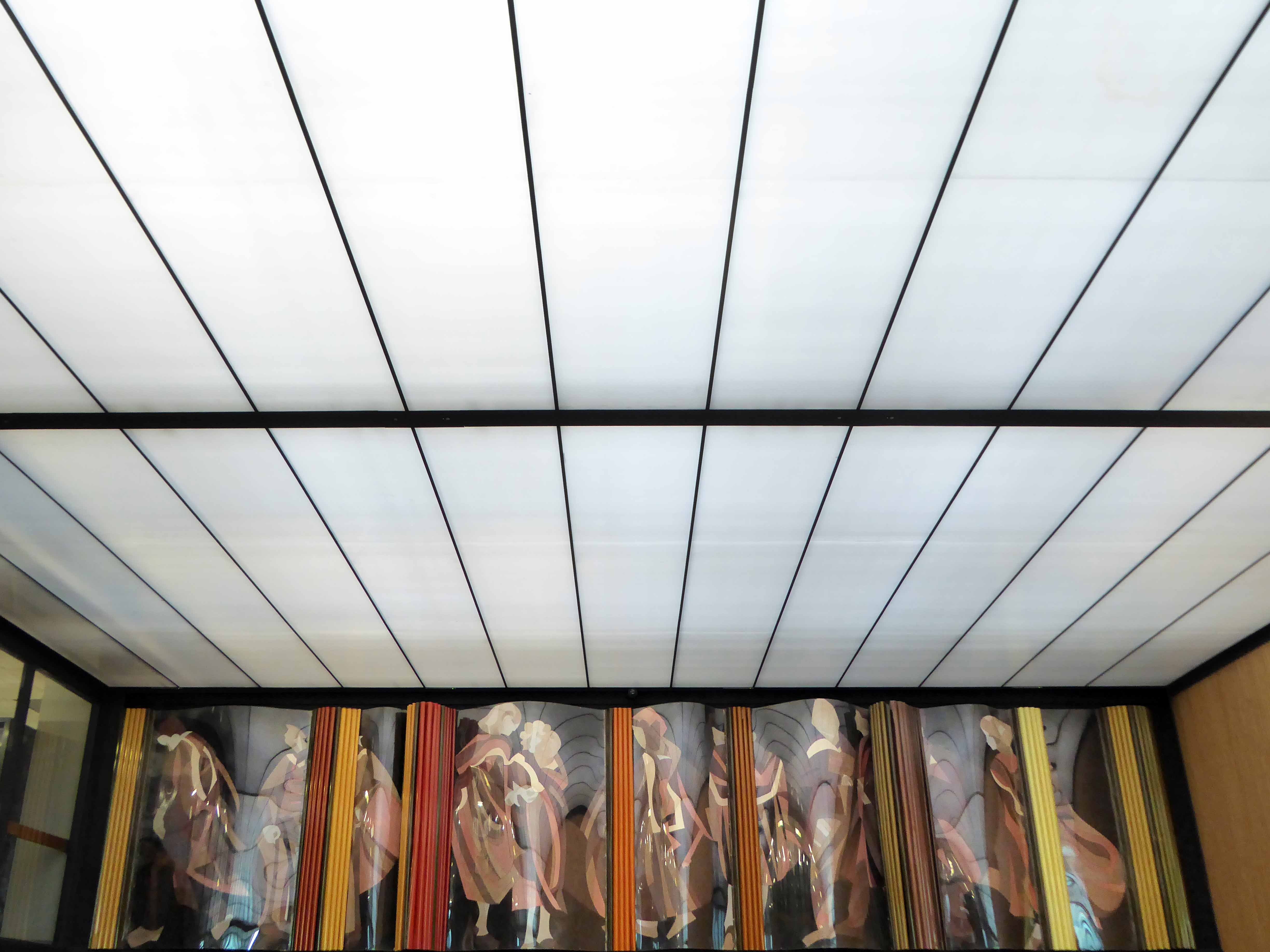
The Arts Tower is an exciting amalgam of Manchester’s CIS Tower, Mies van der Rohe’s Seagram Building and itself. A sleek slab of steel and glass, occupying a prominent site with views across Sheffield’s seven hills.
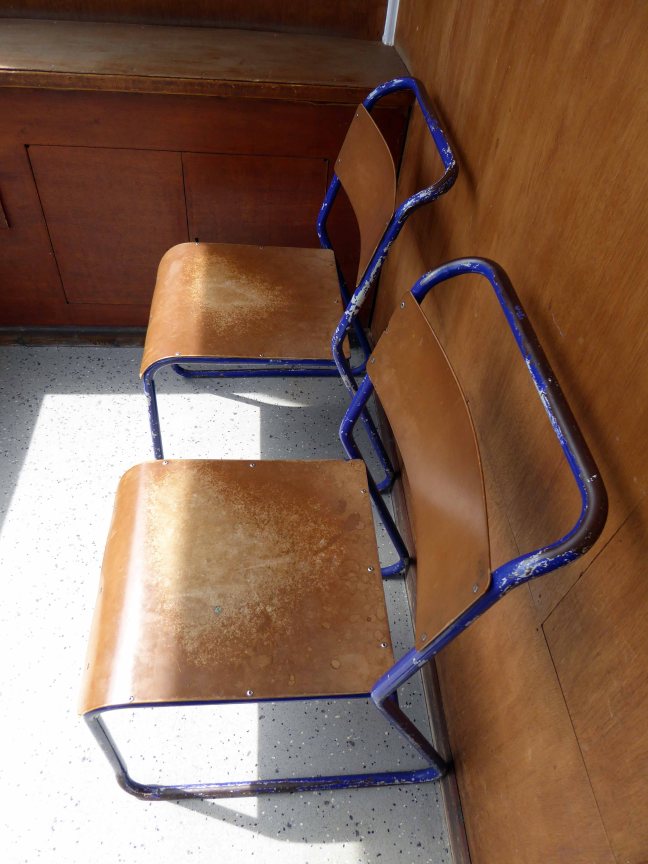
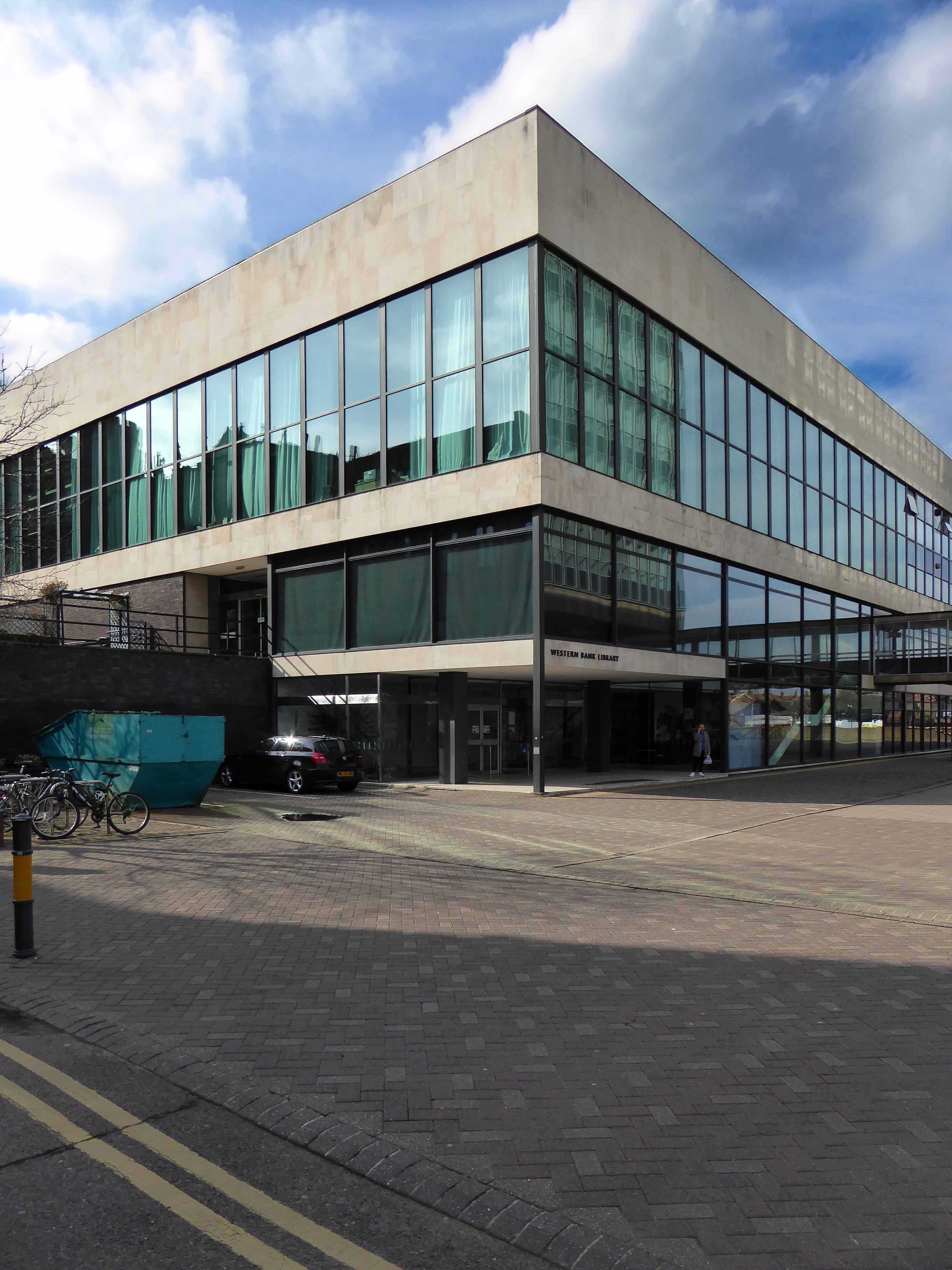
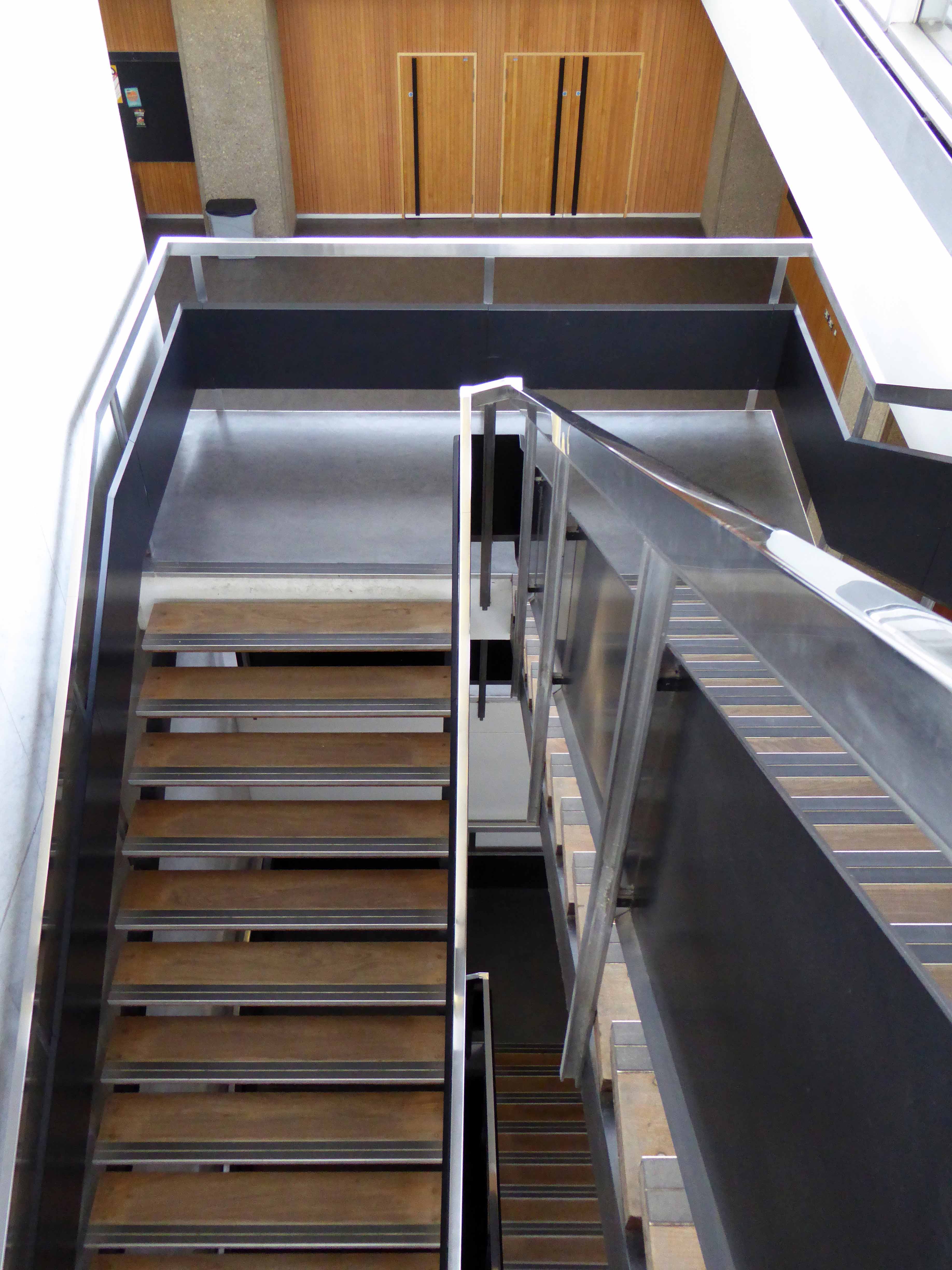
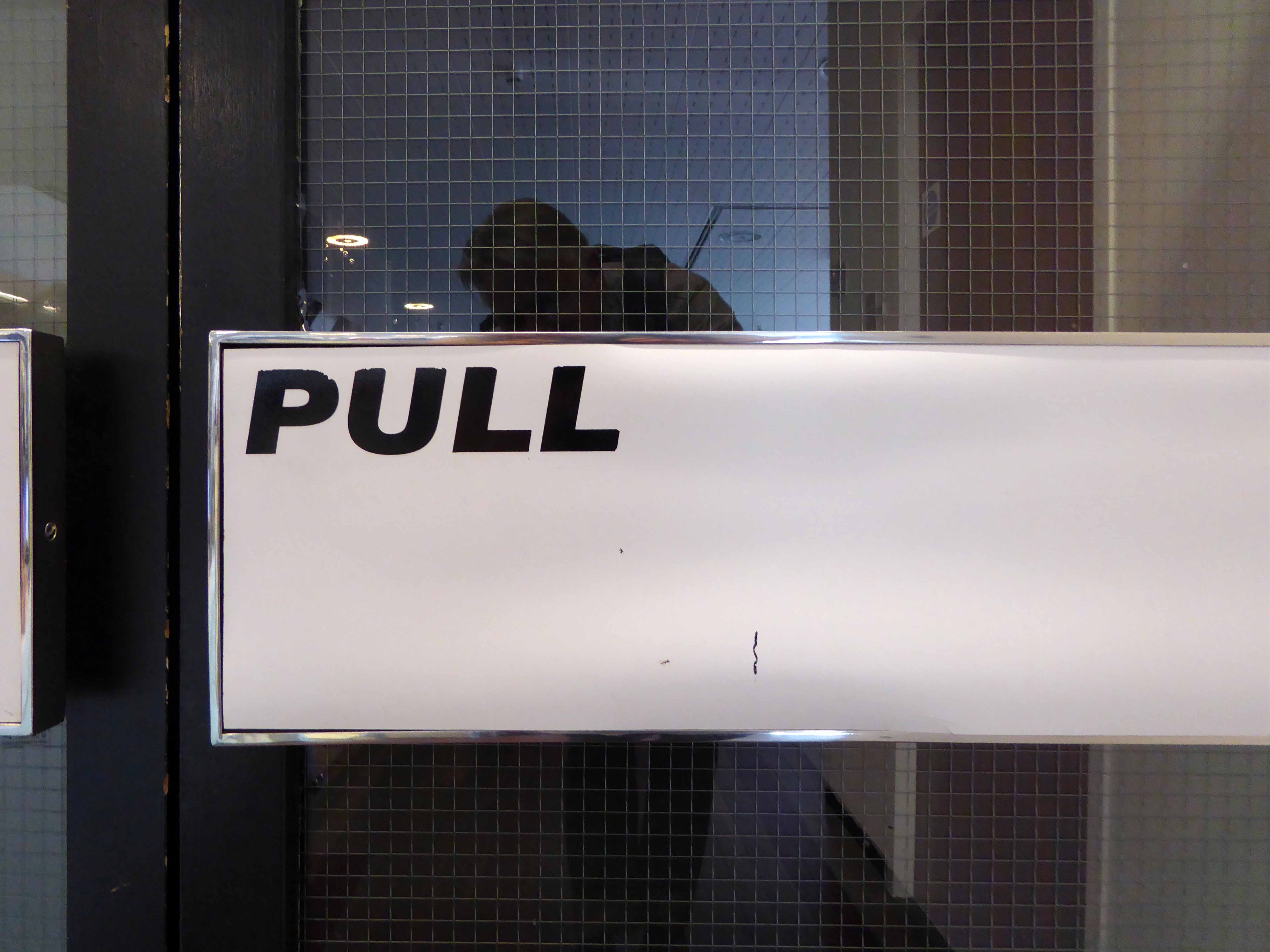
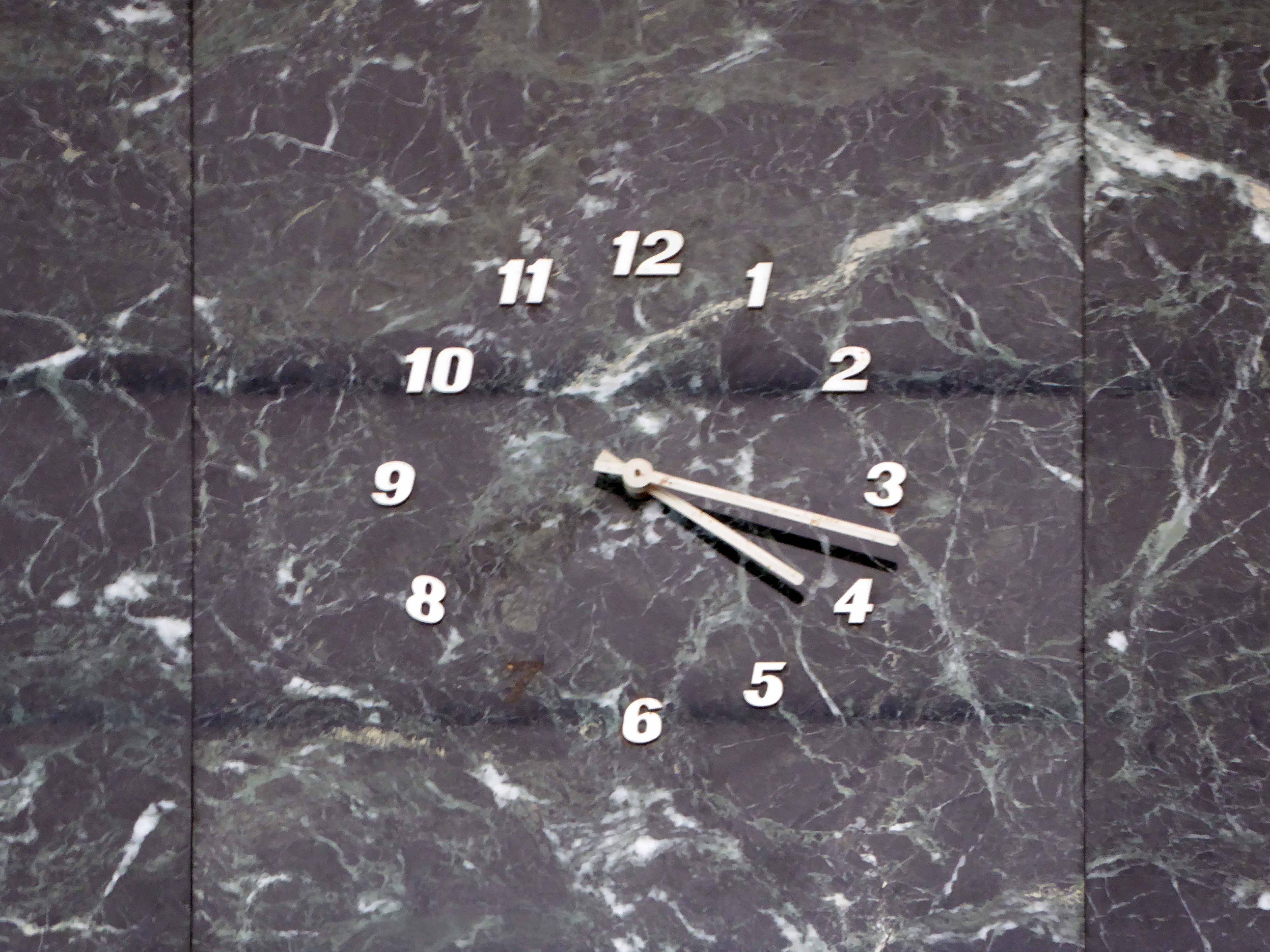
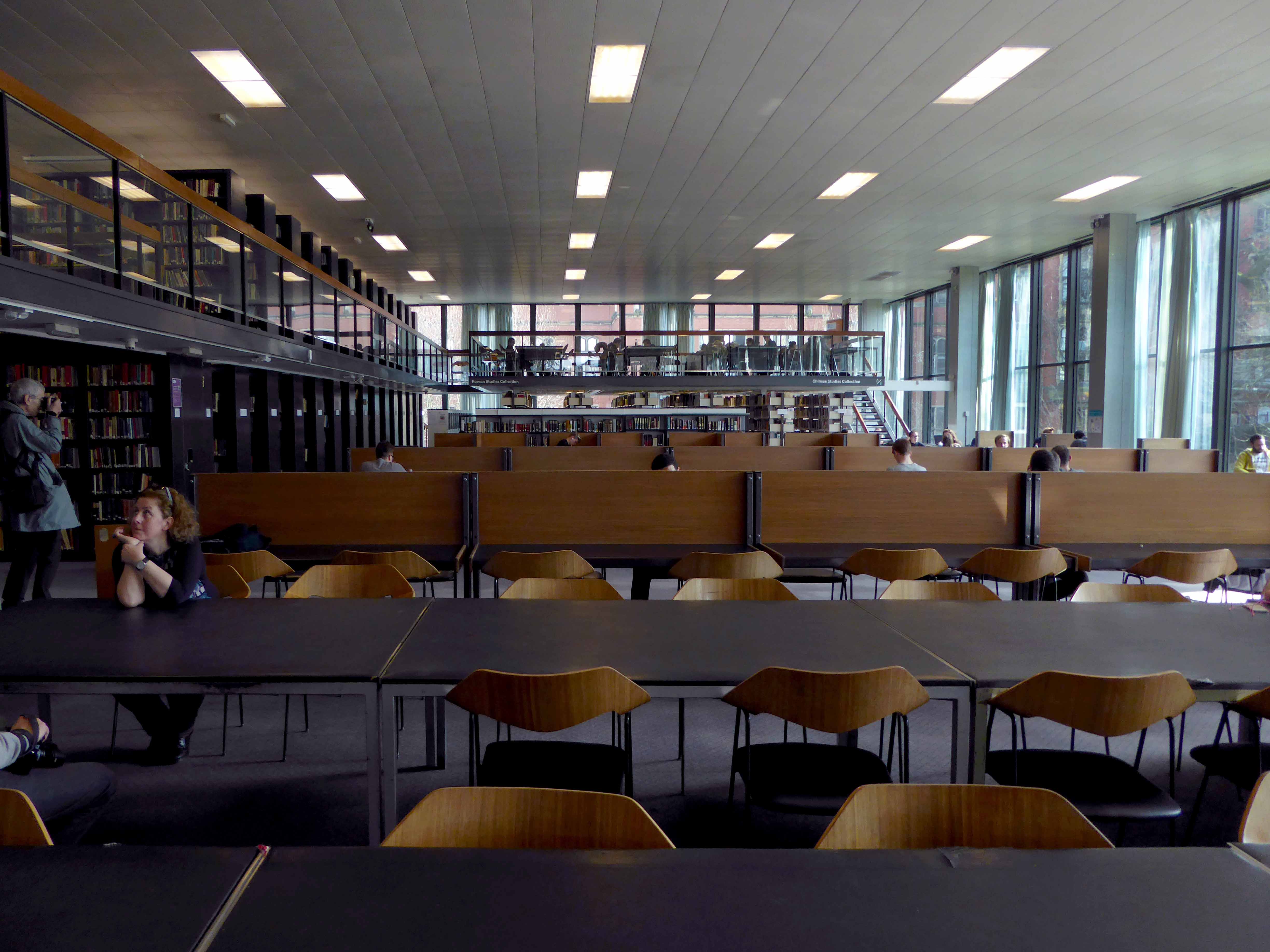
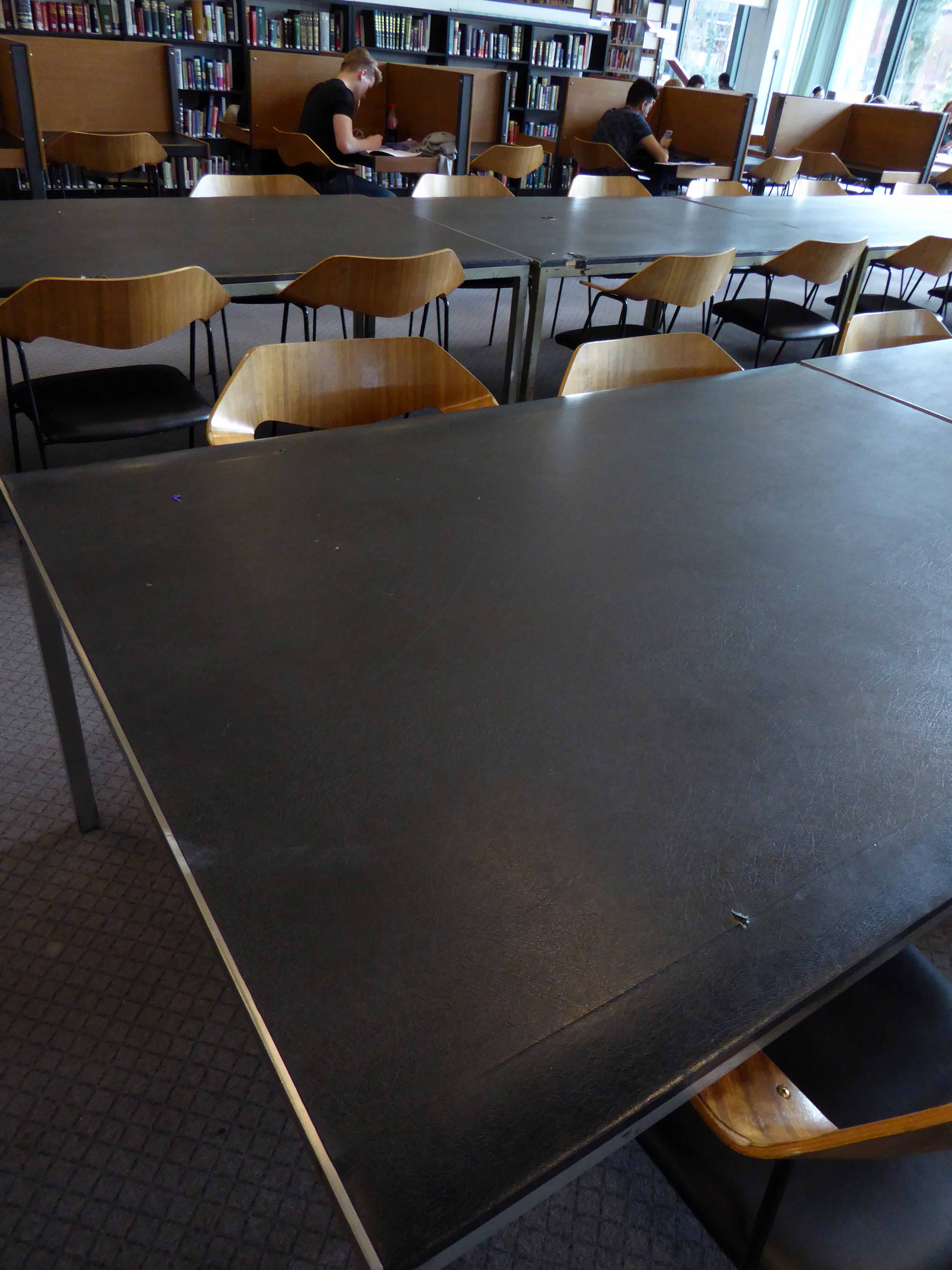
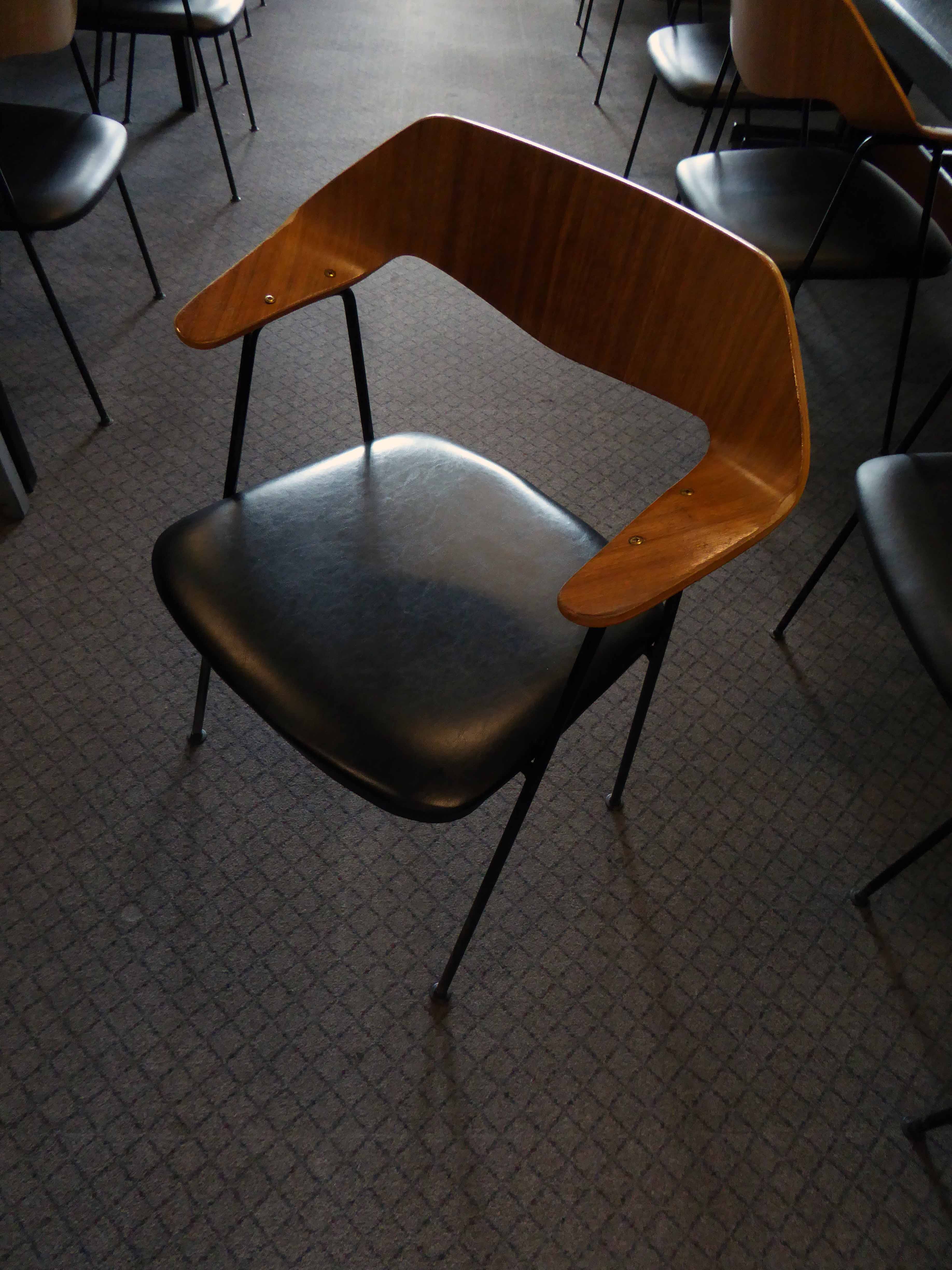
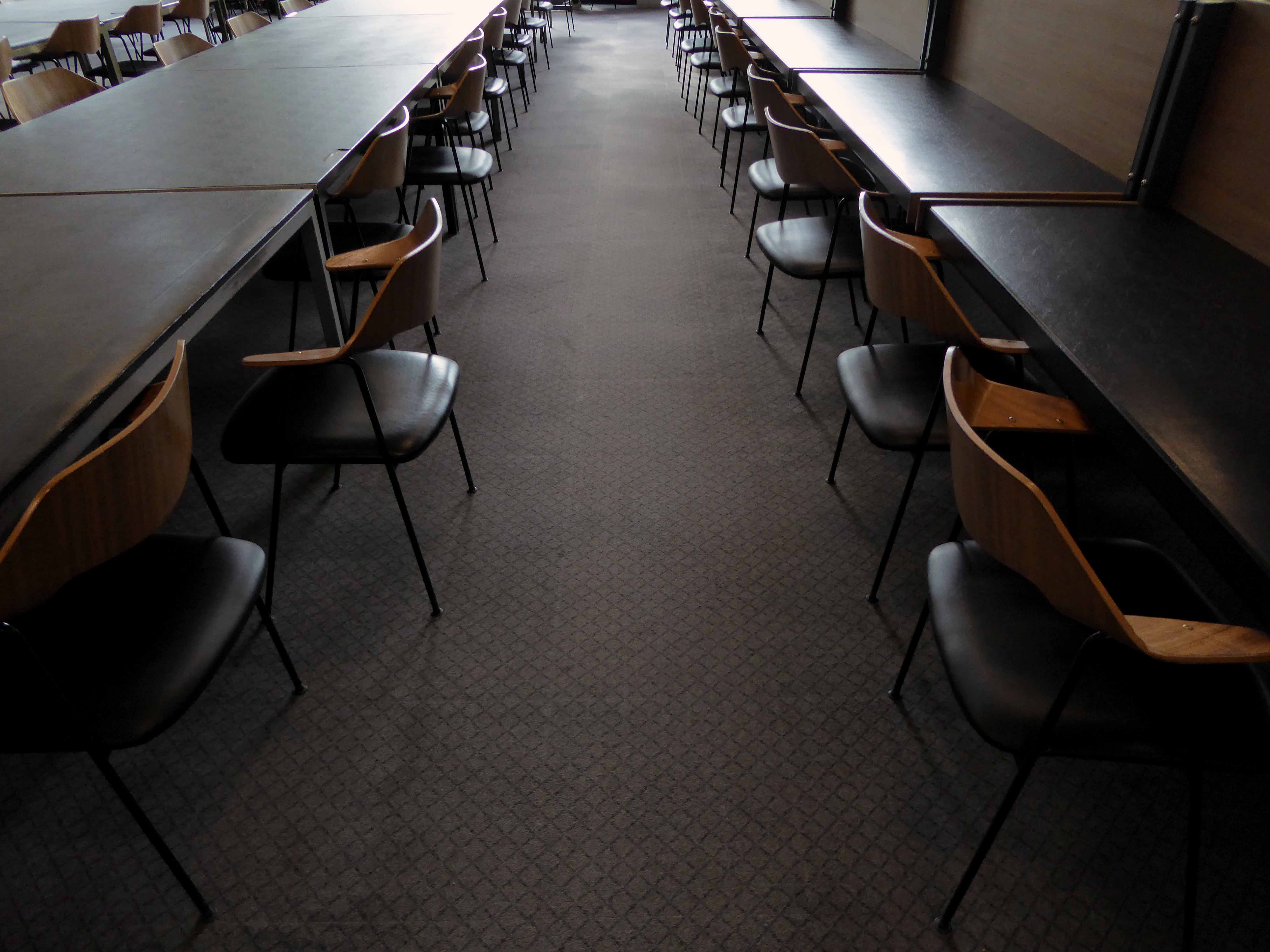
On a sunny Sunday in early April the adjoining library was alive with studying students and Modernists, attracting the odd, odd look, as we stopped and stooped to snap the odd period detail or two. It has retained much of its original character and features, deliciously elegant, almost edible chairs, some signage – and a clock.
Though the seven is mysteriously missing.
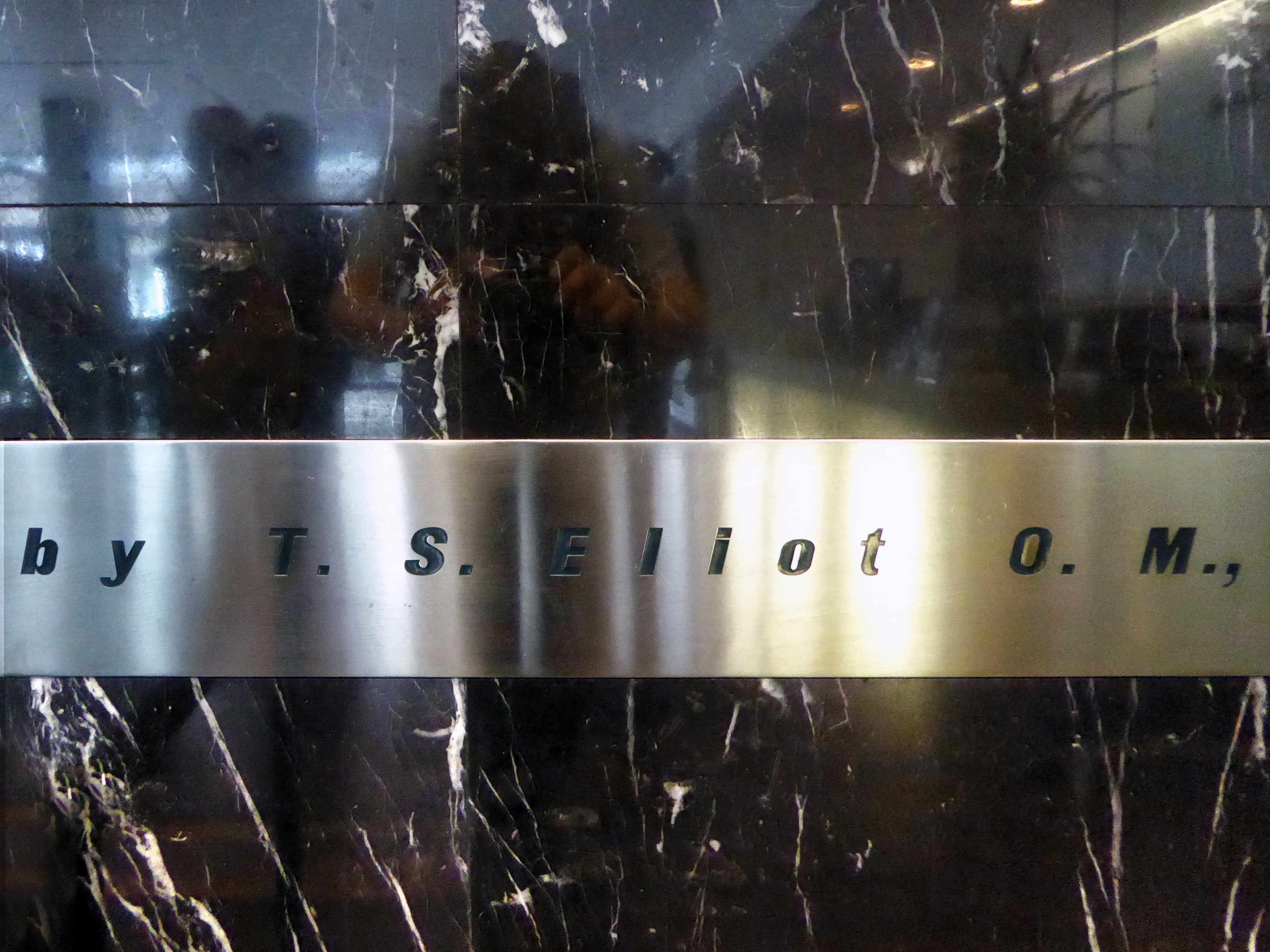
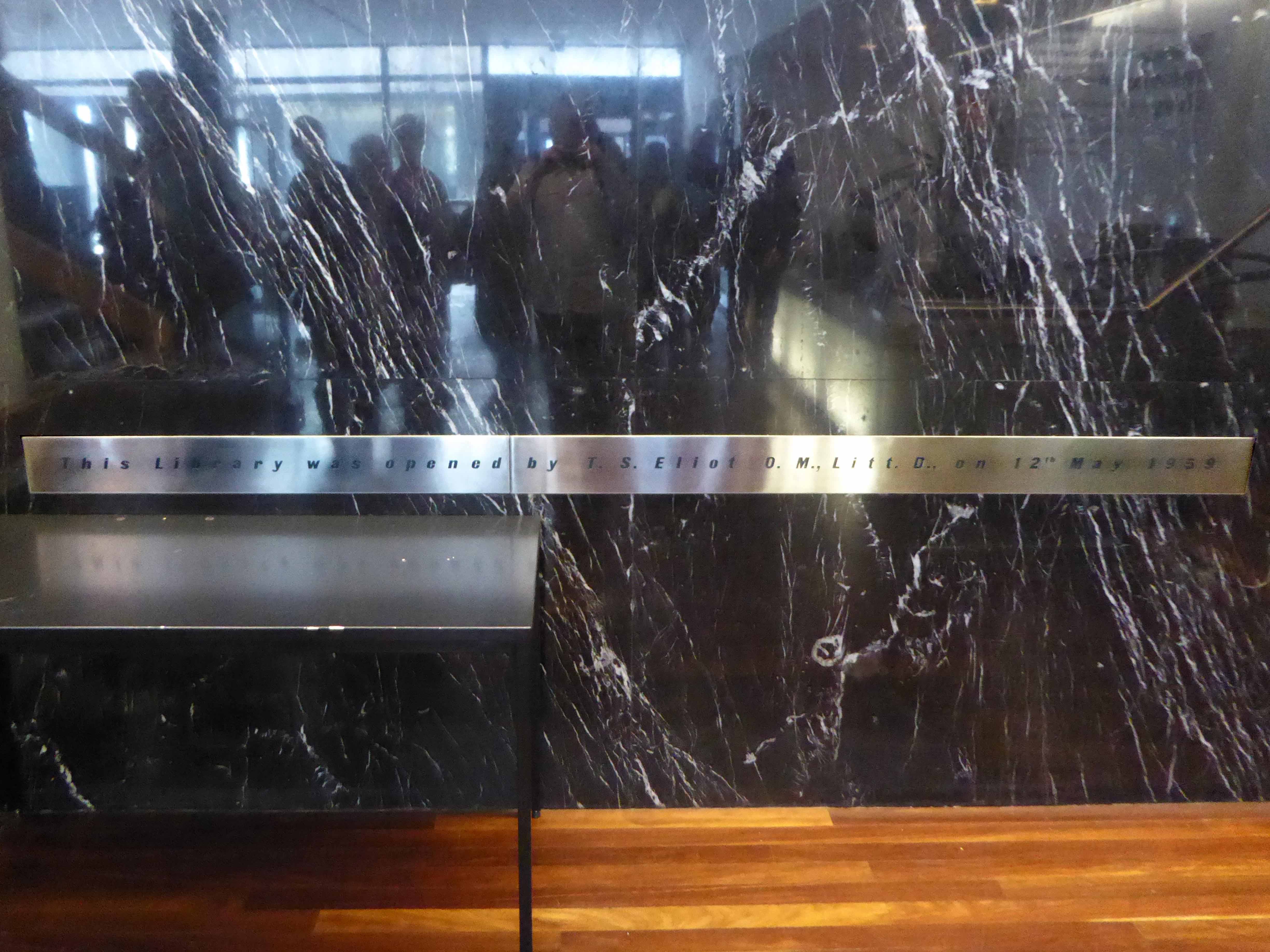
It was opened by TS Elliot.
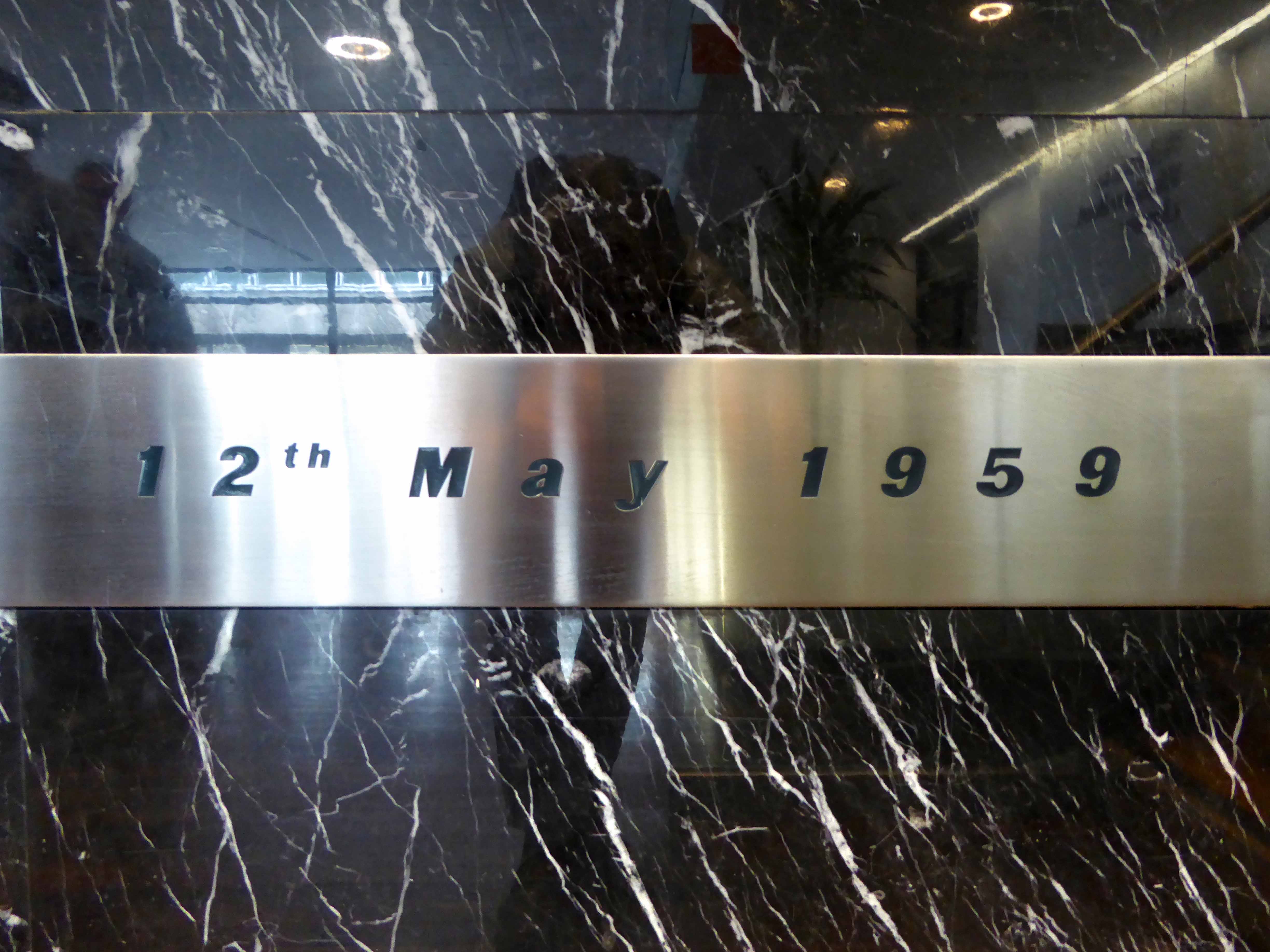
On 12th May 1959 – it was a Tuesday.
The Arts Tower 12 Bolsover Street in Sheffield, belonging to the University of Sheffield and opened in 1966. English Heritage has called it
“the most elegant university tower block in Britain of its period”.
At 255 feet/78 m tall, it is the second tallest building in the city. It is also the tallest university building in the United Kingdom.
Designed by architects Gollins, Melvin, Ward & Partners, construction of the tower started in 1961 and lasted four years.
Entry to the building was originally made by a wide bridge between fountains over a shallow pool area in front of the building. This pool was eventually drained and covered over when it was found that strong down drafts of wind hitting the building on gusty days caused the fountain to soak people entering and exiting the building.
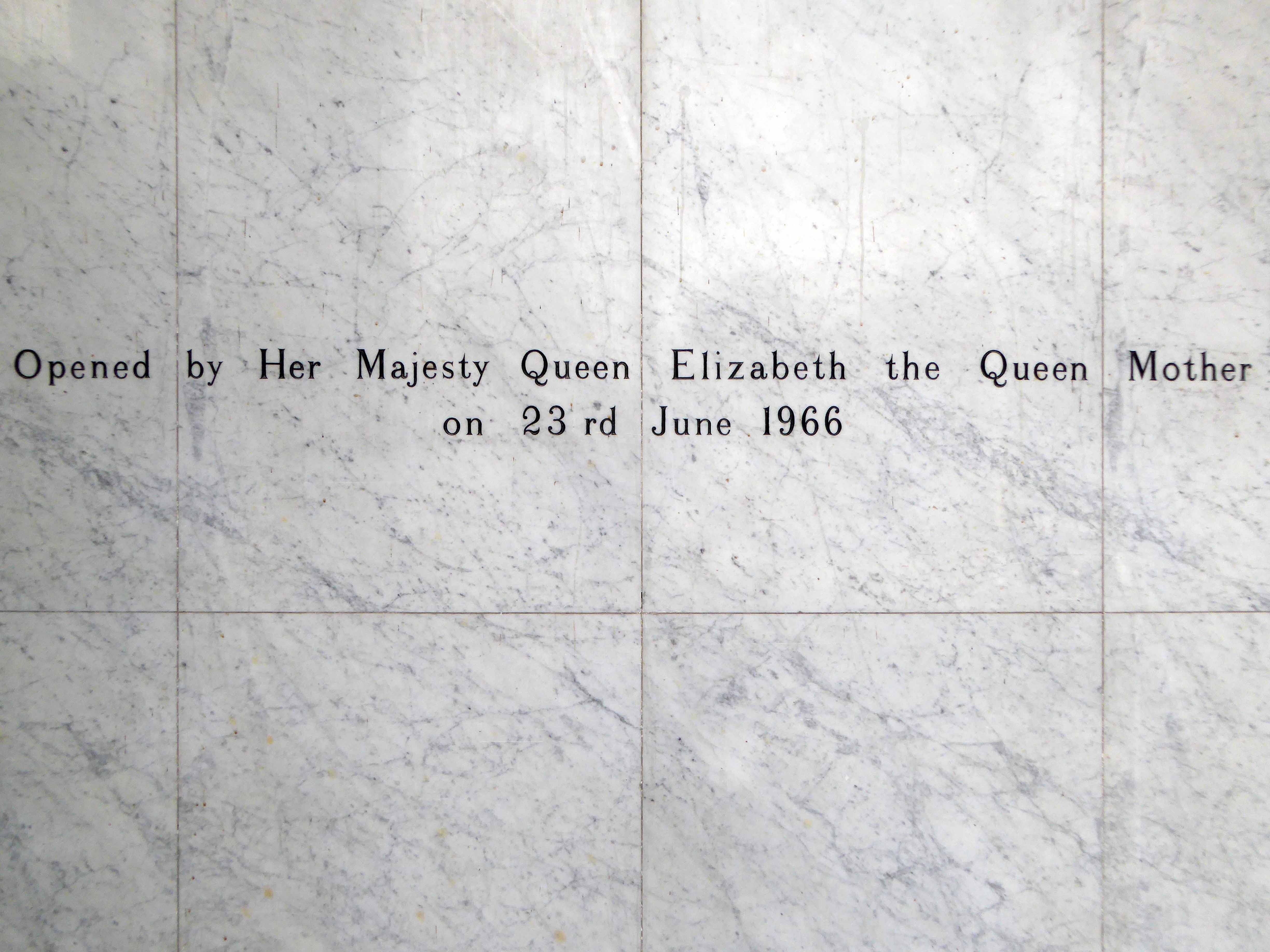
The building was officially opened by Queen Elizabeth, The Queen Mother in June 1966; it has 20 stories and a mezzanine level above ground. As its name suggests, the building originally housed all the University’s arts departments. Circulation is through two ordinary lifts and a paternoster lift, at 38 cars the largest of the few surviving in the United Kingdom.
A bridge at the mezzanine level links the tower to Western Bank Library. This building was also designed by Gollins, Melvin, Ward & Partners—the two buildings are intended to be viewed together, the Arts Tower and Library are Grade II* listed buildings.
So if you have a penchant for a tall slab with an adjoining library, set in expansive parkland on the perimeter of a dual carriageway – go take a look.
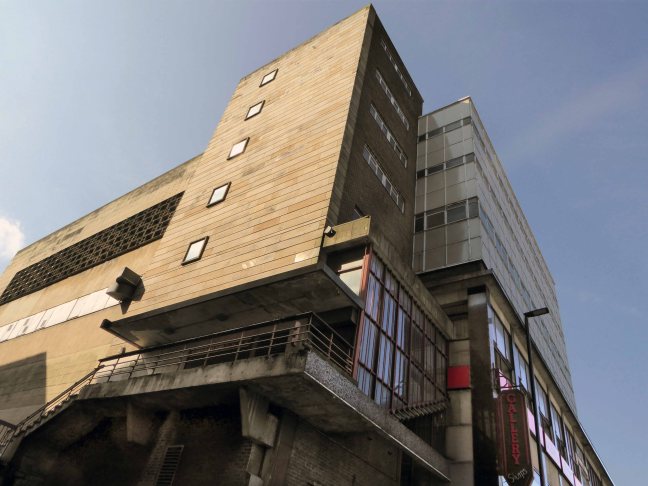
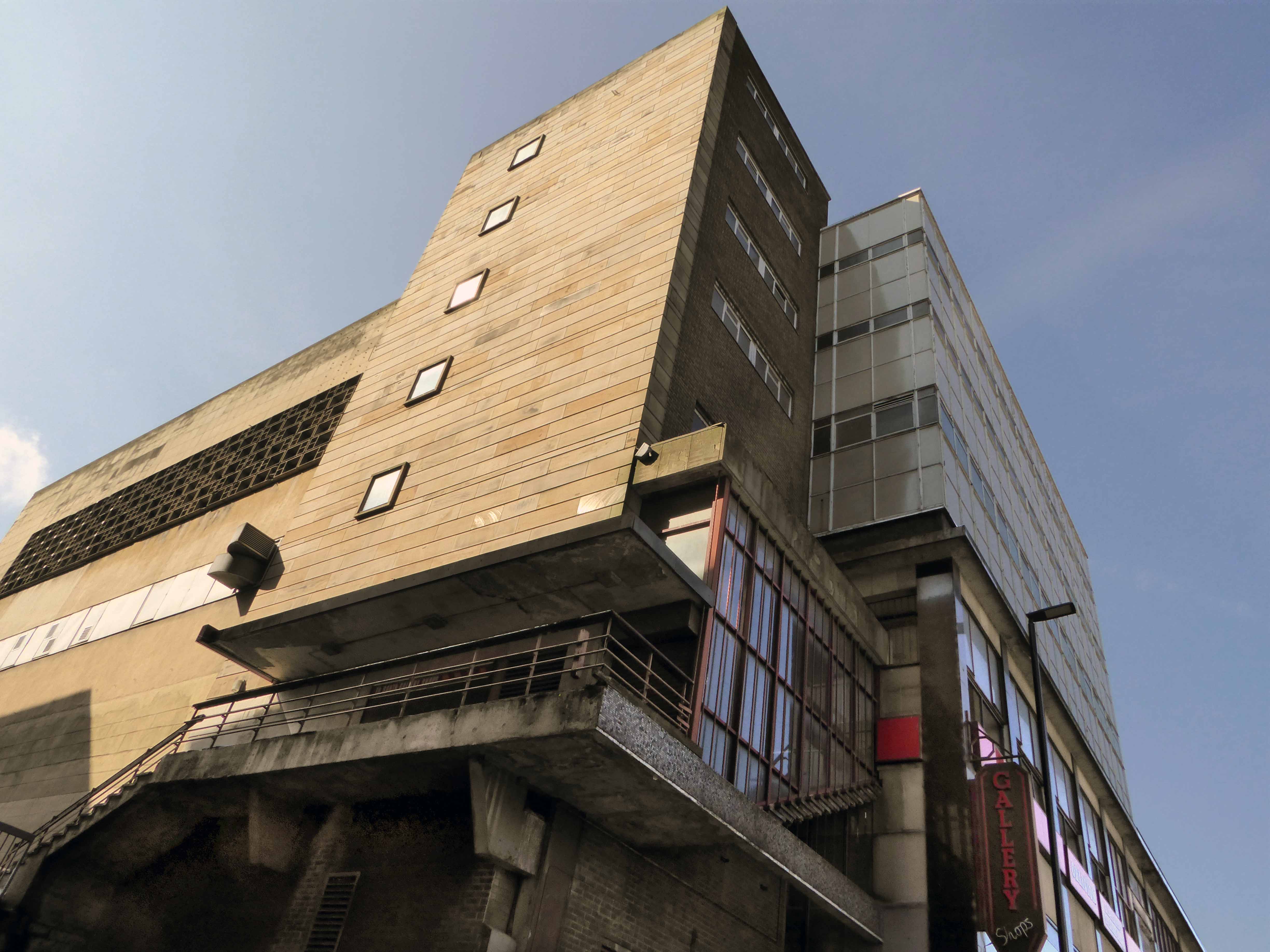
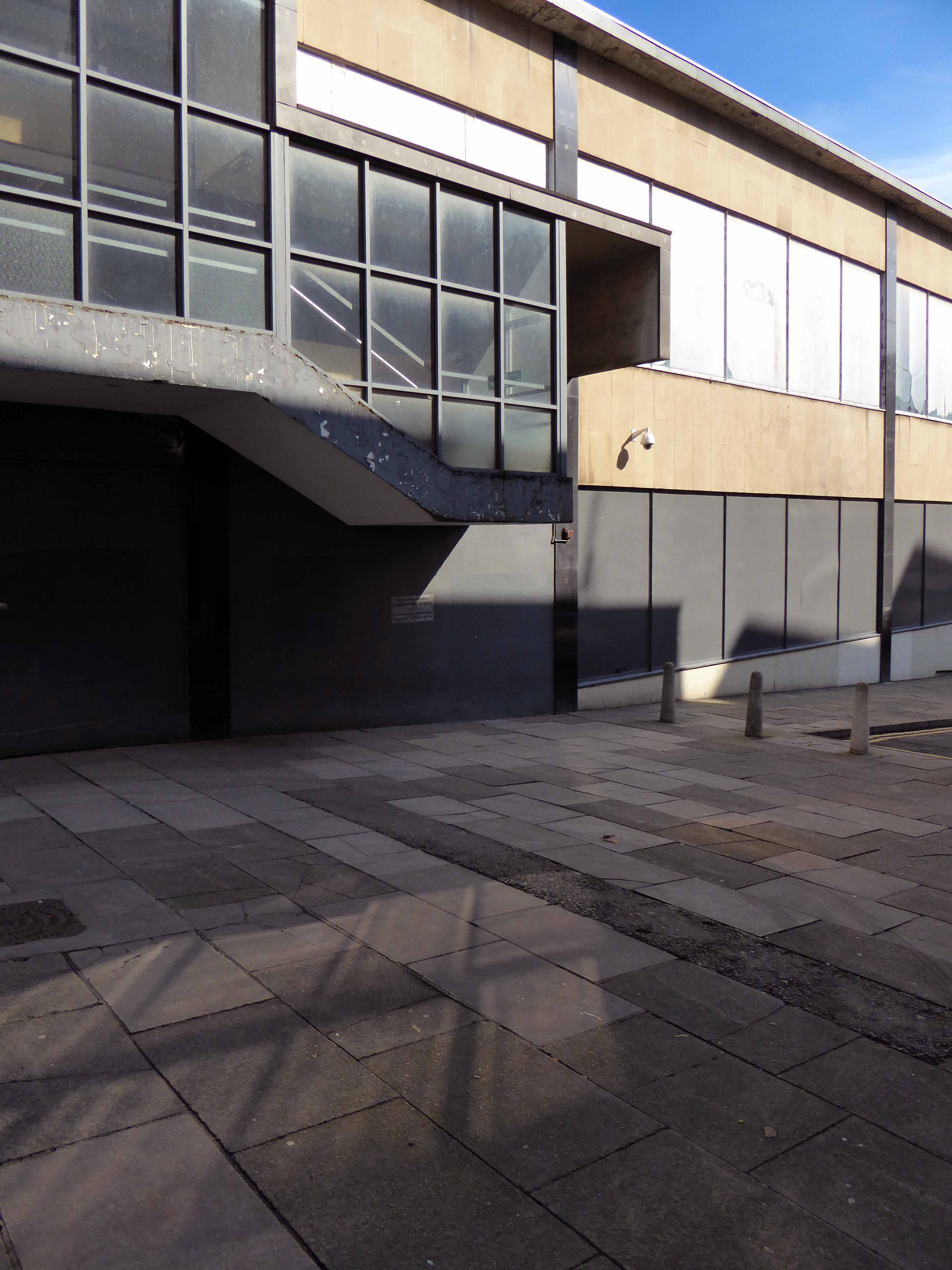
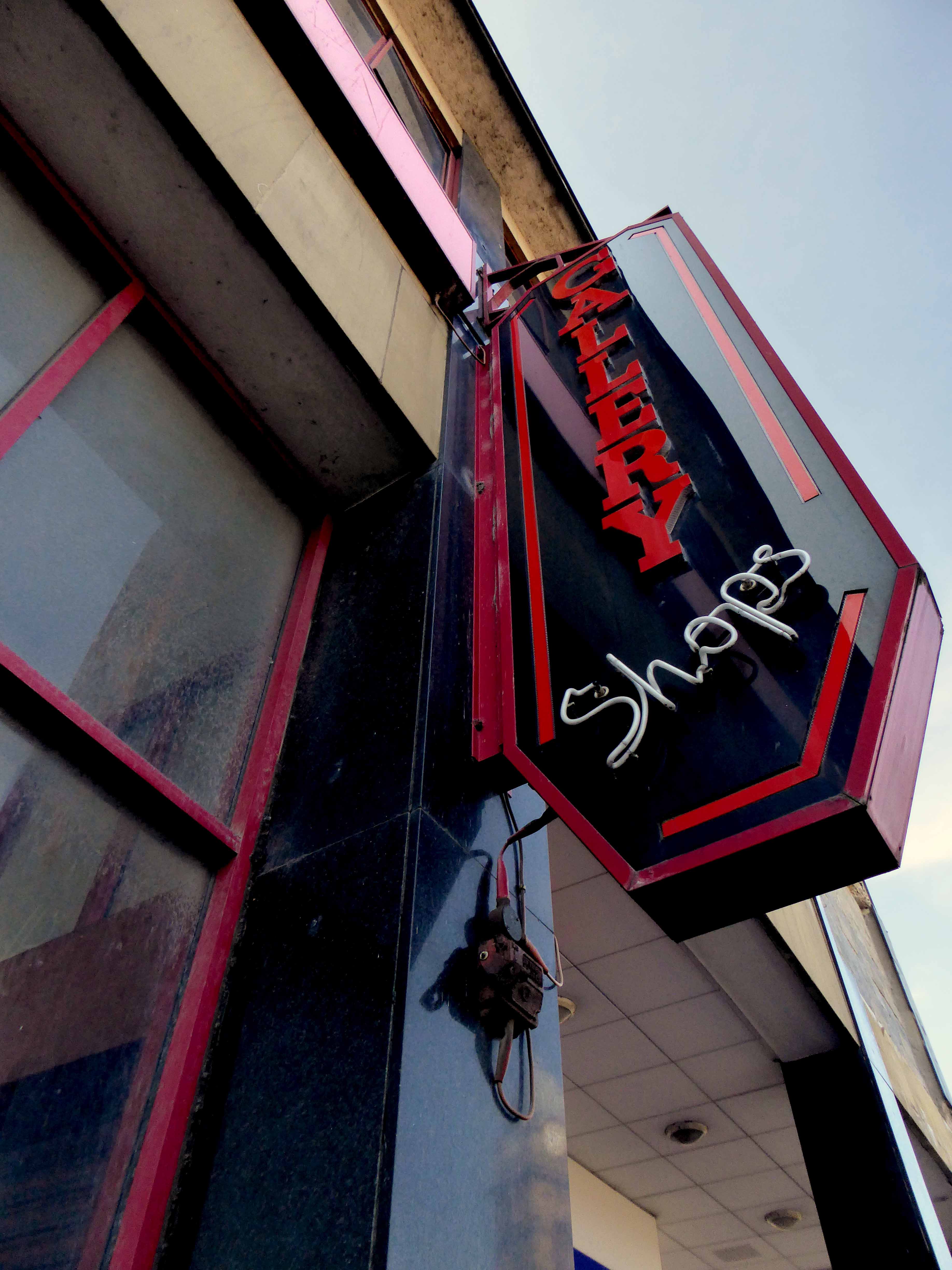
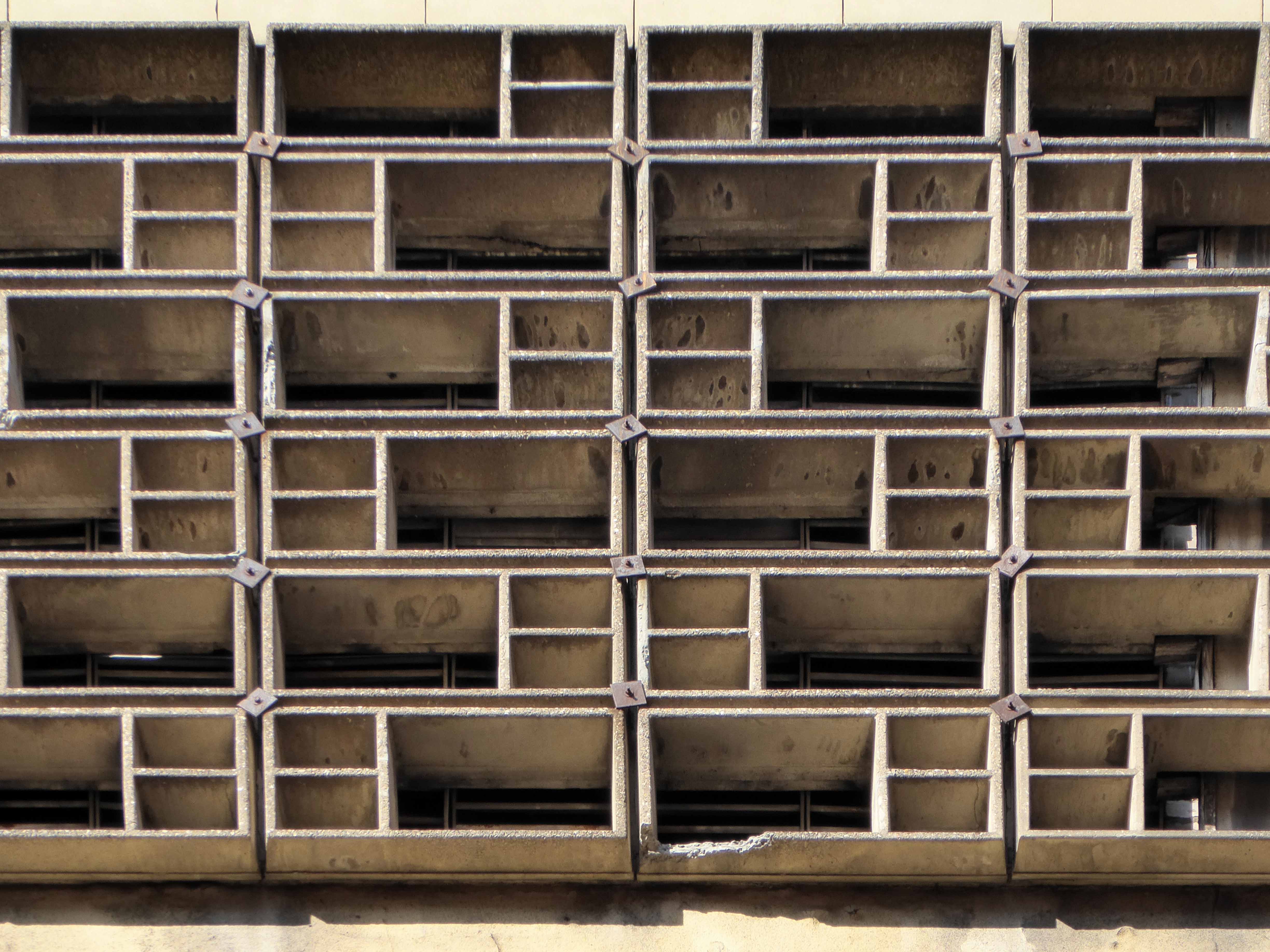
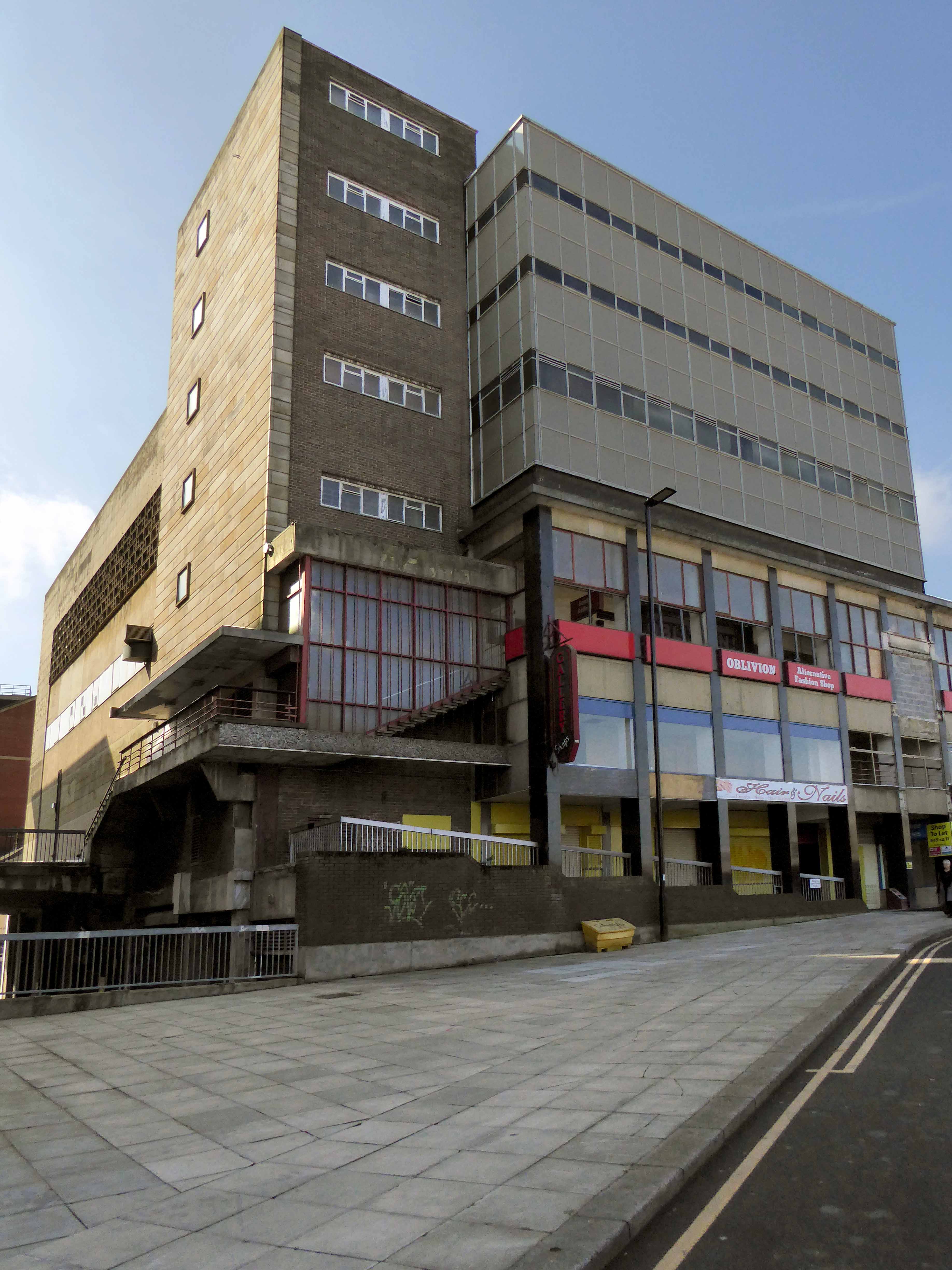
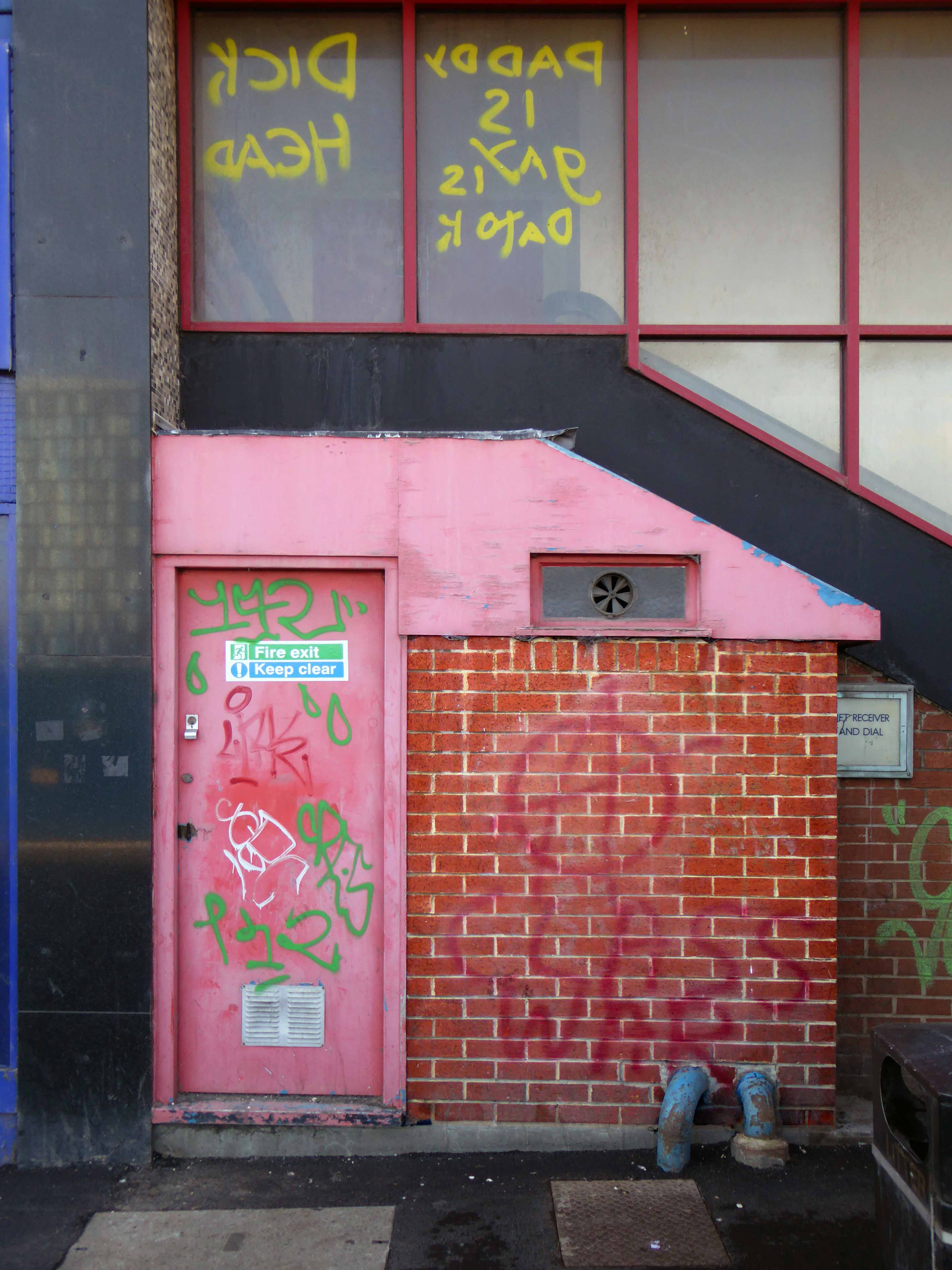
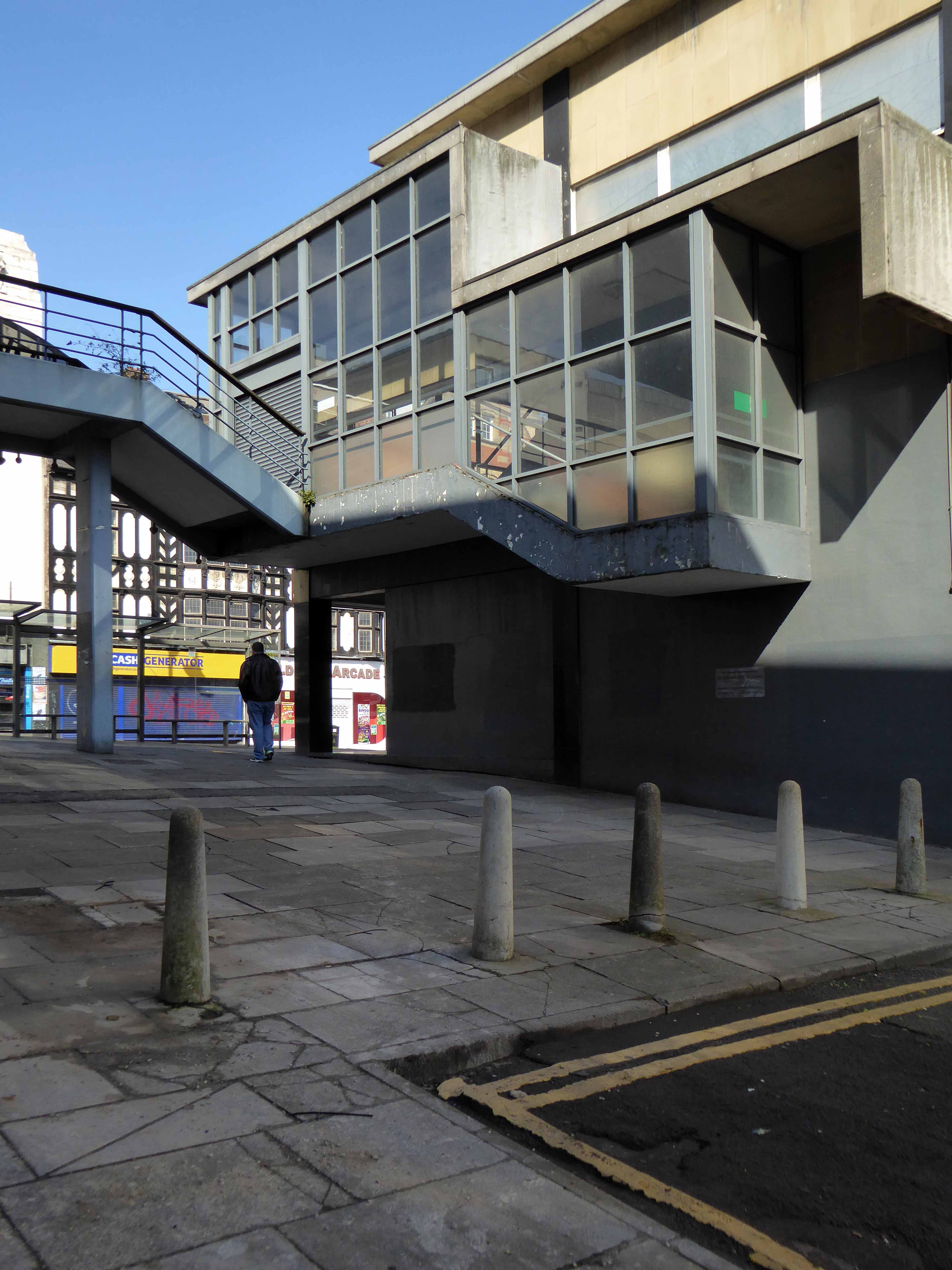
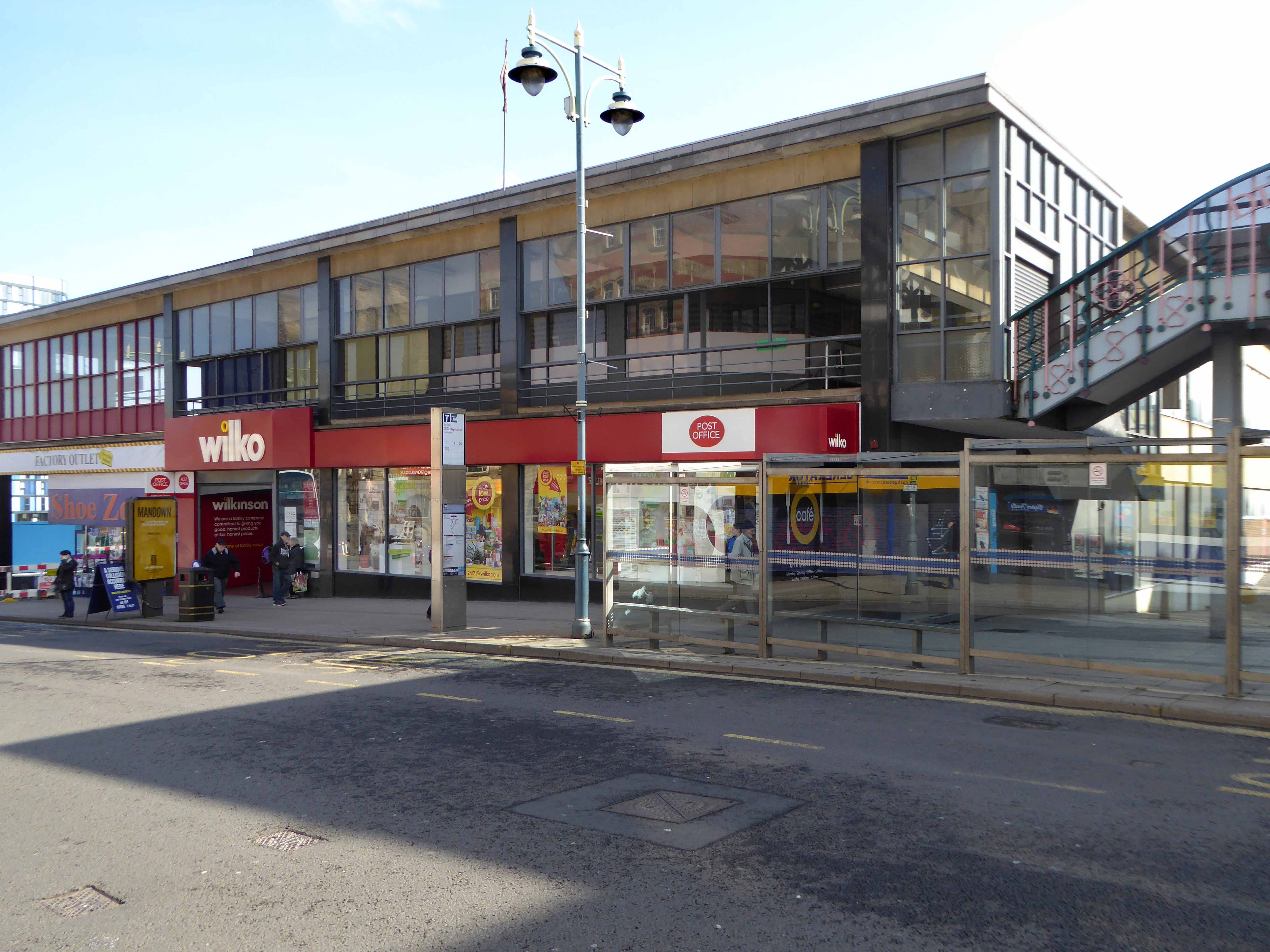
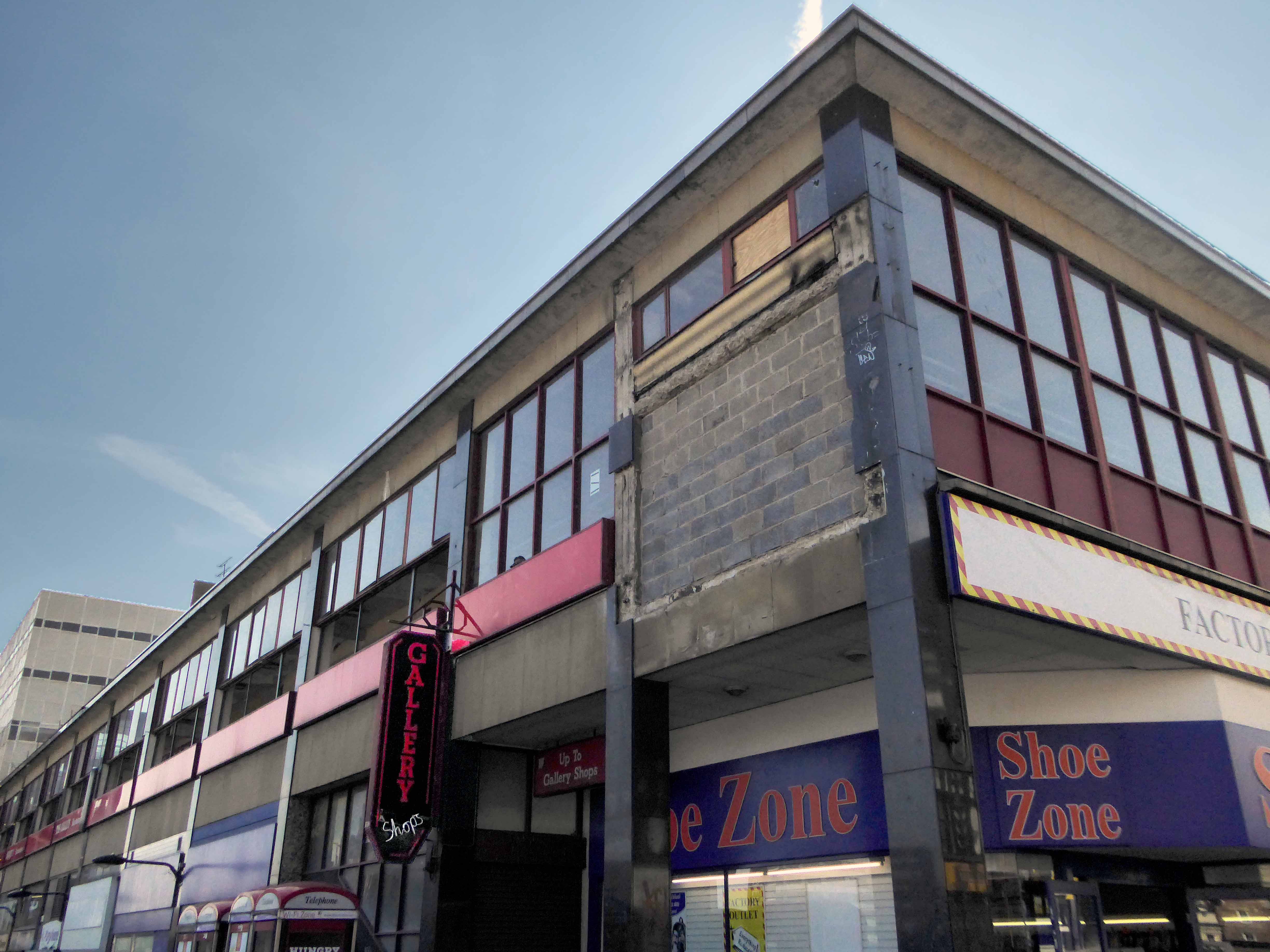
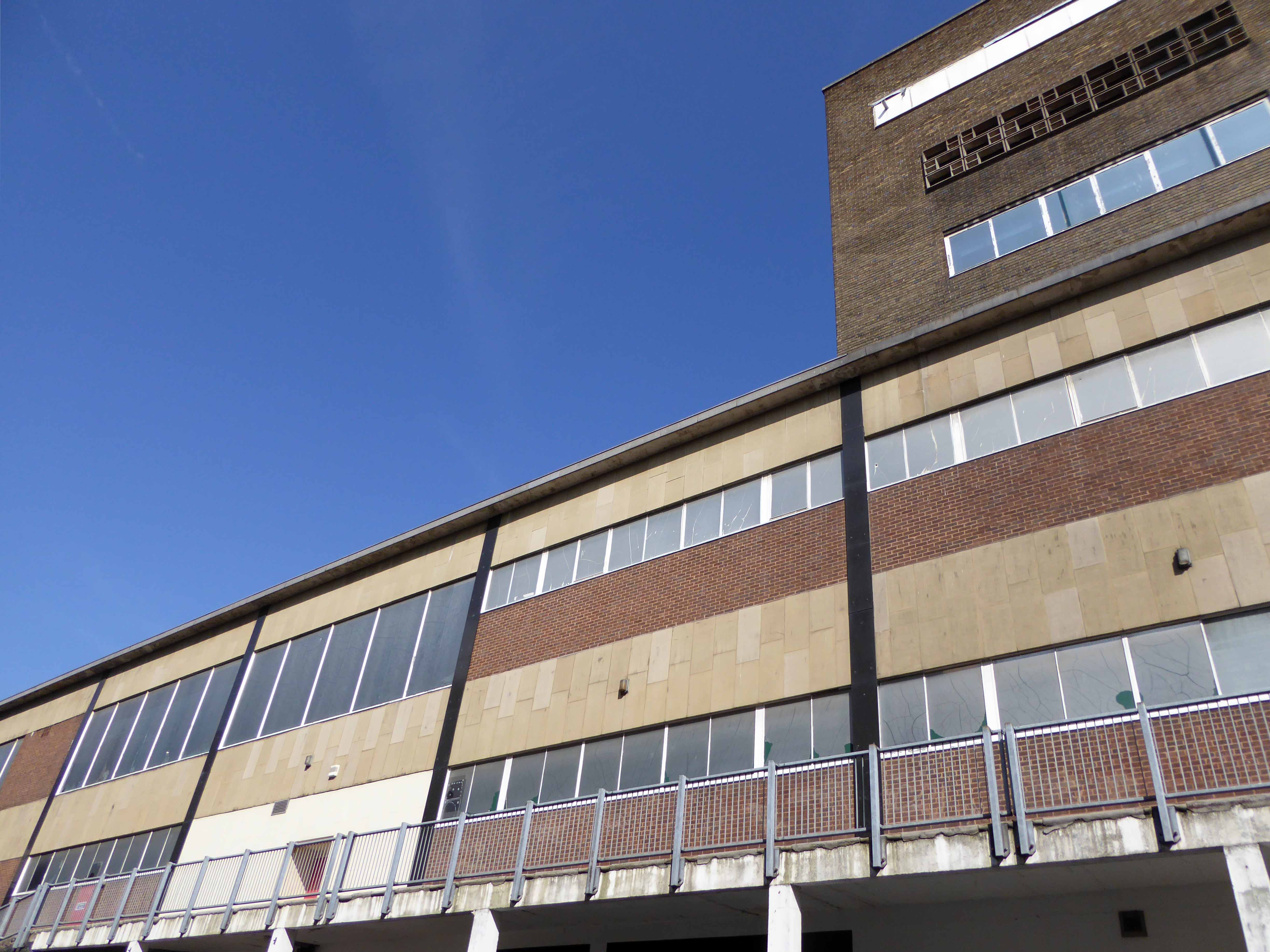
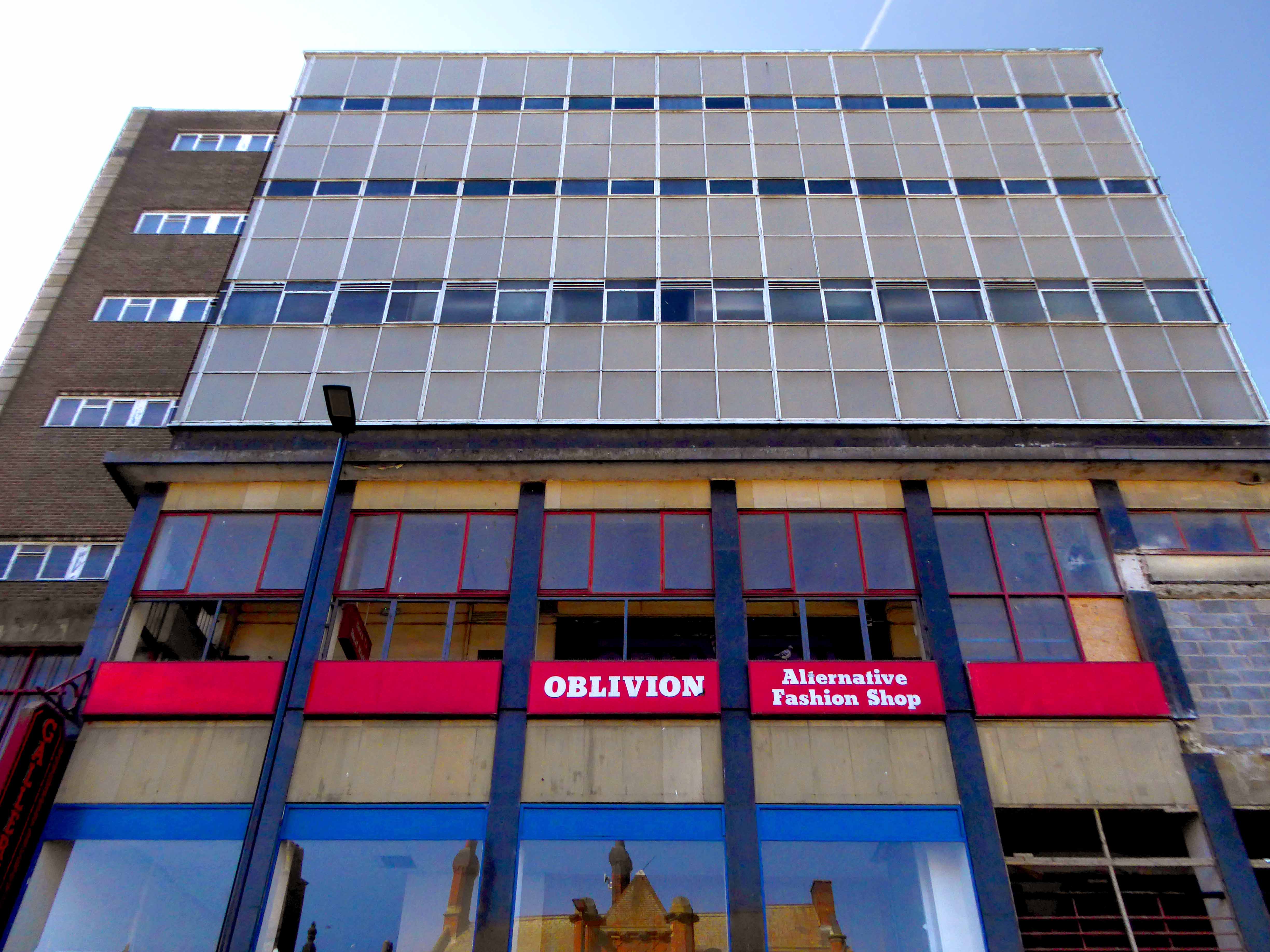
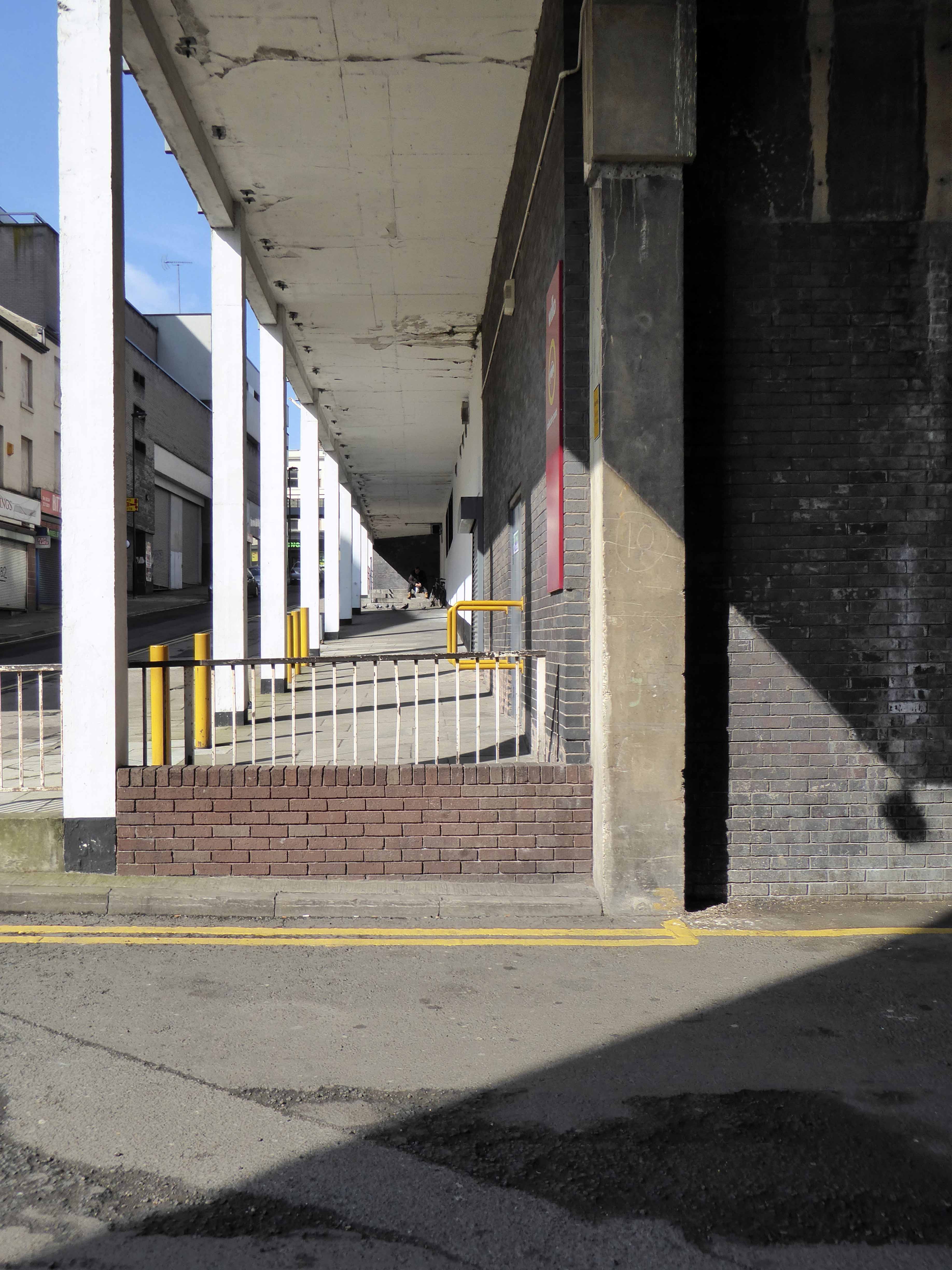
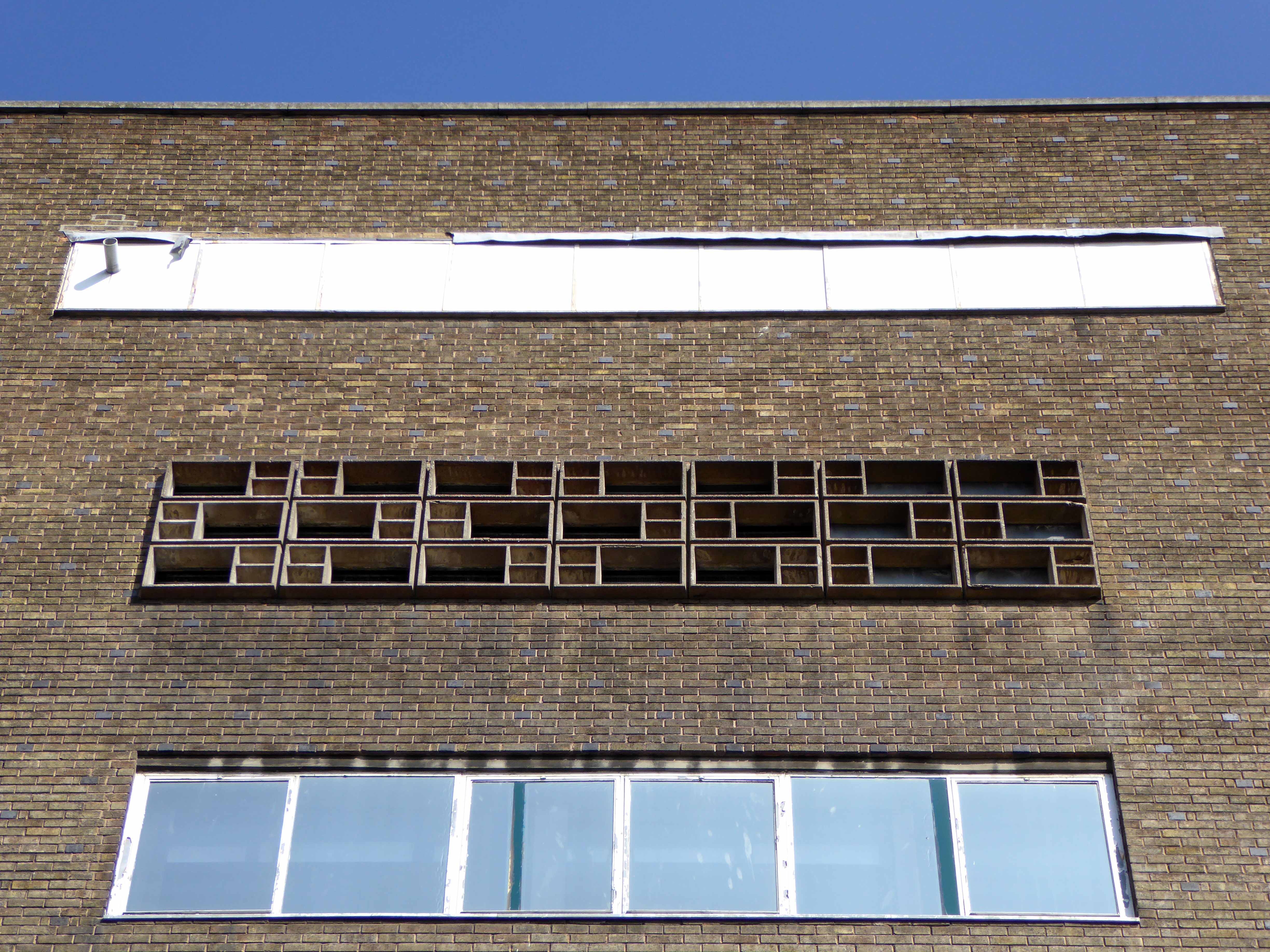
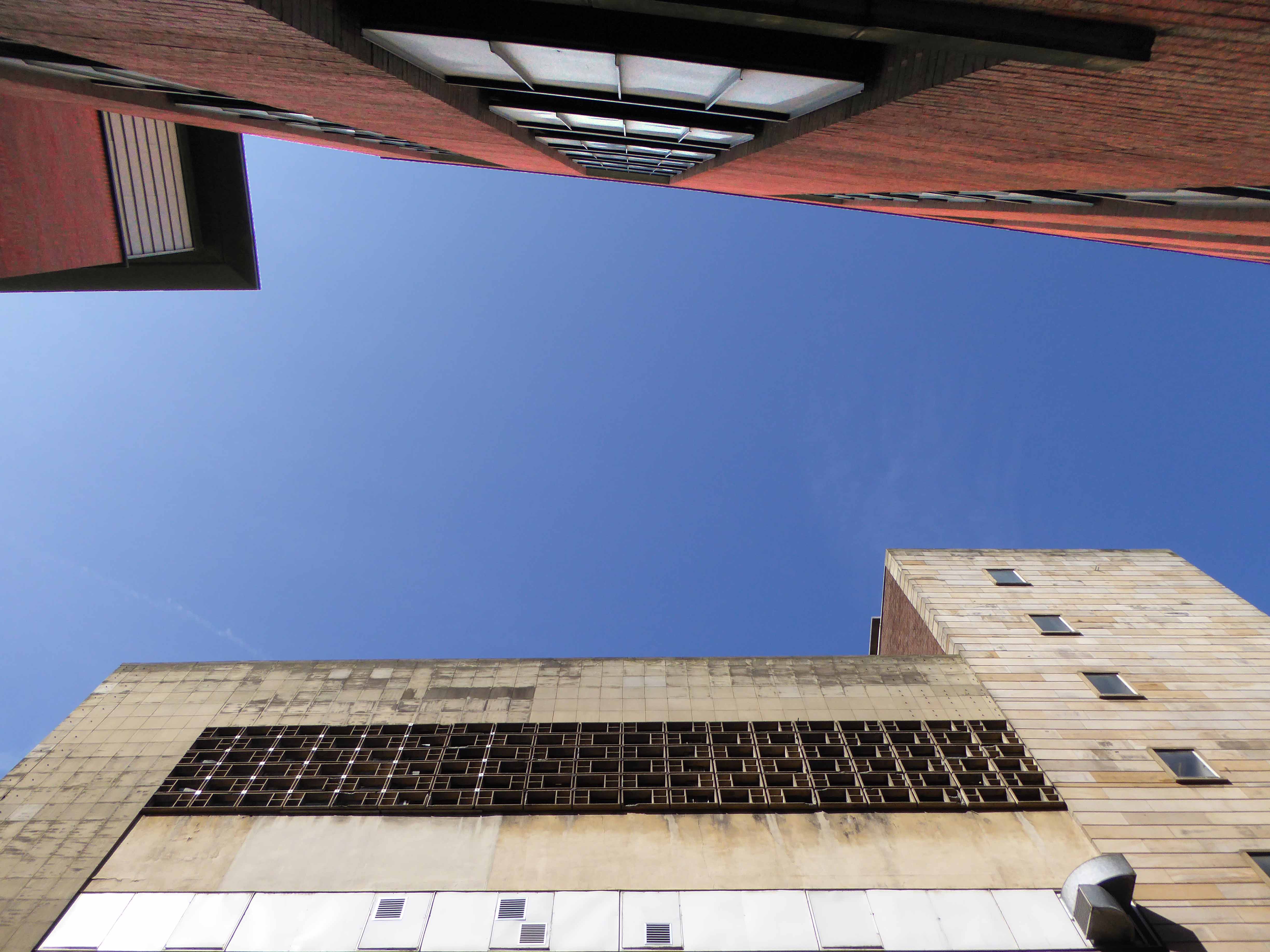
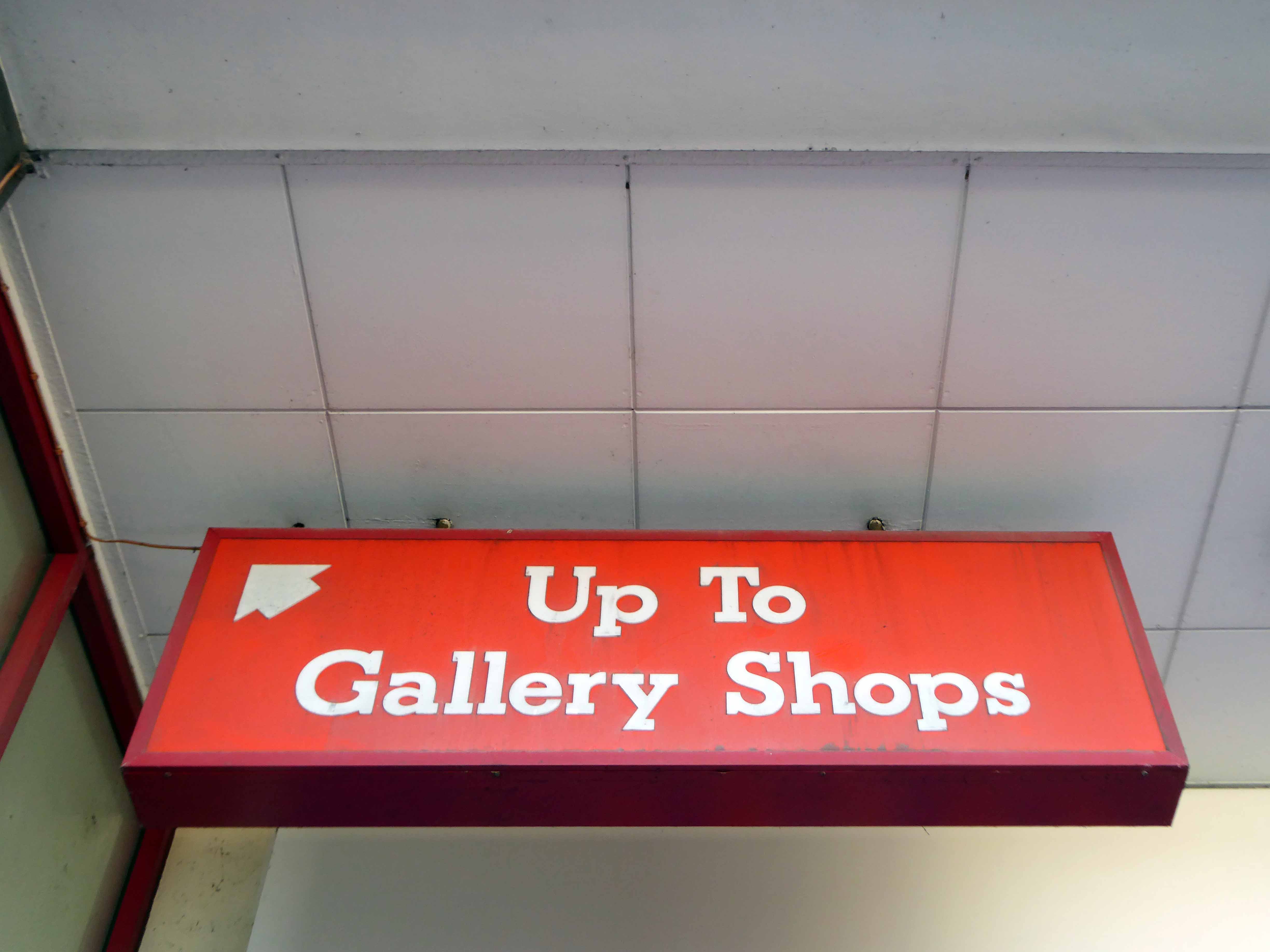
Once part of a larger retail complex, embracing the Castle Market area – regrettably demolished in 2015, the Gallery Shops are themselves, but a wrecking ball away from nothingness.
Linked by walkways, once populated by a multitude of rosy-cheeked, cheery shoppers, independent units and stalls operated in what was the better end of the High Street.
Over time, like many modern city the axis of energy shifts elsewhere, to newer more shiny developments – leaving hollow shells, echoing only to the footsteps of long gone ghosts.
“The immediate problem after the war was to house those whose homes had been bombed. Longer-term objectives were to complete and extend earlier clearance programmes in order to reduce the population density and separate industry from residential areas, as reaffirmed in the County of London Plan of 1943. Some 5,000 people lived in temporary housing, including requisitioned properties and hutments or mobile homes, prefabs, of which the L.C.C.’s first in East London were in Florida and Squirries streets. All but 15 of its 190 ‘prefabs’ were in use in 1955, together with 309 requisitioned properties; at least 48 mobile homes were still in use in 1966. War damage had been repaired by 1953 and attention shifted to slum clearance; flats were to be allotted to those in cleared areas rather than by a waiting list. The L.C.C. and M.B. co-operated in drawing up five-year plans: by 1954 there were 16,852 permanent homes of which 2,434 were unfit, 1,711 in the L.C.C.’s clearance areas and 675 in the M.B.’s, together with 48 individual houses. The L.C.C. demolished 510 and the M.B. 550 between 1956 and 1960 and the M.B. demolished another 151 unfit and 46 other houses in 1961-2. Most were replaced by municipal estates, although both councils also acquired sites scheduled for industry, business, or open space. It was estimated that to find a site and build an estate took six years.”
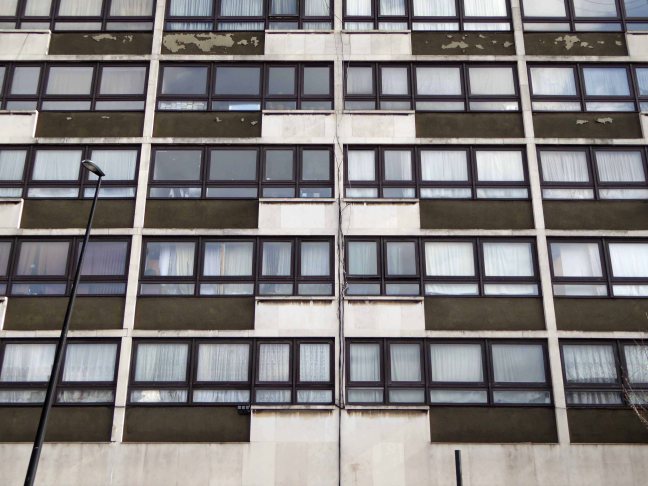
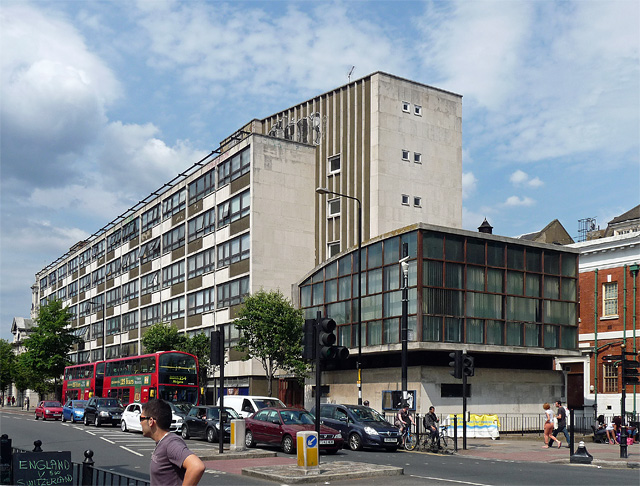
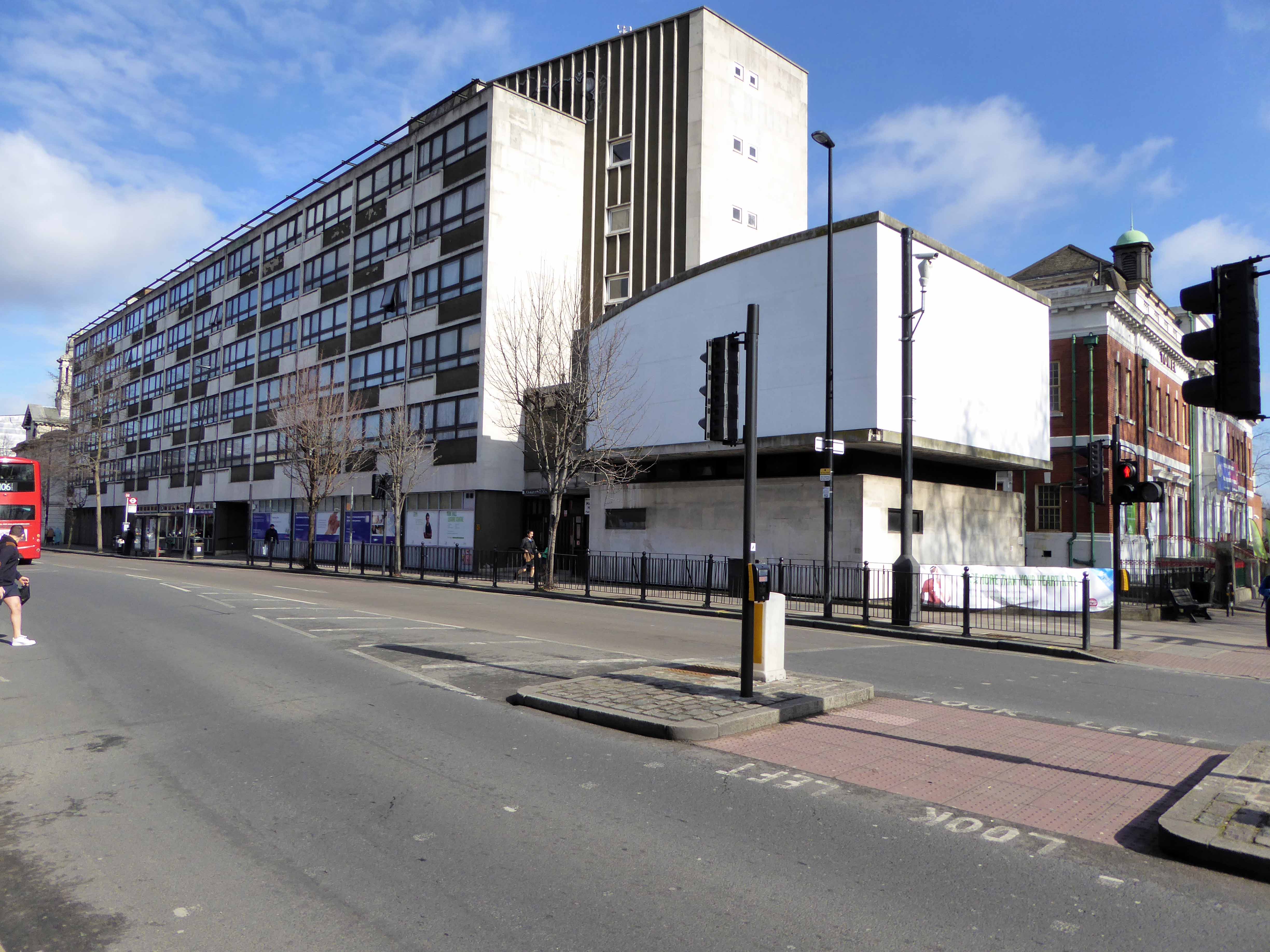
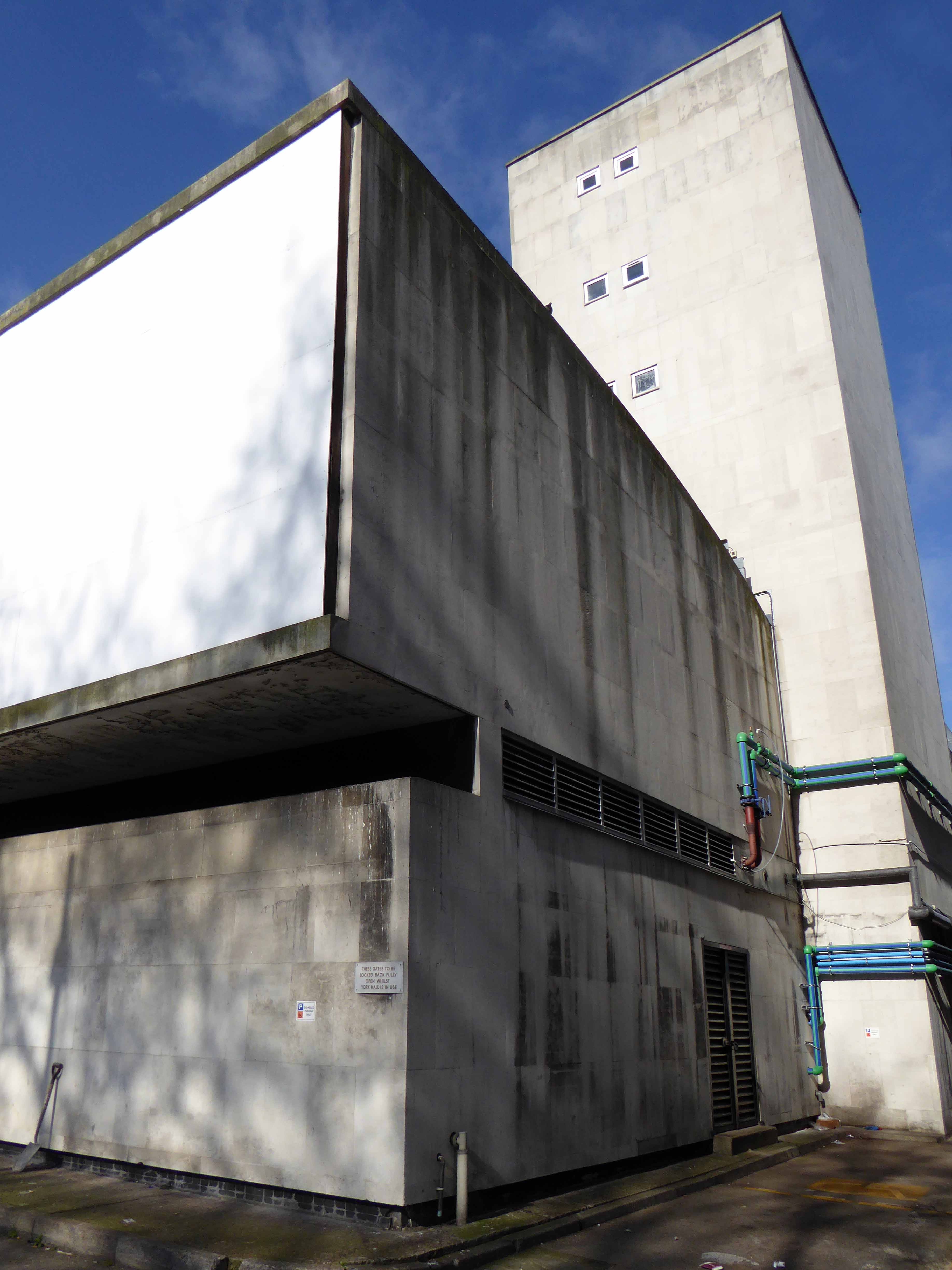
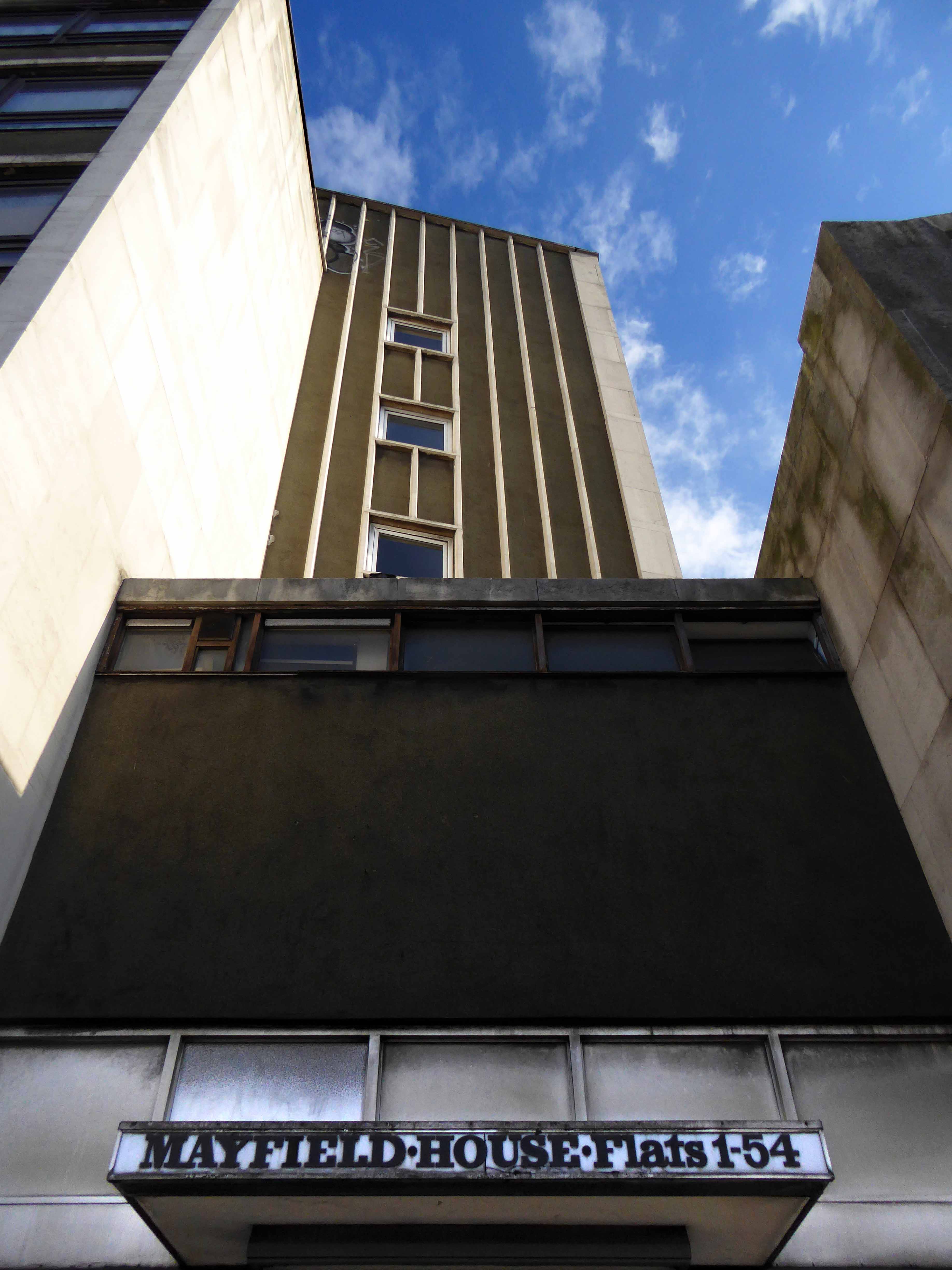
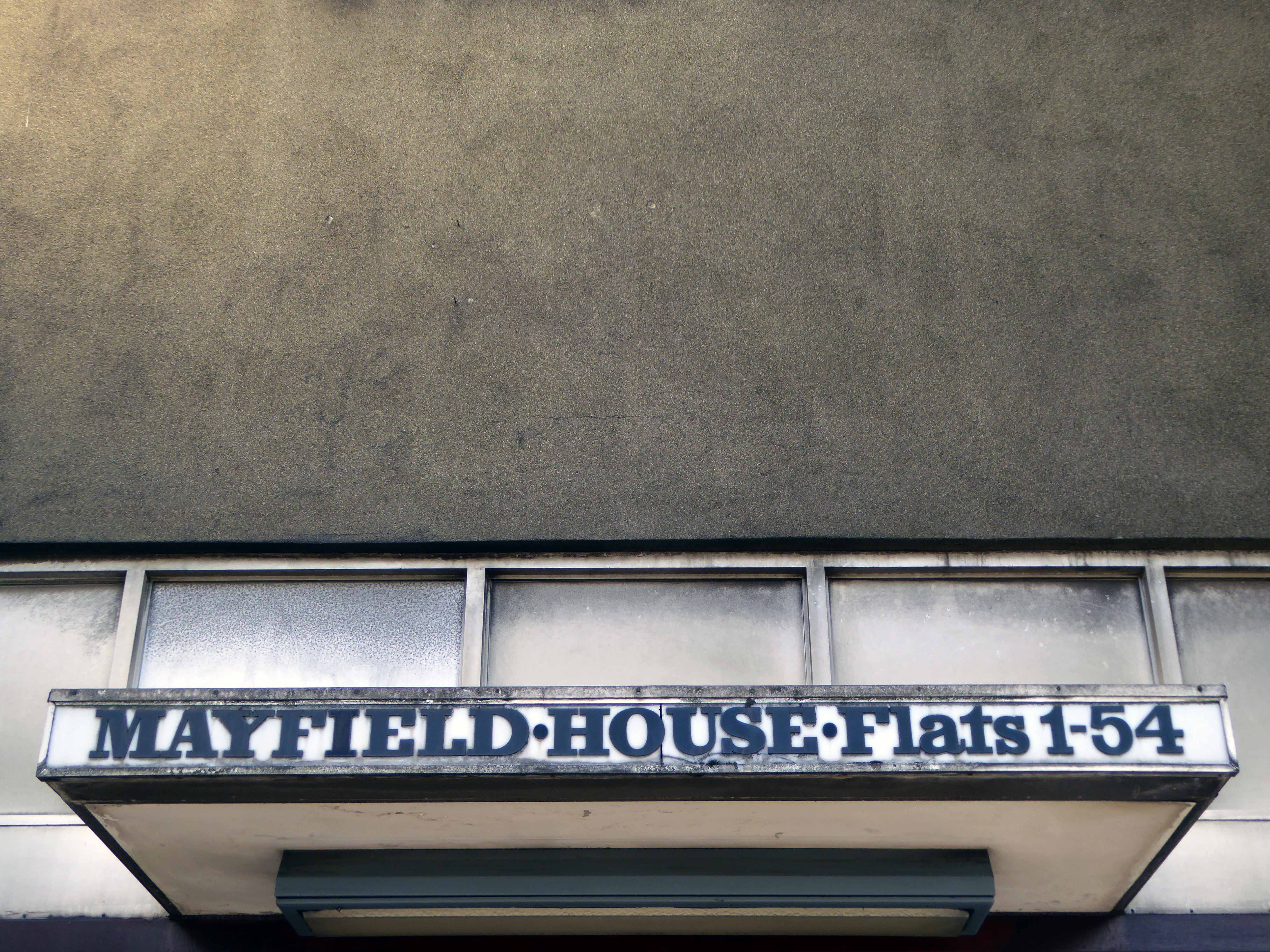
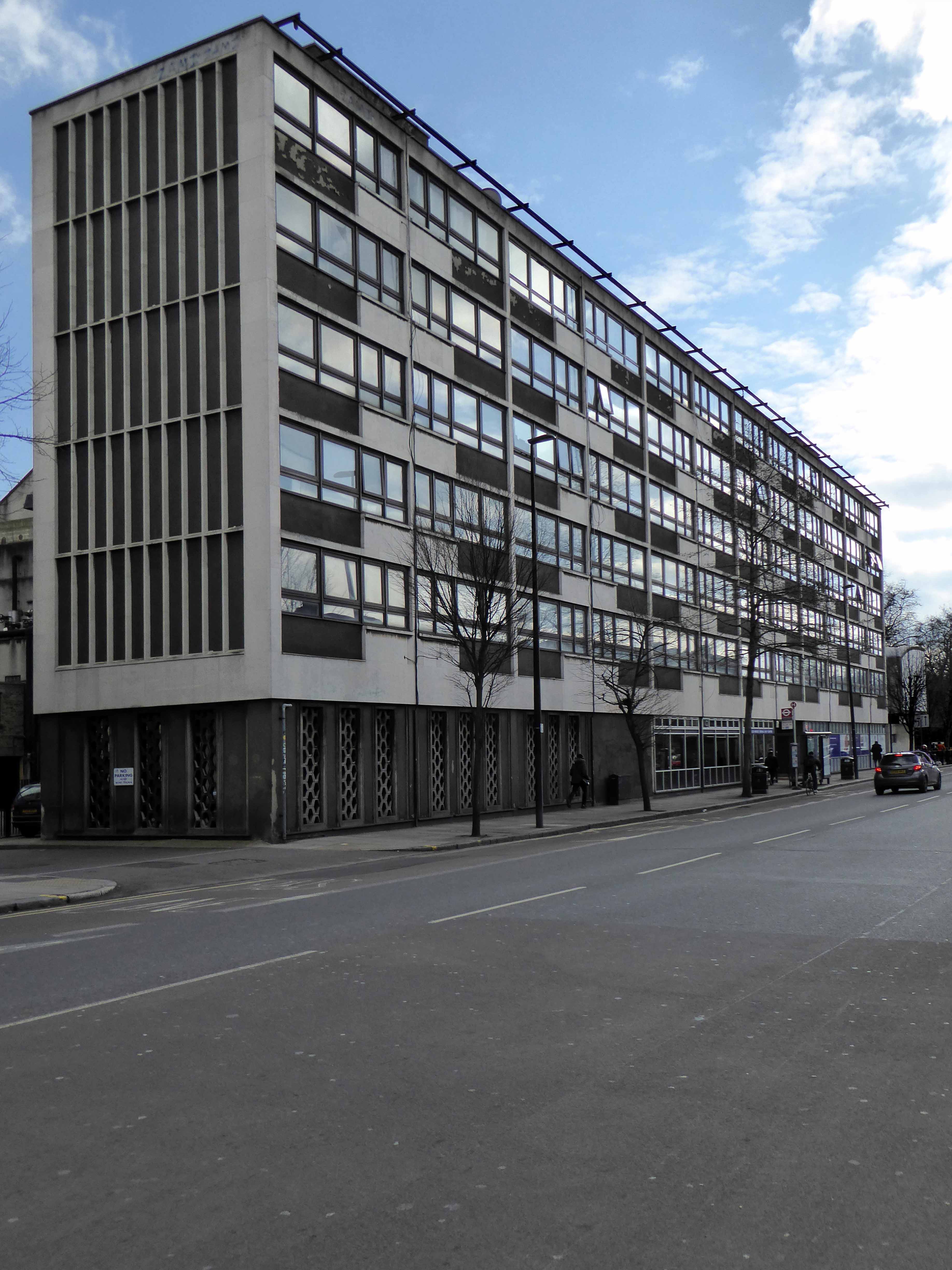
The six-storeyed Mayfield House opened with 54 flats in 1964 on the east side of Cambridge Heath Road, south of the town hall.
Exploring London in an accidental and often tangential manner, often offers many surprises. Ostensibly in search of the V&A Museum of Childhood I tumbled into Mayfield House. The whole area, as can be seen in the above link, is home to several estates and homes, designed by the eminent architects du jour, Mayfield receives no such attribution, possibly the work of the borough office.
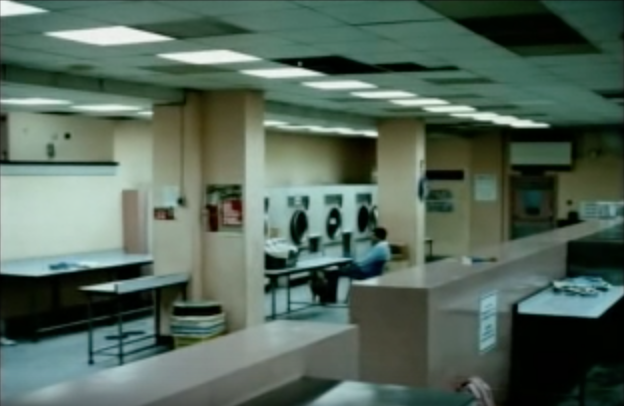
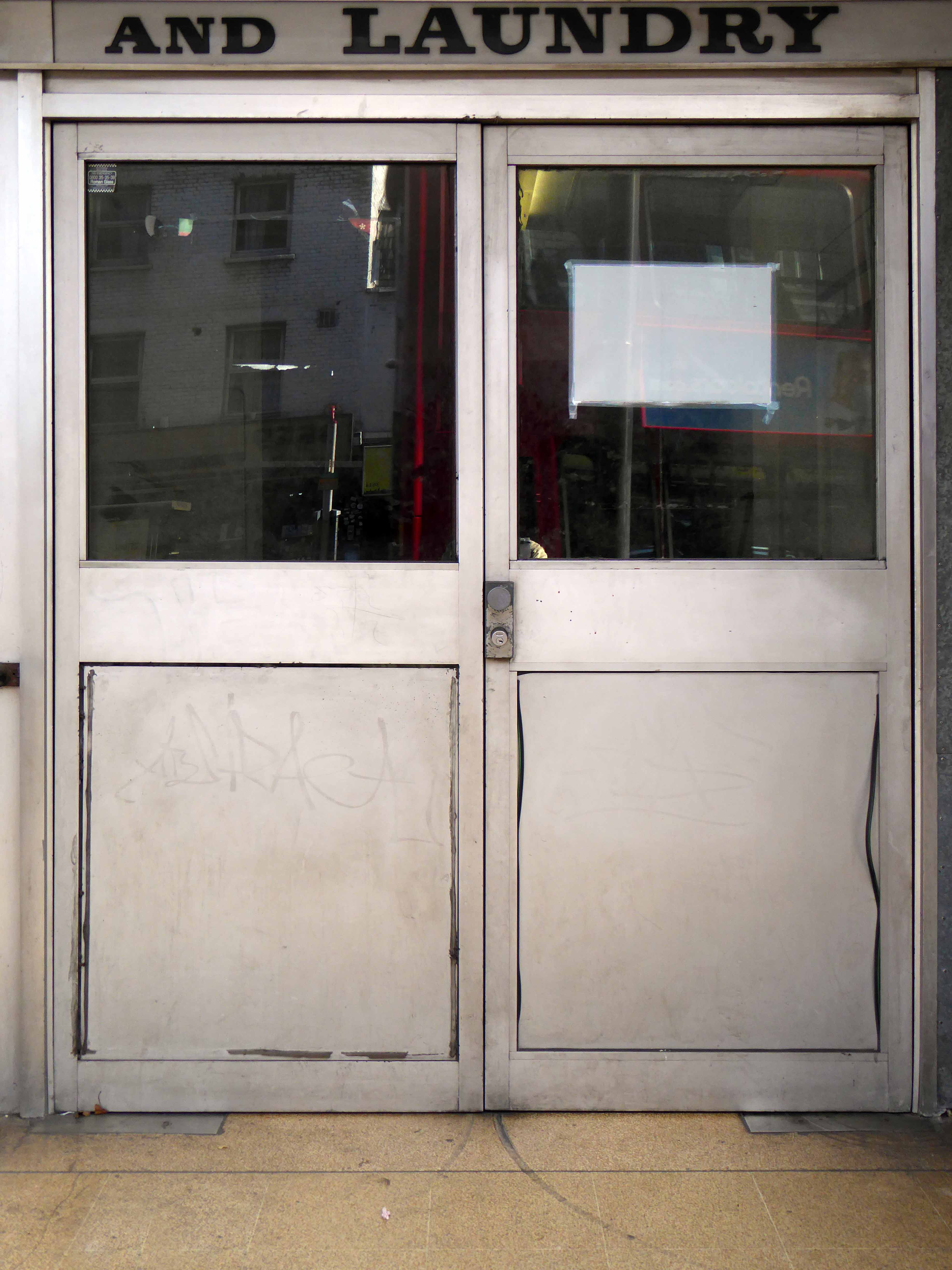
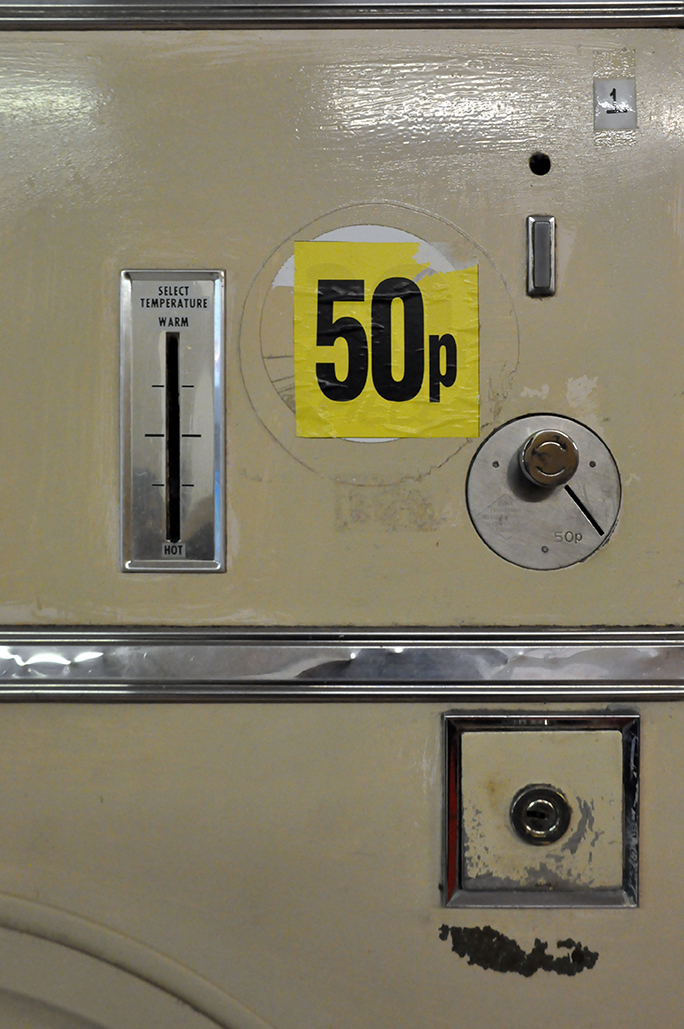
None the worse for that a building of some note, famously housing one of London’s first coin operated laundries, as seen in the promo video for The Streets – Dry your eyes.
The flats also contain a Somalian Centre, Bethnal Green having been home, for many years to Somali seamen – the subject of a recent photographic exhibition by Sarah Ainslie
“I first came to London by ship in March 1958. I stayed in Aldgate for a night and went to Newport where my cousin had a house. There are many Somalis there. From that day until I retired in 1990, I was in the Merchant Navy, and I brought my family over from Somaliland. In 1970, I moved back to London to Bethnal Green but my wife and daughters chose to stay in Newport.
In Somaliland, I owned over a hundred camels and sheep. Nobody keeps camels anymore, everyone sold them and moved to the city. They say, ‘It’s too much work.’ But keeping camels and sheep and living on a farm, it’s a good life because you eat every day. Everybody wants to do it again now.”
An intriguing structure with a dominant grid on the front elevation, sharp signage, extravagant exterior rear stairs, modular concrete screened, low-level car parking and a recently enclosed glassed gallery.
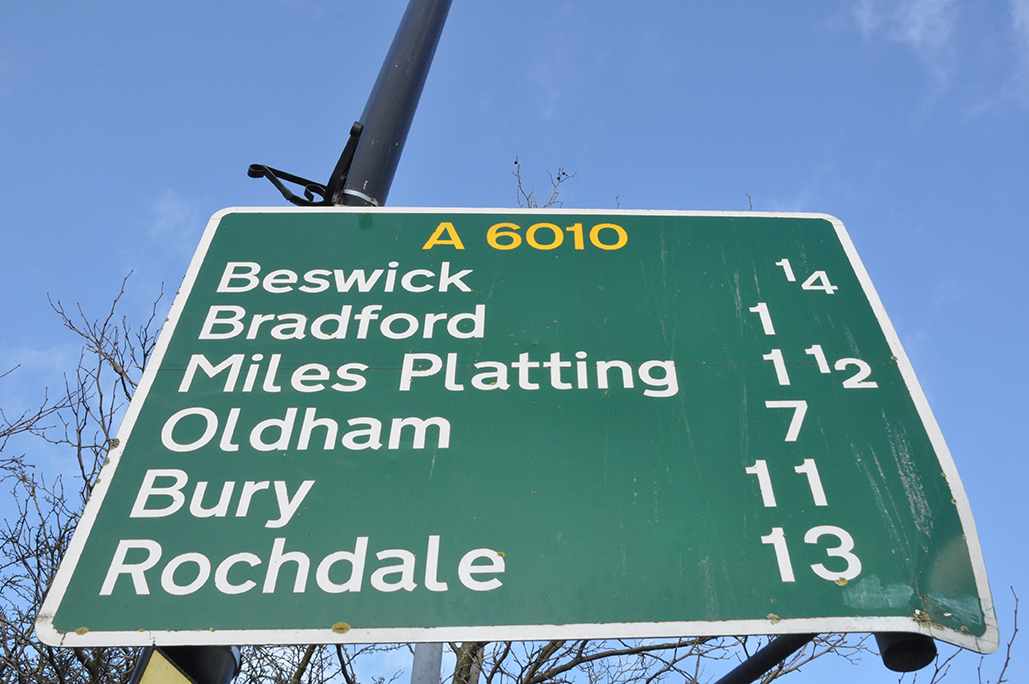
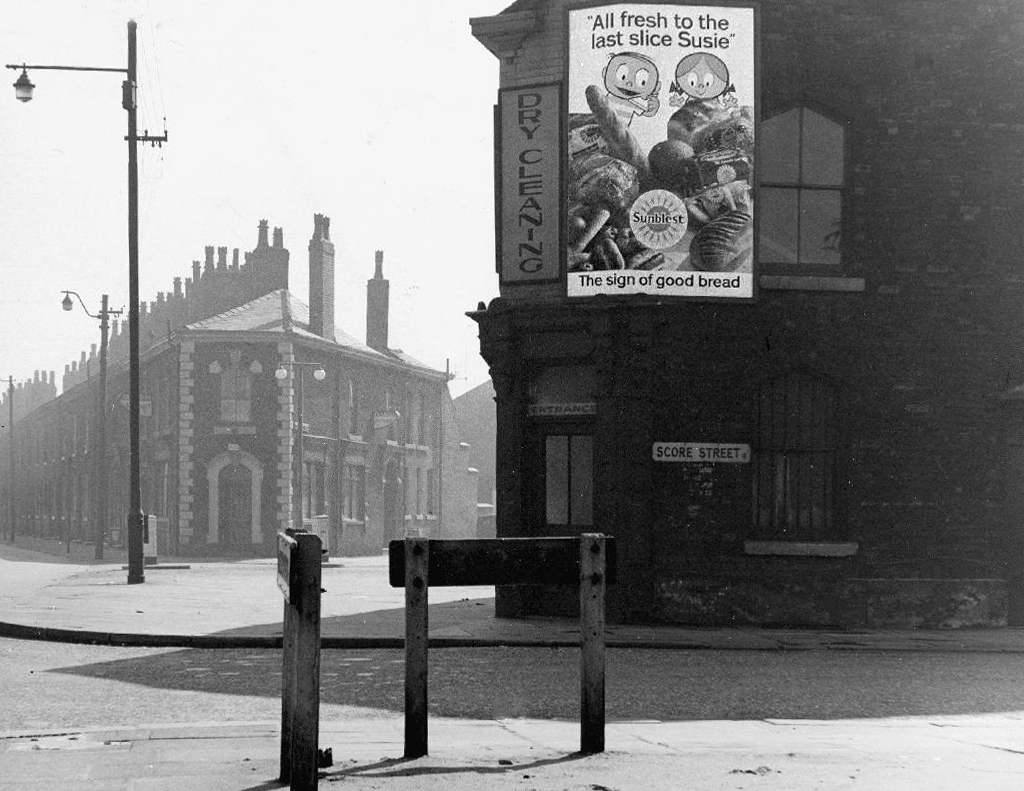
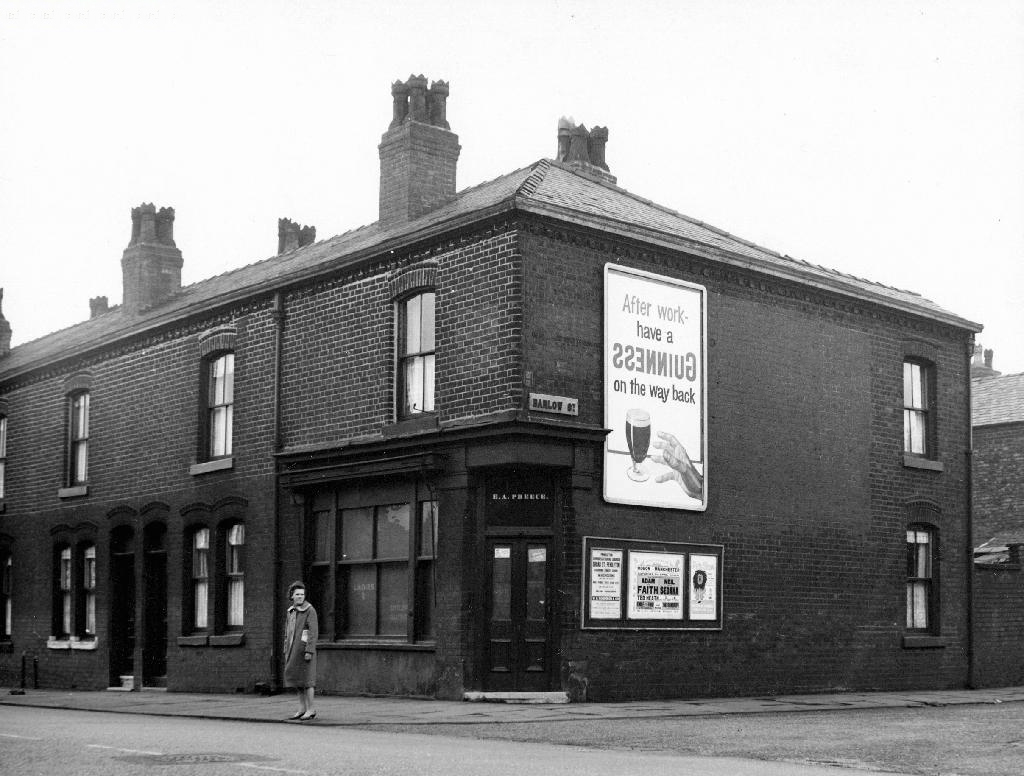
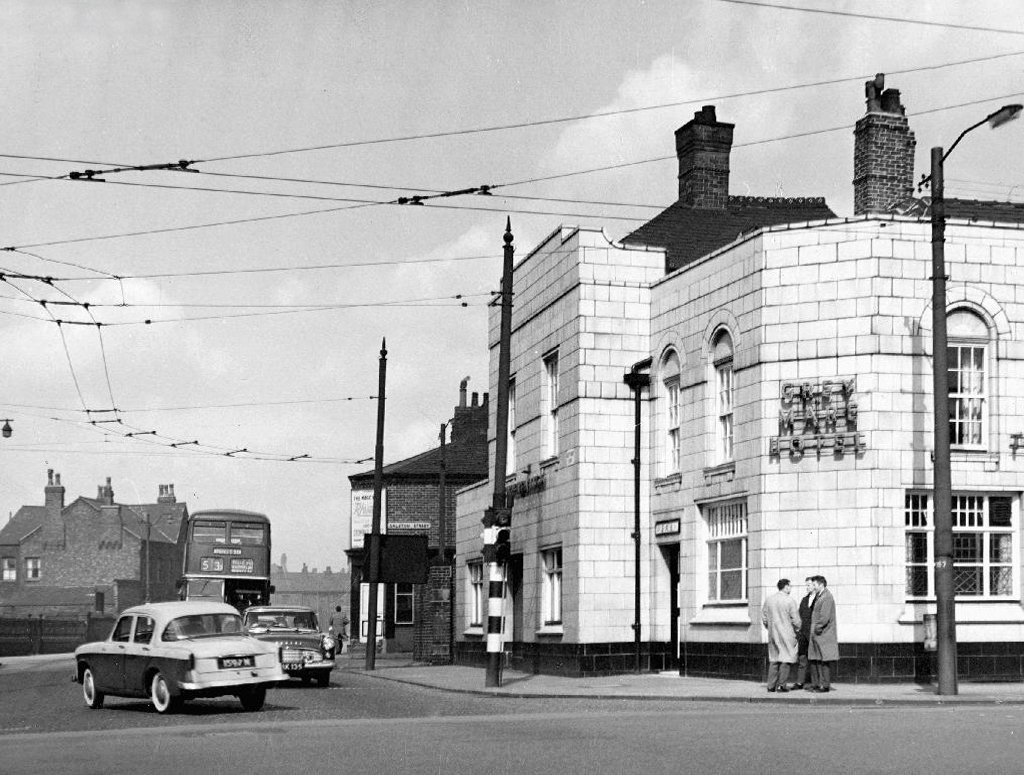
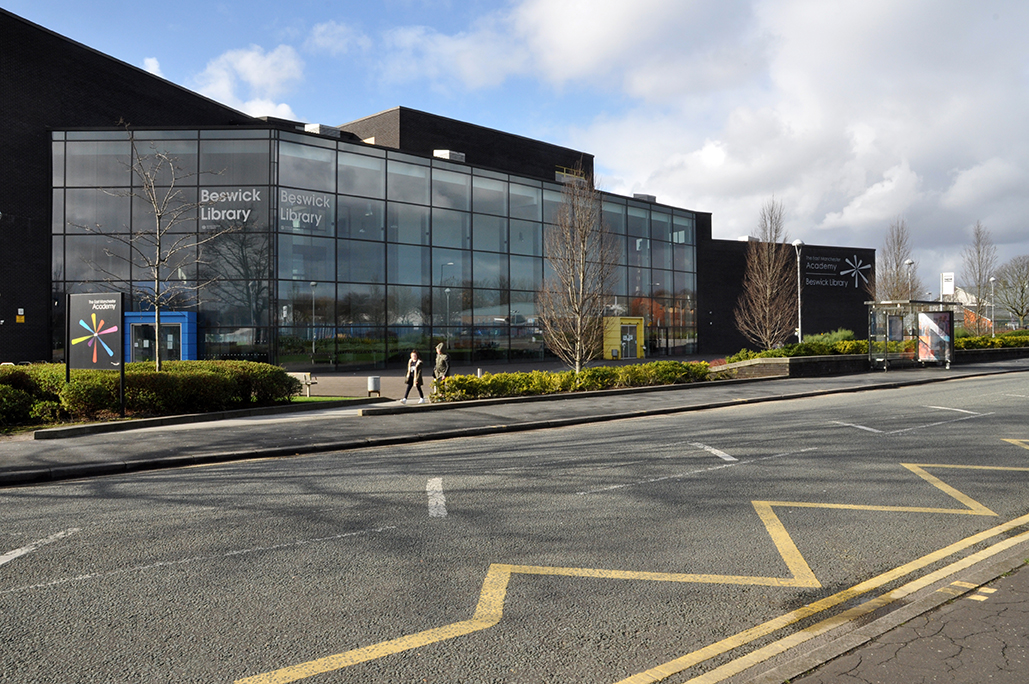
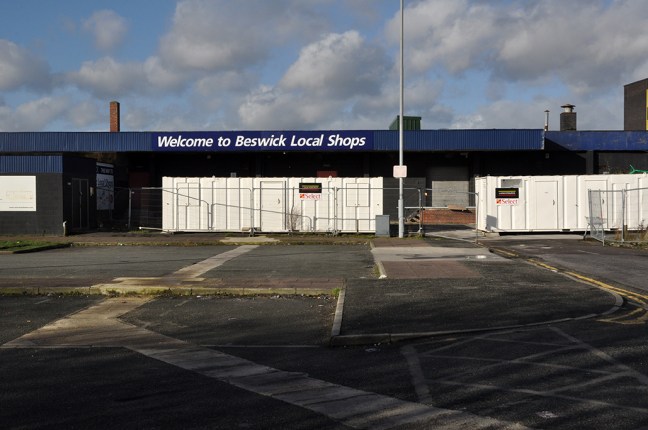
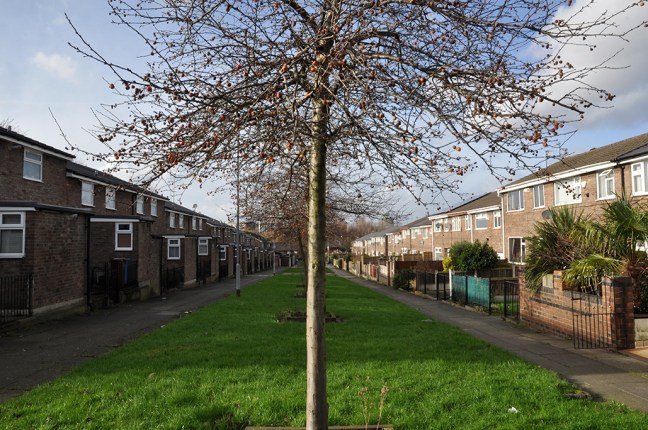
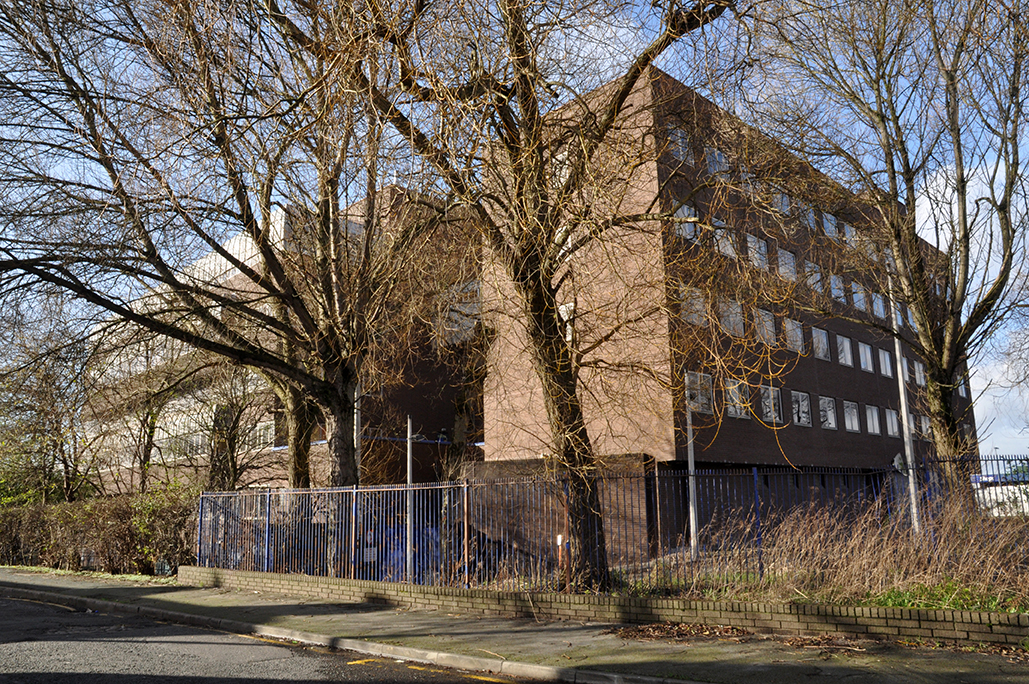
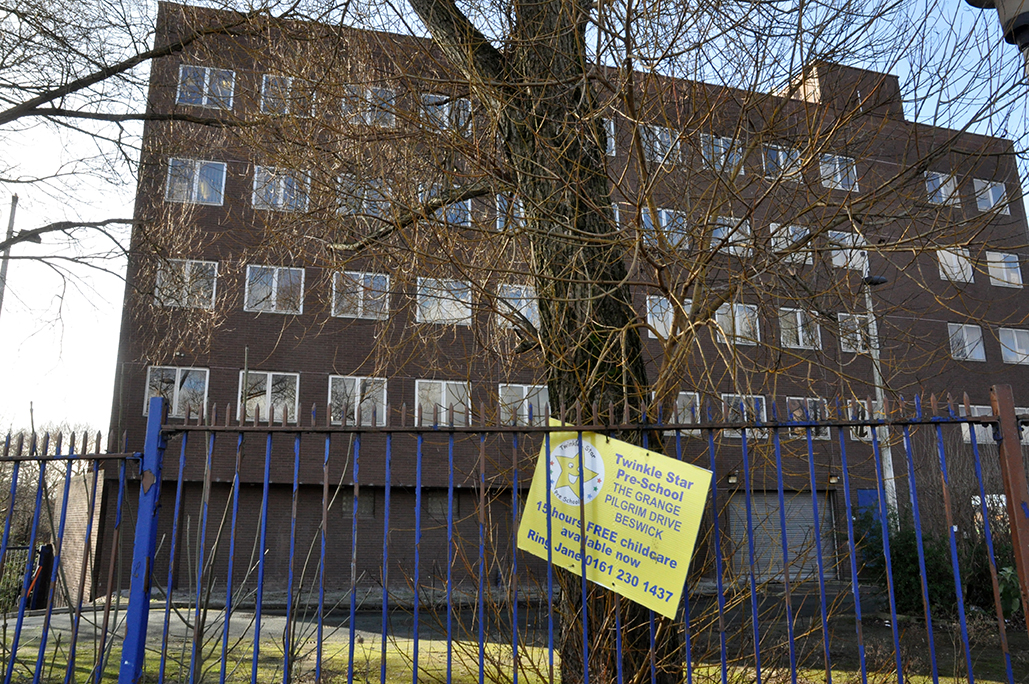
You’re never more than a thousand yards from a main road, six feet from a rat, or a quarter of a mile from Beswick, one of many Beswicks.
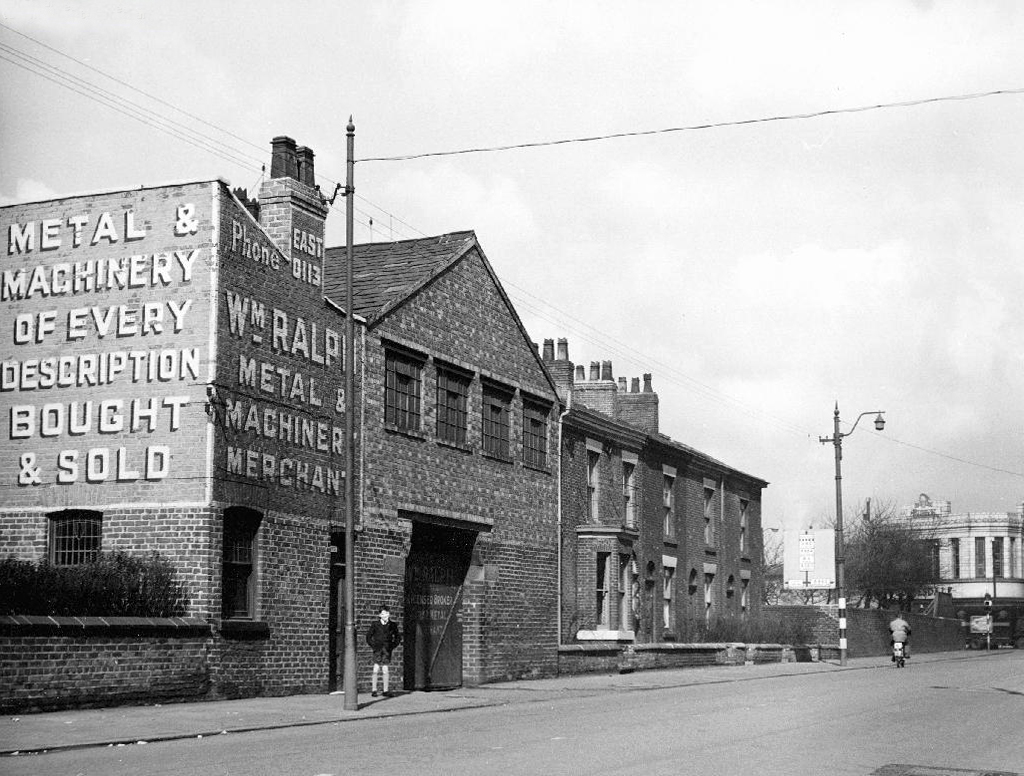
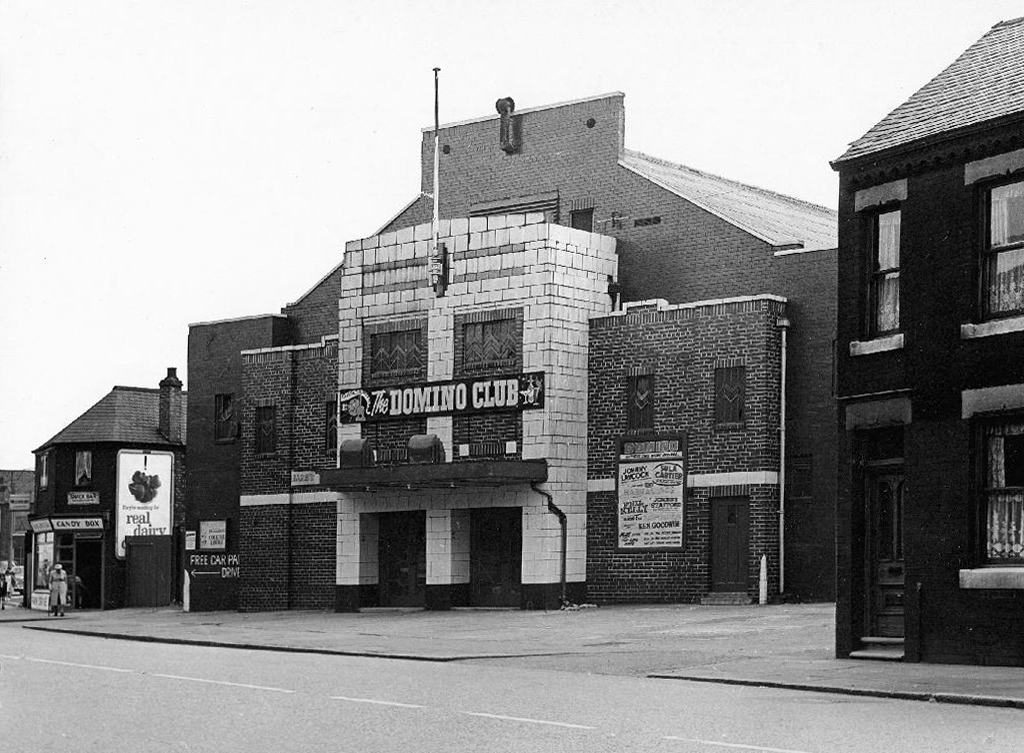
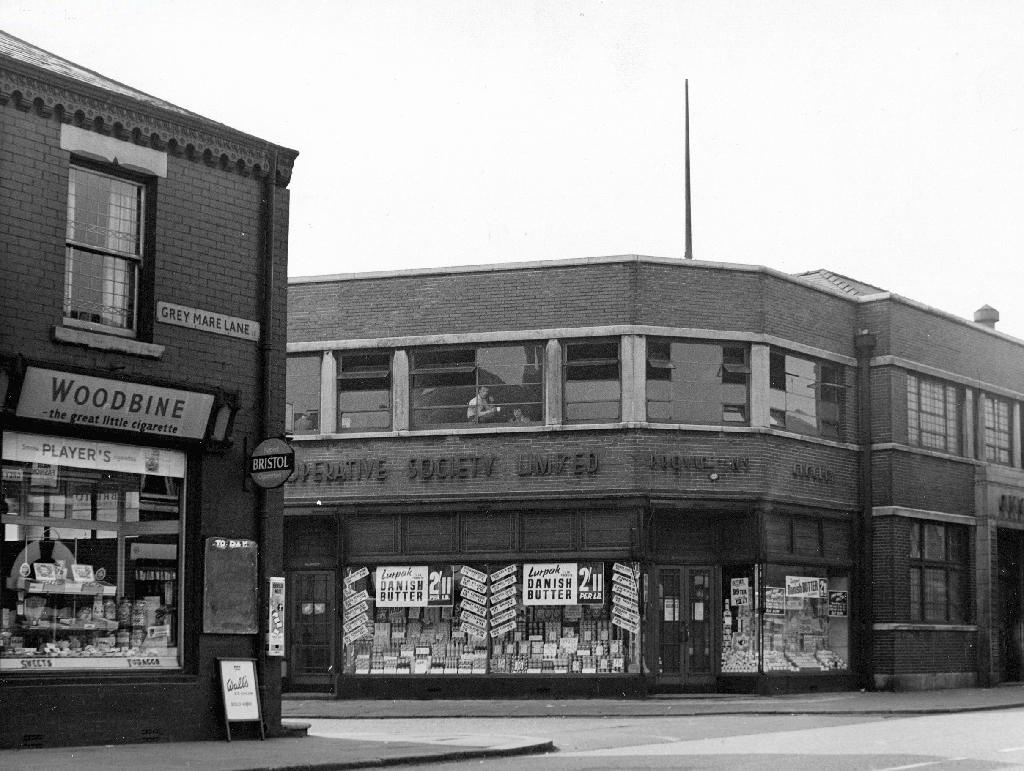
Beswick was once a bustling mixed industrial and residential area of east Manchester, alive with back to back terraced housing, pubs, clubs, shops and people.
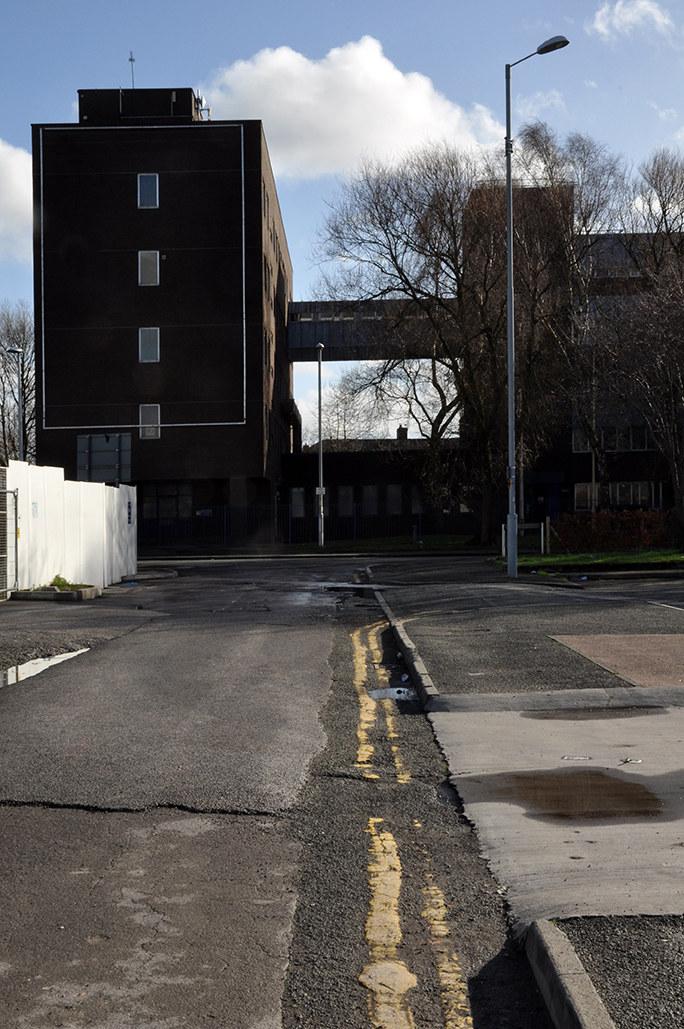
Sixties slum clearance swept away most of its past when Fort Beswick was built.
Remember the Alamo?
Forget Fort Beswick.
It’s gone – wind the Bobbin up.
Turn it into a Library
Wind the library up
Build another
Call the Police!
But the Police Station has closed now, and moved further on.
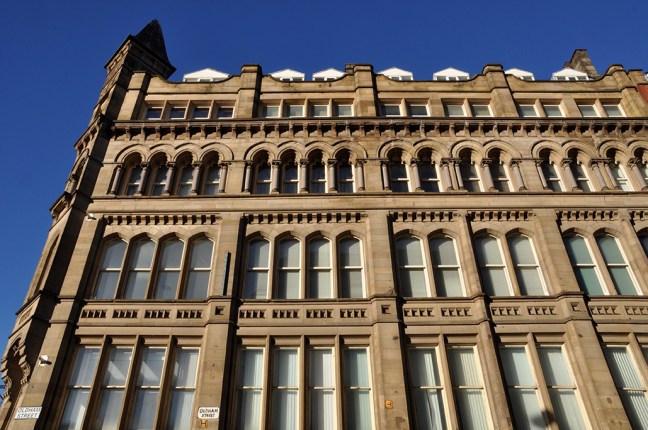
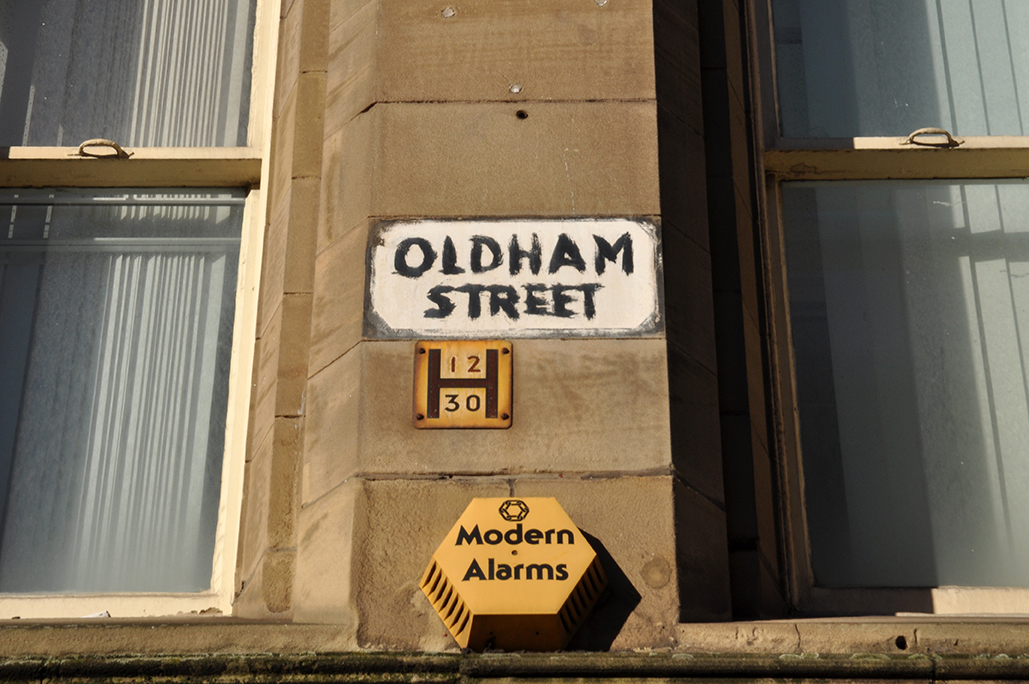
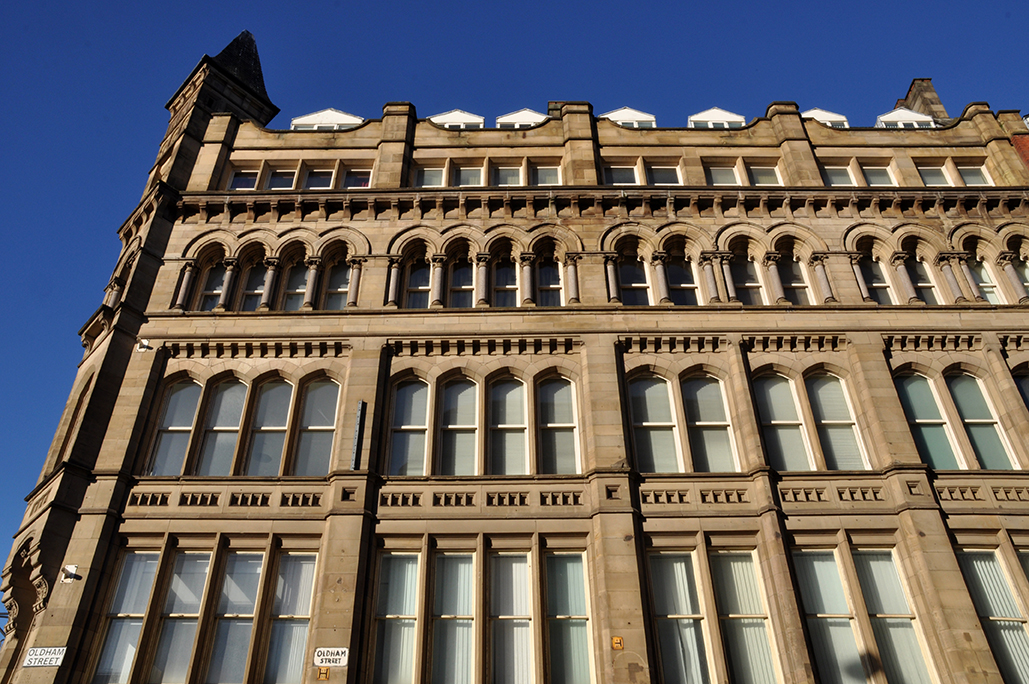
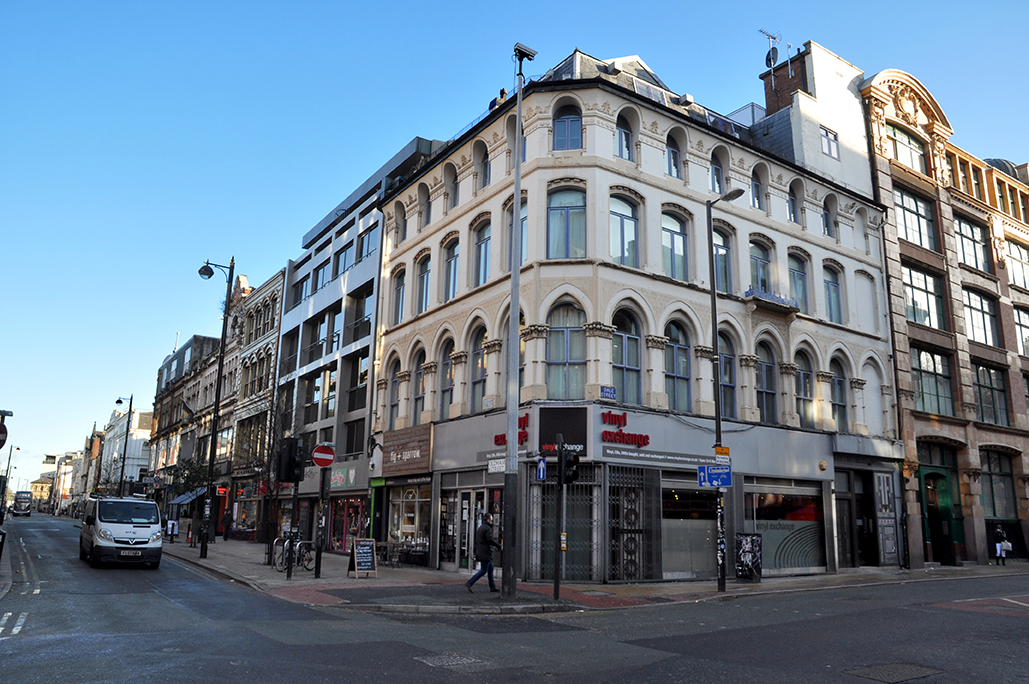
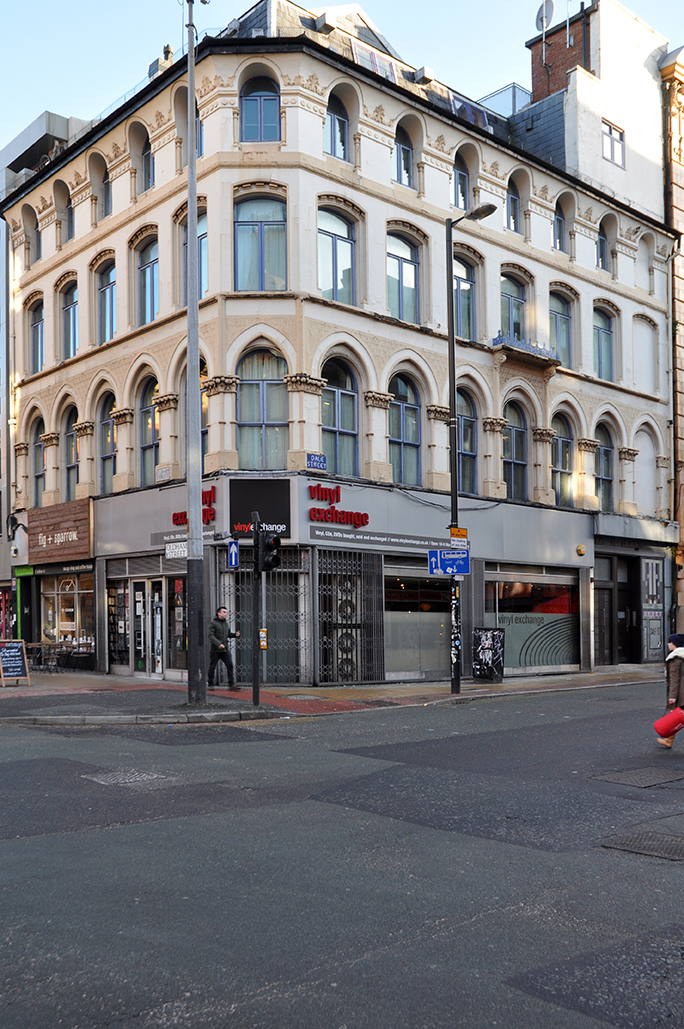
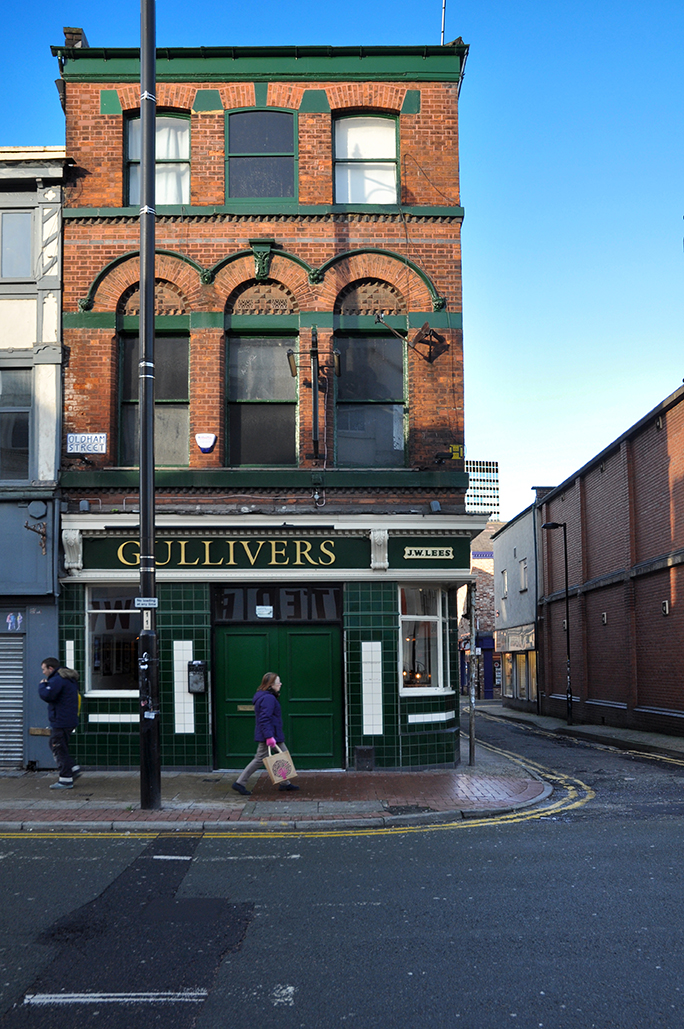
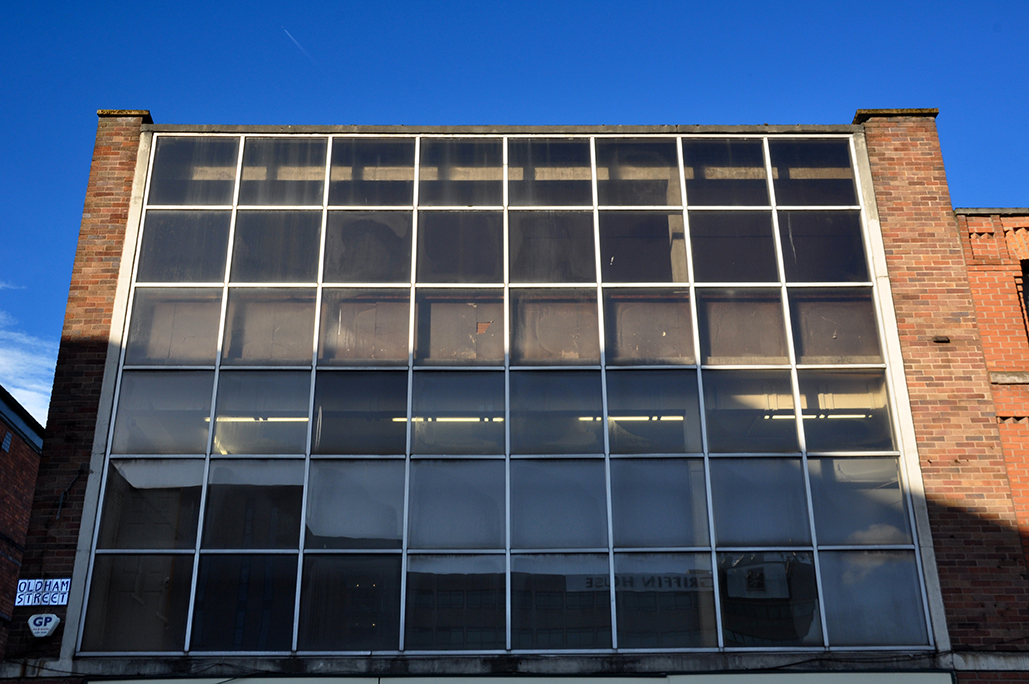
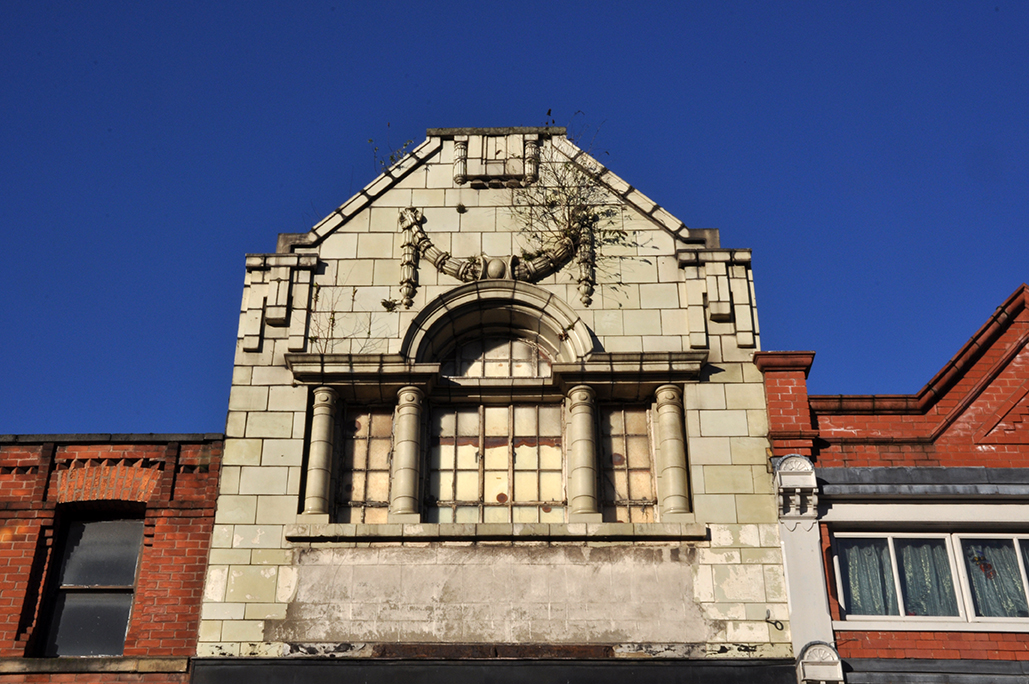
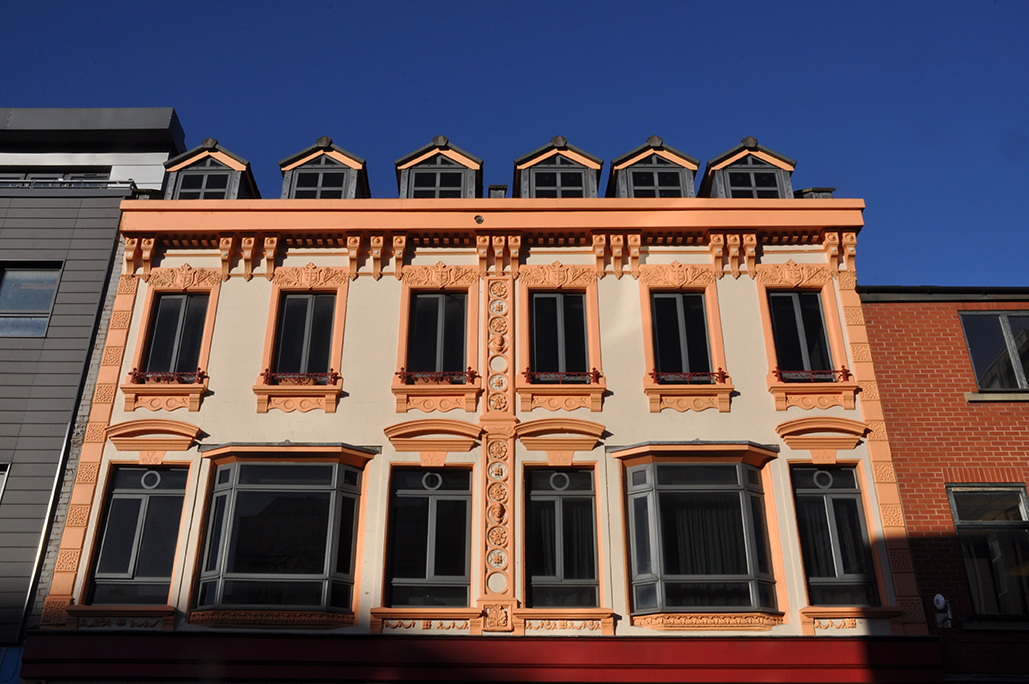
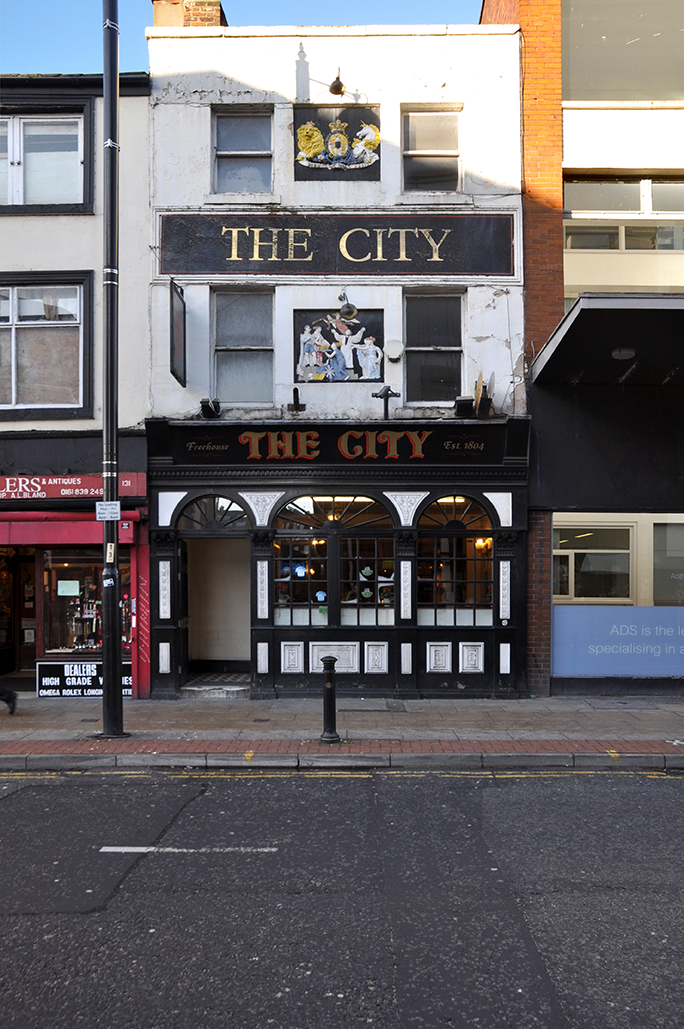
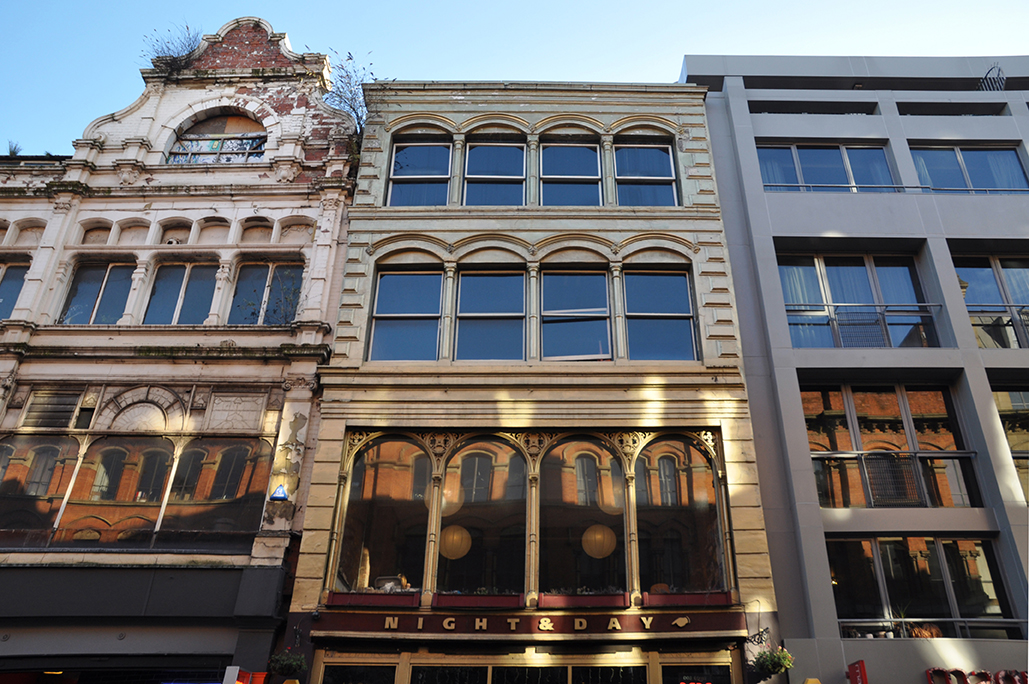
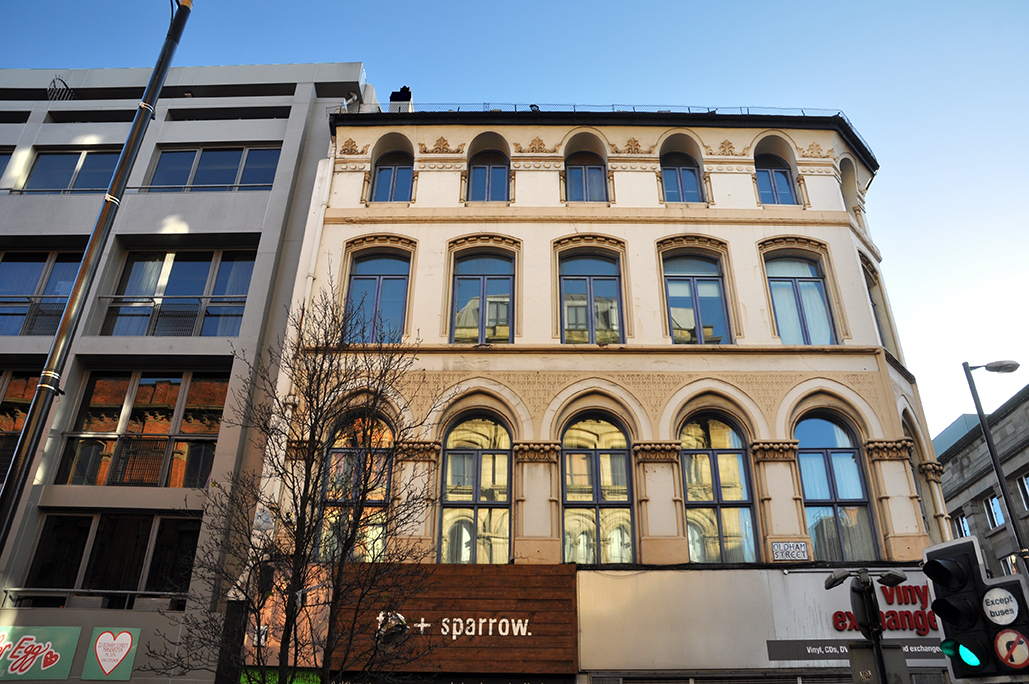
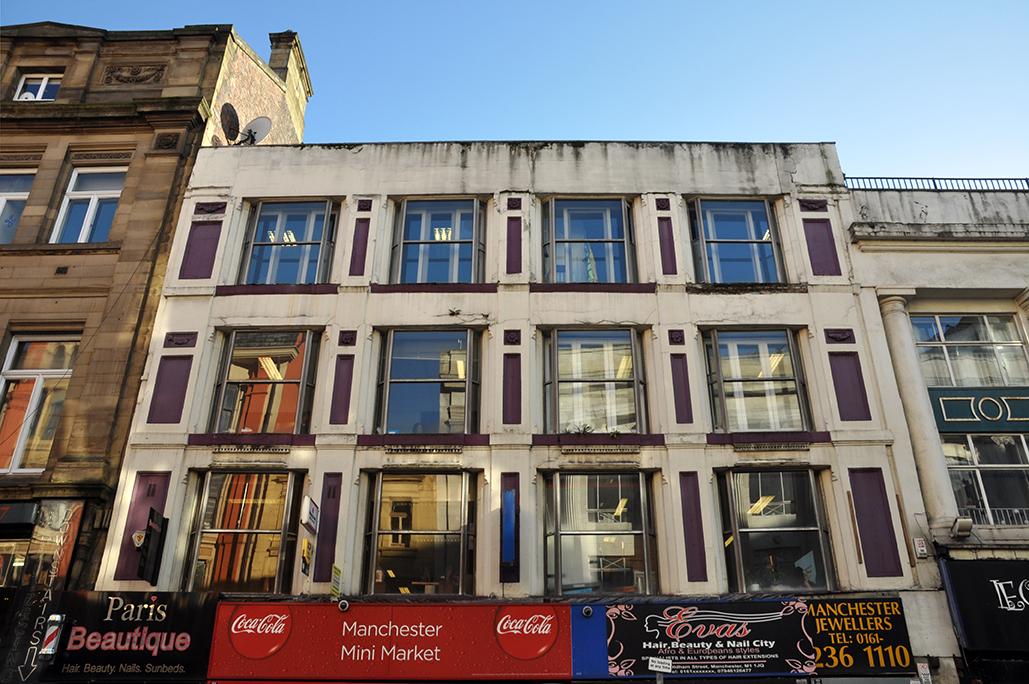
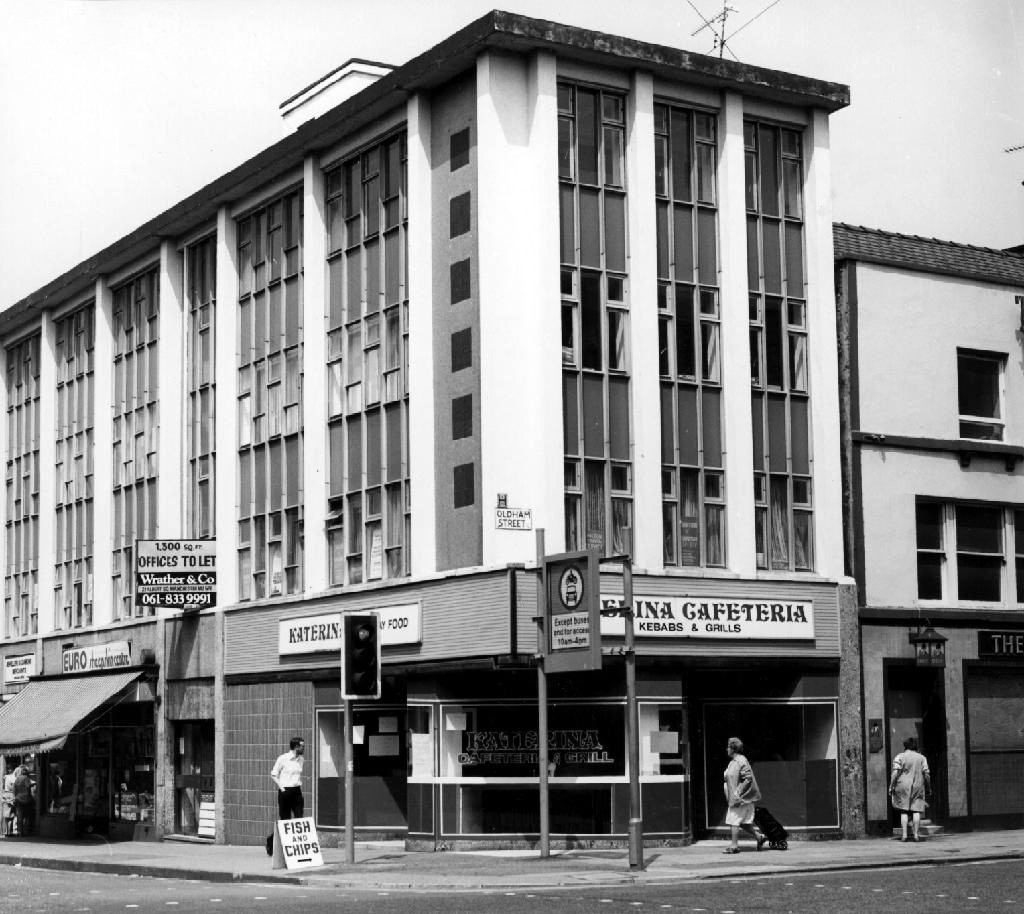
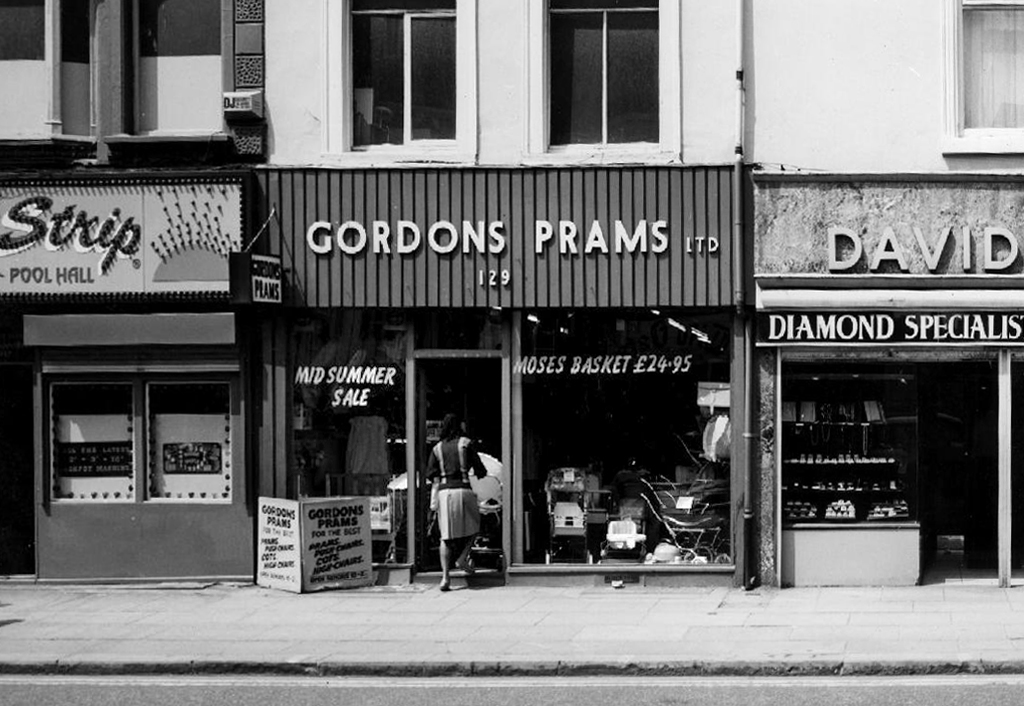
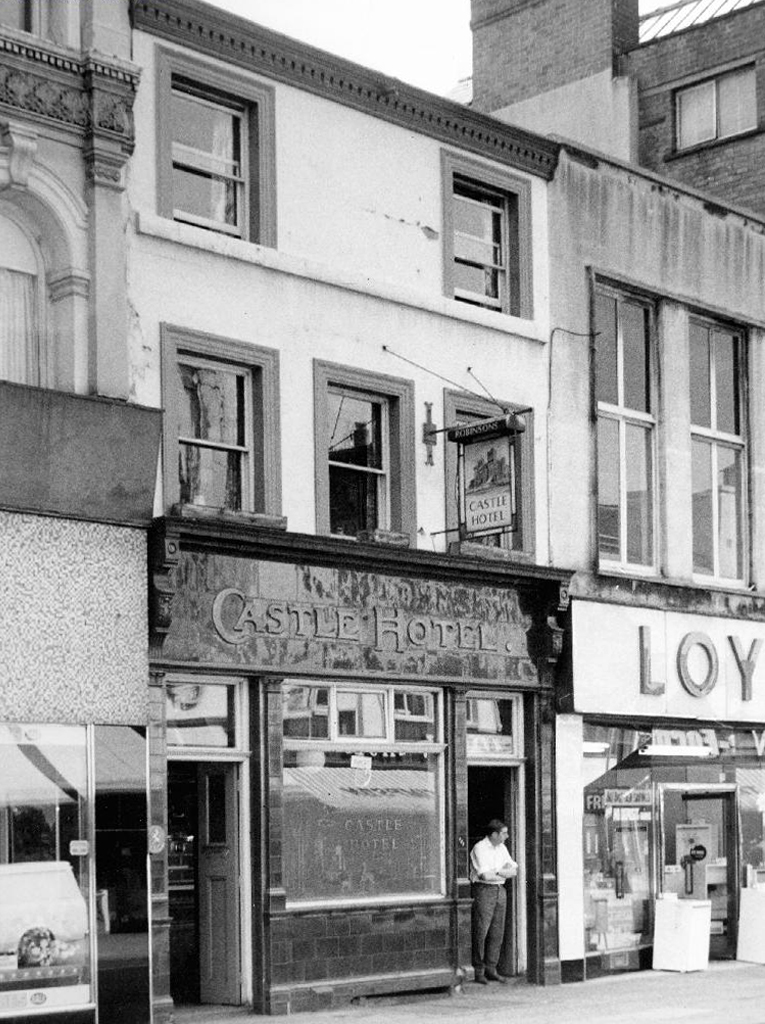
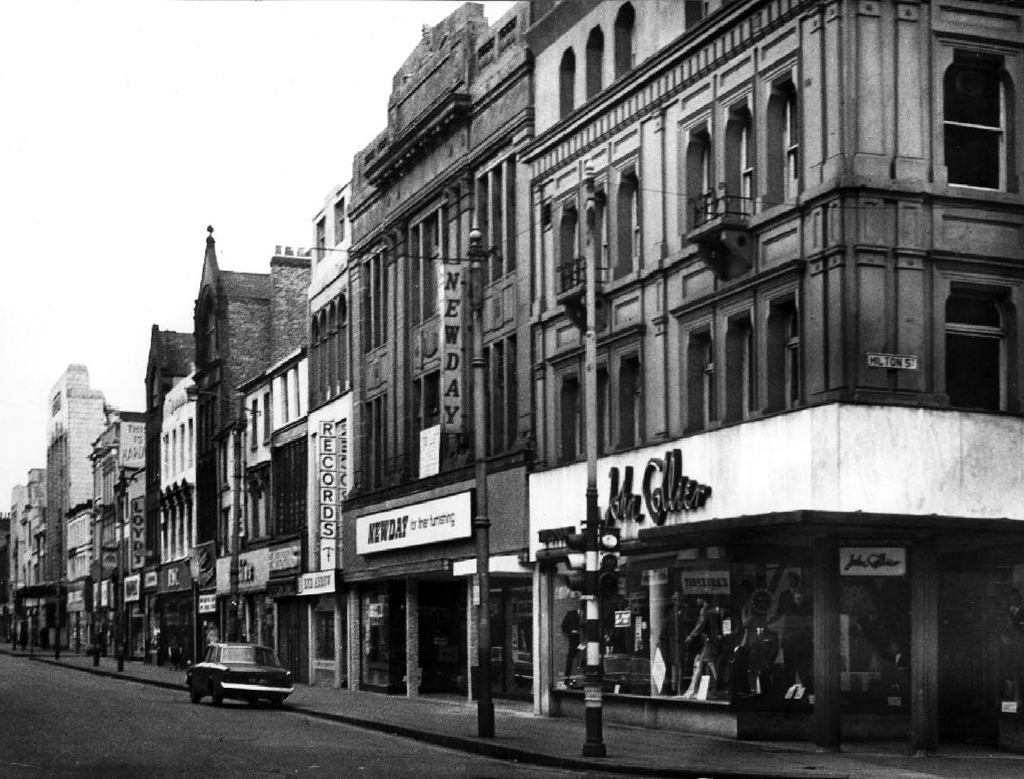
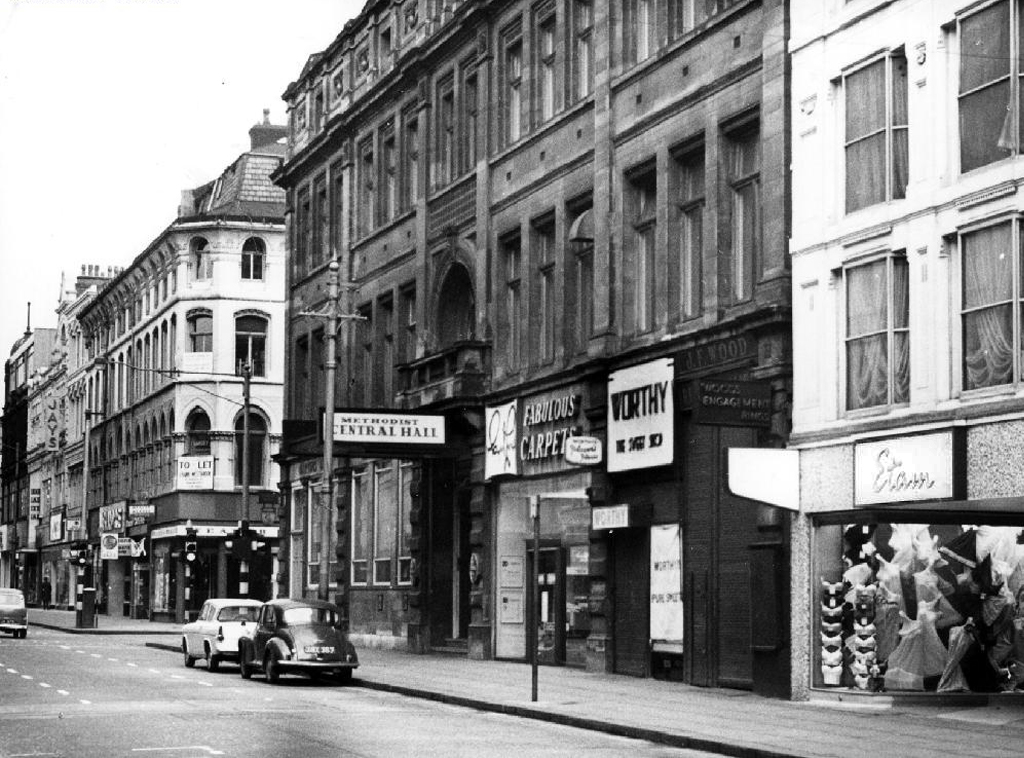
Following my previous post of archival images of Oldham Street, I took a walk along its length a week ago, to record what remained of the post war past.
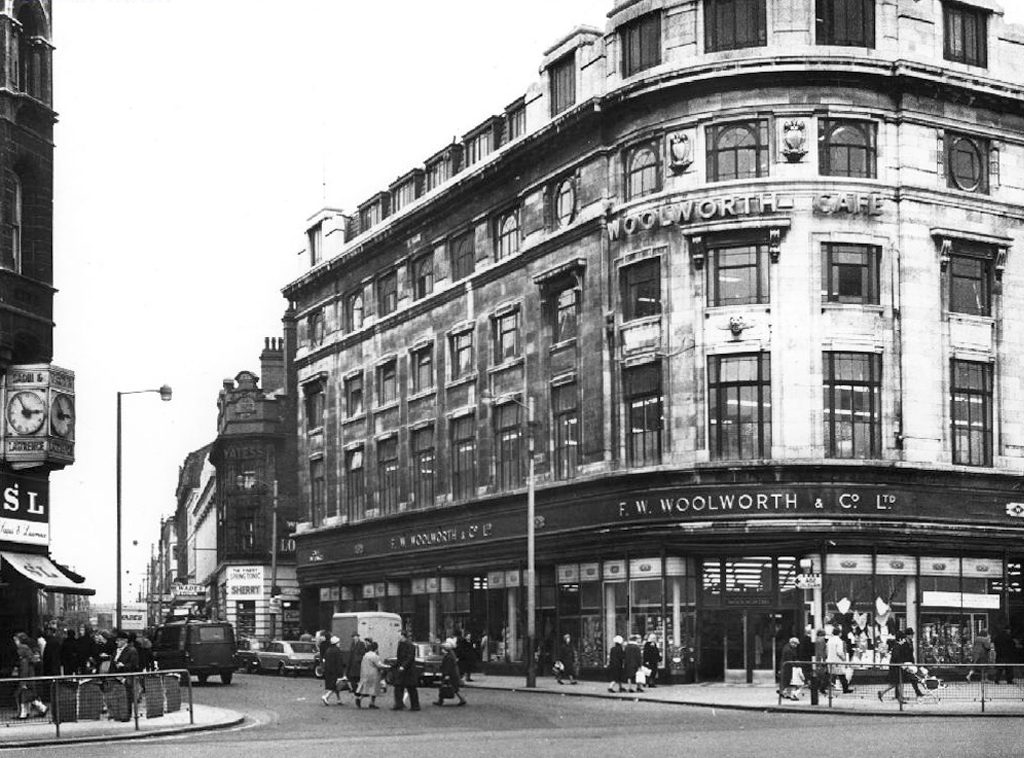
Gone again the blackened façades, exuberant and differentiated signage.
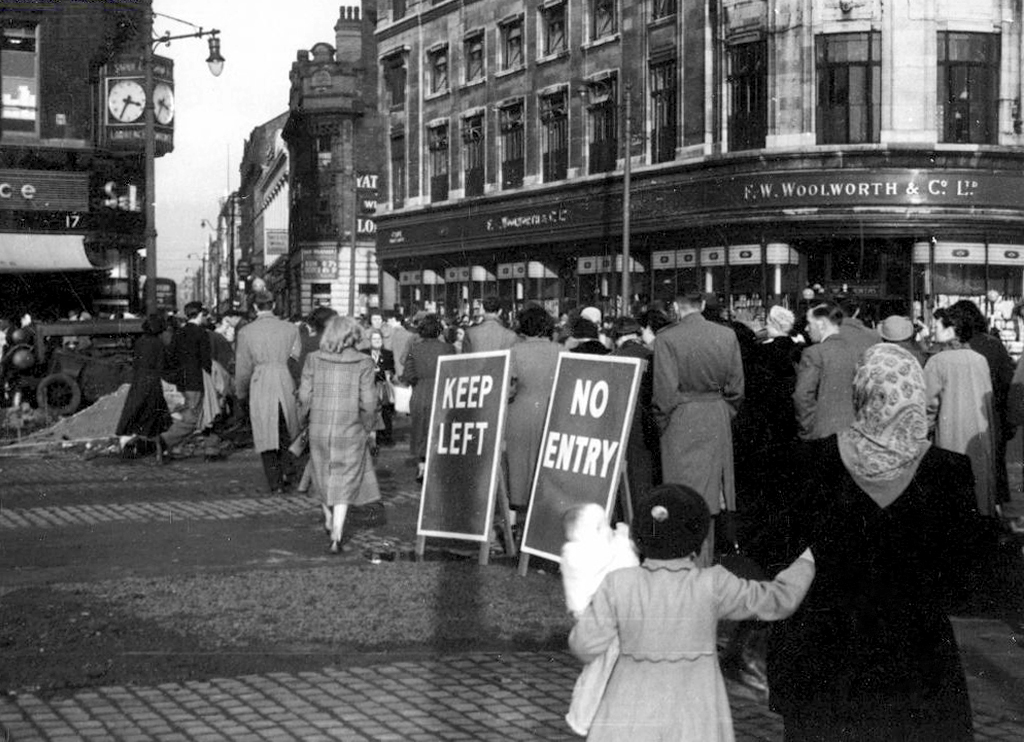
Woolworth’s burnt out long ago, never to return, exit also C&A, don’t forget your coat and hat.
Affleck’s – same name different place.
Yates’s three down none to go, the last all-in is all out.
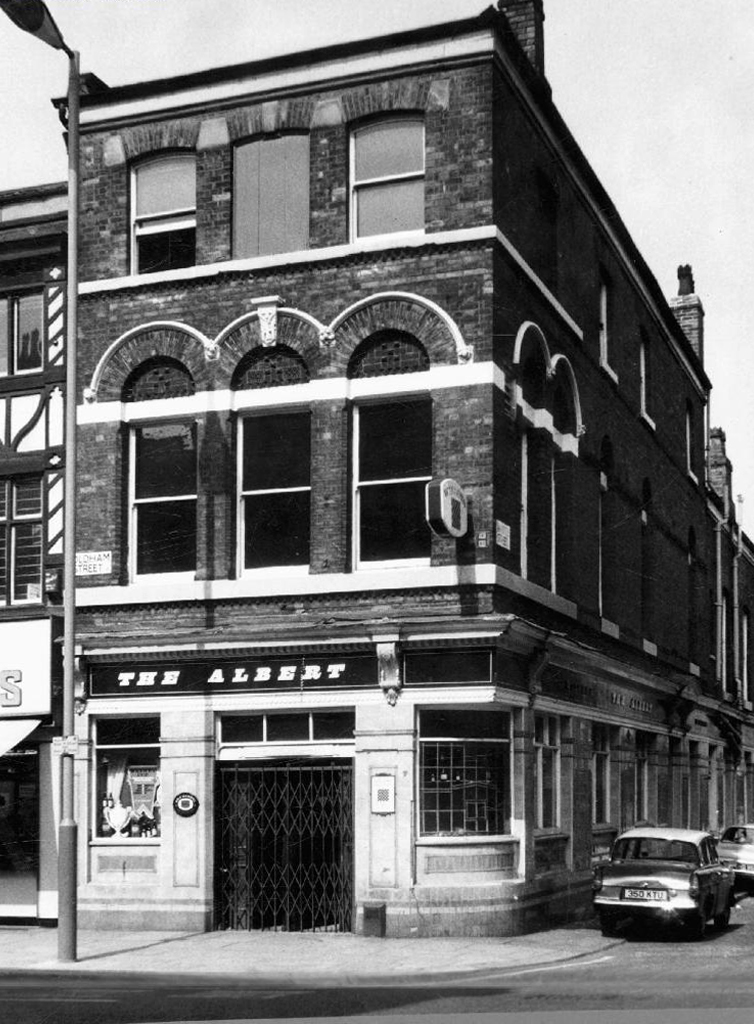
Three pubs prevail, some serving craft ale to the not so crafty.
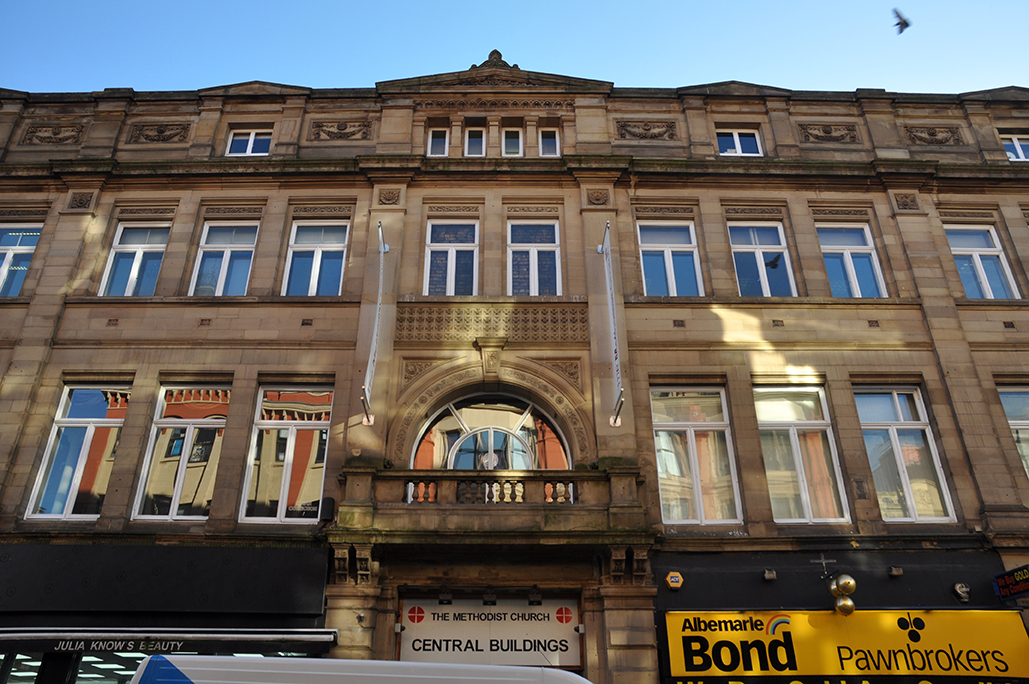
Methodist Main Hall is mainly well-used and well, loved.
In low Winter light the upper floors dance in shadow and sun-glow, against a brighter than bright blue sky.
In the early 18th century, Oldham Street was apparently:
“An ill-kept muddy lane, held in place on one of its sides by wild hedgerows”.
In 1772, a privately owned track which is now known as Oldham Street was given to the public. The road took its name from Adam Oldham rather than from the place name. He was an acquaintance of John Wesley, the founder of Methodism, which could account for the Oldham street location of the Methodist Chapel, opened by Wesley in 1781. Central Hall replaced the Chapel in 1885.
The area around Oldham Street became more affluent, with warehouses and shops, many of whose merchants lived within their shop premises. This is described by Isabella Varley, Mrs. Linnaeus Banks, a resident of Oldham Street, in her book The Manchester Man.
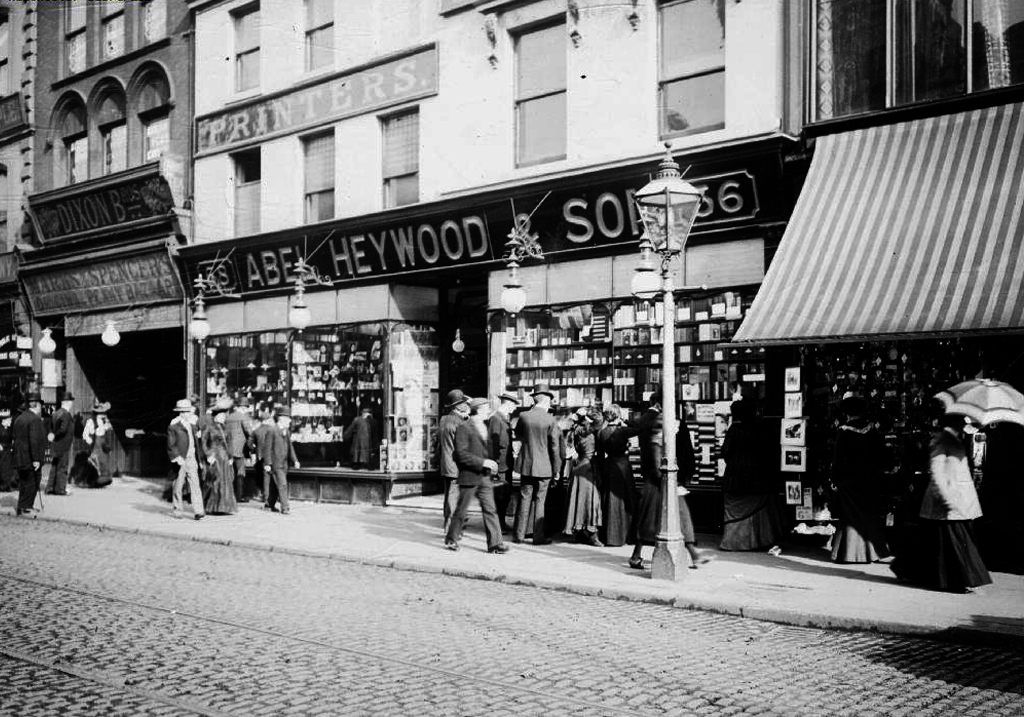
One Oldham Street shopowner mentioned by a number of writers is Abel Heywood, who spearheaded the mass distribution of books, supplying the whole country not only with penny novels, but also with educational books and political pamphlets. Heywood went on to become Mayor of Manchester.
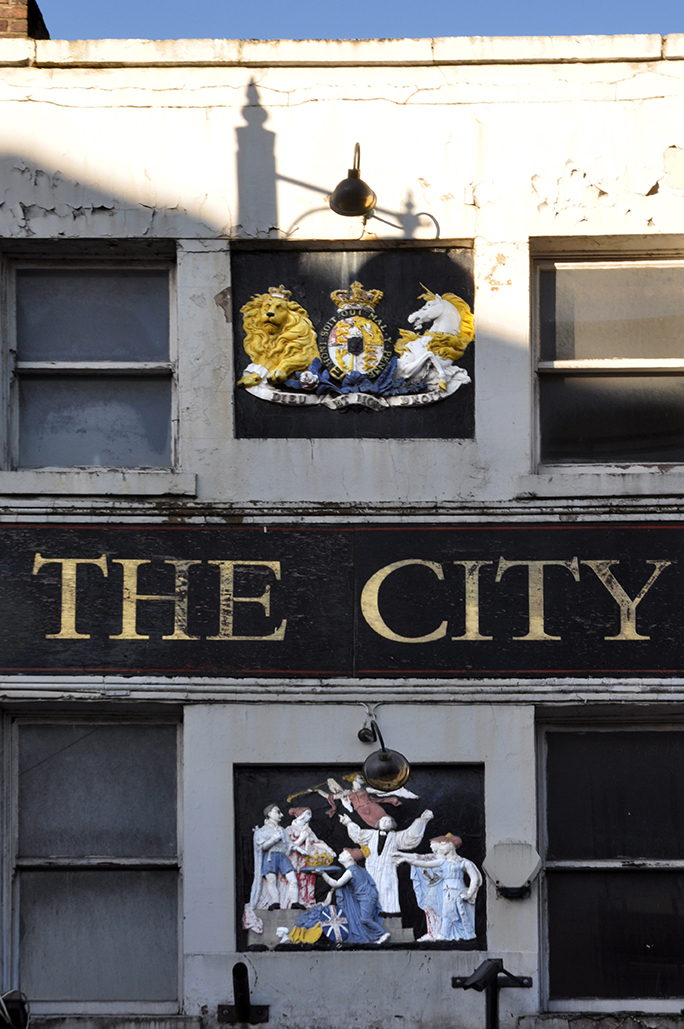
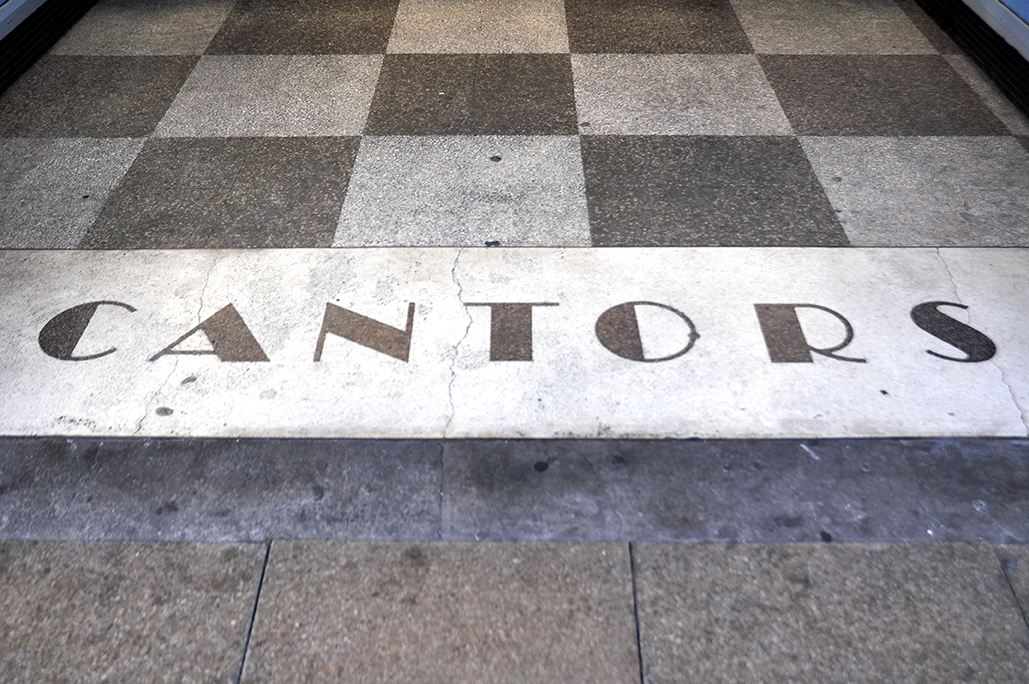
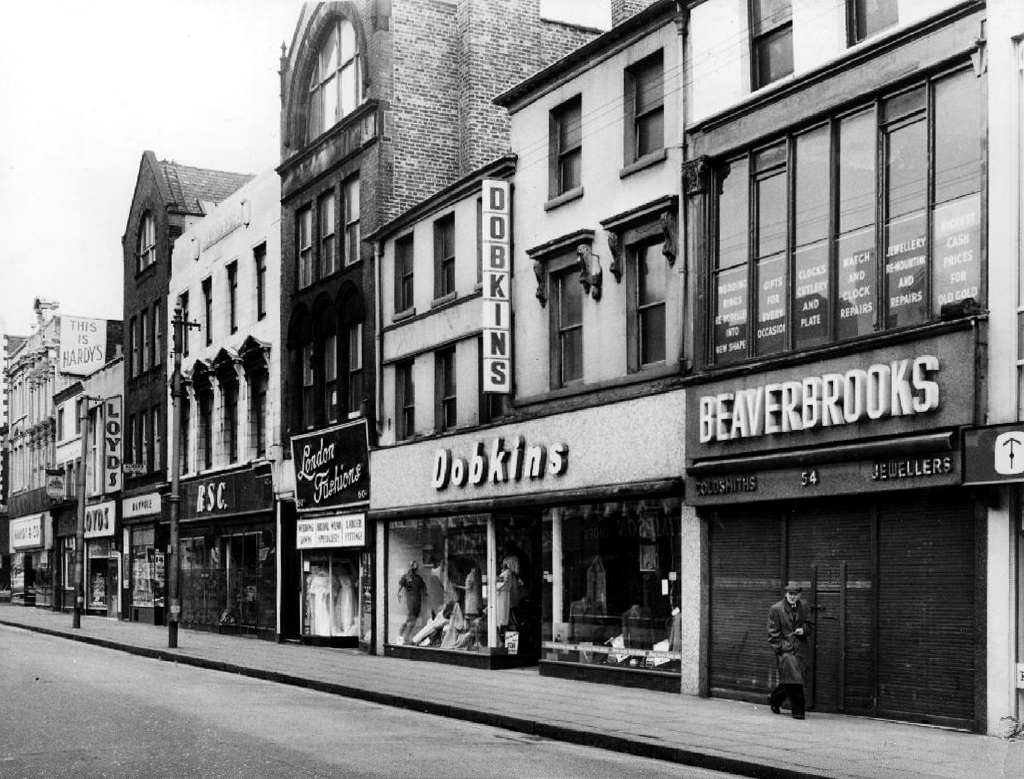
The general well to do, mix of hustle and bustle, pubs, warehousing, grand stores, smaller specialist shops and services continued into the 1970’s. Woolworths, C&A, Affleck and Browns, Cantors, Dobbins attracted a steady flow of happy shoppers, I loved the mongrel nature of the mixed use architecture.
The focus if the city centre then slipped away to the newly built Arndale and pedestrianised Market Street.
Oldham Street awaited a new sense of place and purpose.
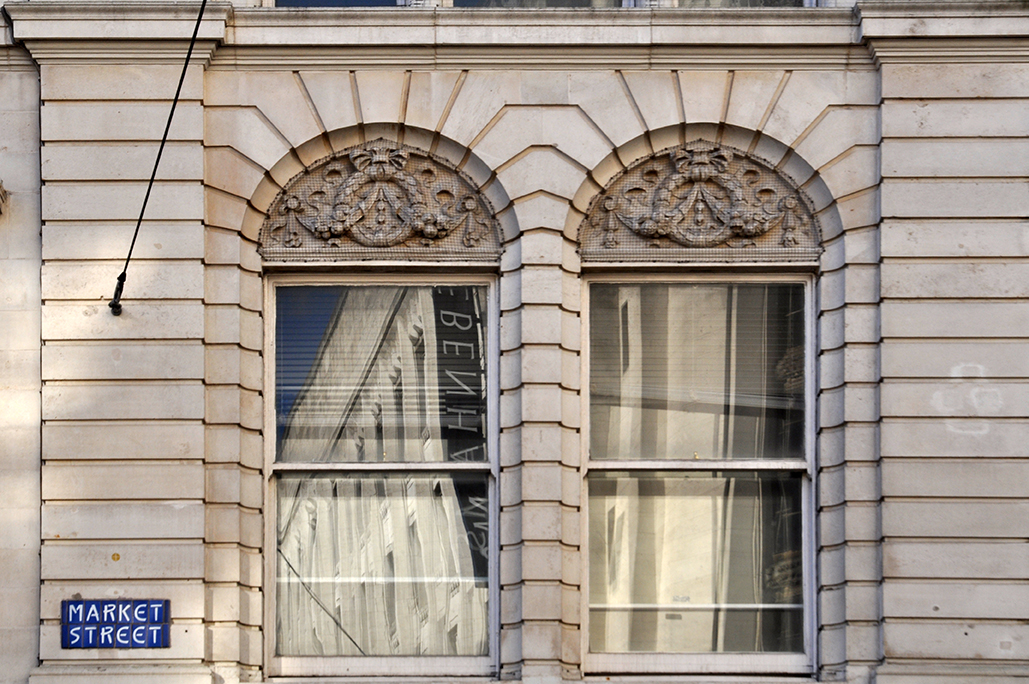
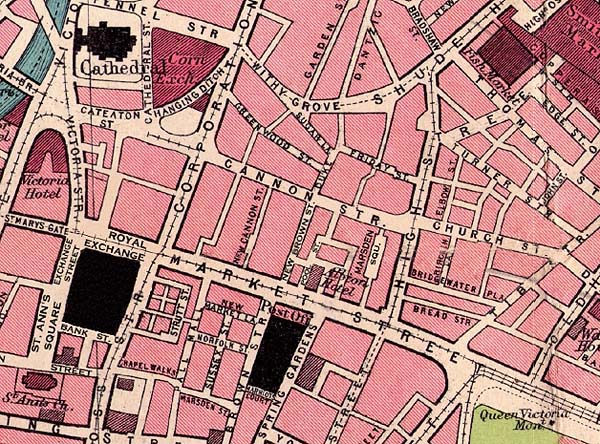
Following my previous post on Market Street, using archive material from the 60s and 70s, I was prompted to record the current state of the street.
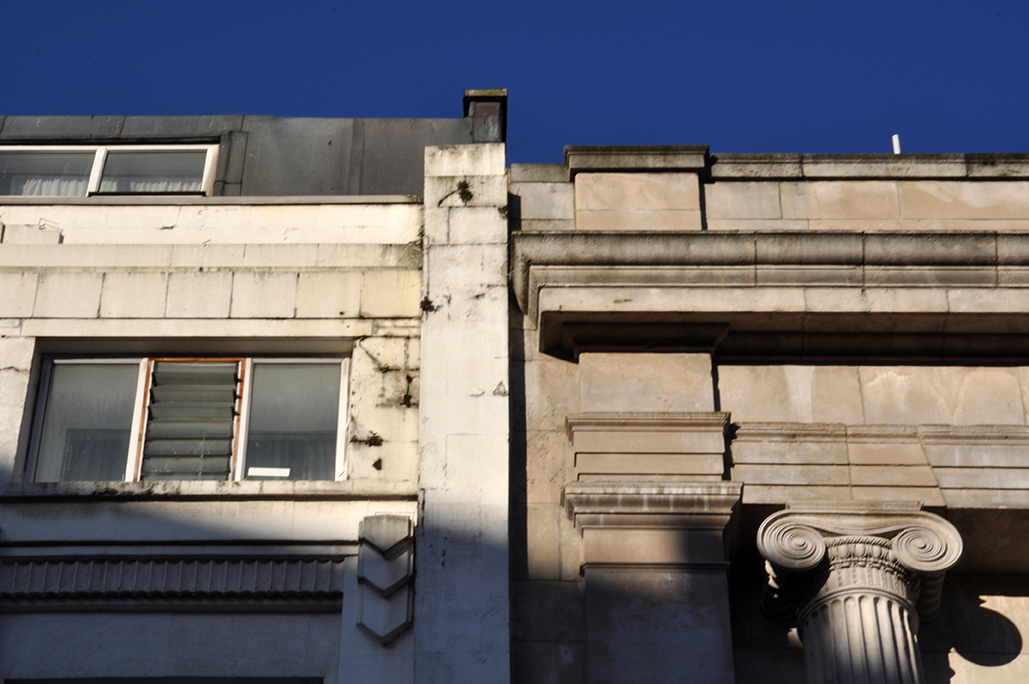
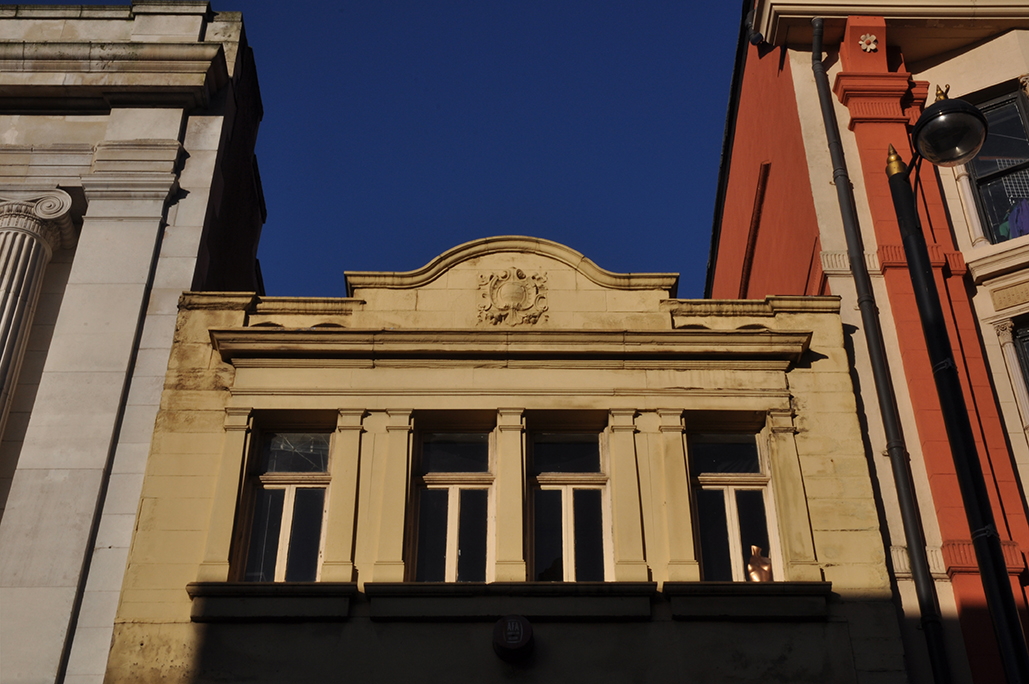
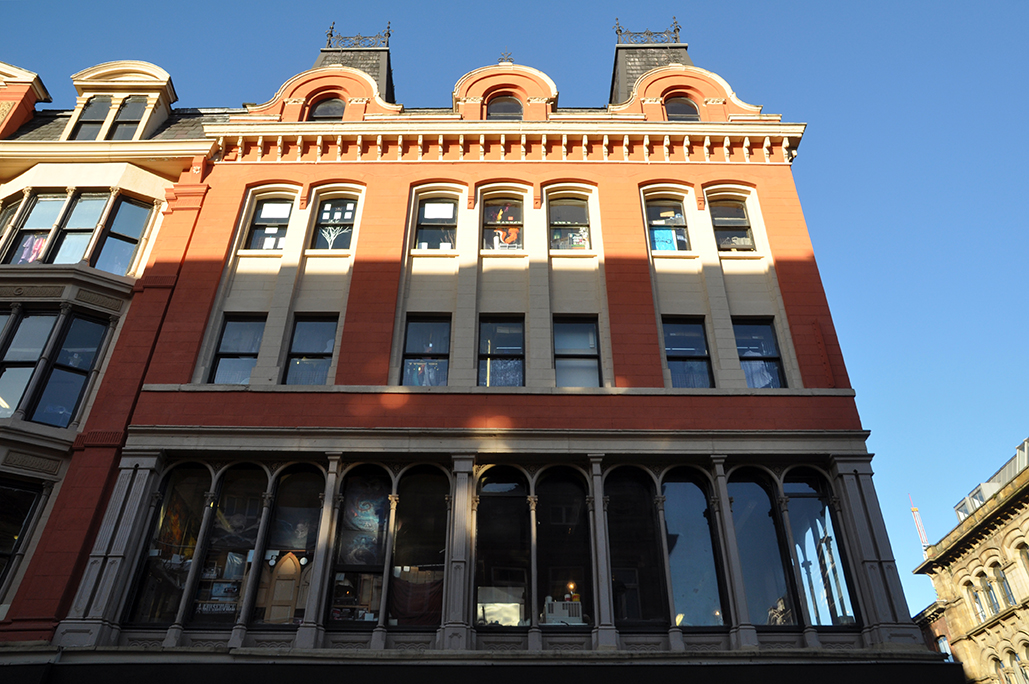
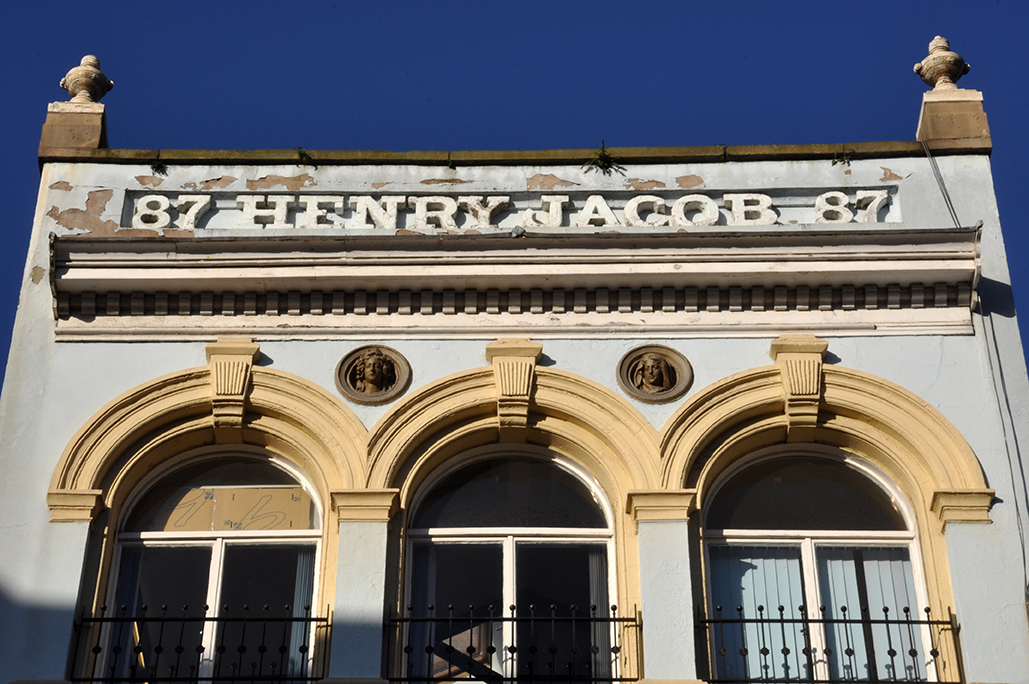
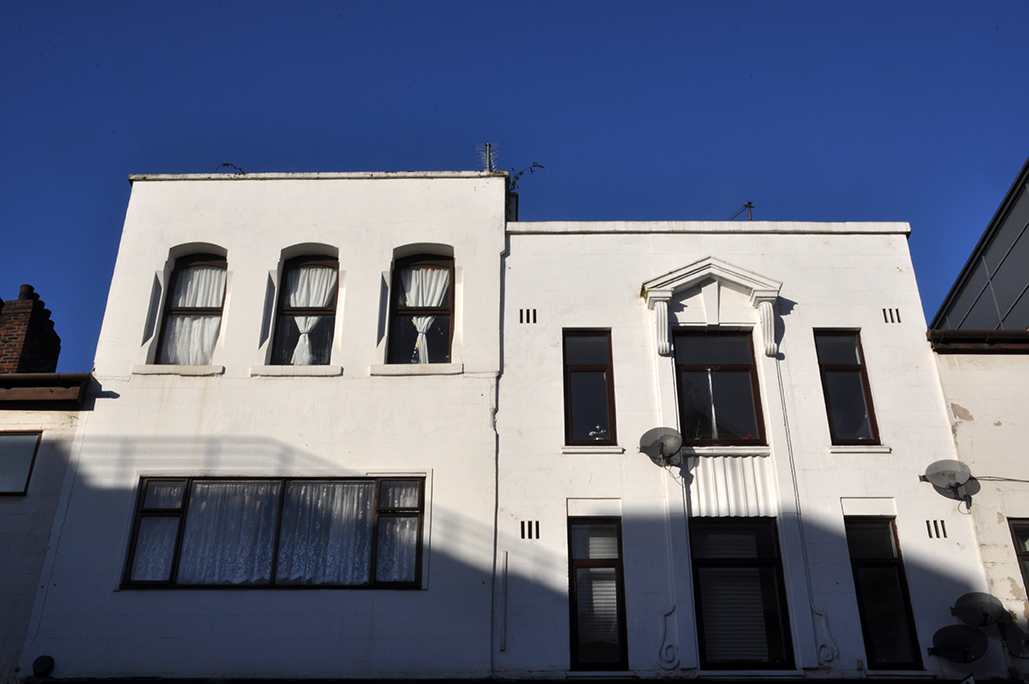
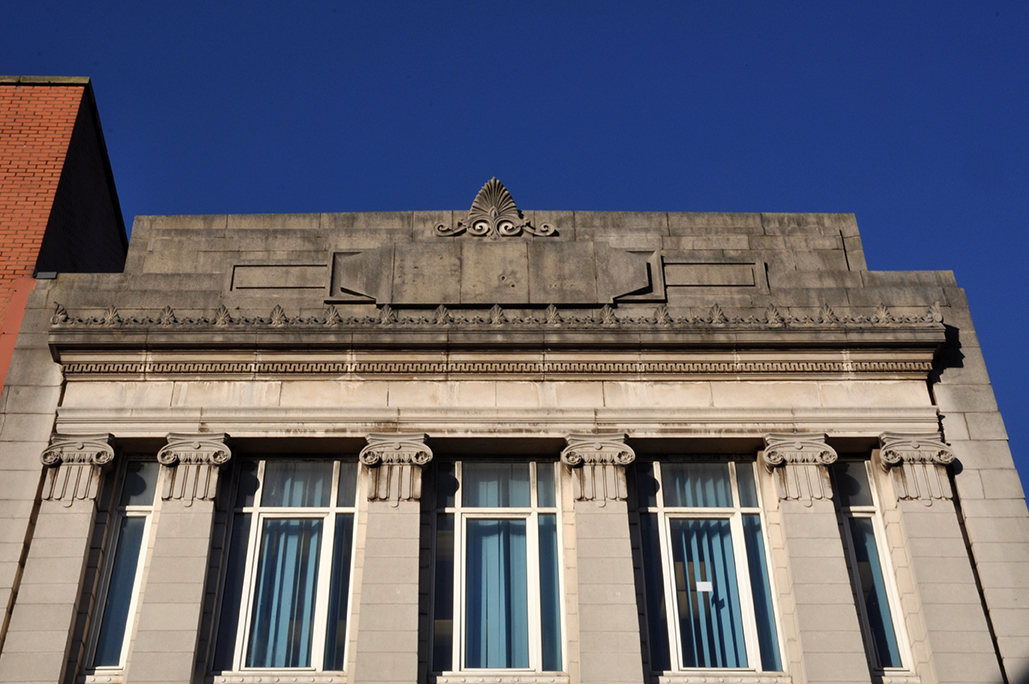
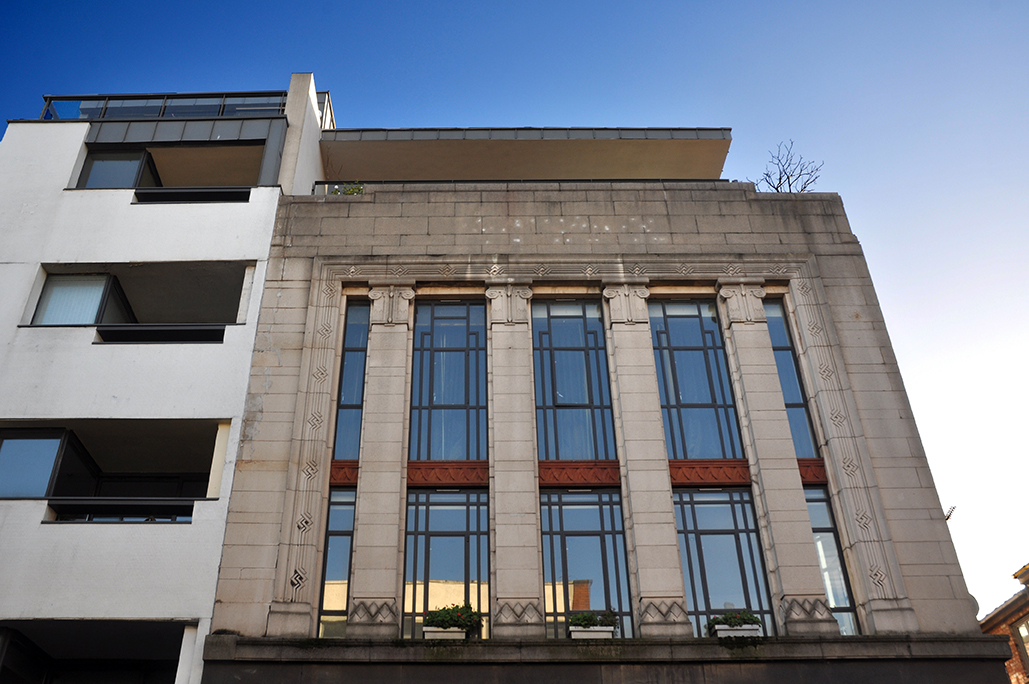
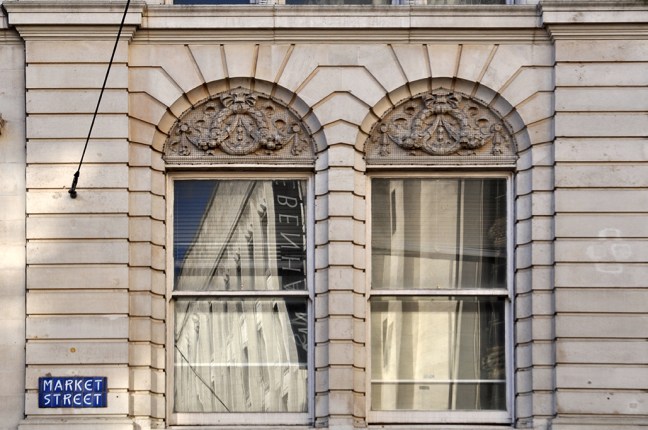
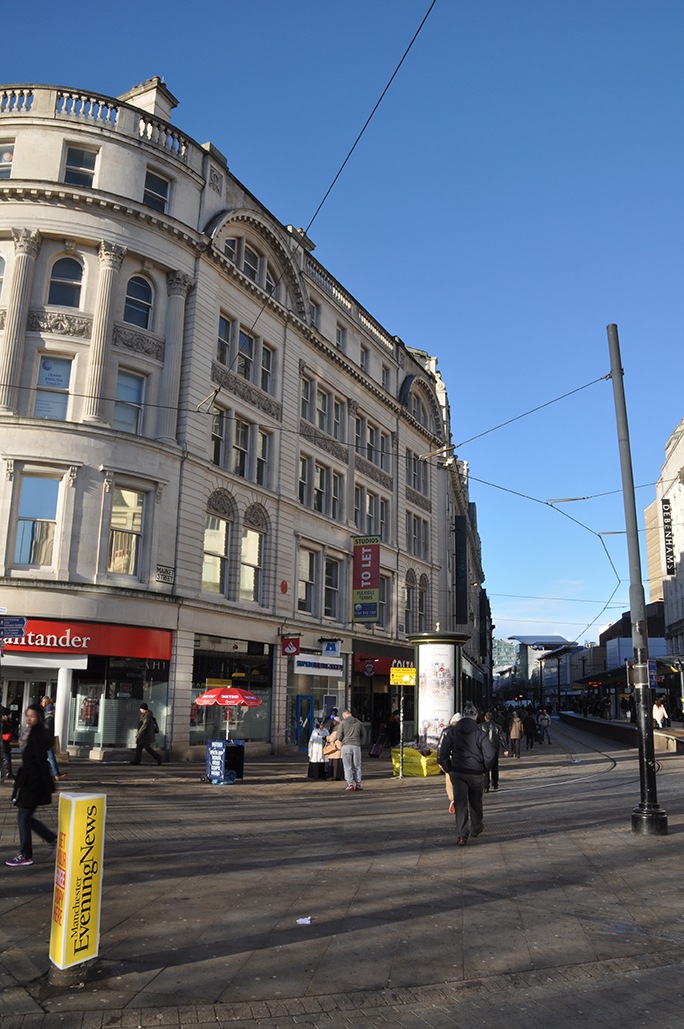
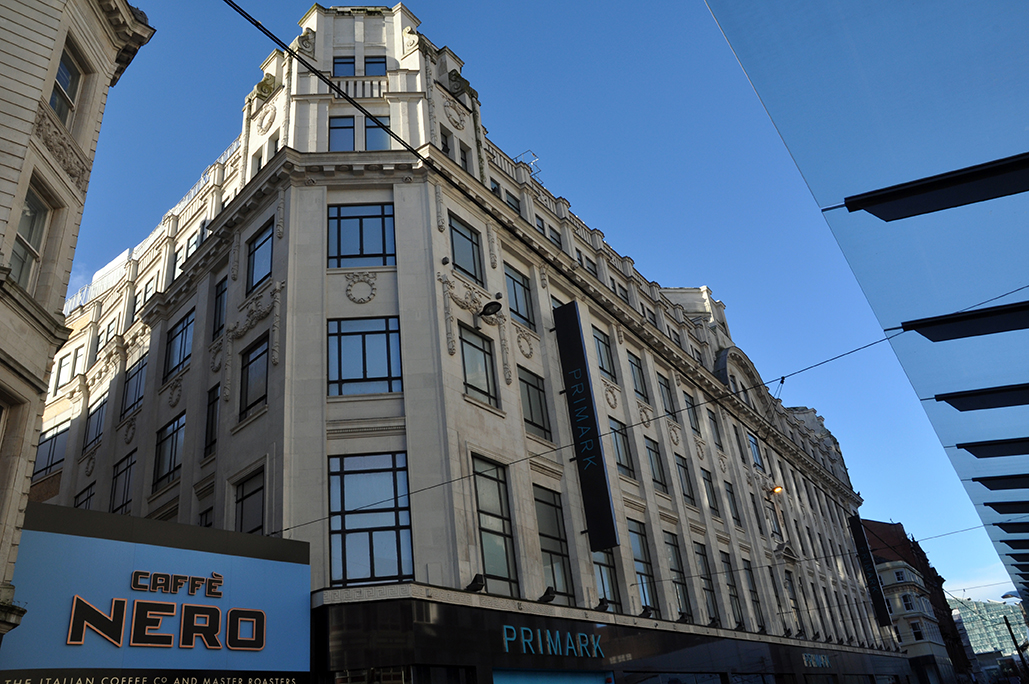
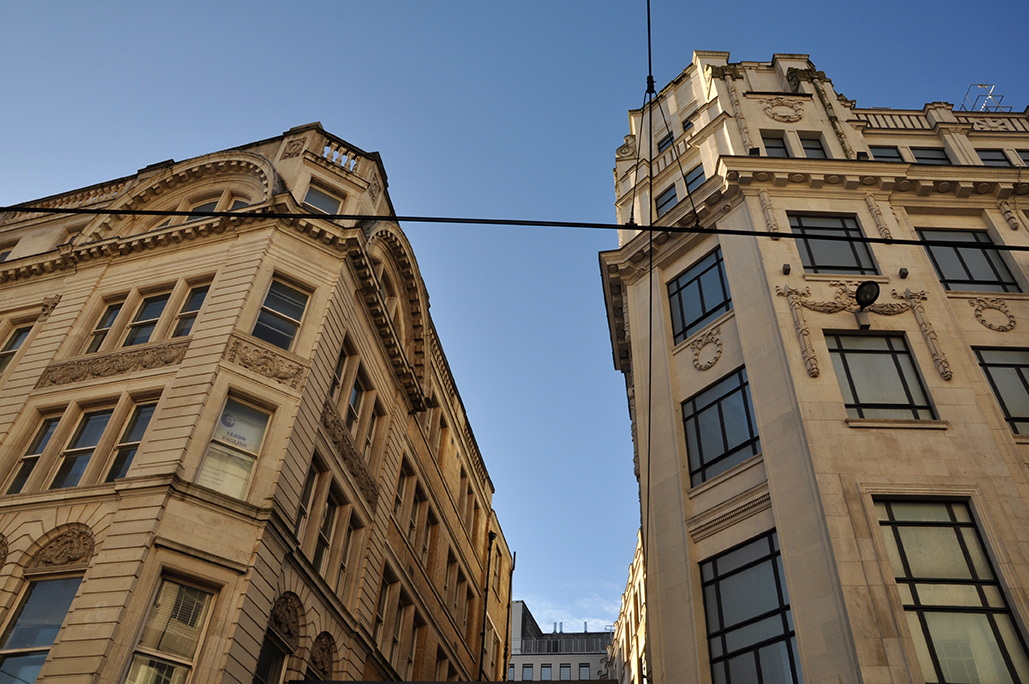
To the east is the Arndale, I chose to concentrate on the western elevation and the extant facades that chart a story from Victorian to Moderne – with a little rebuild, pastiche and grandiose Classicism in between.
See what you think, the sooty deposits have long been sandblasted away, much of the previous exciting noise and clutter, of above eye level signage ceases to shout, from just below the rooftops.
City streets are by their nature subject to movement and change, things literally come and go – in milliseconds, days and decades. People and places are shaped by the forces of function and fashion, economics and history.
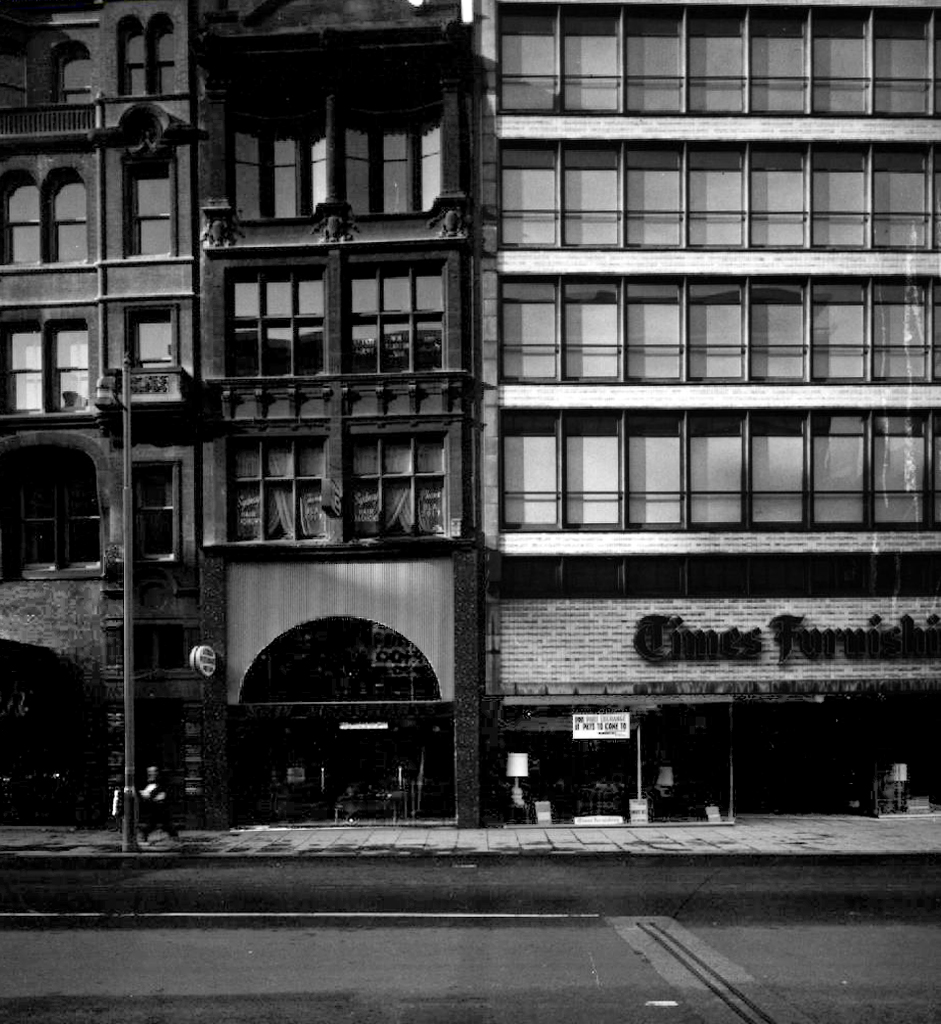
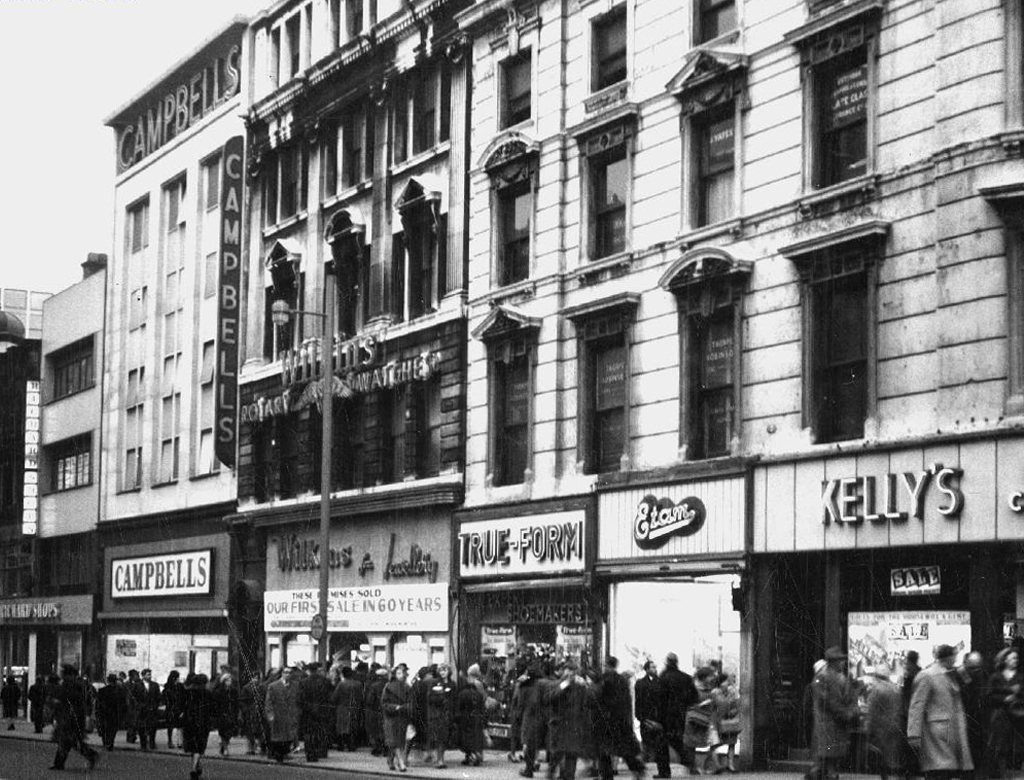
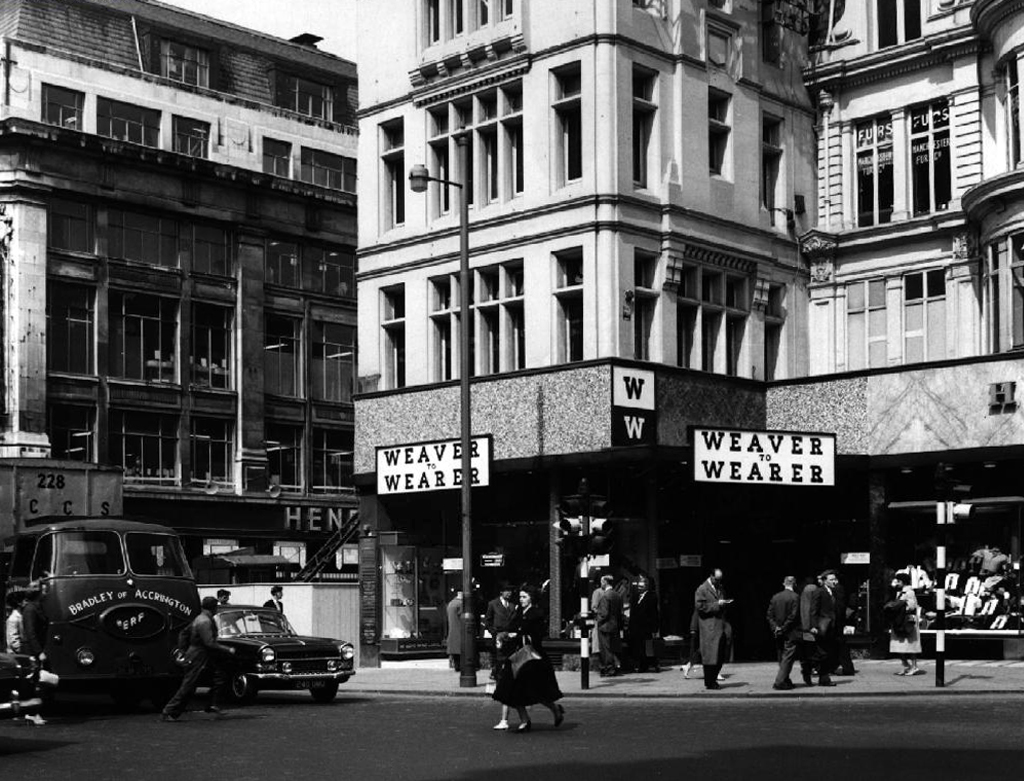
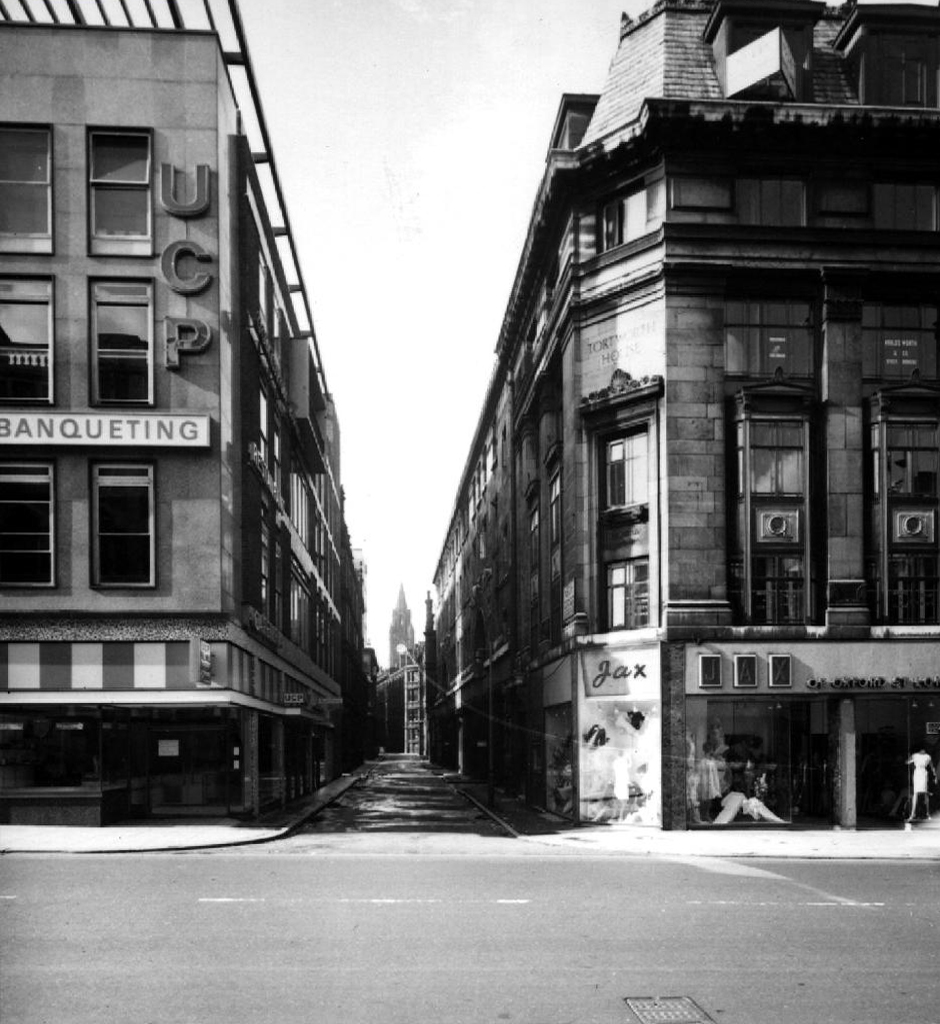
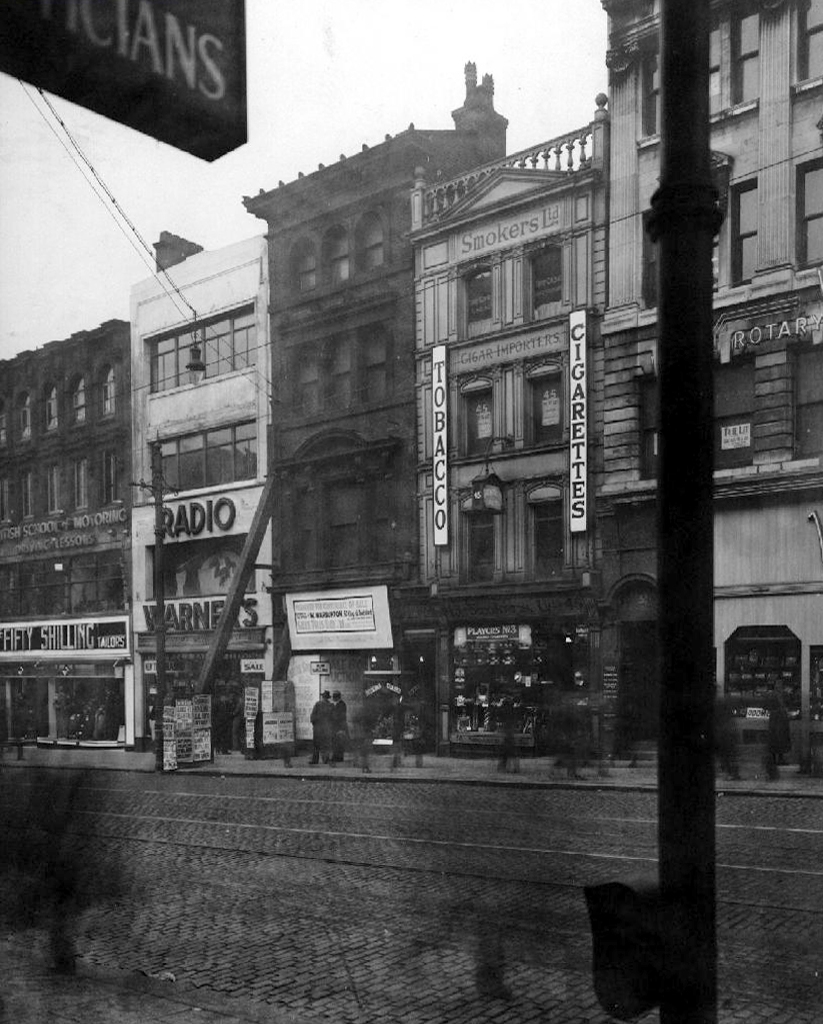
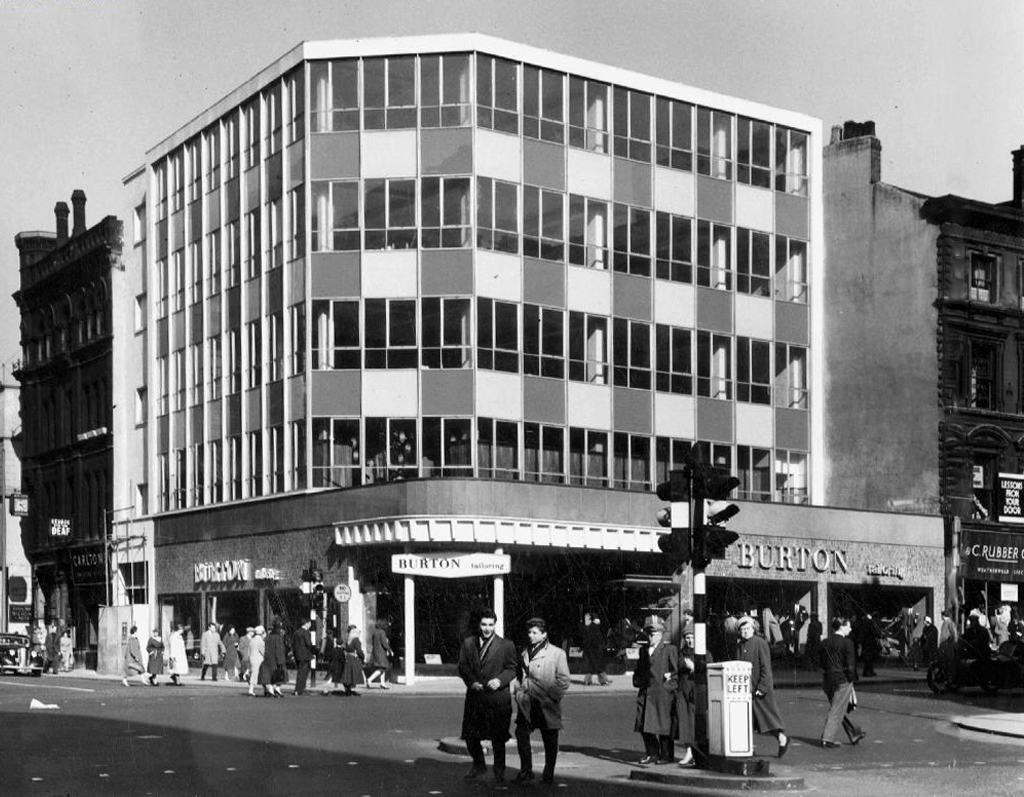
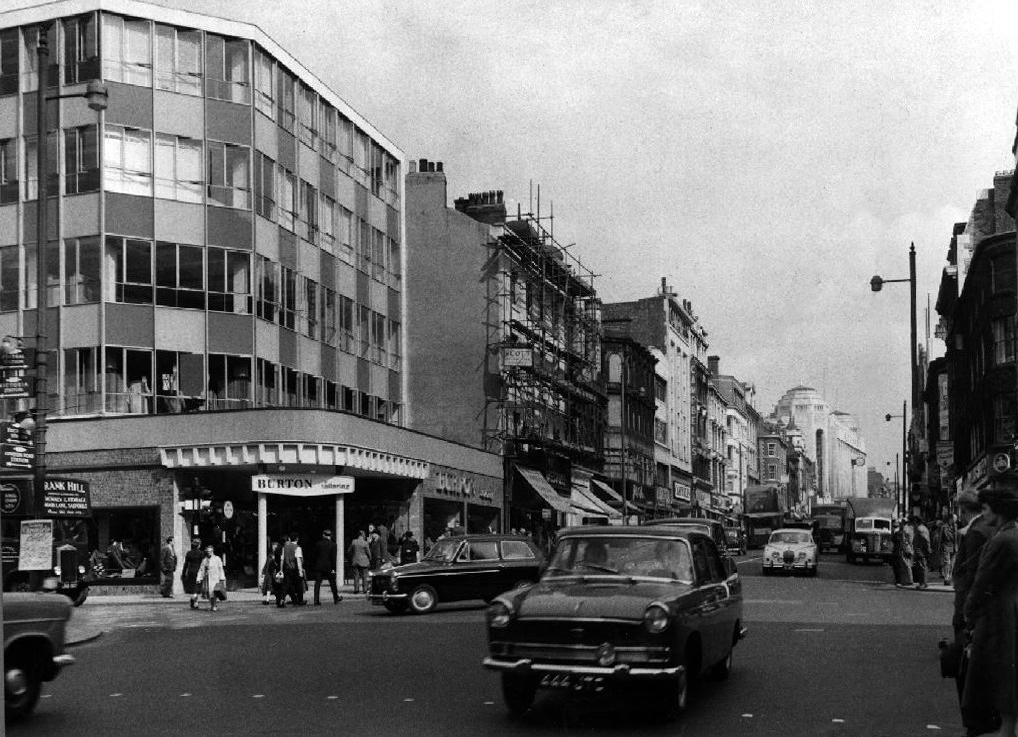
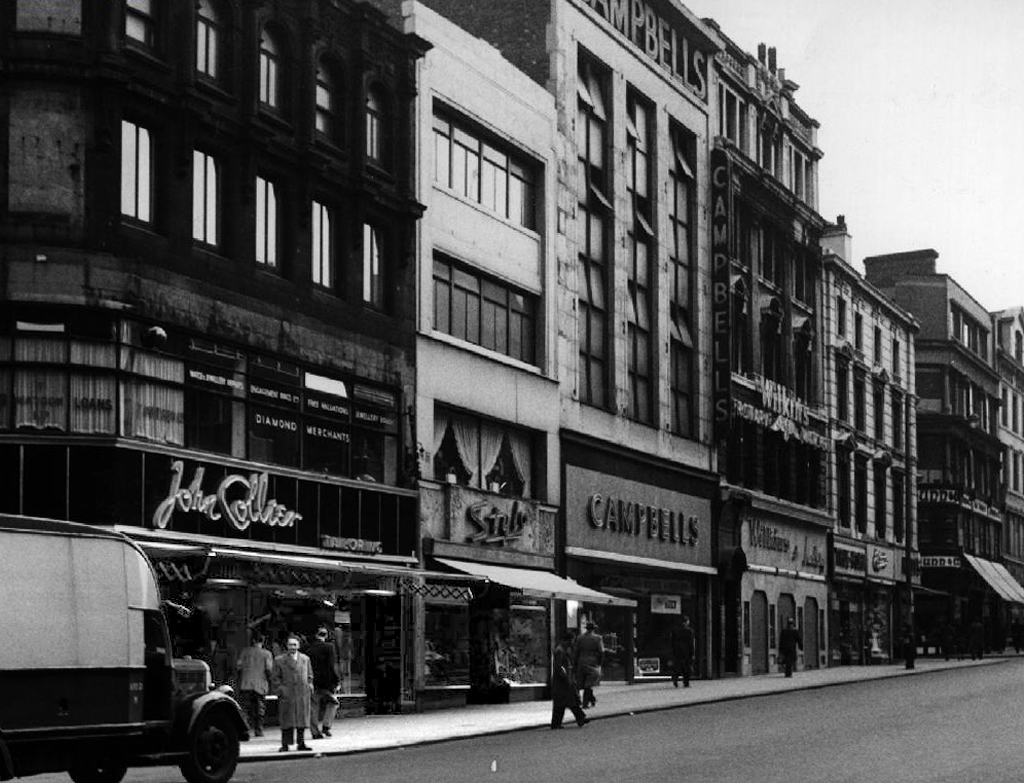
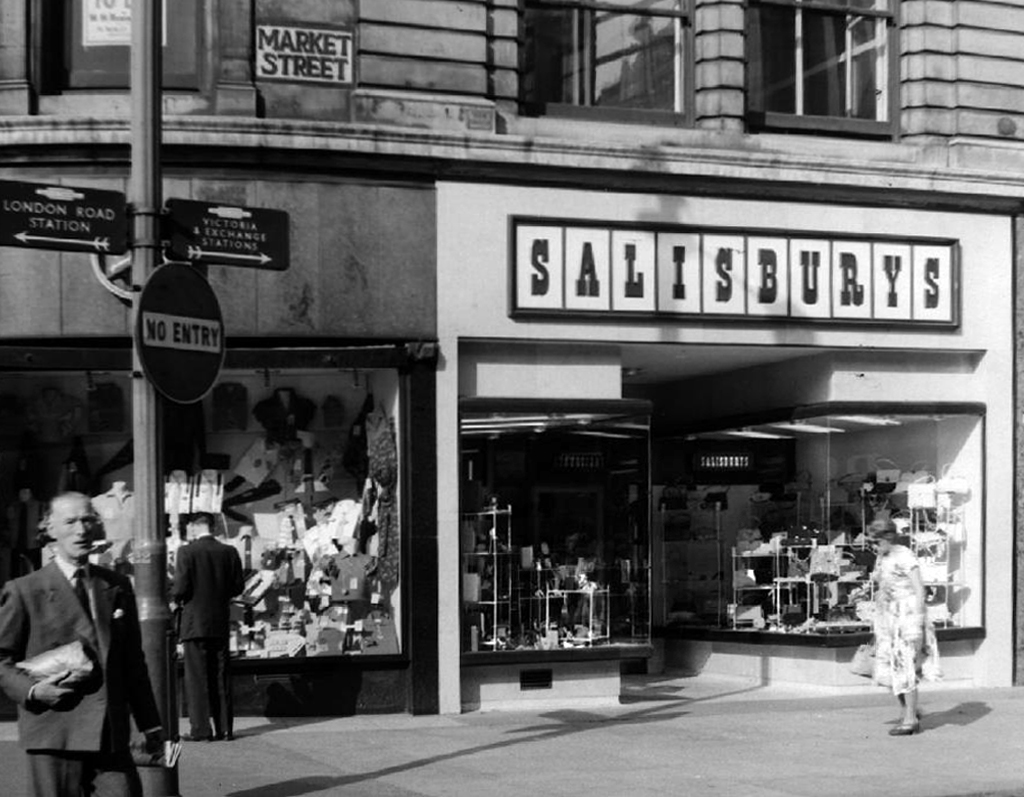
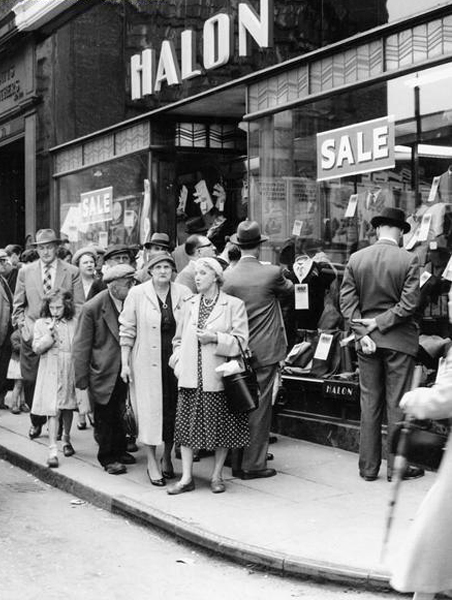
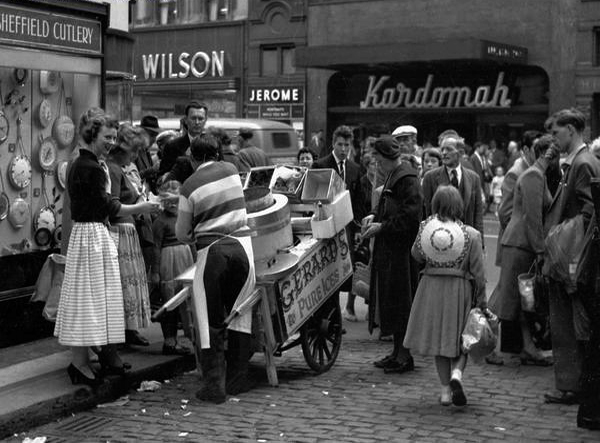
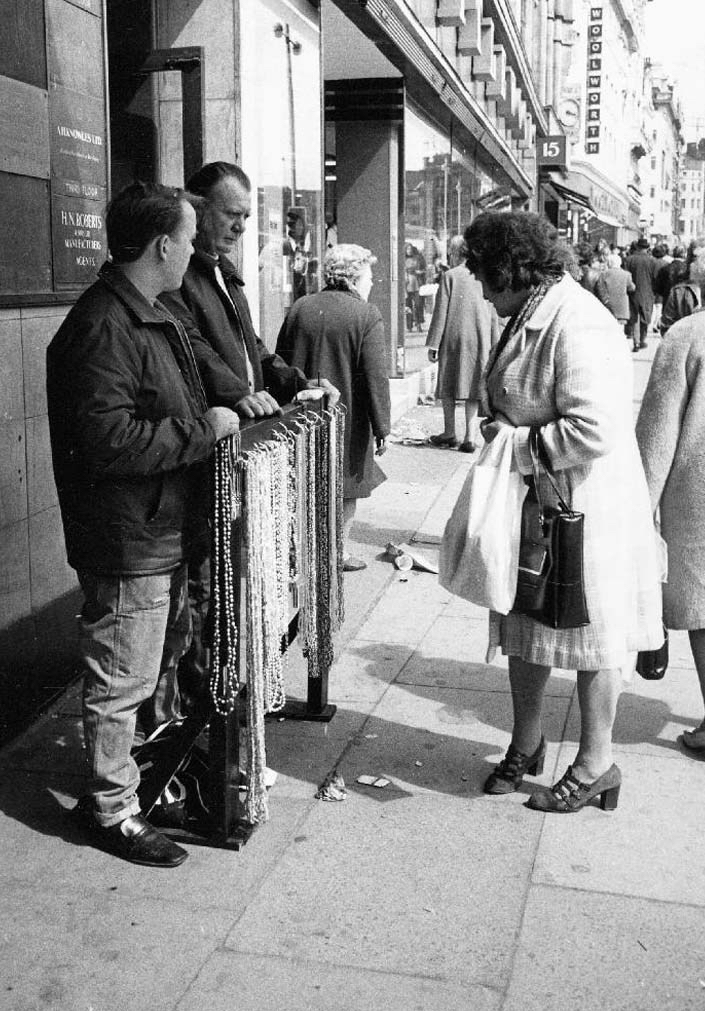
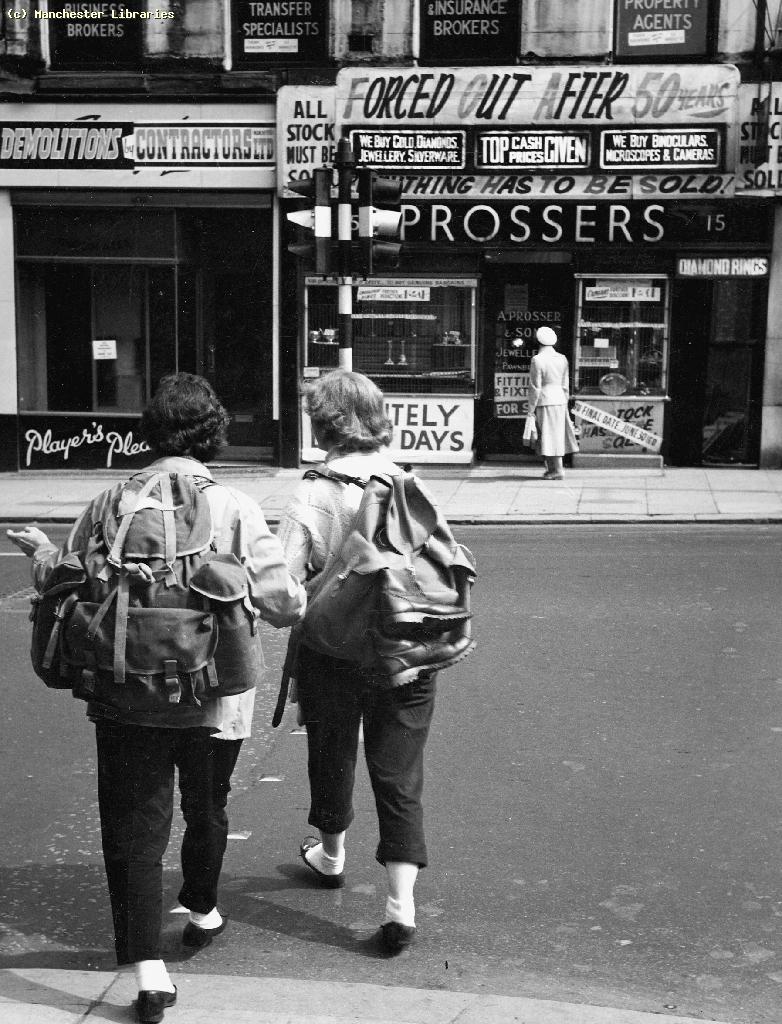
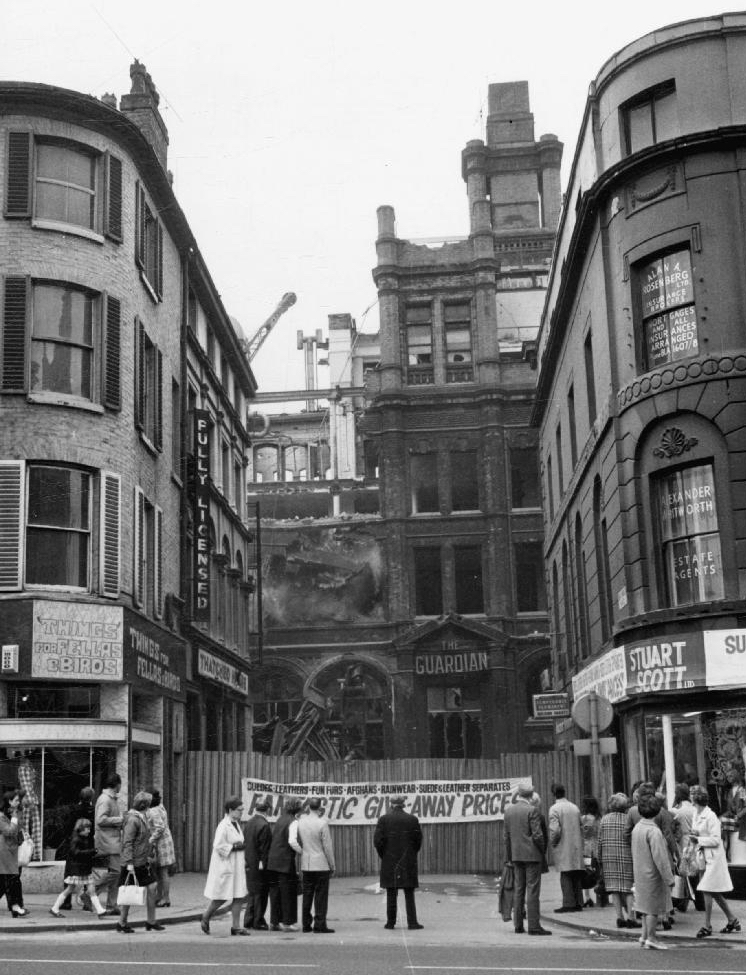
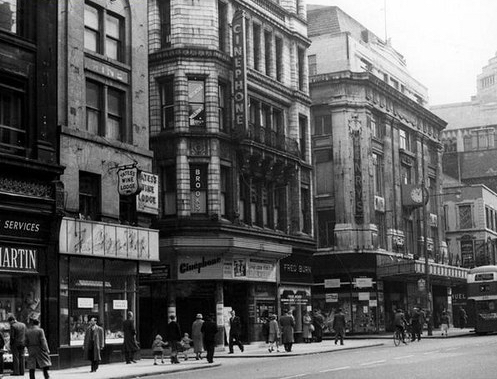
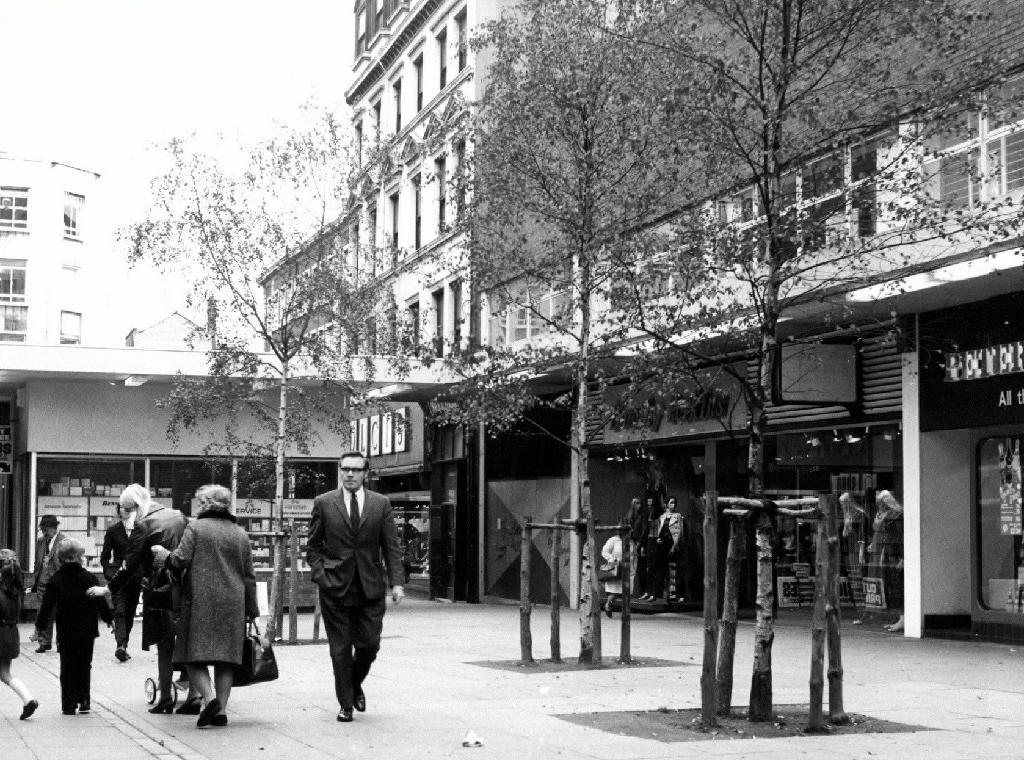
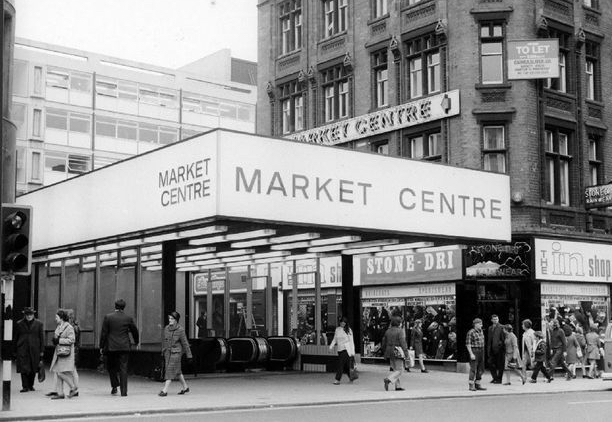
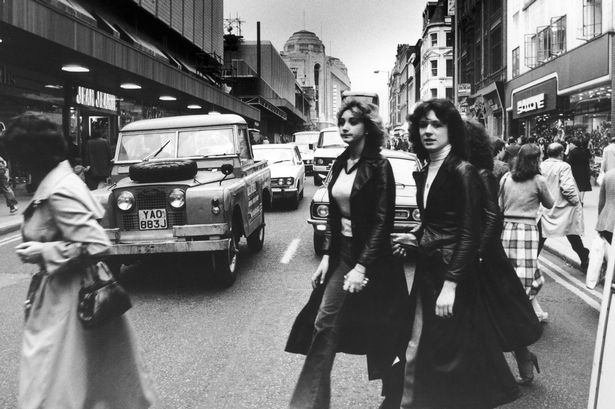
Before the Arndale, pre-pedestrianisation, Market Street, from the Fifties until the Seventies, was one of Manchester’s key arterial, retail thoroughfares. Mixing mixed traffic, shops, cafés and restaurants, bars, cinemas, offices and administration.
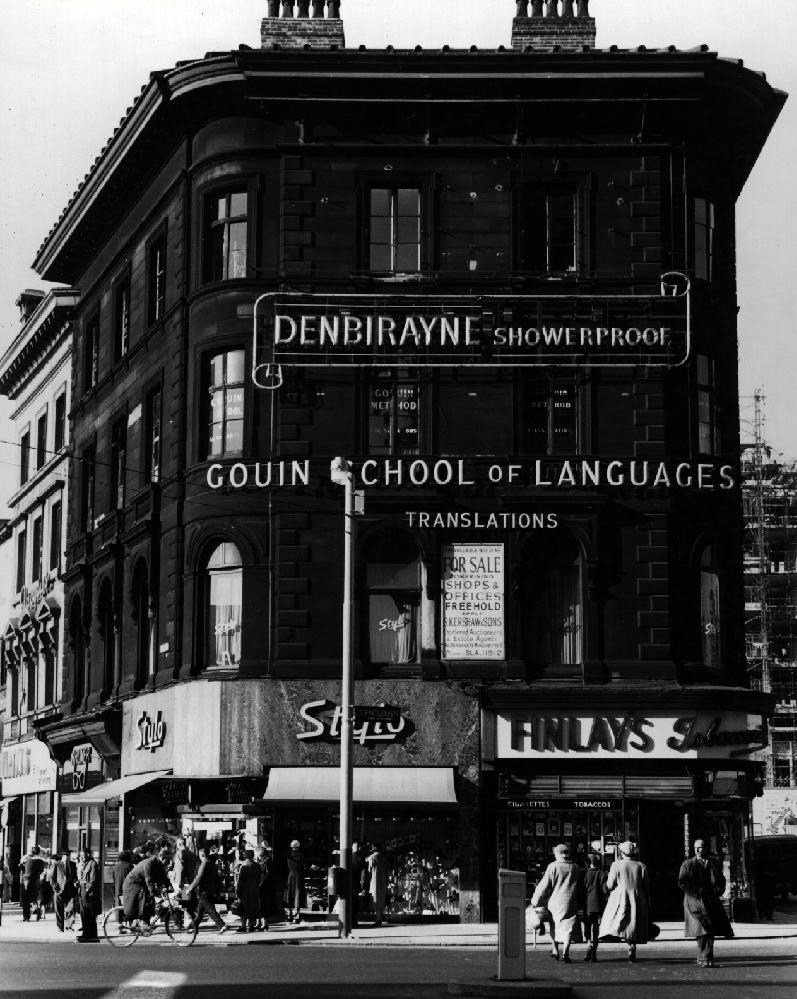
The architectural skyline, had the raggedy silhouette, of a century of build and rebuild.
Lower your eyes, there’s Classical, Gothic, Baroque, local Rococo, Deco, Moderne and Modern – that’s right Madam no two the same, four for a pound, get it while you can.
Lower still, things are still never still, a riot of colour in black and white Vitrolite.
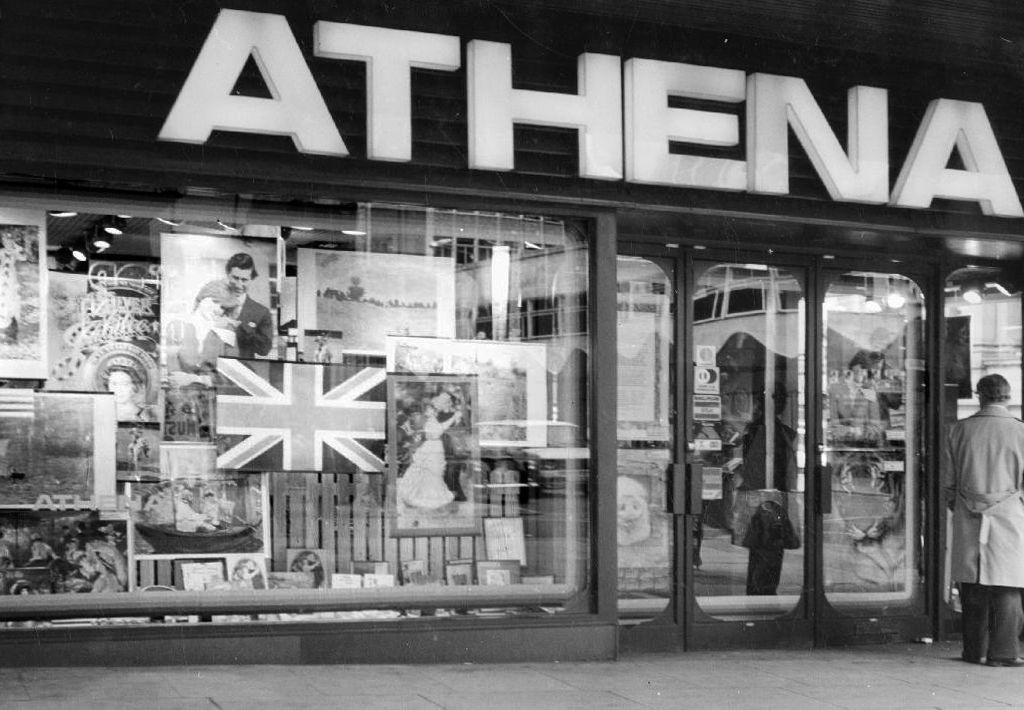
Neon abounds, the names are never changed to protect the innocent.
Local traders are slowly replaced by national and international multinationals.
You have nothing to lose but but your chain-store now.
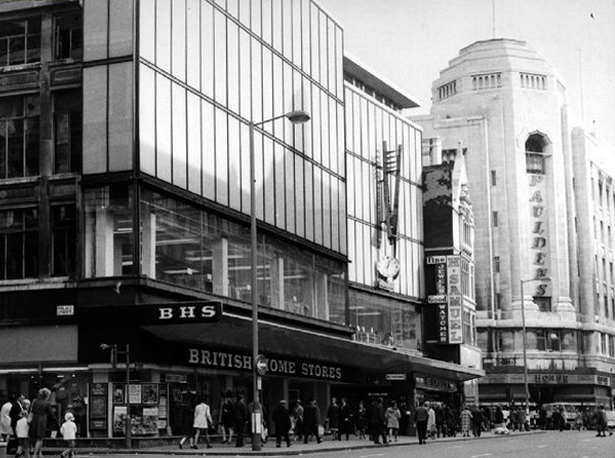
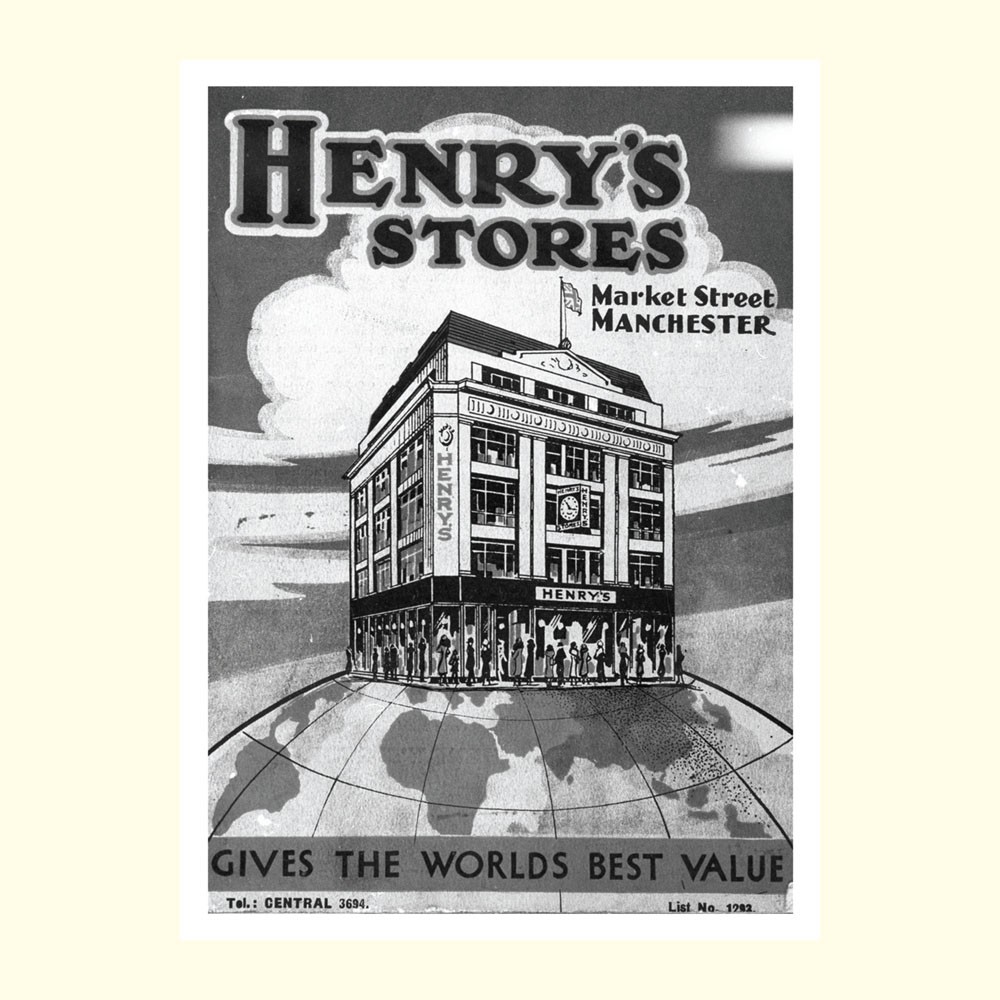
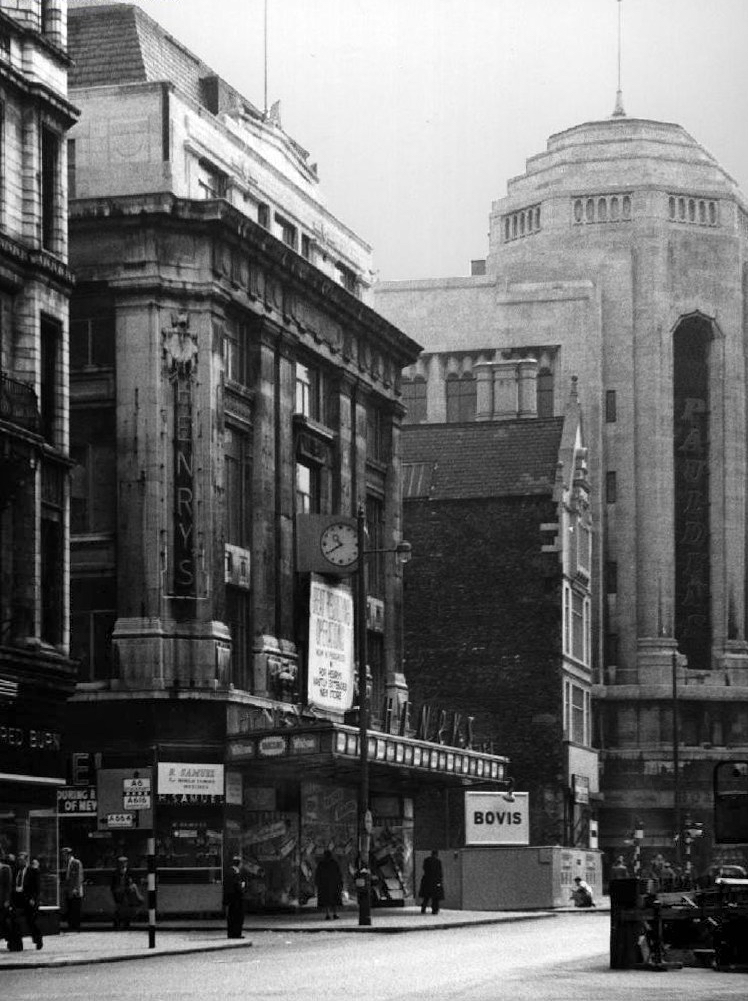
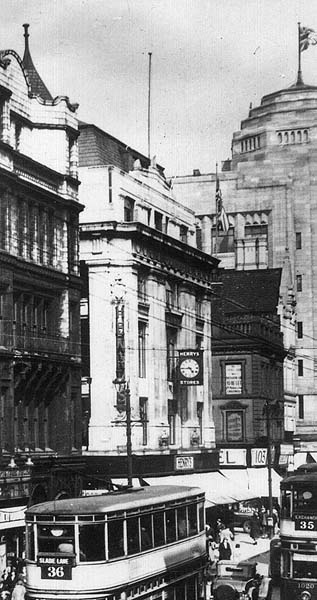
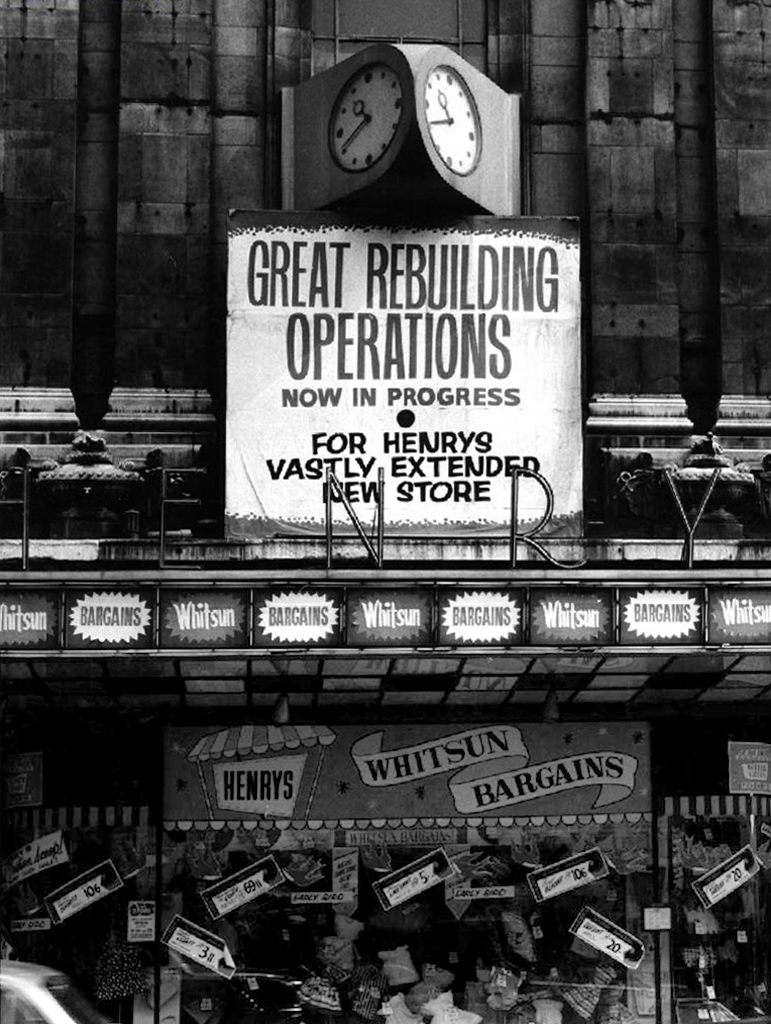
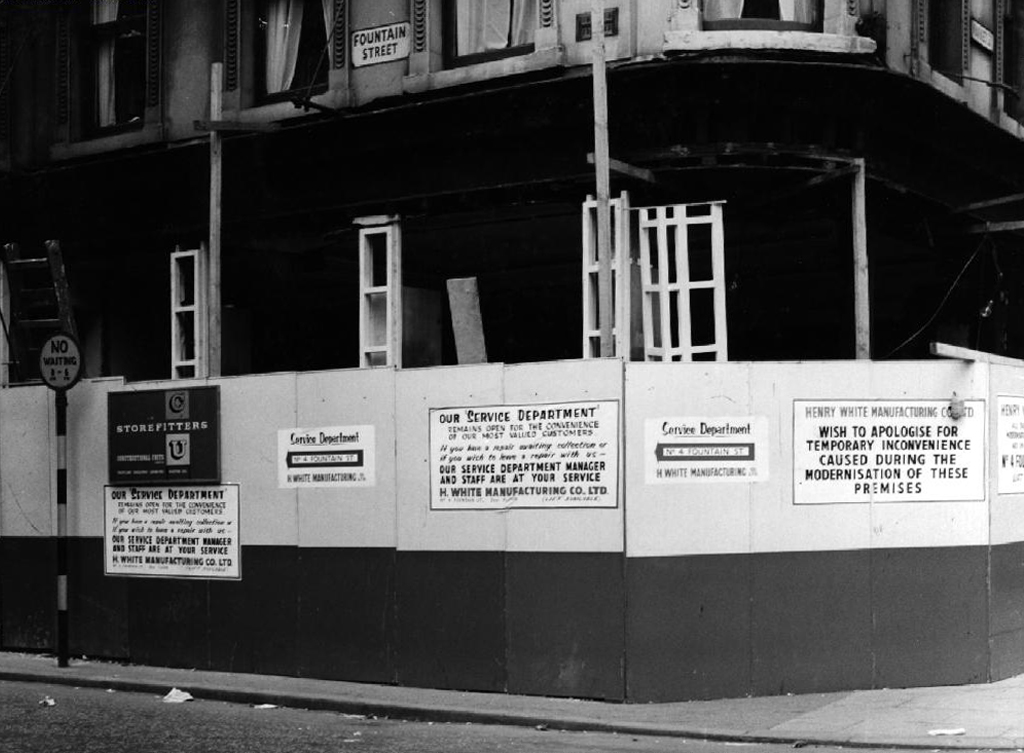
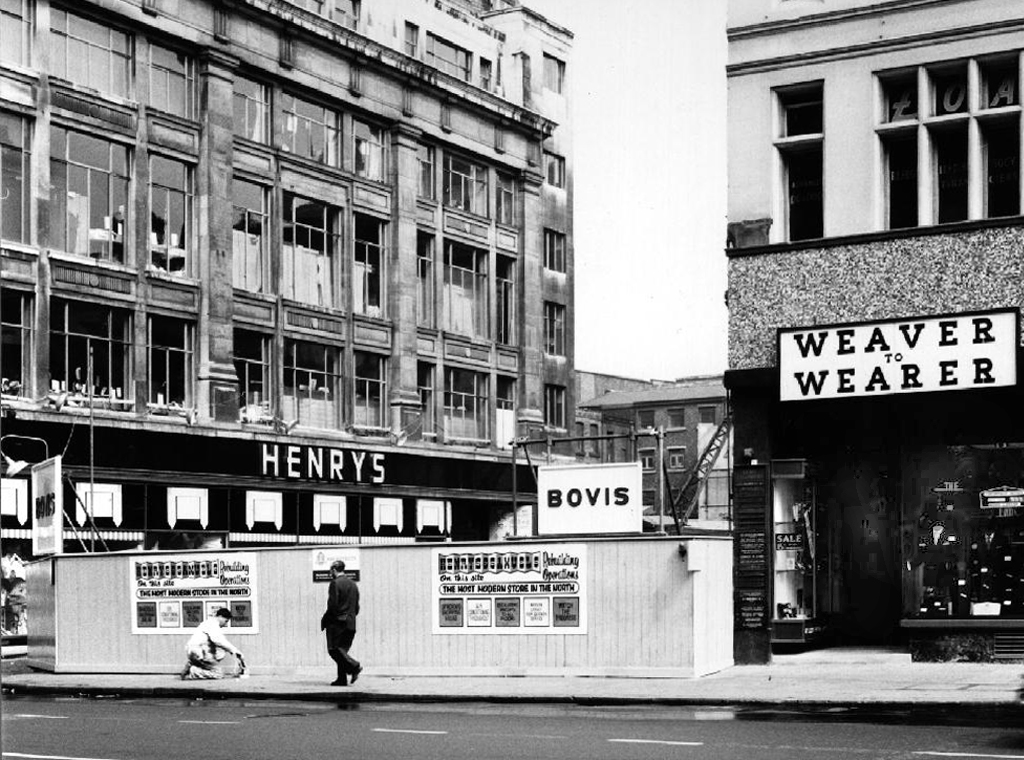
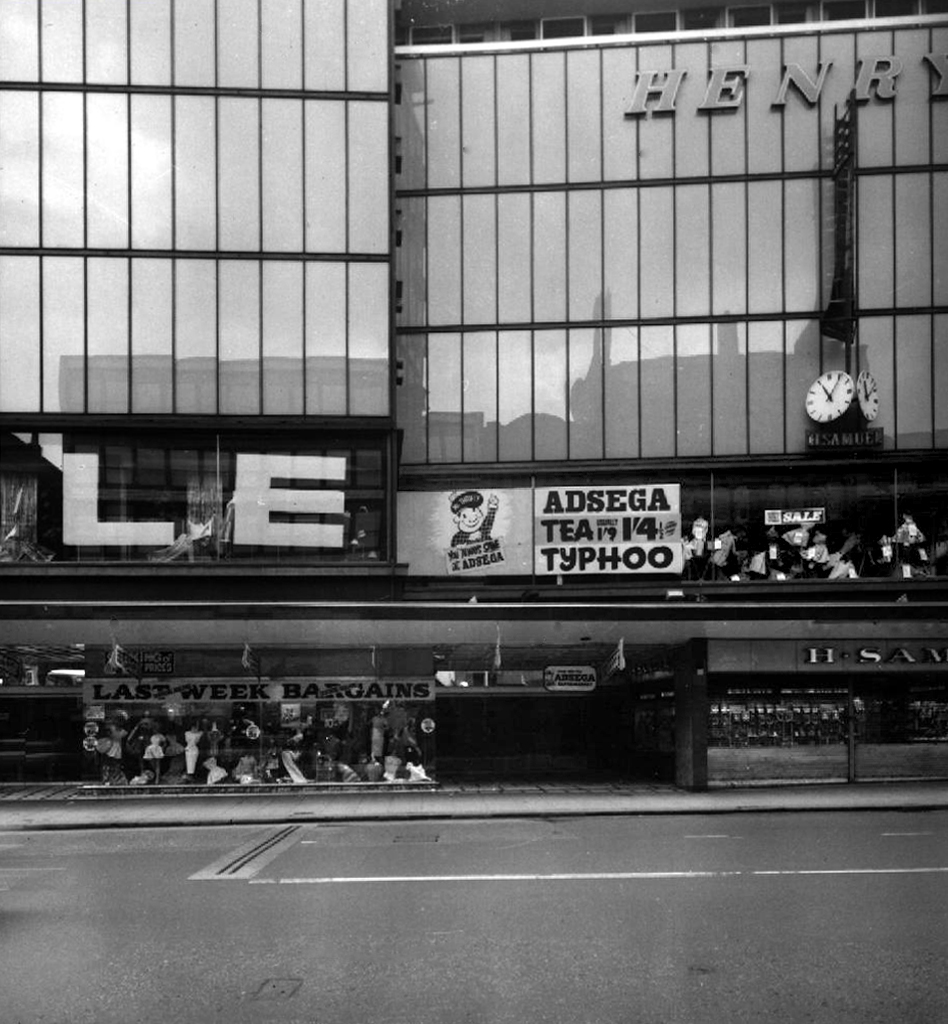
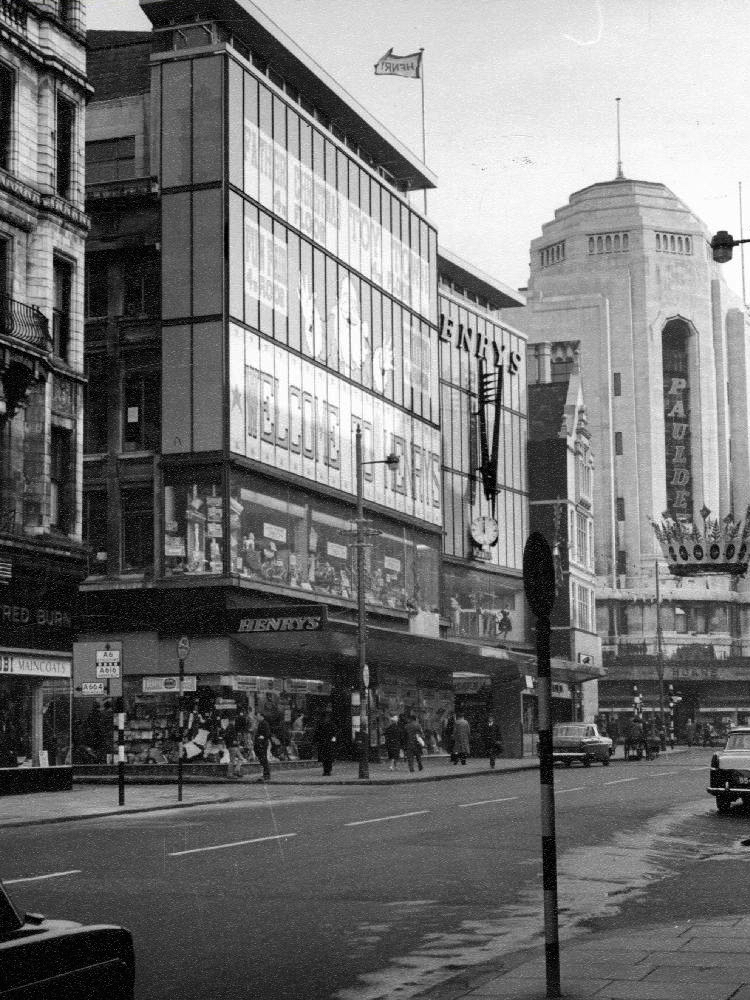
Henry Cohen came to Manchester around 1880. In 1910 he opened a men’s clothing outlet at the corner of Market Street called the Smart Outfitting Company. Having turned down a chance to join Marks and Spencer, he eventually built his department store in Market Street which opened in 1923. Henry’s Stores was redeveloped in the early 60’s acquiring an extension and a unifying Modernist façade, the site and store was acquired by BHS in the mid 60’s.
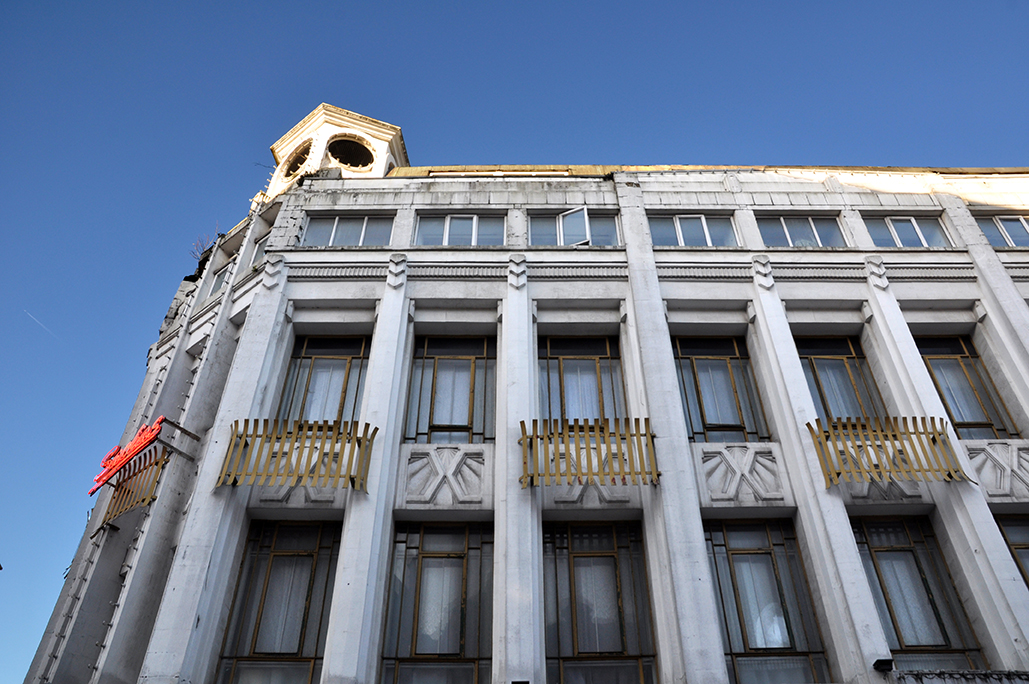
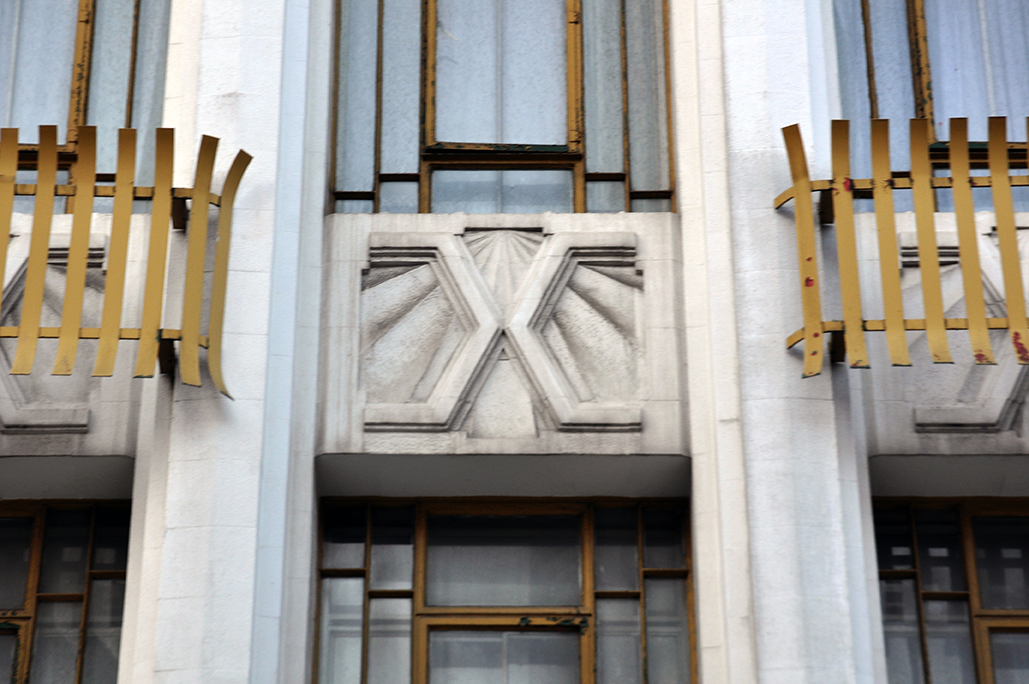
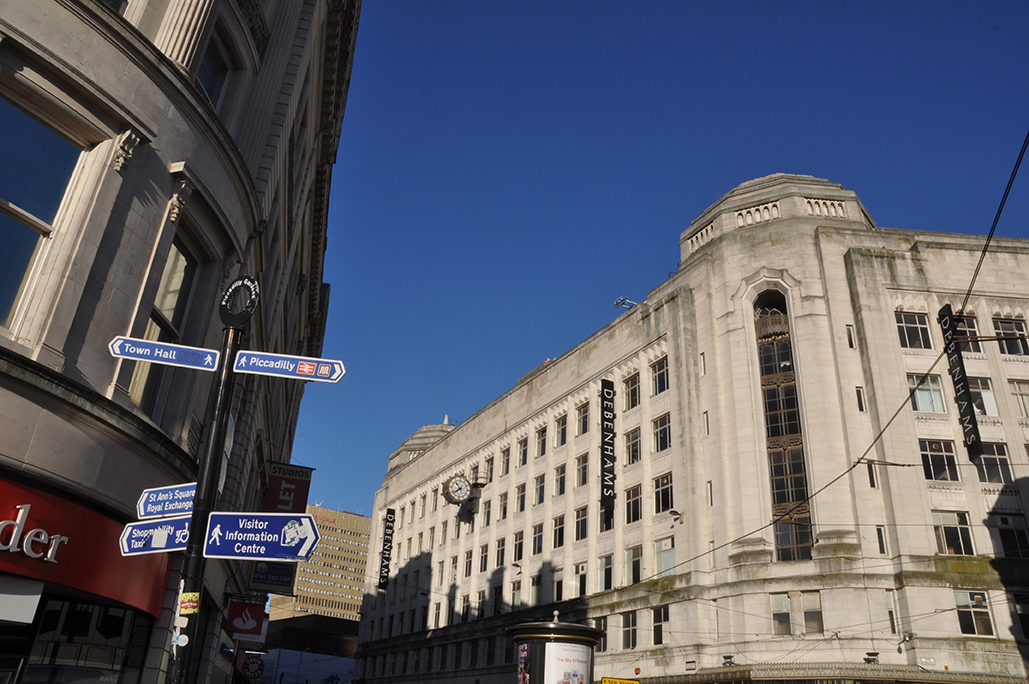
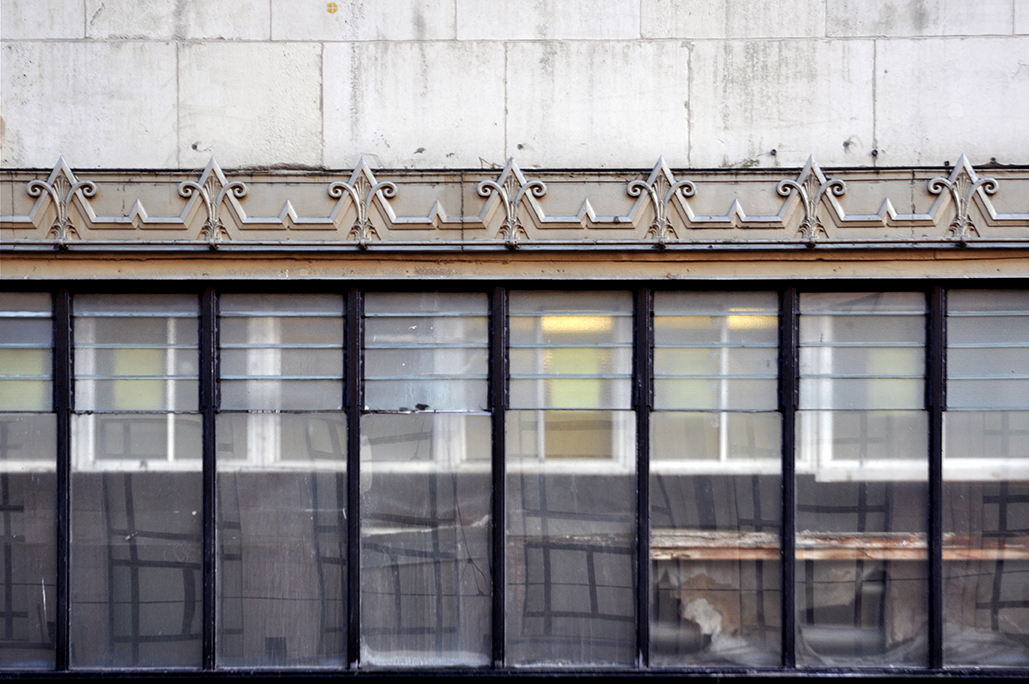
Rylands Building is a Grade II listed building in the building was originally built as a warehouse by the Rylands textile company which was founded by John Rylands. The building was designed by the eminent Manchester architects, Fairhursts, in an Art Deco style. It is clad in Portland stone and features a decorative corner tower and eclectic ‘zig zag’ window lintels.
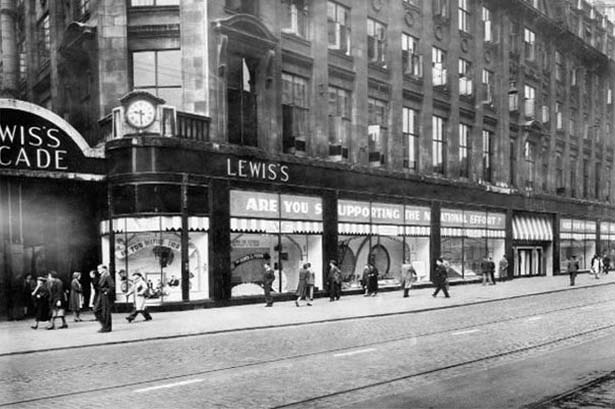
Following a fire, in 1957, which totally destroyed the premises of Paulden’s Department Store, in All Saints, the company acquired the Rylands warehouse building and converted it to a store. This was then a direct rival to the Lewis’s store, on the opposite side of Market Street. In 1973 Debenhams, the owner of Pauldens rebranded the store in their name. Since that time it has remained Debenhams.
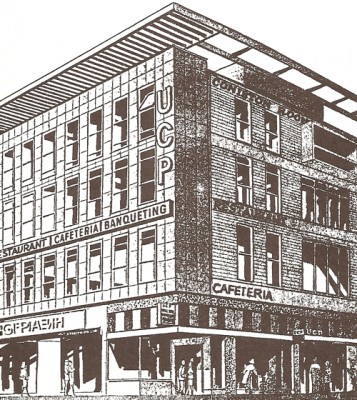
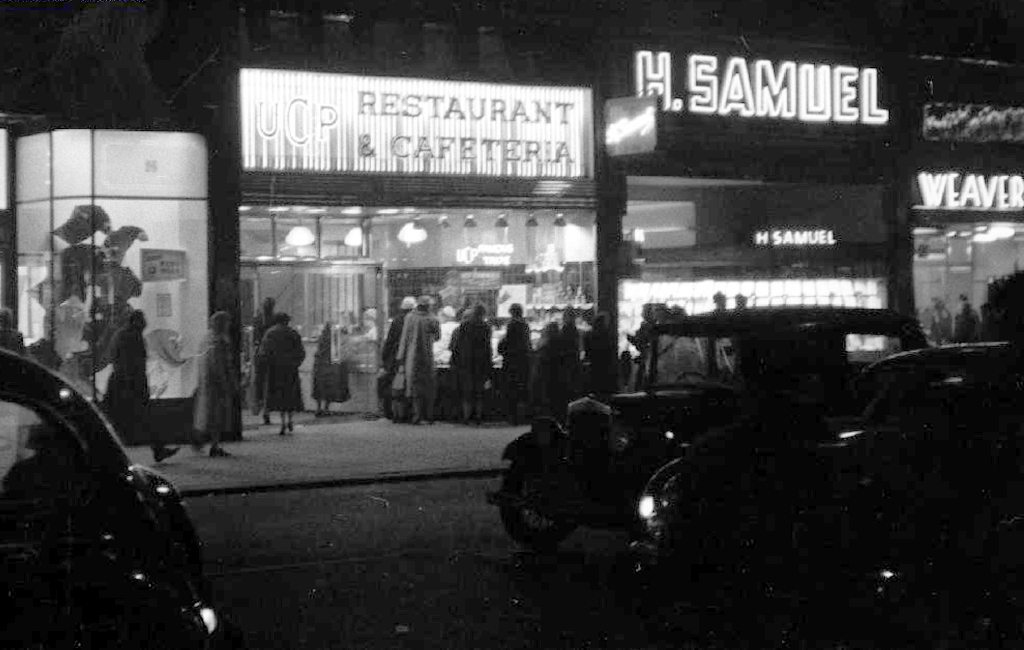
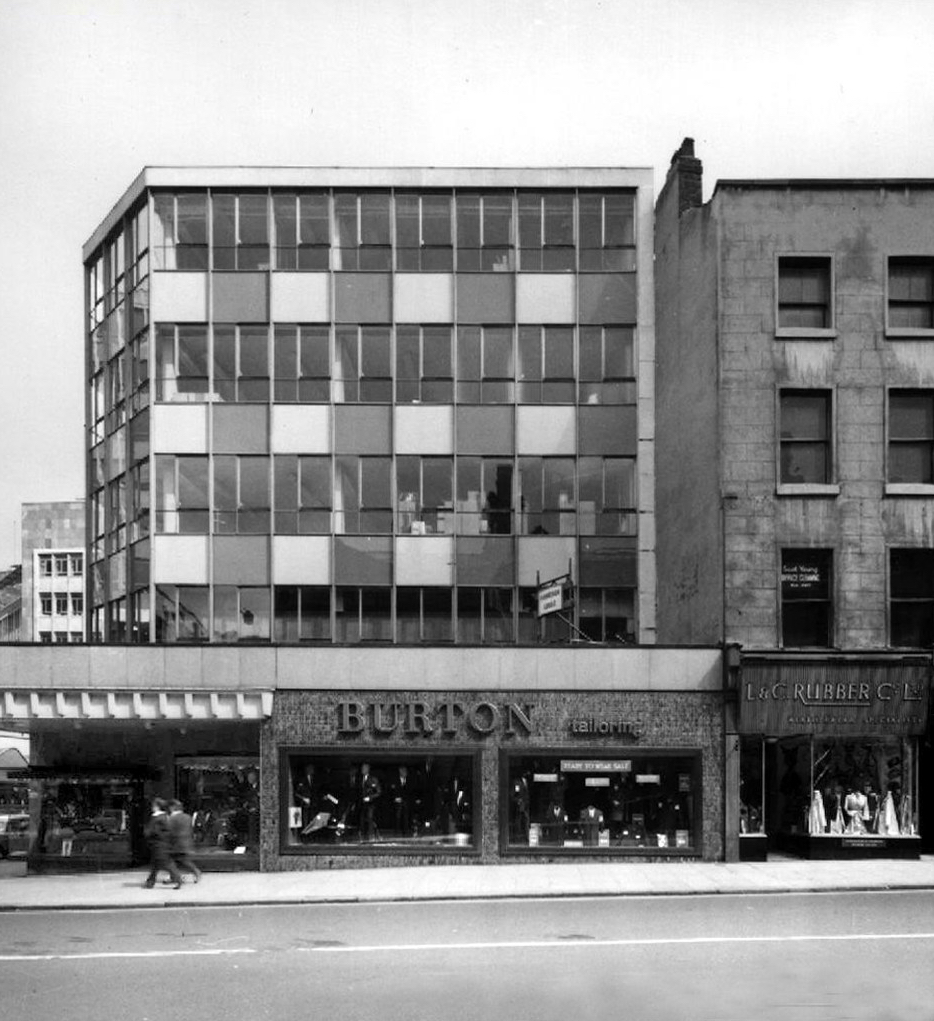
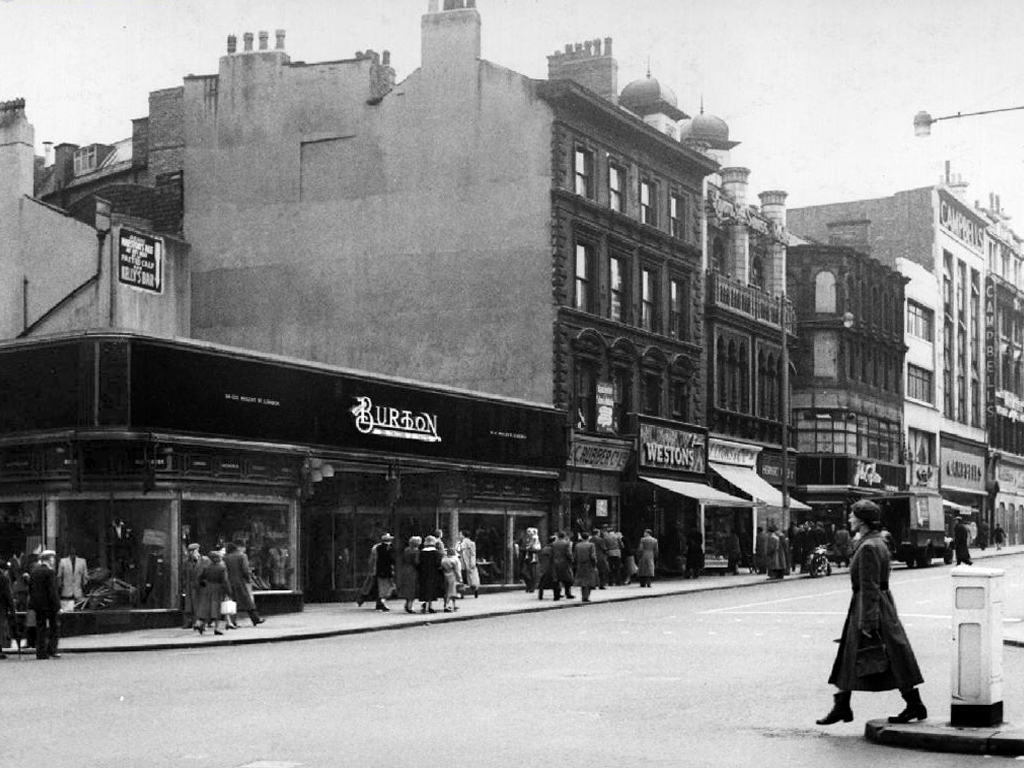
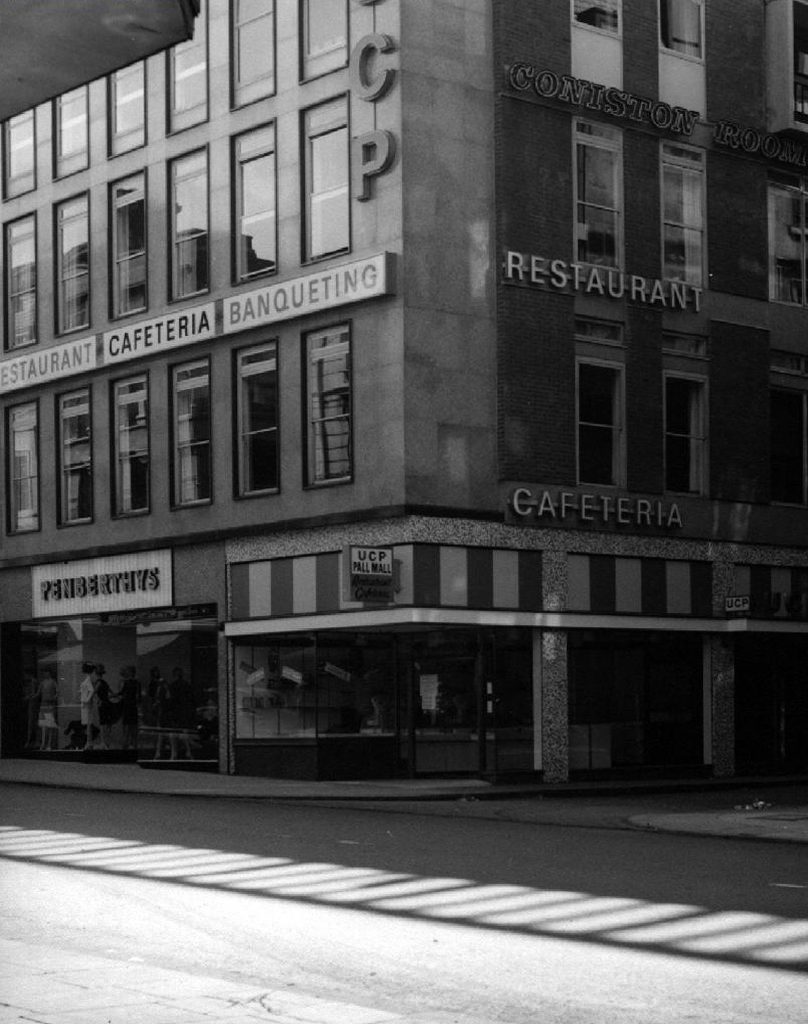
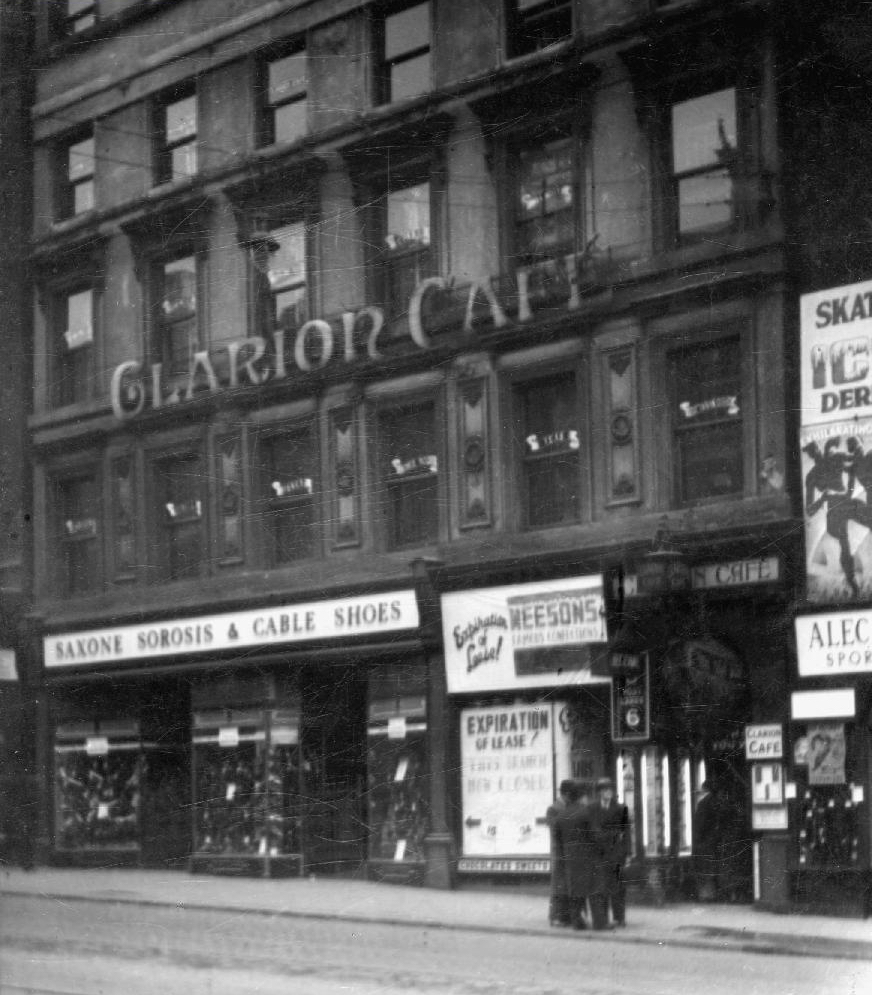
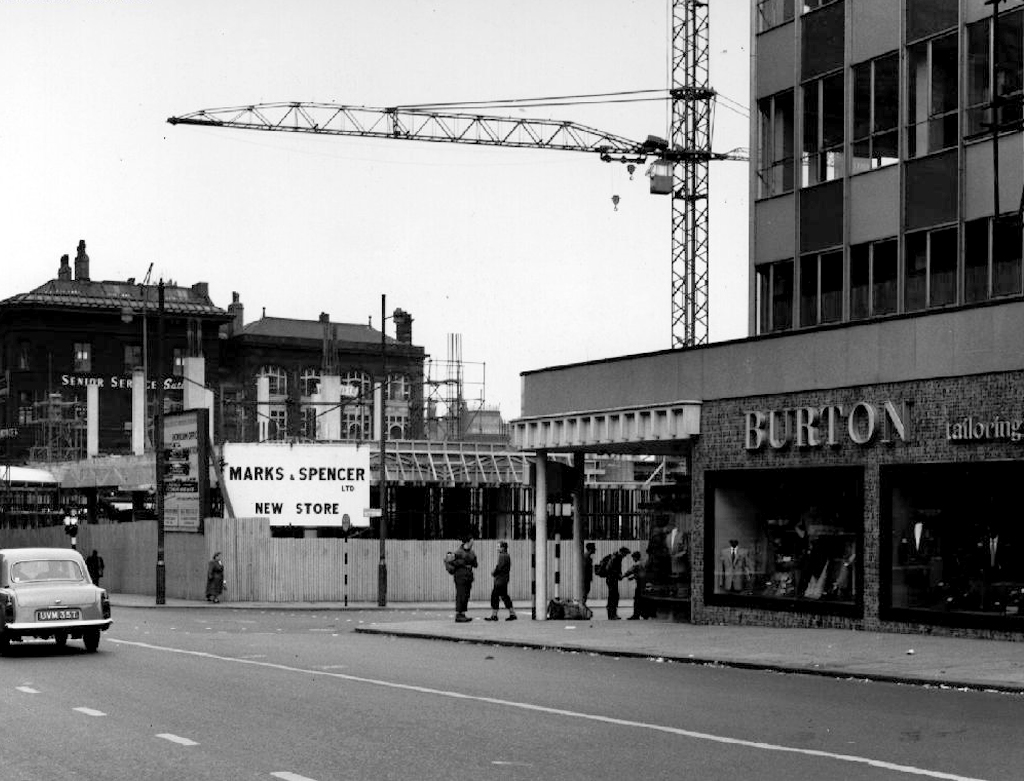
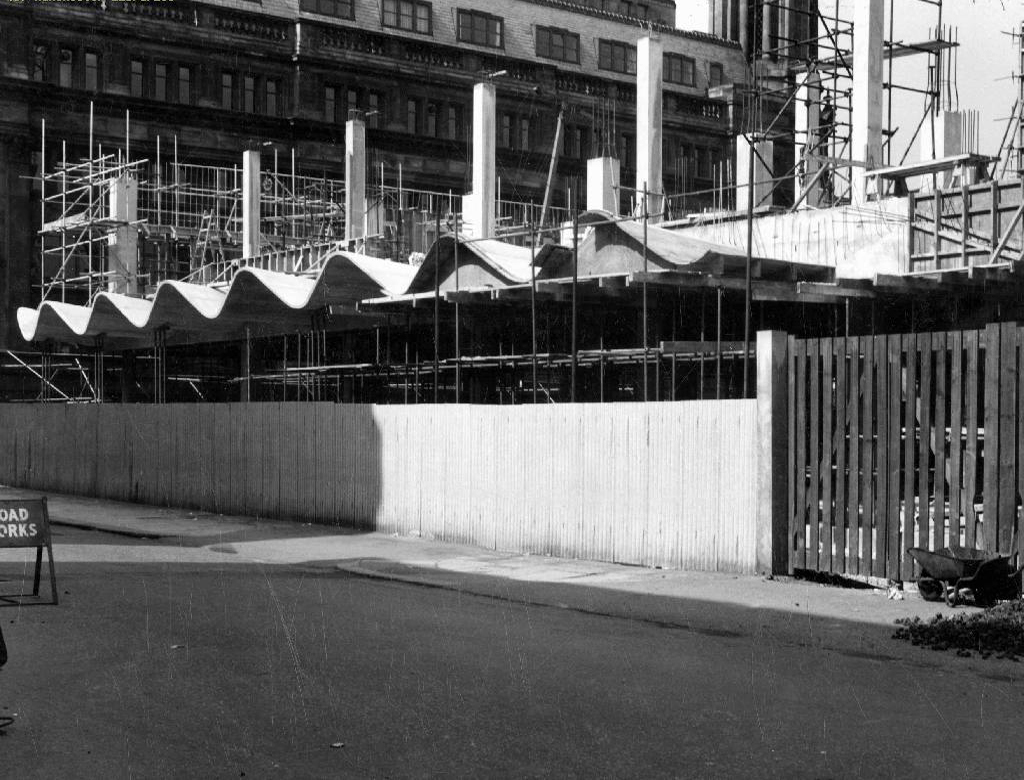
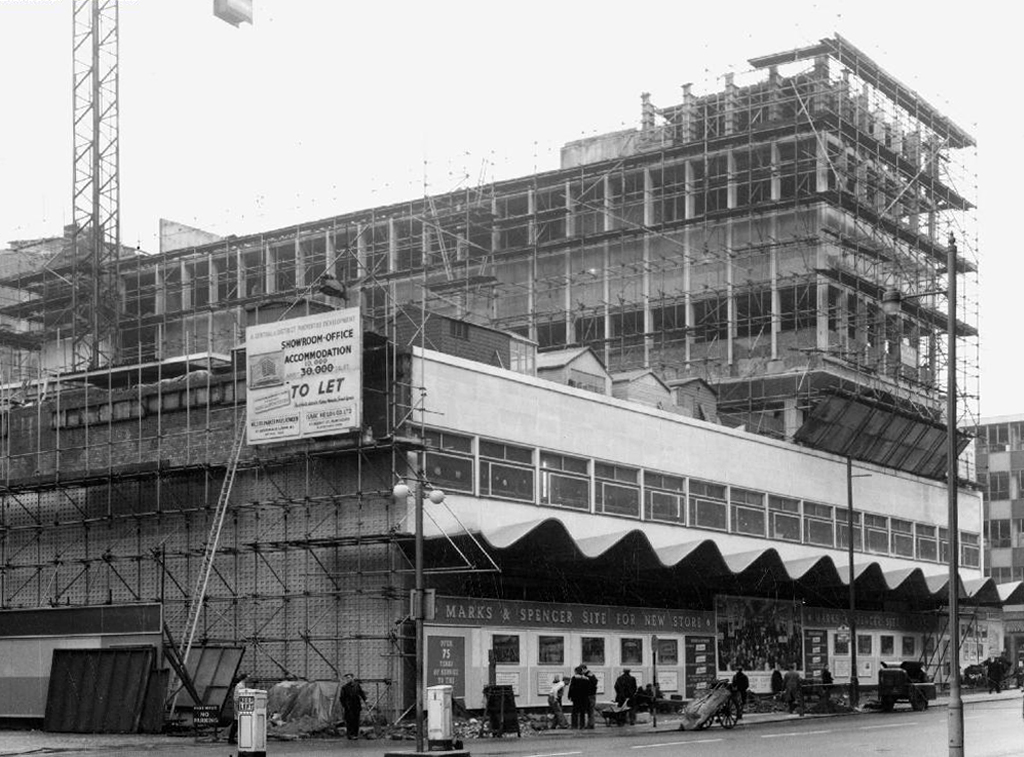
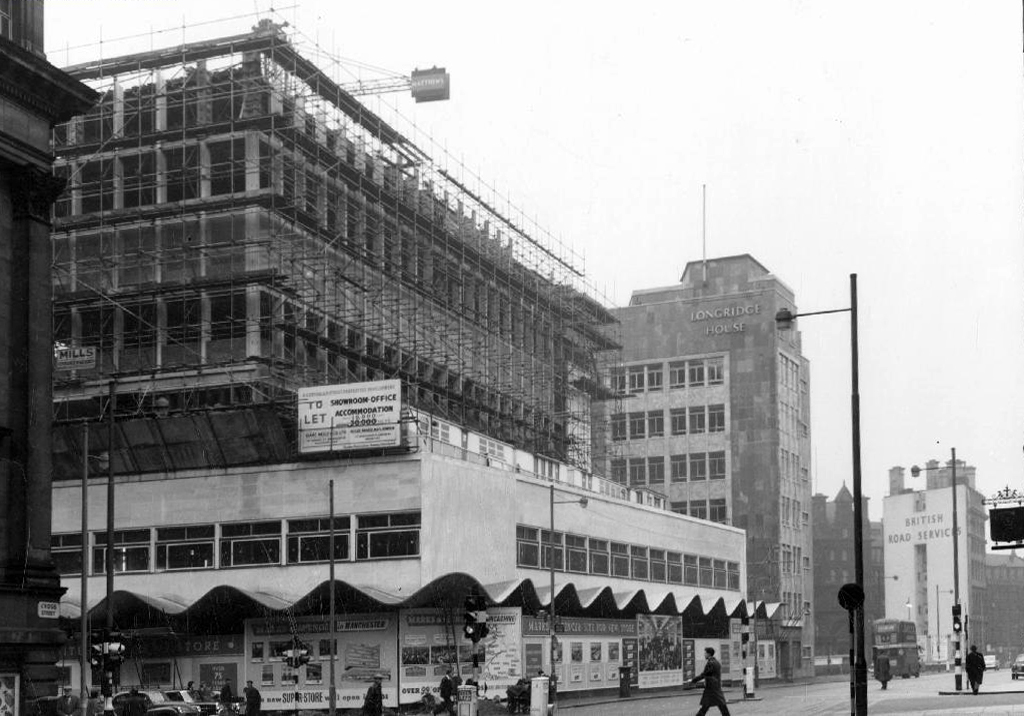
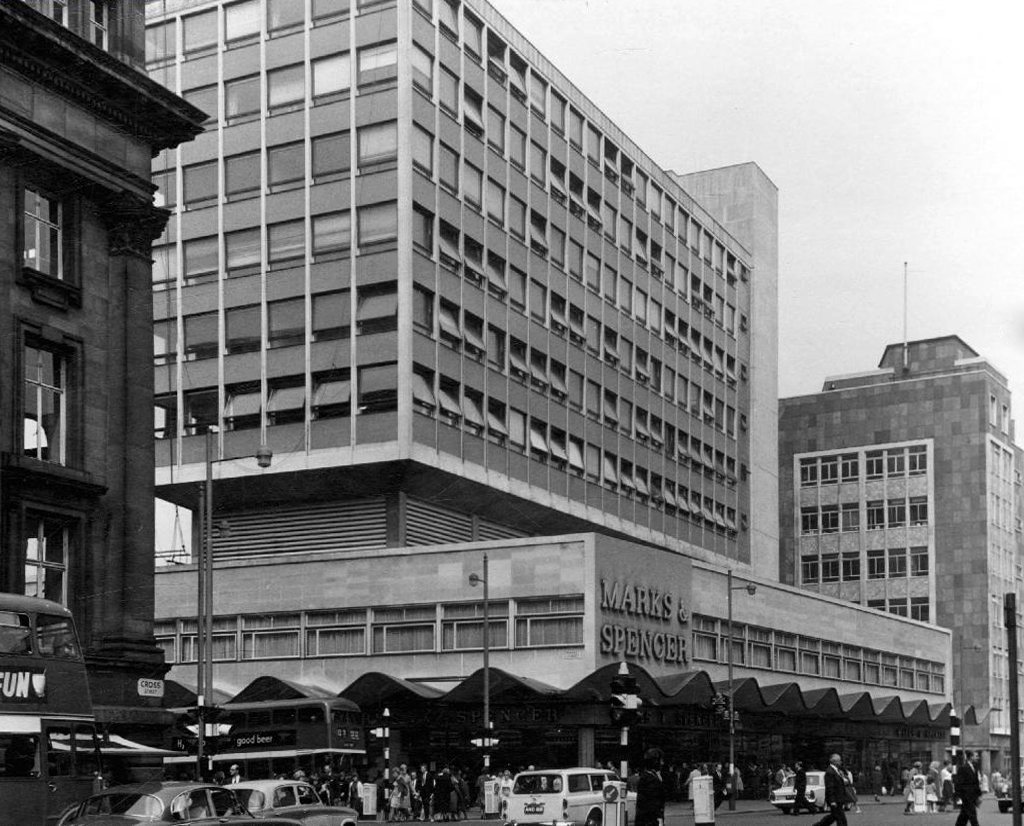
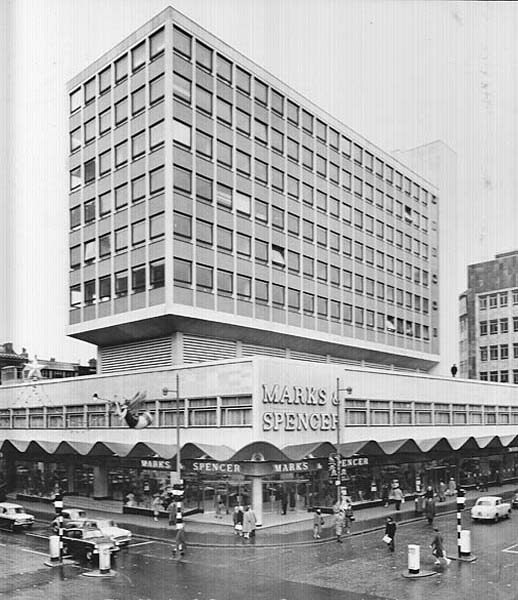
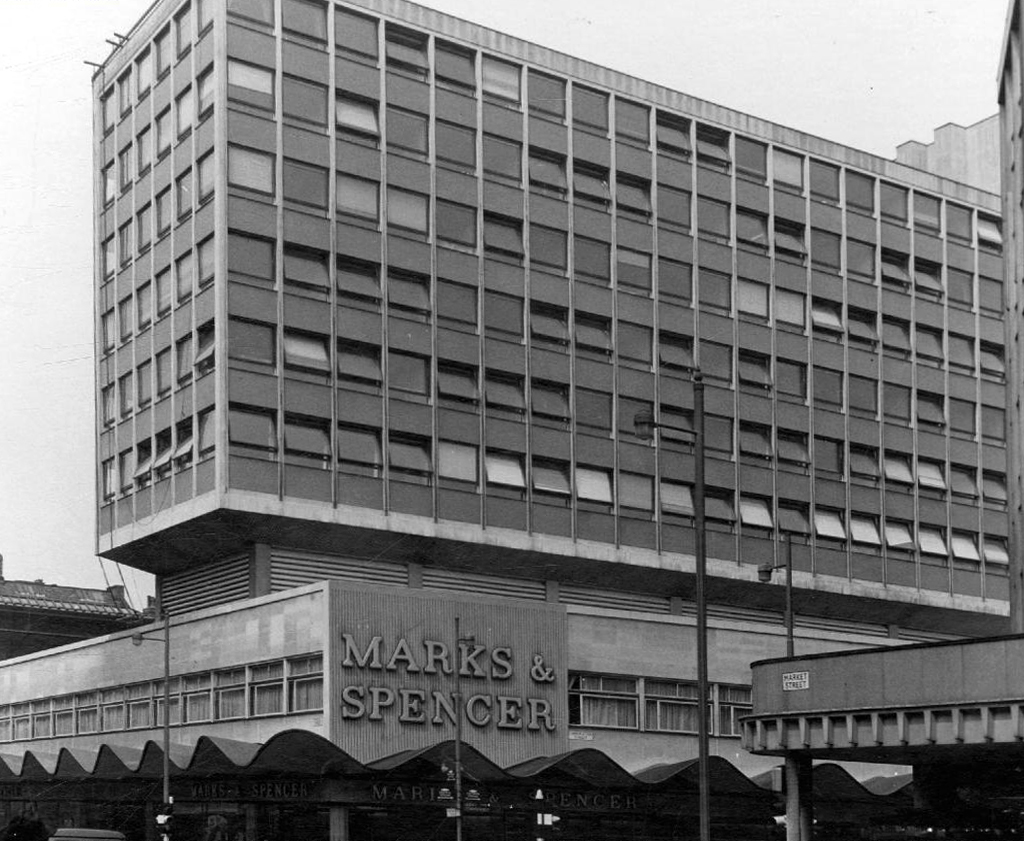
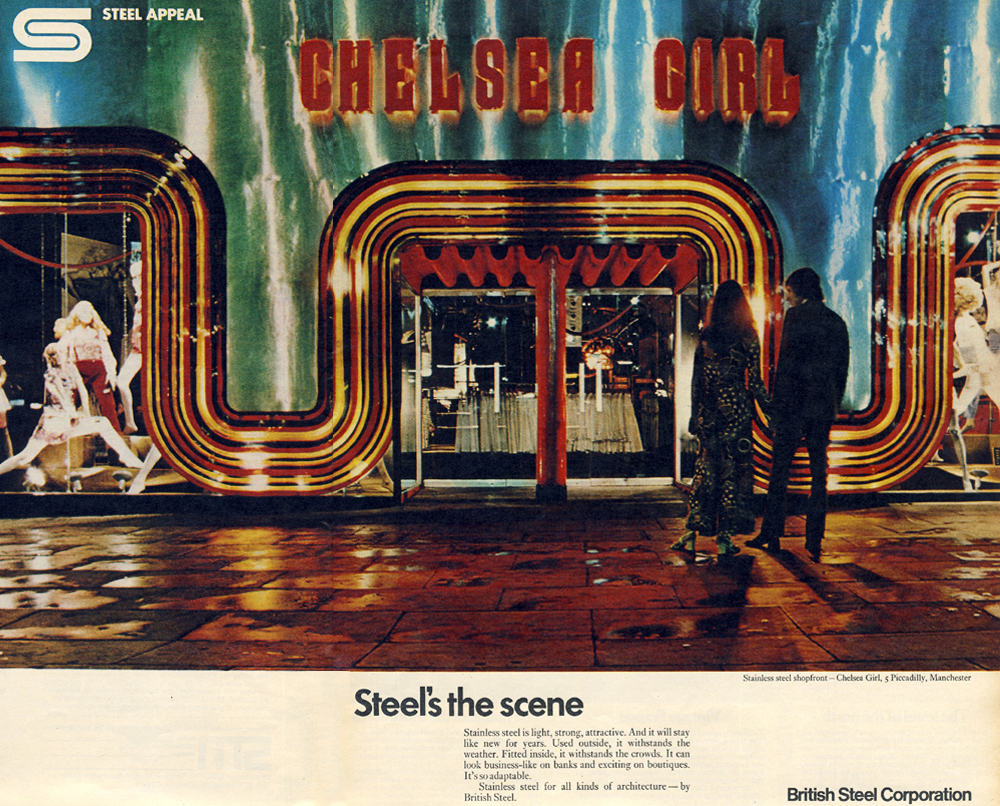
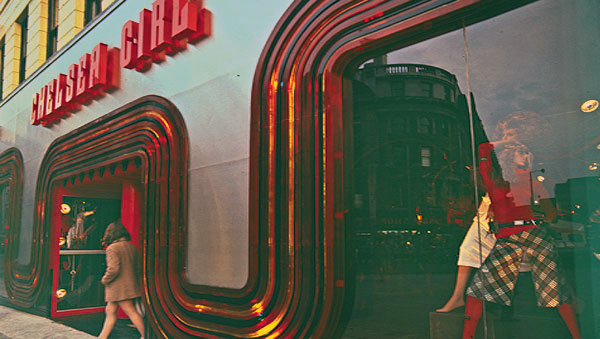
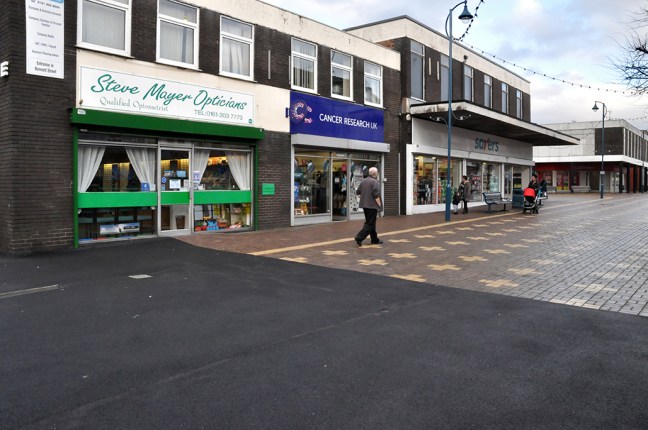
Marks and Spencers and Burton’s both undertook extensive Modernist building in the early 60’s on on the Corporation Street site, neither have survived. The Chelsea Girl steel frontage, UCP Restaurant beloved of the Manchester Modernists, Kardomah Café and countless other landmarks are long gone. Lewis’s has become Primark.
The double indignity of the Arndale and a bomb have changed things forever.
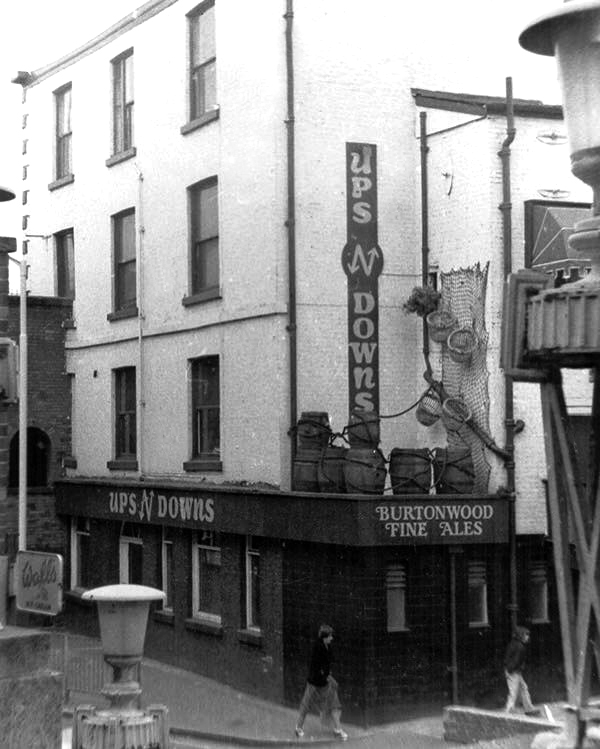
Ups ‘n’ Downs, it’s had its share of ups and downs.
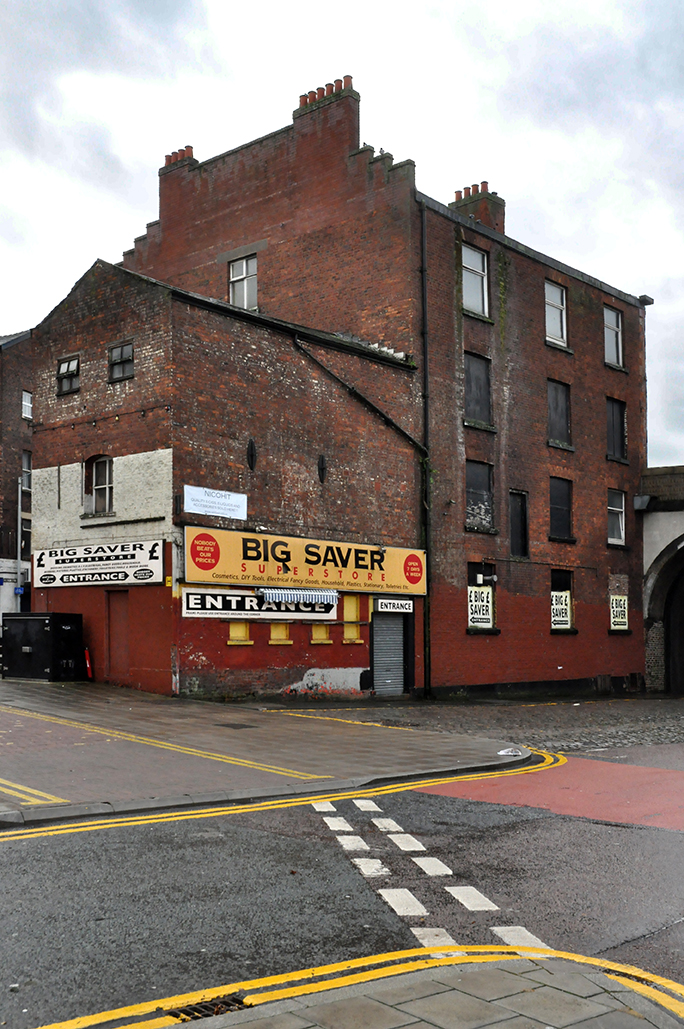
Quite literally – the former Wellington Inn has an upside facing onto the busy A6 Wellington Road, and a downside opening onto Mersey Square.
Its fortunes similarly something of a rollercoaster ride, from busy town centre pub, to edgy pseudo-club, populated by late night uniformed bus drivers, swaying on the metre square dance floor.
Latterly something of a disco party bus, going nowhere fast.
Known variously as Glitz, Bentley’s and the Bees Knees.
Finally, partial occupation by a forlorn pound shop – defying economic trends by closing.
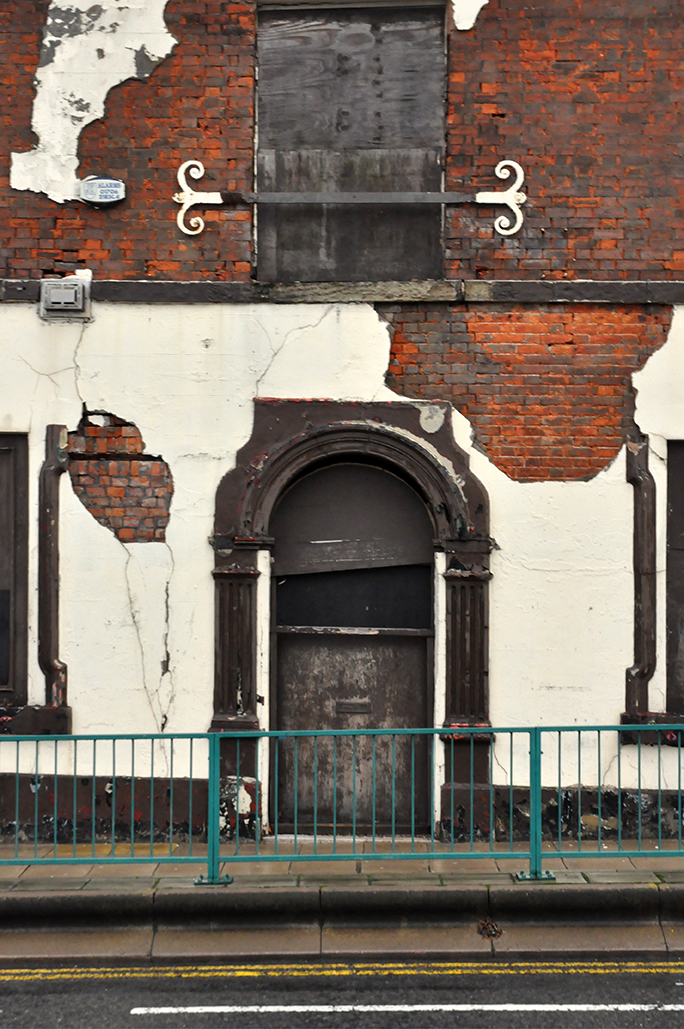
An architectural curiosity and a blank faced, gap toothed greeting to the Town’s visitors, there is talk of conversion to flats under the council’s stewardship.
127 Dale Street, corner of North Street, just by the Ship and Mitre, across from the Queensway Tunnel entrance?
Yes that’s the one, Liverpool’s most remarkable, least remarked upon building.
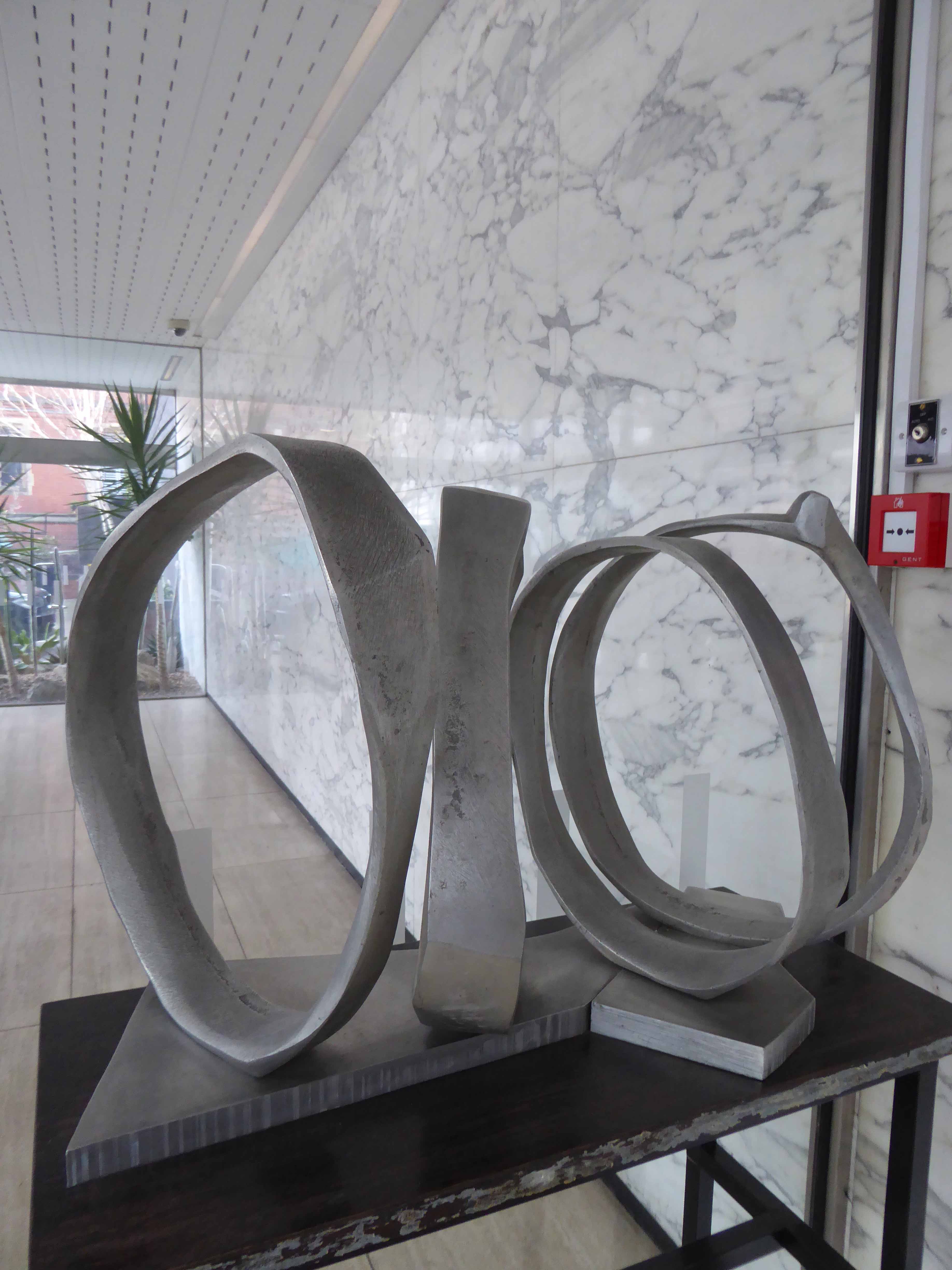
So clean, so modern, so new, a delightful grid of materials, glass, steel, polished marble, brick and patinated beaten metal.
Stand back and wonder, move in and sigh with delight.
As I went about my snappy business, I was approached by a local – Mark.
Surprised by my curiously, up close, slow scrutiny of the building, he went on to explain that he was familiar with the architect Derek Jones who had worked on the design for Ormrod and Partners in 1964.
Formerly home to Higson’s Brewery offices, now housing the Merseyside Museums administration and design teams, the exterior is largely intact.


































 Modern Mooch