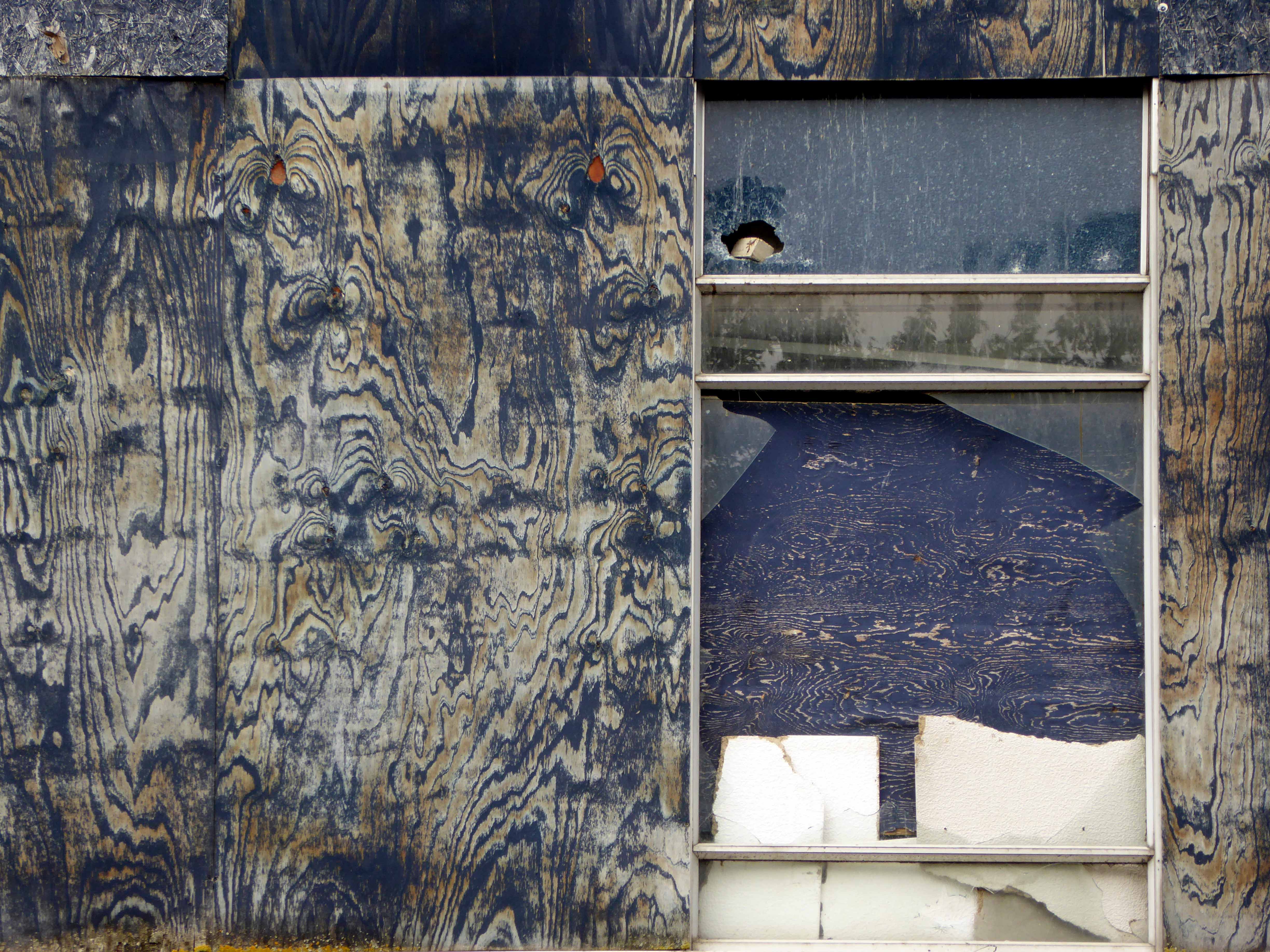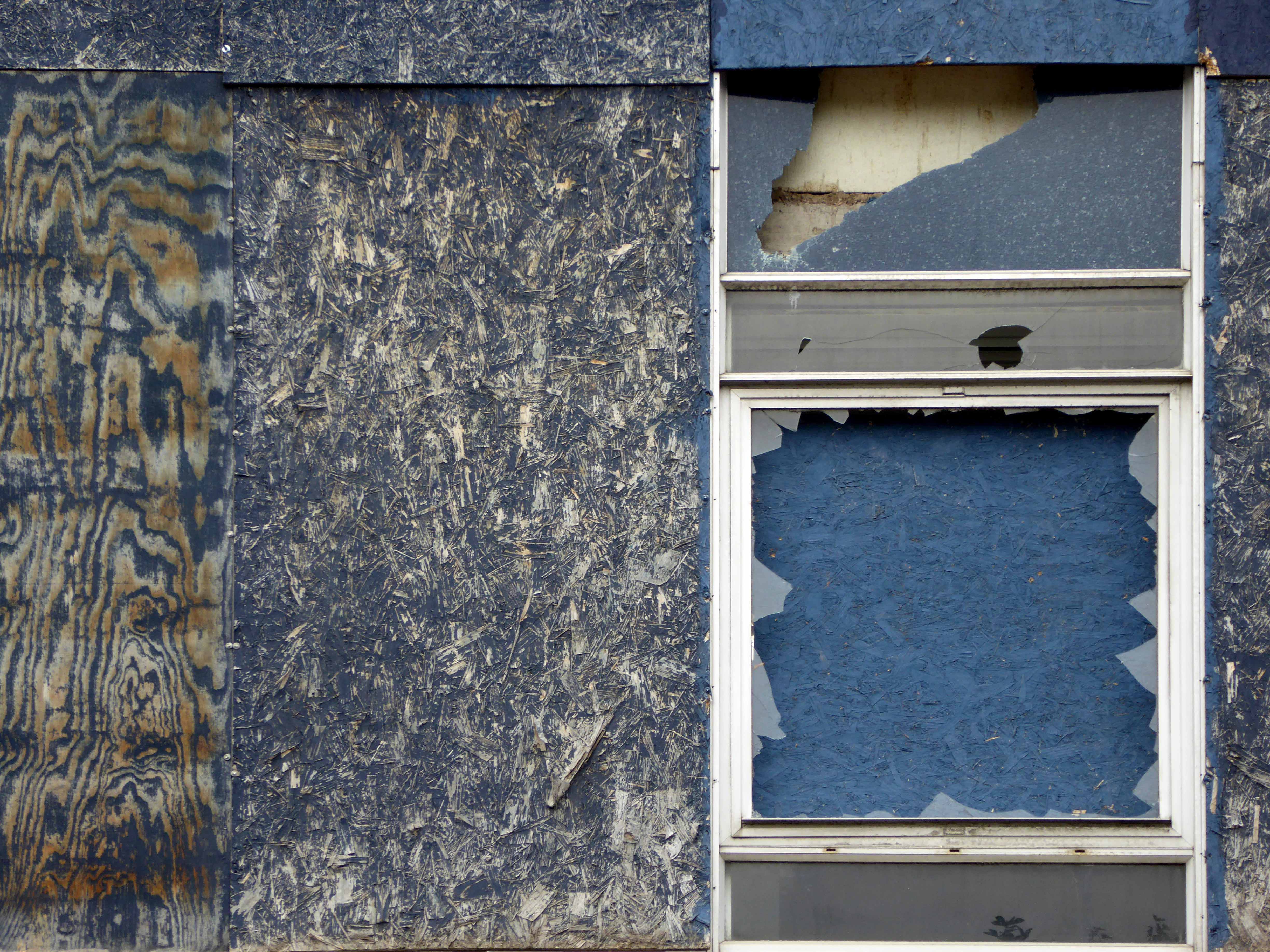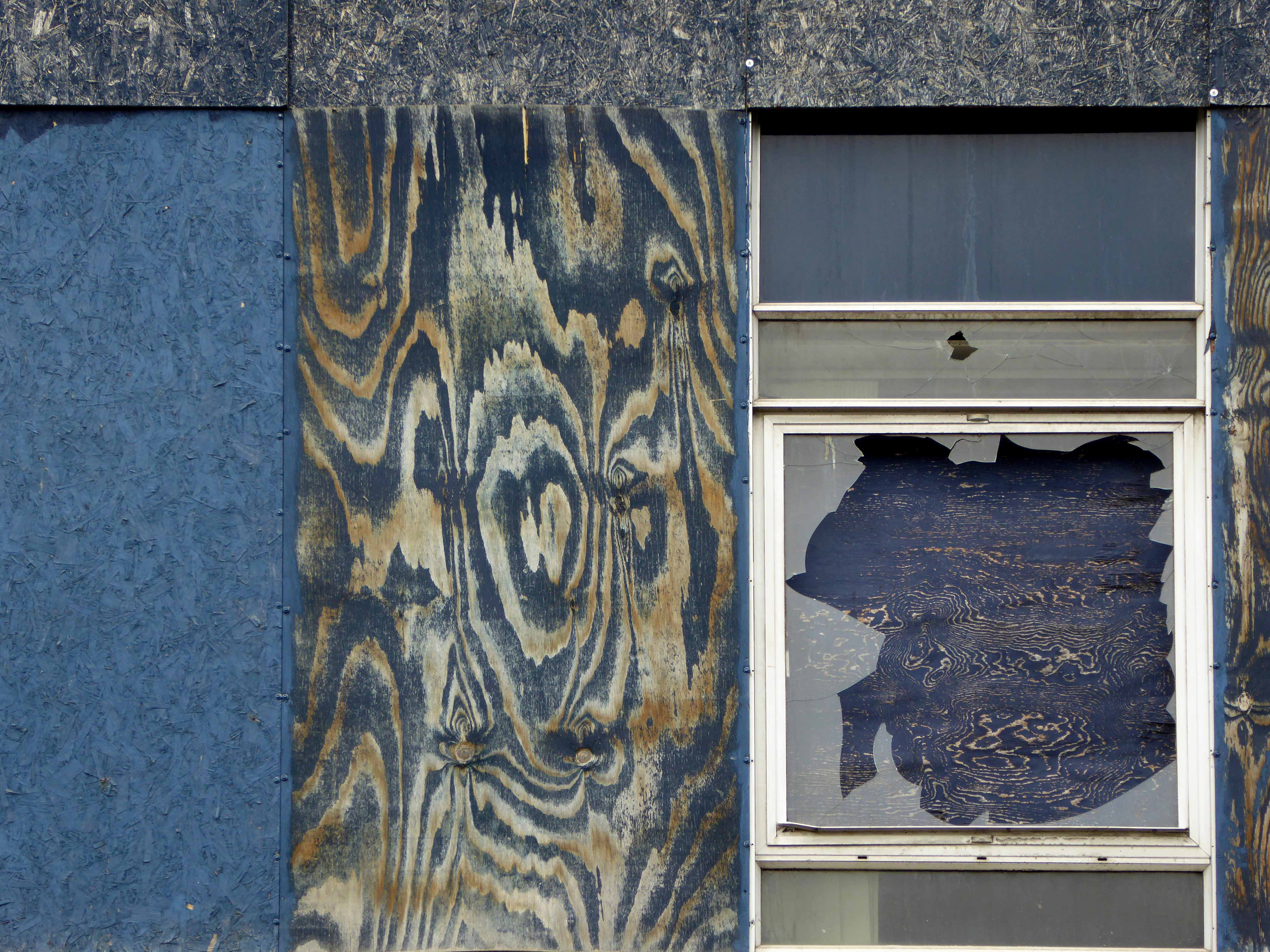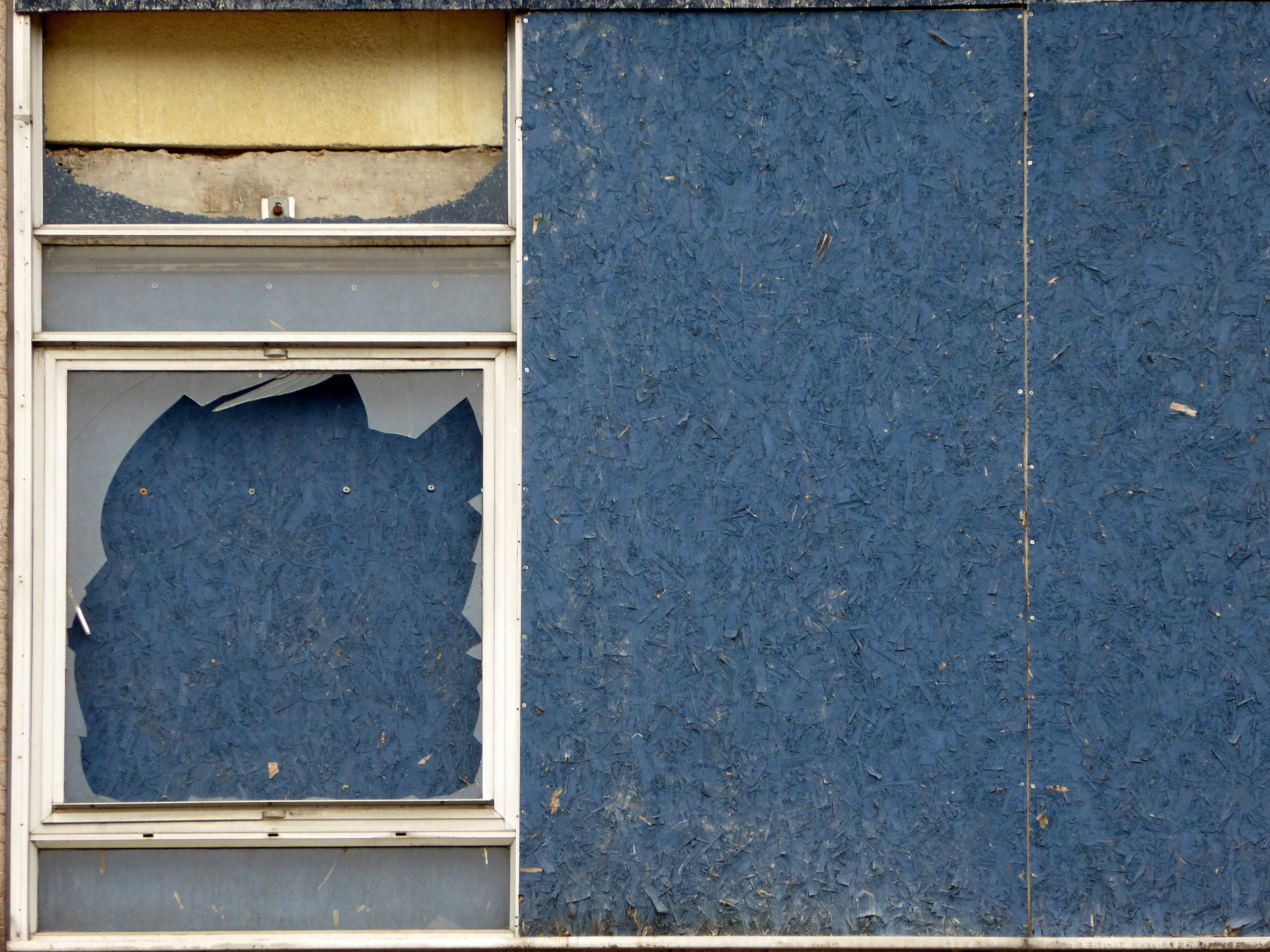
Several Yorkshire Reservoirs

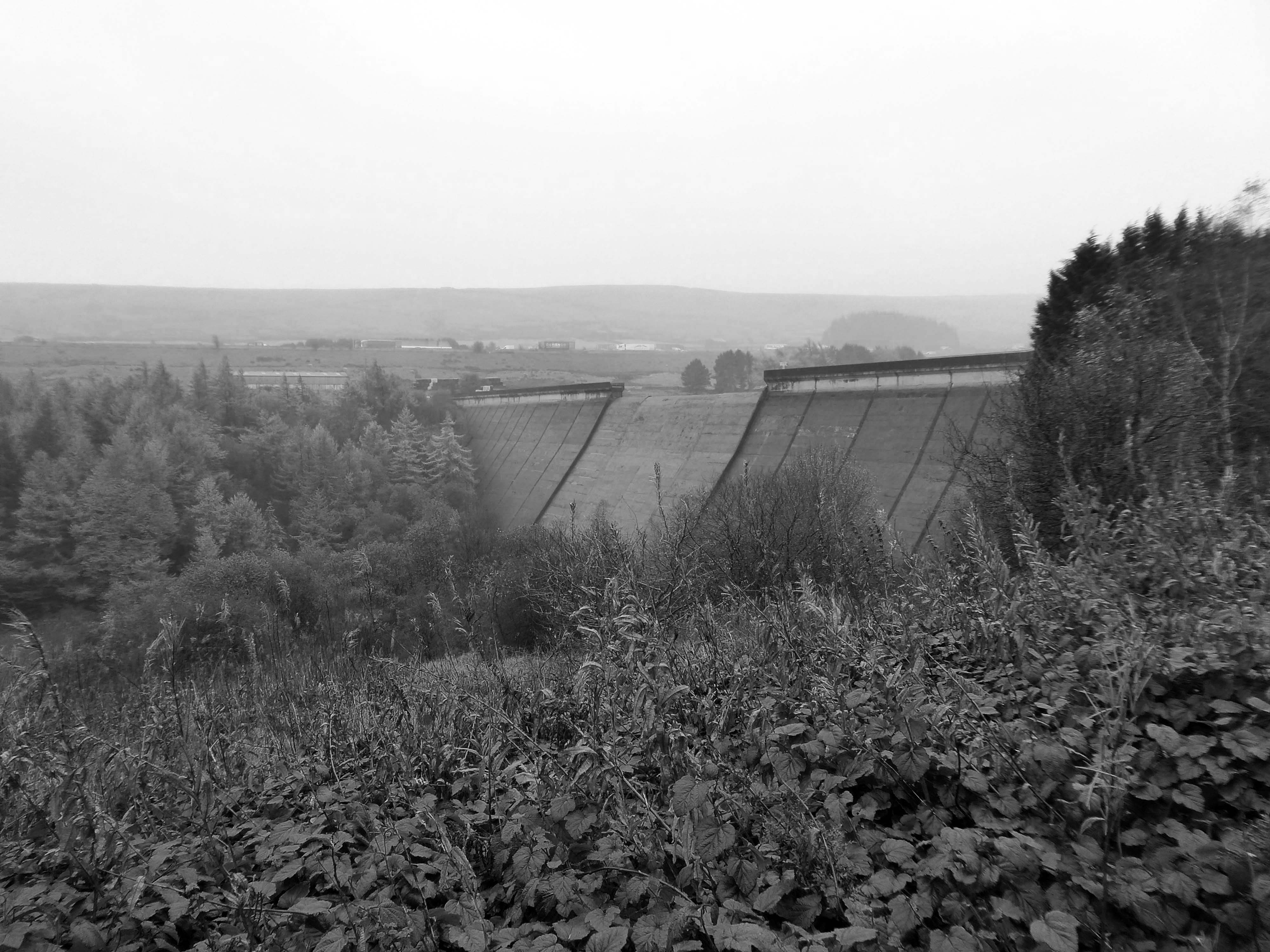
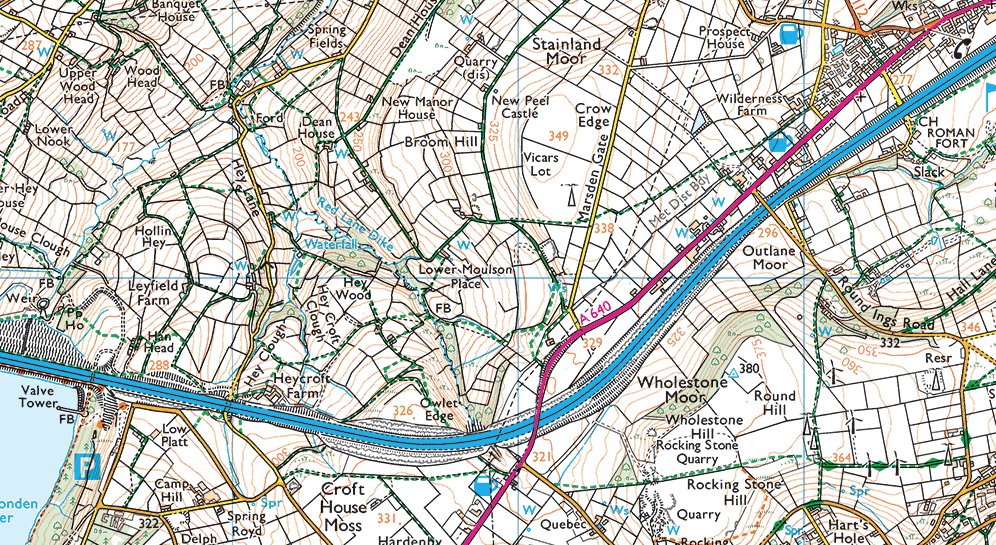
To begin at the beginning, to begin at Baitings Reservoir.
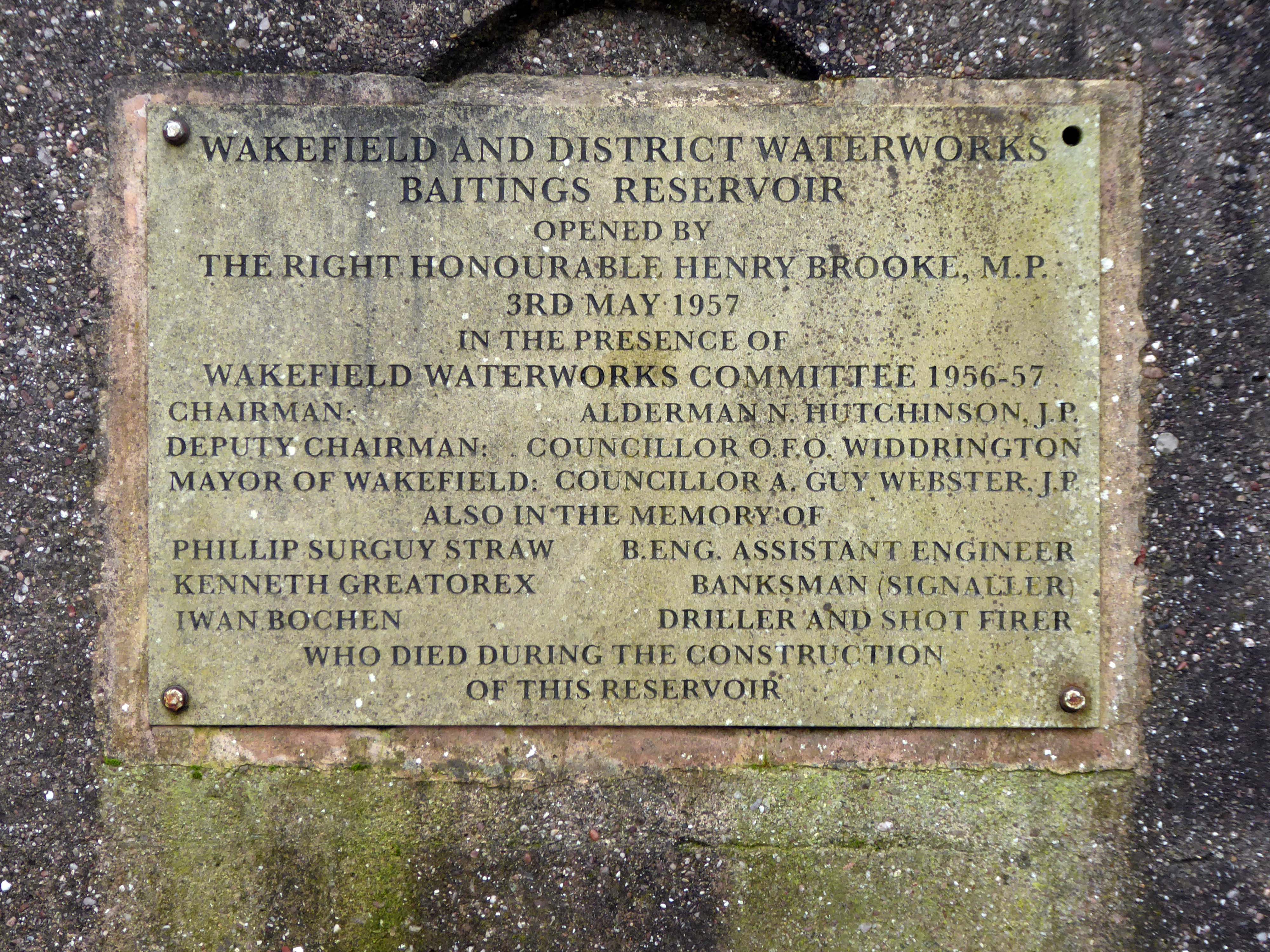
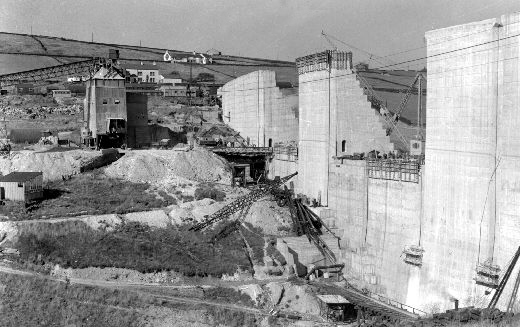
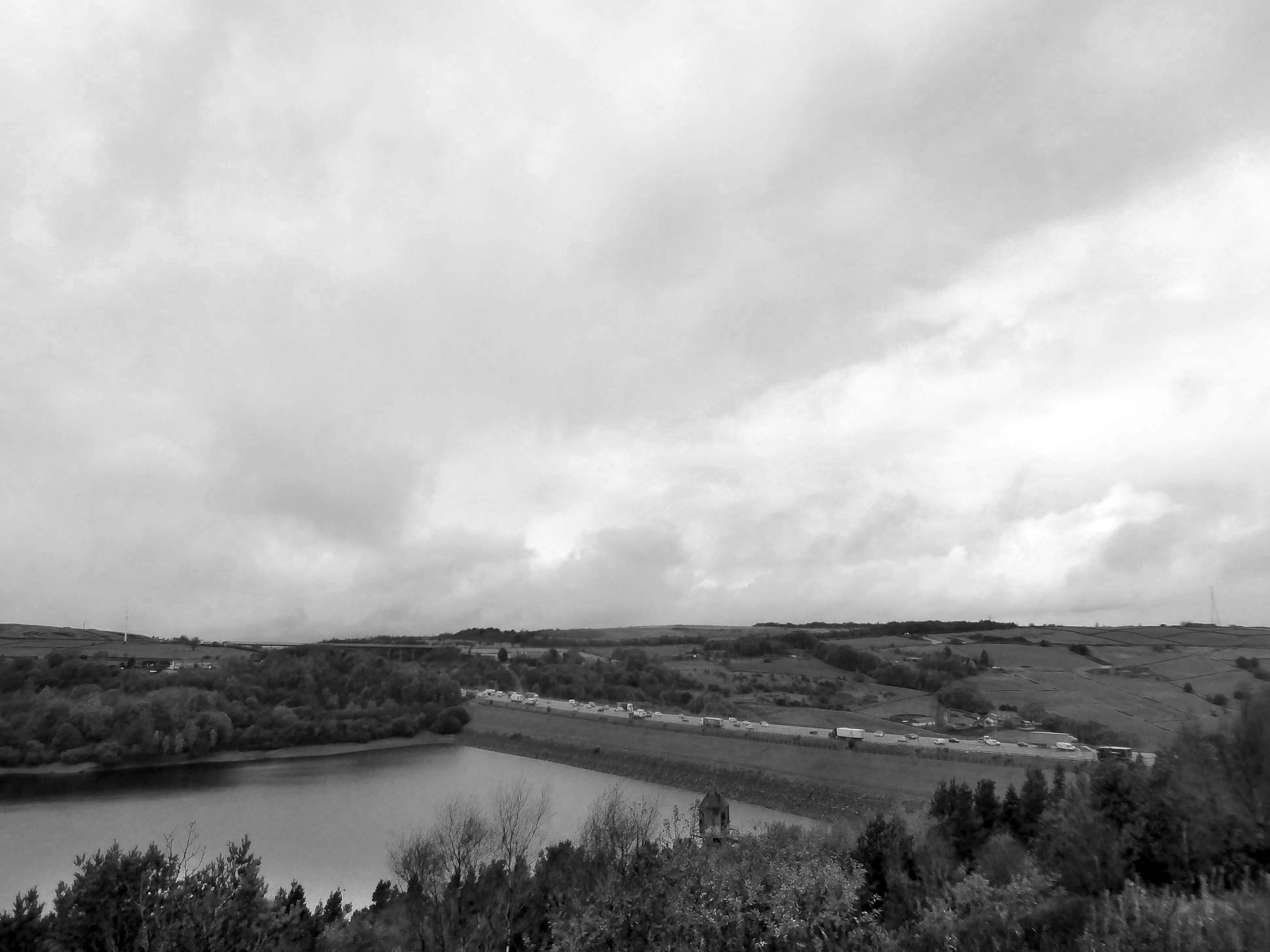
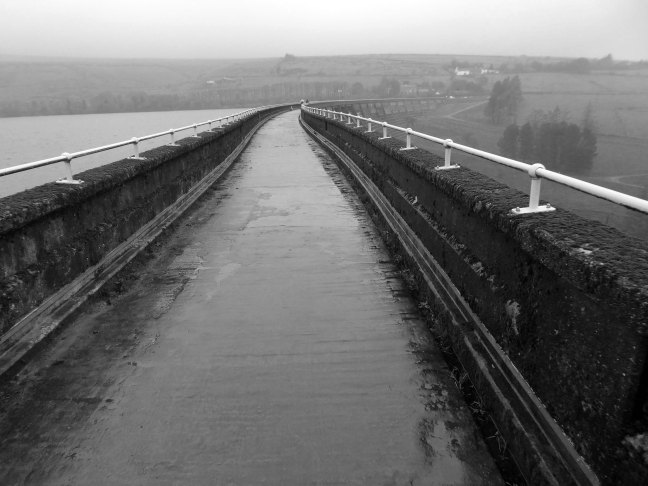
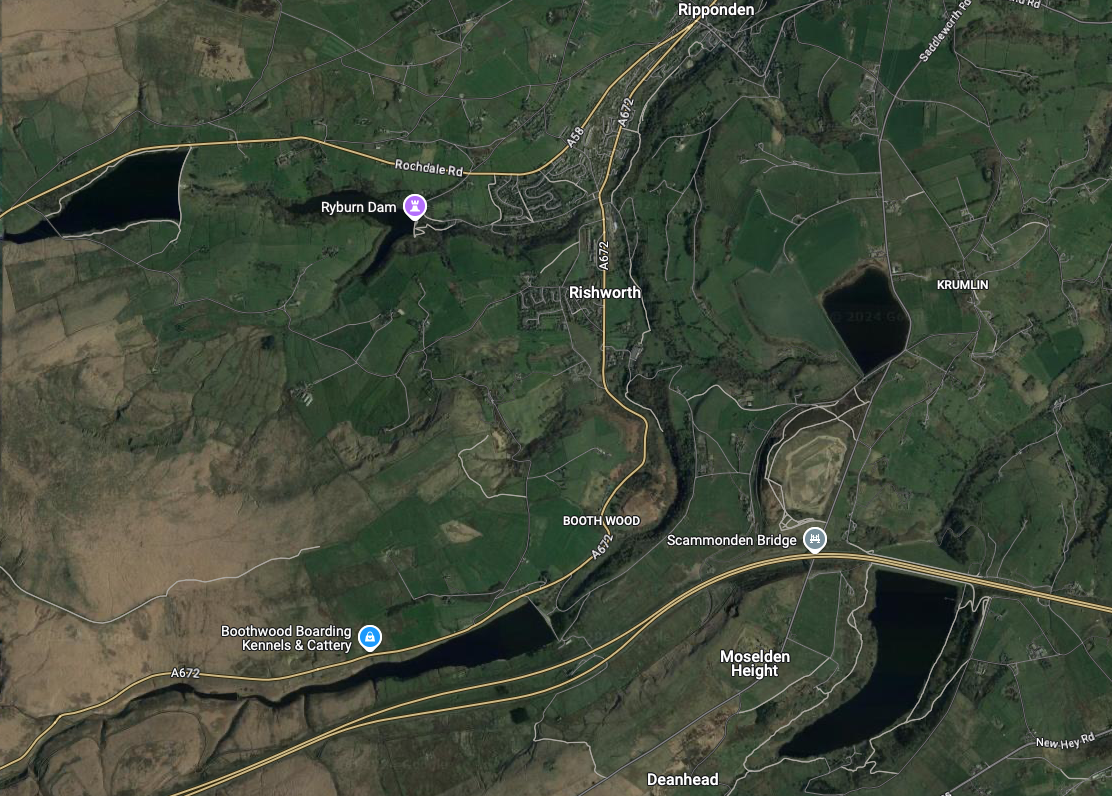
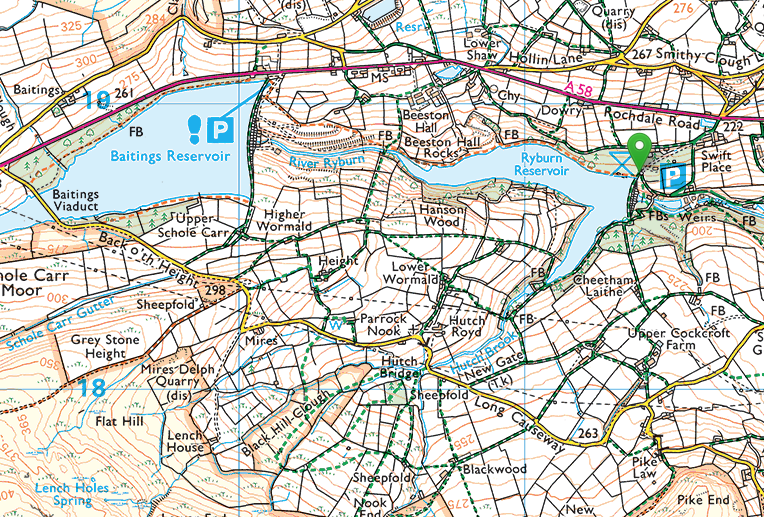
Wakefield Corporation Waterworks started impounding the valley of the River Ryburn in the 1930s, with Ryburn Reservoir being completed in 1933. Construction on Baitings took place 20 years later with completion in 1956.  Baitings Bridge, on an old road linking Yorkshire and Lancashire, was to be flooded under the reservoir so a concrete viaduct was built. During spells of very hot weather and drought conditions, the old packhorse bridge is revealed.
Wakefield Express: 31st August 1955

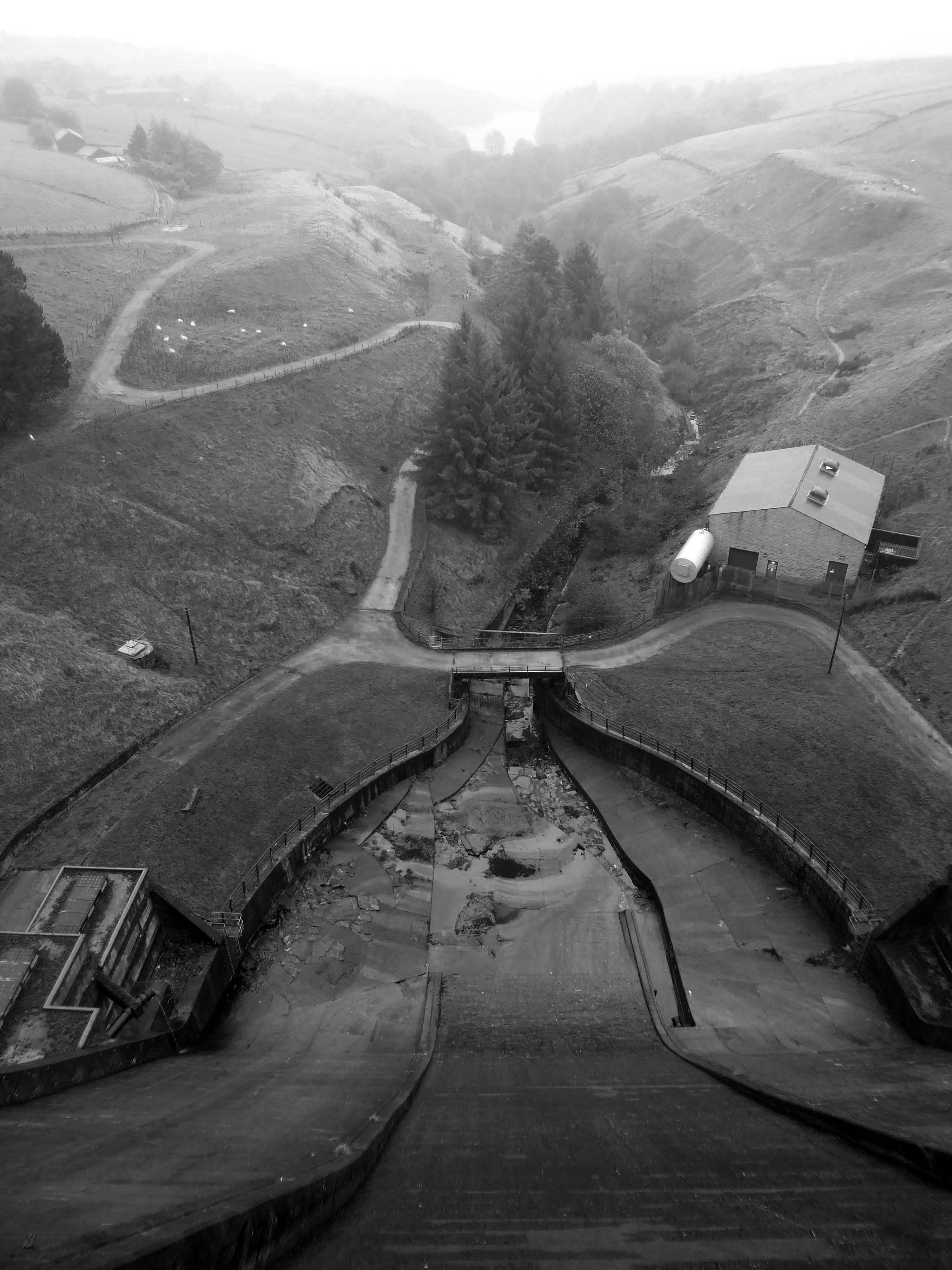
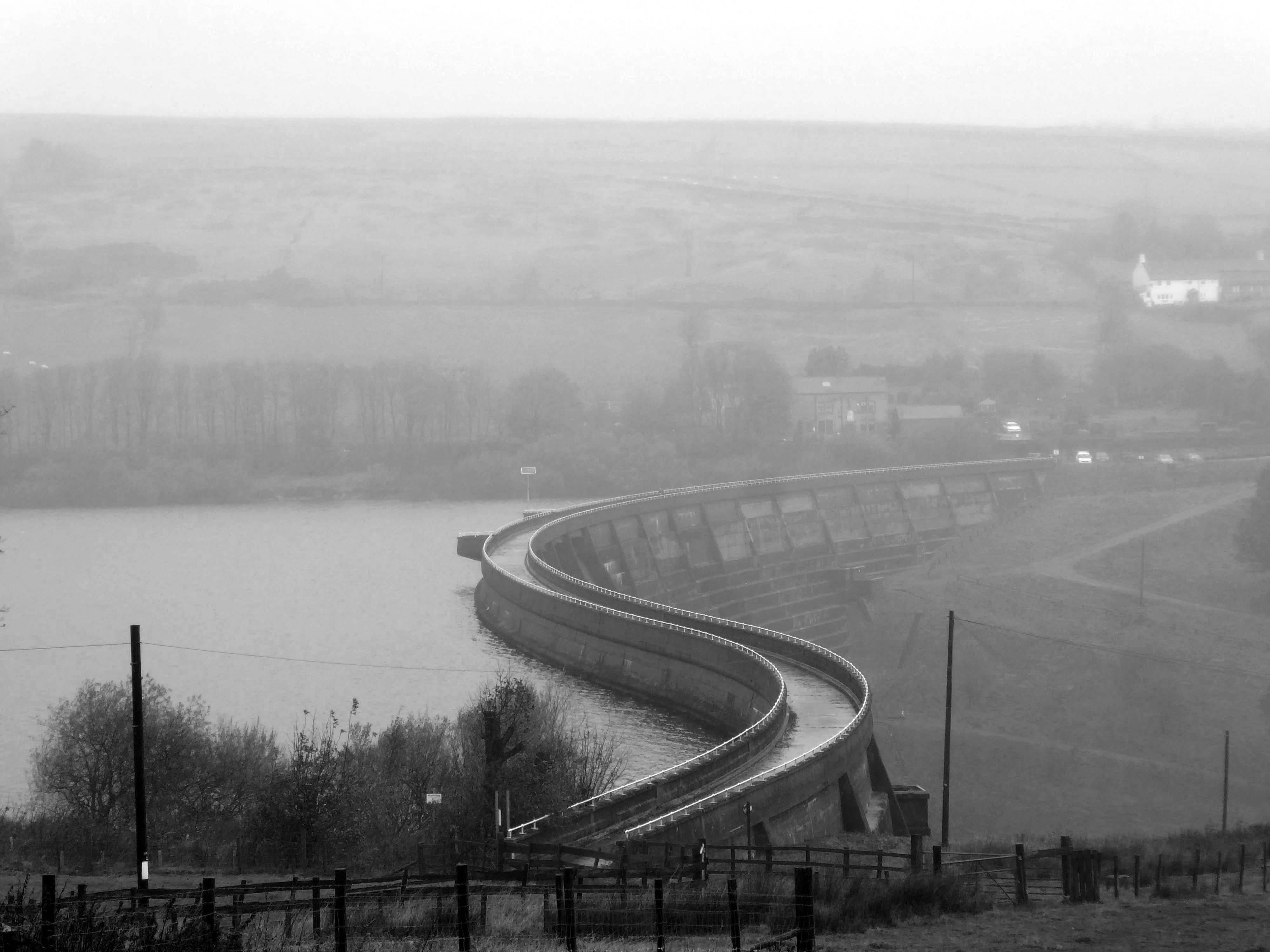
The dam head is a curved structure that is 1,540 feet long and over 160 feet high. The reservoir covers 59 acres and has a catchment of 1,830 acres , and when it is full, it holds over 113,000,000 cubic feet of water. The dam took eight years to complete at a cost of £1.4 million, and is located at 840 feet above sea level. A tunnel connects reservoirs in valleys to the north with Baitings to allow for the transfer of water. Manshead Tunnel is 8,000 feet long and was opened in 1962.

Wikipedia

Inconveniently, the footpath to the lower Ryburn Reservoir was closed – we were diverted over the dam.
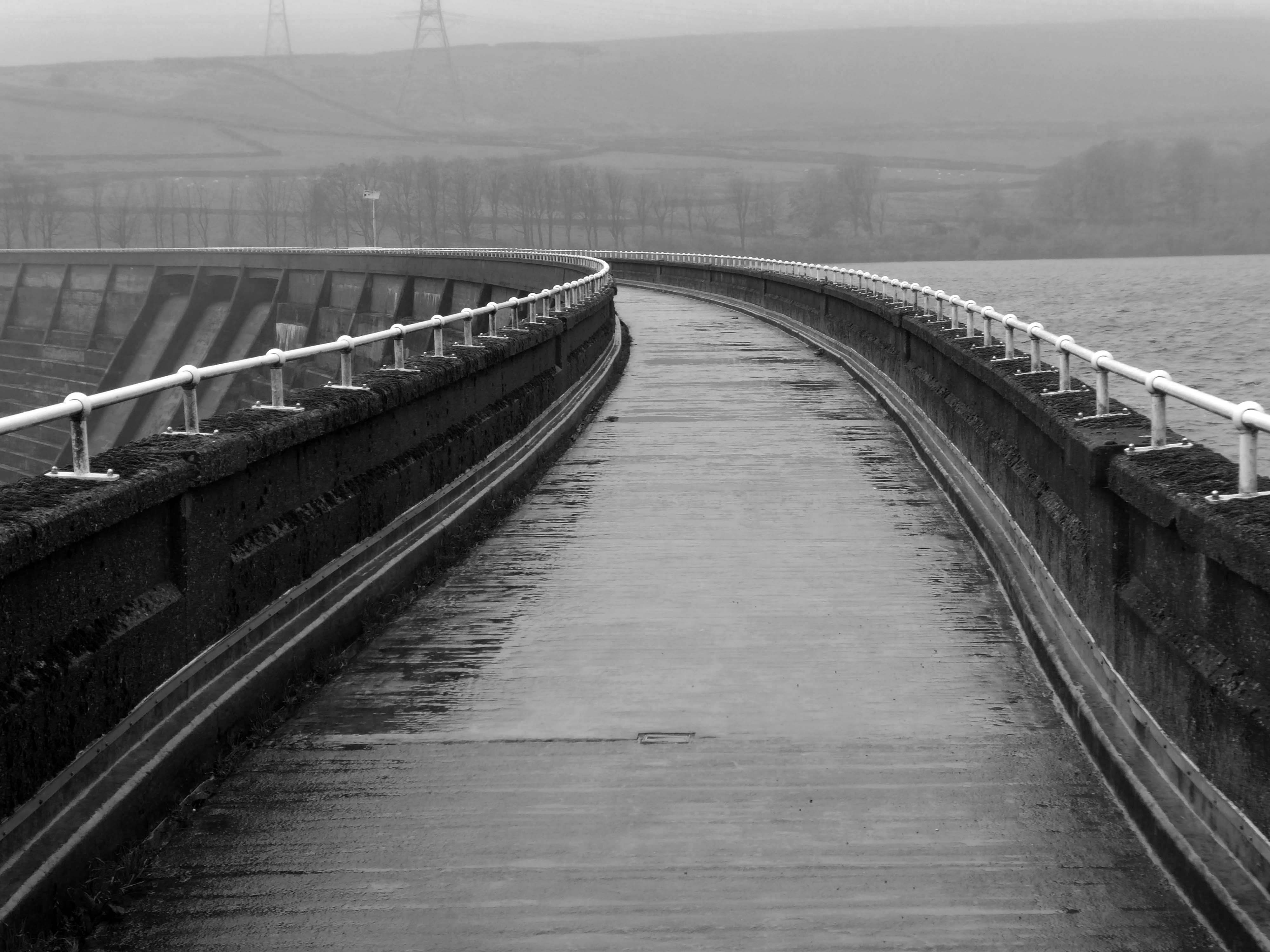
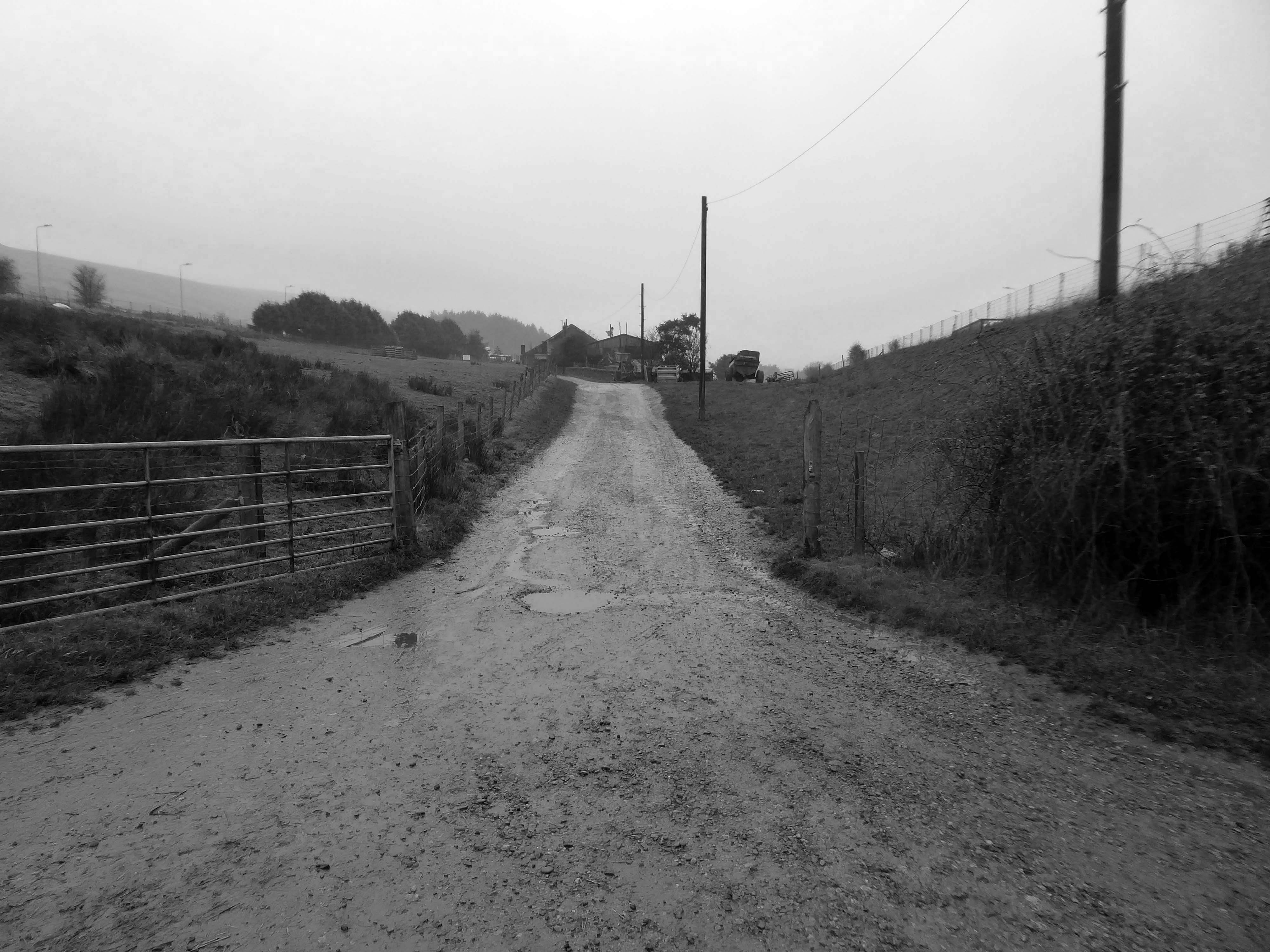
We took the pathway to Booth Wood Reservoir – over Pike End and beyond.
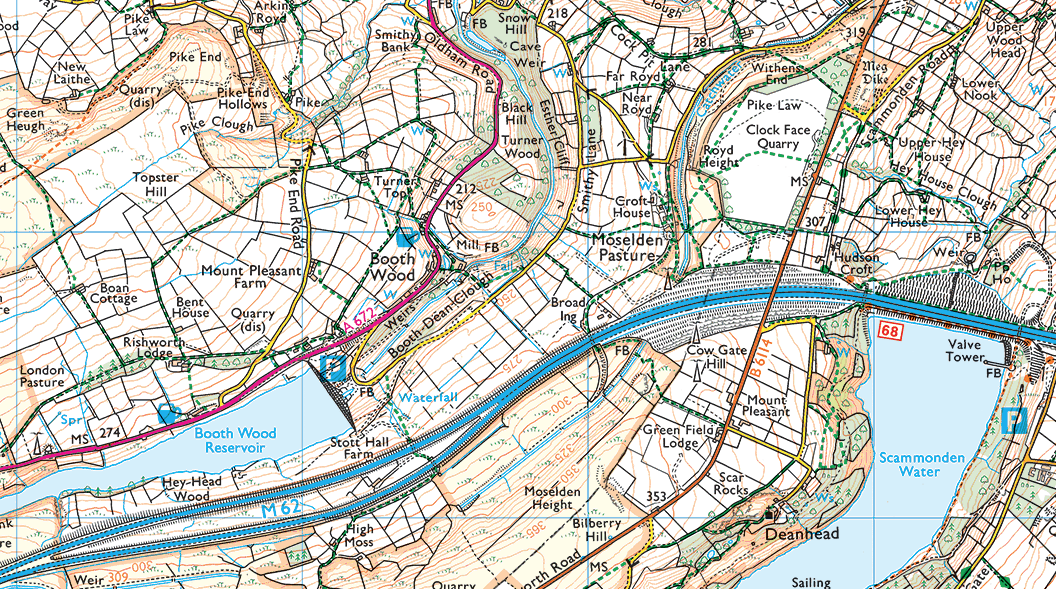
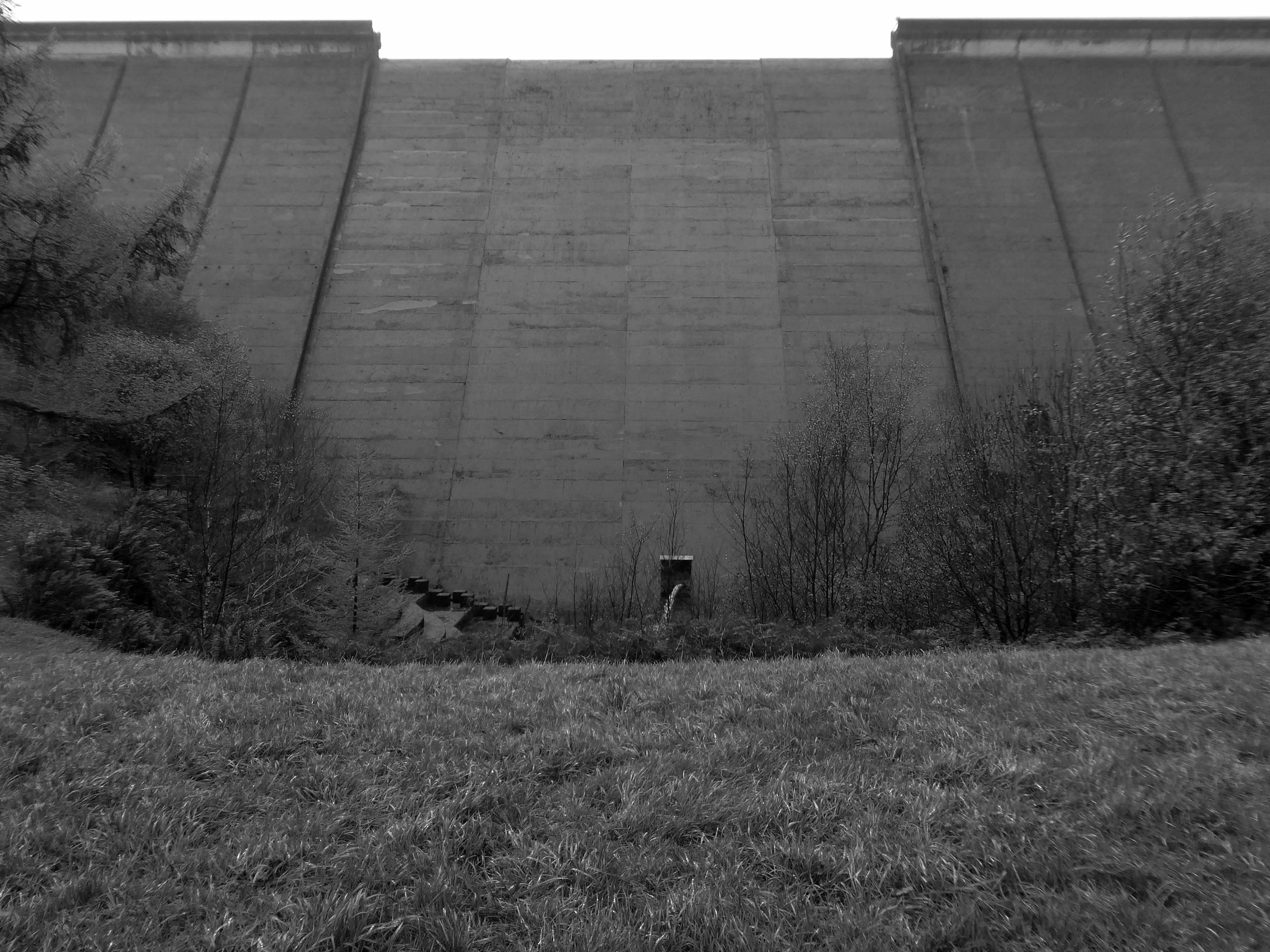
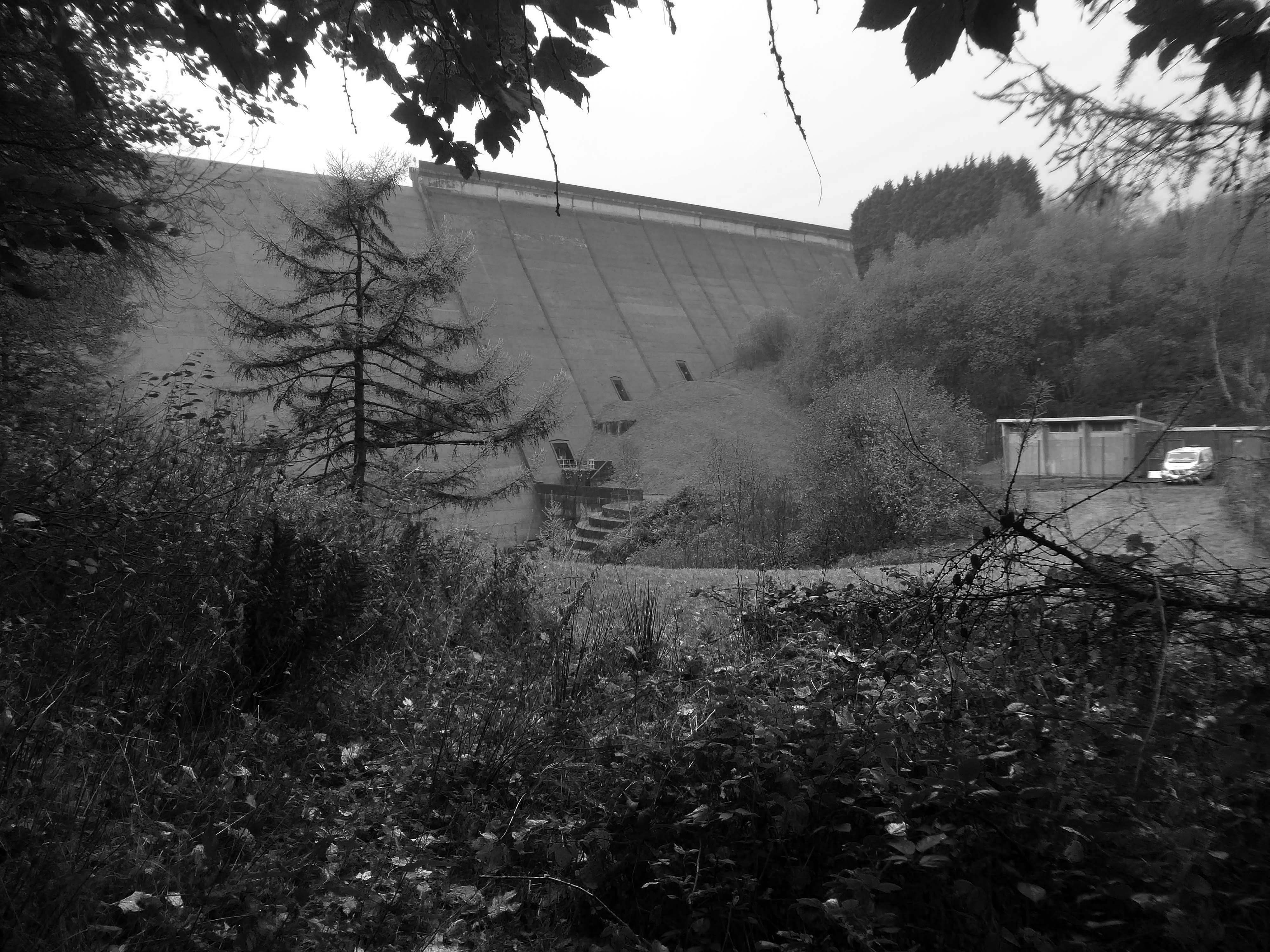
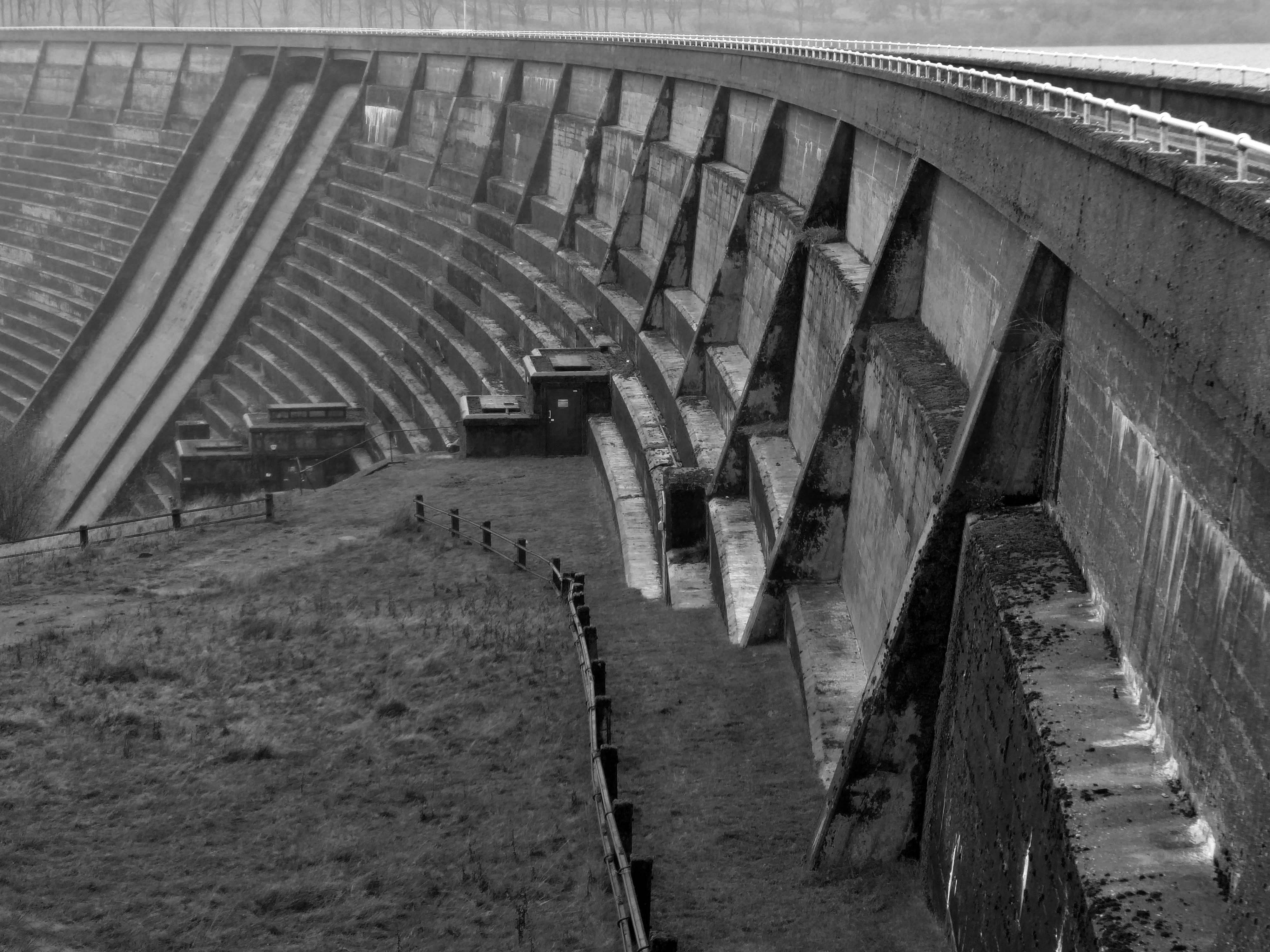
We dropped down beneath the Booth Wood Dam.

Booth Wood Reservoir is a man-made upland reservoir that lies north of the M62 motorway and south of the A672 road near to Rishworth and Ripponden in Calderdale, West Yorkshire. The reservoir was approved for construction in 1966 and completed in 1971.
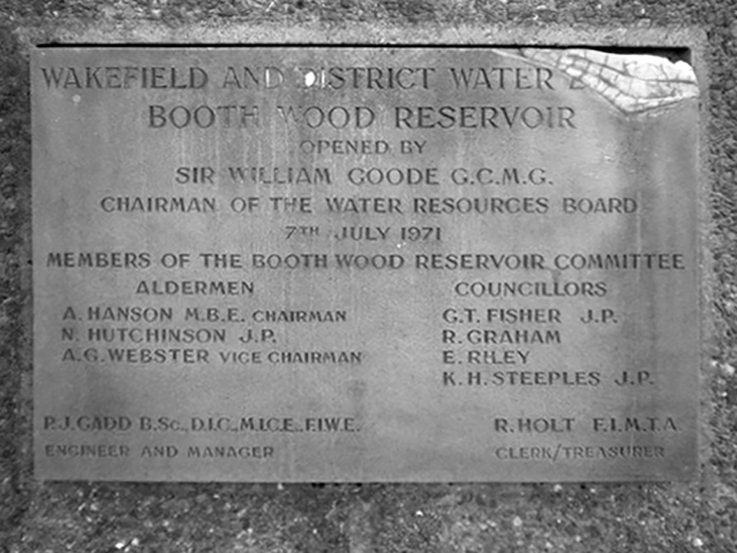
It supplies water to Wakefield.

The reservoir dams the Booth Dean Clough watercourse and takes water directly from the surrounding moorland. It has a plain concrete crest on the dam head which is straight and extends to a length of 1,150 feet and a height of 157 feet.

Wikipedia

Below is a dinky pumping station, tucked beneath the dam.
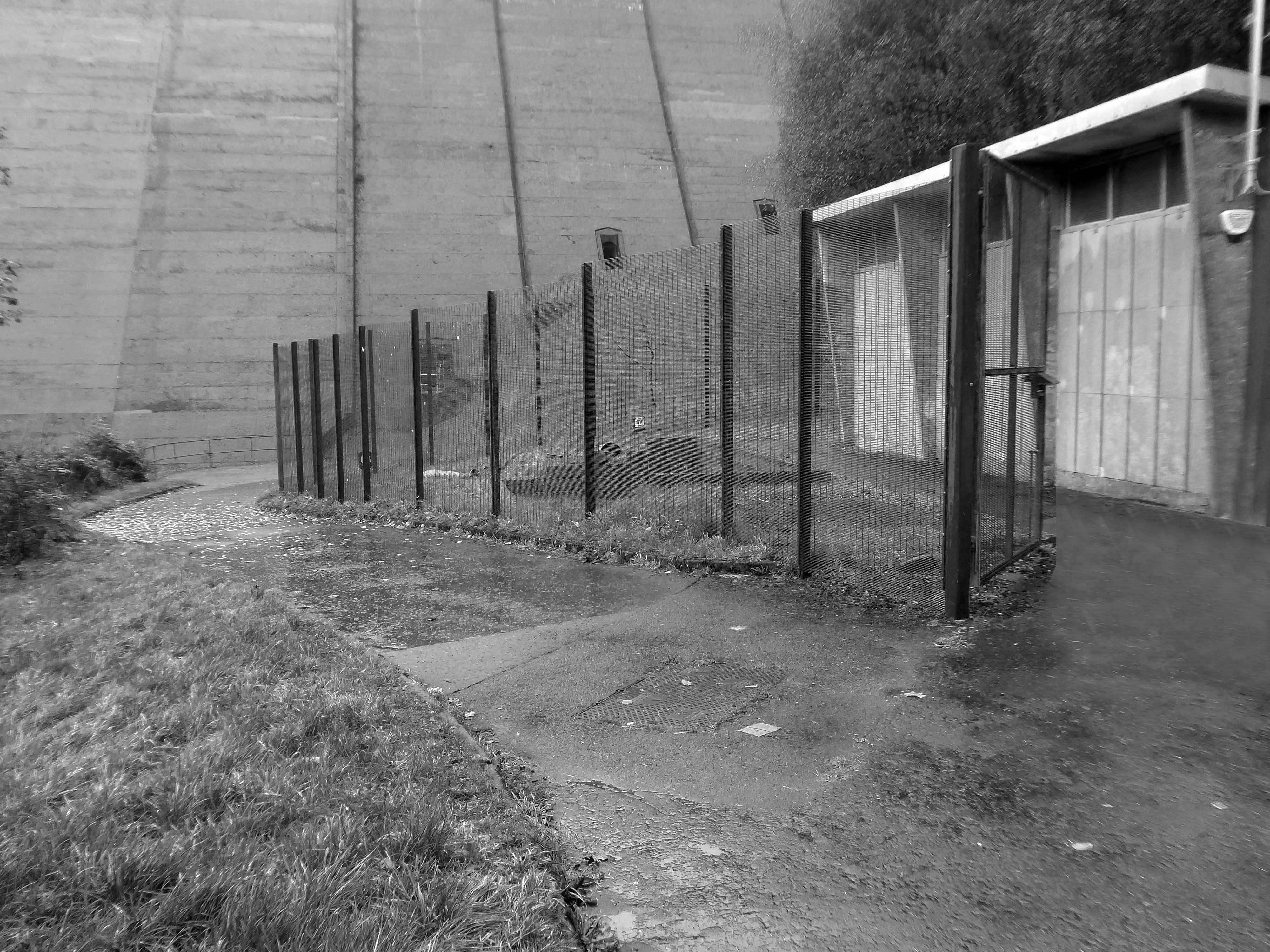
We took a precipitous path through the wood – up to the level of the reservoir.
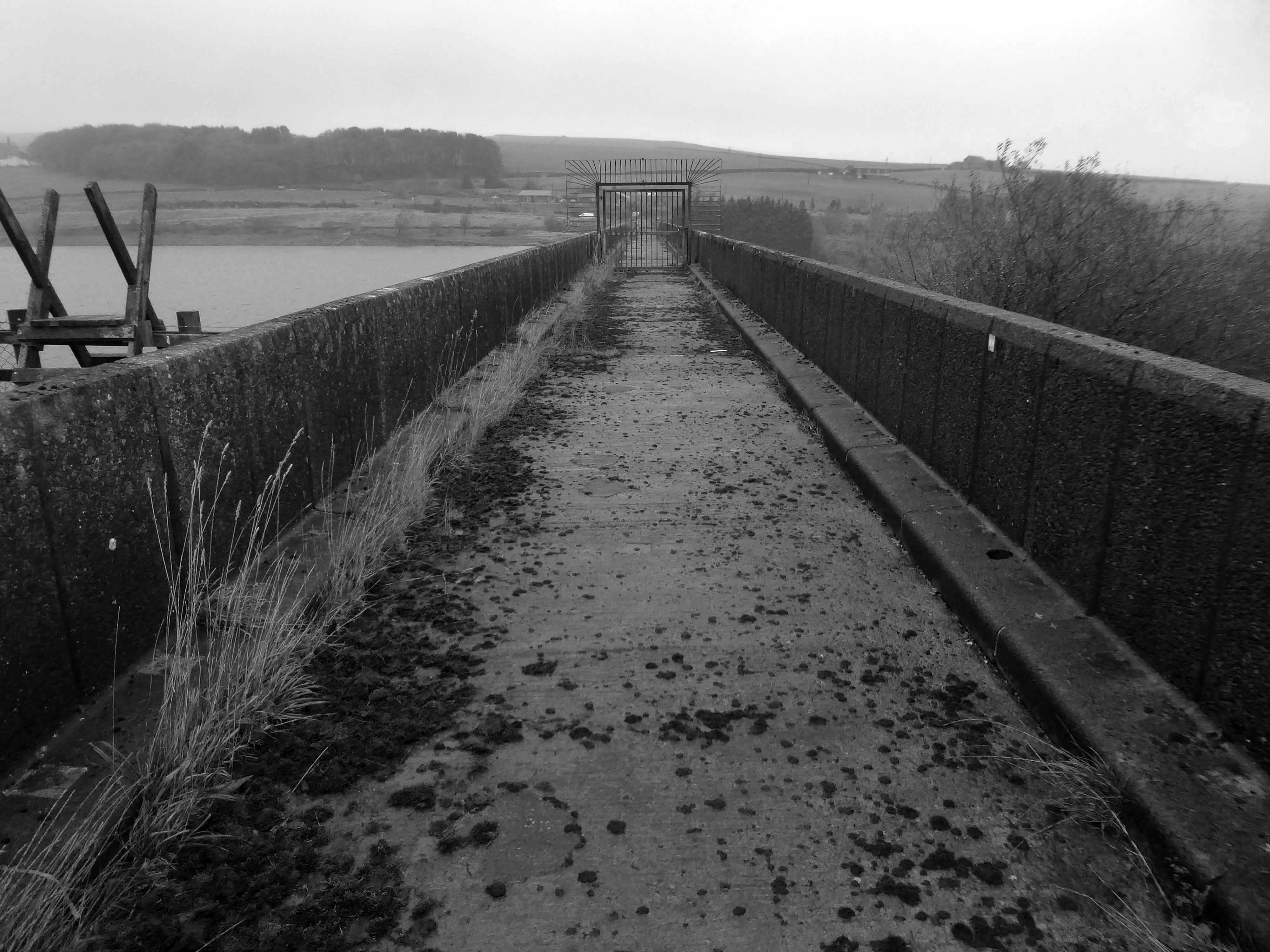
Under the the M62 and past the infamous Stott Hall Farm.

Stott Hall Farm is a farm located between the eastbound and westbound carriageways of the M62 motorway in Calderdale. It is the only farm in the UK situated in the middle of a motorway and was built in the 18th century on Moss Moor. It lies south of Booth Wood Reservoir where the carriageways are separated between junctions 22 and 23. The road divides for much of its length between the Windy Hill and Deanhead cuttings because of the surrounding geography; but a myth persists that it was split because Ken and Beth Wild refused to sell. However, the farm was actually owned by Yorkshire Water at the time the M62 was built.
Wikipedia

We walked over the upland moors to meet with the Catchwater, which formerly fed the Ringstone Edge Reservoir, prior to the construction of the motorway cutting.
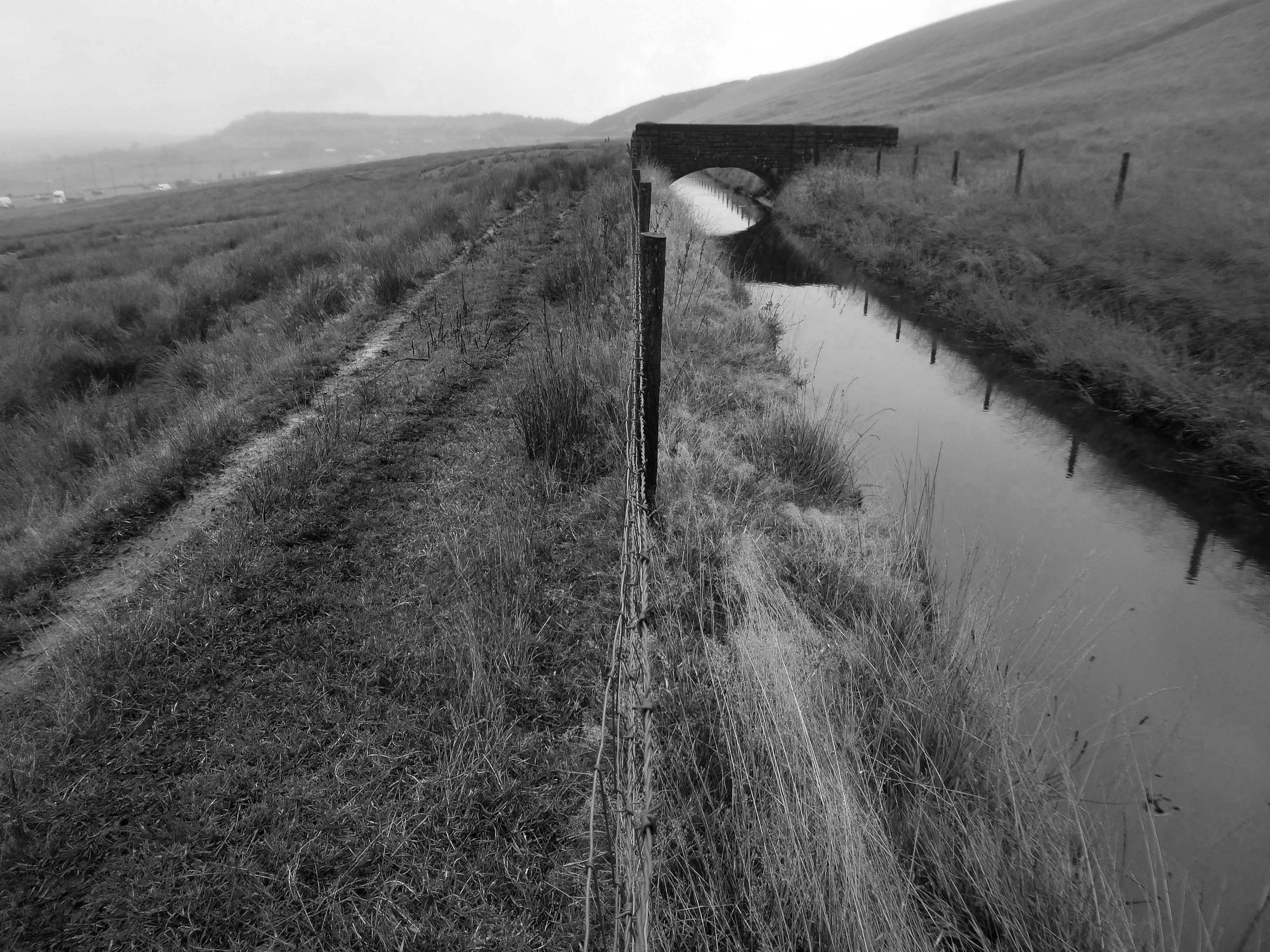
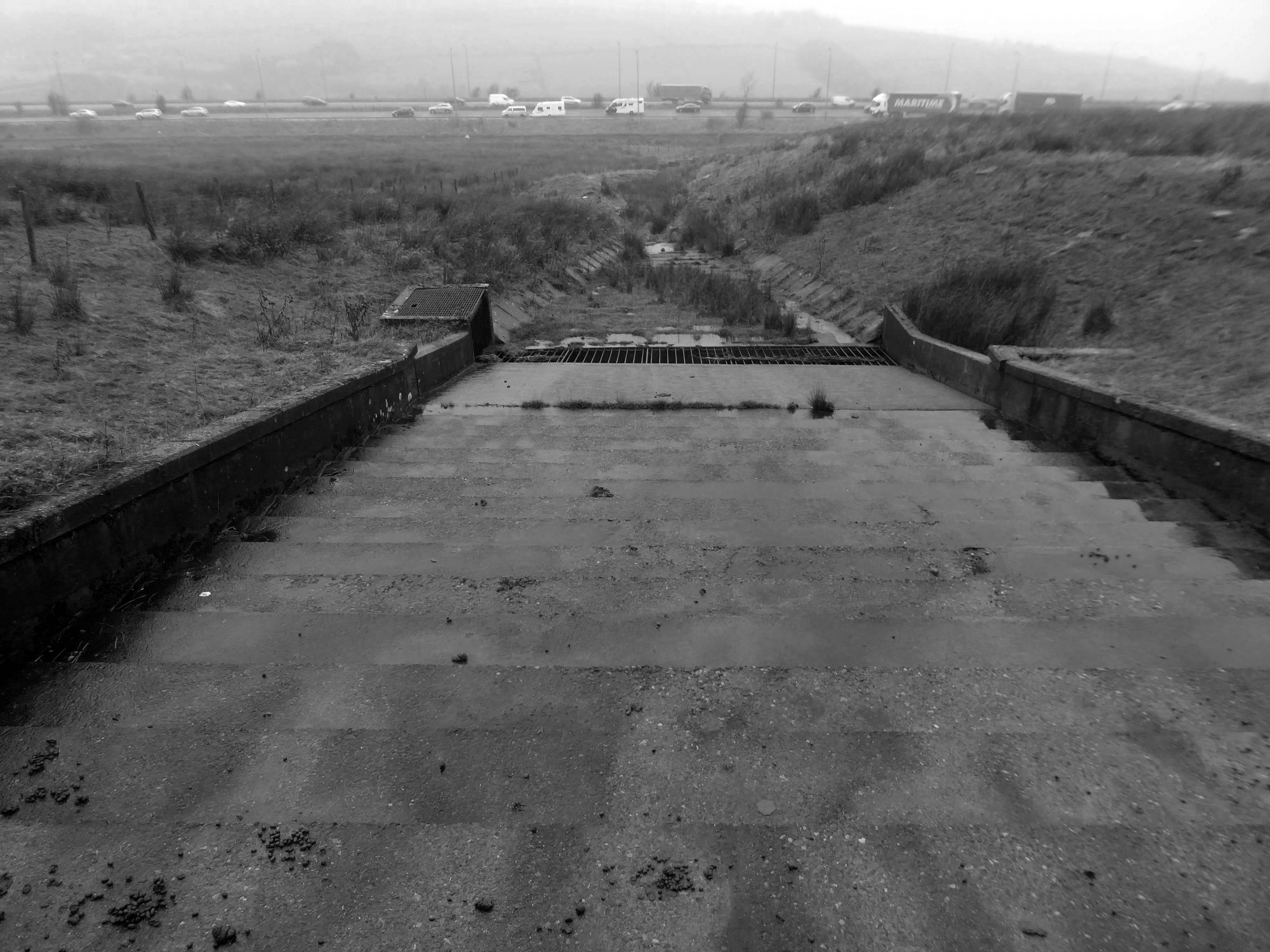
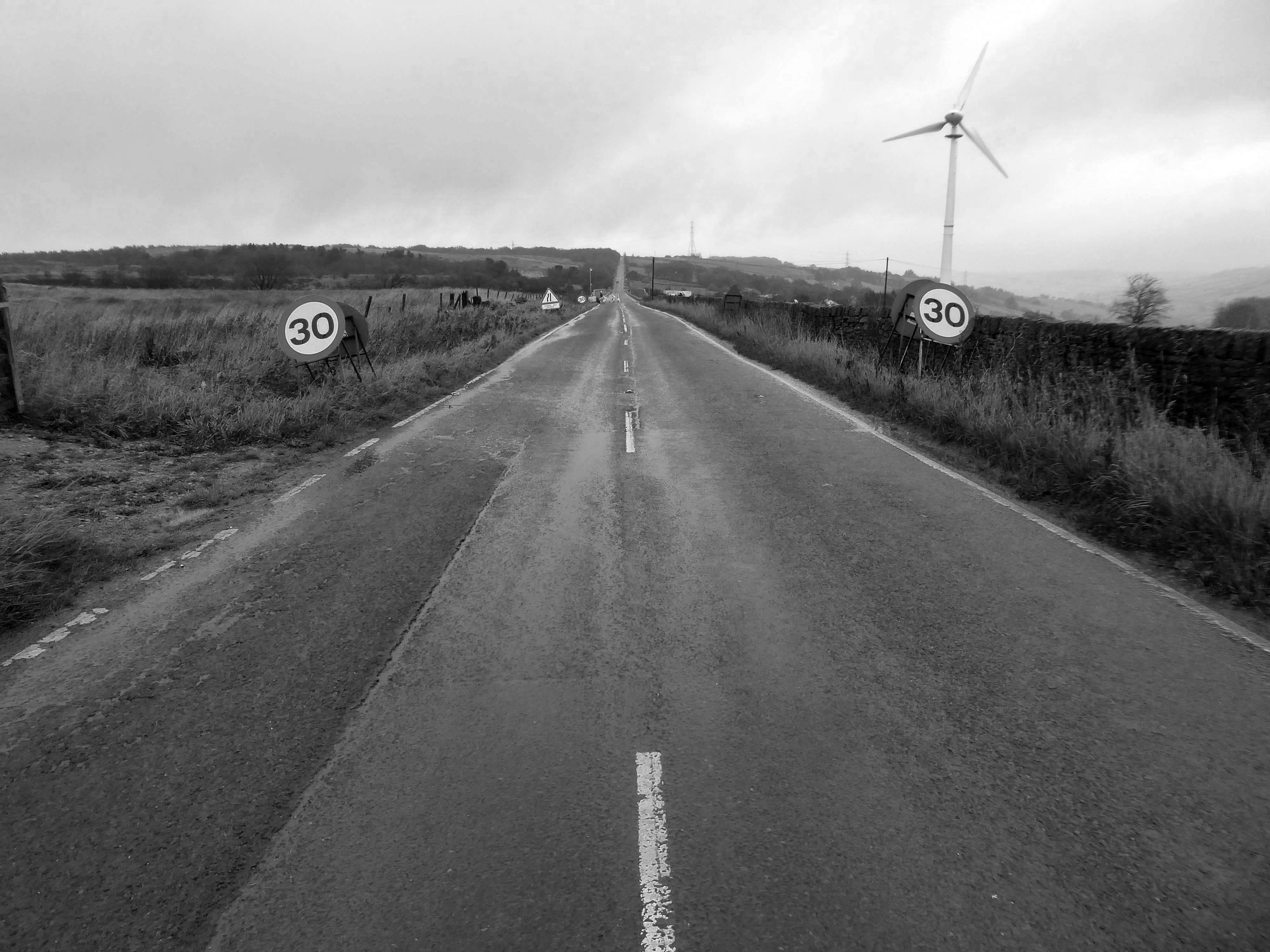
Climbing again over Cow Gate Hill to meet the Saddleworth Road.
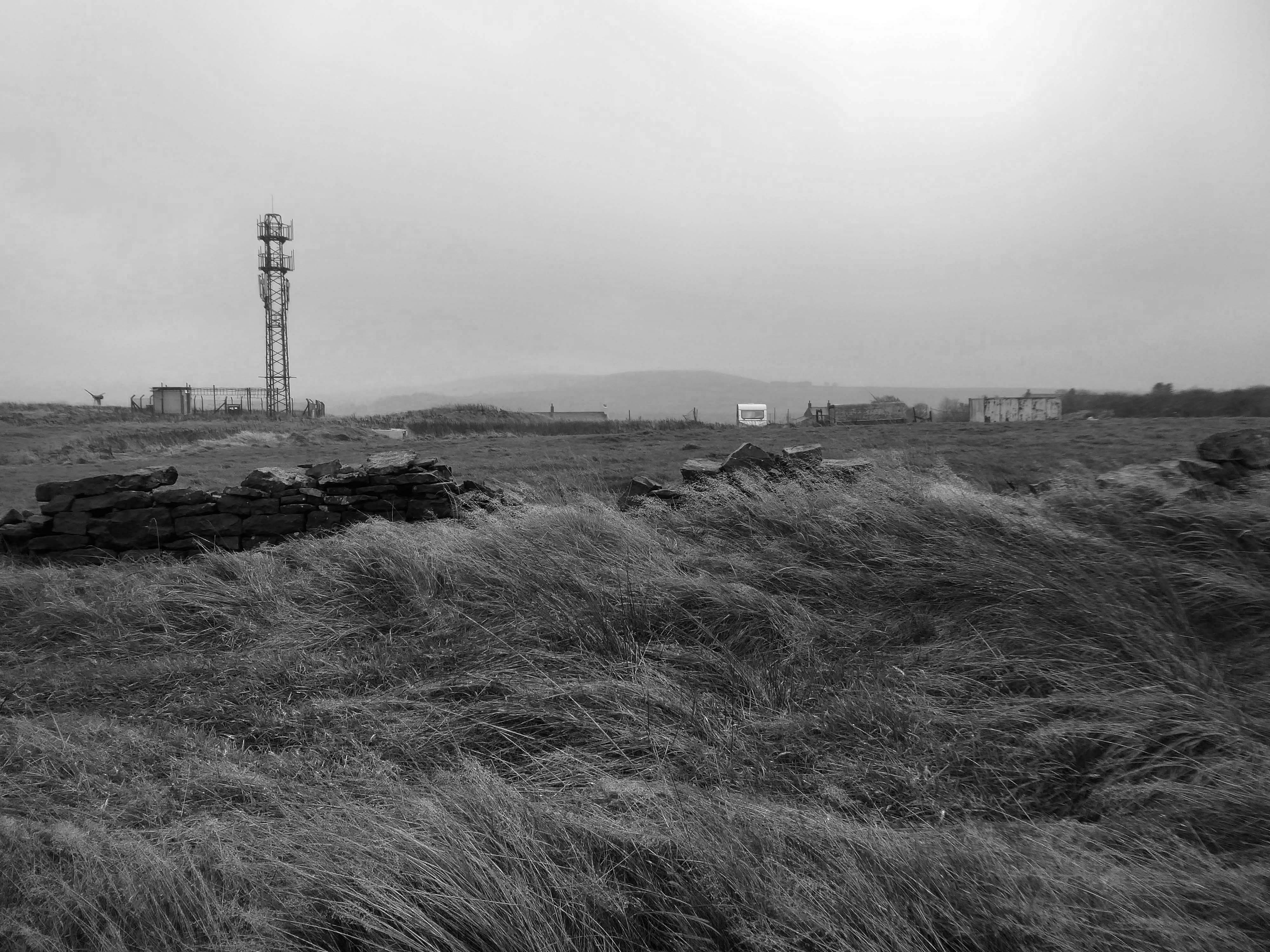
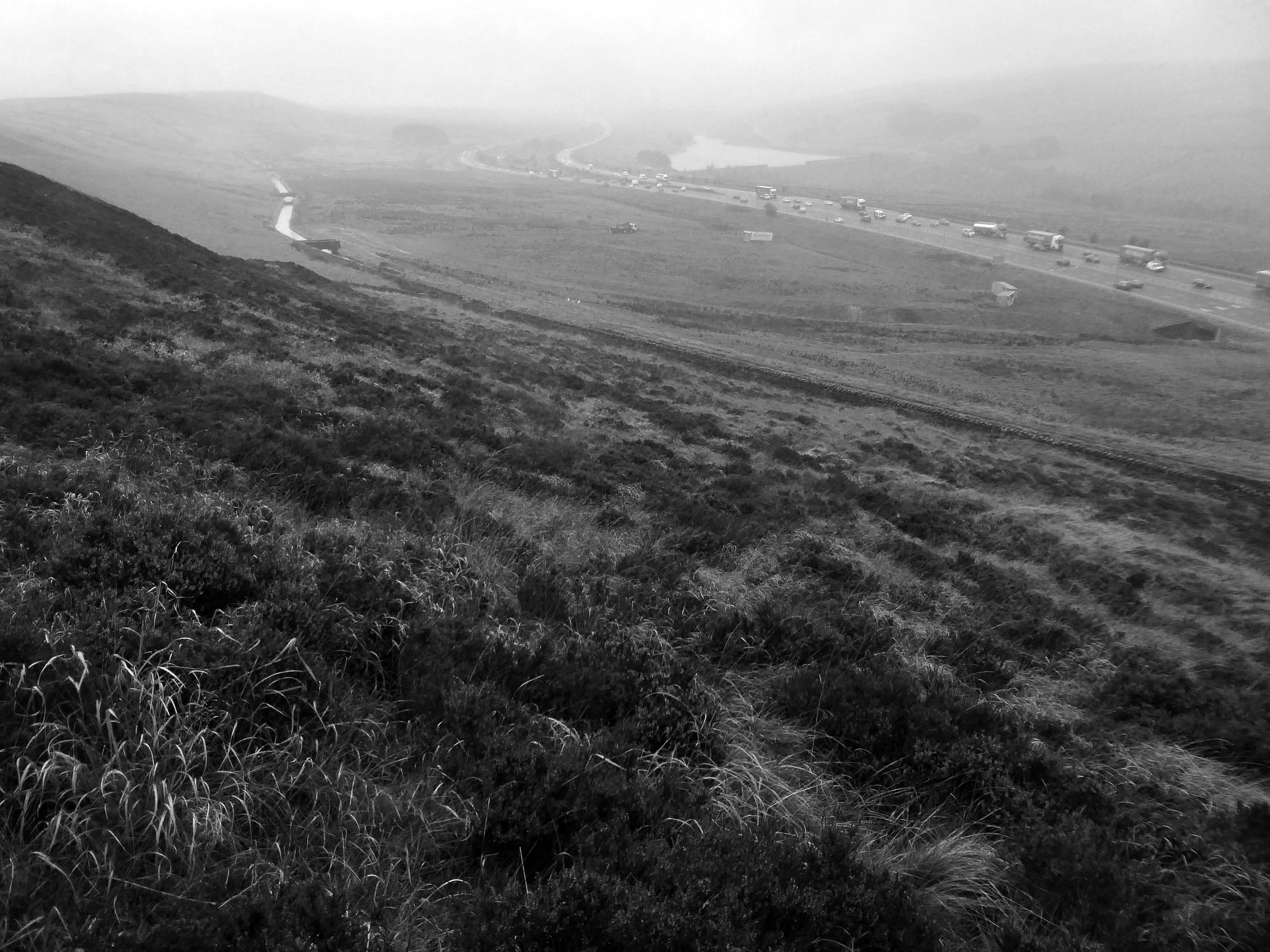
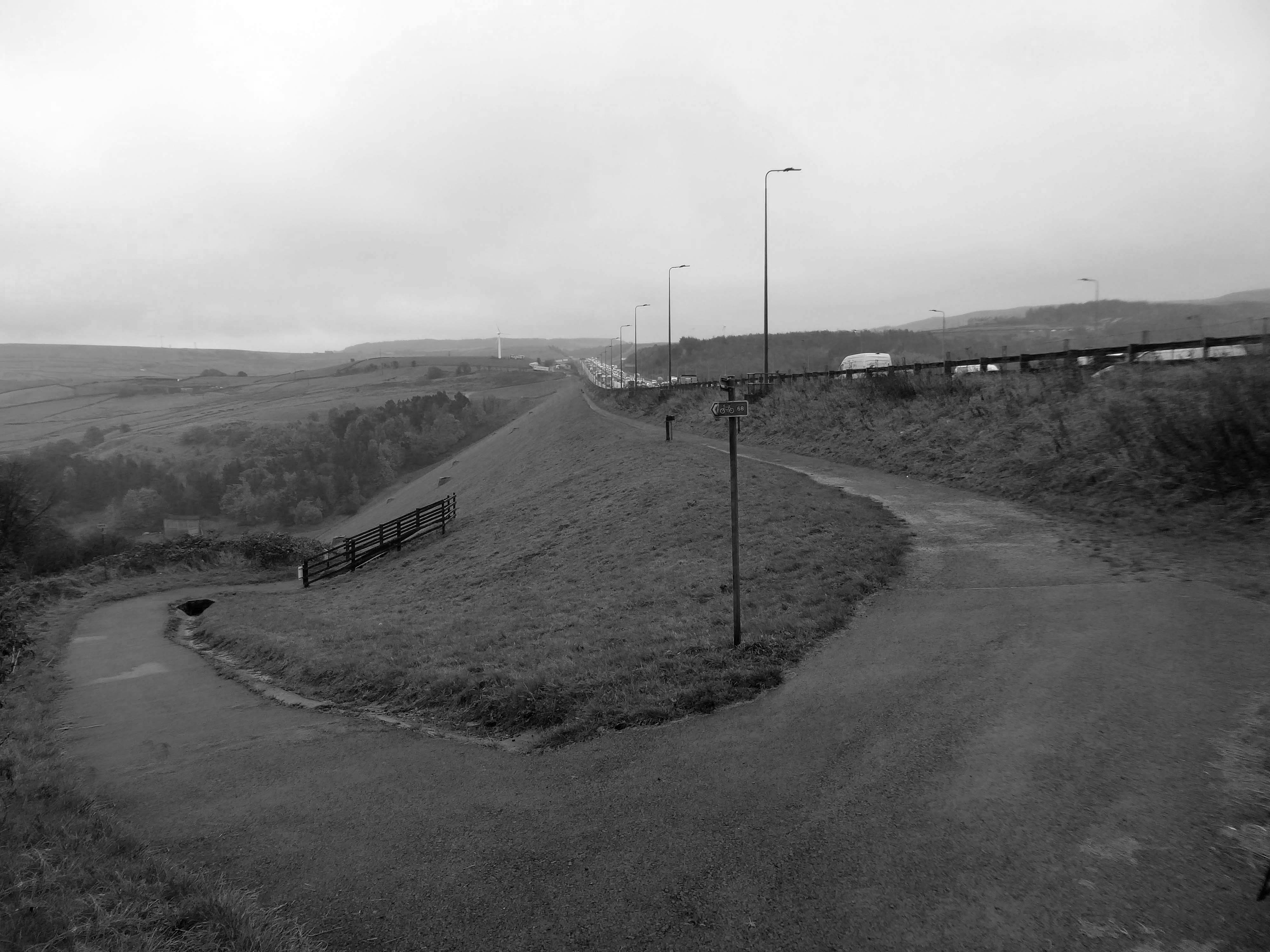
Crossing the motorway and dropping down to meet the Scammonden Dam.
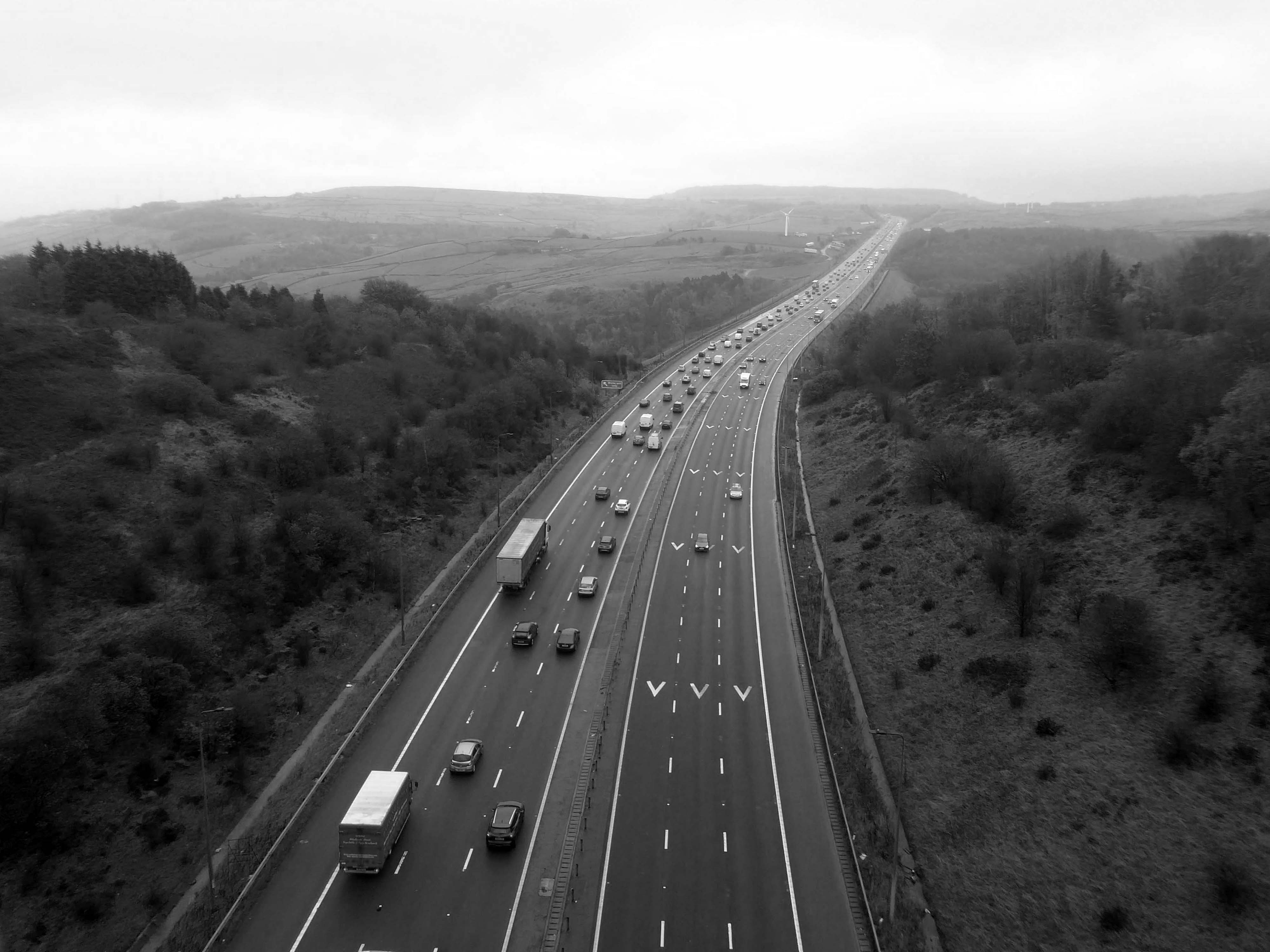
Scammonden Dam is part of the M62 motorway between junctions 22 and 23, the only such structure in Britain. Its construction by the Ministry of Transport and Huddersfield Corporation Waterworks required the passing of the Huddersfield Corporation Act 1965. The motorway dam spans the Deanhead Valley in the Pennines between Huddersfield and Rochdale and the main contractor for the project was  Sir Alfred McAlpine & Sons.

It was designed by Rofe, Kennard and Lapworth

Surveying began in November 1961 and the route of the carriageway was determined in mid 1963. Excavation in the Deanhead Valley commenced the following year and for the dam in 1966. This required the removal of 25,200,000 cu ft of peat bog to reach the solid rock base nearly 43 ft below ground level. Material excavated elsewhere on the line of the motorway, clay from cuttings between Lofthouse and Gildersome, and 3.4 million cubic metres from the Deanhead excavations was used to build the dam’s embankment which is 2,051 ft in length and 207 ft above the original valley floor. The embankment is 1,427 ft wide at its base and 180 ft at road level.
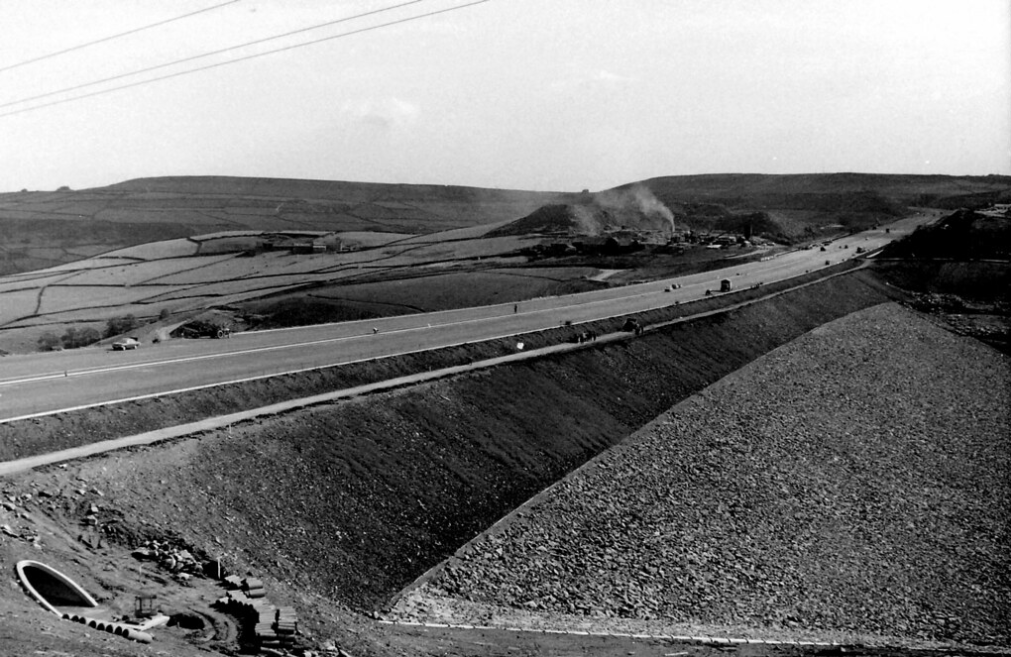
Wikipedia

Barry Skilbeck: Flickr

Scammonden steps comprises five flights of steps up the hillside from the valley below. Totaling 458 steps, the cumulative step count when ascending each of the five flights is 95, 200, 287, 363 then 458.
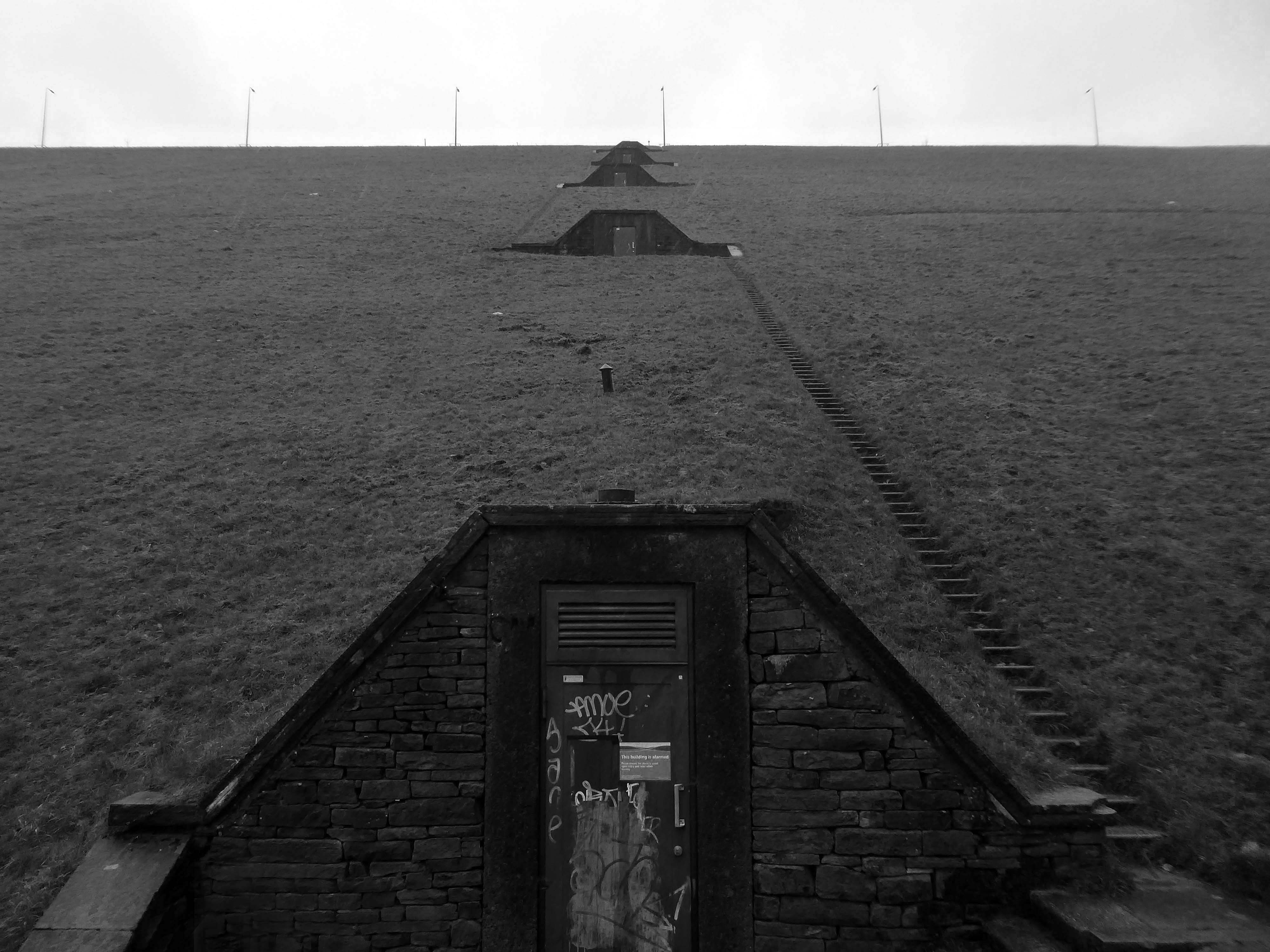
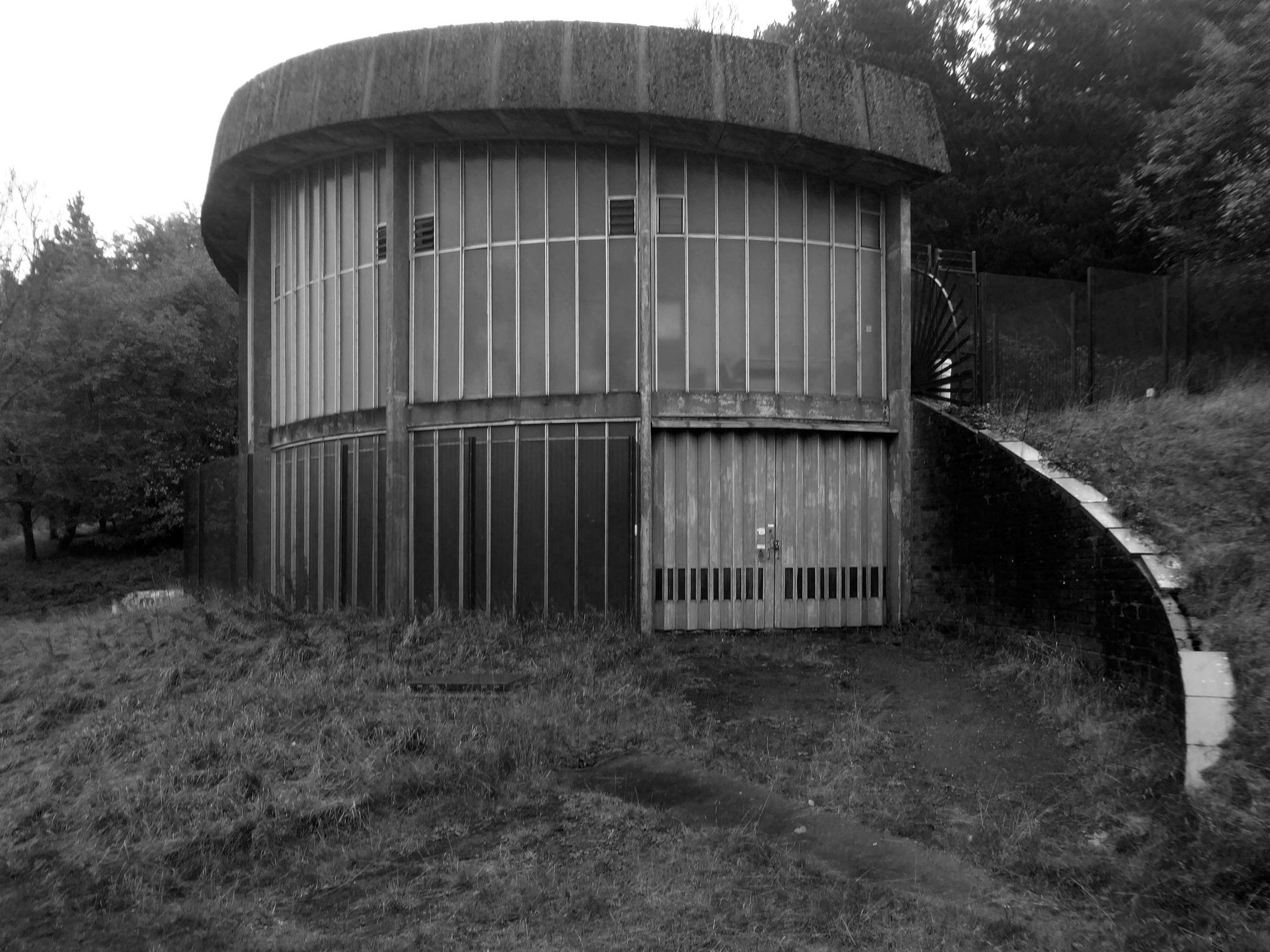
At the base of the dam is this delightful Pumping House.
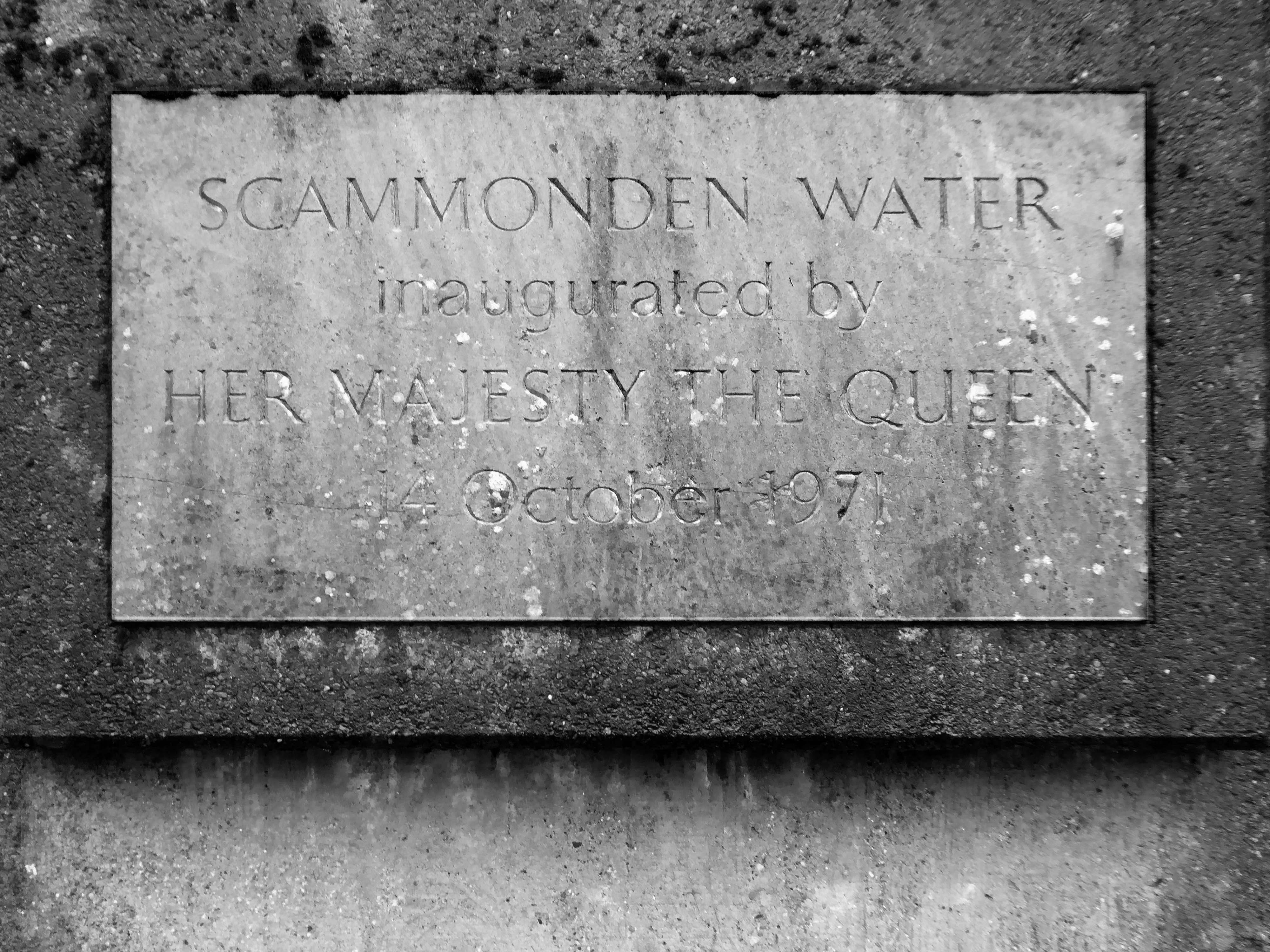
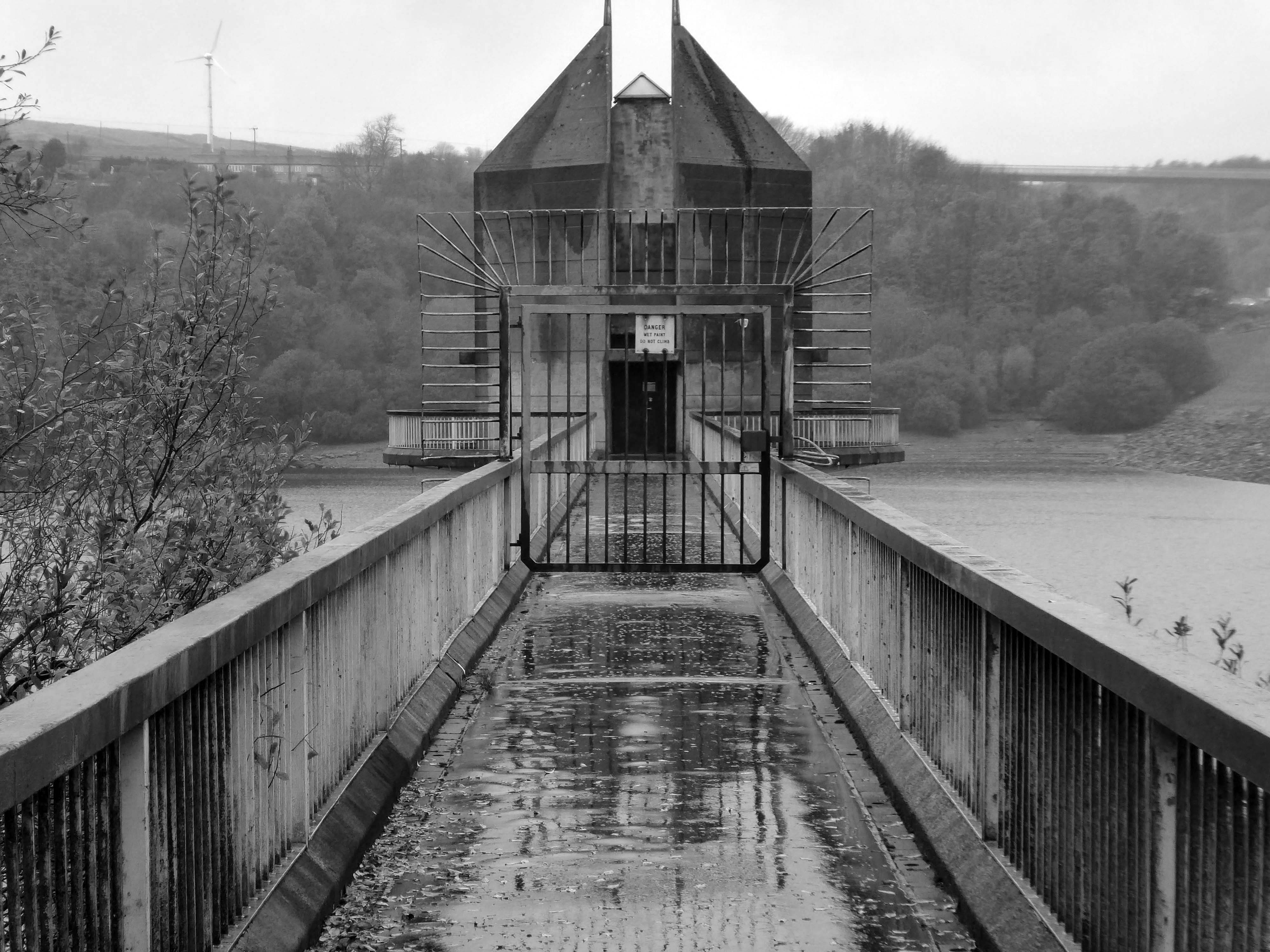
The motorway, which was dependent on the completion of the dam, was opened to traffic on 20th December 1970 and officially opened by Queen Elizabeth II who unveiled a plaque near the valve tower of Scammonden Water on 14 October 1971.

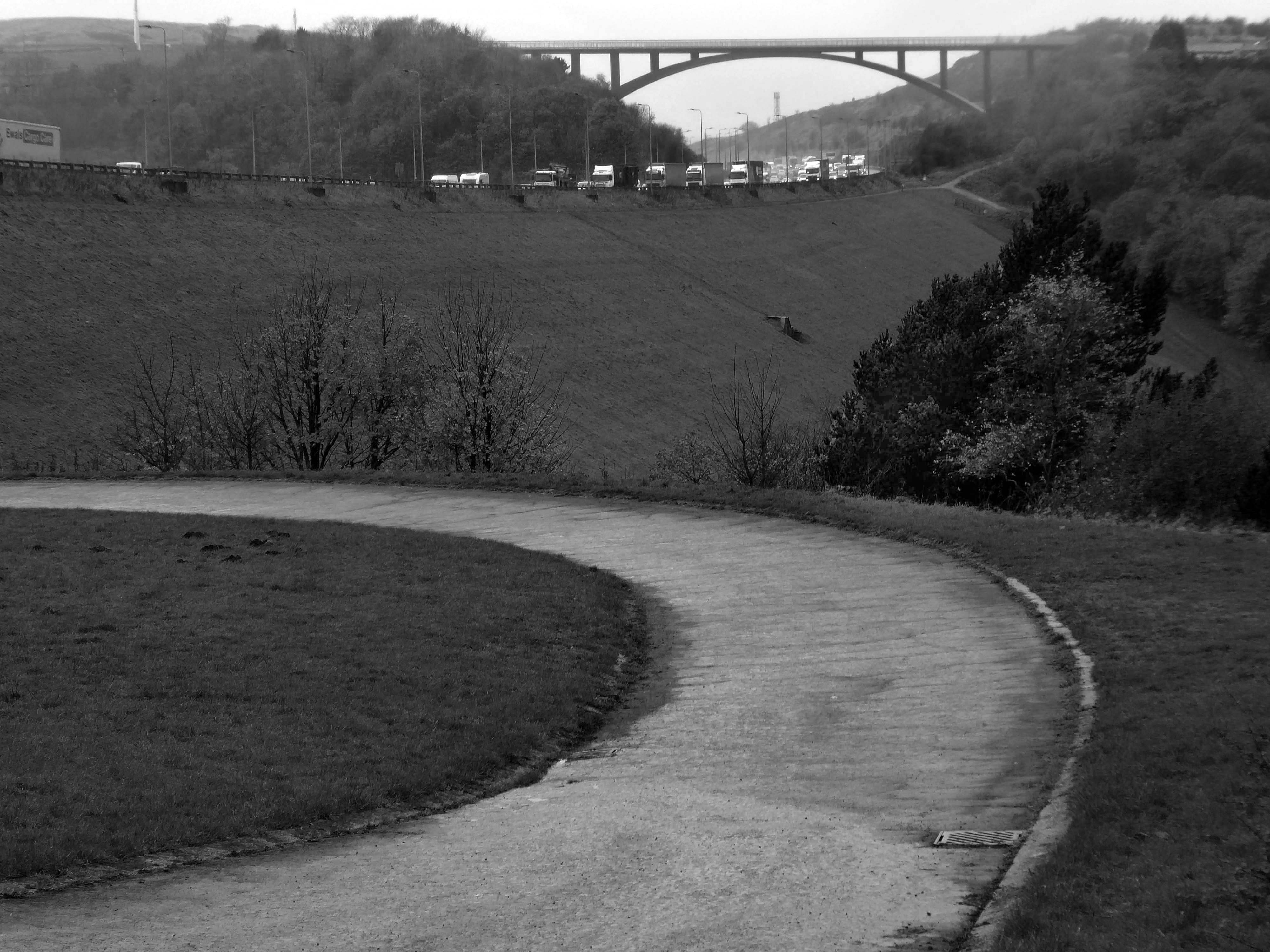
Ascending and looking back toward Scammonden Bridge also known locally as the Brown Cow Bridge – after the nearby Brown Cow Inn, now closed, spans the Deanhead cutting carrying the B6114.

The bridge was built for the West Riding County Council to the designs of the county surveyor, Colonel S Maynard Lovell.

It opened to traffic on Monday 18 May 1970 by Major Bruce Eccles – Huddersfield Transport ran buses to see the bridge.
Wikipedia

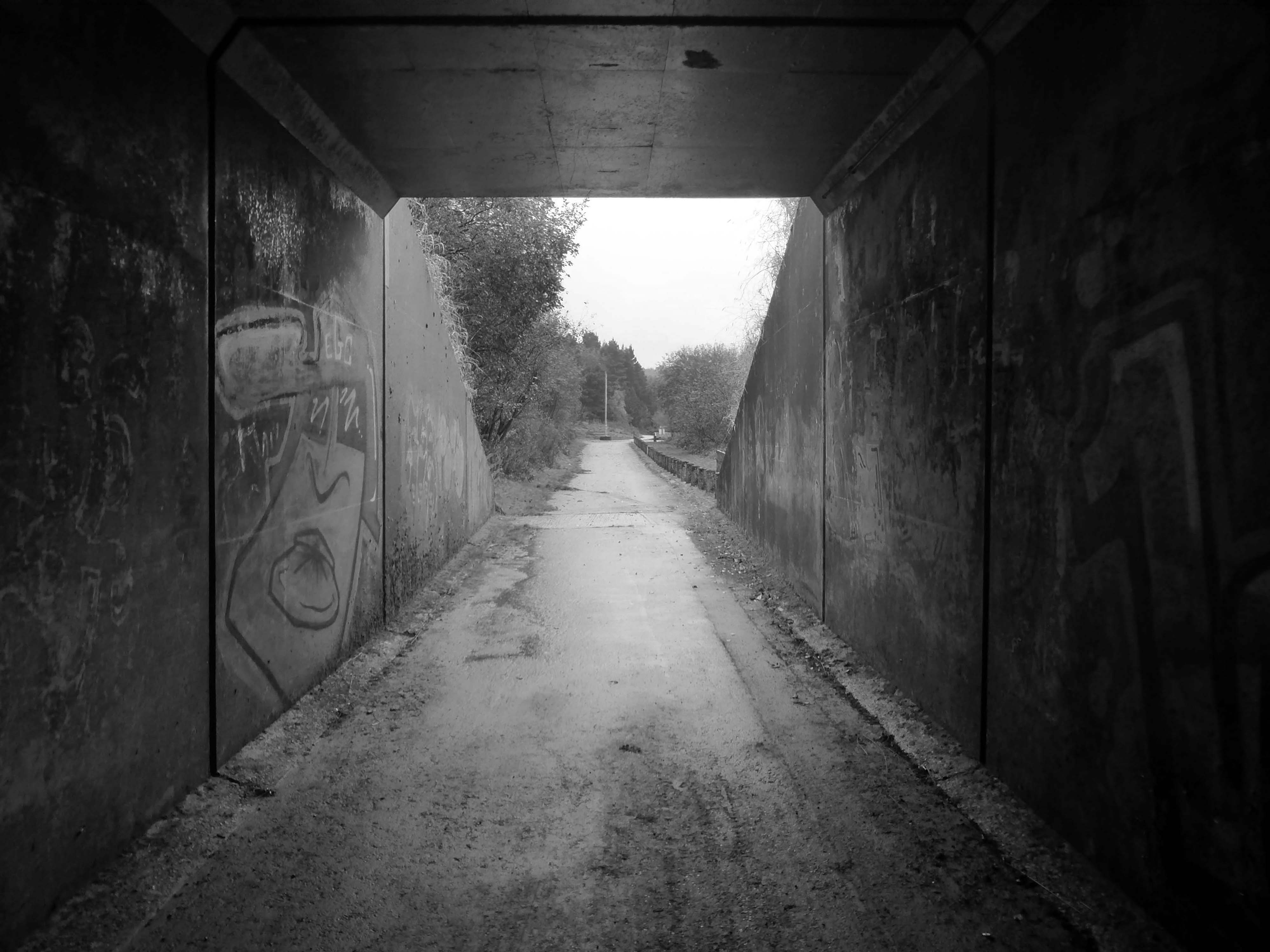
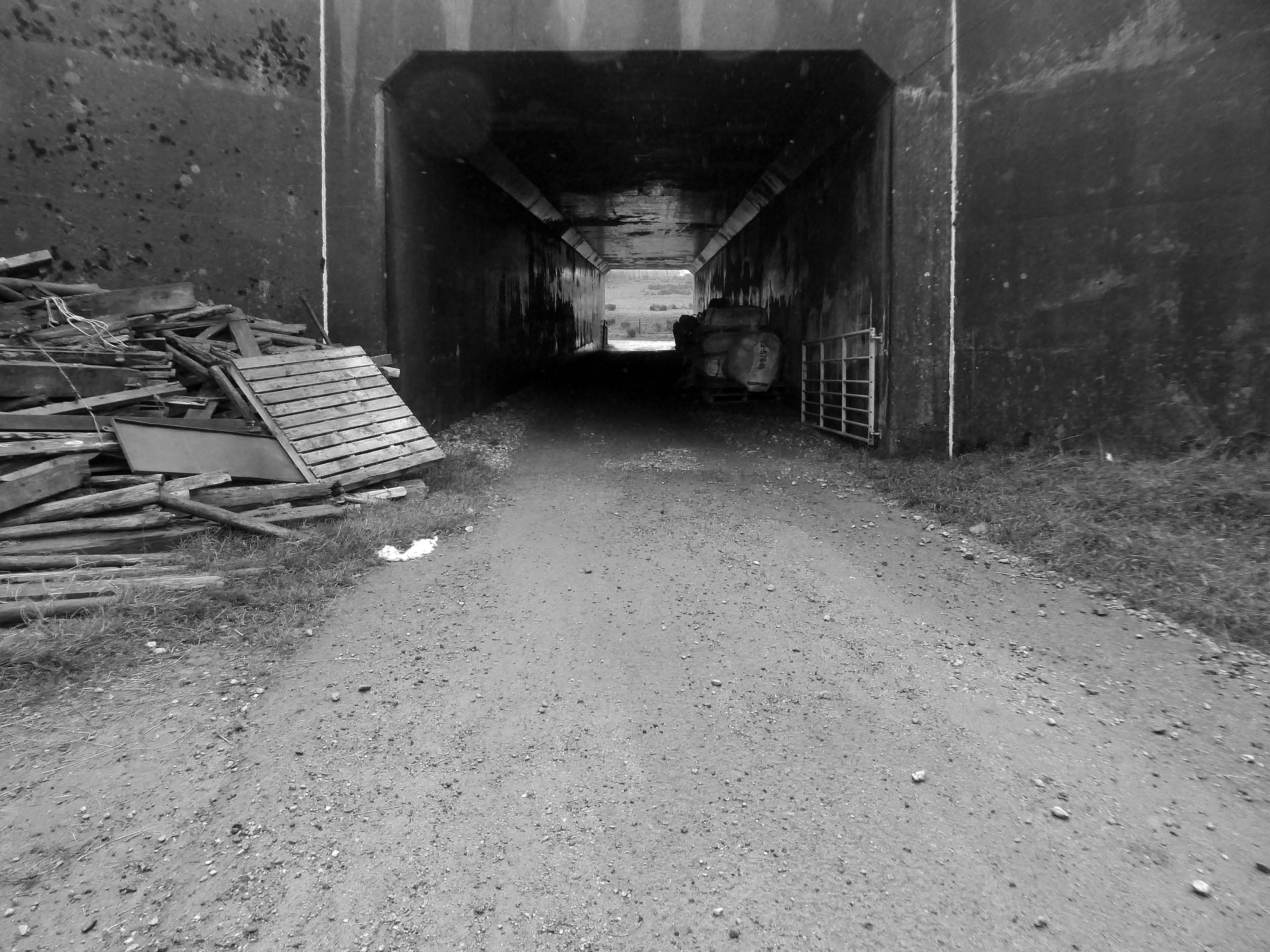
We took the tunnel through the dam.
We walked back through Spring Royd, to meet the Newhey Road and onward to Outland and the bus back to Huddersfield.
My sincere thanks to my erstwhile and educated guide Mr Phil Wood – so ably steering us along our watery way.

Shopping Precincts – UK Again

This time of year, with limited light and an inclement climate, it’s far easier to travel by picture postcard. Researching and searching eBay to bring you the finest four colour repro pictures of our retail realm.

We have of course been here before – via a previous post.

It is however important to keep abreast of current coming and goings, developments are ever so often overwritten by further developments.

Precincts my appear and disappear at will – so let’s take a look.

What the CMYK is going on?

Abingdon

Aylesbury

Blackburn

Bradford

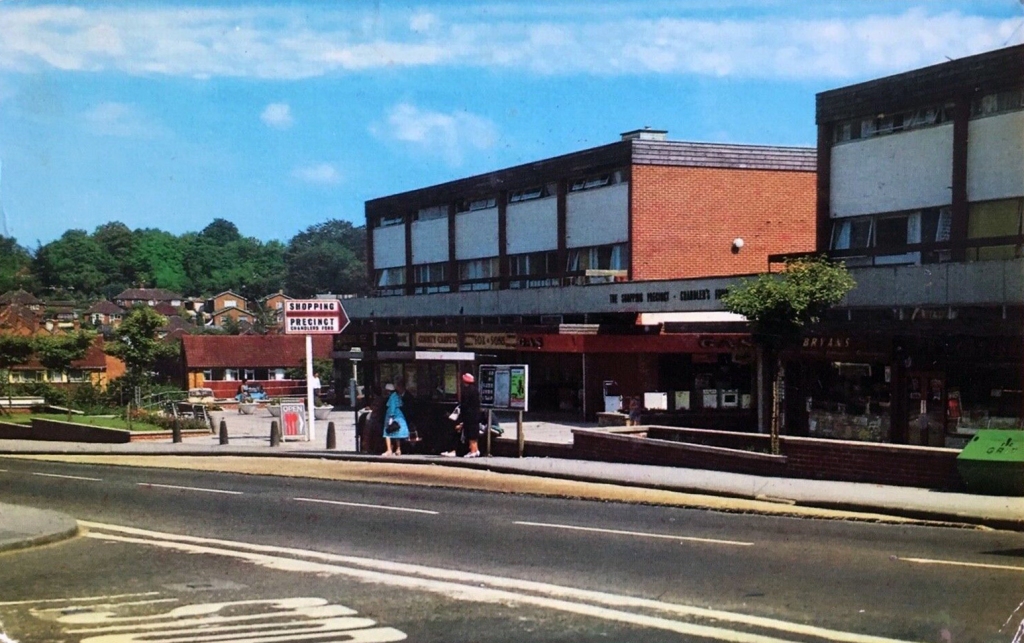
Chandlers Ford

Coventry

Cwmbran

Derby

Eastbourne

Exeter

Gloucester

Grimsby

Hailsham

Irvine

Jarrow

Middlesborough

Portsmouth

Scarborough

Solihull

Southampton

Stockport

Torquay

Wakefield

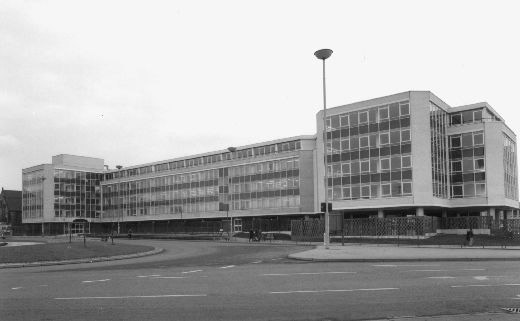
Chantry House – Wakefield

Soft wind blowing the smell of sweet roses to each and every one,
Happy to be on an island in the sun.

An island in Wakefield.

An Island in a sea of dual-carriageways.

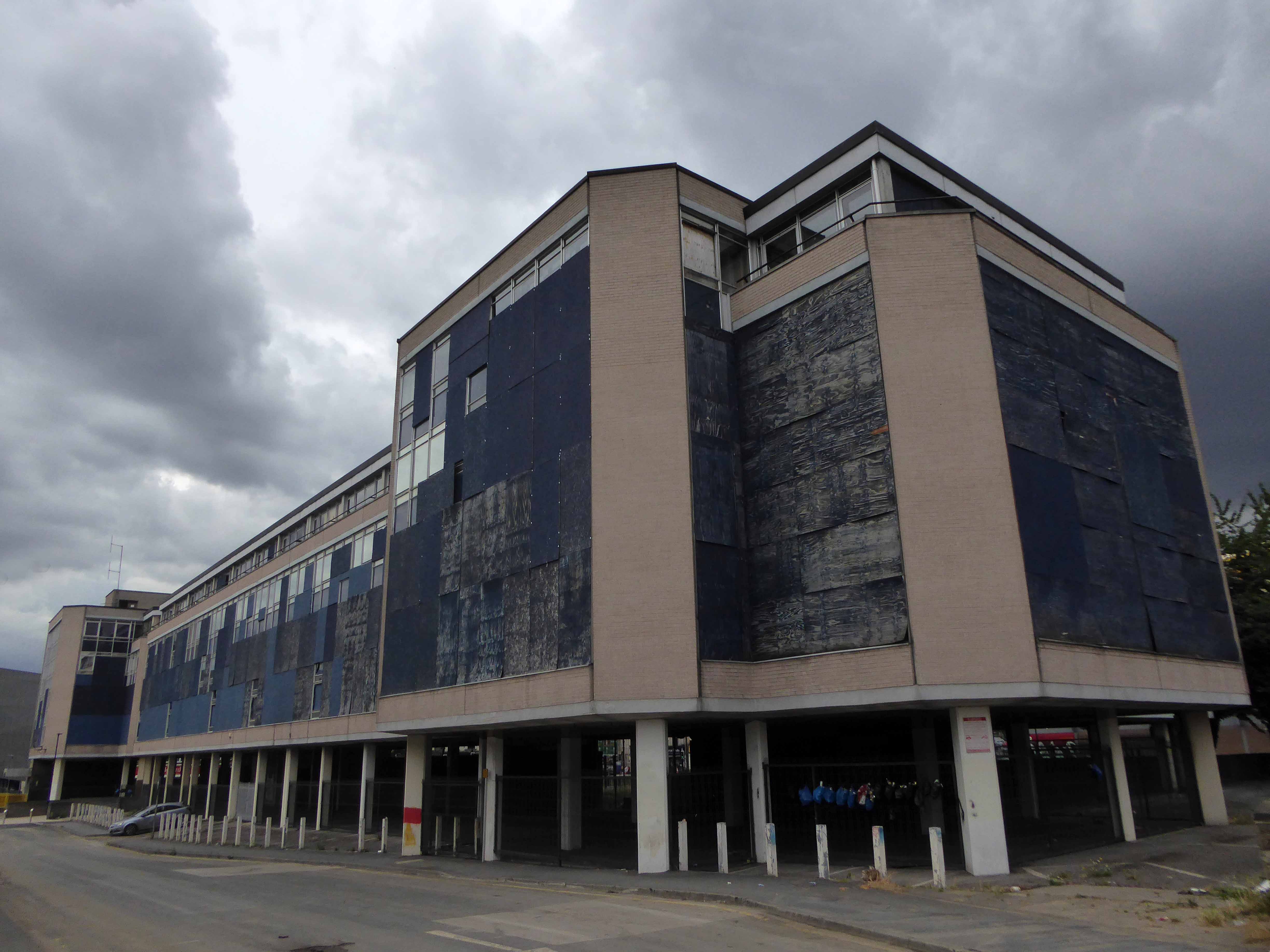
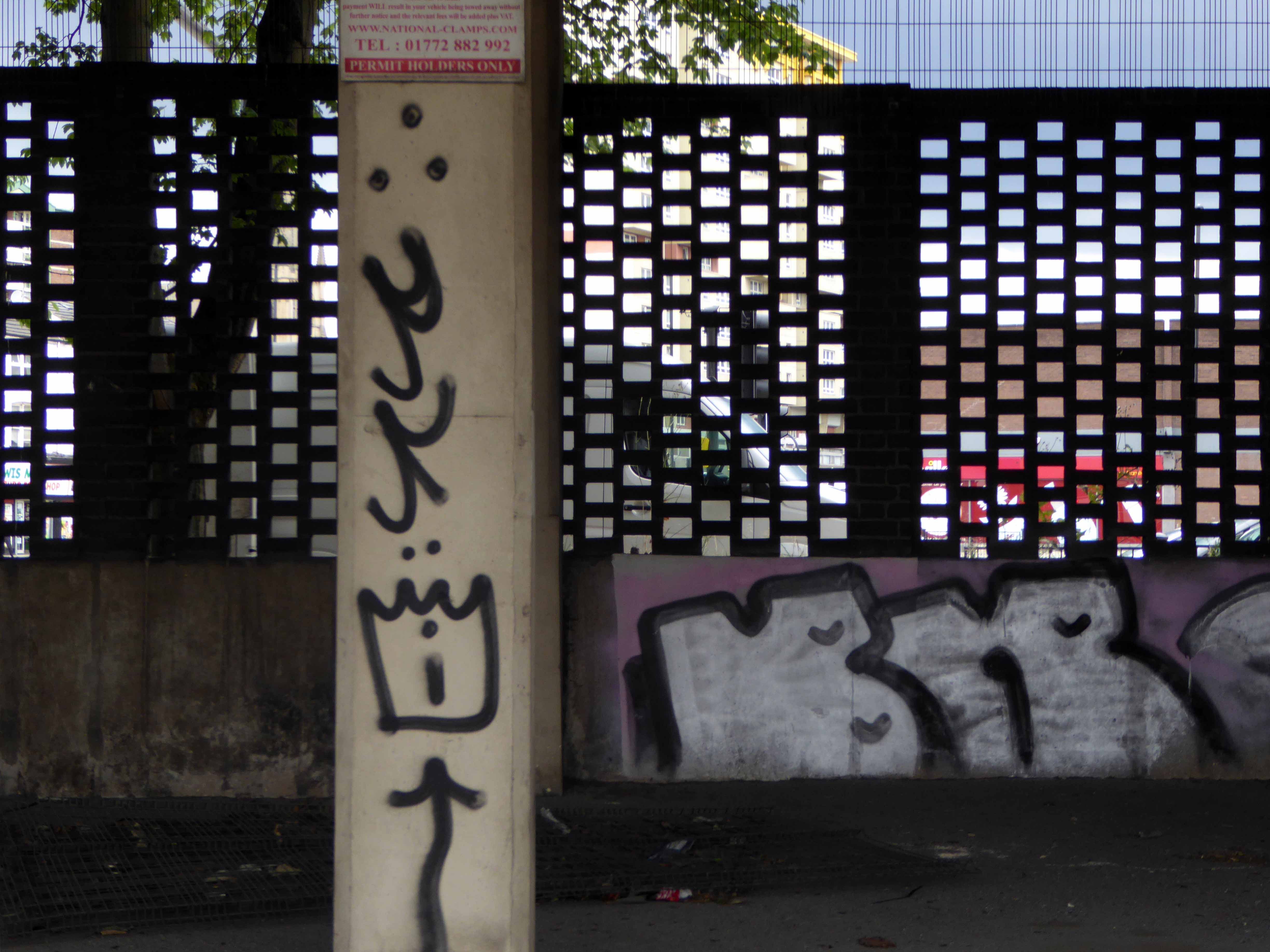
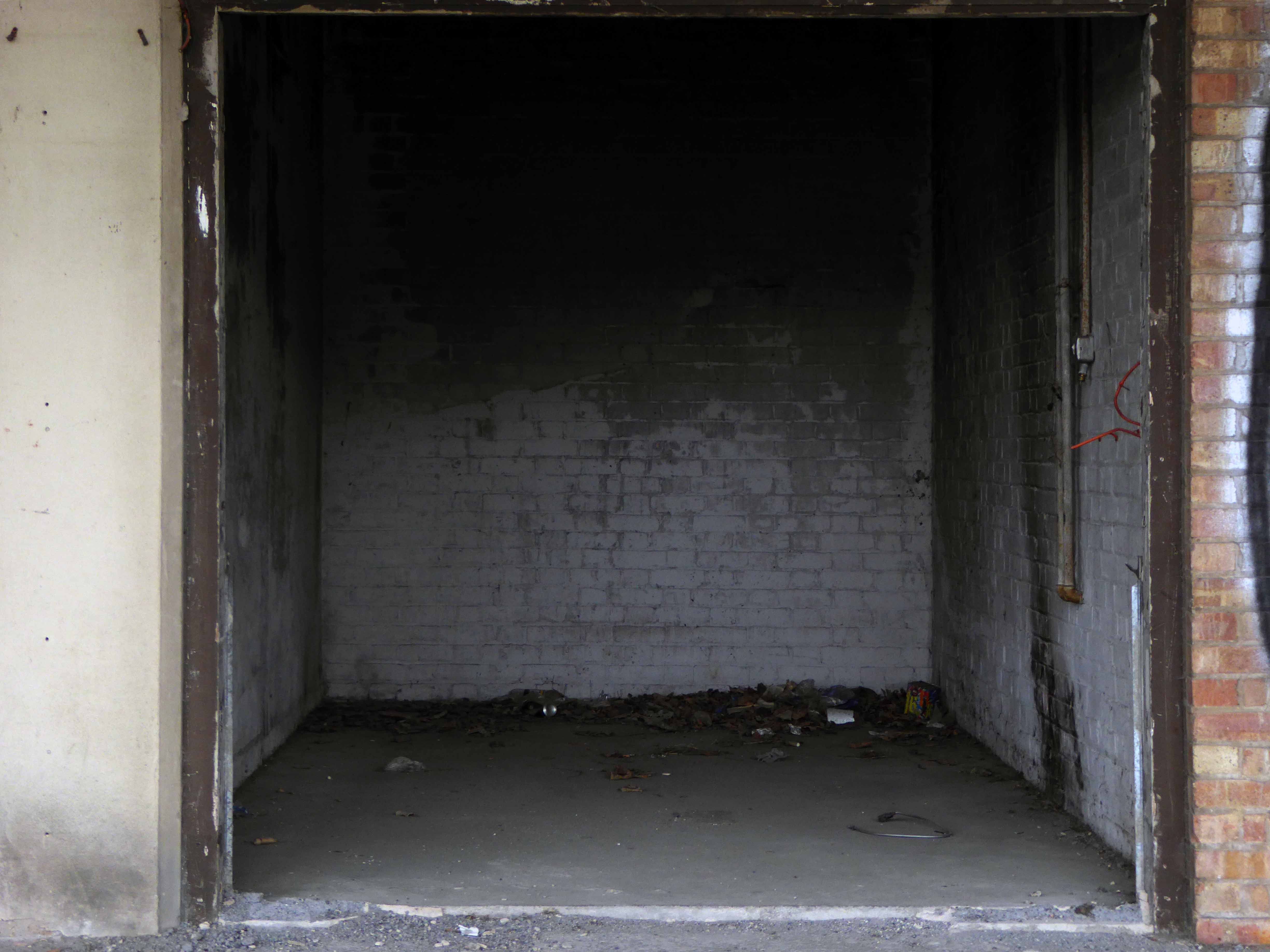
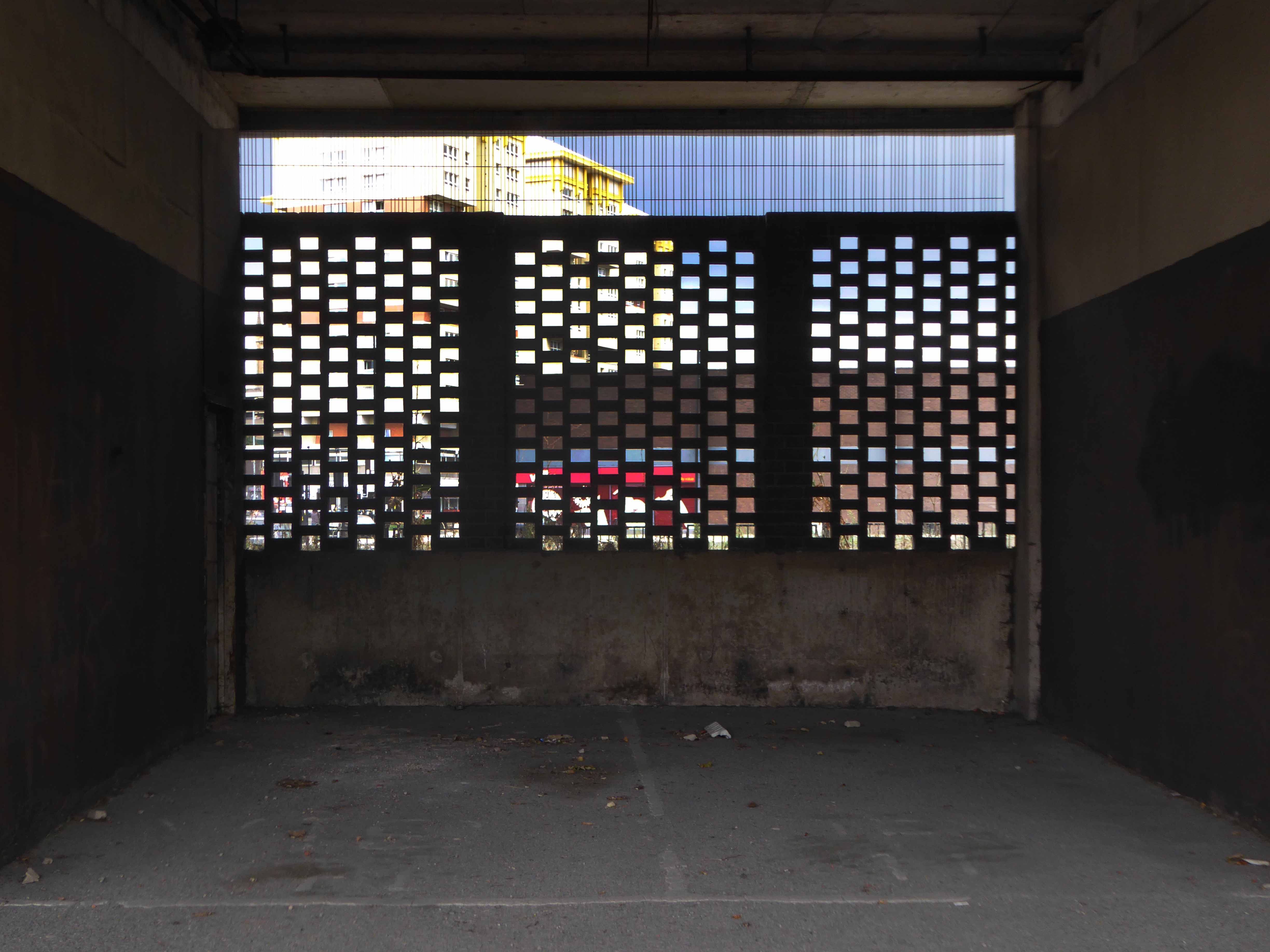
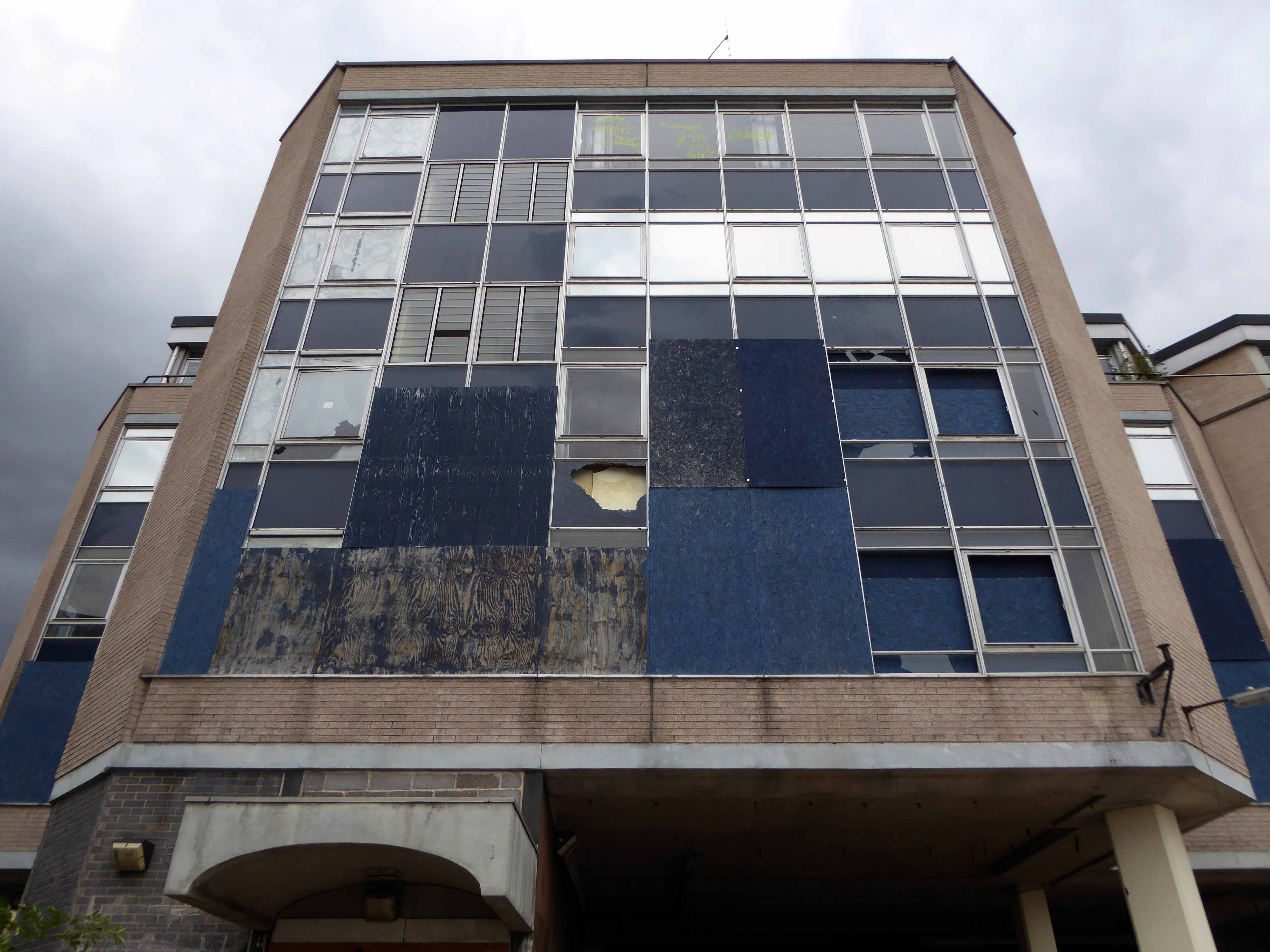
Sixties built municipal modernism, hovering on slim stilts above the ground level carpark, complete with pierced brick screen.

The future was bright the future was red – for a short while.

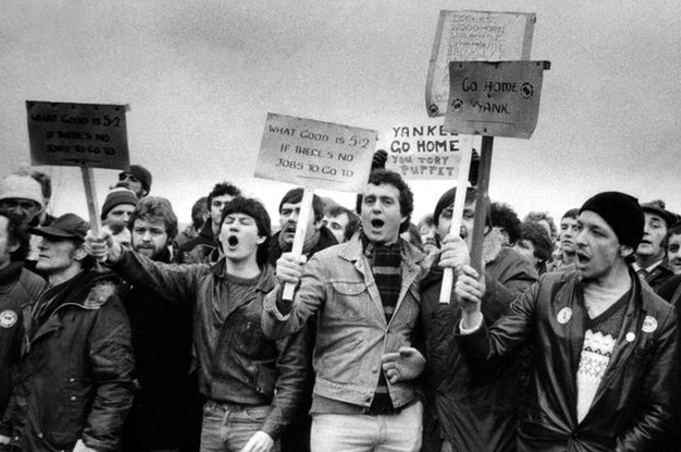
Over the horizon came Sir Ian Kinloch MacGregor KBE.

Lady Thatcher said:

He brought a breath of fresh air to British industry.
03bf8c_b009bc98d4c8425e8e66e53d30ac4be8

The fifth horseman of the industrial apocalypse – bringing pit-closure, redundancy the deindustrialisation of a whole area.

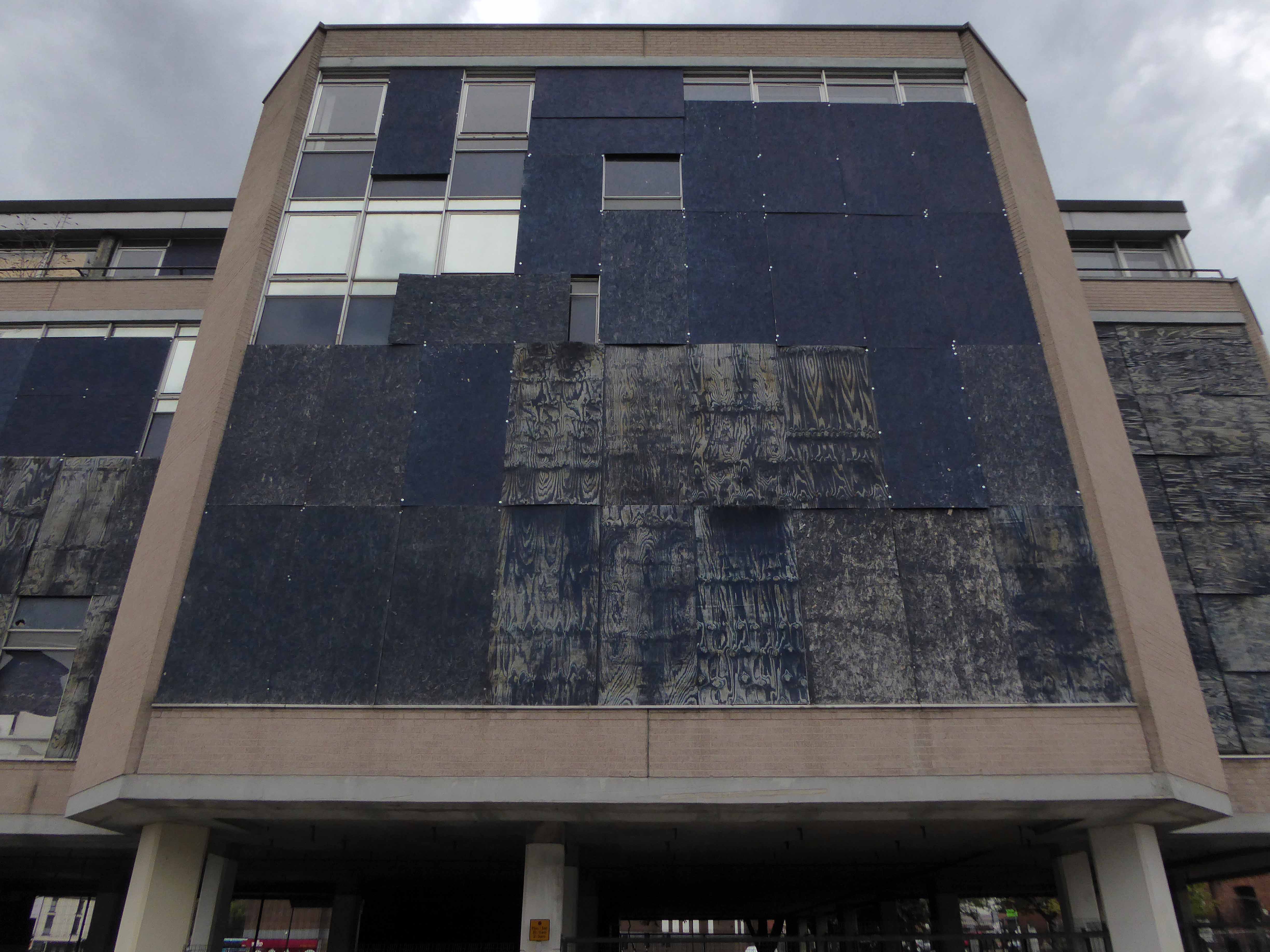
Offices and citizens are tinned-up, brassed-off and abandoned.

This is now the architecture of civic optimism eagerly awaiting repurposing.

There is talk of conversion to housing, talk is cheap.

A planning application has been drawn up requesting permission to change the use of Chantry House from offices to one and two bedroom residential units. The application has been submitted by The Freshwater Group, the development arm of Watermark Retirement Communities.

Wakefield Express

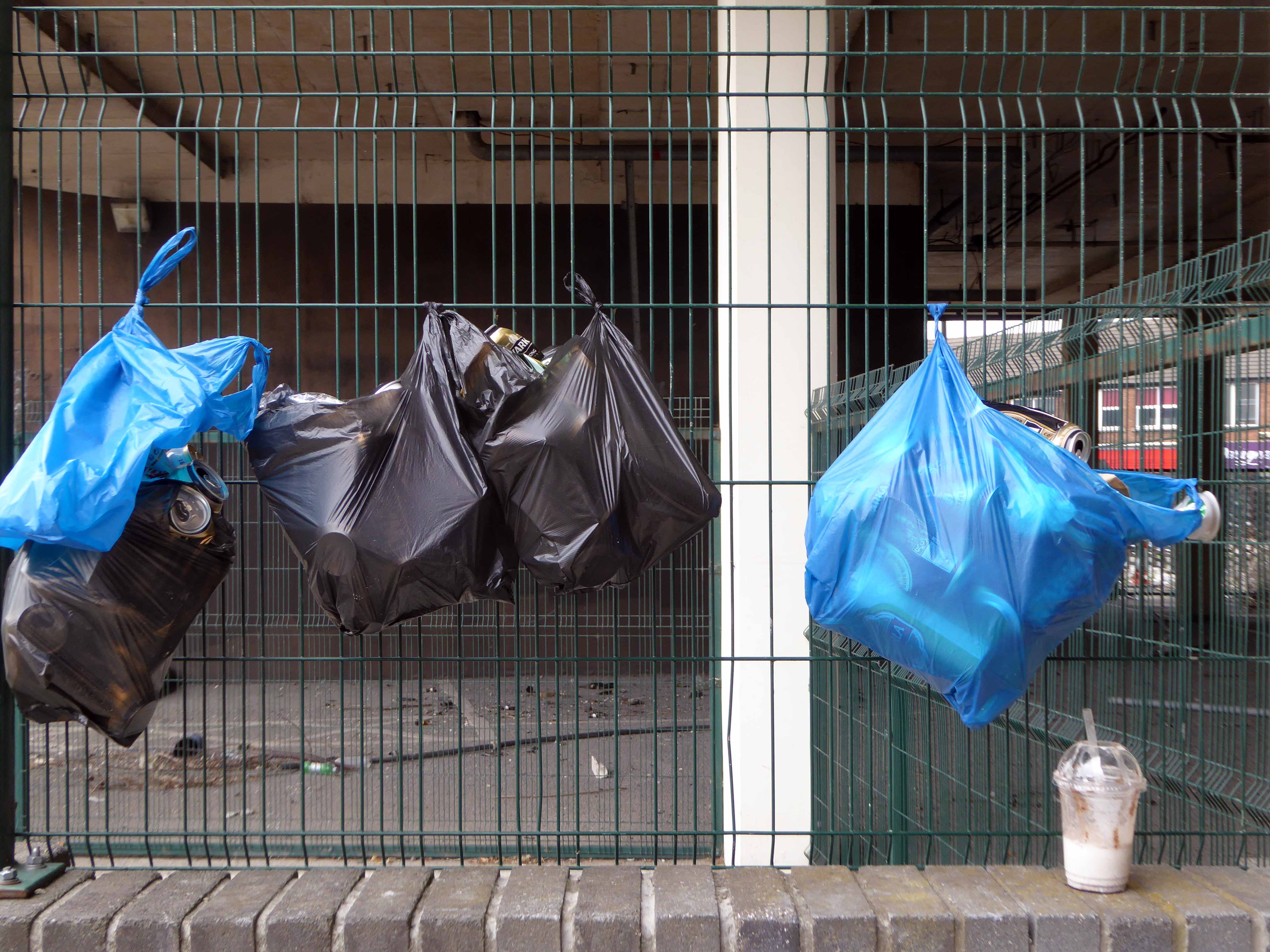
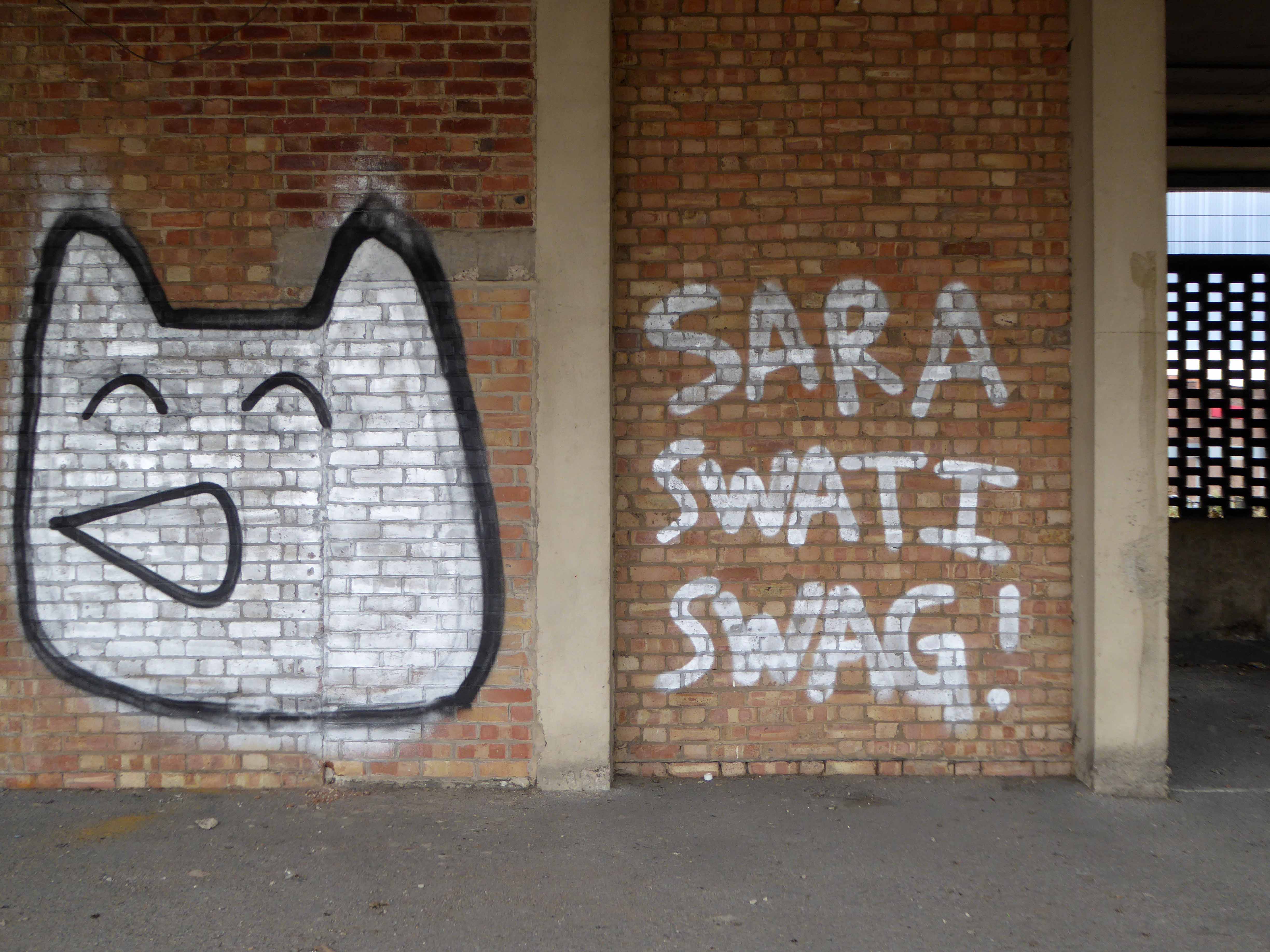
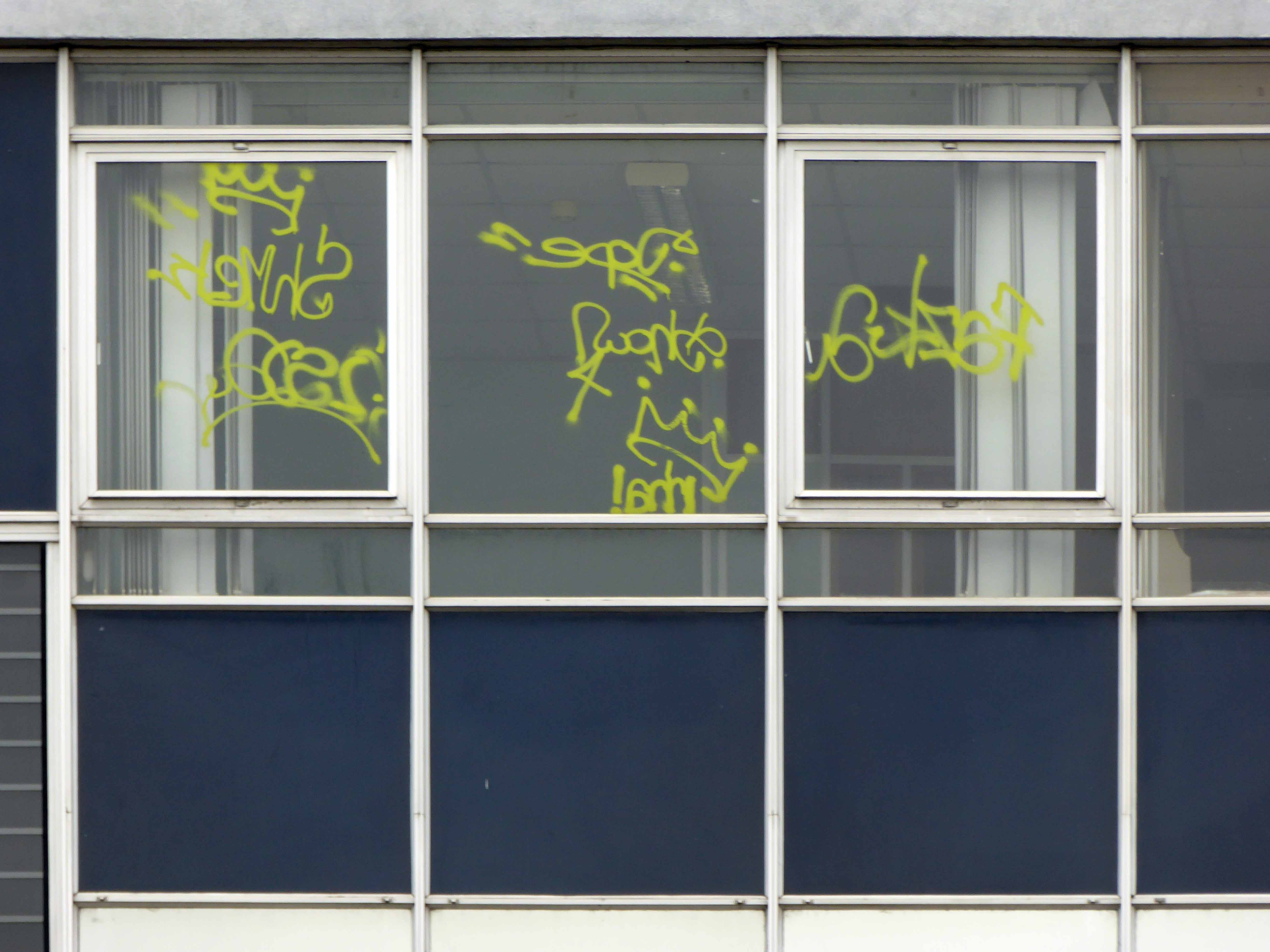
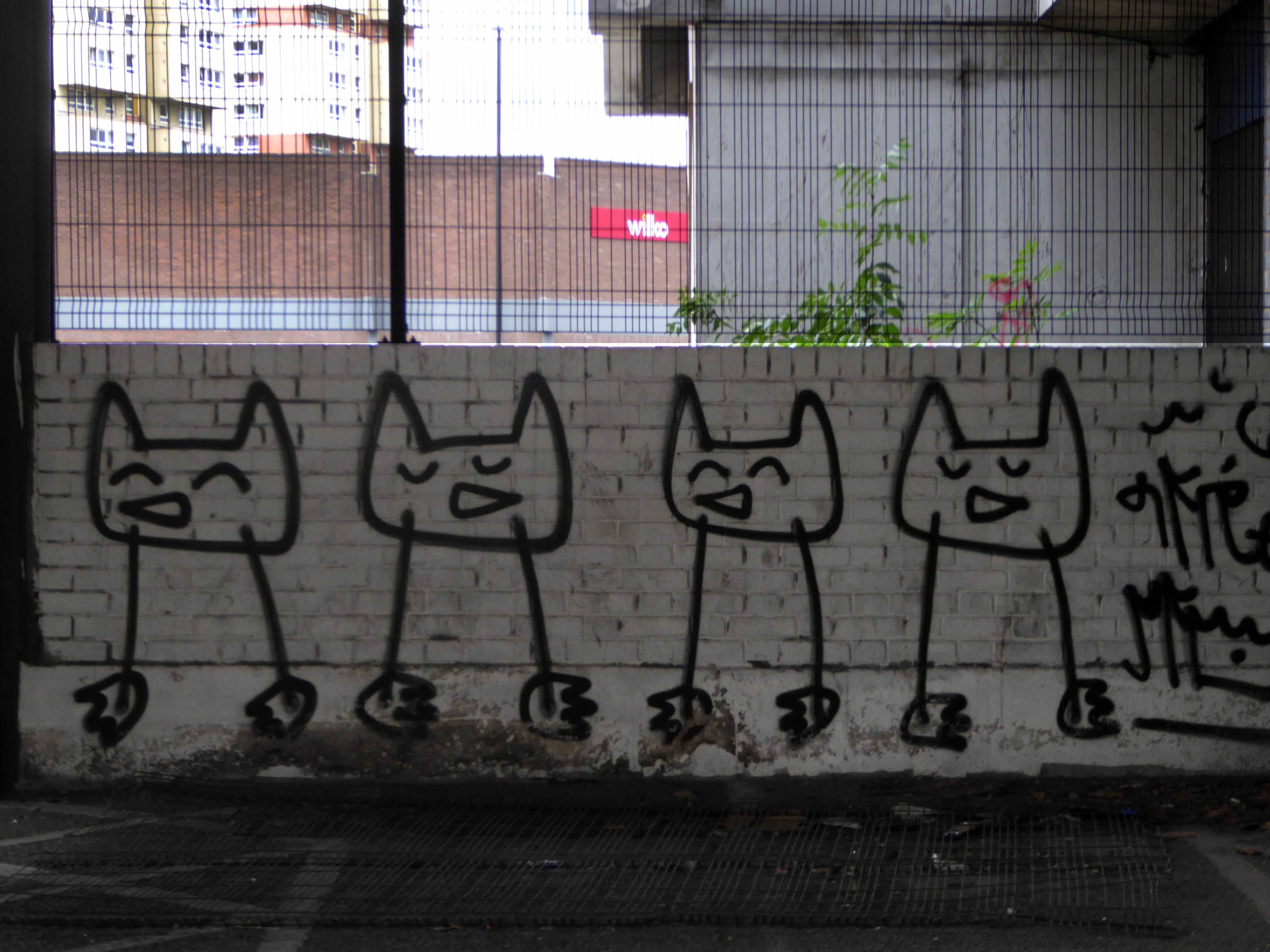
Currently home to the determined, hardened daytime drinker, street-artist and curious passerby.

P1280260

P1280240

P1280241


P1280244

P1280245

P1280246

P1280247

P1280252


P1280256

P1280257

P1280264

P1280265

P1280266

P1280267


P1280270

P1280271

P1280274

P1280277

Unity Hall – Wakefield

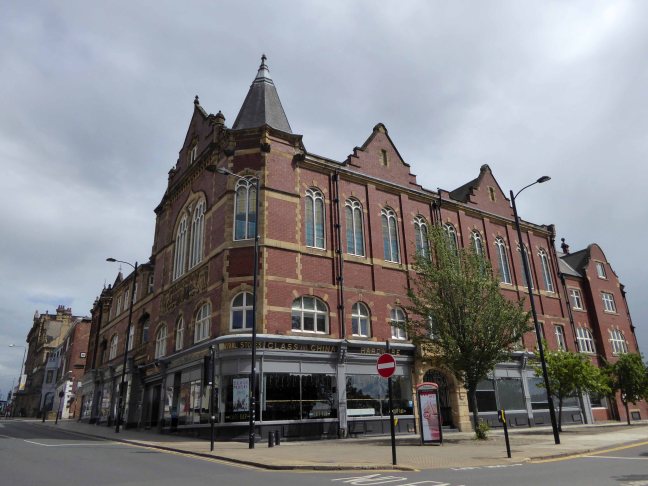
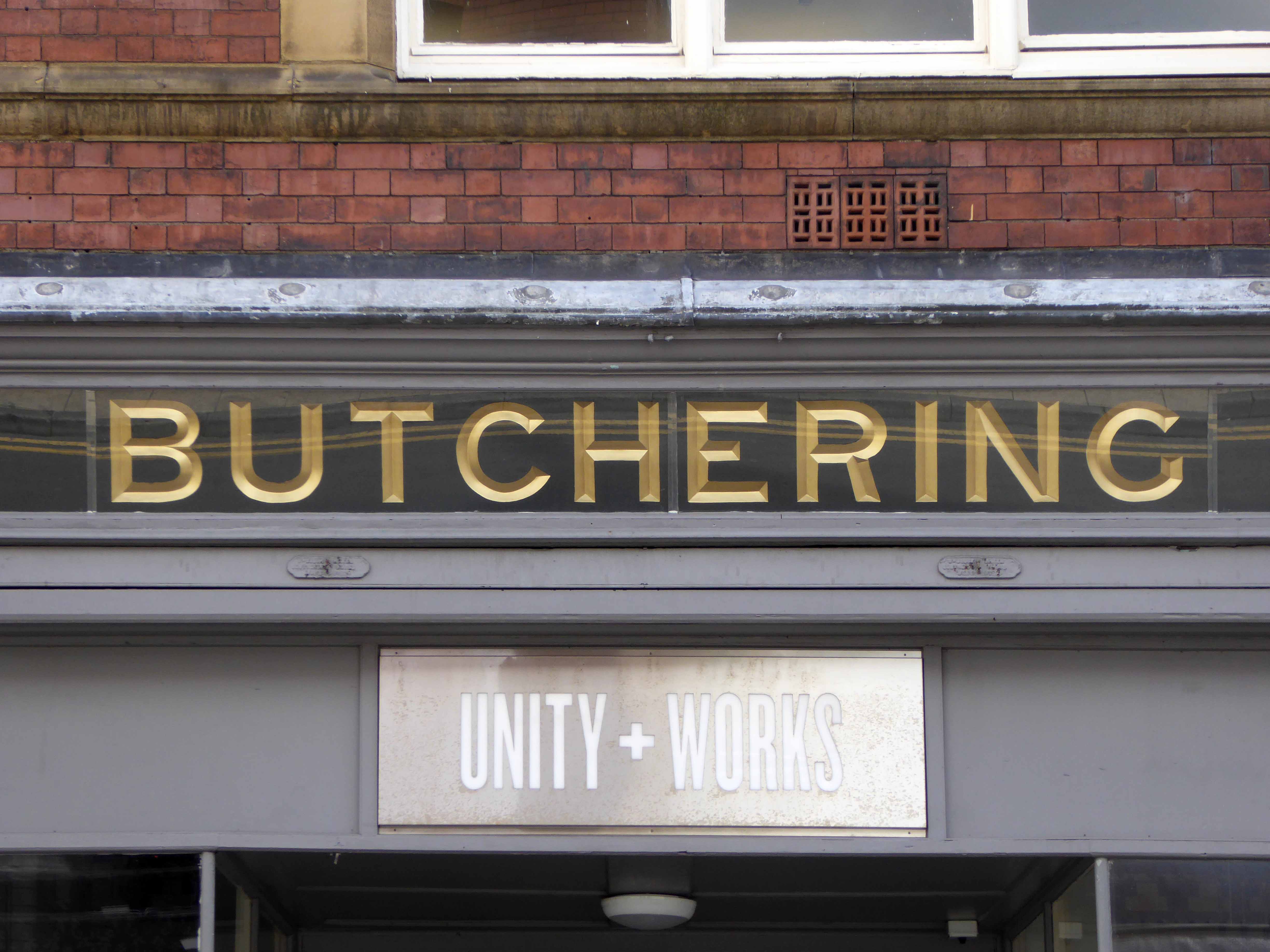
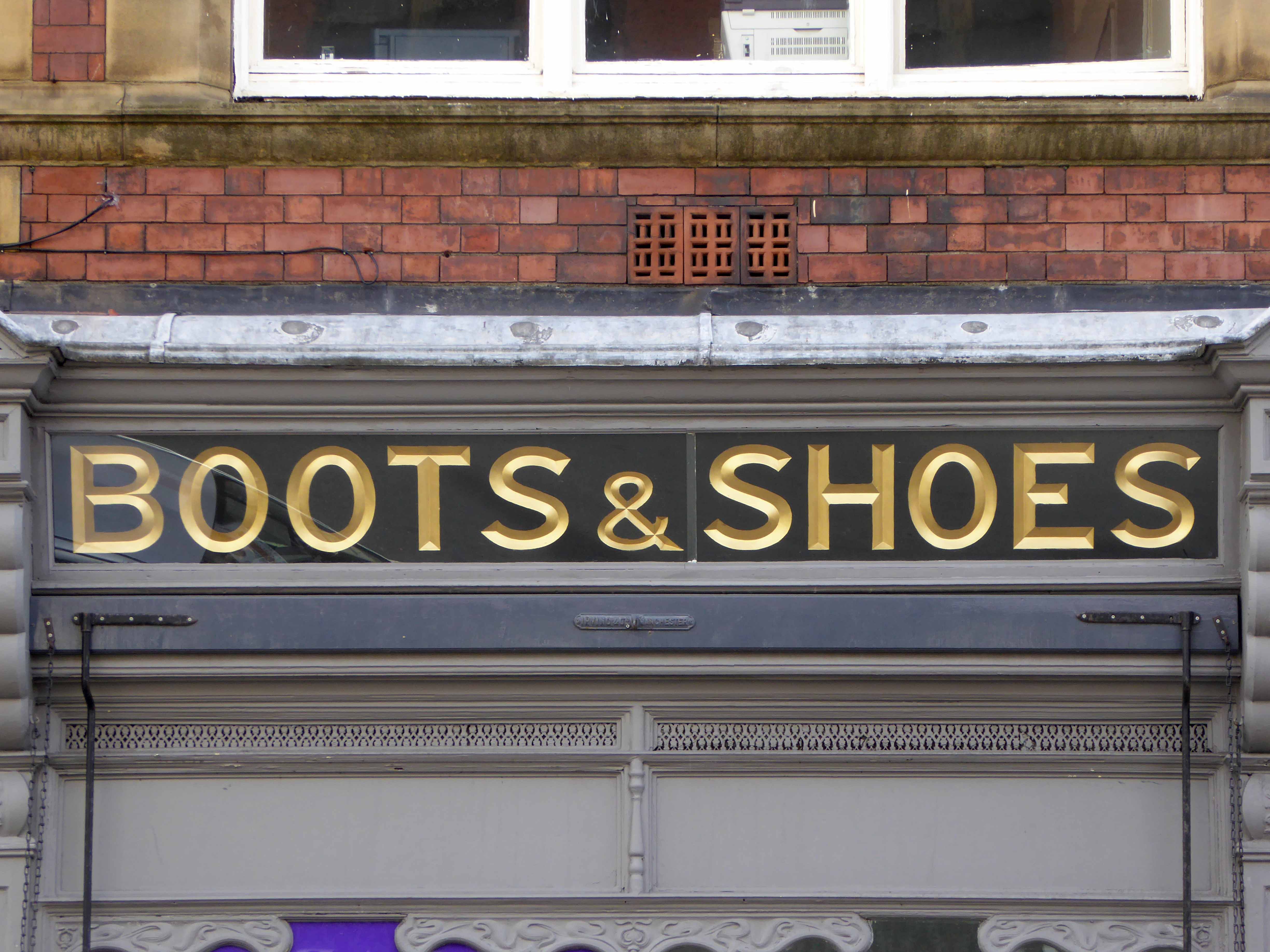
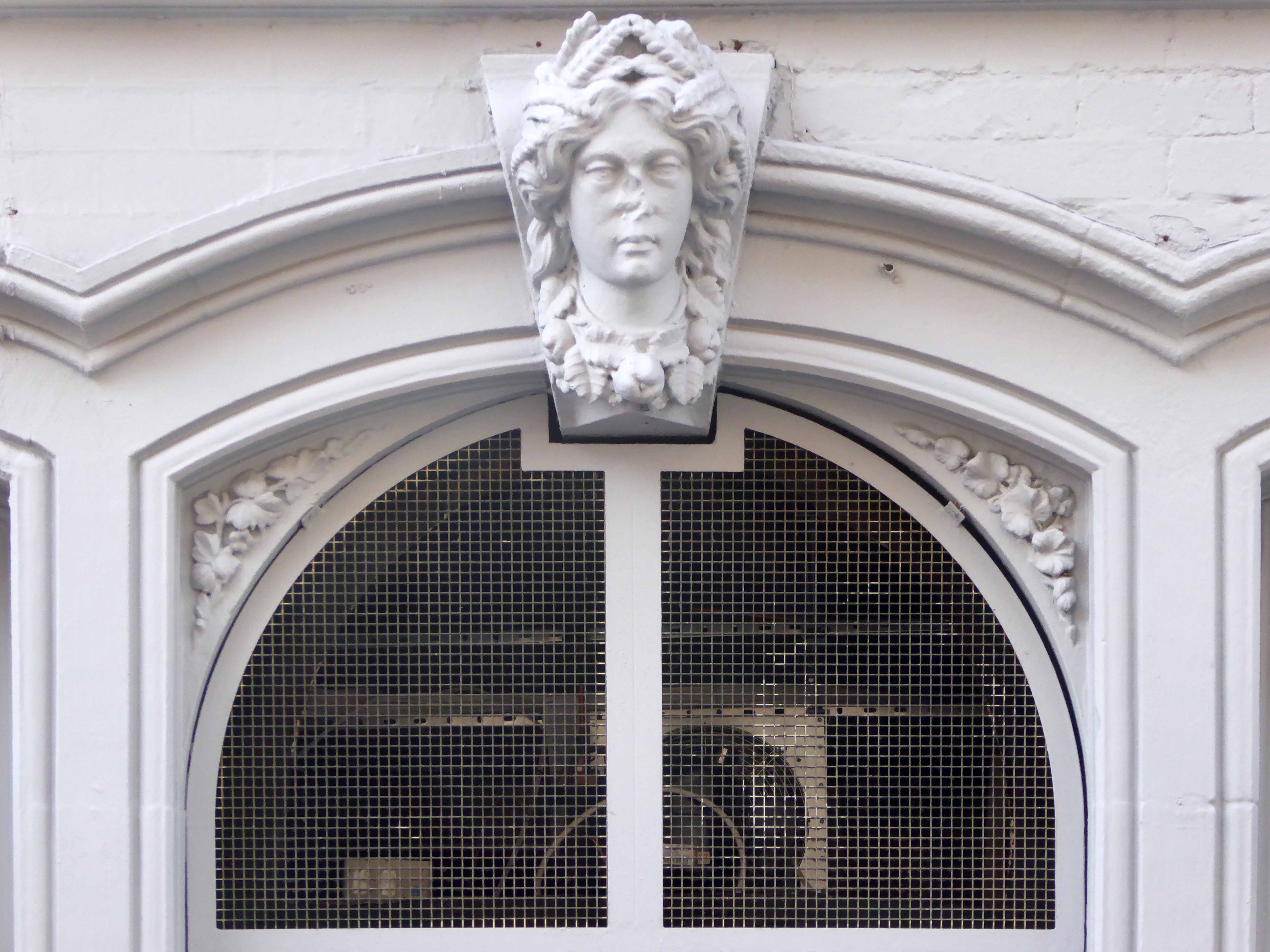
Wool, wool, wool I do declare – Westgate Wakefield the worse for wear, warehousing, banks and halls in a state of transition. The enormous wealth created by the local textile trade and associated industries, has left an architectural legacy that permeates the wide street, with a more than somewhat faded grandeur.

laying-of-foundation-stone

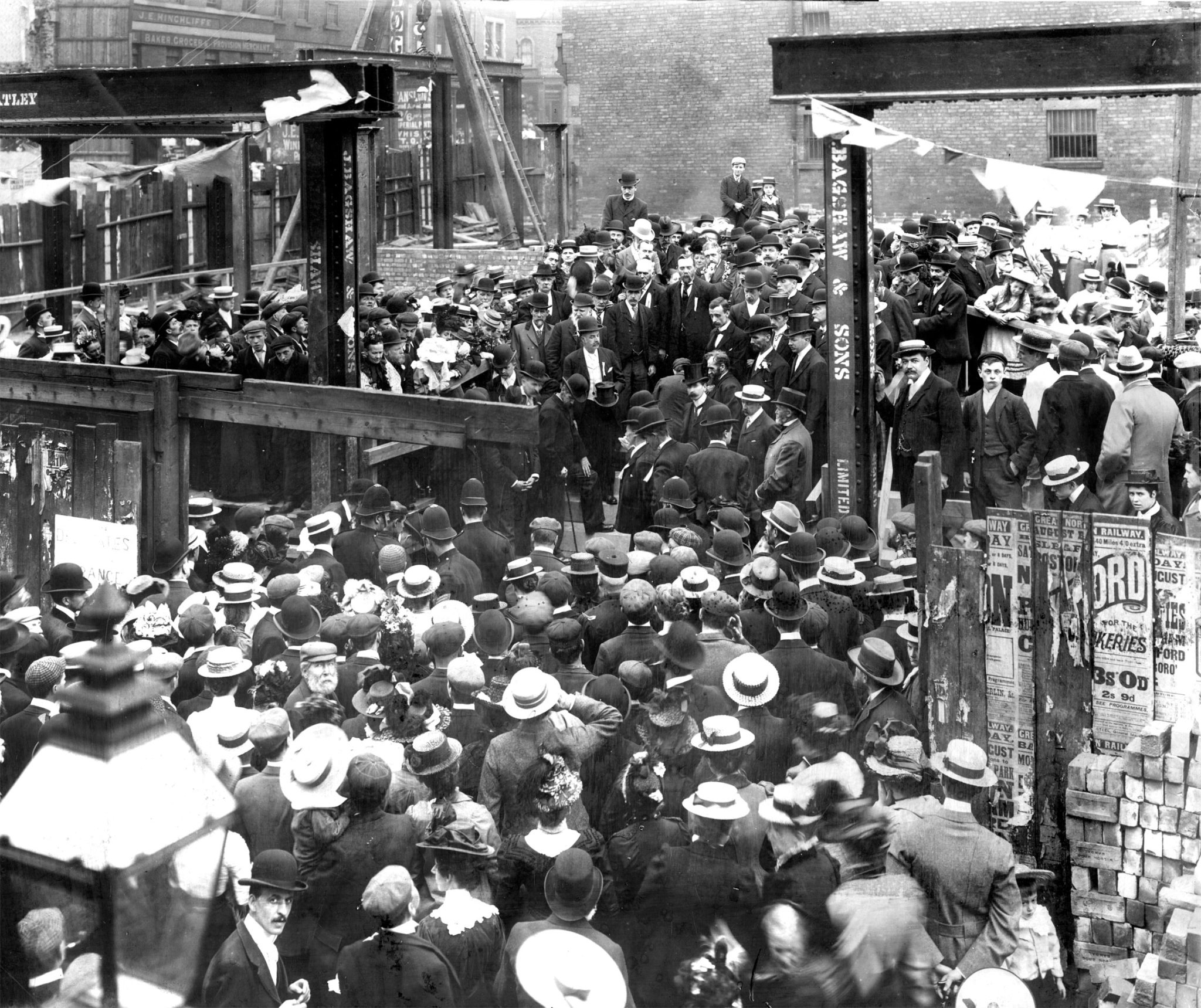
Laying the Foundation Stone

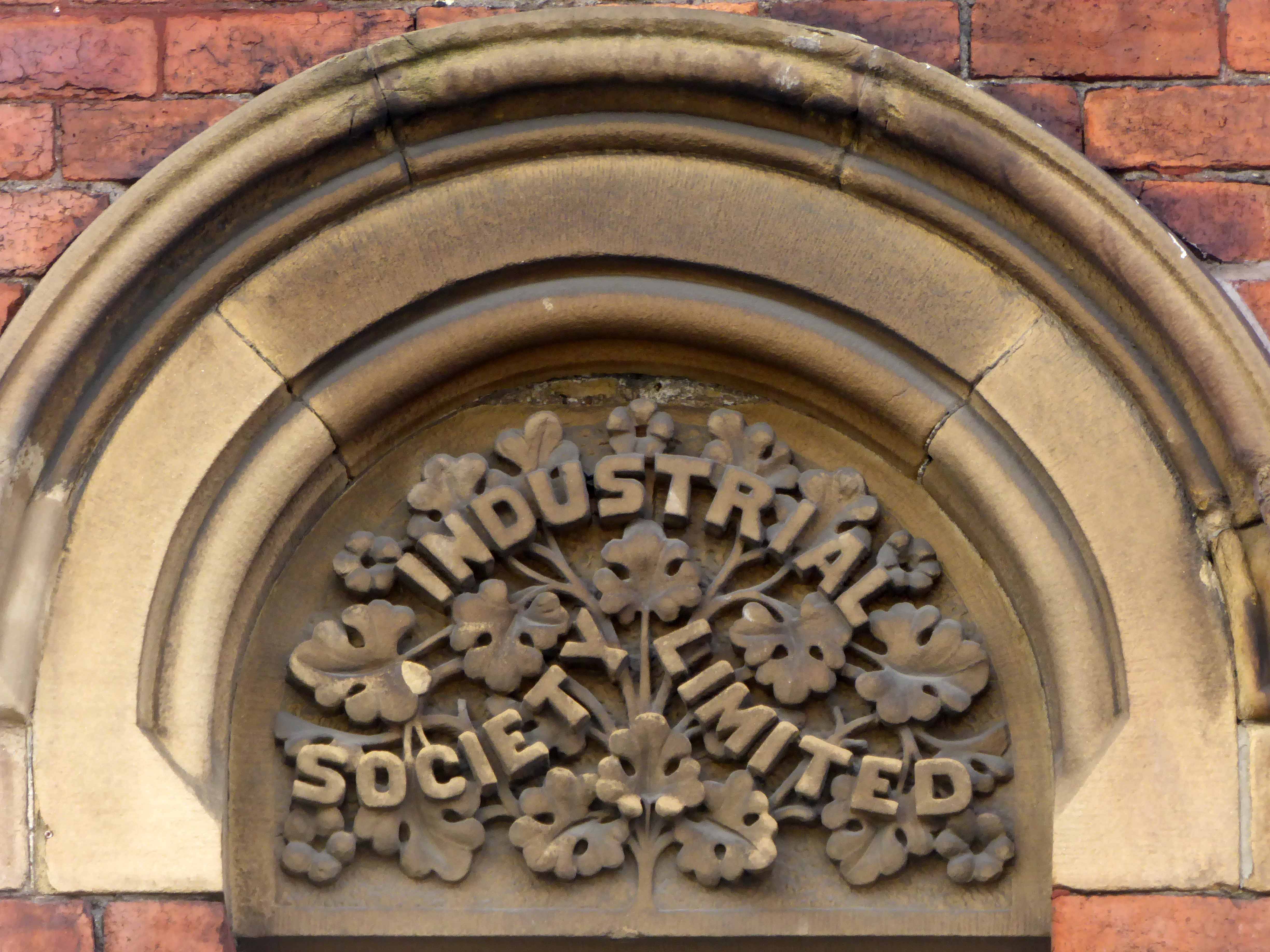
The Co-operative Unity Hall has seen better days – opened in 1902 and offering extensive retail space, along with a concert and dance hall, echoing to the sound of silent films, all-in wrestling and a fine array of music.

$_57Screen Shot 2017-08-02 at 15.30.55s-l1600

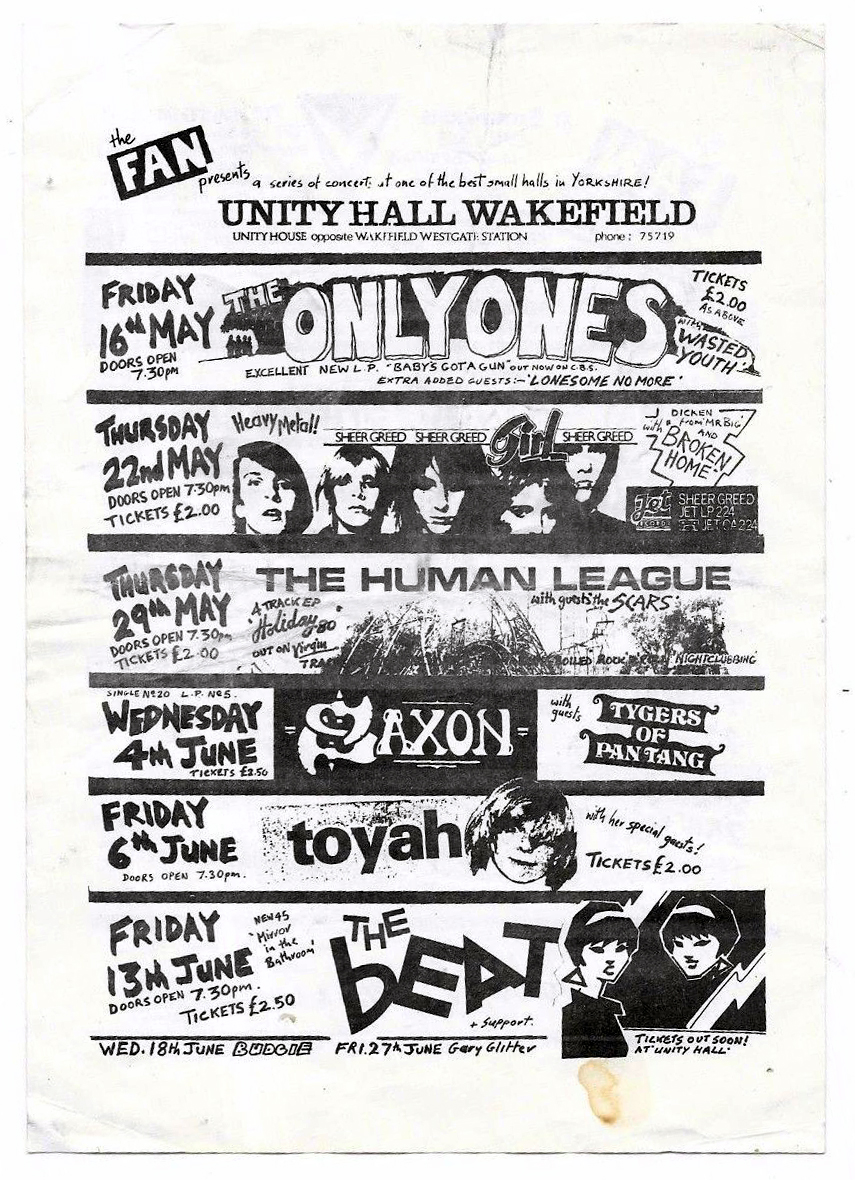
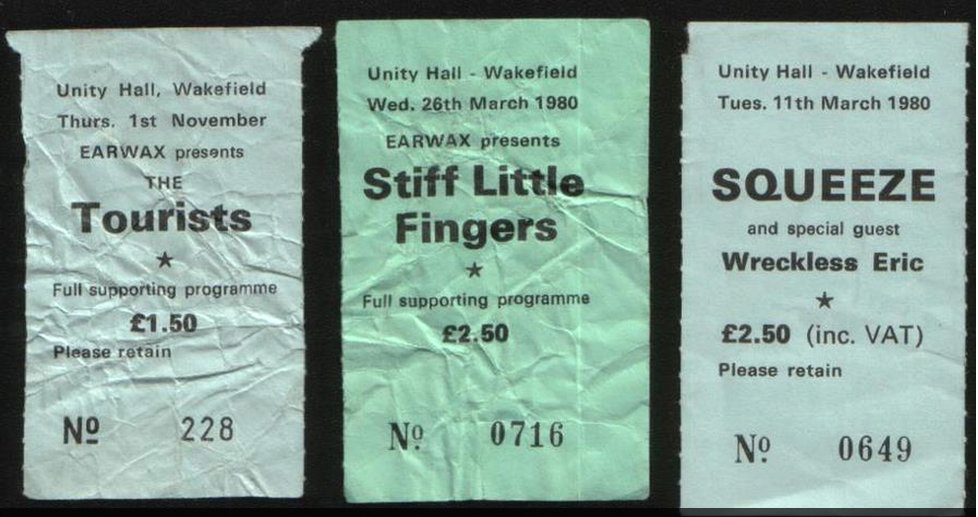
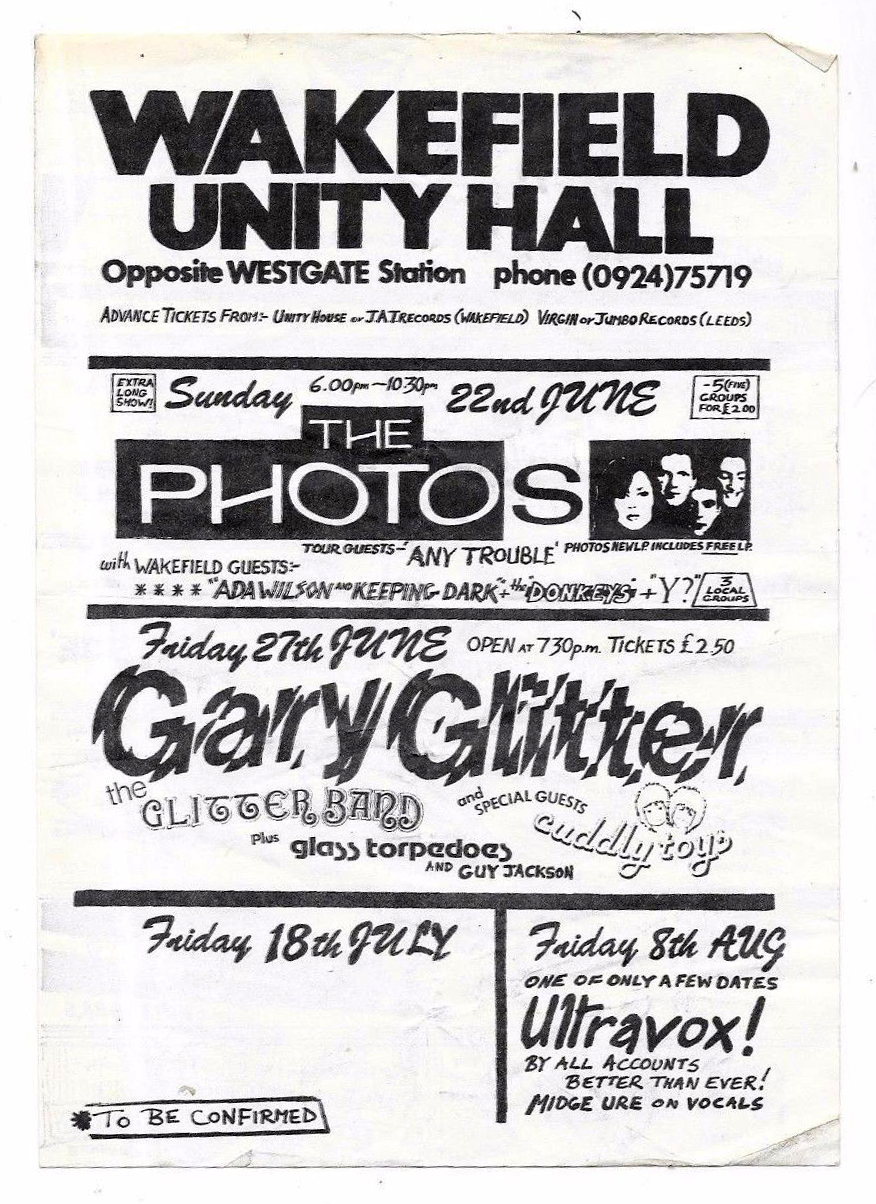
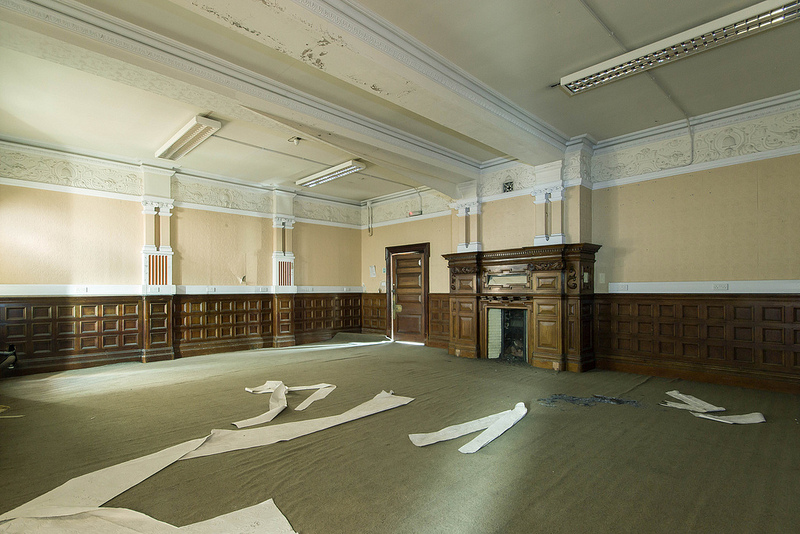
Sadly, as the post-war boom becomes an ever distant, sonic shadow of its former self, the hall closes. Listed yet unused, it stood aloof and alone, unloved. The Beat were on, sadly the beat no longer went on.

9276764393_e5b1688d09_c

9276733799_772ac84eb7_c

9276755169_9fd0bacd58_c

Derelict Places 

Happily a corner has been turned and under new management:

Unity Works is a stunning grade II listed multi-use space, where modern meets state-of-the-art. Unity Works is a great space for work and play, from 1:1 meeting areas, to large conferences, office & work space, to live events, comedy, music, theatre and film screenings.

There’s something for everyone!

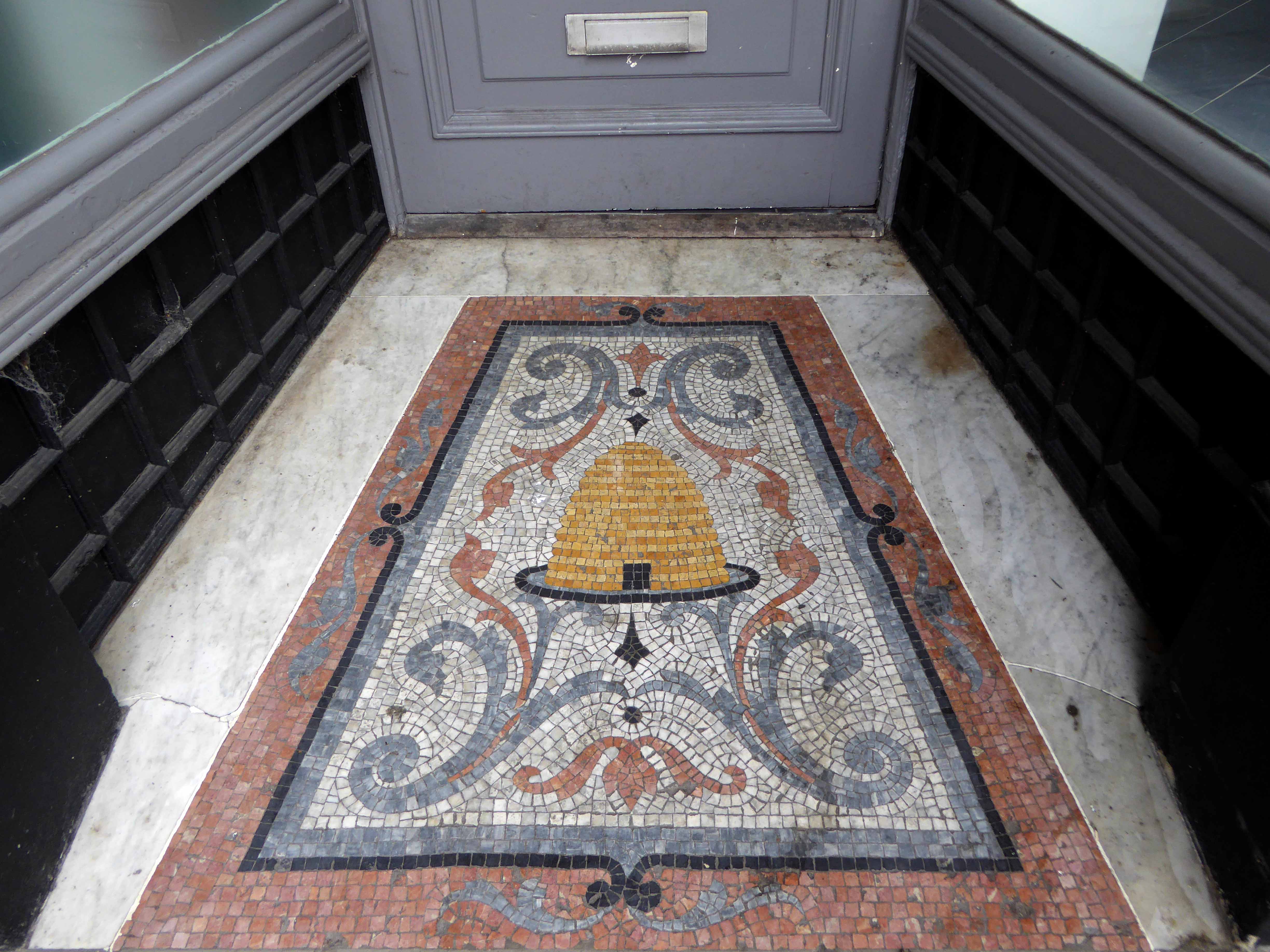
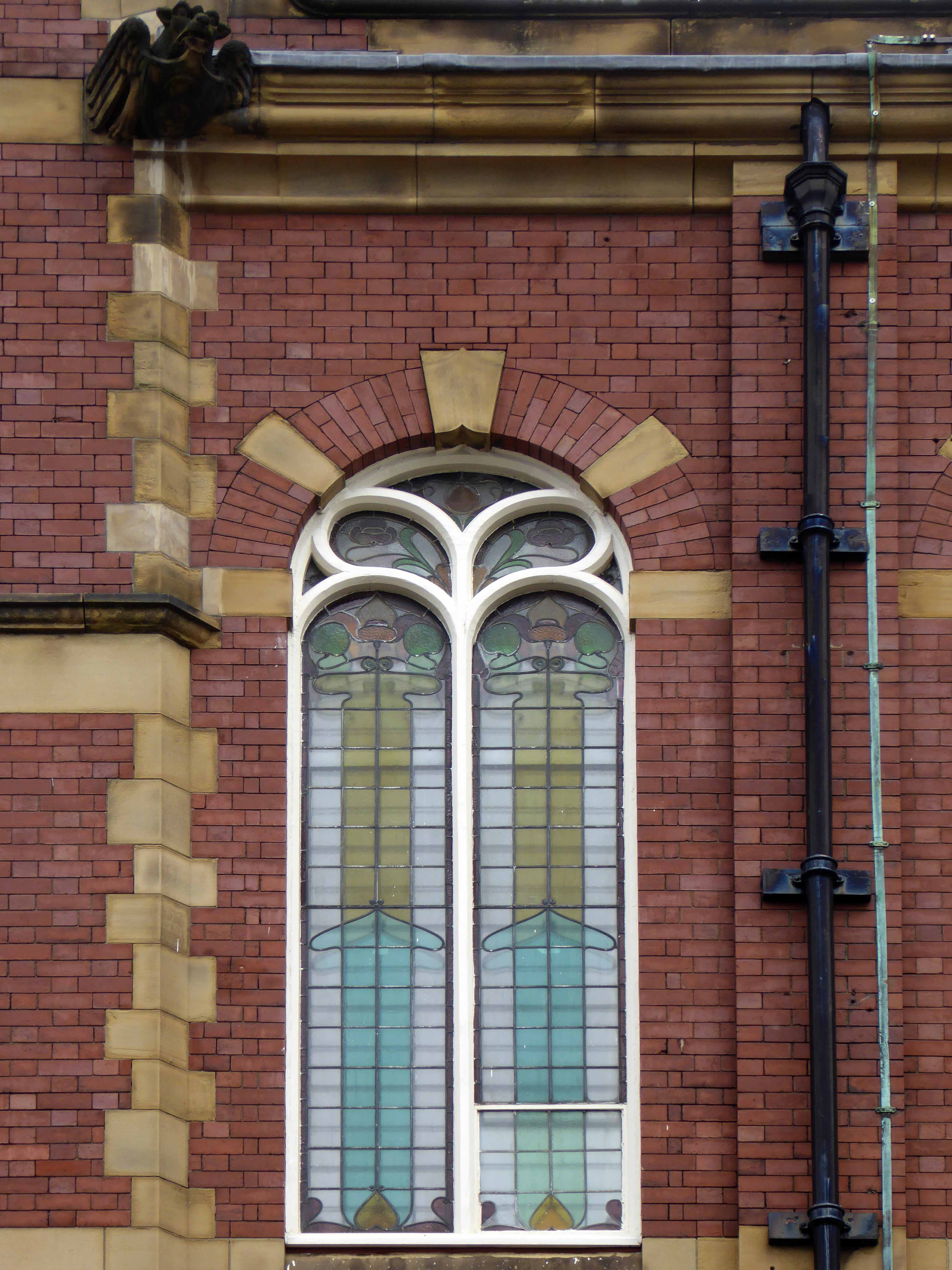
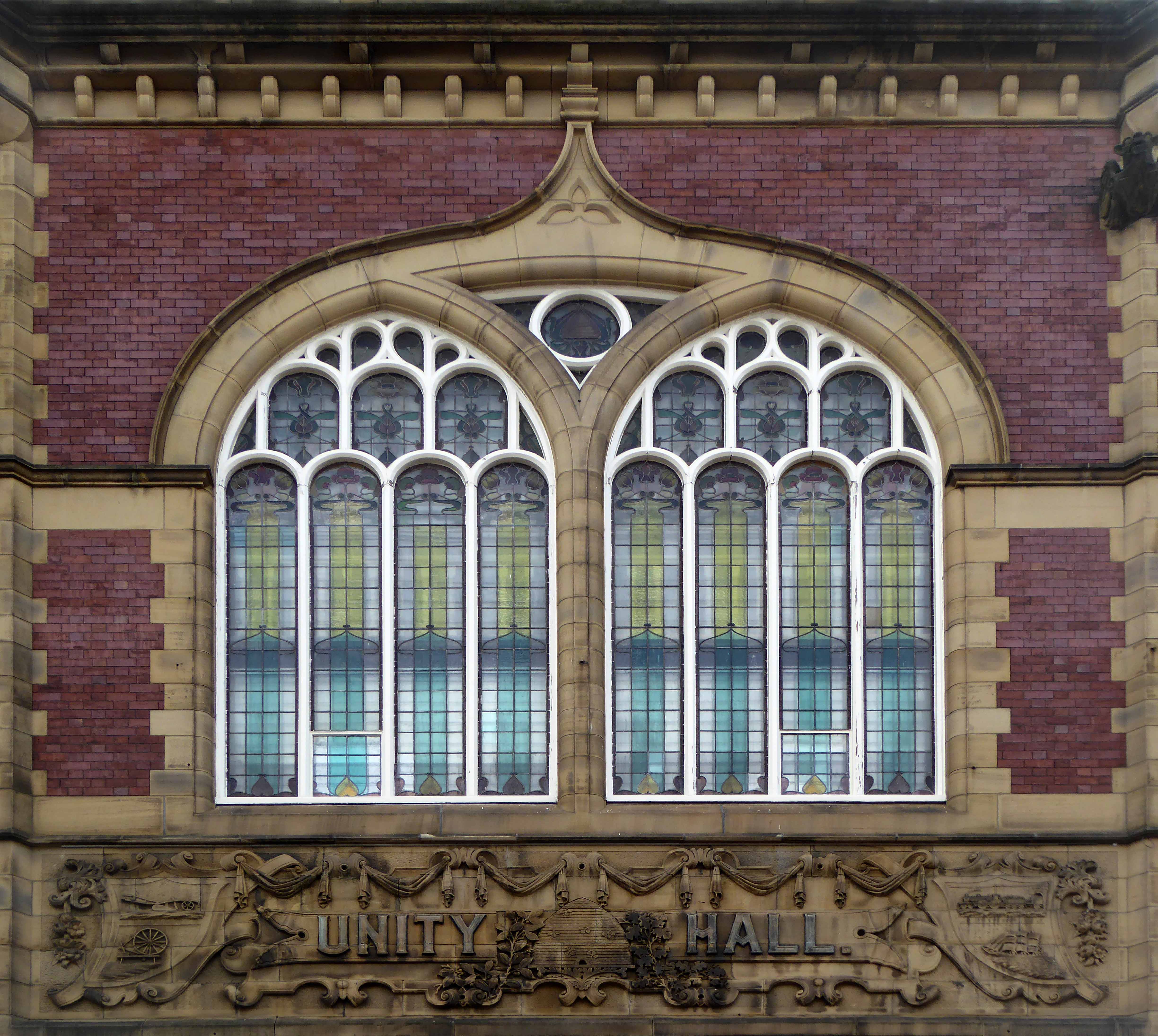
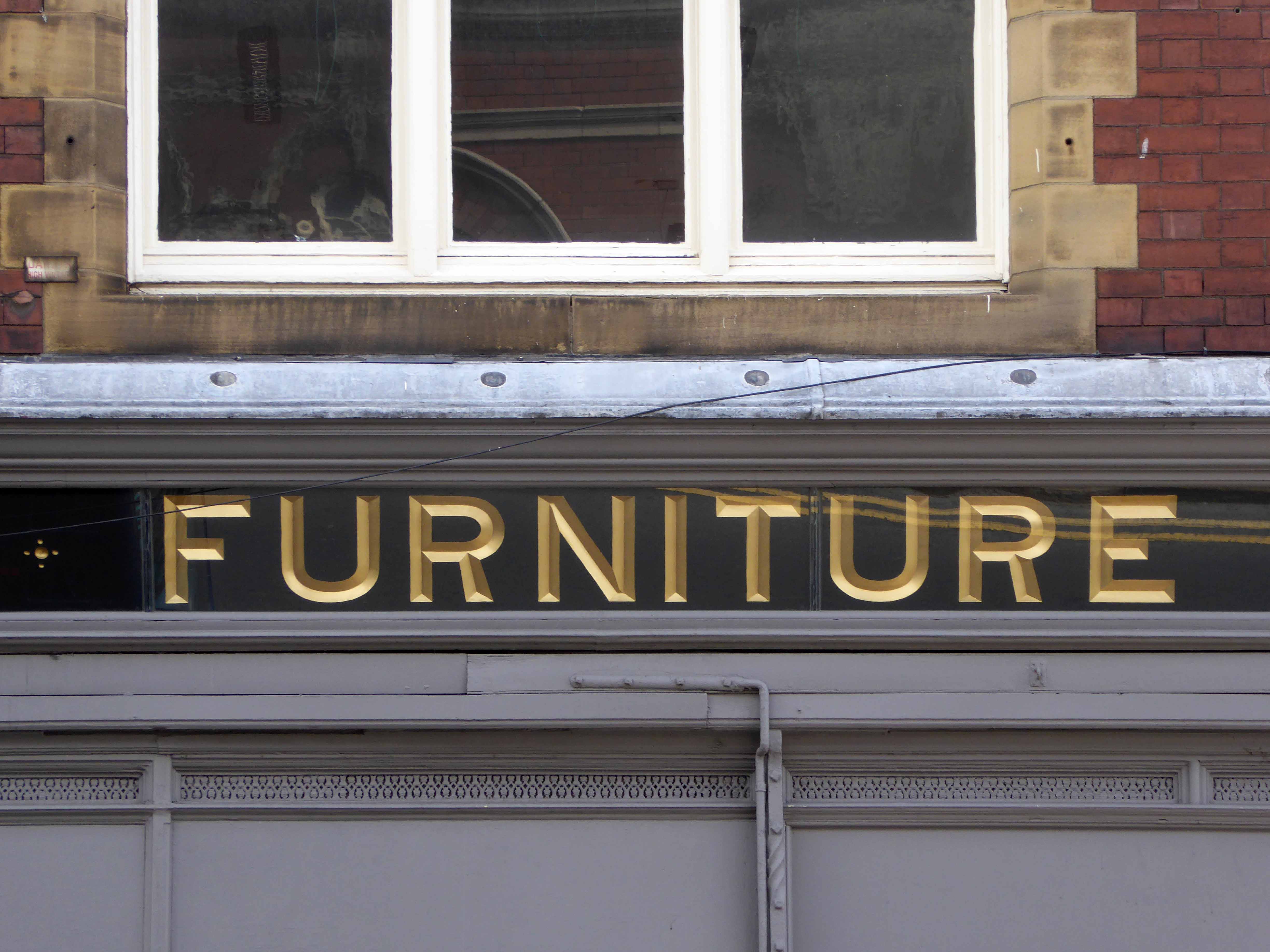
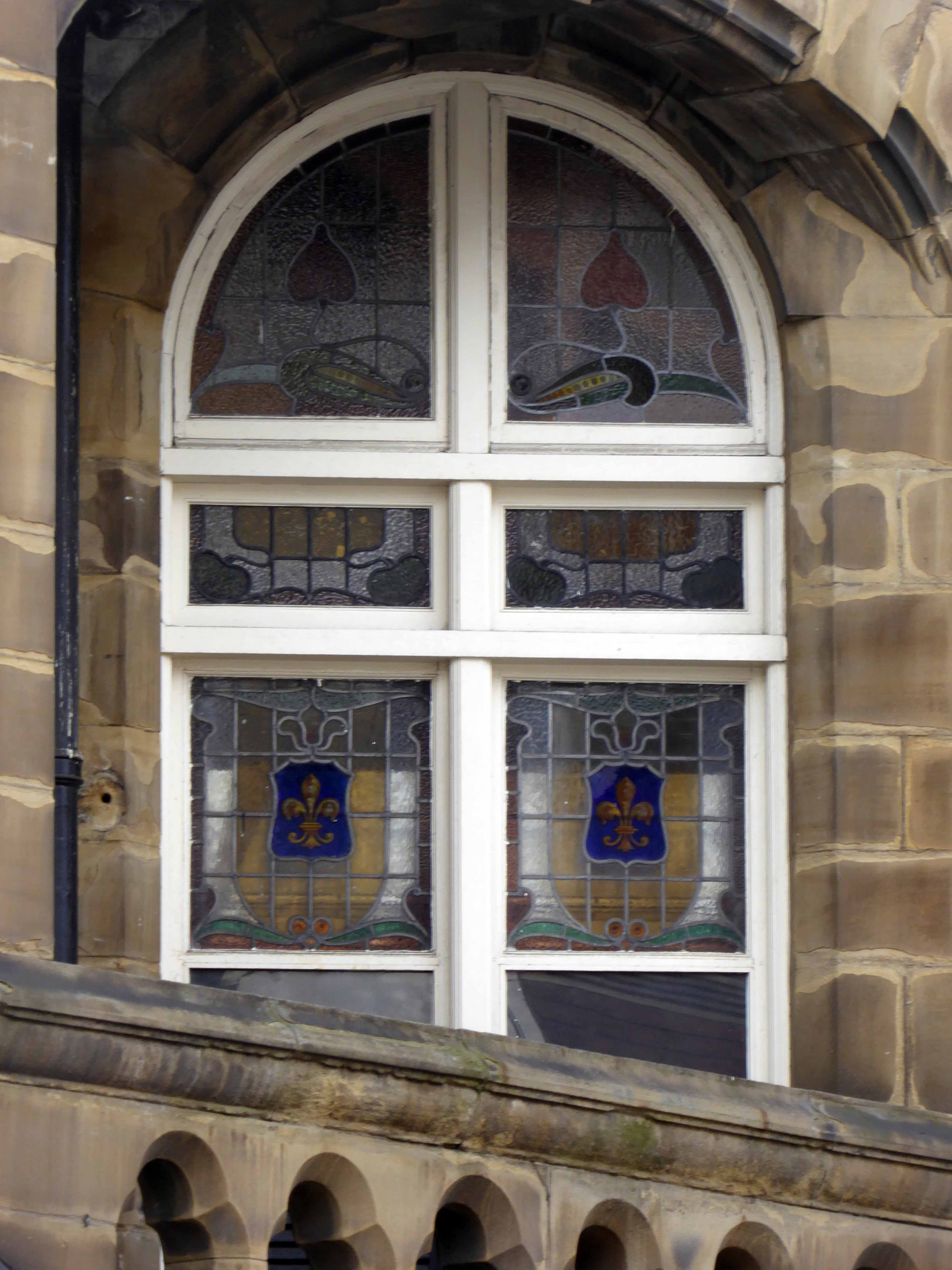
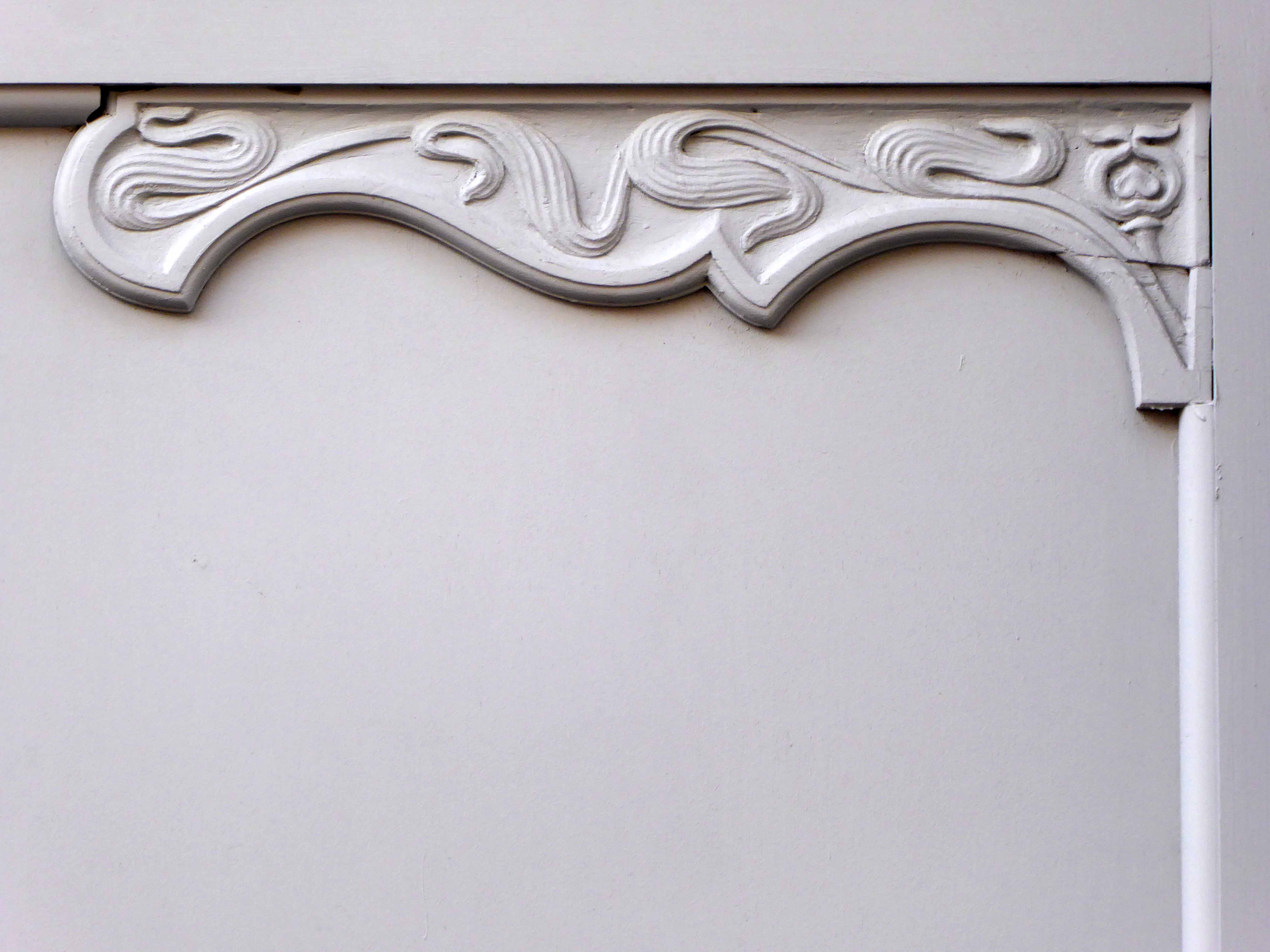
More than 400 people invested in a community share scheme to help fund the refurbishment, which began in January. Continuing the tradition of a movement in this architectural gem, which was established as the Wakefield Co-operative headquarters in 1867, a building alive with rich detailing, signage, architectural type and mosaic.

Get gone take a look, listen and dance.

P1070024 copy

P1070025 copy

P1070026 copy

P1070027 copy

P1070029 copy

P1180727

P1180728

P1180729

P1180730

P1180731

P1180732

P1180733

P1180734

P1180735

P1180736

P1180737

P1180738

P1180739


P1180746

P1180747

P1180748

P1180749

WISLa copy


Tudor House – Wakefield

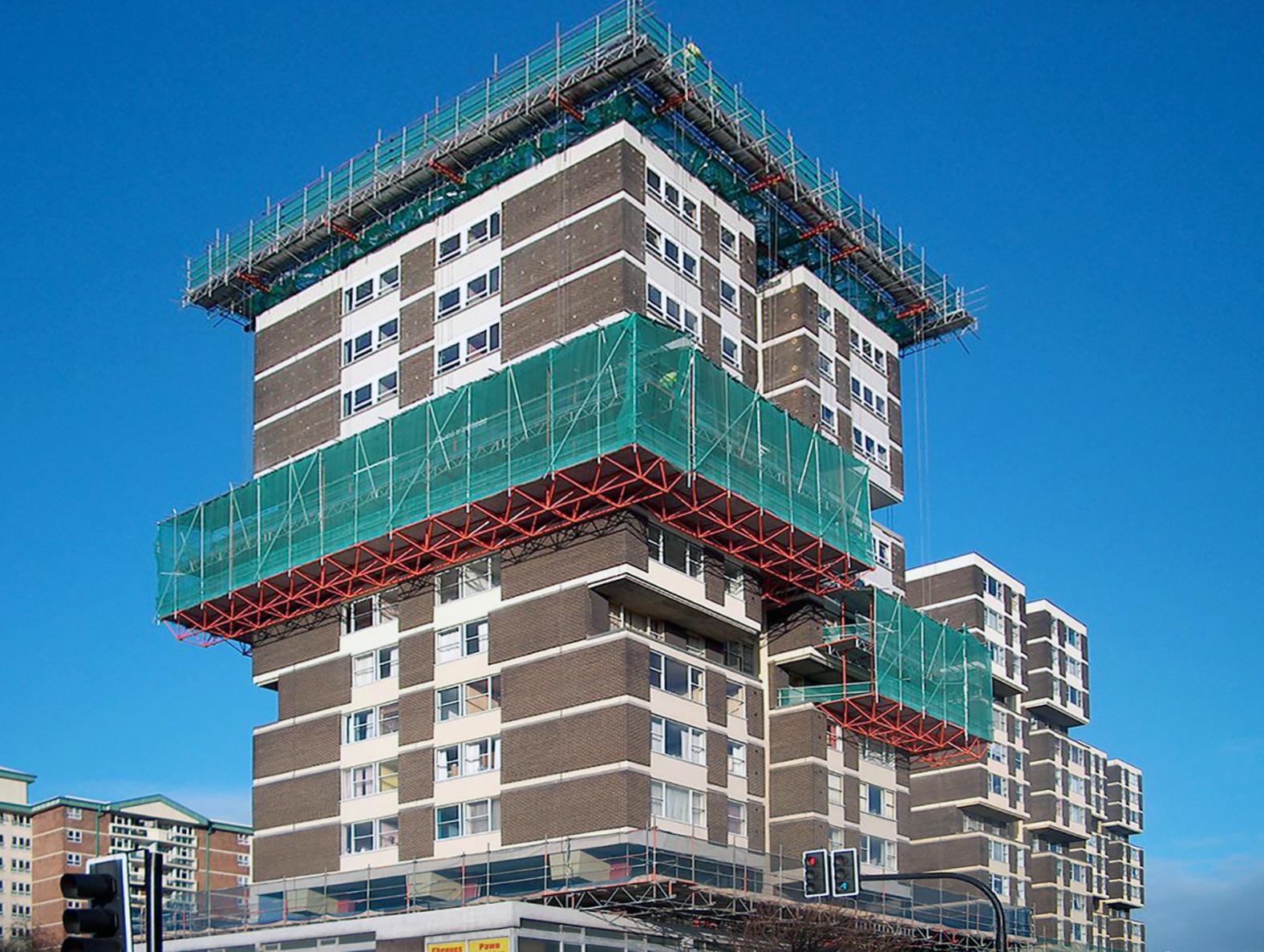
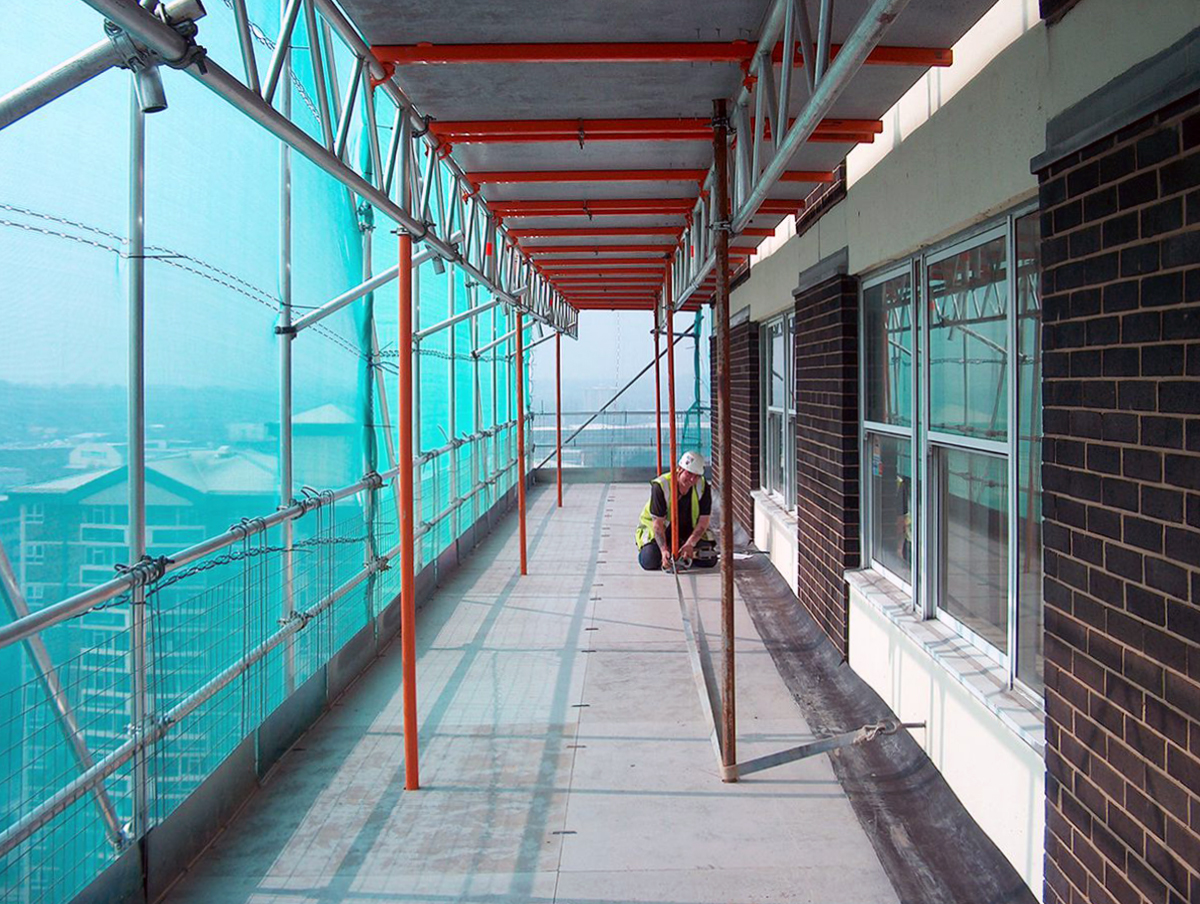
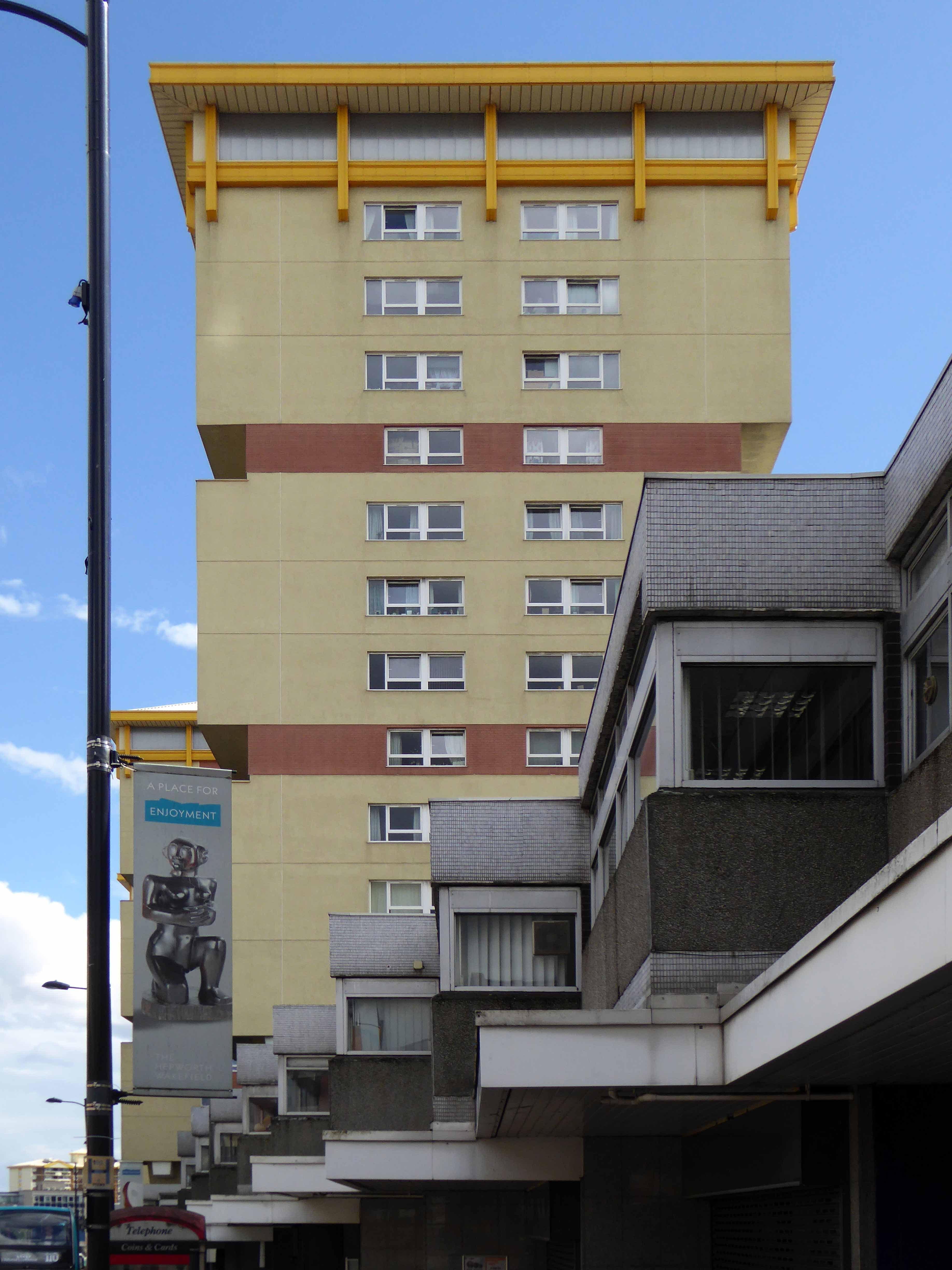
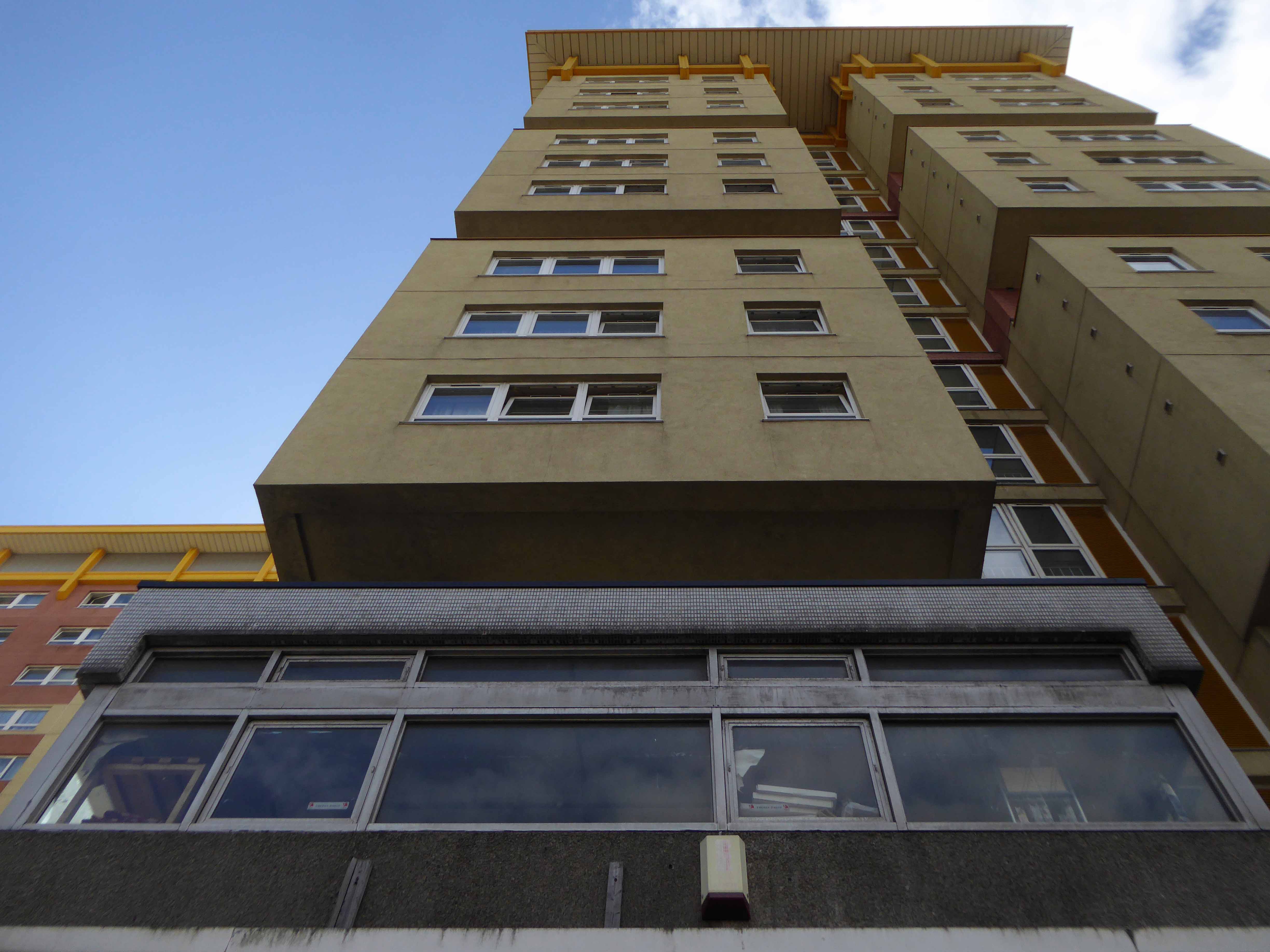
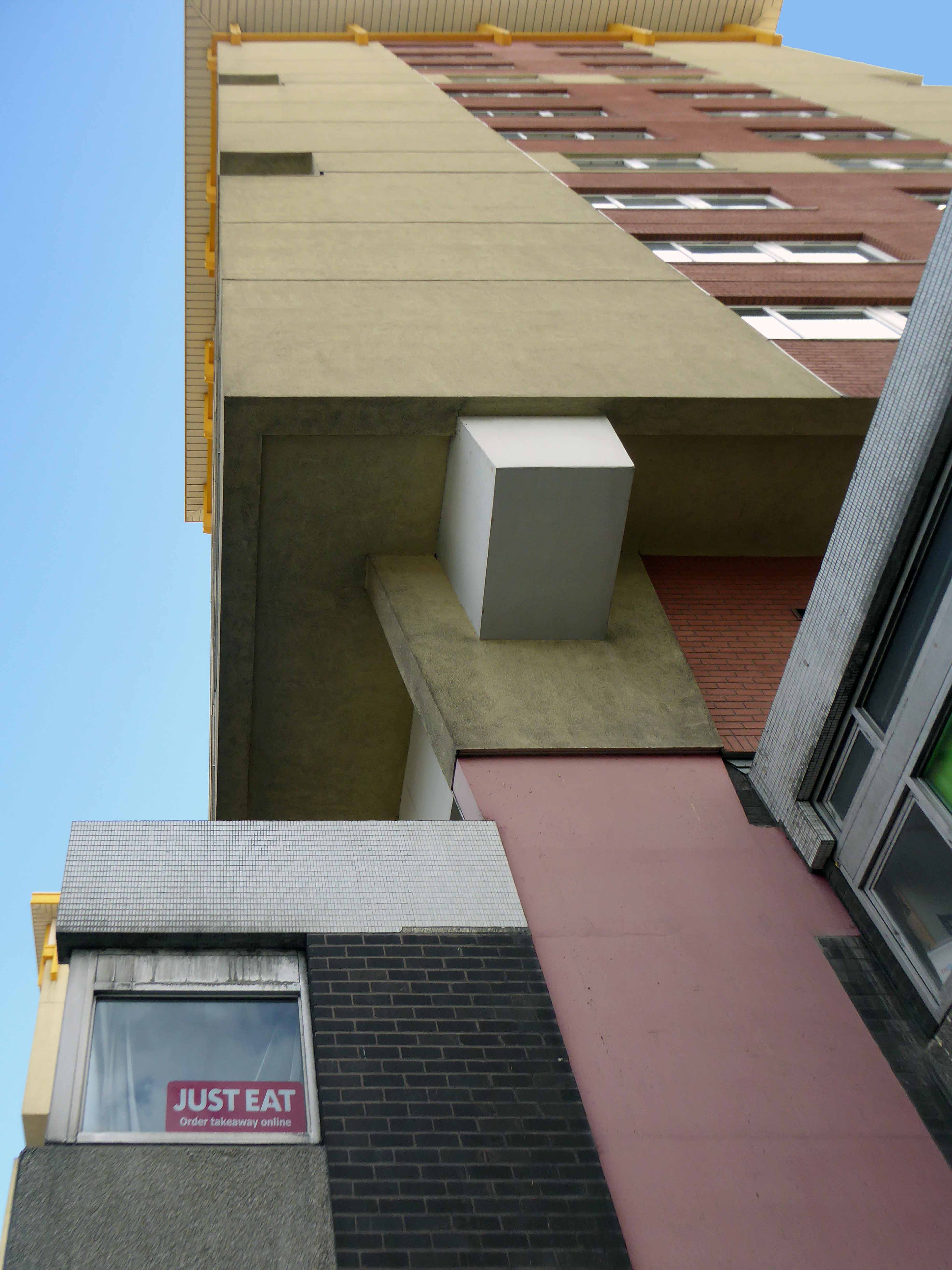
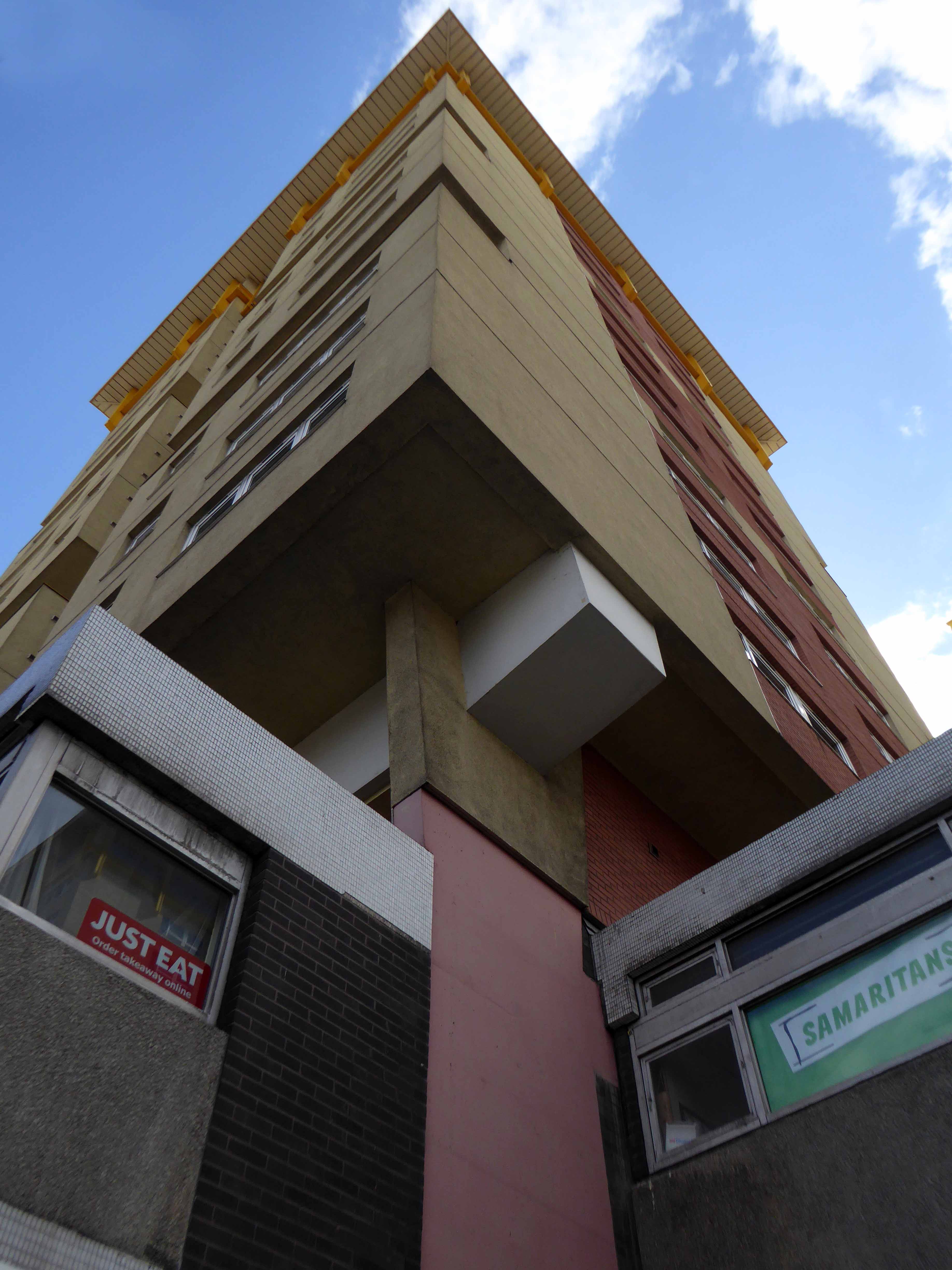
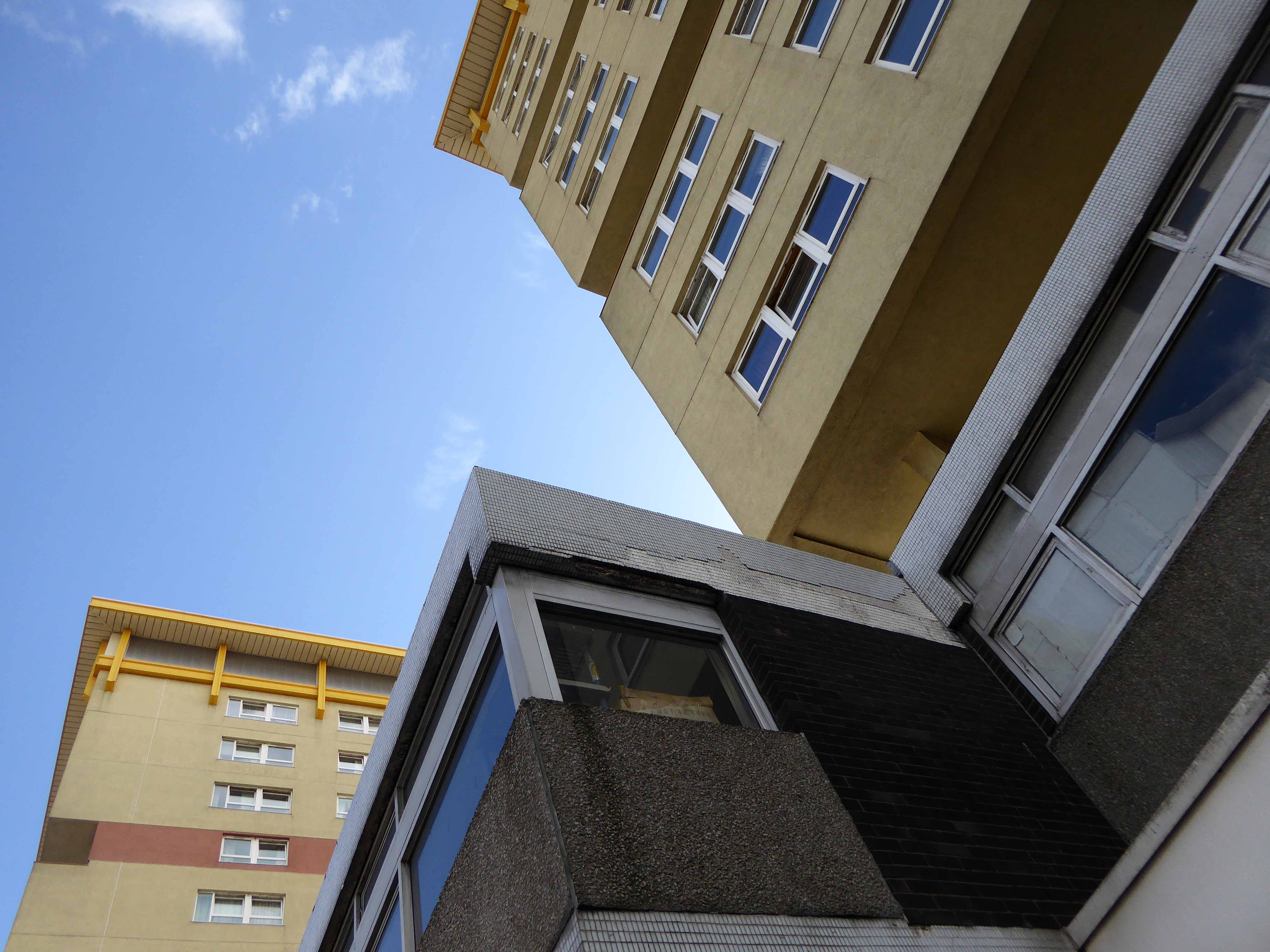
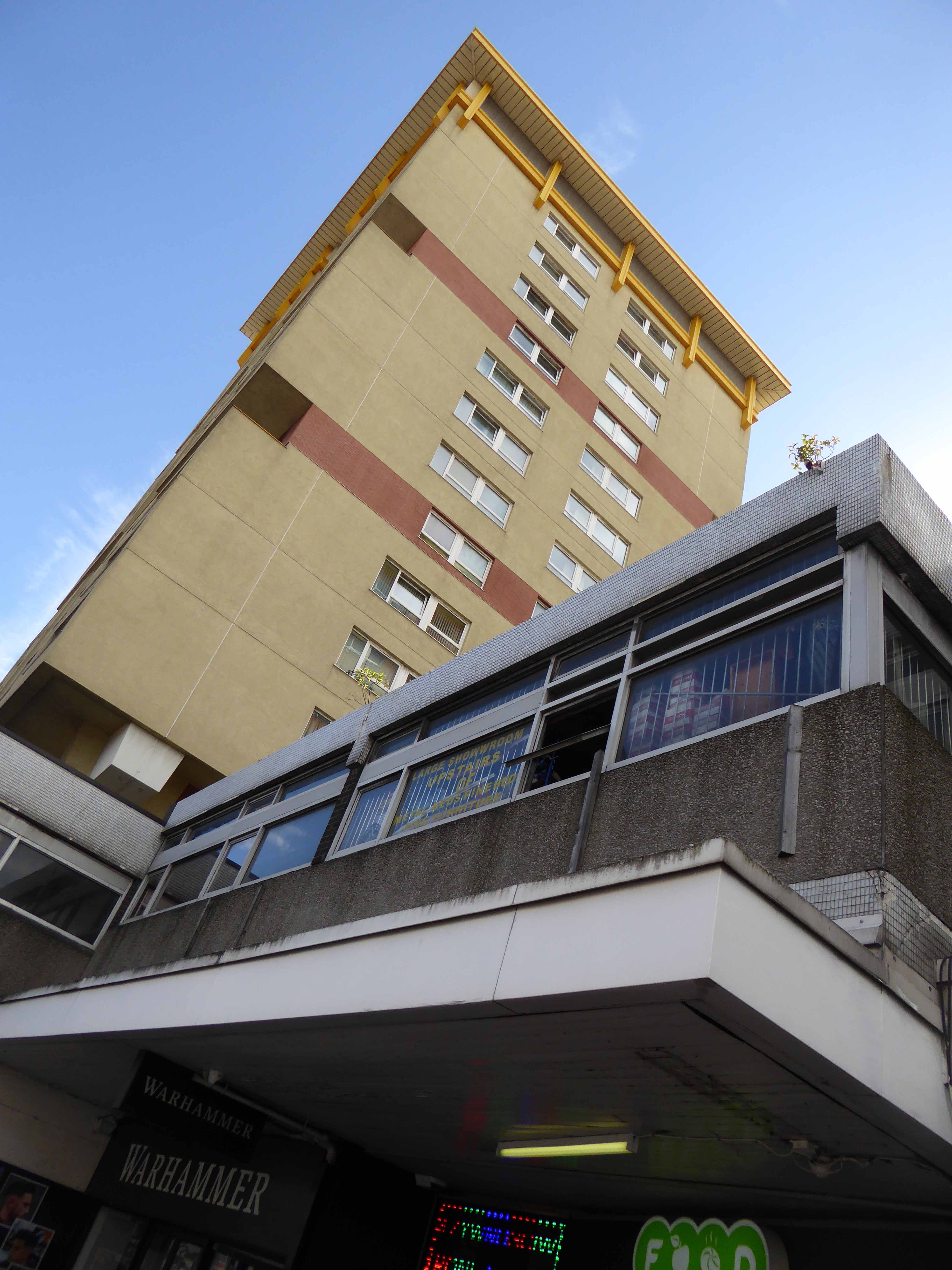
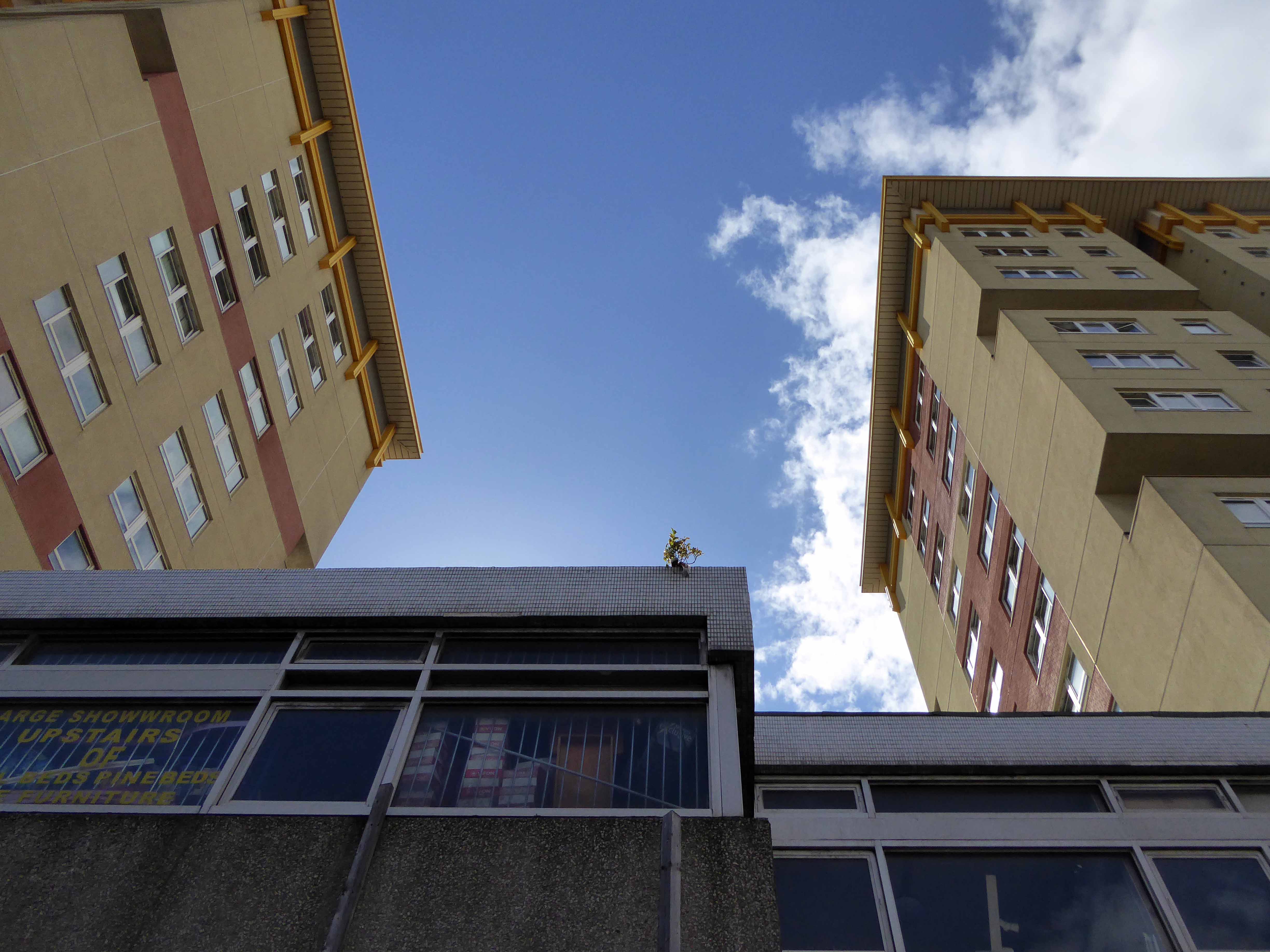
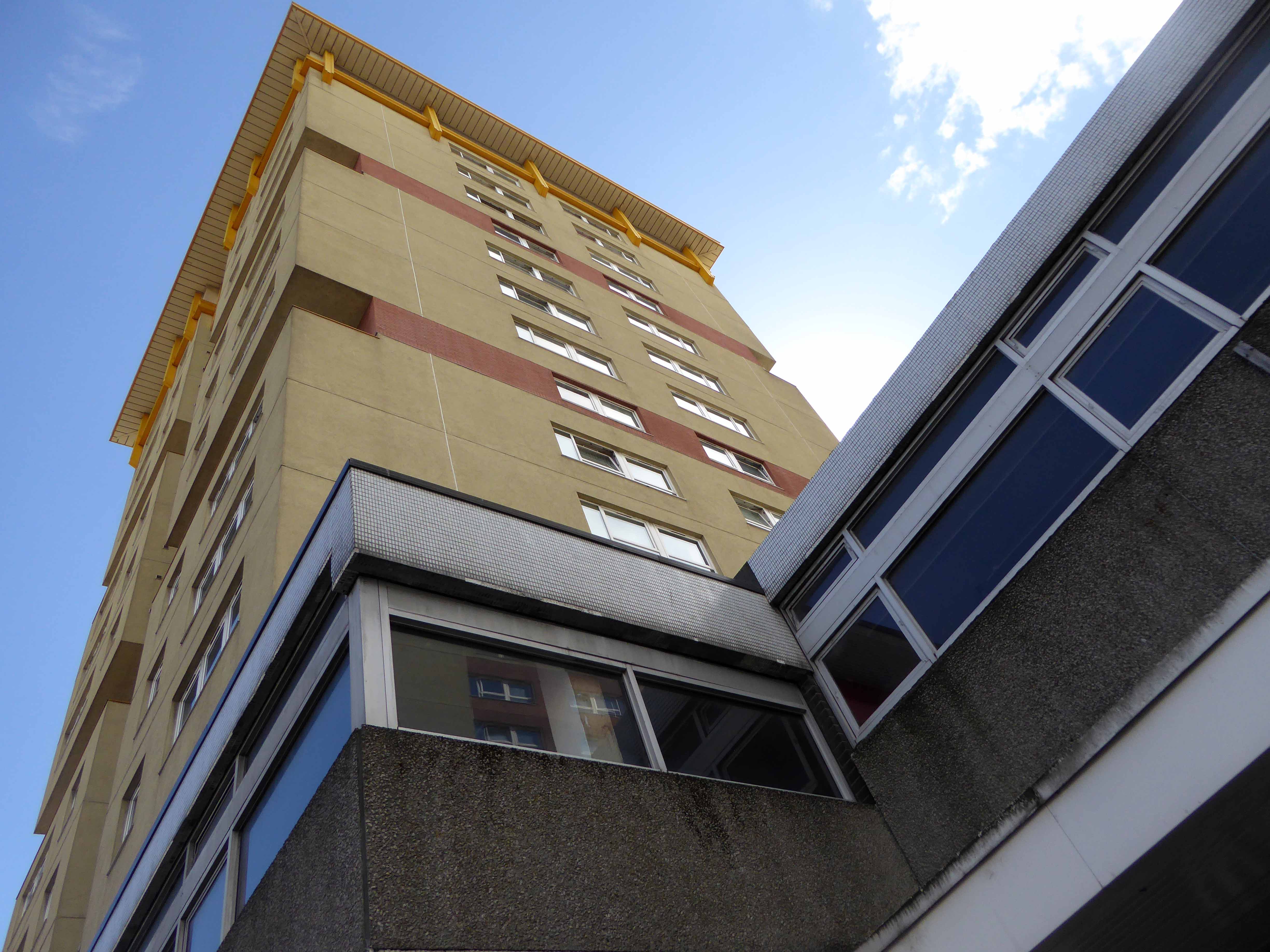
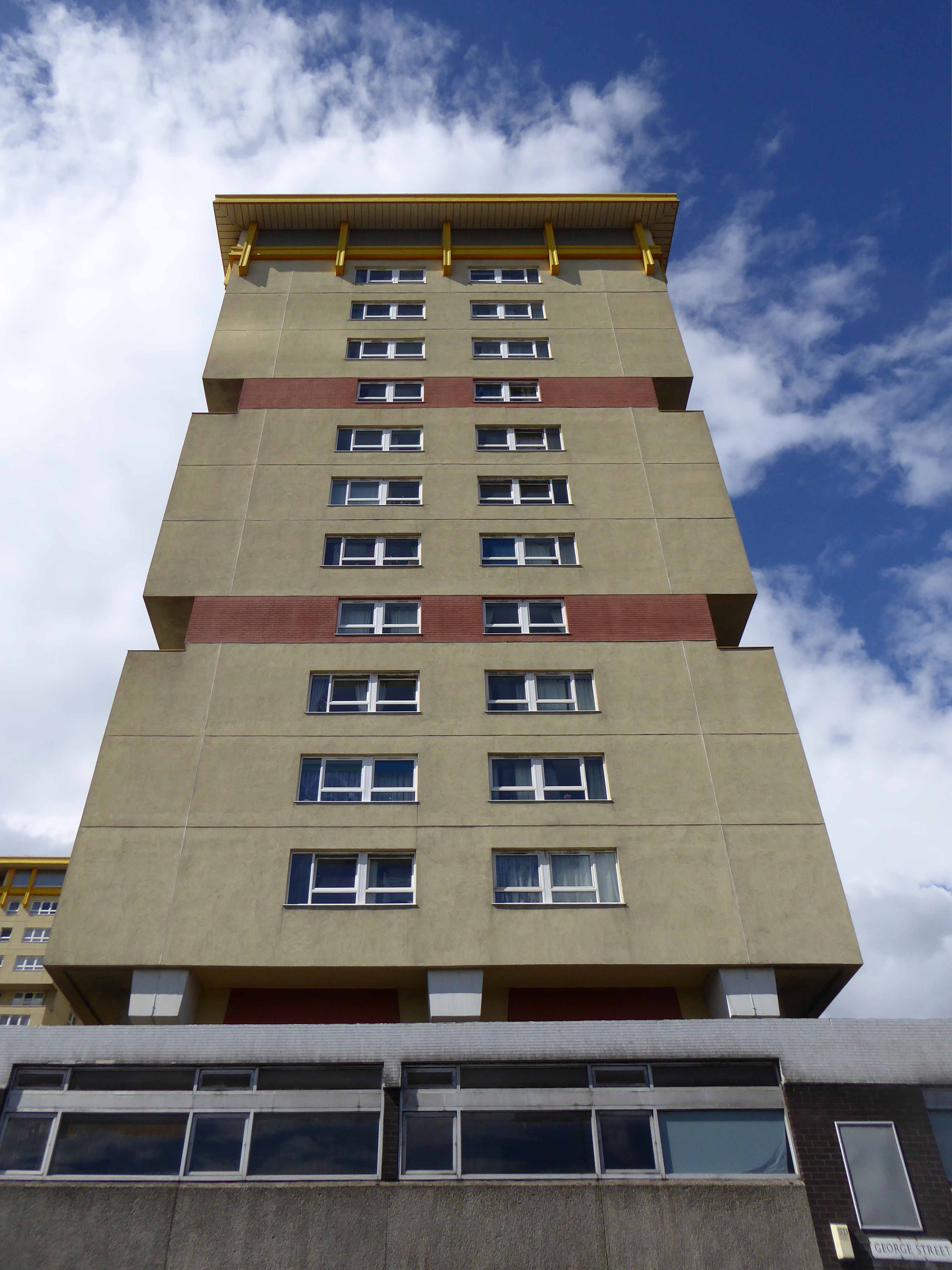
You wouldn’t ever want a bad case of the cladding, the triumph of the expedient over the purist aesthetic. We all may wish to be warm, dry and free from unwanted ingress, whilst exercising a degree of discernment and restraint, regarding the manner in which we are clad.

In Wakefield and in local authorities throughout this fair land there seems to have been a distinct lack of discernment and restraint, regarding the manner in which modern tower blocks are clad.

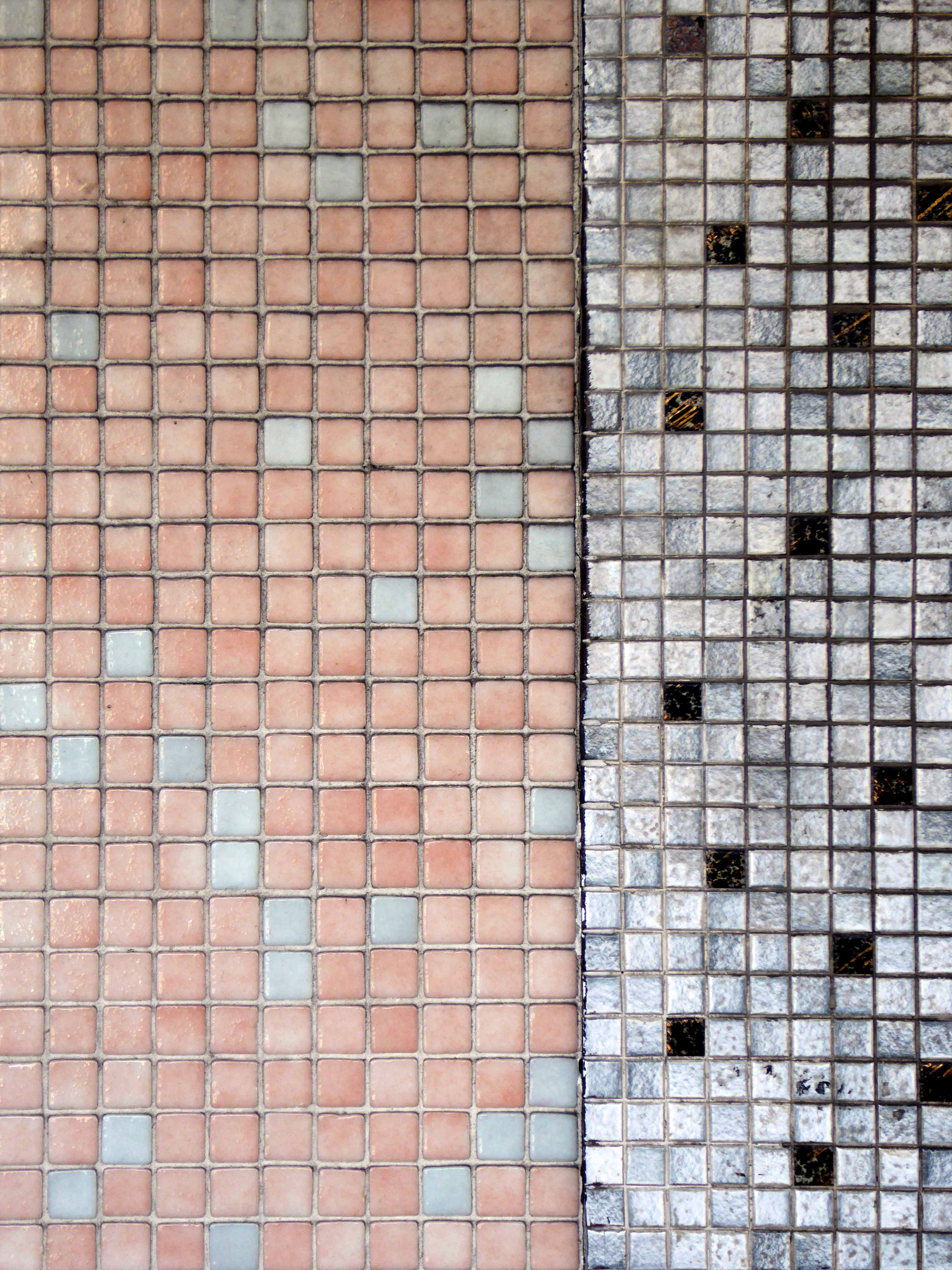
Cloaking concrete in coloured surfaces better suited to Toytown than our town.

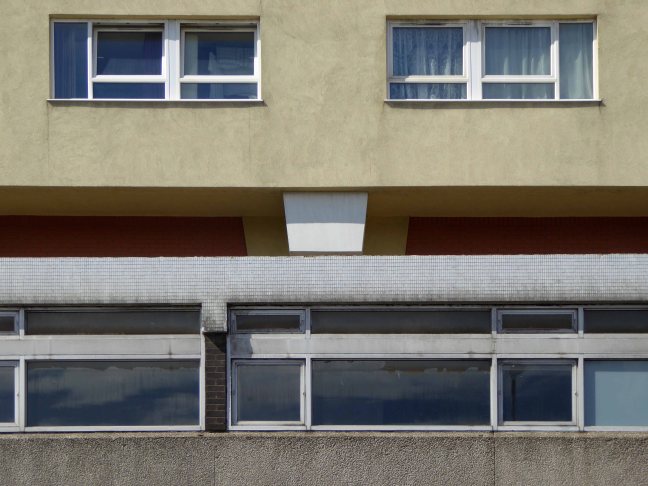
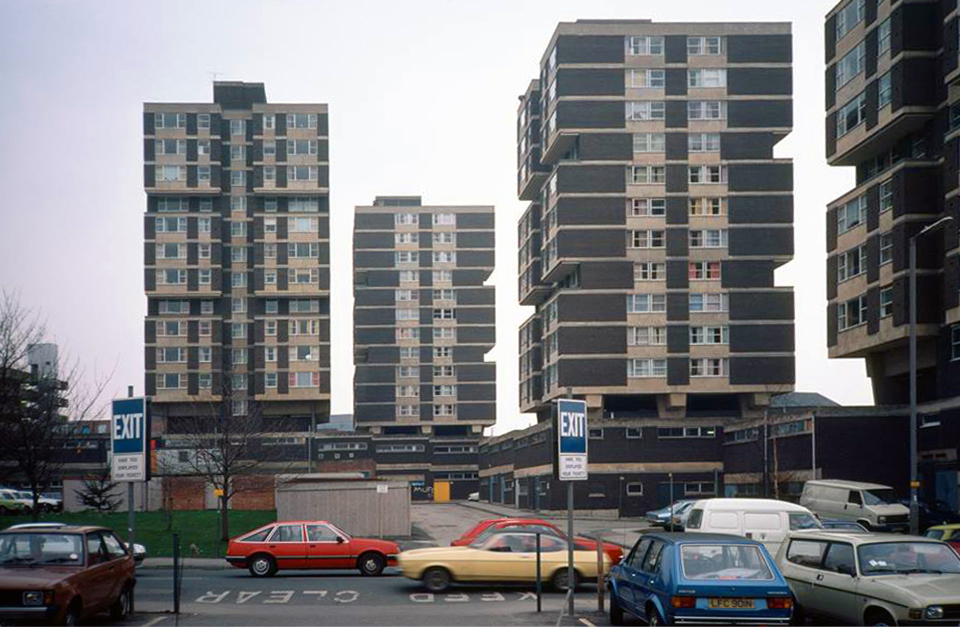
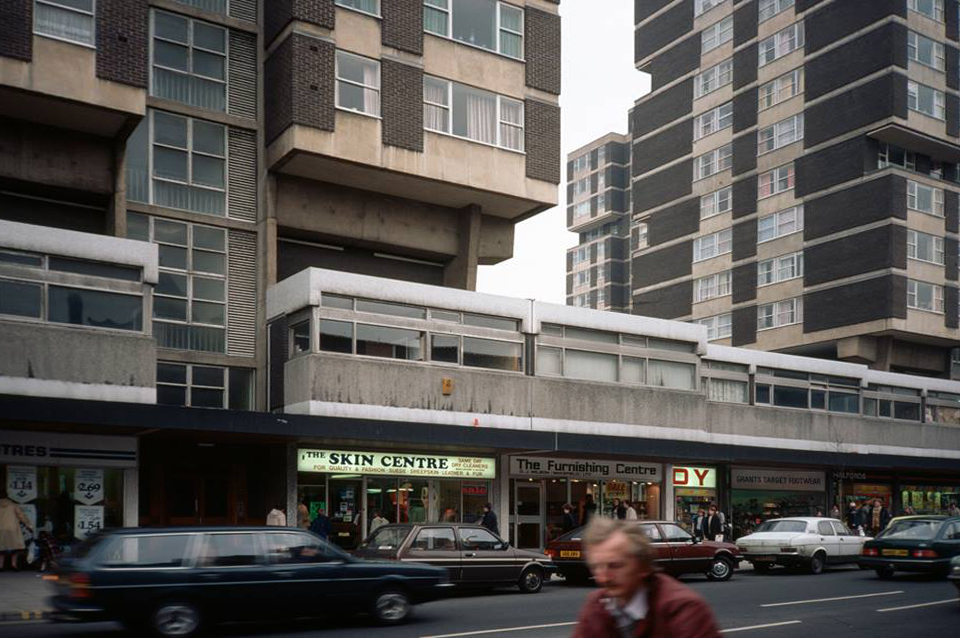
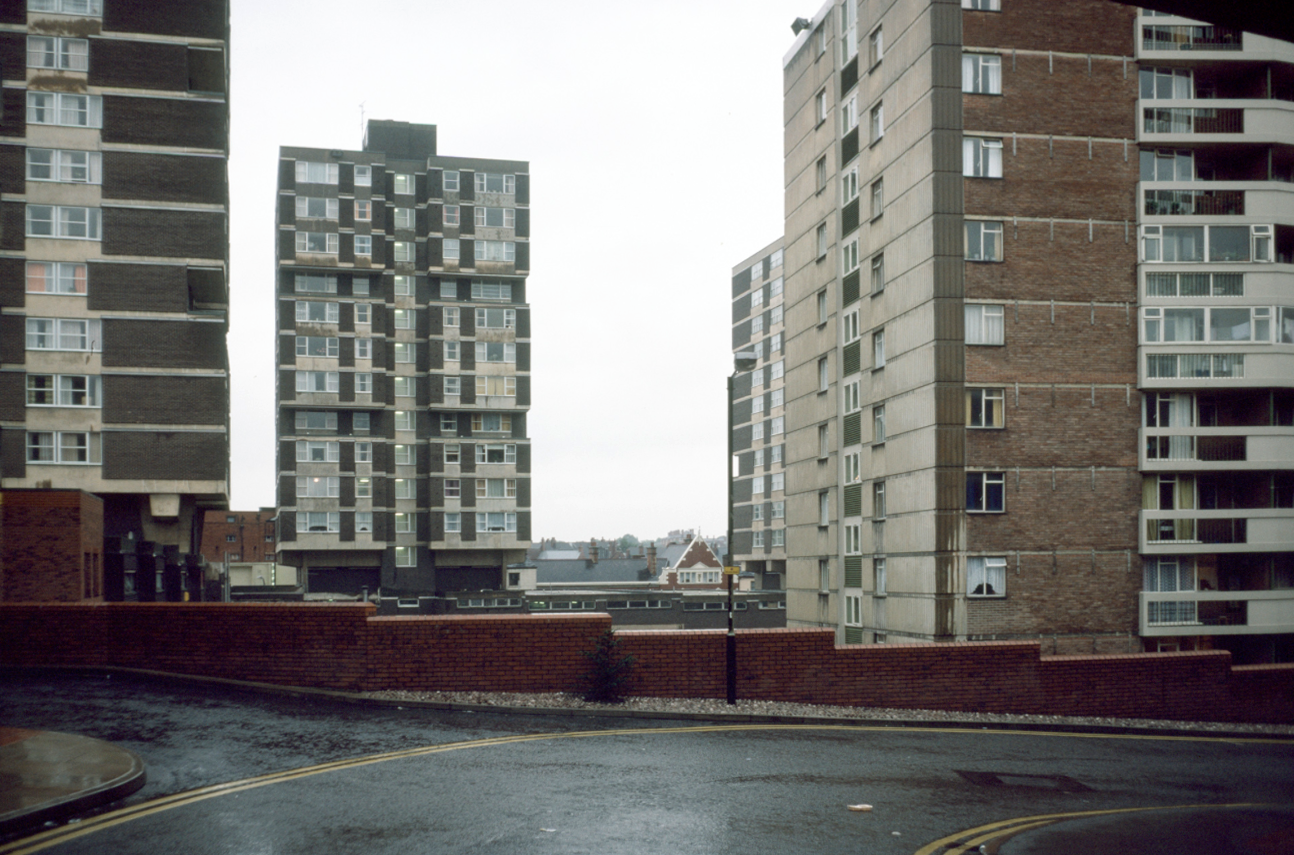
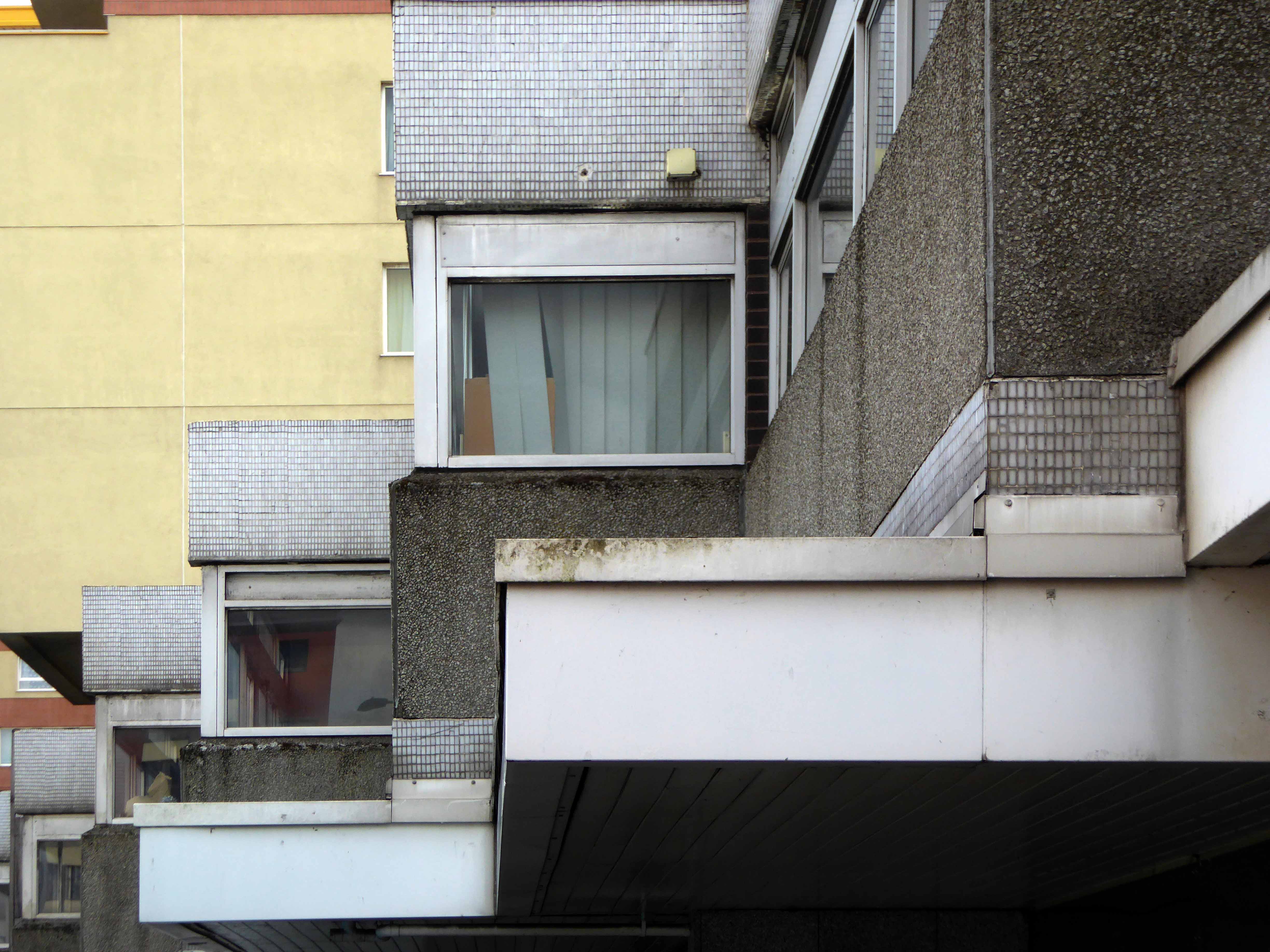
Four twelve-storey H-plan tower blocks built as public housing as part of the central area development of lower Kirkgate. The blocks rise out of other low-rise development. Each block contains 44 one and two-bedroom flats, providing 176 dwellings in total. The consulting architects for the development were Richard Seifert & Partners. Construction is of concrete frame with brick infill panels. The blocks were approved by committee in 1964.

Tudor House aka Lower Kirkgate Comprehensive Development area as was:

13669171_10154435787311600_6732873241408697456_n

13873008_10154435787336600_5185297045755258748_n

Screen Shot 2017-08-01 at 13.37.59

Photographs Tower Block

Ain’t it funny how time and integrity slips away?

wakefield_flats2l

wakefield_flats3l

Photographs Alan White Design

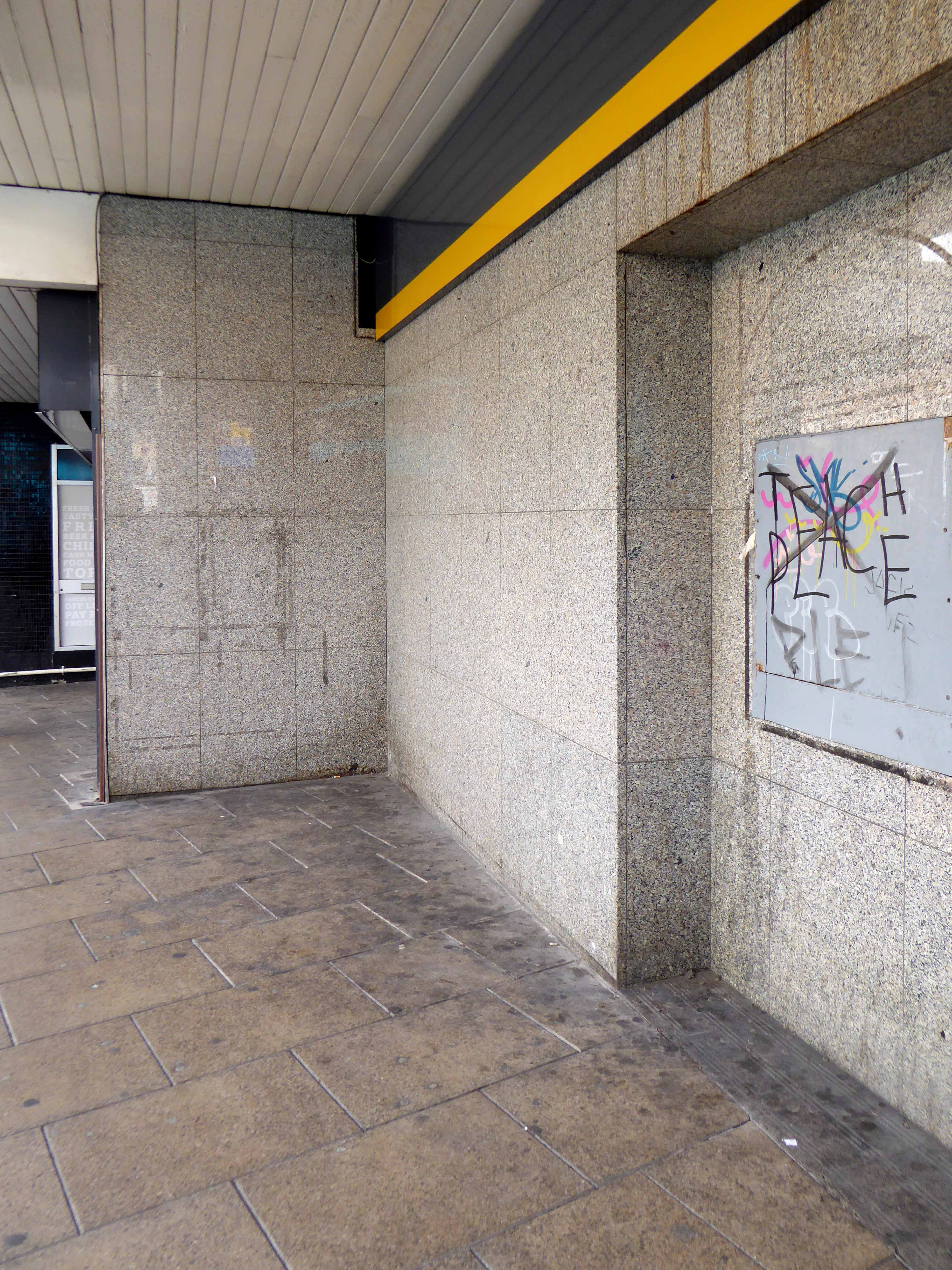
Gone the bold flat roofed, cuboid contrasting concrete and brick towers, whilst confusingly the ground floor retail development remains untouched.

P1180757

P1180759

P1180760

P1180761

P1180762

P1180763

P1180765

P1180766

P1180767

P1180768

P1180769

P1180770