We can travel from pylon to pylon, spire to spire.
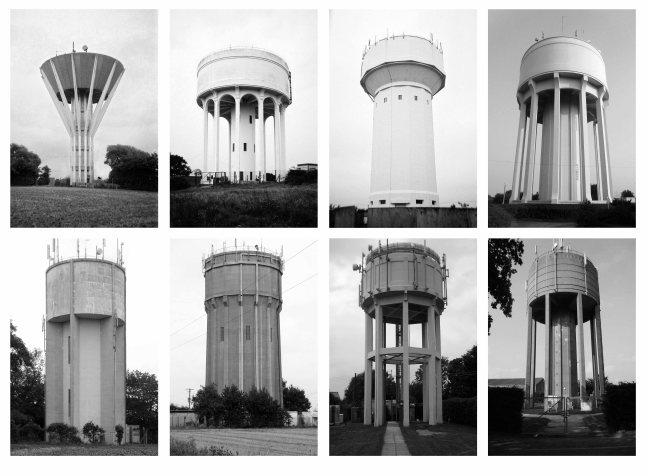
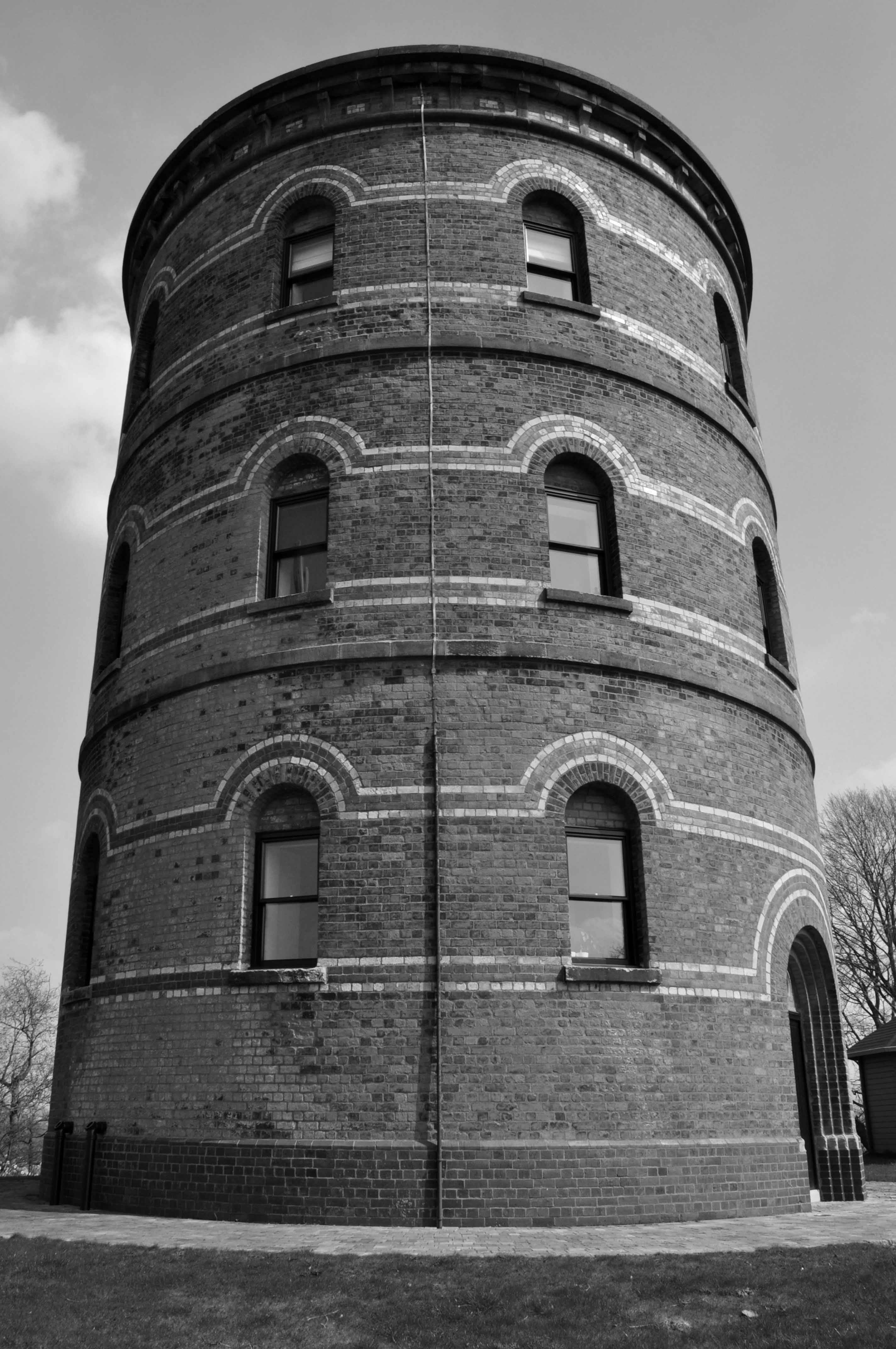
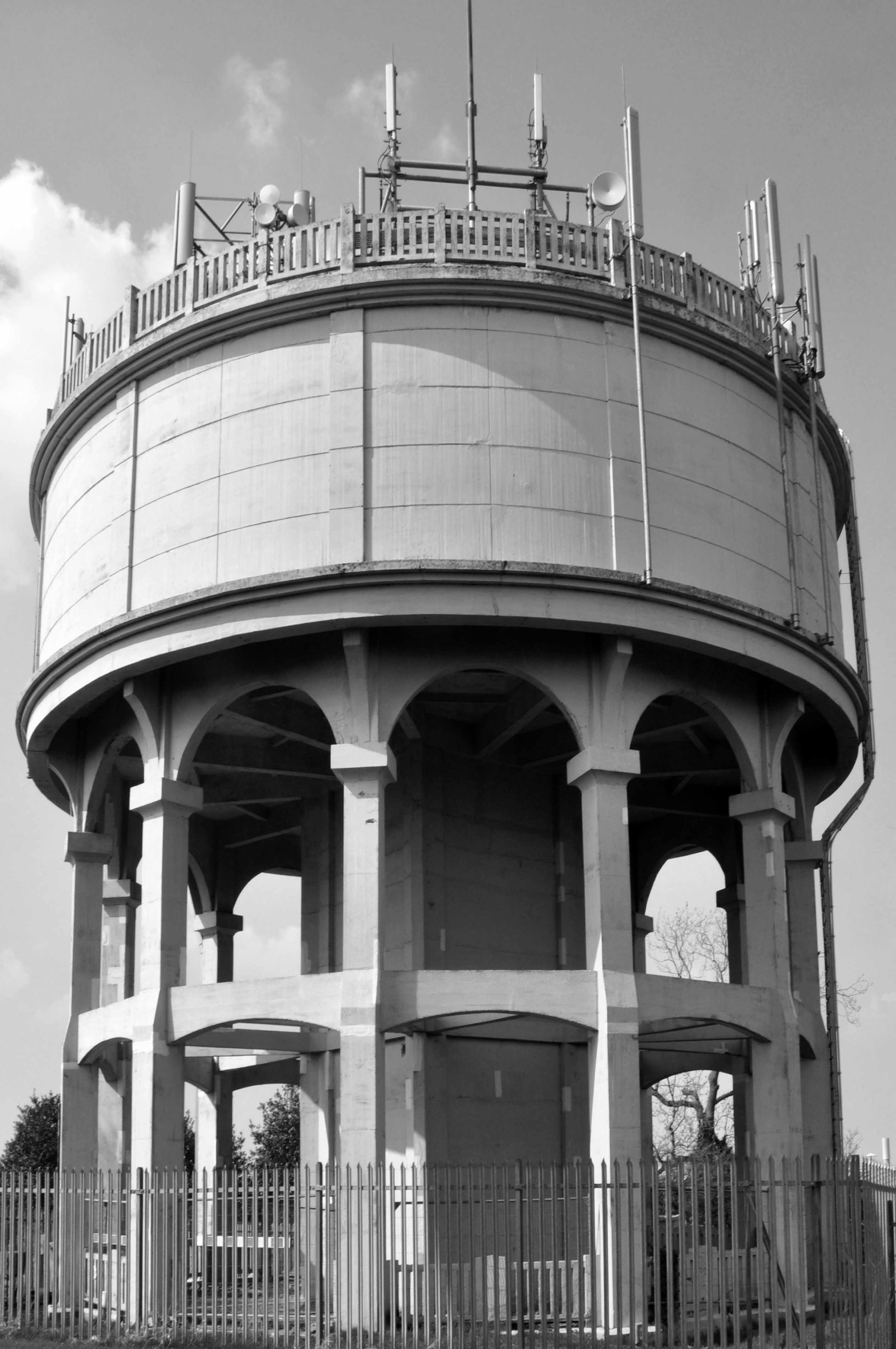
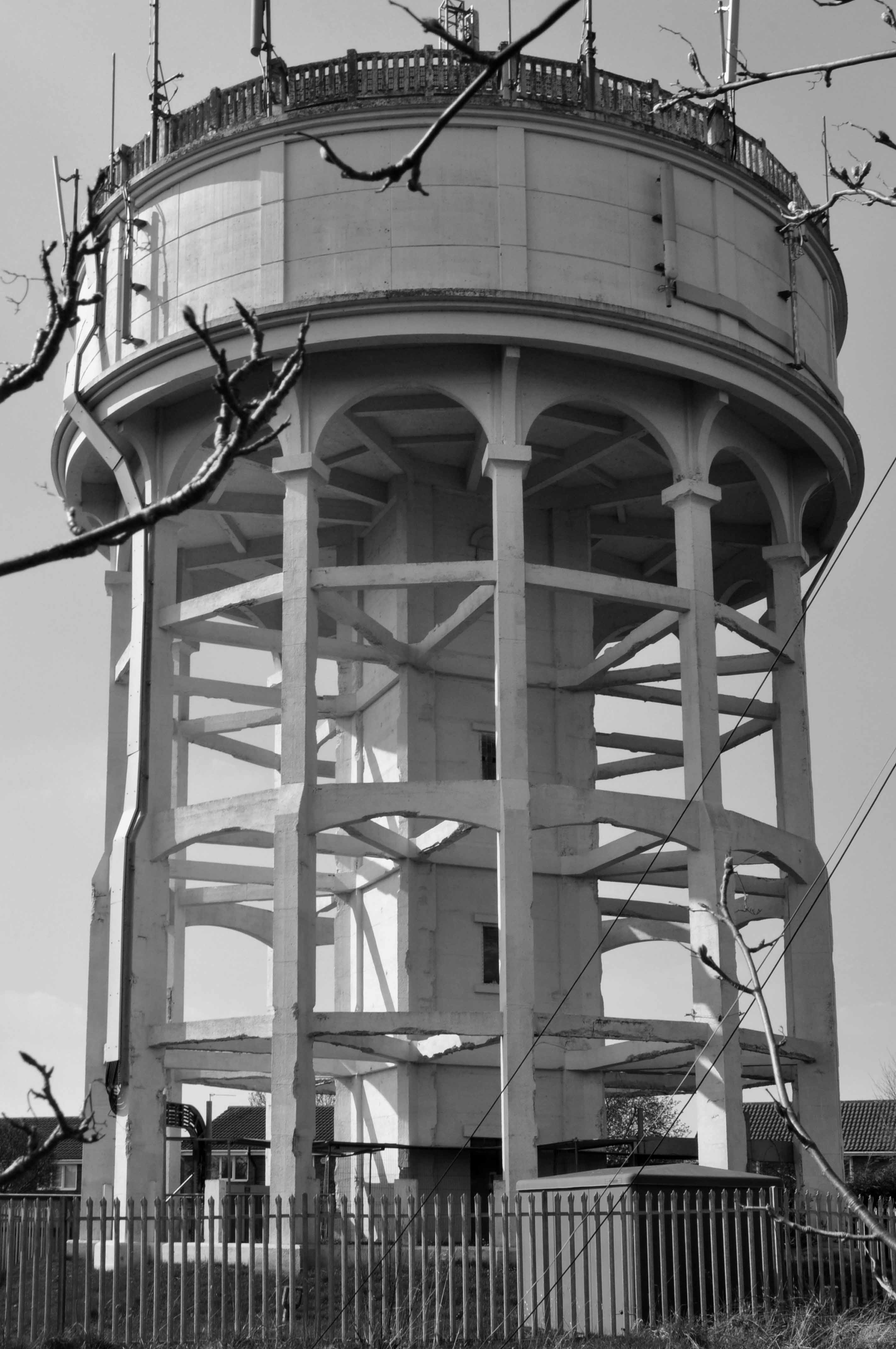
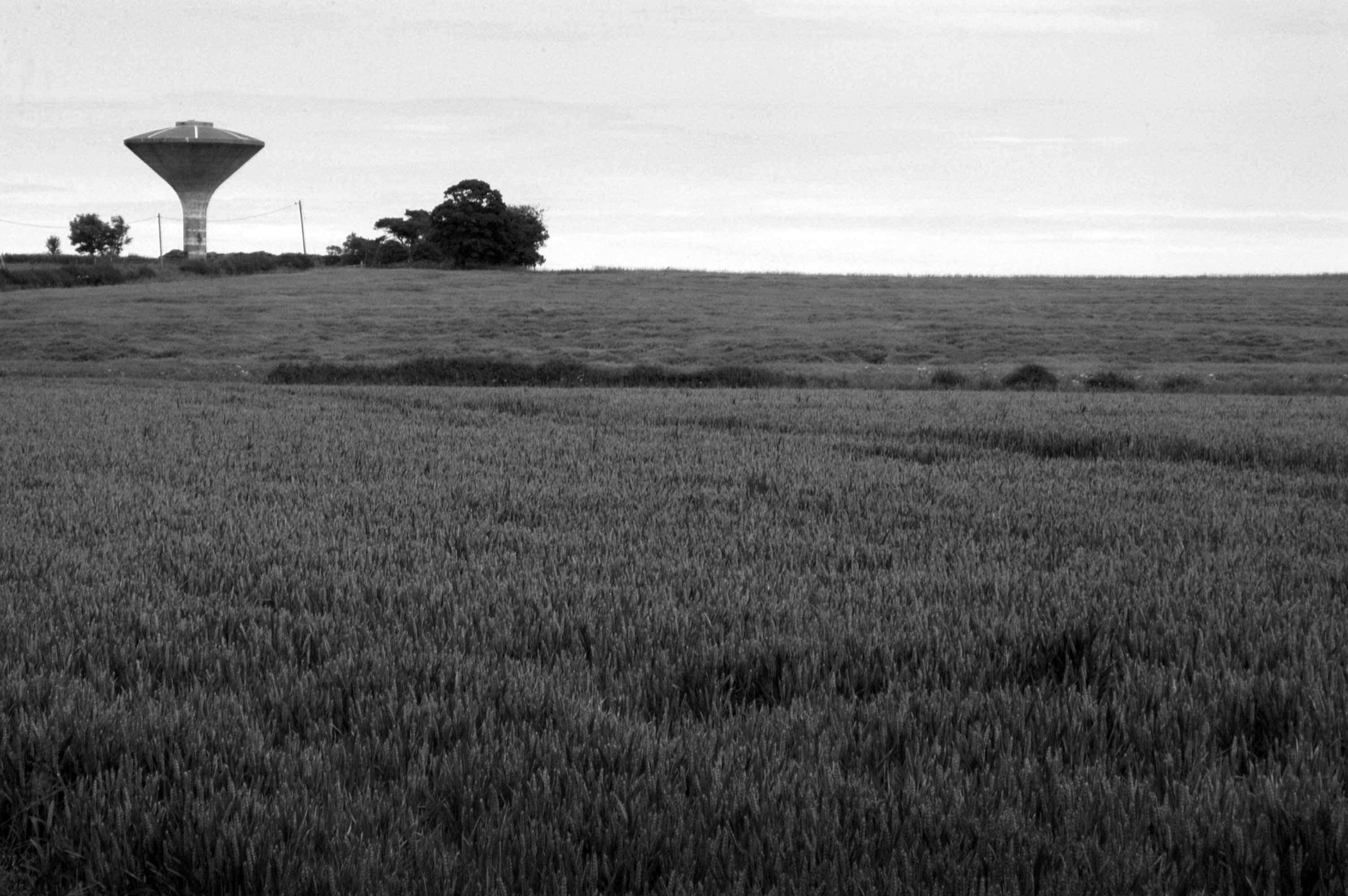
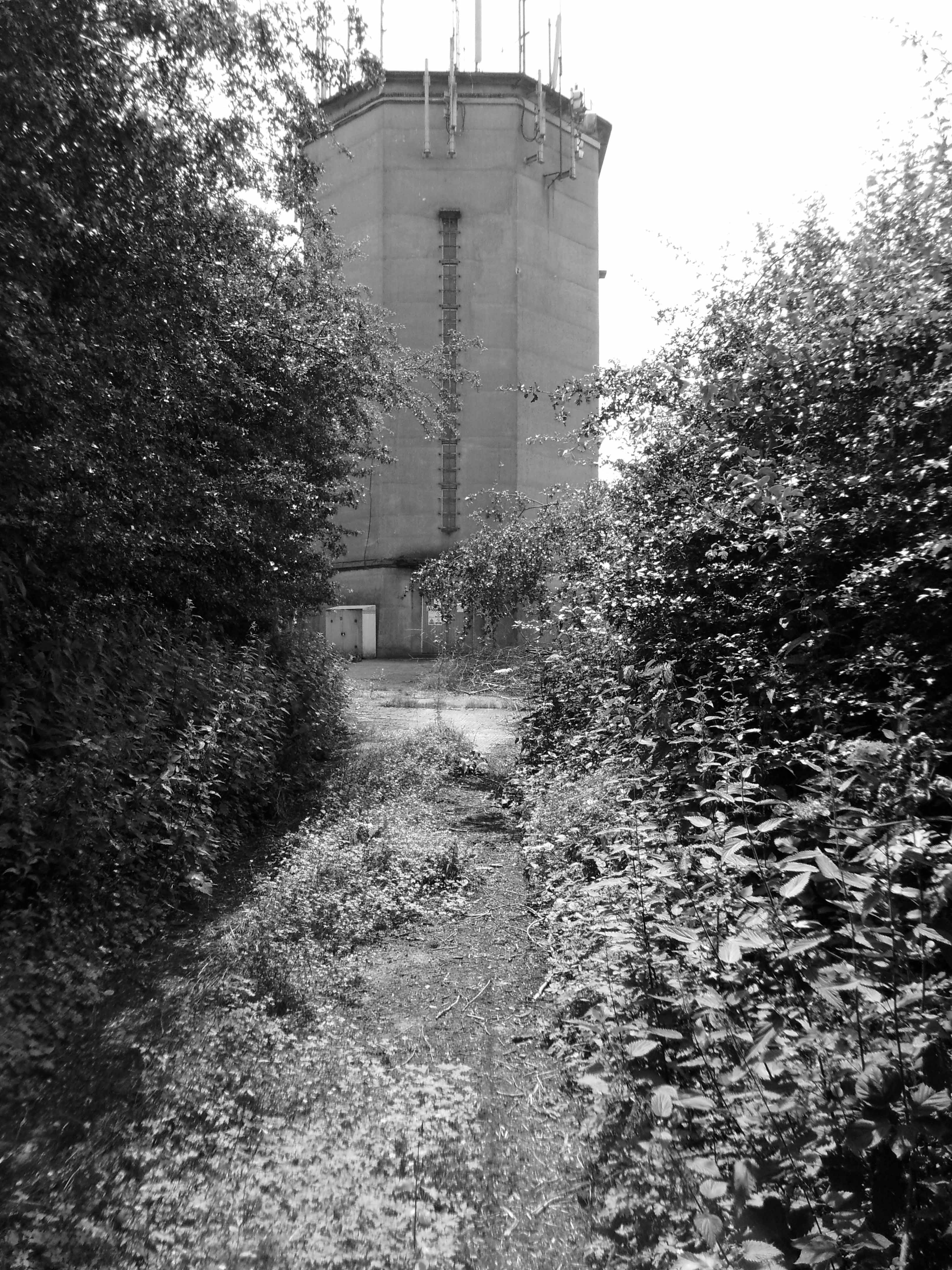
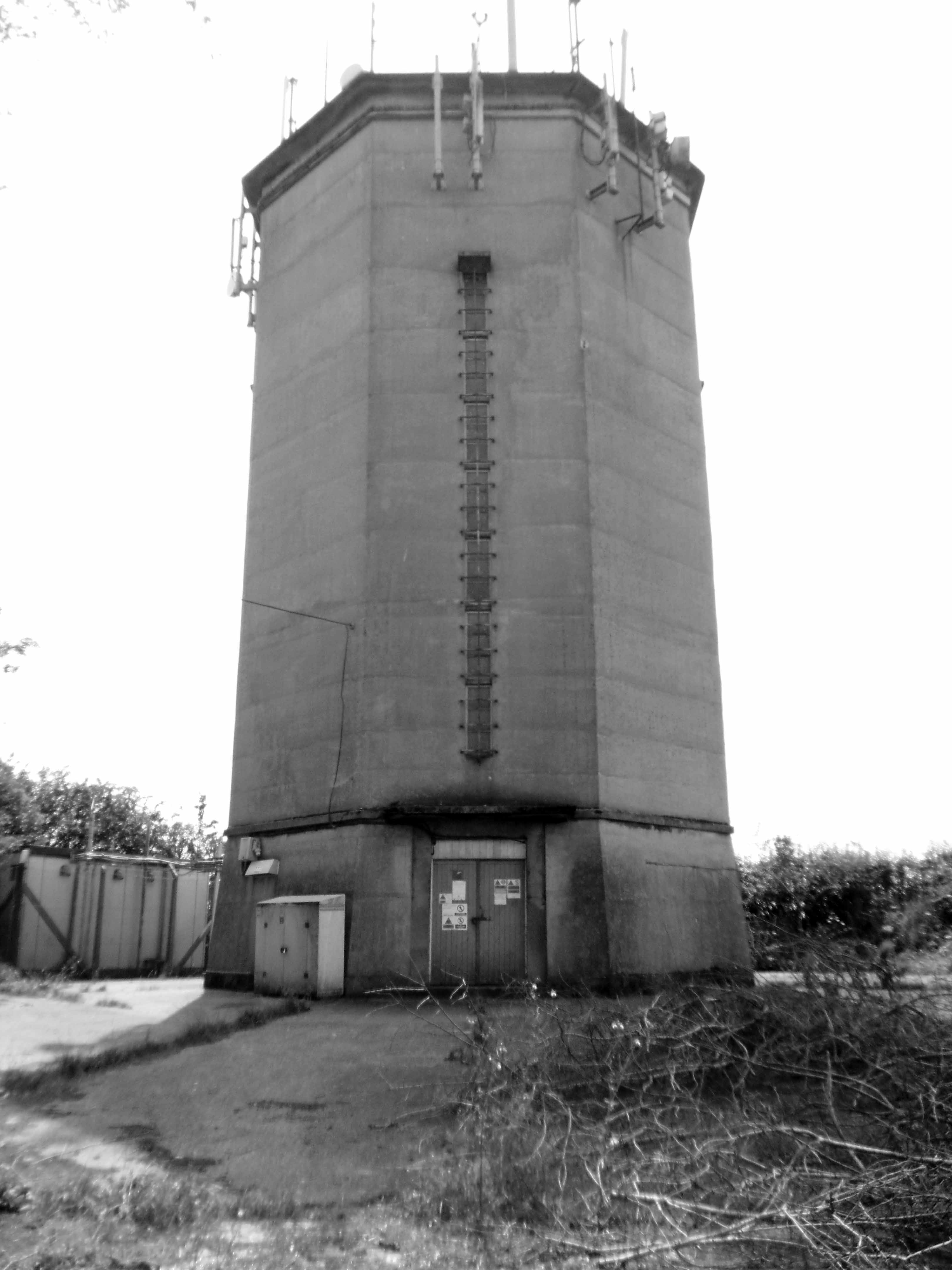
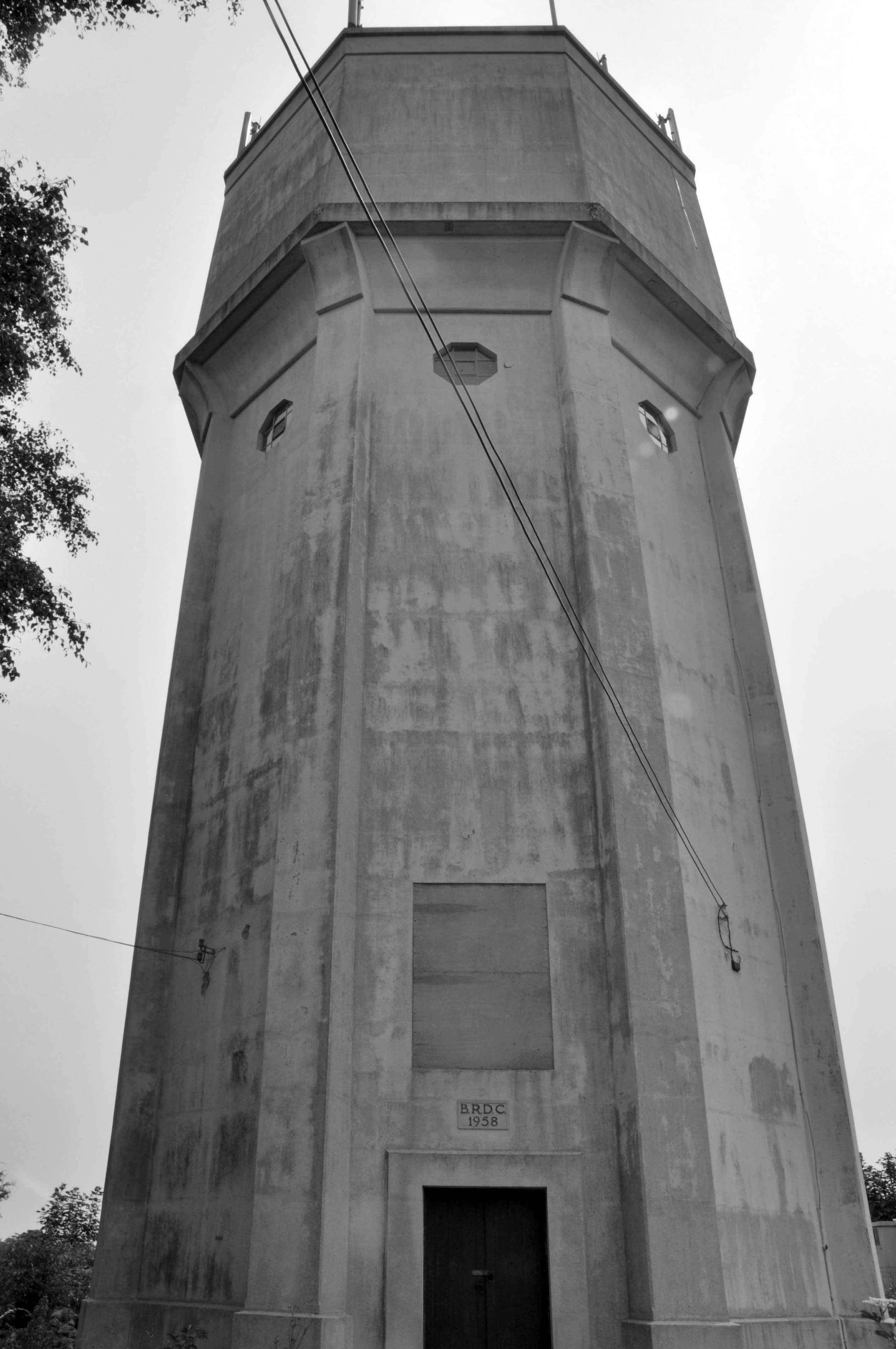
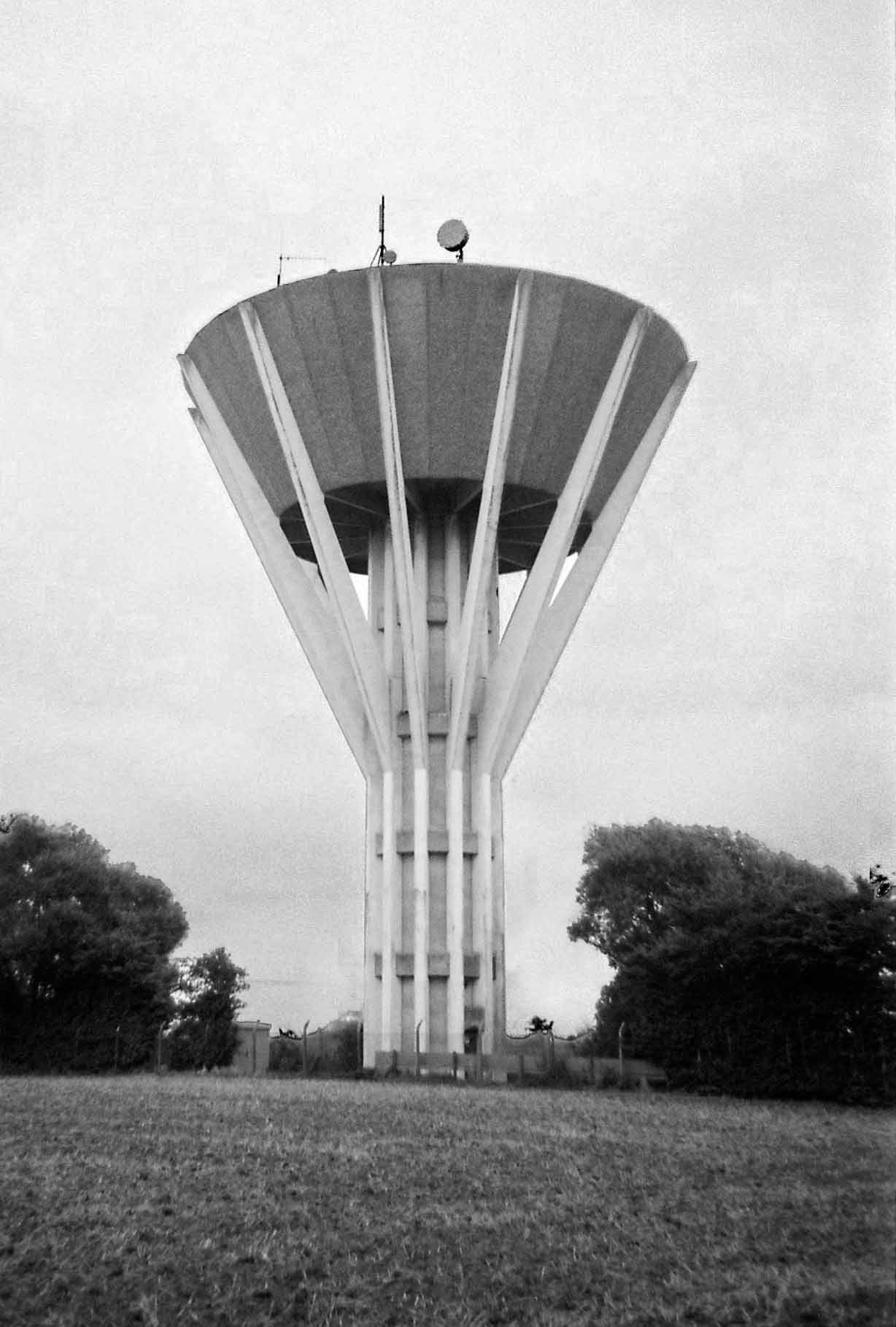
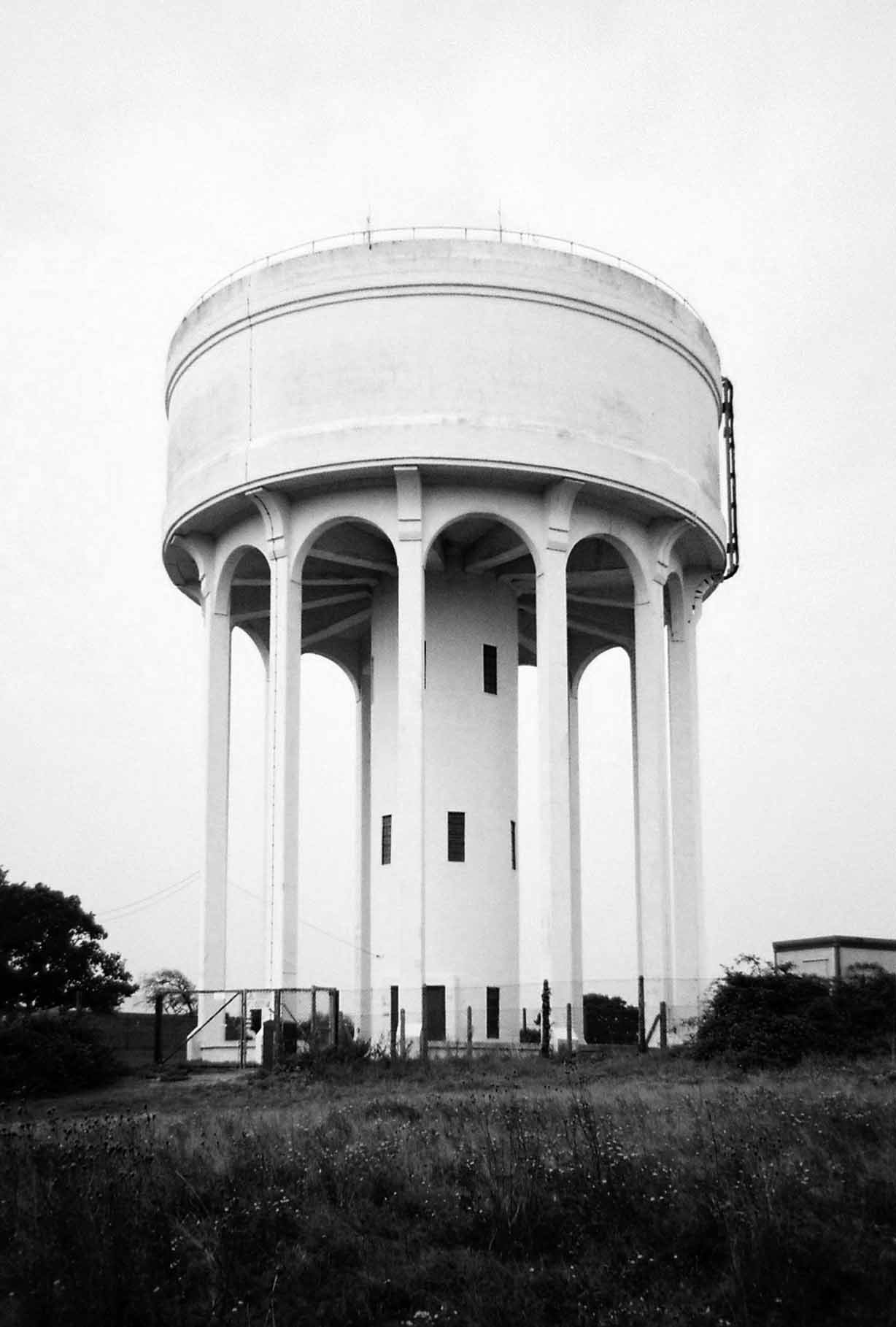
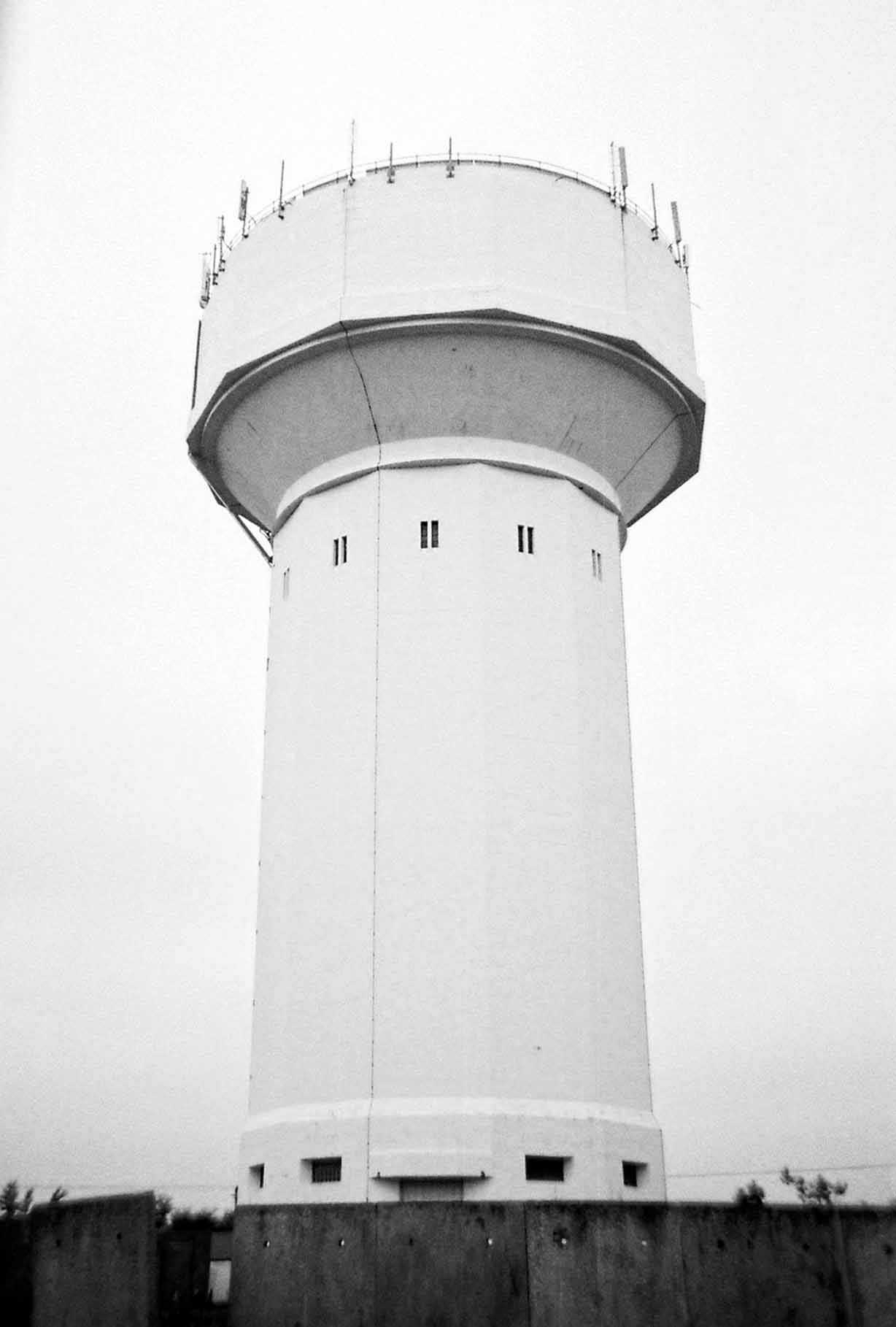
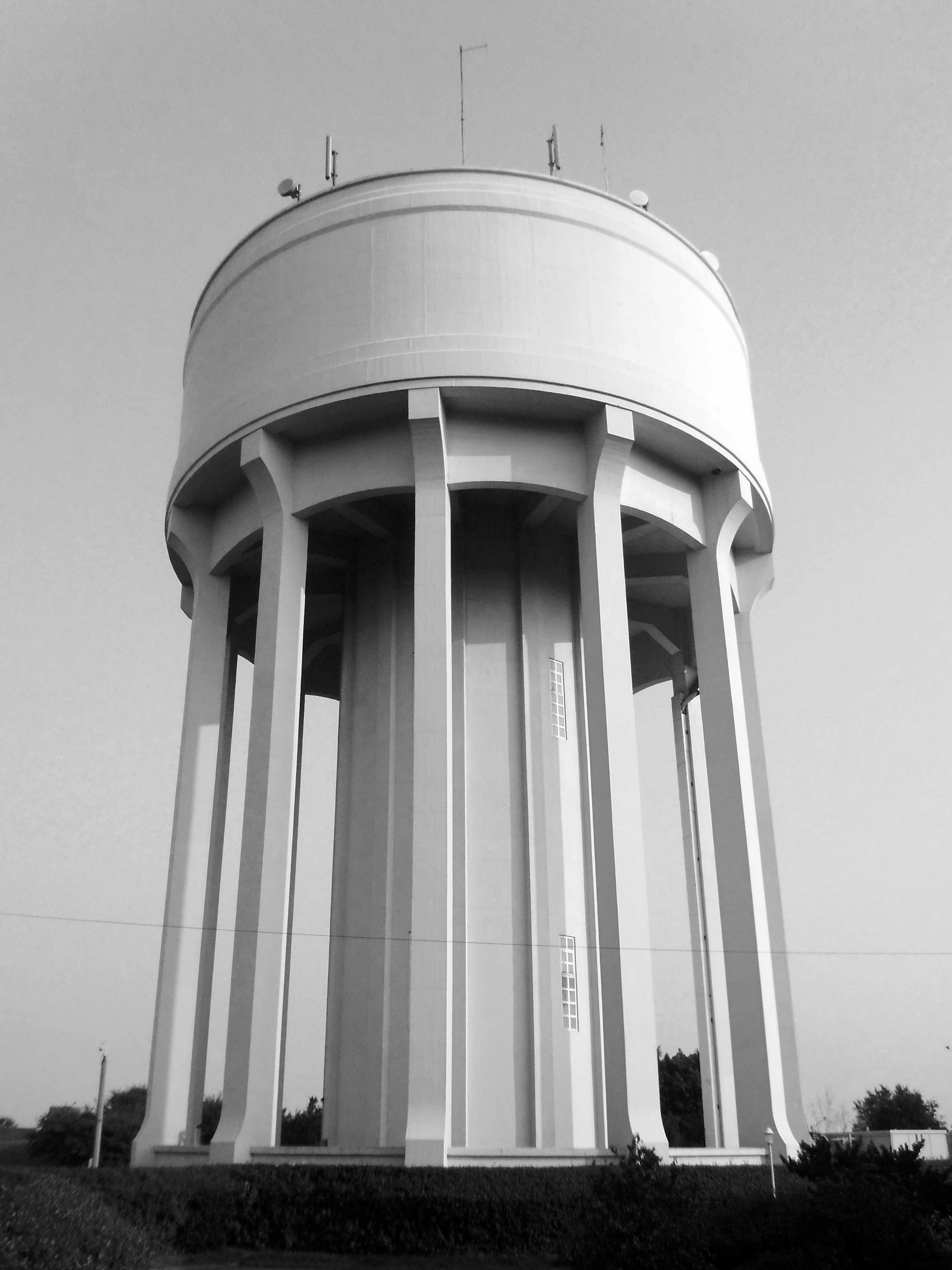
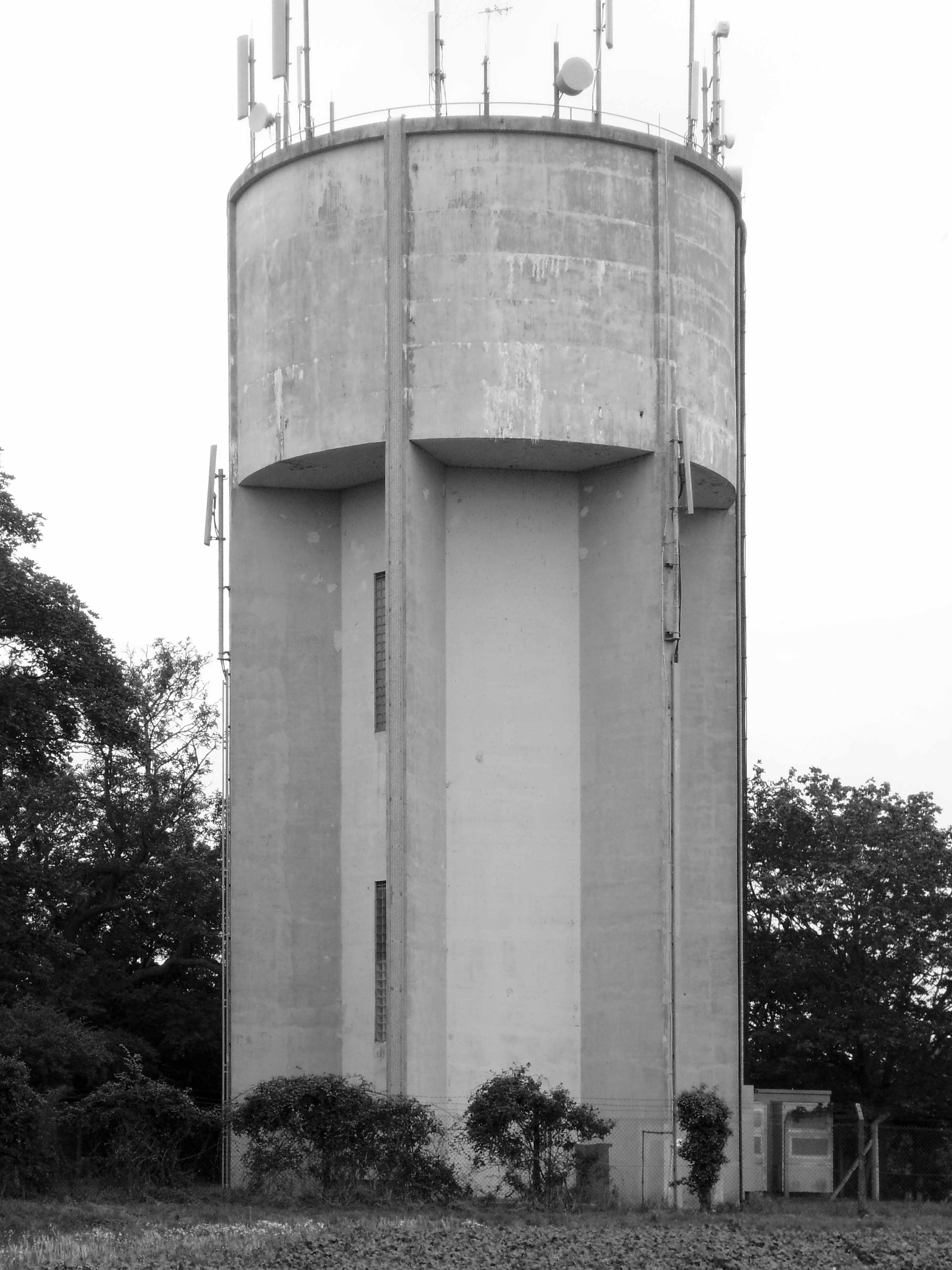
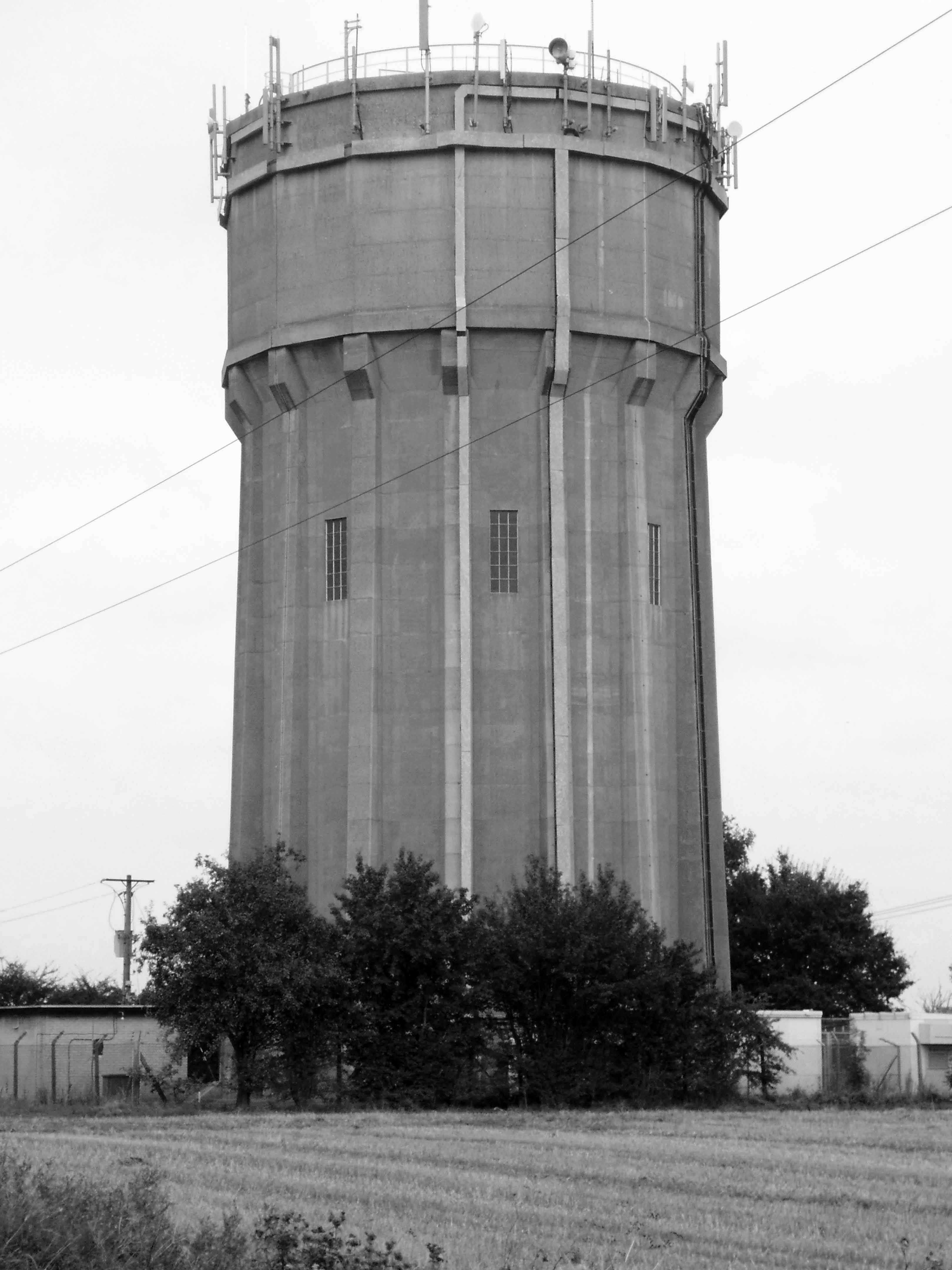
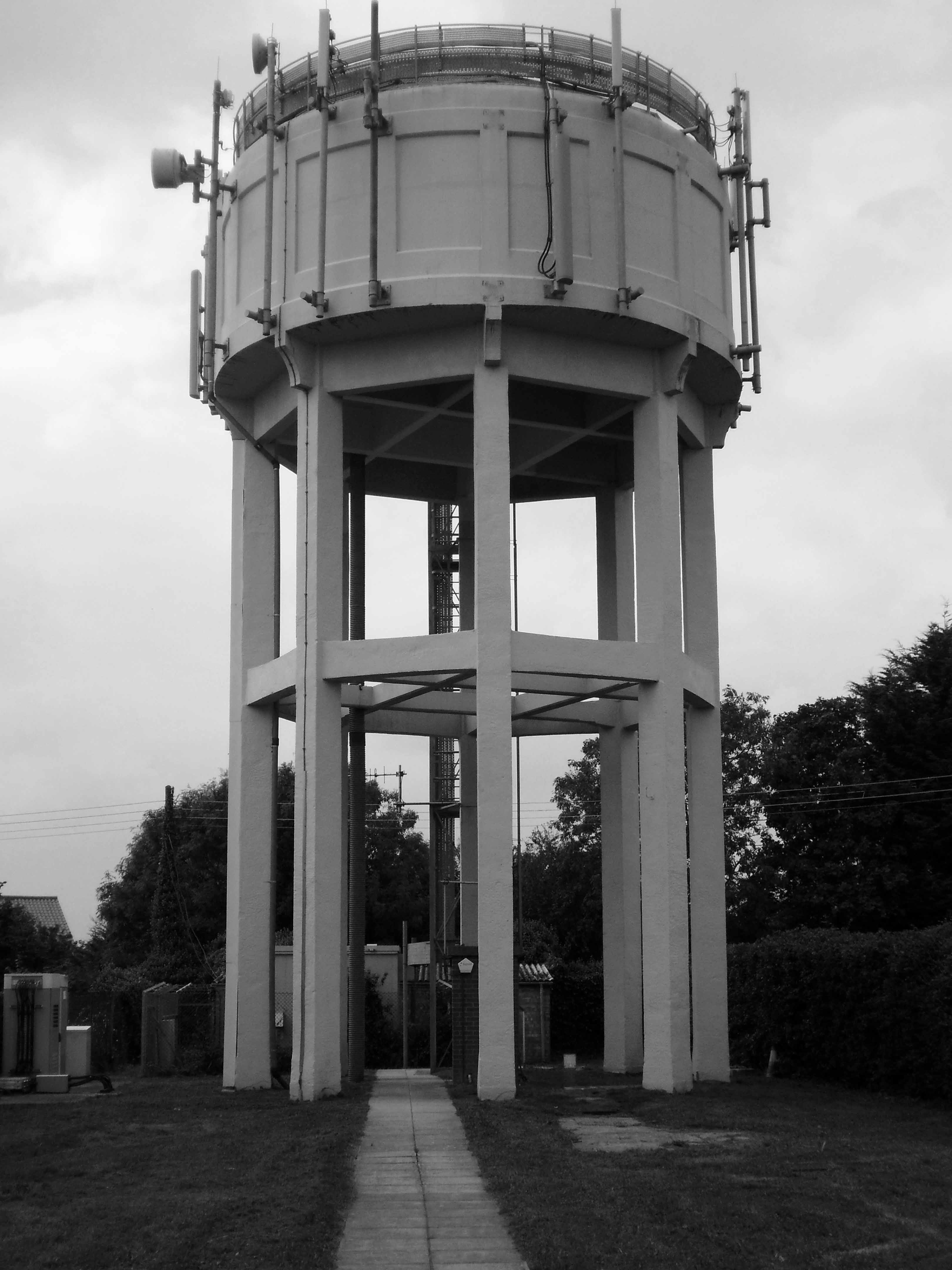
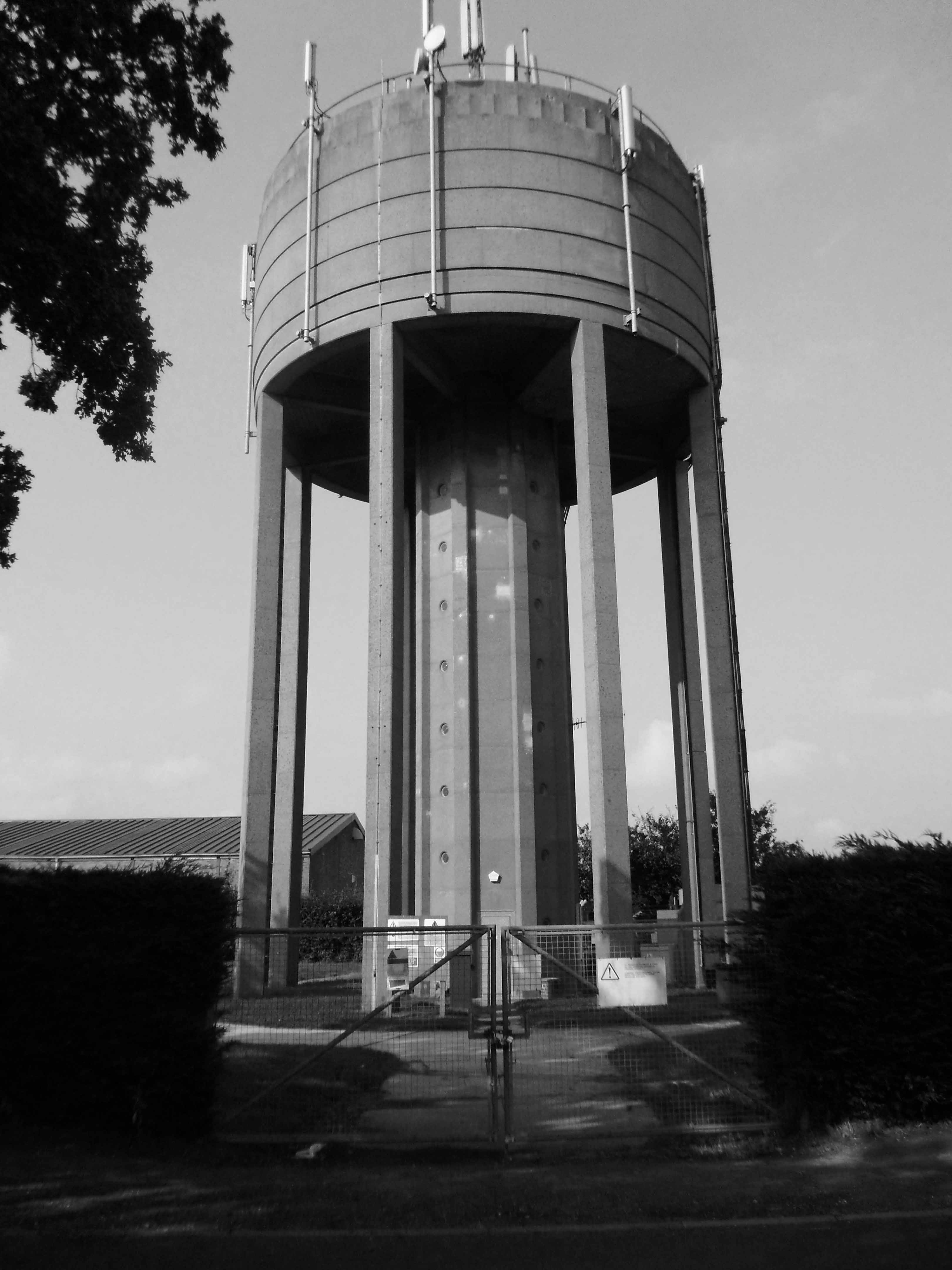
I espy water towers, and espouse the recording thereof.
I was first aware of the work of Bernd and Hilla Becher many years ago, as a young art student I developed an empathy for their matter of fact photography, and a warm sense of the familiar with the largely industrial, everyday subject matter.
I have often made light hearted reference, to their austere conceptual grids.
The bungalows of Humbertson Fittes Lincolnshire
The British Rail freight van stables of Greater Manchester
And of course water towers, some are familiar to me in the areas around south Manchester, easily accessibly by bicycle across the Cheshire Plain. So over time I have set out with a clear intent or serendipitous disposition, a modern day Don Quixote, sans Sancho Panza, tilting and snapping at towers.
Access is not always easy, or permitted for that matter – there are gates and fences to overcome, brambles and barbed wire to catch yourself on, but it’s always worth it. As a typology they are various, in design, structure and materials.
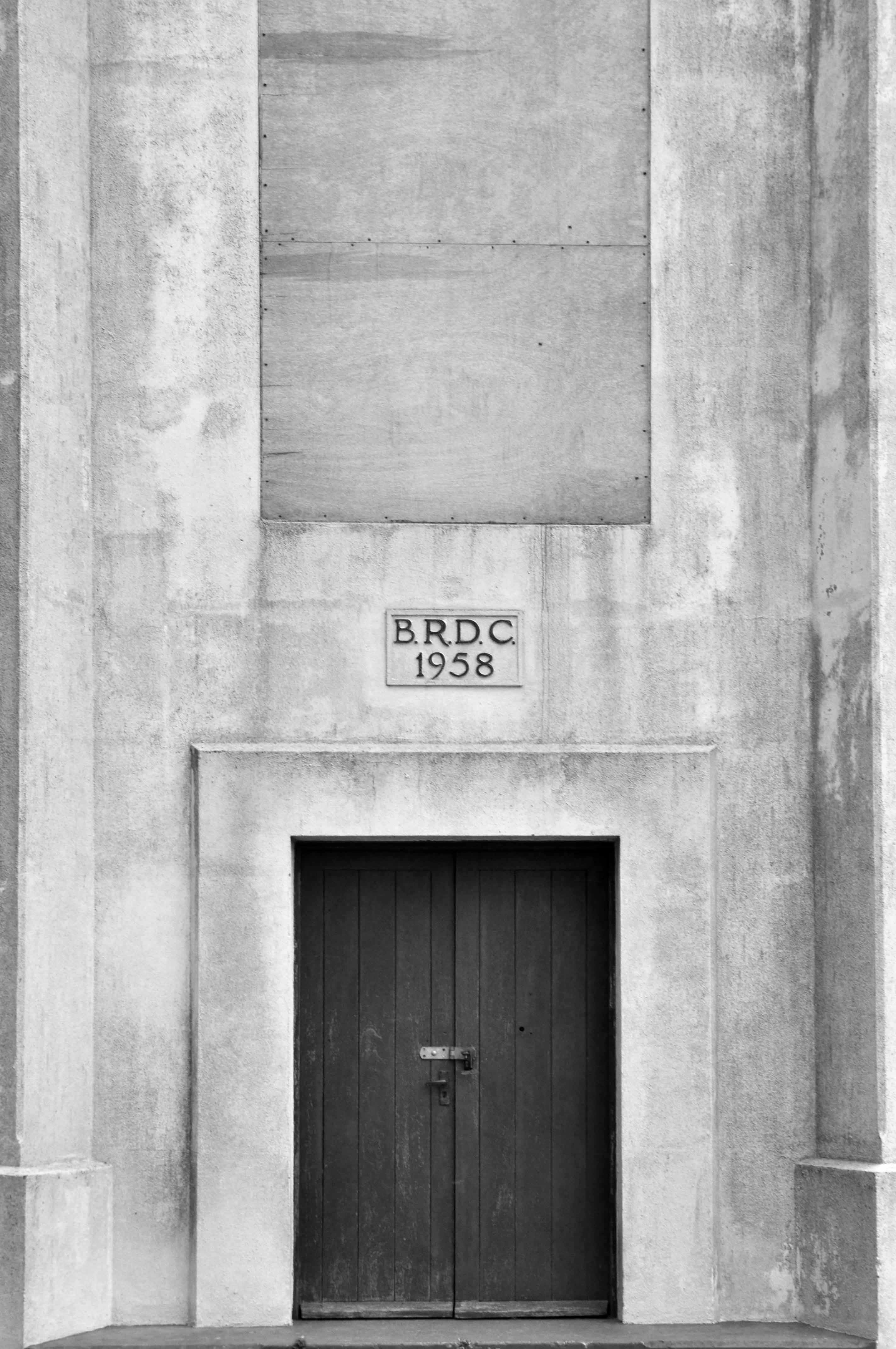
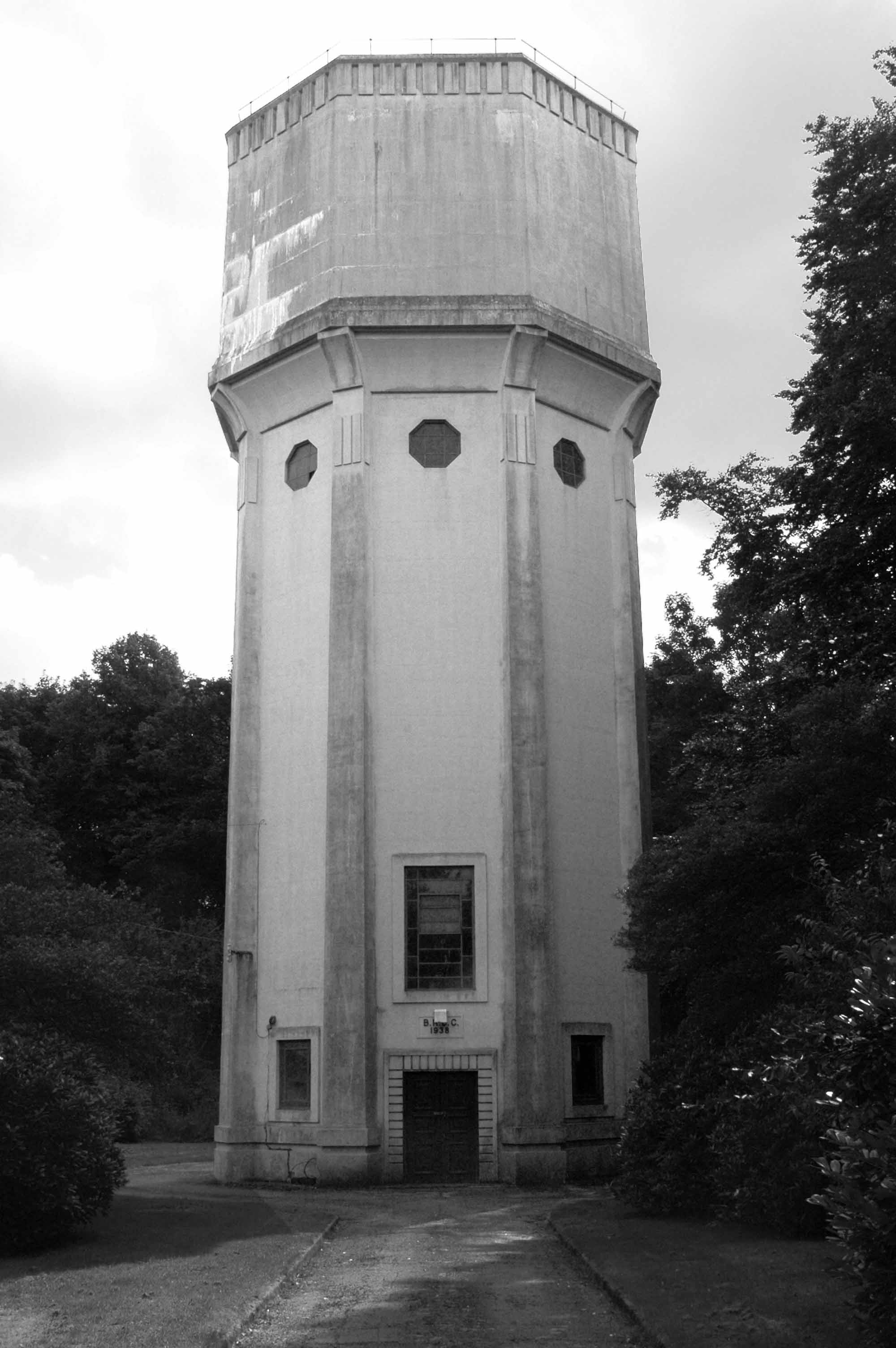
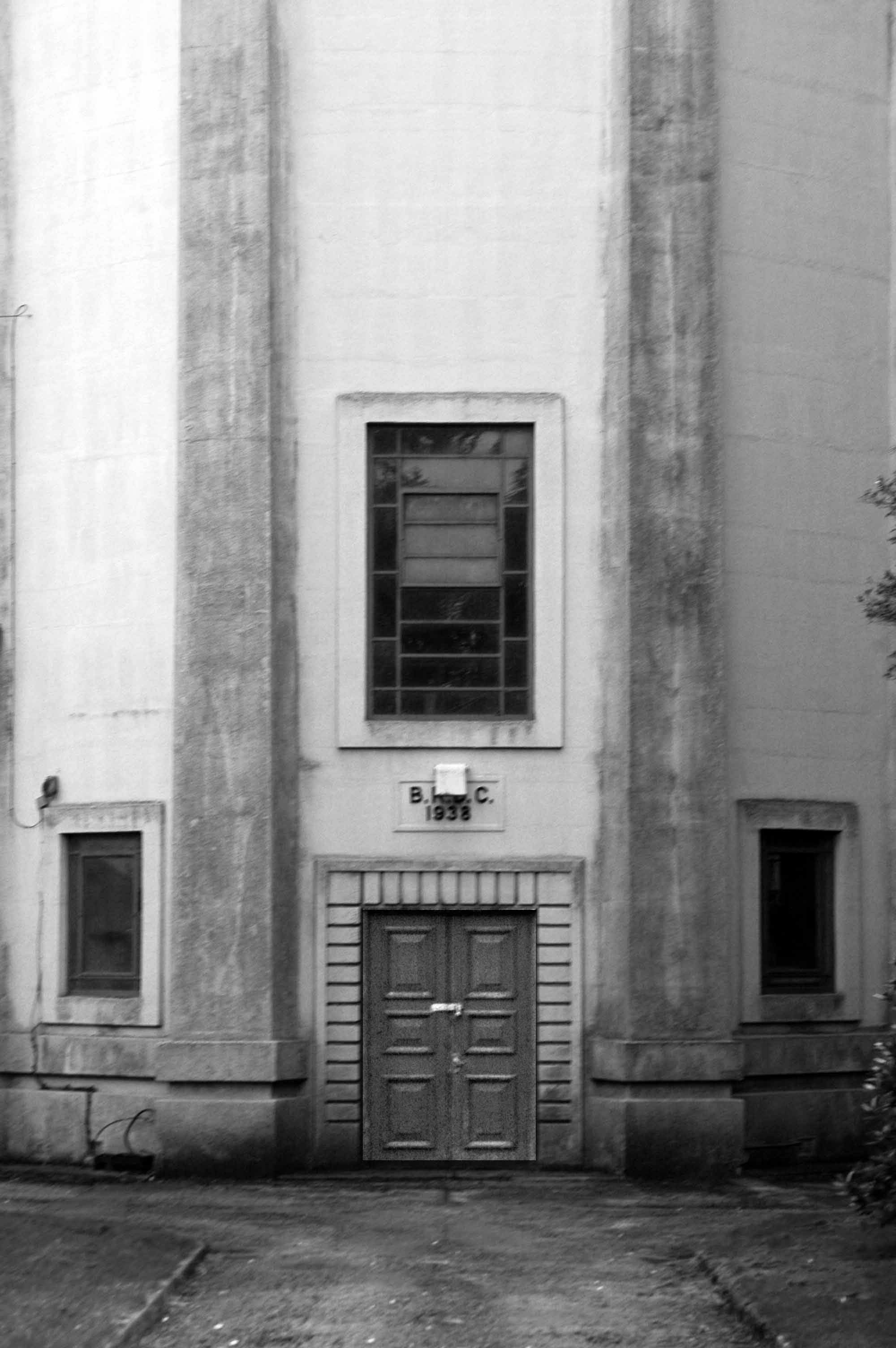
Summer 2014 I cycled from Hastings to Cleethorpes, following where possible a coastal route, in search of nothing in particular. Needless to say I found several water towers, eight of note – amongst other things.
Cars and closures caused the station to withdraw up the road, to its current much smaller site.
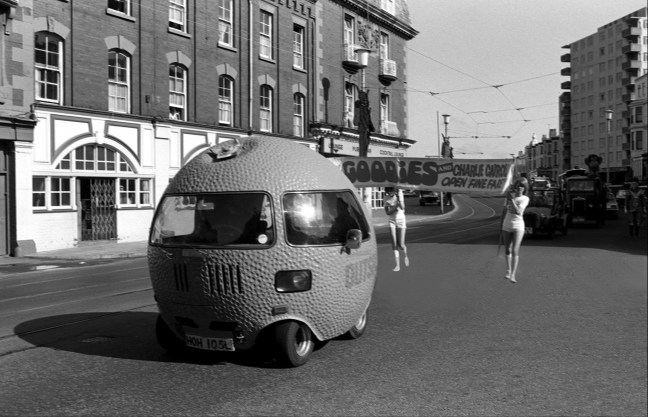
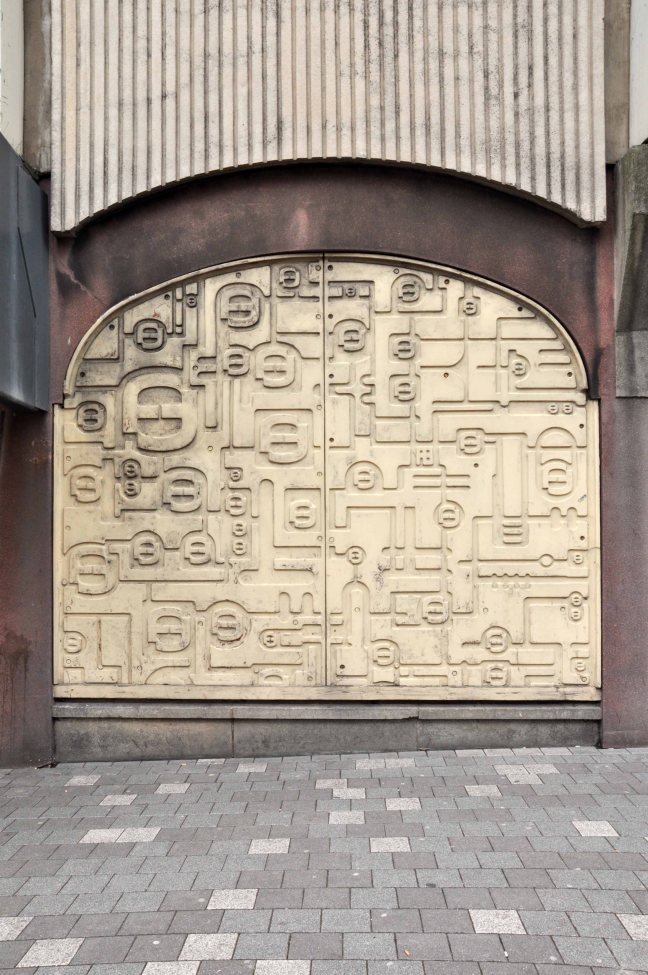
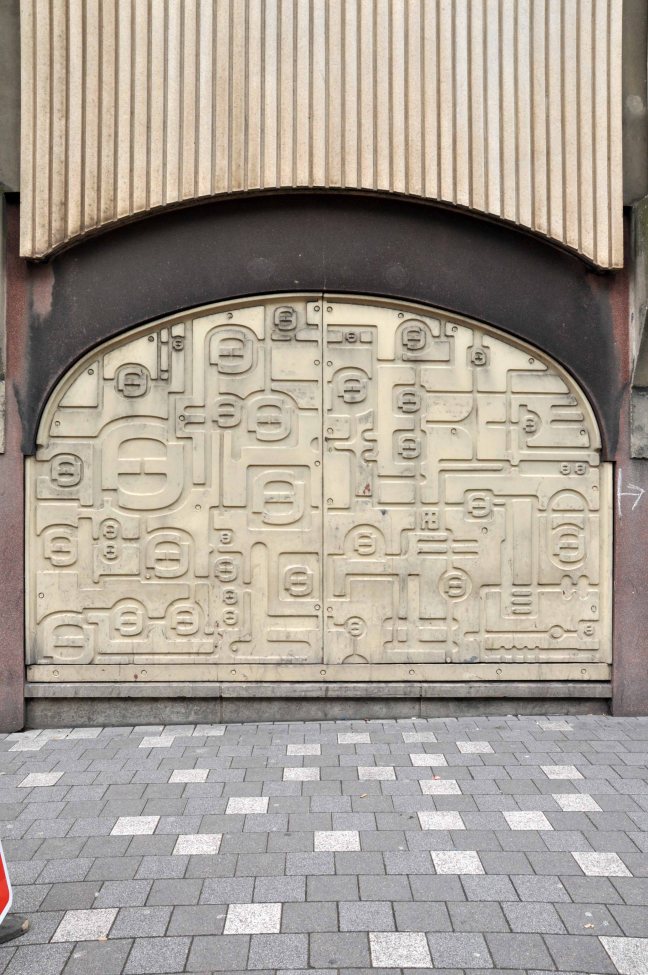
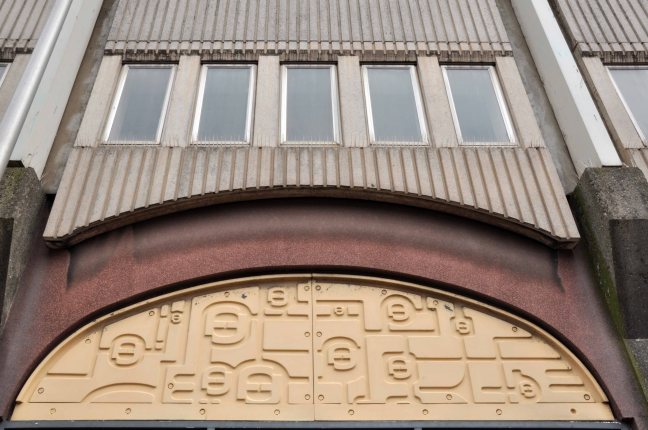
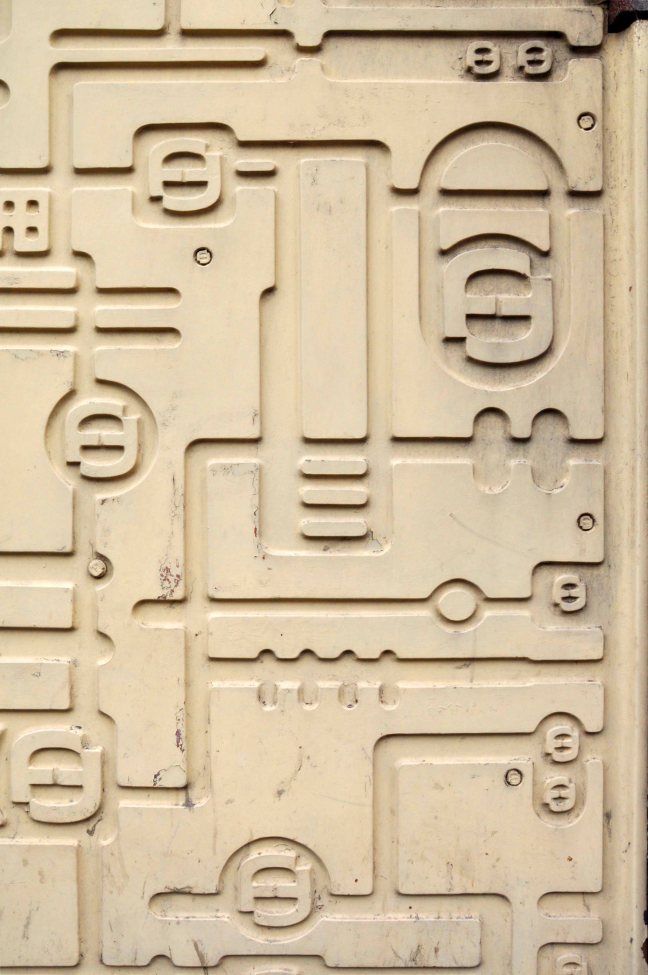
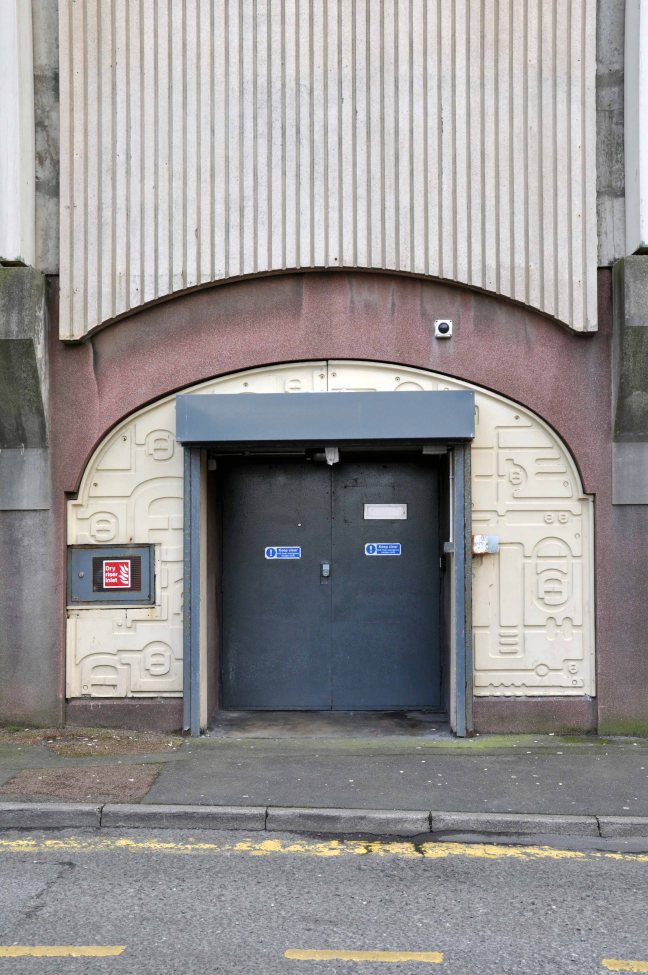
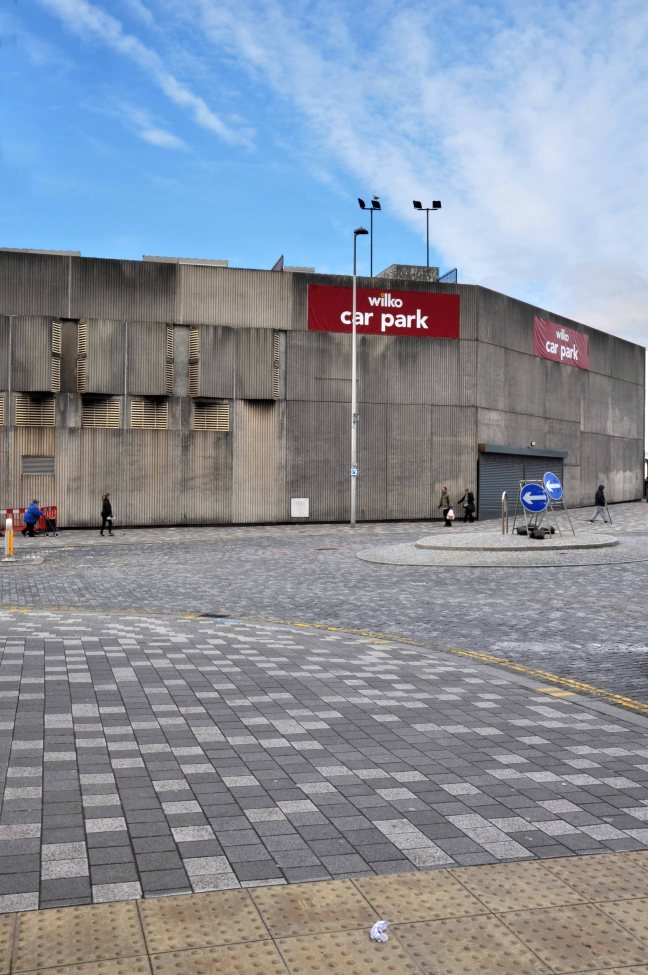
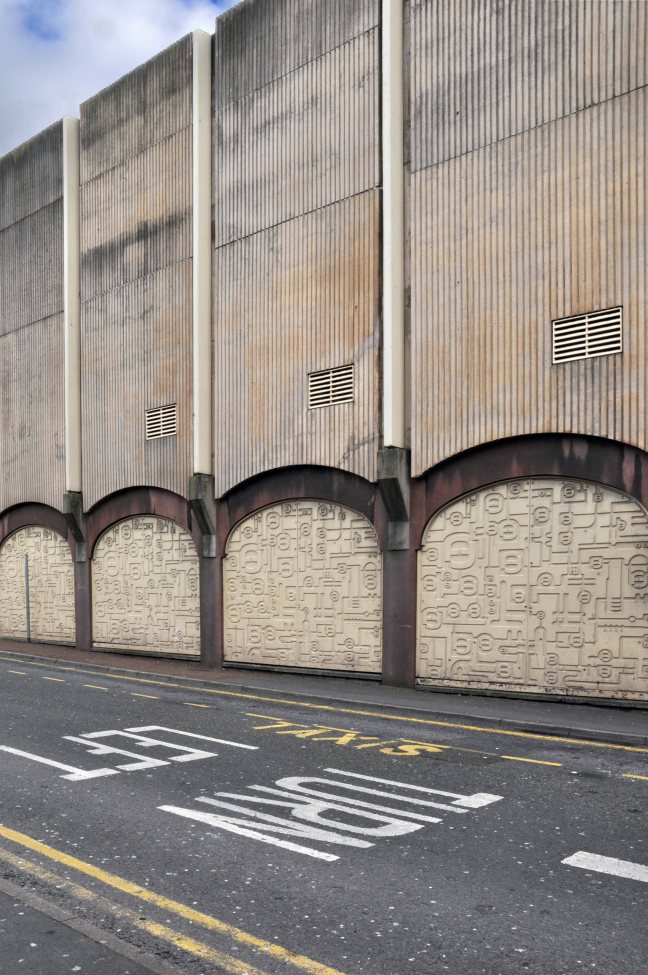
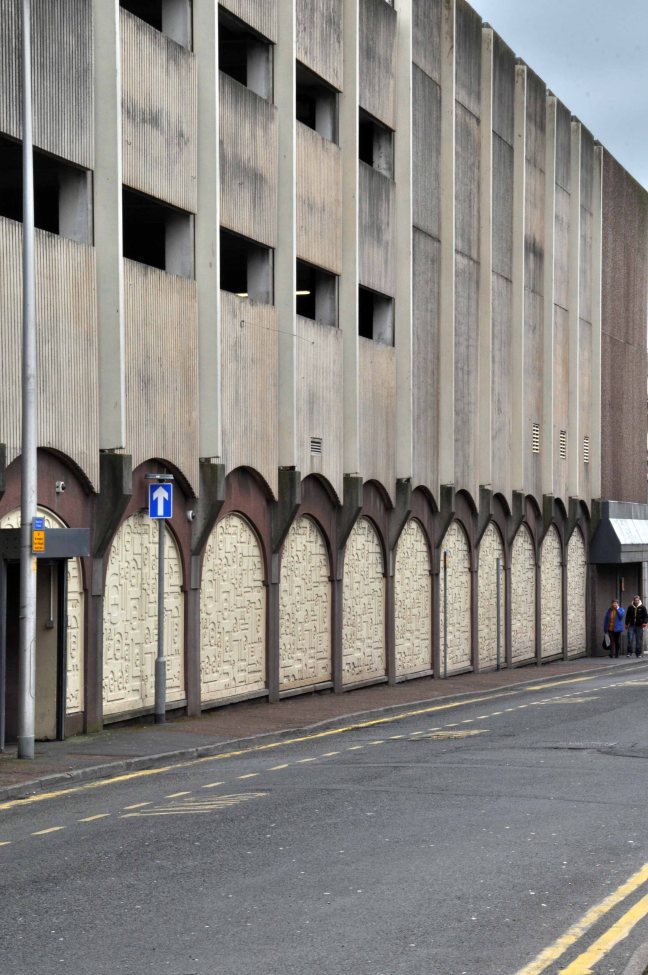
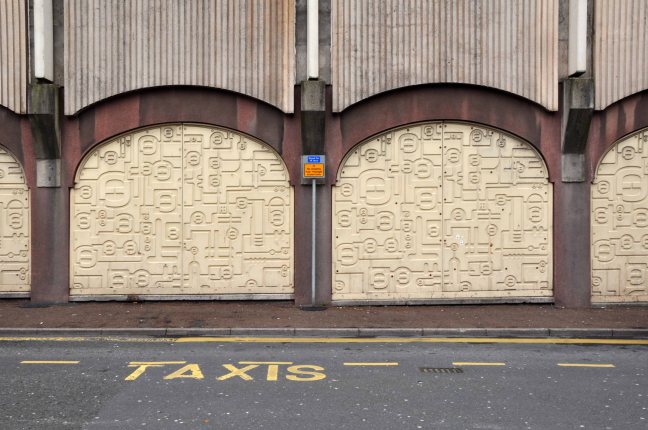
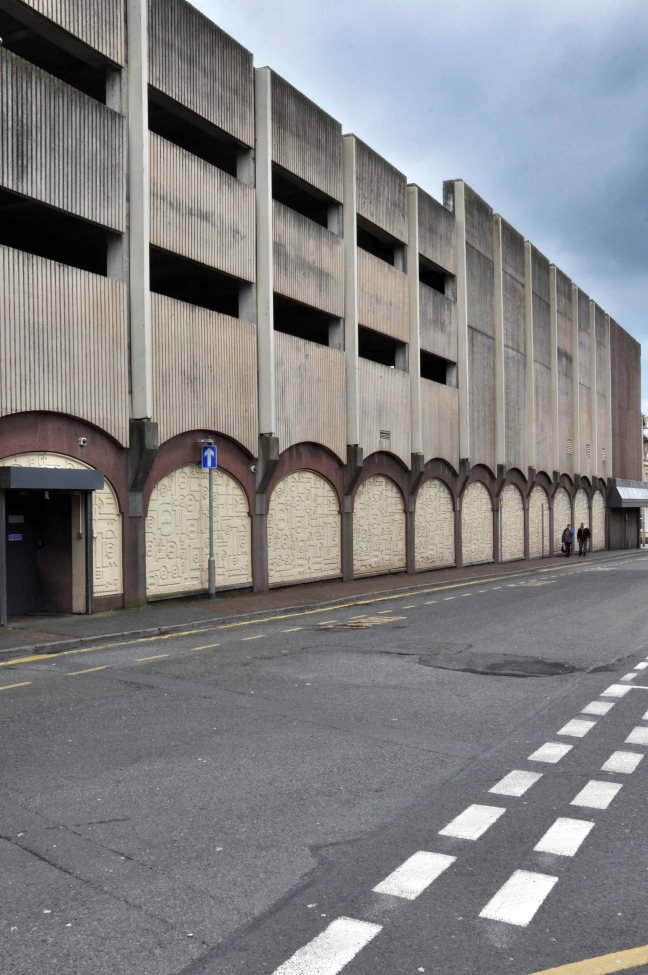
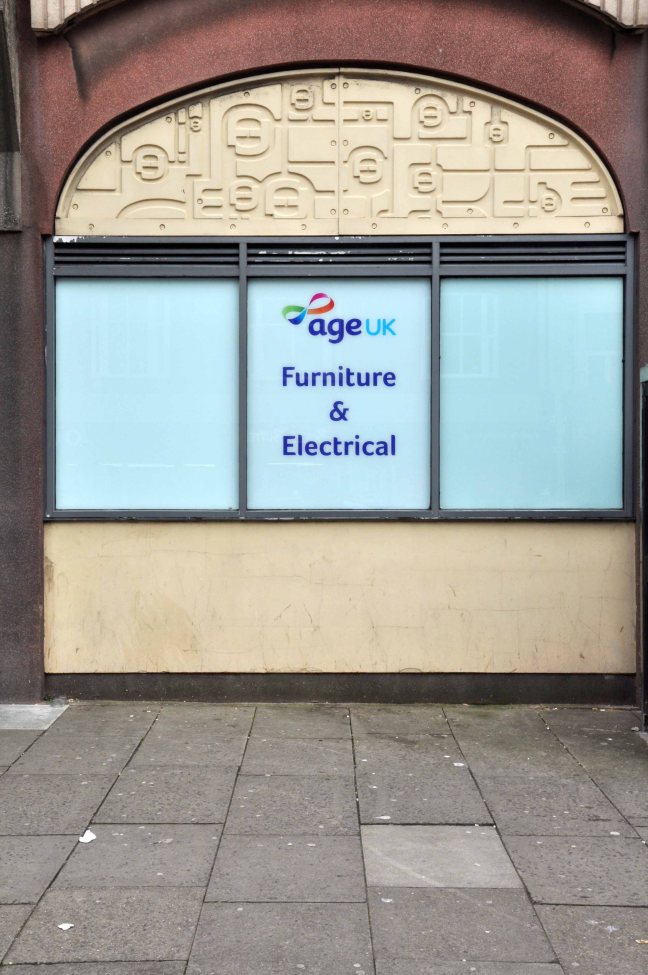
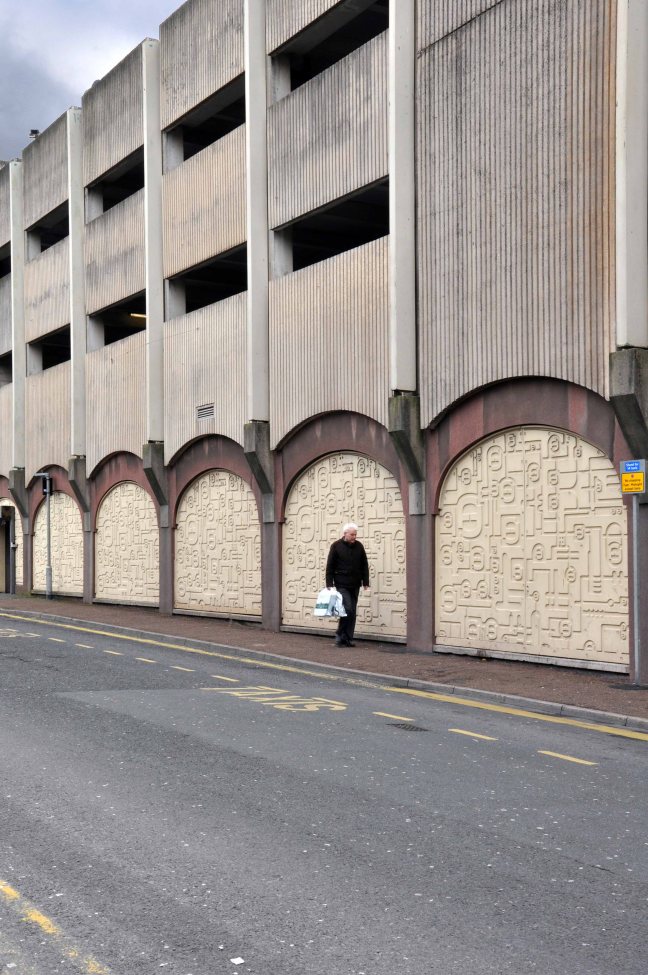
Subsequently Fine Fare arrives with a fanfare of moulded plastic panels, and cast concrete walls.
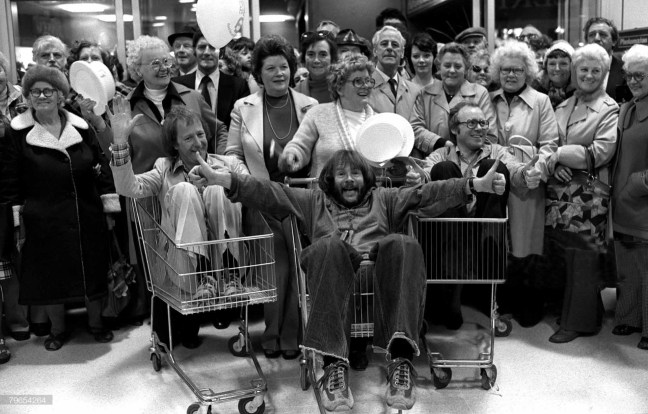
Opened on May 22nd 1979 by the Goodies.
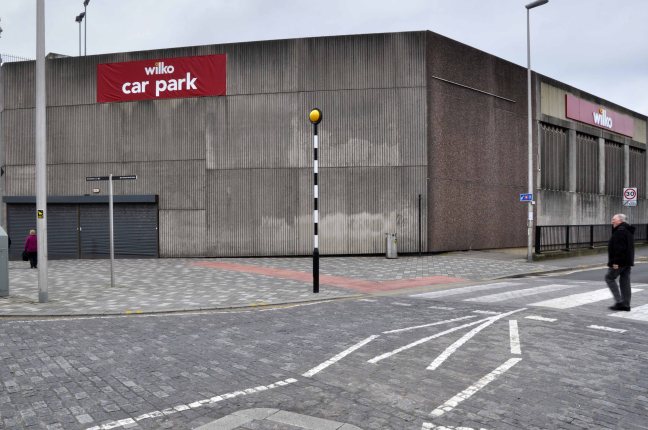
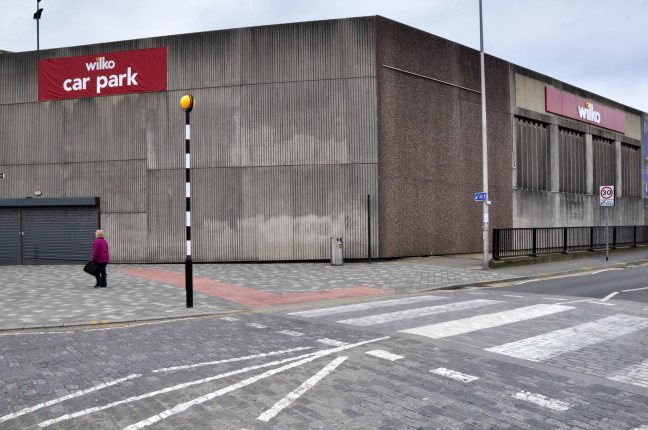
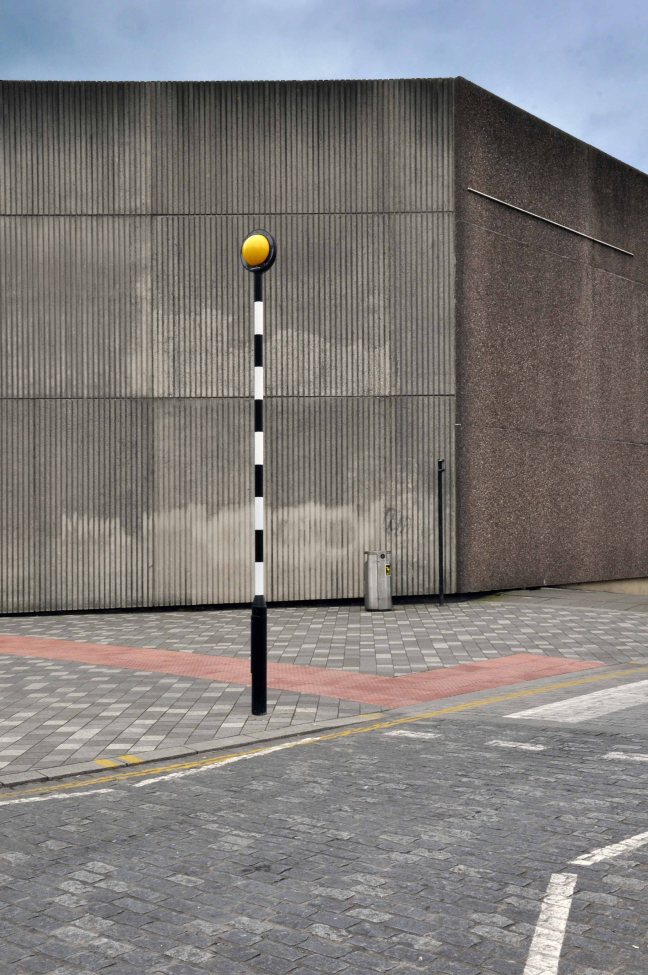
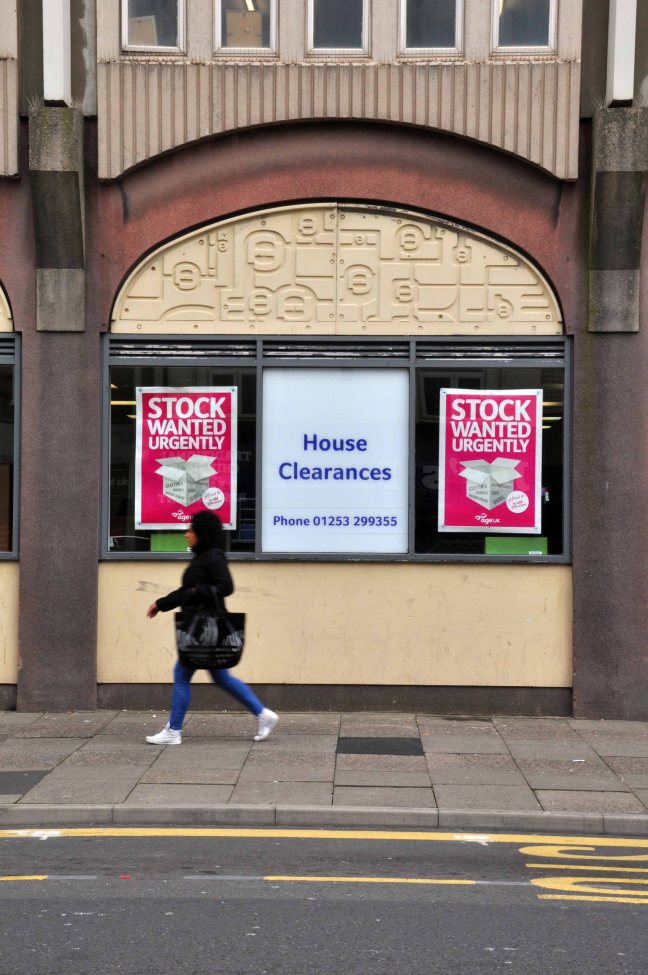
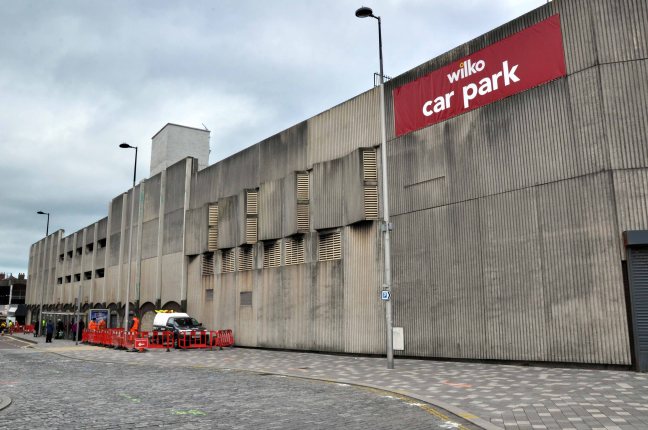
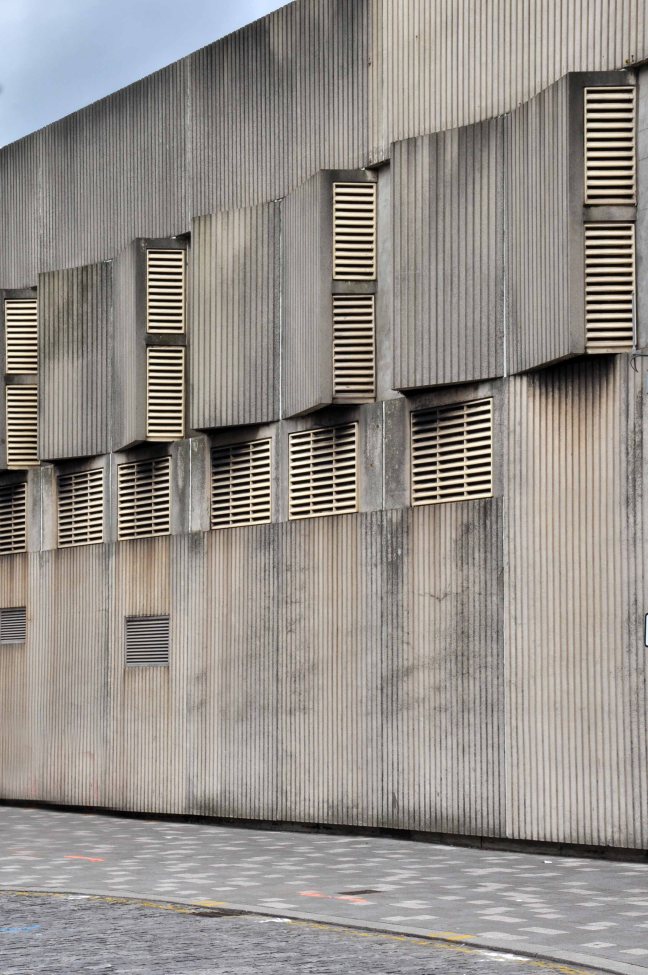
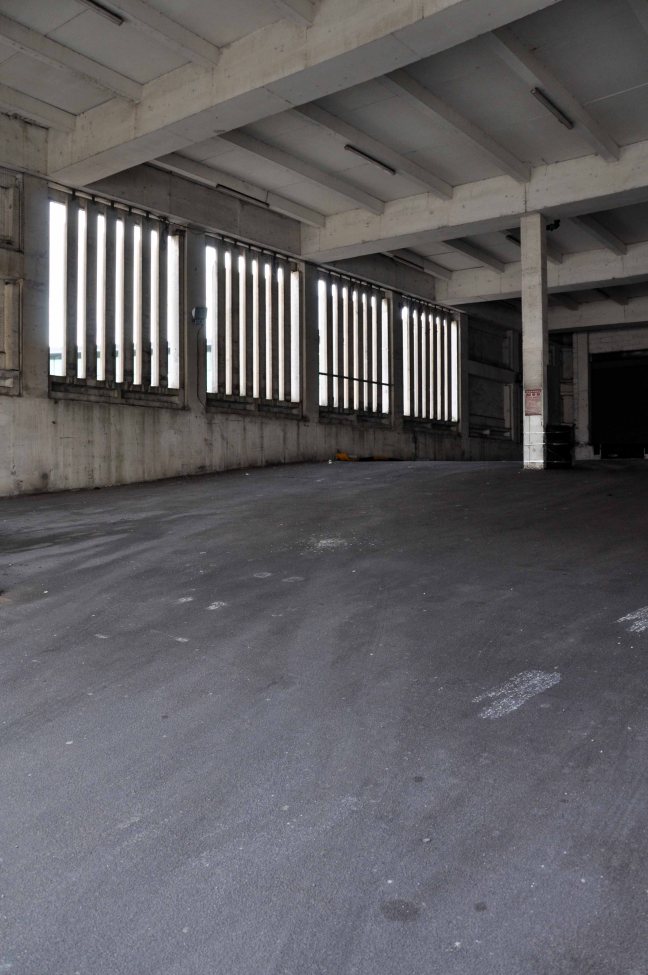
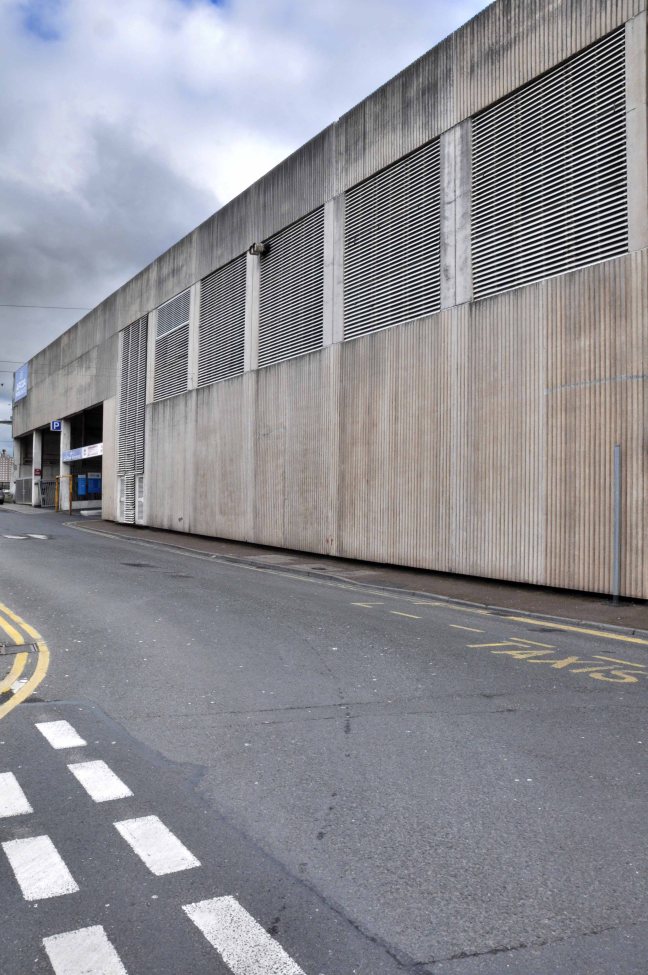
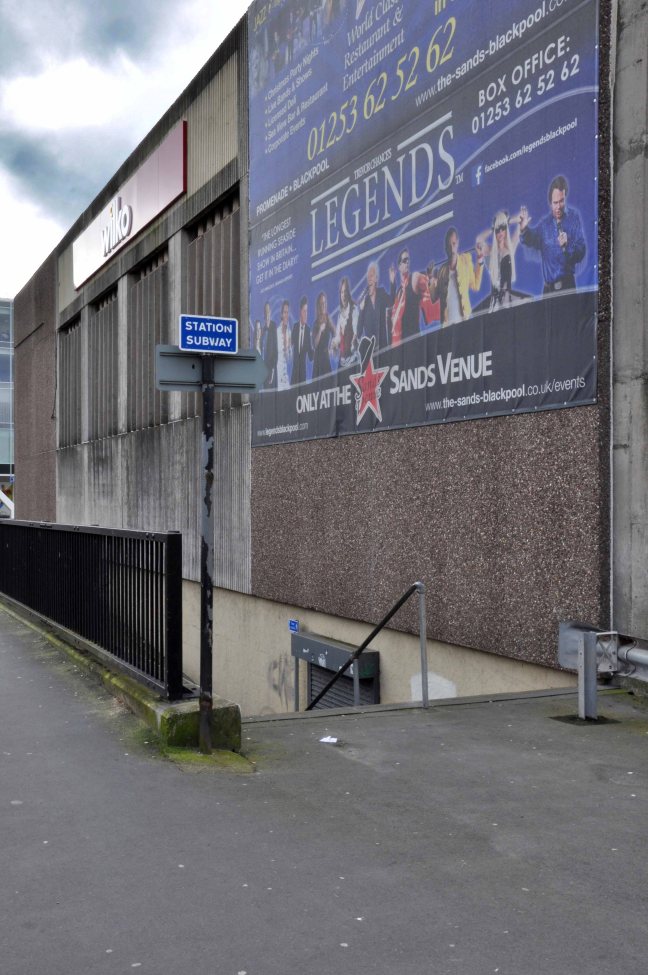
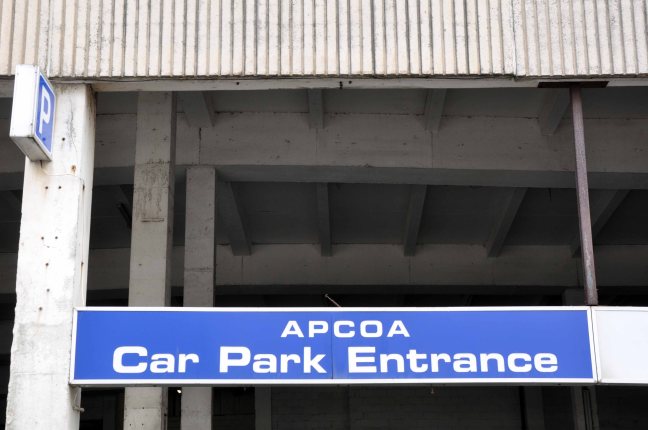
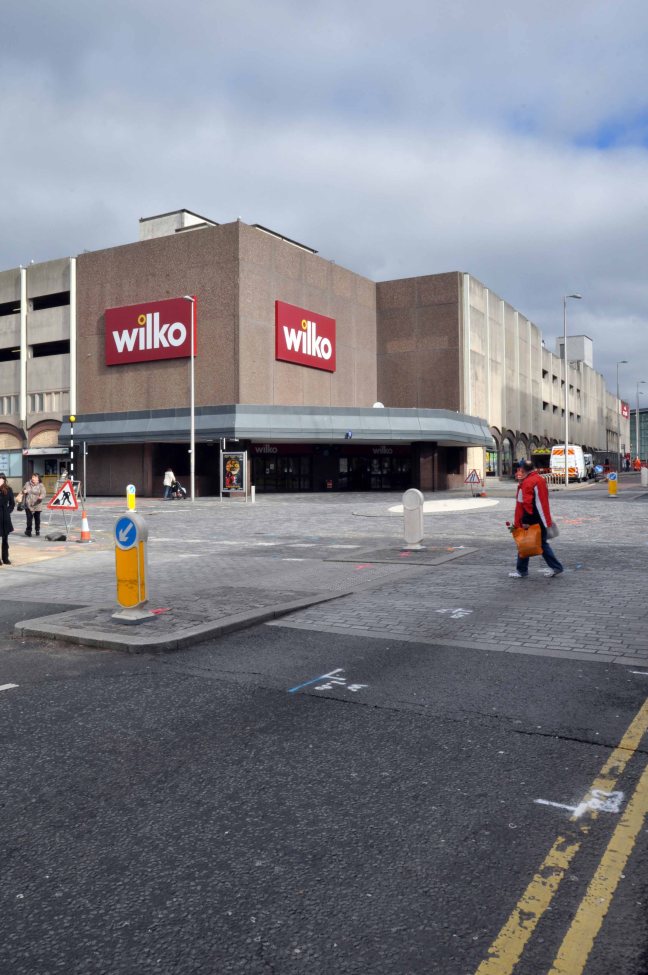
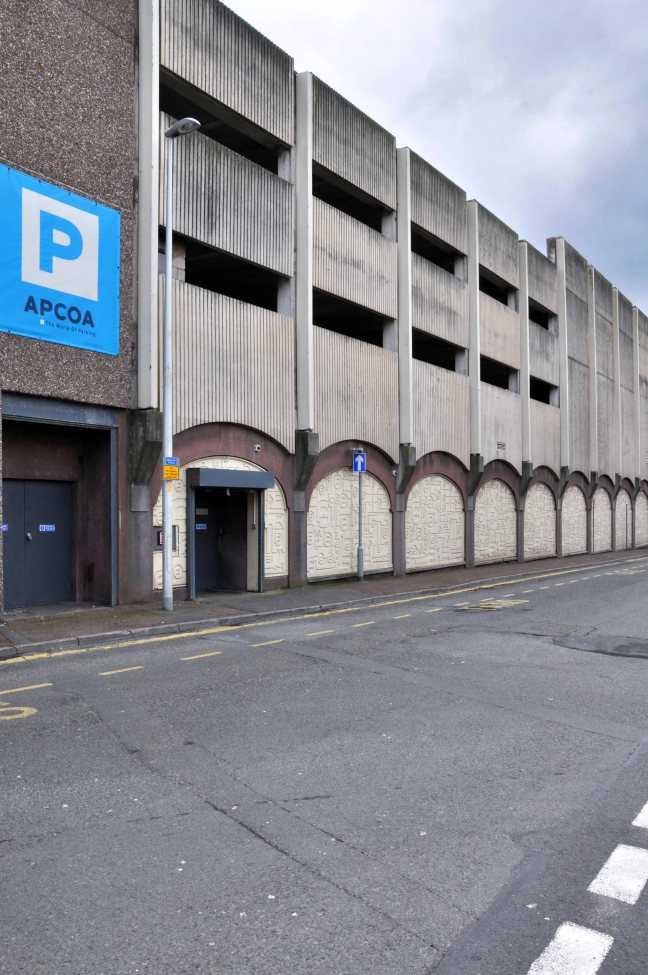
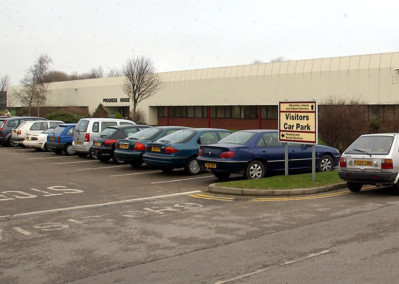
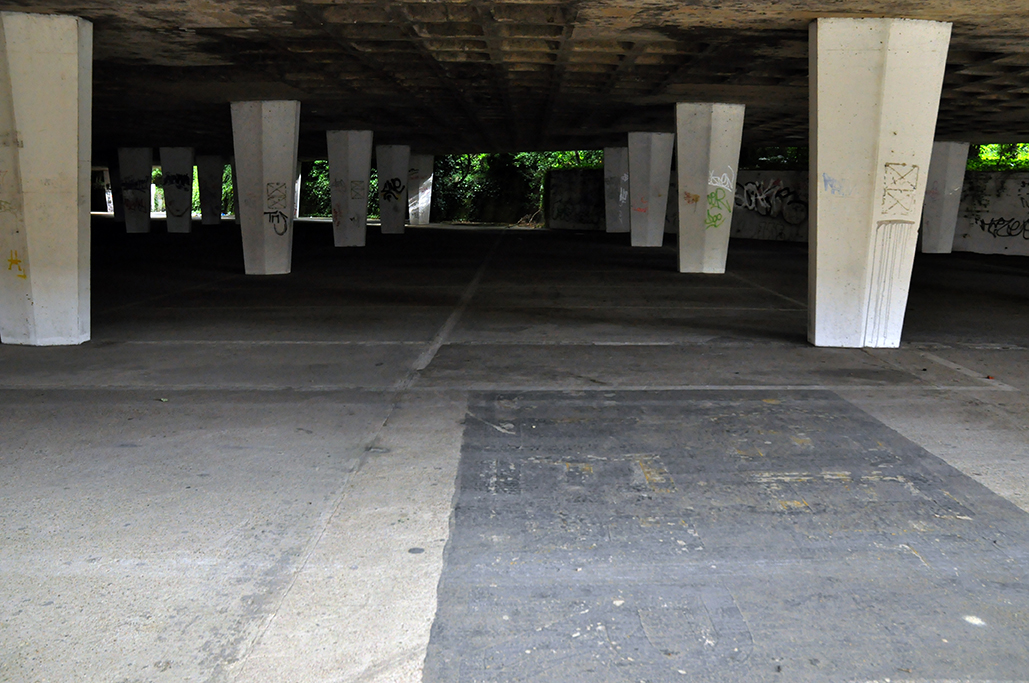
Superseded by Food Giant, Gateway, Dunnes Stores, Kwik Save and Somerfields – possibly others, currently Wilkinson’s Wilko Superstore and Age UK, retaining at all times the attractive integral car park.
Wilko is now to be relocated and the site redeveloped as part of the second phase of the £220m Talbot Gateway – whereby trams will link the promenade with the Station.
Possibly.
The tale is the typical mix of Council, Developer on/off, binary obfuscation, secrecy, smoke and mirrors.
Councillor Fred Jackson says:
“We are in talks with our development partner Muse but there is a confidentiality agreement so there is very little I can say.”
Whatever the outcome I do hope the panels are saved, having notified Historic England several weeks ago, I eagerly await their hurried and considered response…
In the meantime get y’self on the choo-choo to Blackpool North toot sweet, and have a gander at a fine Fine Fare plastic panel or two, before you can’t.
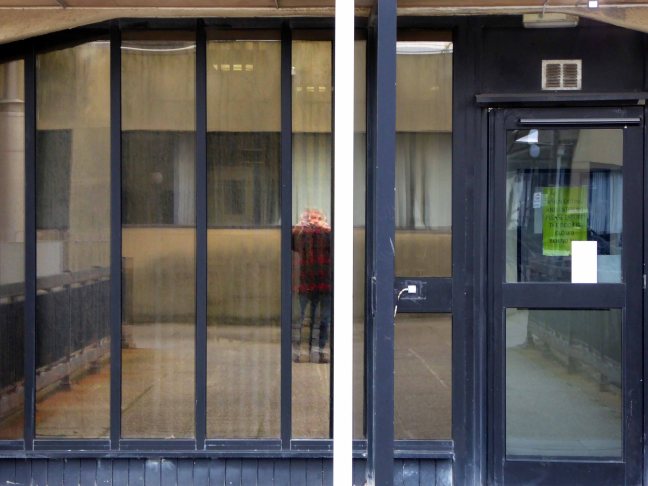
I’ve been here before, innocently snapping – without incident.
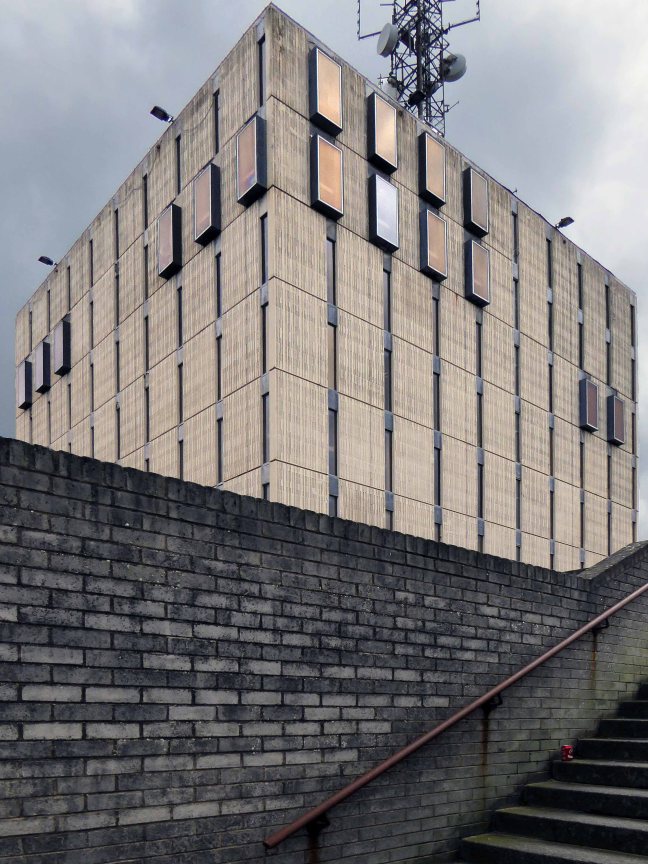
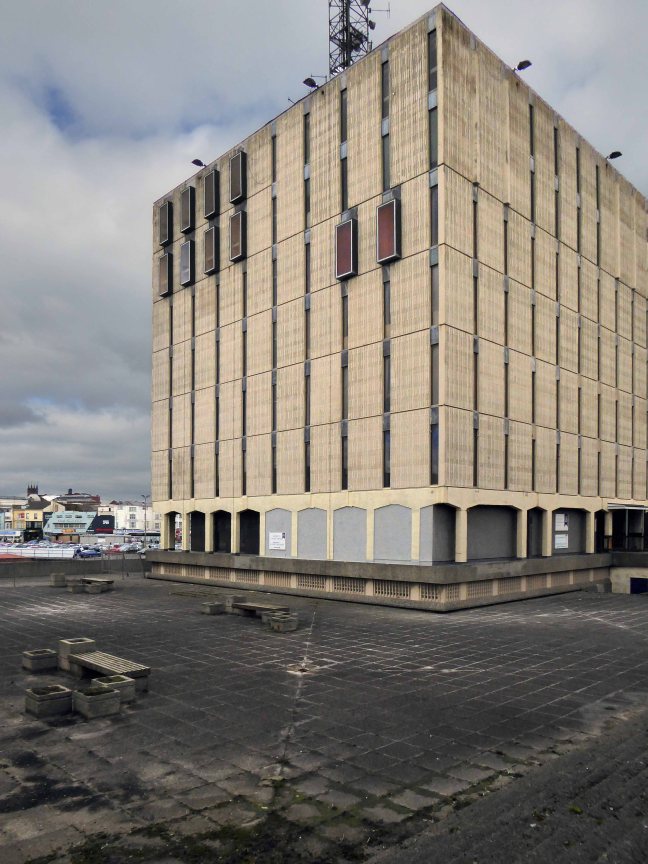
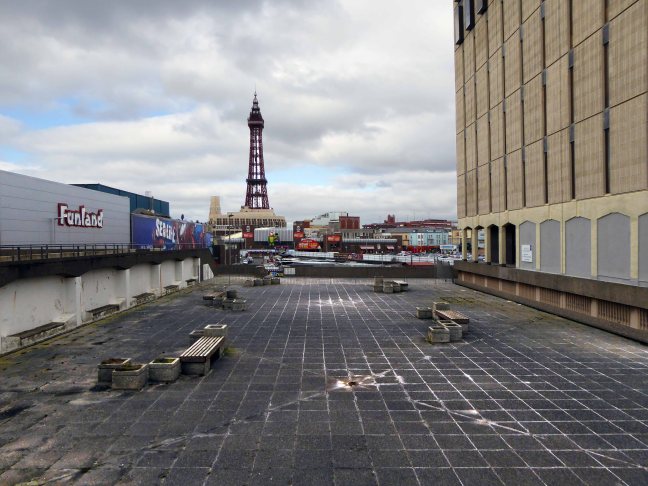
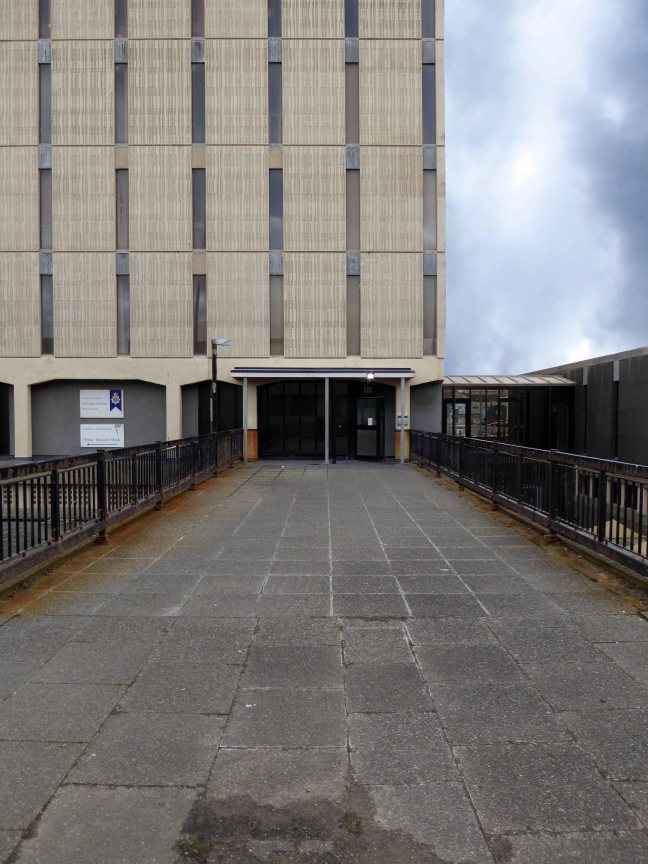
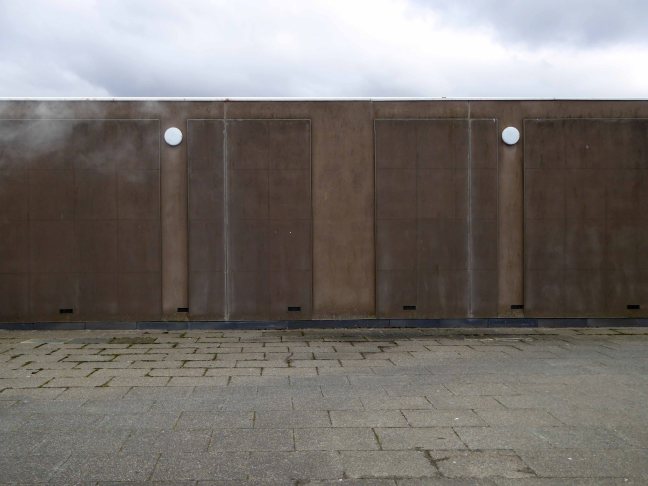
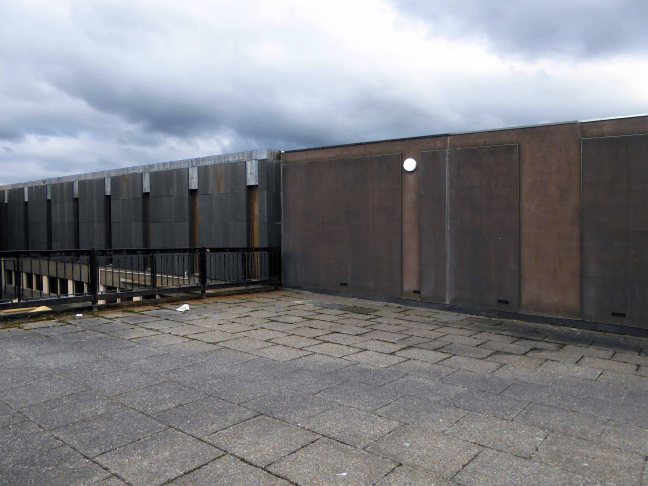
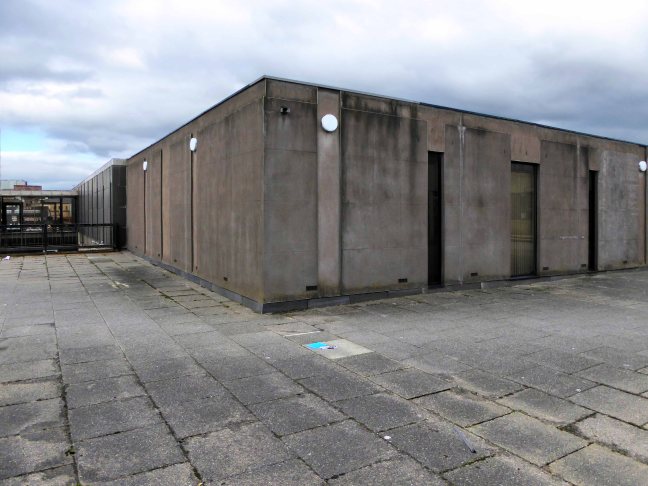
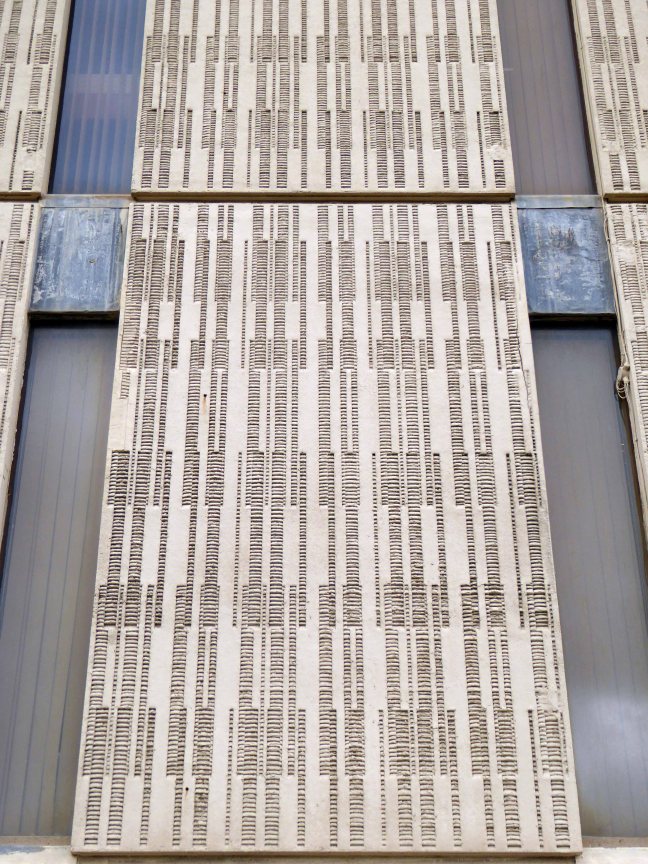
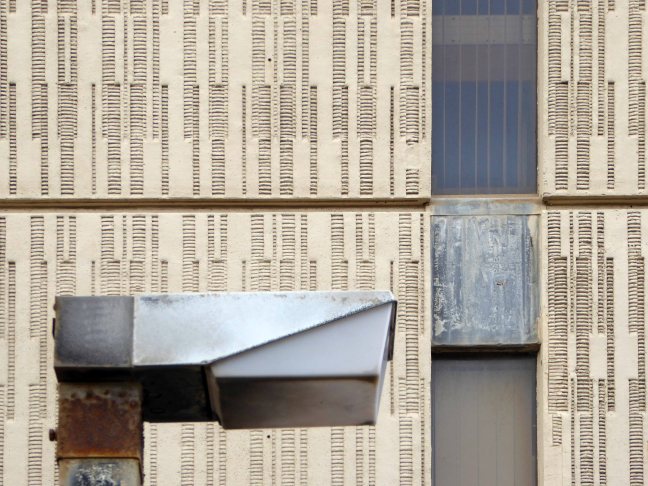
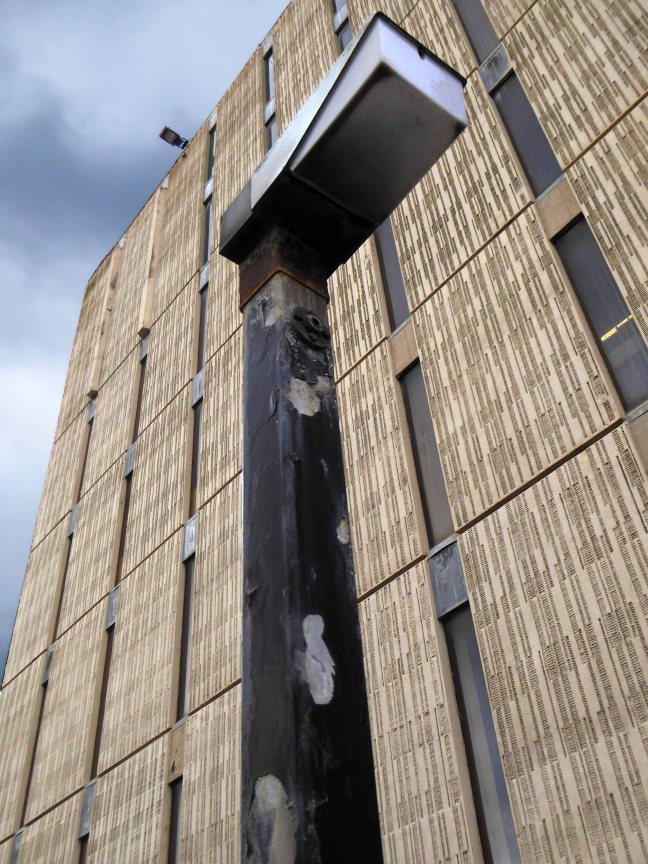
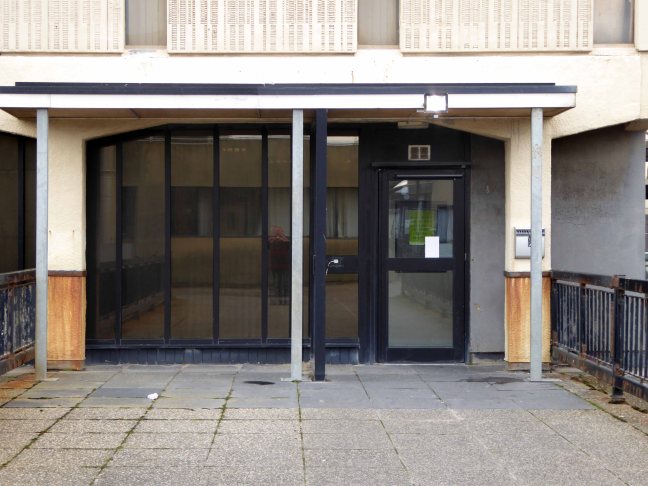
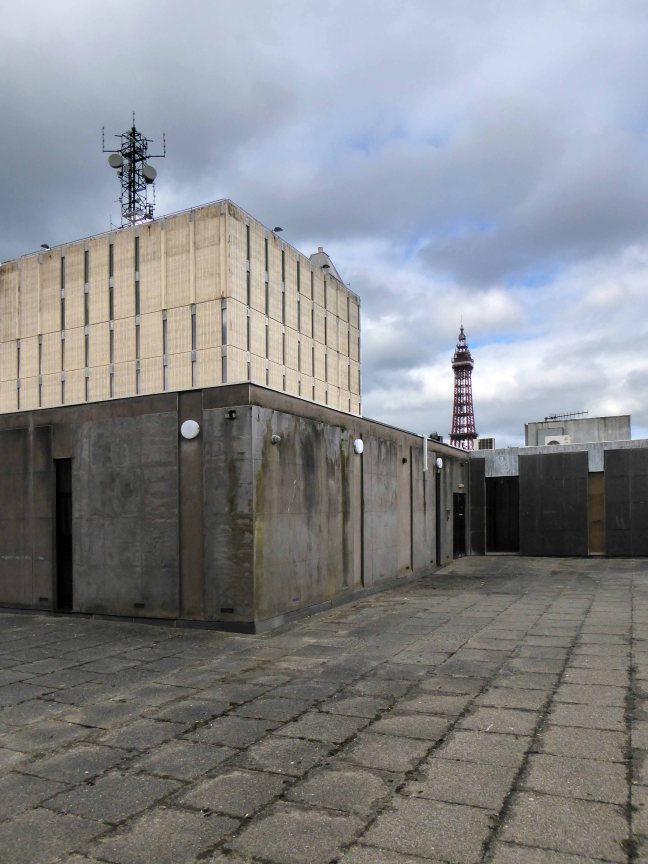
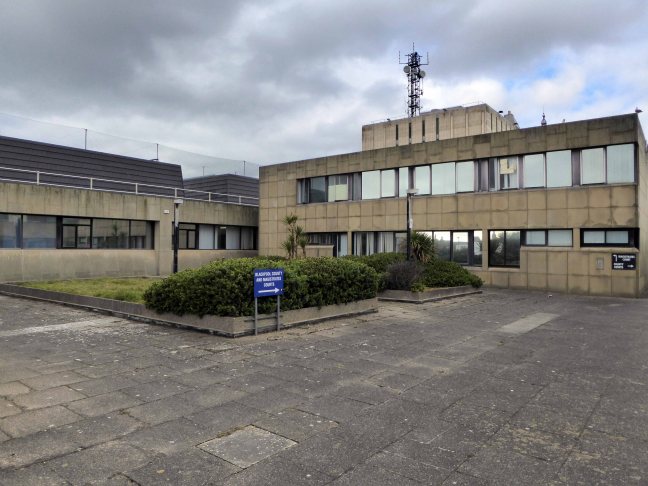
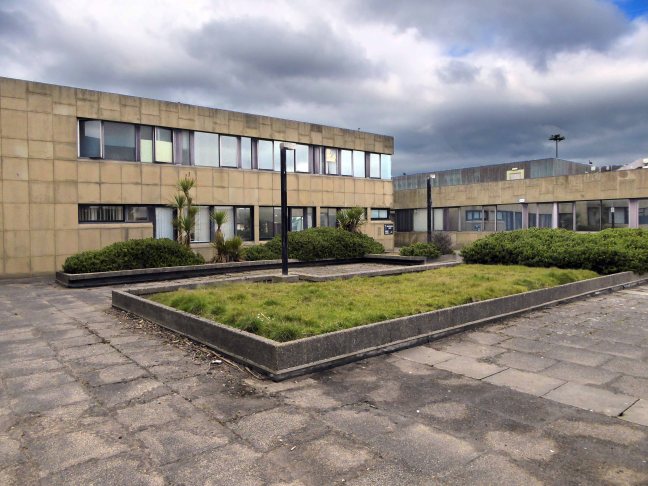
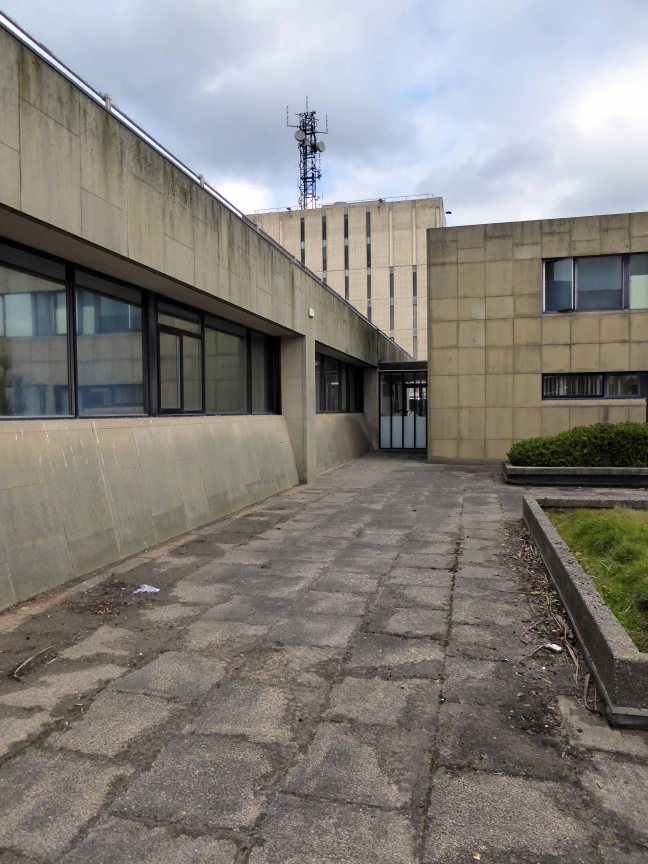
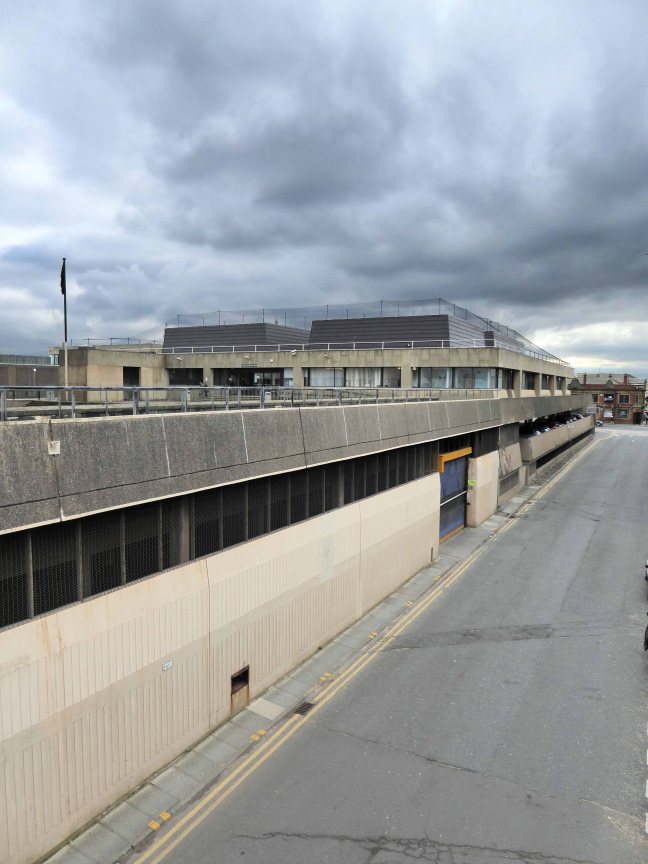
A super-large Roger Booth cop shop and courts, concrete combo.
So why not go back just one last time, prior to demolition and redevelopment.
So I did.
Following the acquisition and demolition of Progress House the Bonny Street Station is to be relocated, and the former site, under the ownership of Blackpool Council, set to become who knows what – who knows?
Progress House, Clifton Road, Marton.
The Council knows, it plans to develop a new site for the defunct Central Rail Station
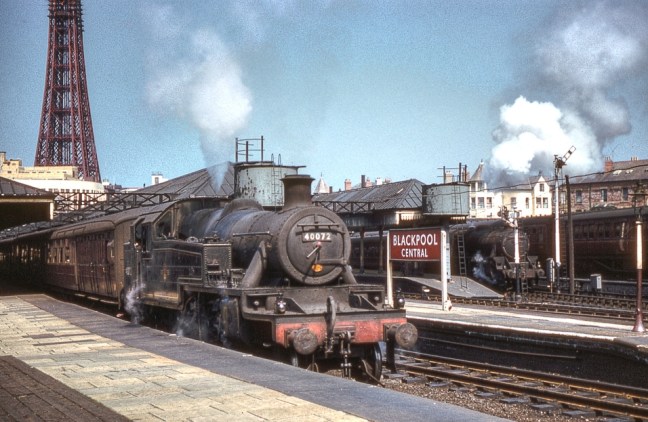
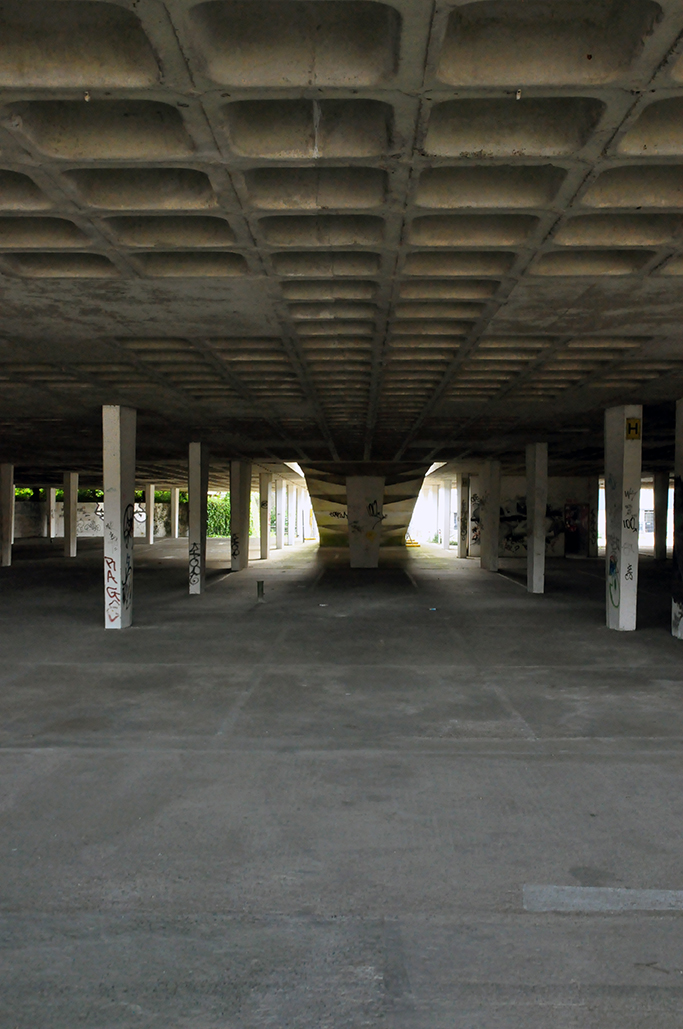
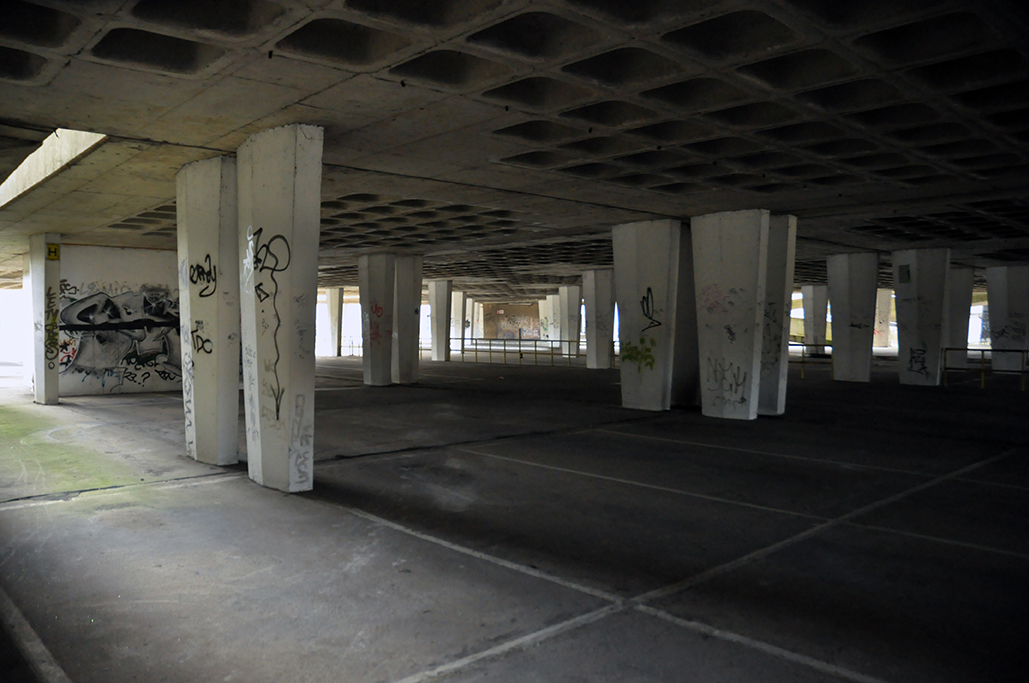
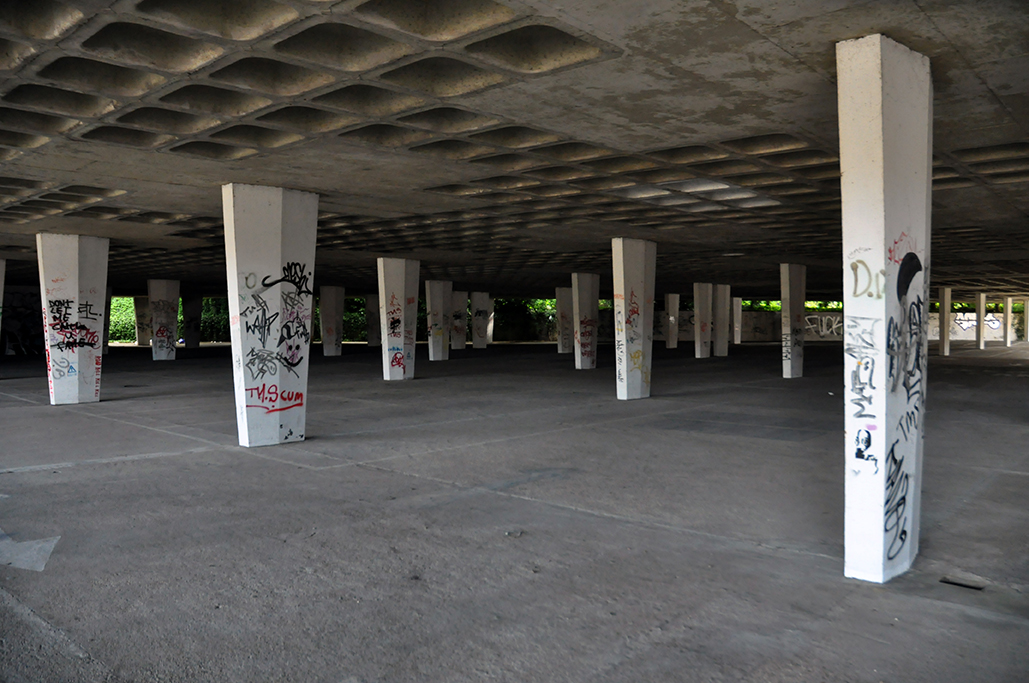
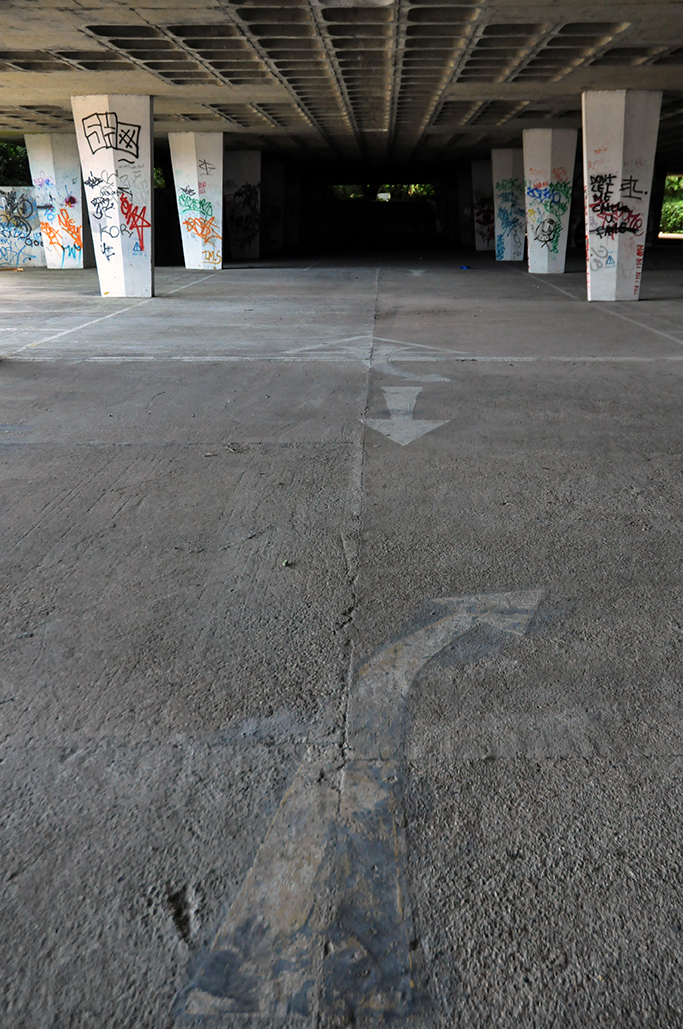
A giant of the steam age that became a car park
It is 50 years since Central Railway Station closed with the land being used for a car park ever since. It was proposed as the site for the super-casino until that bid failed to win government backing. Since then plans for an indoor snow-based attraction have also failed to make any progress.
Today happily, snow-based attractions are still failing to make any progress.
Blue skies and chill early March air greeted me, across the wind swept, precast concourses and piazzas – warmish grey, against brightish blue.
I simply didn’t expect the boy in blue – ten minutes of light/half hearted interrogation.
“Who, what, why, where are you?”
Responding in a clear concise and non-confrontational manner, I was free to go about my legal business, taking these pictures for you.
It seems that post-war Lancashire police stations are under threat, often the work of County Architect Roger Booth, and to my mind buildings of both interest and quality, they are nevertheless disappearing fast.
Wigan is now a smart new hotel, now cracks a noble heart good-night, sweet prince; and flights of angels sing thee to thy rest – in your merrily clad Premiere Inn.
Blackpool and Bury are both to be demolished.
What is going on, are we running out of crime?
On the day of our visit to Morecambe, there was no obvious evidence of miscreants on the prowl, though appearances can be deceptive -consider this incident of March 2008:
Morecambe Police Station was evacuated on Wednesday night after an elderly man took a suspicious package into the building.
Police said the man brought the object into the reception, said it was suspicious and quickly left.
Officers called the Bomb Disposal Team from Chester who said it was an ‘improvised device’. All houses near to the station in Thornton Road were evacuated and the area was cordoned off for two and a half hours.
The area was declared safe shortly before 8.30pm.
Further research reveals:
Though locals are also encouraged to use online services:
The modern day cop shop faces an uncertain future it seems. So get out there toot sweet, take a look behave responsibly at all times and remember folks it’s not a crime to snap a Bobby or their place of work.
It is not illegal to take photographs or video footage in public places unless it is for criminal or terrorist purposes.
There will be places where you have access as a member of the public, but will have to ask permission or may be prevented altogether. These could include stately homes, museums, churches, shopping malls, railway stations and council or government buildings. You need to check the situation out on a case by case basis.
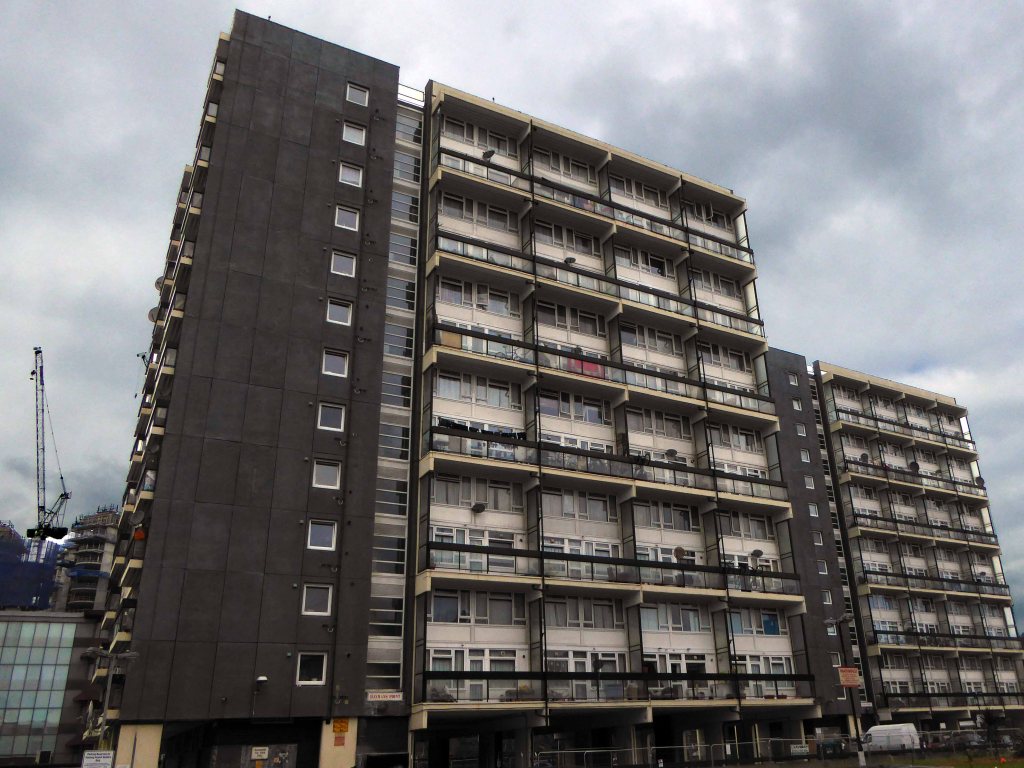
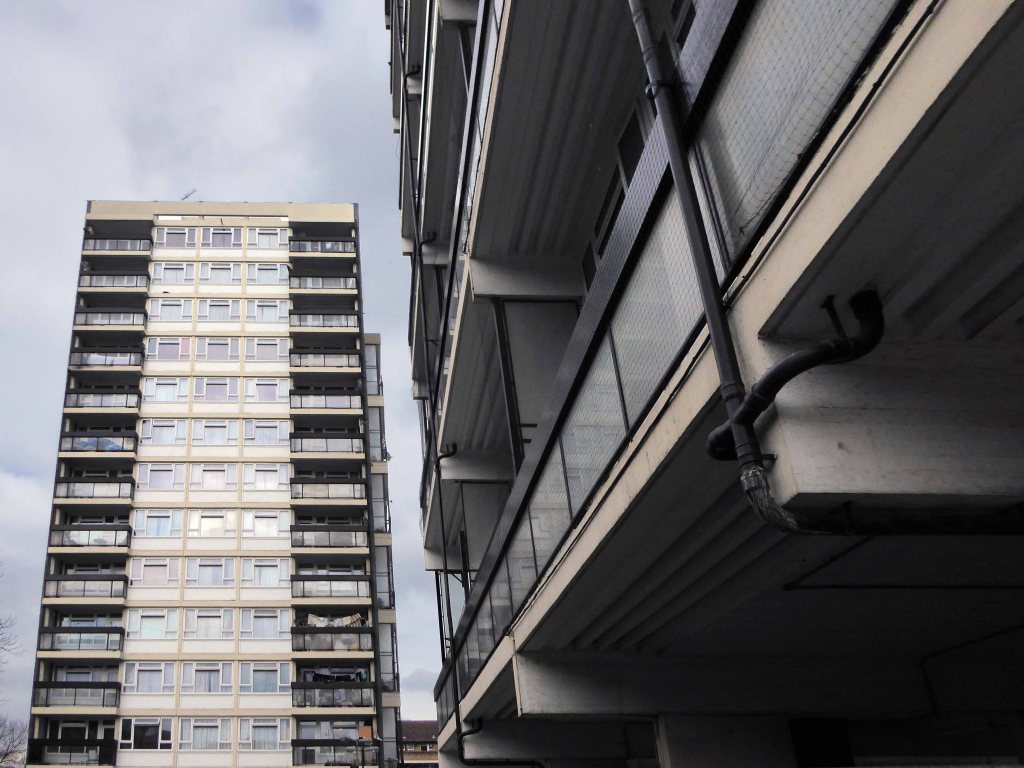
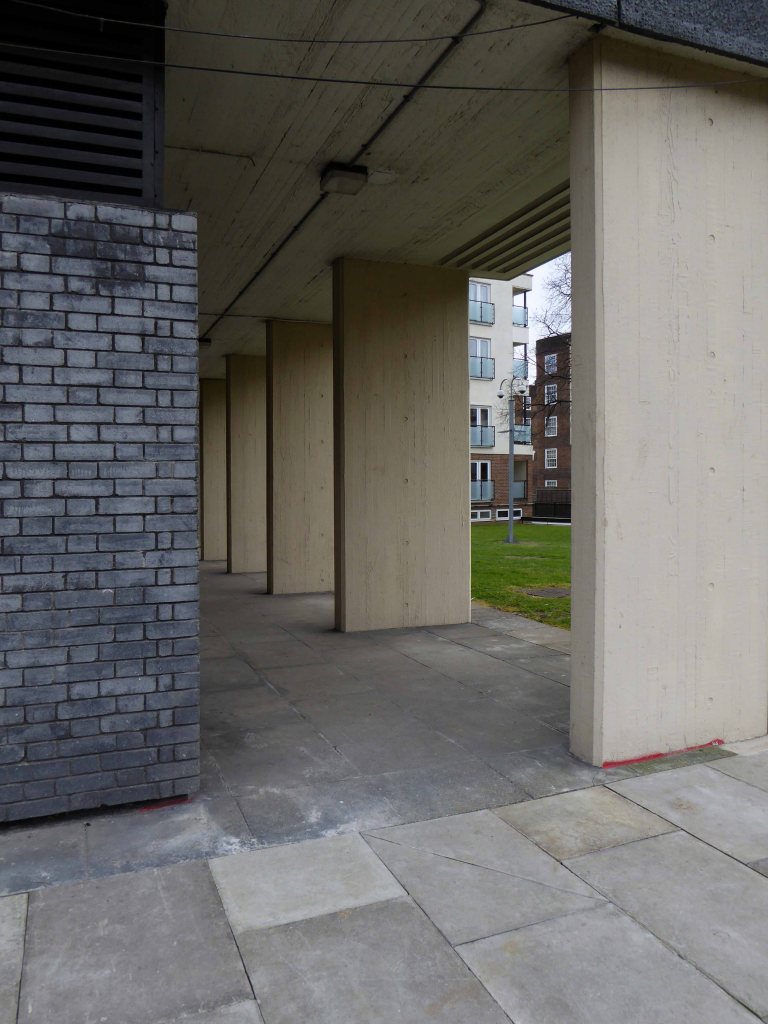
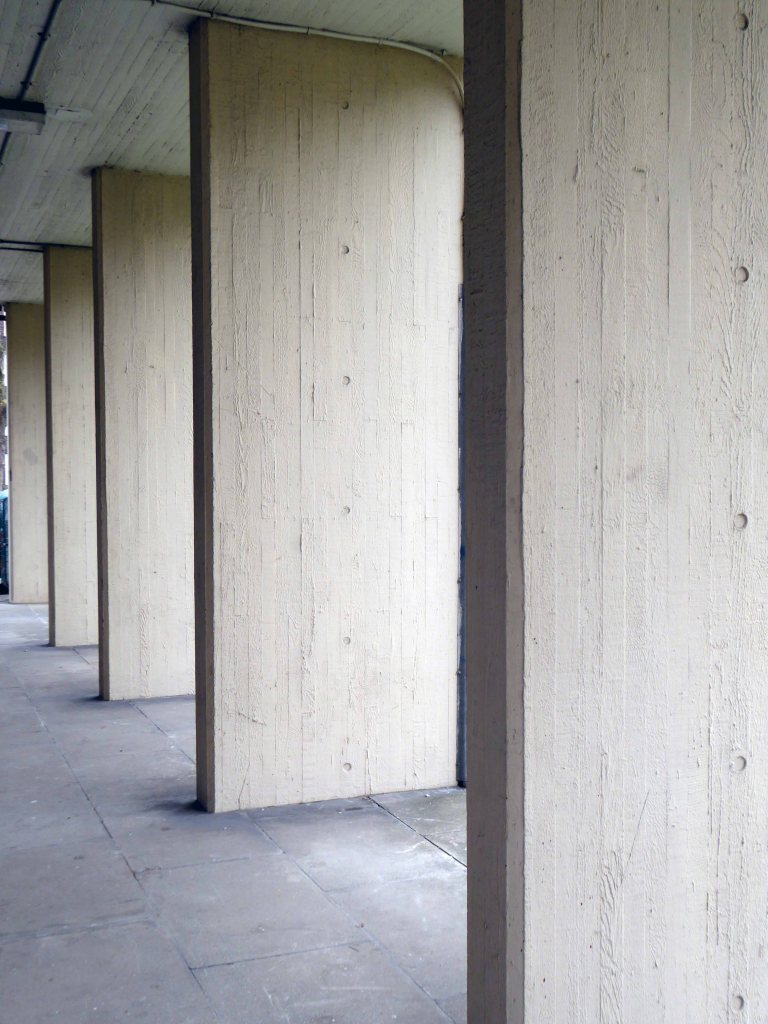
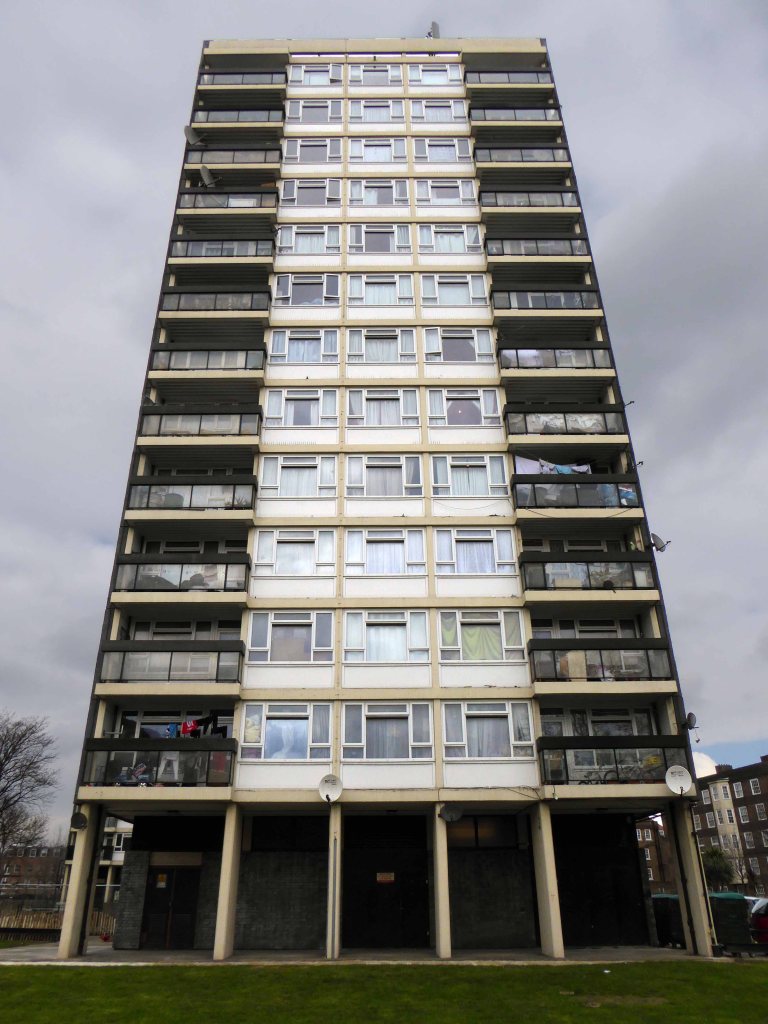
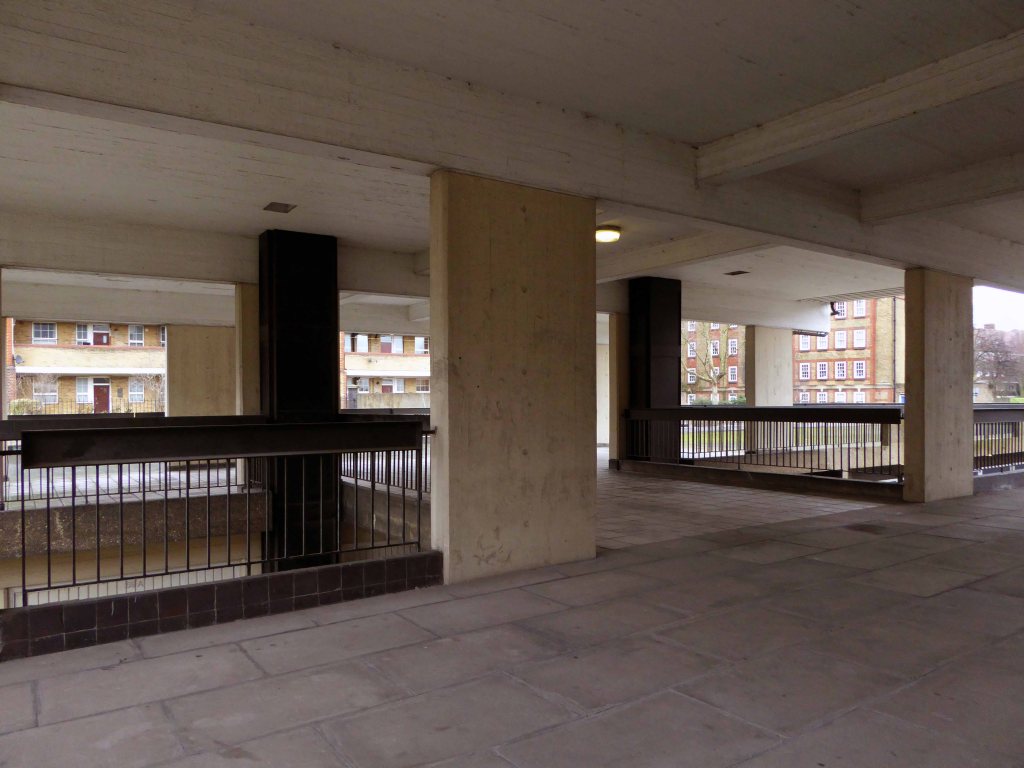
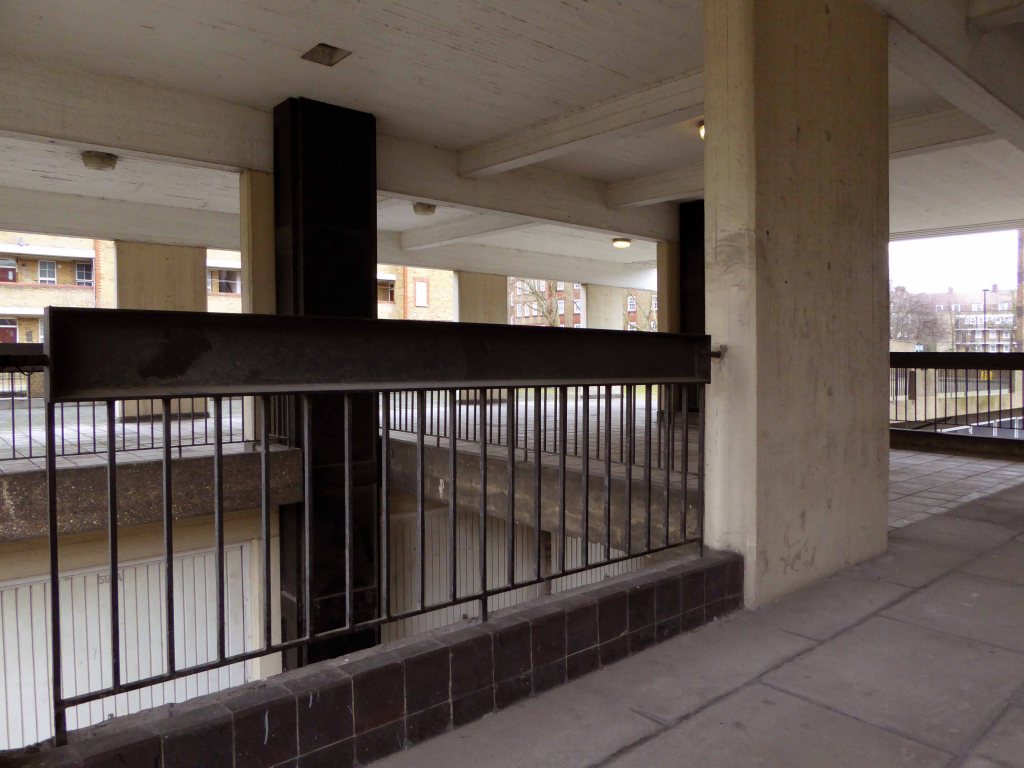
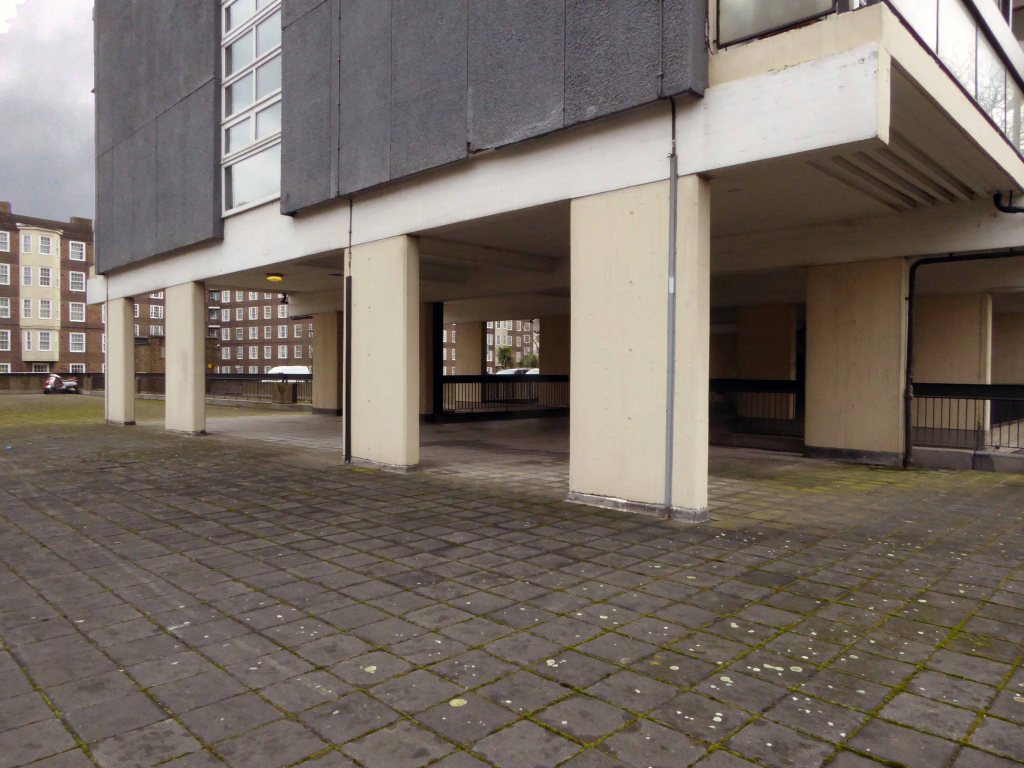
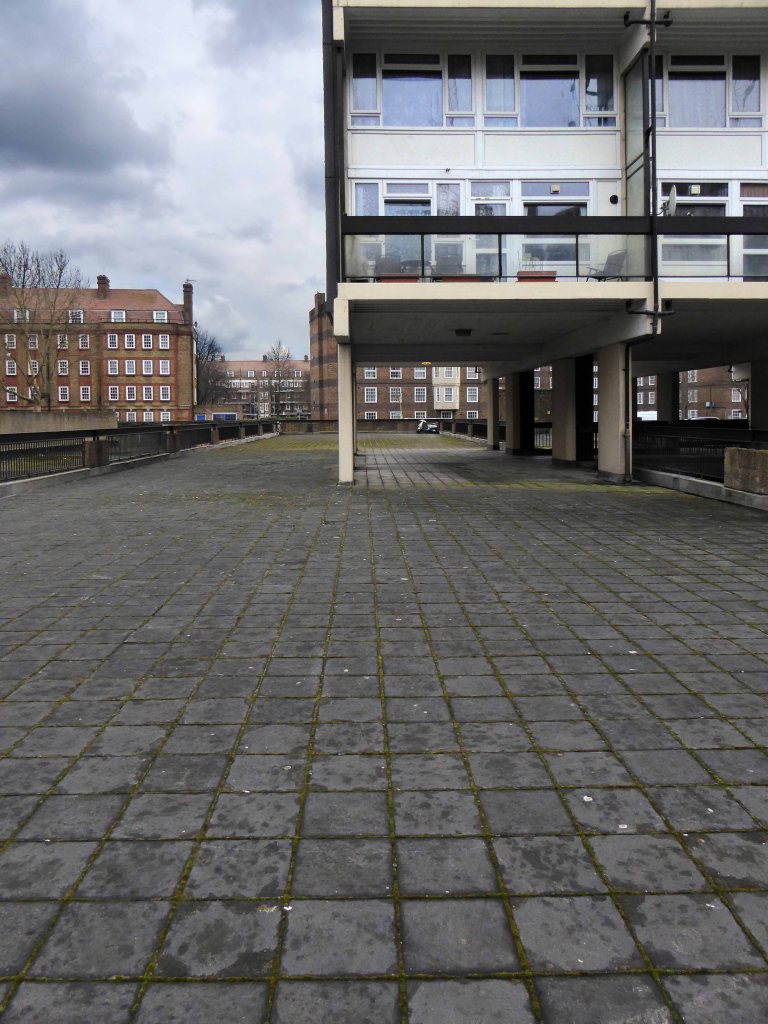
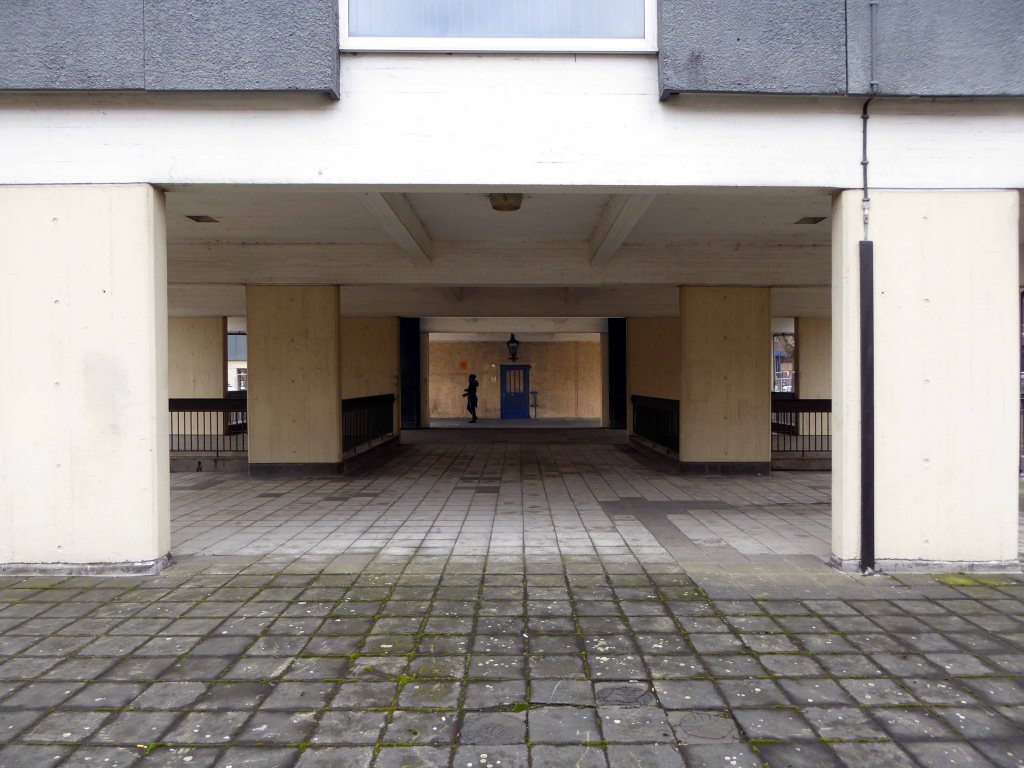
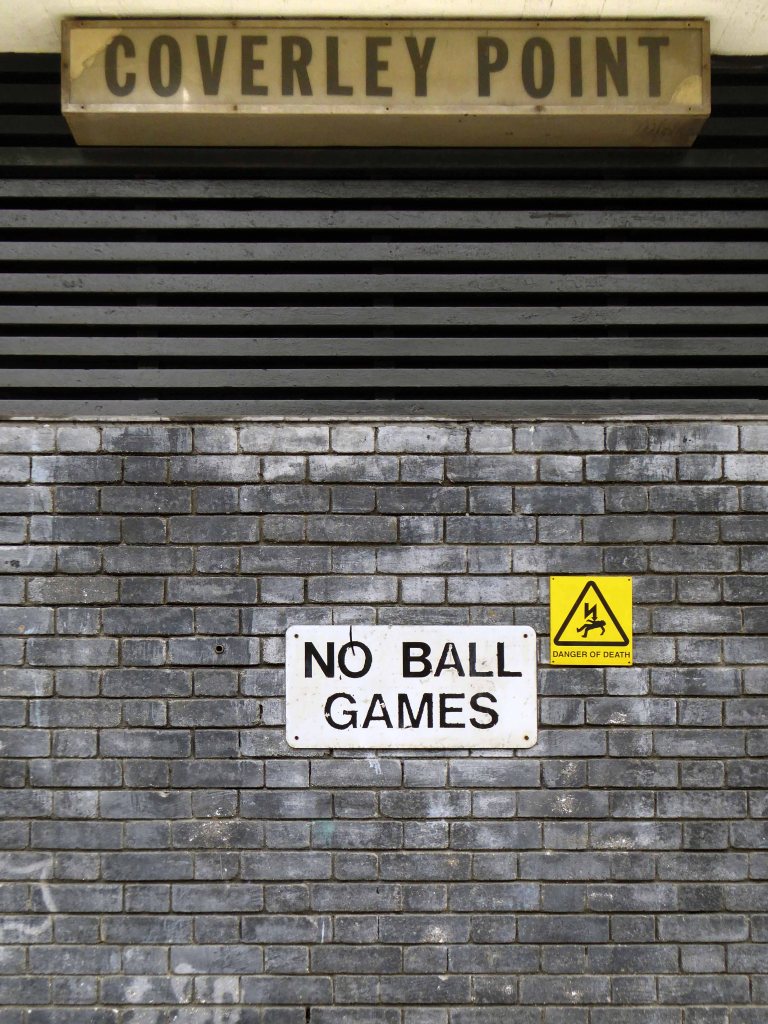
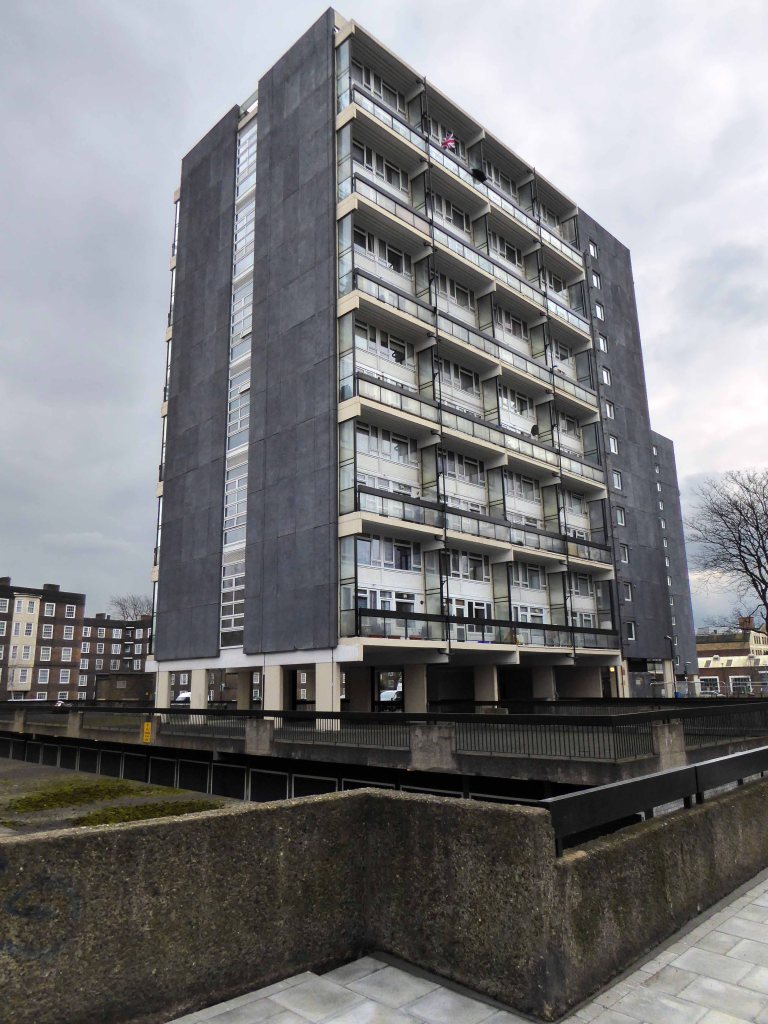
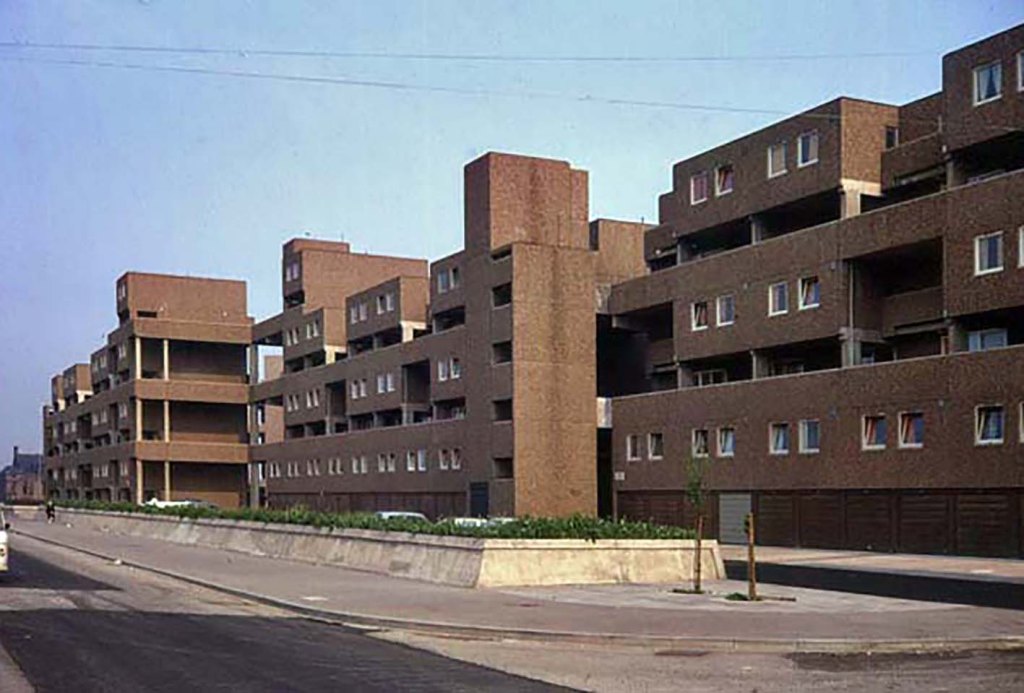
Vauxhall post war housing development, including two adjacent tower blocks Haymans and Coverley Point. labelled as a concrete jungle home to mainly manual workers, forty percent non-white, amid a mix of Eastern European and Portuguese emigres.
Vauxhall playground of the free-runners, film location and thrill seekers:
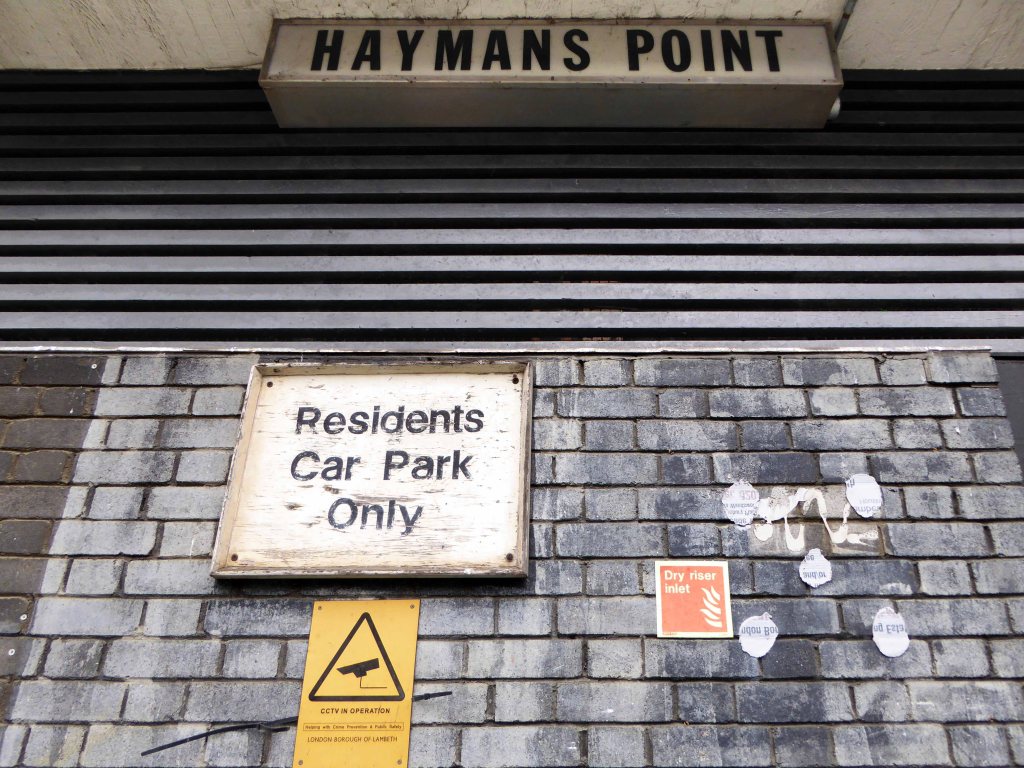
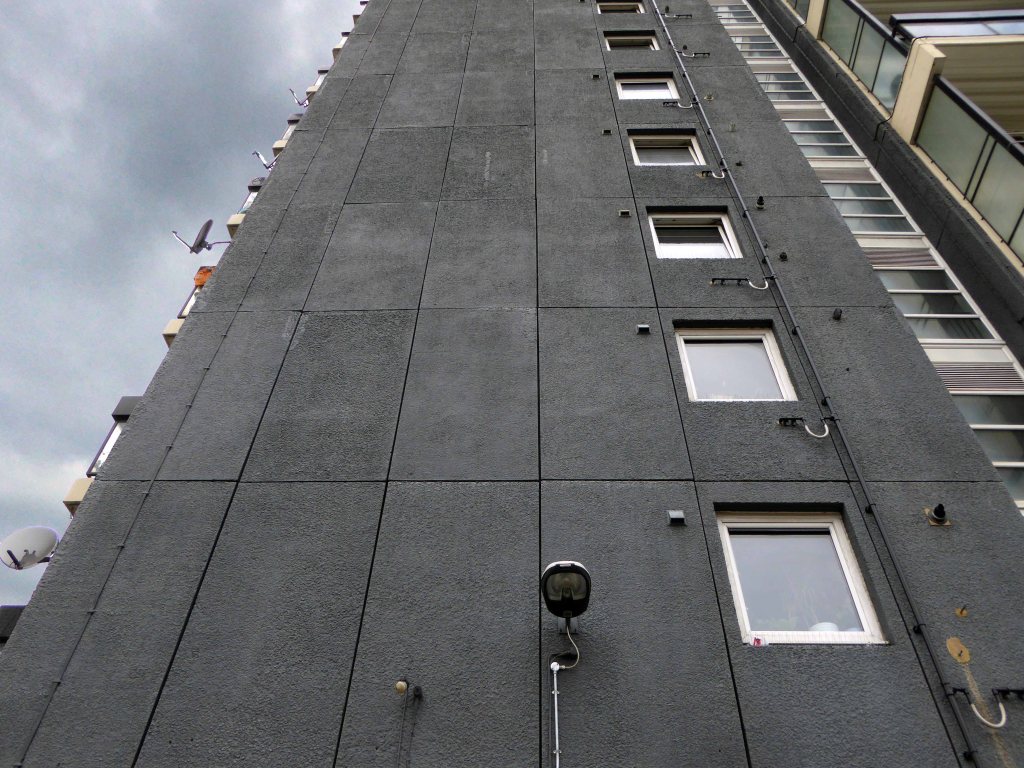
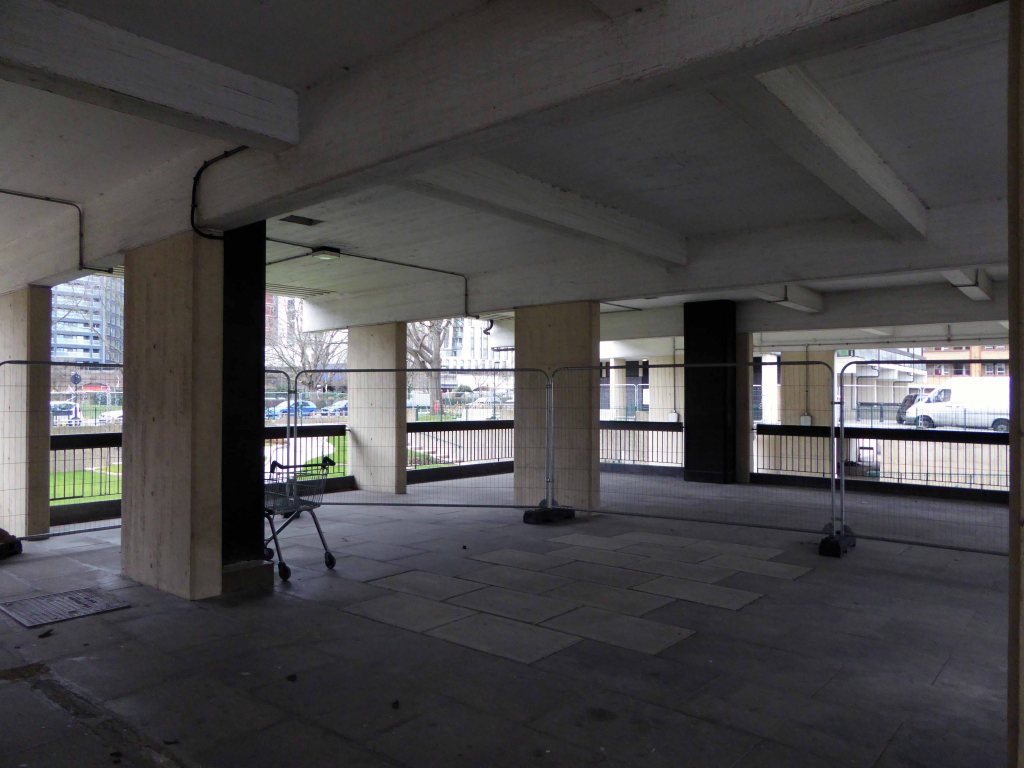
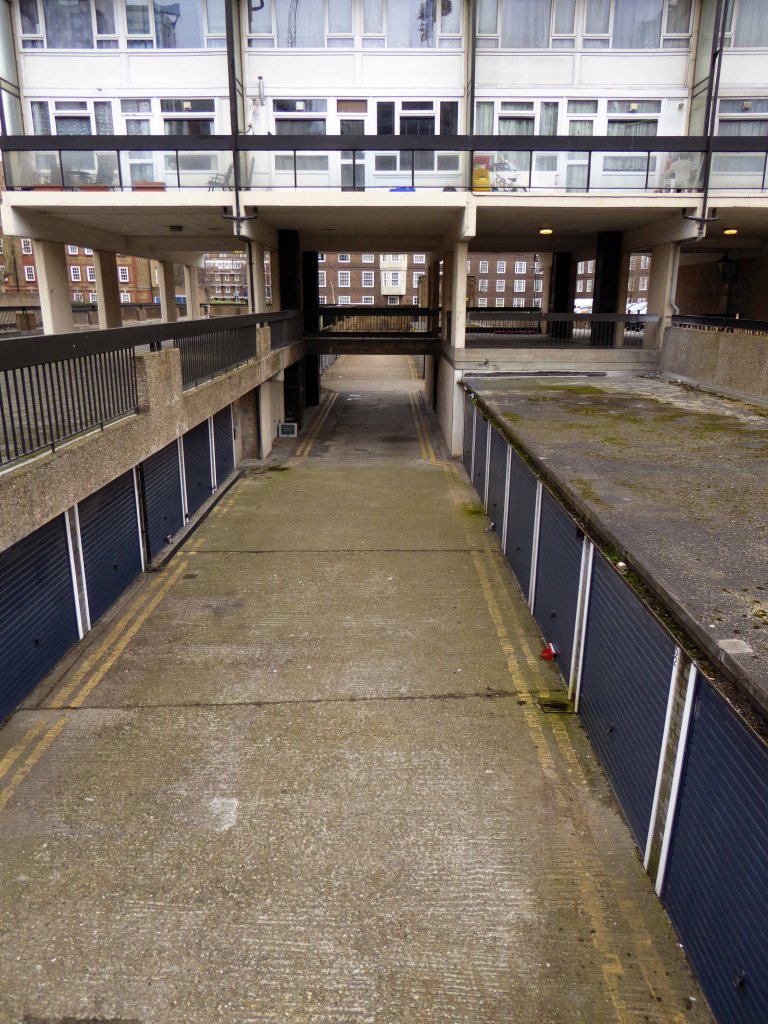
Haymans Point is an imposing, concrete, council estate tower block in the north of Lambeth, part of the Vauxhall Gardens Estate, which has an active residents and tenants association. The rooftop is fairly restricted in terms of outlook due to its high walls, but some interesting features are available including atmospheric interior corridors, outdoor walkways and underpasses over public spaces.
– It’s also giving young Lambeth citizens work experience in the construction industry.
Vincenzo got his interest in construction from his Mum, who was a Brixton-based painter and decorator, and his original work experience with London charity Build-it was decorating Lambeth Council blocks in Blenheim Gardens. “I’m fanatical about learning things. I like moving about and in building you’re always somewhere different. Nadine from Build-it said this job would be hard work, so I was right on it”
Two blocks without a chip on their respective shoulders, set in a green sea of history.
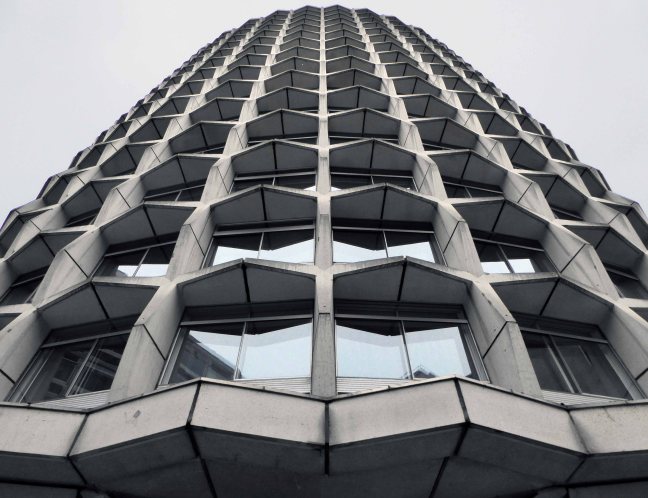
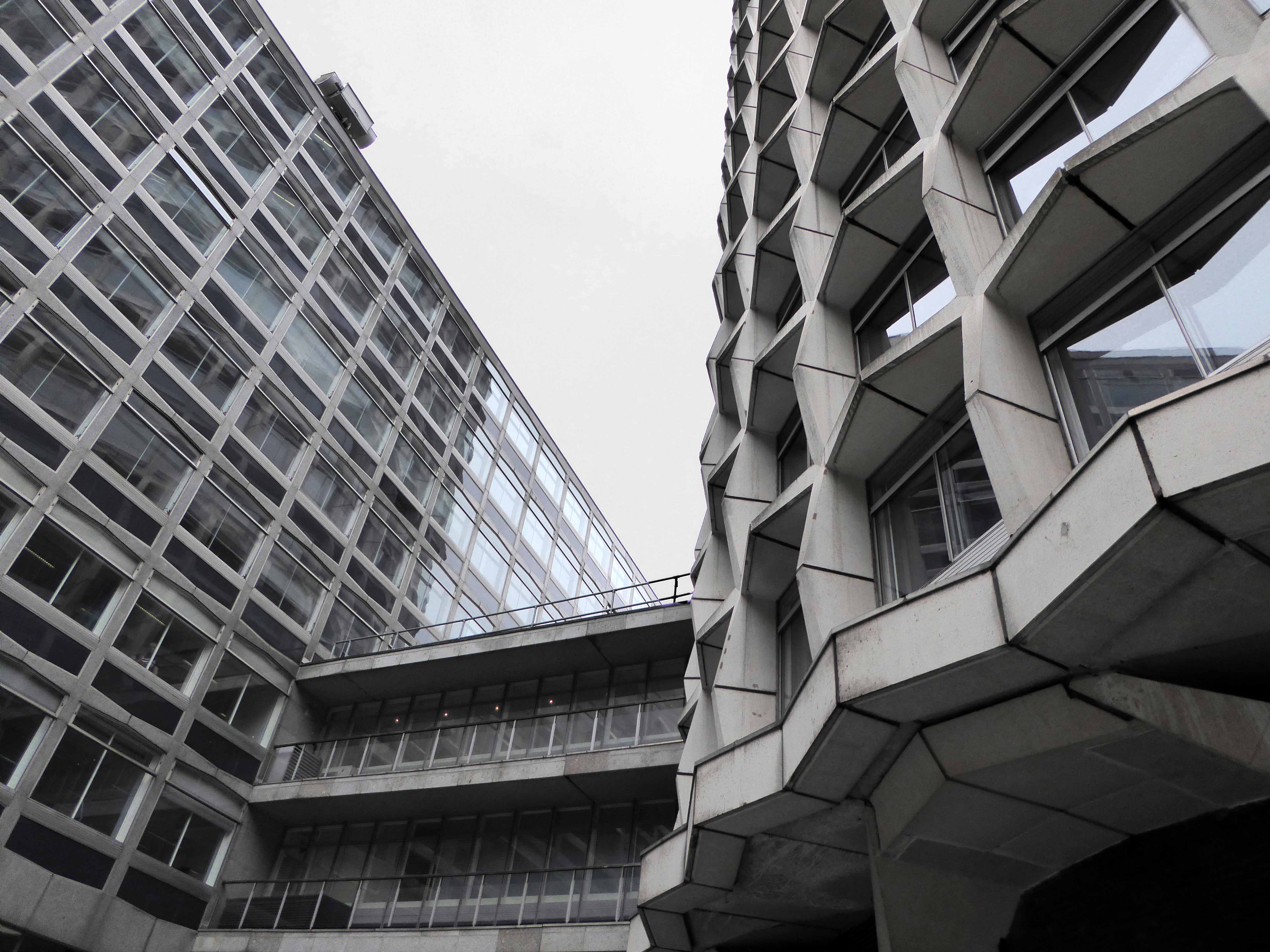
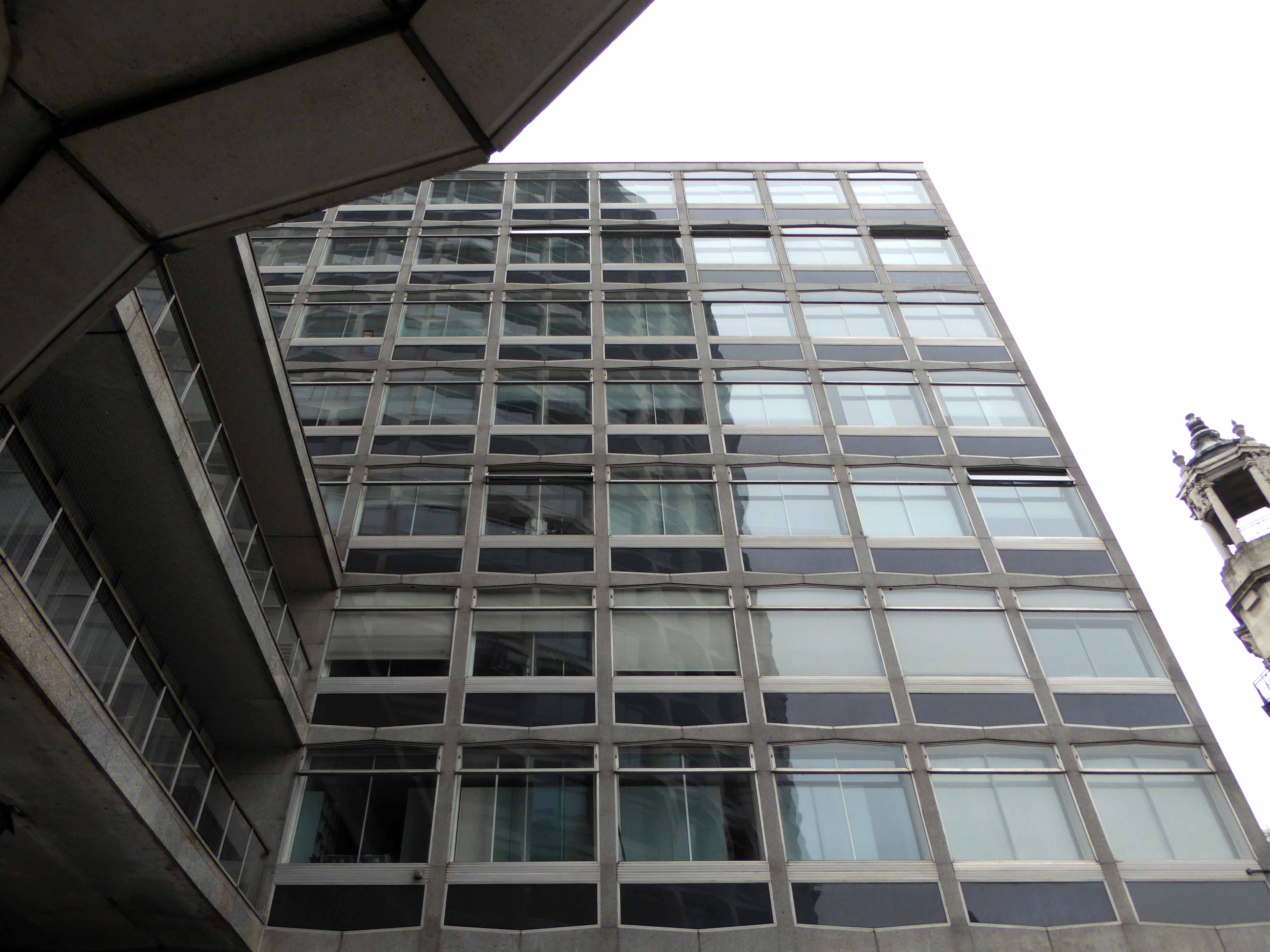
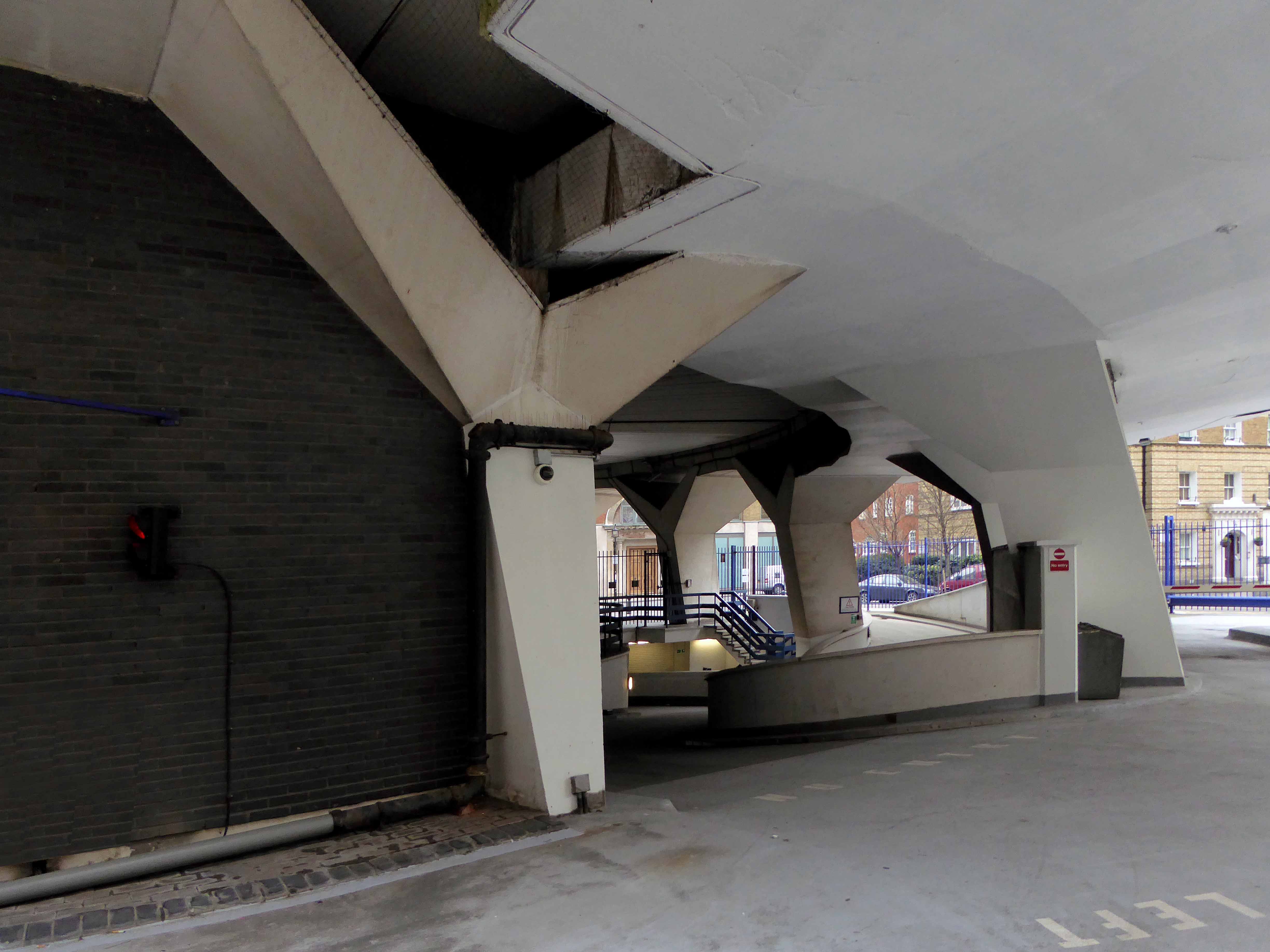
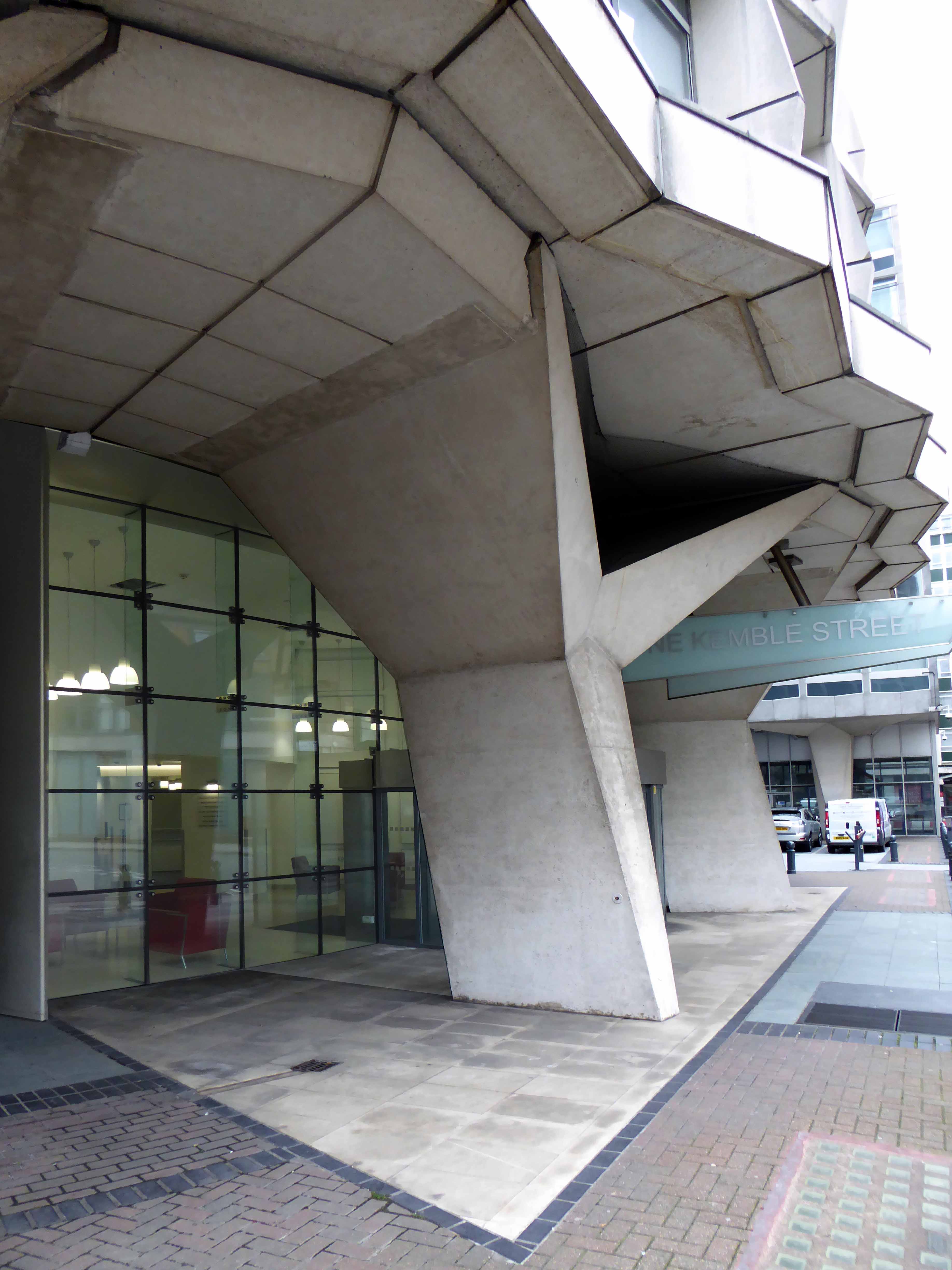
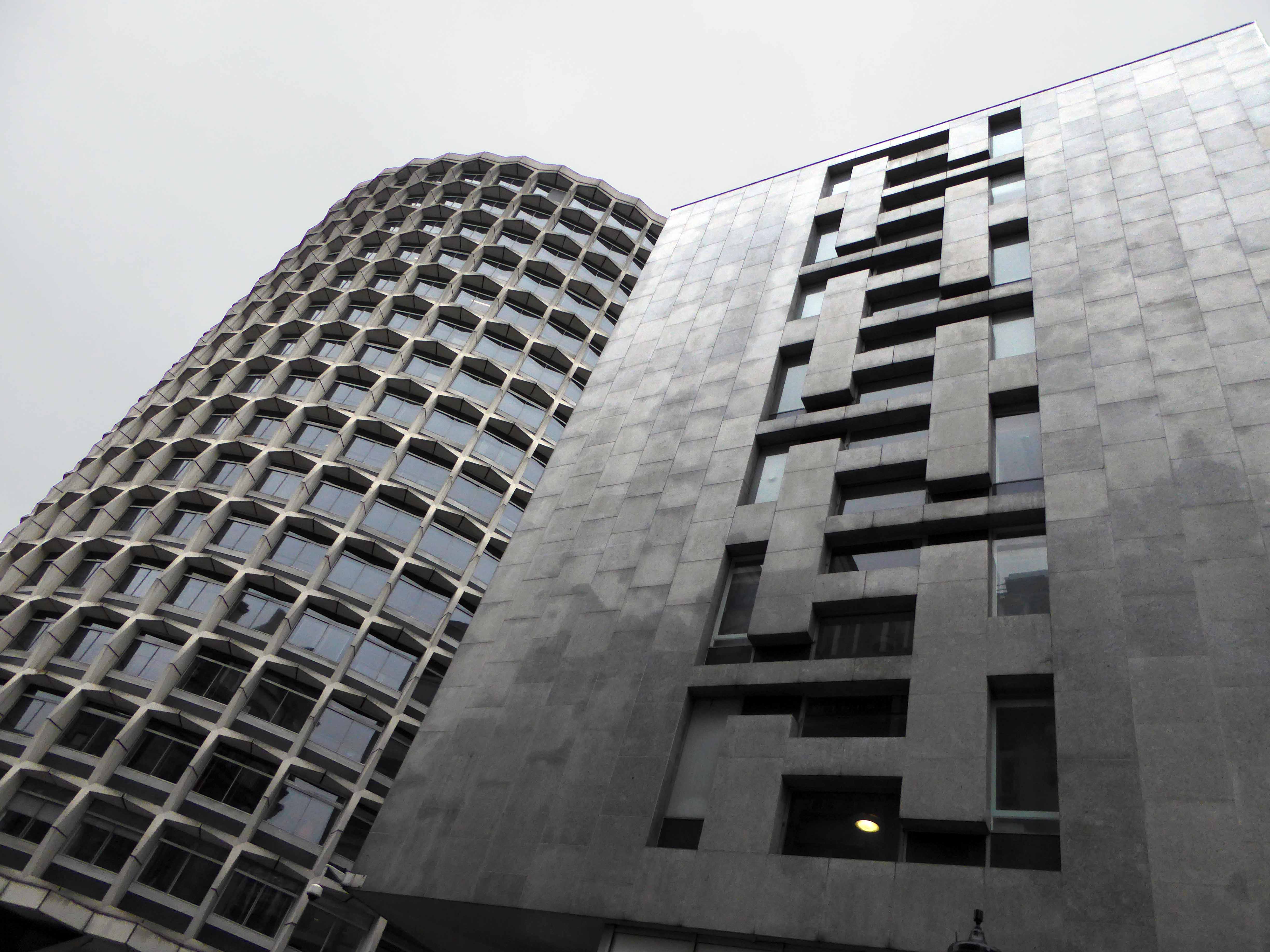
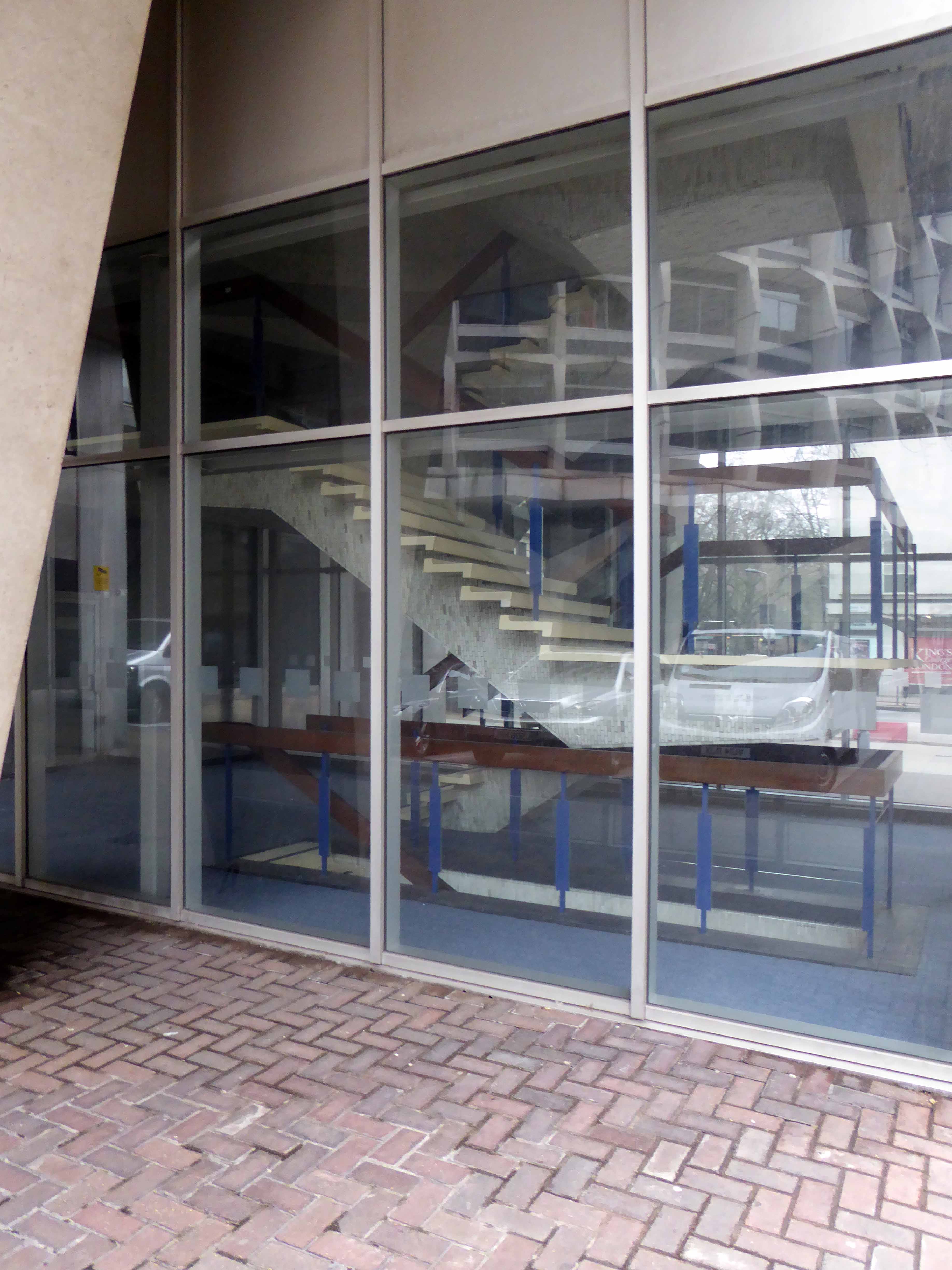
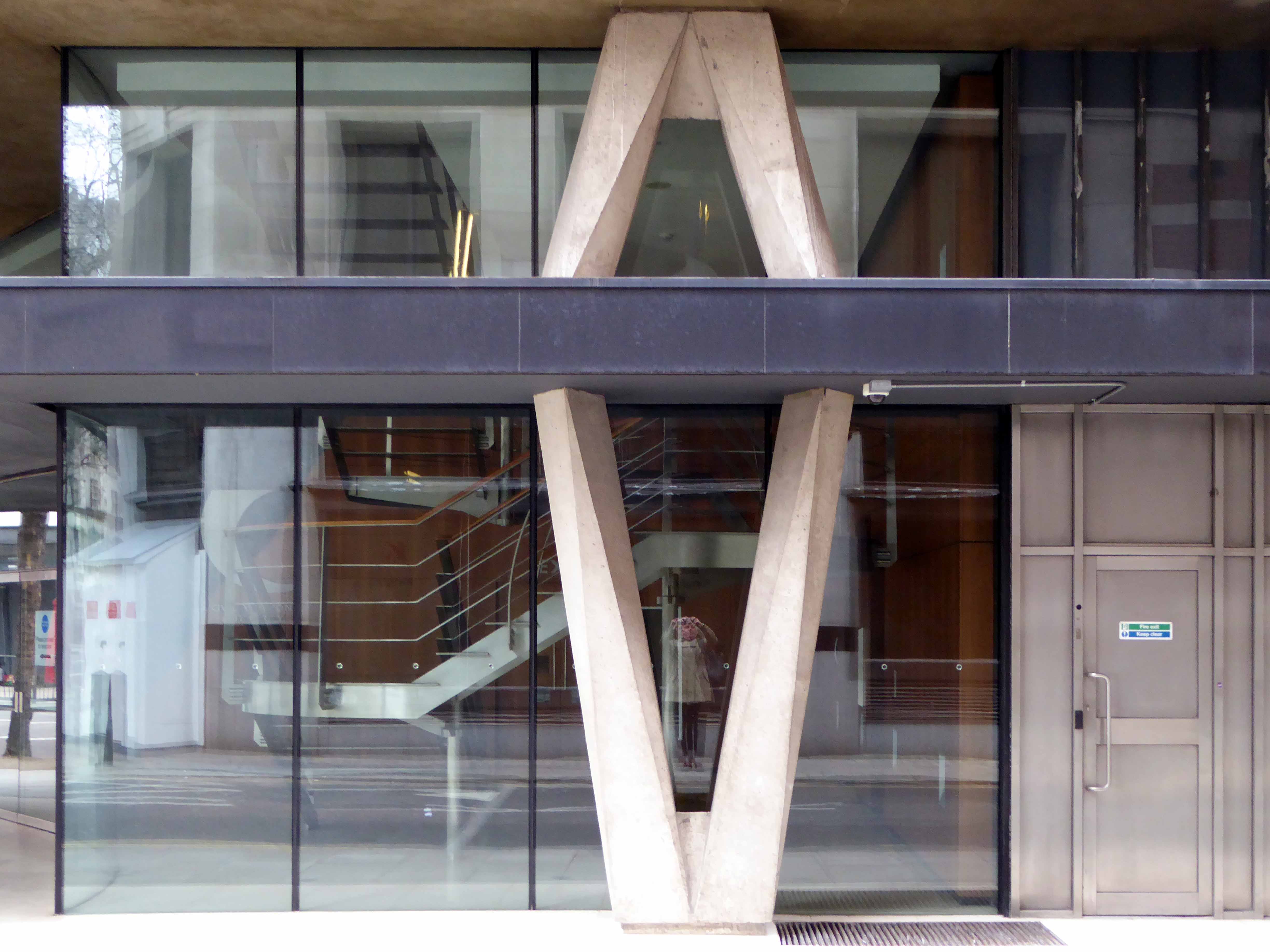
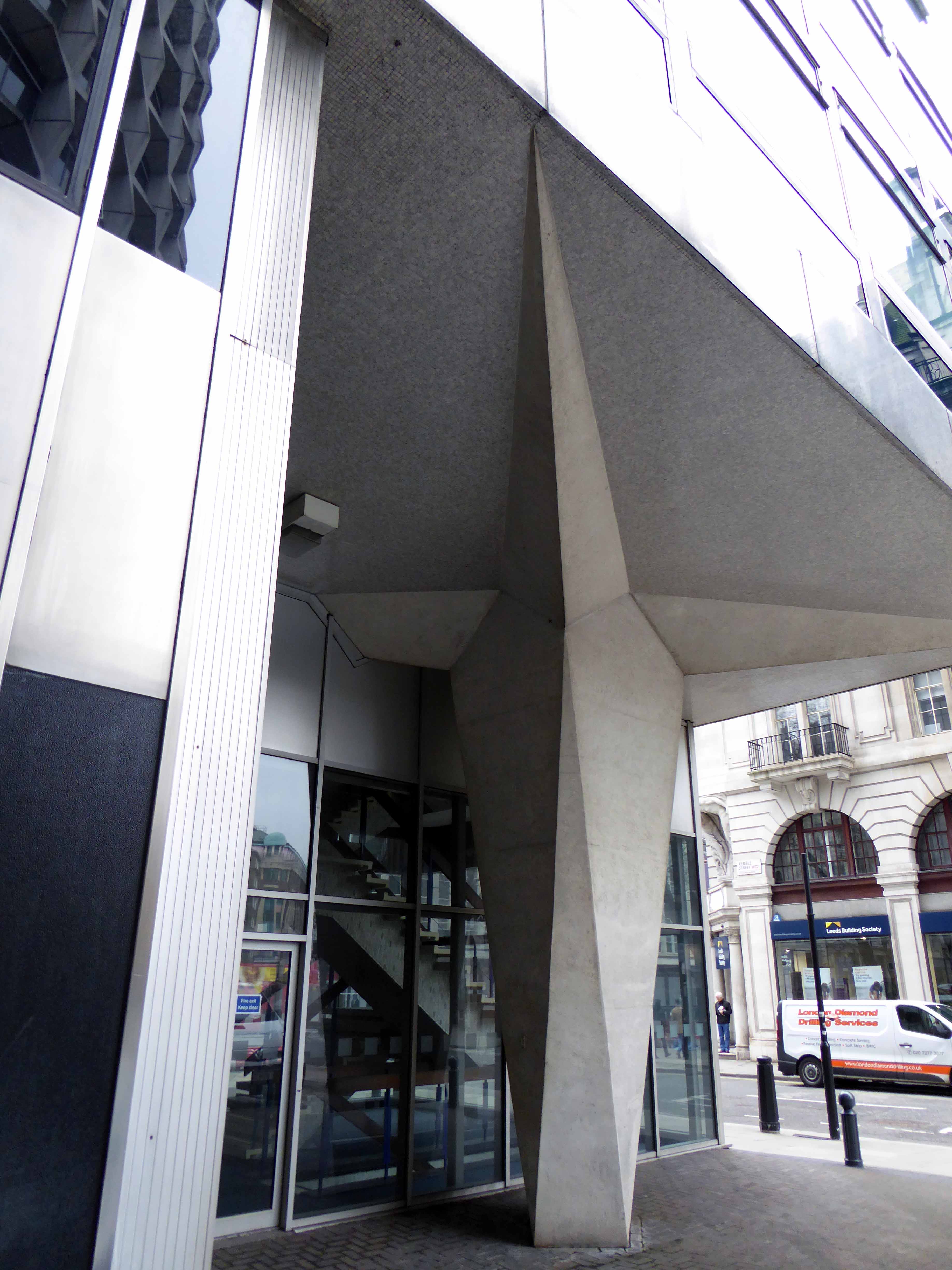
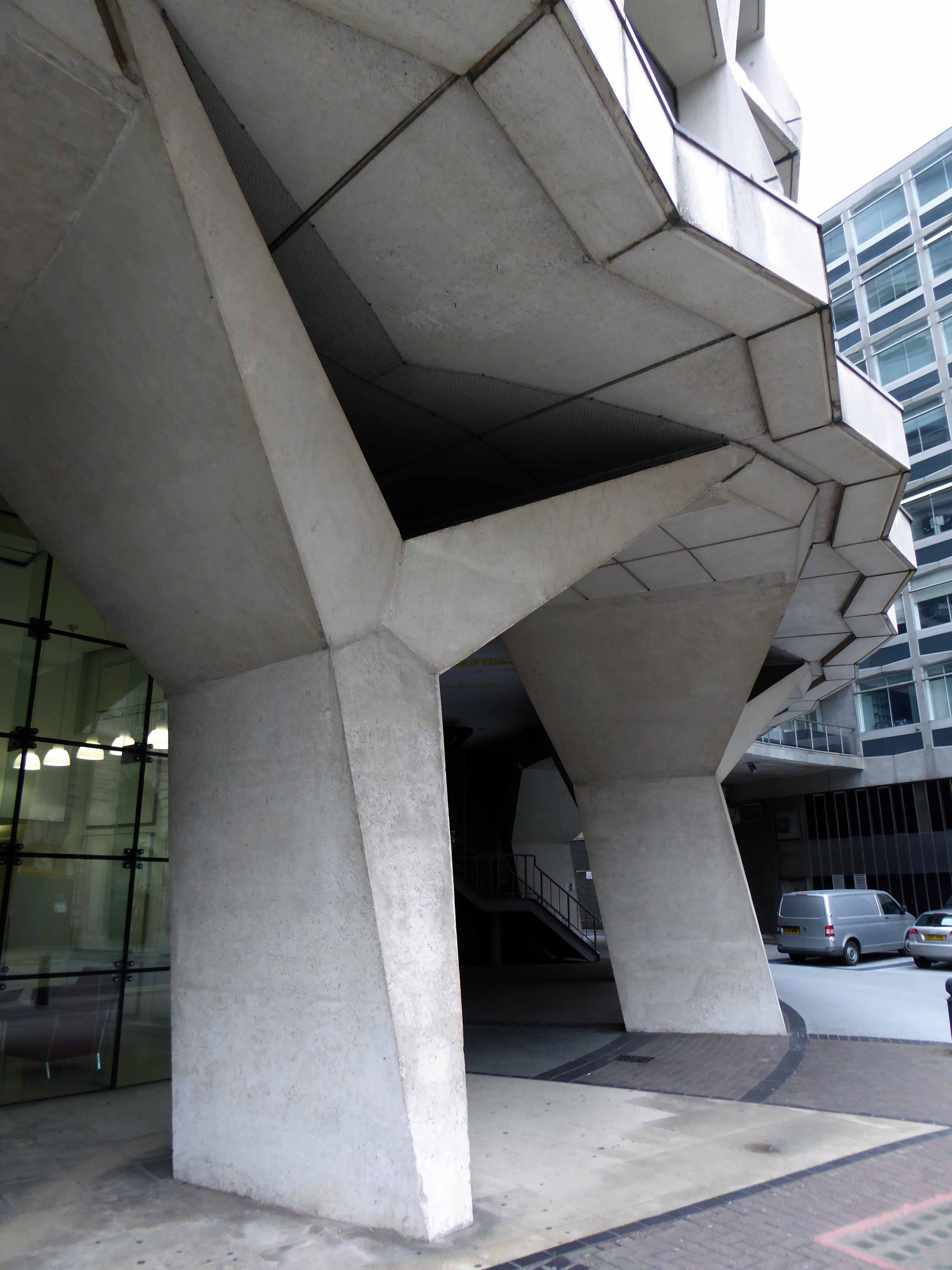
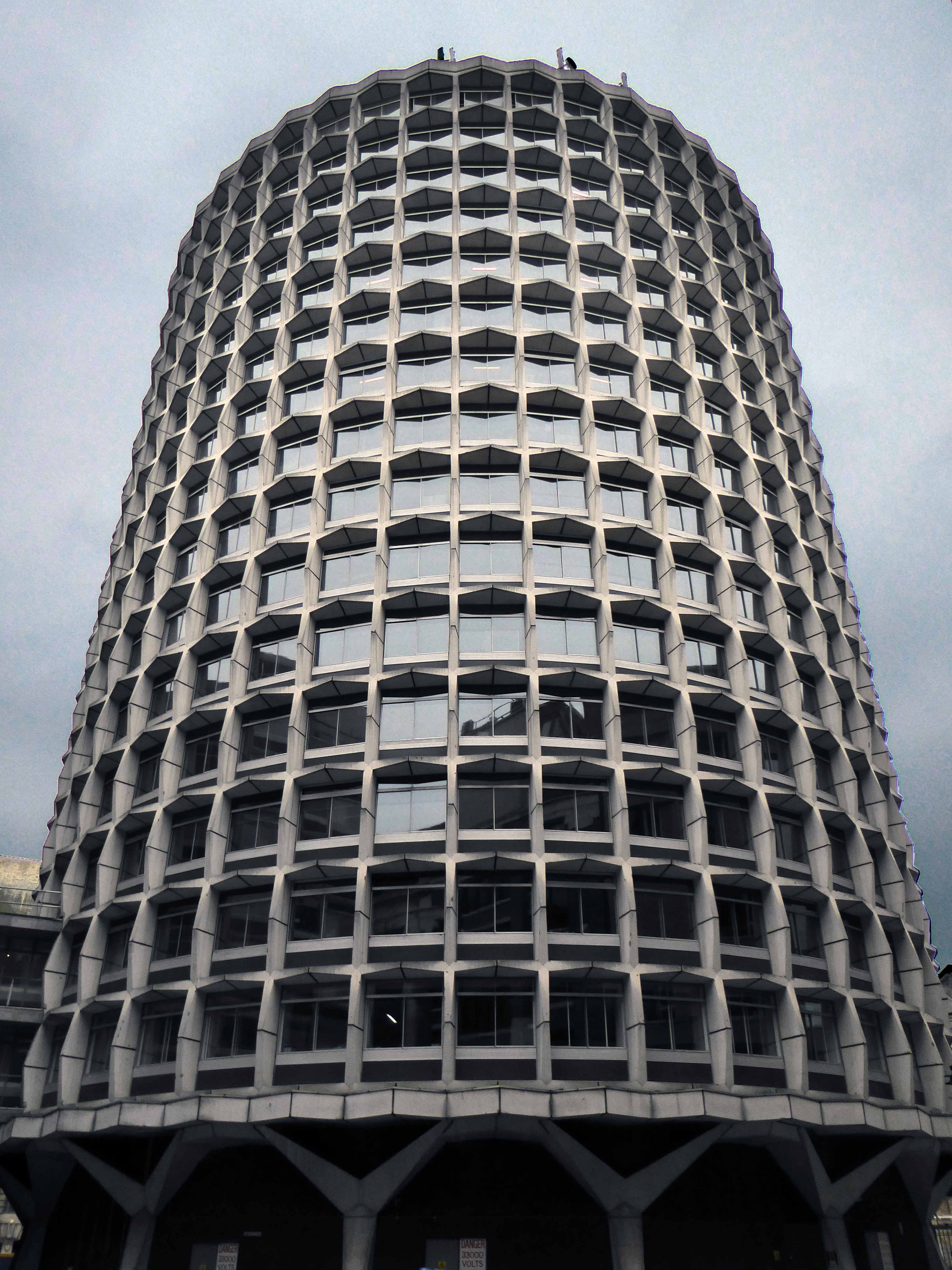
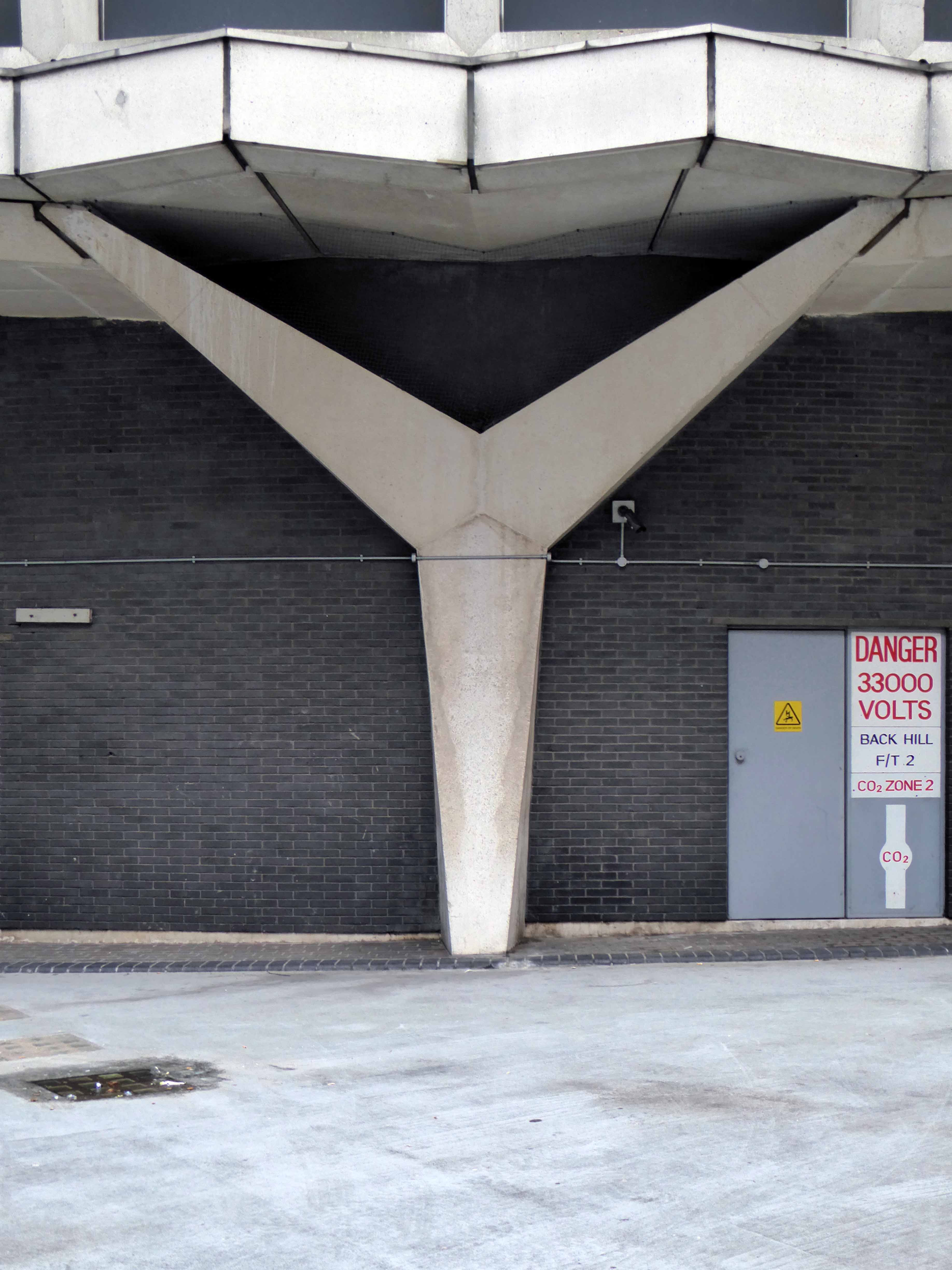
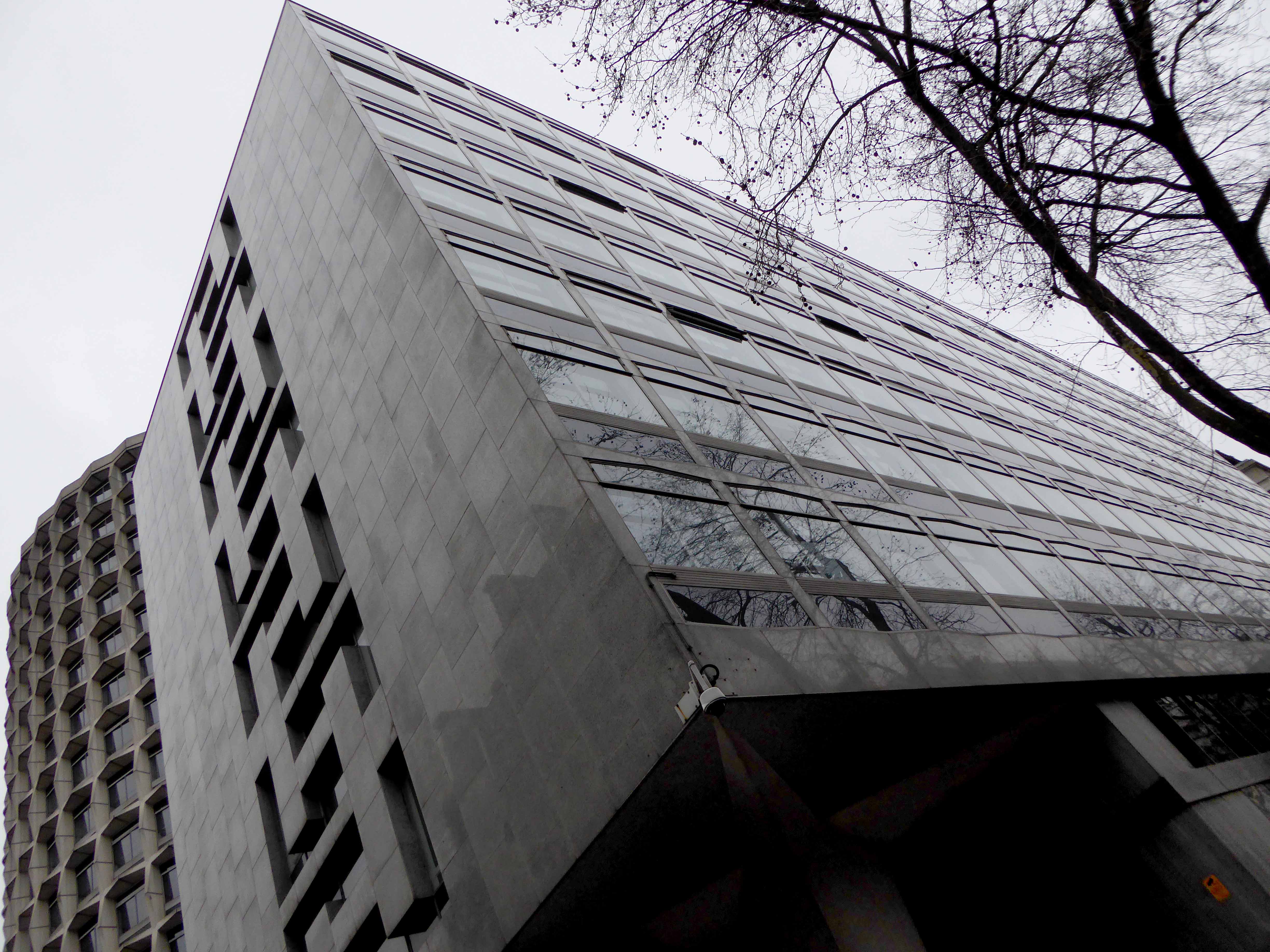
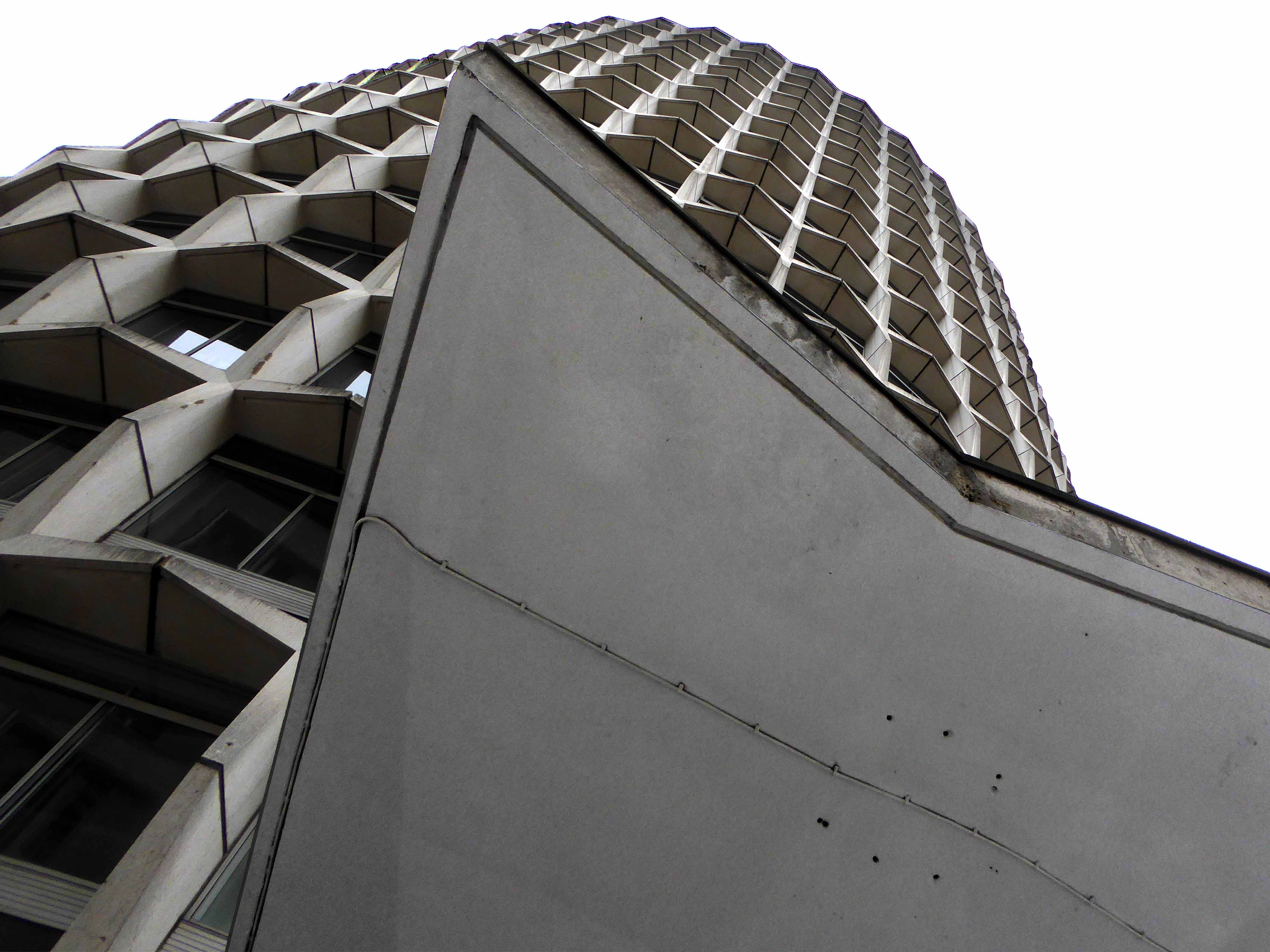
Richard Seifert’s Space Tower what a pleasant surprise, as you veer slightly from Kingsway and collide happily with One Kemble Street, first meeting the smaller slab of Aviation House, then the conjoined concrete cylinder – the perfect none identical twin.
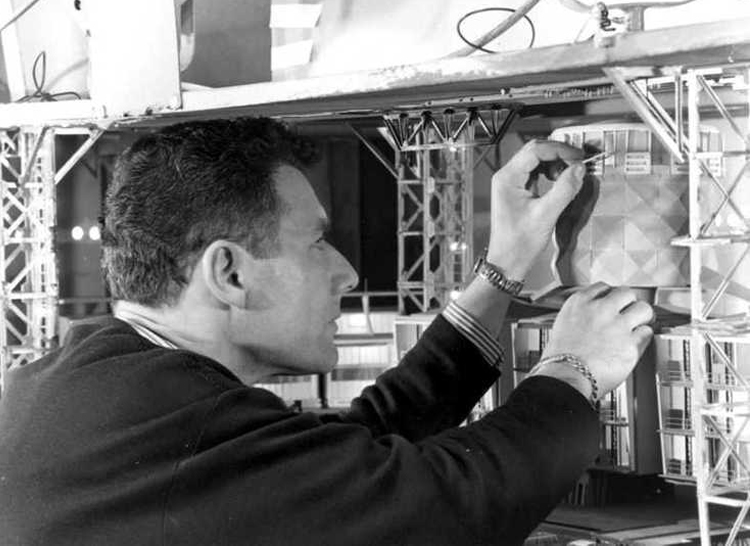
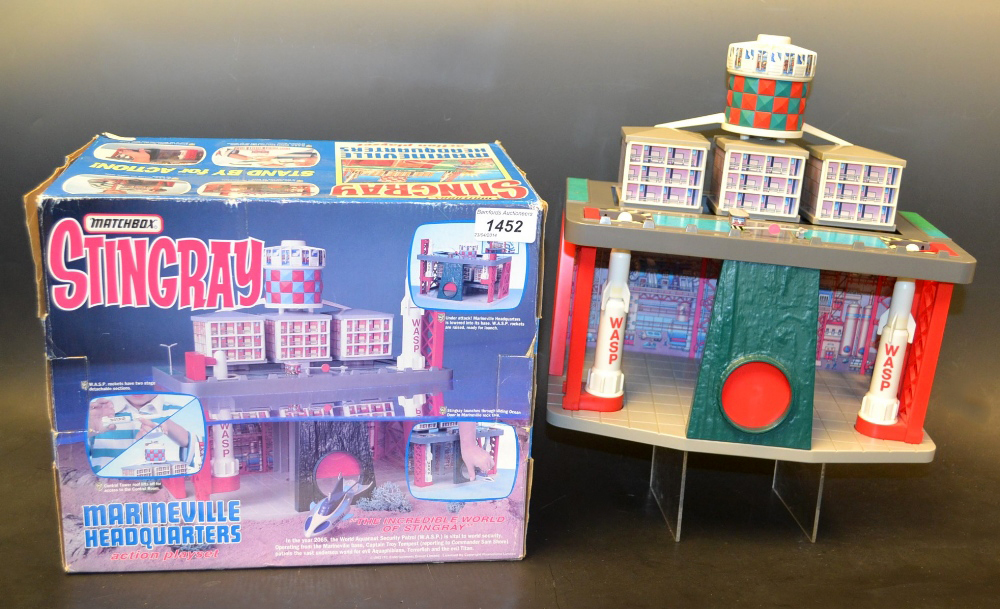
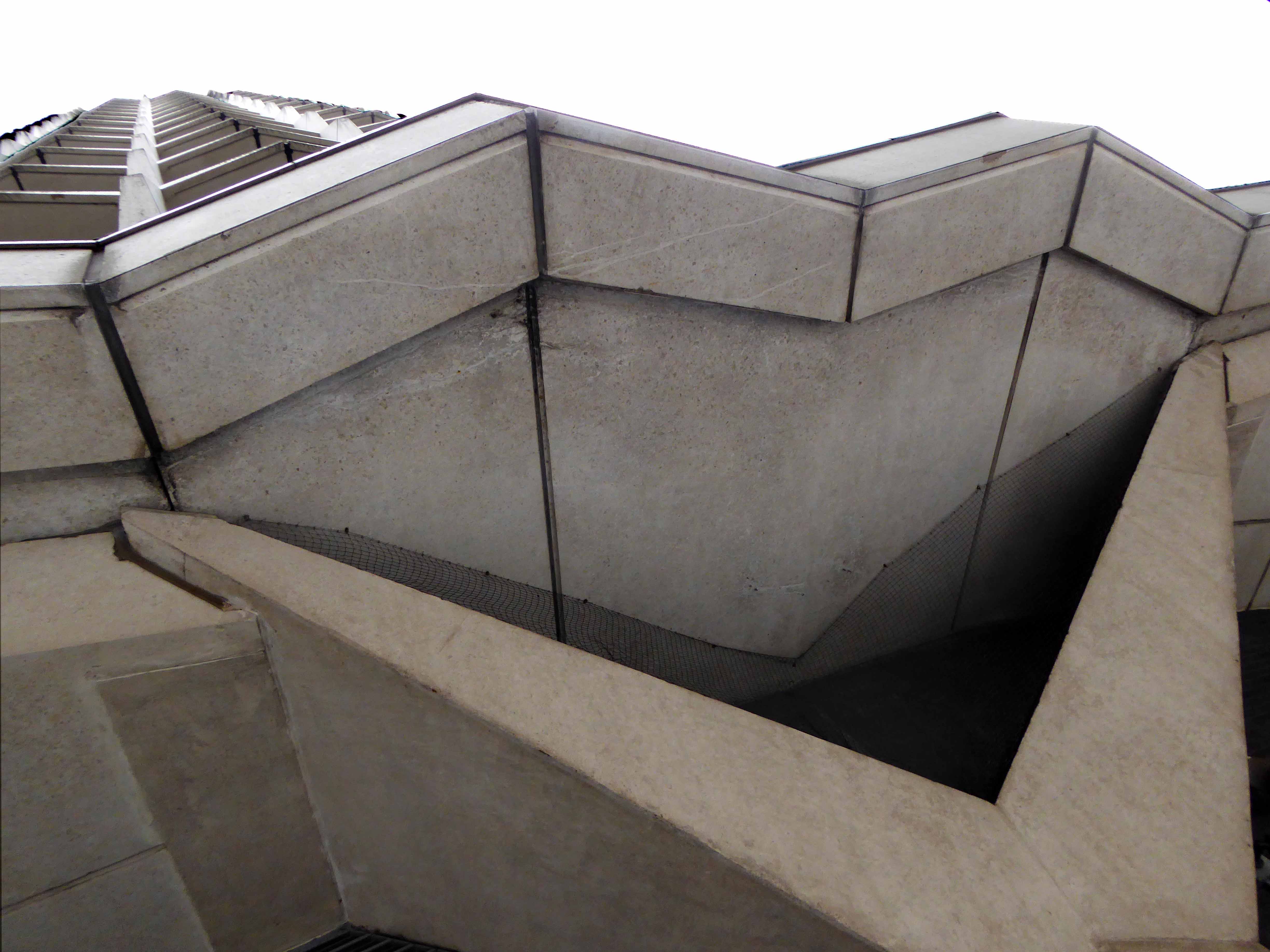
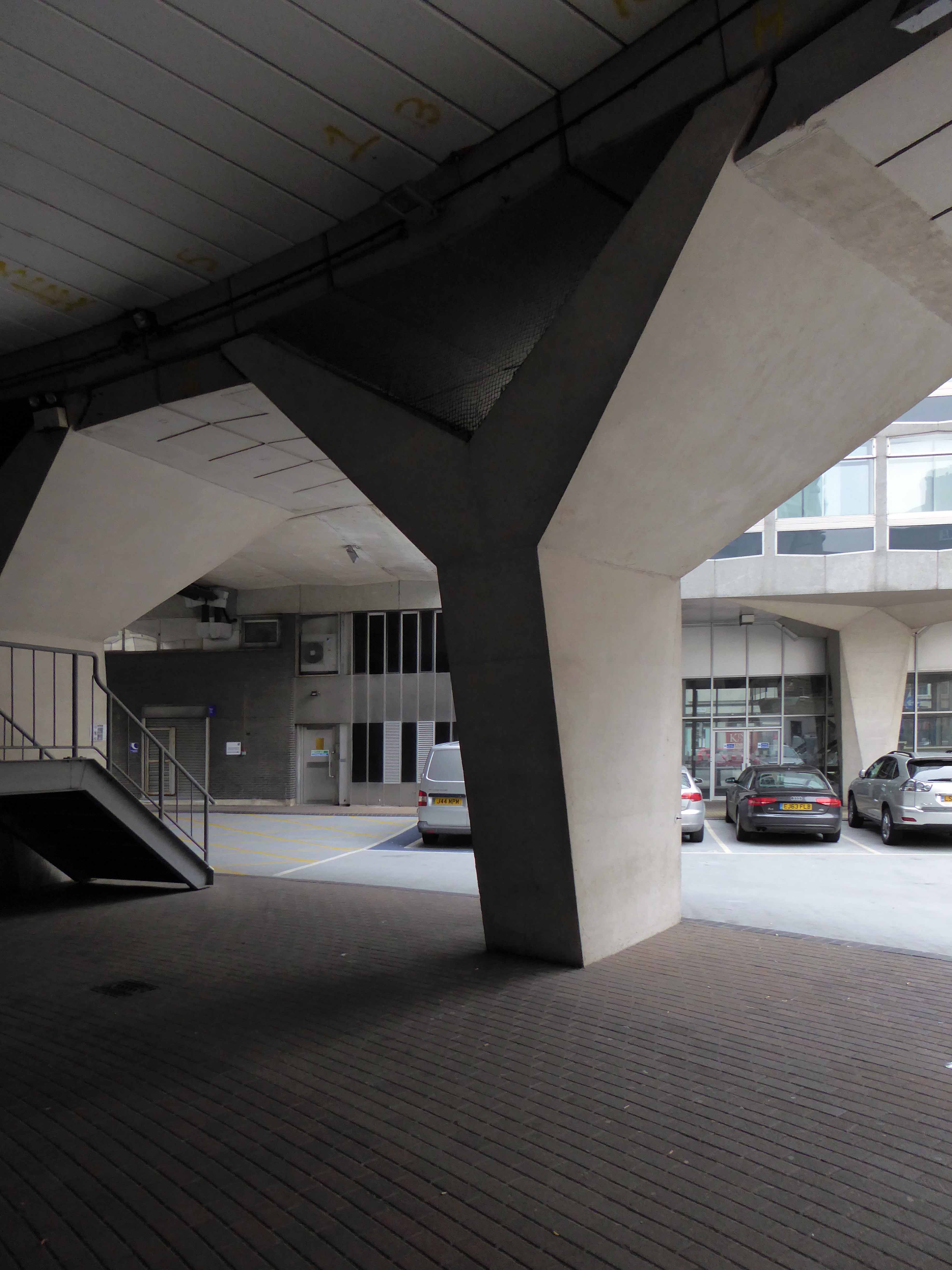
Part Marineville, part Seifert’s modular concrete, and Y shaped supports, a building Derek Meddings would be proud of, anything can happen in the next half hour.
Predating the current rash of Brutalist models, the child of the 60s never had it better.
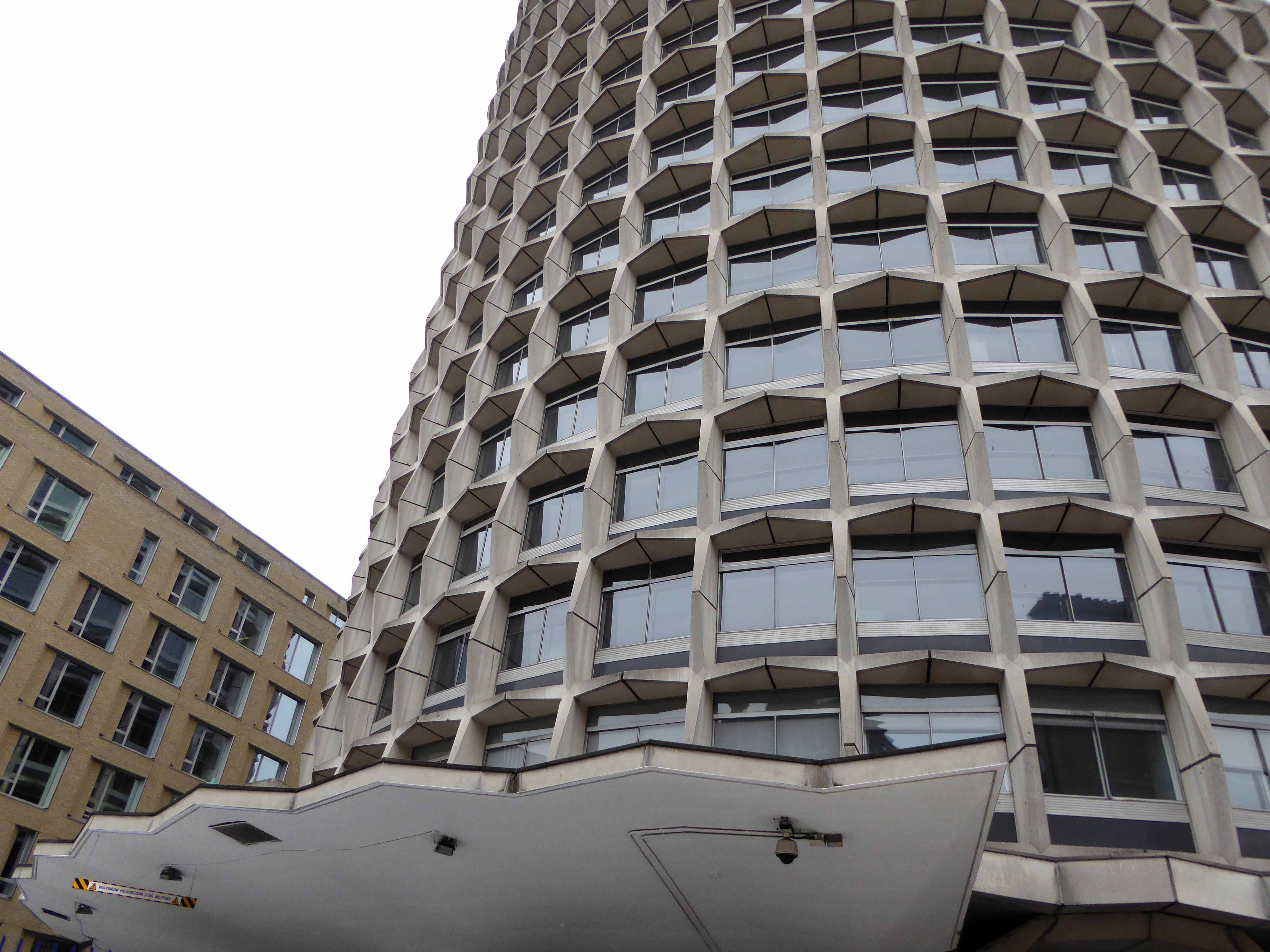
Seifert designed 1 Kemble Street, then called Space House, in a drum shape to reduce the lateral forces that can stress a slab-like block thus reducing the engineering requirements and cutting the cost of construction.
He originally designed the building to be a proper tower almost twice as high that would have served as a luxury hotel, but objections from Camden Council saw it reduced in height to what has been built today.
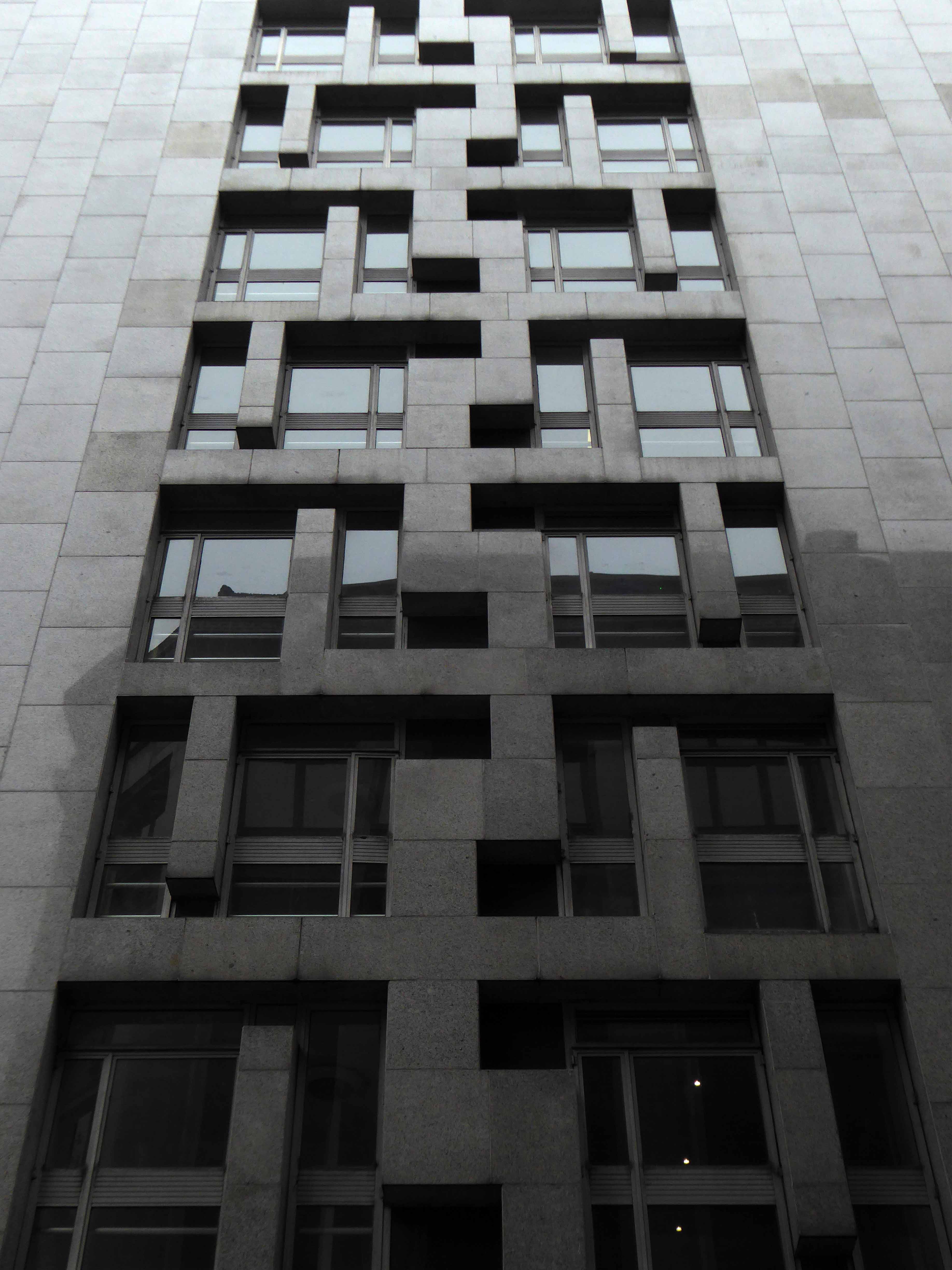
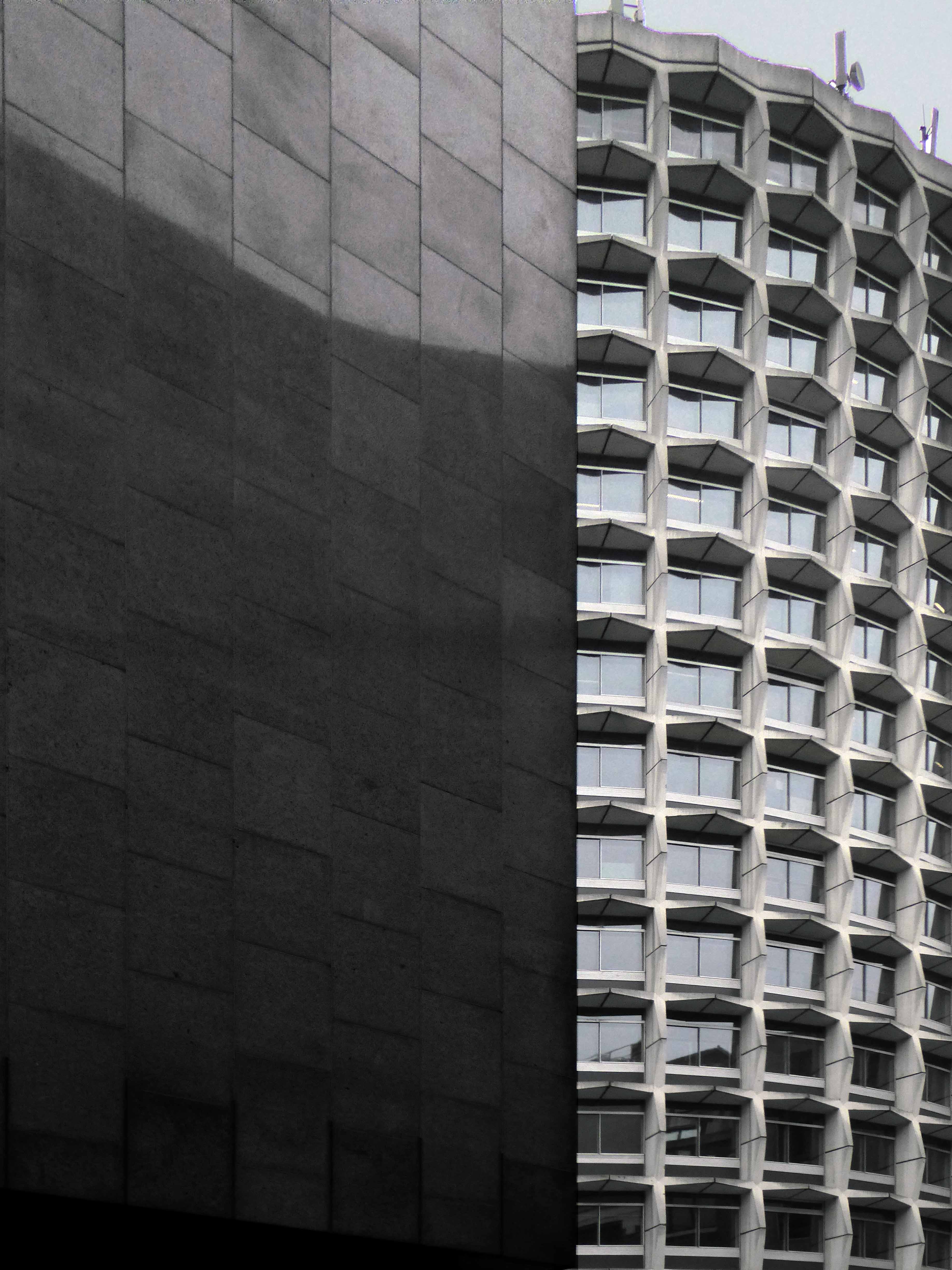
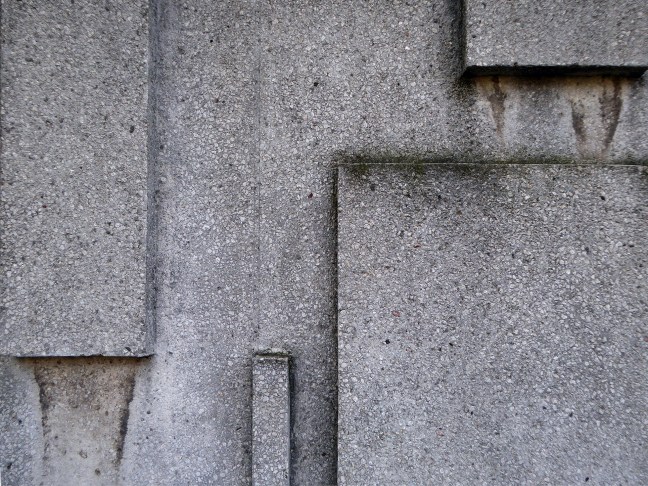
Defining the look of 1 Kemble Street are the pre-cast concrete panels that clad the building, much in the same way as Seifert and Oldham Estate approached Centre Point.
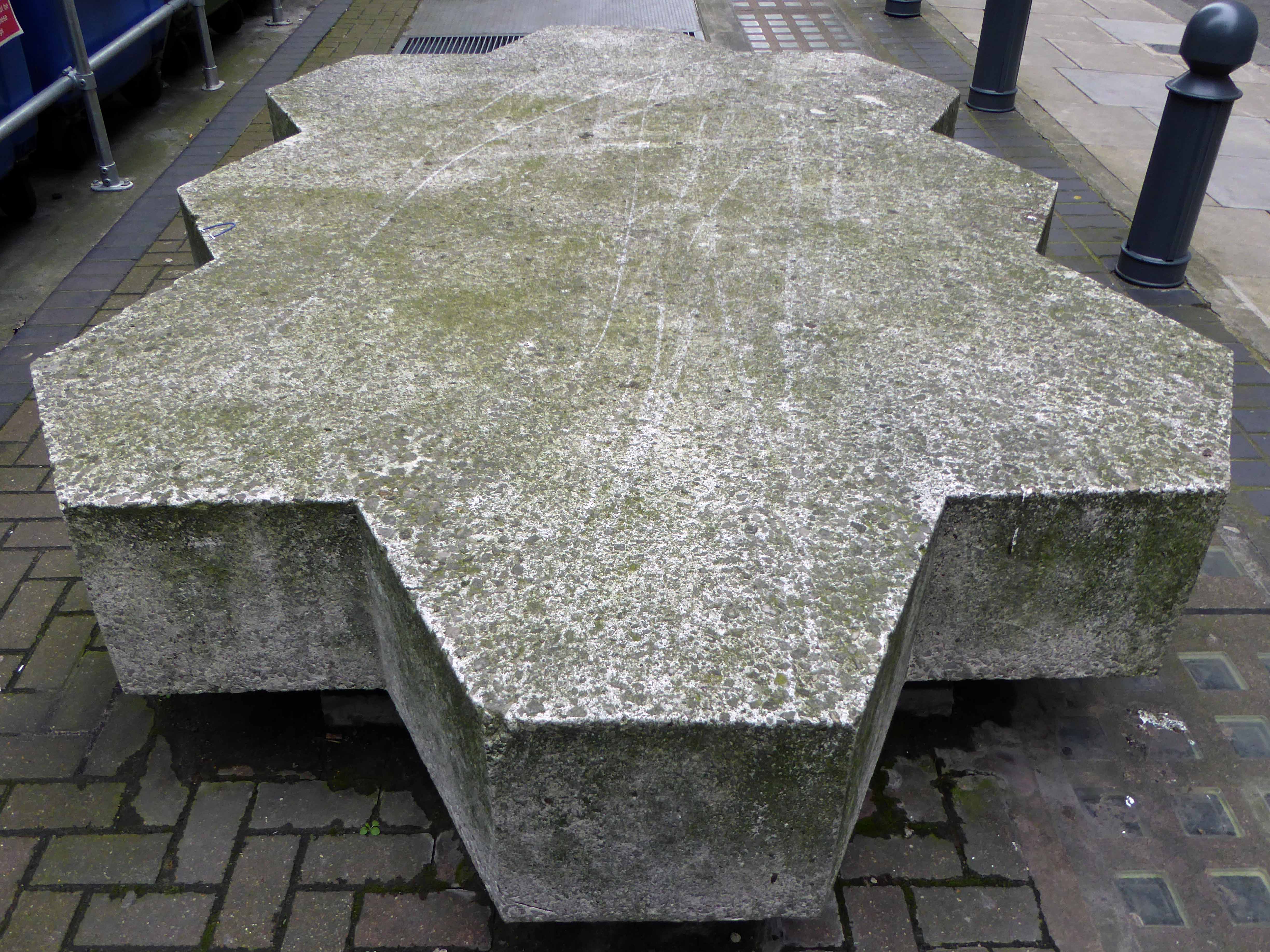
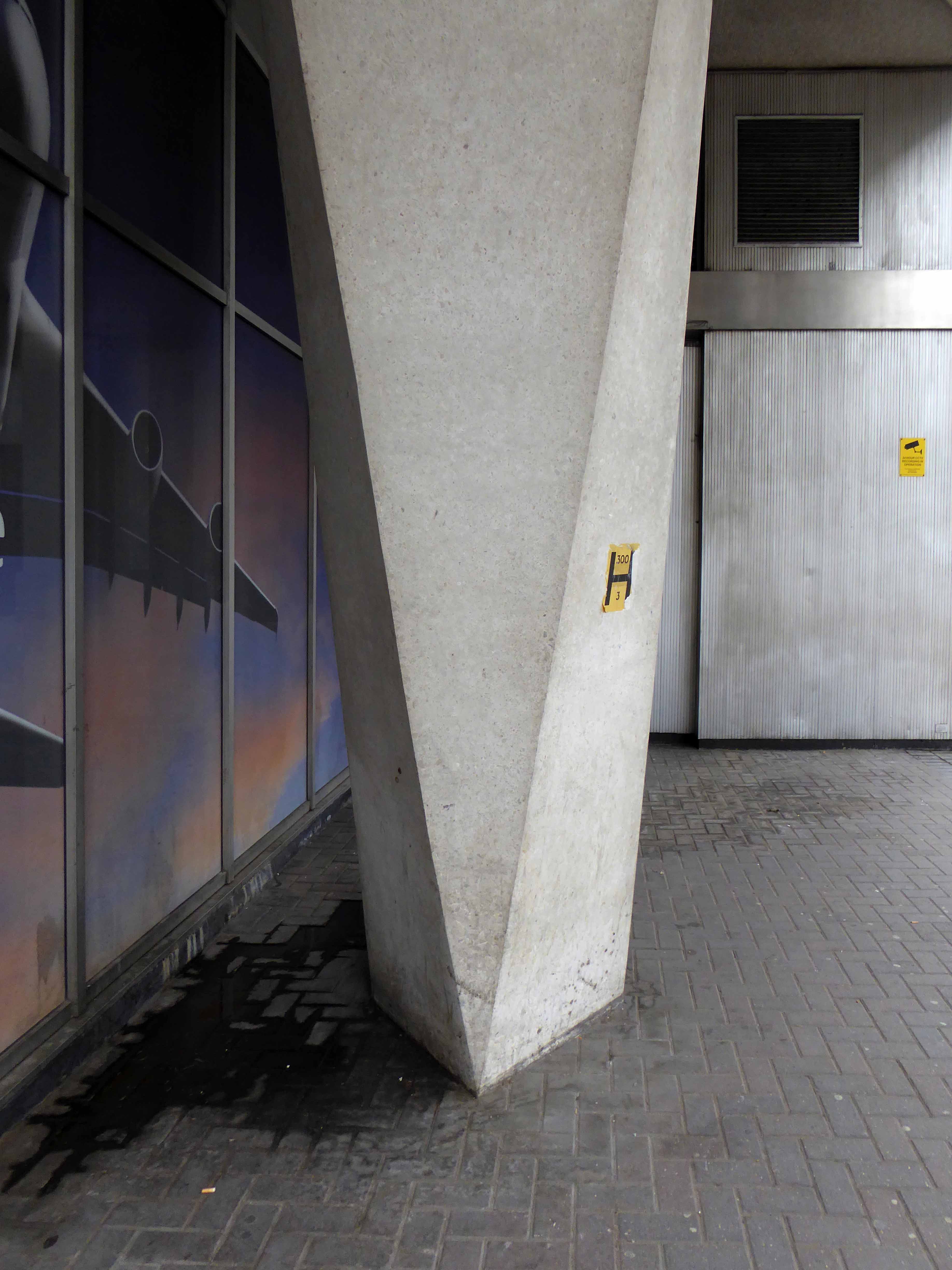
Seifert’s signature Y-beams are also highly visible around the base of the building. Each of the modelled concrete cruciform units has a dimension of exactly ten feet in width and height and three feet in depth. Looking closely at the facade clearly reveals the grid of the building.
The Halifax was formed in 1853 as the Halifax Permanent Benefit Building and Investment Society. The idea was thought up in a meeting room situated above the Old Cock Inn close to the original Building Society building.Like all early building societies, the purpose of the society was for the mutual benefit of local working people.
Why are we not here?
In 2006, the HBOS Group Reorganisation Act 2006 was passed. The aim of the Act was to simplify the corporate structure of HBOS. The Act was fully implemented on 17 September 2007 and the assets and liabilities of Halifax plc transferred to Bank of Scotland plc. The Halifax brand name was to be retained as a trading name, but it no longer exists as a legal entity.
What have we here?
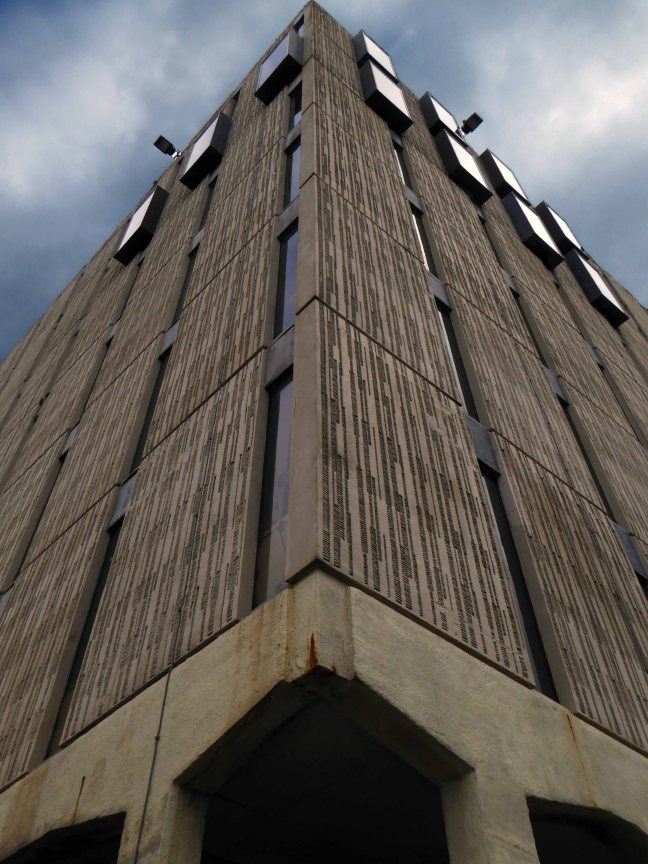
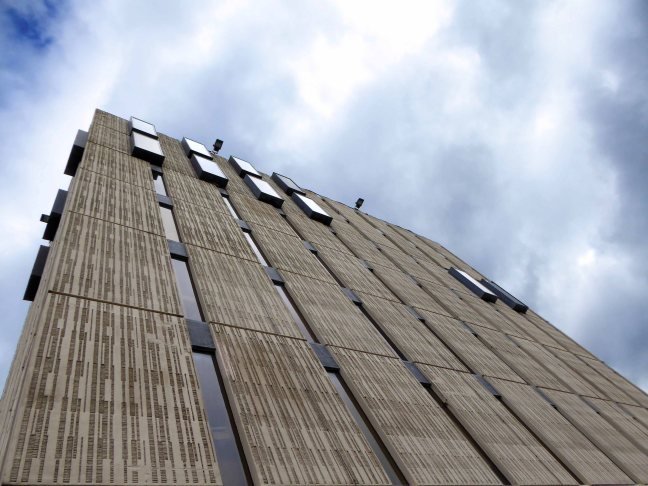
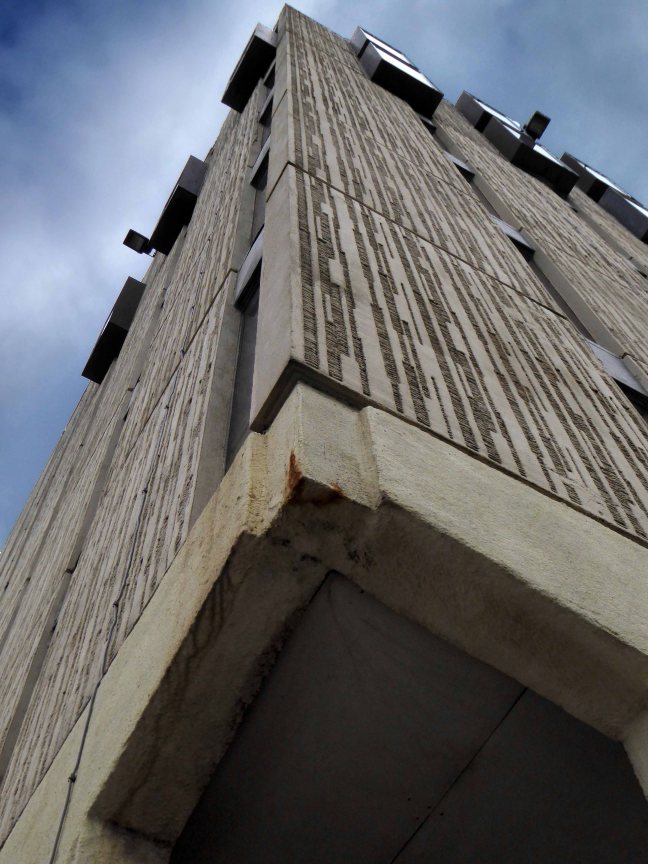
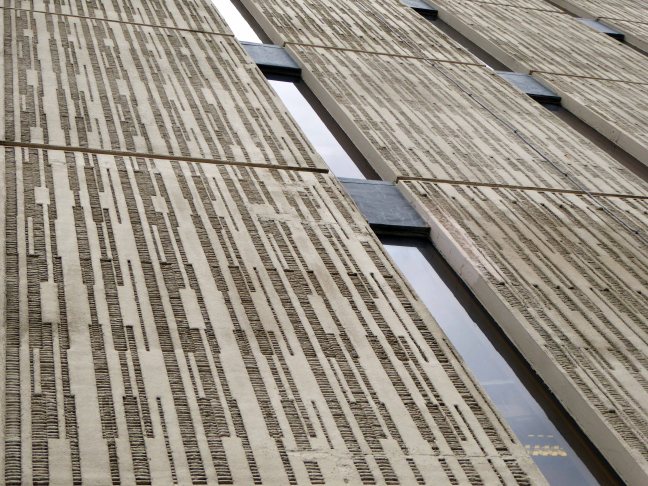
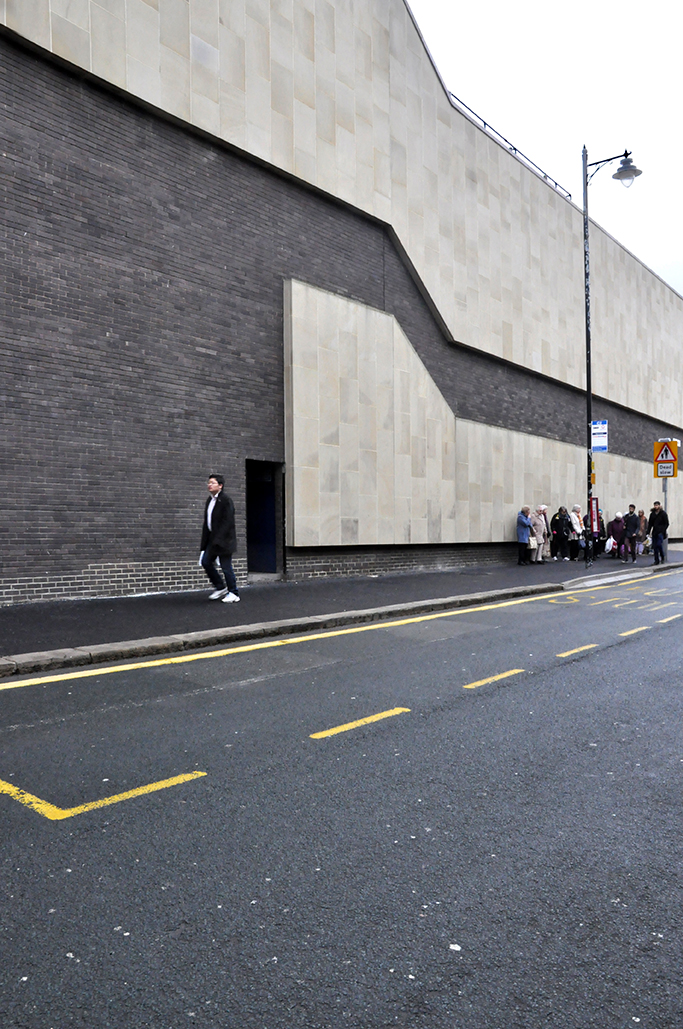
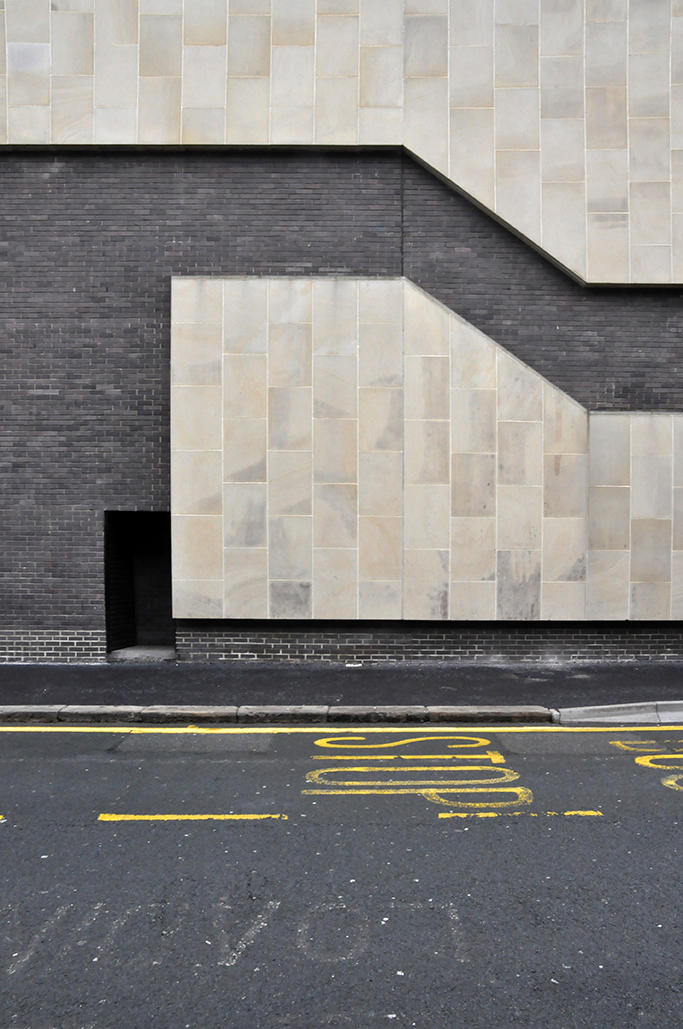
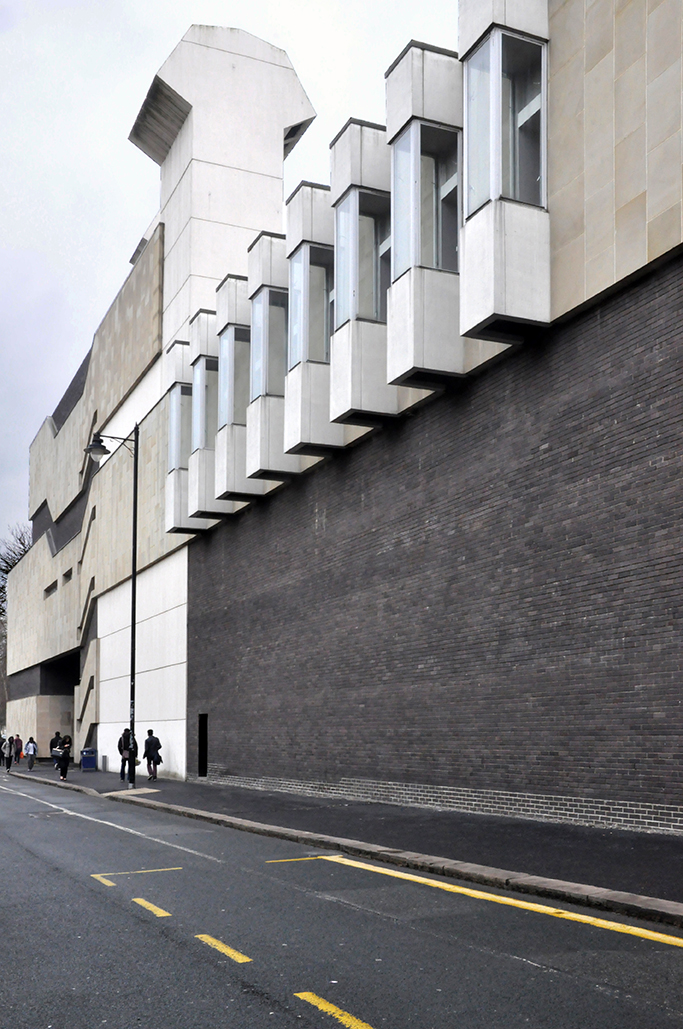
The Halifax Building was designed by the architecture firm BDP and constructed in 1968-74, as the headquarters for the Halifax Building Society and built with an unusually high budget. The rapid growth of the society over the twentieth century prompted the requirement for a new headquarters building, and in 1968 the aim of the architects was to design not only a practical building but a bold building for a confident client.
“Though necessarily large in scale, and centrally located in the town, the design is one of humanity, respecting both the townscape in which it was placed, and the employees it was to house…The high budget was reflected in the building’s finishes inside and out. Externally a limited colour palette and use of York stone cladding gave a homogeneity and showed consideration to the local character of the stone buildings of Halifax. Internally, materials were high quality and colour co-ordinated, with landscaping to both the public ground-floor spaces and the executive fourth floor.”
Ian Nairn thought well of it –
I wandered around amazed by the sheer mass of the main volume of the building, and the thin slithers of sunlight and blue sky which abutted its glass and stone skin.
When approached by a curious security guard, I quickly allayed his initial fears, on production of my Manchester Modernist Society membership card and badge.
However fellow urbanists, take care, for the public is often mutually private and public at one and the same time, don’t step over the line.
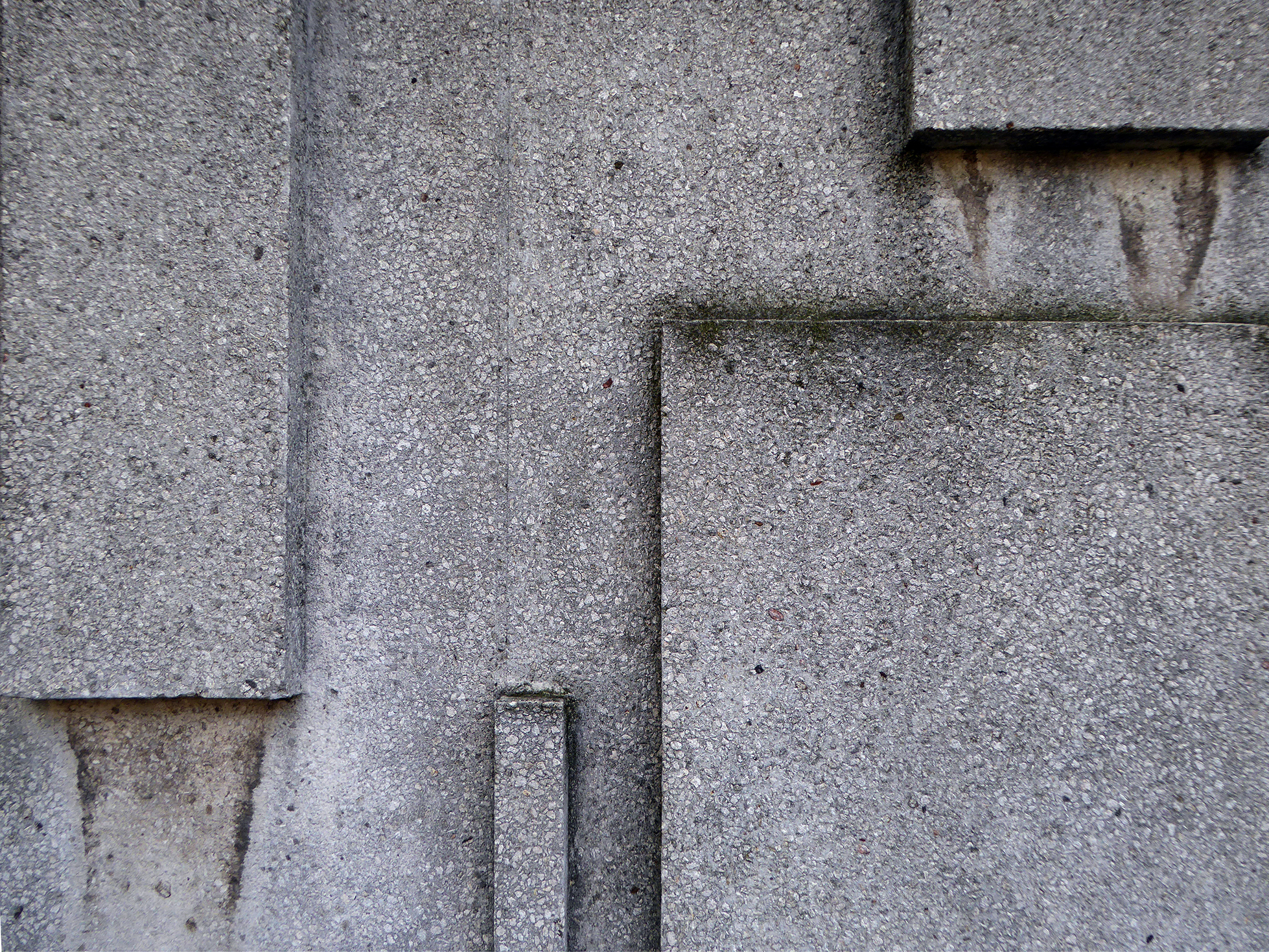
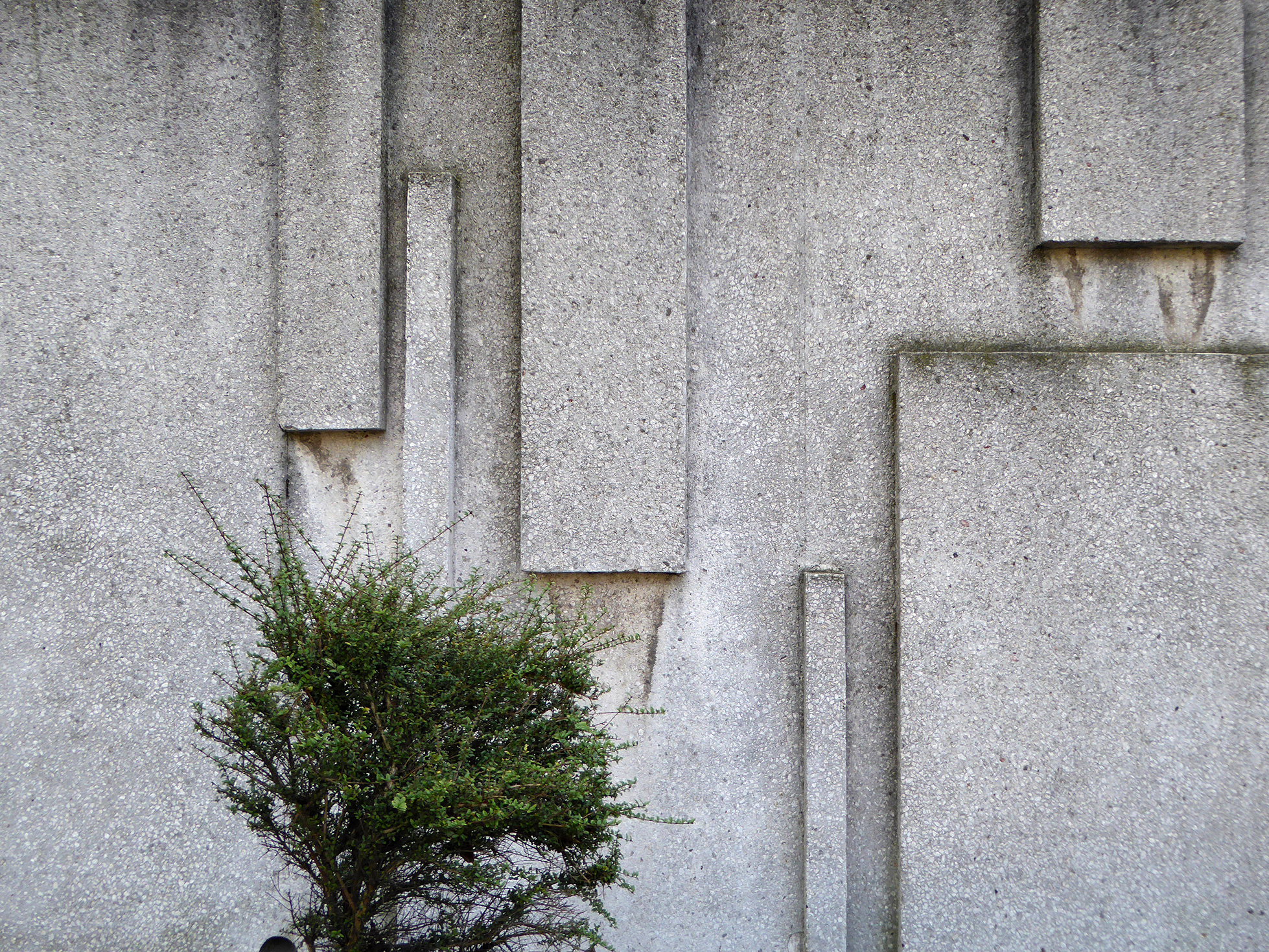
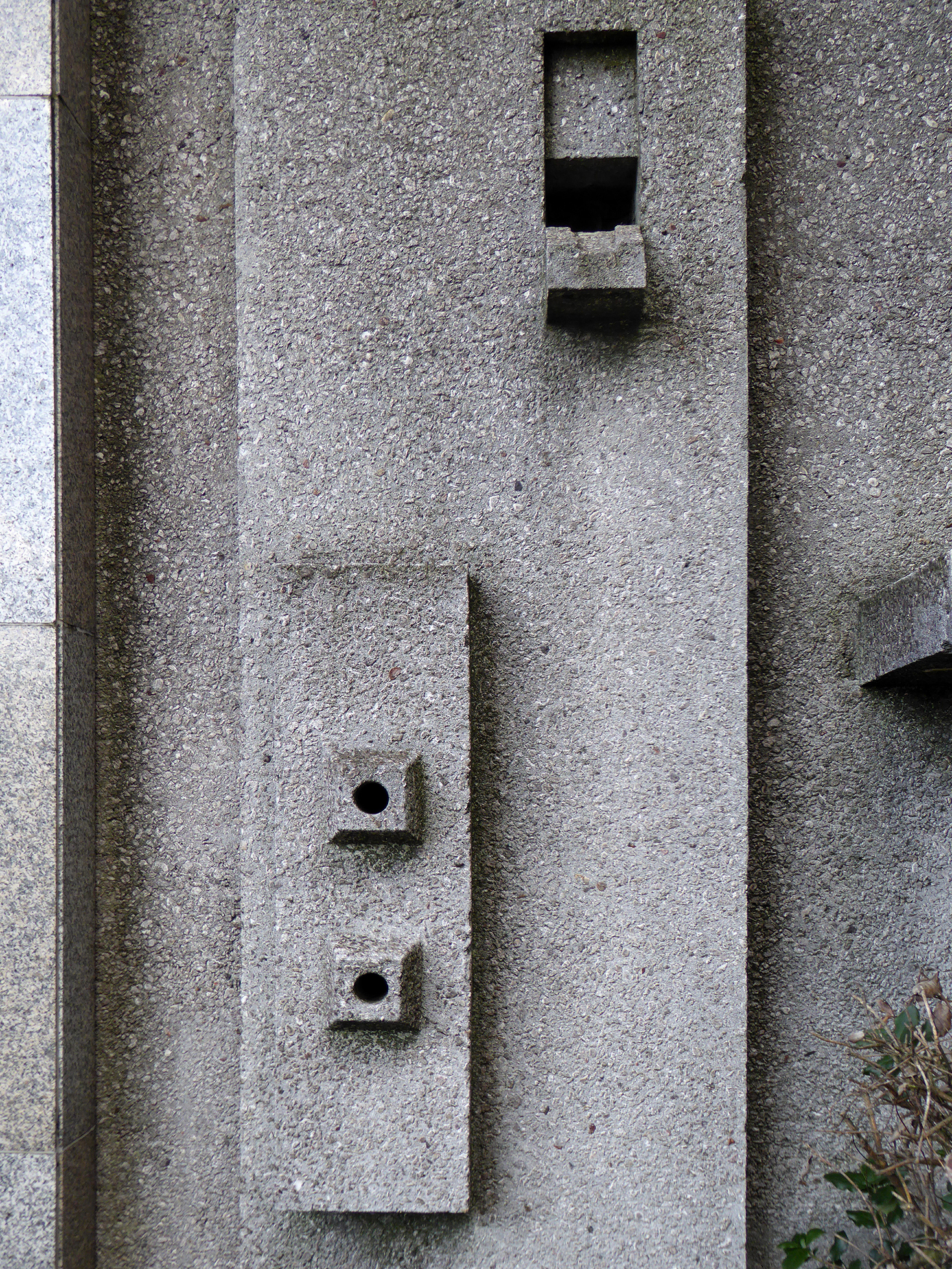
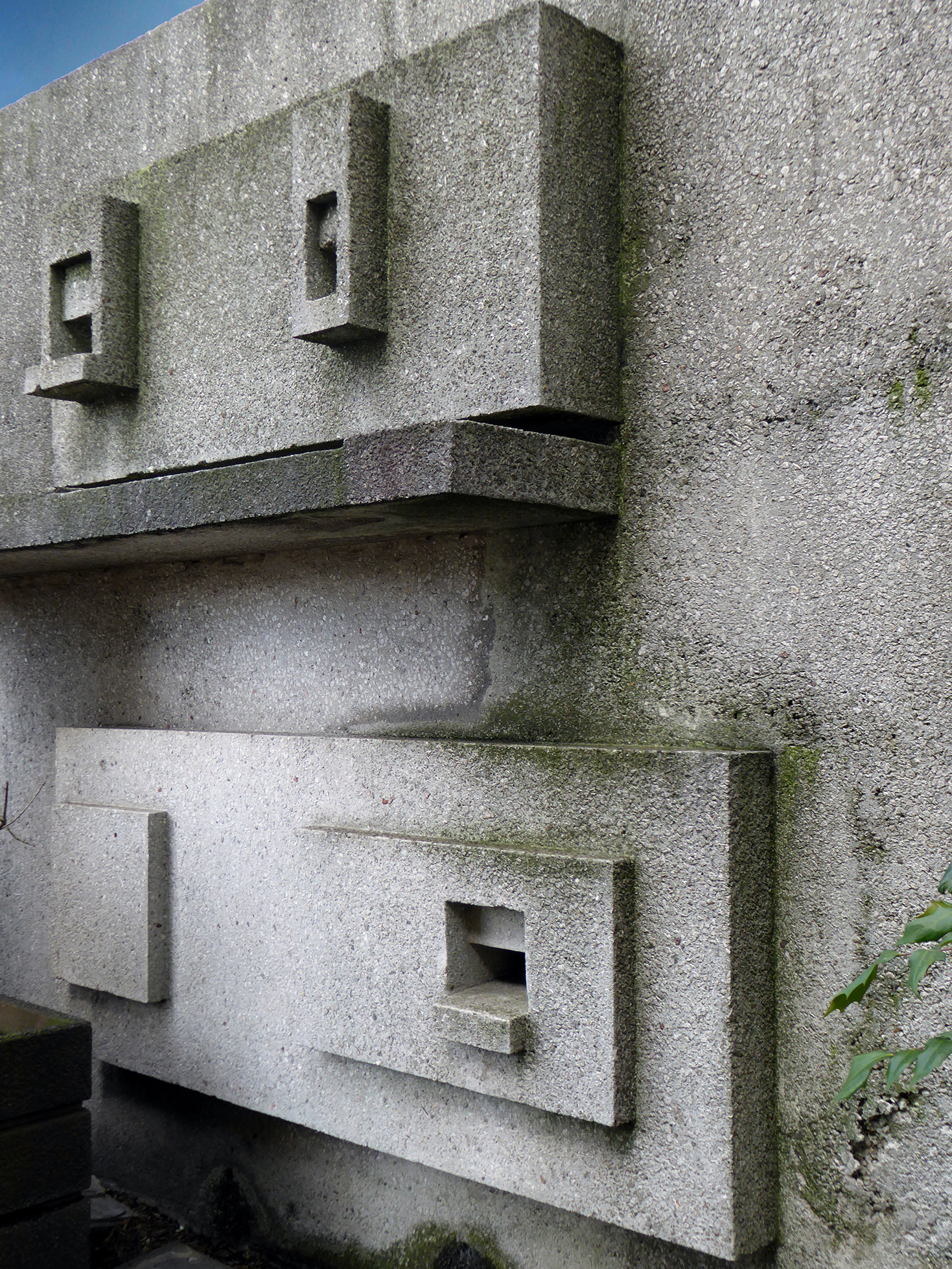
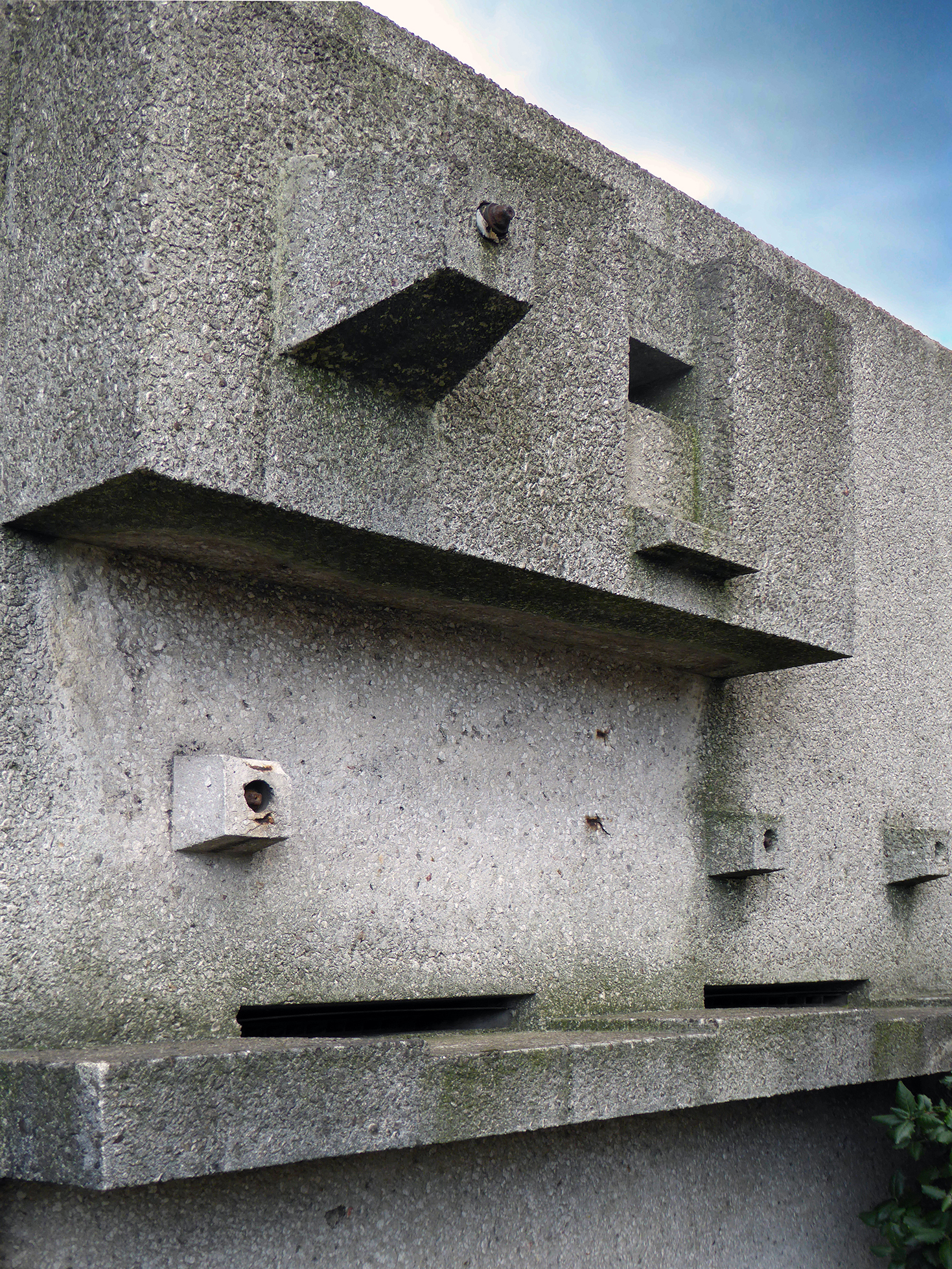
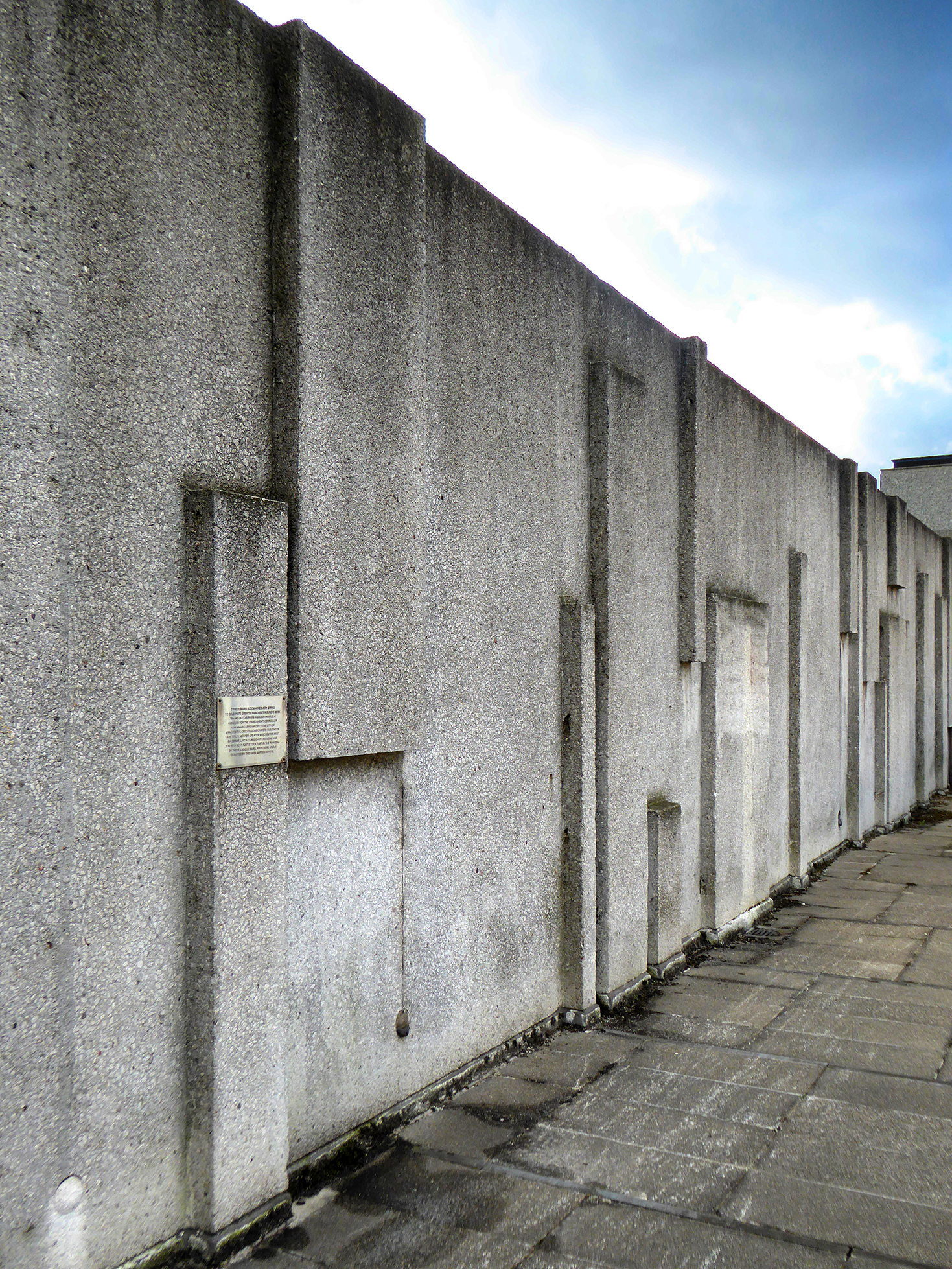
Set to the north-east side of the building’s entrance forecourt is a concrete sculptural screen wall by John McCarthy with an abstract relief to the south-west side facing into the forecourt. The wall is aligned at a right angle to the building’s main entrance and has a shallow rectangular pool (now drained) set in front. The wall includes numerous openings from which water originally flowed into the pool, but the system is no longer in working order. The pool also originally incorporated small fountains.
At a time when the whole of the centre of the city seems alive with construction, refurbishment, gentrification and more quarters than you could shake a stick at, this forlorn and seemingly unloved gem stands, shrouded in shrubs.
I’m a carpenter of love and affection, who would not care to see, this particular wall:
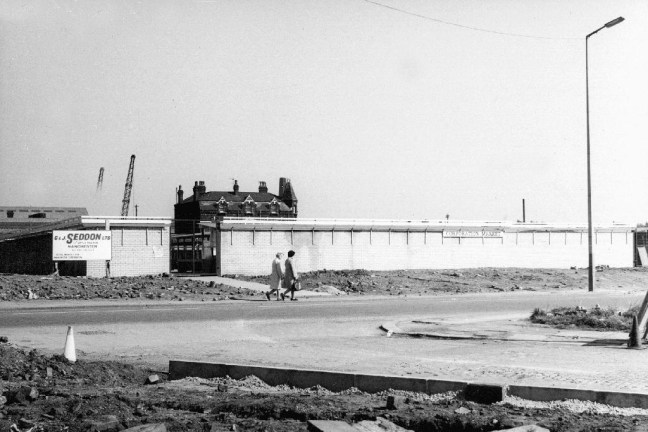
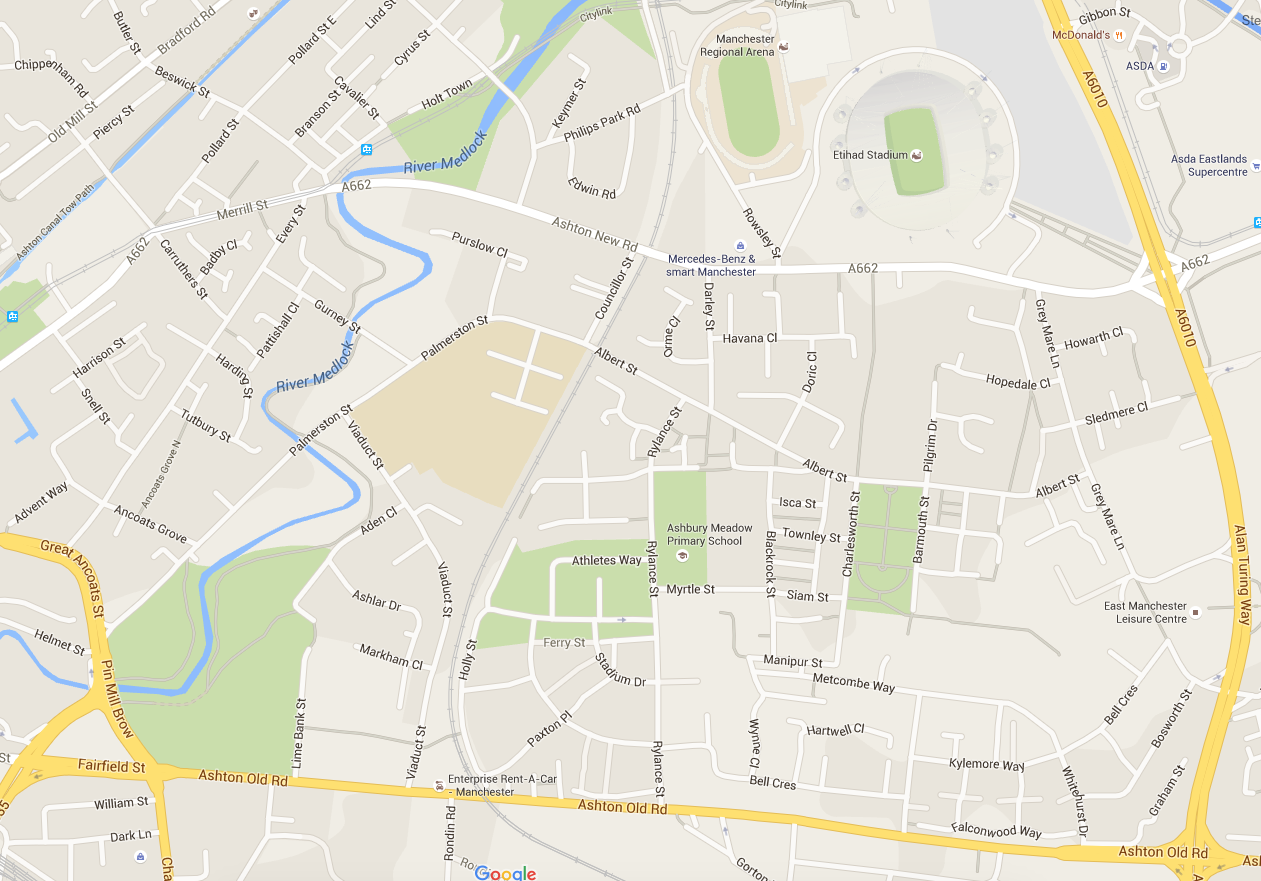
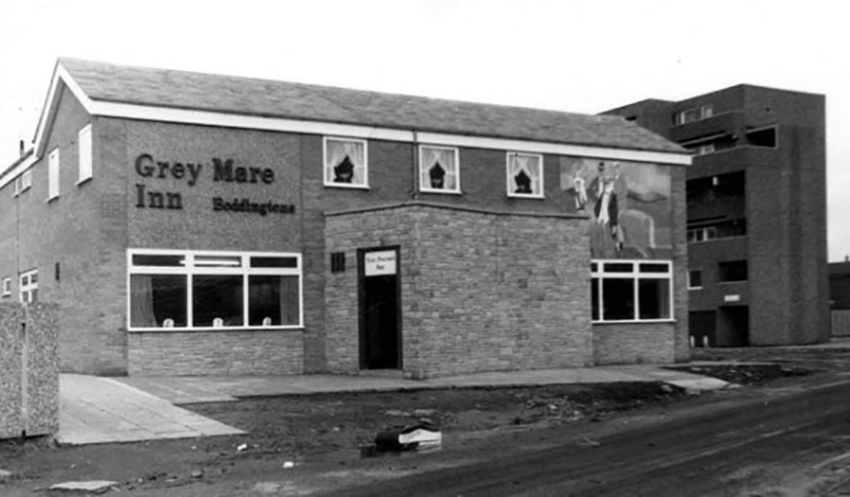
Beswick is a small district located on the east side of Manchester bounded by Ashton Old Road, Ashton New Road and Grey Mare Lane and was incorporated into Manchester in 1838. Pronounced Bes-ick the “w” is silent. Before 1066, in Saxon times, the district was called Beaces Hlaw – Hlaw was an old word for a small hill, often used as a burial mound. By the 13th century it had changed to “Beaces Wic” indicating that the area was predominantly farm land. Who or what the Bes element of the placename signified is open to interpretation, though the simplest and most plausible is that it belonged to a person called Bes or Bess.
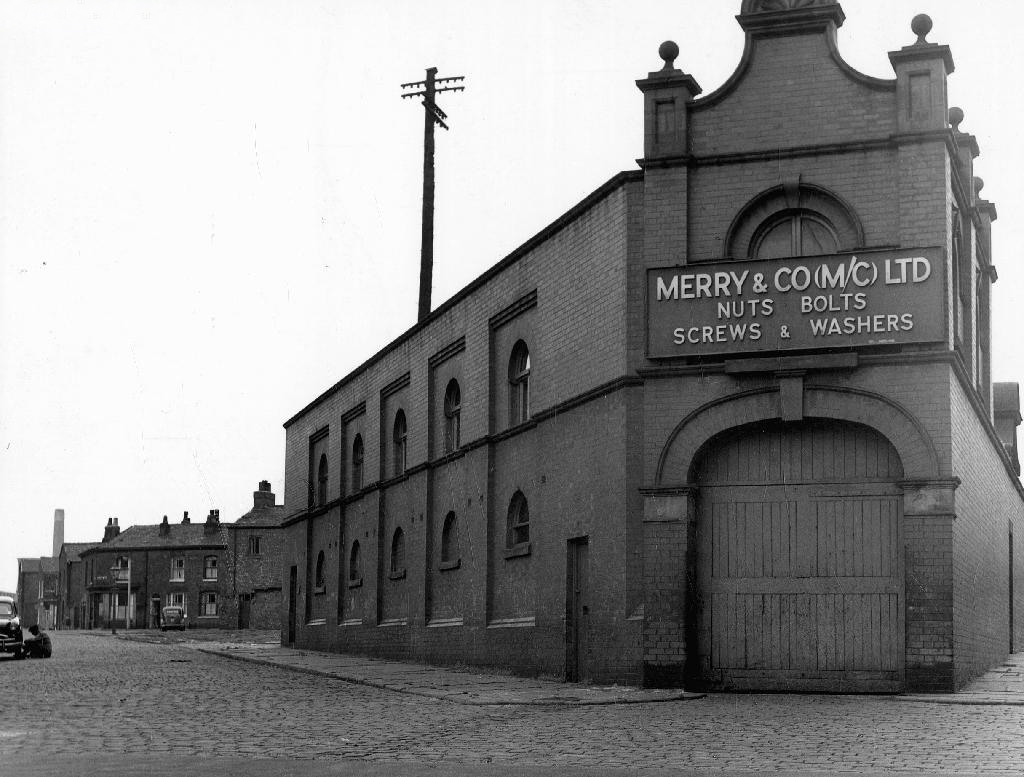
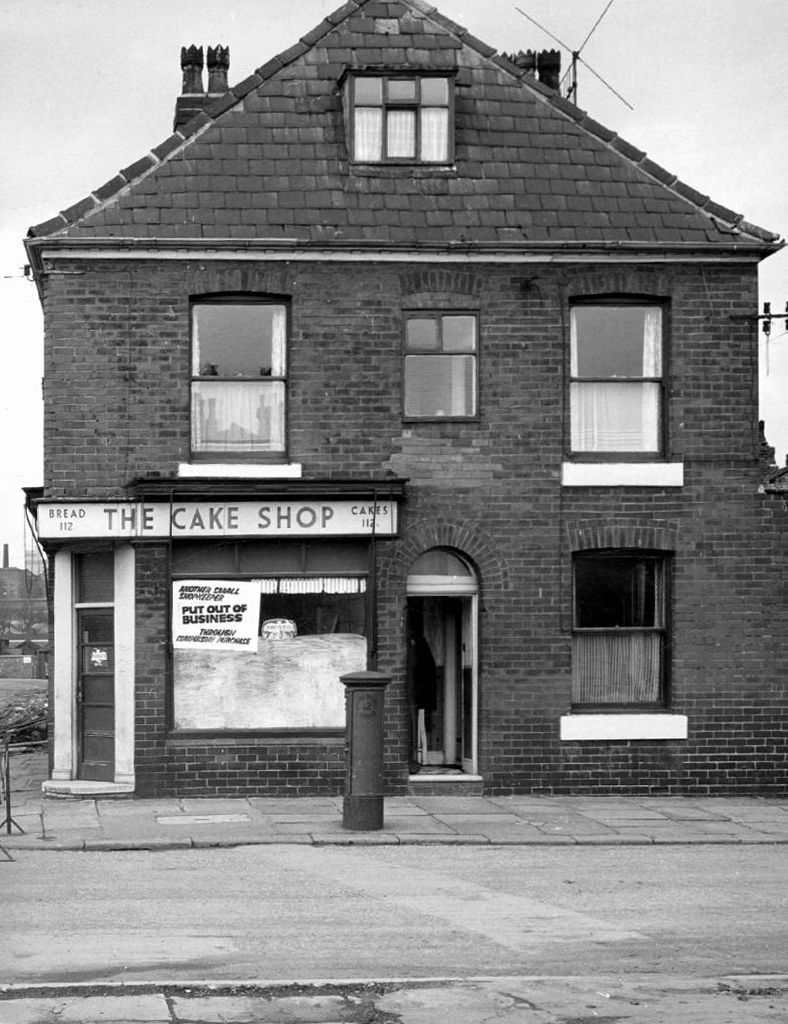
In the 60s it was, as I remember it, a typically vibrant mixed East Manchester community, industry, housing, retail, entertainment and goodness knows what bumping along together incautiously, down tight streets of Victorian terraced housing. I worked in the area as a Mother’s Pride van lad, hauling bread, cakes and galvanised trays in and out of a plethora of superabundant corner shops.
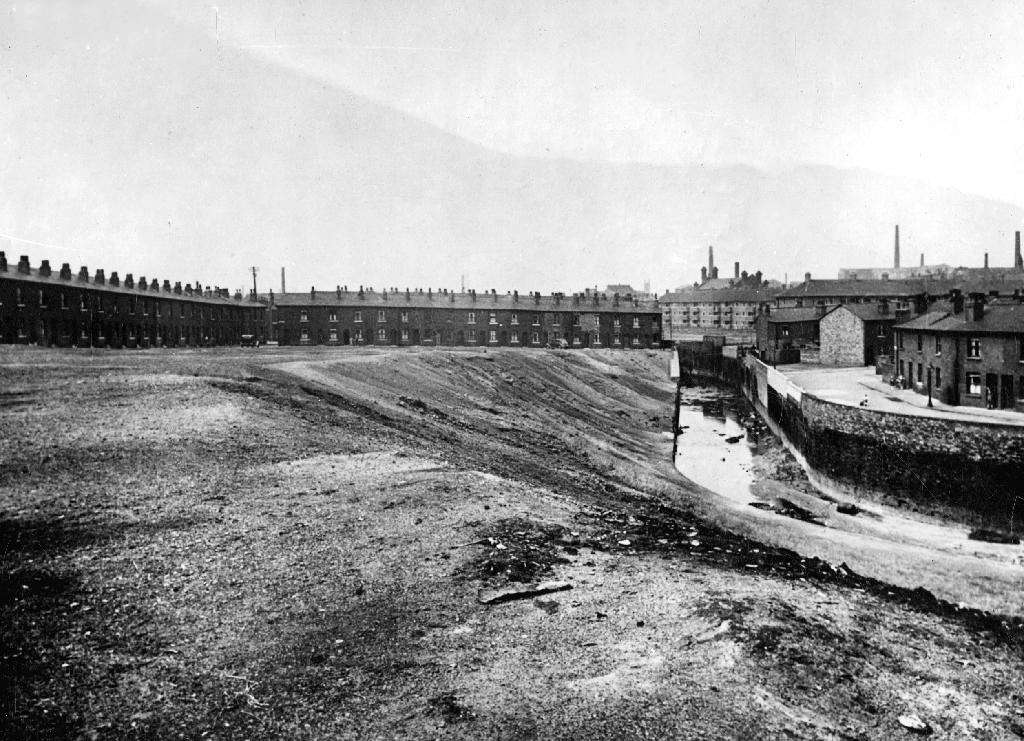
The year of 1970, approximately, dawns, ushering in a decade of great change, slum clearance and the building of brand new homes – the end, by and large, of the back to back corner shop world.
10 years later, and long gone the years of postwar full employment, and the made round to go round world of the weekly wage.
The early 1980s saw growing unemployment and world-wide recession. The large new estates suffered most. Inner city districts of Manchester saw street riots in 1981, as did many other major cities around Britain. Manchester had suffered badly as a result of the recession. In 1986, over 59% of adult males living in Hulme were unemployed; in Miles Platting the figure was 46%; Cheetham Hill and Moss Side both had an unemployment rate of 44%. The main group of unemployed were young people under the age of 21. Hulme’s youth employment was recorded at 68%, and Cheetham Hill suffered 59%.
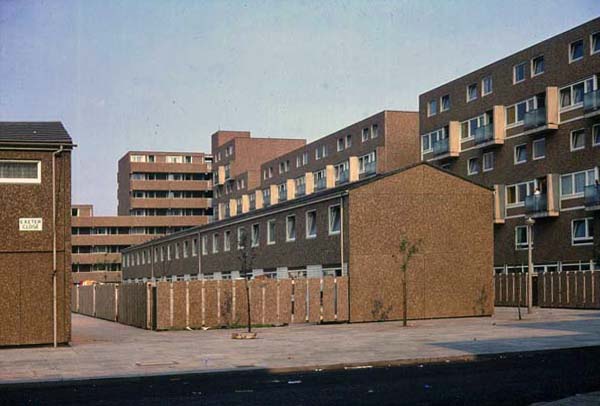
It is true that the new developments have great advantages in many ways over the terraces they replaced. Tenants who live in houses without baths or indoor sanitation and with no hot water are delighted to move into bright new flats and maisonettes, with indoor plumbing, with baths, and accommodation which has more rooms and far better kitchen facilities and central heating, even though they sometimes grumble at the cost of that central heating.
But although we can build a new housing development, we cannot easily recreate the warm community spirit which has vanished with the terraces which have been demolished. There is the noise from neighbours on the deck above and the deck below. The wind-swept balconies along which tenants have to walk are not as cosy as the streets from which they have come. Those welcoming corner shops, with their bright lights on winter evenings, have gone, and sometimes a new development has no new shops for too long a period. Even when they come, there are not enough of them.
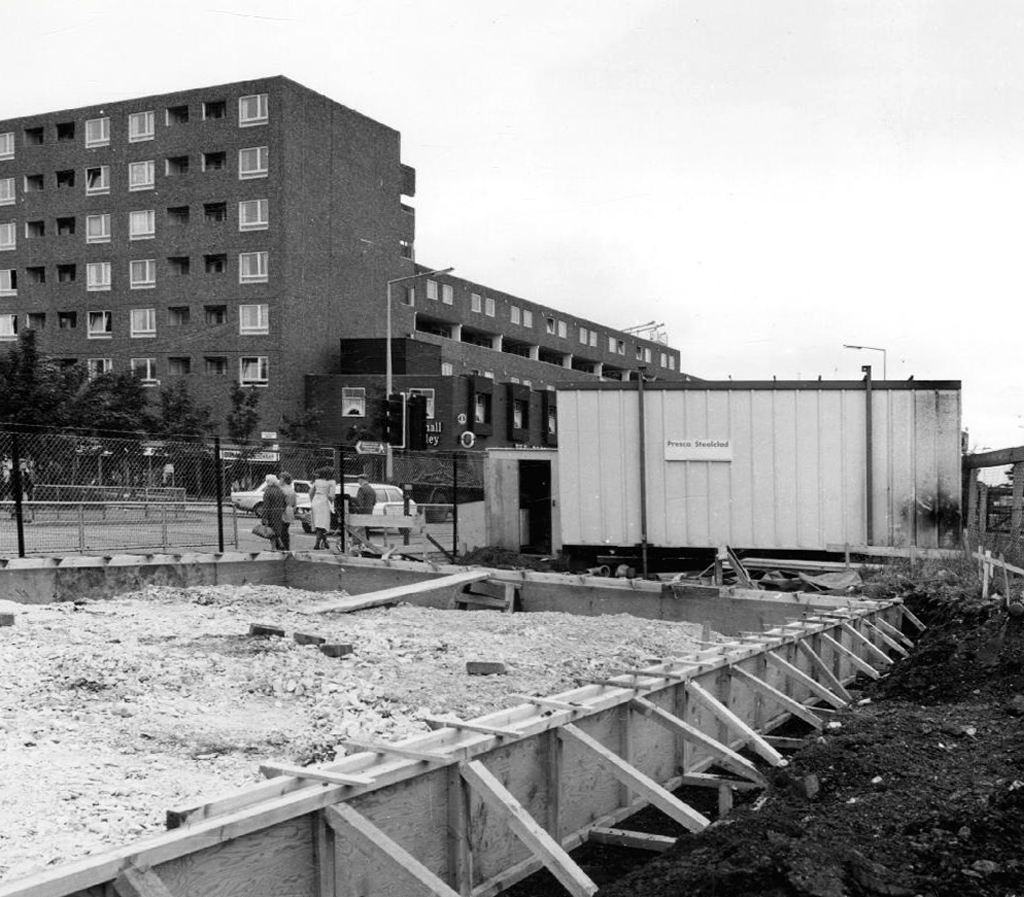
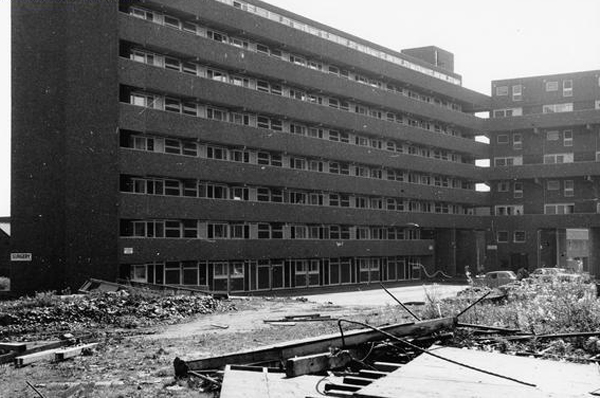
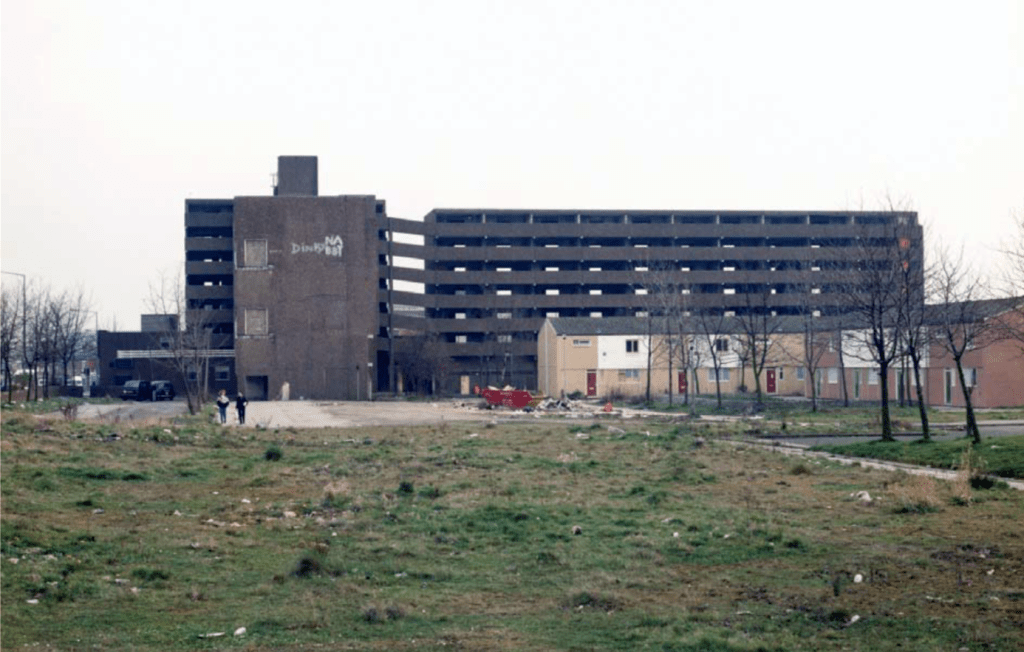
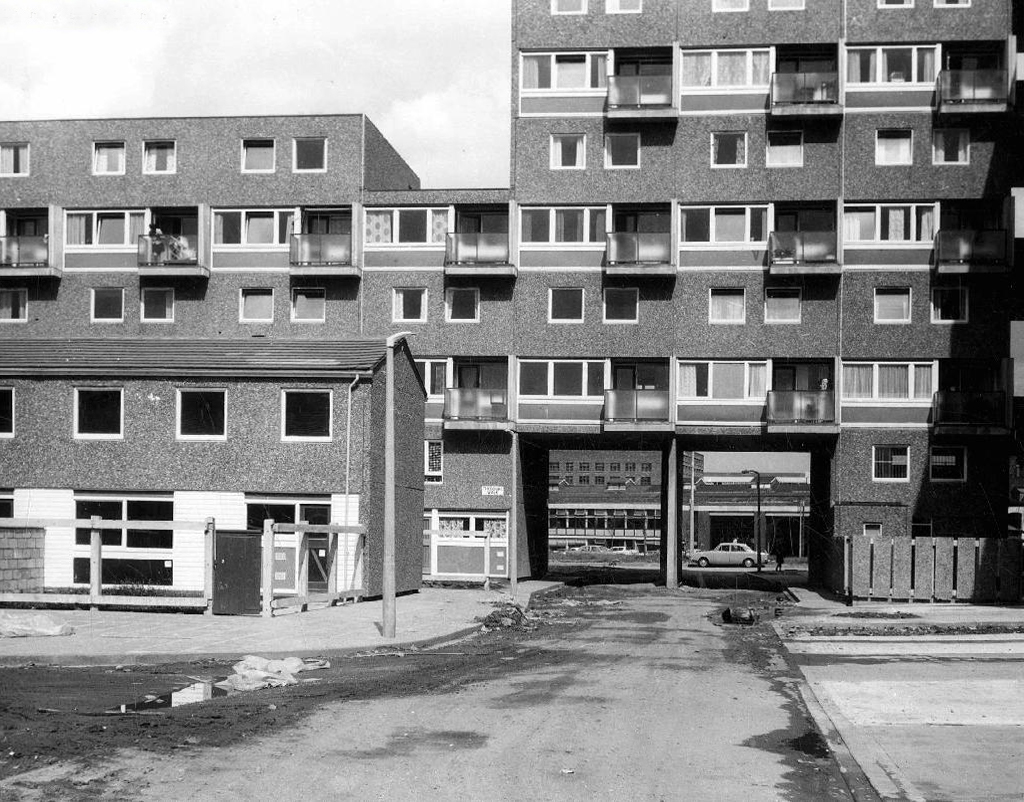
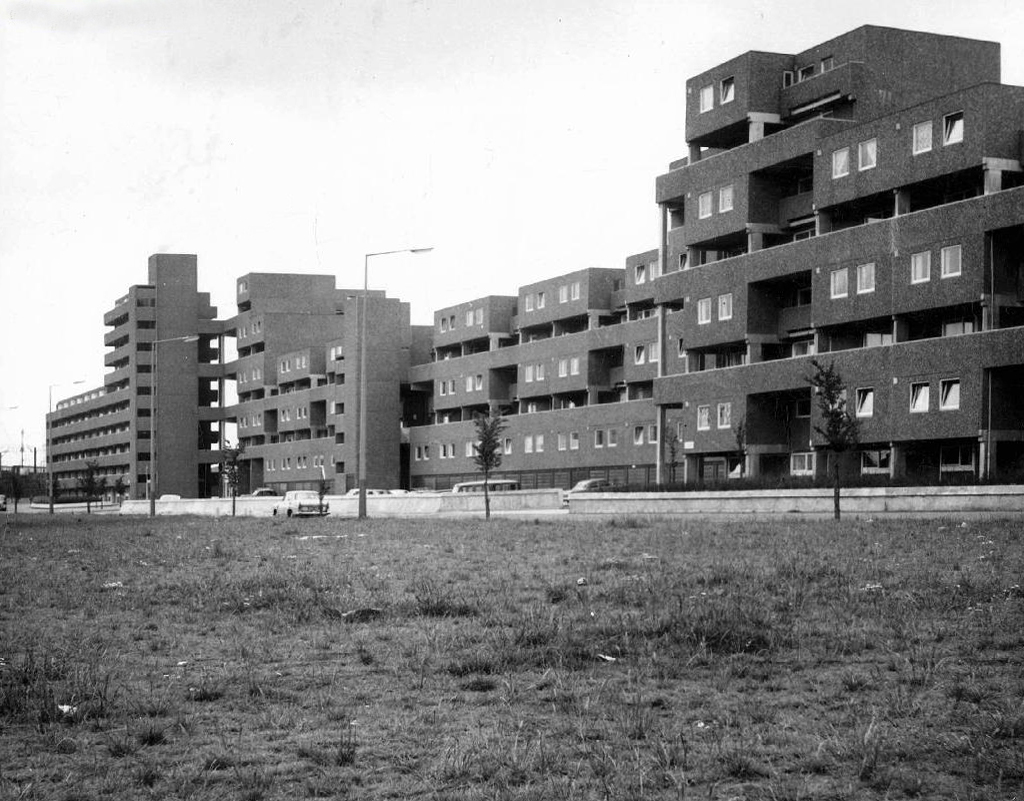
The scale of the buildings is often daunting. I have in mind Fort Beswick and Fort Ardwick in my own constituency. The design is frequently all too forbidding. That is why the two estates are called Forts.
When the tenants of these development have lived in cosy old houses, however inadequate they were in terms of physical provision, they are bitterly disappointed by the shortcomings of new property which they have looked forward to occupying.
The year of 1990, approximately, dawns, ushering in a decade of great change, multi-storey development clearance and the building of brand new homes – the end, by and large, of the one on top of another topsy-turvy world.
Fort Beswick was subsequently demolished.
The beat goes on as Len Grant records the most recent redevelopment of East Manchester.
And the M.E.Nshouts loud and proud from the roof tops, heralding a brand new, privately funded public domain
The road to Hell is paved with good intentions and as it would subsequently transpire, loosely attached Bison concrete wall-frame system panels.
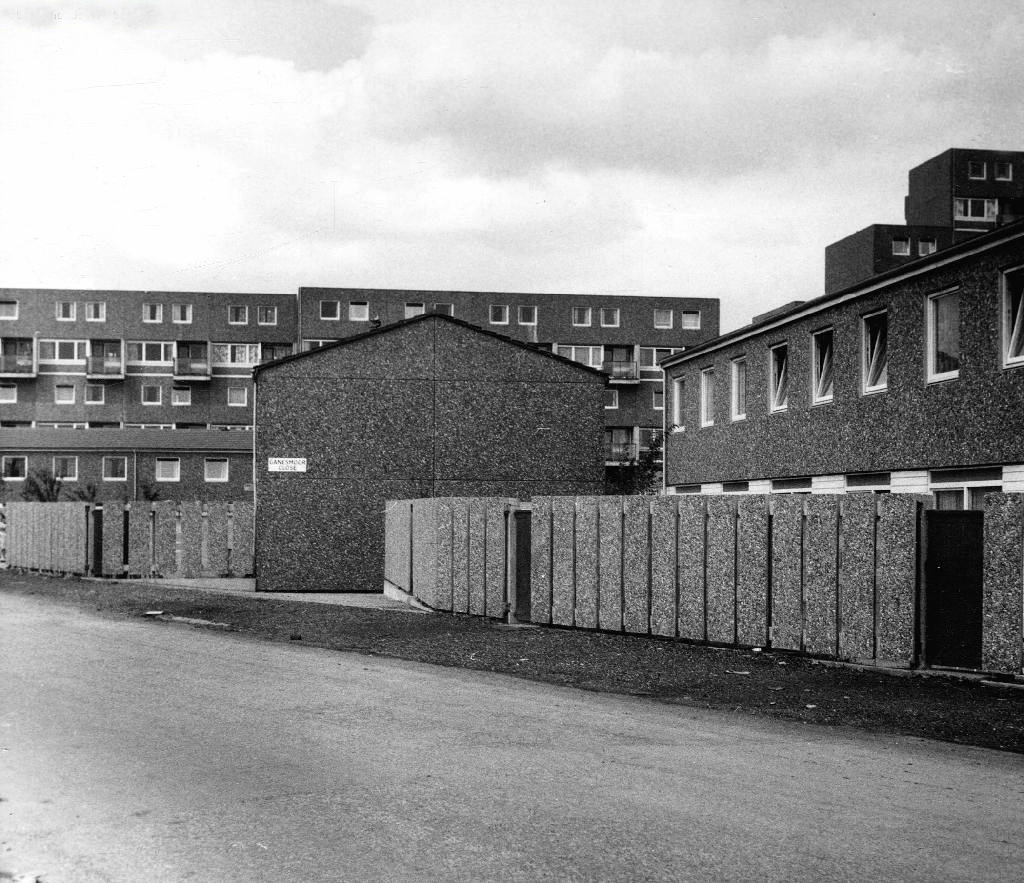
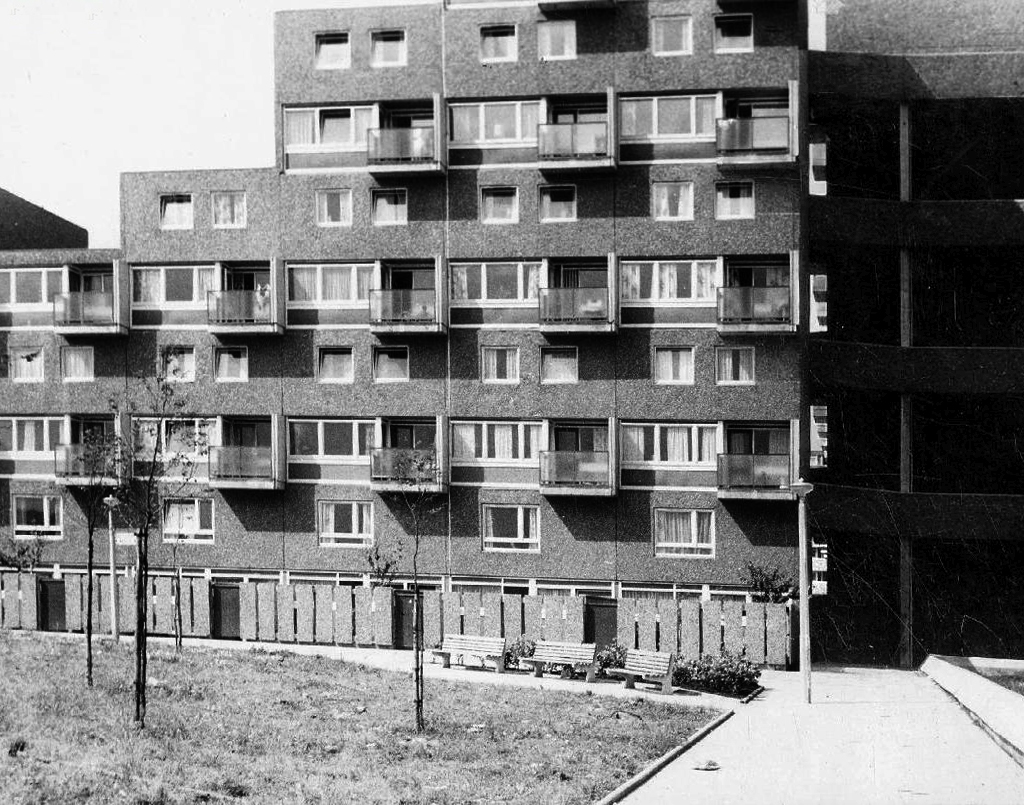
Wythenshawe apart, the City of Manchester admitted that it had 68,000 houses described as “grossly unfit” by 1959.
Its solution was to demolish 90,000 dwellings between 1954 and 1976 and to erect 71,000 dwellings by way of high rise flats and to move residents out to newly prescribed “overspill” estates – at Heywood and Langley in the north, Hyde in the east and Worsley in the west.
Most of these displaced people, however, found themselves resettled in tall tower blocks, which, no matter how architecturally innovative, or how improved their facilities, proved disastrous in social terms.
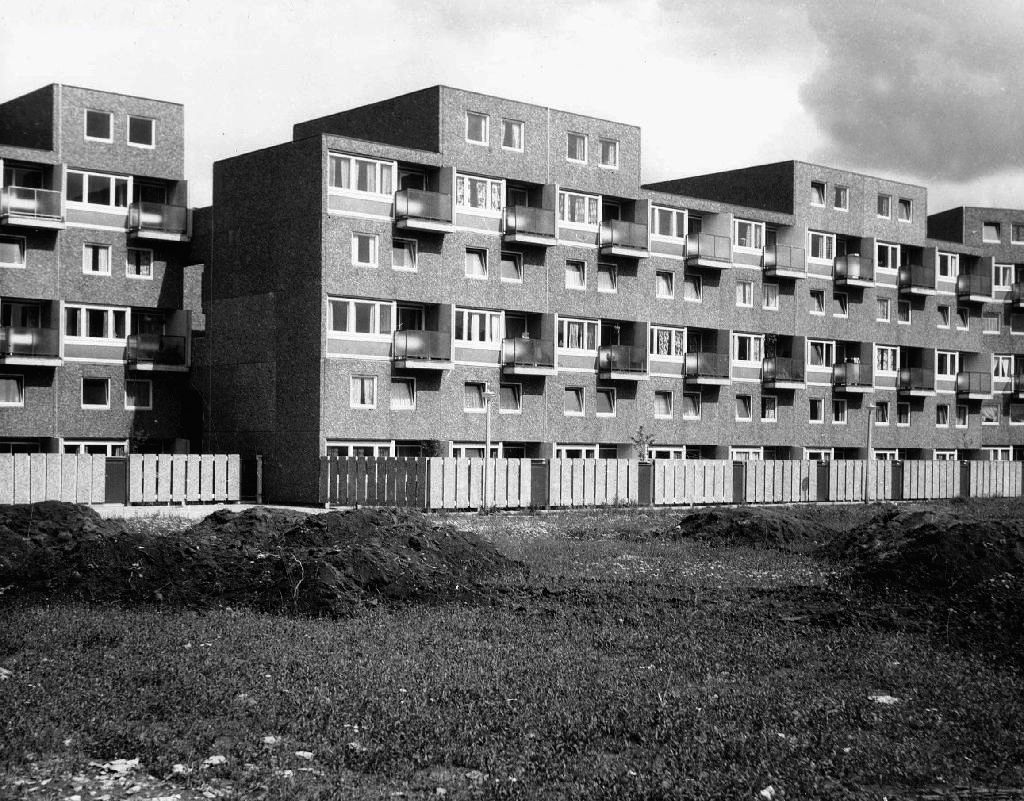
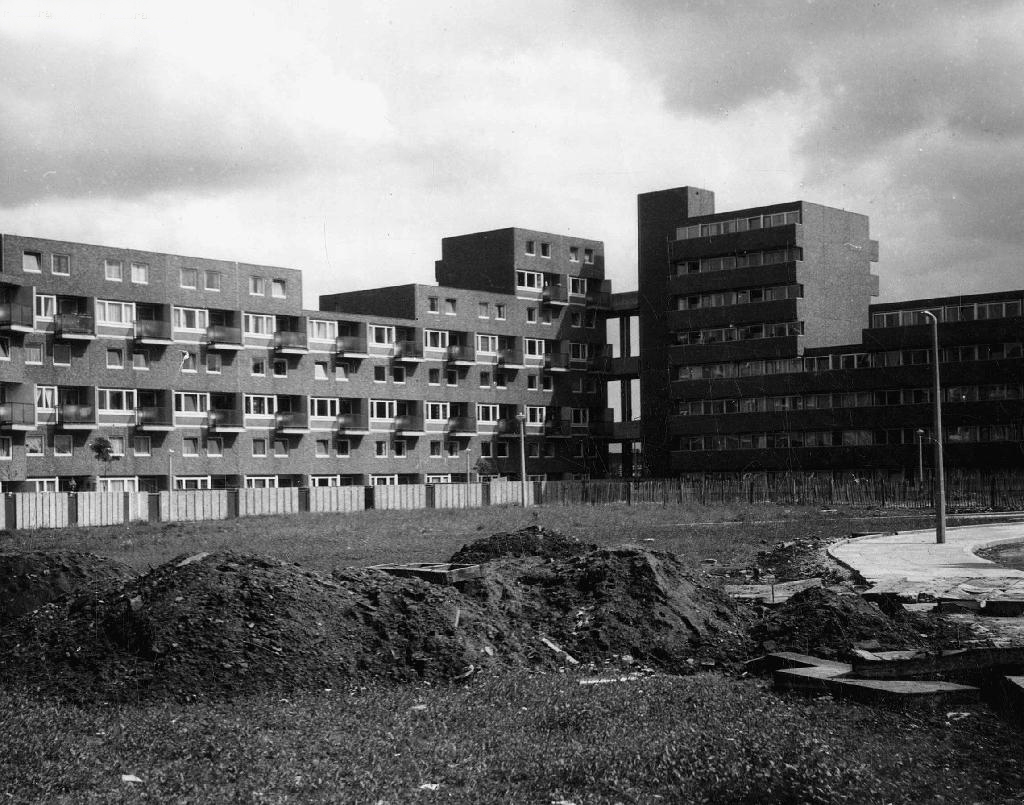
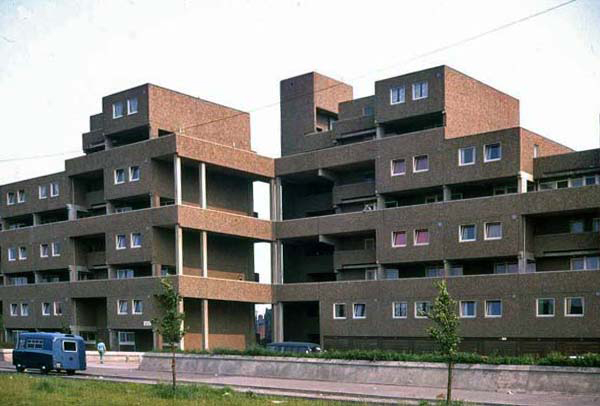
In Coverdale Crescent Ardwick such an architecturally innovative development was built.
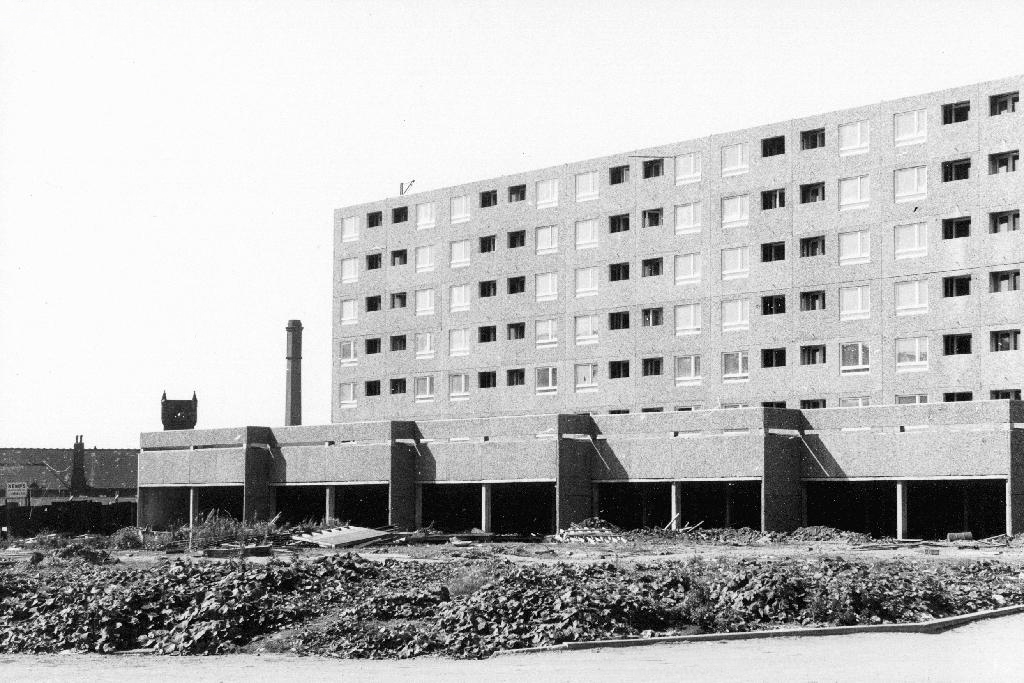
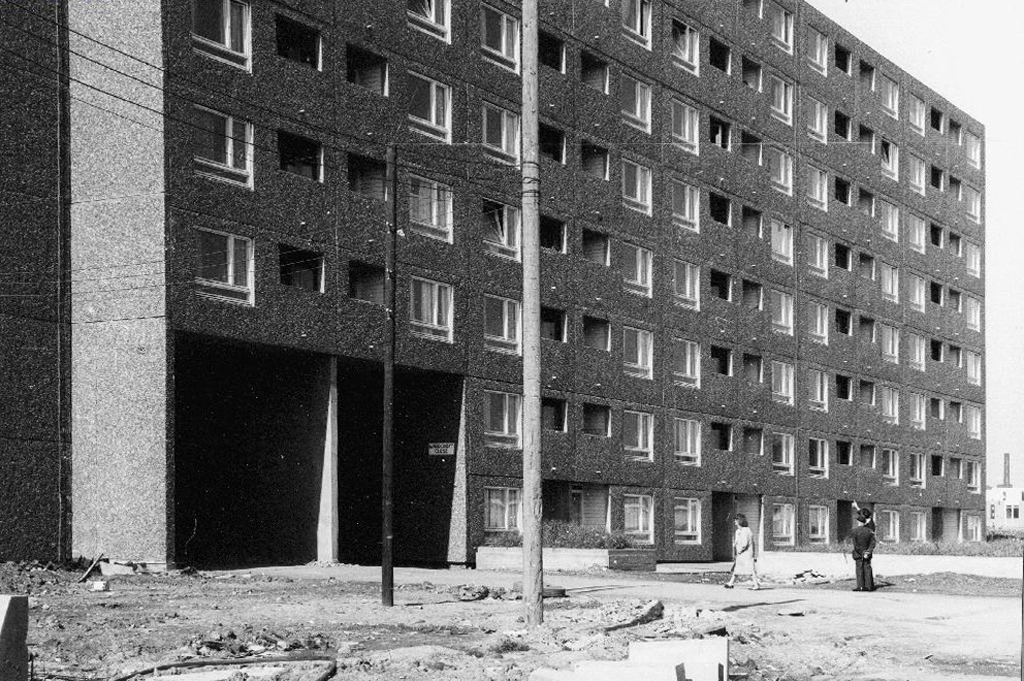
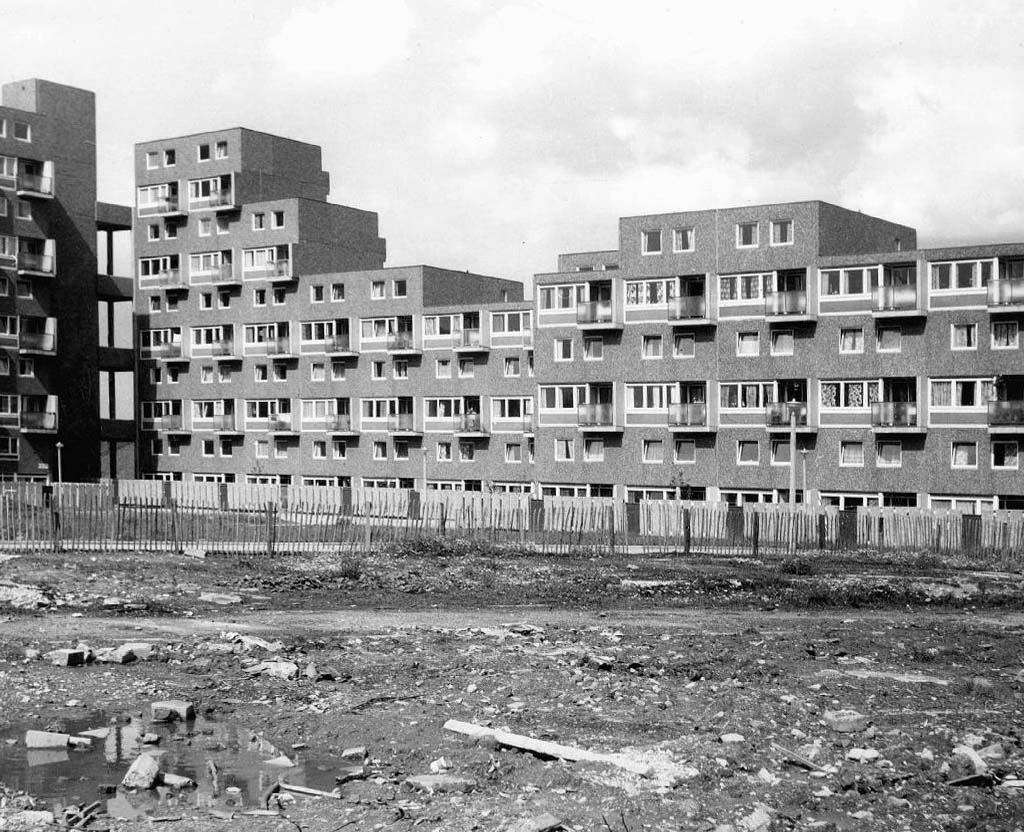
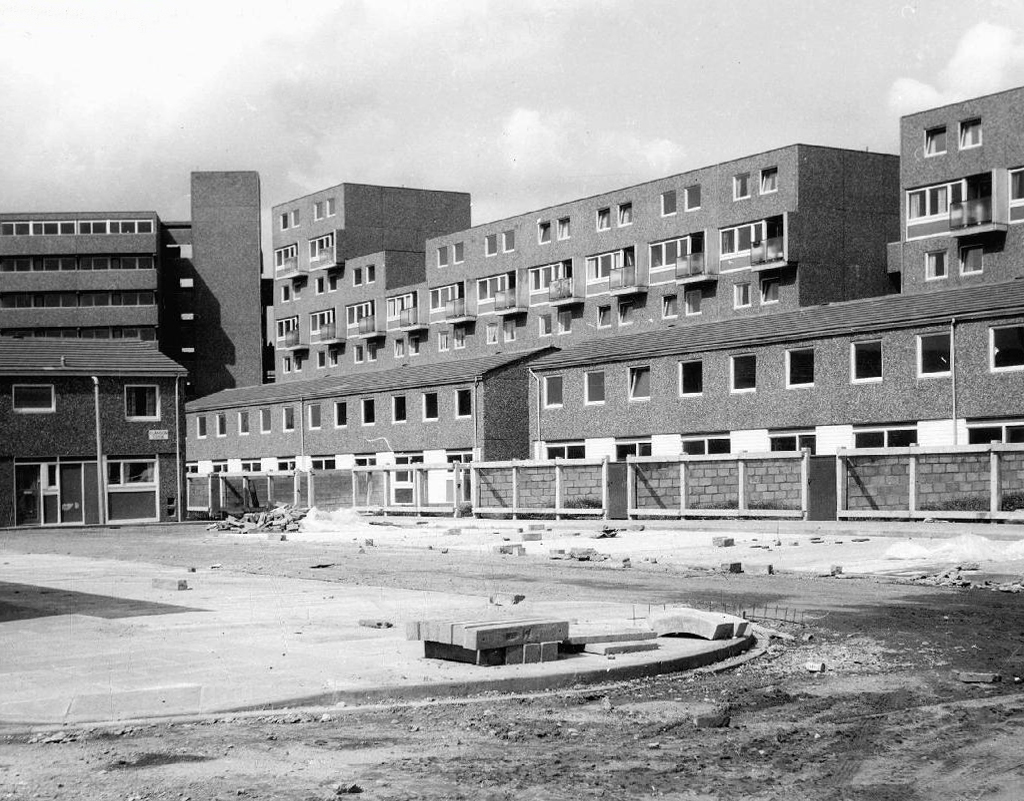
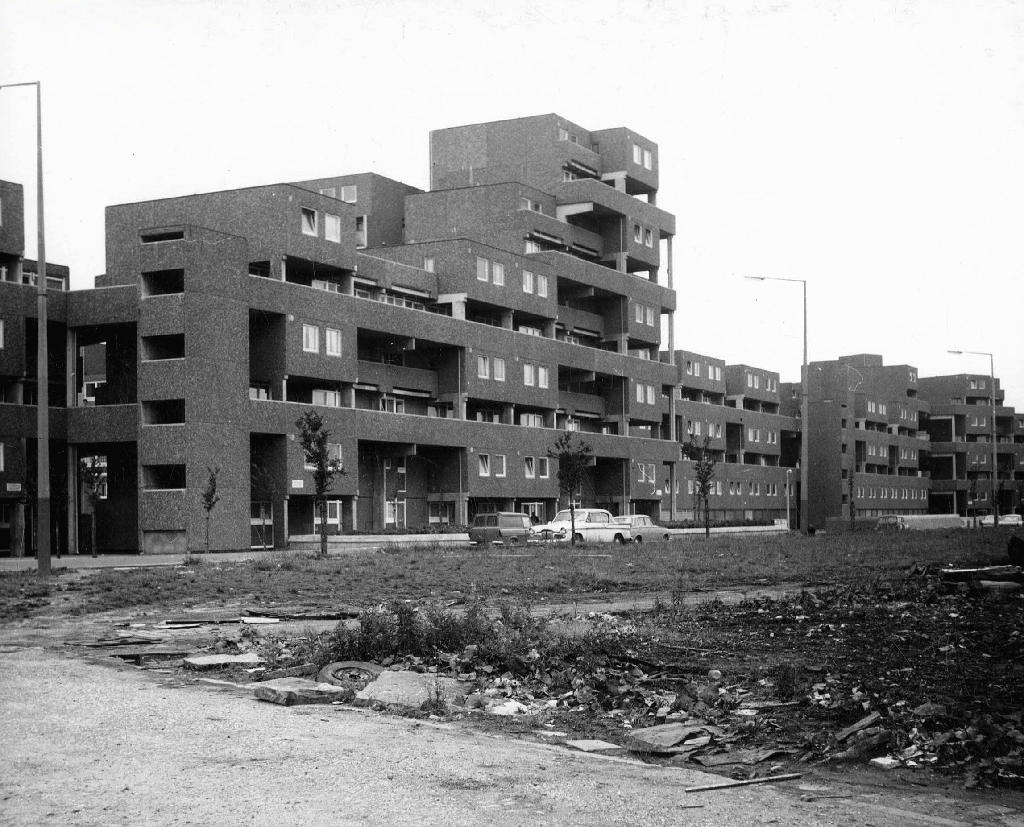
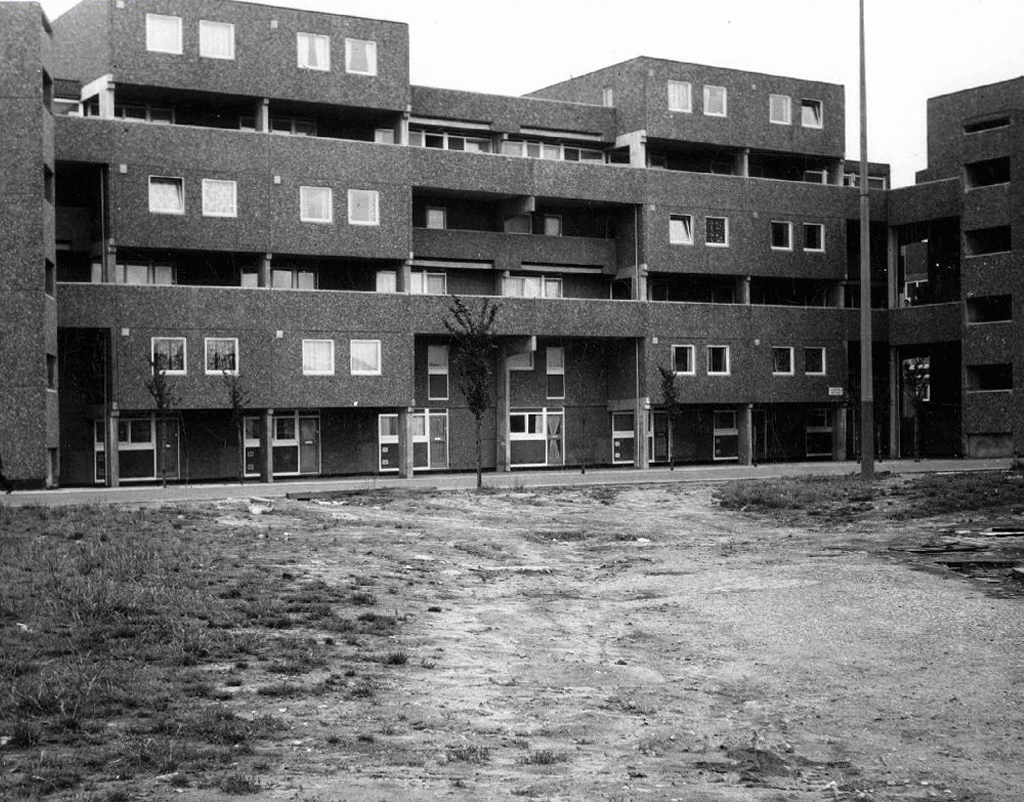
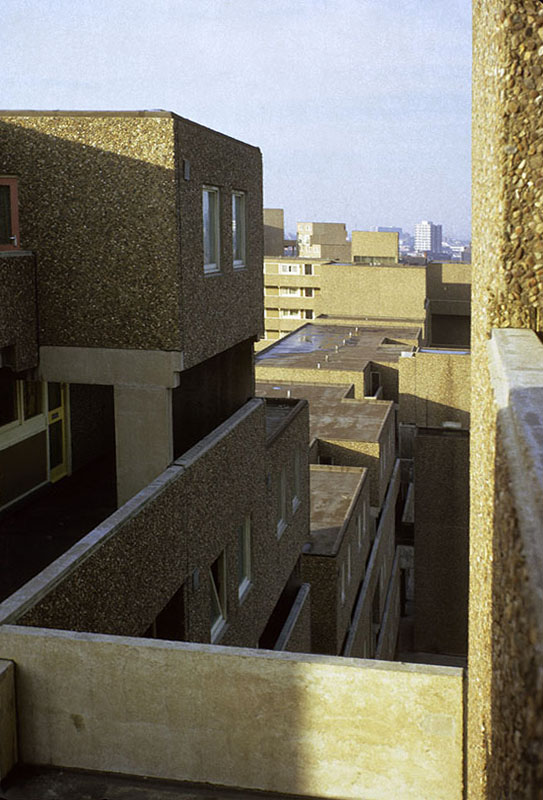
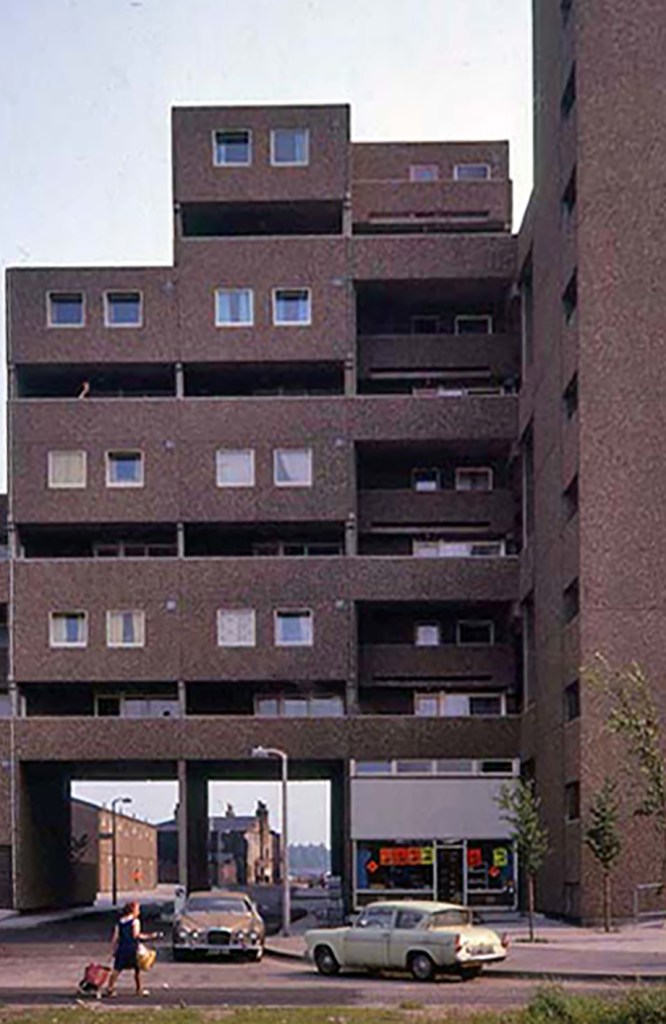
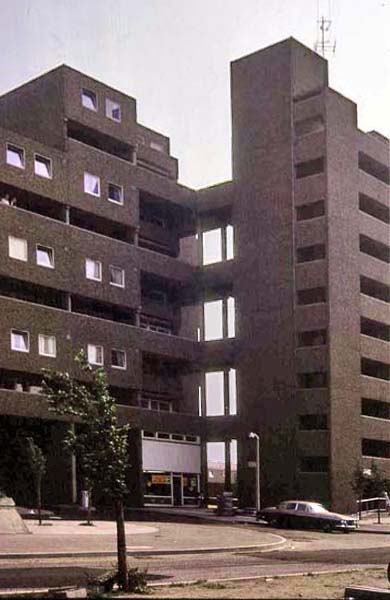
The estate, which became known as Fort Ardwick, was a deck access block of 500 homes. Completed in 1972, it was built with the same Bison concrete wall-frame system that had been used in neighbouring Fort Beswick.
By the mid-1980s it was clearly suffering from structural faults. The council employed a private firm of consultants to survey the estate, which found that water was leaking through roofs, steel fixings were corroded and concrete was breaking away. The council had to spend £60,000 immediately to bolt 1,100 panels back on to the building’s internal skin. The city architect, David Johnson, claimed that the report highlighted the rapid deterioration of Fort Ardwick’s fabric.
They said it was shoddy, thrown up, not enough care taken. The concrete panels weren’t made properly – the holes didn’t quite line up. You know what it’s like – you’re putting a flatpack cupboard together and something’s not in the right place but you just bodge it instead of sending it back, starting again, because you want the cupboard up and you’ve got other shit to do.
They had to get these consultants in, after they’d finished, to rebolt all the panels or something , so the whole thing didn’t fall down. Cost a bloody fortune my nan said, and that’s our taxes. And even then the rain got in. They’d put straw between the concrete, which sounds a bit medieval to me, and no-one wants wet straw walls, right? Cockroaches and rats and mould and that.
My nan remembers when they knocked down the terraces. I remember when they knocked down the fort. And maybe they had a point about it being shoddy, because soon as the diggers got their claws in, the whole thing fell to pieces, like it was made out of cardboard and bits of sellotape, not concrete and glass. A fort one week, a pile of rubble the next. No-one wept for it, they say.
I didn’t cry, but I stood at the end of the street and watched the diggers pawing at the walls, ripping the place to bits, our old kitchen wall gone and the cooker and the cupboards and the crap plastic clock just there for everyone to see. Except there was no-one else looking.
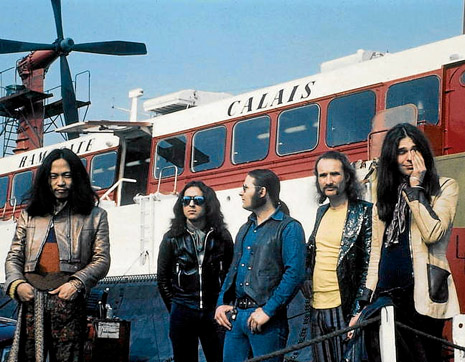
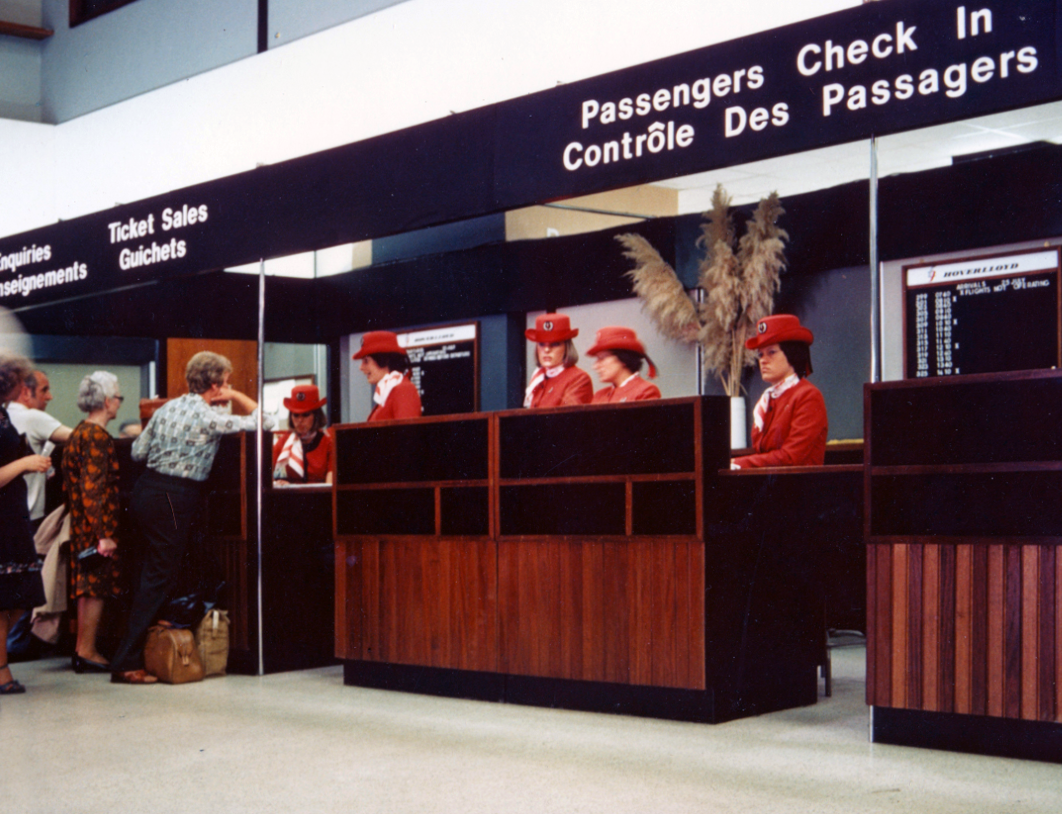
The passengers’ every need was attended to with alacrity and style.
“As a Stewardess your appearance was paramount, a beautician would come in during training to teach us how to apply make up.”
But it simply wasn’t enough.
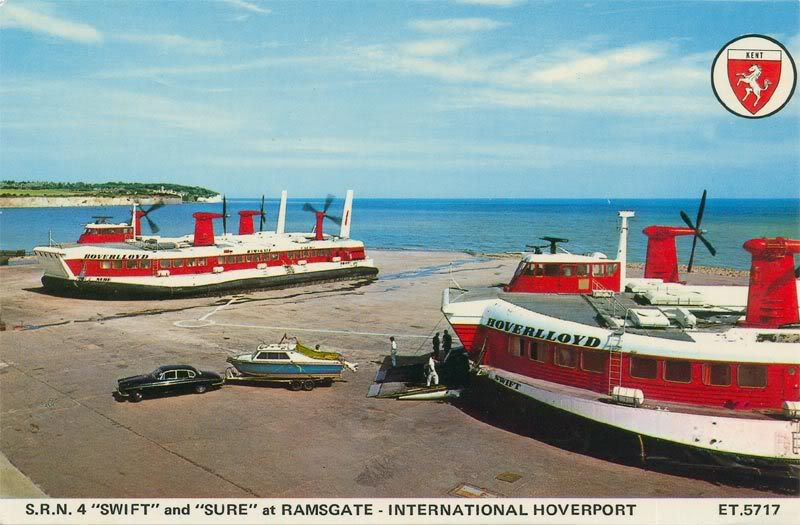
The life of Christopher Cockerell’s bold British invention, was short and bumpy.
Genevieve Payne, a former stewardess:
“I remember the summer of 1979 as a year of really bad weather and rough seas.”
“I was working on a craft in a force 8, so on this day we were literally hitting the ceiling, passengers were throwing up everywhere.”
“One lady became hysterical I had to slap her to calm her down.”
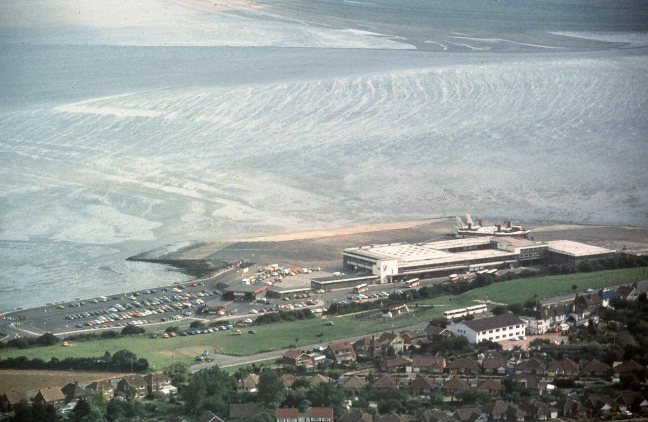
By the 1980’s Pegwell and the hovercraft were in terminal terminus decline.
It’s a lot less bother without a hover.
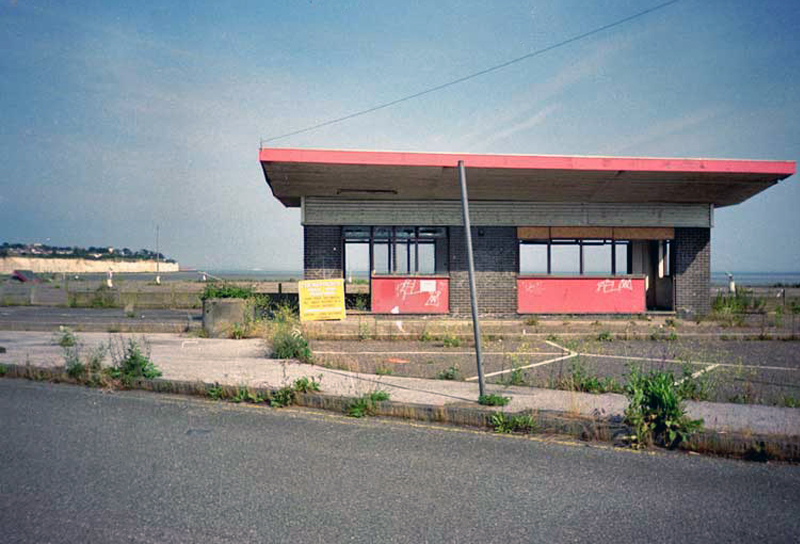
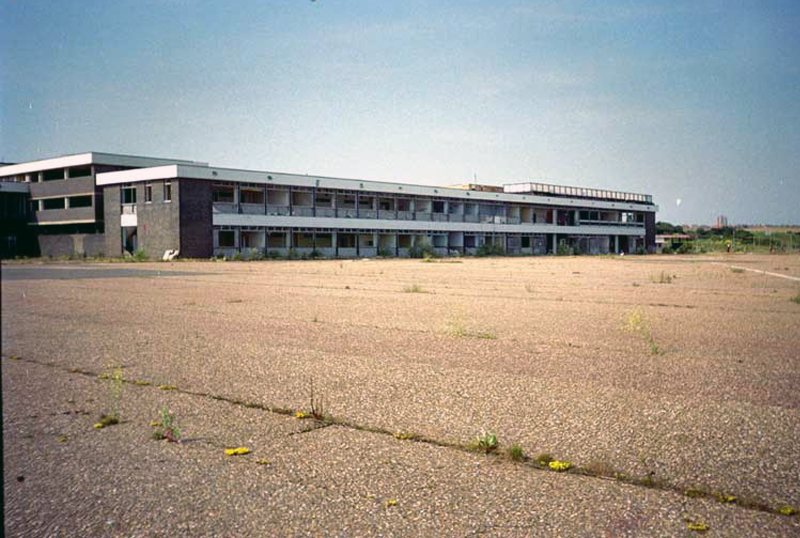
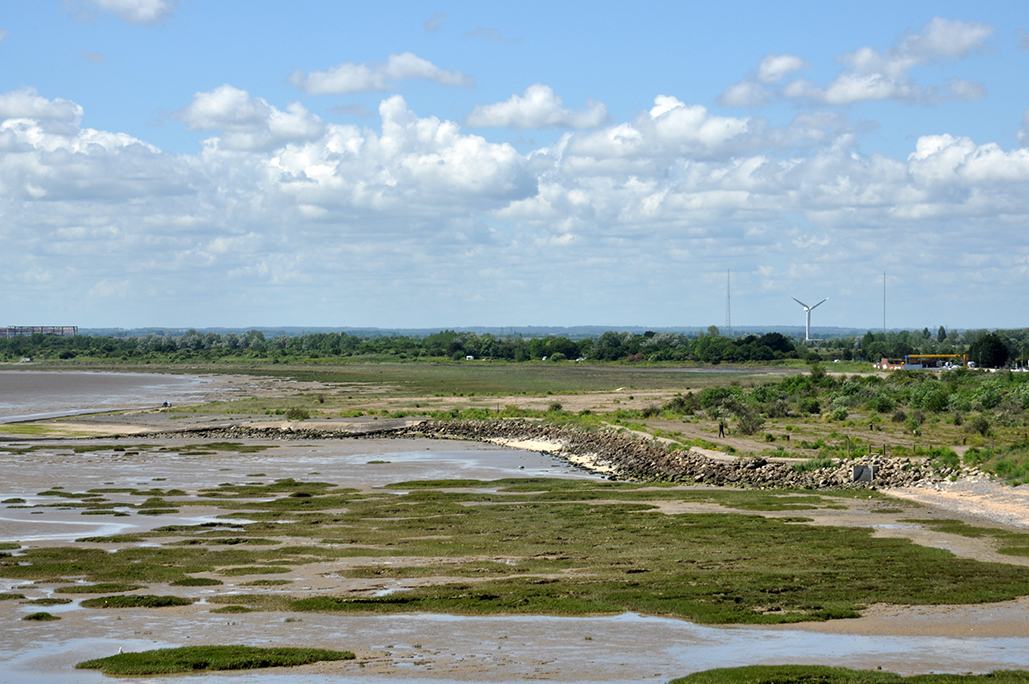
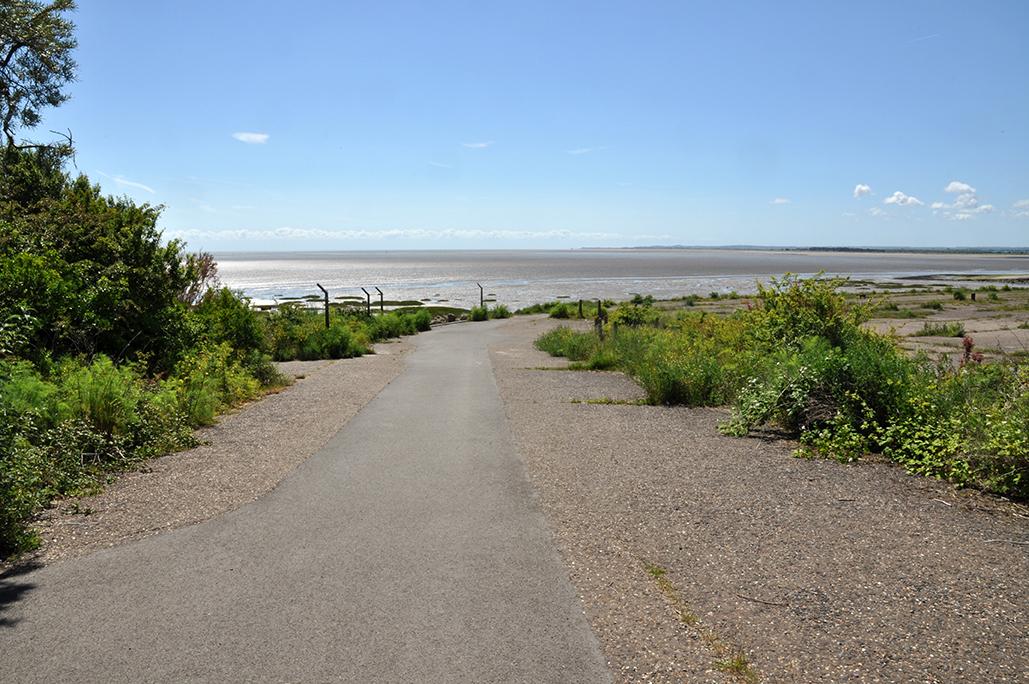
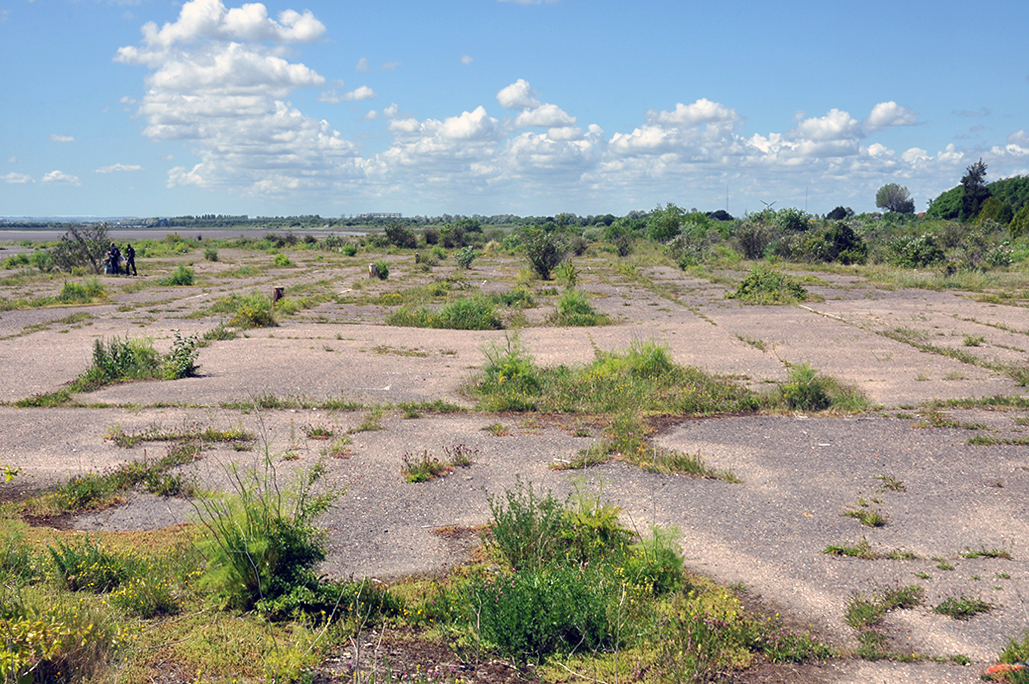
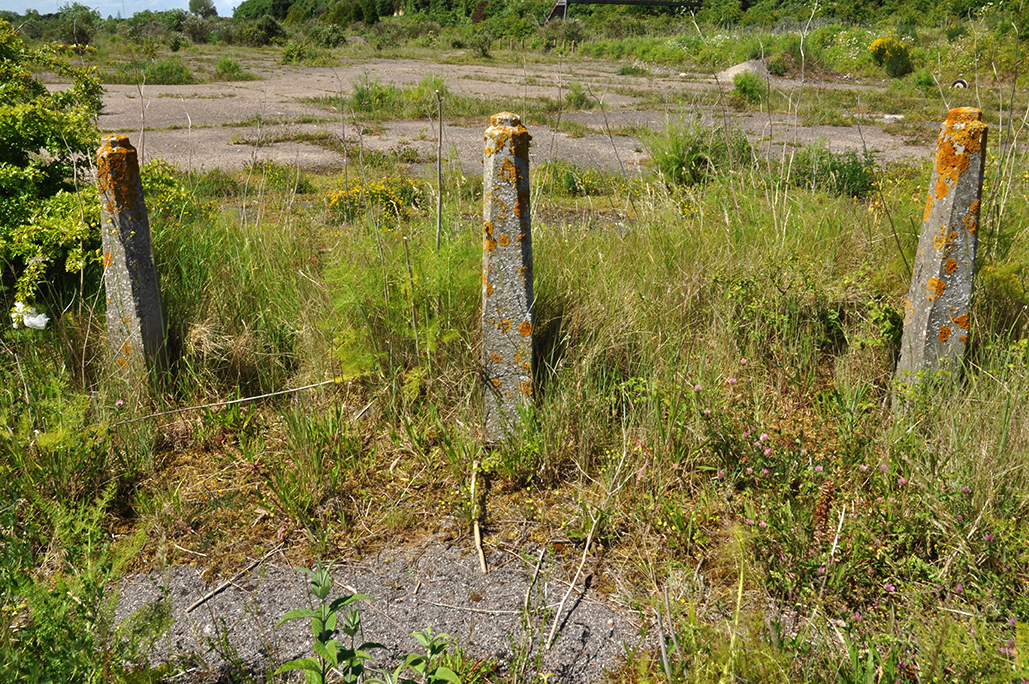
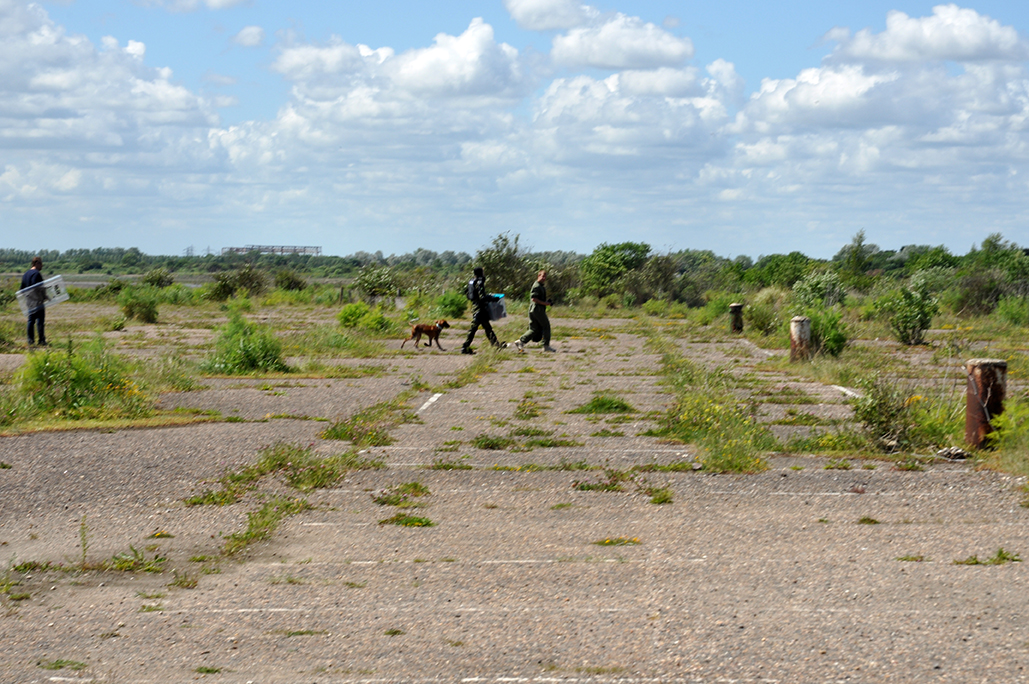
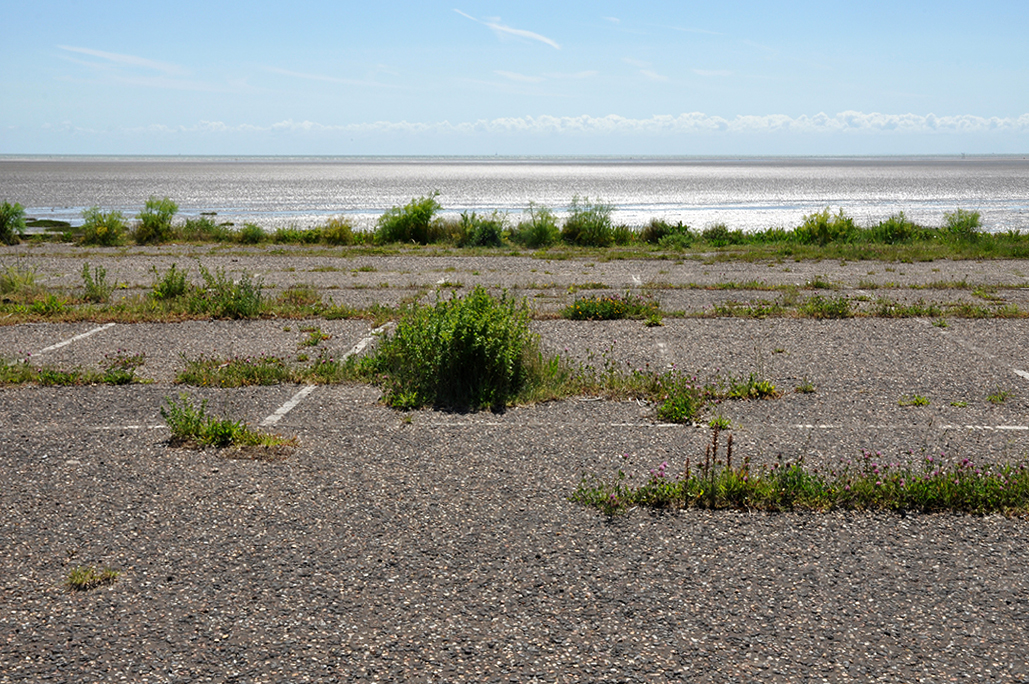
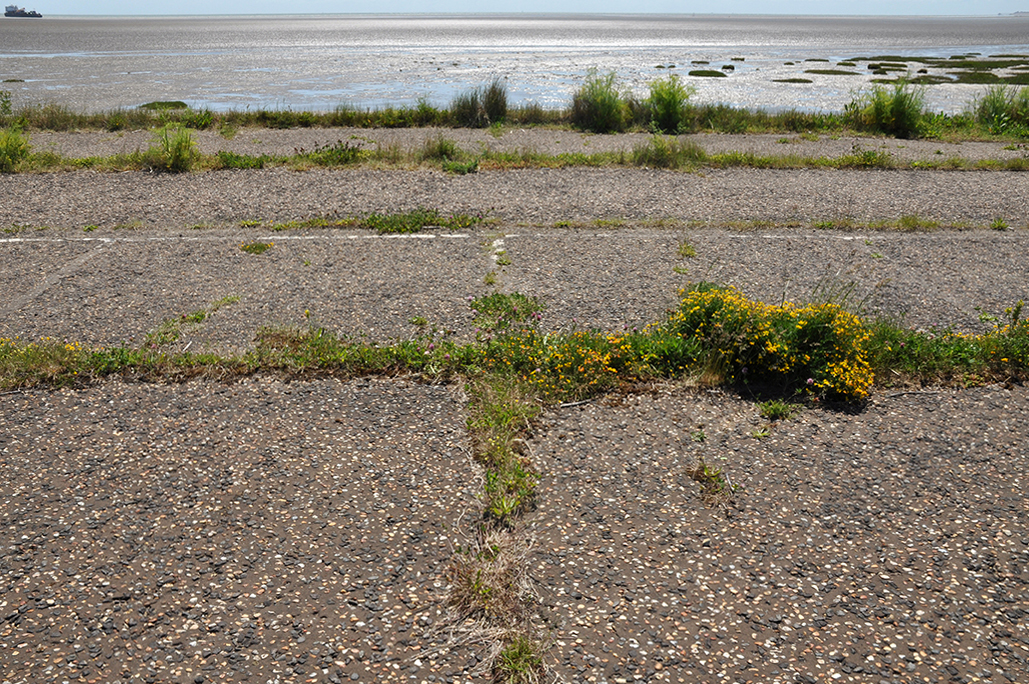
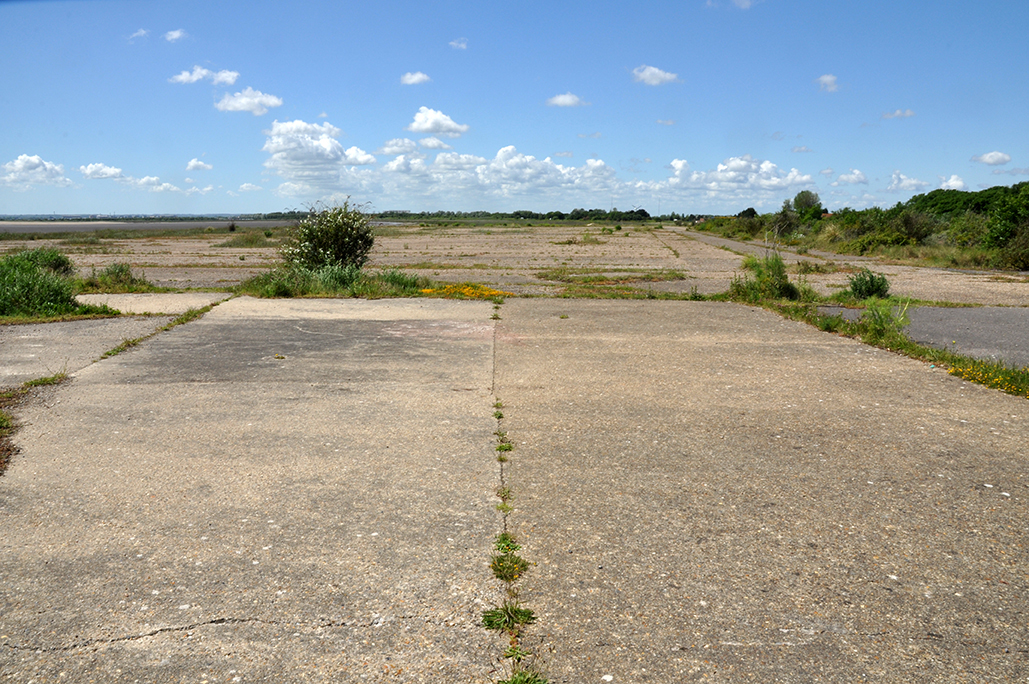
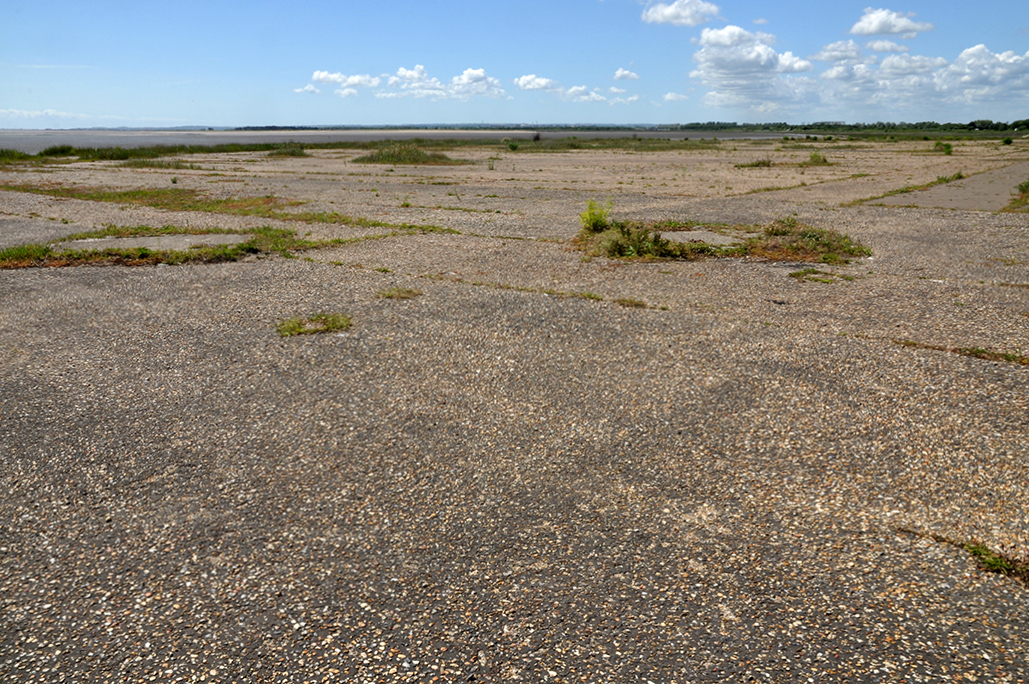
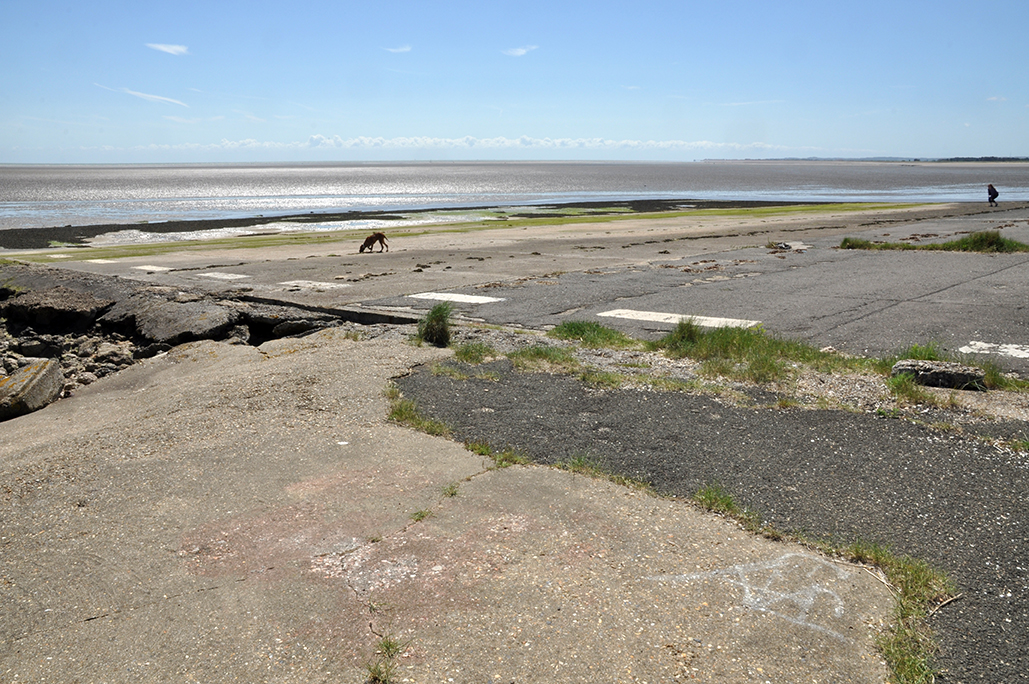
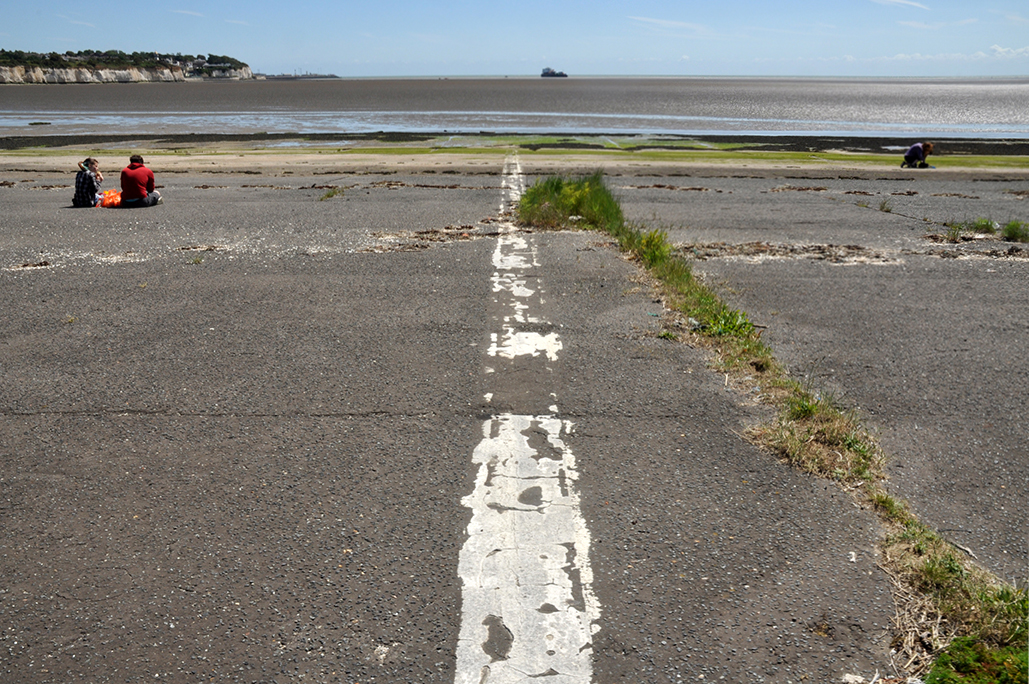
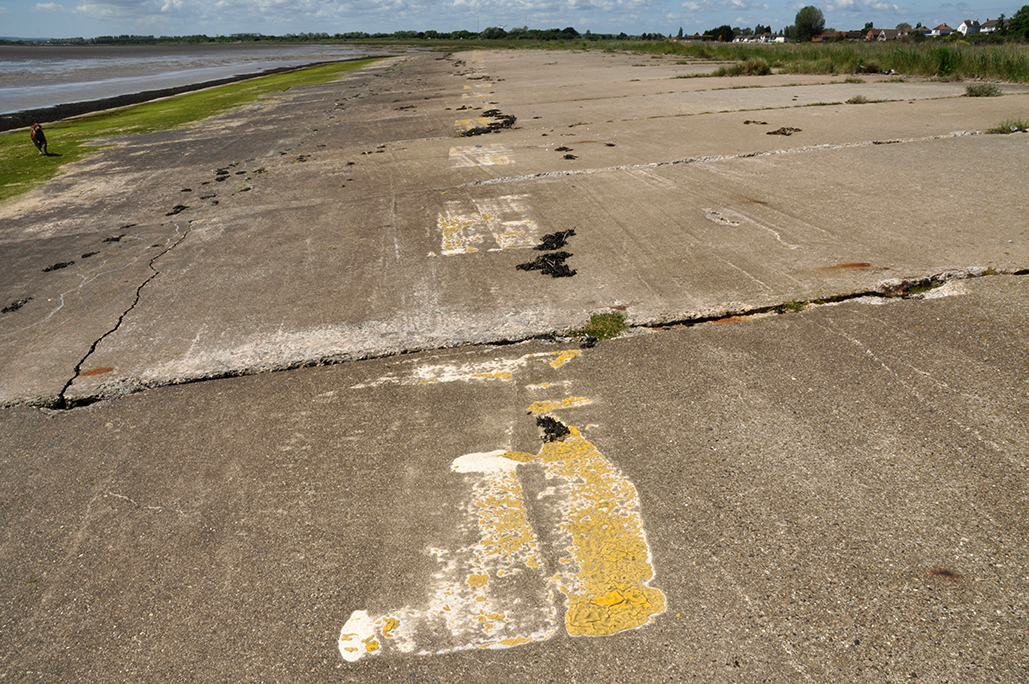
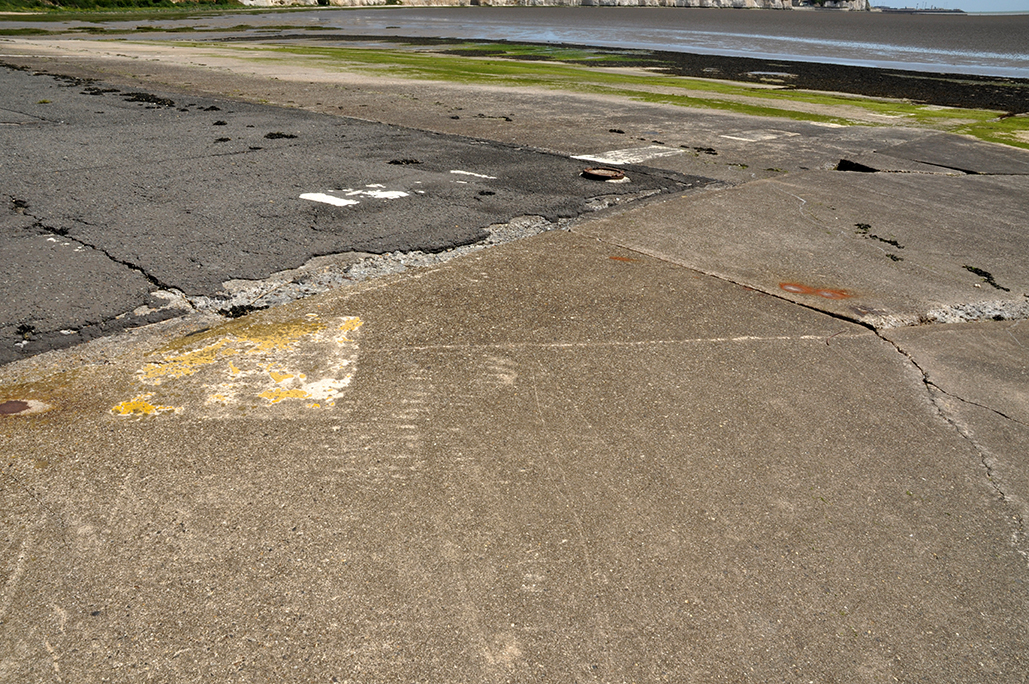
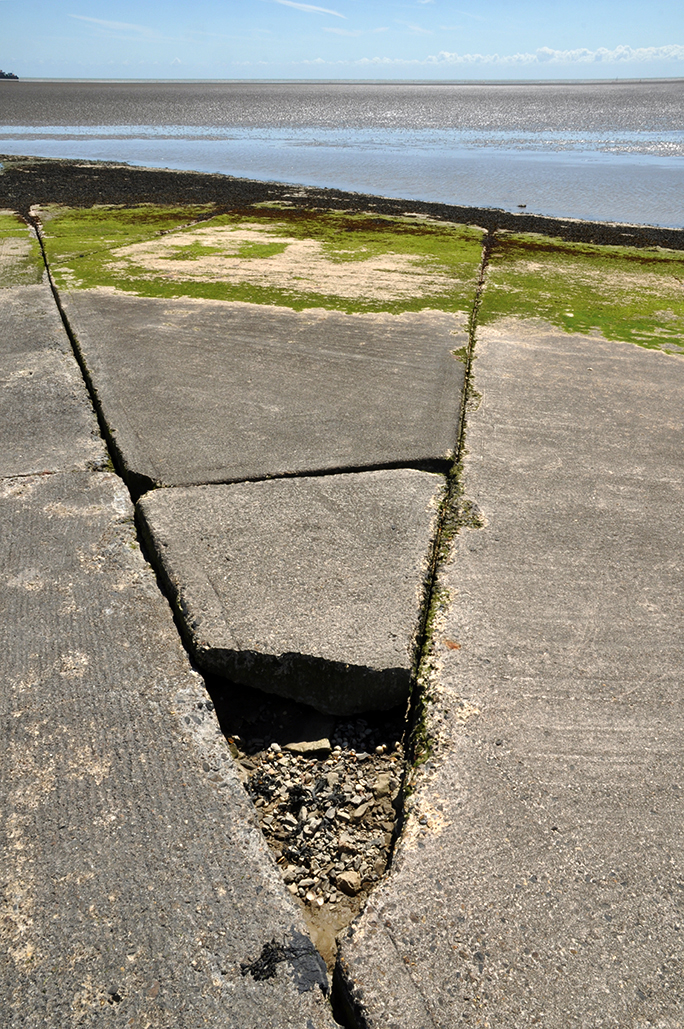
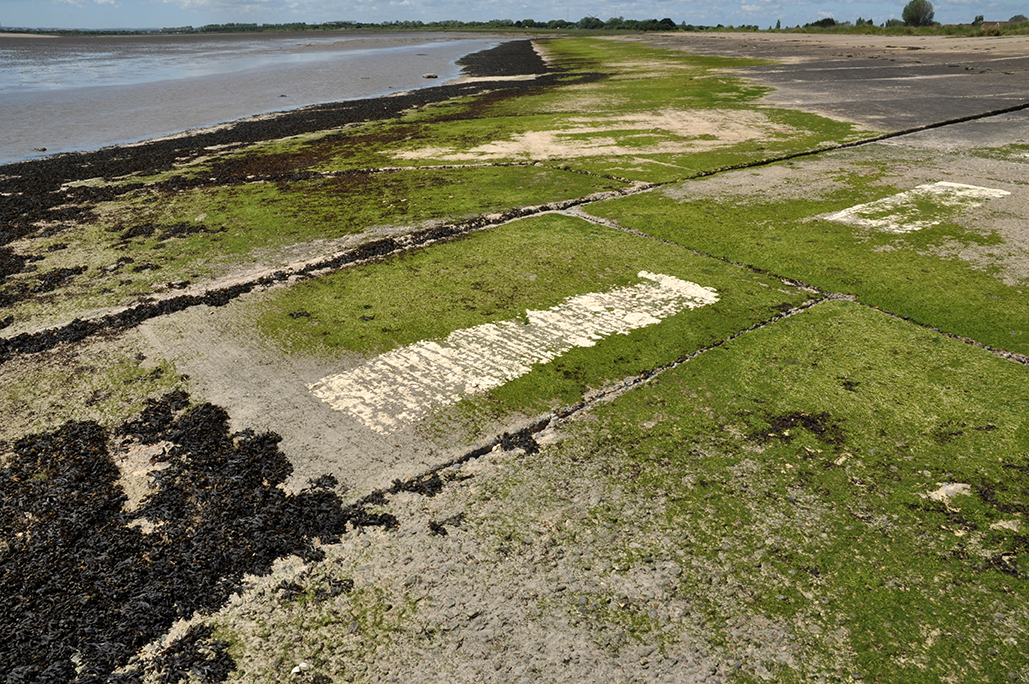
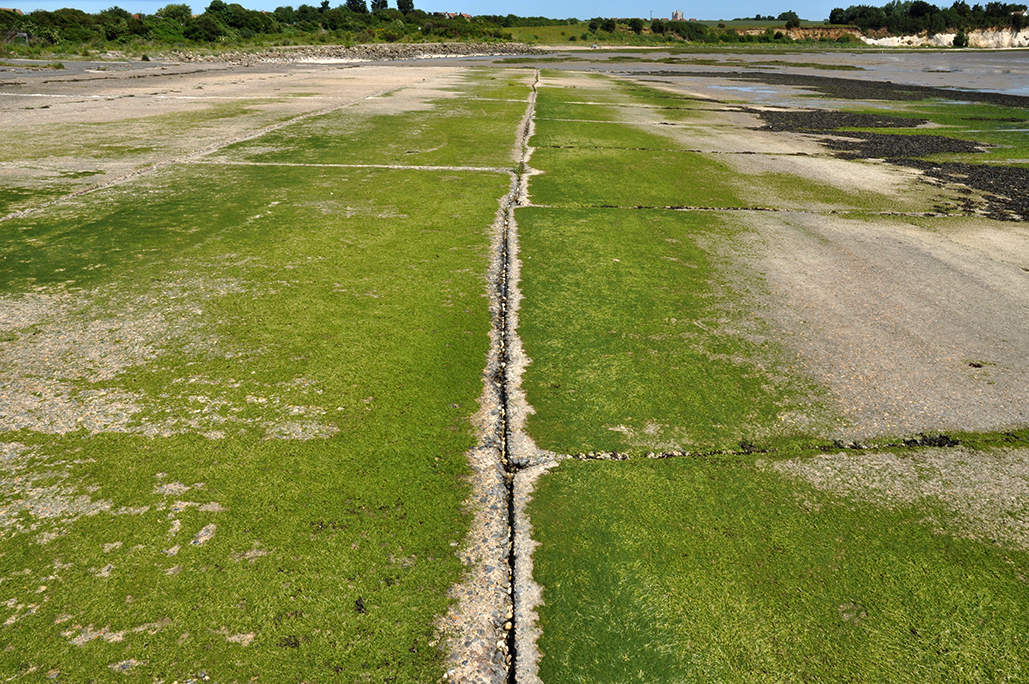
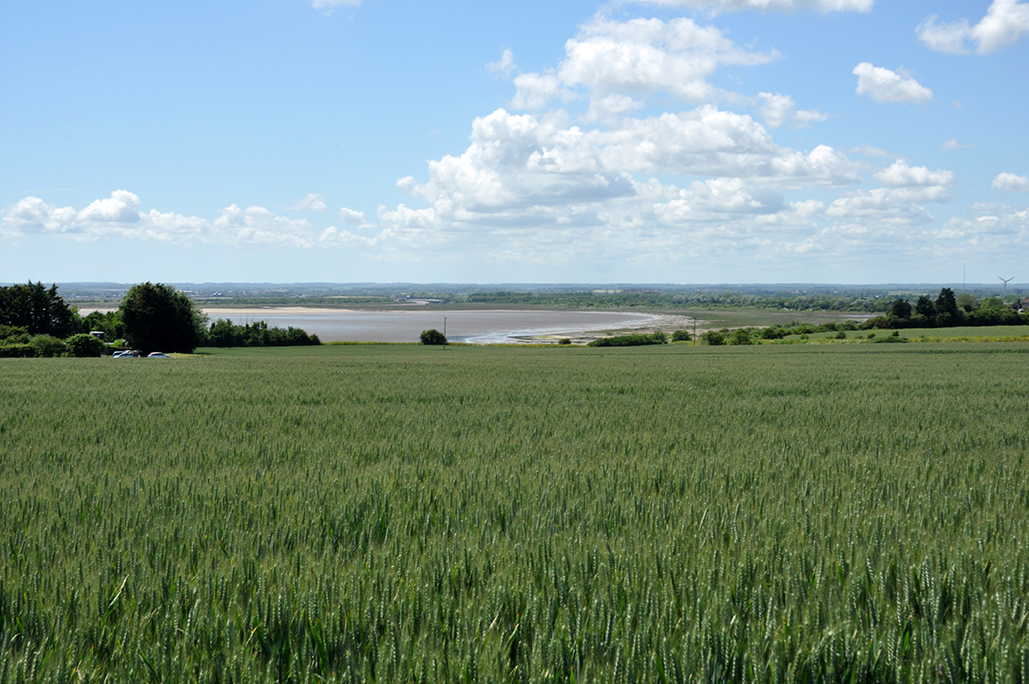
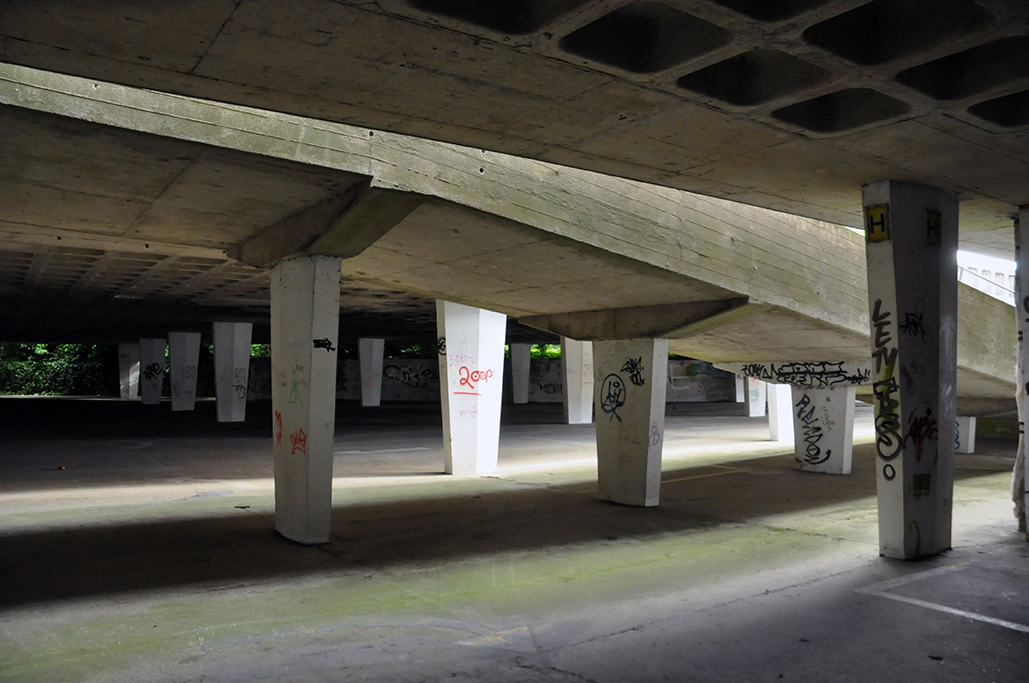
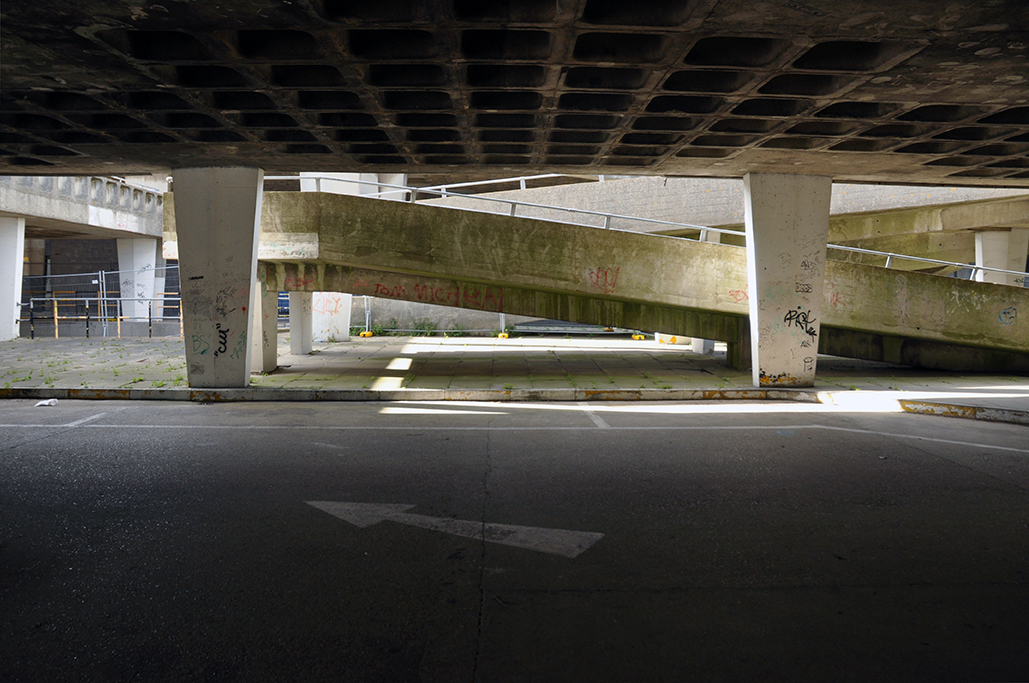
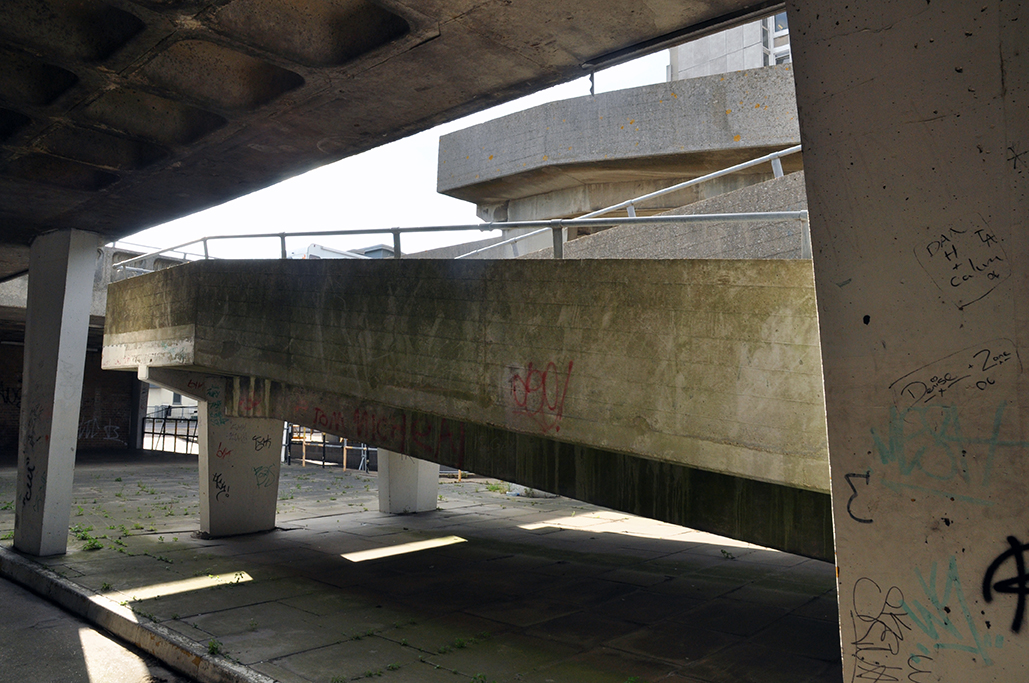
What prevails is the shoreline, a concrete landing skirt and the slow process of reclamation, as nature decides that the council is quite right to decide to create a nature reserve.
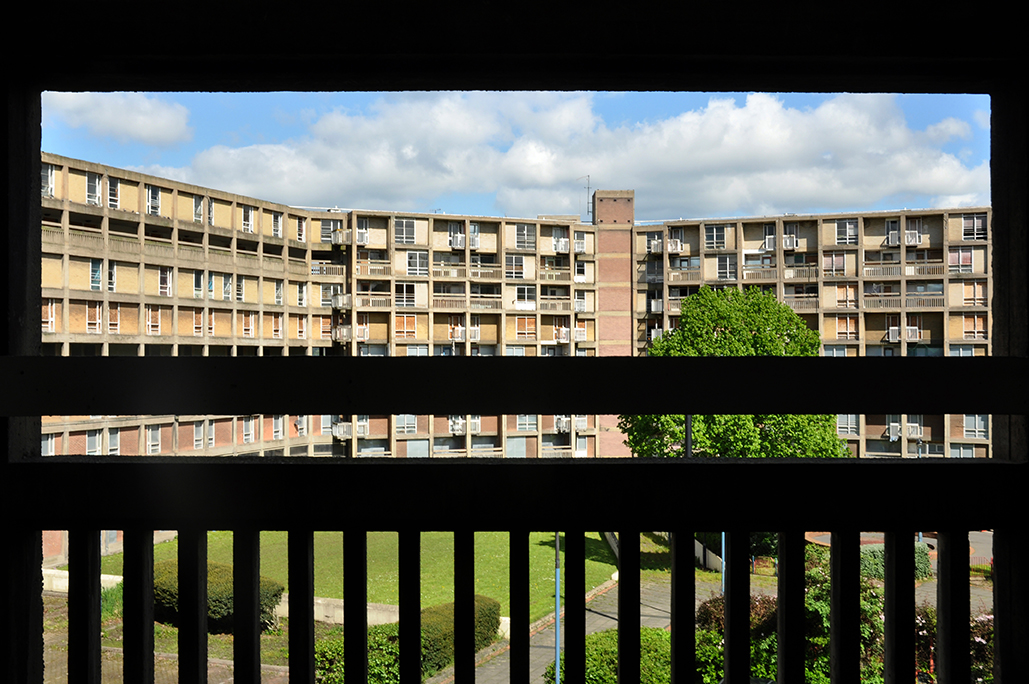
Once a beacon of Modernist design, now a listed concrete grid, in arrested decline, an essay in status and stasis, high above the city of Sheffield.
A handful of former residents of the once acclaimed social housing, cling to the western edge.
Phase one of the Urbansplash redevelopment has carefully coloured in a portion of the eastern corner, then exited, their cladding tucked tightly under their arms.
Impasse.
All tinned up with nowhere to go, to walk the walkways, is to enter a ghost town, where no tumbleweeds tumble. Billy the corporation cleaner is happy to work alone, sweeping the empty spaces.
“Some don’t like working up here, I don’t mind my own company. Even if there was just one resident left, we’d still have to keep the place in order. You’d love my house, it’s an Army Barracks in the centre of town. Wife’s the caretaker, been in her family for three generations.”
This is the second of three visits I have made from across the Pennines.
Mark – “Why are all these photographers coming here from Manchester?”
“Been here some time, this is the second flat I’ve had, just missed out on one of the new ones though. Had this one nine years. Bloke threw himself off last week, he had a wife kids, parked up and just jumped.”
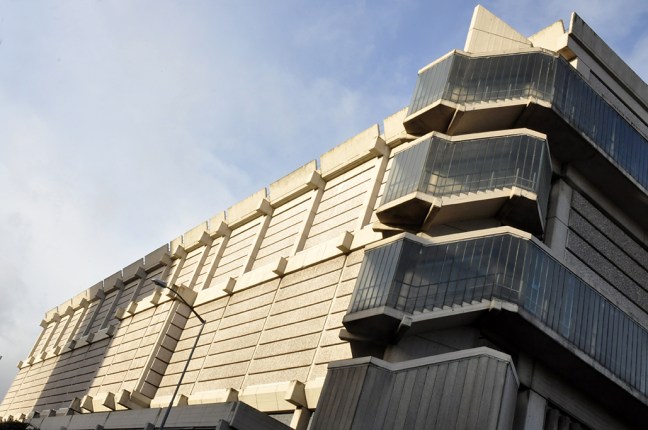
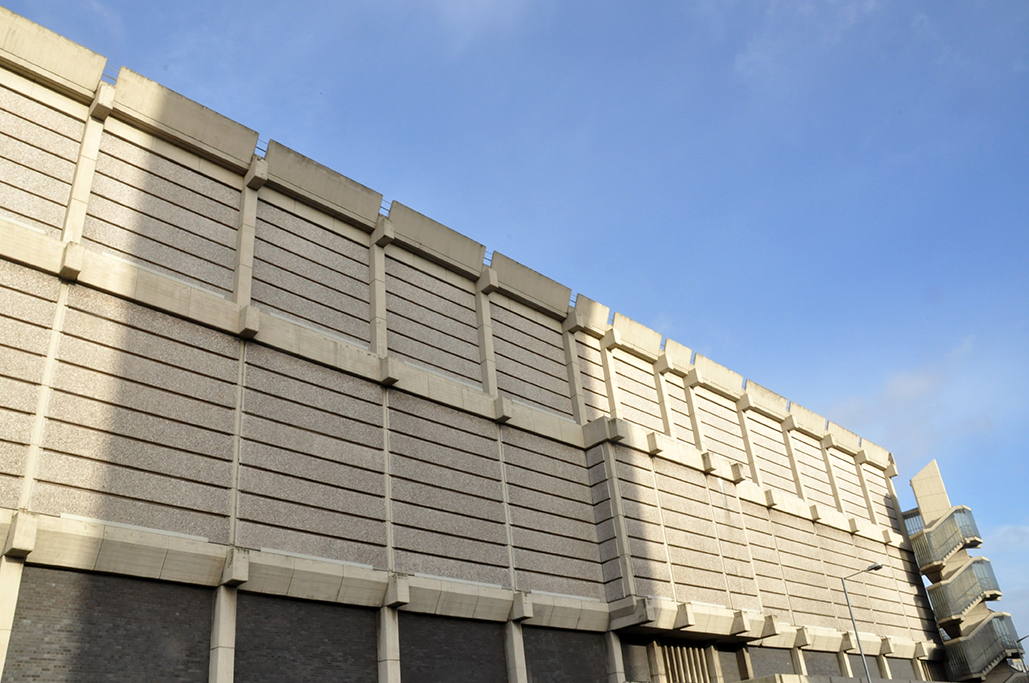
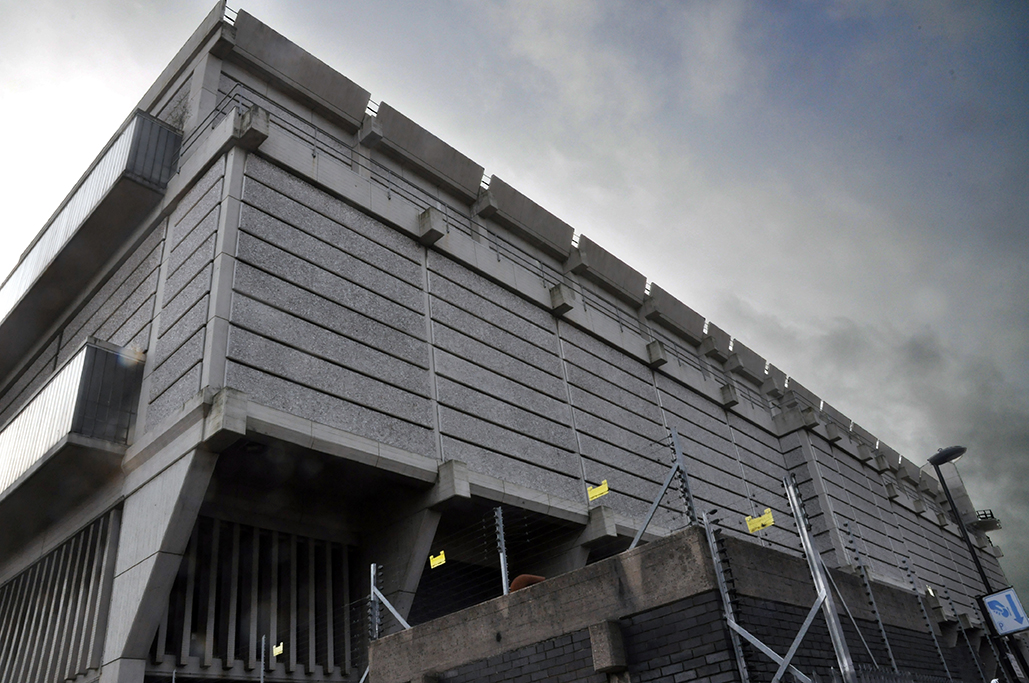
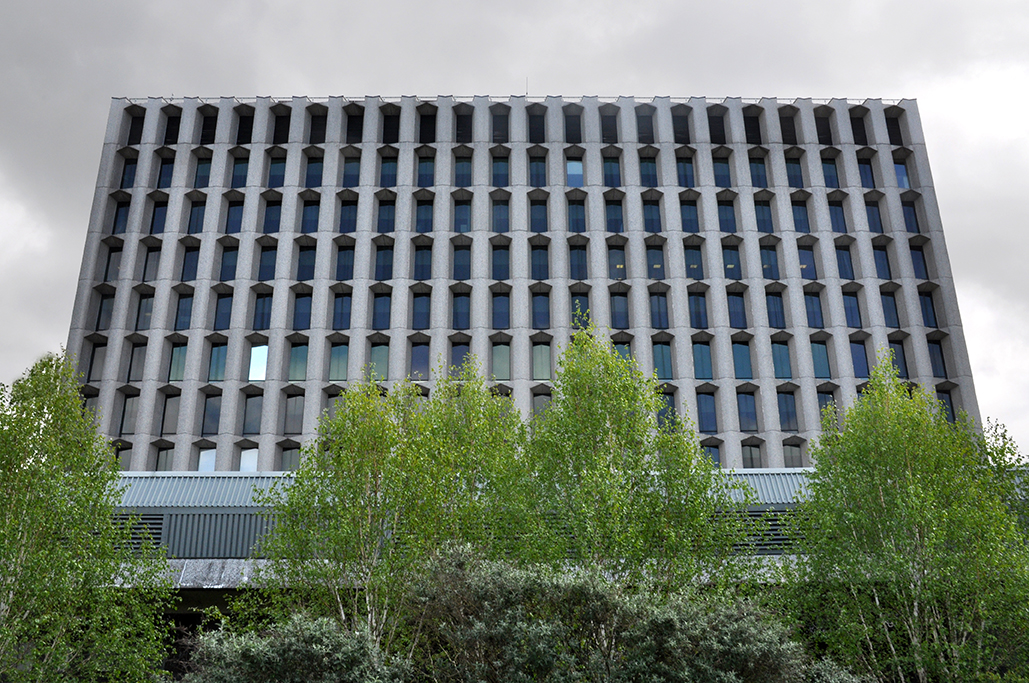
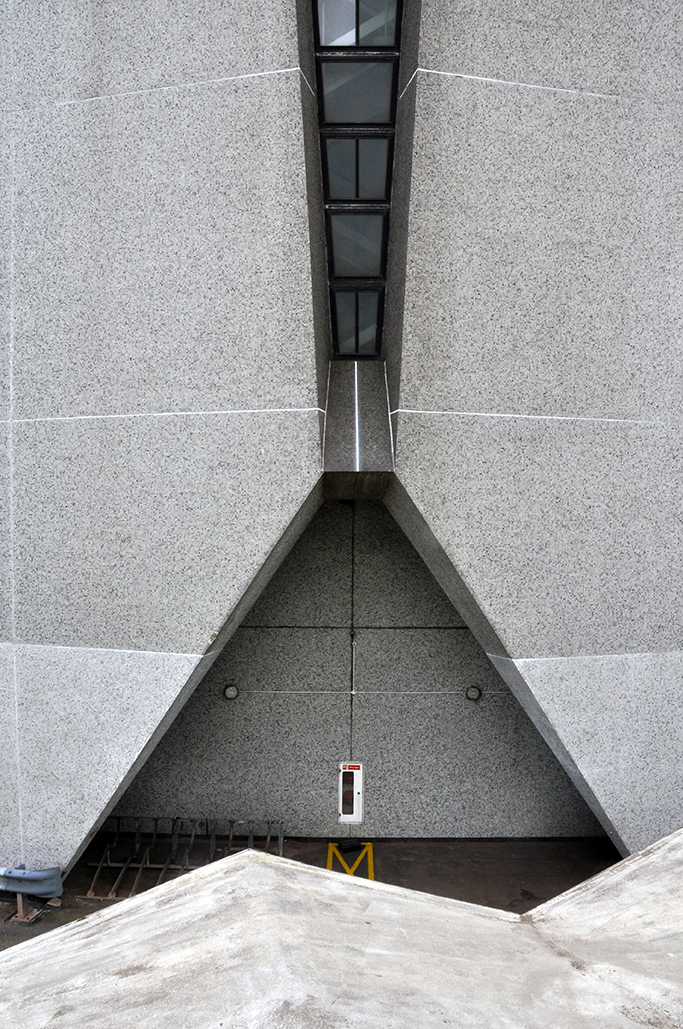
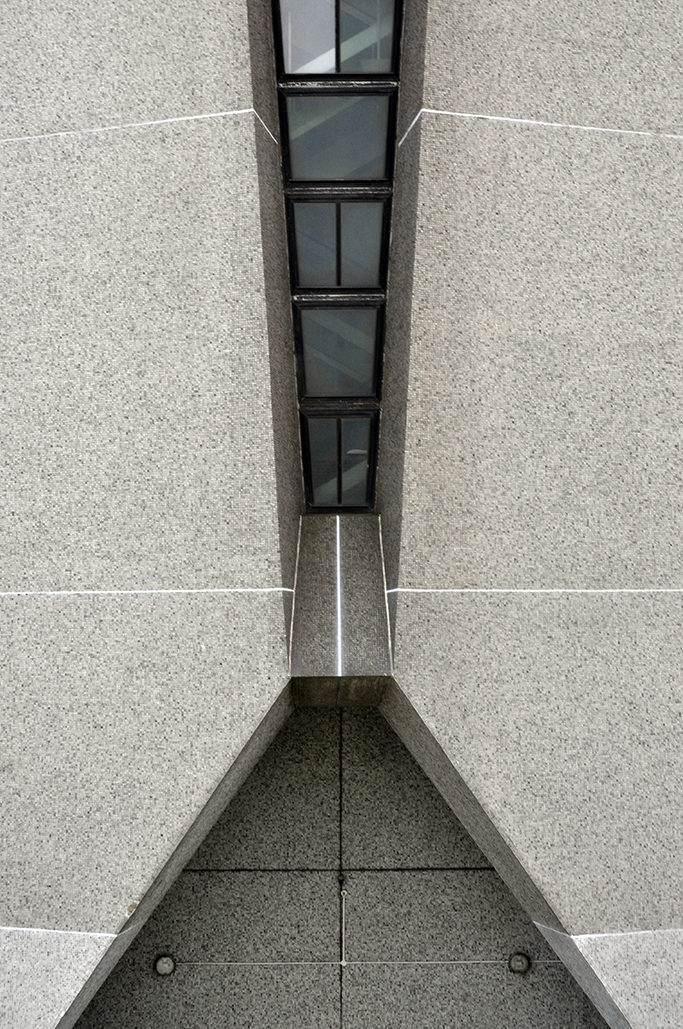
“Electricity substation. 1968 to designs by consulting architects Jefferson, Sheard and Partners, Sheffield, led by Bryan Jefferson, in association with the Regional Civil Engineers’ Department of the CEGB North East Region. Contractors, Longden & Sons Ltd, Sheffield. Reinforced concrete frame with board-marked finish with formwork bolt marks, construction and daywork joints emphasized, concrete floor slabs, blue engineering facing bricks, cladding panels of Cornish granite aggregate.”
Go see for yourself, if you don’t believe my eyes.
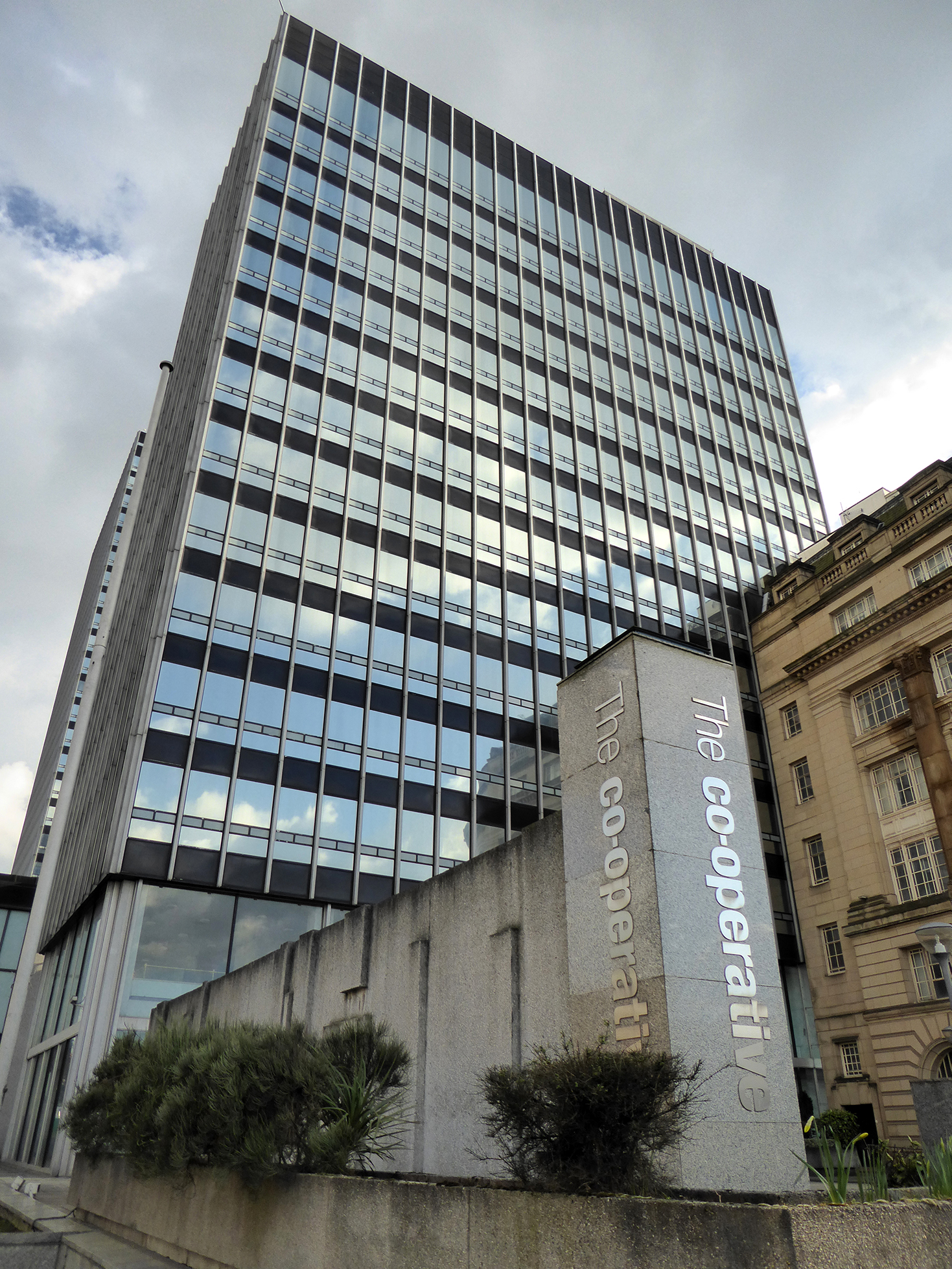
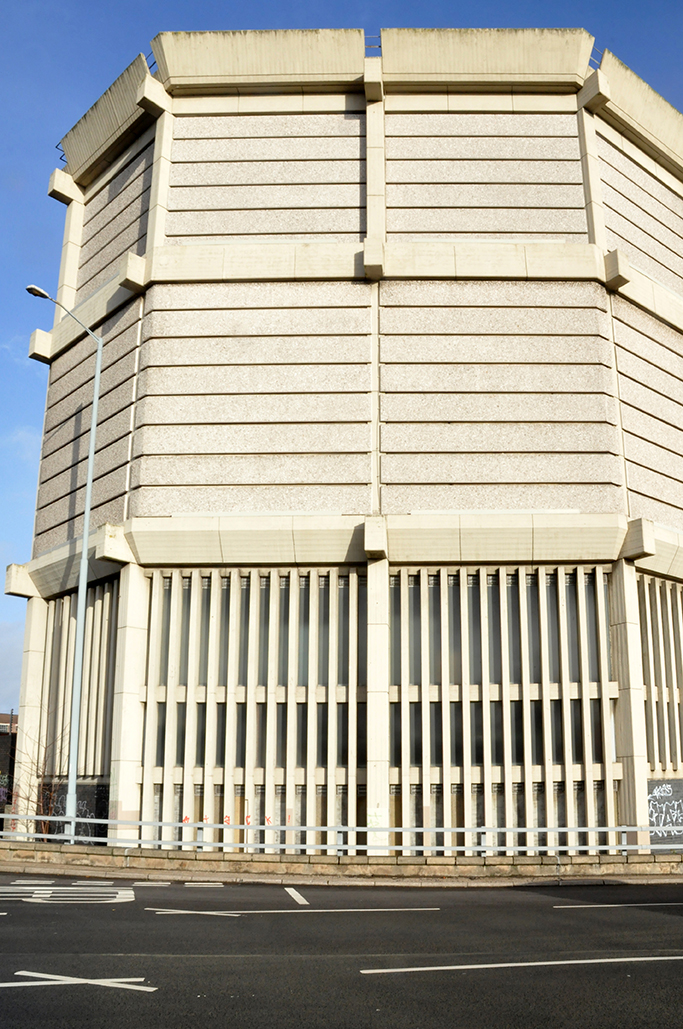
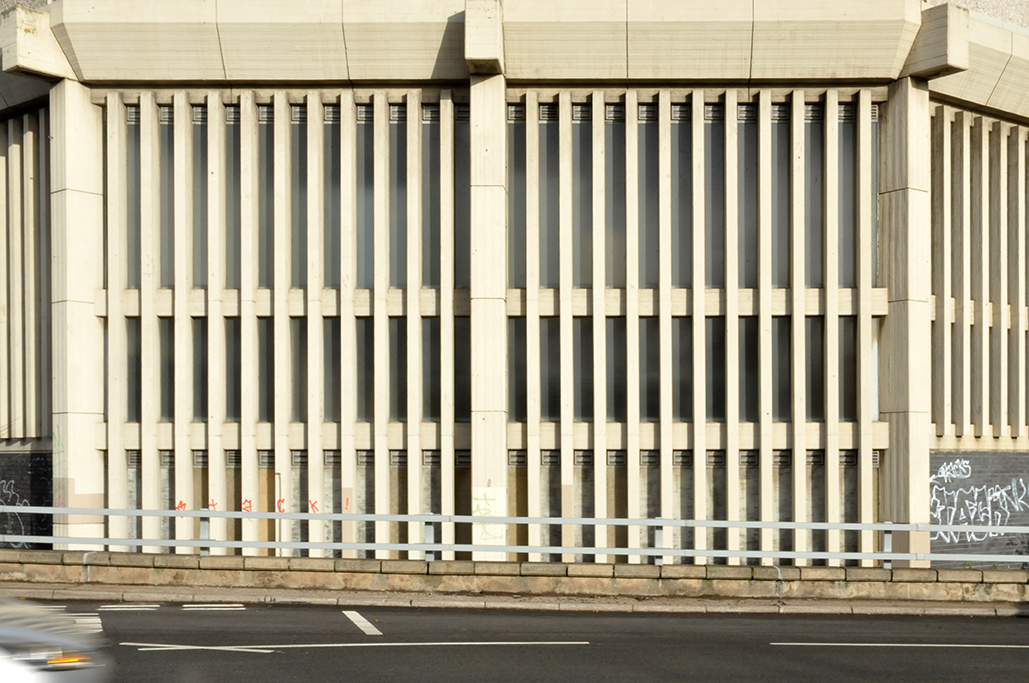
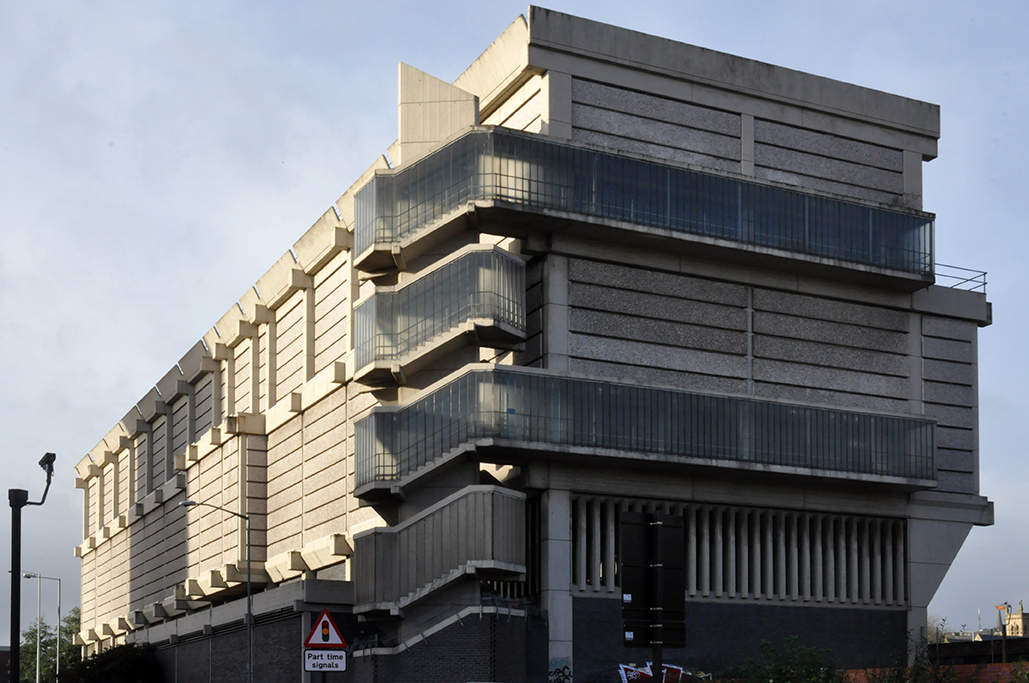
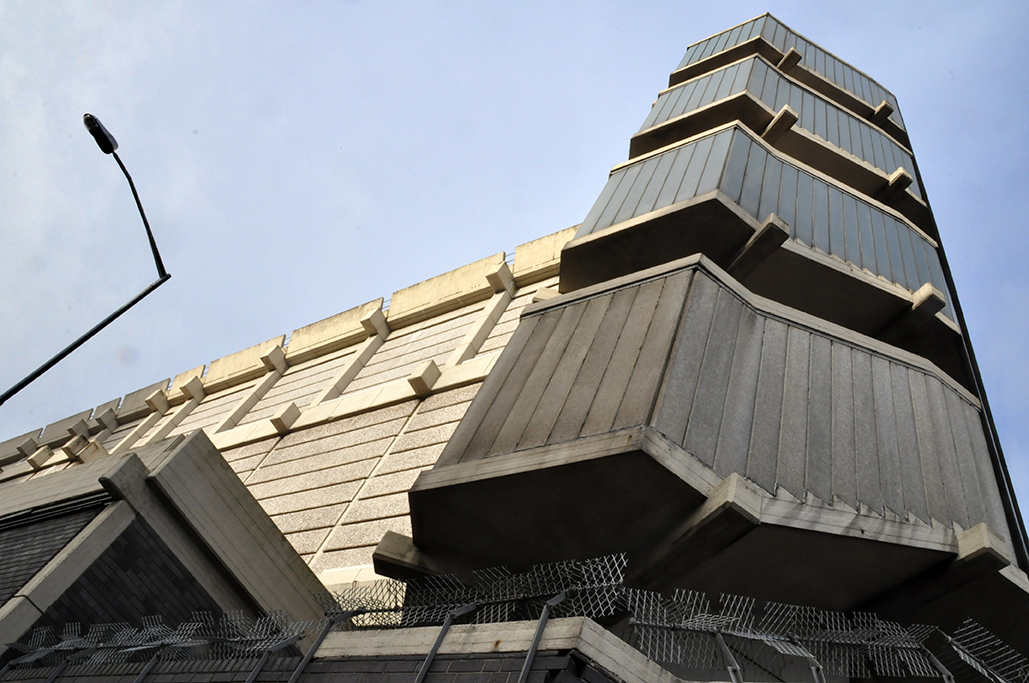
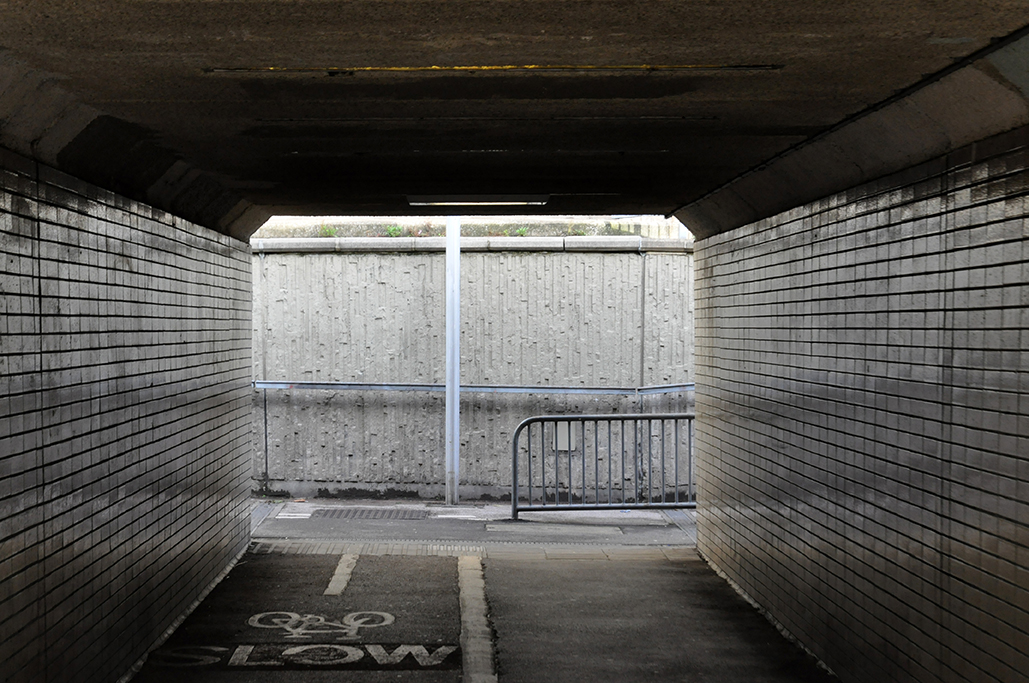
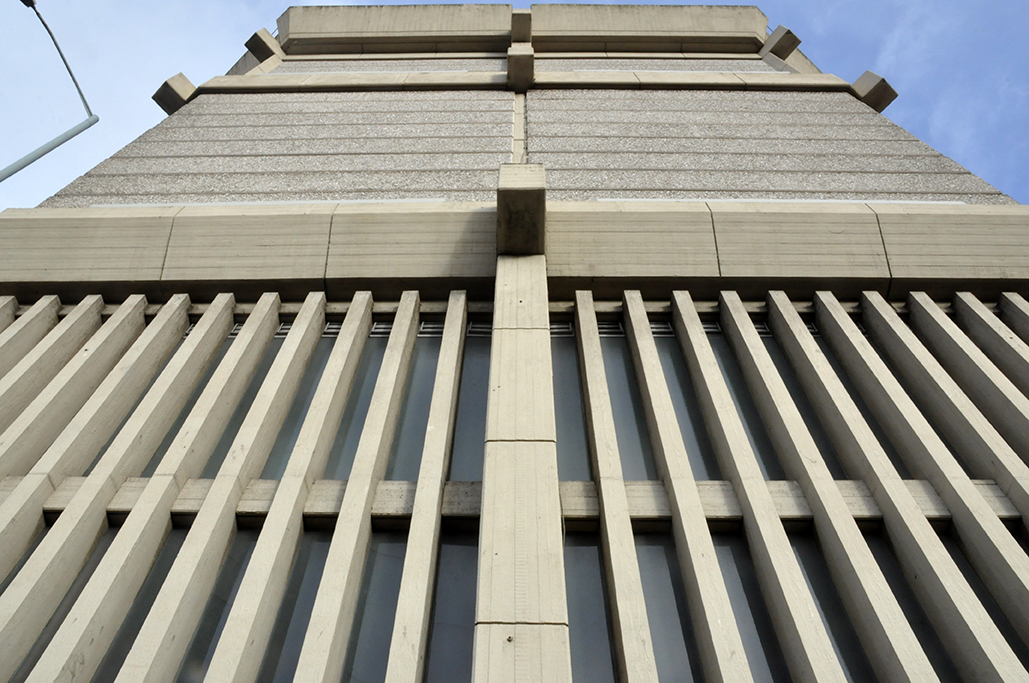
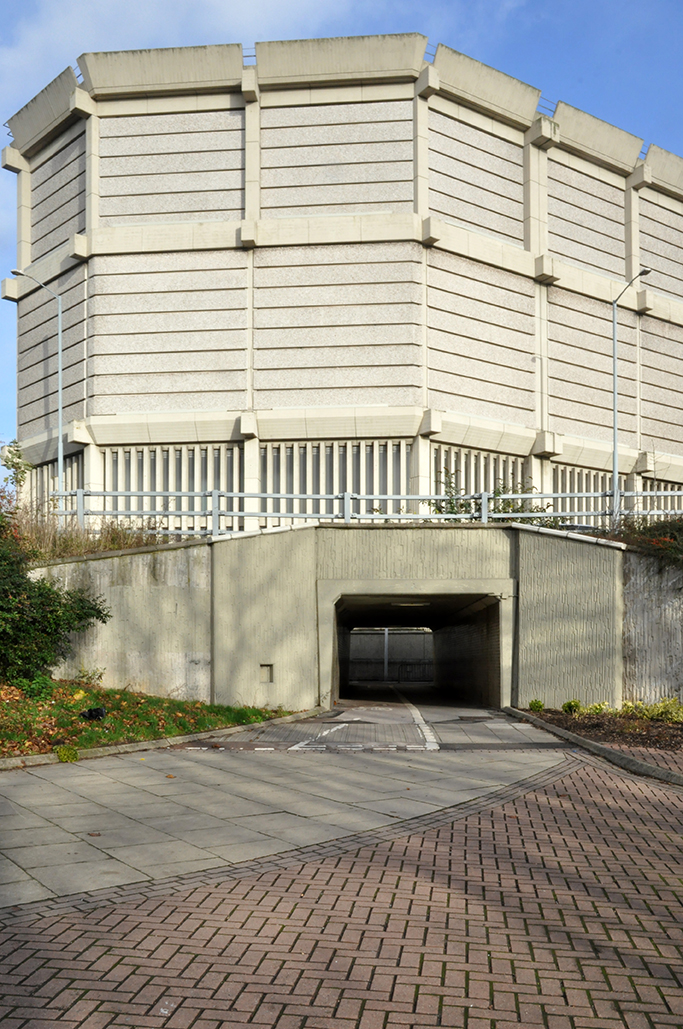
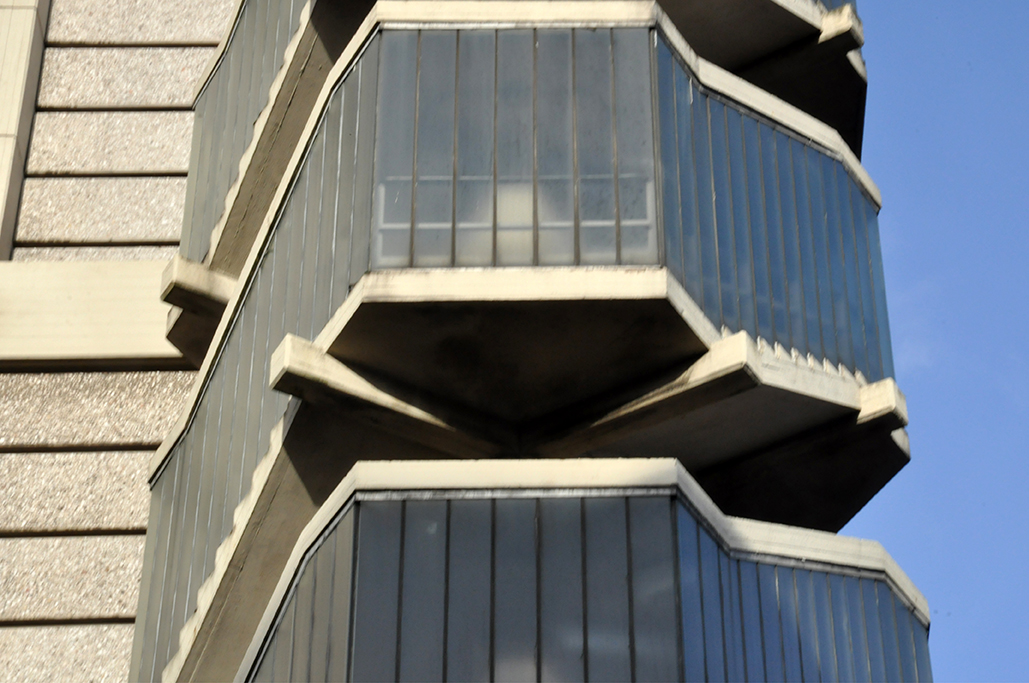
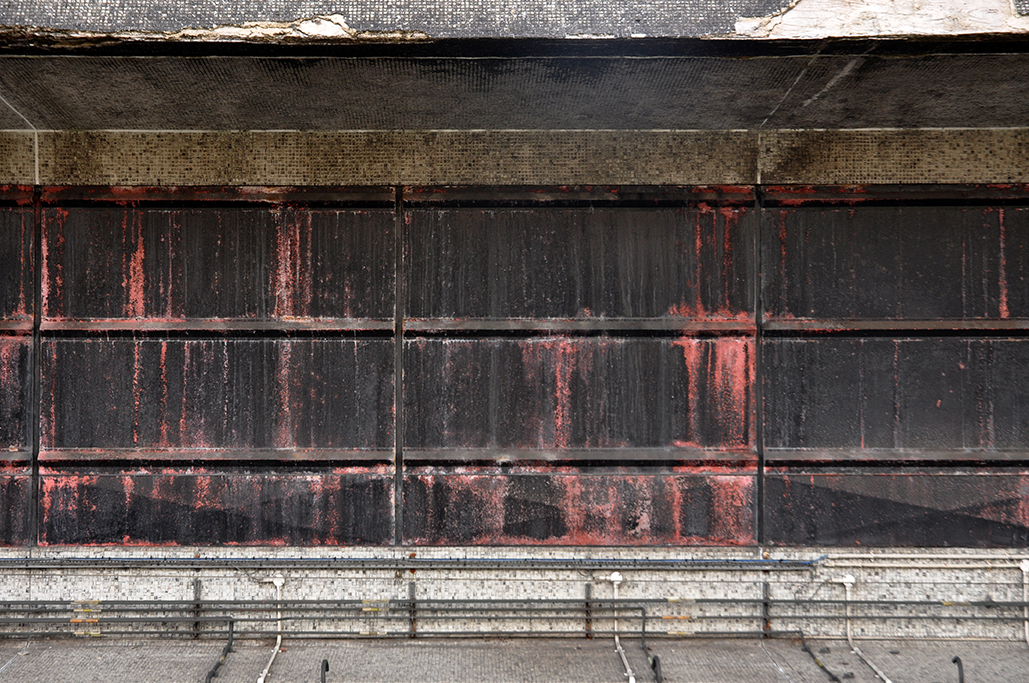
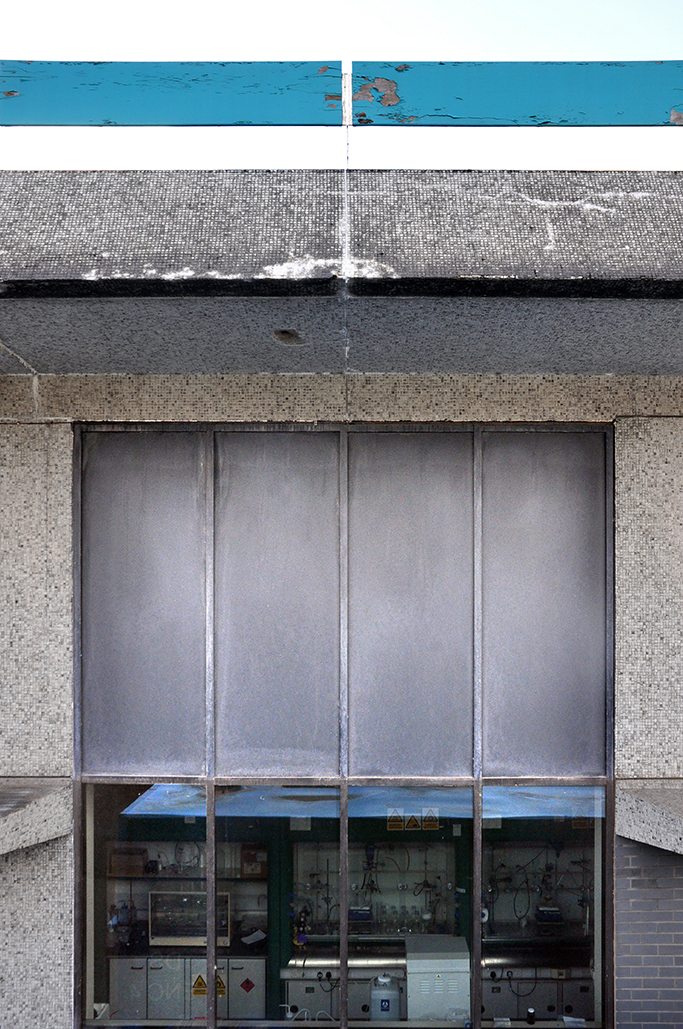
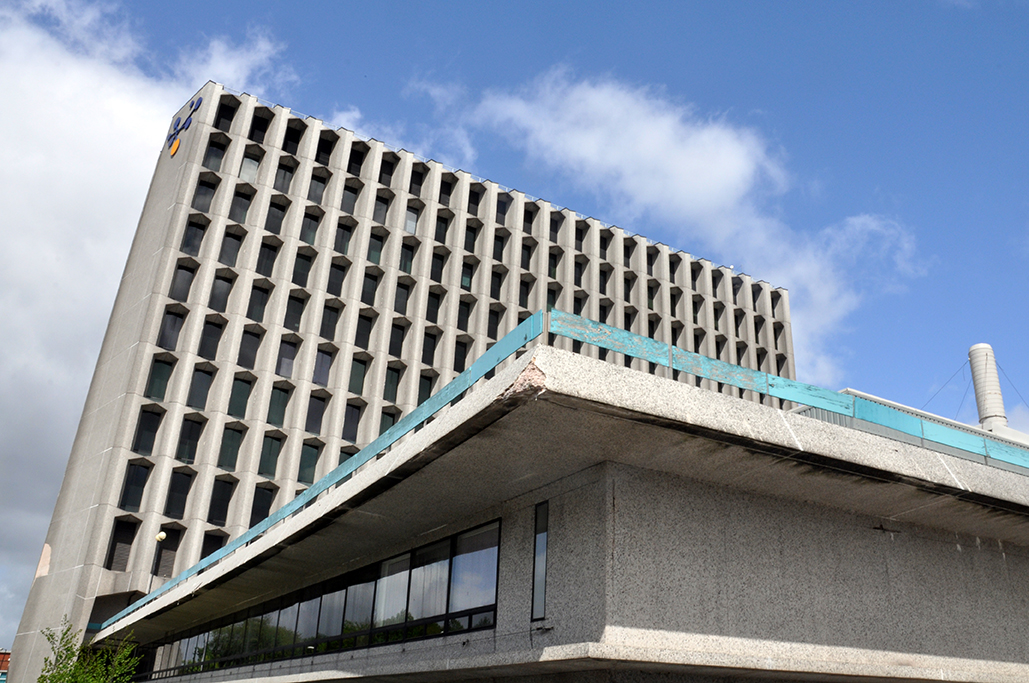
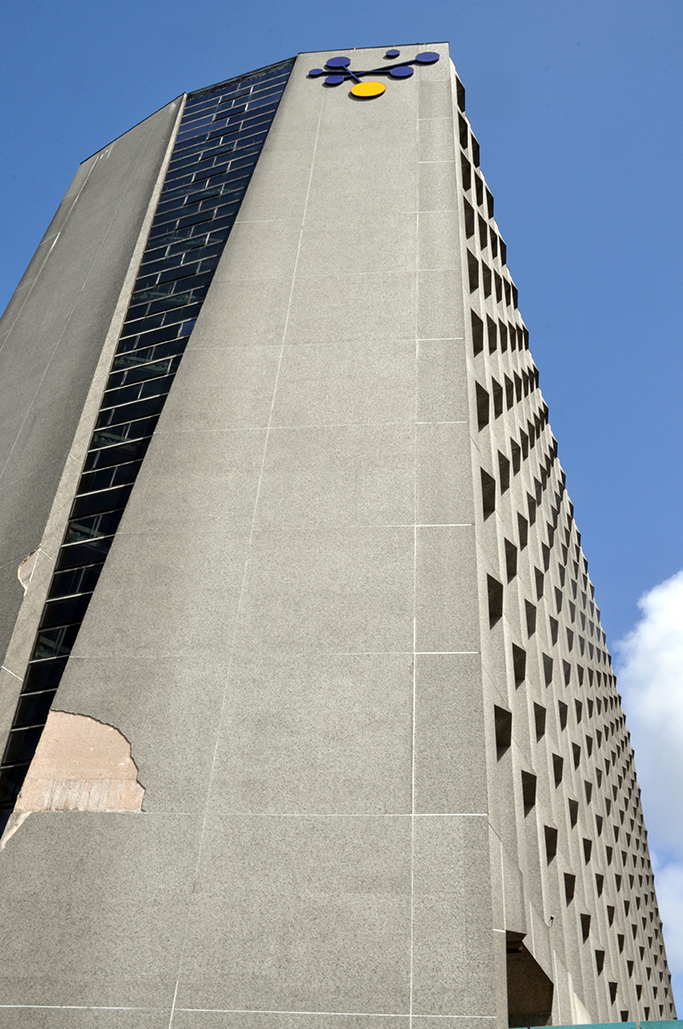
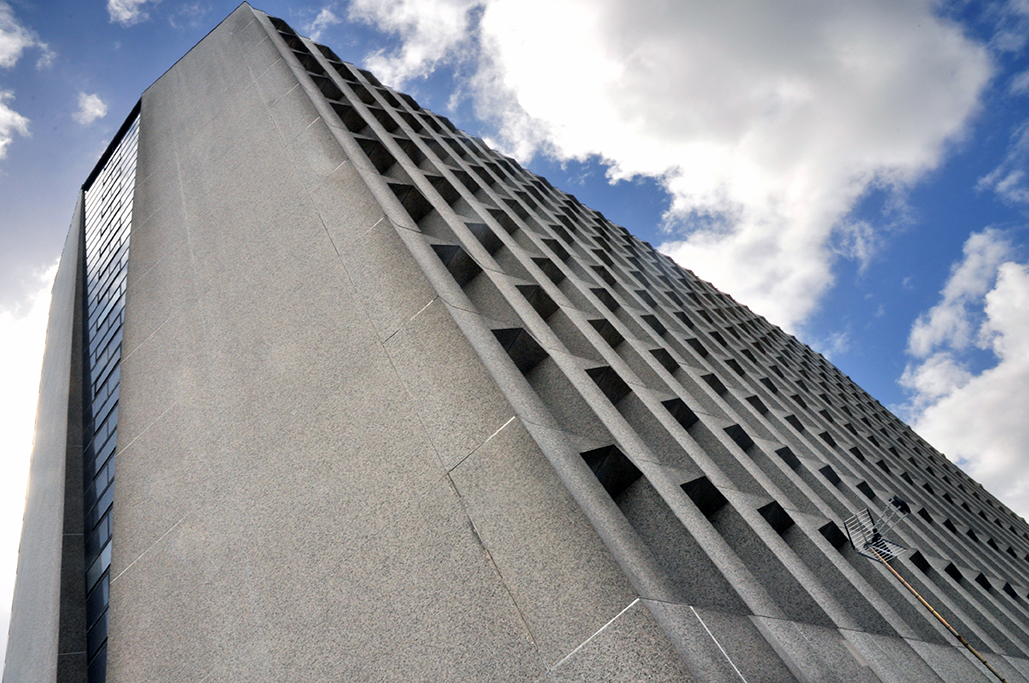
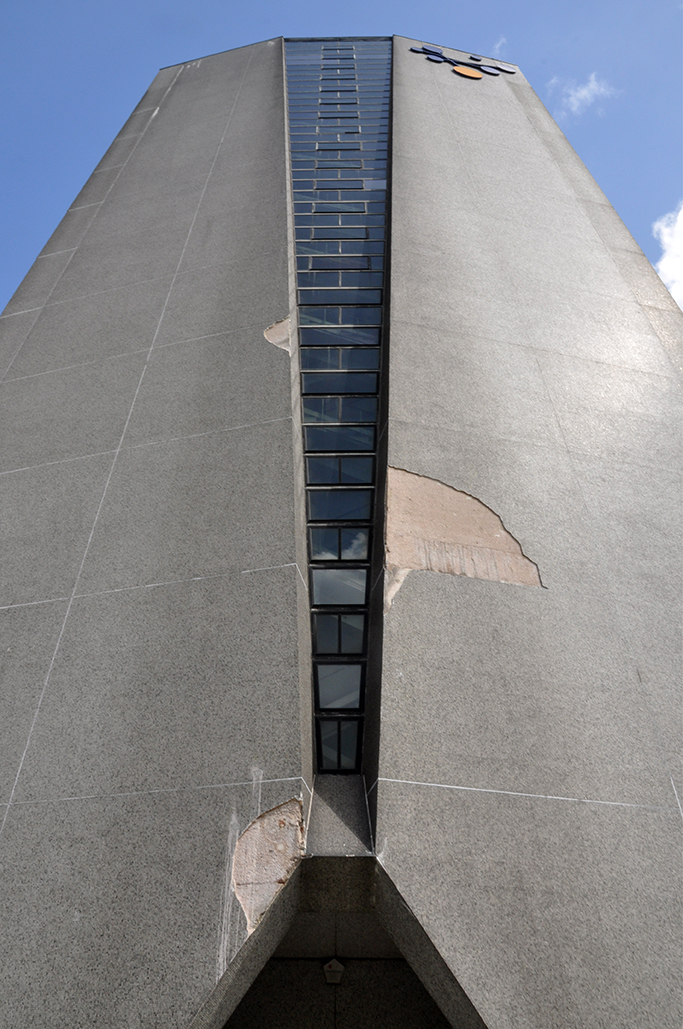
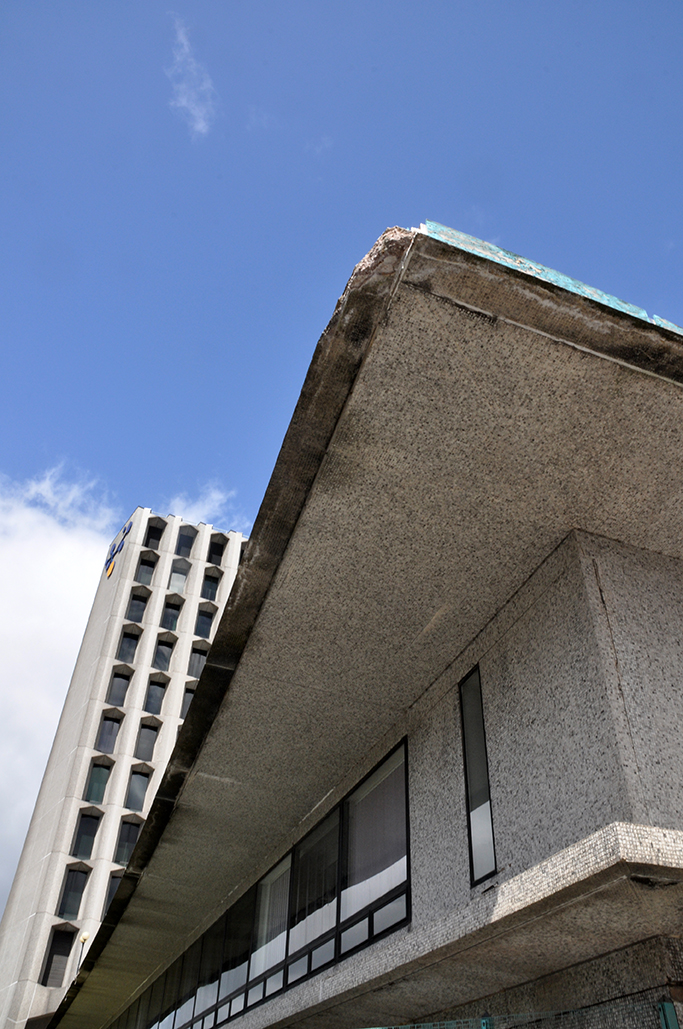
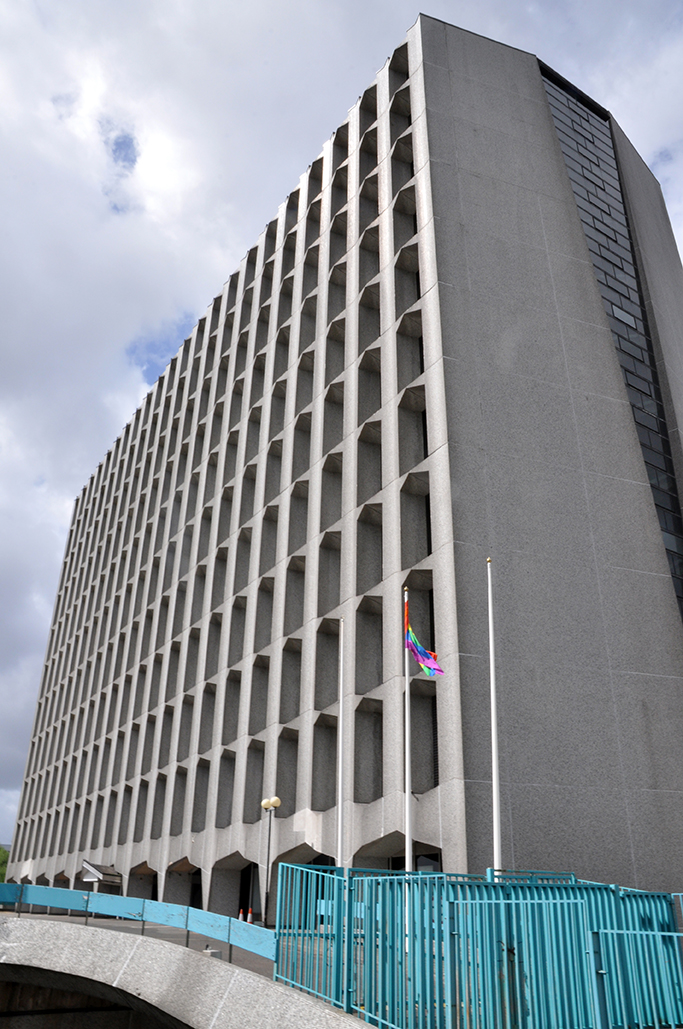
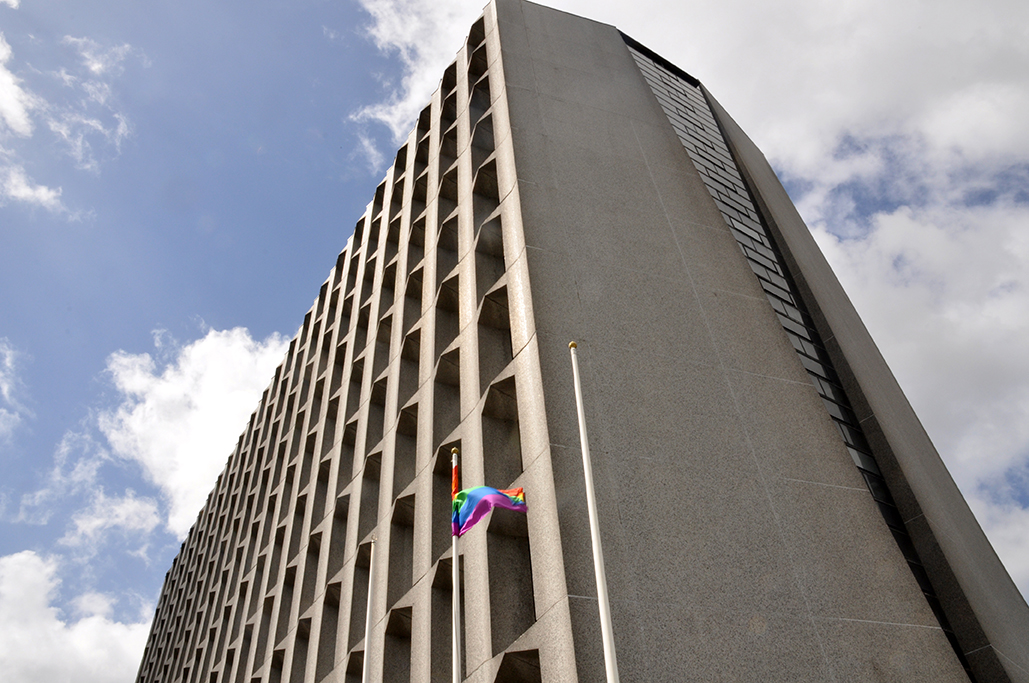
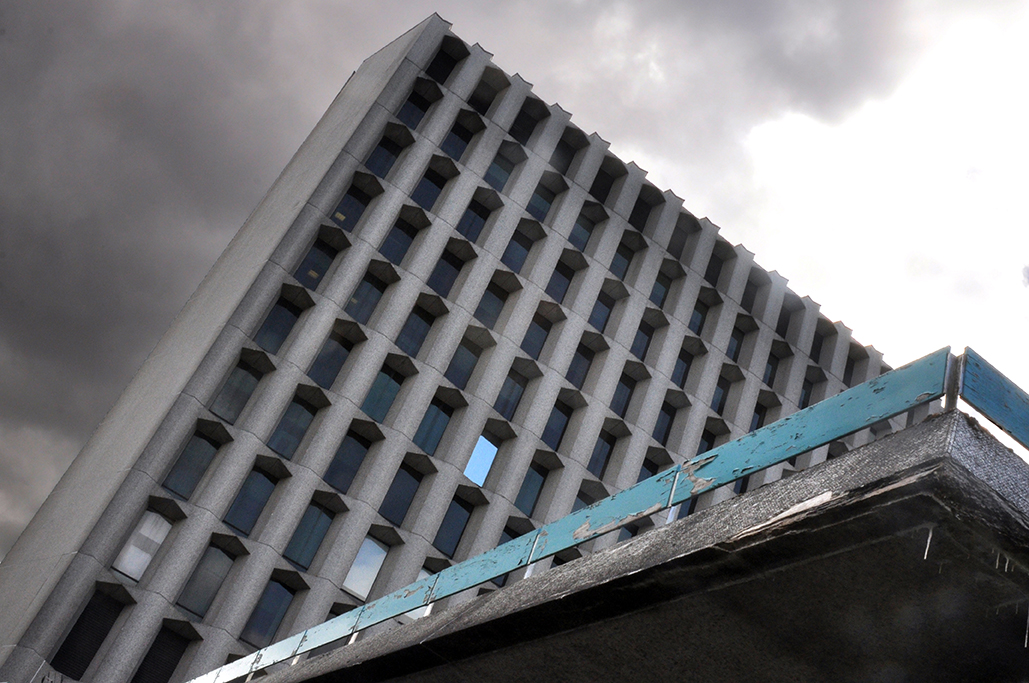
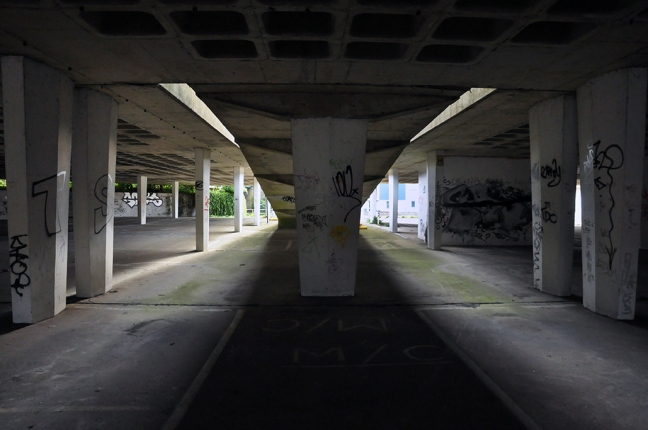
“Seifert’s corporate buildings were regularly bold, those in Manchester no exception, but this is perhaps the most monolithic of his North-West schemes. The site, in a depression adjacent the River Irk in Blackley, was formerly owned by ICI, by whom the building was commissioned. At one time, a four storey ICI laboratory building by émigré architect Serge Chermayeff also stood close. Here, the simple massing, formed by the junction of horizontal and vertical volumes, bears several of Seifert and Partners trademark gestures; the hexagonal geometries, the cut away sections of wall to form entrance ways between structural elements, and the repetitive facade. The end wall is reminiscent of Tolworth Tower, also by Seifert. The tower and podium configuration is a product of the brief; the machine hall had to be at ground level and have no construction above. The narrow tower has no internal columns, the structural grid is mirrored in the services arrangement and the two co-exist outside the usable volume of the laboratory space, in the walls and floor. This solution is expressed in the deep reveals of the main façade, services travel vertically between the window modules. Whilst somewhat hidden, the building reveals itself fantastically from elevated vantage points, the tram south from Bowker Vale station being one such location. Originally it was intended that four of these towers would be built and run along the river valley in some sort of massive futurist domino arrangement.”
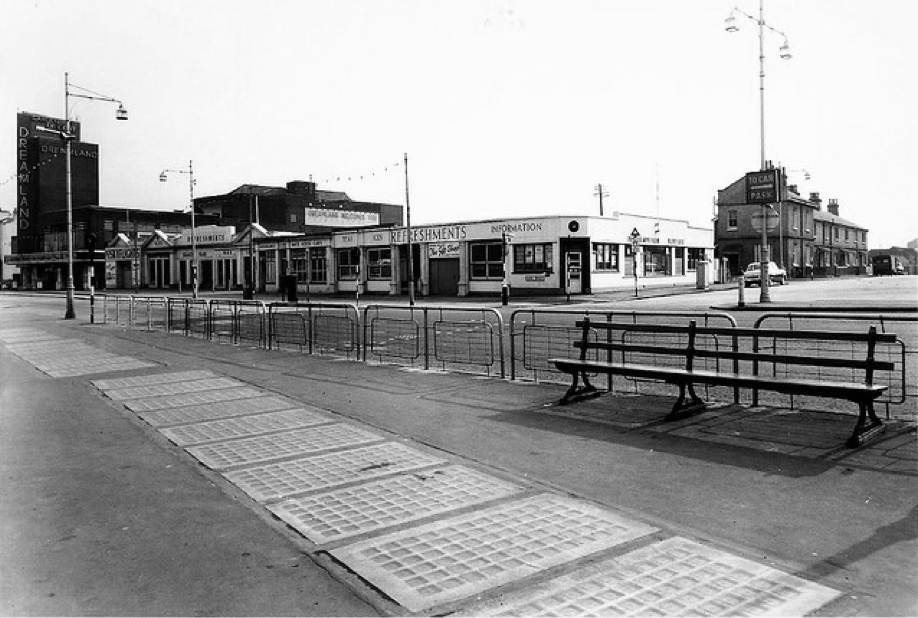
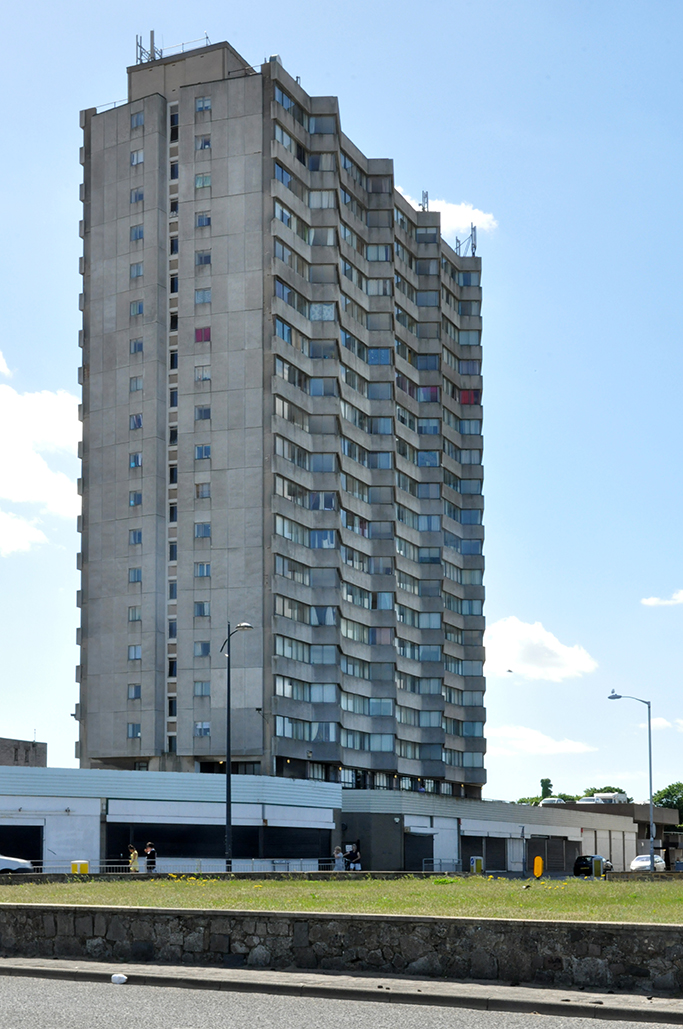
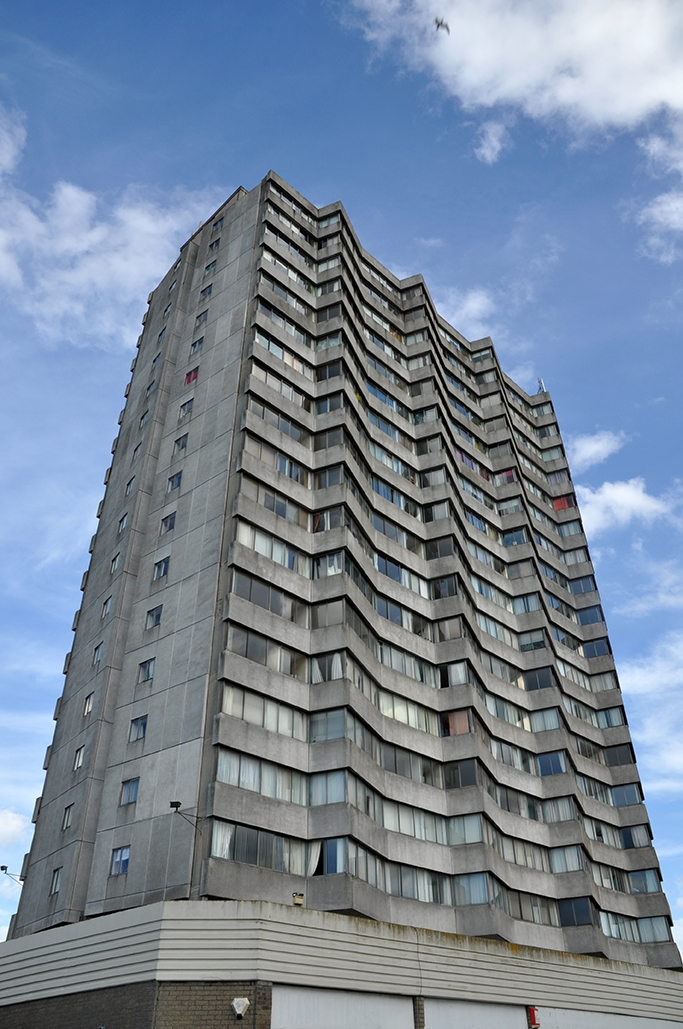
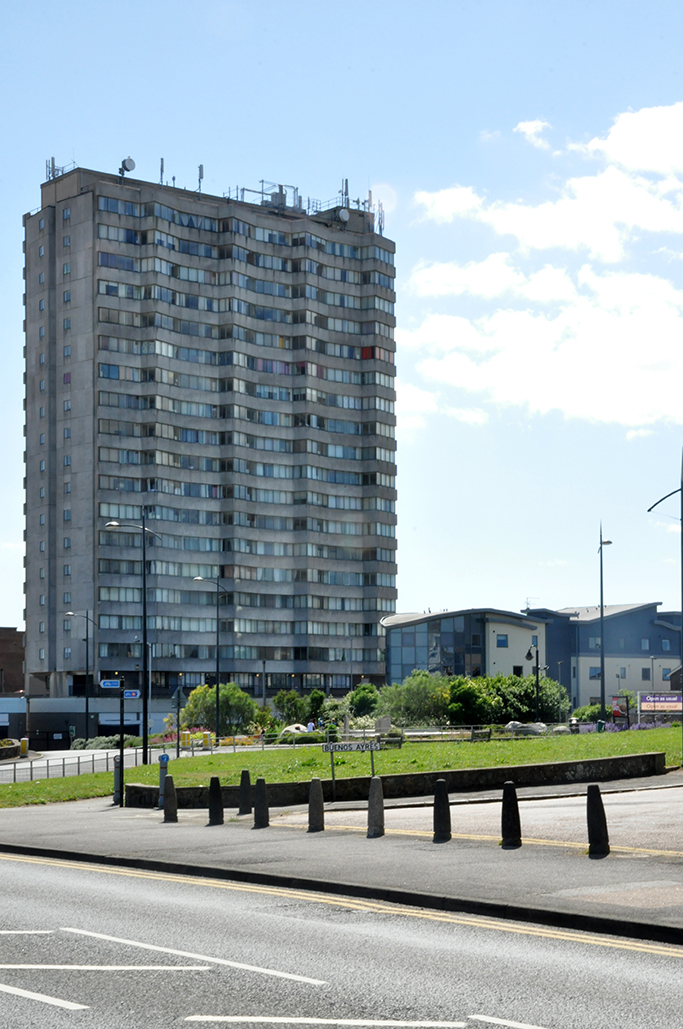
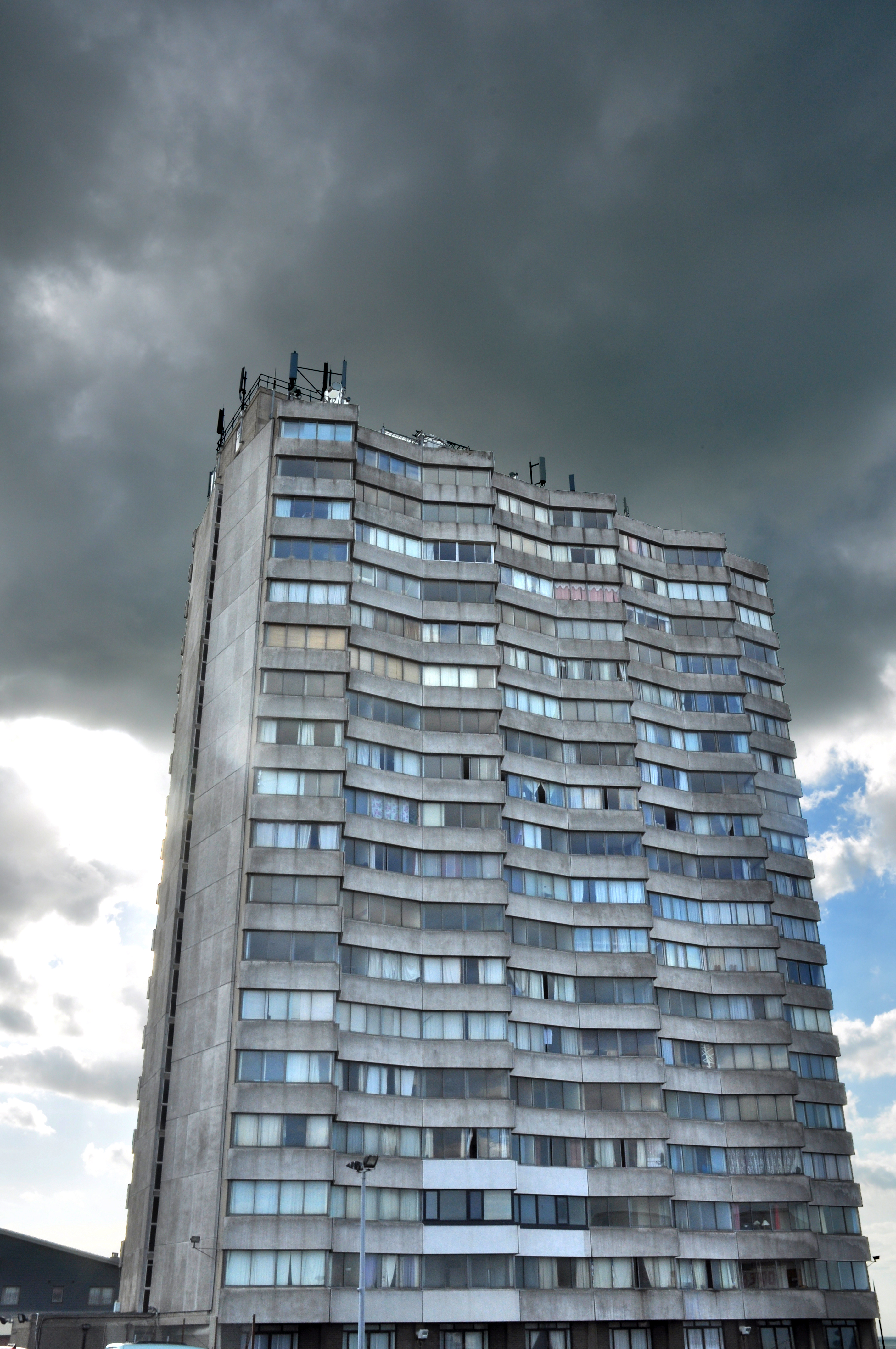
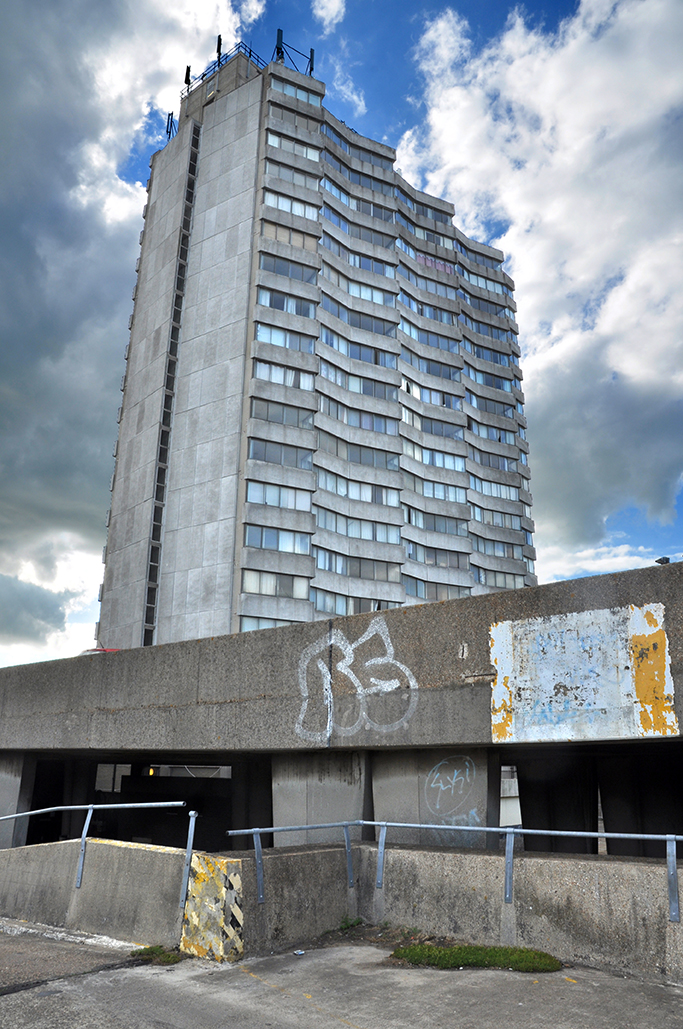
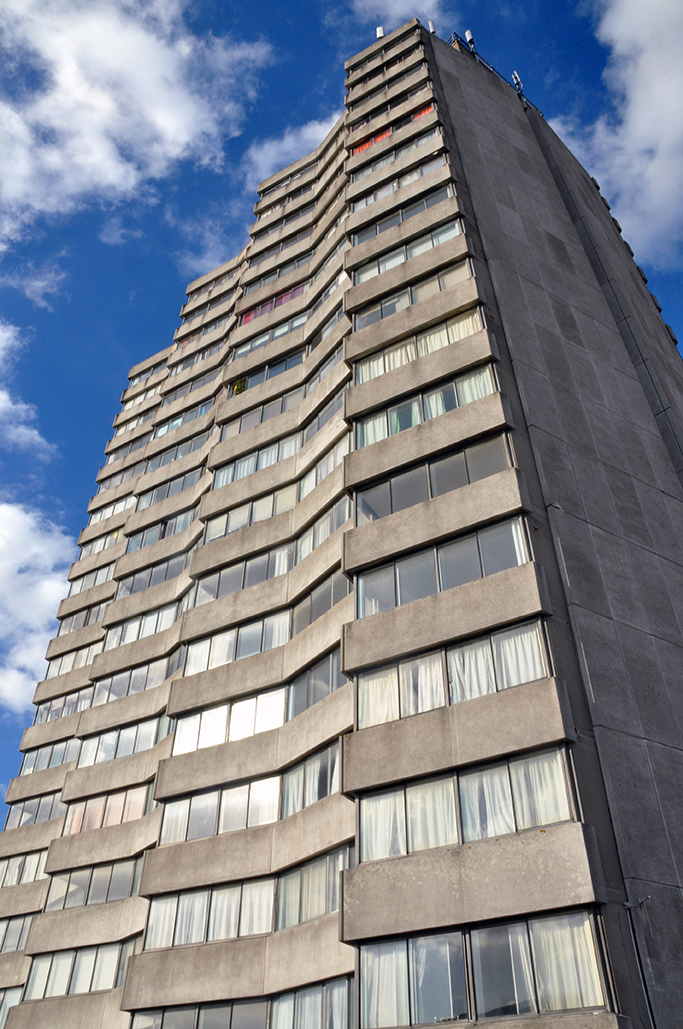
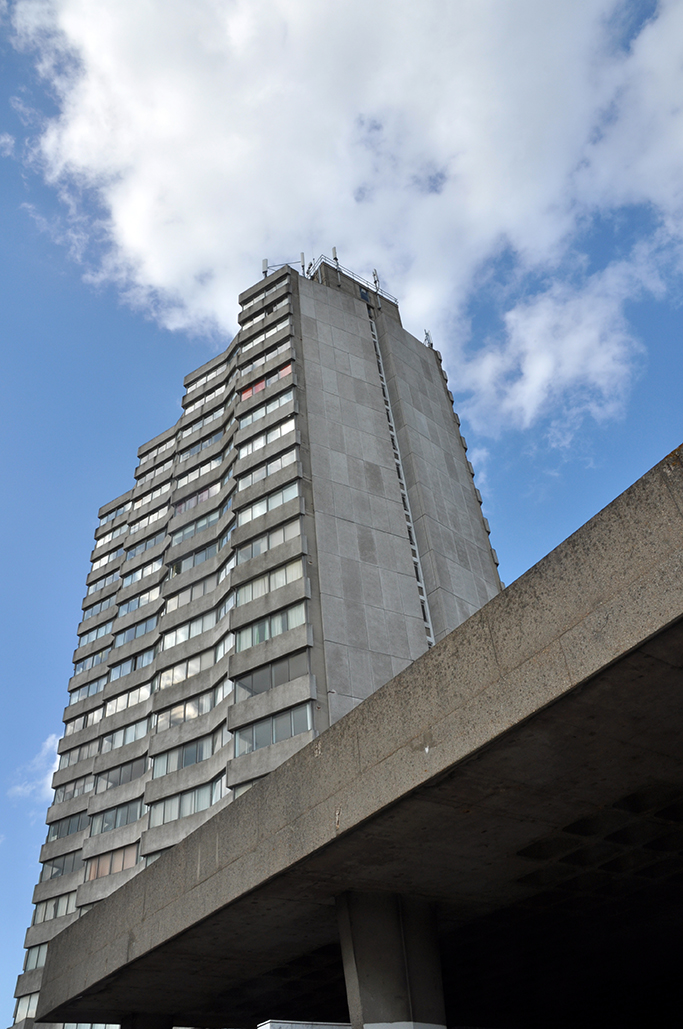
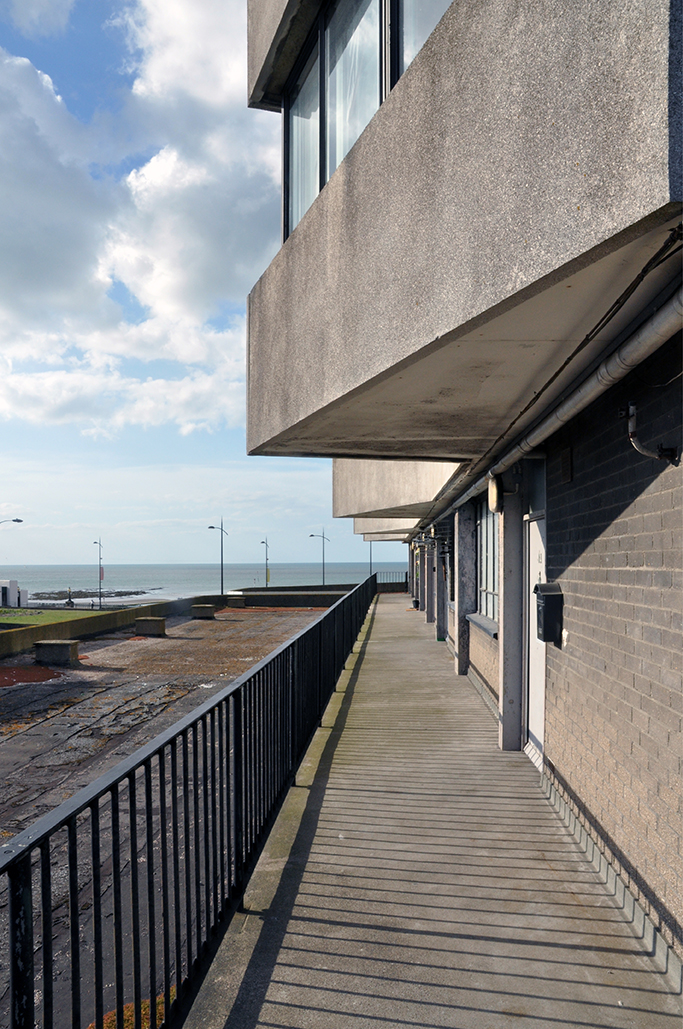
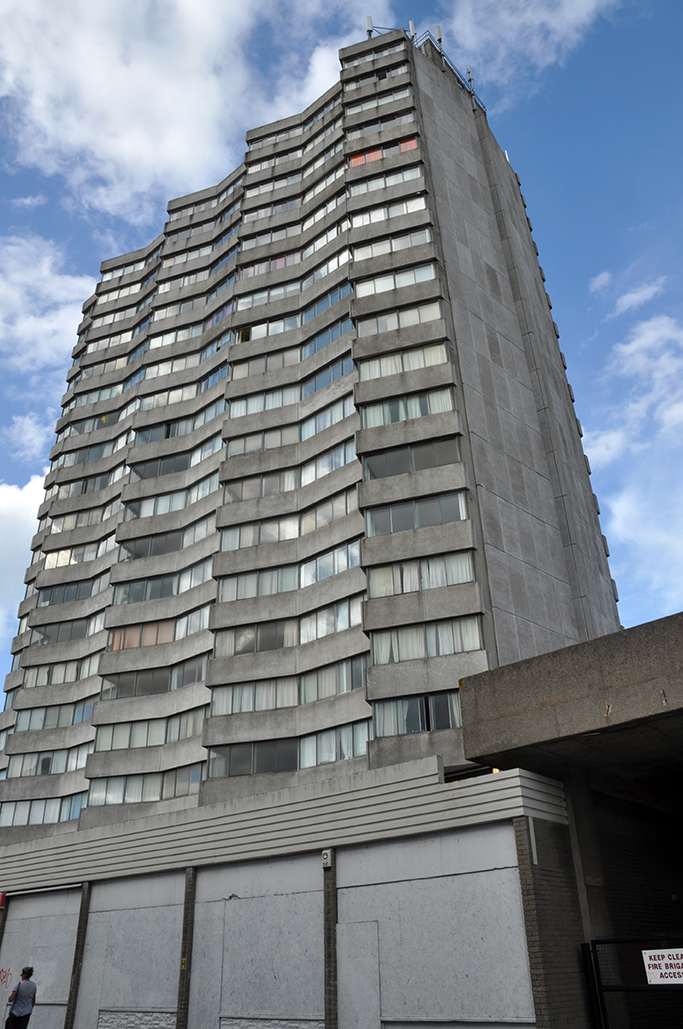
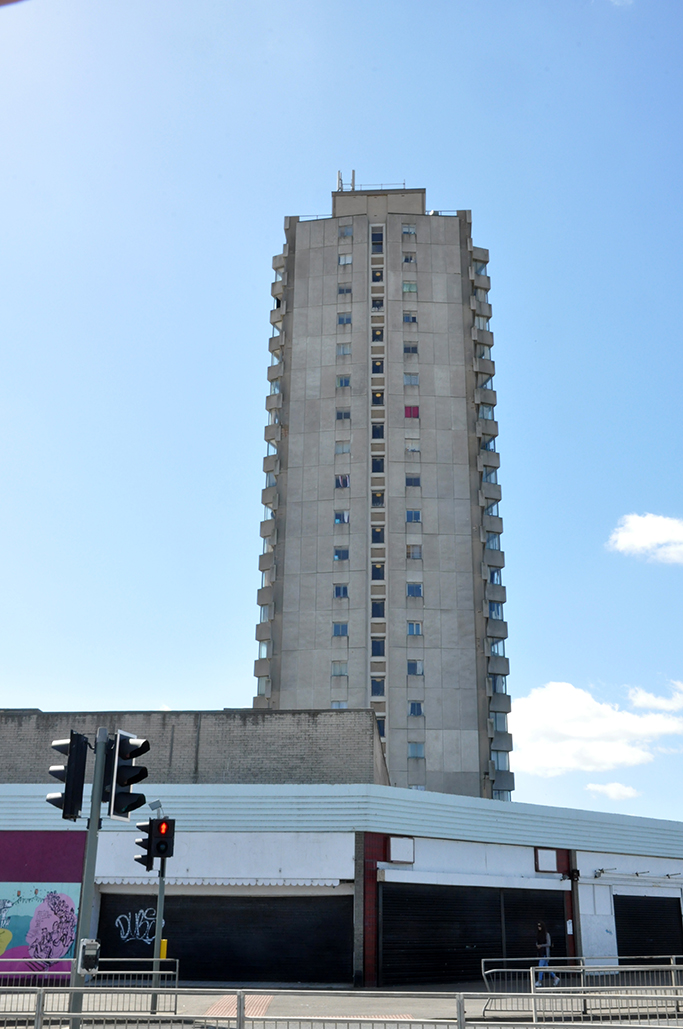
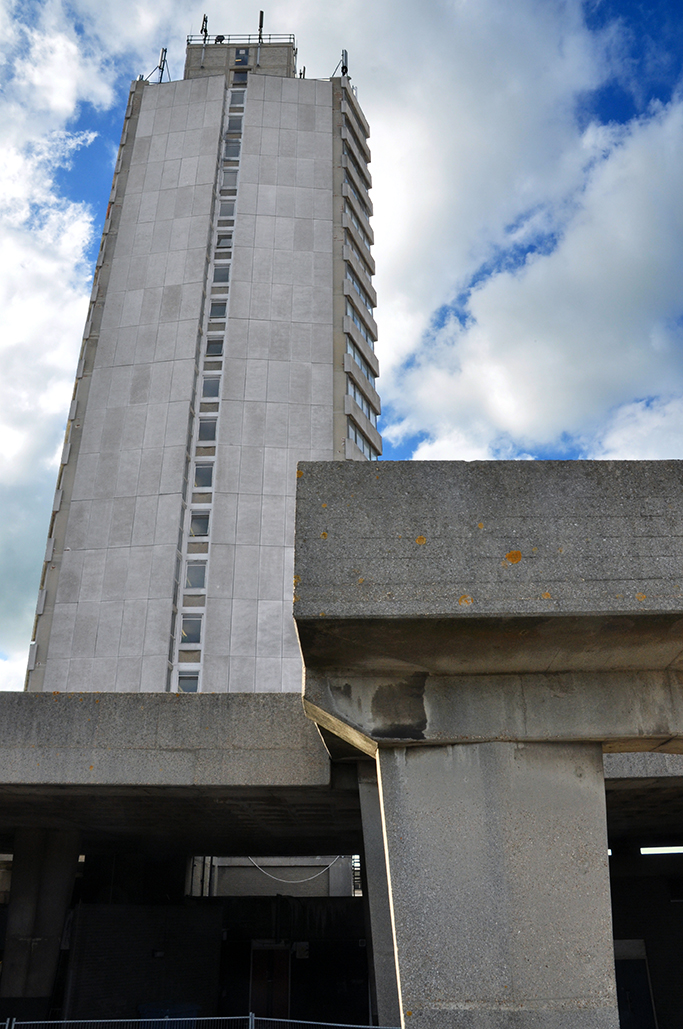
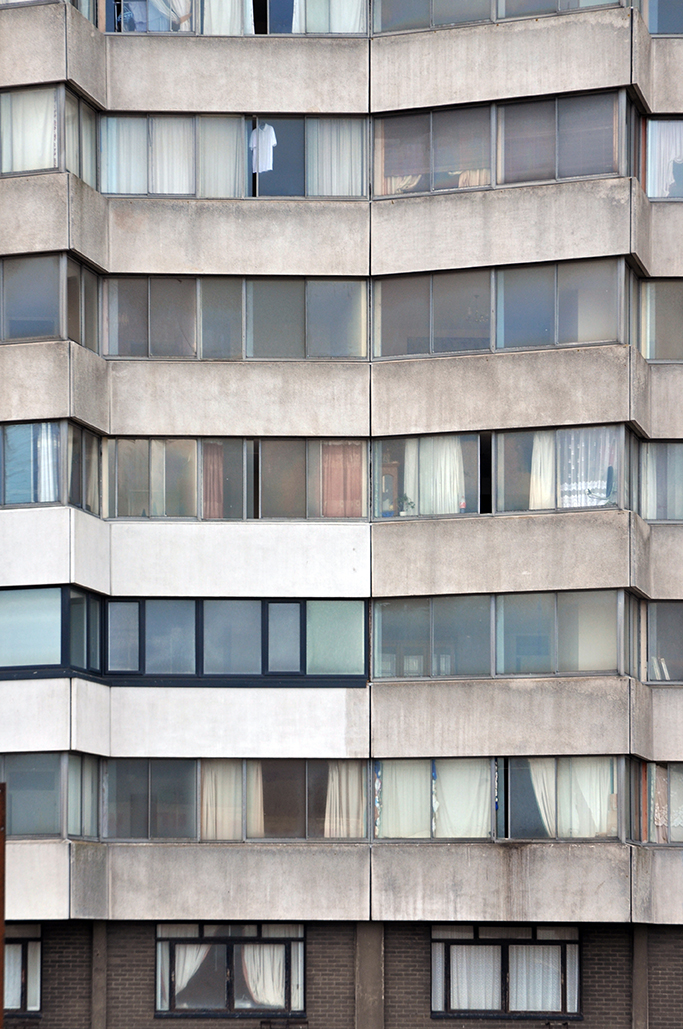
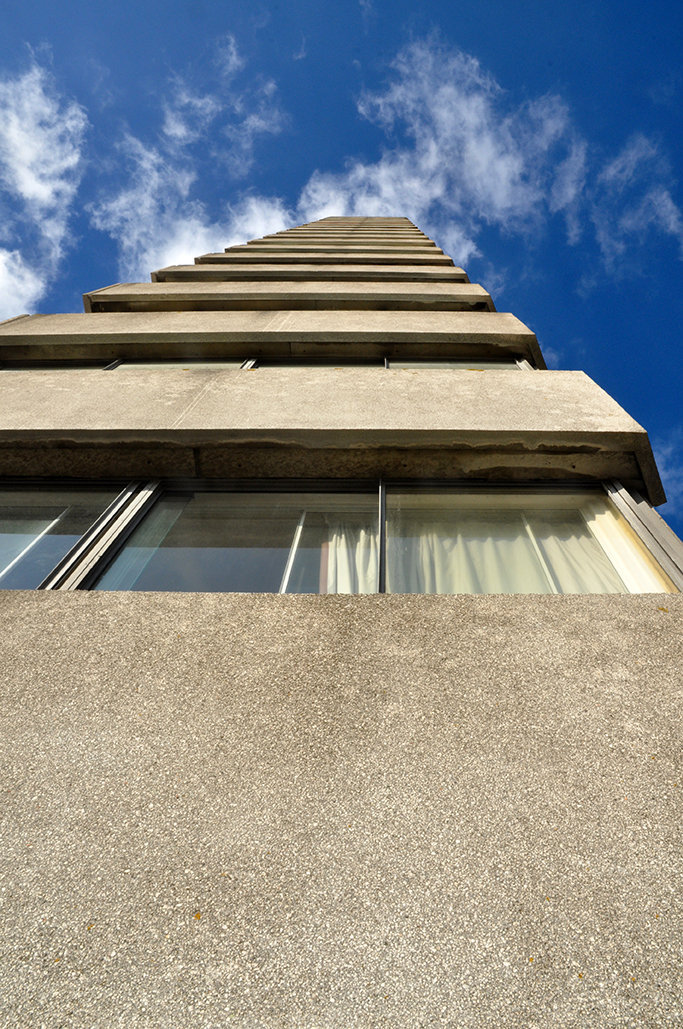
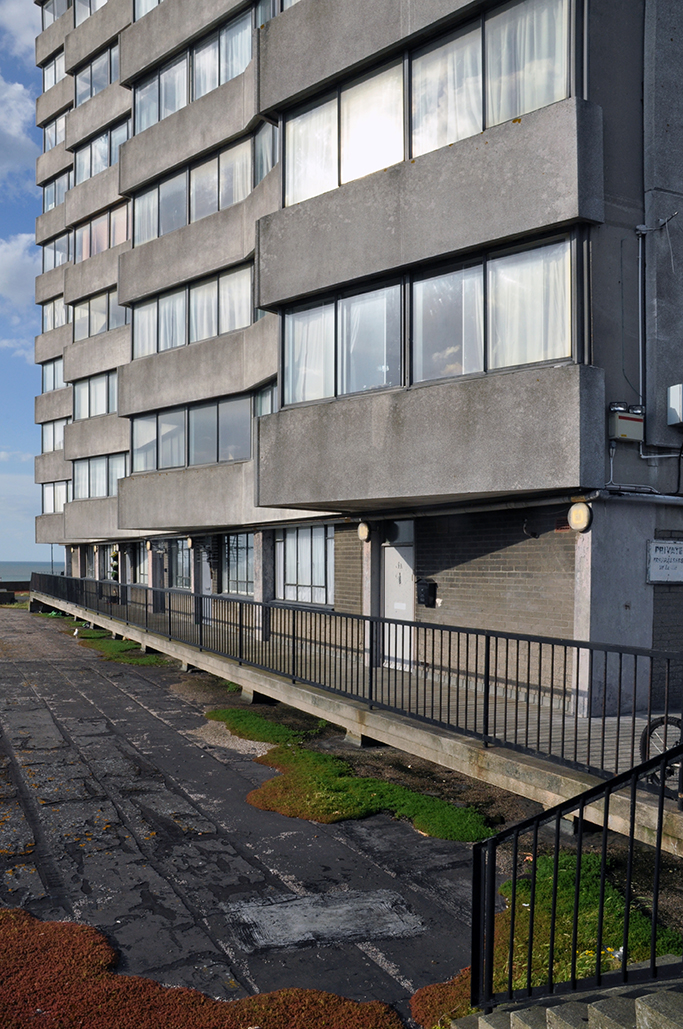
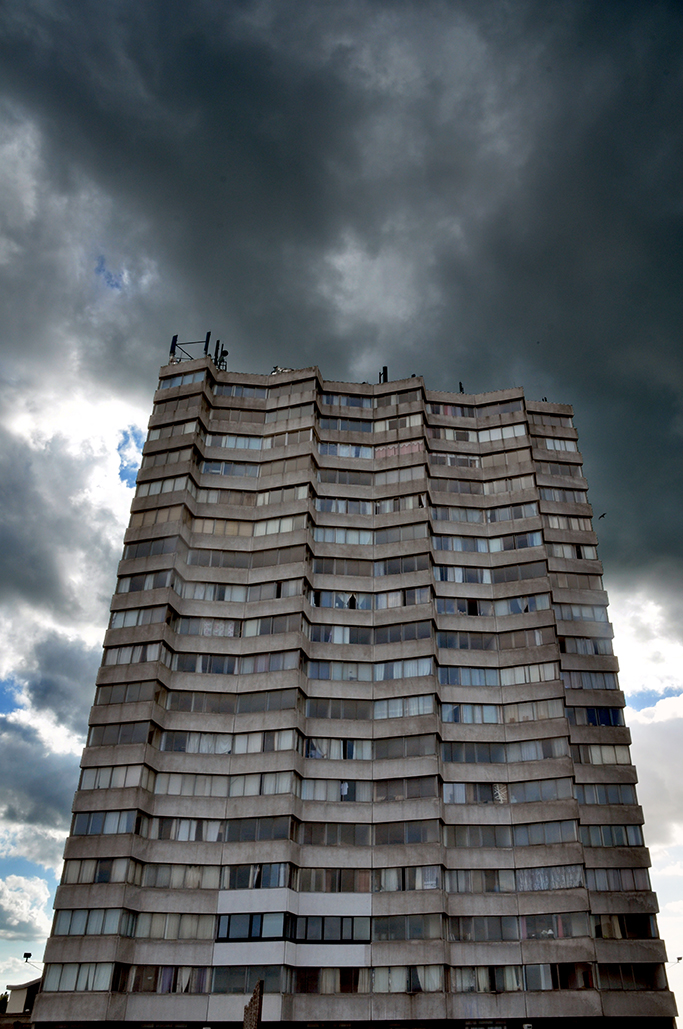
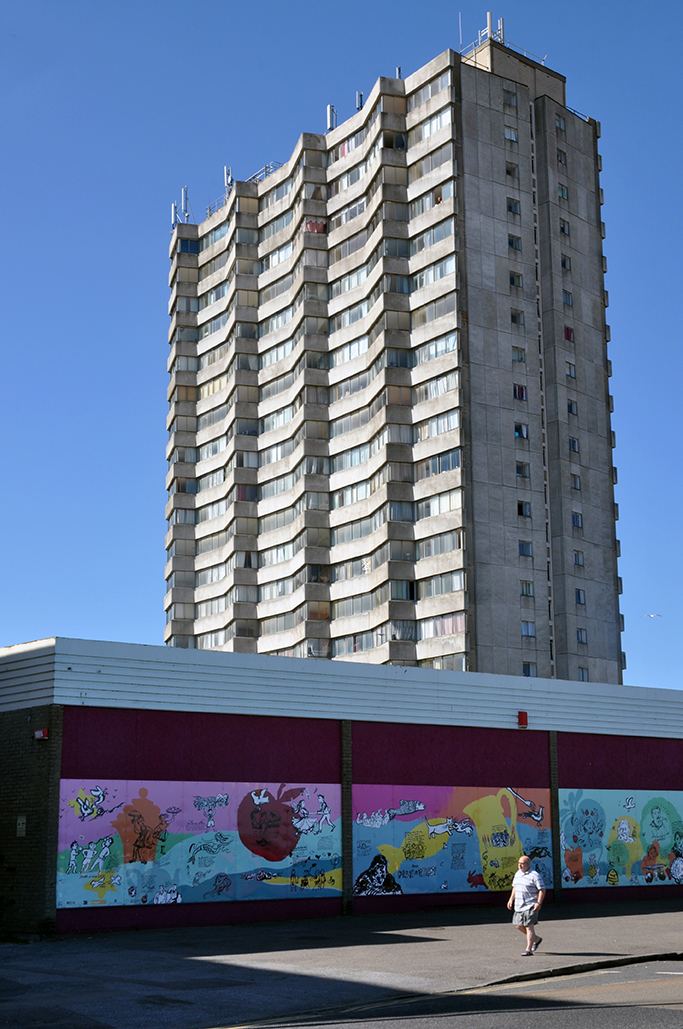
Arlington House is a 58 metre high eighteen-storey residential apartment block in Margate, Kent, England.
It was built in 1964, it has 142 apartments, and was designed by Russell Diplock & Associates, developed by Bernard Sunley Trust, and built by the contractors Bernard Sunley & Sons.
The sides of the building have a wave-like design, providing both inland and sea views.
It was initially advertised as Britain’s first park and buy shopping centre with luxury flats , incorporating a theatre, restaurant and rooftop swimming pool.
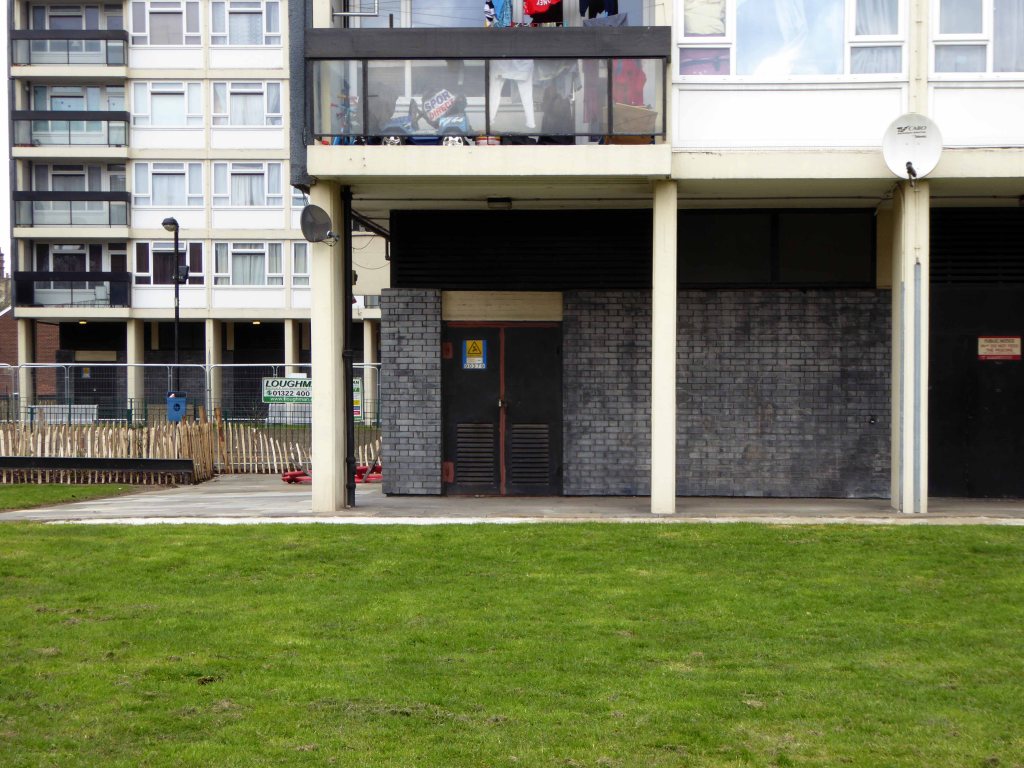
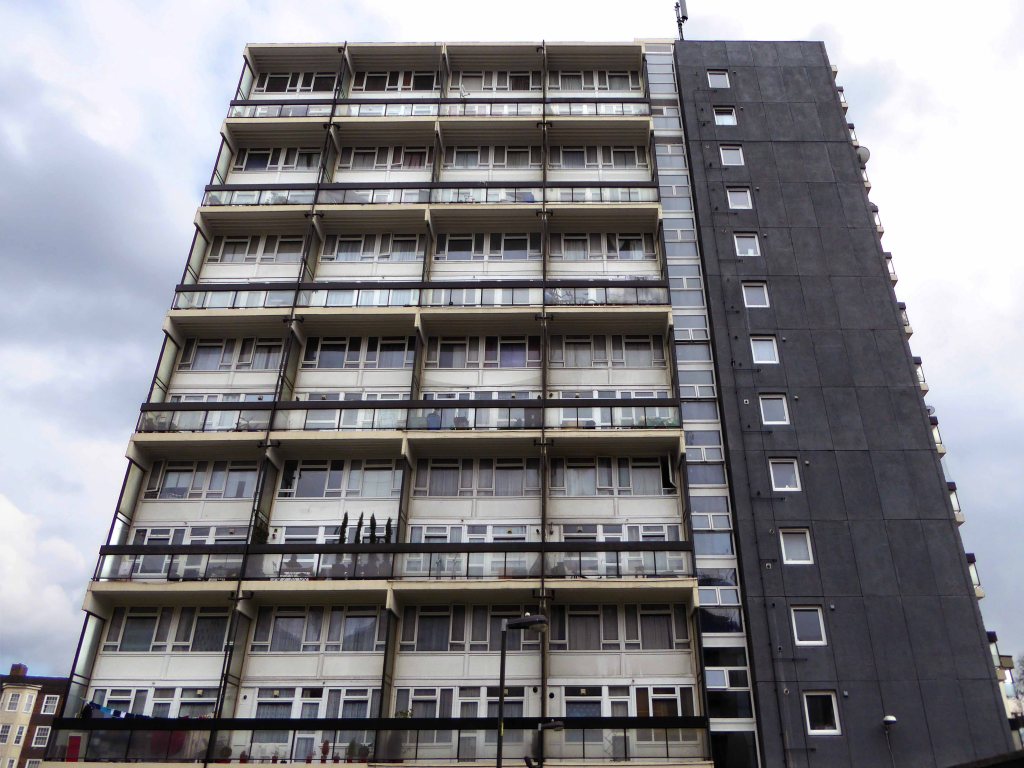
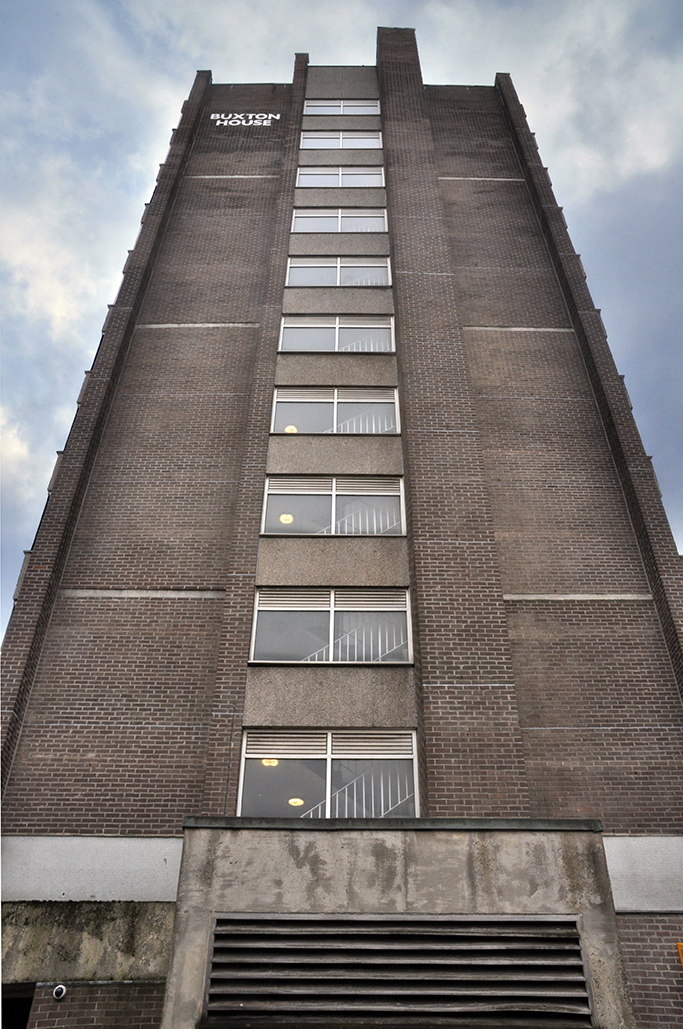
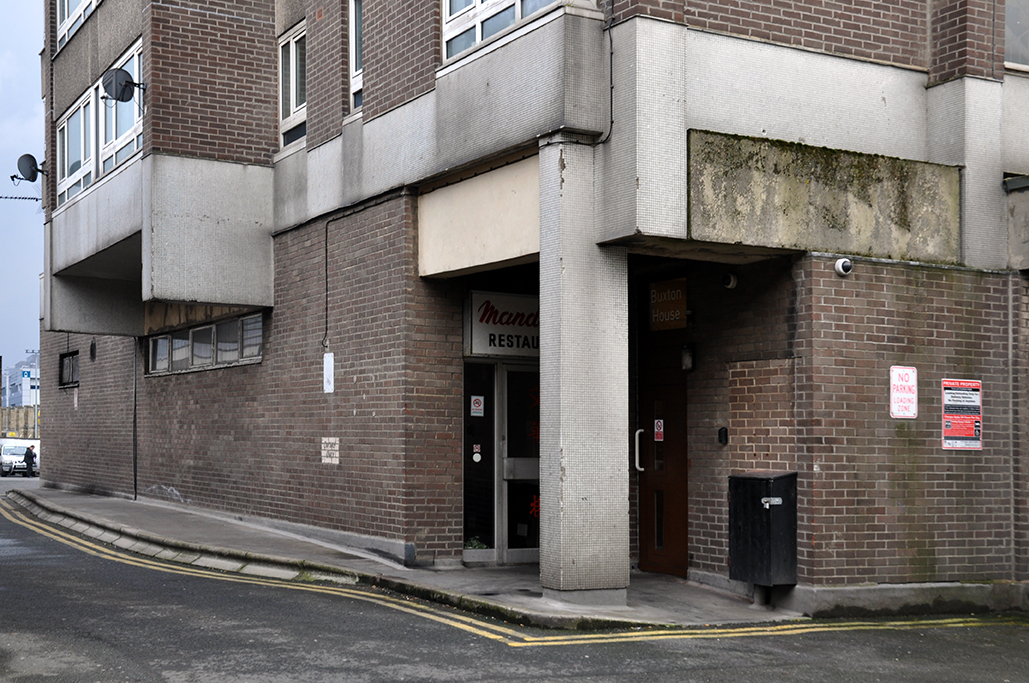
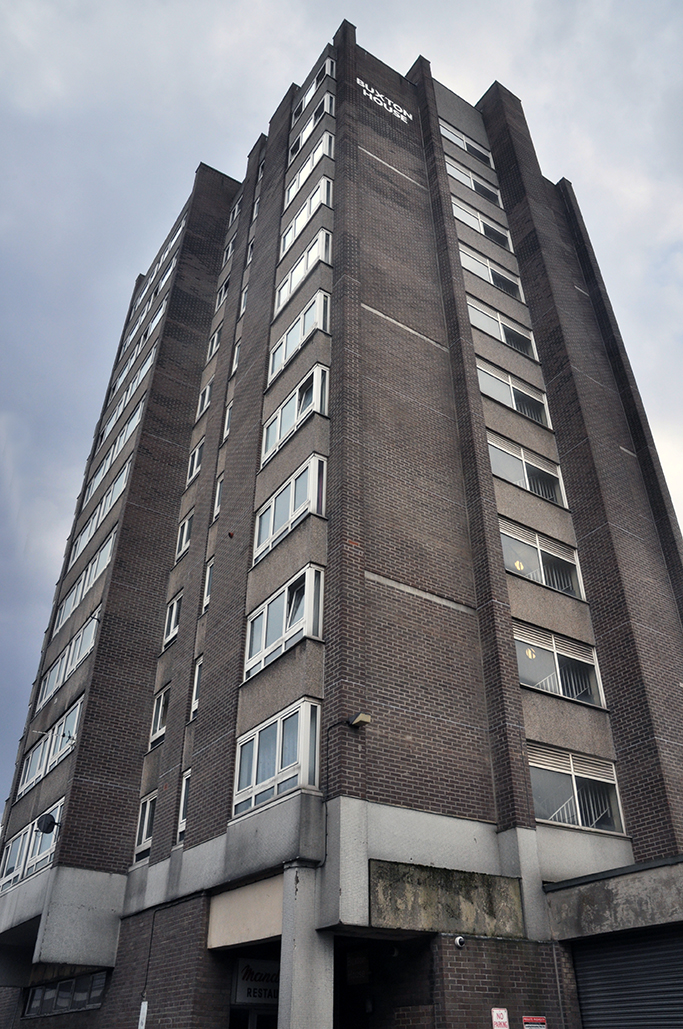
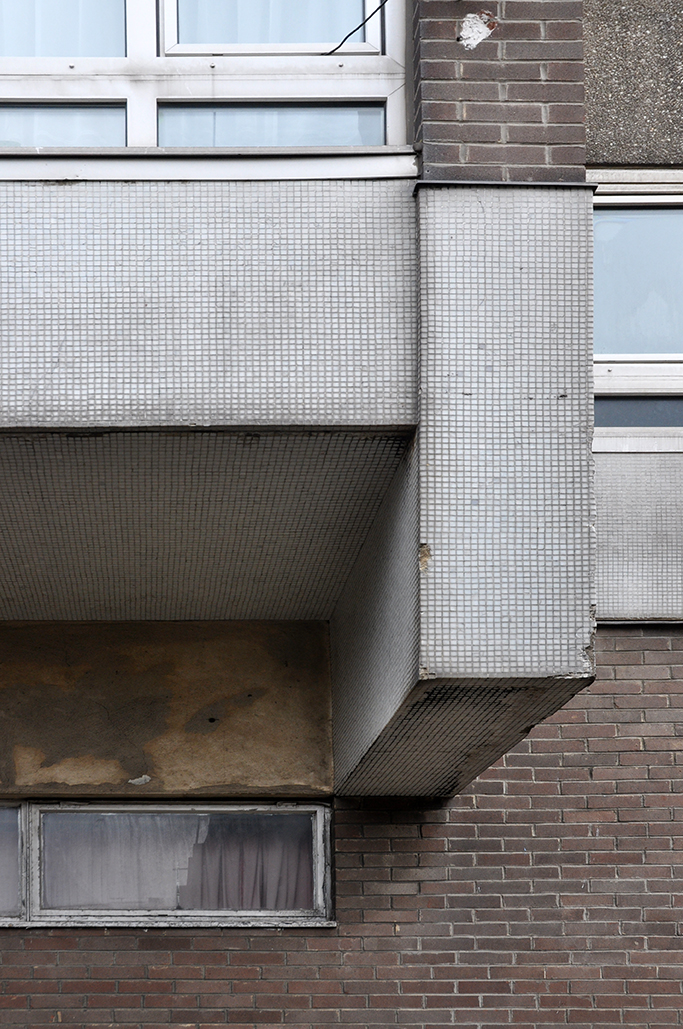
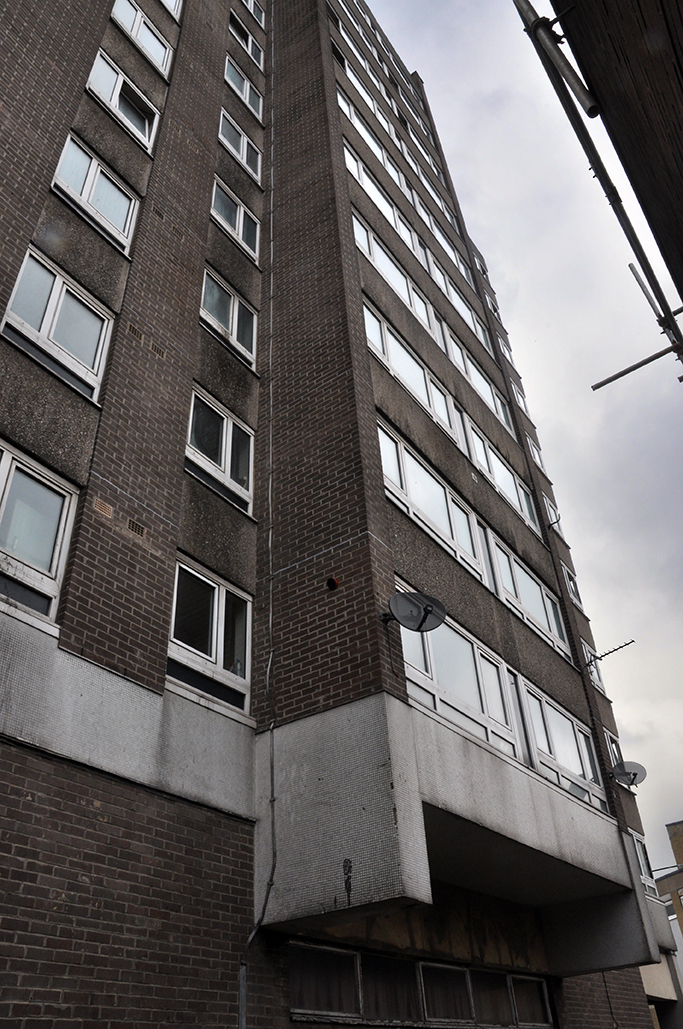
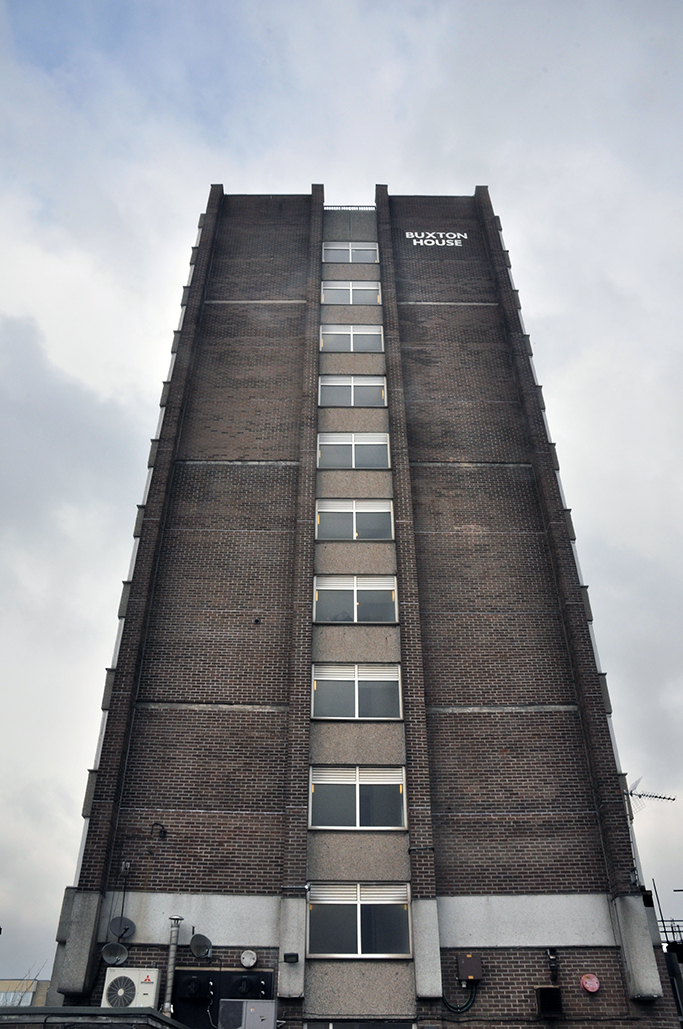
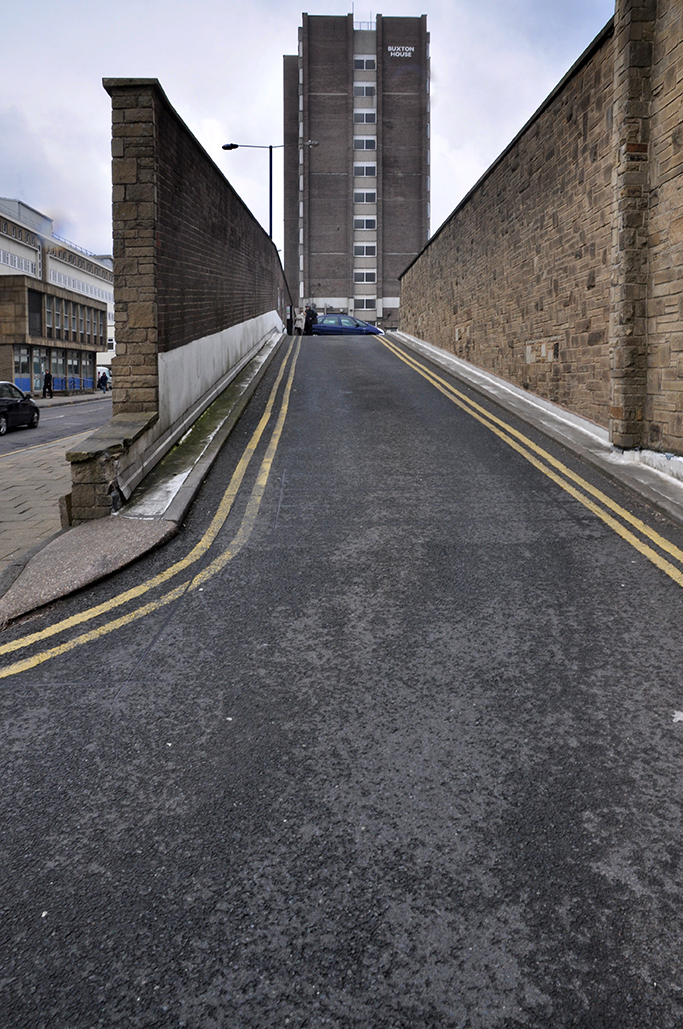
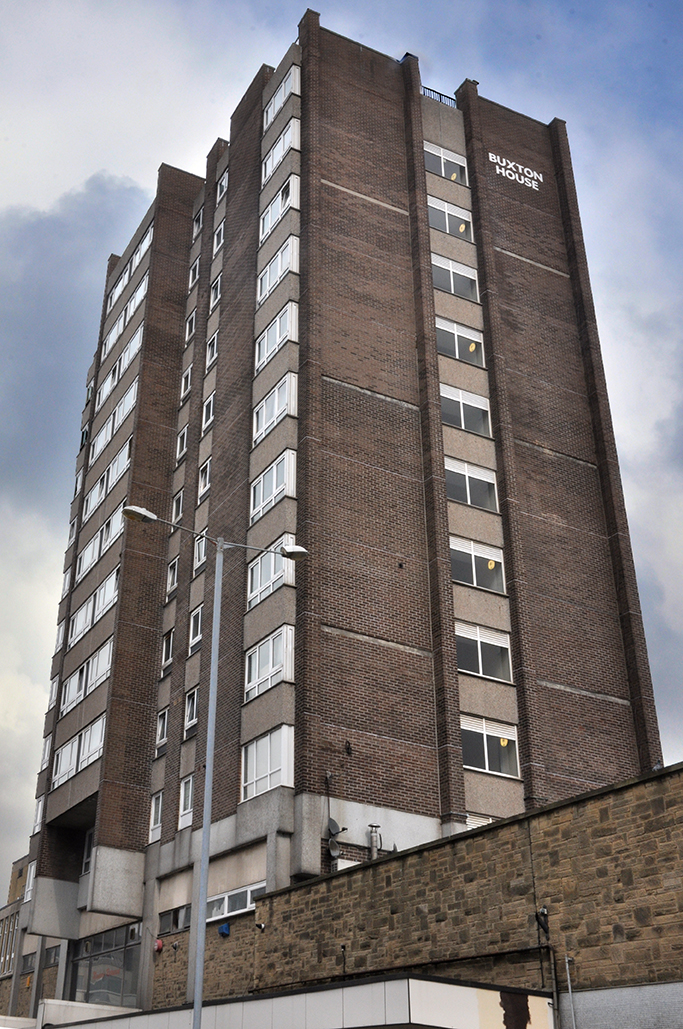
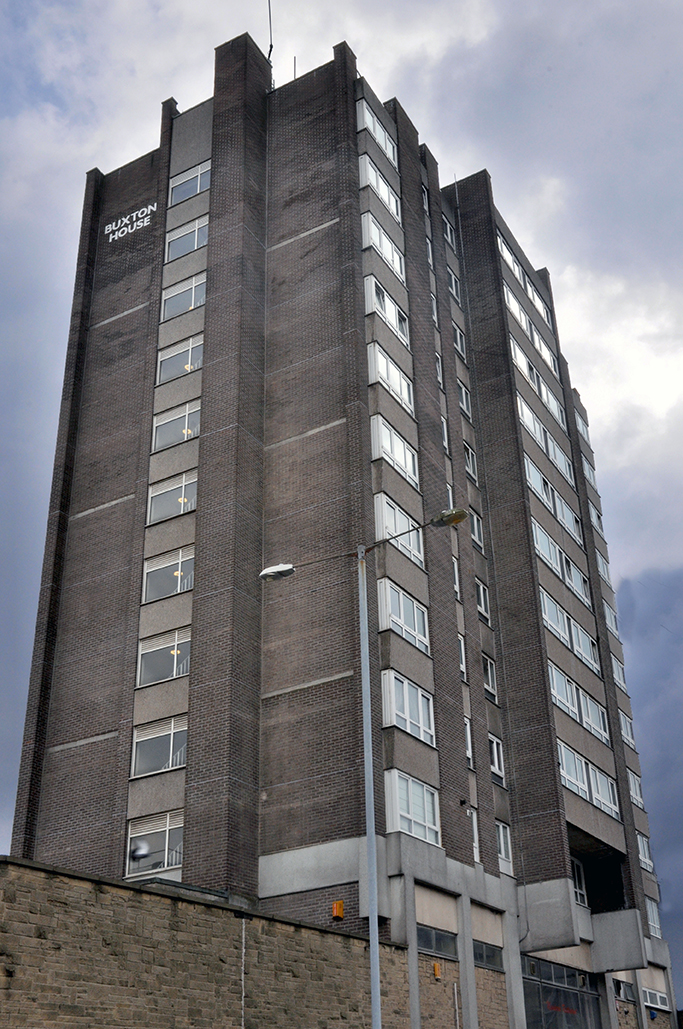
Slap dab in the middle of the town stands a lone tower block of residential, social housing.
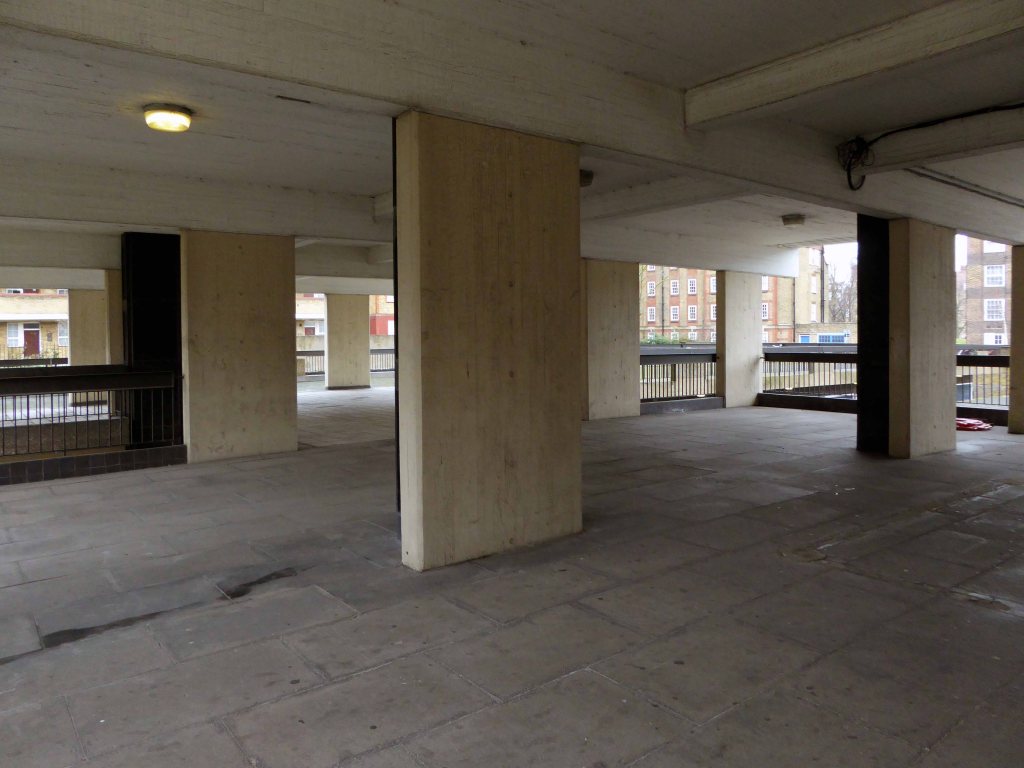
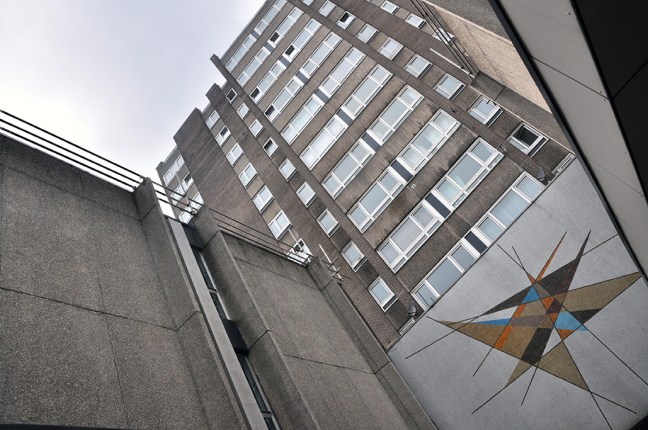
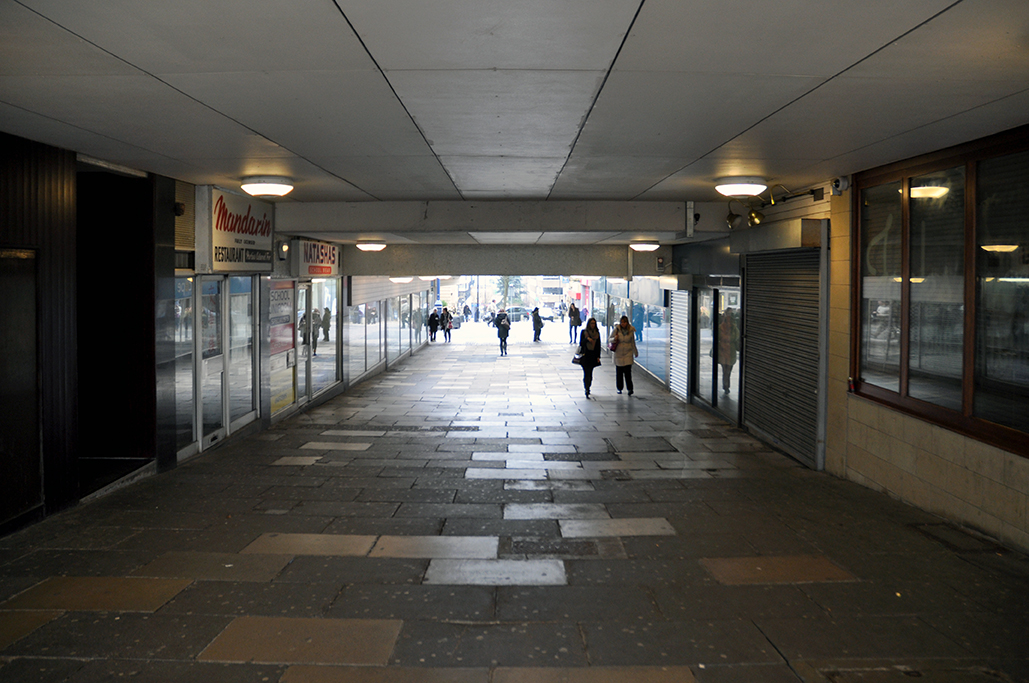
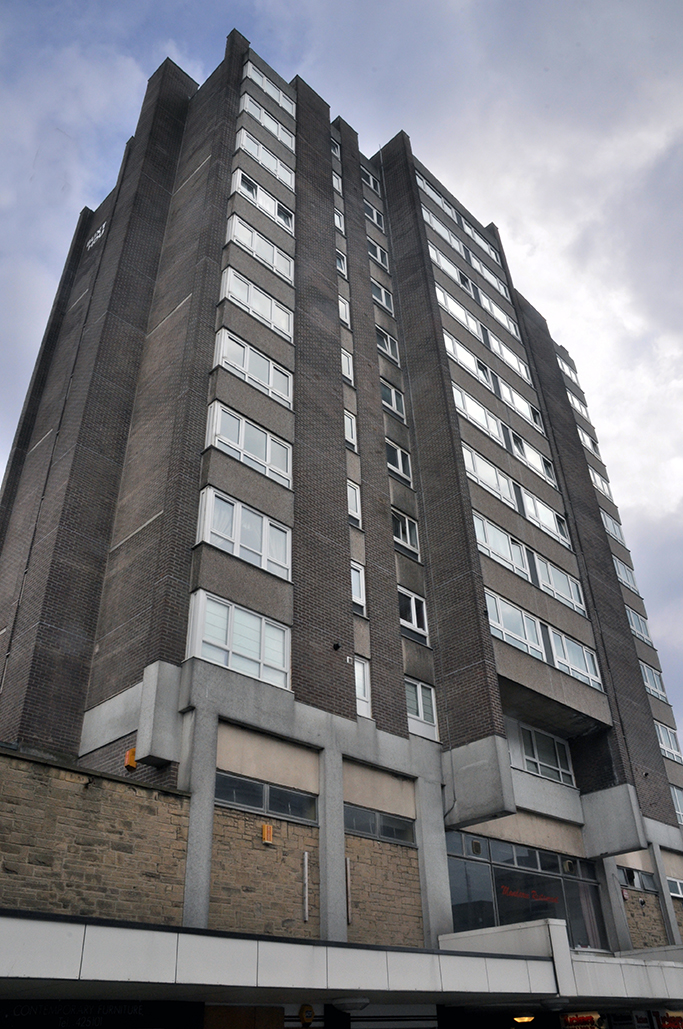
Buxton House backs onto the lower rise Civic Centre and is conjoined to the main shopping street and precinct, linked by a low wide underpass. Adorned on its street entrance by the most enchanting mosaic, announcing a spry geometric optimism to those shoppers and residents that pass under, through the underpass.
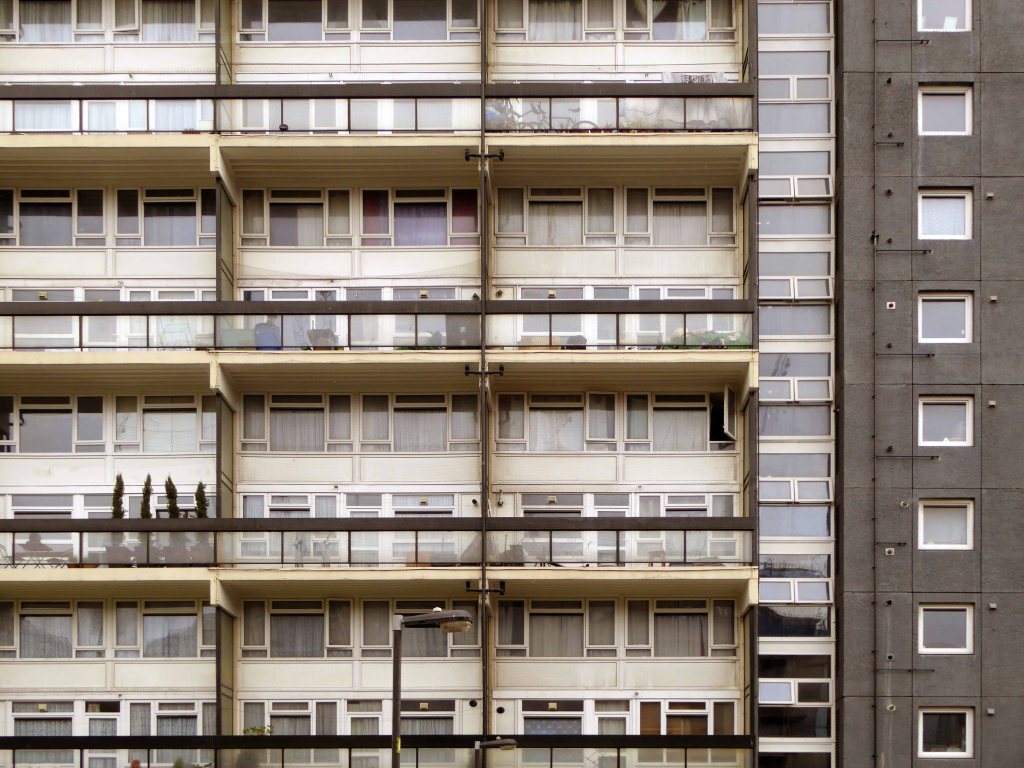
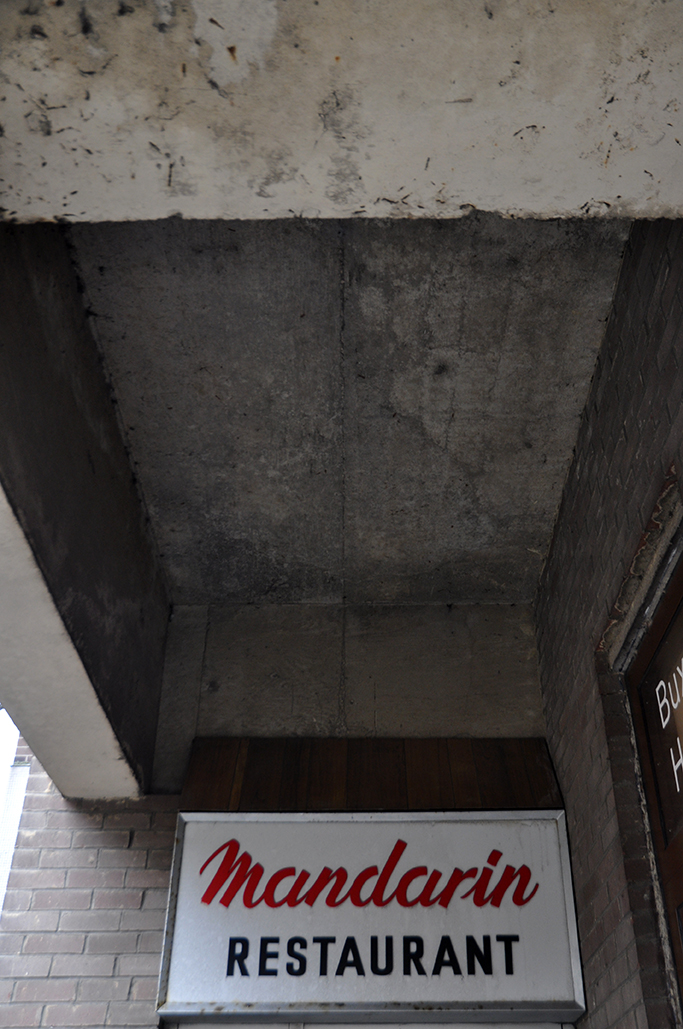
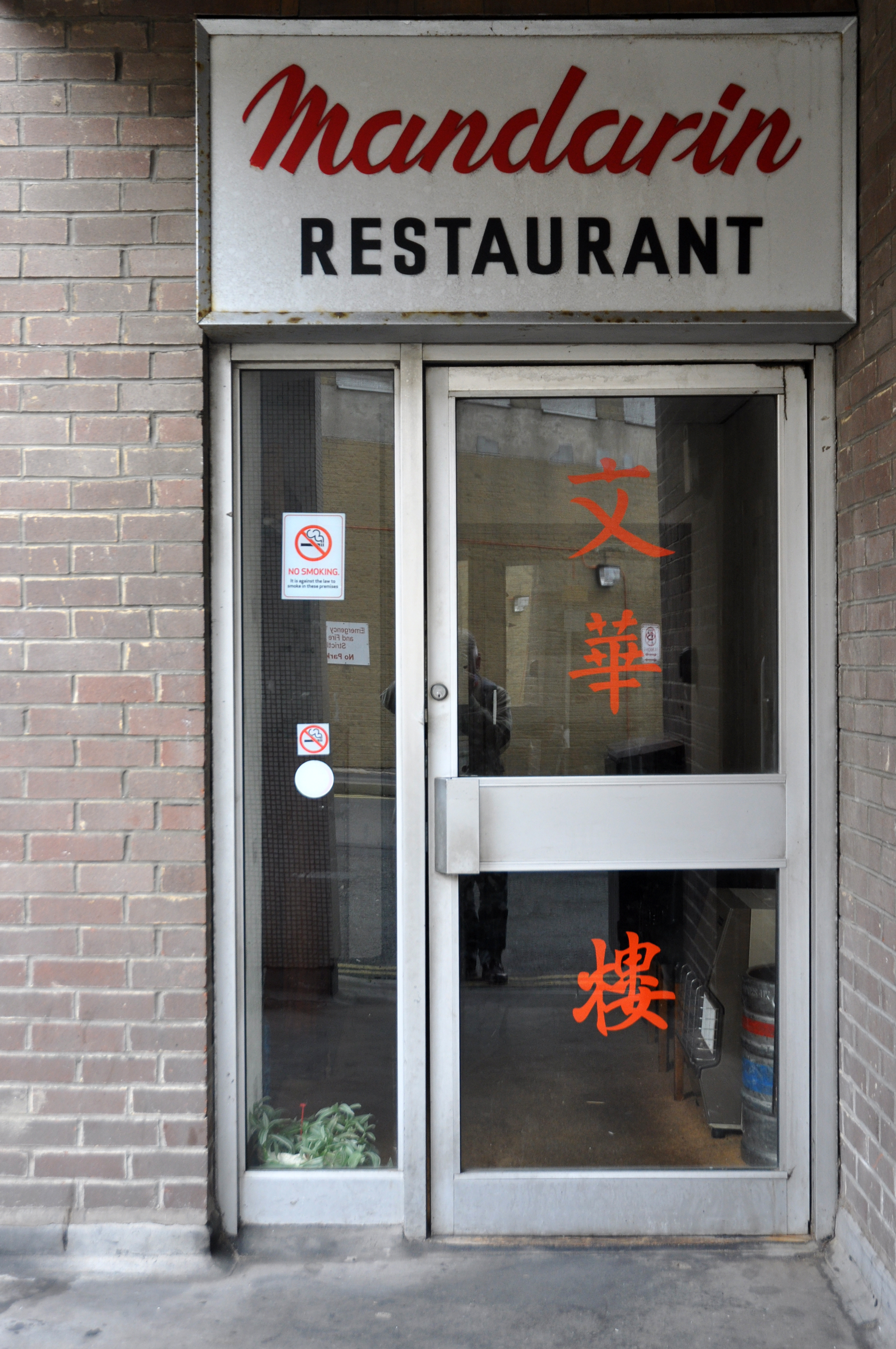
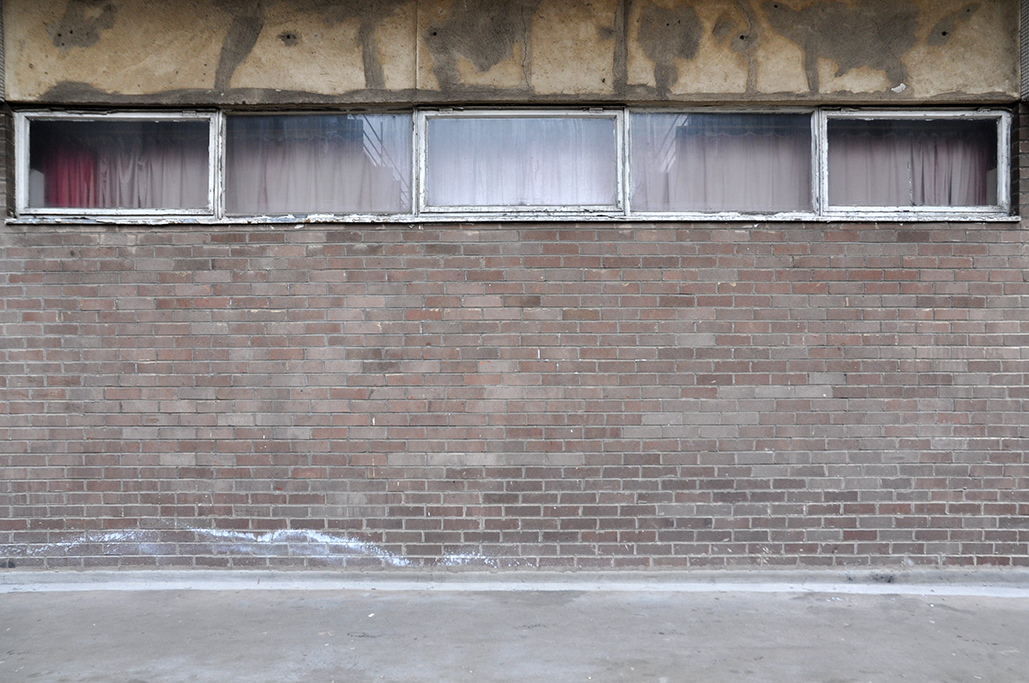
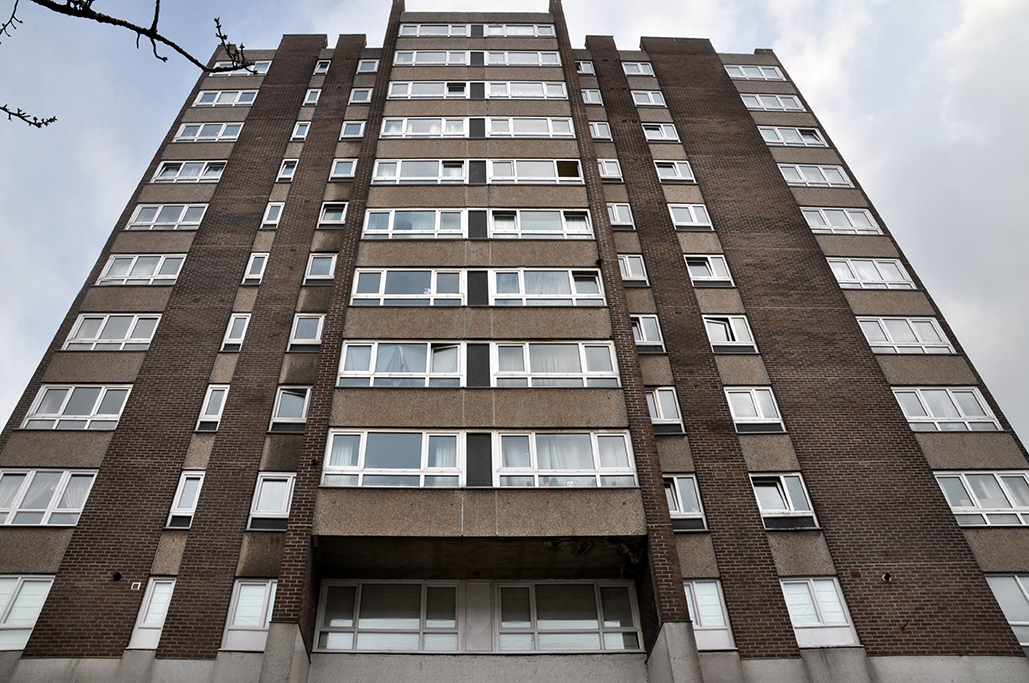
Ten floors of homes are bound in brick concrete and glass – a truly commanding central location, graced by the inclusion of an incongruous Chinese restaurant – The Mandarin.
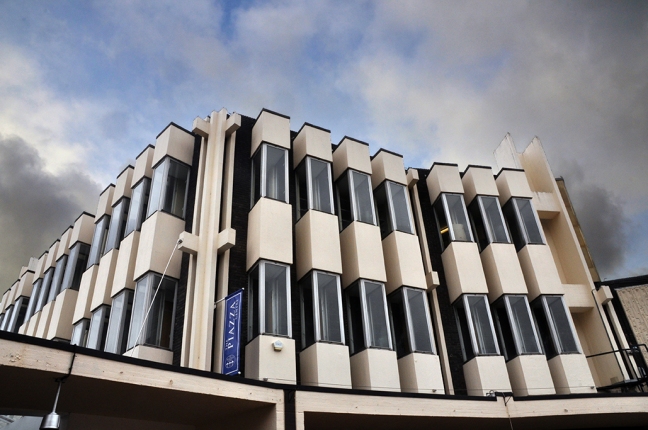
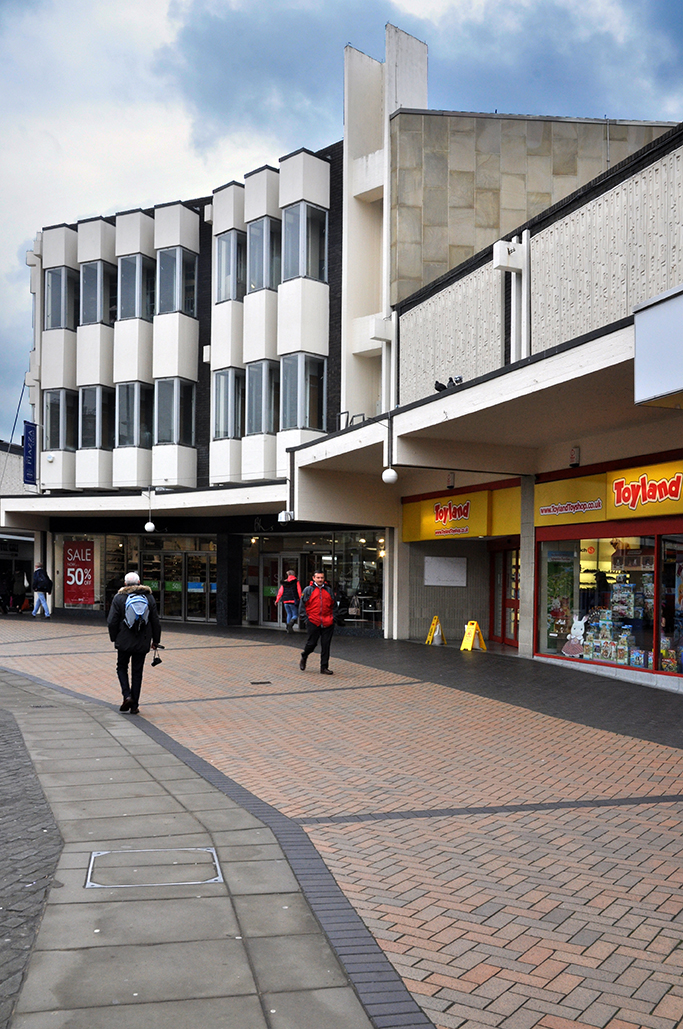
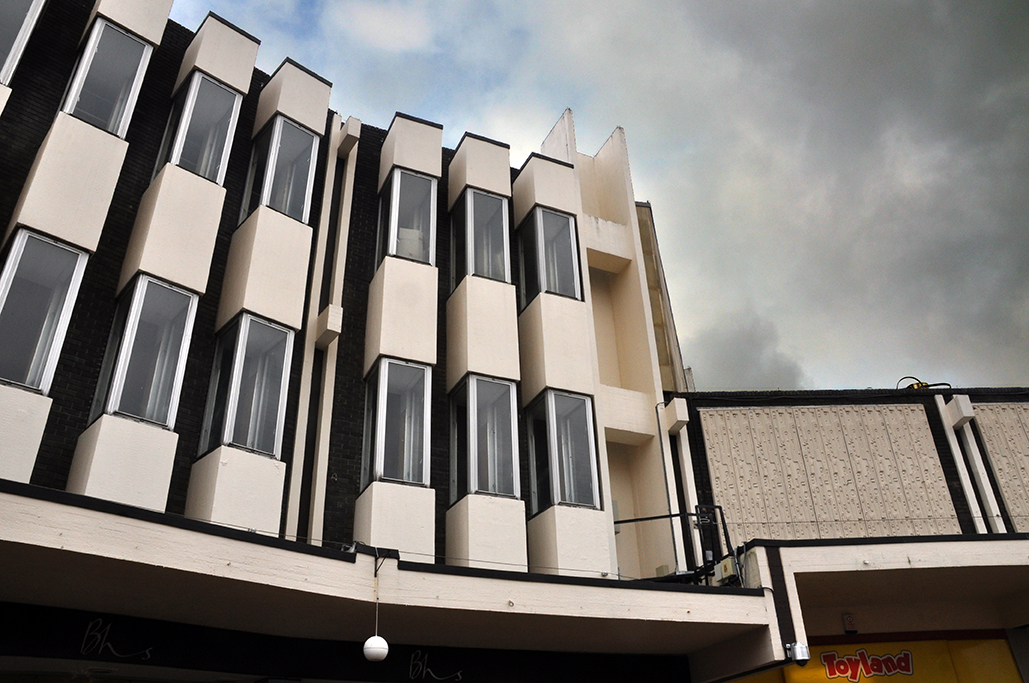
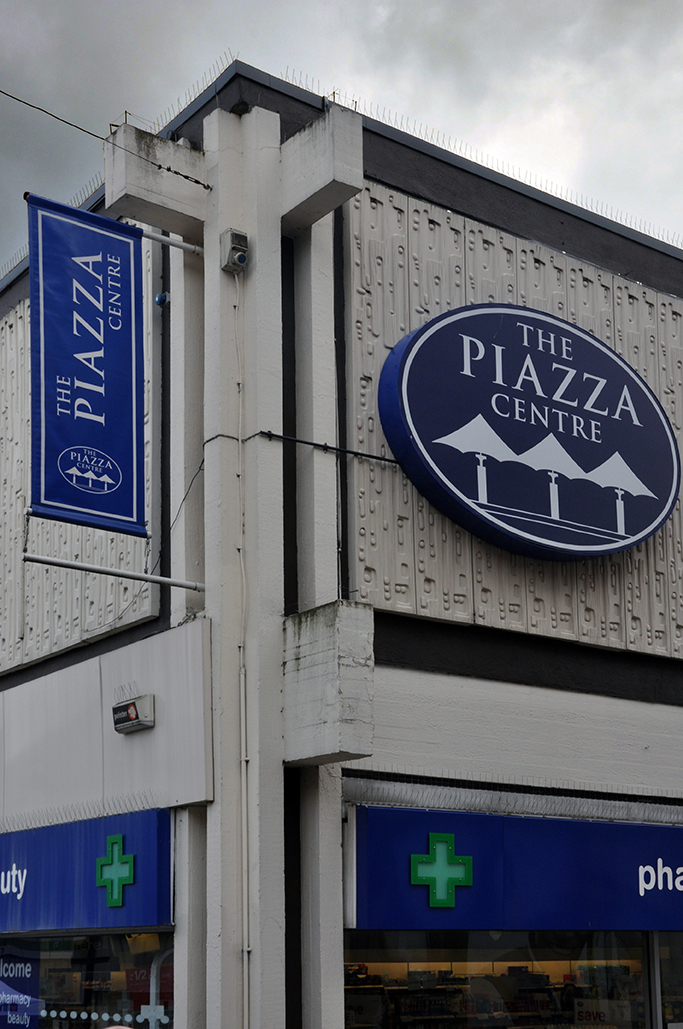
Huddersfield West Yorkshire shares a legacy with many other towns, a legacy of successive shopping developments of varying styles and quality. Shaped by fashion, topography and finance each makes a more or less bold statement on the fabric of the area.
In order to survive each geo-retail layer of architecture, must reinvent itself or die – adding new branding, covering period detail with newer, ever more impermanent fascias, flagging flagging and flags of all stripes.
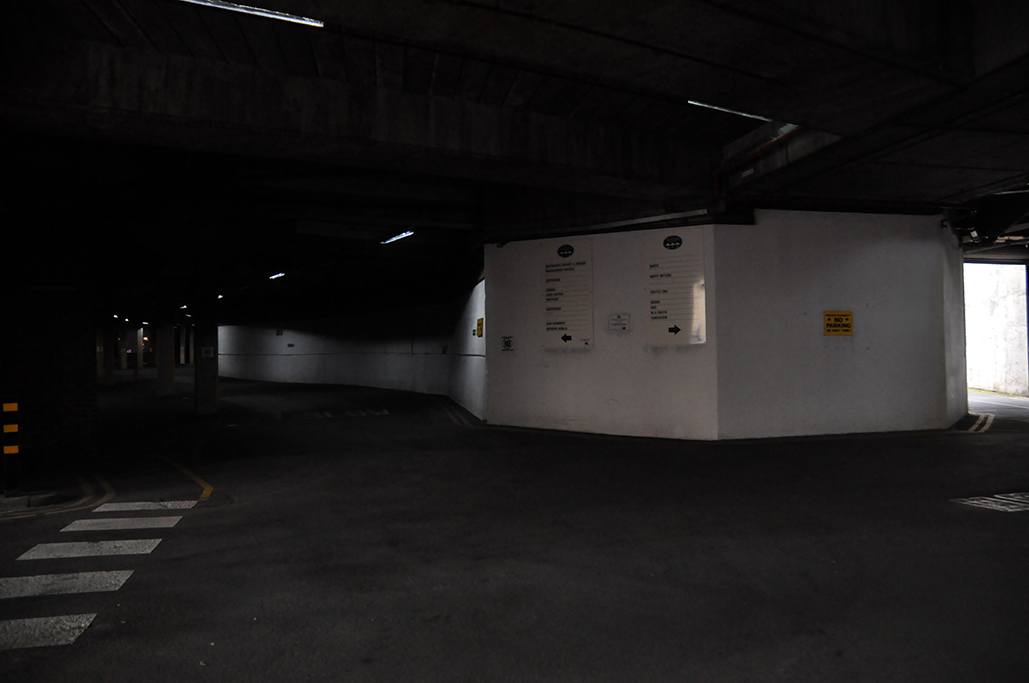
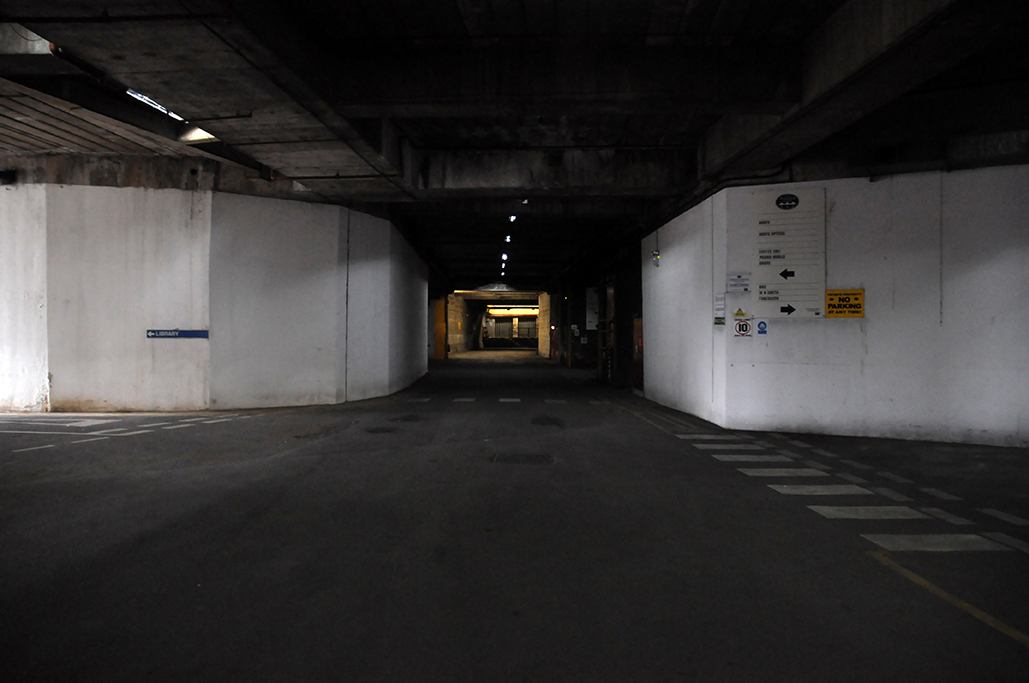
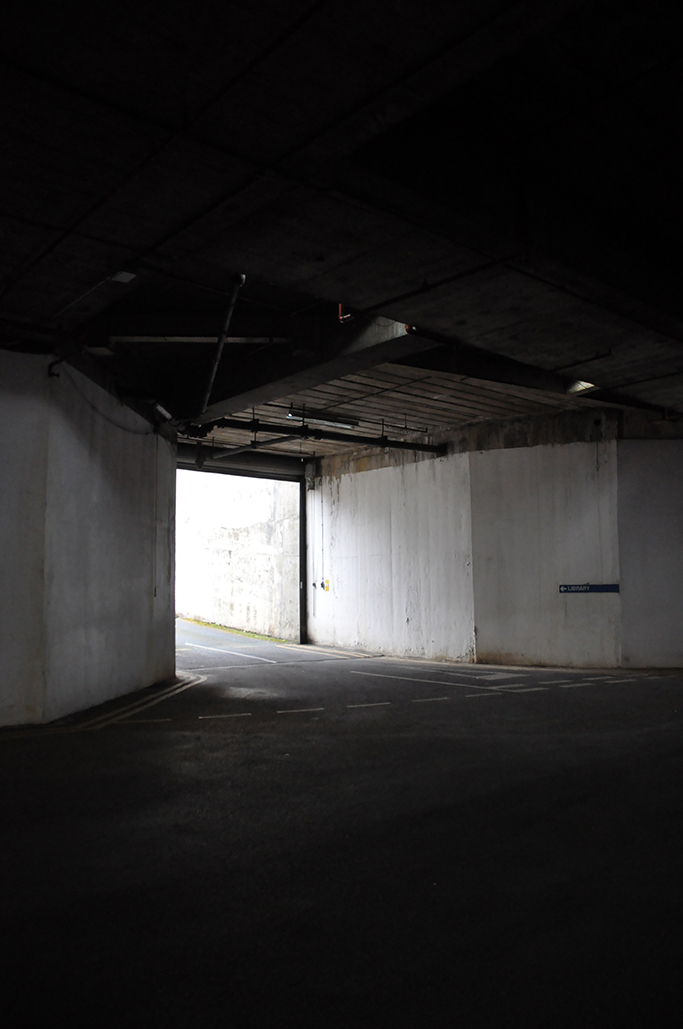
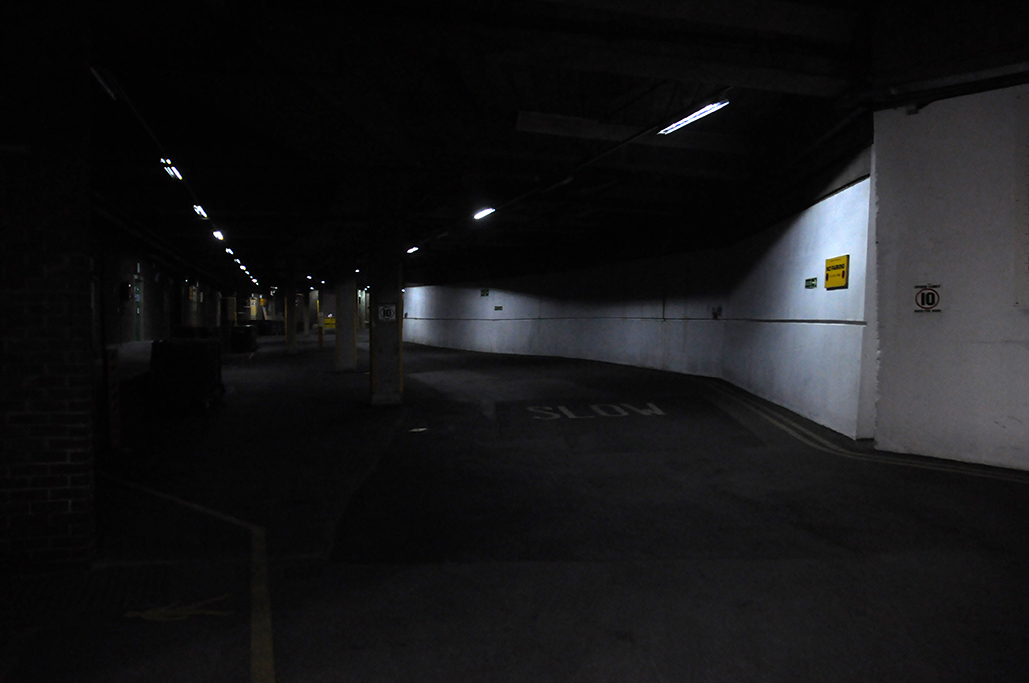
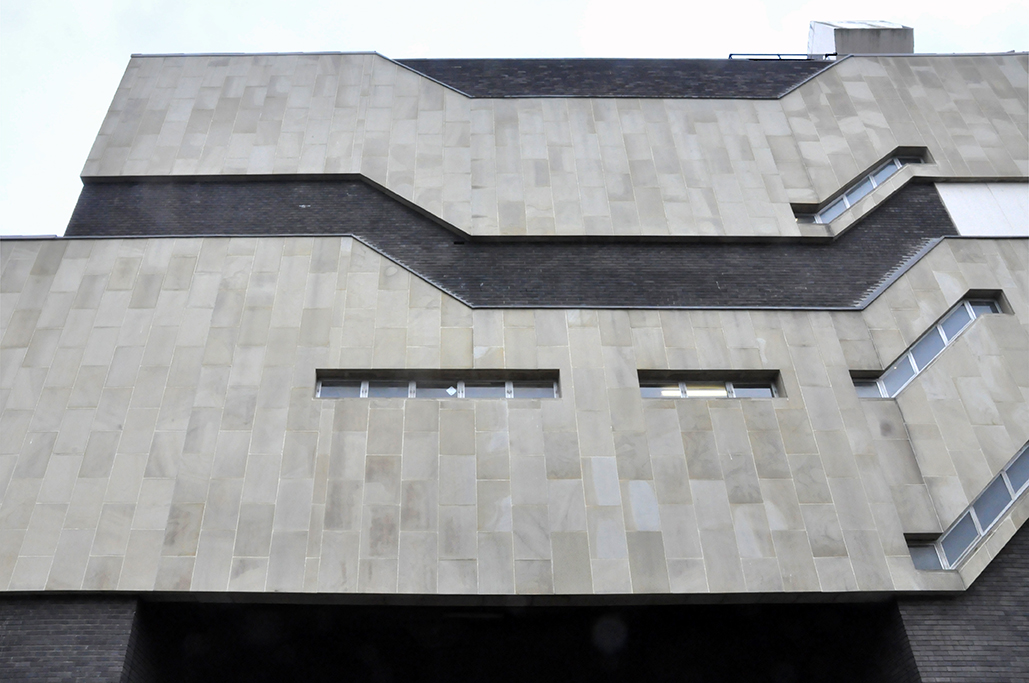
I encircled the Piazza – its monumental nether regions, enlivened with almost temple like scale and applied brick, stone and concrete surfaces, the dark and forbidding, cinematic subterranean service tunnels, and the open walkways of the main shopping areas.
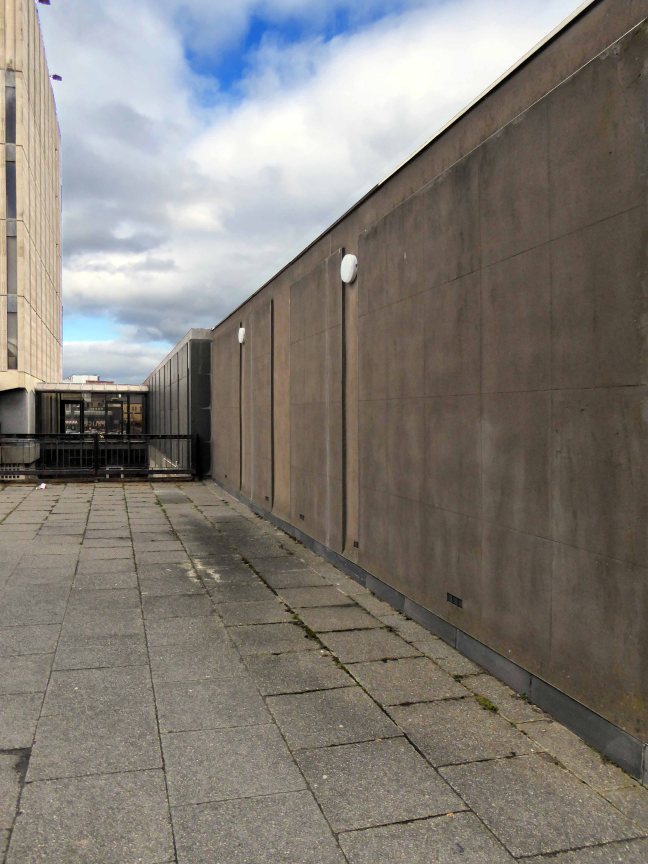
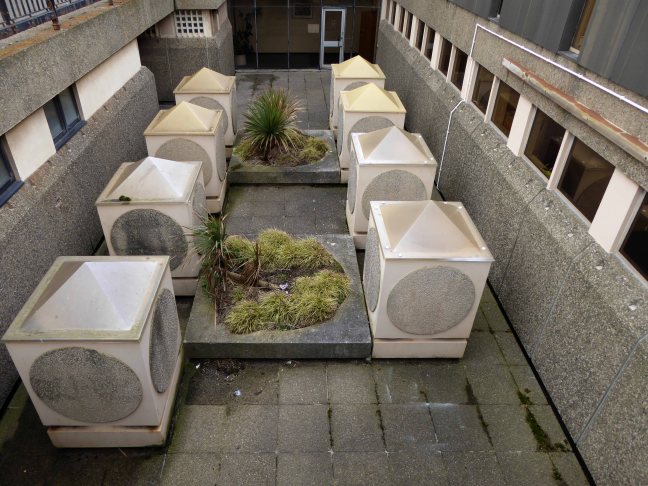
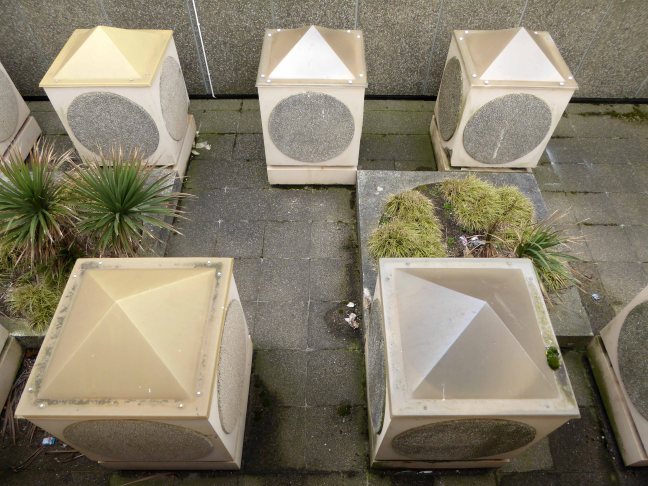
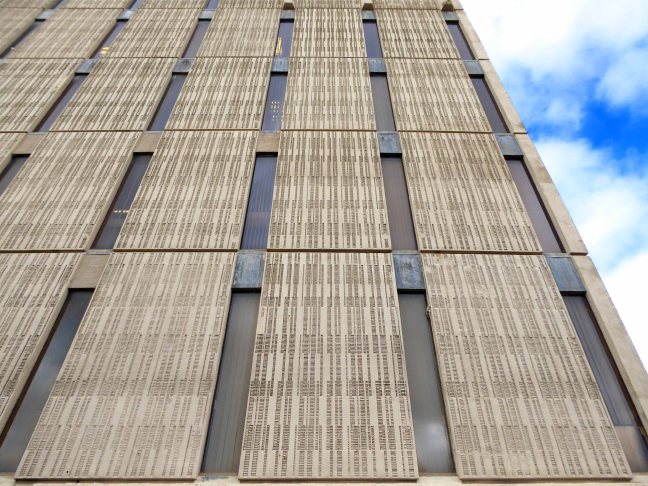
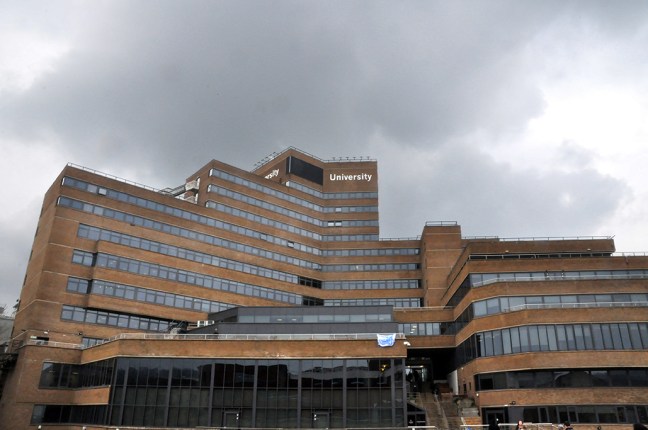
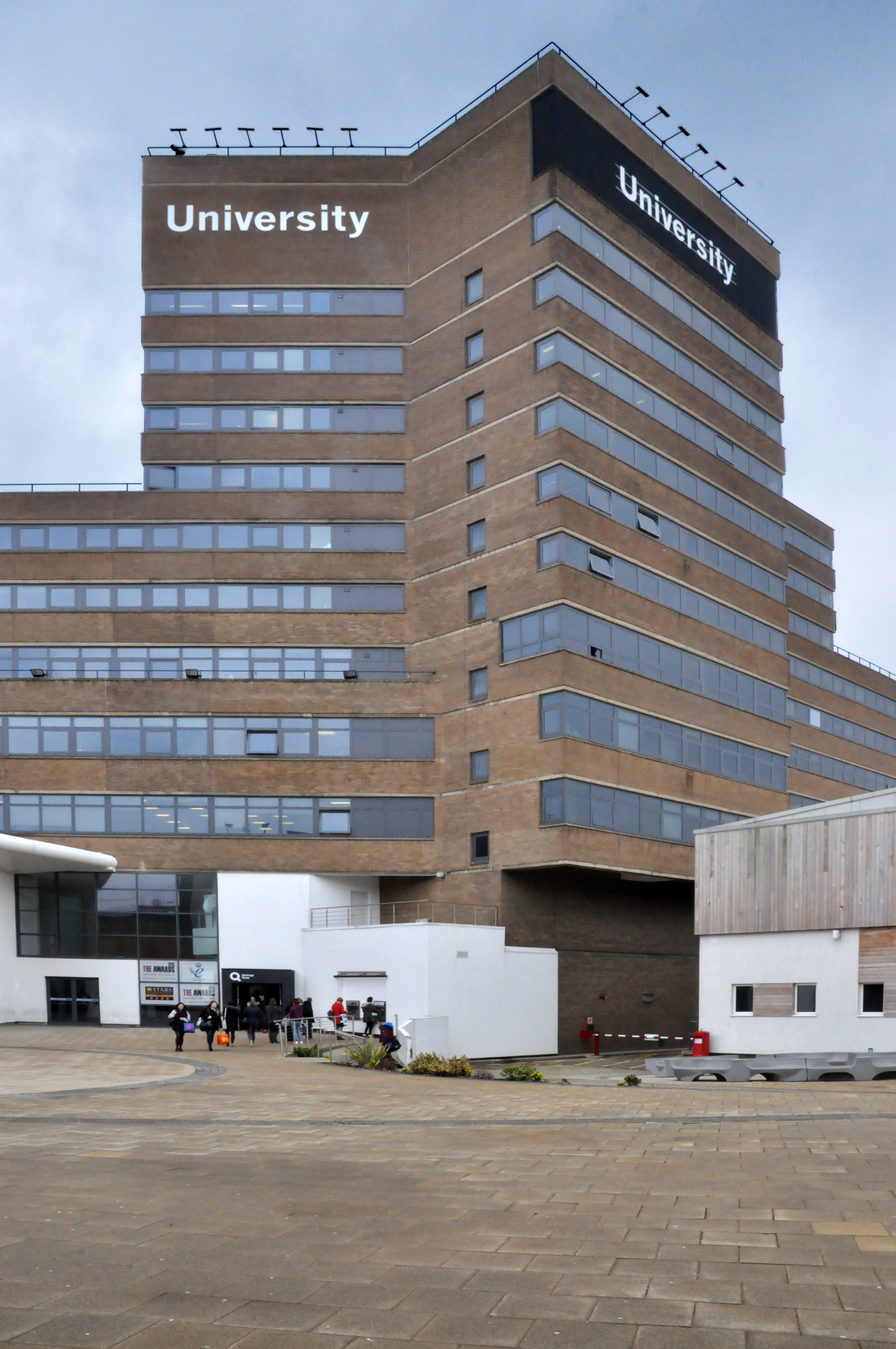
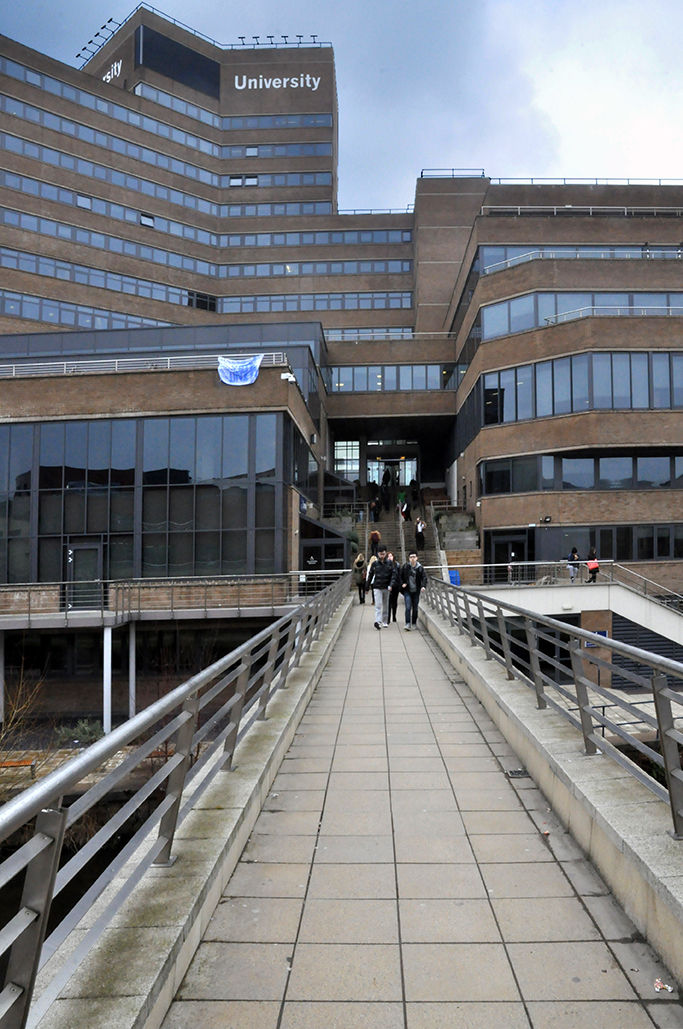
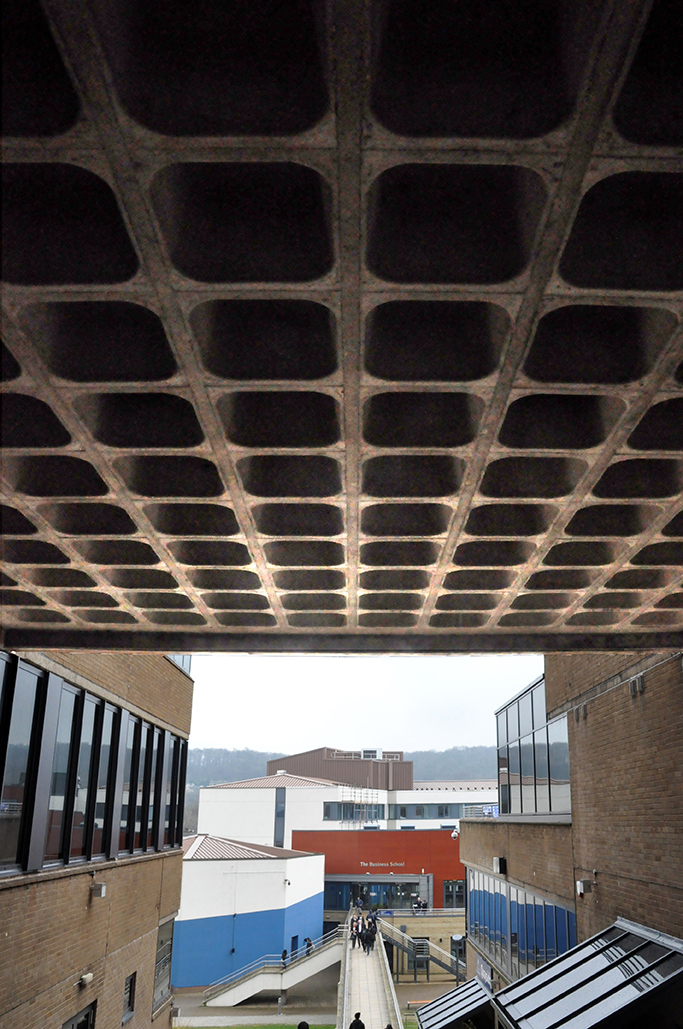
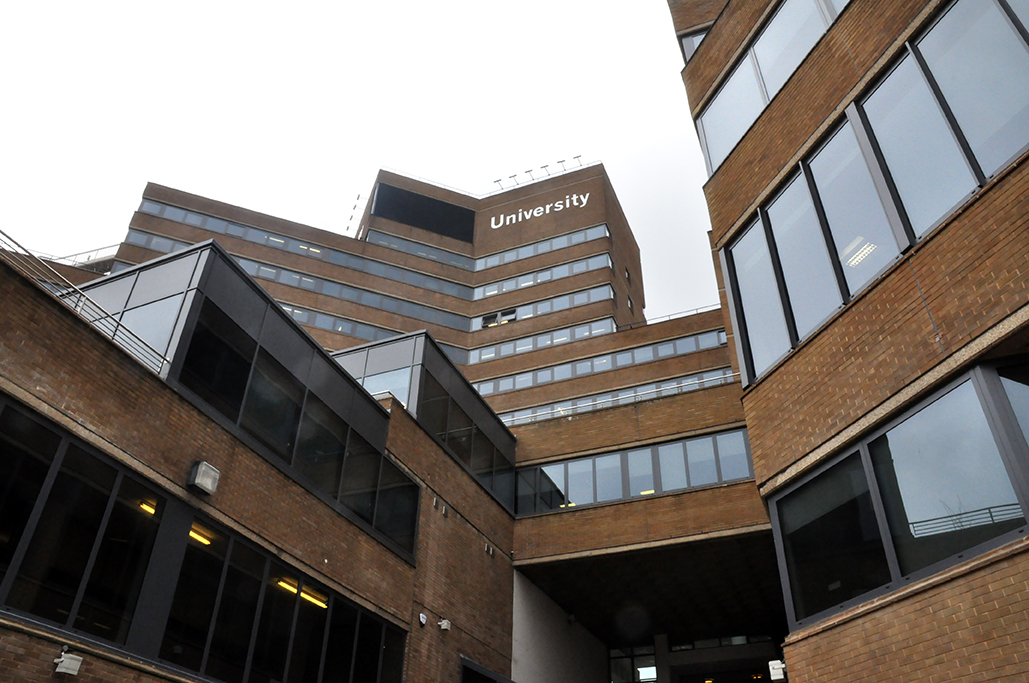
Spanning the Huddersfield canal and set on a hillside site of a hilly Yorkshire town, the University Buildings dominate the Colne Valley area to the south.
Typically their history spans an earlier site which evolves during the 50s and 60s, as part of the drive to develop the industrial/educational base of the area and the burgeoning growth of the provincial Polytechnics.
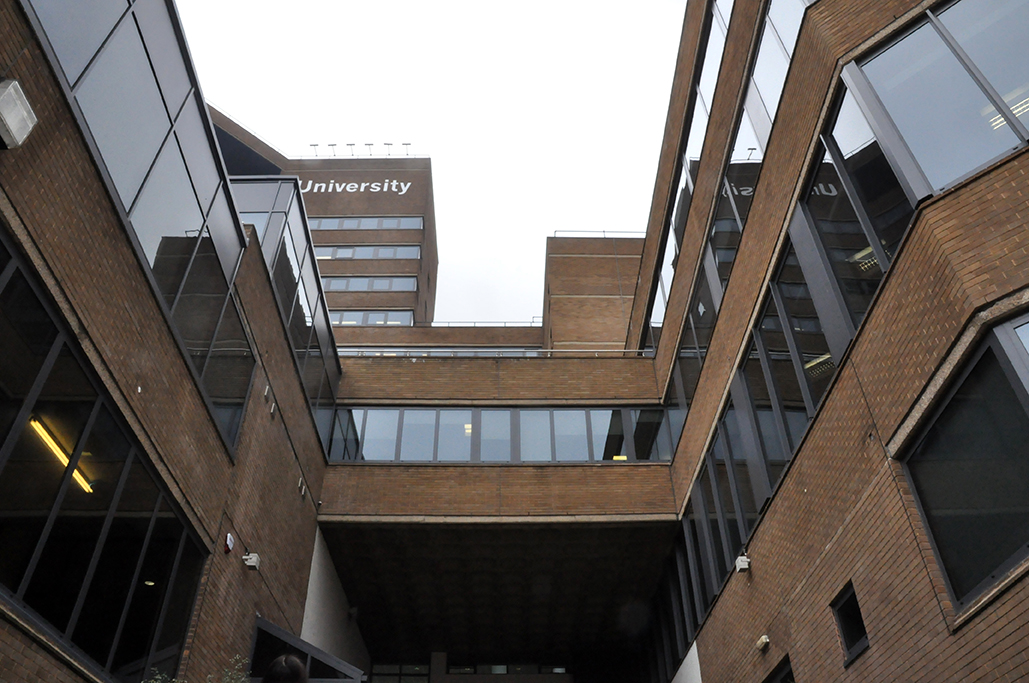
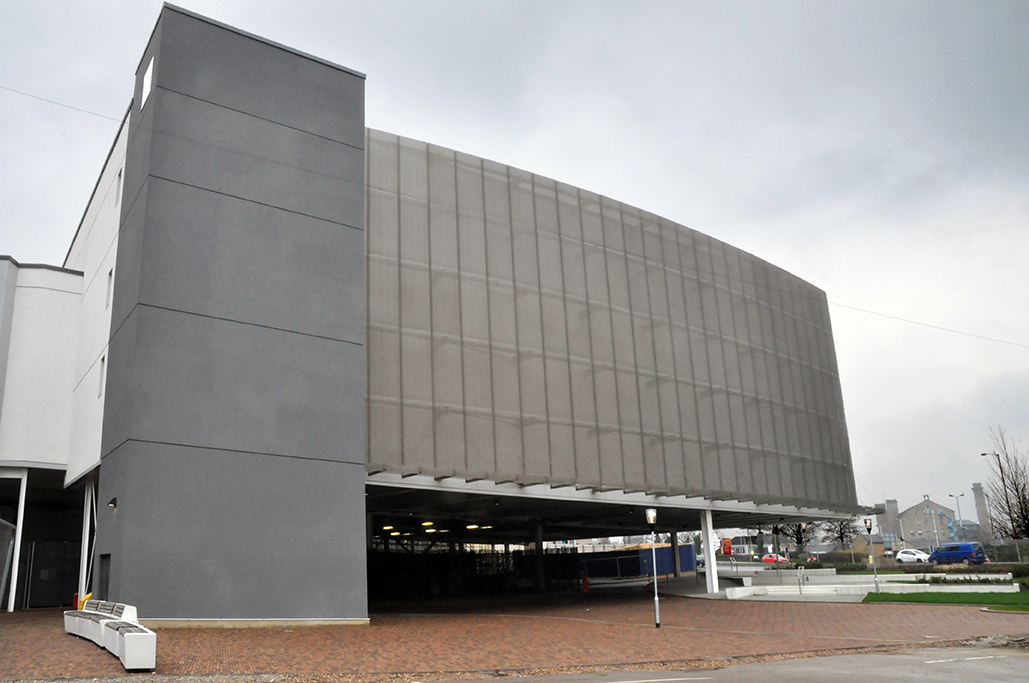
The result is a confident yet dizzying panoply of styles and materials on a fairly compressed but expanding site.
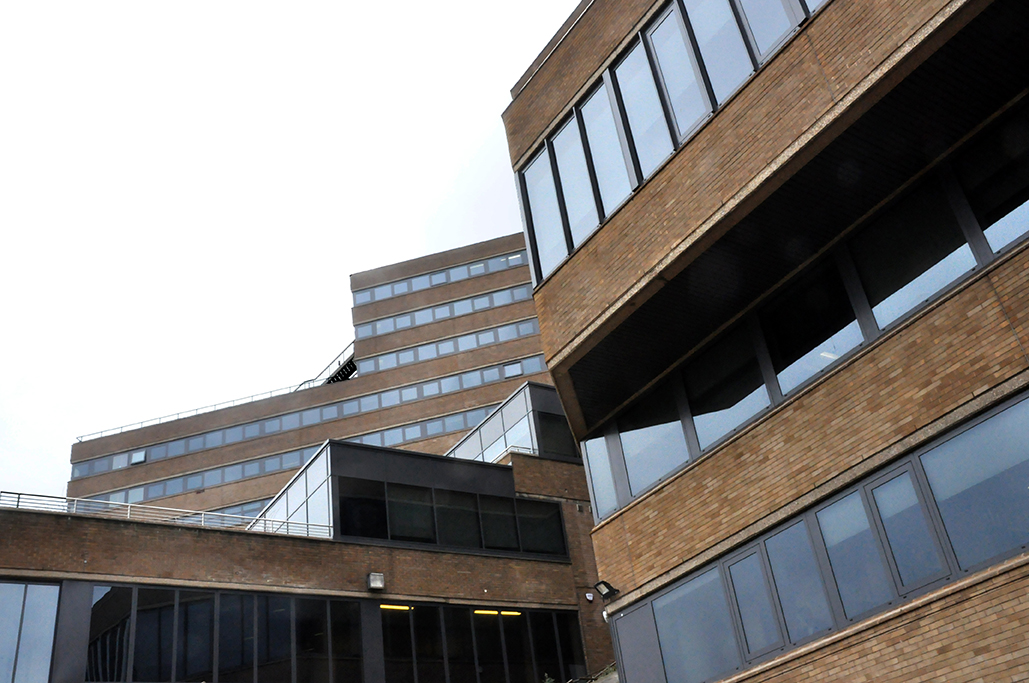
Brick, concrete, glass and more recent modern clad additions collide in a bun fight of assertive volumes.
It all seems very exciting.
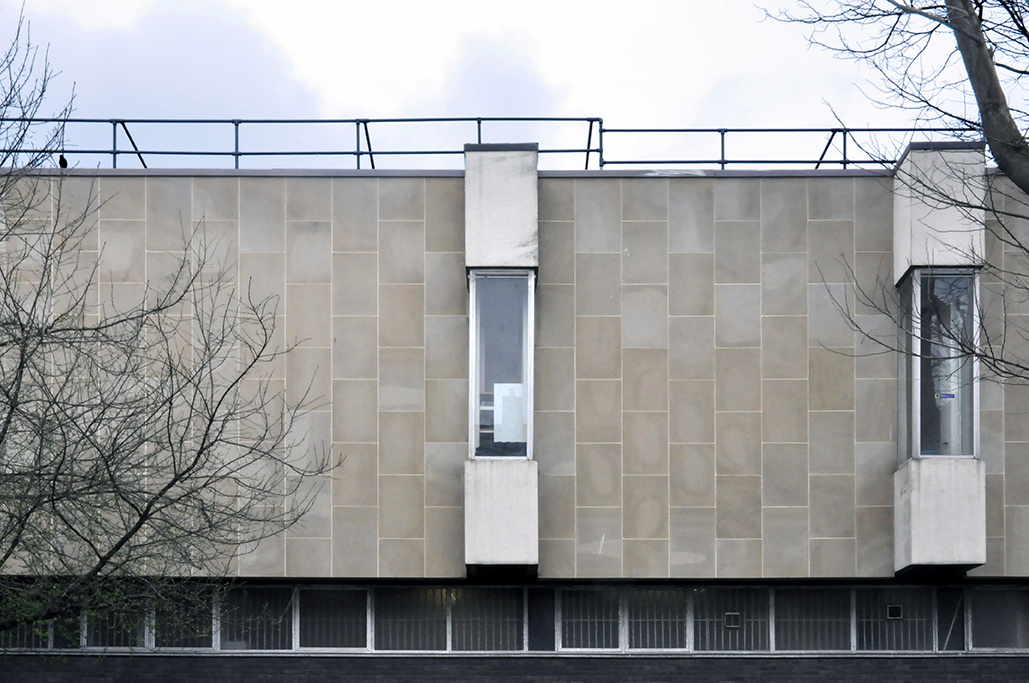
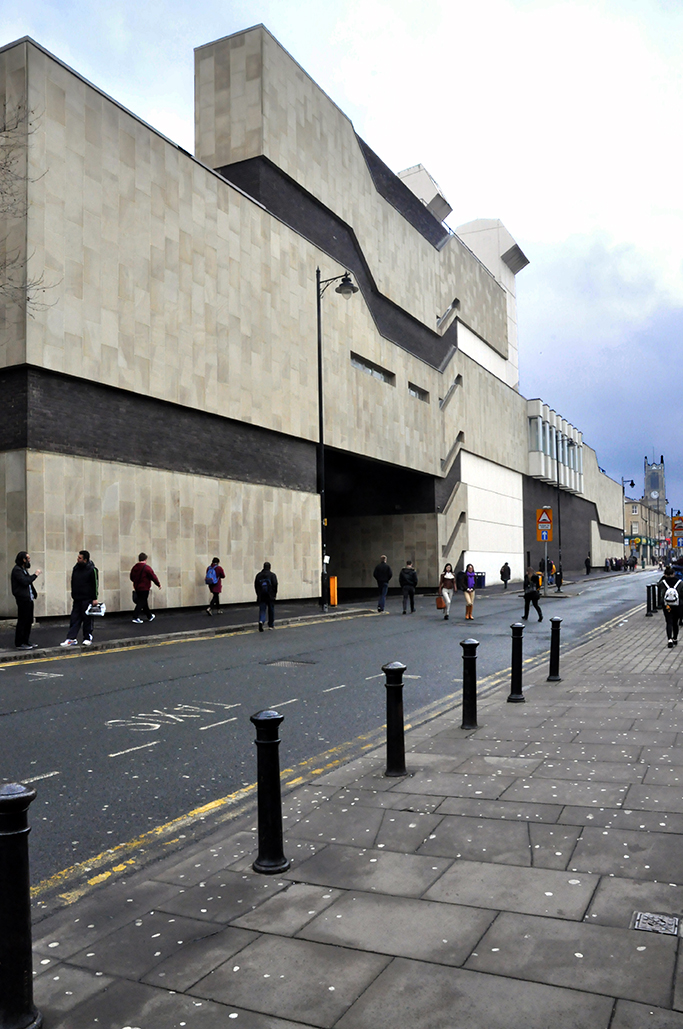
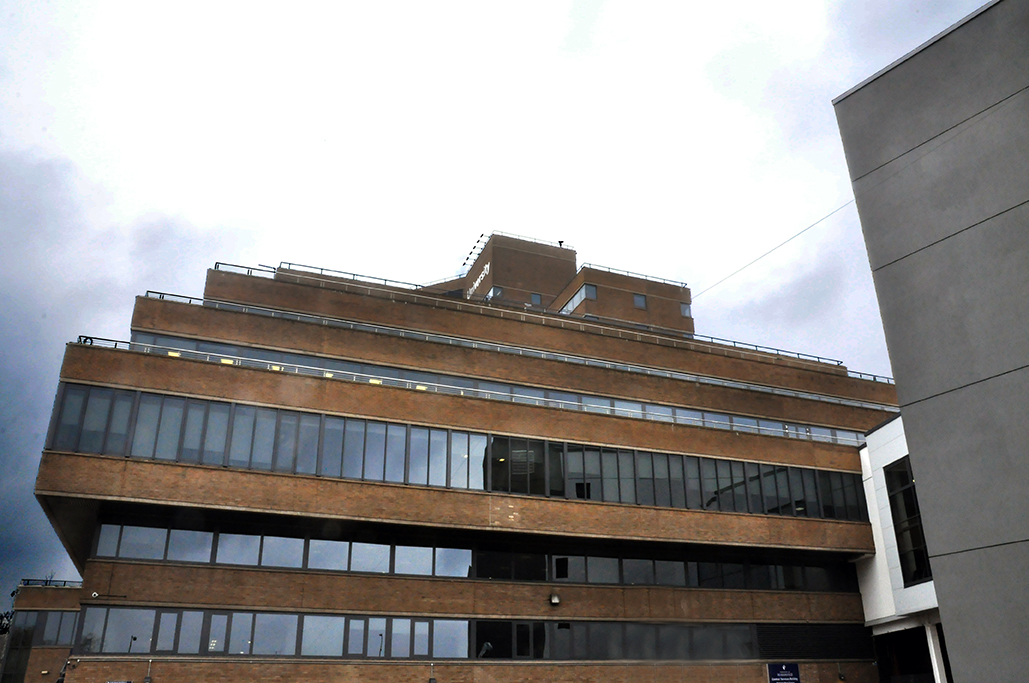
“David Wyles, The Buildings of Huddersfield: four architectural walks – facing us now is the impressive bulk of the Central Services Building in front of which stood a six-storey building; its structure emphasised by the reinforced concrete frame which projected skeleton-like above the main roof level. This was part of the earlier Technical College development which included several buildings of similar style designed from 1957 onwards by Frederick Gibberd. The six-storey blocks have since been demolished.
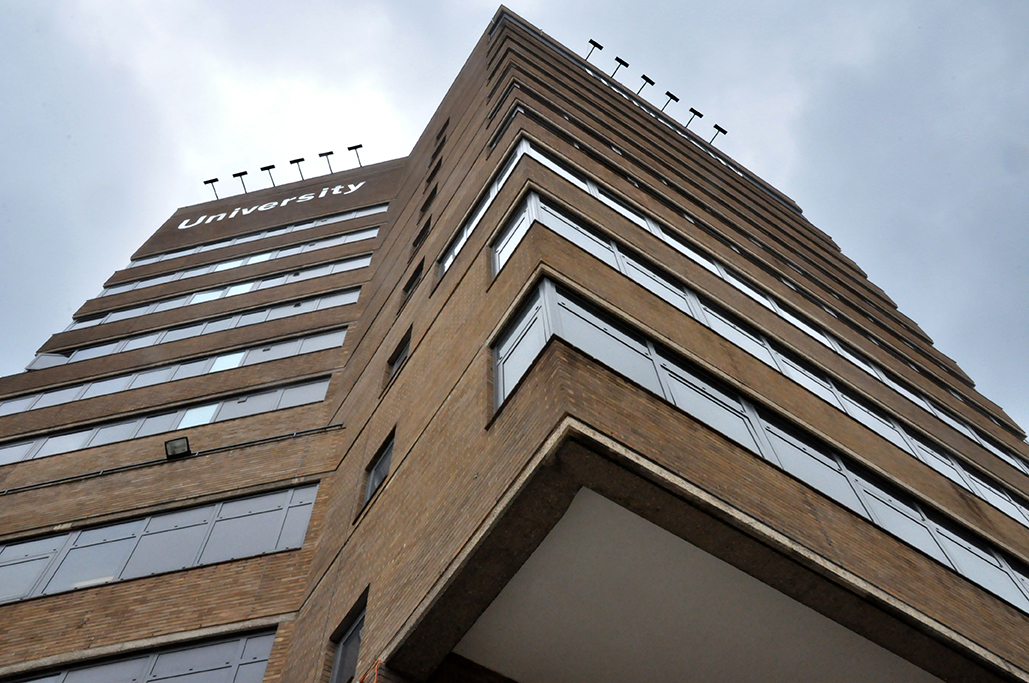
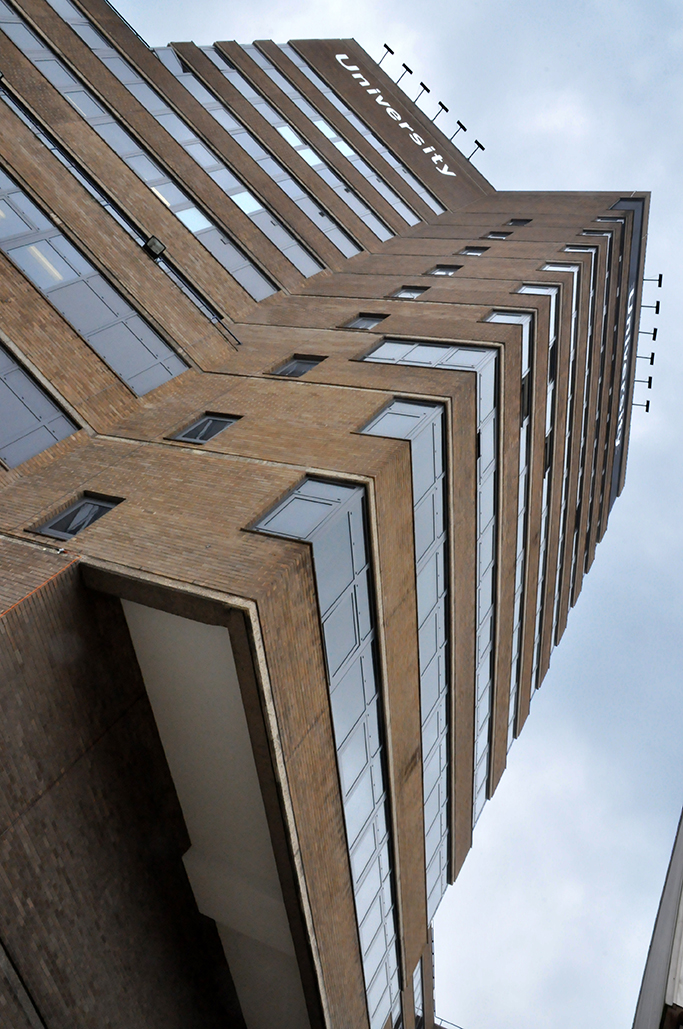
The focal point of the campus, the Central Services Building, was designed by Hugh Wilson and Lewis Womersley of Manchester and constructed between 1973 and 1977 at a total cost of £3,651,000. The building contains the main non-teaching facilities.
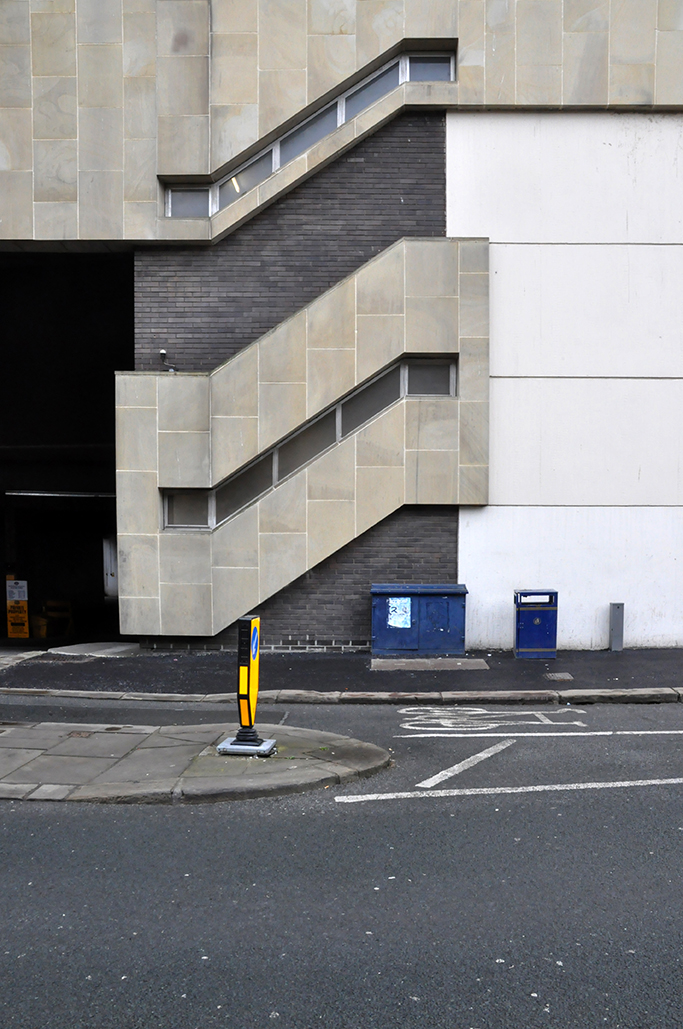
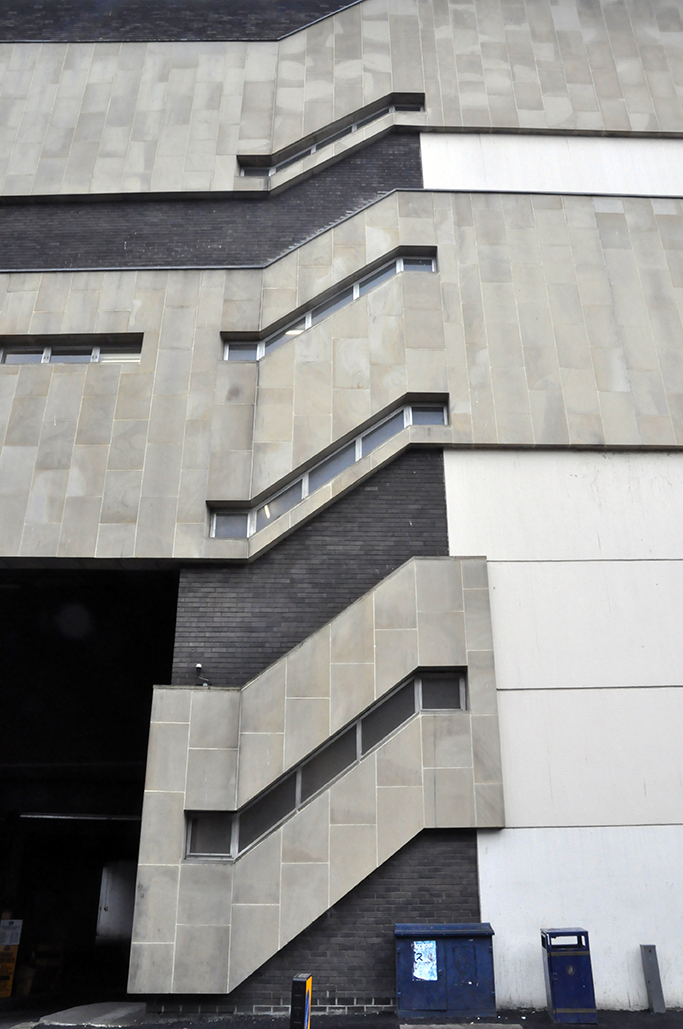
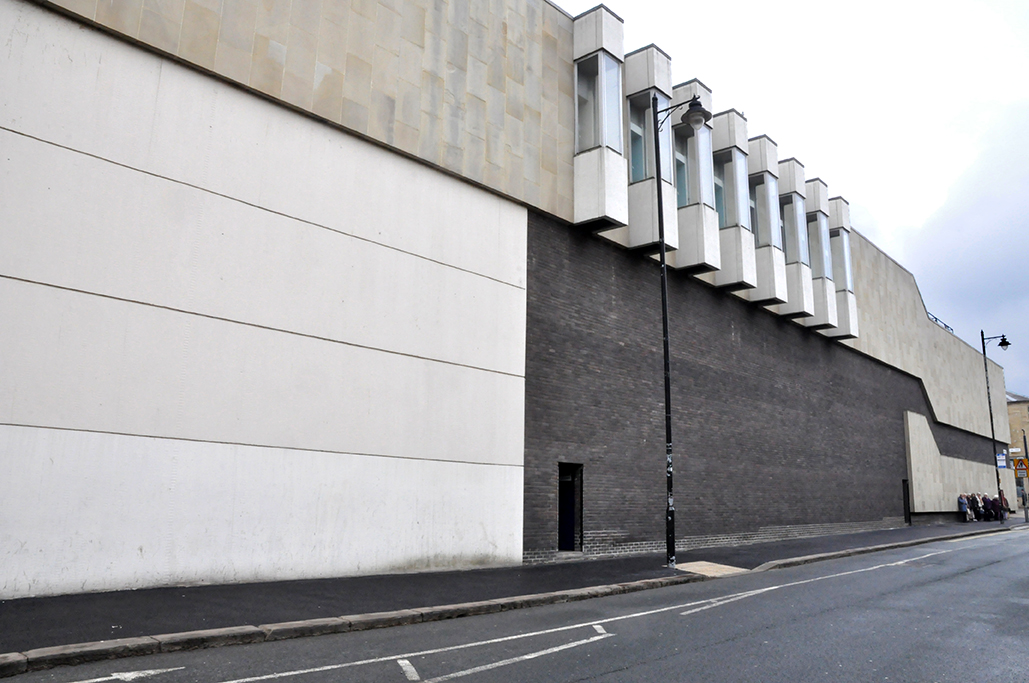
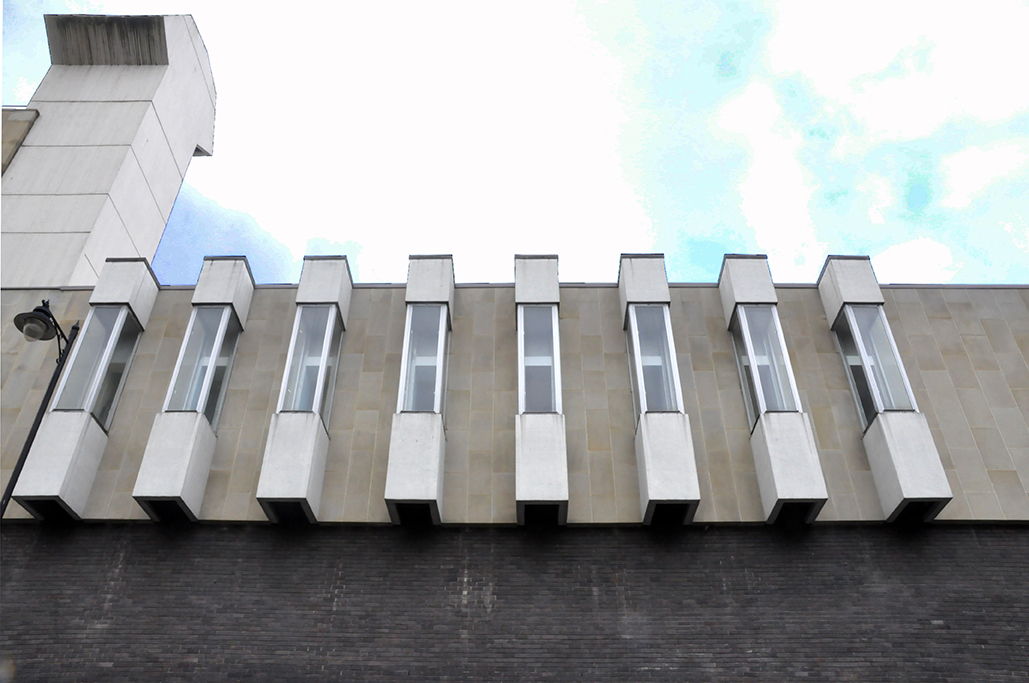
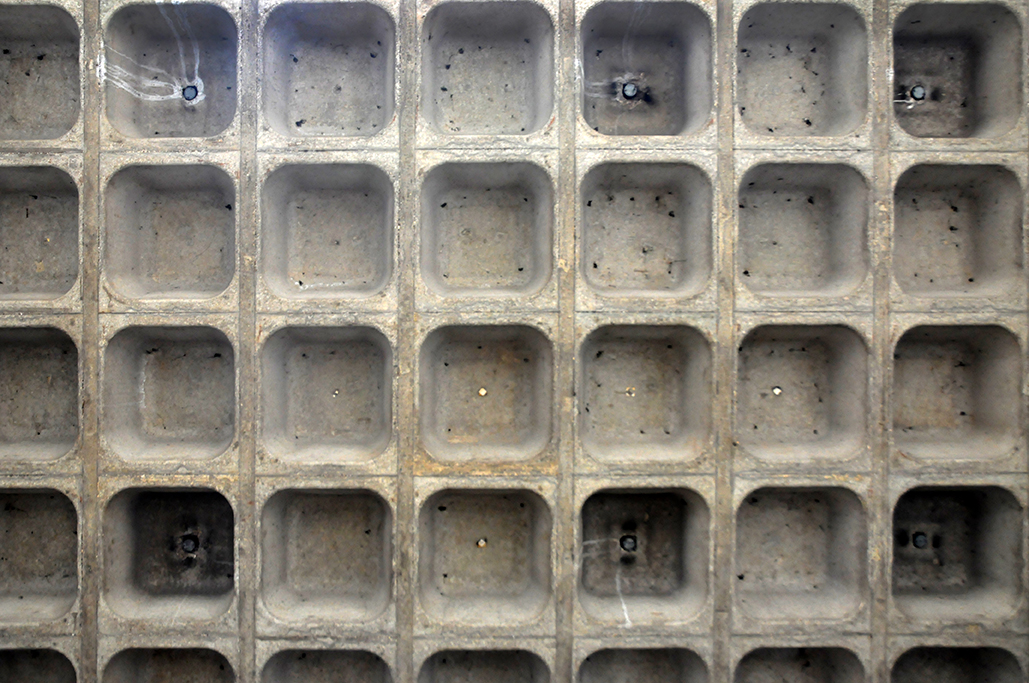
Much of the layout derives its form from the hillside site and this is accentuated by the undercover concourse leading through to the canal, which gives access to all parts of the building. The construction is based on a grid of reinforced concrete with floors supported on circular columns. The building is clad in light buff coloured bricks intended to harmonise with local sandstone.”










































 Modern Mooch