Suburbia

My baby takes the morning train
He works from nine till five and then
He takes another home again
To find me waitin’ for him

Sheena Easton

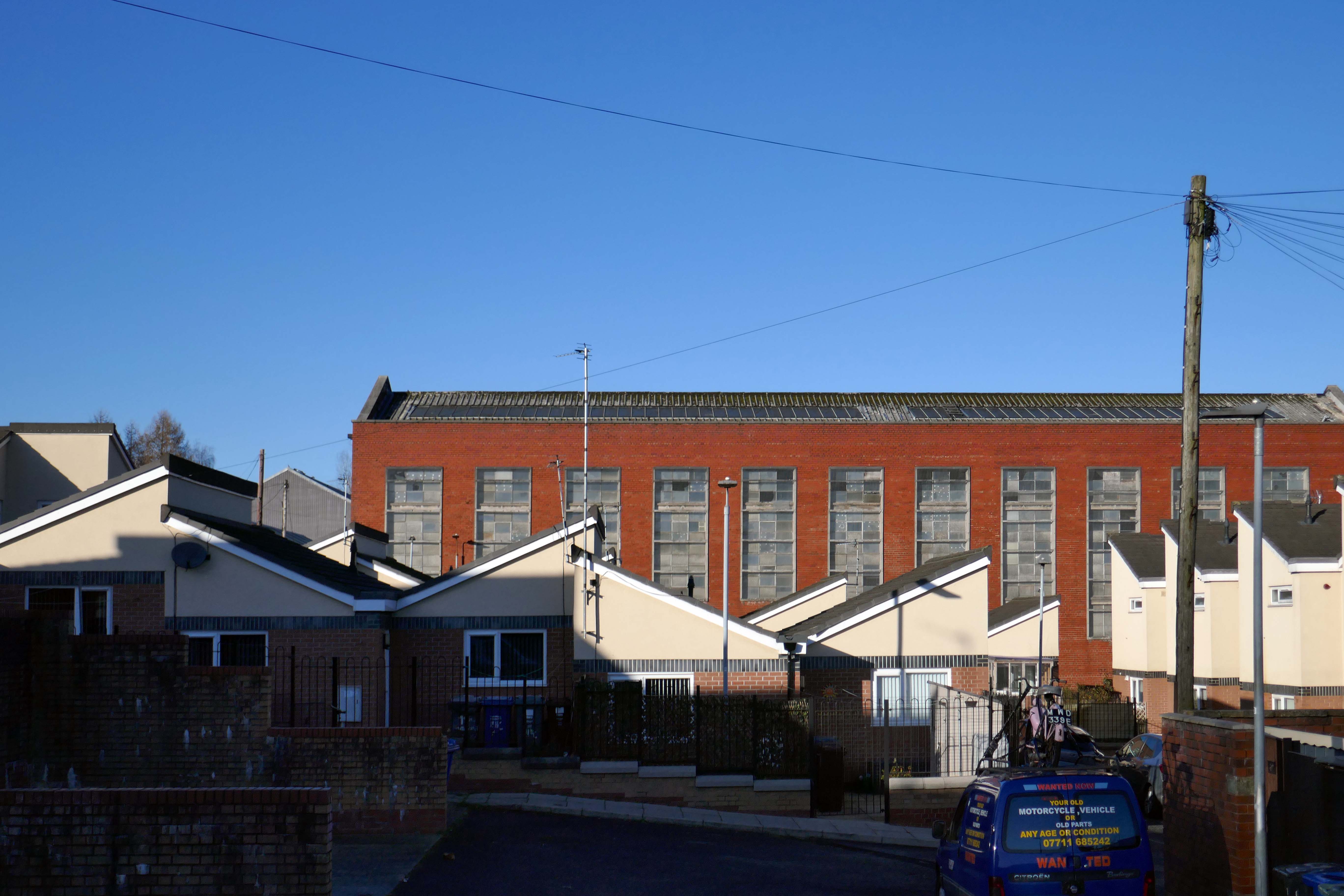
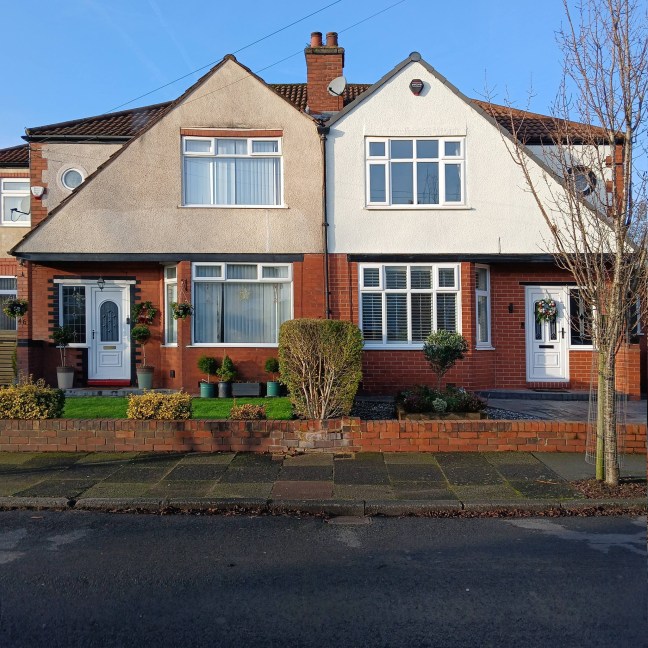
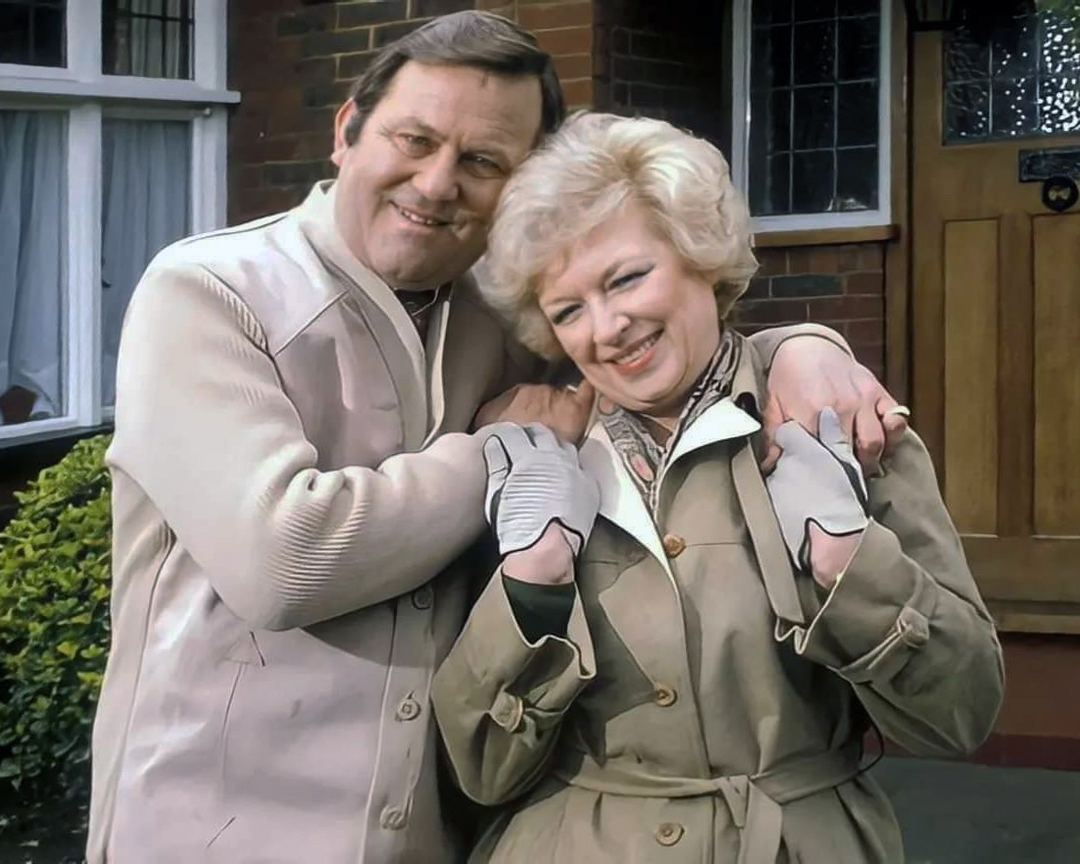
Welcome to the land of Terry and June – the seemingly complacent home to the newly aspirational classes, anathema to those thrill seeking Modernists, embracing the dynamism of the city, or those Ruralists protecting the integrity of the countryside.

Tradition has broken down. Taste is utterly debased, the town, long since degraded, is now being annihilated by a flabby, shoddy, romantic nature worship. That romantic nature worship is destroying also the object of its adoration, the countryside.

Thomas Sharp – Town Planner
Welcome to the land of the Lucie Attwell Bicky House biscuit tin money box.
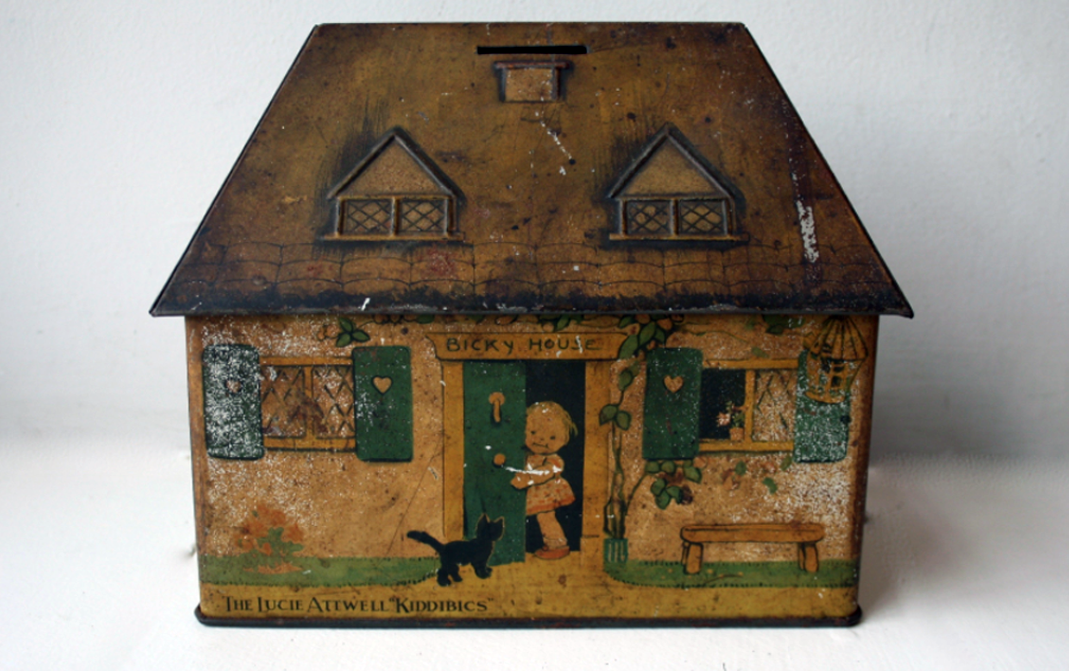
The perfect model home for the modern model family.
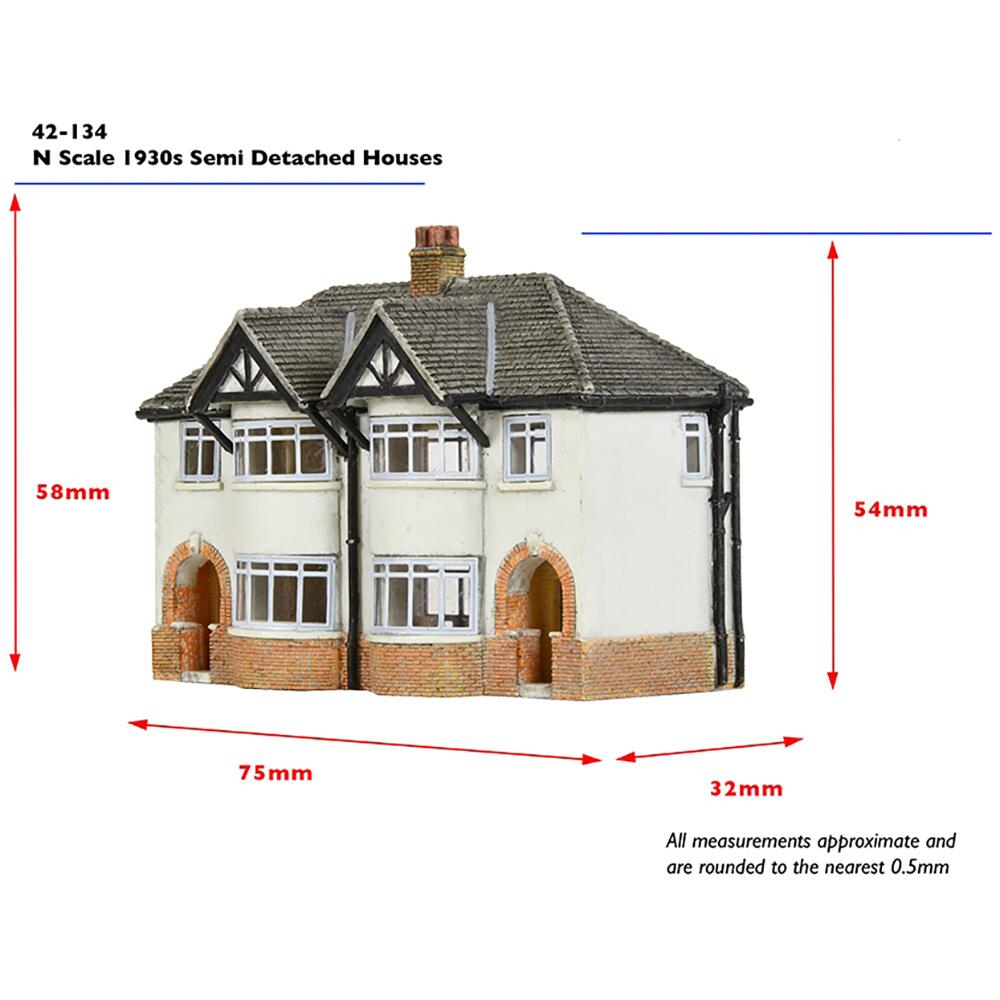
In Coming up for Air, George Orwell describes a suburban road as:

A prison with cells in a row. A line of semi-detached torture chambers.

Literary London

The growth of British towns and cities, from the onset of the Industrial Revolution, created a demand for new homes, the earliest developments were close to the centres of production and administration. Followed by the creation of outlying estates for the fleeing middle classes, as the smoke began to billow and the trains and buses began to run.

Originally the work of speculative private enterprise, followed by homes built by the local authority along with charitable institutions.

My own experience has taught me that Suburbia is architecturally diverse, socially less so, as various areas are segregated by class, and perhaps less so by ethnicity and/or culture.

The majority of the population live in Suburbia it seems, there now follows a selection of the suburban sites which I have visited in the last ten years or so.

In search of Suburbia.

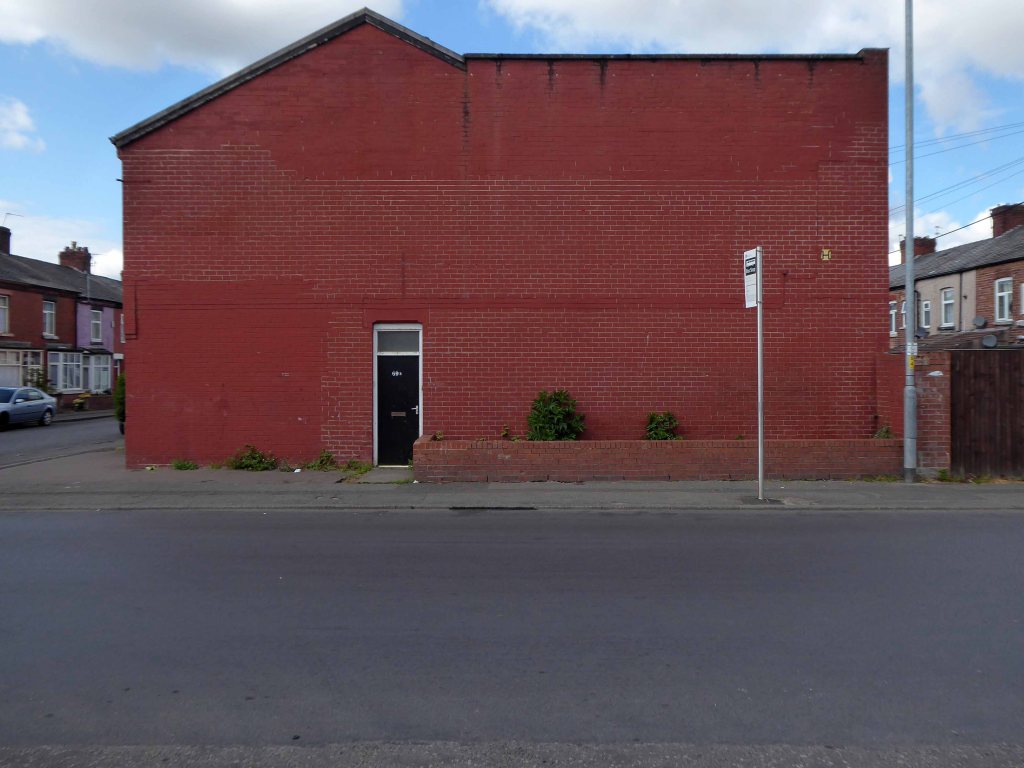
There are areas of Victorian terraced housing Manchester which survived clearance – such as Jetson Street in Abbey Hey.
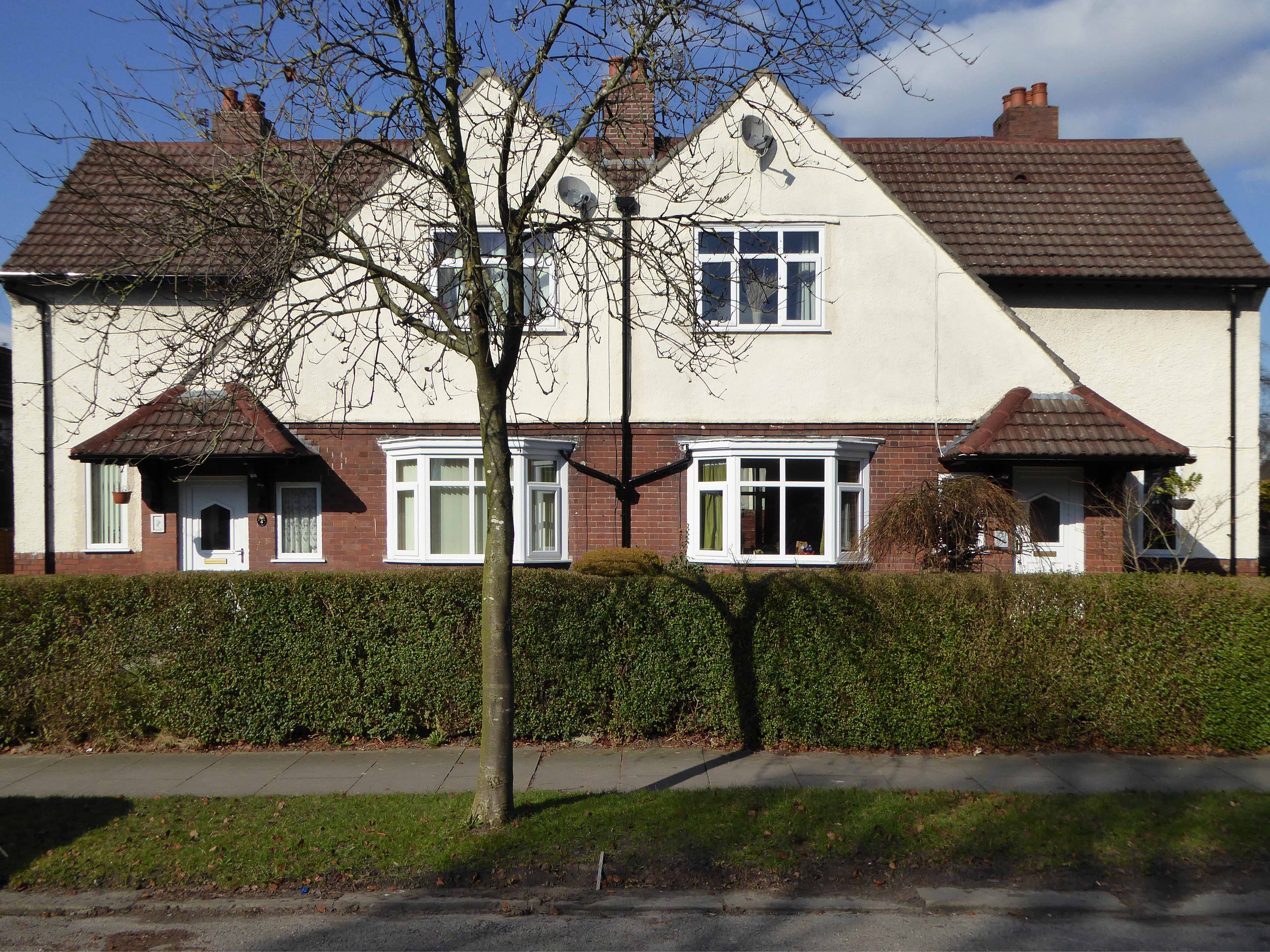
Many early estates of the early Twentieth Century where heavily influenced by the Garden City Movement , exemplified by the Burnage Garden Village.
And similar in design Ford Lane Didsbury.
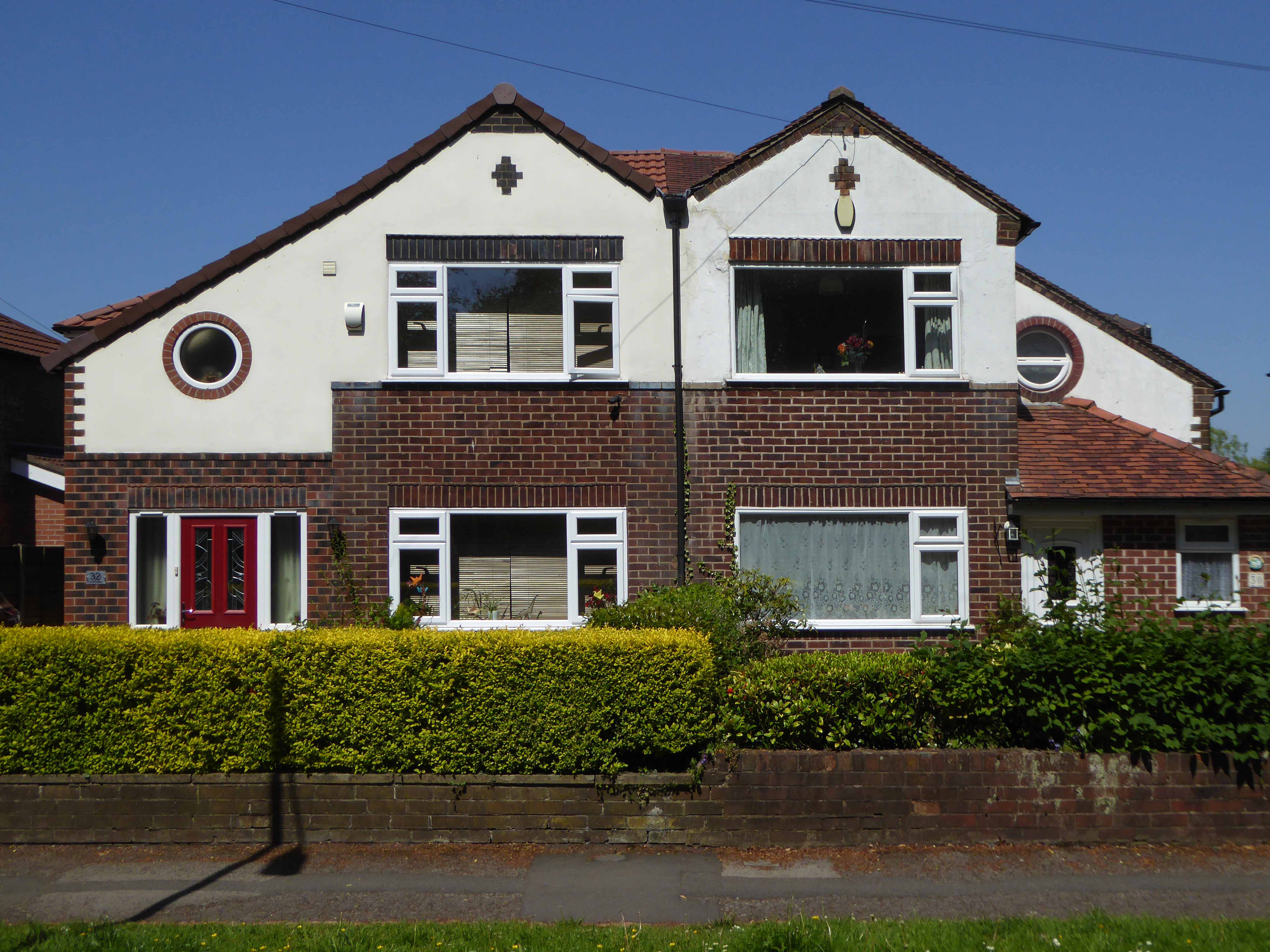
By 1931 1.1 million council houses were built and 2.8 million privately owned homes.

Post WW2 the emphasis was on an expansion of social housing, along with a growth in privately owned property – detailed information and analysis of social housing can be found here at Municipal Dreams.

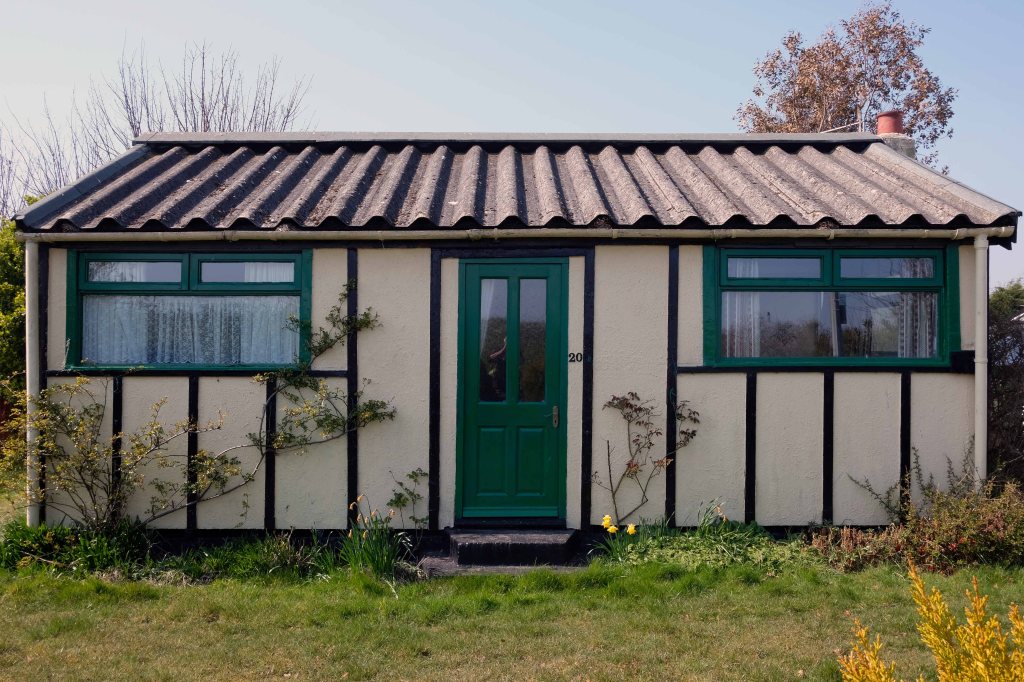
These homes were at times both temporary and of non-standard construction.

This prefabricated house was originally built for the good folk of Doncaster, later finding itself in Humberston Fitties
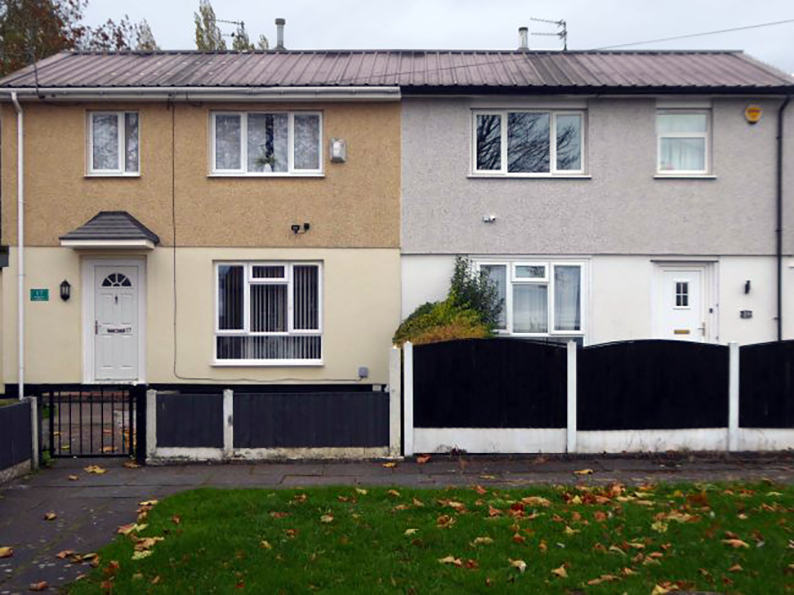
These Wythenshawe BISF Homes designed by Frederick Gibberd, the so-called Tin Town are still very much habitable homes.
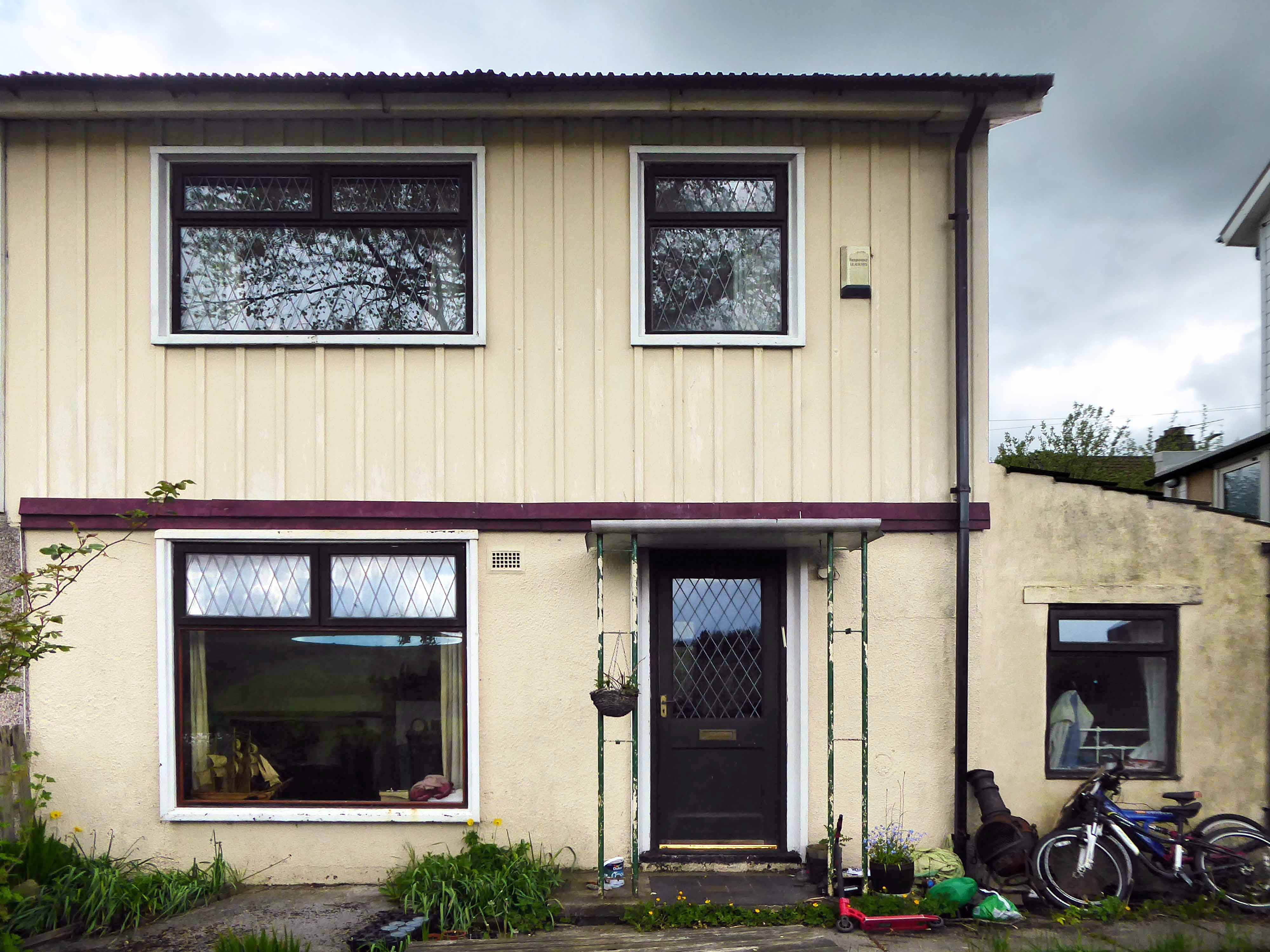
Likewise these examples in Hebden Bridge.
The Pre-Fab Museum is a treasure trove of information, along with Non Standard House Construction.

Post war development was inextricably linked to the New Towns.

The new towns in the United Kingdom were planned under the powers of the New Towns Act 1946 and later acts to relocate people from poor or bombed-out housing following World War II. Designated new towns were placed under the supervision of a development corporation, and were developed in three waves. Later developments included the “expanded towns”: existing towns which were substantially expanded to accommodate what was called the “overspill” population from densely populated areas of deprivation.

Wikipedia

One such New Town was Peterlee, in the north east of England, where I visited in 2021 and 2025.
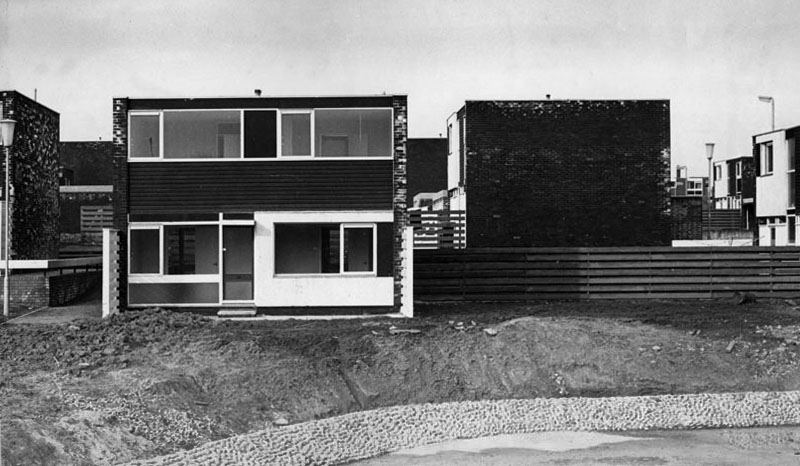
Along with Cumbernauld in Scotland.
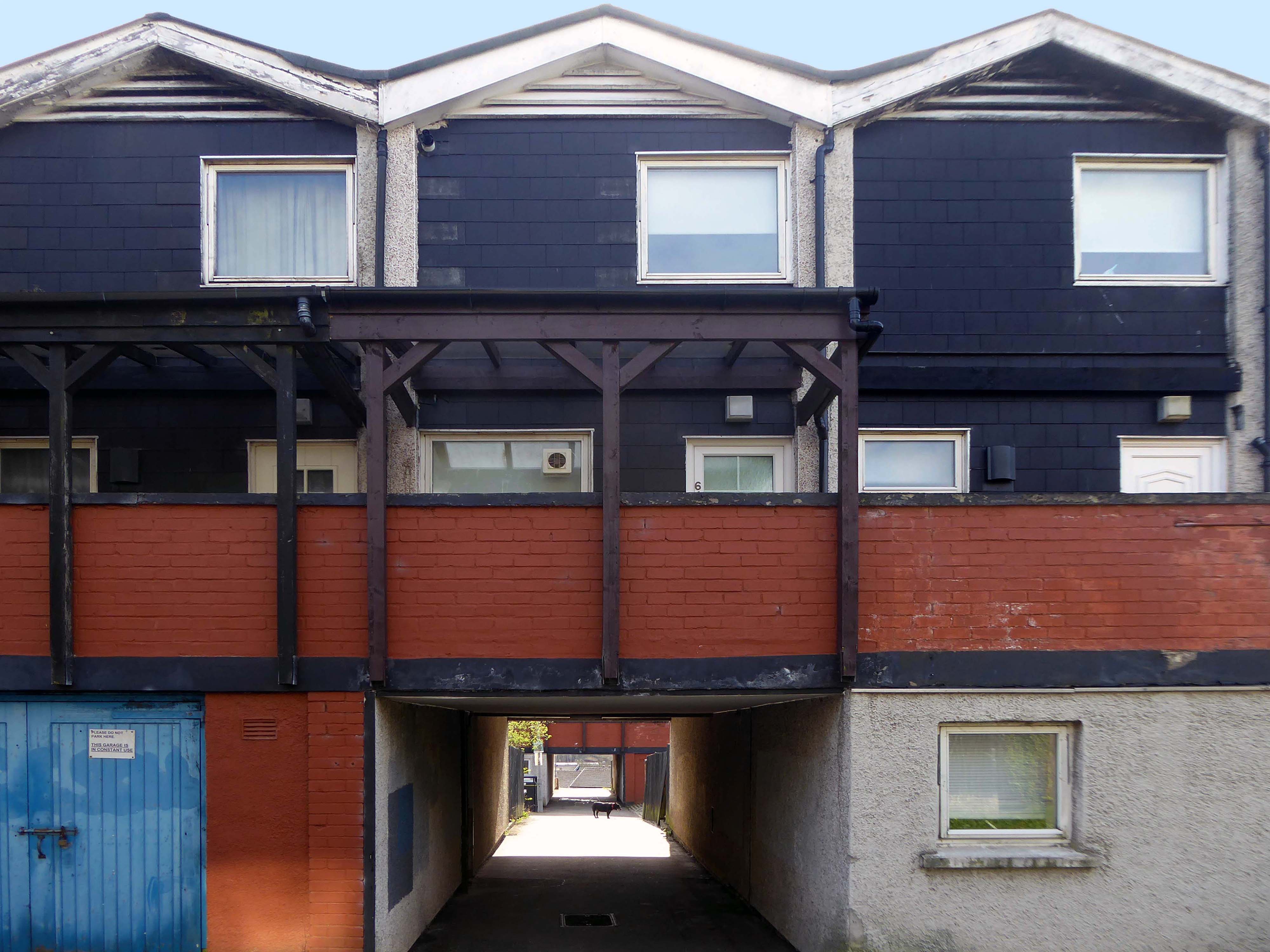
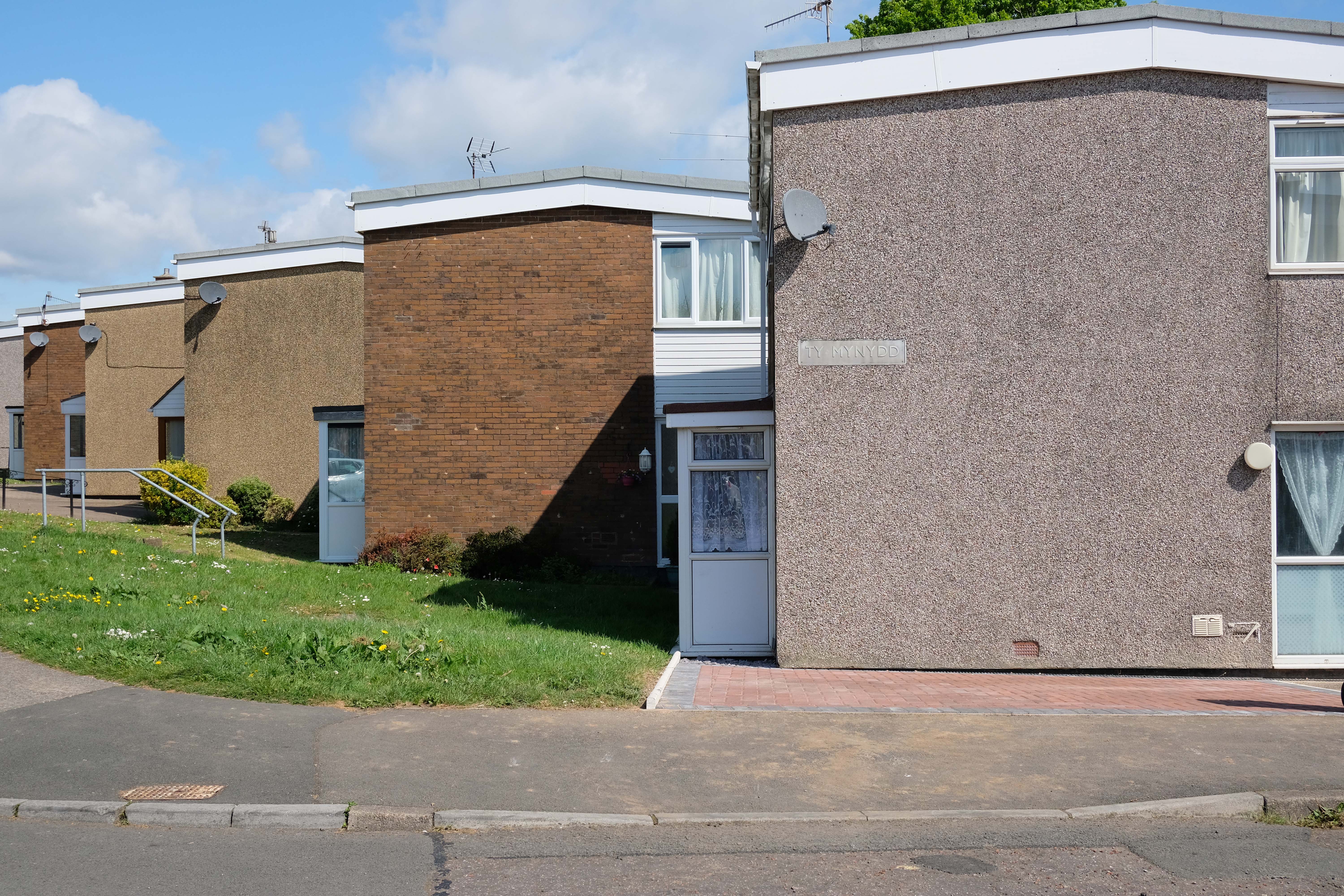
Cwmbran in south Wales.
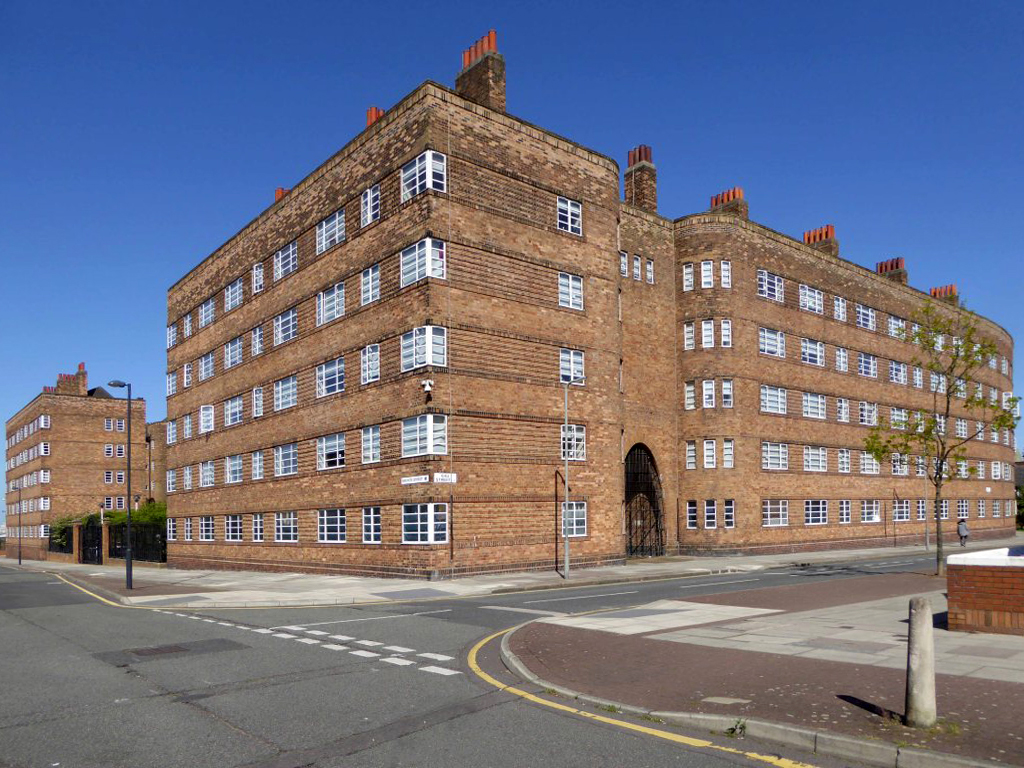
In addition there are examples of European influence in the design of inter and post WW2 housing.

The Bull Ring Liverpool 1935.
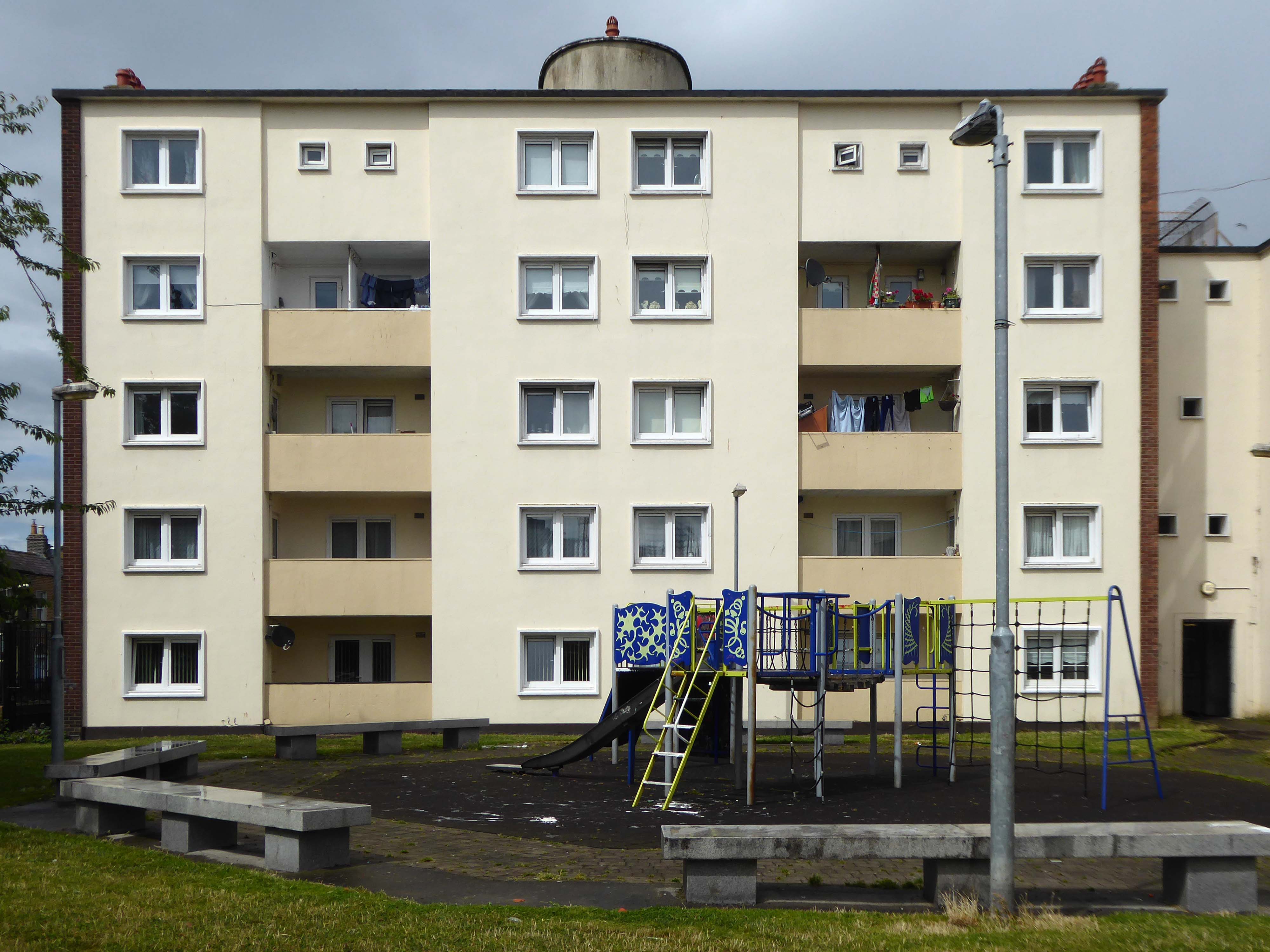
Leo Fitzgerald House of 1940 in Dublin displays a similar European influence.
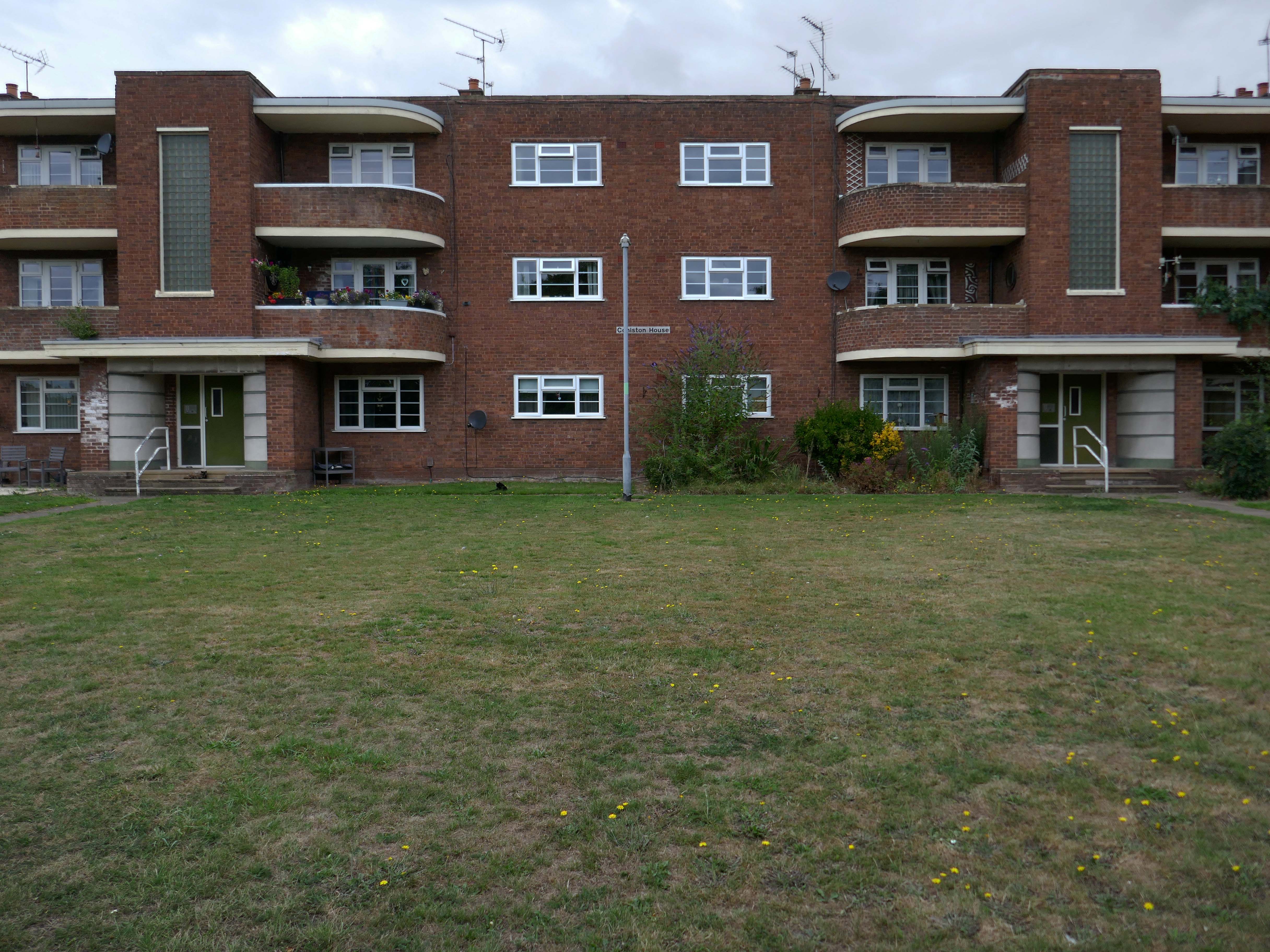
Corporation Street Flats Stafford 1951-52
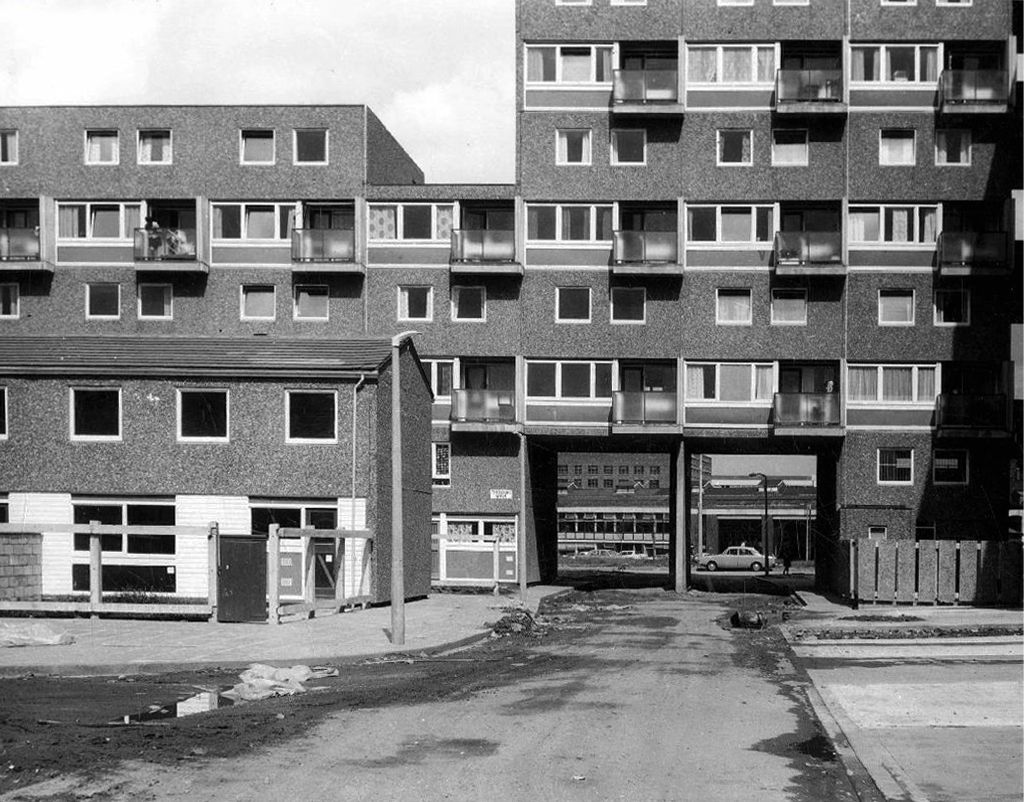
Later examples such as Fort Ardwick in Manchester proved to be badly built and ill advised choices for social housing.
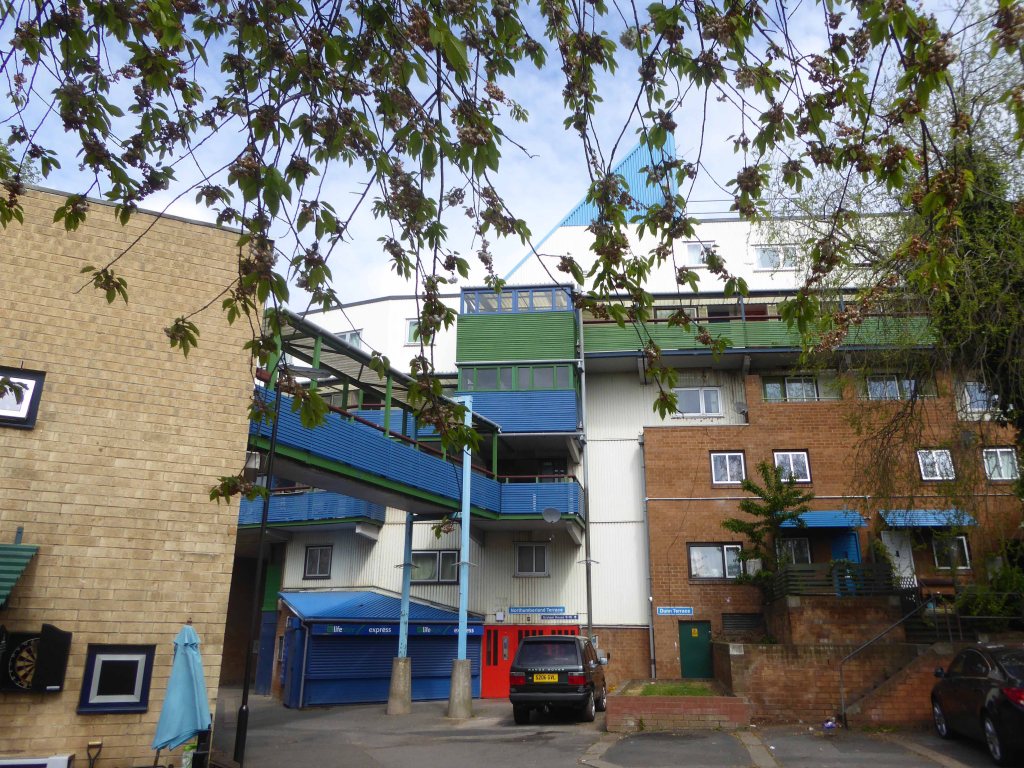
The Byker Estate has proved to be much more durable.
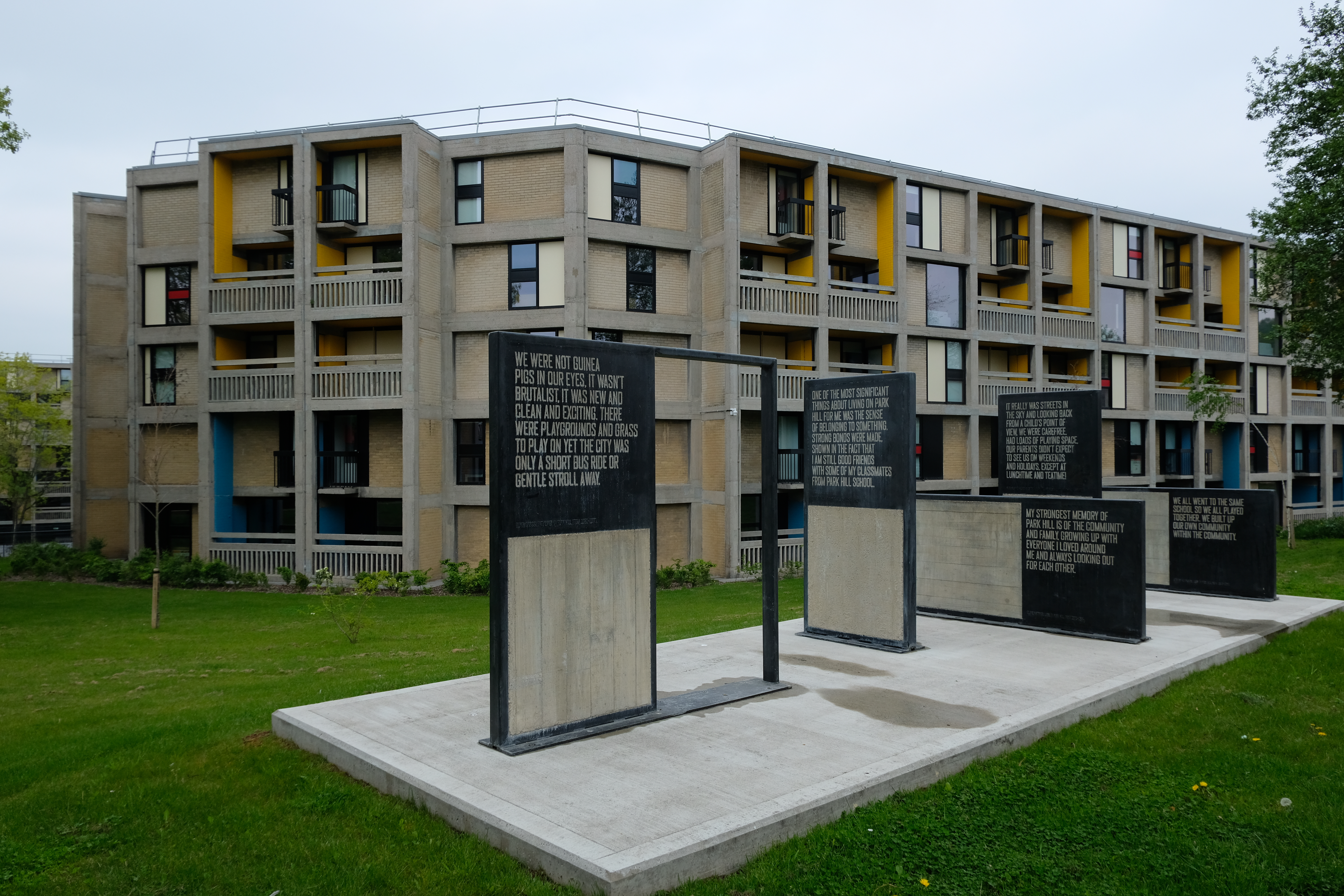
Whilst Park Hill has undergone a change from social housing to largely private ownership and rental.
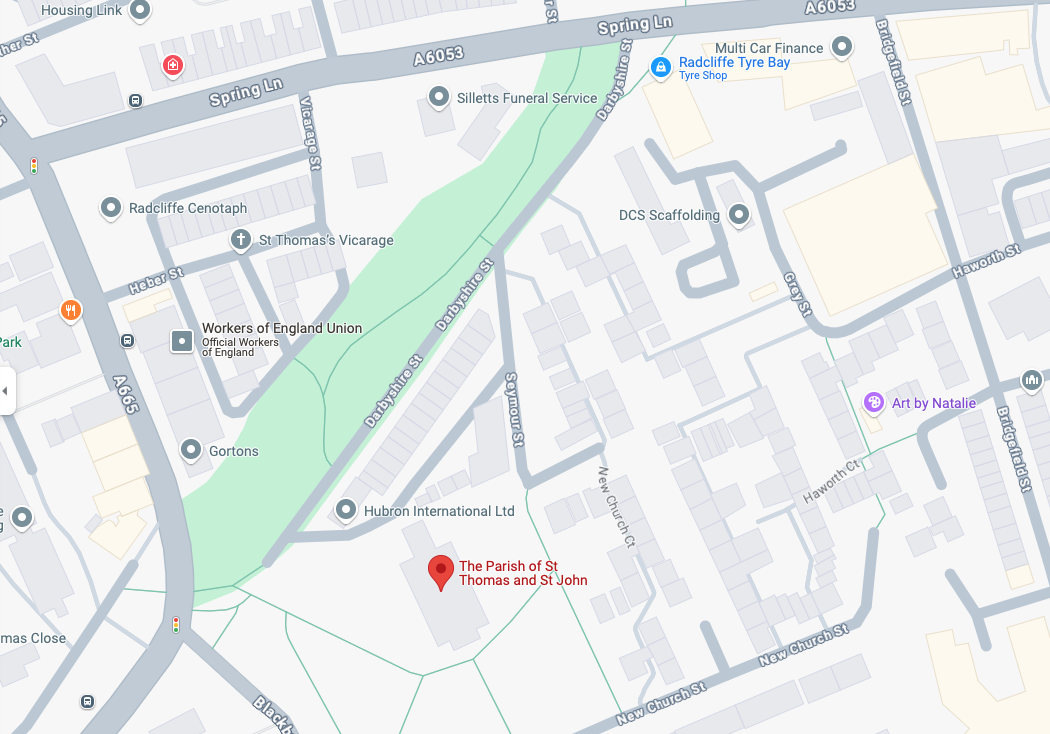
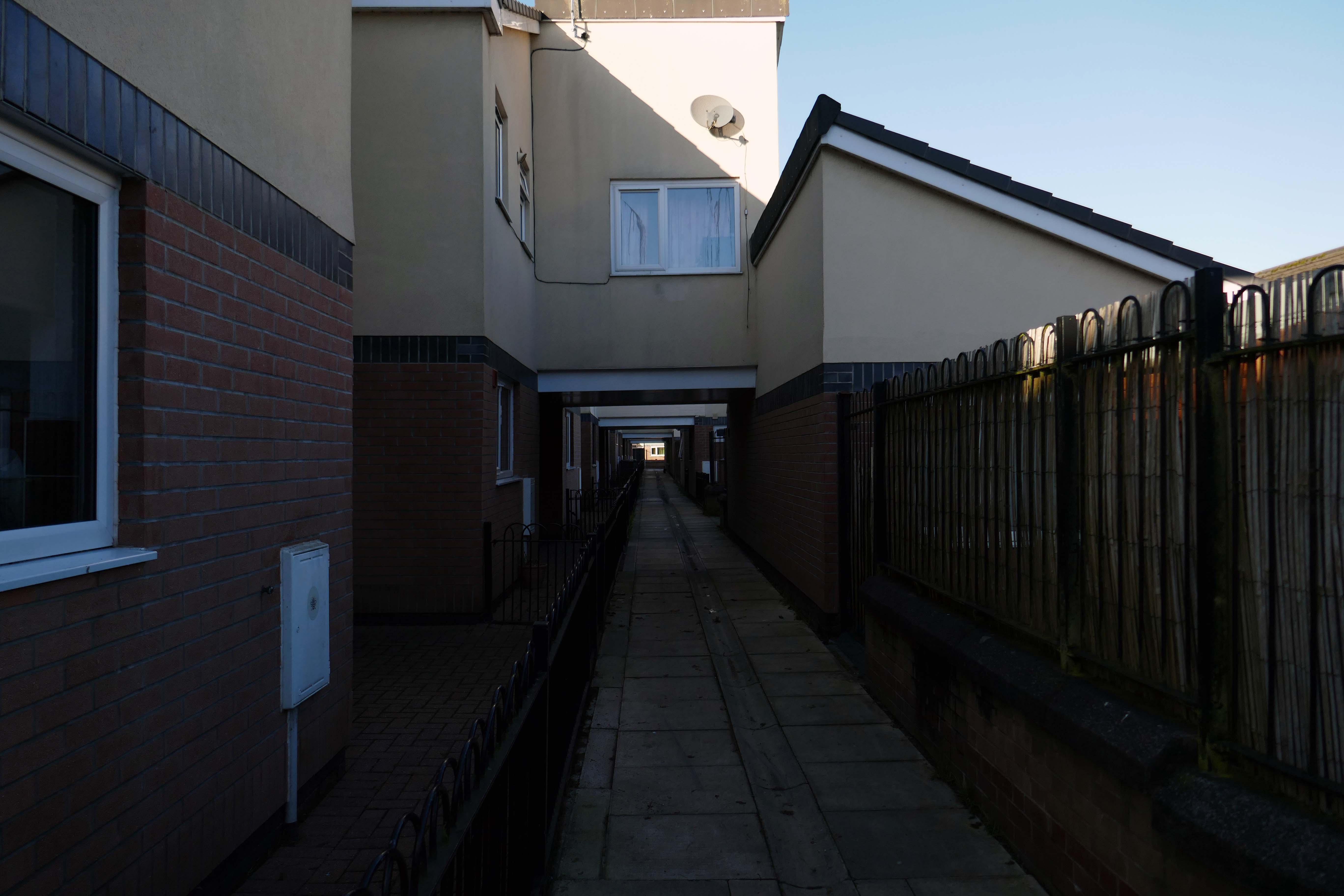
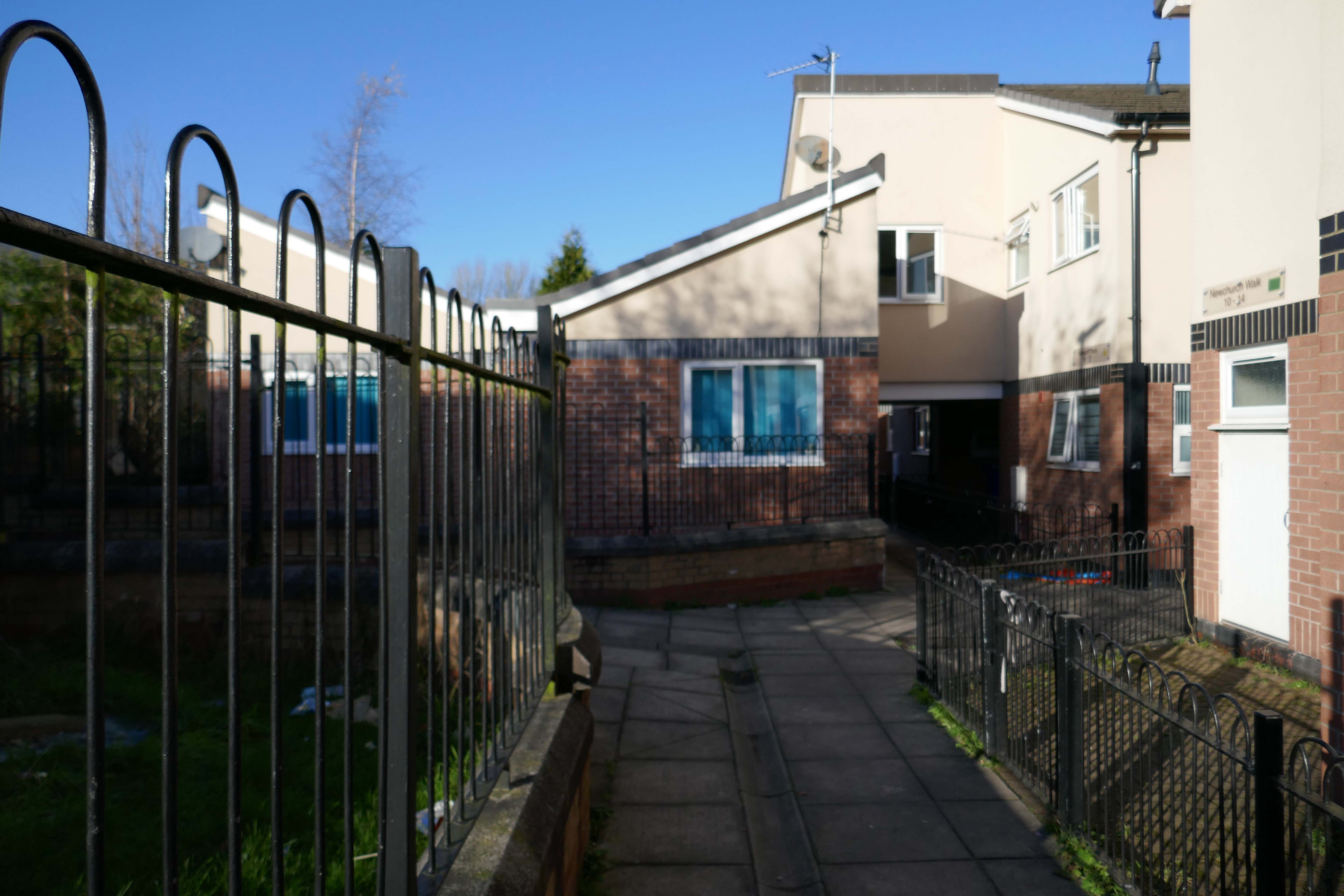
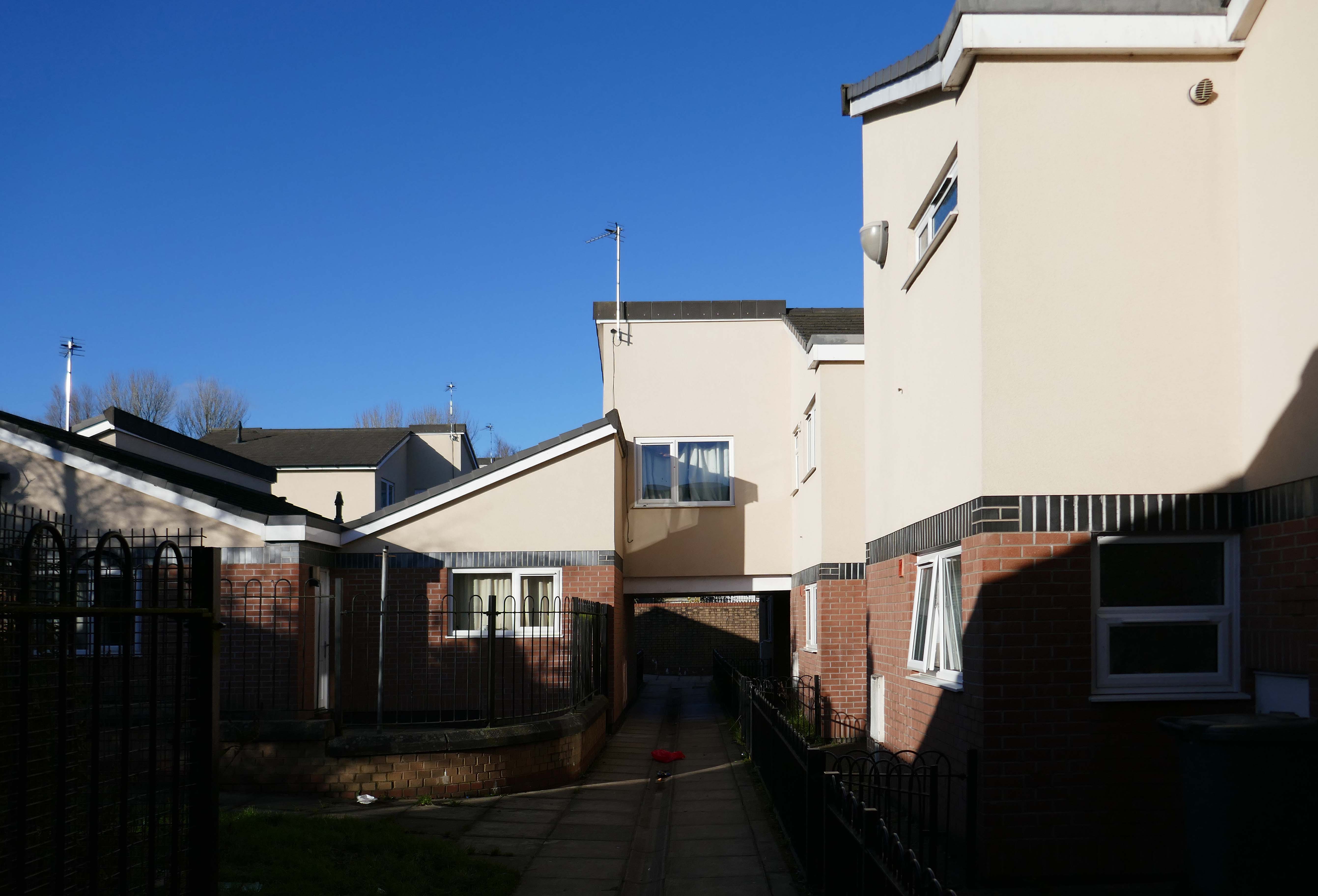
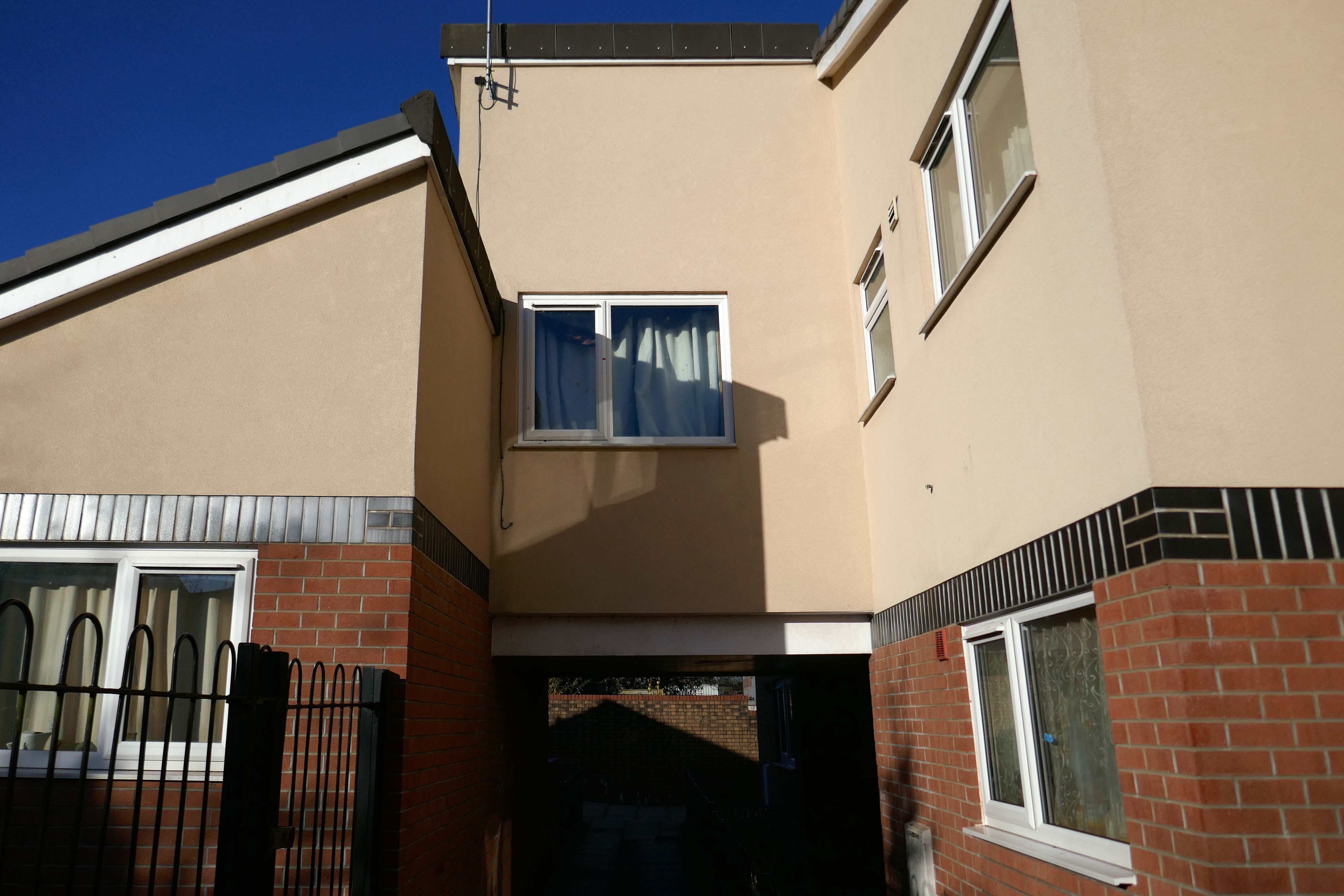
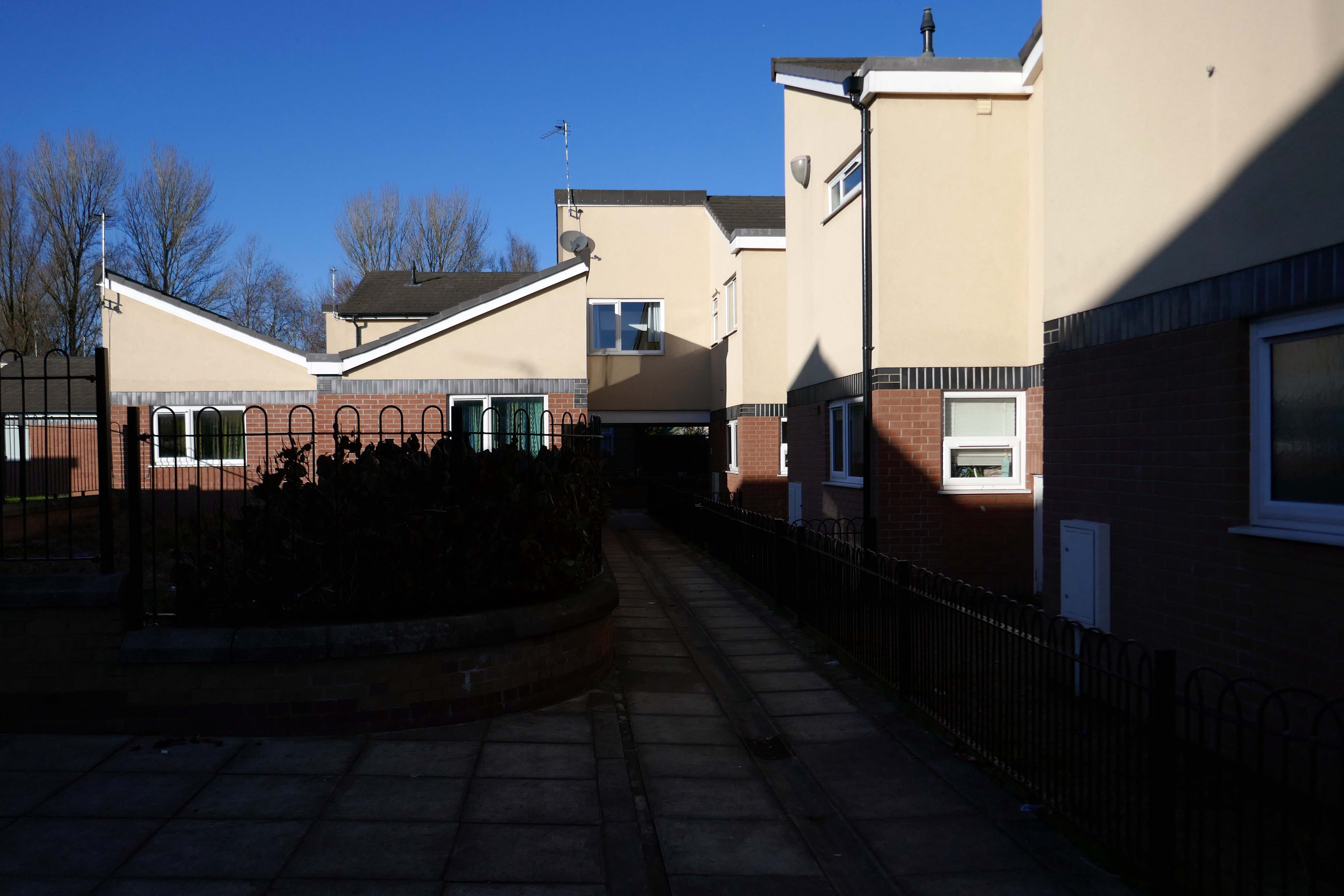
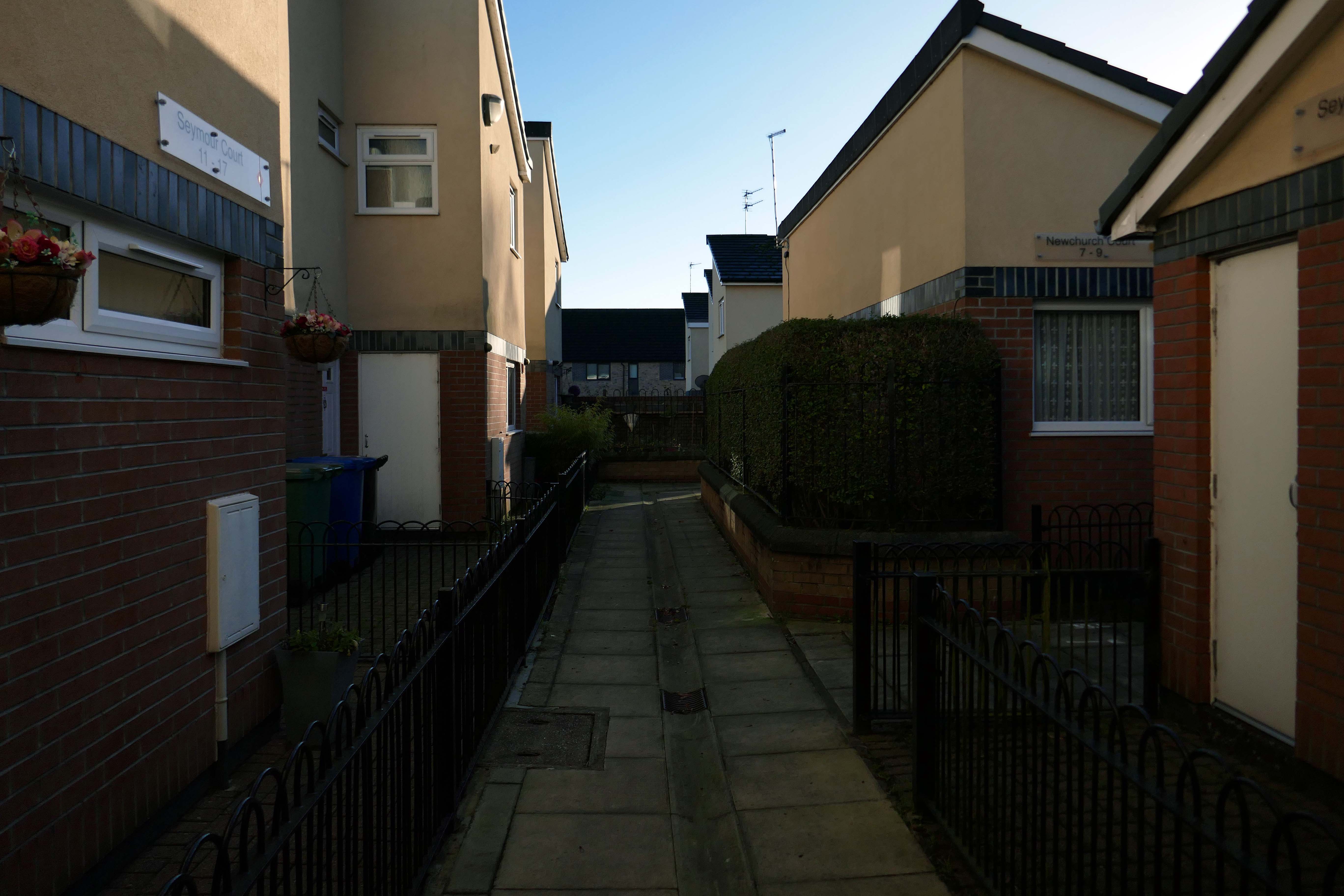
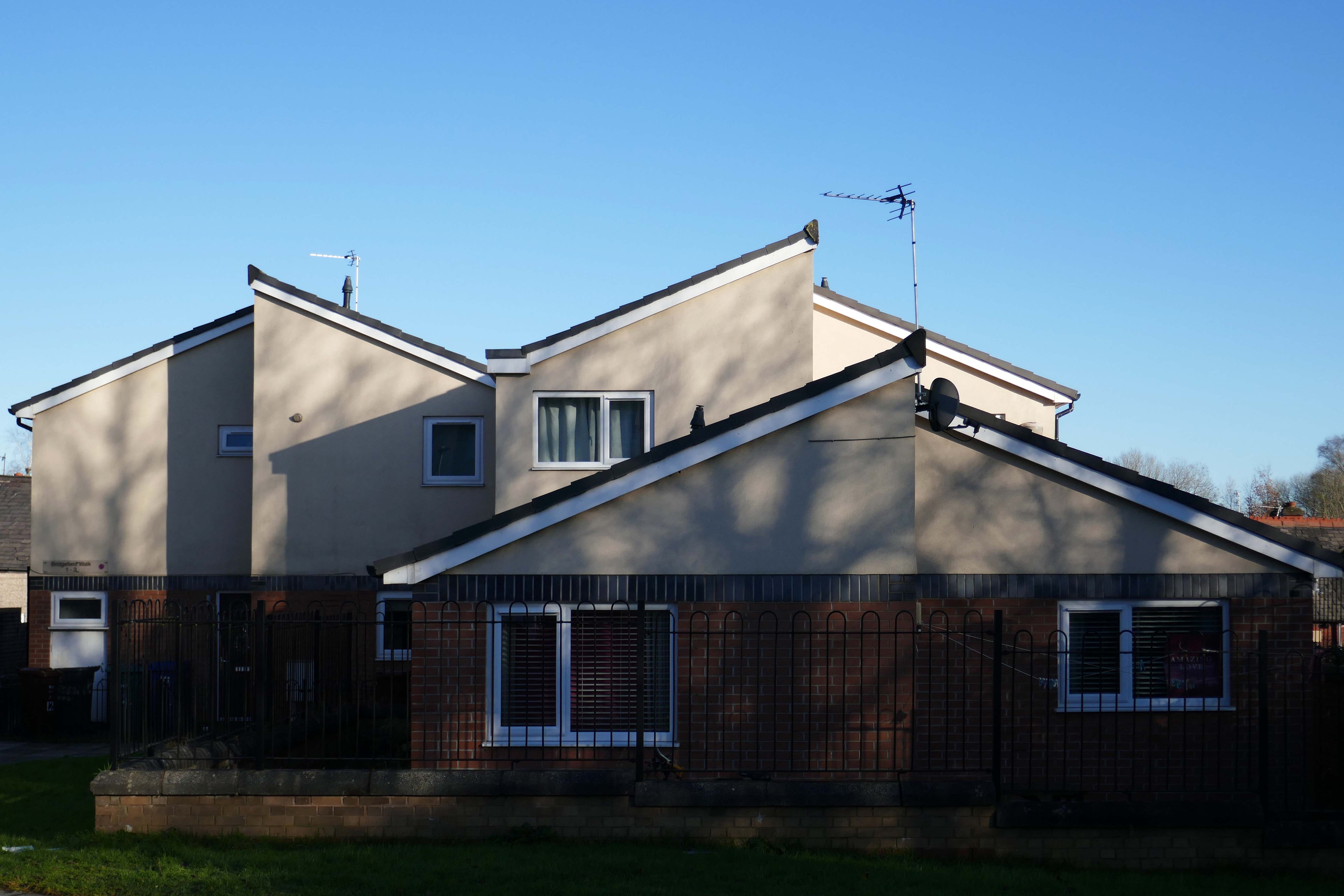
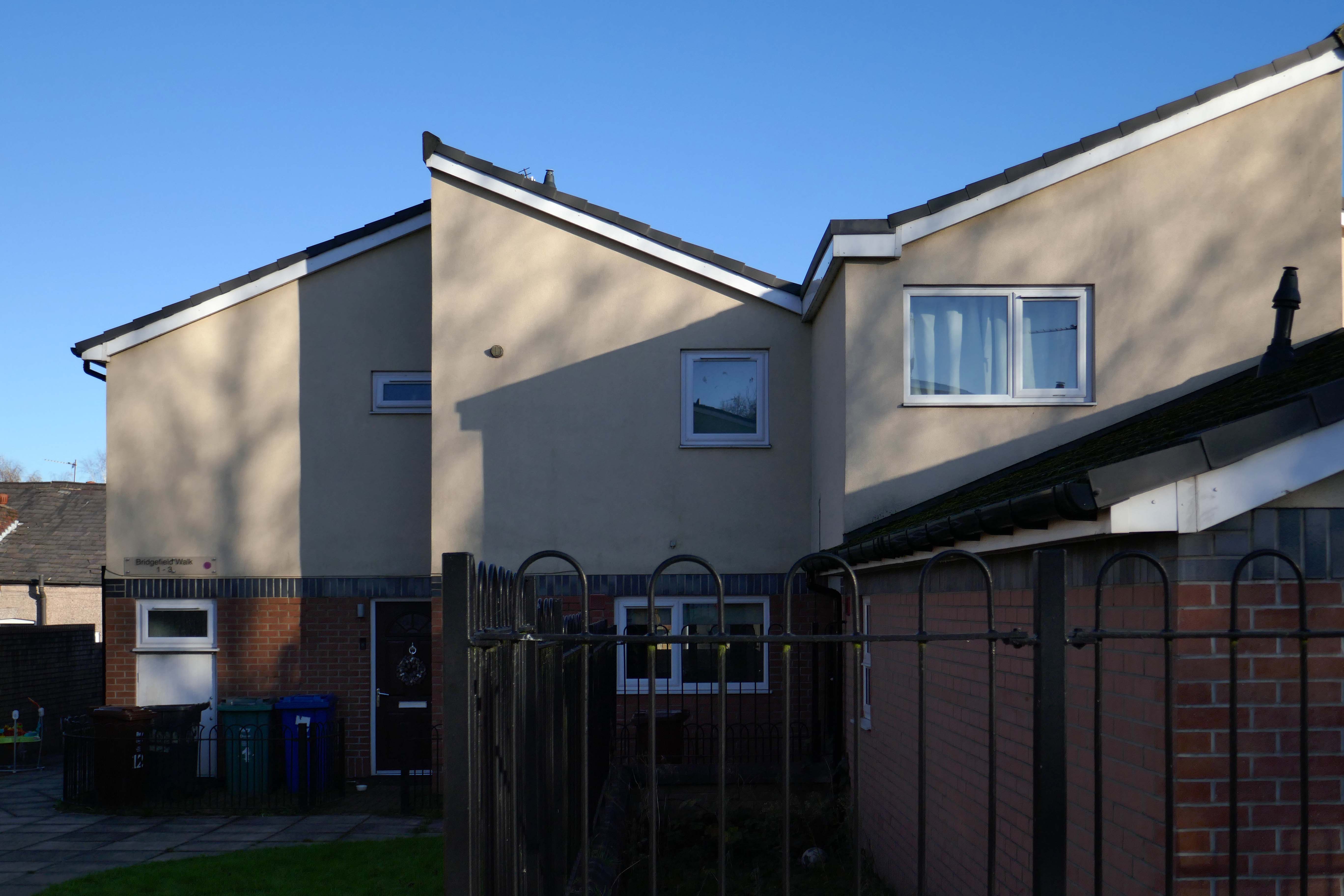
The St Thomas Estate in Radcliffe, mixes the traditional terrace with a modern twist on social housing.
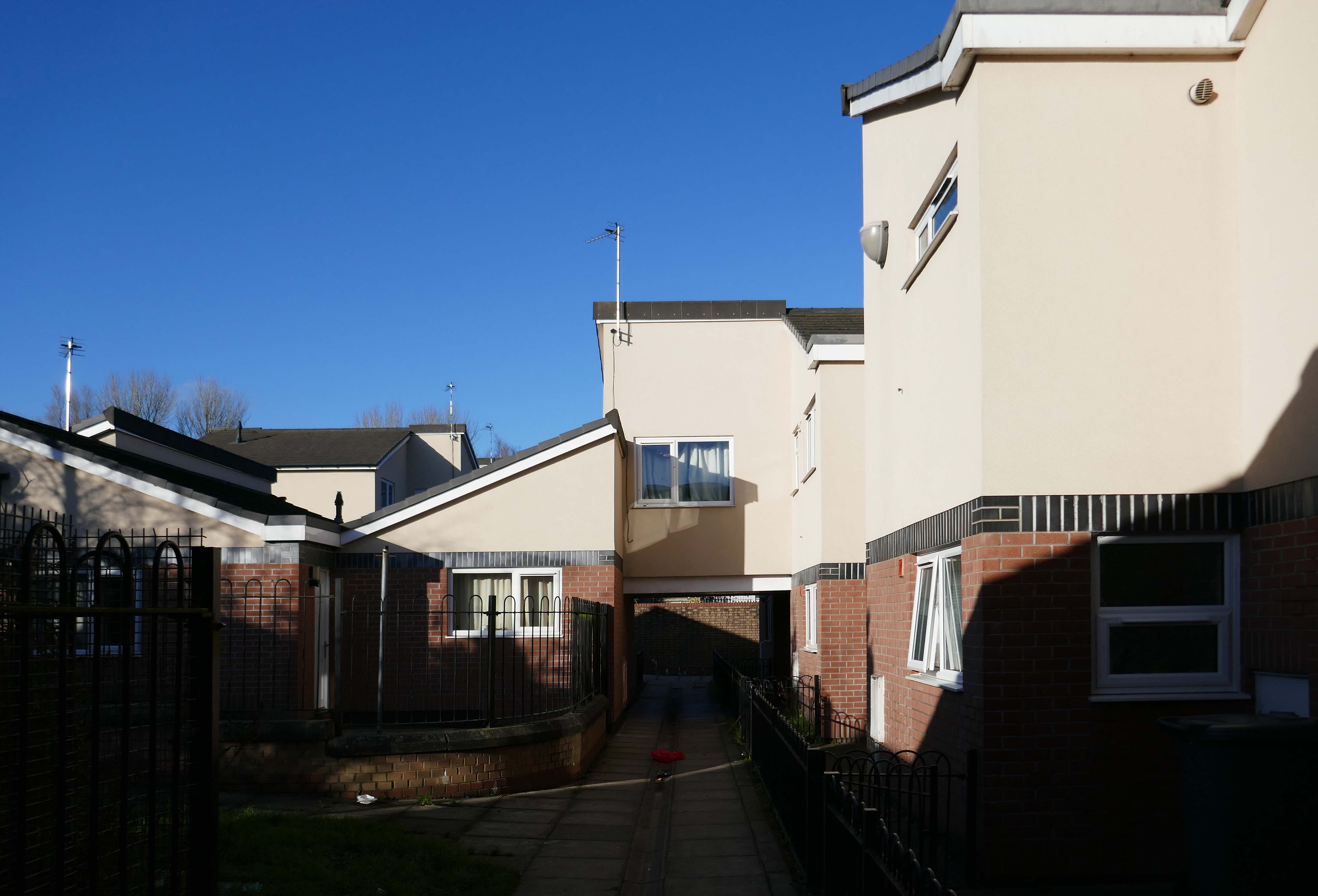
Private developers opted for Span style homes, such as these at Deneway Stockport 1964
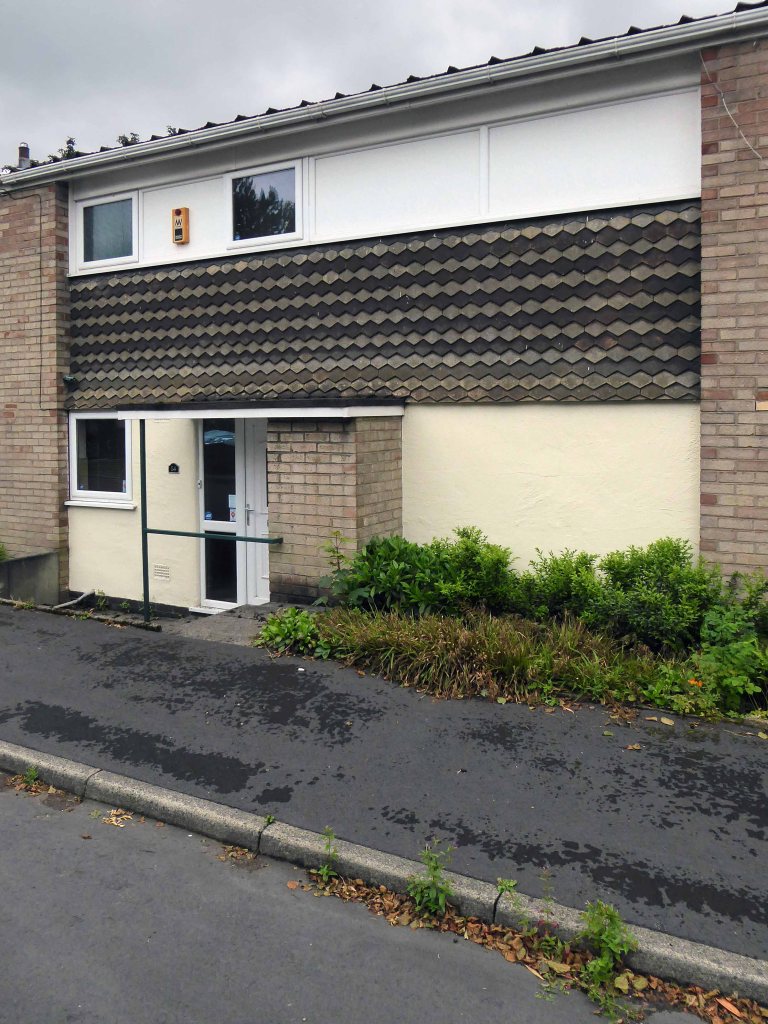
Further afield in the former fields of Cheshire are the out of the way, not way out, Woodford executive homes.
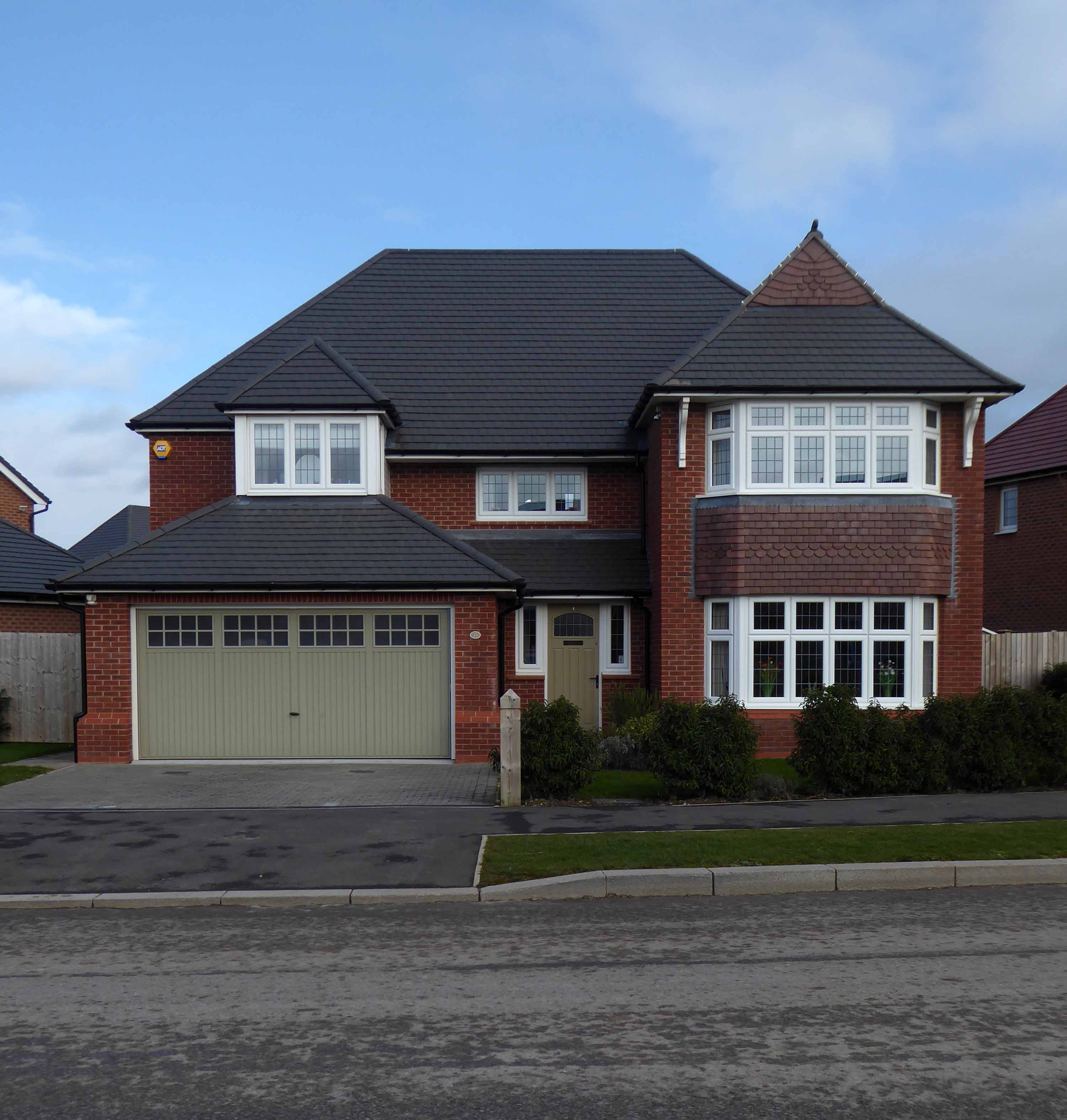
In Heald Green we find the slightly less executive homes.
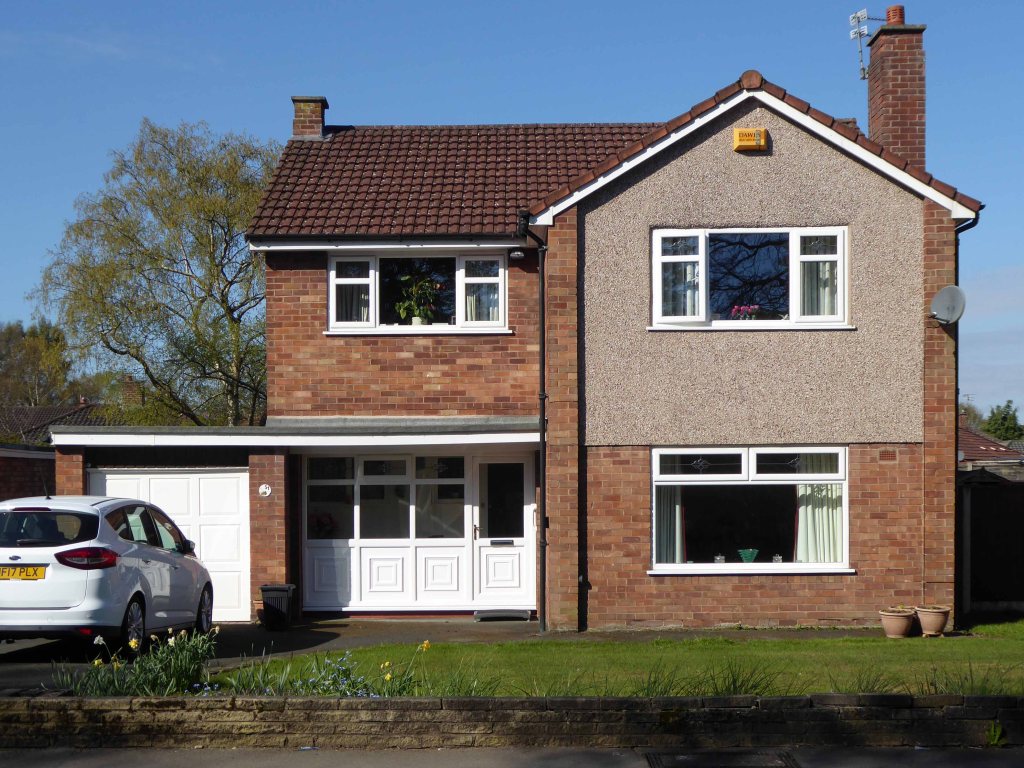
Even further afield the seaside enclave of Penrhyn Bay.
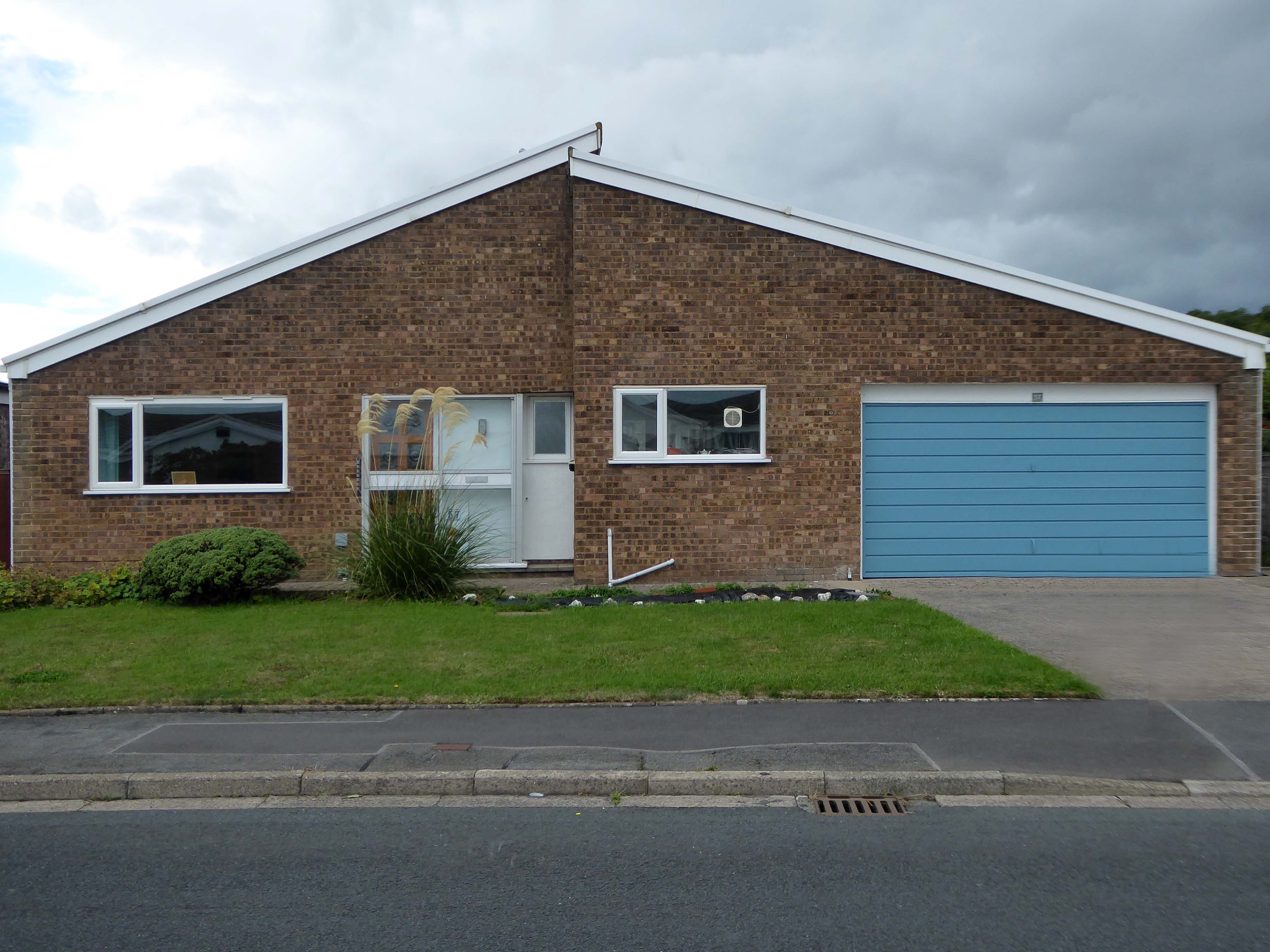
Prompted by a recent viewing of Graham Williamson’s Suburban film, I decided to undertake further in depth research around my own suburban locale.

Here is my first day’s findings in the West Heatons – followed by the next day in the West Heatons.
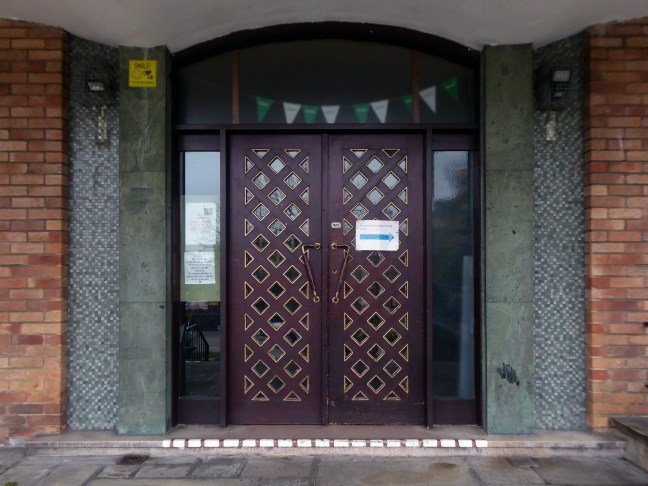
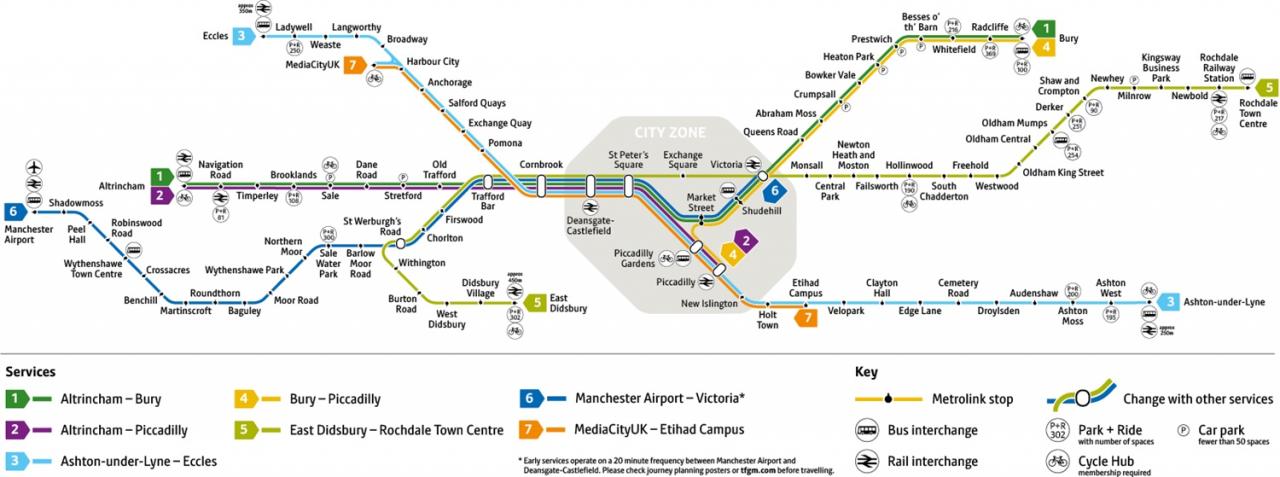
Tram Trip To Bury

I was cordially requested to produce tram based walk, by the good folk at the modernist – travelling from Victoria Station to Bury. Alighting at each stop and seeing what could be seen, by way of modern buildings along the byways.

By the way, I do have previous experience, having undertaken a similar task travelling to Ashton.

So I set off as instructed, clutching my GMPTE senior concessionary travel pass.

Queens Road

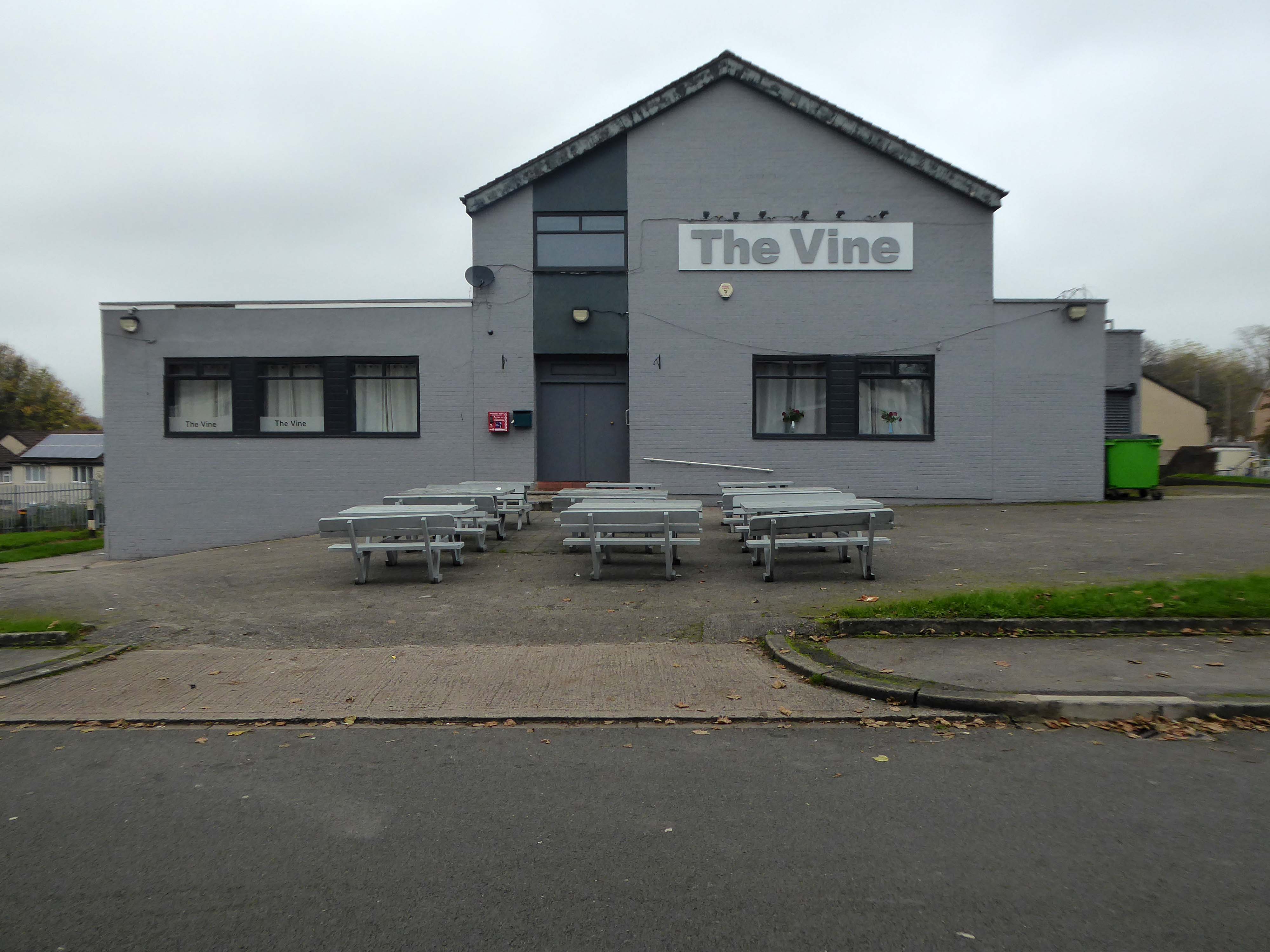
Turn right on leaving the station, right then left – you have reached The Vine.

Glendower Dr, Manchester, Greater Manchester M40 7TD.

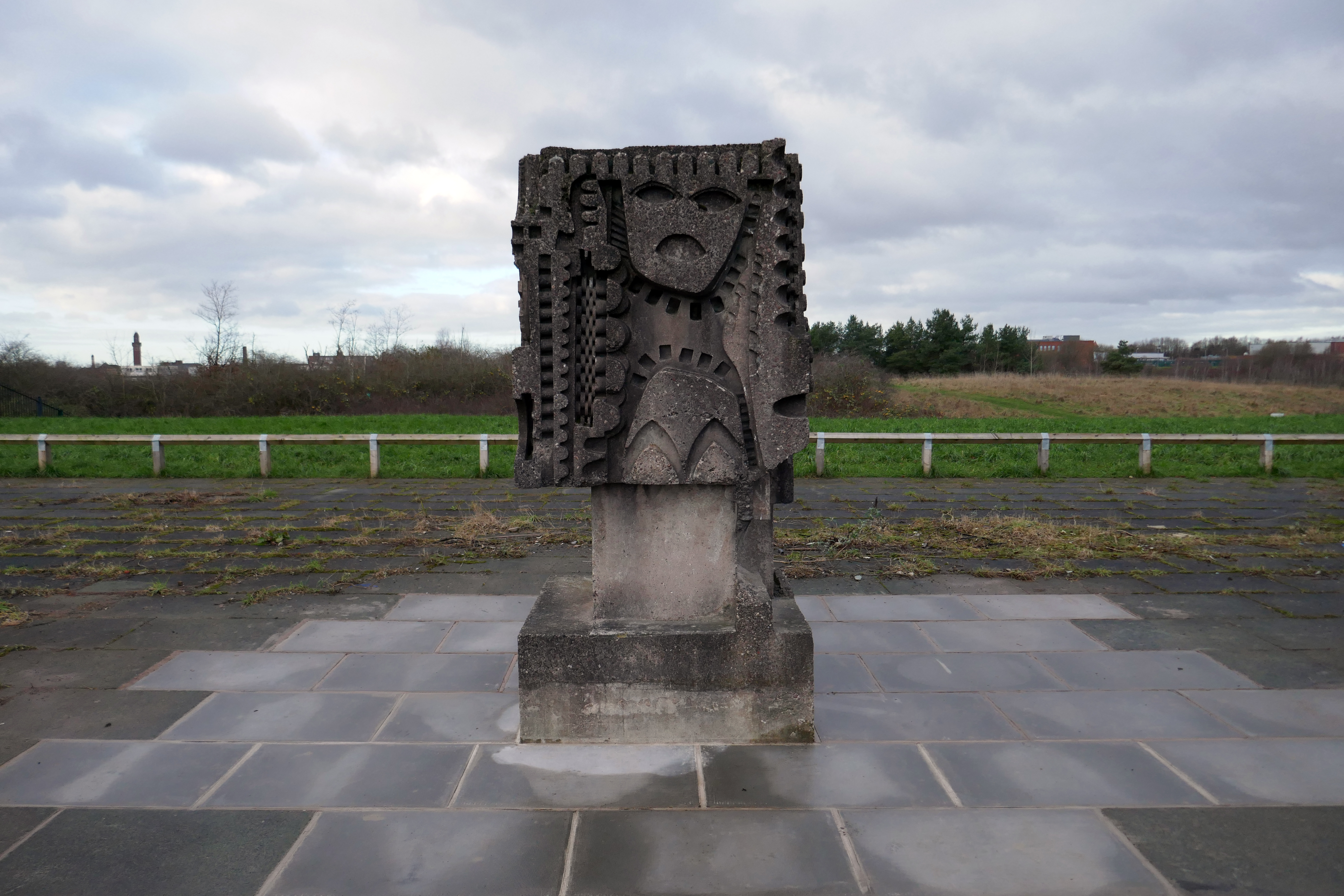
Head for Rochdale Road and turn right back toward the city centre, you have reached Eastford Square.

Manchester M40 7QT

Formerly home to homes and shops – currently home to the William Mitchell Totem.

Abraham Moss

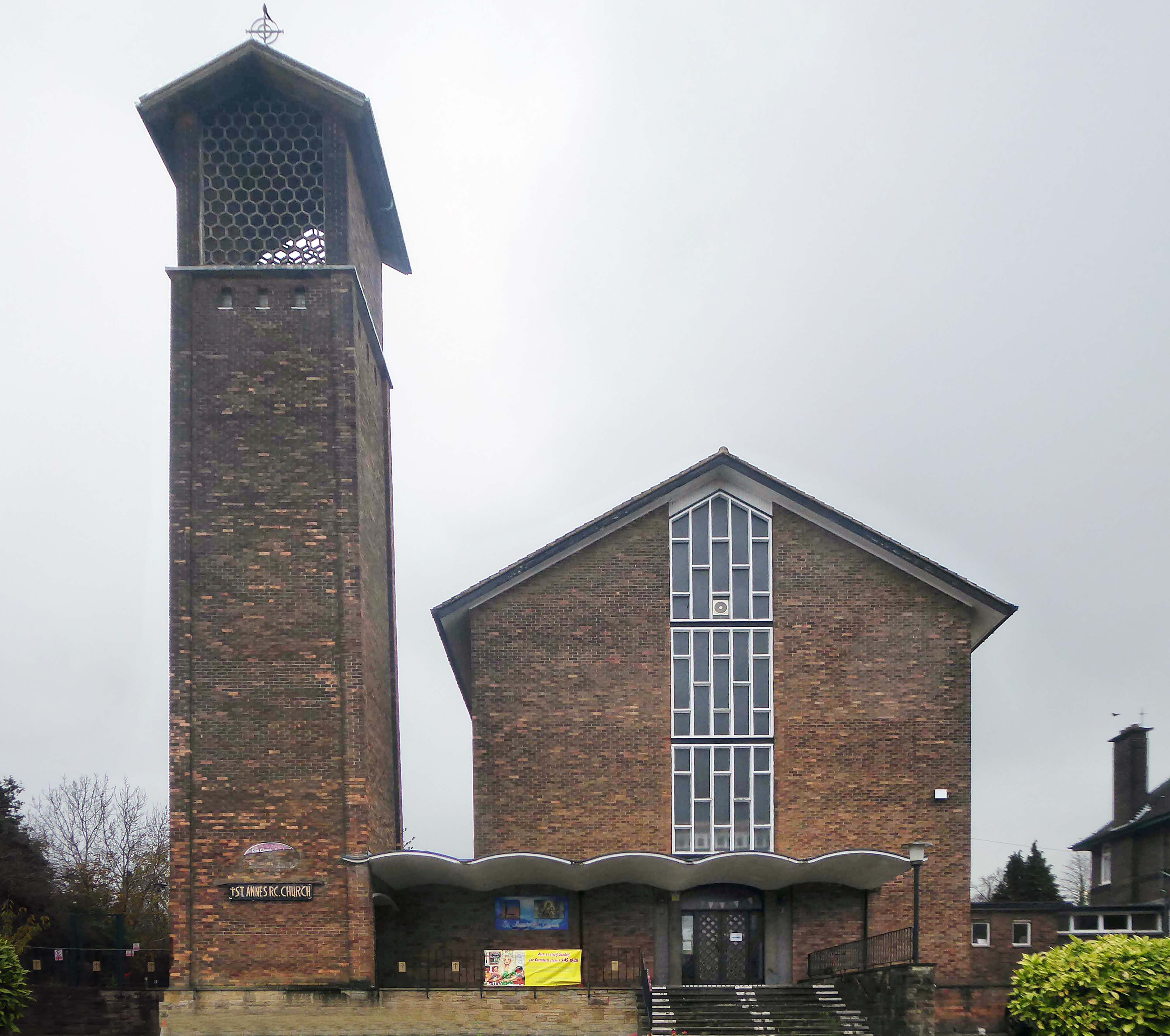
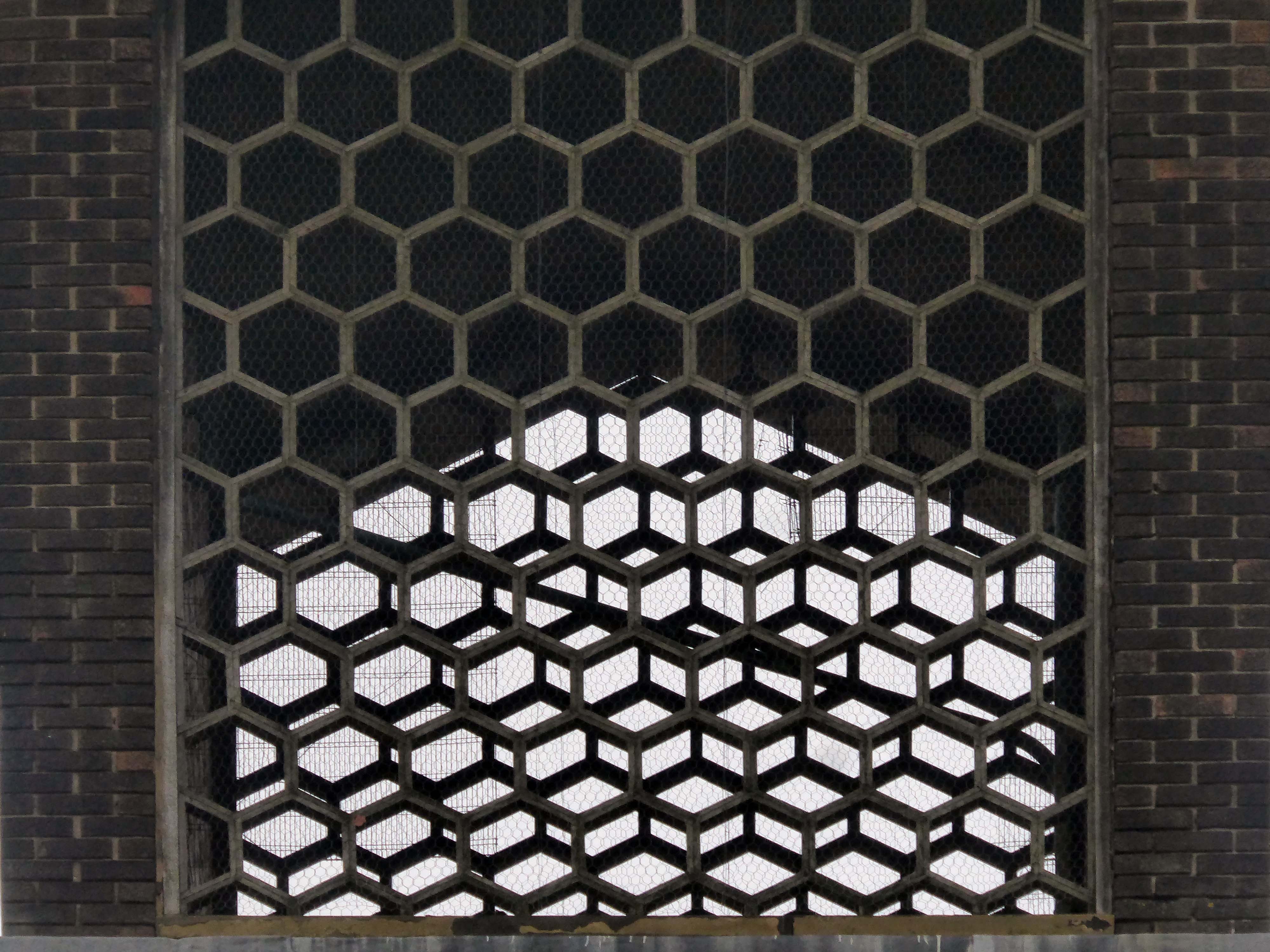
Head toward where you will find St Annes RC Church – Architect: Greenhalgh & Williams 1958

Crescent Rd, Crumpsall, Manchester M8 5UE

Crumpsall

Turn right out of the station onto Crumpsall Lane

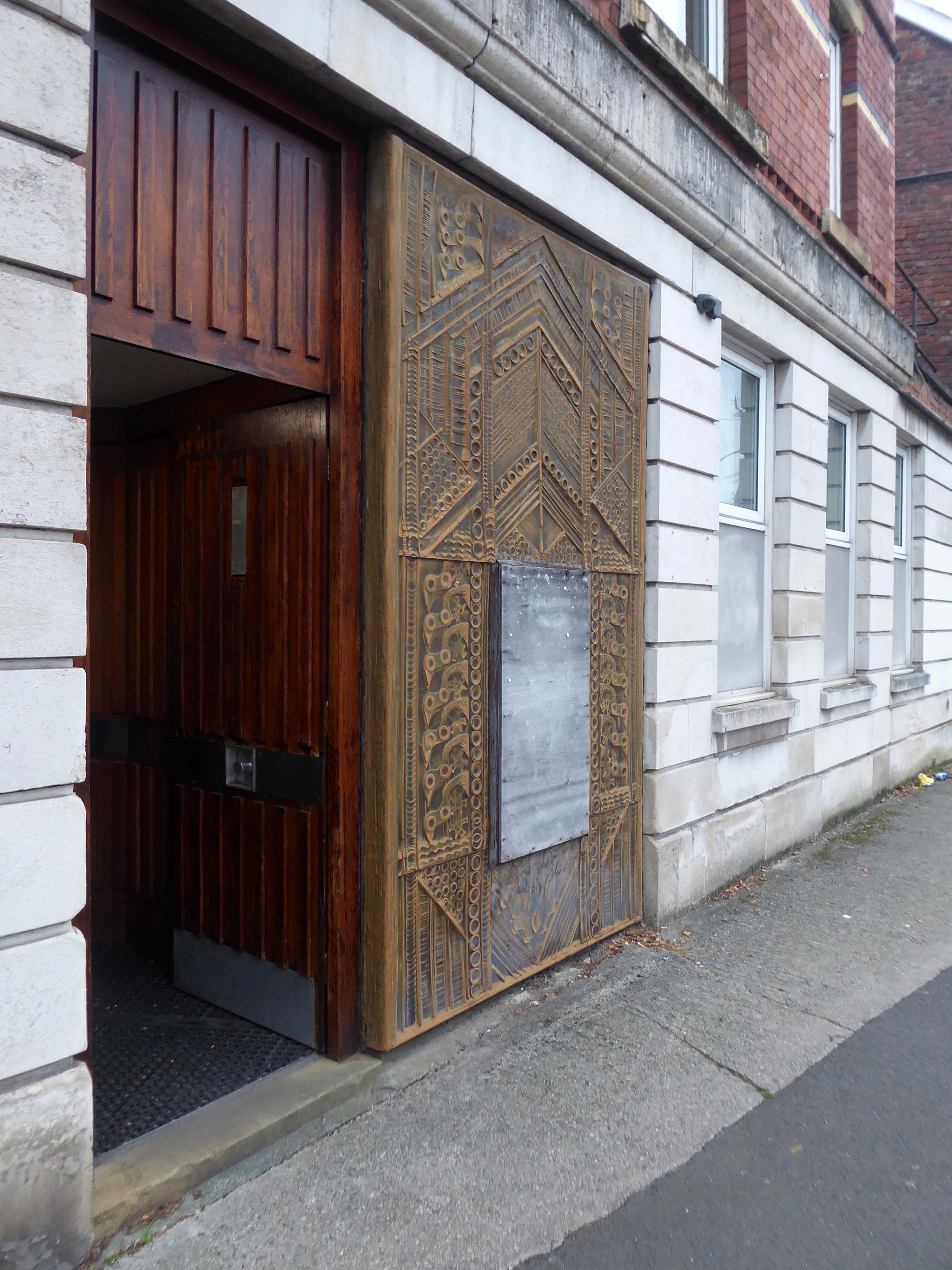
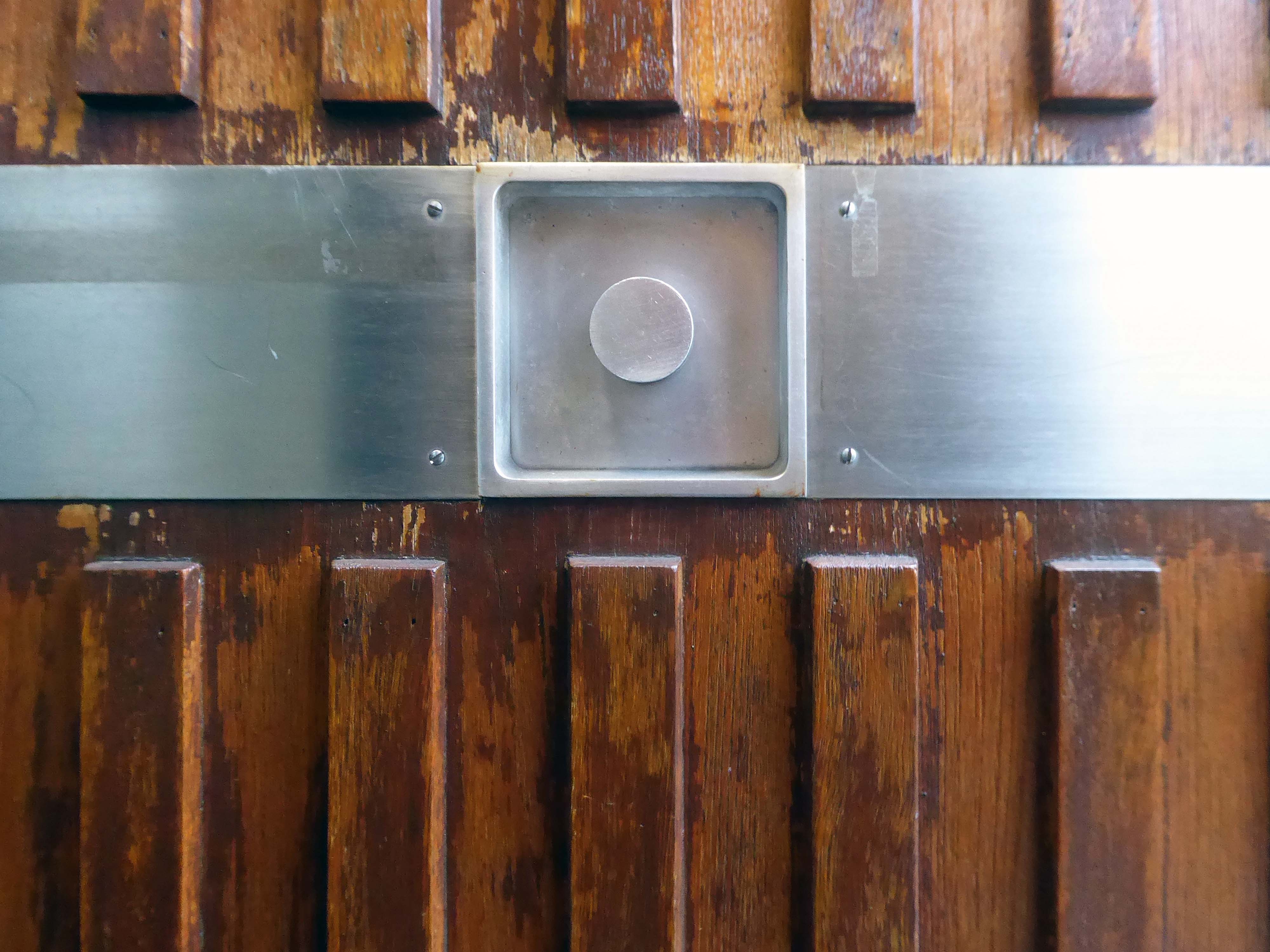
Former District Bank latterly Nat West – decorative relief and door.

Currently Greater Manchester Immigration Aid Unit

1 Delaunays Rd, Crumpsall, Manchester M8 4QS

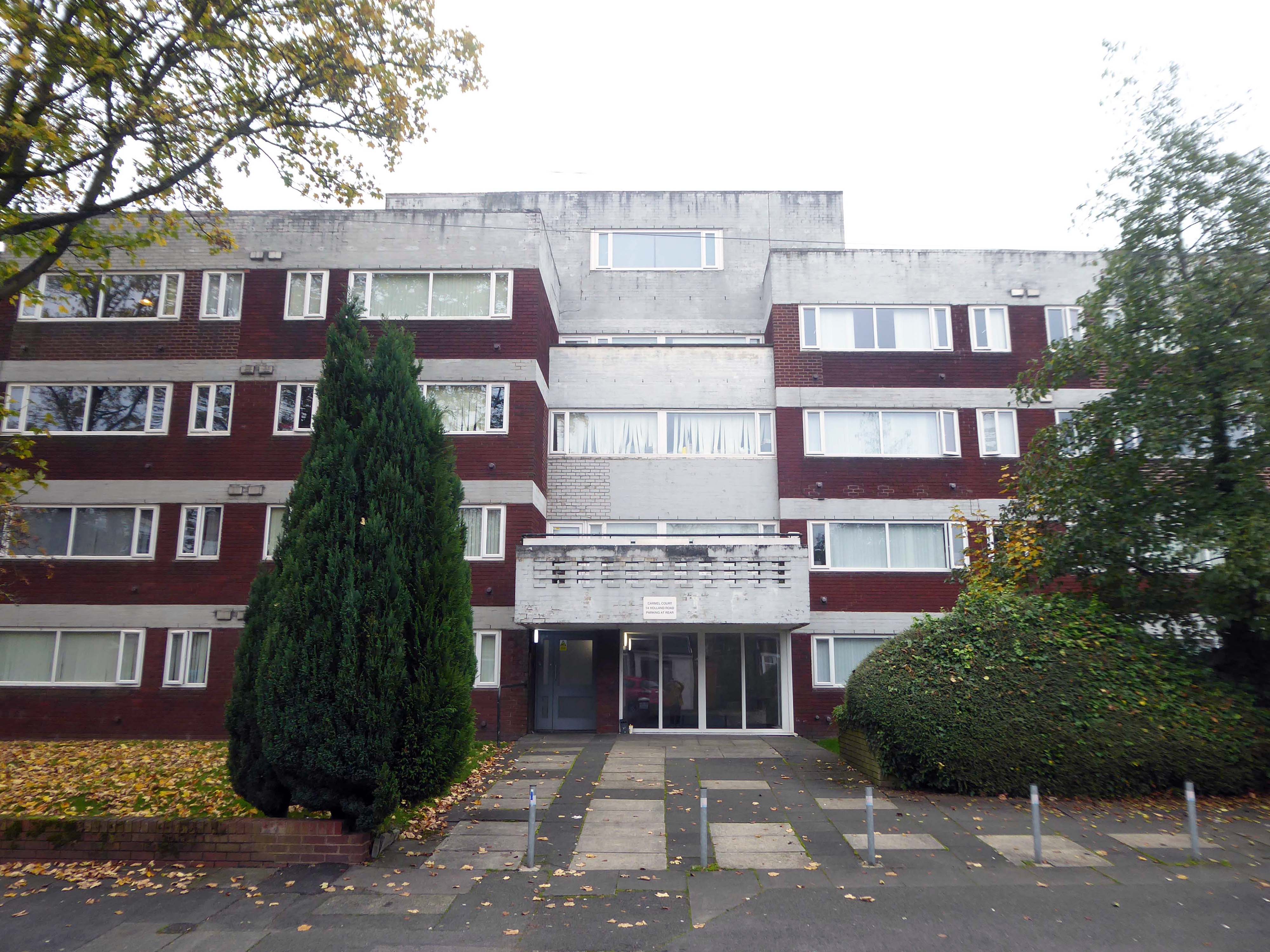
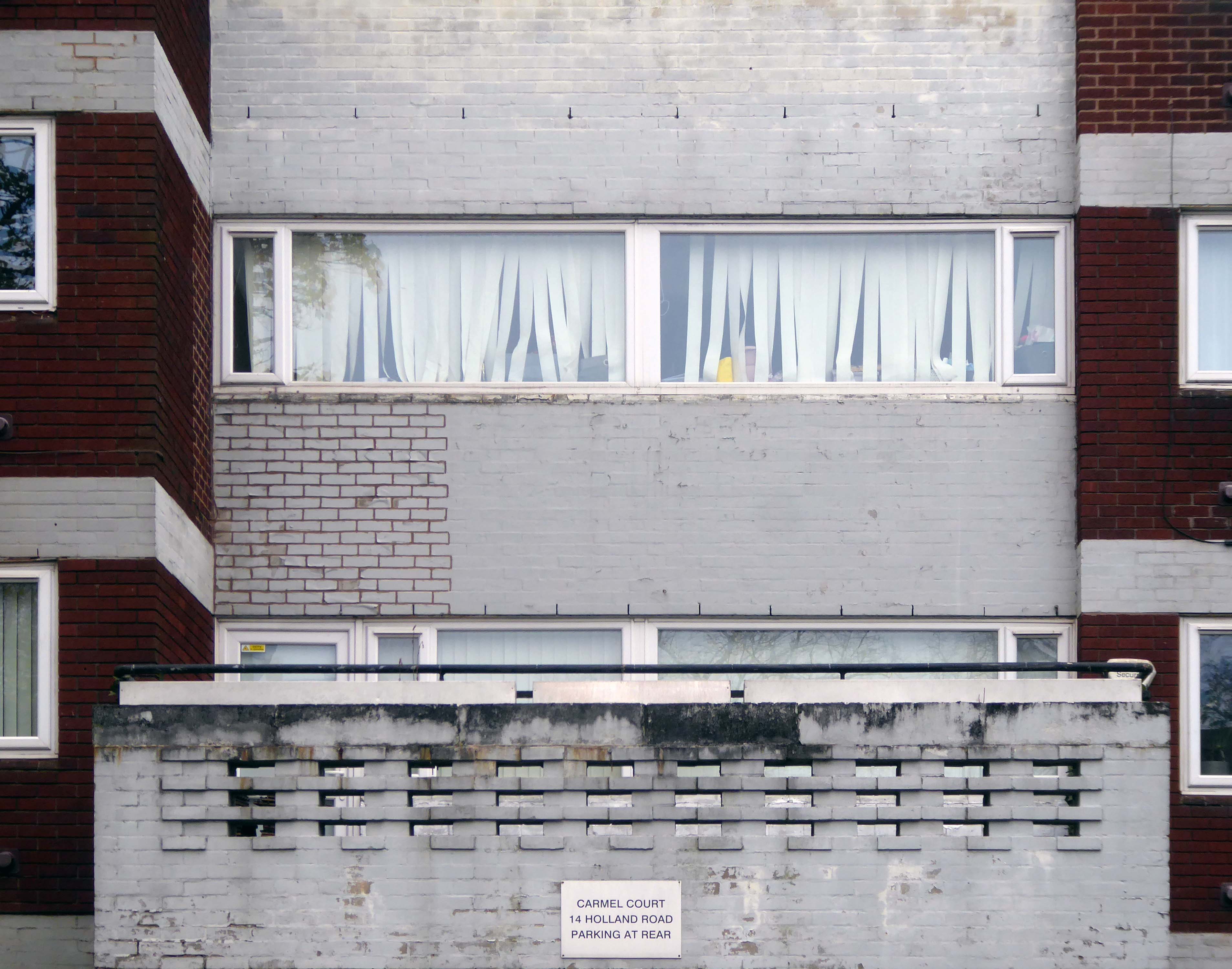
Carmel Court

Turn back along Crumpsall Lane past the station until you reach Holland Road on your right.

14 Holland Rd, Crumpsall, Manchester M8 4NP

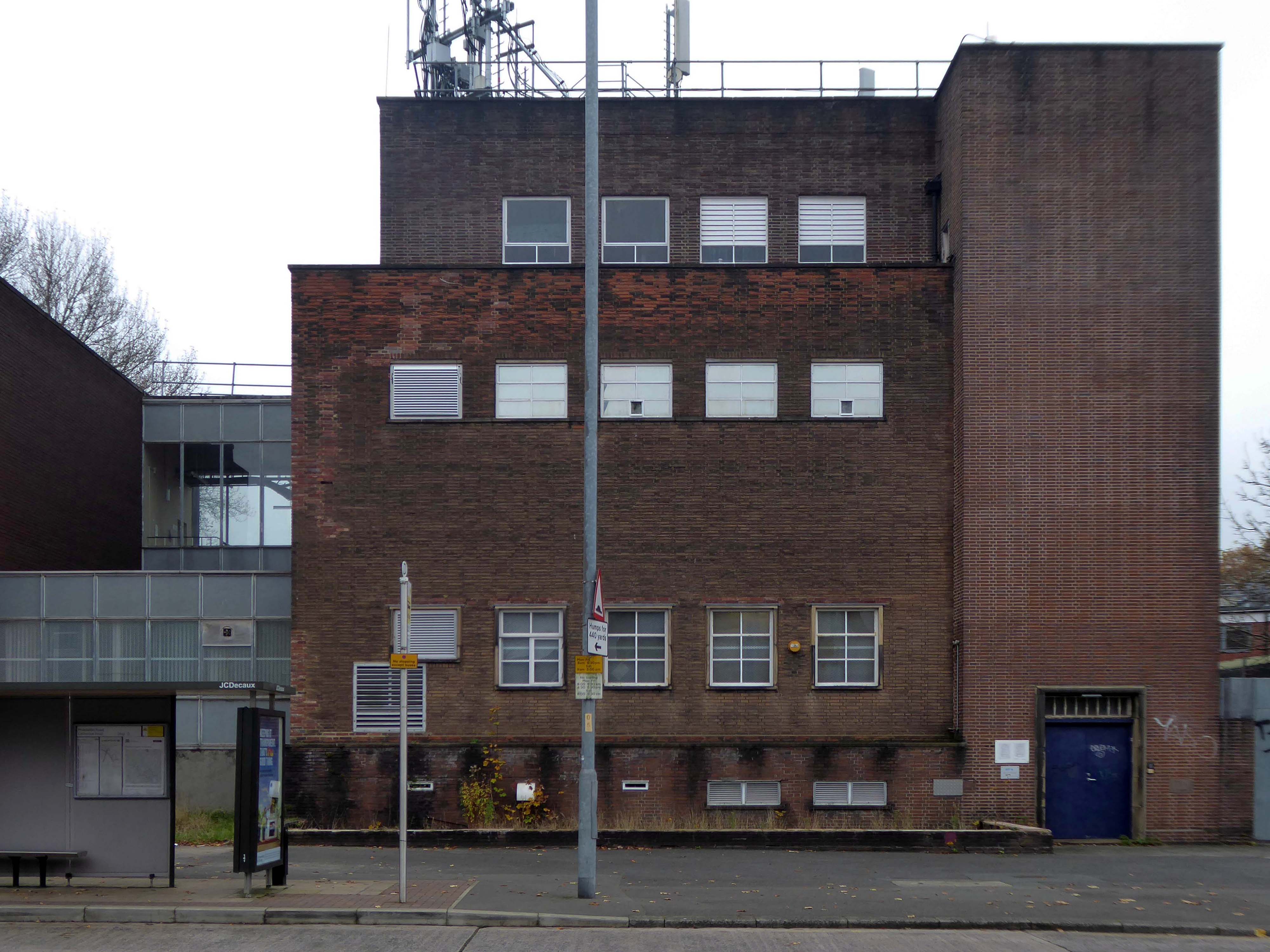
Onto Middleton Road and turn left where you will find the Telephone Exchange.

Middleton Road, Manchester. M8 5DS

Back track along Middleton Road toward Bowker Vale station.

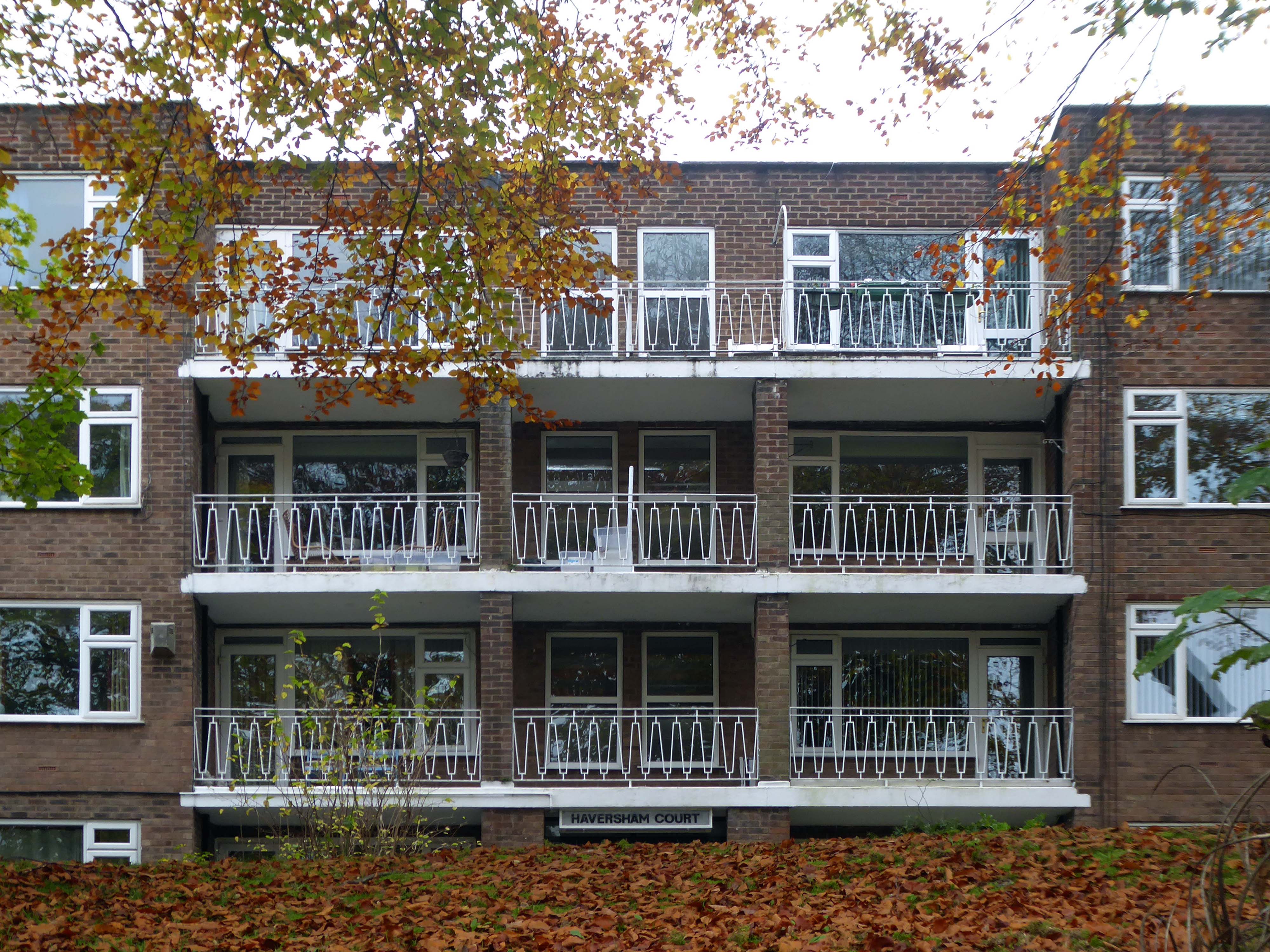
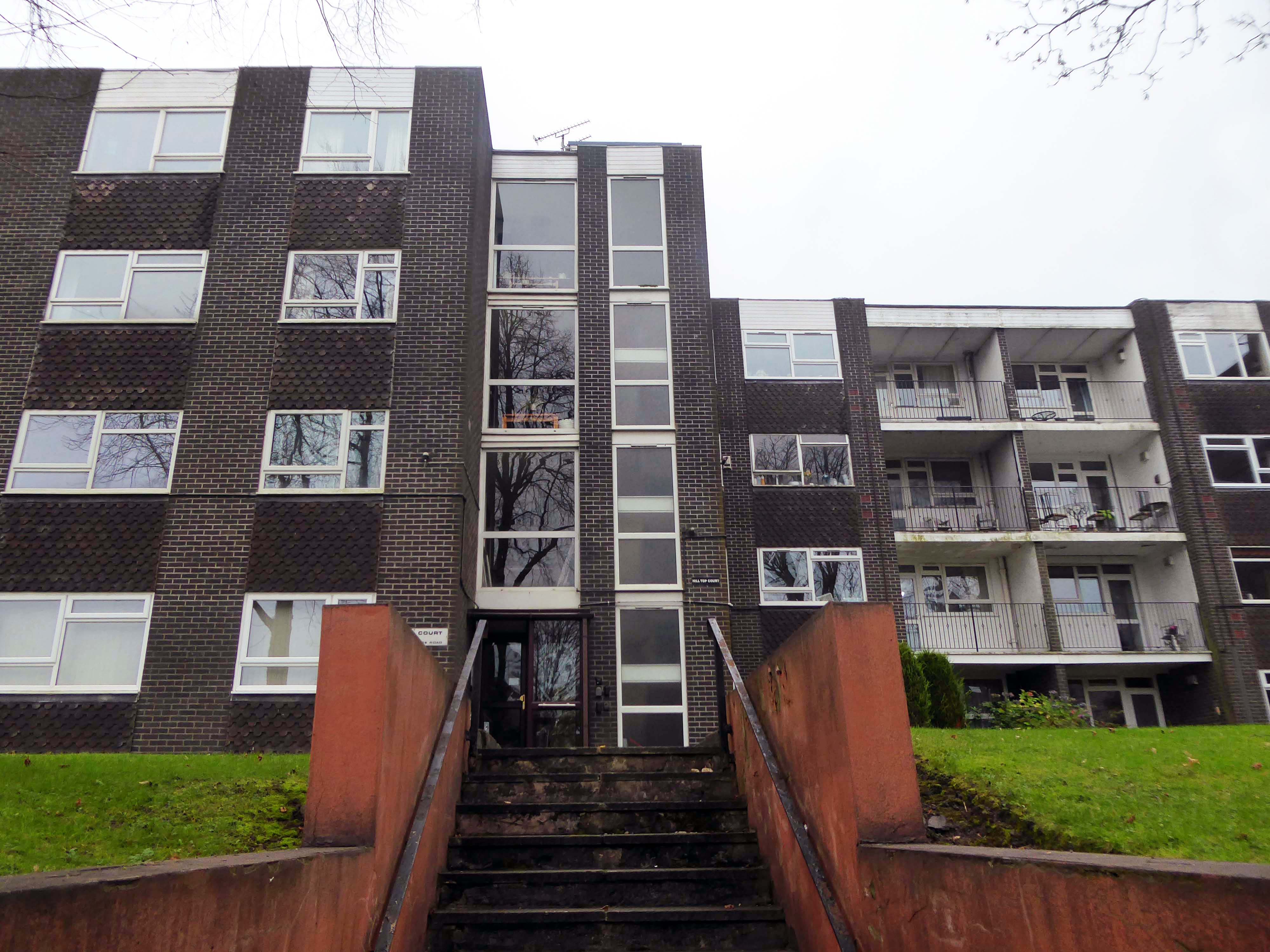
There are several post-war residential low rise block along the route.

Haversham Court

Middleton Rd, Crumpsall, Manchester M8 4JY

Hilltop Court – just off to the left of Middleton Road.

Brooklands Road, Crumpsall, Manchester M8 4JH

Bowker Vale

Heaton Park

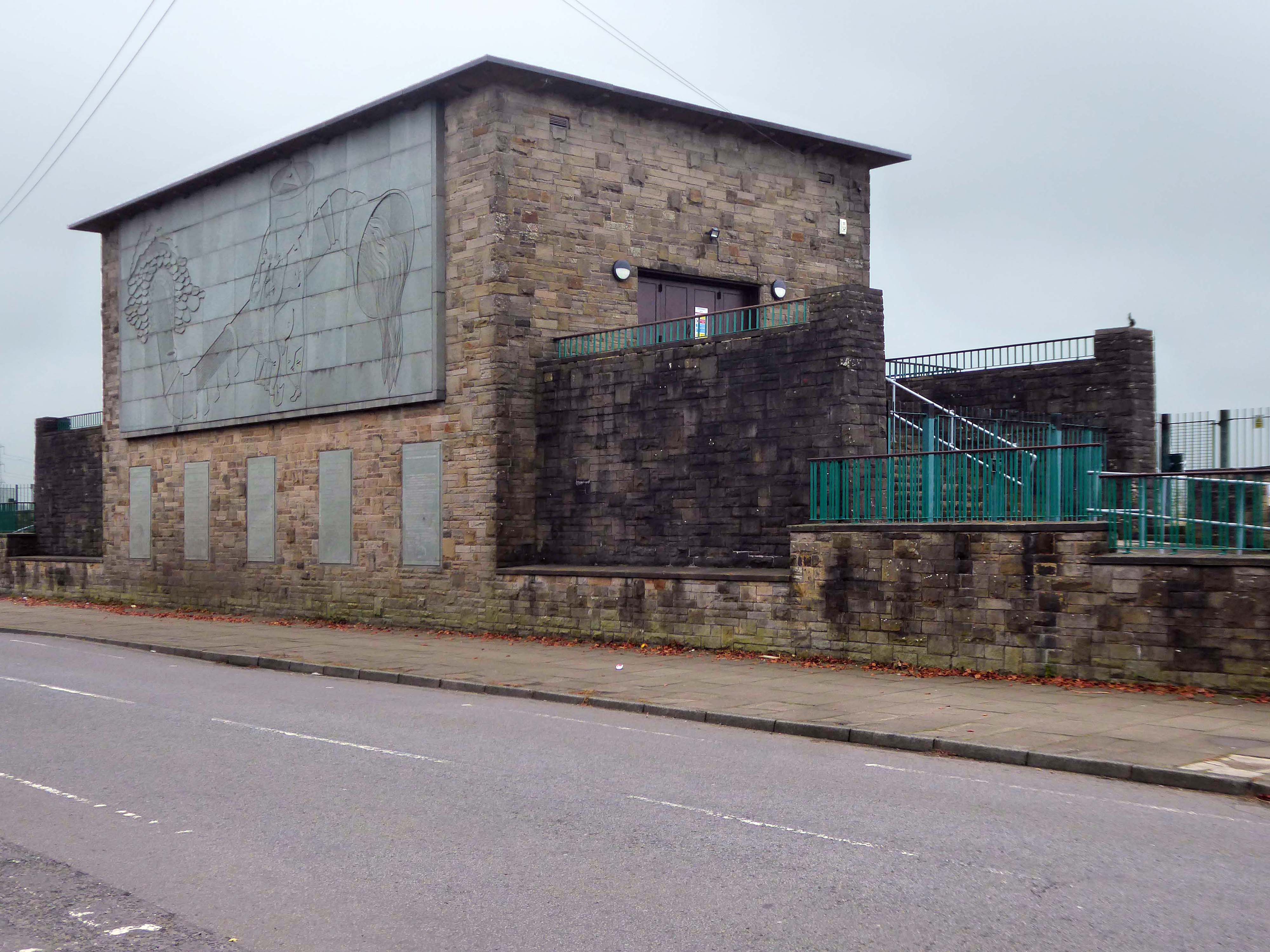
A good twenty minute walk from the station to Heaton Park Pumping Station.

Turn left from the station along Bury Old Road until you reach Heywood Road on your right.

Heywood Road, Prestwich, Manchester M25 2GT

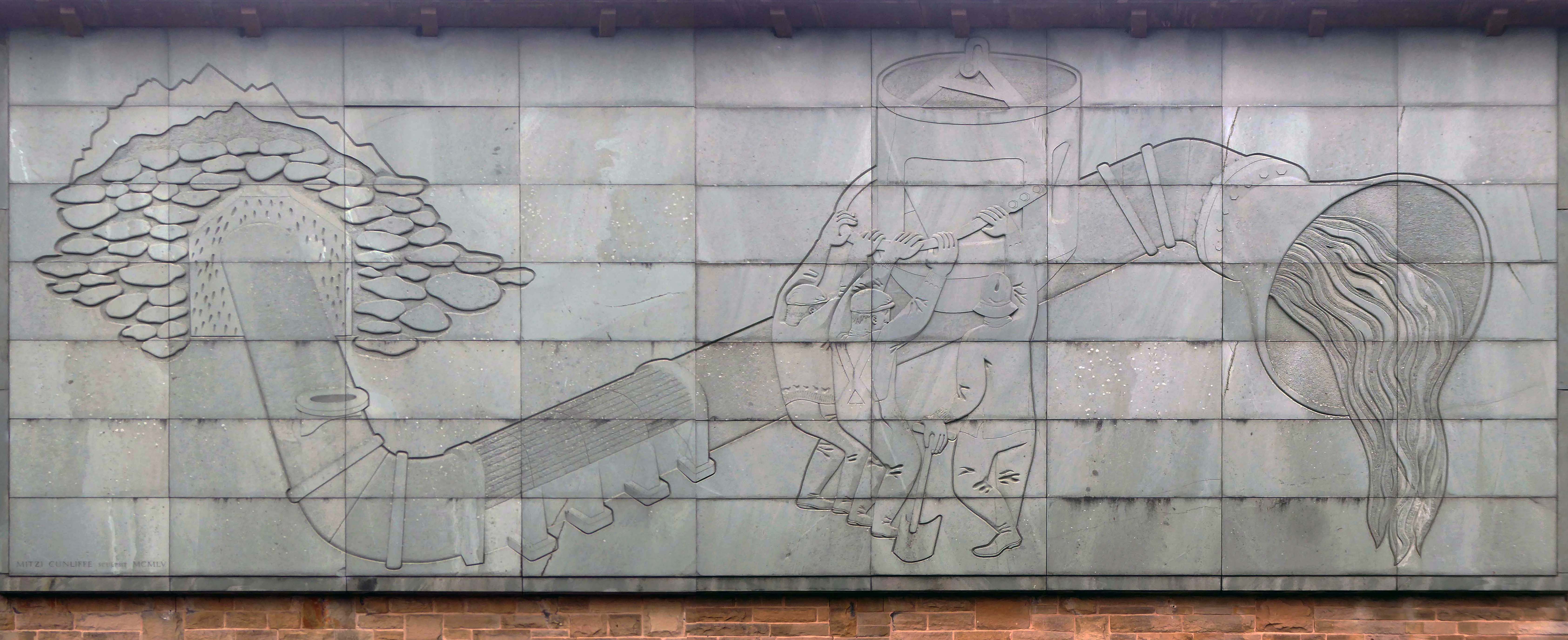
1954-5 by the Manchester City Architect’s Department, Chief Architect Leonard C Howitt, for the Manchester Corporation Waterworks. Alan Atkinson, engineer. Incorporates large relief by Mitzi Cunliffe, signed and dated 1955.

Prestwich

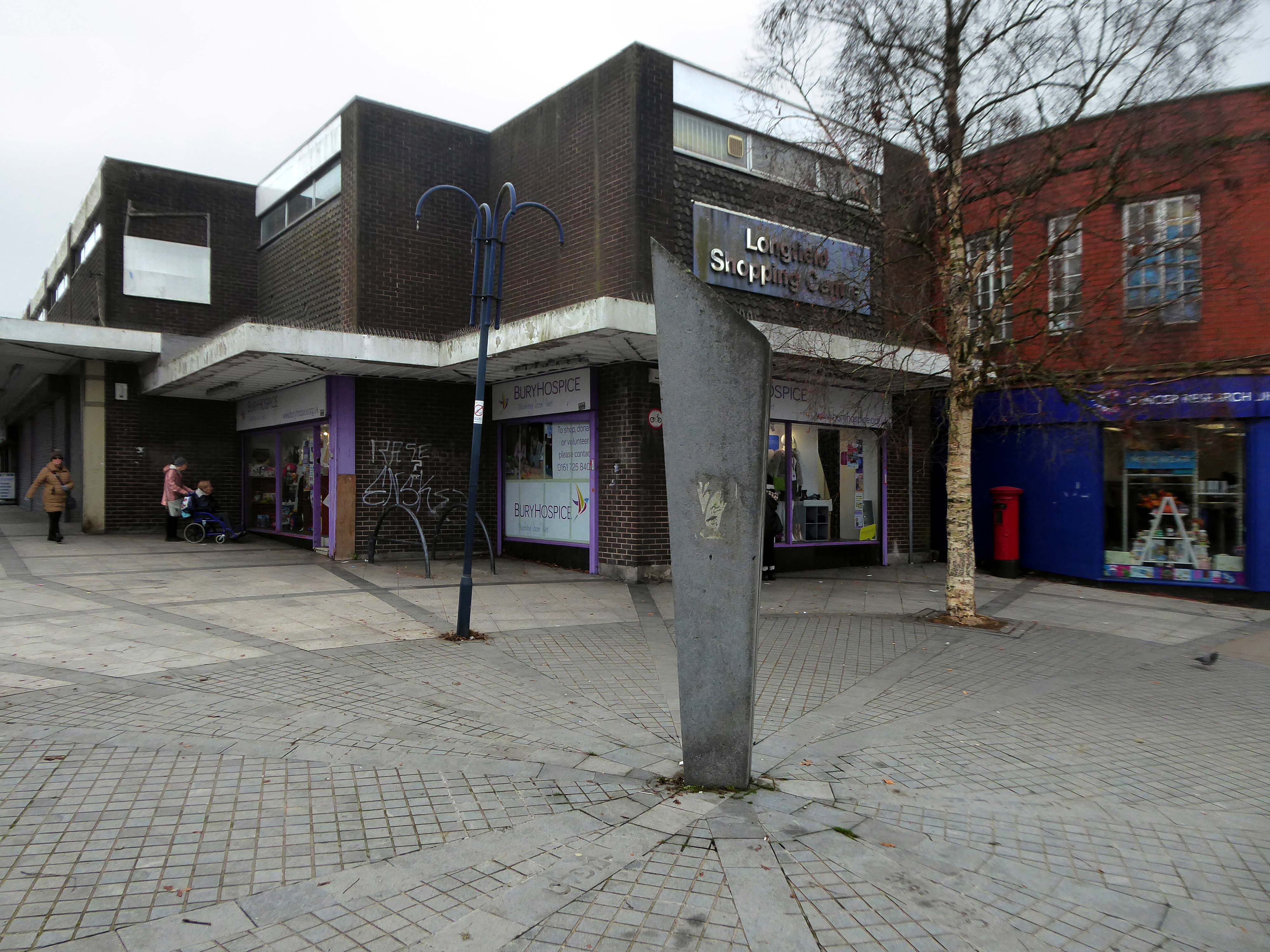
Development by architects Leach Rhodes Walker.

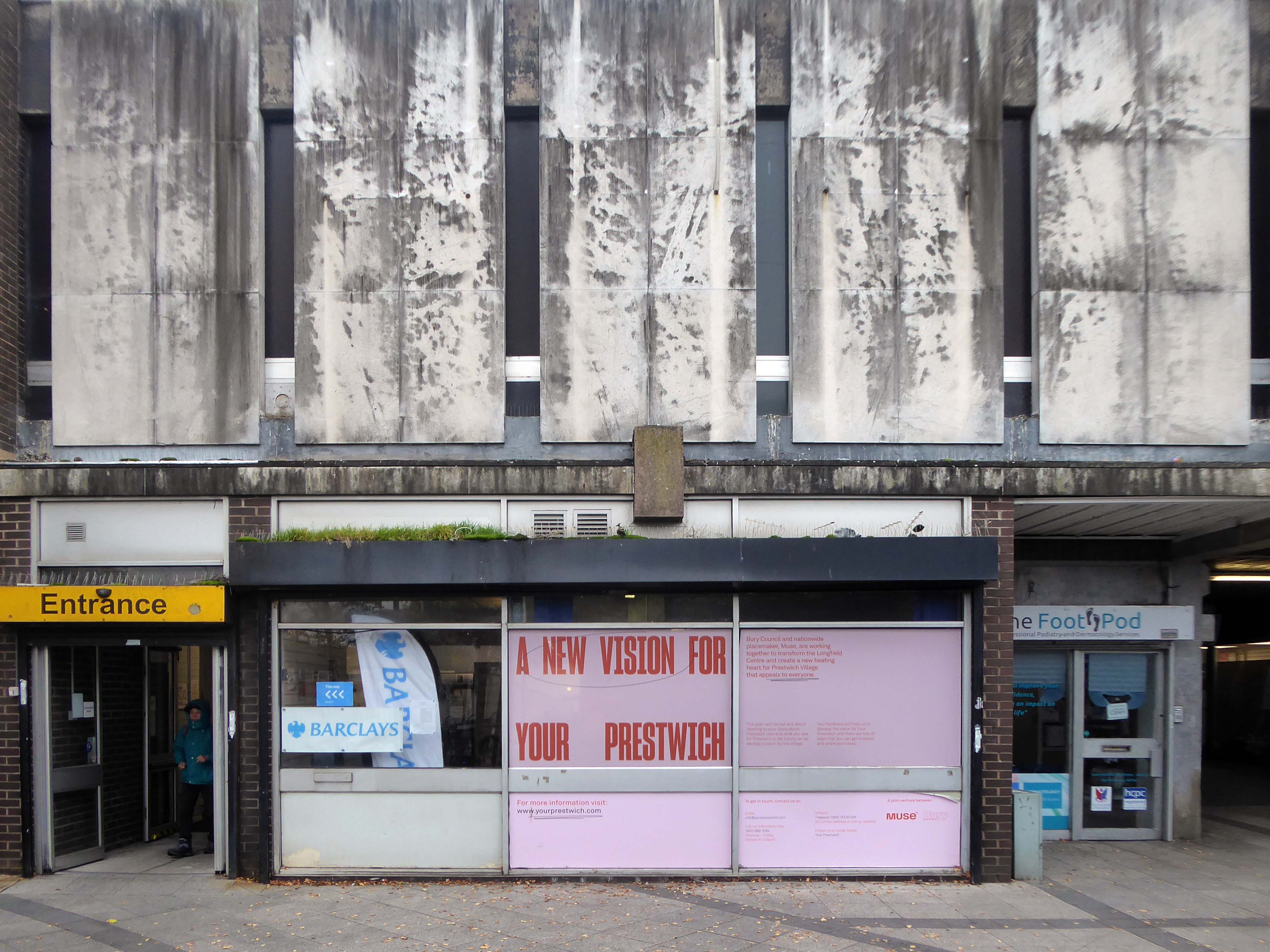
Longfield Shopping Centre

Prestwich Library

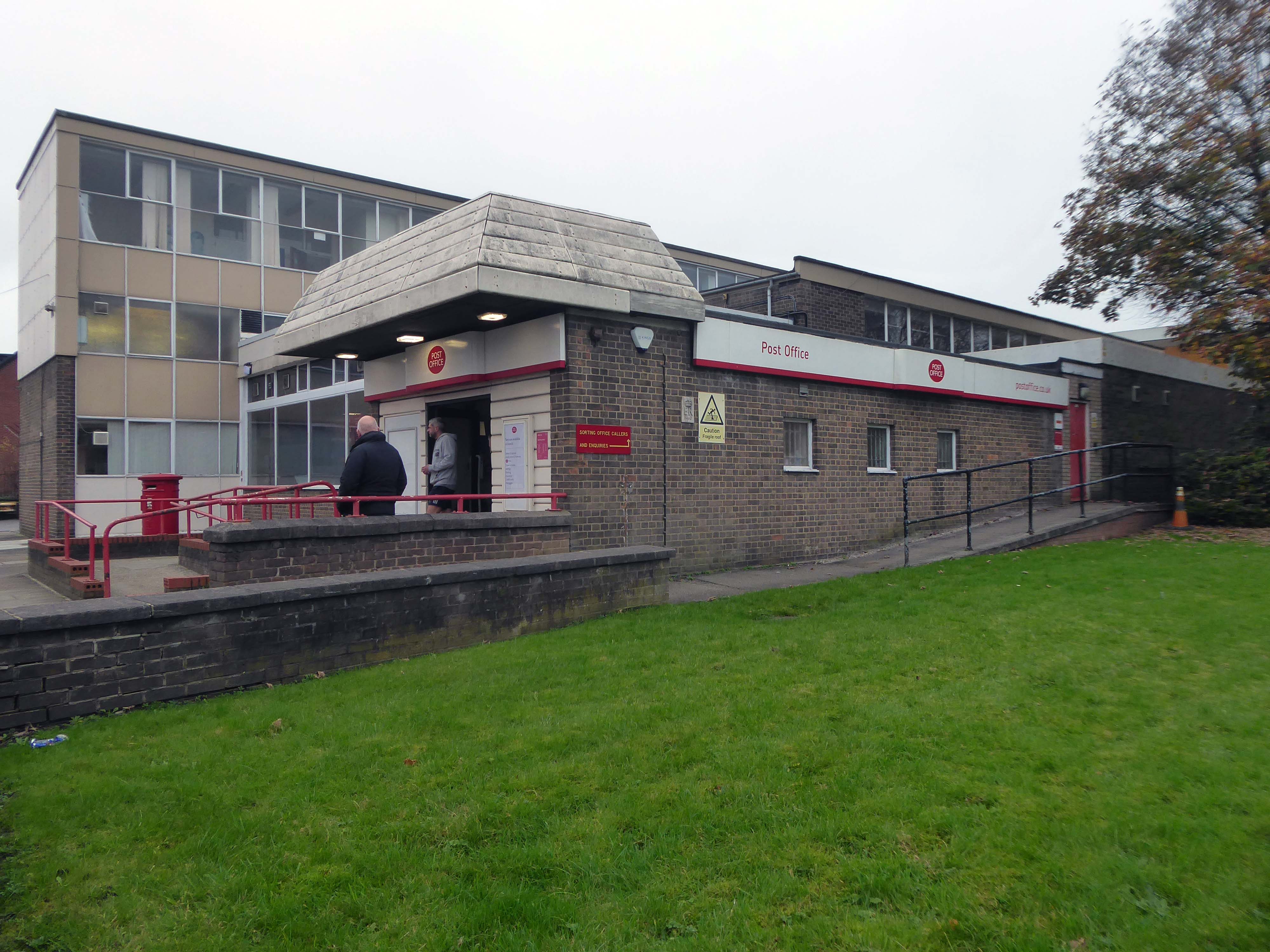
Post Office

After months of public consultation, the joint venture has firmed up its proposals for the redevelopment of the Longfield Centre and is aiming to be on site before the end of the year.

Muse and Bury Council have submitted a hybrid application to transform six acres of Prestwich town centre.

Place North West

Besses o’ th Barn

Whitefield

Almost directly facing the station along Bury New Road.

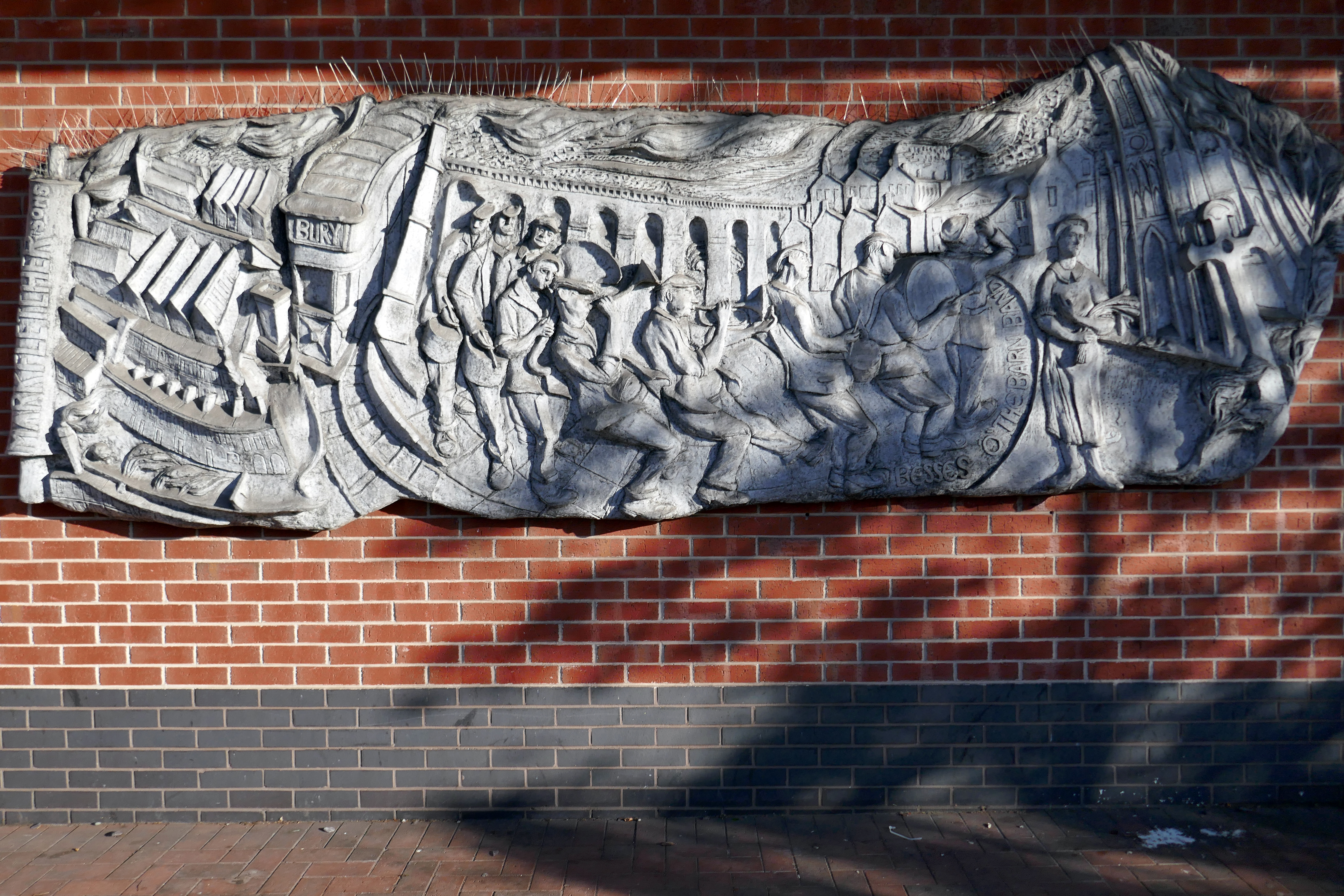
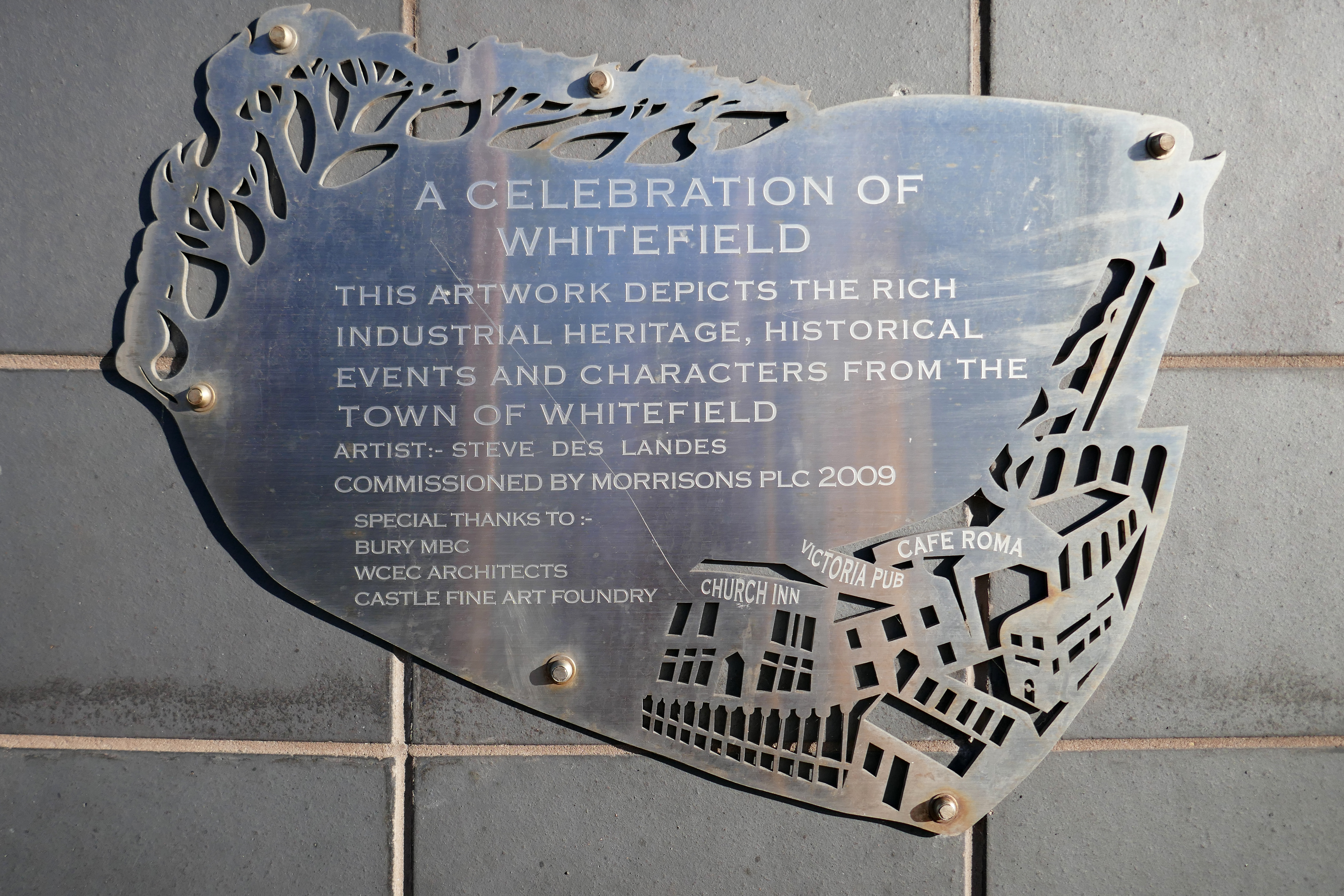
Morrison’s – a Celebration of Whitefield relief Steve des Landes 2009.

5 Stanley Road Whitefield Manchester M45 8QH

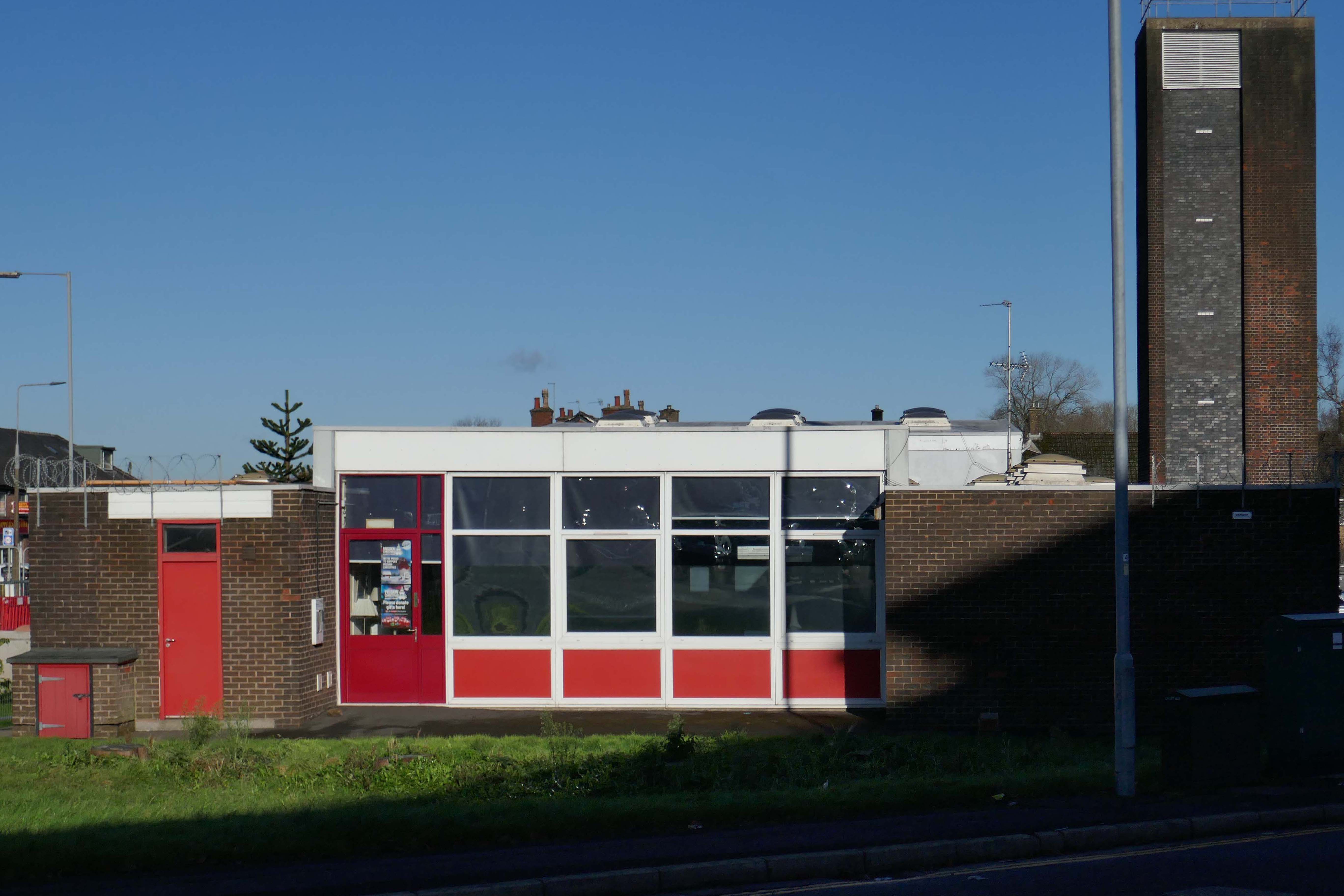
Community Fire Station

Bury New Rd, Unsworth, Manchester M45 7SY

Radcliffe

Turn left out of the station onto Church Street West turn right toward the town centre.

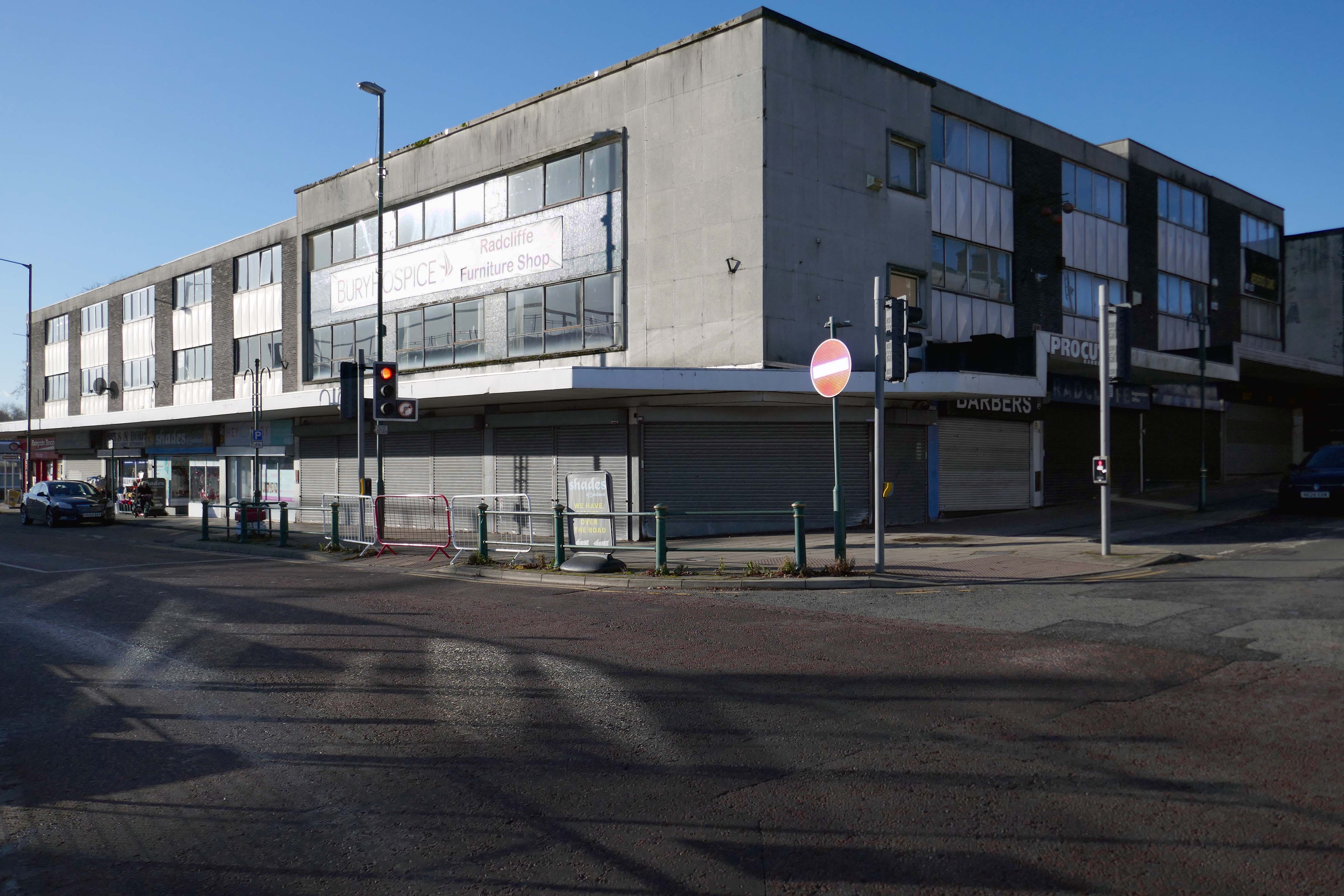
Shopping Block

Corner of Dale Street and Blackburn Street.

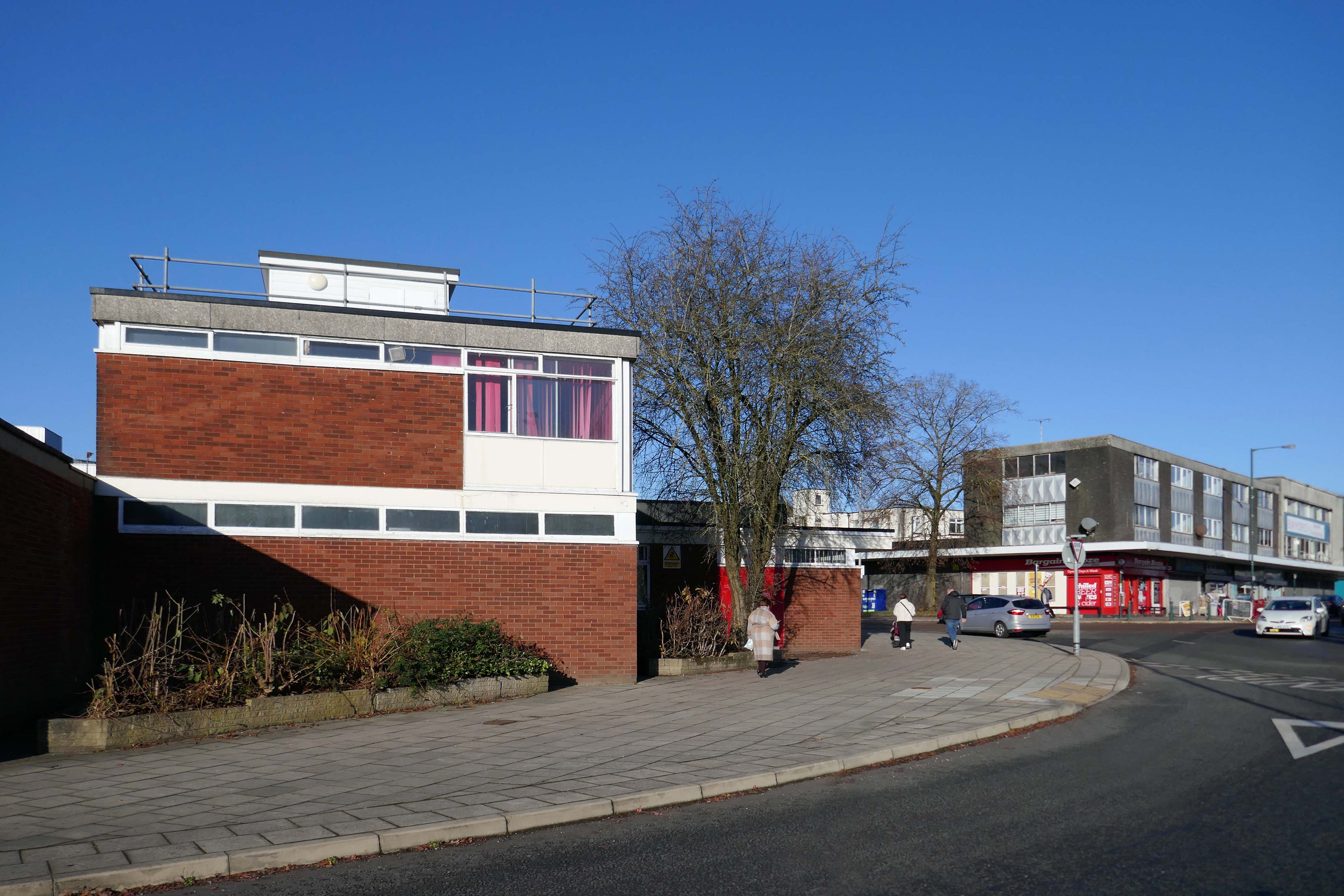
Former Post now Delivery Office

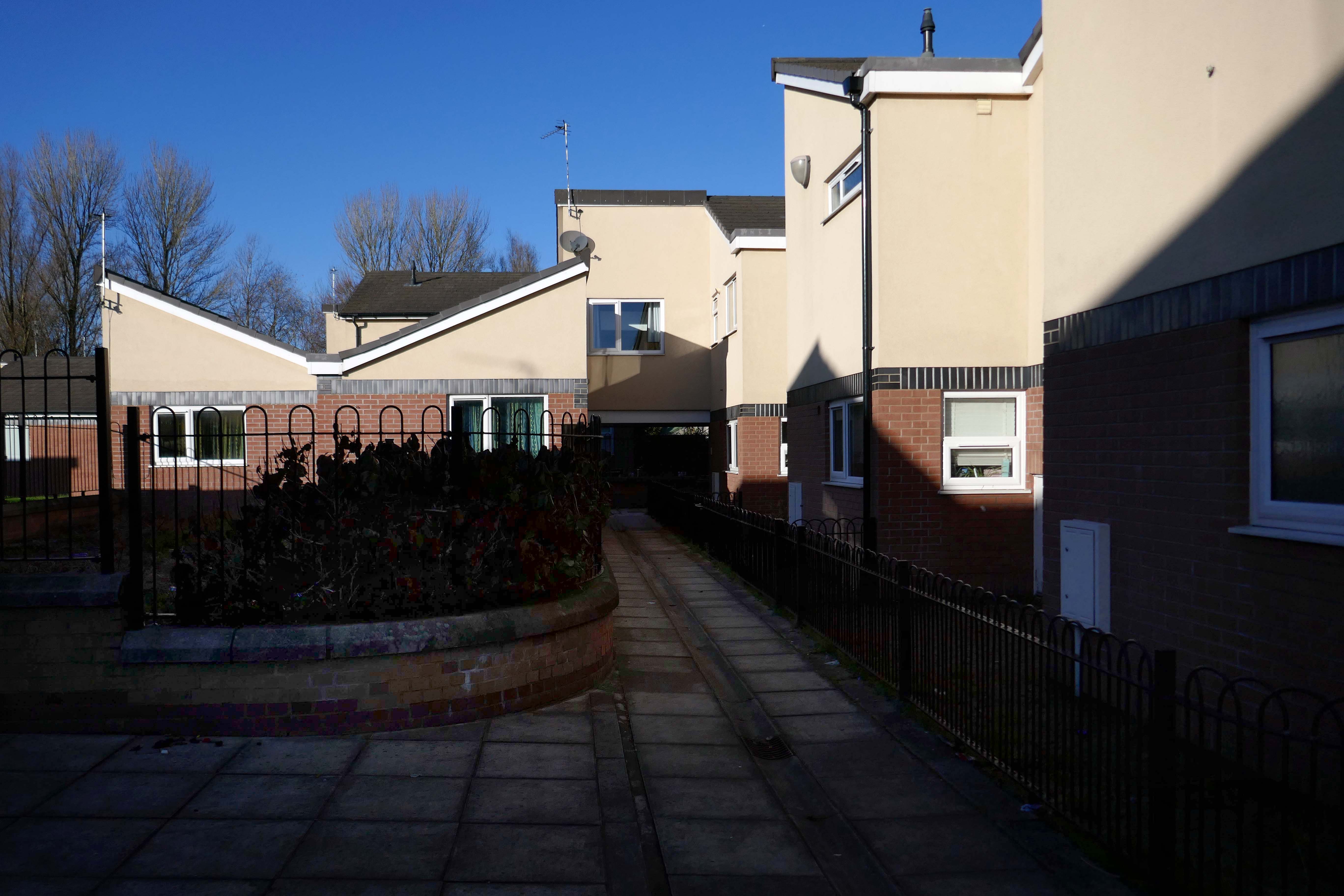
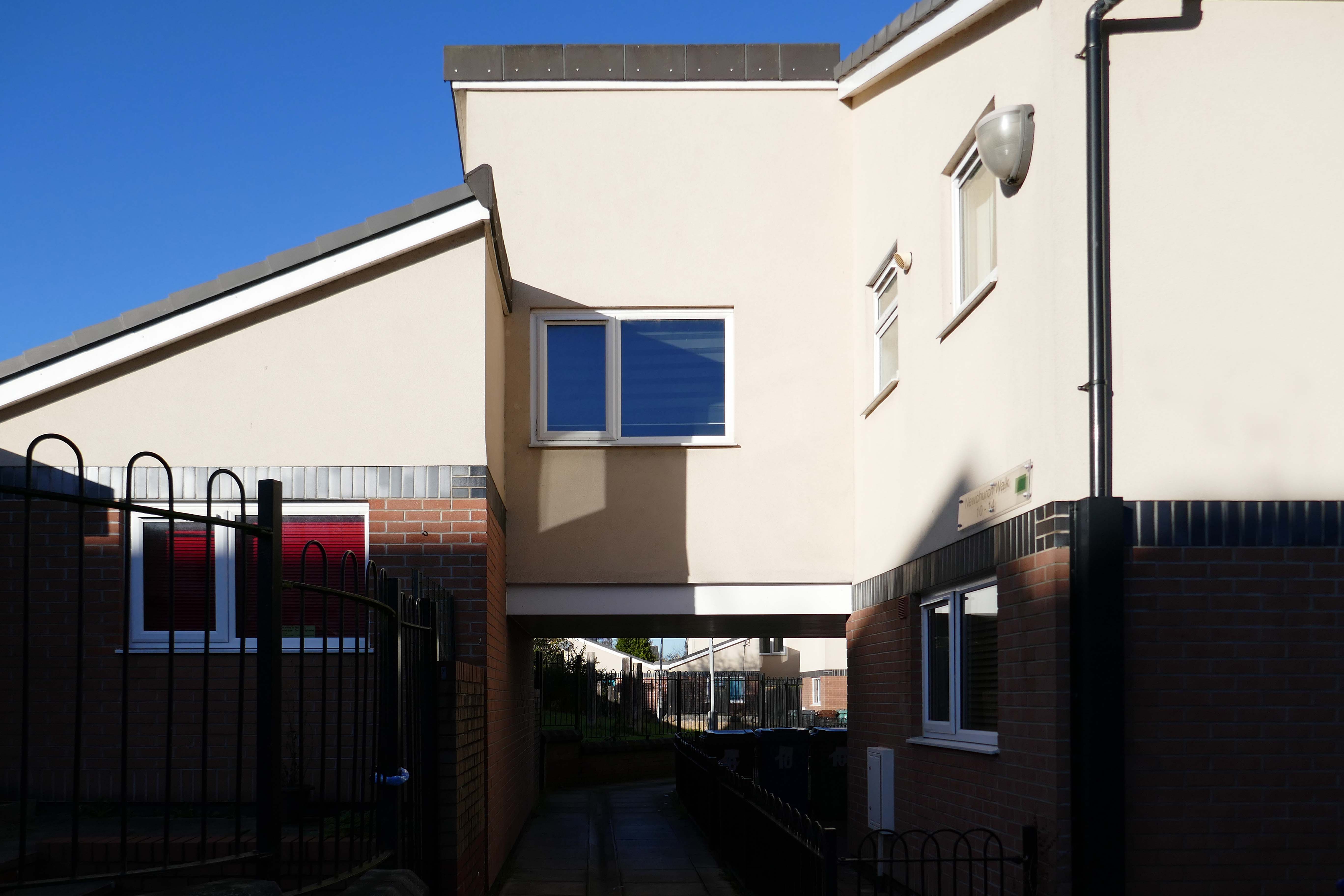
St Thomas Estate

By Wilson and Womersley 1968, the project architect was John Sheard.

New-towny, dense low-rise housing irregularly grouped around and over pedestrian access paths.

Pevsner 1996/2004

The Strategic Regeneration Framework is the guide that is shaping the direction of Radcliffe’s growth over the next 15 years with a series of realistic short, medium, and longer-term actions. It is also shaping the direction of future council investment, supporting bids for central governmental funding and providing certainty for third parties wanting to invest in town.
Work has begun on Strategic Regeneration Framework’s priority projects, these include:

  • A new civic hub in central Radcliffe, which will bring together a mix of functions at the heart of the town
  • Refurbishment of the market basement and the revamping of market chambers
  • New leisure facilities
  • A secondary school on the Coney Green site
  • A “whole town approach” to housing, bringing forward a comprehensive approach to residential development in Radcliffe
  • A transportation strategy, which will consider matters such as active travel and car parking

Bury Council

Bury

We undertook a Bury Walk for the first time in 2024

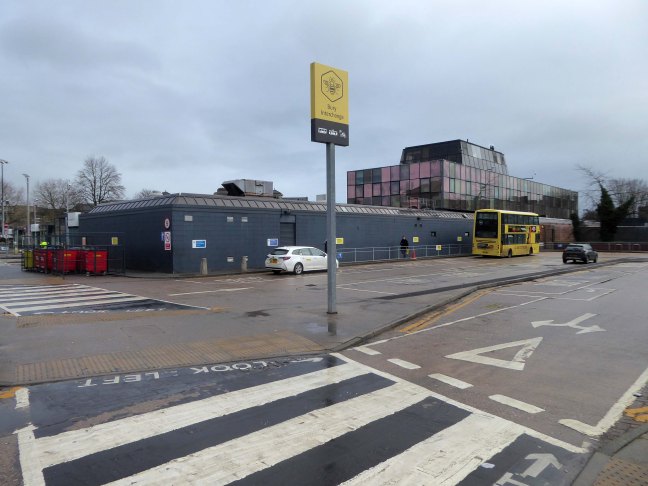
Arriving at and looking around the Interchange – 1980 architects: Essex Goodman & Suggitt

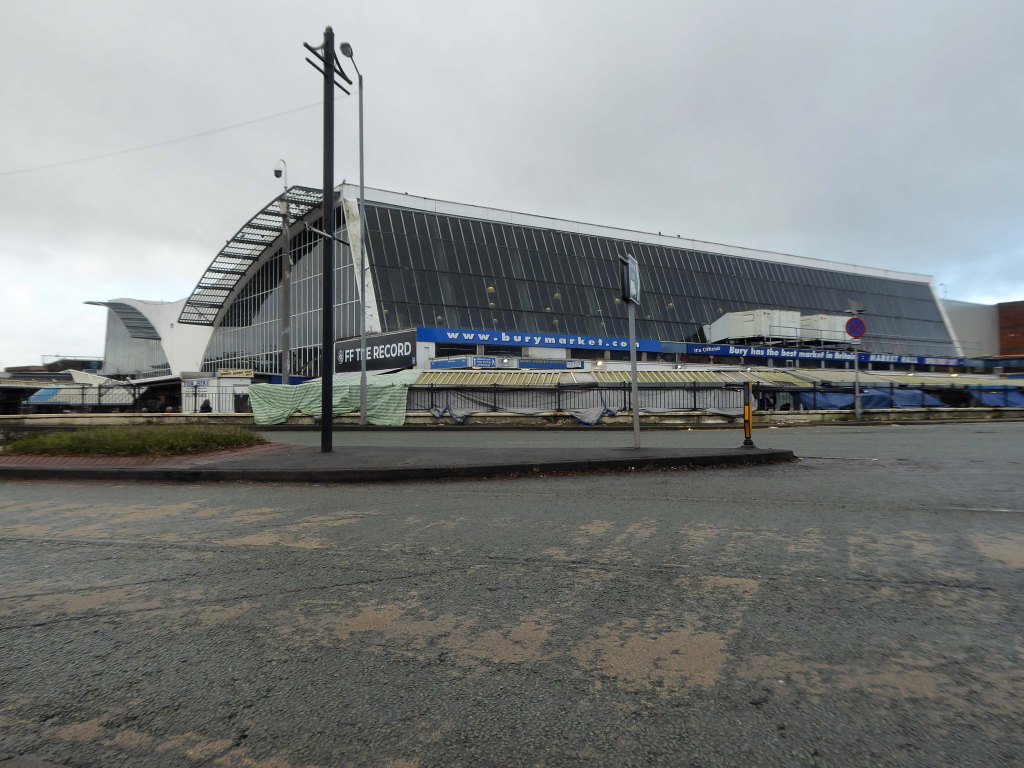
A view of the Market Hall 1971 – architects: Harry S Fairhurst.

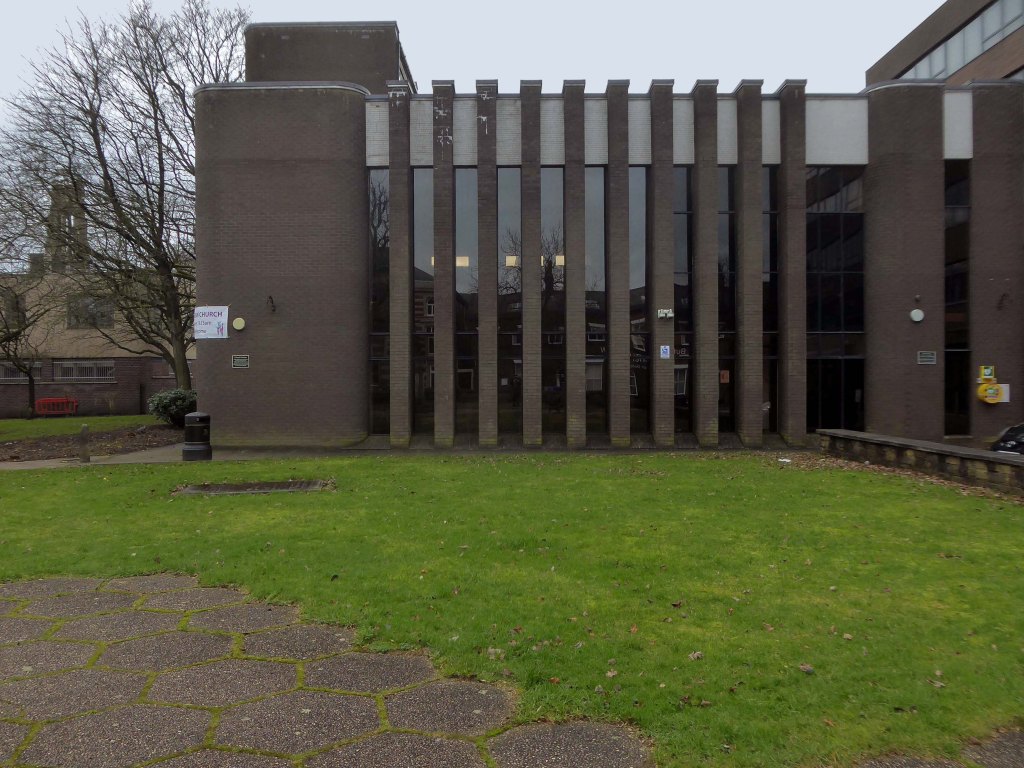
Unitarian Church.

The new church was designed and constructed by local architects James T Ratcliffe.

That’s the end of the line.

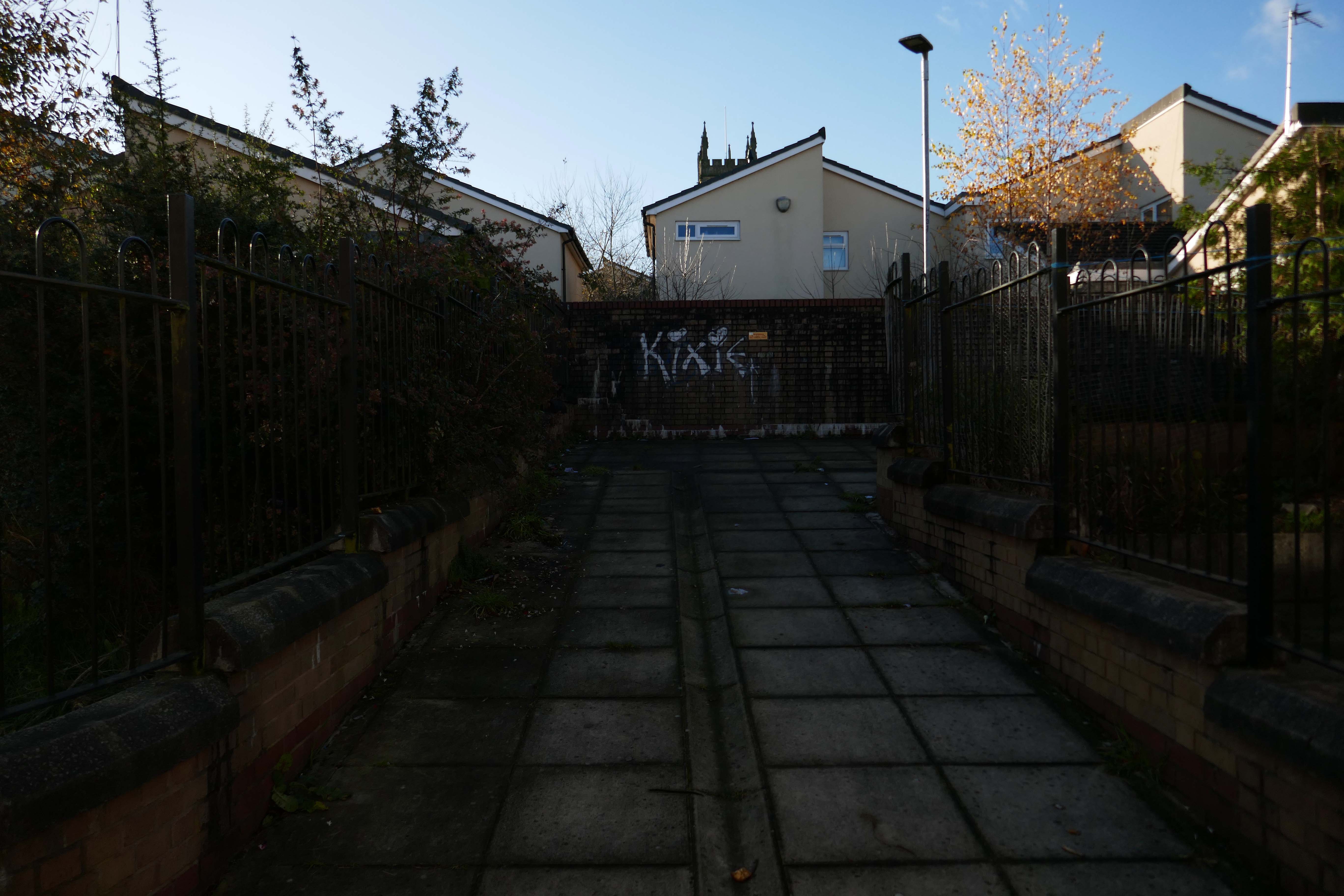
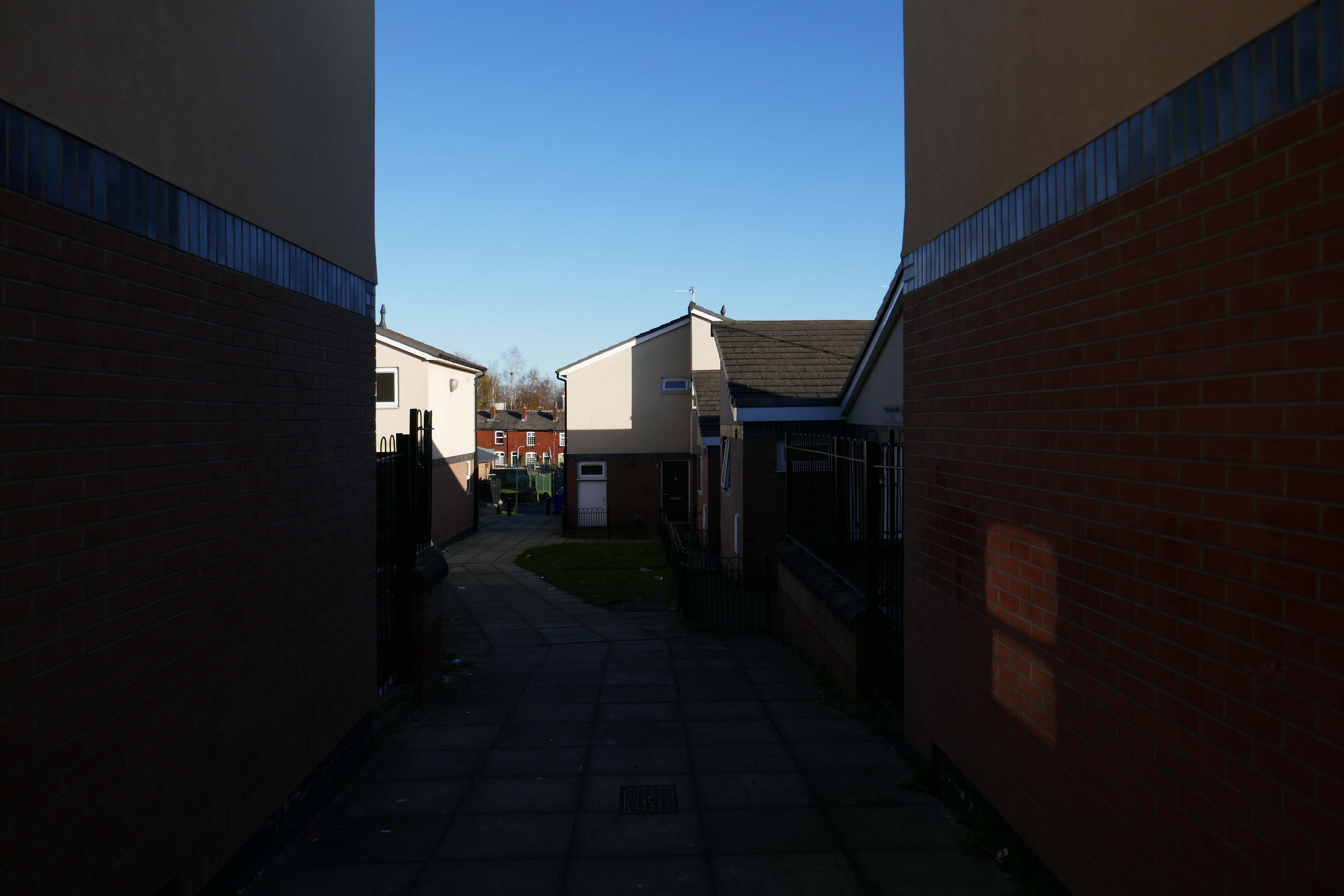
St Thomas Estate – Radcliffe

By Wilson and Womersley 1968, the project architect was John Sheard.

New-towny, dense low-rise housing irregularly grouped around and over pedestrian access paths.
Pevsner 1996/2004

The 2003 masterplan recommence its removal.
The masterplan states that Radcliffe has many unattractive buildings and few architectural assets. But this could work to its advantage as a lack of protected or noteworthy buildings makes it easier to replace them with contemporary structures.

This could include demolishing the “unwelcoming” St Thomas Estate and replacing it with a mix of private and social housing on the old street layout. Existing tenants would be rehoused in the new houses so that the community would not be broken up.

Lancashire Telegraph

JL Womersely famously Sheffield City Architect:

During his term, Sheffield’s housing grew upwards with multi-storey flats constructed at Low Edges, Park Hill, Hyde Park, Netherthorpe and Woodside. It was Womersley’s response to 13,000 families on the council’s waiting list and 10,000 condemned properties waiting to be demolished.

Sheffielder

Wilson and Womersley were responsible for the Hulme Crescents and Manchester Arndale.

In the space of a decade they shaped Manchester’s urban fabric, leaving a questionable legacy. The technical quality of their buildings was undoubtedly poor, but their qualities – bold forms, monolithic materiality and streets-in-the-sky – were of the moment, and captured a particular brand of urban renewal, imported from North America and inflected through British post-war planning.

Richard Brook

Social housing has been, and continues to be, a contentious arena. This seemingly well-constructed estate was once deemed unfit for habitation by its residents.

Tenants of the St Thomas’ Estate in the town centre allege they have been forgotten by Six Town Housing, which manages the properties.

Magda Csatlos, former chairman of the now disbanded Tenants and Residents Association said rotten bricks with visible gaps between them, badly-designed leaking roofs and damp and mouldy conditions plague many of the 90 homes.

Bury Times 2014

Happily the Local Authority are able to remedy the problem.

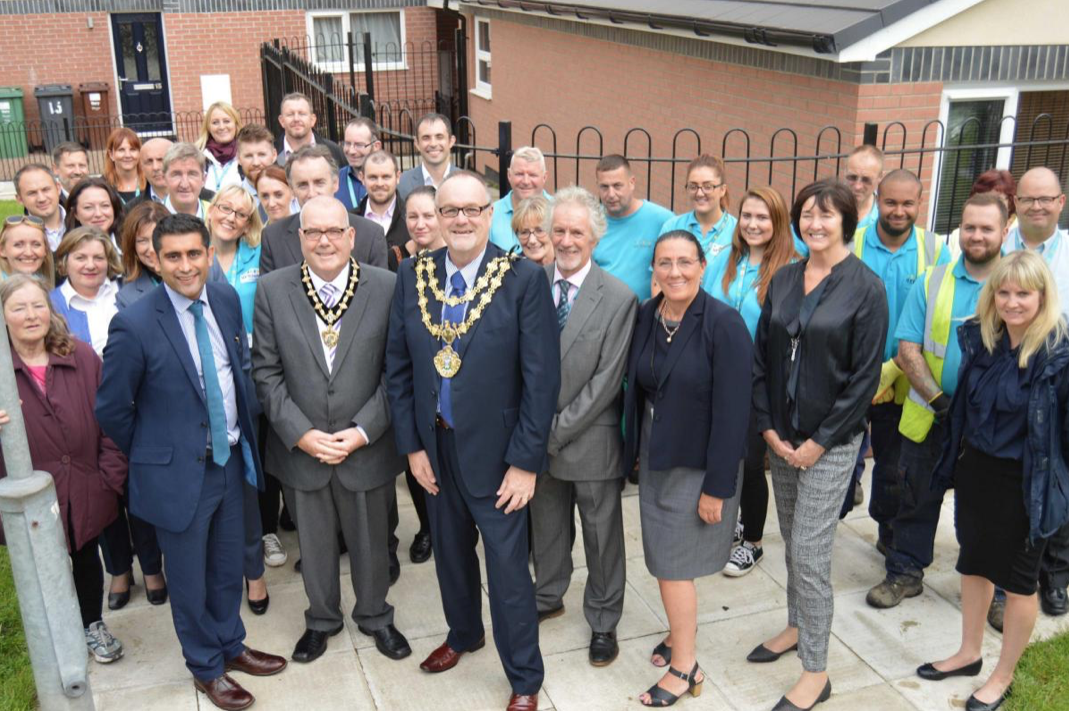
After some residents on the estate, who were visited by Bury South MP Ivan Lewis, called for the properties to be “condemned”, the Council agreed to invest £2 million to bring the homes up to standard.

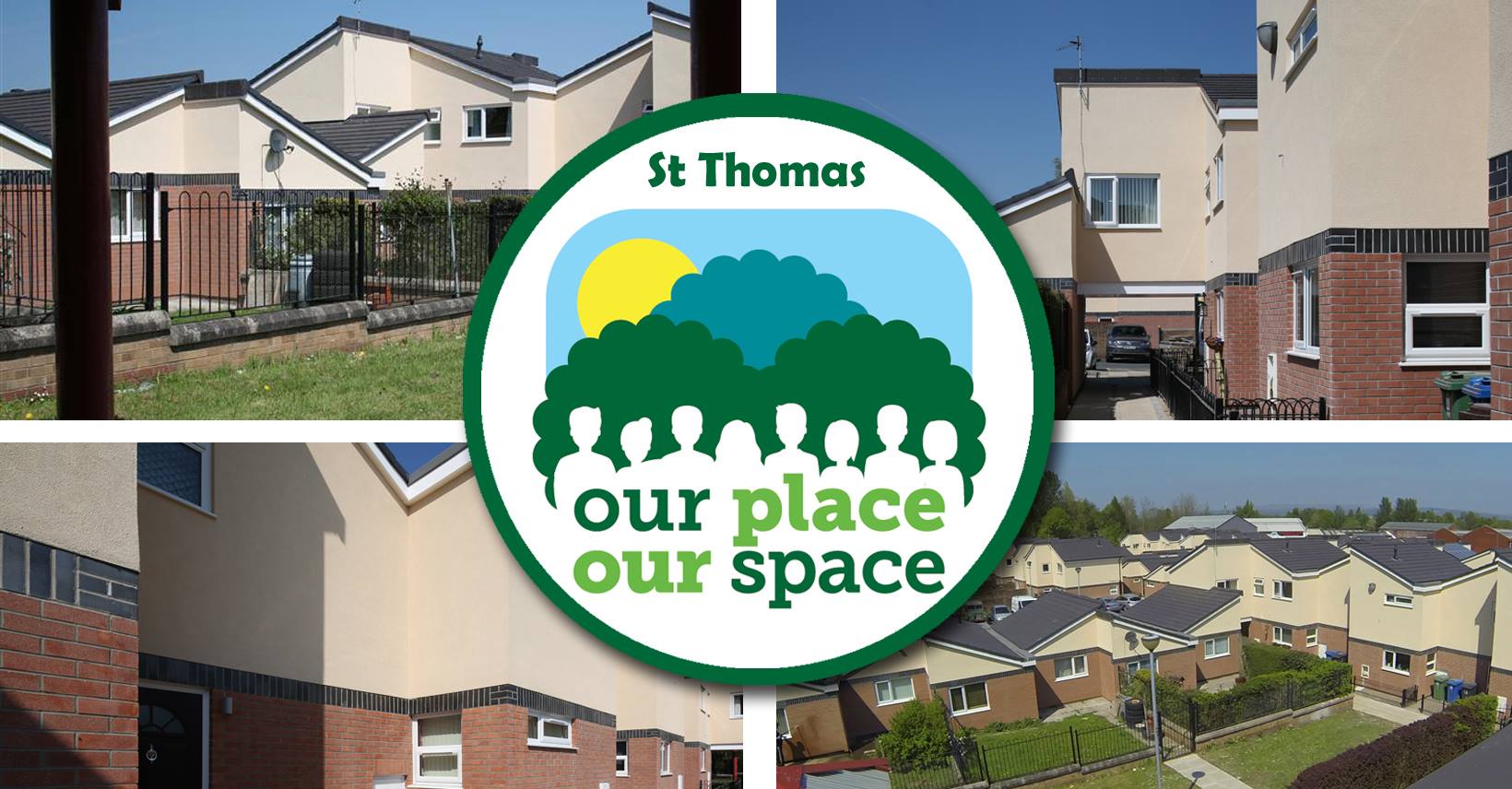
A total of 90 social housing properties on St Thomas Estate have been provided with new external rendering, roofing, windows, doors, insulation and brick cladding.

Bury Times 2016

On the day of my visit the long term tenants with whom I spoke were happily, happy with their homes.

Facebook

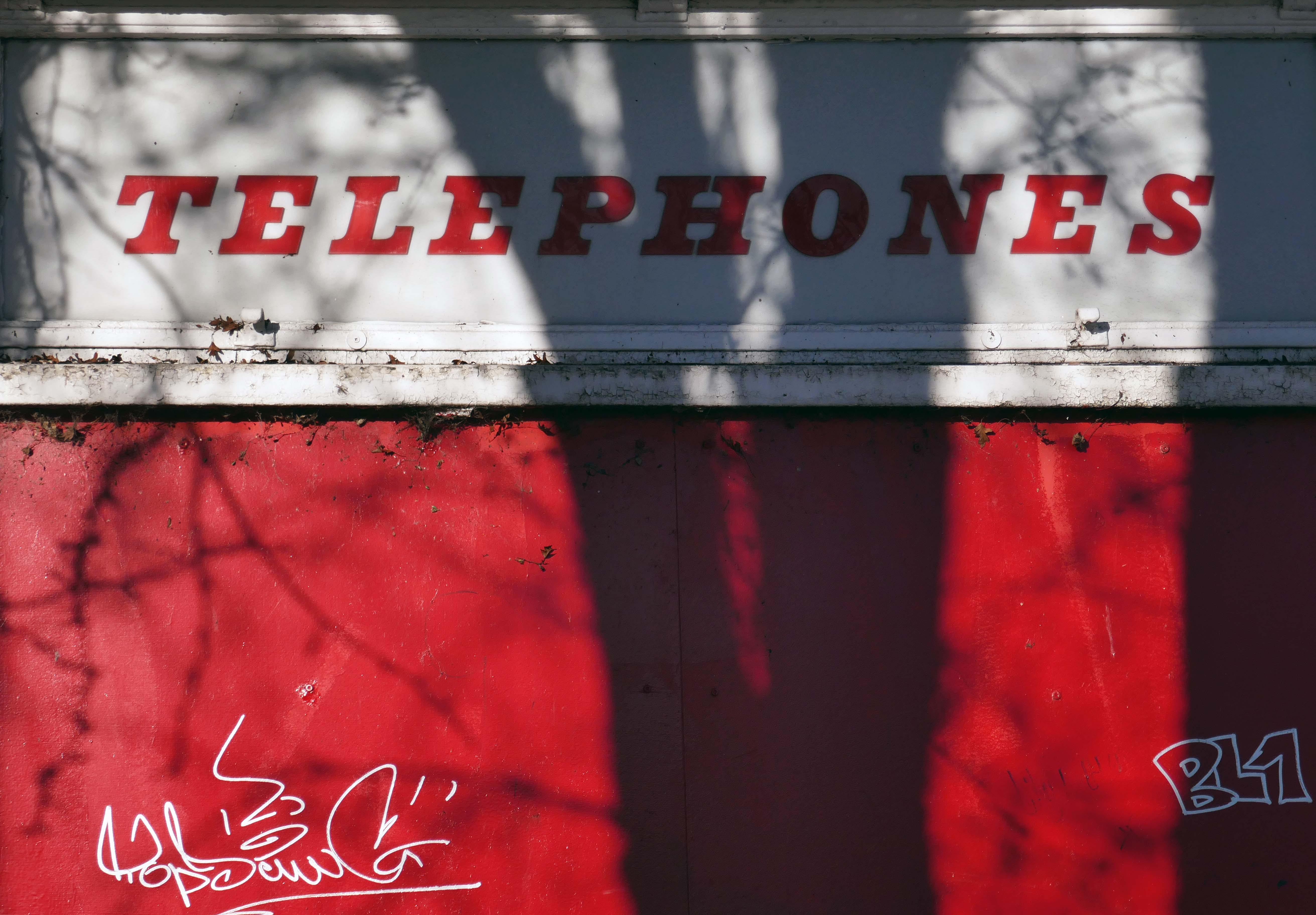
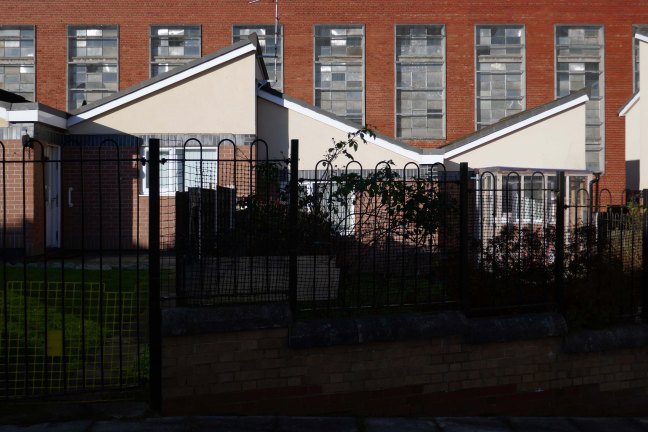
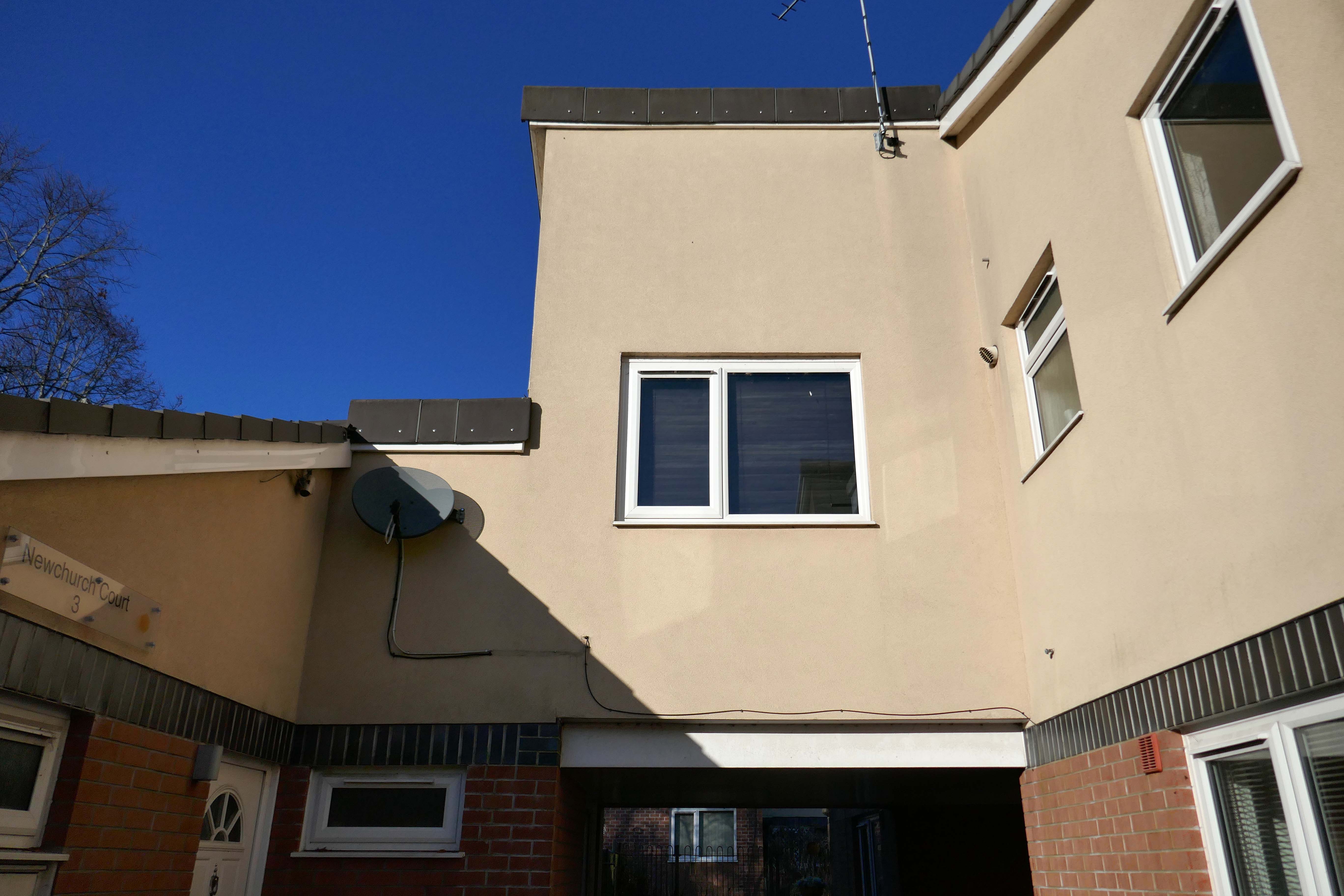
Here are some photographs, taken under the watchful golden eye of a low winter sun, hence the dramatic light and shade.