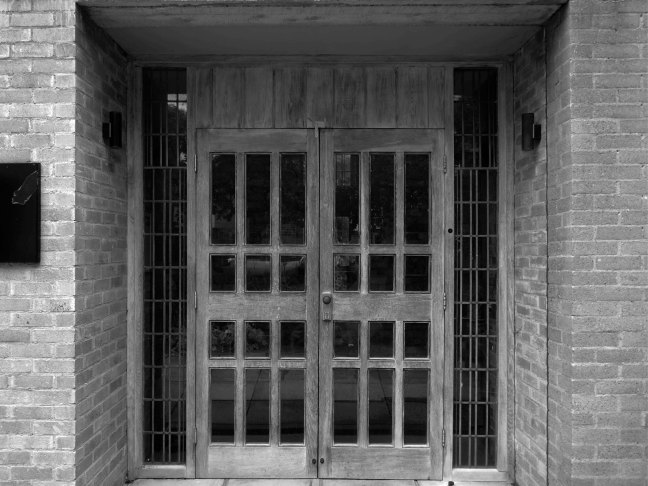
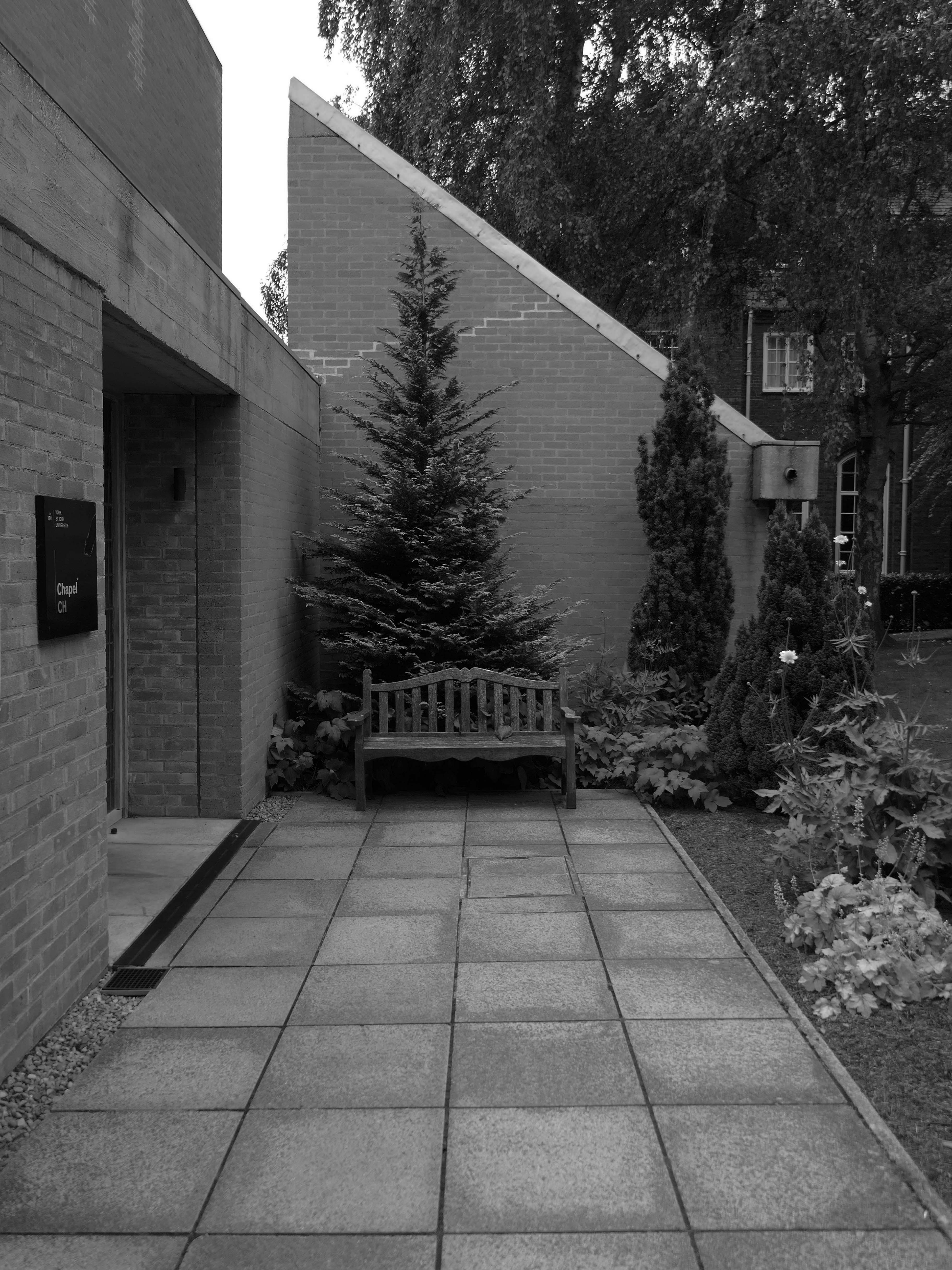
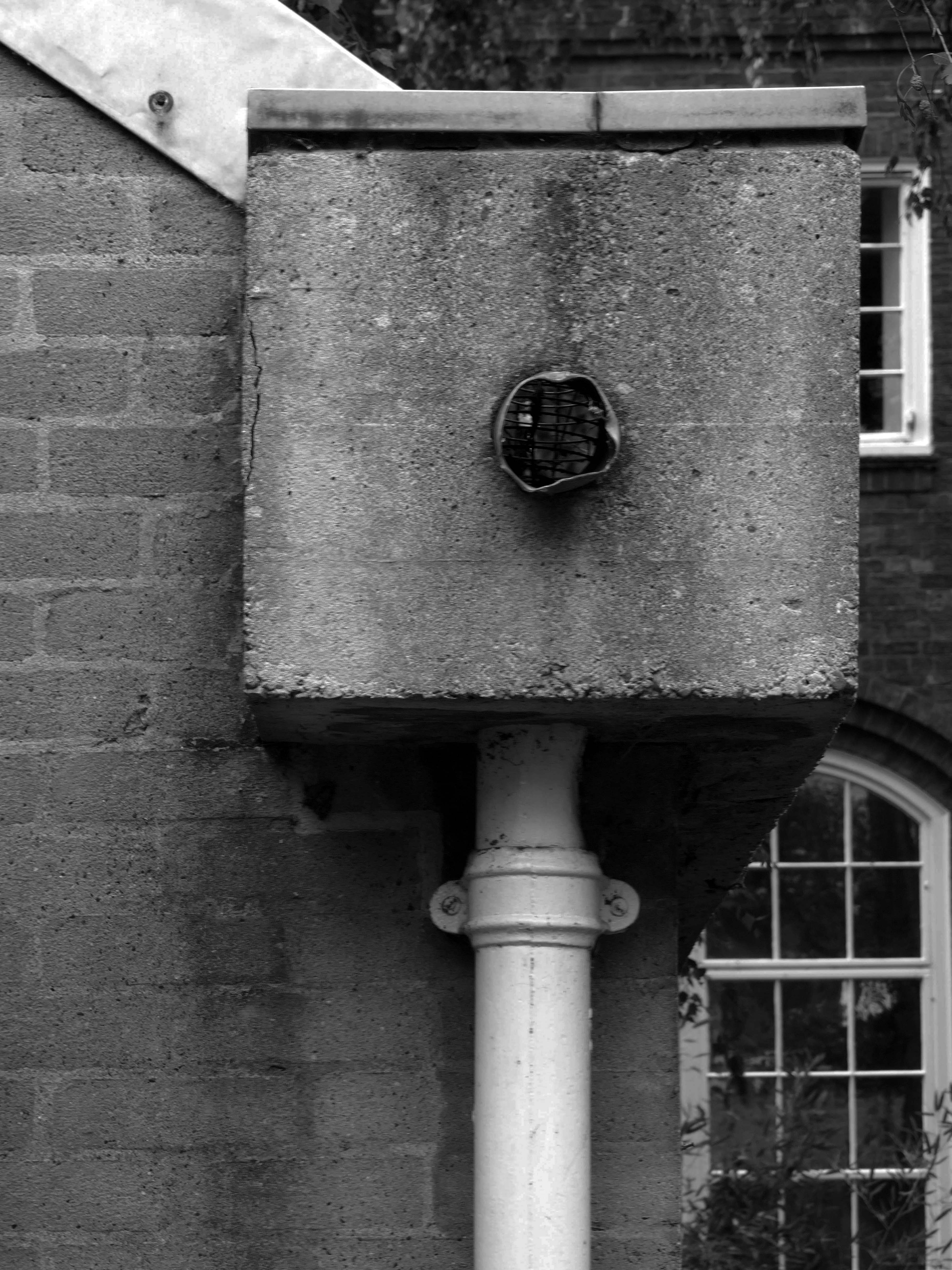
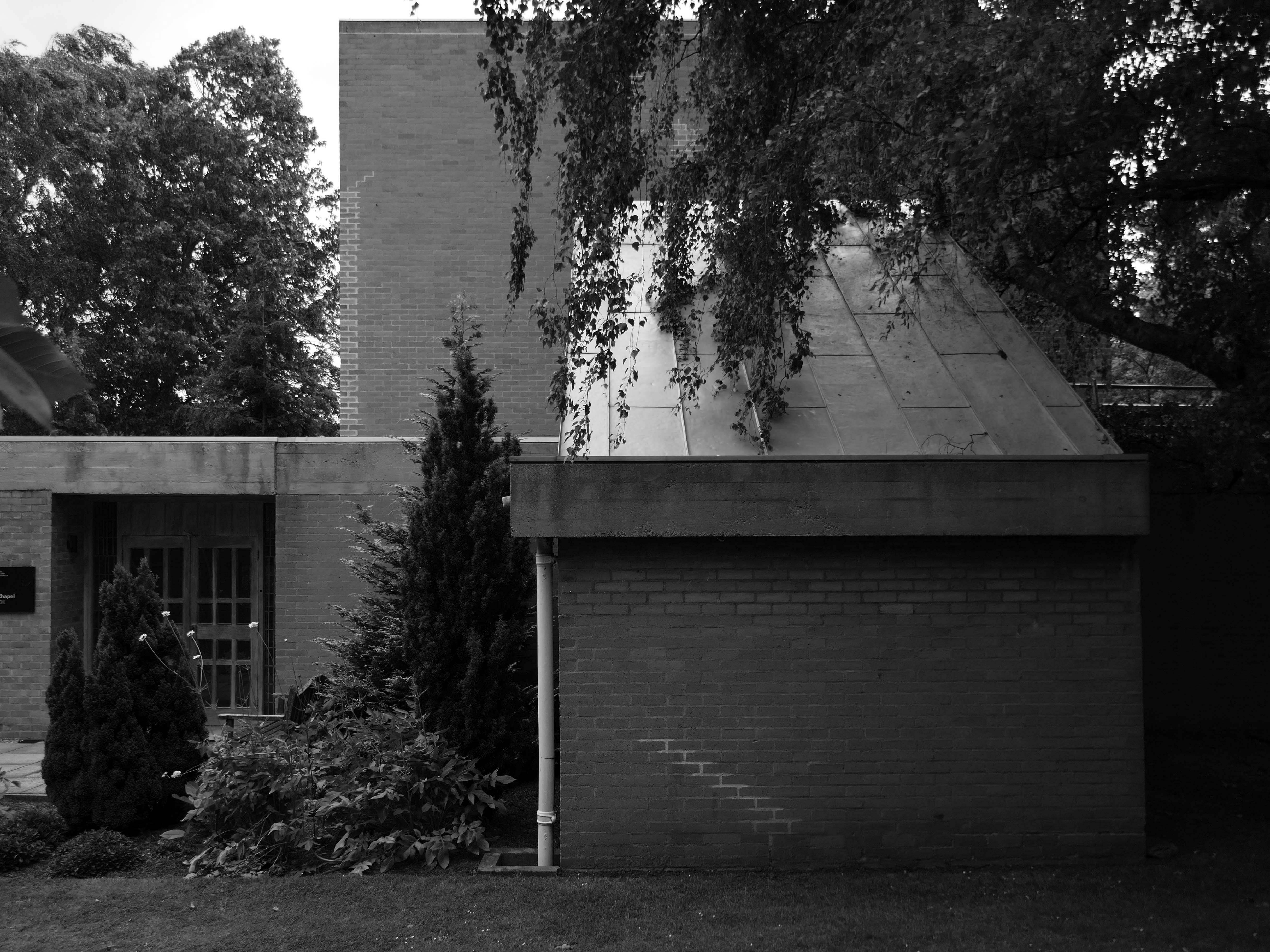
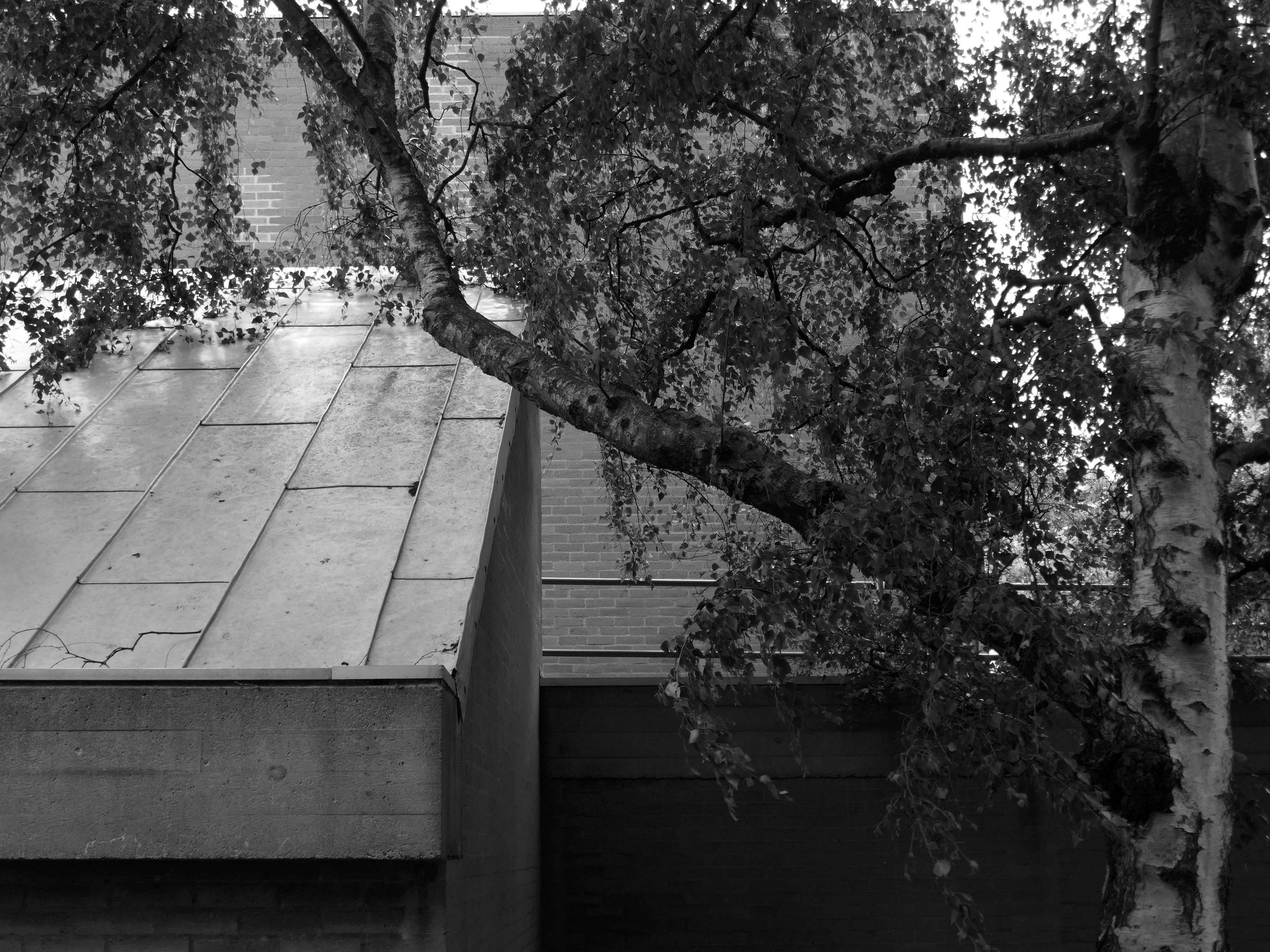
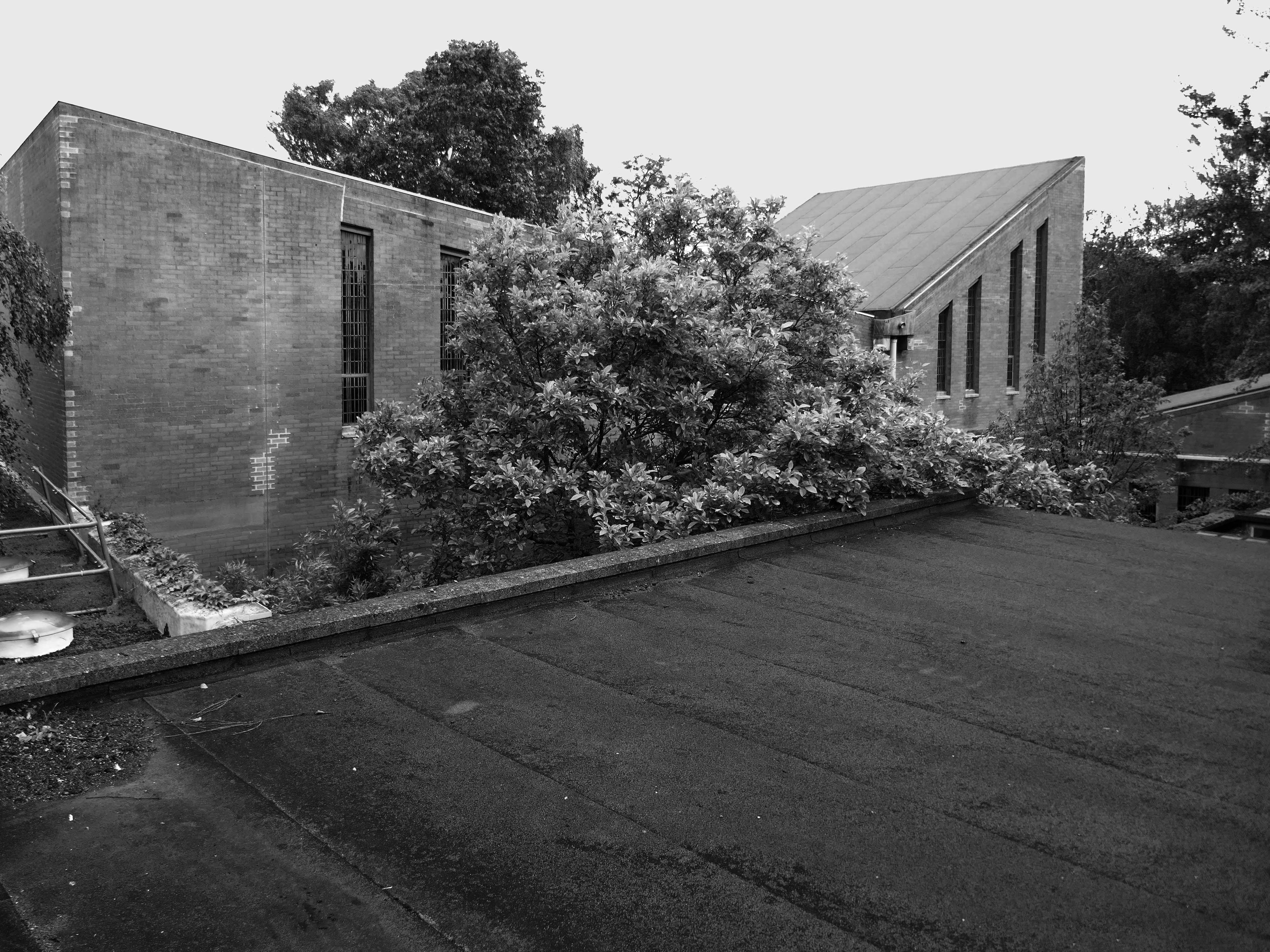
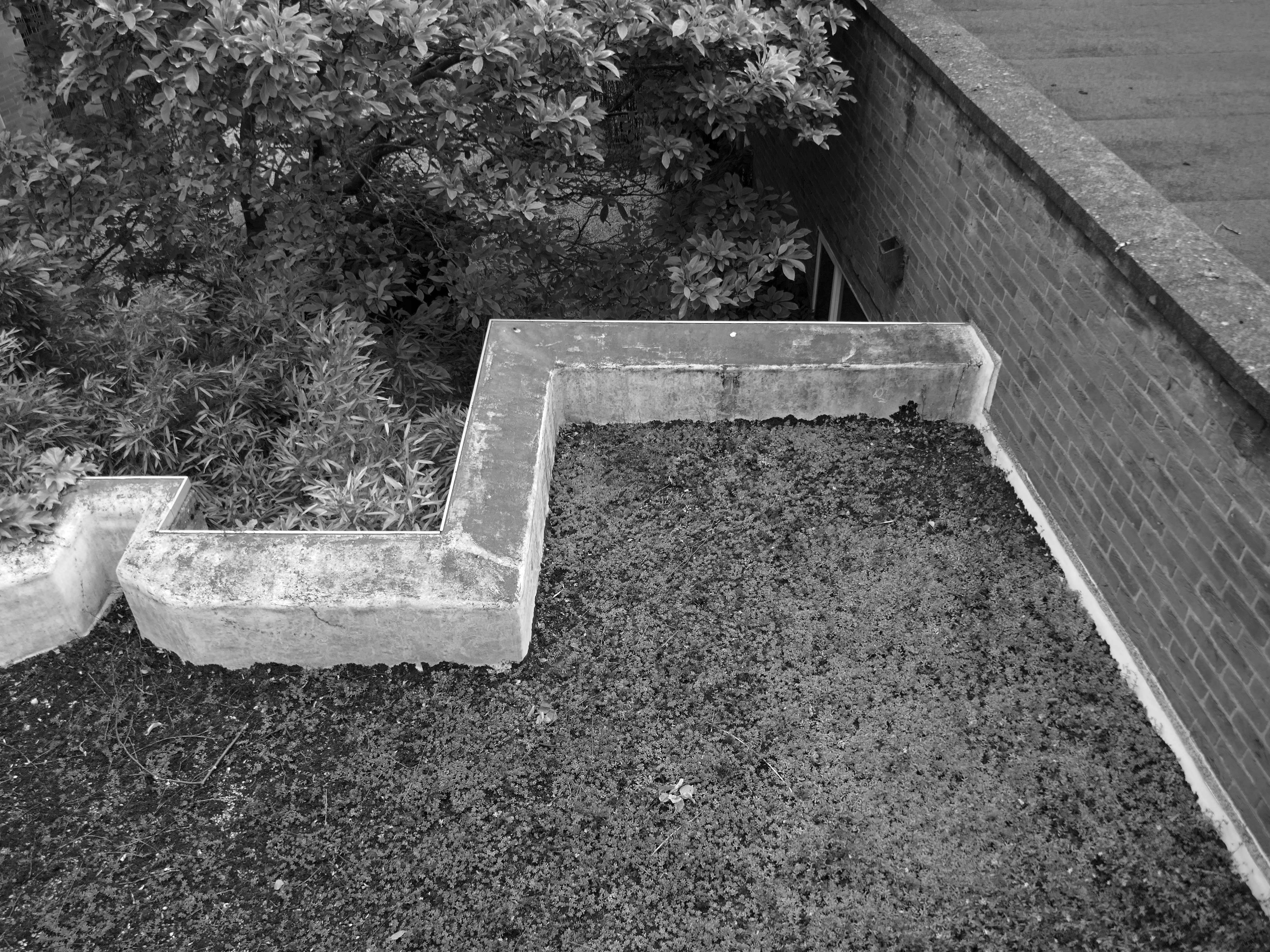
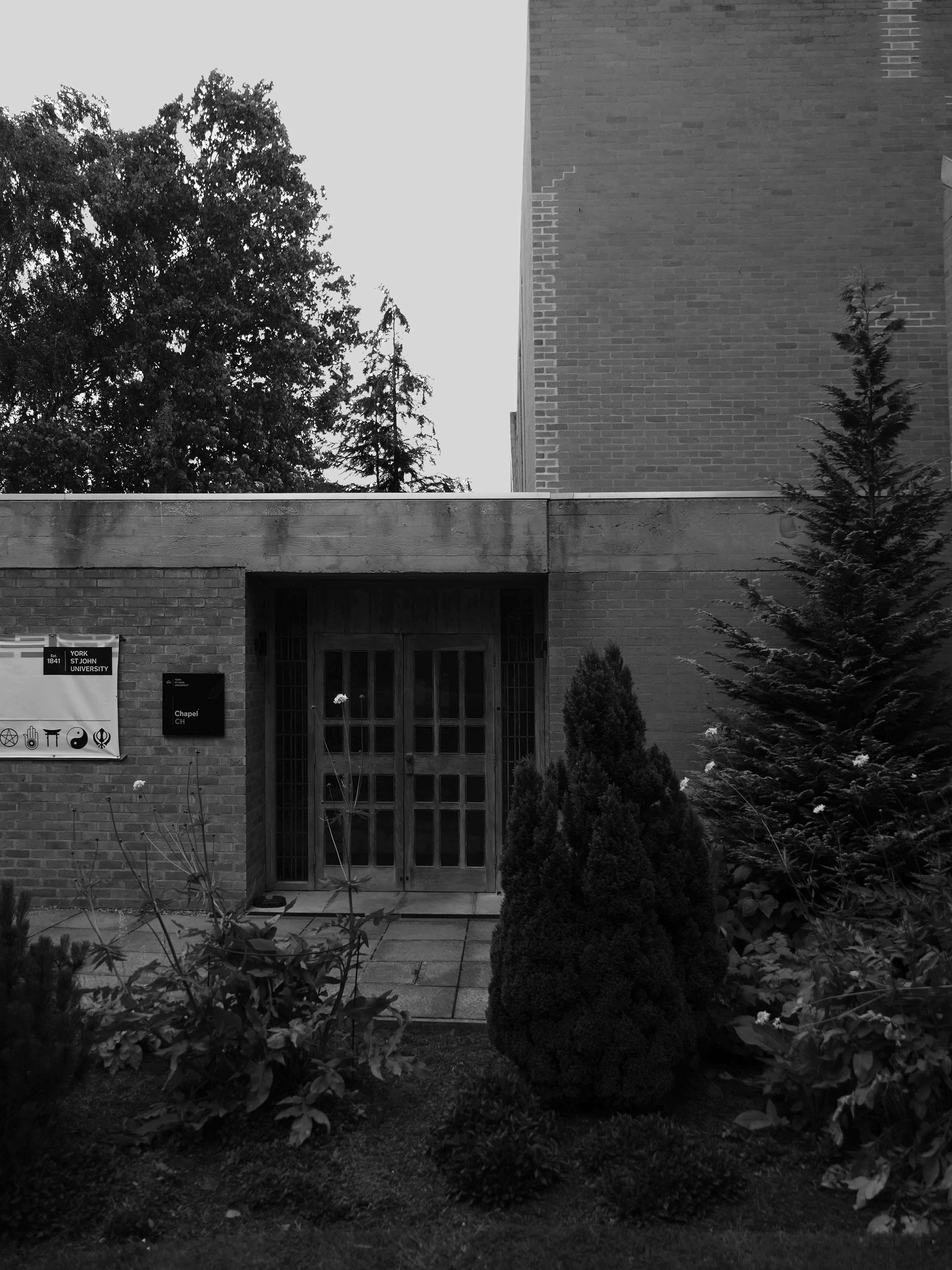
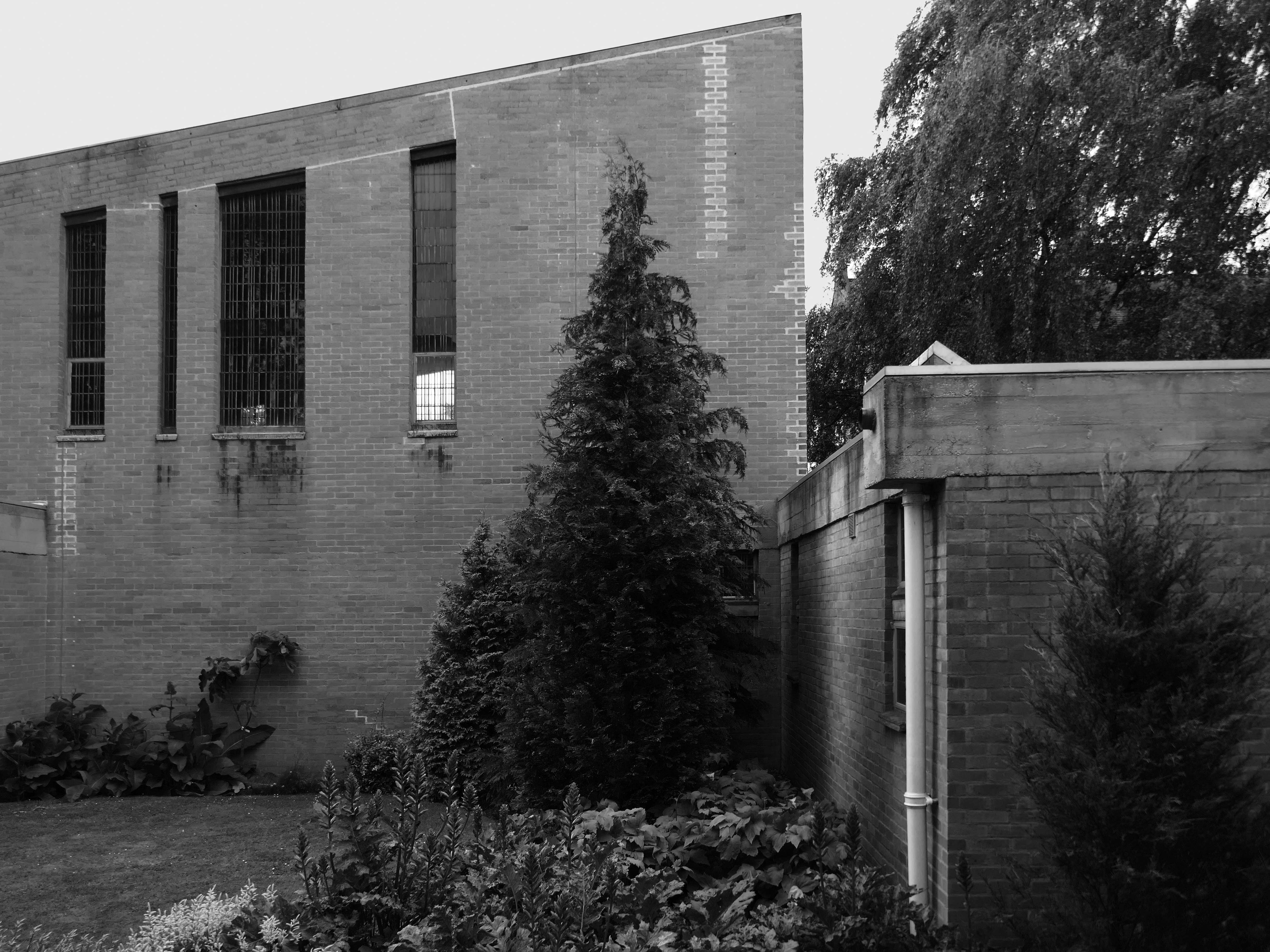
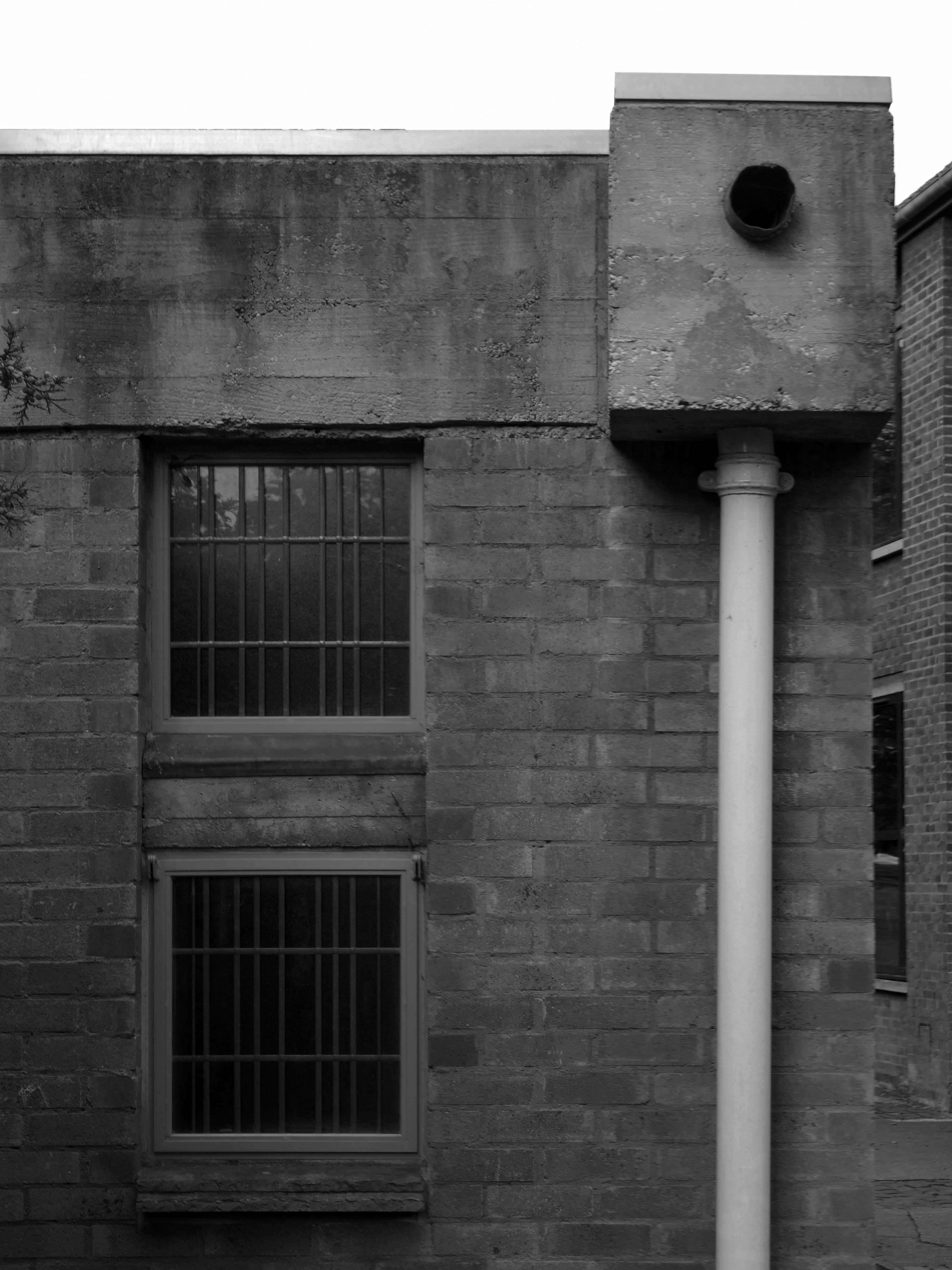
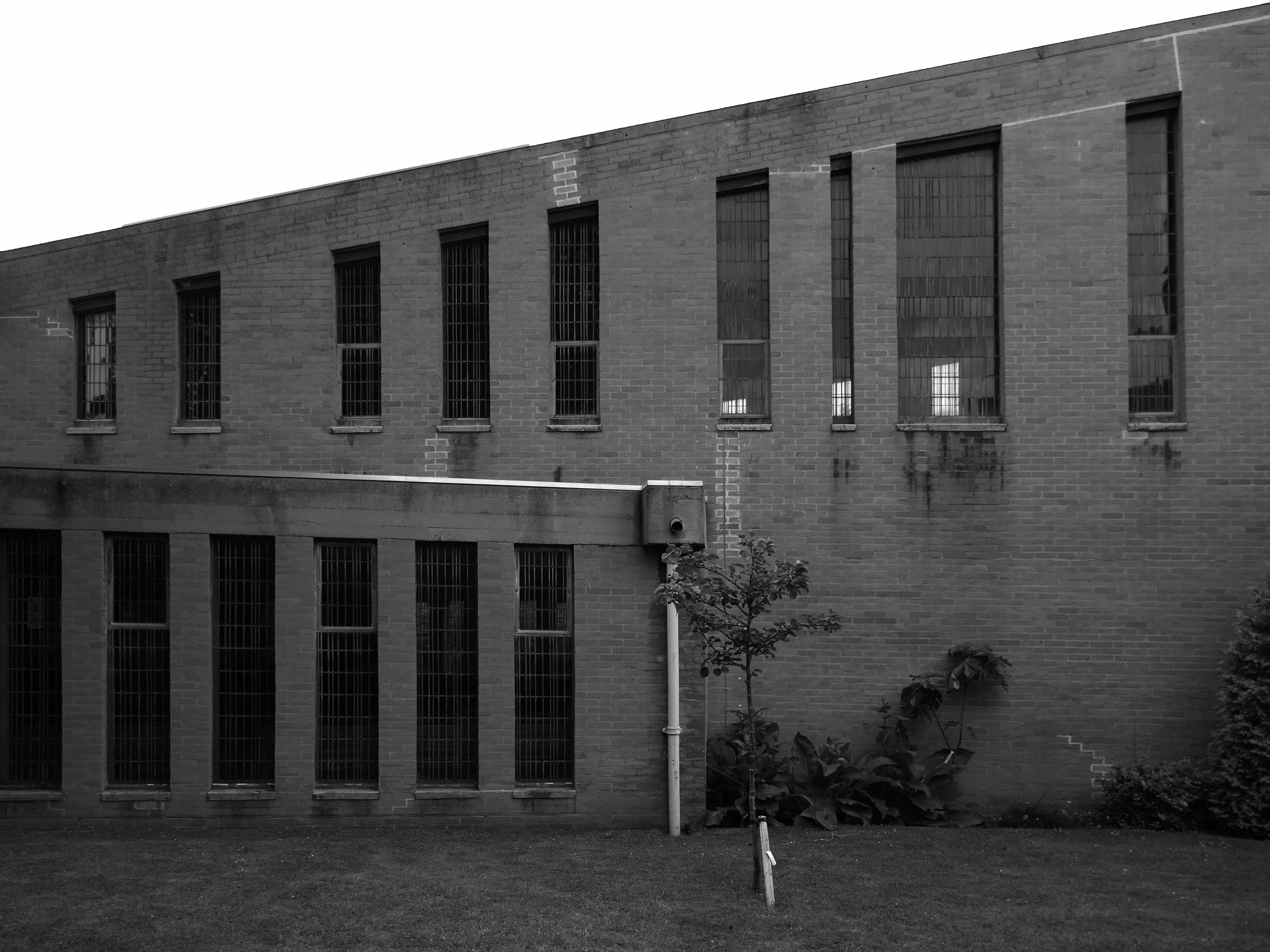
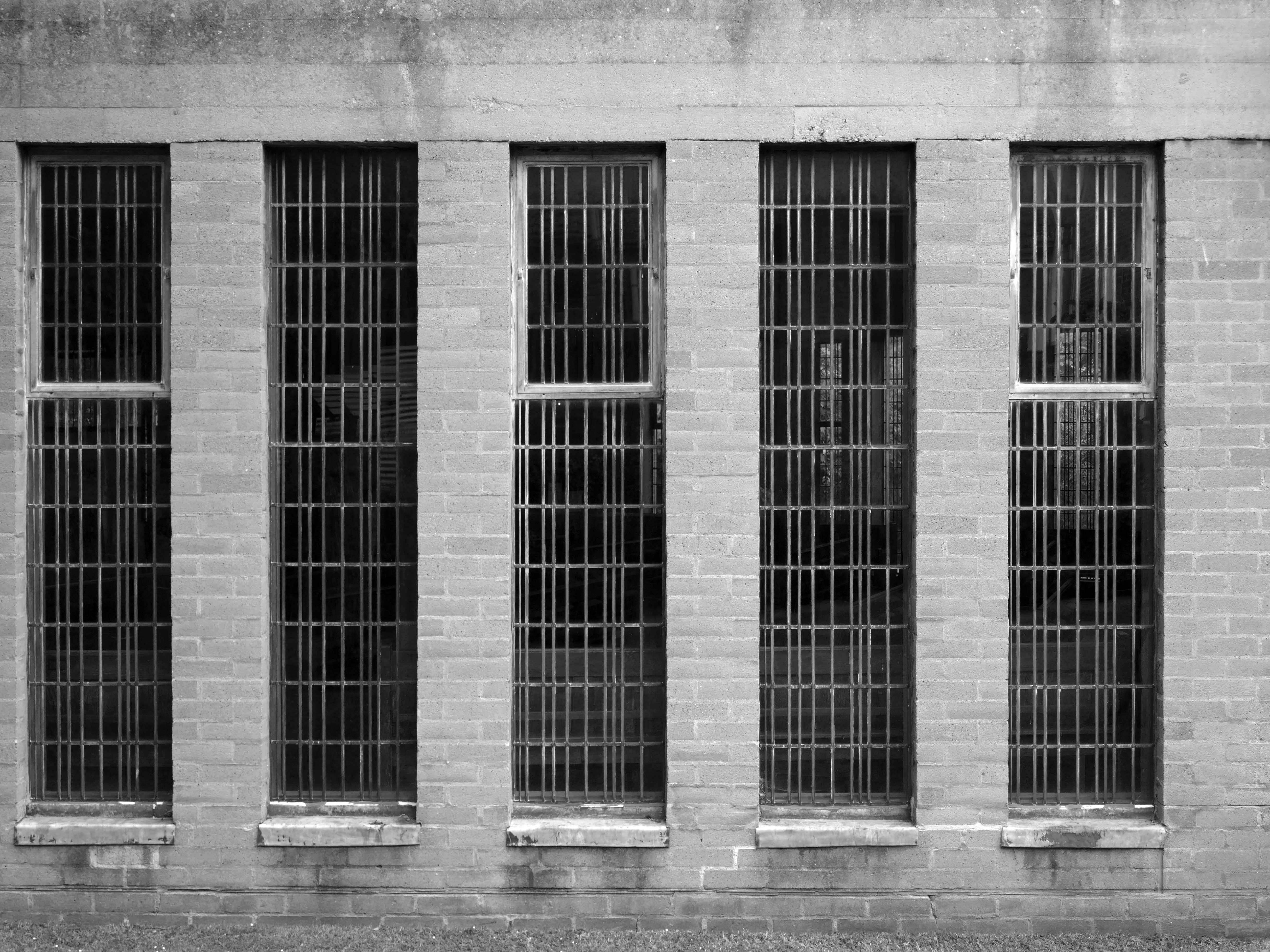
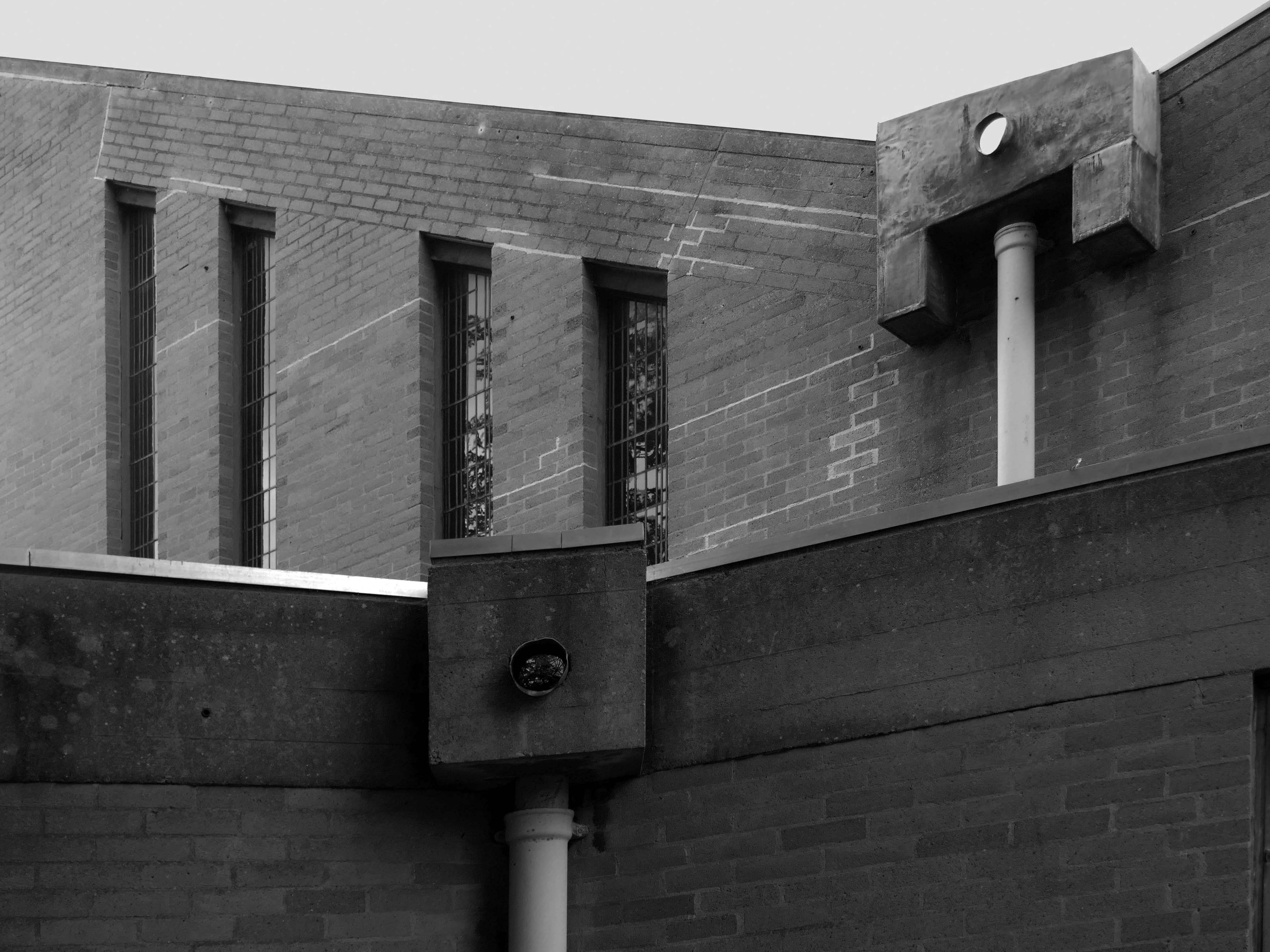
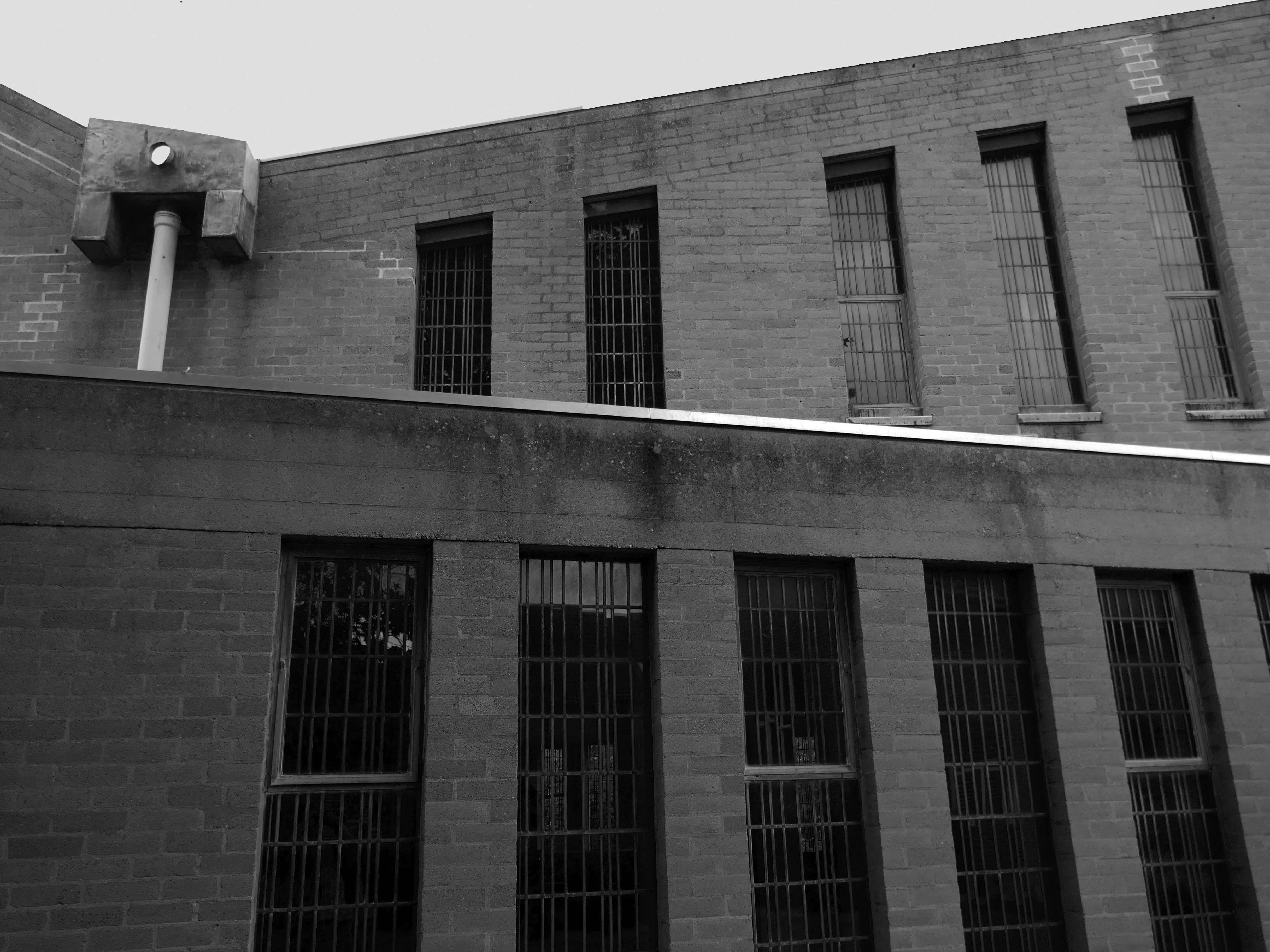
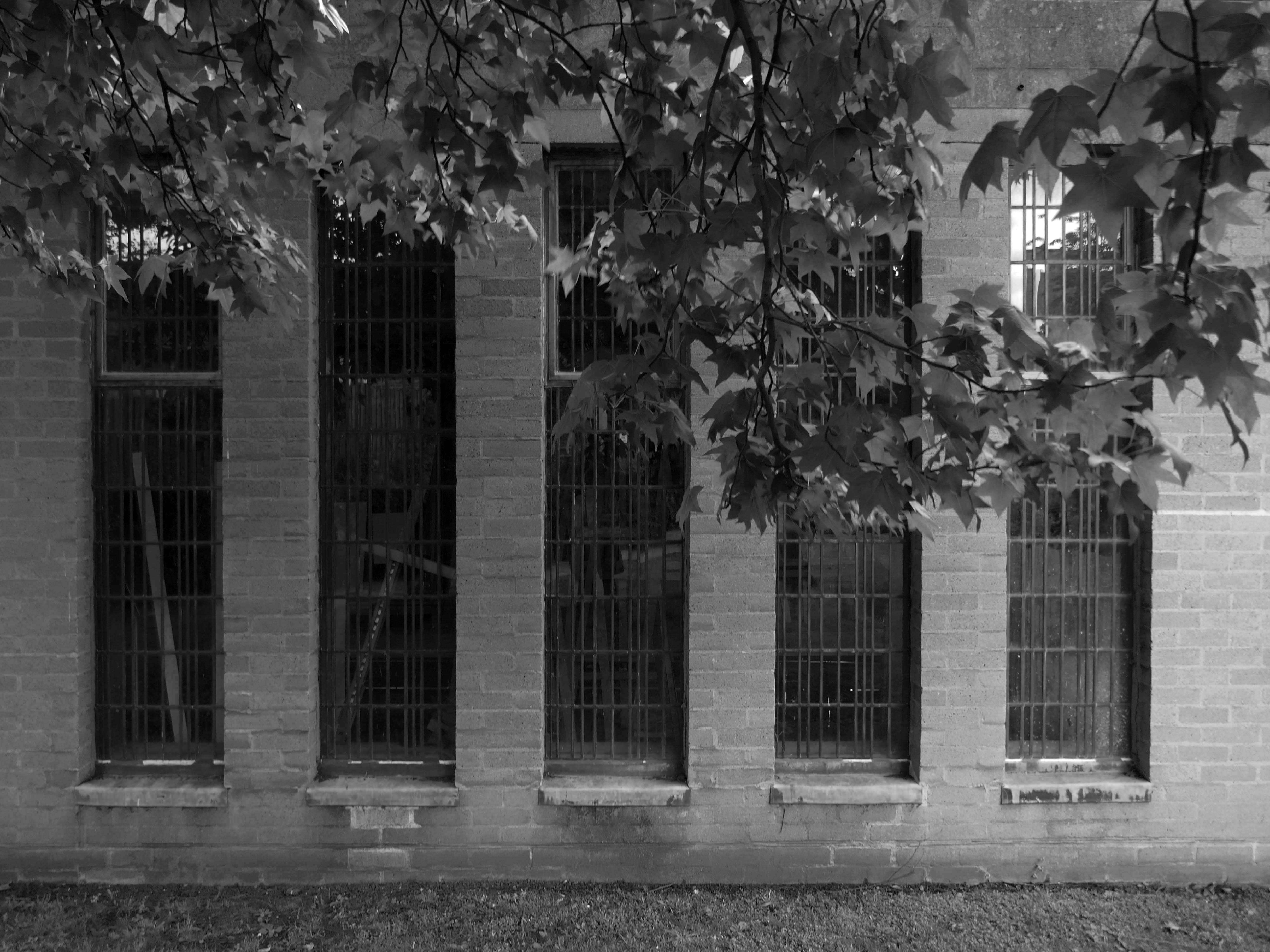
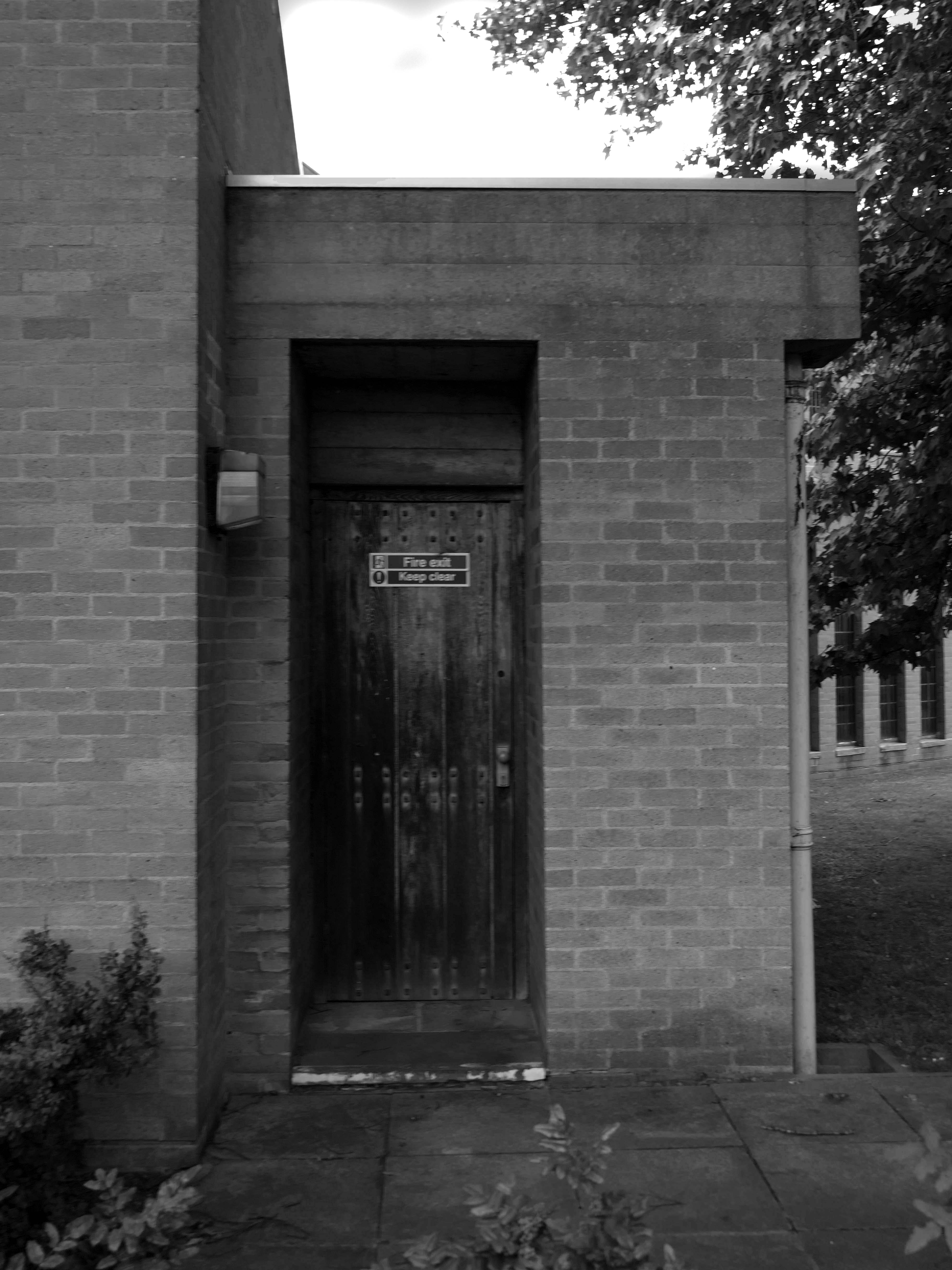
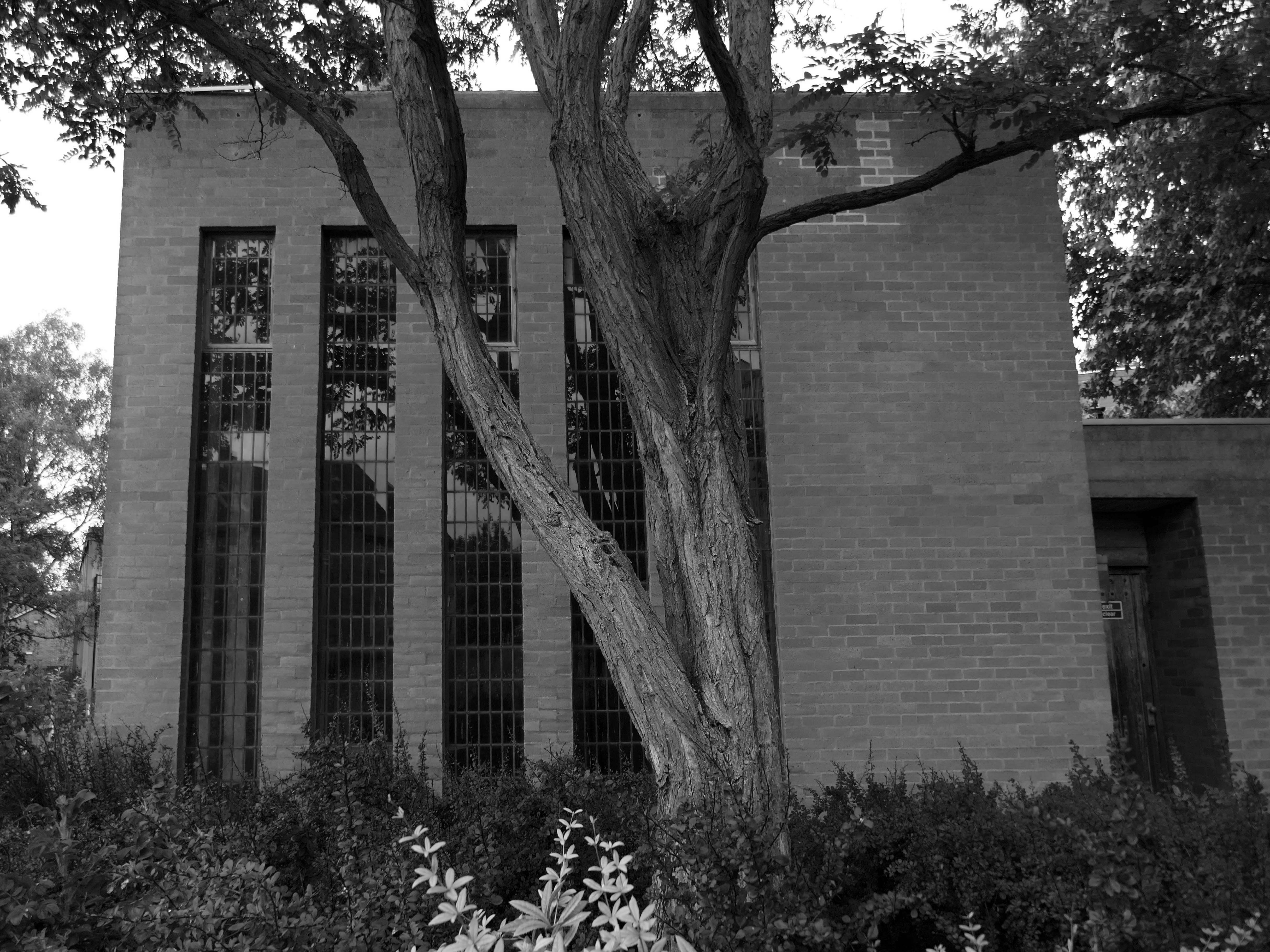
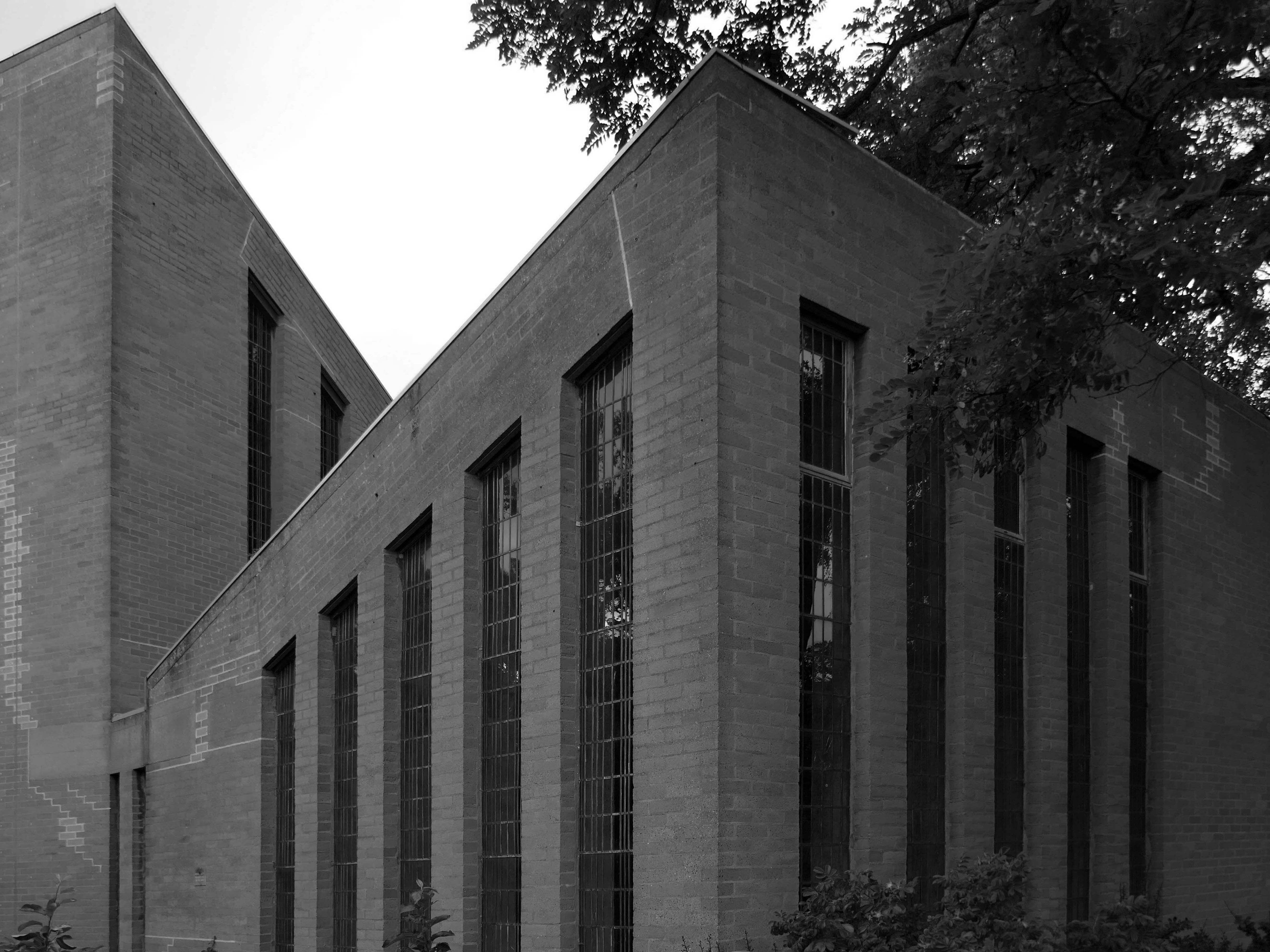
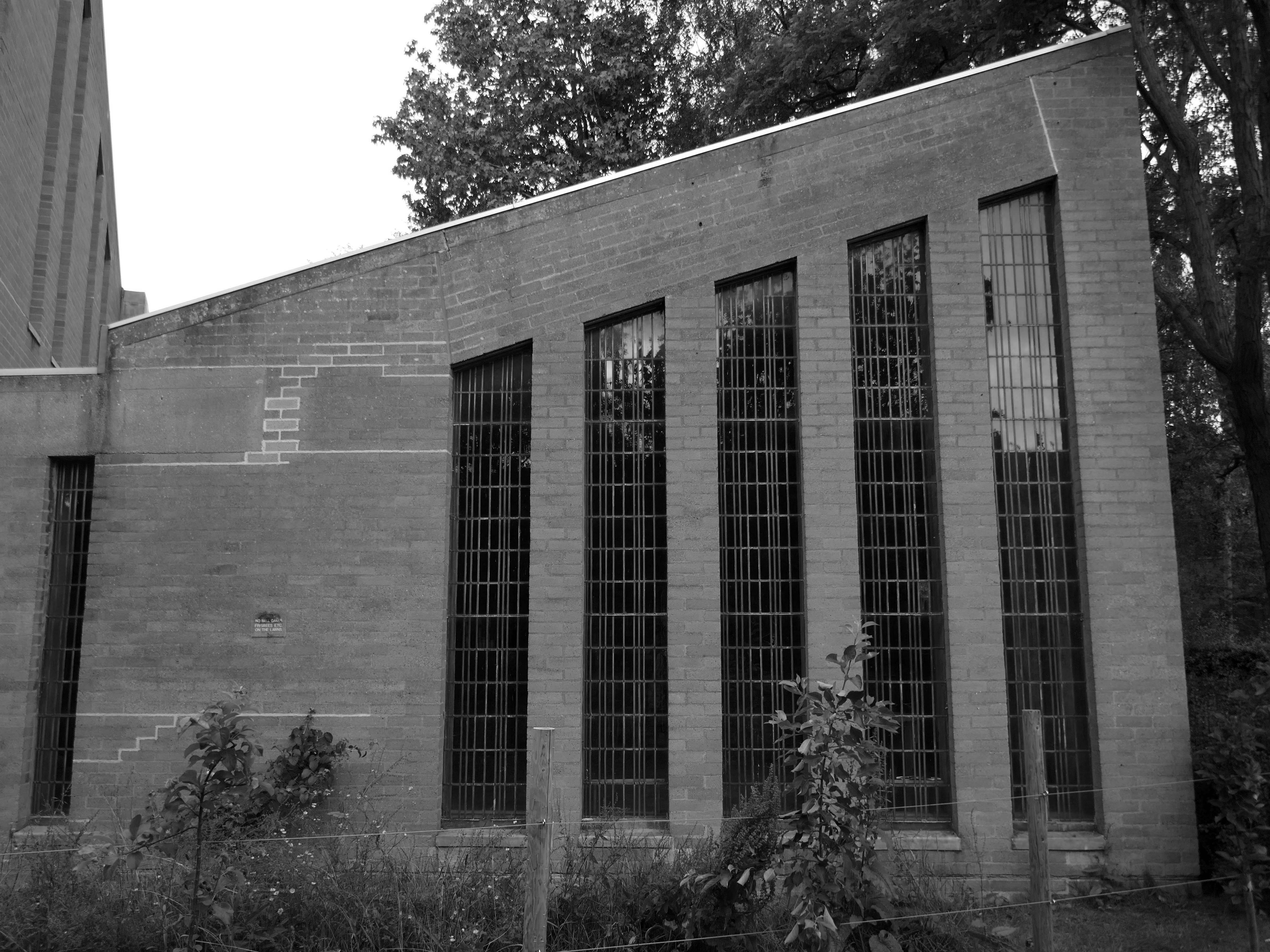
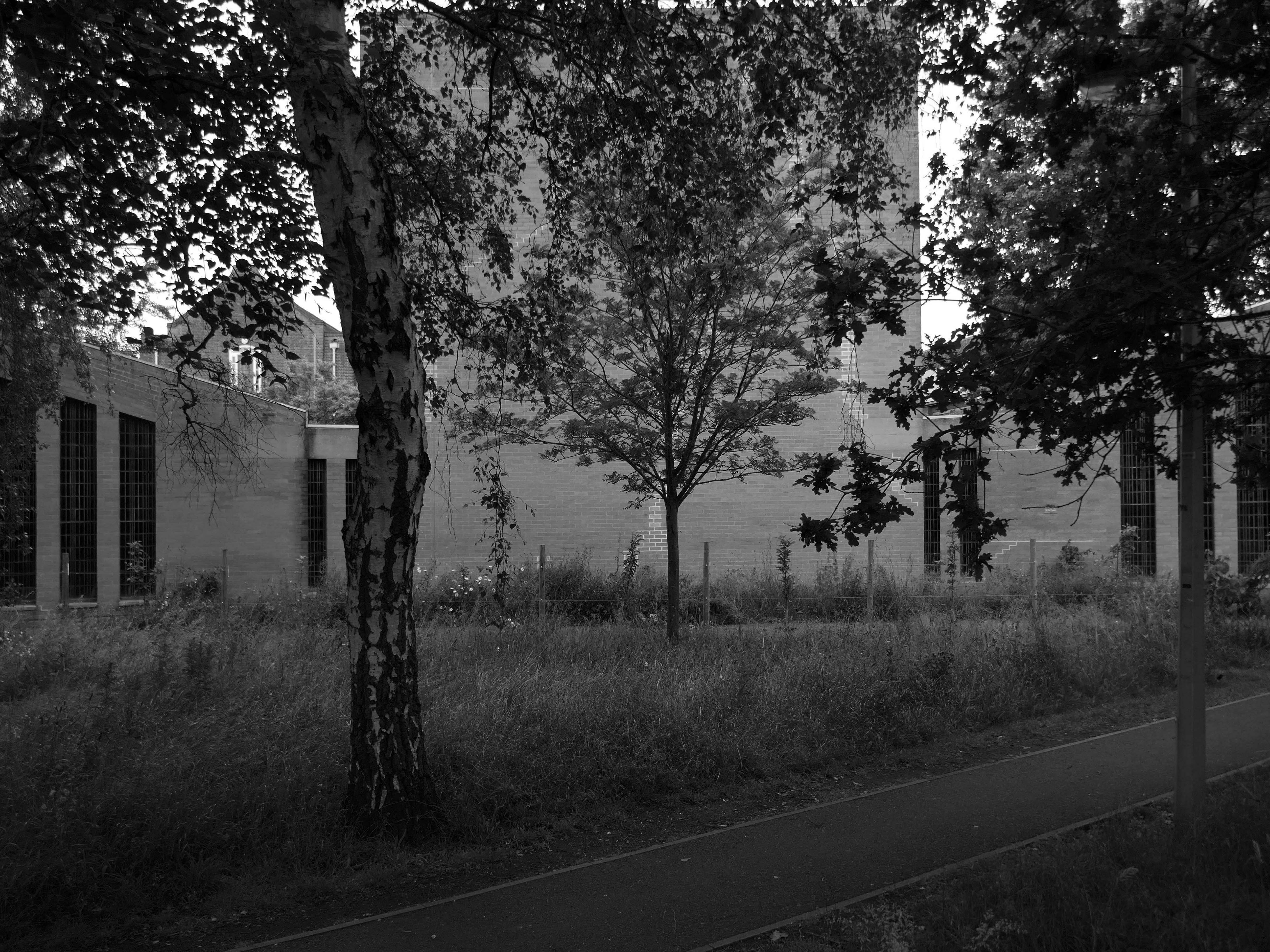
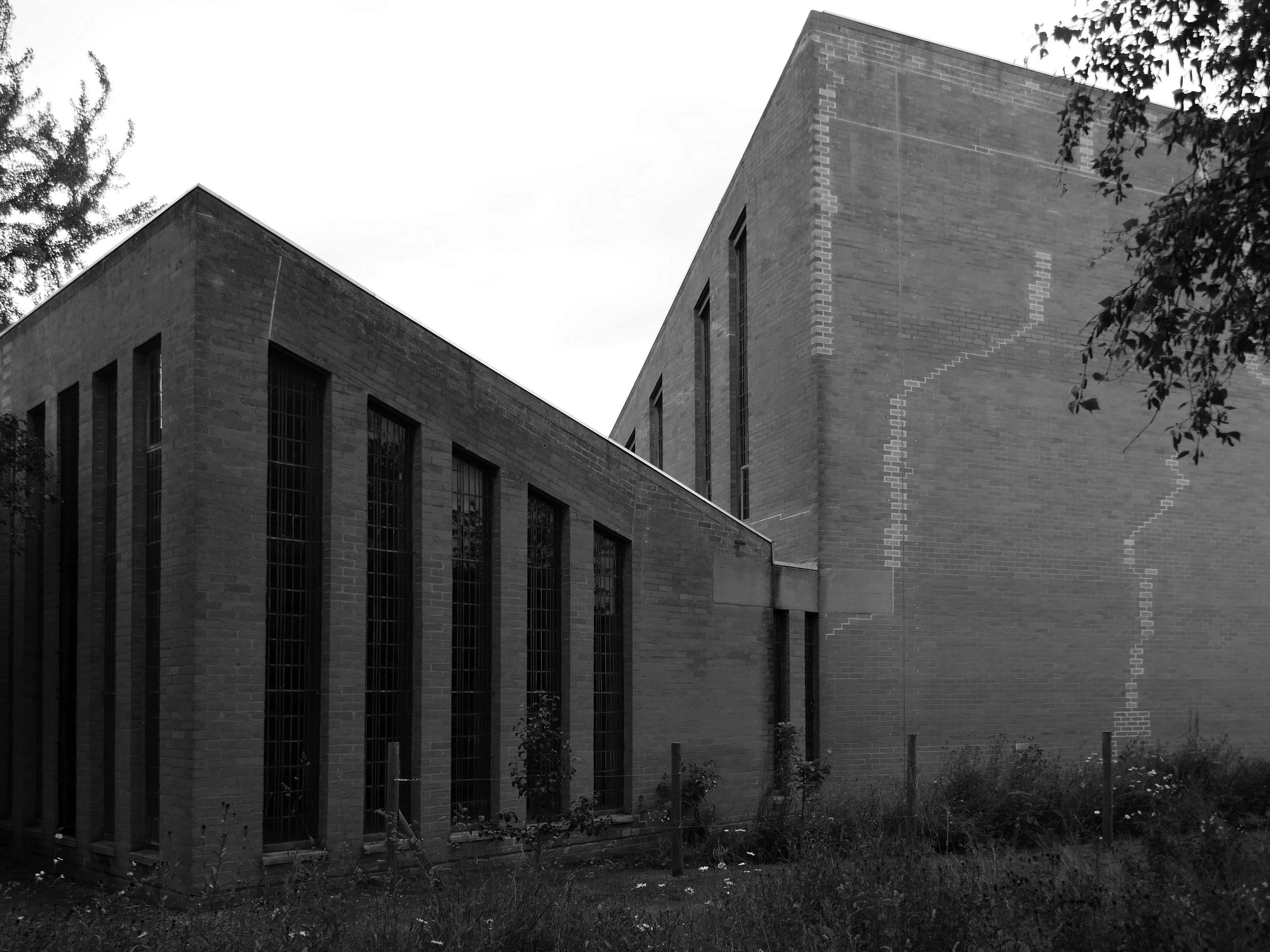
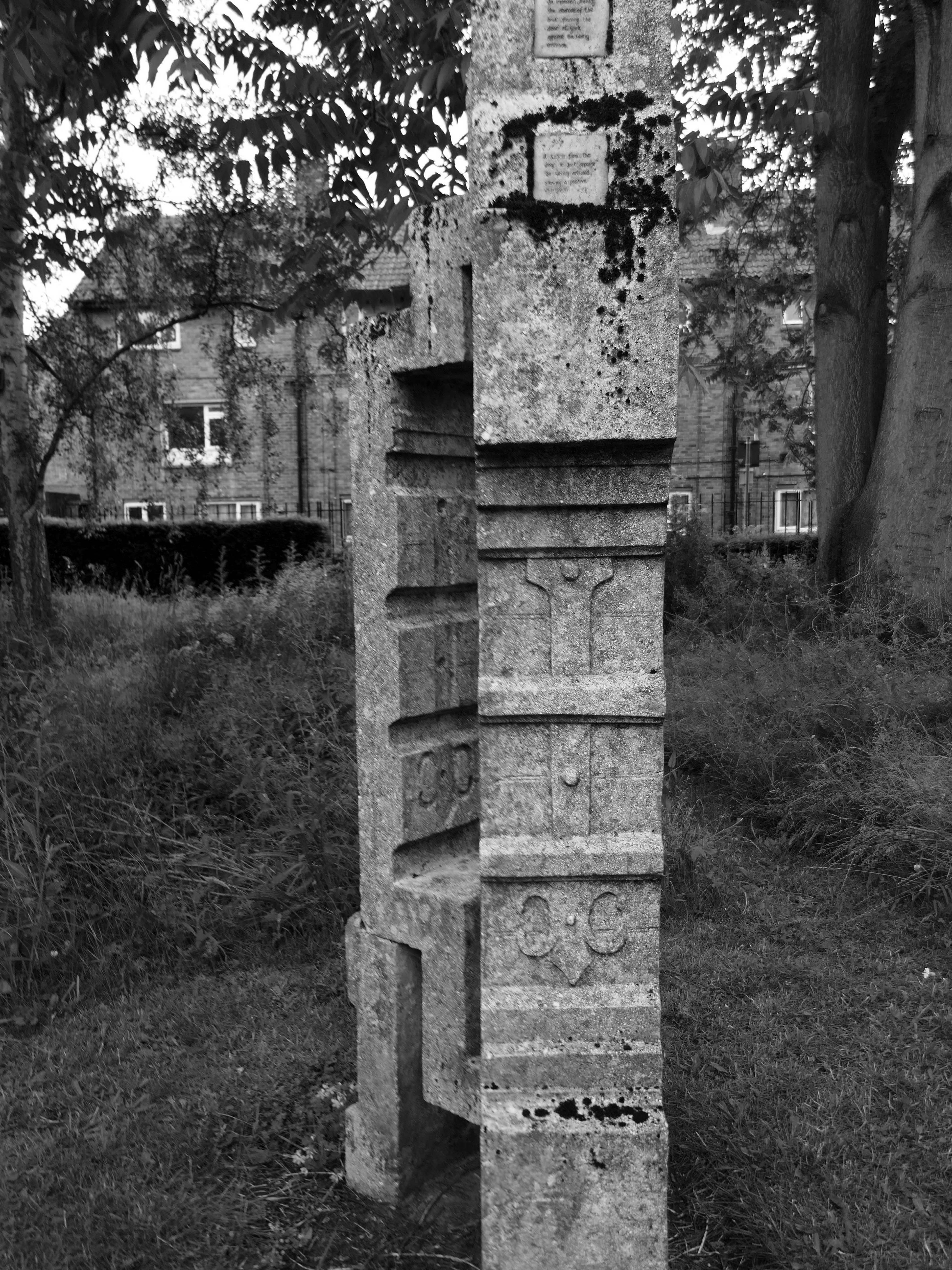
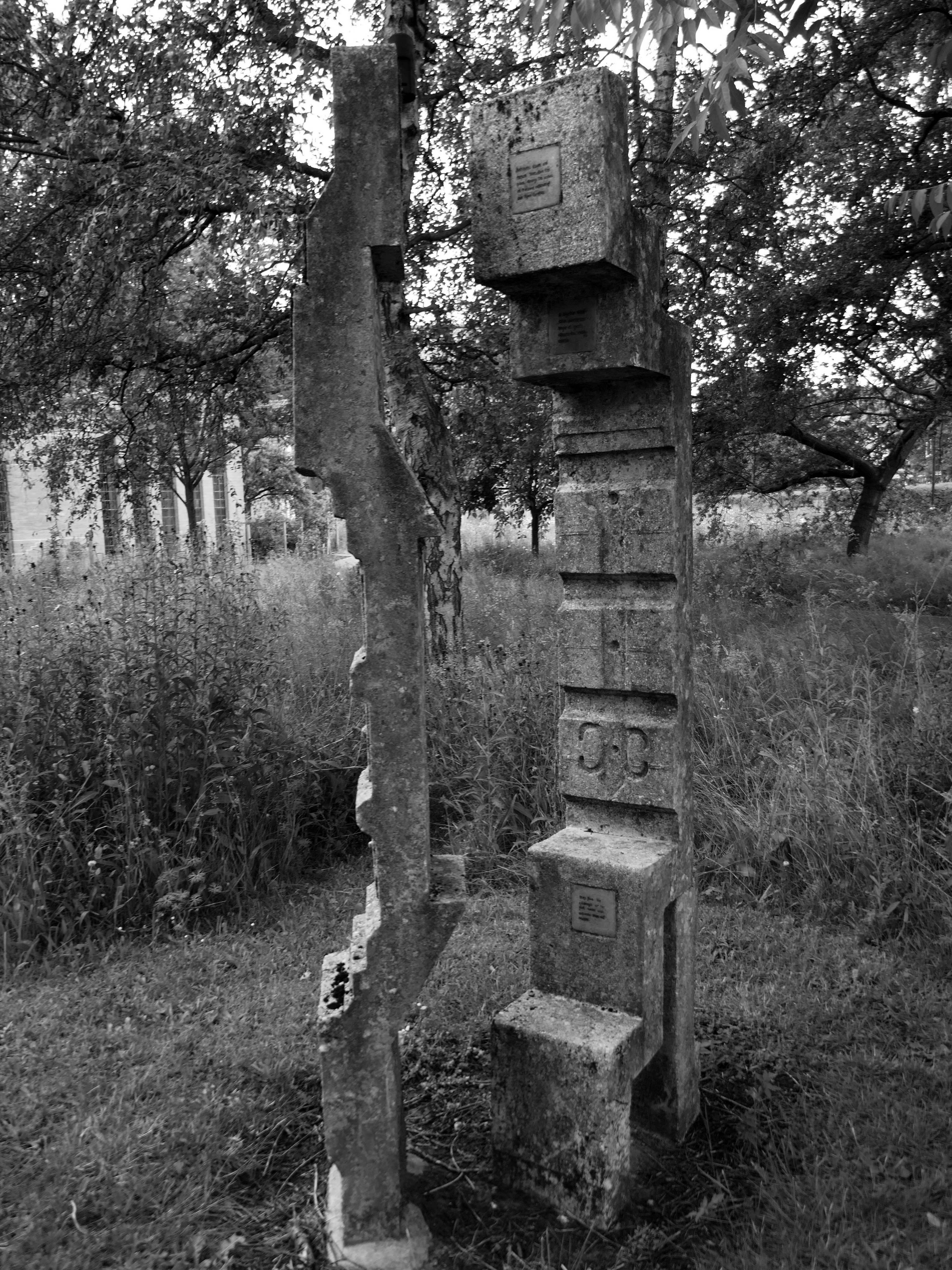
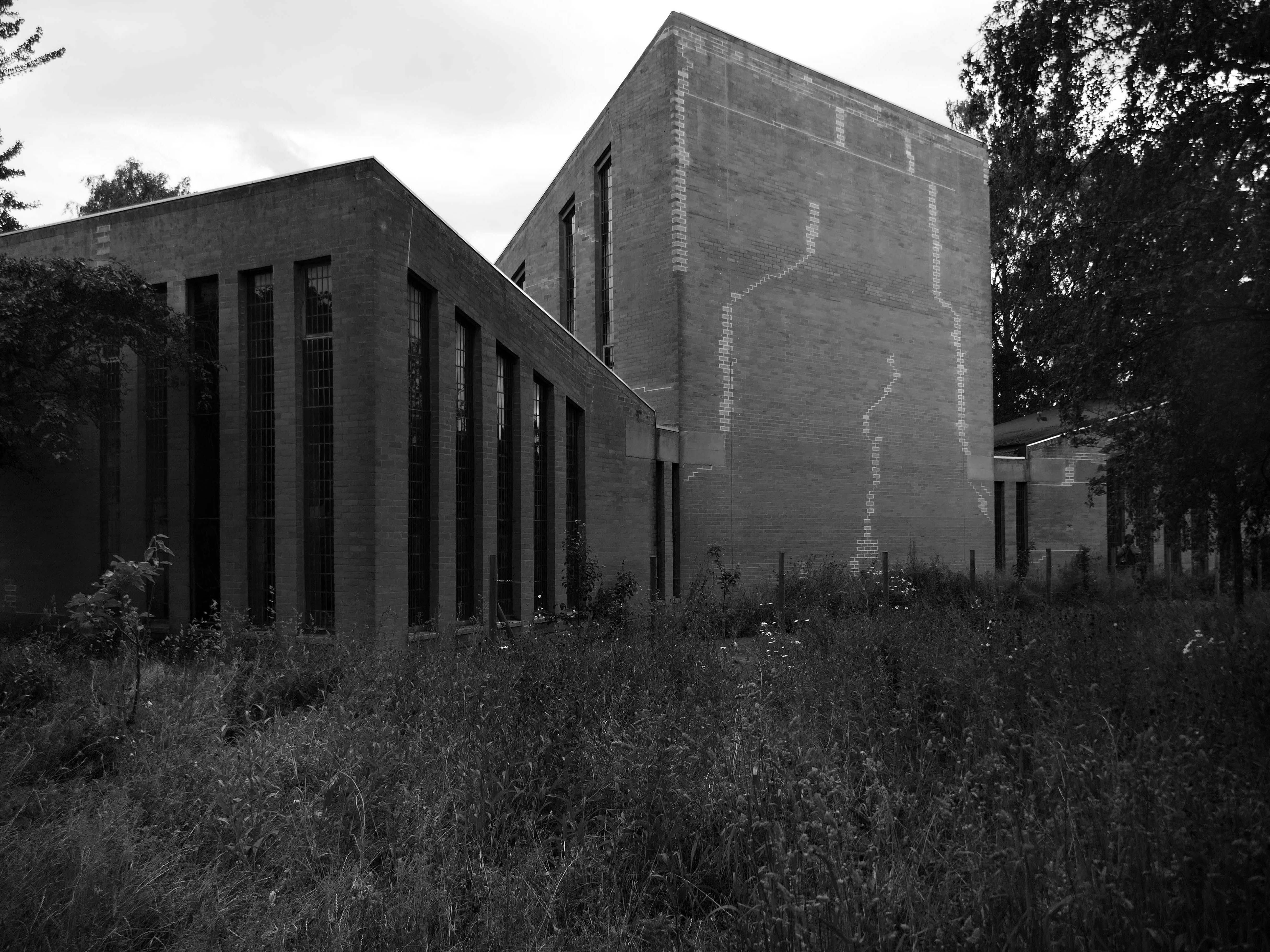
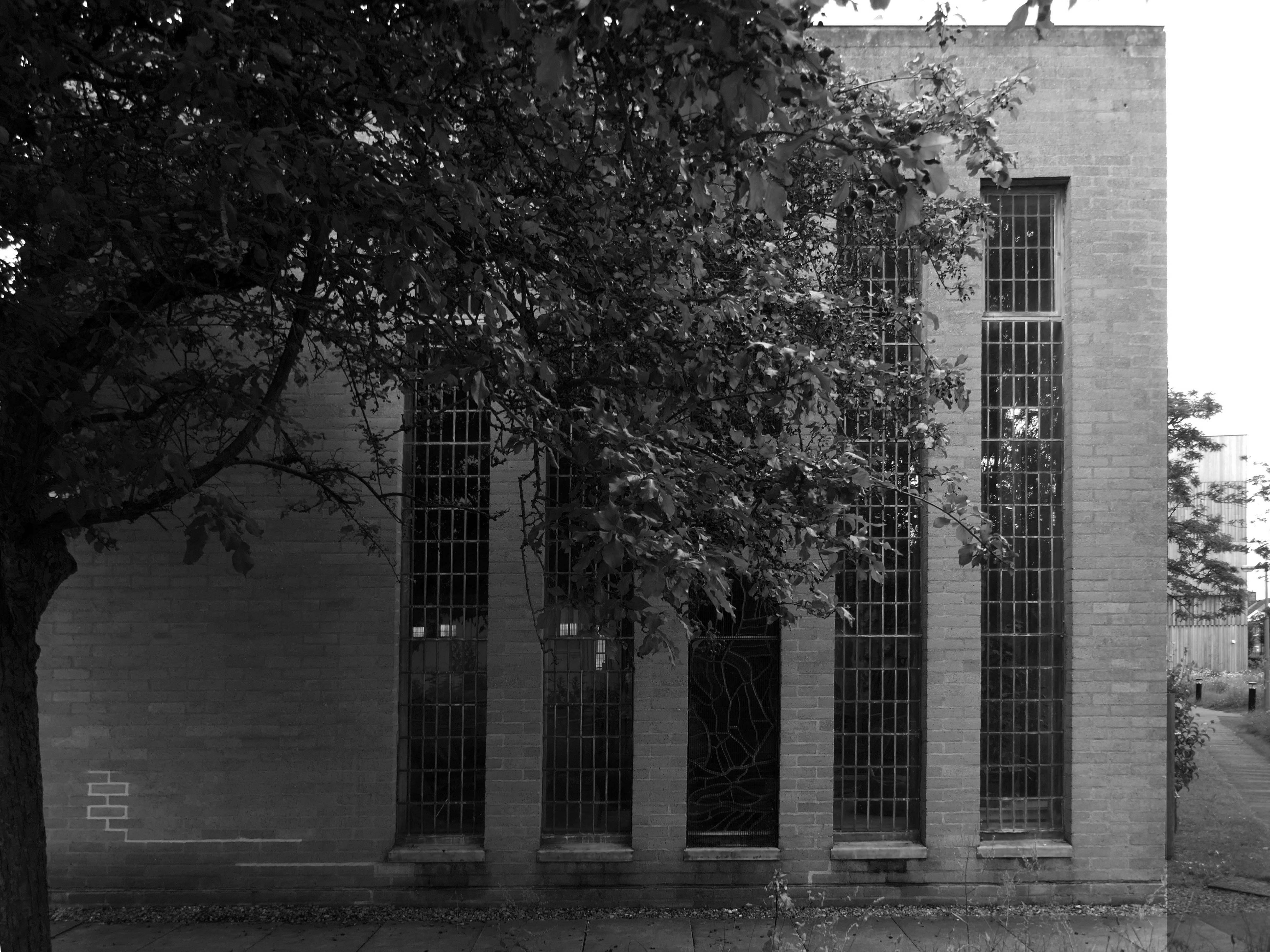
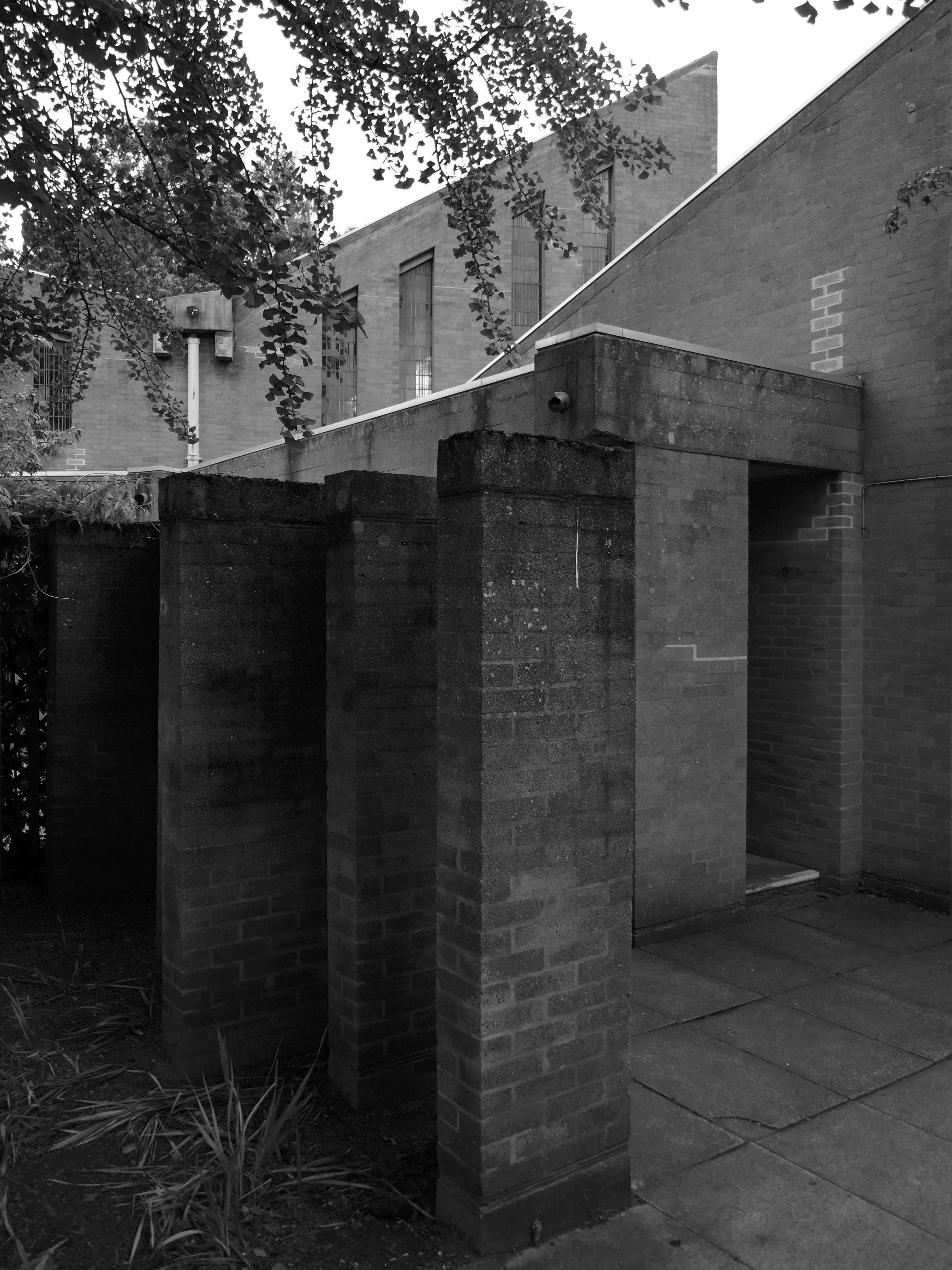
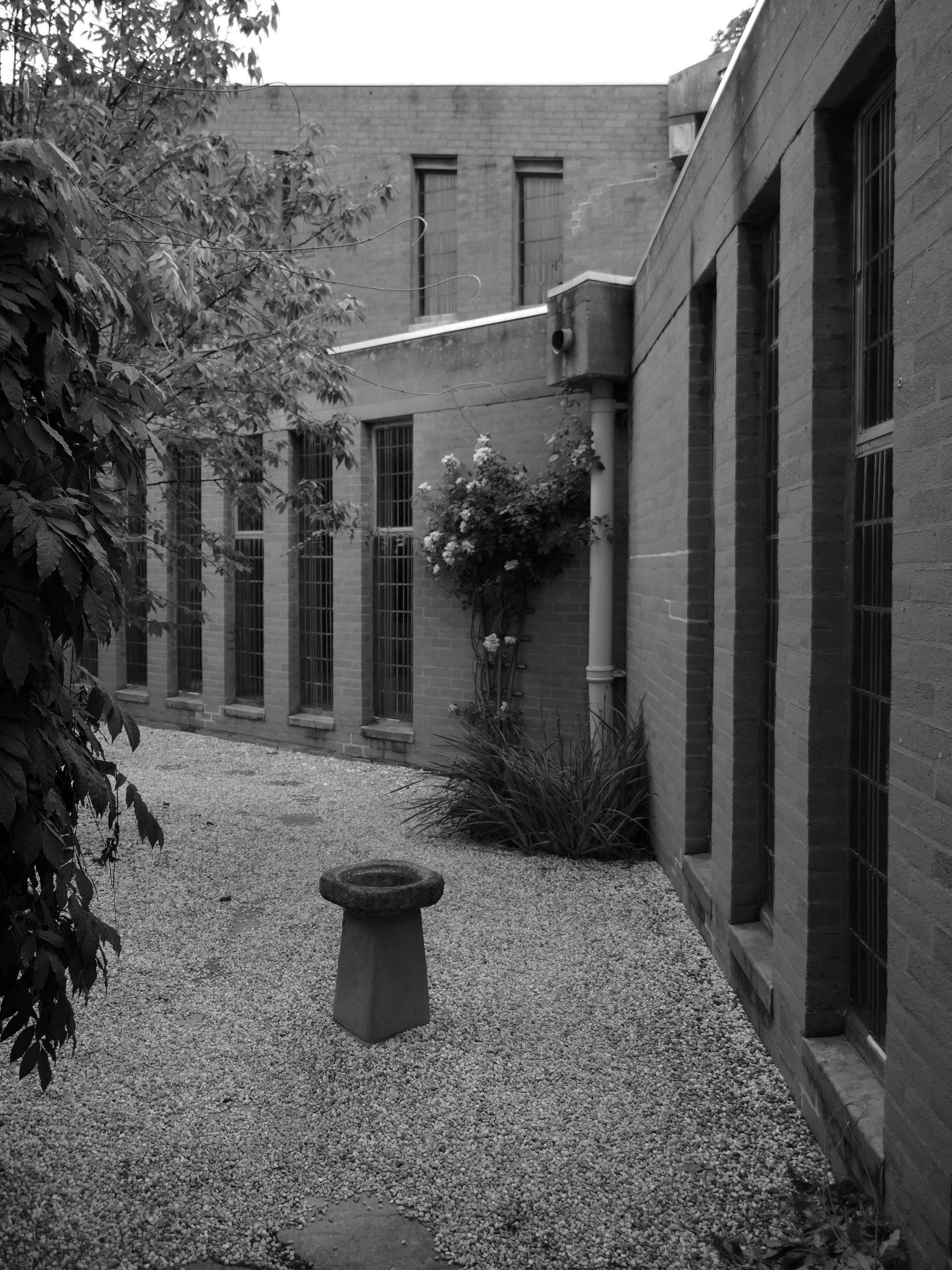
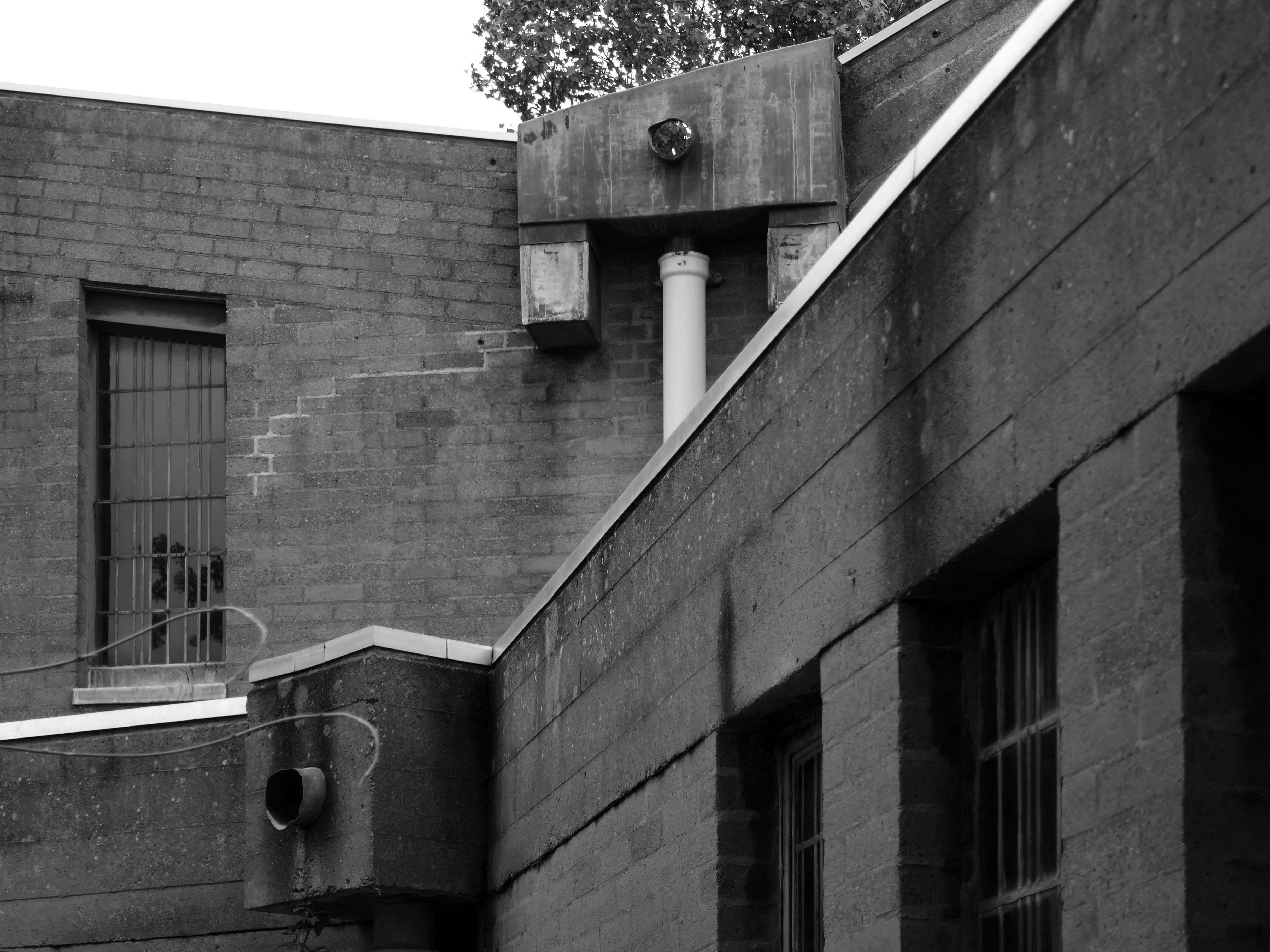
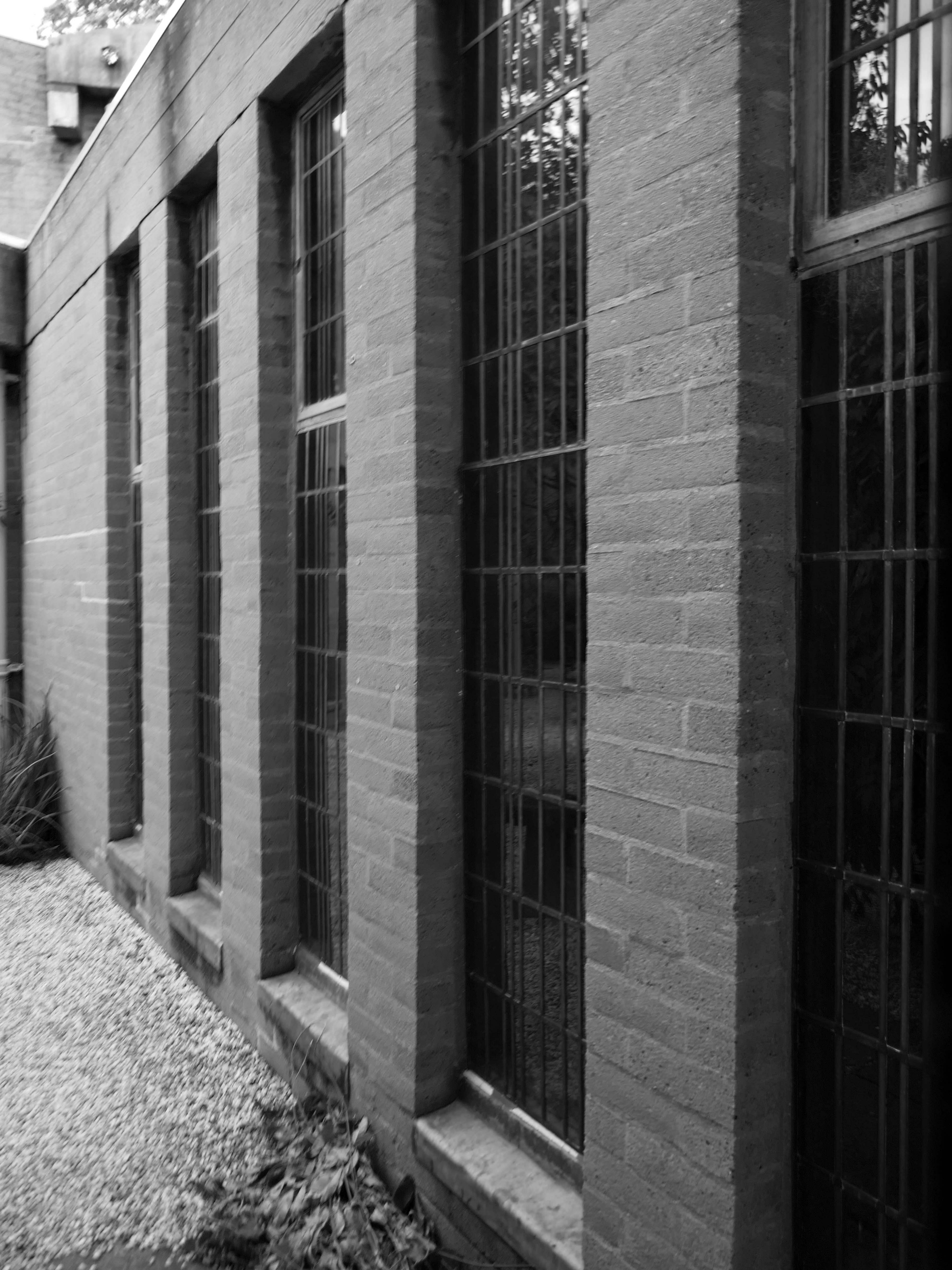
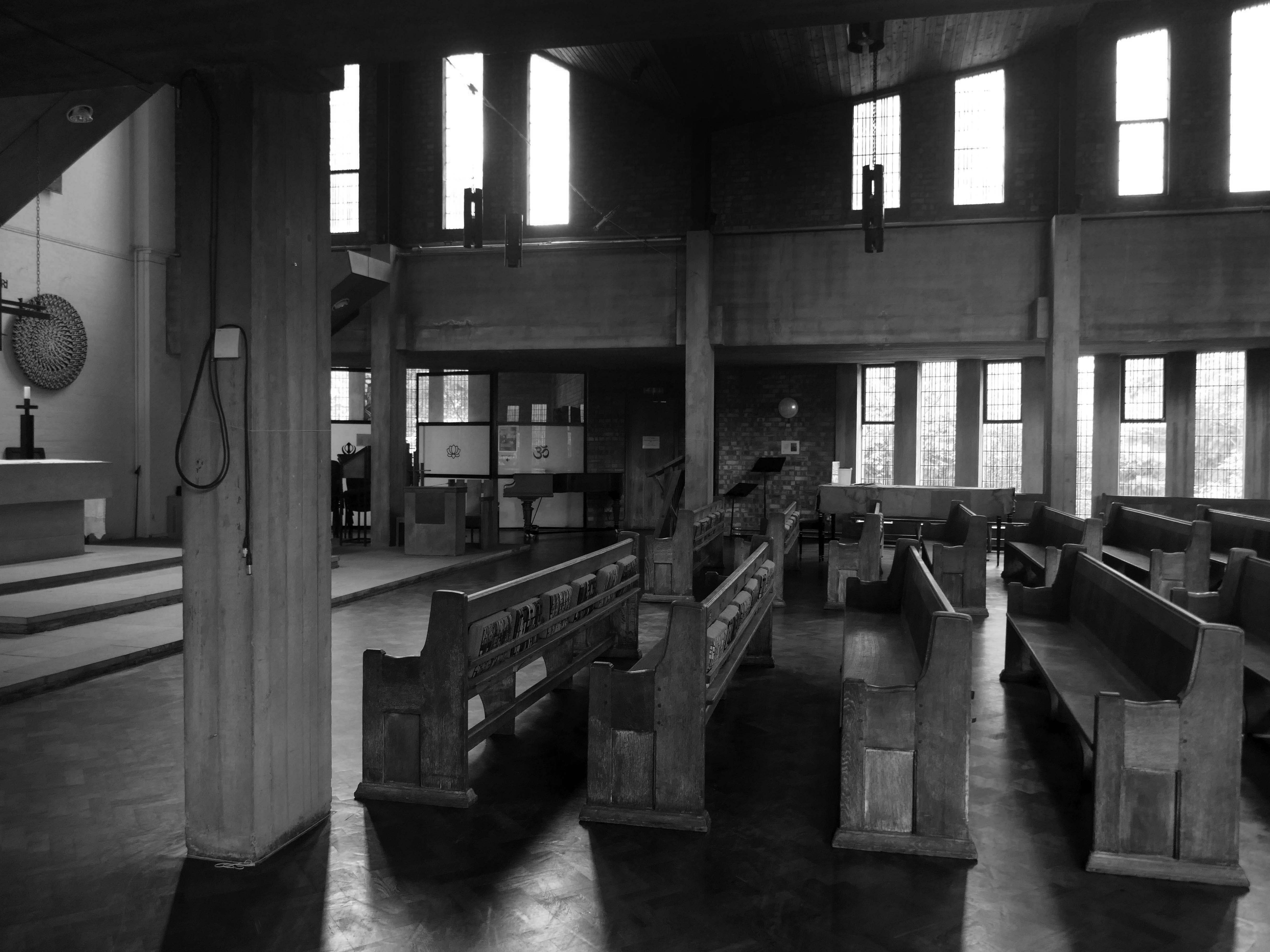
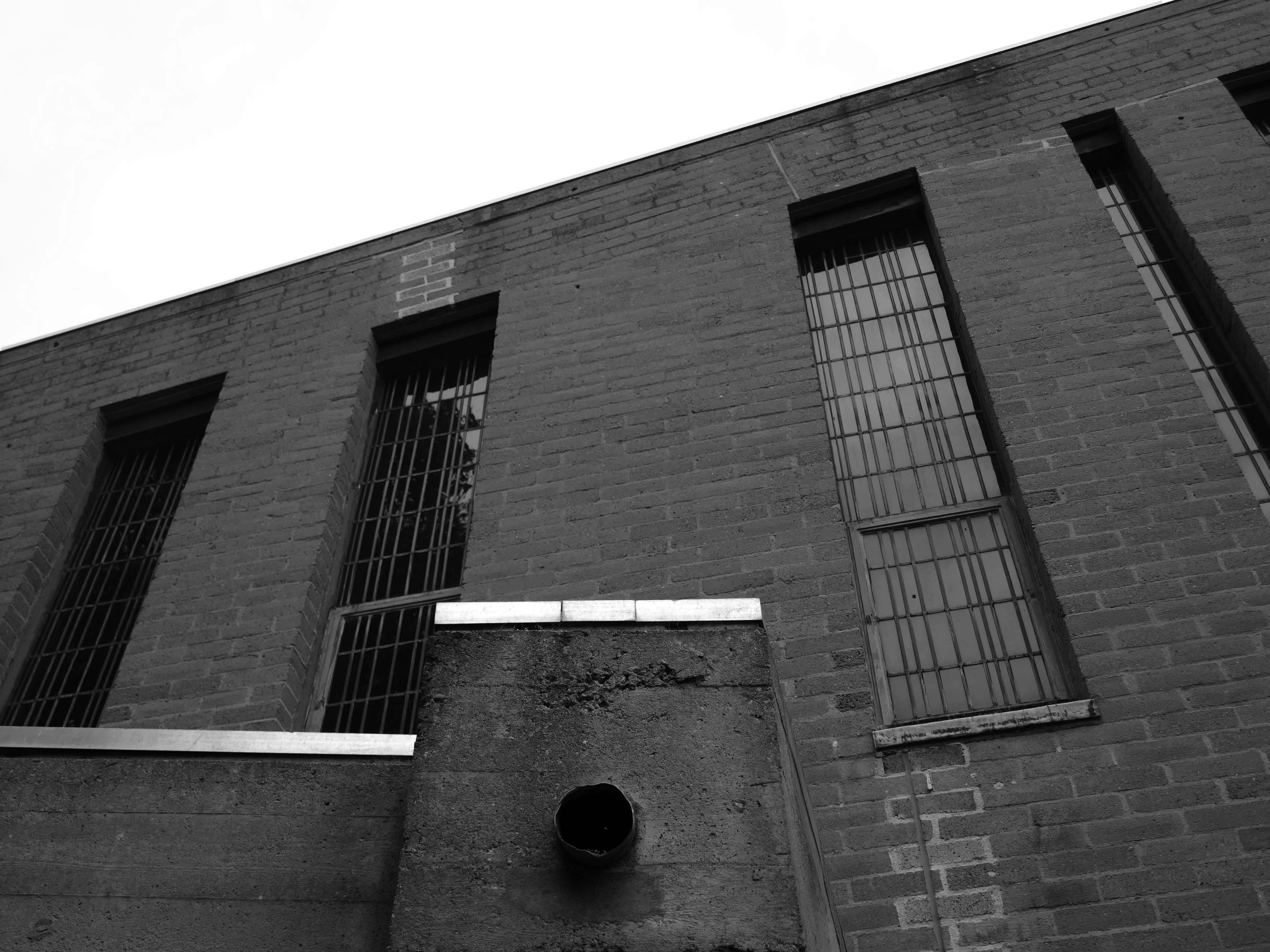
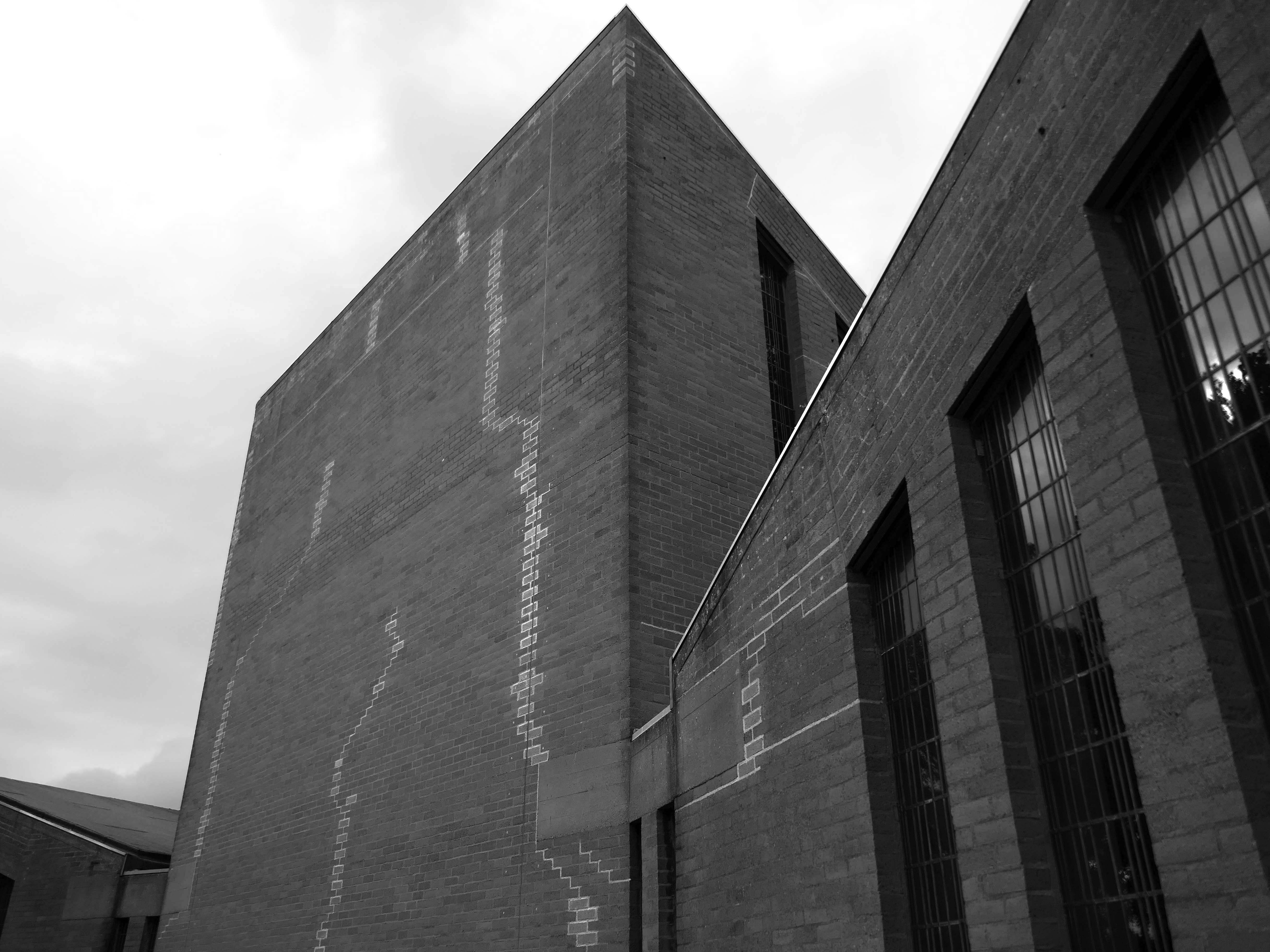
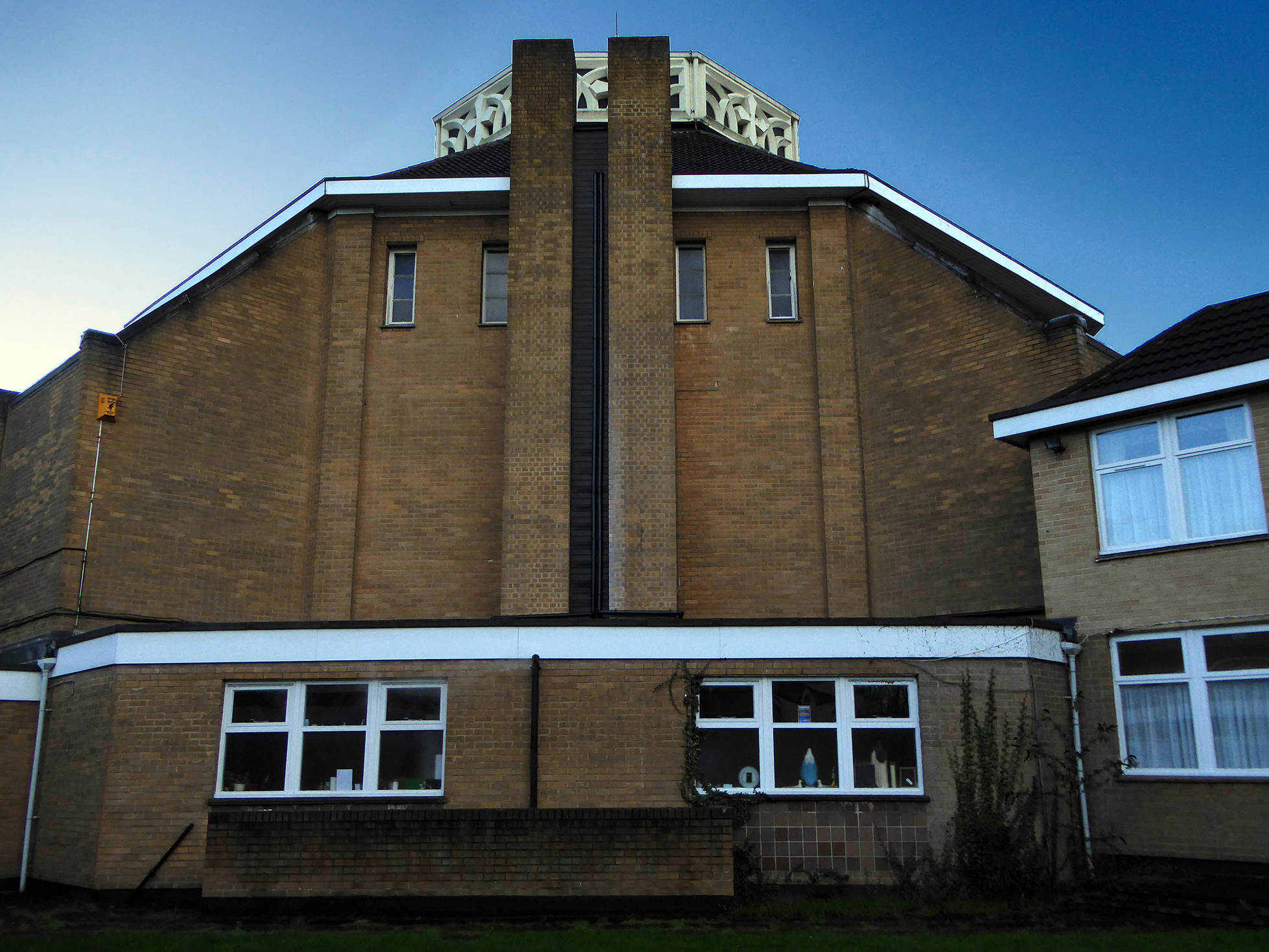
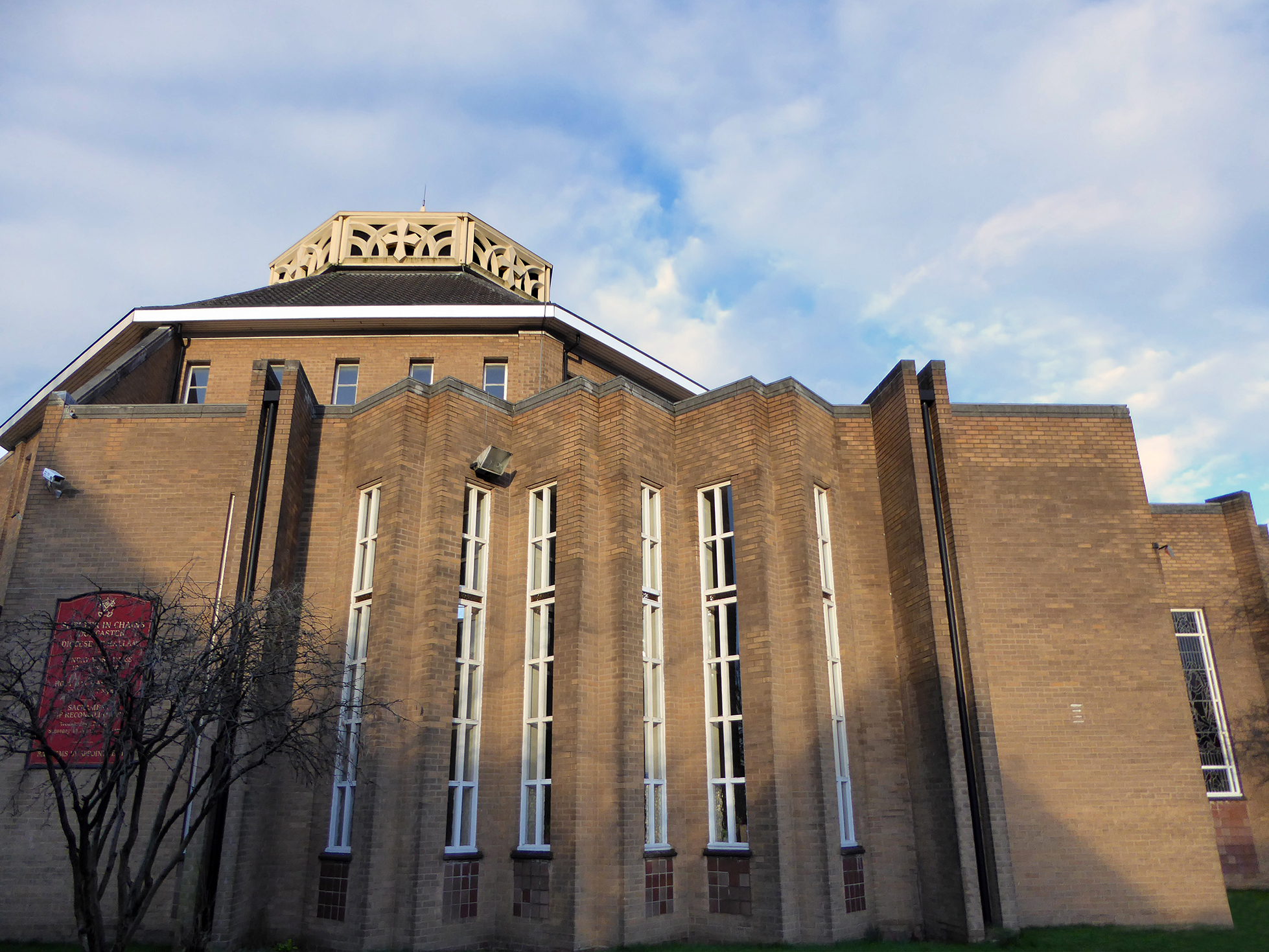
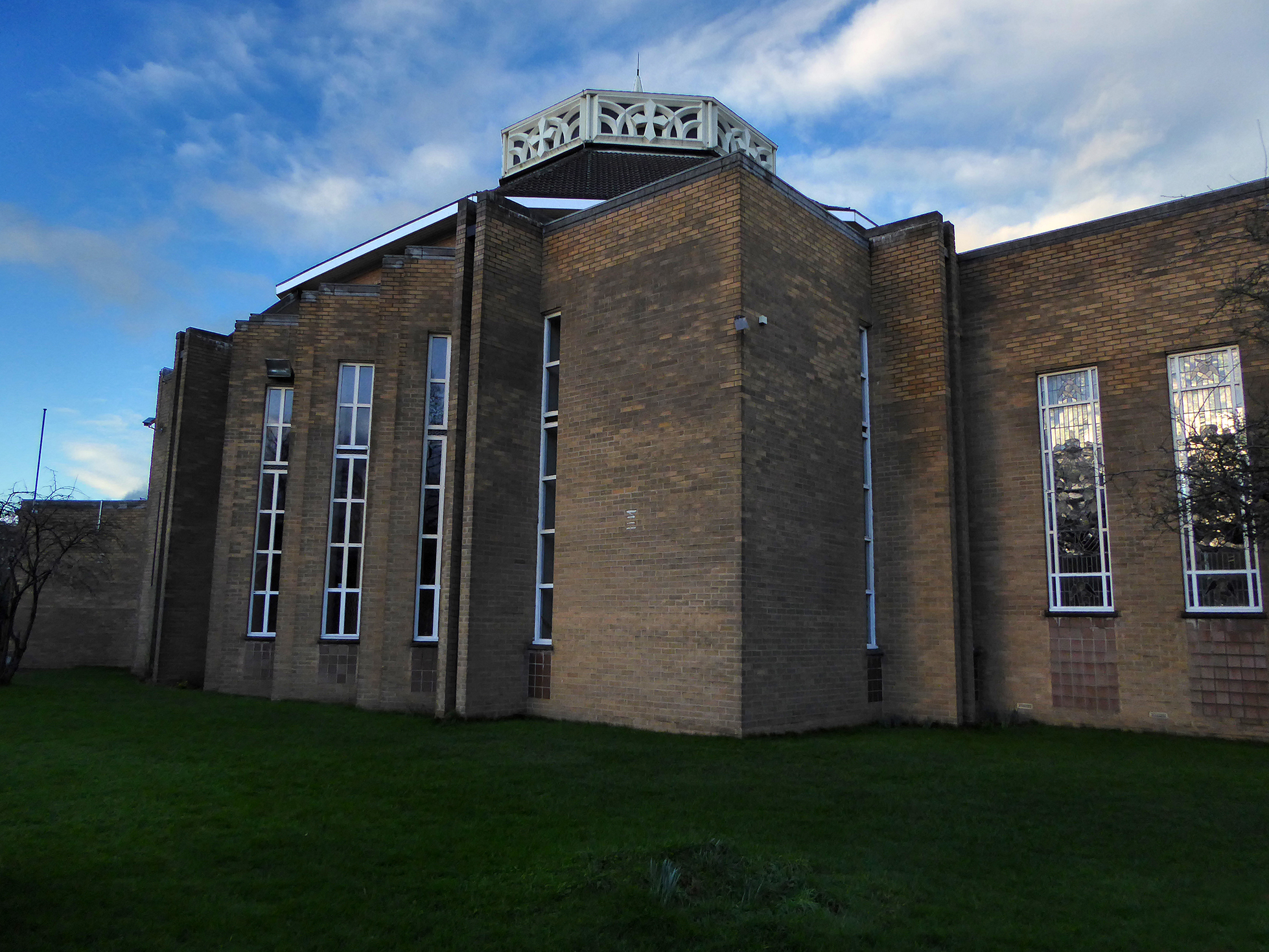
The chapel was closed on a Saturday so we wandered around outside, peering curiously through the windows. Surrounded by mature planting, the bare brick and glazing is more than somewhat softened, the planting however does inhibit the intrepid photographer.
Designed 1965, built 1966-7; architect George Gaze Pace, executant assistant Ronald Sims.
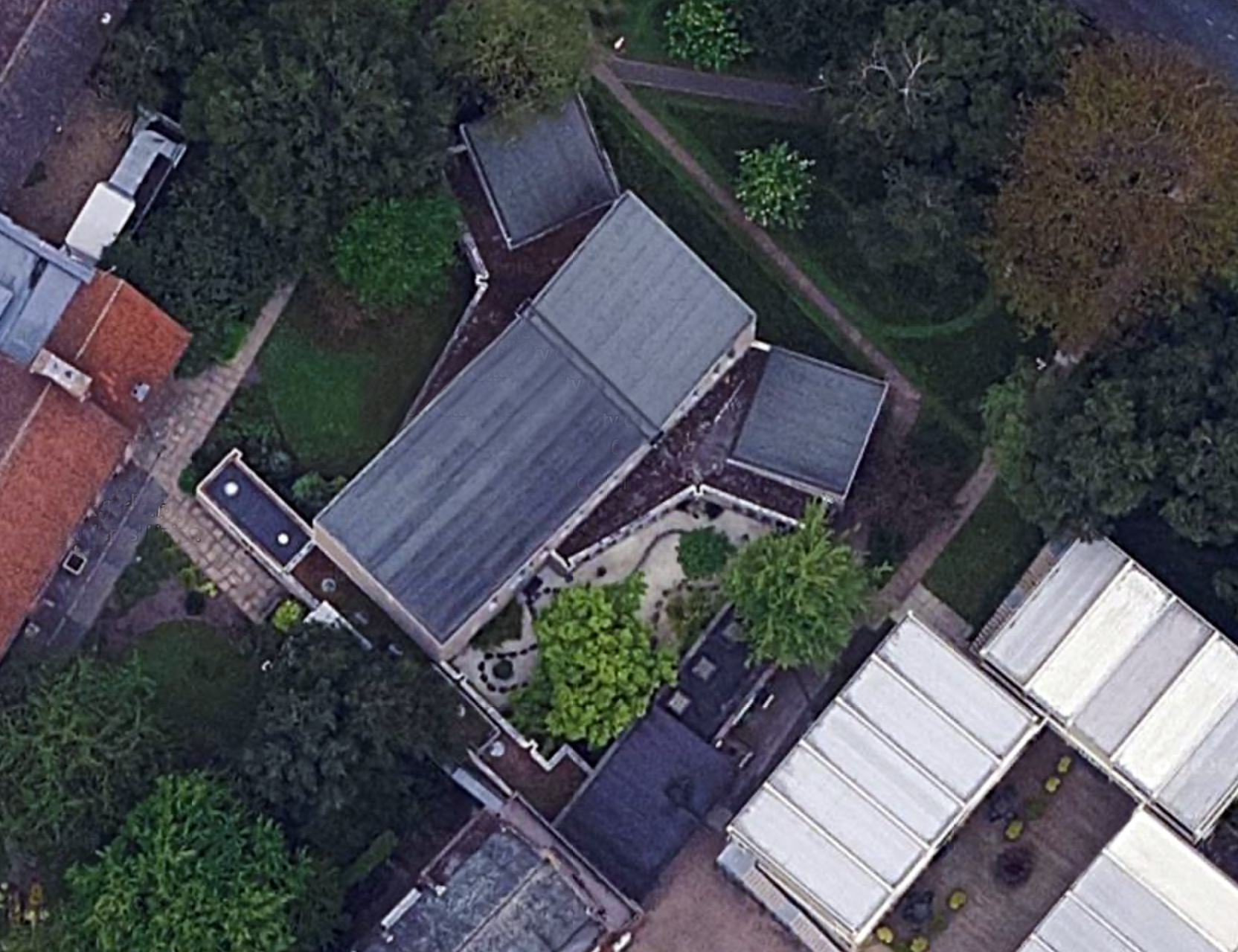
Reinforced concrete frame, partly left exposed, clad in pale brick. Monopitched roofs. Low flat roofs to entrances and between the three main elements with thick board-marked eaves. Central space flanked by angled transepts, with organ loft to (liturgical) west end and wing of offices behind. Long narrow flat-headed windows between brick mullions, timber doors. Attached walls and steel gate lead to inner garden, intended for contemplation.
Interior with exposed concrete frame, including piers and thick ring beam at gallery level, with brick infill. Boarded timber ceiling to main space; board-marked ceilings to low side aisles. Choir gallery with organ, designed by Pace, set behind timber lattice screen also to his designs, and reached via narrow spiral stair. Ceramic piece to balcony front 1999 by Helen Batty. Some pews, brought from the college’s former chapel of 1858 remodelled by Pace in the 1950s.
Hanging pendant light-fittings to Pace’s designs. Altar, lectern and altar seating all by Pace; pulpit designed 1998. Windows – internally the concrete of the mullions is exposed, all originally clear leaded lights, but now stained glass is being incorporated, most notably ‘The Water of Life’ by Cathy Nutkins, a 1990 graduate, in right-hand transept.
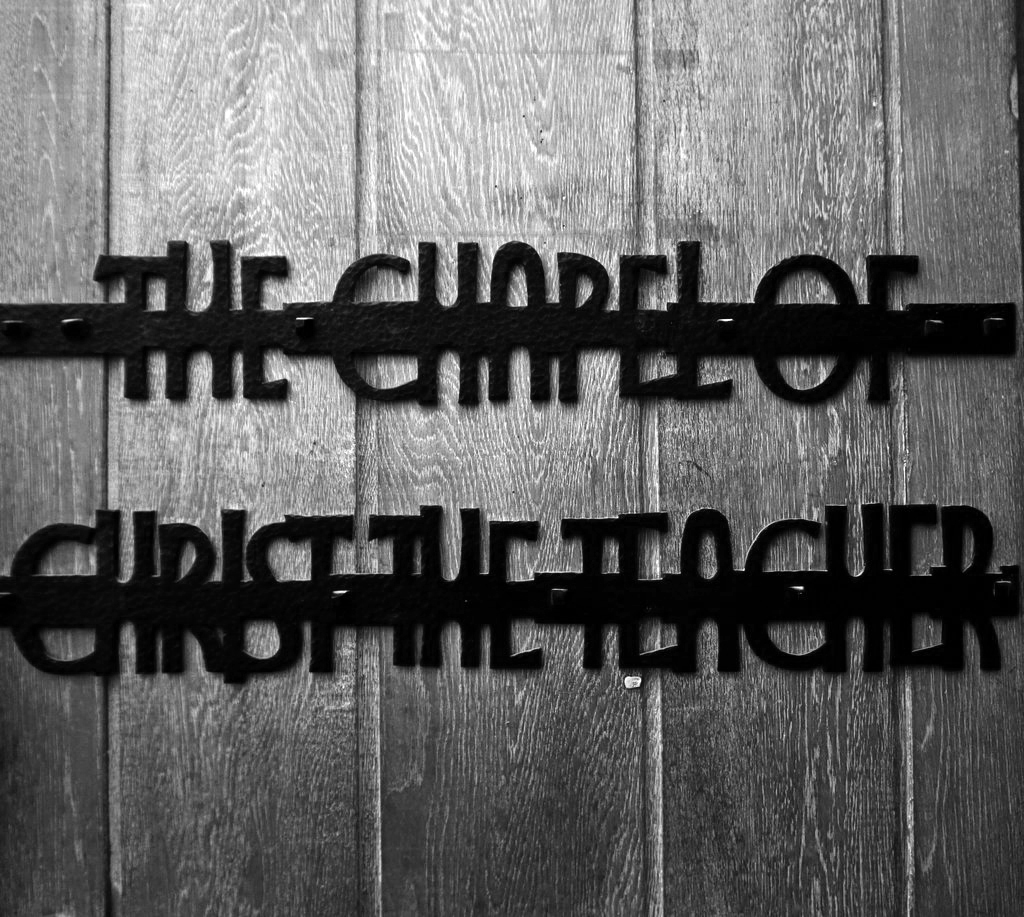
Chapel of Christ the Teacher to rear, by foyer, refurbished 1994 by Helen Turner, textile artist. The building is well-suited to the incorporation of student works of art, some temporary, some permanent, and additions are continually being made to the collection.
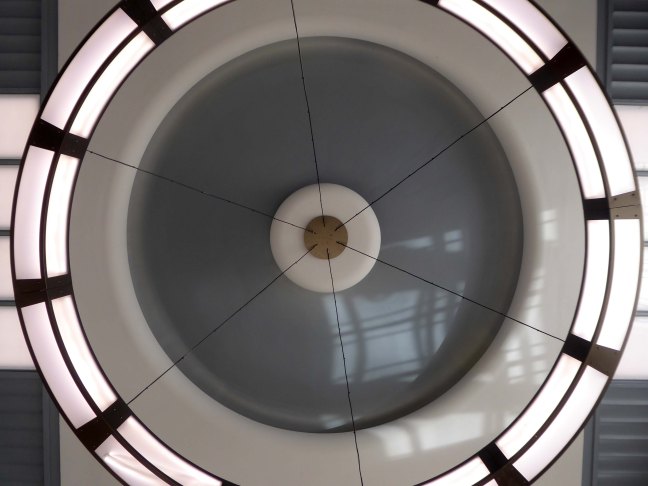
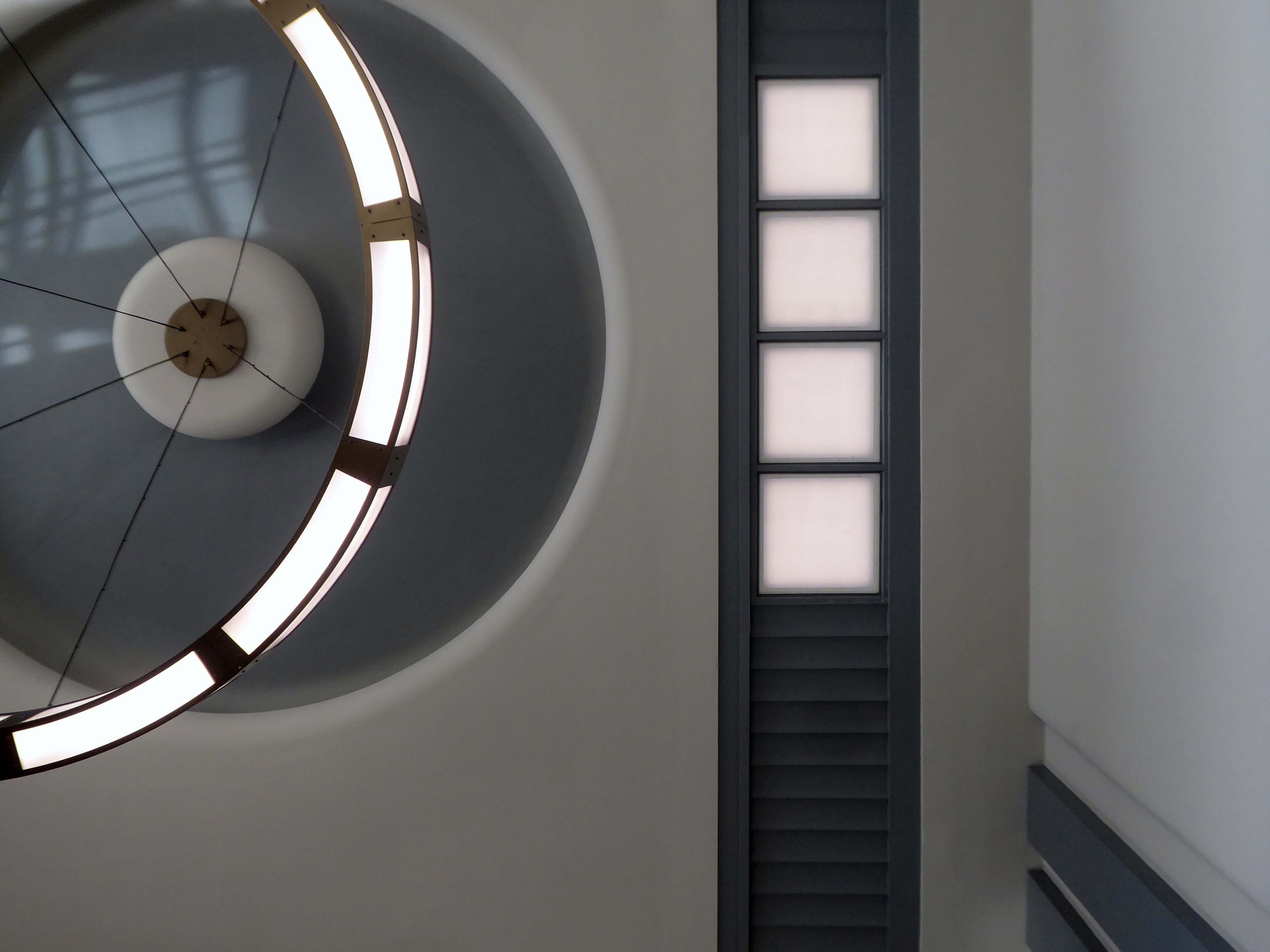
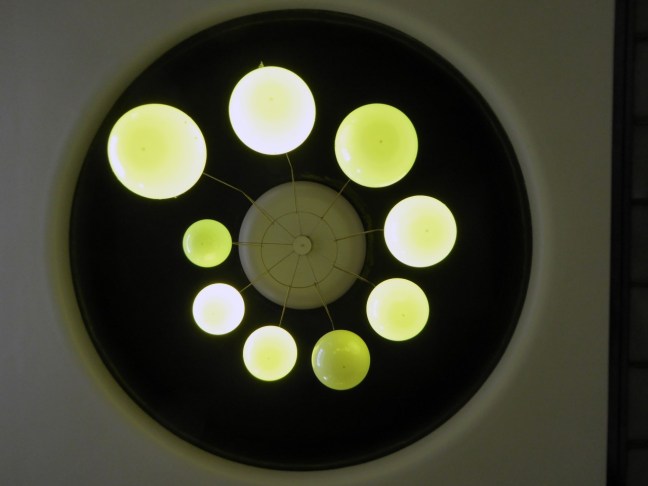
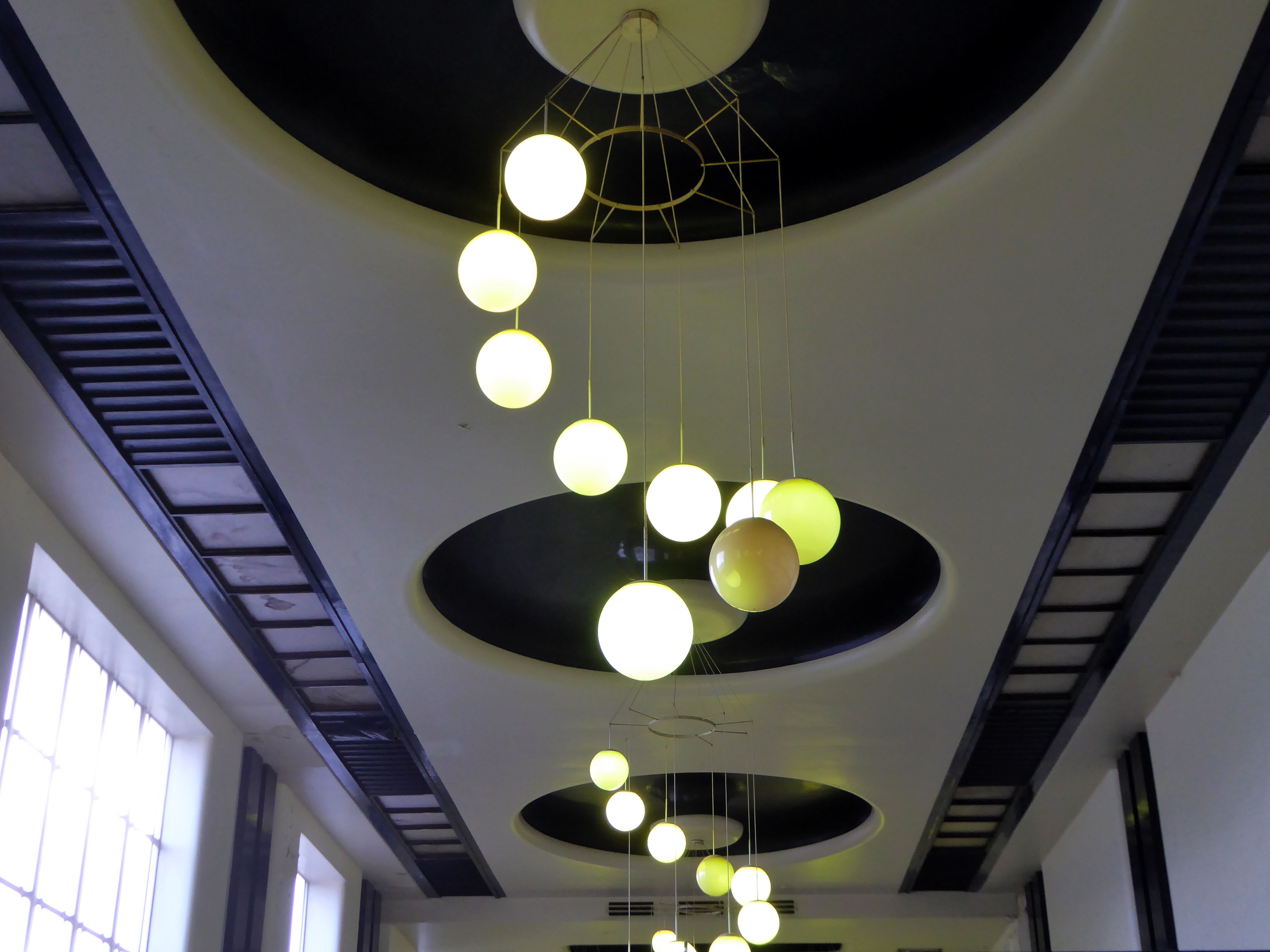
Arriving by train and ascending into the light – here’s the station lights.
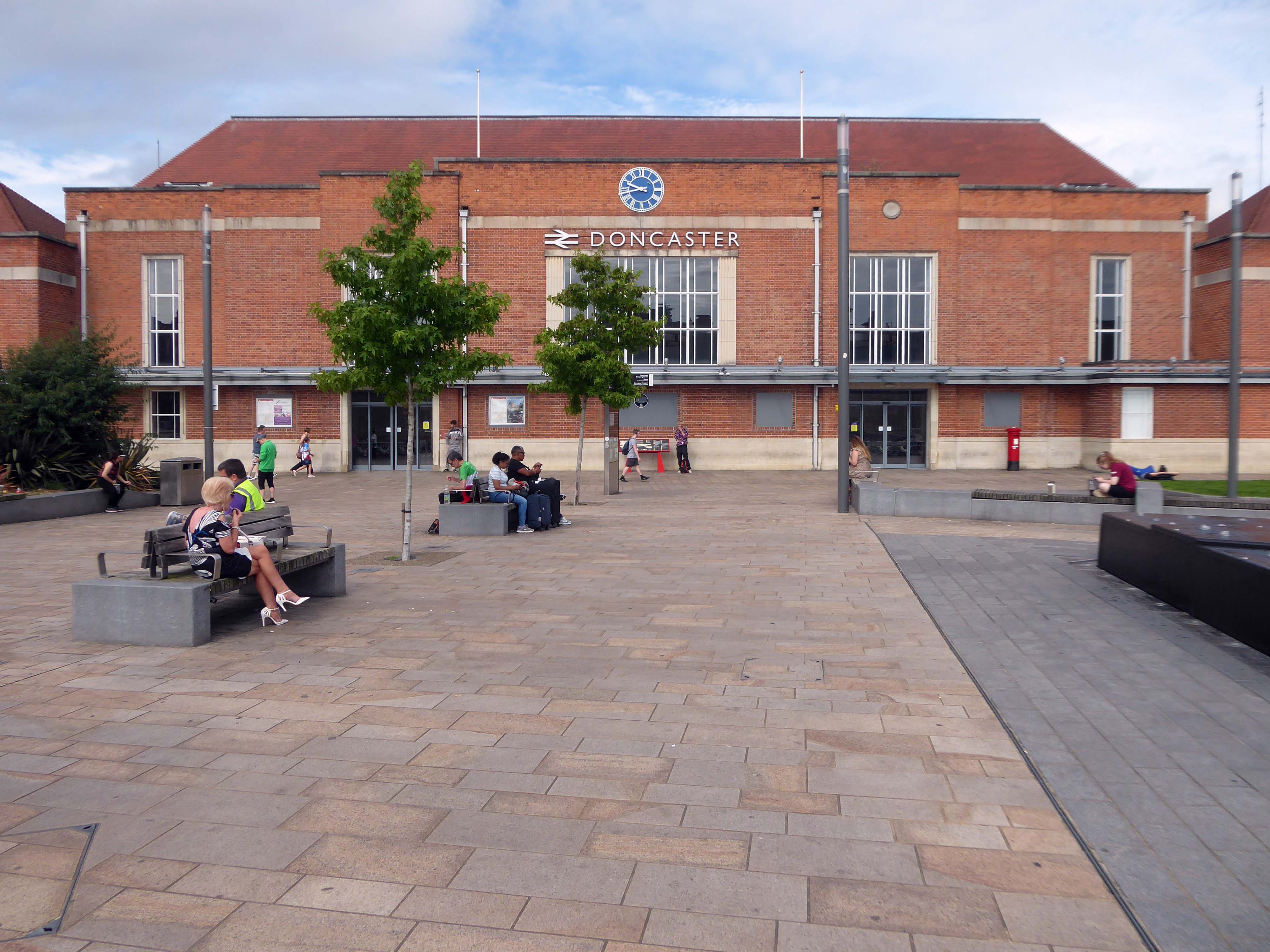
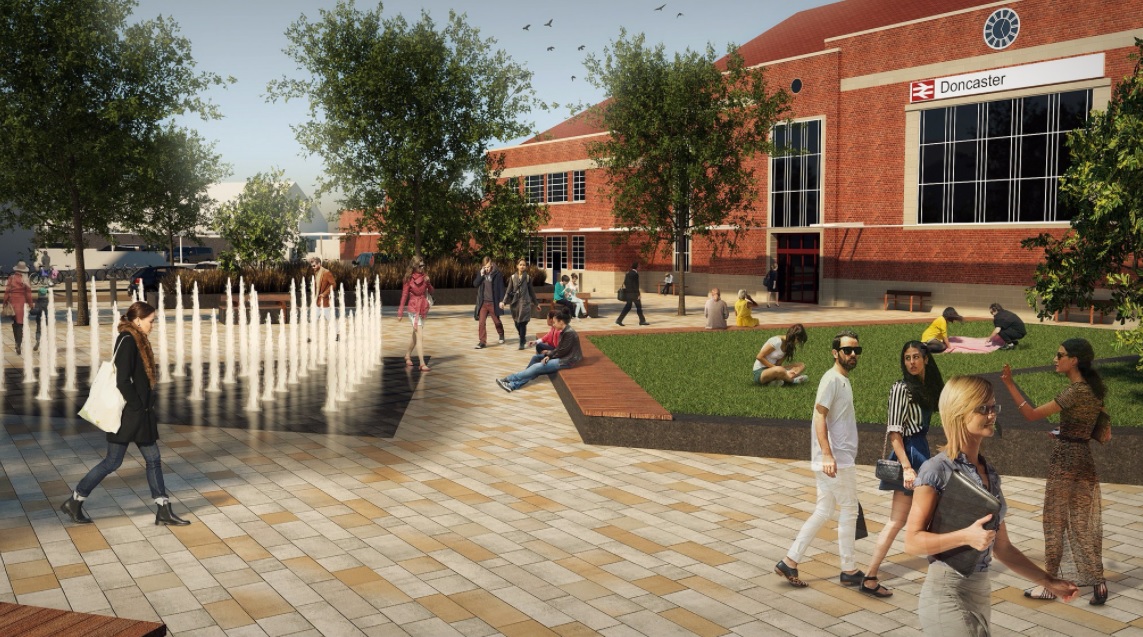
The railway station has sharpened up its apron and facade.
We have transformed the station forecourt. It has become a quality gateway which delivers a great first impression for visitors arriving in Doncaster by train. This will help stimulate interest from investors and developers, helping to attract new investment and create jobs for the borough and wider region.
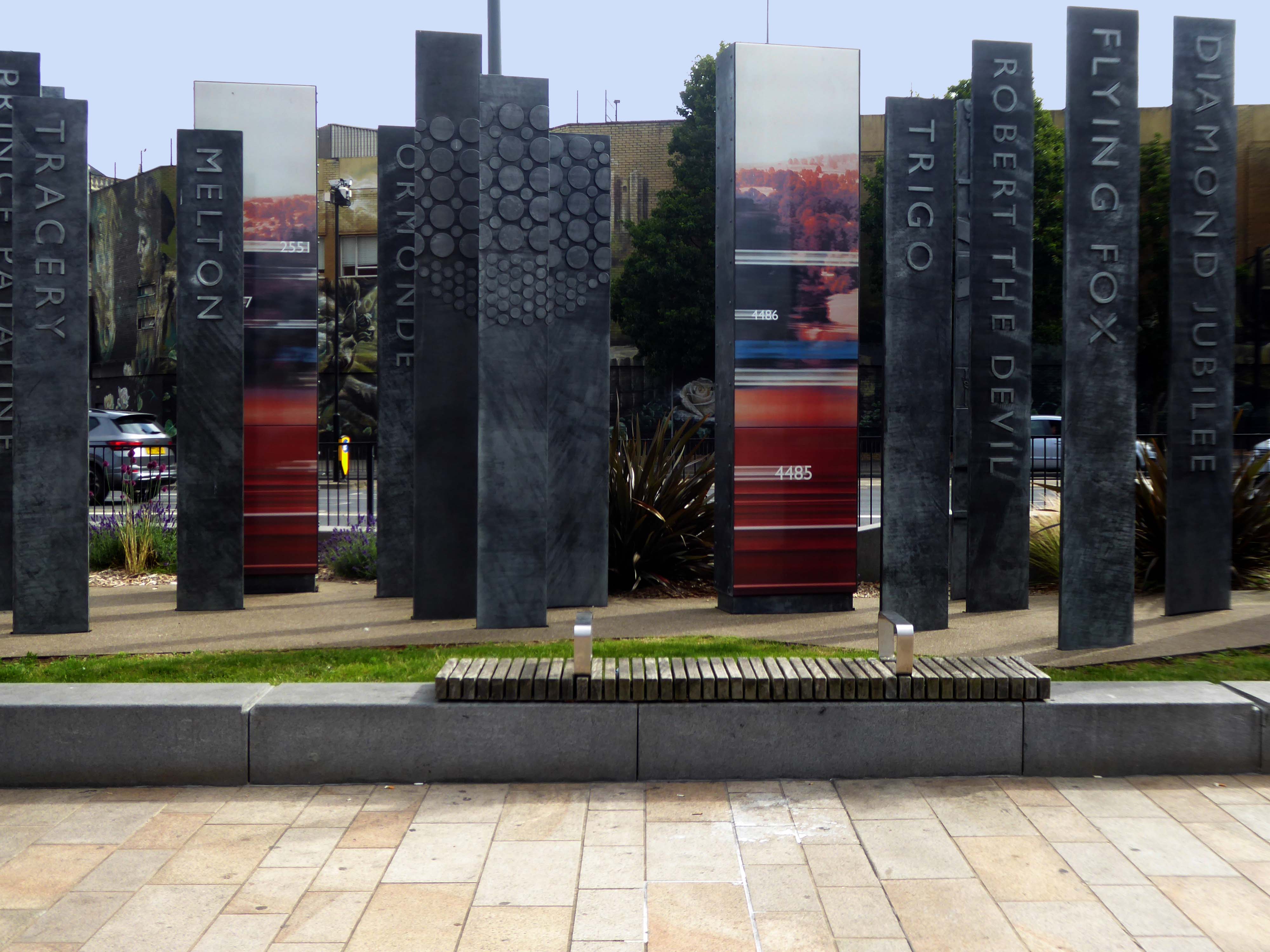
Celebrating engineering, speed and connectivity and stretching forty metres in length the public art at Doncaster Station consists of forty seven monoliths which are a nod to Doncaster’s past, present and future. With a fountain and three impressive water walls, the art takes centre stage in the new public space as you step out of the train station and head into the town centre.
The concept was devised by Doncaster Council and further developed by Chris Brammall.
Typically the high and low streets of Britain’s industrial towns and cities, are an amalgam of architectural style and fashion, spanning at least two or three centuries.
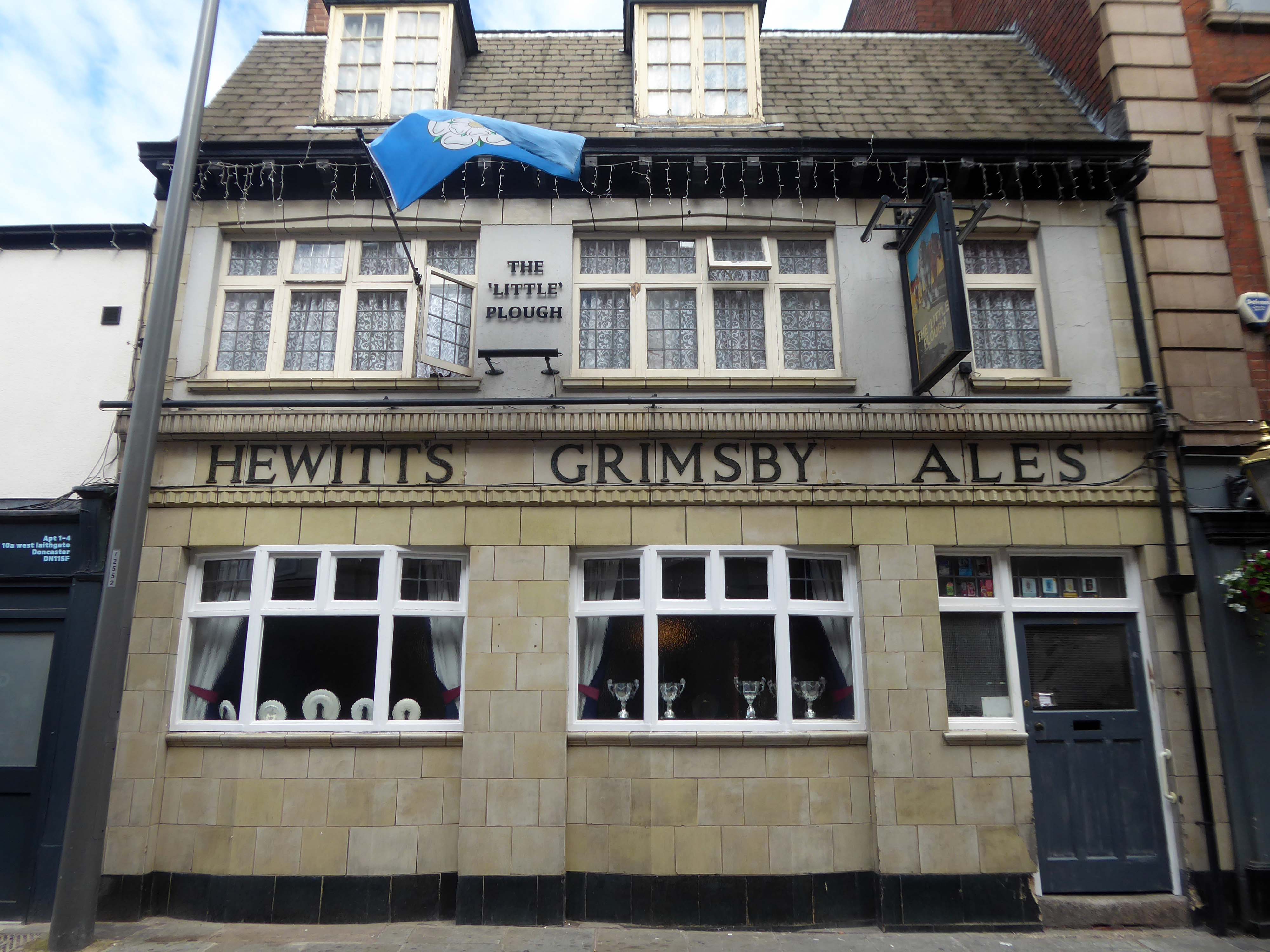
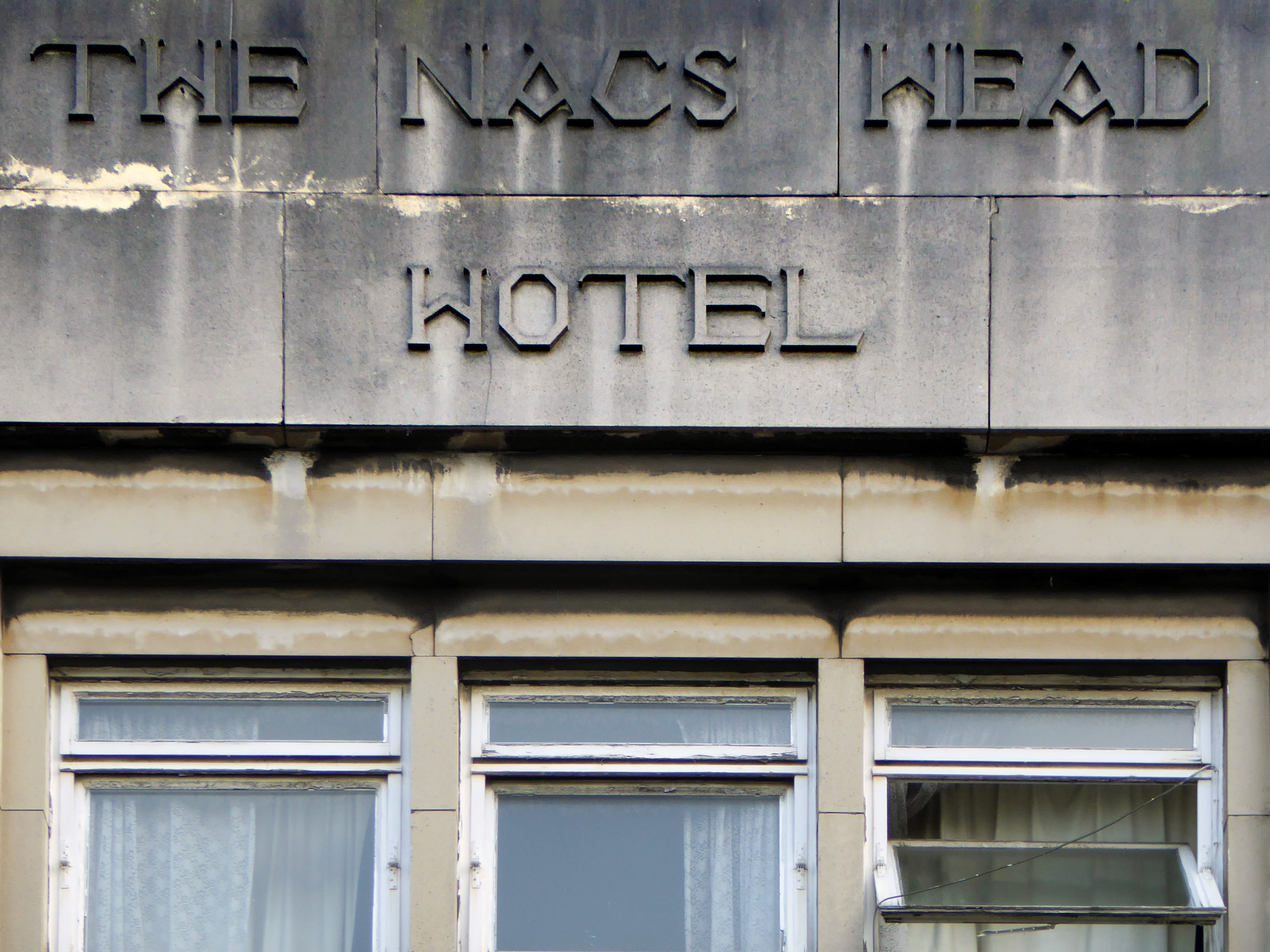
Behind the buff faience frontage is a lovely, small two-room pub with a well preserved interior created under plans of 1934. It was remodelled by the Grimsby brewers Hewitt Brothers Ltd who were Doncaster’s biggest pub owners for many years.
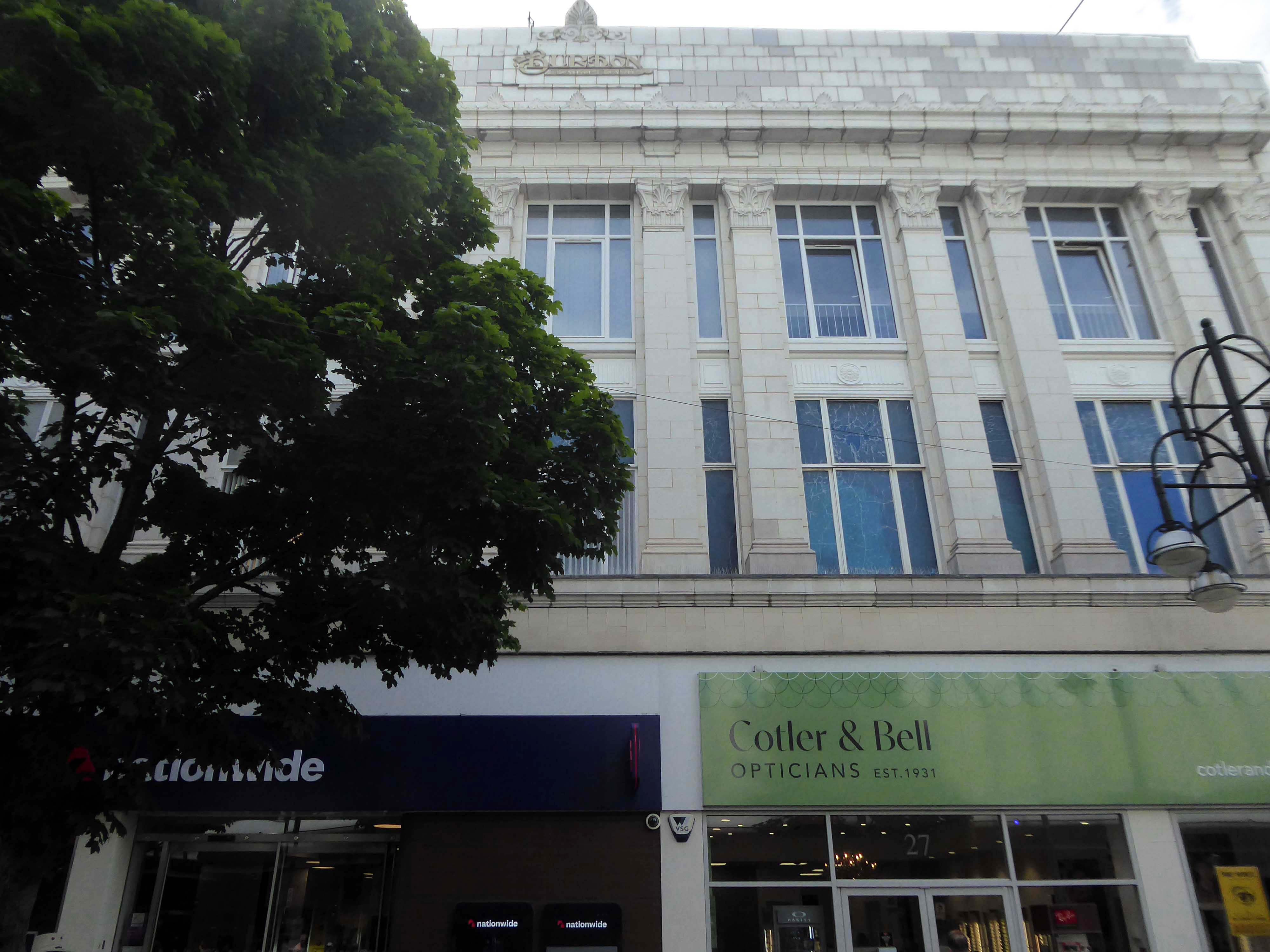
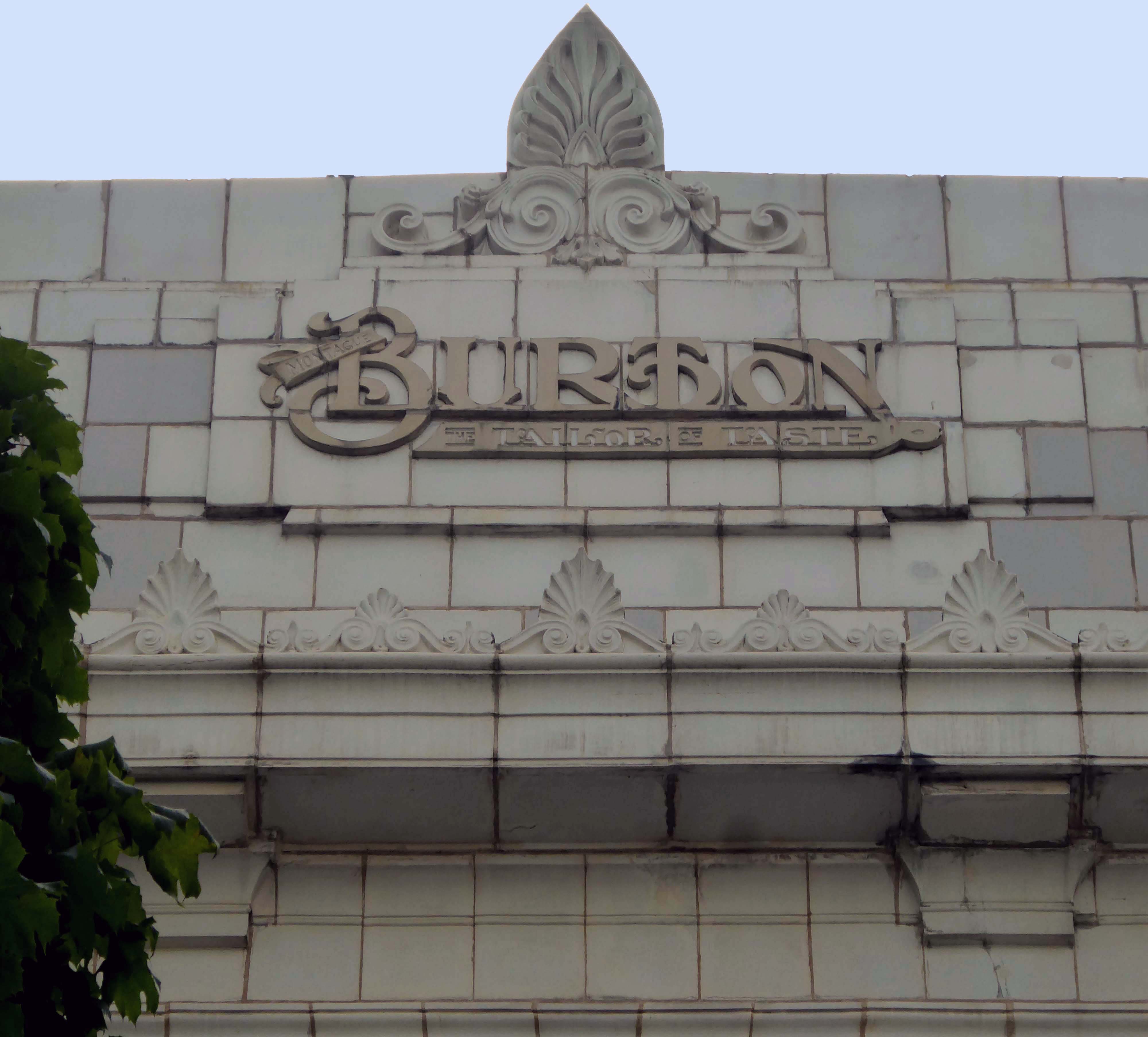
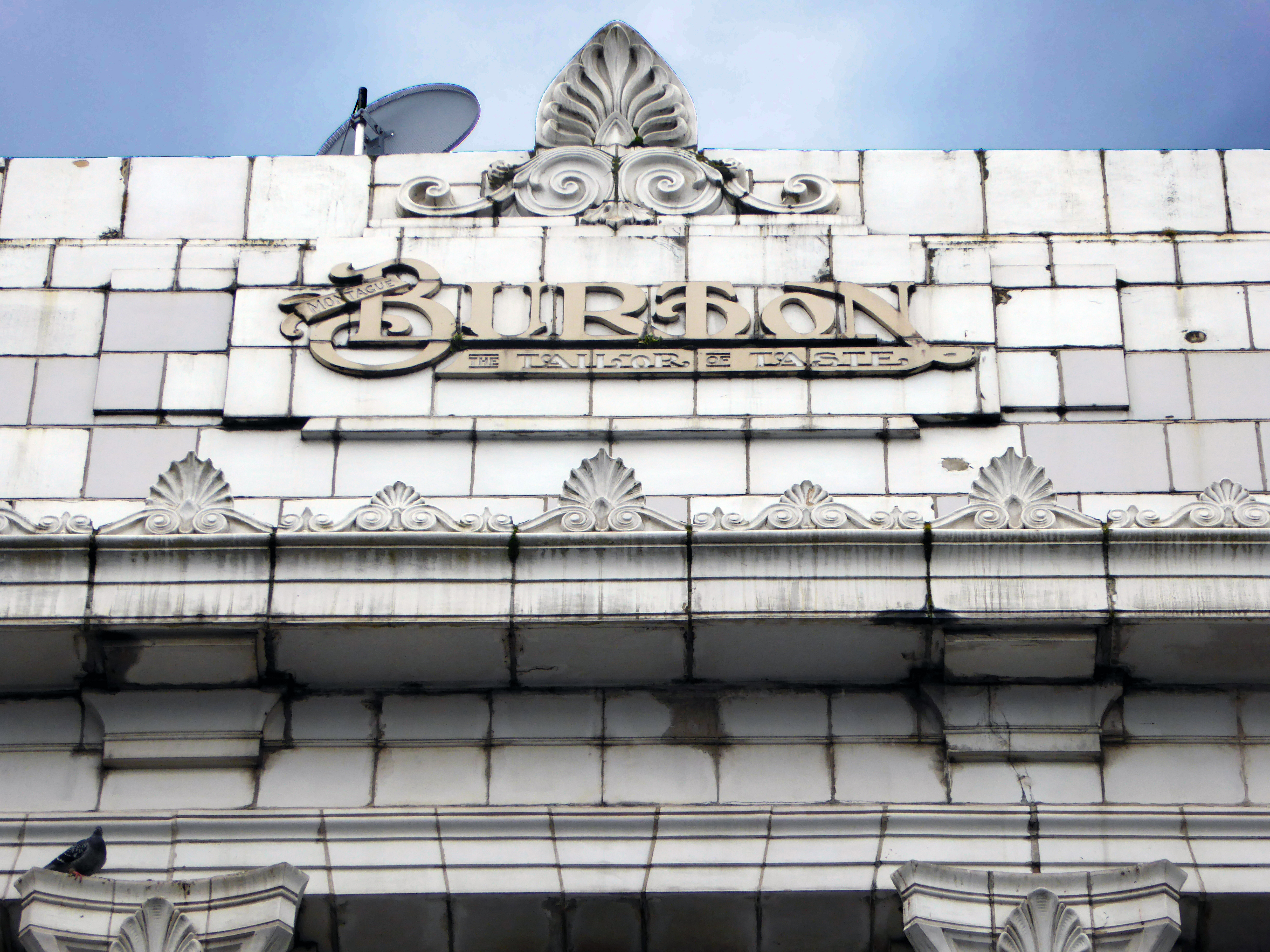
Of course, every town had a Burton’s – the tailor of taste.
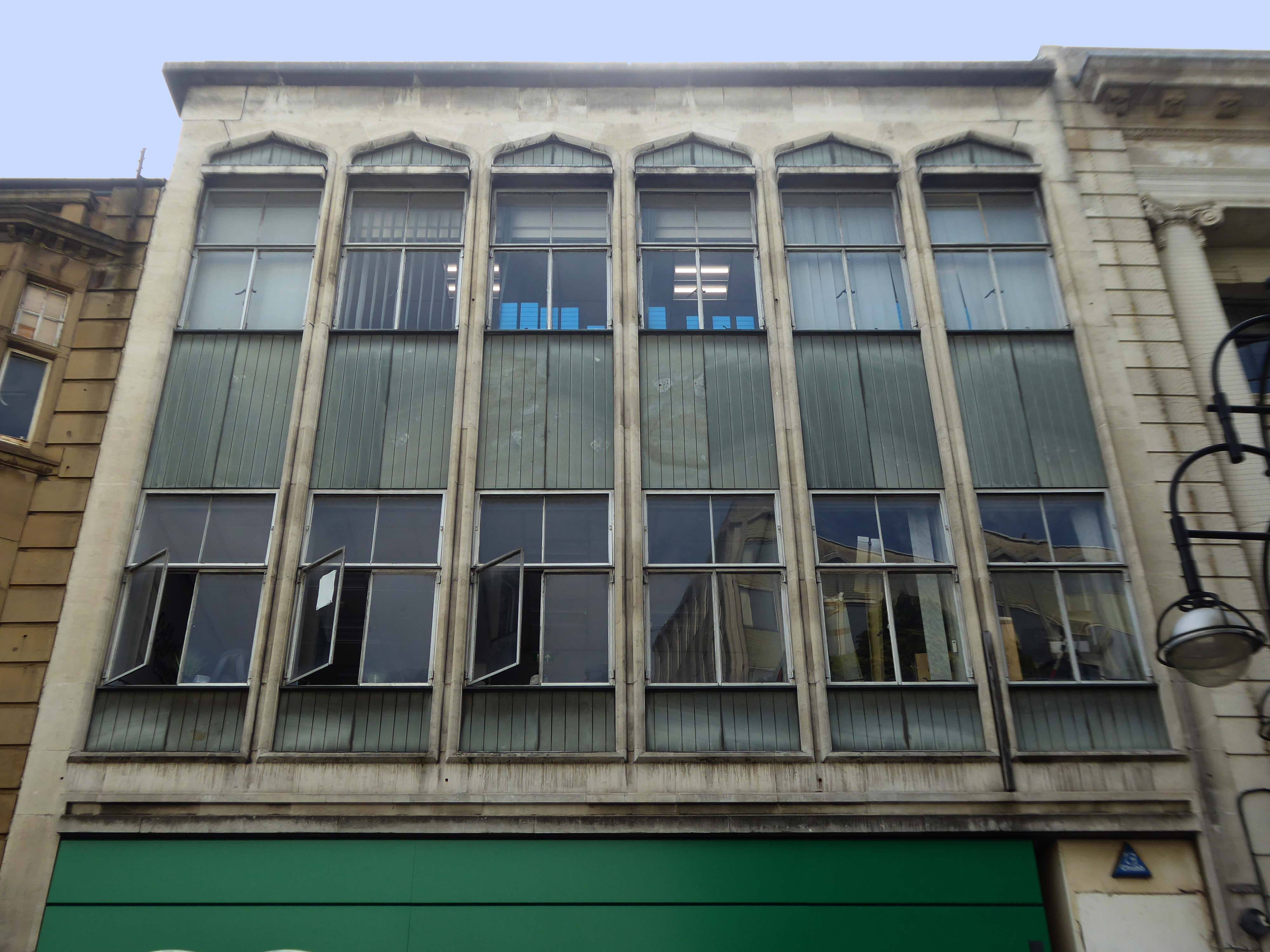
This post war infill has that distinctive Festival of Britain feel, original metal window frames, Portland stone and blueish slate like panels.
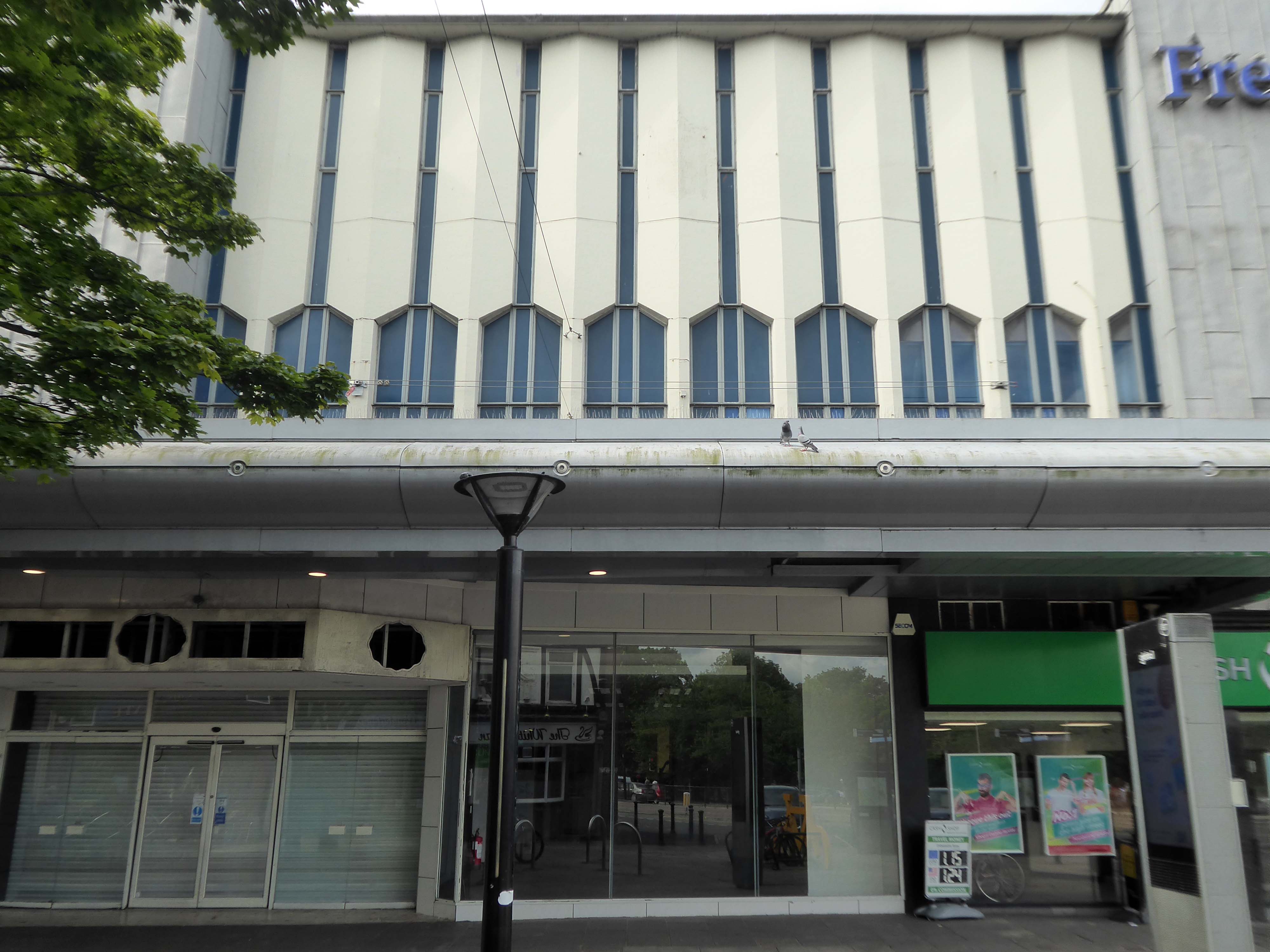
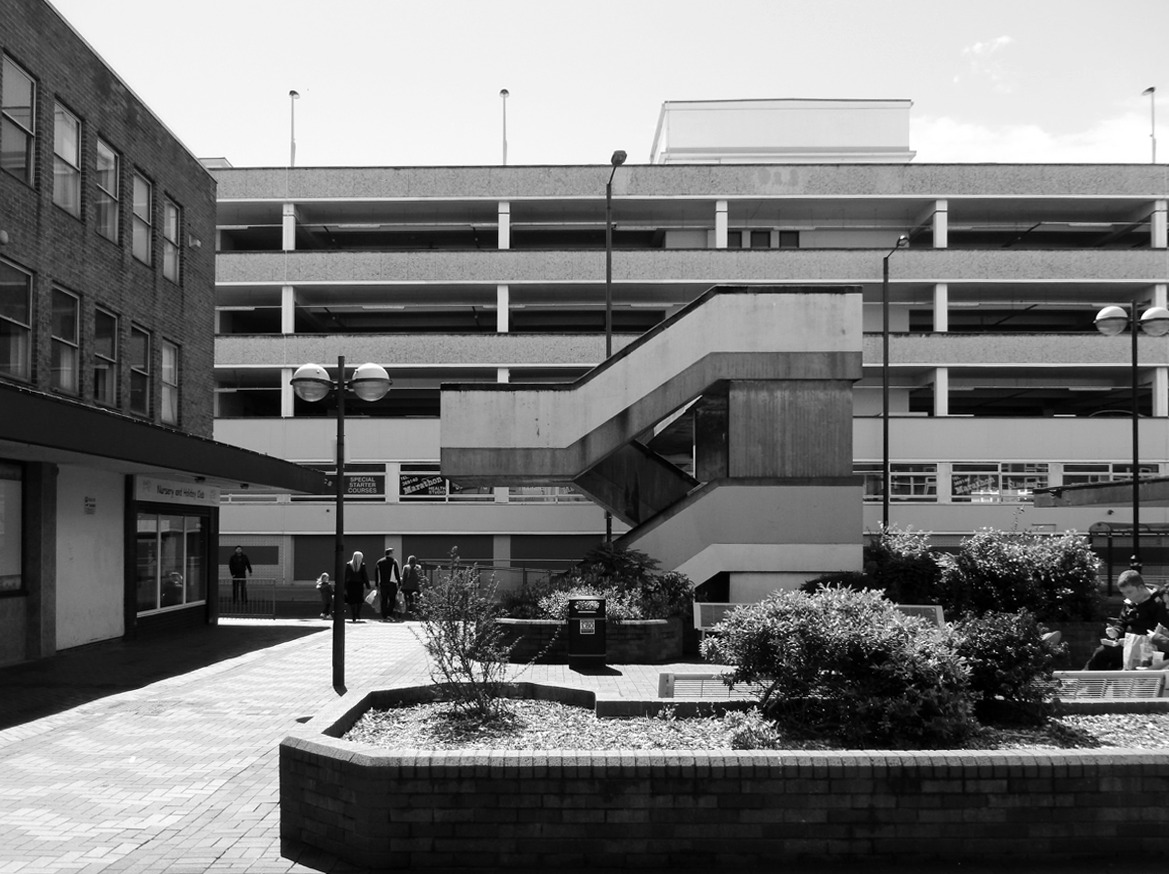
The revamped Frenchgate Shopping Centre, officially opened on October 4th 1968, has in places an upper tier, resistant to zinc over cladding.
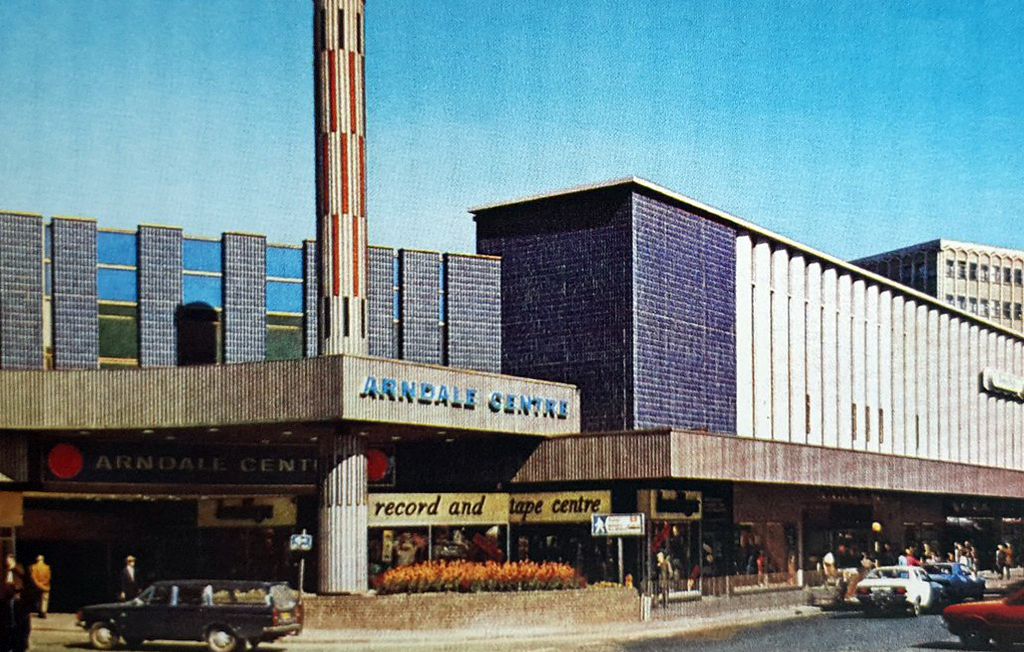
The centre has been the heart of the city for over 40 years and was originally called the Arndale Centre because it was built, owned and managed by the Arndale Group. It was renamed in 1988 after a change of ownership, with the new name reflecting the name of the street which passes to the east of the centre and which is one of Doncaster’s main shopping streets.
The sale of the centre came just a year after Frenchgate had undergone a £200 million facelift to transform it into the country’s first shopping centre with integrated public transport and retail interchange.
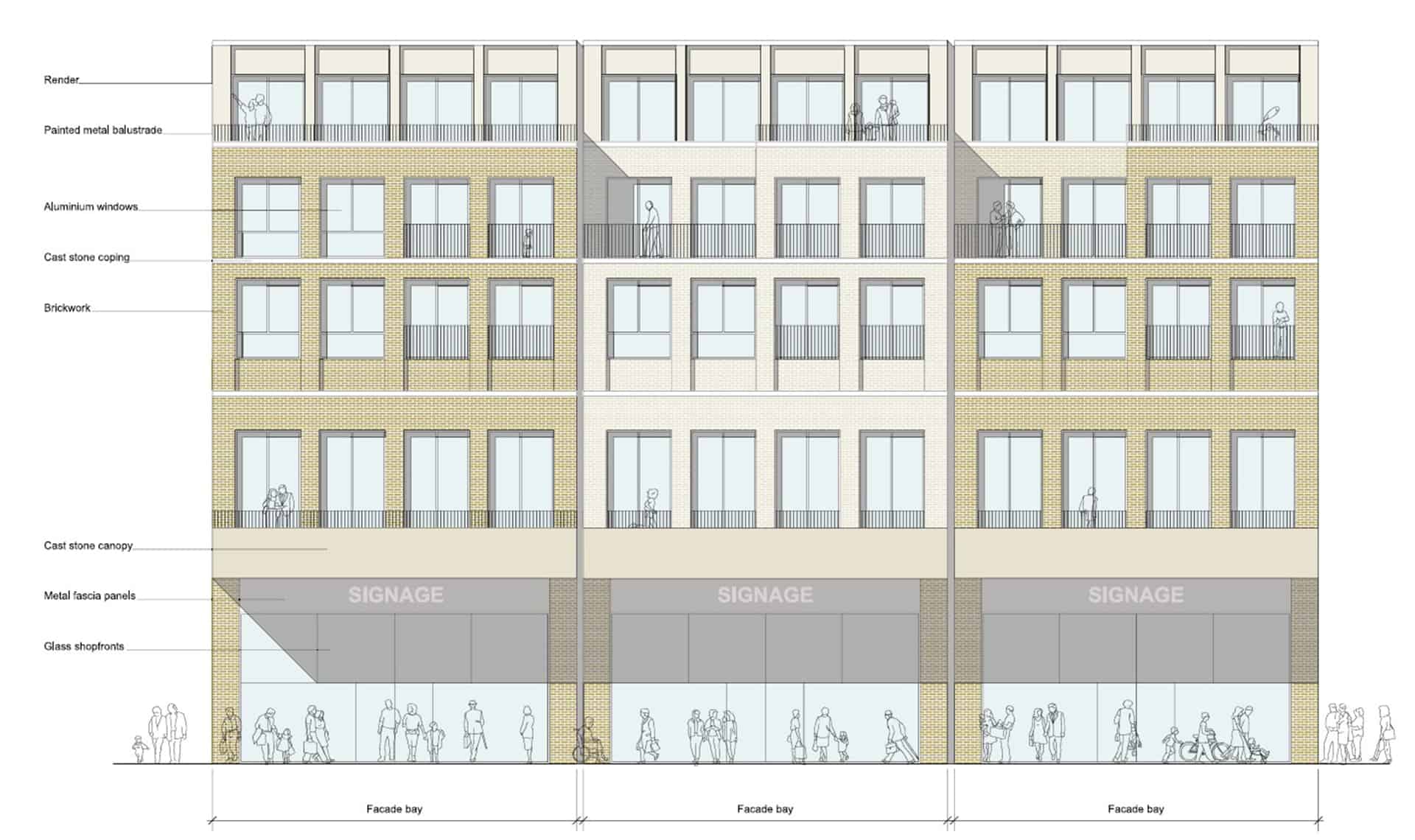
We propose this is fundamentally transformed though the addition of apartments that wrap along the back of the first-floor retail with a further 2.5 new storeys placed on top. We also feel additional height -up to seven or eight storeys, is justifiable to the corner of Frenchgate and Trafford Way.
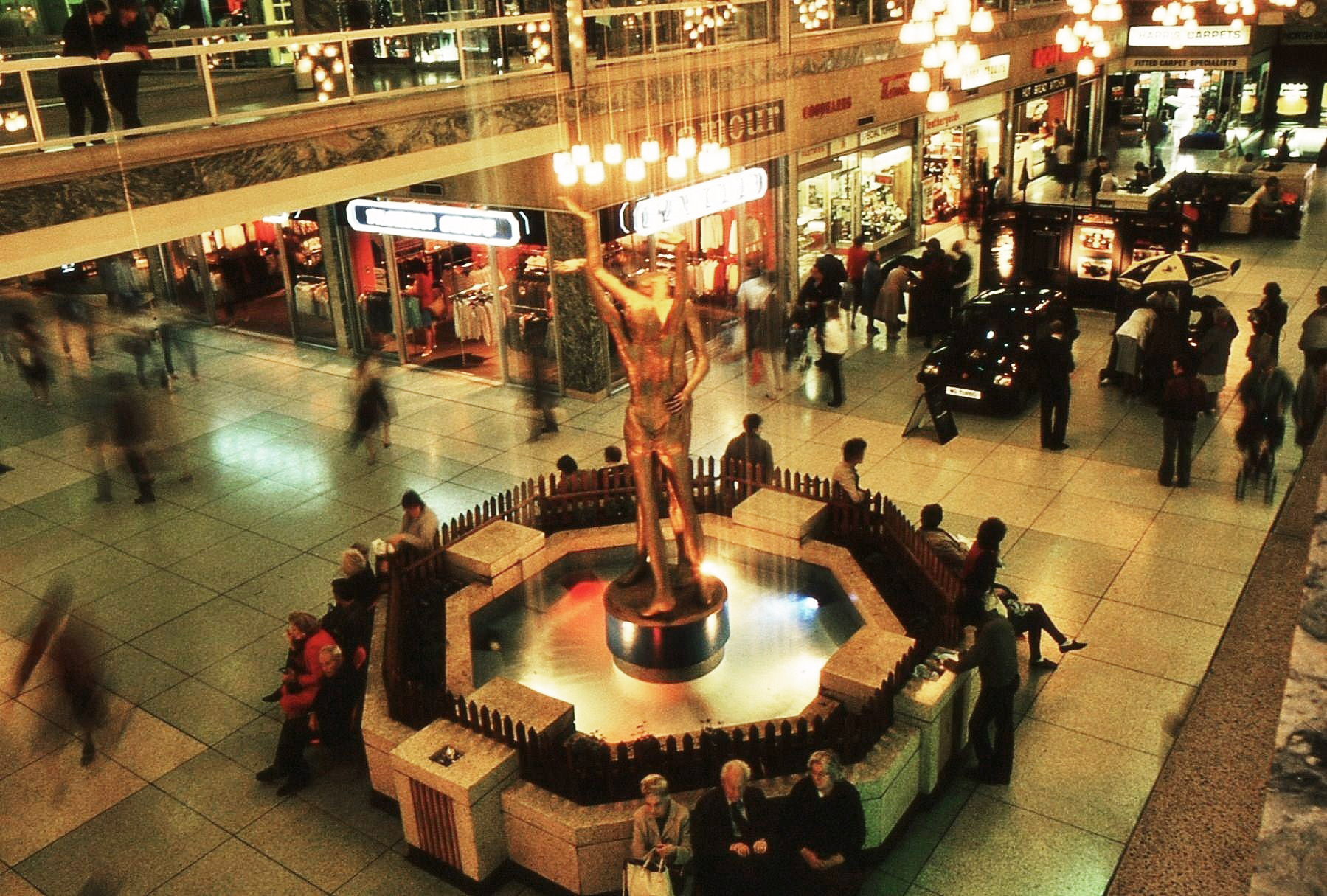
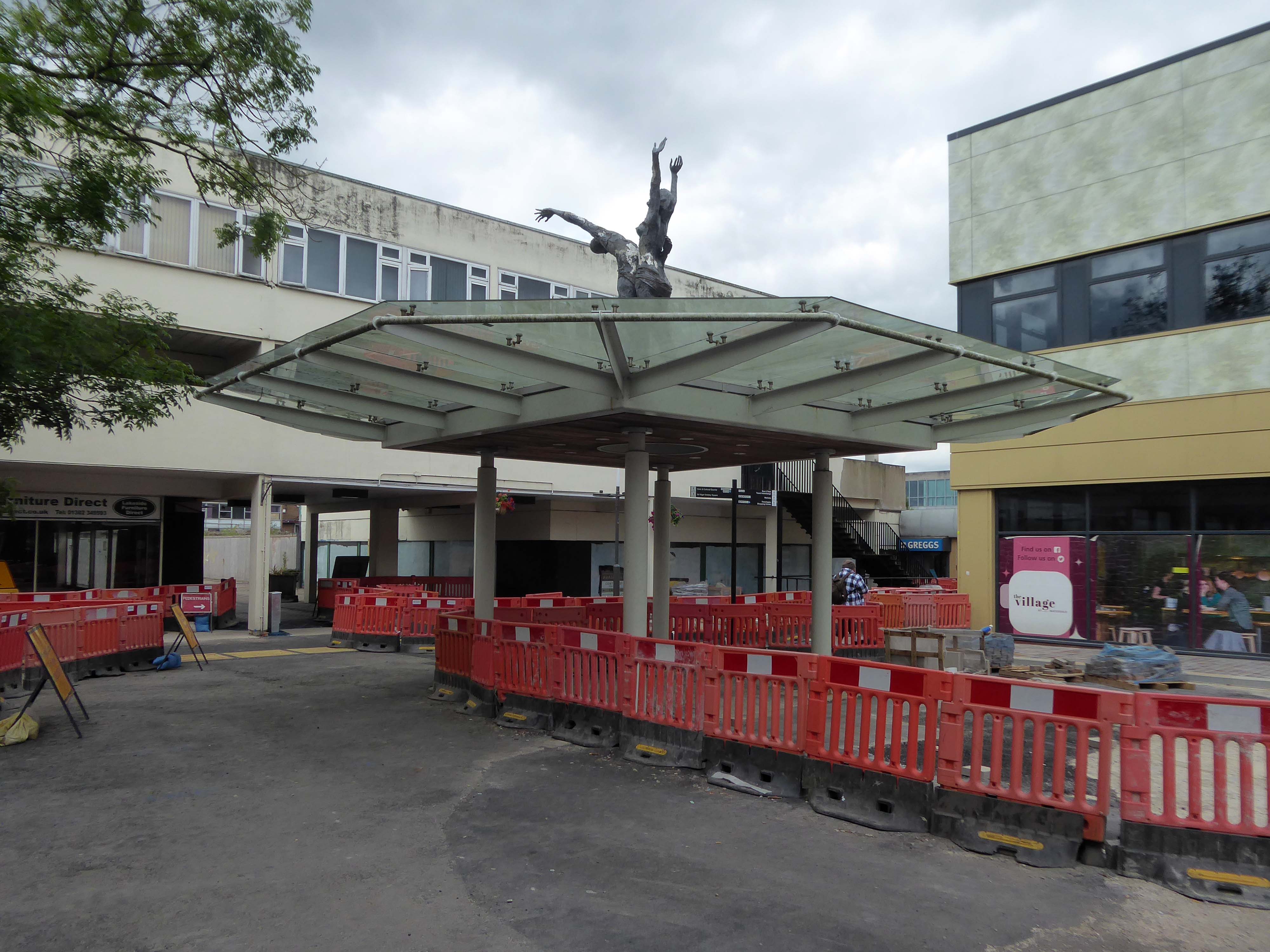
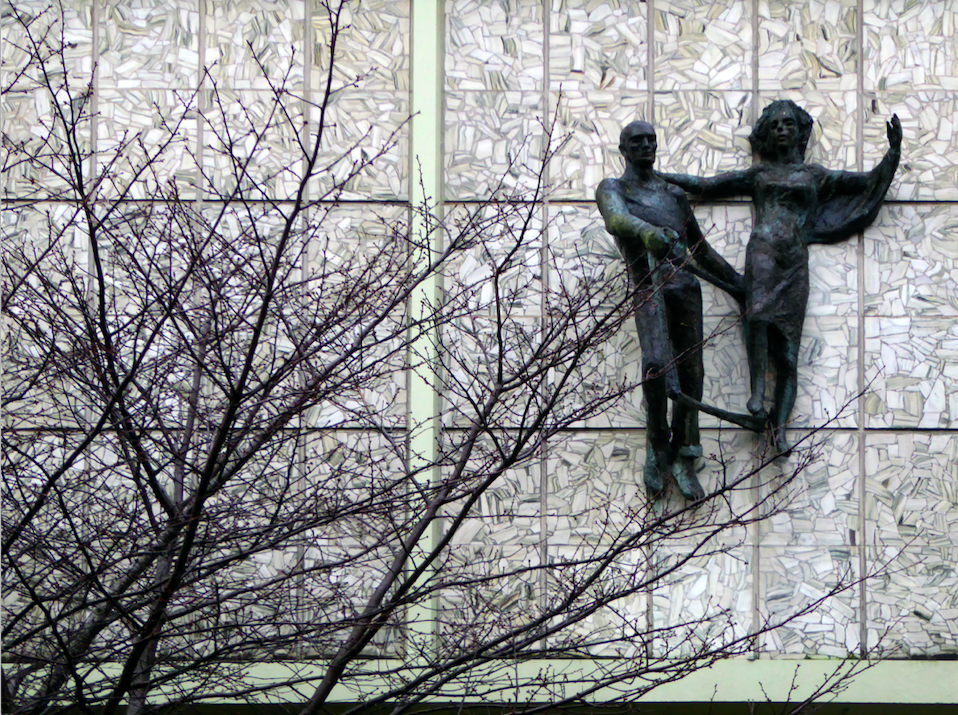
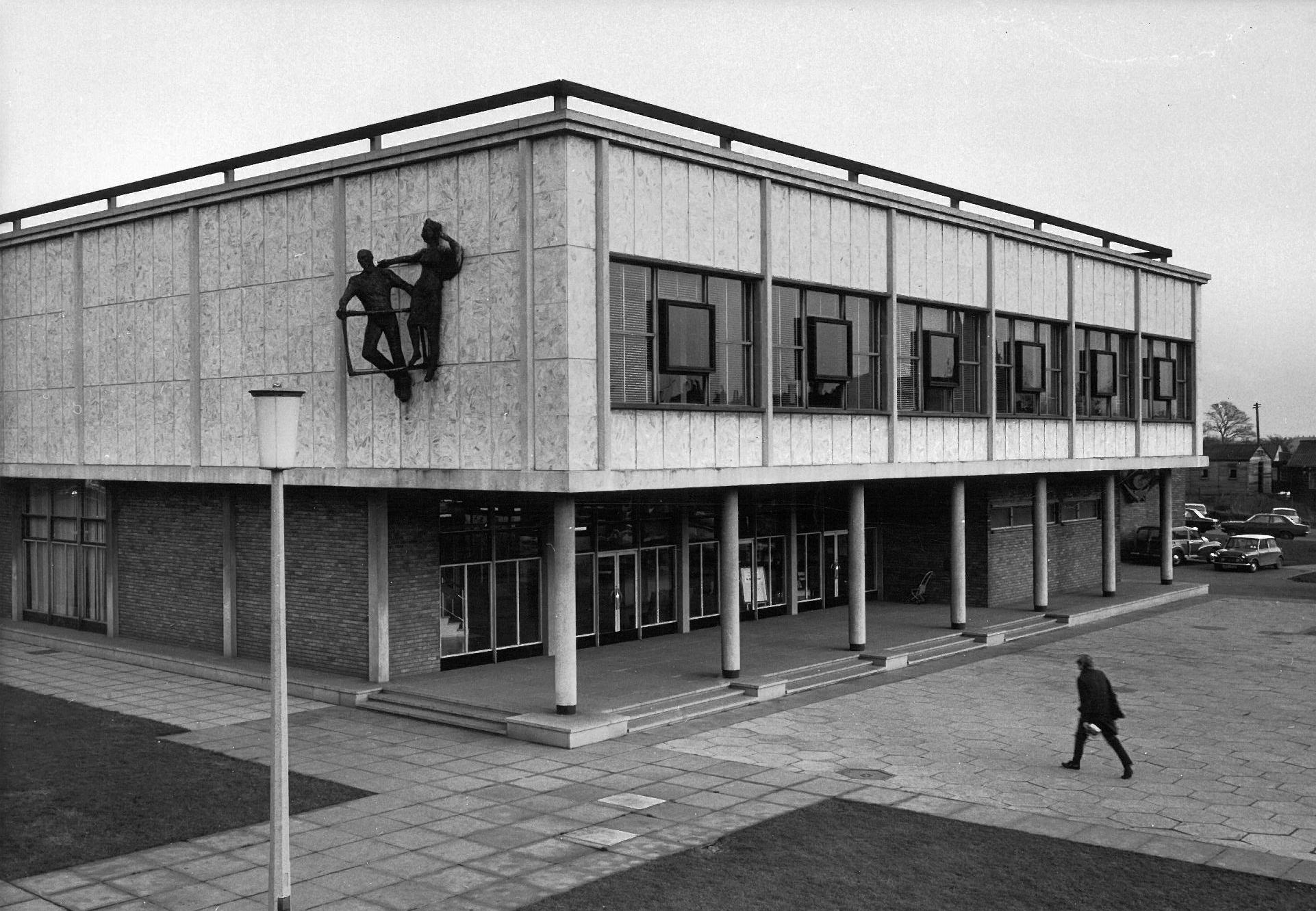
The Lovers were once located in the Arndale, removed to a local garden, unloved – then later reinstated in the Waterdale Centre, where we will embrace them a little later.
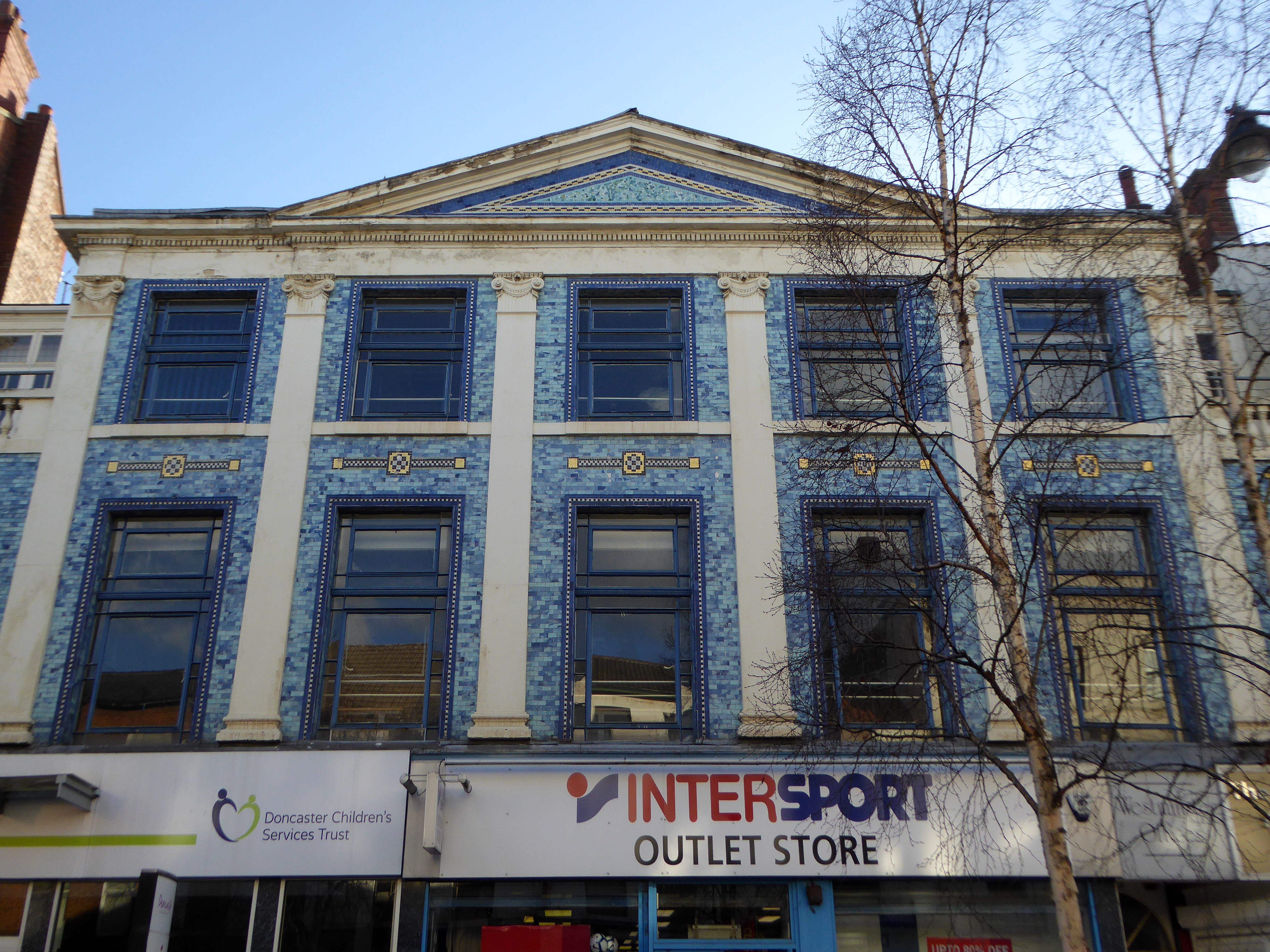
Turn right to take in the 1920s mosaic remake remodel of the Grade II listed Blue Building.
The Blue Building which used to be the Doncaster Design Centre and Tourist Information Centre was originally the home of John Whitaker, a wine merchant, and son of James Whitaker who was Mayor of Doncaster in 1758.
In 1925 the complete building was demolished apart from the facade which was retained and given a facing of decorative blue tiles. The intention was to build a shopping arcade from High Street to Printing Office Street. Only part of the arcade, known as the Westminster Arcade was built. It had a number of shops, the largest being that of Woodhouse & Co Furnishers.
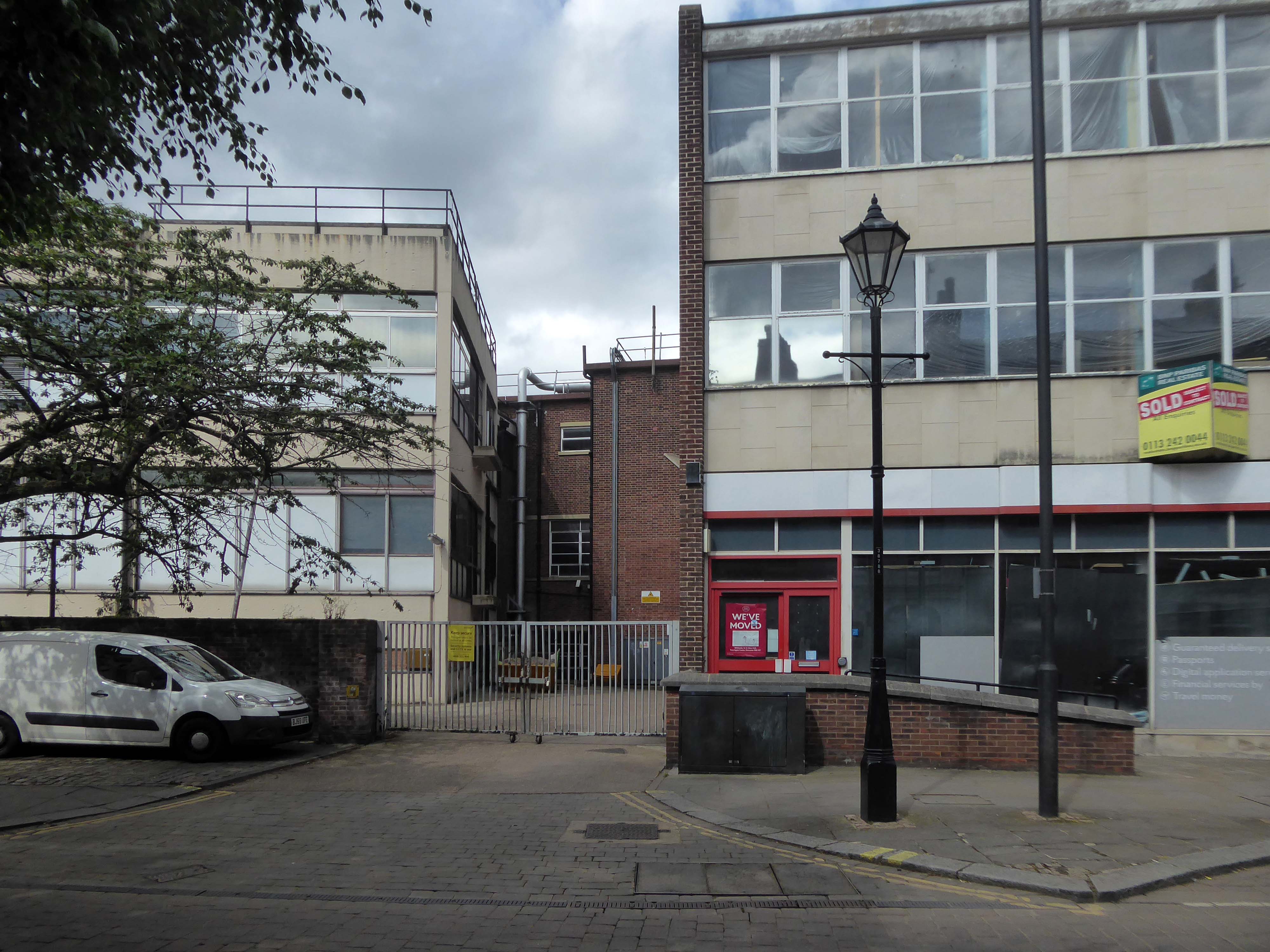
Two adjacent 60s extensions – to the right a redundant post office to the left an almost redundant telephone exchange, with the earlier brick built exchange in smack dab the middle.
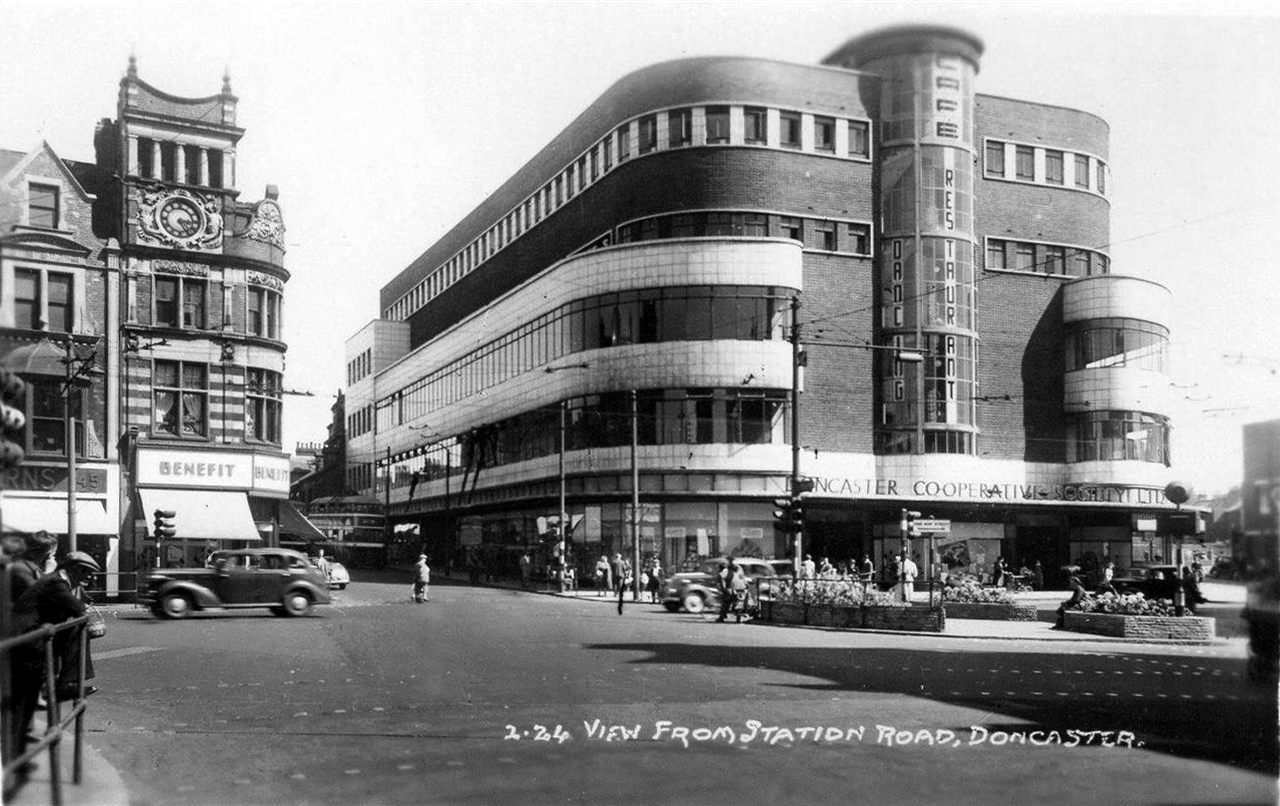
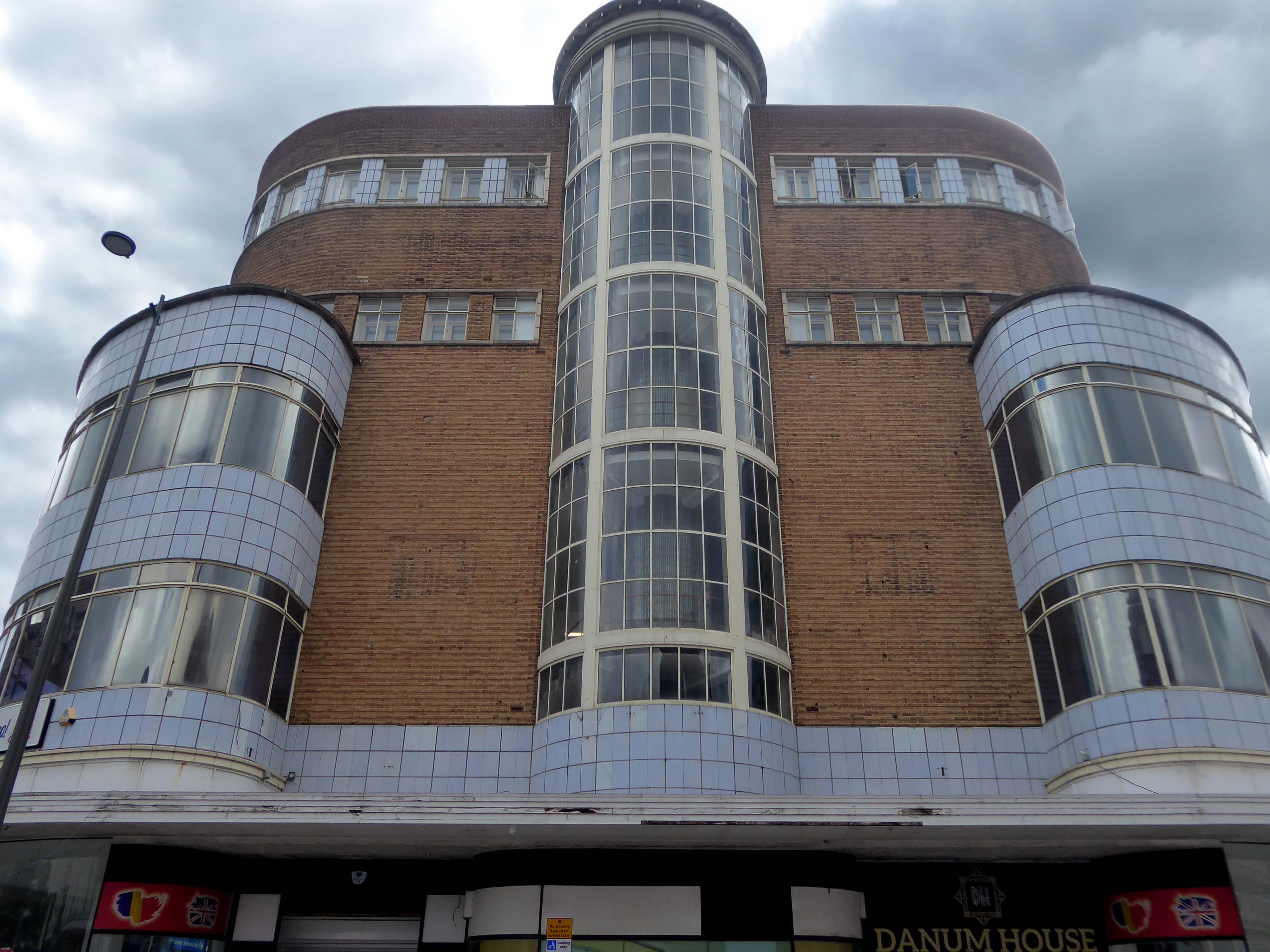
Turn another corner and it’s all at the Co-op now – the Grade II listed Danum Co-operativeBuilding, department store and offices: 1938-40 designed by T H Johnson & Son for the Doncaster Co-operative Society Ltd.
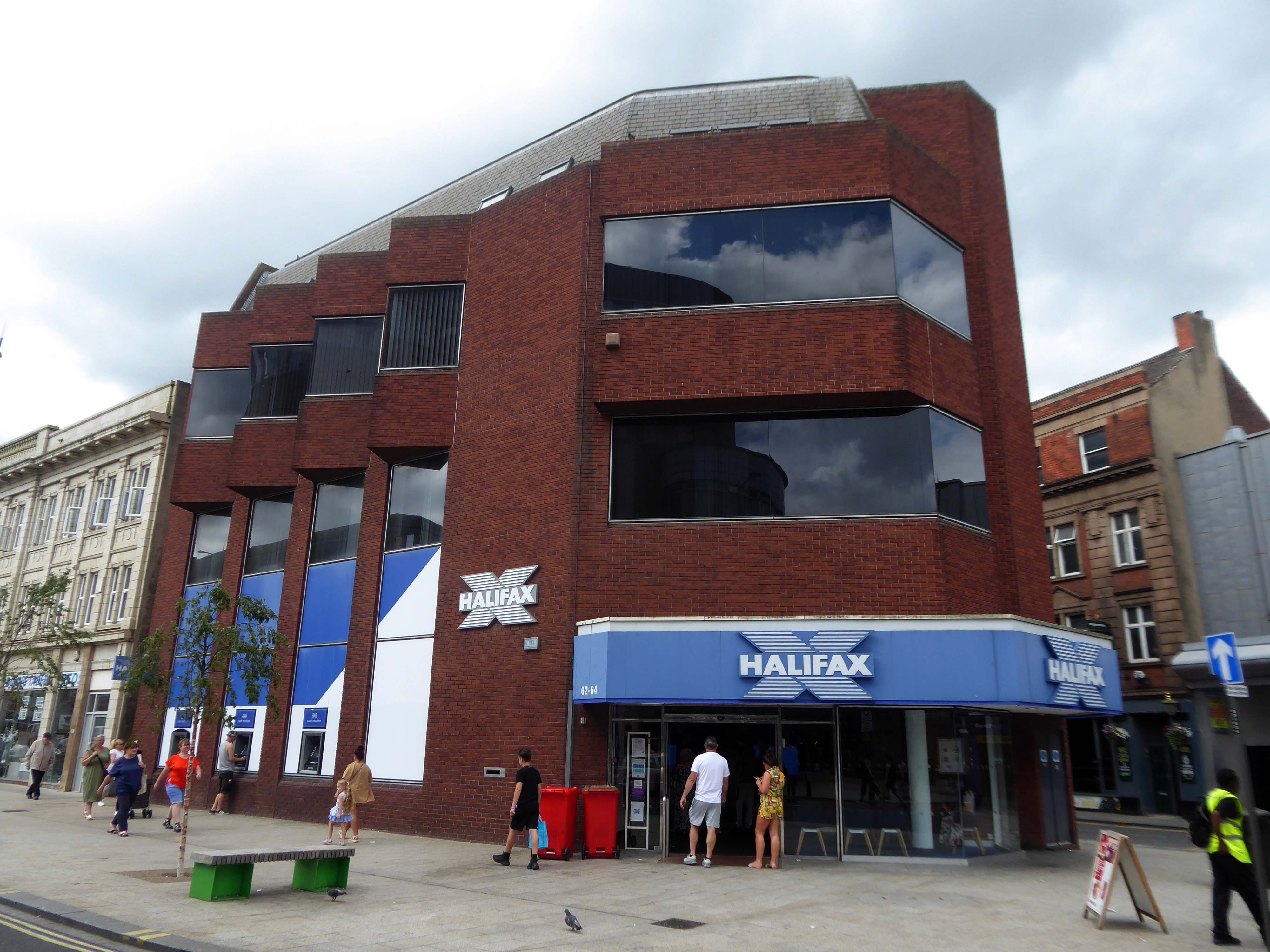
Over the road a zig-zag Halifax Building Society branch, tightly contorted by its corner footprint.
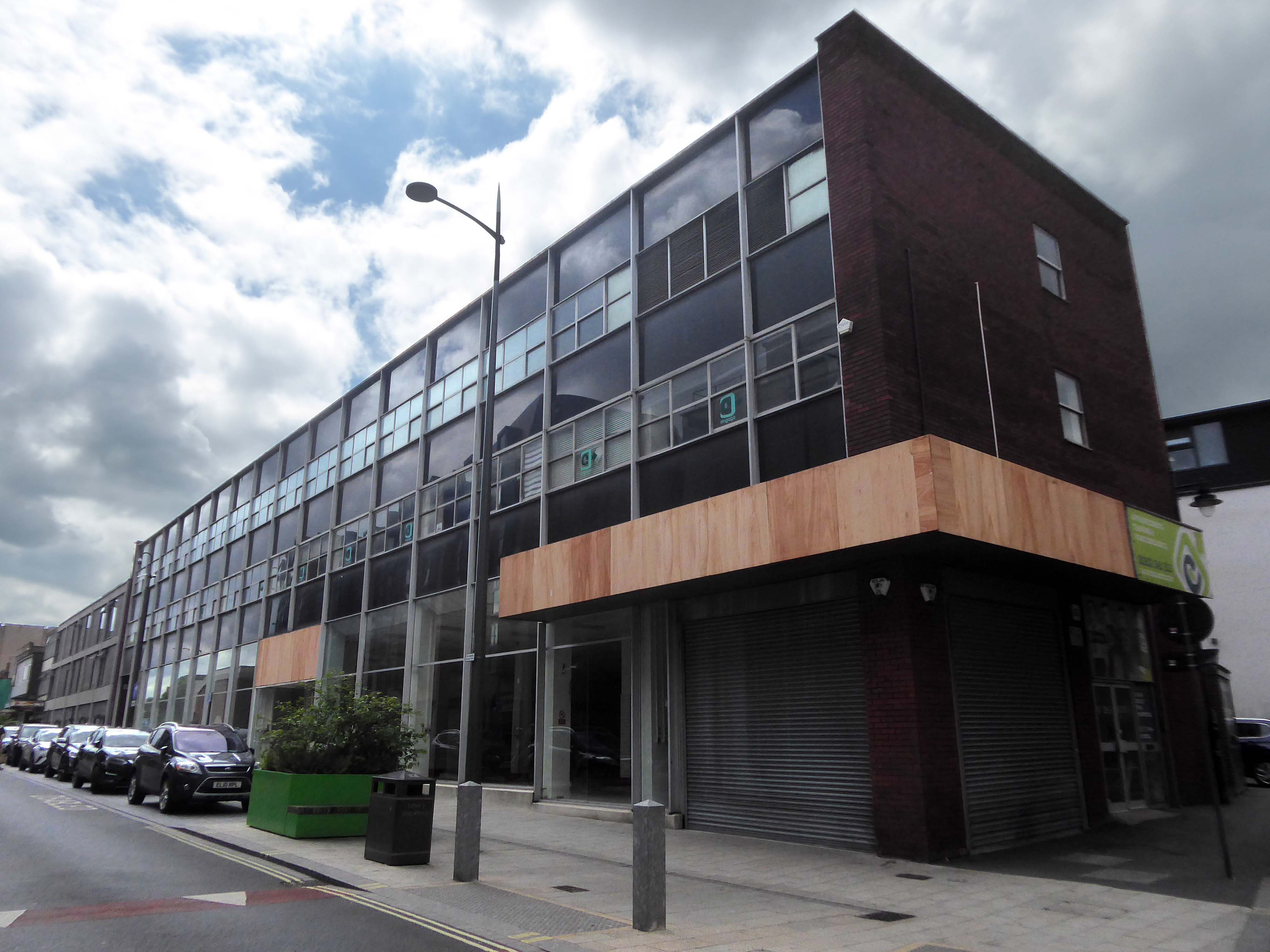
To the right of the Danum, this former Boyes store, having relocated to the Wilko site, the building is ripe for residential conversion.
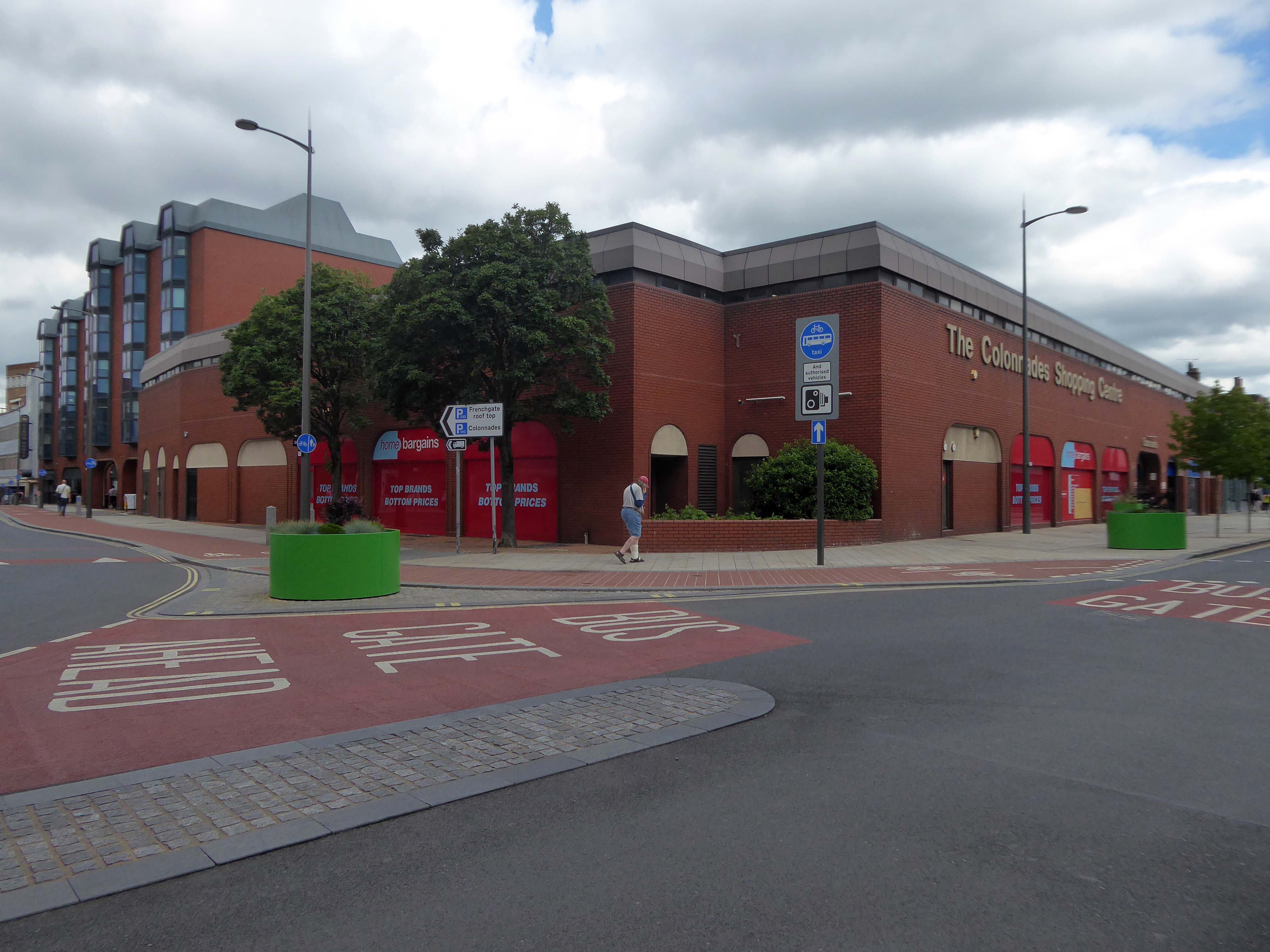
To the left the Colonnades Shopping Centre a fierce angular glass and brick bunker of mixed office and retail space – the sole occupant seeming to be Home Bargains.
A £3.3m makeover of the Colonnades shopping mall in Doncaster town centre was completed in 2019.
The scheme of works was co-ordinated by Doncaster Council and funded by the Sheffield City Region Local Growth Fund.
Built in the 1980s, the brick built building received a major overhaul. The investment saw the visual appearance enhanced inside and out. The five floors were transformed into the prime office space needed in the town centre and the enhancements to the retail area were also finished.
The shift in the town’s axis to the Frenchgate and Market areas, seems to have taken the wind out of its sails.
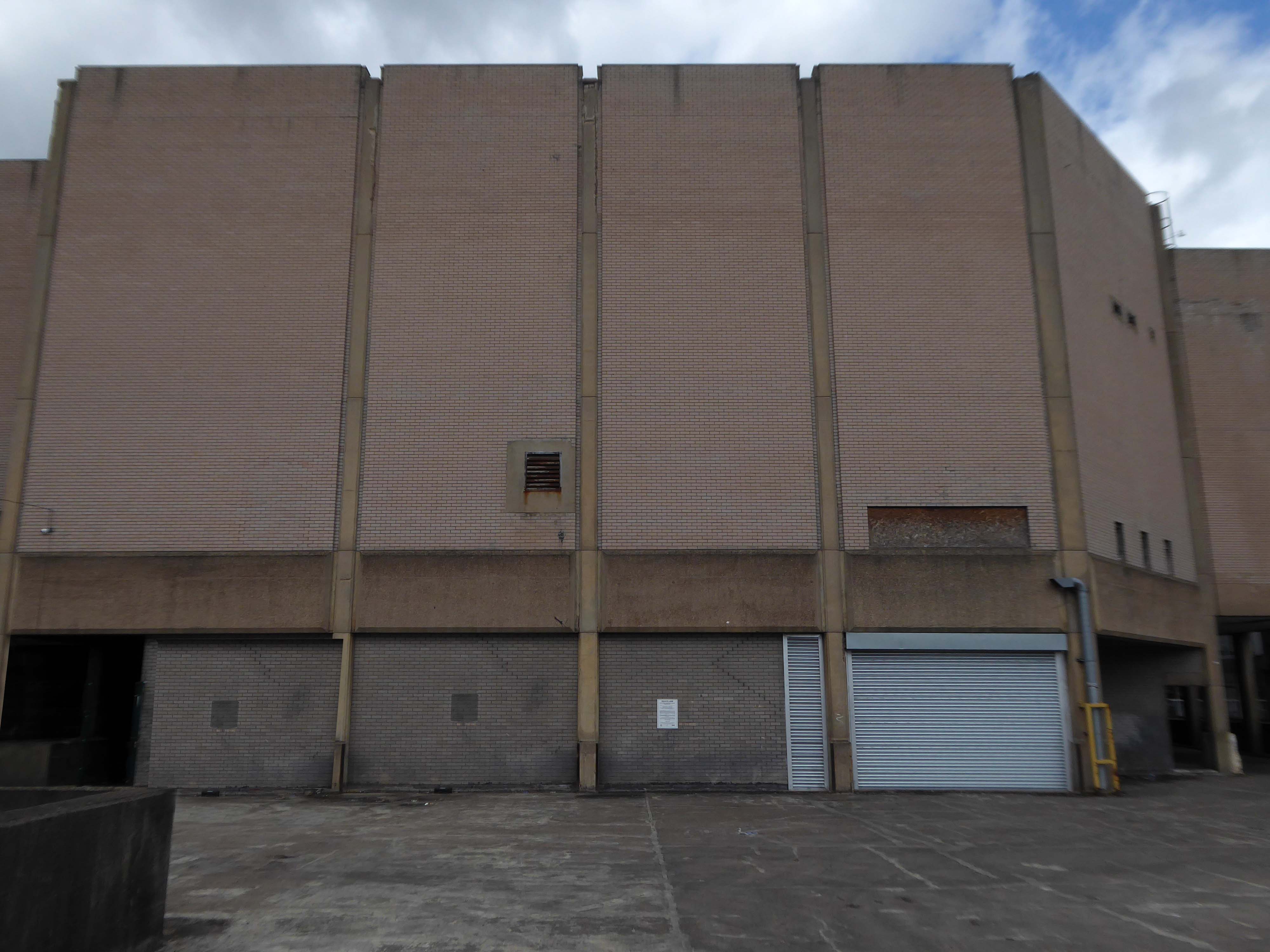
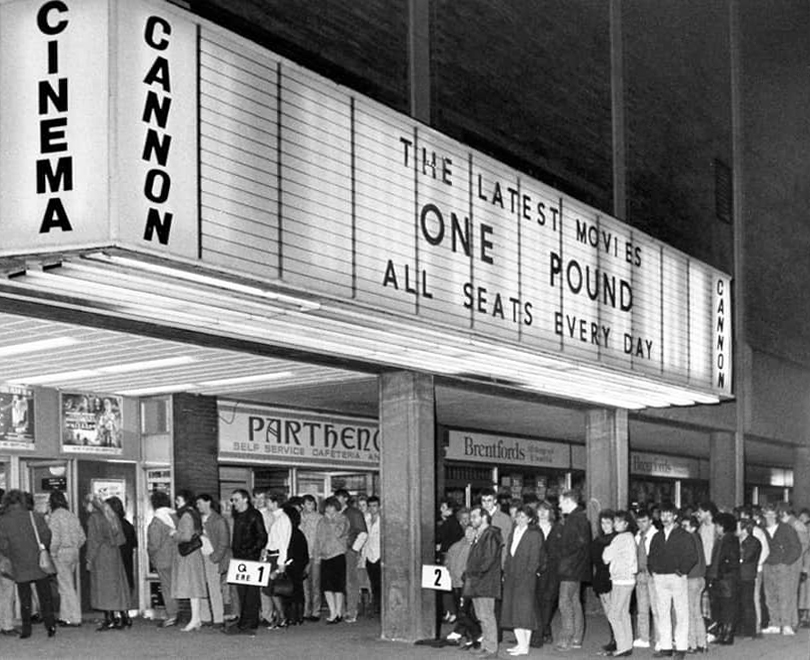
The former flicks now a redundant pale brick behemoth – no more and ABC.
Doncaster’s new £250,000 ABC cinema, part of the Golden Acres development near the town centre, was opened on May 18th 1967.
Closed in January 1981 for conversion into a triple screen it re-opened on 9th April 1981 with seating in the three screens for 477, 201 and 135.
The Cannon Group took control in the mid-1980’s and it was re-named Cannon and it closed on 18th June 1992, screening its opening film Doctor Zhivago.
Cinema Treasures
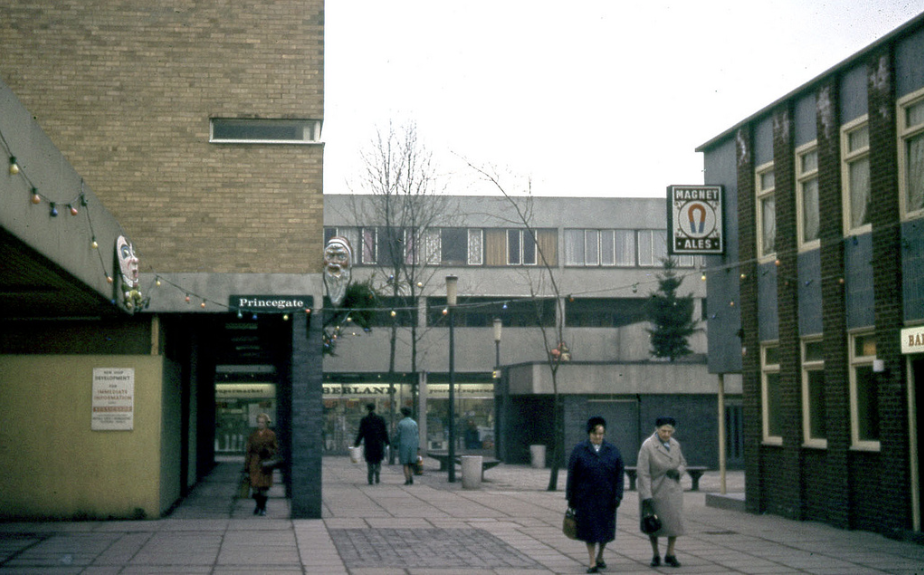
The Golden Acres development seemed to have morphed into the Waterdale Centre.
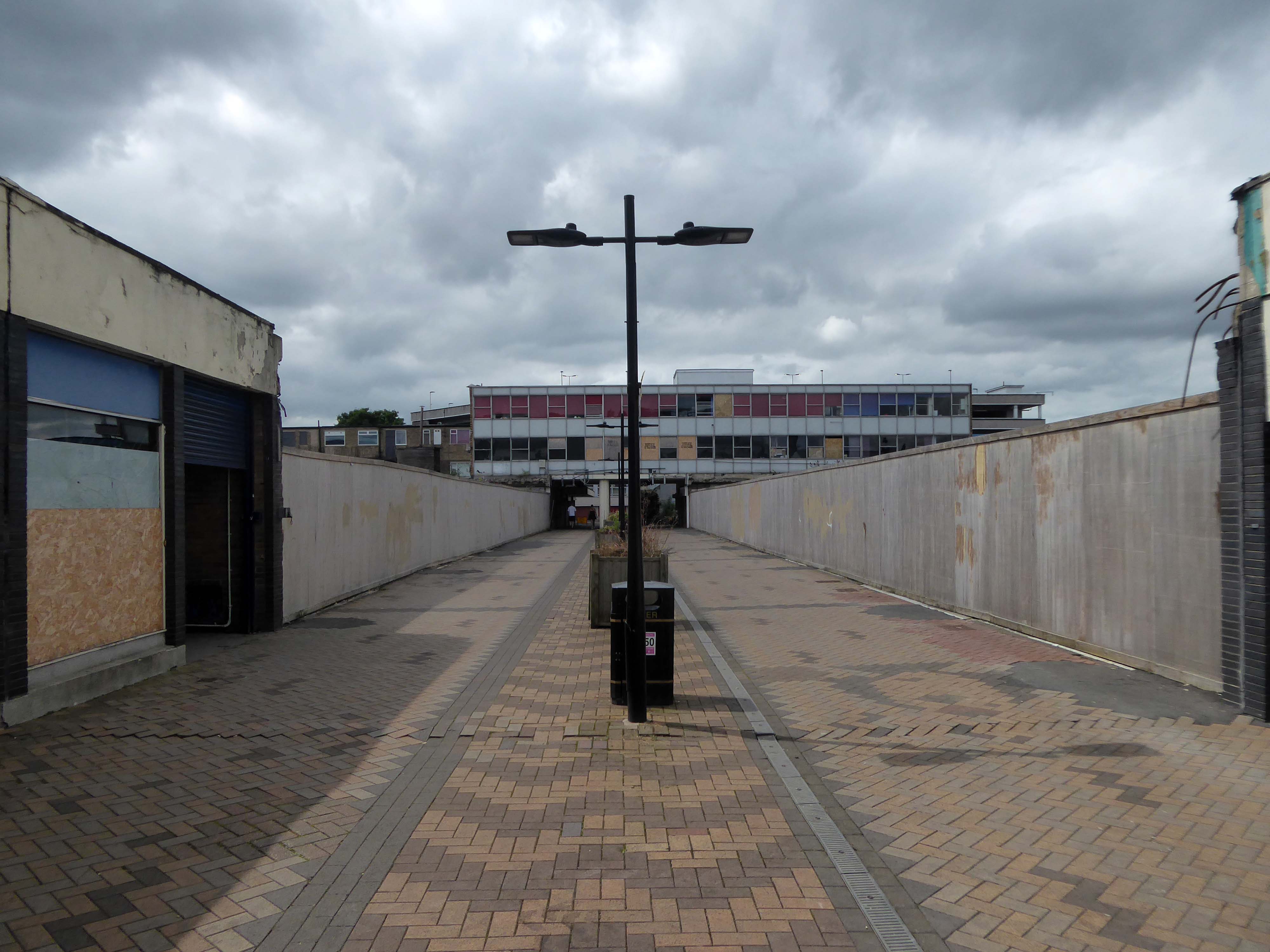
It is currently being reshaped to provide a line of desire twixt the Civic and Cultural areas, from the town centre. There are still the remnants of homes, shops and a pub amongst the demolition – almost inevitably there is new paving.
Waterdale is a well-known part of Doncaster’s town centre. During its heyday it was a bustling area with people flocking to shops and the like – it was a place you had to visit while you were in town. However, it had suffered a steady decline which continued when the southern bus station closed – Frenchgate Interchange opening, and Doncaster College moved to the Hub at the Waterfront. With limited public transport entering the area and no student population on its doorstep, less people had reason to pass through.
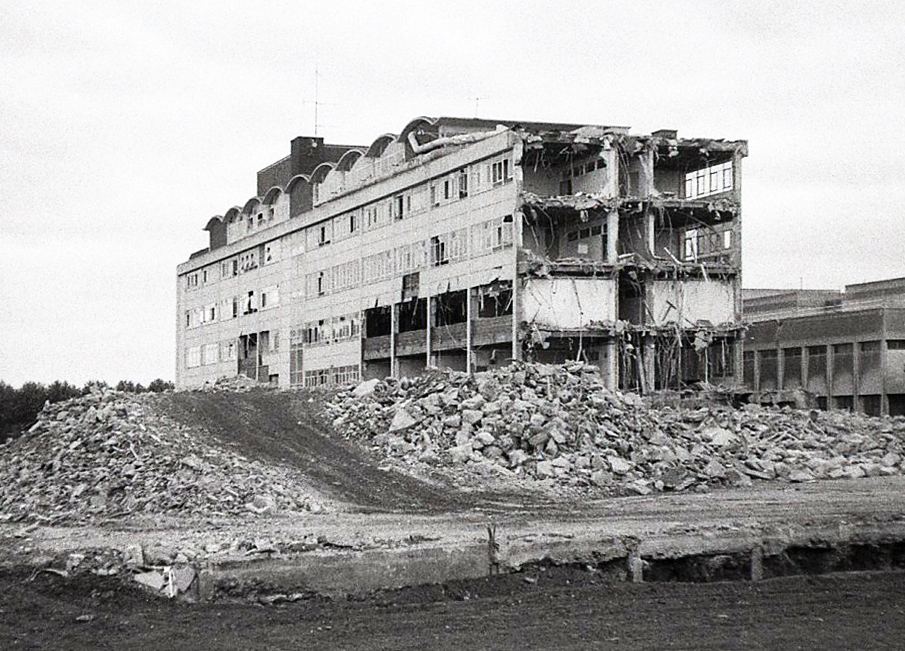
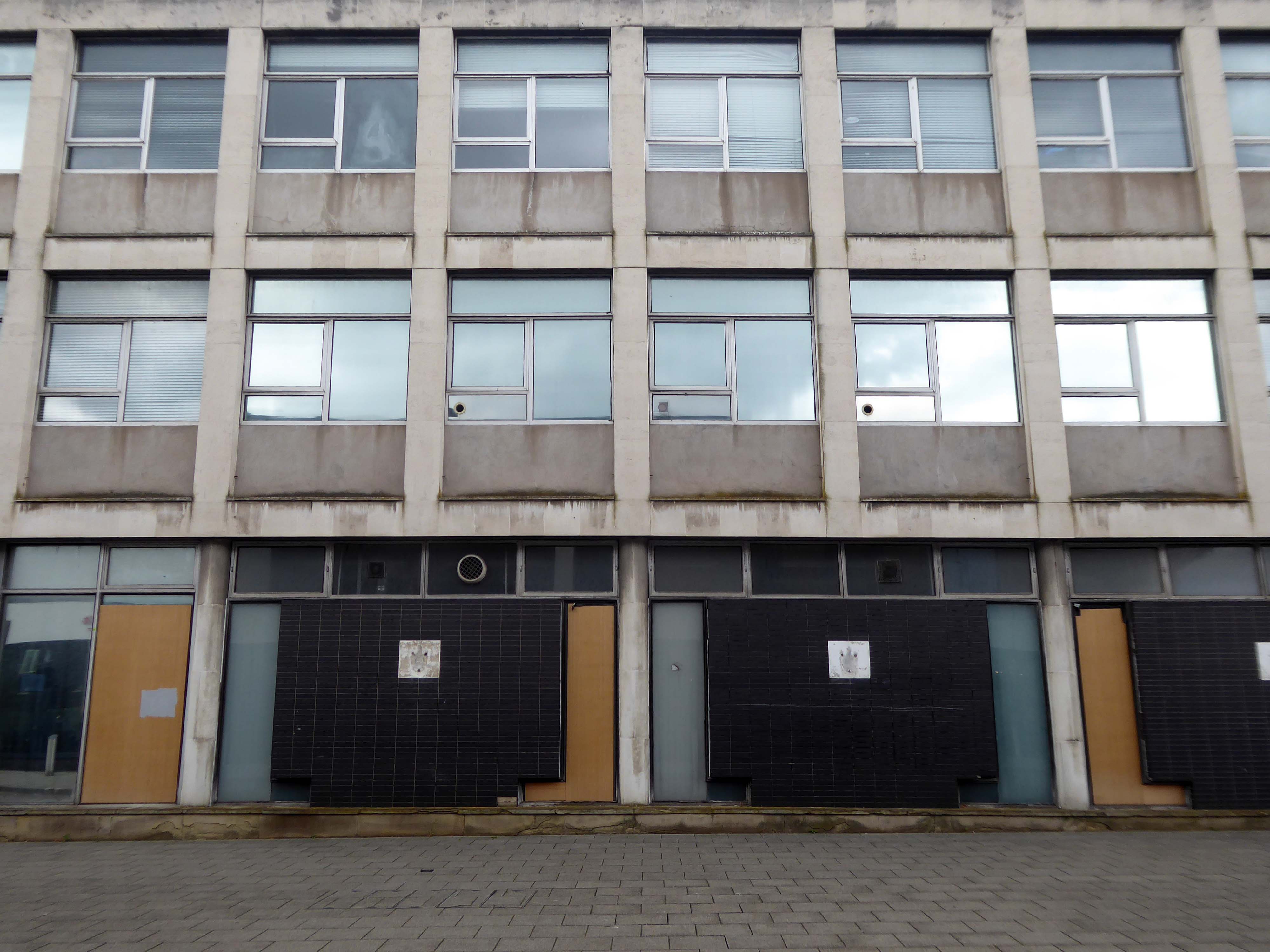
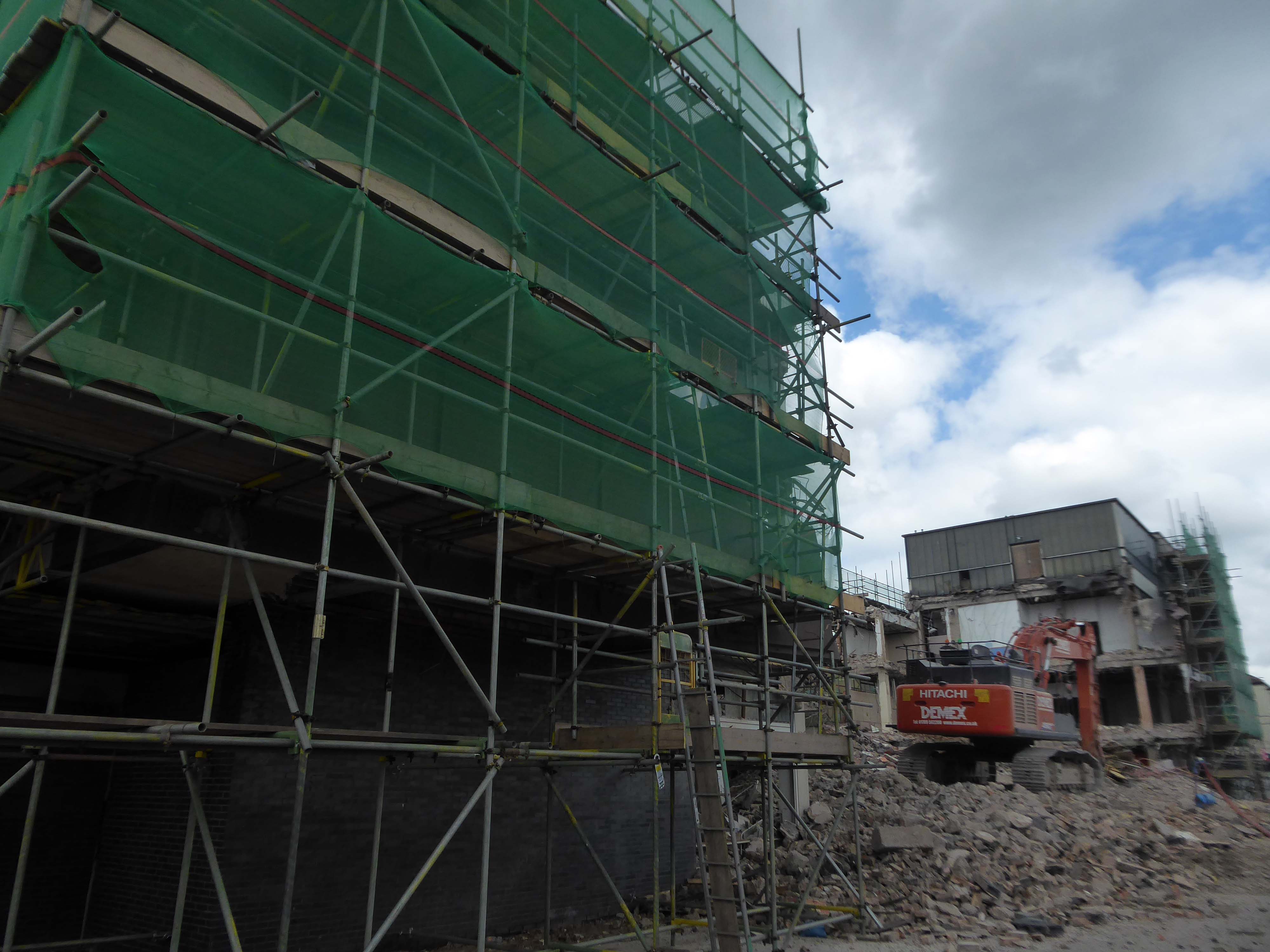
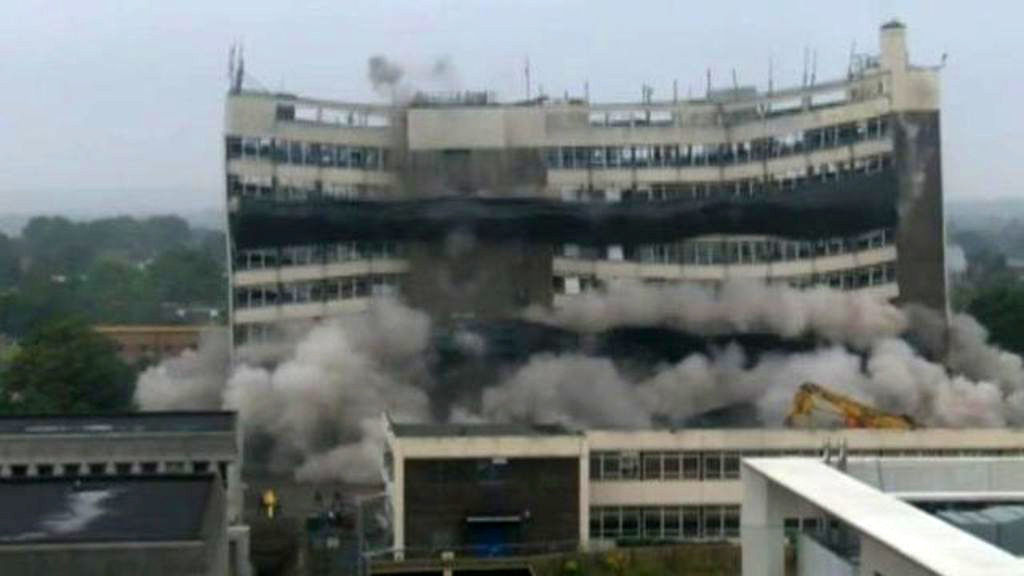
Demolition of the College.
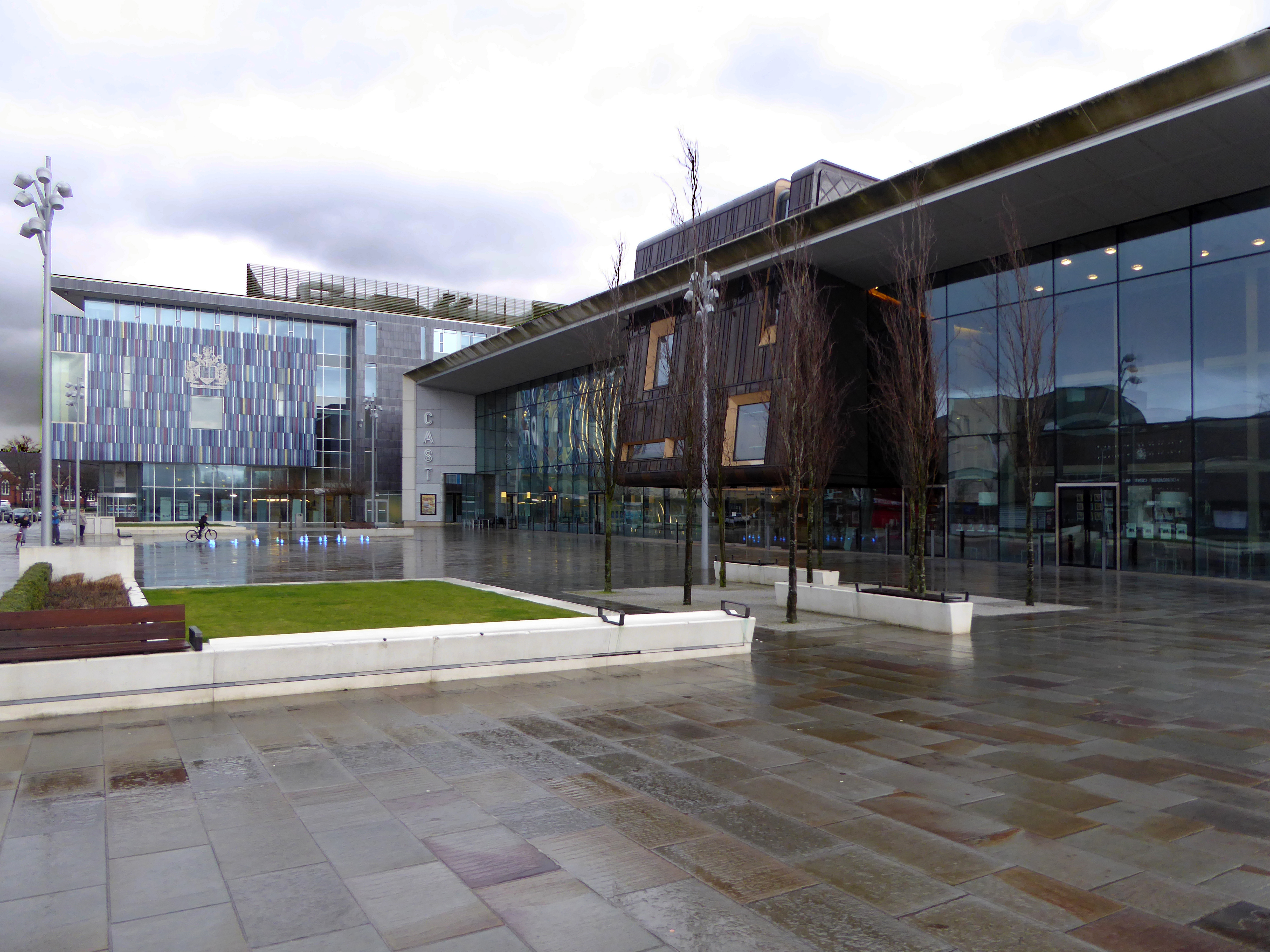
The Civic and Cultural Quarter is transforming Waterdale reconnecting it to the town centre. The quality and content of the plans is raising the profile of this part of town to new levels. The carefully thought out layout and consistent building design is giving the area a clear identity. It is already becoming a big attraction that draws people in and encourages redevelopment in the neighbouring areas.
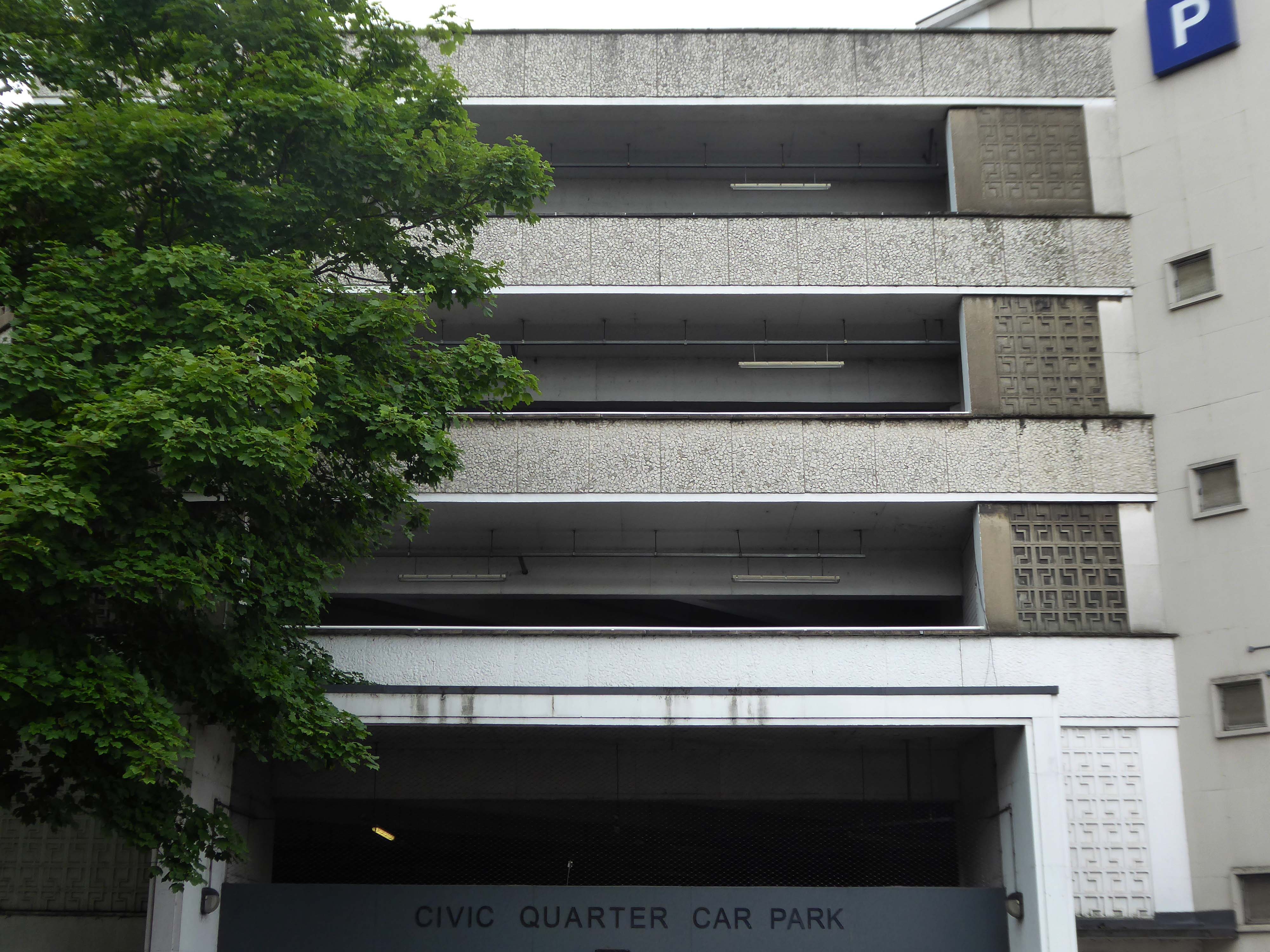
The weary walker is diverted toward the Civic Quarter Car Park.
The former Civic Offices are to be demolished.
Demolition of the Central Library is well under way.
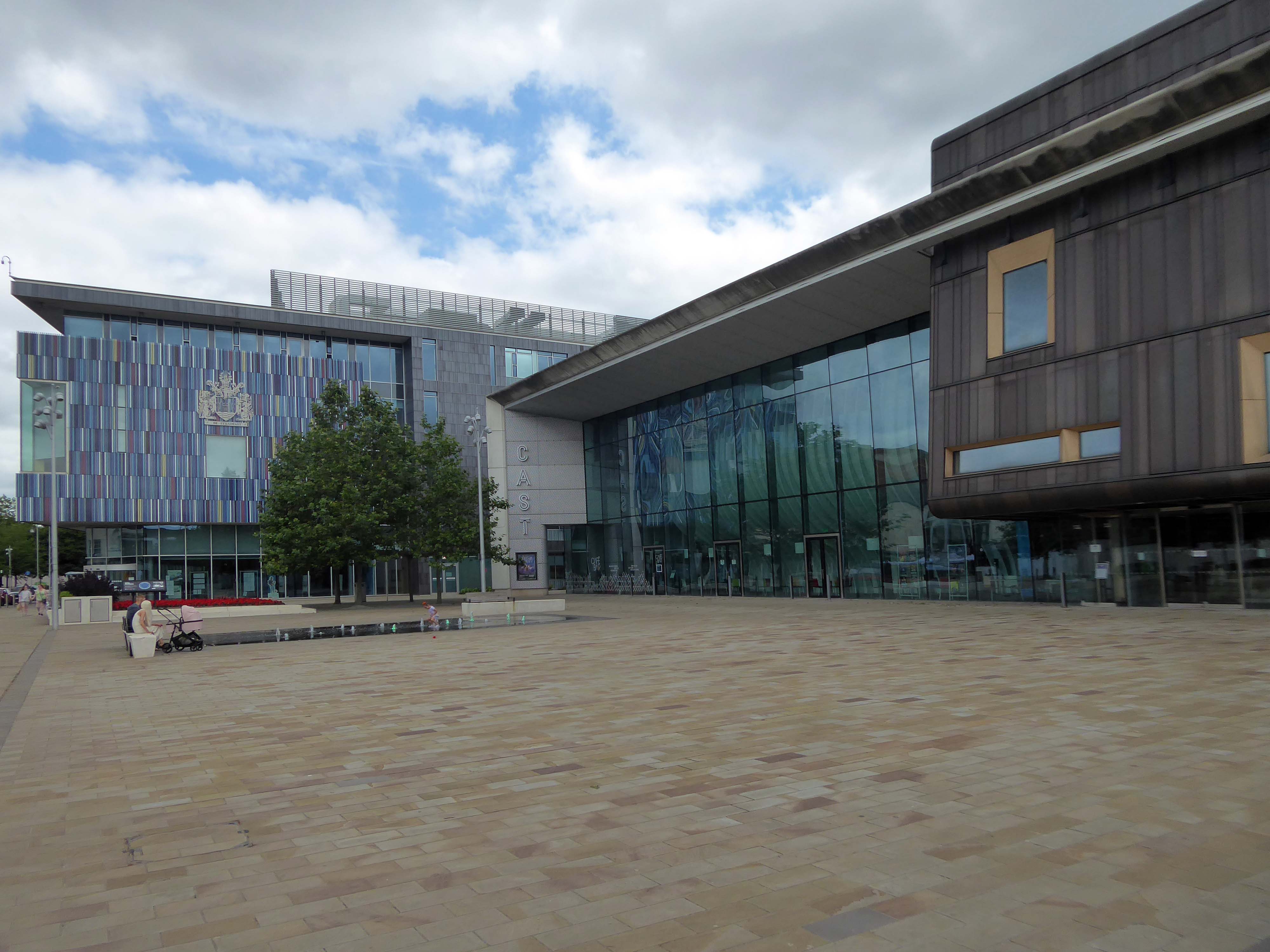
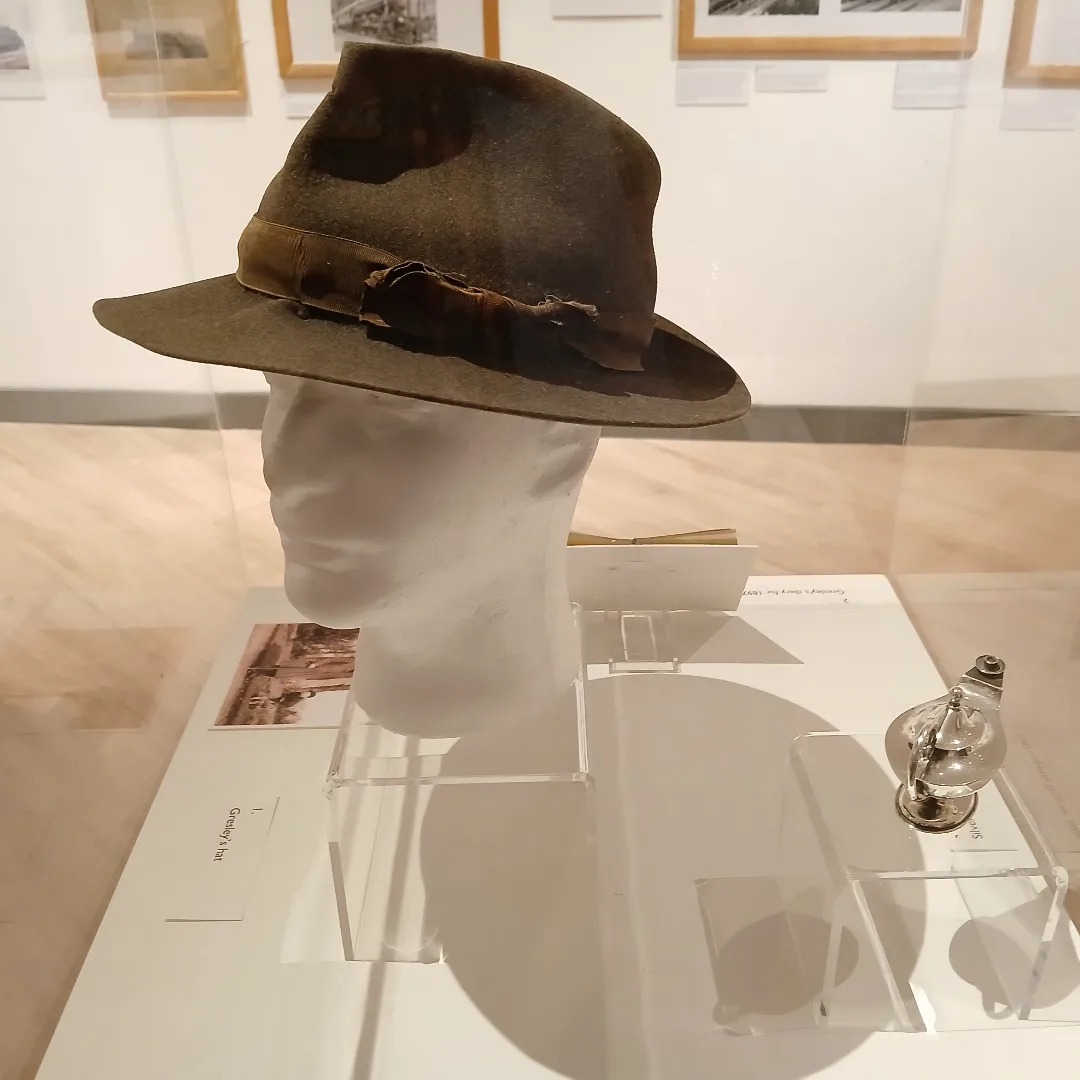
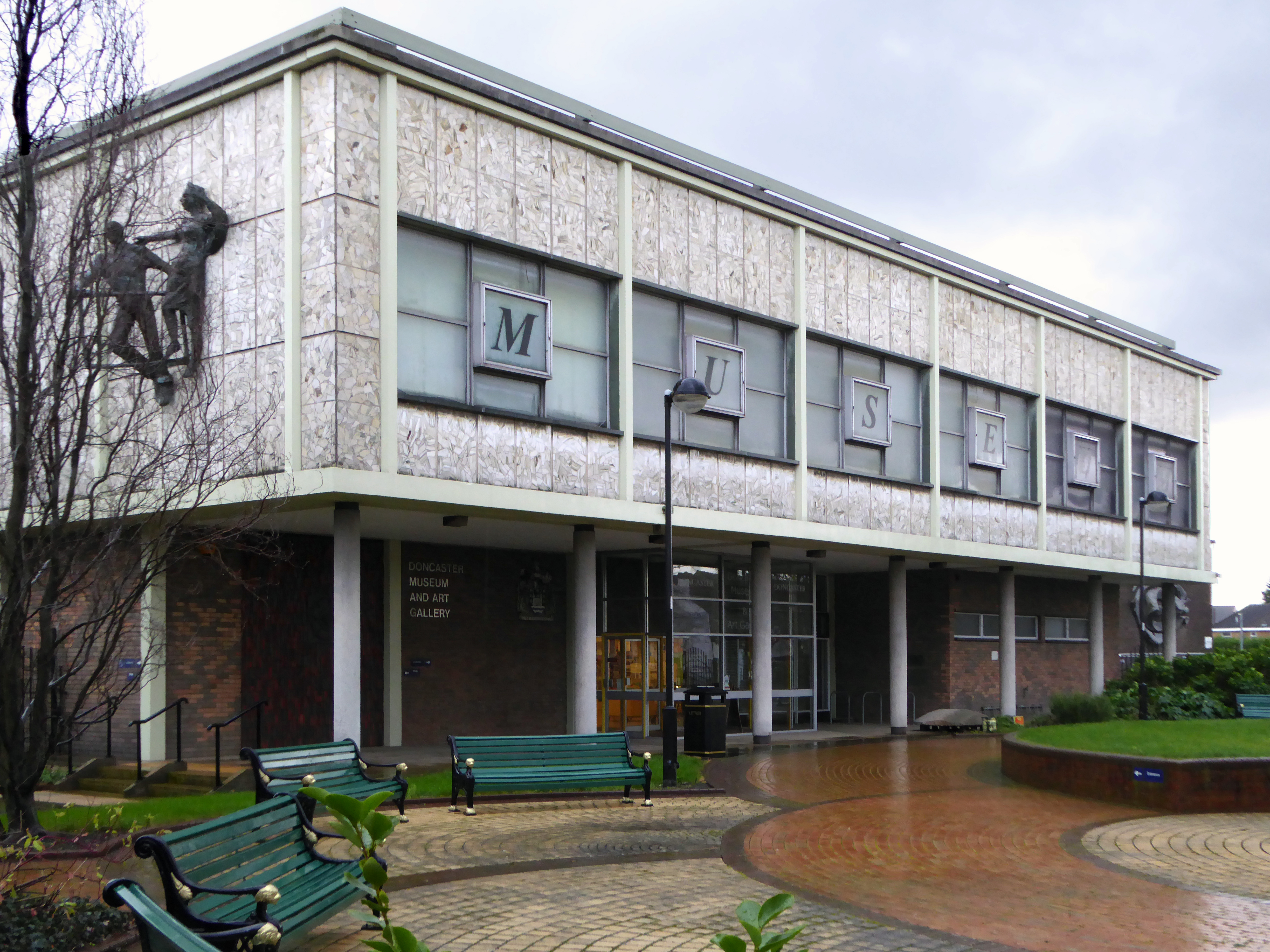
Facing the former library we find the CAST Theatre, Civic Buildings and Savoy Cinema, grouped around Sir Nigel Gresley Square.
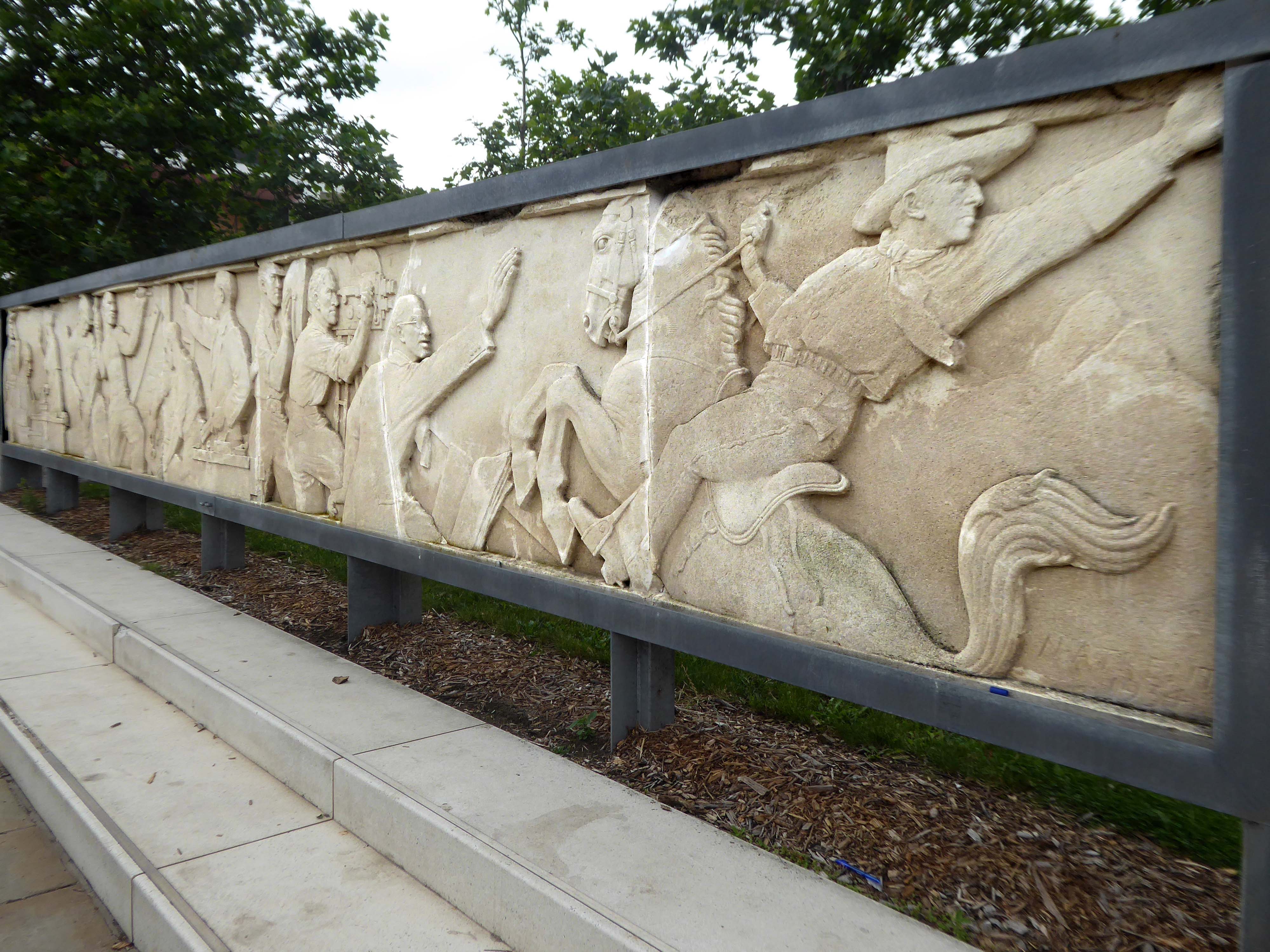
Within the square is a frieze, salvaged from the former Gaumont Cinema, the work of sculptor Newbury Abbot Trent.
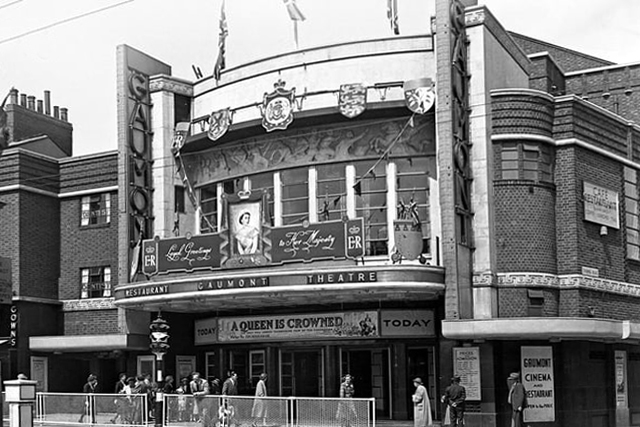
The Gaumont Palace Theatre in Hall Gate at the corner of Thorne Road, Doncaster opened on 3rd September 1934 with Jesse Matthews in Evergreen.
It was designed by architects WE Trent and W Sydney Trent.
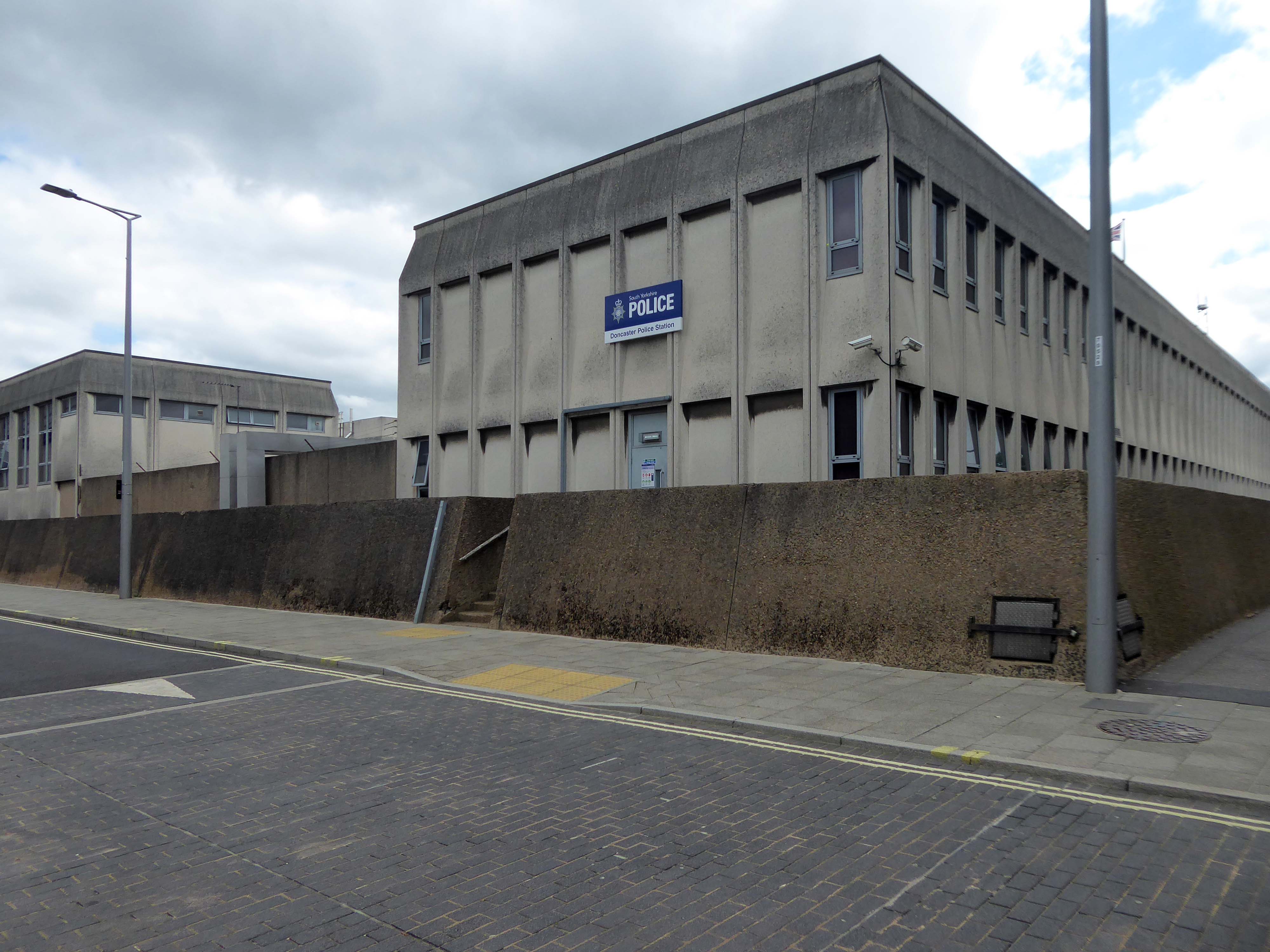
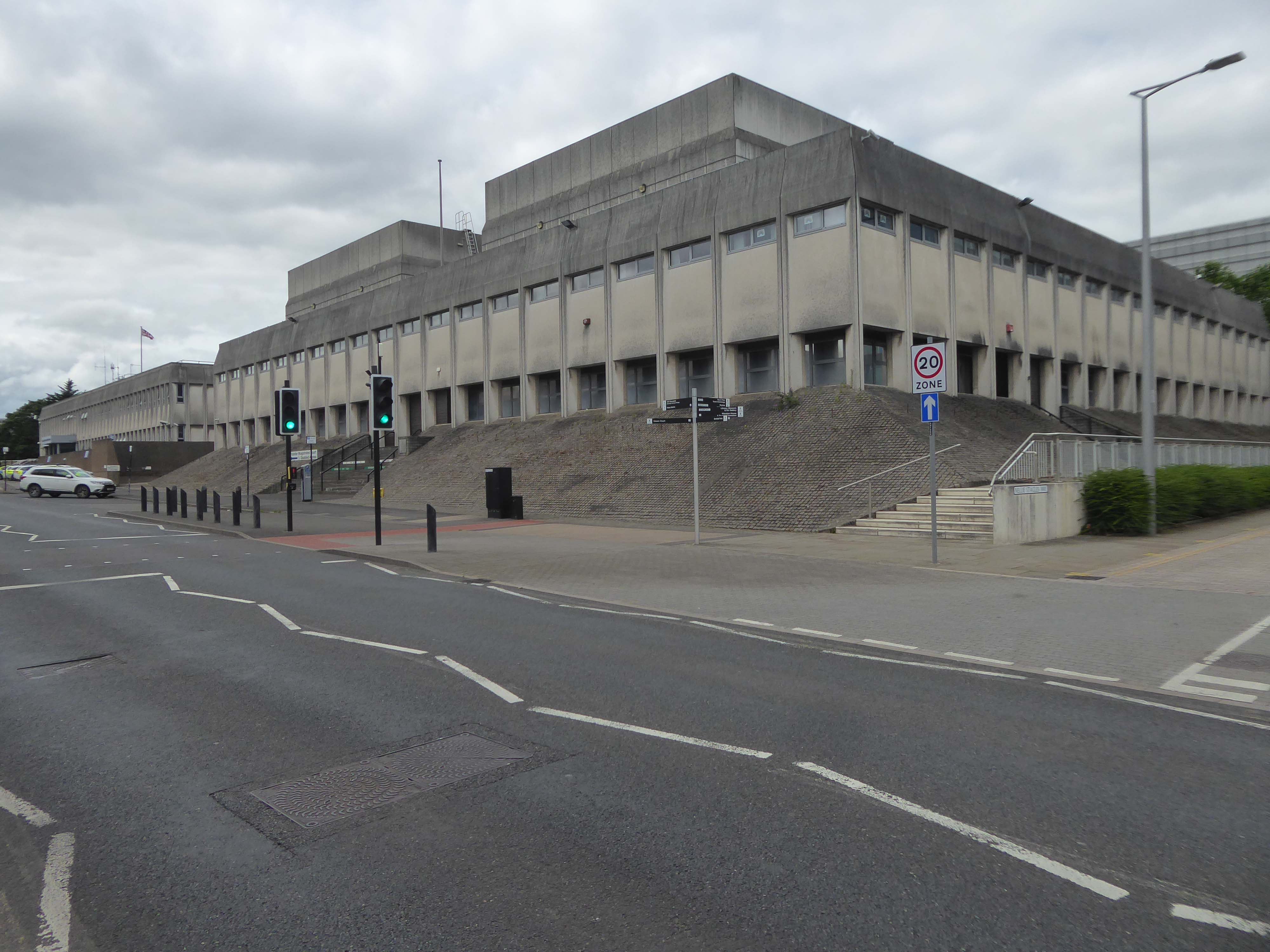
In 1949 WH Price the Borough Surveyor produced an outline plan for the area, with a green space at its heart, it was never realised. In 1955 Frederick Gibberd produced his plan to include a ten storey Town Hall, Art School, Technical College and Civic Theatre, revised and reduced in 1963 – eventually his Police Station and Law Courts were completed in 1969.
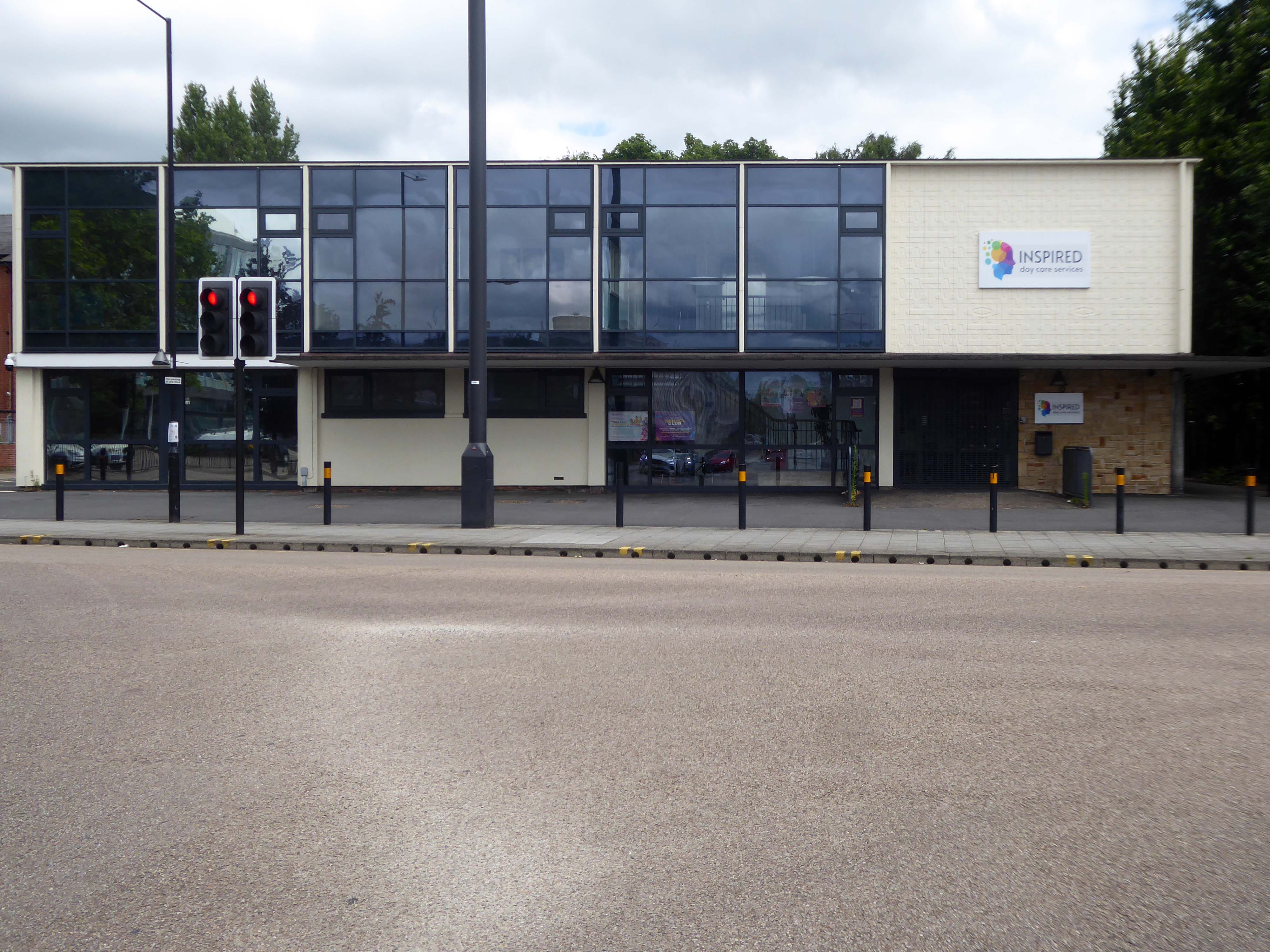
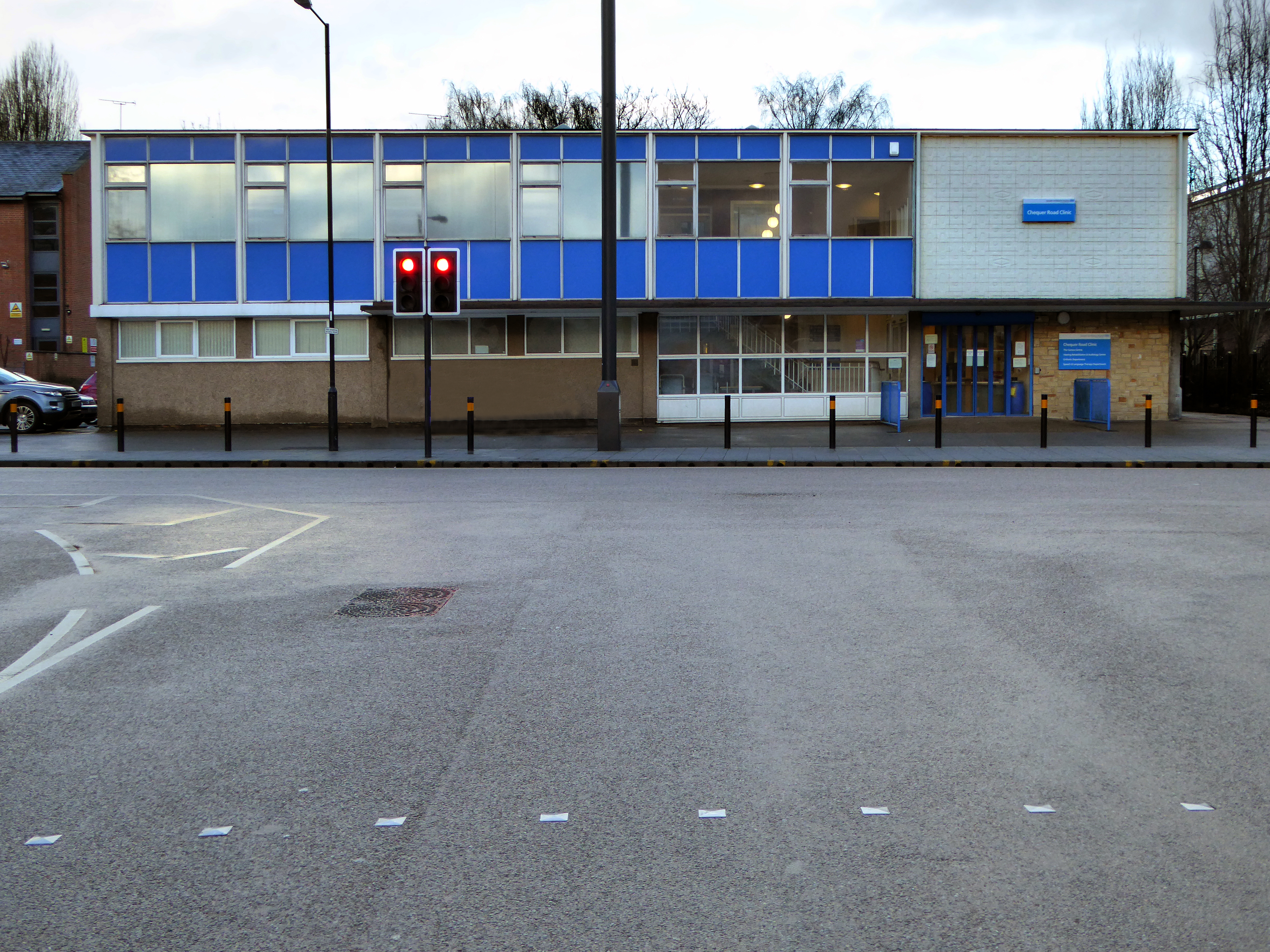
The former NHS Clinic at the ‘T Junction’ is transformed into a day care service.
The building was designed in the office of the Doncaster Borough Architect’s Department in a team led by borough architect Mr LJ Tucker.
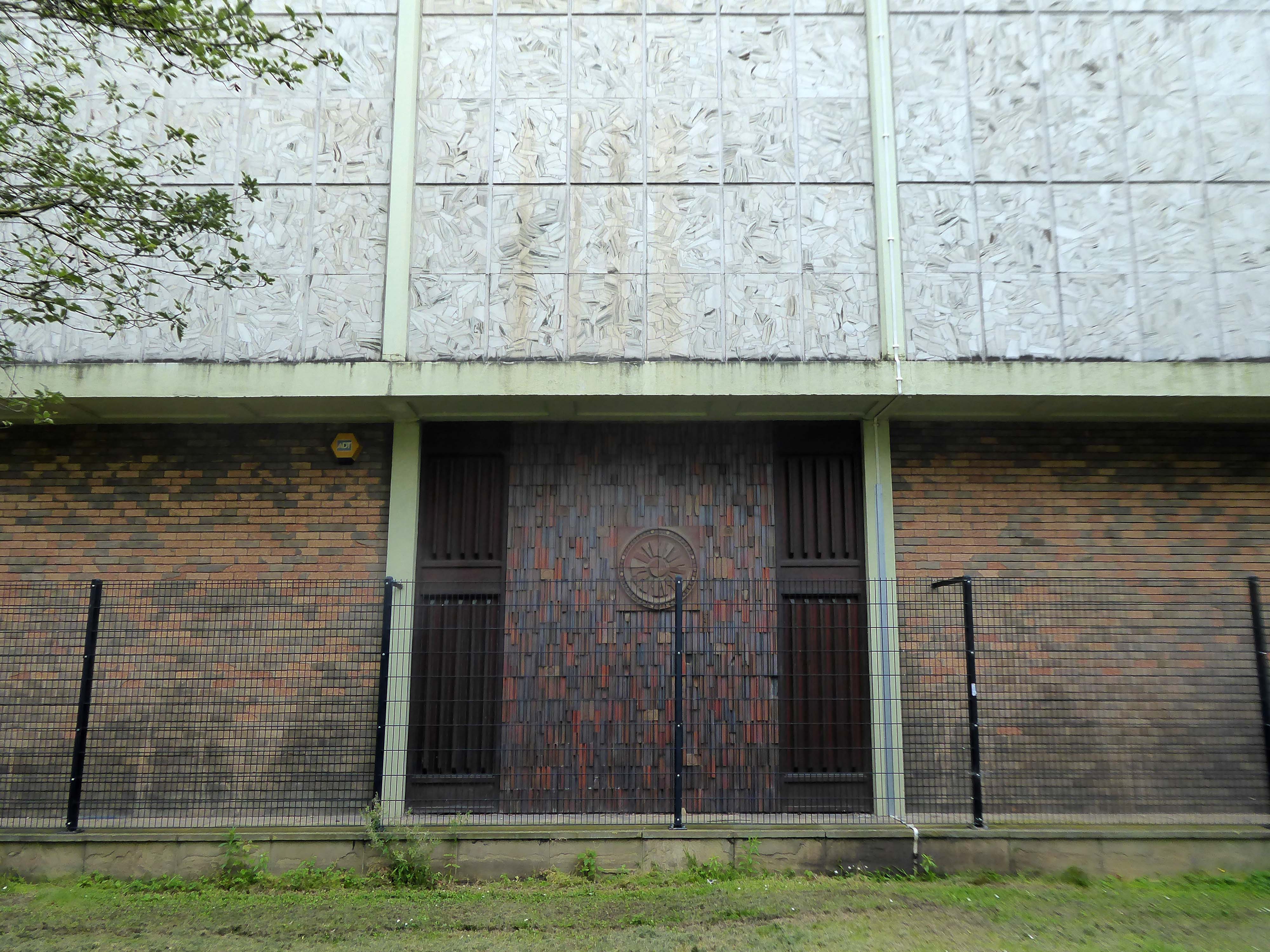
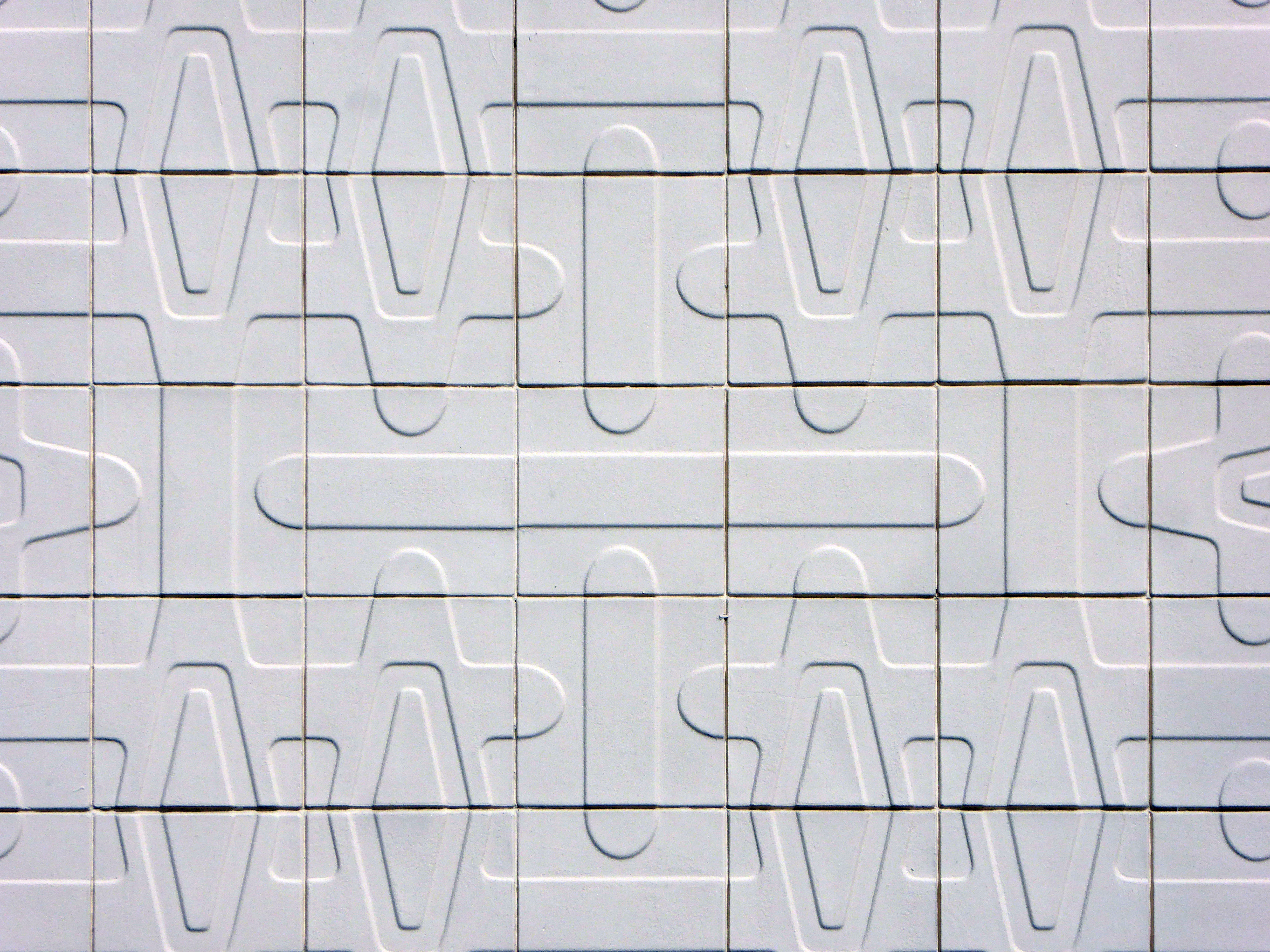
The ceramic designs were a later addition when it was discovered that the large open areas of glass overheated almost everything inside, the work was undertaken by LJ Tucker and family.
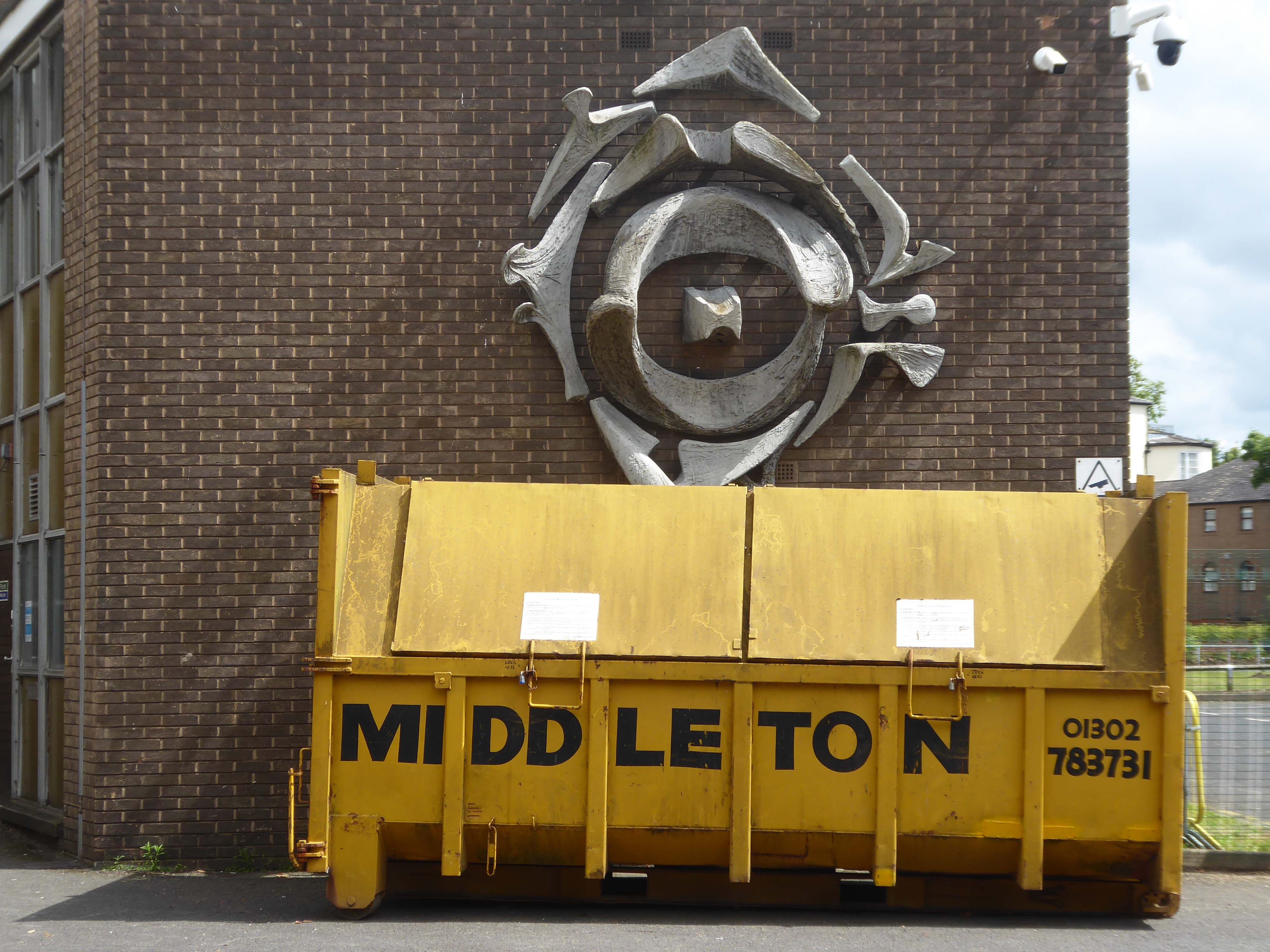
The sculptural work by Franta Belsky, now has a skip for company.
As a footnote the work by Fabio Barraclough reveals a murky past.
Barraclough was born in Madrid in 1923, to a Spanish mother and Yorkshire father who founded Madrid’s Chamber of Commerce. He moved to London with his family in the 1930s as a refugee from Francoist Spain. He taught fine art and sculpture at Rugby School, where colleagues considered him “highly entertaining, a most unorthodox and highly gifted” teacher. He established himself during the 1960s and early 1970s as an authority on sculpture, publishing in academic journals and becoming a member of the Royal British Society of Sculptors.
In 2000, it was revealed that Barraclough, while outwardly living the life of anti-apartheid activist since the 1970s, had been a paid informant of the South African state security police. The media was used to promote his image as a “brilliant, liberal artist with apparently impeccable credentials” in order to gain public trust, while he was funnelling money from anti-apartheid groups to the police. He died on 6th January 2019.
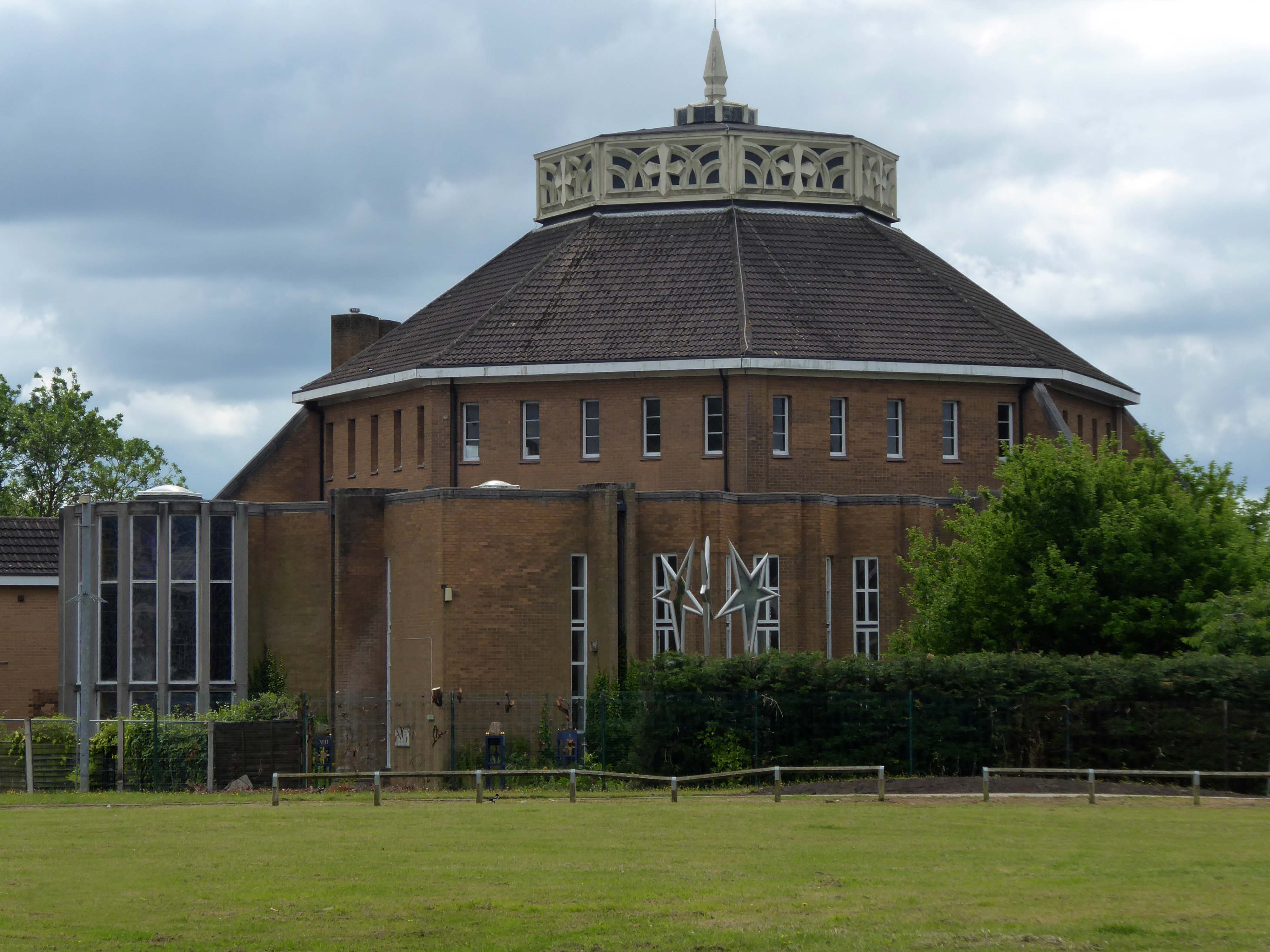
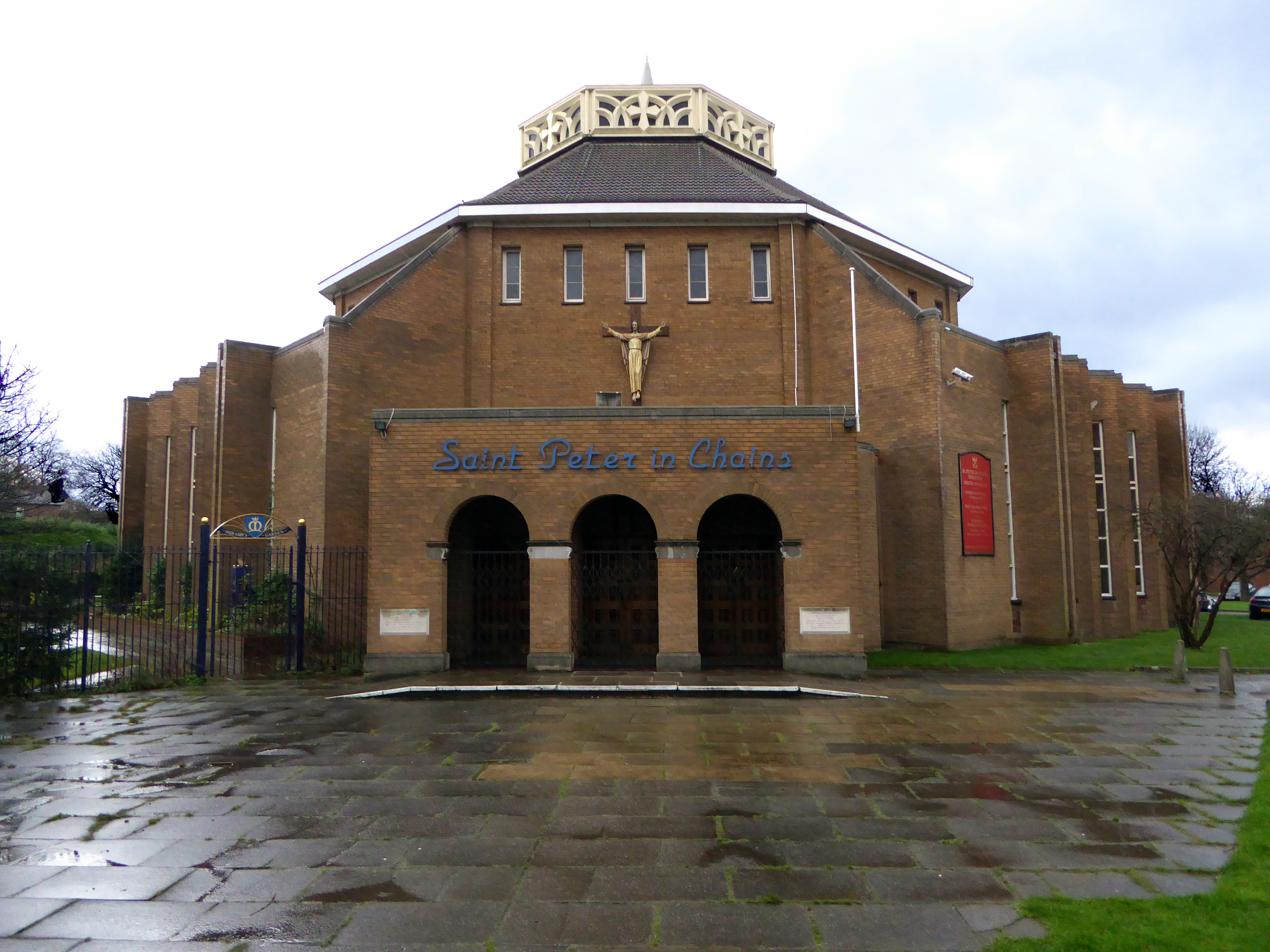
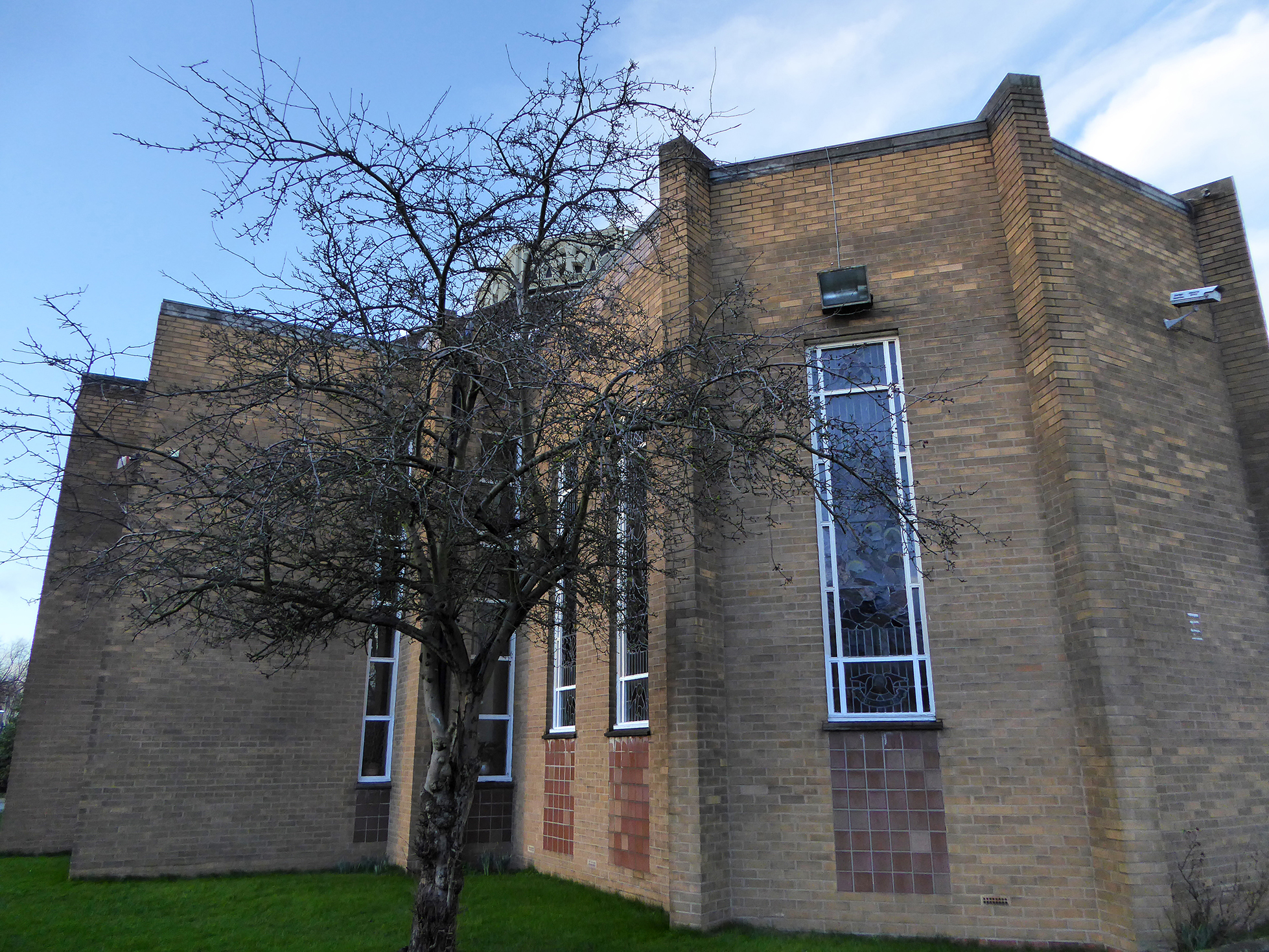
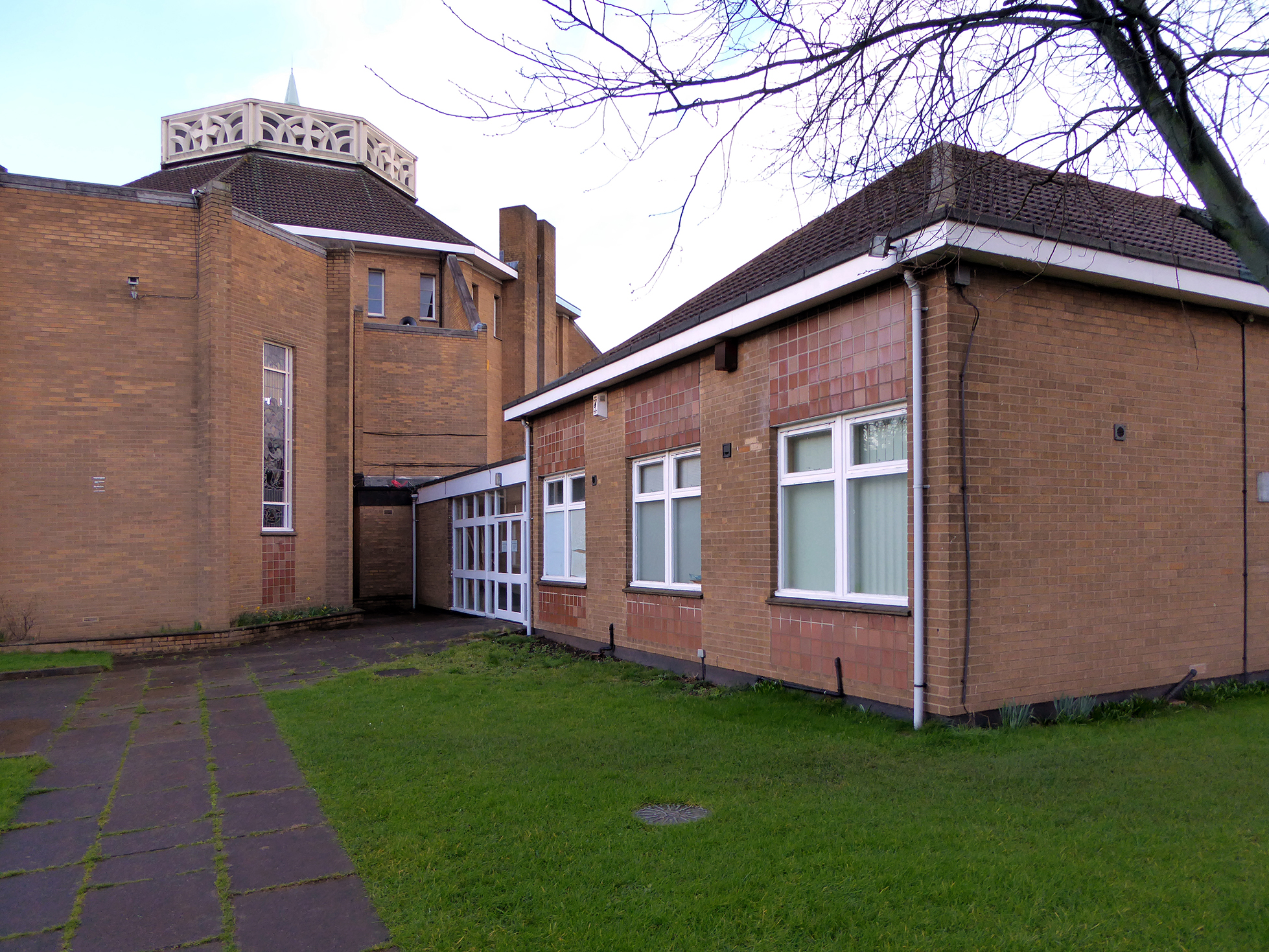
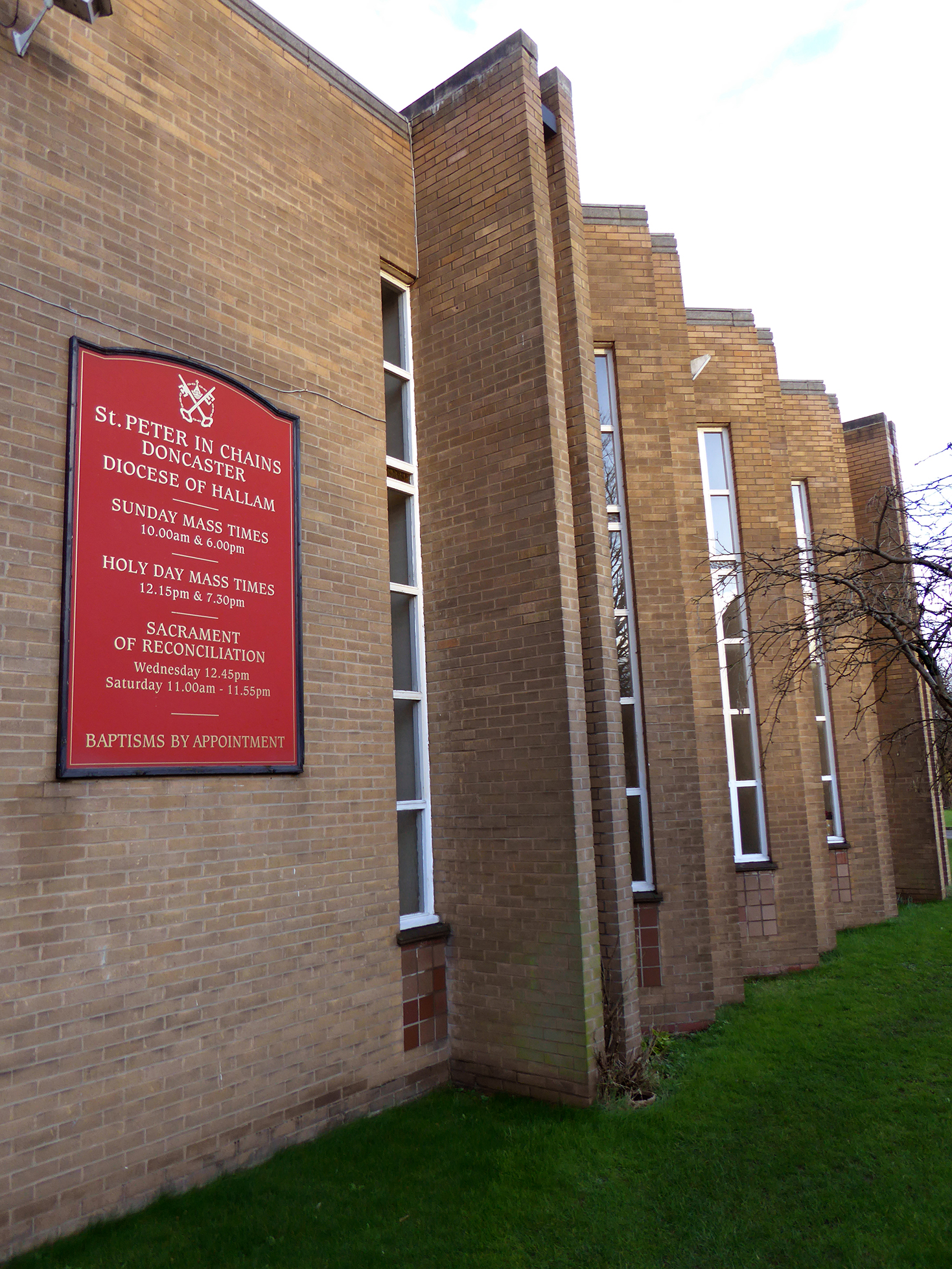
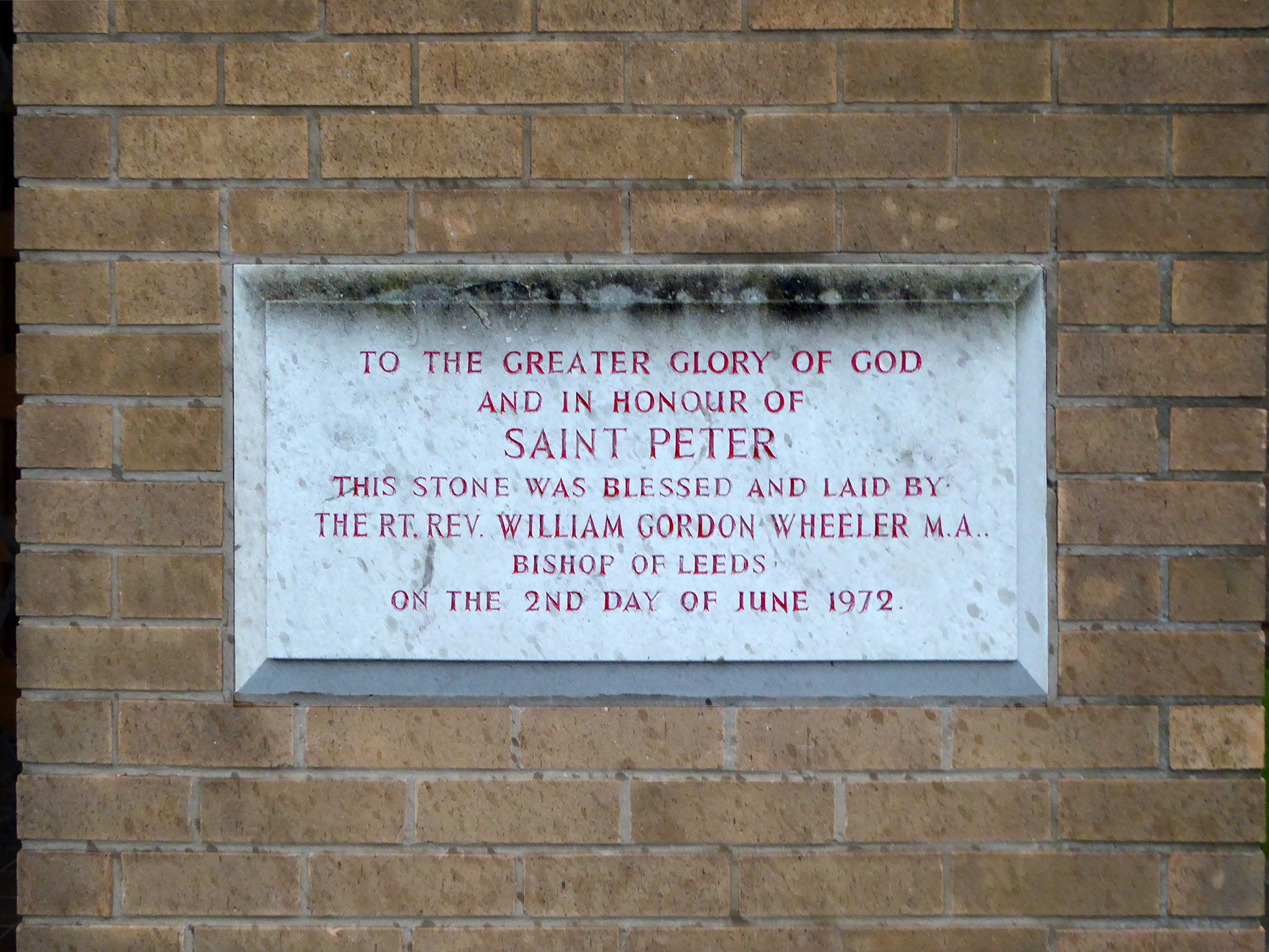
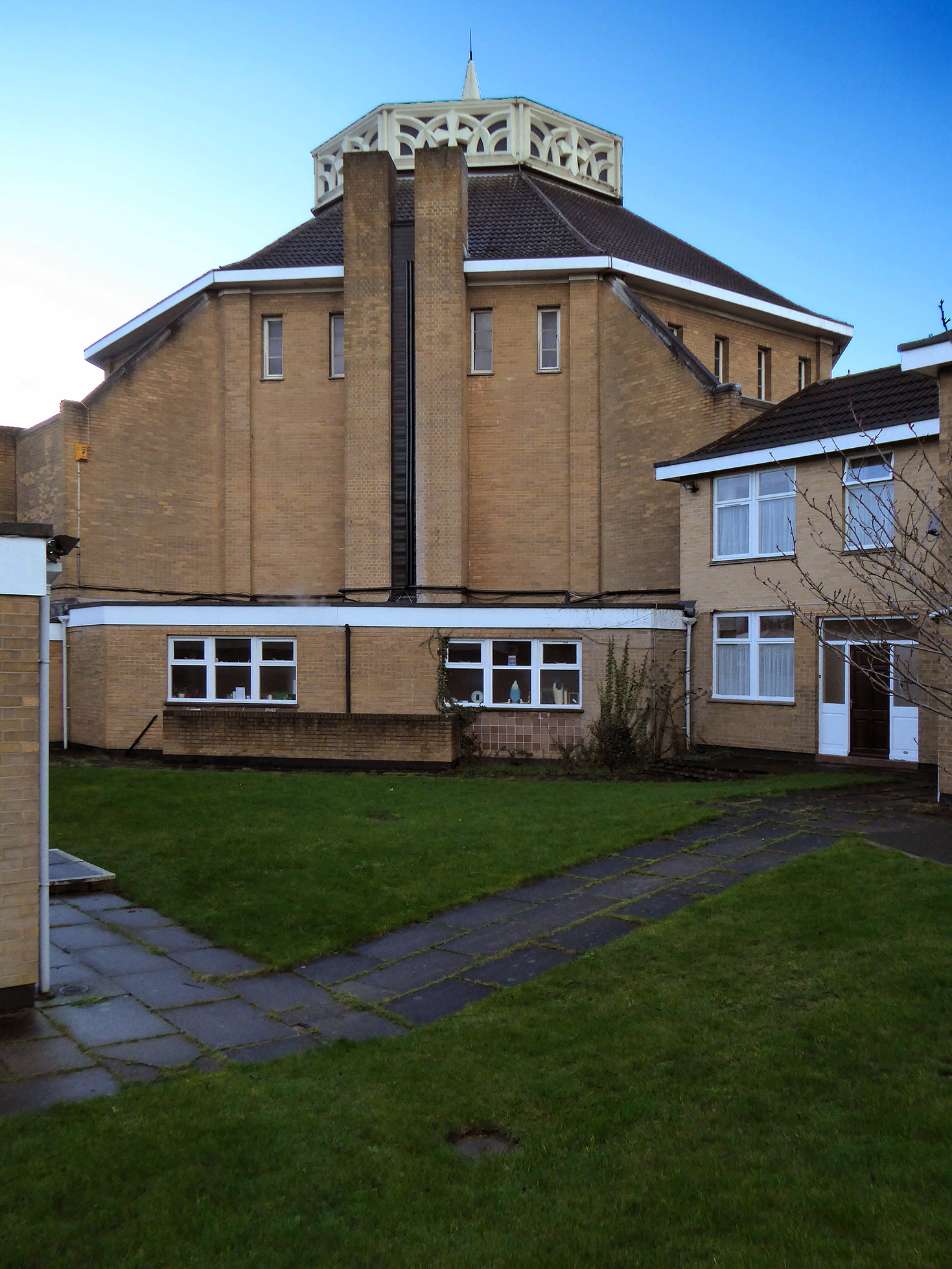
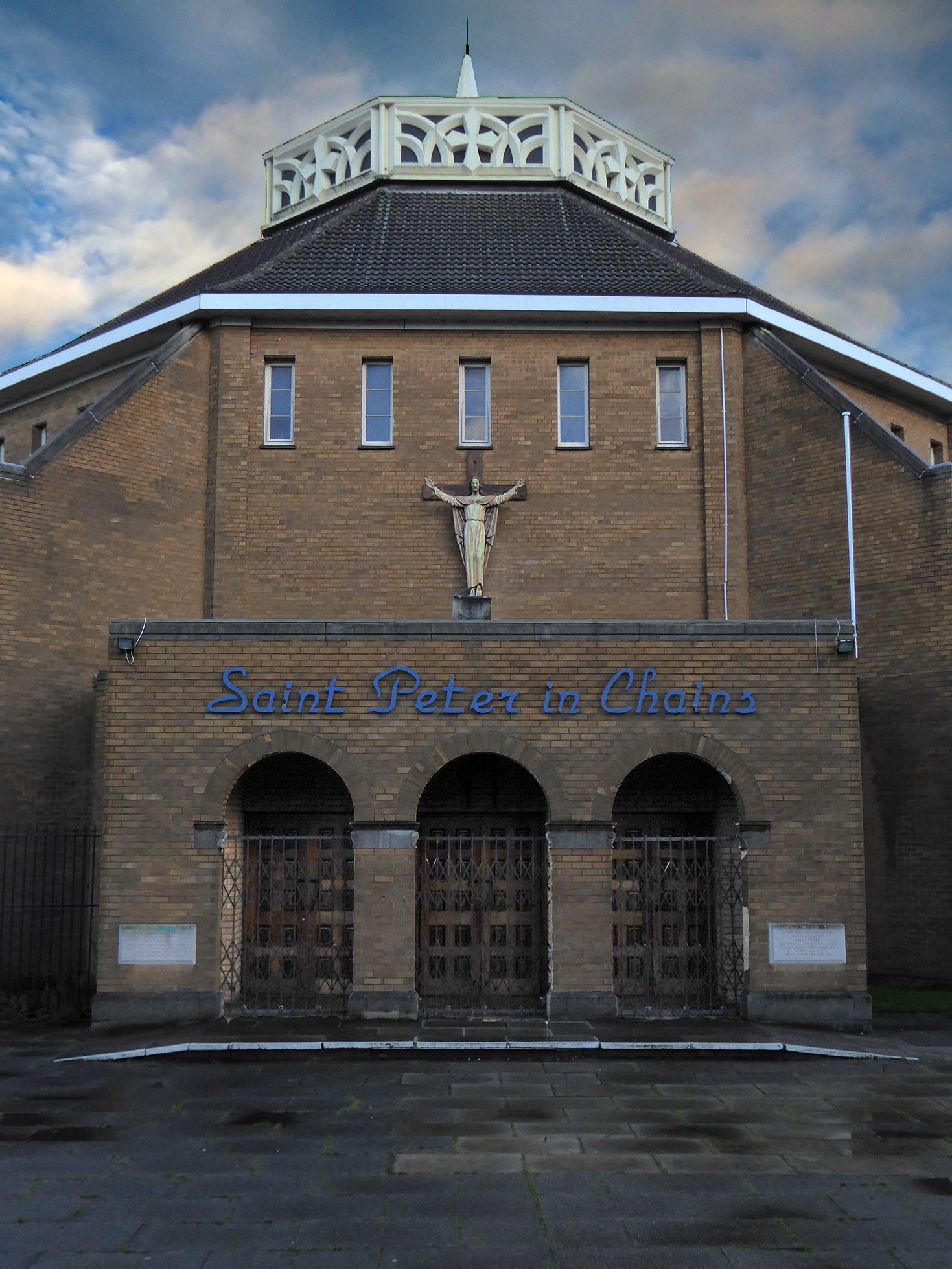
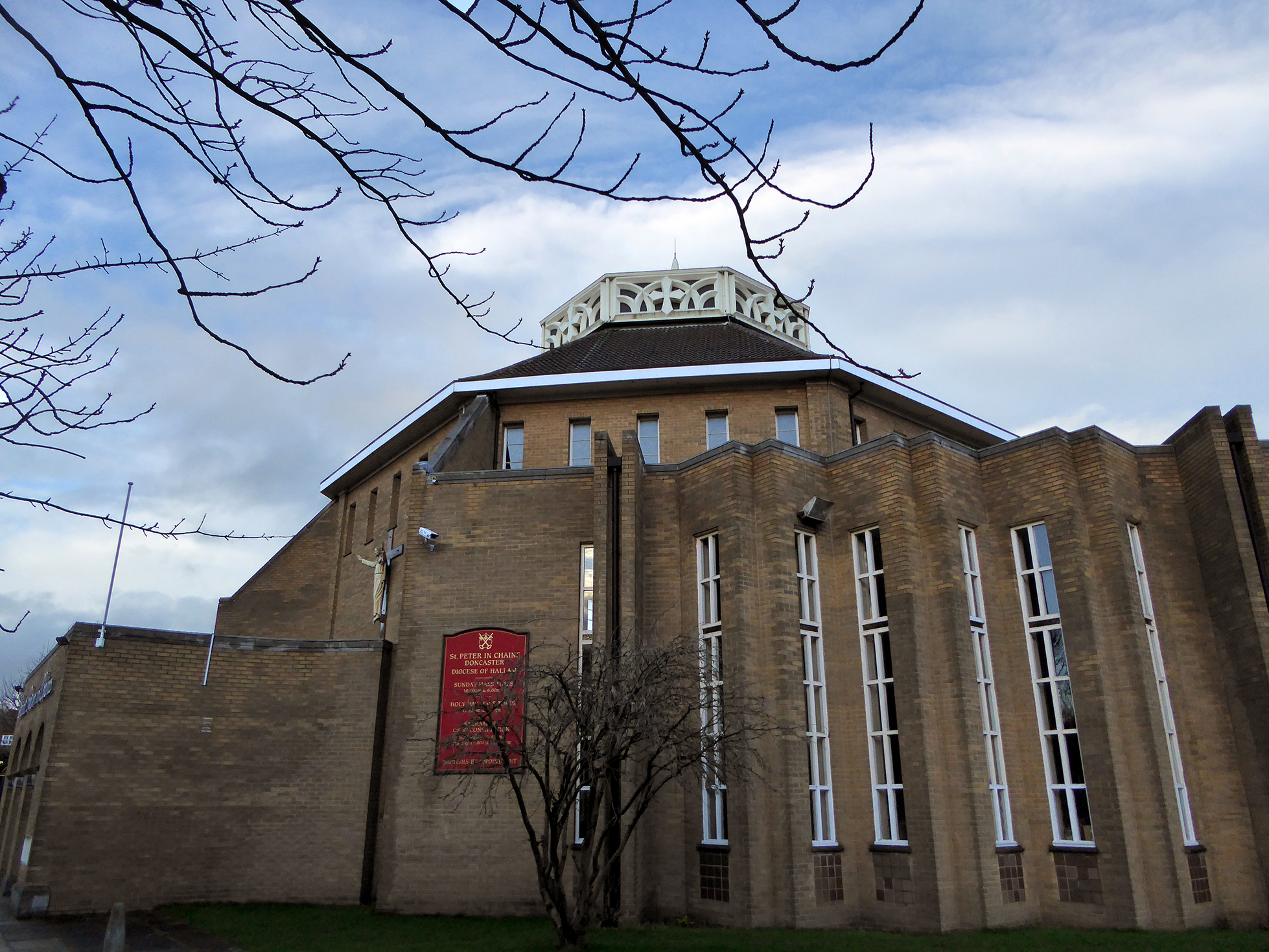
Over the way faros the green sward is St Peter in Chains RC – A large and striking design by JH Langtry-Langton, incorporating important furnishings by J F Bentley from the predecessor church, along with good furnishings of the 1970s. The churches houses the modern successor to the medieval shrine of Our Lady of Doncaster.
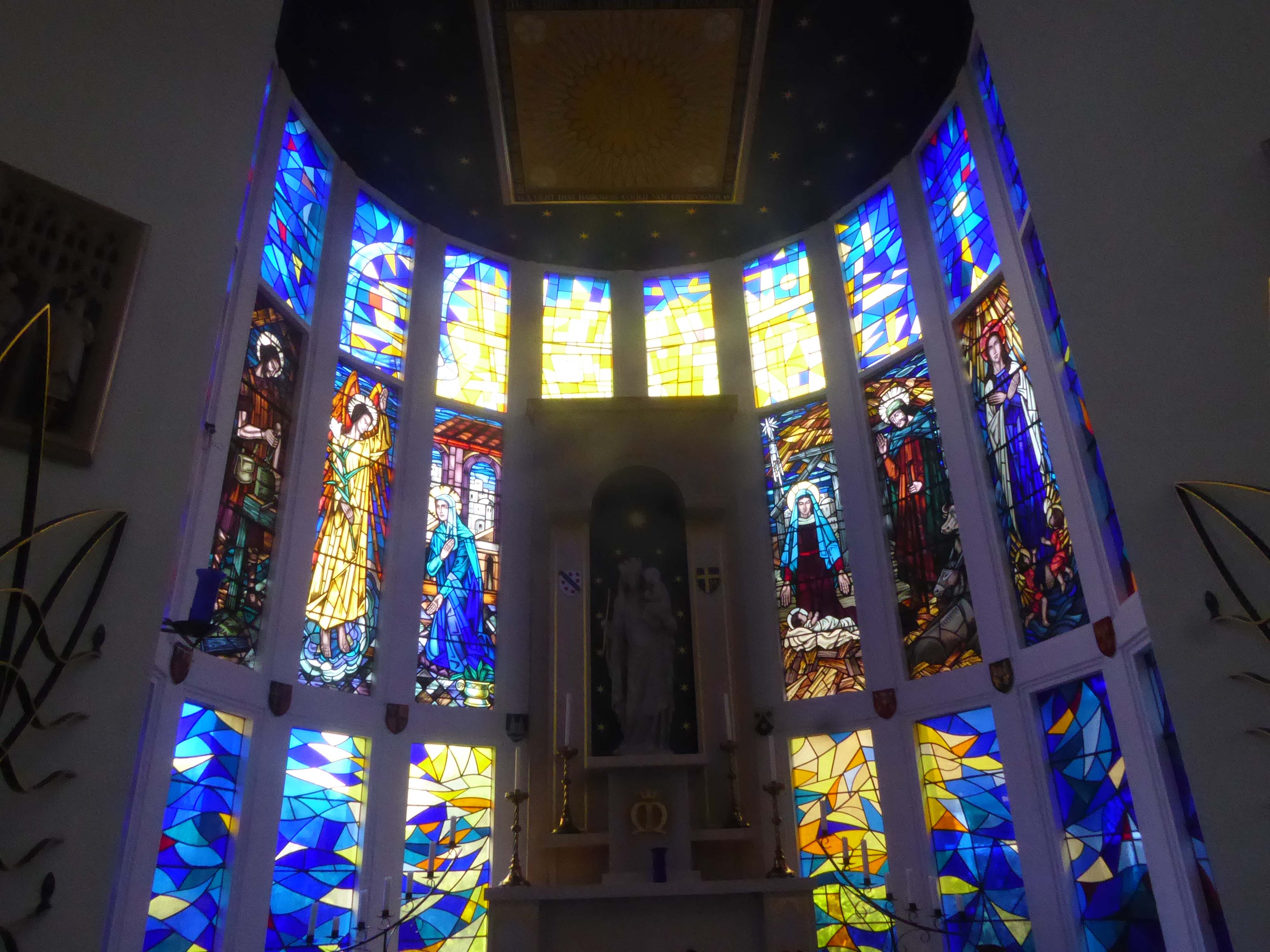
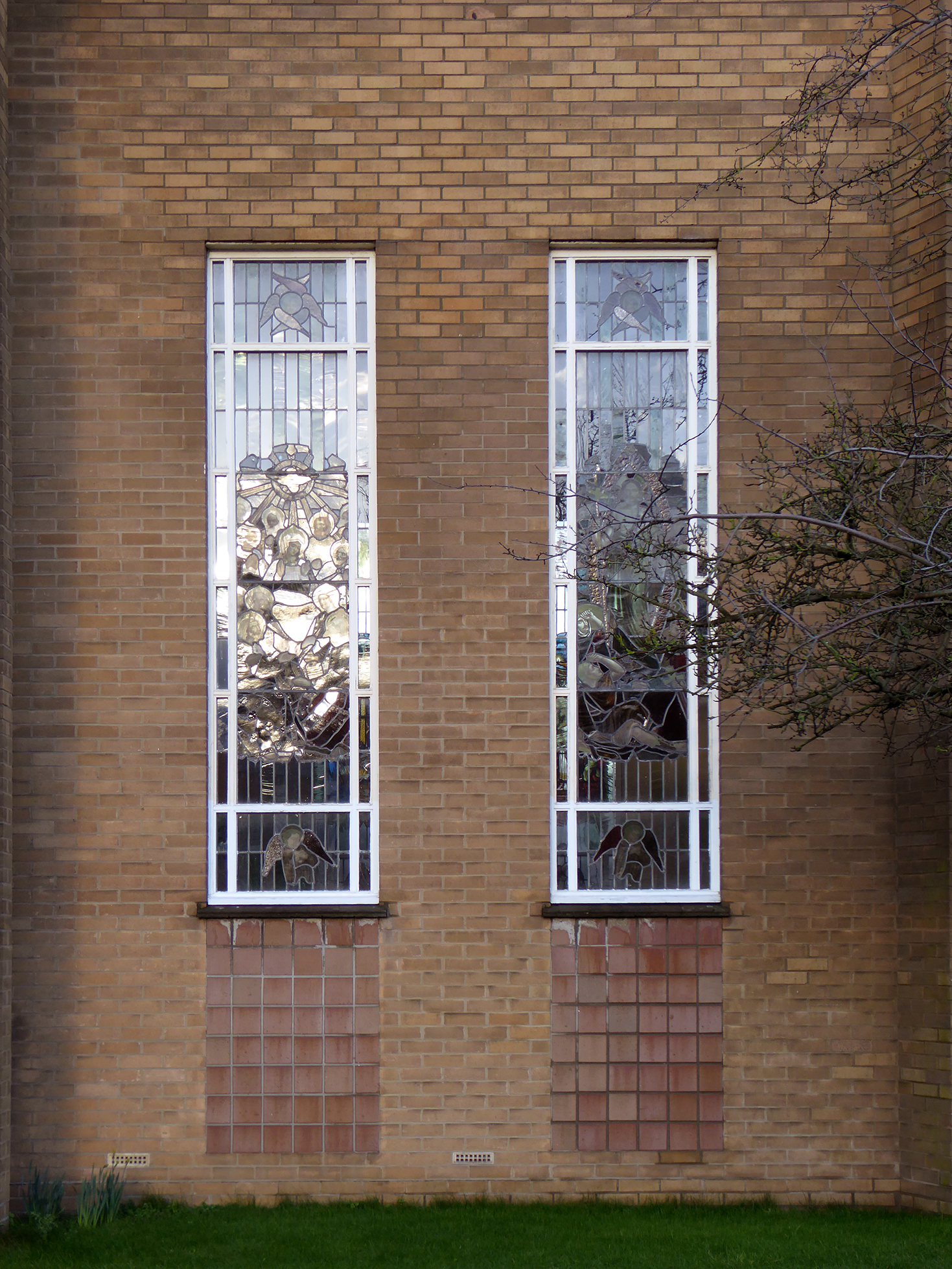
Figurative stained glass by Patrick Feeny for Hardman in 1973 and abstract glass fitted in 2000 as part of reordering and revival of the shrine.
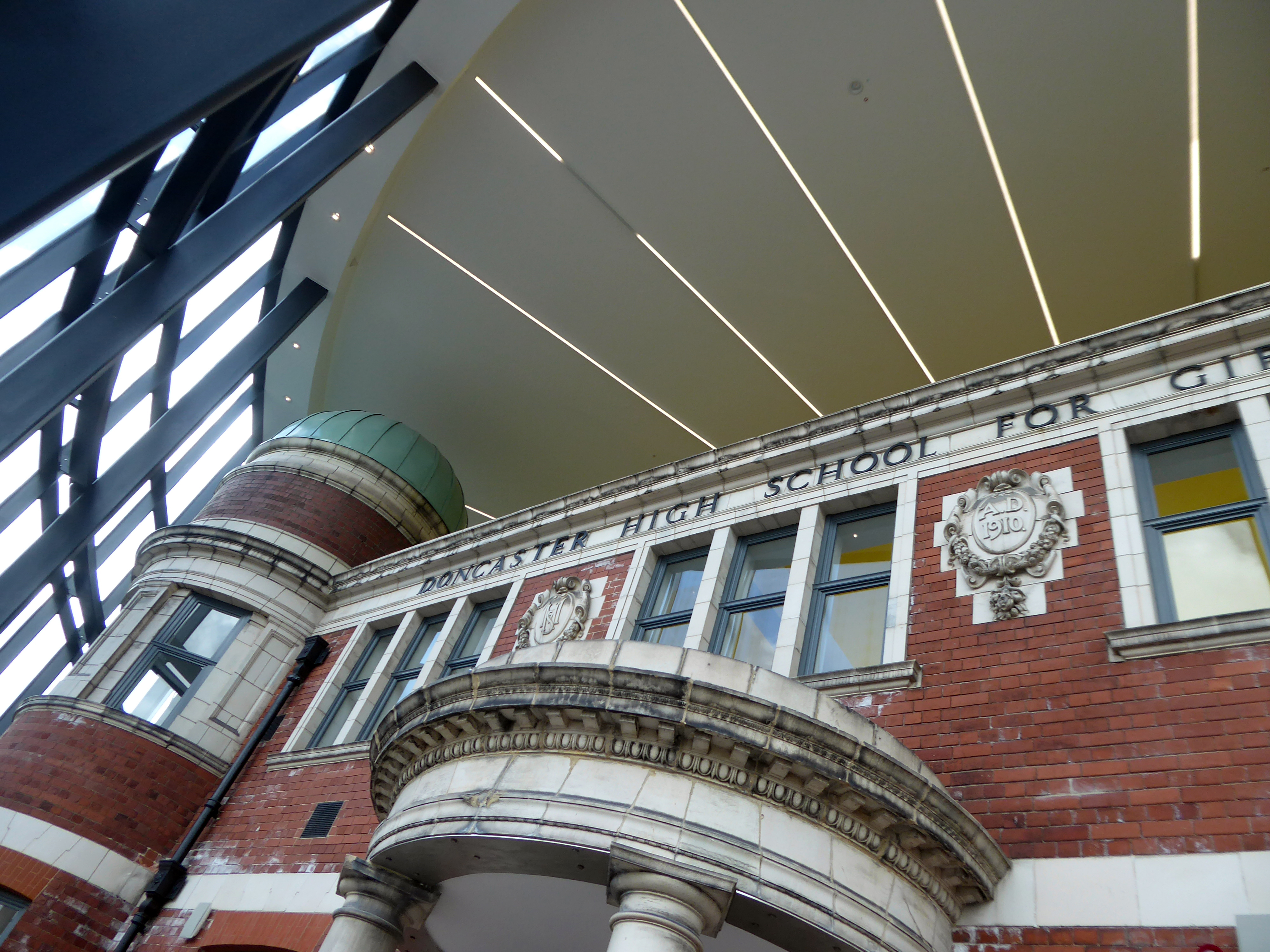
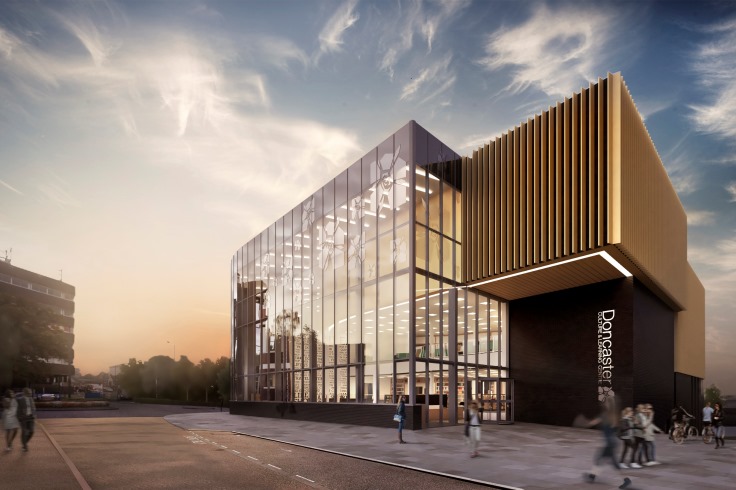
Designed by architects Bond Bryan and built by main contractor Willmott Dixon, the new cultural and learning hub has been created following the restoration of four existing buildings.
A key focal point of the scheme is the restored frontage of the Edwardian former Doncaster High School for Girls, which has been framed by Senior’s slimline SF52 aluminium curtain wall and showcased within a new steel-frame building. The glazed facade, which was fabricated and installed by Senior’s supply chain partner Chemplas, also features Senior’s aluminium commercial doors.
The railway station was built in 1849 replacing a temporary structure constructed a year earlier. It was rebuilt in its present form in 1933 and has had several slight modifications since that date, most notably in 2006, when the new interchange and connection to Frenchgate Centre opened.
The front elevation is realised in a typical inter-war brick functionalist style.
Of particular note are the lobby lighting fixtures and clock, the booking hall and offices are listed Grade II.
There are plans to redevelop the station approach replacing the current car parking with a pedestrianised piazza.
The High Street boast a former branch of Burton’s with its logo intact.
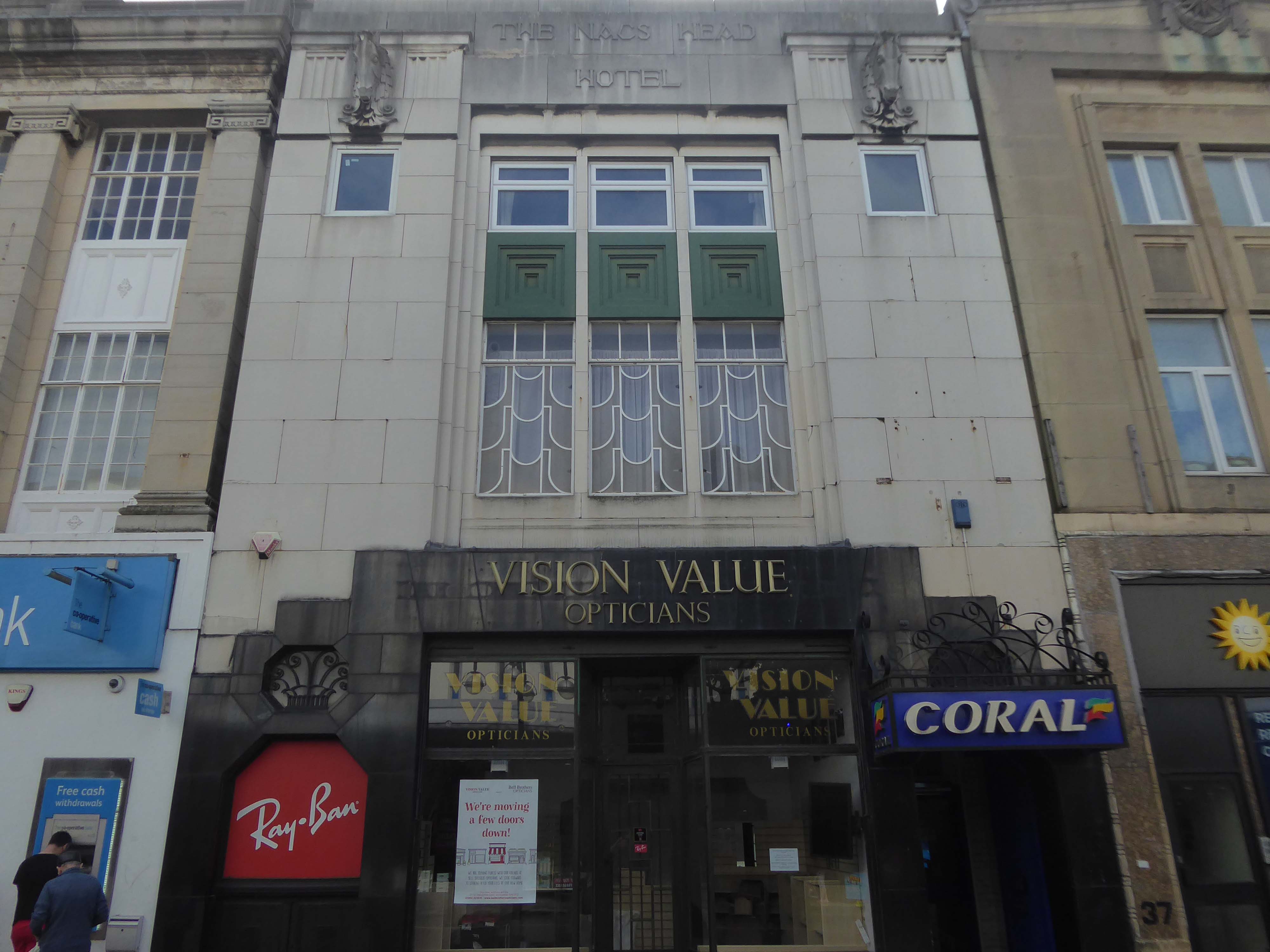
An intriguing Art Deco shop frontage – combining a menswear outlet with a pub.
Further along an enormous Danum Co-operative Store in the grandest Deco manner – 1938-40. Designed by T H Johnson & Son for the Doncaster Co-operative Society Ltd.
Currently partially occupied with no access to the glass stairways.
Following the development of the Frenchgate Centre the Waterdale Centre sunk into a slow decline.
And the Staff of Life has lost a little of its estate pub period charm, following successive typographic makeovers and paint jobs.
From 1949 onwards plans were afoot to develop the Waterdale area of Doncaster – civic buildings, courts, educational provision and the like, WH Price the Borough Surveyor at the helm. In 1955 Frederick Gibberd was appointed to oversee the site, though many of his designs were unrealised, his Police Station and Law Courts opened in 1969.
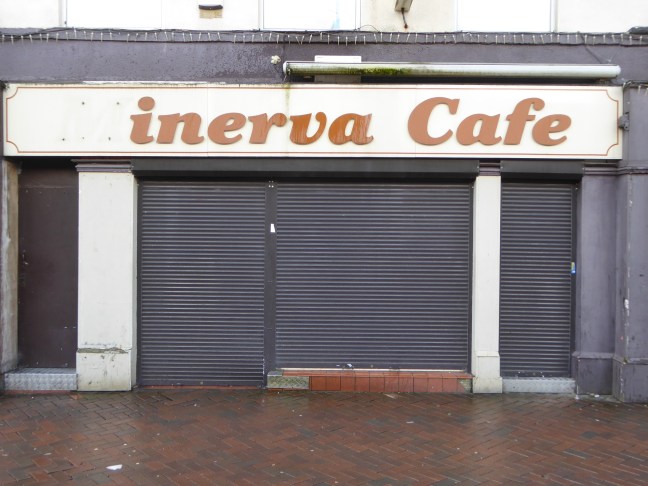
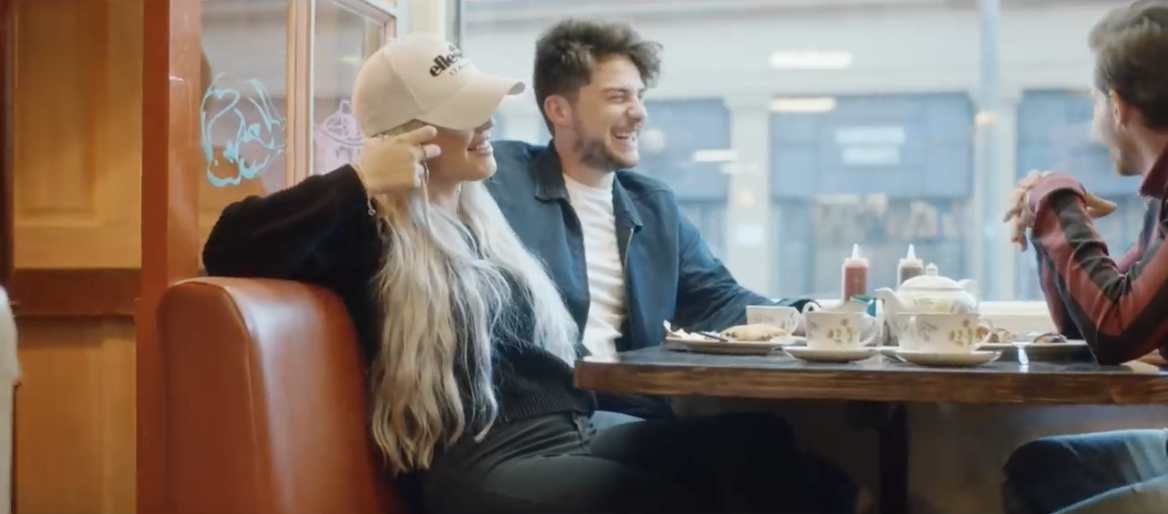
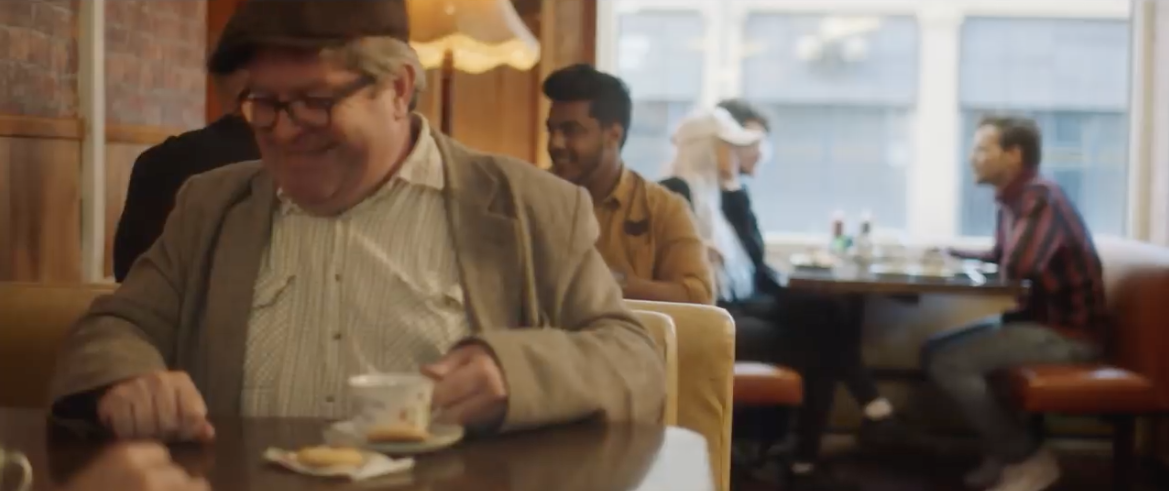
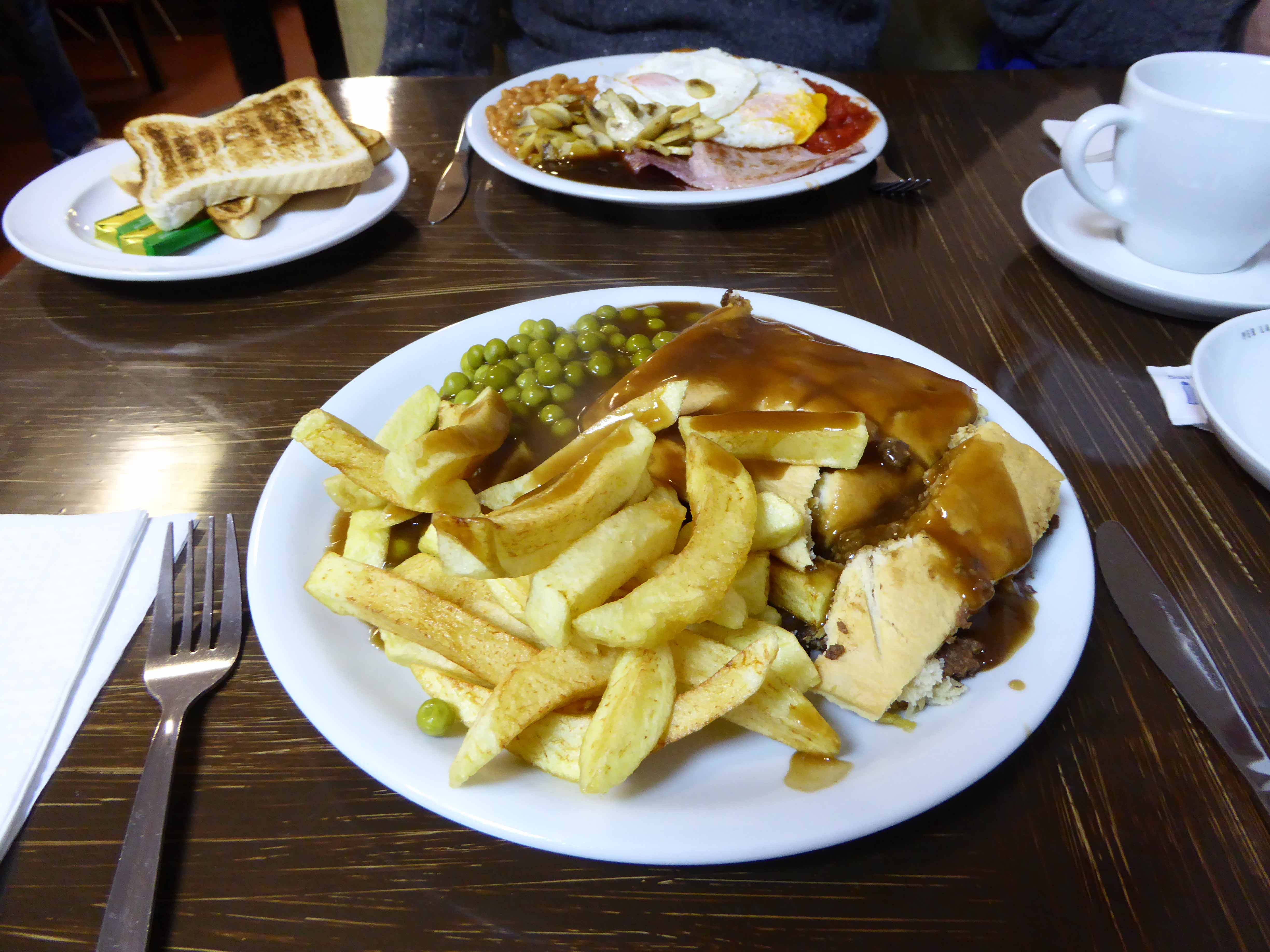
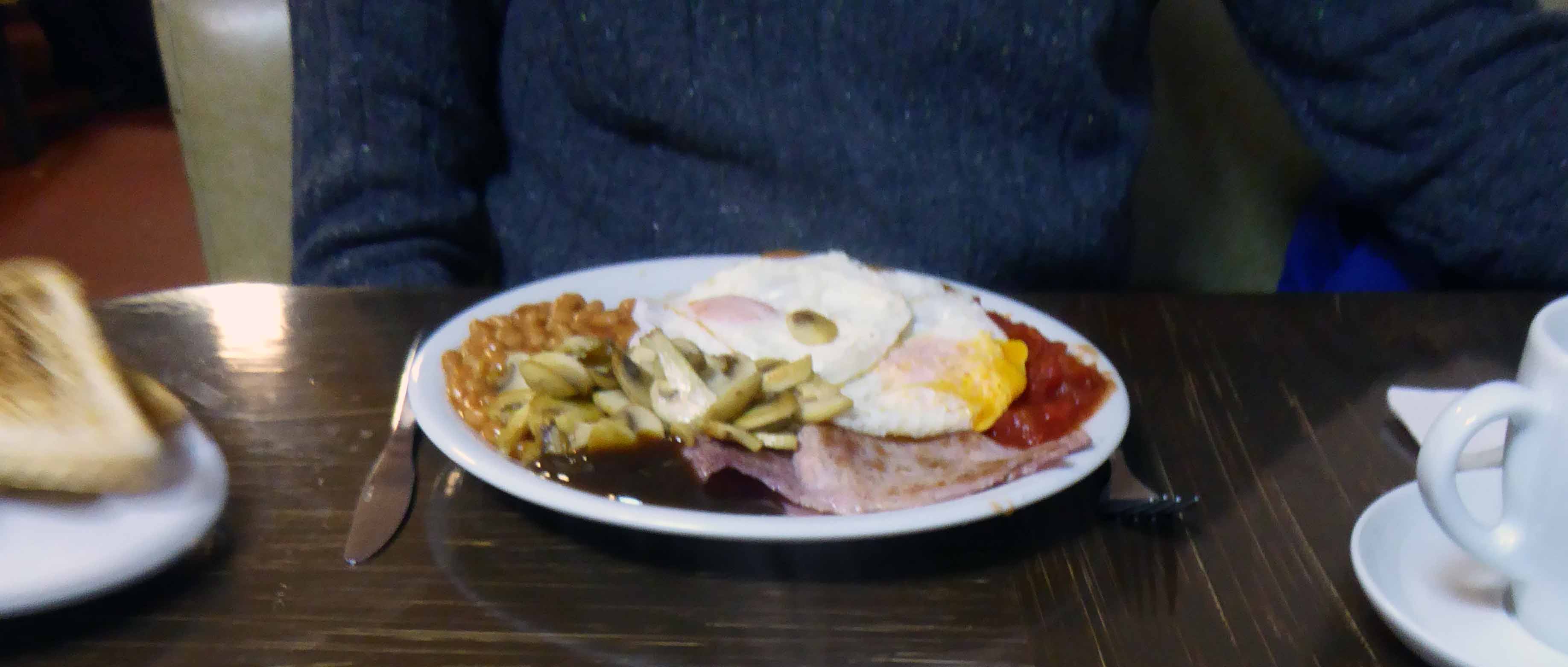
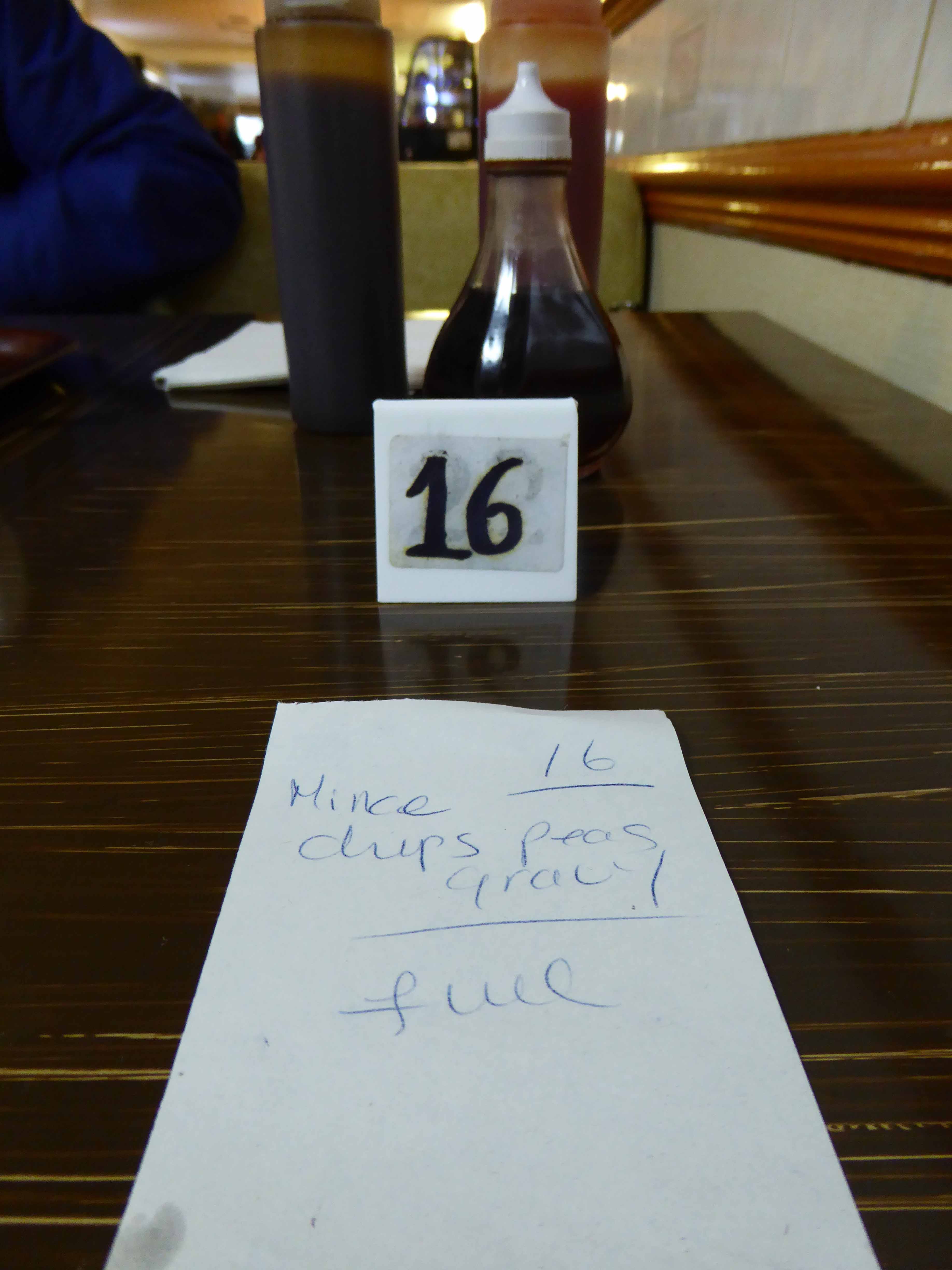
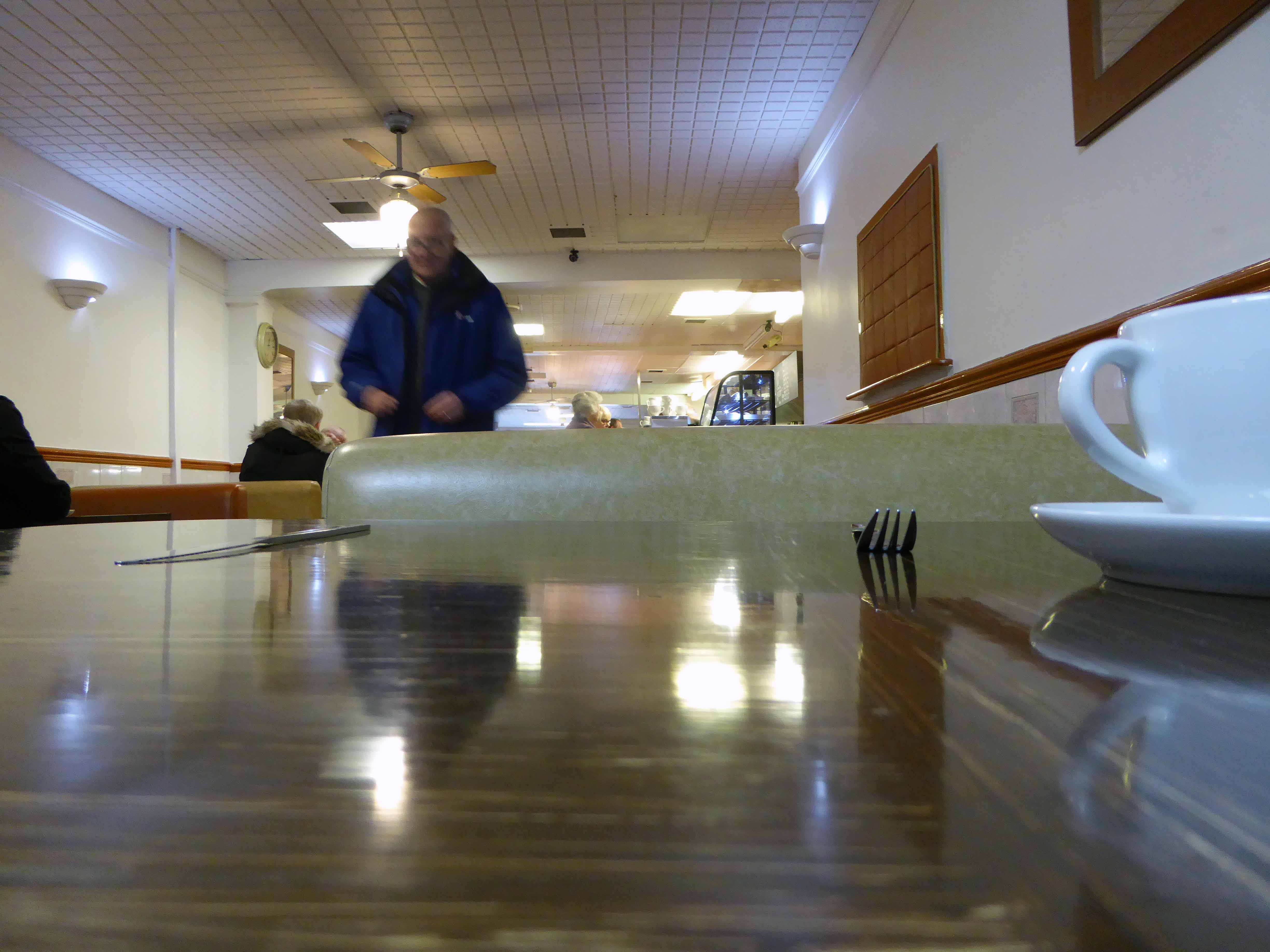
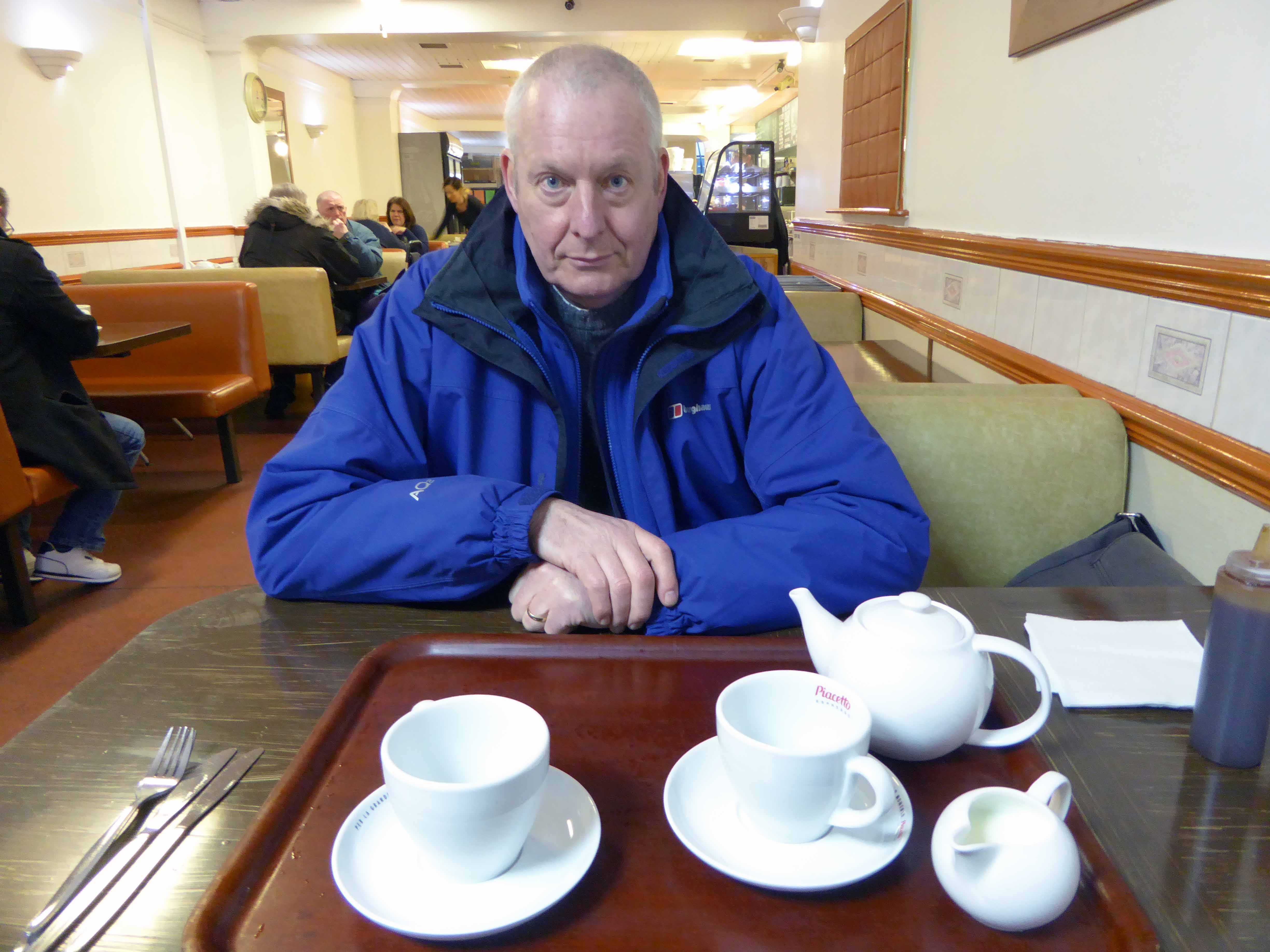
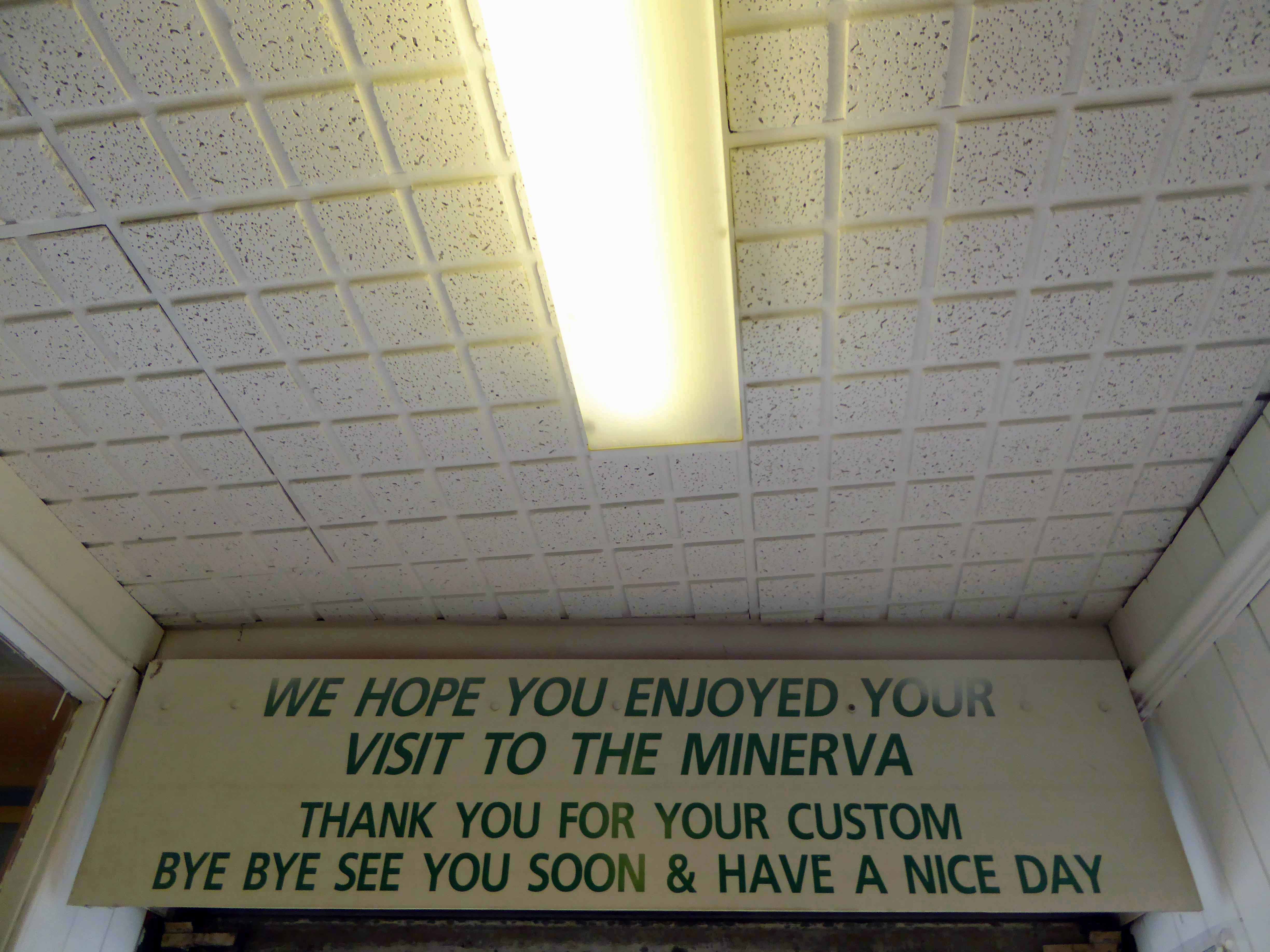
A Doncaster town centre cafe, once used by former pop star Louis Tomlinson to film a pop video, has closed after trading for more nearly 50 years near the market. The Minerva Cafe has closed down after trading sine the 1970s offering breakfasts and lunches to shoppers.
The shutters are now down on the shop, which has not now been used for two weeks, say neighbouring businesses. Minerva was well known for its big breakfasts which often earned rave reviews on the internet. It also had a celebrity link, having been used by the former One Direction star Louis Tomlinson for the shooting of his Back to You video, last year. Doncaster Council town center bosses confirmed they understood the cafe had closed down, but did not know the reason. Long serving Doncaster market trader Nigel Berrysaid he had seen no sign of activity at the cafe for two weeks. He said: It has been here in the market for such a long time. It’s been there since I first started on the market in 1971. People have commented to me it feels like it has been there forever.
“It is a shame to see it closed. It has been a bit of an institution round here.”
A church shrouded in history and mystery – and on the day of my visit:
Torrential rain.
How appropriate as:
On the eve of the Reformation came a reputed miracle for Robert Leche and his family who were saved from drowning after invocation of Our Lady of Doncaster.
Its location on the Great North Road seems to have placed it through the years at the centre myth and magic.
On 30 November 1350, licence was granted for alienation in mortmain by, John son of Henry Nicbrothere de Eyoun and Richard le Ewere of Doncastre to the Carmelite Friars who are coming there to dwell in the town of Doncastre, of a messuage and six acres of land there, to build thereon a church in honour of St Mary and houses to dwell in.
A shrine was established to Our Lady of Doncaster.
Time and the Reformation were not kind to the shrine and Our Lady.
She and the church of St Peter came and went over the years until:
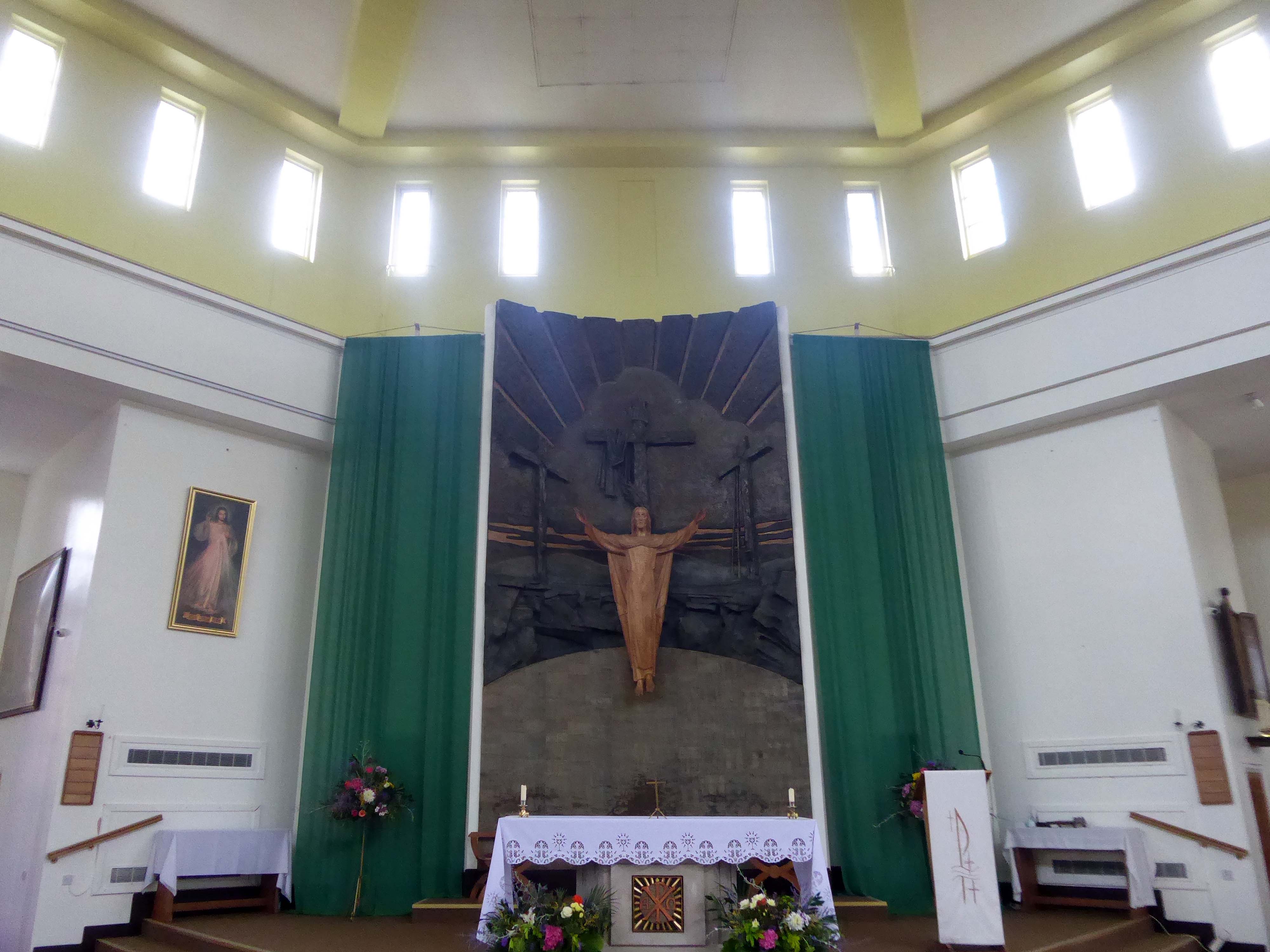
A new church was opened by Cardinal Heenan on Palm Sunday 1973, octagonal in shape. John Bentley’s Tabernacle Door, the four reredos panels and the altar designed for the old church are incorporated in the Blessed Sacrament Chapel of the new church.
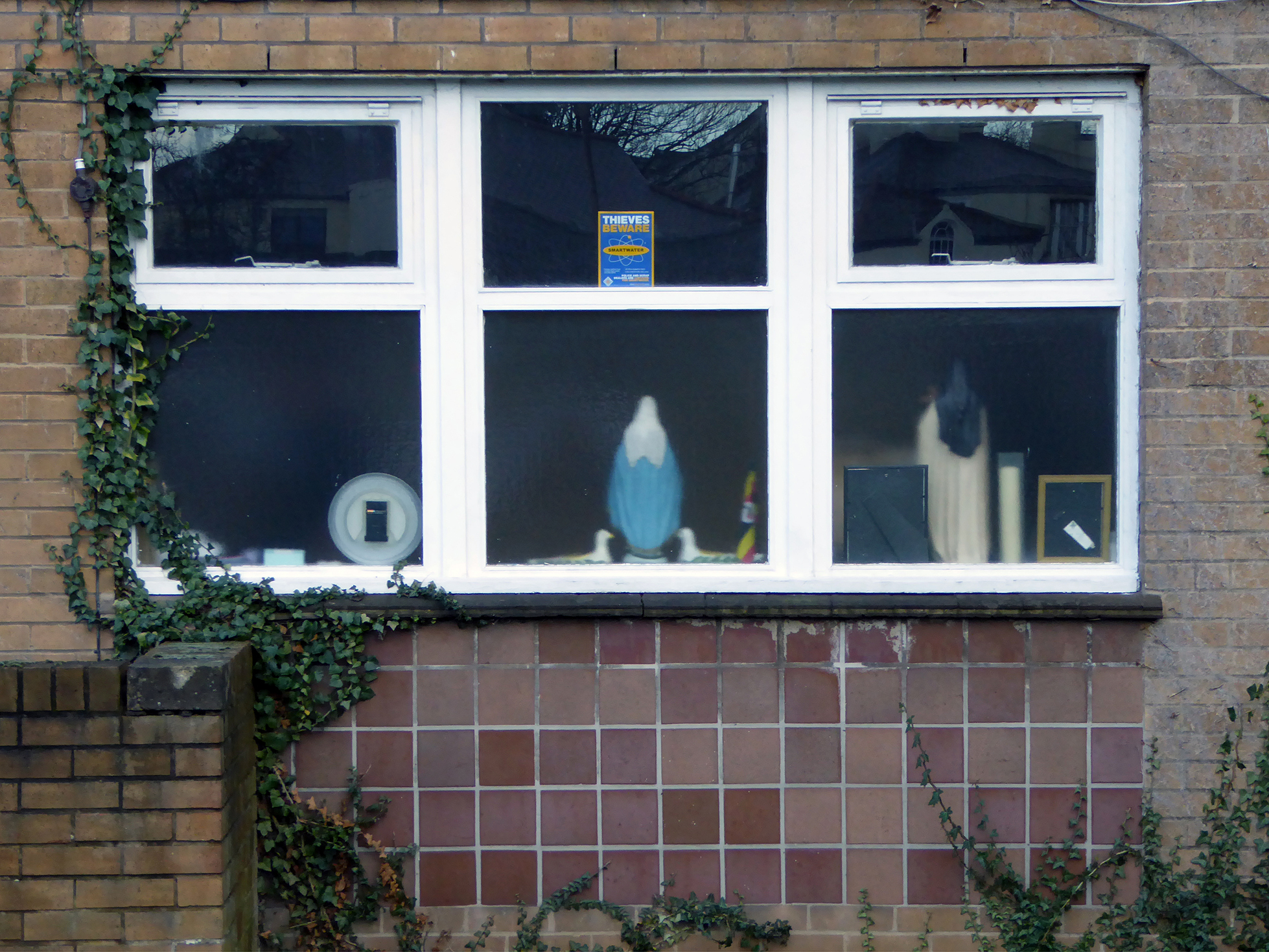
The statue of Our Lady of Doncaster now stands in a circular shrine chapel on the north side of the church. Phyffers’ statue stands in an oak reredos with modern stained glass windows depicting St Joseph, the Annunciation, the Nativity and the Assumption.
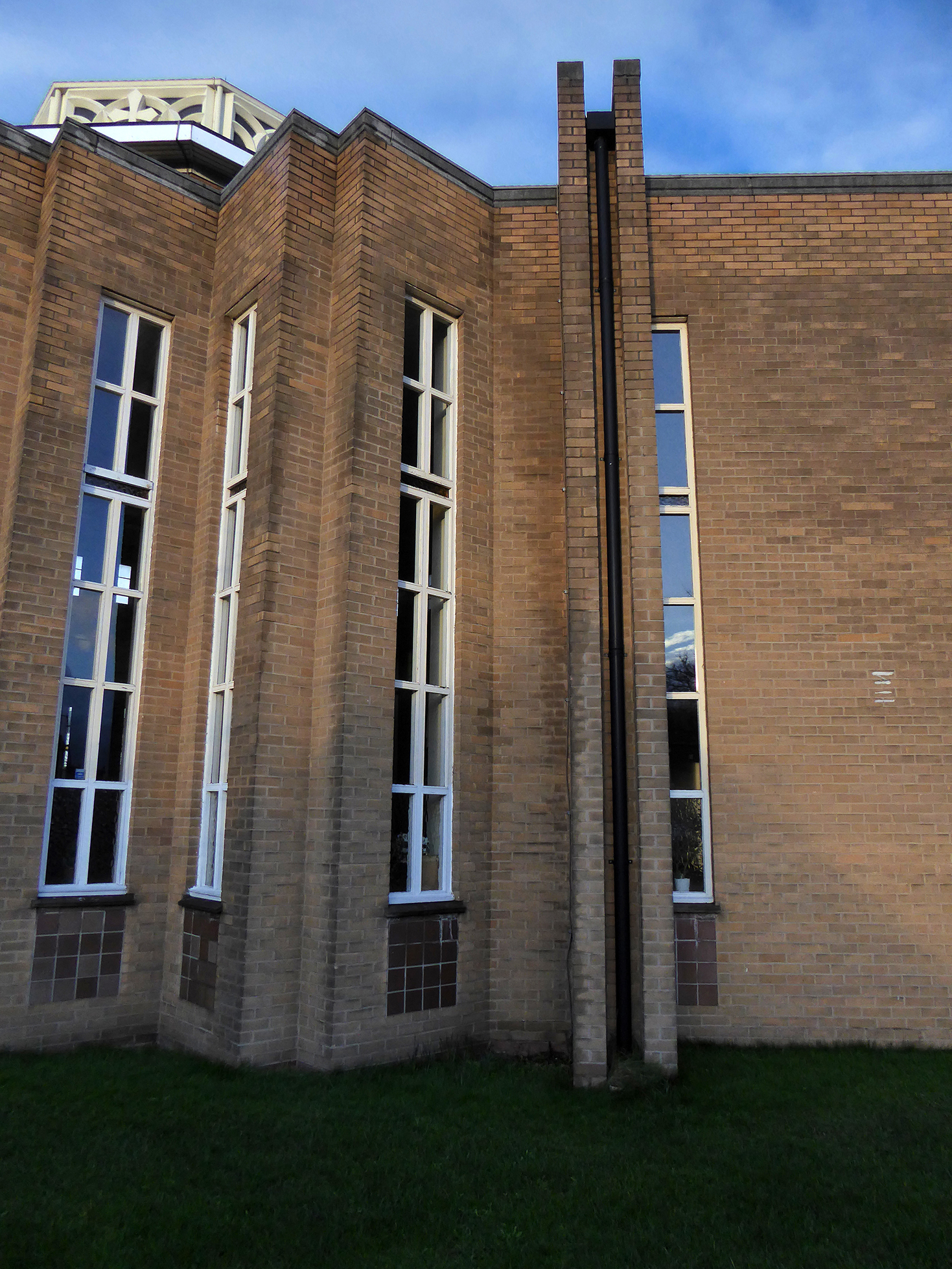
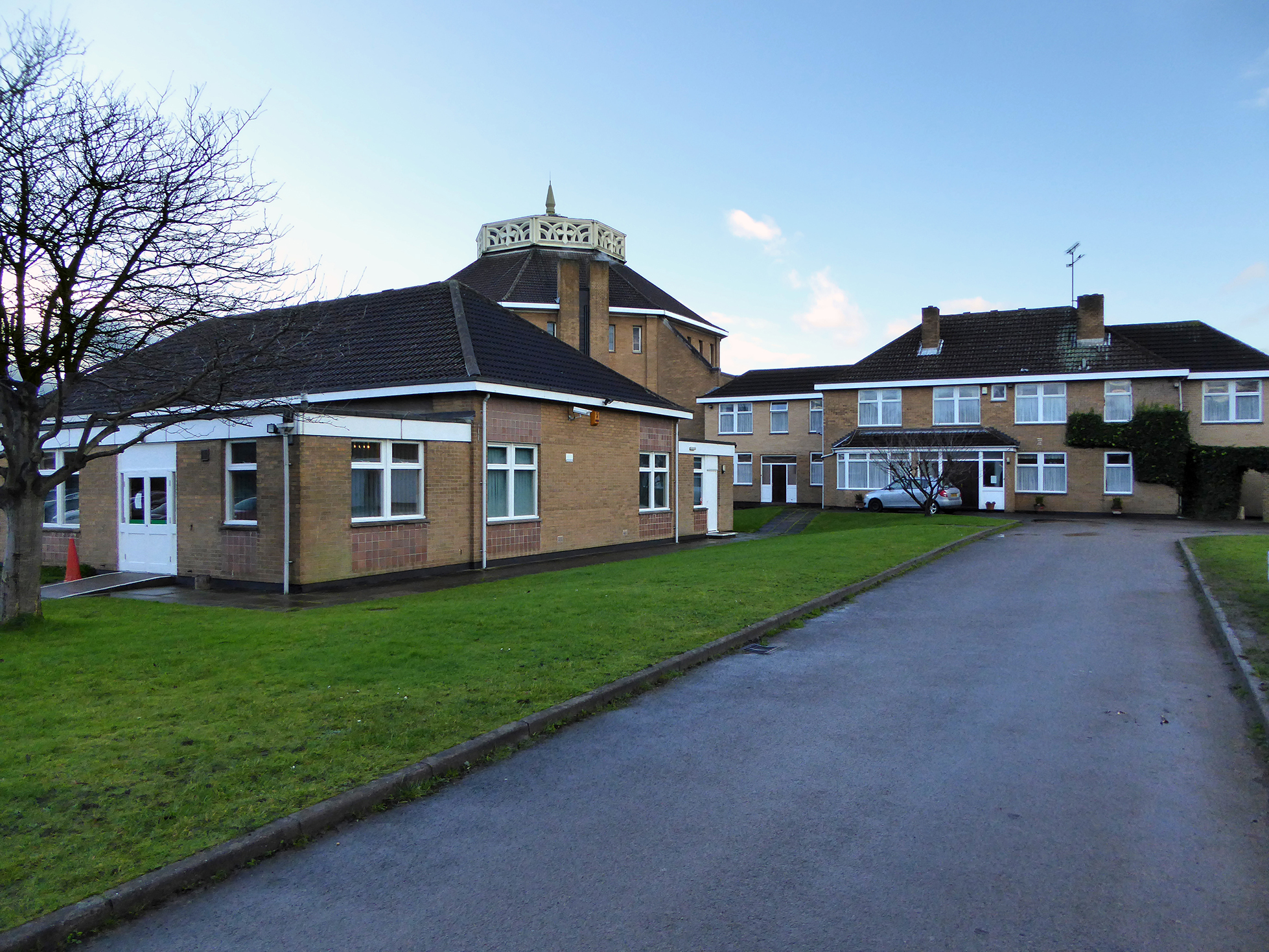
A large and striking design by J. H. Langtry-Langton, incorporating important furnishings by J. F. Bentley from the predecessor church, along with good furnishings of the 1970s. The churches houses the modern successor to the medieval shrine of Our Lady of Doncaster.
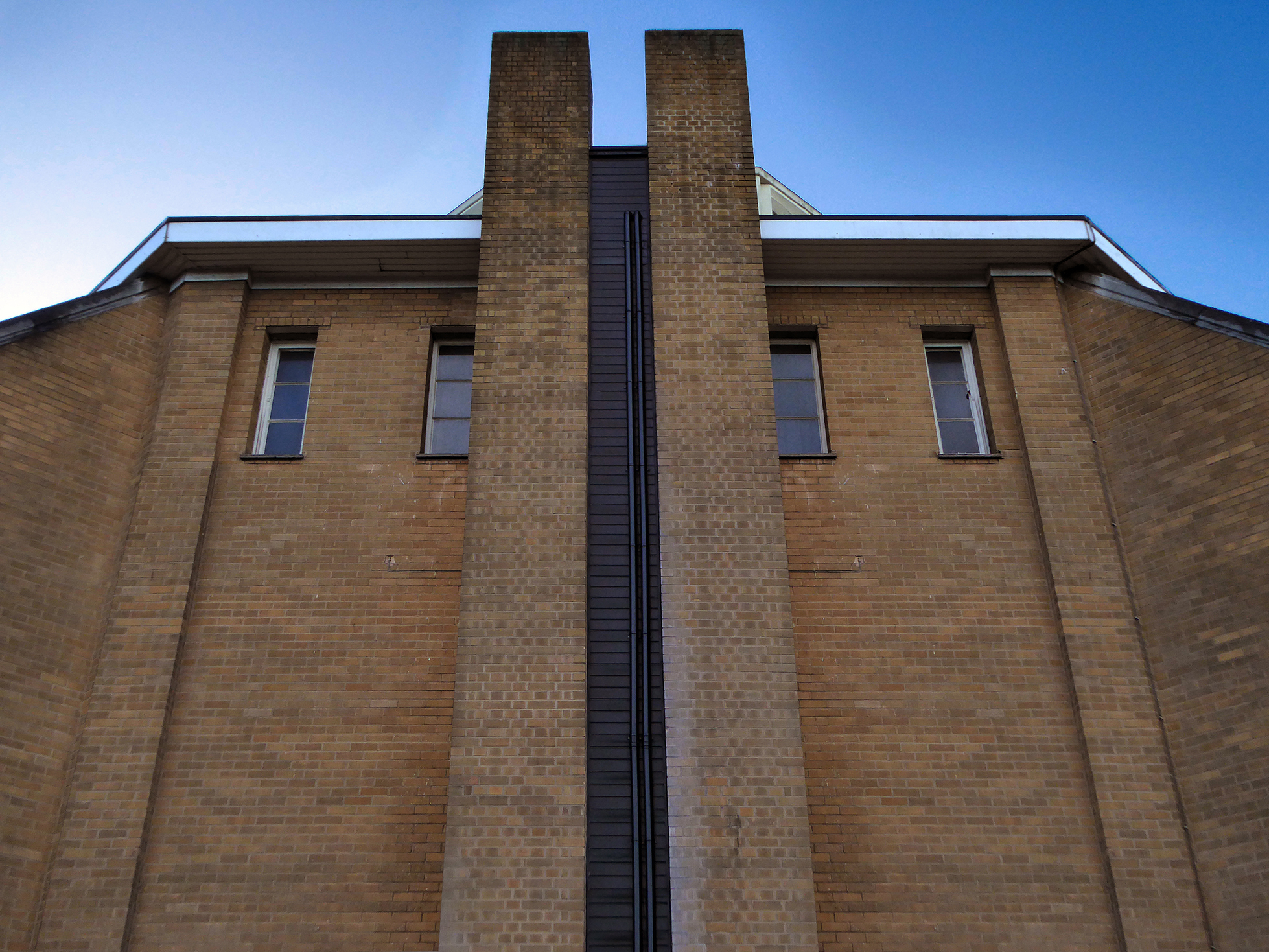
Ambitious in scale, dotted with vertical detail, the main body of the church has an integrated meeting hall and clerical house. I remain however, more than somewhat unconvinced by its brick monumentality.
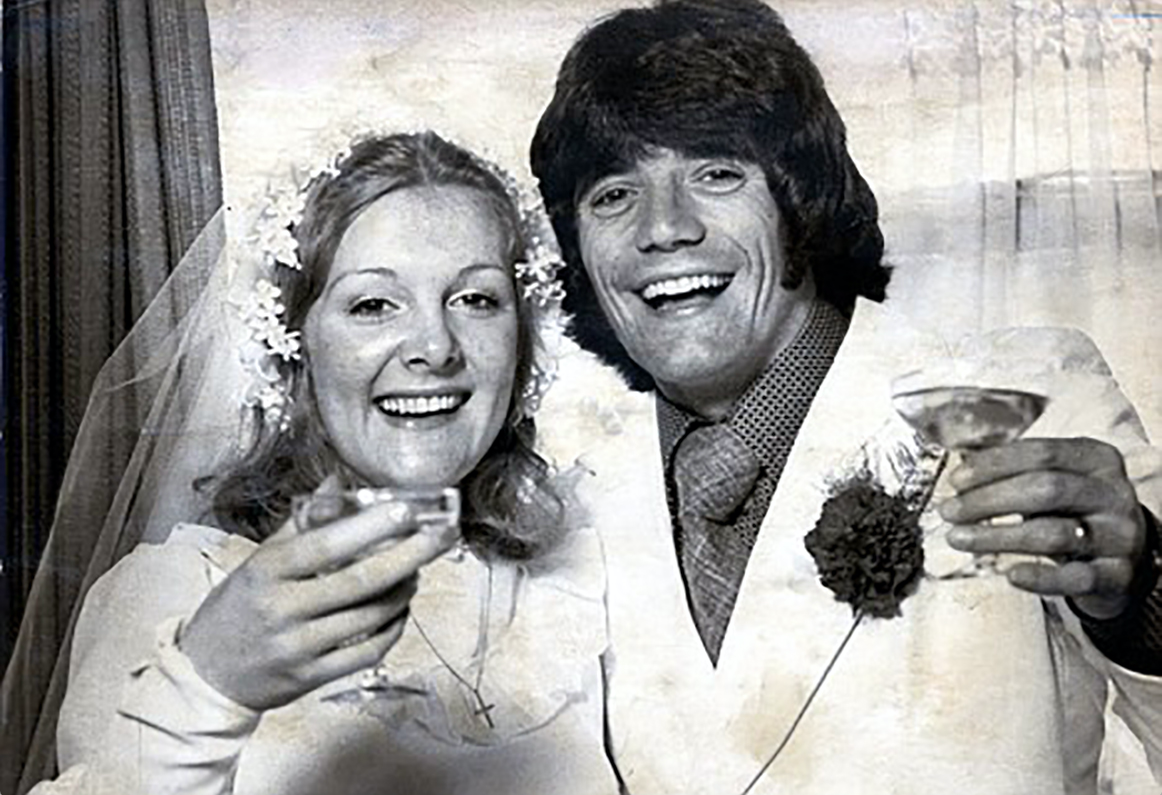
On September 23, 1974, the budding Liverpool star married his childhood sweetheart, Jean, at St Peters in Chains Roman Catholic Church in his hometown of Doncaster.
There was no fanfare, no fans, no celebrity guests and certainly no Hello! style deal. Kevin was just 24, his bride a year younger.
Watching them with a tear in their eyes were his proud parents, Joe, a miner, and Doris.
Kevin says: ‘Jean and I hadn’t planned to get married for months, but I had a five-week ban for fighting with Billy Bremner and, as they say, every cloud has a silver lining, so we decided to use the time to get married quietly.’