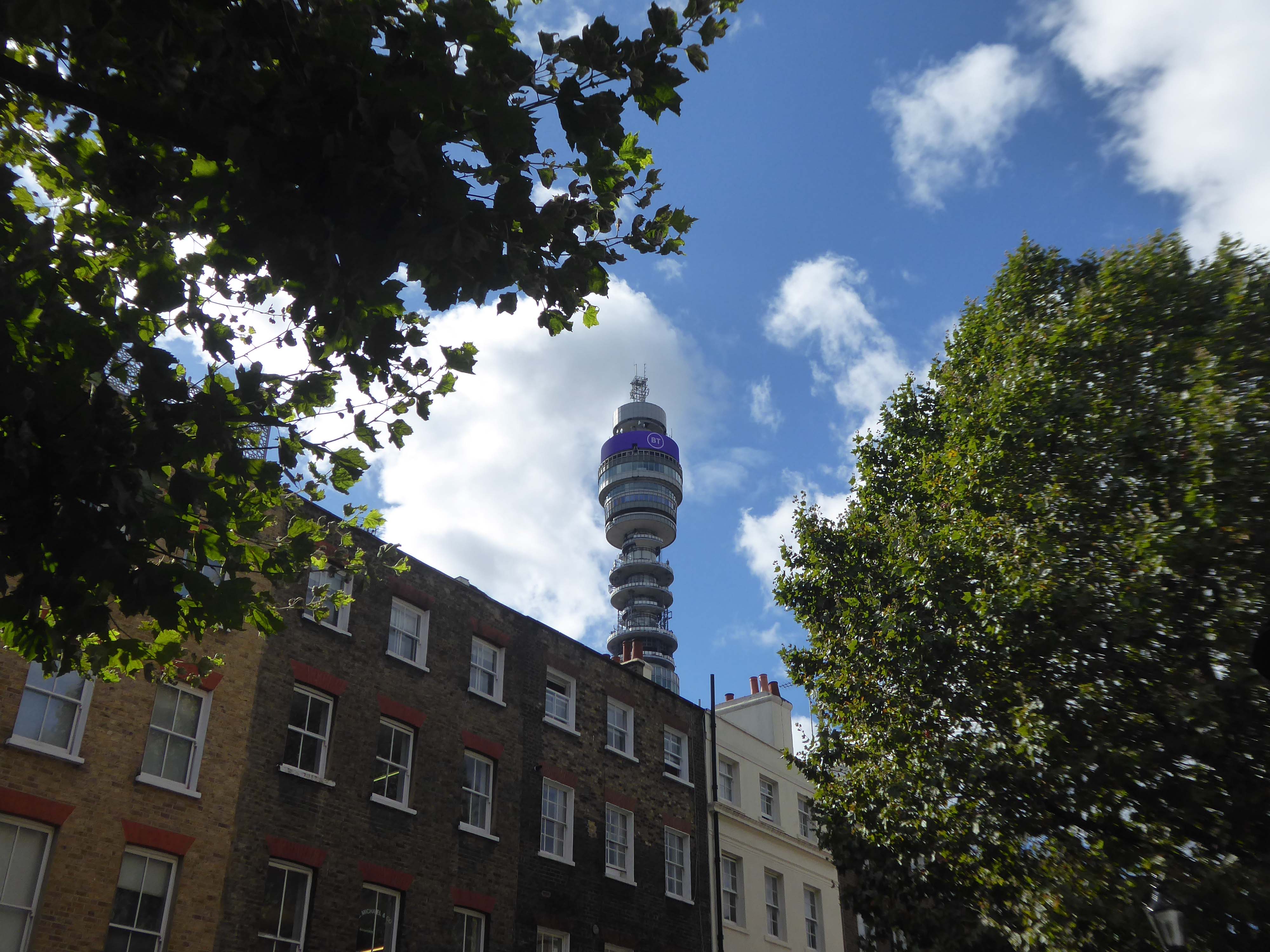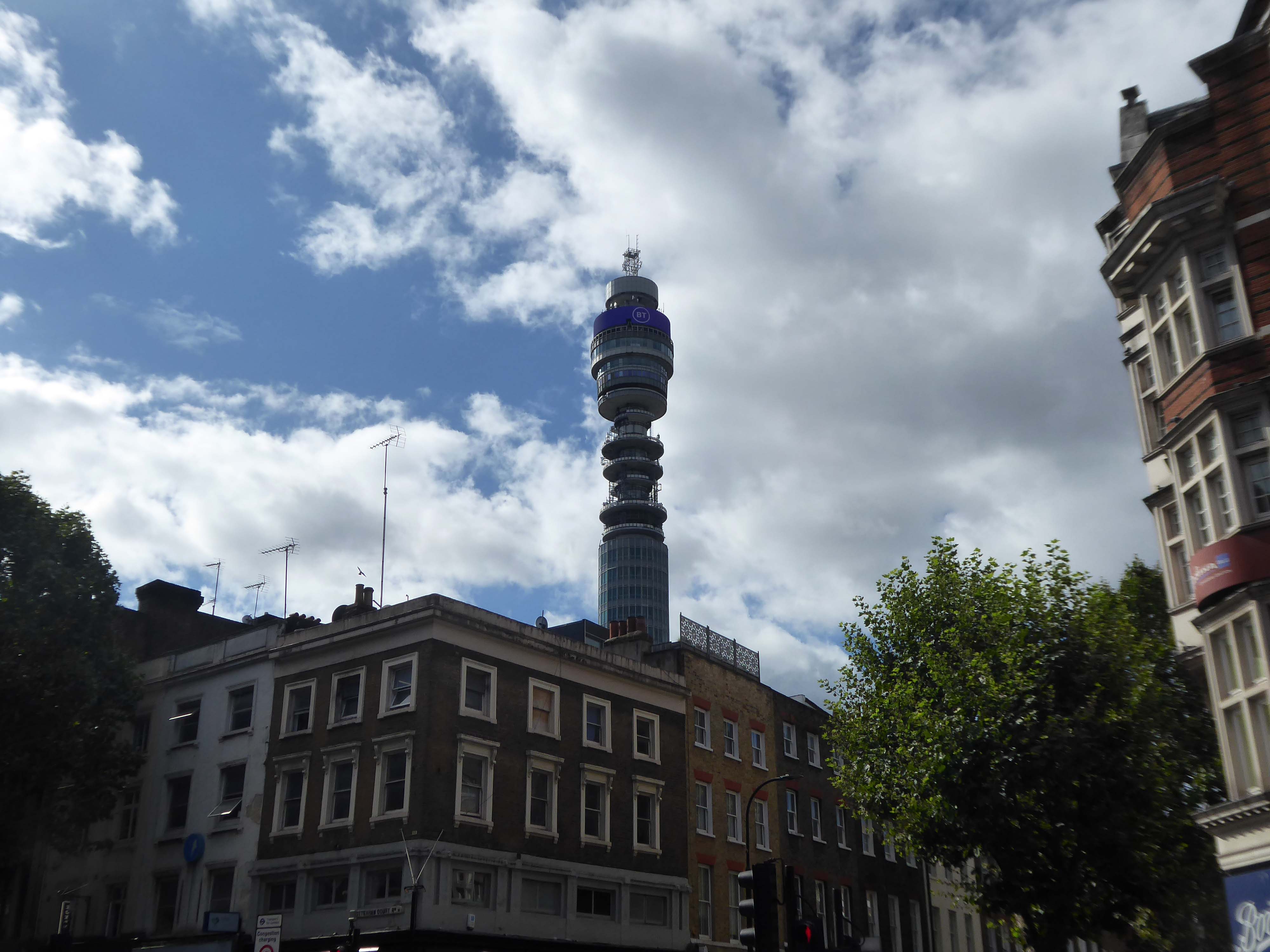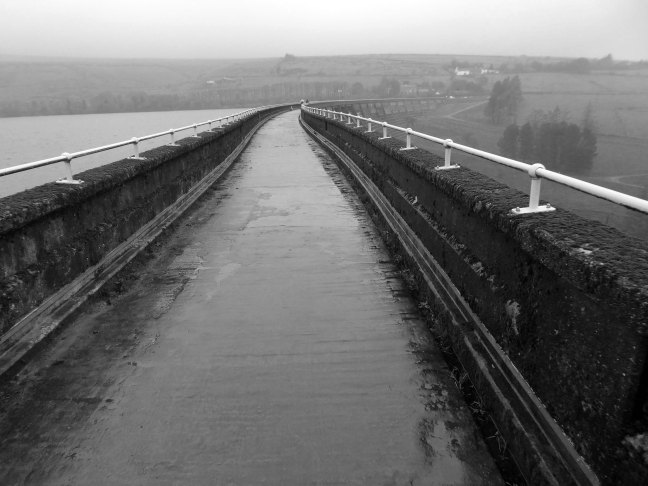
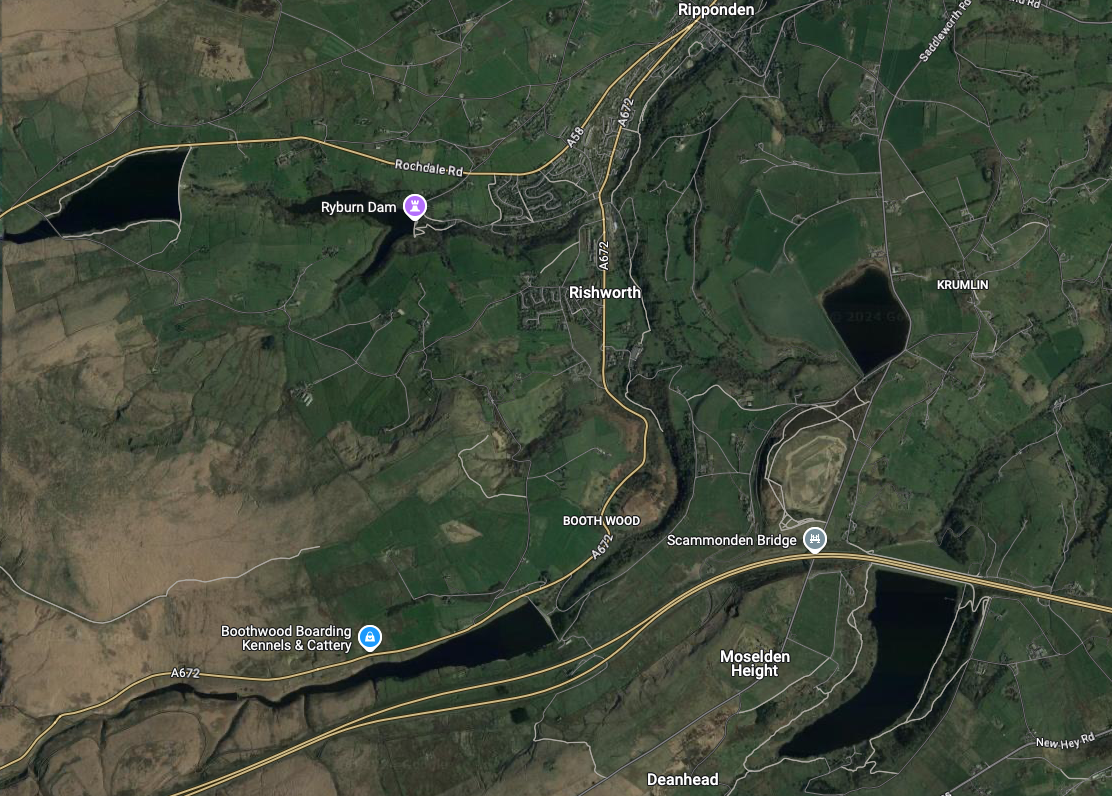
Several Yorkshire Reservoirs

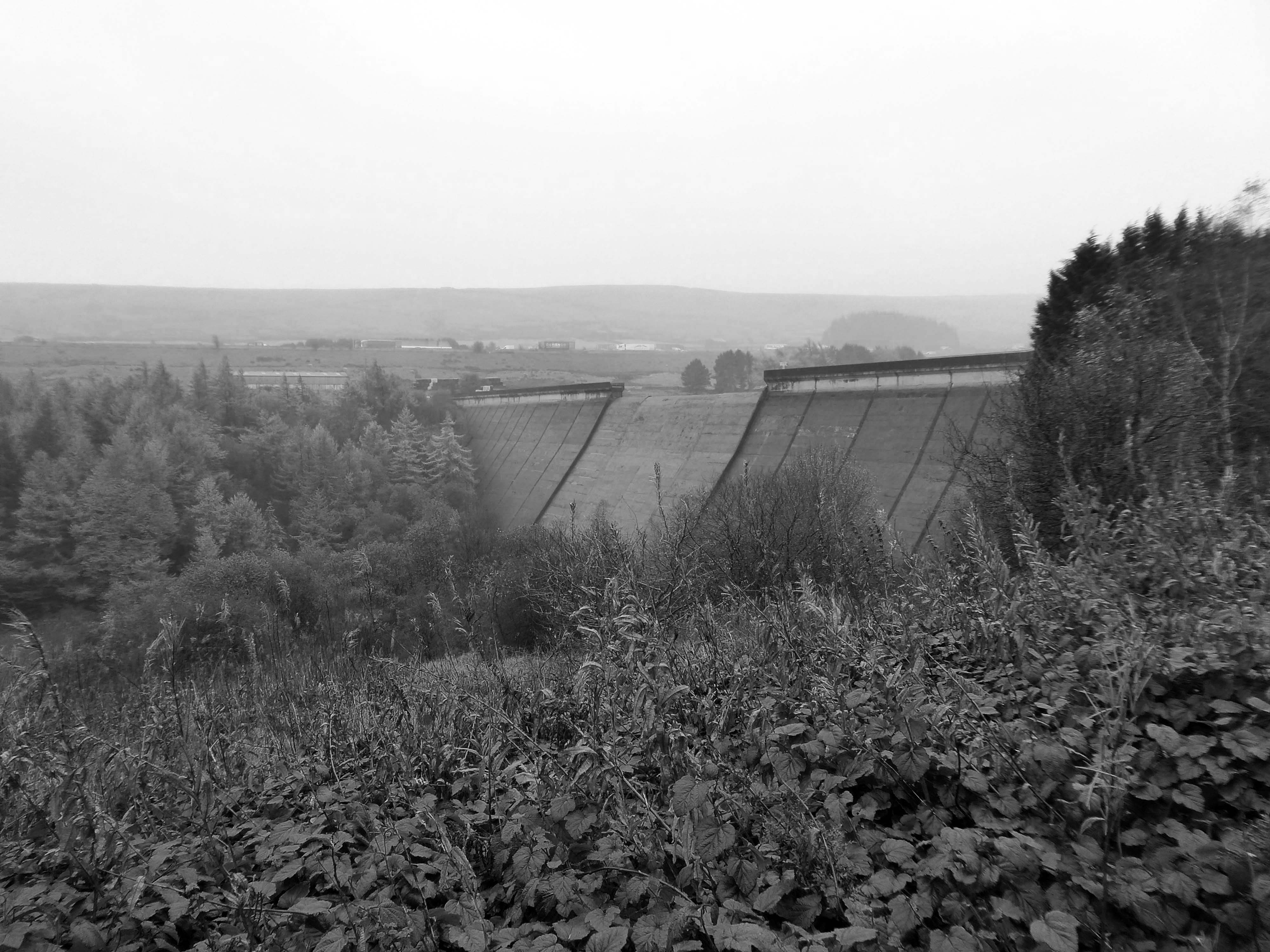
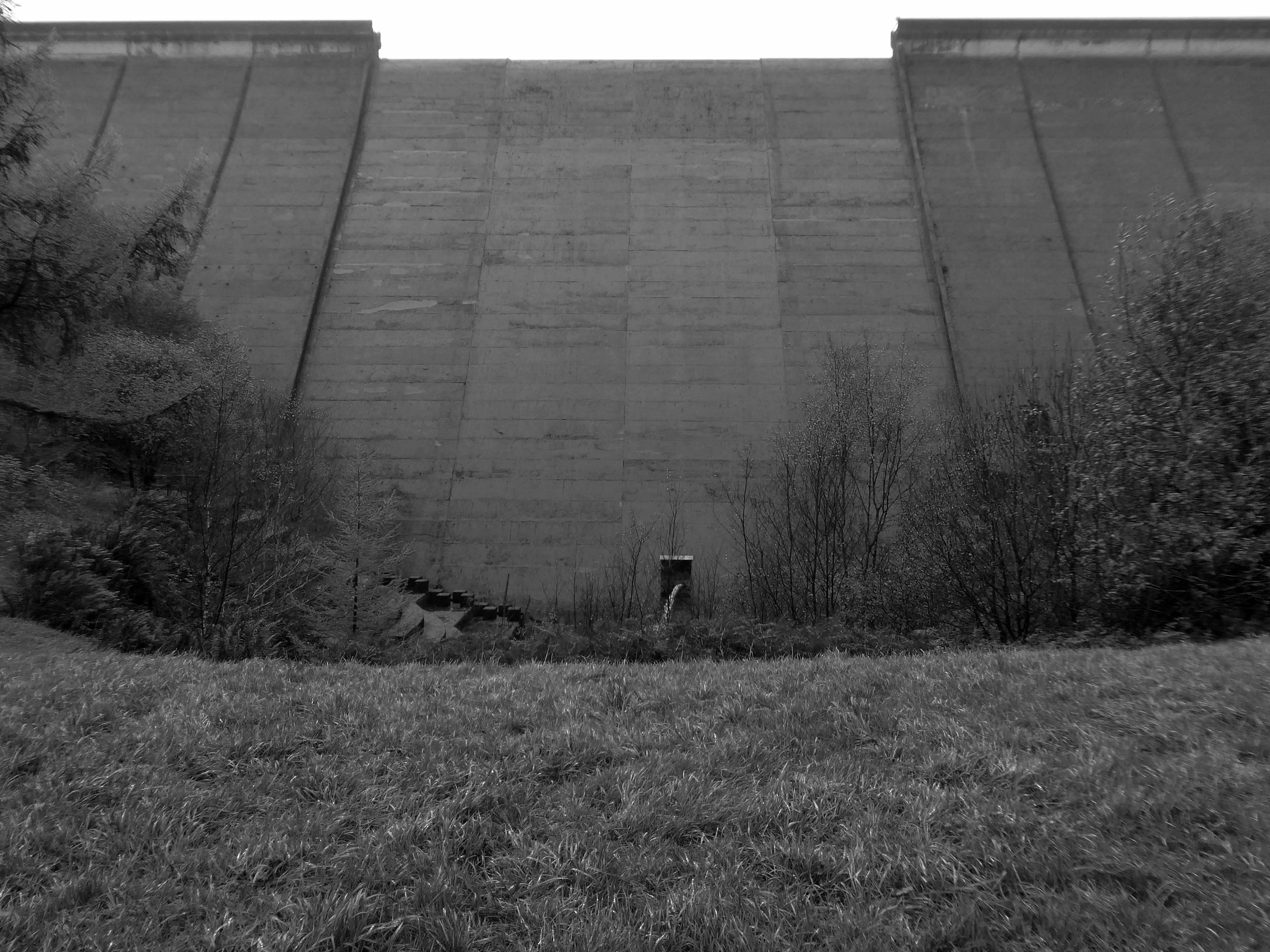
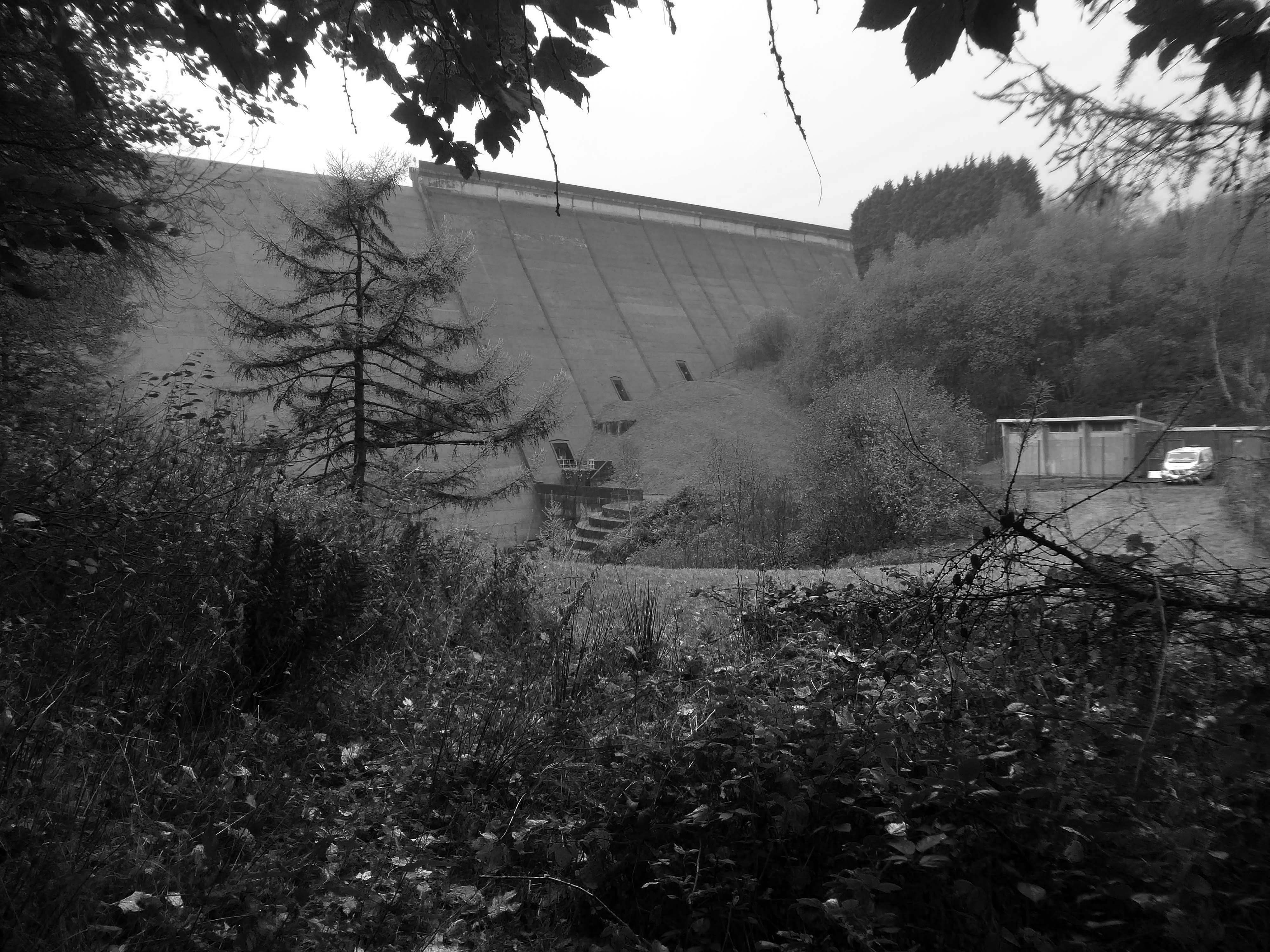
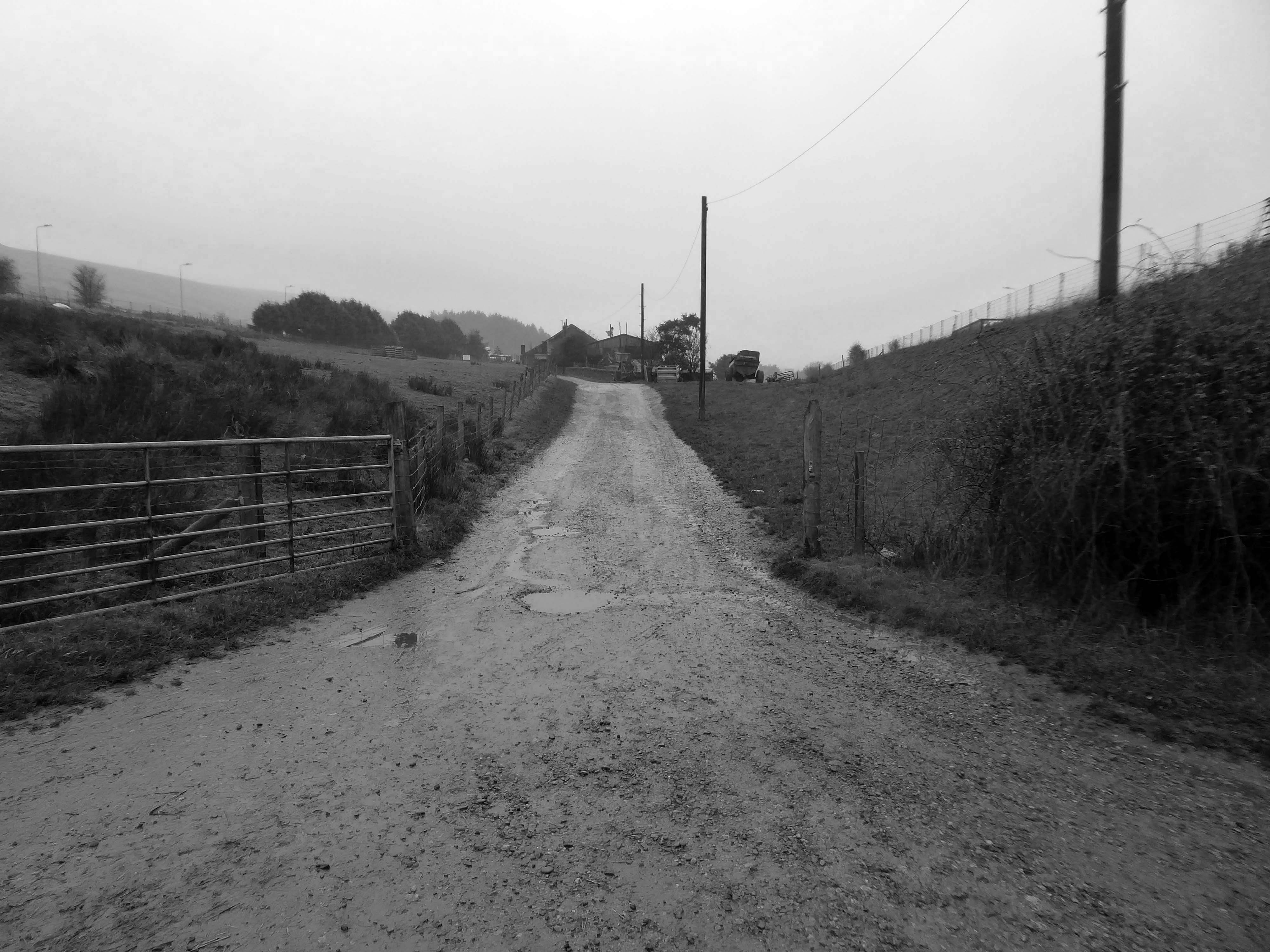
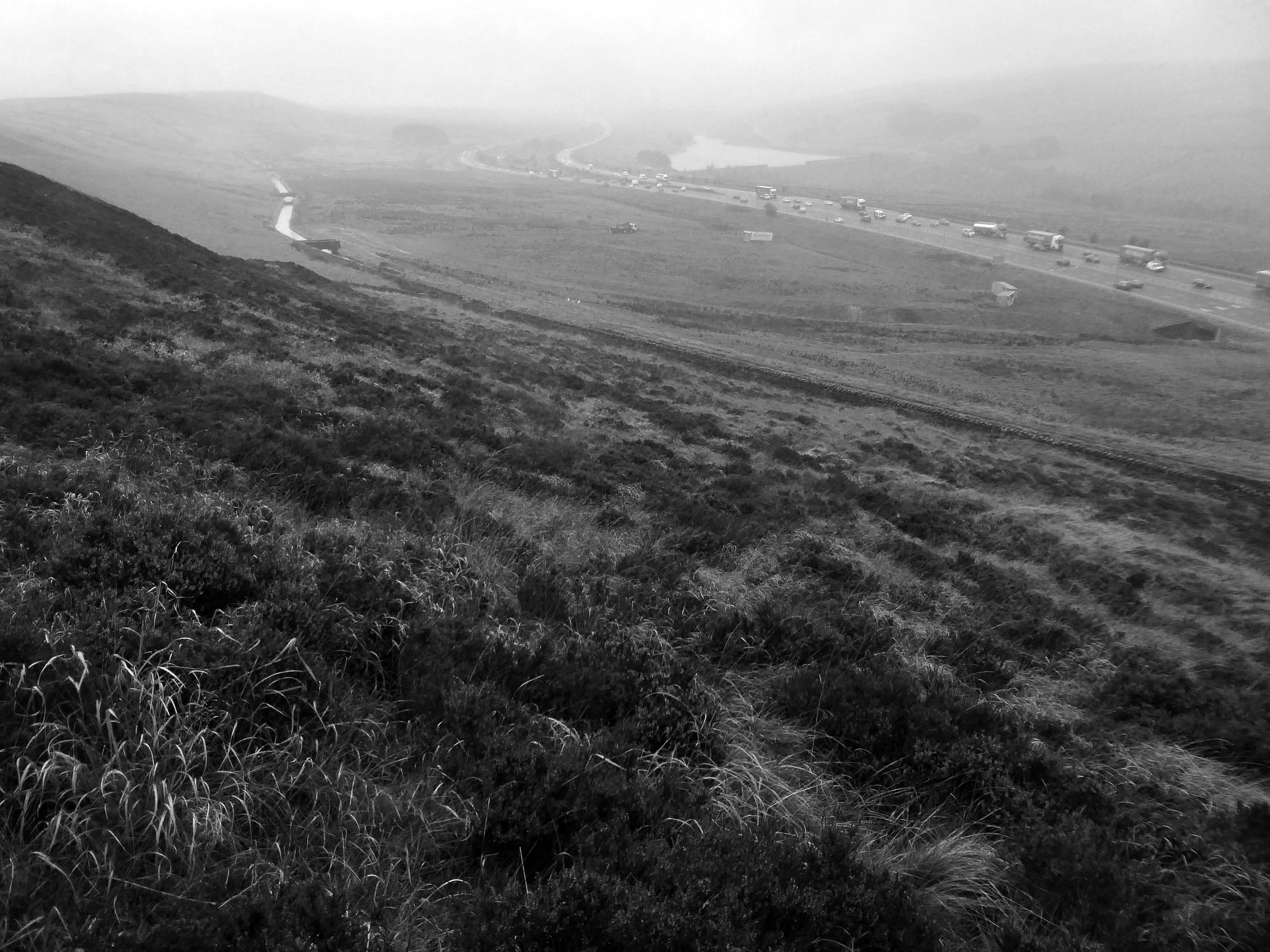
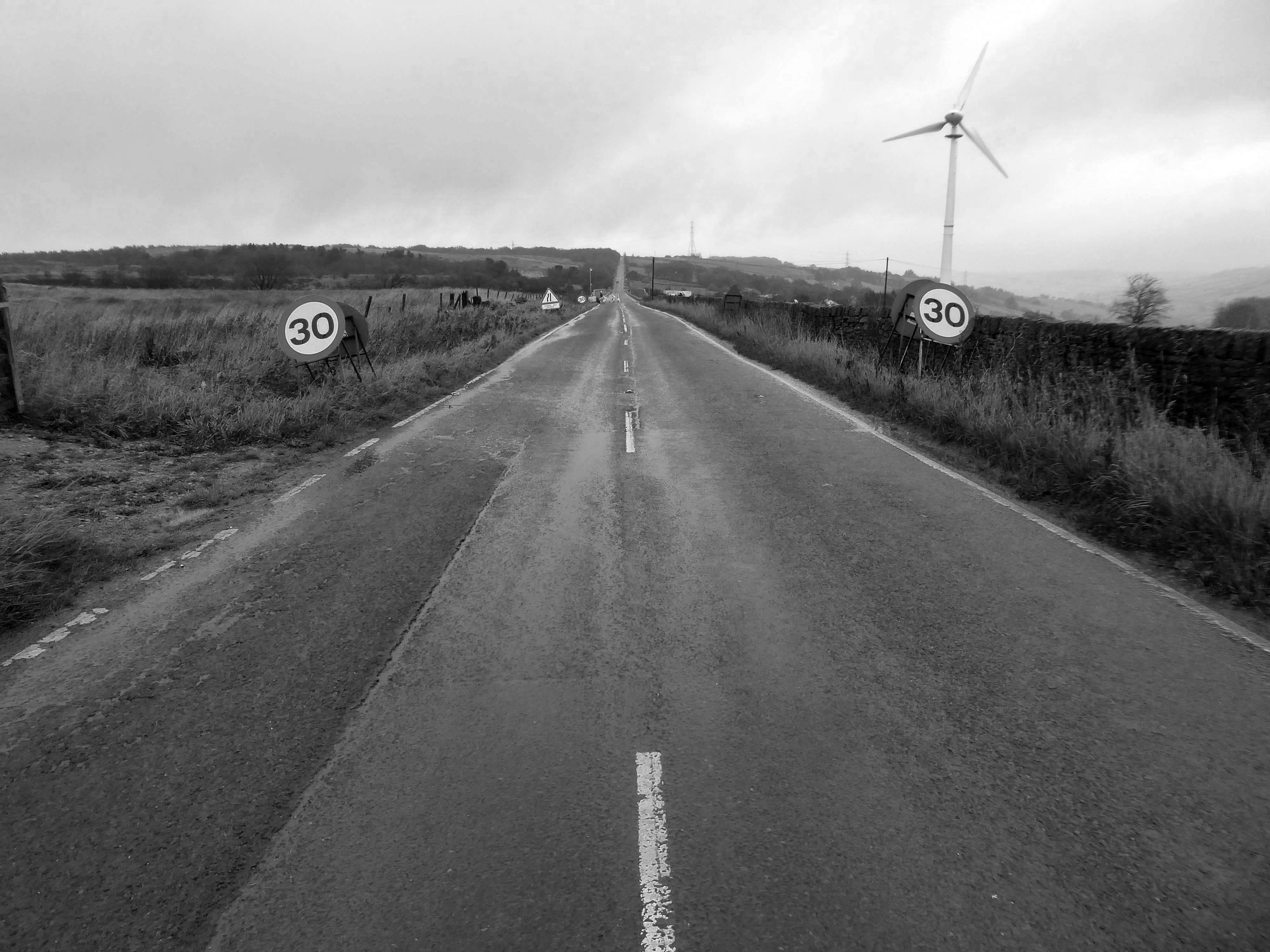
To begin at the beginning, to begin at Baitings Reservoir.
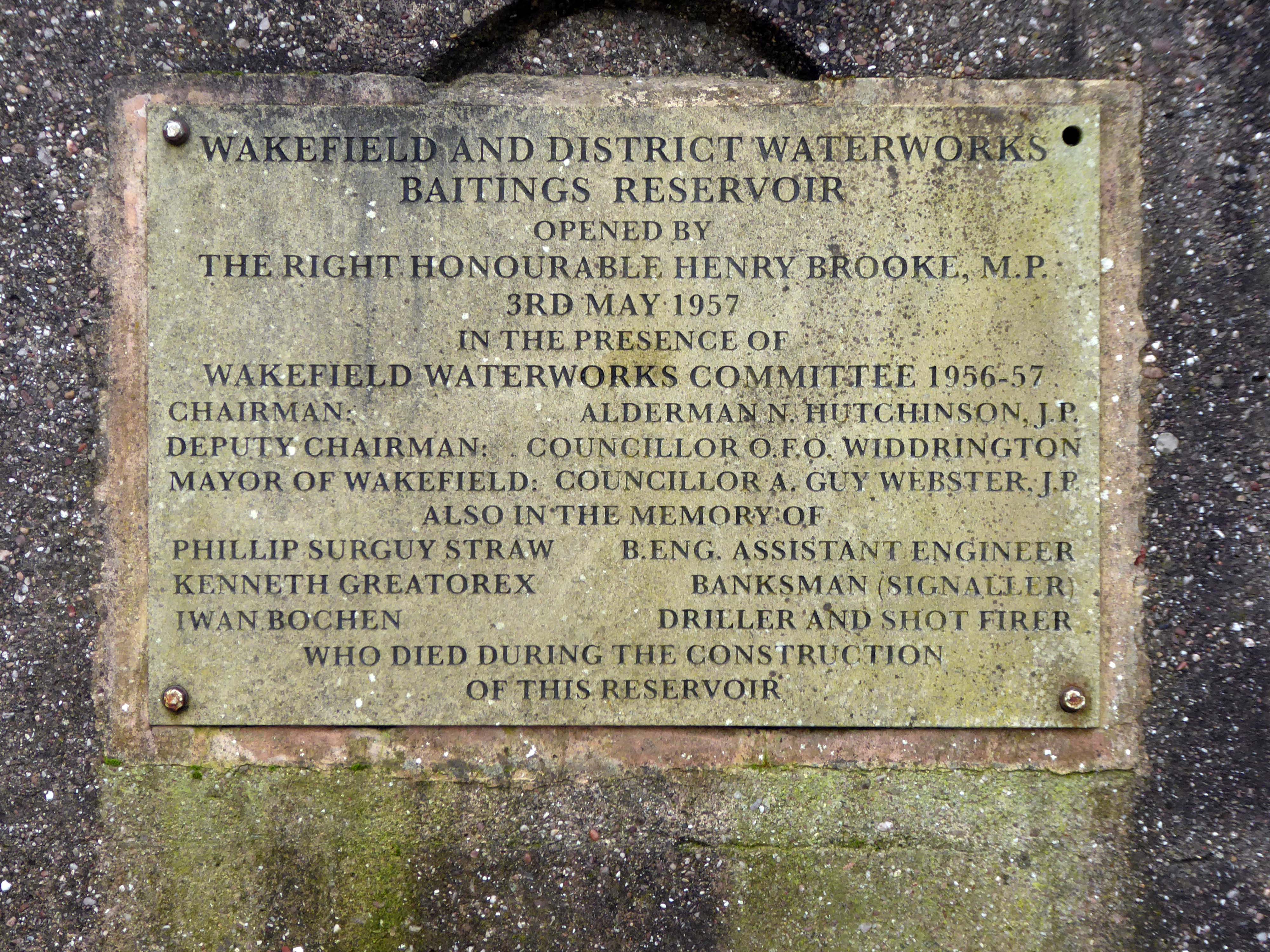
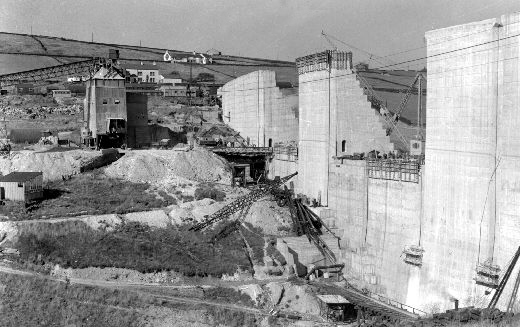
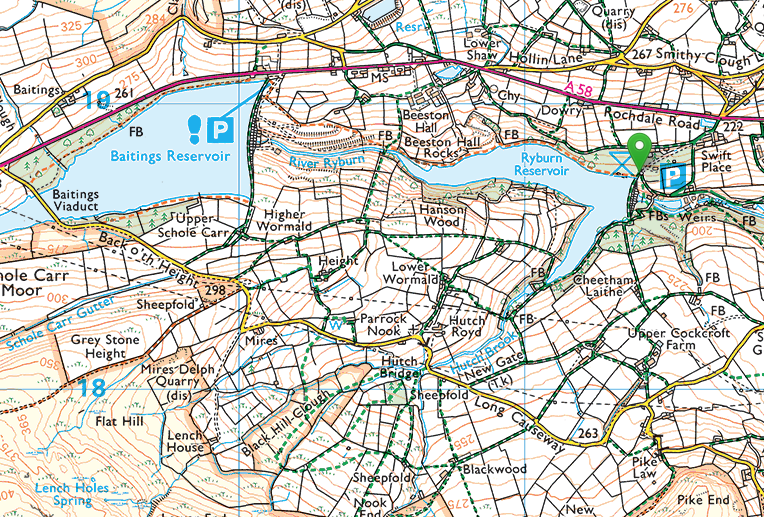
Wakefield Corporation Waterworks started impounding the valley of the River Ryburn in the 1930s, with Ryburn Reservoir being completed in 1933. Construction on Baitings took place 20 years later with completion in 1956.  Baitings Bridge, on an old road linking Yorkshire and Lancashire, was to be flooded under the reservoir so a concrete viaduct was built. During spells of very hot weather and drought conditions, the old packhorse bridge is revealed.
Wakefield Express: 31st August 1955

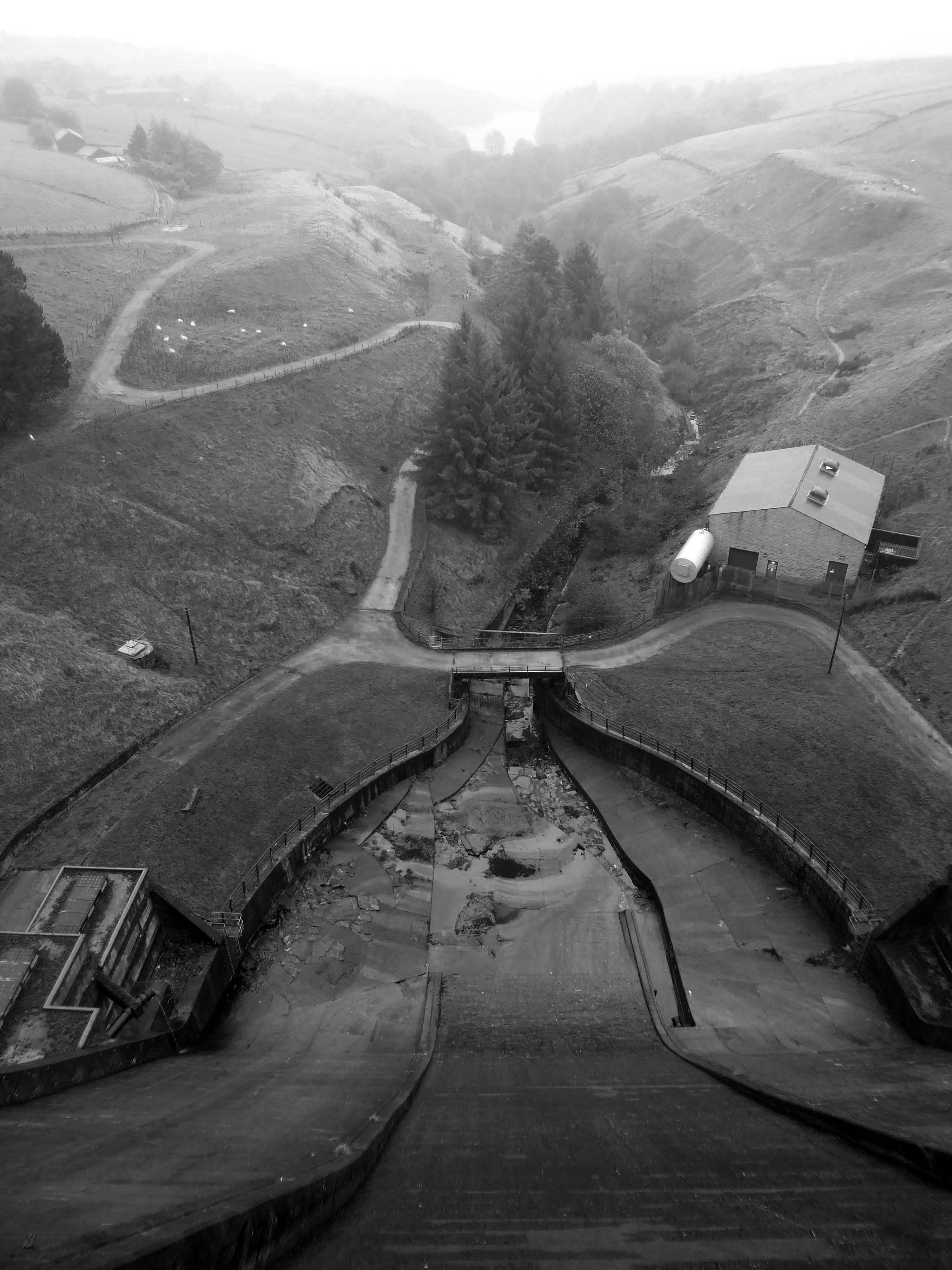
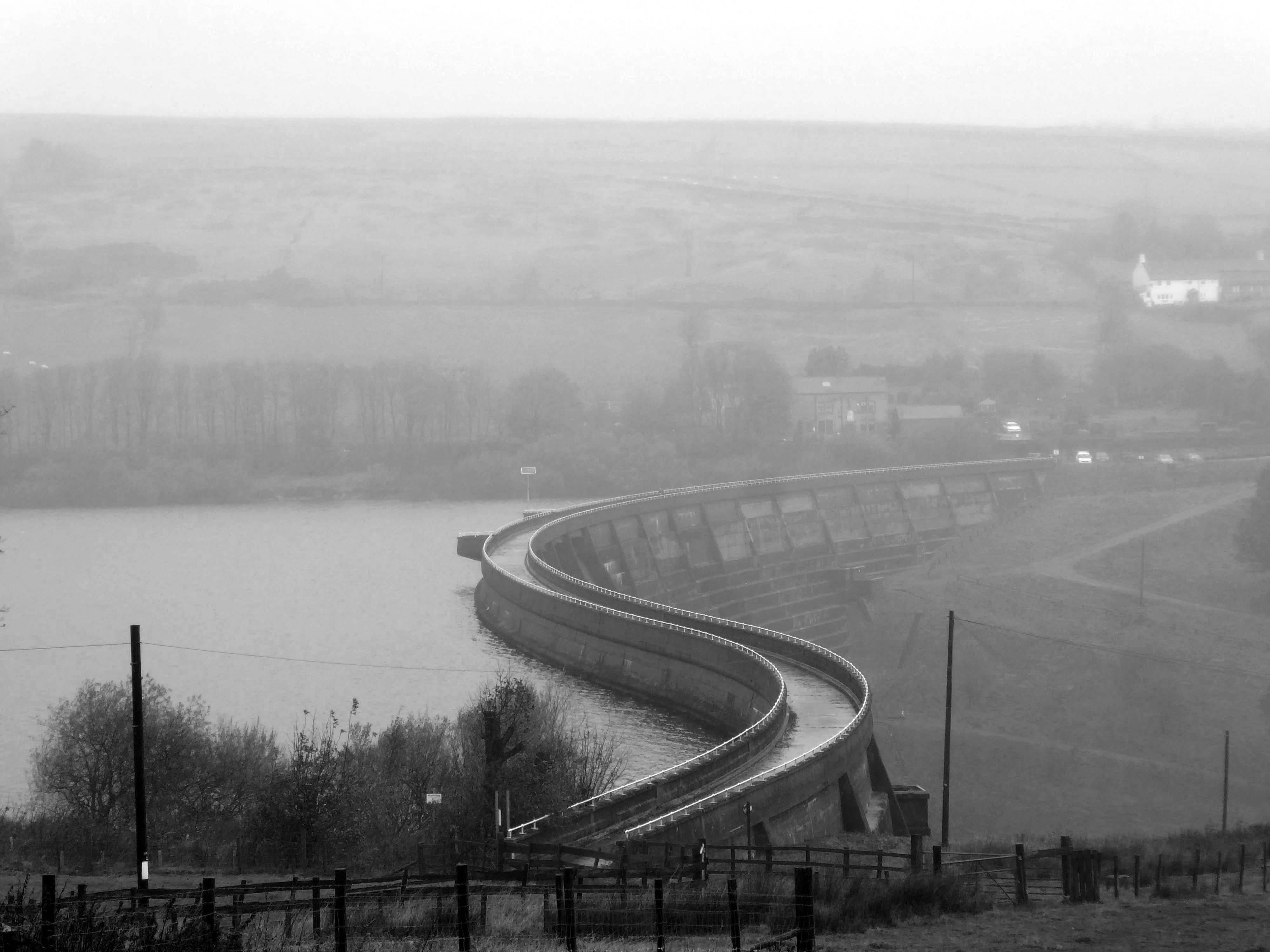
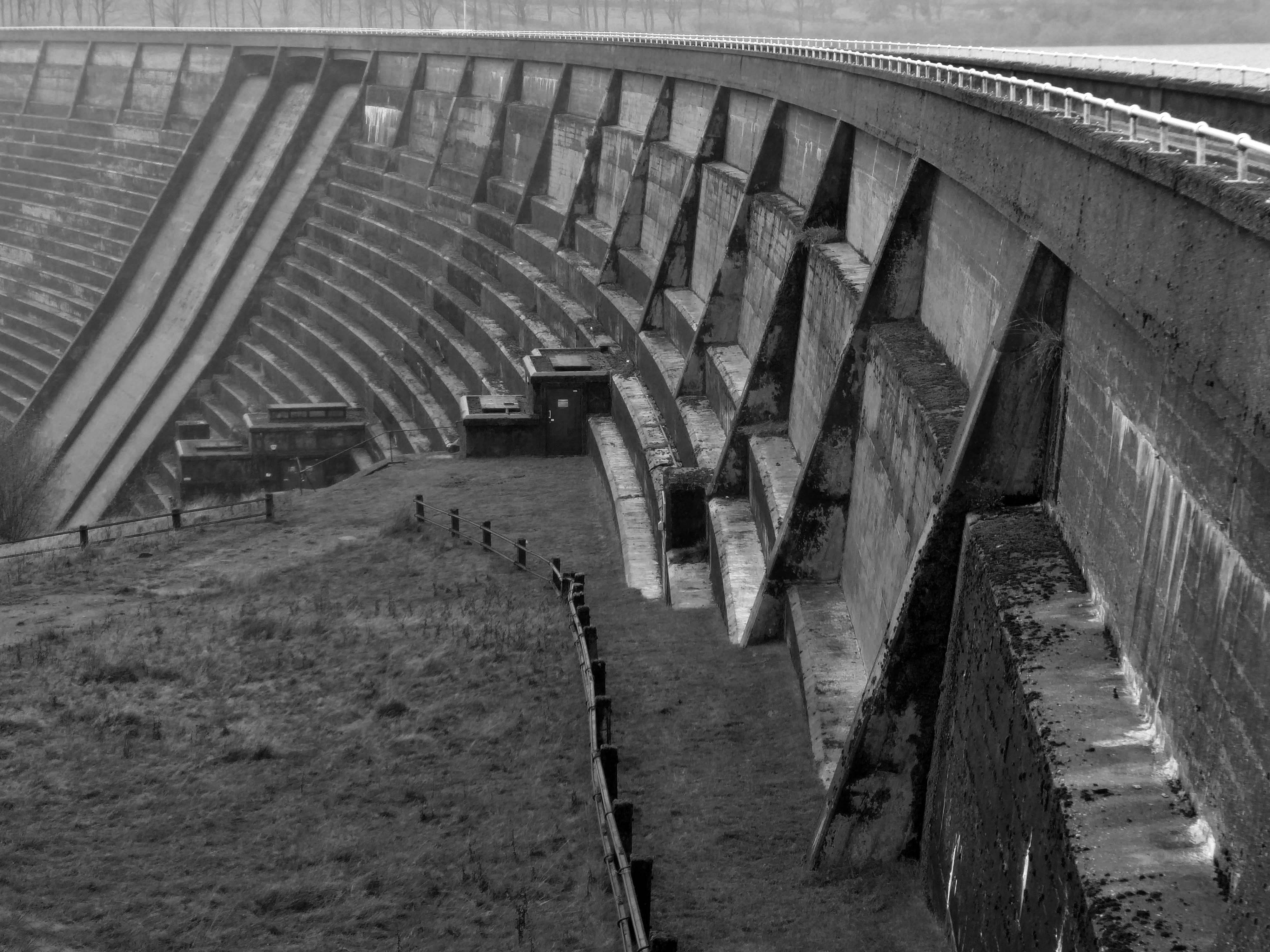
The dam head is a curved structure that is 1,540 feet long and over 160 feet high. The reservoir covers 59 acres and has a catchment of 1,830 acres , and when it is full, it holds over 113,000,000 cubic feet of water. The dam took eight years to complete at a cost of £1.4 million, and is located at 840 feet above sea level. A tunnel connects reservoirs in valleys to the north with Baitings to allow for the transfer of water. Manshead Tunnel is 8,000 feet long and was opened in 1962.

Wikipedia

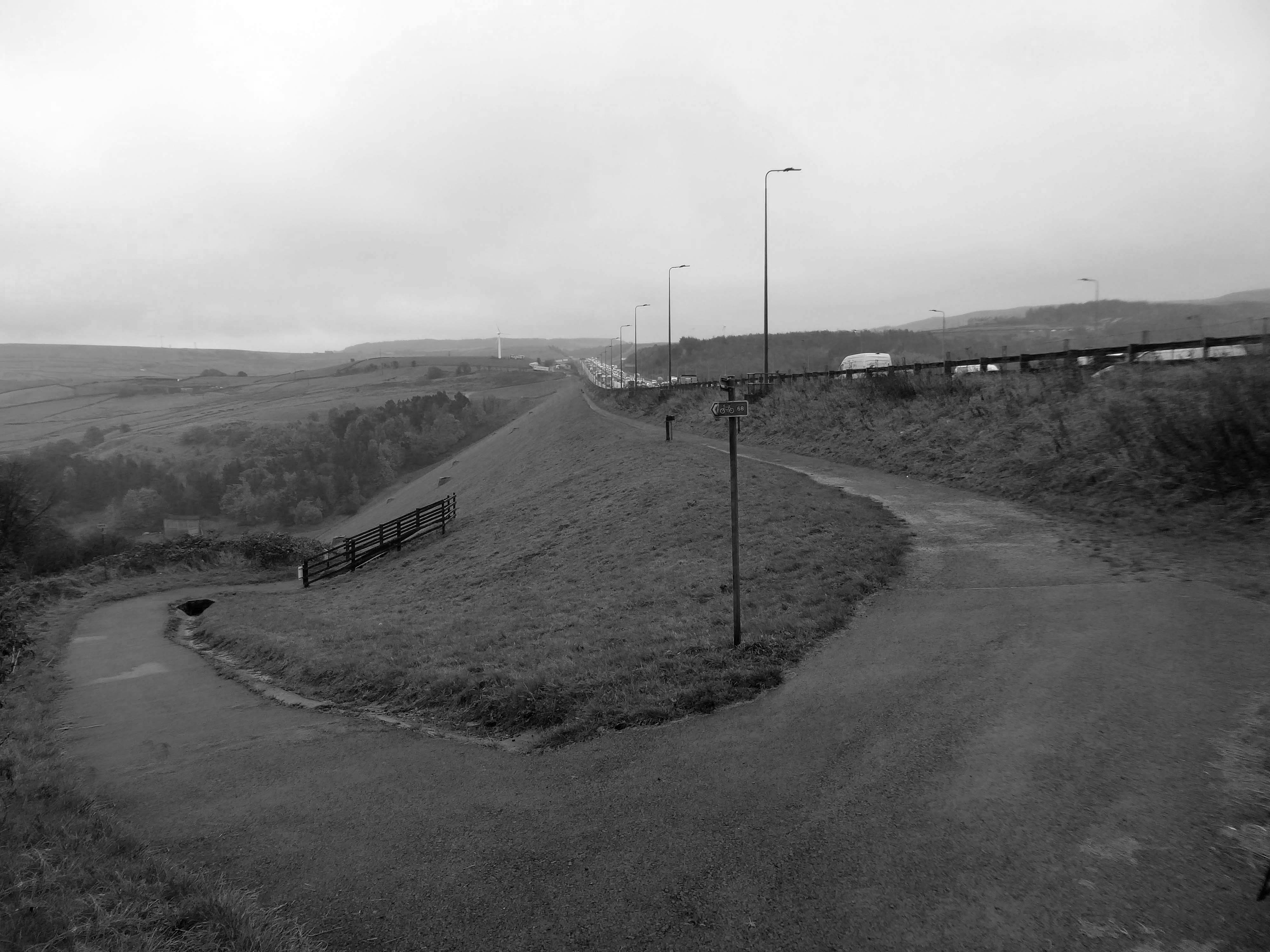
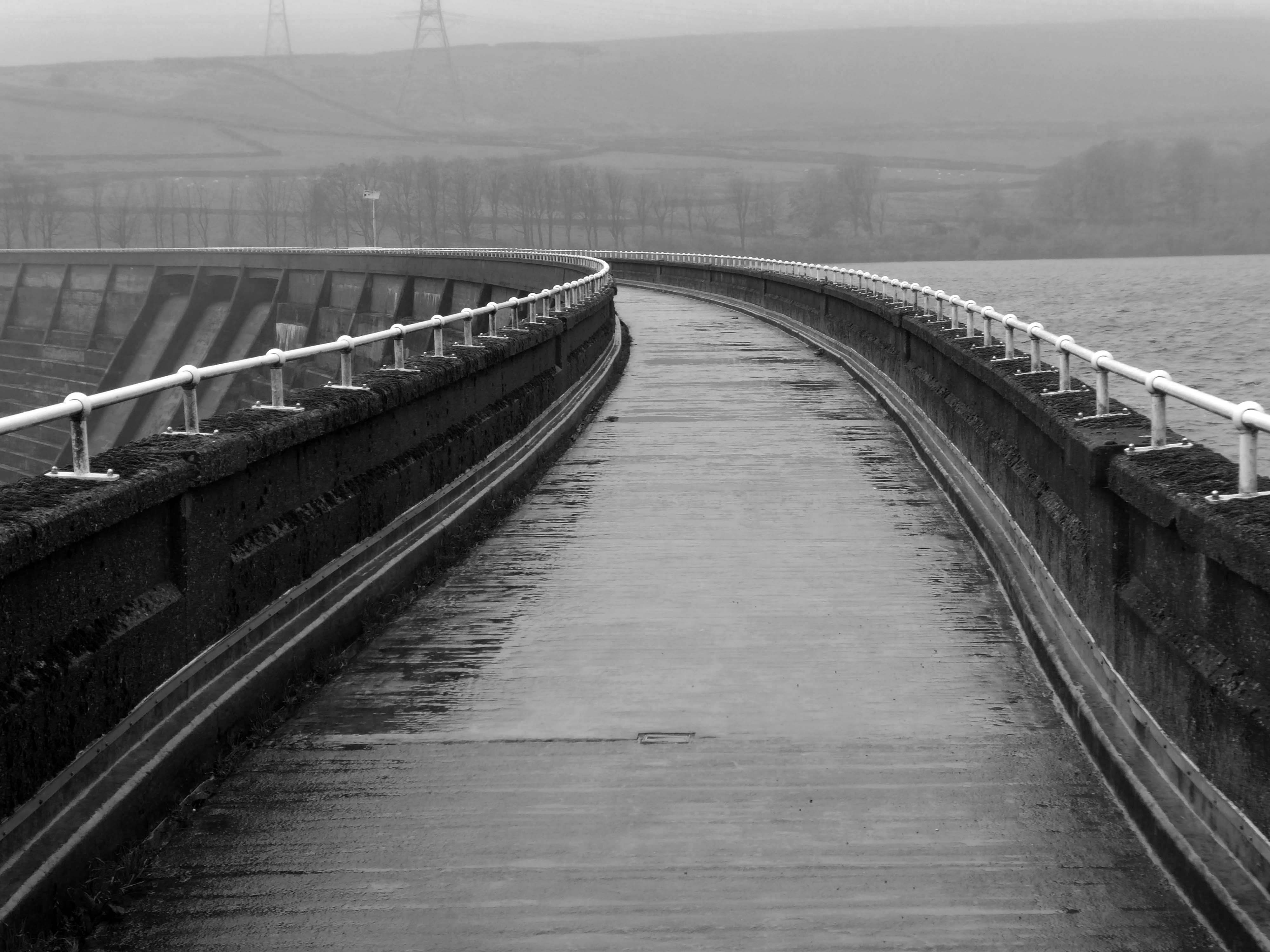
Inconveniently, the footpath to the lower Ryburn Reservoir was closed – we were diverted over the dam.
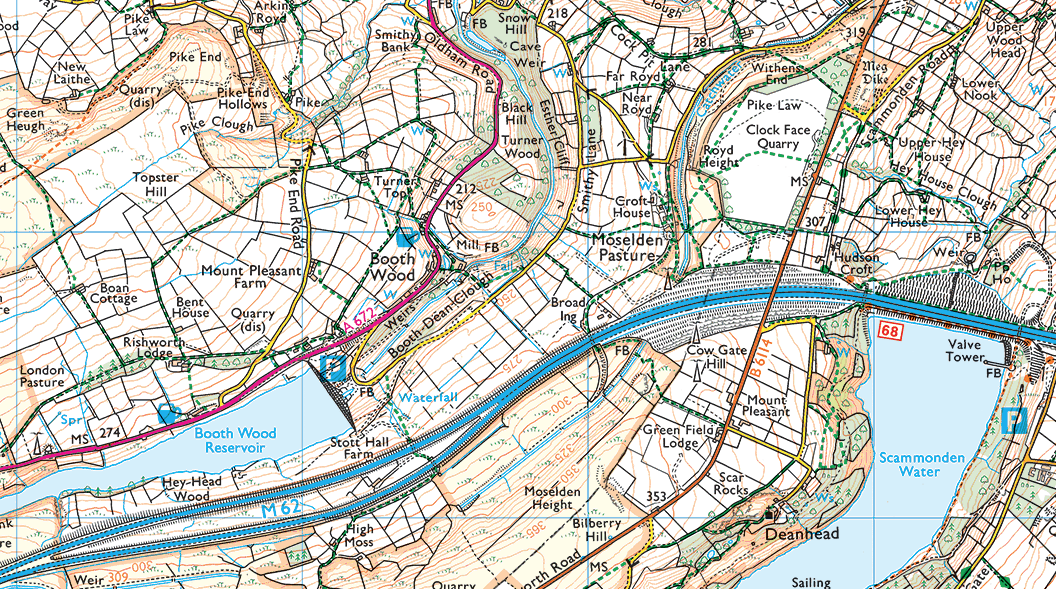
We took the pathway to Booth Wood Reservoir – over Pike End and beyond.
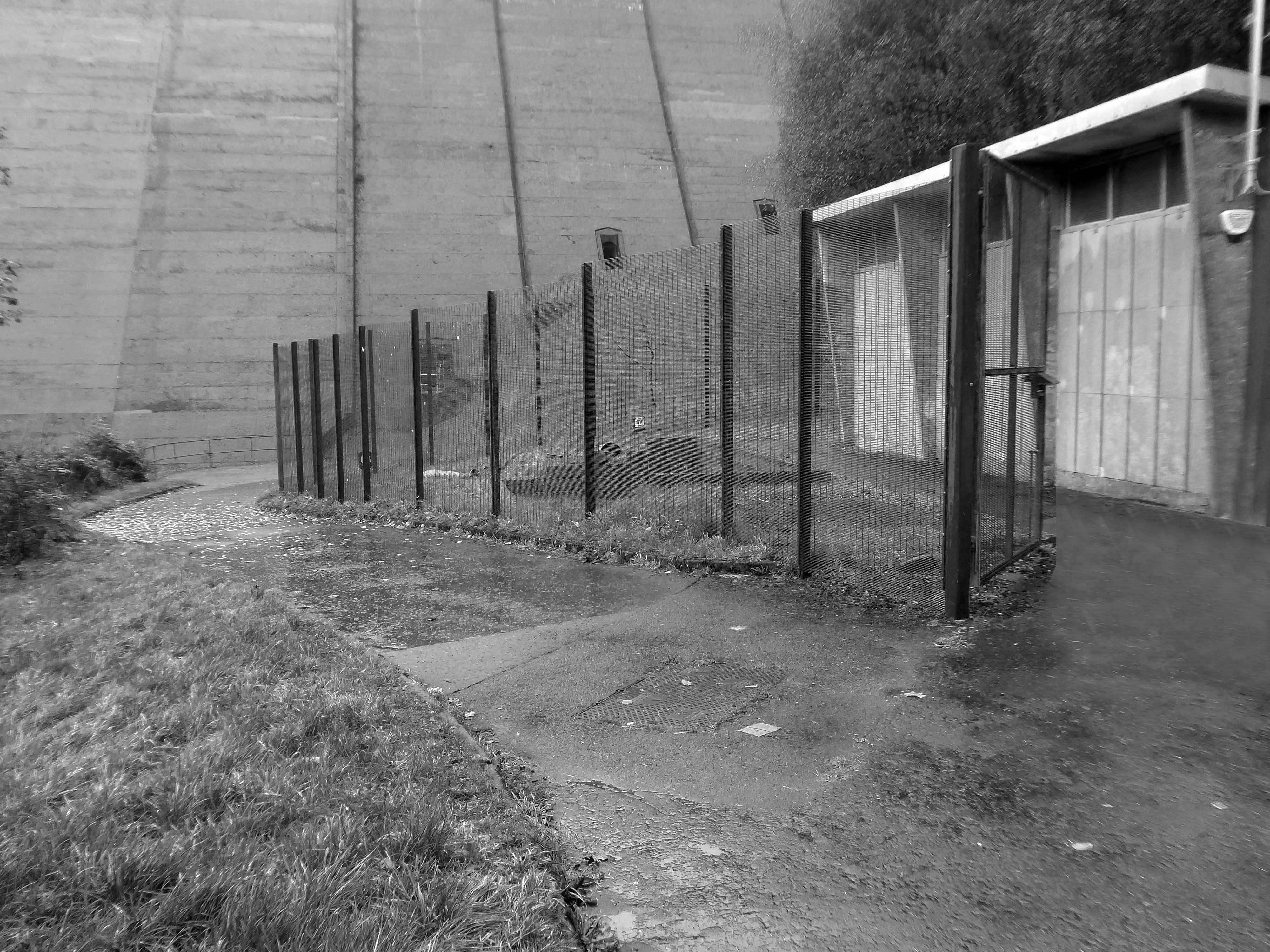
We dropped down beneath the Booth Wood Dam.

Booth Wood Reservoir is a man-made upland reservoir that lies north of the M62 motorway and south of the A672 road near to Rishworth and Ripponden in Calderdale, West Yorkshire. The reservoir was approved for construction in 1966 and completed in 1971.
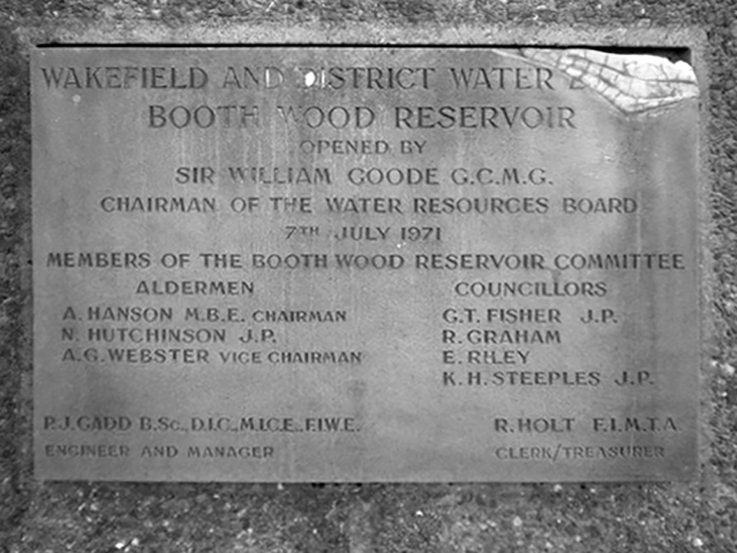
It supplies water to Wakefield.

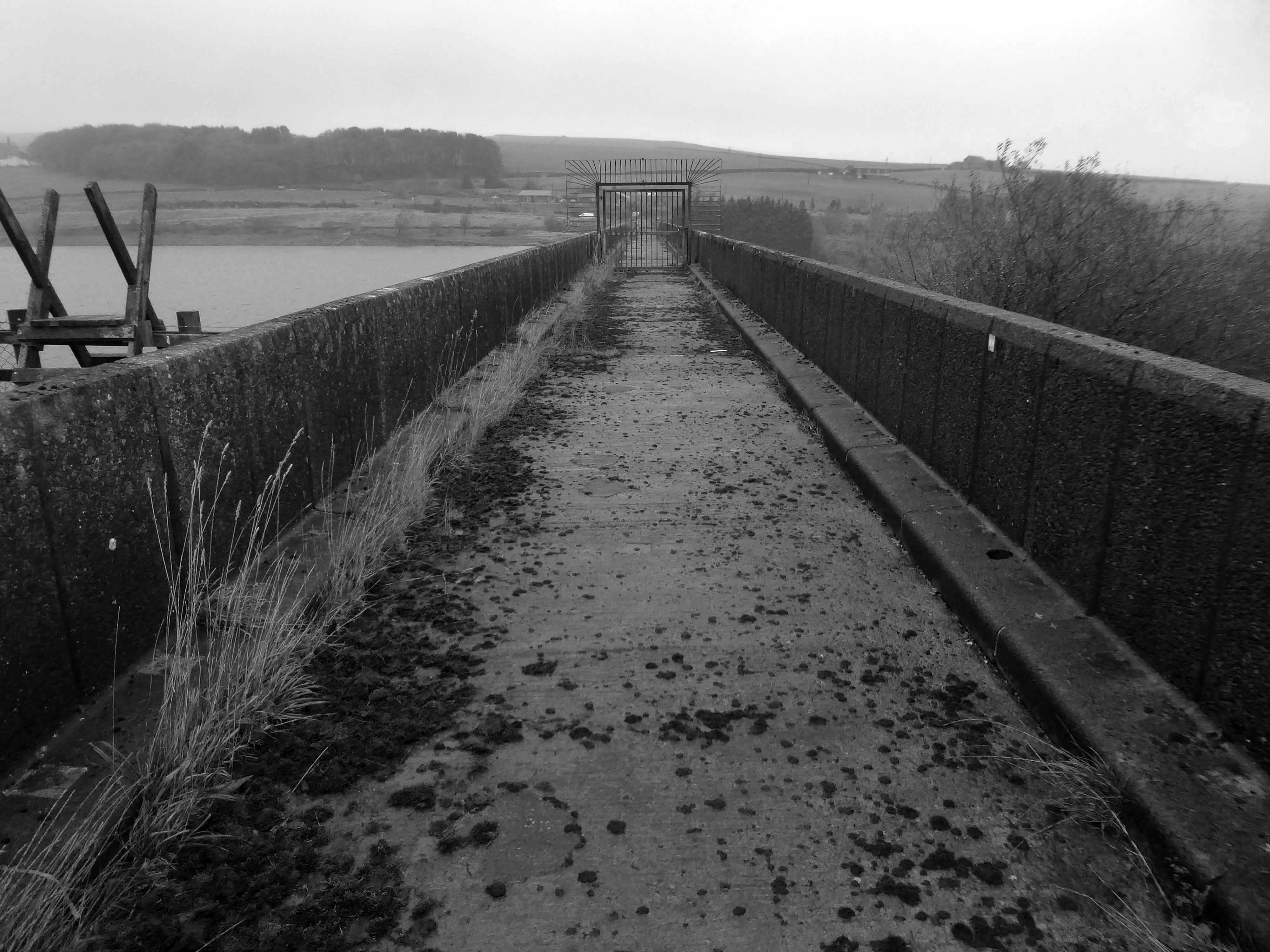
The reservoir dams the Booth Dean Clough watercourse and takes water directly from the surrounding moorland. It has a plain concrete crest on the dam head which is straight and extends to a length of 1,150 feet and a height of 157 feet.

Wikipedia

Below is a dinky pumping station, tucked beneath the dam.
We took a precipitous path through the wood – up to the level of the reservoir.
Under the the M62 and past the infamous Stott Hall Farm.

Stott Hall Farm is a farm located between the eastbound and westbound carriageways of the M62 motorway in Calderdale. It is the only farm in the UK situated in the middle of a motorway and was built in the 18th century on Moss Moor. It lies south of Booth Wood Reservoir where the carriageways are separated between junctions 22 and 23. The road divides for much of its length between the Windy Hill and Deanhead cuttings because of the surrounding geography; but a myth persists that it was split because Ken and Beth Wild refused to sell. However, the farm was actually owned by Yorkshire Water at the time the M62 was built.
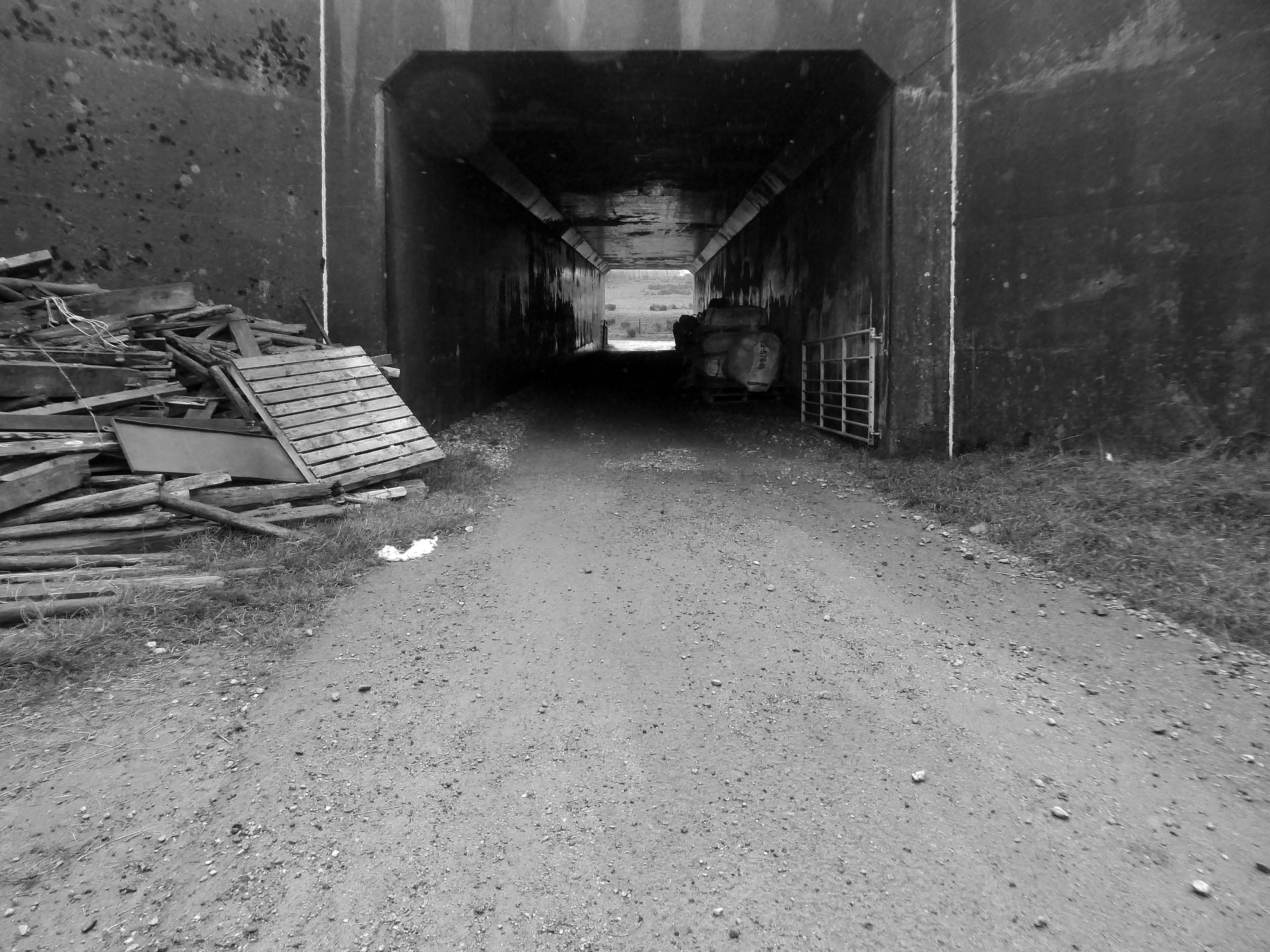
Wikipedia

We walked over the upland moors to meet with the Catchwater, which formerly fed the Ringstone Edge Reservoir, prior to the construction of the motorway cutting.
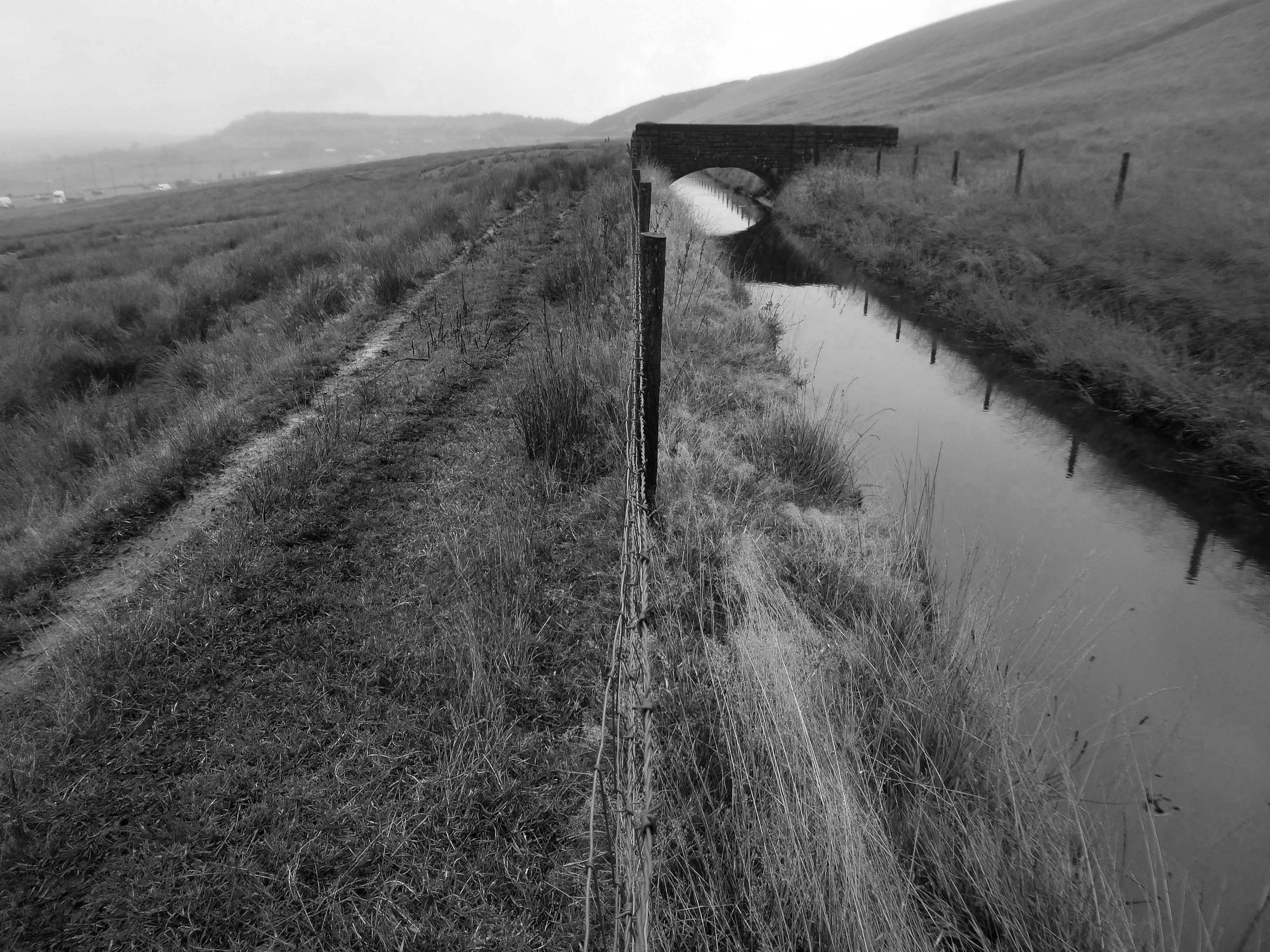
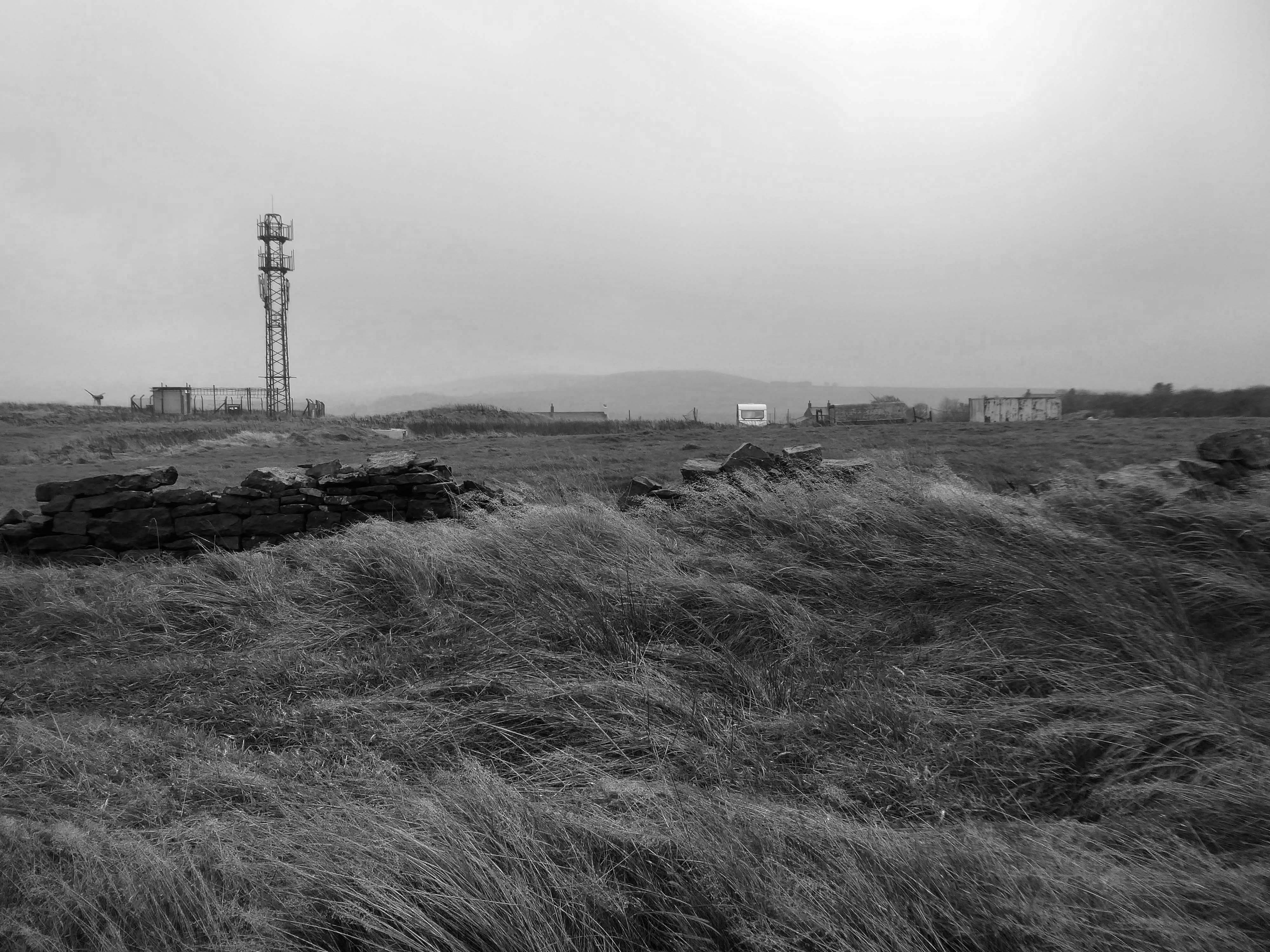
Climbing again over Cow Gate Hill to meet the Saddleworth Road.
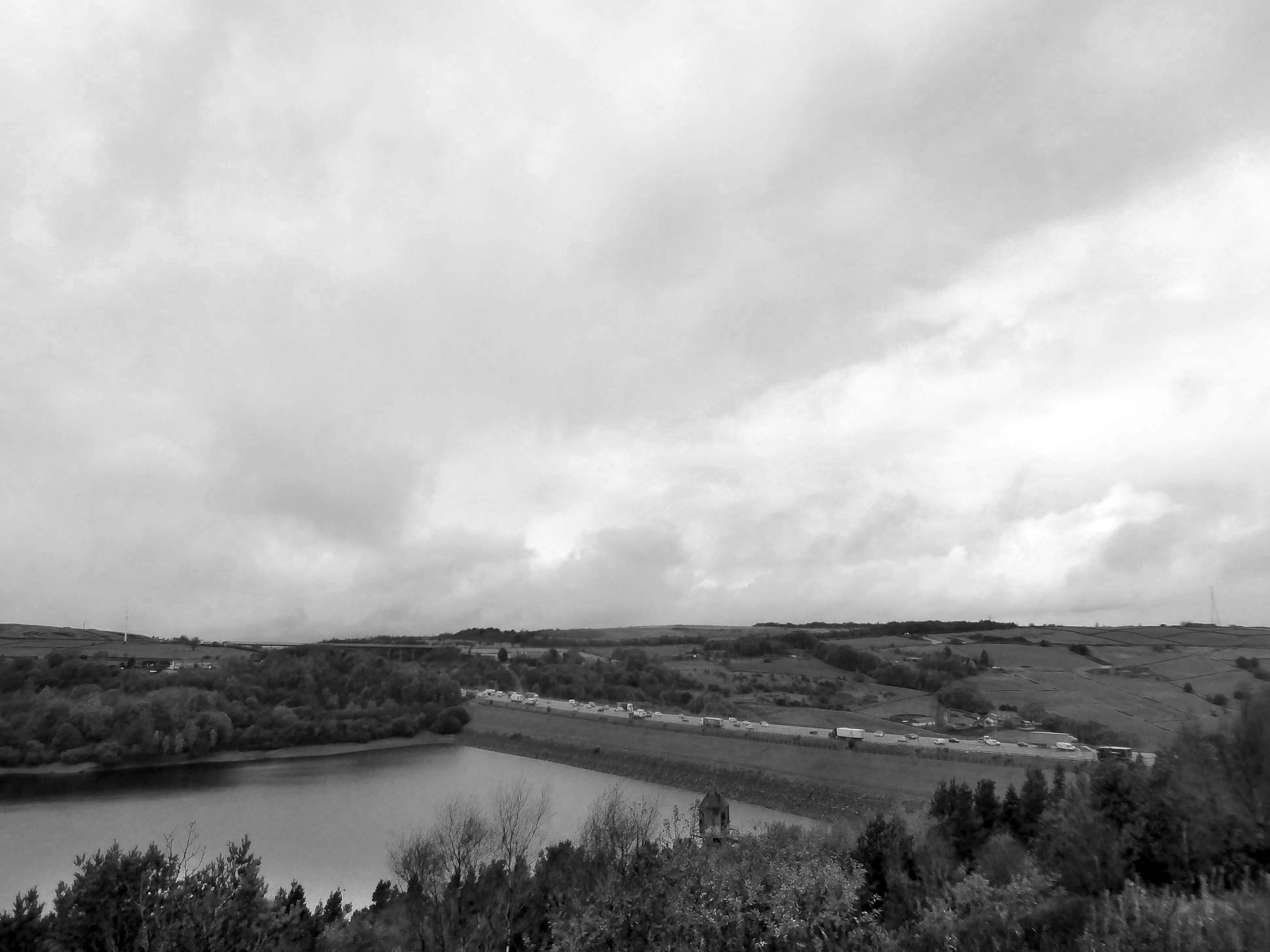
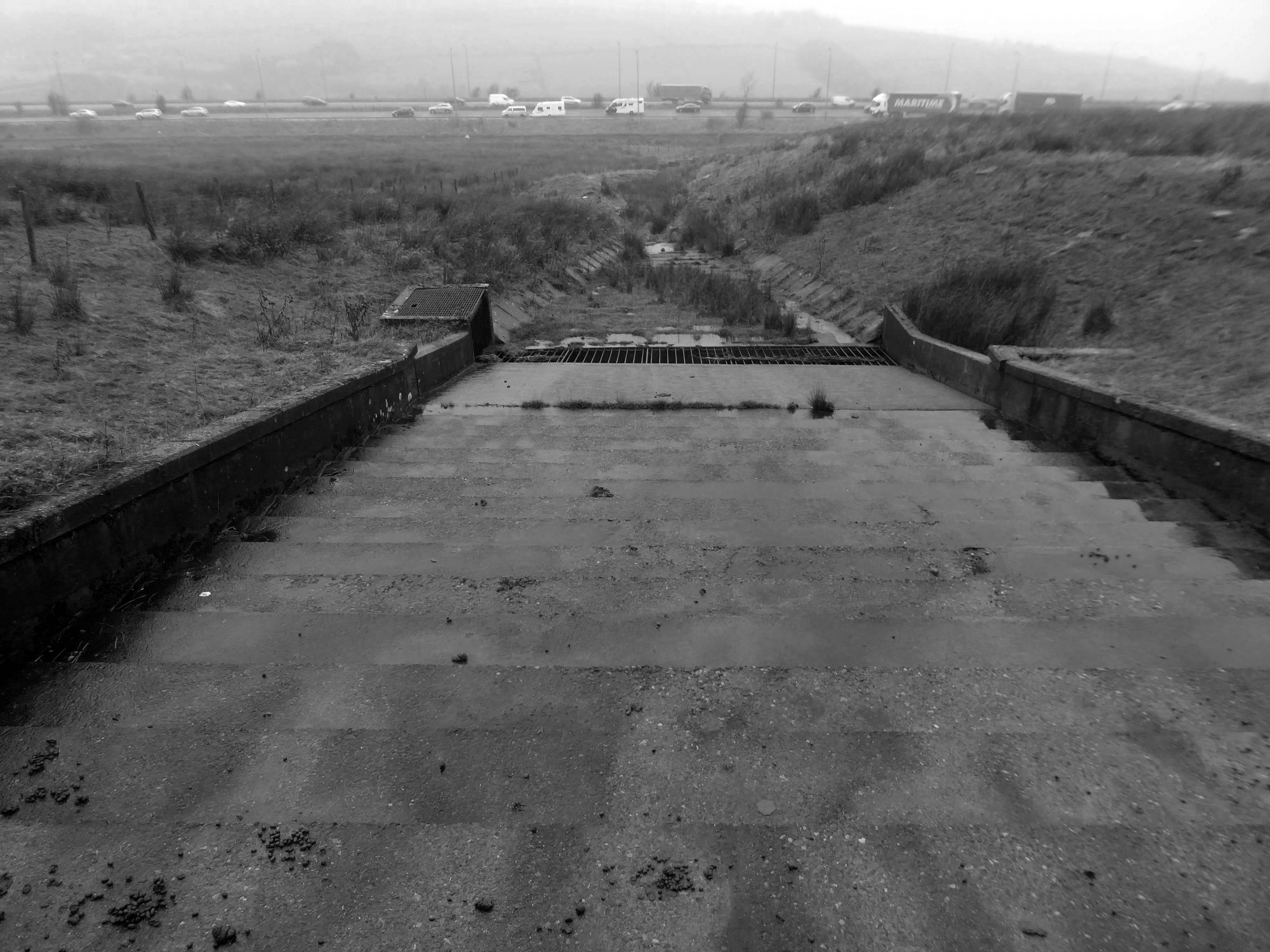
Crossing the motorway and dropping down to meet the Scammonden Dam.
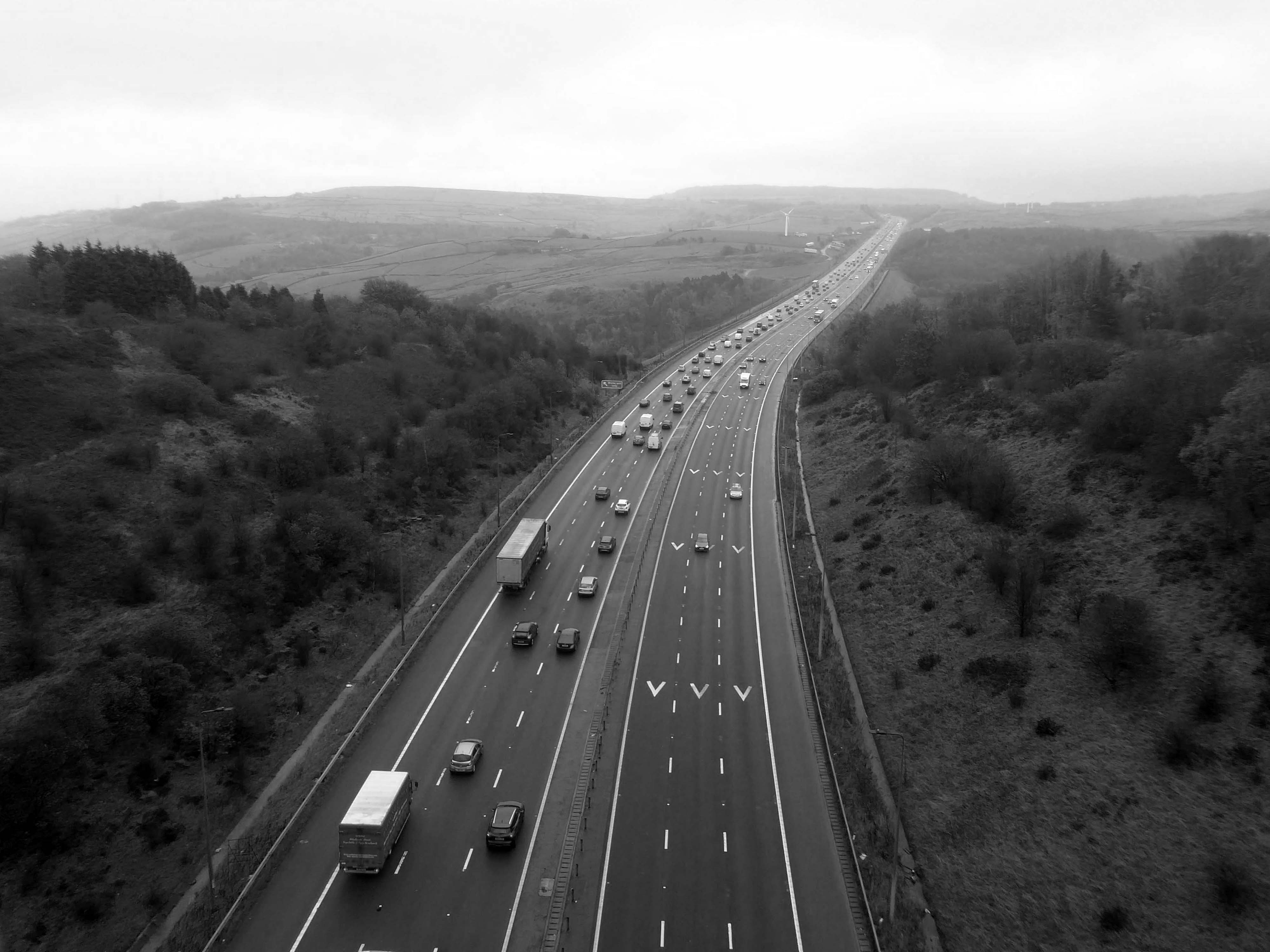
Scammonden Dam is part of the M62 motorway between junctions 22 and 23, the only such structure in Britain. Its construction by the Ministry of Transport and Huddersfield Corporation Waterworks required the passing of the Huddersfield Corporation Act 1965. The motorway dam spans the Deanhead Valley in the Pennines between Huddersfield and Rochdale and the main contractor for the project was  Sir Alfred McAlpine & Sons.

It was designed by Rofe, Kennard and Lapworth

Surveying began in November 1961 and the route of the carriageway was determined in mid 1963. Excavation in the Deanhead Valley commenced the following year and for the dam in 1966. This required the removal of 25,200,000 cu ft of peat bog to reach the solid rock base nearly 43 ft below ground level. Material excavated elsewhere on the line of the motorway, clay from cuttings between Lofthouse and Gildersome, and 3.4 million cubic metres from the Deanhead excavations was used to build the dam’s embankment which is 2,051 ft in length and 207 ft above the original valley floor. The embankment is 1,427 ft wide at its base and 180 ft at road level.
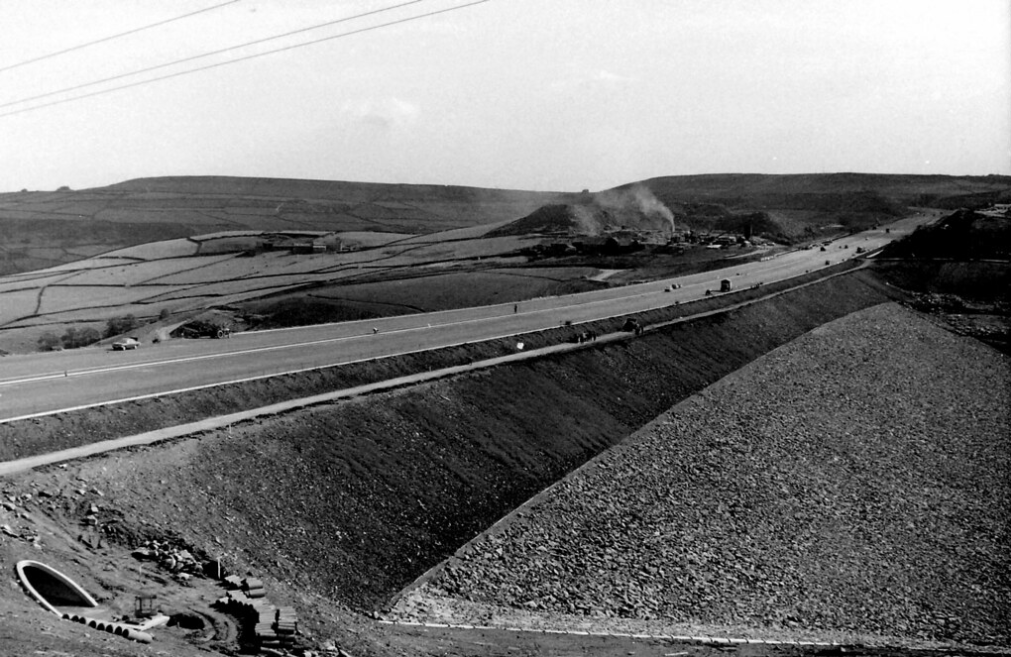
Wikipedia

Barry Skilbeck: Flickr

Scammonden steps comprises five flights of steps up the hillside from the valley below. Totaling 458 steps, the cumulative step count when ascending each of the five flights is 95, 200, 287, 363 then 458.
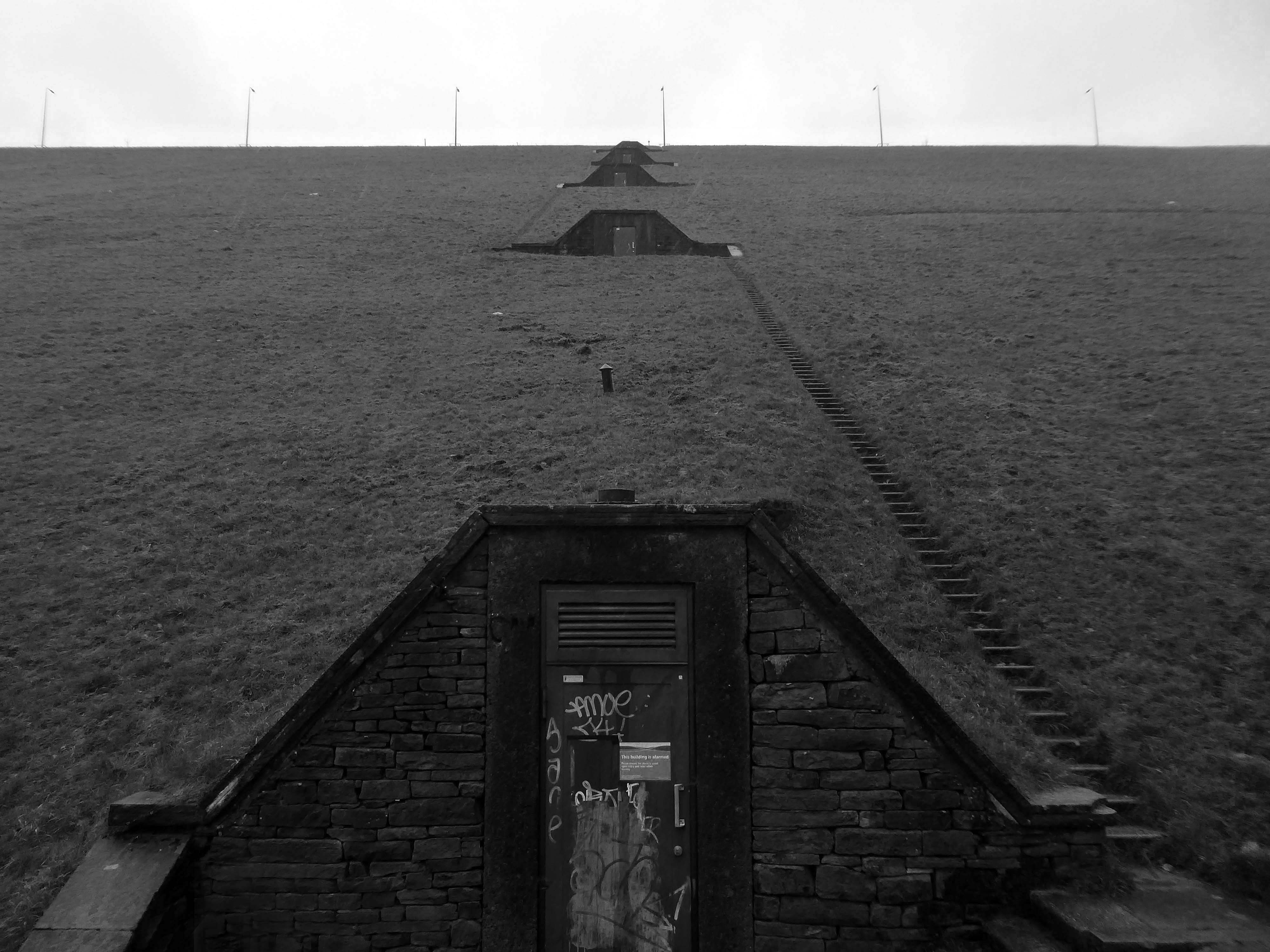
At the base of the dam is this delightful Pumping House.
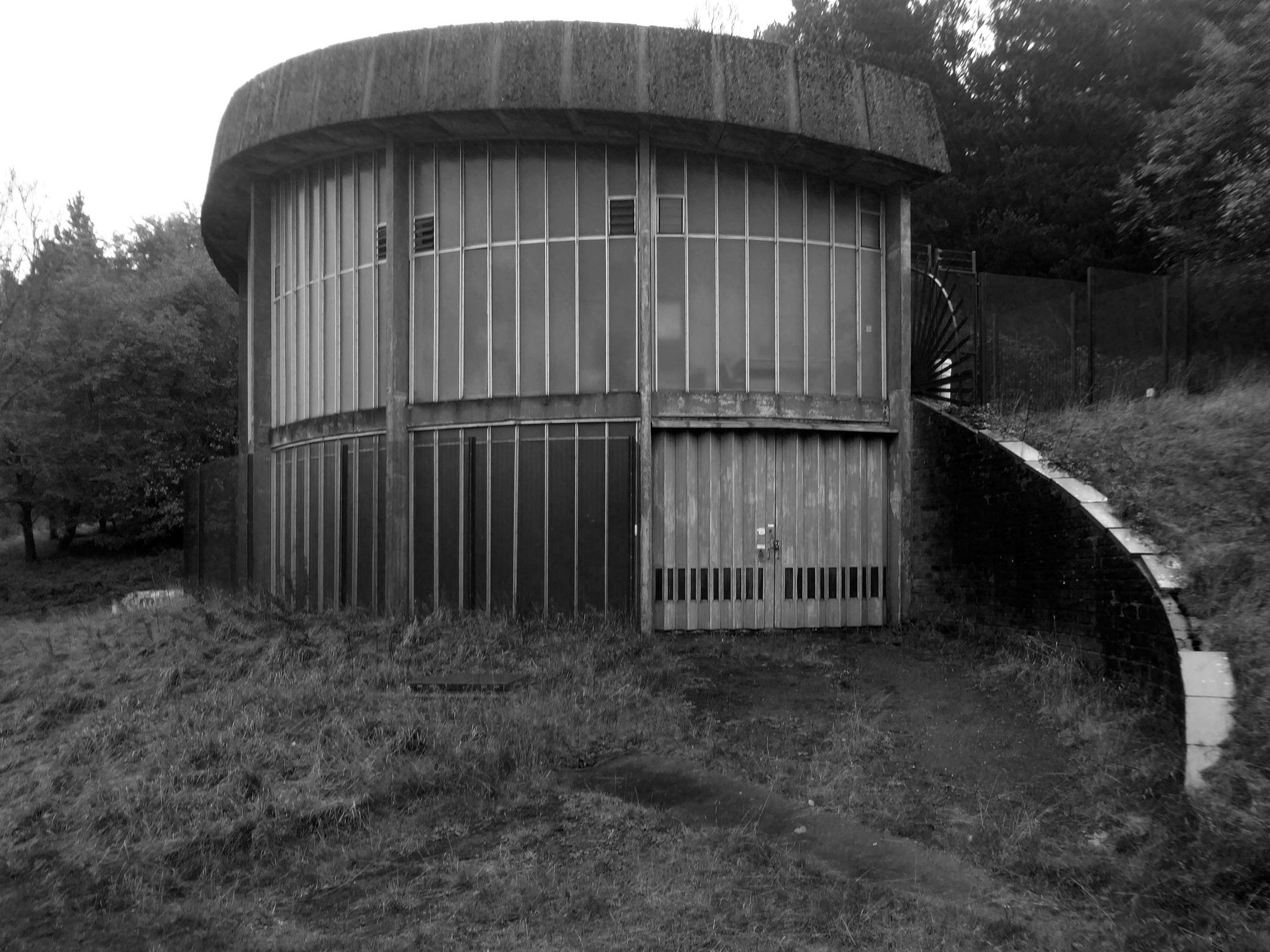
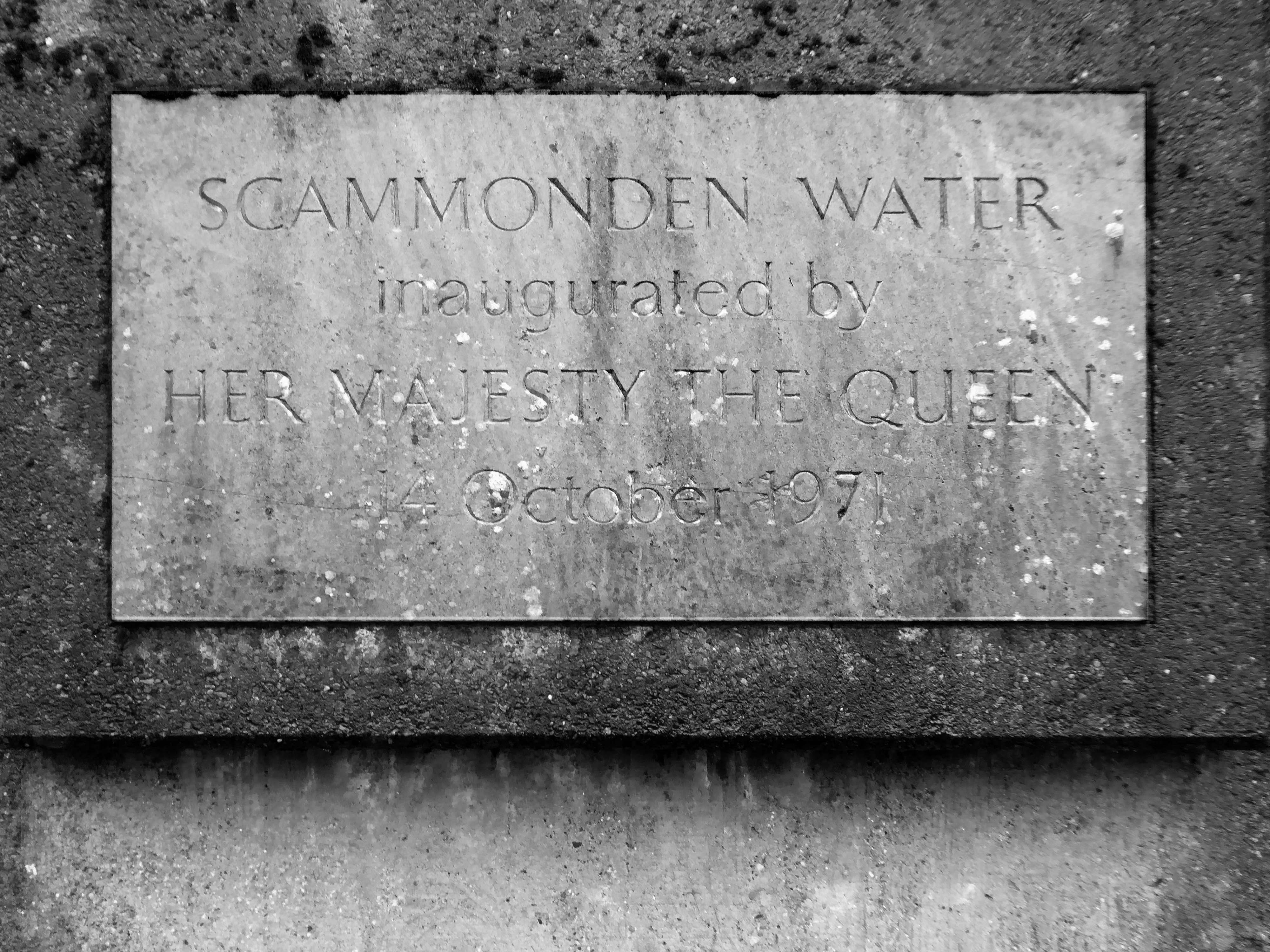
The motorway, which was dependent on the completion of the dam, was opened to traffic on 20th December 1970 and officially opened by Queen Elizabeth II who unveiled a plaque near the valve tower of Scammonden Water on 14 October 1971.

Ascending and looking back toward Scammonden Bridge also known locally as the Brown Cow Bridge – after the nearby Brown Cow Inn, now closed, spans the Deanhead cutting carrying the B6114.

The bridge was built for the West Riding County Council to the designs of the county surveyor, Colonel S Maynard Lovell.

It opened to traffic on Monday 18 May 1970 by Major Bruce Eccles – Huddersfield Transport ran buses to see the bridge.
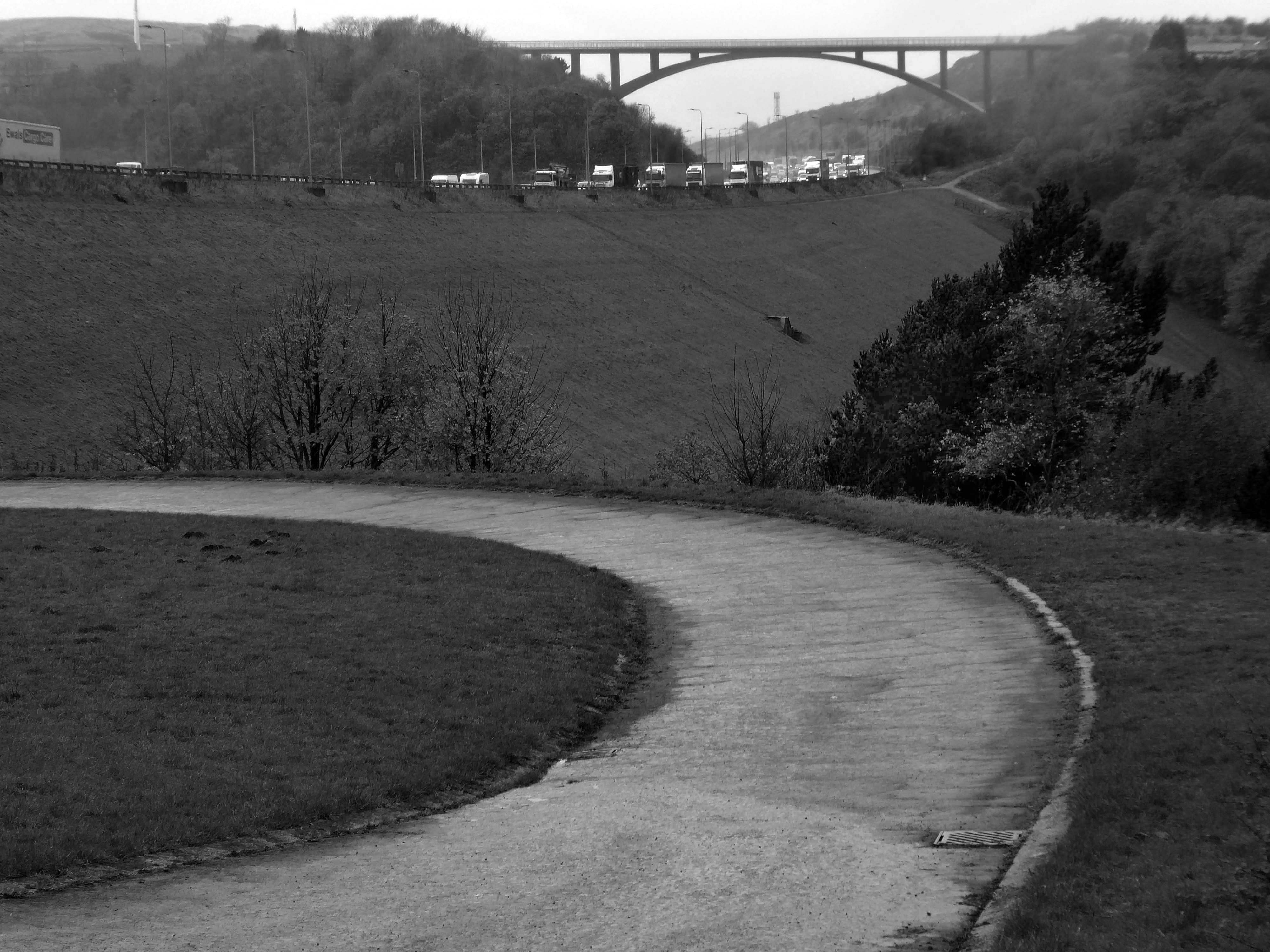
Wikipedia

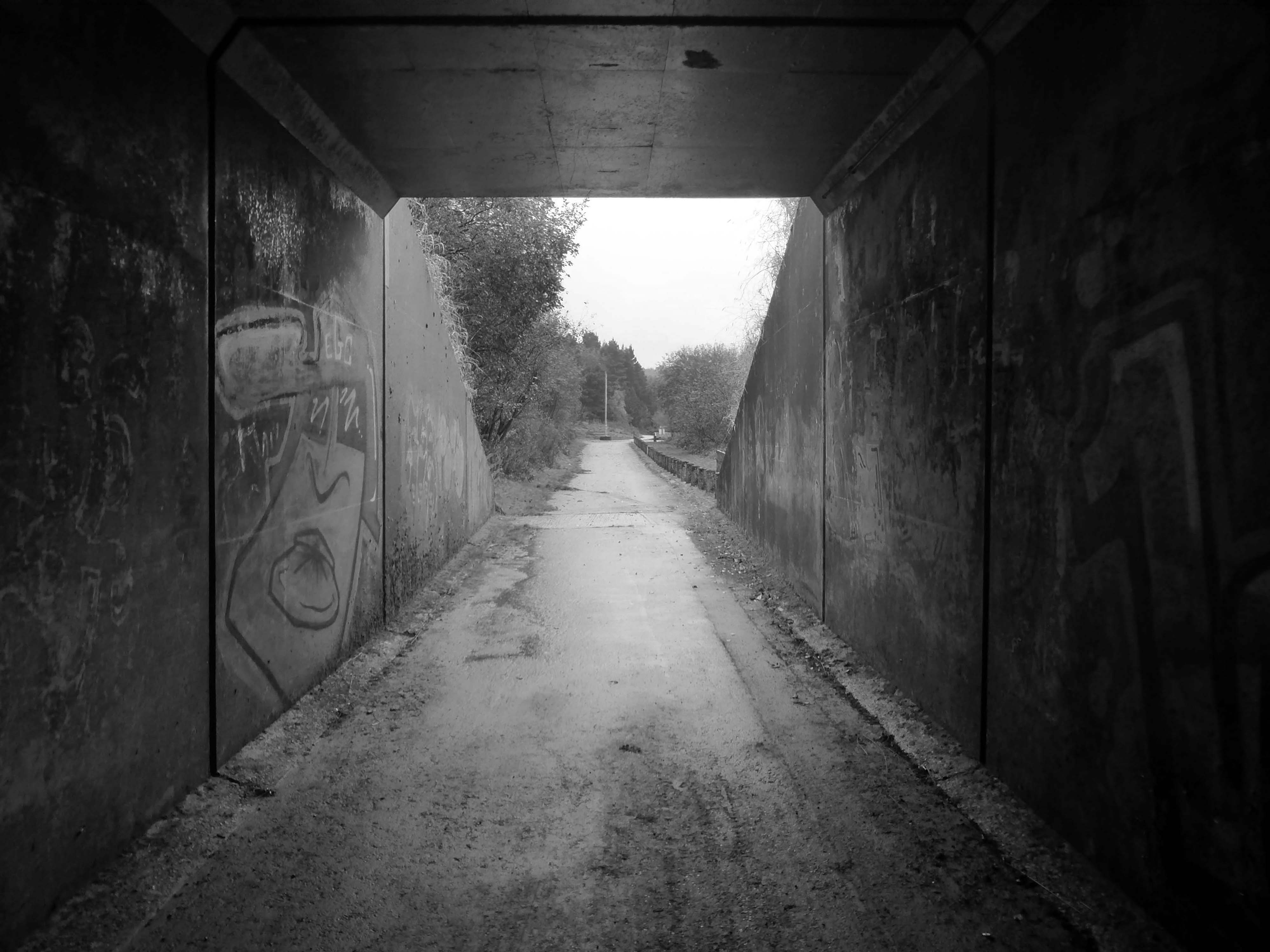
We took the tunnel through the dam.
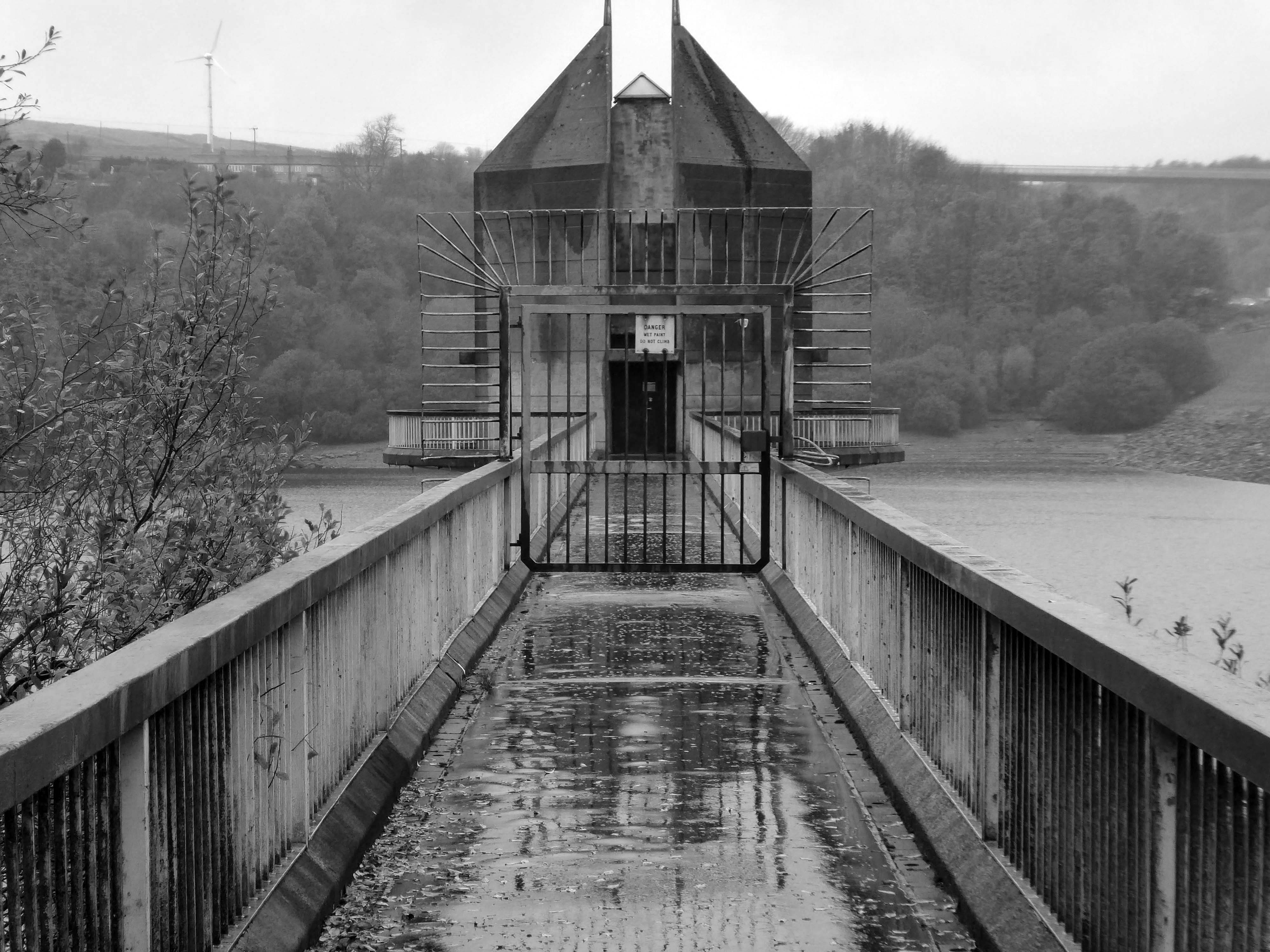
We walked back through Spring Royd, to meet the Newhey Road and onward to Outland and the bus back to Huddersfield.
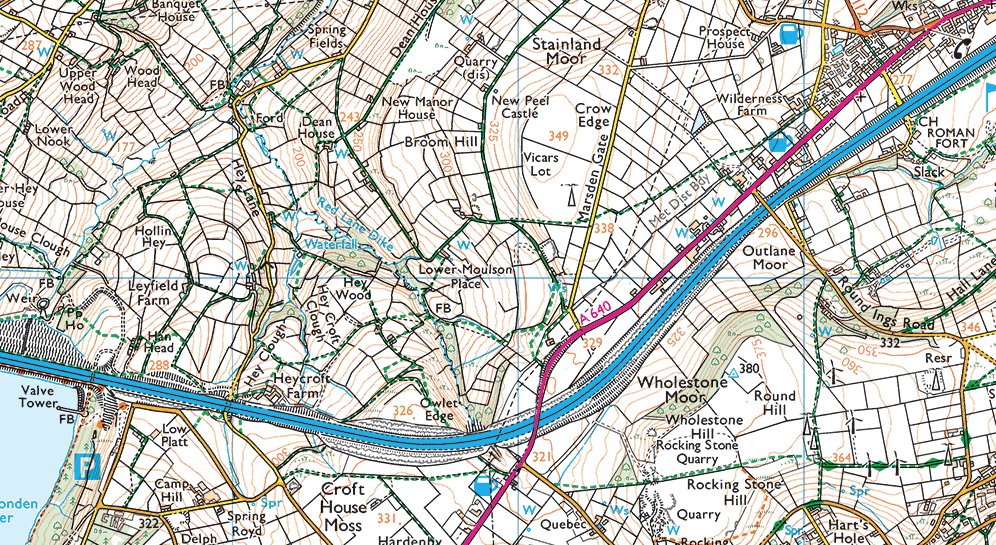
My sincere thanks to my erstwhile and educated guide Mr Phil Wood – so ably steering us along our watery way.
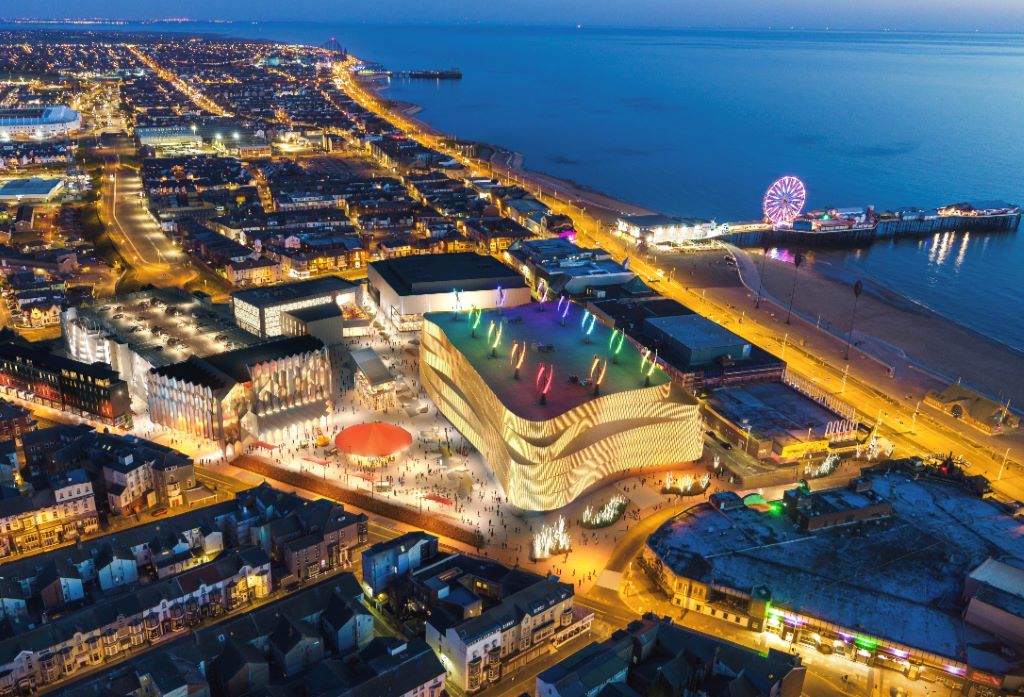
Blackpool 2024

Blackpool Council says it remains committed to the Blackpool Central project amid the potential collapse of the developer leading the works.

But warning alarms sounded this week when Nikal – which was hired to oversee the project – filed a notice of intent to appoint administrators.

The £300m Blackpool Central development is billed as the biggest single investment in the town in more than a century and is planned to involve a “world-class leisure development” which would create 1,000 new jobs, bring an extra 600,000 visitors per year, and boost annual spend in the town by around £75m.

A spokesperson for Blackpool Council told the Blackpool Lead:

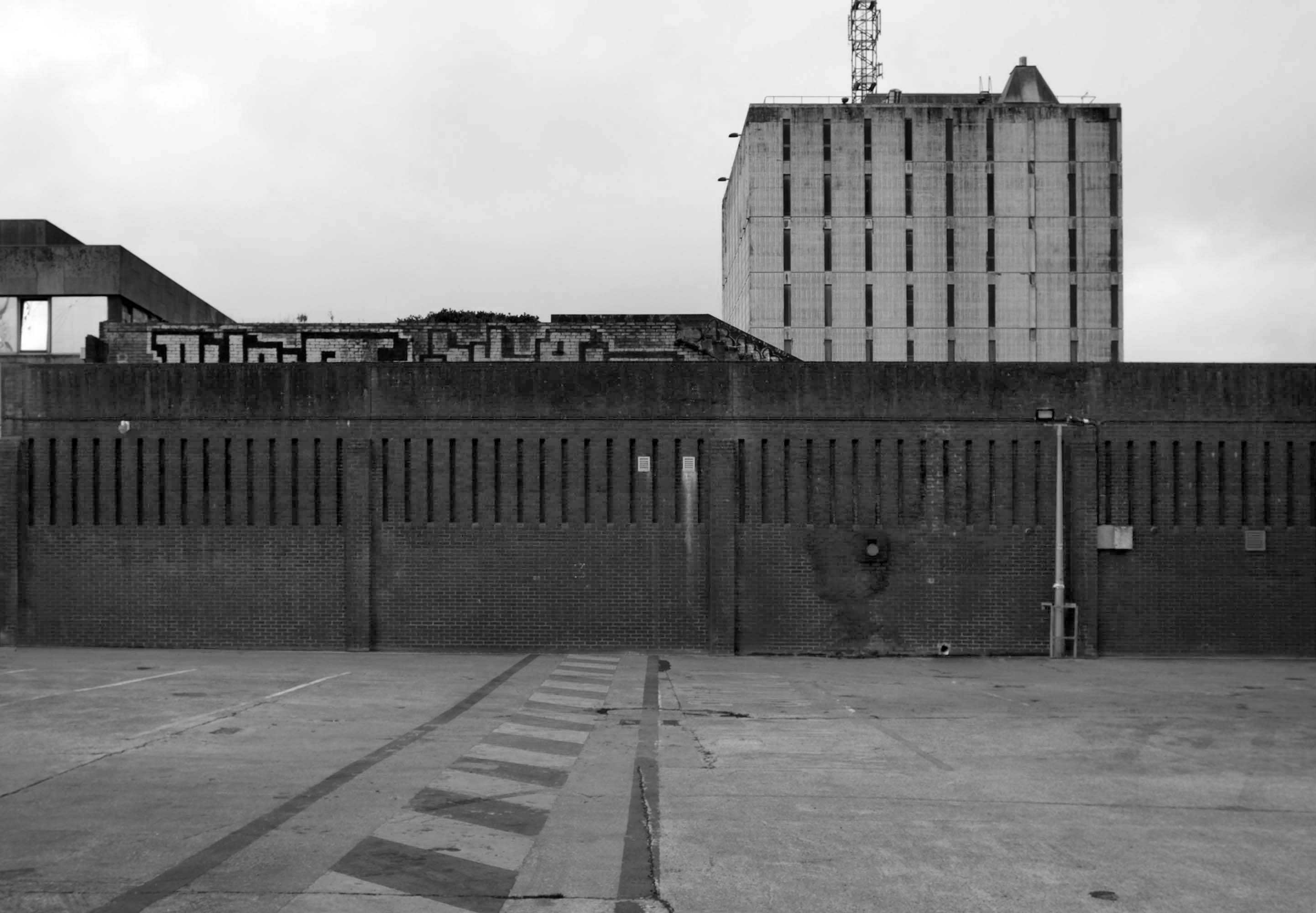
We have been working on the enabling phase of Blackpool Central over the last few years. The new multi-storey car park opened earlier this summer and we are currently completing preparations to demolish the old police station and courts building early in the New Year.

Blackpool Lead

The proposals for the Bonny Street area can be seen here.

Plans for the area have hit further problems.

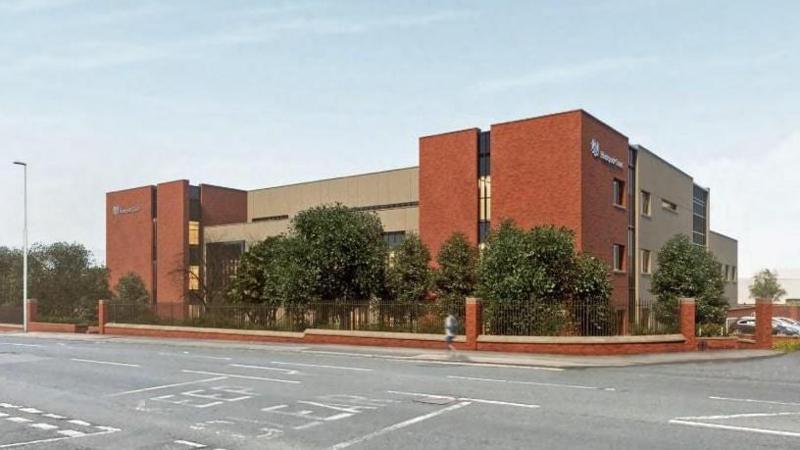
A new £40m magistrates courthouse is facing building delays after the project’s main contractor collapsed. Blackpool’s magistrates court was one of twenty two projects belonging to construction giant ISG, which was working on the scheme for the Ministry of Justice.

But the firm went into administration in September, leaving two thousand two hundred workers at risk of redundancy, the Local Democracy Reporting Service said.

Work was due to start early next year with a completion date expected in 2026.

BBC News

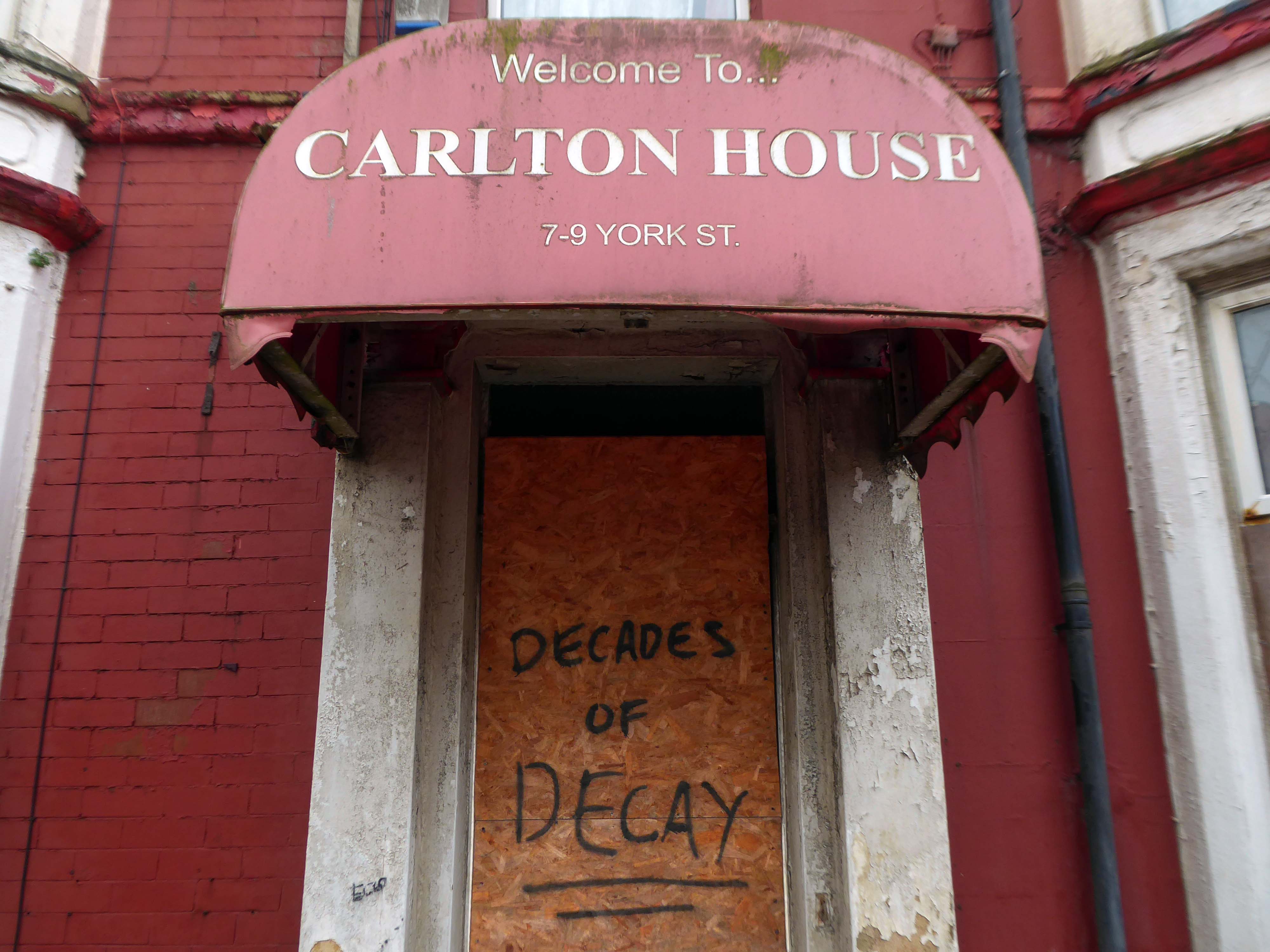
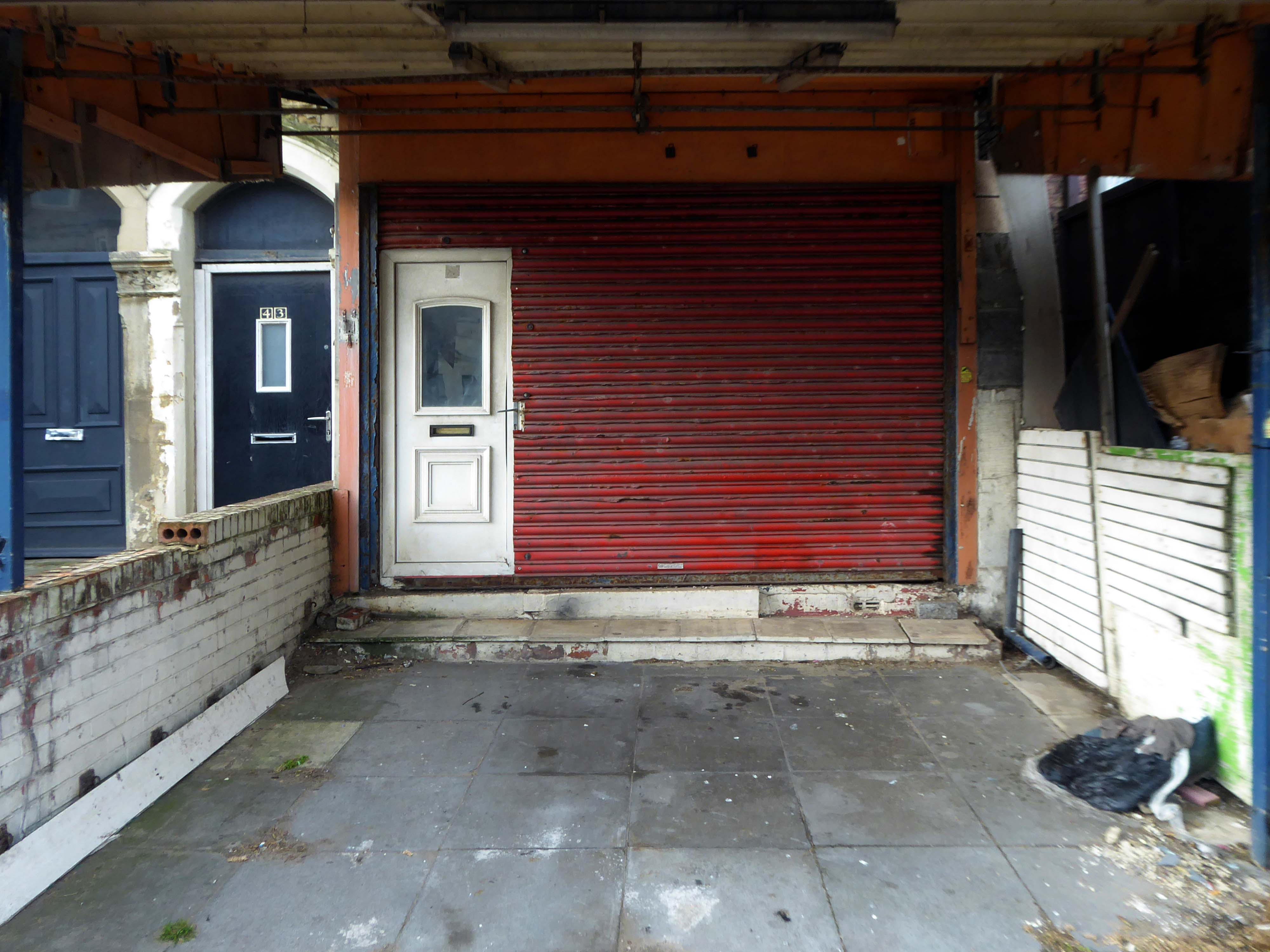
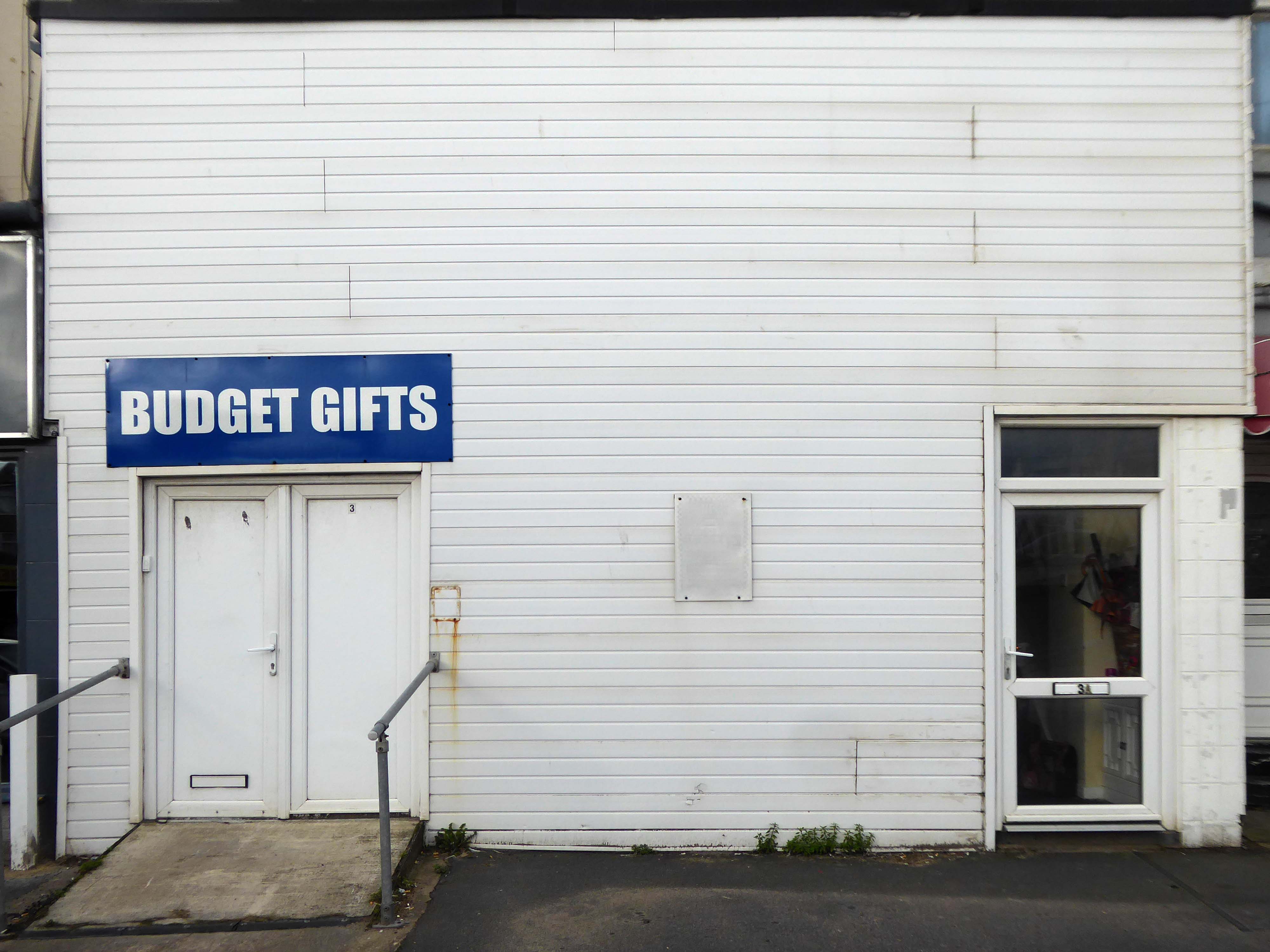
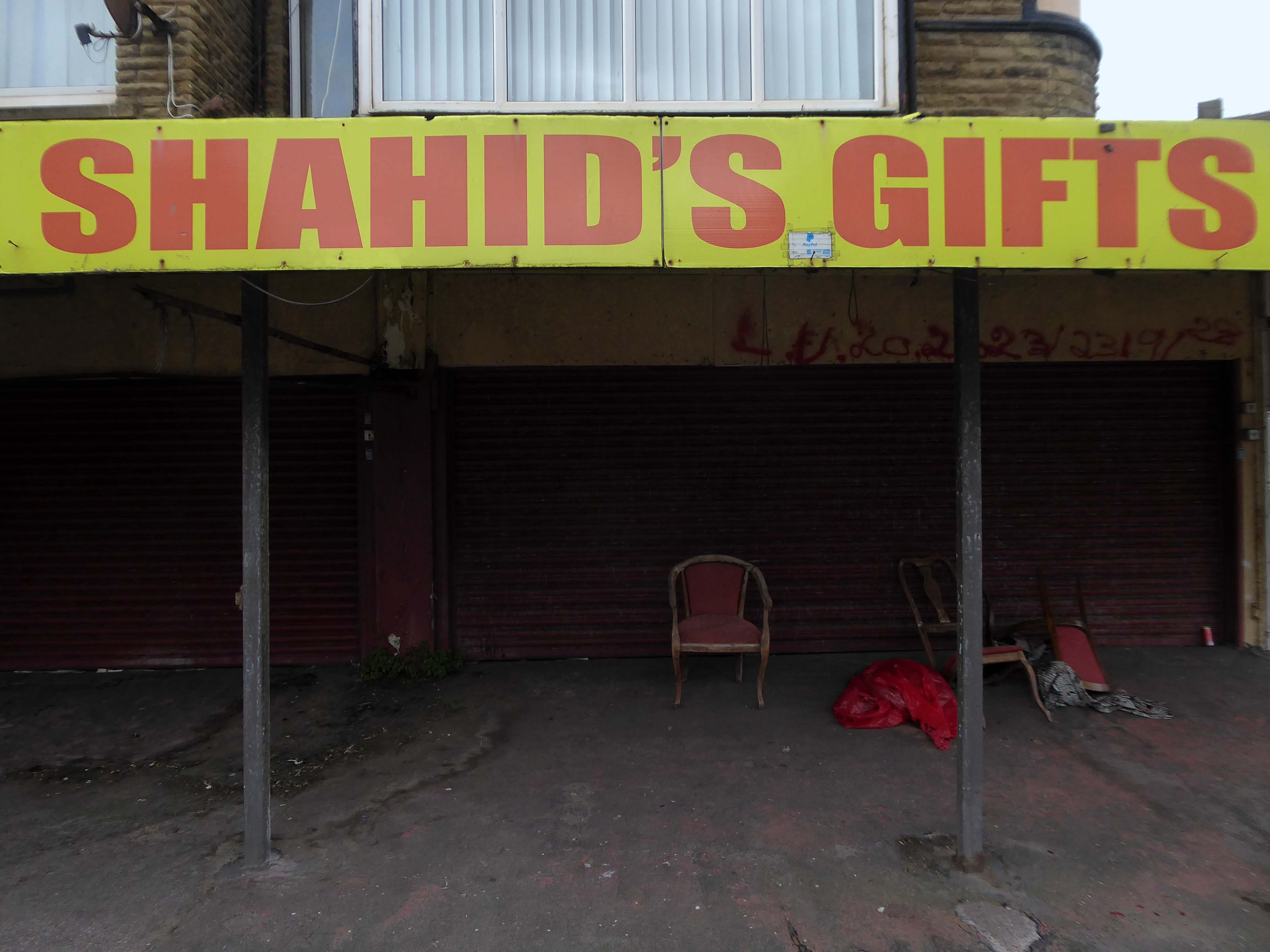
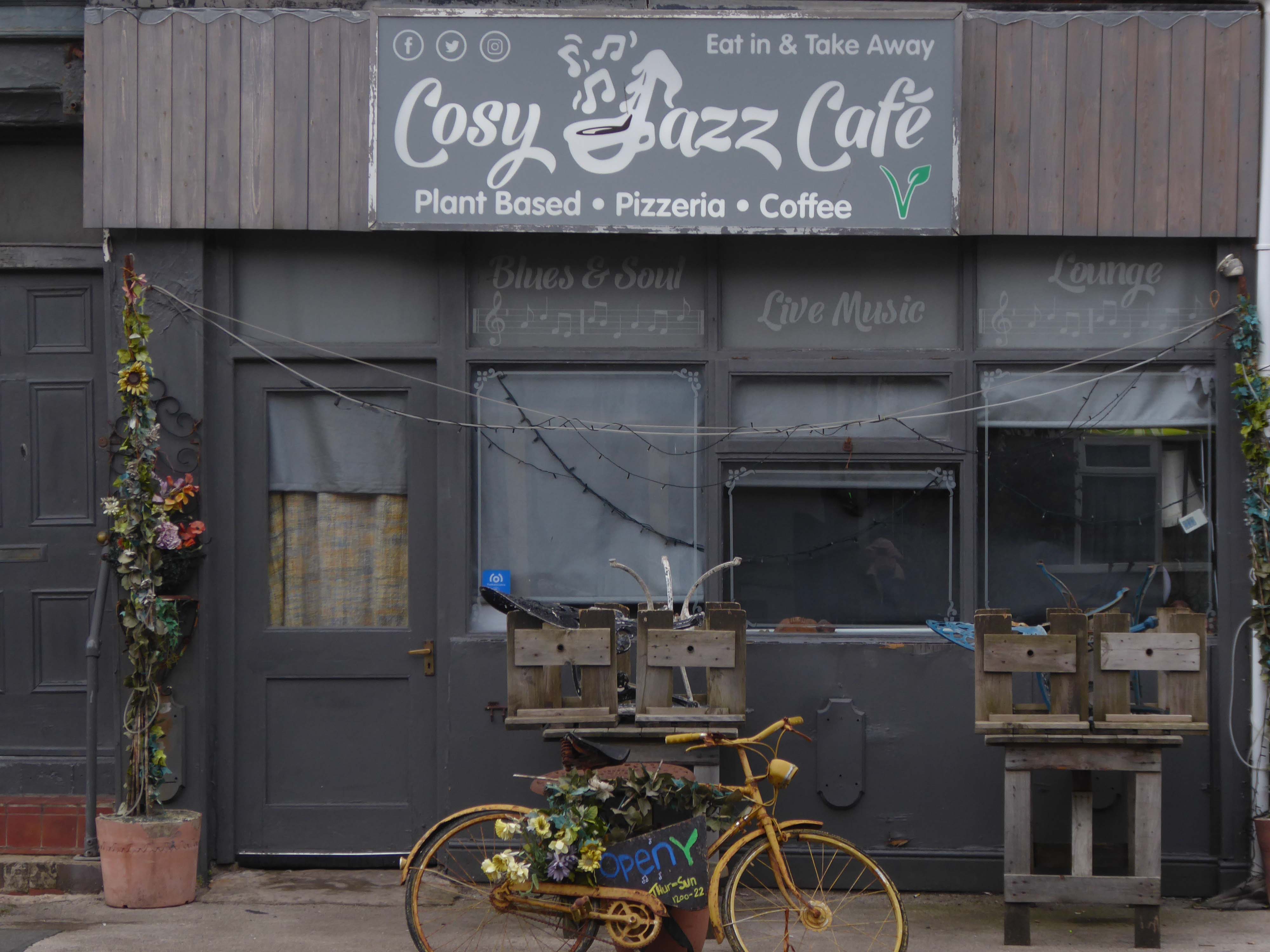
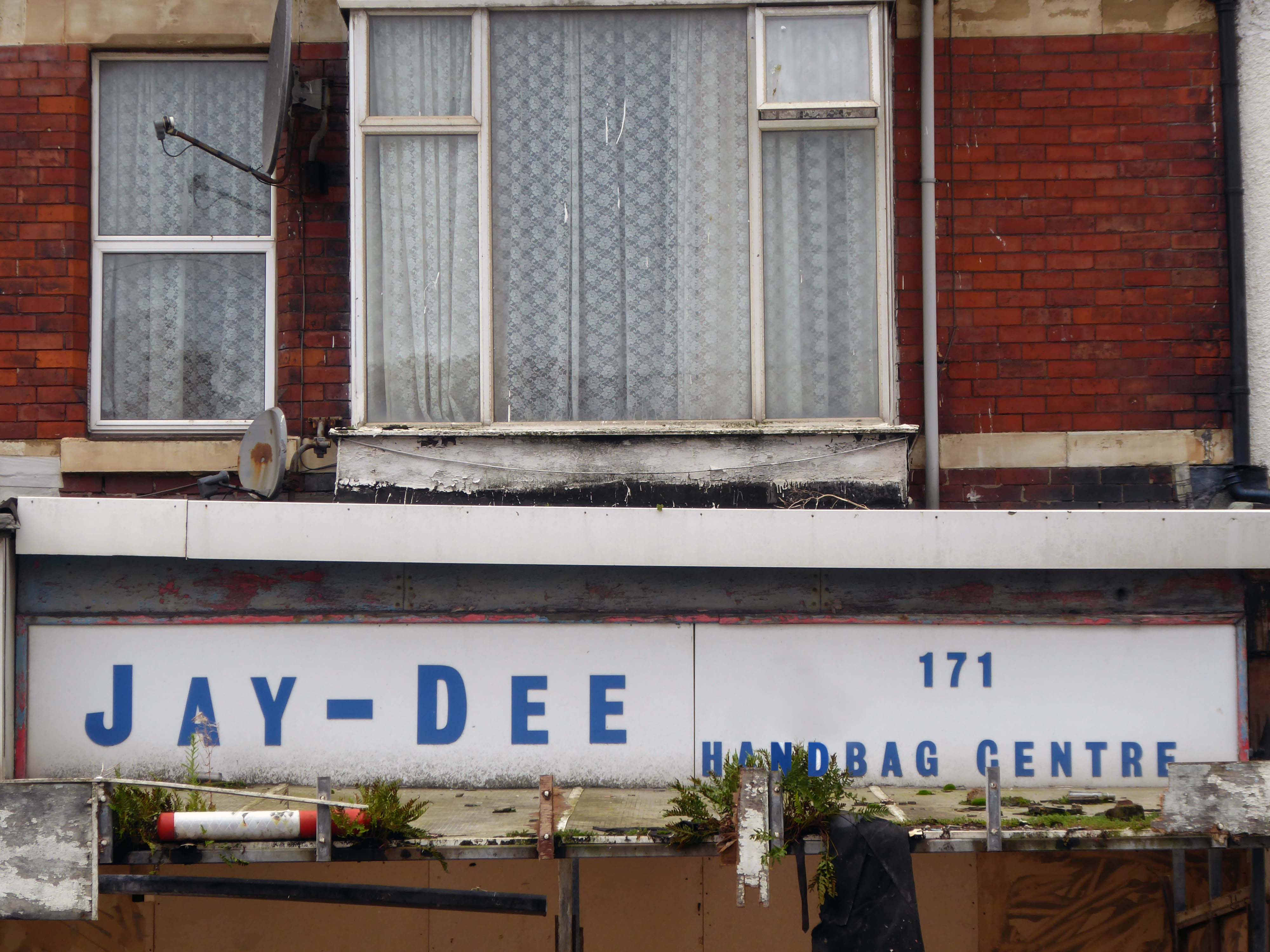
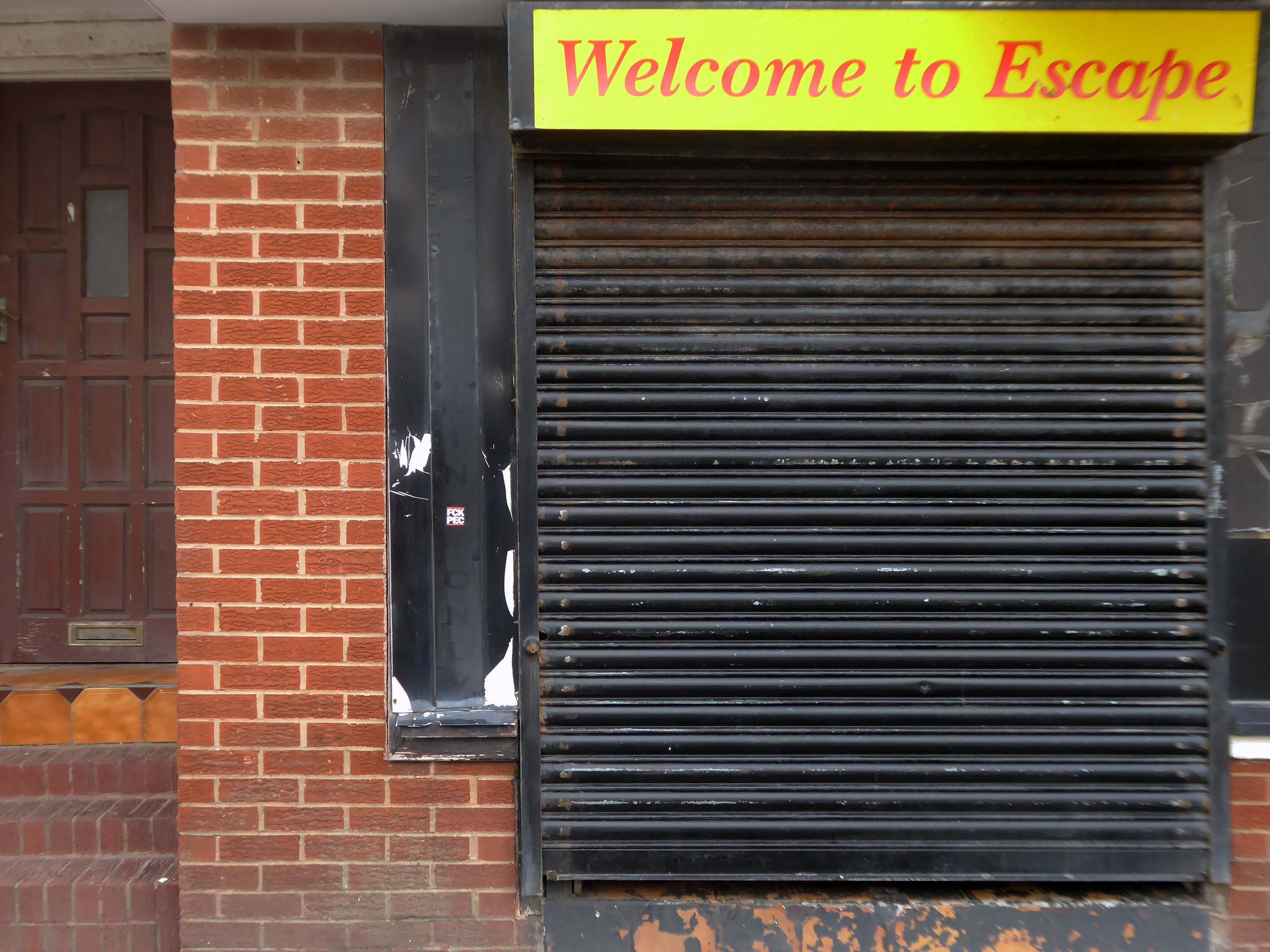
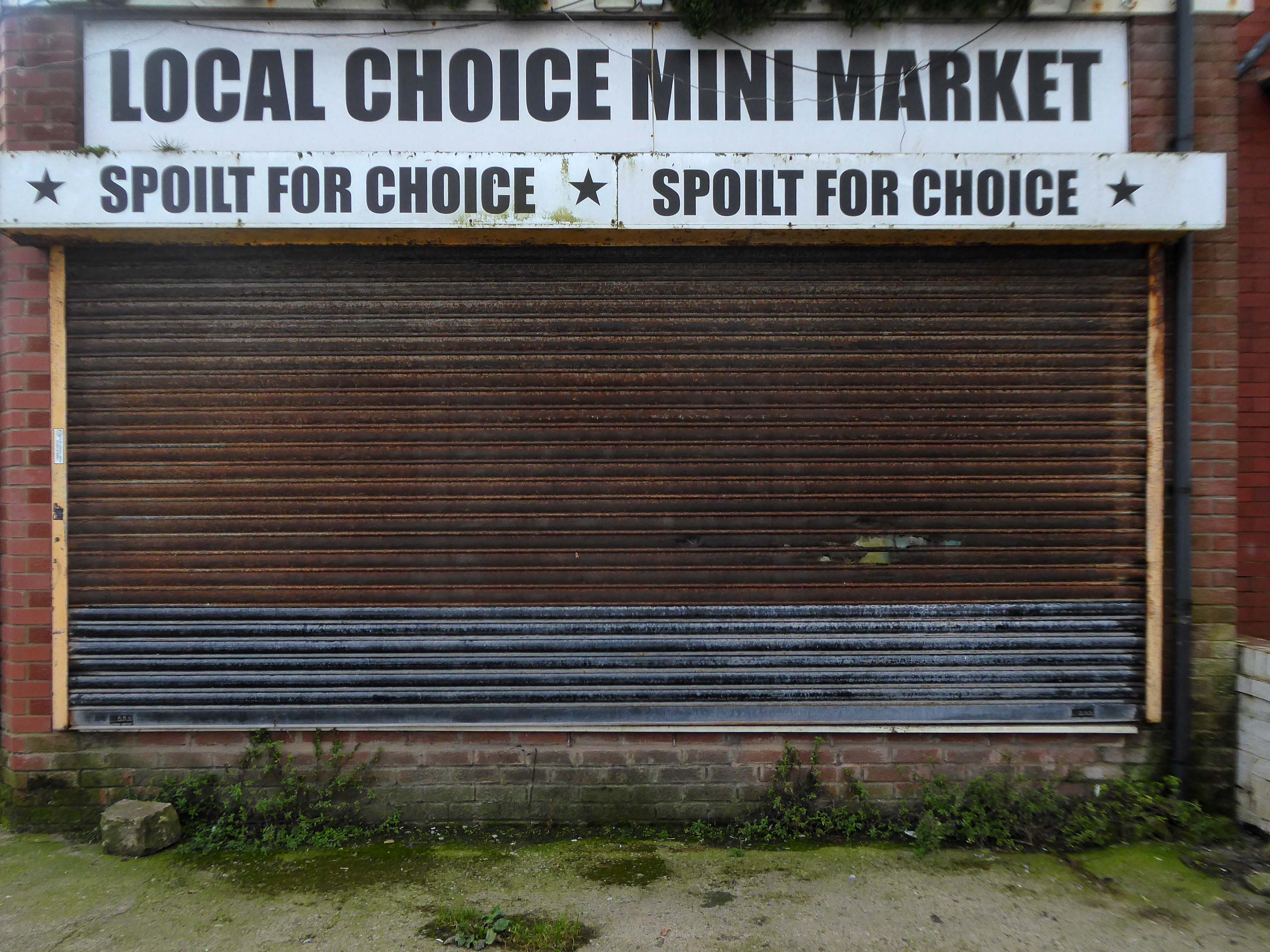
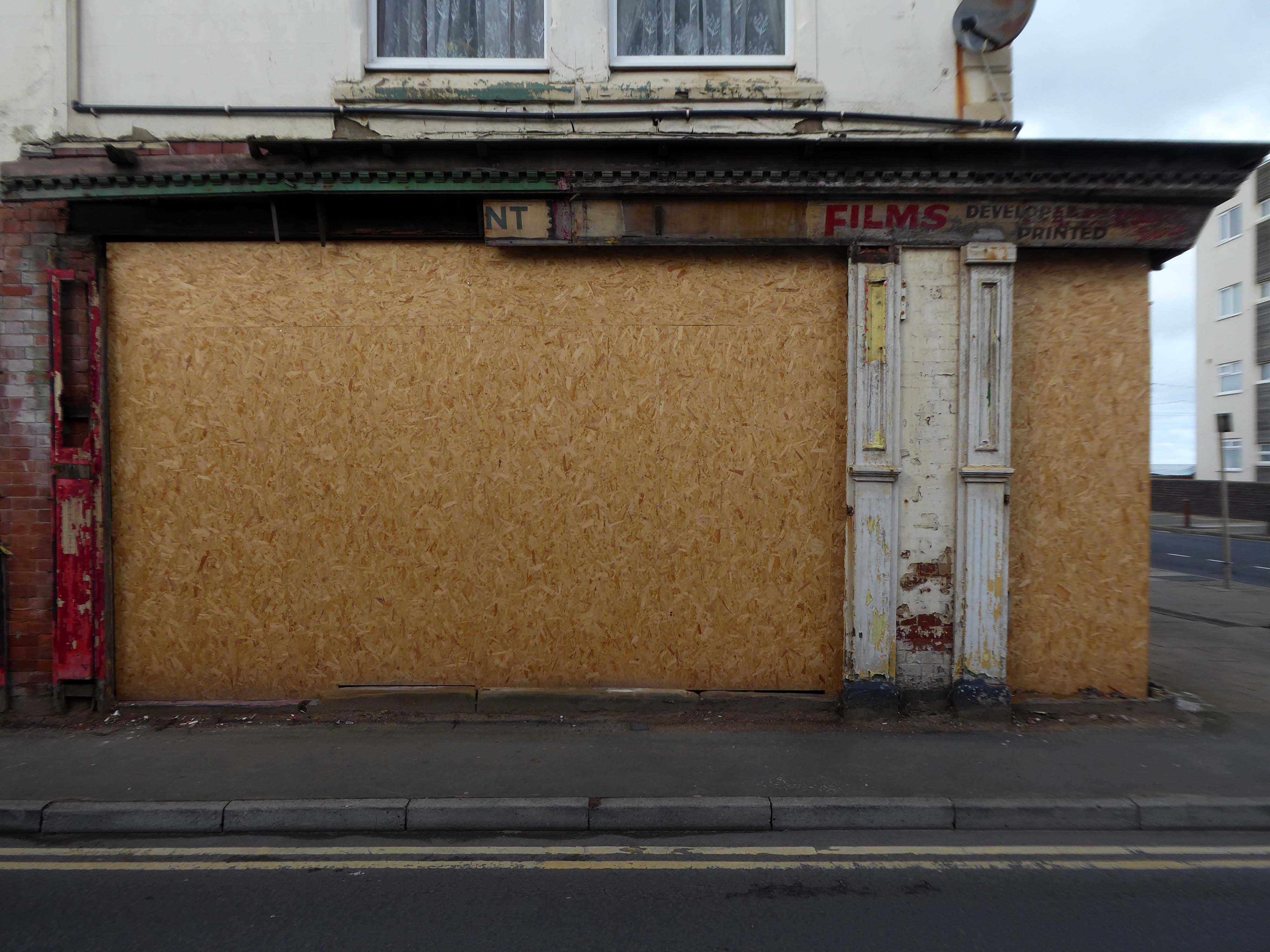
The town needs all the help it can get, time has not been too kind, whilst efforts have been made to invigorate the area around Blackpool North and the promenade, the back streets reflect the legacy of years of deprivation.

Blackpool ranks as one of the most deprived areas in the UK. Many people were already in poverty, and the cost of living pressures are having the biggest impact on this group, who need to spend a greater proportion of their incomes on household essentials. It is also affecting people on low and middle incomes, often surviving by having several jobs, who are being pushed into poverty. More people are turning to services for support, and as the winter progresses this is a serious concern.

Local Gov

Here is the statistical evidence as of 2021.

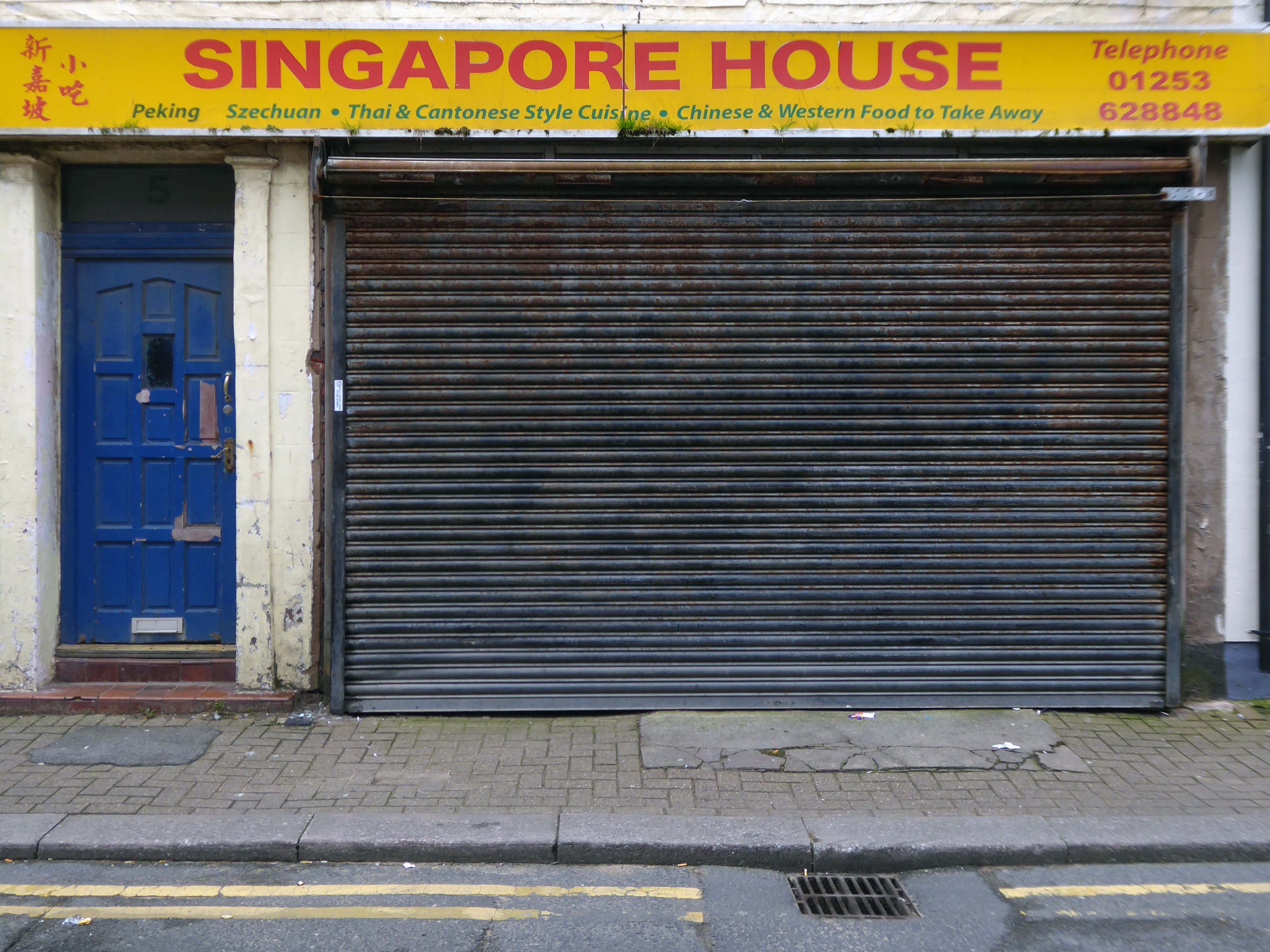
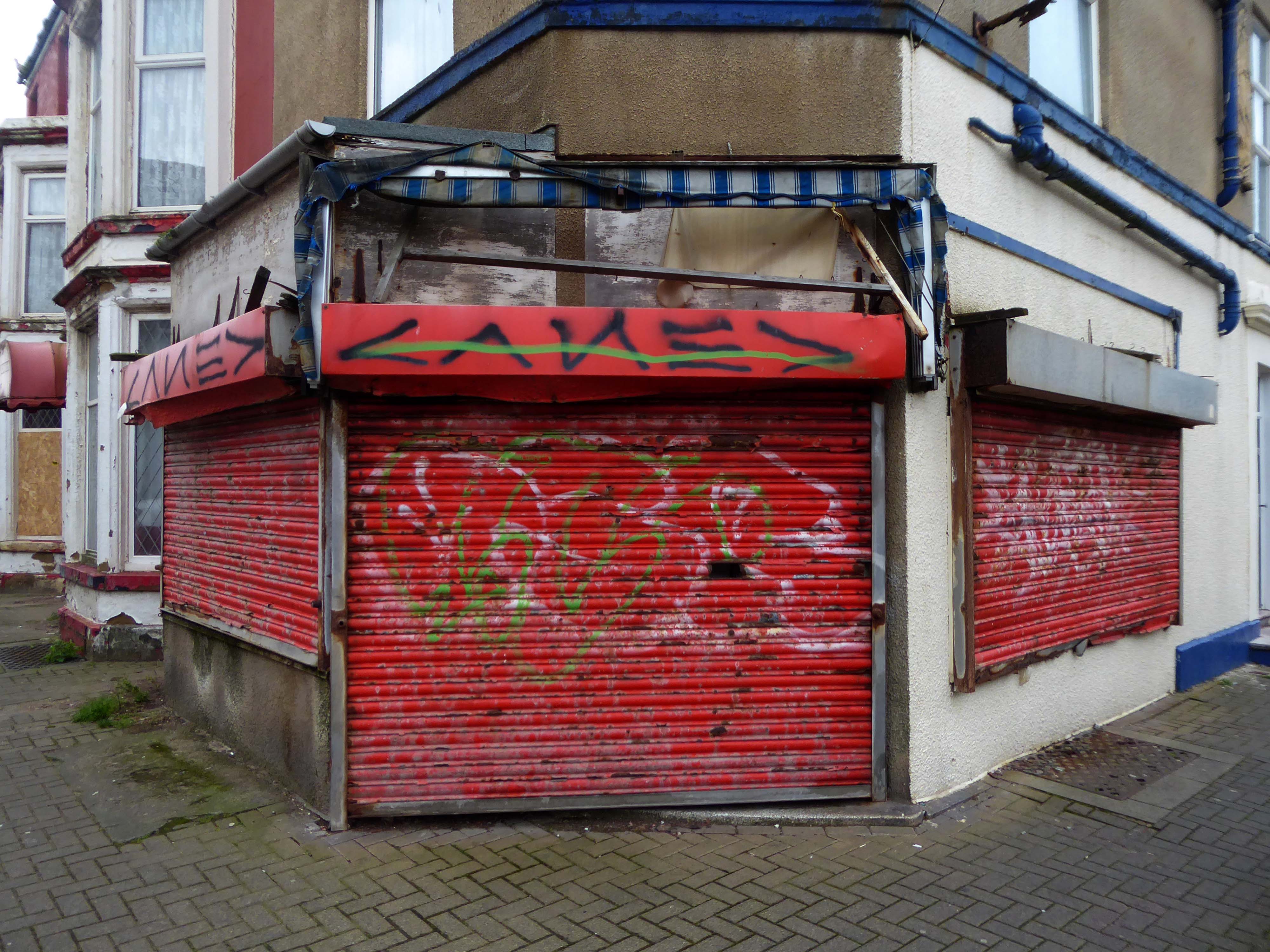
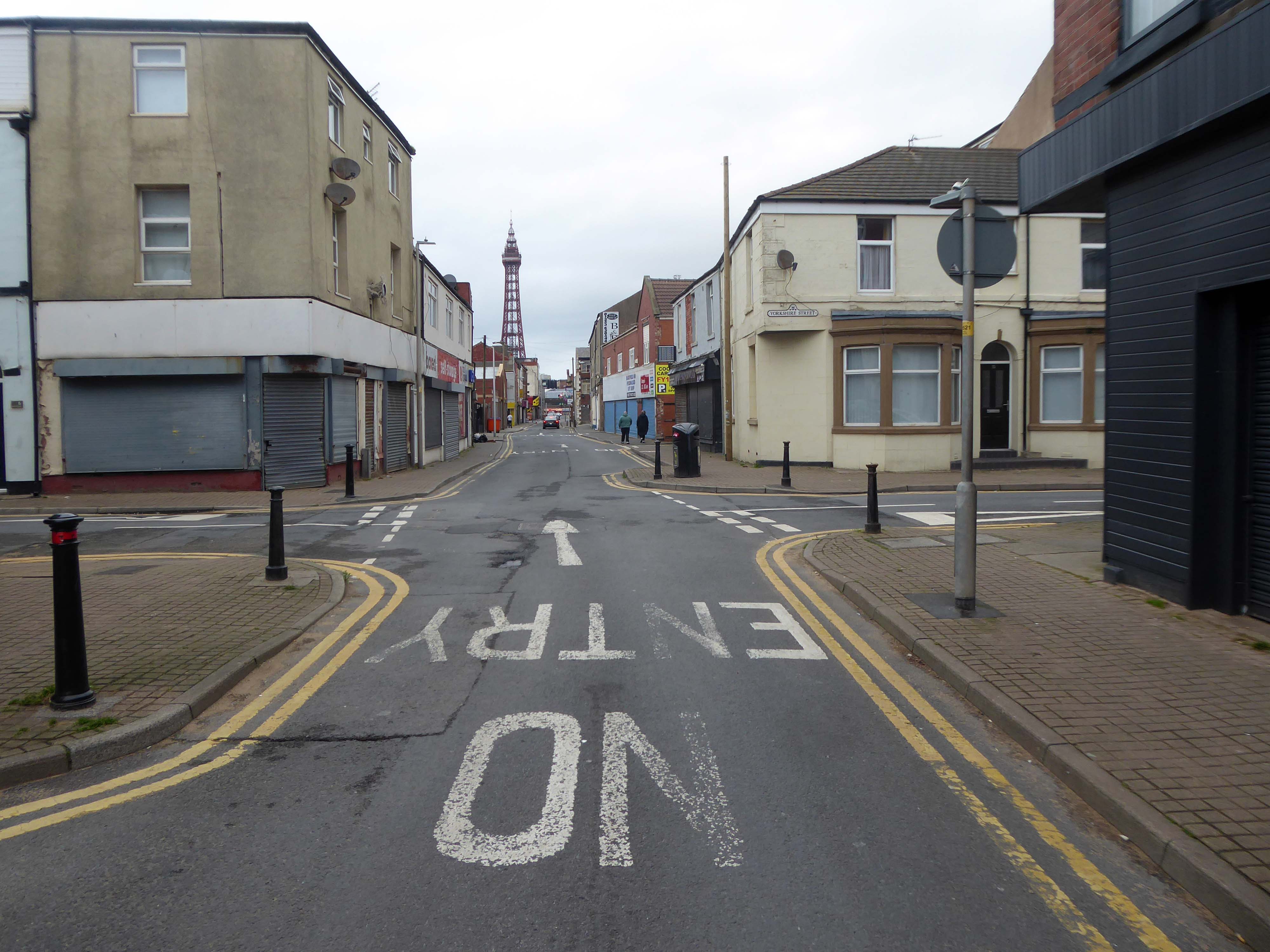
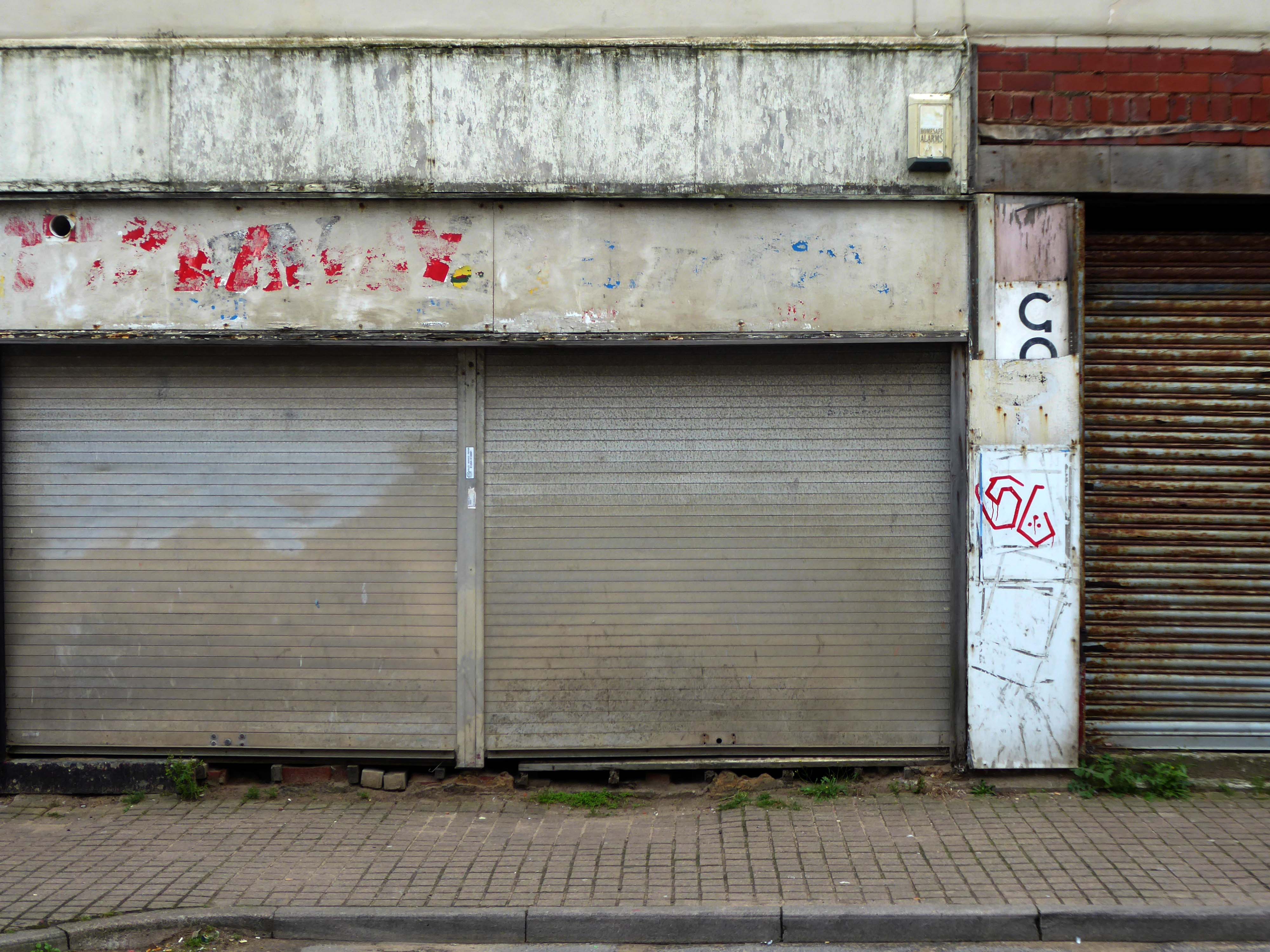
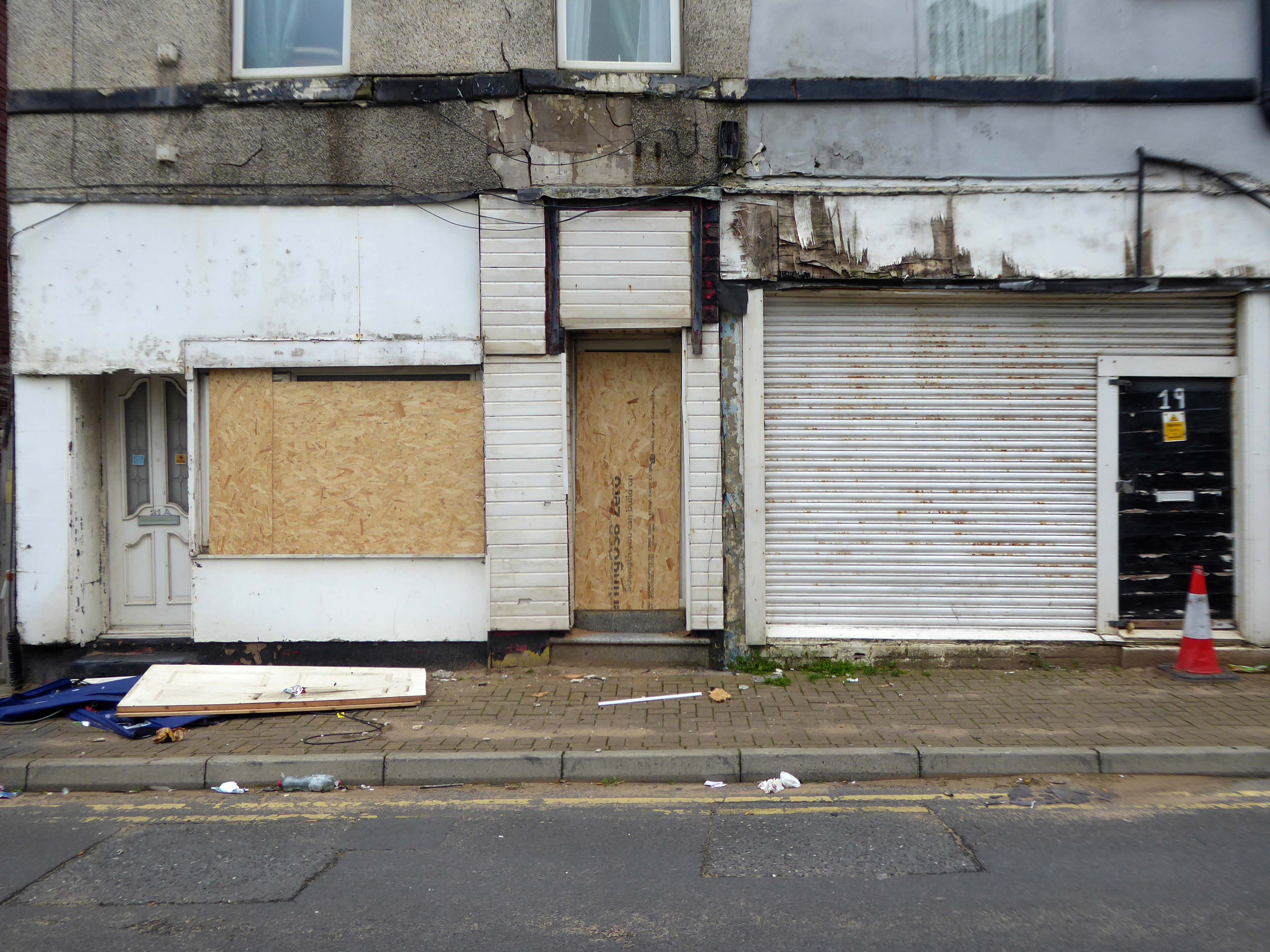
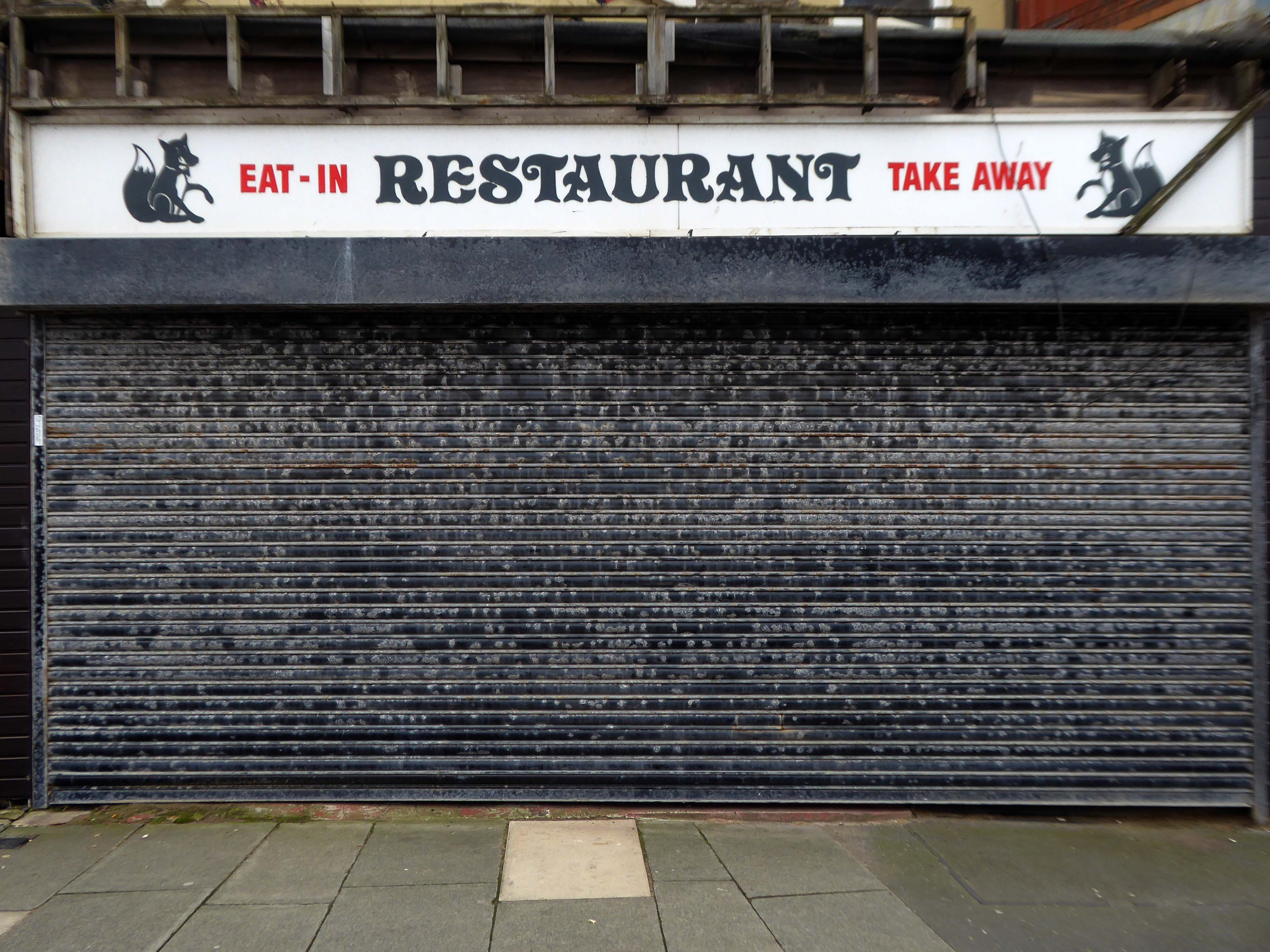
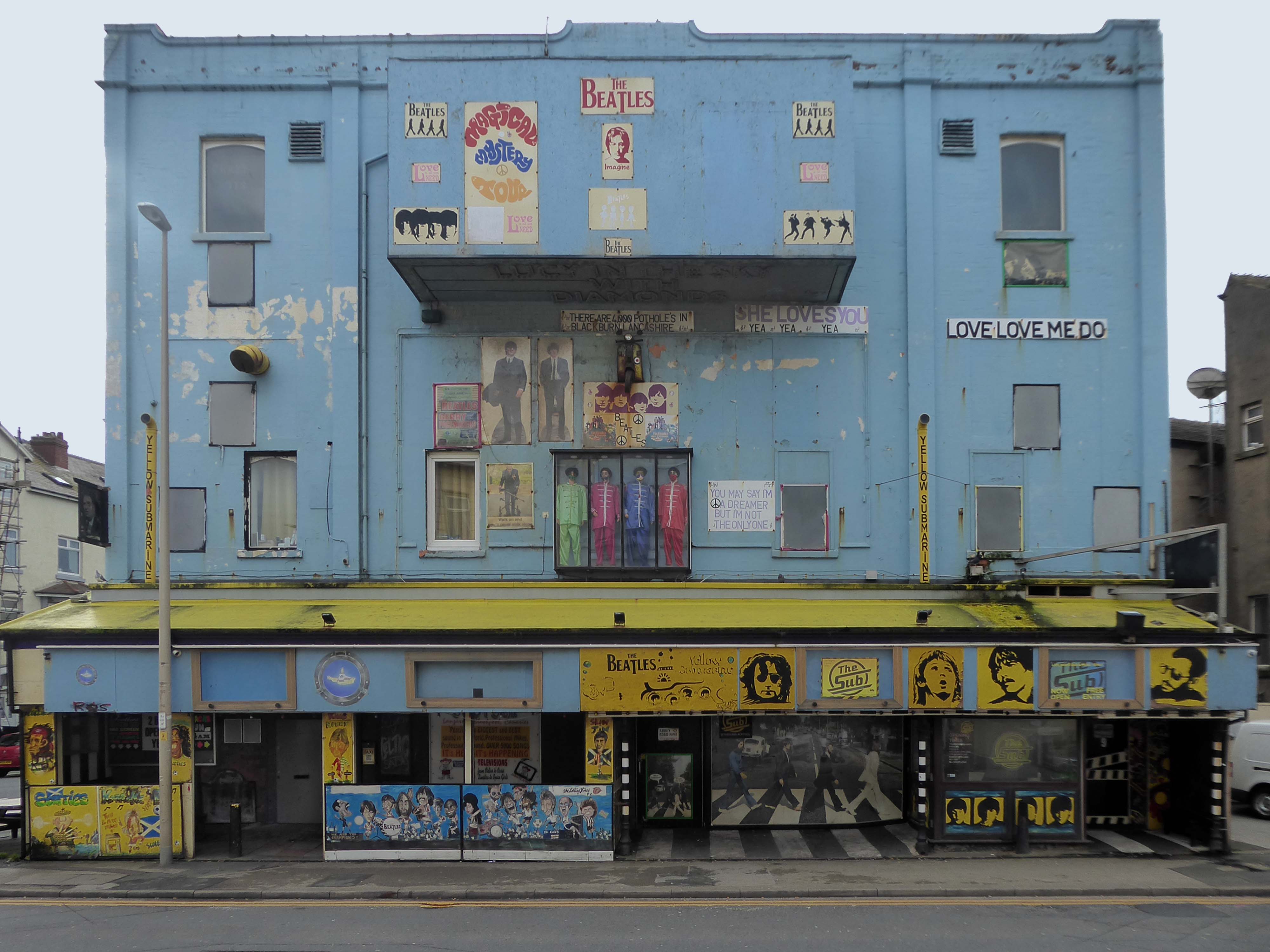
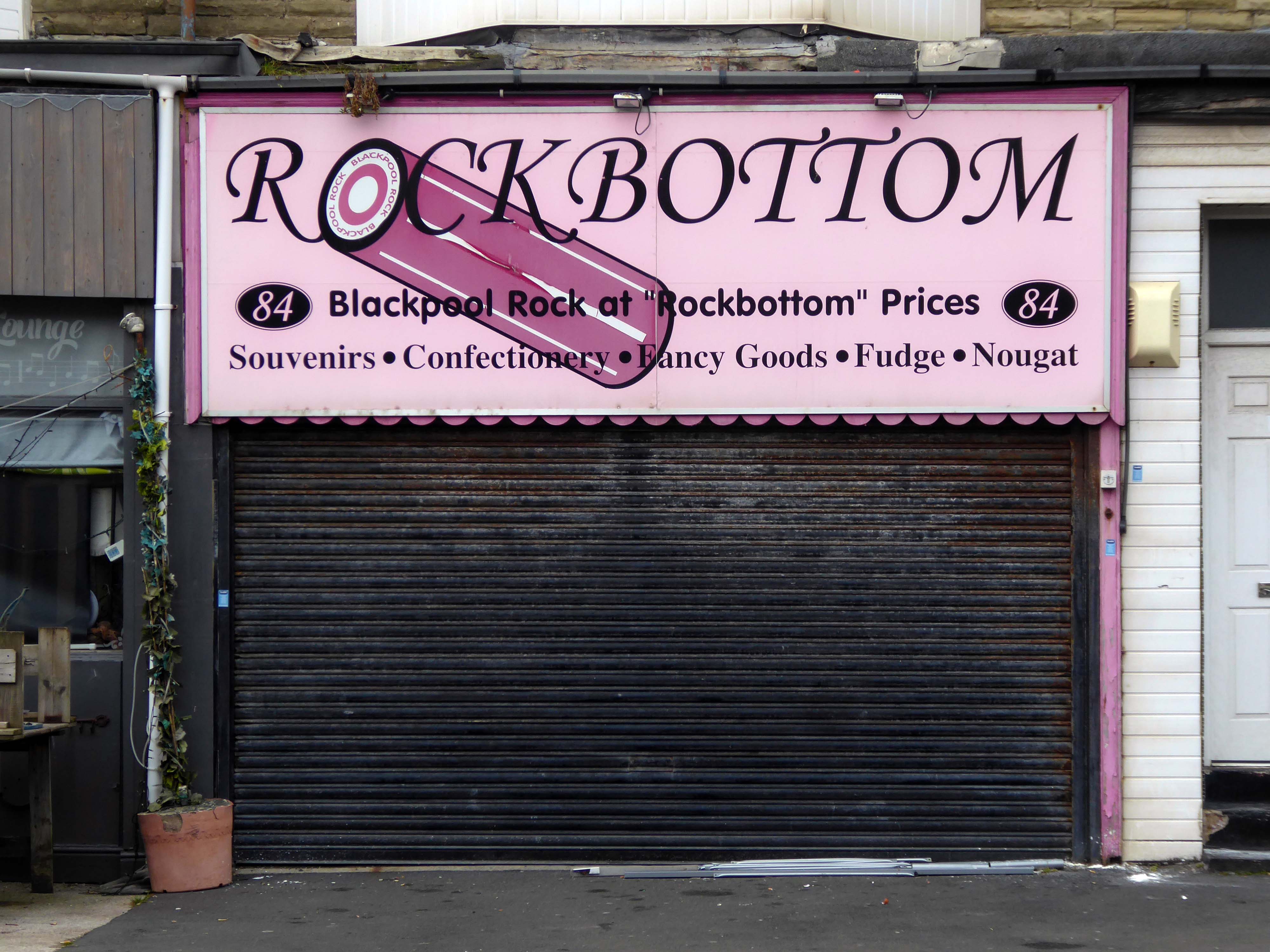
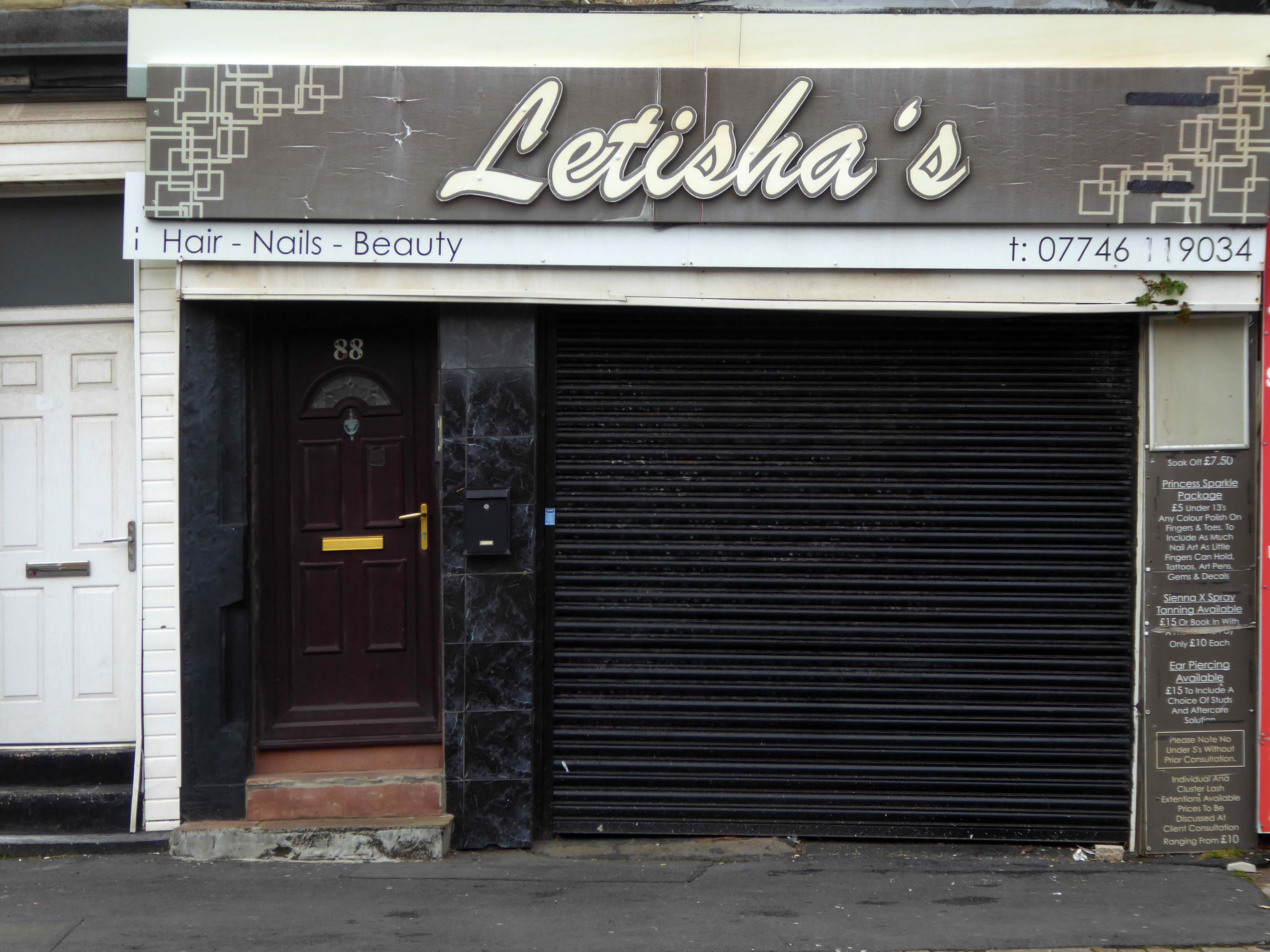
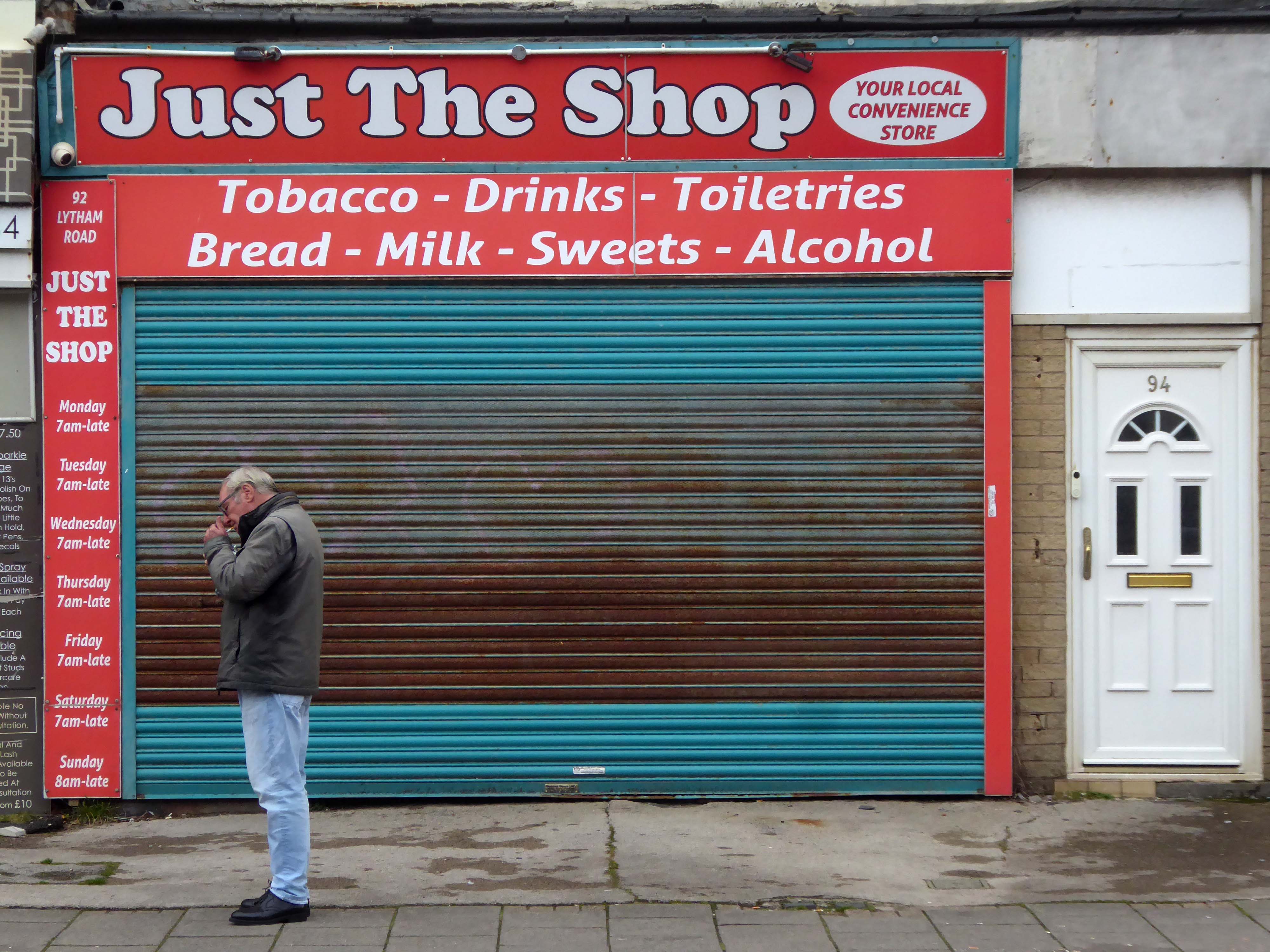
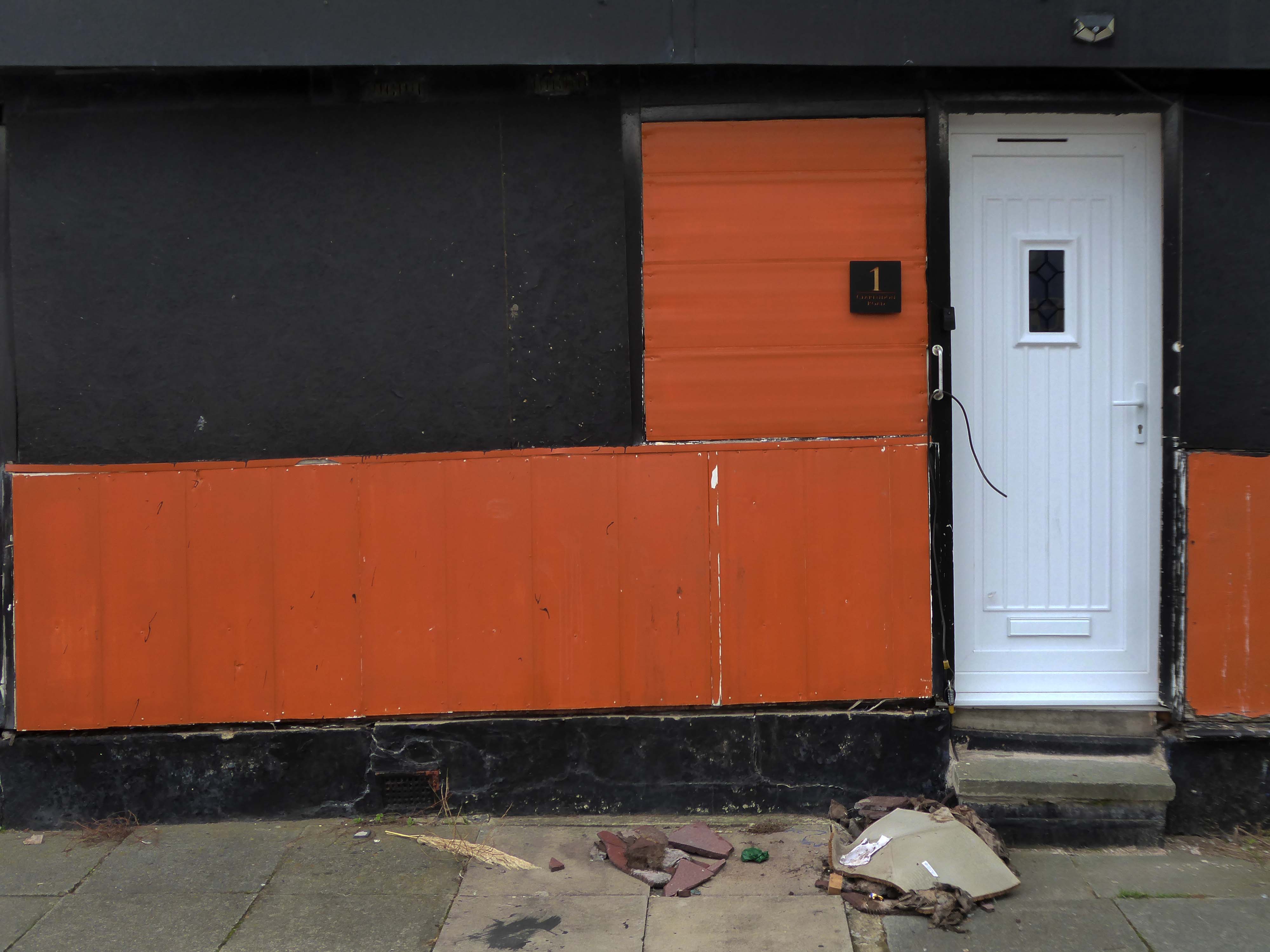
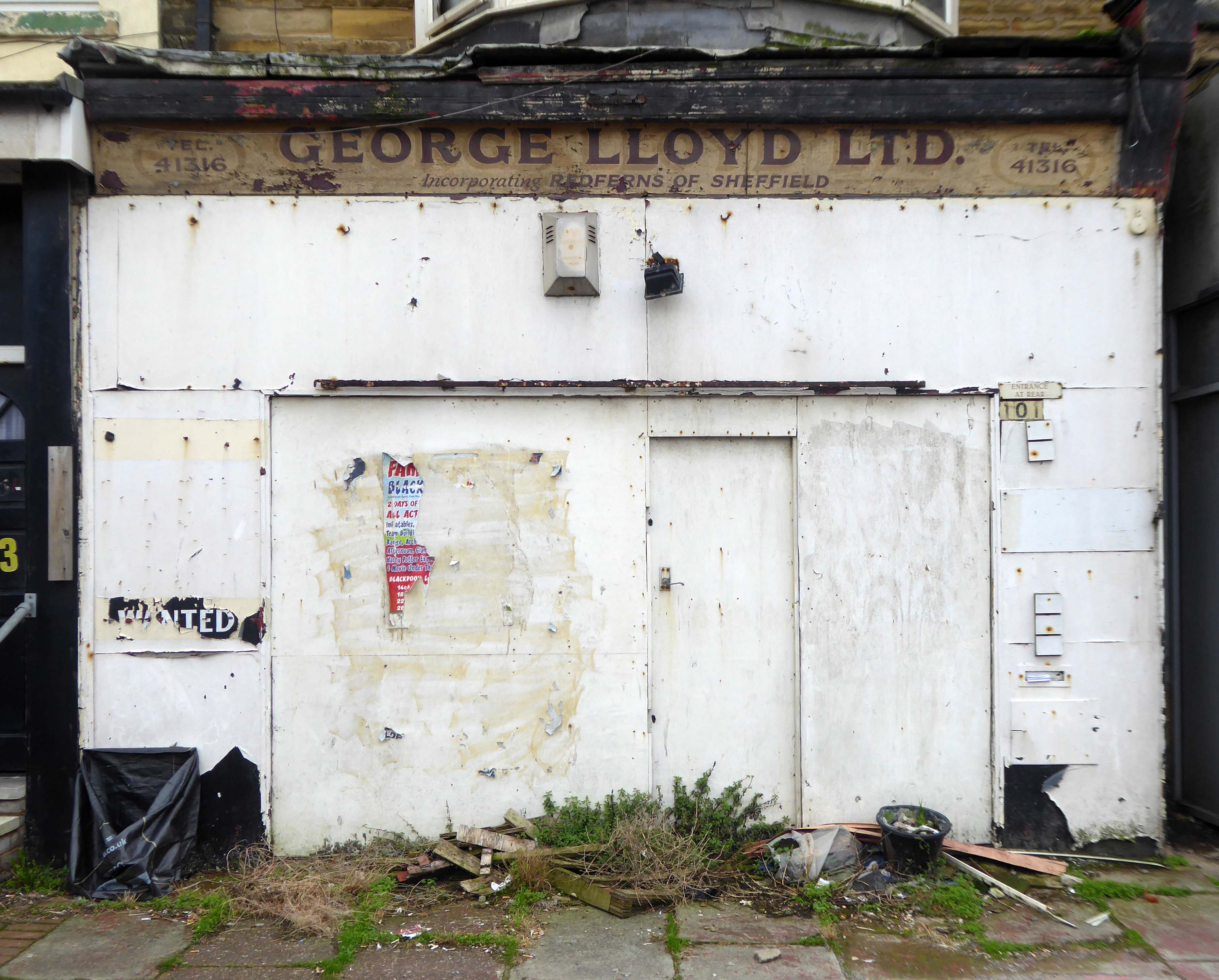
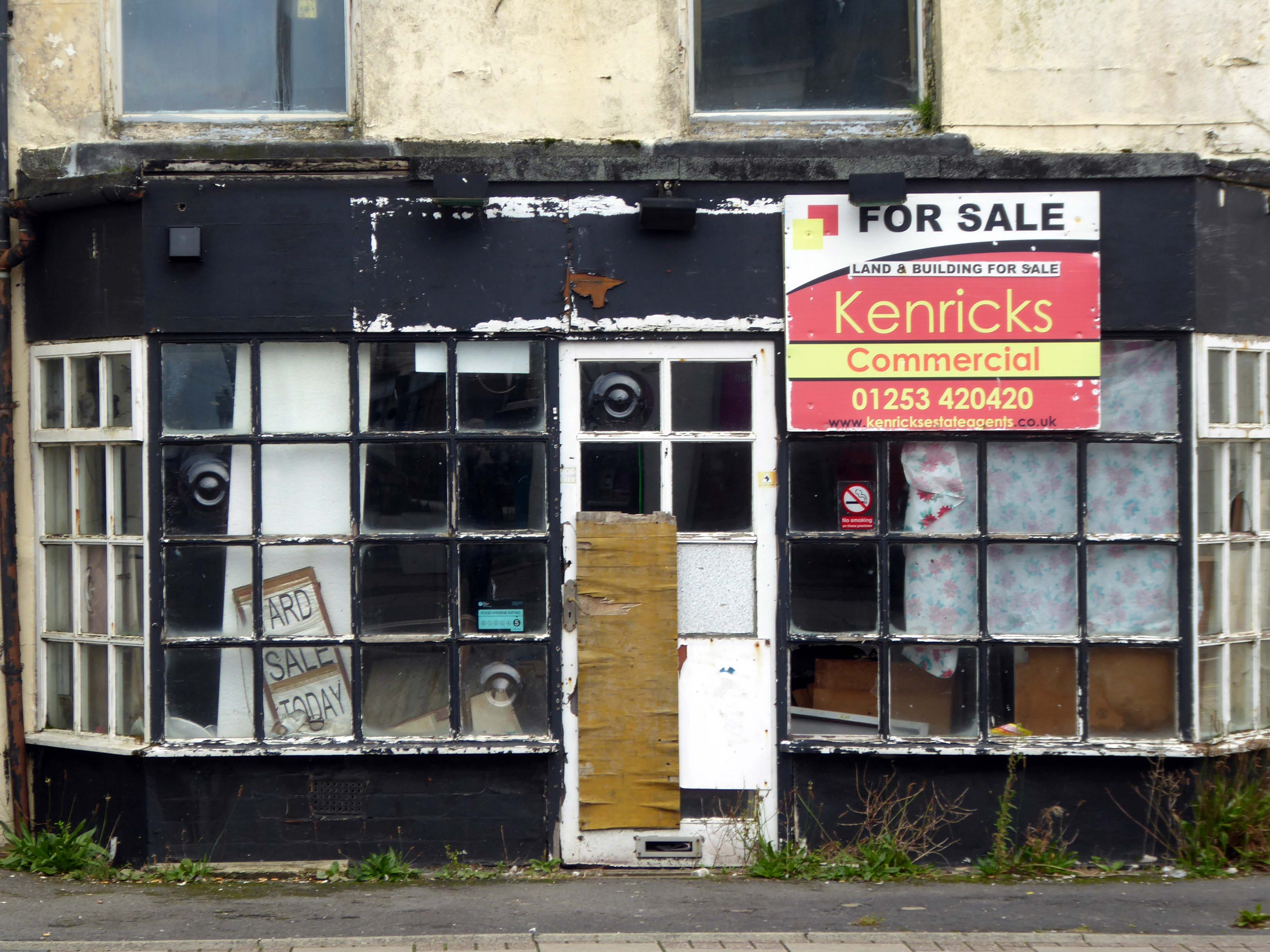
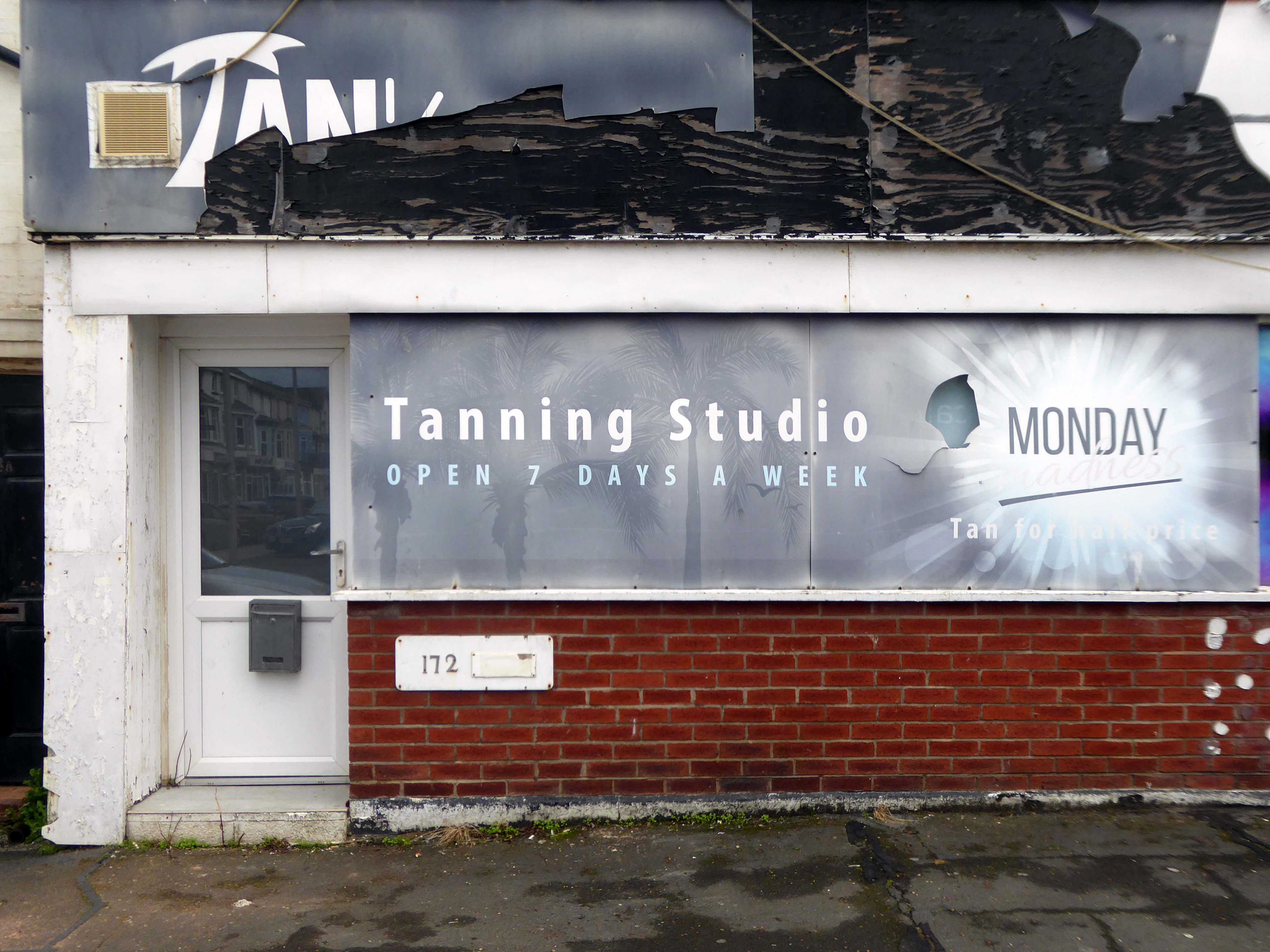
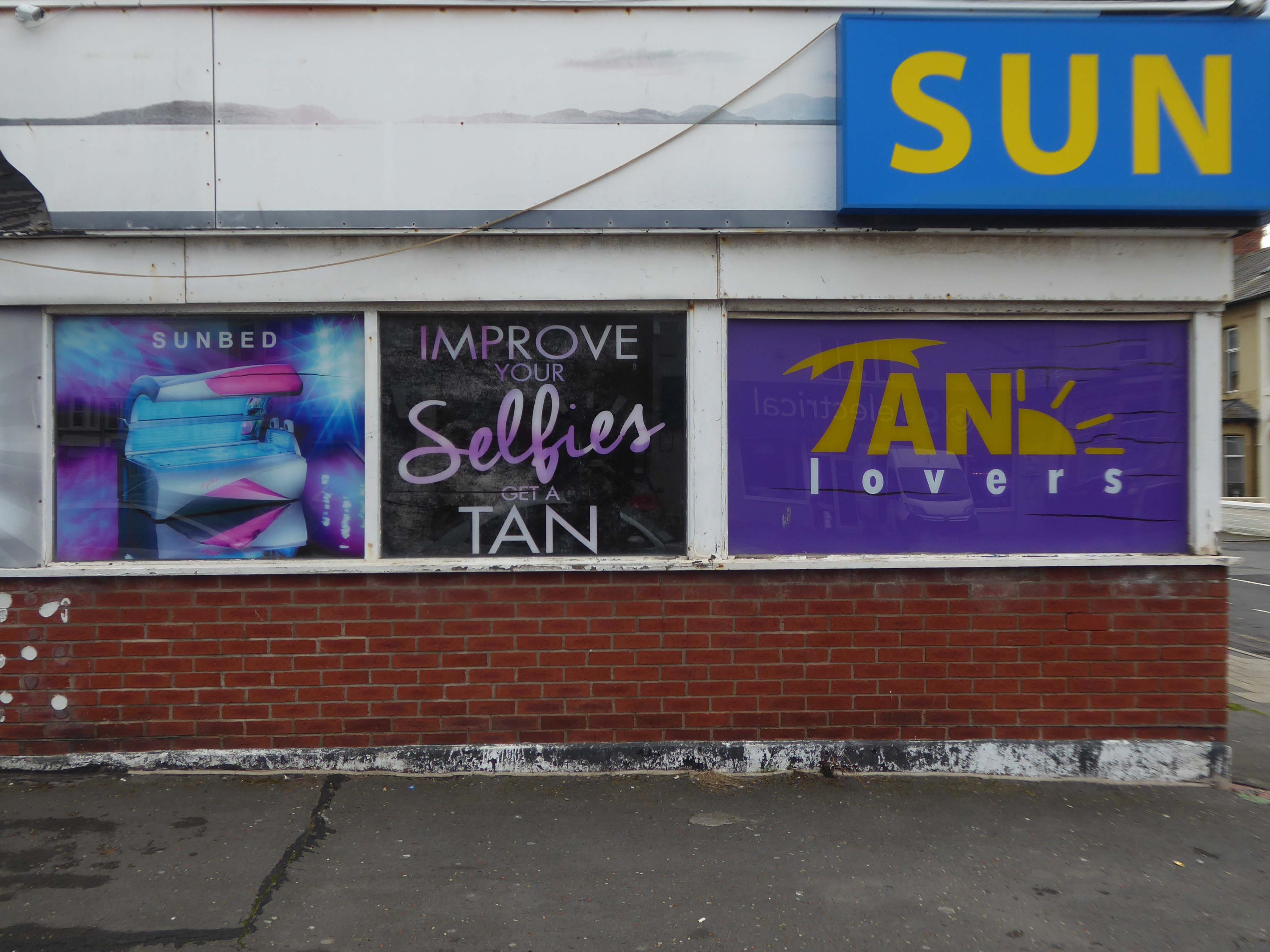
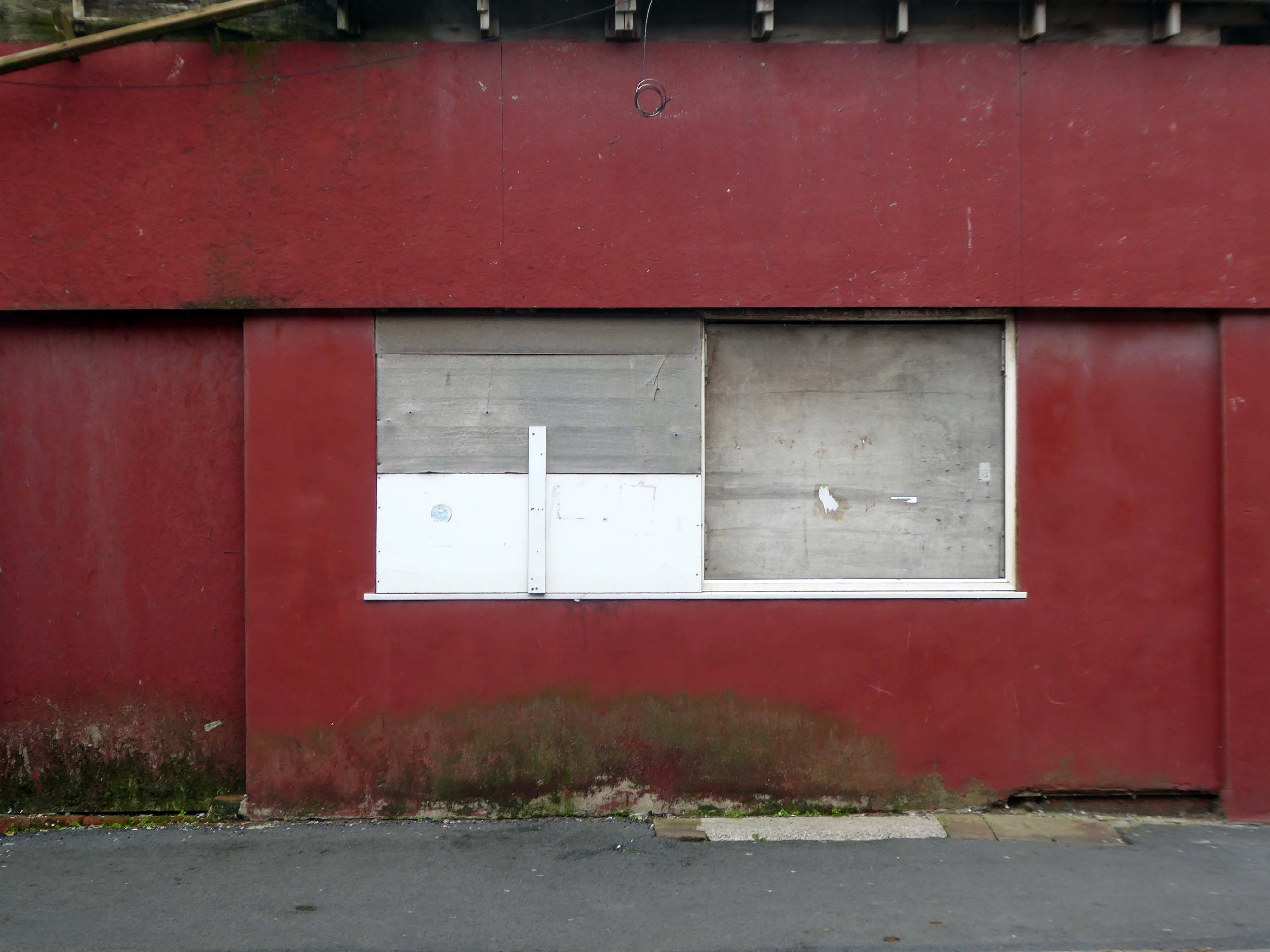
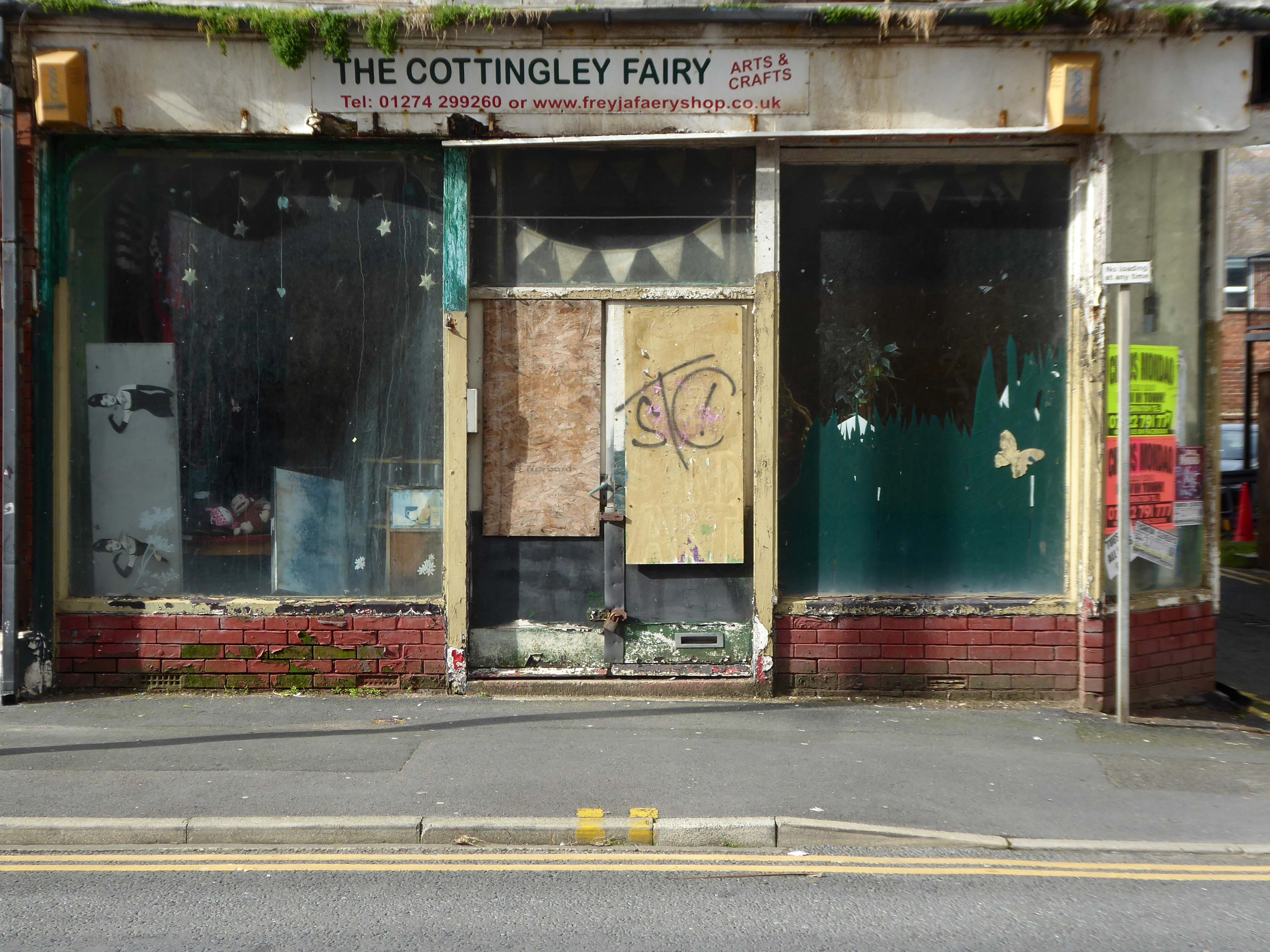
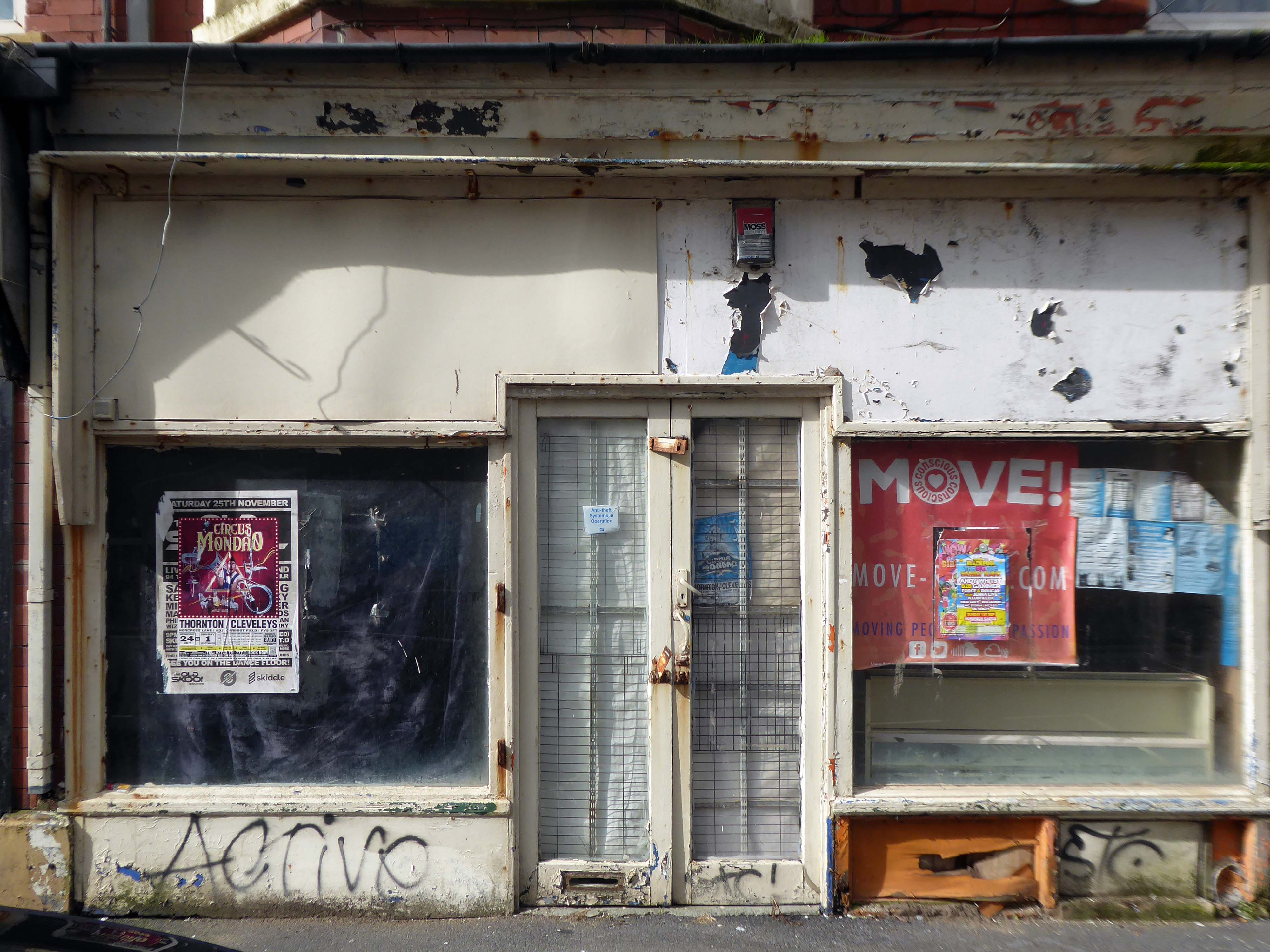
I have no wish to poor scorn on the area – but a short walk around the streets approximate to the coast tells a tale of failed businesses, decay and decline.

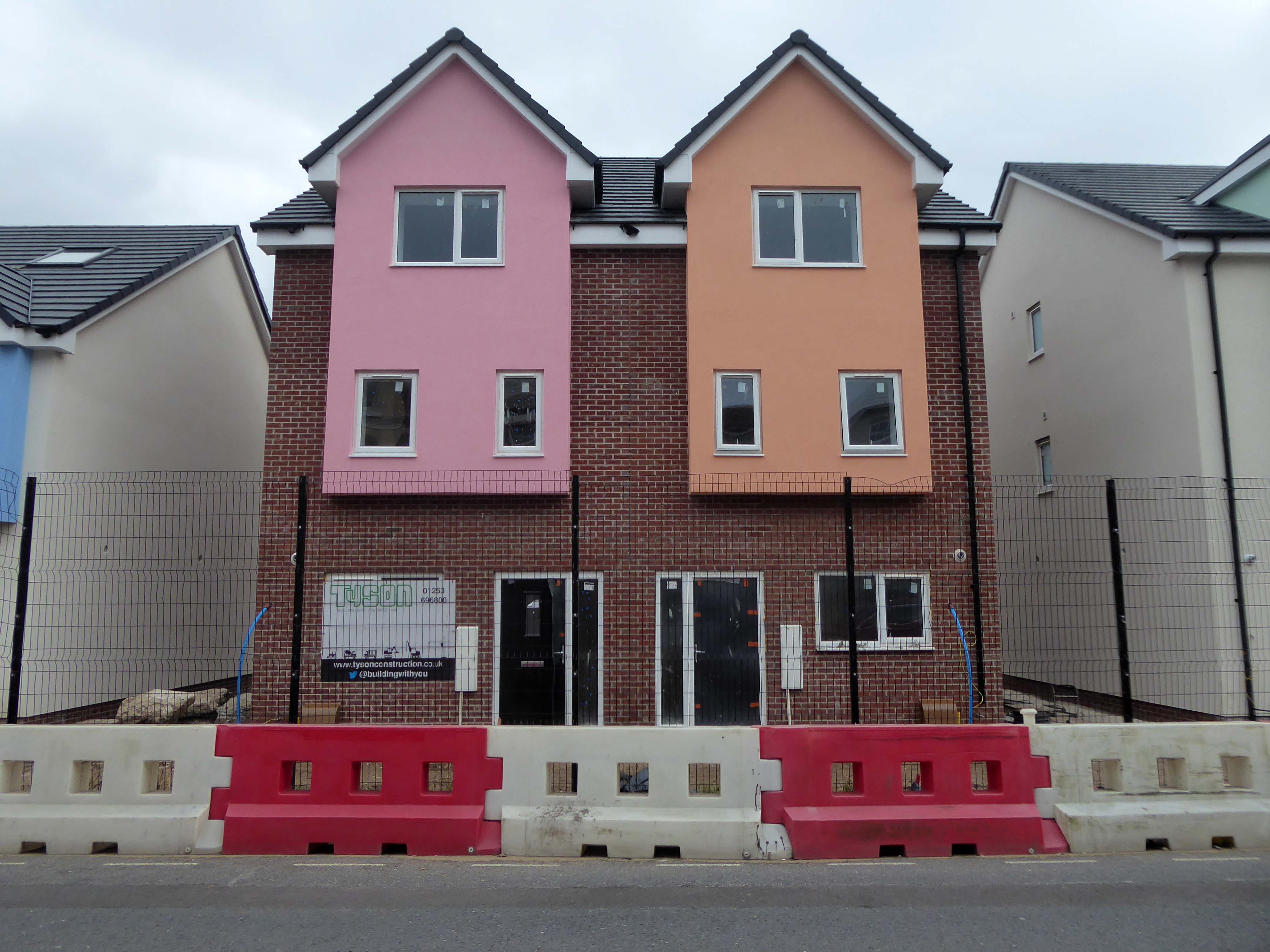
Happily there are the seeds of recovery in evidence, in the form of newly built housing.

The executive report outlines an area of regeneration to the South of the town centre. It lies broadly between Chapel Street and Rigby Road, and the Promenade and Central Drive. These have been identified as the initial areas of focus for detailed scheme development, community engagement and property acquisitions in preparation for future development.

Live Blackpool

We all deserve better.

Bury Walk

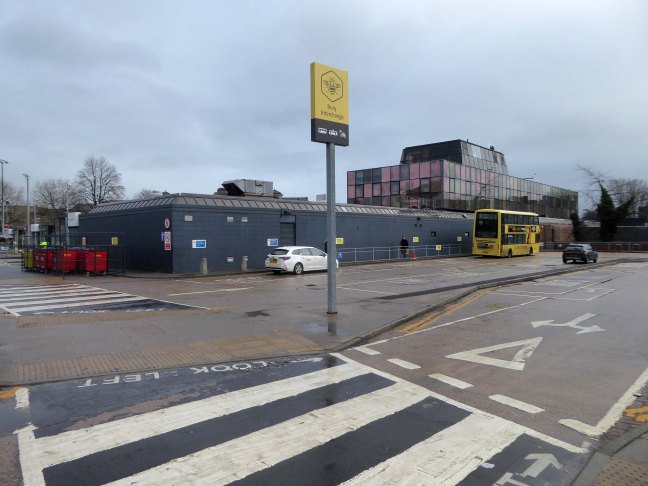
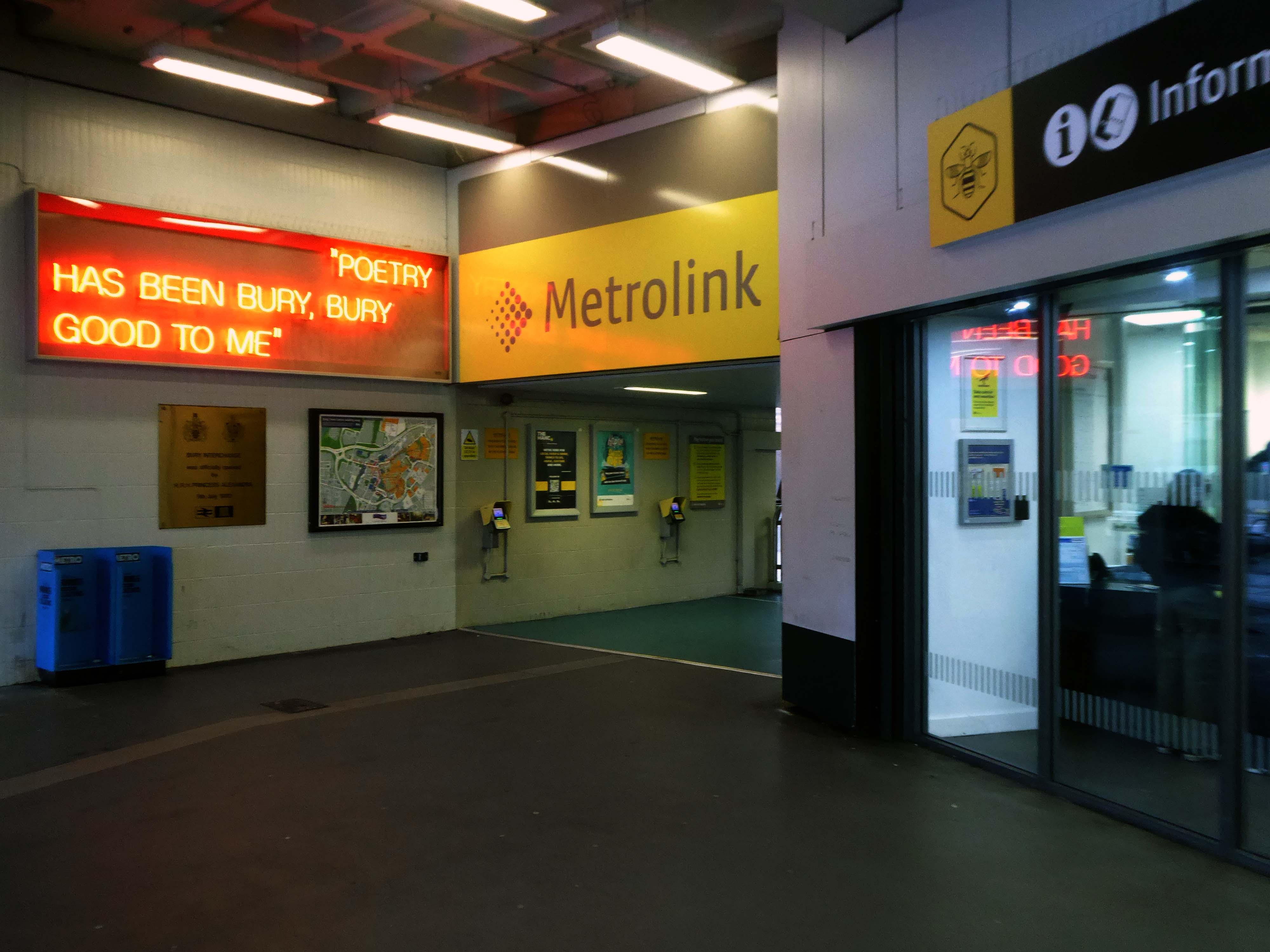
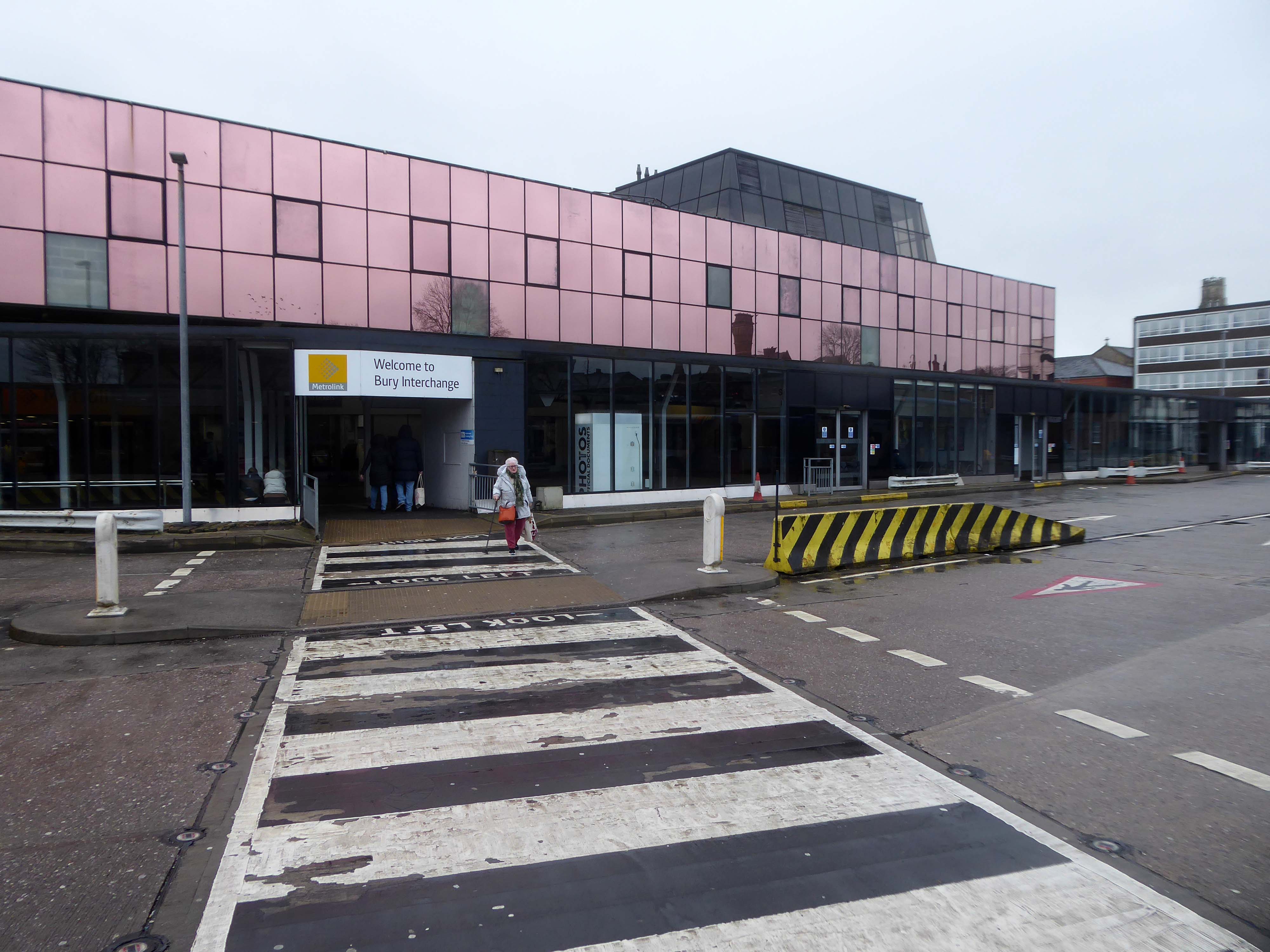
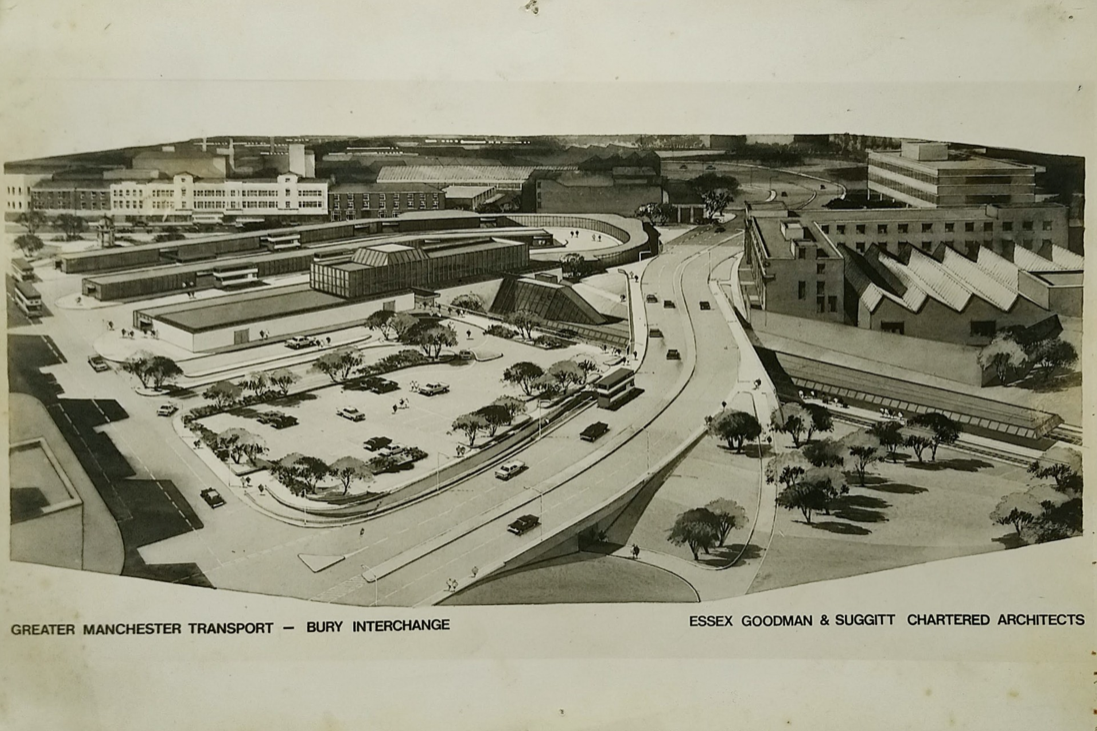
Arriving at and looking around the Interchange – 1980 architects: Essex Goodman & Suggitt

It is the northern terminus of the Manchester Metrolink’s Bury Line, which prior to 1992 was a heavy-rail line.

A new short spur line was constructed to connect the new station. The railway had originally run into Bury Bolton Street which was further away from the town centre, and was closed by British Rail on the same day that Bury Interchange opened.

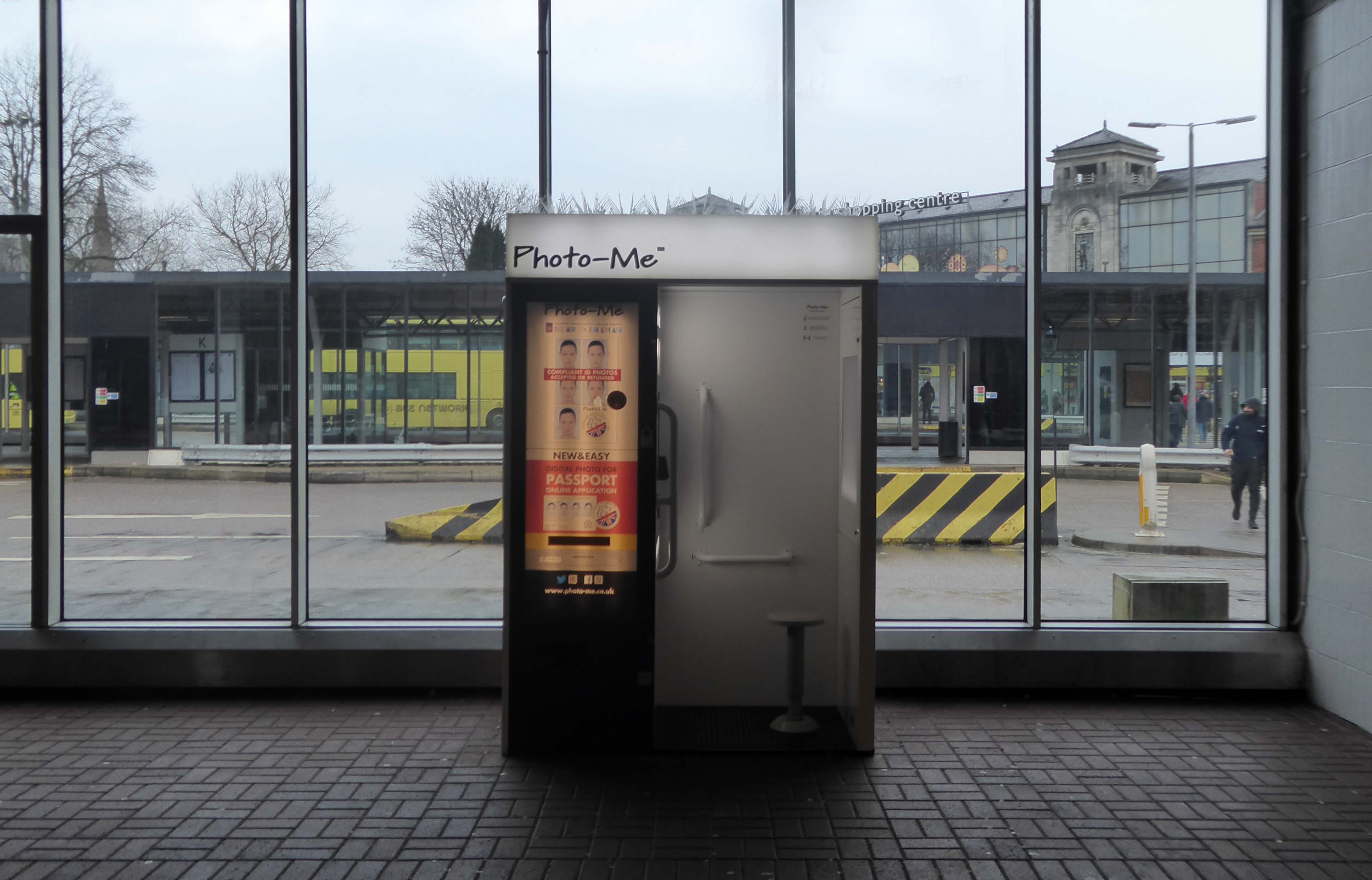
It also incorporates a bus station.

Bury Interchange replaced the bus termini scattered around Bury town centre, notably around Kay Gardens.

Wikipedia

Image courtesy of Roy Banks

An £80m transformation is coming to the Bury Interchange, which will see step-free access at the Metrolink, a “vertical circulation core” to better connect the Metrolink with the bus facility, and an integrated travel hub with spaces for cycle storage.

The work is much-needed, explained Transport for Greater Manchester’s Alan Lowe, he said that the interchange was built in the 1980s and very much is of its time.

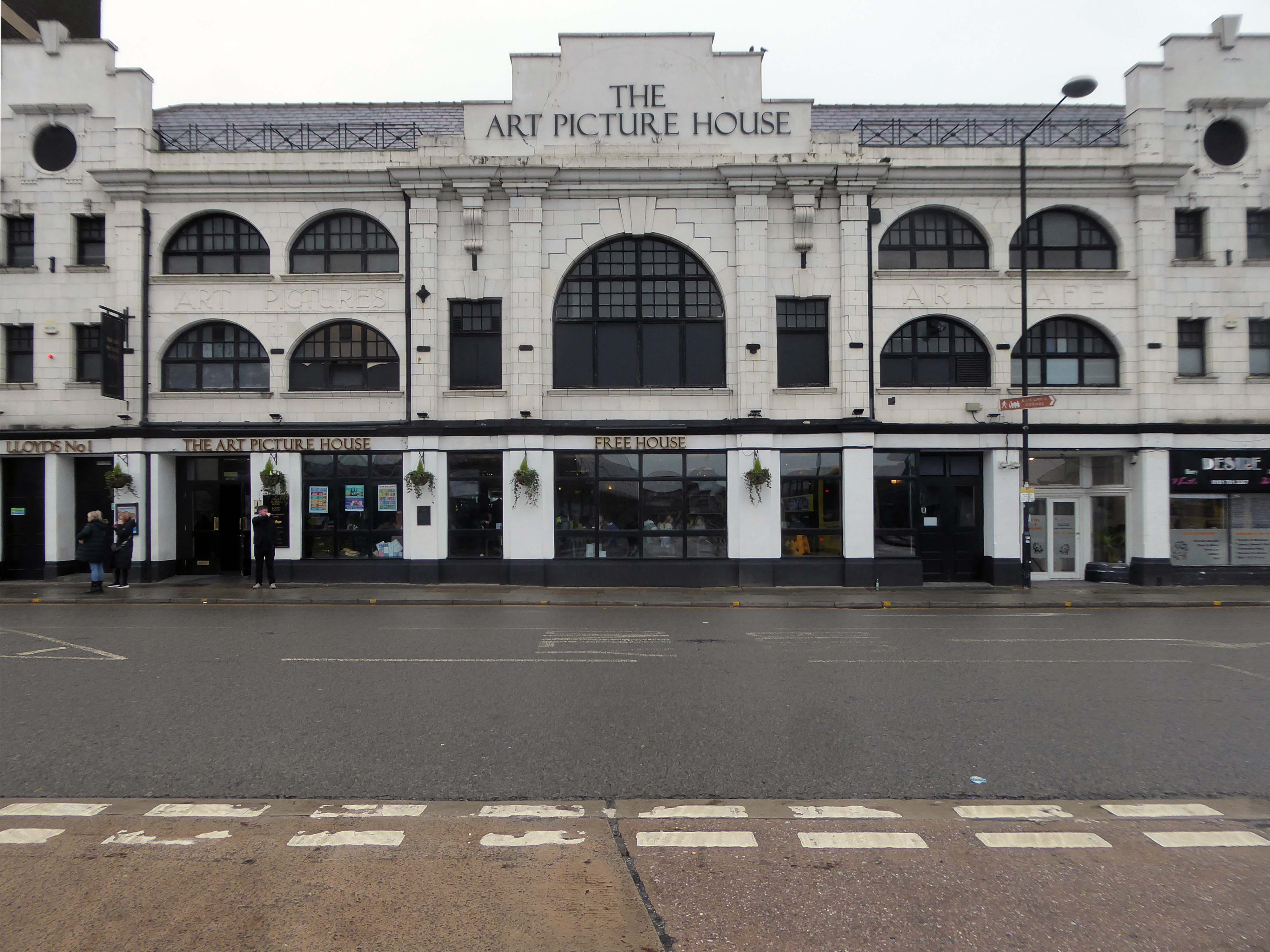
Onward to the Art Picture House which is Grade II Listed – currently operating as a Wetherspoons.

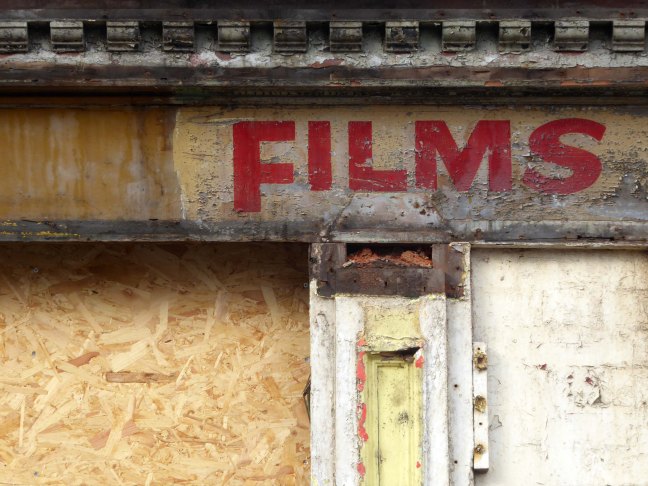
The Art Picture Palace was a 1923 rebuild of the earlier Art Picture Hall both designed by architect Albert Winstanley. The Art Picture Palace was opened on 26th January 1923. A remarkably complete survivor of a 1920’s cine-variety house executed in an elaborate style.

Films ceased in February 1965 and it became a bingo club. Later converted into a billiard hall until 19th May 1991 when it became a bingo club again, it later became a Chicago Rock Cafe.

Cinema Treasures

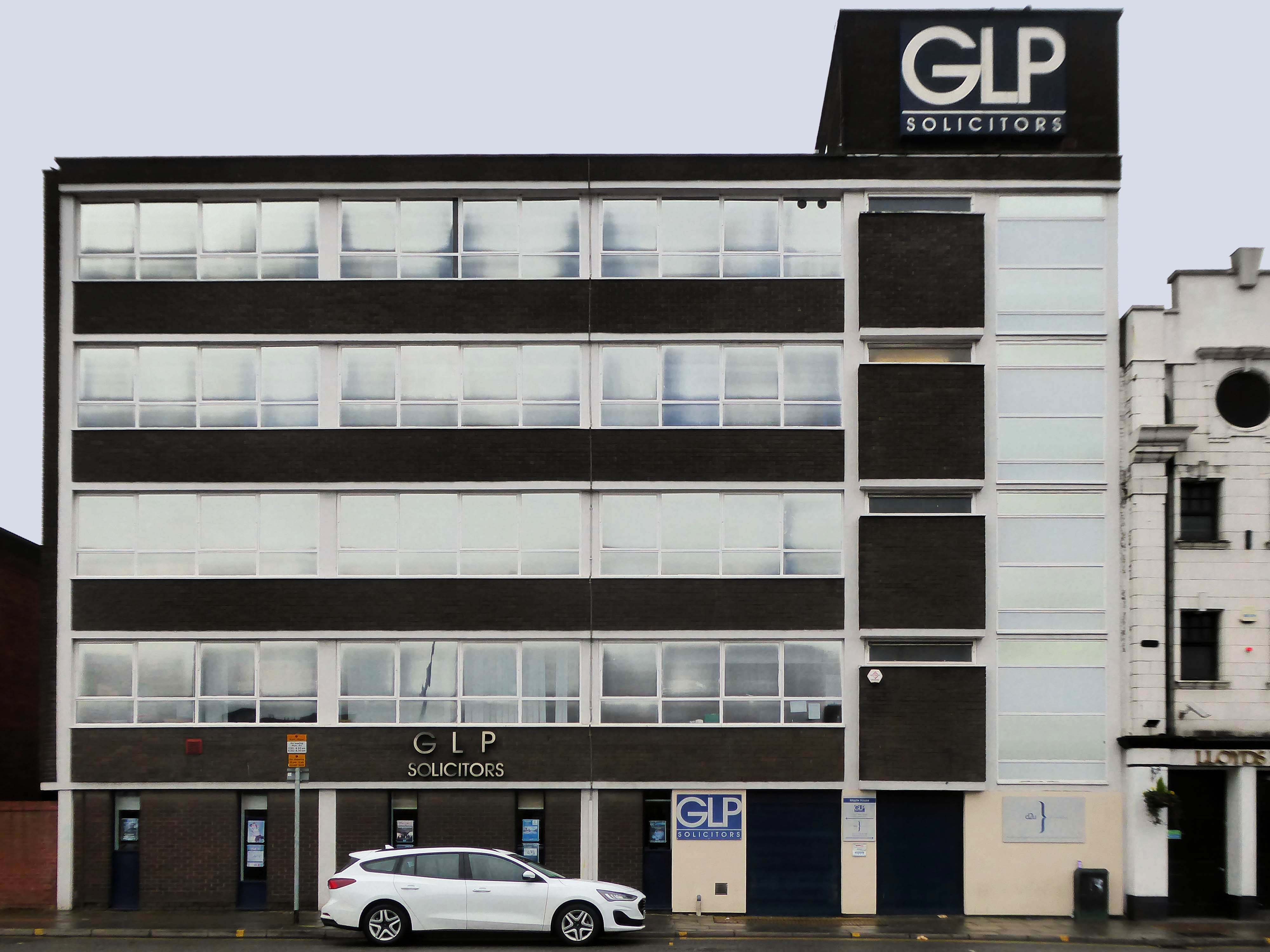
Next door a typical steel glass and brick banded office block Maple House.

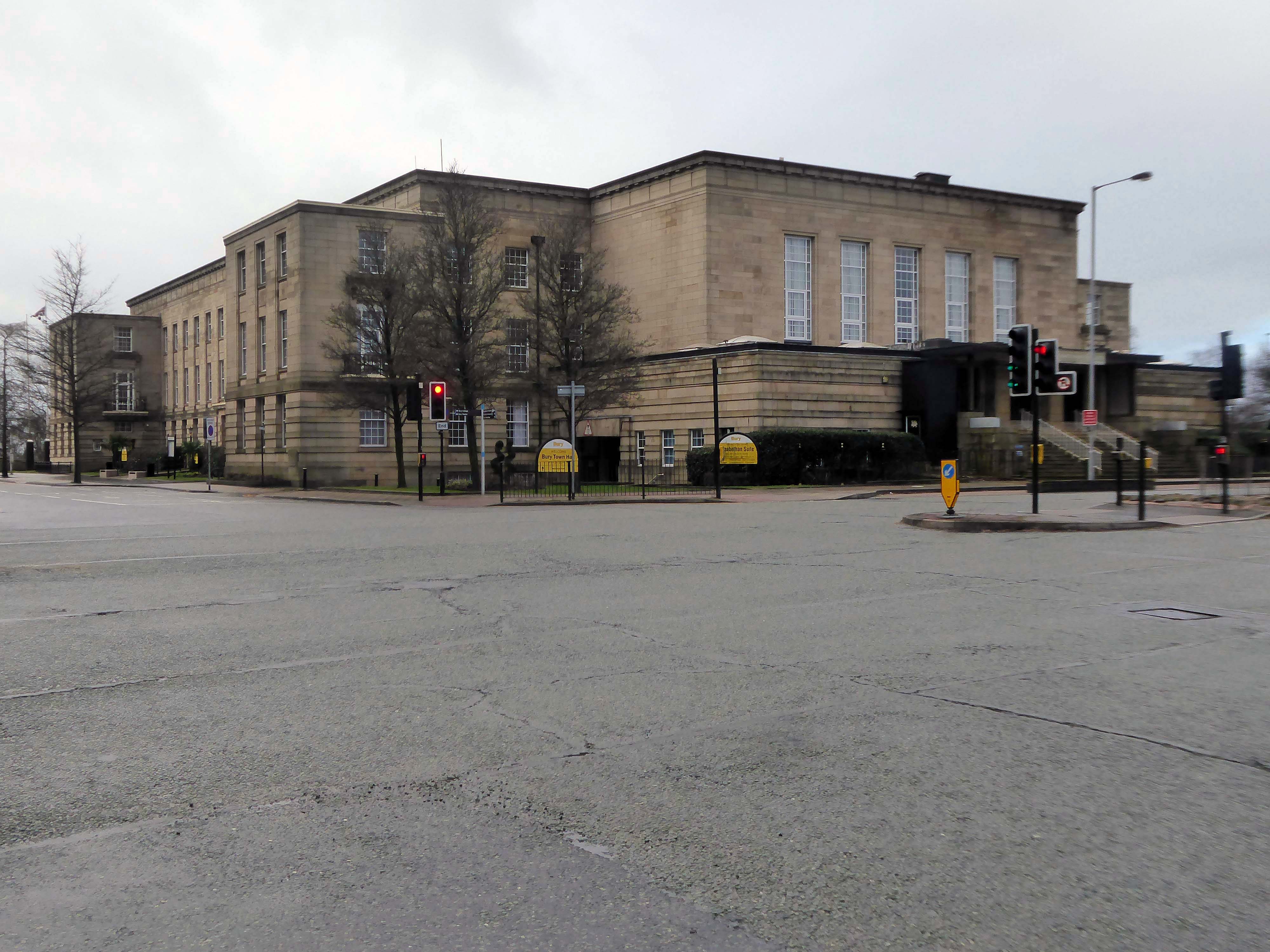
Around the corner and over the road to the Town Hall 1939-40 architects: Reginald Edmonds of Jackson & Edmonds then 1947-54.

Large and Dull – Niklaus Pevsner.

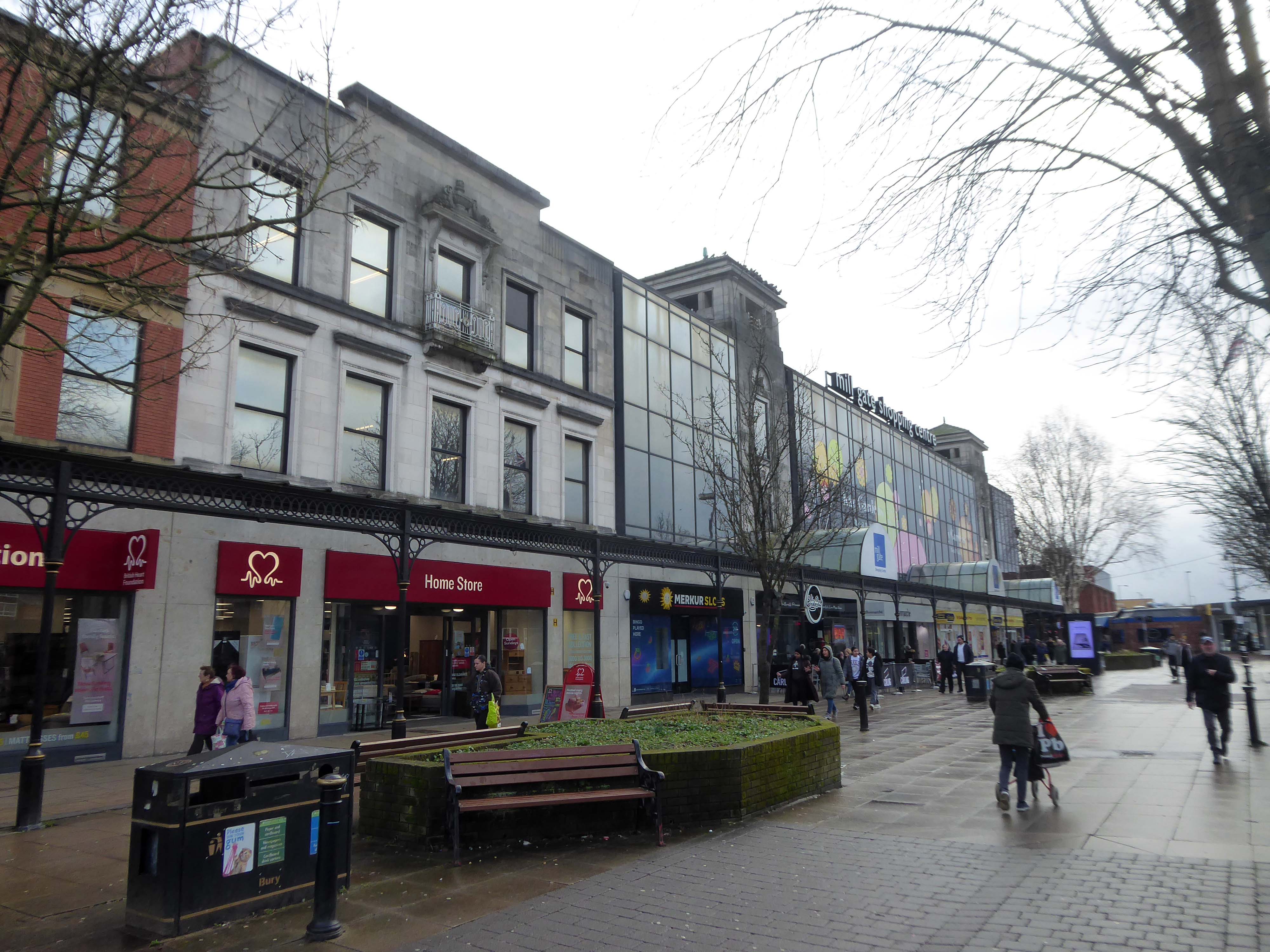
Back through the Interchange to the former Cooperative Store of the 1930’s.

The Portland Stone towers still visible – the elevation largely retro-clad in glass.

Passing through the Millgate Shopping Centre of the 1980’s.

Unambitious but successful, the floors cheerfully tiled – Niklaus Pevsner.

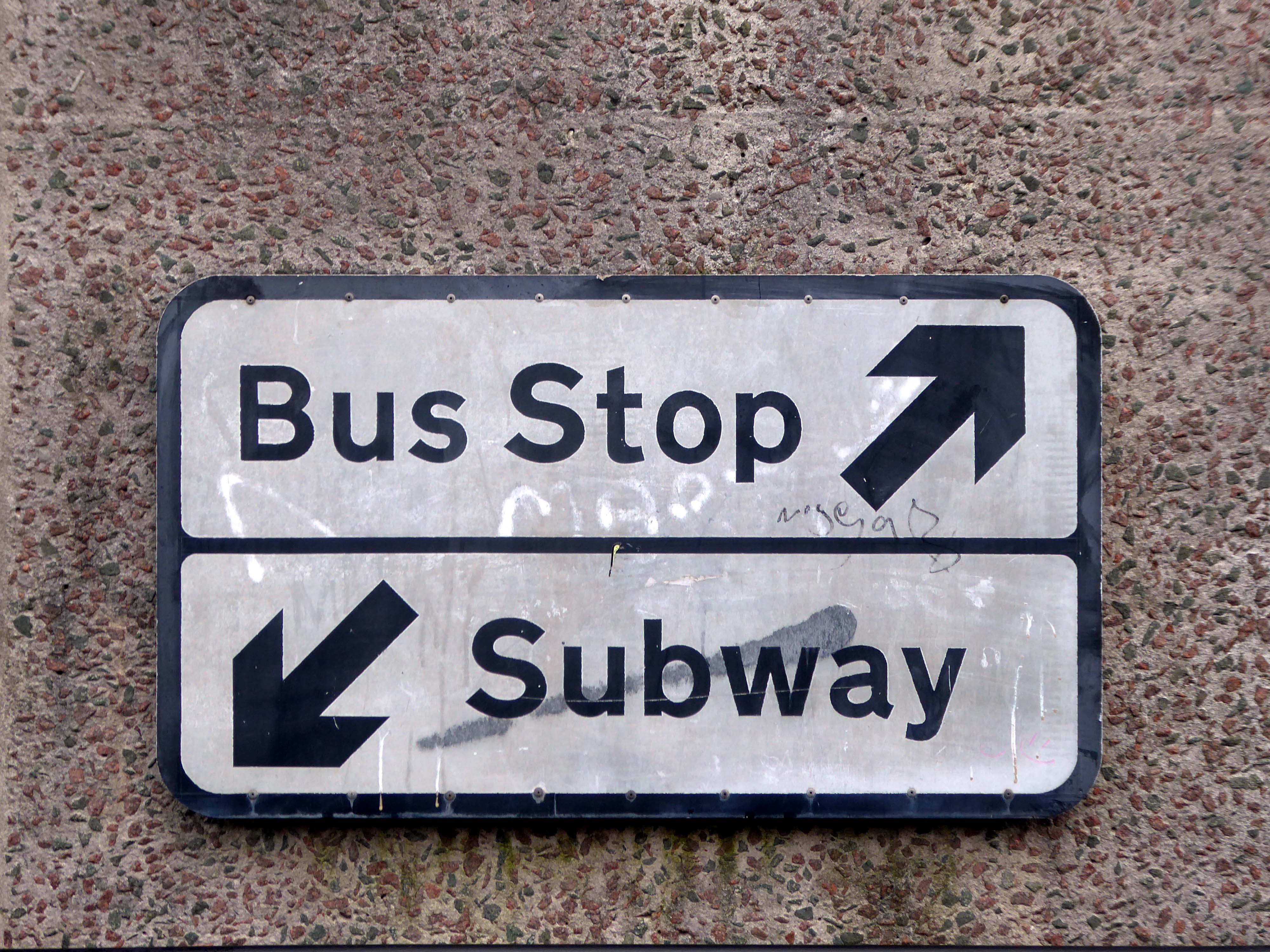
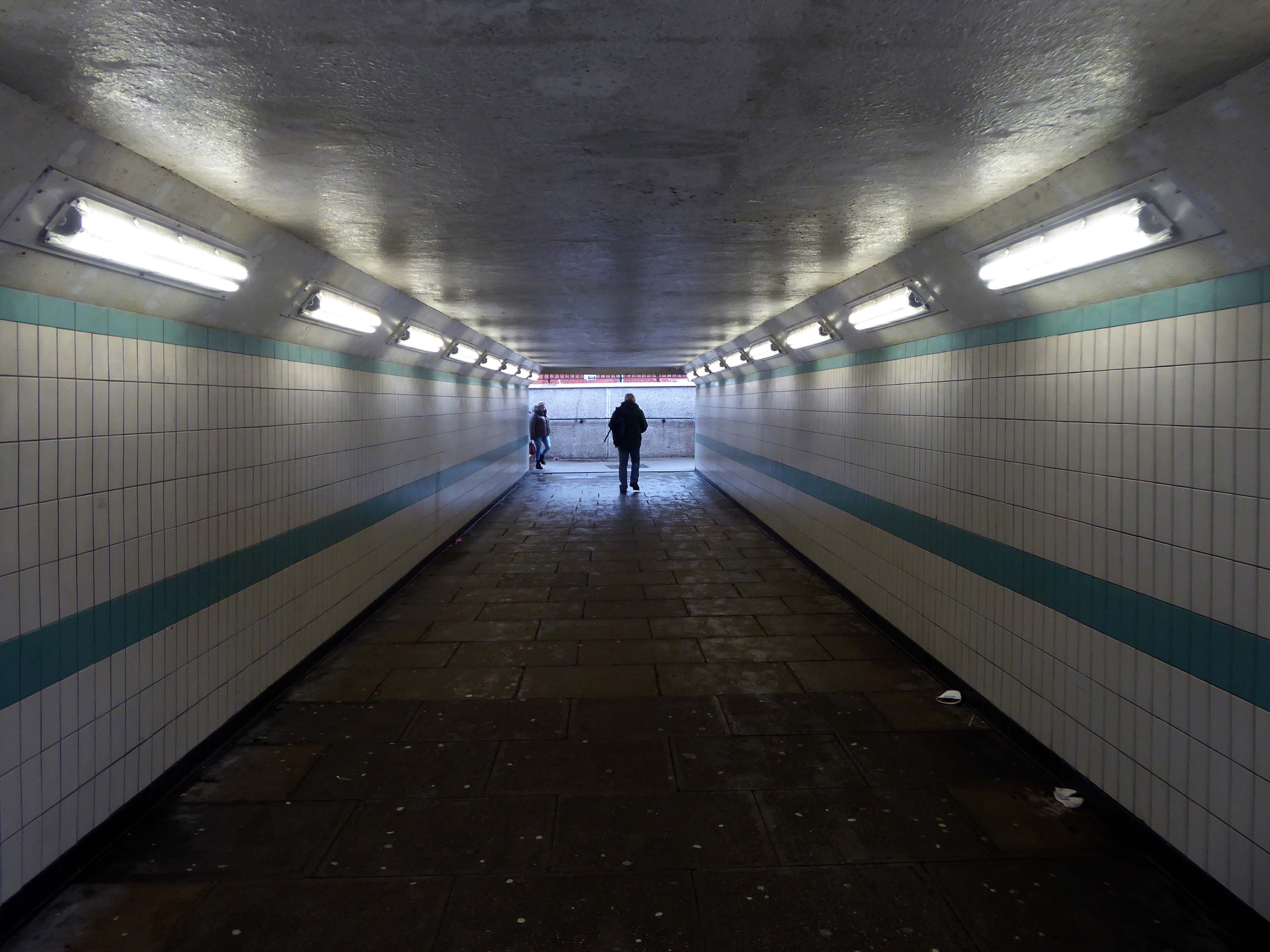
Down in the subway at midday.

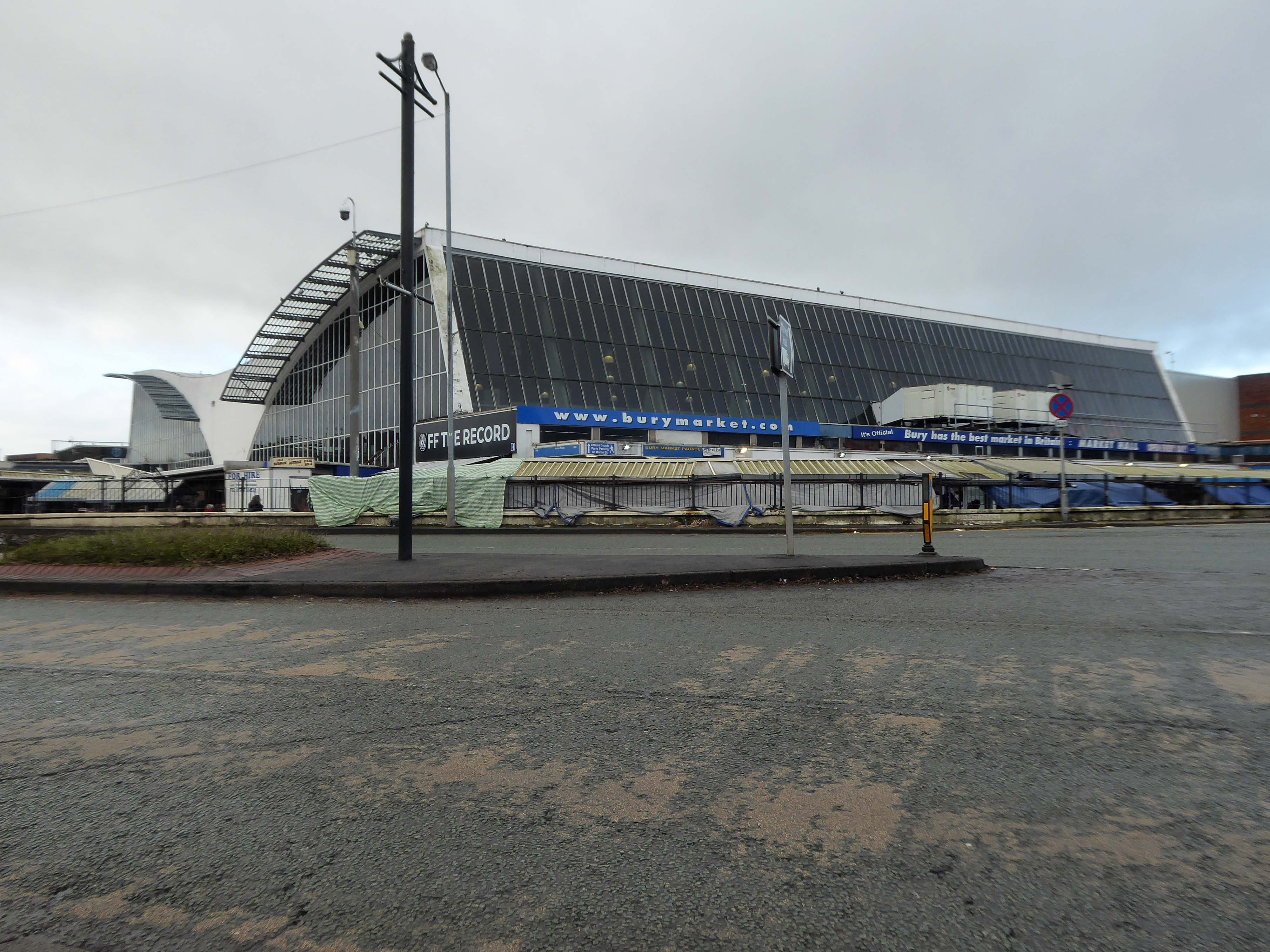
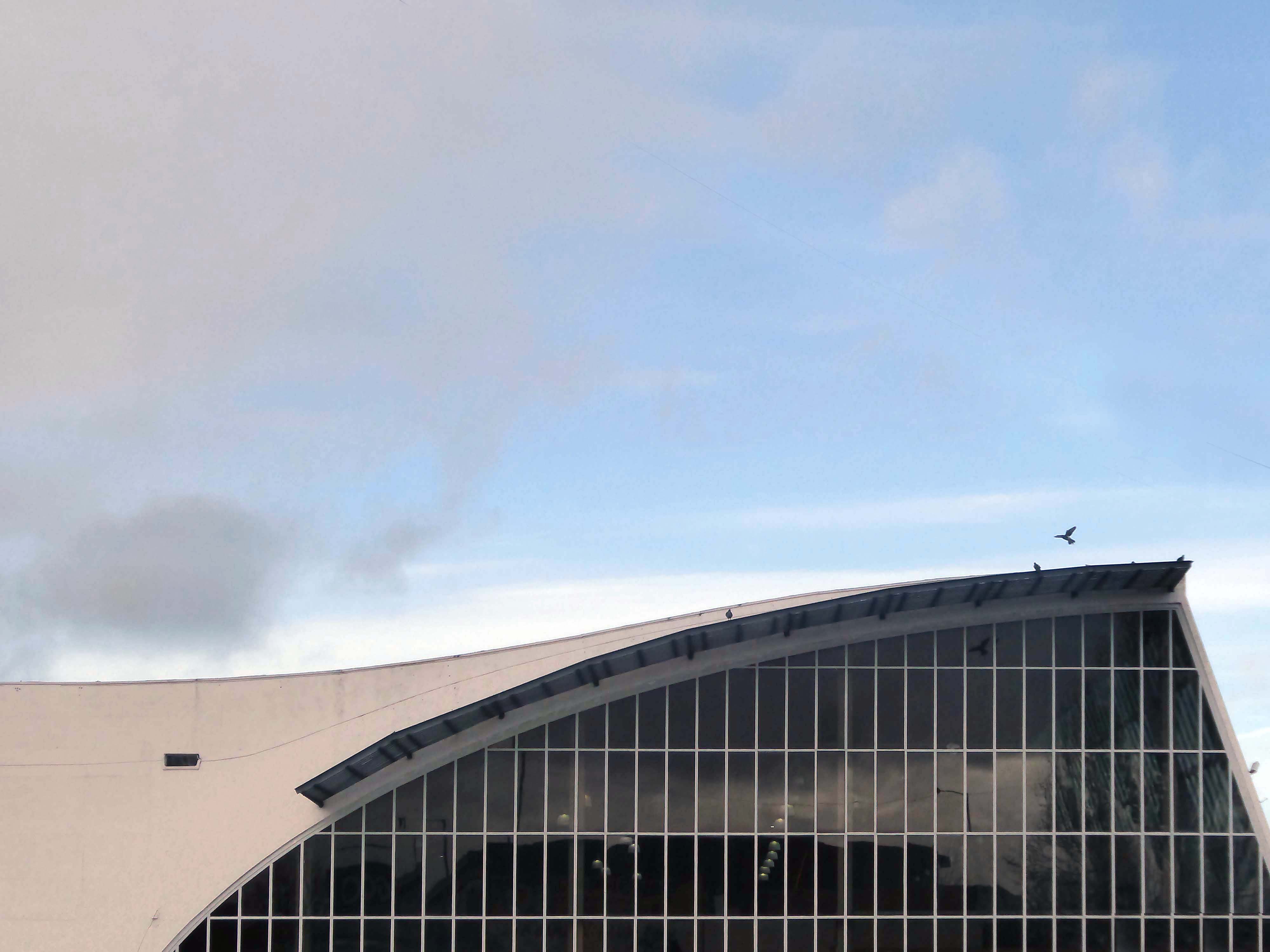
The better to get a view of the Market Hall 1971 – architects: Harry S Fairhurst.

The Indoor Market Hall is currently closed due to the discovery of Reinforced Autoclaved Aerated Concrete – within the building structure. RAAC is a lightweight type of building material that was used between the 1950s and 1990s.

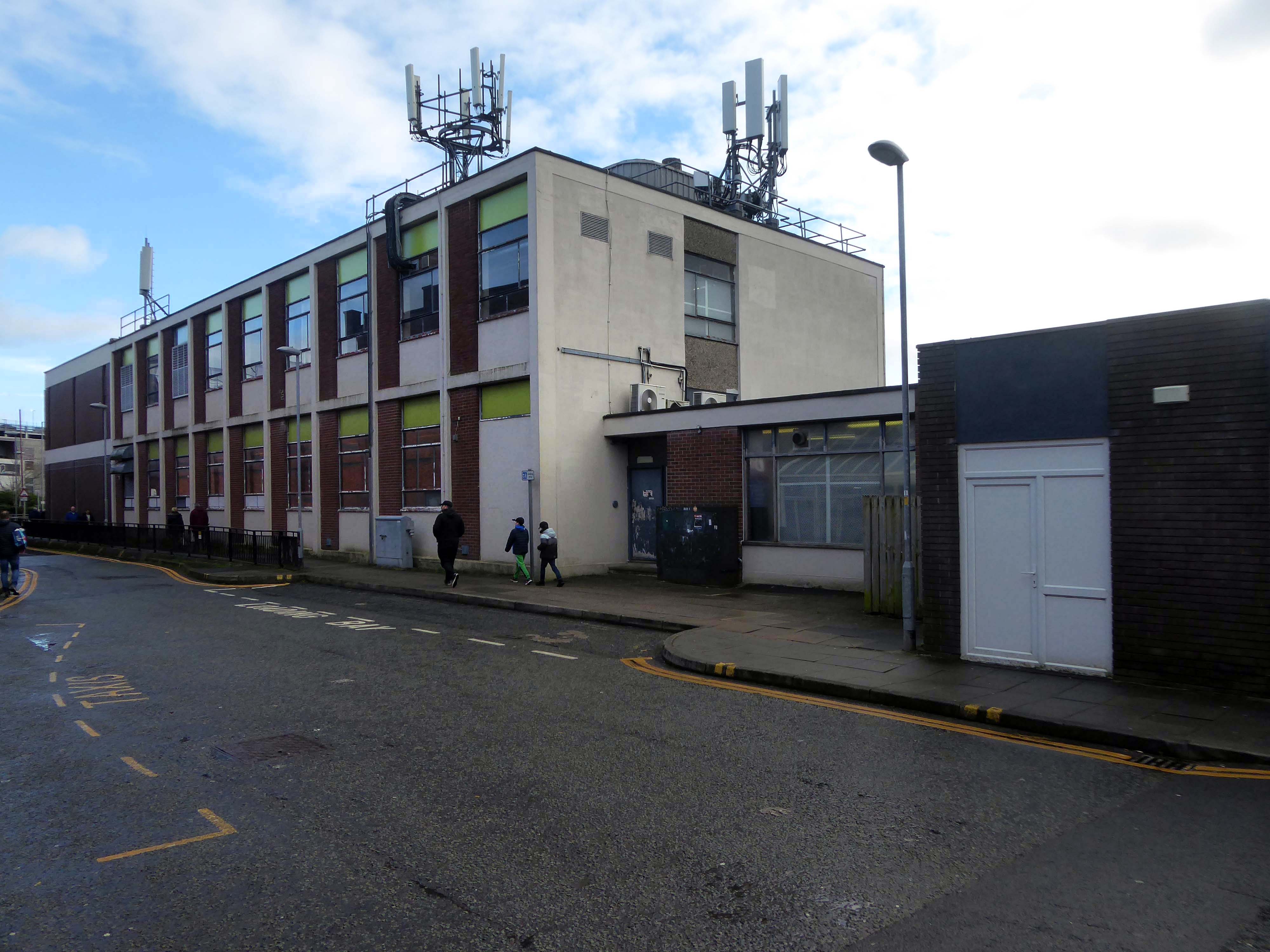
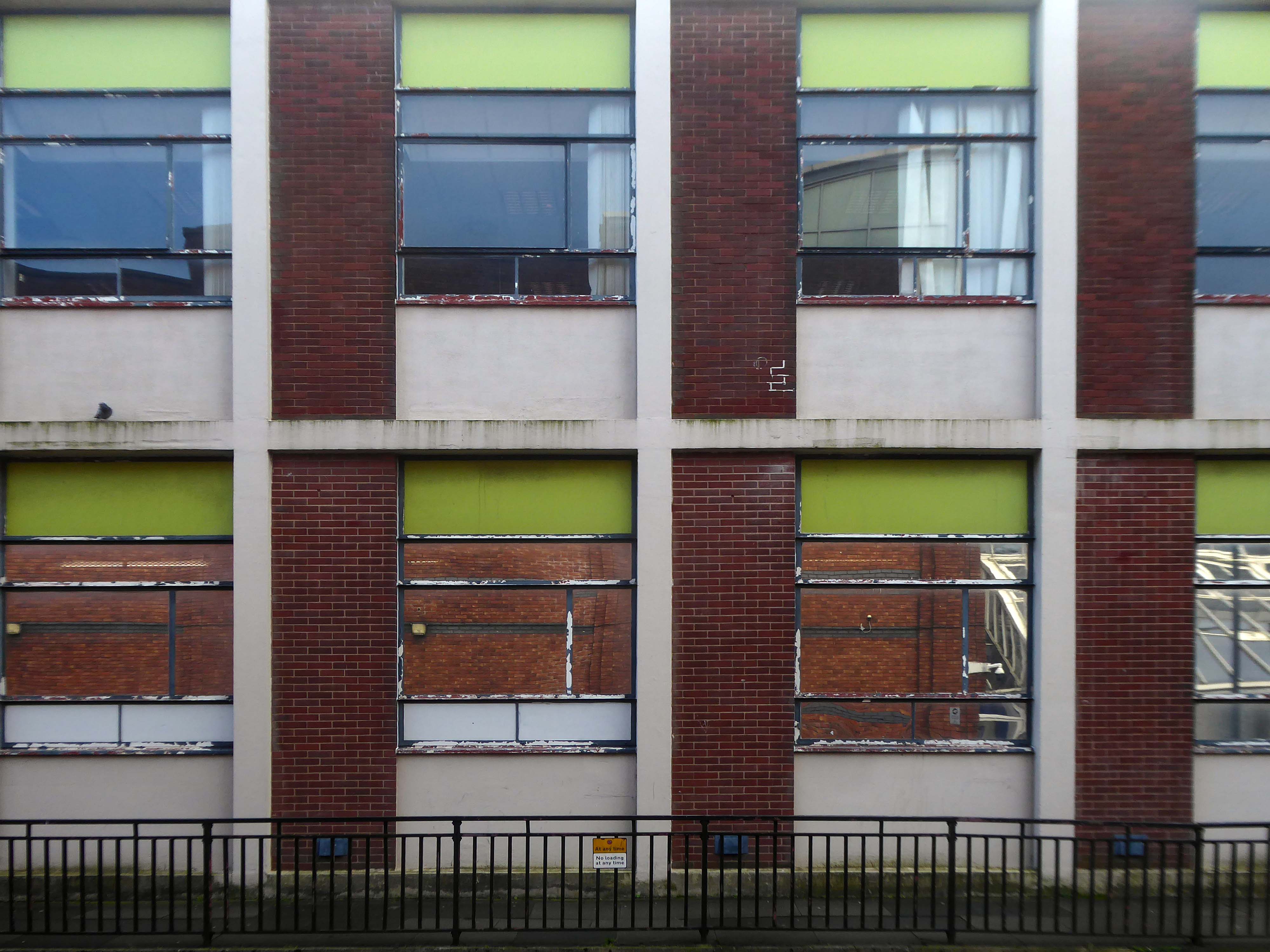
Back under the road – where we find a delightful Telephone Exchange.

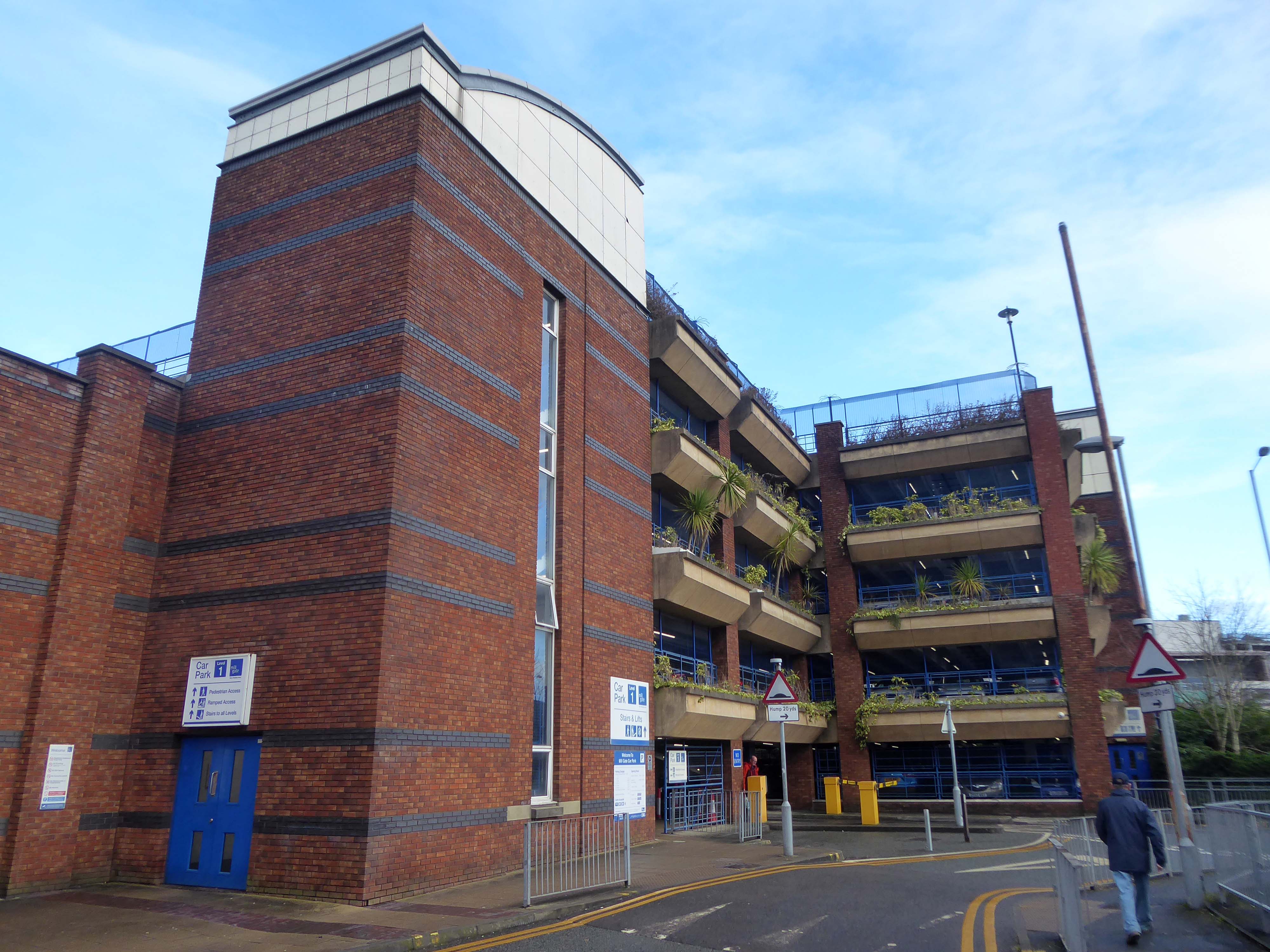
With an adjacent Multi Story Car Park.

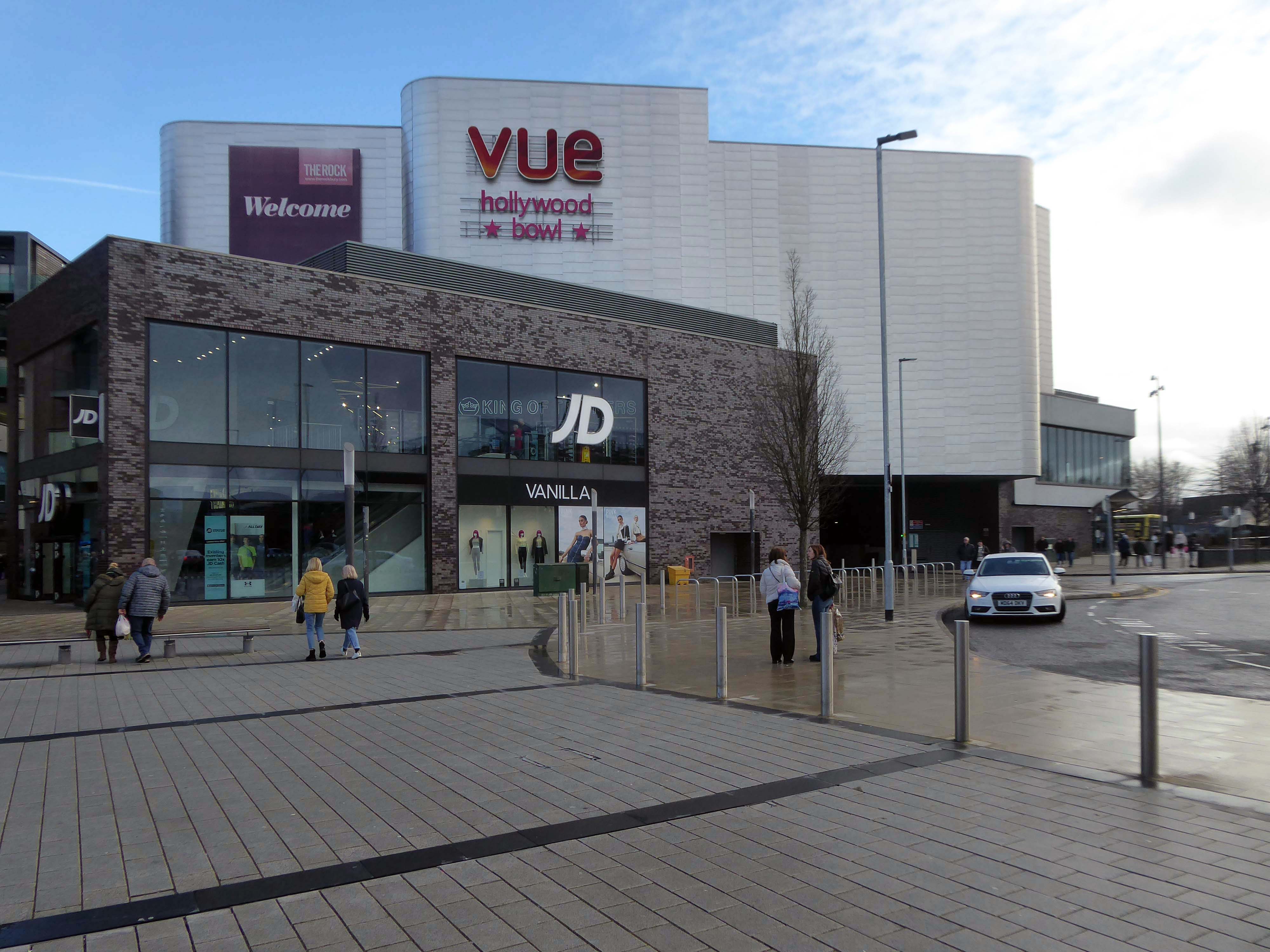
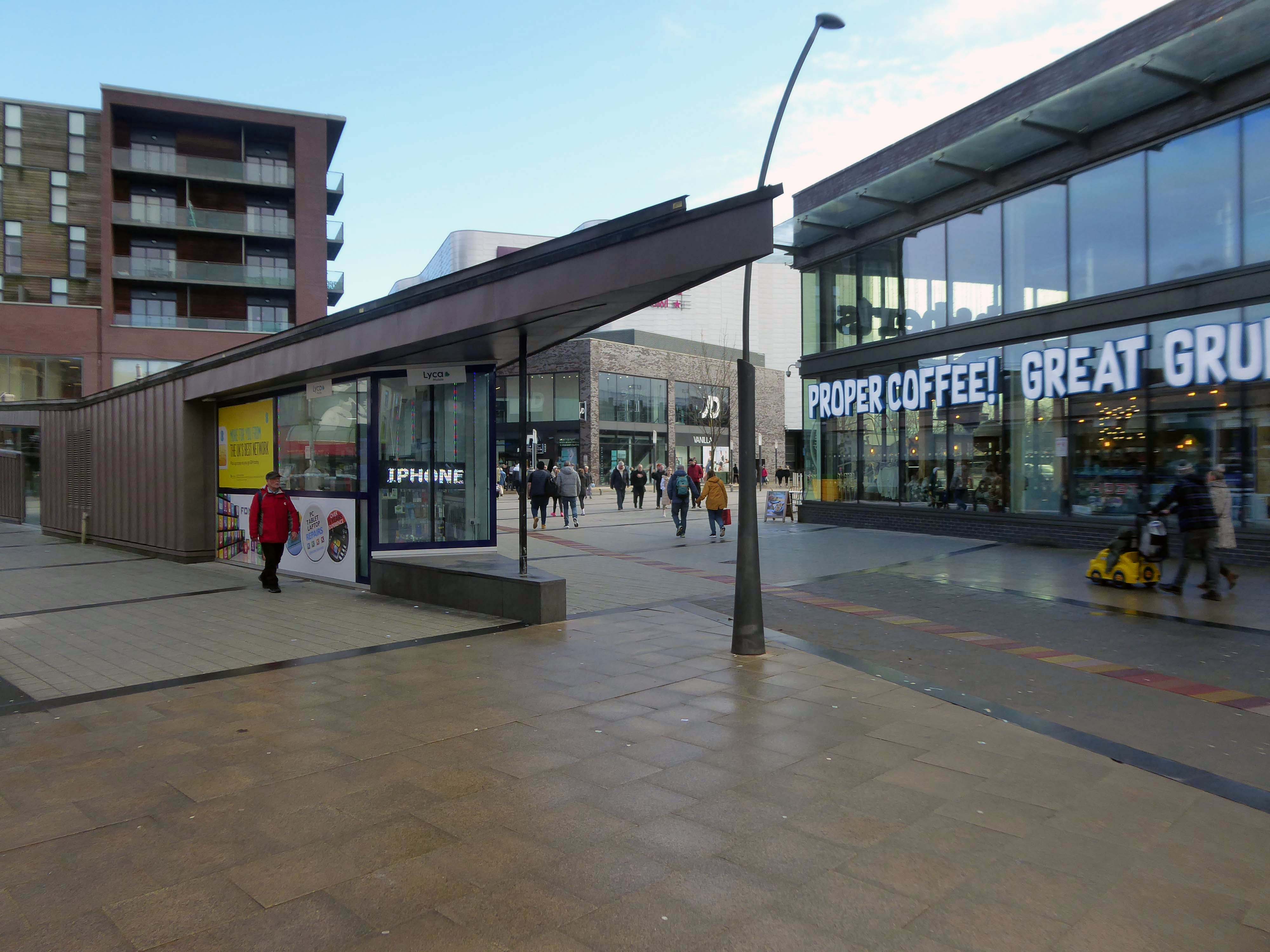
Around the bend to The Rock.

The Rock is a vibrant retail and leisure centre which is home to a range of high street fashion brands, independent retailers, tantalising eateries and fantastic entertainment – it’s the perfect place to visit any day of the week. 

It is the work of architects BDP – completed in 2010 at a cost of £350 million.

Our masterplan for The Rock took into account the historical street pattern and public realm context to give the scheme its own identity, and make visual connections to local landmarks.

The retail and leisure scheme brings many exciting brands to Bury for the first time.

New pedestrian streets rejuvenate and improve connections to adjacent areas stitching the town back together.

The development will also contain 408 one and two-bedroom apartments.

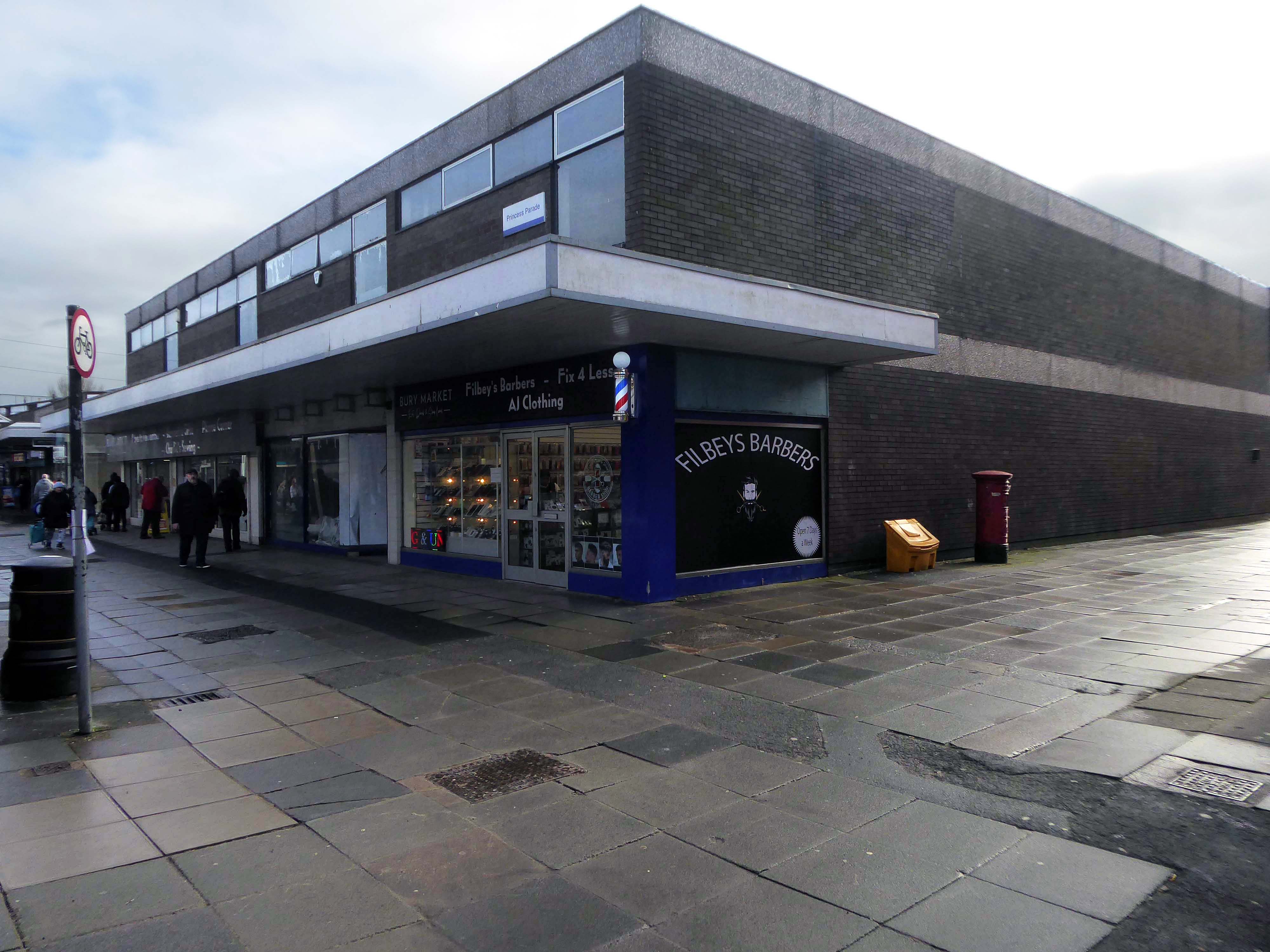
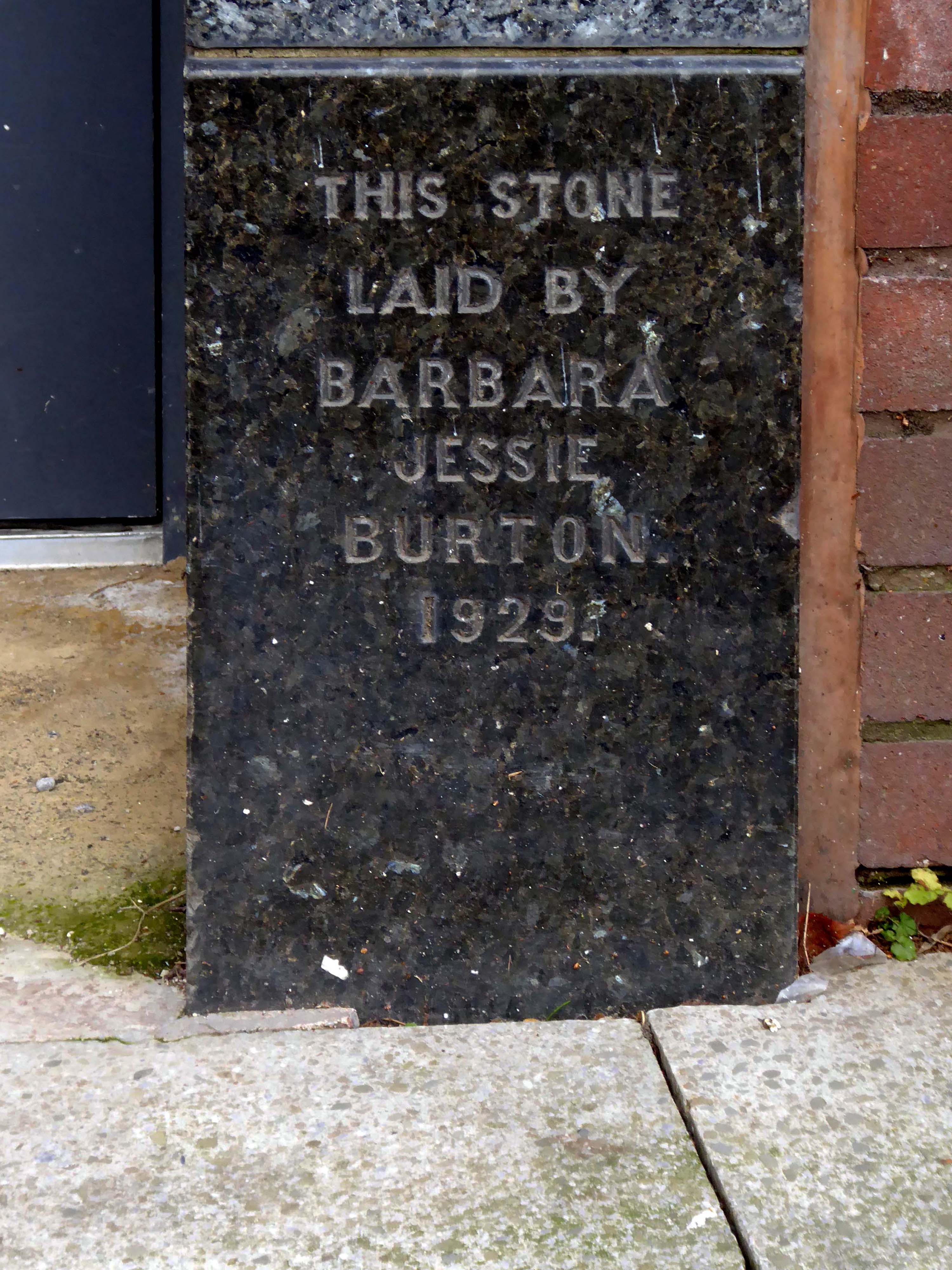
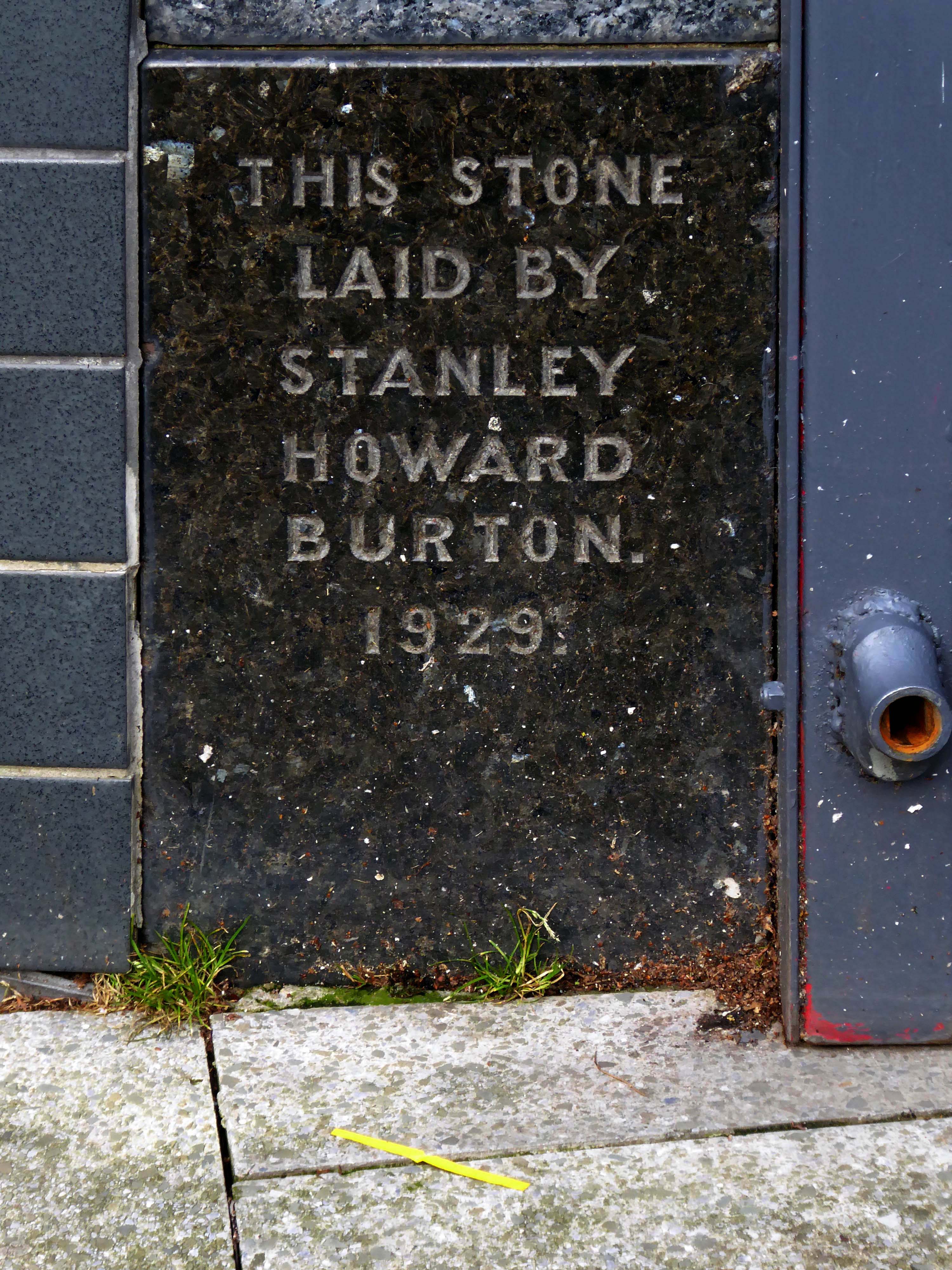
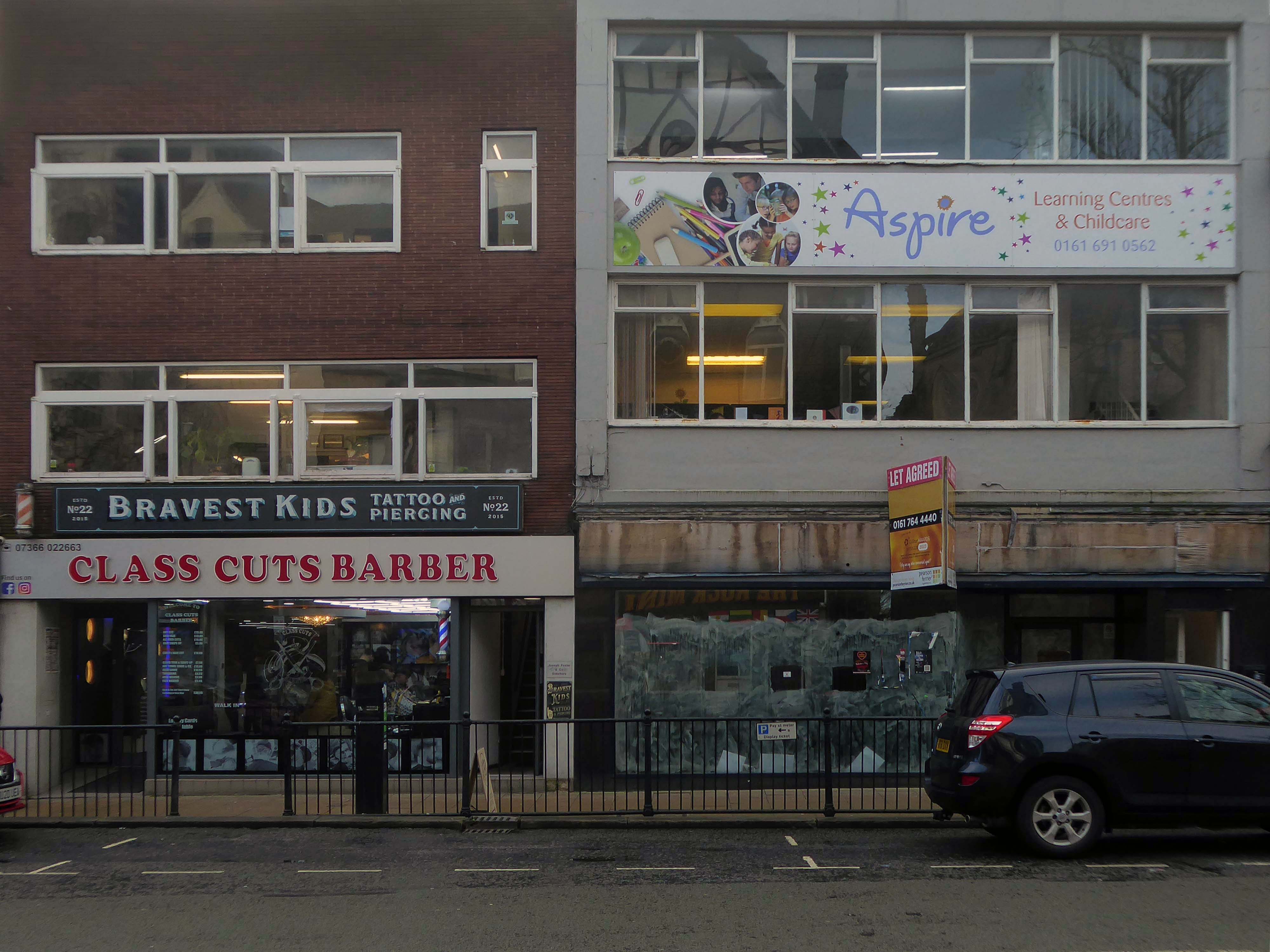
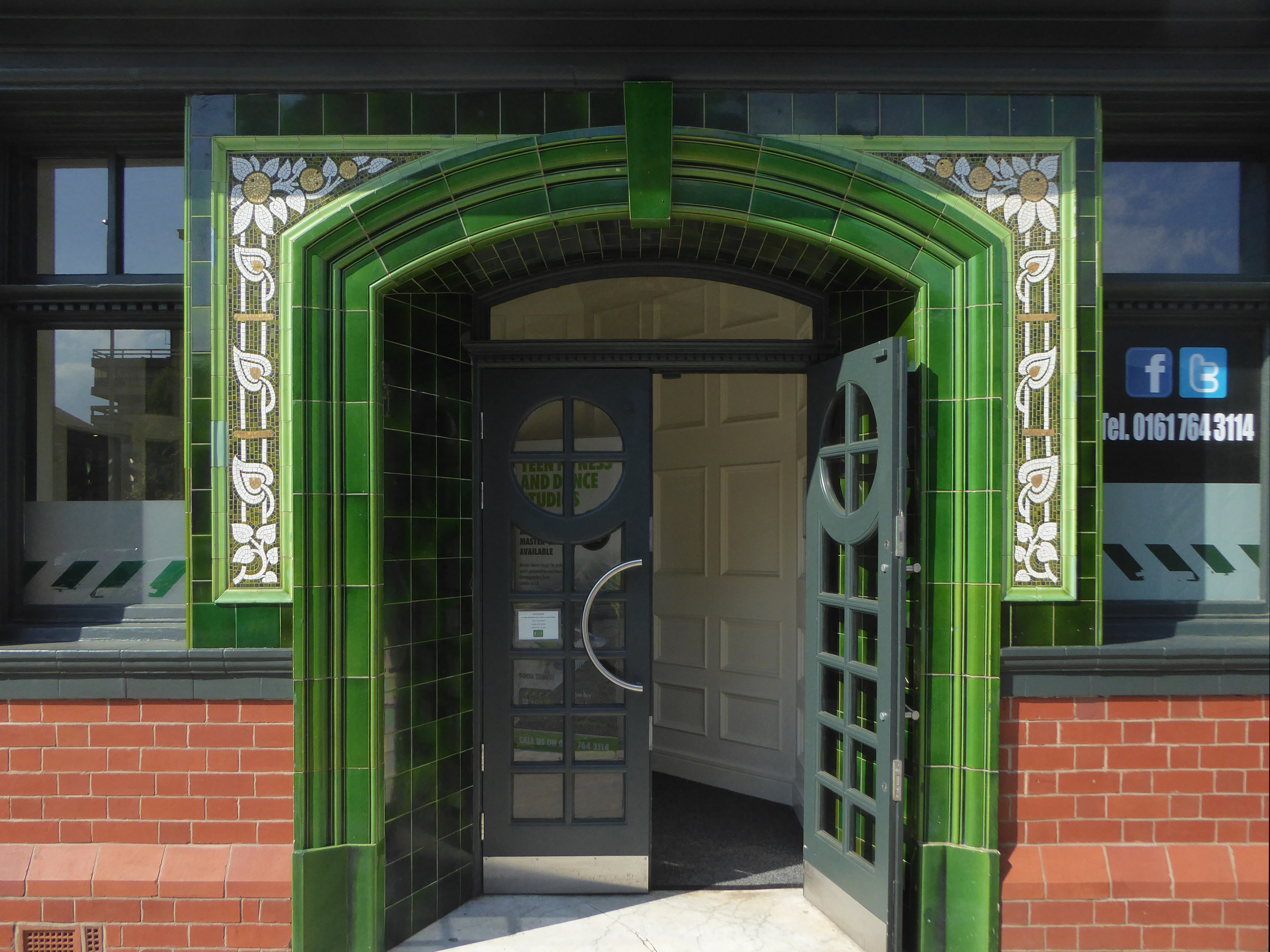
Back to basics at a former Burton’s hiding its faience facade.

Typical inter-war infill on our crazy mixed up mongrel high streets.

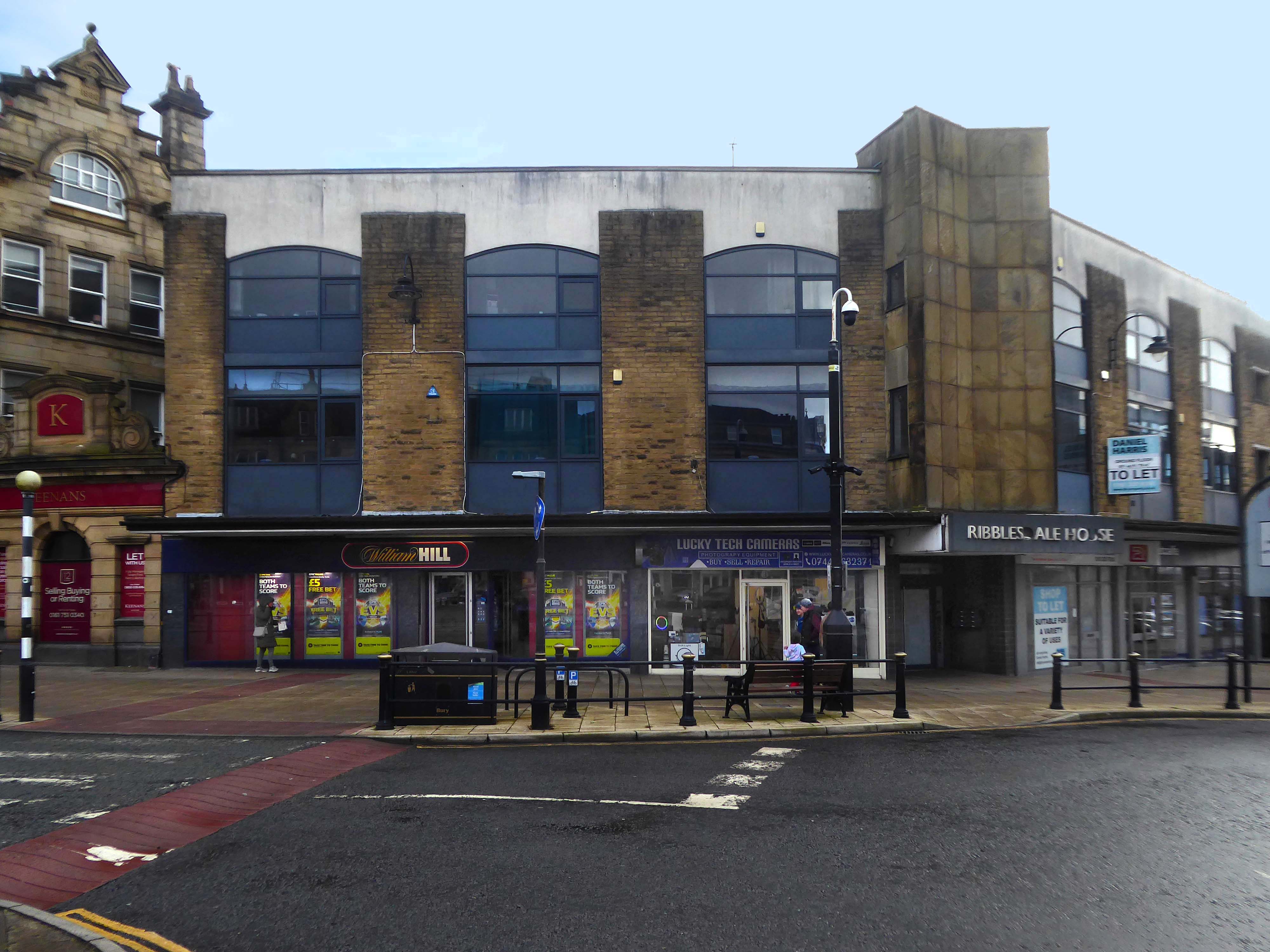
Ribblesdale House

Application by Shop and Store Developments Ltd submitted August 1965. Architect on application was Samuel Jackson and Son of Ocean Chambers in Bradford but during the application process this changed to John Brunton & Partners – Brunton was a partner in Jackson’s firm, at the same address. It had a restaurant and shops on the first floor.

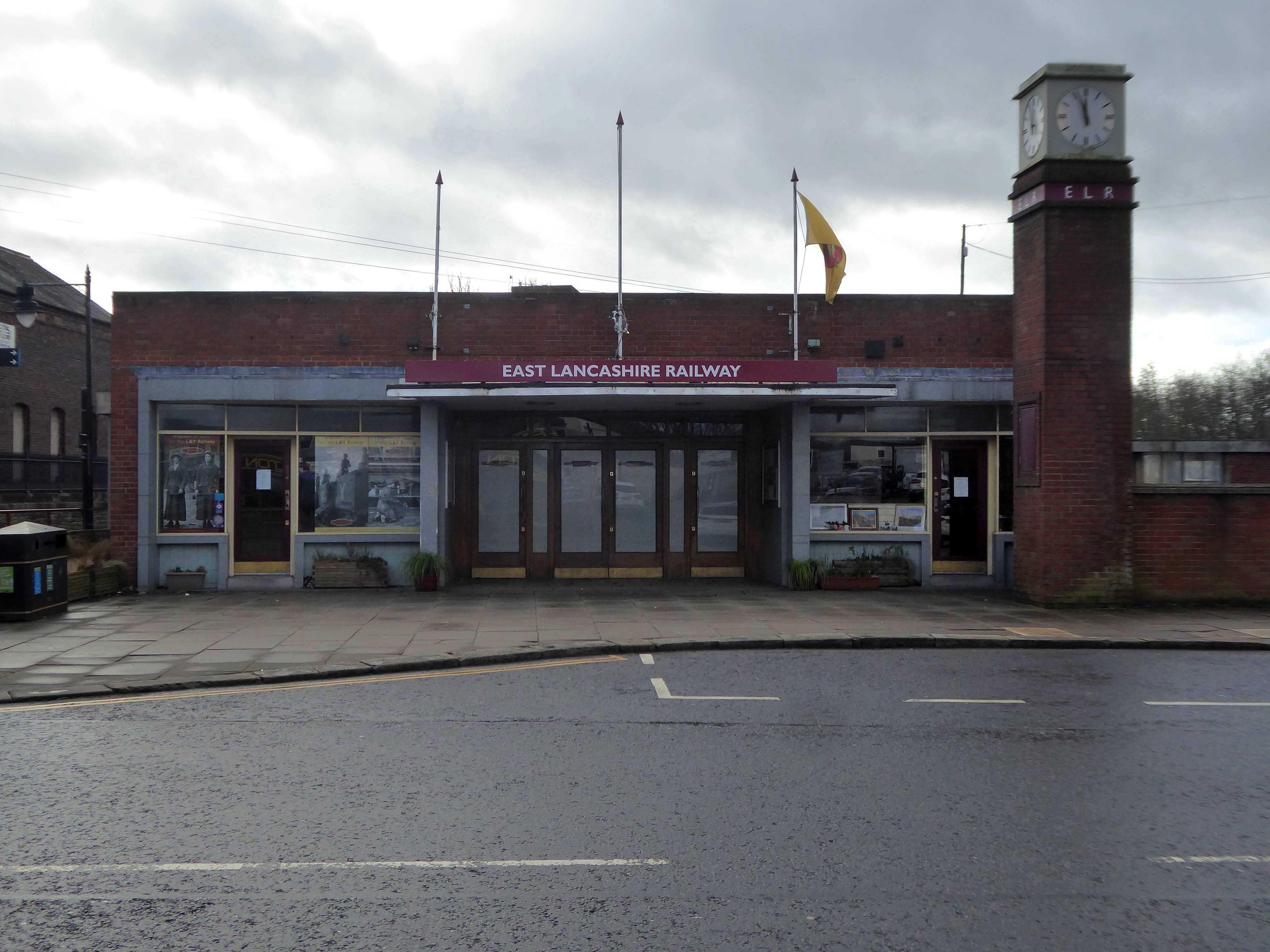
Off now to the Bury Bolton Street Station currently home to the East Lancashire Railway.
The street level buildings were destroyed by fire on 14 May 1947 and were replaced with a new brick and concrete entrance and footbridge in 1952. 

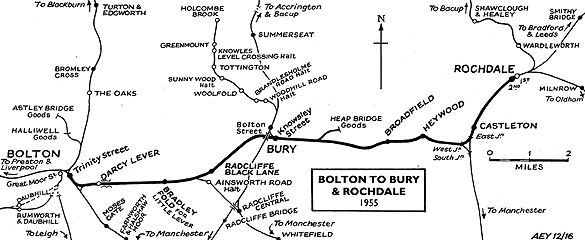
British Rail closed the station on 17 March 1980, when it was replaced by a new bus/rail interchange station further east into the town centre. Bury Interchange railway station served up until 1991 before the entire Bury Line was converted to light rail operation. It reopened in 1992 for Metrolink operation.

Bury was once the centre of multiple train links and the lost station of Knowsley Street.

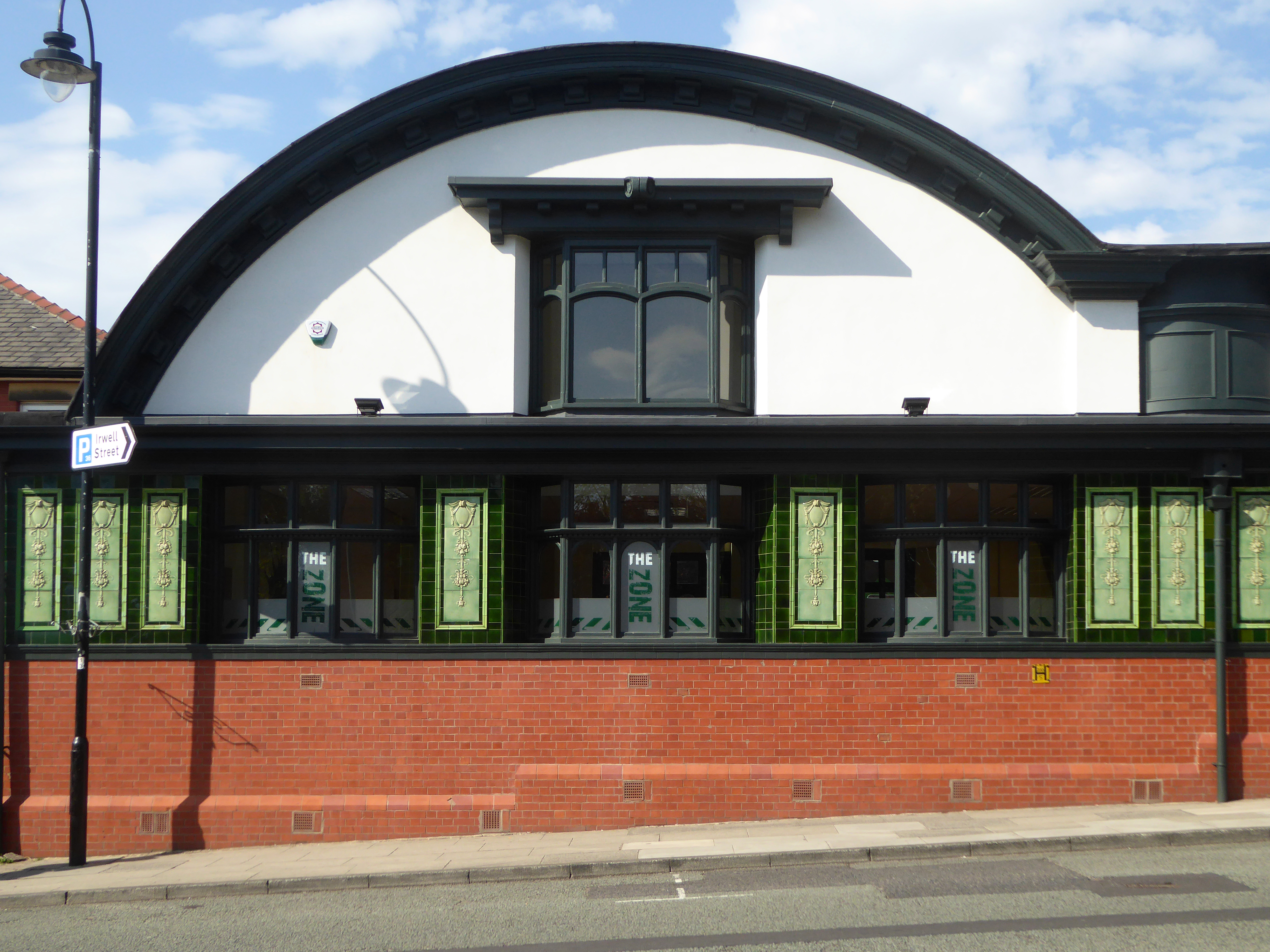
Over the road the former Temperance Billiard Hall 1910 architect Norman Evans.

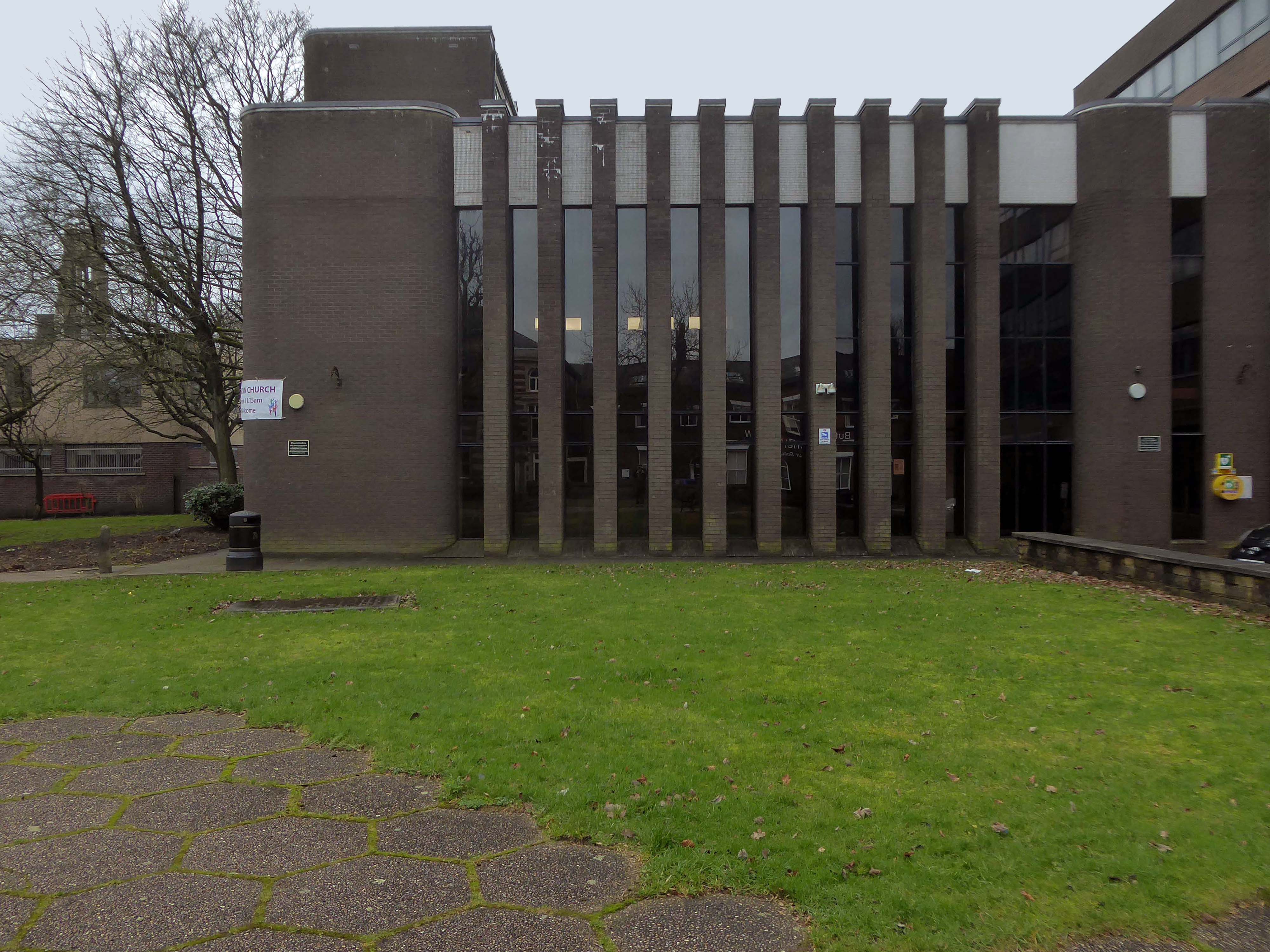
Down the side and up the steps to the Unitarian Church.

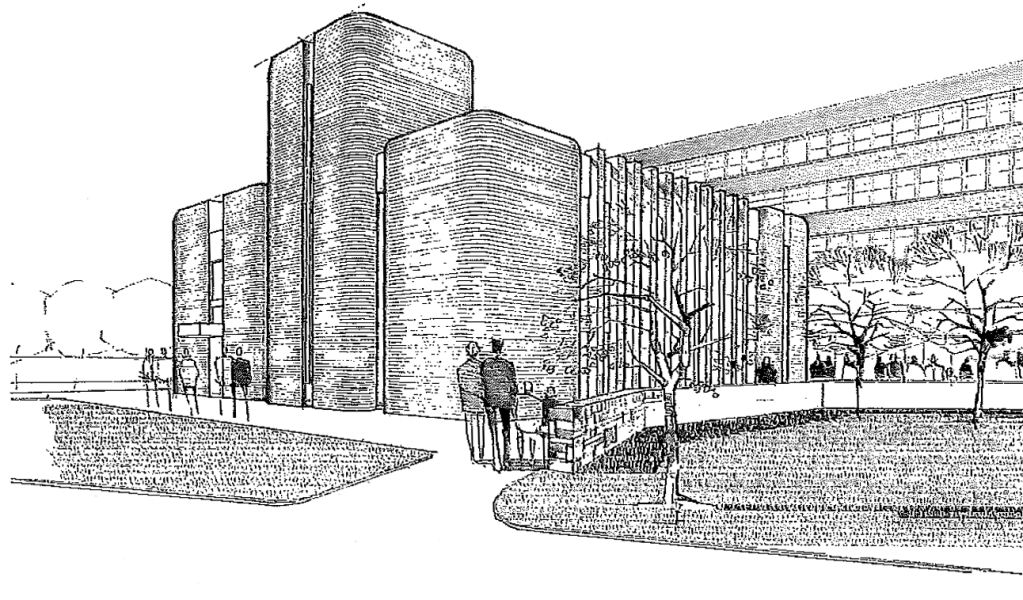
The new church was designed and constructed by local architects James T Ratcliffe.

The church was opened in 1974, with a service of dedication on Saturday, 9th March. The total cost, including furnishings, was £85,000.

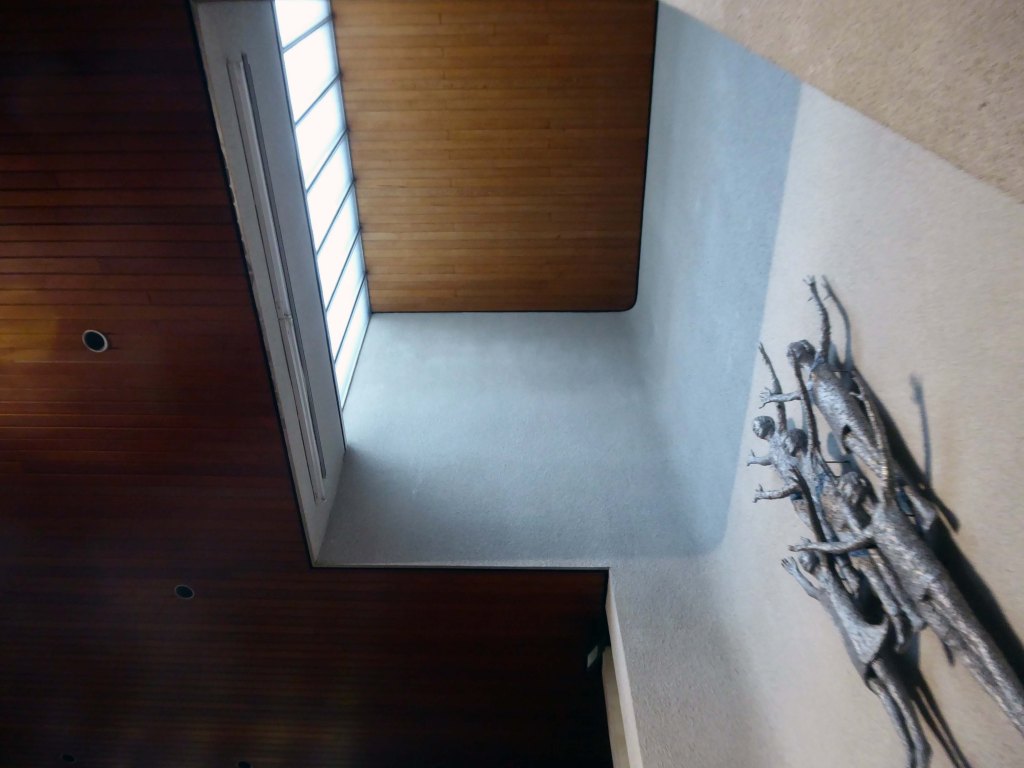
The People Praising by Elizabeth Mulchinock is a 12 foot high original sculpture at the front of the church which represents the family of the church.

Her work can also be seen at Sainsbury’s in West Ealing and Reading.

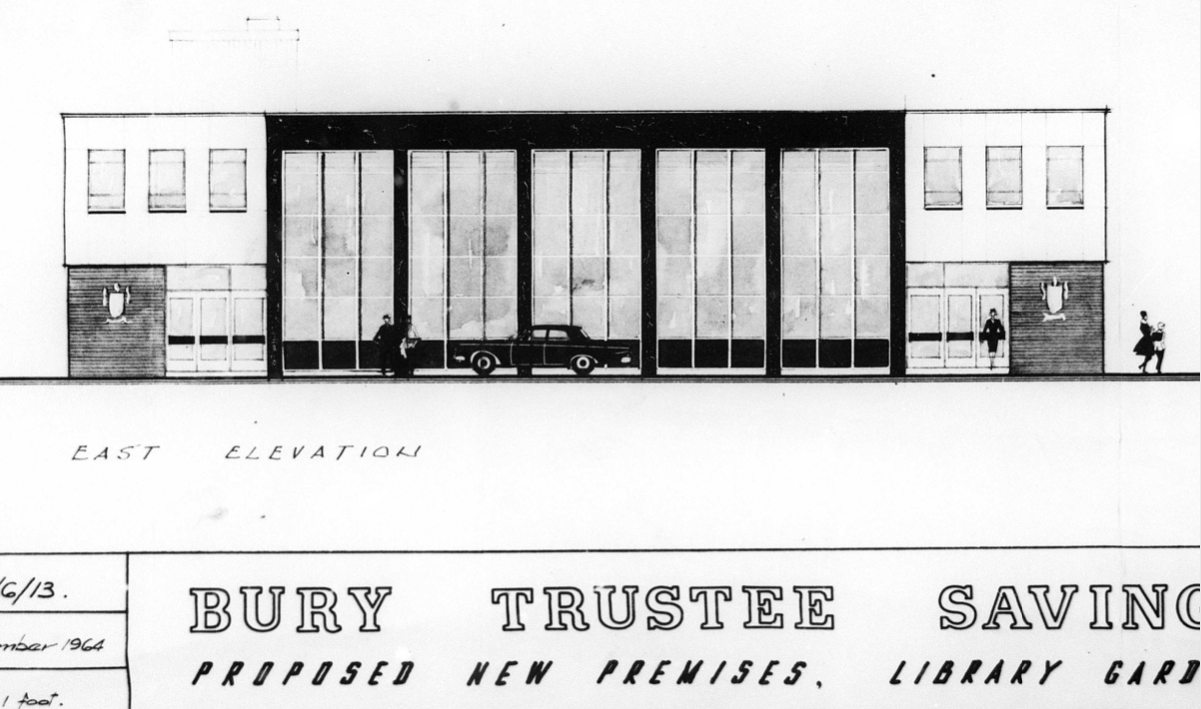
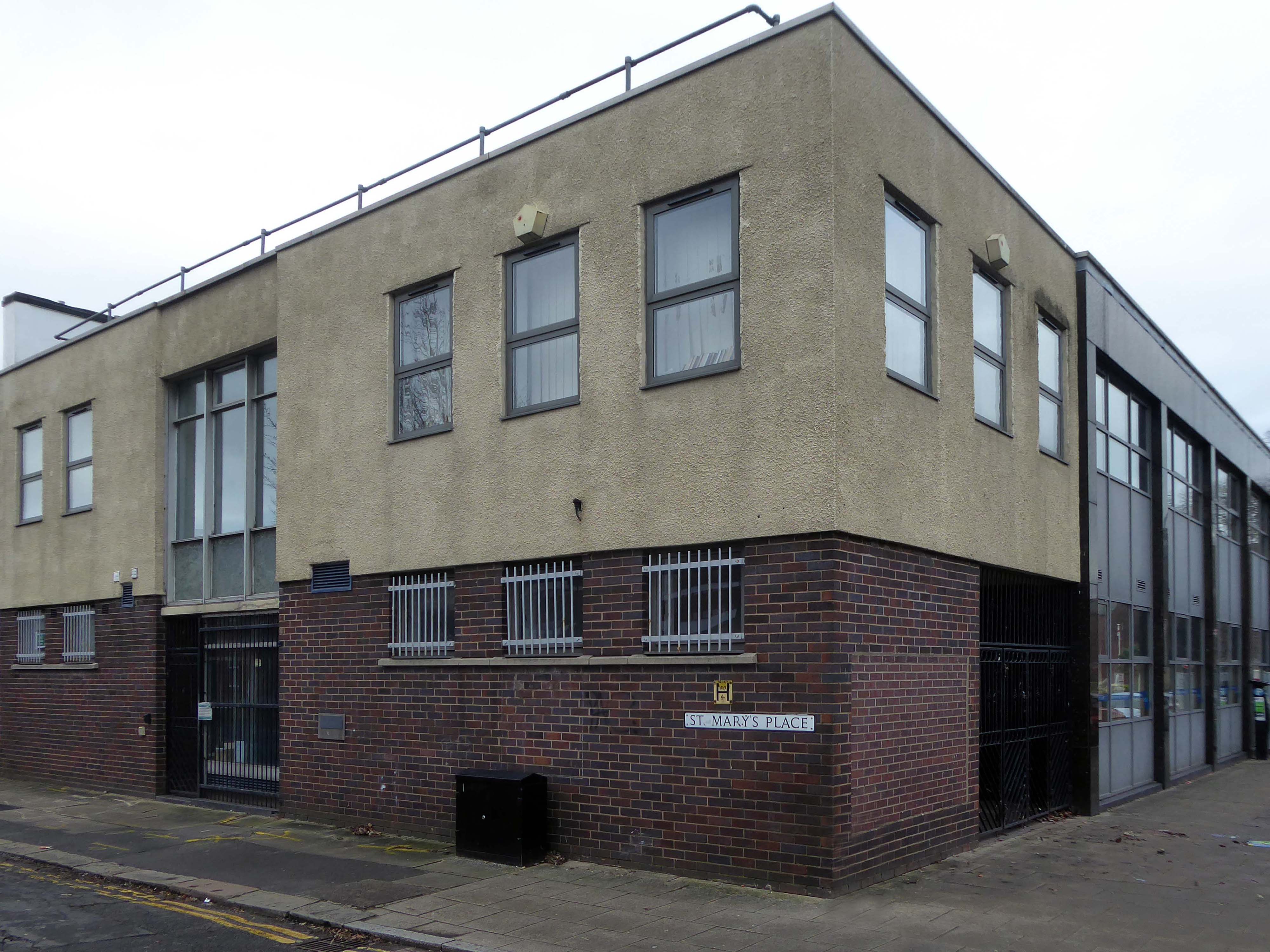
Next door is the former Trustee Saving Bank.

Planning application January 1965 – work started in June 1965. The architectural firm was Richard Byrom, Hill and partners. Richard Byrom was submitting building applications in the 1930s in Bury and locally.
The rendering on the building is original but the windows have been changed. The Job Centre took over the building in 1993. It is in a conservation area and the Civic Trust had some concerns!
Many thanks to David French for the above information.

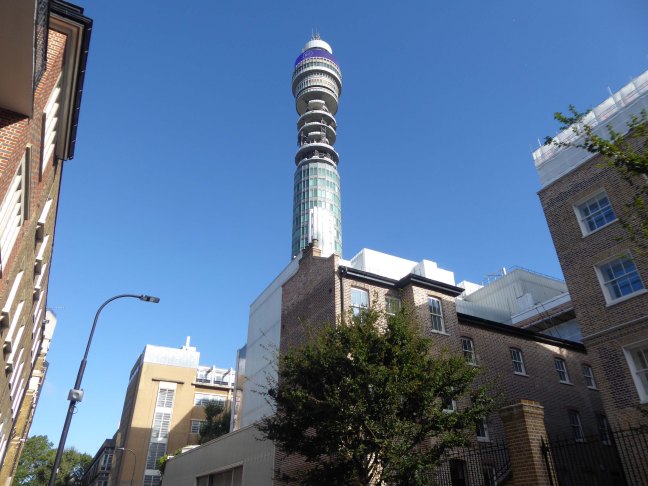
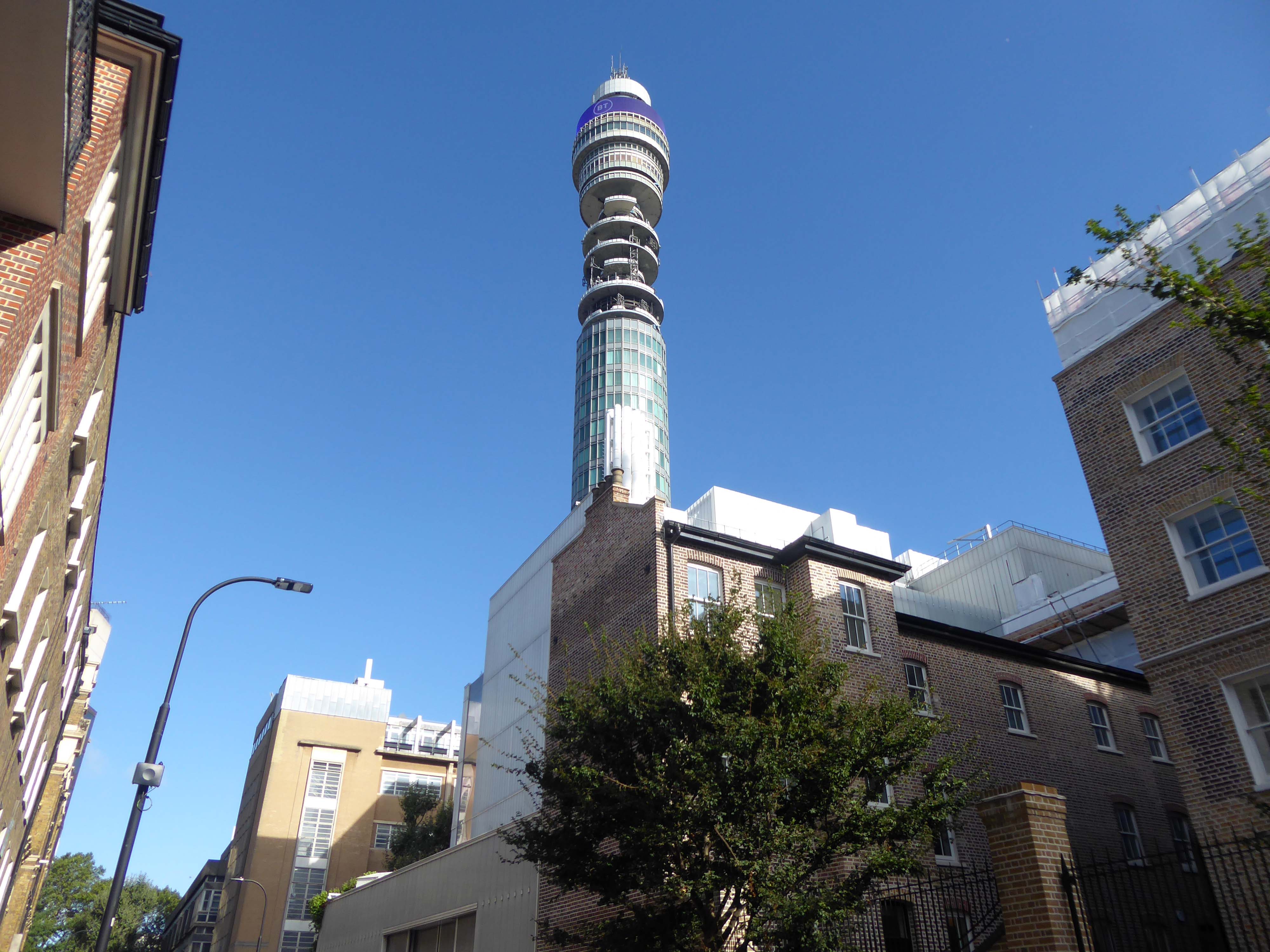
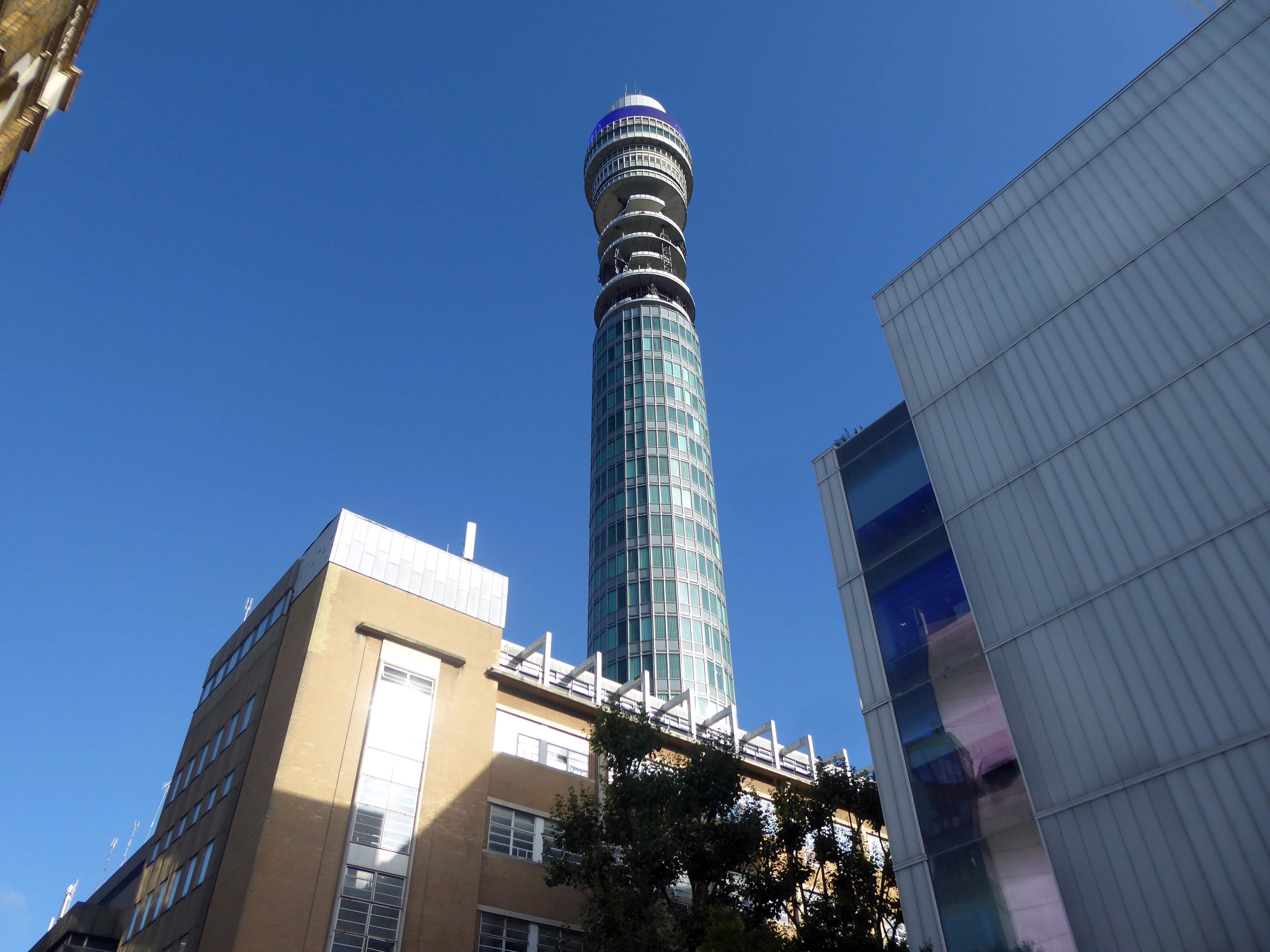
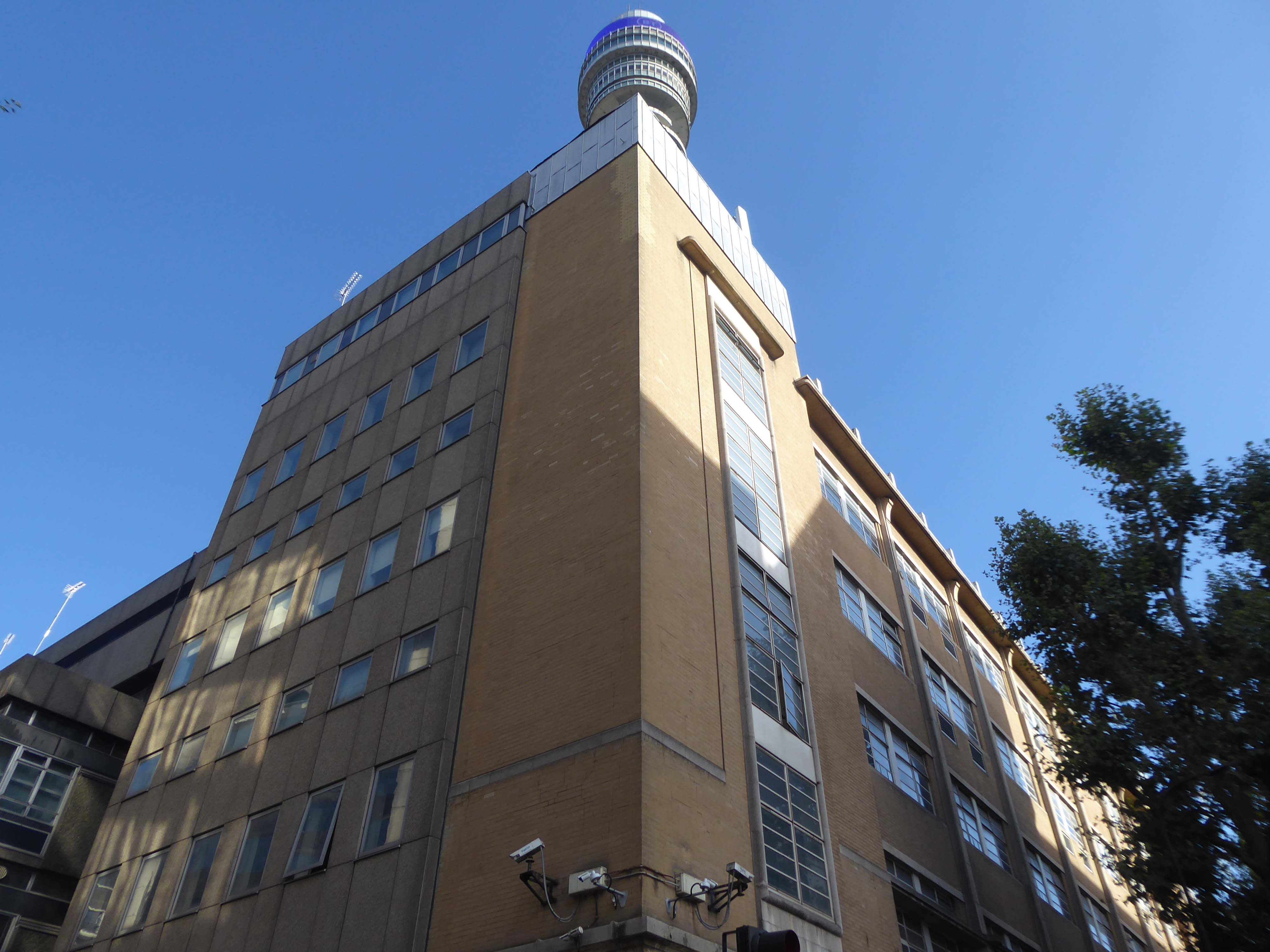
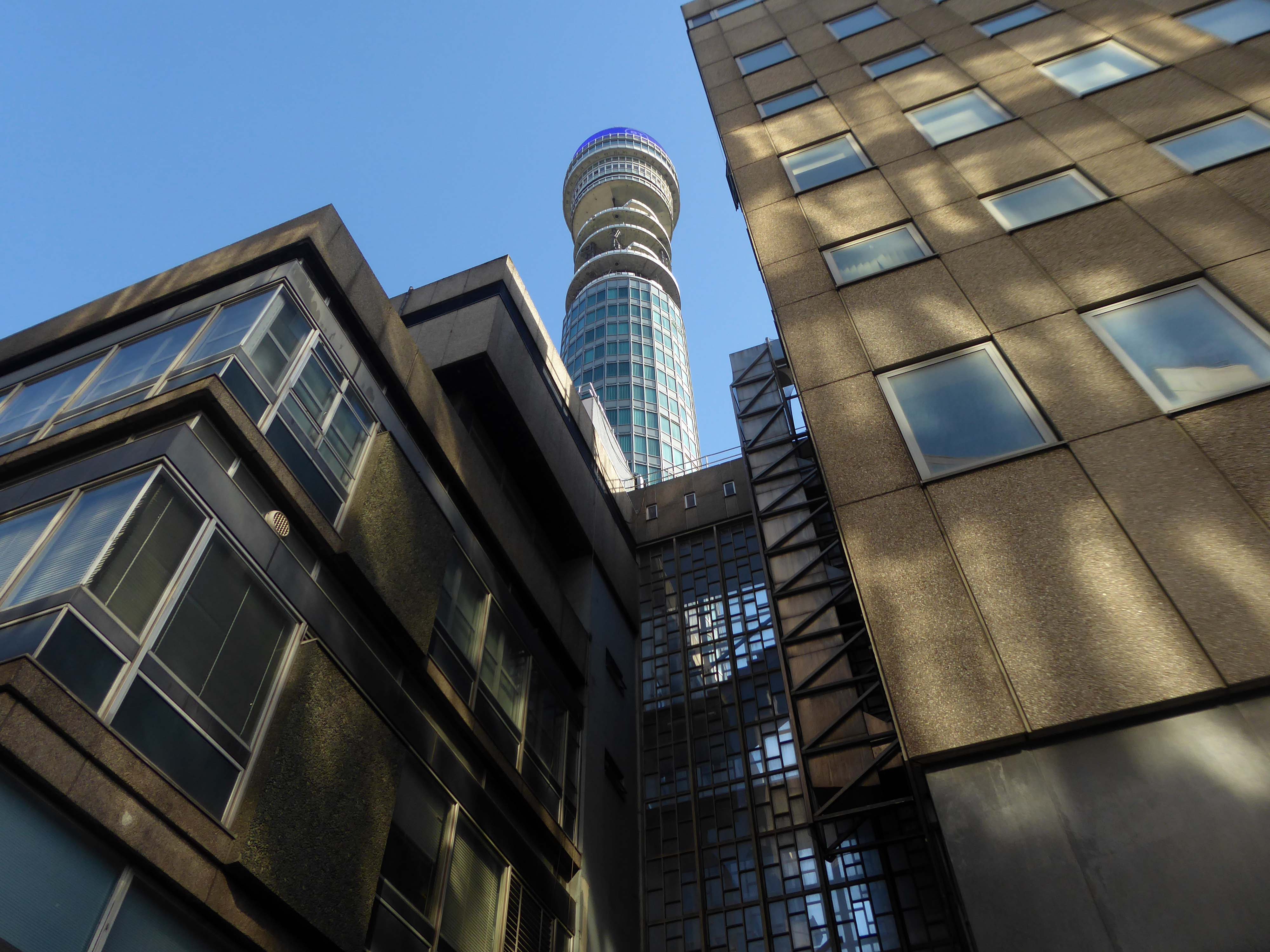
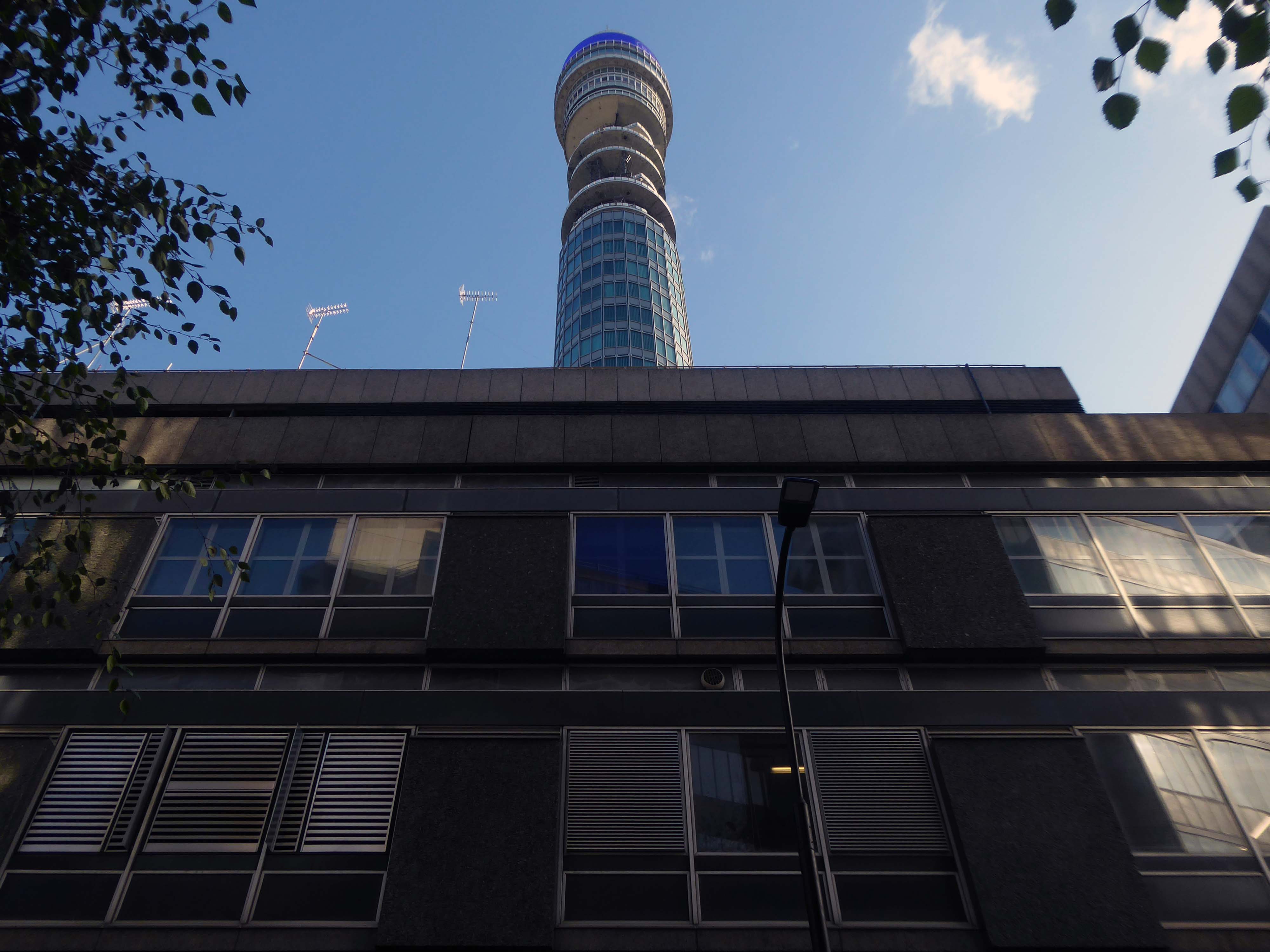
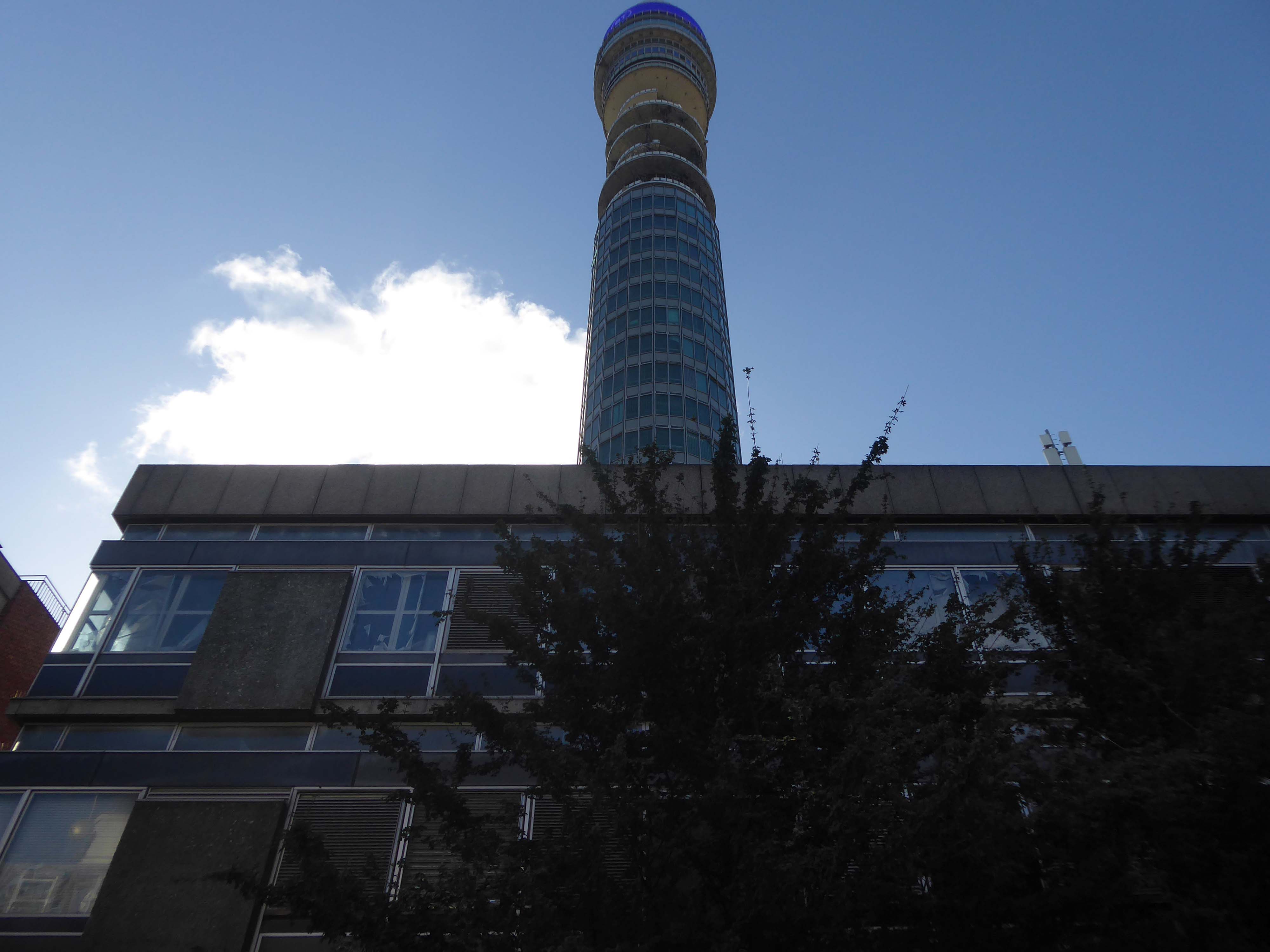
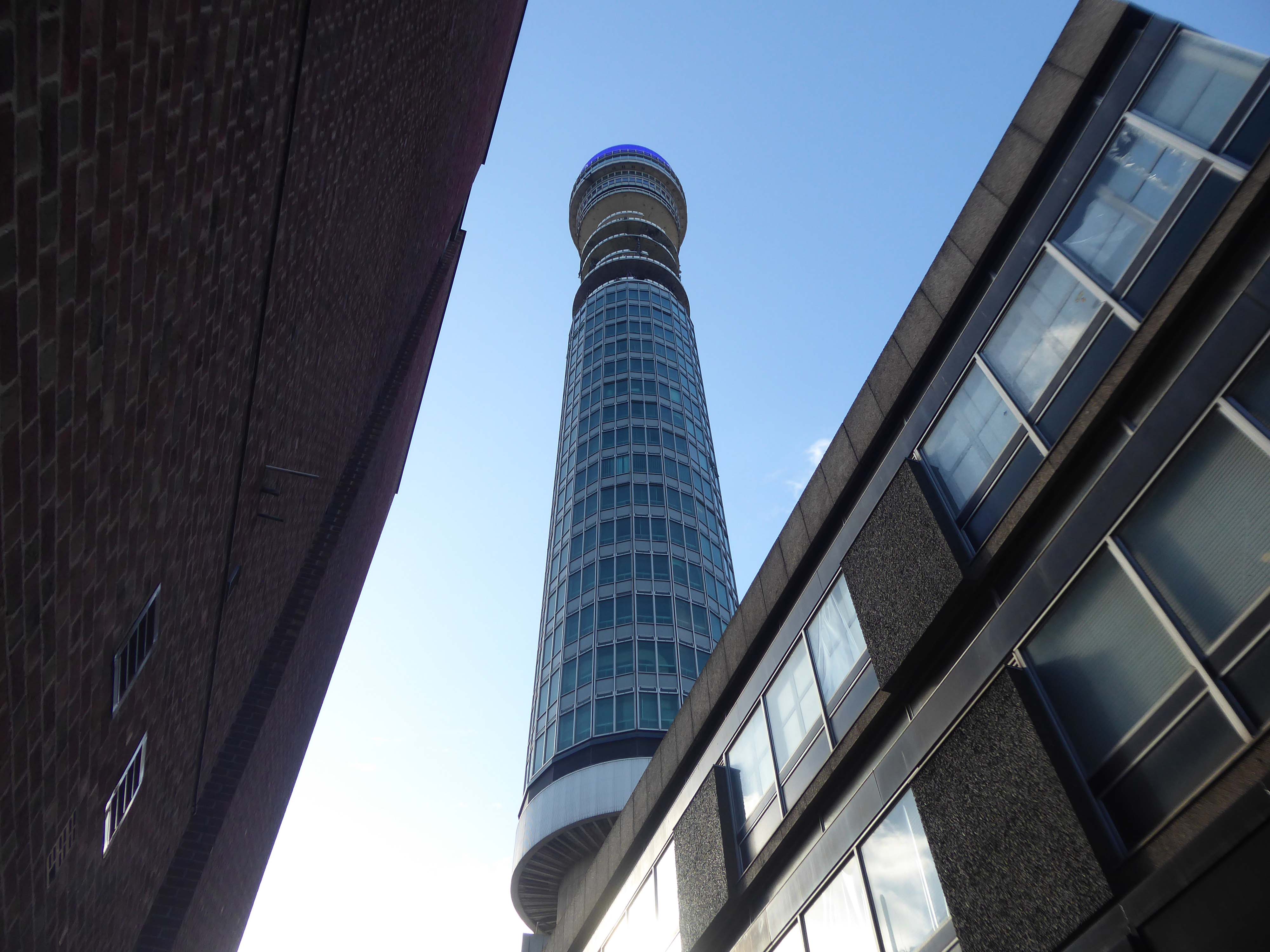
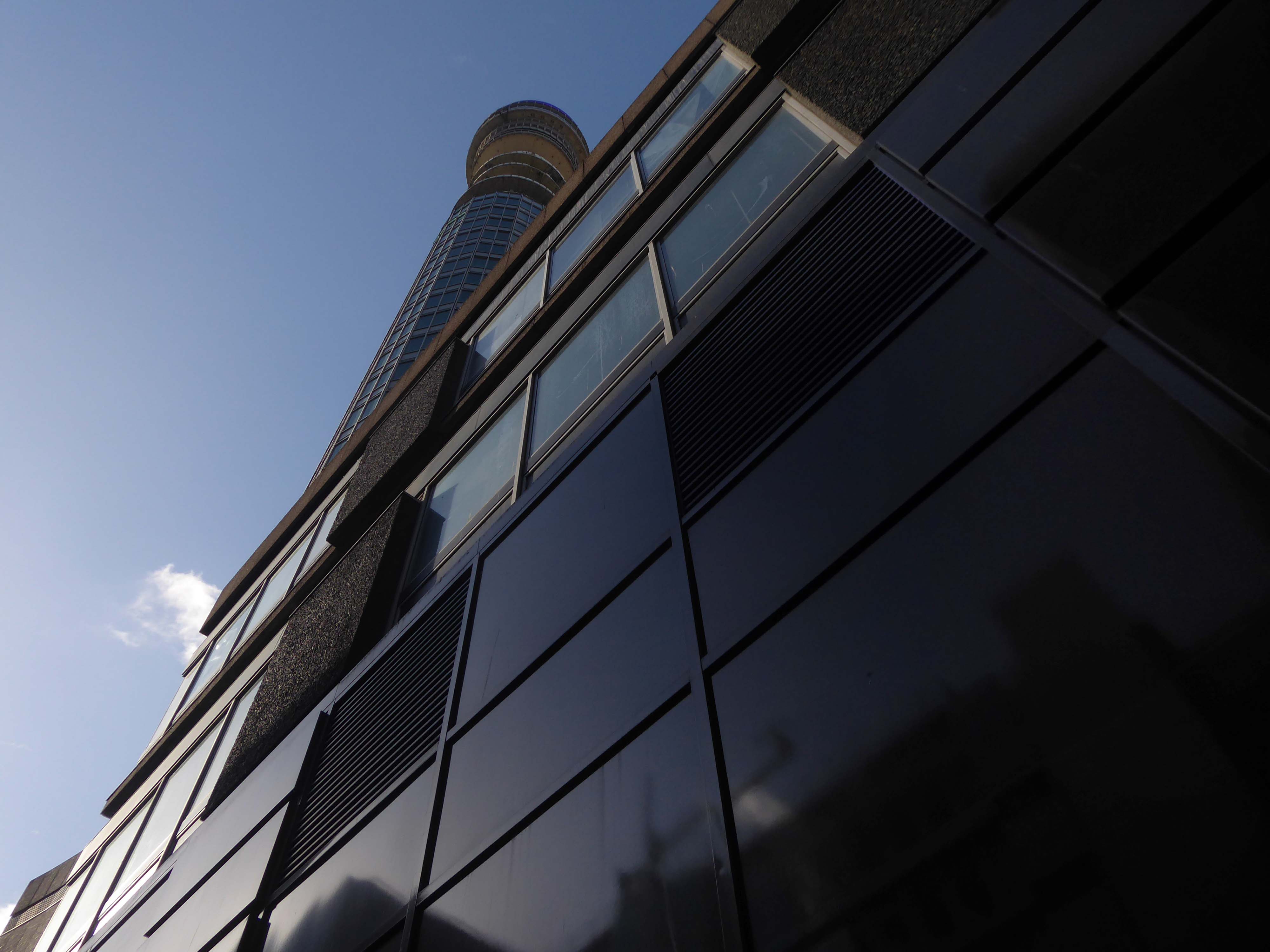
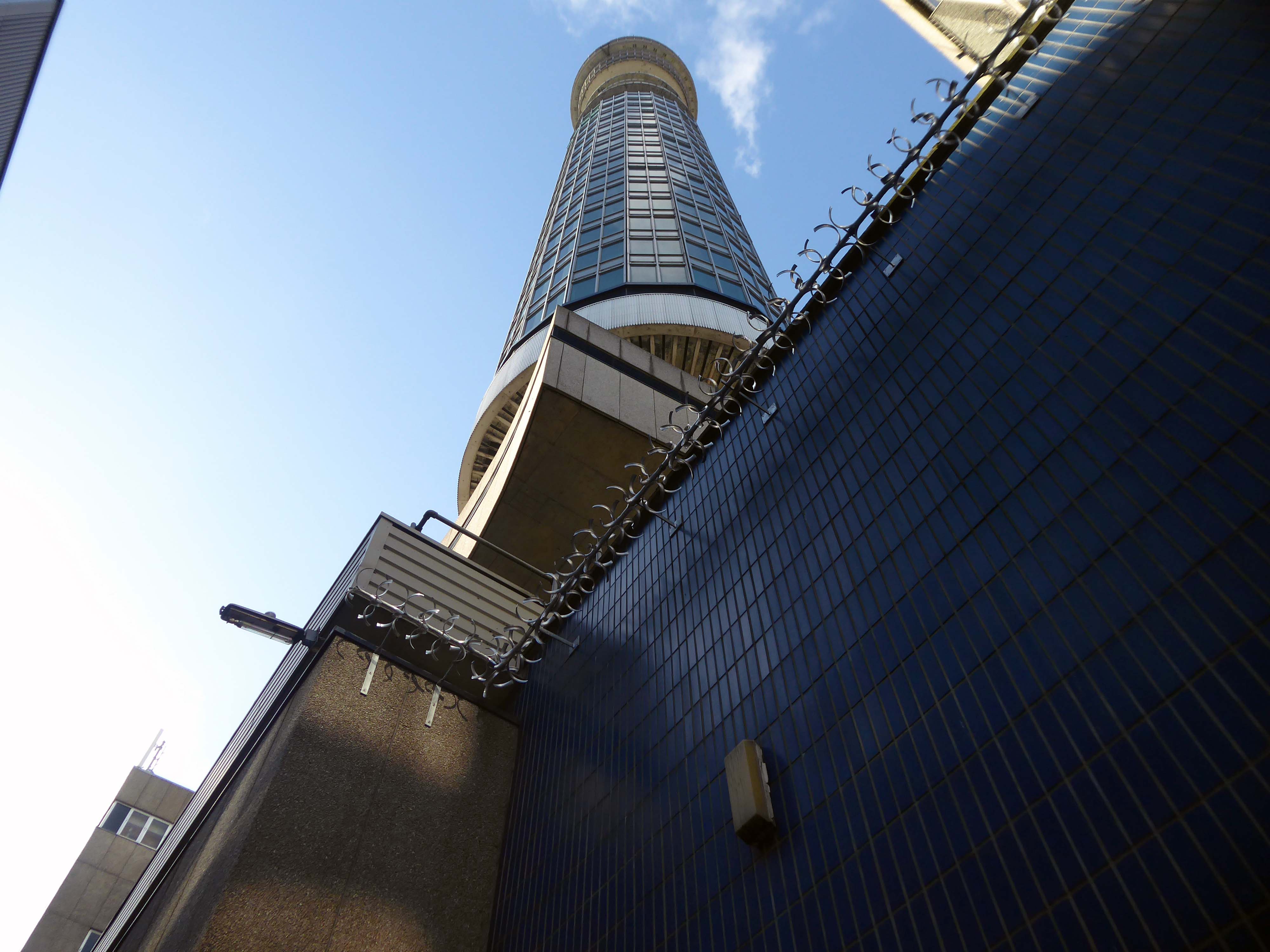
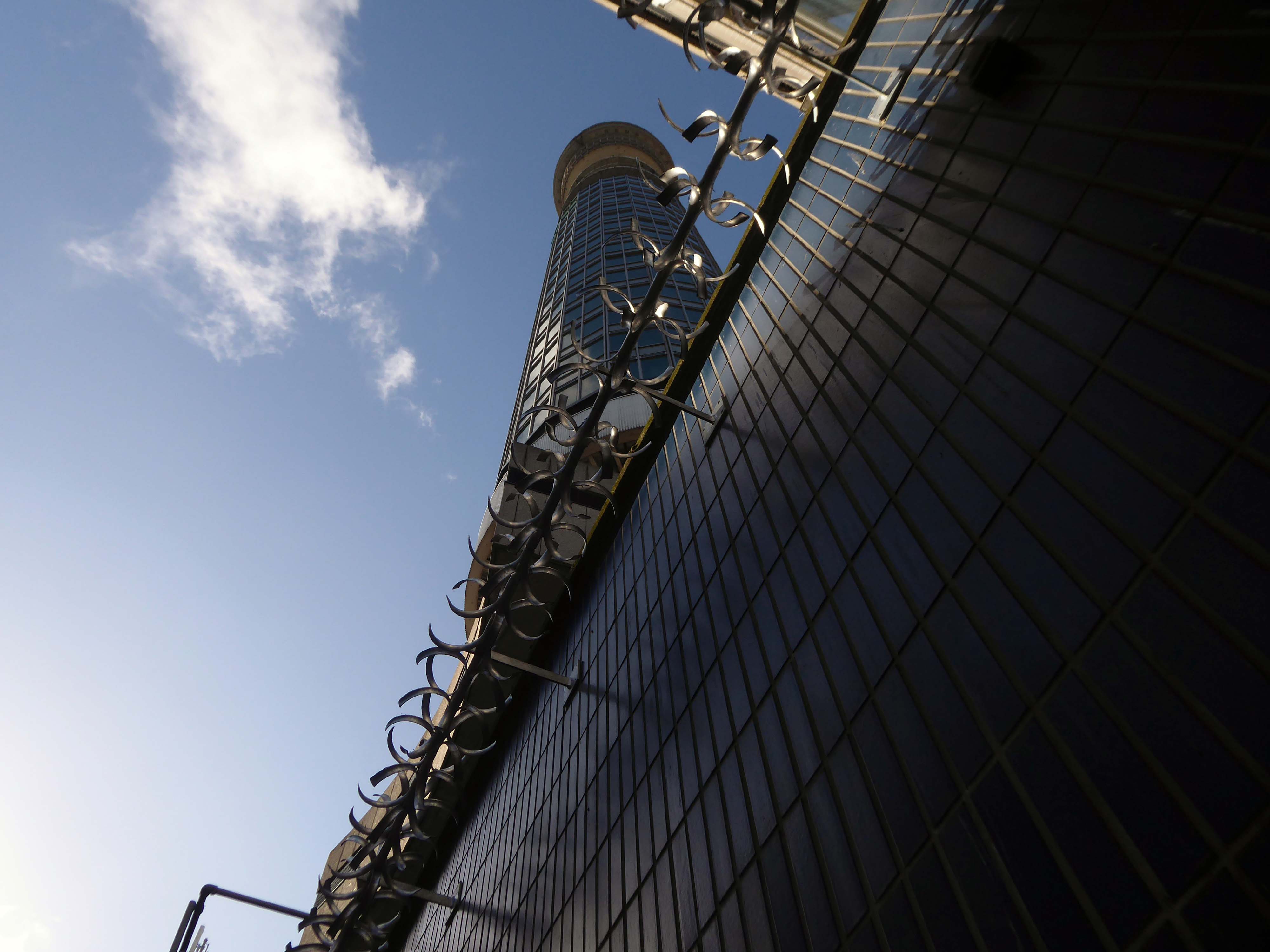
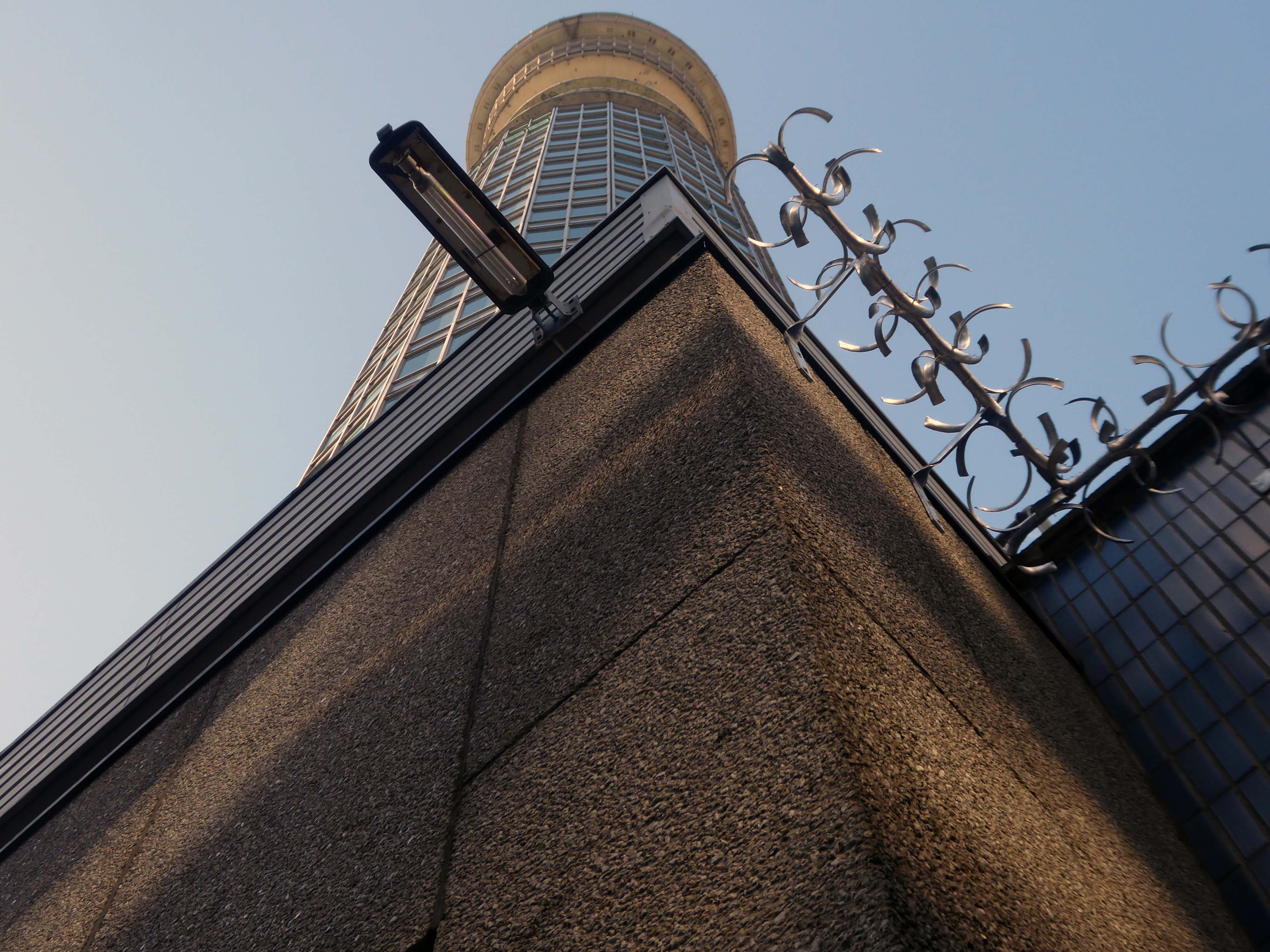
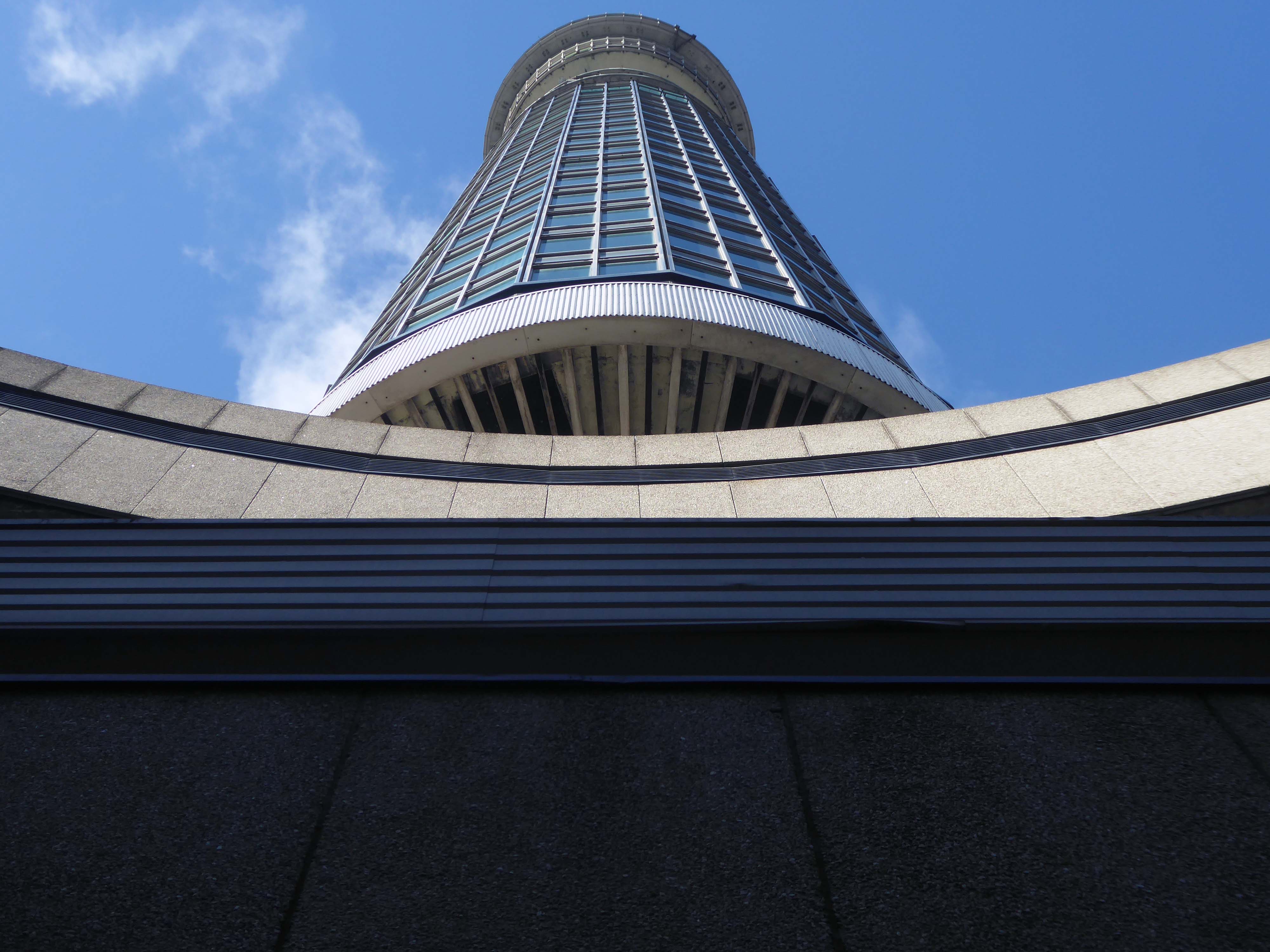
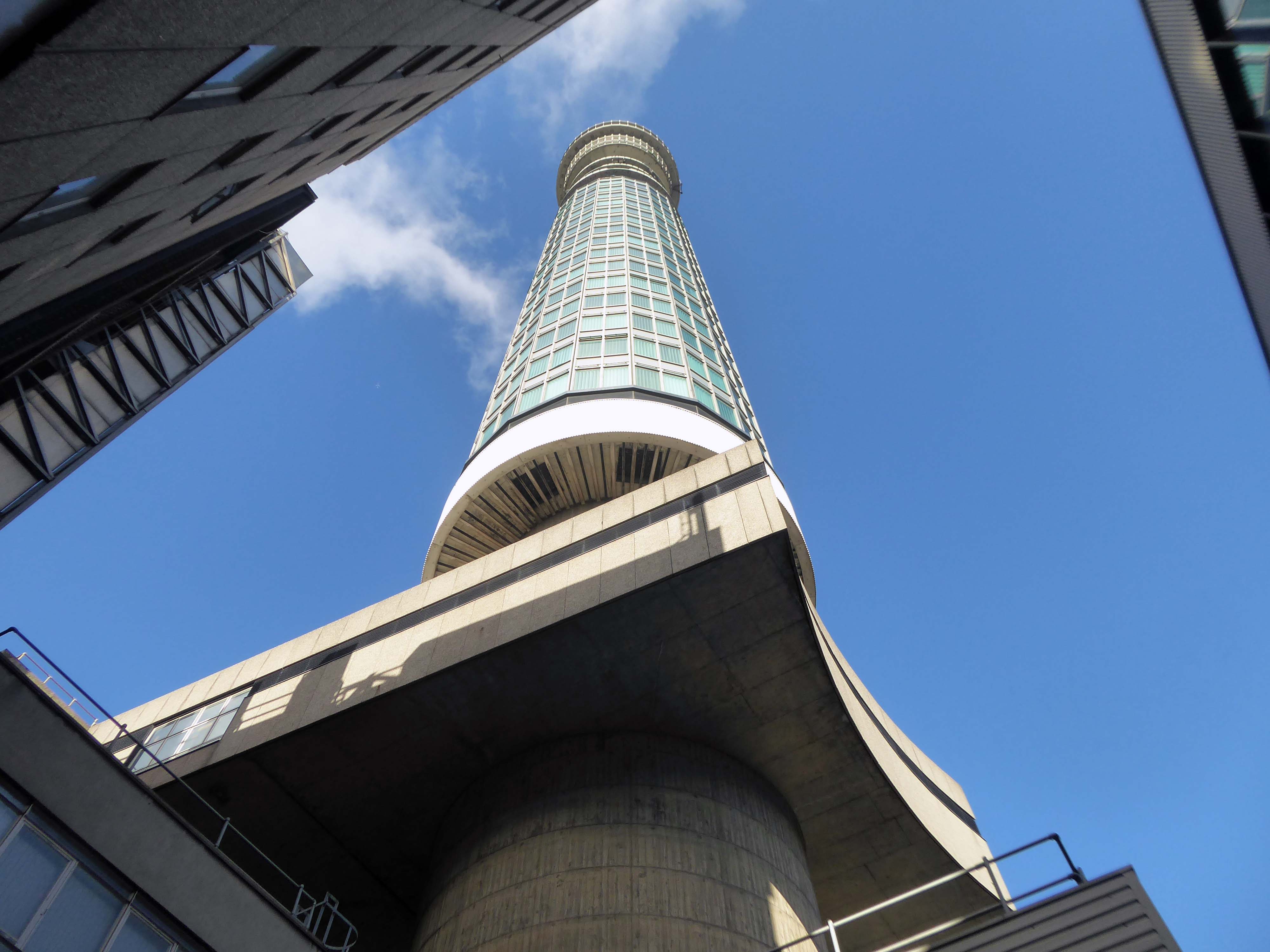
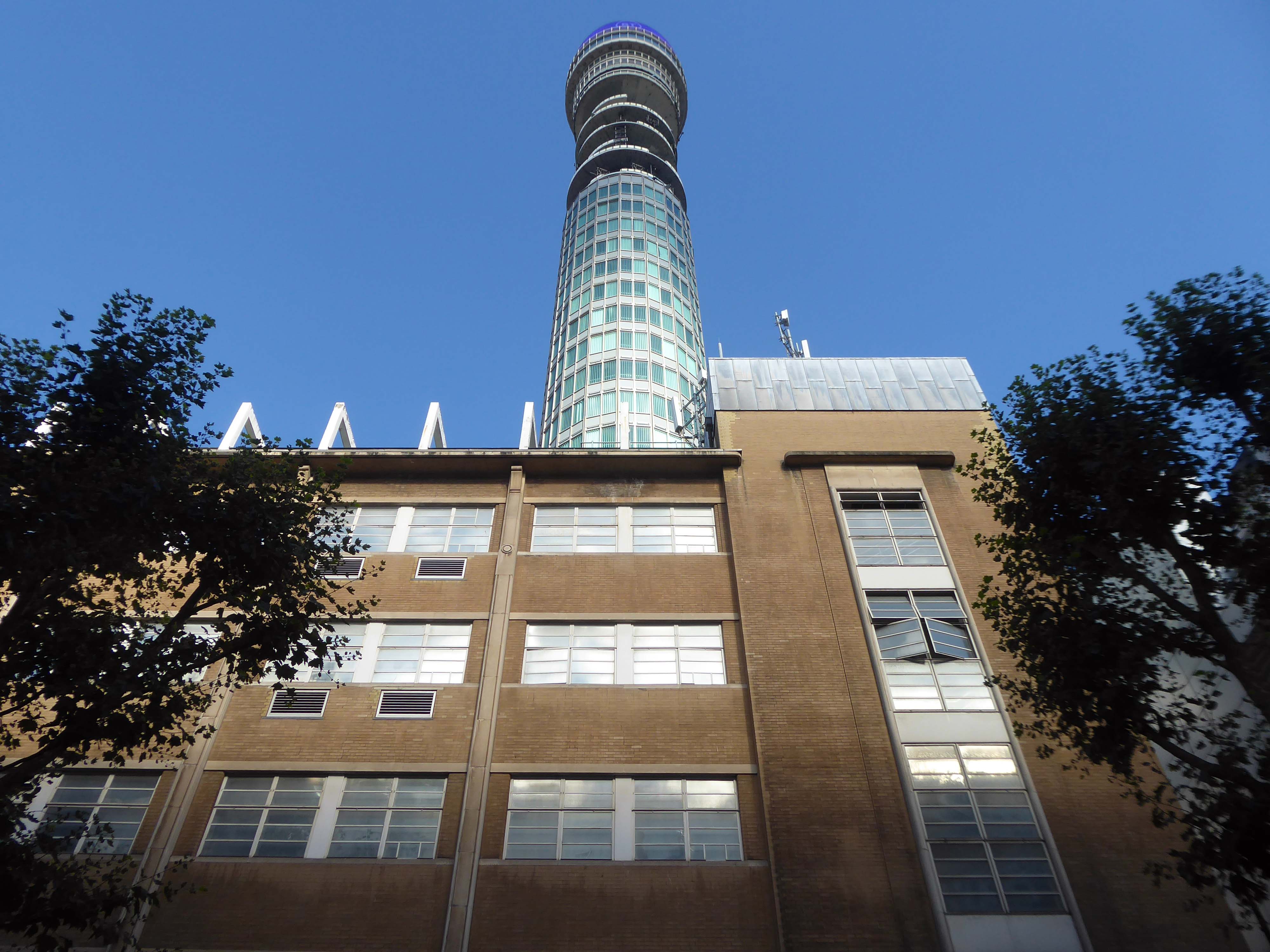
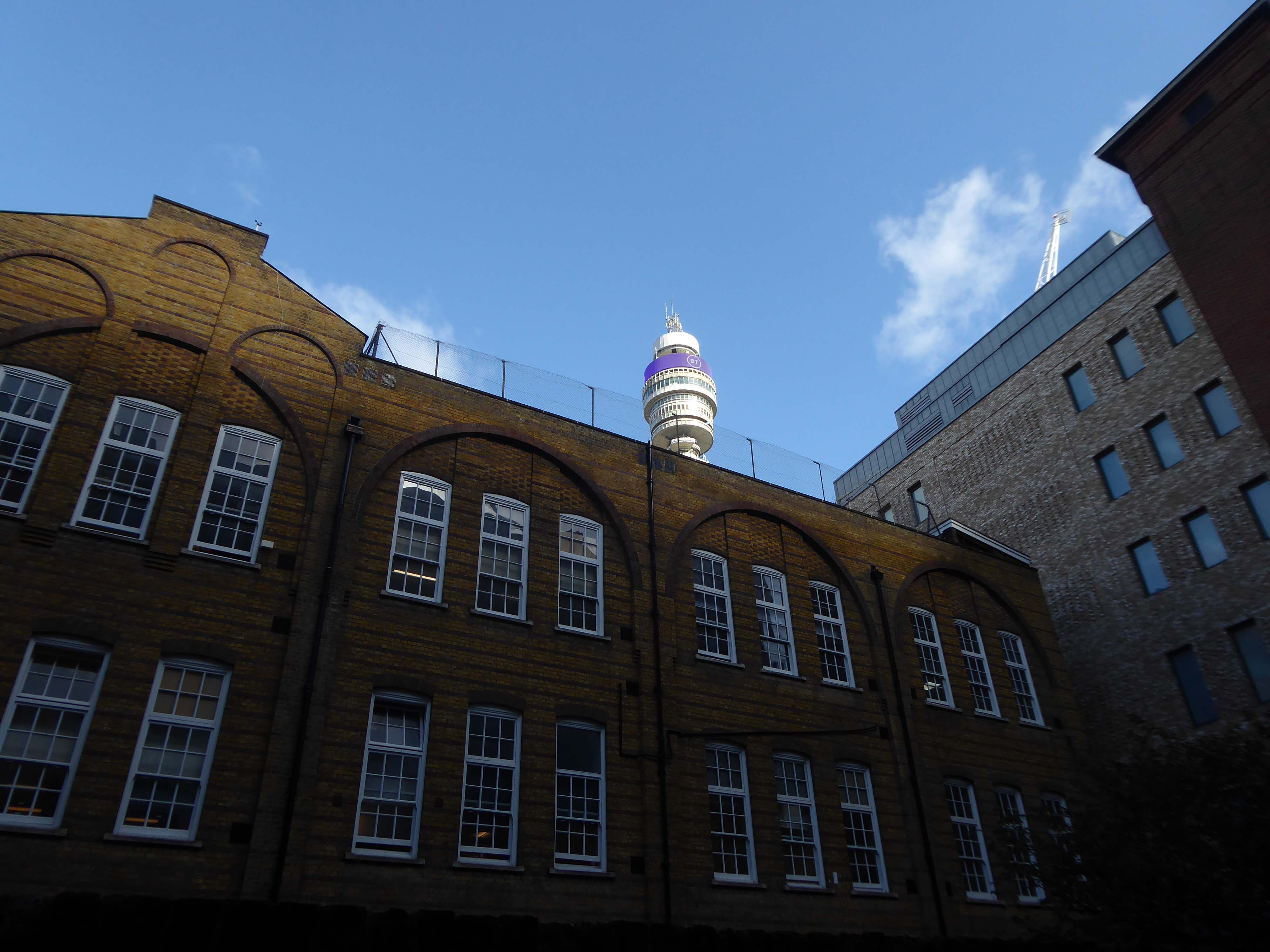
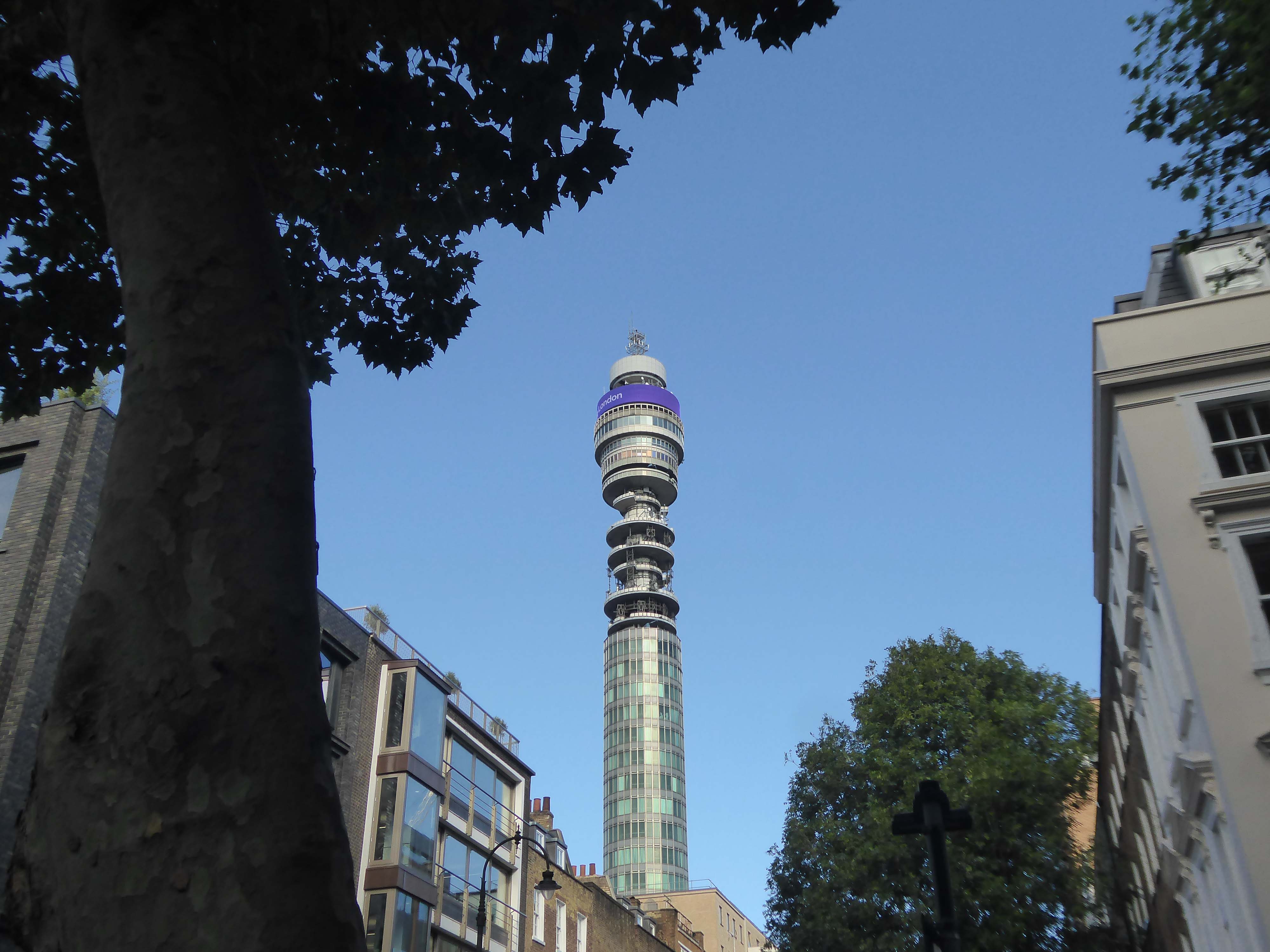
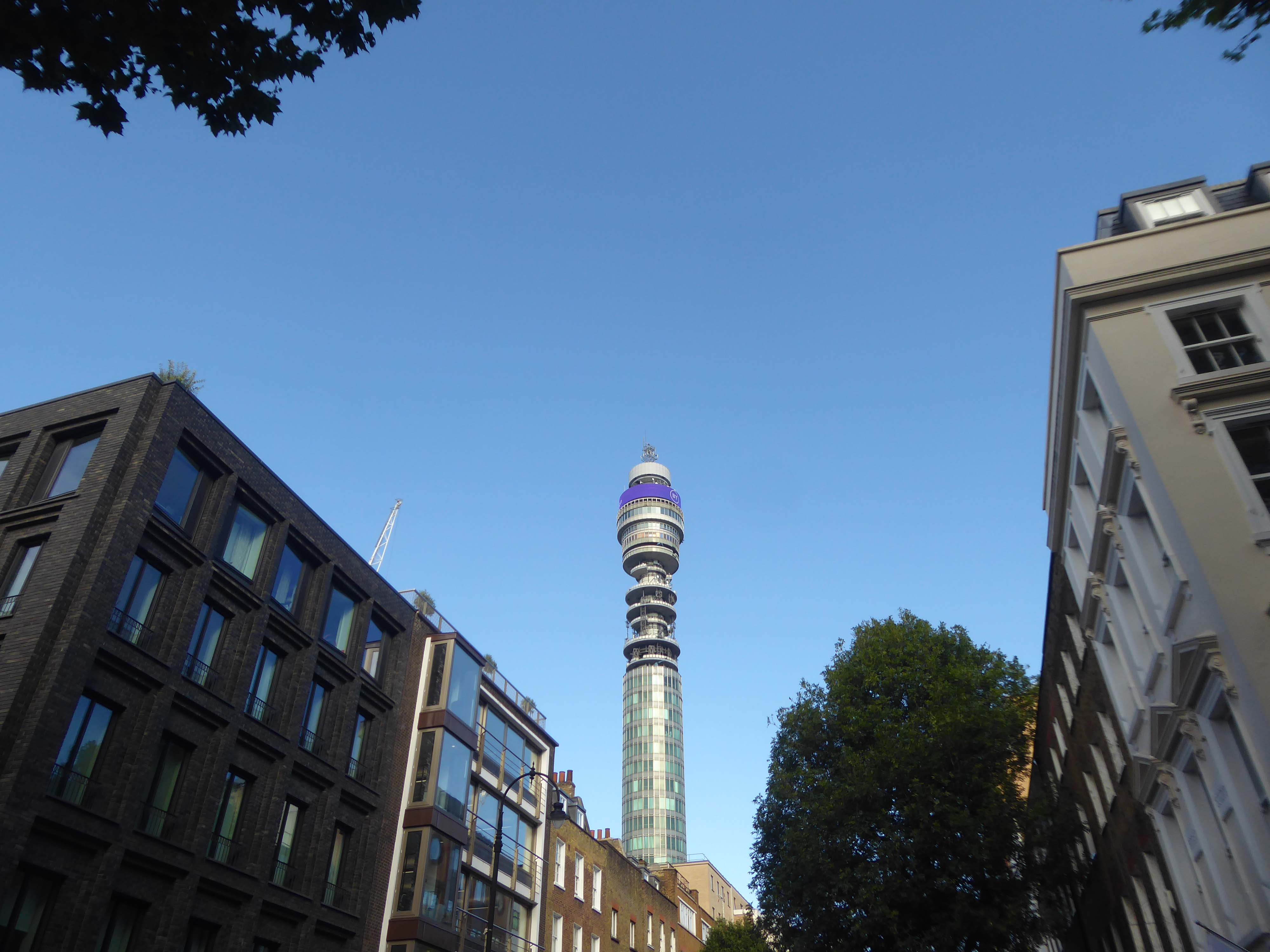
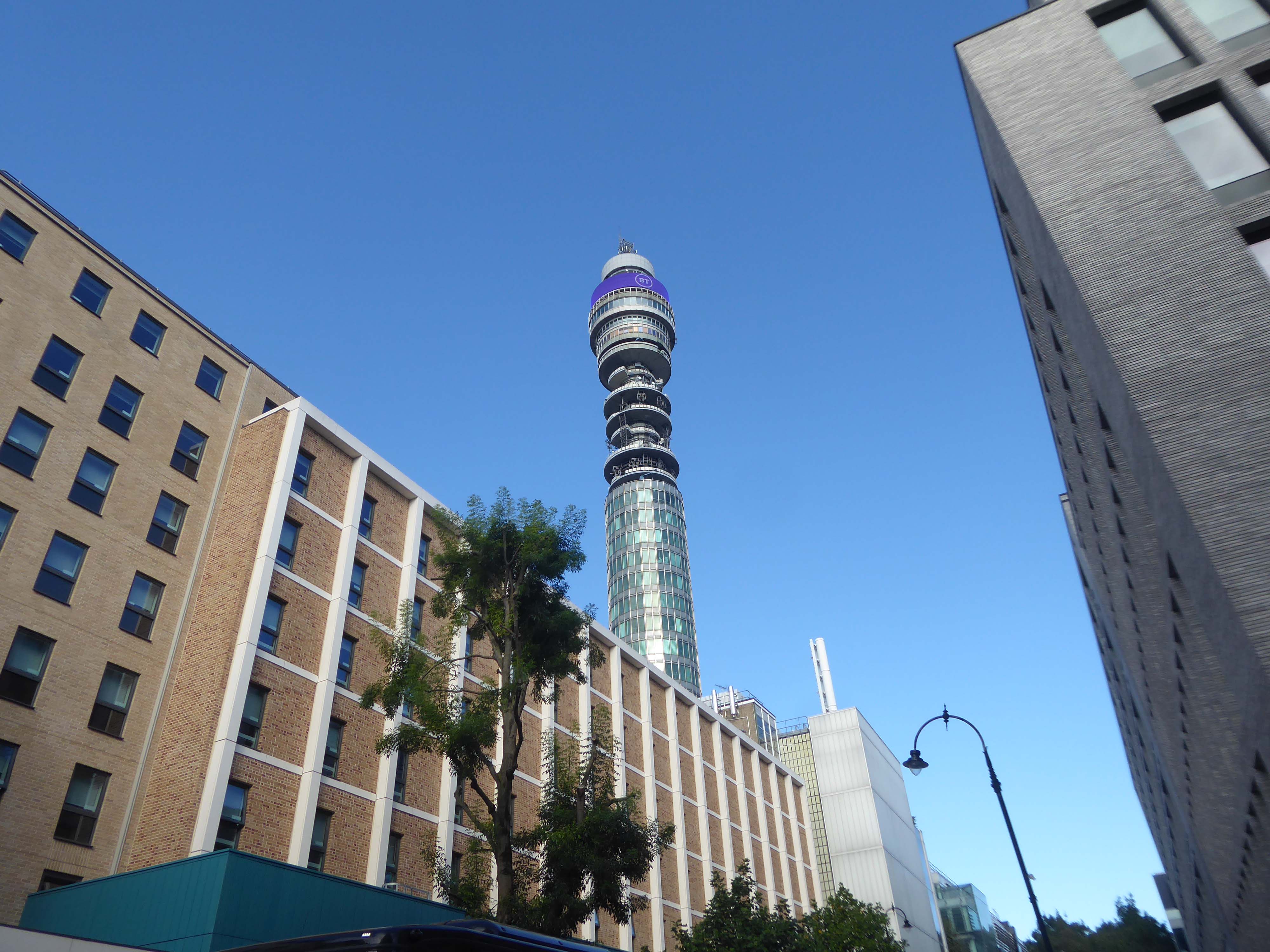
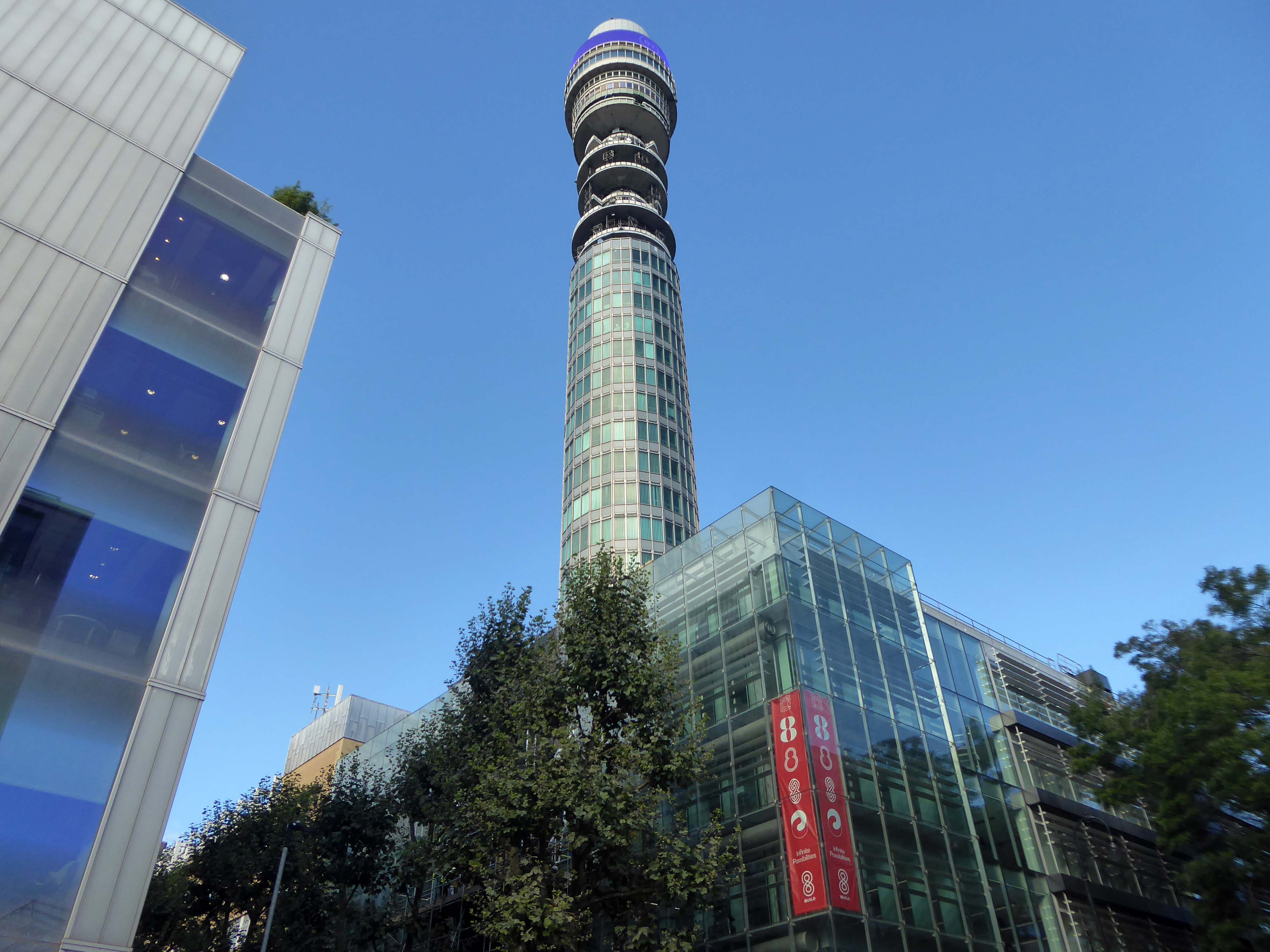
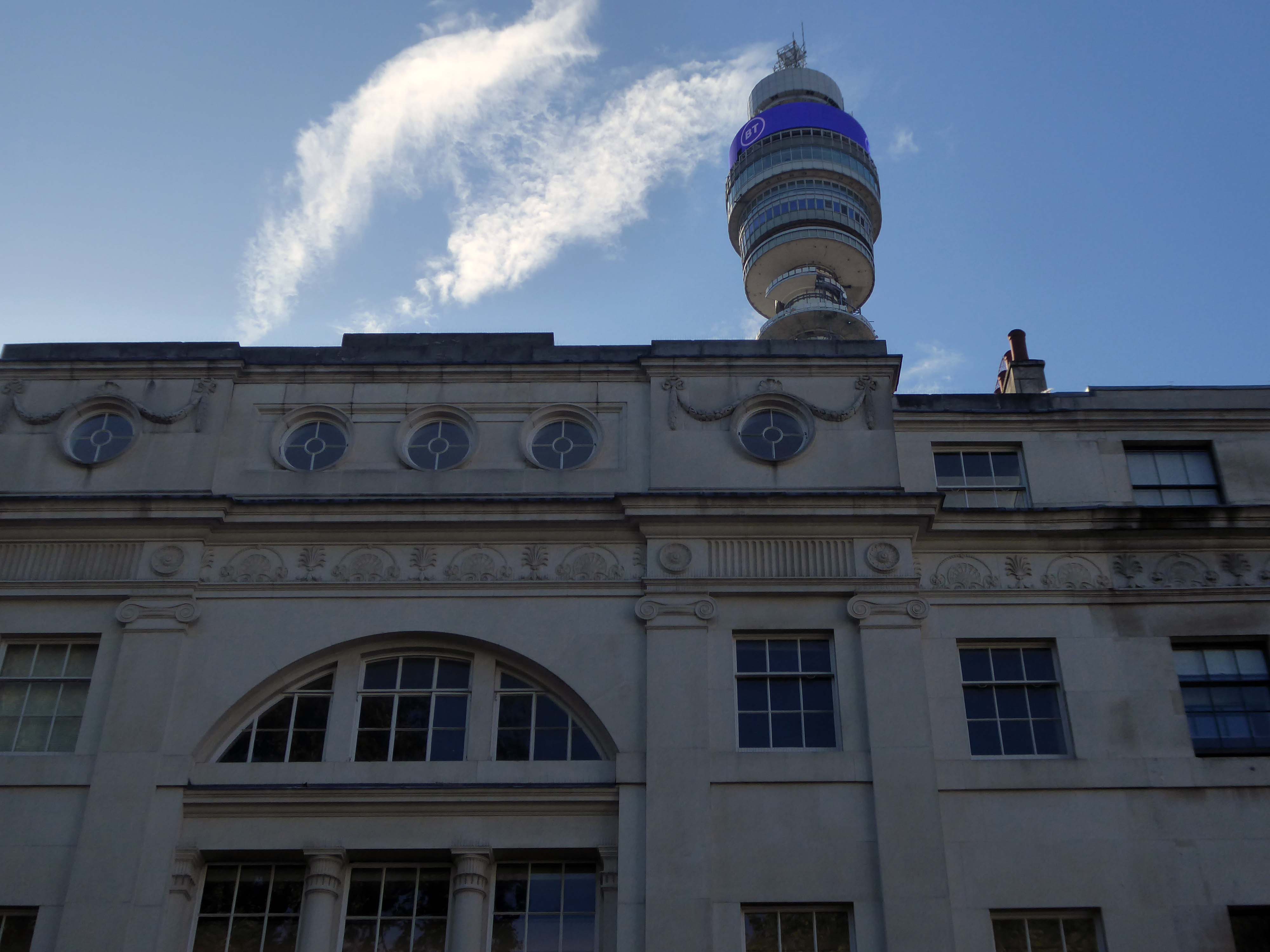
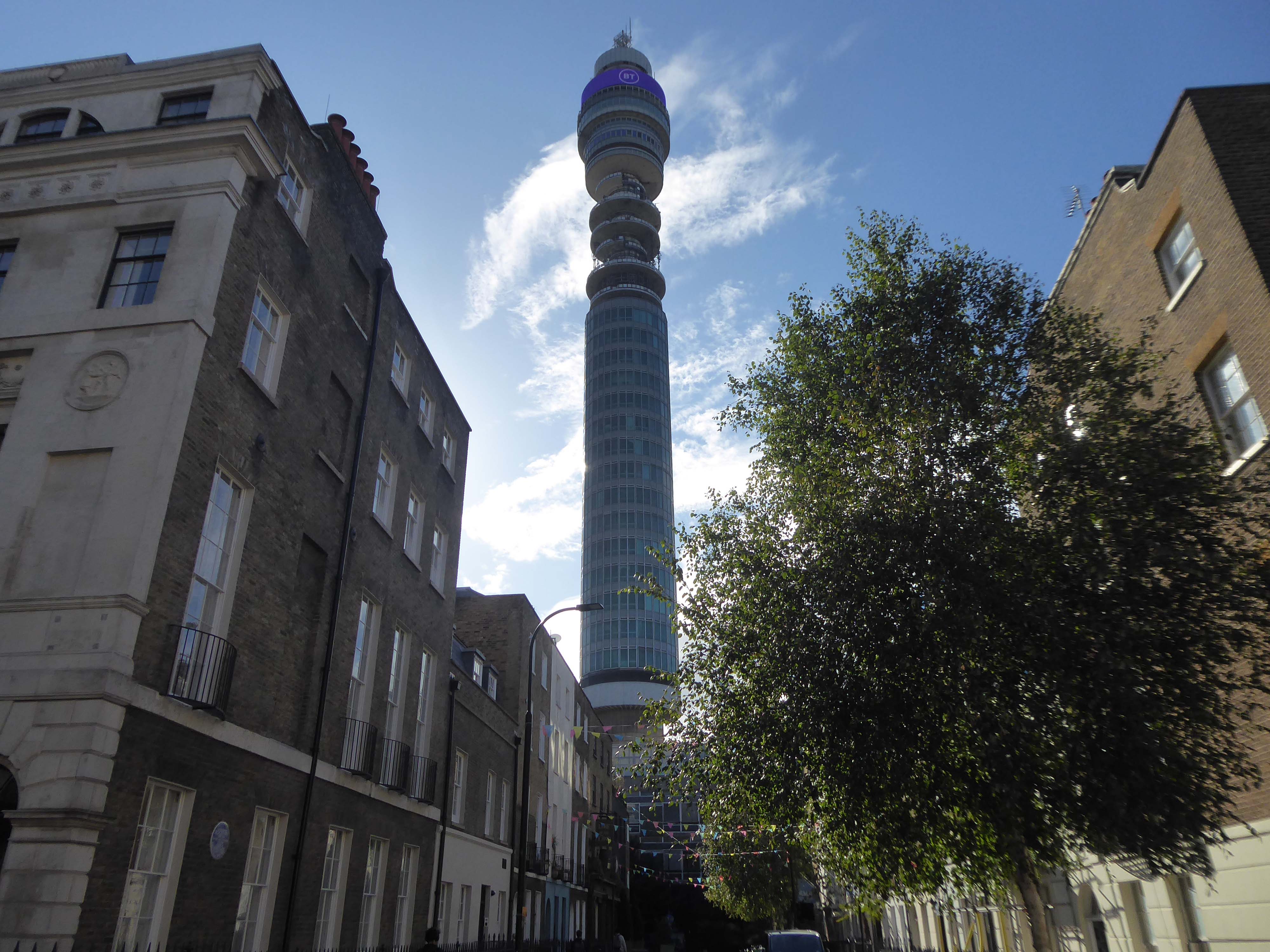
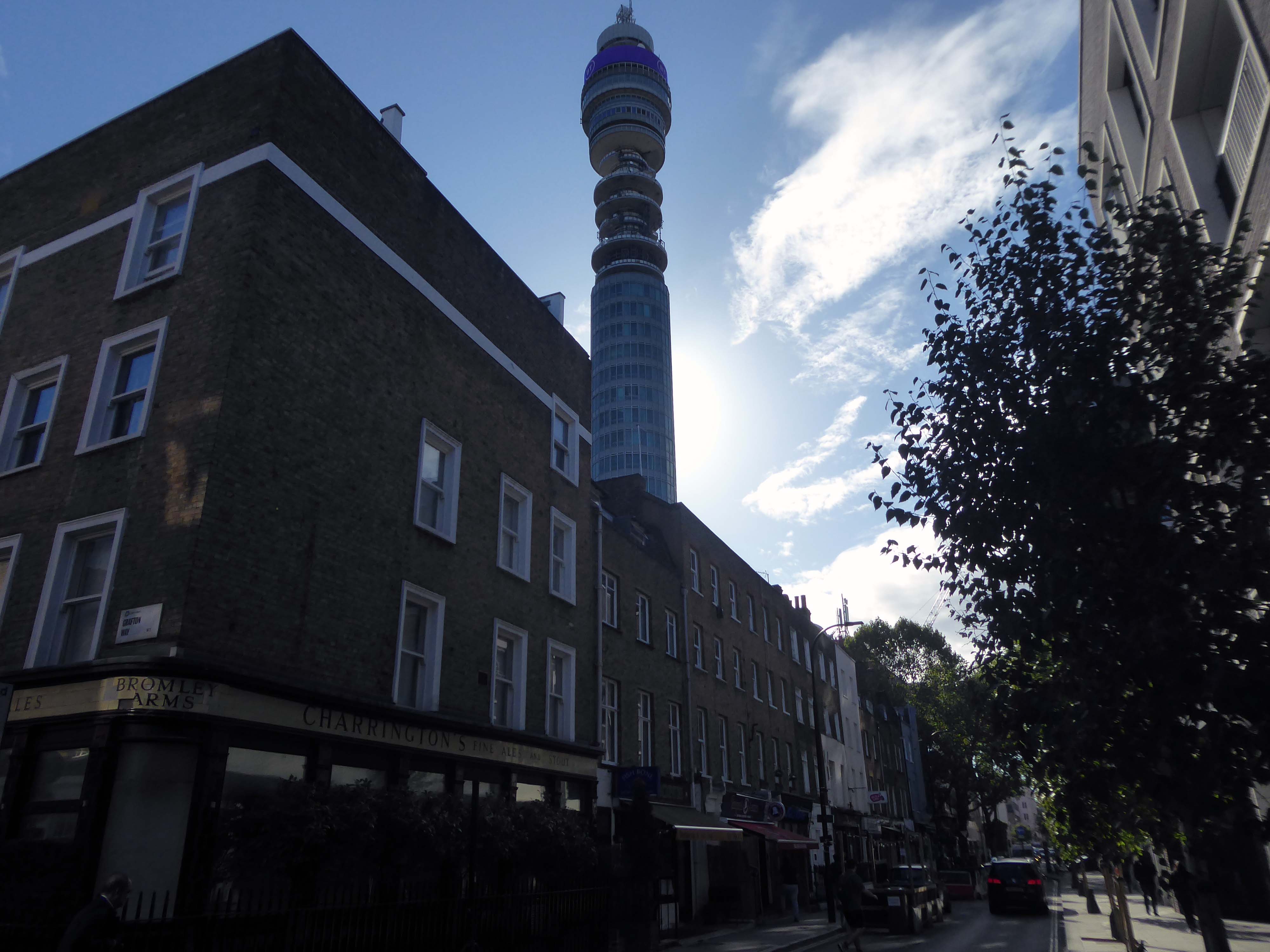
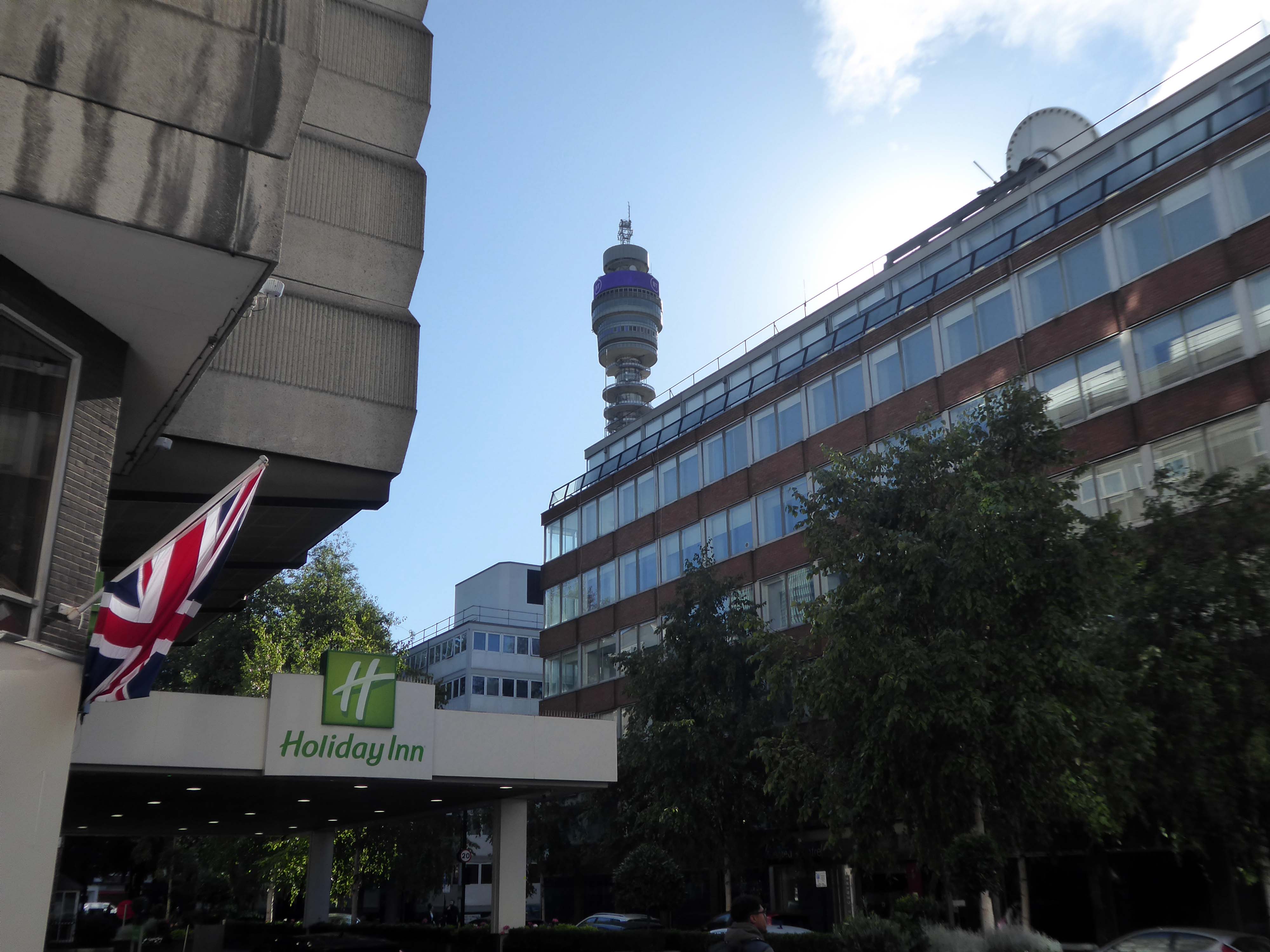
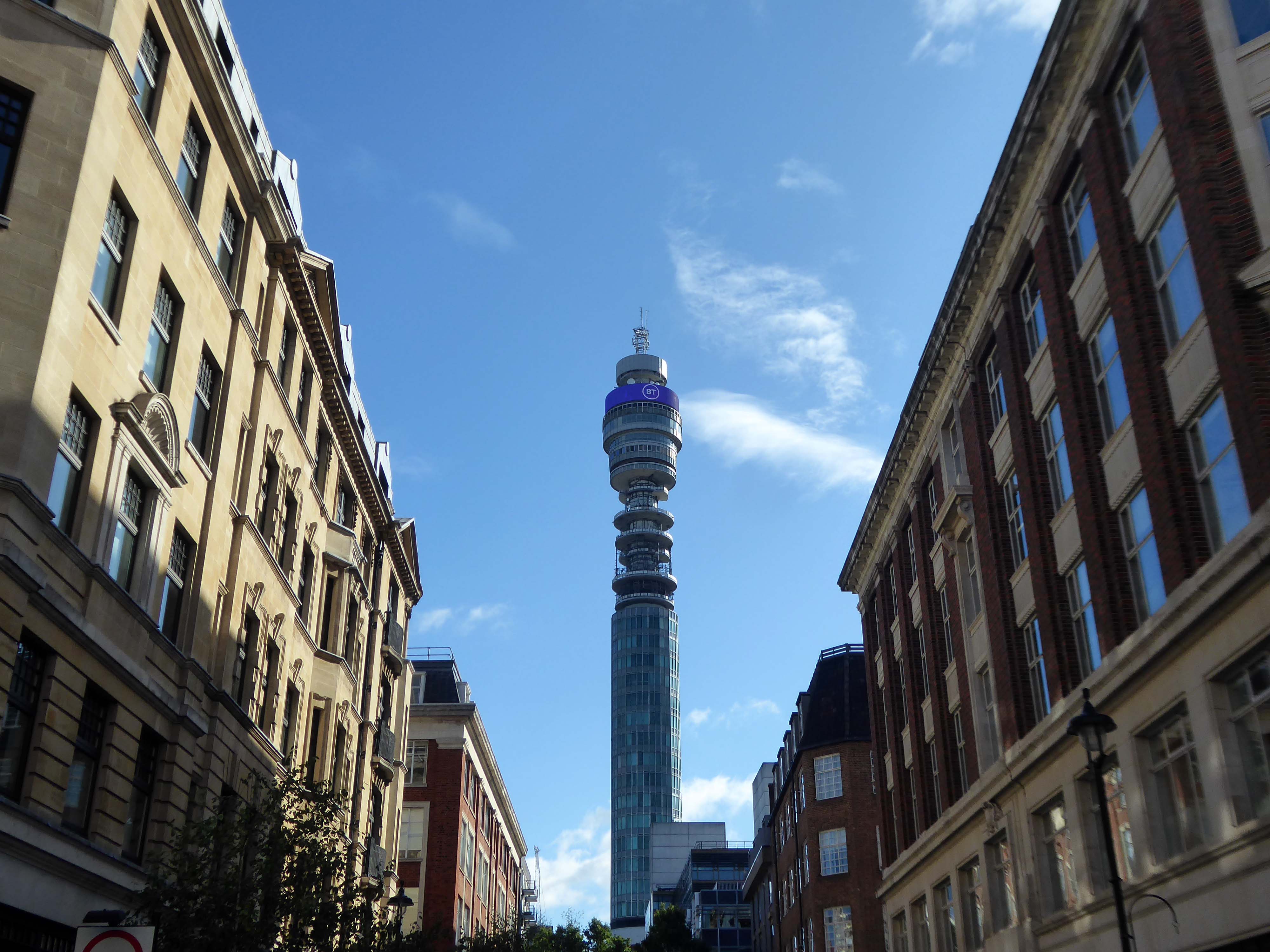
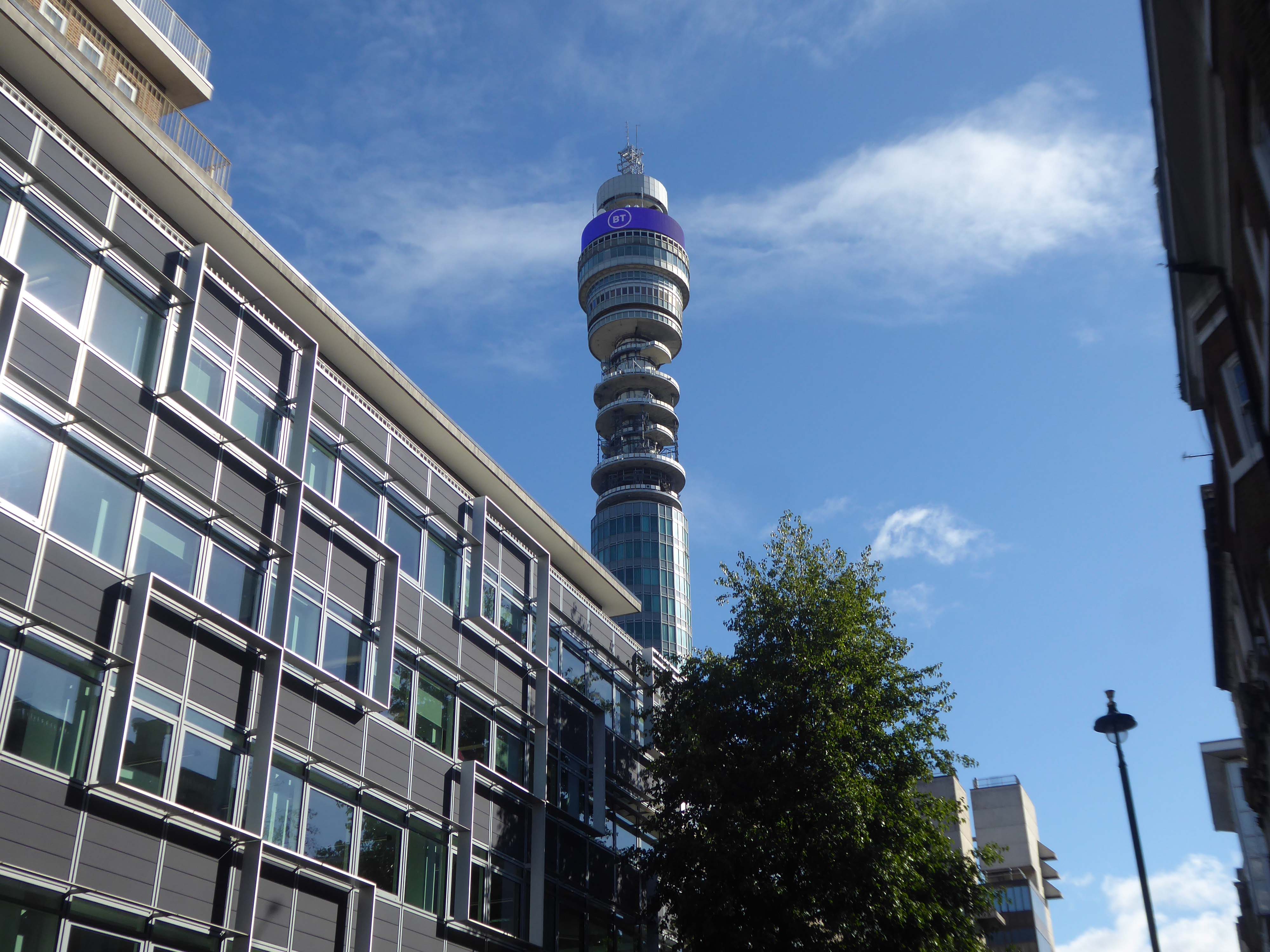
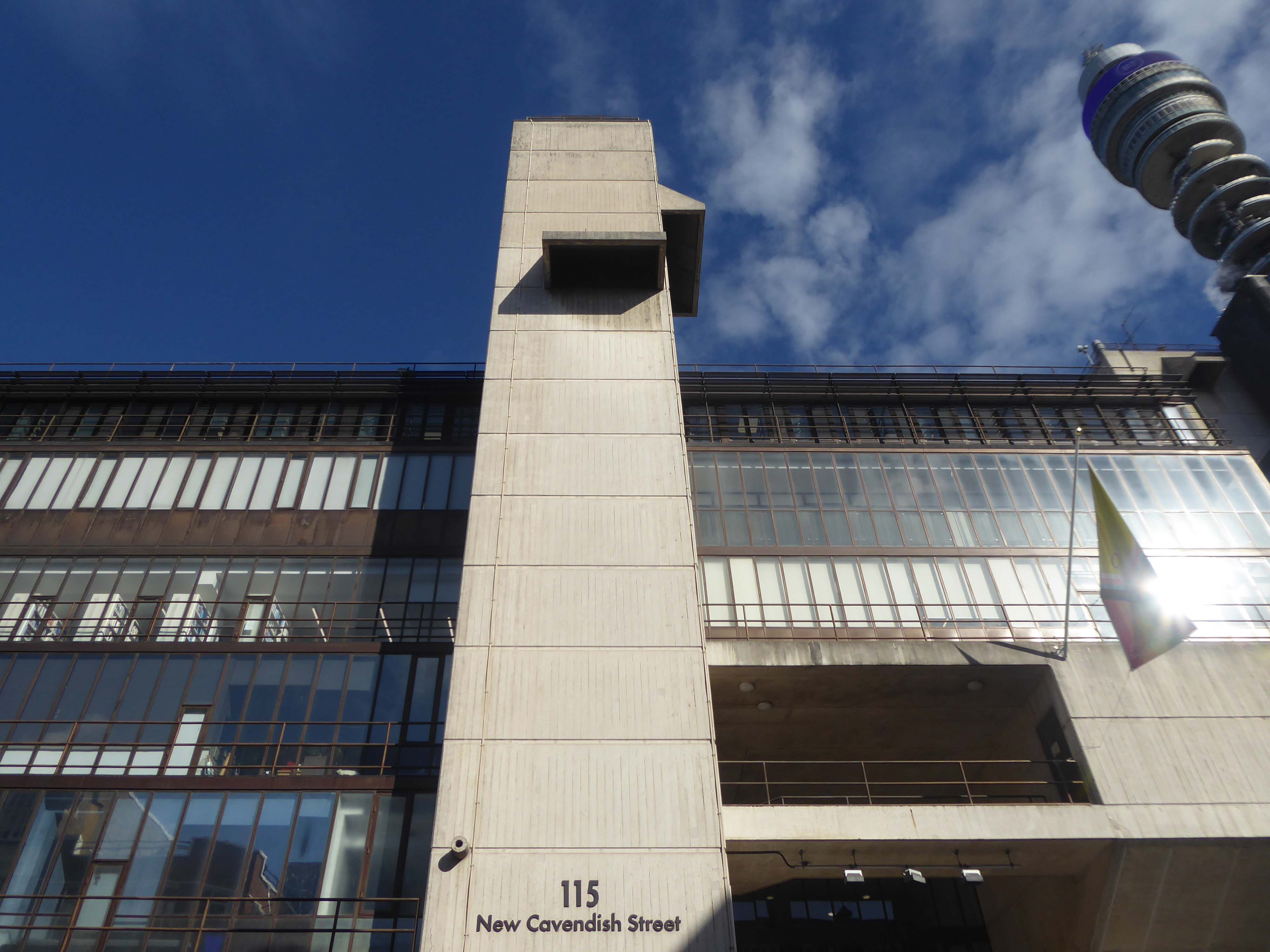
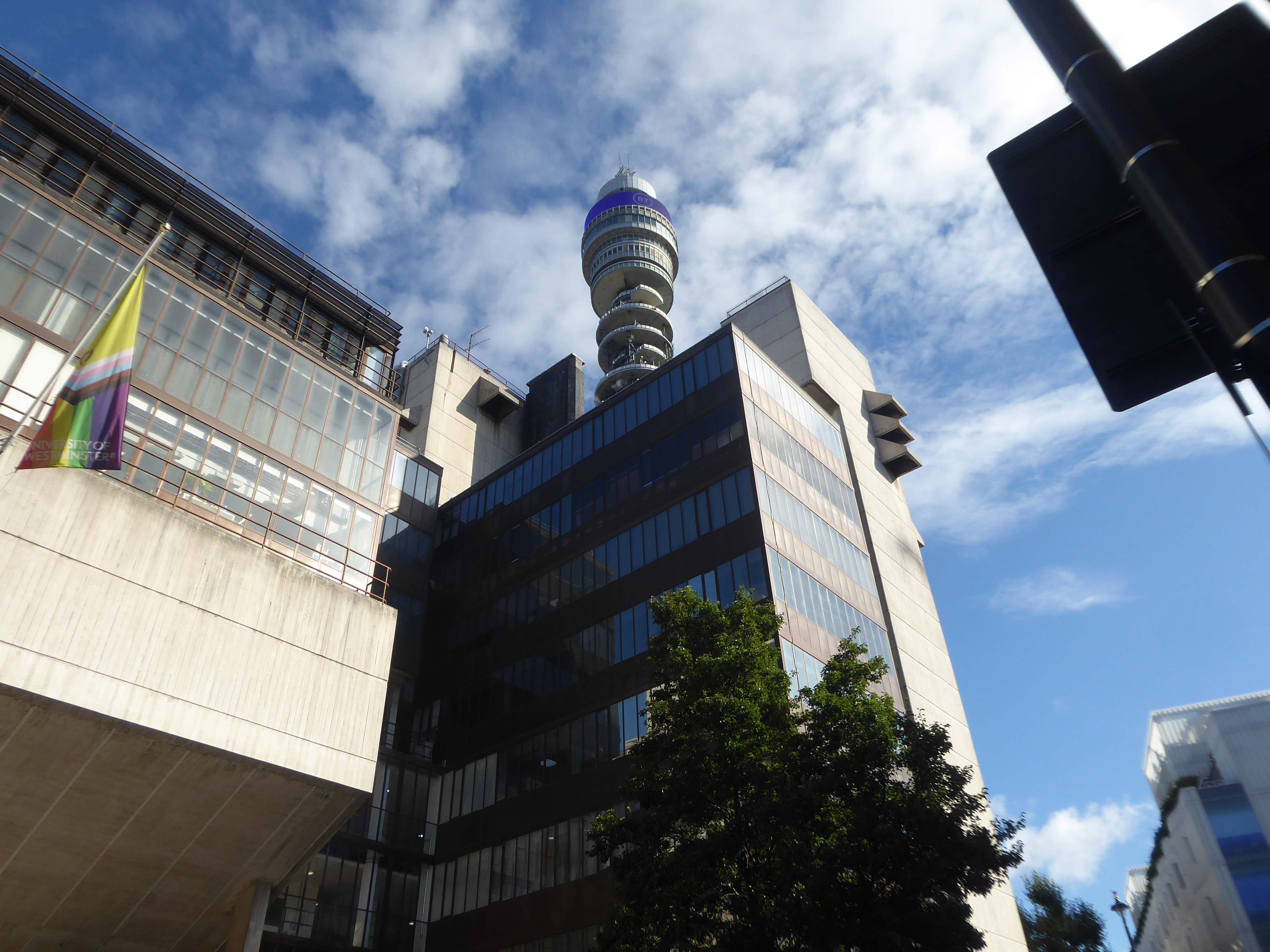
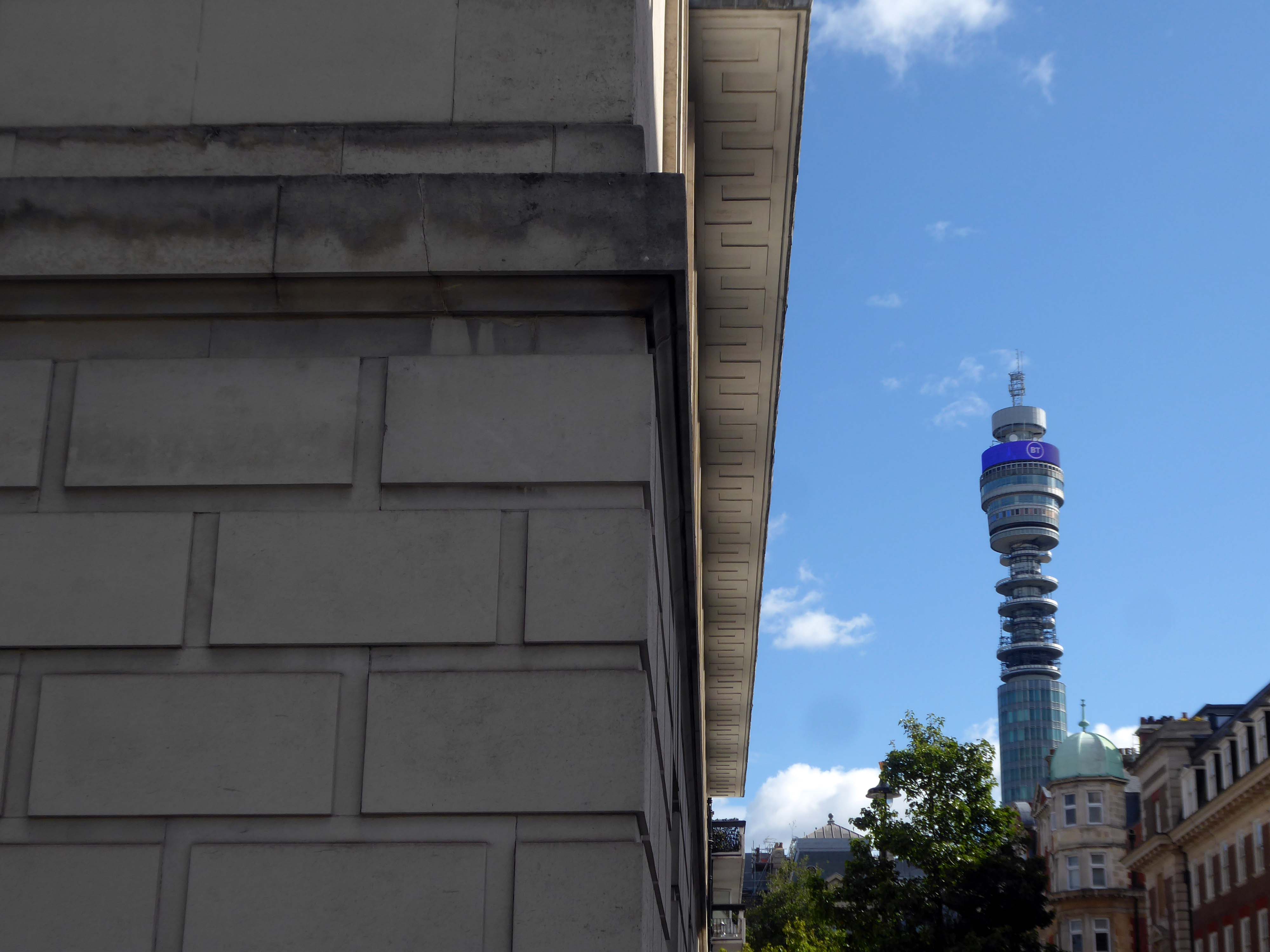
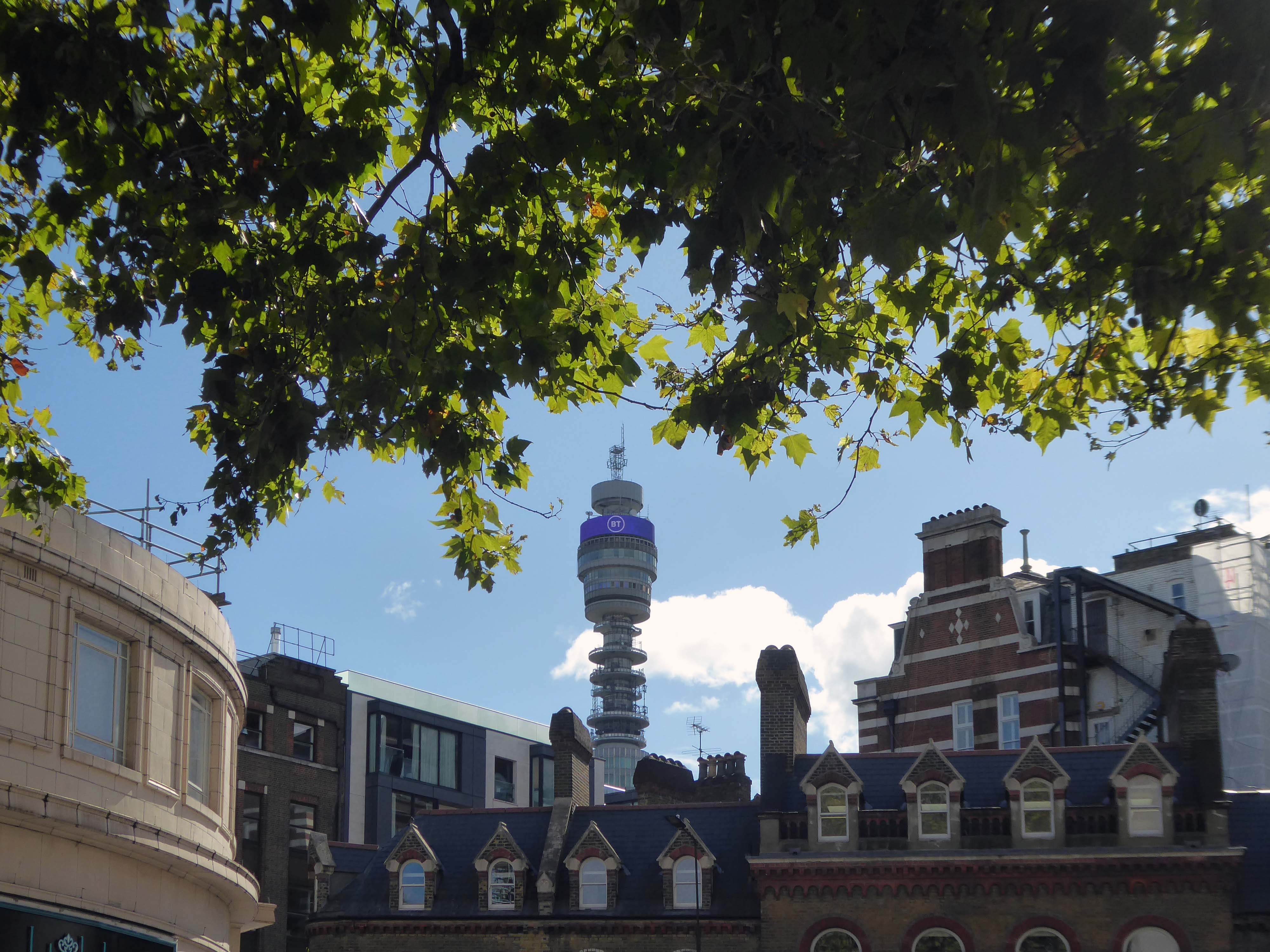
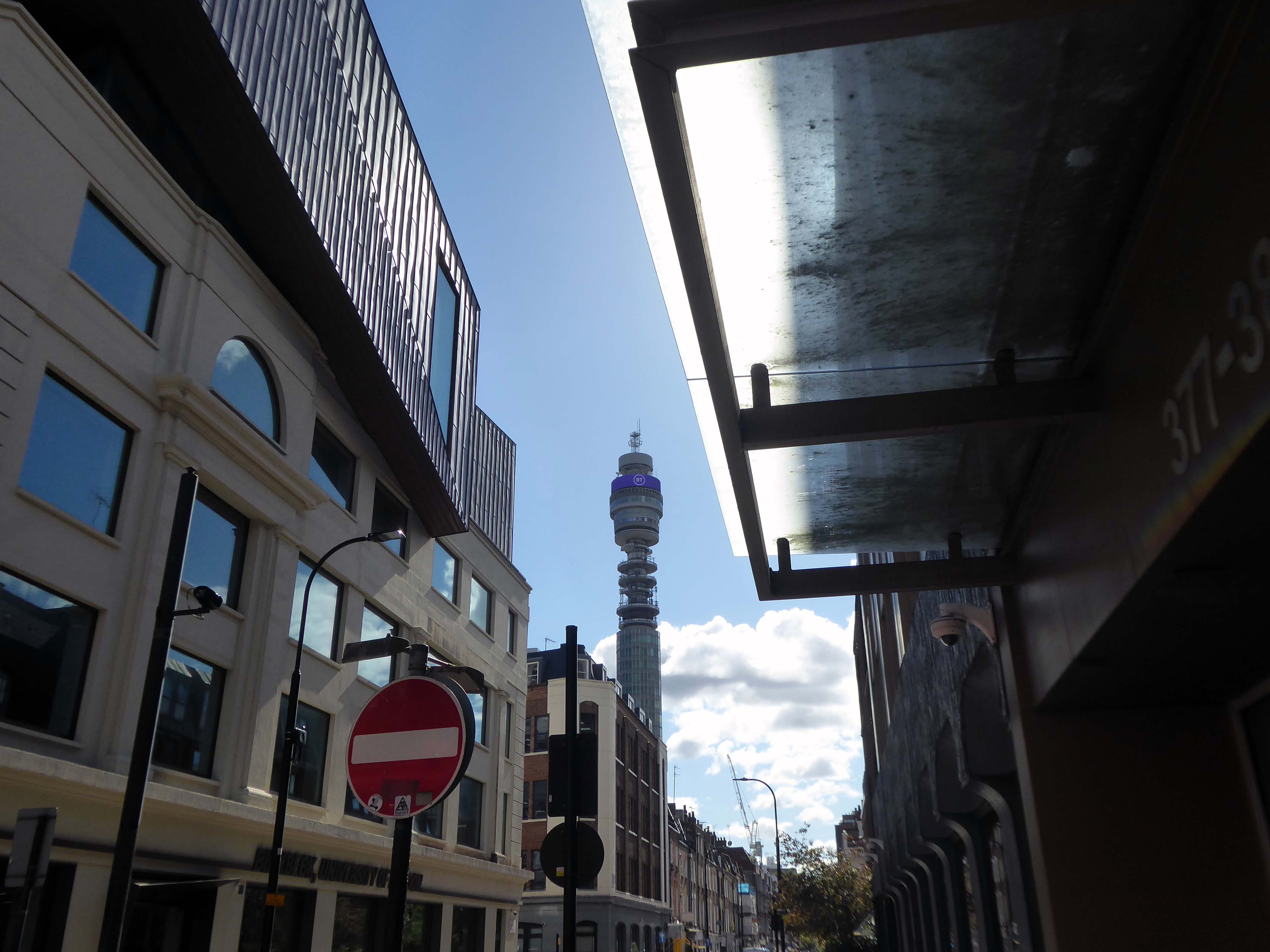
Post Office Tower – 2024

Of course we have been here afore – in 2020 and earlier in 2015, outlining a short history.
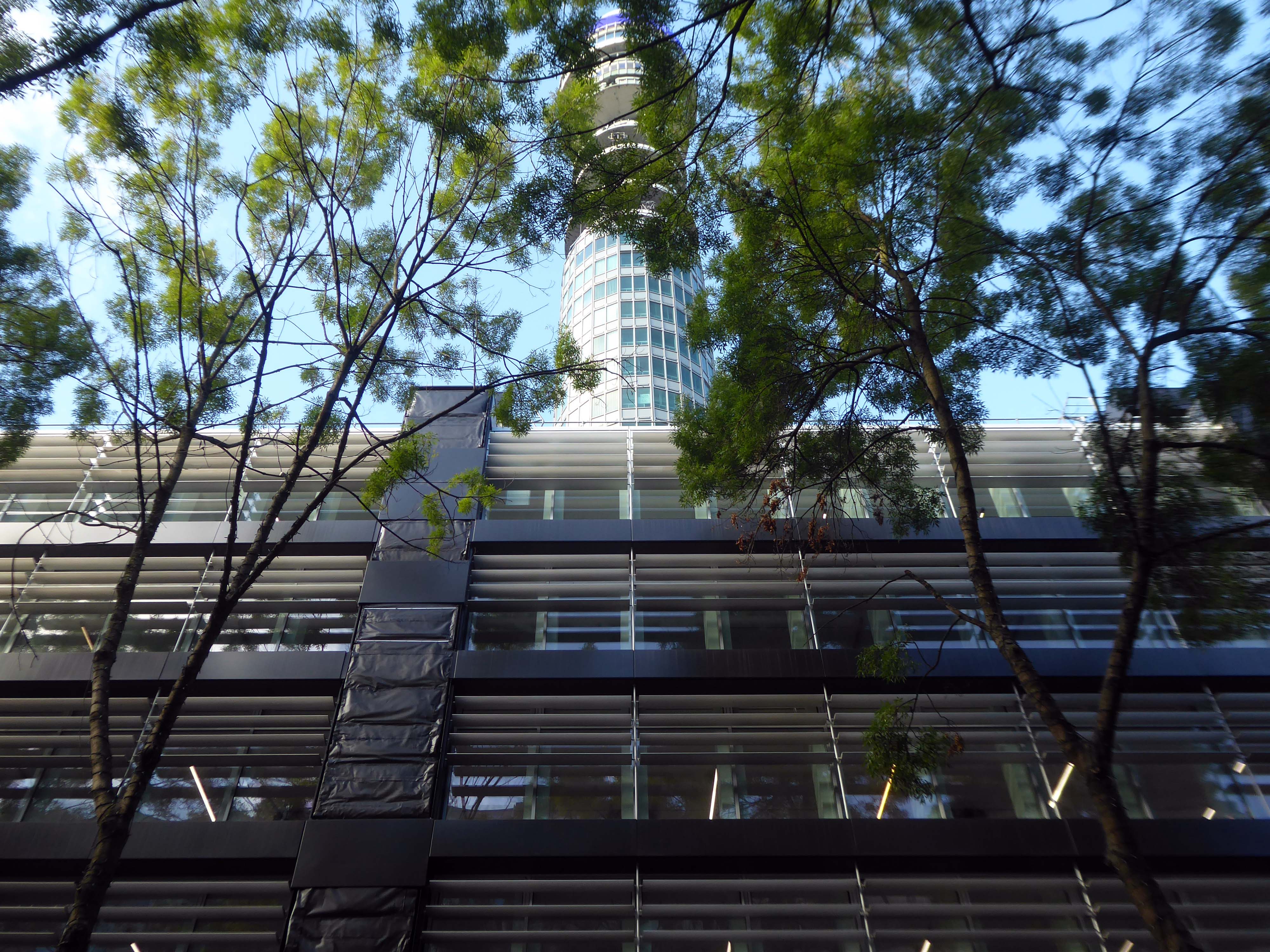
Sadly I have never had a view form the top.
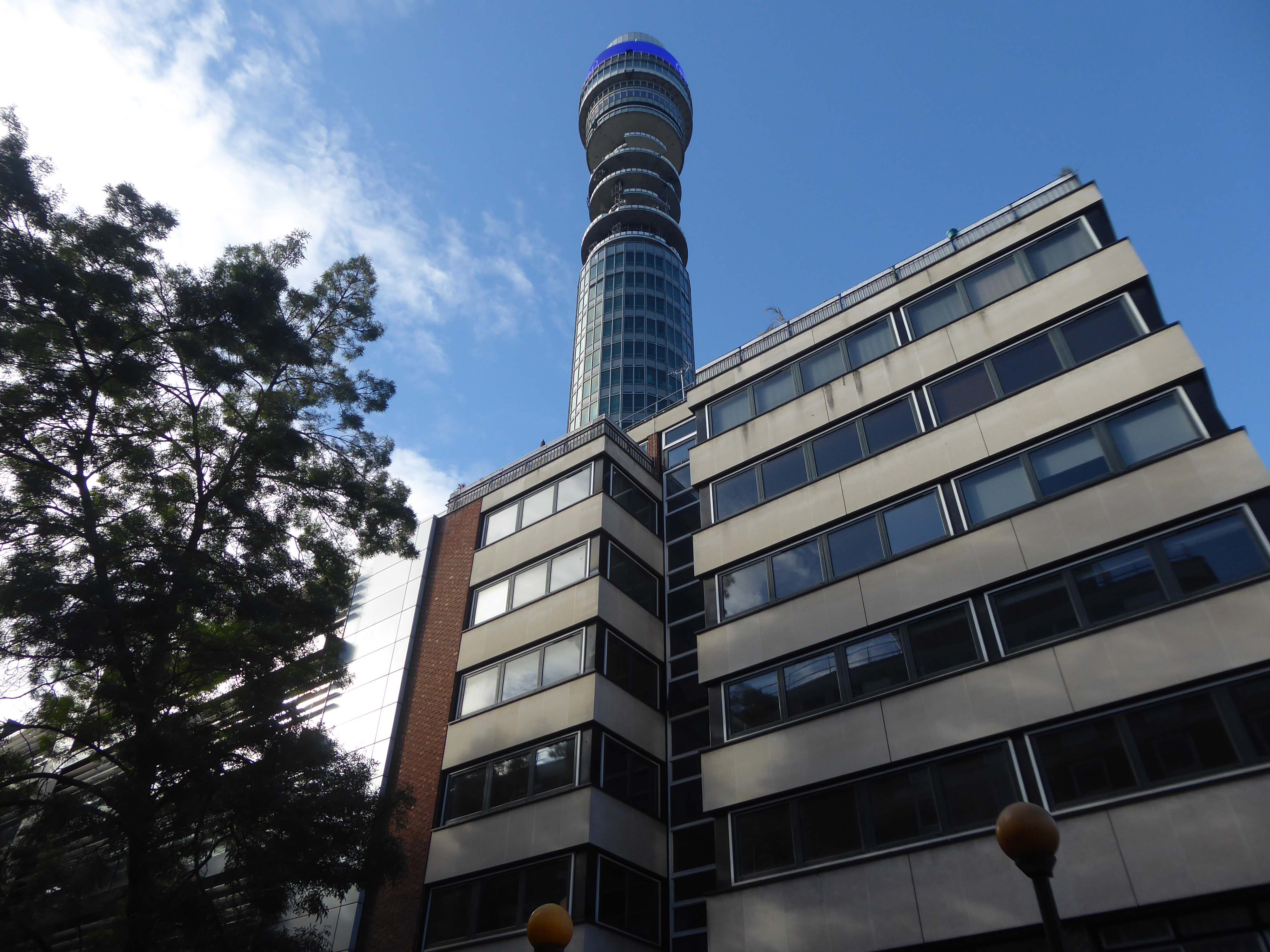
Having an hour or two before the train back to Manchester, I went on a wander.

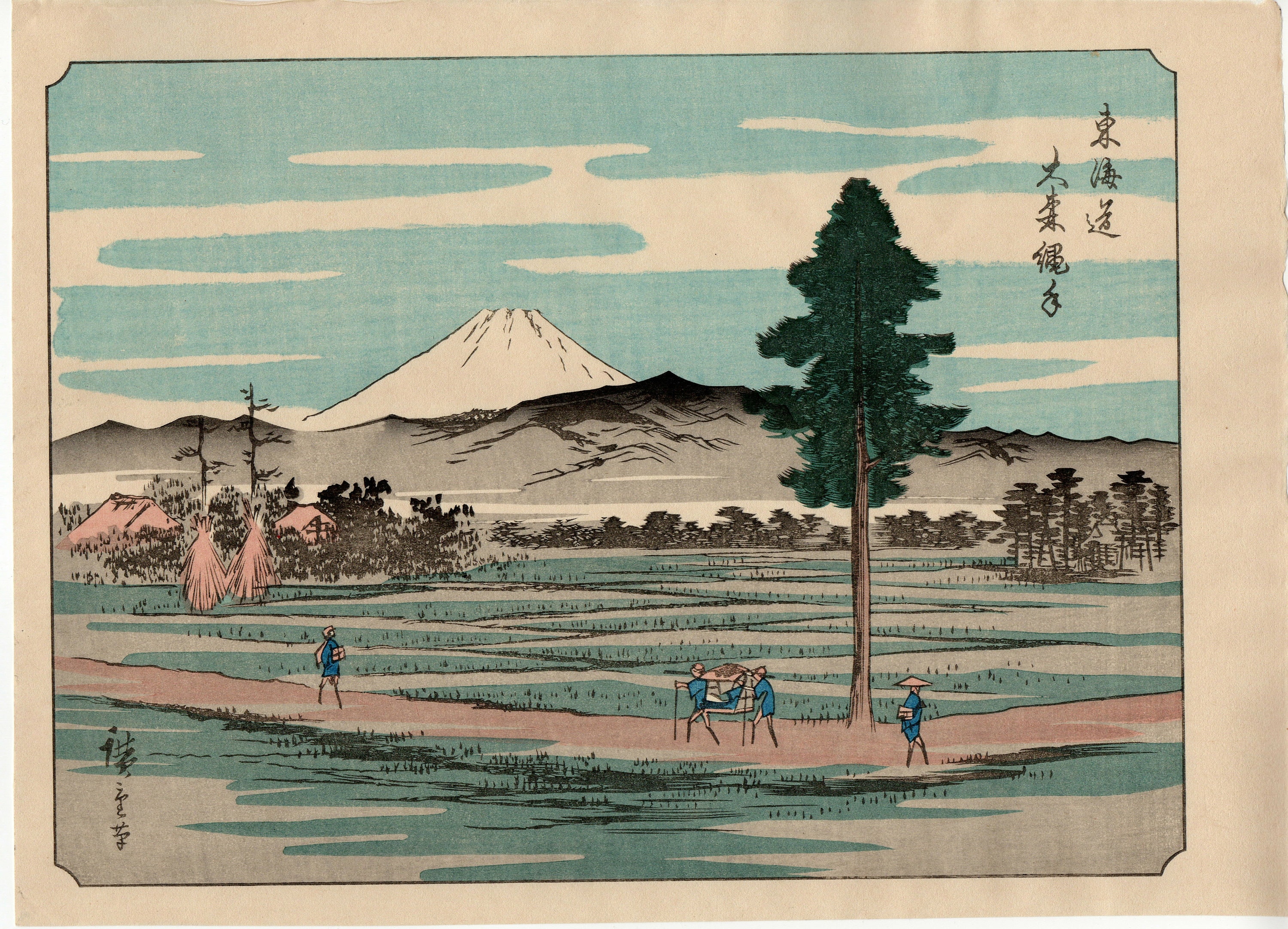
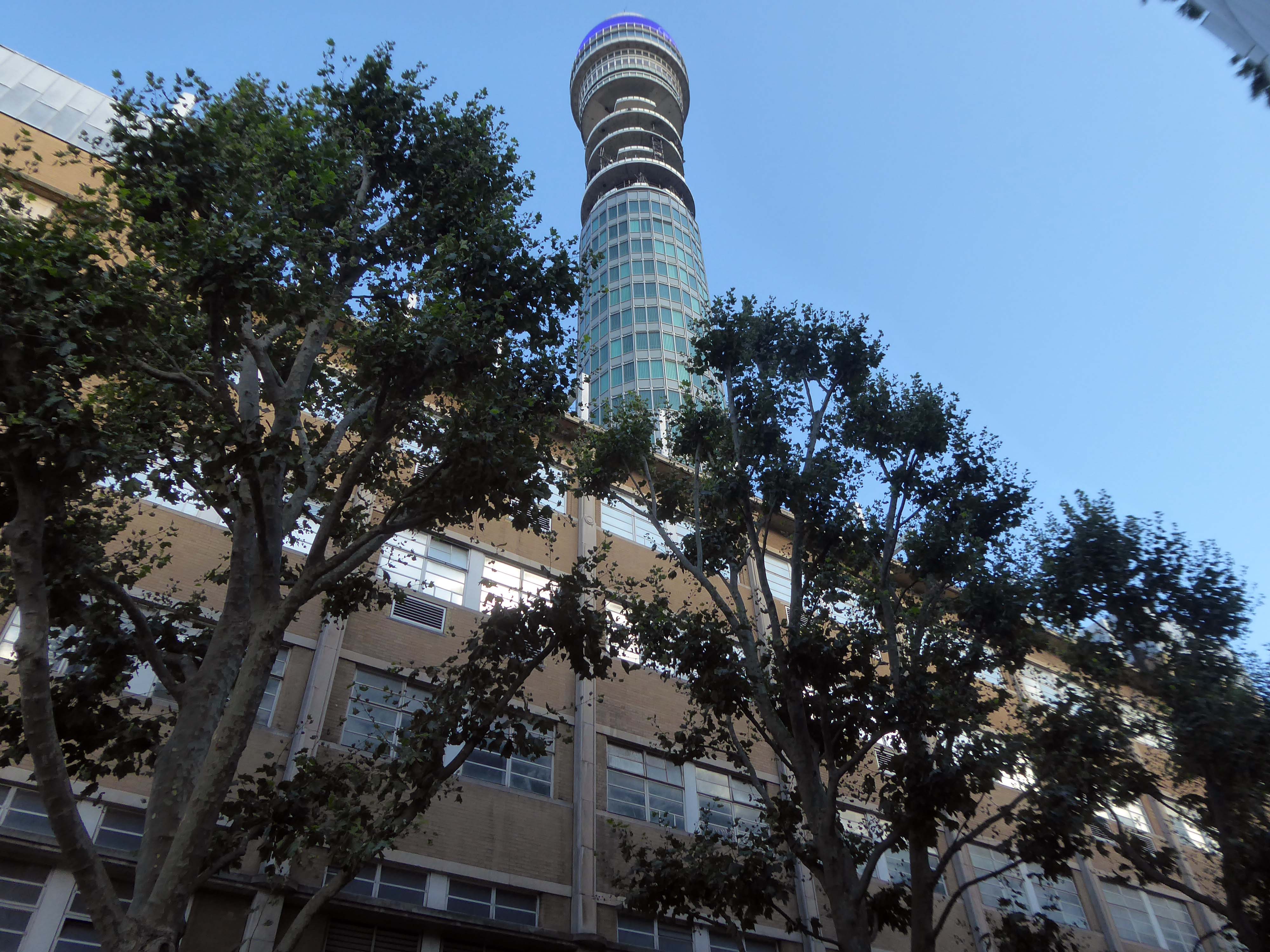
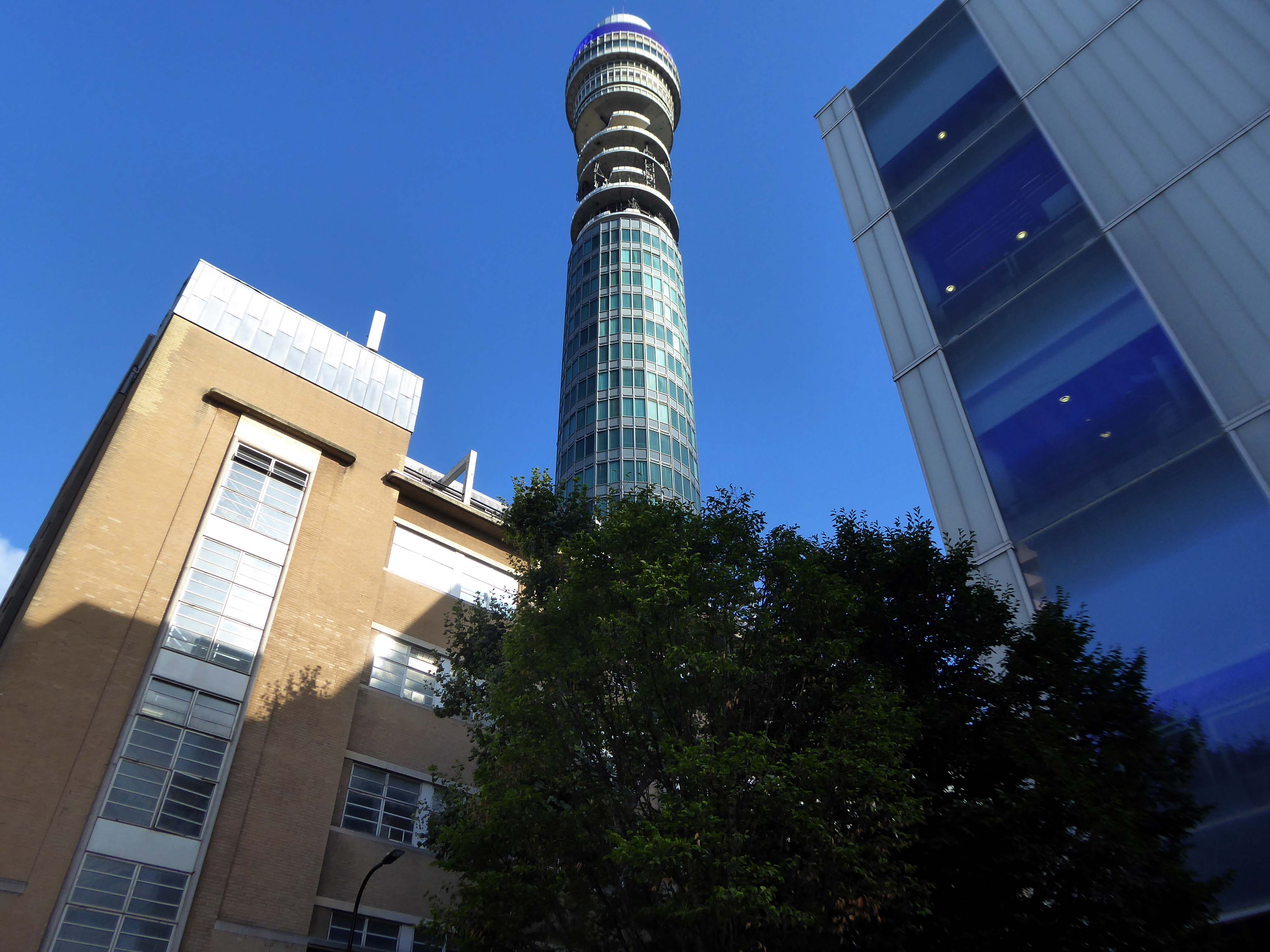
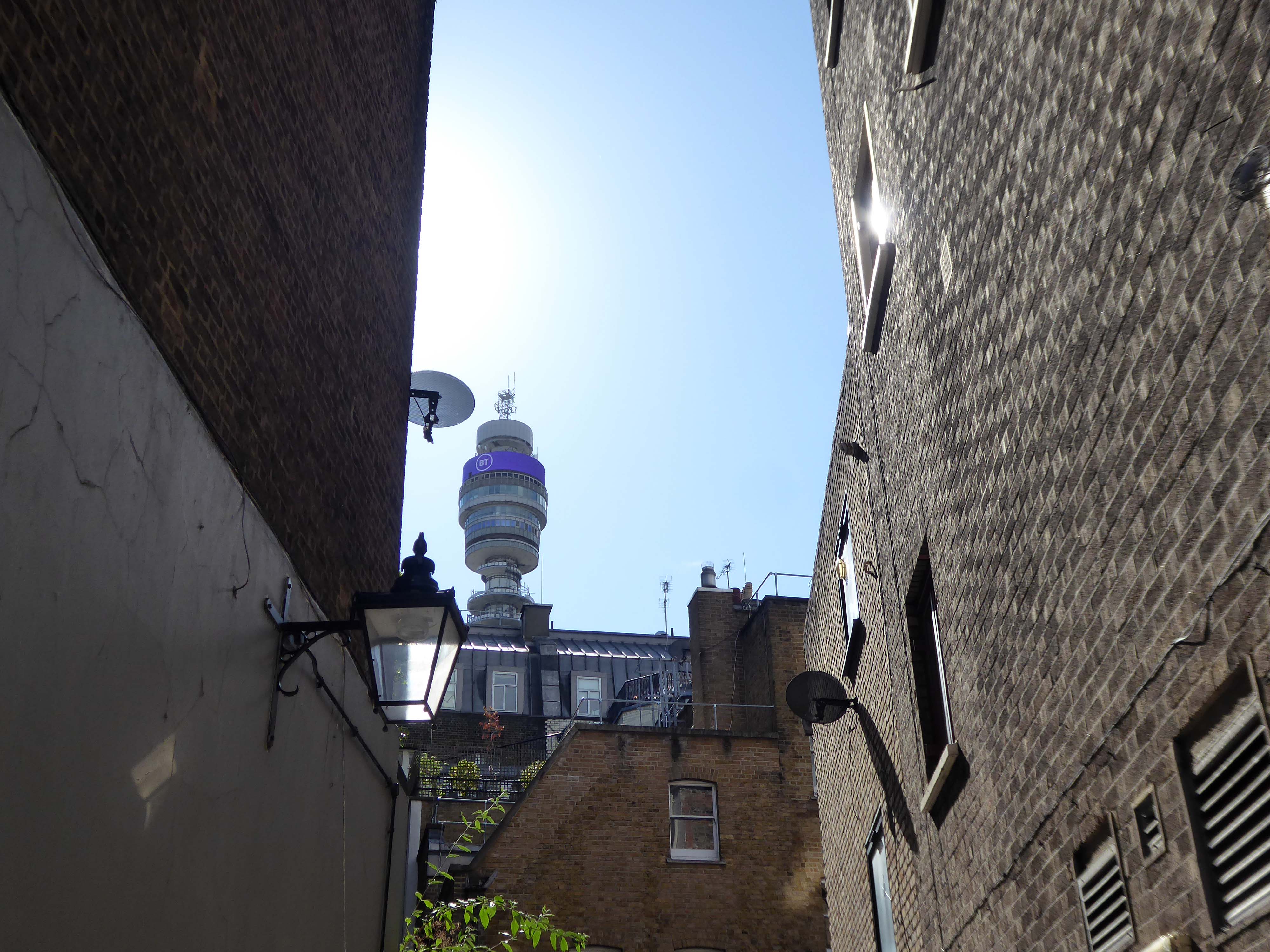
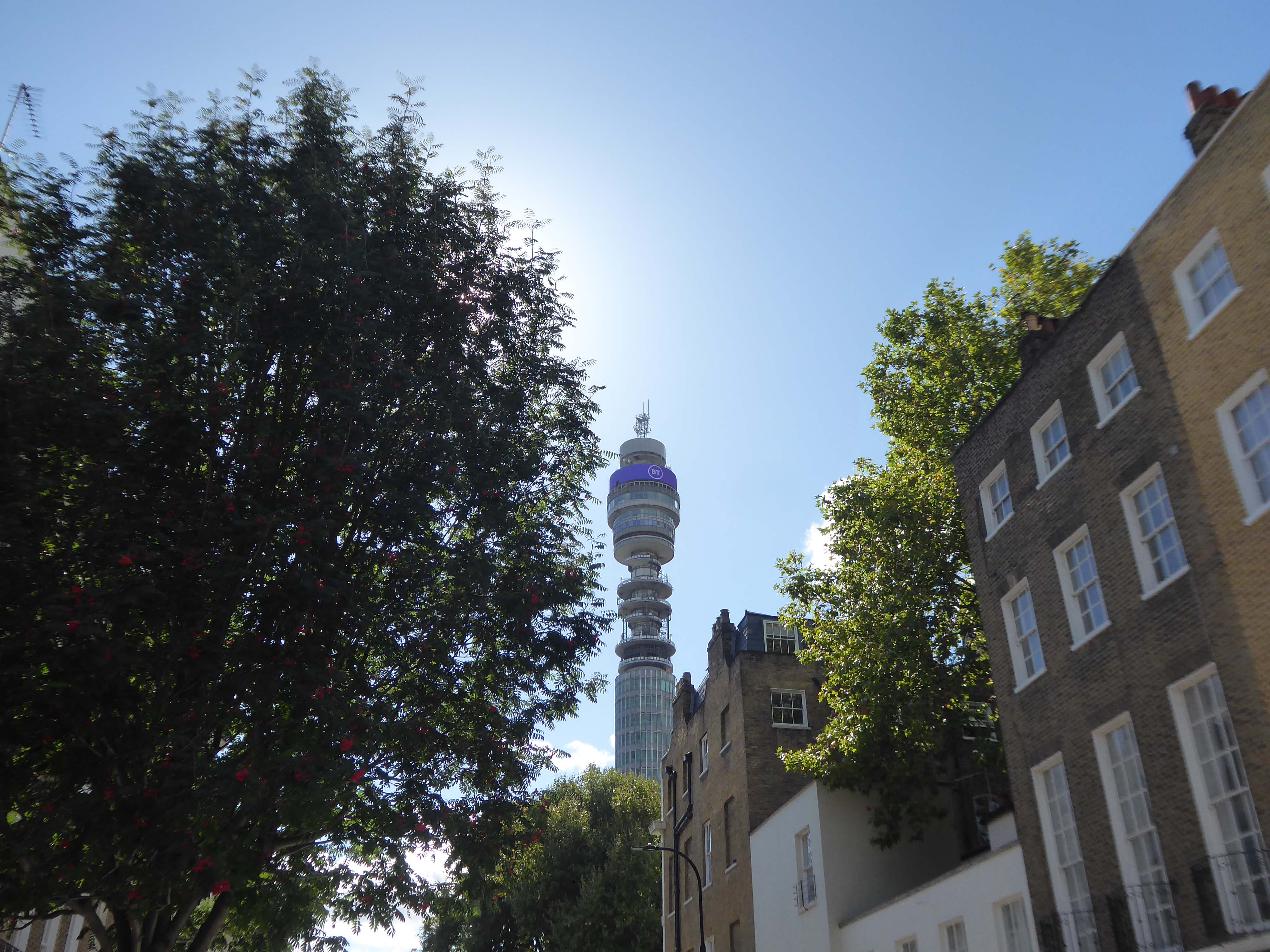
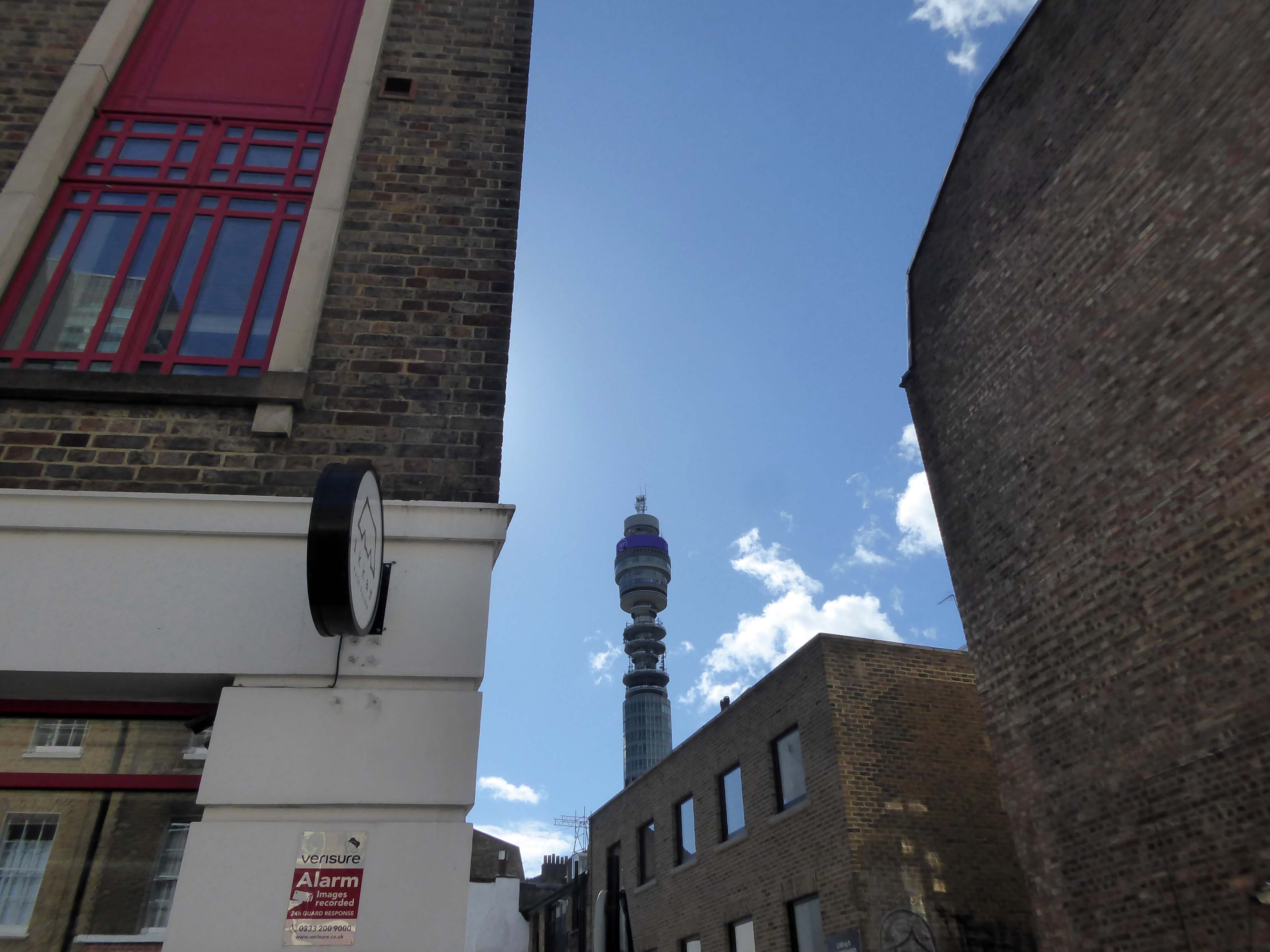
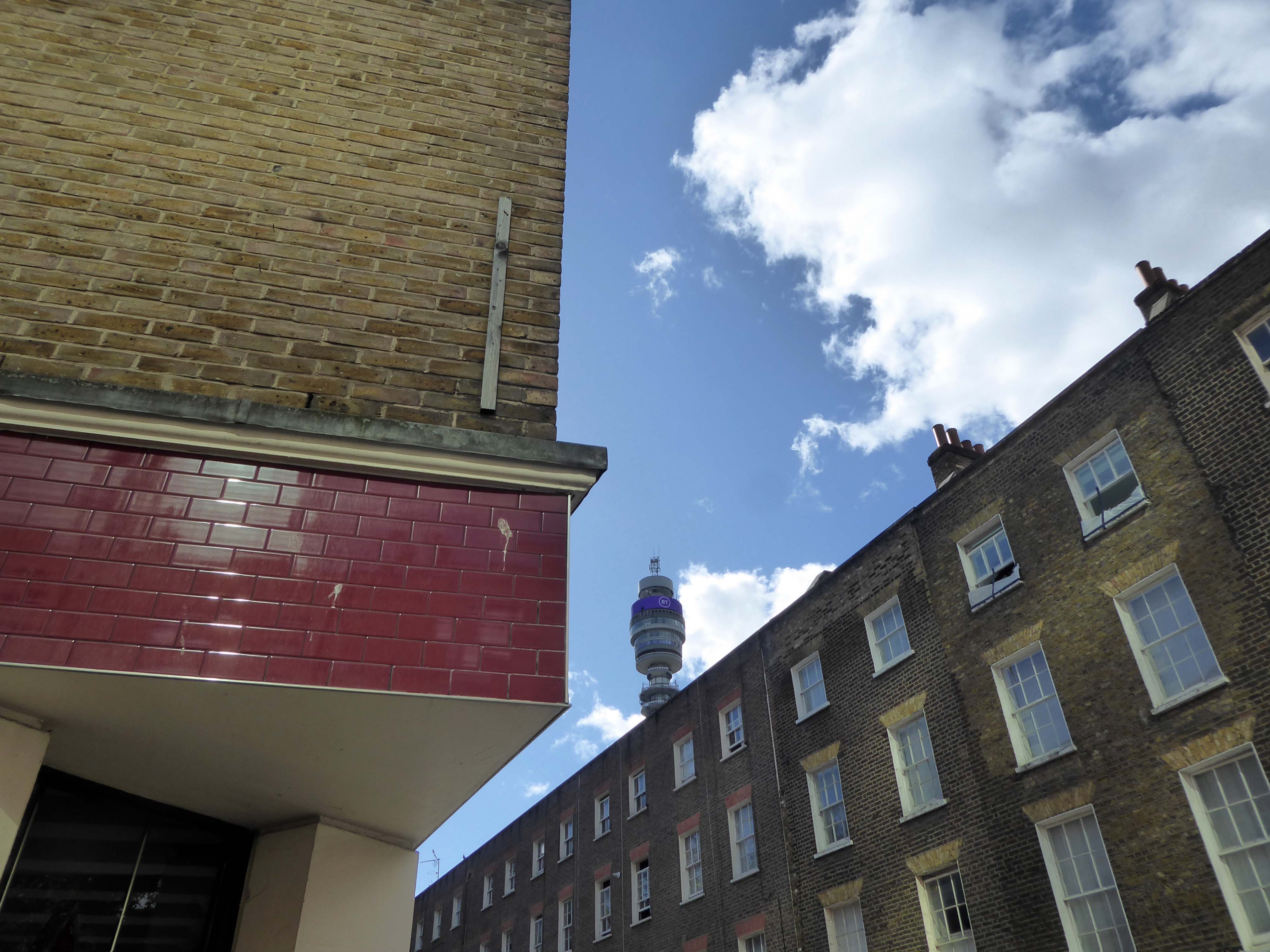
Inspired by Katsushika Hokusai’s One Hundred Views of Mount Fuji.

I encircled the Tower in a more than somewhat wayward spiral.

Looking every which way, but mostly up, for the towering and totemic lofty landmark.