Scarborough Coastal Stroll

This is one of many walks from South Bay Bathing Pool to South Bay Beach.

Today we begin at the Scarborough Library.
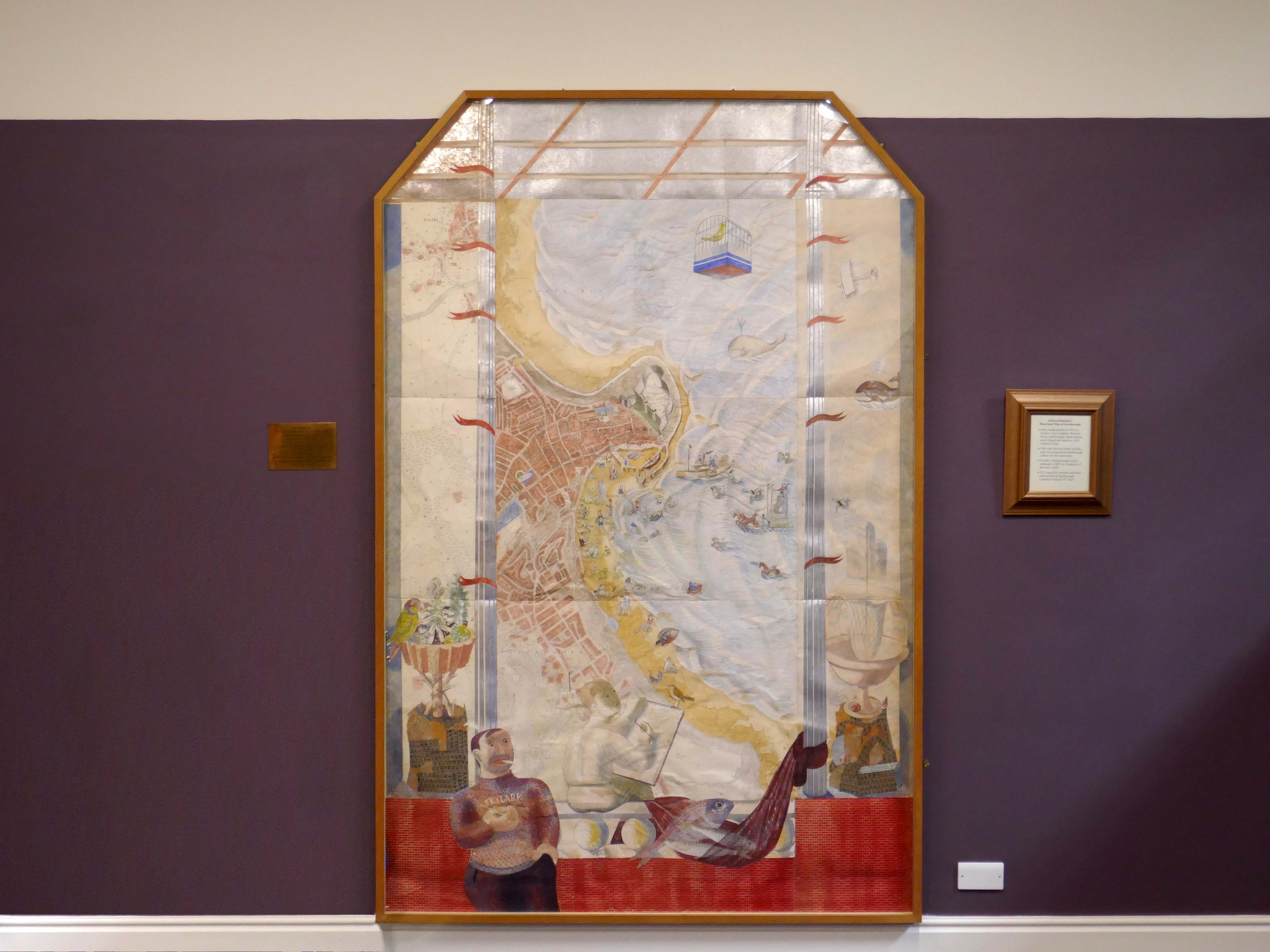
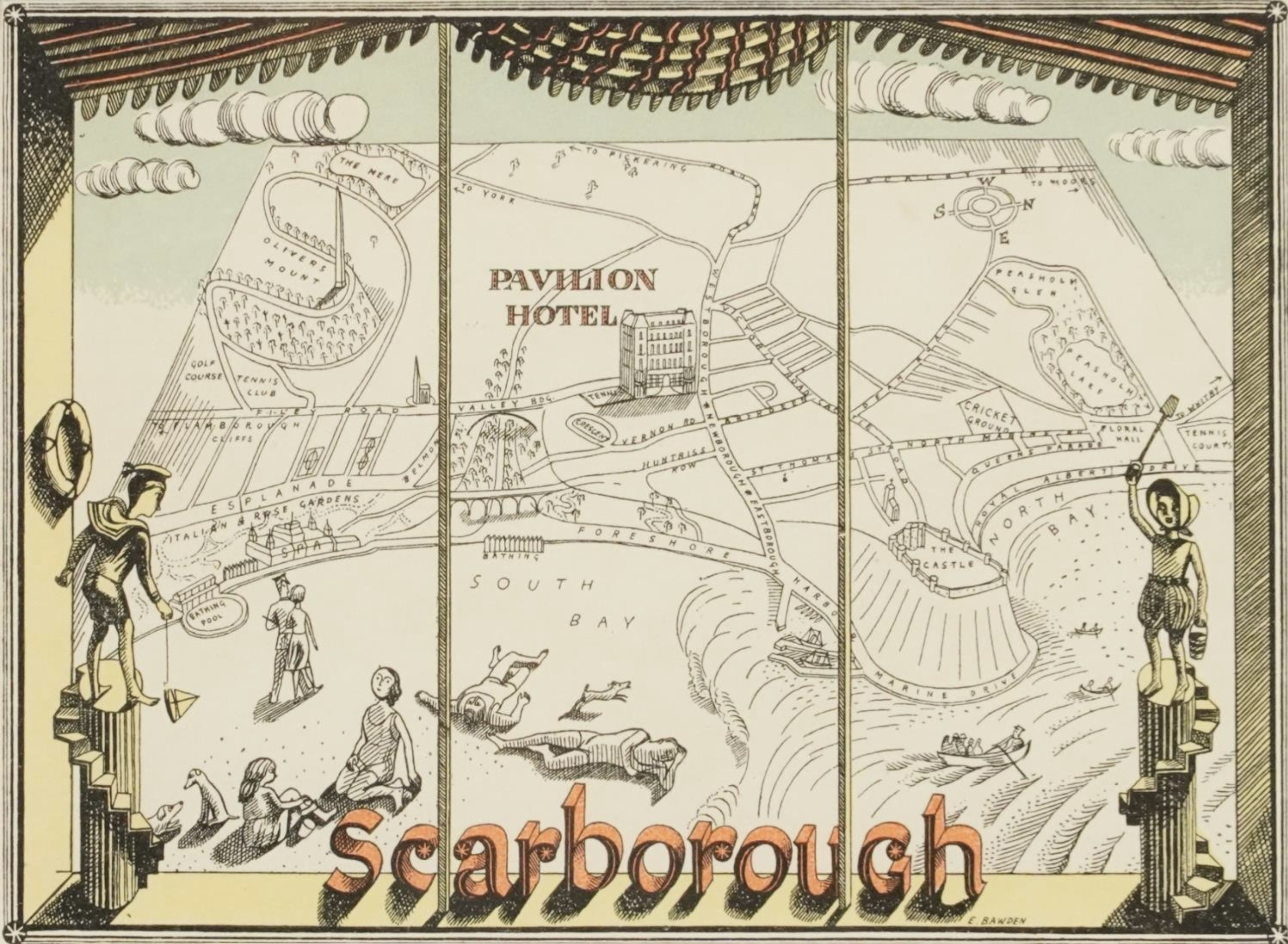
The Edward Bawden map was commissioned in 1931 by Tom Laughton, the hotelier of Pavilion Hotel in Scarborough.

I discovered Edward Bawden myself. I saw some illustrations of murals in the Illustrated London Newswhich had been carried out by Bawden at Morley College. The principal subject was a lodging house with a classical pediment and with the front walls taken out, so that the life in the house was shown from the basement to the attic. I found it delightful. I managed to find out where he lived, and I went to see him. I rang his bell; waiting on the steps I looked across the road and recognised the building that was the subject of the mural. At length a young and seemingly timid man came to the door; “There is your mural”, I said. He told me that I was the first person to spot his subject. He took me on a bus to see the paintings on the walls of Morley College.

The outcome was that he designed a wine list for the Pavilion Hotel, decorated a large ordnance map of Scarborough – (which when I left the hotel I gave to the children’s public library and also made an amusing perspective peepshow, which is still in my possession – Pavilions by the Sea was published in 1977.
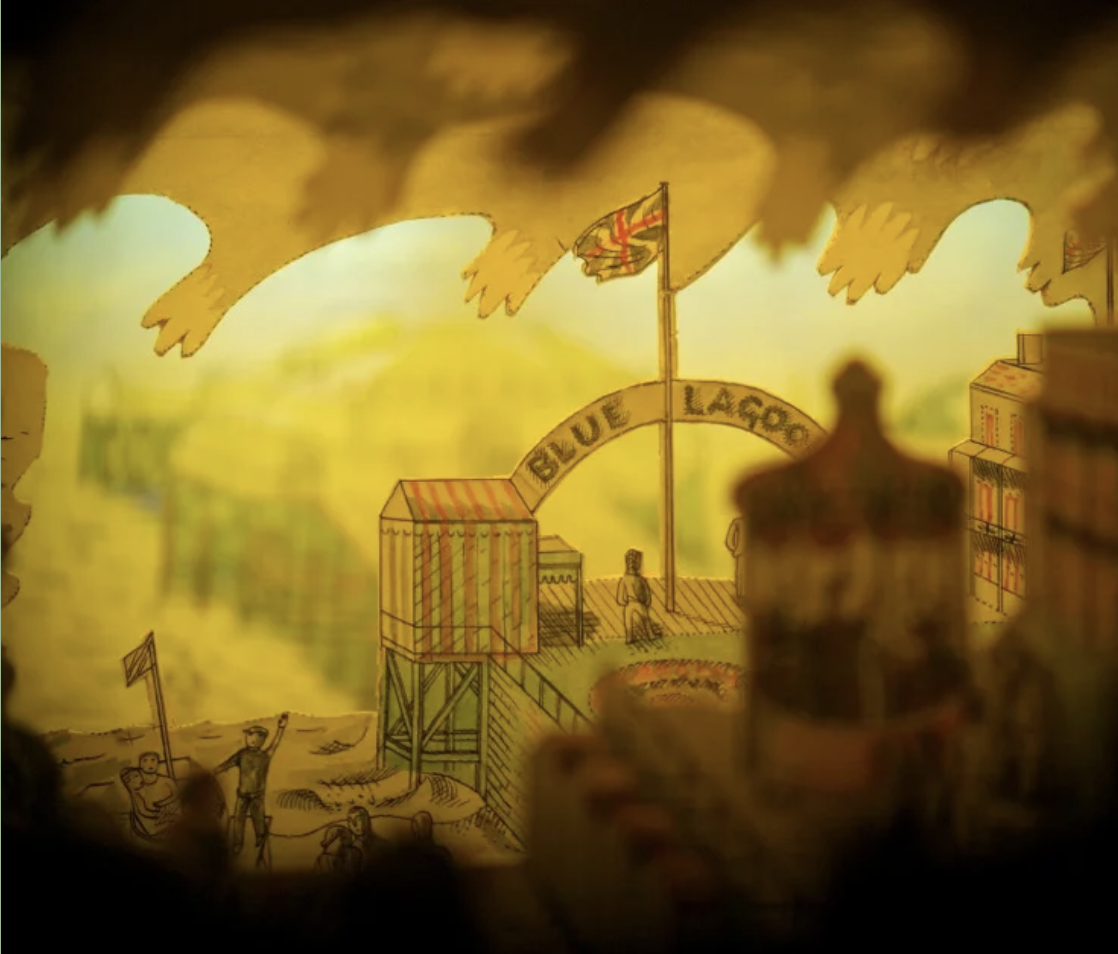
The peepshow is on display on the first floor of Scarborough Art Gallery, where it still enchants children and adults alike.

Scarborough Museum and Galleries
The map is hand painted and based on the OS Map of 1926.

The map was fully restored and reframed in 2012 and now lives in Scarborough Library.

Bawden’s postcard for the Pavilion Hotel.
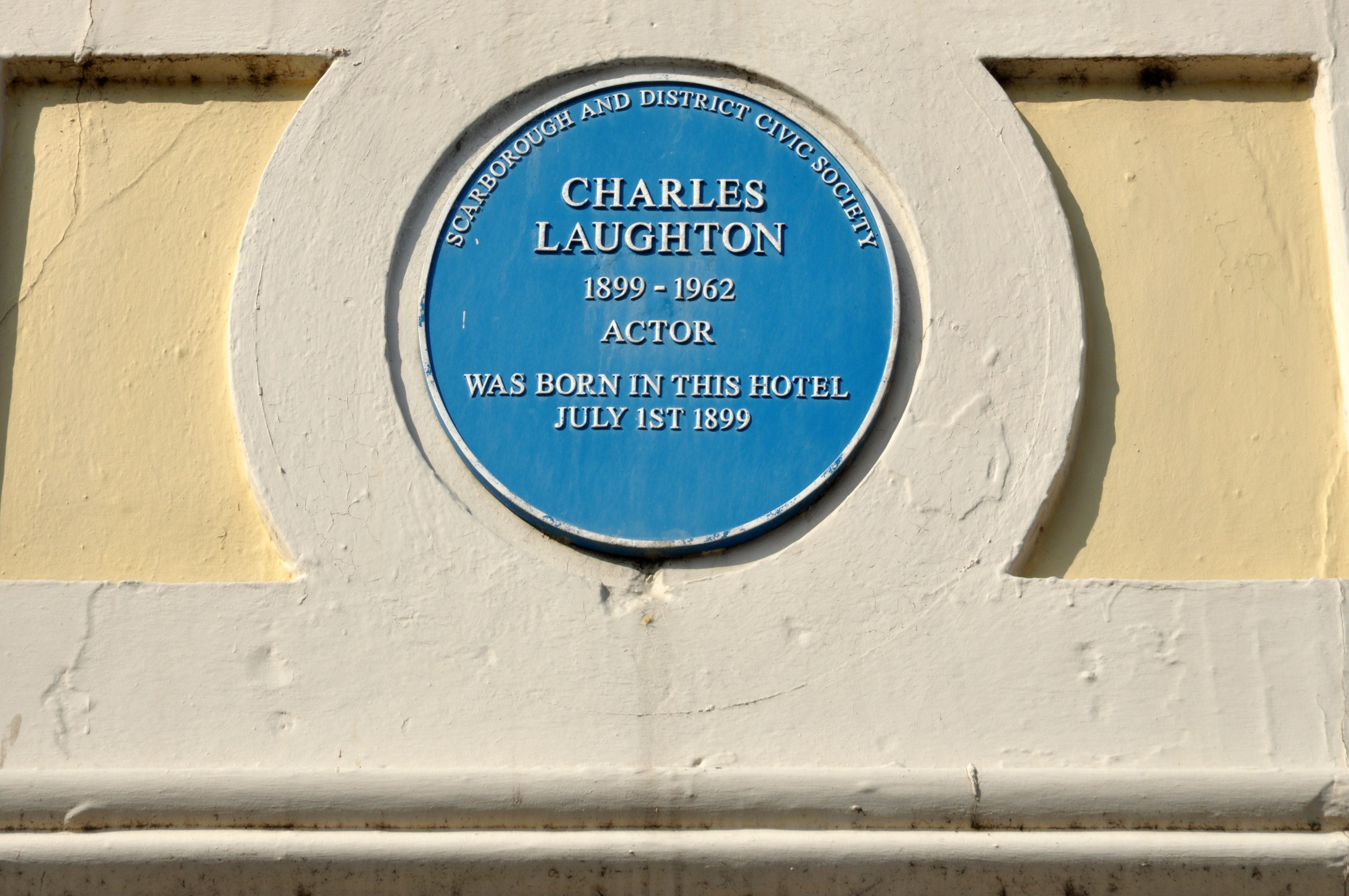
Tom Laughton was brother to Charles Laughton – the plaque is attached to their home the Victoria Hotel.
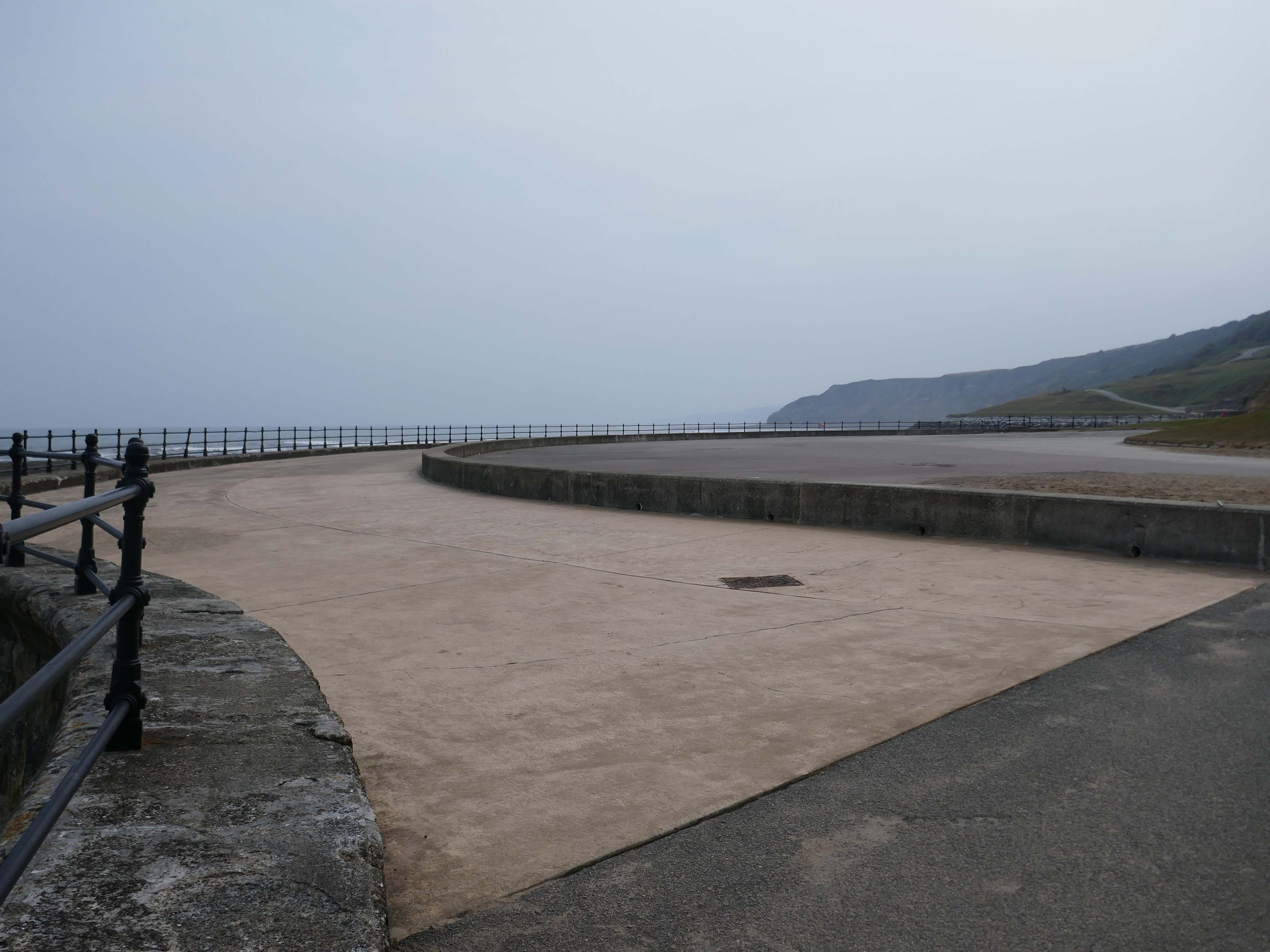
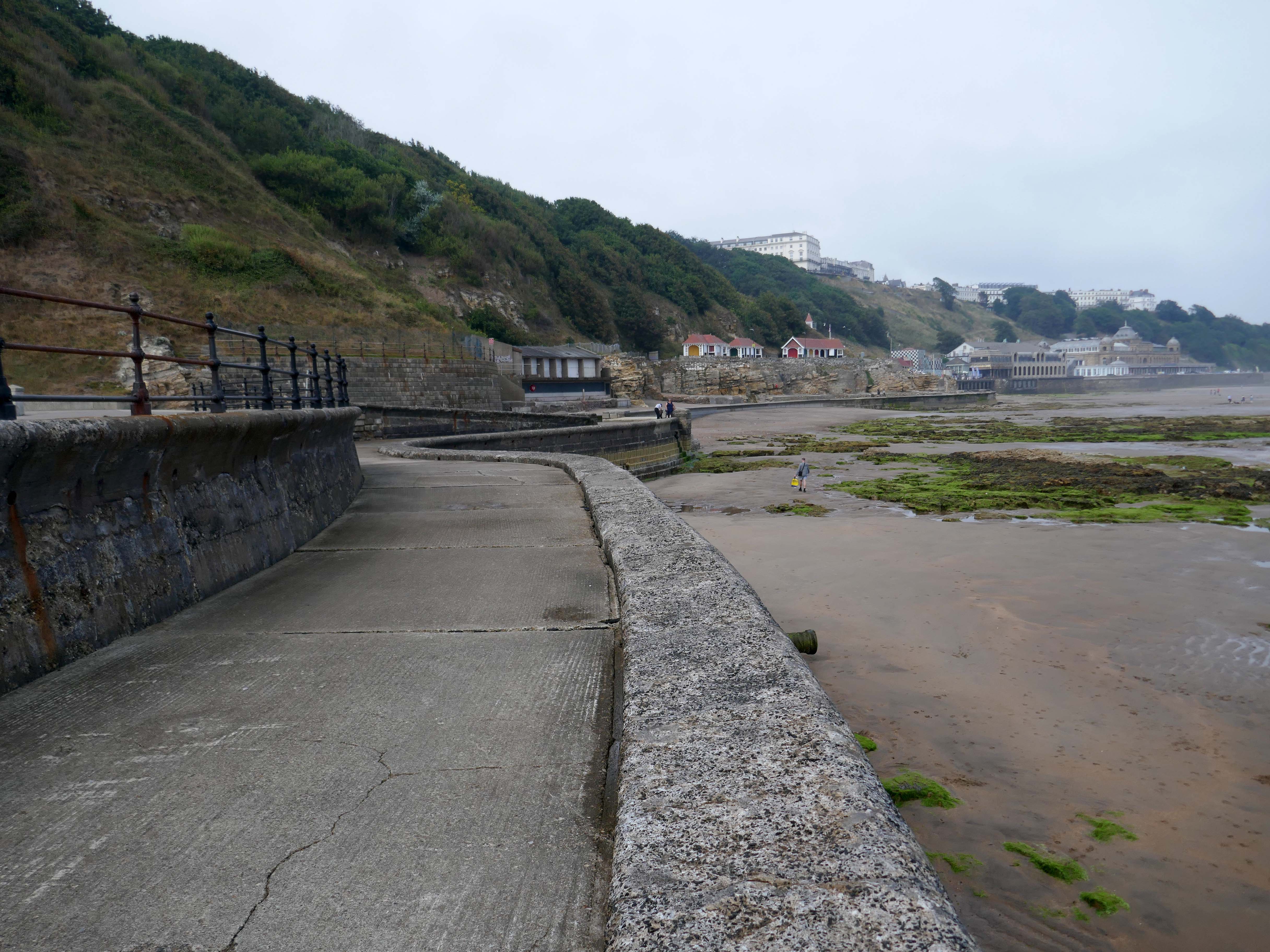
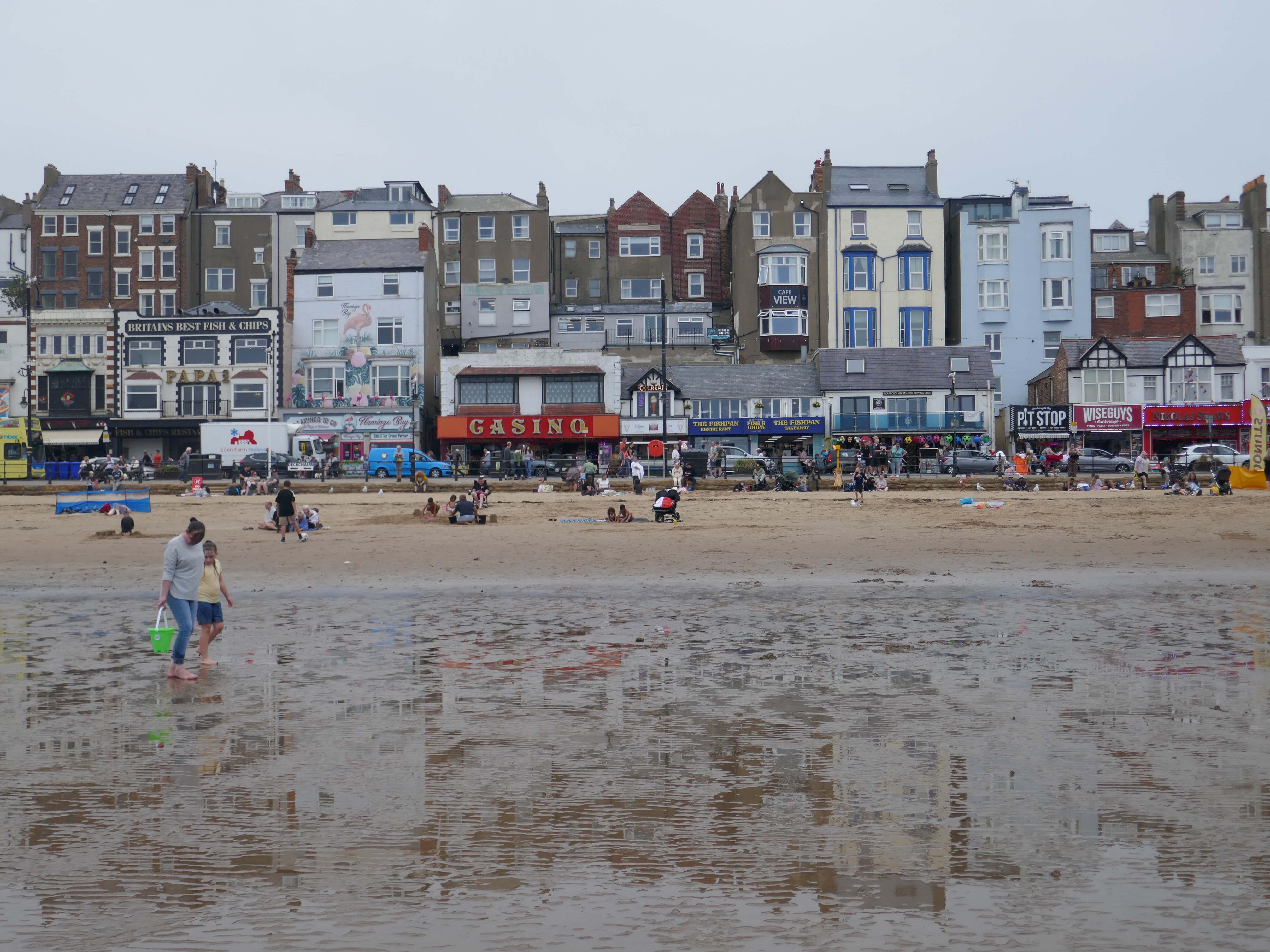
Enthused by Edward’s exquisite map I set off strolling along the seafront.

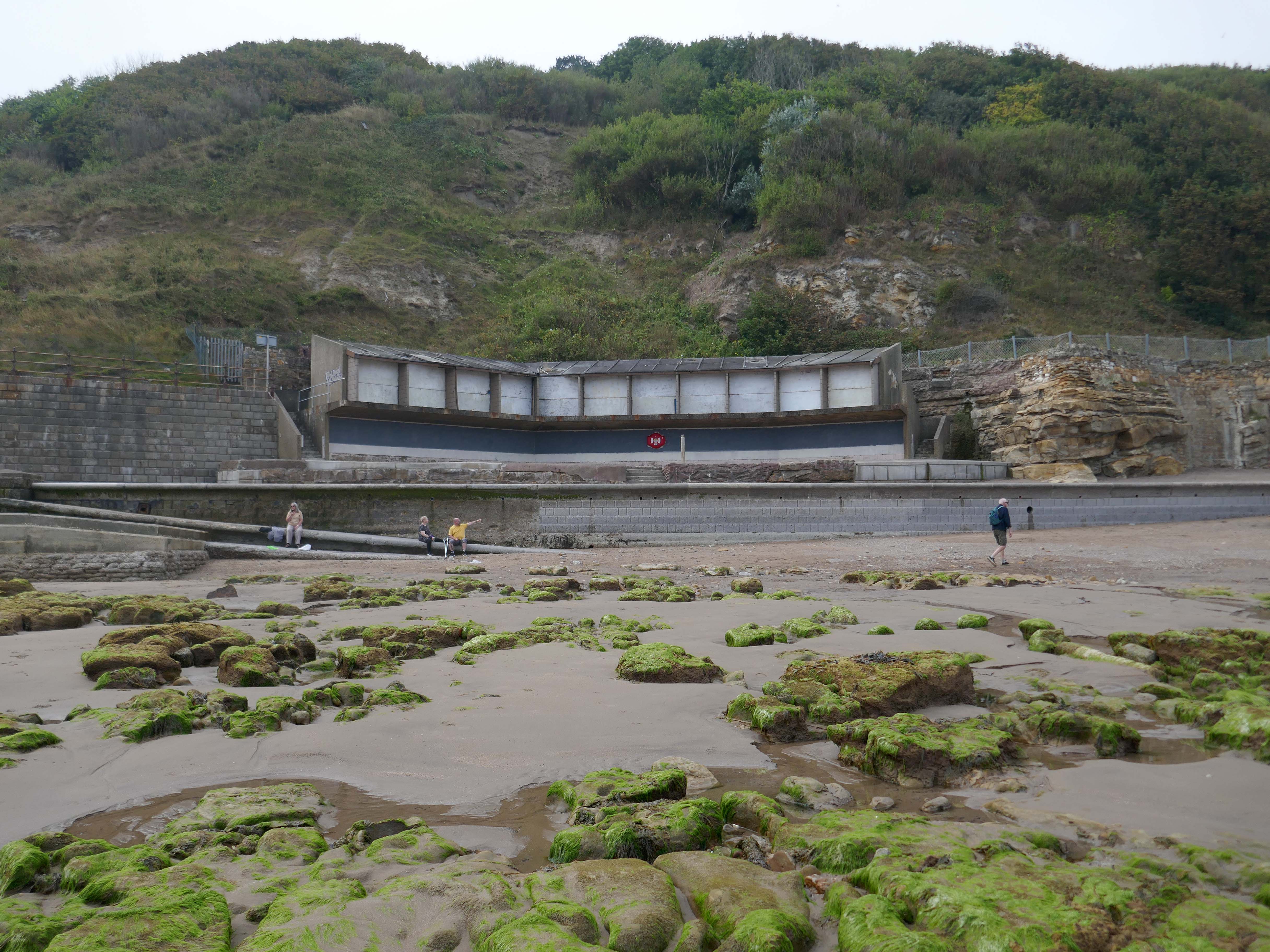
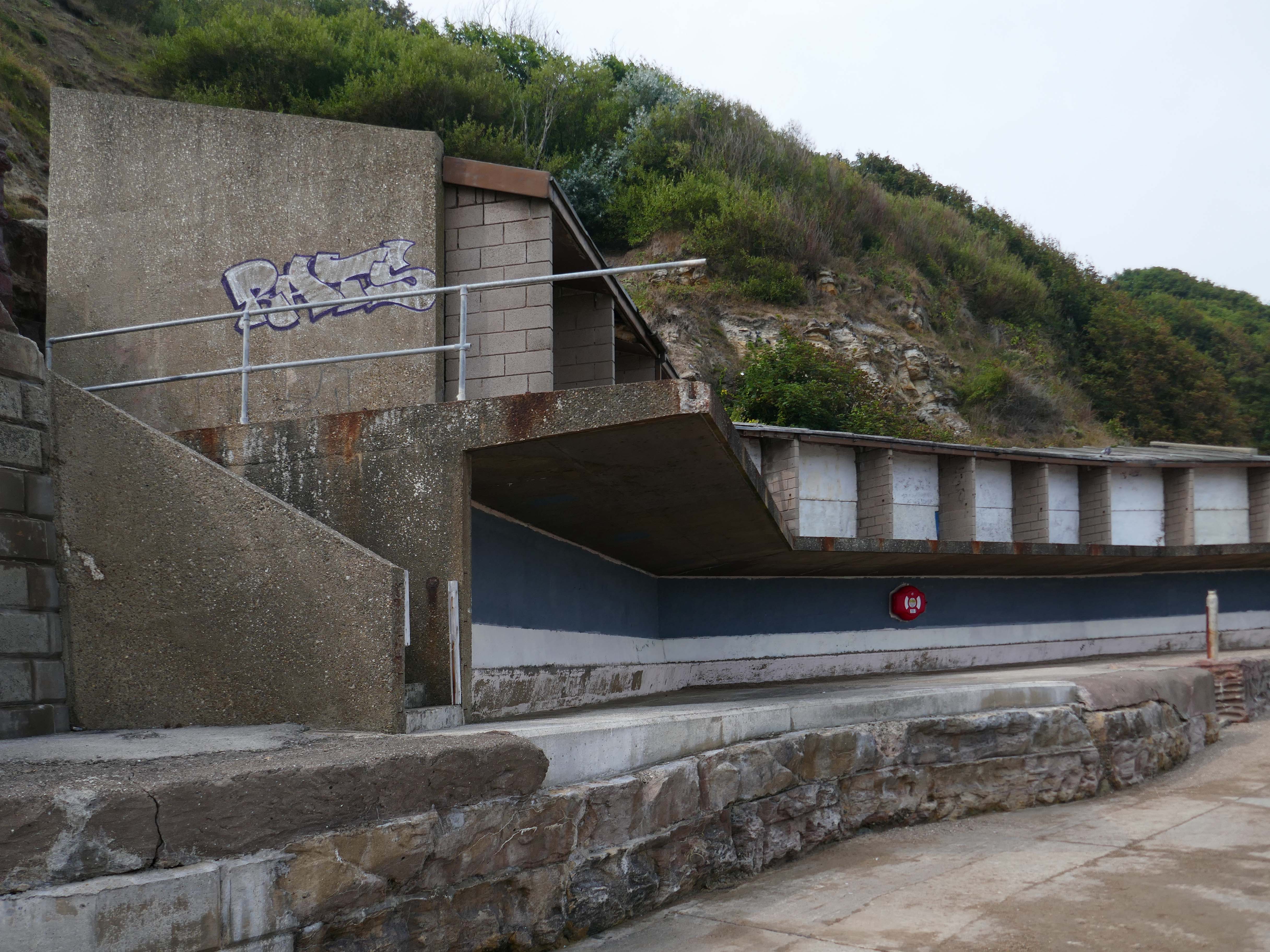
I always stop to pay my respects to these seriously neglected concrete beach chalets.
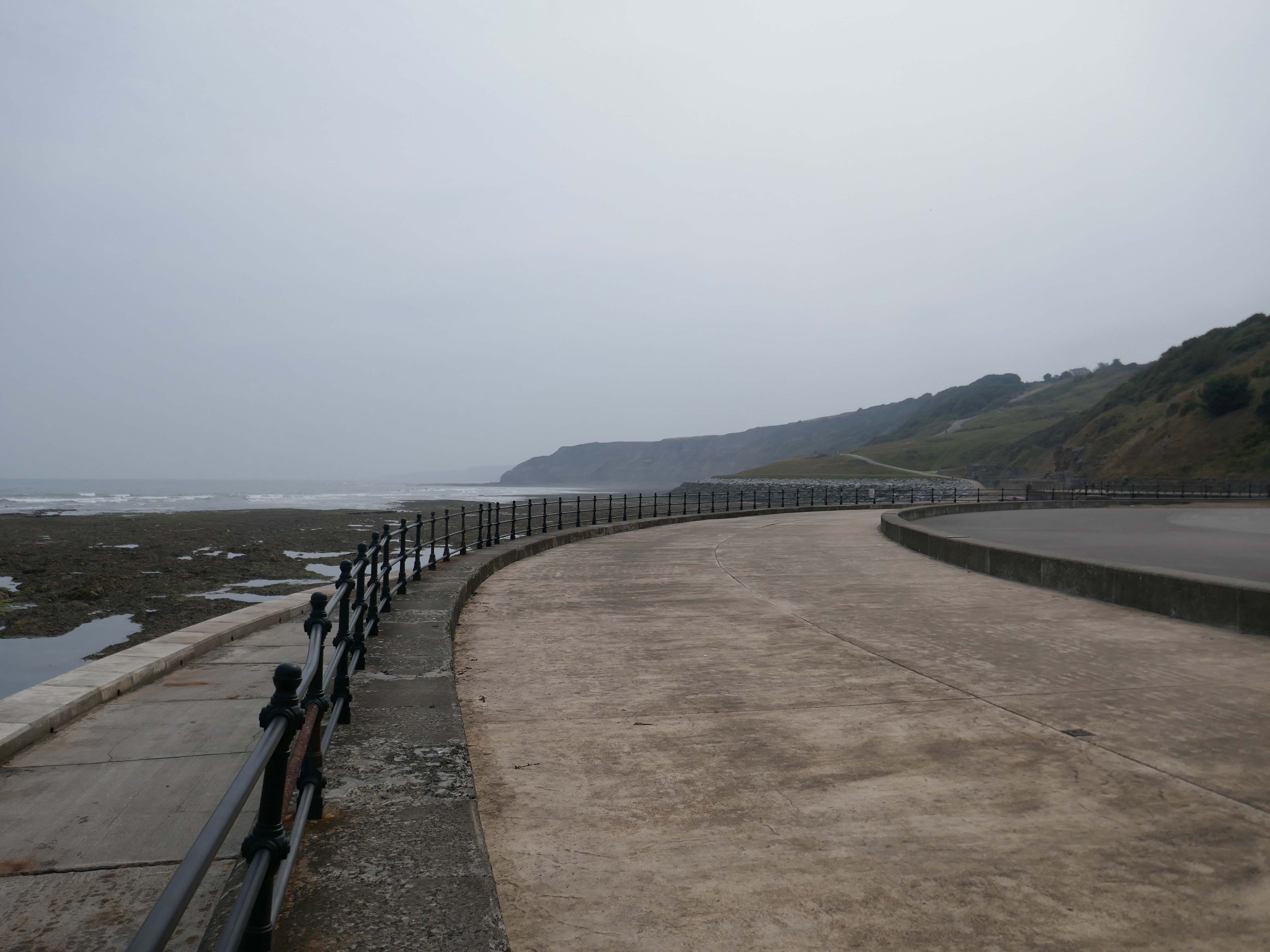
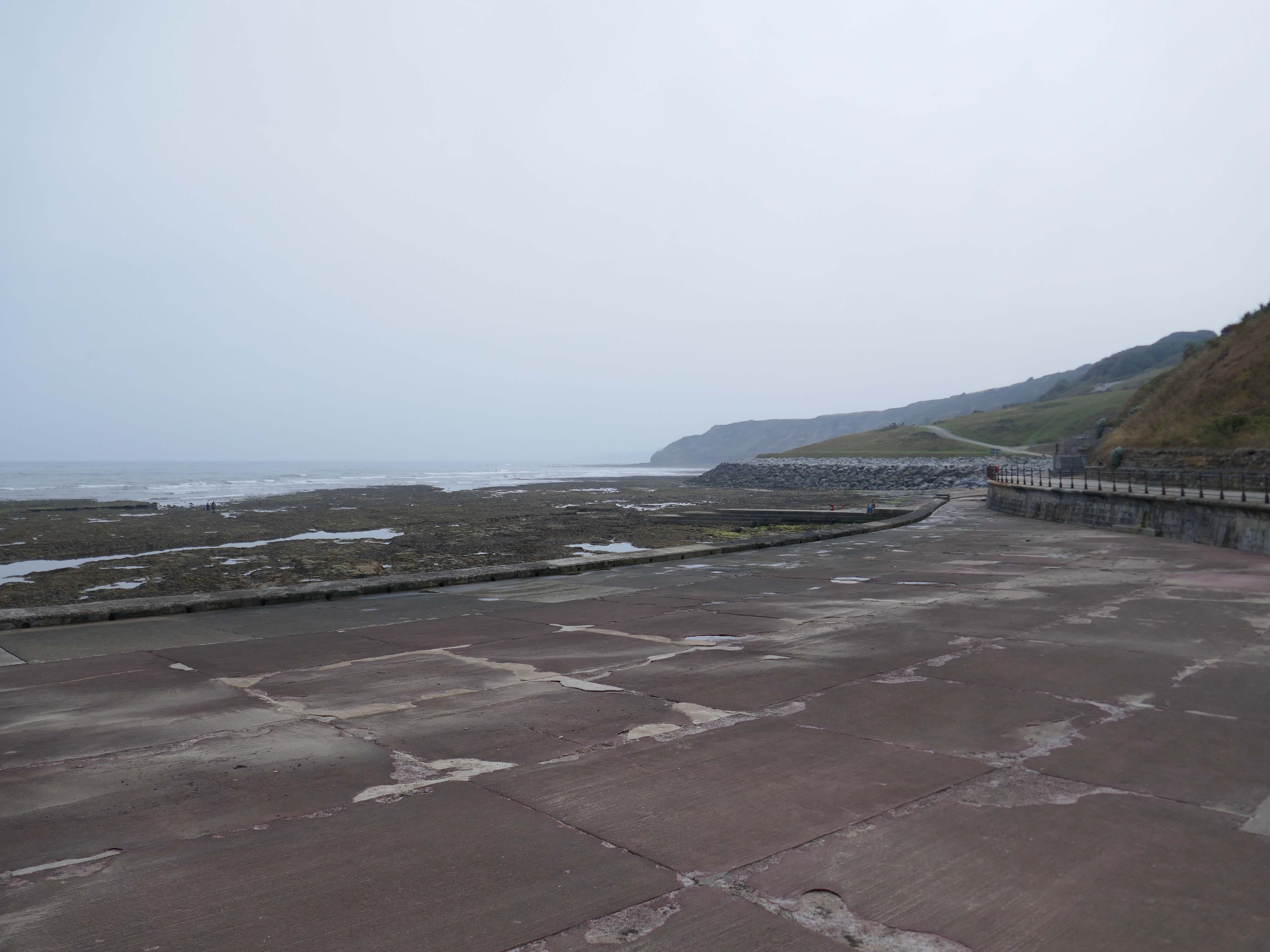
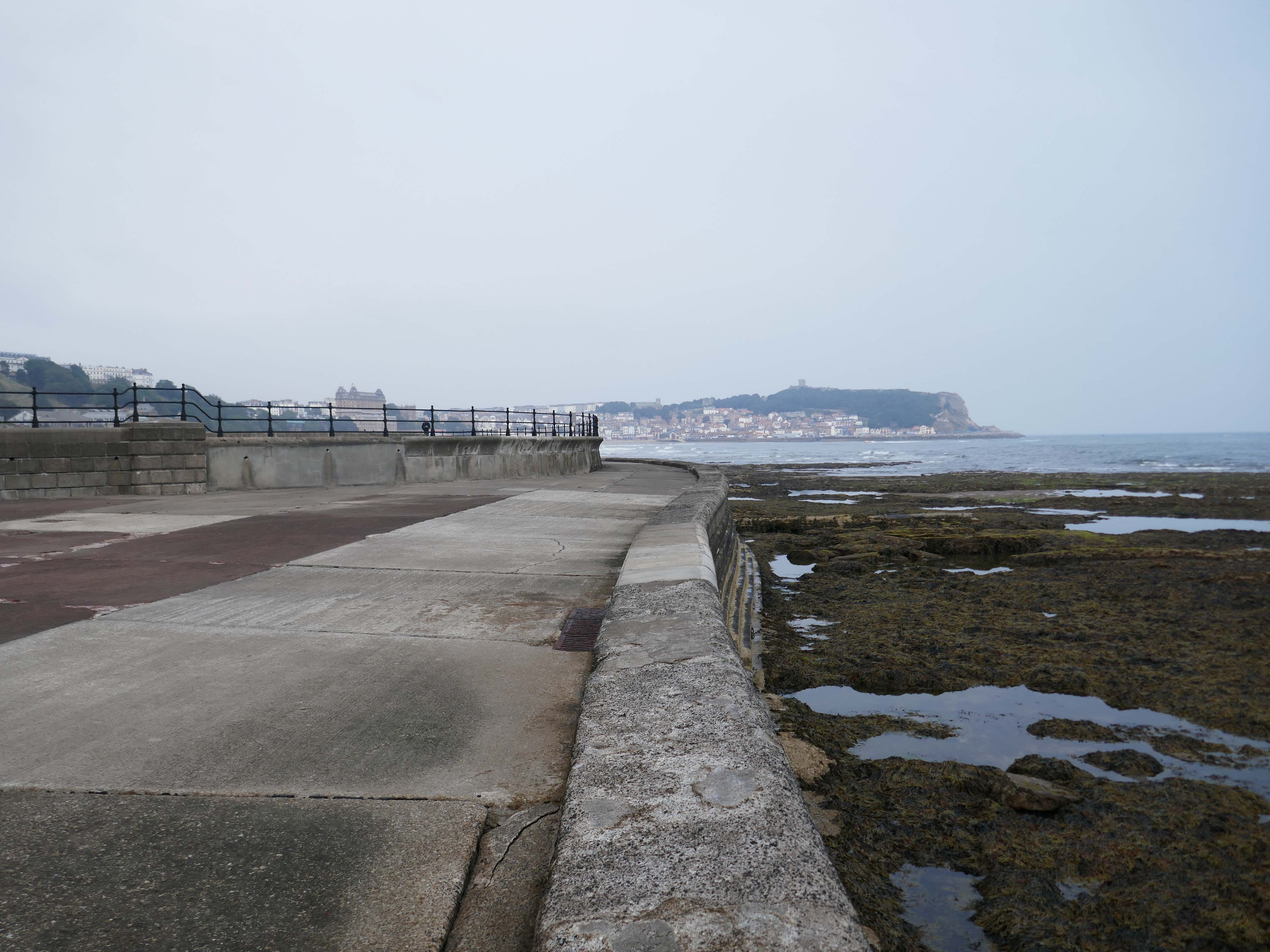
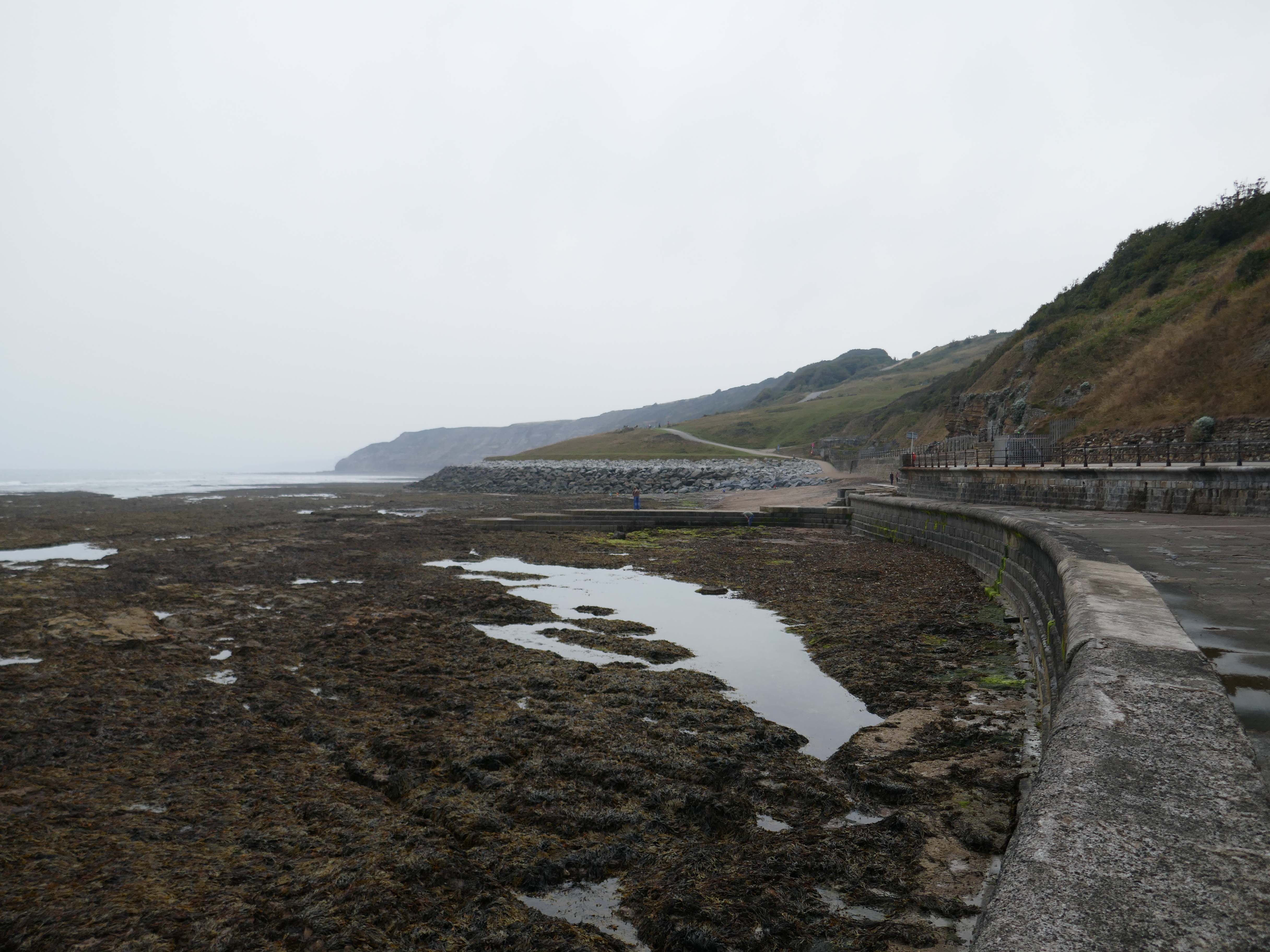
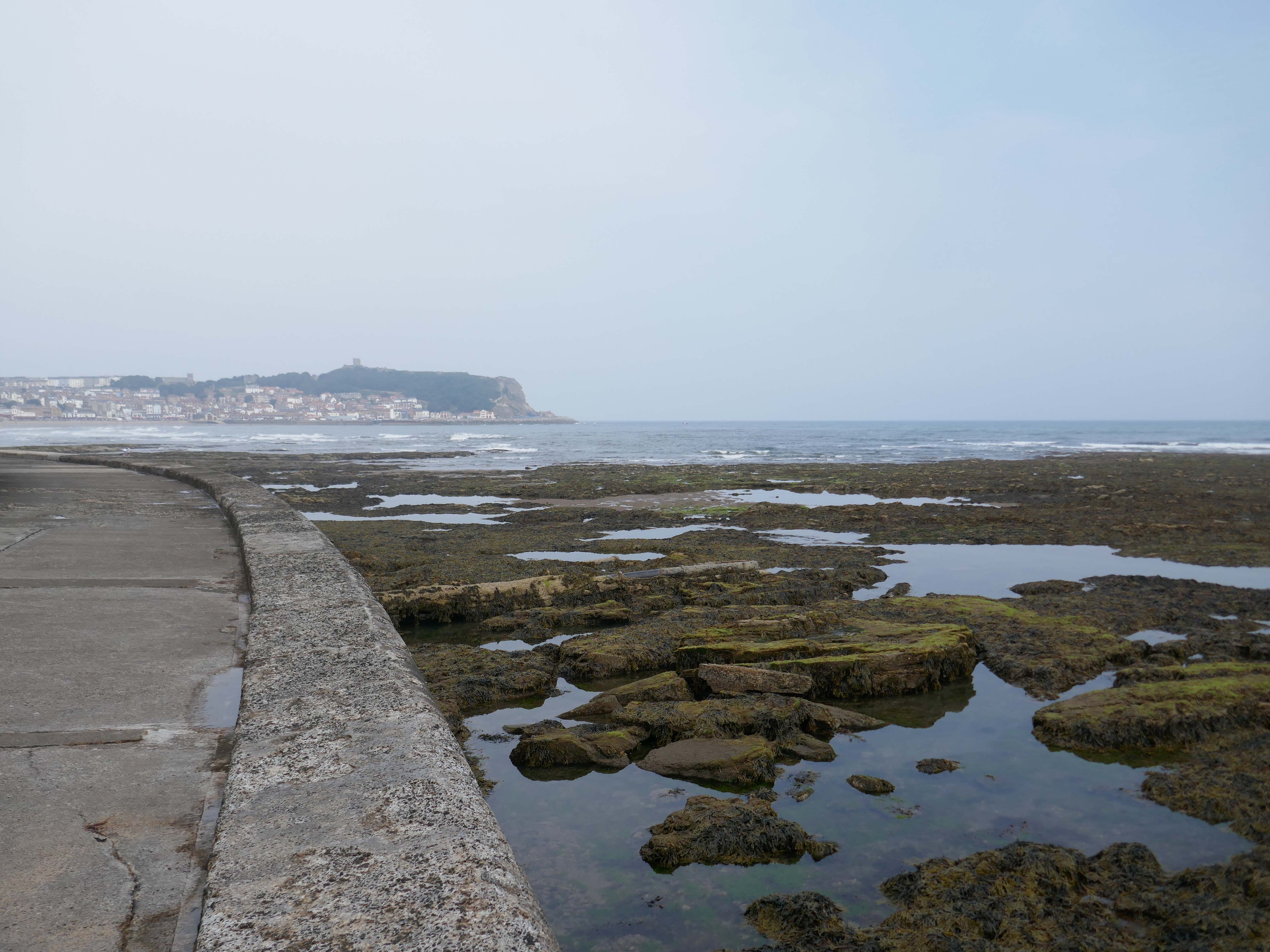
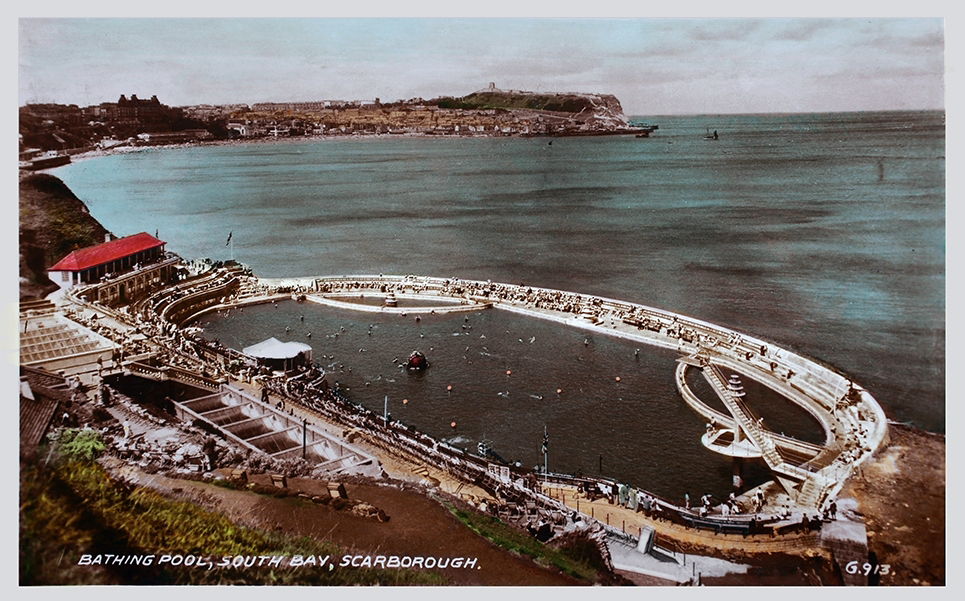
Thence to the former South Beach Bathing Pool designed by Scarborough’s former Borough Engineer, Harry W Smith.

Construction began shortly before the outbreak of WWI, and was taking place in December 1914, when Scarborough was bombarded by German ships. Workers were able to shelter, coincidentally, behind the new wall they had recently constructed for the pool.

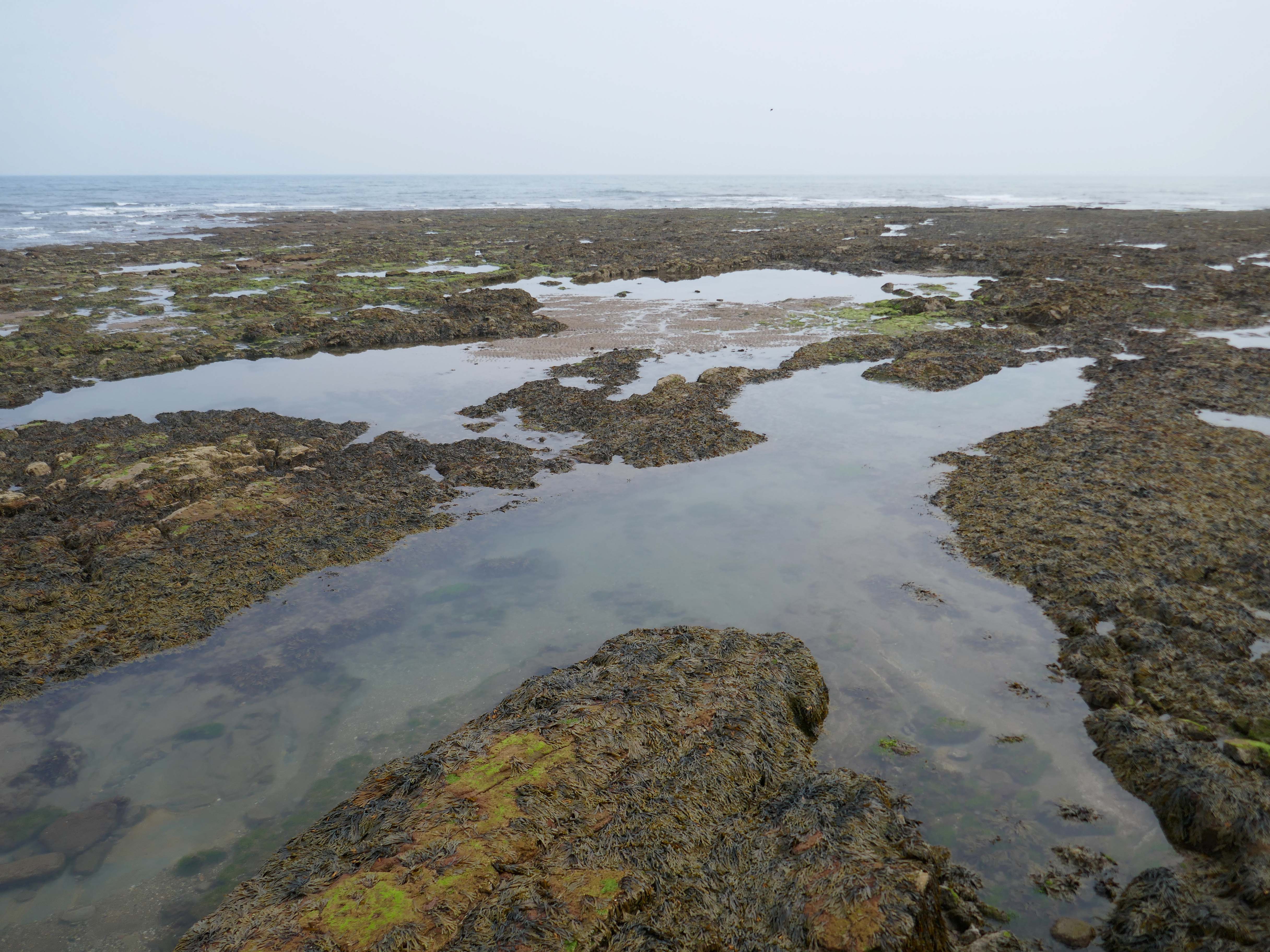
Built in the Art Deco style, it measured 330ft long and 167 ft wide, and was filled naturally by fresh sea water, propelled into the pool by the tide each day – officially opened in 1915.

The pool closed in 1989.

Stories From Scarborough
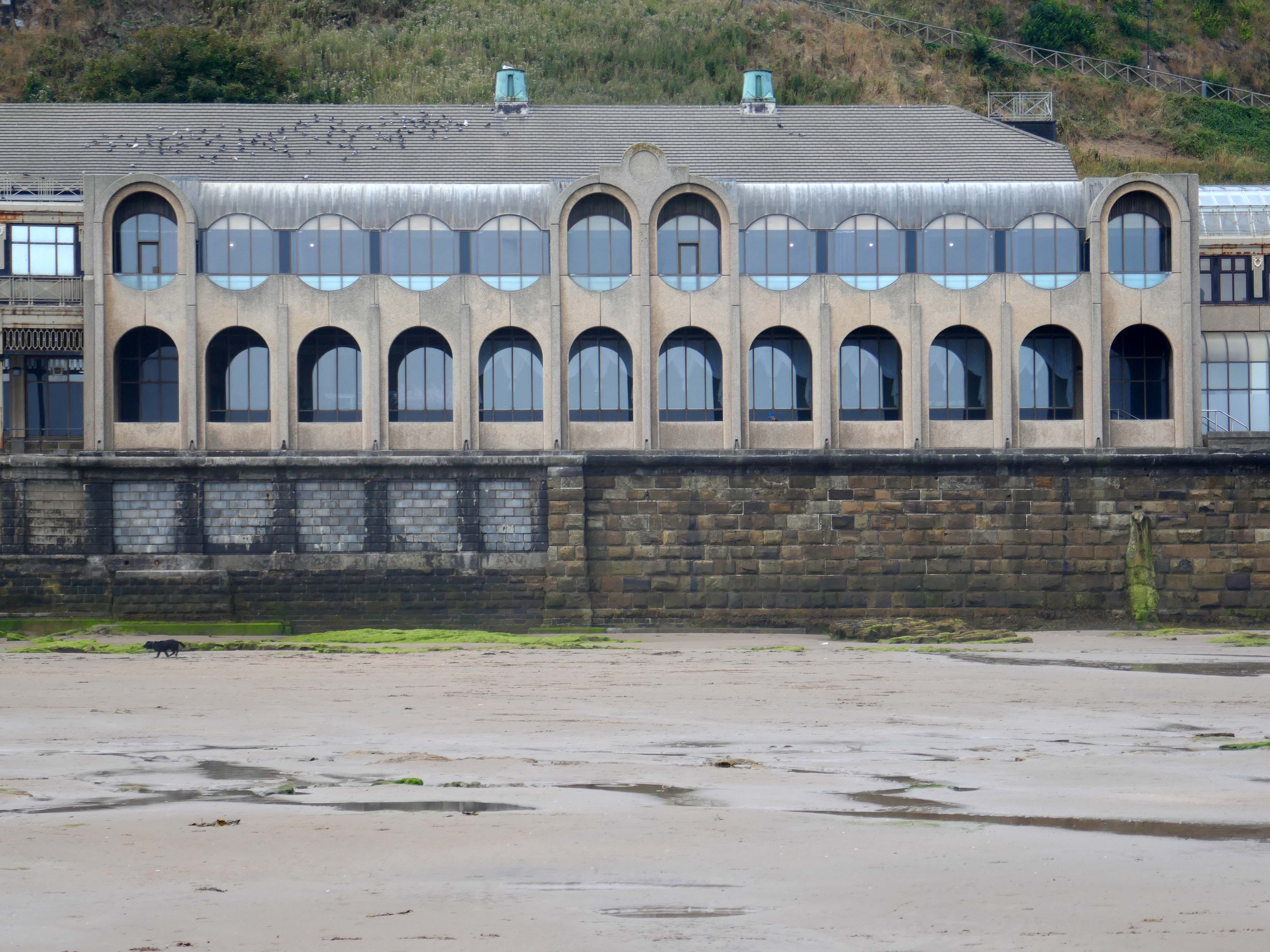
Concrete Colonnade in the Post Modern manner.
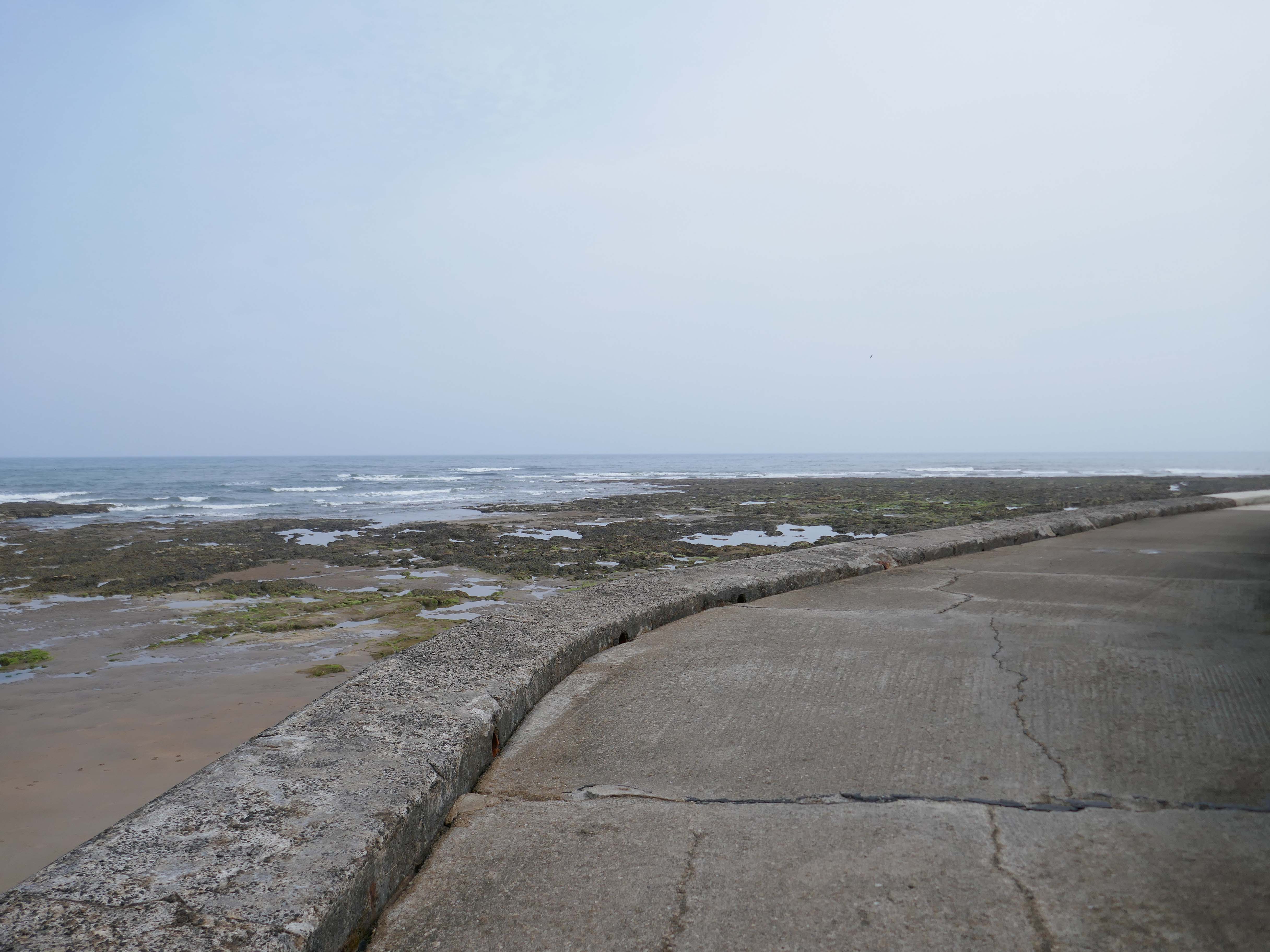
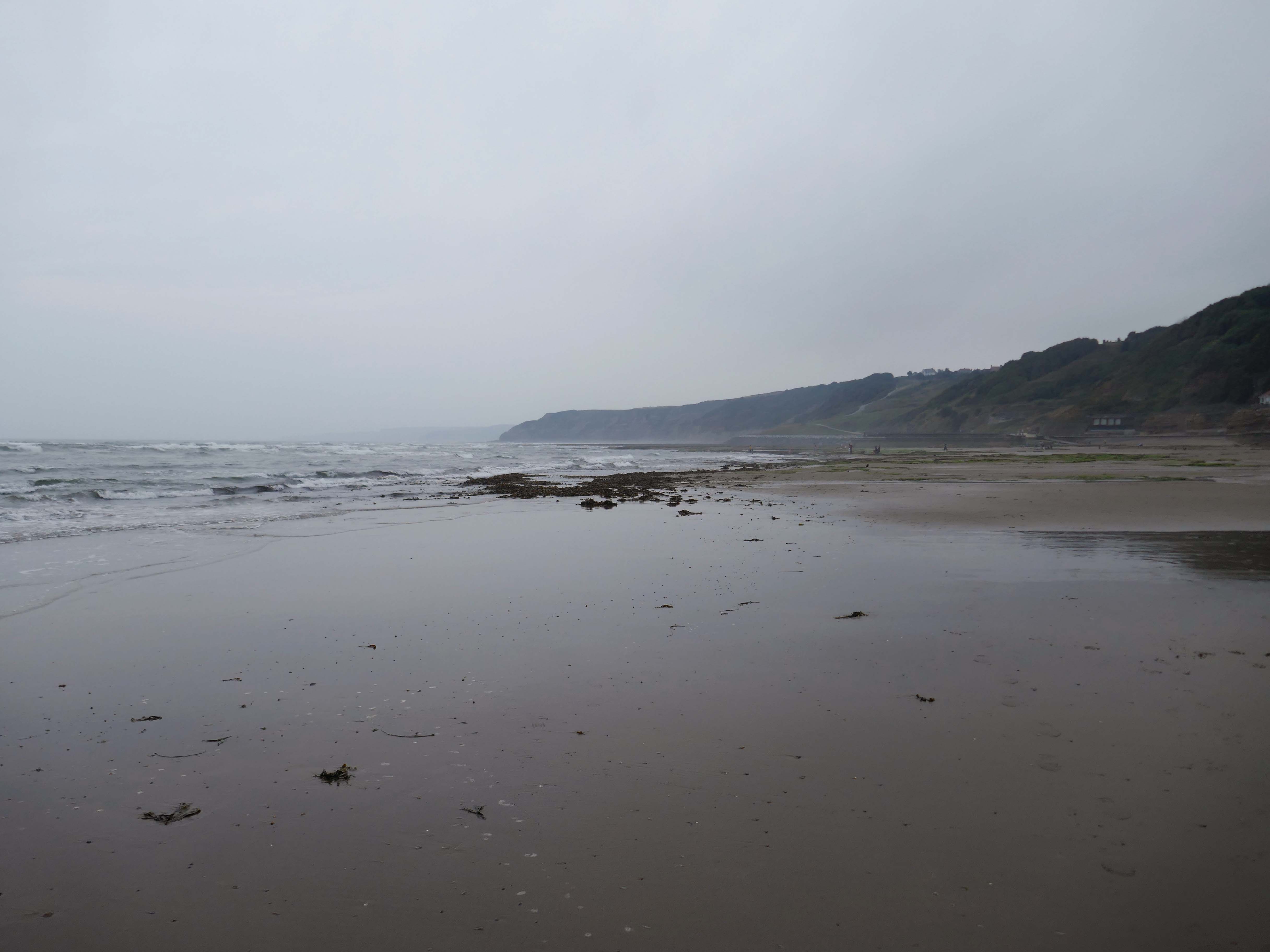
Filey Brigg is barely visible through the mist.
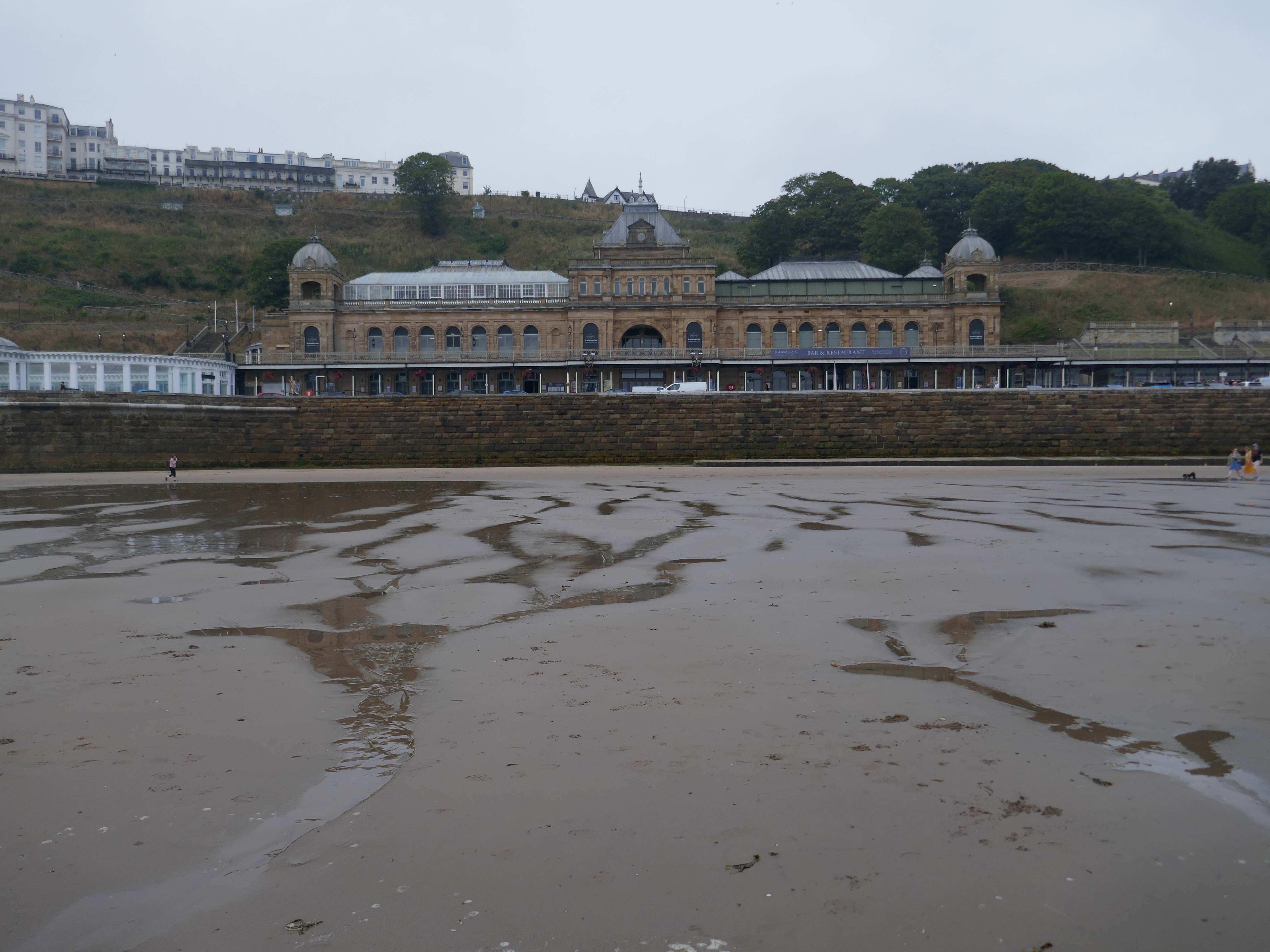
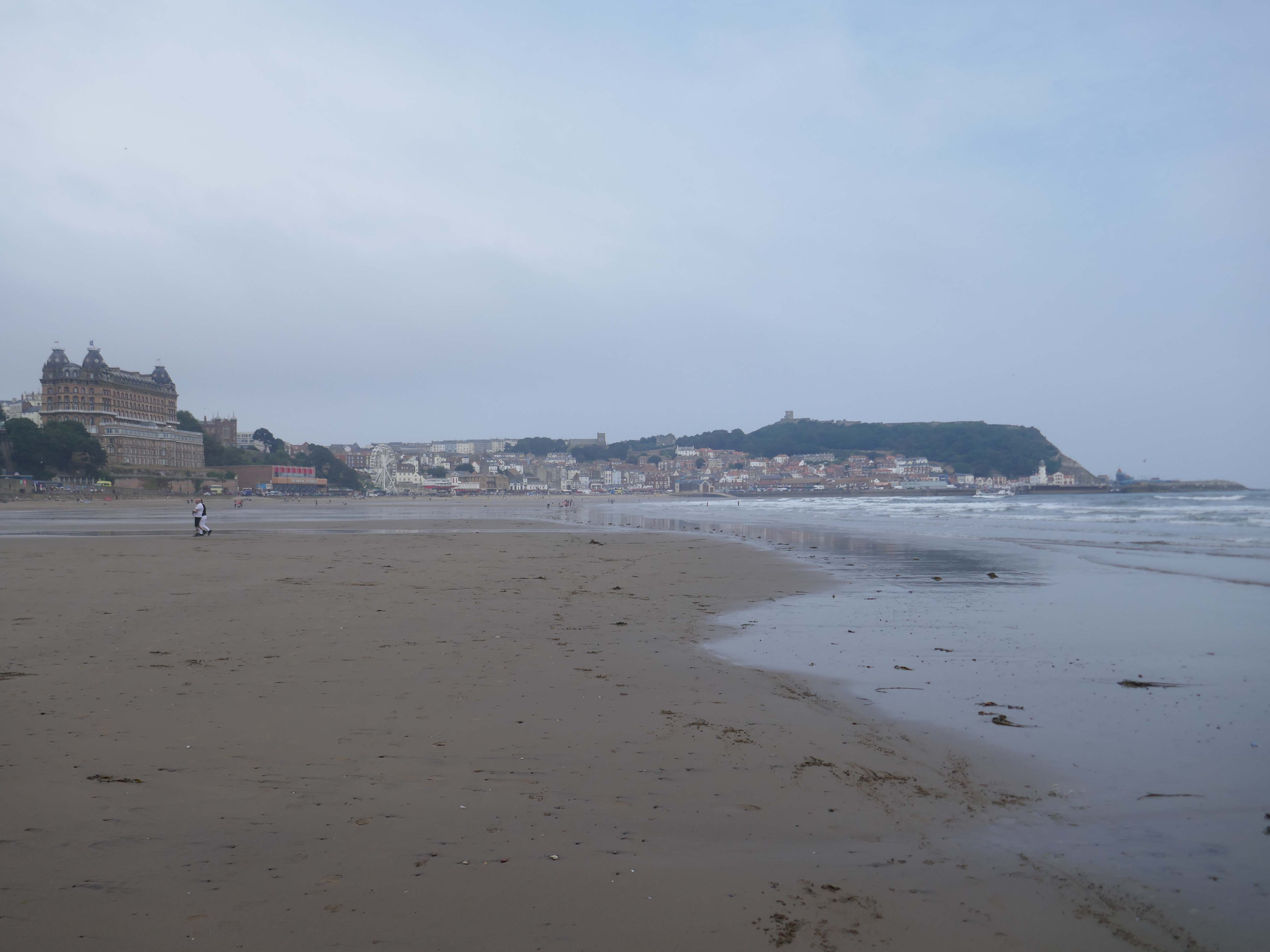
The Scarborough Spa – boldly stands over the bay, beaches, and harbour, providing unrivalled views. With a lengthy and impressive past, it is a popular venue for touring performers and meetings, conferences, and training sessions.

The Spa dates back to the C18 when a mineral spring there became a place of fashionable resort. Originally there was just a timber embanked terrace to the shore. Later, in the early C19 a castellated building was raised. In 1858 Sir Joseph Paxton designed the new ashlar faced Spa pavilion raised on terrace with arcaded ground and first floor articulated by pilaster strips, seven bays, with projecting pilastered corner towers with balustraded parapets.
Grade II* Listed

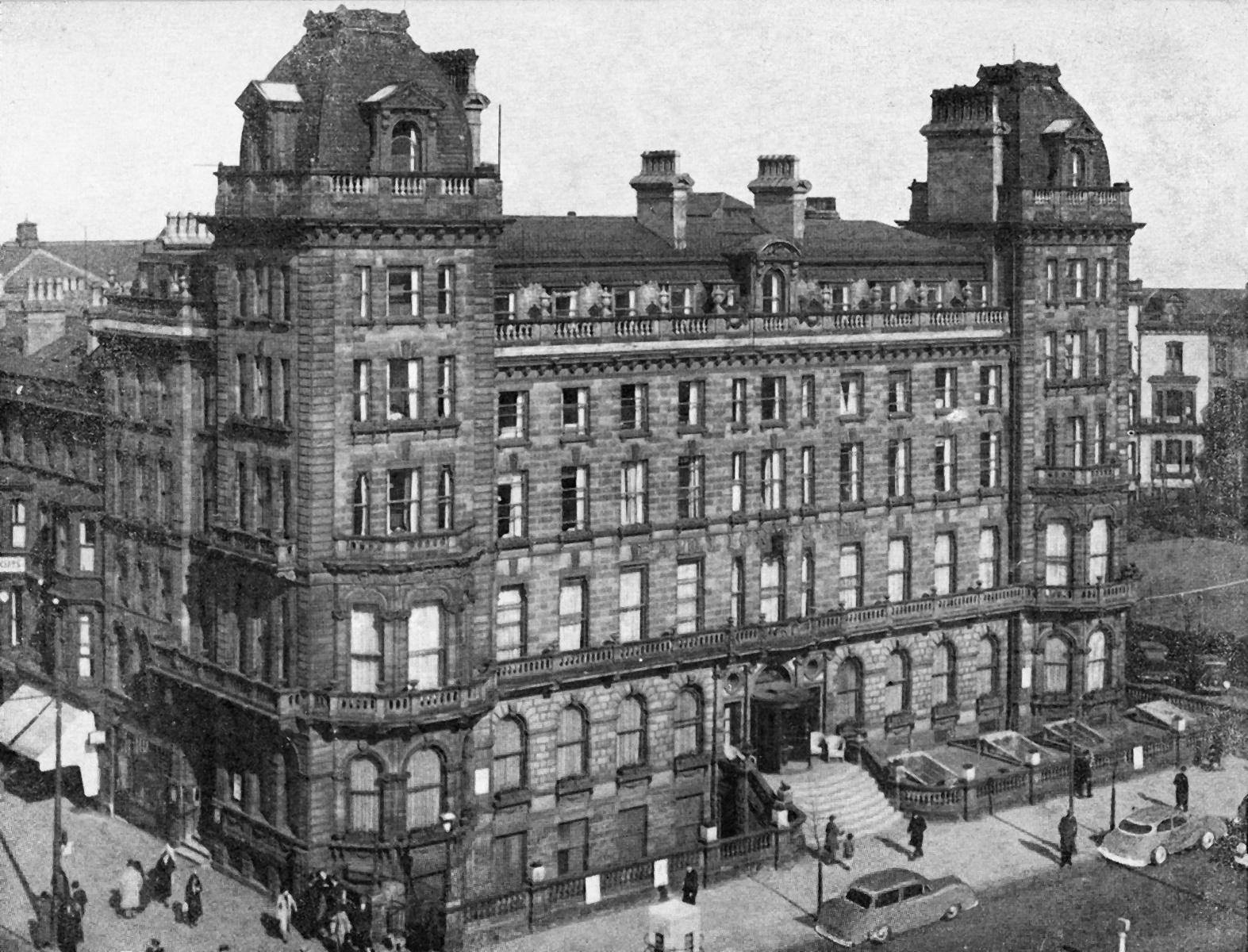
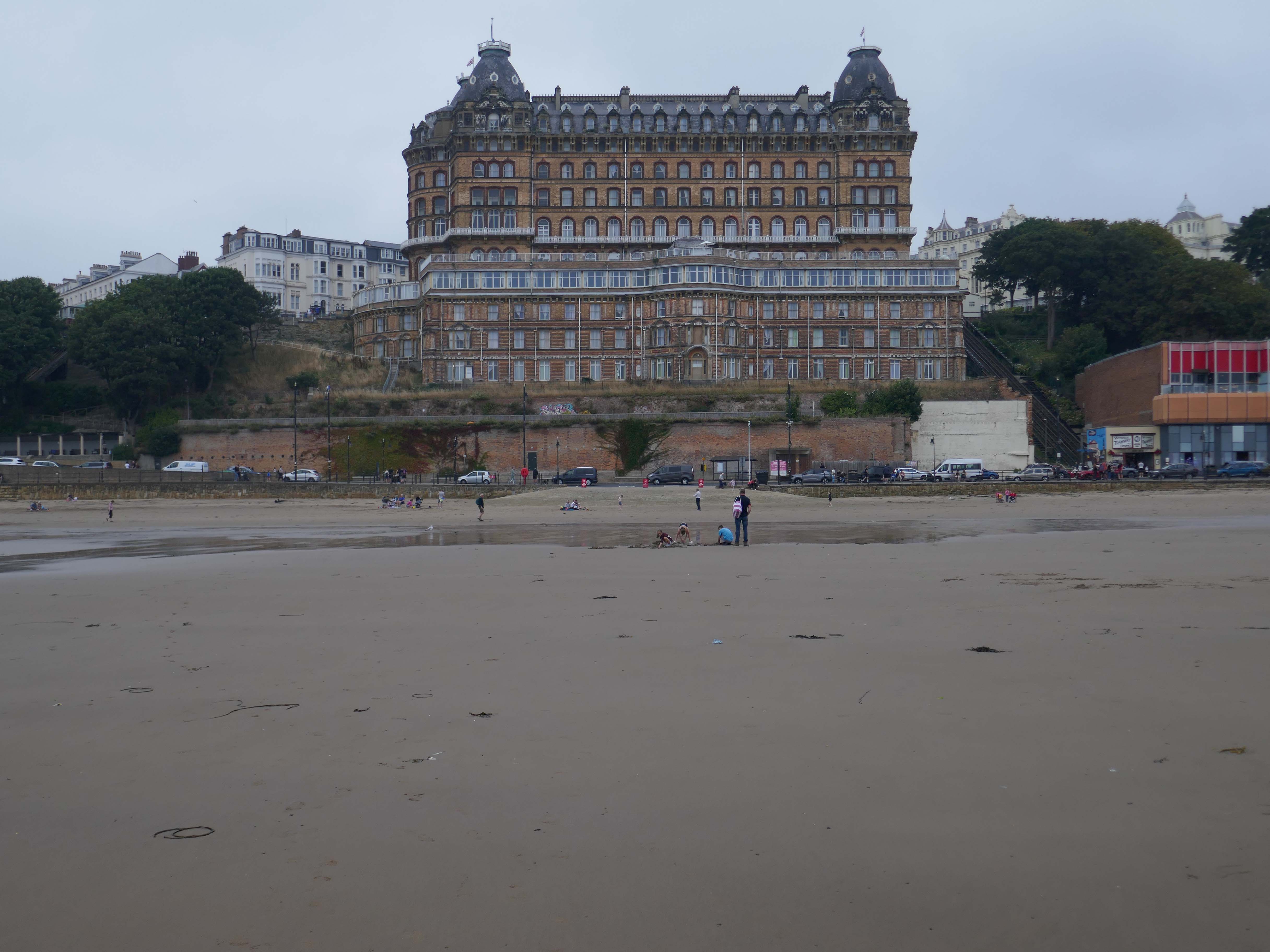
Grand Hotel was chosen as one of Historic England’s seven wonders of the English seaside, as featured in the Daily Mail

Located in the town centre and built in 1863, the Grand Hotel Scarborough takes pride of place overlooking the town’s picturesque harbour and South Bay. This stunning Victorian building is an instantly recognisable landmark, and stands out amongst other hotels in Scarborough. 

We’ve stayed here a few times and we’ve never had a problem with our room. If you dont like lifts theres a lot of stairs but we like to keep fit anyway. Fridge was a bonus. Hairdryer, towels, three loo roll, towels, fan, iron, ironing board Good stock of tea and coffee, nice clean kettle. Paid for a room with a window and got unexpected sea view which was fab to wake up to. Gorgeous main area, singers on at nine, stayed in room thirteen no ghosts lol.

Will defo come again – thank you Grand Hotel.

Samantha K

Absolutely disgusting, the rooms was very dirty, full of dust, the room hasn’t been cleaned since the last person stayed as there body shape was still in the bed, bathroom had toothpaste all in the sink and the shower was absolutely filthy. Curtains are hanging off. Carpets are dirty. The food is very bad, cheap and under cooked. And most the food on the menu wasn’t even available. When speak to the staff I got verbal abuse from them and the chef told my partner to “f off”.. it’s just horrible experience. Do not wish this on anyone. You go outside to loads off homeless doing drugs and been drunk also. I actually ended having to leave and book an alternative accommodation.

Don’t stay here

Chloe S
Trip Advisor

Architect: Cuthbert Brodrick – 1863-67 an immense structure in red brick with tawny terracotta dressings, four storeys, basement, and storey at eaves cornice level, and two storey attic

Grade II* Listed

Olympia Leisure

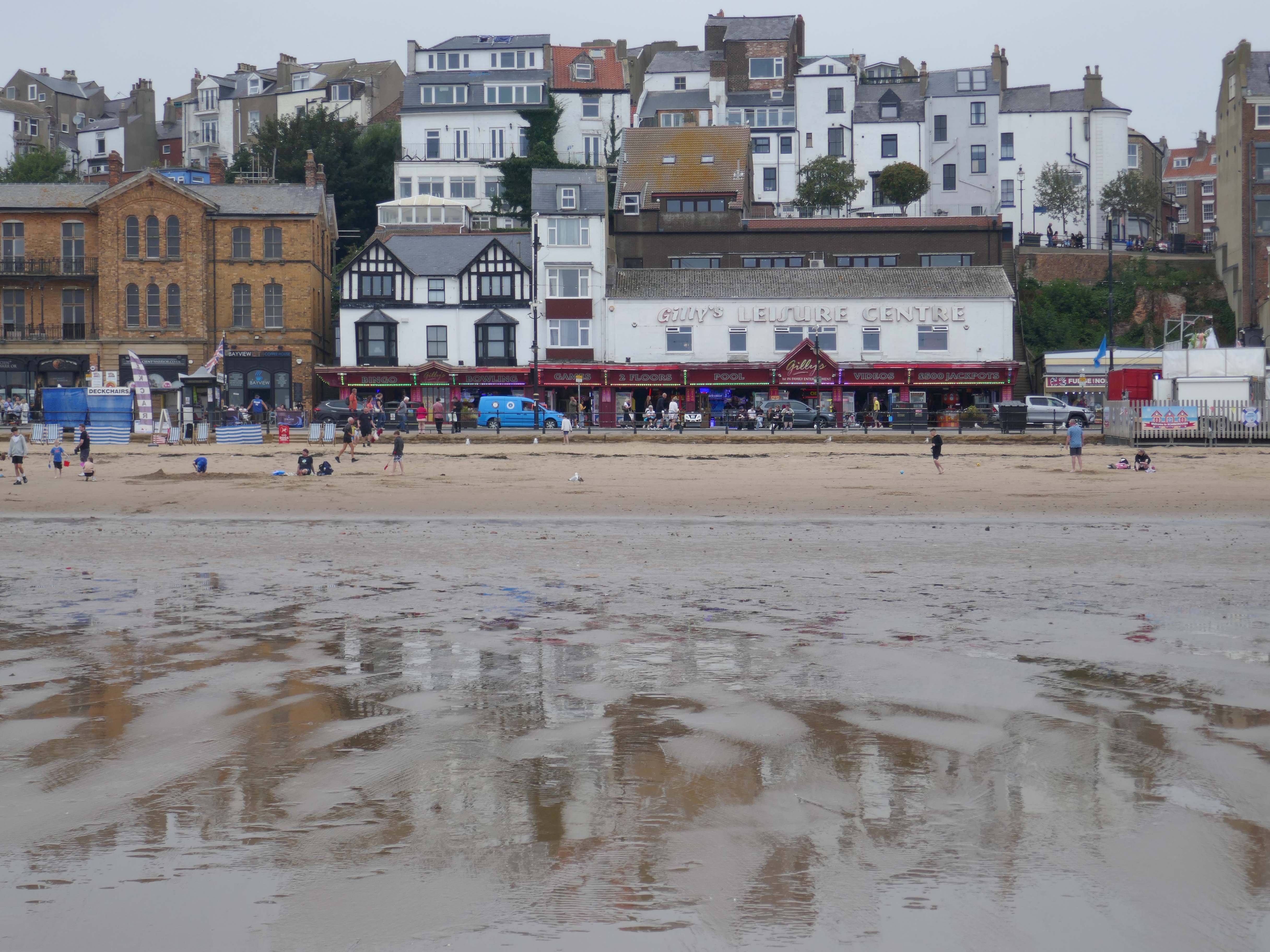
This is the place to be, either to meet friends, make friends or just book a Party event for friends and family. With twelve lanes our Ten Pin Bowling Alley, with its modernised interior and updated scoring system is a fantastic place to relax.

We have fabulous balcony views of Scarborough’s Seafront and Bay and a Smoking Area. It’s the perfect venue for an office or workplace party, student celebration, holiday activity, or just a regular get together of friends.
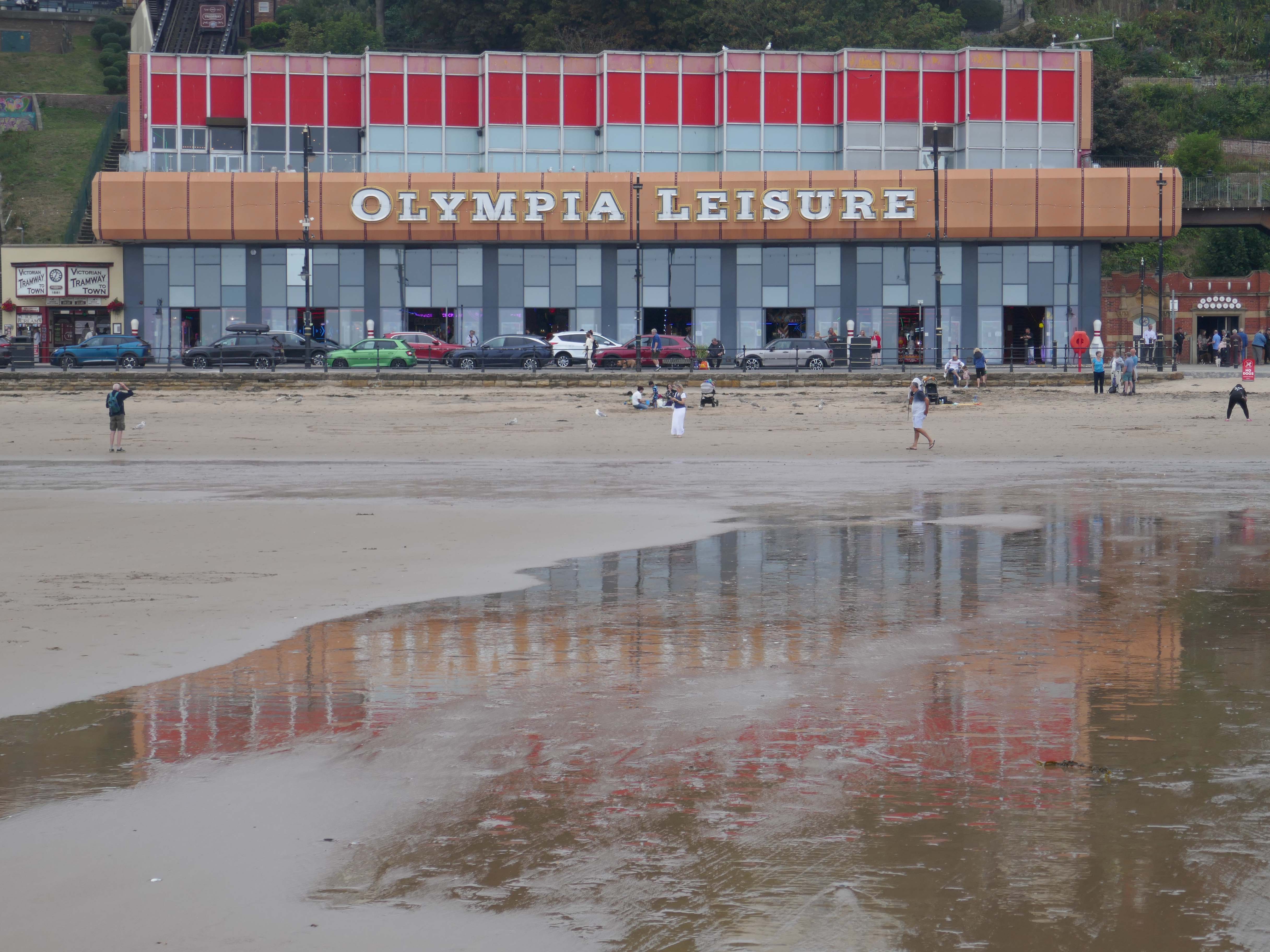
Formerly the site of the Futurist Theatre

The Futurist Theatre was built to the design of Scarborough architect Frank Tugwell and opened on 27 June 1921 as a cine-variety theatre operated by William Catlin.

Originally it boasted a grandiose, ornate façade of robust, self-cleaning white glazed Carraraware tiles, the design of Henry Doulton.
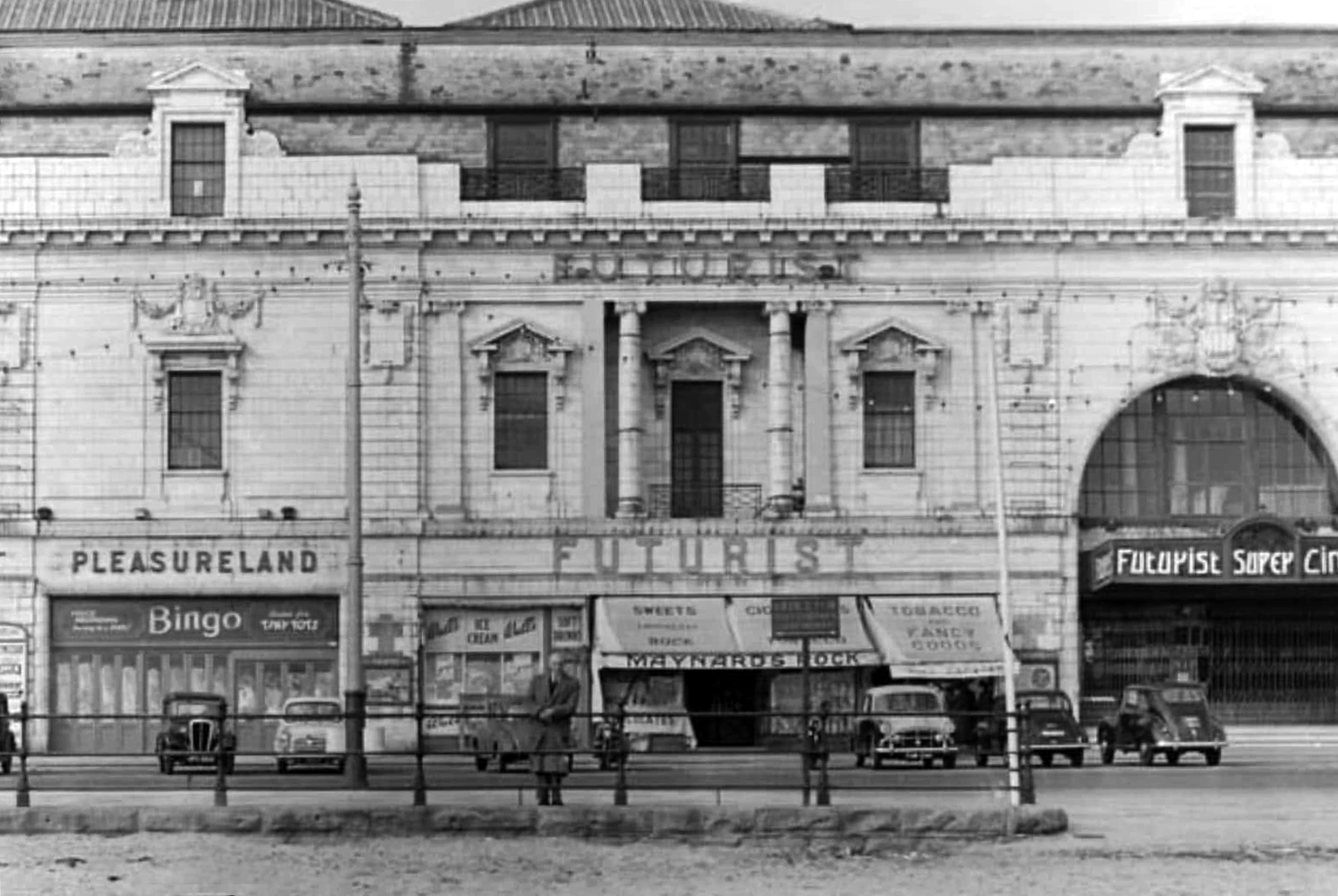
This was later obscured during spring 1968 by a facelift of rectangular plain yellow cladding.

Demolition of the building began in June 2018 and was completed in August 2018.
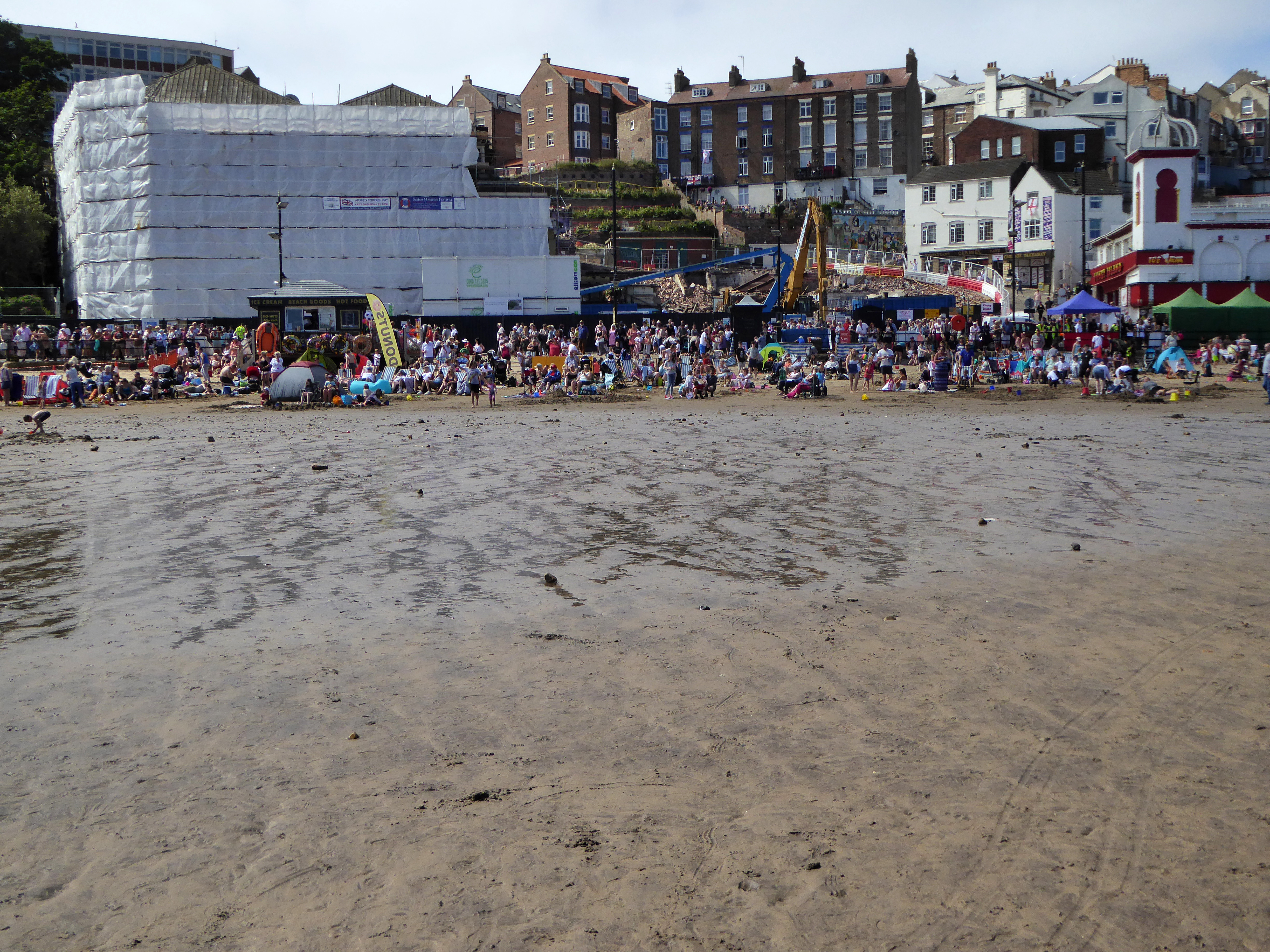
The demolition and associated land works cost local taxpayers £3.91 million.
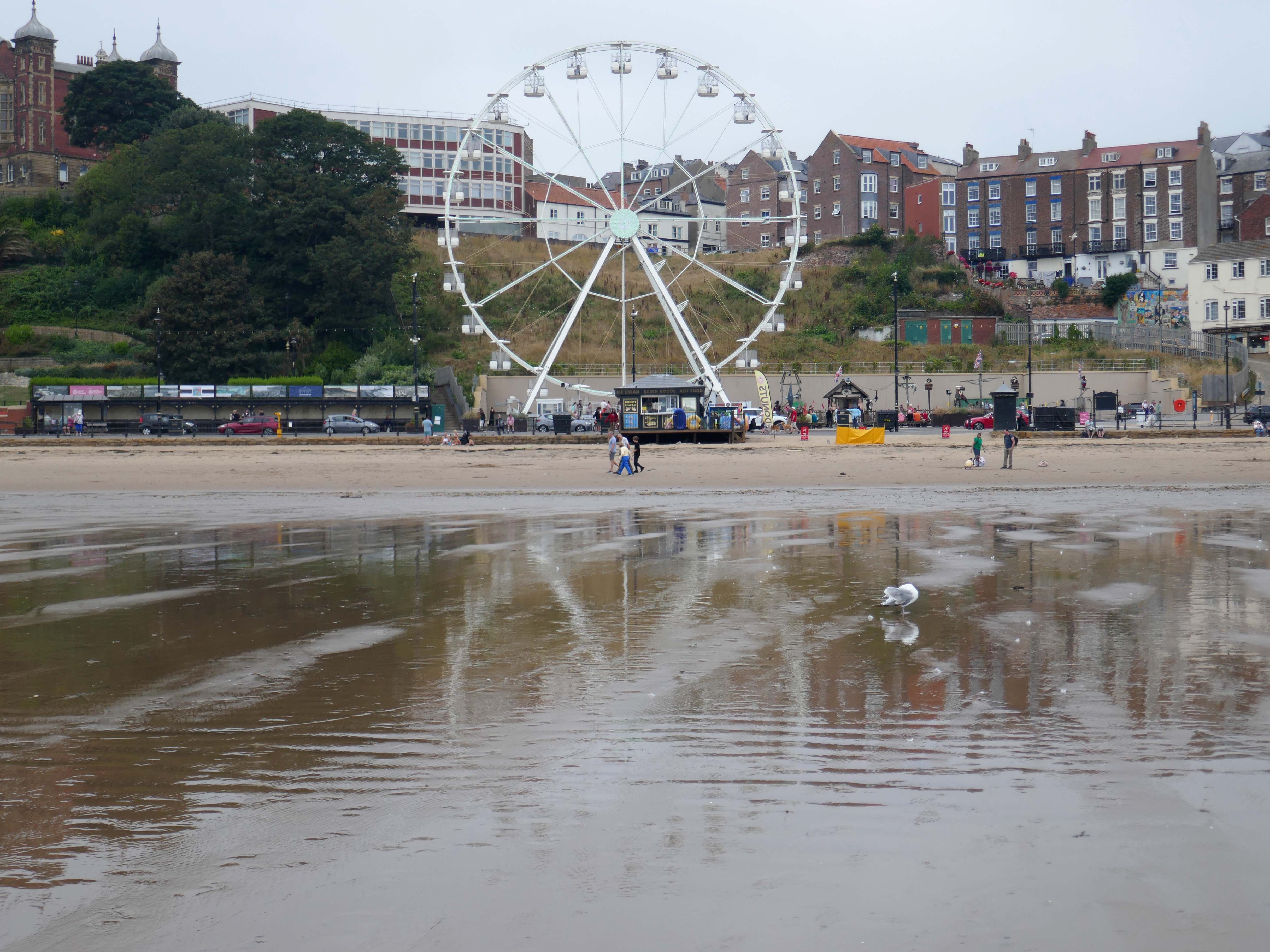
Wikipedia

Coney Island is a popular amusement centre located on Foreshore Road in Scarborough, offering a vibrant dose of classic seaside entertainment. It’s known for its unique architectural style and cool retro vibes that captivate visitors. This lively spot provides a welcoming atmosphere for all ages looking for fun by the coast.

Step inside Coney Island and discover a fantastic array of arcade games, ranging from exciting racing simulators where you can ‘drive’ sports cars and motorbikes, to a decent selection of both older and newer games. Beyond the flashing lights and sounds of the arcade, the centre also features a bowling alley, perfect for some friendly competition. Guests appreciate the ease of exchanging notes for coins at the desk, ensuring continuous play.
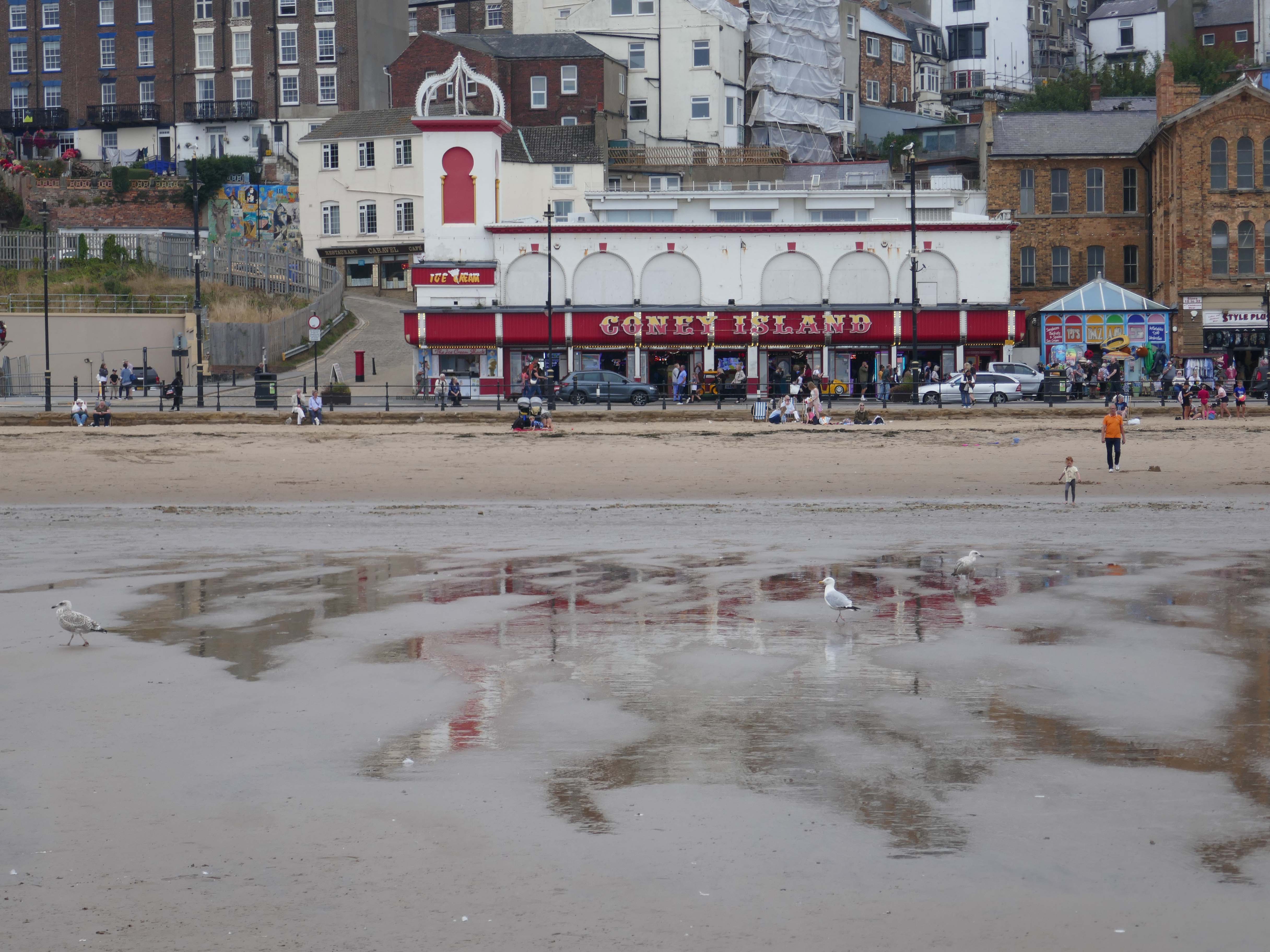
Yorkshire.com

I have been to t’other Coney Island – it looked like this.
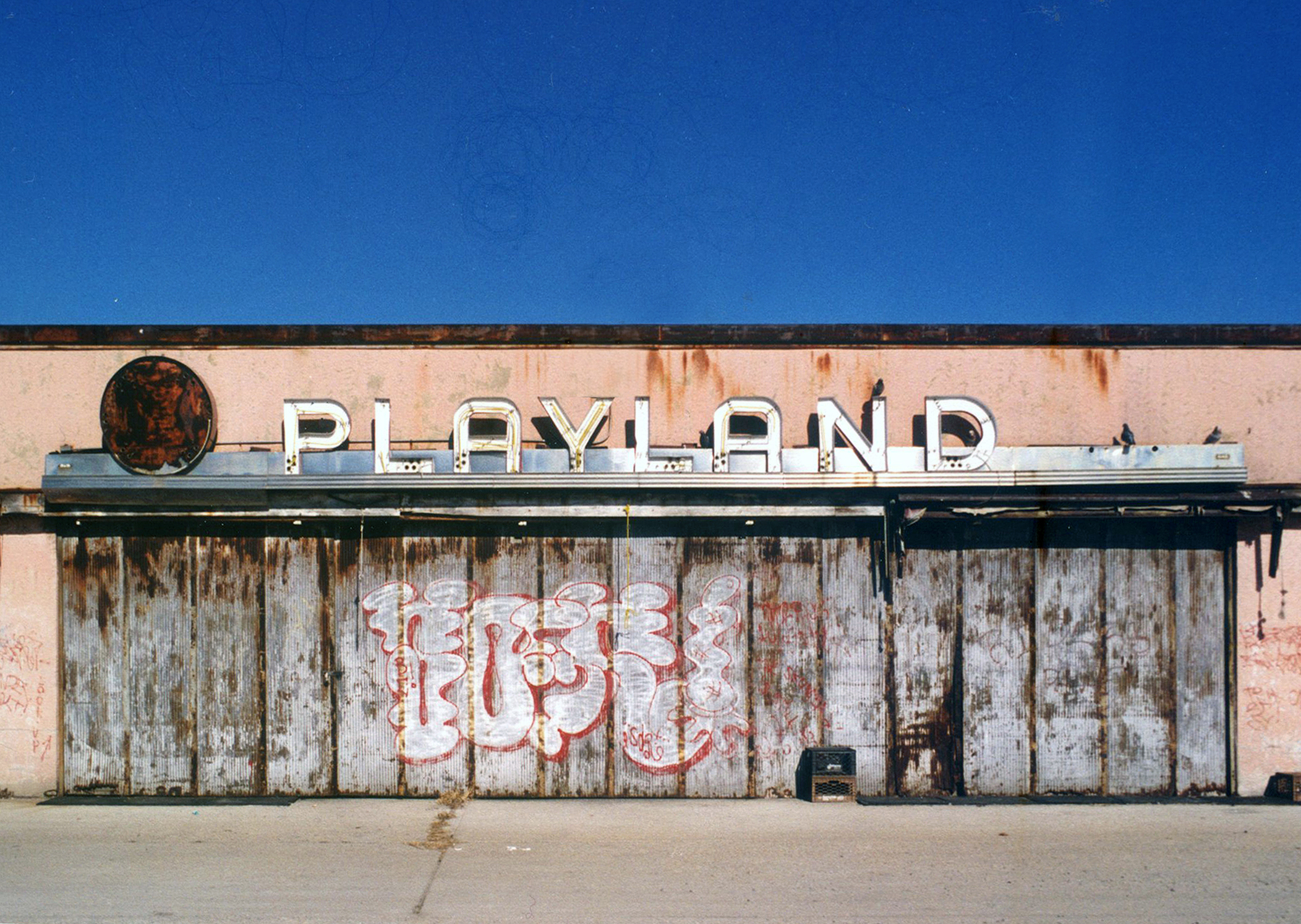
Concrete Coast – Bridlington

The last post on the concrete coast was from Filey

Now we’re heading south to Bridlington and beyond.

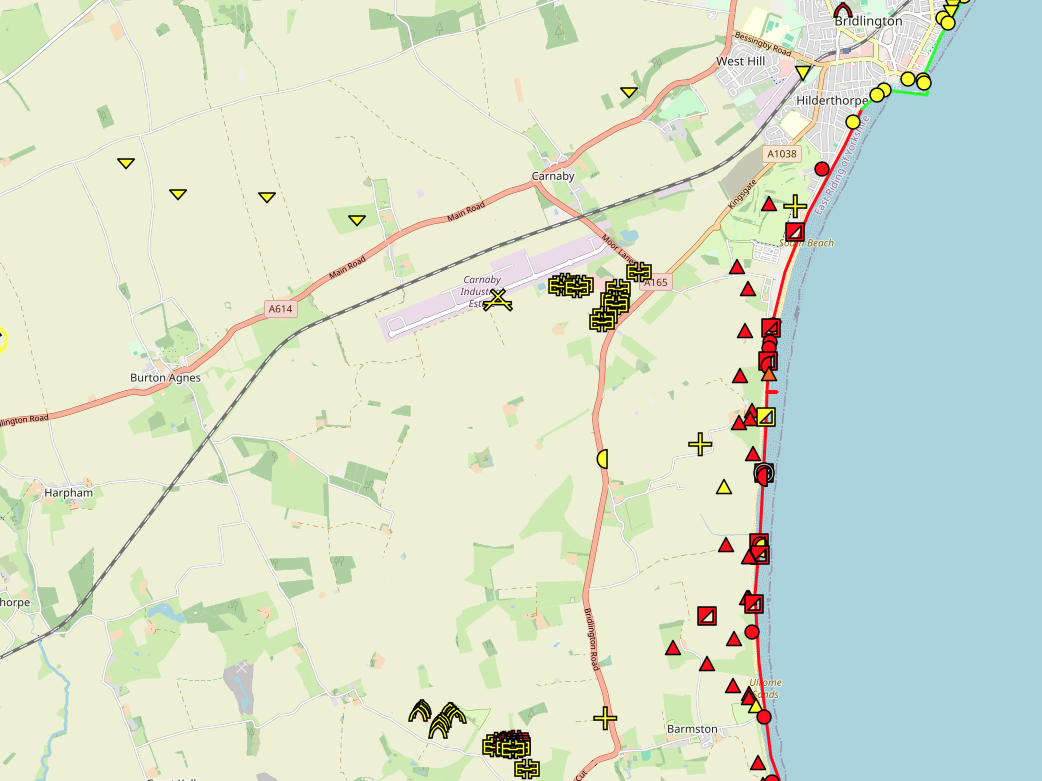
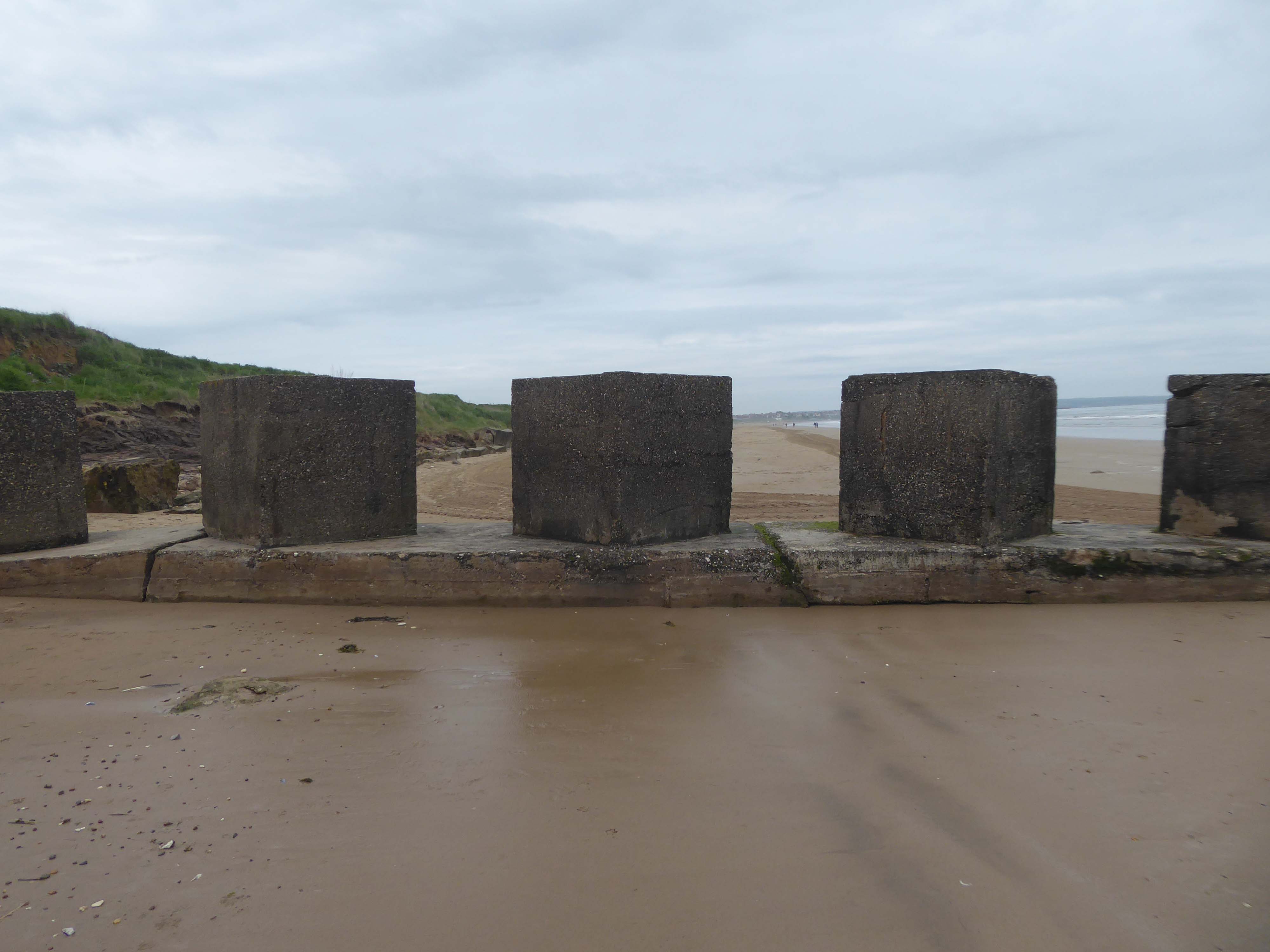
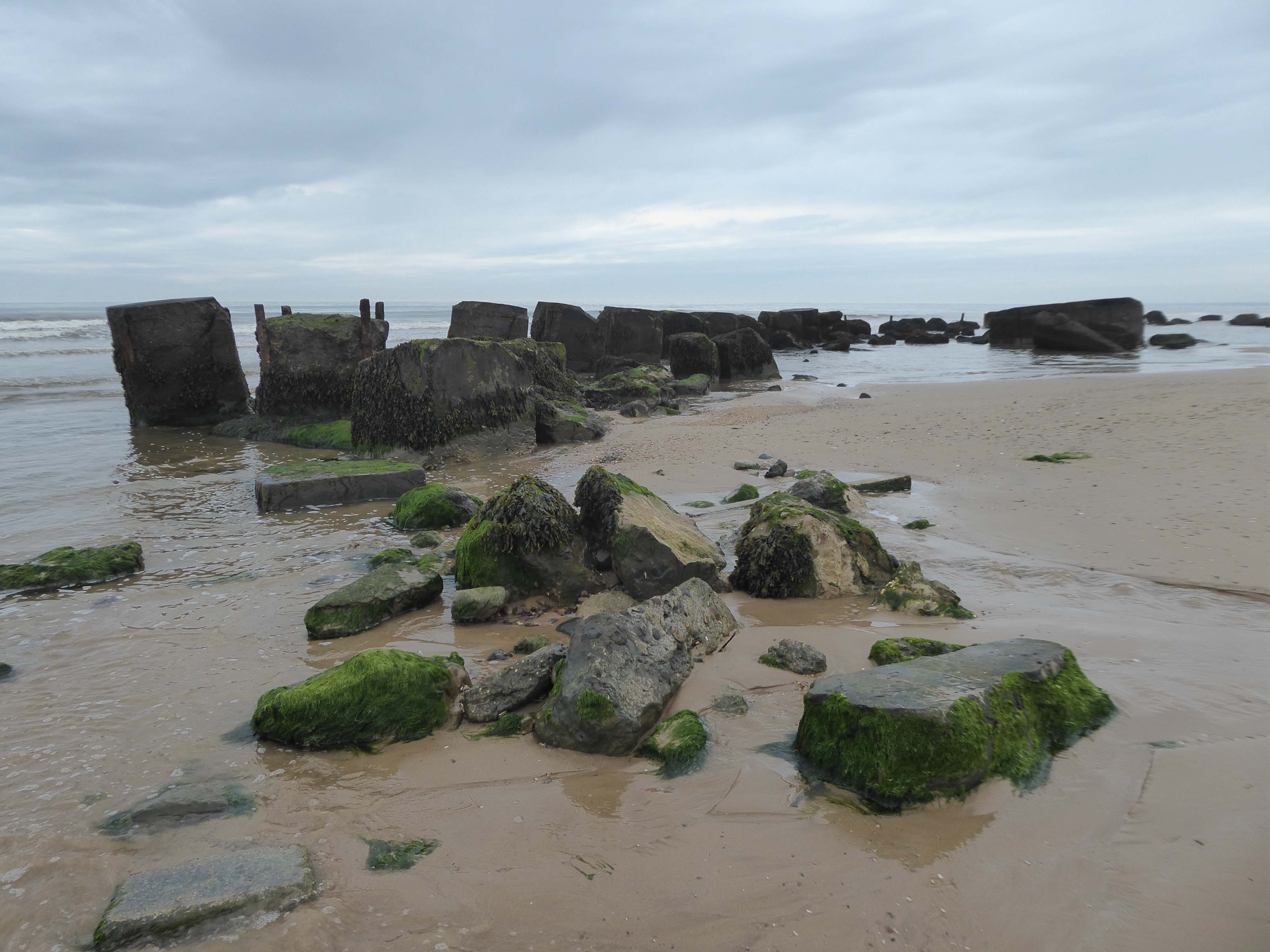
Where we find another dense cluster of sea defences, some but not all extant.

After the south coast, both East Anglia and the Yorkshire Coastline were identified as vulnerable to invasion. Bridlington Bay, was and ideal location for an invasion; flat sandy beaches for amphibious landing crafts, above the foreshore flat landscapes perfect for tanks and gliders to land, an isolated small population with only the residence of Bridlington close by and finally the control of an established port at Bridlington, once it was under German control. According to the Defence of Britain Survey undertaken in the Late 90’s, Northern Command had some of the best defend beaches in the country, this includes Bridlington.

Citizan

eDoB

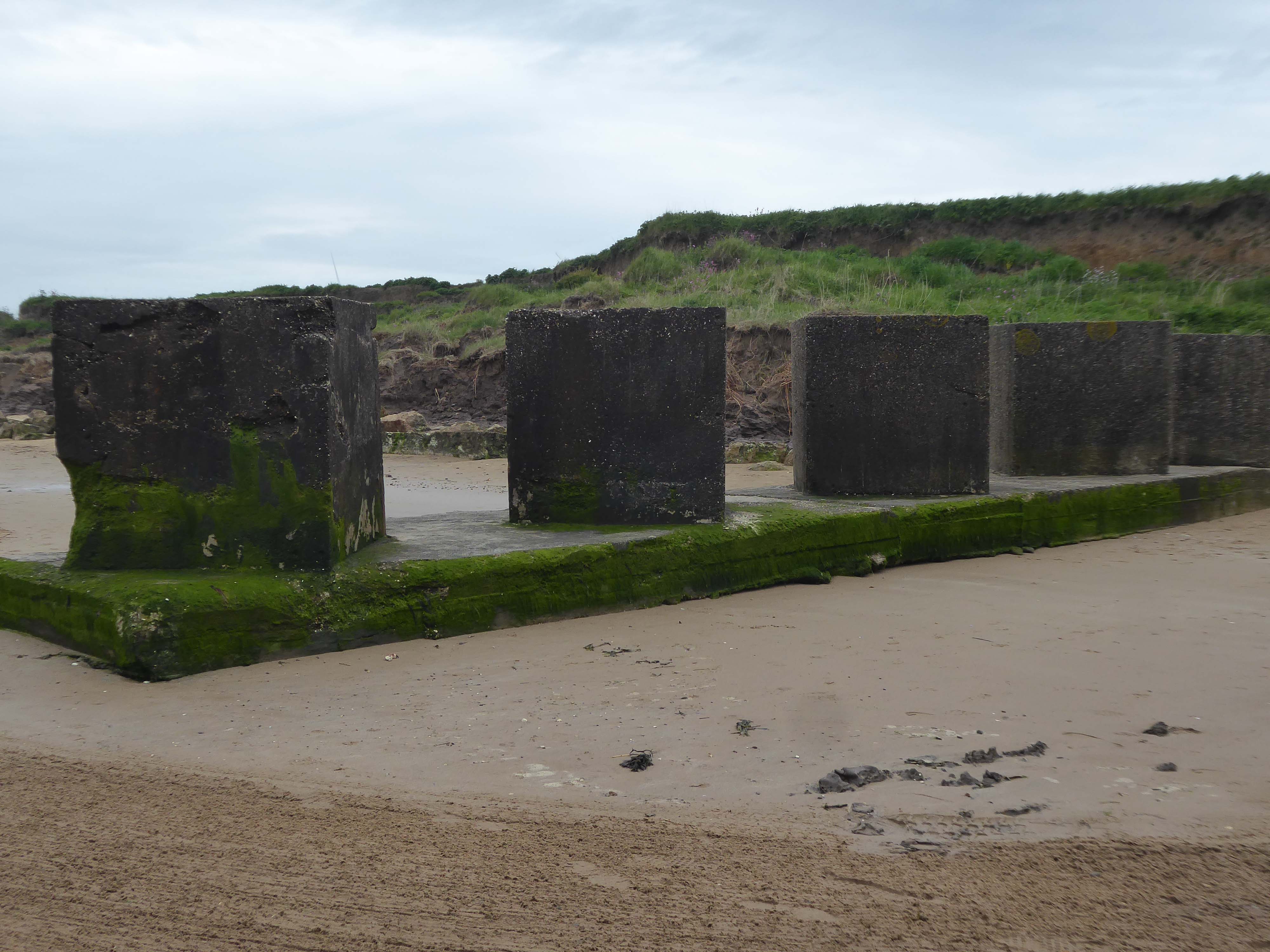
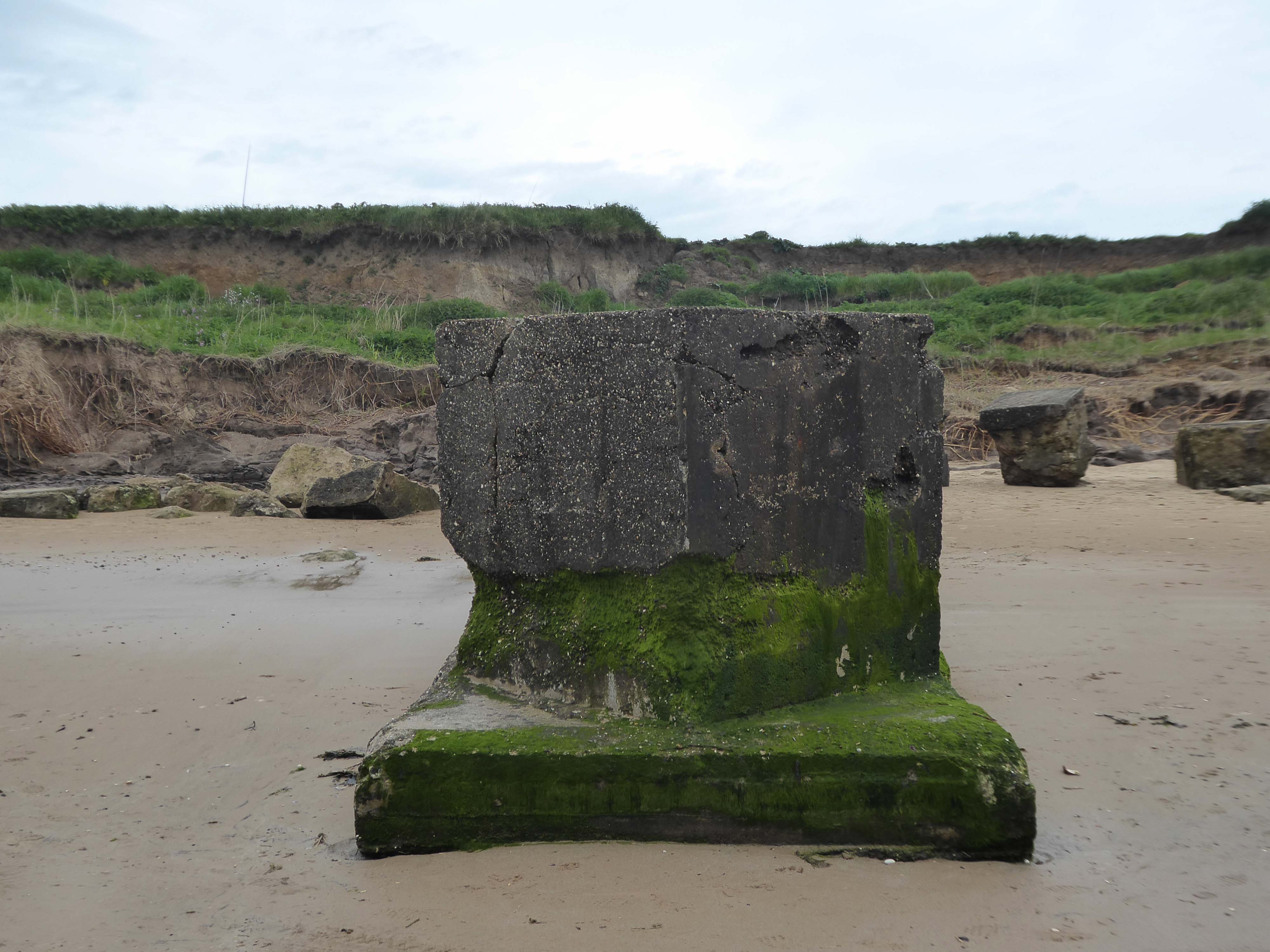
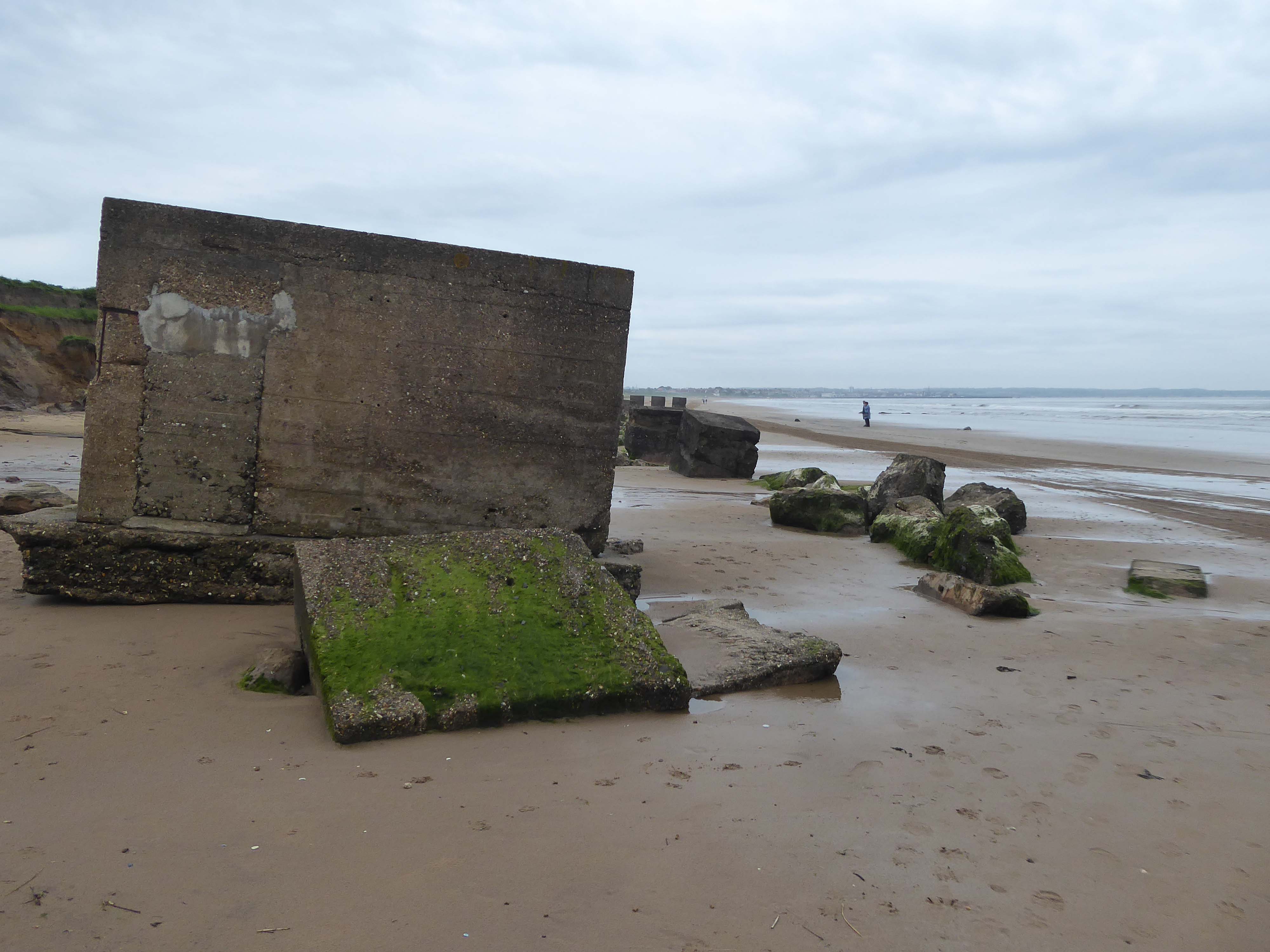
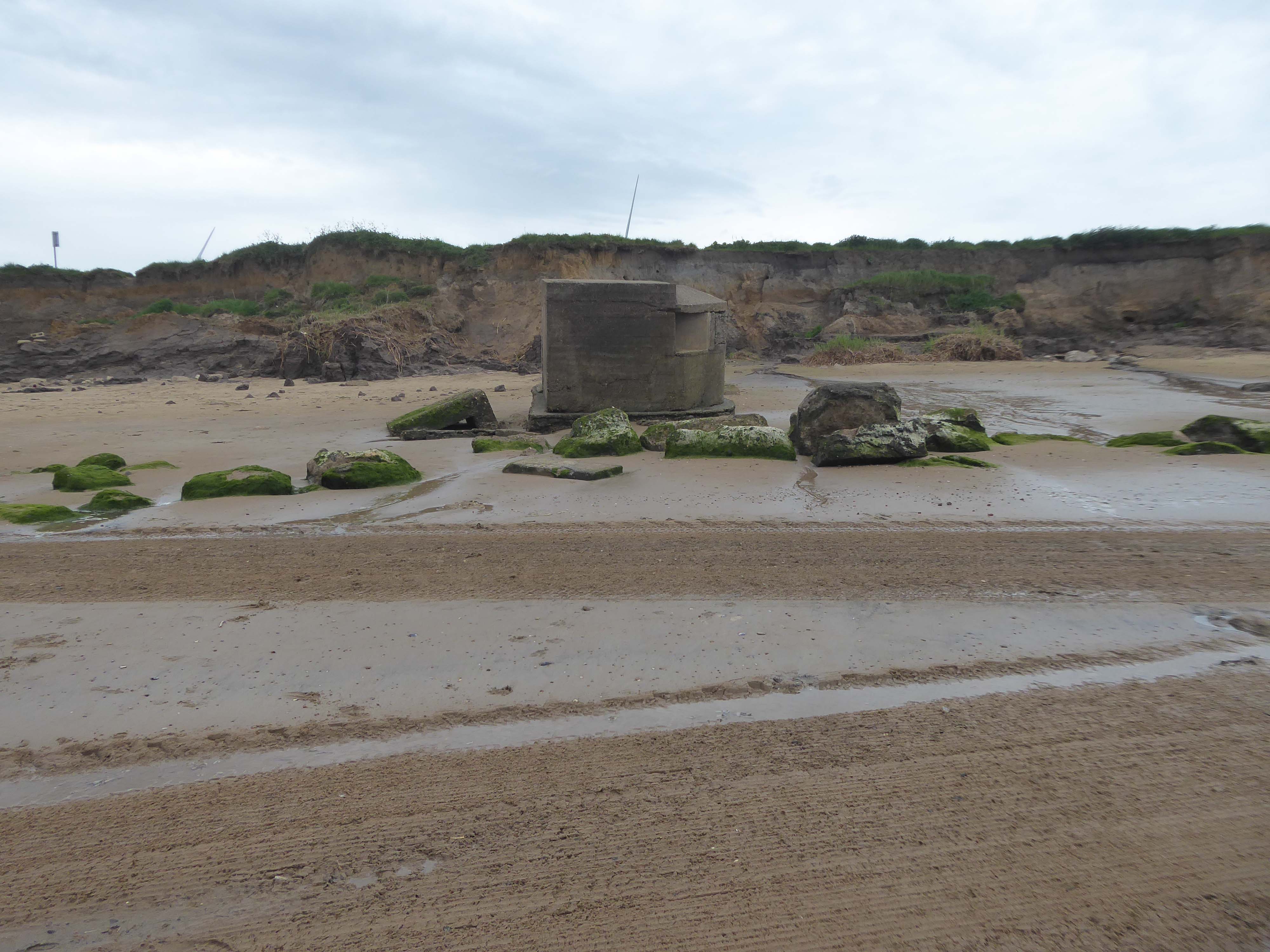
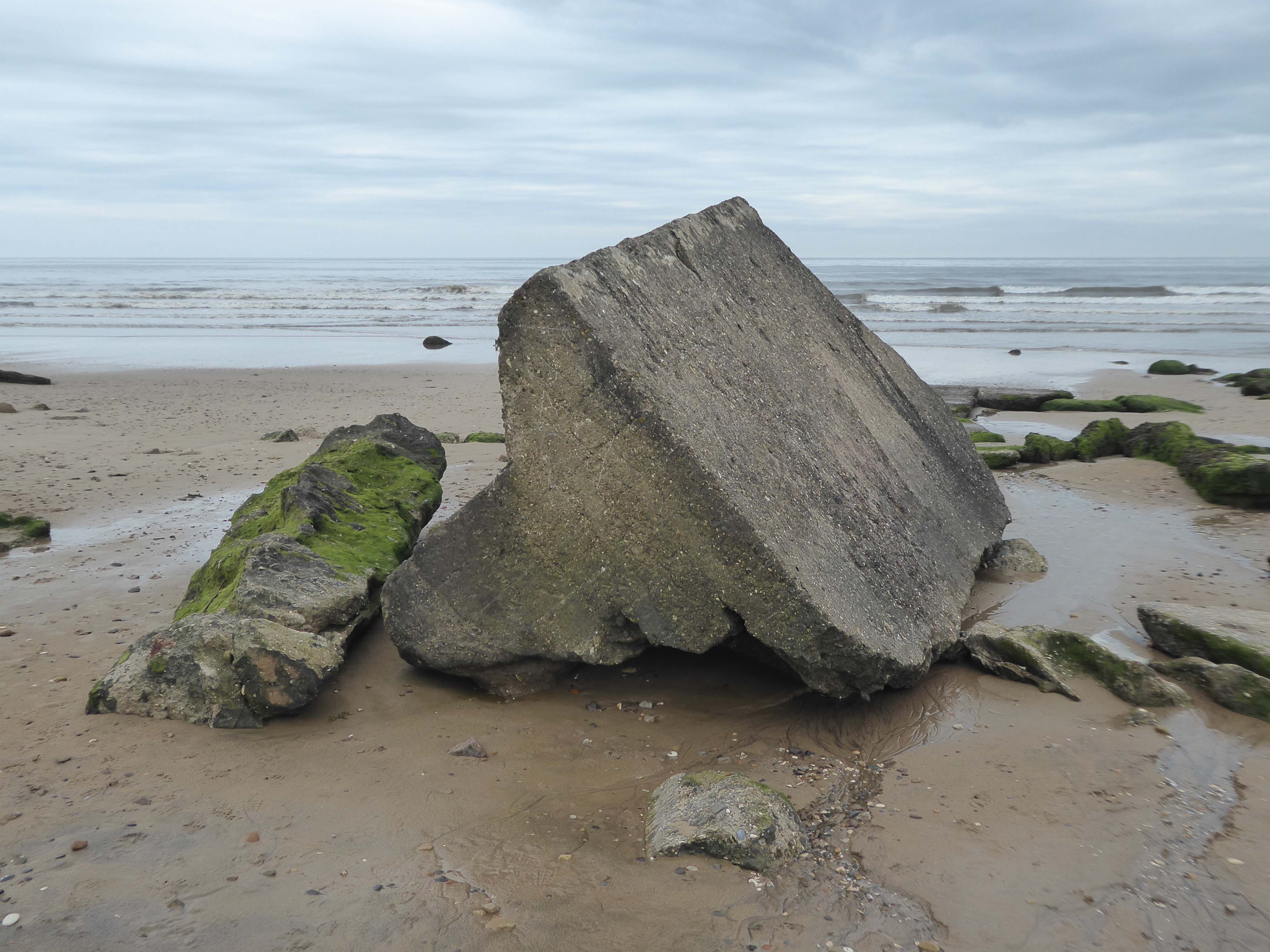
Here there are forces, past and present, at work shaping the landscape and the manmade addenda.

The remorseless waves, wind and rain eroding the coastal clay and contorted concrete.

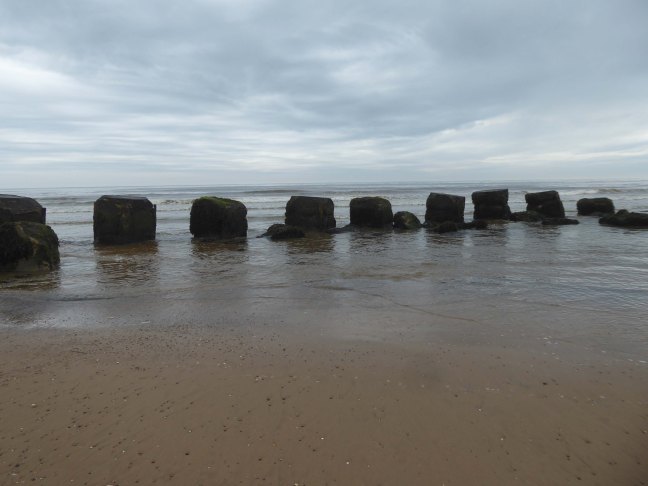
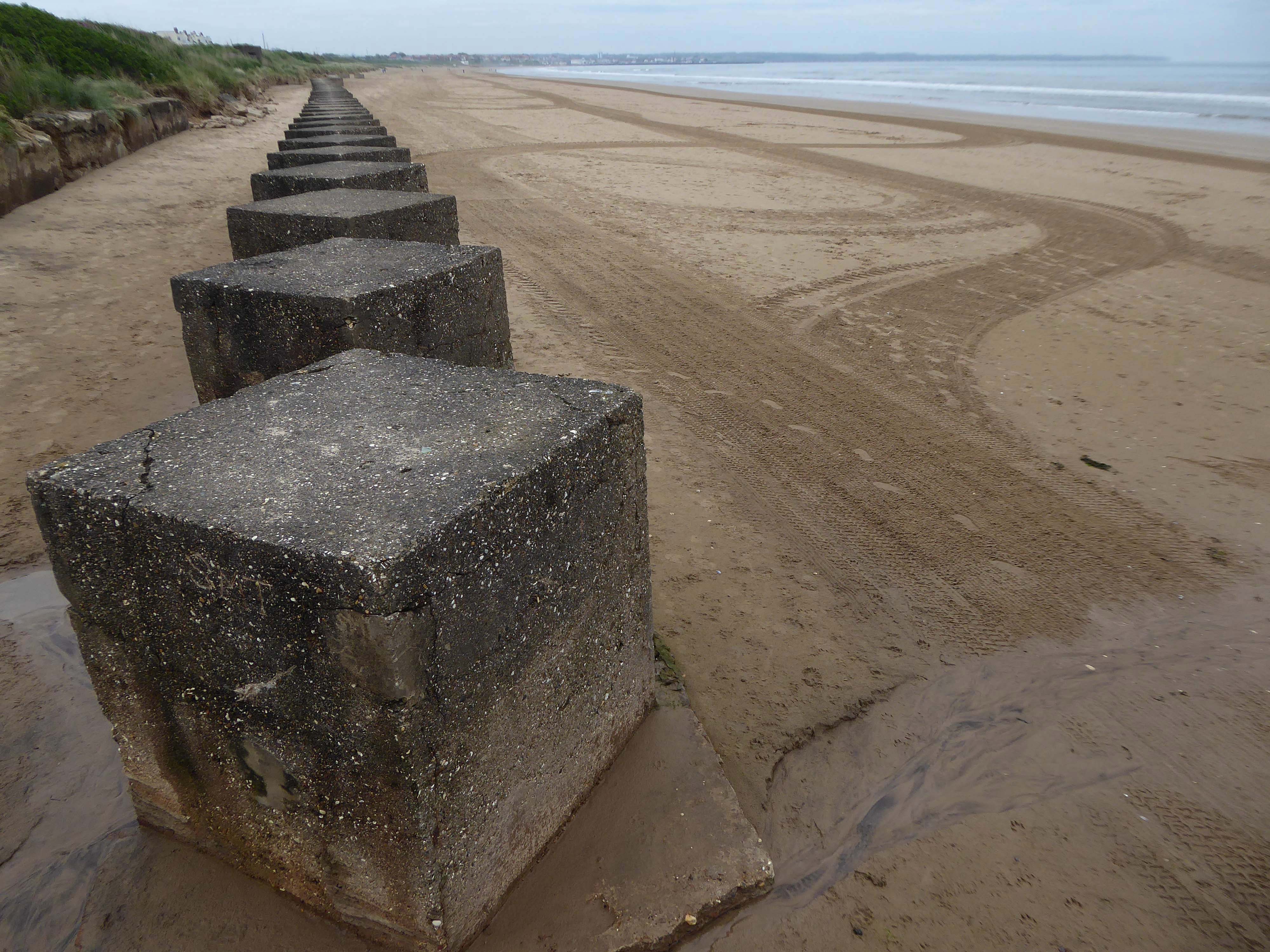
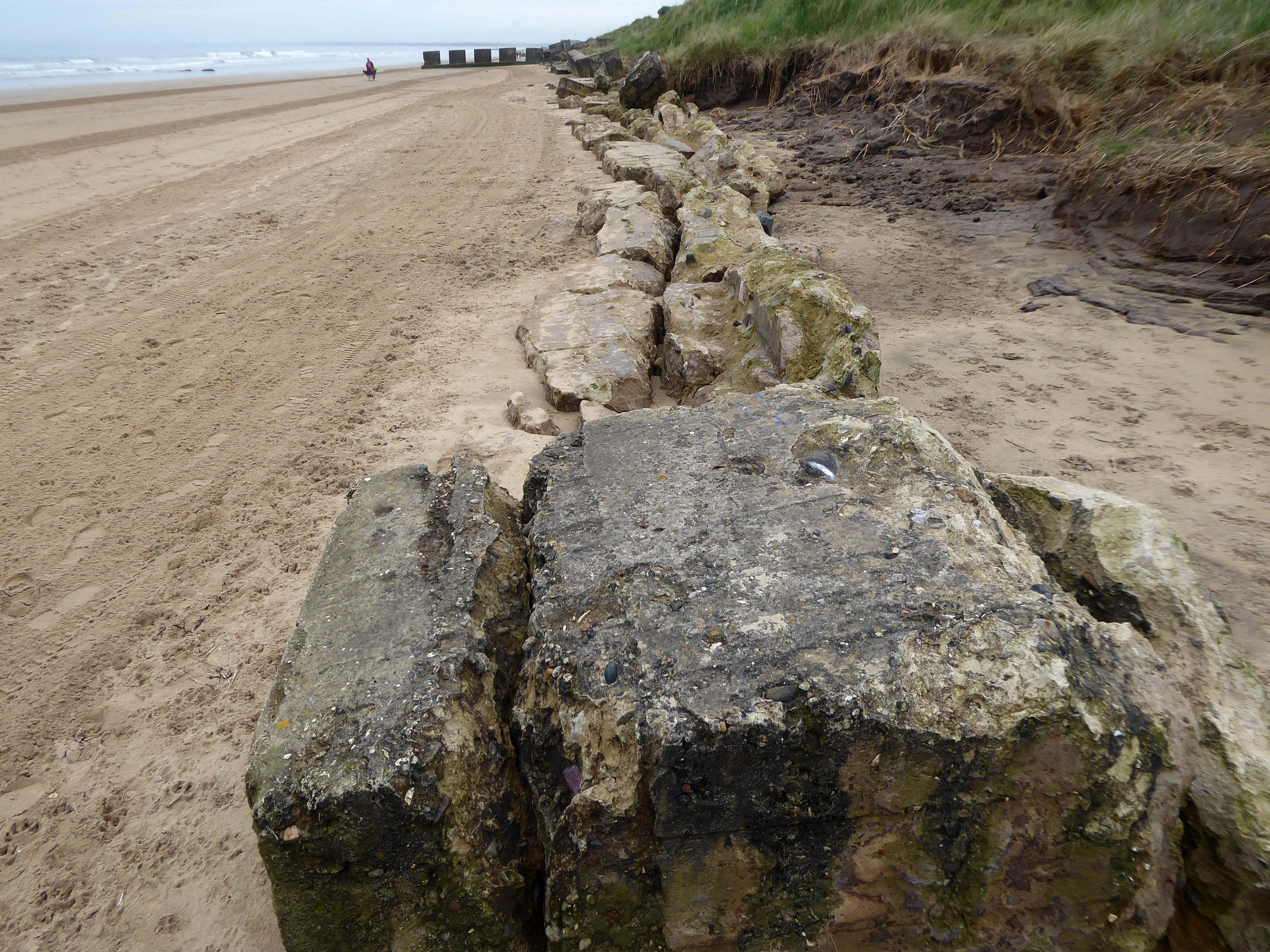
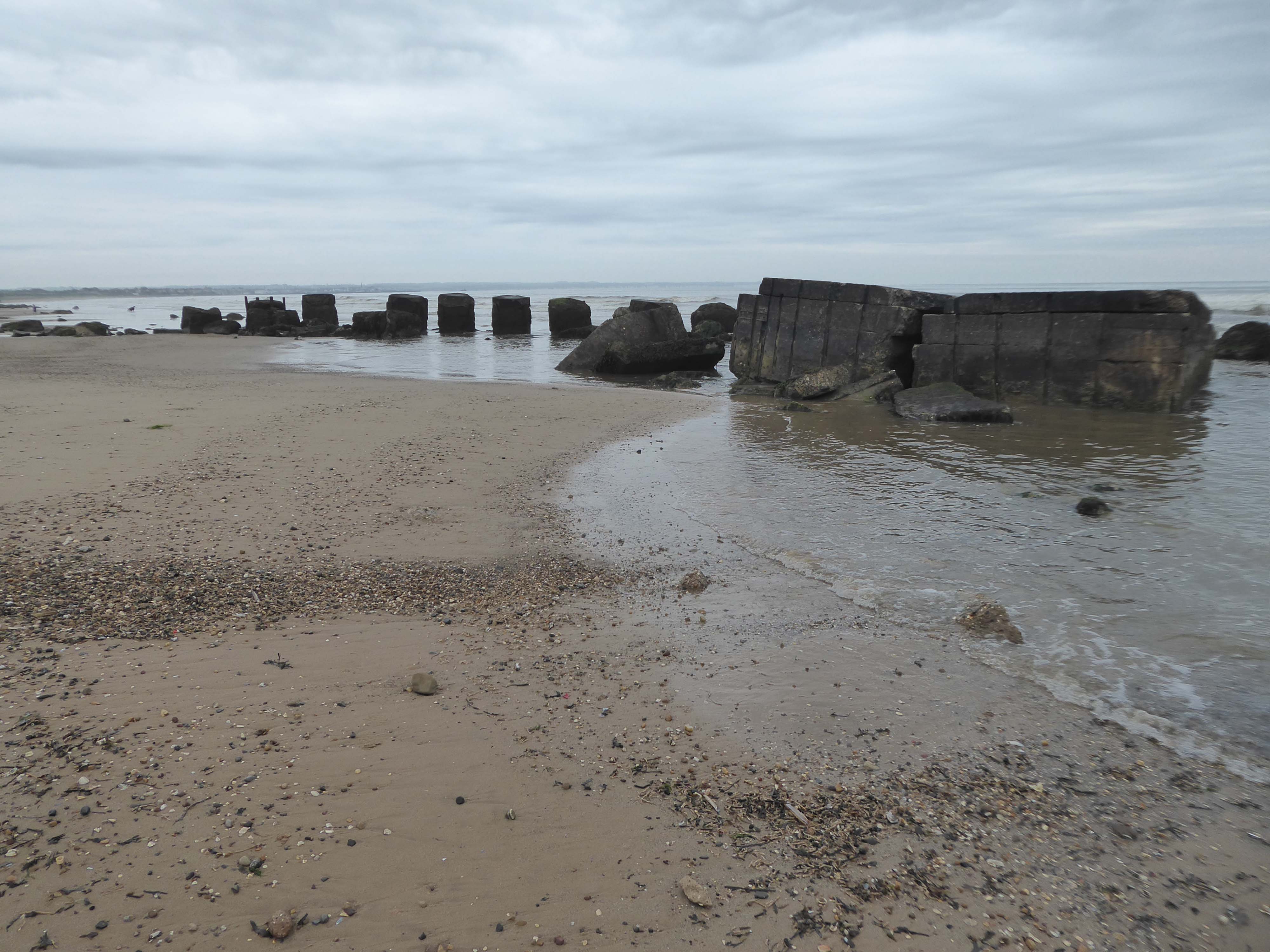
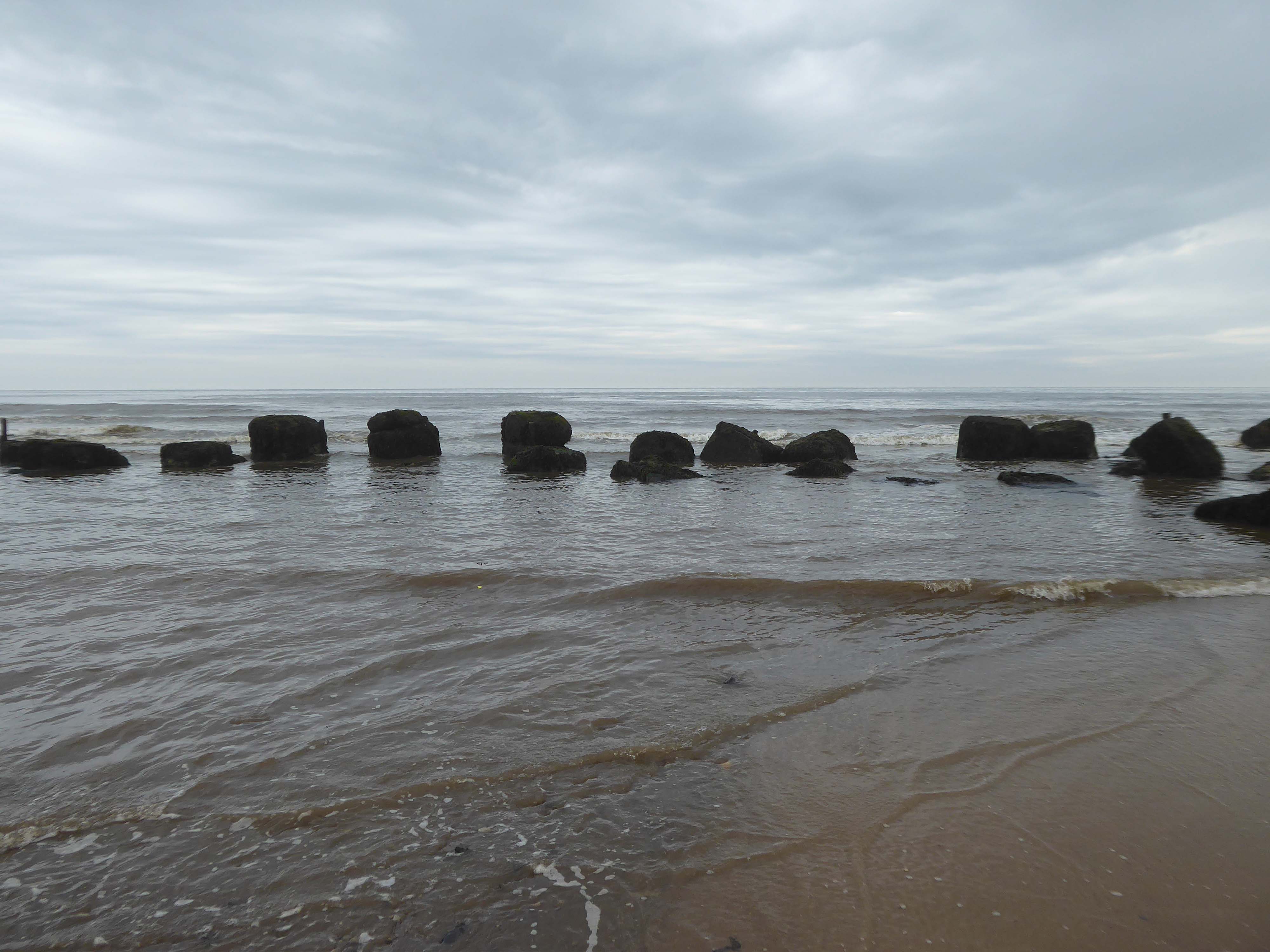
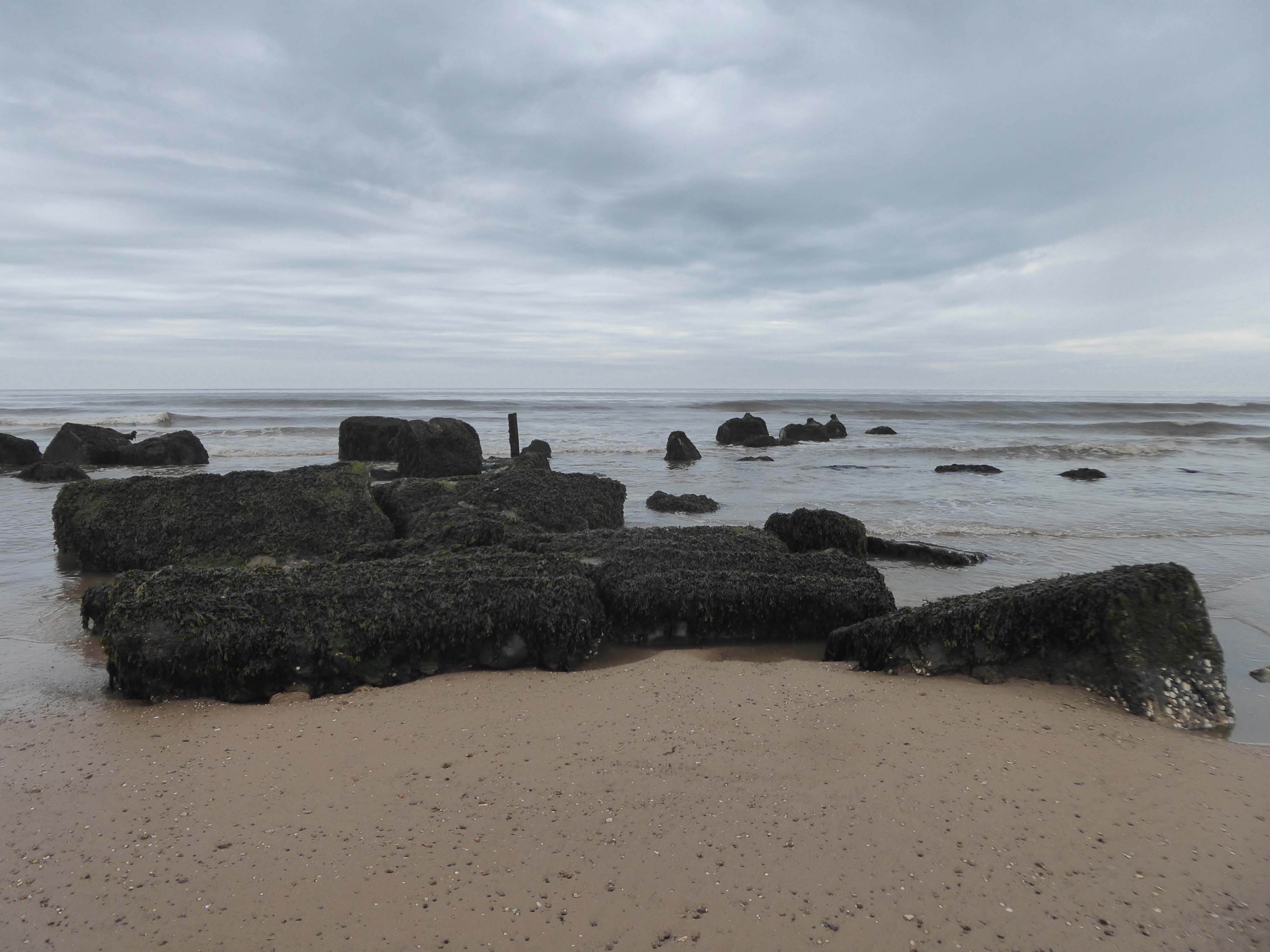
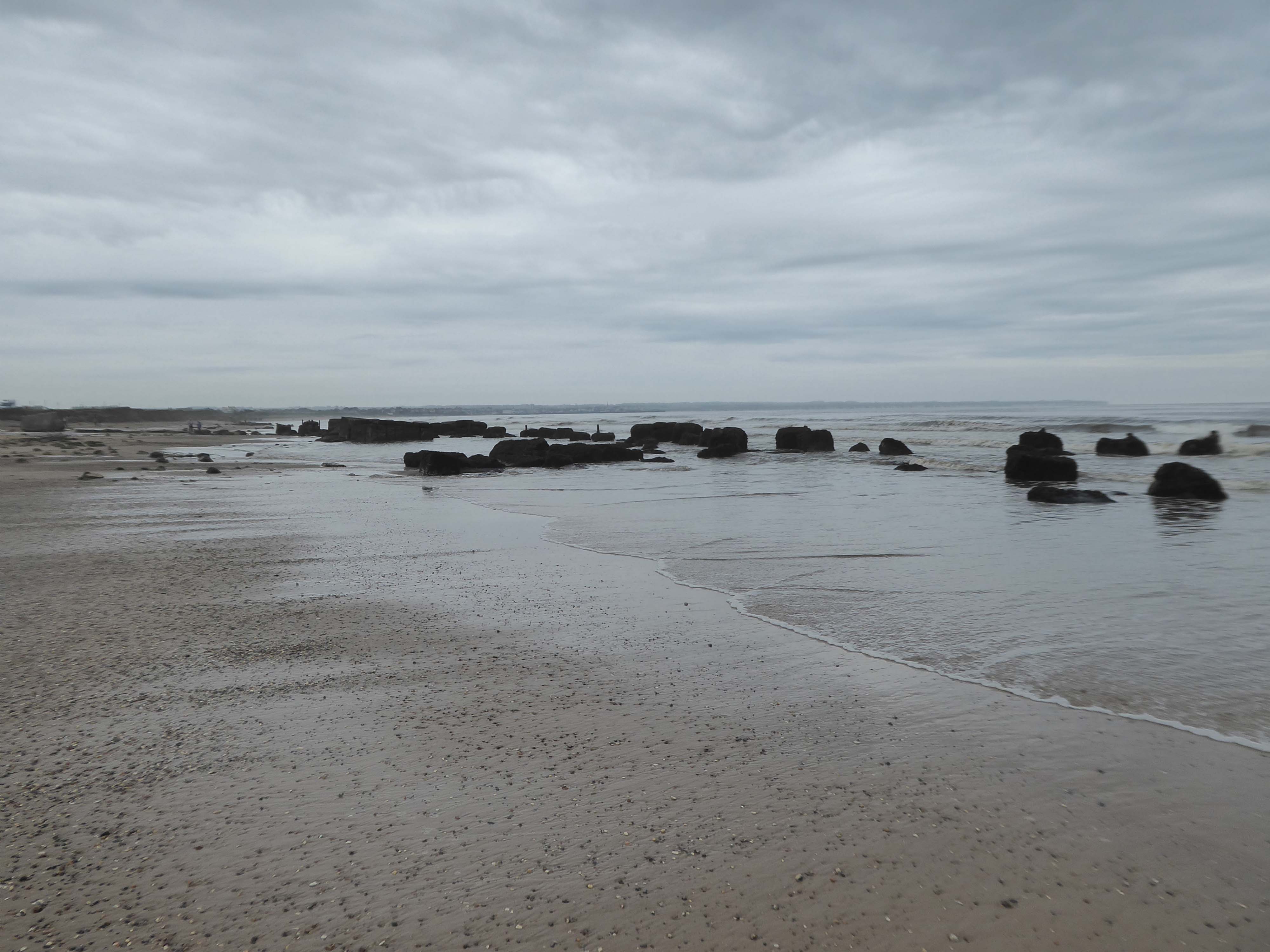
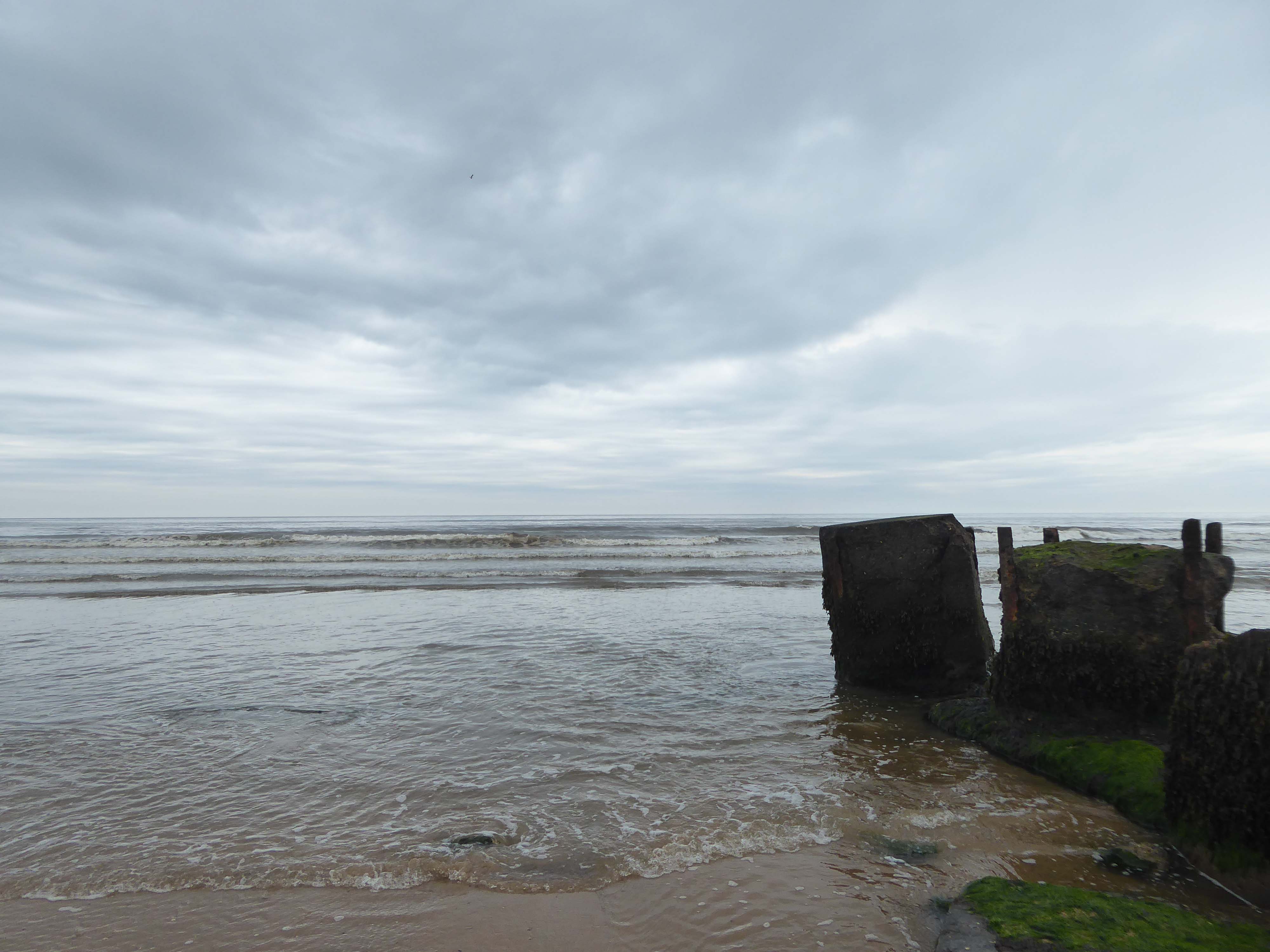
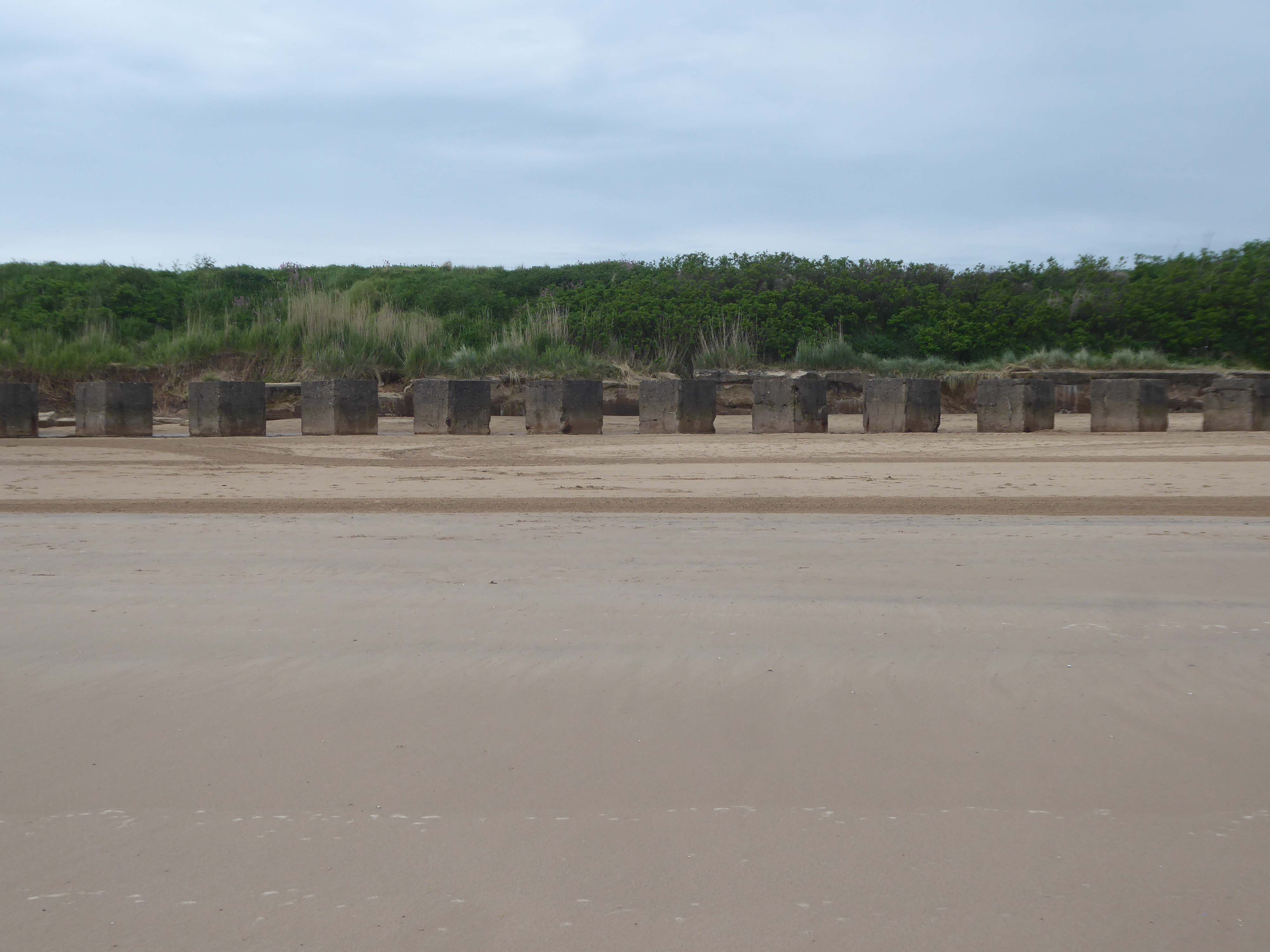
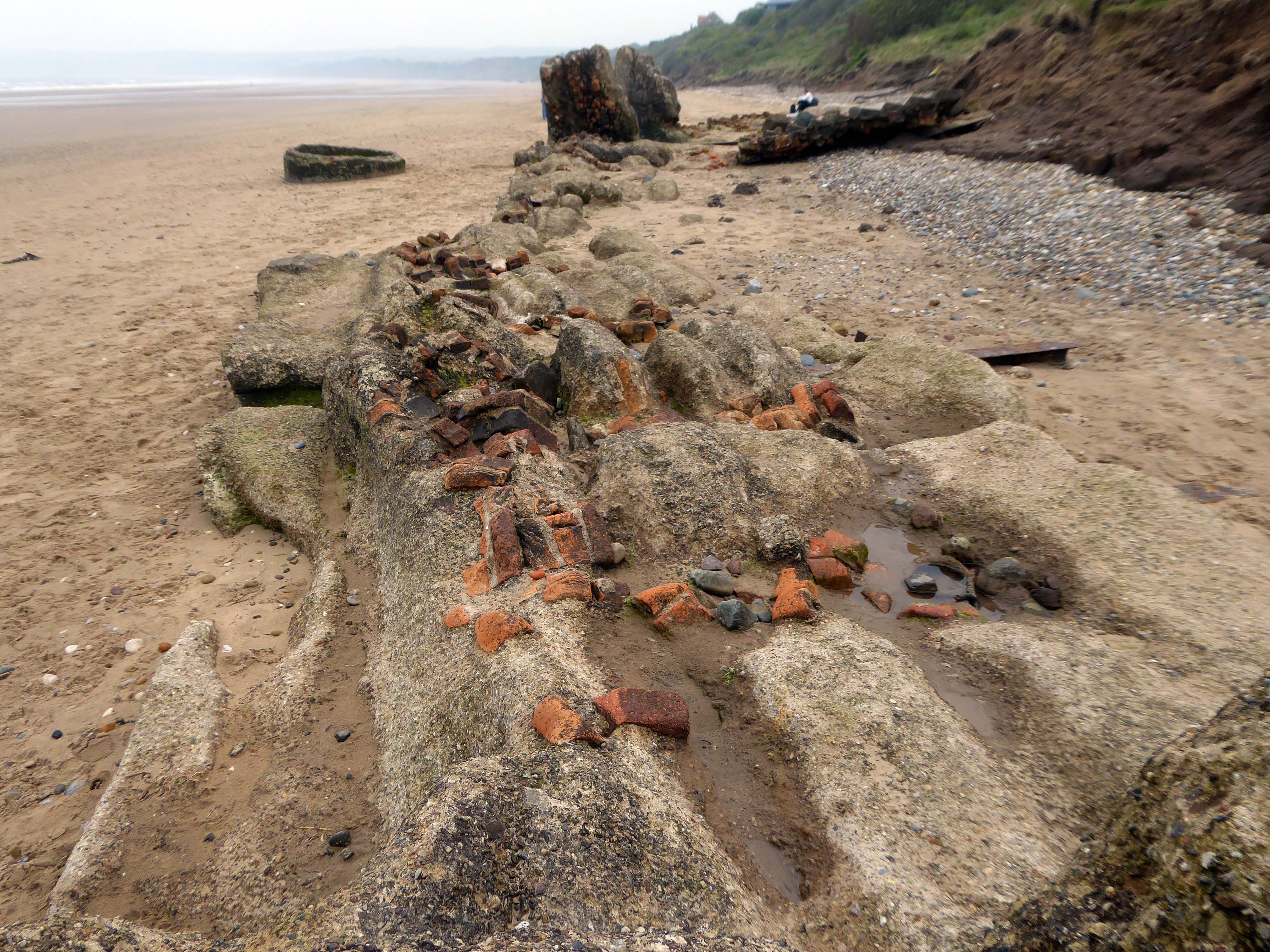
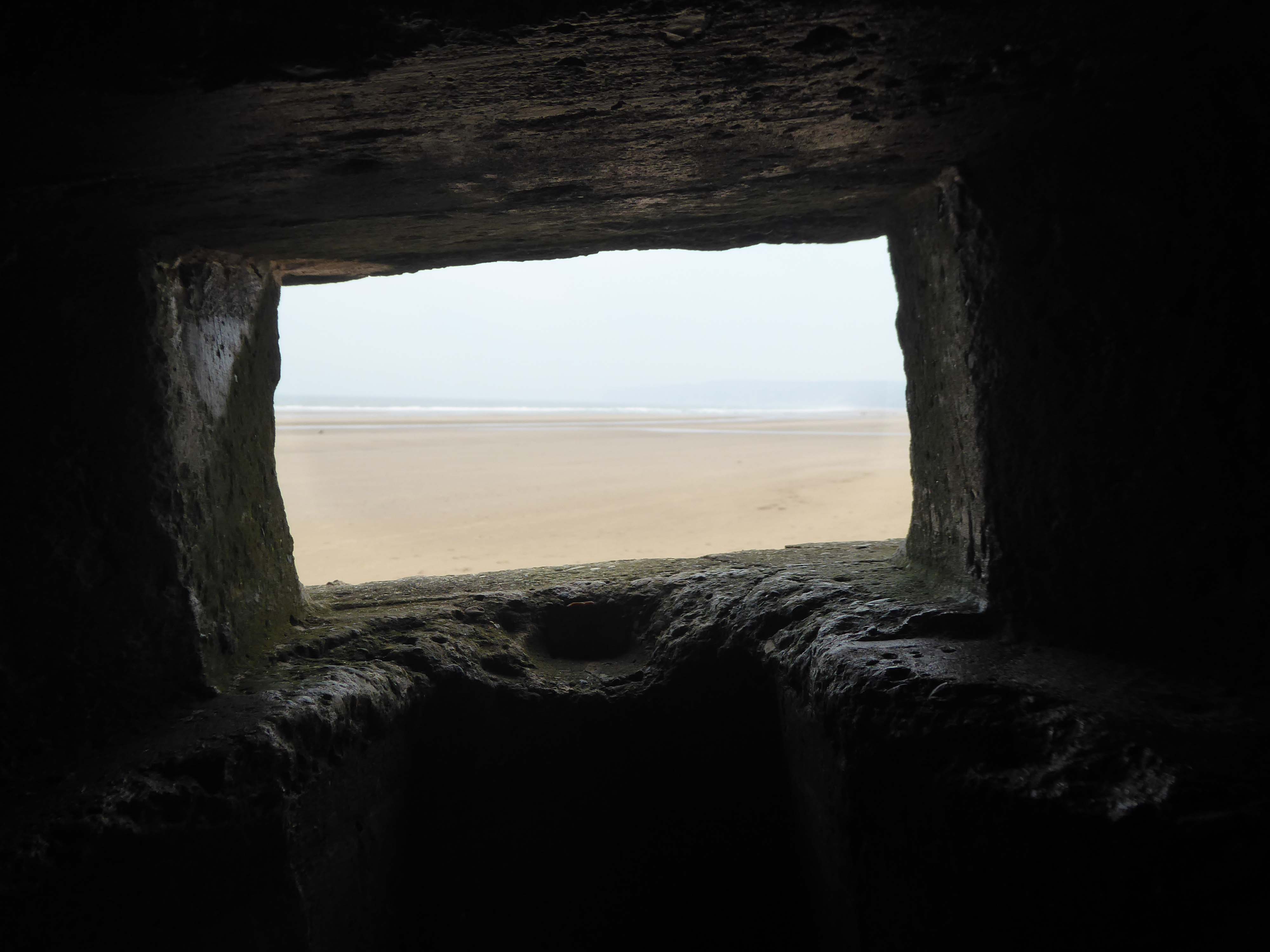
Anti-tank blocks line the foreshore here; with deep foundation they are meant to be so immovable that tanks cannot go through them and rather have to go over them, exposing the weakly armour undersides of the tanks, which can then be fired at. The anti-tank blocks are arranged in batches of both parallel and perpendicular to the sea, which helps to divide up the beach and channel enemies towards the pillboxes and into fire.

Citizan

Coastal Concrete – Filey

Once more unto the beach, dear friends, once more, or close the wall up with our English dead. 

Having visited Cayton Bay last year I ventured forth last week, to Filey and beyond.

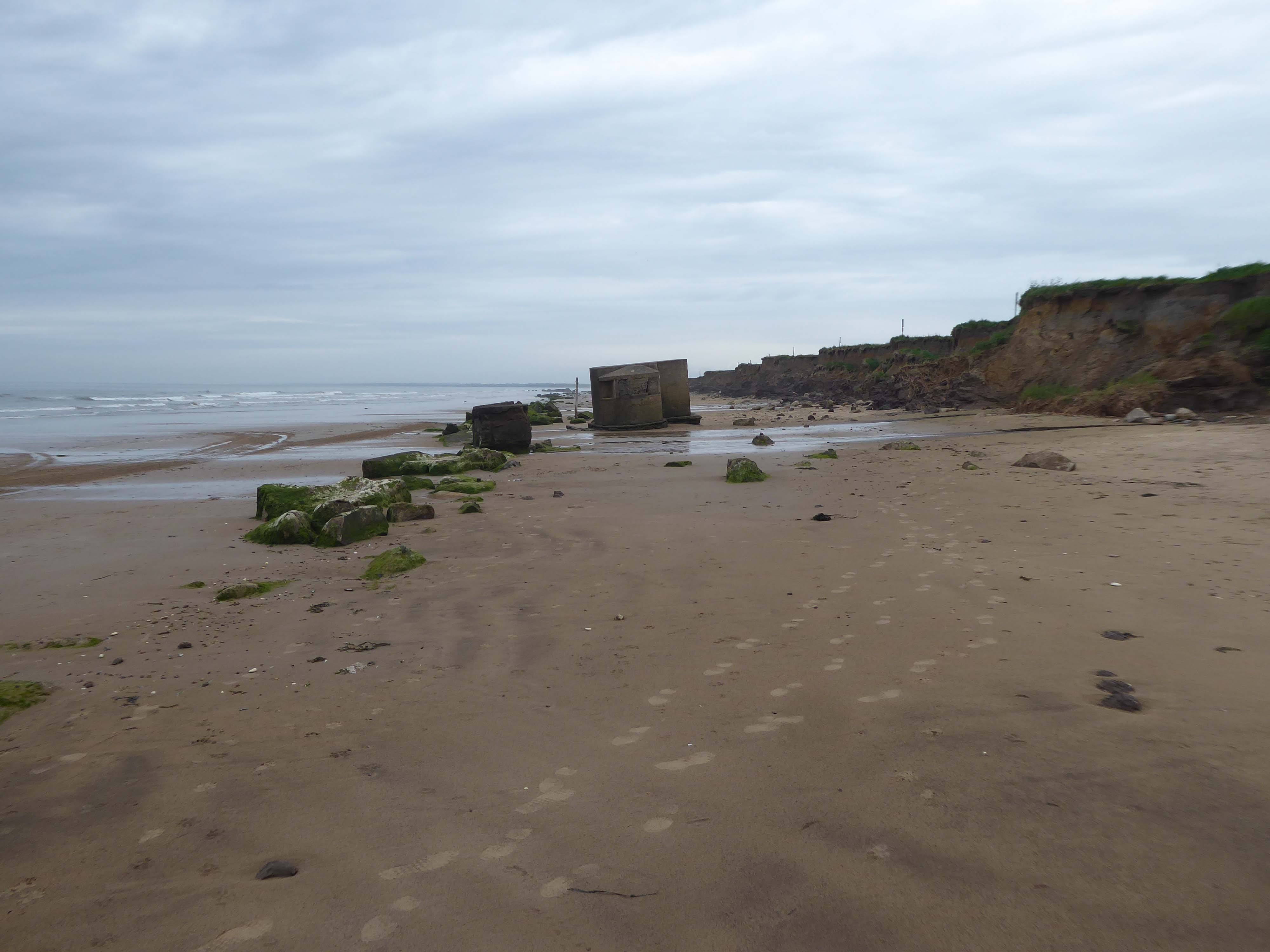
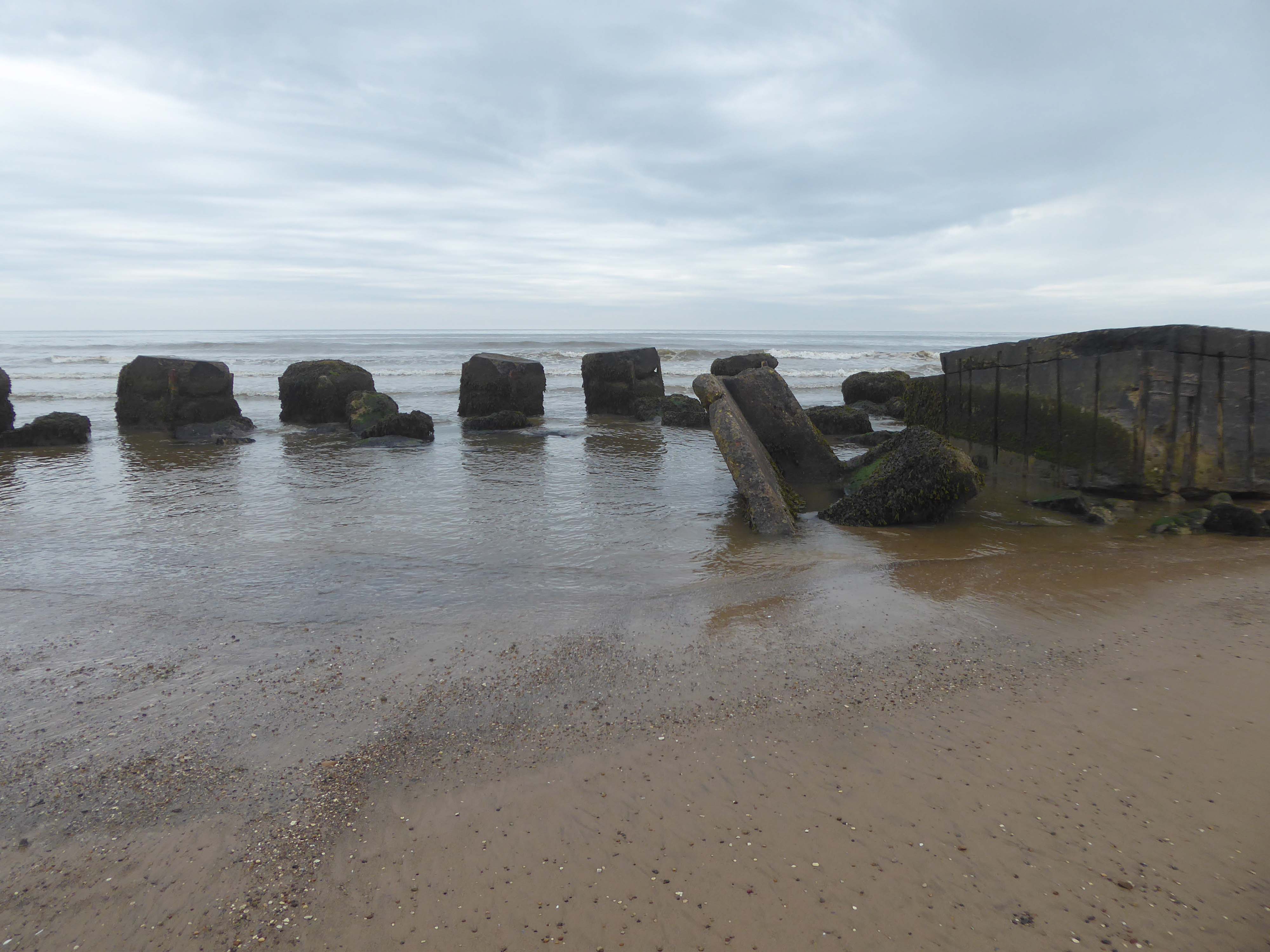
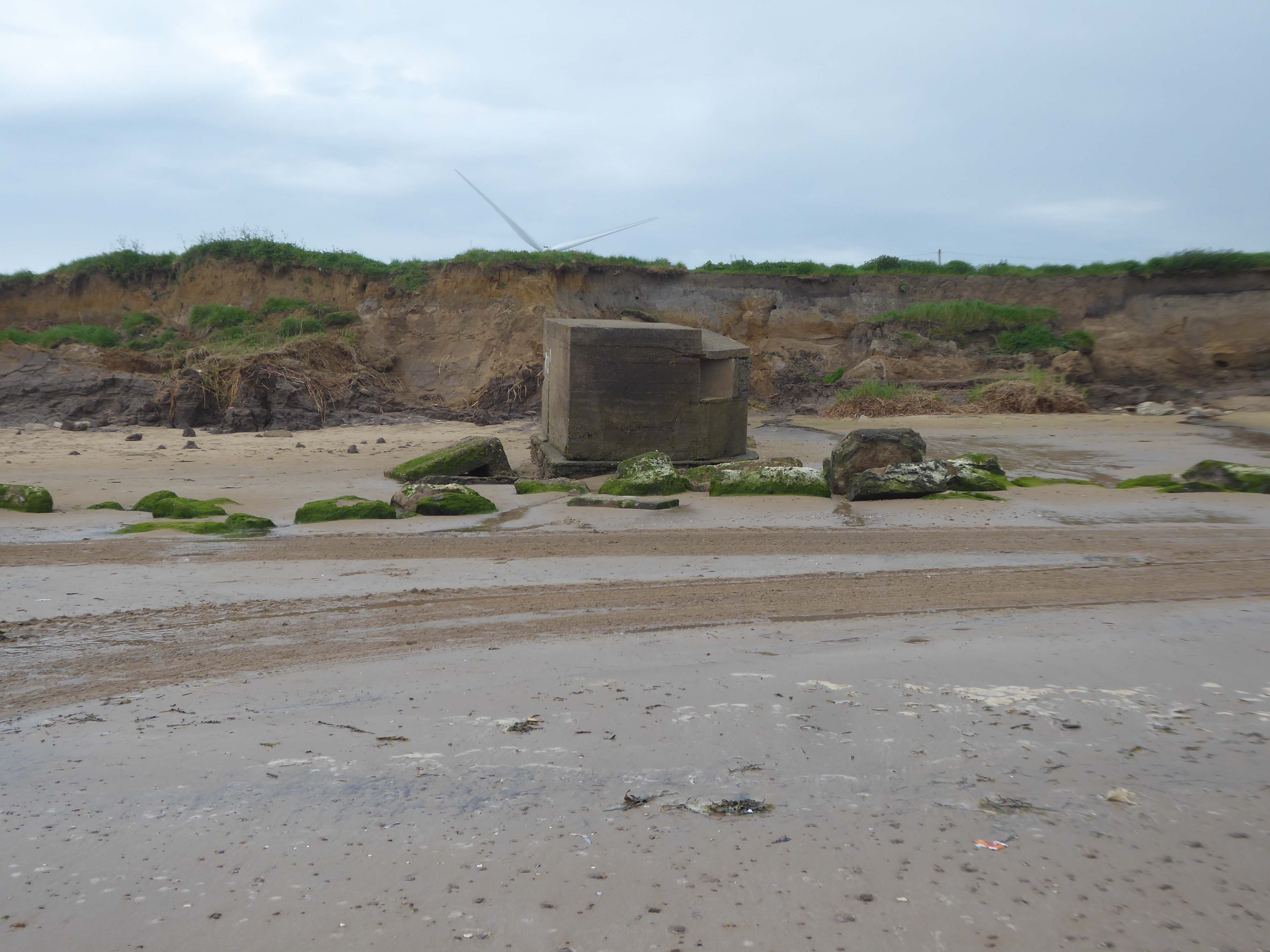
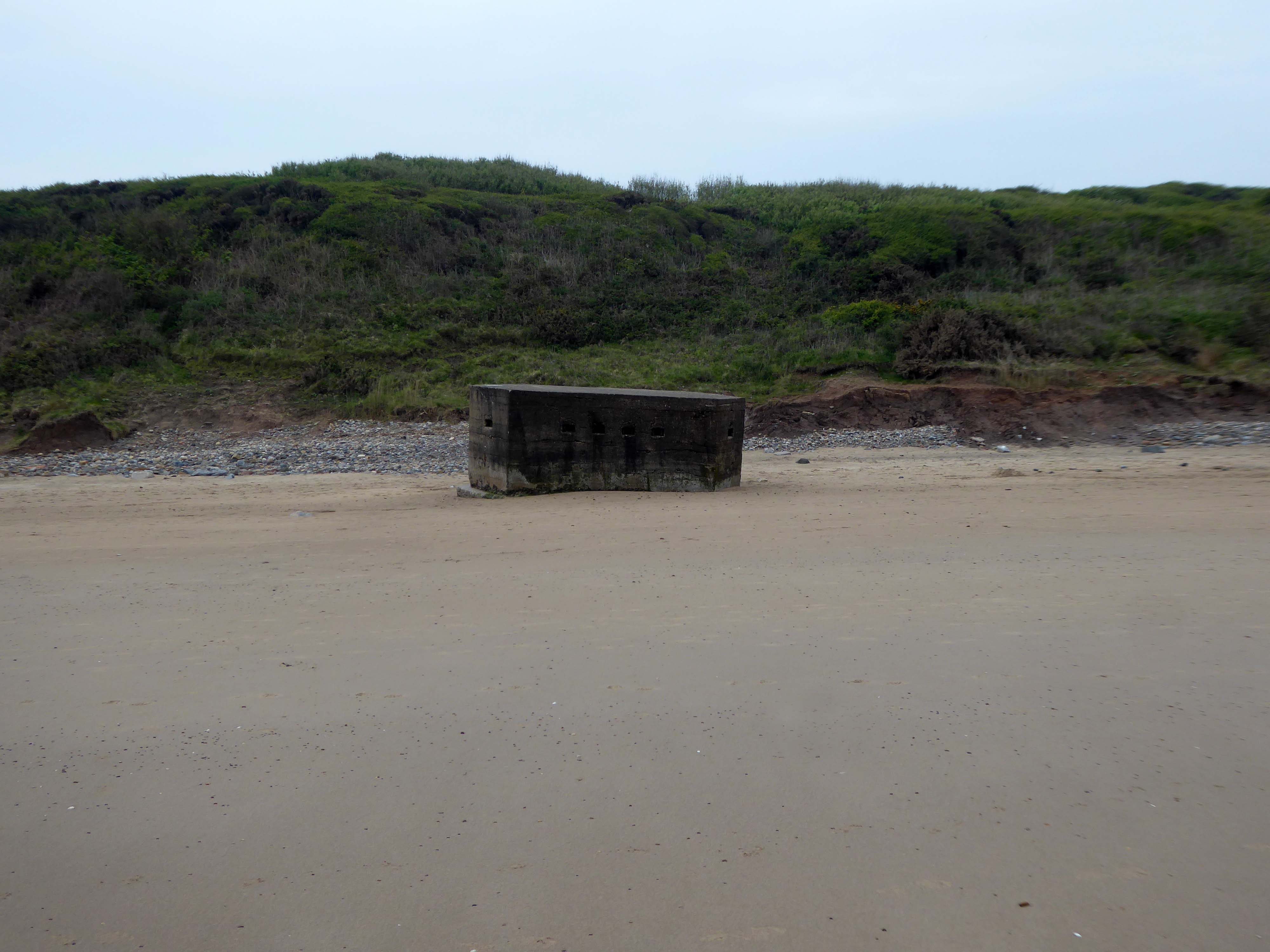
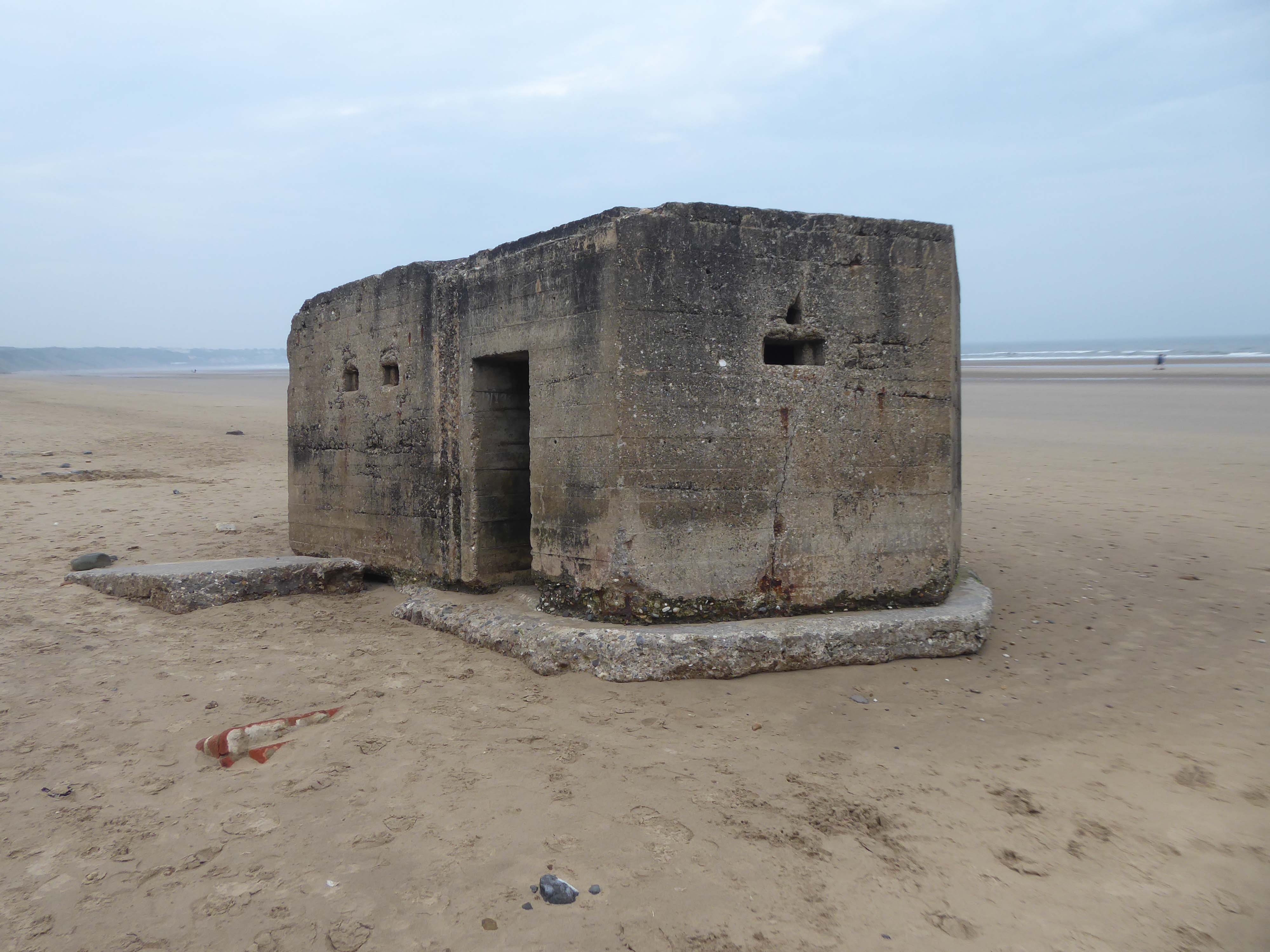
The shore toward Hunmanby Gap when faced with the threat of invasion, was home to a plethora of coastal defences, formed from raw concrete between the years 1941 and 1942, along with attendant armed forces.
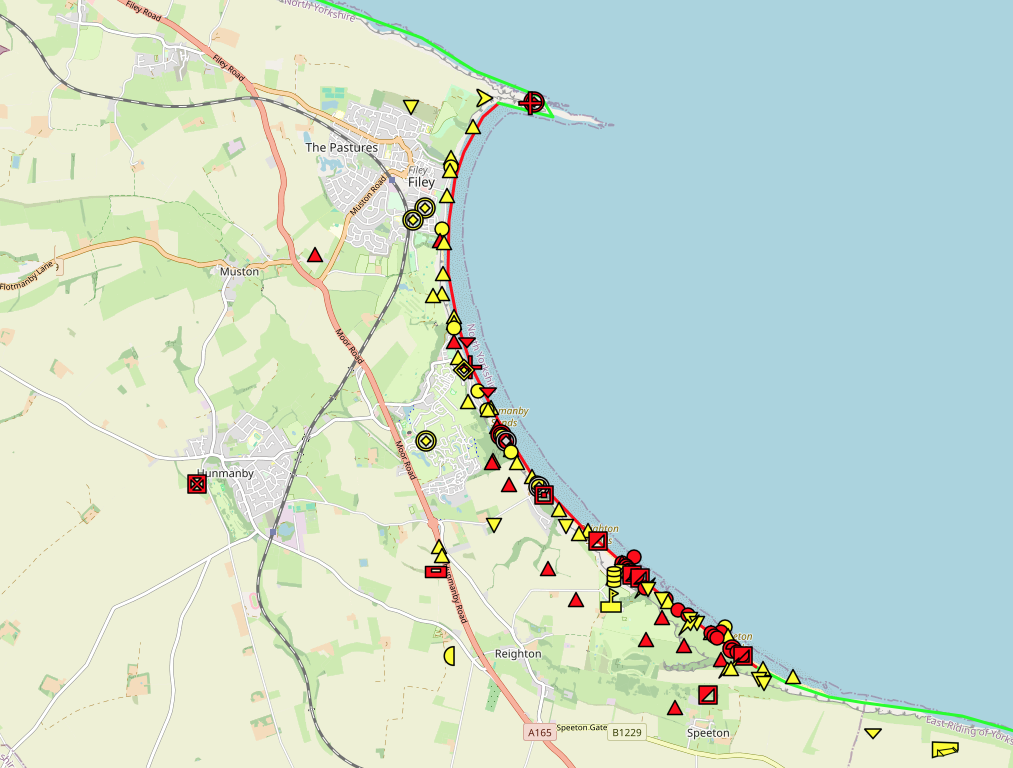
Map – eDoB online

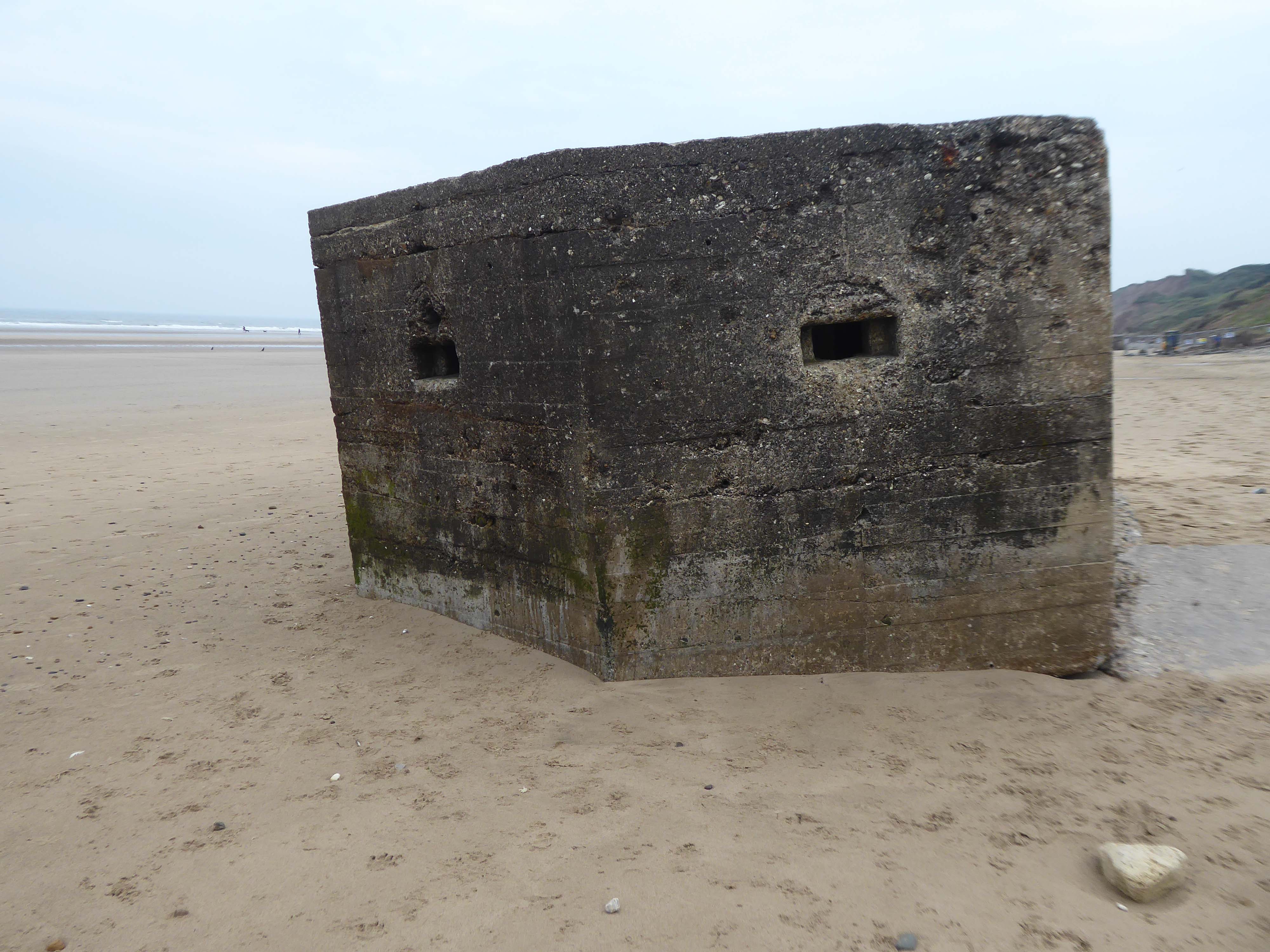
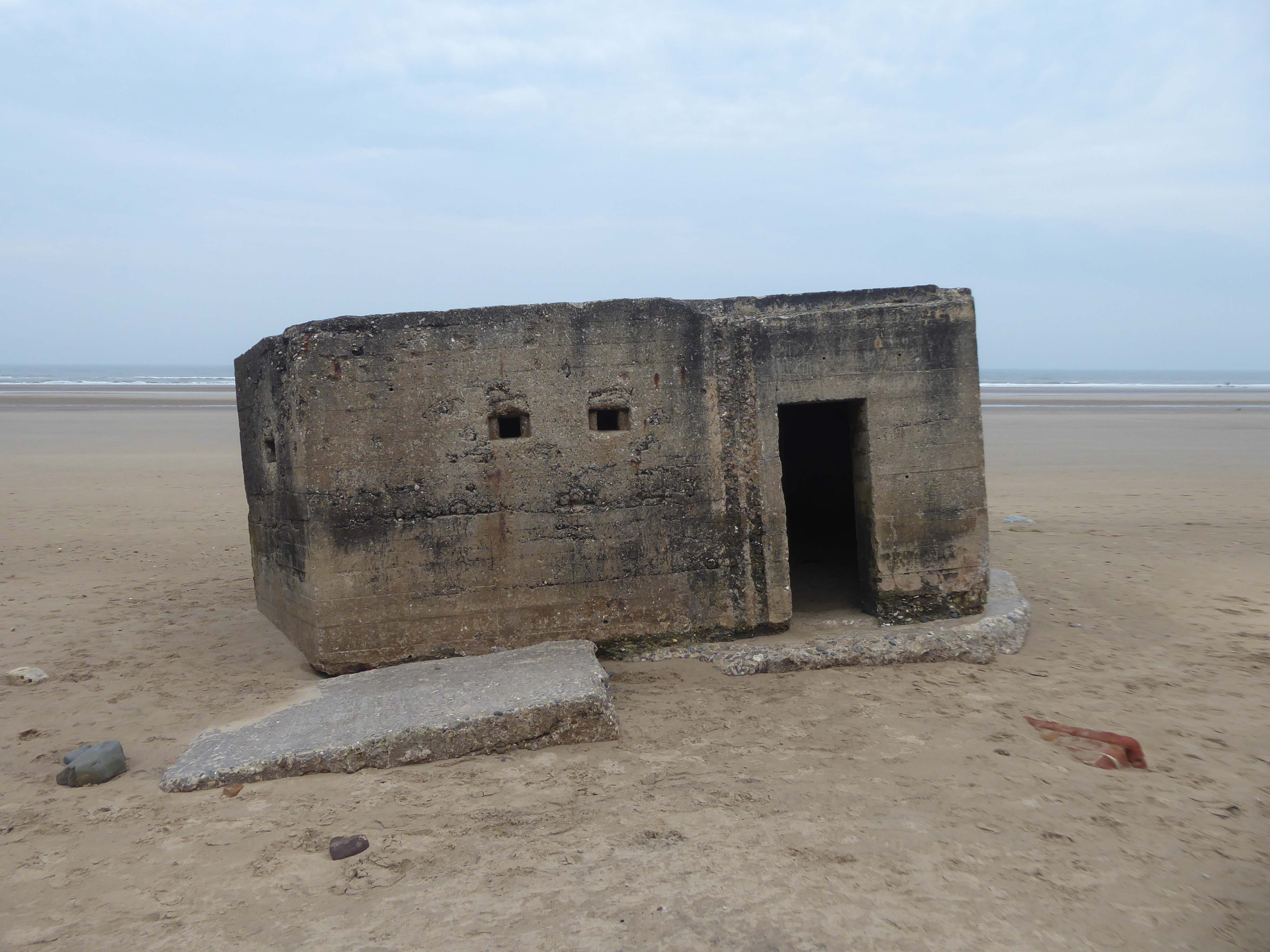
Pill boxes, anti-landing trenches, anti-tank obstacles, beach lights, coastal batteries, flame fourgasses, gun emplacements and machine gun posts were clustered along the coast.
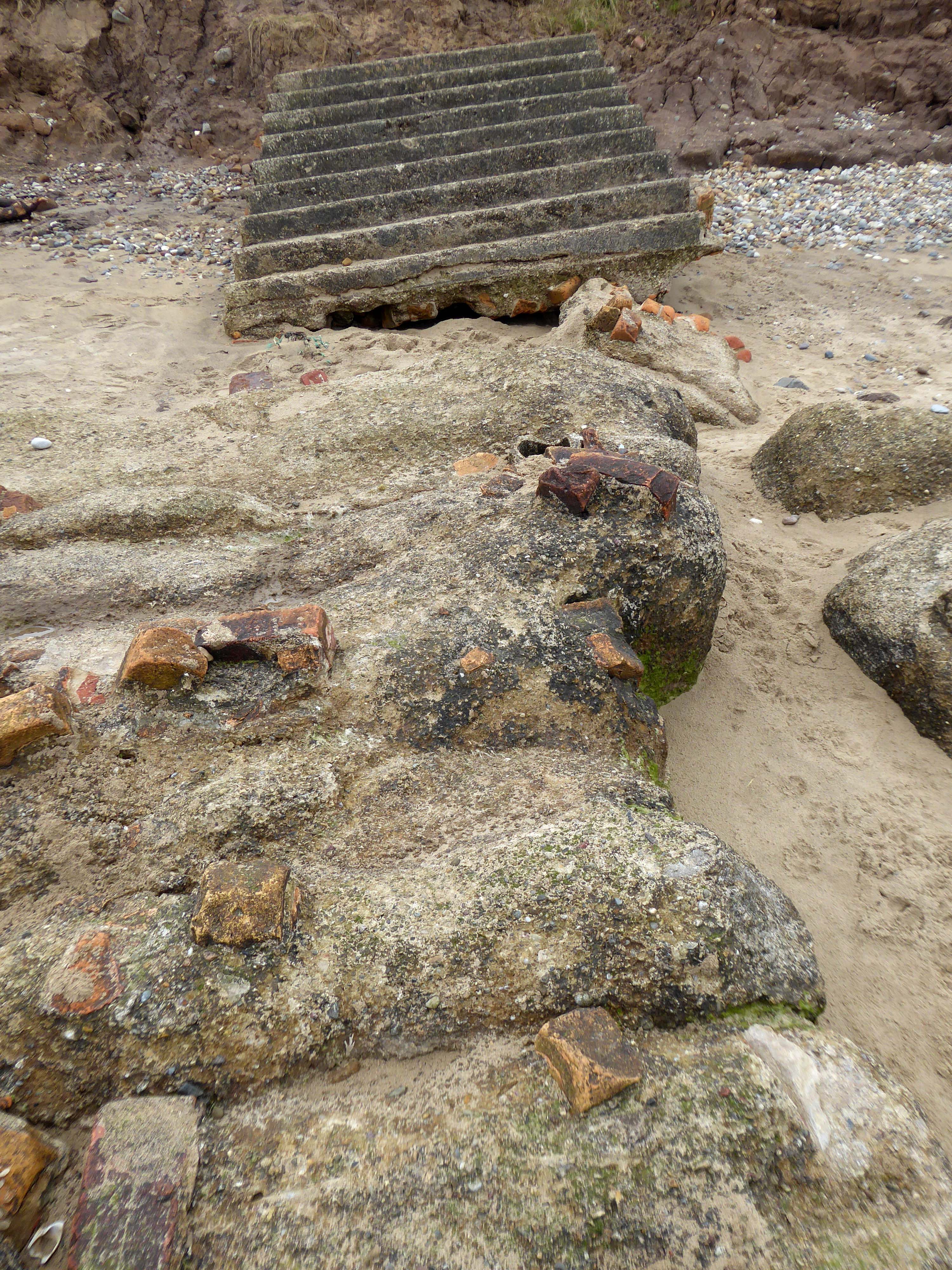
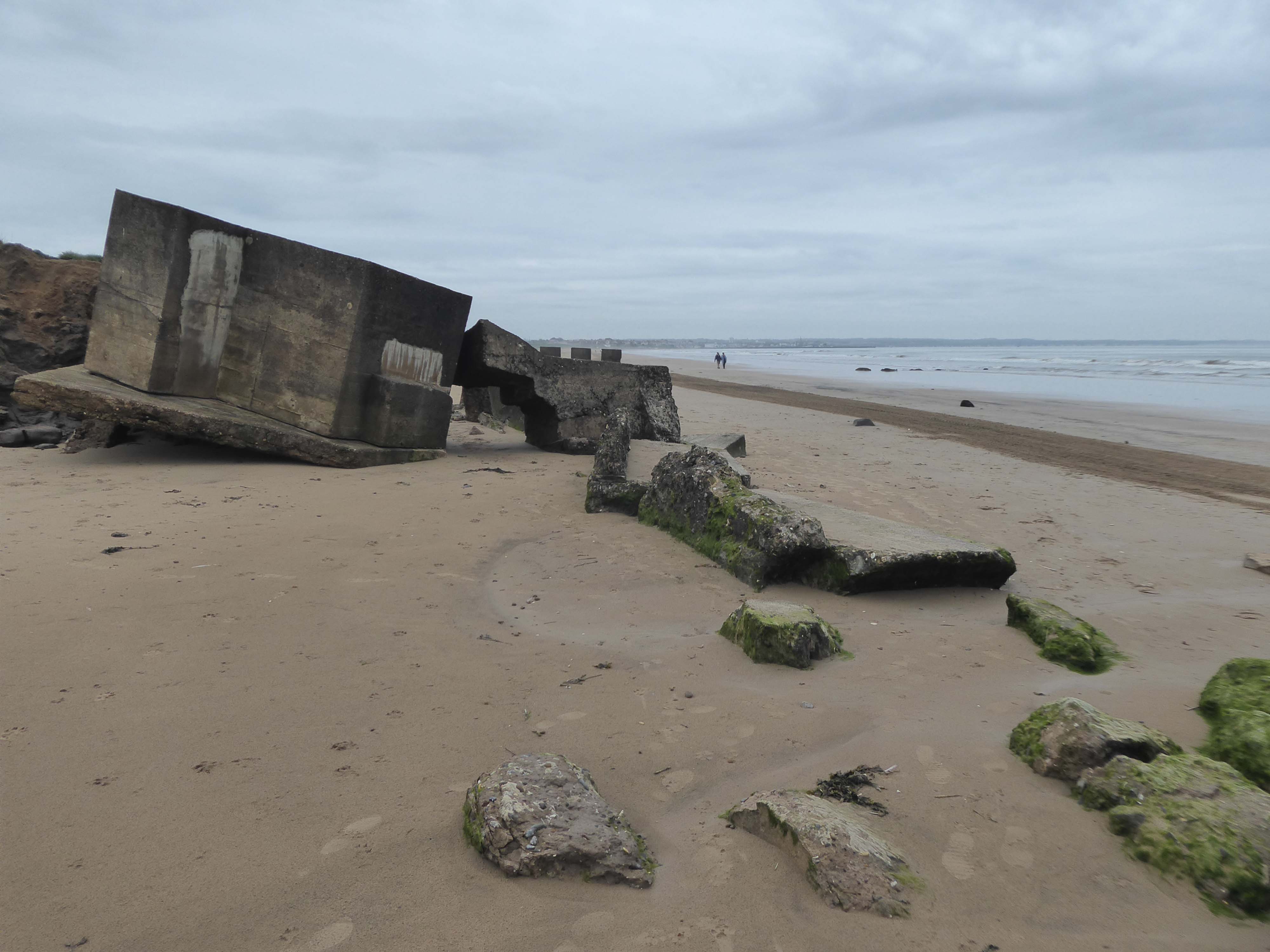
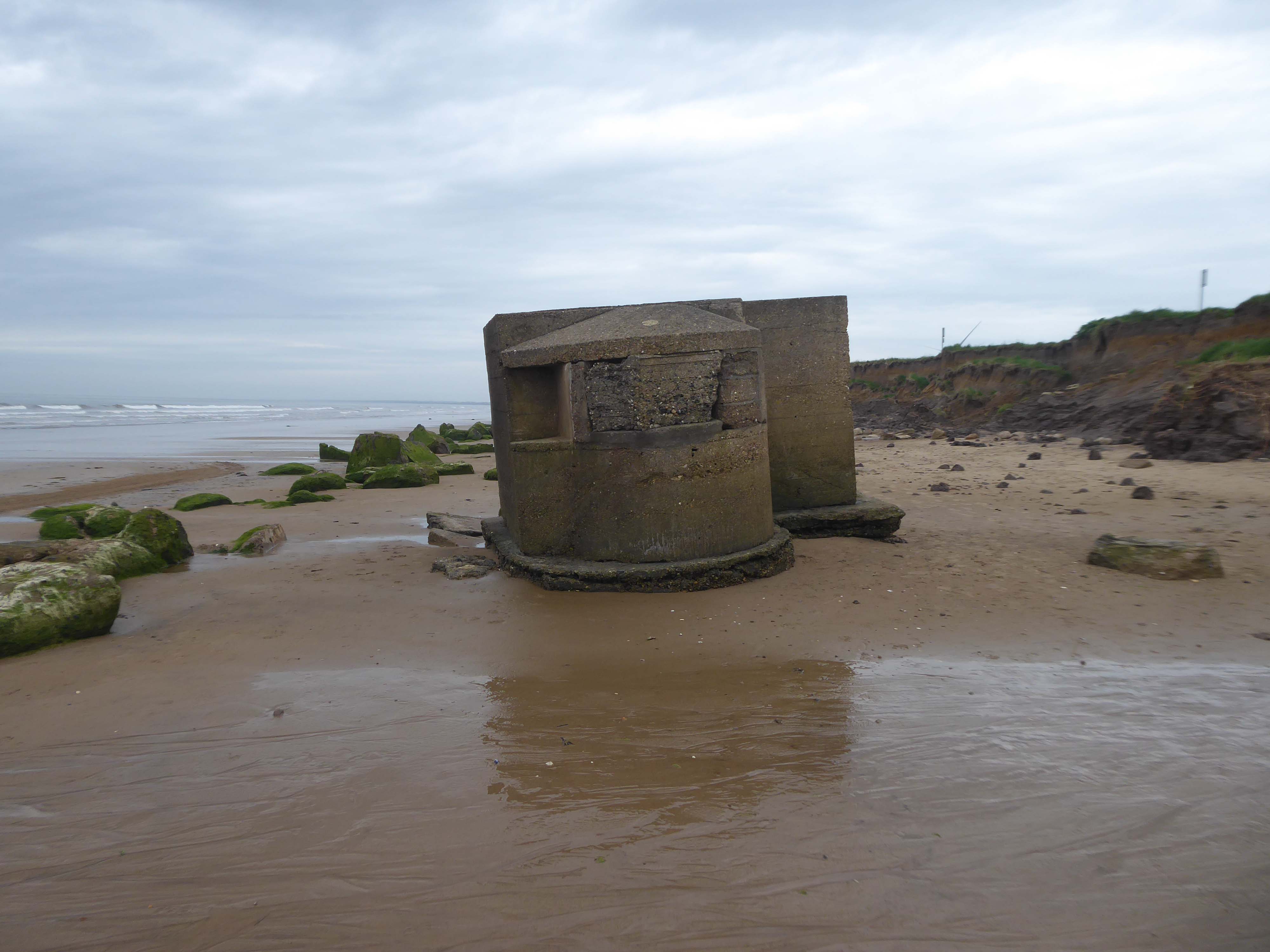
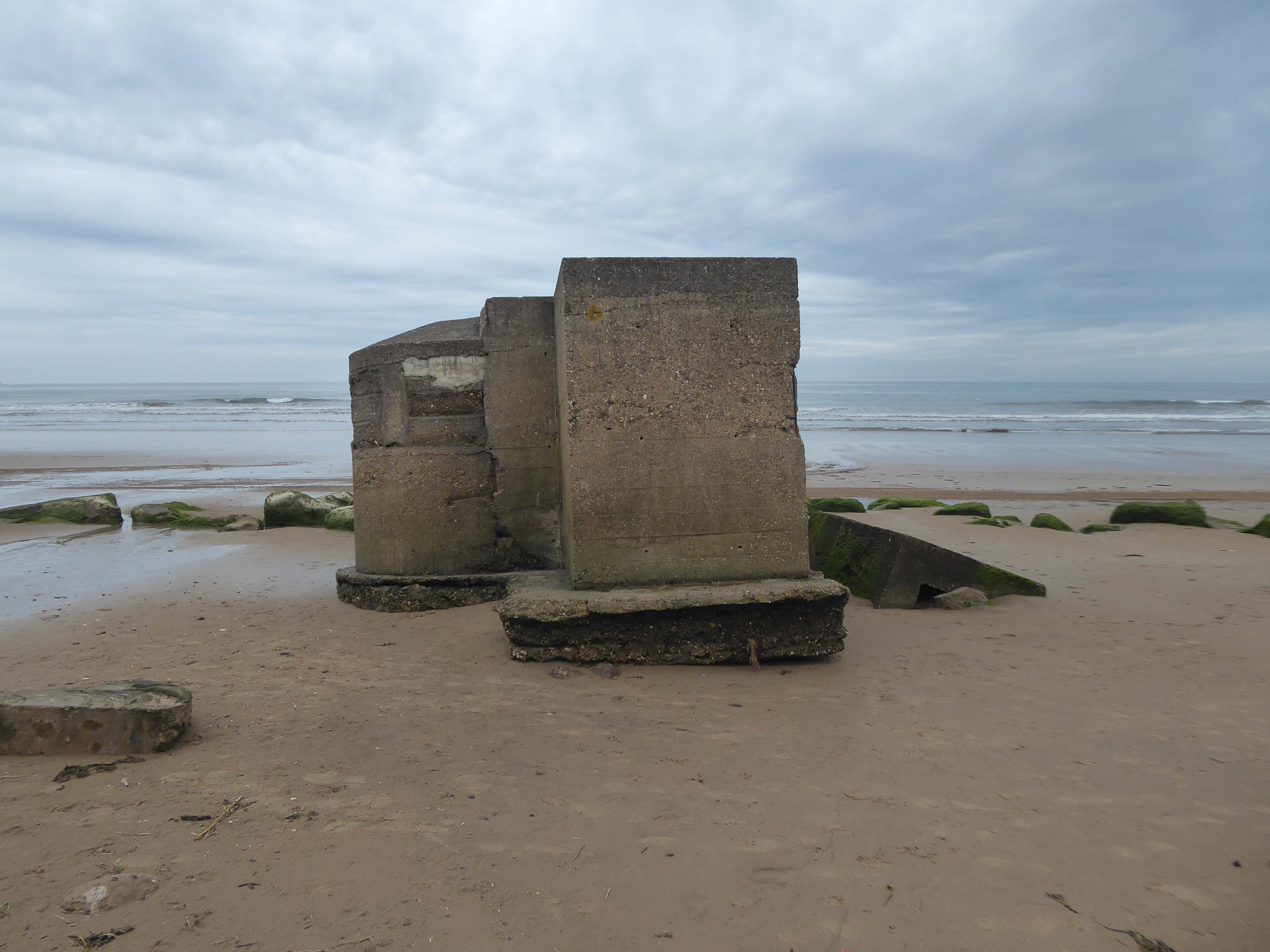
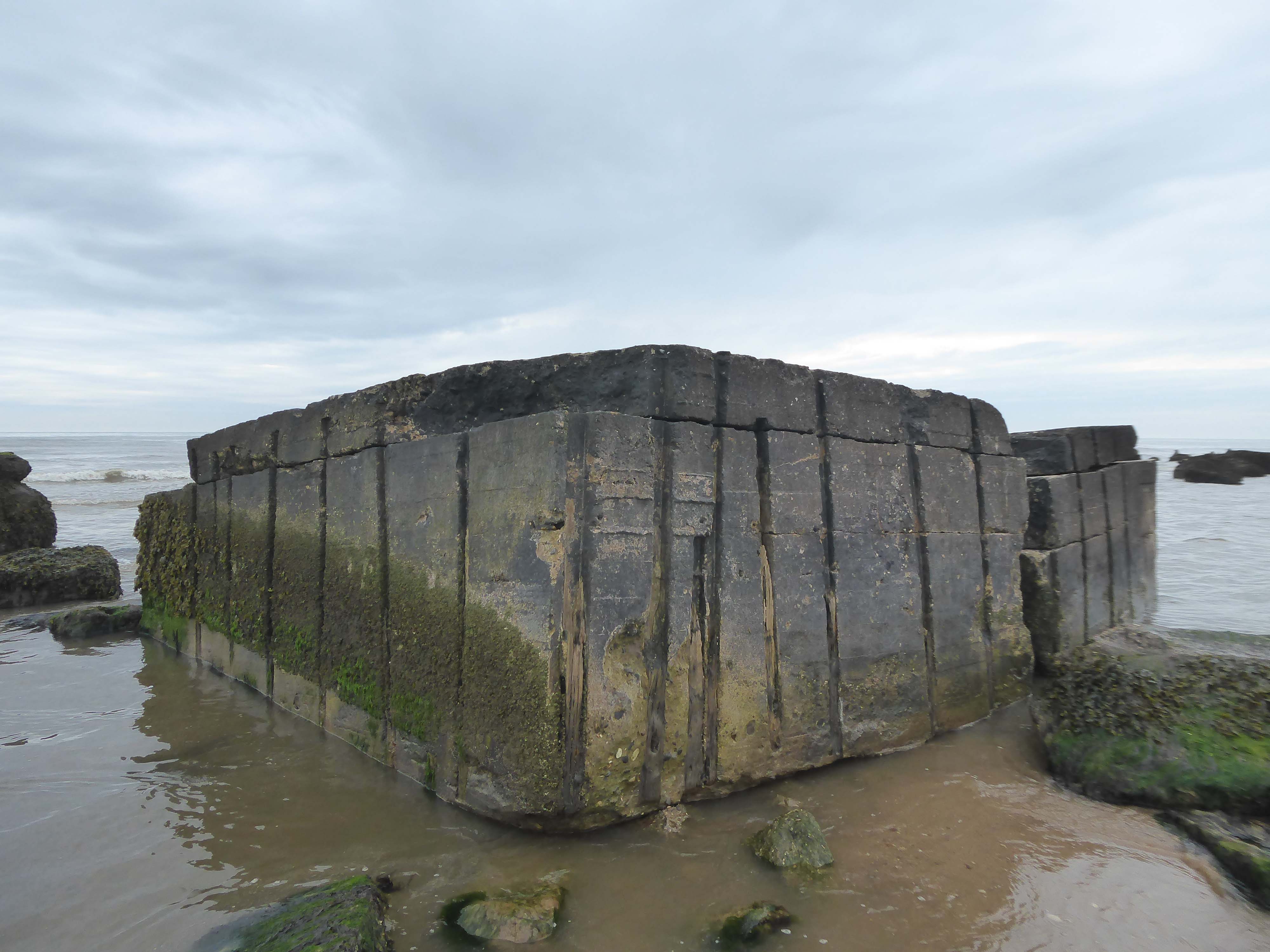
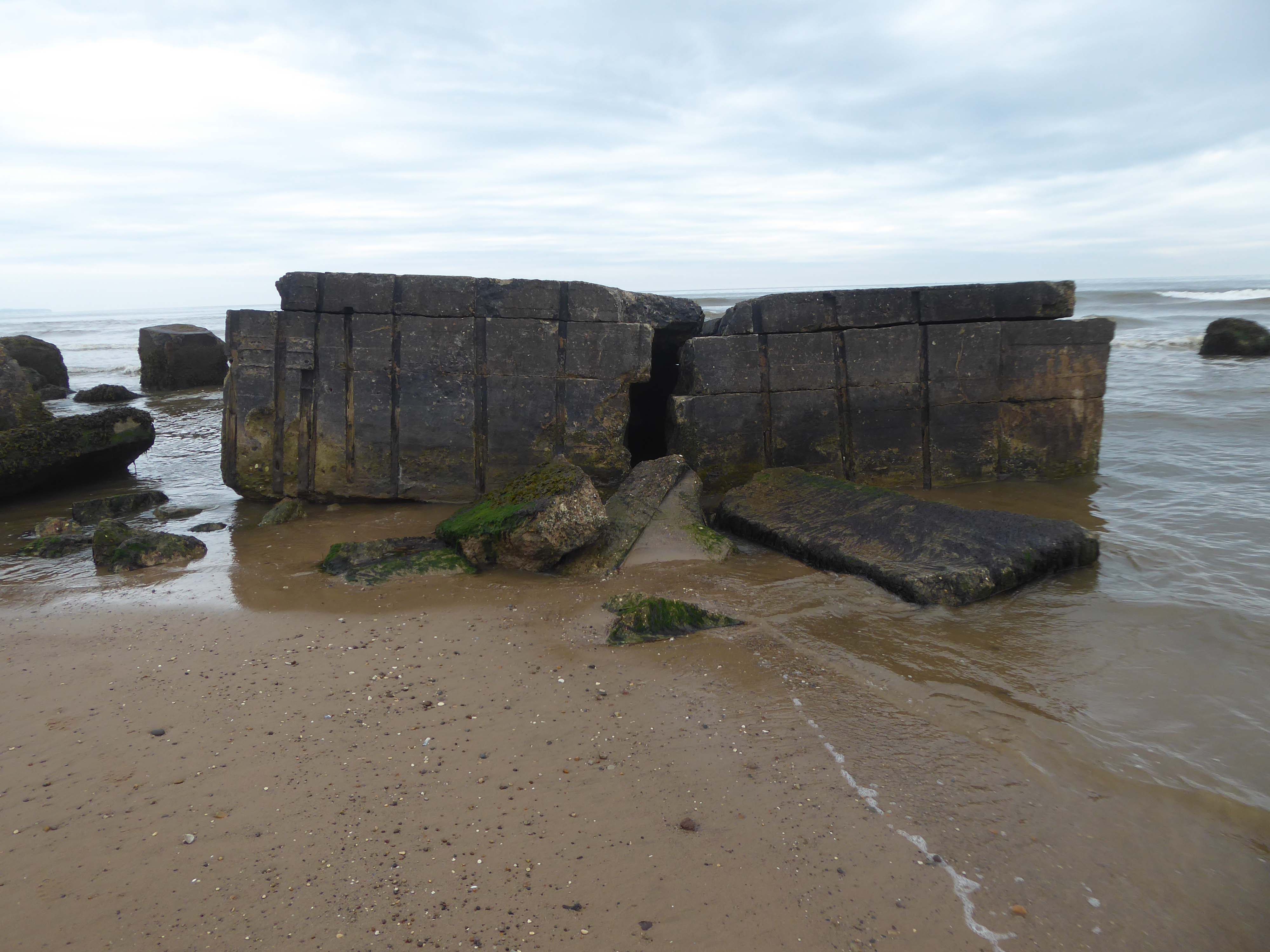
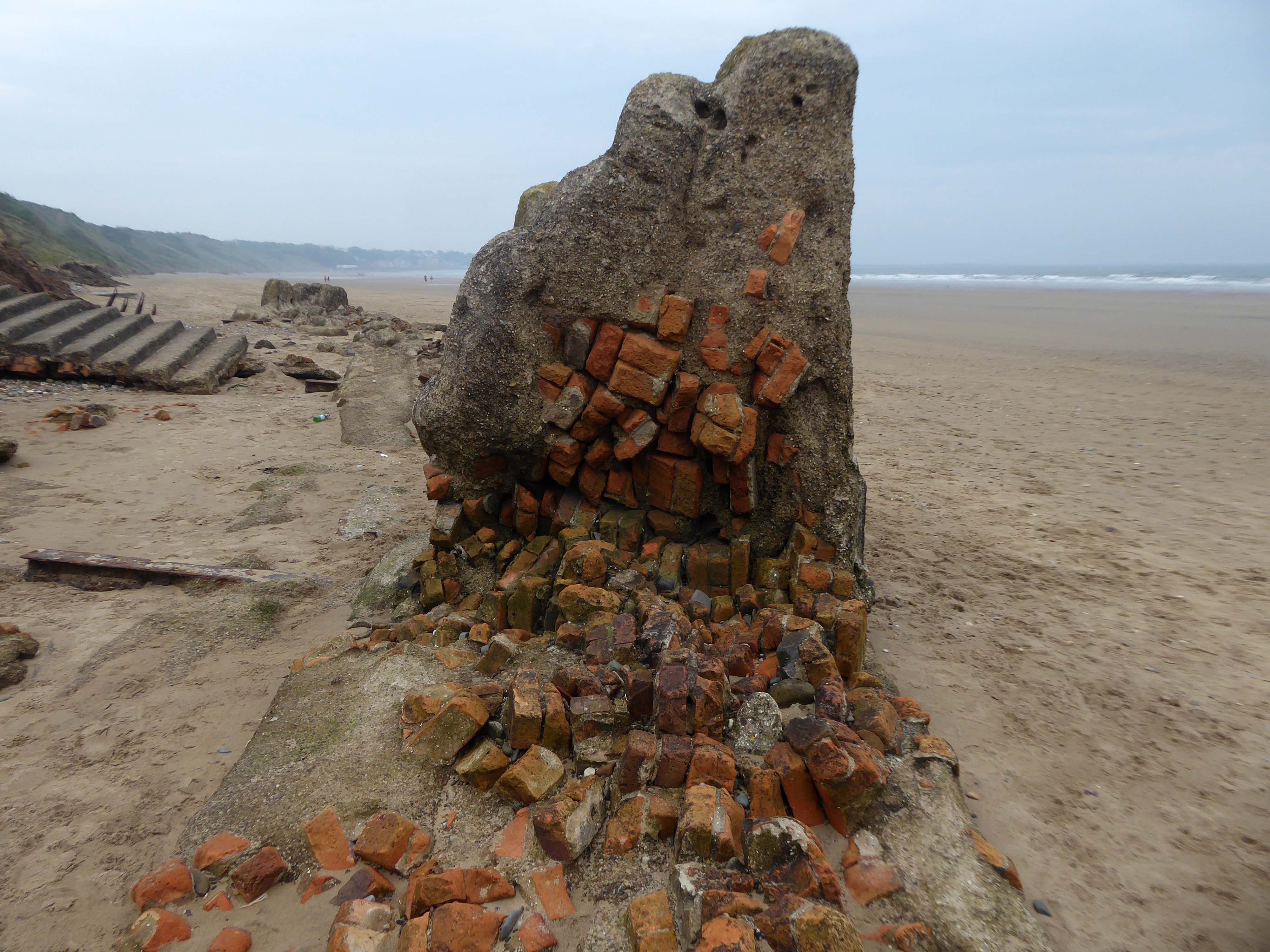
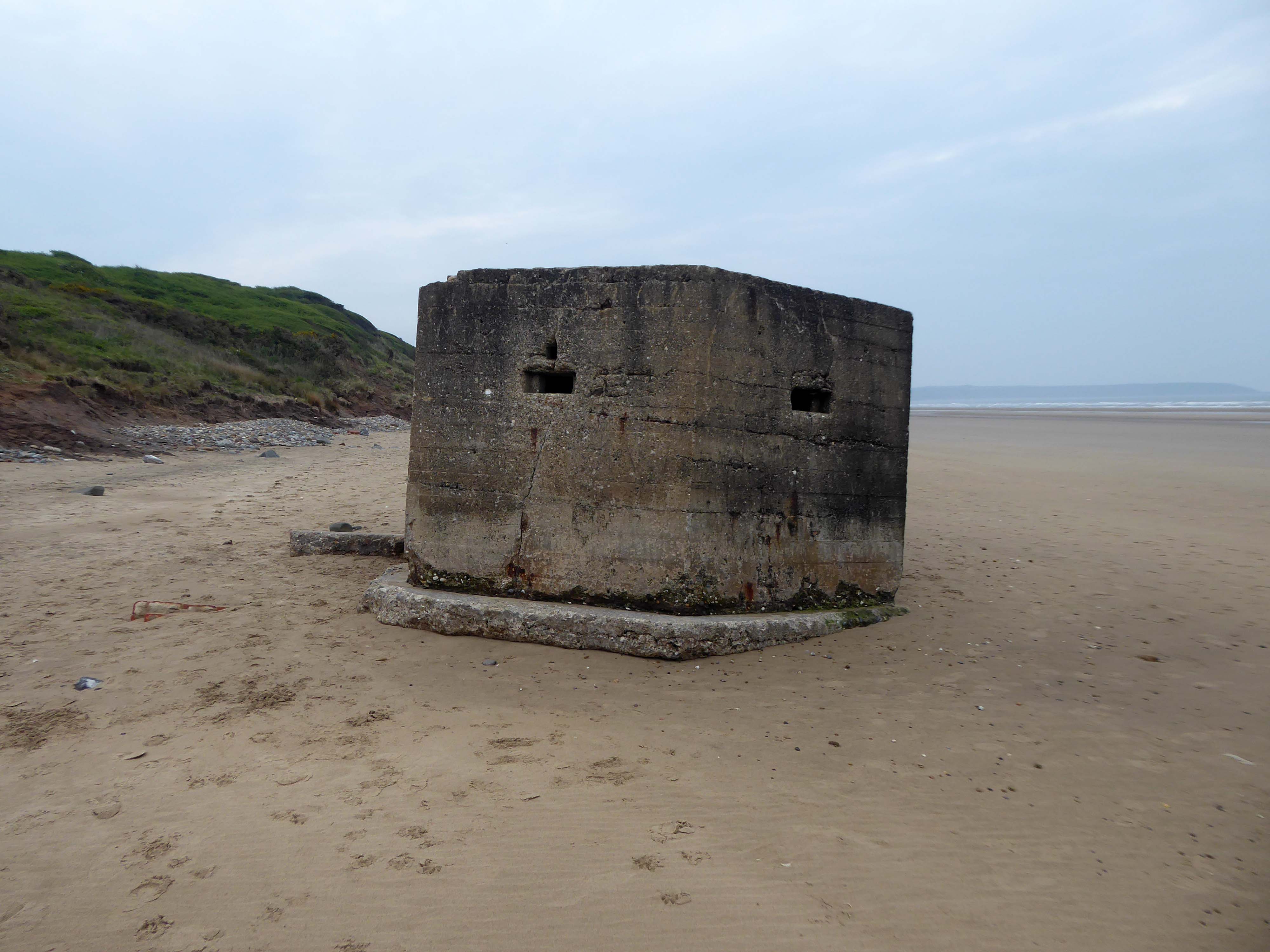
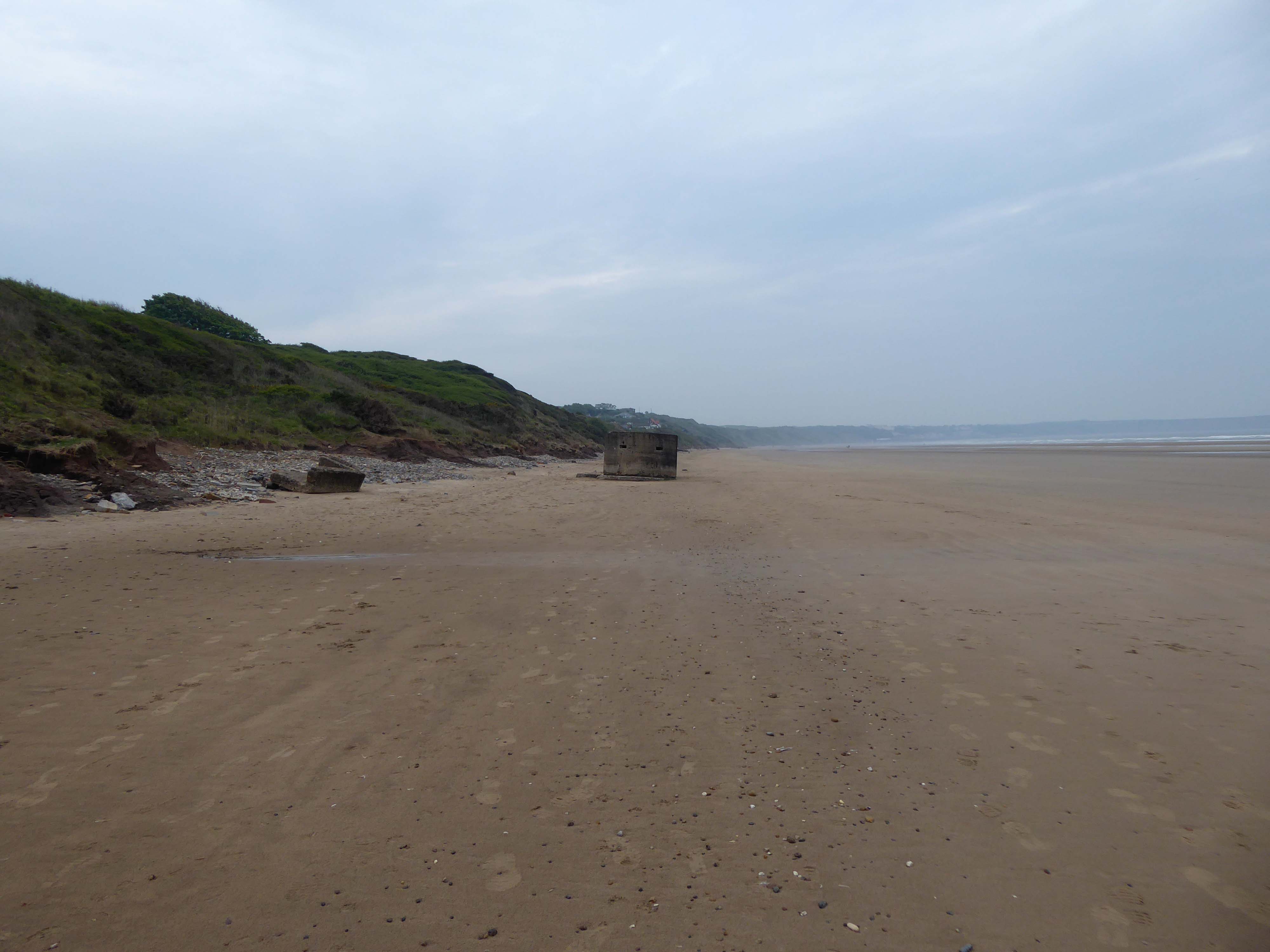
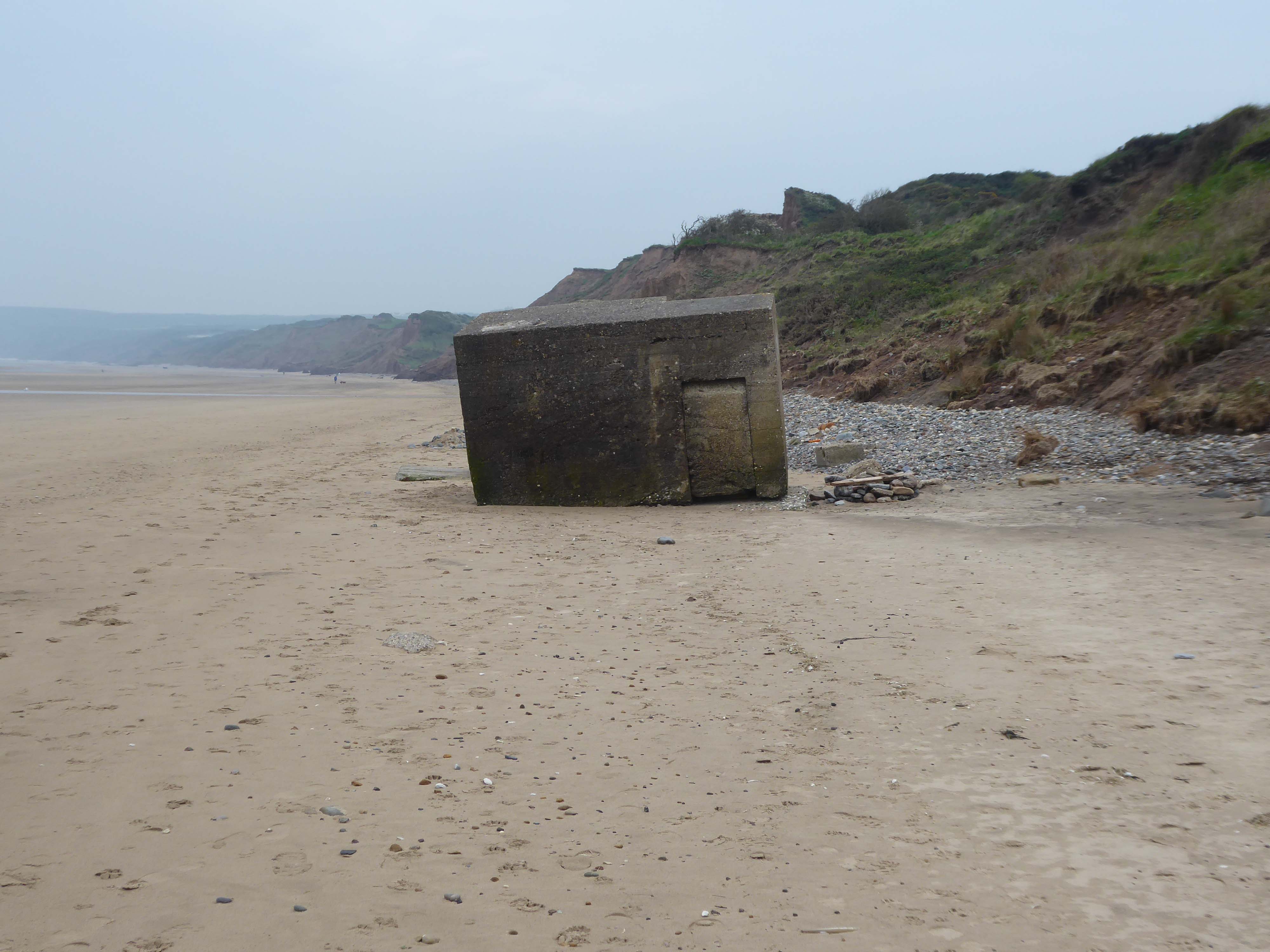
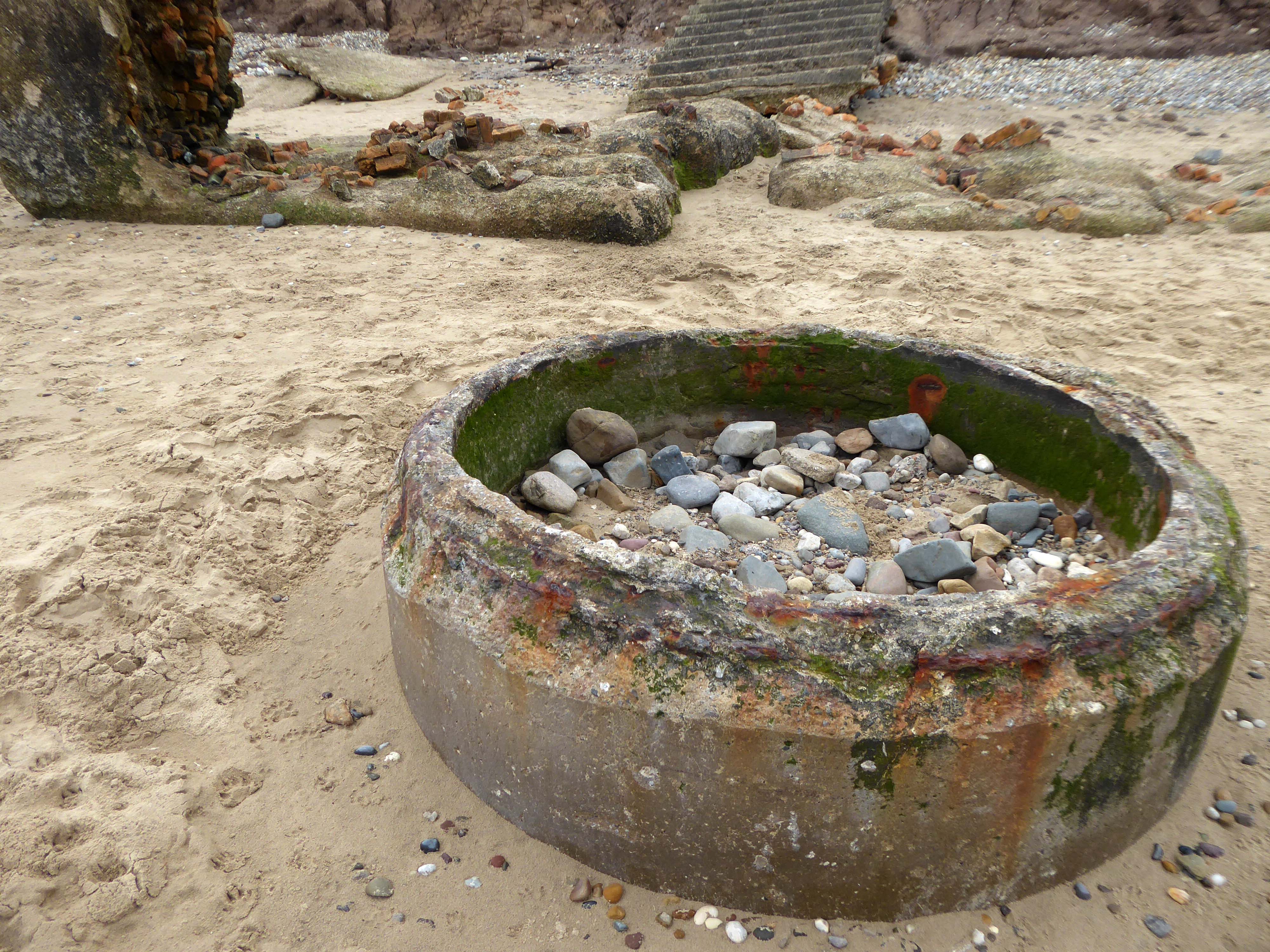
The majority have subsequently been removed, a few are extant – slipping from their cliff-top positions, as the soft clays have been eroded.

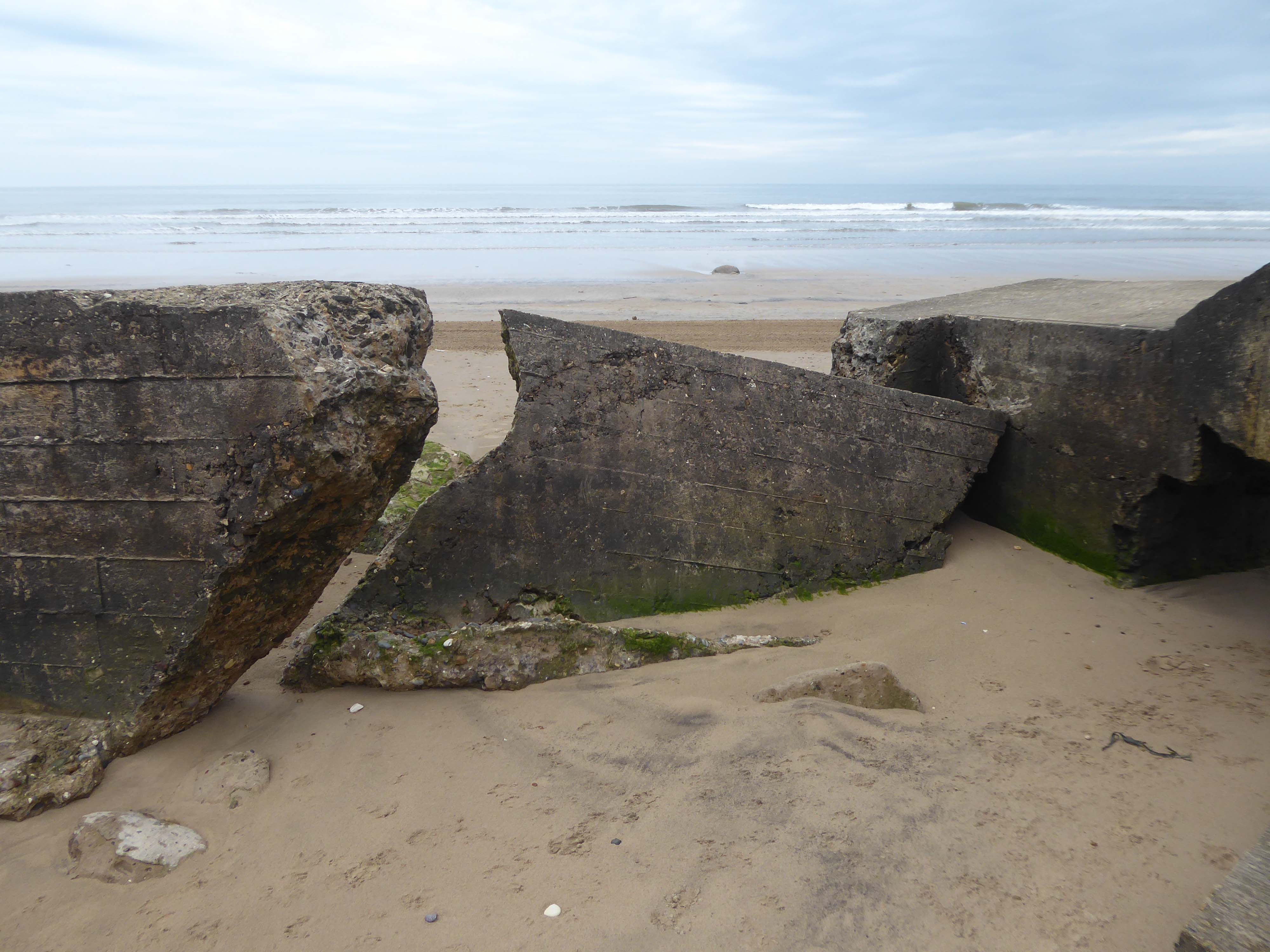
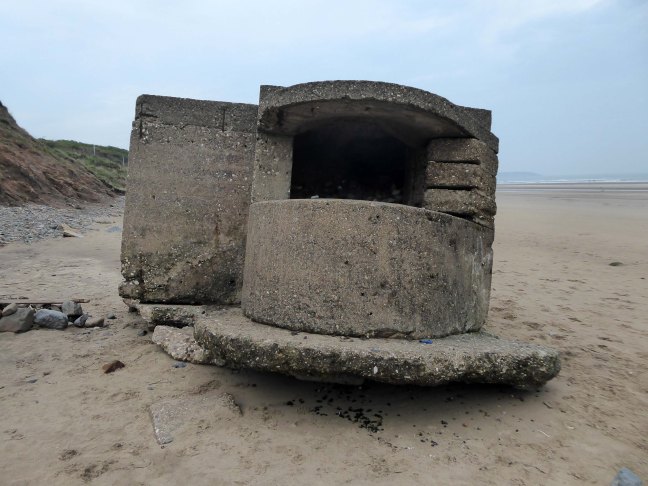
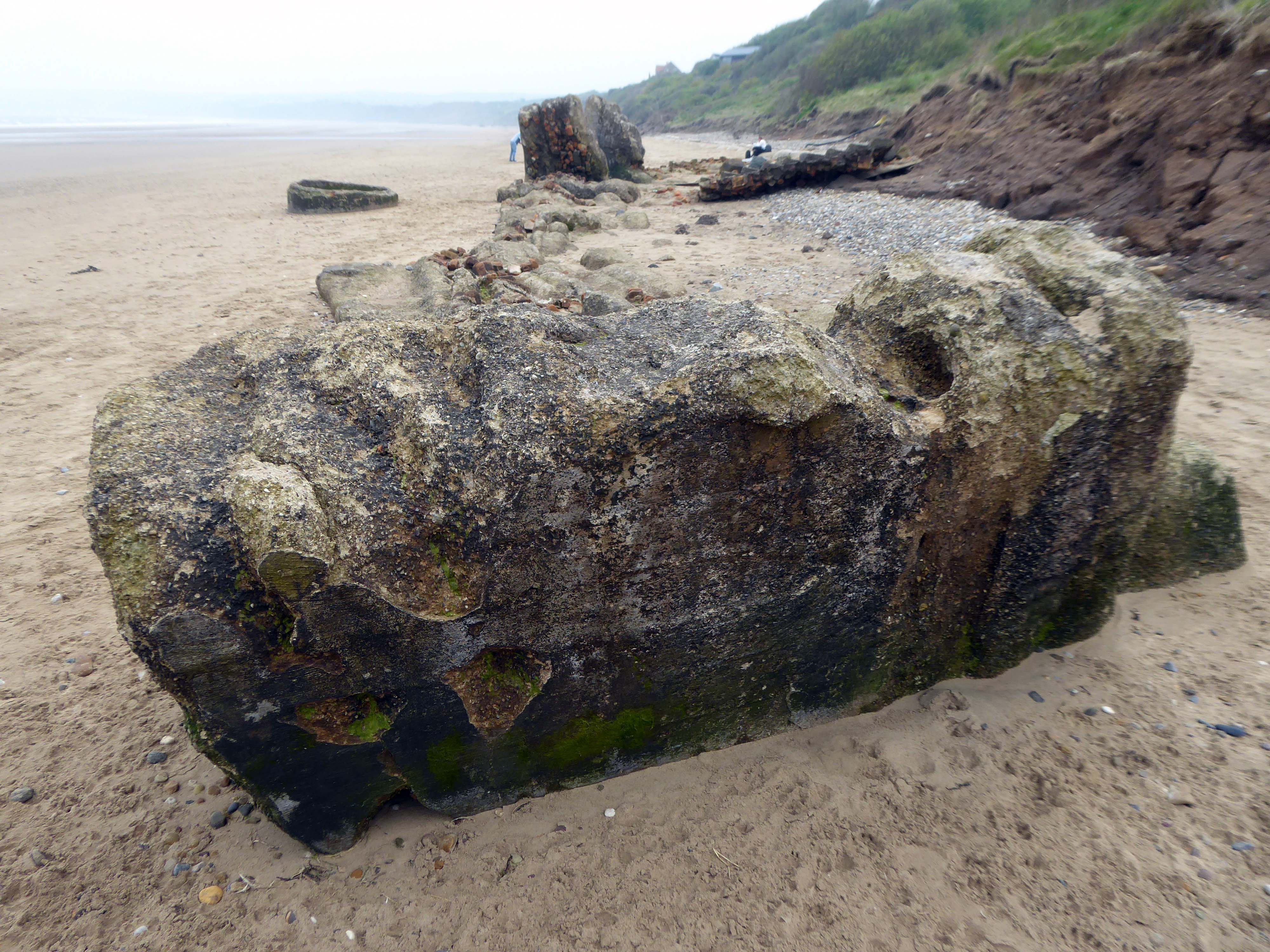
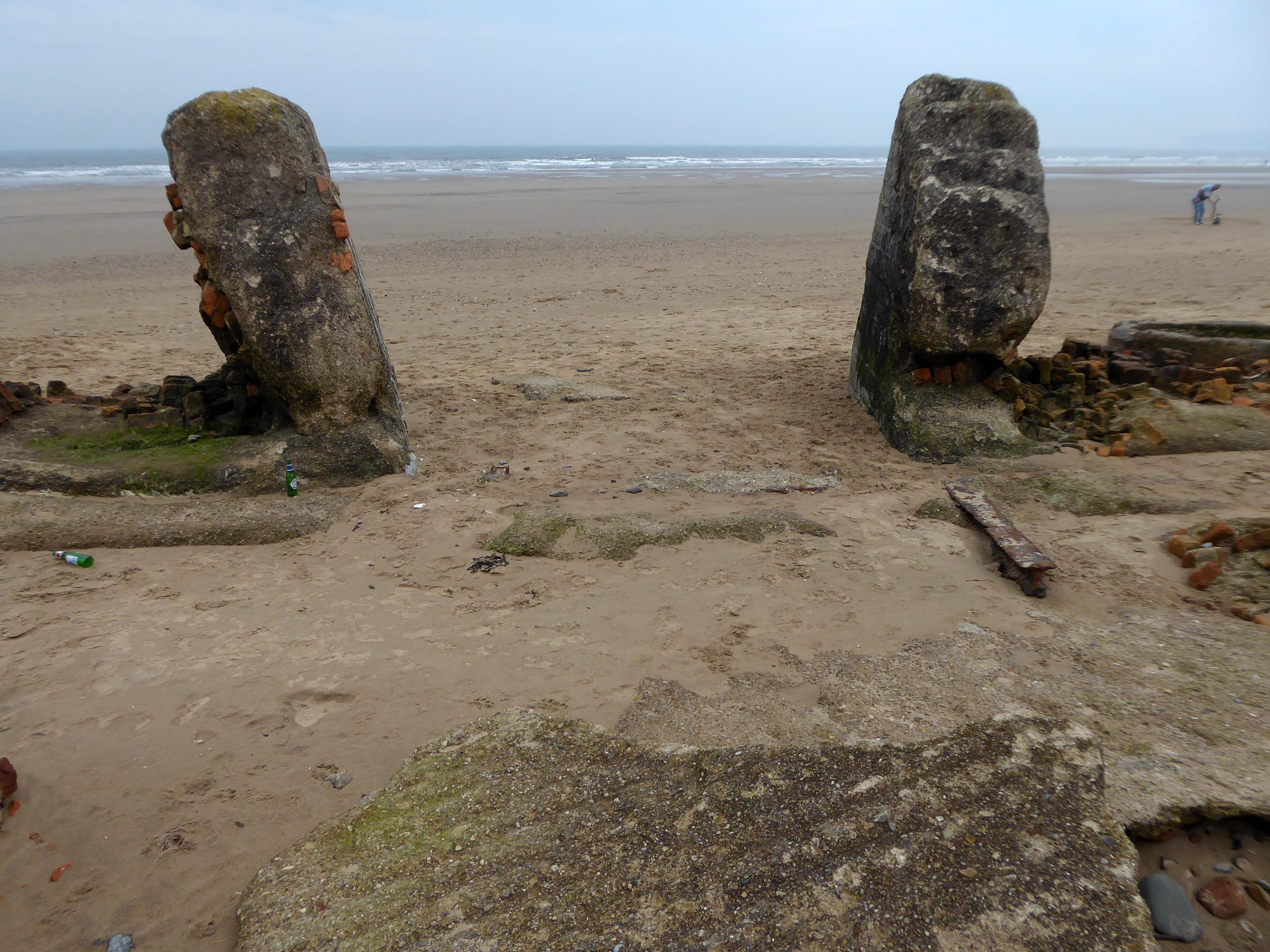
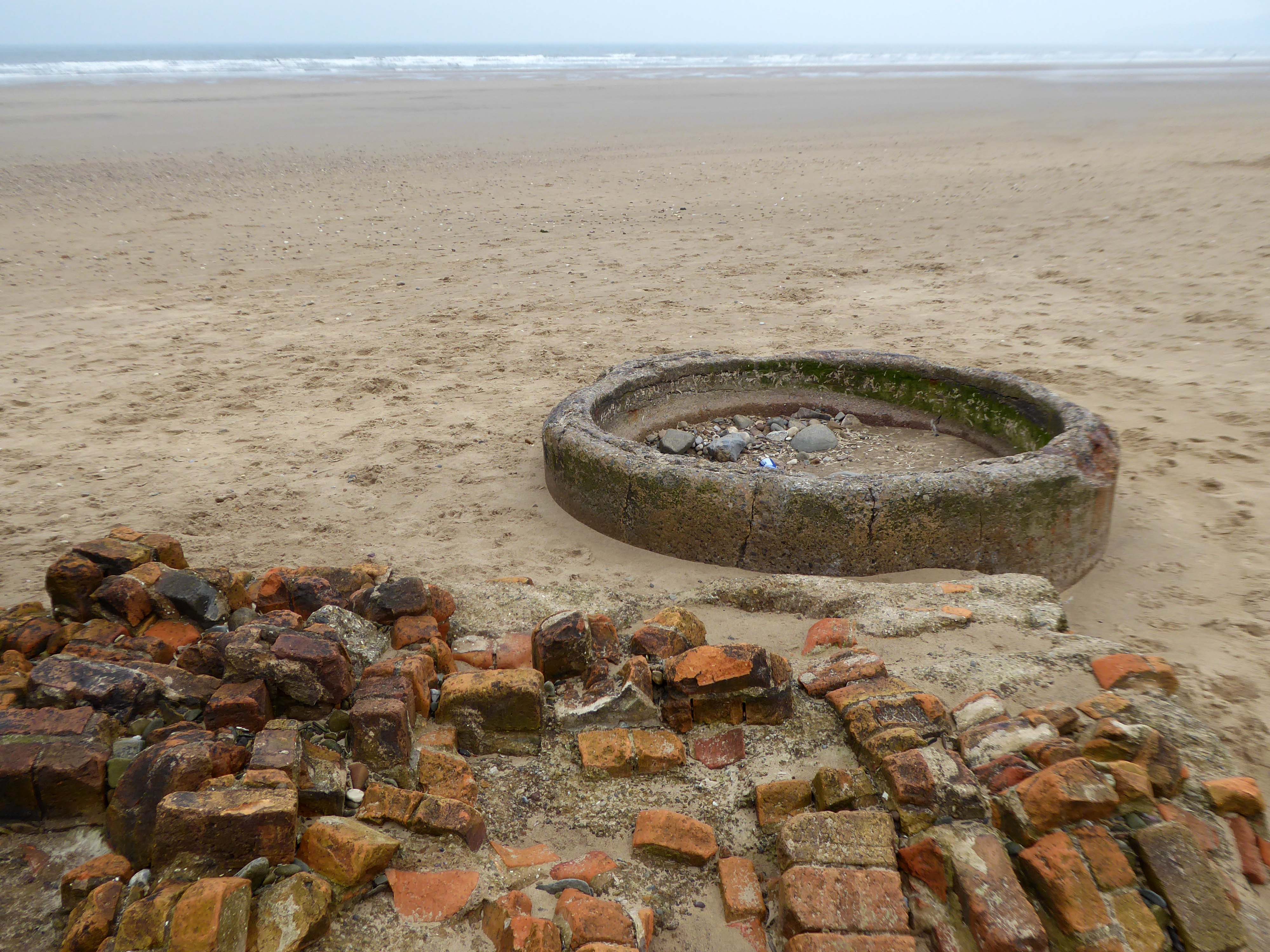
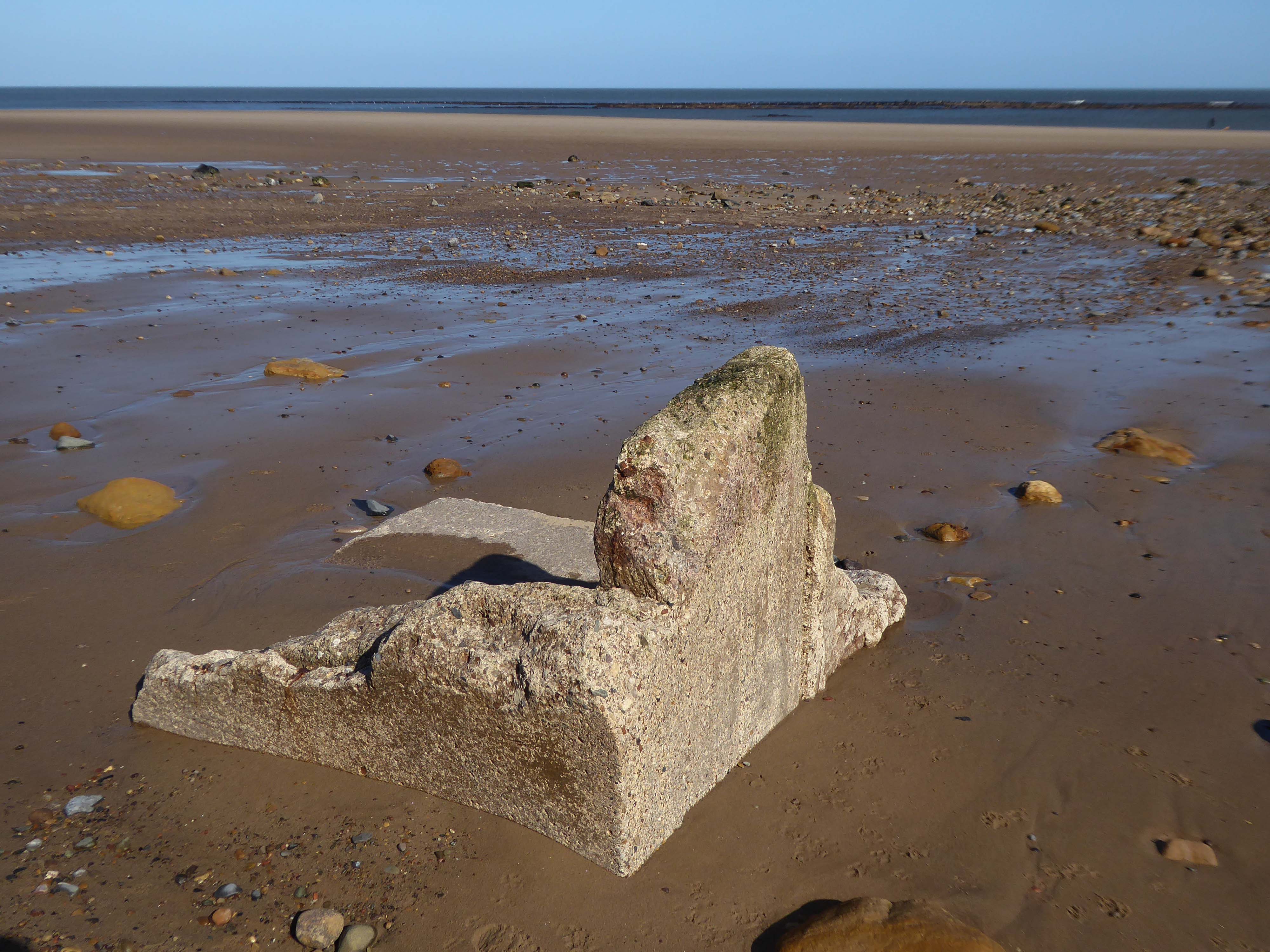
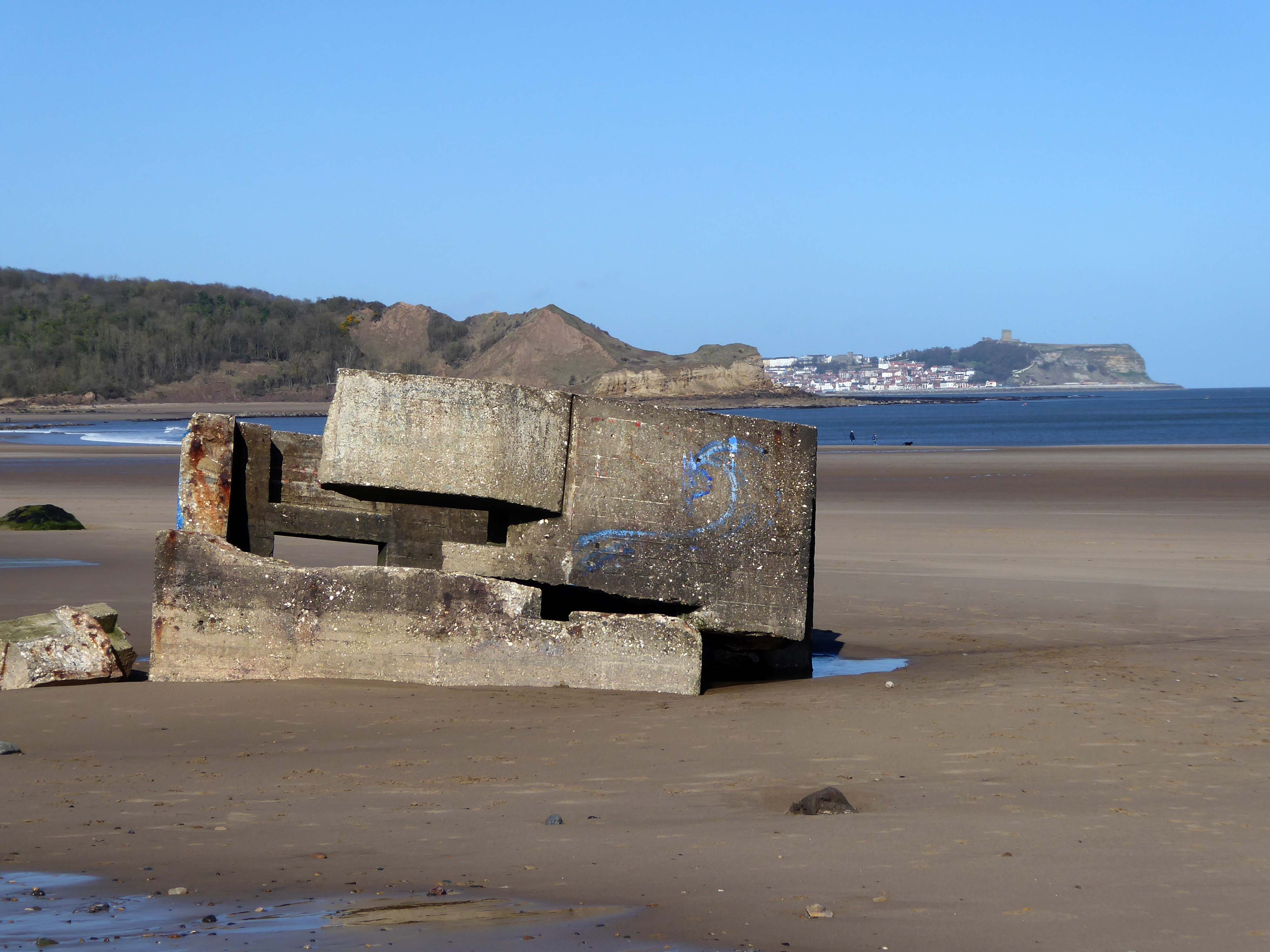
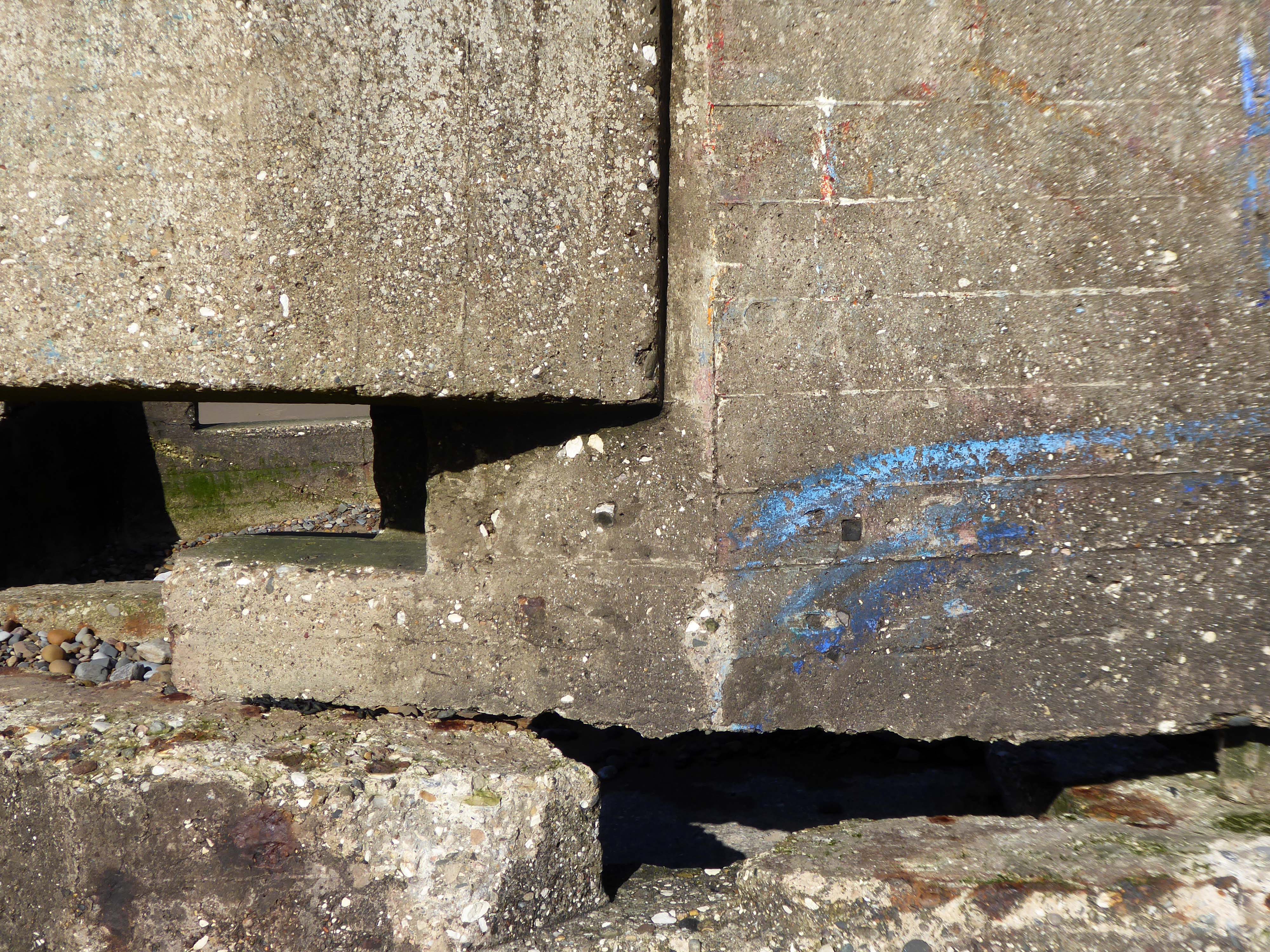
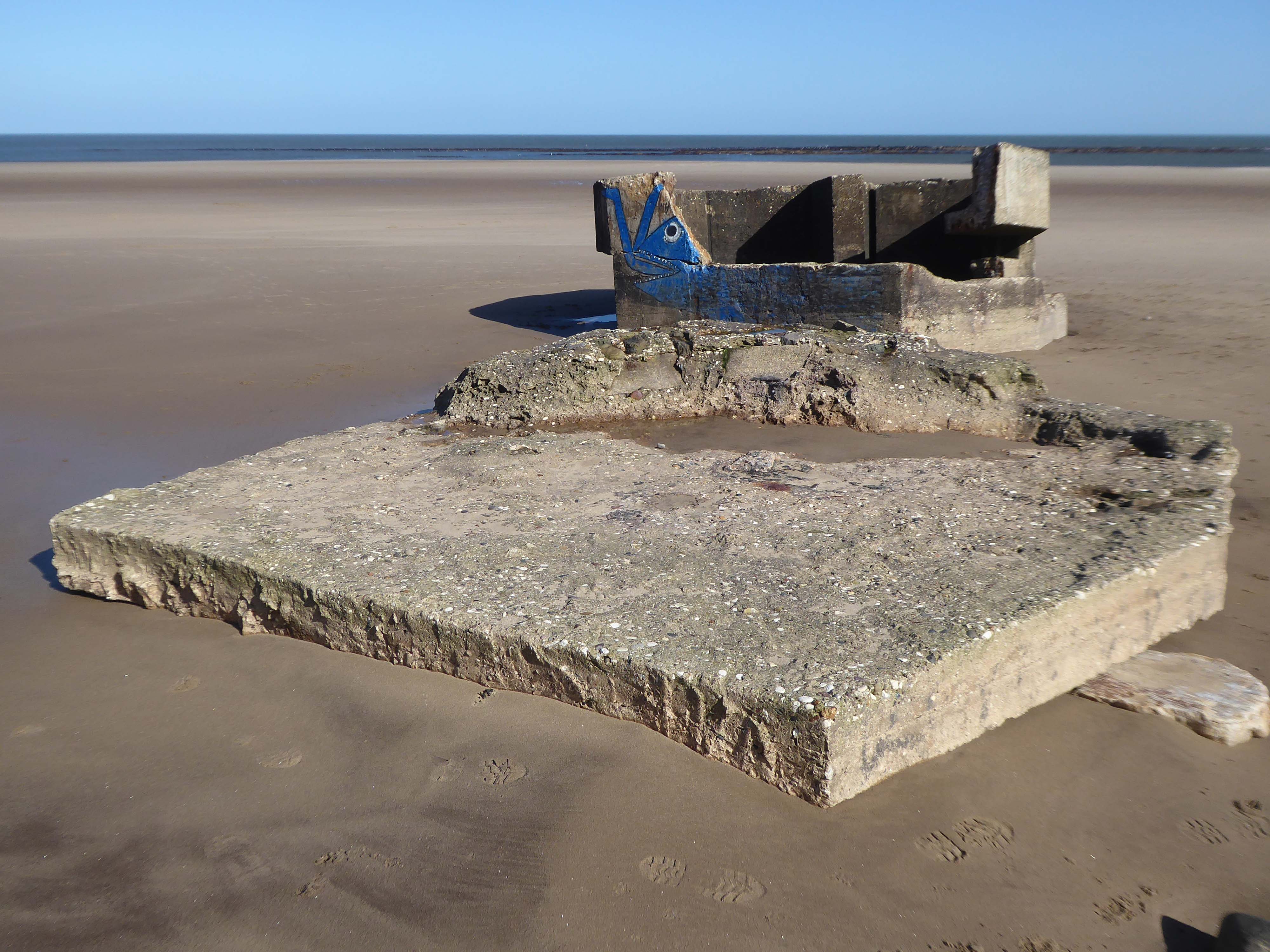
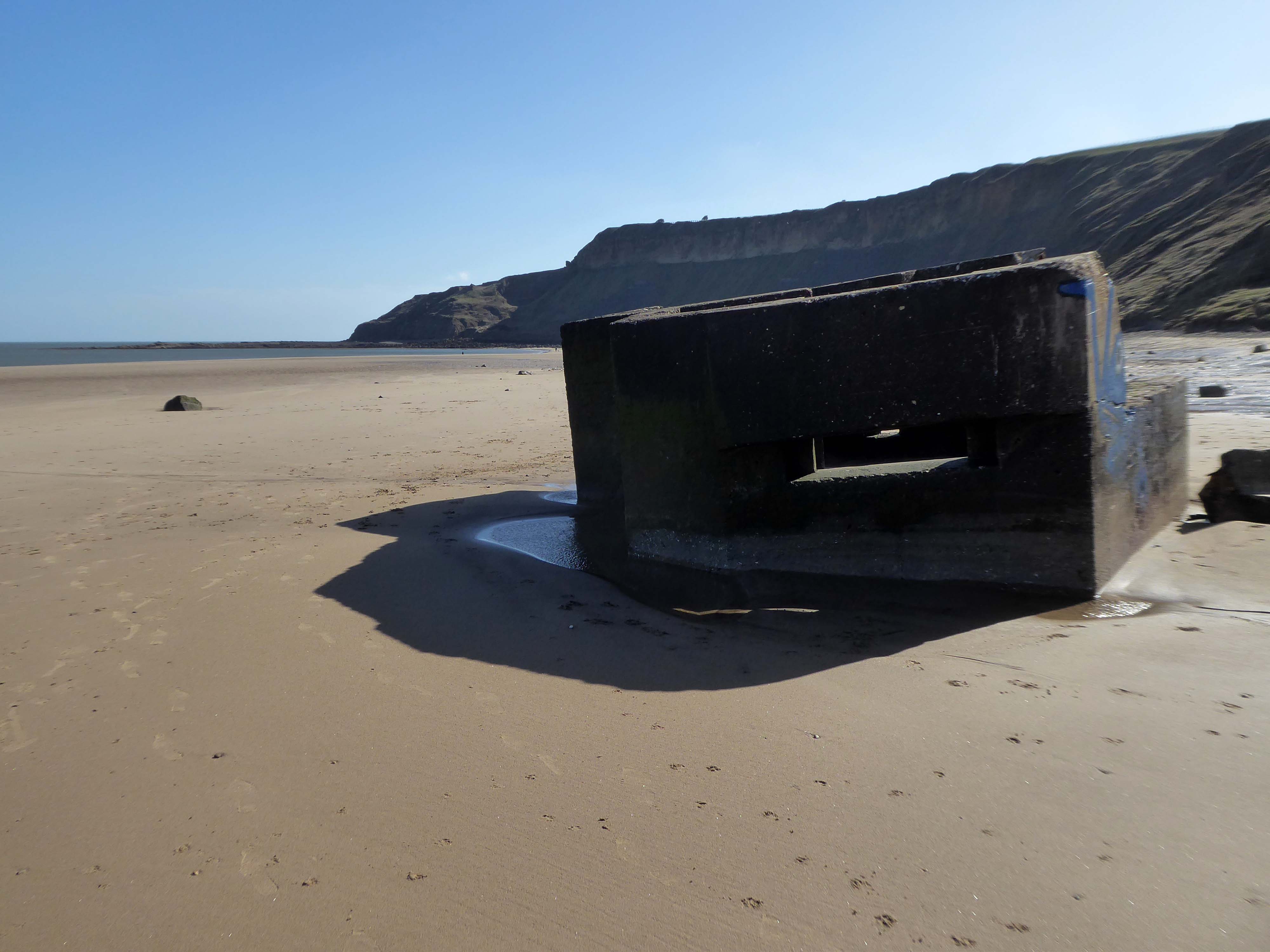
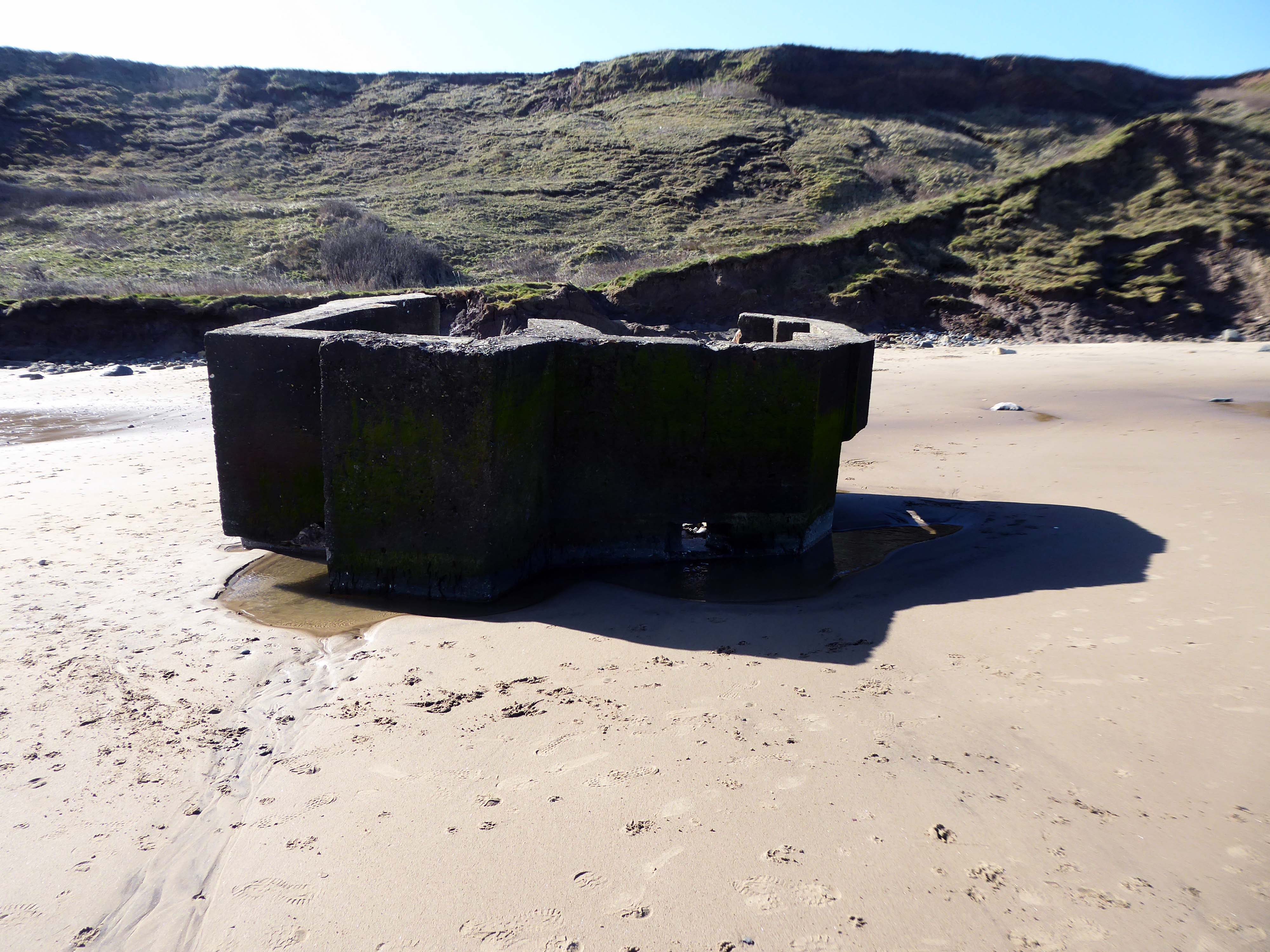
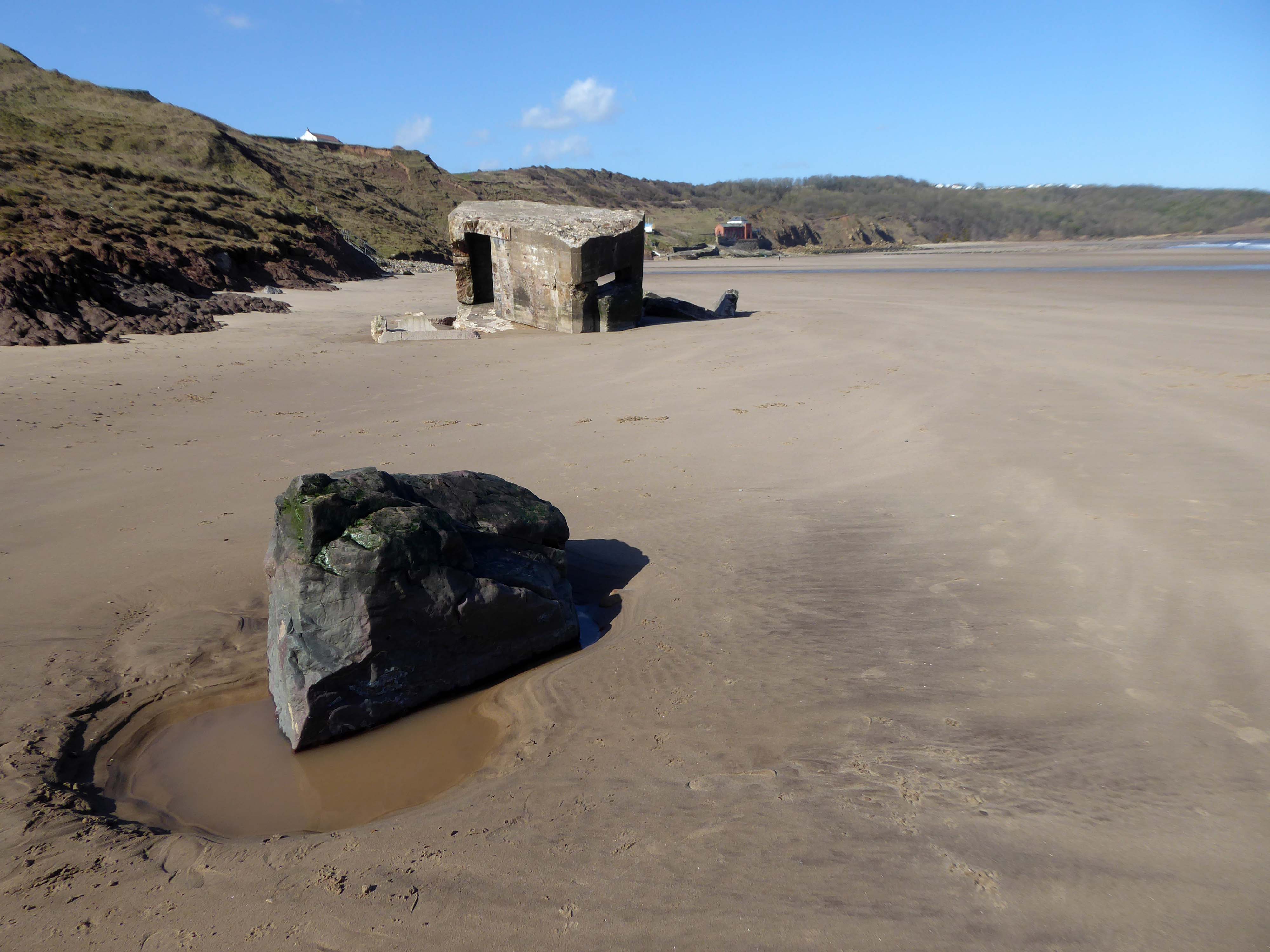
Their remains are now skewed and diminished by the weather and the North Sea’s formidable waves, taking on striking sculptural forms, embedded in the shifting sands.

During May 1940 the branch of the Directorate of Fortifications and Works – FW3, at the War Office was set up under the Directorship of Major-General G.B.O. Taylor. Its purpose was to provide specific pillbox designs to be constructed throughout the countryside at defensive locations.
During June and July 1940 saw the FW3 branch issue seven basic designs. However, often, once in the field, the local construction companies modified these under the direction of the area commands.

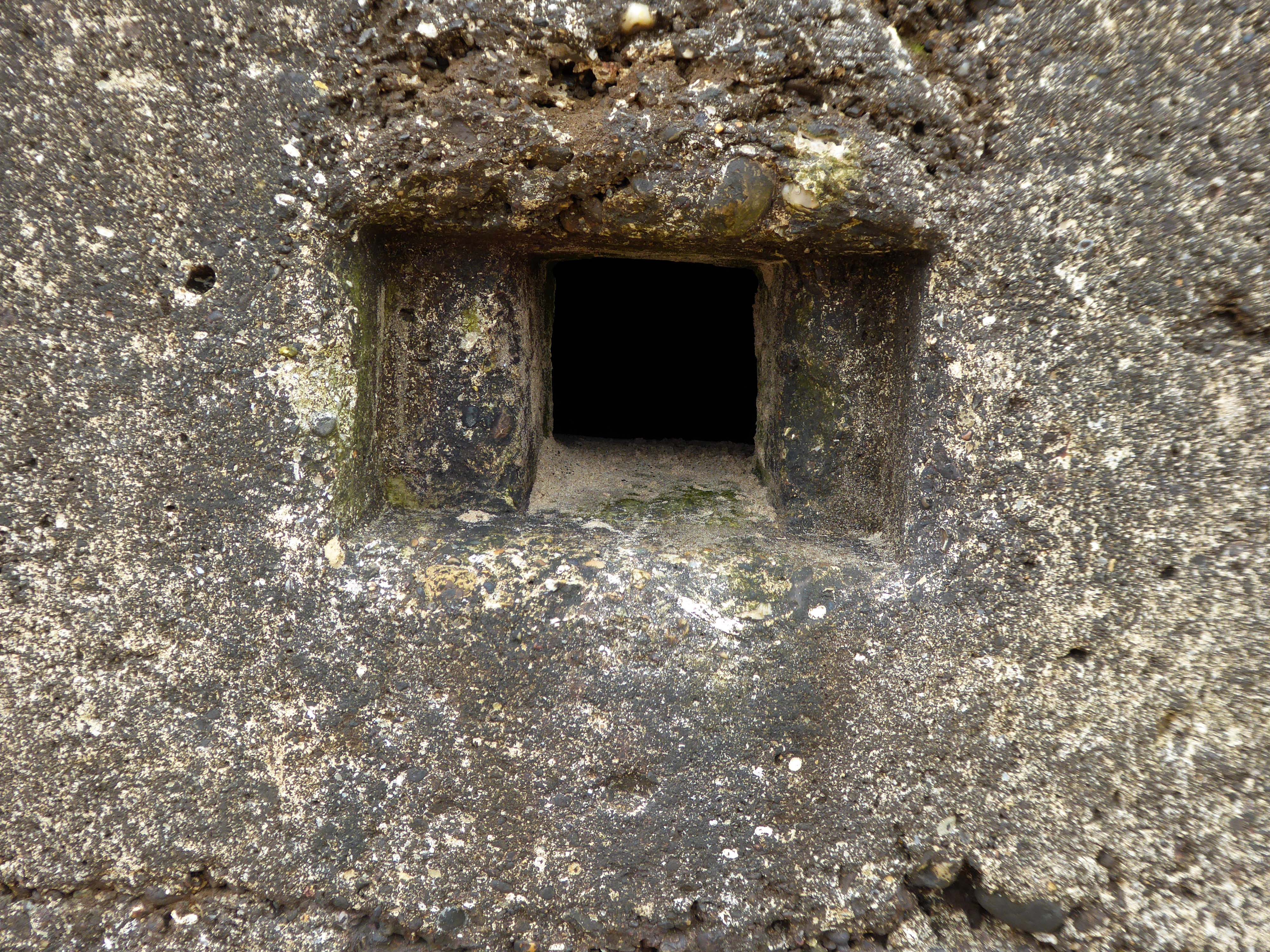
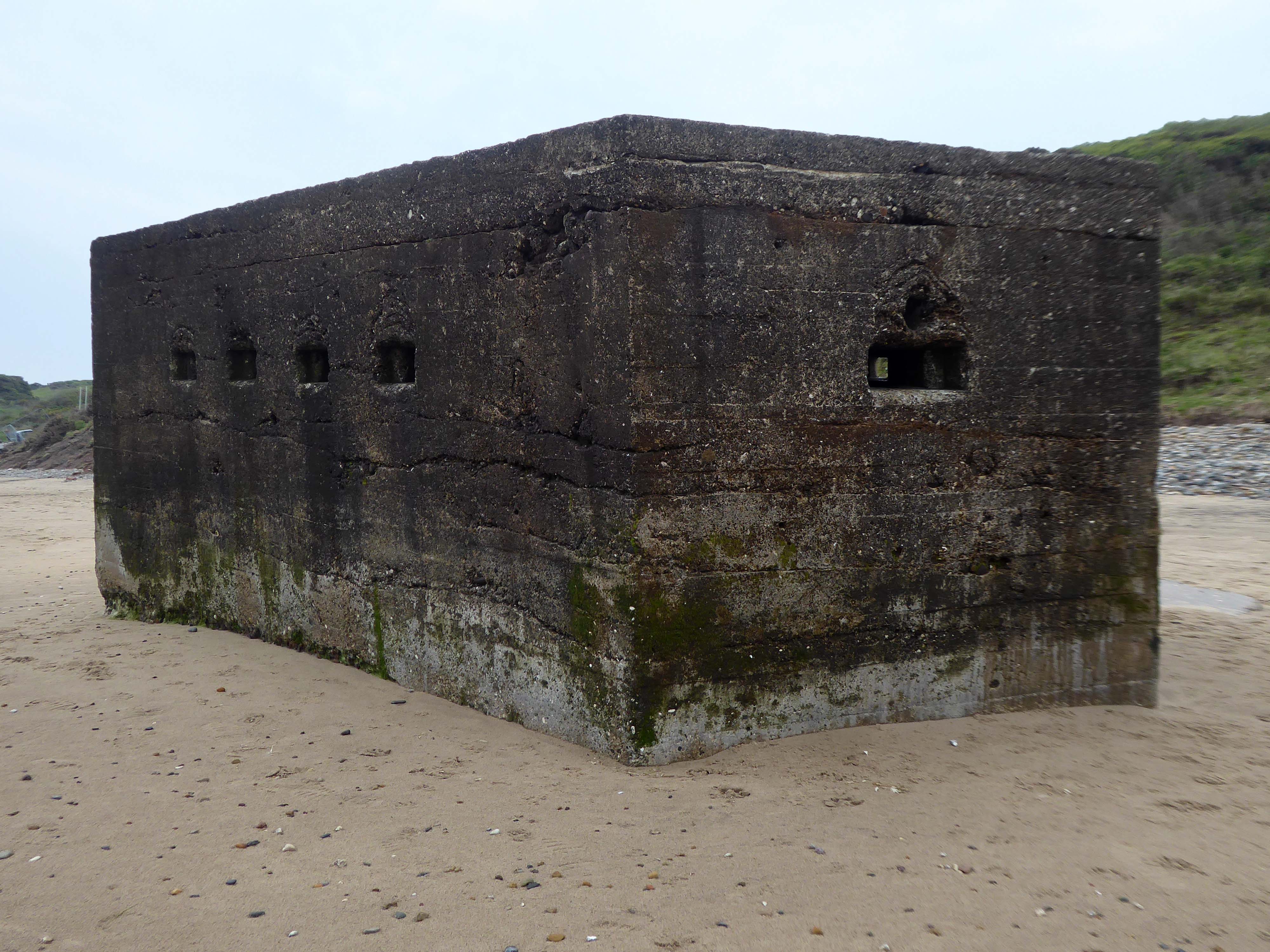
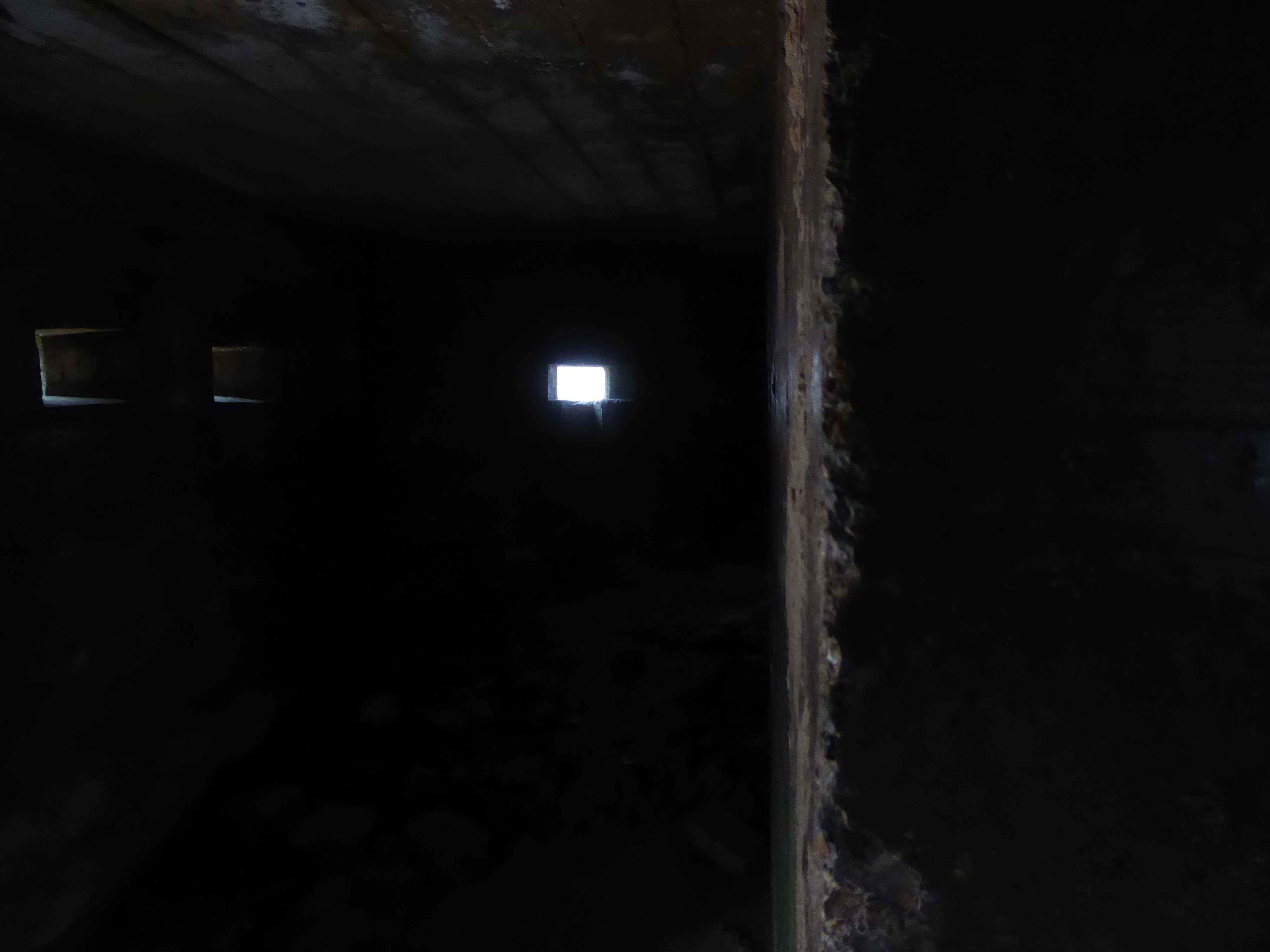
The FW3 pillbox design concept was to provide a simple fieldwork standard that could be constructed very quickly. Most designs consisted of or incorporated some of the following features:

Minimum of Bullet/Splinter Proof protection
No attempt was made to provide living accommodation
Some designs were enhanced to Shell Proof standard
Simple Blast Walls to protect open entrances
External flat side walls with rectangular or polygonal shape

The use of common designs with standard sizes for doors, loopholes and flat sides made it easier to mass produce items for concrete shuttering and hence the speed of construction. However, with the general countrywide lack of material it was often necessary to use bricks as the shuttering. This often fools the casual observer into believing that the whole structure is constructed of brick. Closer examination often reveals the integral reinforced concrete back-bone.

Pill Box Study Group

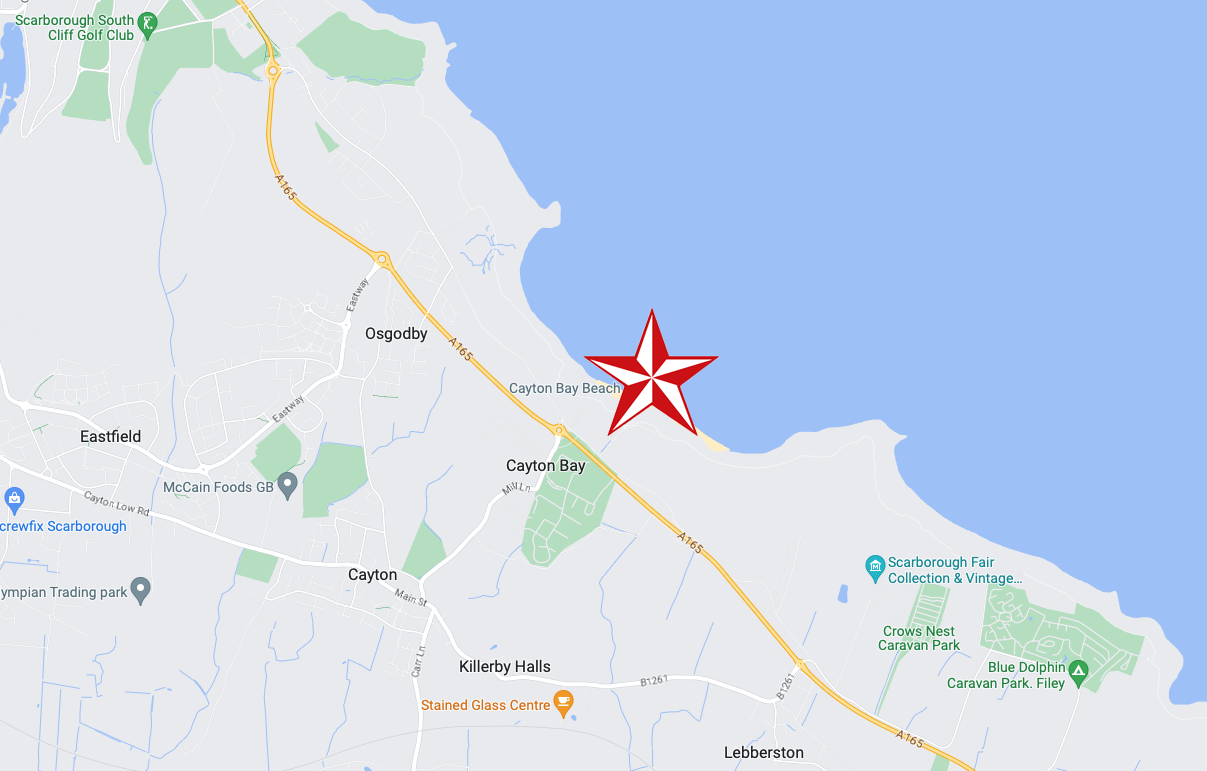
Cayton Bay – Concrete

Things come and go on the coast.

As Mr Marx noted:

All that is solid melts into air.

The soft clays of the cliffs are subject to constant erosion.

In 2008 fresh landslips have occurred around Cayton Bay. The bungalows built on the old holiday camp at Osgodby Point have started to suffer serious erosion. The cliffs around the Cornelian and Cayton areas are just made of soil. So erosion is to be expected. It may taken time. But there is not much which can be done to prevent the seas moving in.

Scarborough Maritime History

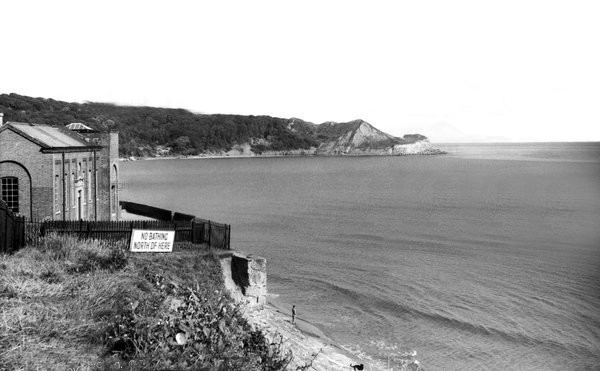
The Pumping Station was partially demolished in 1956.

Several well worn layers of geological time have been hanging around for a while now.

Whilst the long-gone critters are but fossilised versions of their former selves.

The rocks found at Cayton Bay are Jurassic aged from the Callovian stage. At the north end of Cayton Bay, the Cornbrash Formation can be seen, comprised of red-brown, sandy, nodular, bioturbated limestone with oysters and other bivalves.The Cornbrash lies beneath the start of the Cayton Clay Formation. Walking south towards Tenant’s Cliffs, Lower Calcareous Grit is brought to beach level, followed by a calcareous limestone. At the waterworks, low tides reveals a section in the Middle and Upper Jurassic rocks.

On scouring tides, argillaceous limestone and calcareous sandstone can be seen layered along the Upper Leaf of the Hambleton Oolite, which is seen excellently in the low cliff on the southern side of the Brigg. The tough, impure limestone contains well-preserved bivalves and ammonites. The sequence is shown in the diagram but faulting has caused unconformities.

During scouring, Oxford Clay can be seen along the foreshore south of the argillaceous limestone. Walking further south, Red Cliff is reached, where rocks of the Osgodby Formation slope above the Oxford Clay.

UKFAH

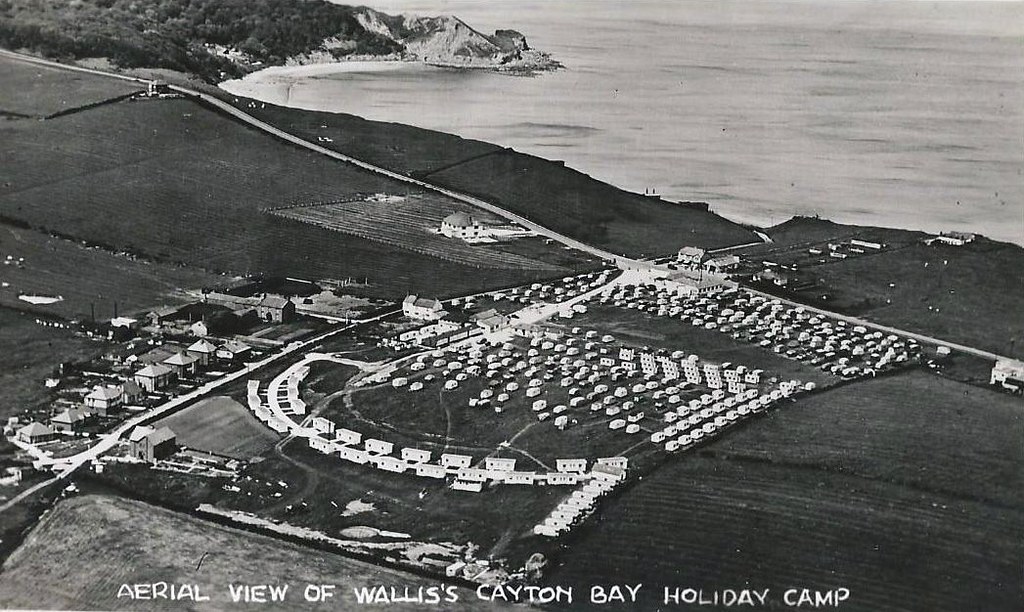
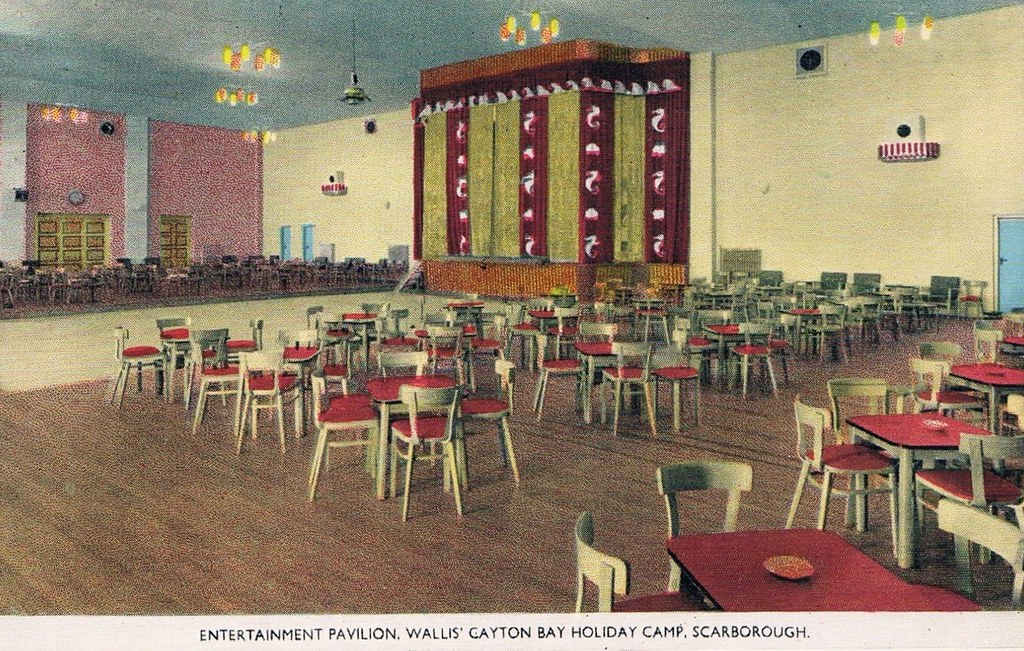
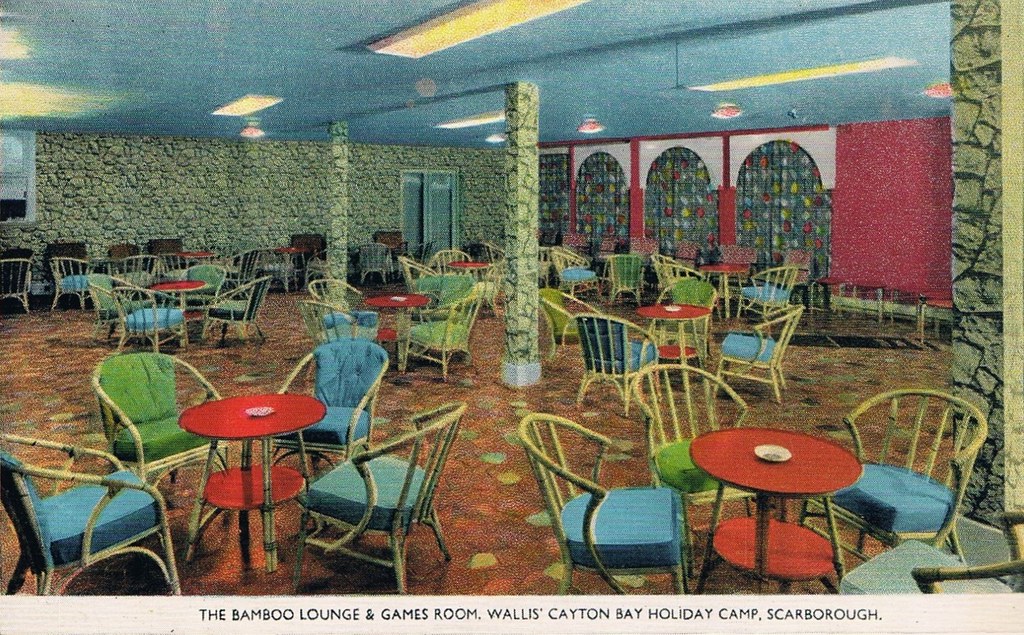
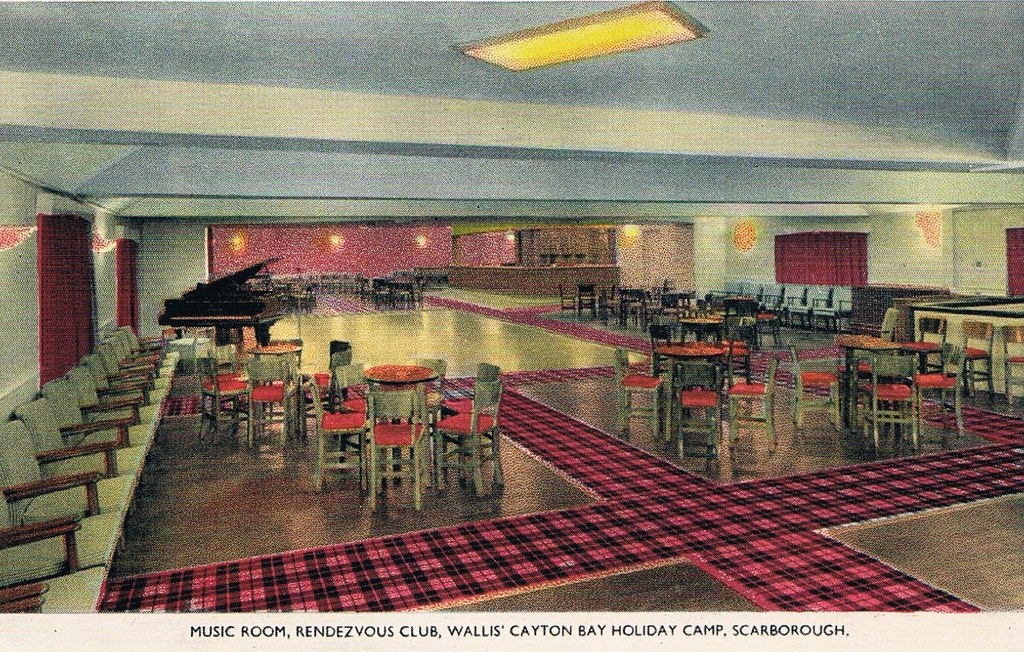
The Wallis’s Holiday Camp of 1936 – eventually overwritten by a more a la mode commercial enterprise.

Photos: Glen Fairweather

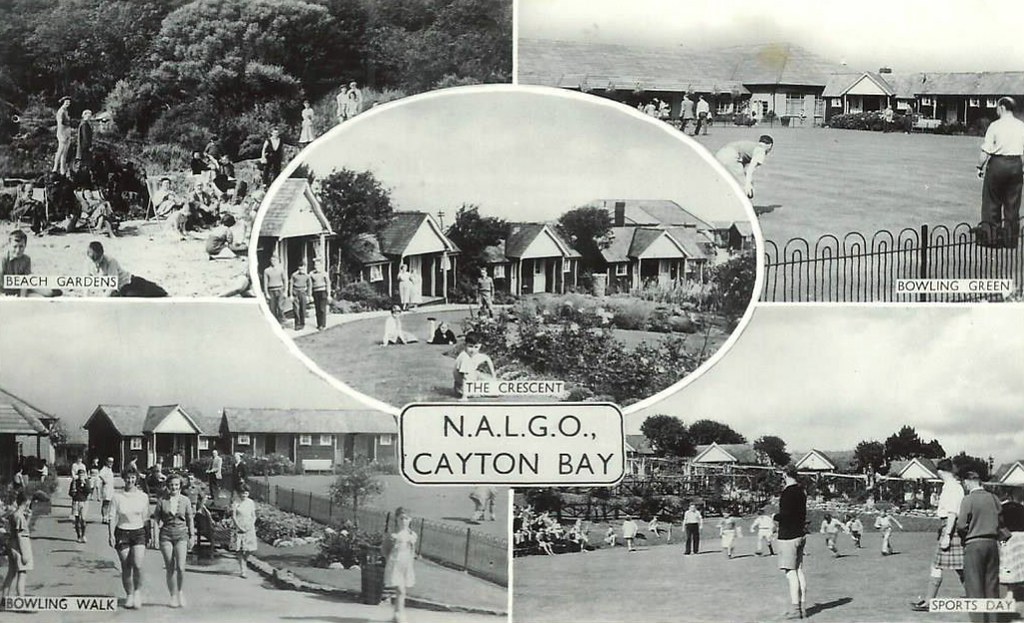
Also missing in action the NALGO Holiday Camp – we are no longer a land of the Closed Shop, rather a land of the closed trade union holiday camp.

There was a similar setup at Croyde Bay.

Originally the first Trade Union holiday camp in the North of England, owned by NALGO it opened its doors in 1933. It had 124 wooden bungalows, accommodating 252 visitors. A dining hall with waiter service, a rest room along with recreation rooms for playing cards, billiards, a theatre for indoor shows and dancing was also provided. The new centre also provided Tennis courts, Bowling greens along with a children’s play area. The visitors could walk to the beach where there was a sun terrace and beach house which also had a small shop.

Click here to see photos of the NALGO camp from the 1930s.

One of the earliest visitors were the family of poet Philip Larkin and during the Second World War it became a home for evacuated children from Middlesbrough.  

The NALGO camp closed in 1974 and was later sold.

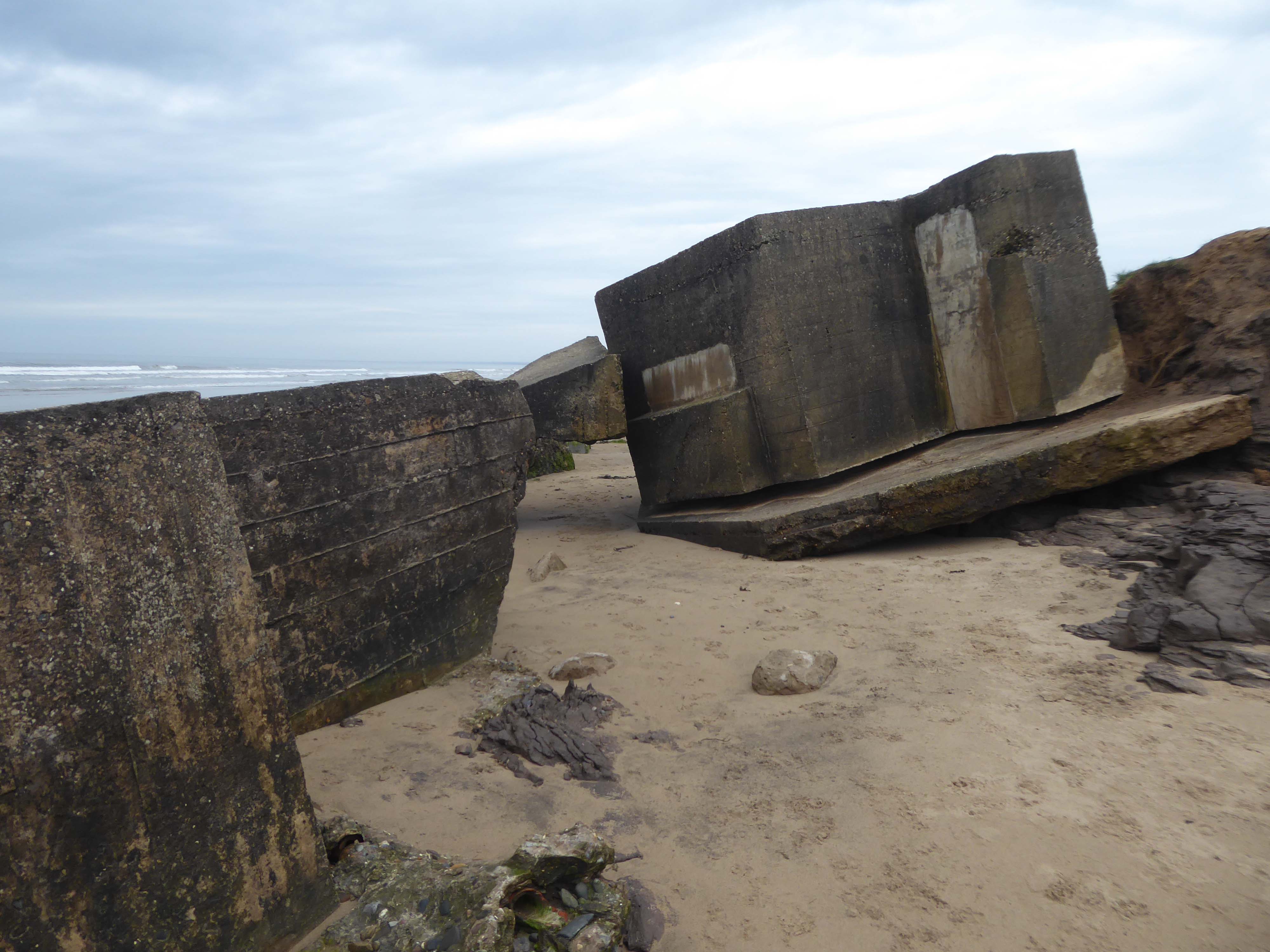
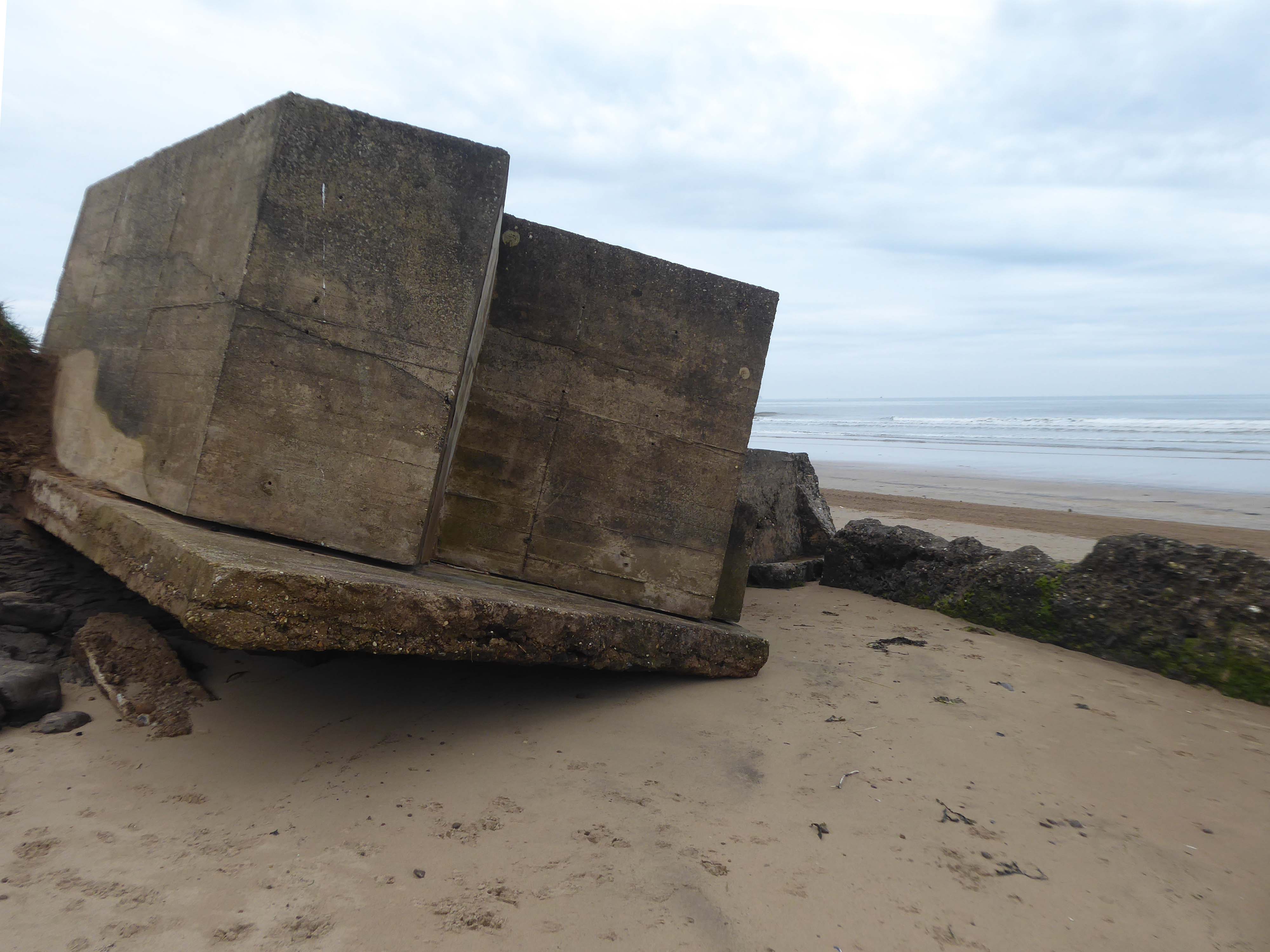
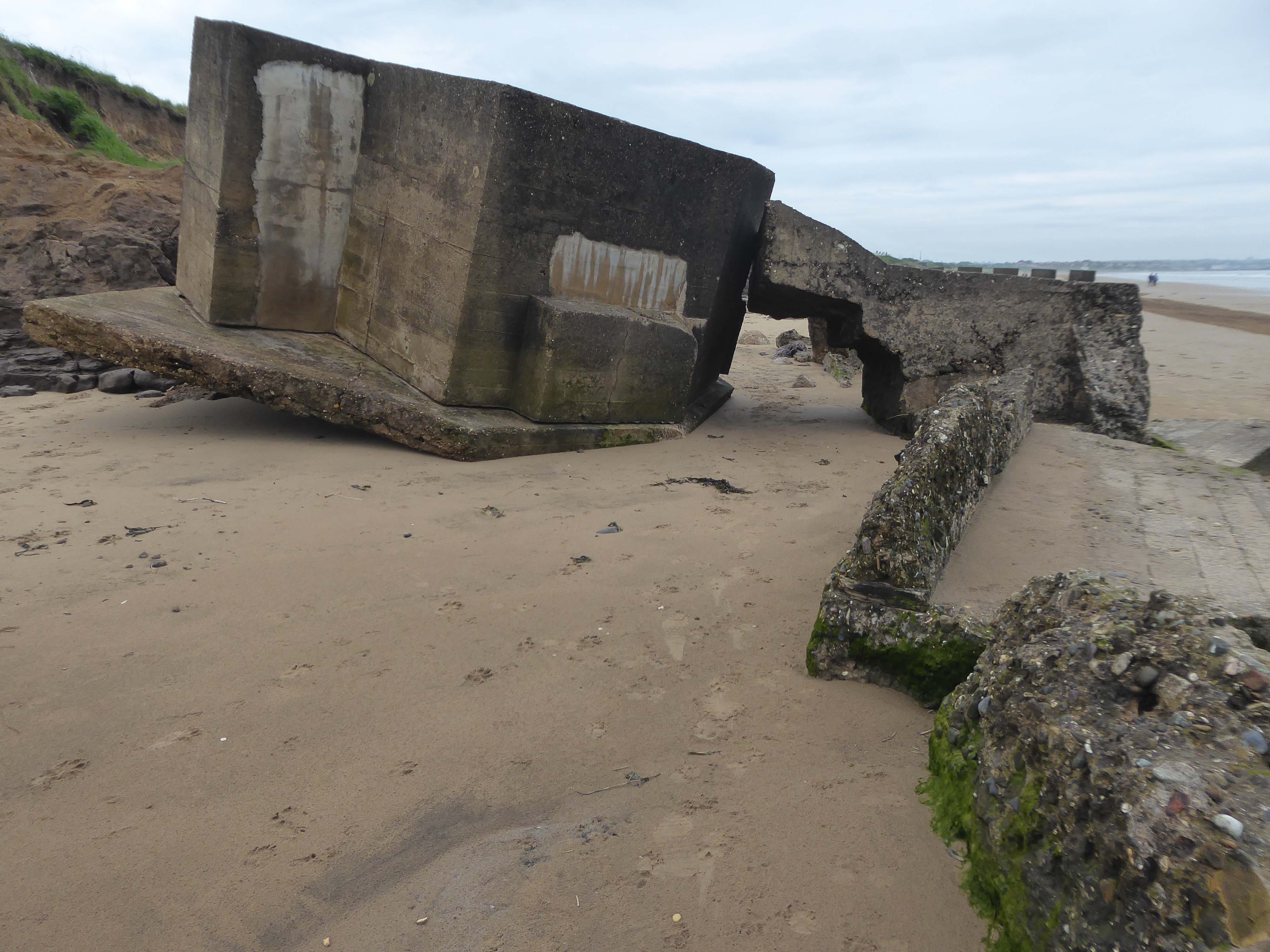
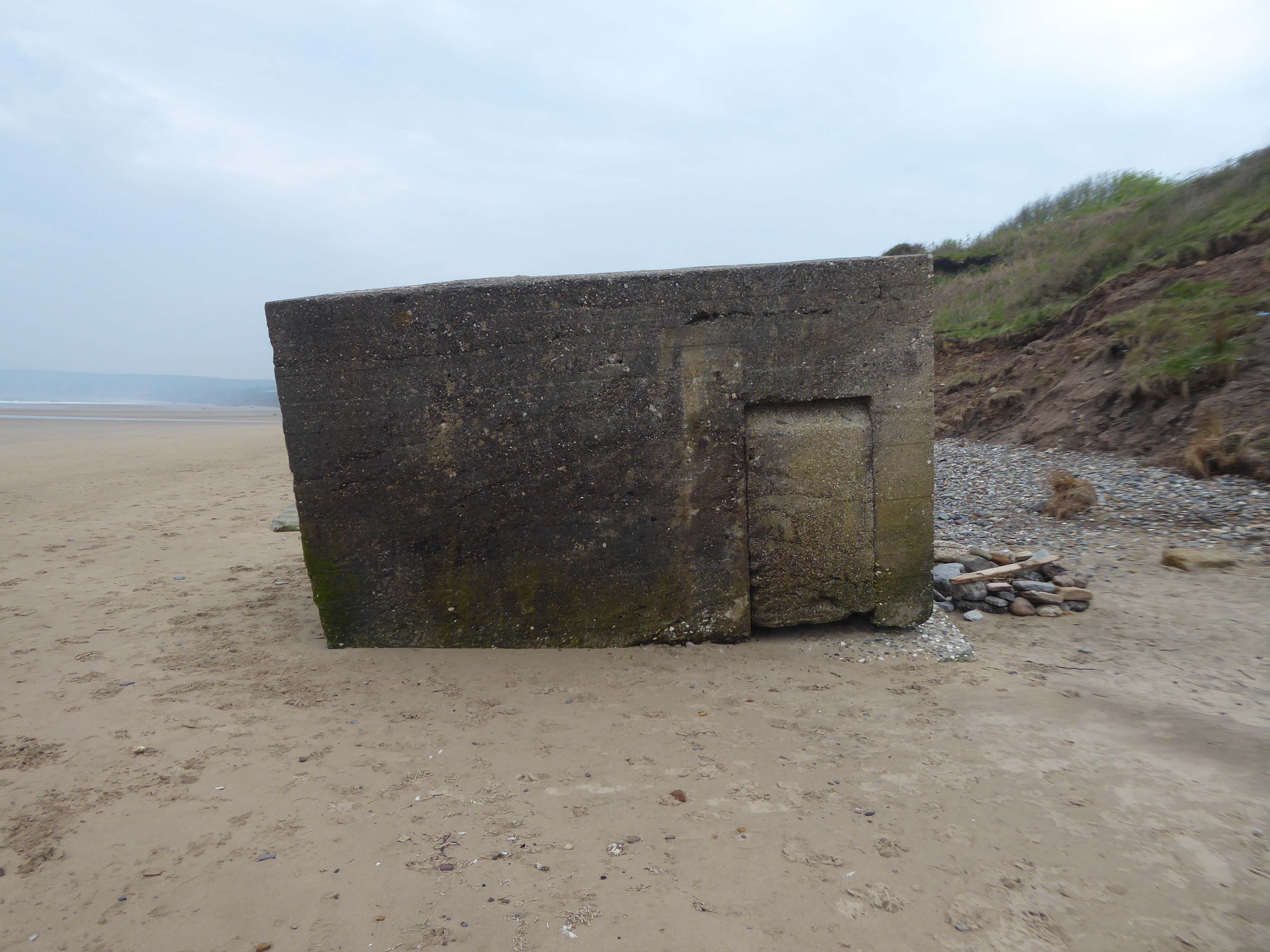
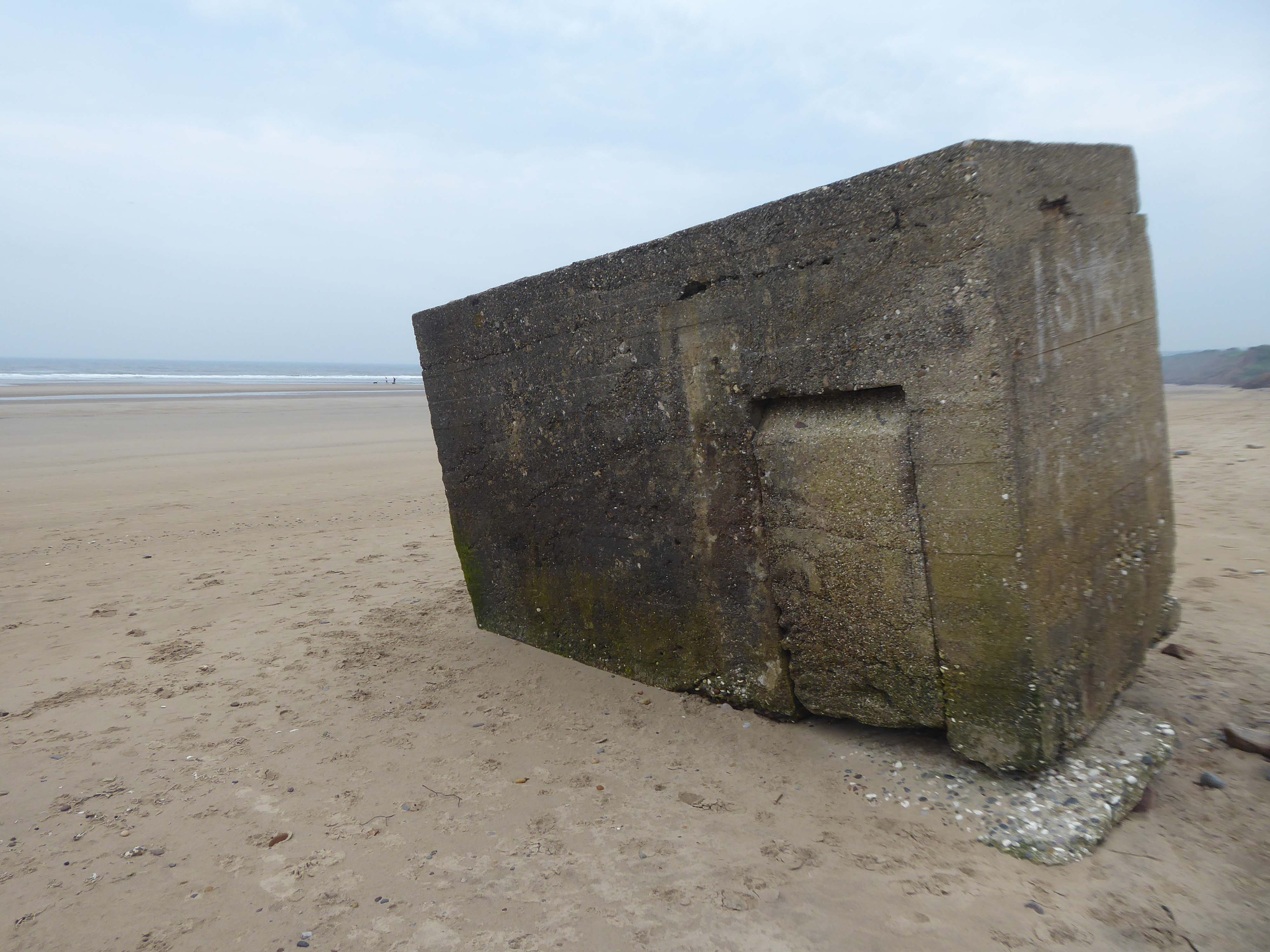
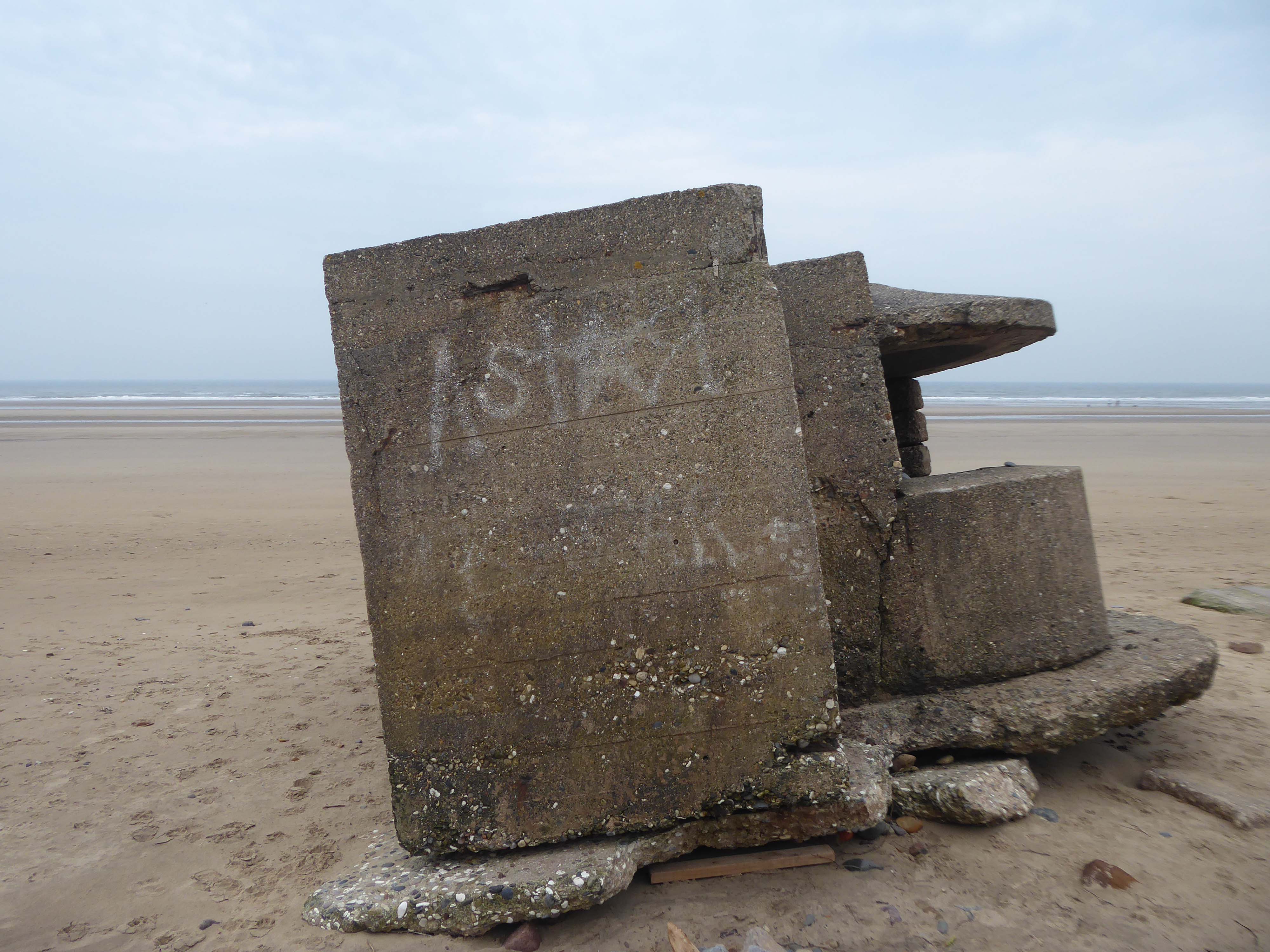
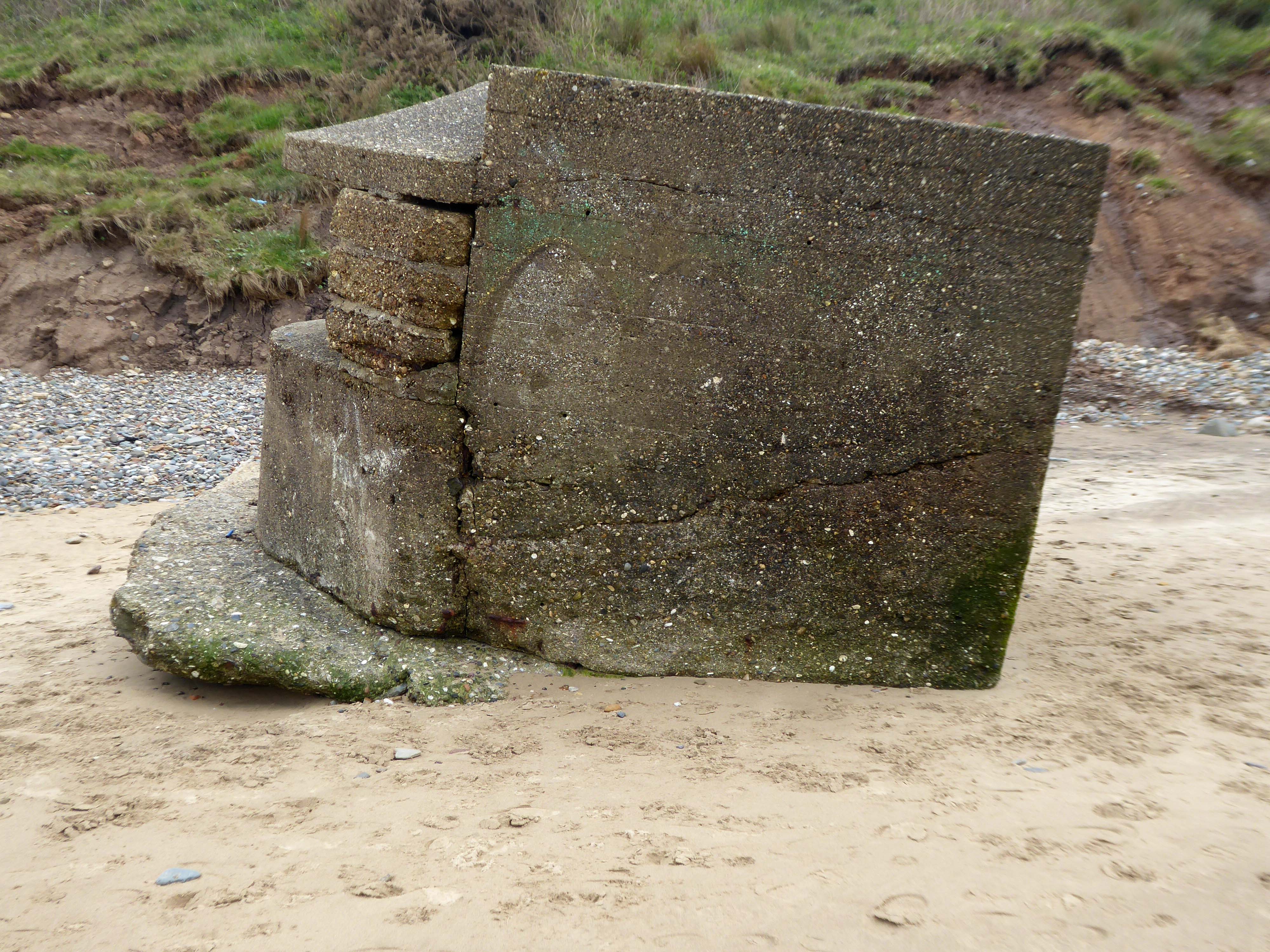
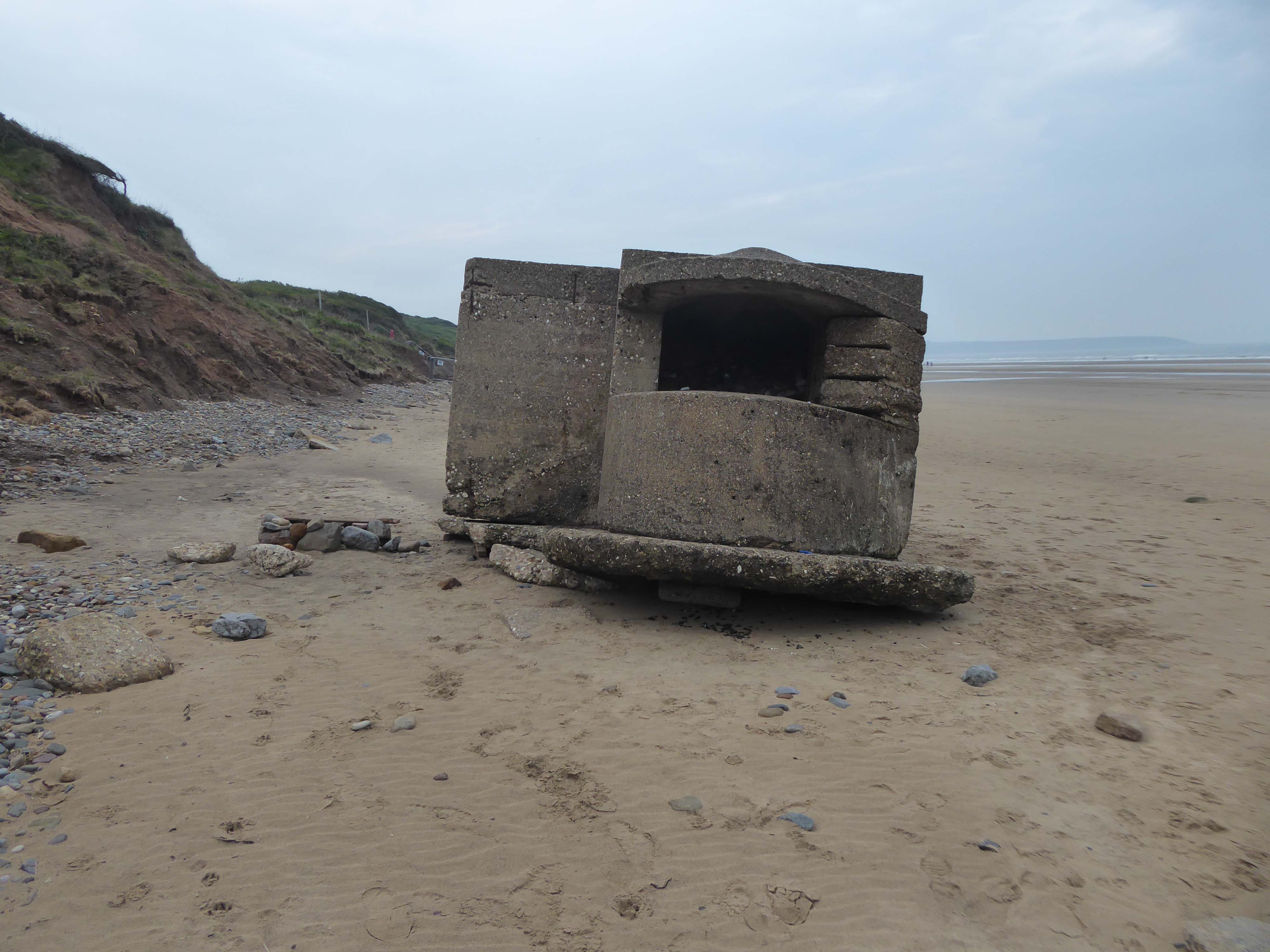
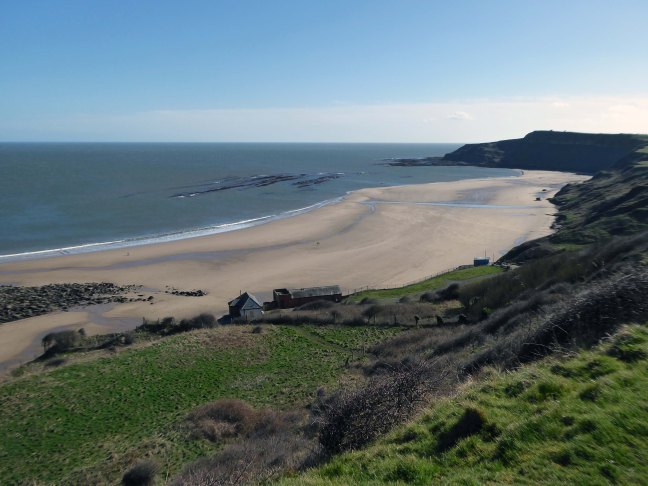
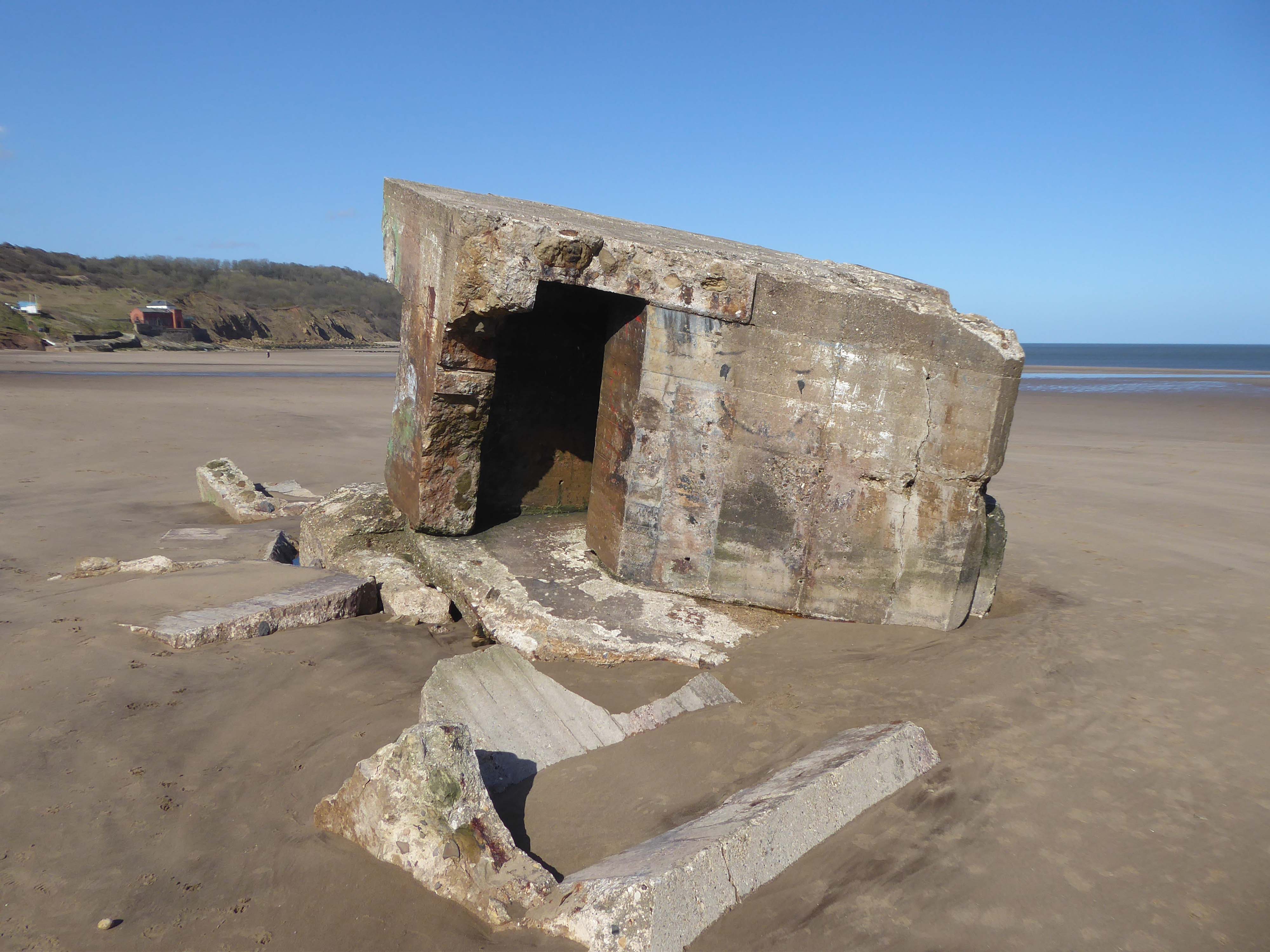
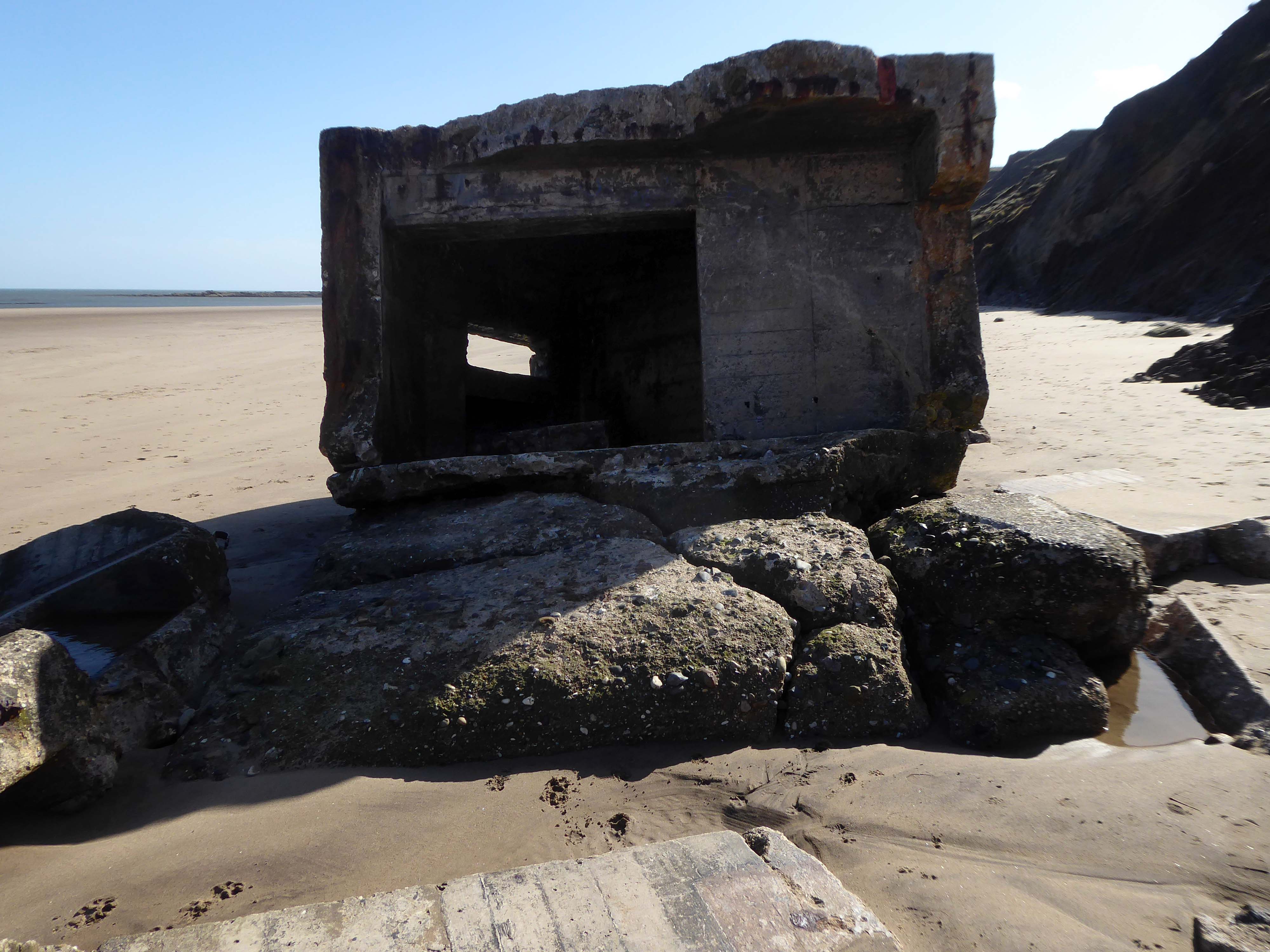
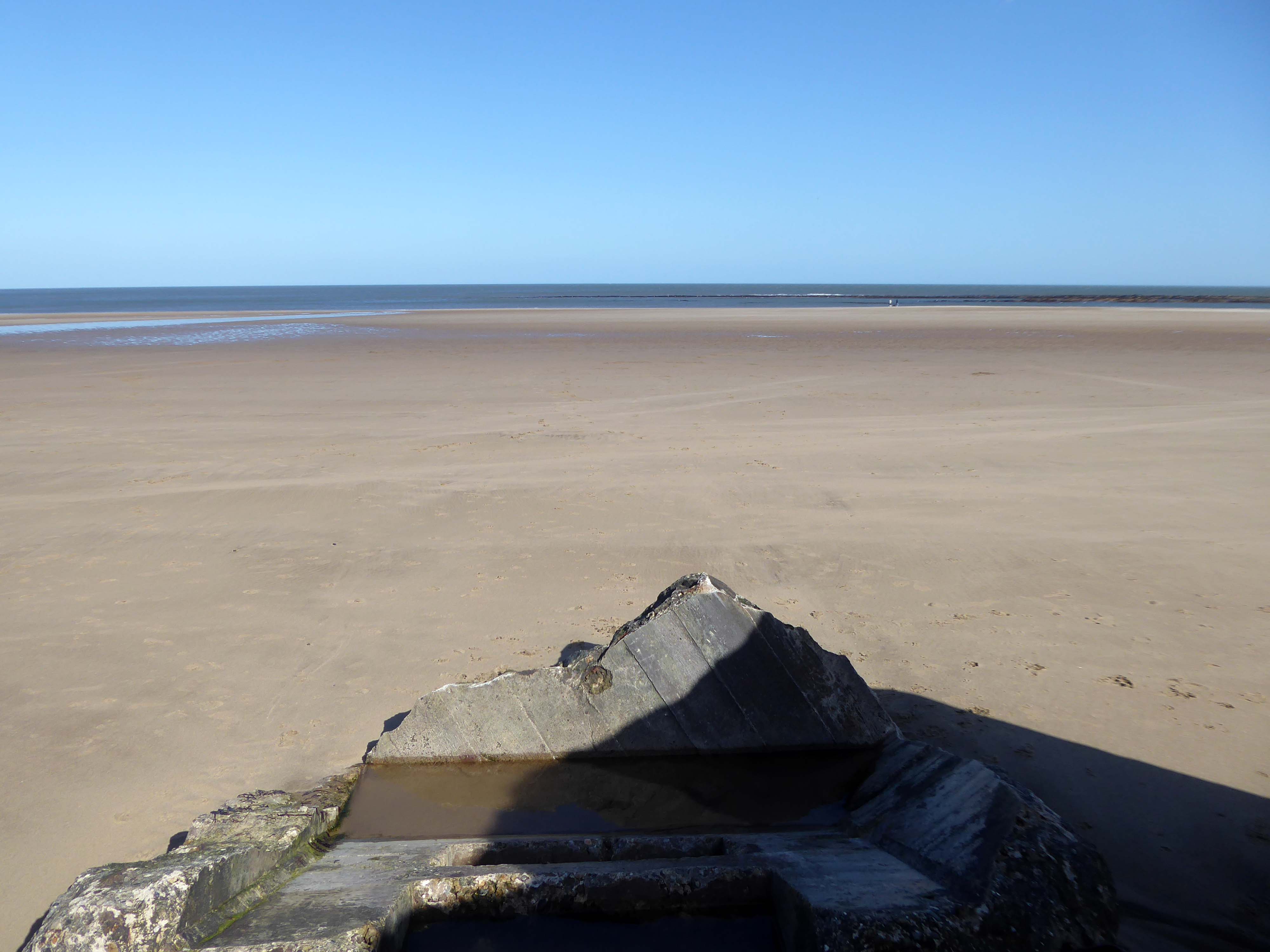
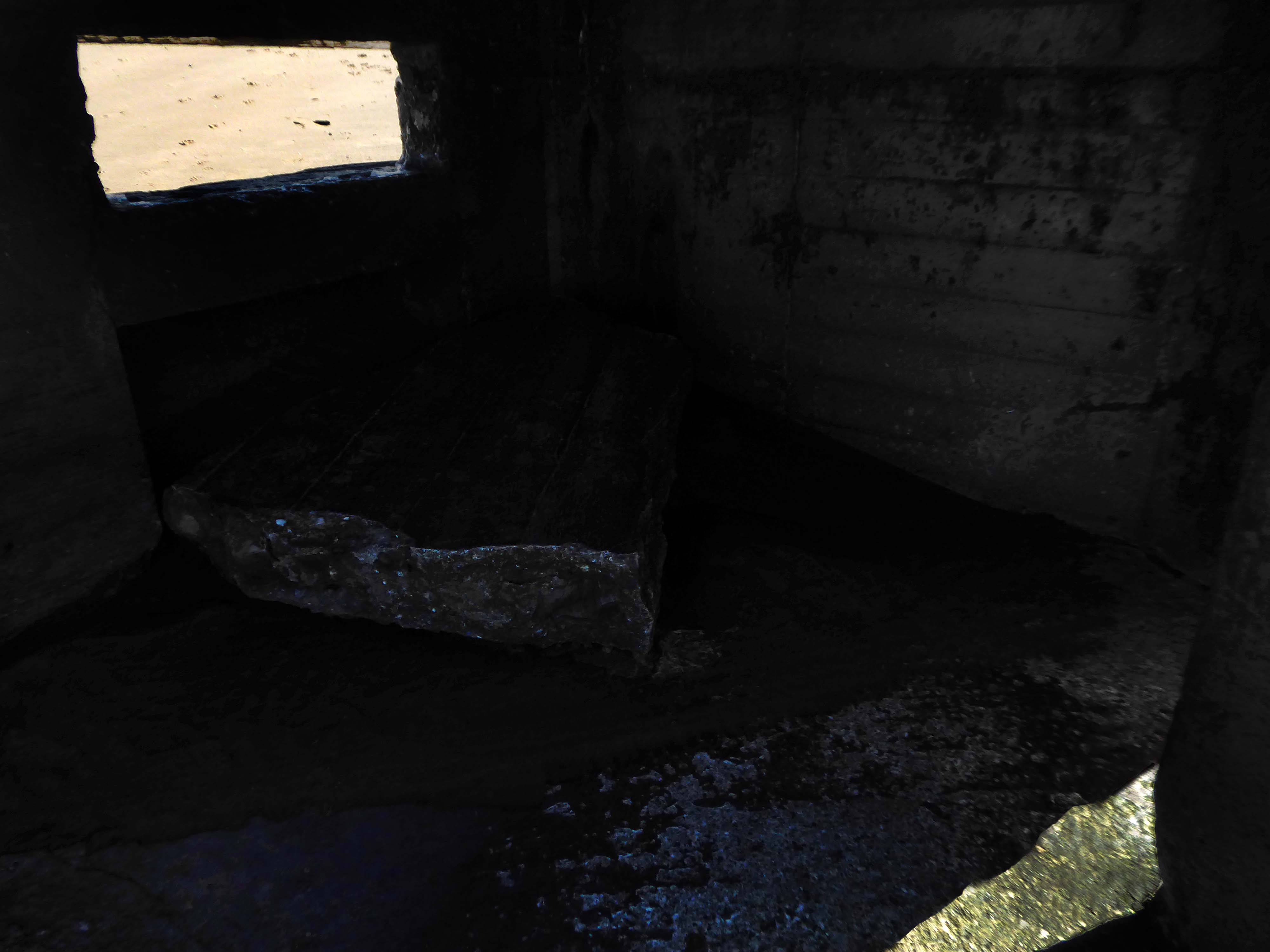
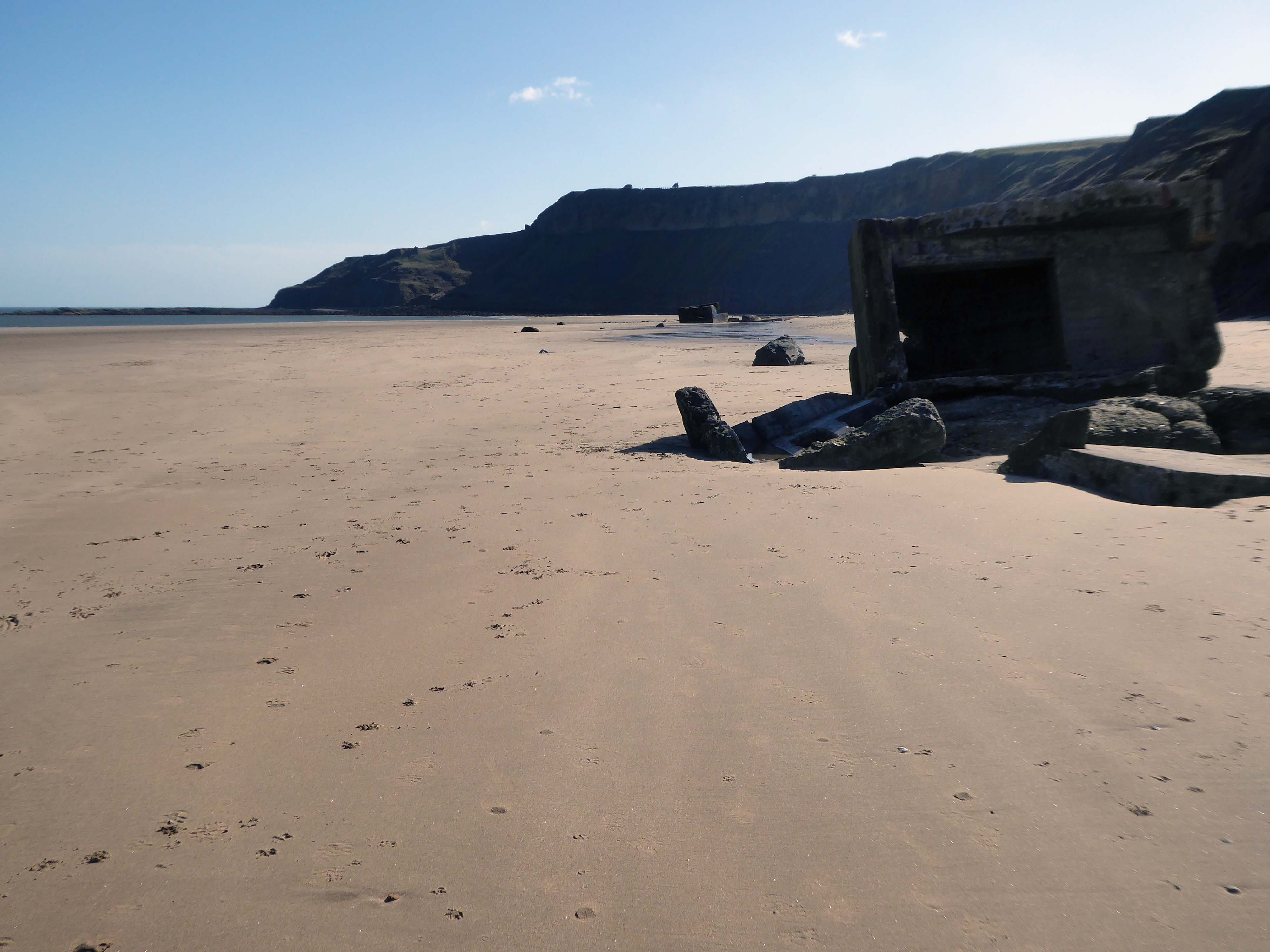
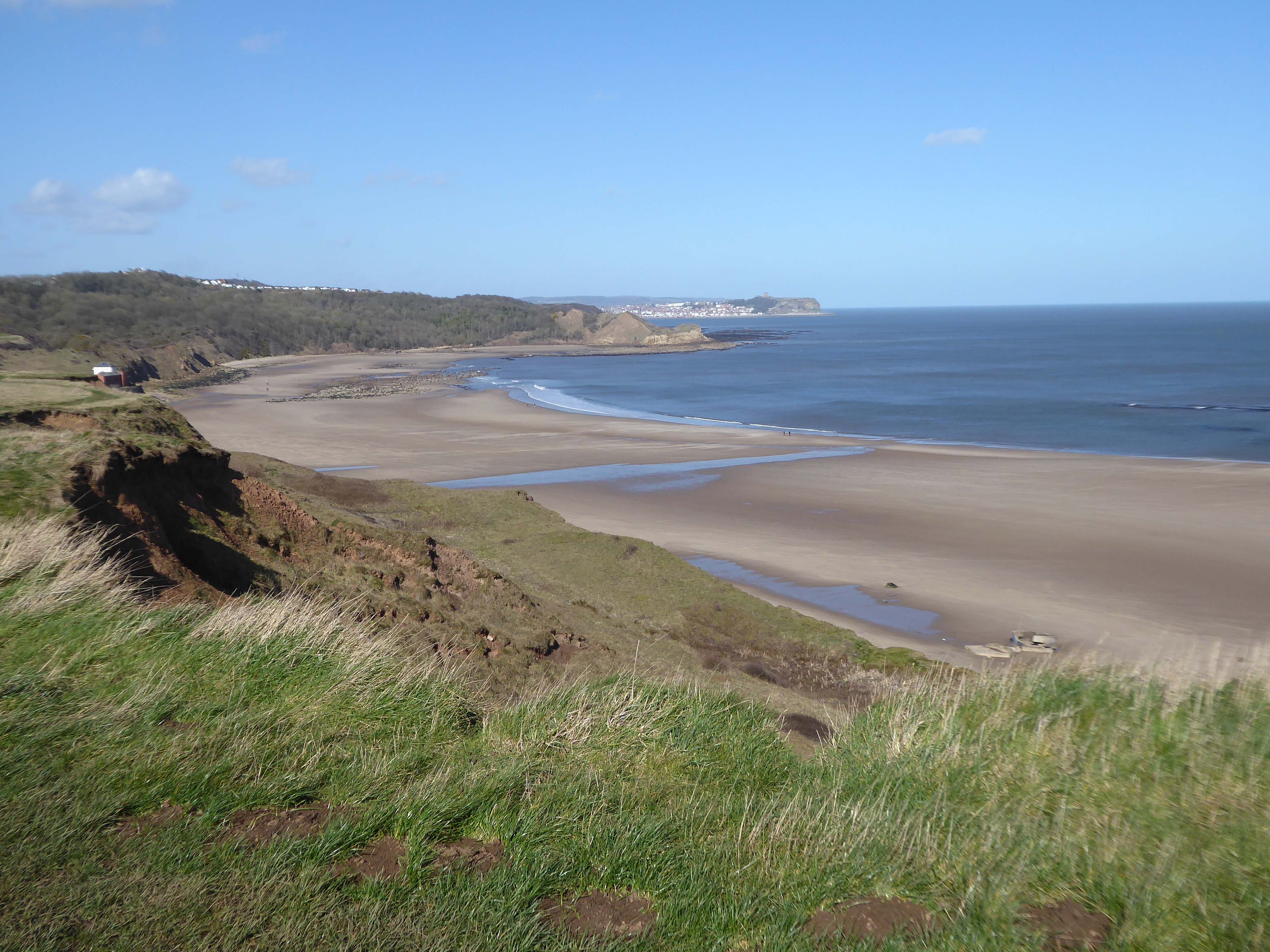
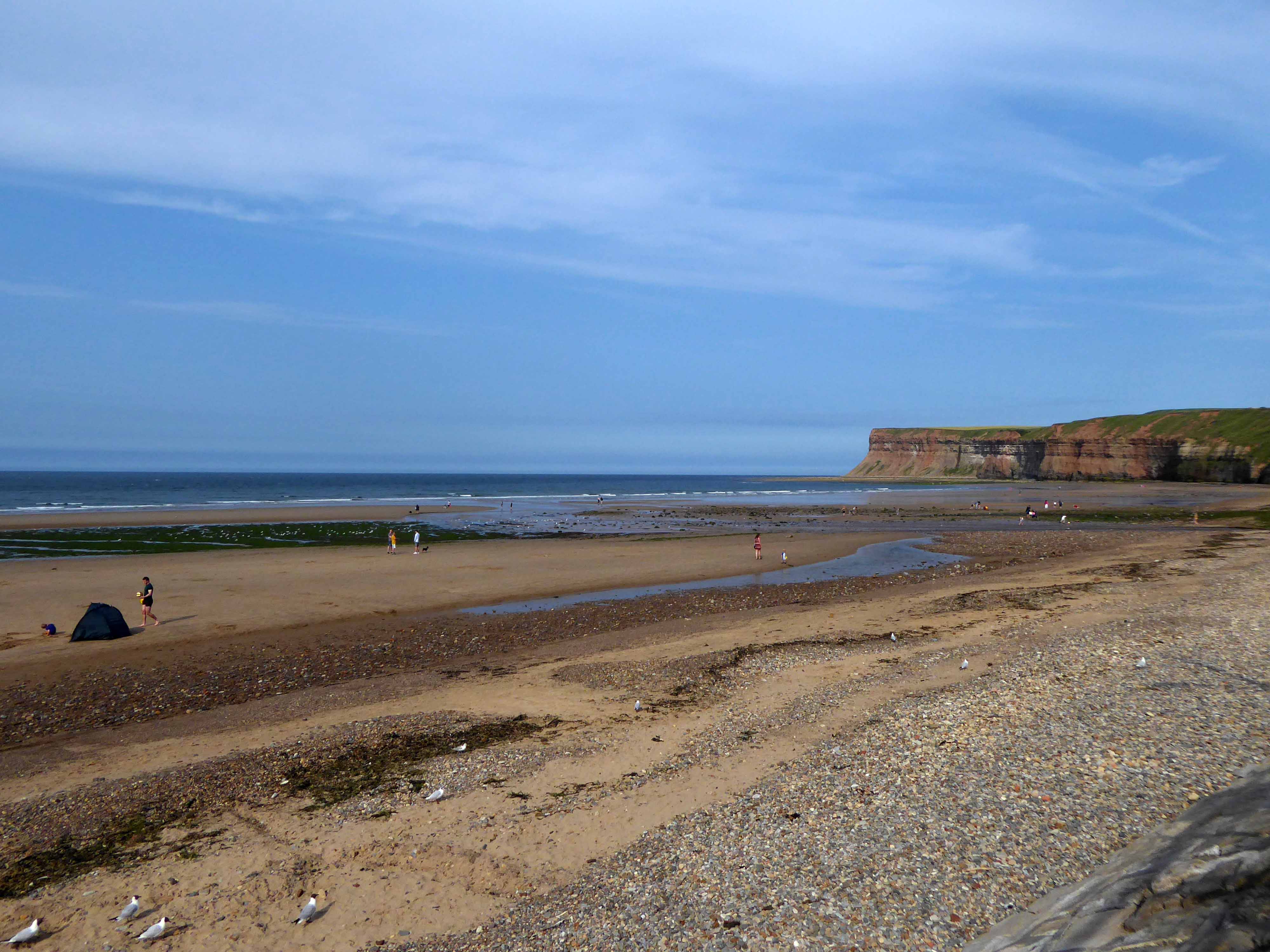
The wide sandy bay was an ideal location for WW2 pillboxes and gun emplacements – anticipating a possible North Sea invasion.

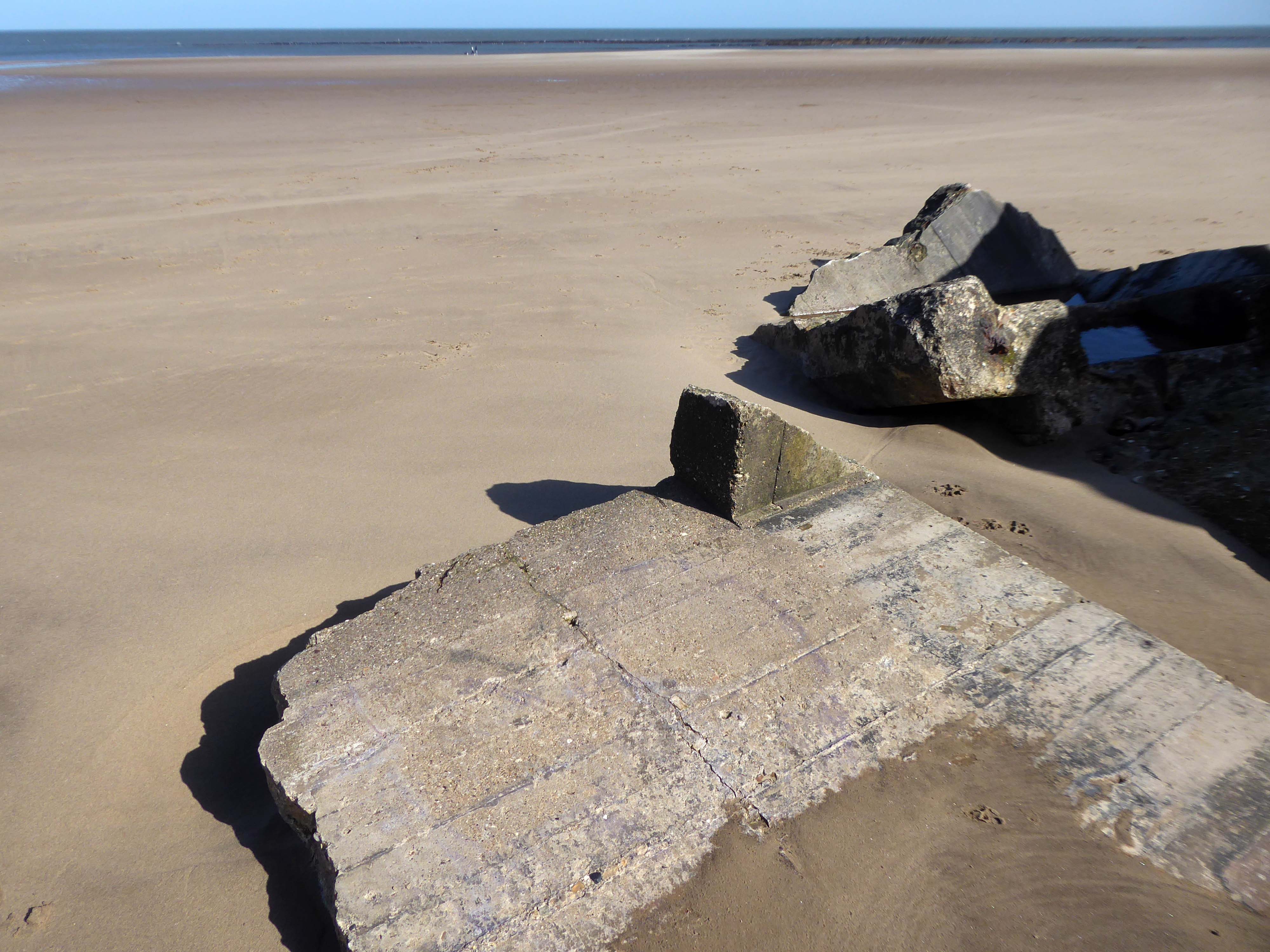
They too are built quite literally on shifting sands.

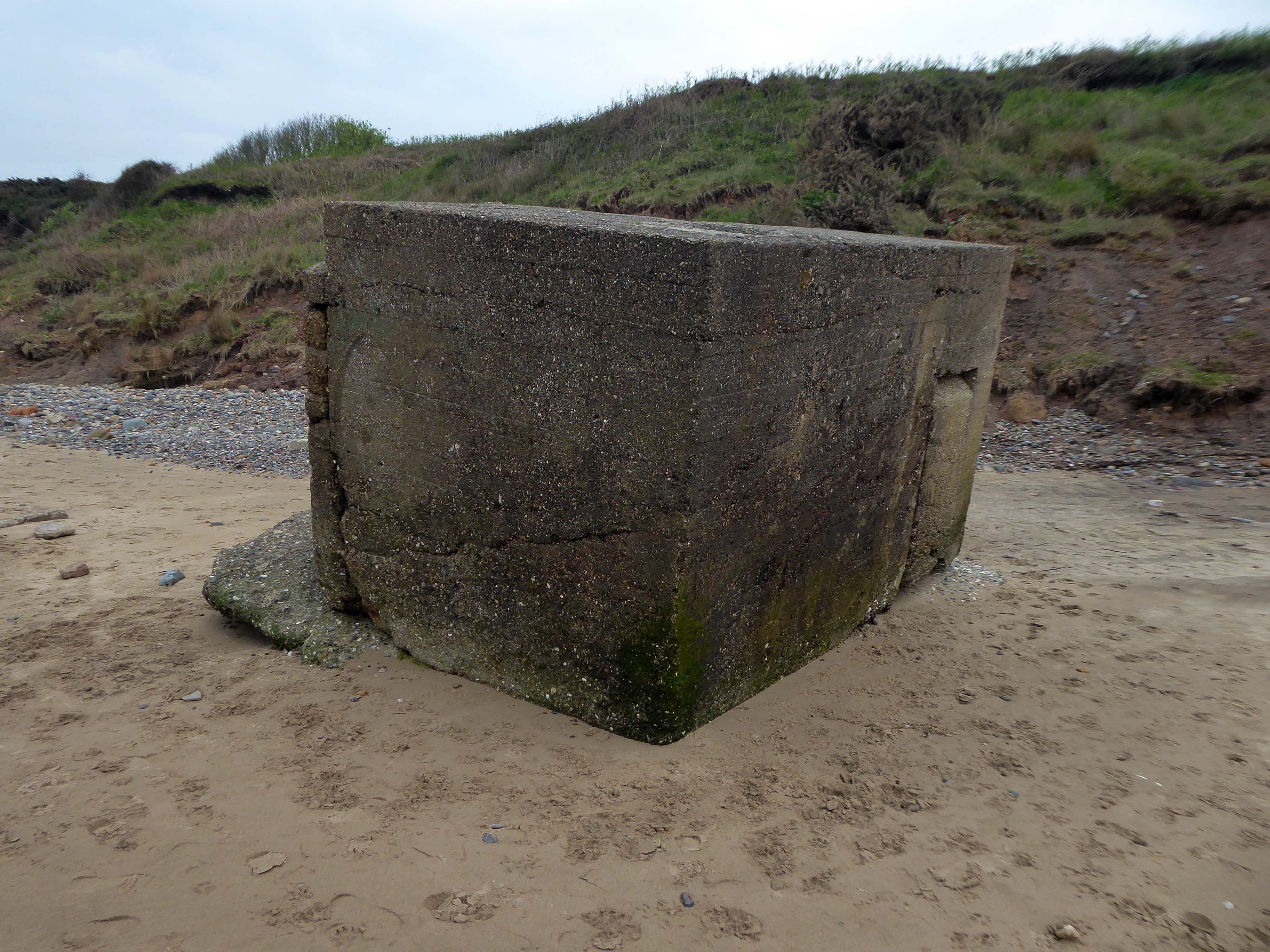
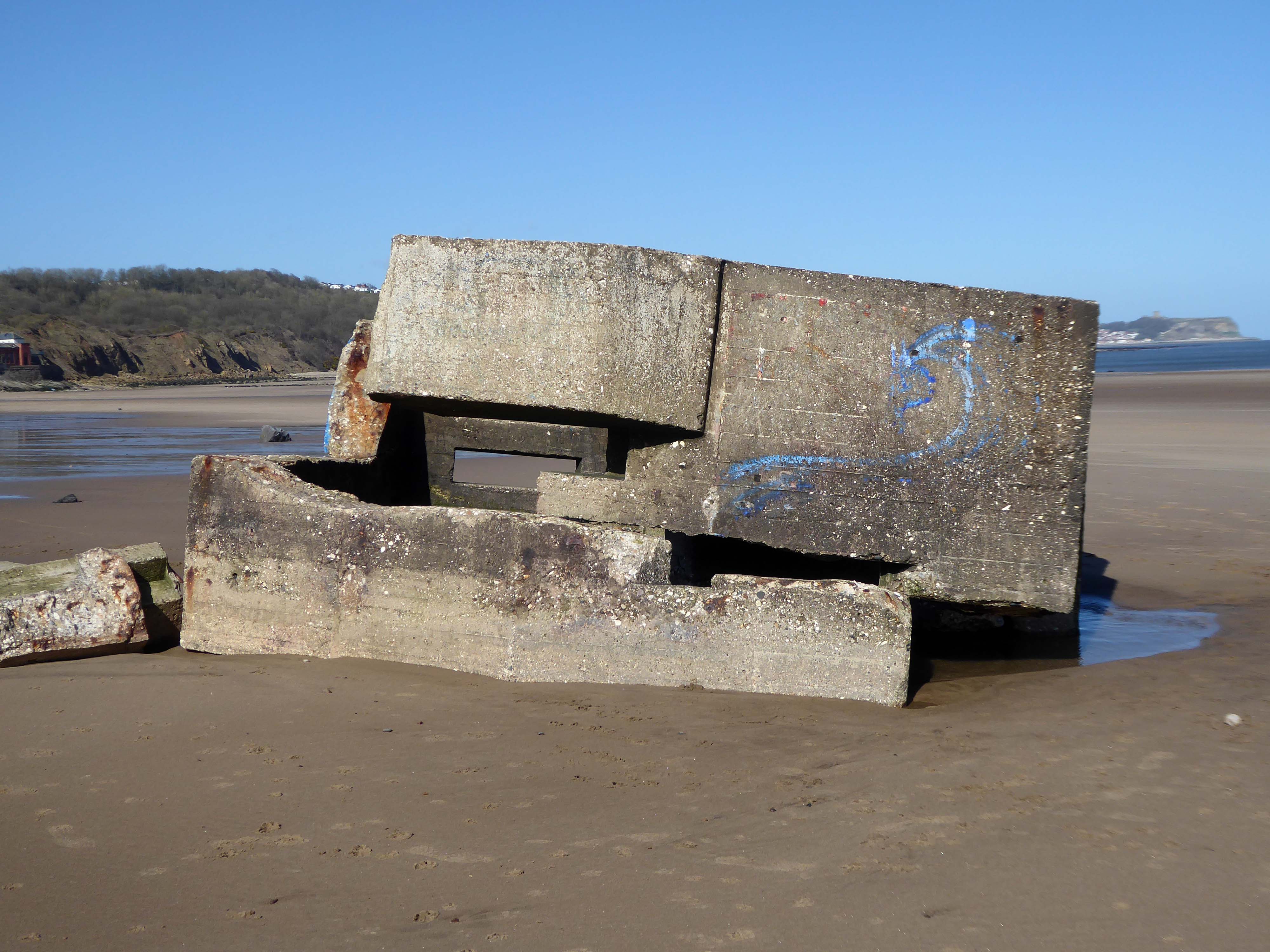
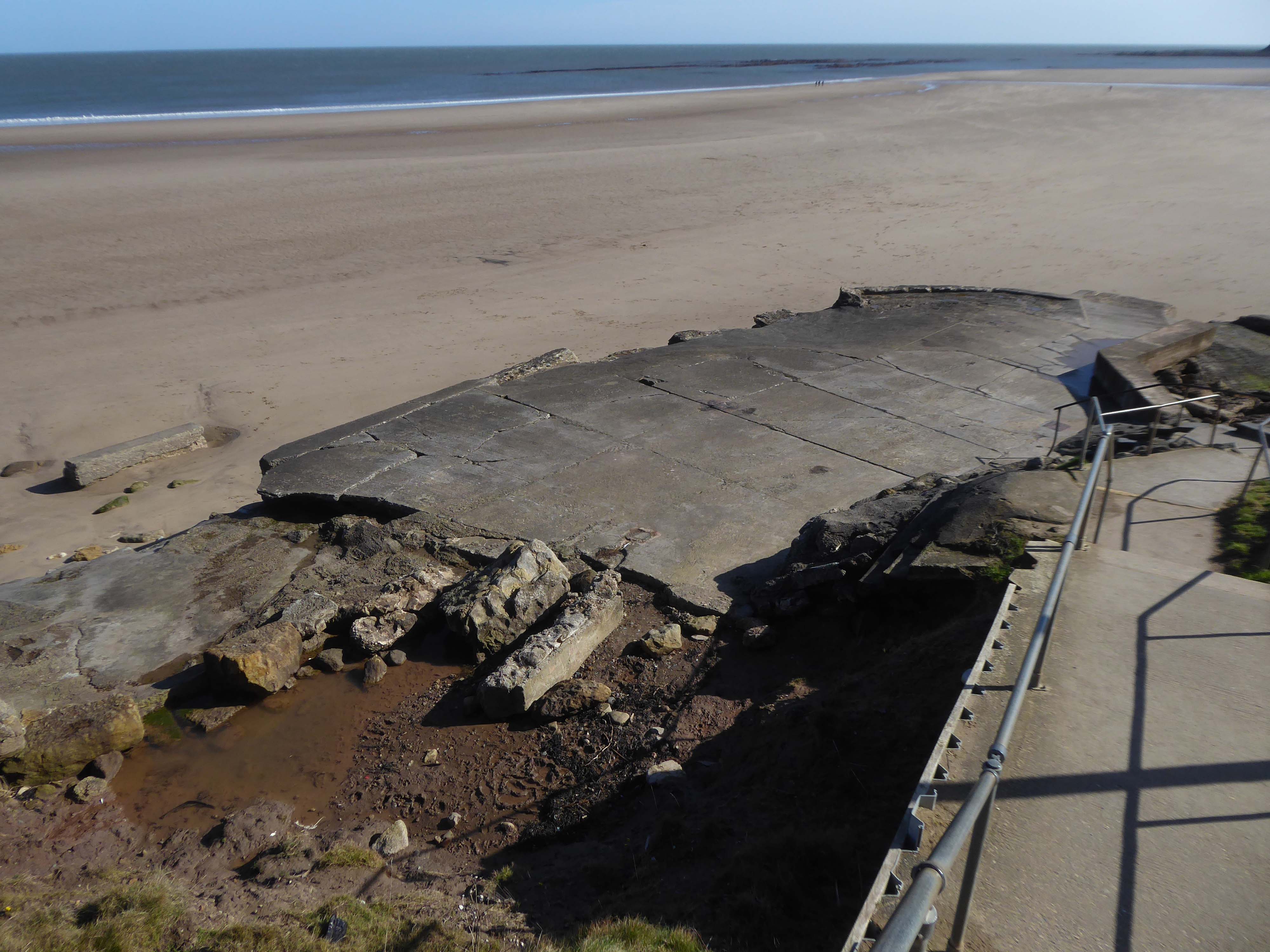
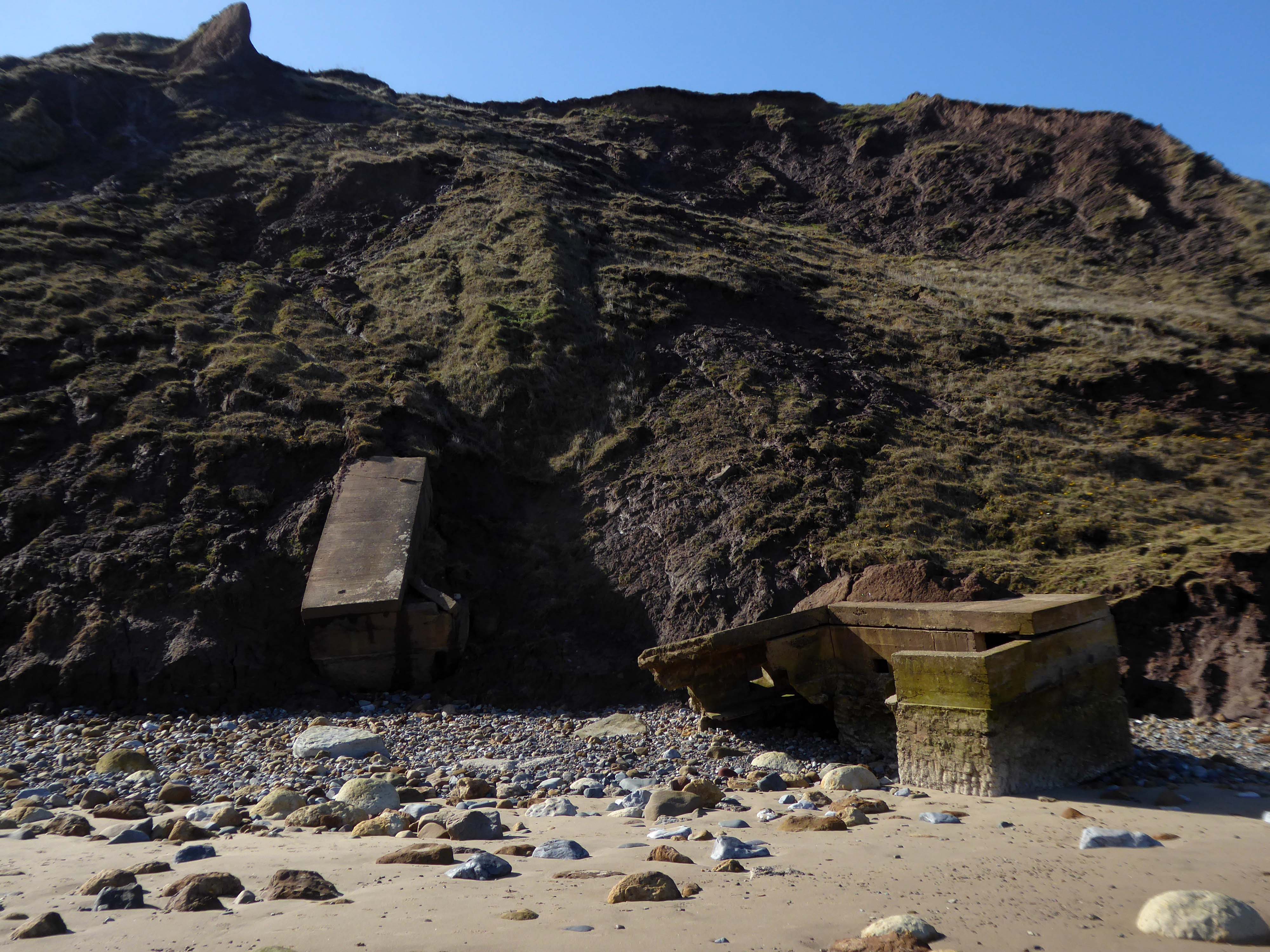
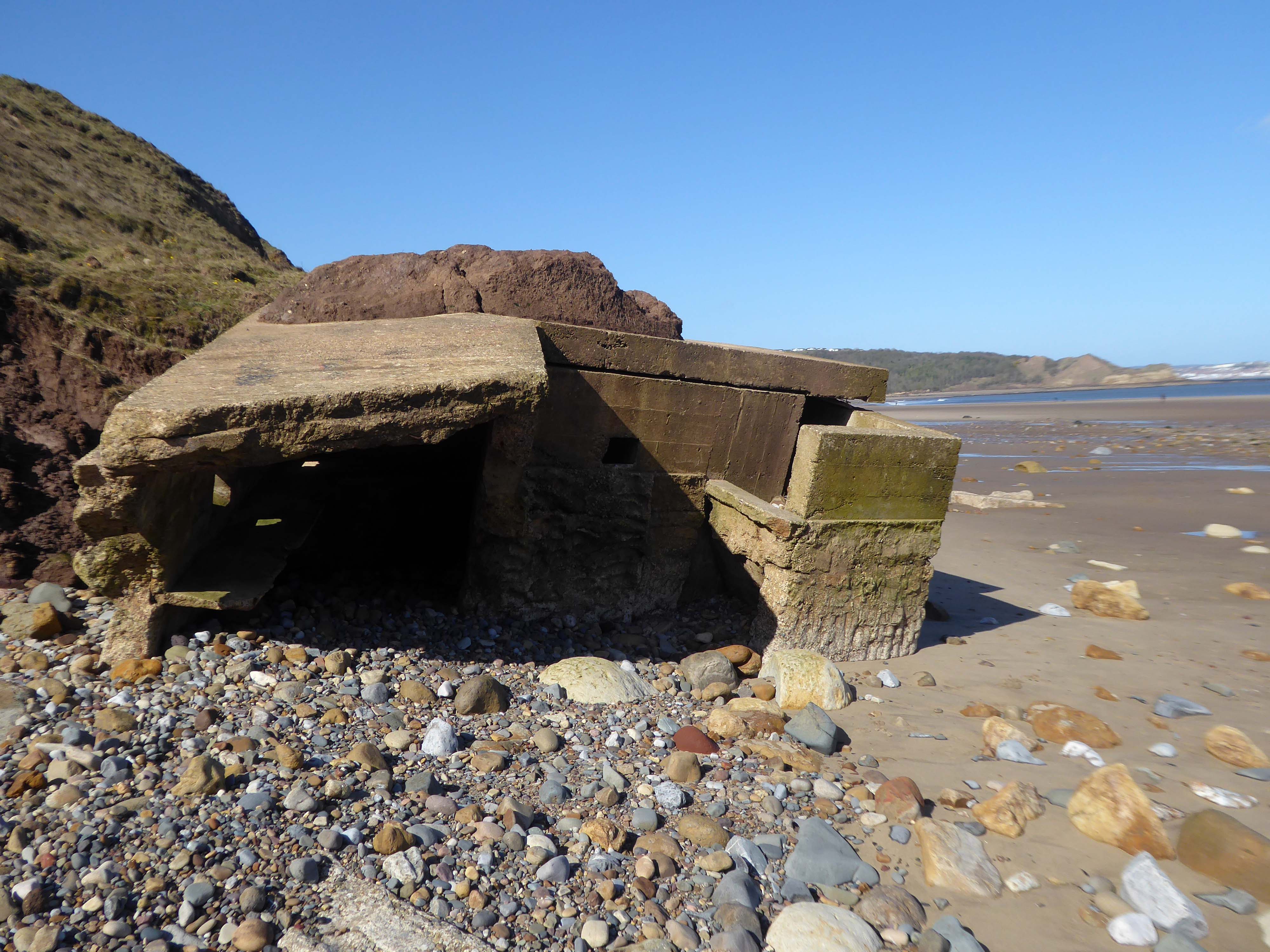
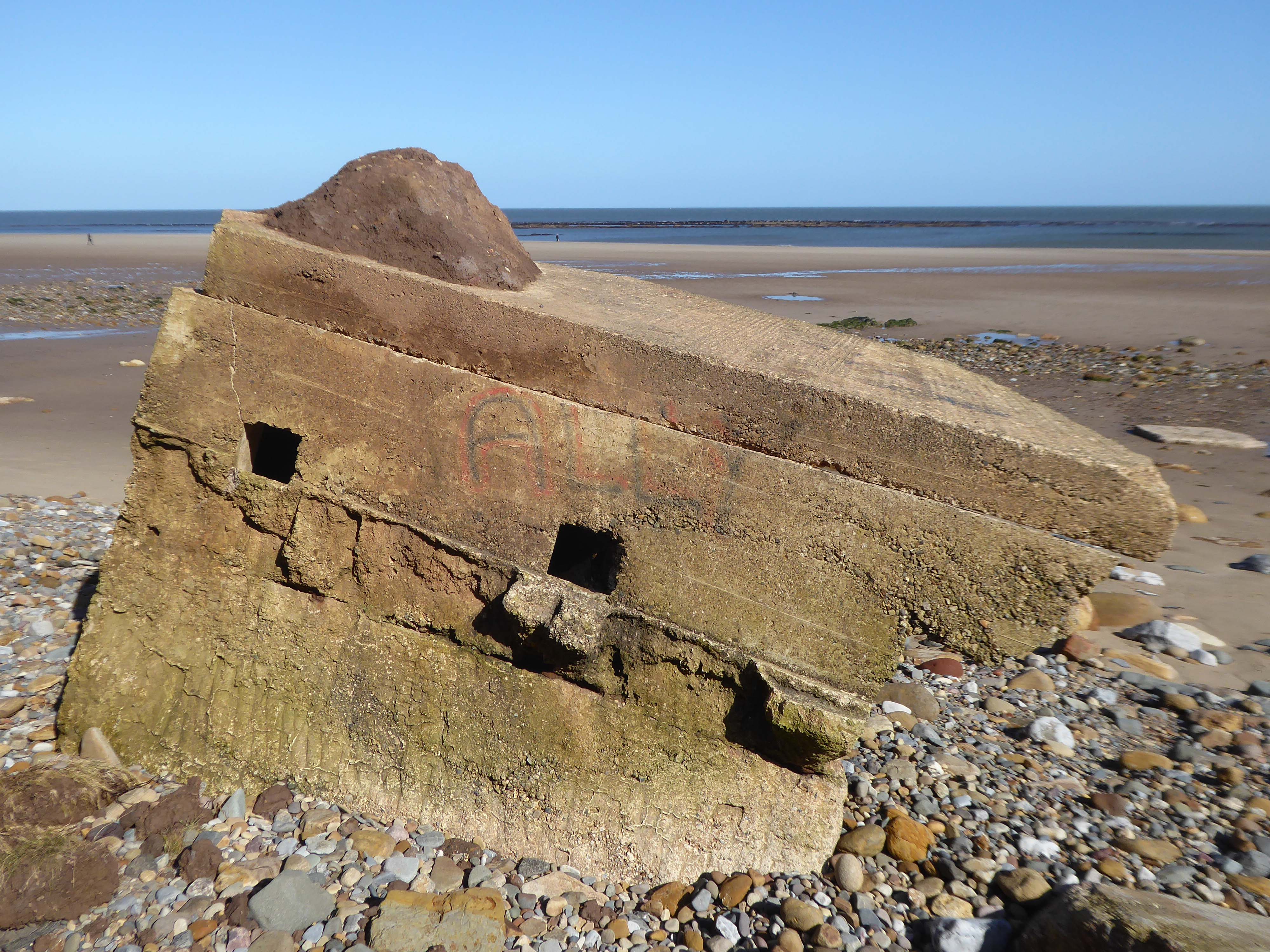
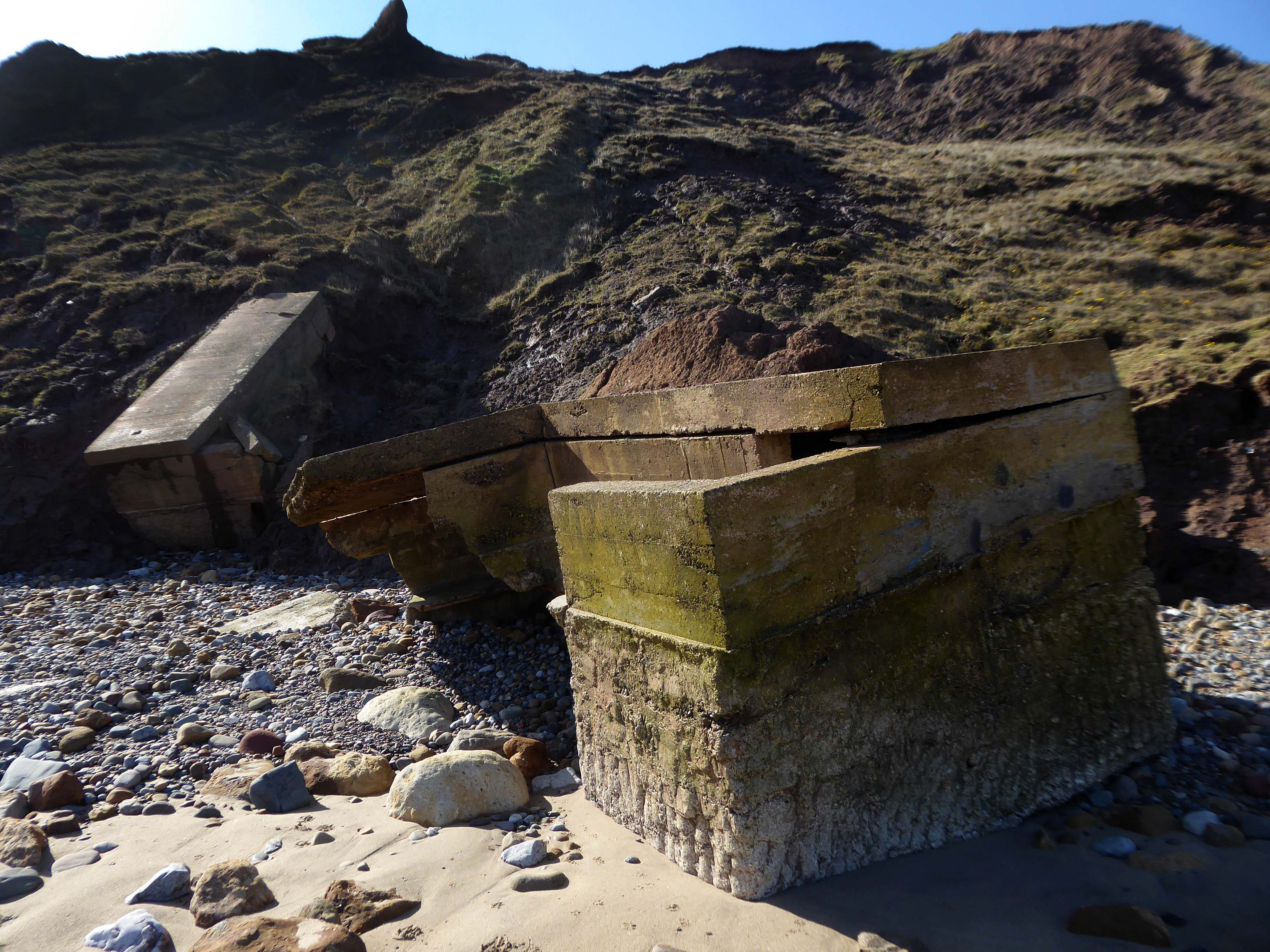
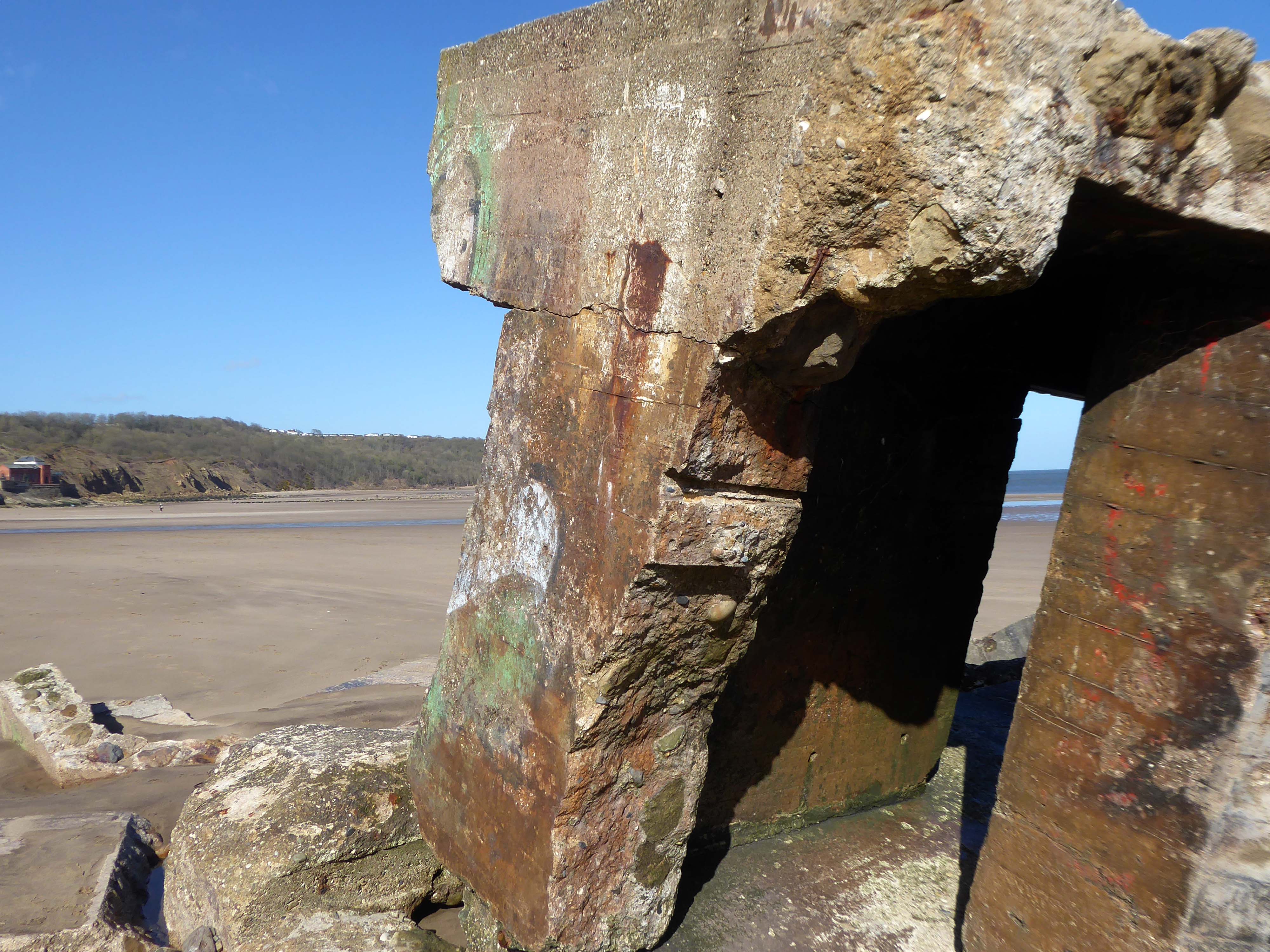
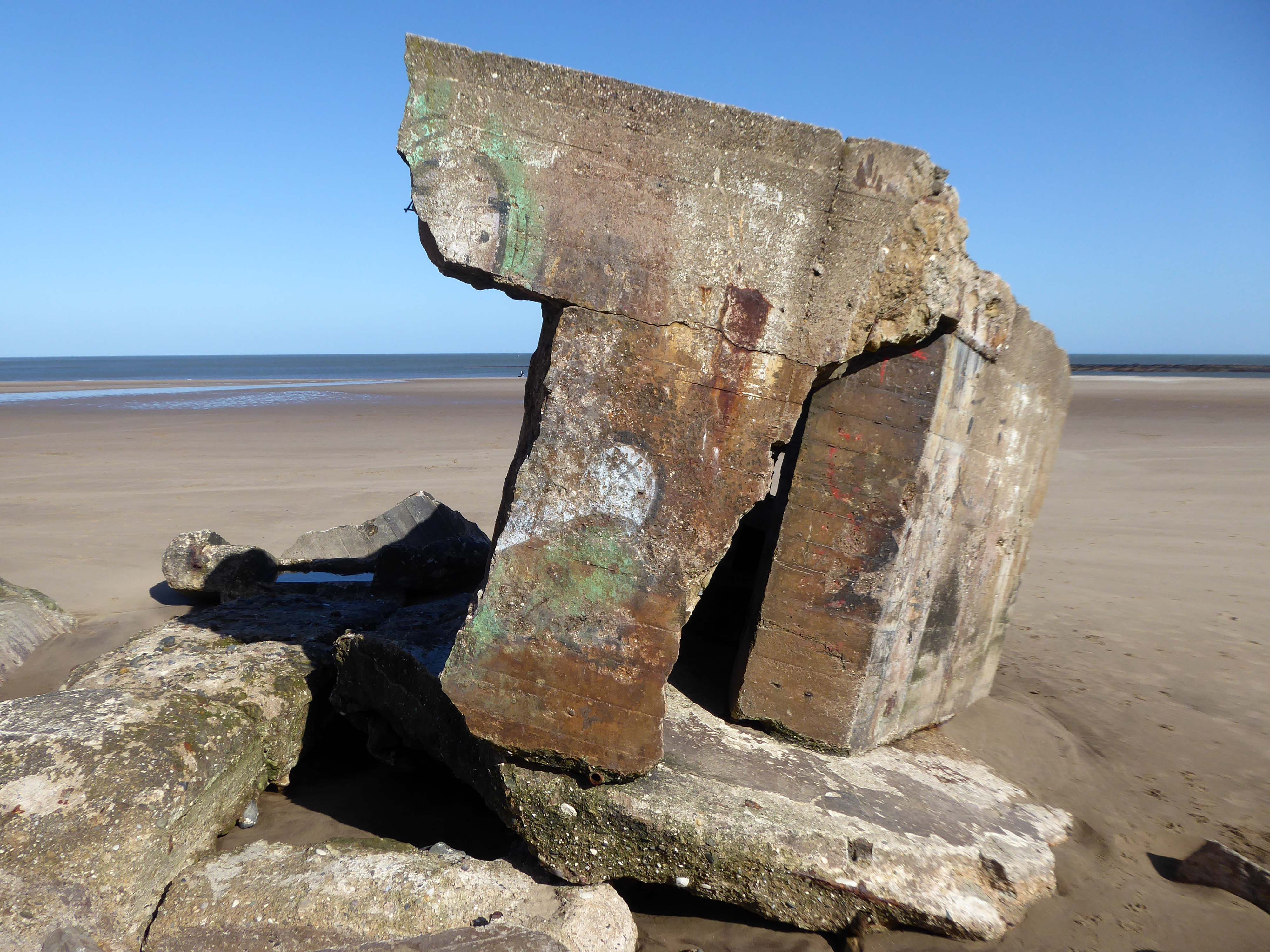
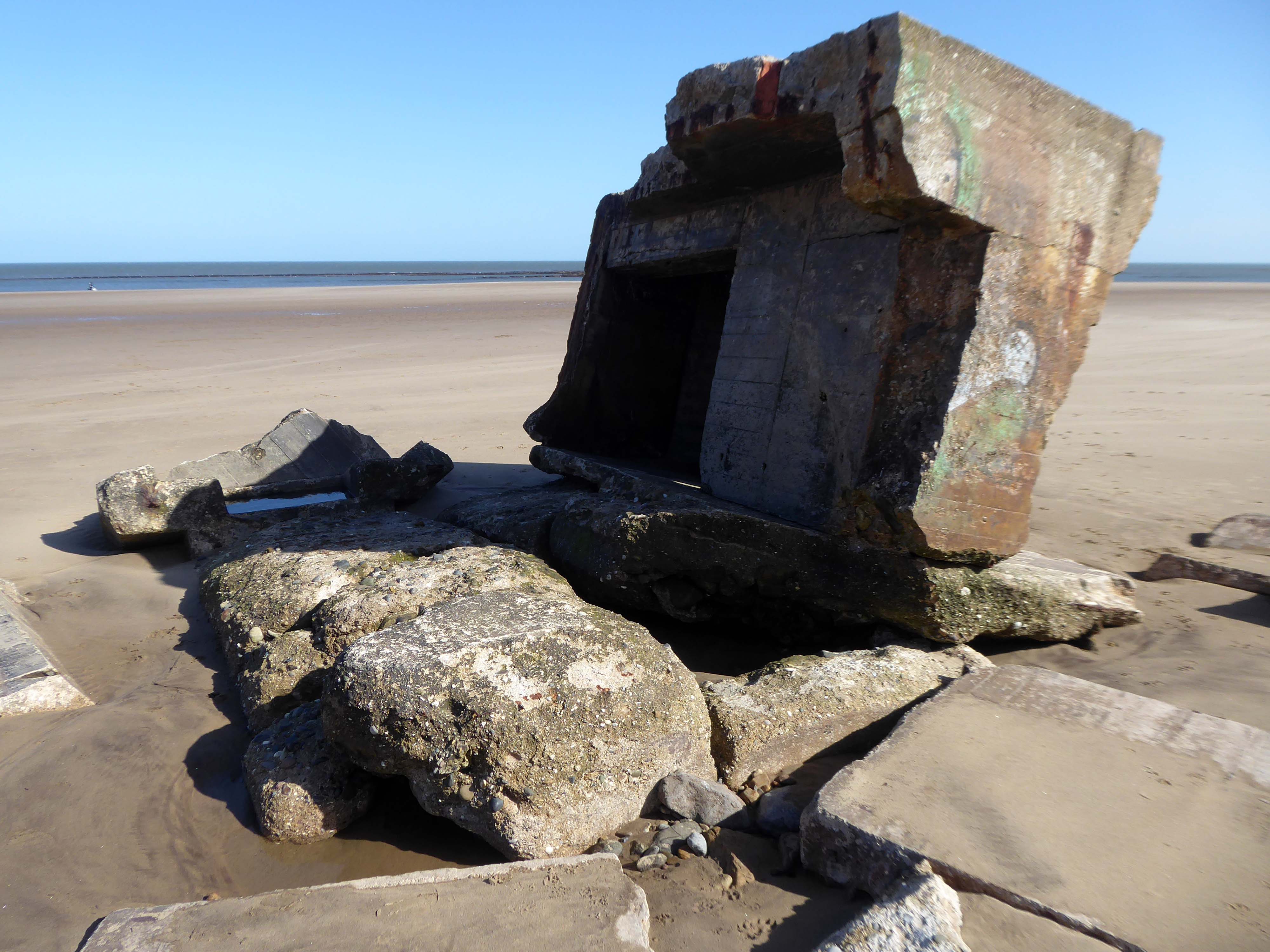
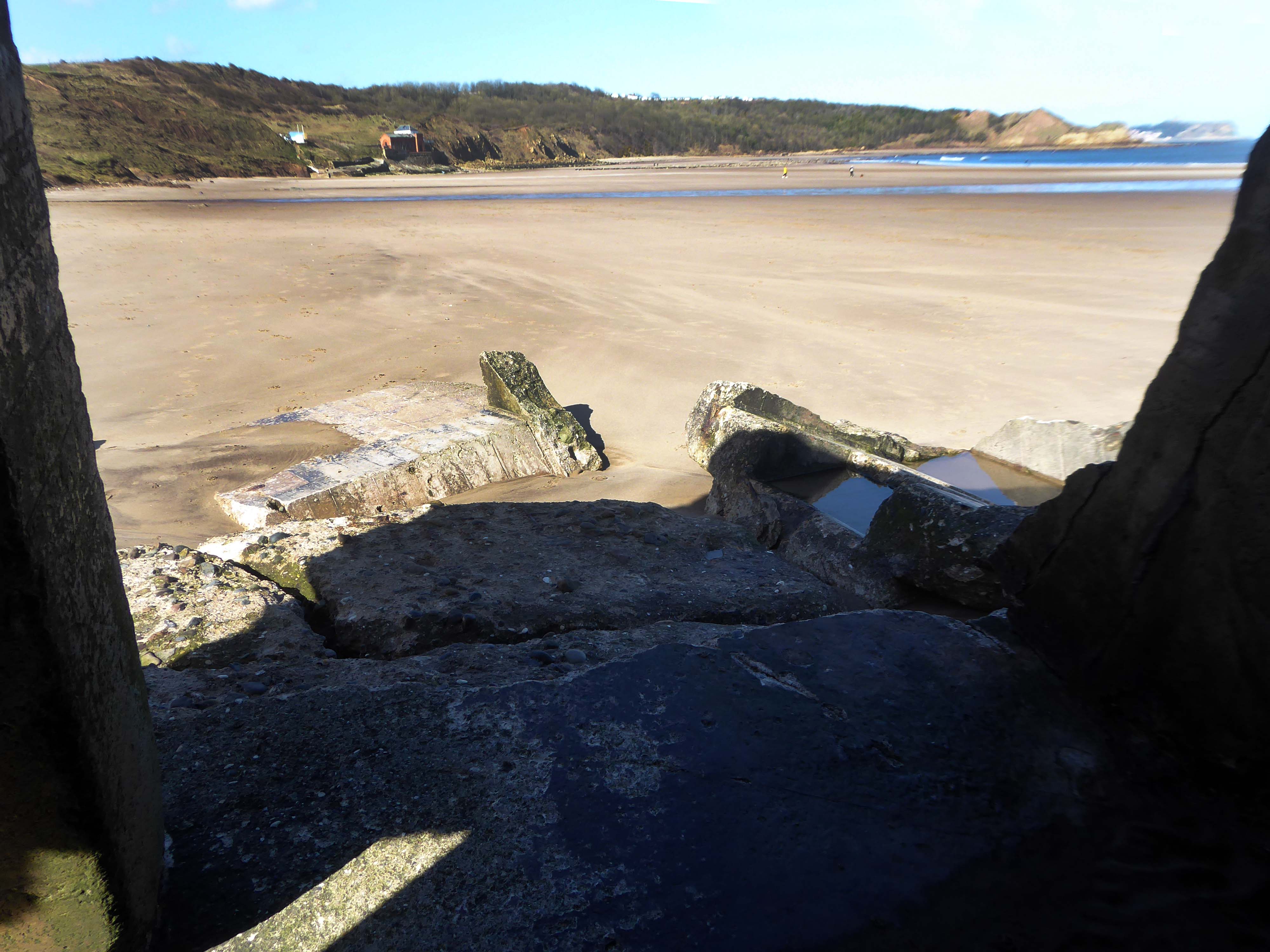
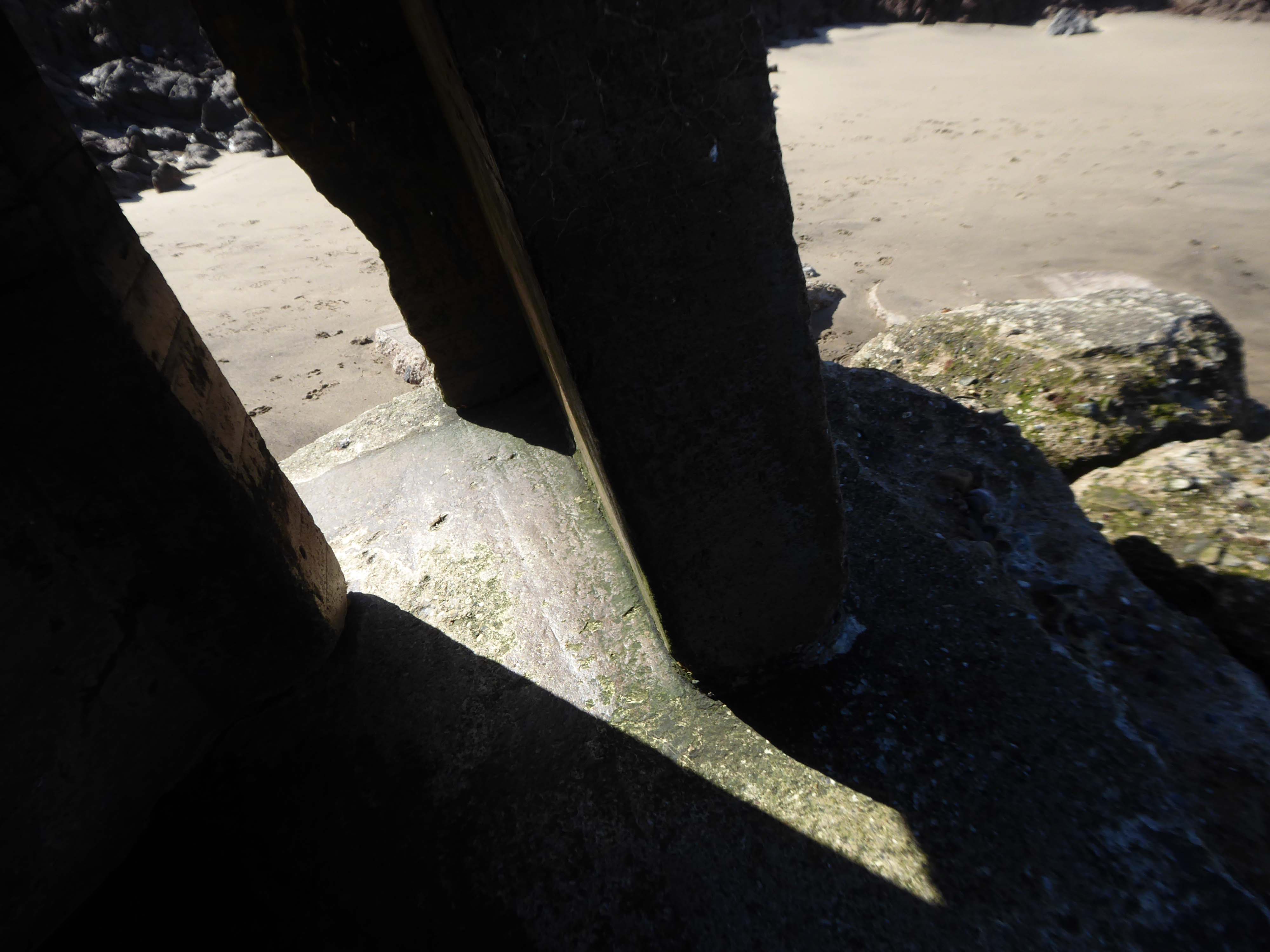
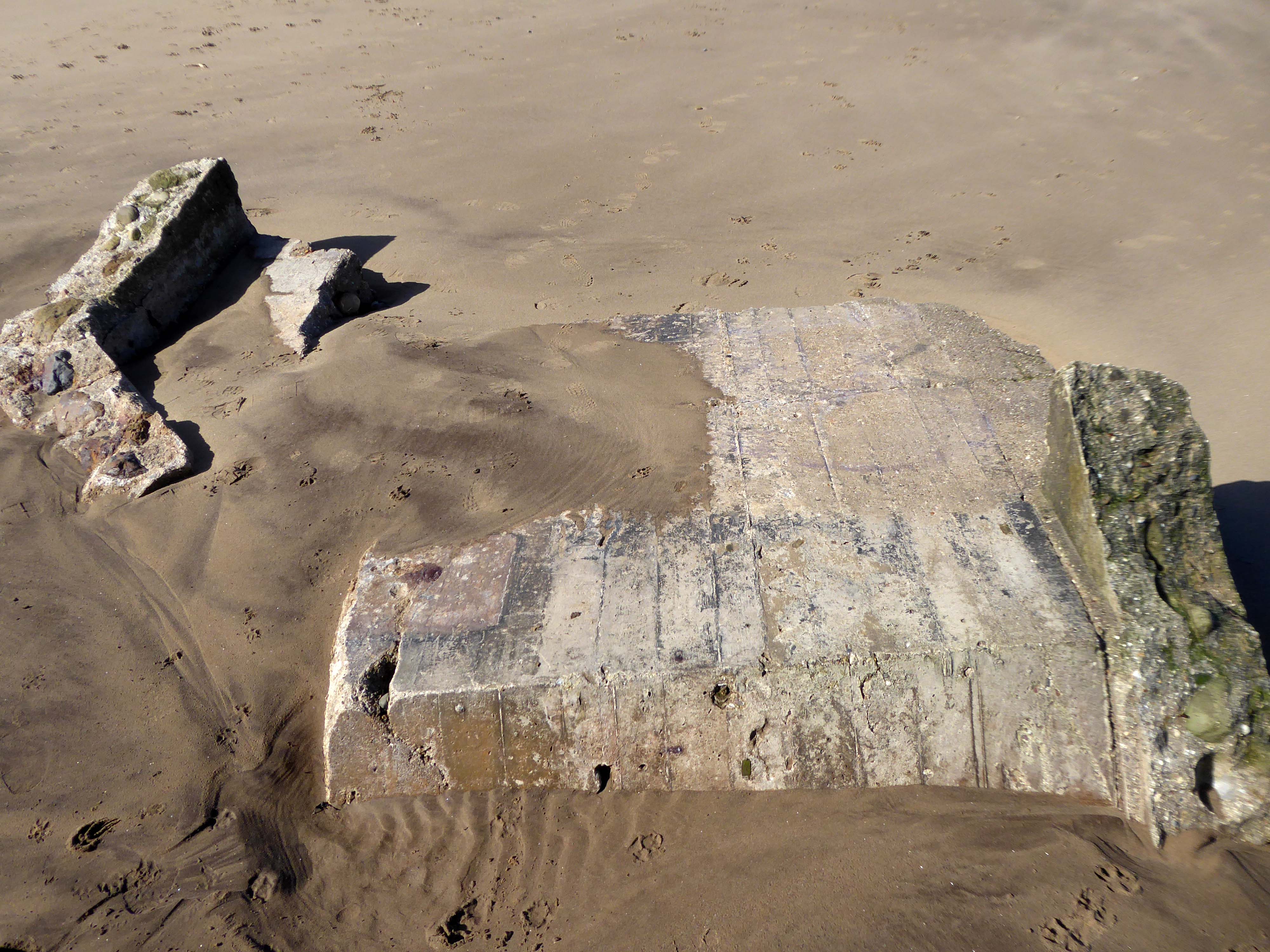
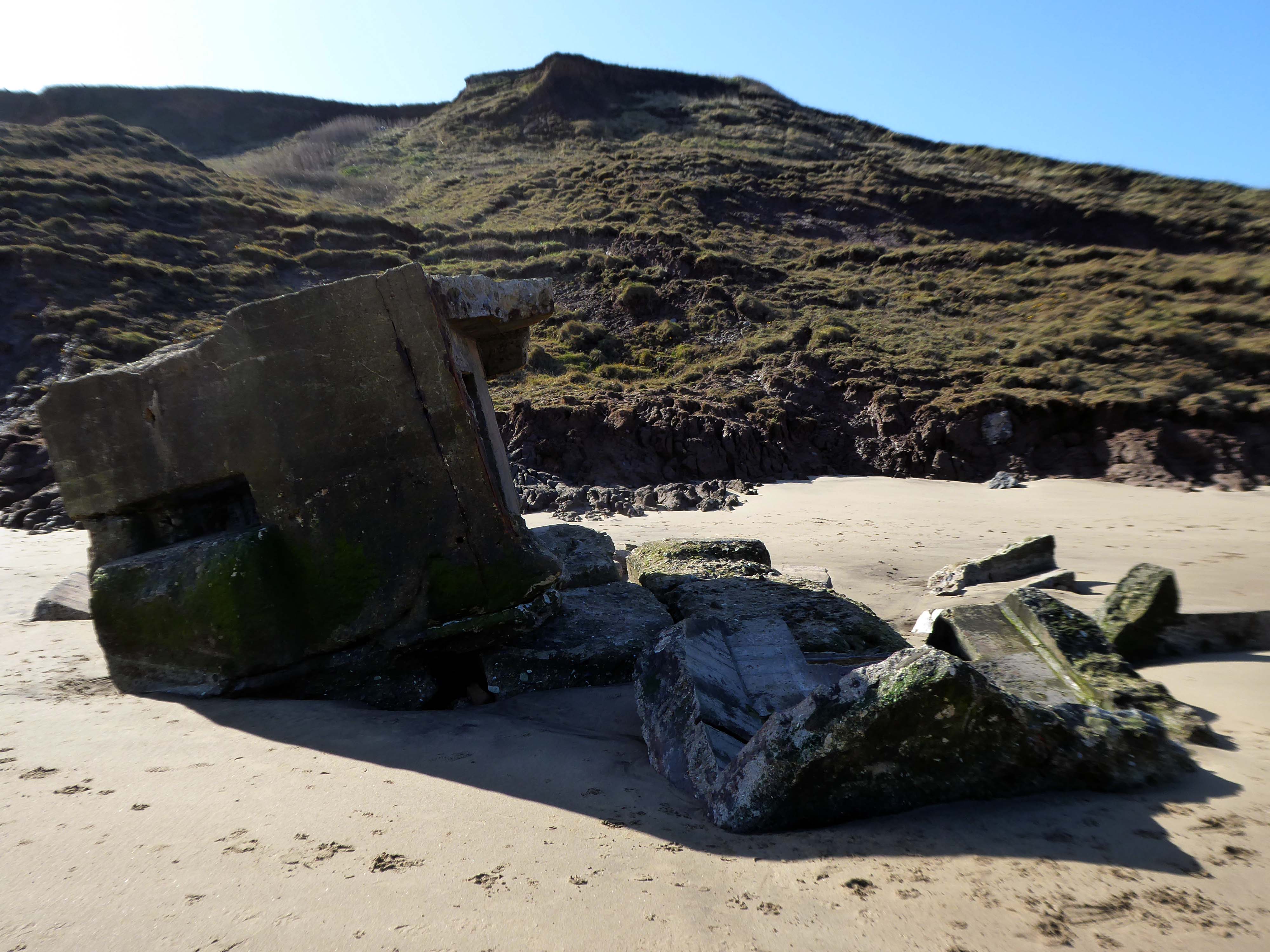
The pillbox – one of many built along the coast to defend against an invasion during World War II – had started to break down, leaving one large piece of stone in a precarious position.

Rob Shaw, of Ganton, noticed the large slab was propped up dangerously against another piece of stone last September.

He said he reported his concerns to Scarborough Borough Council then, but that nothing was done until last month.

The dad-of-two said before the work:

I used to work in construction and I would have been fired if I had left a lump of concrete like that, it could weigh four or five tonnes.

It just needs lying flat on the sand so it can’t fall on anyone.

A spokesperson for Scarborough Borough Council said the council had assessed the pillbox and arrangements had been made for the problem section to be removed.

The Scarborough News

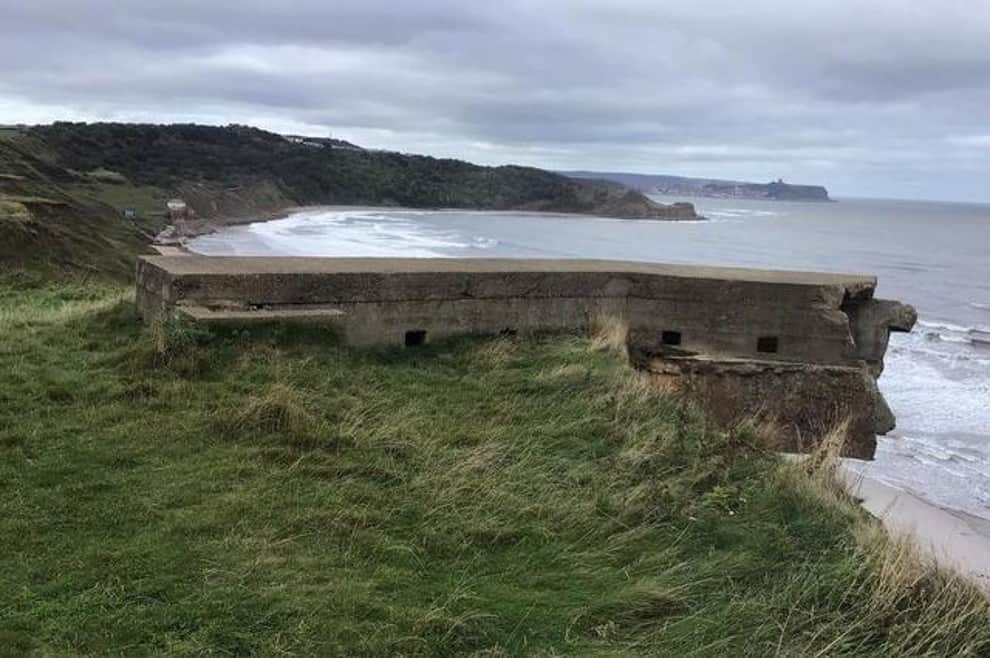
This unstable cliff-top structure was allegedly hastened bay-wards by the Council.

Claims that we pushed the pillbox off the cliff are untrue – our colleagues have many amazing talents but pushing huge concrete structures is not one of them. The structure people can see at the base of the cliff is the other section of the pillbox that has been on the beach for many years.

Yorkshire Post

So let’s take a look at the state of play as of March 2023 – walking amongst these crumbling concrete remnants.

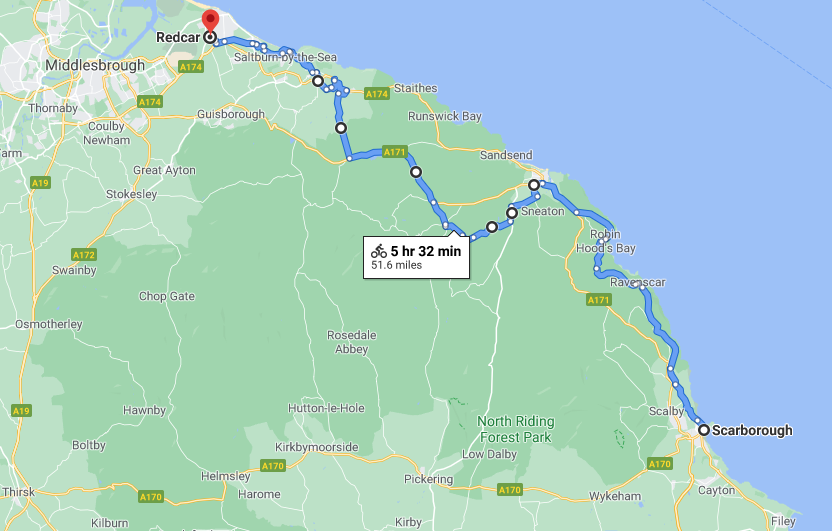
Scarborough to Redcar

Well it seems that I had already cycled from Hull to Scarborough, so it must be time to head for Redcar.

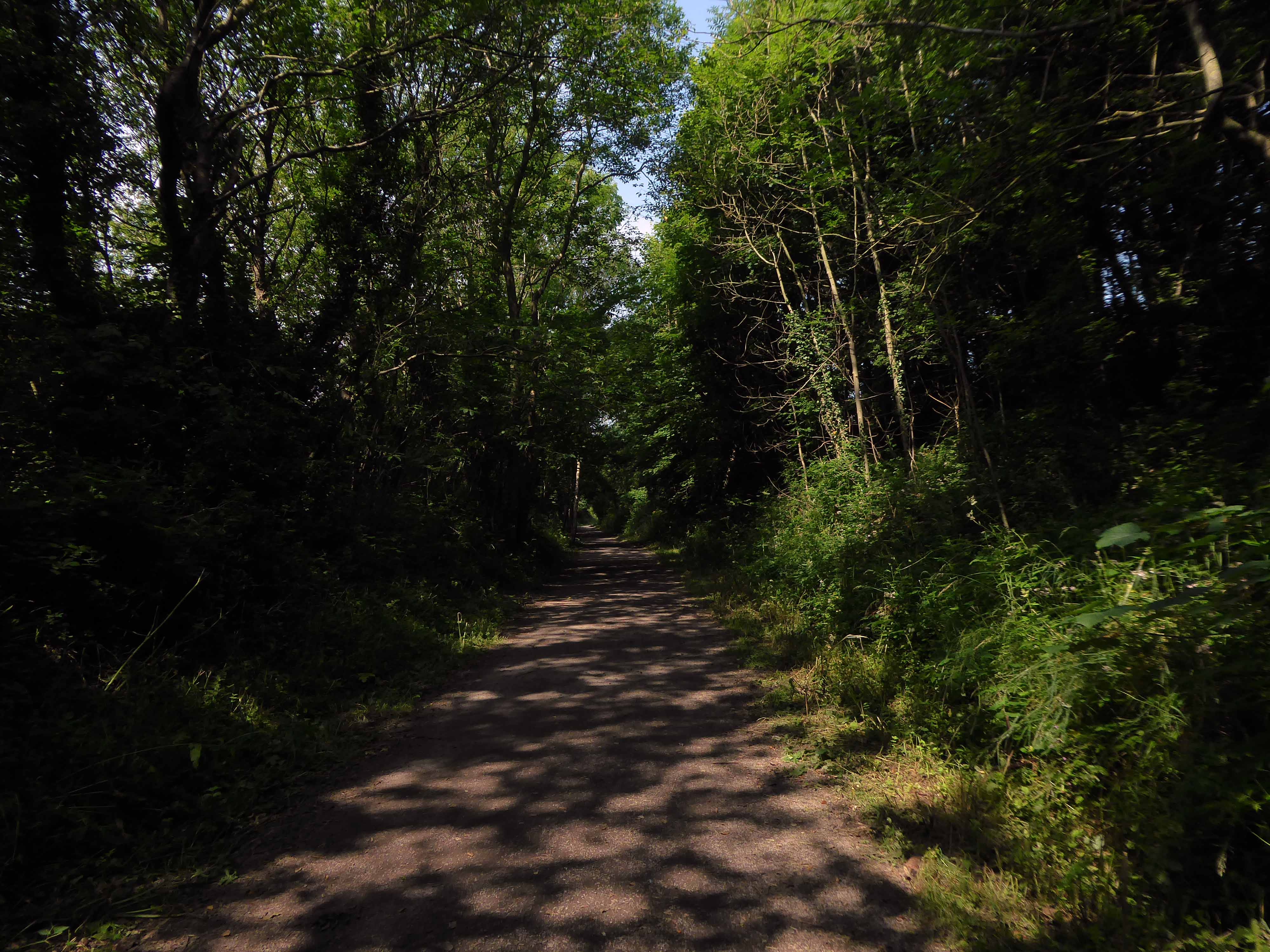
Leaving Scarborough by the Cinder Track under the expert guidance of Mr Ben Vickers.

This was the site of the Gallows Close Goods Yard.

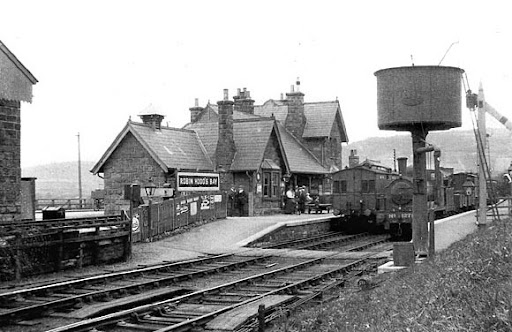
Formerly the Scarbough to Whitby Railway – the line opened in 1885 and closed in 1965 as part of the Beeching Axe.

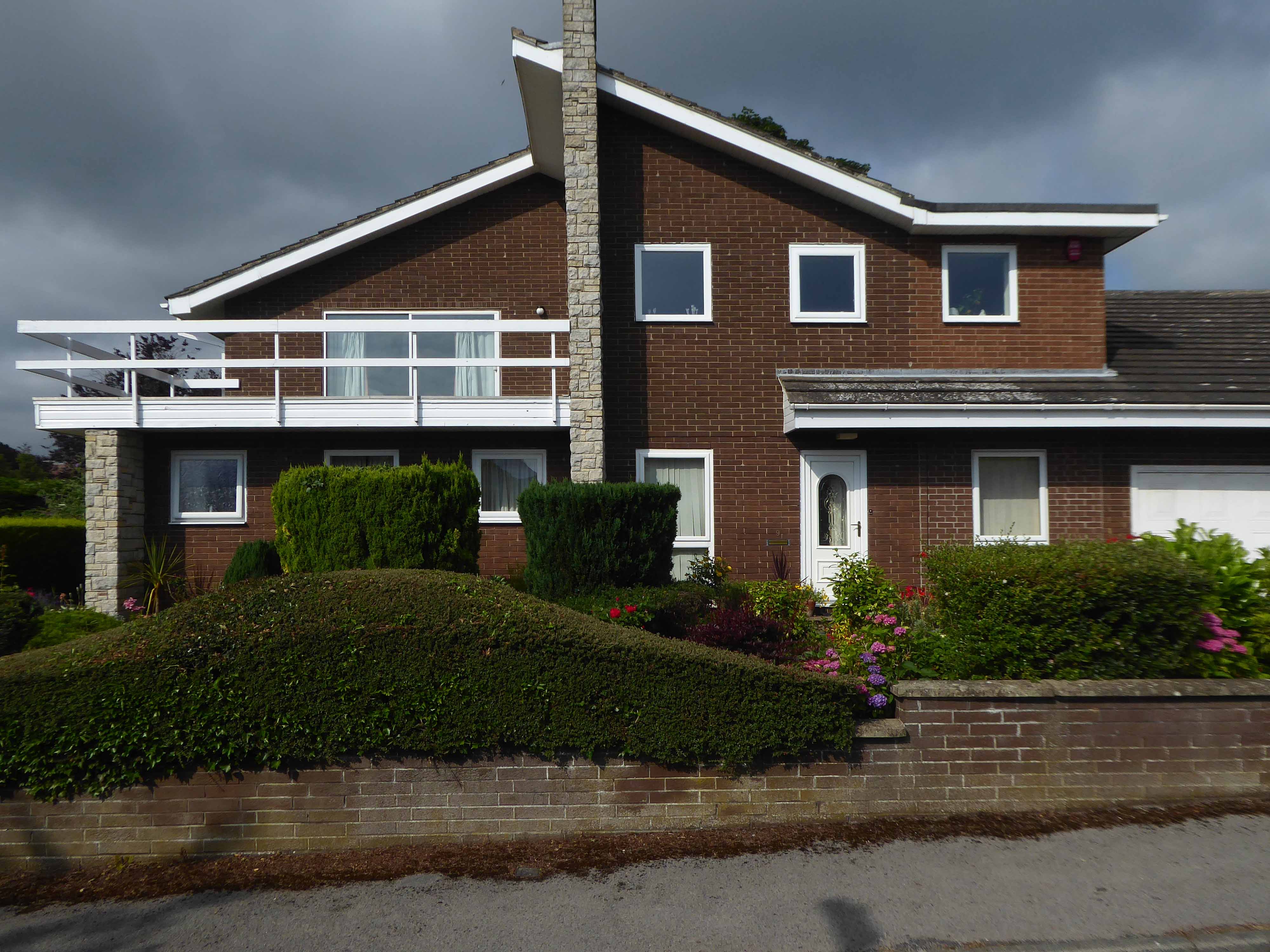
Yet again I chance upon a delightful post-war home.

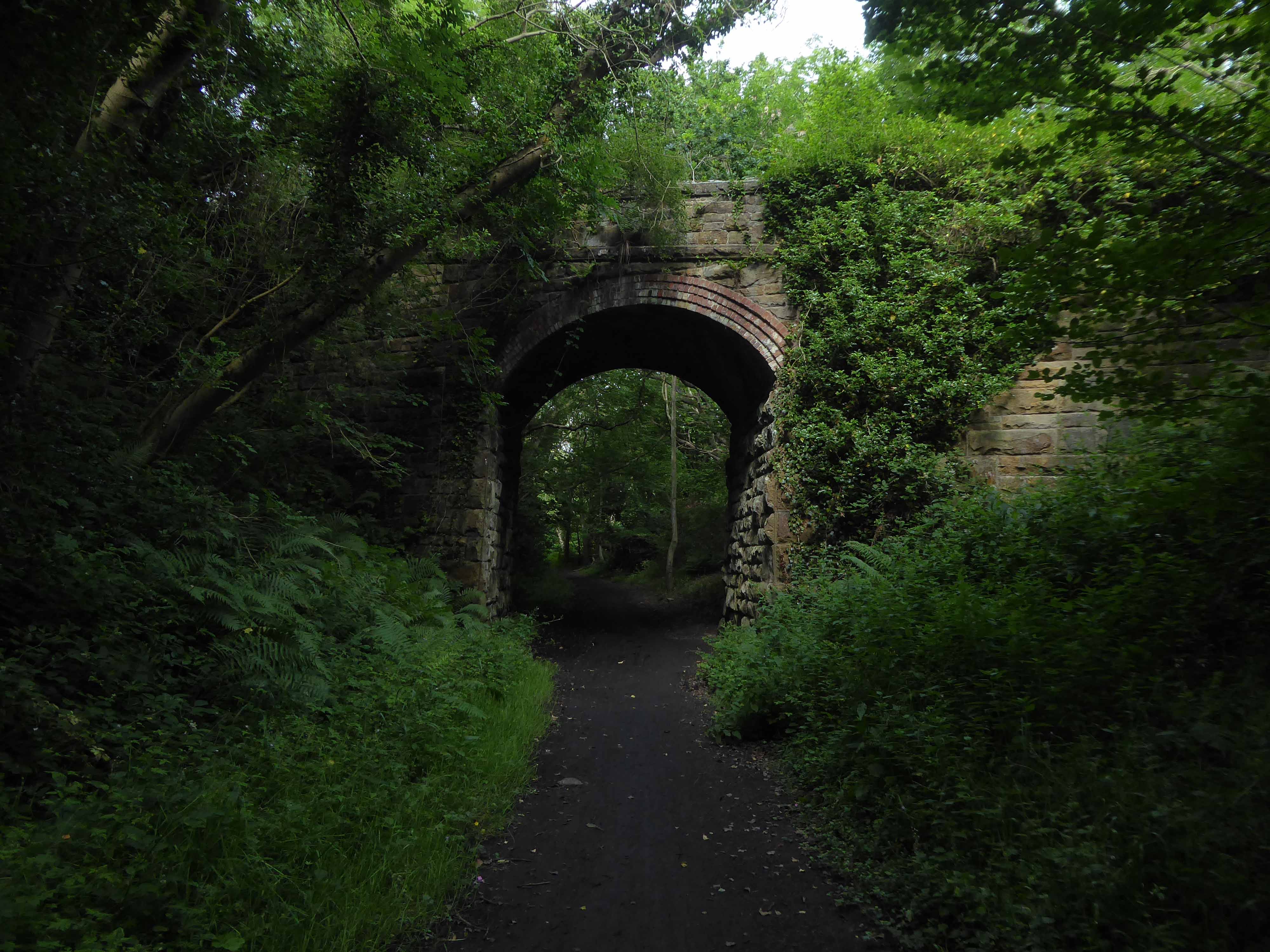
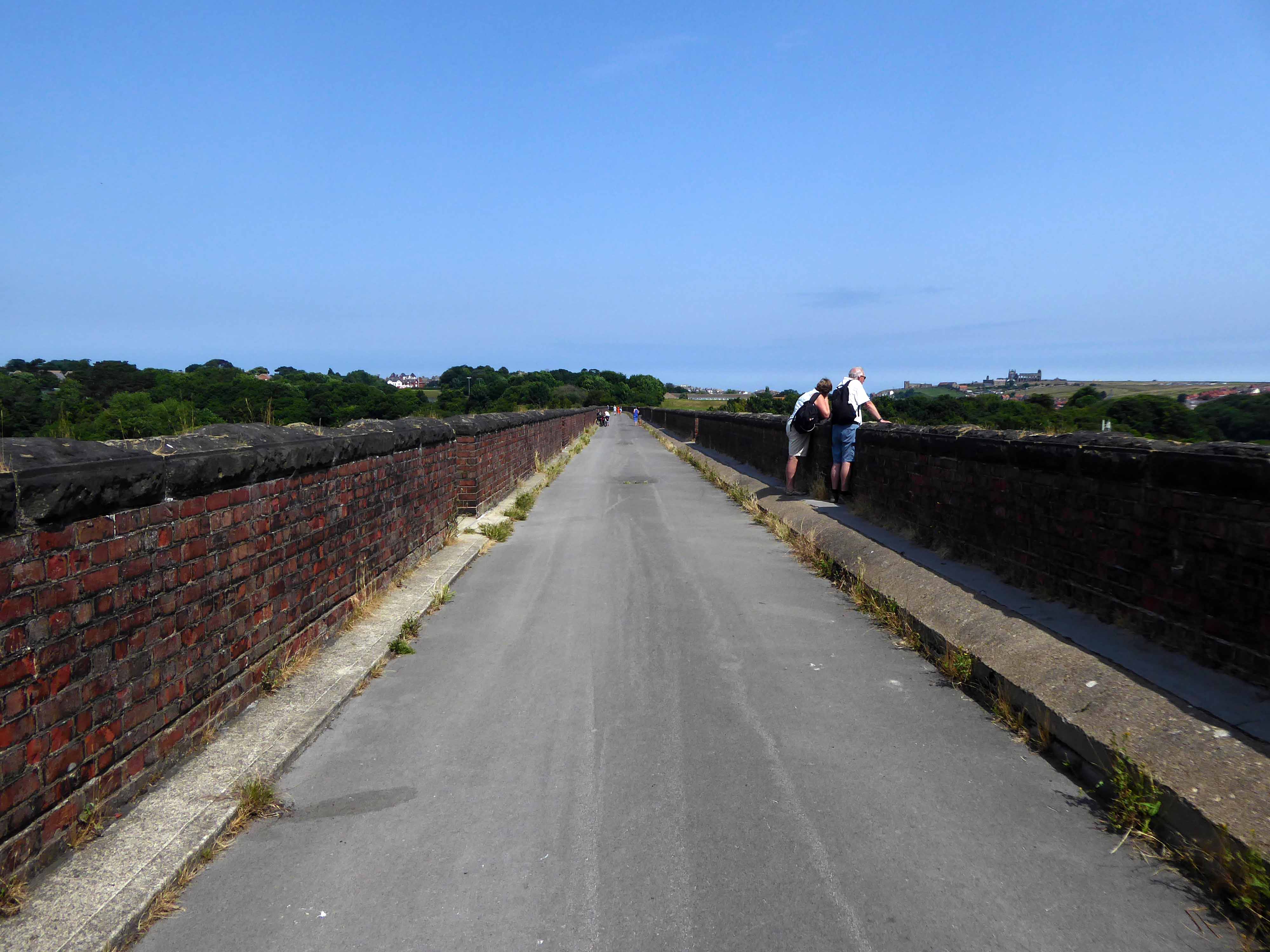
I parted company with the track dropping down to the Esk Valley from the Larpool Viaduct.

Construction began in October 1882 and was complete by October 1884.

Two men fell from the piers during construction, but recovered.

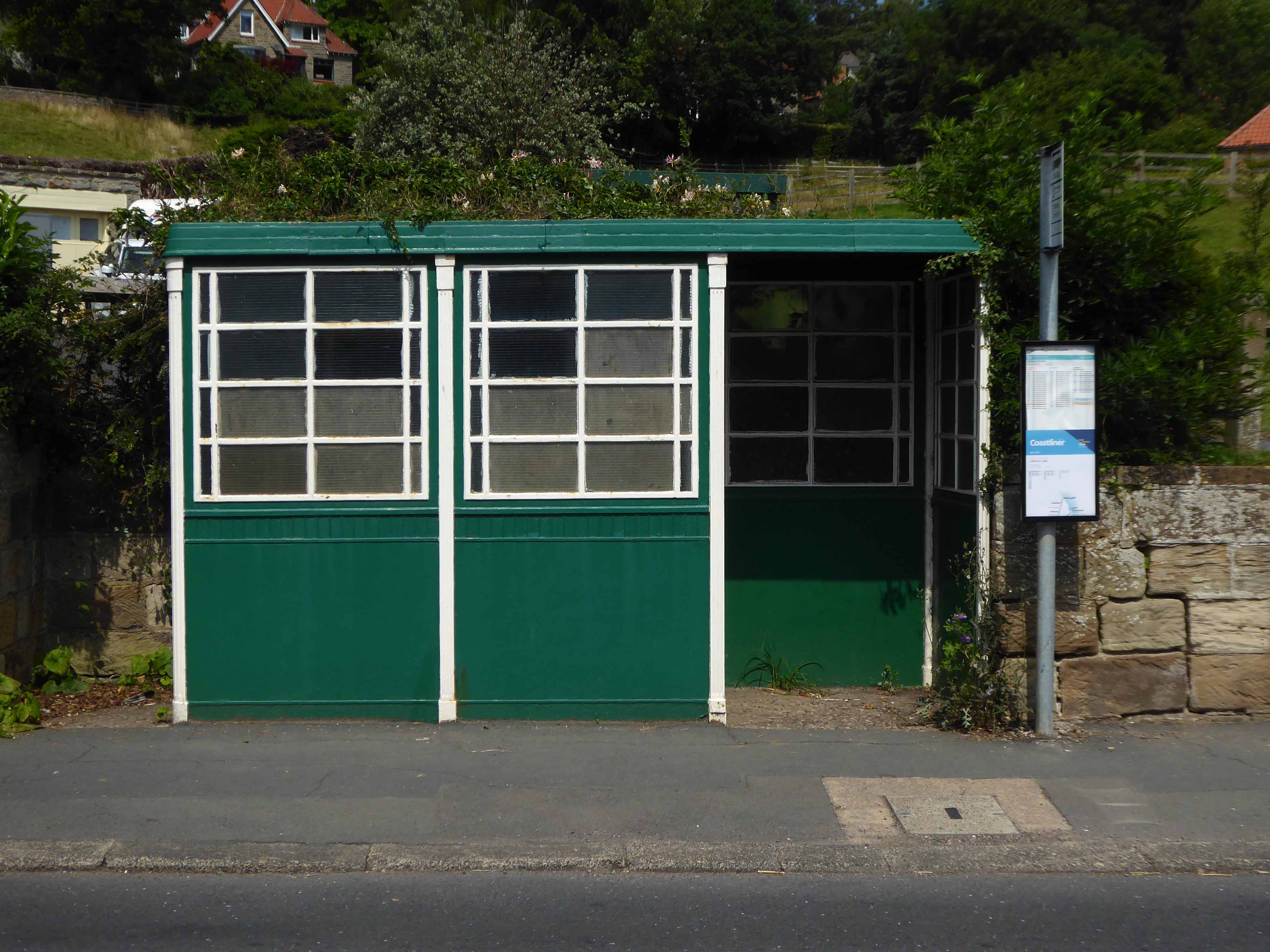
I found myself in Ruswarp, home to this enchanting bus shelter.

I bombed along the main road to Sleights.

There then followed a hesitant ascent, descent, ascent along a badly signed bridleway, fearing that I had climbed the hill in error I retraced, then retraced.

A difficult push ensued, a precipitous path, rough and untended, rising ever higher and higher.

Finally arriving at Aislaby, more than somewhat exhausted – the village is mentioned in the Domesday Book as Asuluesbi

Pausing to catch my breath I took the wildly undulating road to Egton – along the way I was alerted to the presence of a tea stop by two touring cyclists from Nottingham.

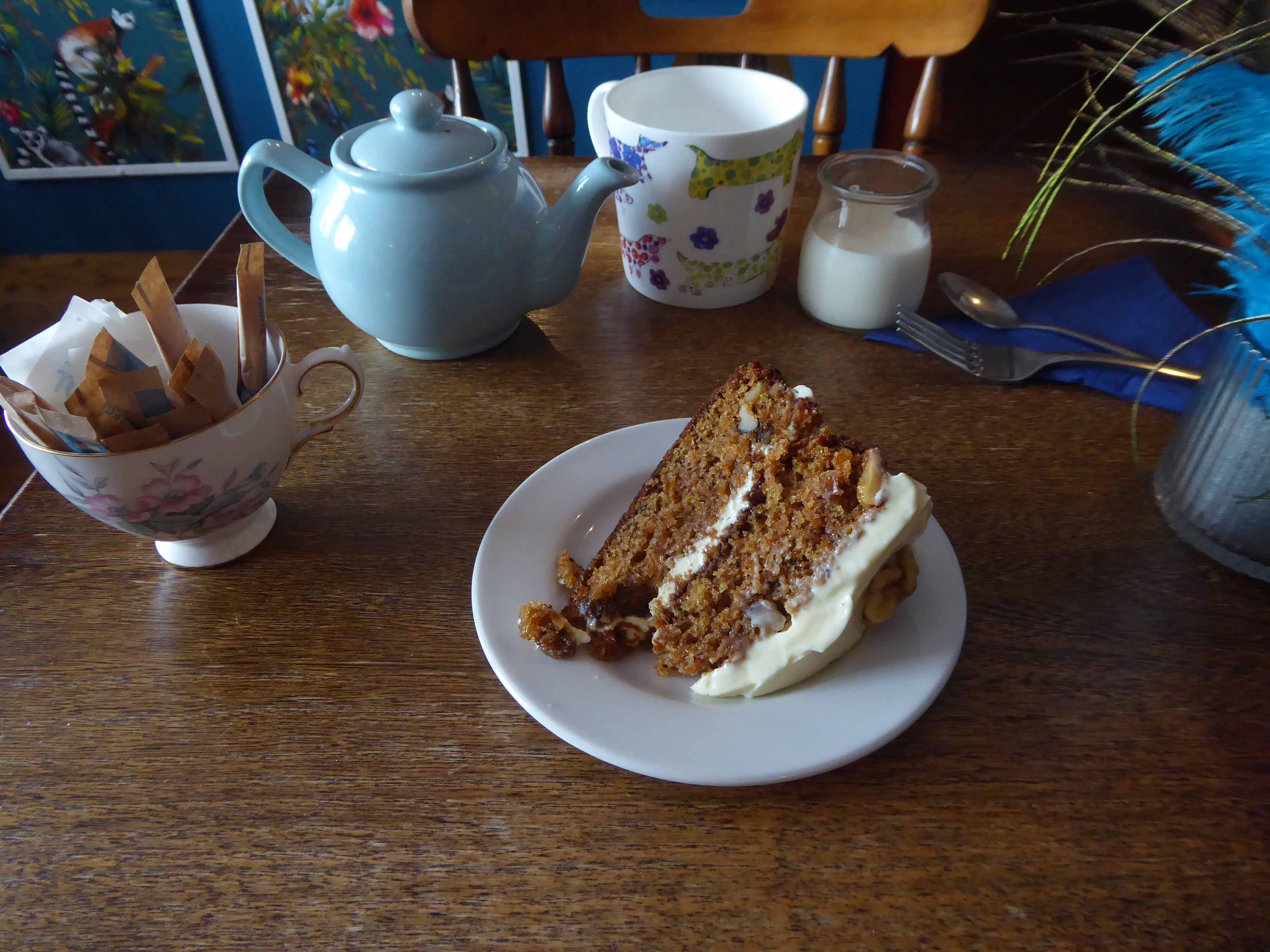
The Cake Club.

A welcome wet and a hunk of home made carrot cake.

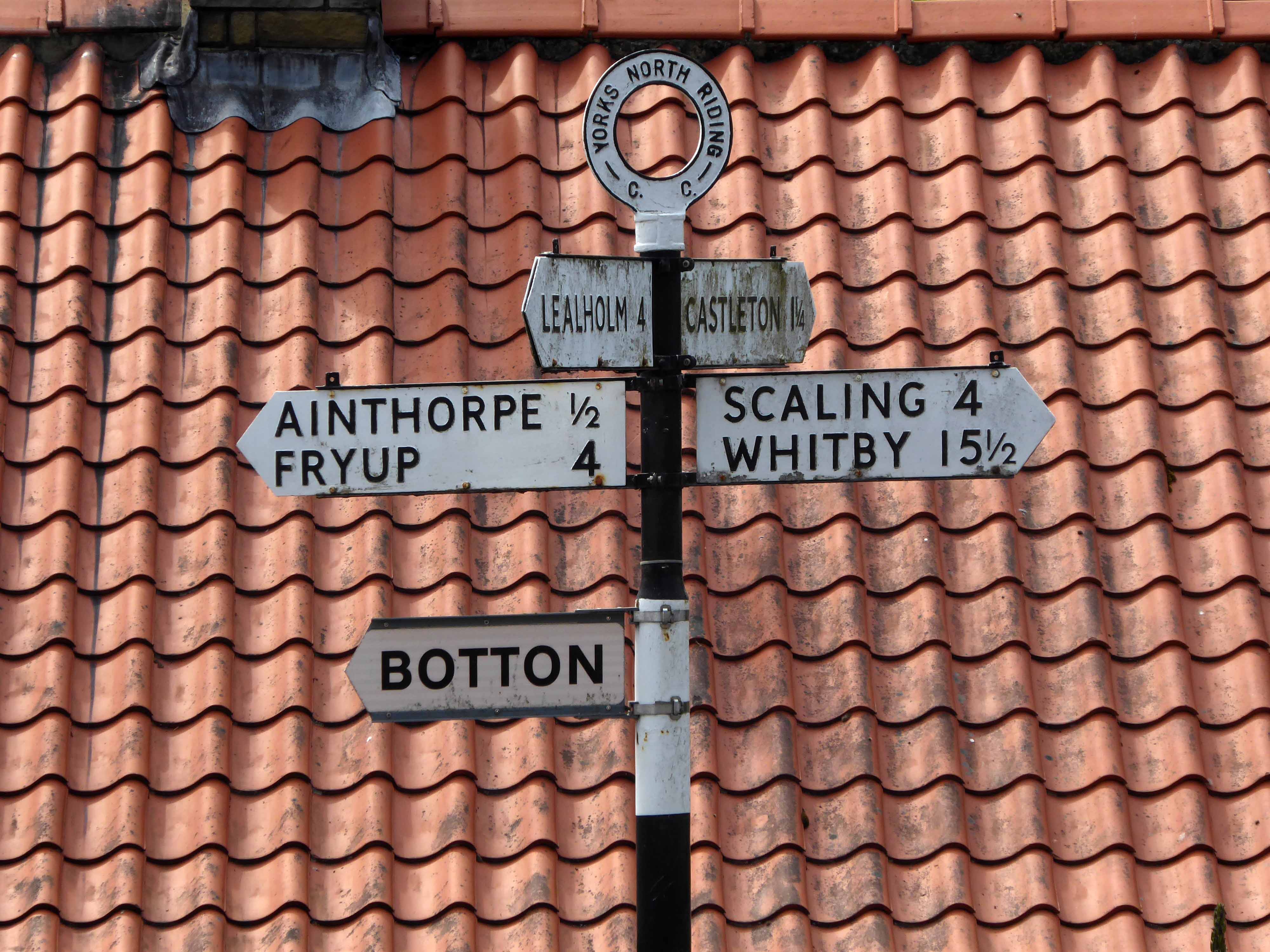
Brewmeister Maria was good enough to suggest route through Castleton Moor and over the tops to Saltburn.

It was too hot a day for a detour to Fryup.

The curious name Fryup probably derives from the Old English reconstruction Frige-hop: Frige was an Anglo-Saxon goddess equated with the Old Norse Frigg; hop denoted a small valley.

An old woman at Fryup was well known locally for keeping the Mark’s e’en watch – 24 April, as she lived alongside a corpse road known as Old Hell Road.

The practice involved a village seer holding vigil between 11pm and 1am to watch for the wraiths of those who would die in the following 12 months.

Castleton Moor ghost.

In the village I was given further directions by two elderly gents, who had been engaged in a discussion concerning their long term mapping of acid rain levels in the area.

One was wearing a Marshall Jefferson t-shirt.

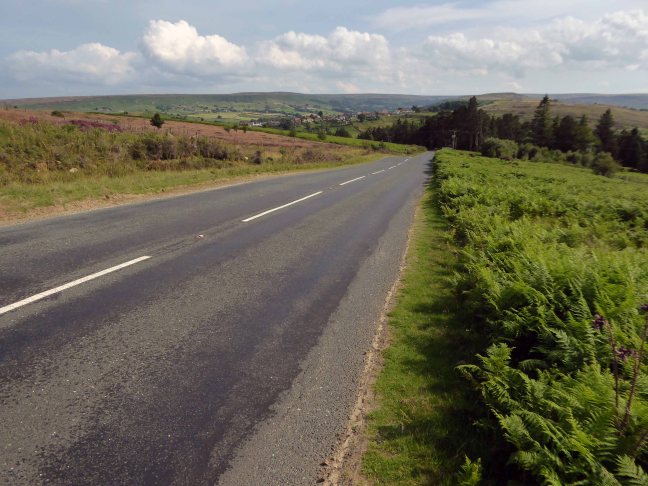
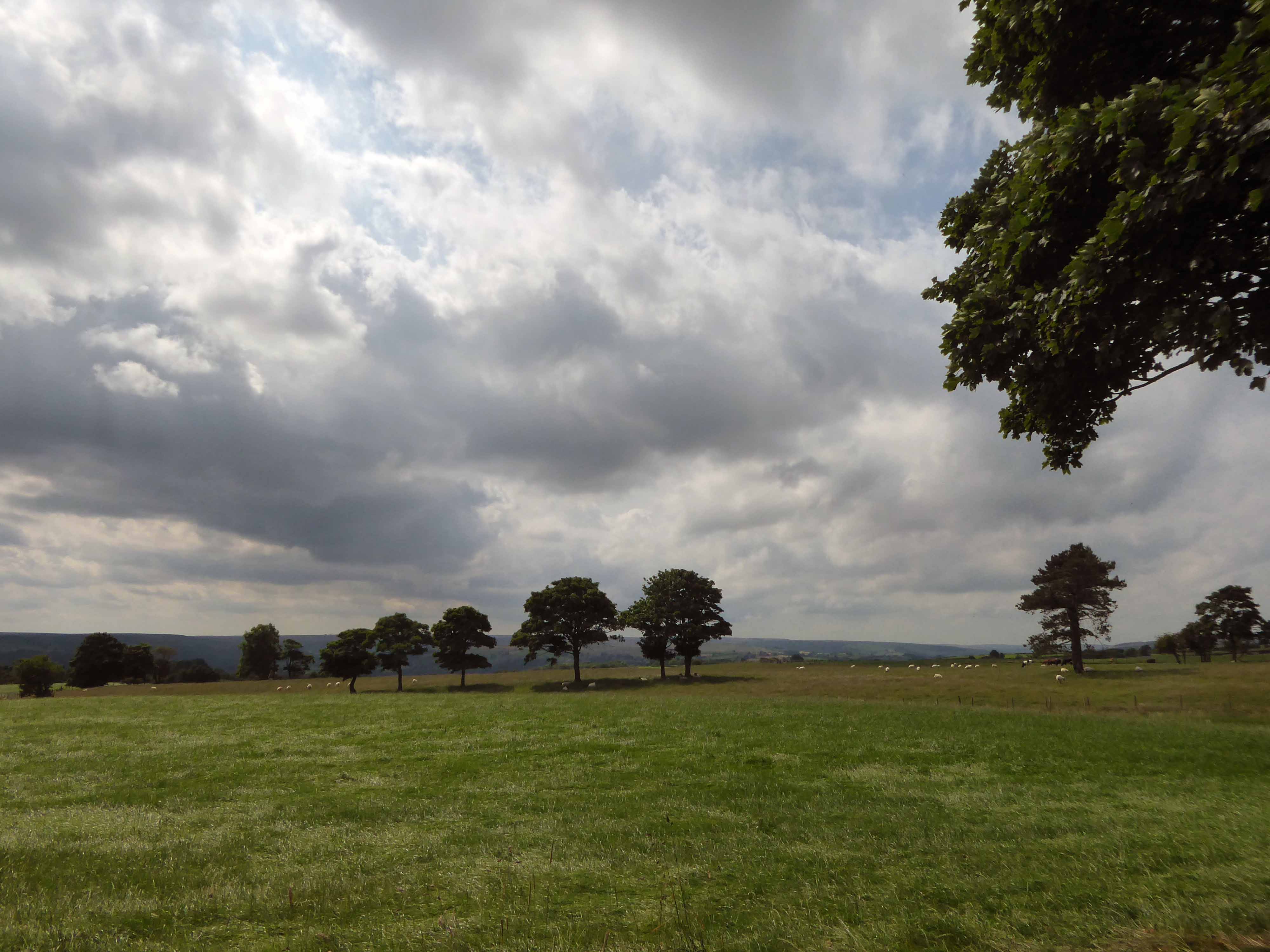
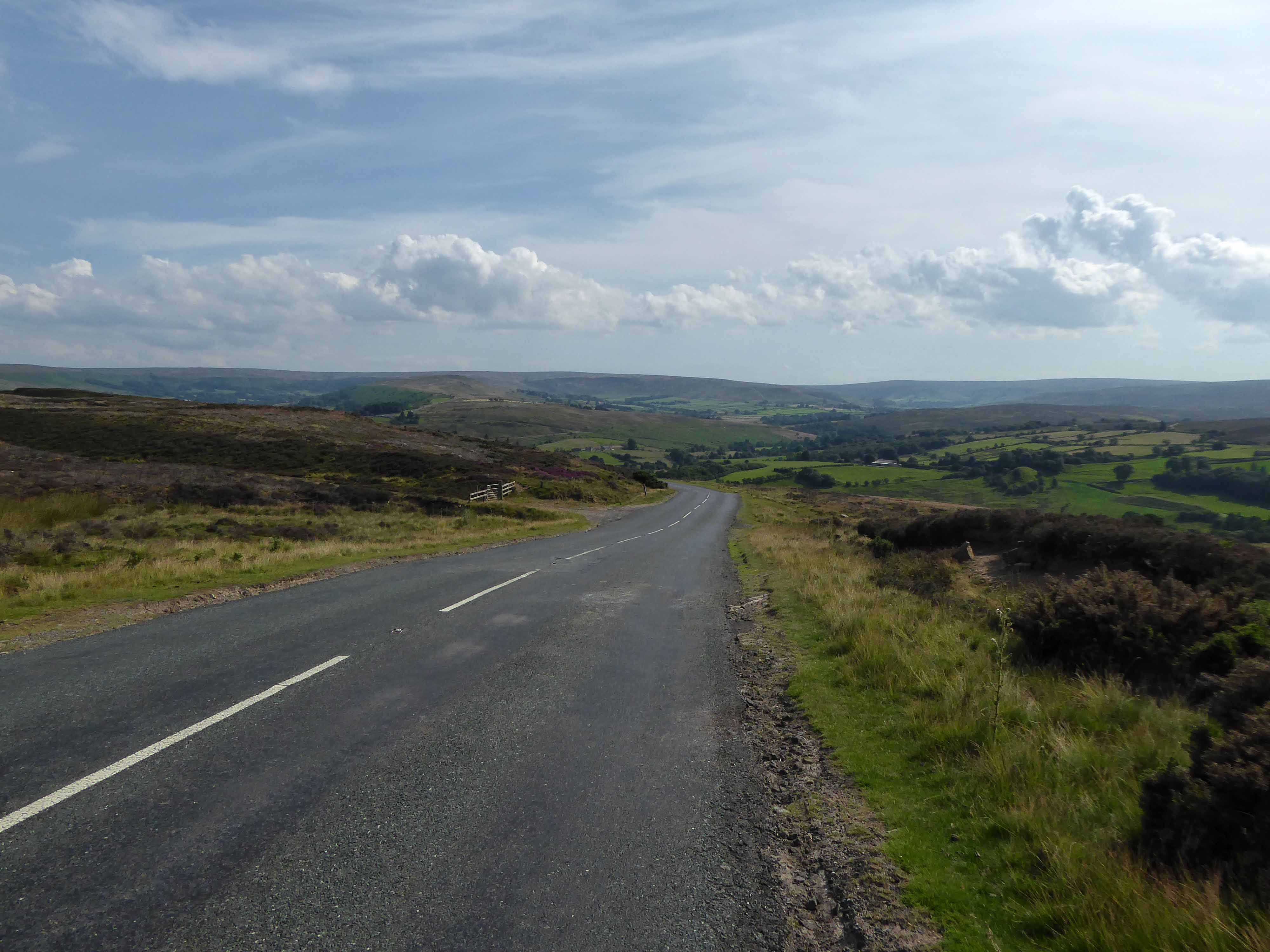
I climbed Langburn Bank onto the flatish open moorland.

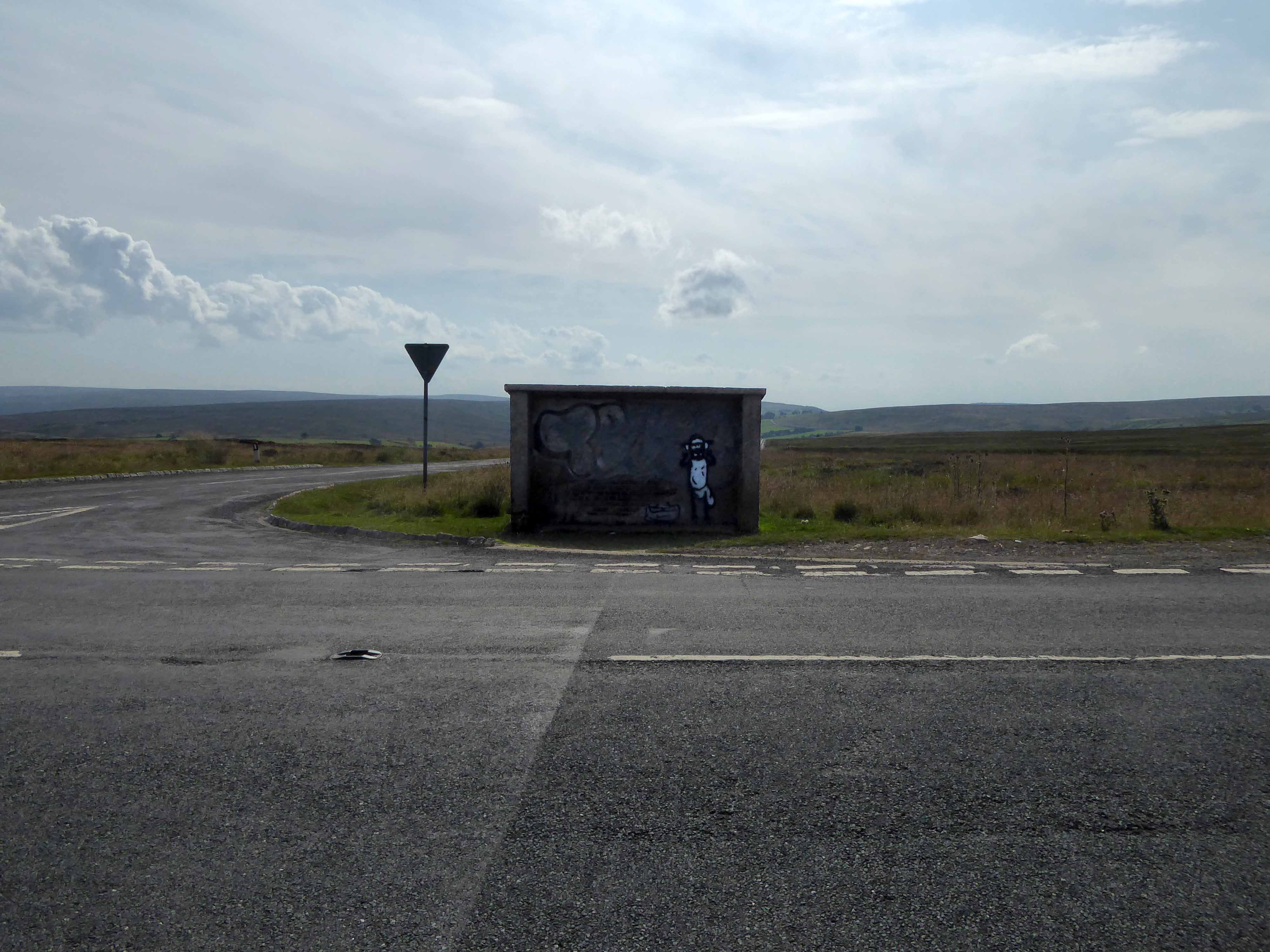
Taking a brief break to snap this concrete shelter.

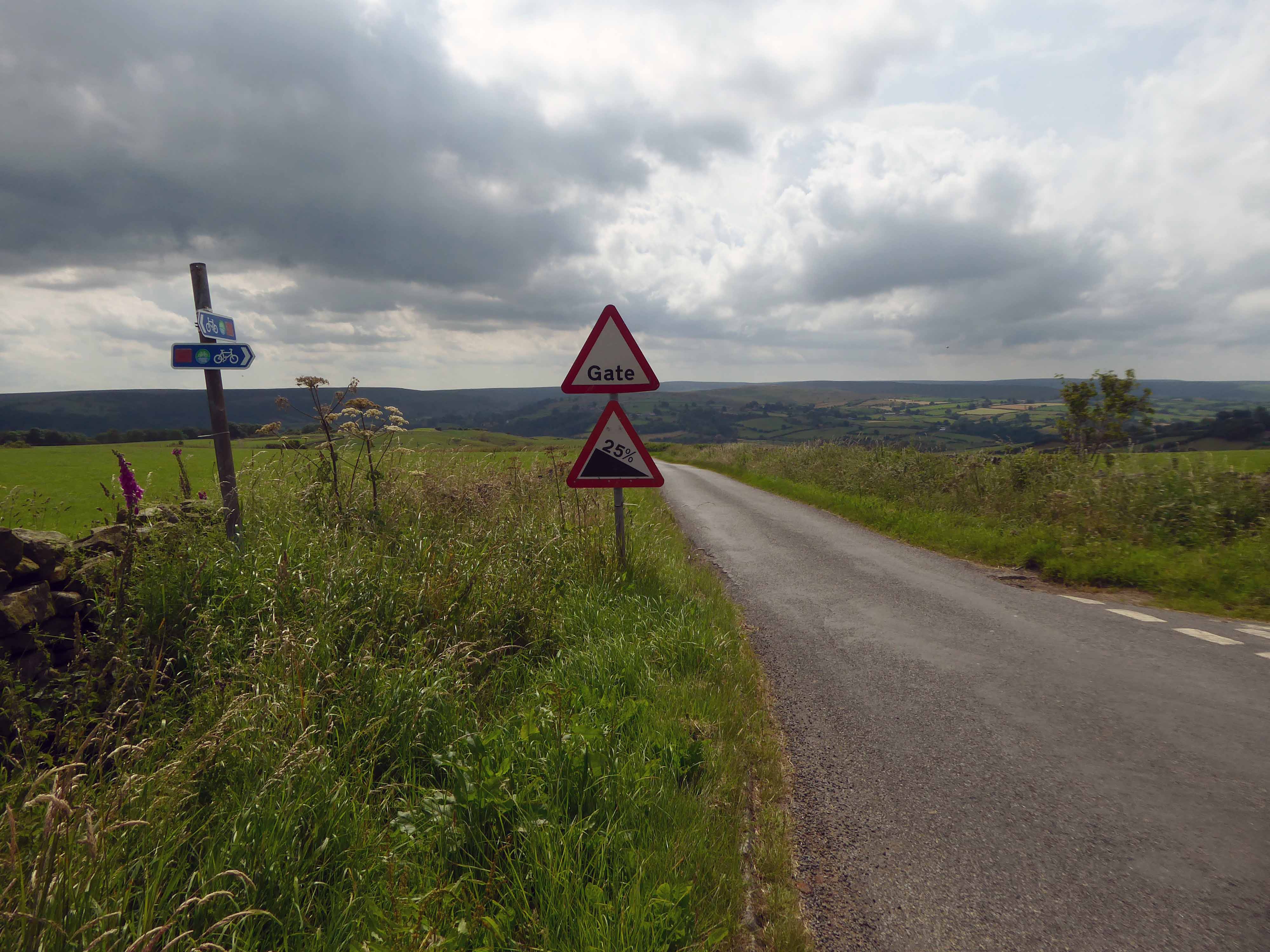
There then followed a hair stirring series of hairpin descents to the coast at Saltburn.

Followed by an off road route to Redcar.

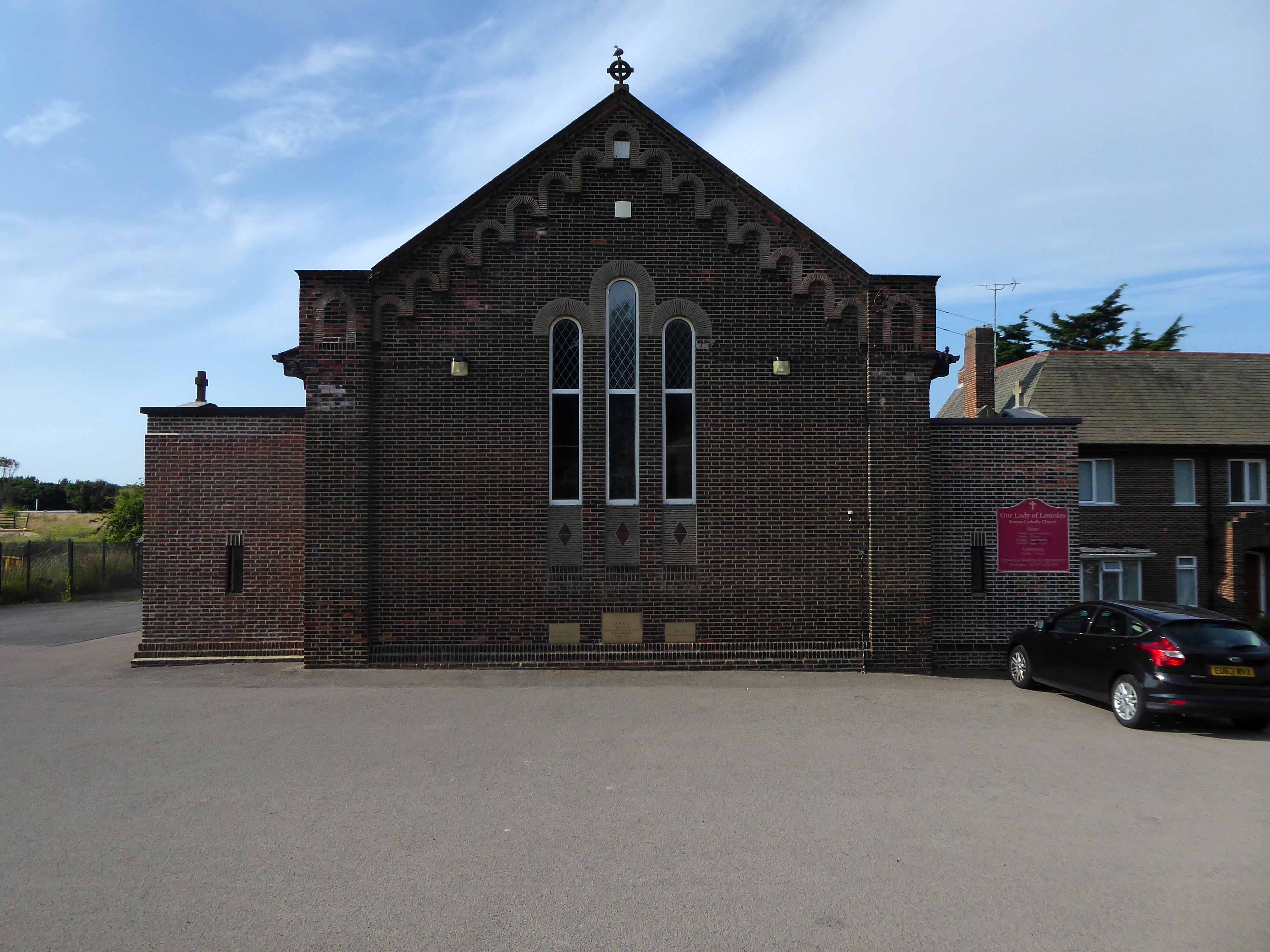
Our Lady of Lourdes – Architect: Kitching & Archibald 1928

Built in 1928, this church was designed with some care and is an attractive, if fairly modest, Lombard Romanesque-style essay in brick. The use of a semi-circular apse, narrow brickwork and use of tile for decorative effect give it a pleasing appearance, typical of restrained but elegant work between the wars.

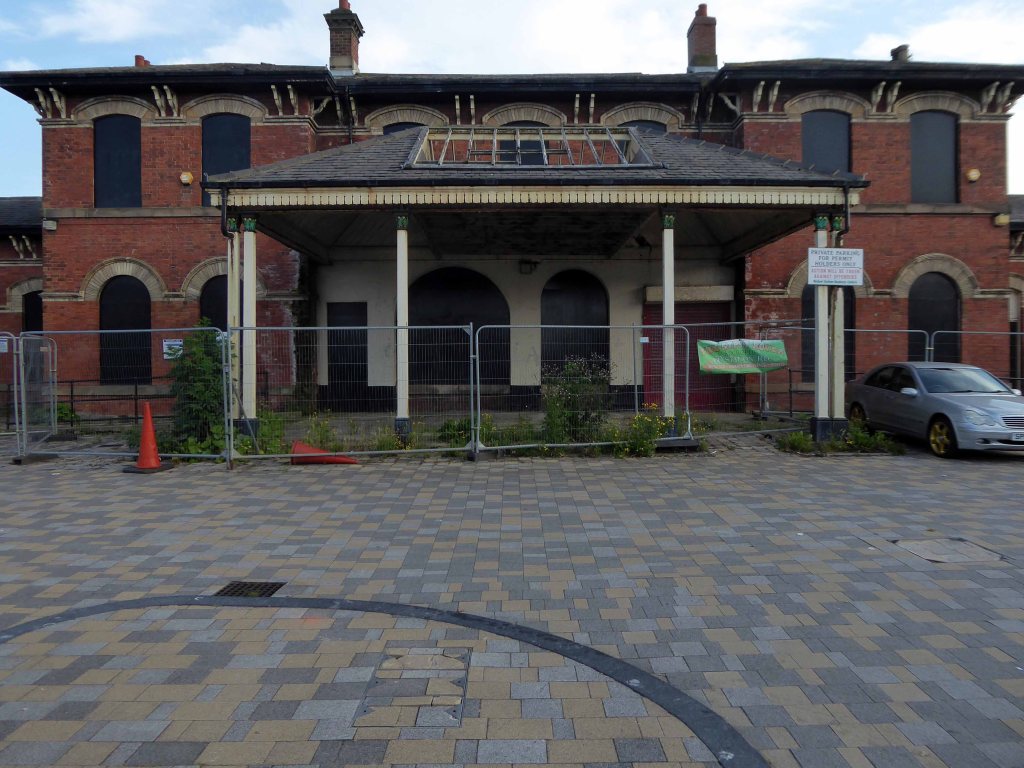
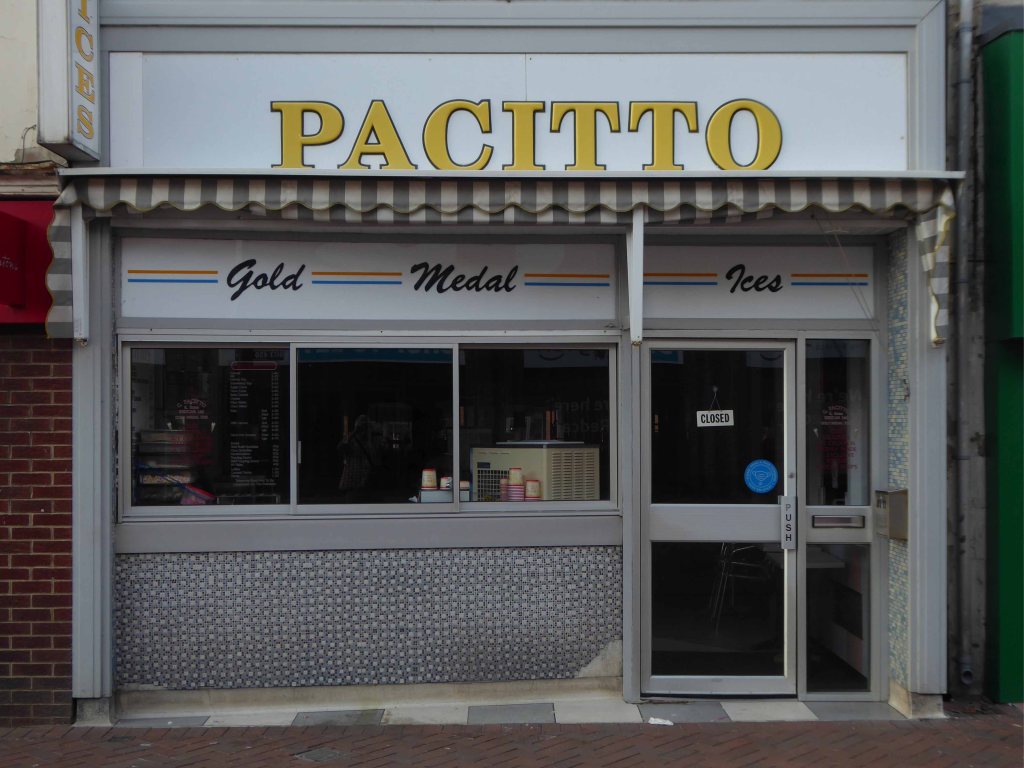
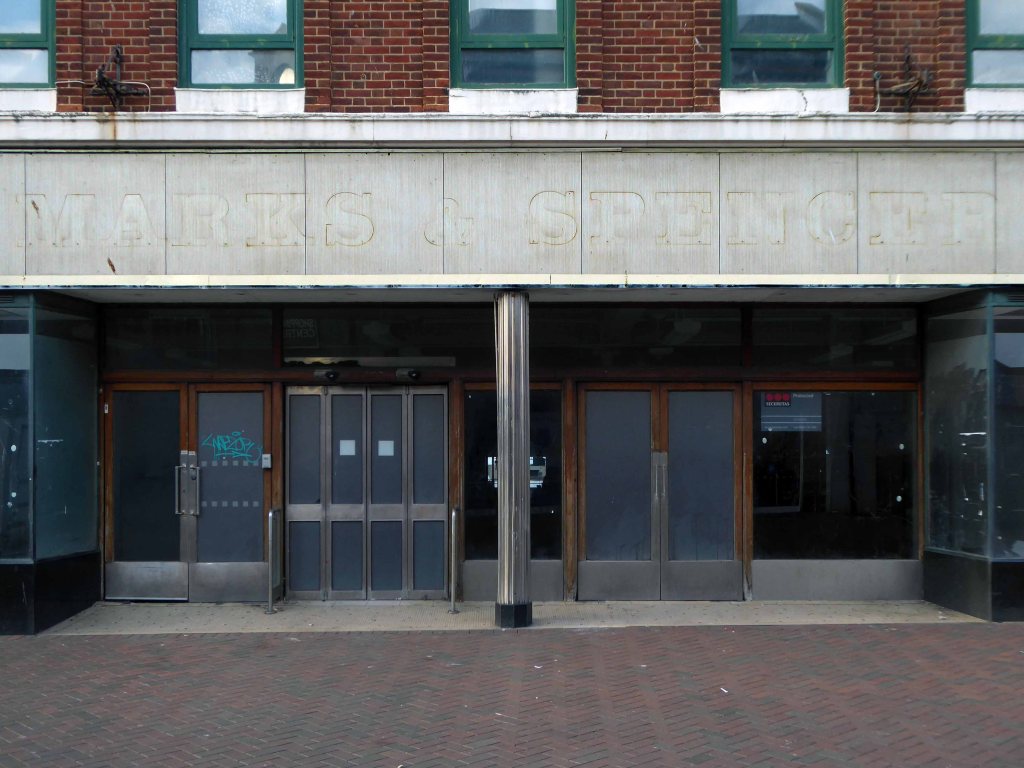
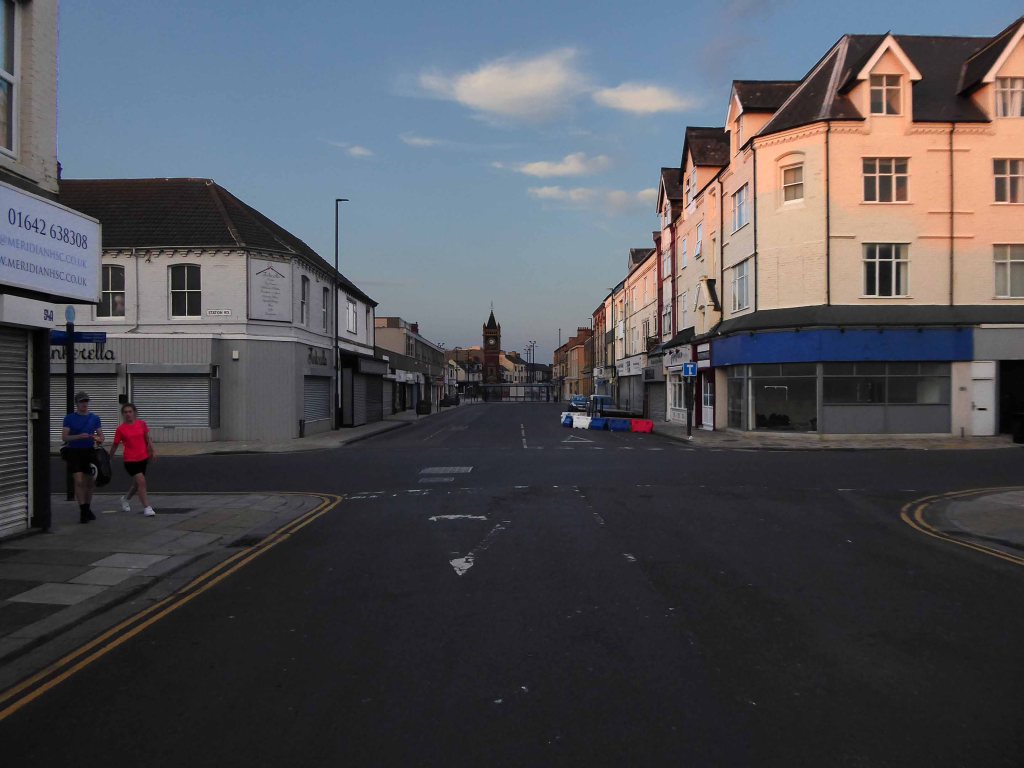
I arrived and took a look around, first time in town, here’s what I found.

Another long day – I went to sleep.