Collyhurst Cheetham Circular

It’s Friday, the rain has almost stopped and I have a job to do.

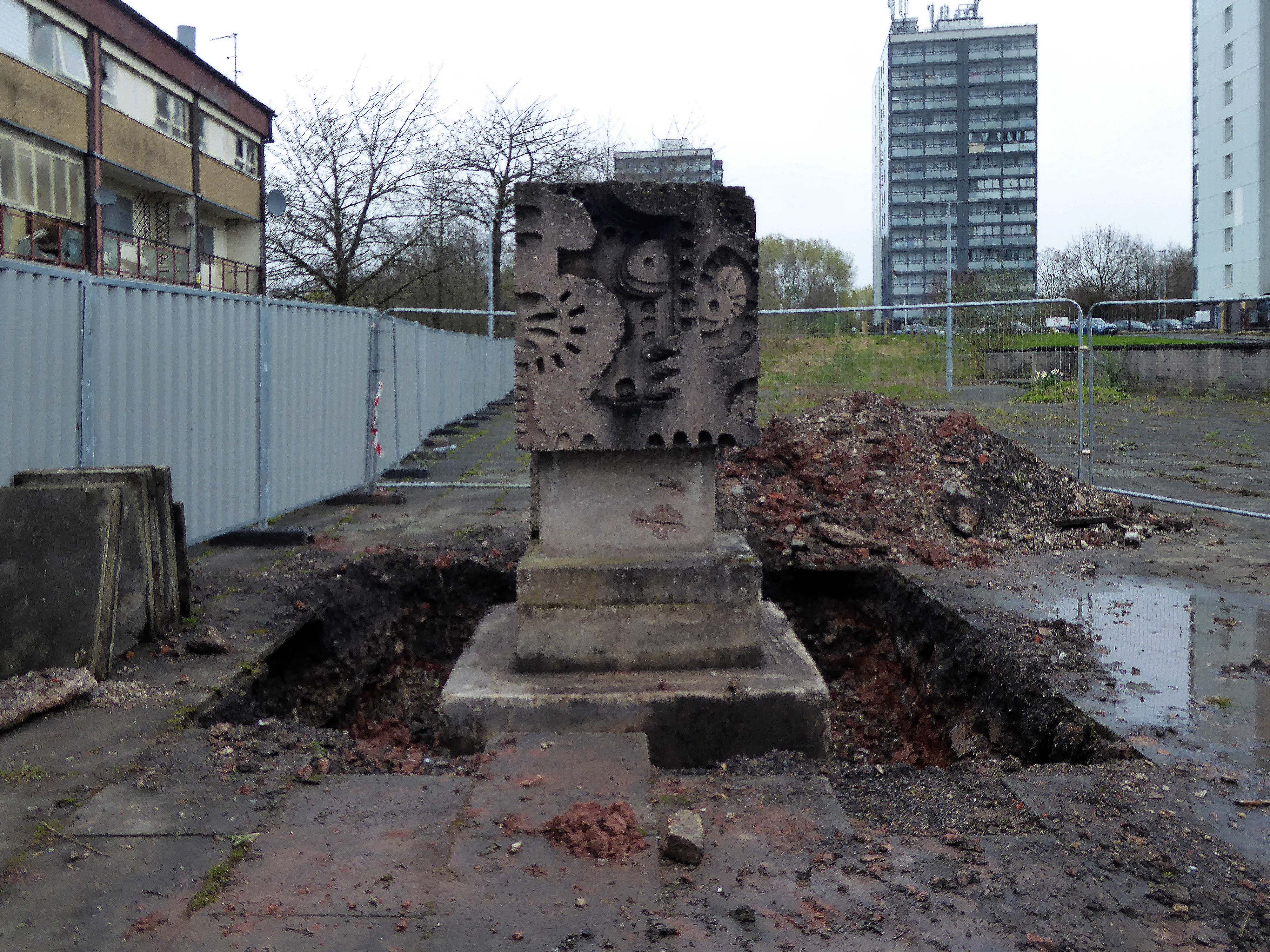
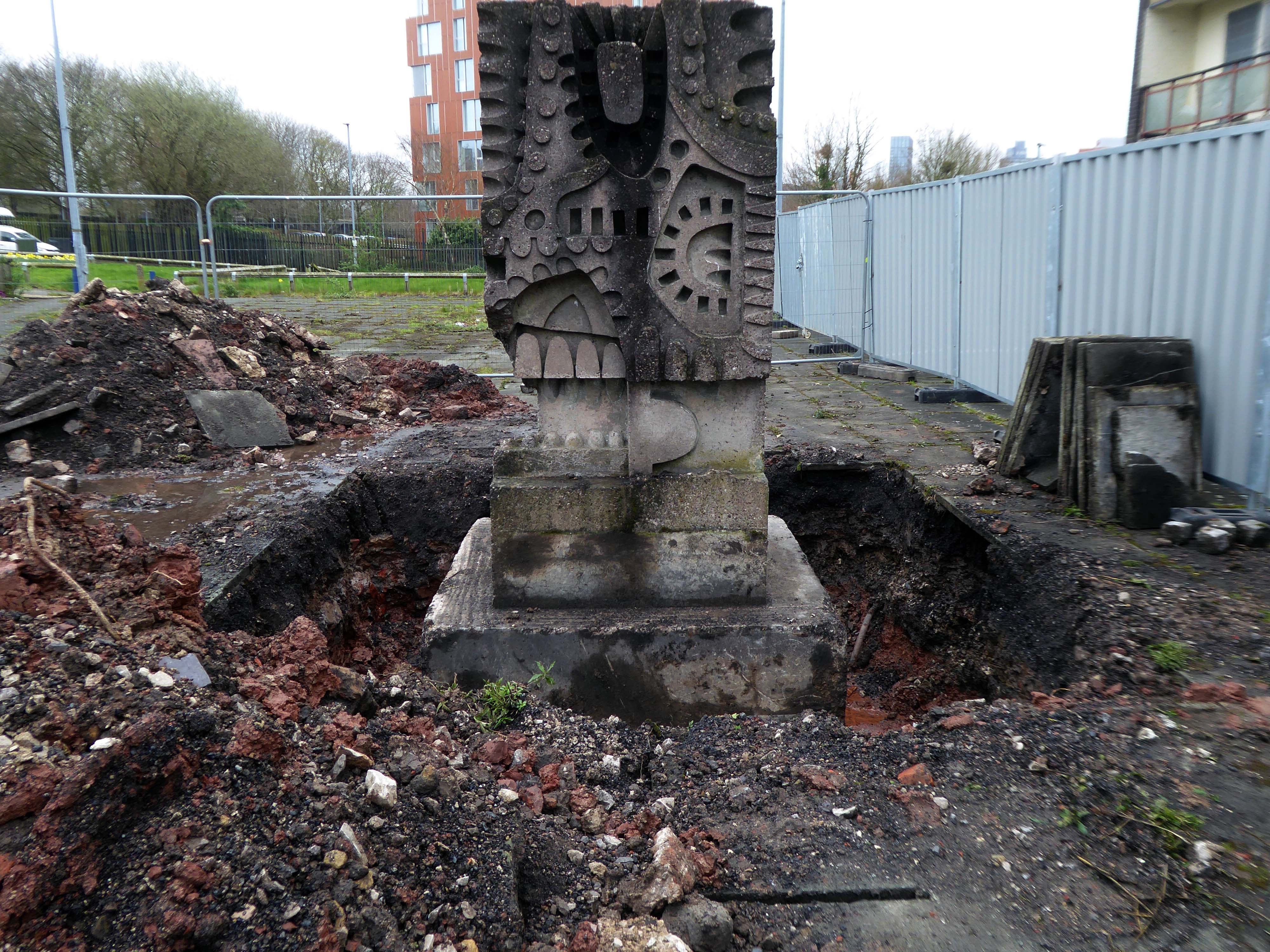
The putative William Mitchell totem in Eastford Square is being moved.
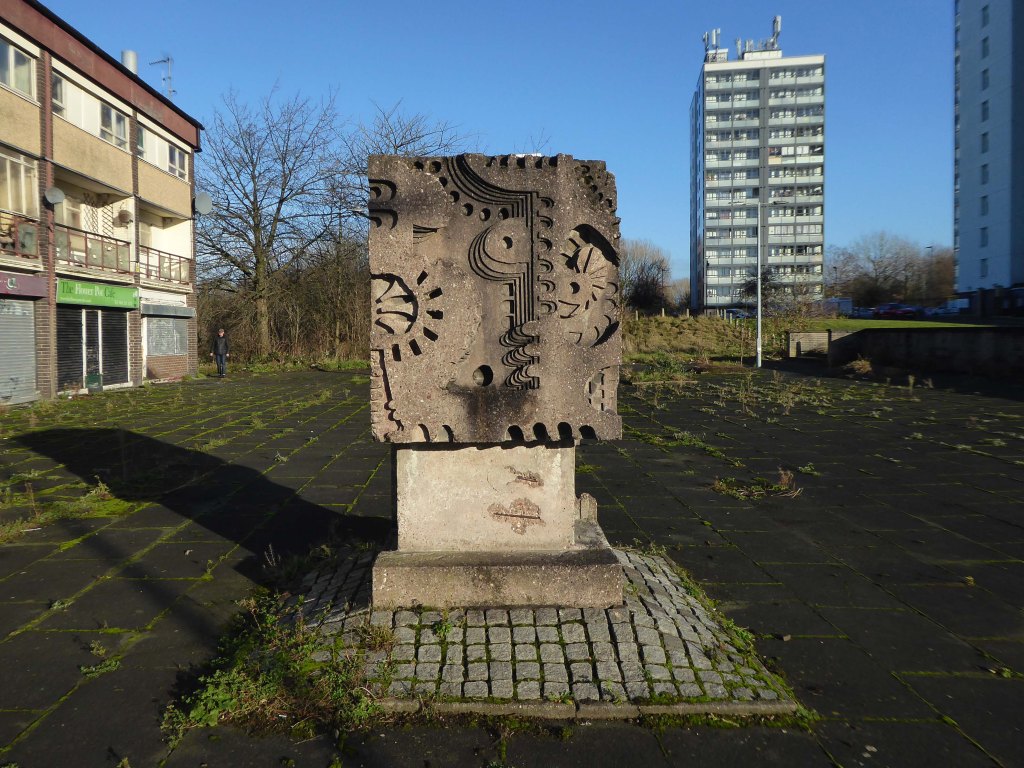
Having taken a particular interest in this particular piece of public art for some time – I need to go and take a little look.

But what will we see along the way, as we hasten along Rochdale Road?

Which once looked like this, way back when in 1904.
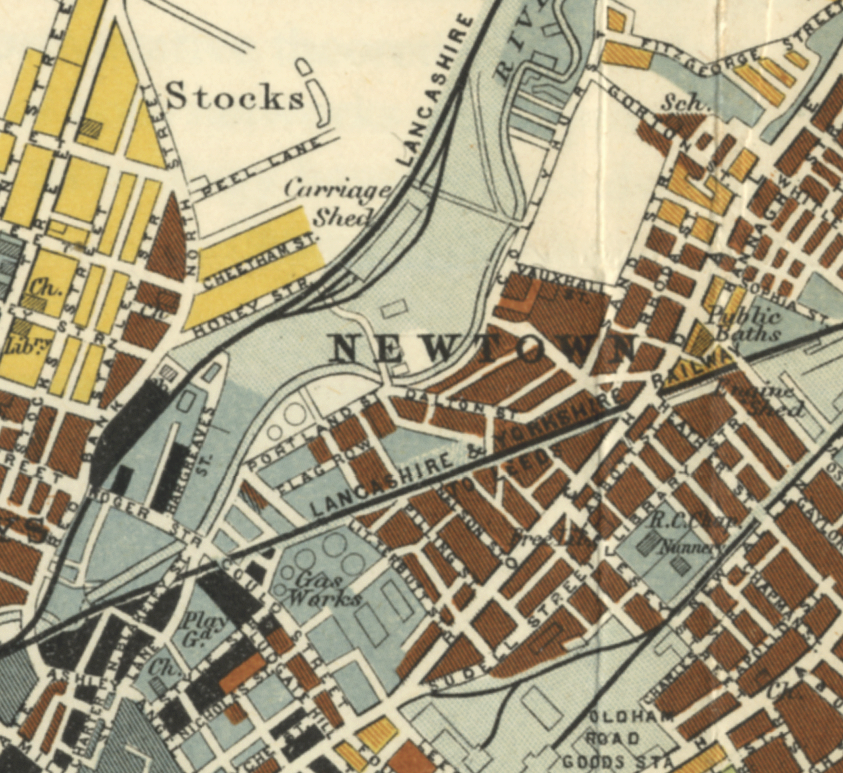
Though some things inevitably come and go, as some things are prone to do.

The city is undergoing yet another reinvention as Manchester becomes – an attractive place to invest and do business.

See, I am doing a new thing!

Now it springs up; do you not perceive it?

I am making a way in the wilderness and streams in the wasteland.

Isaiah 43:19
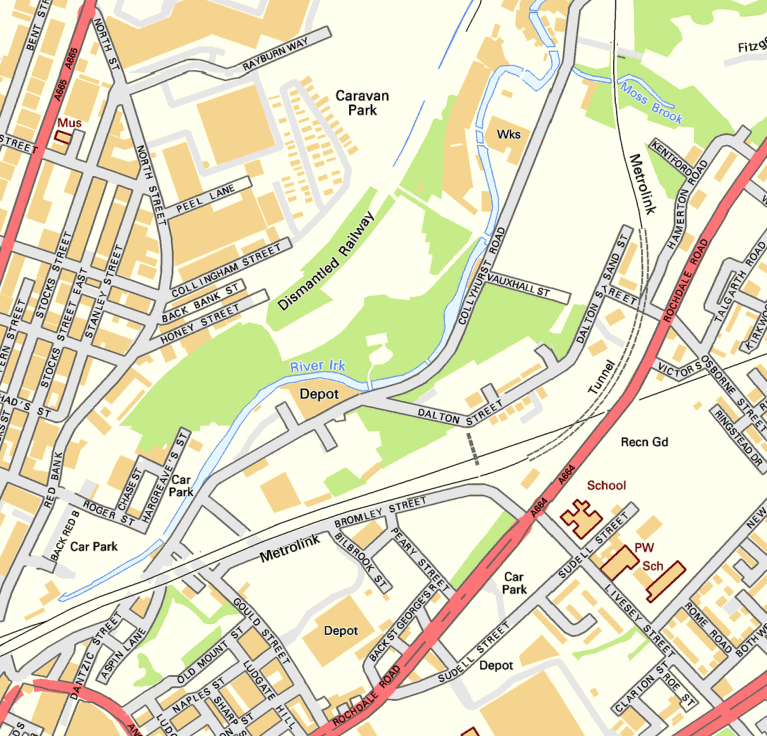
Once there was a gas works here – adjoining Gould Street, seen here in 1958.

The Gould Street Gas Works was a gas manufacturing plant located in Manchester, England. Originally built in 1824, the plant was operated by the Manchester Corporation Gas Department and was in operation from 1833 to 1969. It was named after the street on which it was located, which was named after John Gould, who was a prominent Manchester businessman in the 19th century.
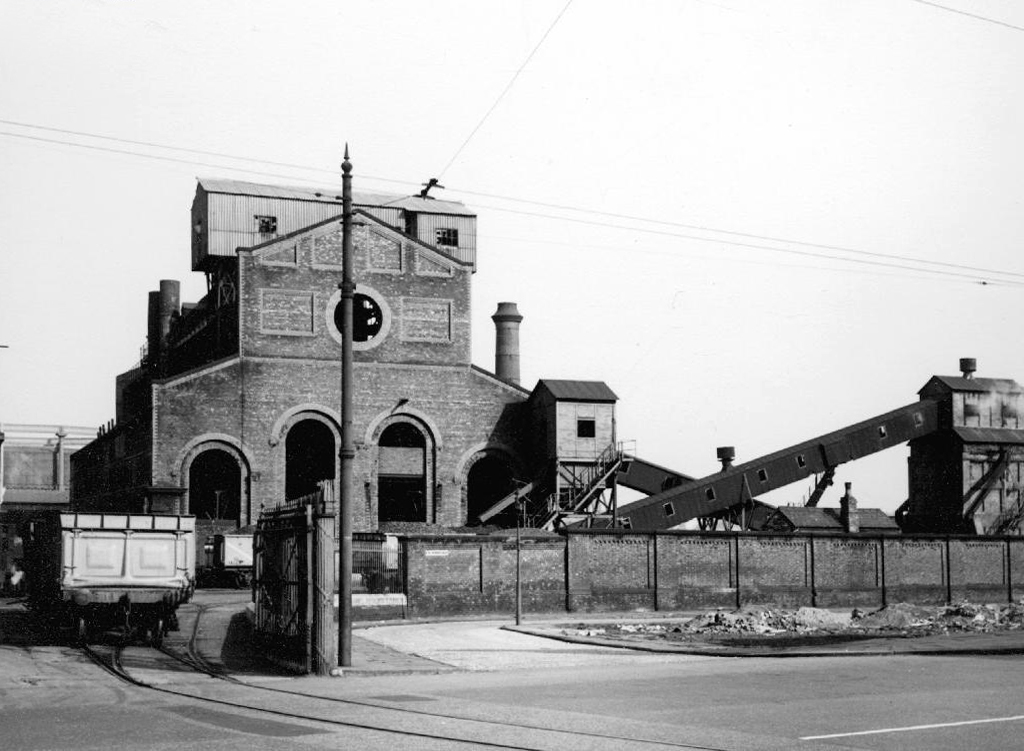
Derelict Manchester

The Gasworks New Town neighbourhood is one of seven envisioned by the £4bn Victoria North masterplan. It will feature nine buildings ranging from 8 to 34 storeys. The 6.6-acre site has most recently been home to a car park but the green development will overwhelmingly prioritise walking and cycling over driving. It will result in tens of millions of pounds being pumped into the city’s economy over the lifetime of the development.

Plans for a trailblazing city centre regeneration scheme that will create more than 1200 homes has been approved by Manchester City Council.

MCR Property

A total of 85 of the 1200, will be affordable homes available through Shared Ownership. 
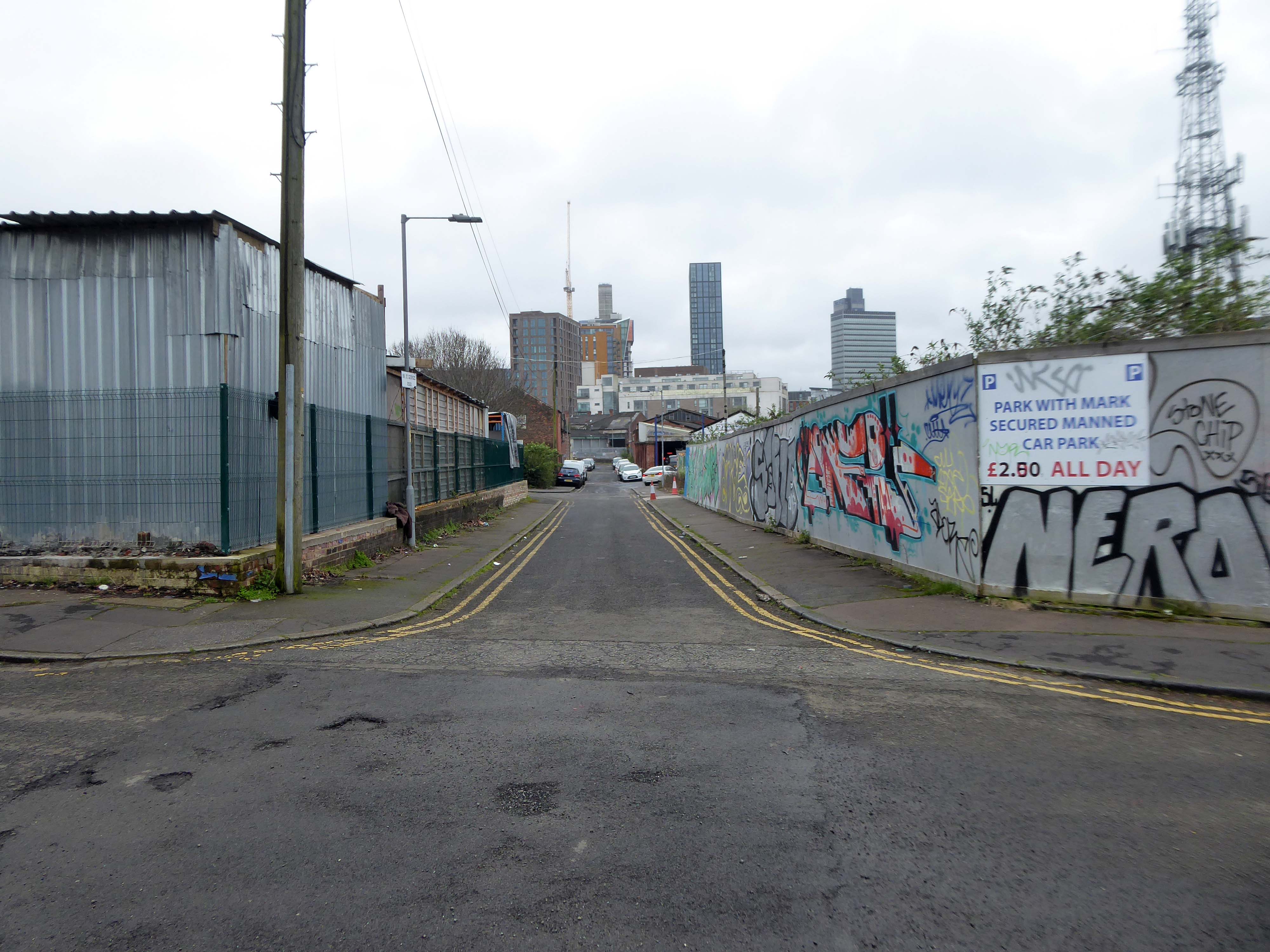
Though as of March 31st 2023 ground is yet to be broken, no signs of the:

New centre of gravity for central Manchester that will create thousands of jobs and inject tens of millions of pounds into the city’s economy.
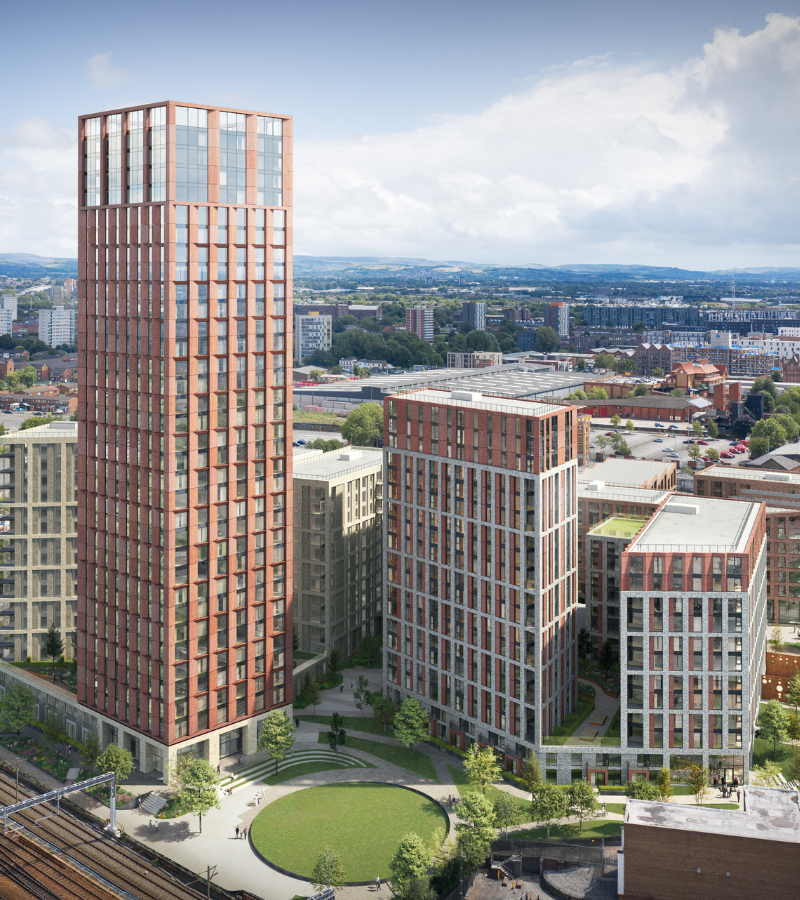
So you zig-zag wanderers, make the most of these wide open expanses of affordable car parking, while you can.

The future may yet be here today – or the next.
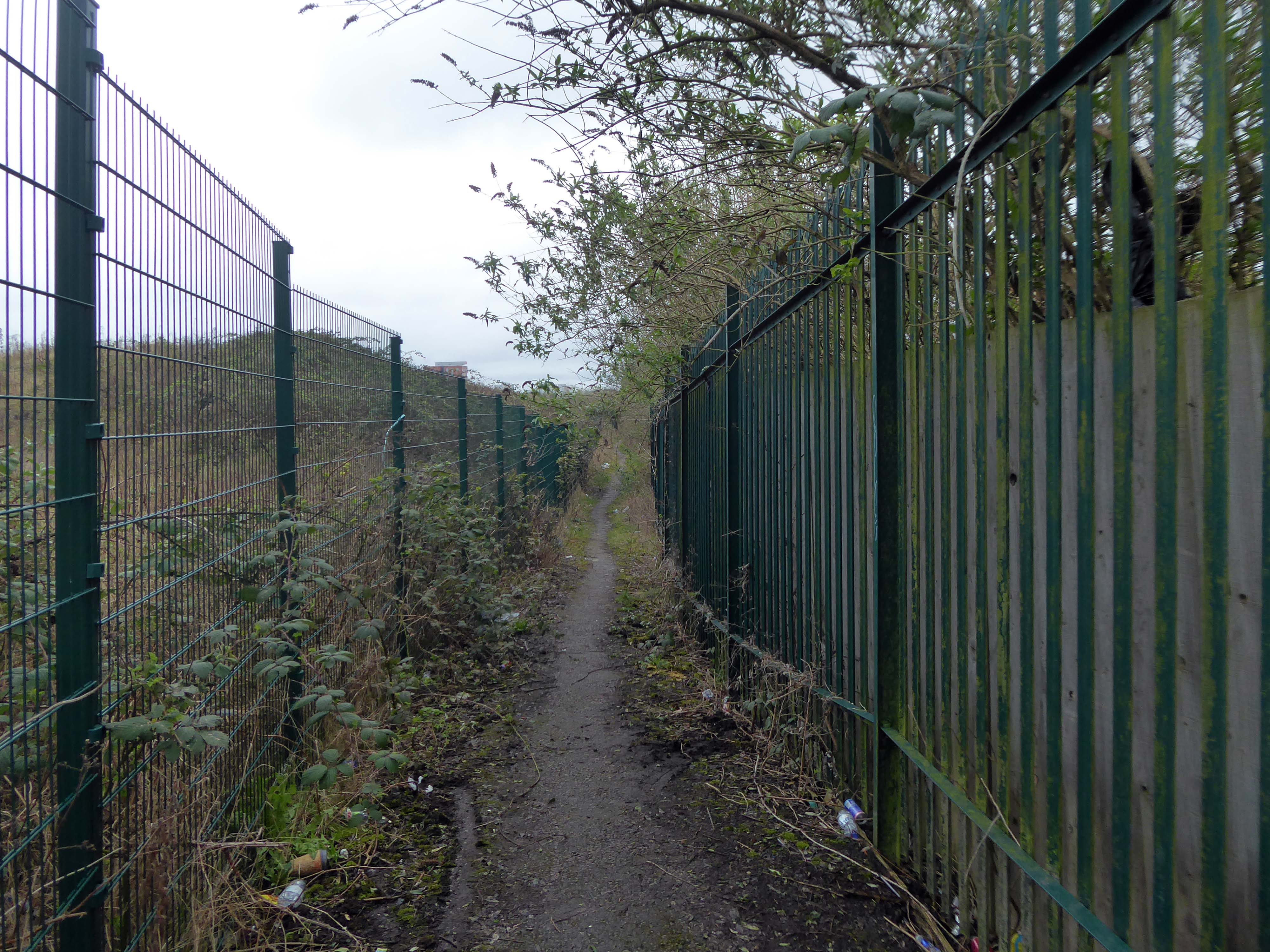
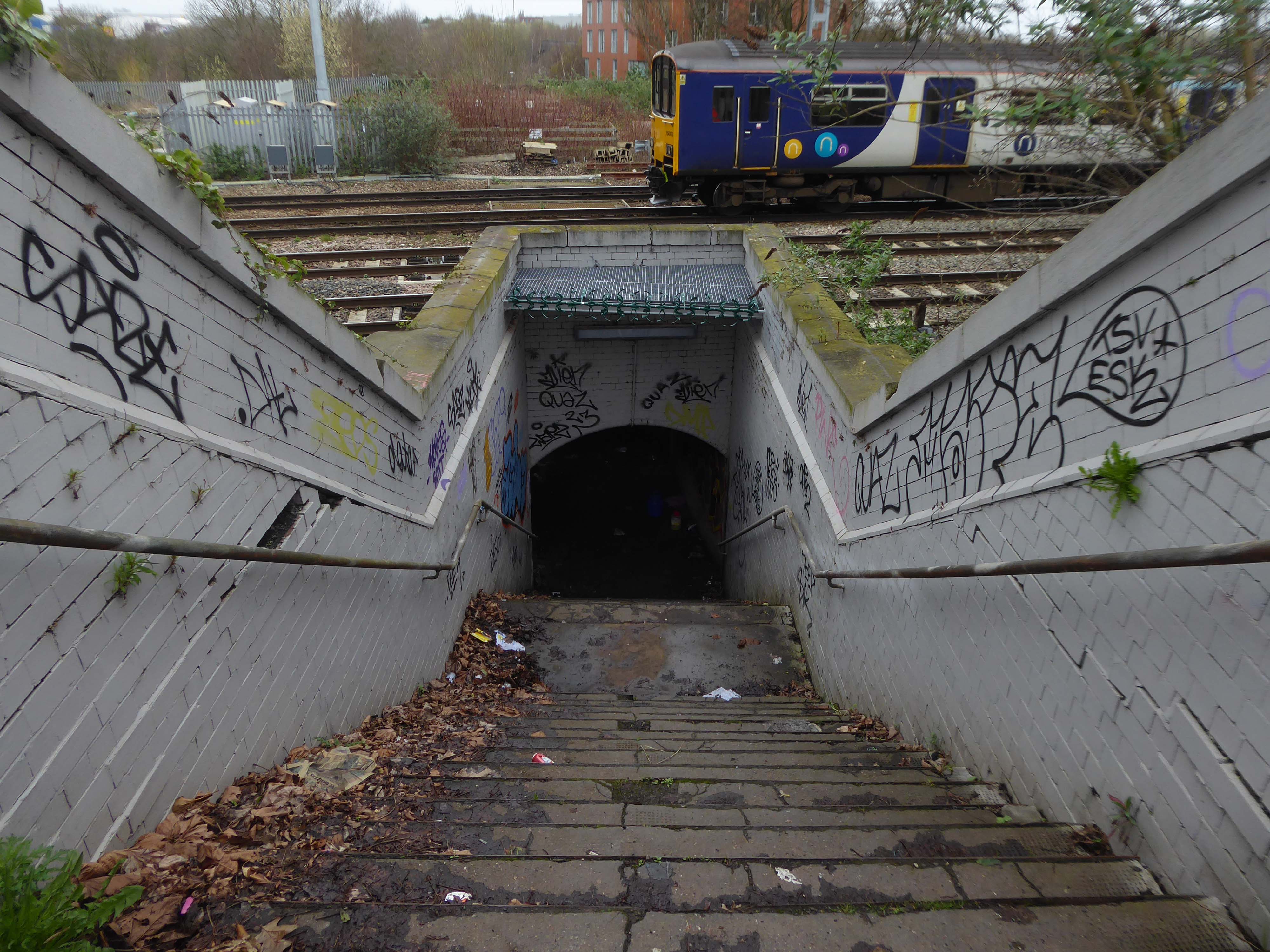
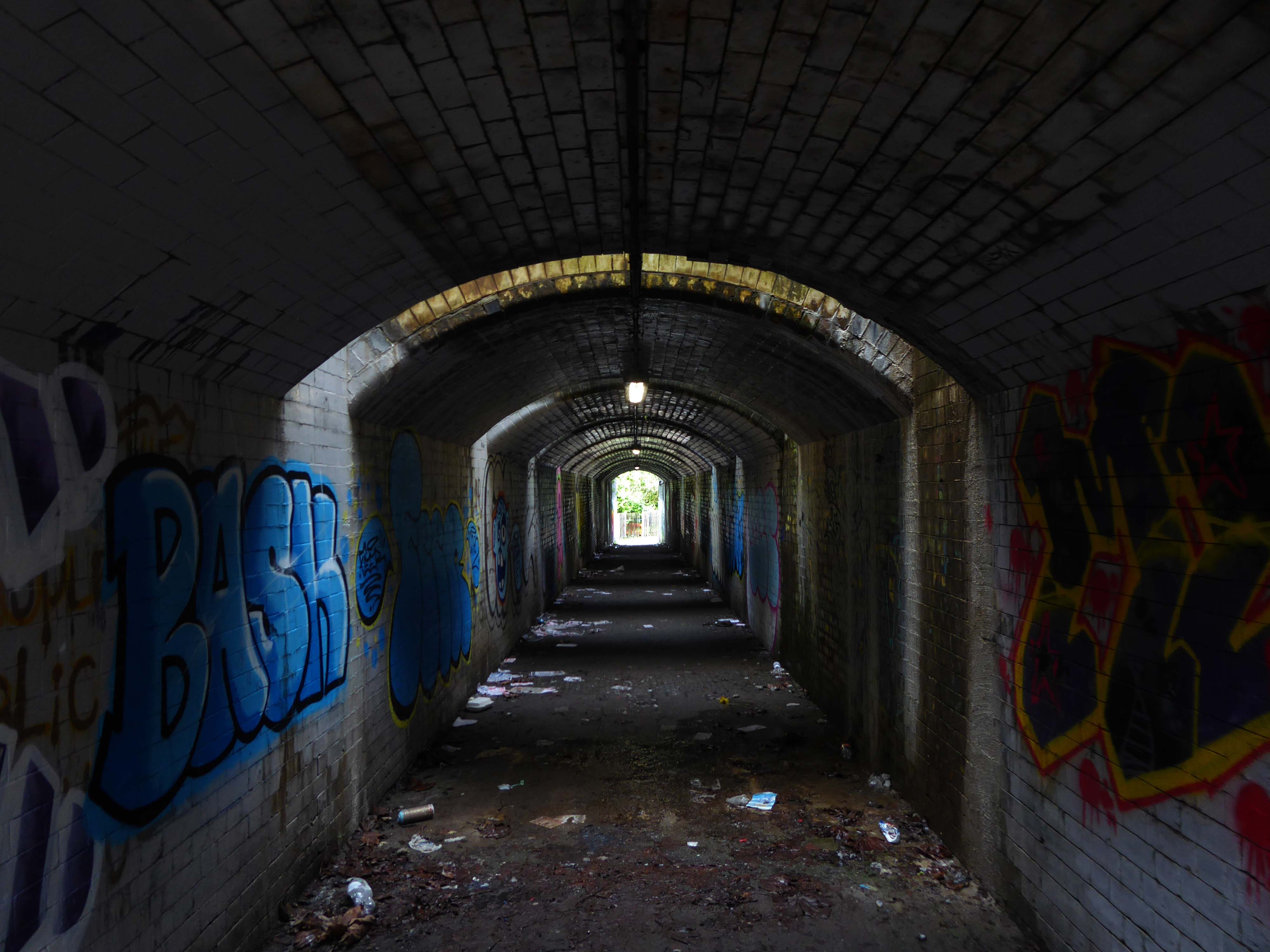
Let’s duck under the railway, through this sad damp pedestrian tunnel – the domain of the cash strapped daytime drinker, transient tagger and disaffected leaflet distributor.
Next thing you know you have emerged into the daylight on Dalton Street – we have been here before seeking the Collyhurst Cowboy.
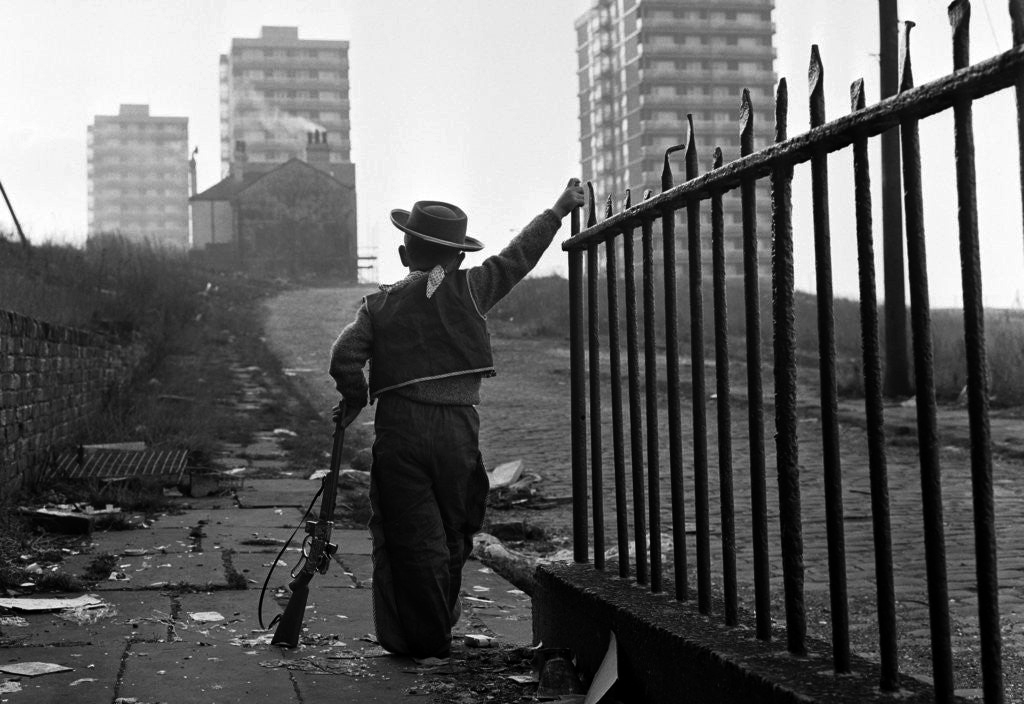
Photograph: Dennis Hussey

Onwards to Eastford Square.
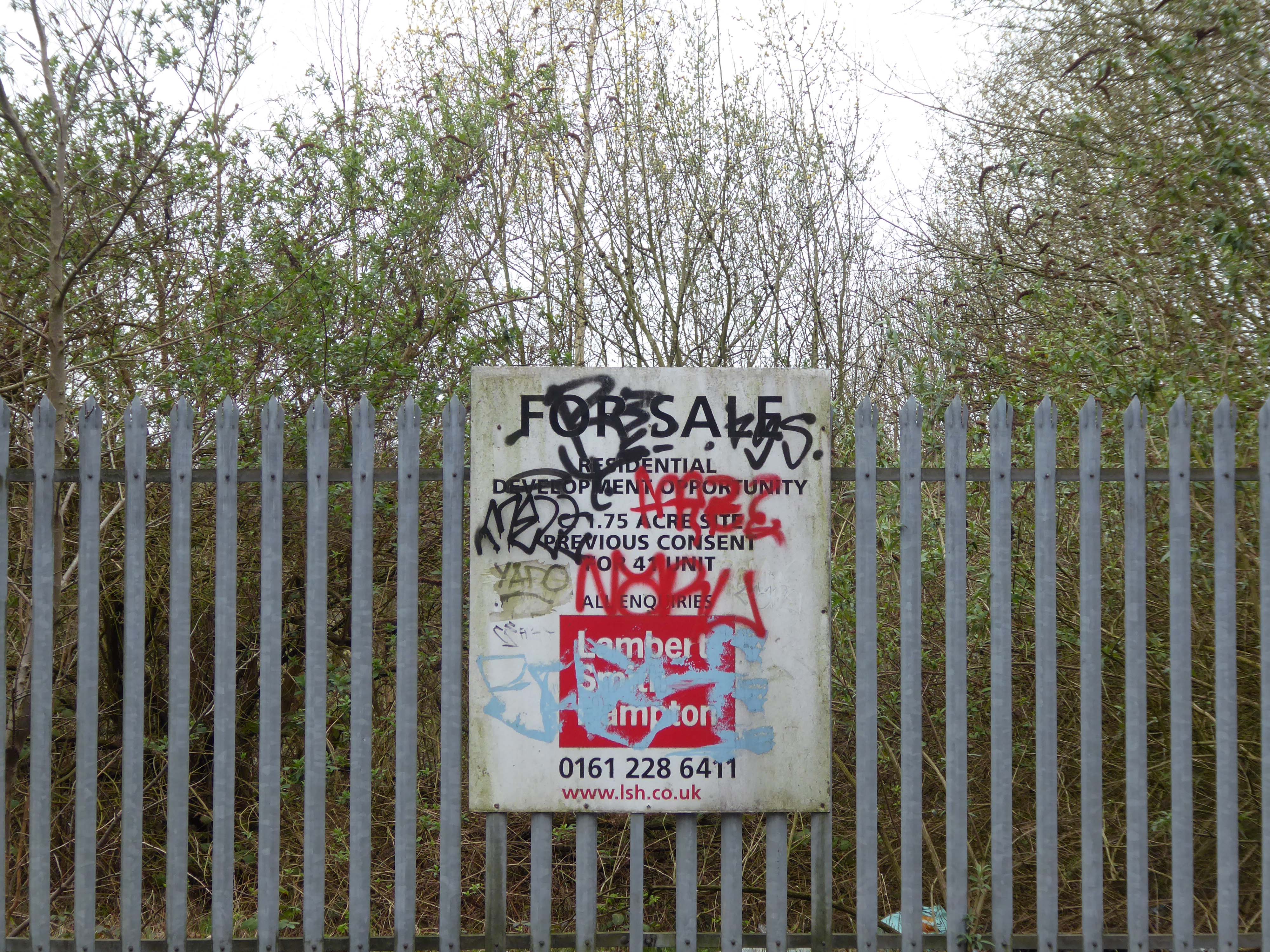
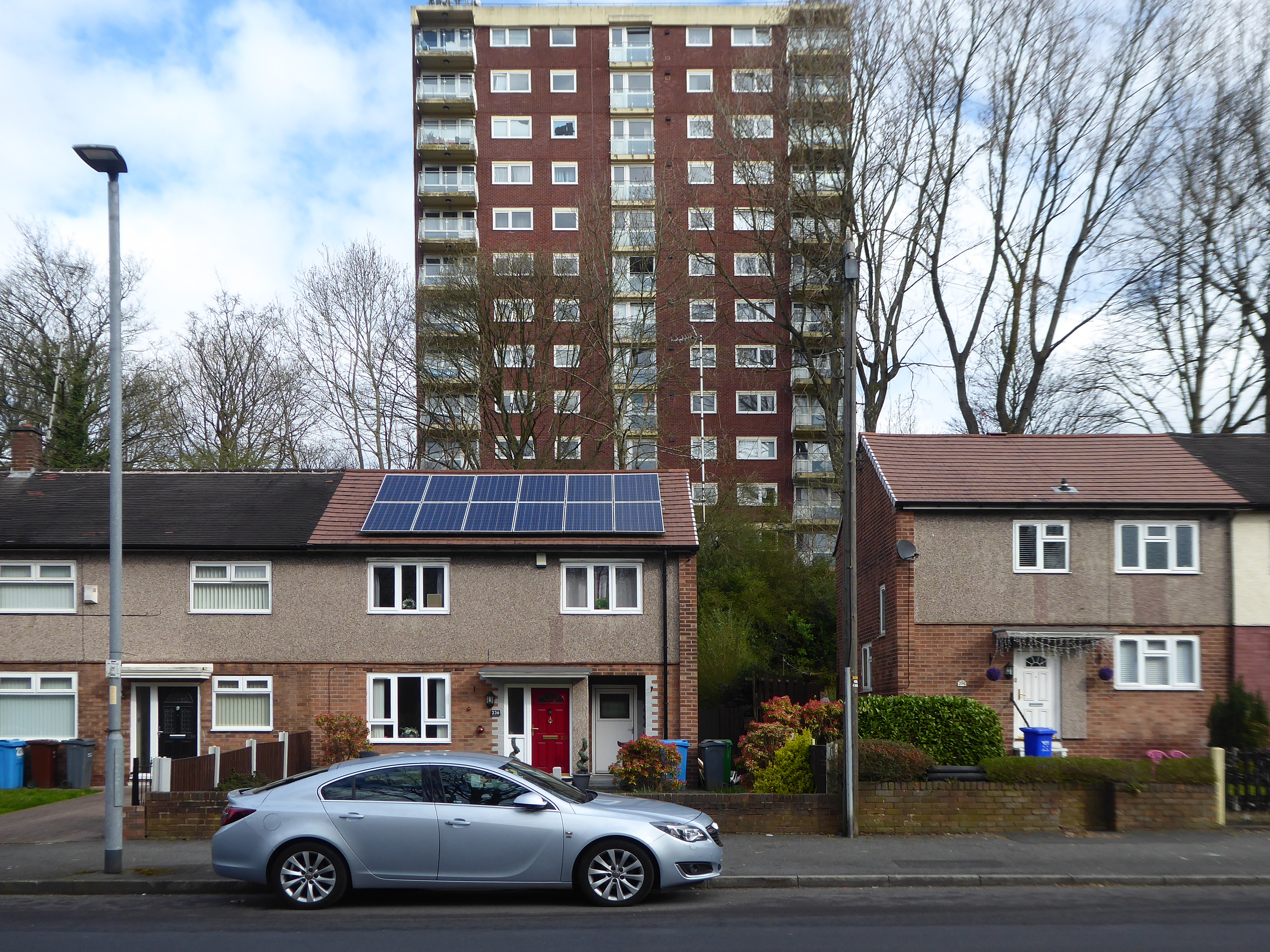
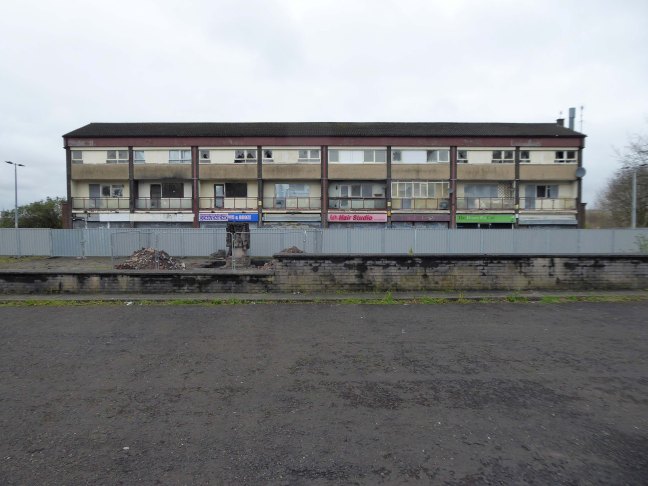
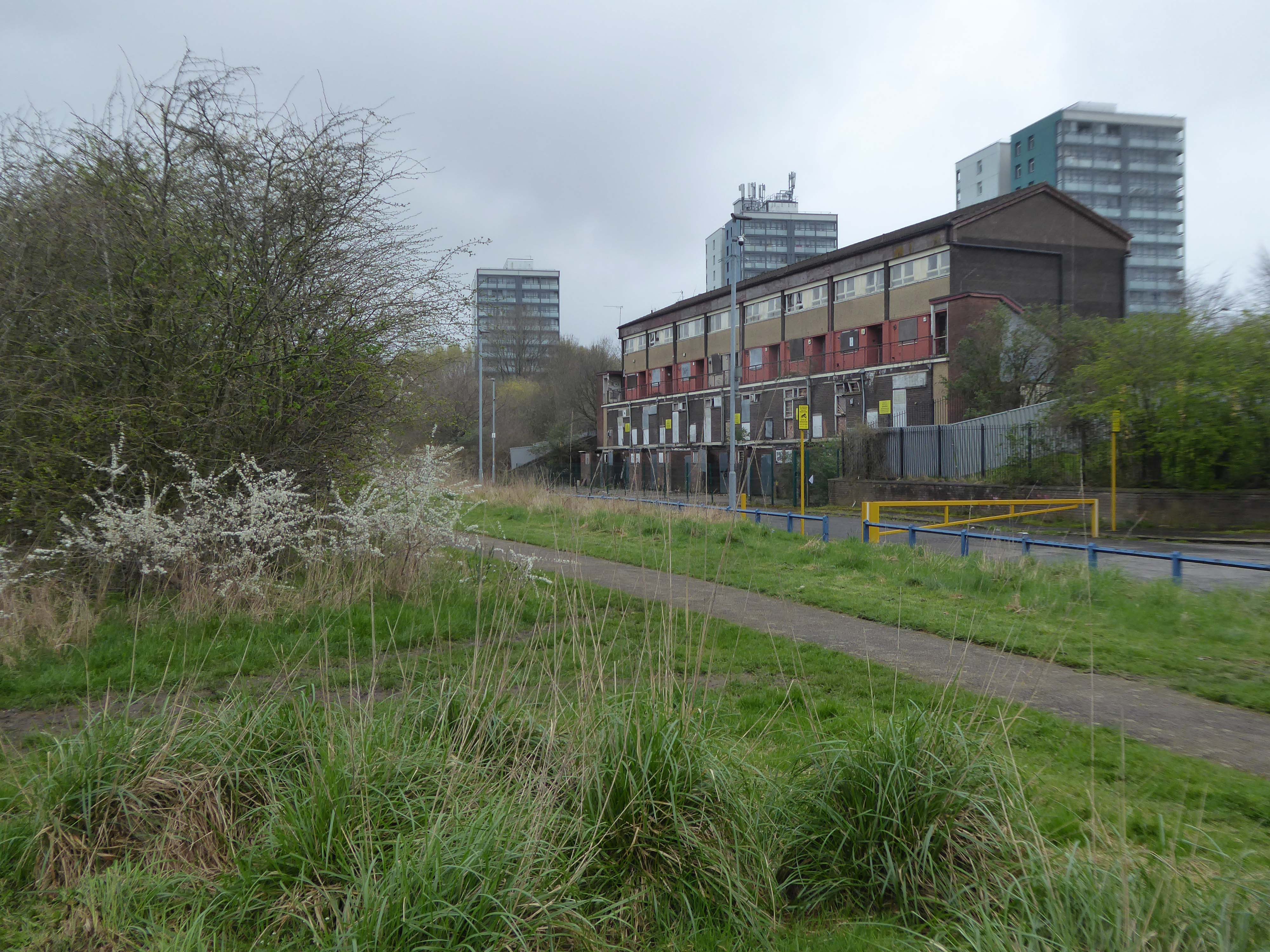
The shops and maisonettes are due to be demolished any day now – no longer to gaze open-eyed upon the former quarry of Sandhills.
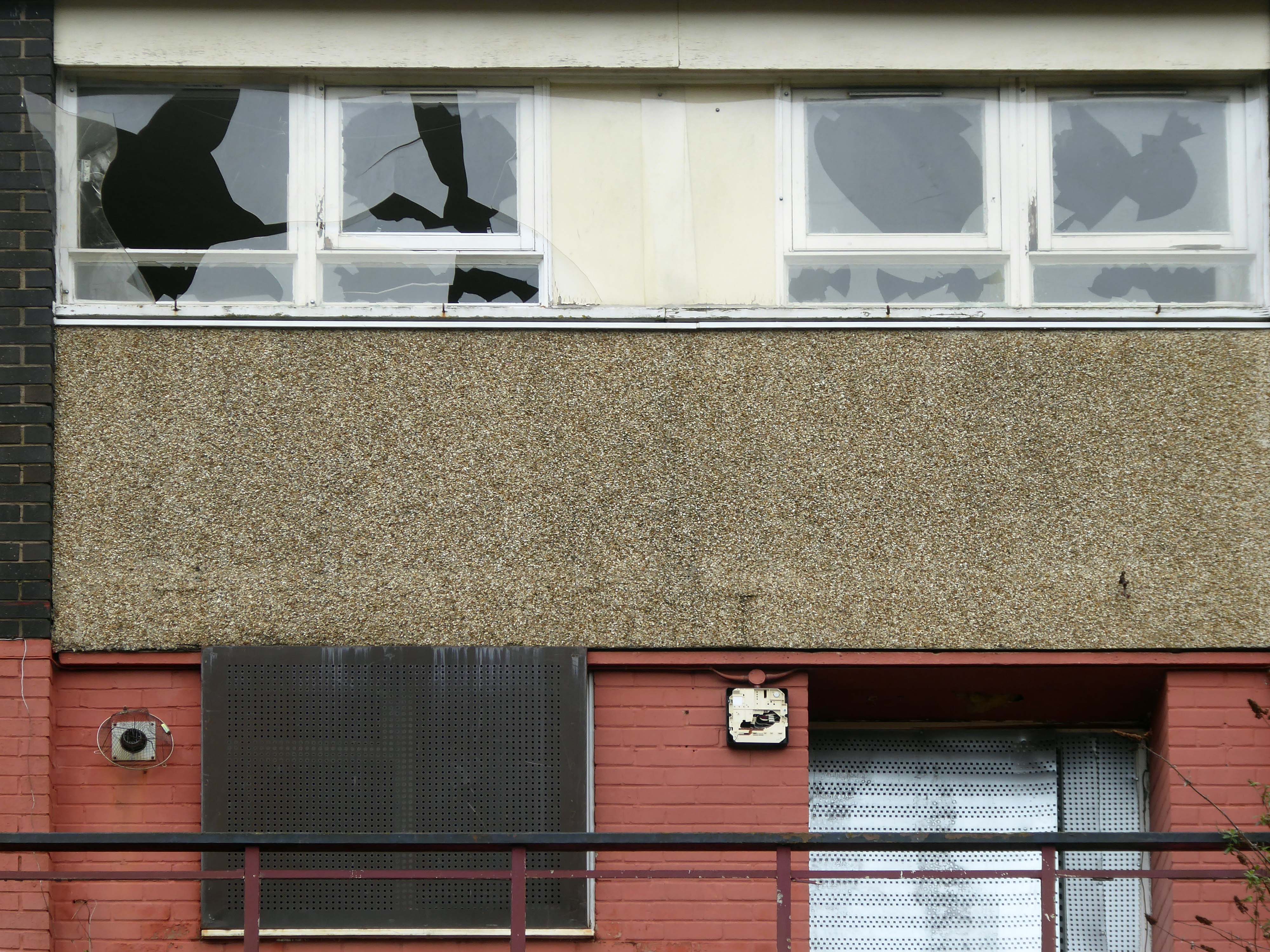
Around the front the diggers have been a digging – digging up around the base of the totem.
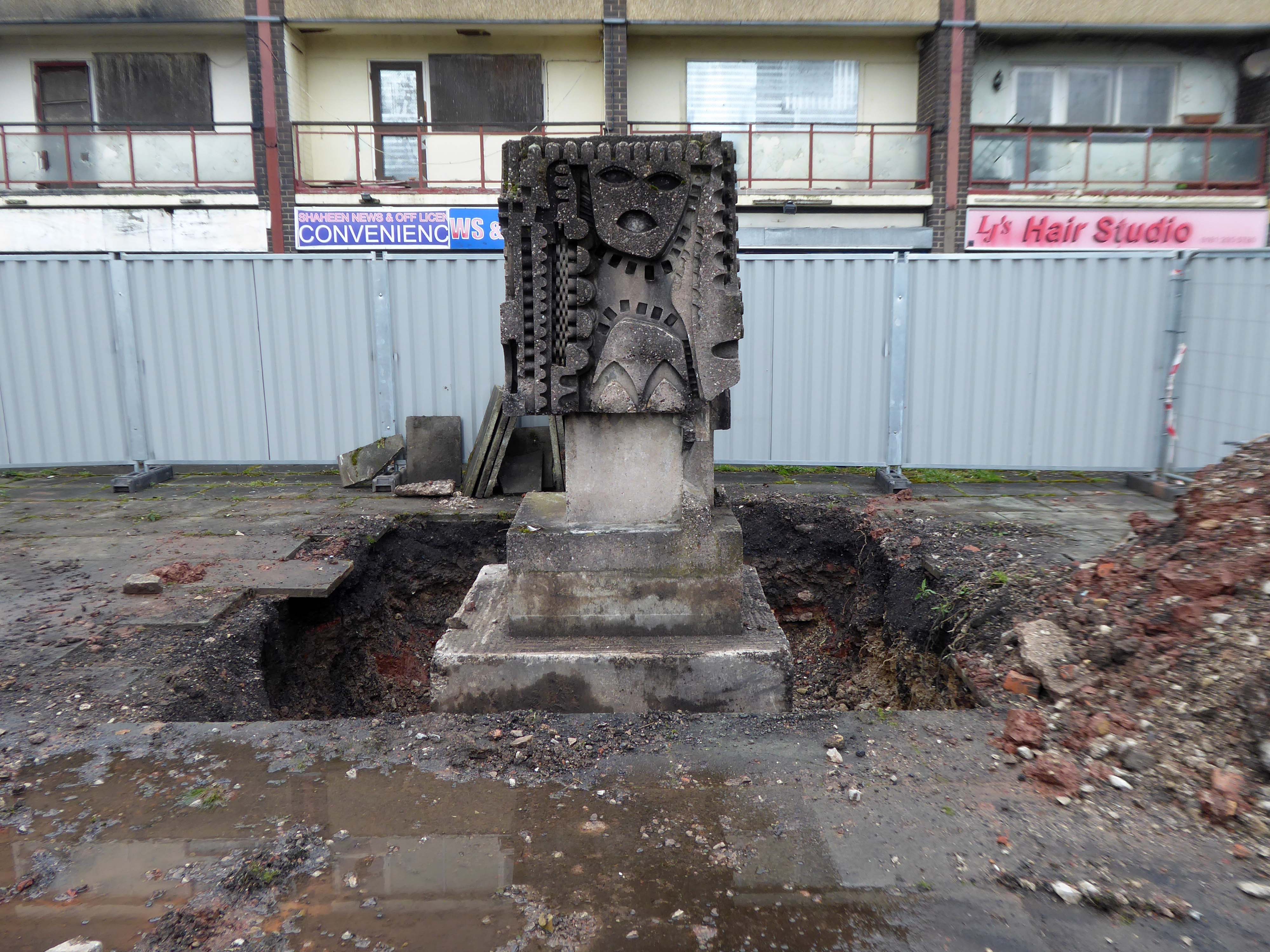
The work is to be re-sited by the nearby tower blocks.

The end is nigh.

Heading now for Collyhurst Road and the Irk Valley – seen here in 1960.
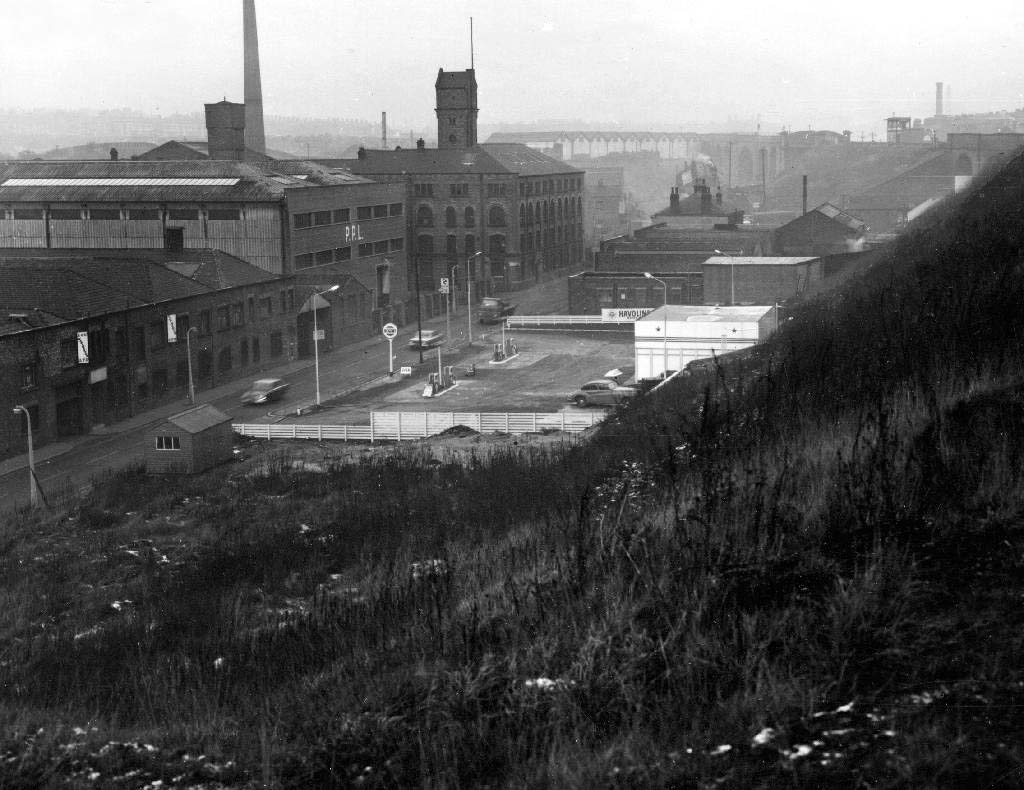
Looking back on the Square and the Dalton Street flats – Humphries, Dalton, Roach, Vauxhall and Moss Brook Courts under construction.
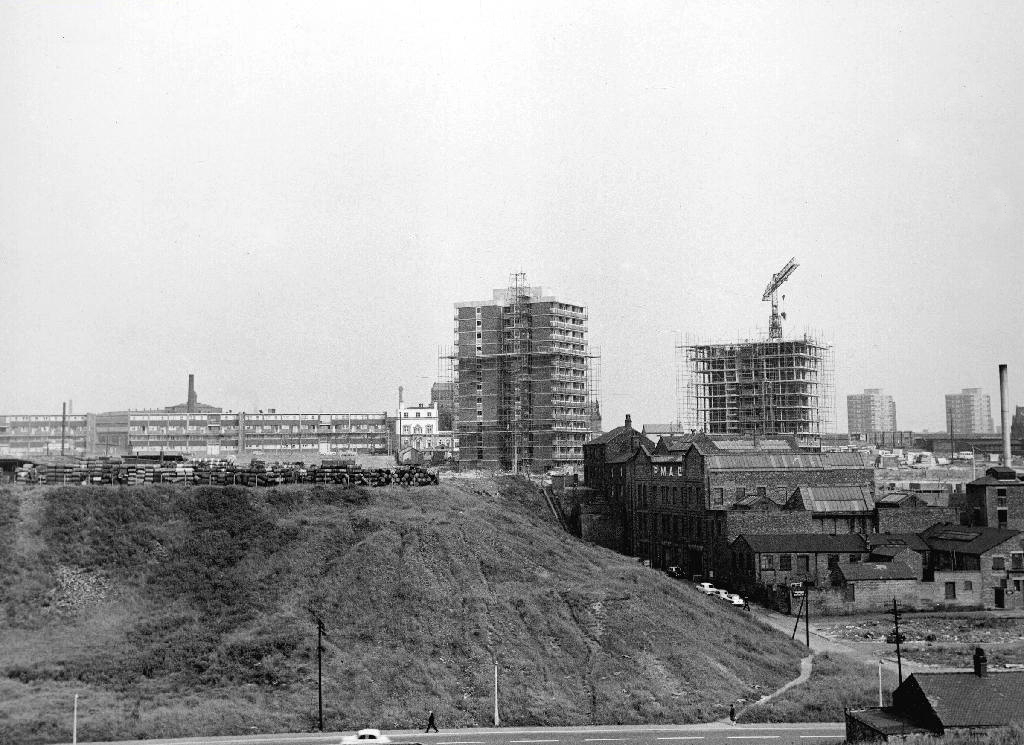
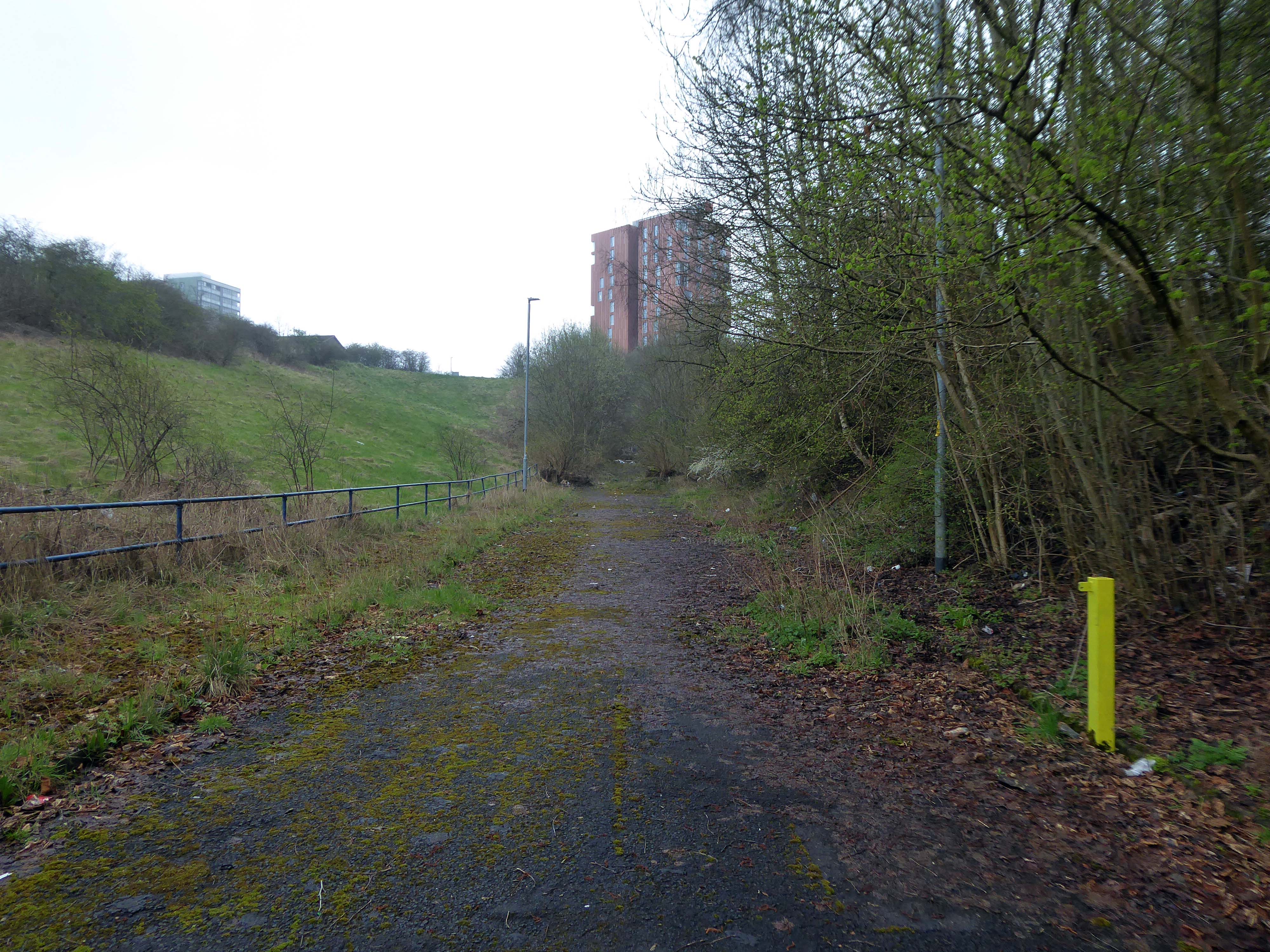
Vauxhall Street now but a shadow of its former self – the last traces of industry long gone.

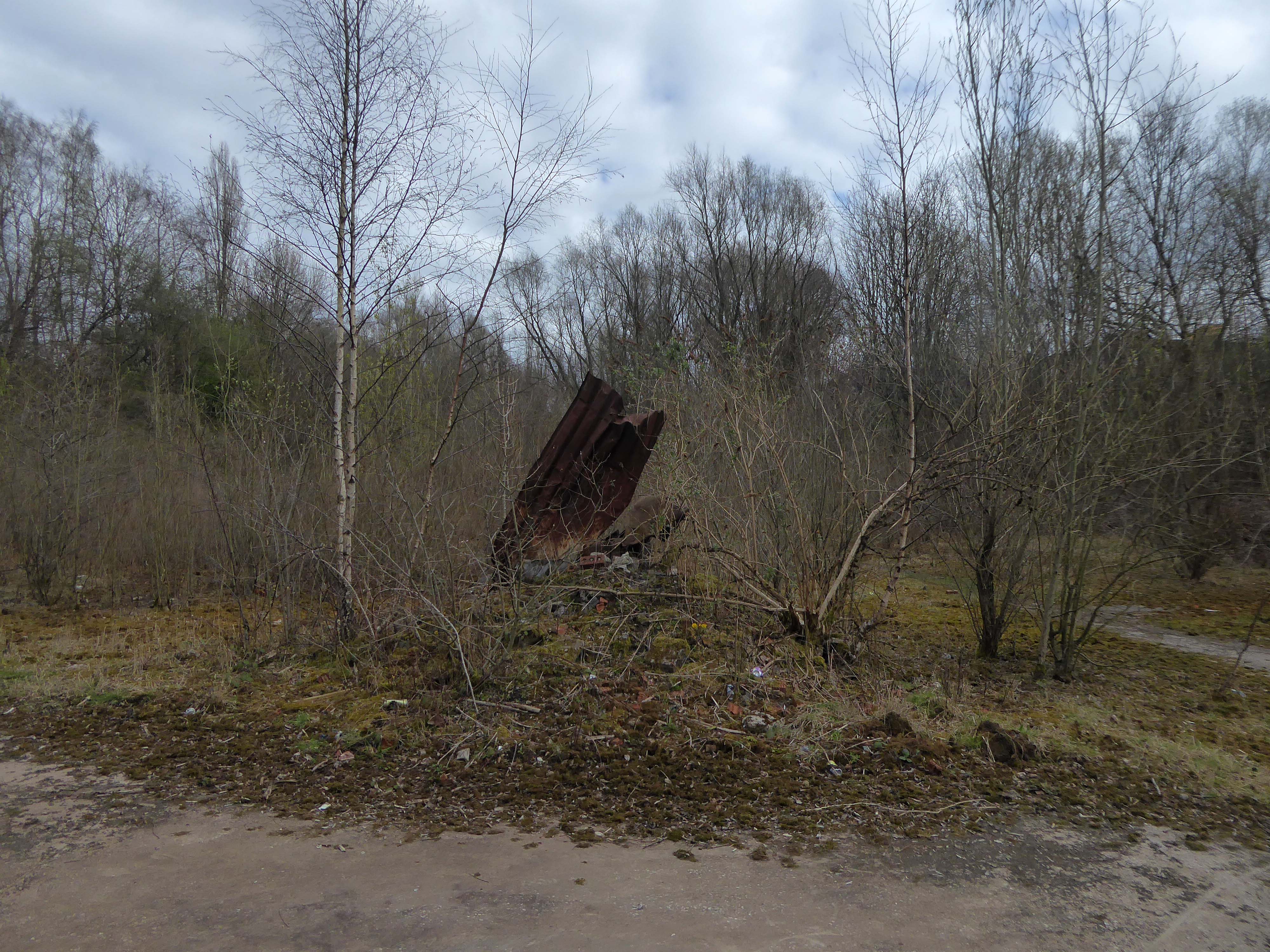
Reclaimed over time by trees and dense underbrush.
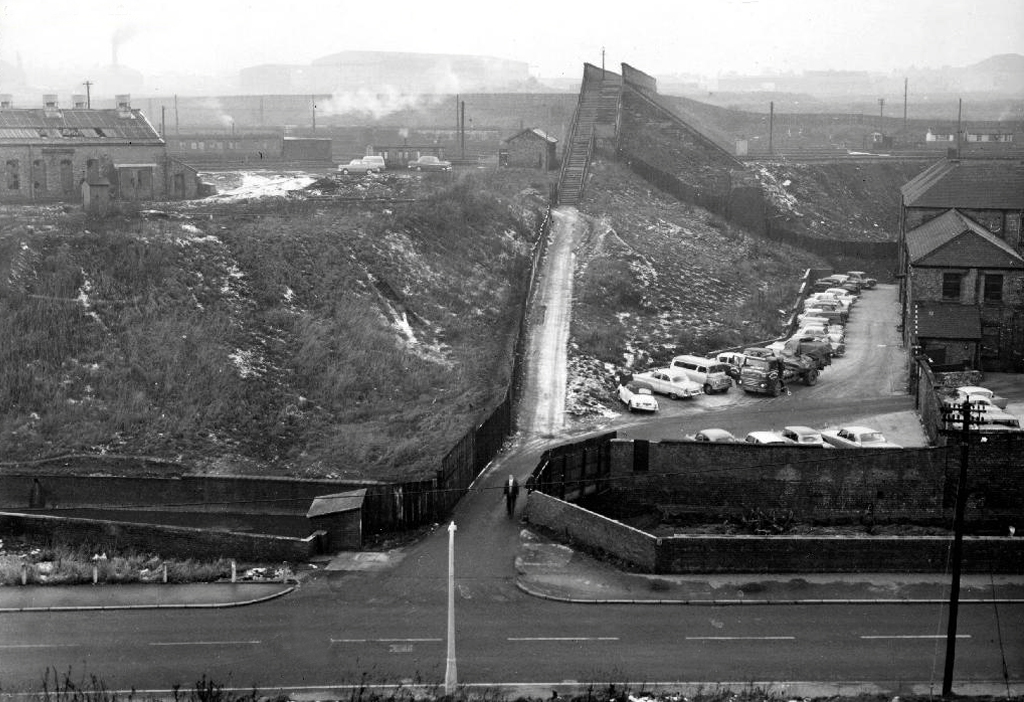
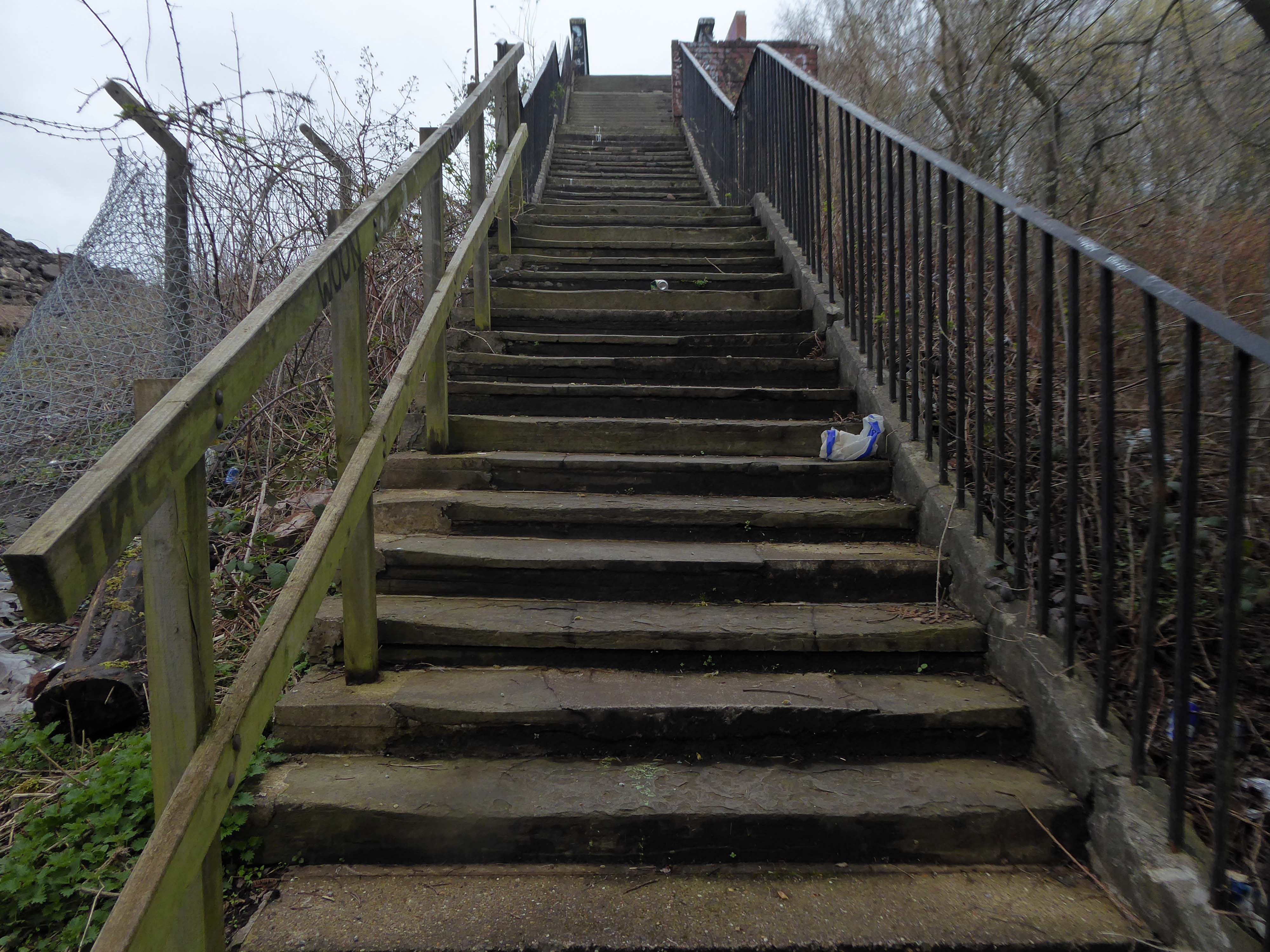
Crossing Collyhurst Road and up and over the railway via Barney’s Steps also known as the Lowry Steps.
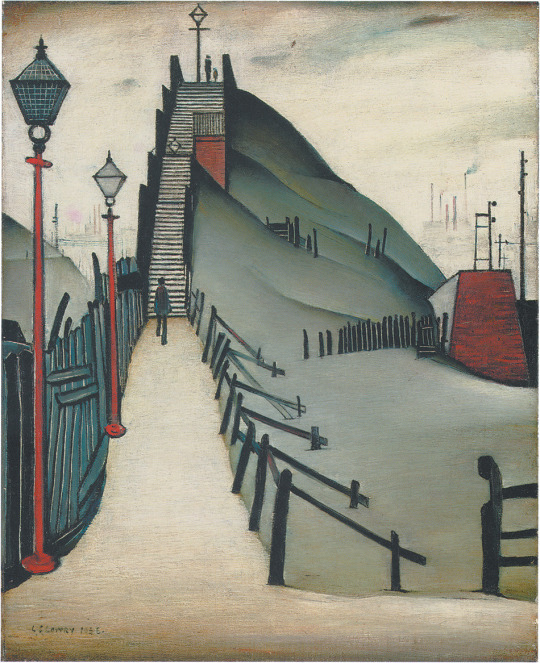
LS Lowry
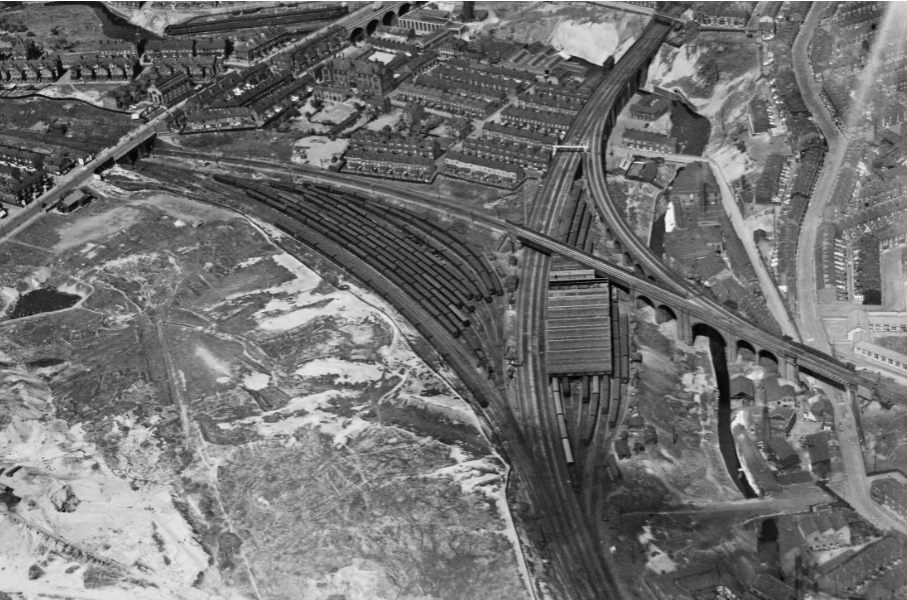
By the late 1950’s the whole of this area which we called Barney’s Tip became a refuse tip for Manchester City Council.
Britain from Above

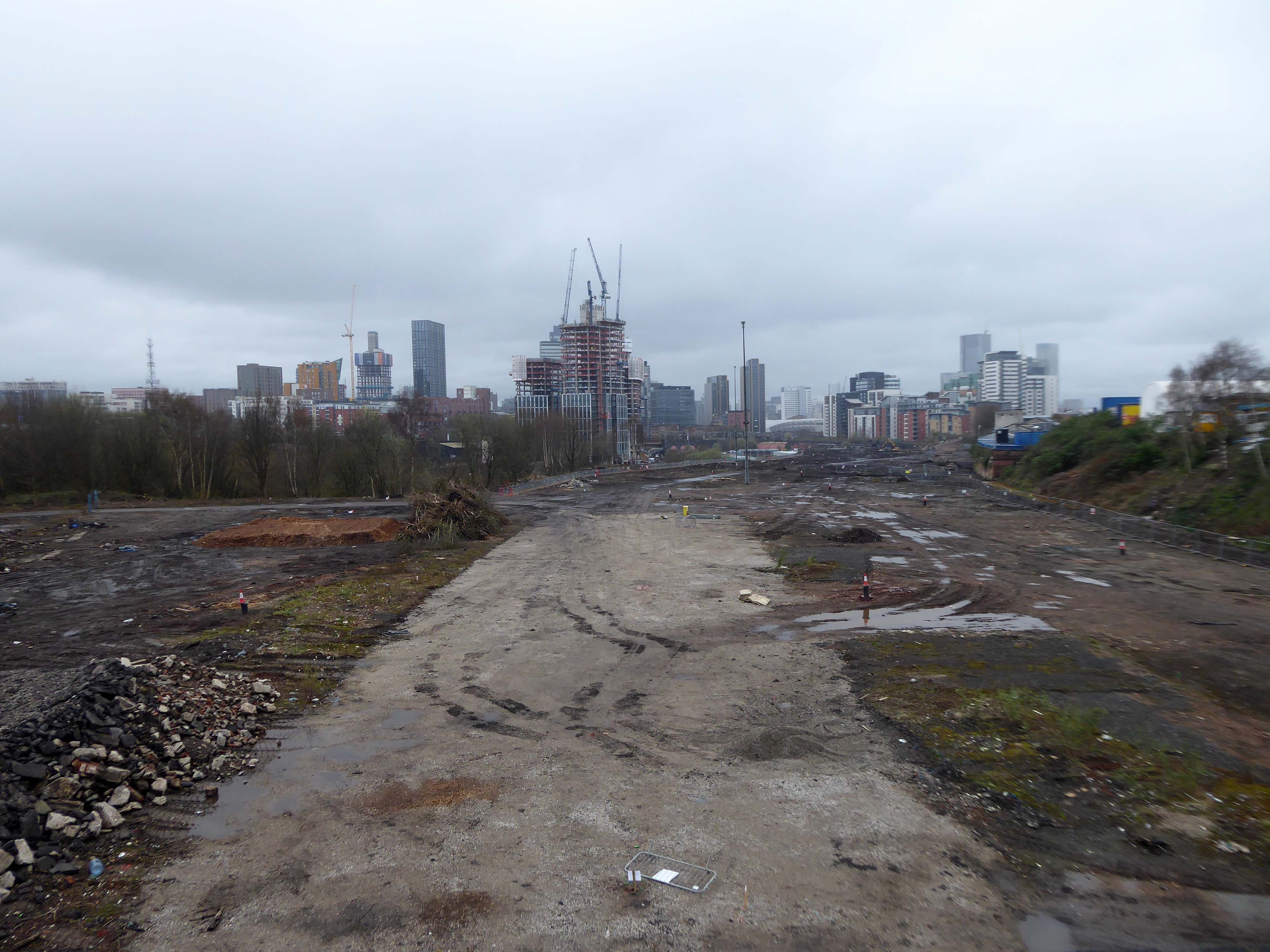
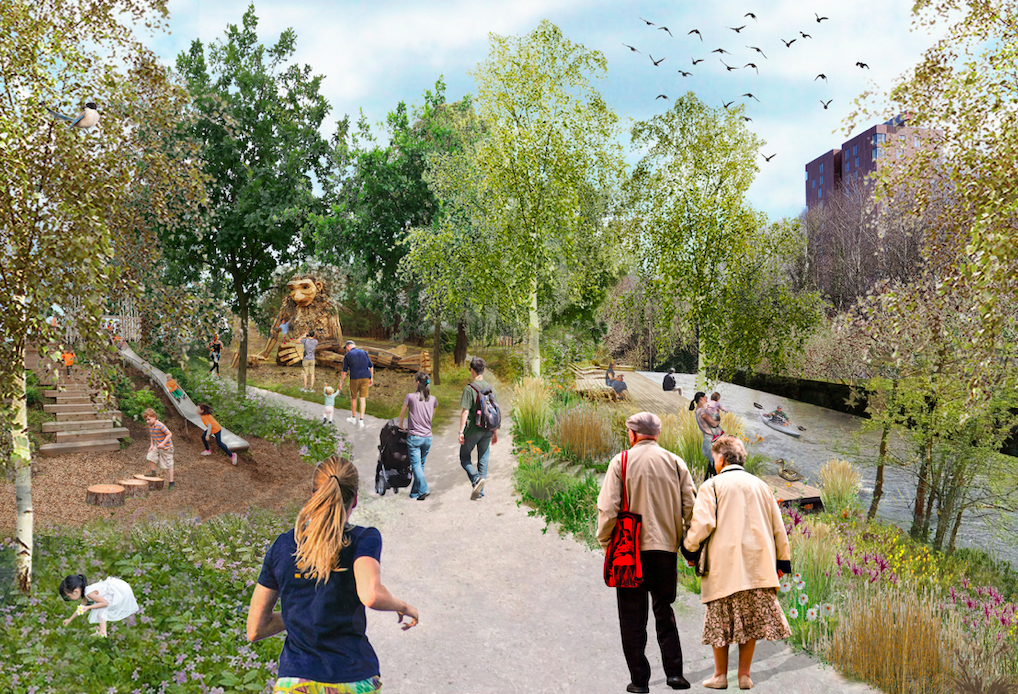
The area is in the process of being reconfigured as a delightful country park.
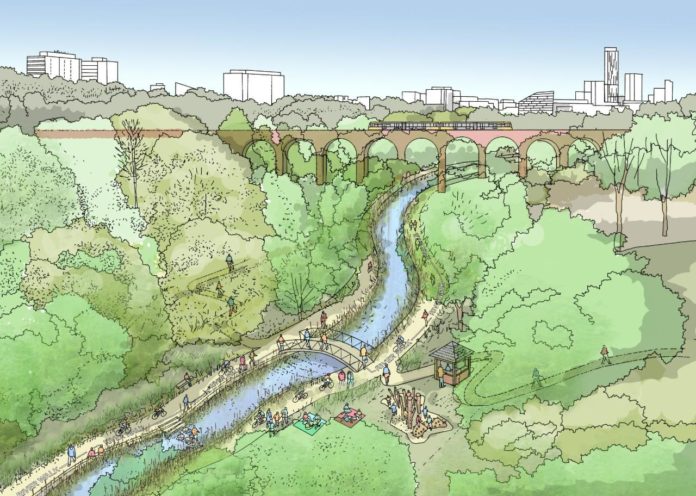
The investment will also help develop an initial phase of the planned City River Park incorporating St Catherine’s Wood as part of a network of public open space, including improvements along the River Irk and works to improve flood resilience, unlocking the potential of the Irk Valley that will characterise the wider Northern Gateway project.
About Manchester

The first phase of the City River Park will begin work to transform former railway architecture to develop the new Viaduct Linear Park north of Victoria Train Station, new stepped public realm space – Red Bank Terraces, along with new green space by the River Irk and the key improvements to St Catherine’s Wood.  
Manchester Gov UK

The Victoria North Express is coming your way!
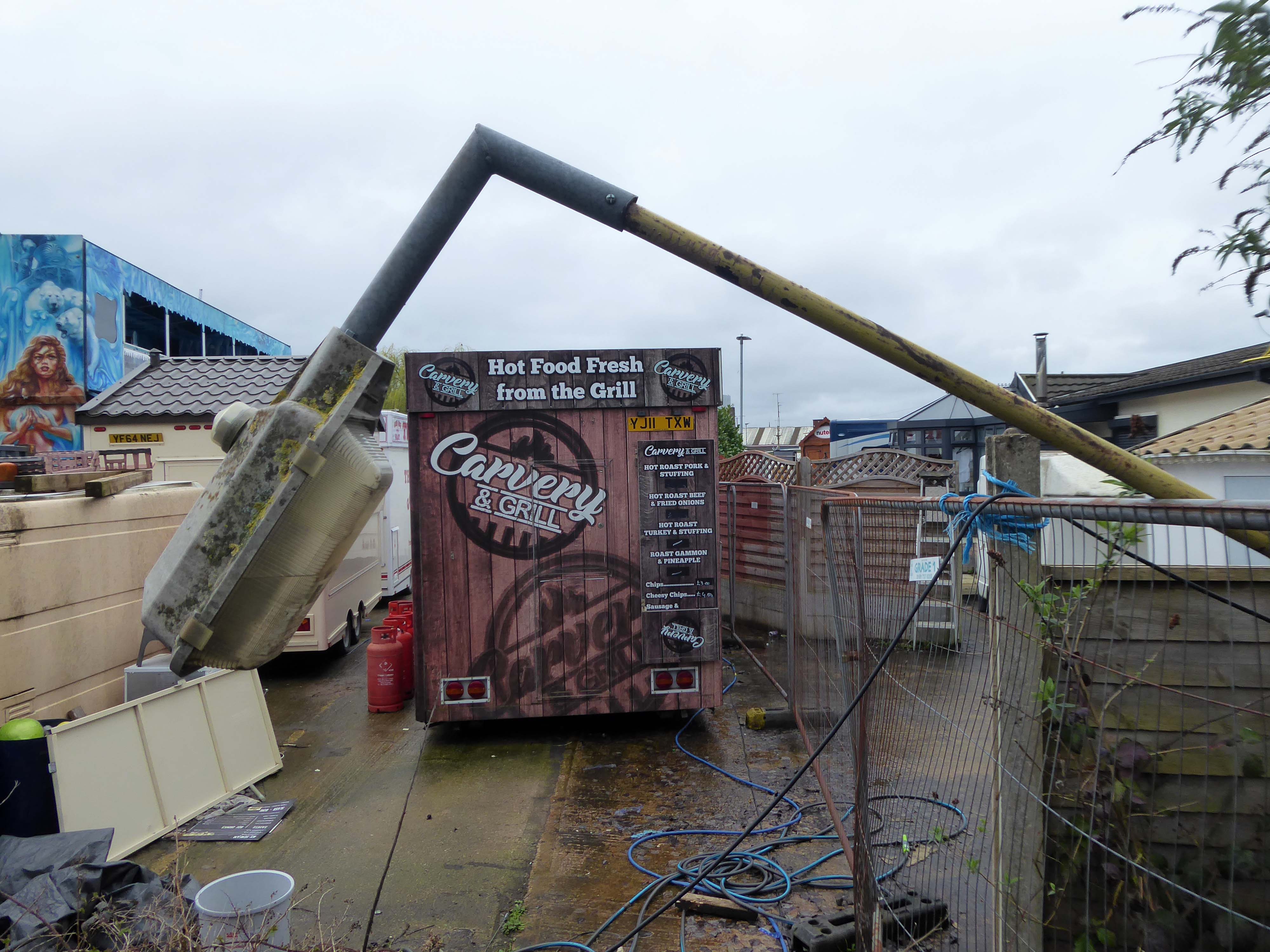
Pressing on we pass the Showman’s quarters.

Collingham Street is lined with trucks, trailers, stalls and mobile homes.

But there’s nothing temporary about this Cheetham Hill neighbourhood; most residents have lived here for years and many plan to spend the rest of their lives here.

Founded more than forty years ago, it was created by the Showman’s Guild of Great Britain – and it’s reserved exclusively for fairground workers both retired and current.

Built on Queens Road tip, a former rubbish dump, and rented out by Manchester Council, many of the 52 homes belong to older retired showmen or families for whom an itinerant lifestyle has become more challenging.

It’s a close-knit community with a unique shared history.
MEN.

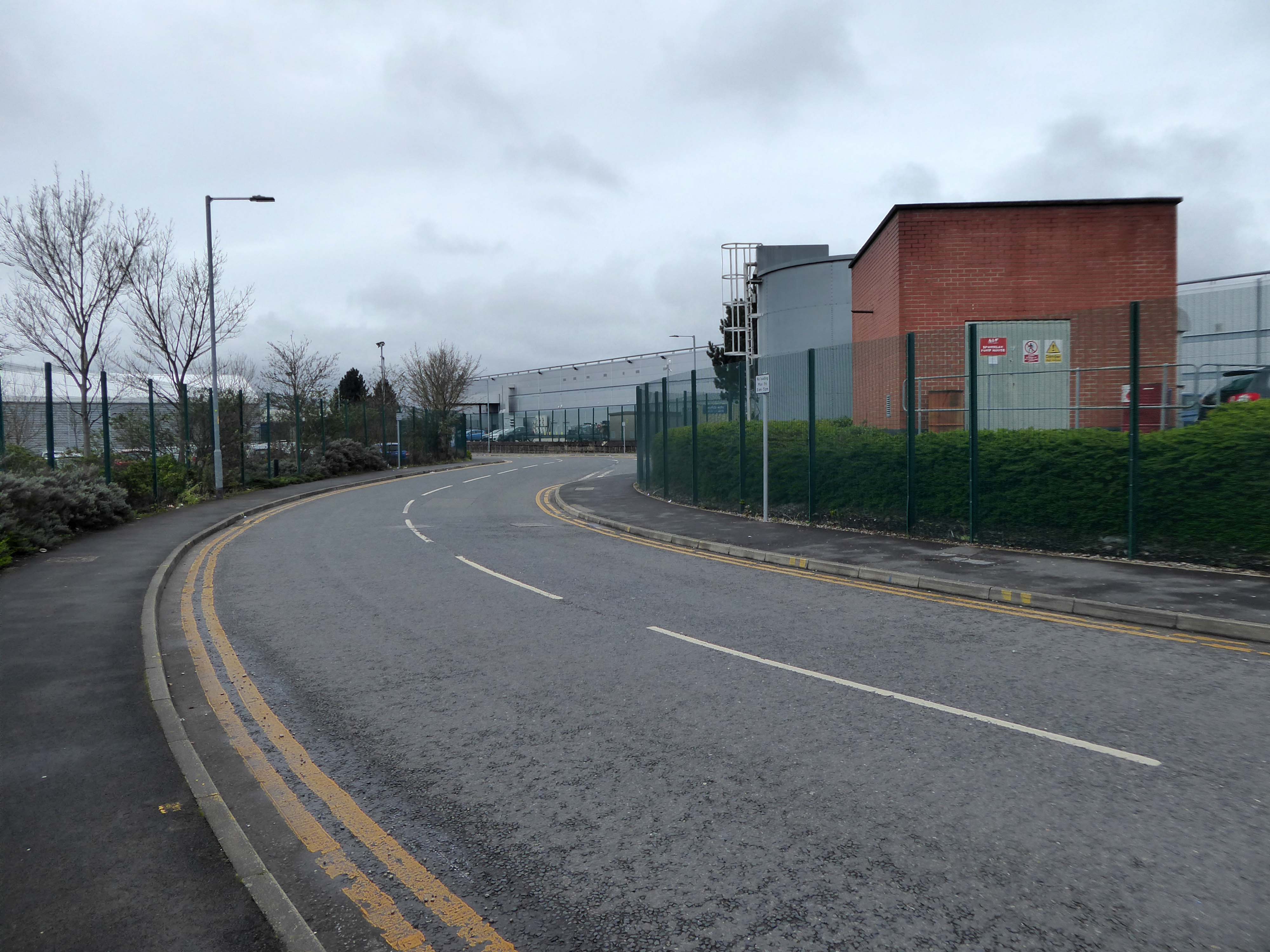
Emerging eventually onto Rayburn Way.
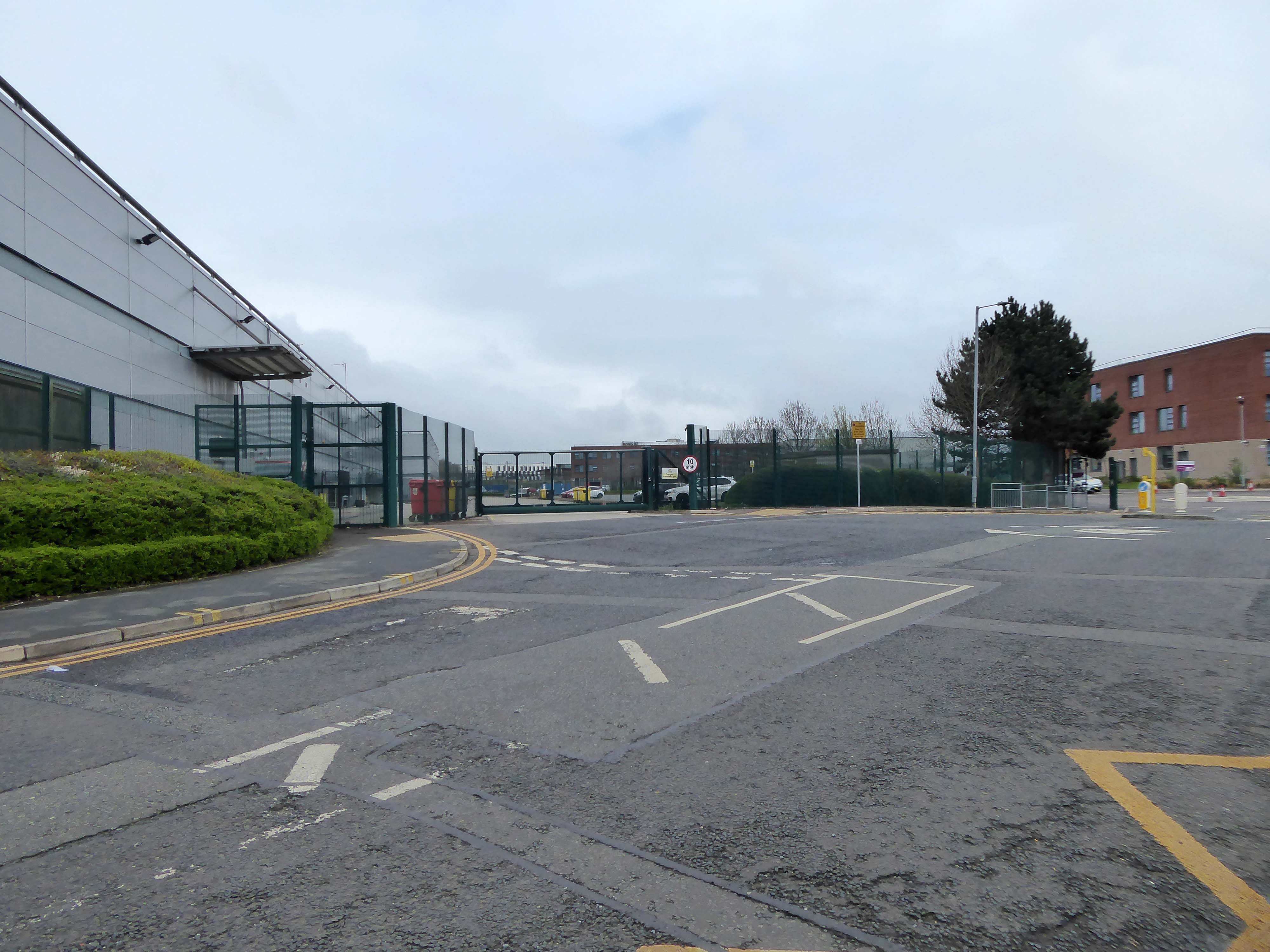
Home to the Eden Girls Leadership Academy and Eden Boys Leadership Academy.

And a whole host of delightful light industrial units.
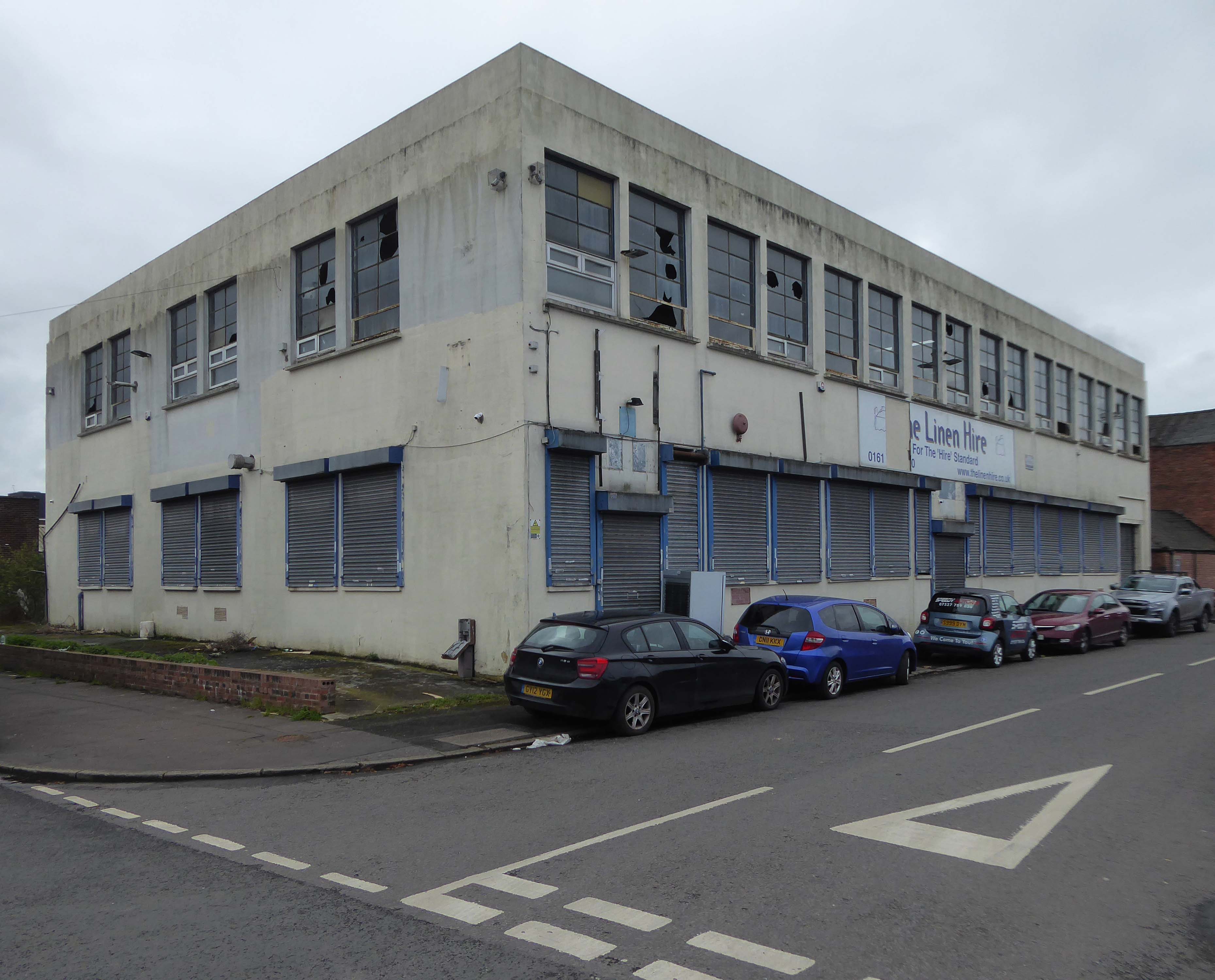
Let’s all go west – along North Street.

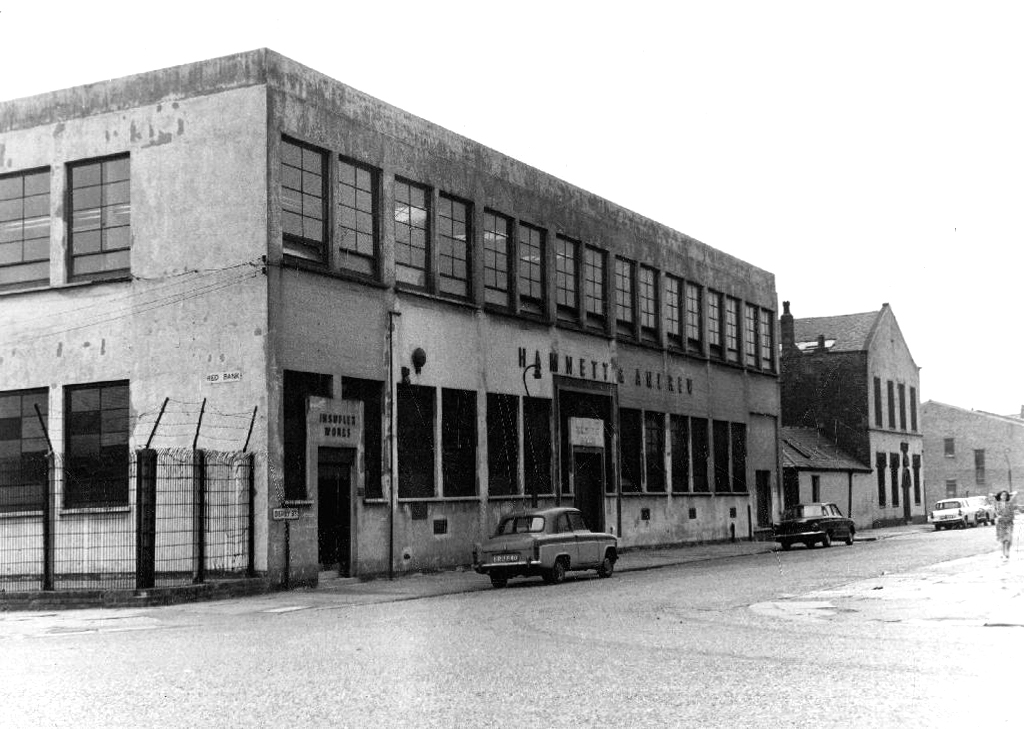
On the corner of Derby Street and Honey Street we find Hamnett & AndrewInsuflex Works

Later transformed into Linen Hire, though I fear that further linen hire may well be in abeyance, on a permanent basis.
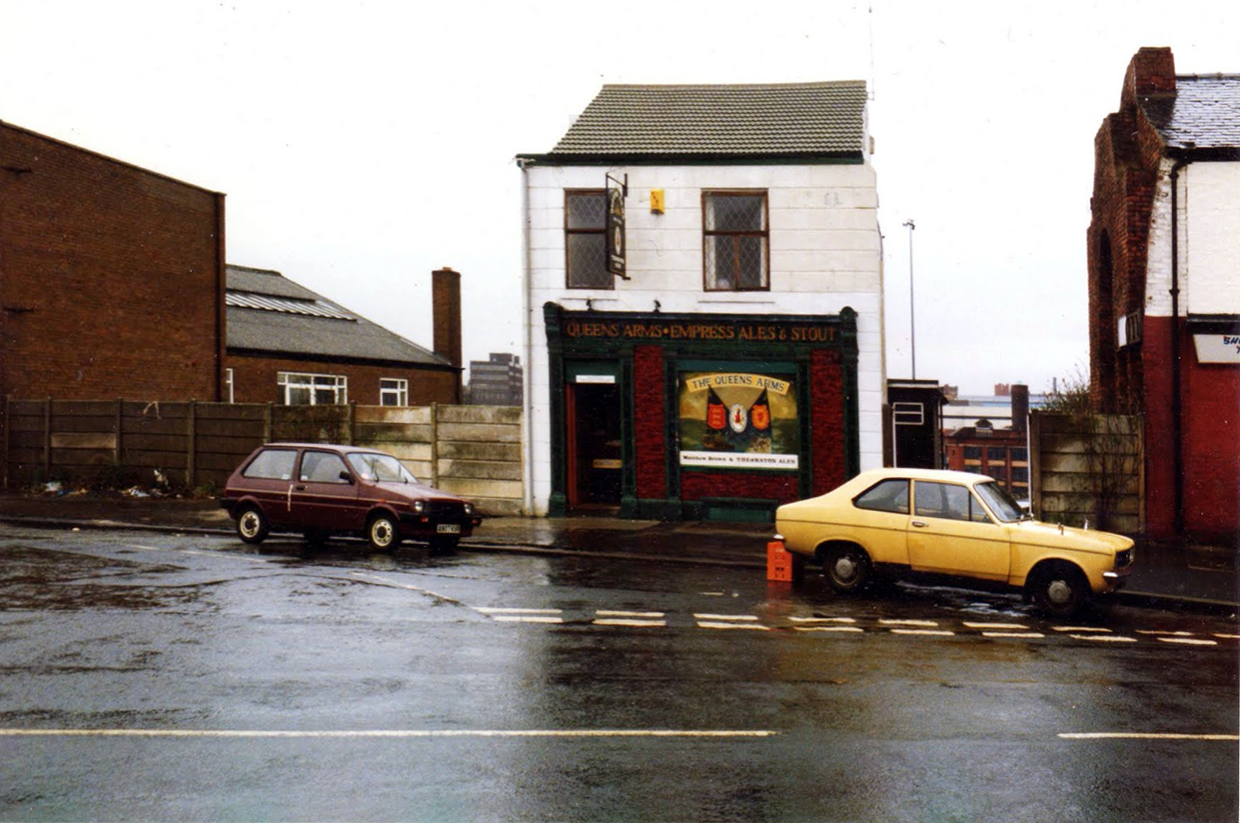
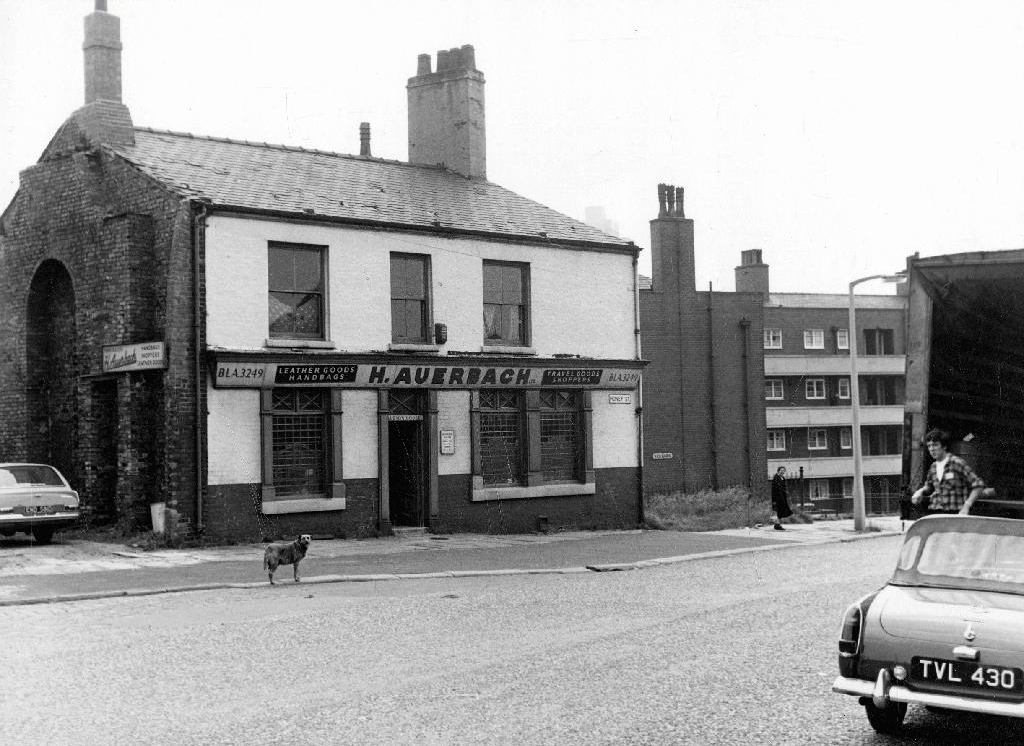
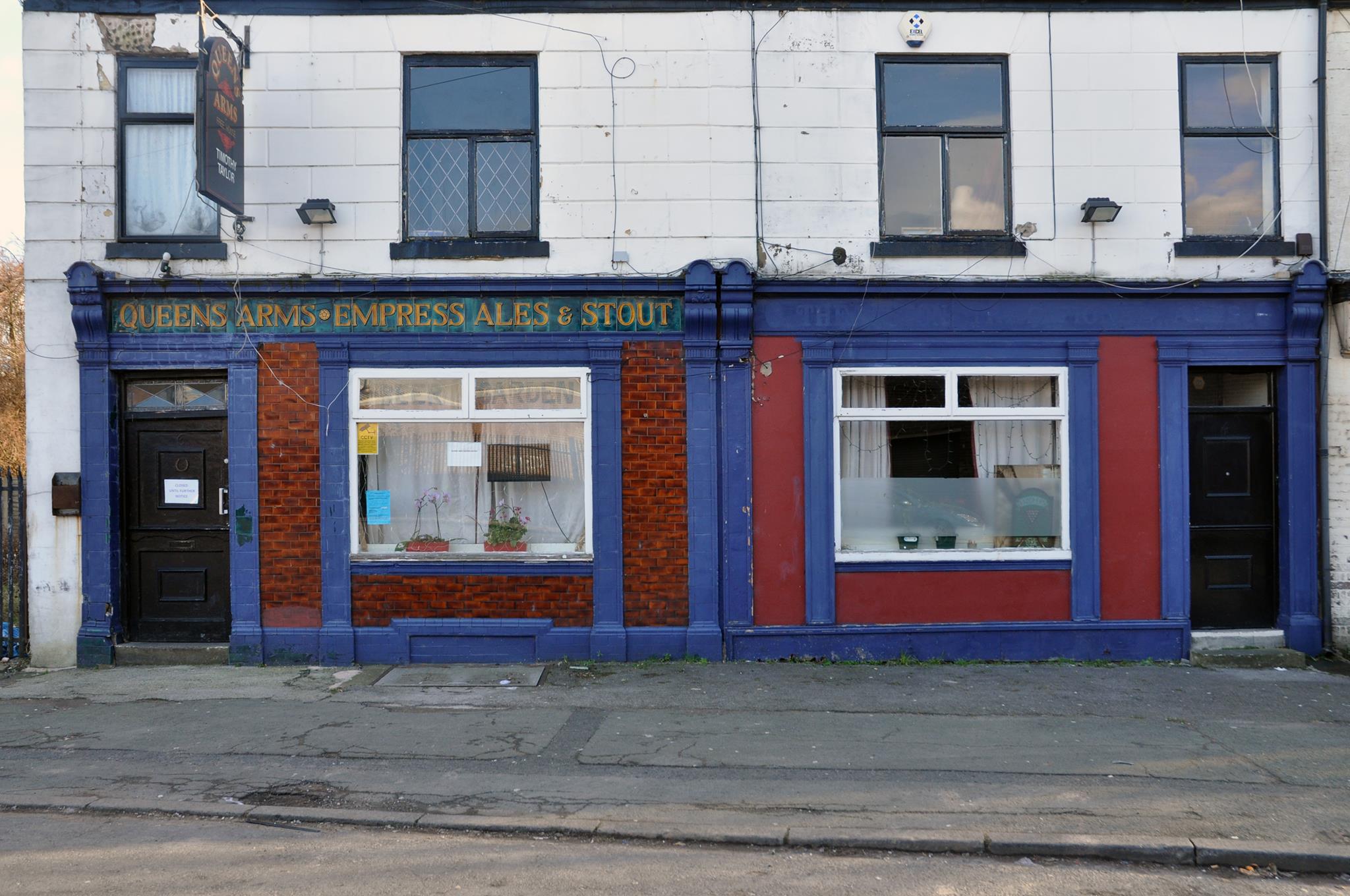
What was happening at the Queens Arms back in 1966?

These were the older premises.
Then next door, the newer premises.
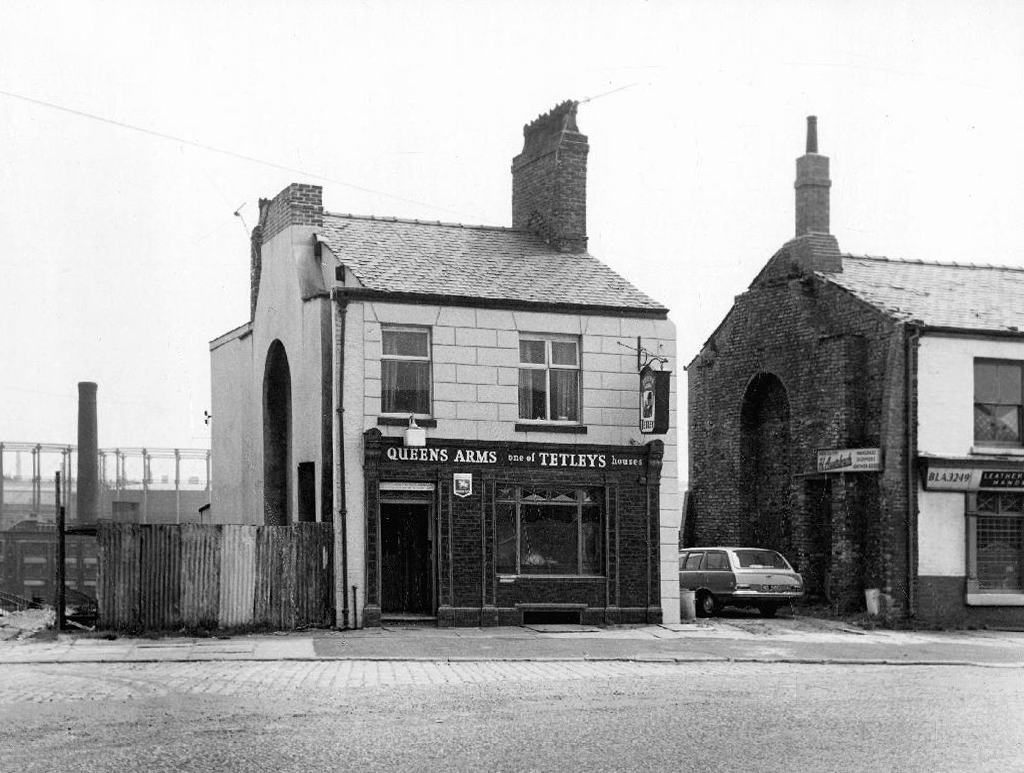
Photo: Alison G

The Queens Arms was held in high regard amongst the real ale crowd and had been a regular fixture in the Good Beer Guide.  

As recently as 2007 it was named the City Life Pub of the Year, 

Empress Brewery Co Ltd – 383 Chester Road, Old Trafford.

Registered as above May 1896 – 236 public houses. 

Acquired by Walker Cain Ltd. 1929 and brewing ceased.

Brewery History

The pub was extended in 1987.

Seen here in 2015 closed for the foreseeable.
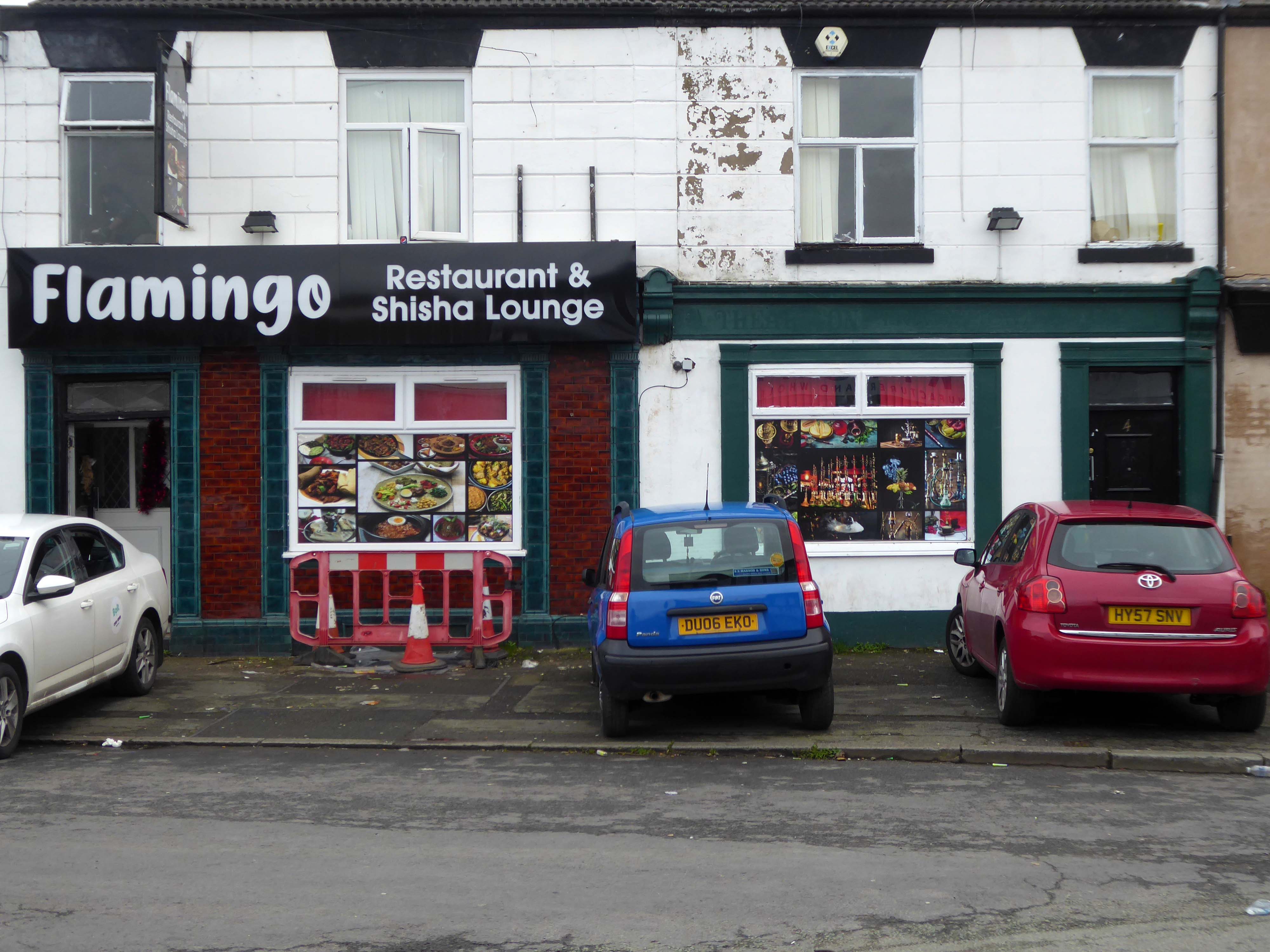
Recently becoming Flamingo – well strike me pink!

Though not without its own particular issues it would seem, according to the MEN.

The licensing out of hours team has received noise complaints relating to the premises which was found to be open beyond permitted hours when visited. Officers also identified breaches of the Health Act during inspections in which people were seen smoking shisha pipes in an enclosed extension at the back.
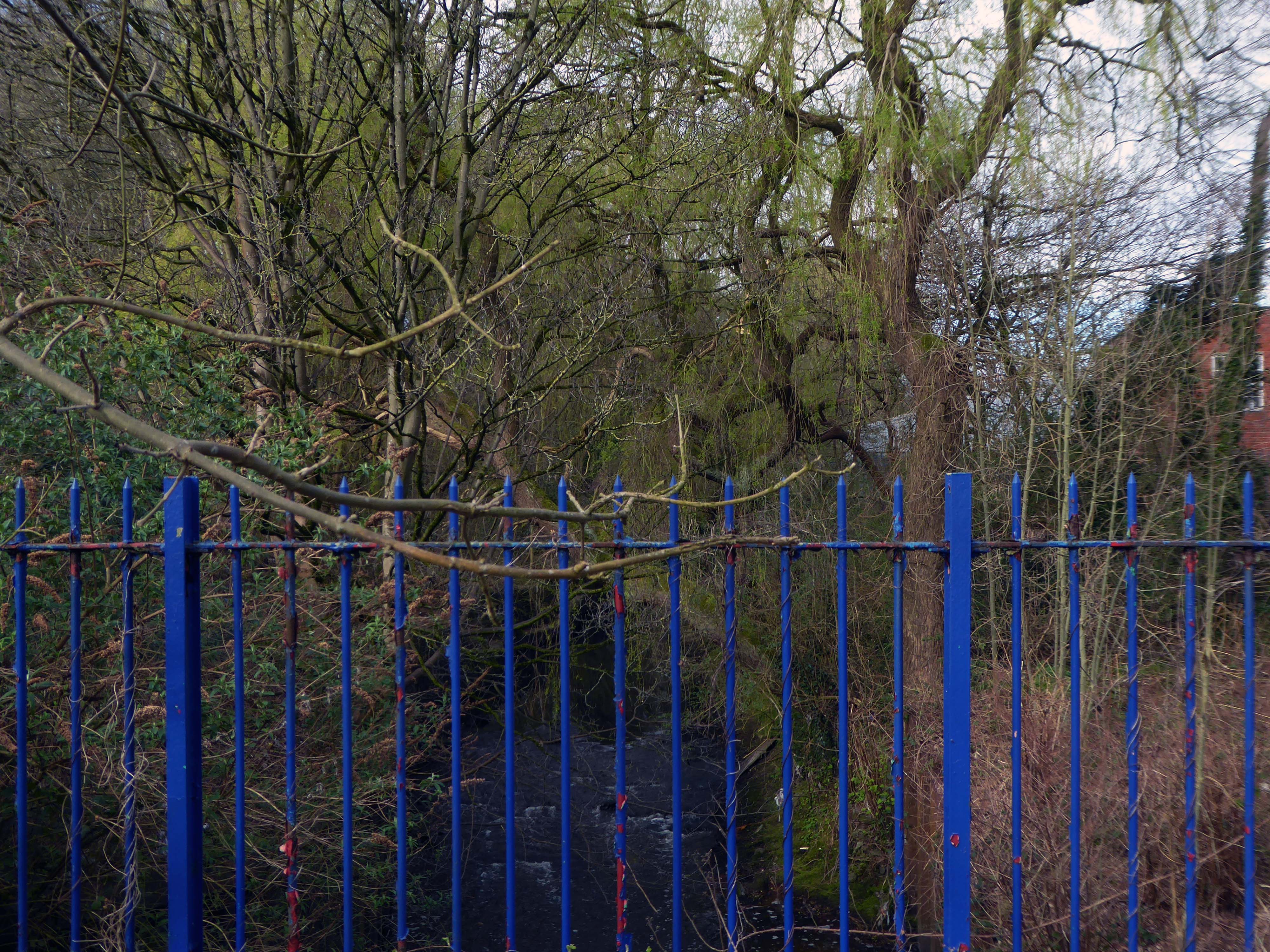
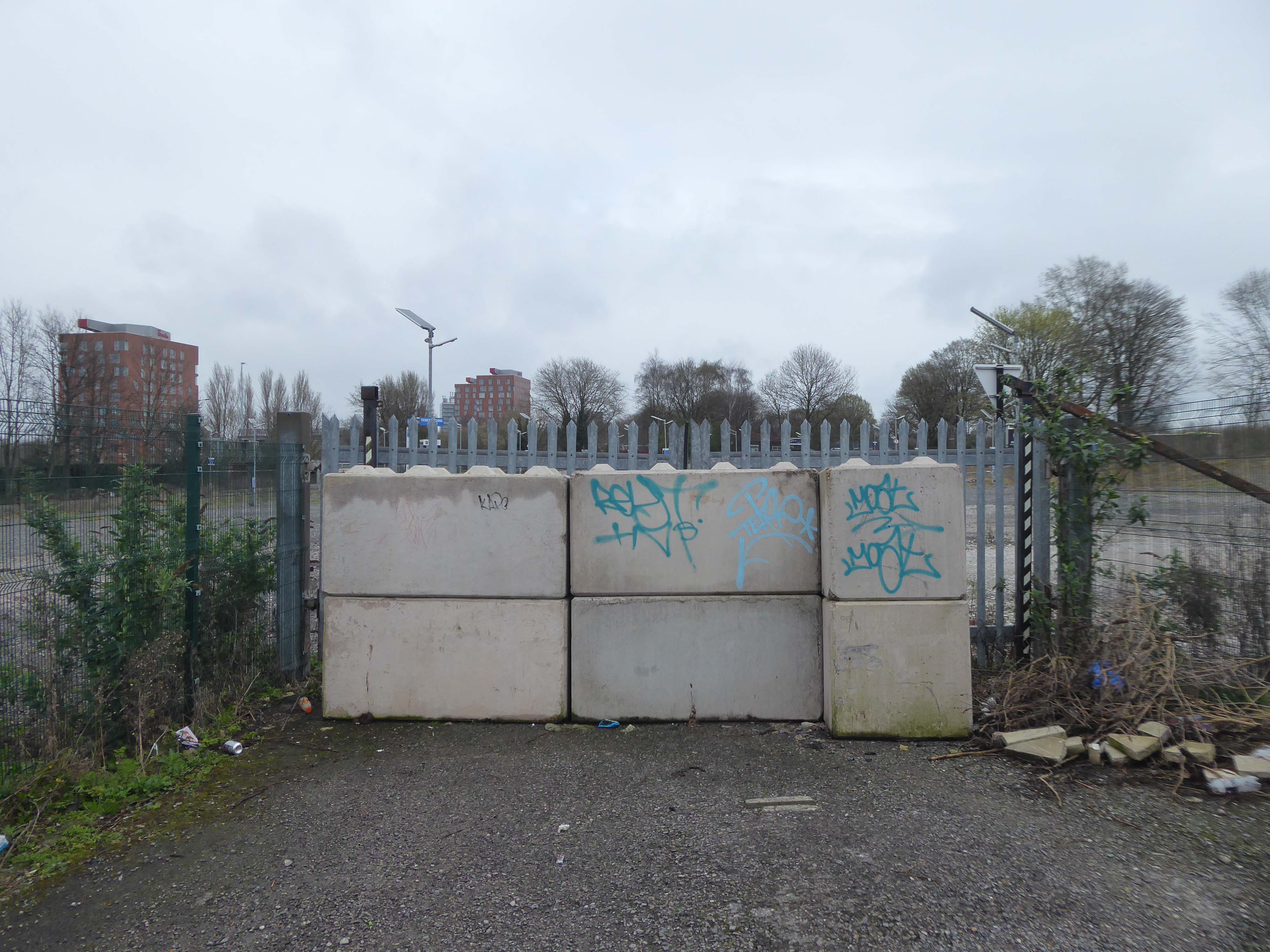
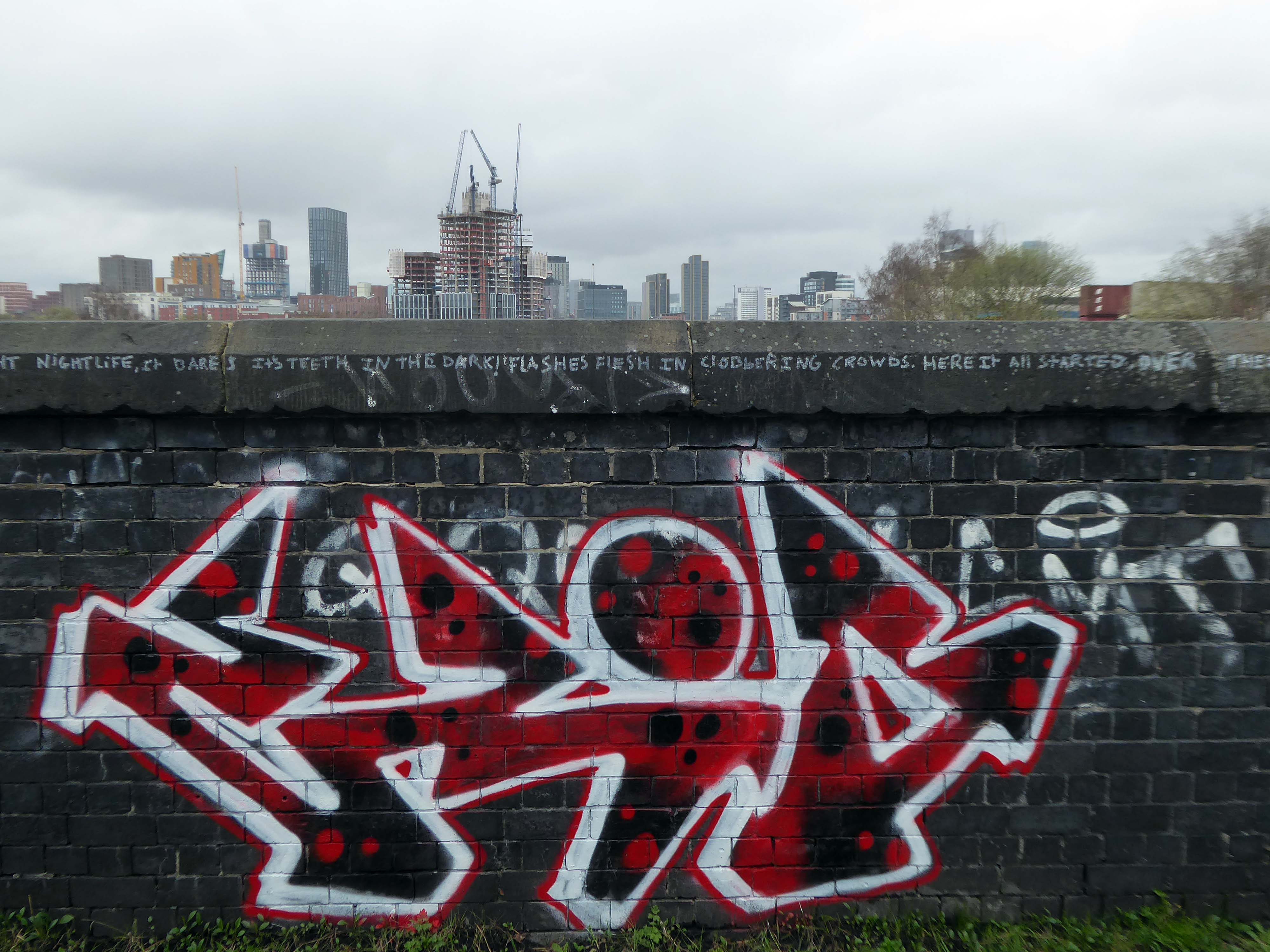
We will leave the Flamingo be and head back into town – but not without giving a nod to this confusing collision between this self-made scrapyard-man chic gate and the ever changing skyline of overheated urban regeneration.
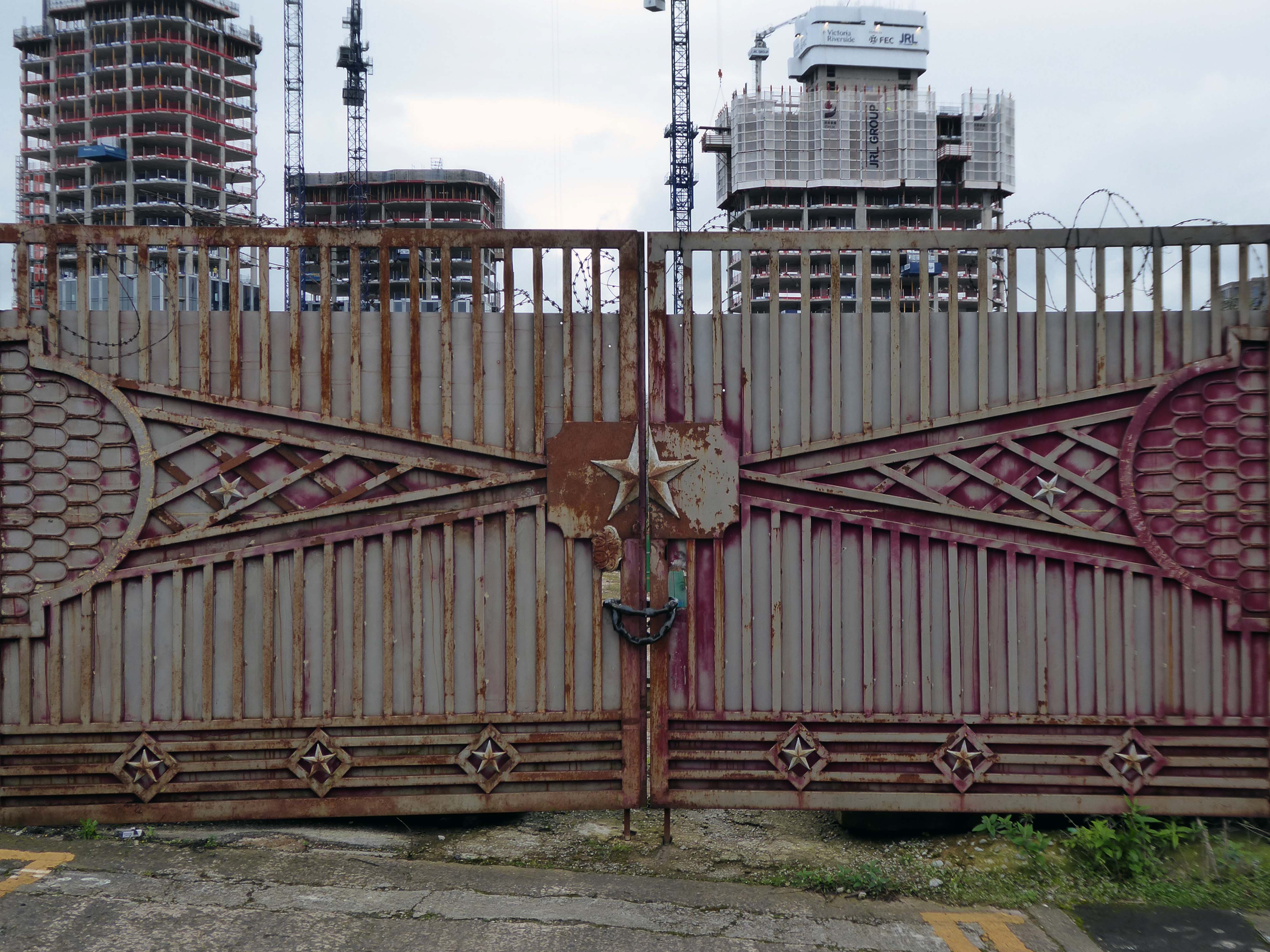
The new creation has come: The old has gone, the new is here!

Corinthians 5:17

Archival photographs – Manchester Local Image Collection

IRK VALLEY #TWO

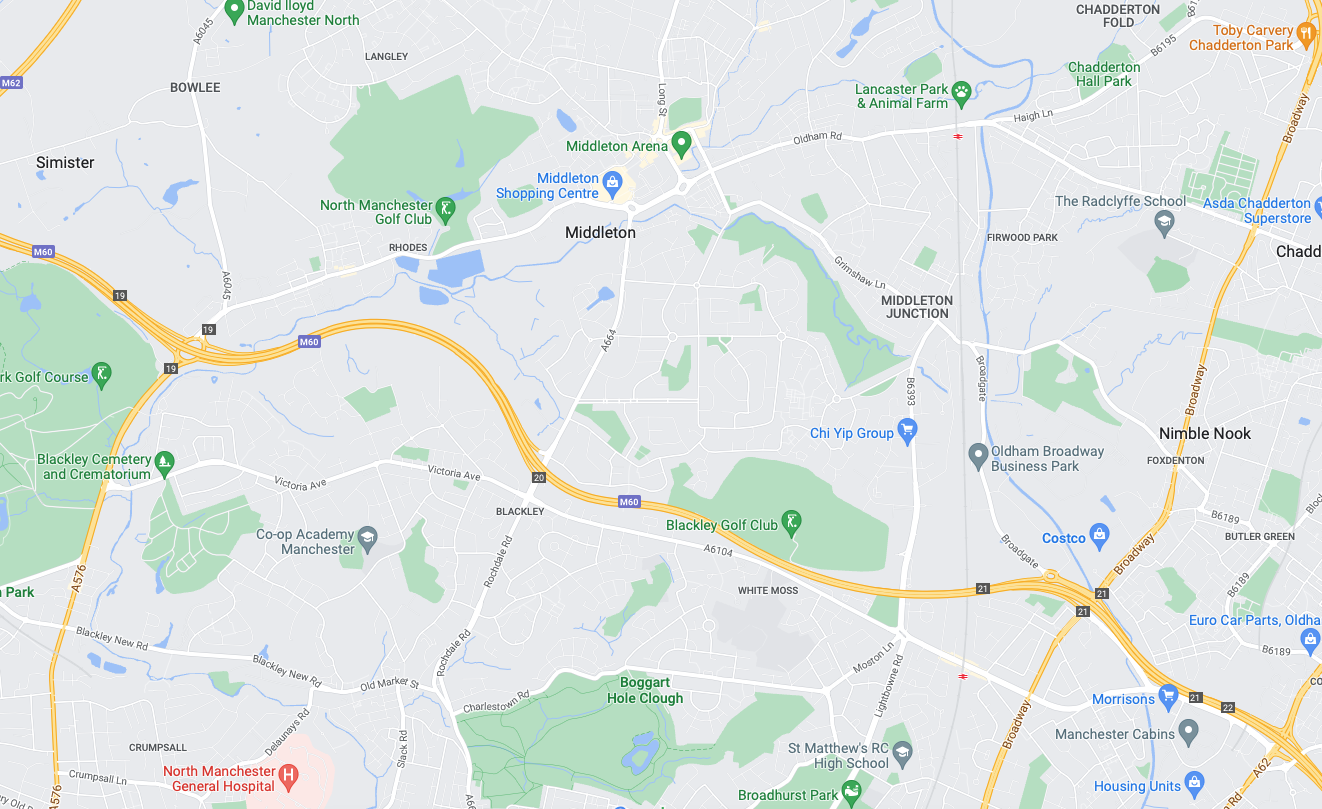
Having walked and cycled twixt Victoria Station and Blackley, I returned once more to the Hexagon Tower to resume my explorations towards the source in Royton.

Beginning on Delaunays Road and onwards along Blackley New Road.

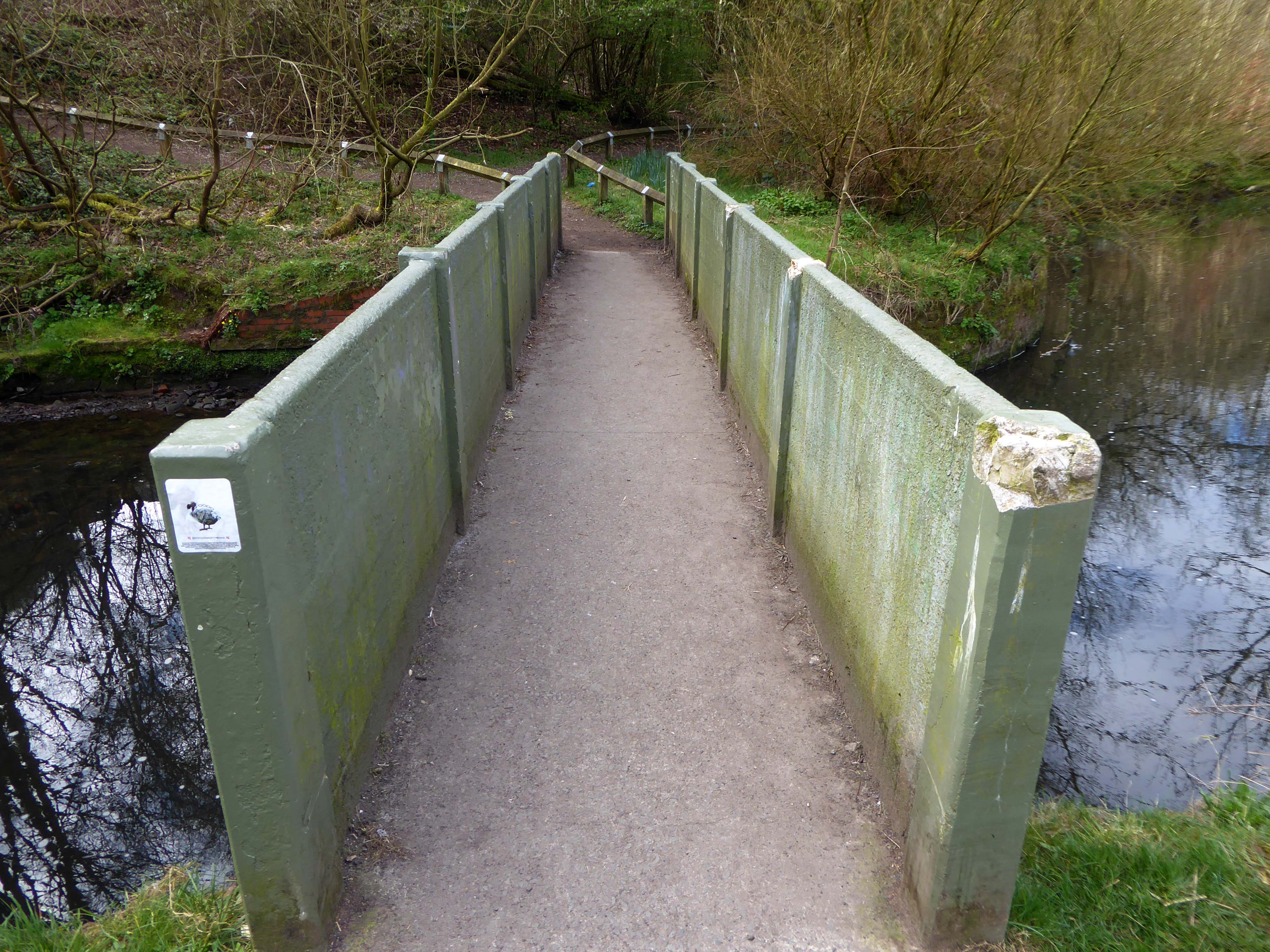
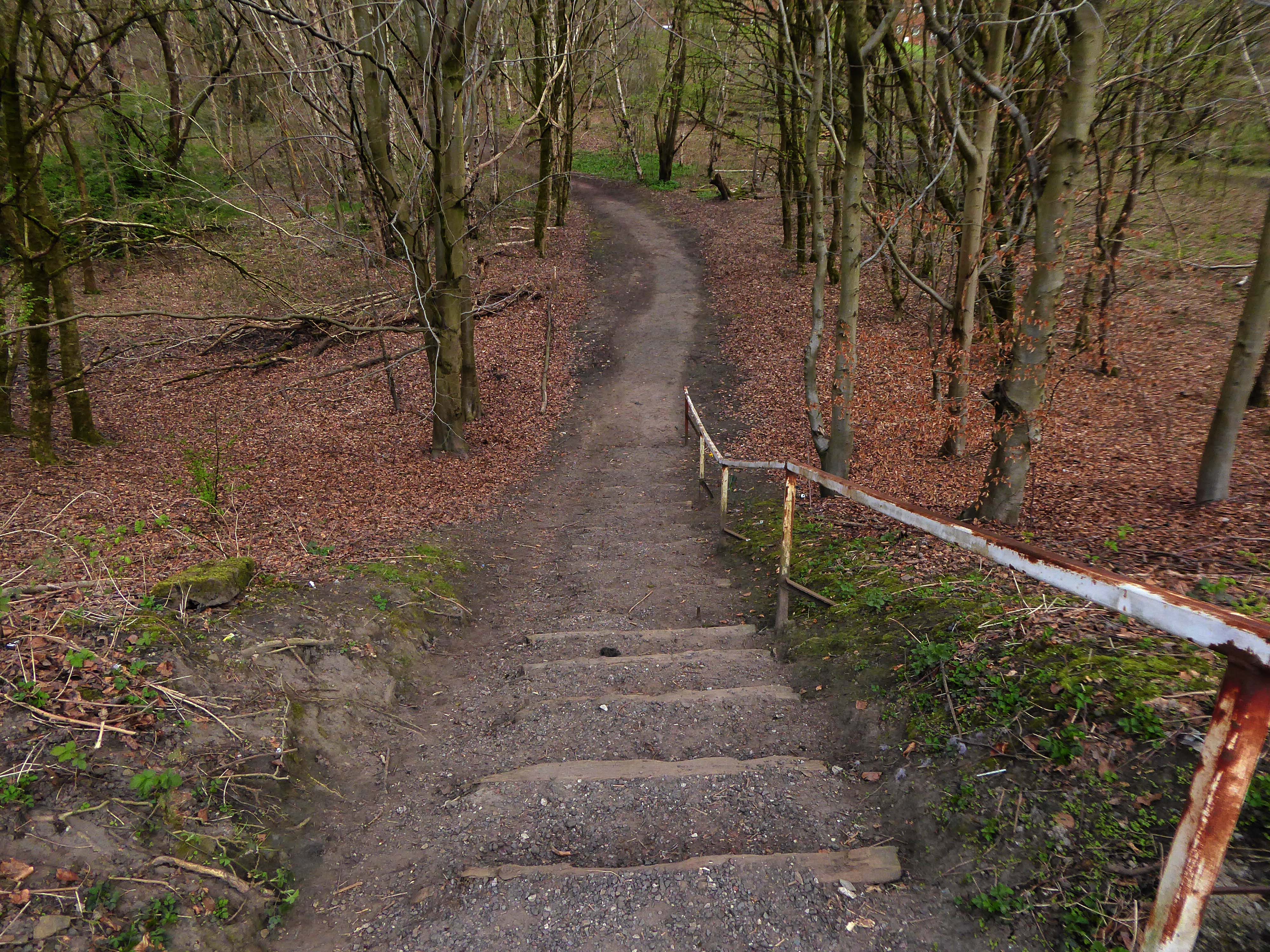
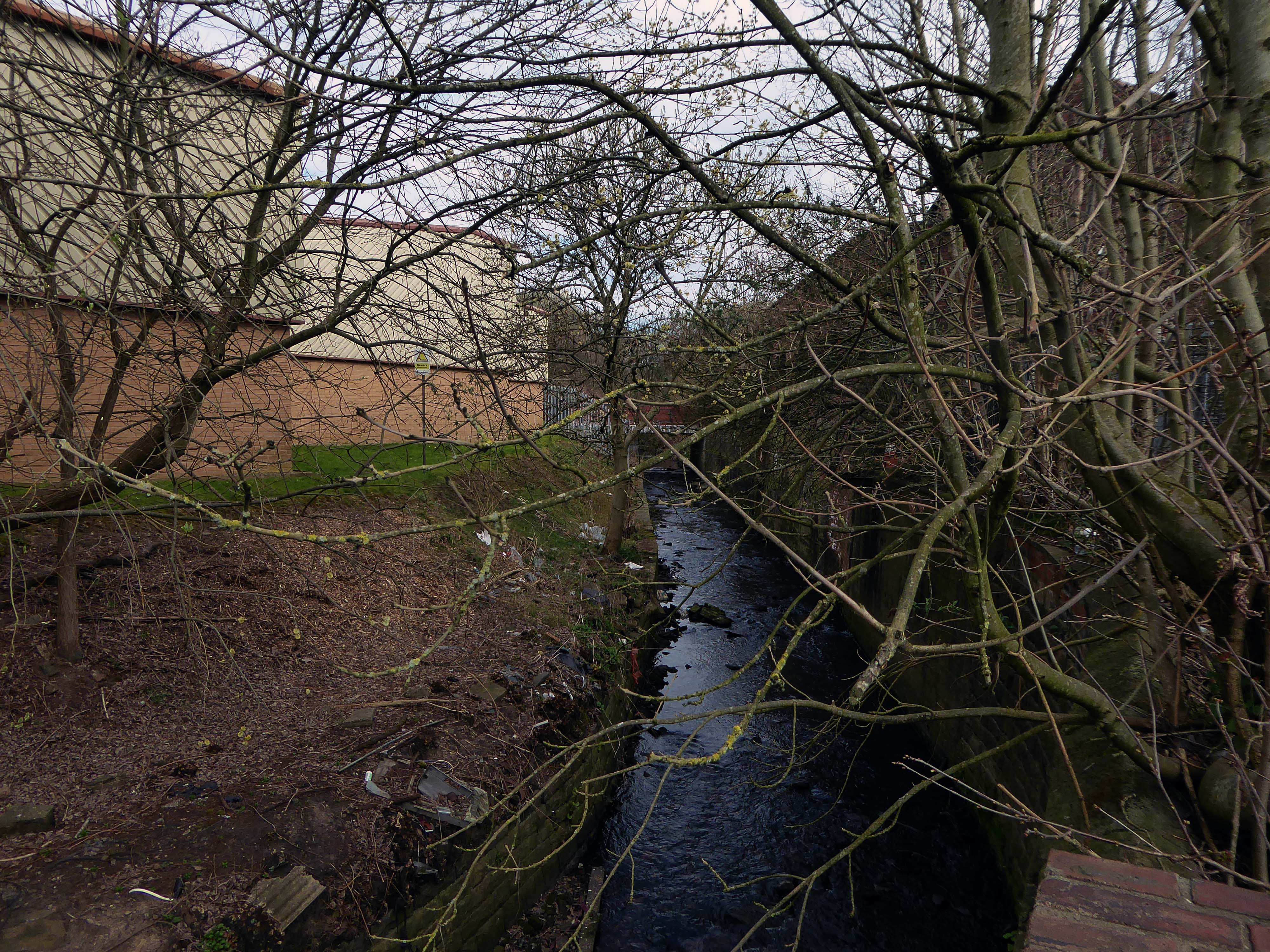
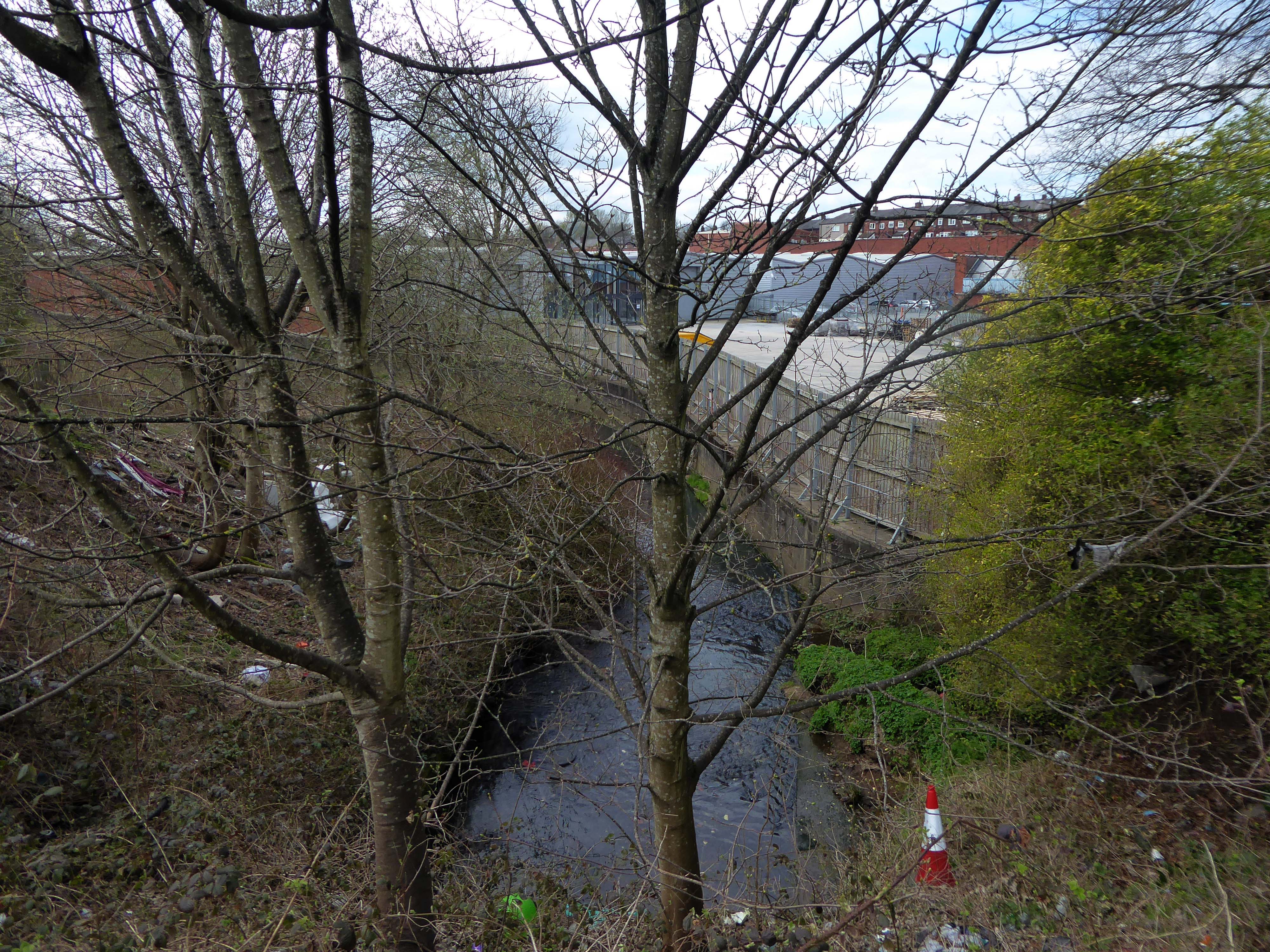
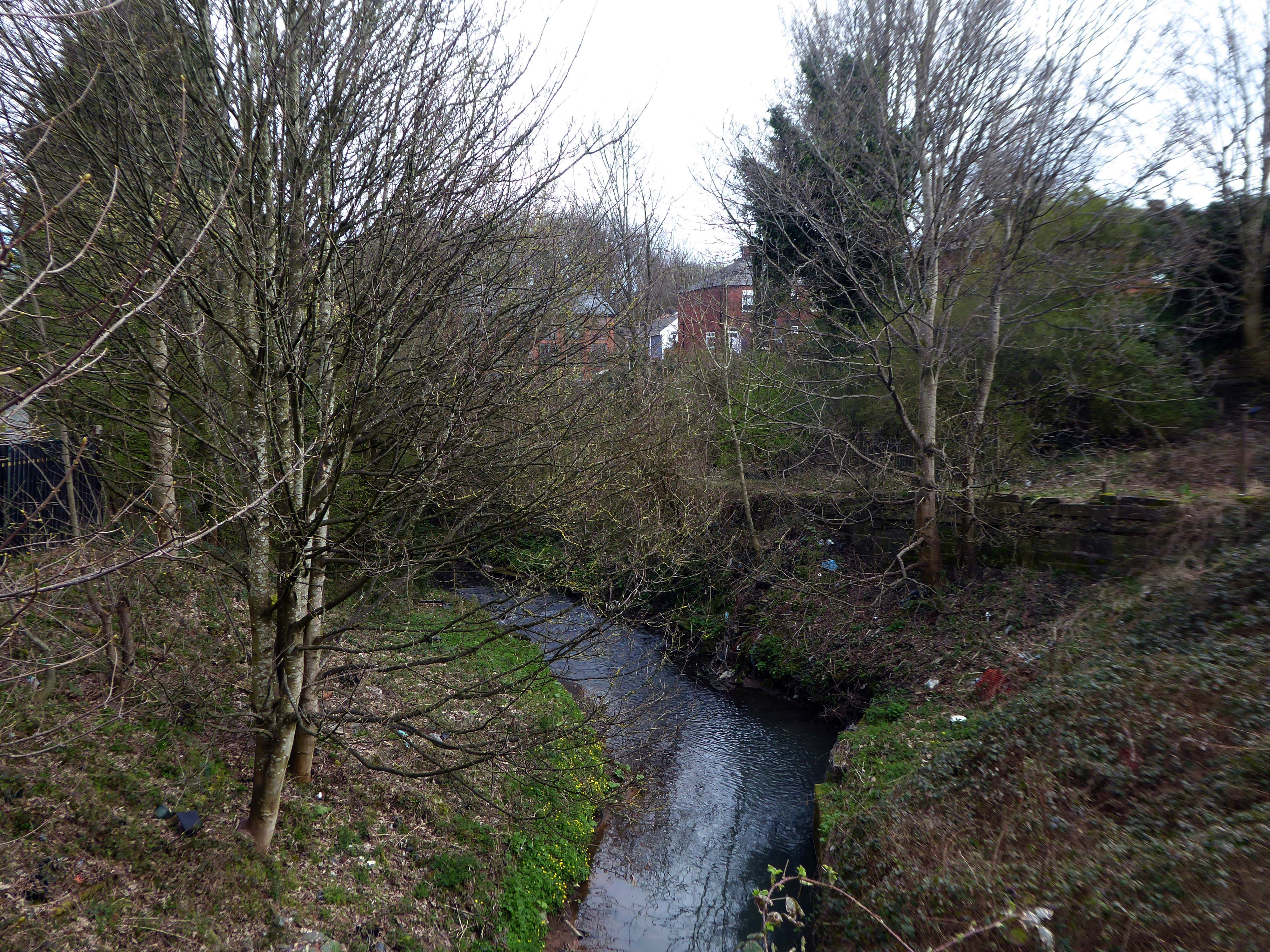
The footpath falls away from the main road to the wooded valley.

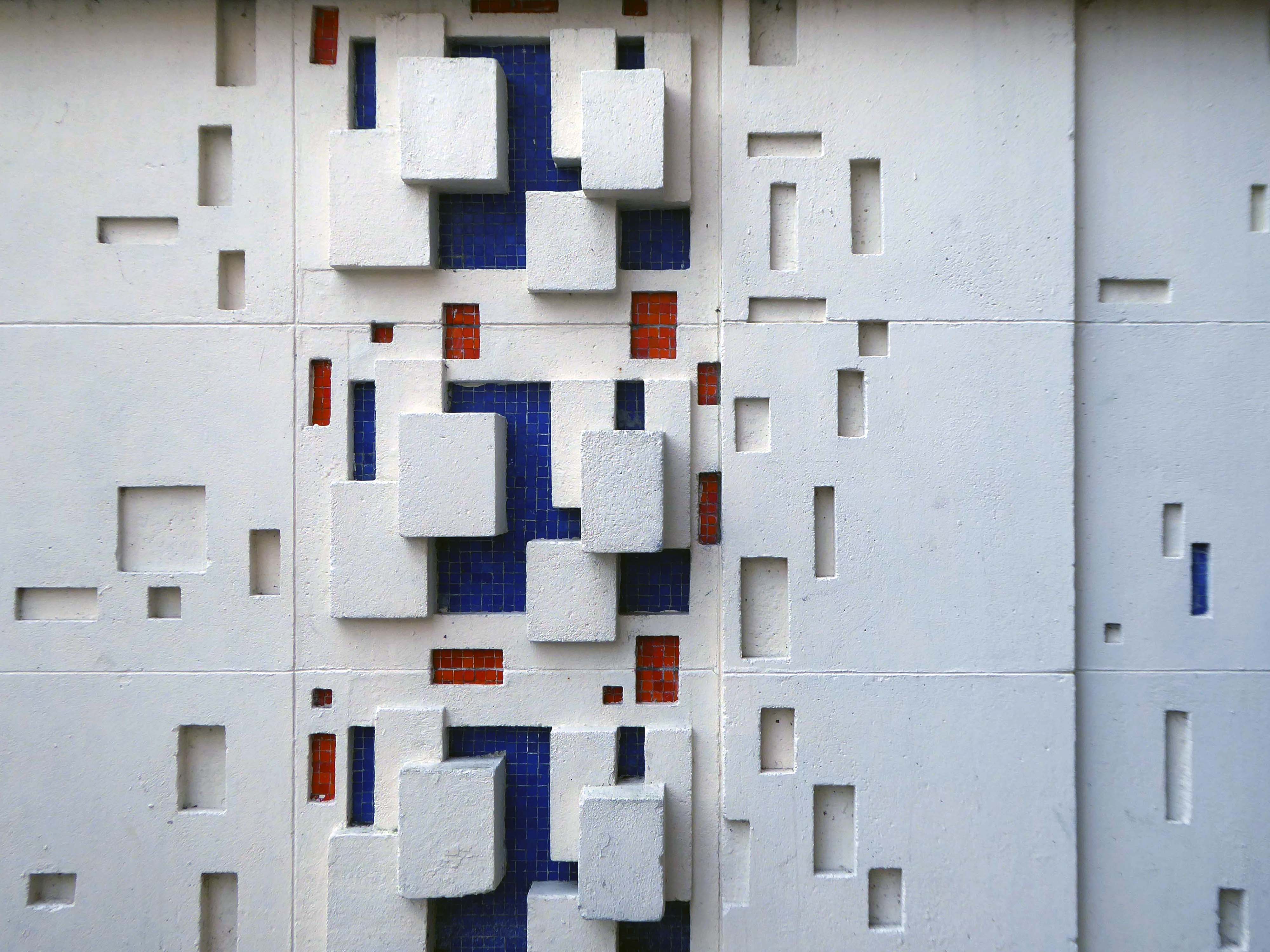
Returning to the road I was distracted by Sandyhill Court and the reliefs which I discovered there.

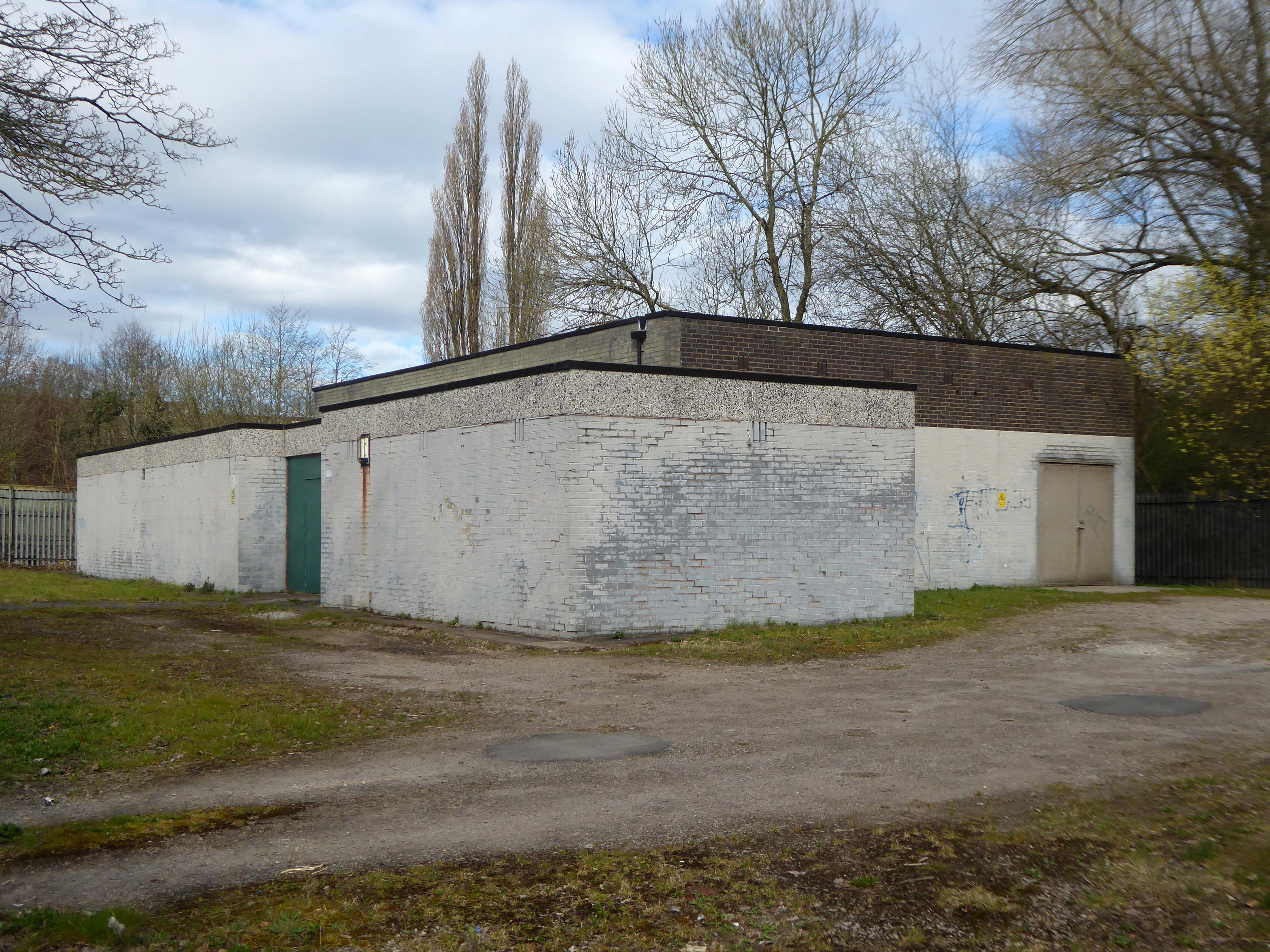
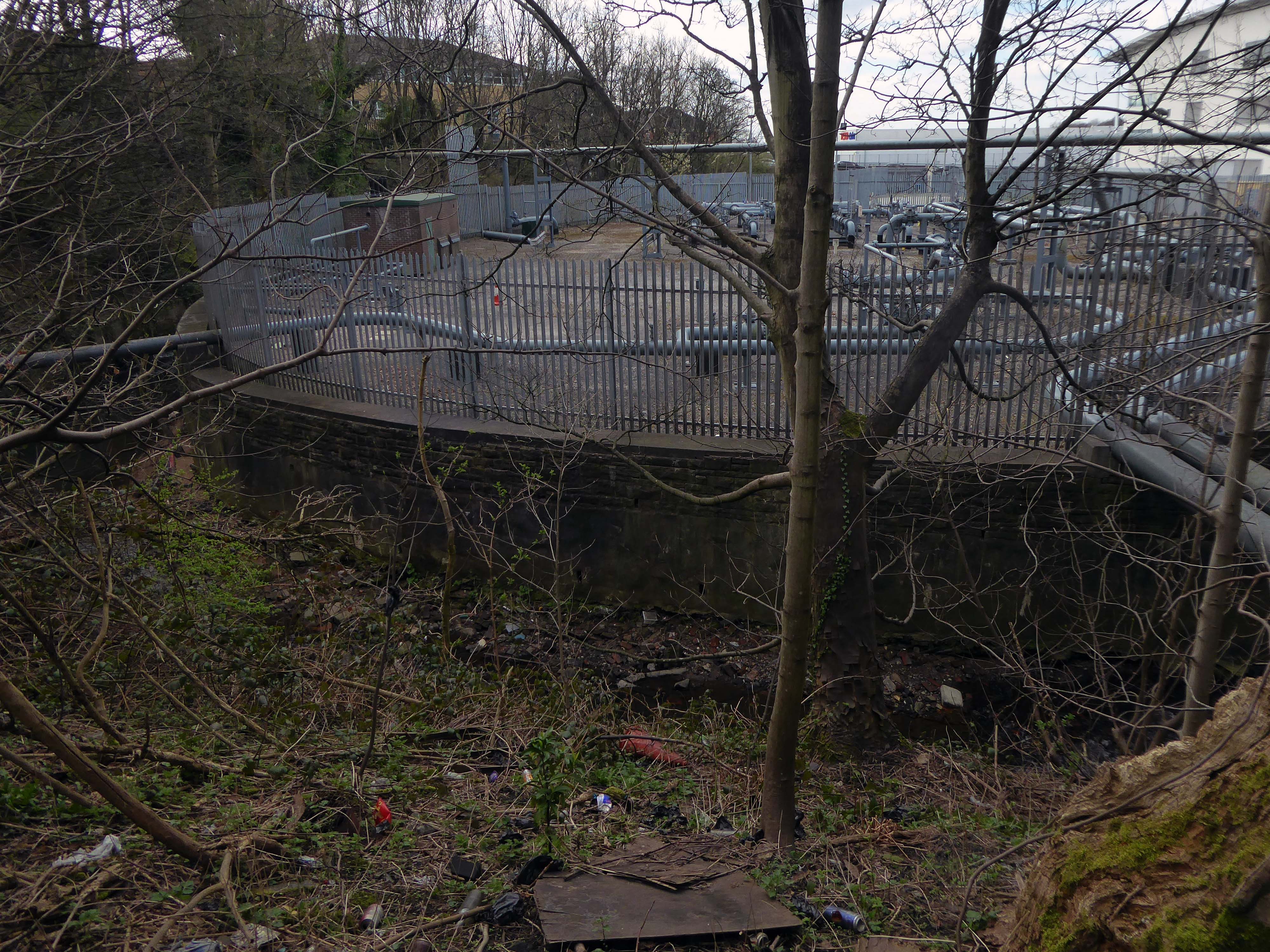
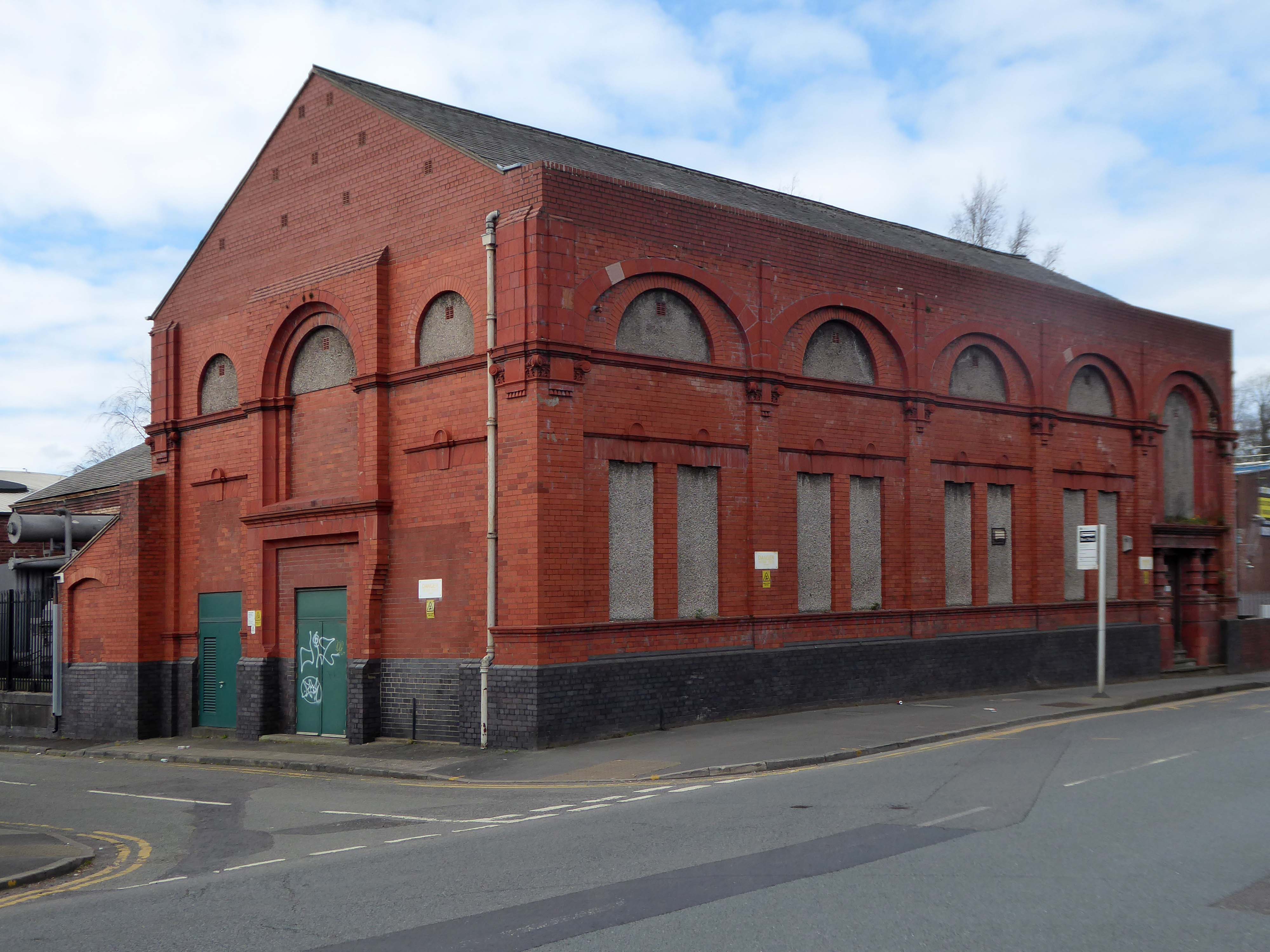
I was also taken with with this electrical substation.

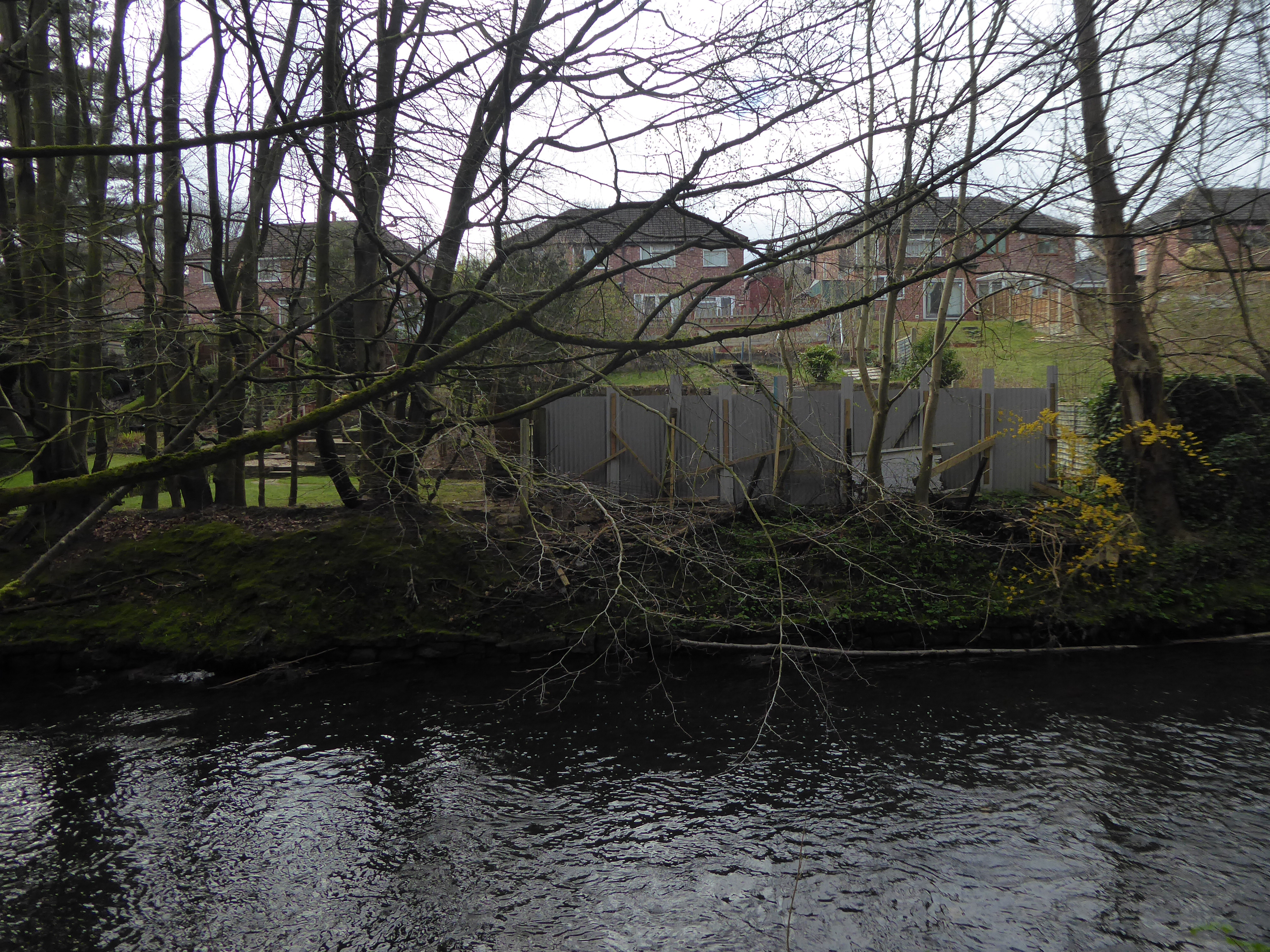
We are encouraged to be wild about Blackley Vale a reclaimed landfill site.

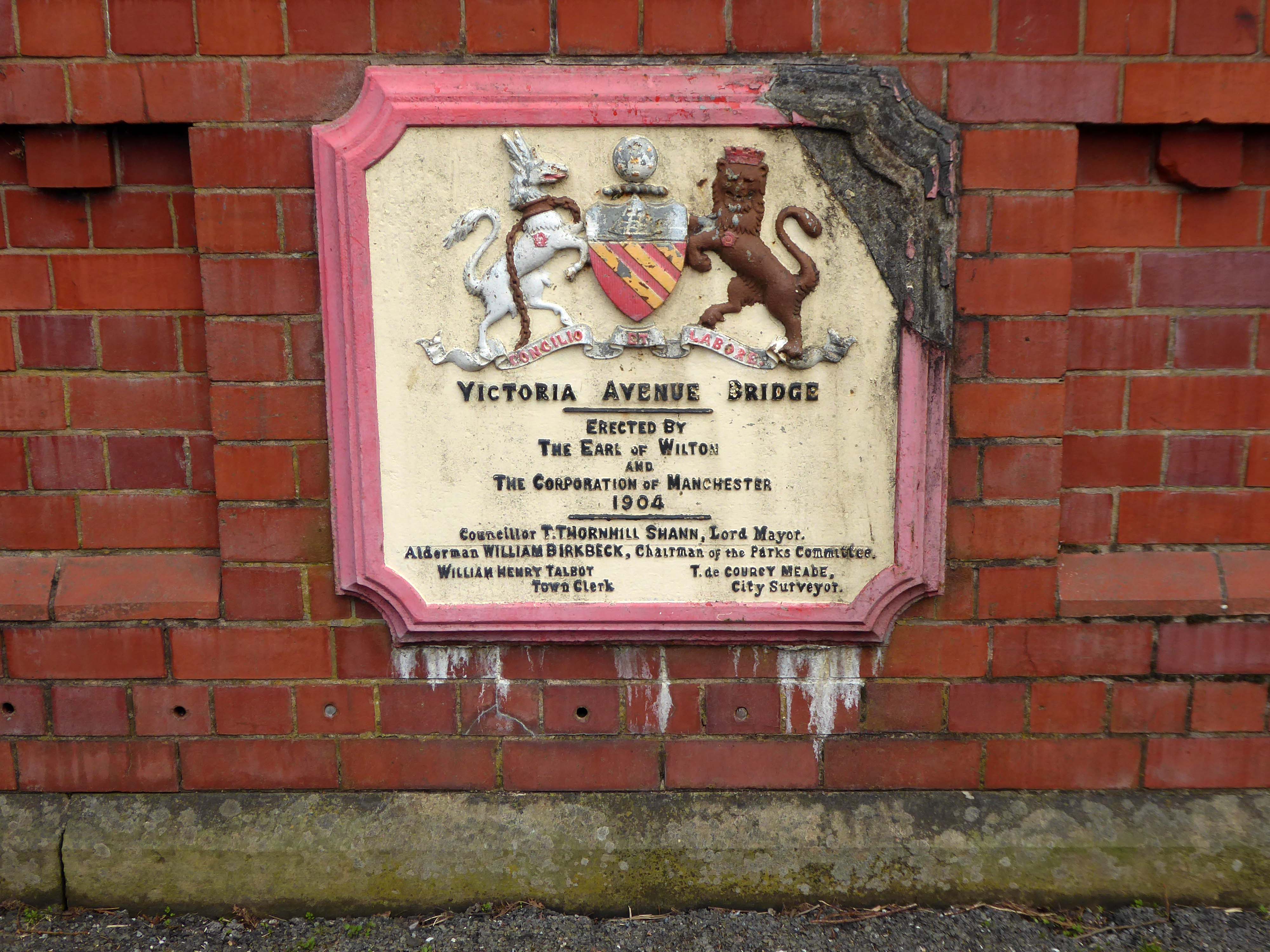
Across the Victoria Avenue Bridge and down the other side.

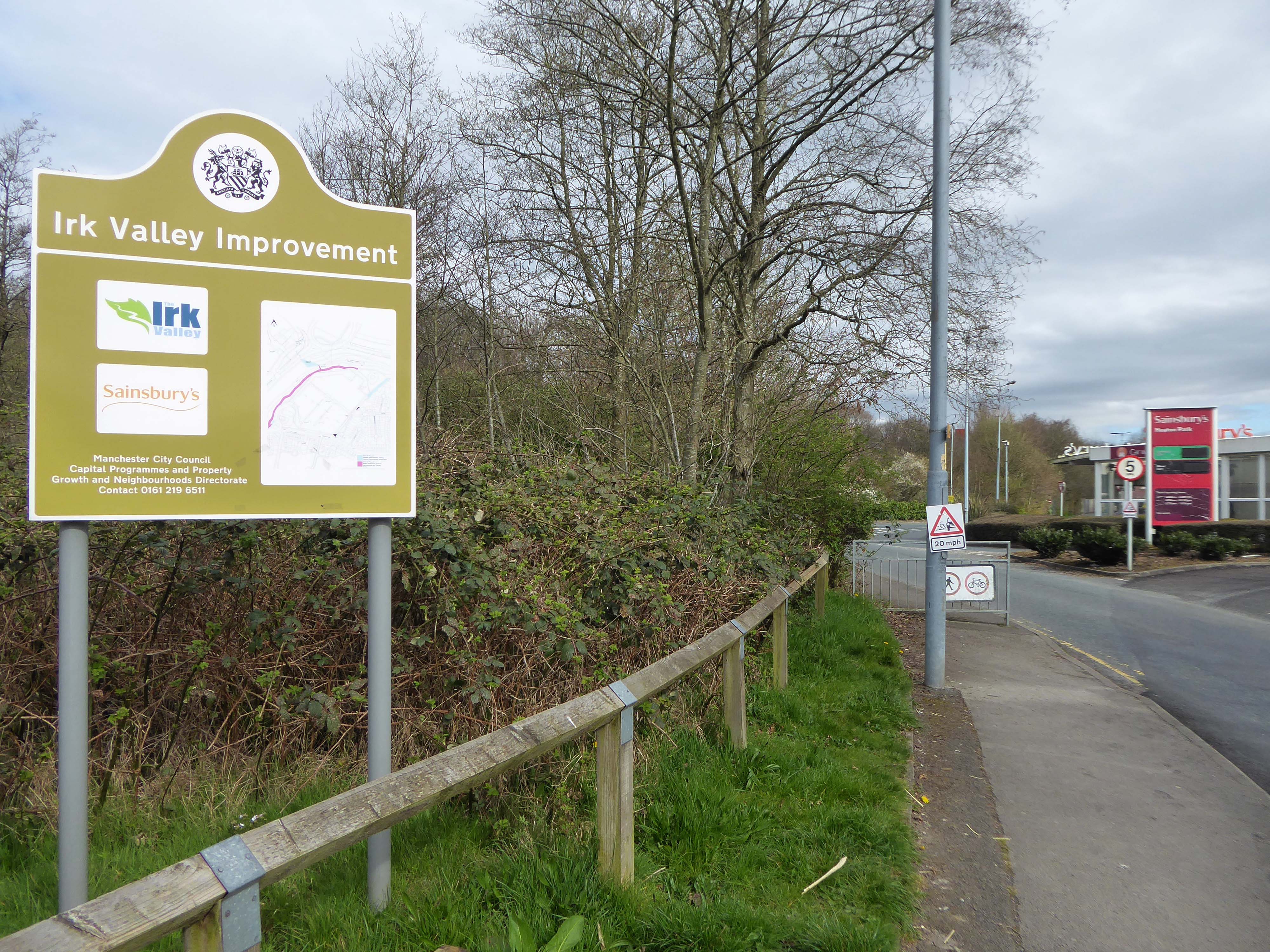
Emerging by Sainsbury’s and picking up the path again.

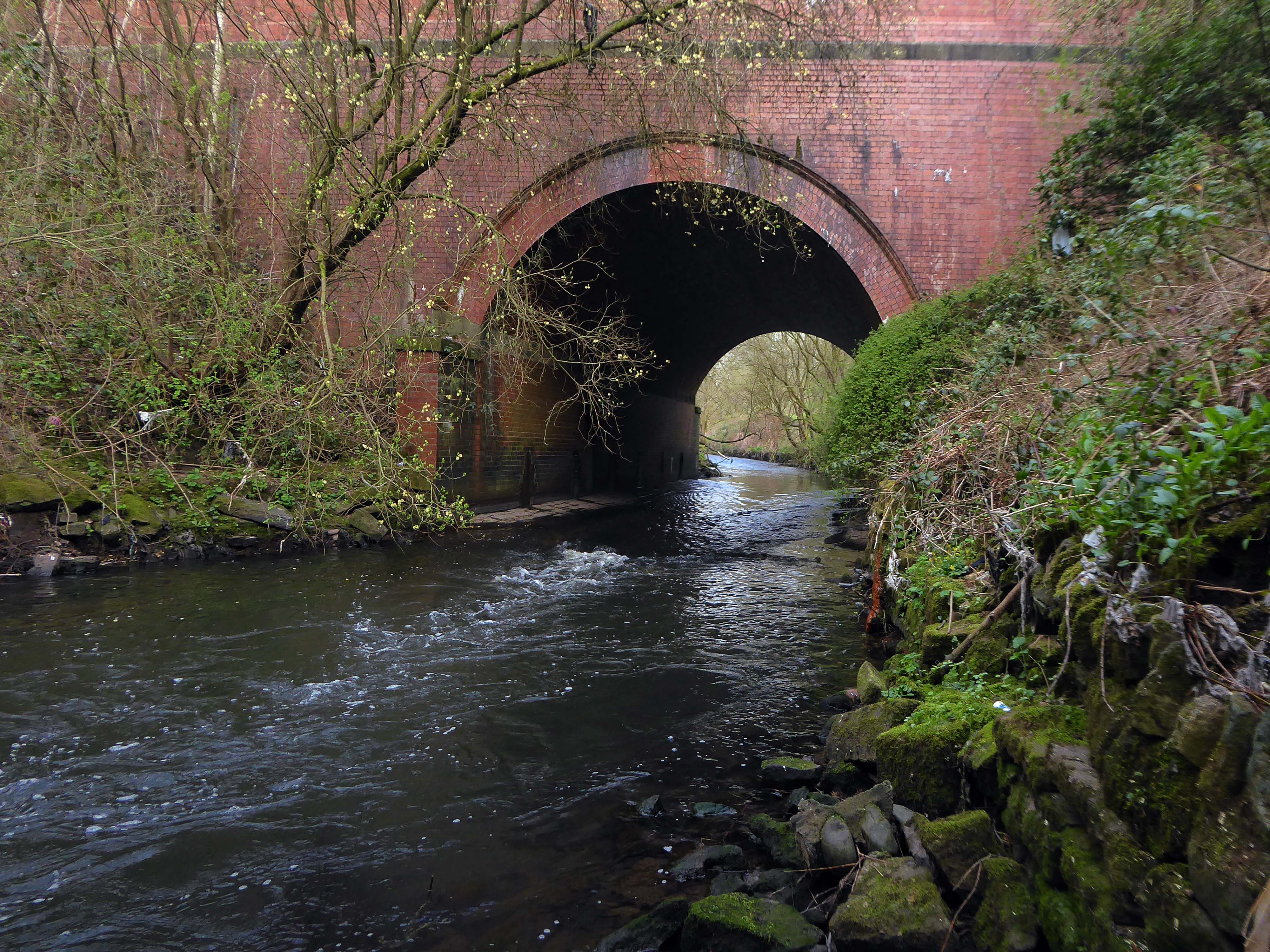
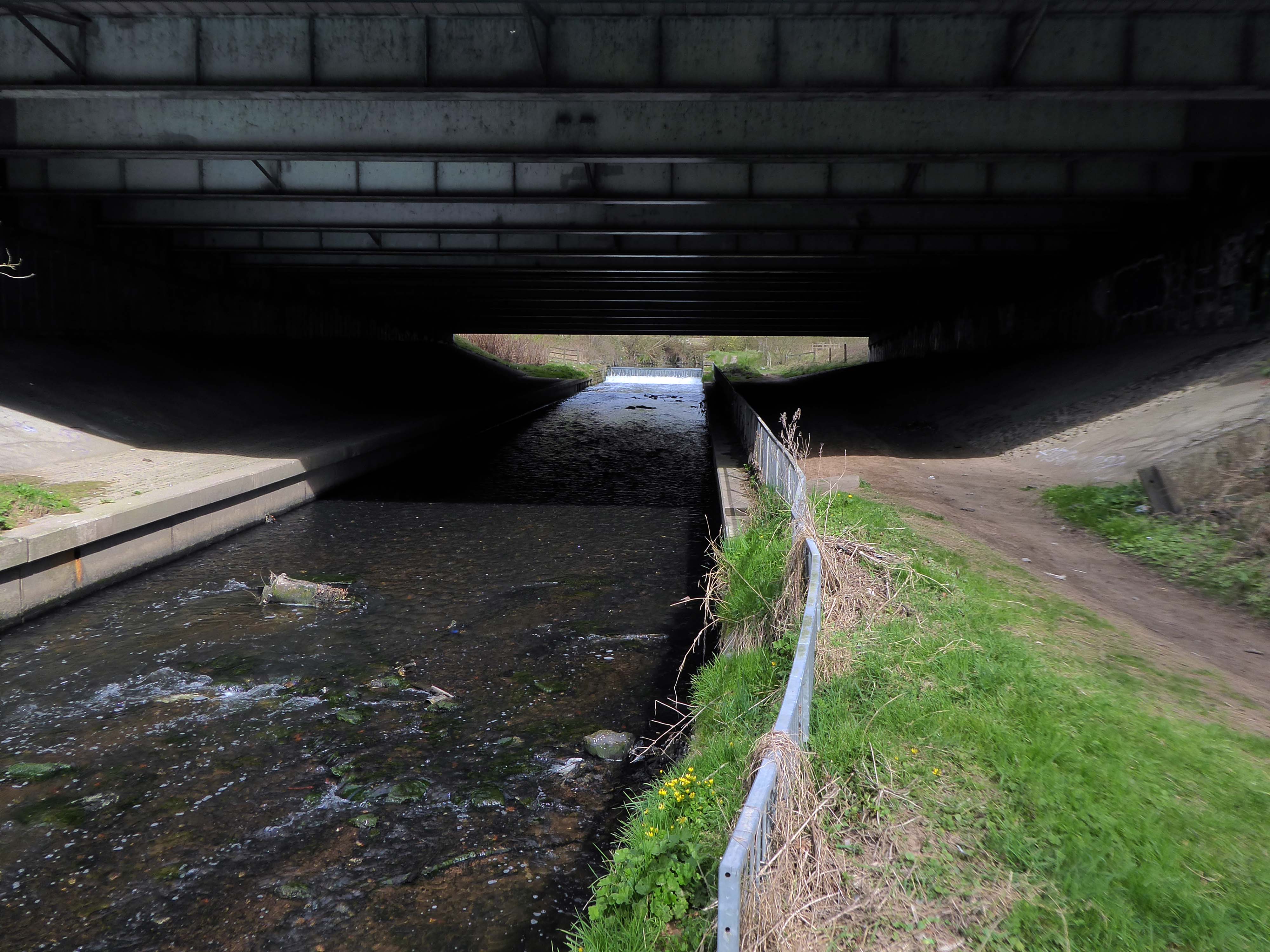
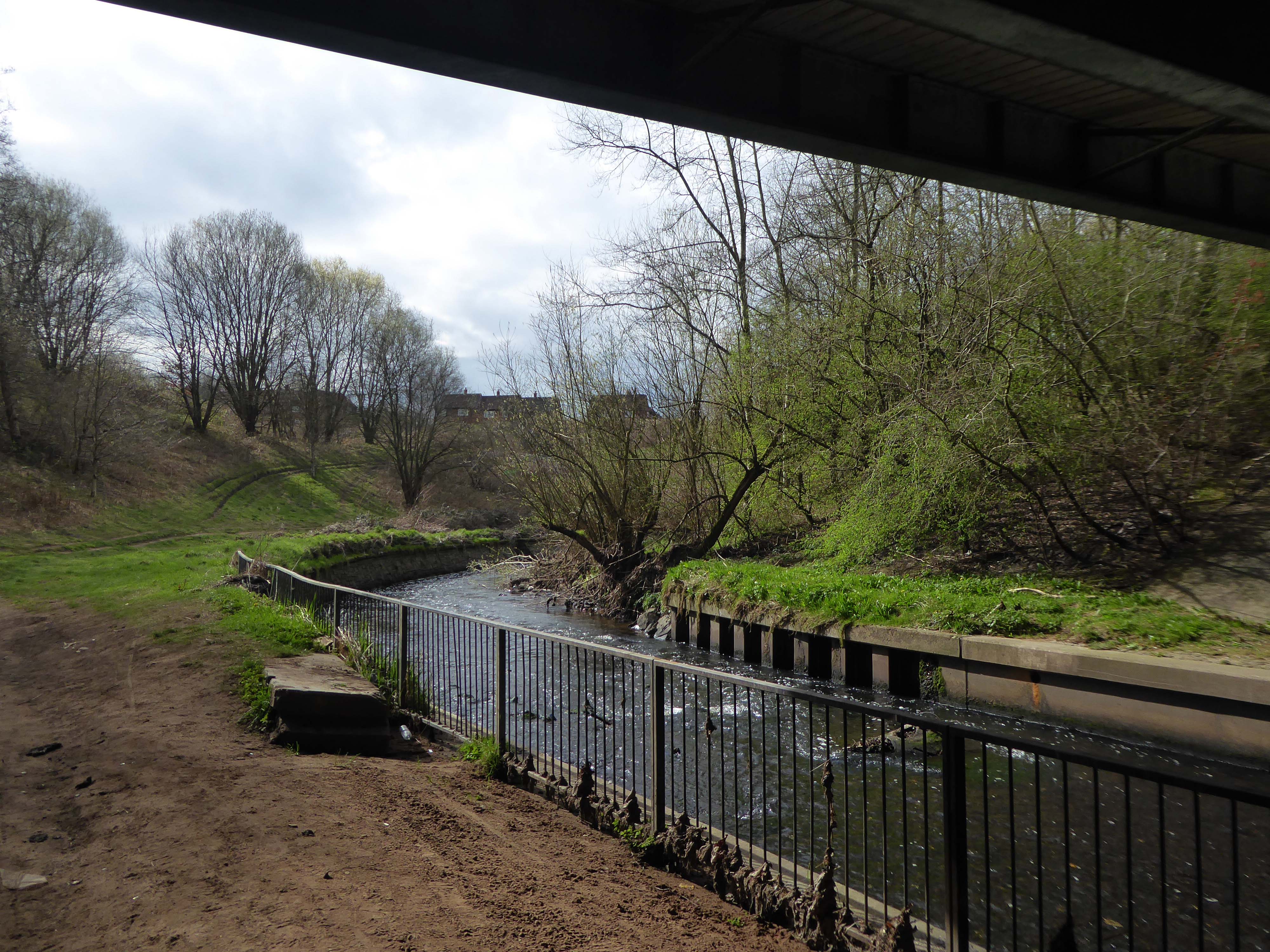
Onwards under the M60 Motorway.

The M60 was developed by connecting and consolidating the existing motorway sections of the M63M62, and an extended M66. It came into existence as the M60 in 2000, with the completion of the eastern side opening in October.

The original plan called for a completely new motorway, but policy change led to the plan which created the current motorway. As soon as it opened, the motorway got close to its projected maximum volume on significant sections.

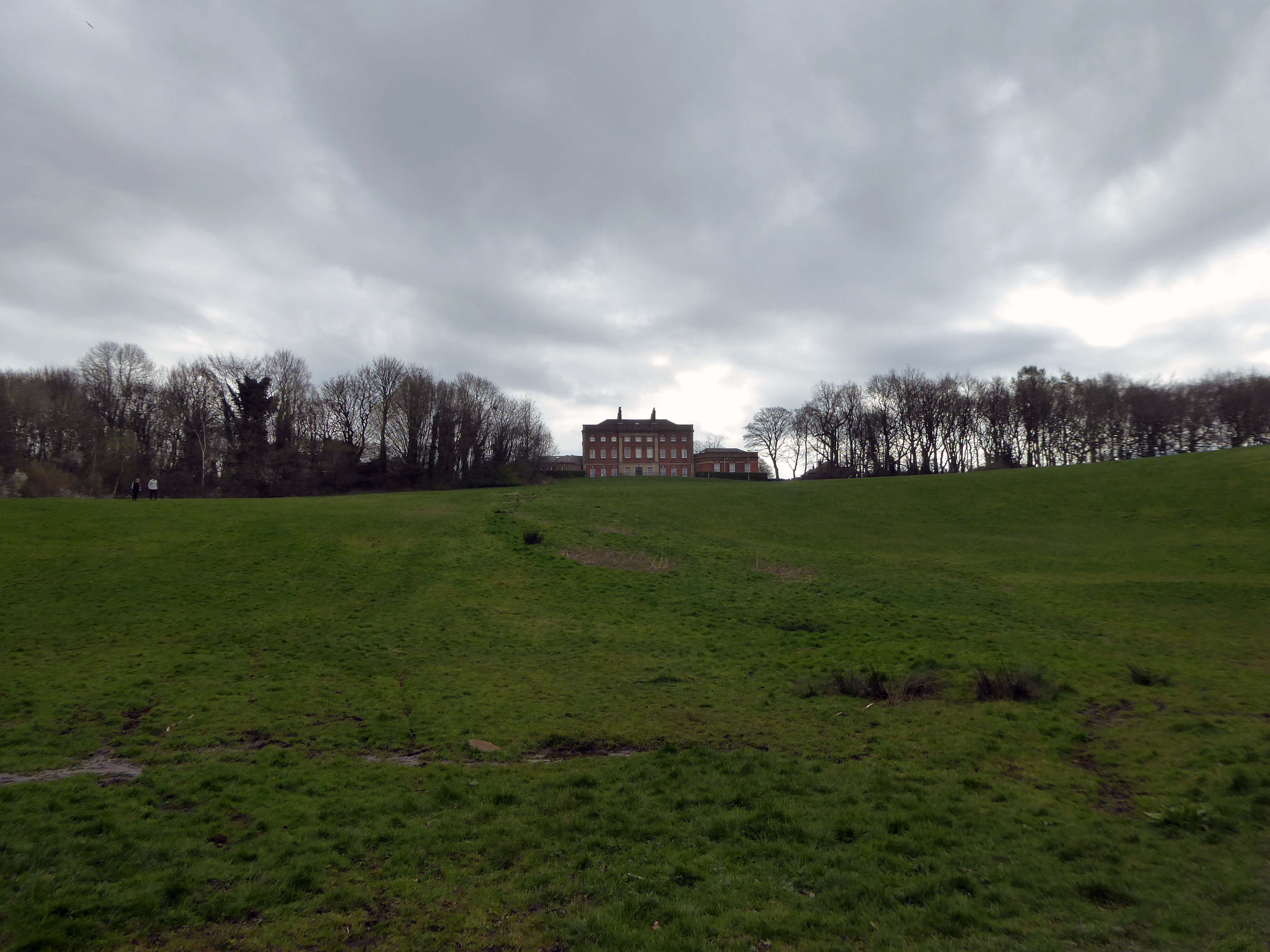
Hey look there’s Alkrington Hall!

This Palladian mansion was designed and built in 1736 by renowned architect, Giacomo Leoni, who had also been responsible for significant alterations to Lyme Hall during the same period.  

Offering an infusion of historical significance coupled with an abundance of living space throughout, Alkrington Hall East, simply must be viewed to be appreciated in full.  

During the early 1770’s, the Hall became the largest museum outside of London, when the Hall’s owner, Sir Ashton Lever, exhibited his private collection of natural objects, including live animals. Remaining as an imposing symbol of Leoni’s work, Alkrington Hall remains one of only a few surviving examples throughout England.  
In modern times, the Hall has since been carefully and sympathetically separated into 4 sections, and we are pleased to be offering for sale the largest portion of the Hall, with a total floor area comprising of over 7500 SQFT, and living accommodation spread over 4 floors.  

Sold for £825,00 in 2021 Savills

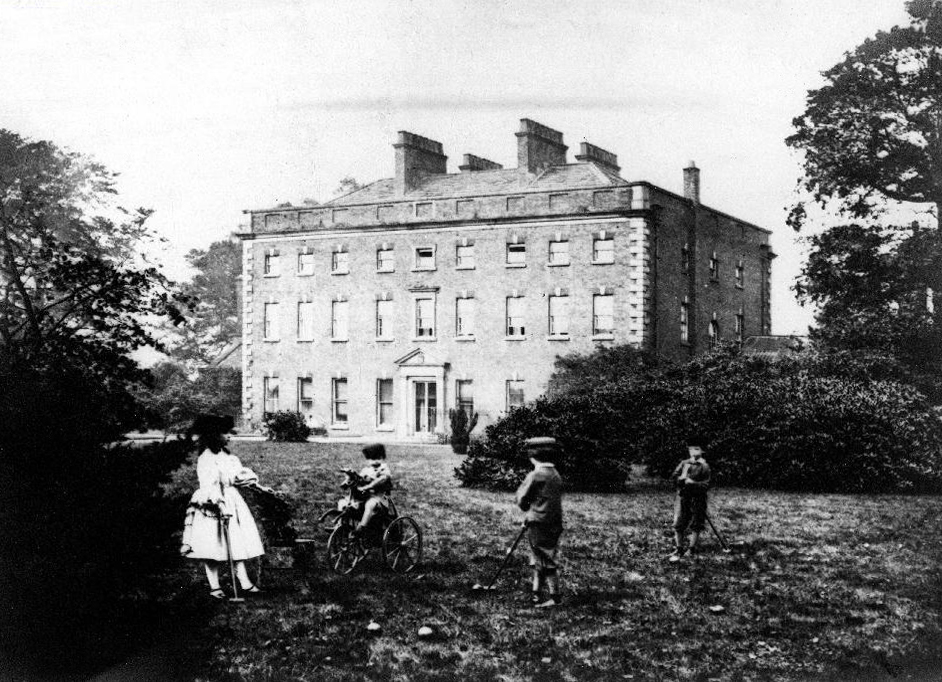
Seen here in 1870

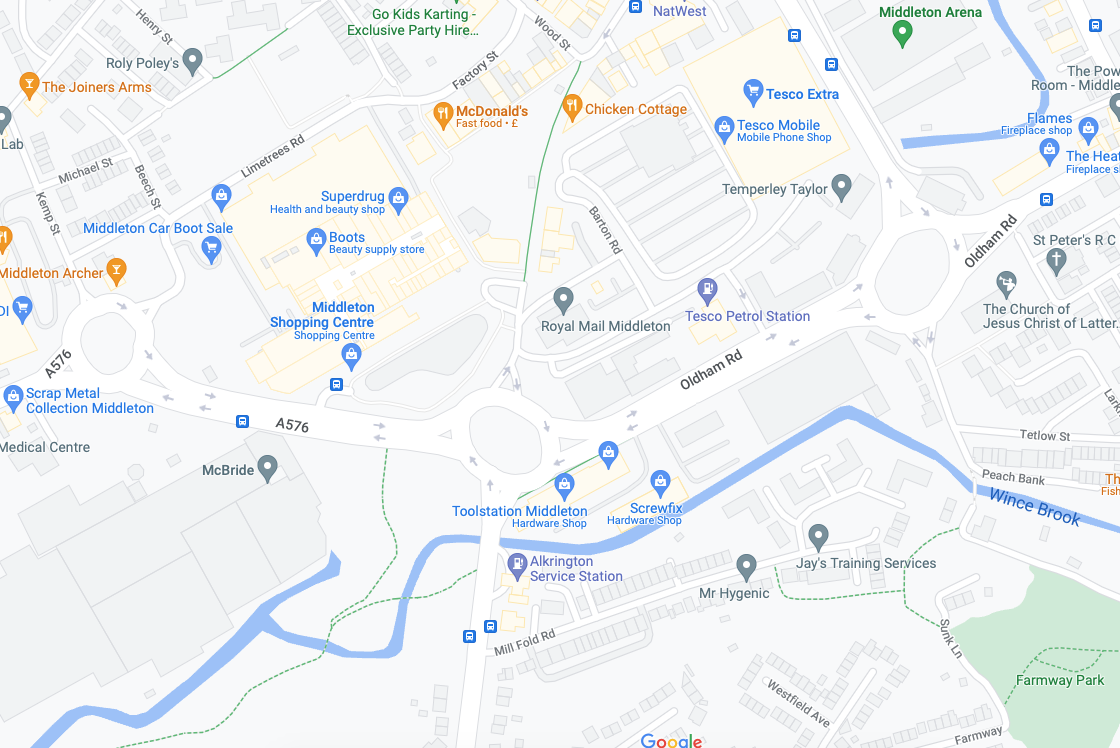
Next thing you know you find yourself in Middleton, where the Irk sort of disappears – you sort of get lost and sort of follow the wrong track, eventually ending up back where you should have been in the first place.

Don’t follow Wince Brook – it’s so far from right that it’s wrong – right?

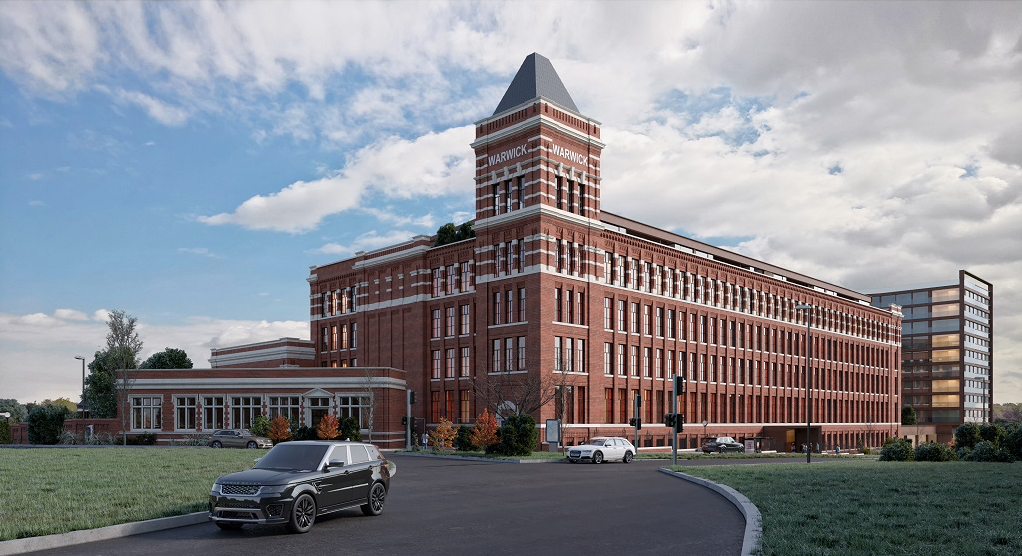
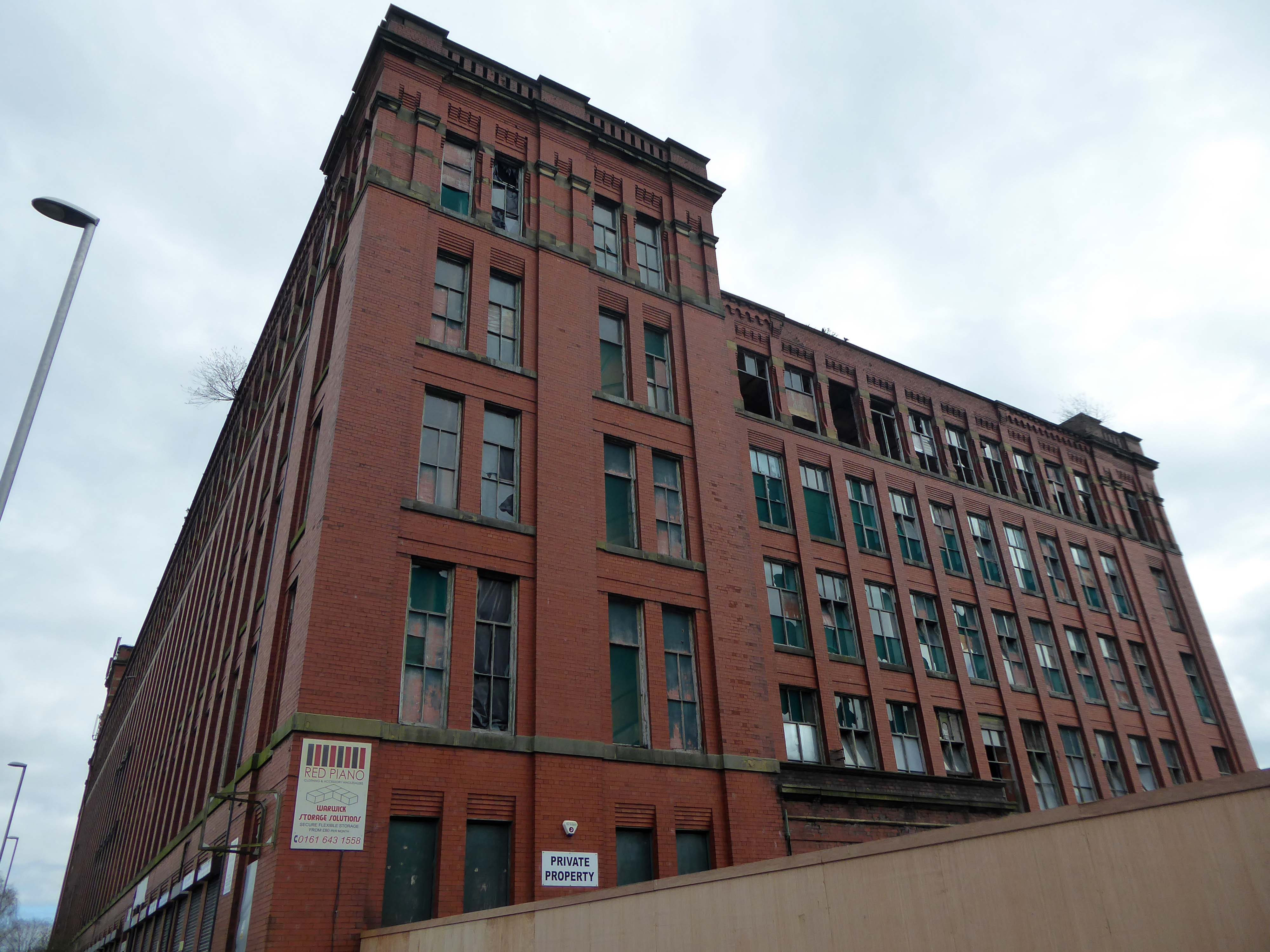
Take a walk up Oldham Road to see Warwick Mill instead.

1907 by G Stott of J Stott and Sons – Red brick with internal cast-iron frame.

Grade II Listed

There was and Oval Partnership planning for a retail development in 2014 which failed to materialise.

The converted building will provide a showcase for Chinese manufacturers of construction-related products looking to enter the UK and wider European markets. Products on display will include tiles, lighting, furniture, kitchenware, sanitary ware and curtains. A second phase will see the construction of a new building alongside effectively doubling the floor space. In addition the brief includes a range of restaurant, leisure, culture and entertainment facilities threaded through the building. The conversion will open up the existing building in a dramatic way, maximizing permeability and providing a strong visual connection back into the town, promoting public access through the building to the attractive south-facing waterside of the mill.
Permeability failed to be maximised, sadly.

Ambitious plans to refurbish Grade II listed Warwick Mill to create new homes and breathe life into an important building and part of Middleton’s history have been drawn up. 

Warwick Mill has recently changed ownership and the new owners, Kam Lei Fong (UK) Ltd, have been working with Rochdale Borough Council over the last nine months to develop proposals to redevelop the site.

Rochdale Council

So far so CGI good- the town eagerly awaits a surfeit of high end SUV owners.

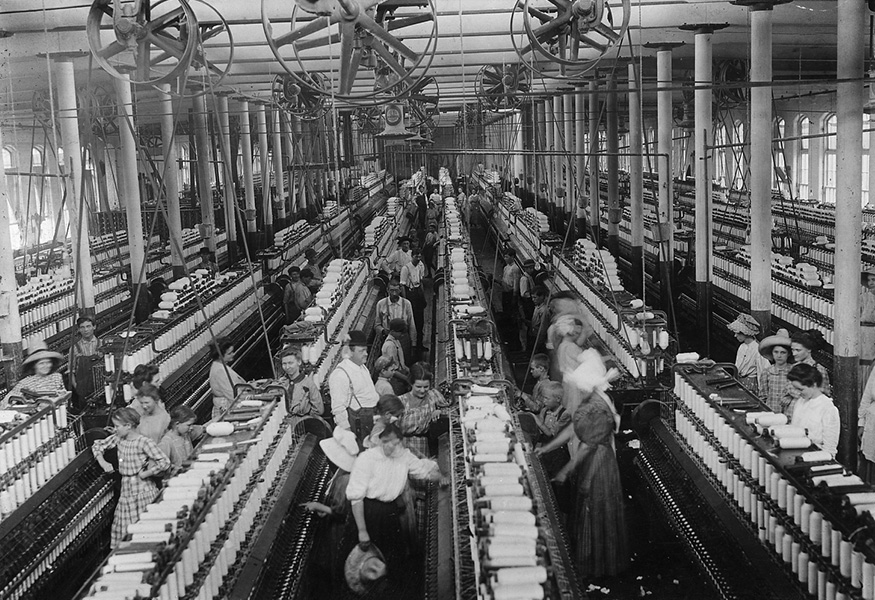
Former clog wearing mill workers remain silent on such matters.

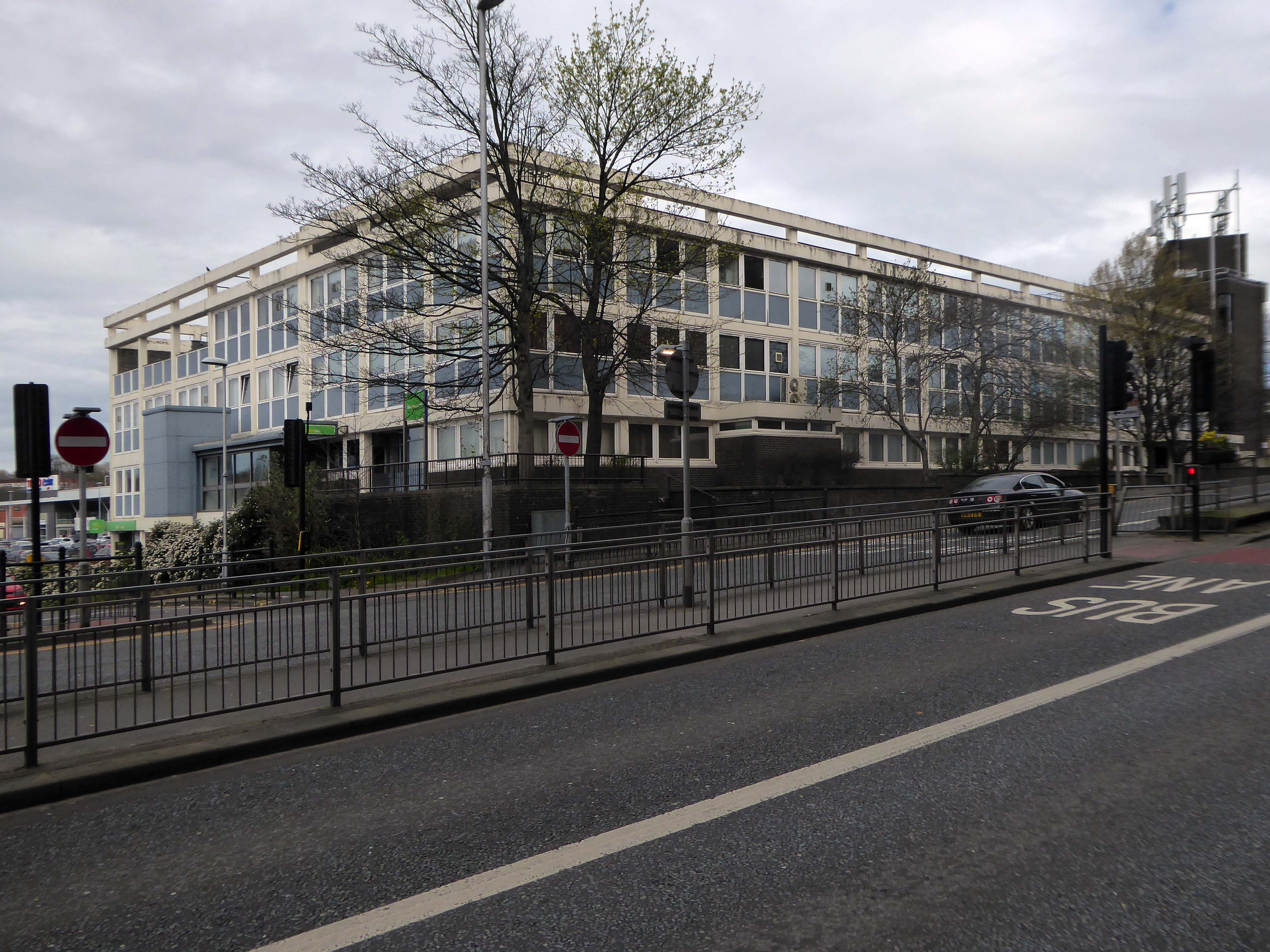
The Job Centre steadfastly remains a Job Centre.

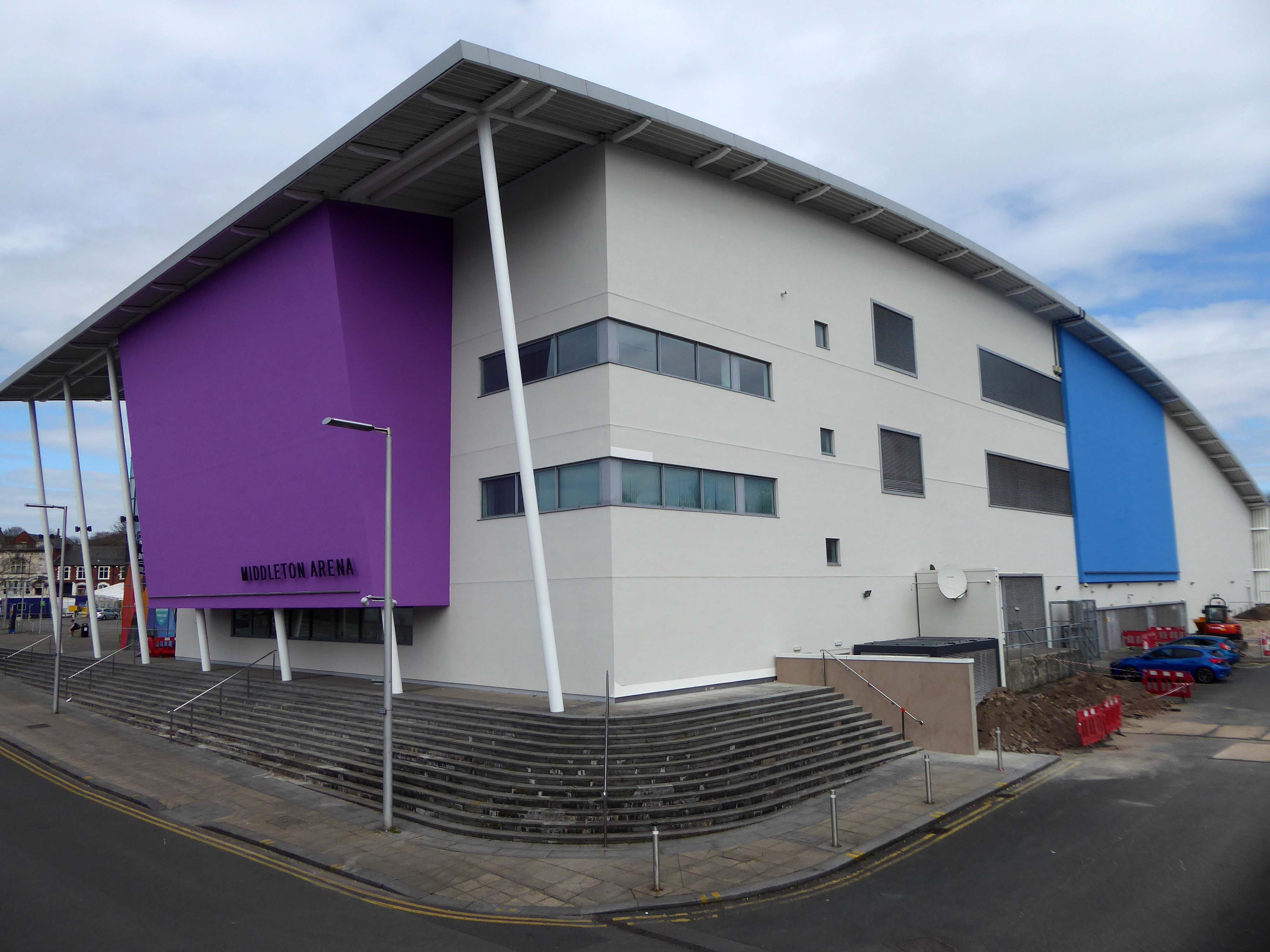
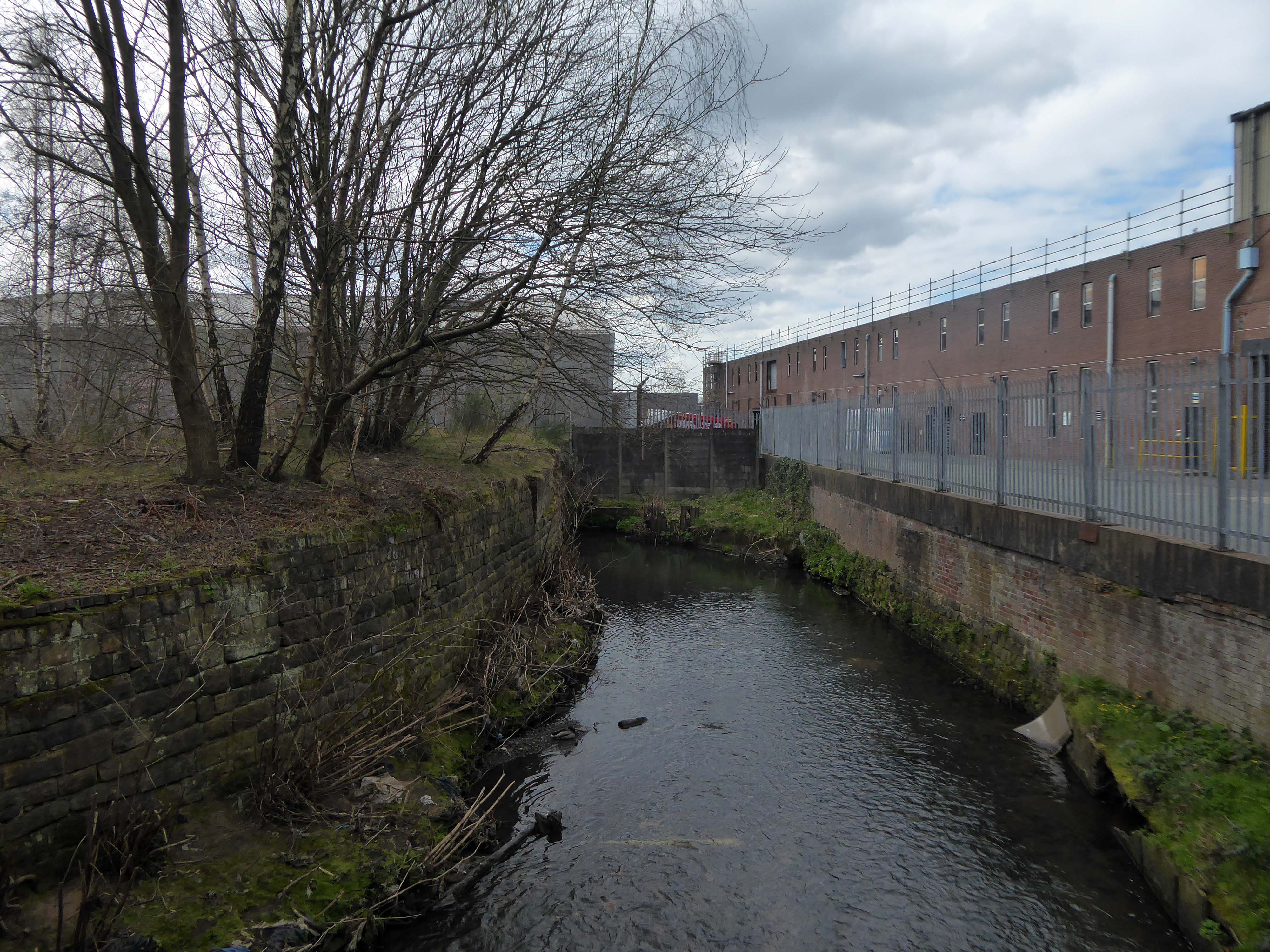
The river reappears here in back of the Middleton Arena.

Proceeding in a disorderly manner.

Emerging by this substantial substation.

Across the way is Lodge Mill.

A Middleton couple has saved the oldest surviving mill in the town after a two-year renovation project.

Located on Townley Street, Lodge Mill was built in the mid-1800s and was originally a silk weaving mill. It went on to cotton weaving and cloth dying, then to a home for many different small local businesses. Sadly, in the early 2000s, it fell into disrepair and became derelict.

Martin Cove and Paula Hickey bought Lodge Mill on 1 April 2019 and immediately set about replacing and repairing the roof. They also installed a 19.4kw solar PV system so the mill became its own little power station that summer.

In August 2019, the couple opened a small ice cream shop on the ground floor of the mill – named the Ice Cream Shop at Lodge – selling locally-made ice cream from Birch Farm, Heywood.

The ice cream is made using cream from Tetlow Farm’s dairy herd at Slattocks – Martin explained.

Rochdale Online

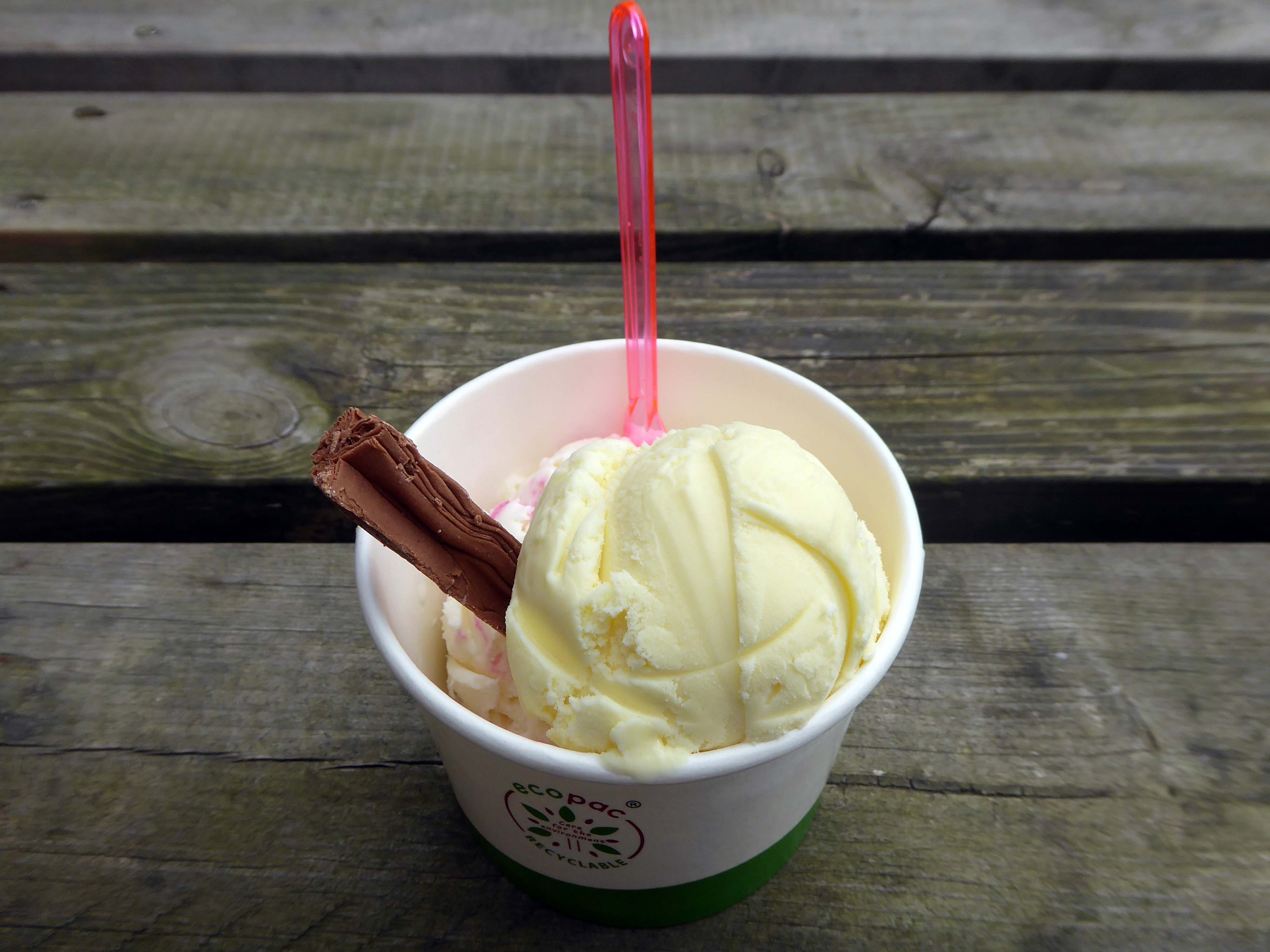
It was £2.25 for two scoops and a flake – a welcome oasis on a warmish day.

Sadly in December 2021 there was a serious fire, work has since been done to repair the roof.

A poorly signed footpath takes you back riverside by way of assorted industrial debris.

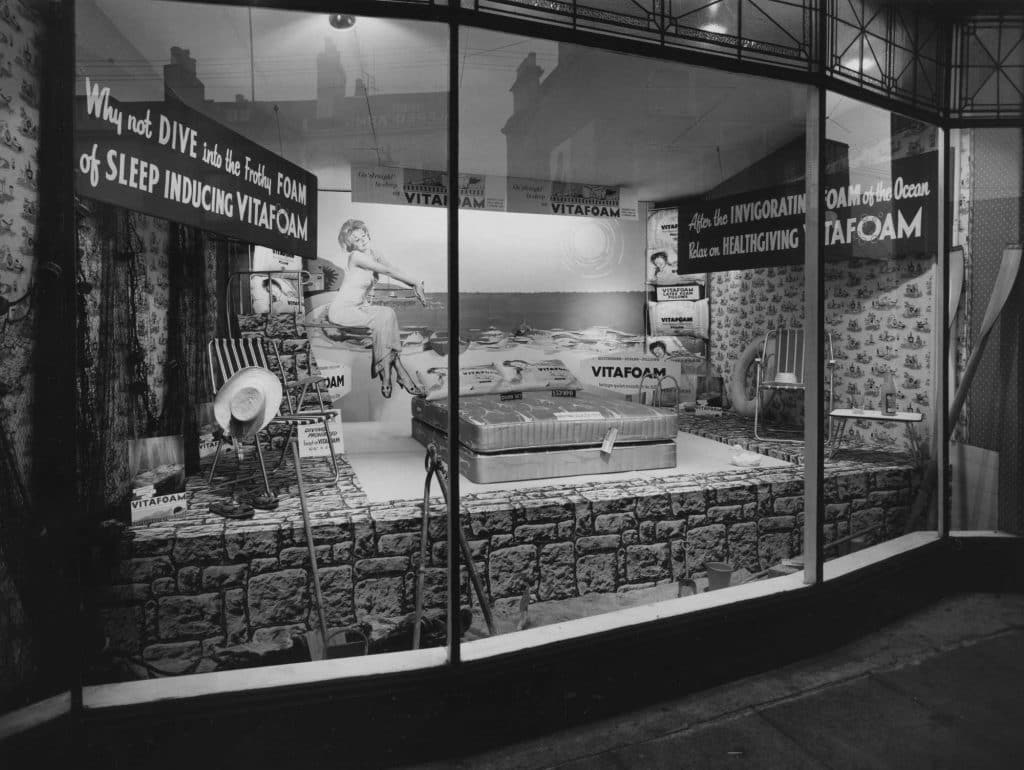
Still very much in use the Vitafoam Mill

Founded in 1949 on £100 capital, Vitafoam started its original operation manufacturing latex foam products in Oldham, Greater Manchester.

After establishing the business, the company made a major move to its current site in Middleton, Manchester in 1955, acquiring two empty former cotton mills to cope with increased demand.

By 1963, Vitafoam had added the manufacture of polyurethane foam to its business and was providing product speciality for upholstery and bedding markets.

As Vitafoam entered the new millennium the company had made great strides in supplying external foam converters. These rely on Vitafoam to be their business partner and provide their foam needs. This trend continues to grow from strength to strength and is supplemented by our own group conversion companies.

Regaining the river at Chadderton Hall Park.

Its roots stretch back to the 13th century being the land on which Chadderton Hall once stood. It contains a large field area with a small football pitch, a playground area, several flower gardens and a small café situated next to the Park’s bowling green.

Chadderton Hall was first built in the 13th century by Geoffrey de Chadderton, this first hall was in Chadderton Fold slightly to the east of the current park. In 1629 a new hall was built at the site of the current park and was present there until the 20th century when it was demolished in 1939. It was at the end of the 19th Century that the area surrounding Chadderton Hall began to be used for public recreation. A boating lake and a menagerie, including a kangaroo and a lion, were established as part of a Pleasure Garden. These features have long since been demolished but evidence of the boating lake can be seen by the hollowed out area where the playing fields now stand.

Wikipedia

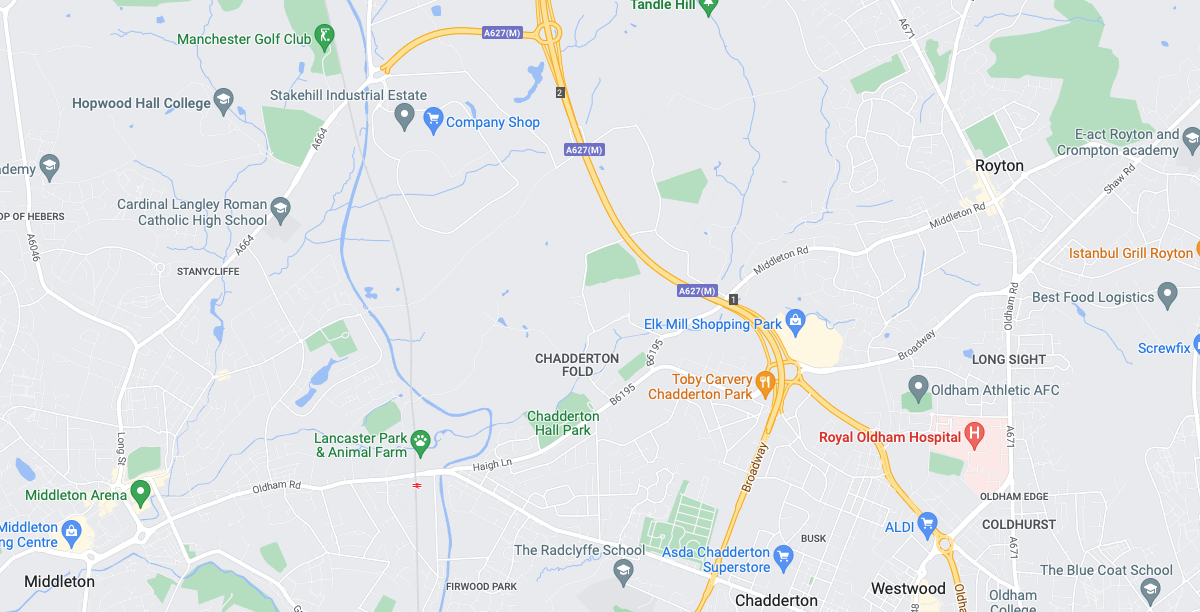
Diminishing now the river thin and shallow, as we rise into the hills on the outskirts of Greater Manchester.

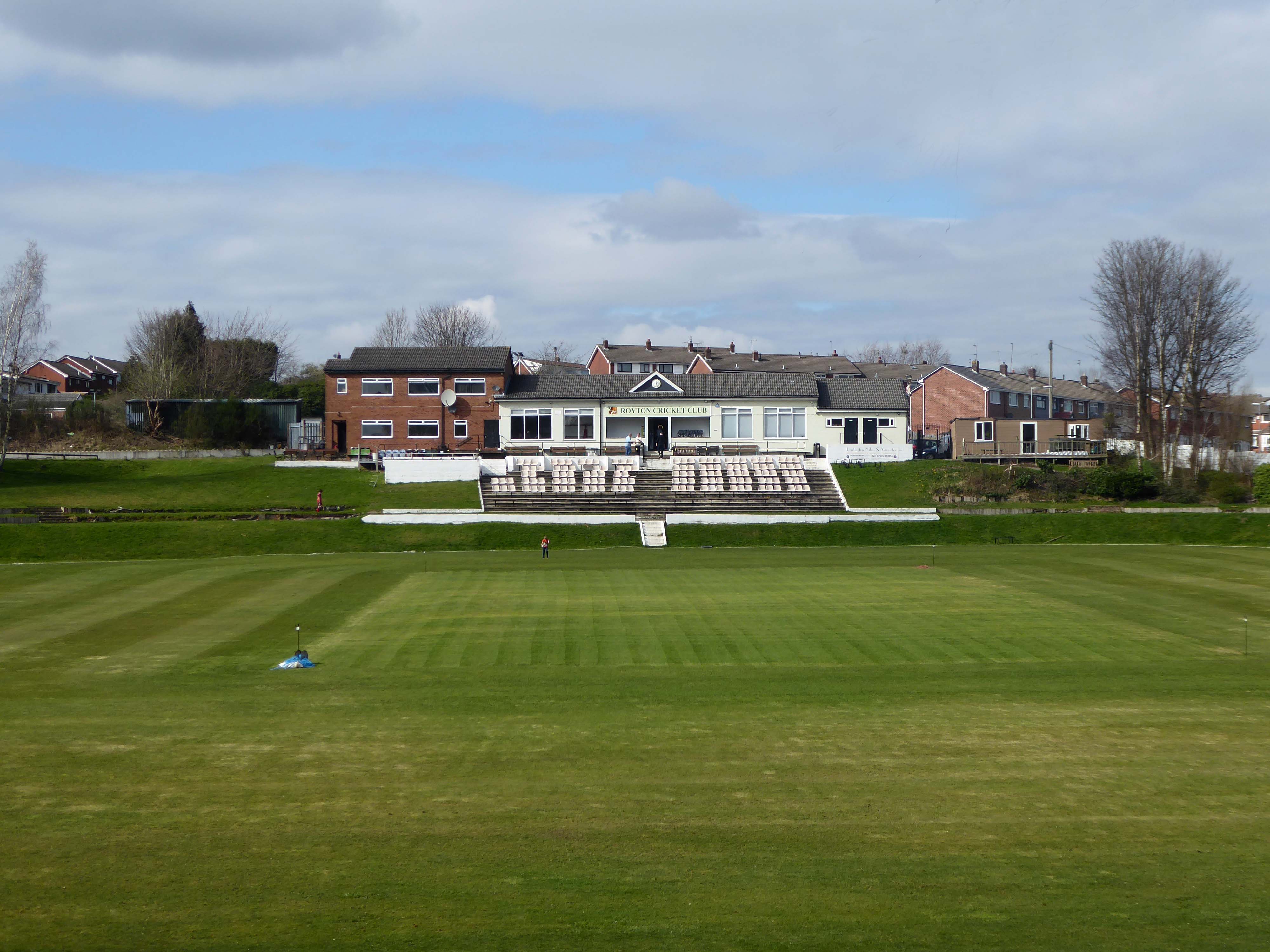
Passing by Royton Cricket Club as the river disappears again.

Based in the heart of Thorpe Estate – Royton Cricket, Bowling & Running Club offers a family friendly environment whilst hosting strong, competitive cricket throughout the summer. Bowling throughout the summer along with a Running section – Royton Road Runners, who operate all year round. Along with seasonal events such as our well known firework display along with St Georges Day celebrations – with plans in the pipeline for improvements on current events as well as new exciting projects – it’s a great time to be apart of the club & community!
I have very fond memories of visiting with my dad Eddie Marland as he followed Ashton in the Central Lancashire League – both watching cricket and seeing my dad crown green bowling here.

The river has gone underground again.

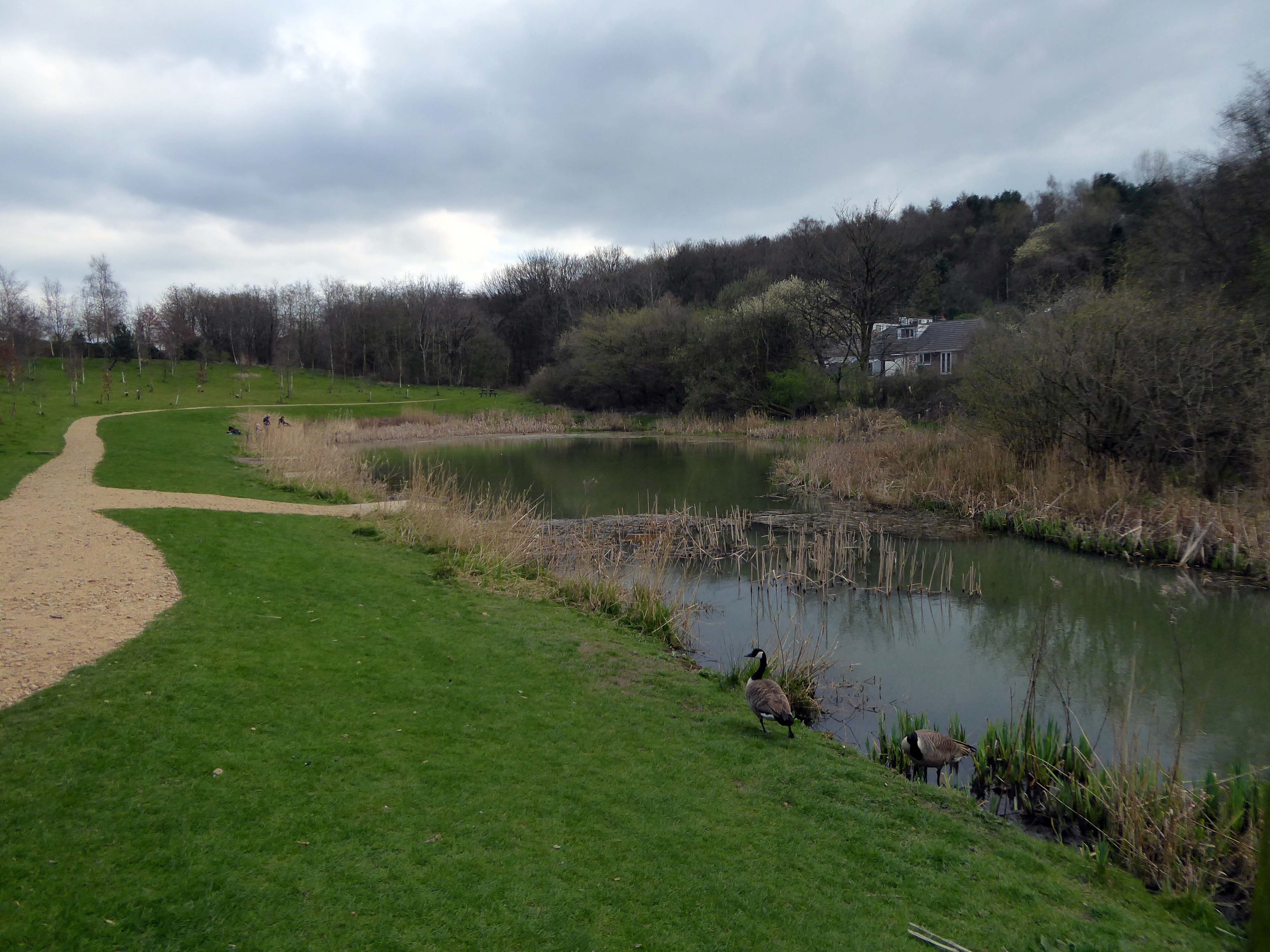
To be found on Salmon Fields – in pool form.

Site of a Life for a Life Memorial Forest

These now full memorial forests were originally donated to Life for a Life by Oldham Metropolitan Borough Council. Salmon Fields meadow sits adjacent to a lovely pond that is used regularly by fishing enthusiasts and is frequently used as a breeding site for Canadian Geese.

Life for a Life planting areas are natural environments where we encourage wildlife and plantlife to flourish, as such additional items should not be added to the tree or the space around it, especially as they can cause damage to the tree. 

Please be aware that any prohibited items left on or around memorial trees will be removed. 

Although these sites are now full to the planting of new memorial trees if you have an existing memorial tree dedicated you can still upgrade memorial plaques, add additional ashes to a memorial tree, order memorial keepsakes etc.