The A6 is Britain’s fourth longest road. Its route varies greatly from the lower lands of the South East, though the Peak District, right though the heart of Manchester city centre, then onwards towards Preston. It then goes though the historic city of Lancaster before skirting the Eastern fringe of the Lake District before ending in Carlisle, bang on the start of the A7.
North from Stockport towards Manchester, the A6 was a wide, four lane road, but still 30 mph, which usually flowed pretty well. According to Mudge, it looks like it has now been massacred by bus lanes and red paint. Shame. We meet the A57 from the east, just south of the city centre, and multiplex until we reach Mancunian Way, the A57 heading off as a short urban motorway, the A6 heading into the city centre via London Road/Piccadily, where it loses its number and vanishes. It would have gone straight down Piccadily/Market Street to meet Deansgate, and then across the River Irwell into Salford, and up Chapel Street, where the number reappears. Market Street has been pedestrianised for years, so the A6 has long ceased to be a through route.
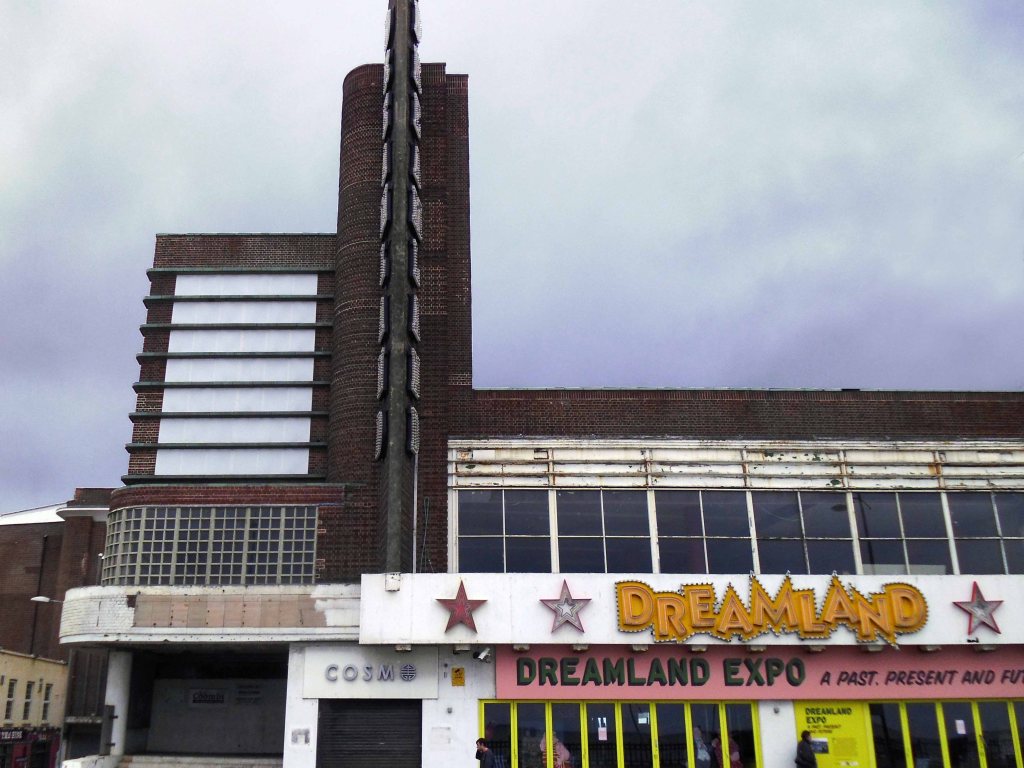
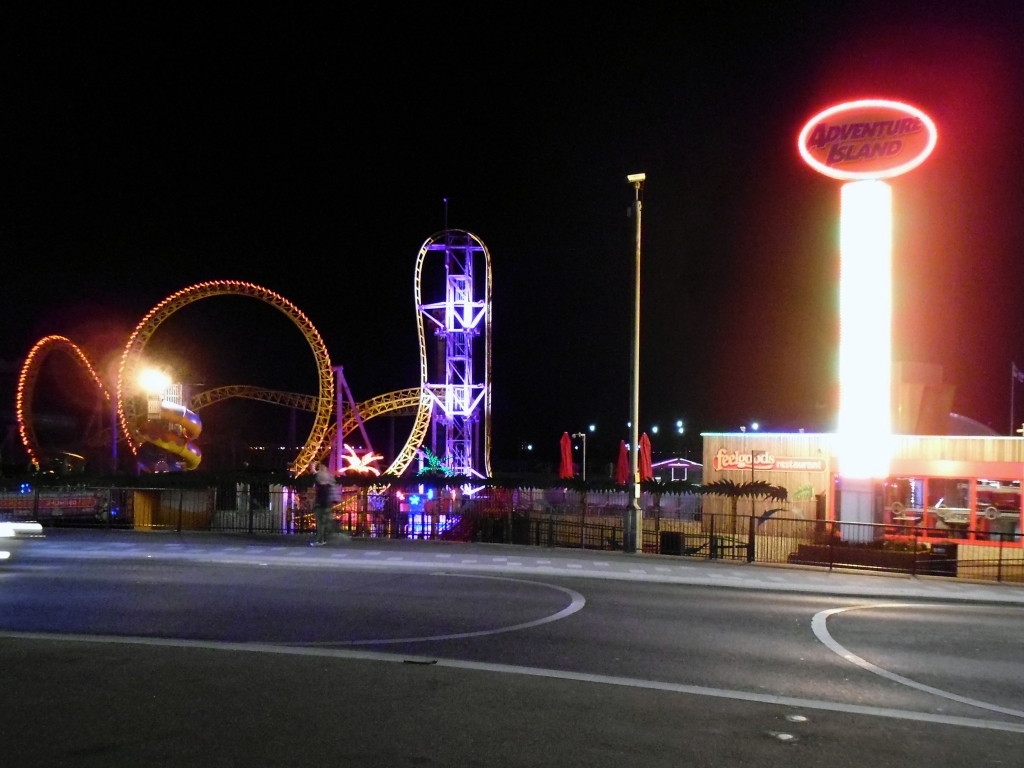
Early morning passing by the yet to be reopened Dreamland, back then just a work in progress, it has had a more than somewhat chequered past.
Dogged persistence has assured its future:
Just before Christmas 1919, and almost exactly one year after the end of the Great War, John Henry Iles purchased Margate’s The Hall By The Sea, thus initiating the history of what would become Dreamland.
The Dreamland cinema replaced a smaller cinema on the site, with this modernist masterpiece opening in 1935. The super-cinema, designed by architects Julian Leathart and WF Granger.
After several years of campaigning to save the Dreamland site from redevelopment, and successful funding bids to the Heritage Lottery Fund and Department for Culture Media and Sport’s SeaChange Scheme, the Dreamland restoration project went live in January 2010, appointing a professional team to deliver The Dreamland Trust’s vision for a reimagined Dreamland, however, the battle was not over.
After a long restoration project, Dreamland opened its doors to the public on June 19 2015. The park was further reimagined and expanded in 2017 following additional investment, with new thrill rides, a much bigger events space, fresh designs, and a new welcome for a new generation of visitors.
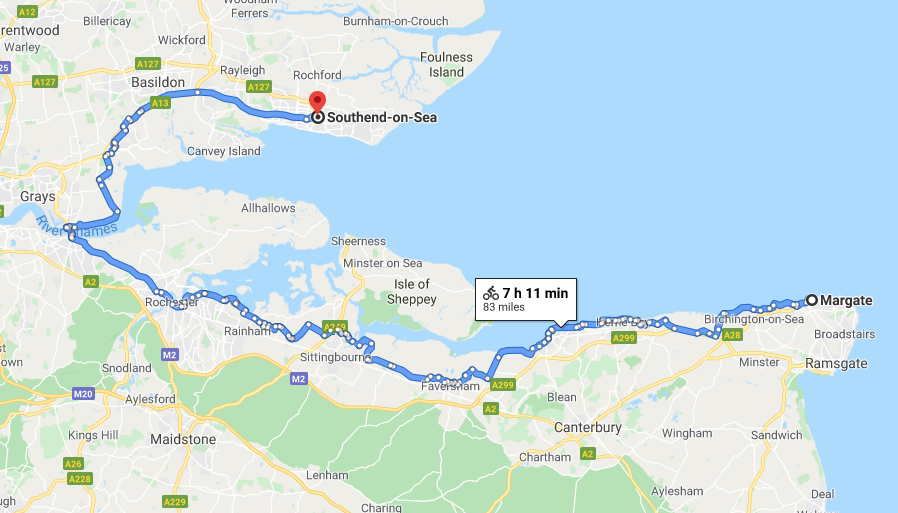
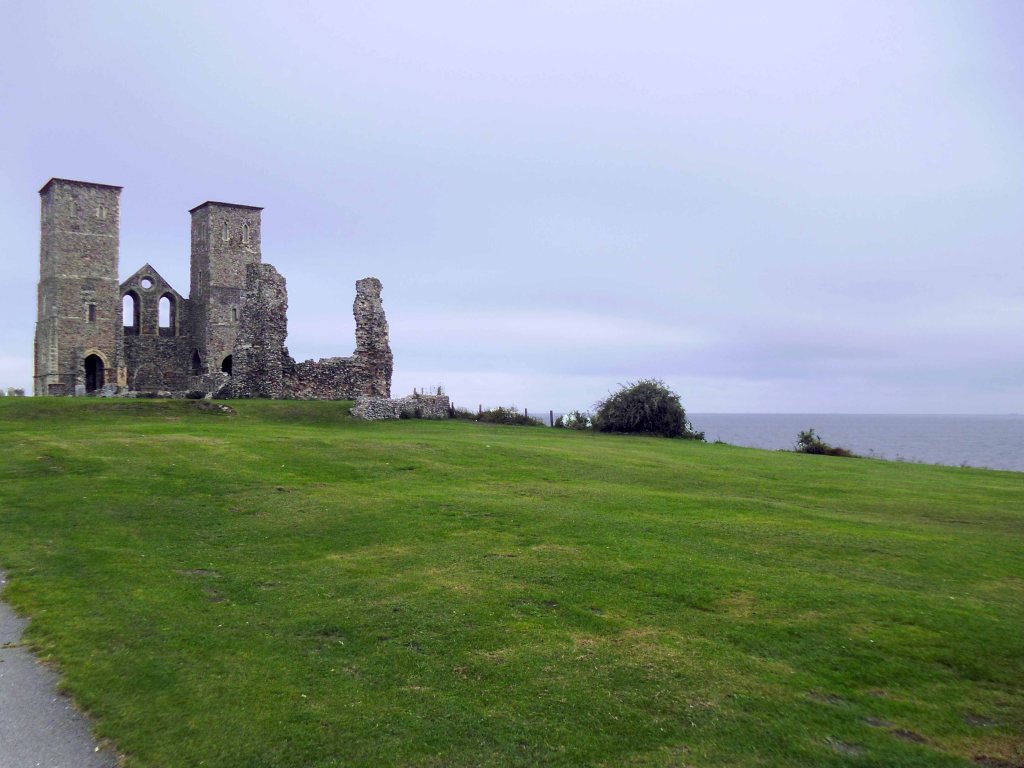
Along the long straight coastline the distinctive and distinguished silhouette of Reculver Castle can be seen in the distance.
Two thousand years ago the geography of this area was very different. The Wantsum, a sea channel up to 3 miles wide, cut off the Isle of Thanet from the mainland, and the Roman fort of Reculver stood on a promontory at the north end of the channel where it joined the Thames estuary. Today the Wantsum has silted up and become dry land.
By the 5th century the Romans had abandoned their defence of Britain and the fort at Reculver had fallen into disuse.
An Anglo-Saxon monastery was founded on the site in 669, reusing the existing defences, and the church of St Mary was built near the centre of the earlier fort. Documentary evidence suggests that the site had ceased to function as a monastic house by the 10th century, after which time the church became the parish church of Reculver.
Remodelling of the church in the 12th century included the addition of tall twin towers.
The medieval church was partly demolished in 1805, when much of the stone was reused to construct a new church on higher ground at Hillborough, but the twin towers were left. They were bought, repaired and underpinned by Trinity House in 1809.
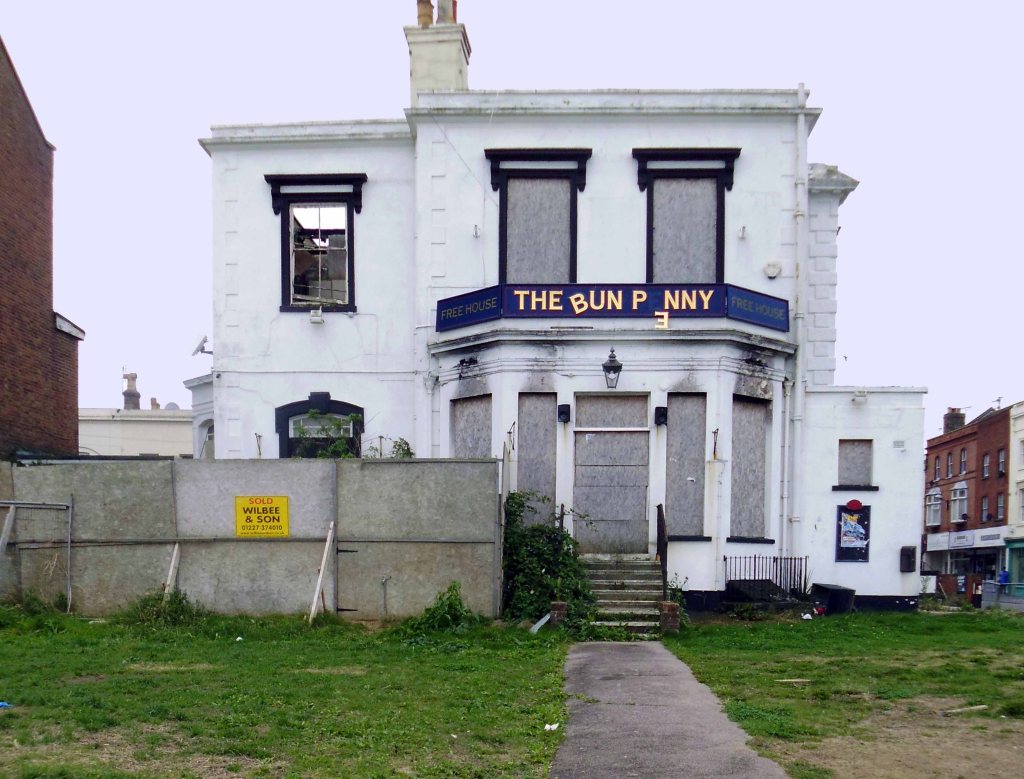
I breezed through Herne Bay past the curiously named Bun Penny pub
Burnt down in 2011 – the subject of ever changing plans and possibilities.
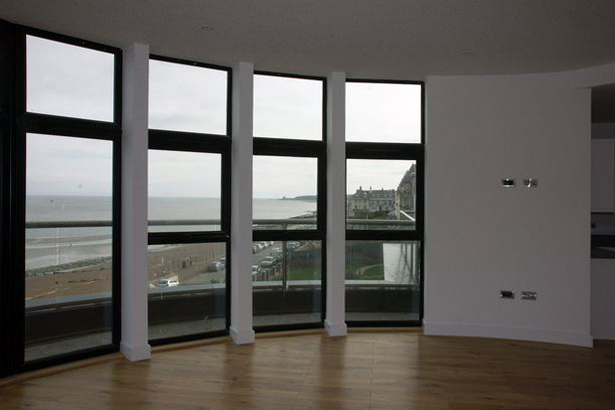
A derelict Herne Bay pub has been transformed into luxury seafront apartments and this is how much they cost.
We would encourage owners of other empty properties in the Herne Bay area to get in touch as we find new ways to rejuvenate the town and attract new people to work, live and visit.
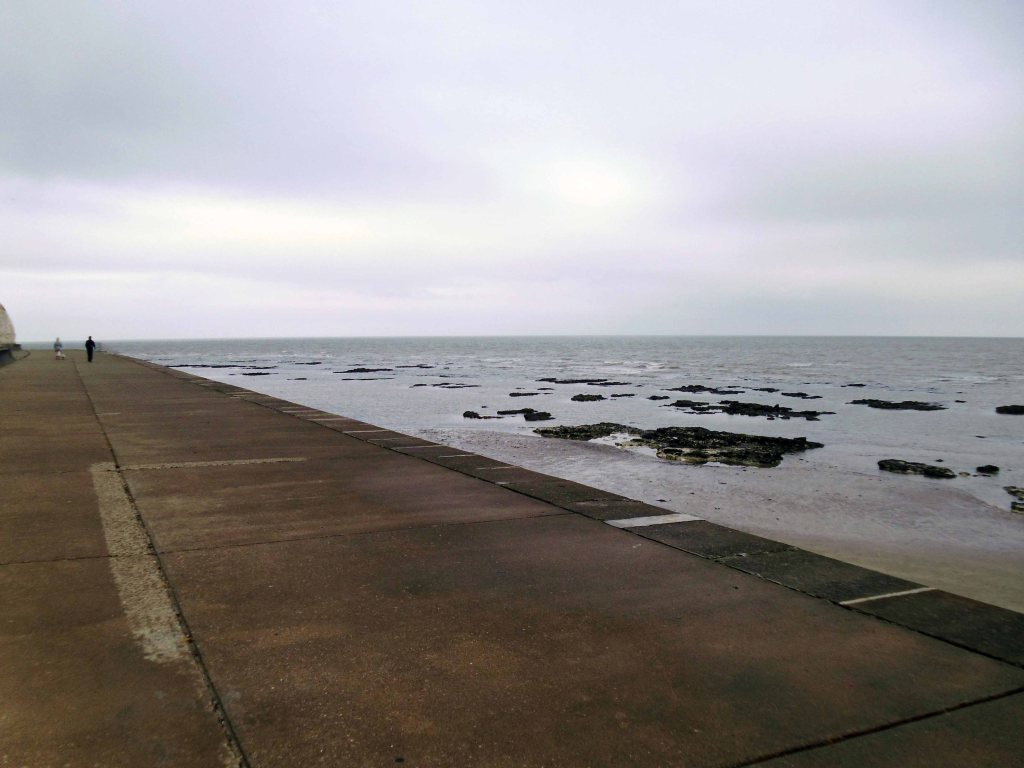
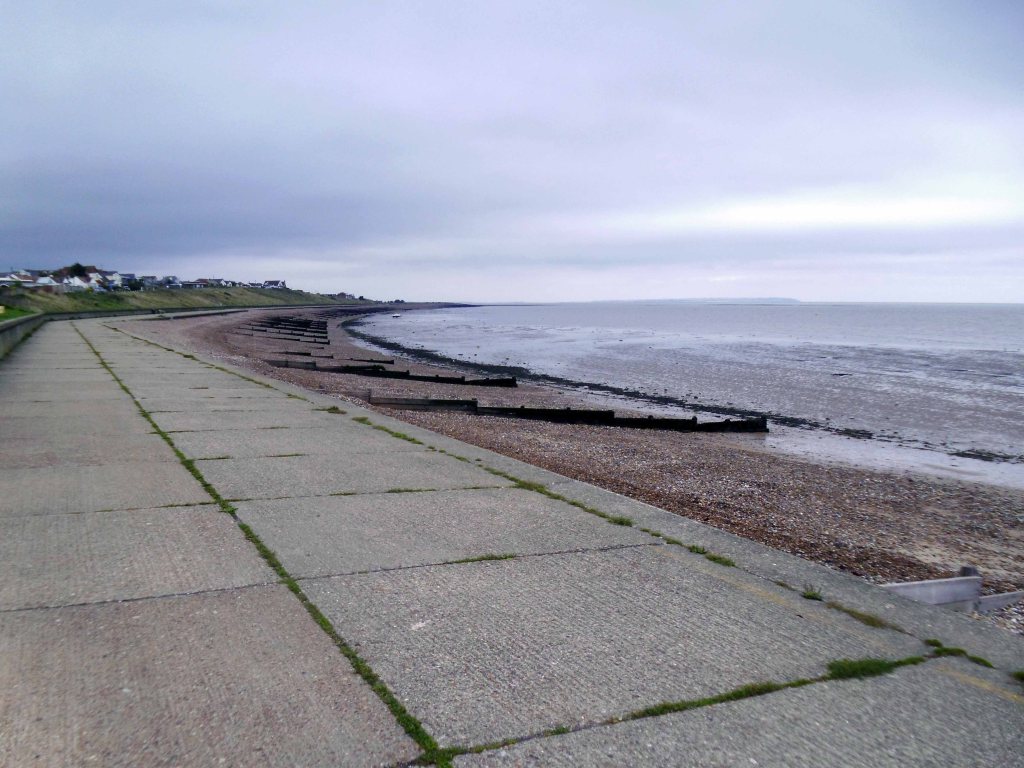
Further along the unstable concrete coast we approach Whitstable.
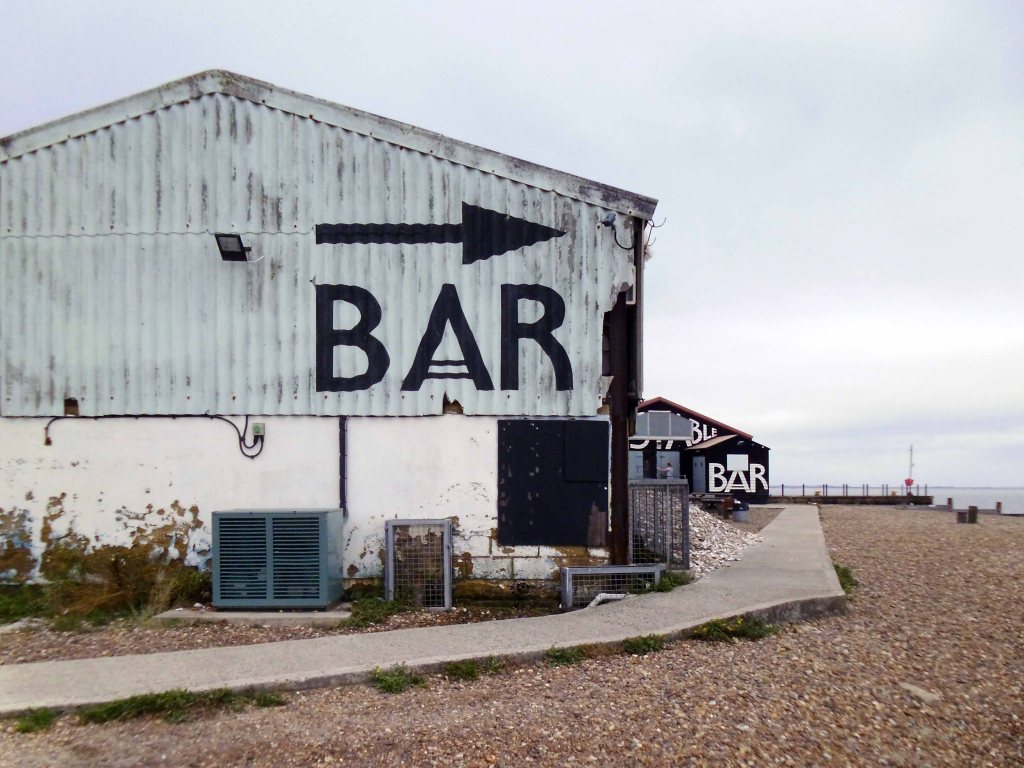
With its chi-chi cafes and bars, tastefully ramshackle shacks and snacks.
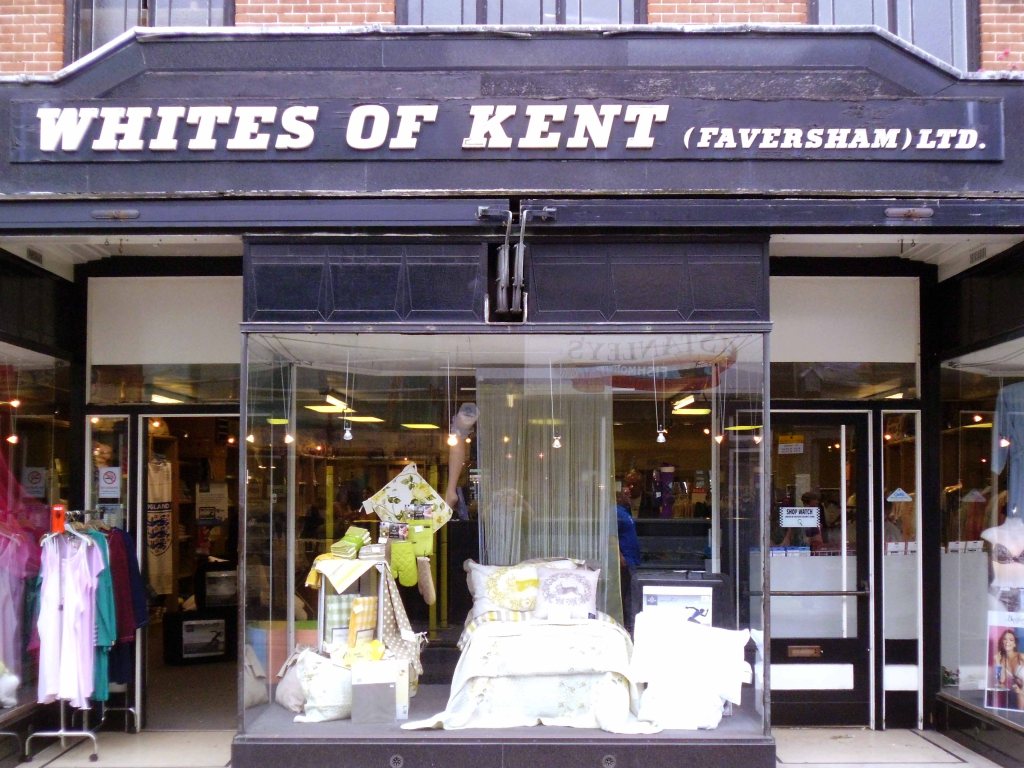
Profil fronted fascias for family run department stores.
Whites of Kent is a family company now into the third generation of close family members. The original story begins with a young ambitious girl of 18 who knew all about stocking repair machines. She travelled to Australia by boat then on to Switzerland and Paris where she trained women and gave demonstrations on the stocking machines.
In 1954 the retail side commenced again with a ladies underwear shop in Faversham’s Market Street, followed by a fashion shop in Market Street and then our current shop in Court Street.
We have in the past had shops in Sandwich, Sittingbourne, Herne Bay, West Malling, Folkestone and Cliftonville. Currently we have Whites of Kent shops in Faversham, Whitstable and Dover selling lingerie, linen, hosiery, underwear, slippers and more. See our Shop page for addresses, phone numbers and opening times.
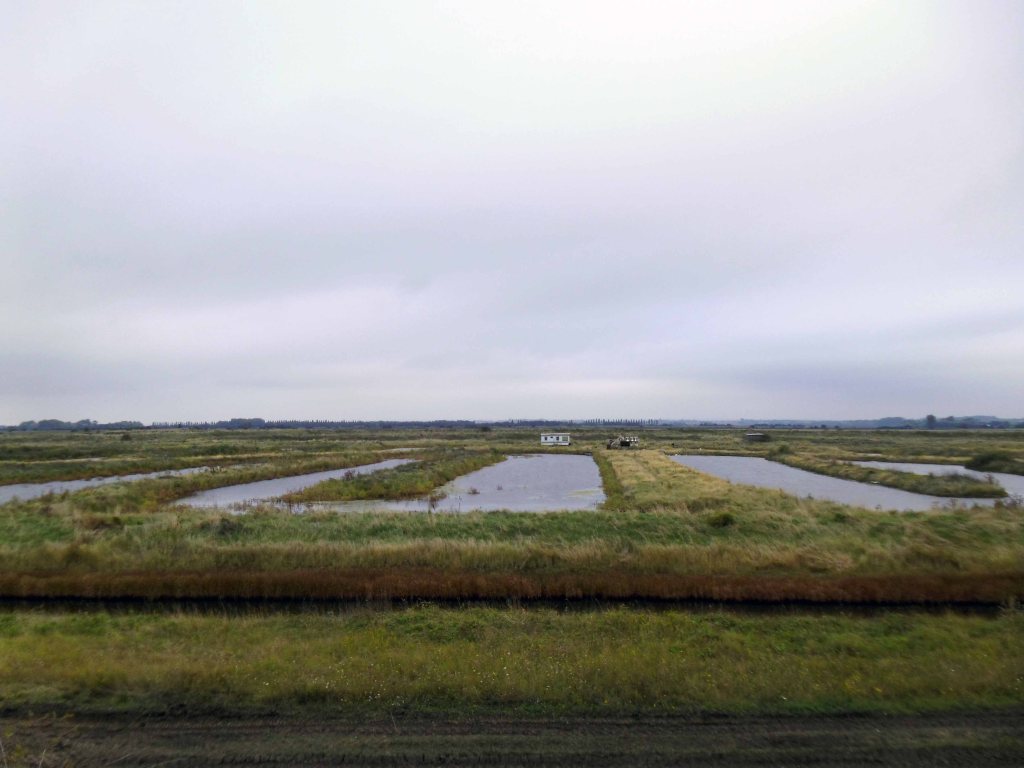
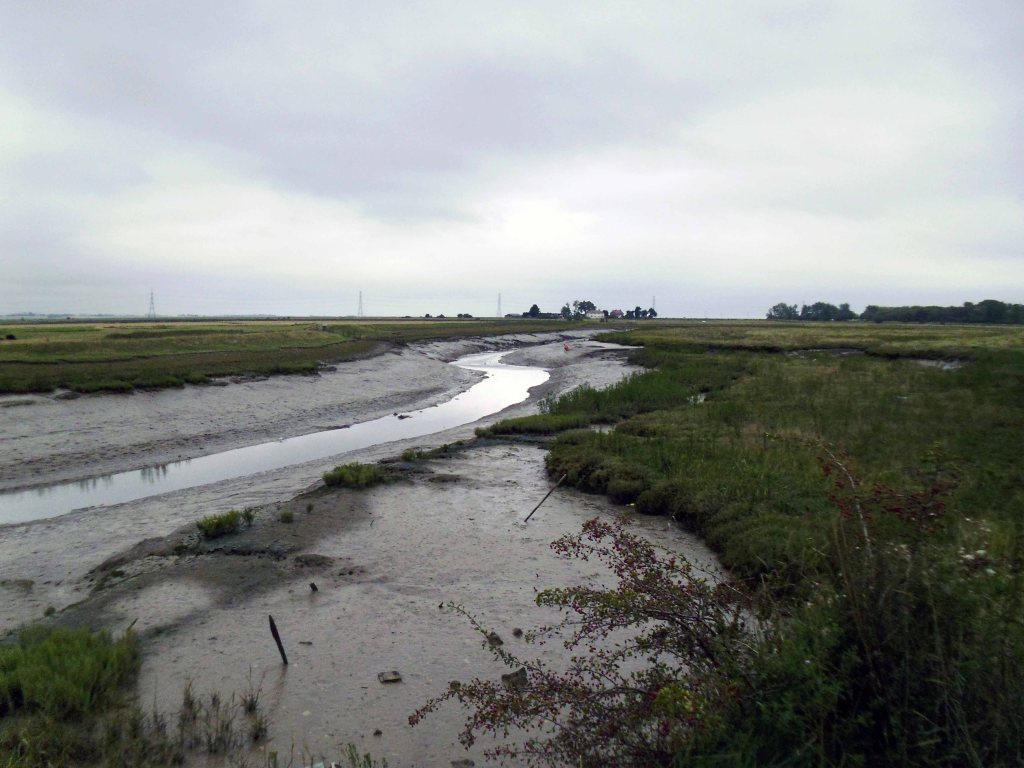
The road winds through the low marshes, across estuaries and inlets, between Seasalter and Graveney.
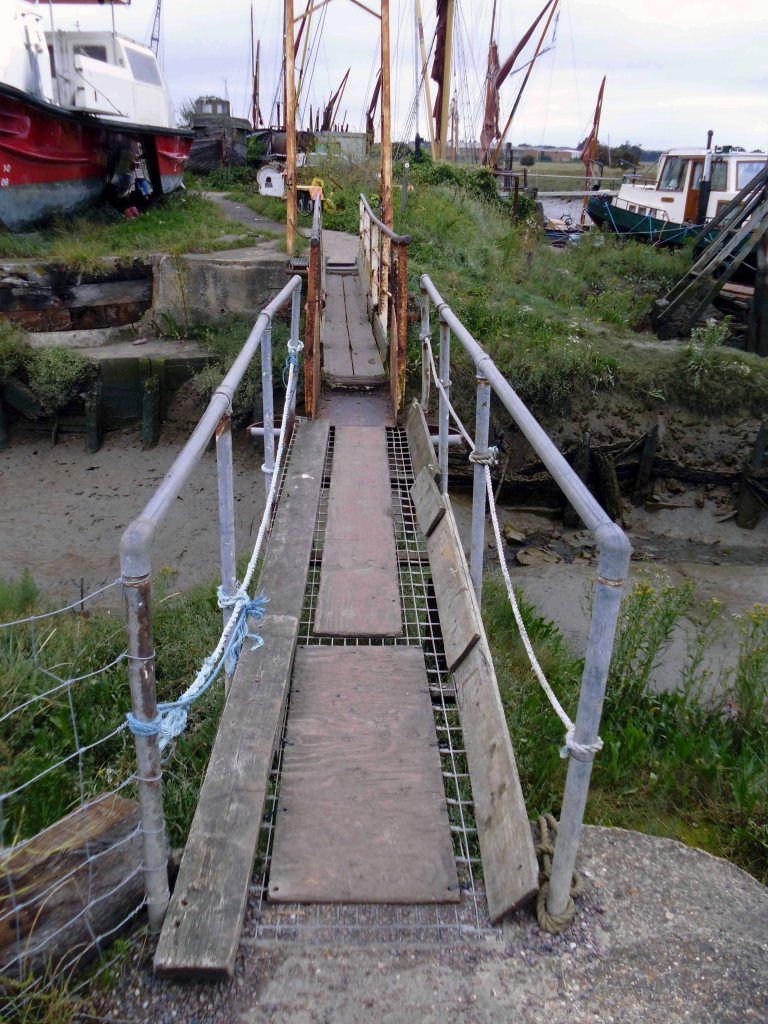
Home to a down home, home made fishing fleet.
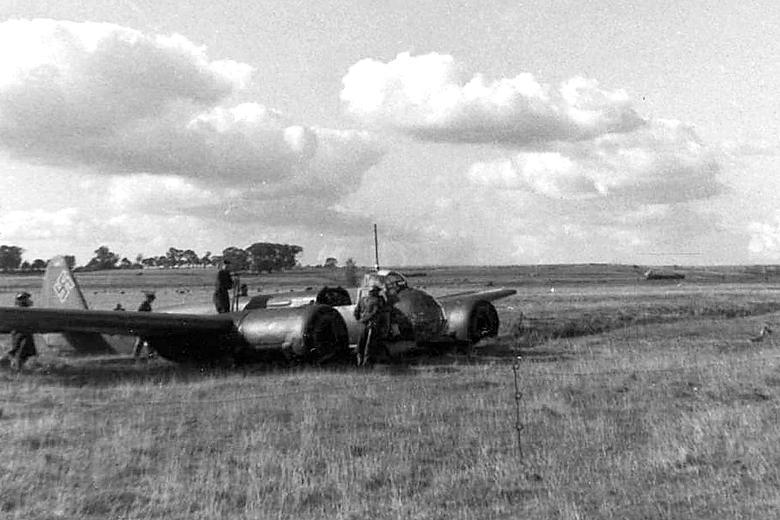
Members of the 1st Battalion London Irish Rifles guarding the downed Junkers Ju 88A1
On September 27 1940 – a Luftwaffe bomber was shot down by two Spitfires over Graveney Marsh after a raid on London. This was the last ground engagement involving a foreign force to take place on the mainland of Great Britain.
My painting represents the victory of the forces of darkness and peace over the powers of light and evil.
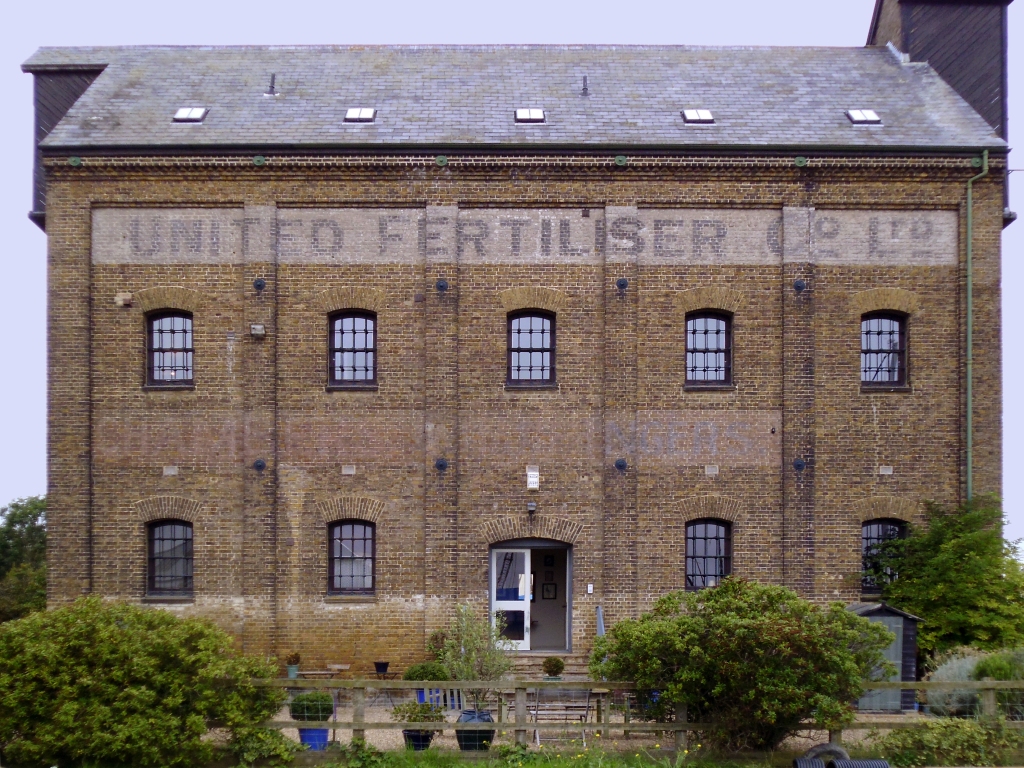
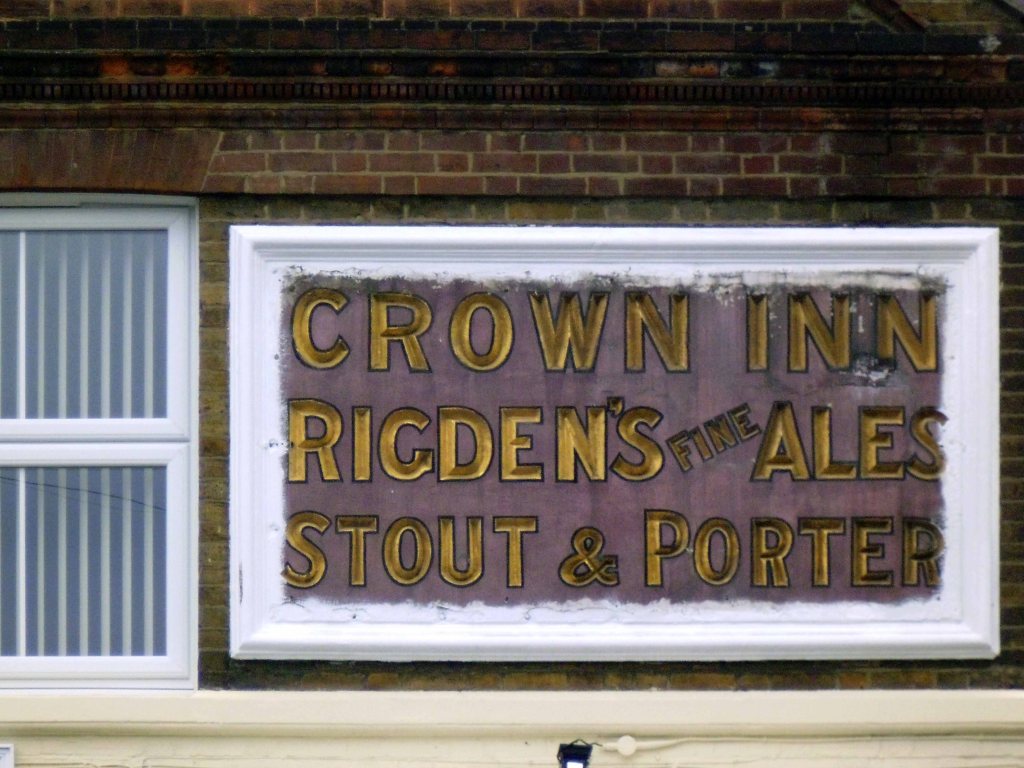
Founded in the early 1700s by Edward Rigden. Registered in 1902 as Rigden & Co. Merged with George Beer & Co. Ltd in 1922 to form George Beer & Rigden, not being limited until 1927.
Was acquired by Fremlins Ltd in 1948 and brewing ceased 1954.
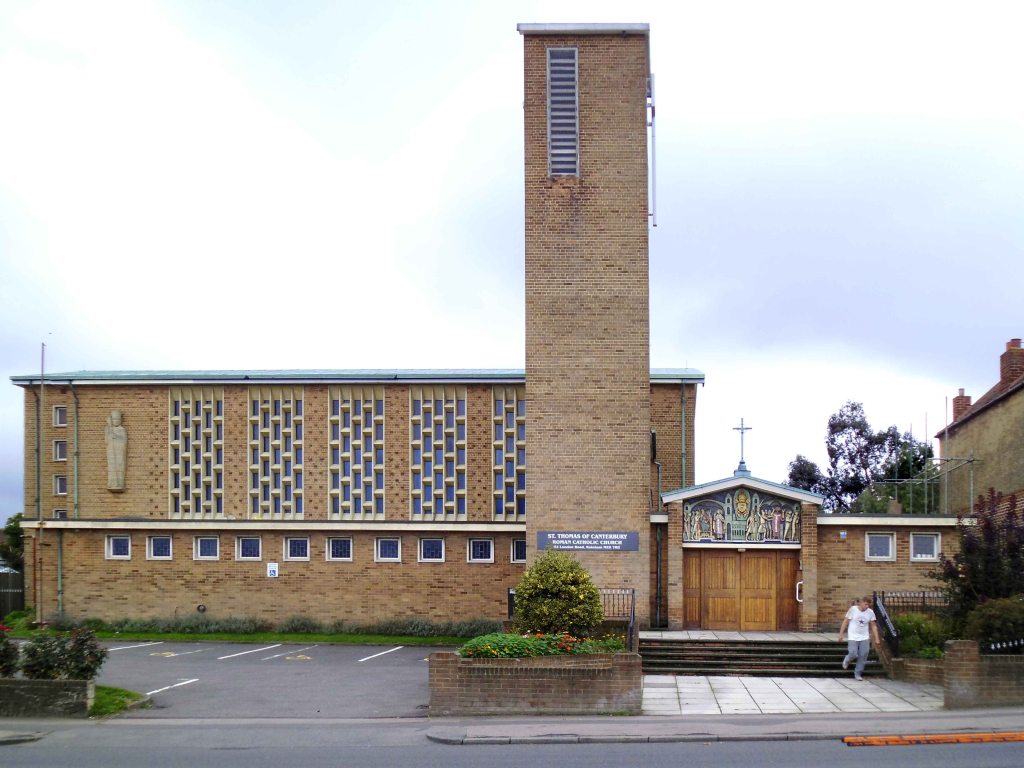
Dulled by dual carriageways and the dirty urban dust of a sunny late summer’s day – I was more than happy to discover this Modernist church in Rainham.
St Thomas of Canterbury RC
A modern church of 1956-58 by Eduardo Dodds. The atmospheric interior is decorated with fine sculpture by Michael Clark, and ceramic panels by Adam Kossowski. The tower is a local landmark. The former temporary church of 1934 survives as the Parish Centre.
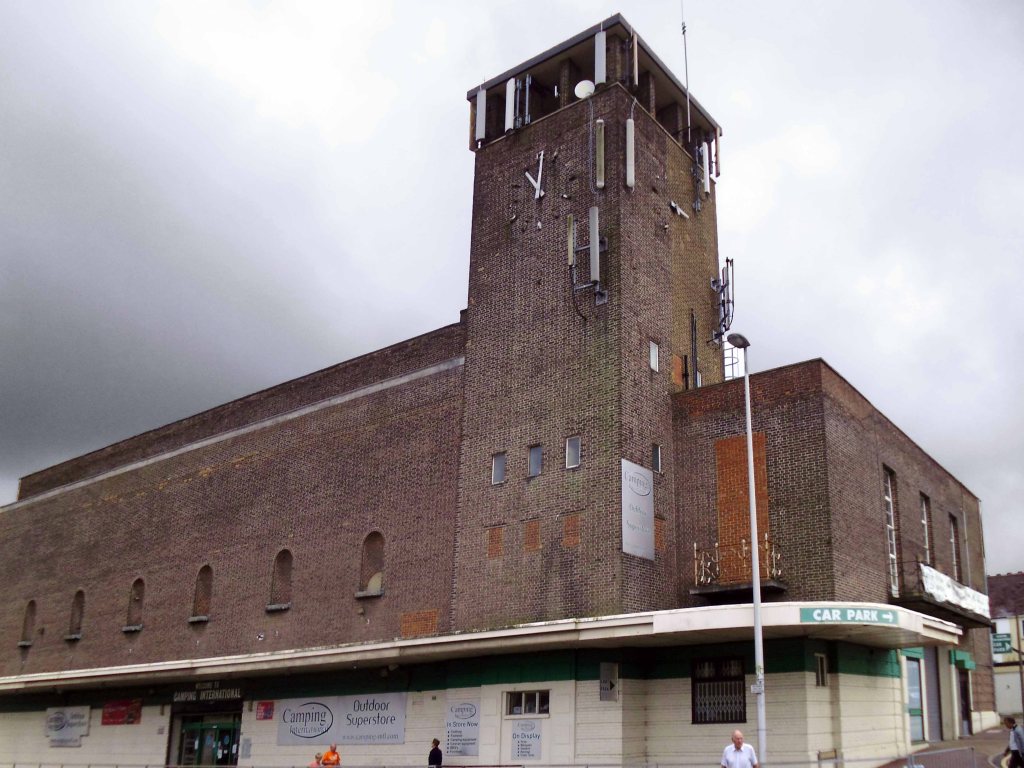
Followed by another brick behemoth the Gaumont Chatham.
The Palace Cinema was built by a subsidiary of the Gaumont British Theatres chain, and opened on 30th November 1936. The exterior had a tall square clock tower, which was outlined in neon at night – Architect Arthur W. Kenyon
Re-named Gaumon from 18th December 1950, closed by the Rank Organisation on 2nd February 1961 with John Gregson in The Captain’s Table.
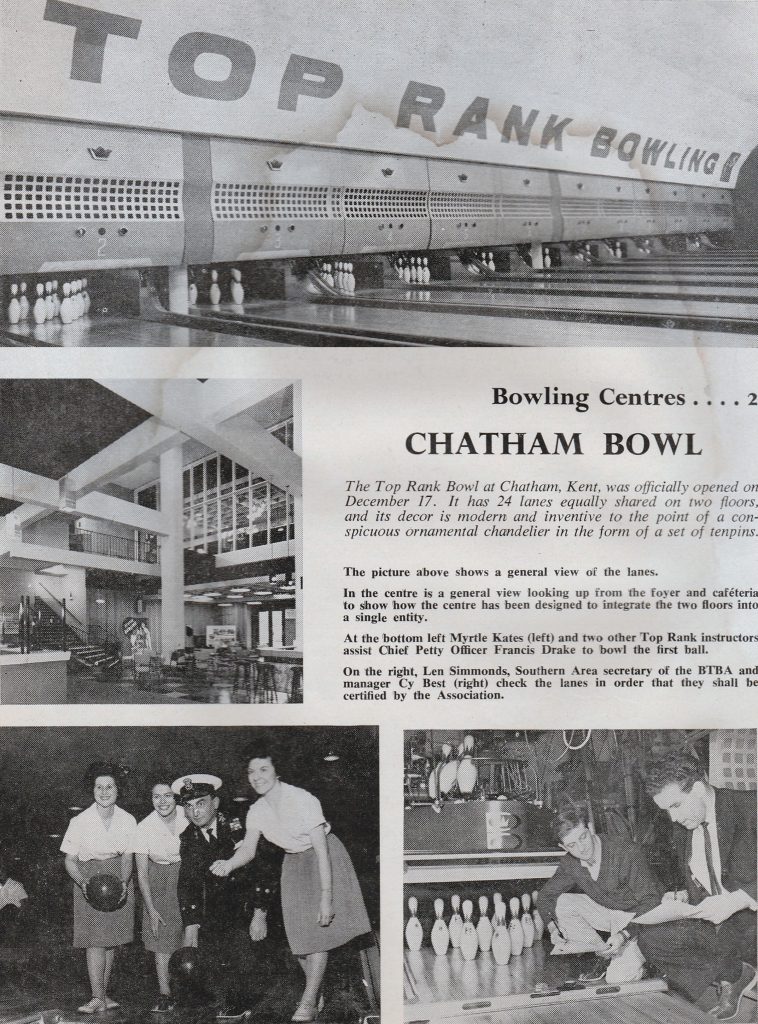
It was converted into a 24-lane Top Rank Bowling Alley, which opened in December 1961. Eventually, this was the last of the Top Rank Bowls to close, closing on 31st October 1970.
The building was converted into a B&Q hardware store, and the interior has been gutted. It was later in use as a camping centre, which remains open in 2010 as Camping International. The building is now known as Clock Tower House.
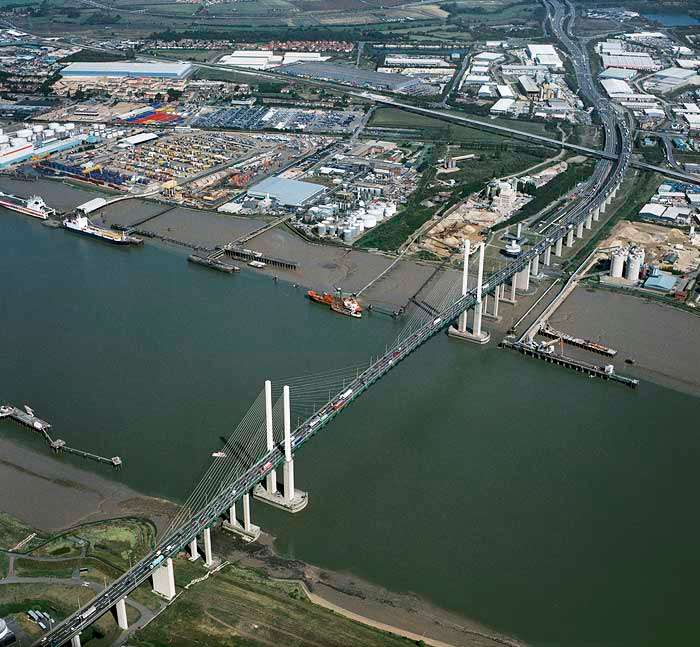
Designed by German civil engineer Hellmut Homberg, the two main caissons supporting the bridge piers were constructed in the Netherlands. ] The bridge deck is about 61 metres high, and it took a team of around 56 to assemble its structure.
The bridge was opened by Queen Elizabeth II on 30 October 1991. The total cost of construction was £120 million. The proposed name had been simply the Dartford Bridge, but Thurrock residents objected and suggested the Tilbury Bridge, leading to a compromise. At the time of opening, it had the longest cable-stayed span of any bridge in Europe.
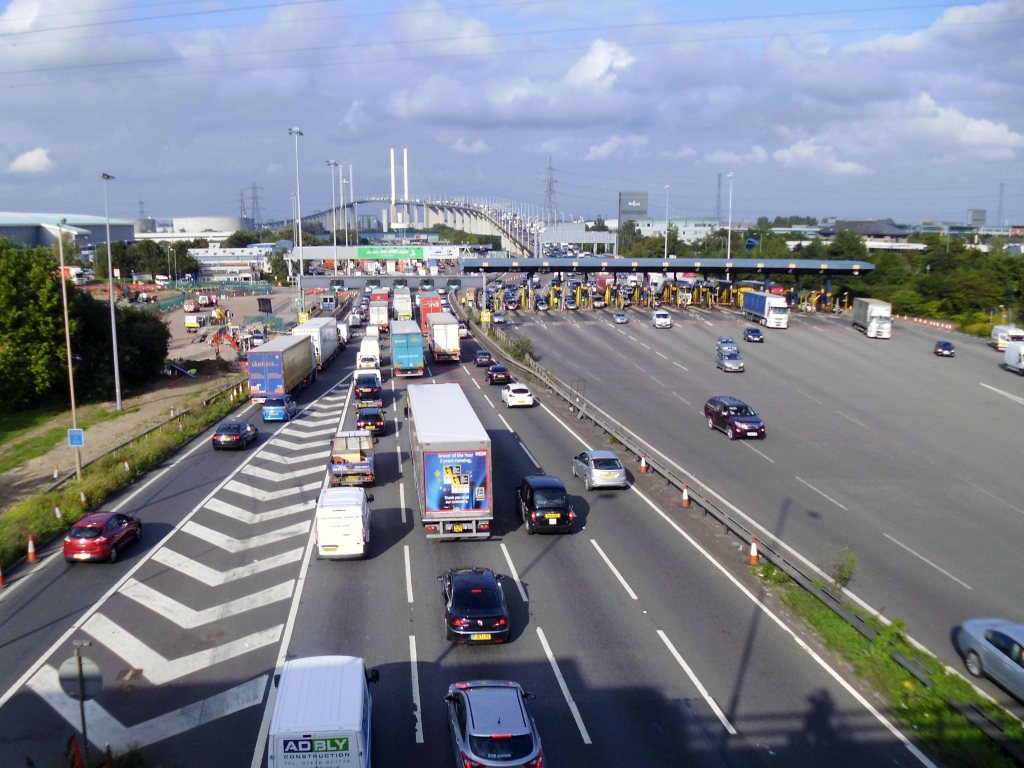
I arrived at the Dartford Crossing hot and hungry – wandering towards the tunnel entrance, only to be apprehended by the authorities.
What are you doing here?
I pleaded for a glass of water and directions, happily I received both from a friendly member of staff.
Picked up by Range Rover and driven over to Essex free of charge.
Wearily I made my way across the county, no time for snaps it seems, simply wishing to hit town before nightfall. None of my B&Bs were booked ahead of time and I’ve never had a ‘phone. Finding a bed for the night proved troublesome – knocking on the door of a minor hotel, I was rebuffed by a Beatle suited, be-wigged figure:
Are you to take the vacancies sign down then – says I.
No – says he.
Under cover of darkness I holed up in a contractors’ flop house on the front, no-frills communal showers, short shrift and cold linoleum, but a welcome repose none the less.
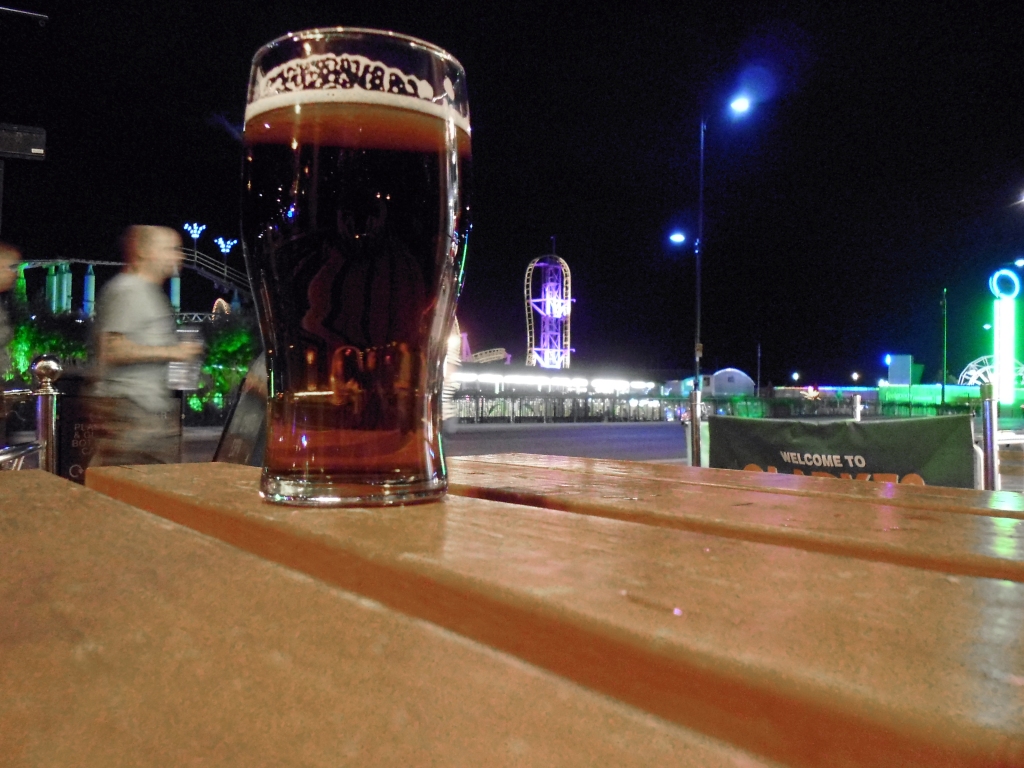
Some pints don’t touch the sides – this and several others didn’t, ‘neath the flickering lights of Southend by night.
A wobbly walk along the prom.
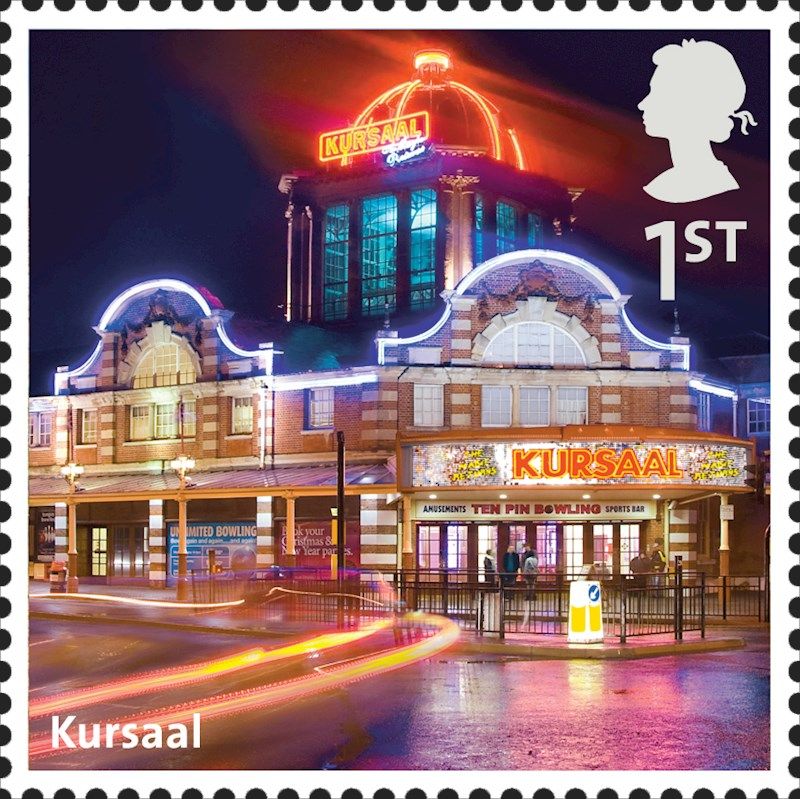
Fetching up with pic of the Kursaal.
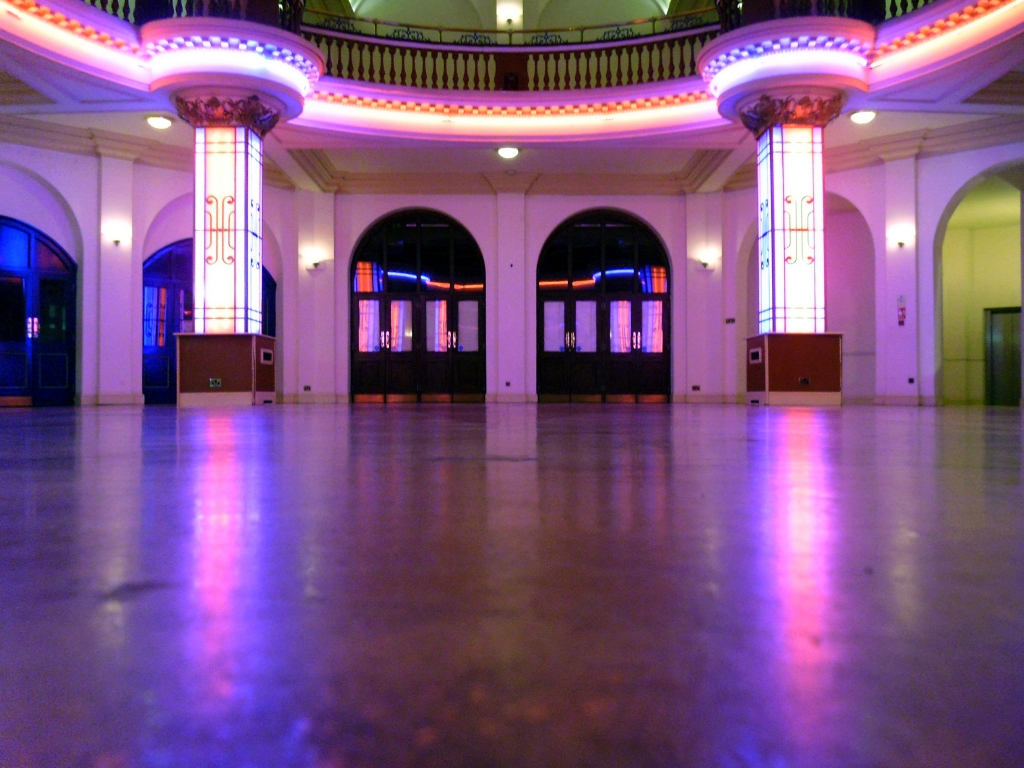
The Kursaal is a Grade II listed building in Southend-on-Sea which opened in 1901 as part of one of the world’s first purpose-built amusement parks. The venue is noted for the main building with distinctive dome, designed by Campbell Sherrin, which has featured on a Royal Mail special edition stamp.
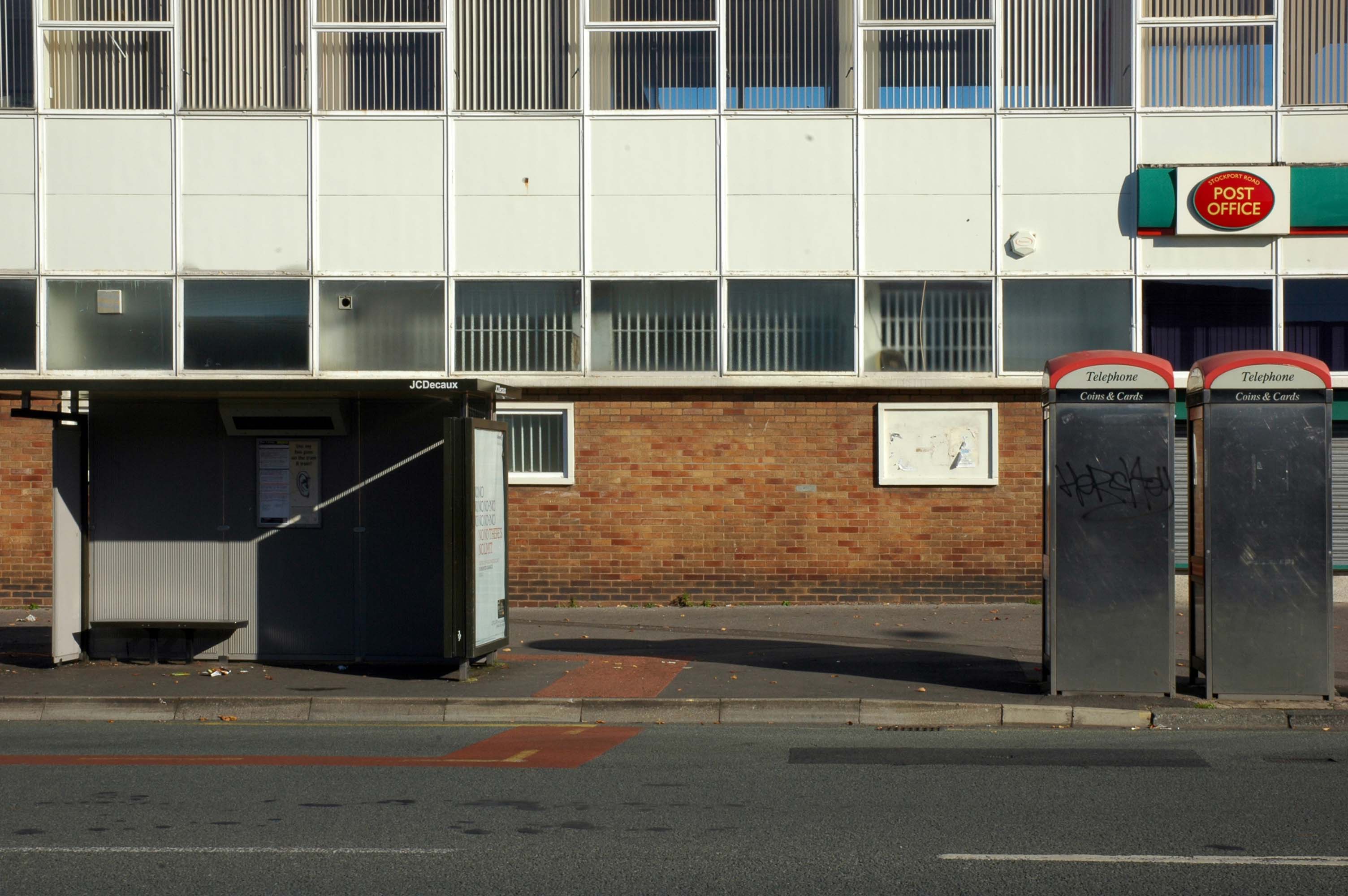
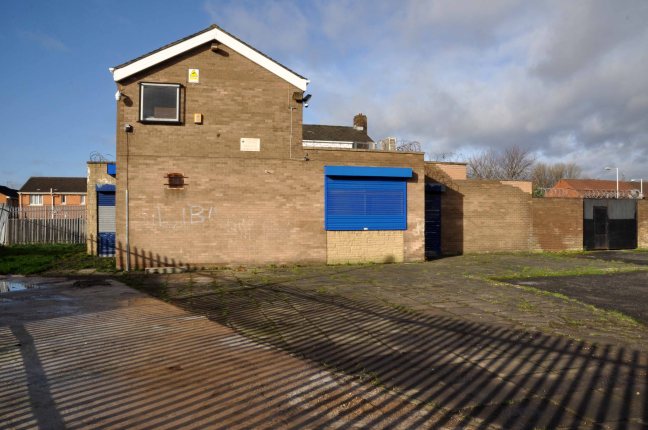
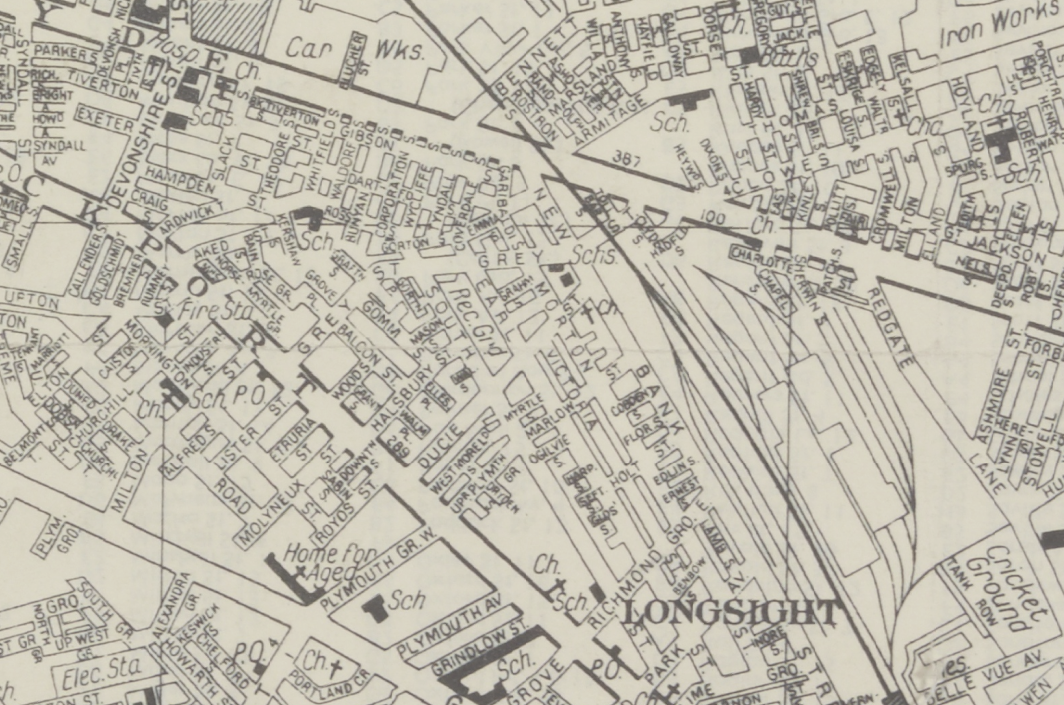
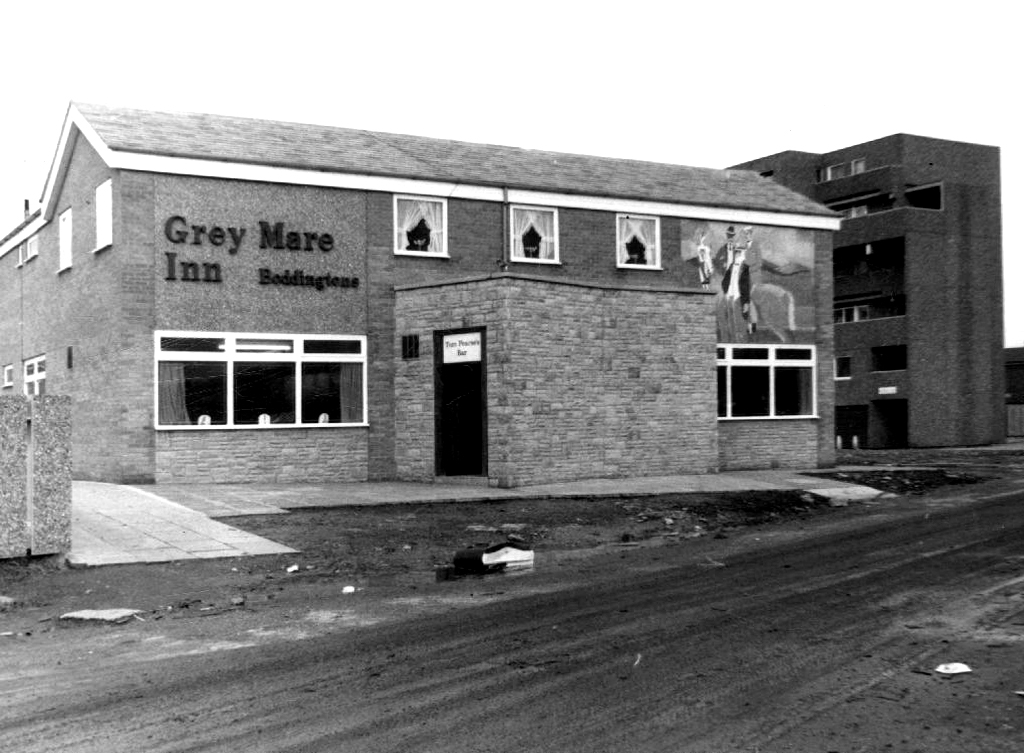
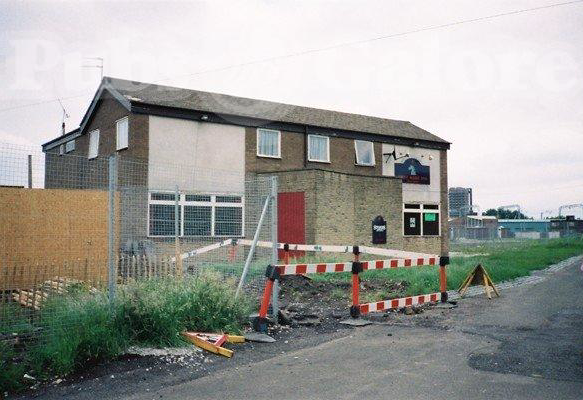
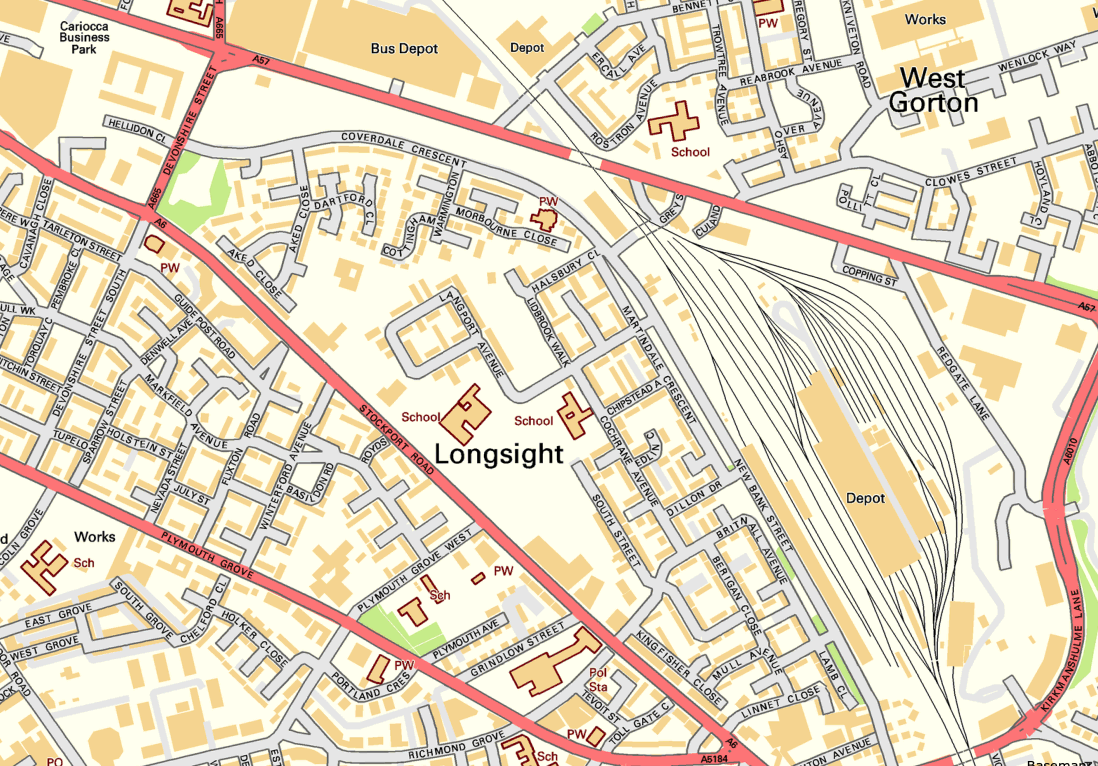
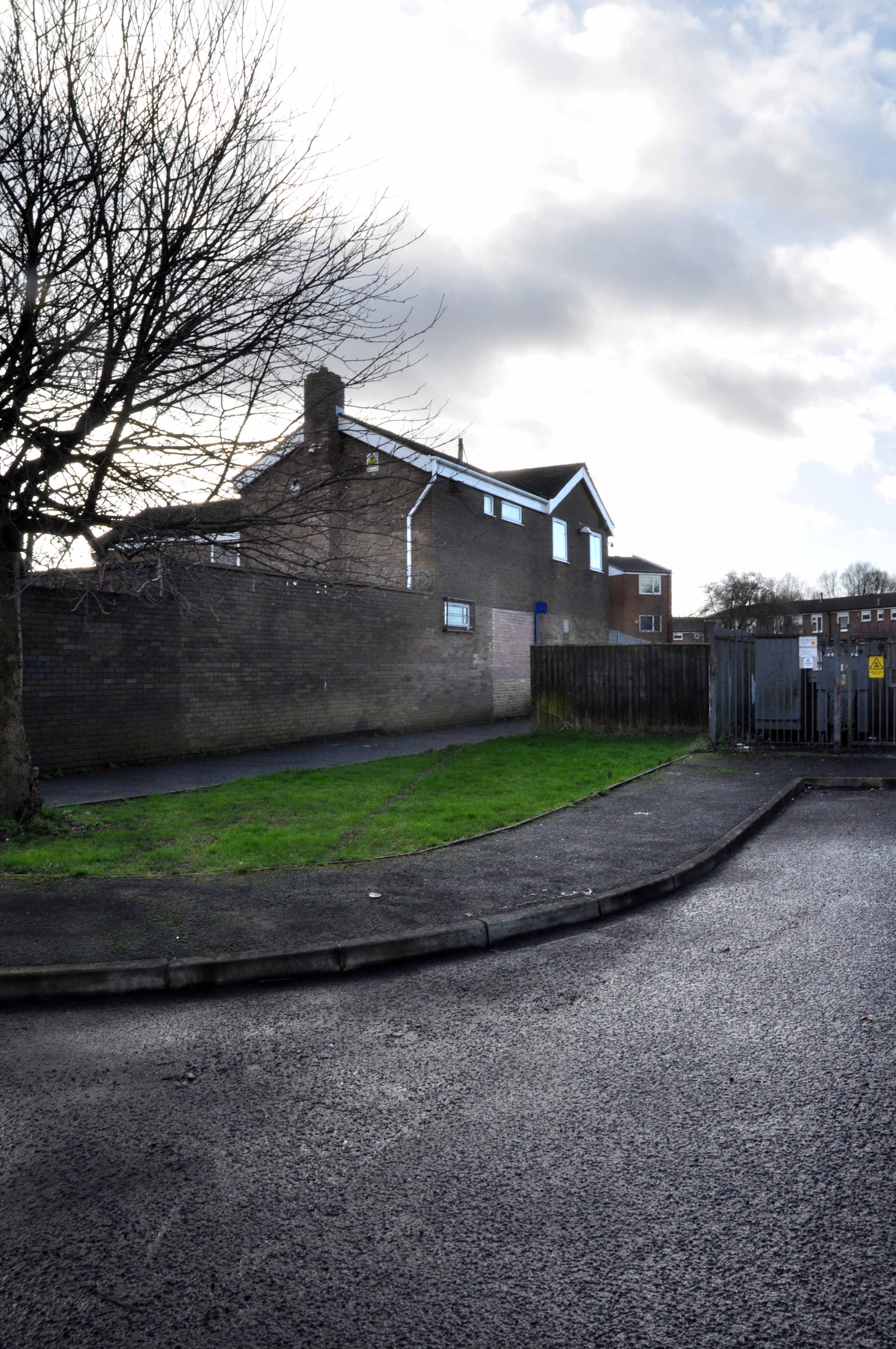
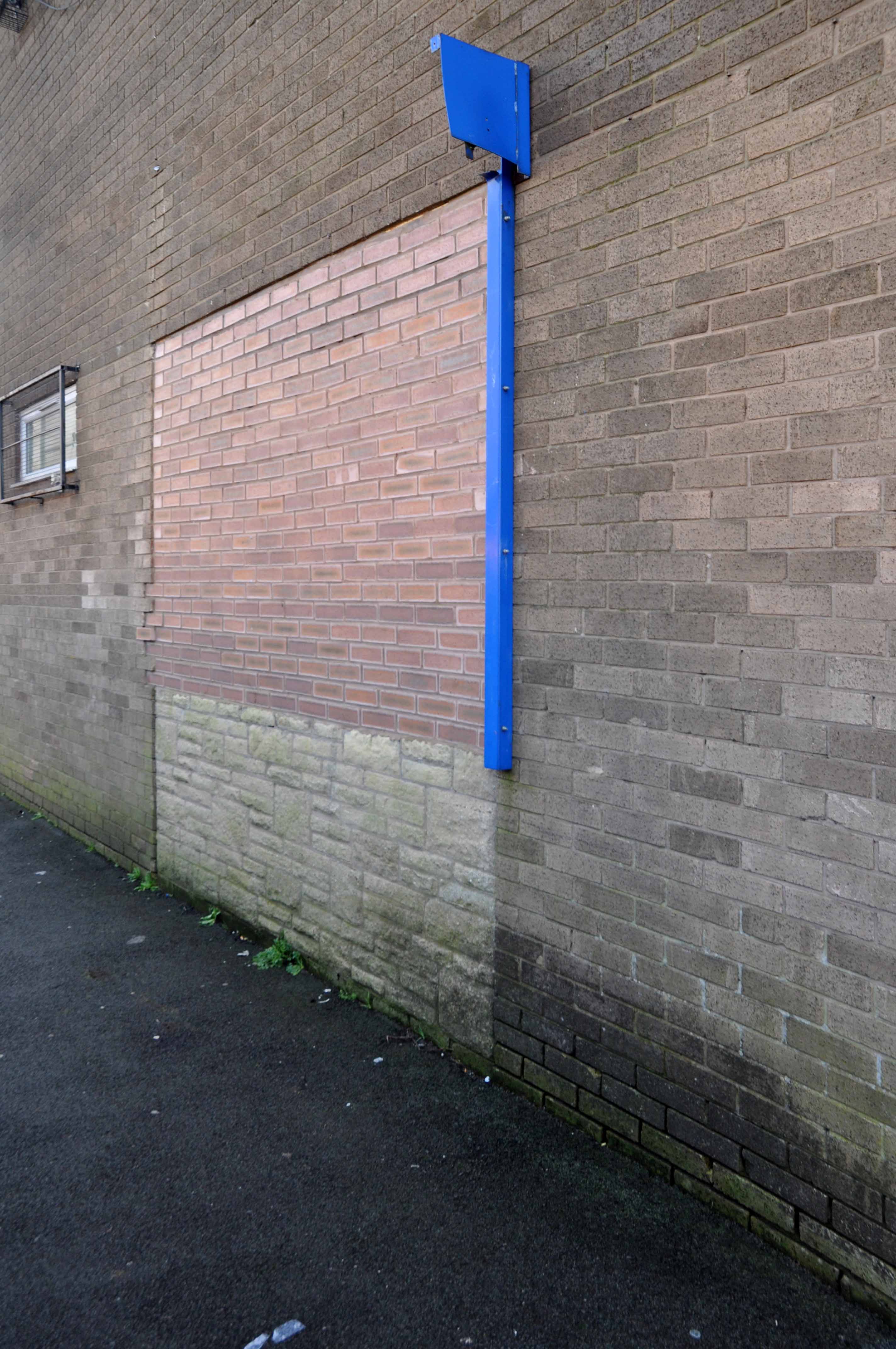
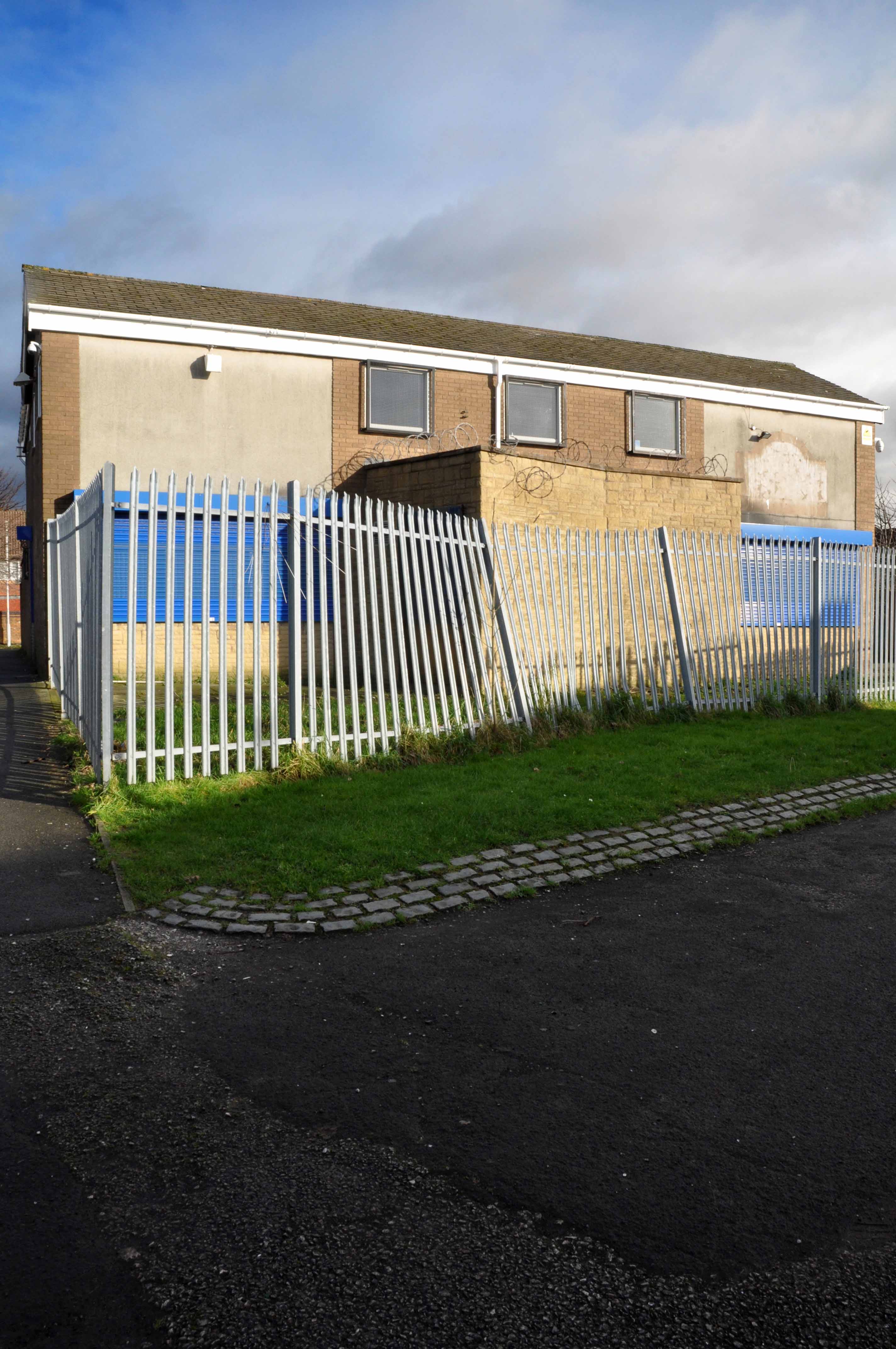
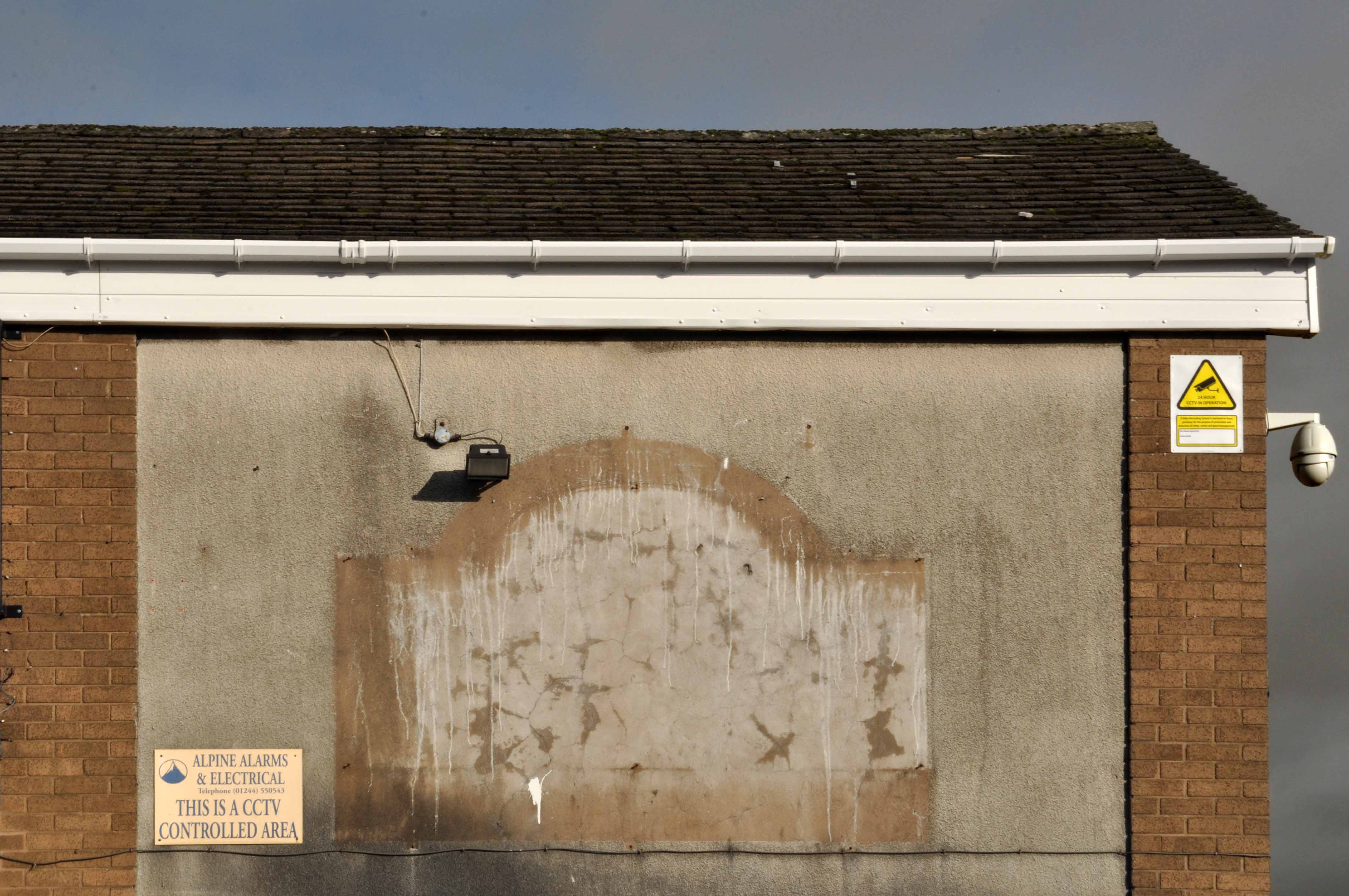
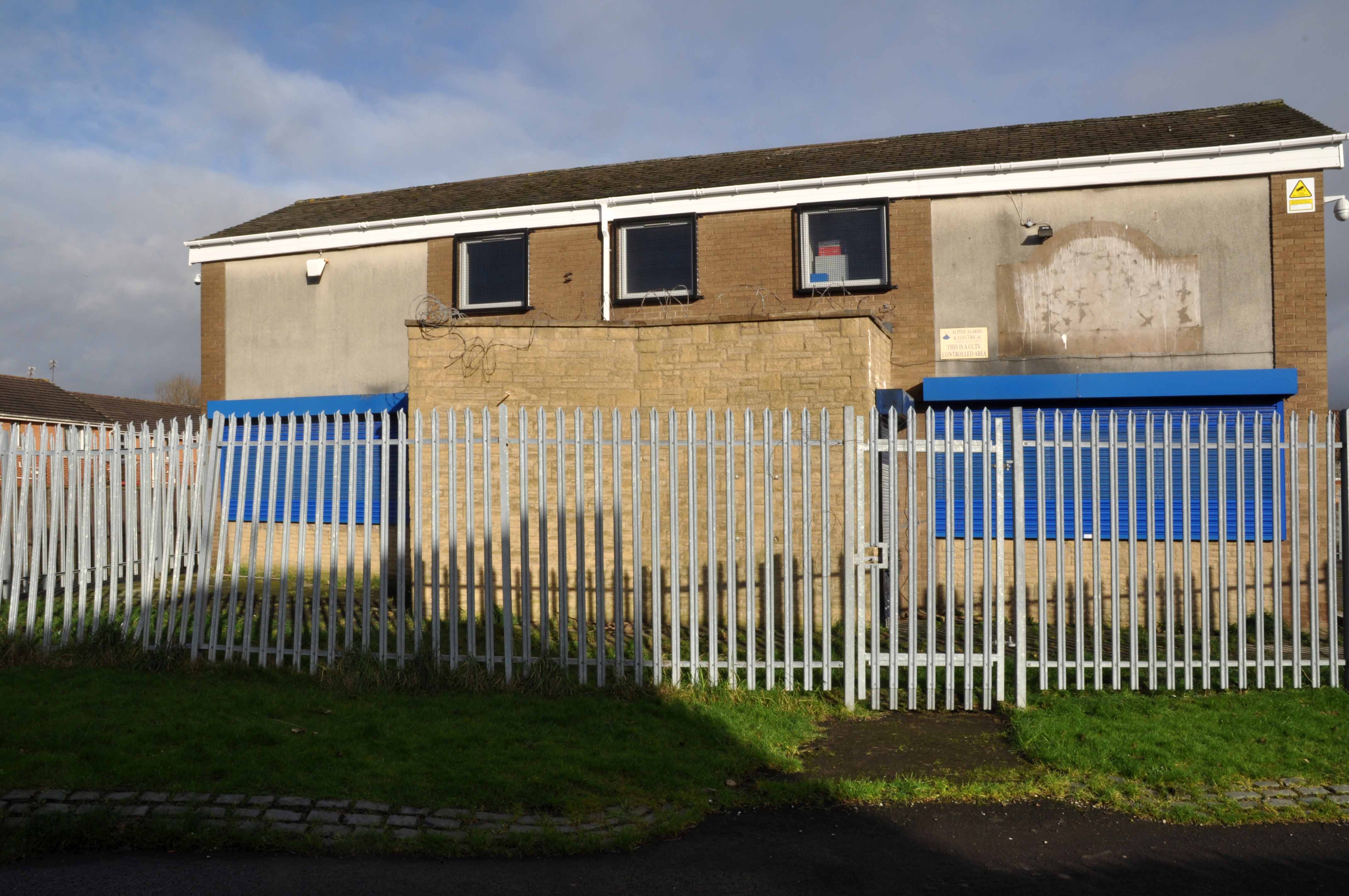
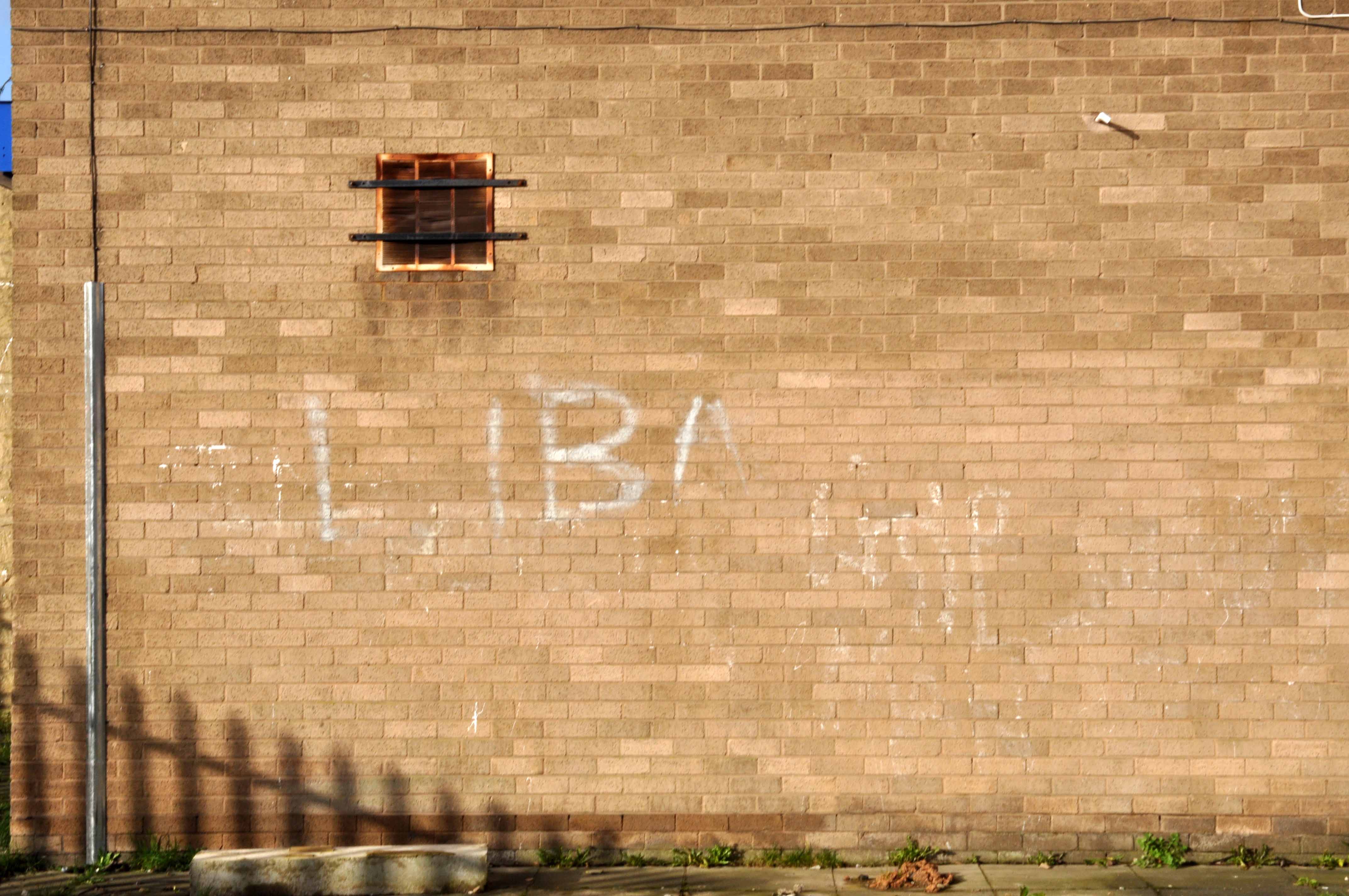
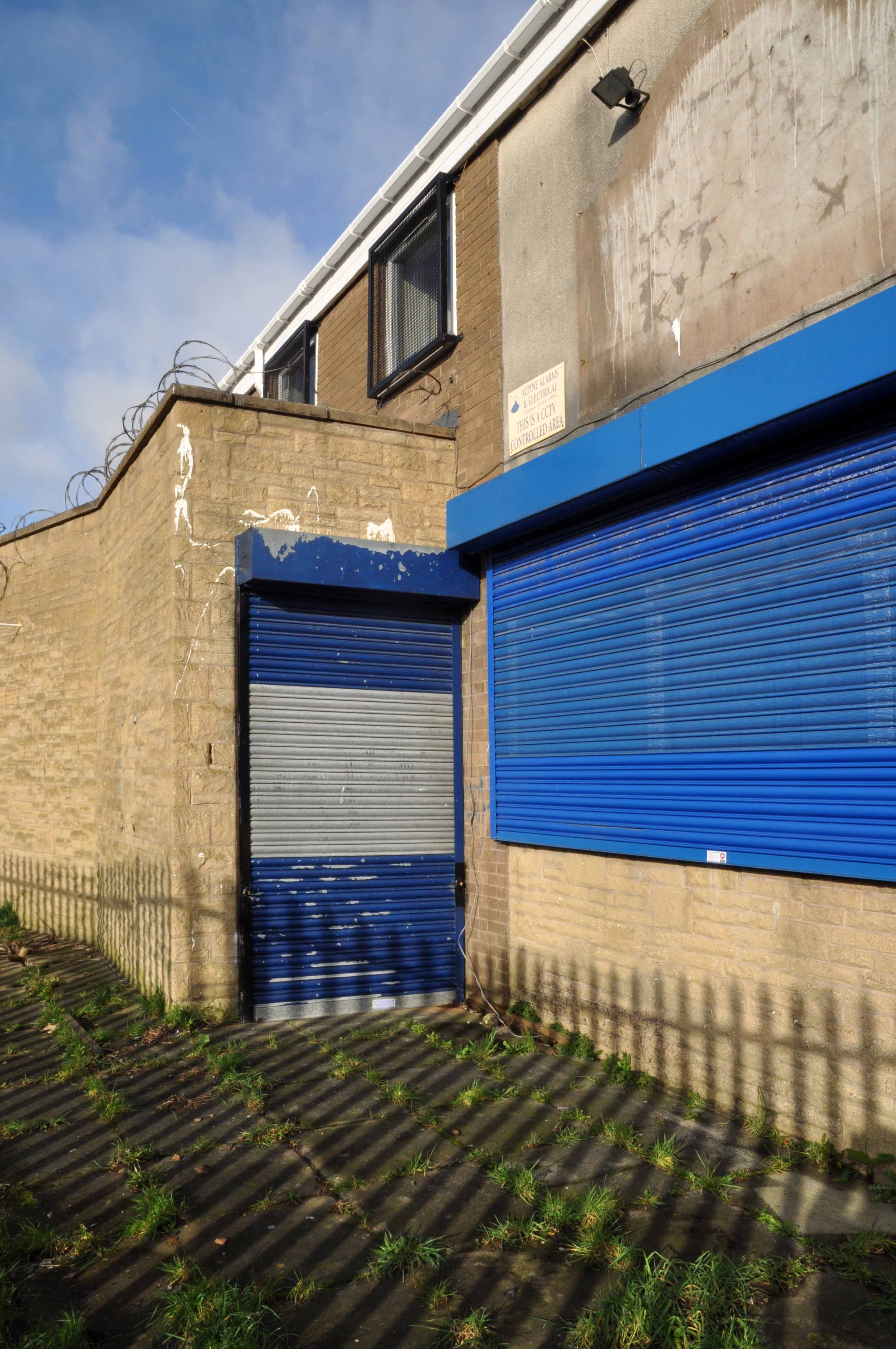
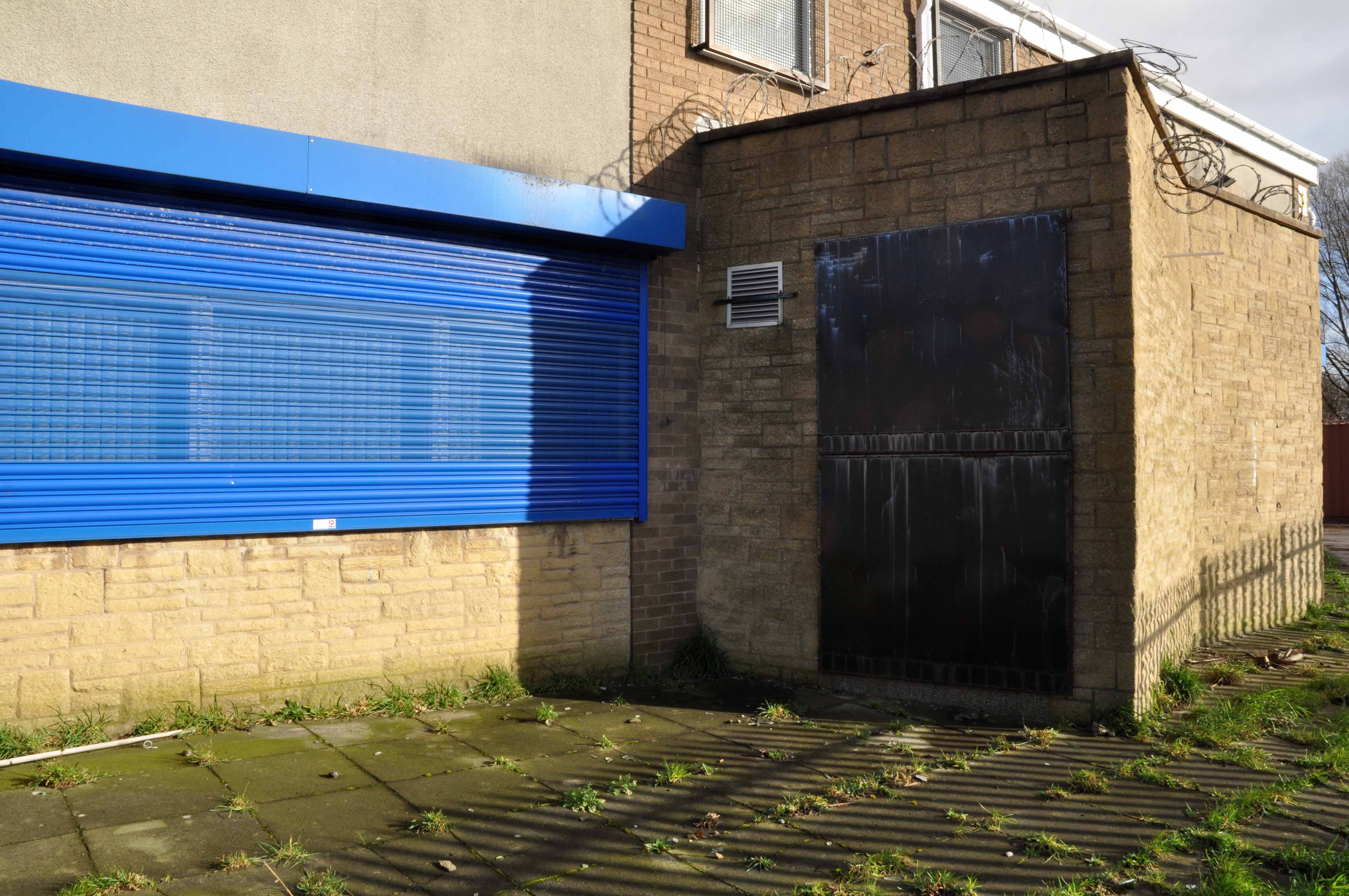
Exeter Close/Warmington Drive Manchester Longsight M12 4AT
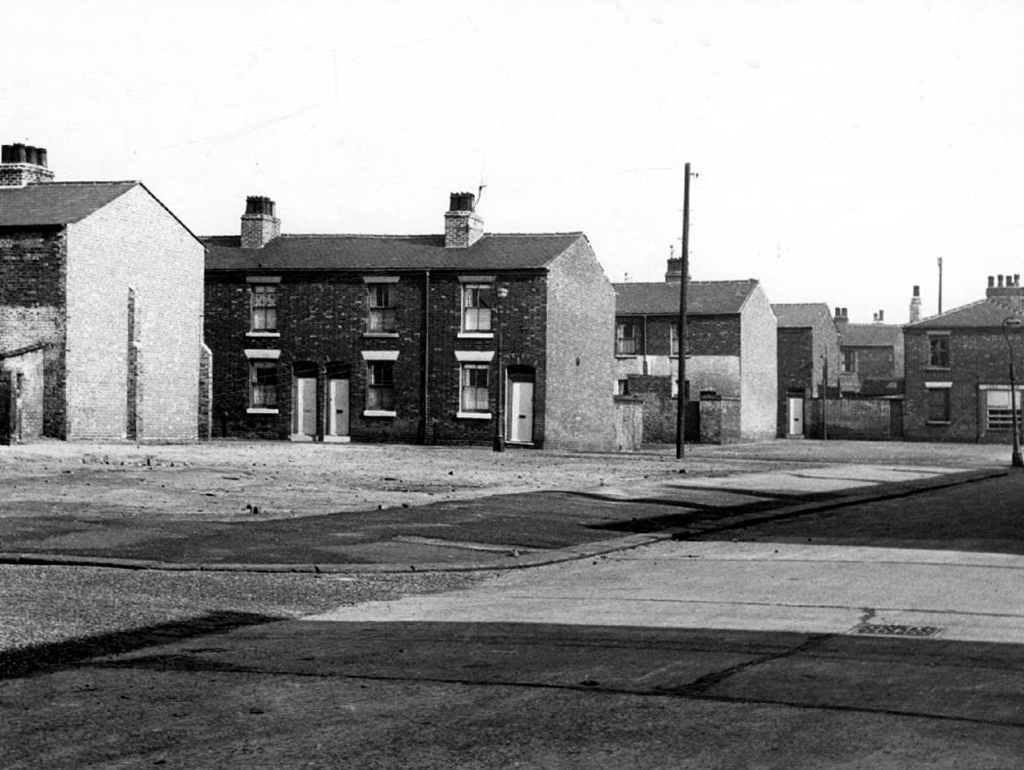
Once there was this.
Once there was that.
Then there wasn’t.
That’s just the way of it.
A dense web of streets awash with back to backs, jobs for all – in conditions perceived to be unfit for purpose.
Of a total of 201,627 present dwellings in Manchester, some 54,700, or 27.1 per cent., are estimated to be unfit. A comparison of slum clearance action taken by six major local authorities, Manchester, Leeds, Birmingham, Liverpool, Sheffield and Bristol, shows that for the five years ending 30th June, 1965, Manchester was top of the league, both in compulsory purchase orders confirmed and the number of houses demolished or closed.
Manchester’s figures -13,151 houses demolished or closed .
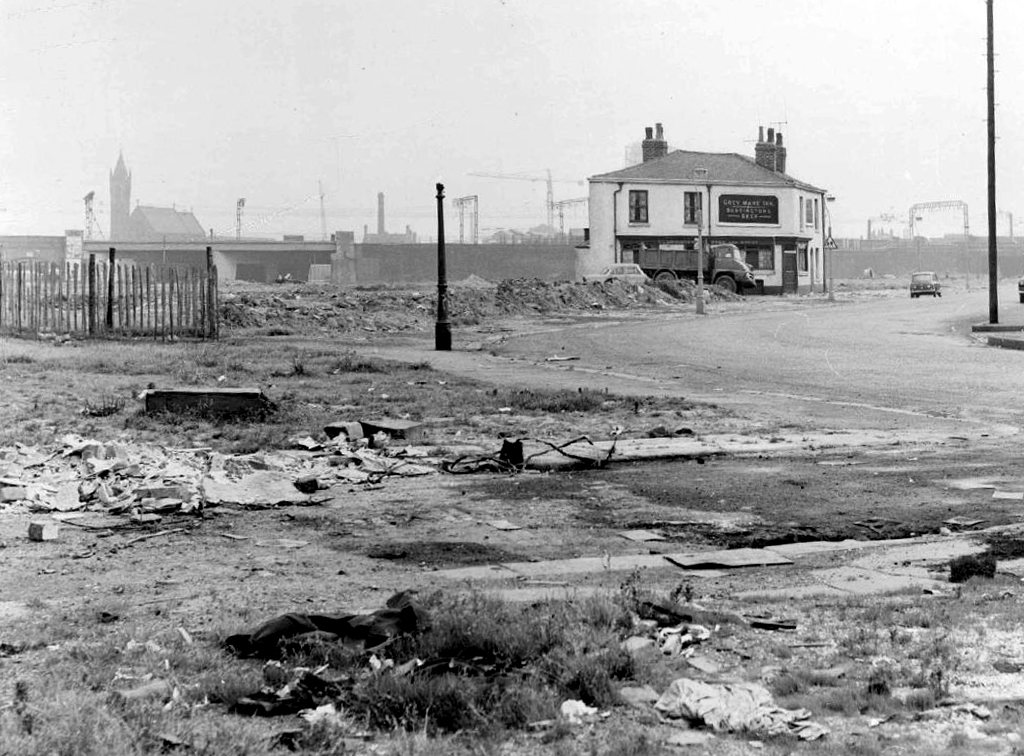
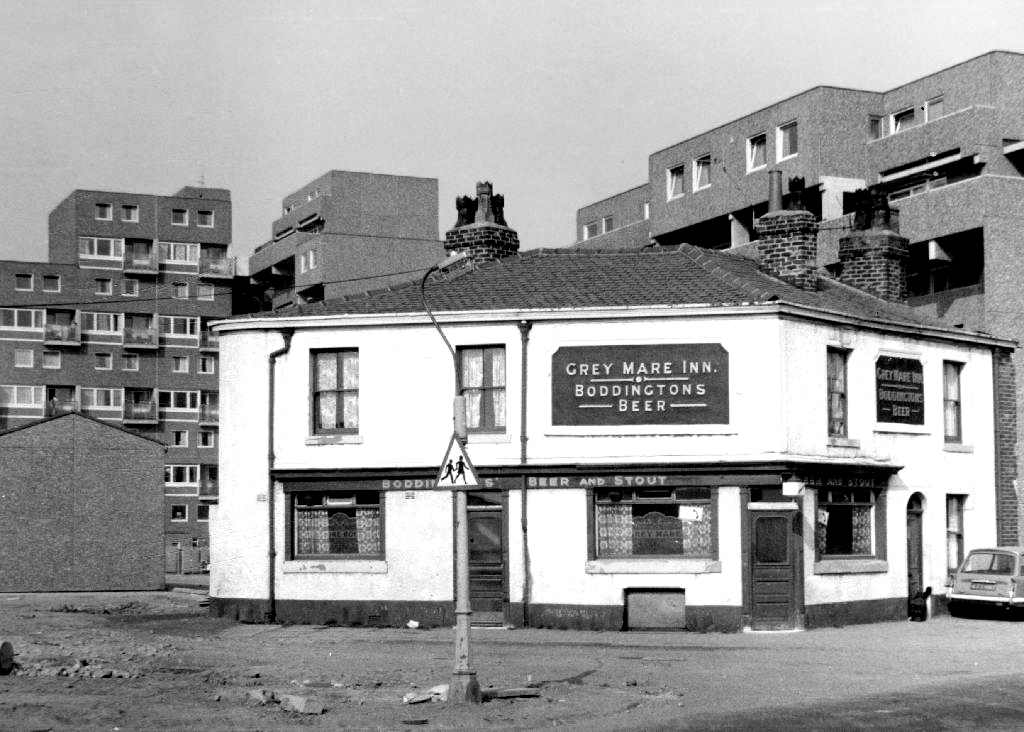
Whenever mass slum clearance was carried out, the pubs tended to remain, often for just a short time because – the story goes – demolition workers refused to touch them, as they wanted somewhere to drink during and after their shift.
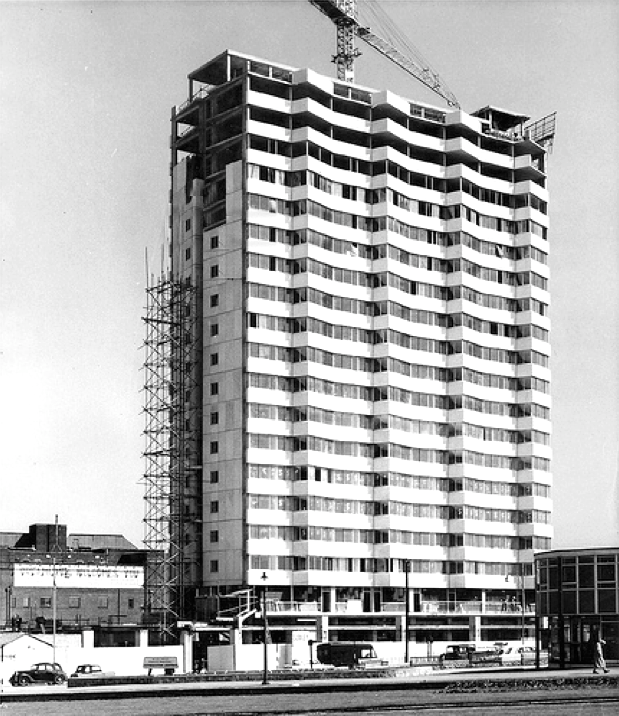
This vision of municipal modernity was short lived, the estate was demolished in the 1980s and the new Coverdale Estate was constructed on the site in 1994.
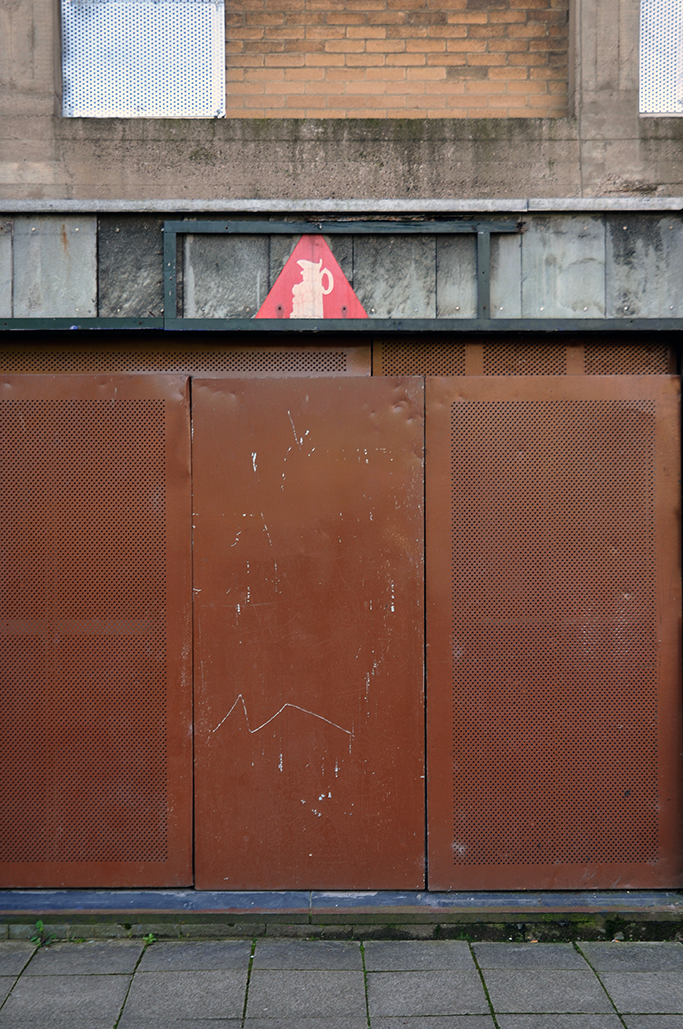
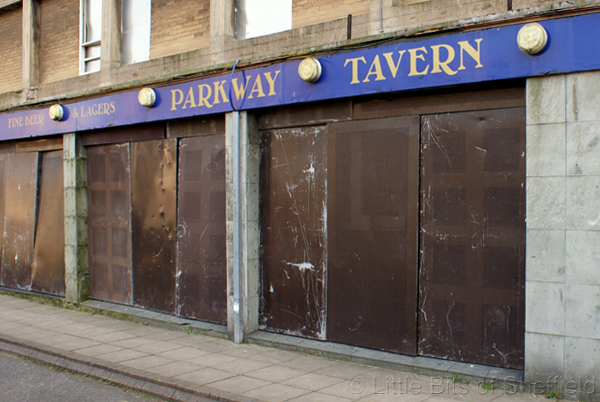
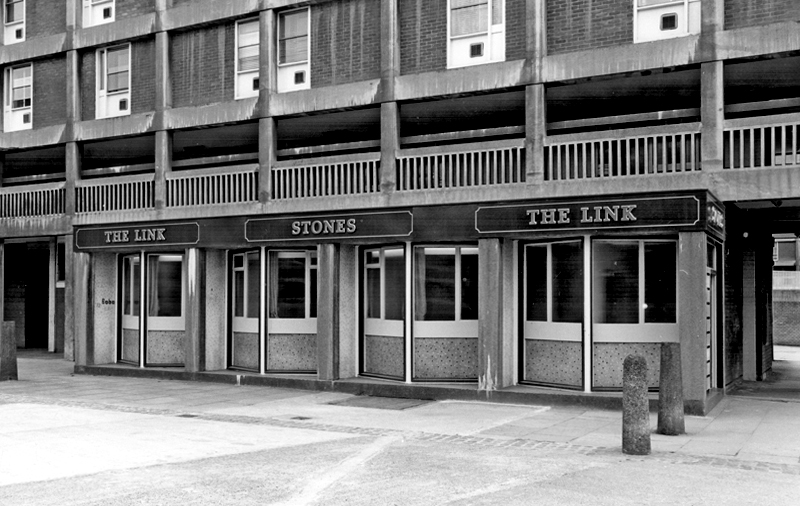
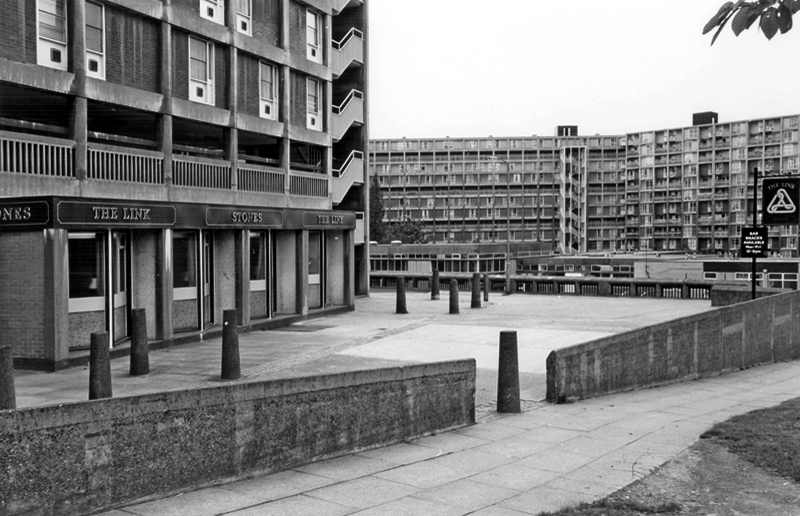
I’m a virtual visitor to the four pubs that served the population of Park Hill Estate.
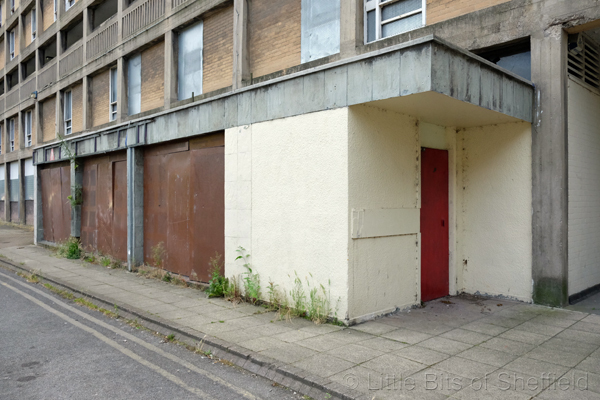
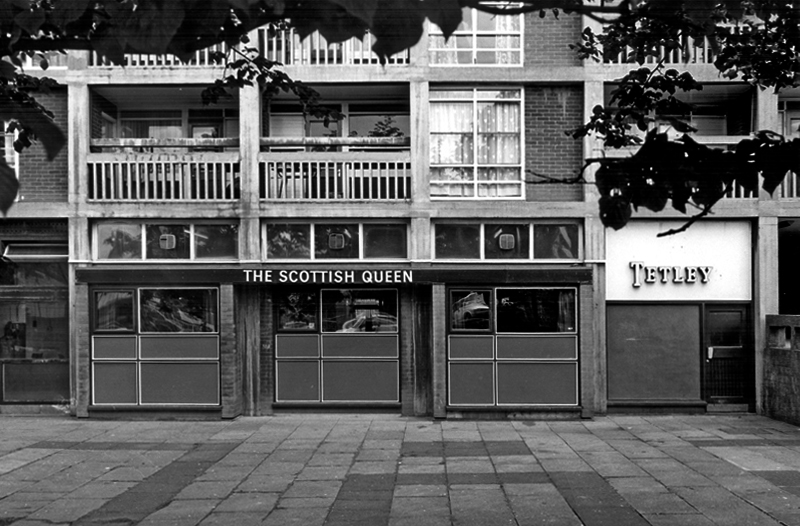
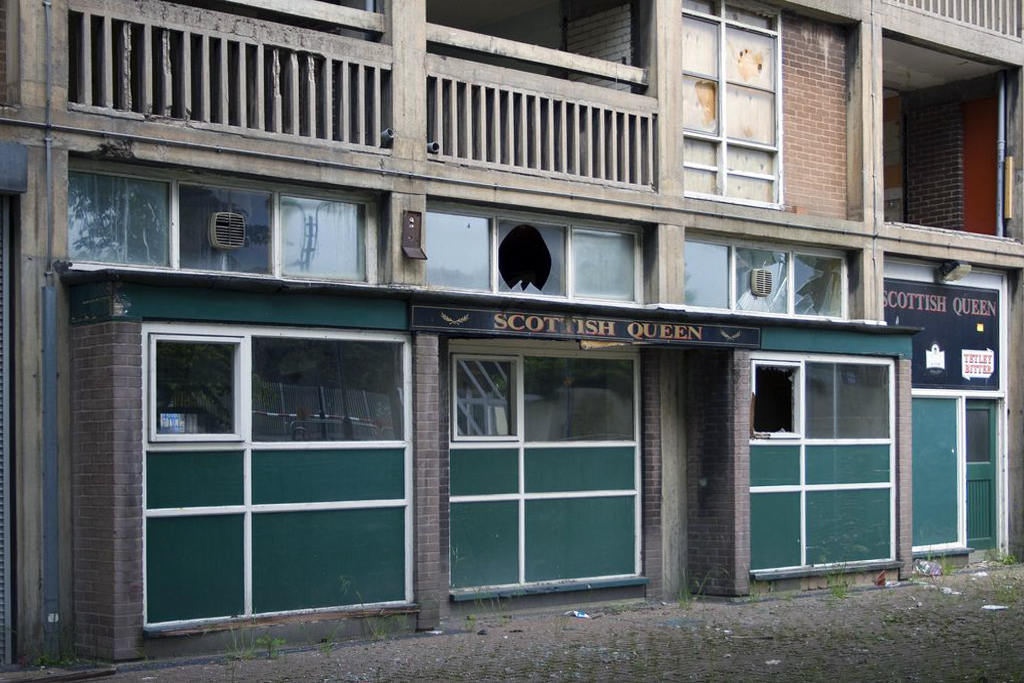
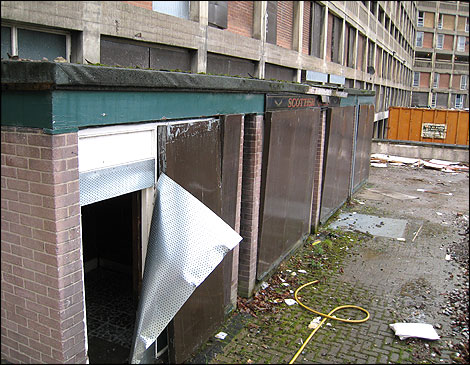
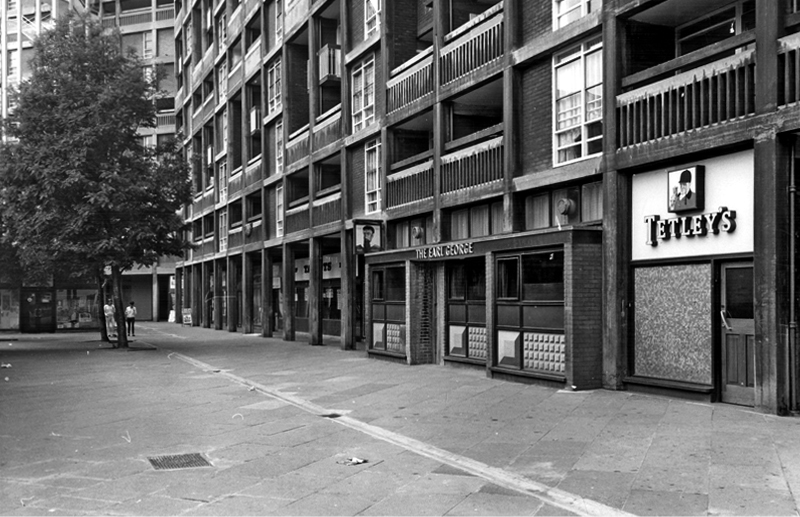
I arrived late on the scene from not too distant Manchester, sadly much too late to stop and have a pint in The Parkway, Scottish Queen, Link or Earl George.
Built in the 1960s when municipal architecture spoke of optimism and innovation, the story of the estate is an oft told tale of decline and renovation.
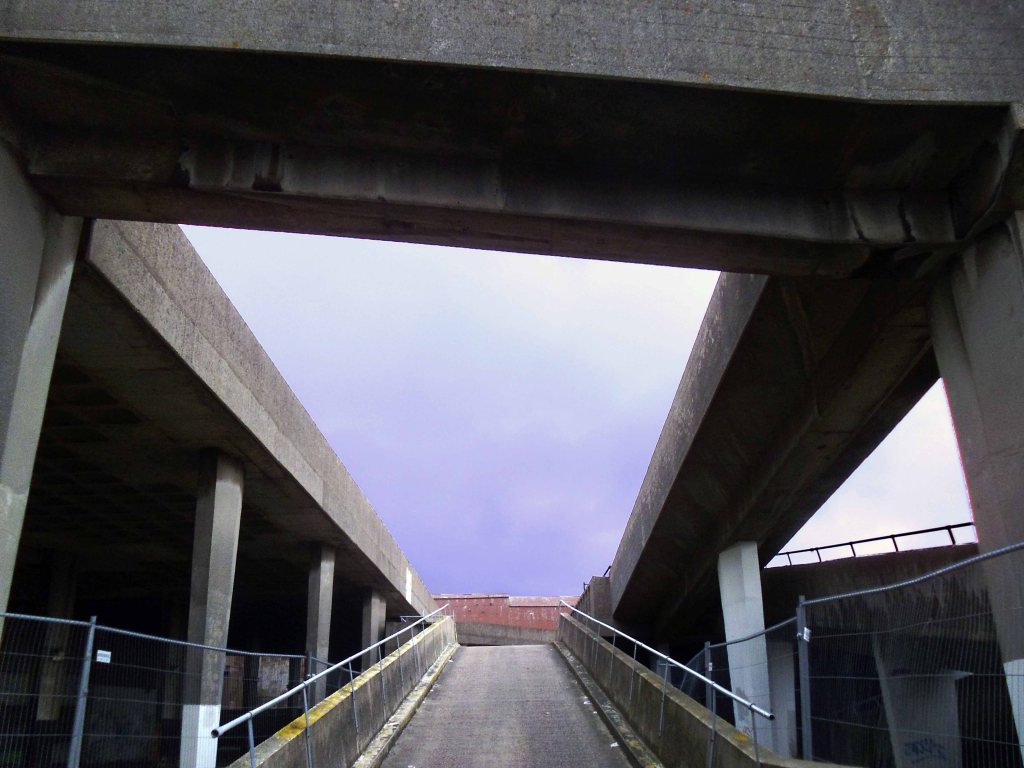
Grade II* listed the building’s structure has prevailed, the original social structures, tenants and consequently their pubs have not.
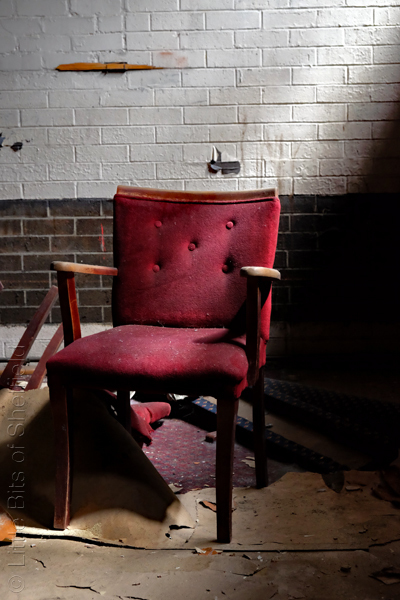
Piecing together photographs and the distant reminiscences of those that lived, breathed and drank in their pubs beneath the streets in the sky.
The Link on Park Hill had some colourful characters.
If you want any info on the Link next time you are in town see the man selling fishing tackle outside Castle Market ,he is called Chris Hardy his dad ran the link in the 60’s they used to have the Sun Inn on South St before Park Hill was built, tell Chris that Alan Betty’s cousin told you about him.
I once did a job outside the Scottish Queen and had a lump of concrete thrown at me! it landed about 2m away, that made me jump!
Joe Fox used to be the landlord in the George in the 70s, didn’t stand for any messing about.
Earl Francis! Of course! That was driving me mad; I was just going to ring my mum and ask her if she could remember what it was called. I think it closed in the early 90s, at the same time as the renovations of Hyde Park Walk and Terrace – 1990/1991, if I remember correctly.
The Earl Francis was still open in 1994 – the last time I went in there, but was dying on its feet.
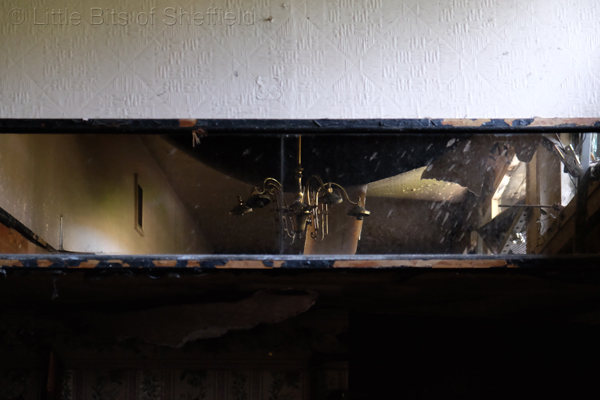
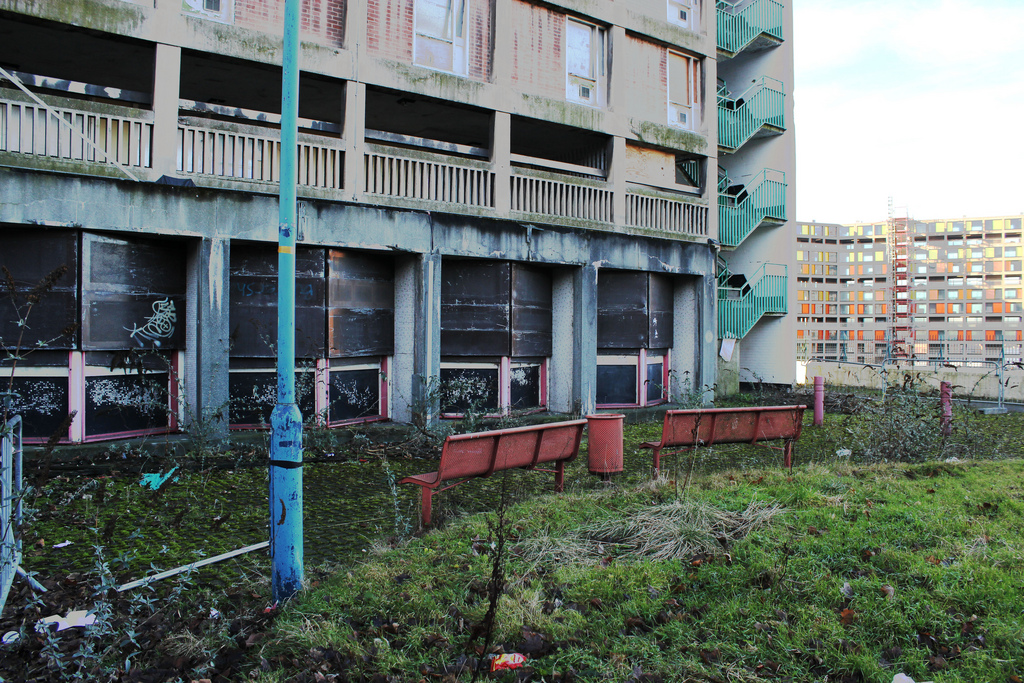
Park Hill is empty, and due to be refurbished.
It’s amazing to think that each complex had all these pubs and people actually went in them!Drove past Park Hill a few months ago at night and it didn’t look like a soul lived in them.
Not surprised the Tavern has closed down. Don’t know whether people are happy or sad about it…They looked like an absolute dive, but I’ve always wanted to go and have a look around them to see what they’re like close up!
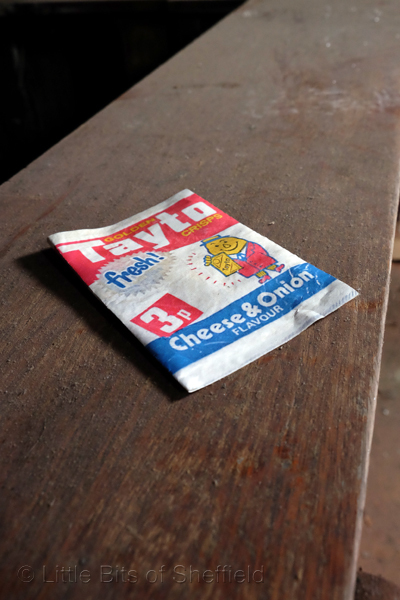
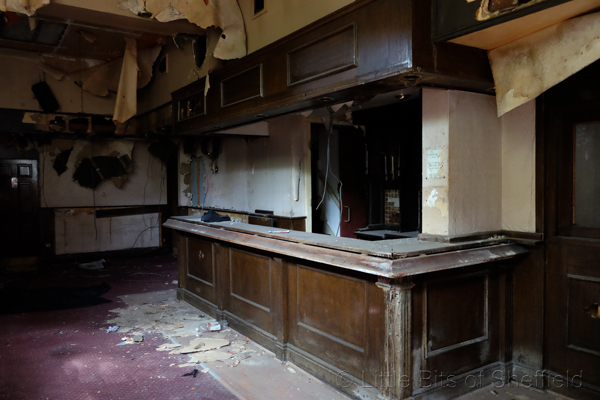
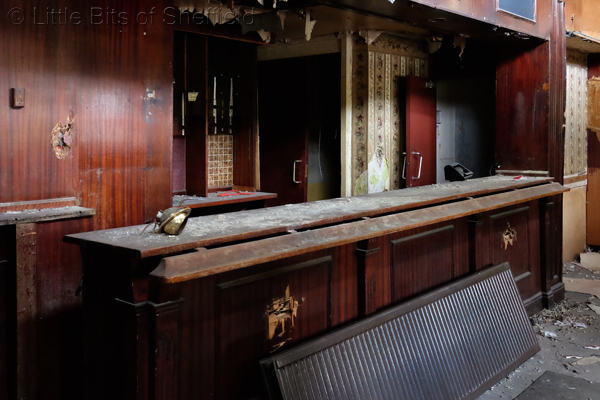
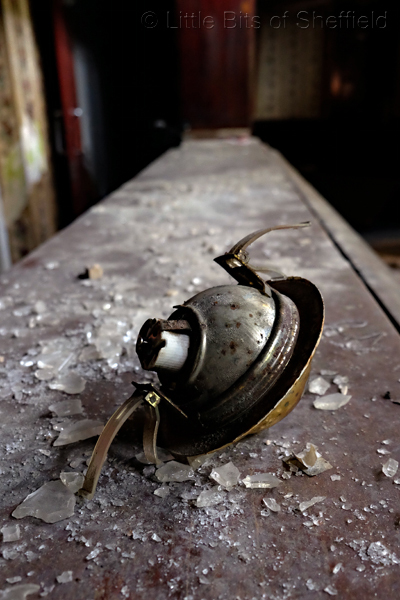
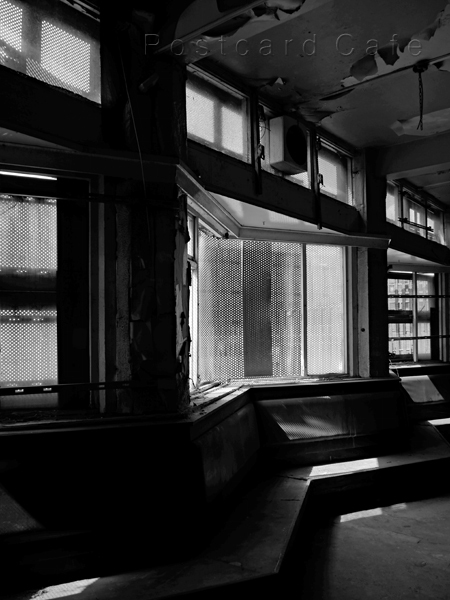
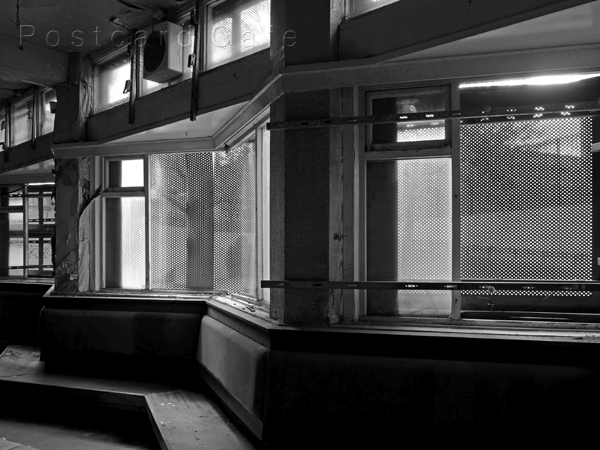
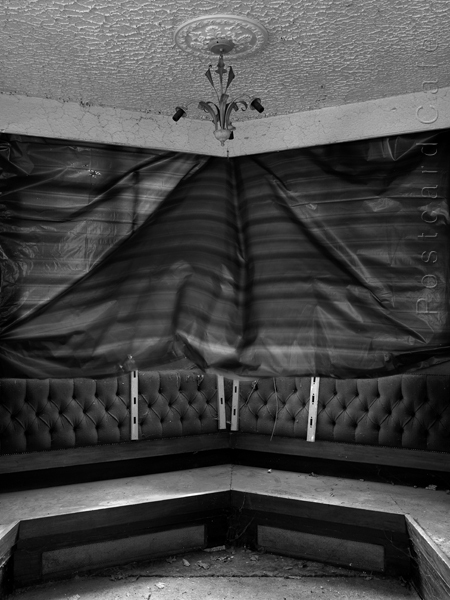
The flats and in particular the Parkway Tavern were used in the 2014 film ’71 – which was set in Northern Ireland. So this photograph showing the bar with a packet of crisps is actually slightly misleading because the crisp bag was only a printed film prop and what looks like broken glass on the bar is fake! – Mr C
A new pub could open on the site of what was once voted Britain’s second most dangerous watering hole. The Scottish Queen at Park Hill was notorious for violence, with only the most hardy drinkers brave enough to cross its threshold.
April 2015 saw the launch of a new exhibition space in Sheffield, housed within the former Scottish Queen pub at the Brutalist icon that is the Park Hill estate. The Scottish Queen hosted a temporary programme of exhibitions, events and residencies in partnership with a range of artists and organisations from across Sheffield supported by S1 Artspace.
Possibly the second toughest art space in Britain.

























 Modern Mooch