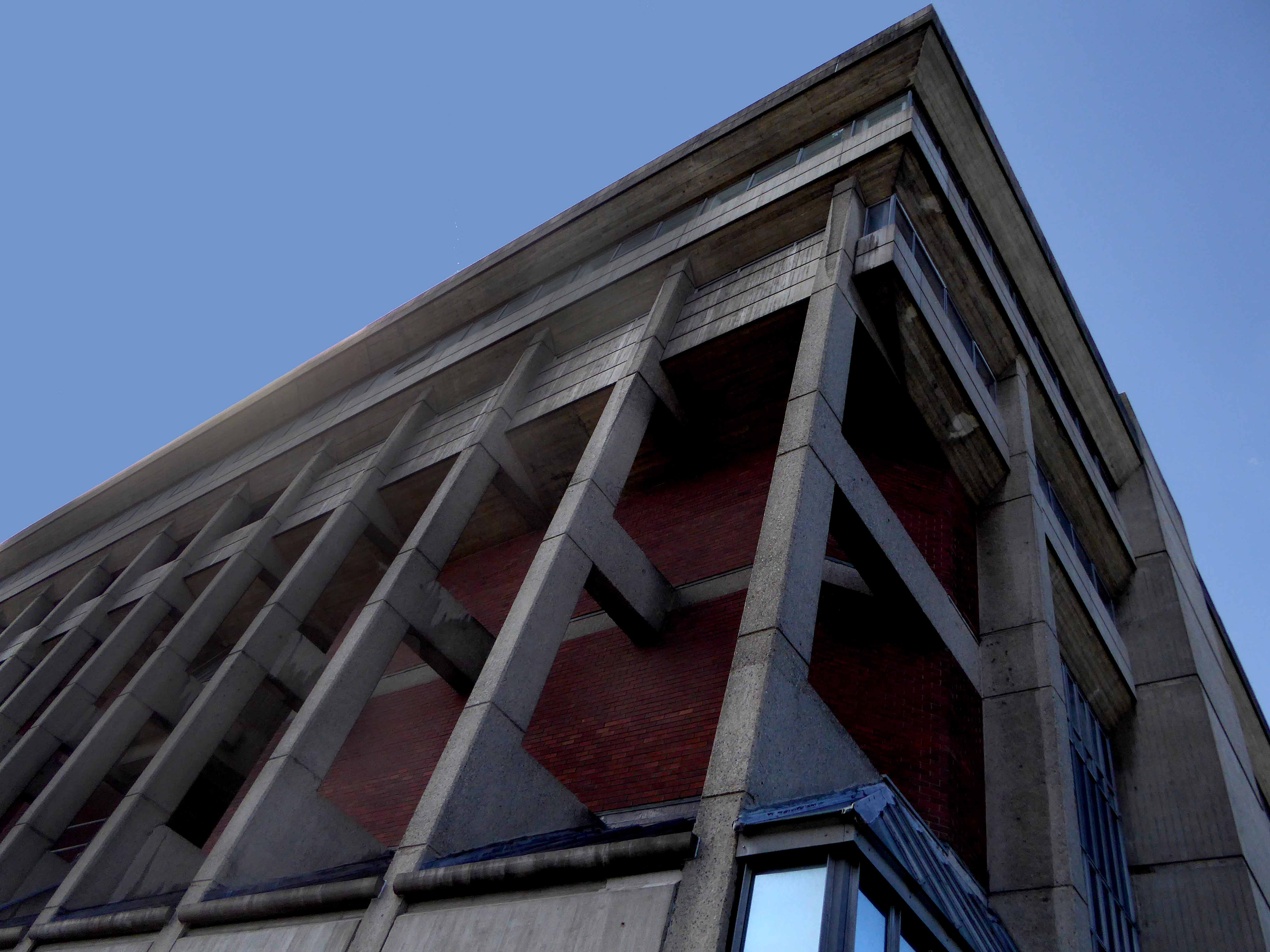
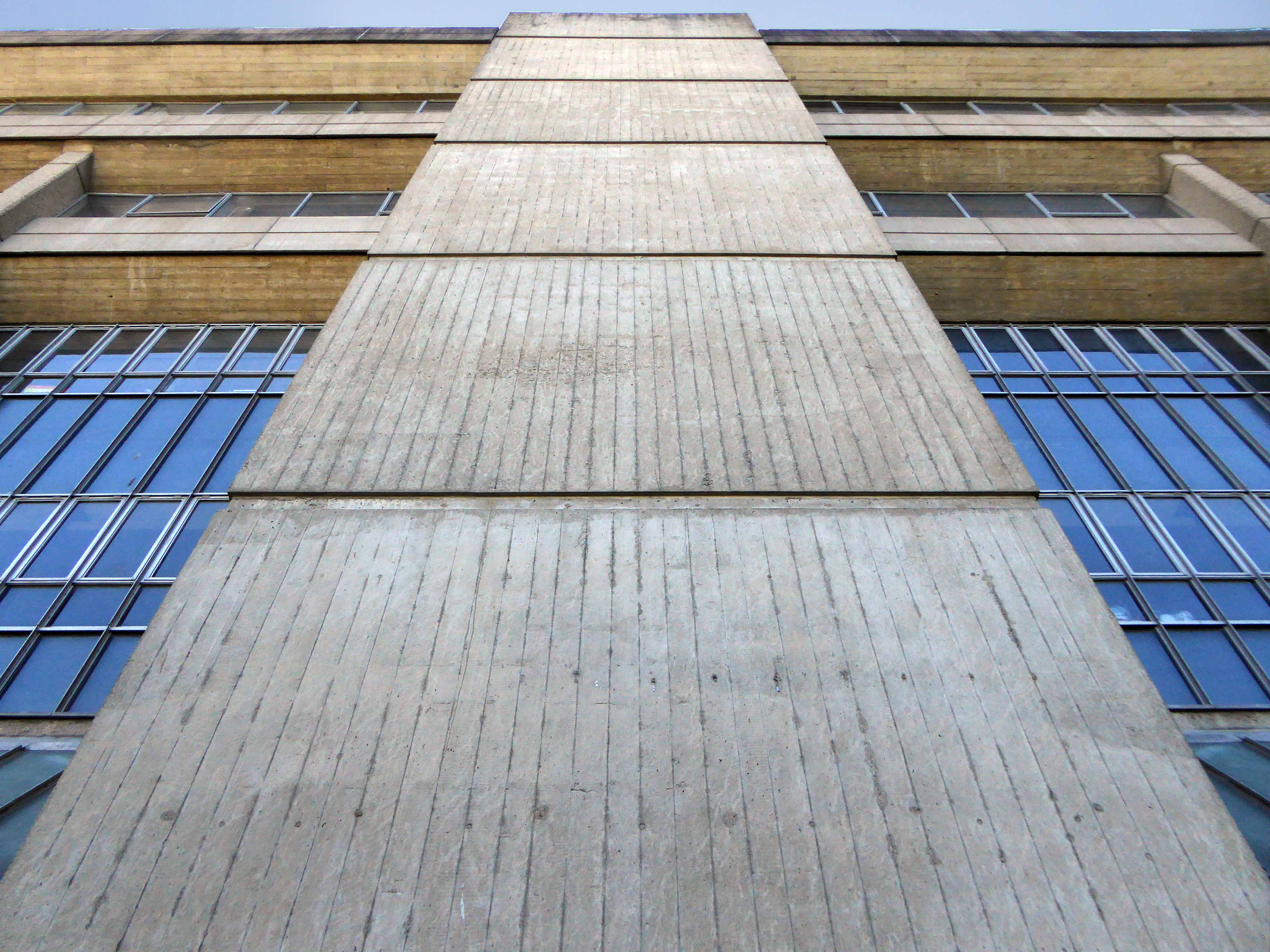
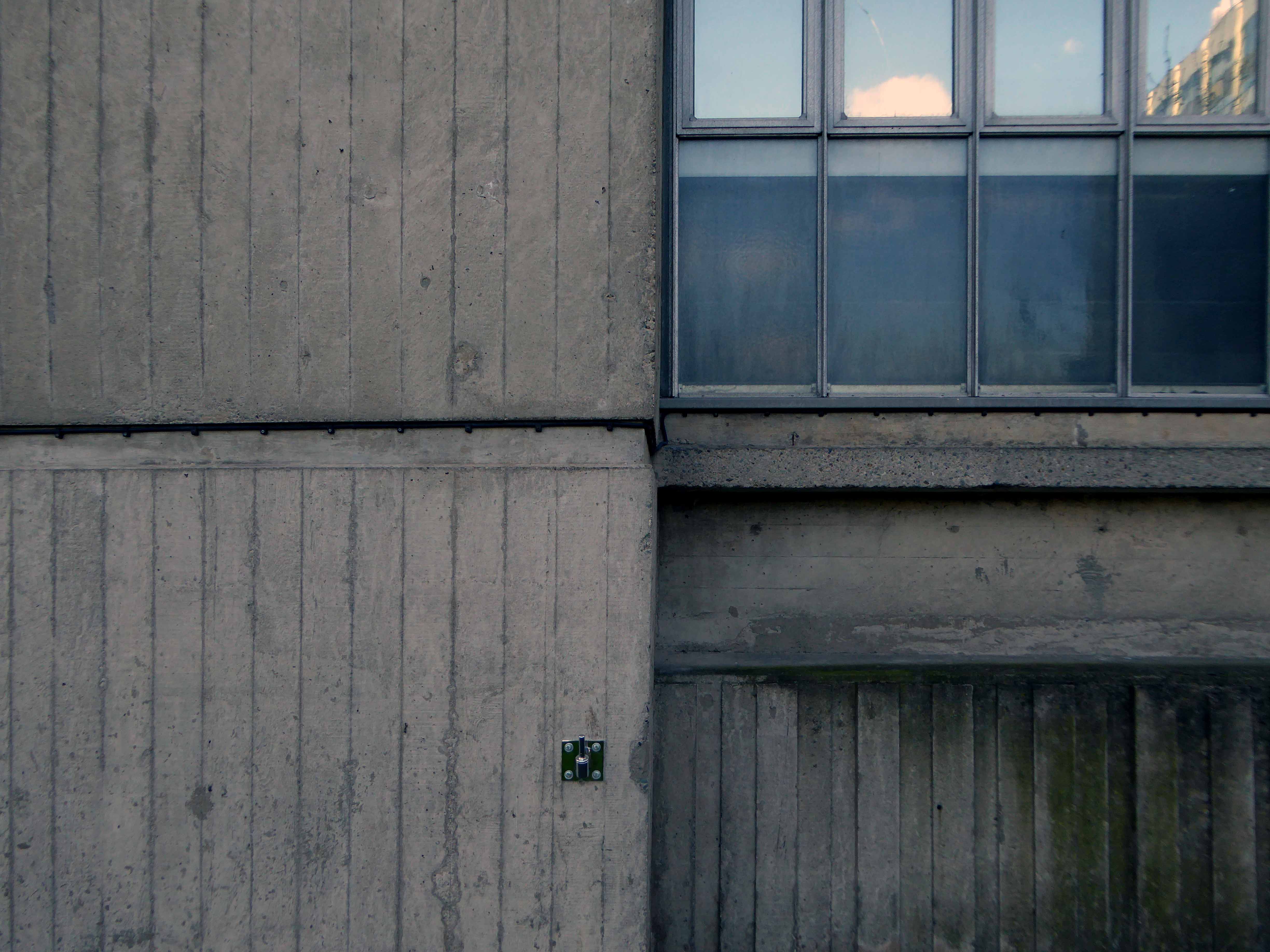
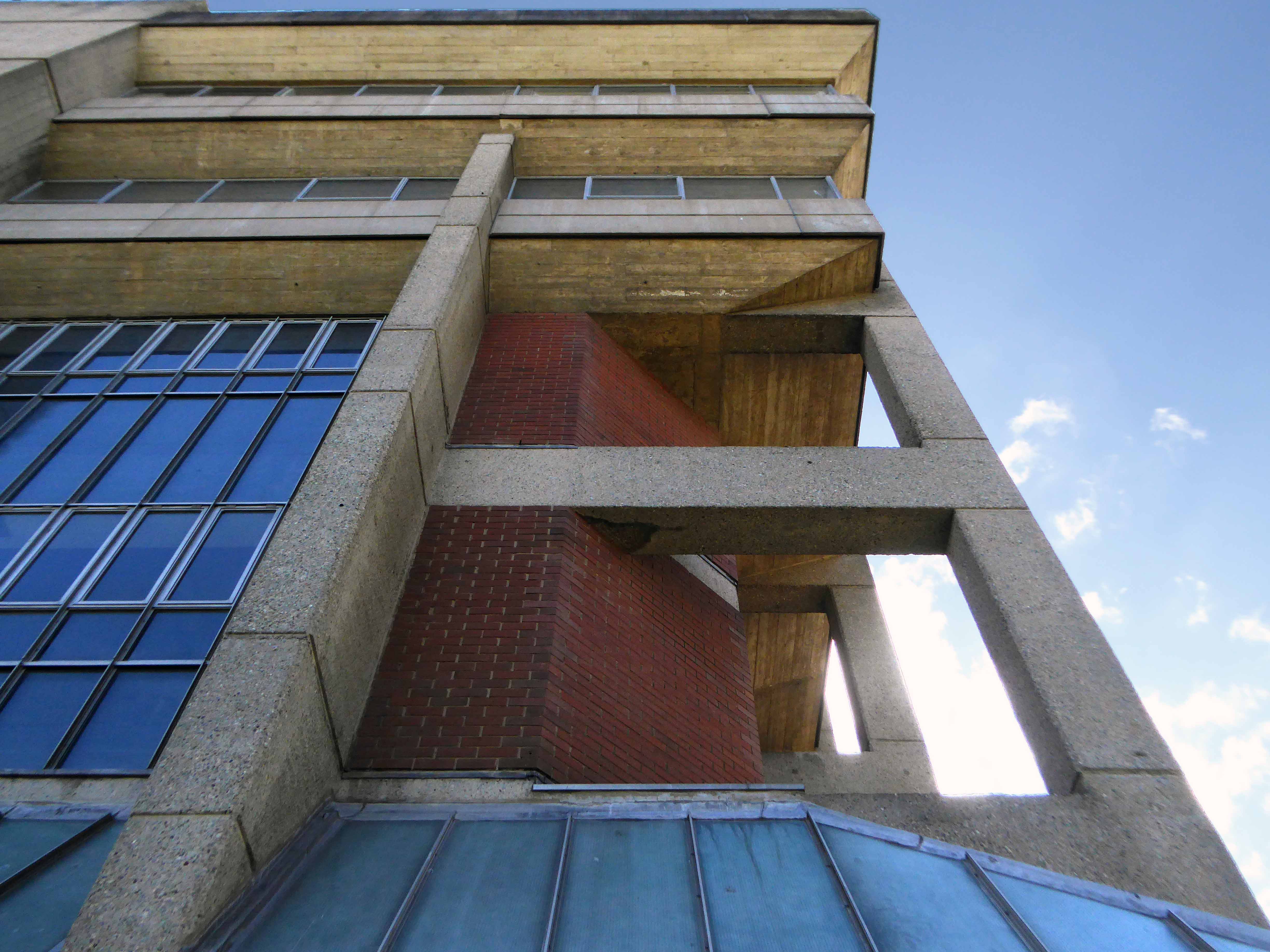
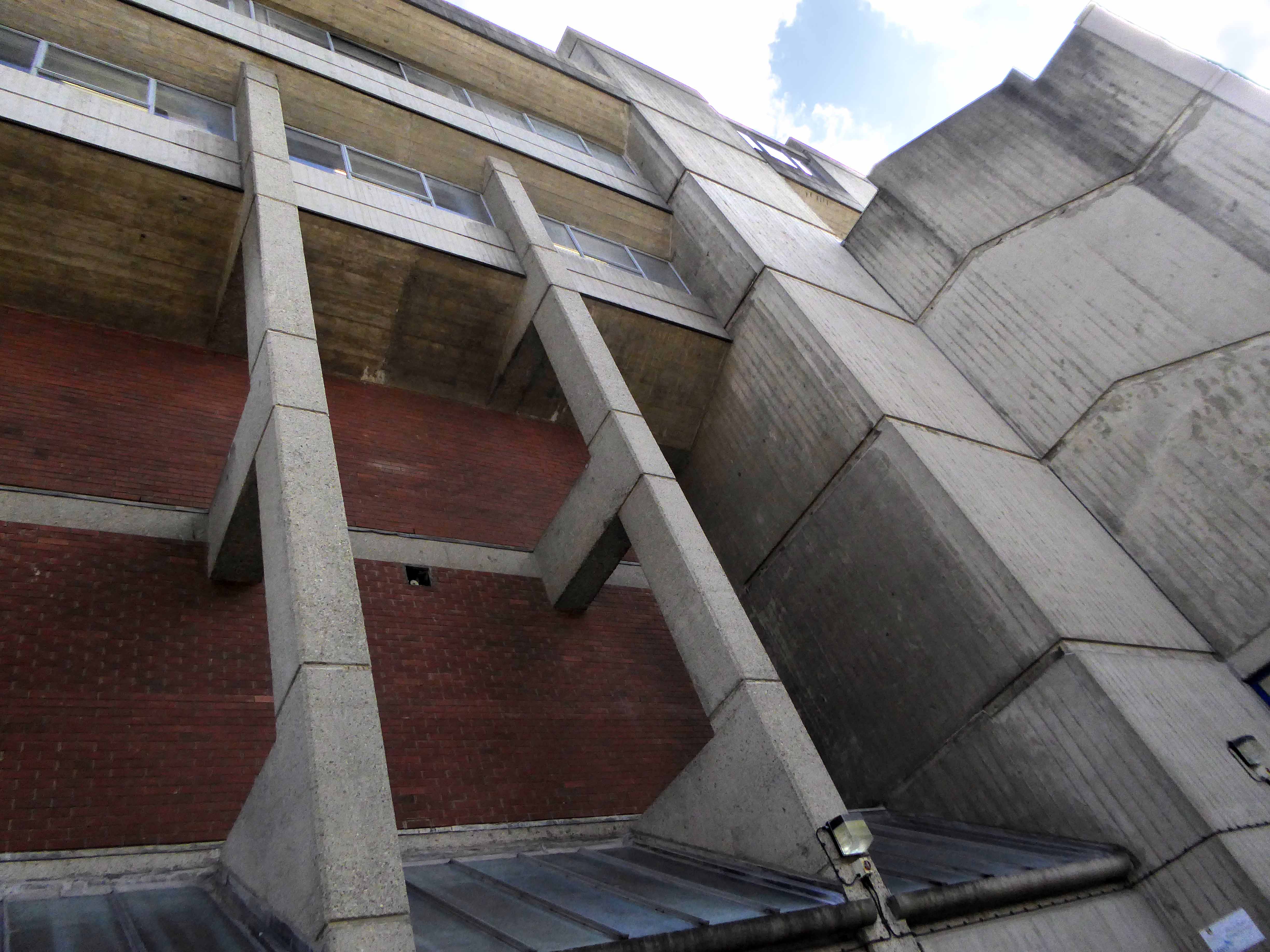
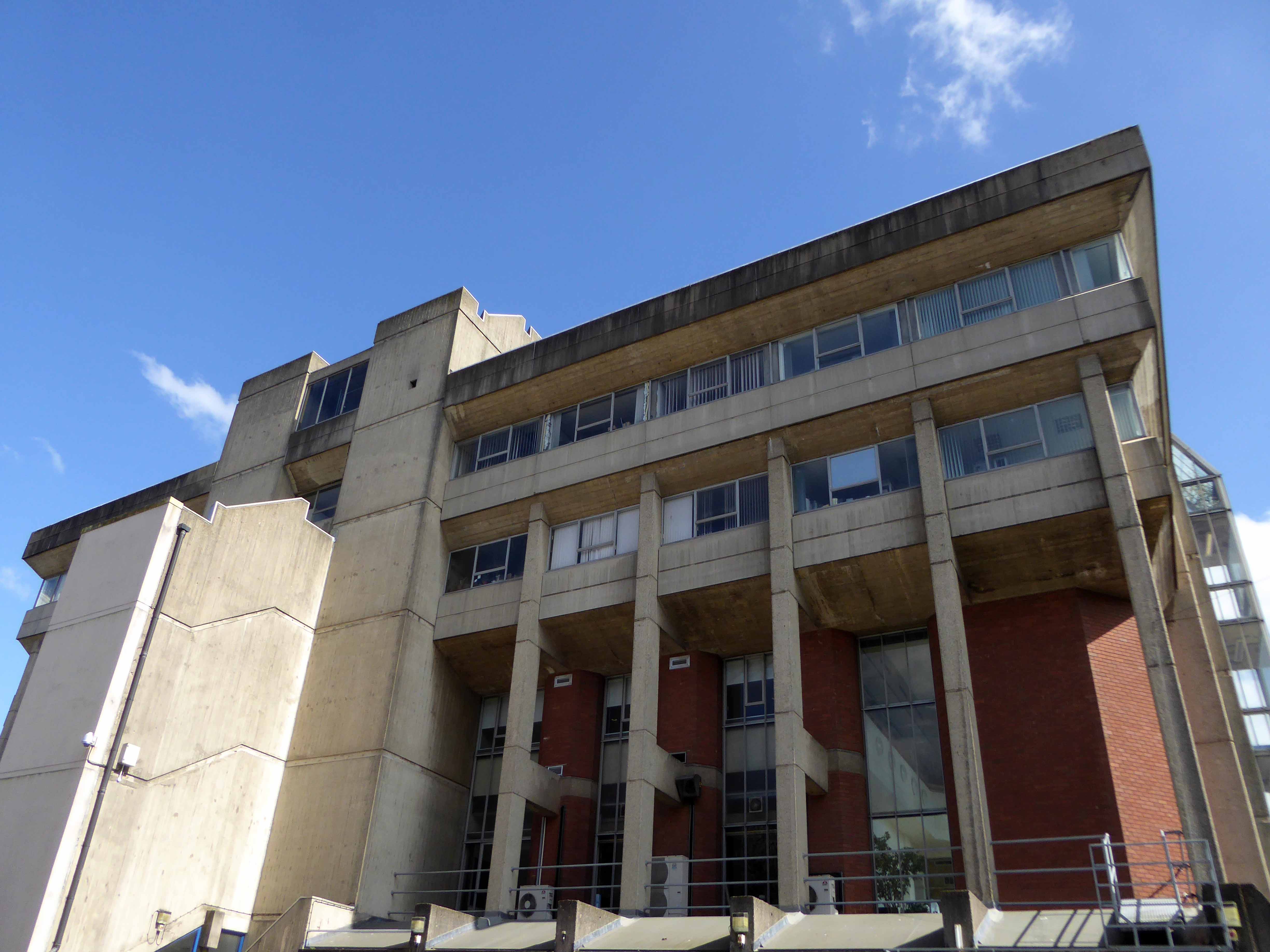
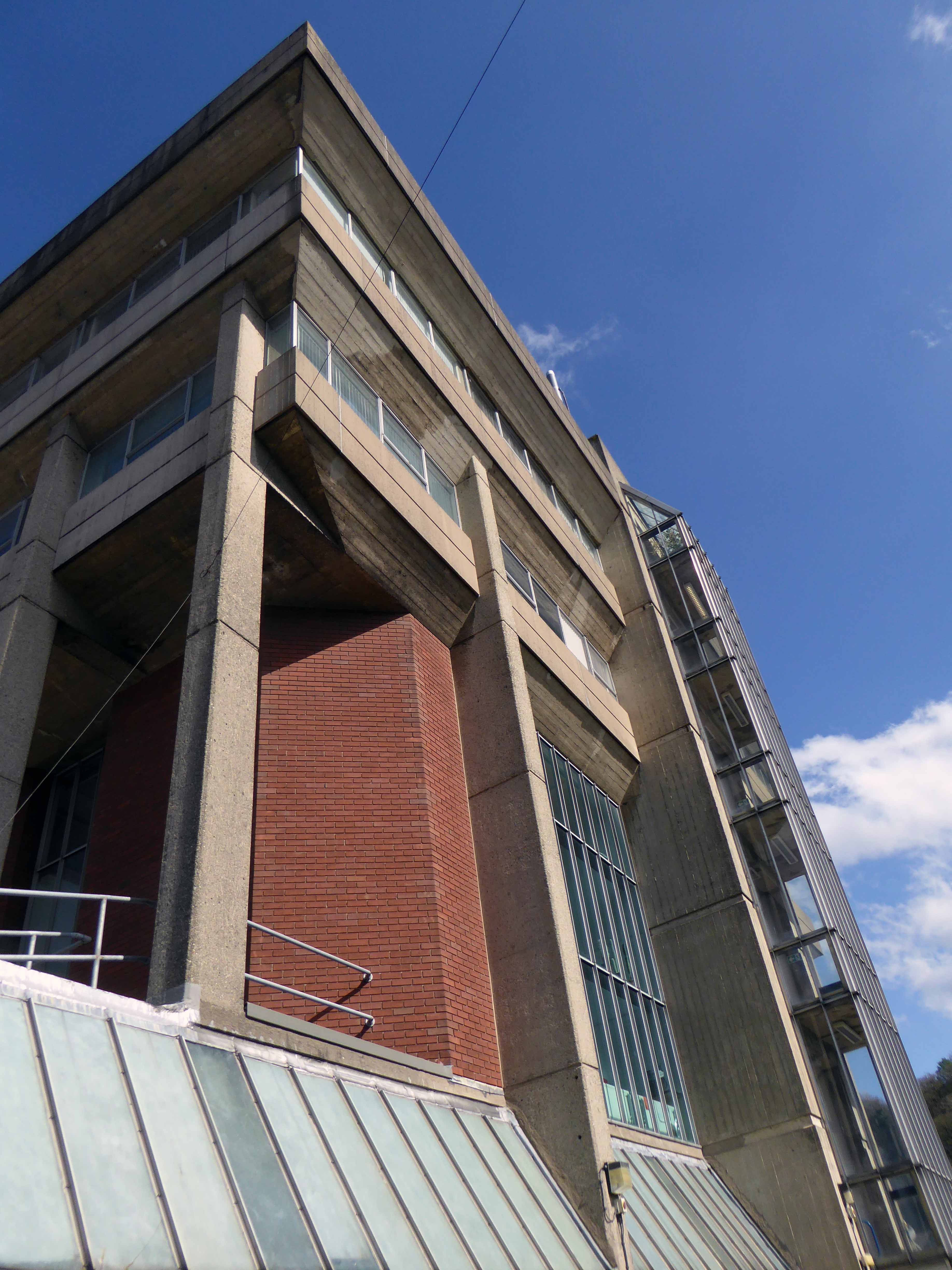
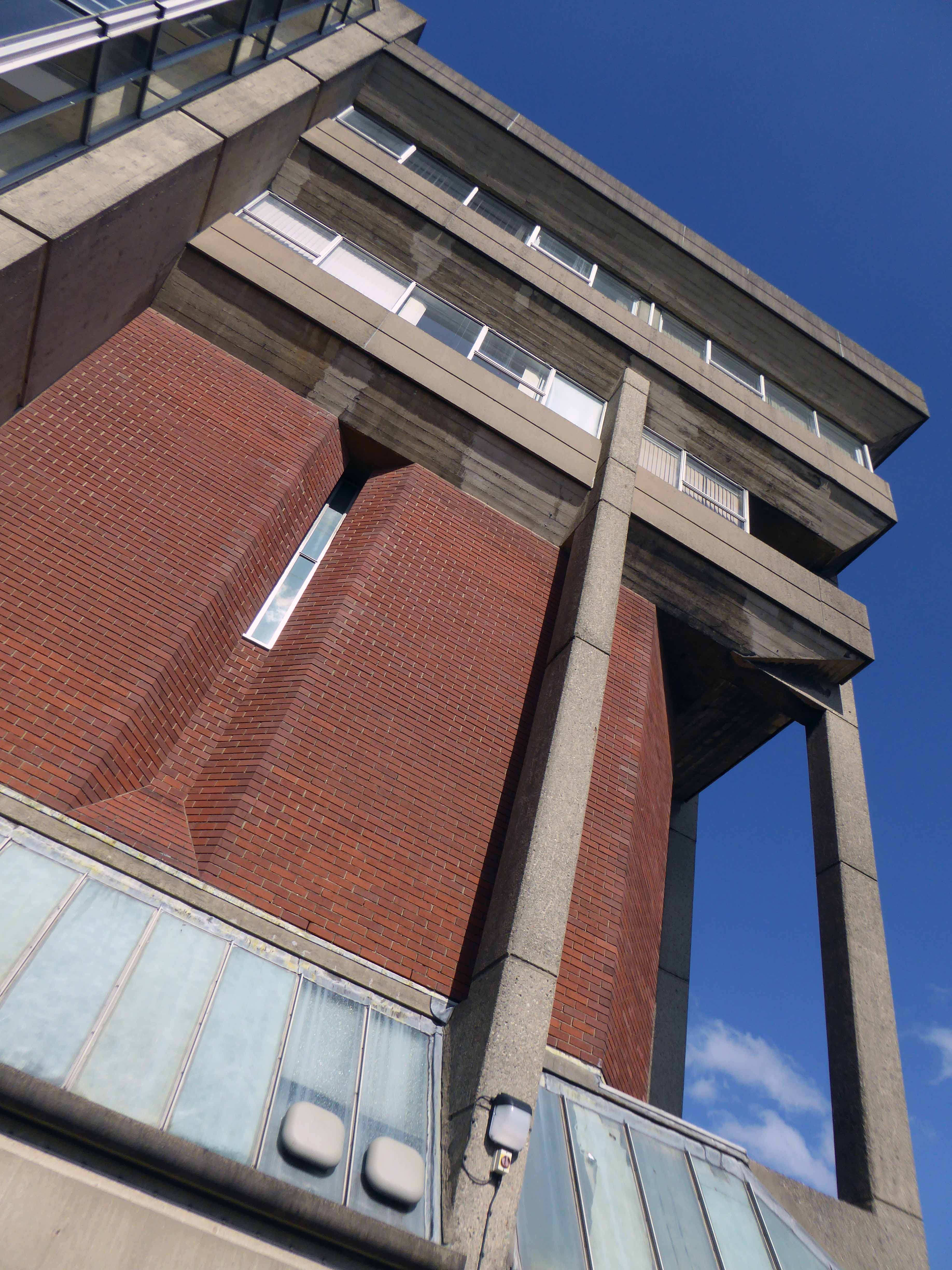
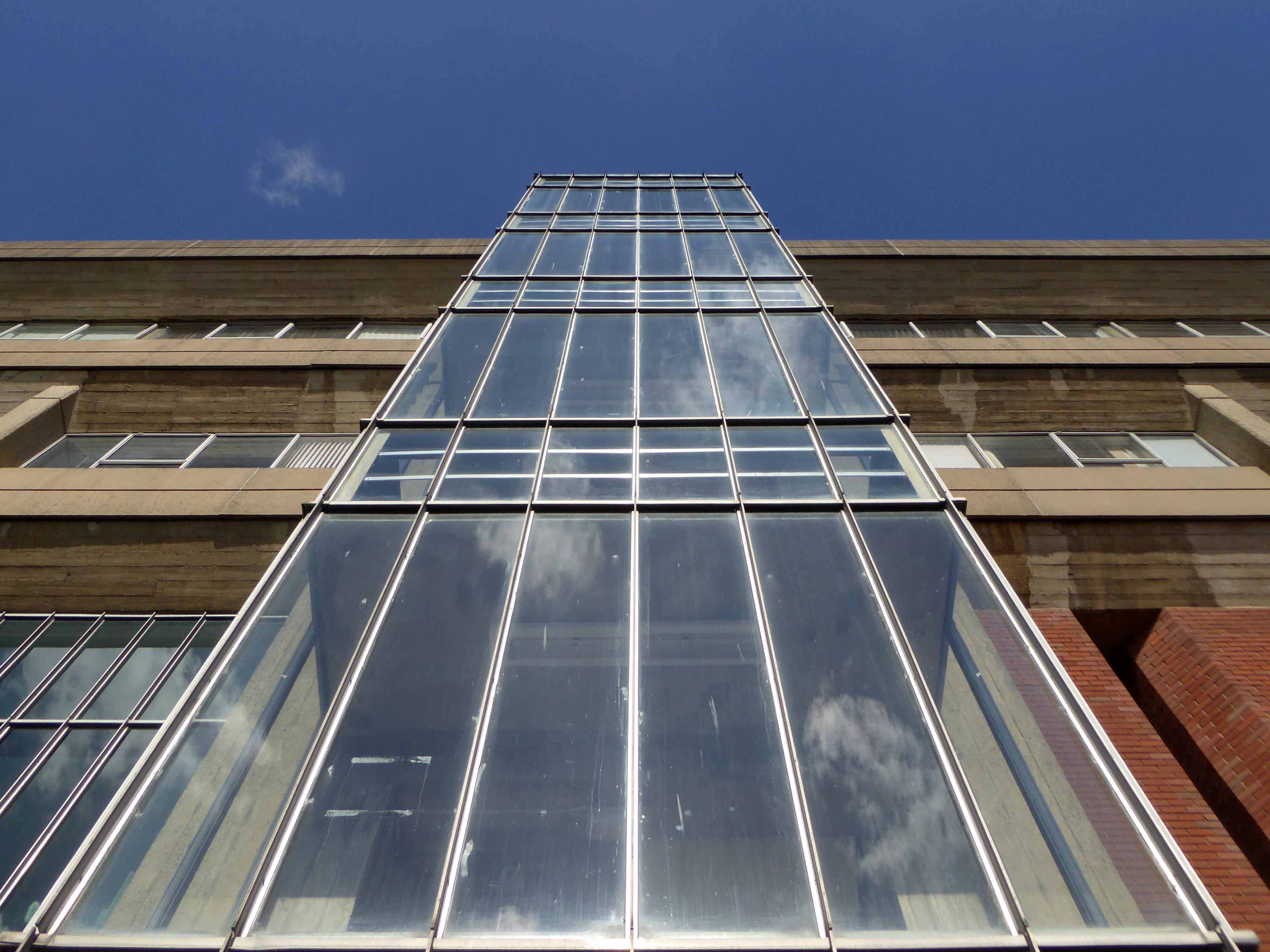
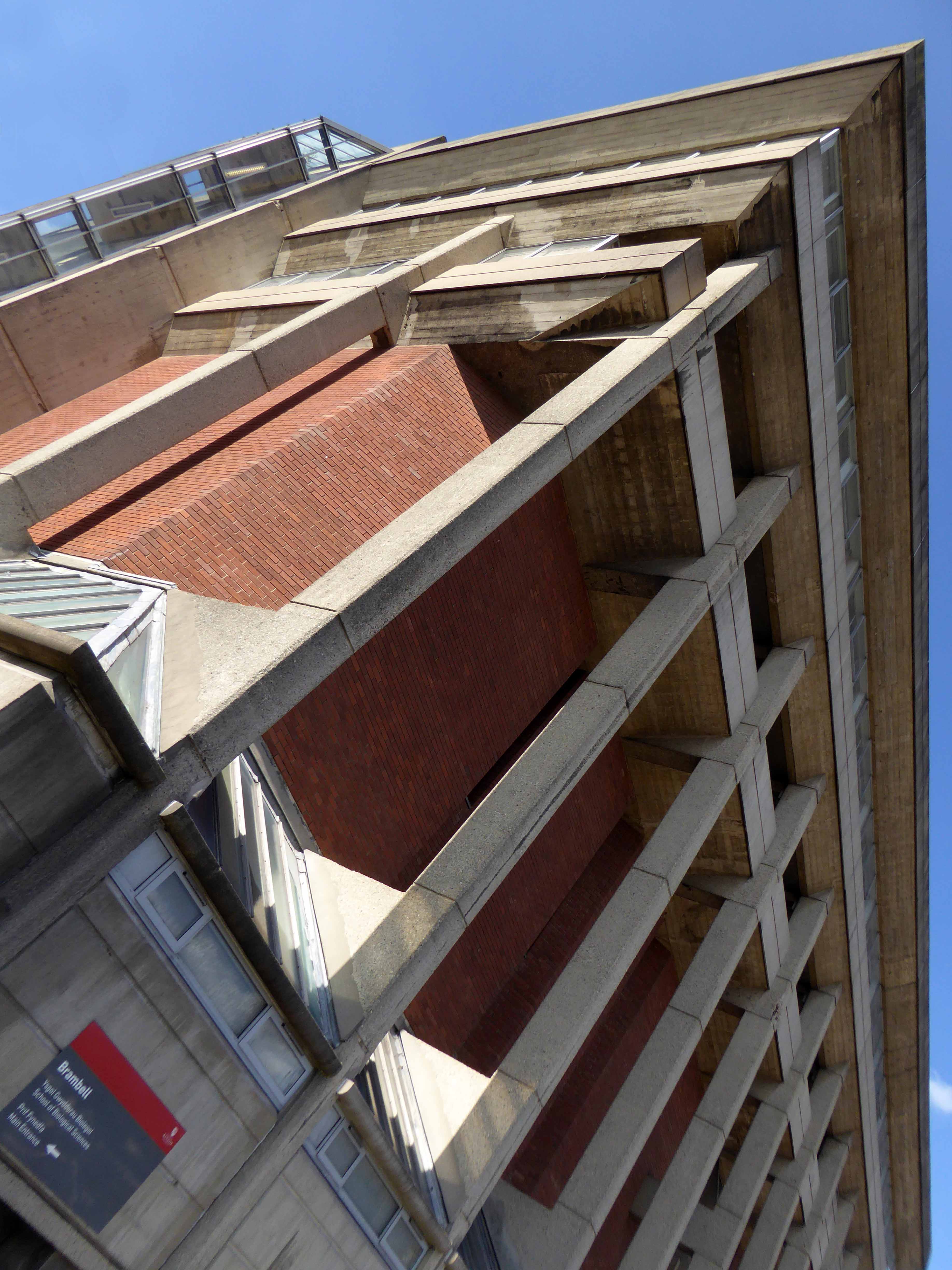
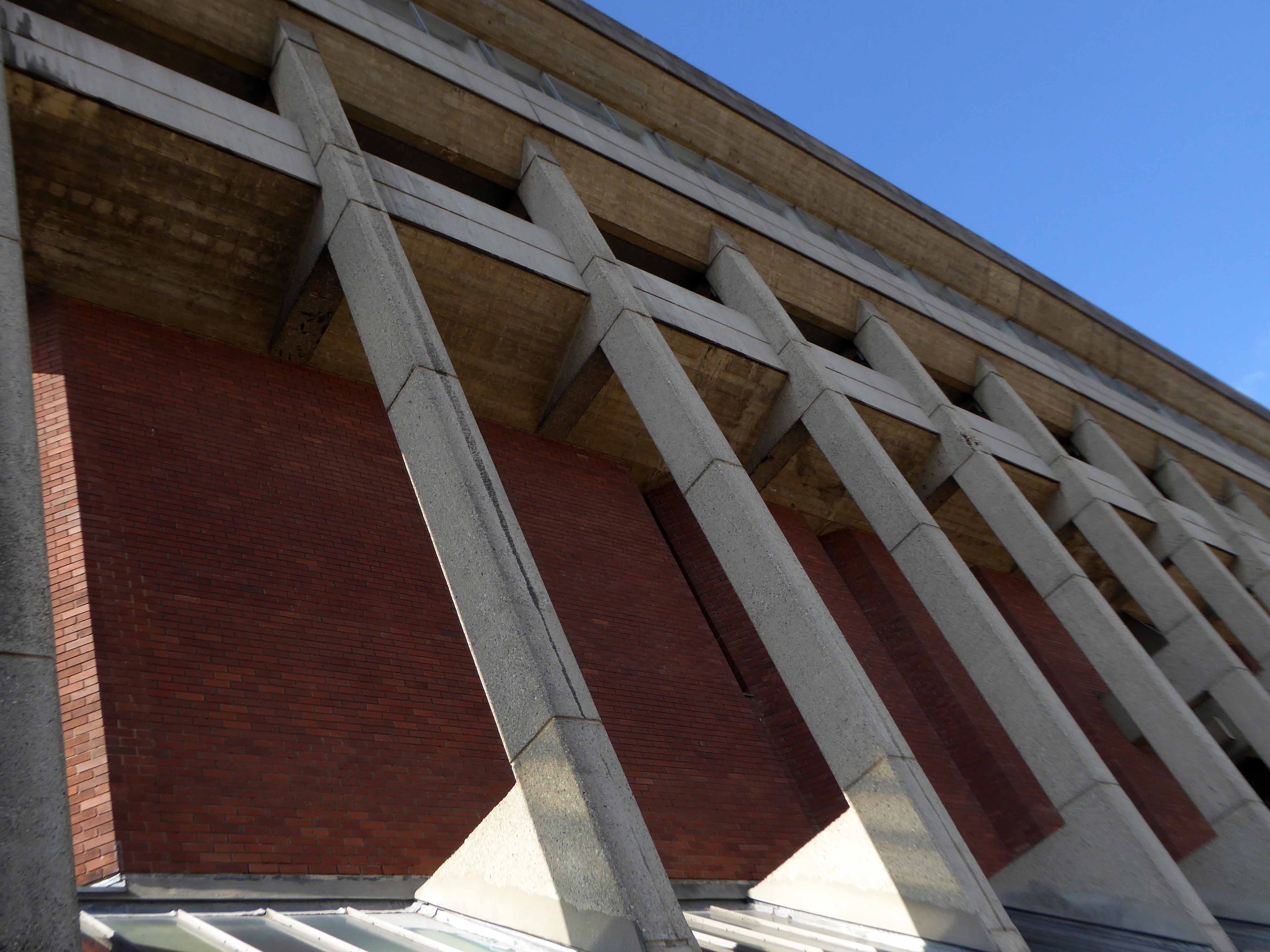
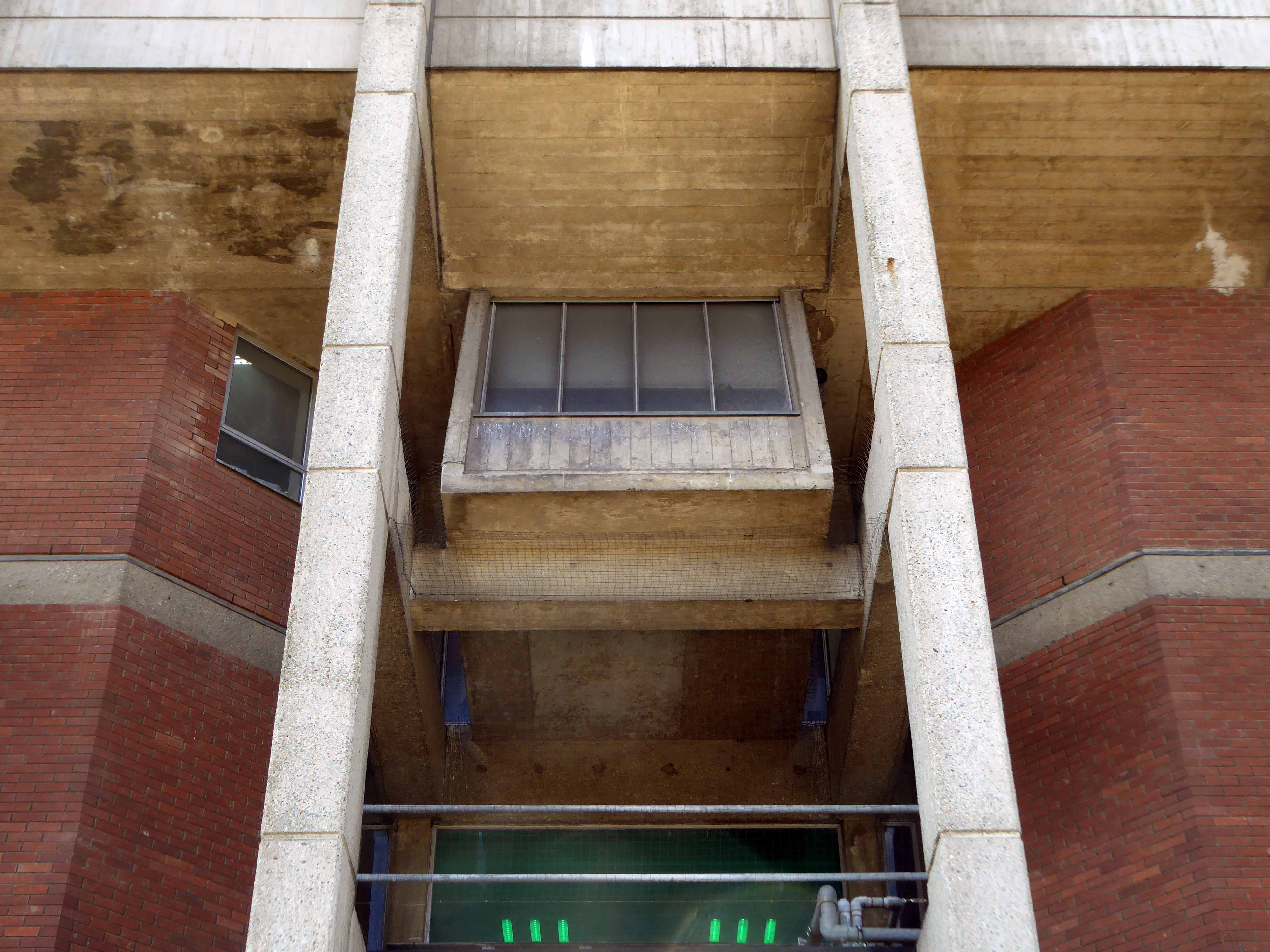
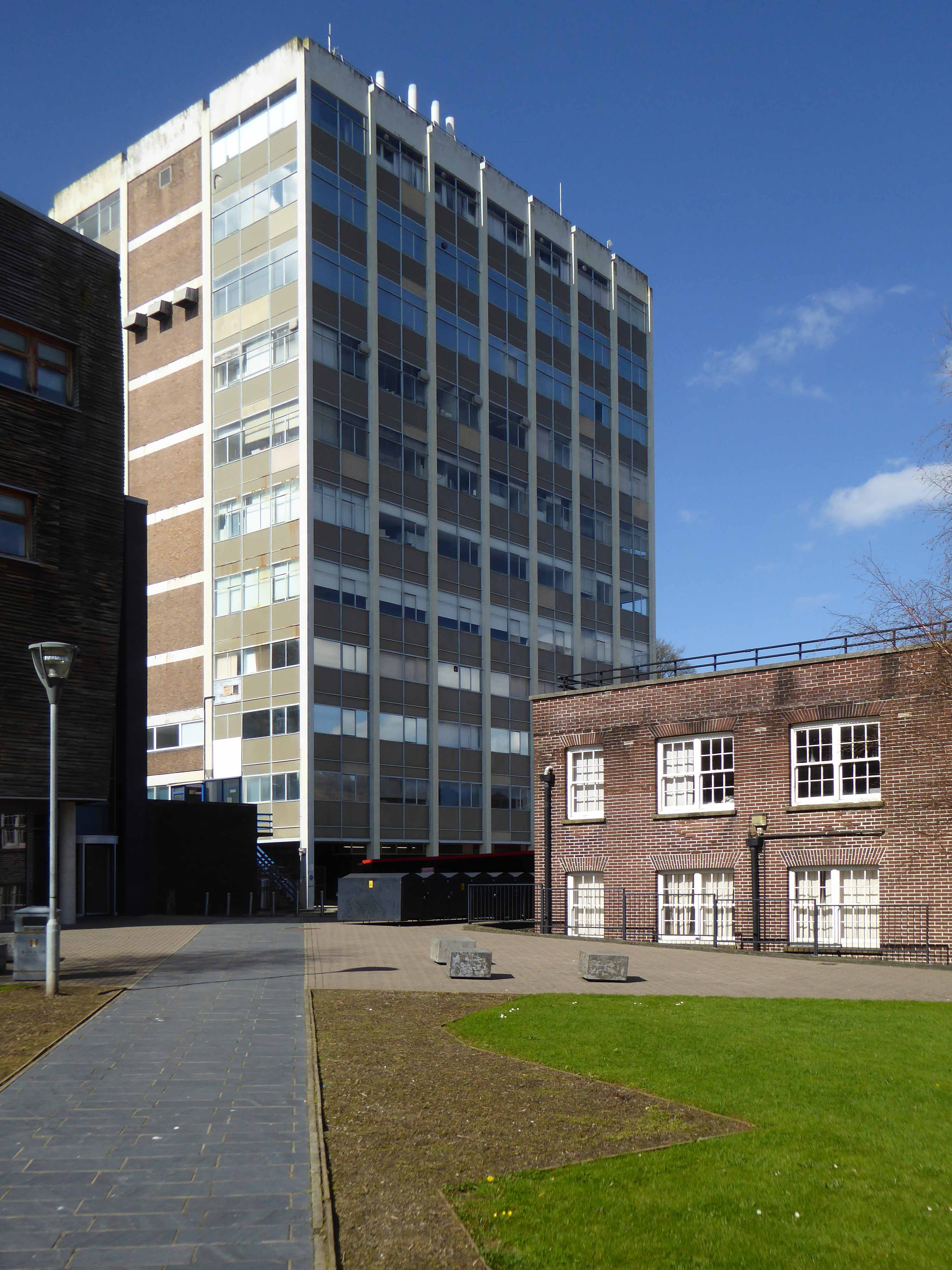
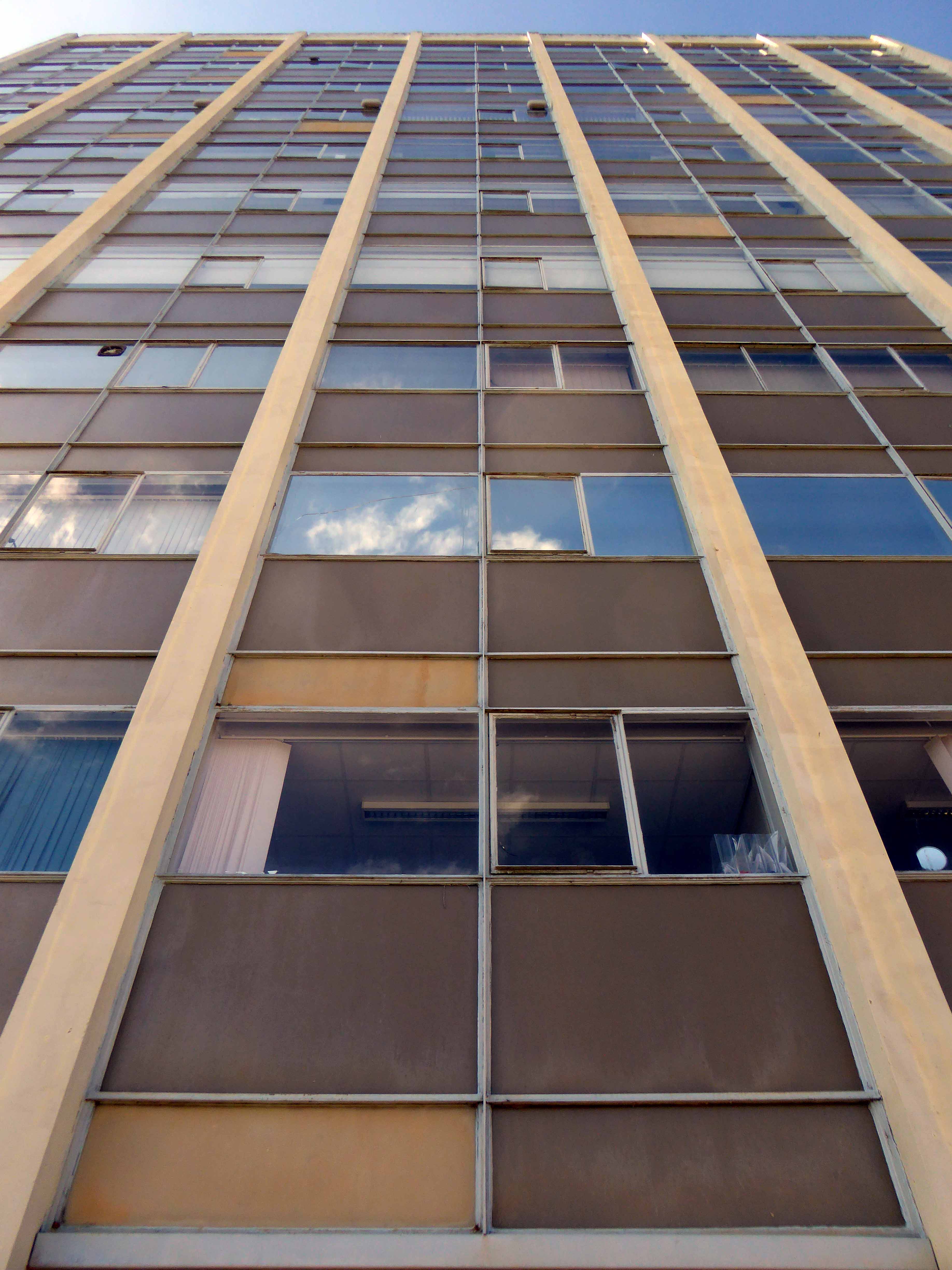
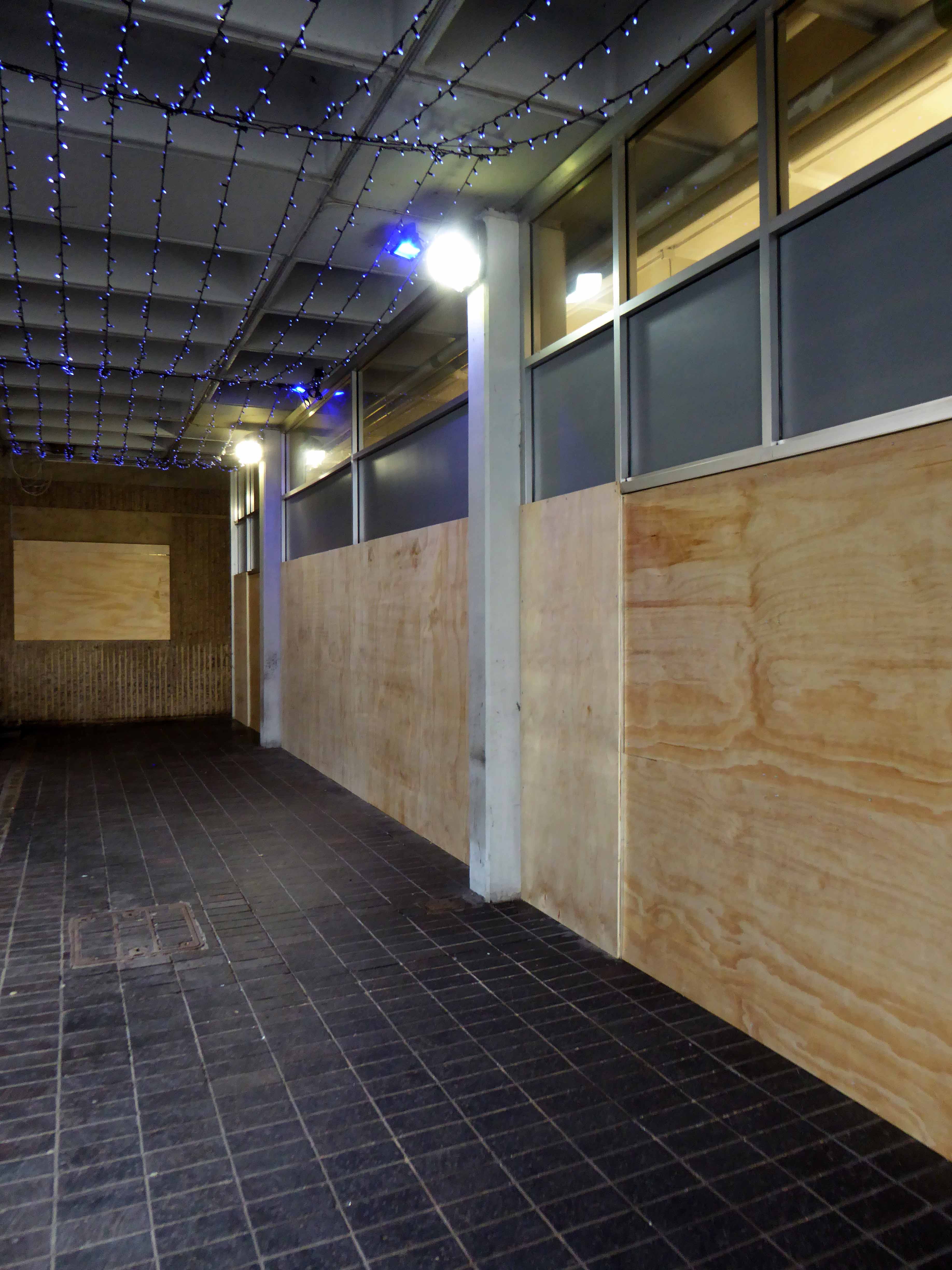
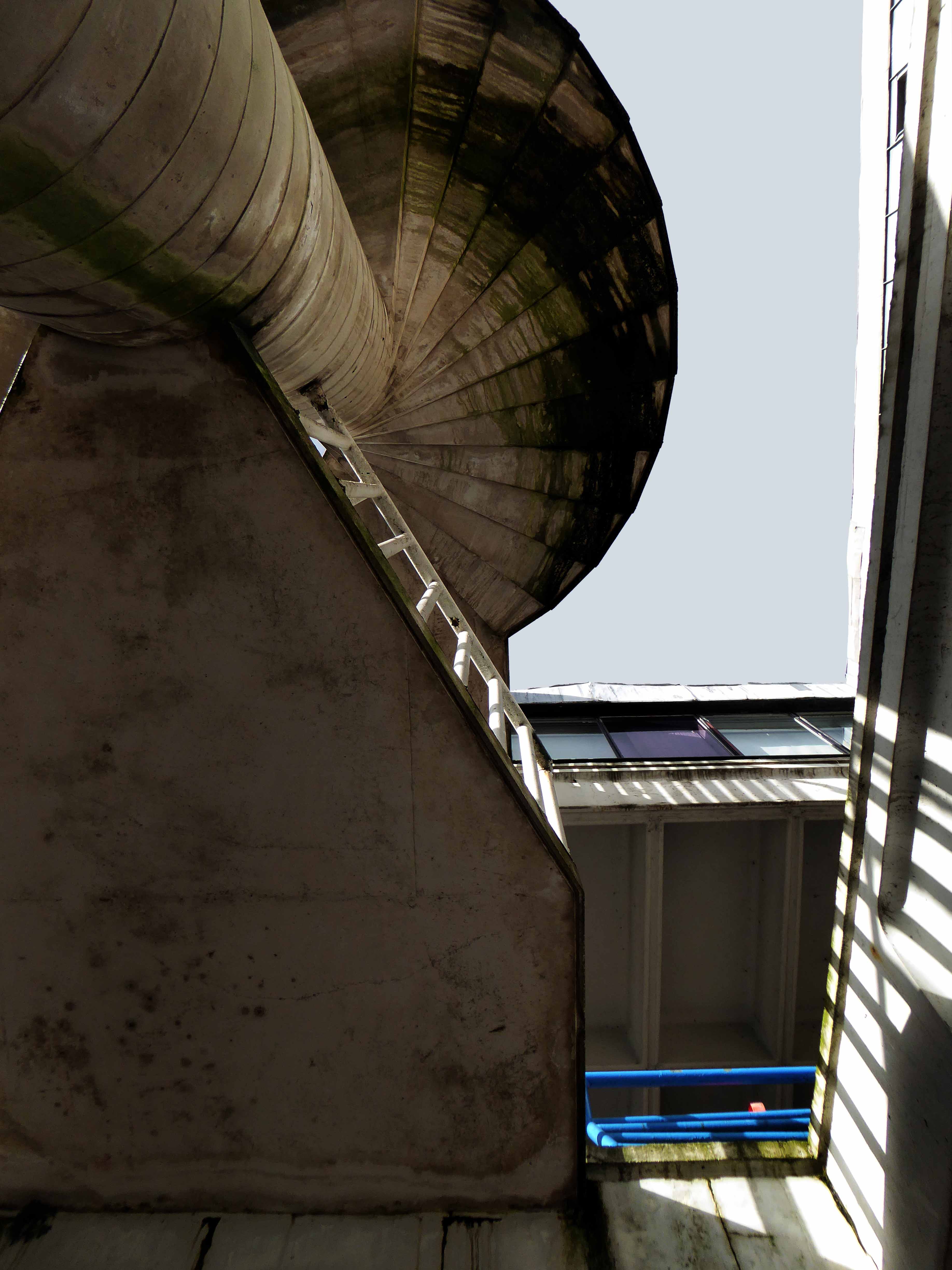
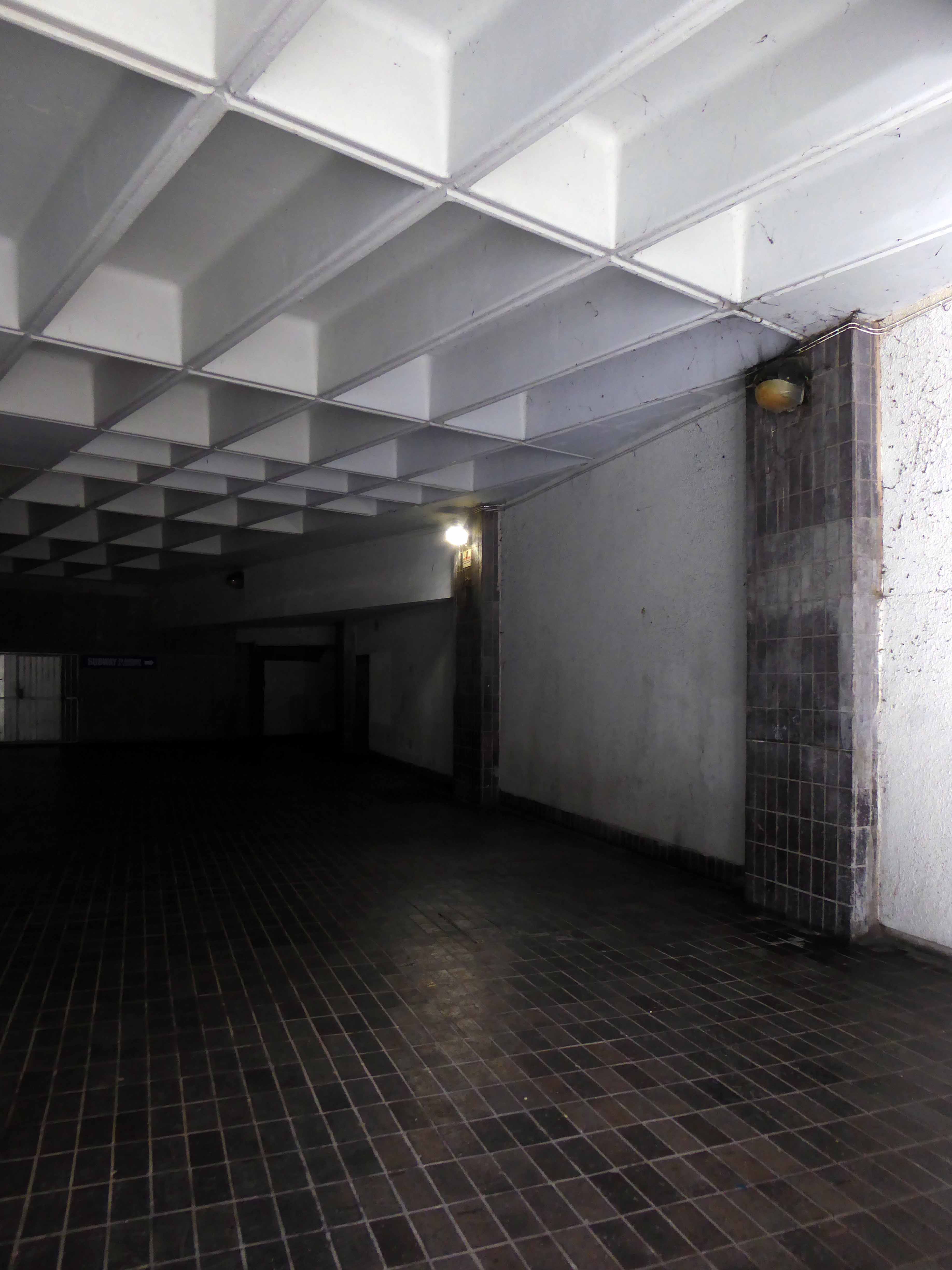
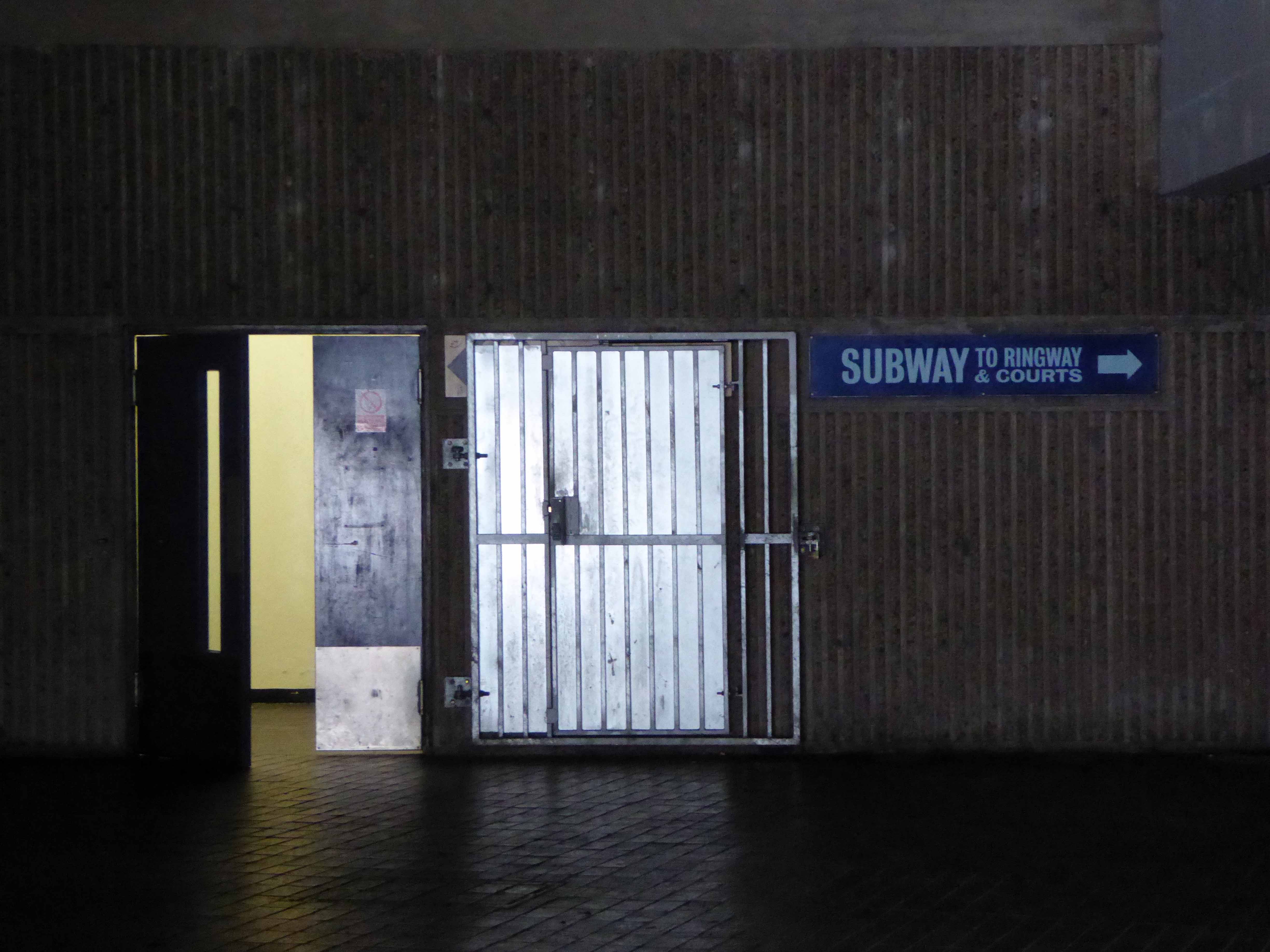
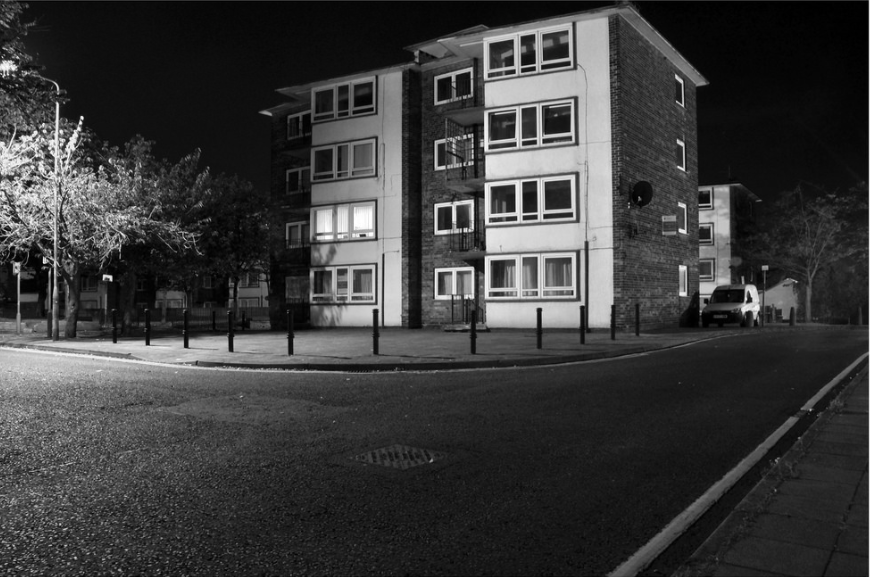
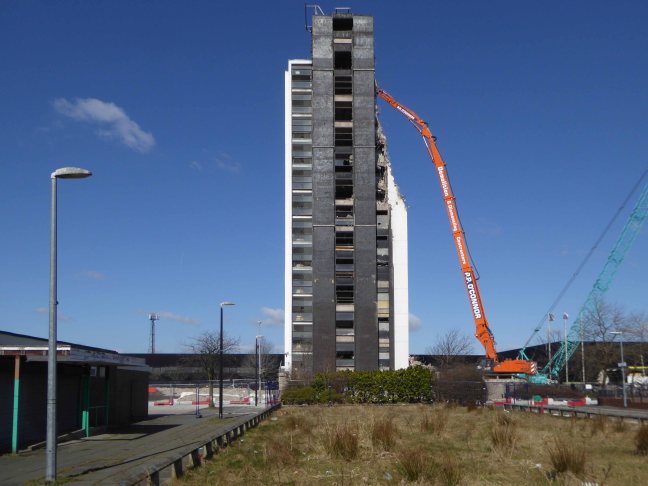
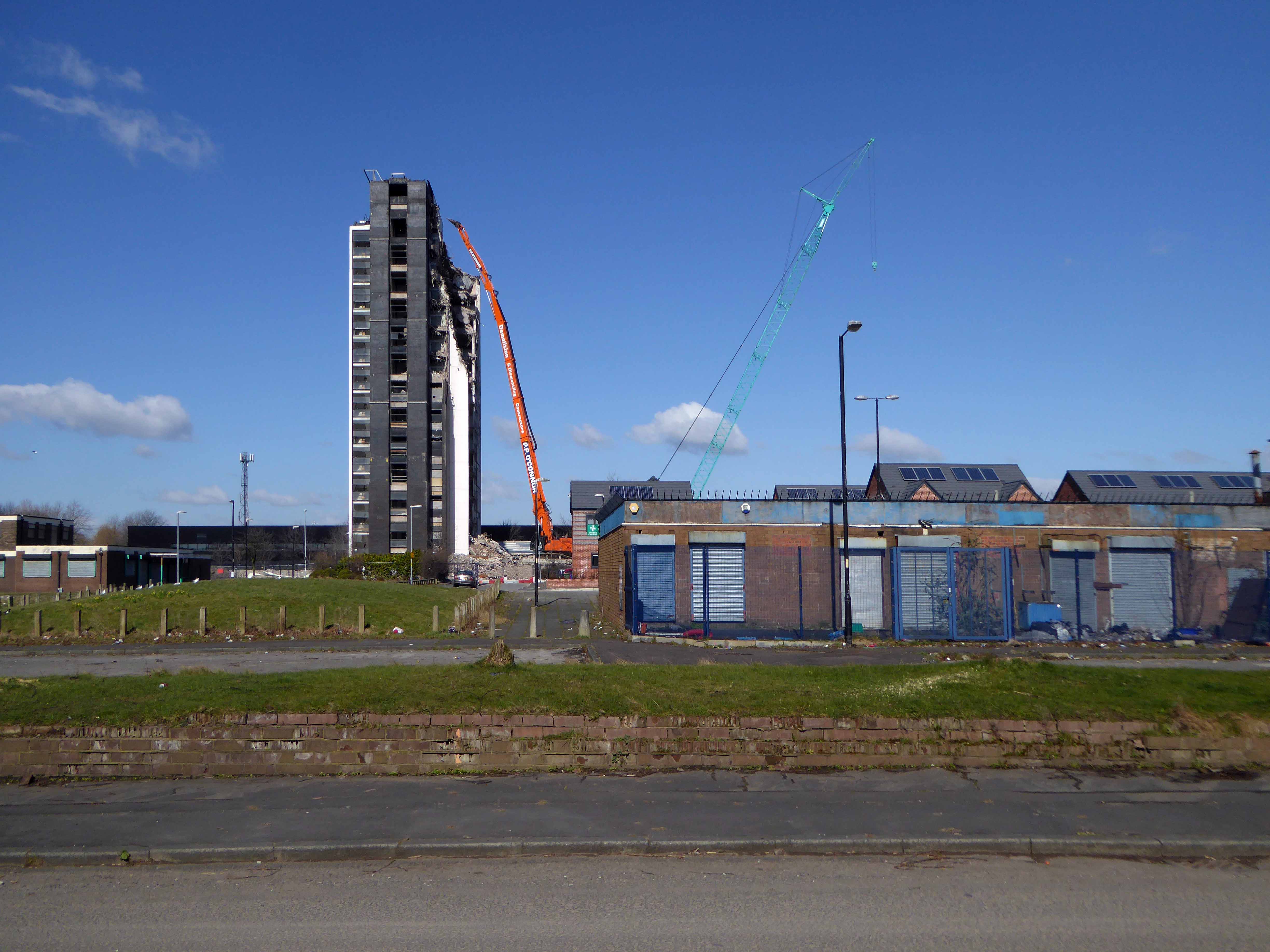
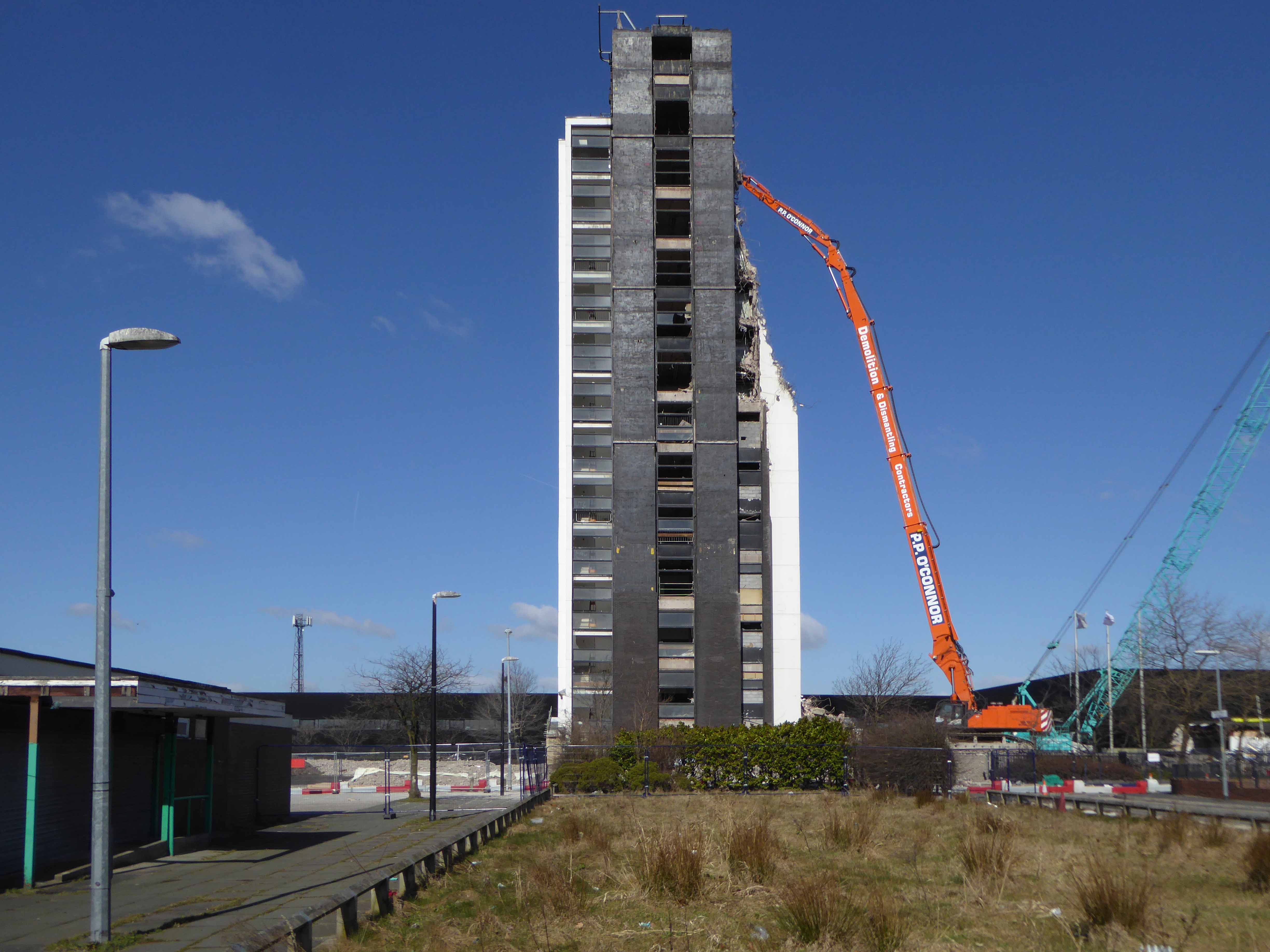
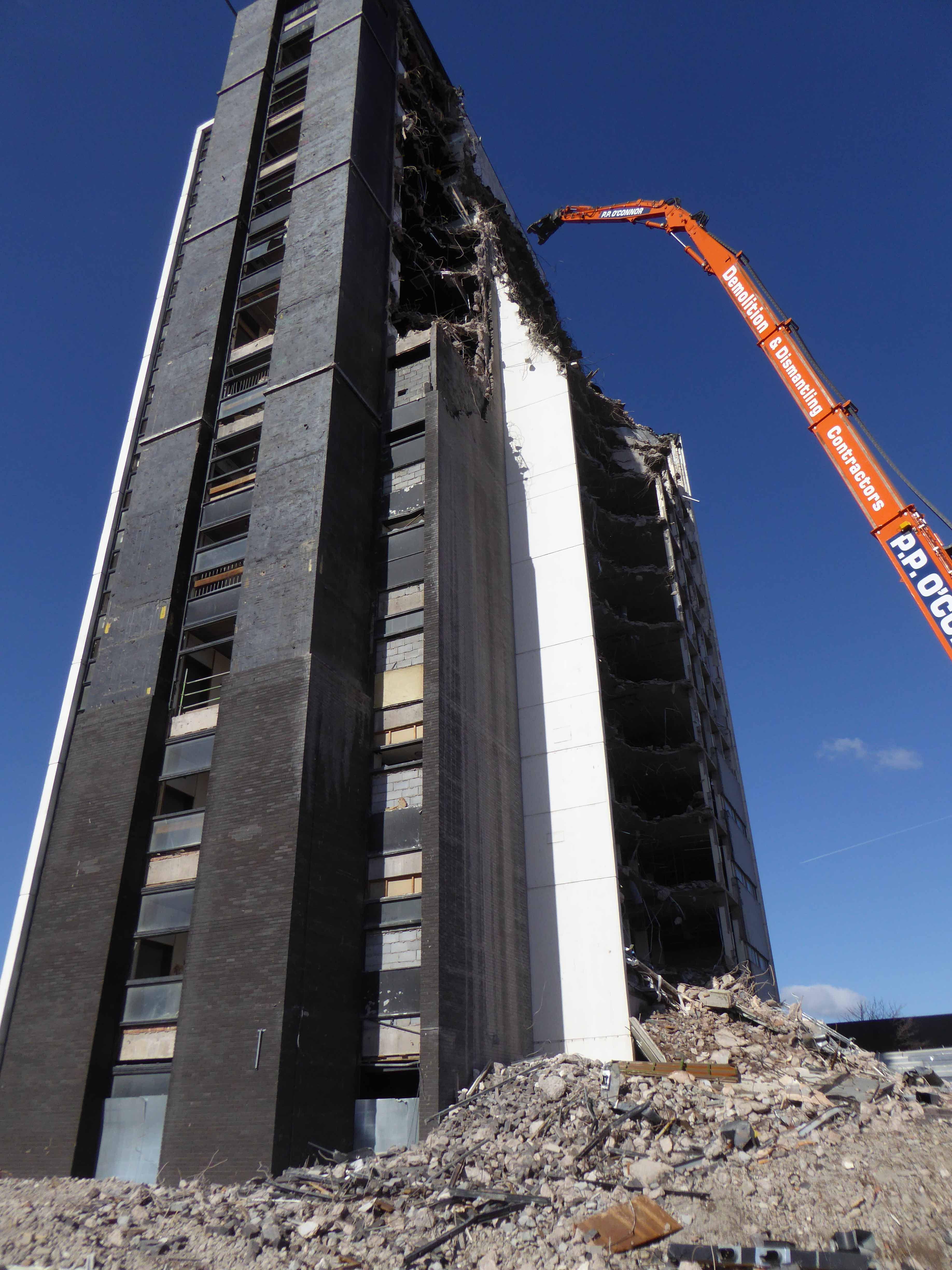
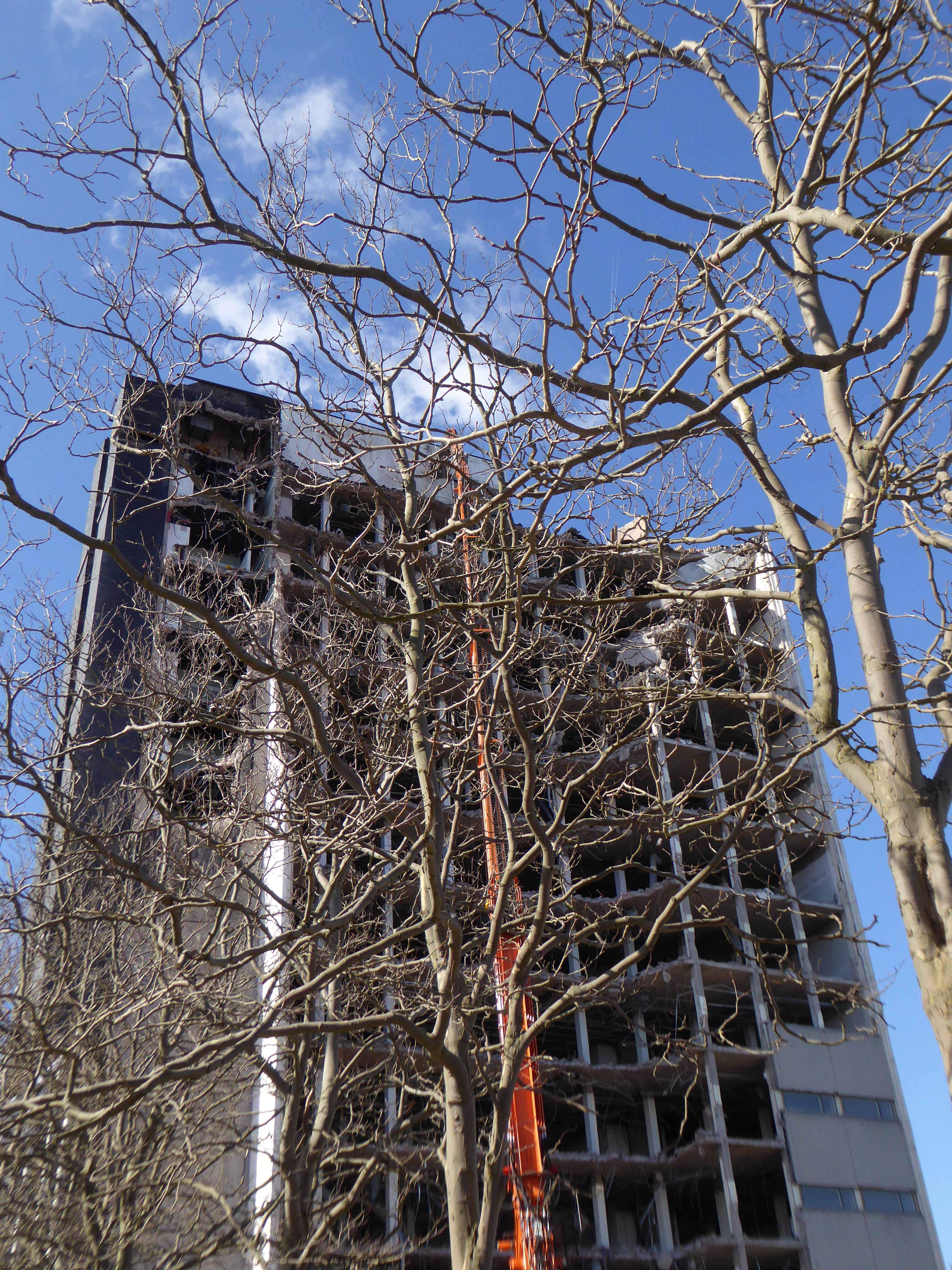
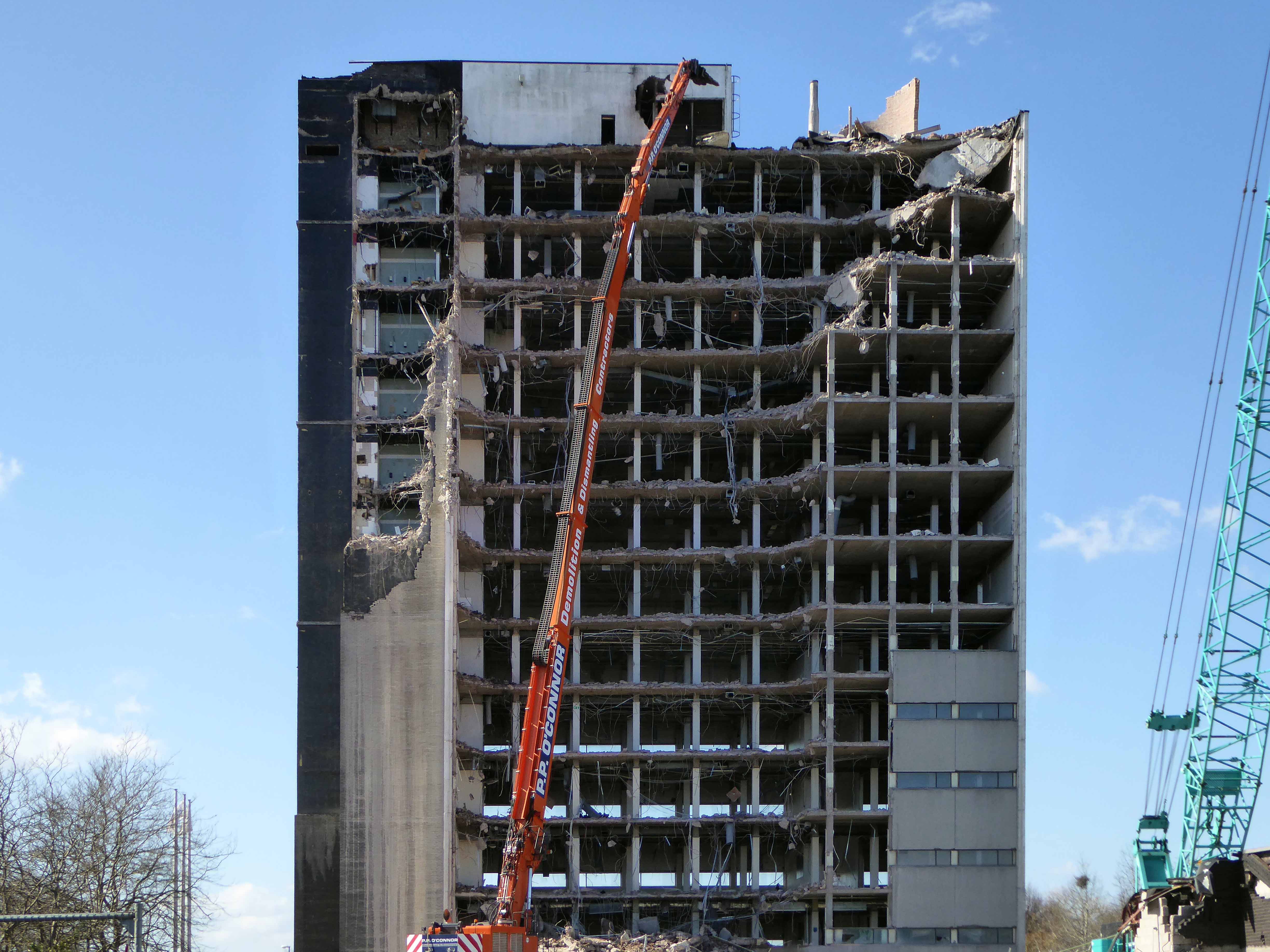
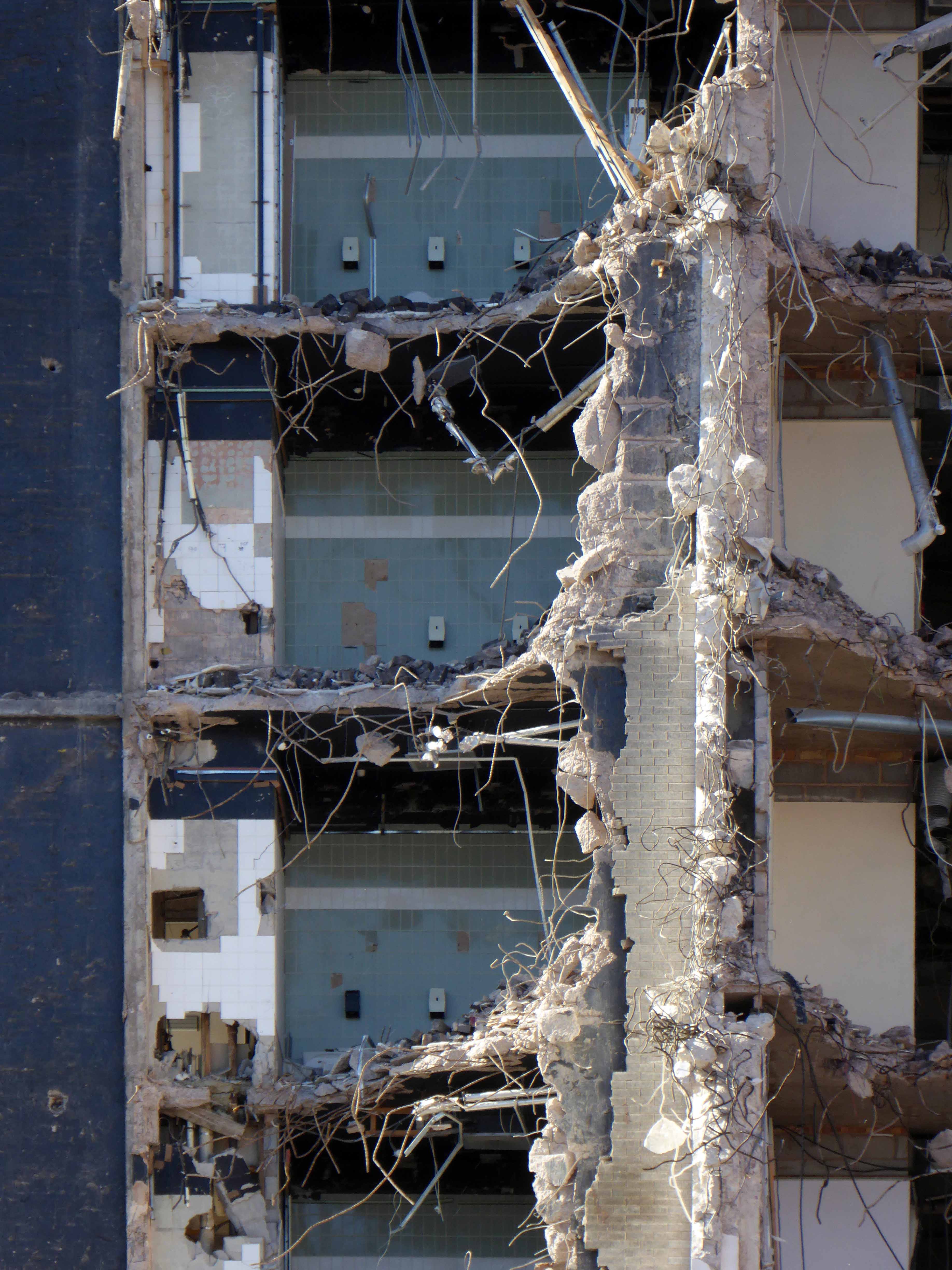
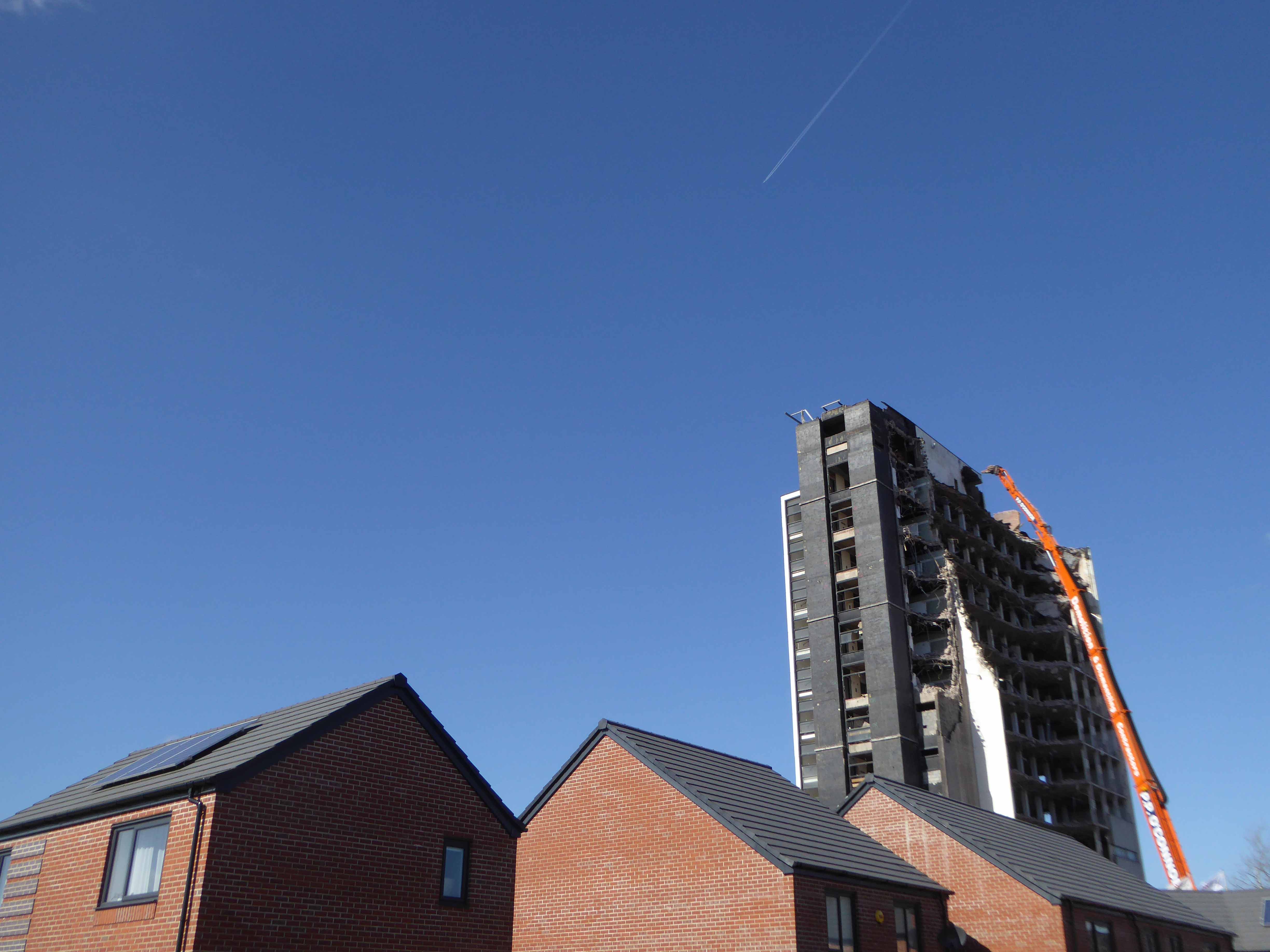
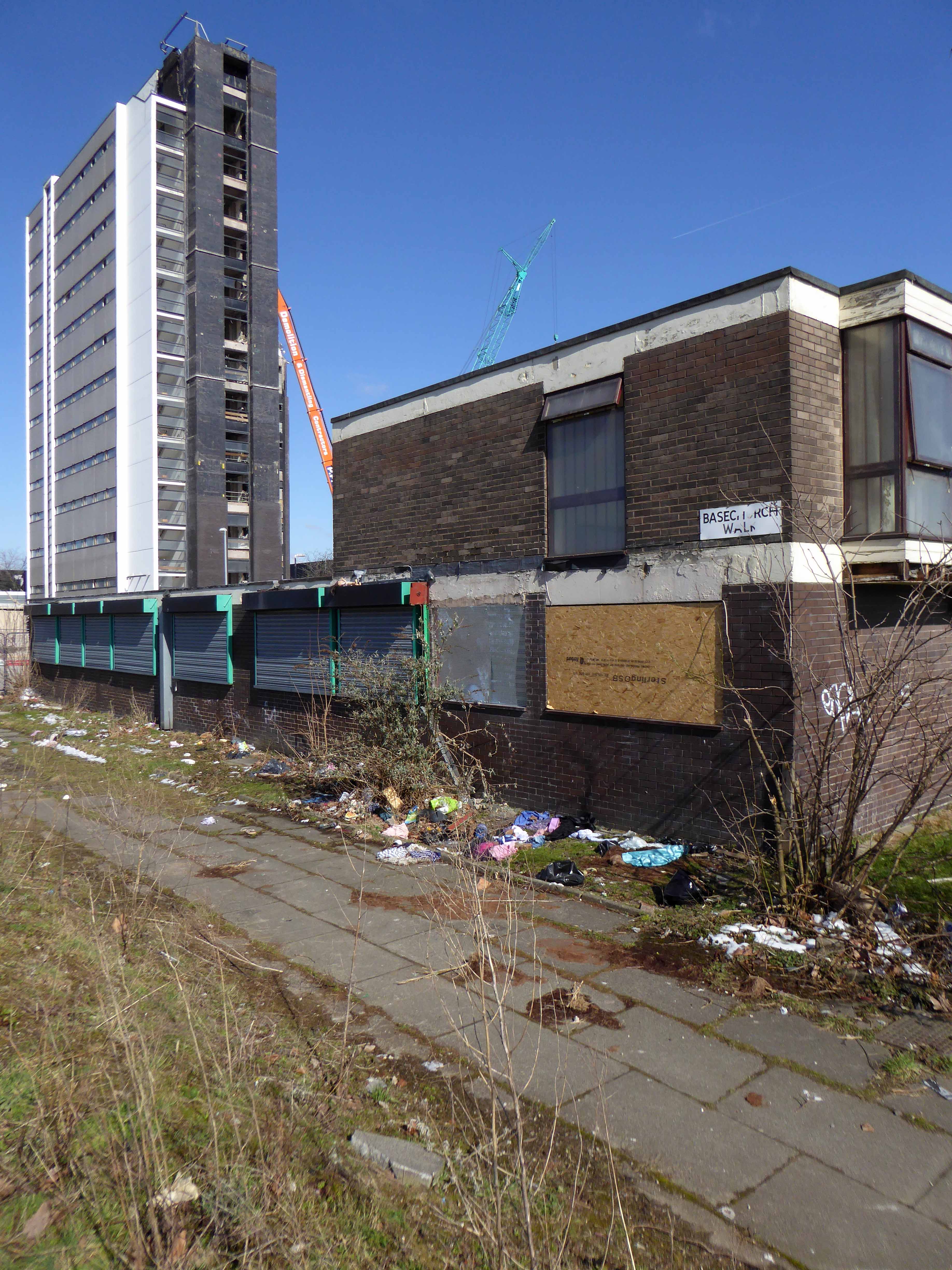
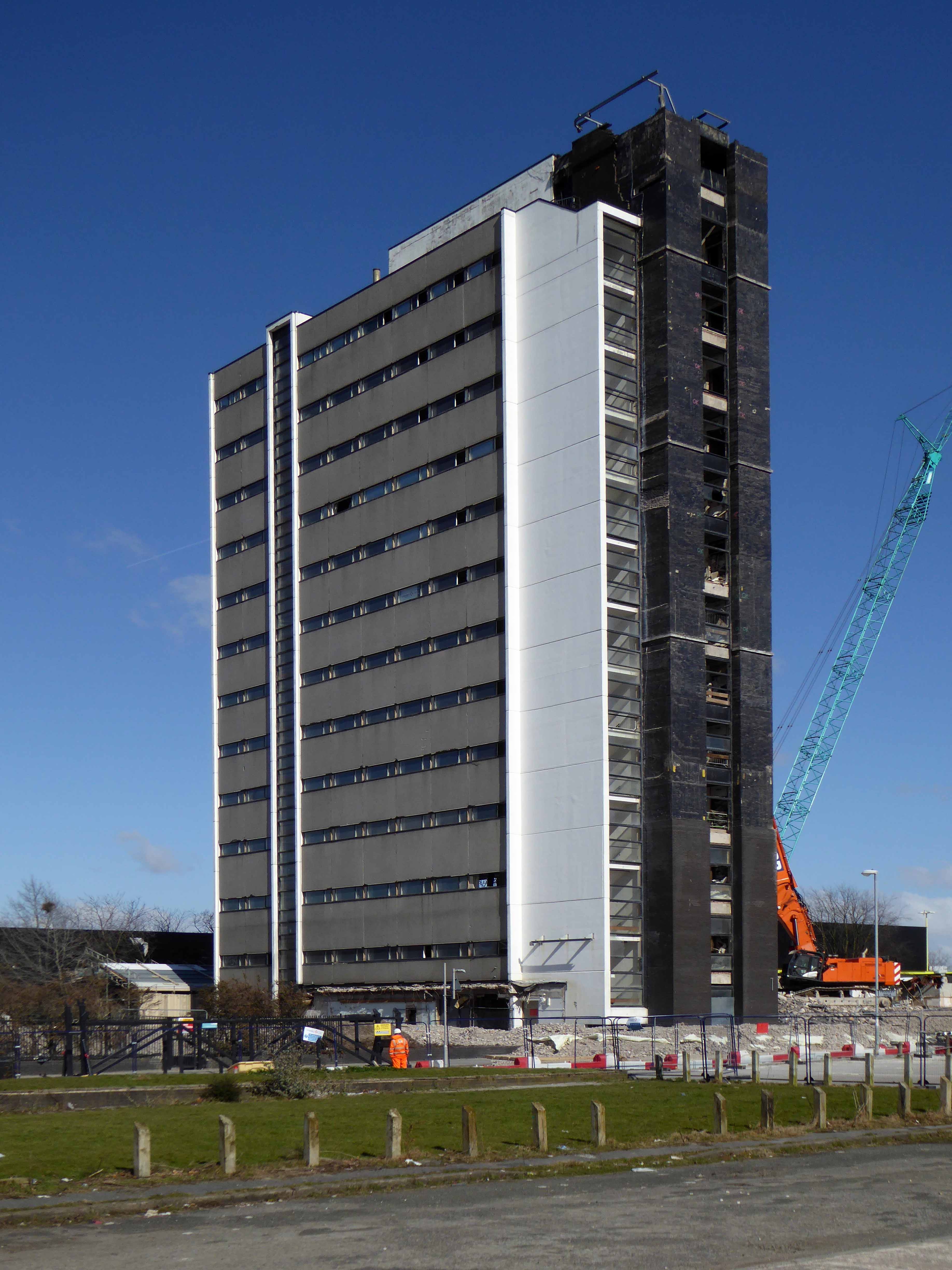
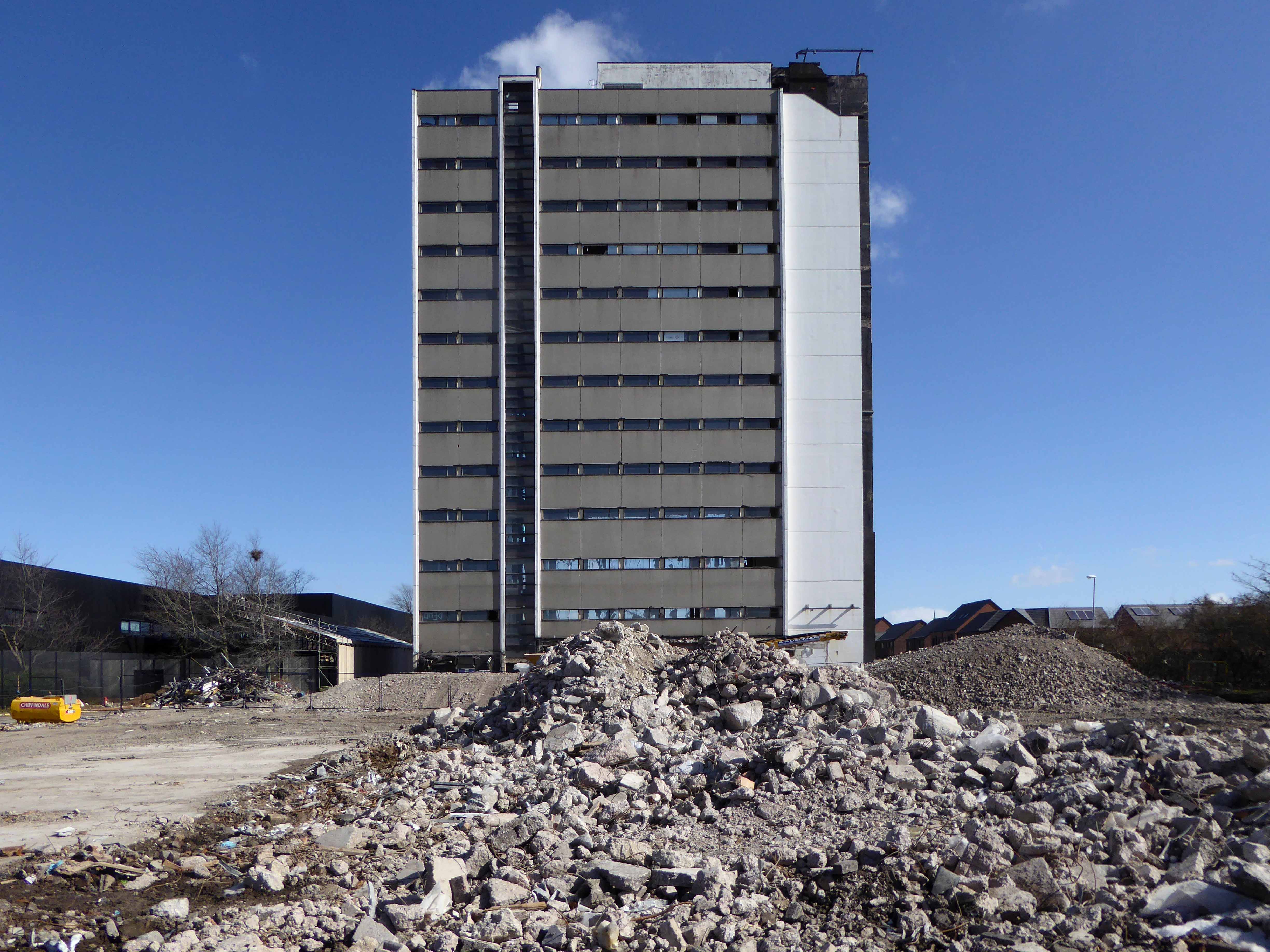
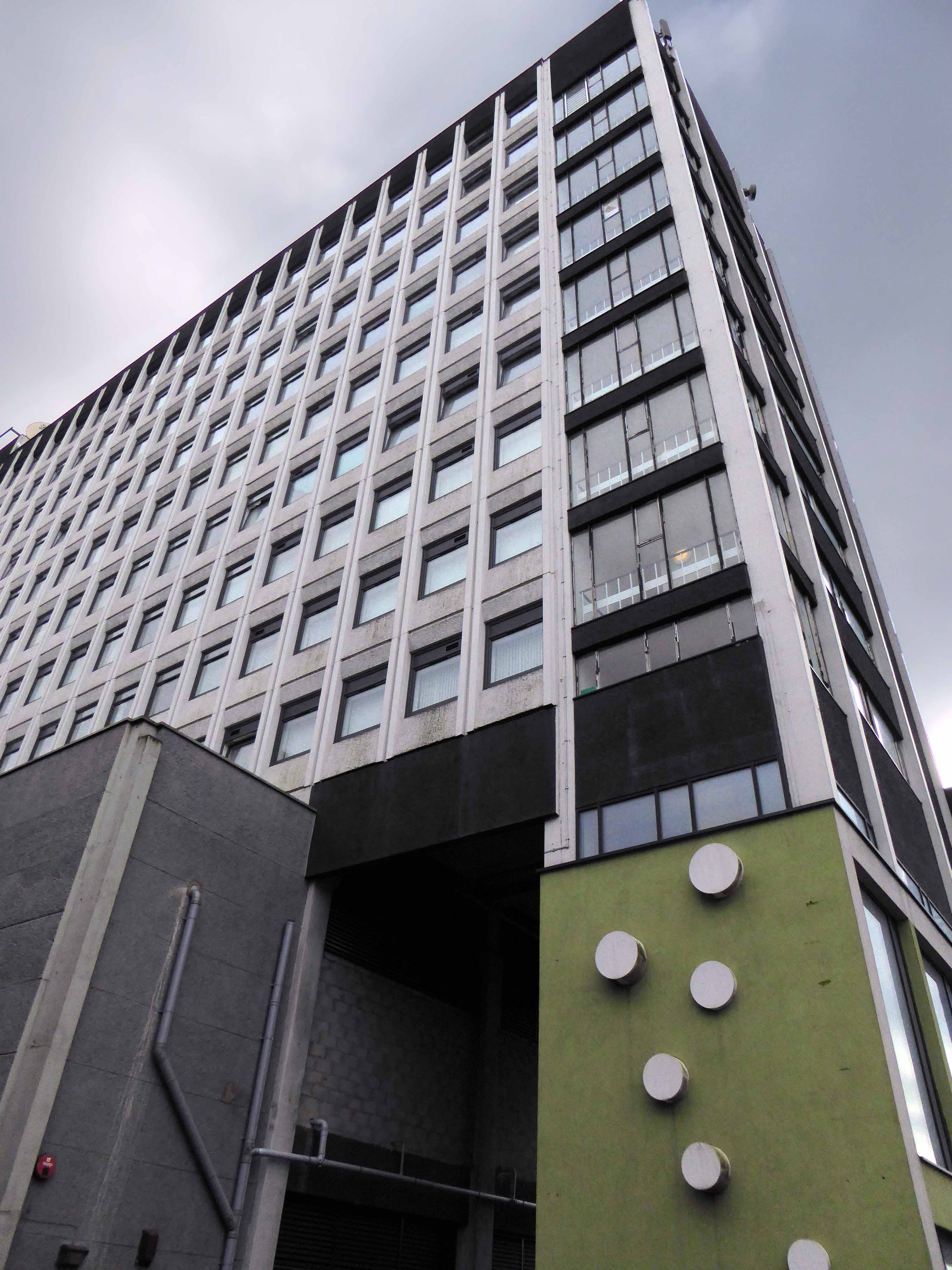
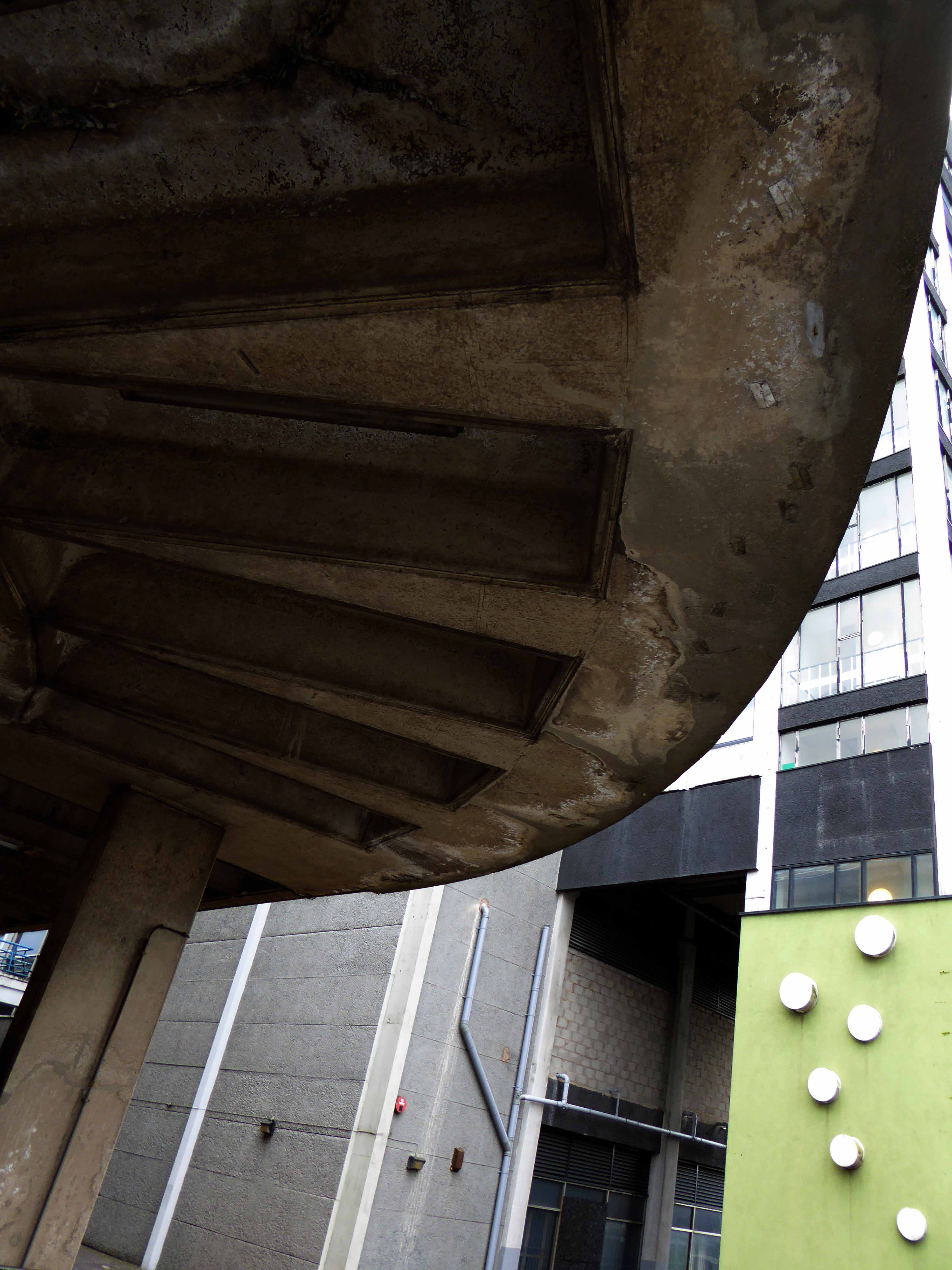
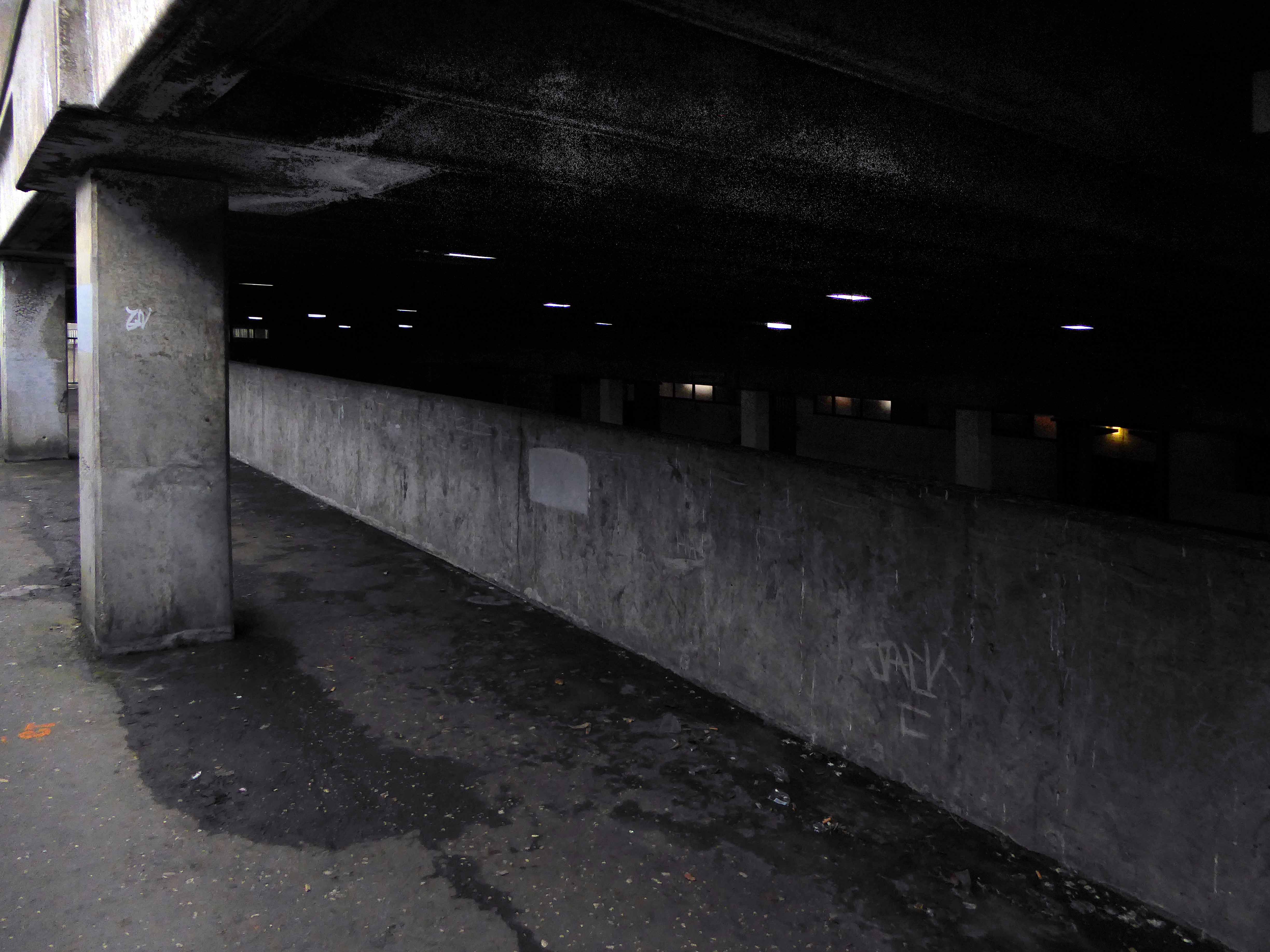
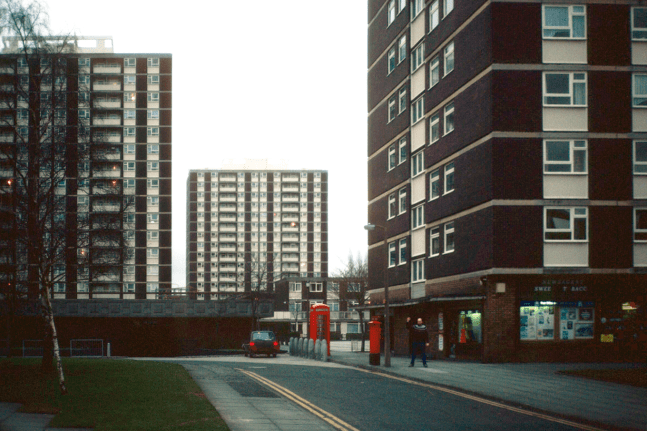
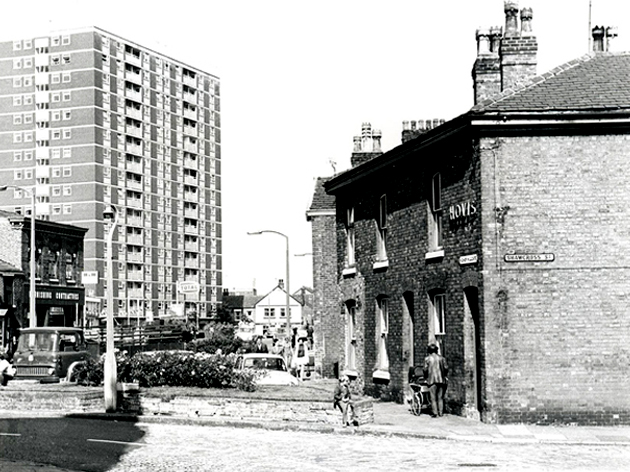
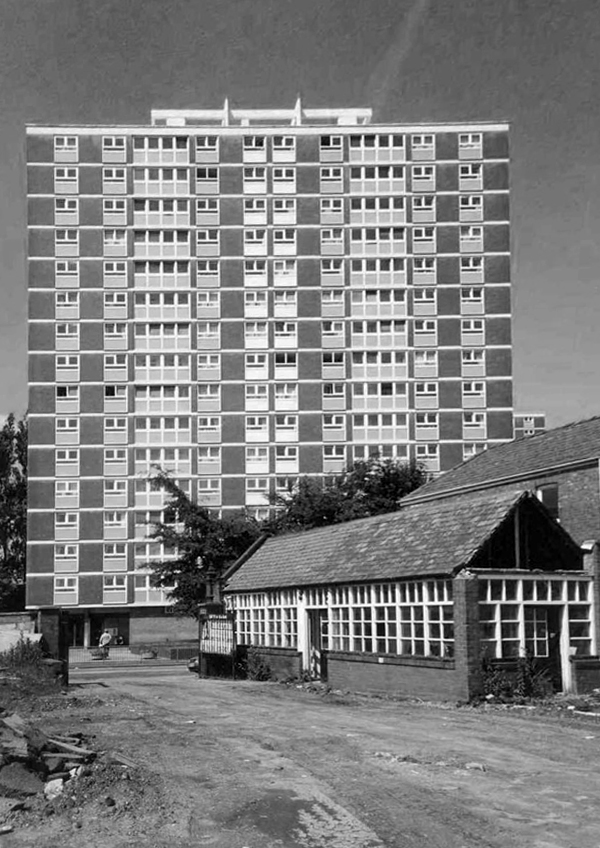
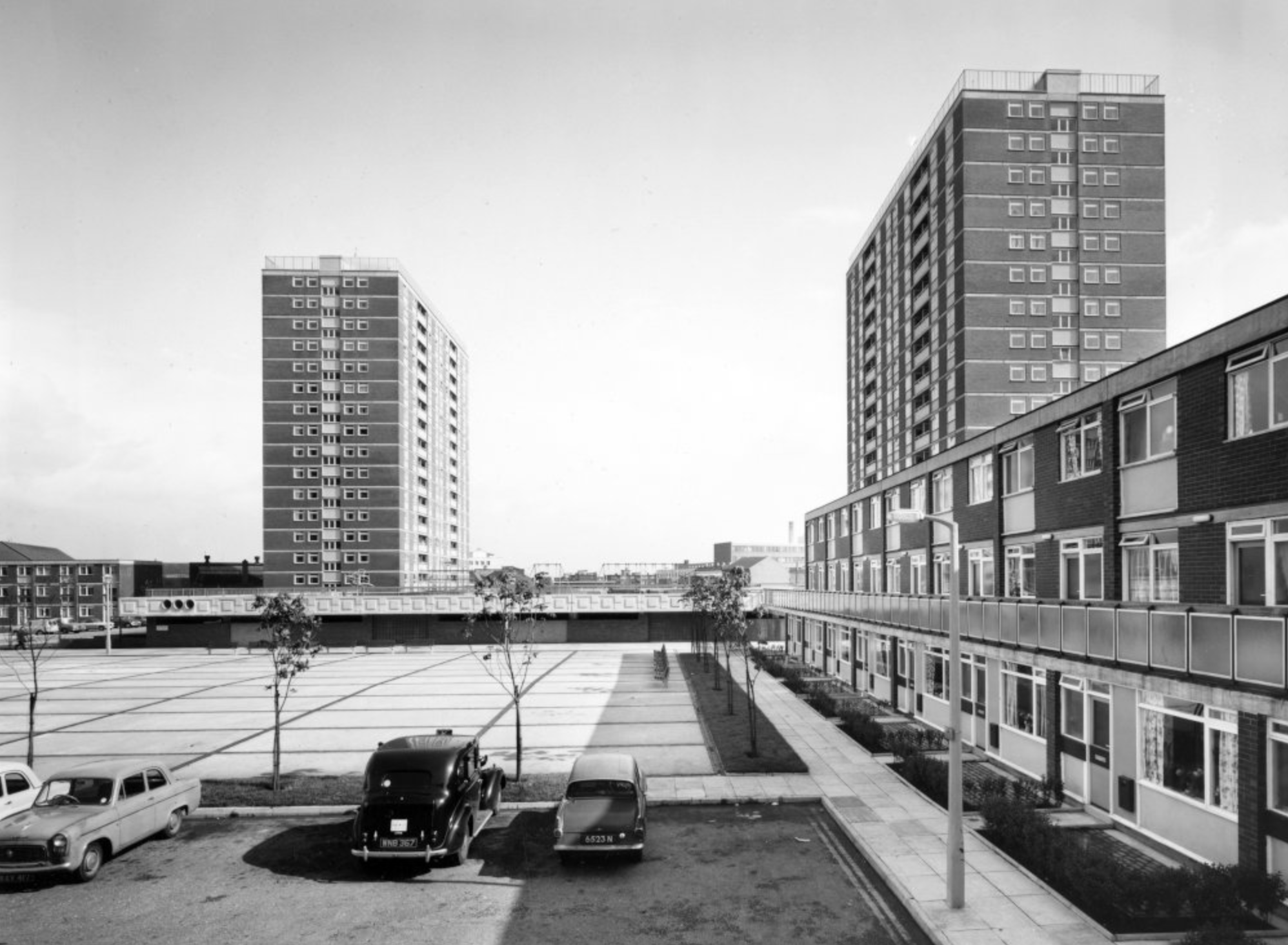
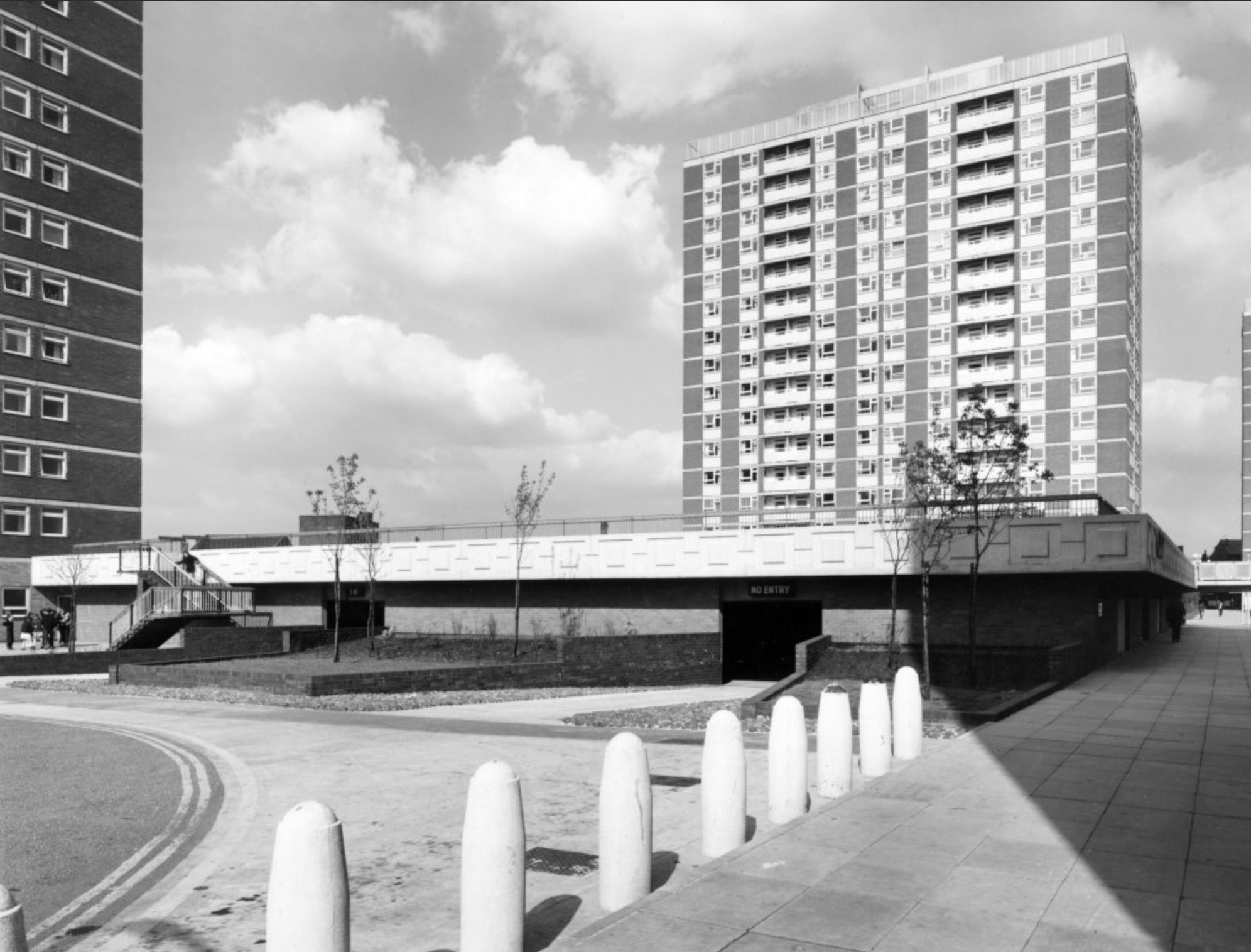
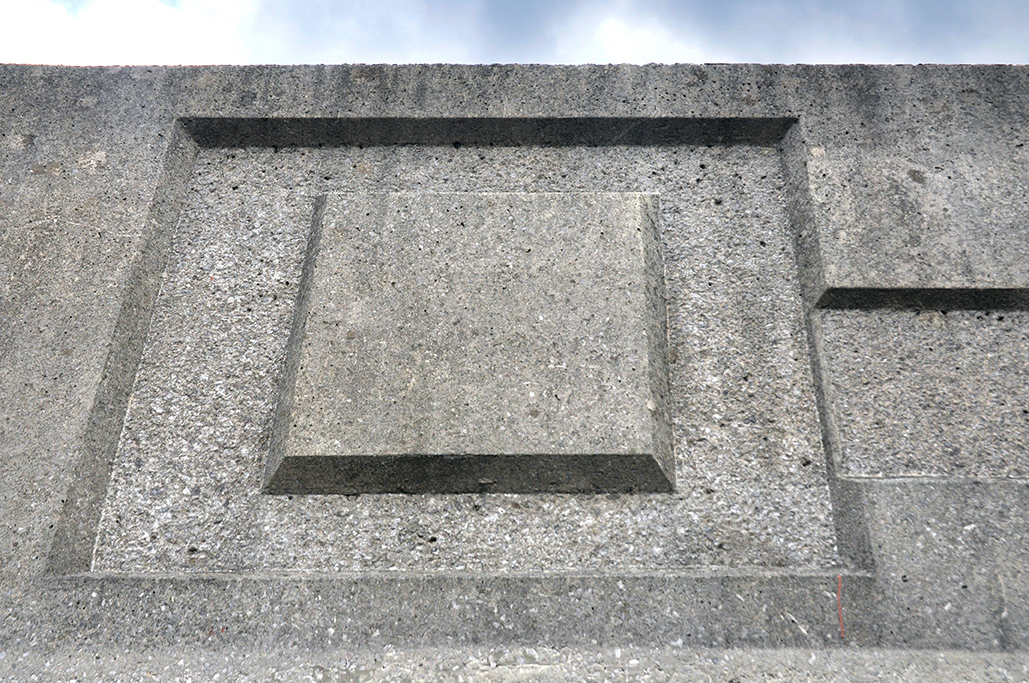
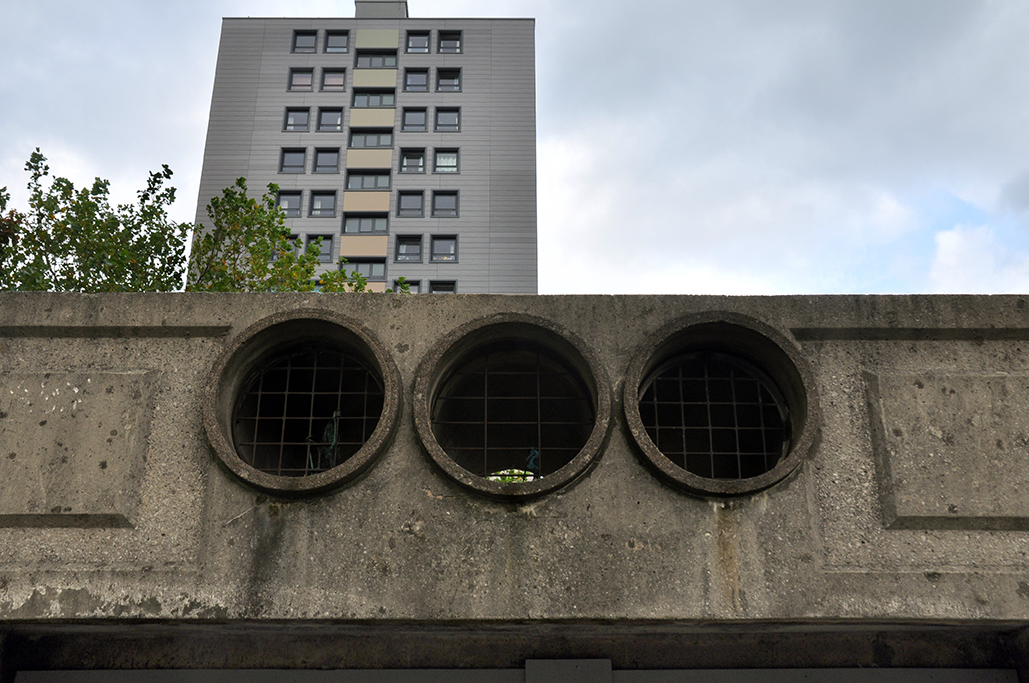
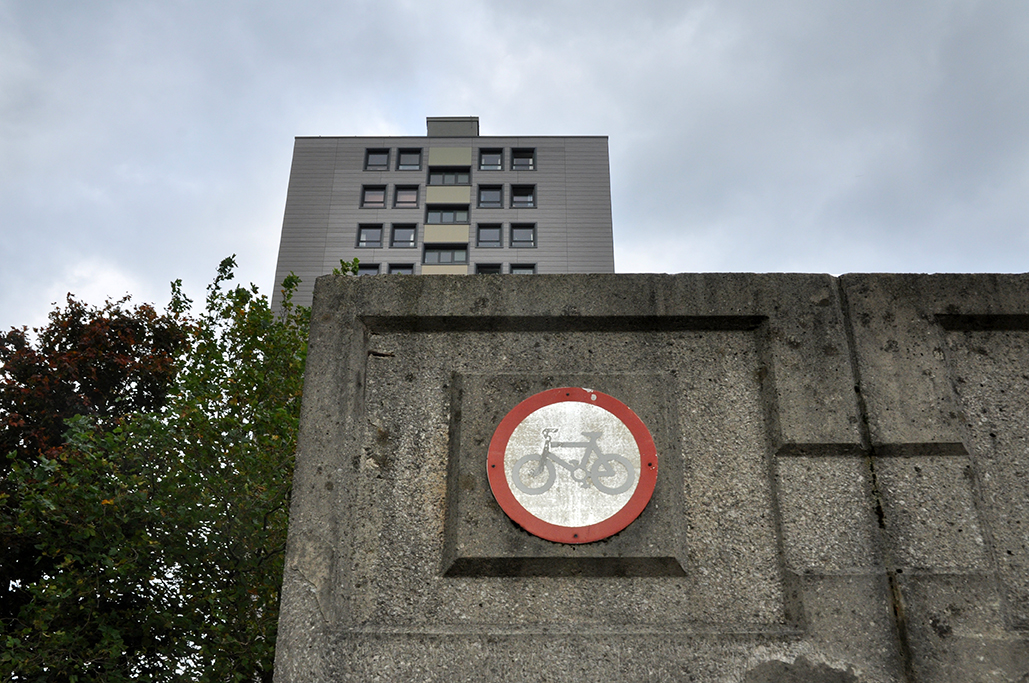
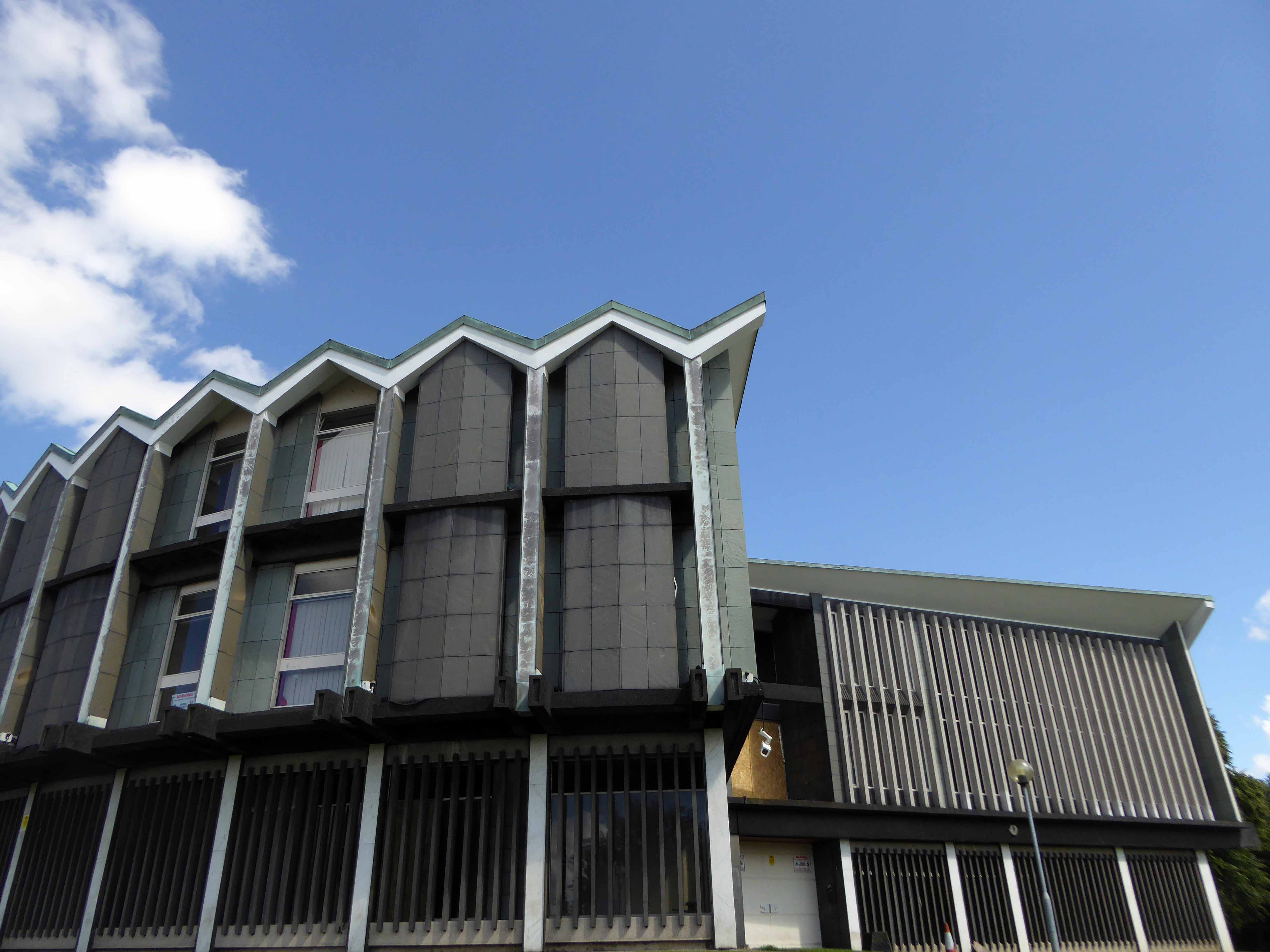
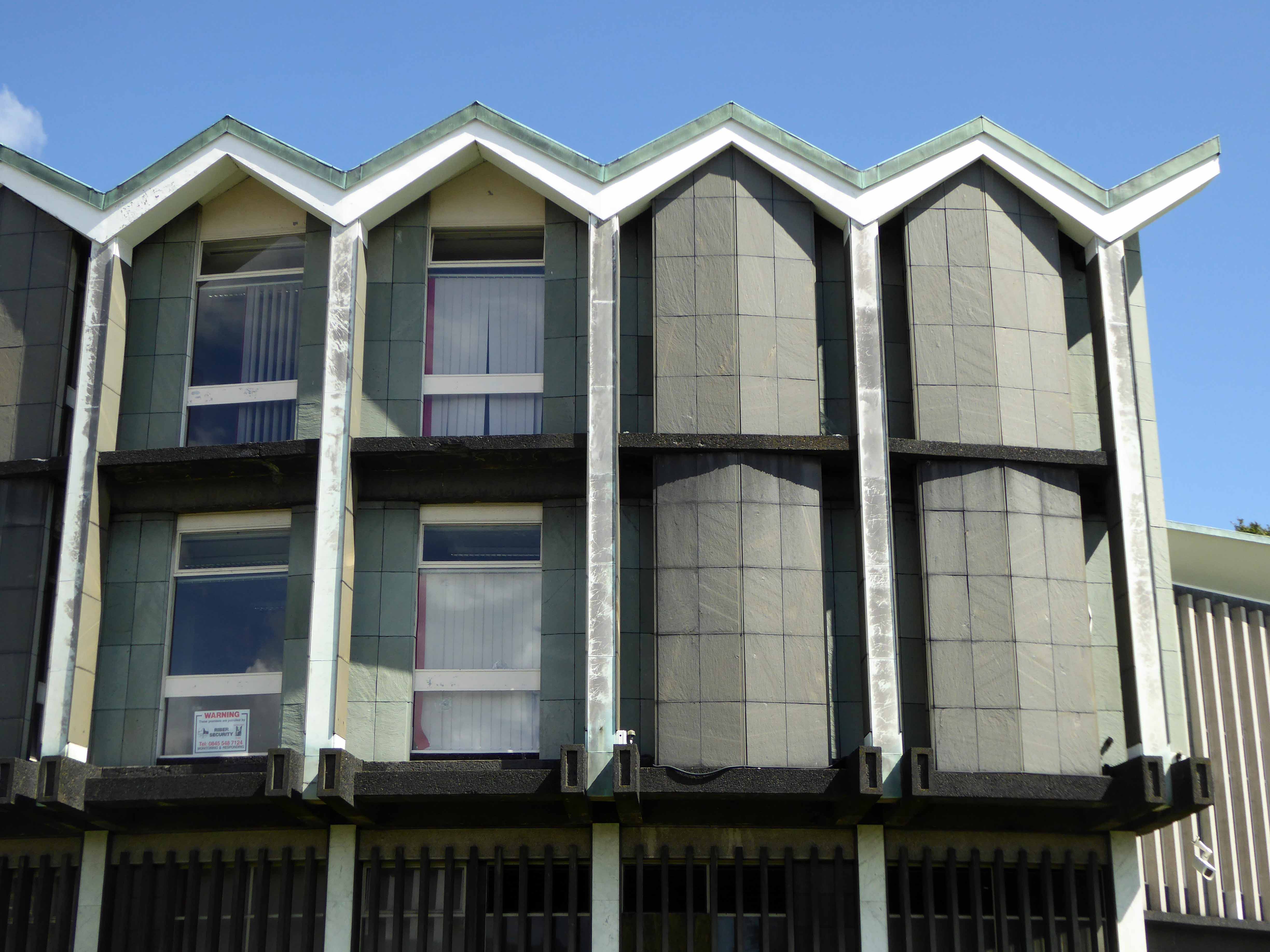
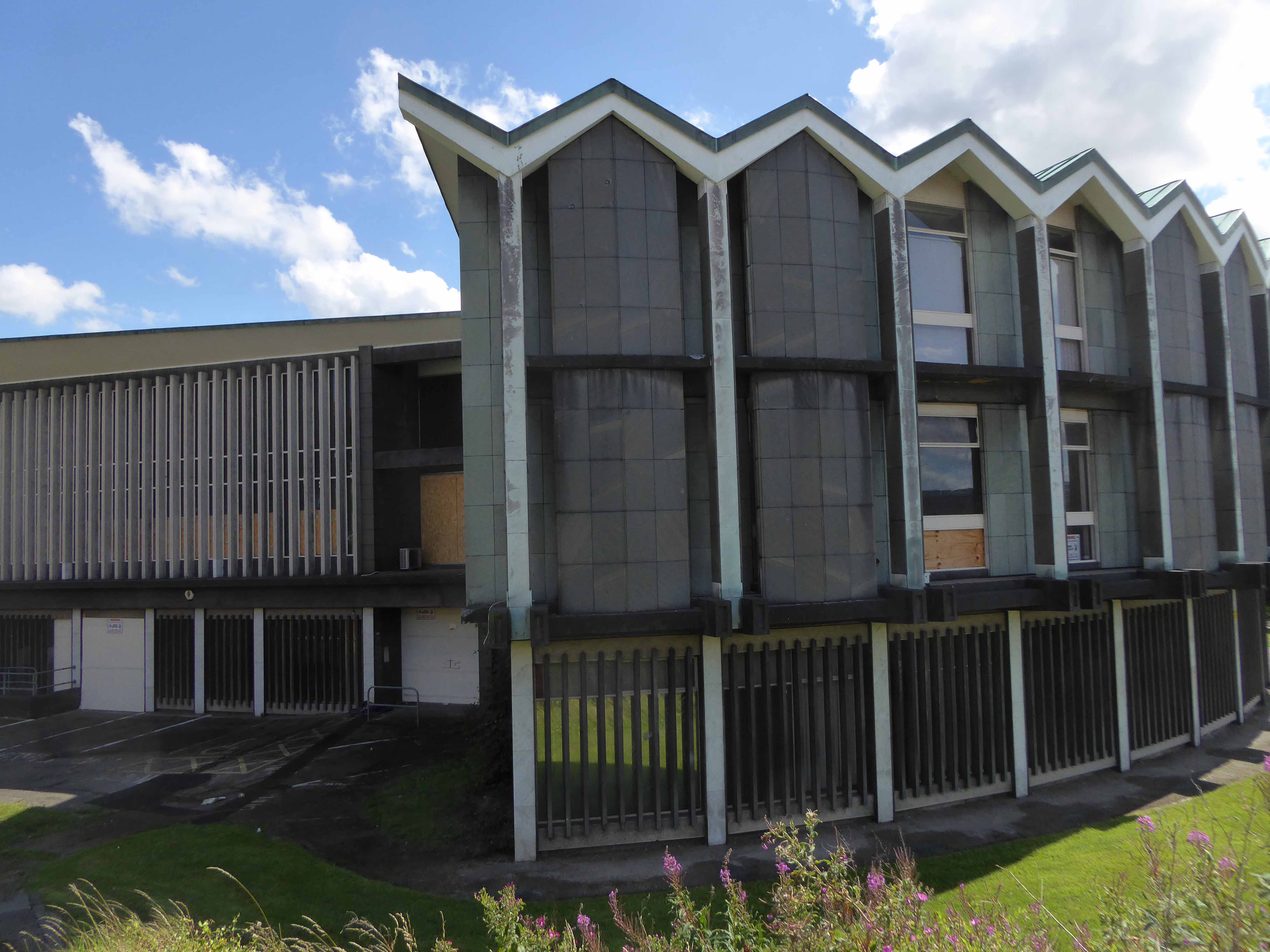
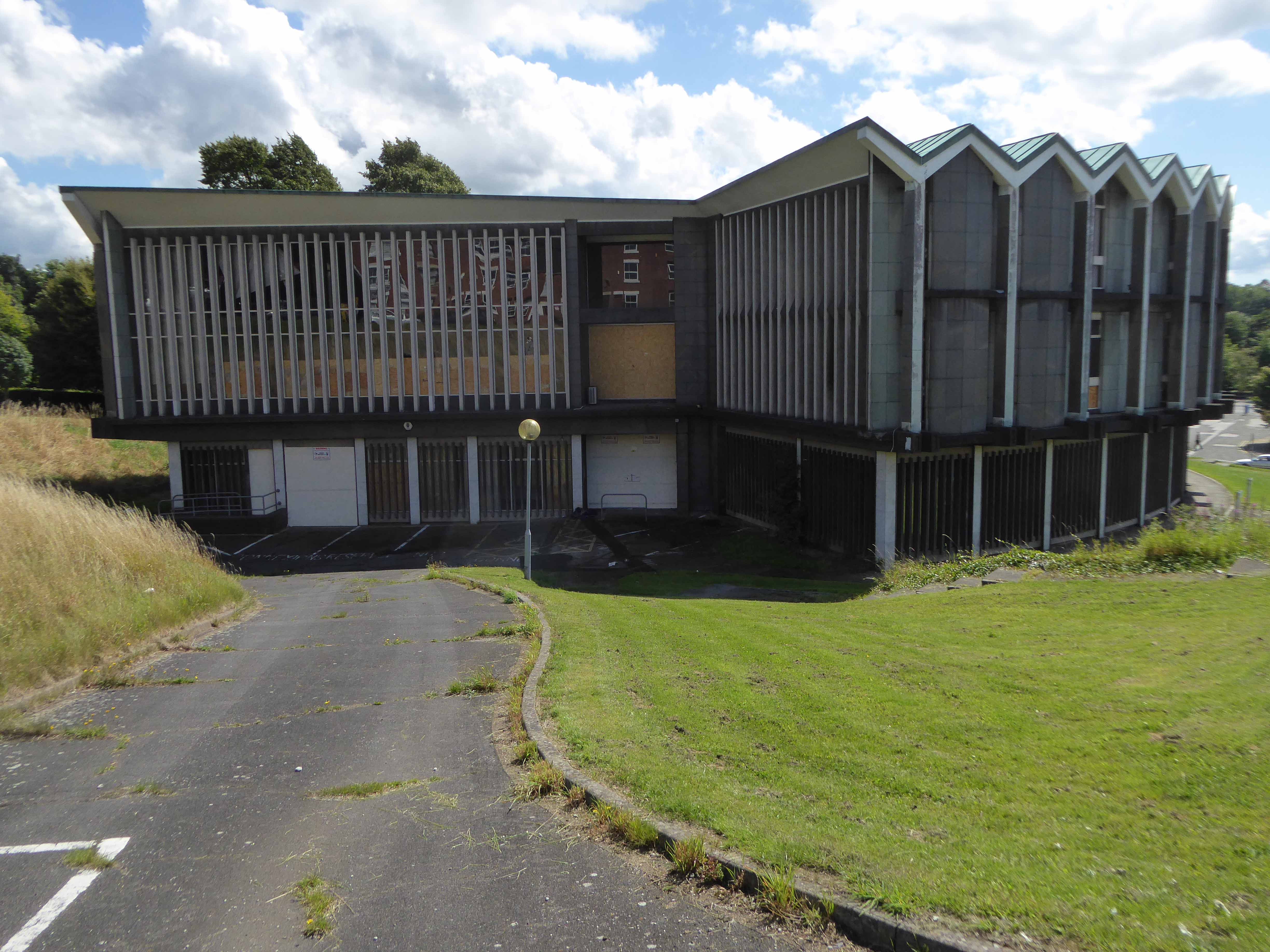
I’ve passed this way before, they’re hard to miss, seven substantial tower blocks towering over the town on College Bank.
But what goes up, may come down.
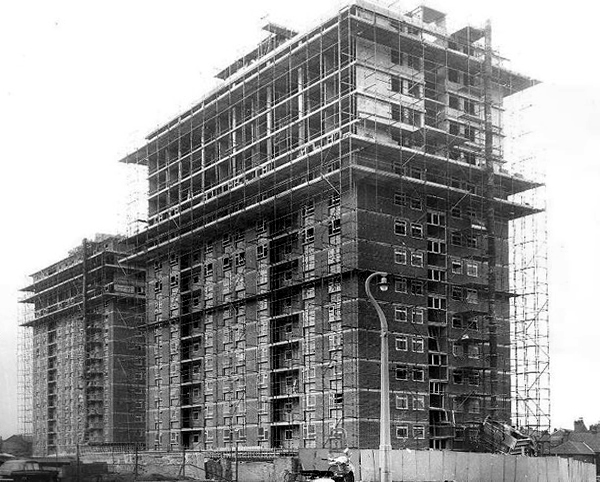
Construction in 1963
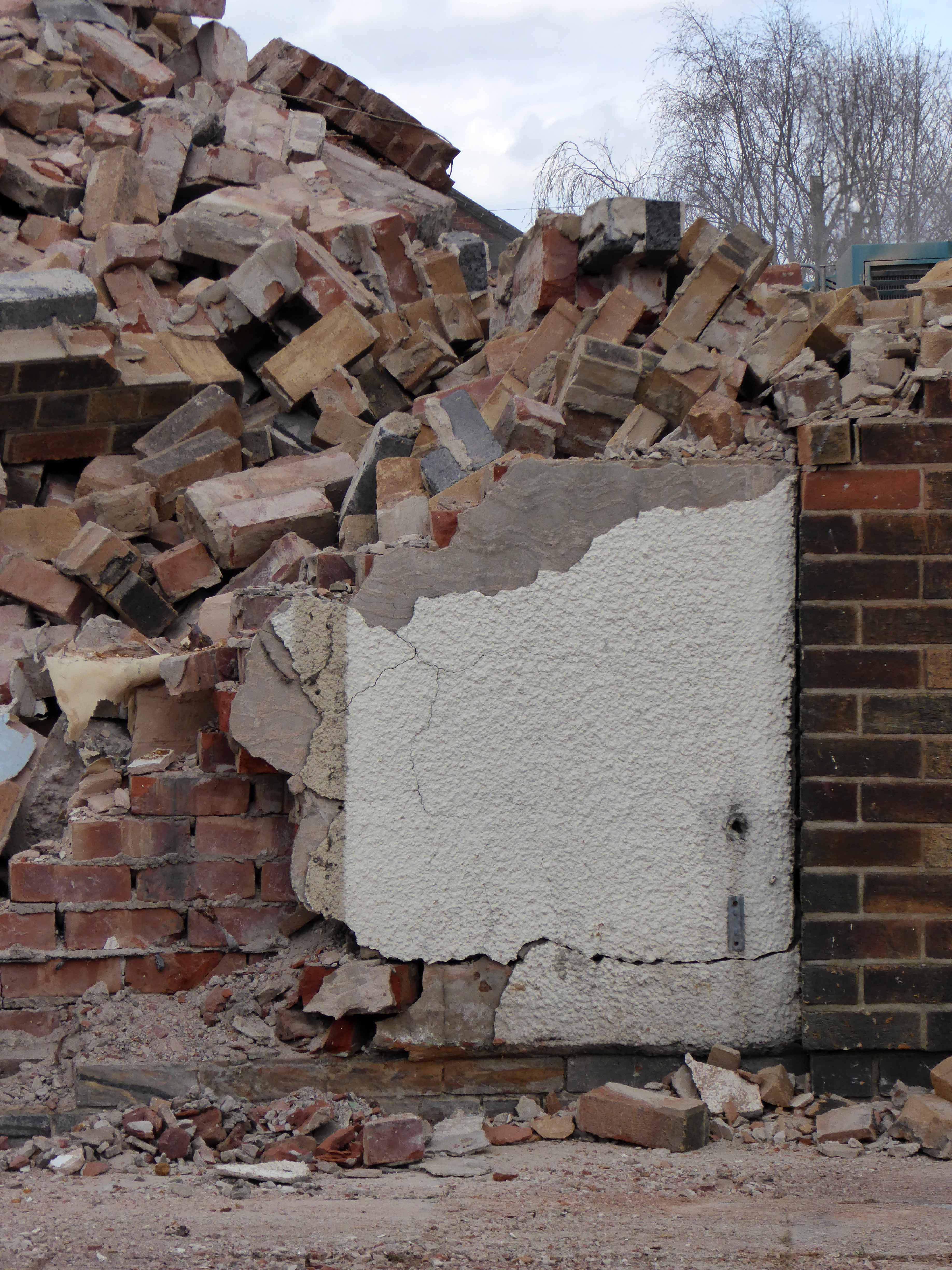
Demolition in 2017 is one suggestion – following years of poor maintenance, problems of heating and ingress, plus a whole host of other reasons outlined here.
The housing trust in consultation with residents, have produced a tentative plan.
This may or may not include the demolition of one or more blocks. On the day of my visit, the tenants I spoke with understood that the blocks faced an uncertain future, and were rightly concerned by the rumours and conjecture. The majority would prefer to stay put, having lived there for several years, raising families and building homes.
Whatever the outcome I hope that the wishes of the residents are not overwhelmed by political expedience, or the will of the developer.
Walking between College Bank flats and St Patrick’s church you and I will almost inevitably pass through Lower Falinge.
In April 1967 Rochdale Council’s Estates Committee considered a proposal to build 750 dwellings in four-storey deck access flats in the Falinge area. By November the £1,810,000 scheme for the area bounded by Spotland Road, Hudson Street and Toad Lane was given the thumbs up.
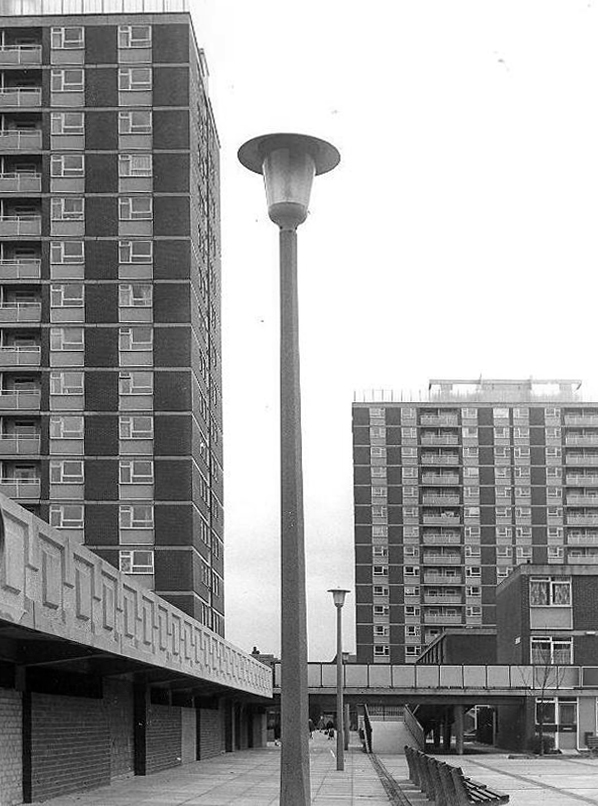
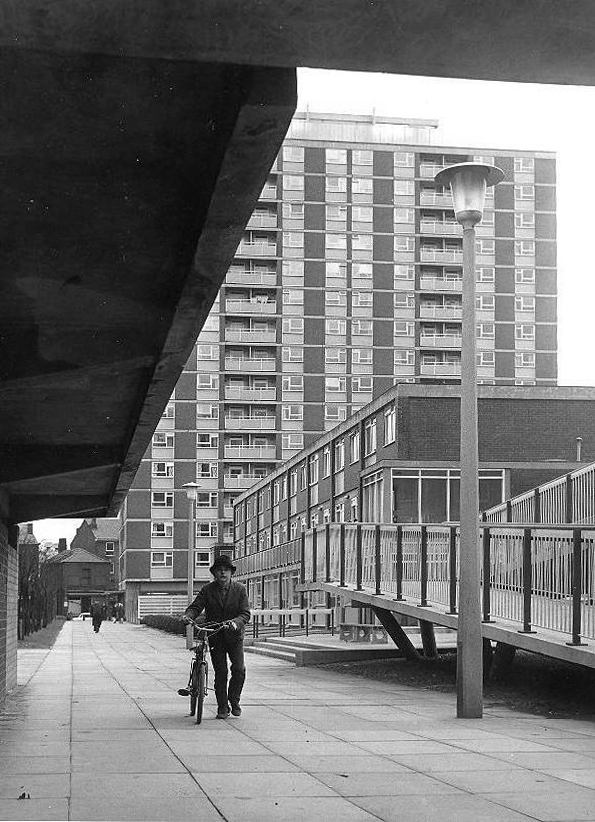
The four-storey development was to provide 527 dwellings with deck access, ramps and overheard walkways. It was planned so people could walk from any point in the area to another without having to return to ground level. Work began in early 1968 and was completed in three stages. More recently they have been up-graded and now have pitched roofs. Freehold Flats were built in the early 1970s. Eleven of the eventual 19 blocks were occupied by August 1971.
Built at a time when full employment was a tangible reality rather than a fondly recounted folk memory, the area was buoyant and relatively prosperous.
Time, the free market, and casualised labour has not been kind to Lower Falinge and many other post-industrial estates. The Thatcherite press conveniently badges the residents as scum, scroungers and frauds, a carefully conceived sleight of hand, transferring responsibility onto those careless enough to become the victims of an uncaring economic system.
Demonising and dividing working people regardless of ethnicity, ability, sexuality or ability – the equal opportunities abuser.
A few years ago there was even a national news story about a Falinge café serving fry-ups with a can of Stella for £2.50, this was untrue.
So Lower Falinge and its like become the convenient exemplar for the inconvenience of Broken Britain, a PR device to whitewash the very dirty hands that authored its very dirty demise. Those very dirty hands that have no viable solution to a very real problem, of resolving poor peoples’ uncertain futures.
Meanwhile the journalists form a disorderly queue to file the next in line, online assessment of an awful situation devoid of resolution, short of revolution.
Transferred from local authority control to charitable trust, forever shape shifting its hard lines to a softer, home made, fluffier image as limited resources, chase limited opportunities, all around the deck access landings.
Life goes on, we live in hope or Lower Falinge.
Mishka Henner
The estate is now post-post modern, acquiring another veneer of refurbishment over the now tarnished green of the cover all, all purpose un-repurposed steel railings.
The Balfron Tower Conservation Area was designated in October 1998 around the two residential blocks designed by Ernö Goldfinger for the London County Council in the 1960s. The Conservation Area boundary protects the listed Balfron Tower and Carradale House, and other buildings in the ‘Brownfield Estate’, including Glenkerry House, a community centre, shops and associated low-rise housing development.
The 27-storey Balfron Tower is Goldfinger’s first public housing project, and a precursor to his better known Trellick Tower in North Kensington. The neighbouring Carradale House and Glenkerry House sit within the landscaped areas developed at the same time. The Brownfield Estate, also known as the East India Estate, is now recognised as a fine example of planned 1960s social housing. Considered to be exemplary examples of the post-war housing schemes, Balfron Tower and Carradale House were listed in 1998 for their cultural & architectural merit.
This was my first visit, to a key building in the short history of modernist post war housing, currently something of a sleeping giant, awaiting Prince Charming’s kiss.
What will it awake to?
Tower Hamlets are mid consultation, as evidenced in this here document.
On an overcast and ever darkening afternoon, the rain cutting in on a chill wind, set against a slate grey sky, its surfaces and volumes were ever so slightly forlorn.
There is much to be done by way of regeneration, with the attendant issues of heritage, funding, gentrification and inevitably who lives where and why?
Adolfine Ryland worked as a printmaker, sculptor, painter and designer. Her practice across these different media was united by her keen-edged, modern style and inventive graphics. She had studied at Heatherley’s and at the Grosvenor School of Modern Art under printmaker Claude Flight.
Ryland’s main exhibiting venue was the Women’s International Art Club, where she showed from 1927 onwards, becoming a member from 1936 to 1954. She also undertook public commissions, and worked for London County Council designing low reliefs for a number of buildings, among them the School of Butchers and St Martin’s School of Art. Her reliefs for the art school, which still decorate the entrance, show students at work. But Ryland’s work is not always easy to identify as she sometimes signed herself ‘Koncelik’, her mother’s maiden name.
In 1987 the Michael Parkin Gallery in London held an exhibition Printmakers of the 20s and 30s and Adolfine Ryland. On show were Ryland’s paintings, drawings, prints, sculptures and designs for book jackets and posters. Amongst them were two designs advertising London Underground, which speak of an optimistic age of efficient, modern public transport to the new suburbs.
I was sauntering down Charing Cross Road on Saturday last, minding my own and everyone else’s business, then perchance I chanced upon a series of low reliefs, tucked neatly away in a nearby portal.
The London County College for the Distributive Trades – rightfully adorned with appropriate public art depicting the lasses and lads, going about their very practical business.
These are the work of Adolfine Ryland.
The building is currently in use as Foyles Bookshop.
Returning home, I did a little online research, turning these examples of her work. As is often the case with those figures considered to be on the margins of the big bad Art World, time and the subsequent neglect, conspire to leave little by way of evidence of their invaluable efforts.
Hope, we need a little hope, here embodied in a huge municipal undertaking.
Having survived the indignity of the Luftwaffe’s absence, Newcastle set about the task of knocking itself down. T Dan Smith’s Brasilia of the North had to be built, the self-styled former revolutionary communist, Sunday painter and jail bird had a vision – fuelled by that hopped up, post war optimism that had engulfed the land.
Newcastle Civic Centre is a local government building located in the Haymarket area of Newcastle upon Tyne, England. It is the main administrative and ceremonial centre for Newcastle City Council. Designed by the city architect, George Kenyon, the building was completed in 1967 and was formally opened by HM King Olav V of Norway on 14 November 1968. It is a Grade II* listed building. The Newcastle Civic Centre is the joint eighth tallest building in the city.
It is a concrete poem clad in Portland stone ashlar, Cornish granite, Broughton Moor stone, hand made bricks, Norwegian slate, Portuguese marble, English oak, travertine hand hewn and assembled into one of the finest buildings in the land, no expense spared. Liberally dotted with the labours of John Piper, Victor Pasmore, John Robert Murray McCheyne, Charles Sansbury Geoffrey Clarke, David Dewey, John Hutton and David Wynne.
A building full of surprises, big and small that repays exploration and further exploration, in that order. Go take a look, breathe that air, that air which whistles up the River Tyne, fresh from the Continent – and glow, all aglow with civic centre pride.
After Telstar, Rhyl’s residents and visitors have this week been privileged to see another miracle of scientific progress – the Vickers-Armstrong VA-3, which arrived on Sunday to prepare for the first scheduled passenger carrying hovercoach service in the world.
The world’s first commercial passenger hovercraft service ran briefly from Rhyl to Moreton beach in 1962, but ended when a storm hit the passenger hovercraft while it was moored, damaging its lifting engines.
I’m fascinated by hovercrafts, they were for a while the future that we seemed to have been promised, a future that had consistently failed to arrive.
Until even they failed to arrive, or depart for that matter.
I do have a love of doomed hovercraft services – I’ve been to Pegwell Bay.
Youngest passenger was 21 months old Martin Jones, 128, Marsh Road, who travelled with his mother, Mrs Millie Jones, an usherette at the Odeon Cinema: his grandmother Mrs Jean Morris, and Mrs Morris’s 14 year old son, Tony, a pupil of Glyndwr County Secondary School, the first schoolboy to travel on the hovercraft. Mr Tony Ward of 13, Aquarium street, a popular figure as accordionist on one of the local pleasure boats a few seasons ago, and his 20 year old daughter Rosemary, cashier at the Odeon, who were among the first to book seats at the North Wales Travel Agency, were also among the passengers.
Mrs Handley was the manageress of the Sports Cafe and got to know all the crew as they had all their meals there, even a farewell party with a cake in the form of a hovercraft.
The Queen and Prince Philip had received an invitation to undertake the trip, but declined perhaps just as well, for on what proved to be the final journey the hovercraft left Wallasey at 1.15 p.m. on September 14th and both engines failed en route.
There has been talk of reviving the service, a service that sadly seems so far to have defied revival.
“It really will be a feather in our cap for Rhyl.”
I’ve passed by for almost all of its life, marvelling at its white modular space age panels. The wide paved piazza frontage affords the lucky viewer a full appreciation of its futuristic whole, a giddy mix of brick, glass and concrete optimism. Civic architecture has never seemed so sunny.
The interior lighting is straight out of 2001, white organic and fully functioning – the upstairs function room is available for functions at the junction of Market Street and Ashton New Road.
I saw The Fall there for the first time in 1978, suitably shambolic and suitably feisty.
Renamed the Droylsden Centre on one side, it houses the regulation issue of charity shops and empty units. The main building is home to the Greater Manchester Pension Fund, soon to relocate to a new build across the road. The Concord will then provide a home for the workers leaving the now demolished Tameside Council Offices in Ashton.
I was walking back from St Stephen’s Church recently, when I chanced upon a small group of two storey, flat roofed, semi detached social houses.
They were blessed with that post war functionalist brick and concrete chic.
Part of a larger development of homes in the Longford area of the town.
An area which is one of the most socially deprived in the country, with more than its fair share of problems, crack and weed would once have been pressing matters for the Borough Highways Department – these days they are more likely to attract the attention of the boys and girls in blue.
And to cap it all the area is prone to frequent flooding.
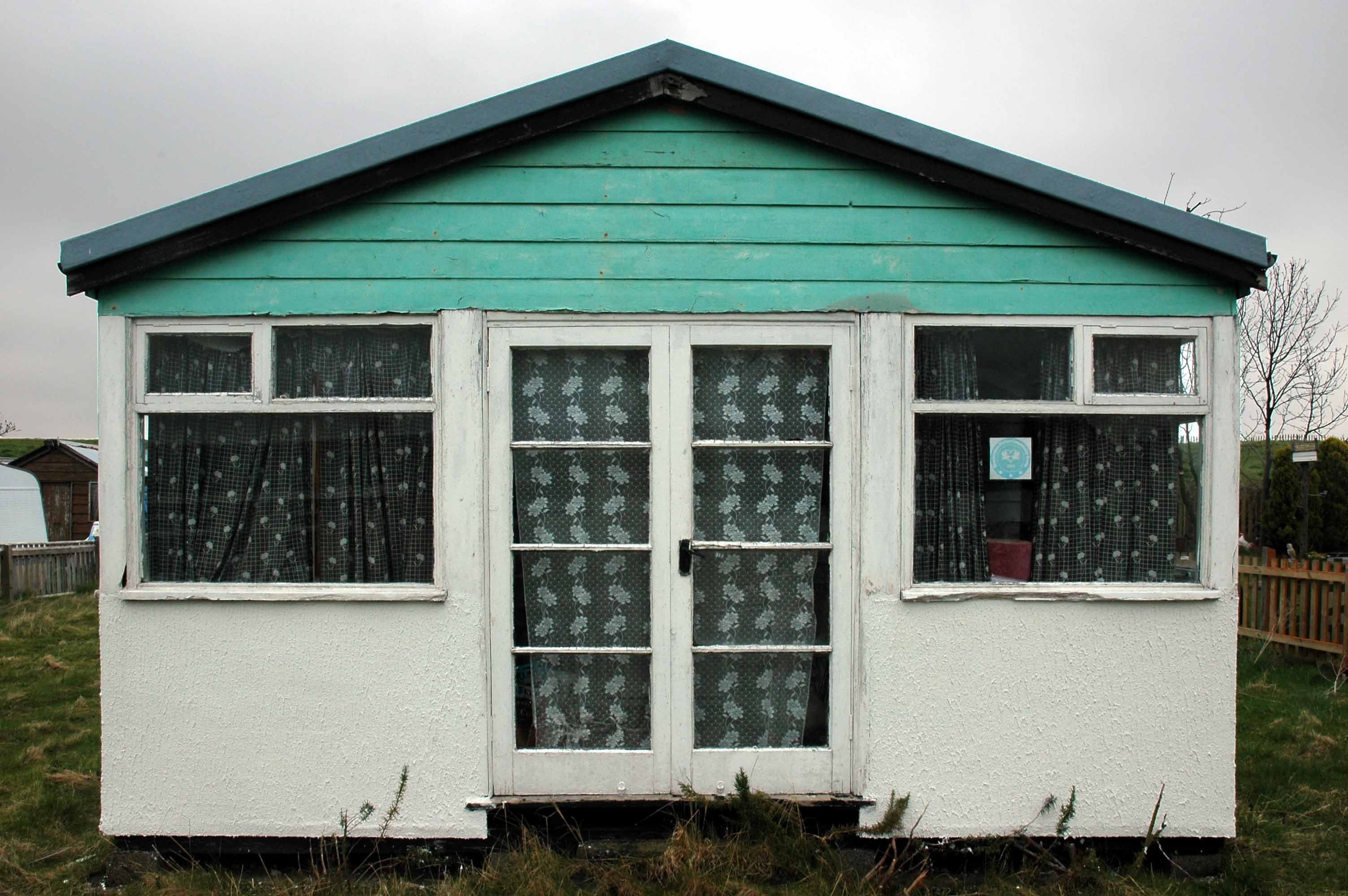
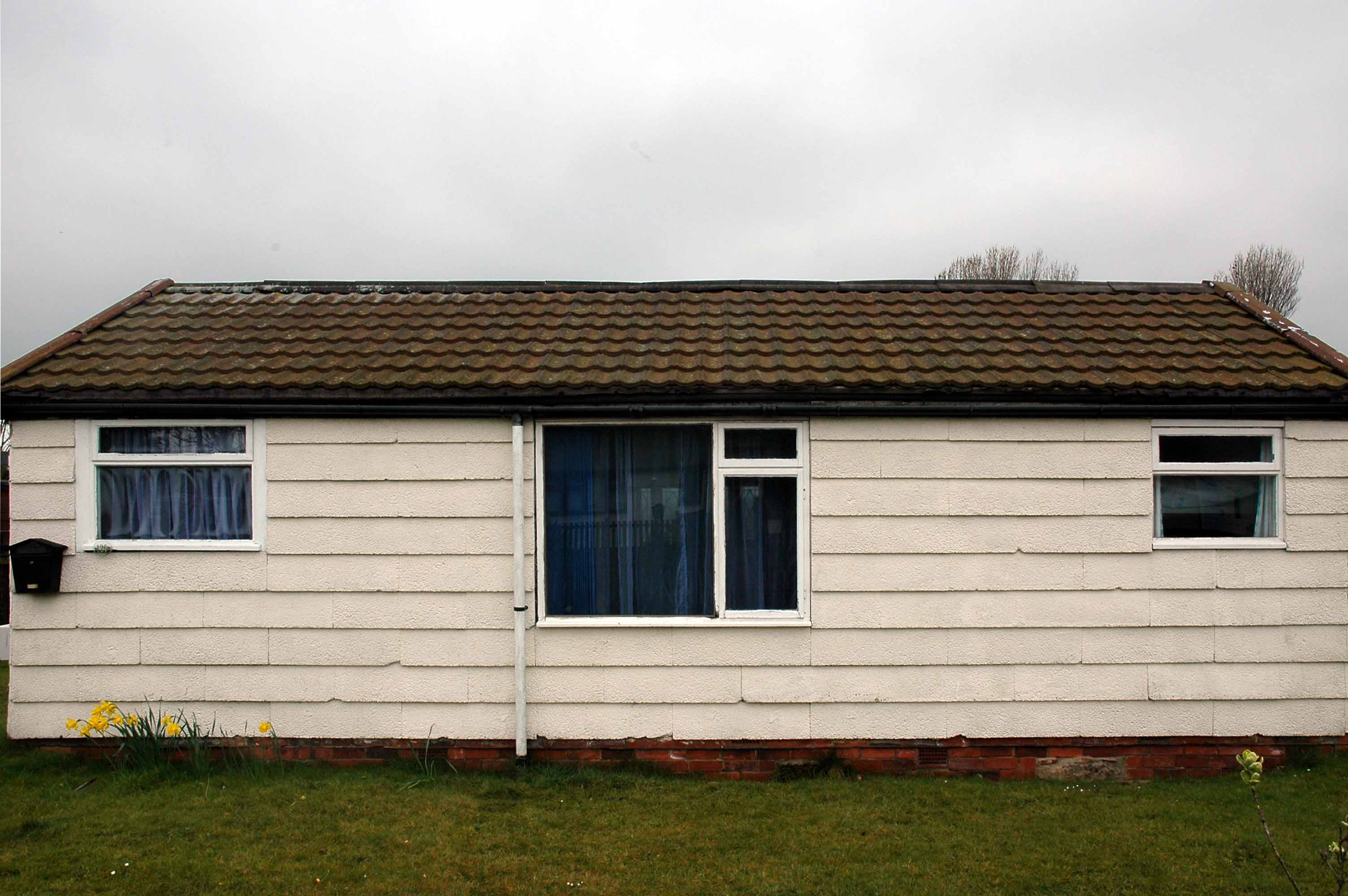
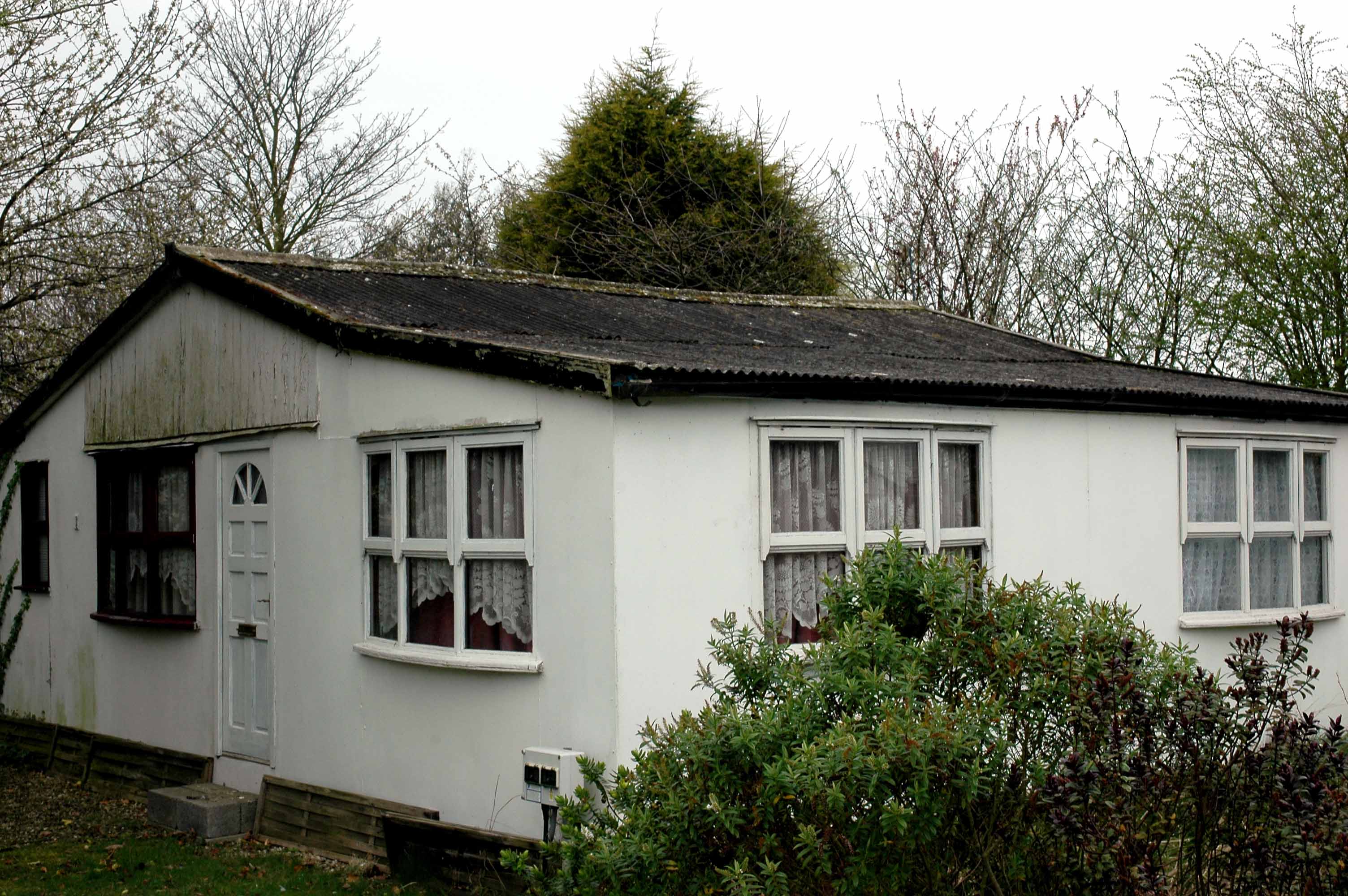
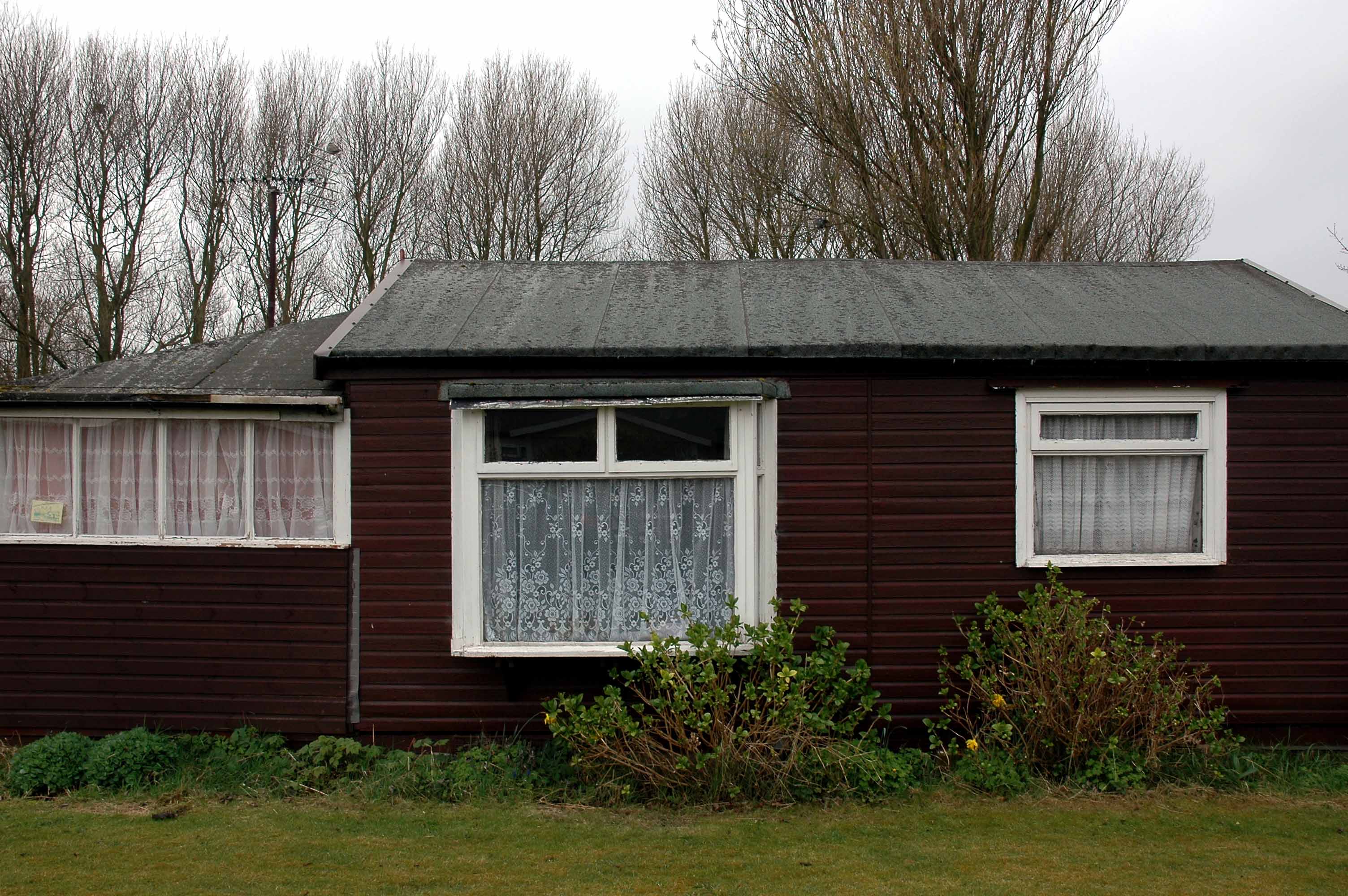
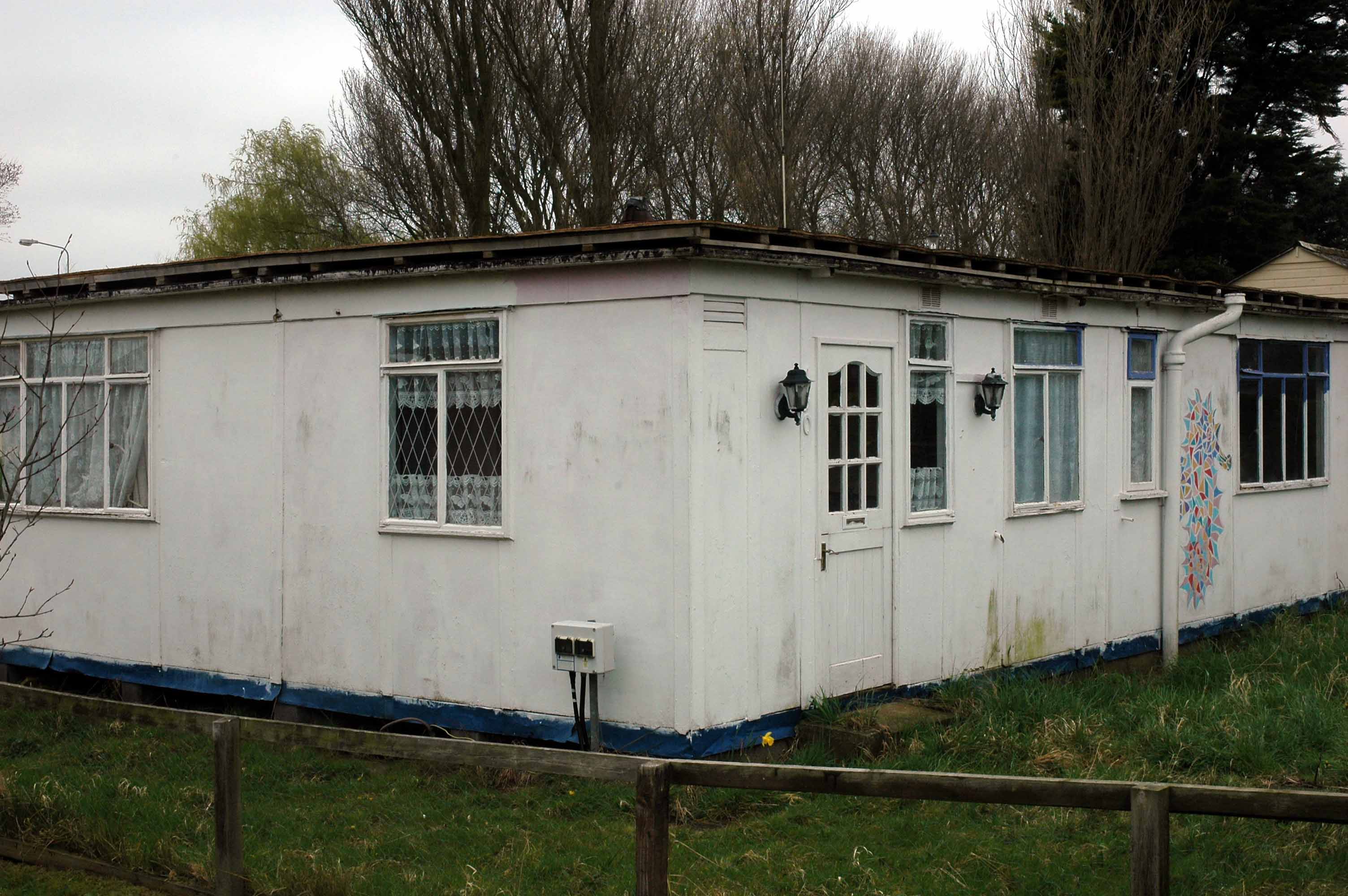
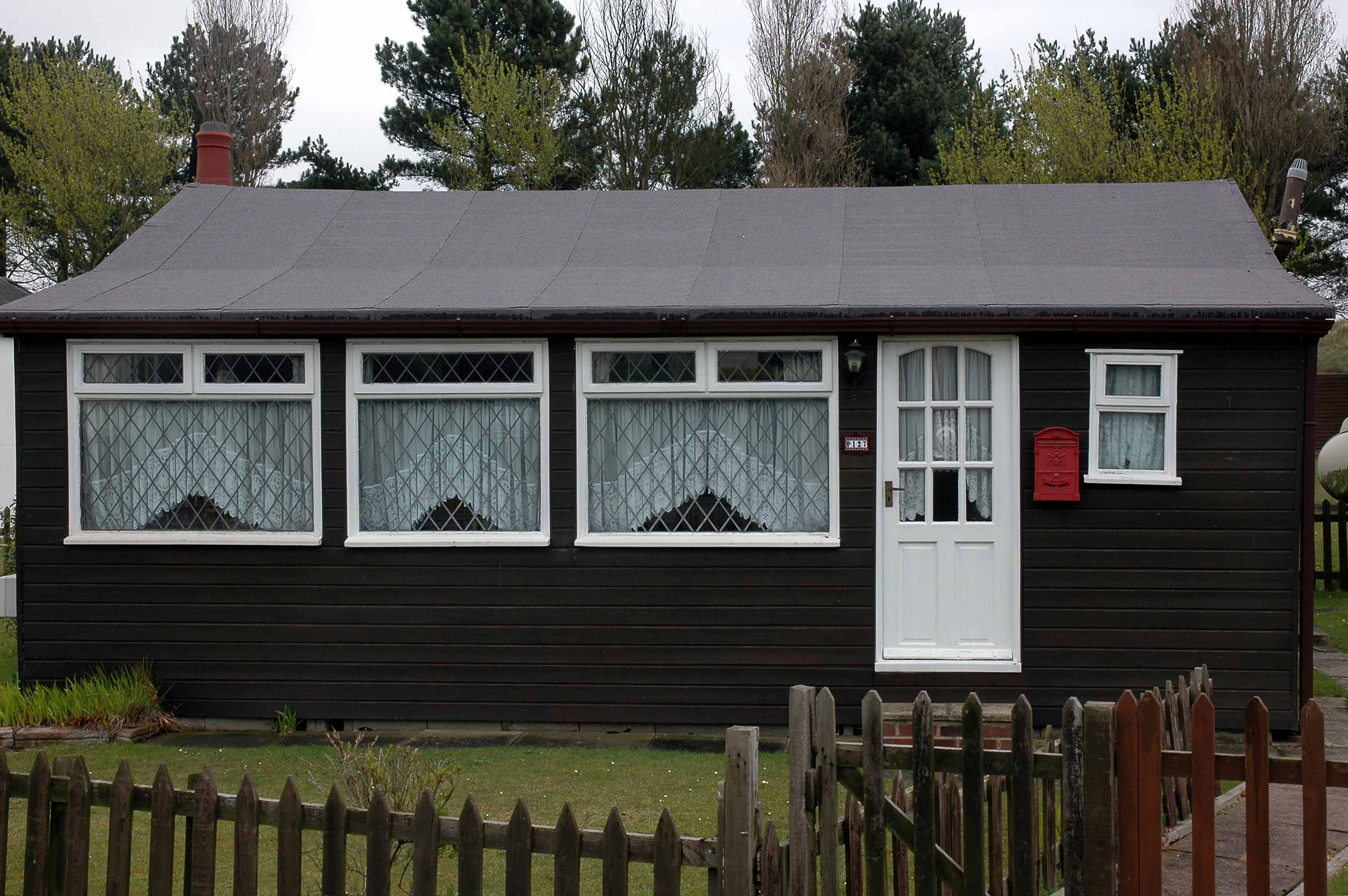
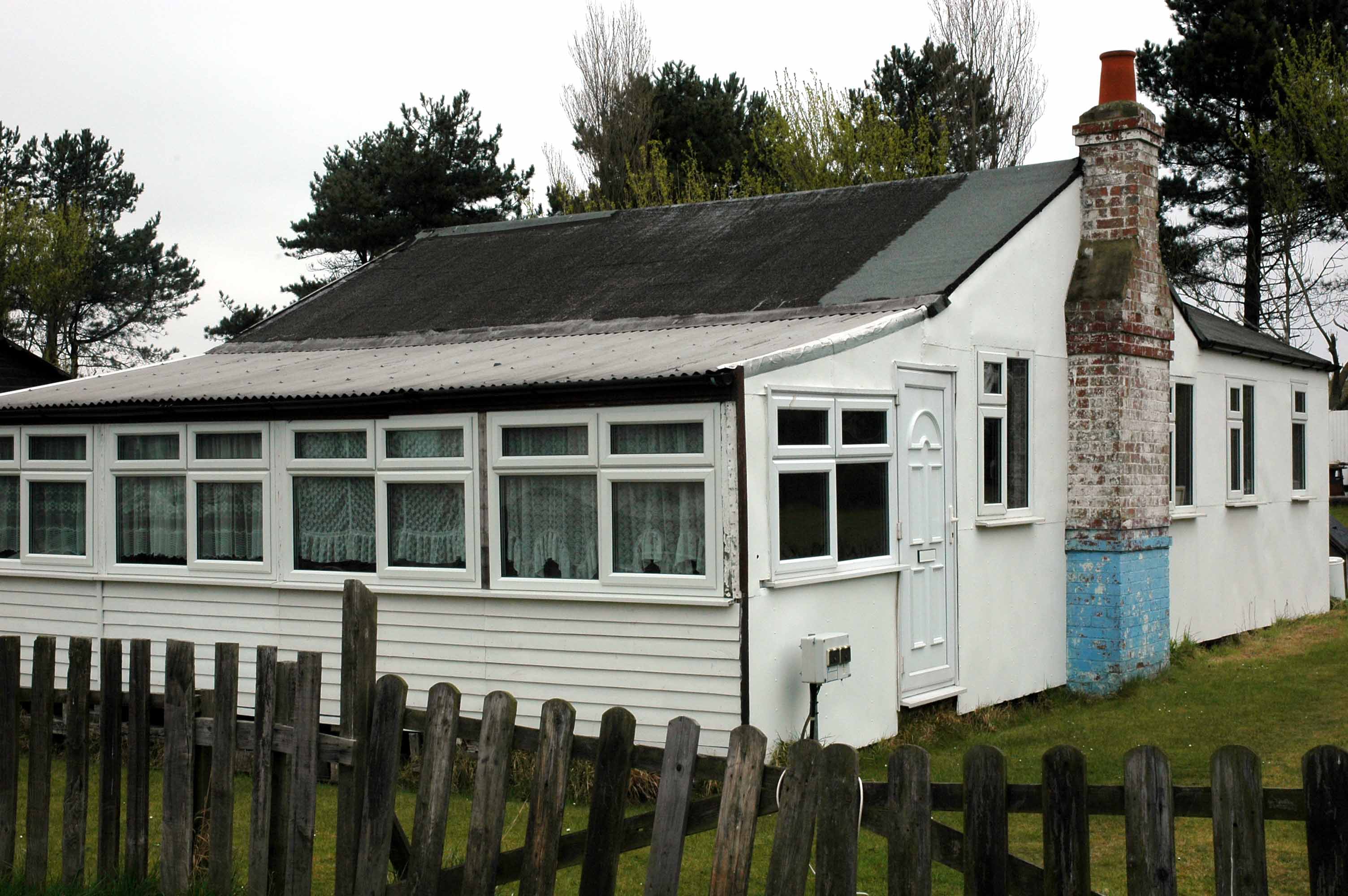
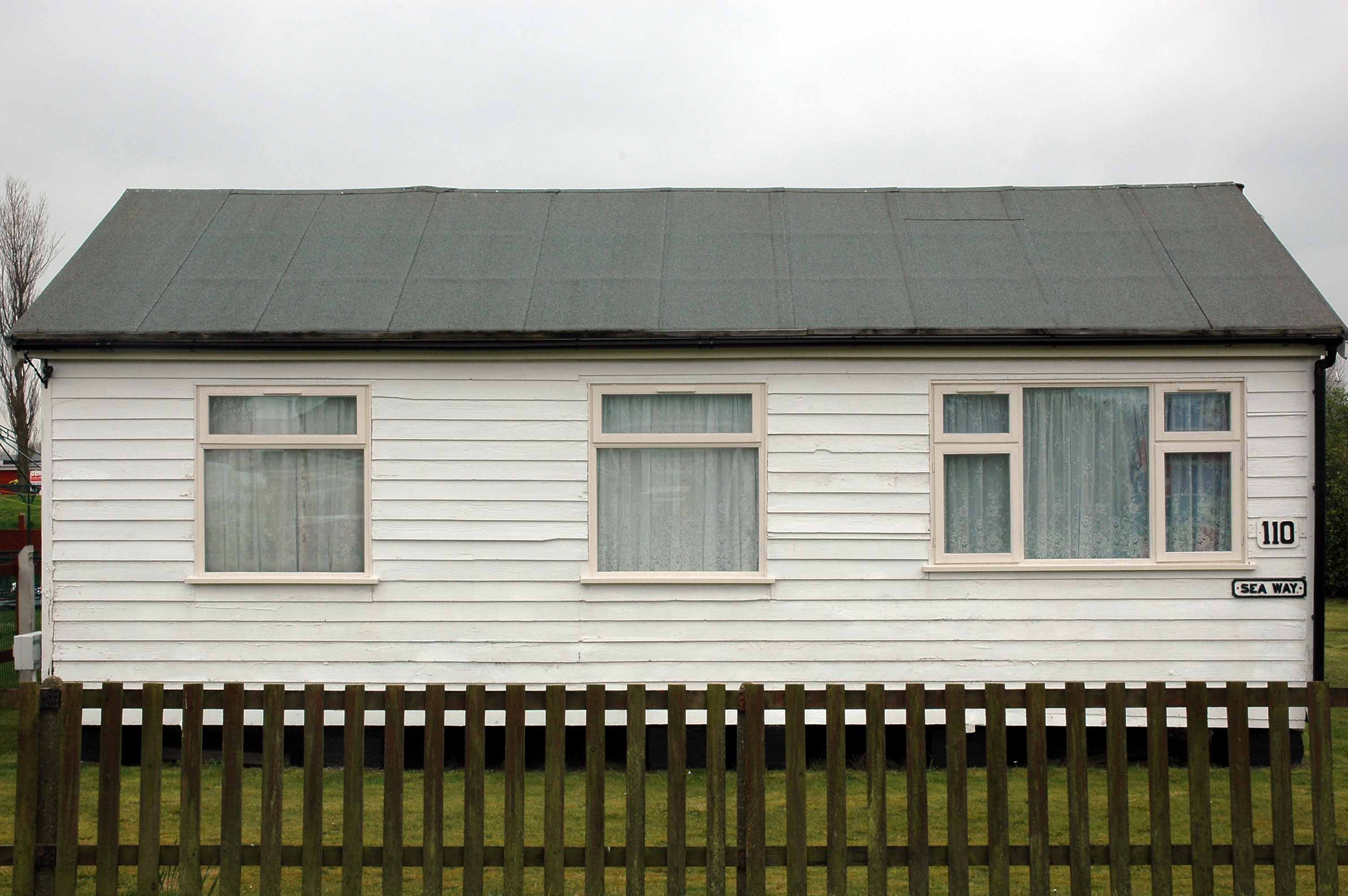
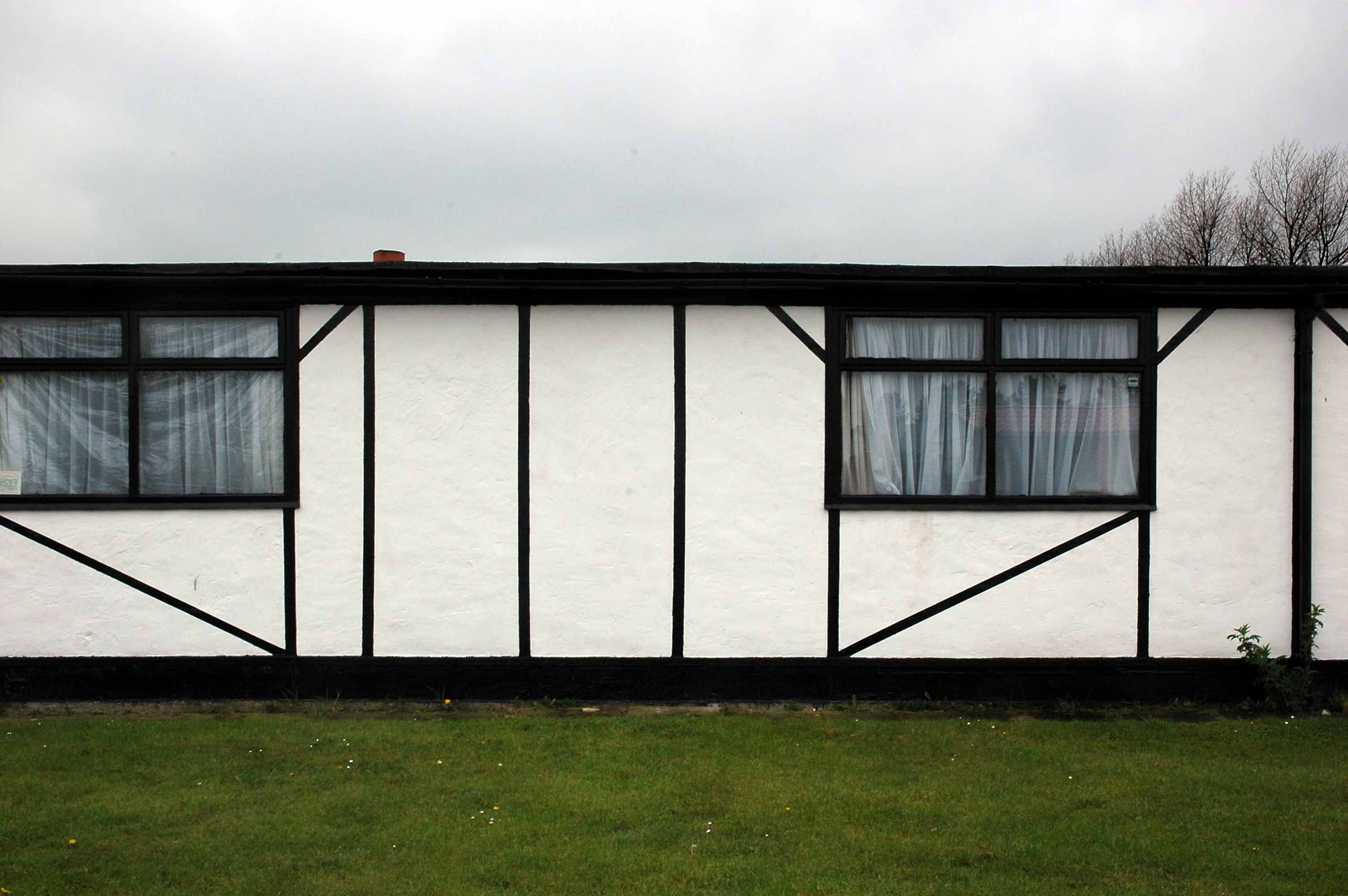
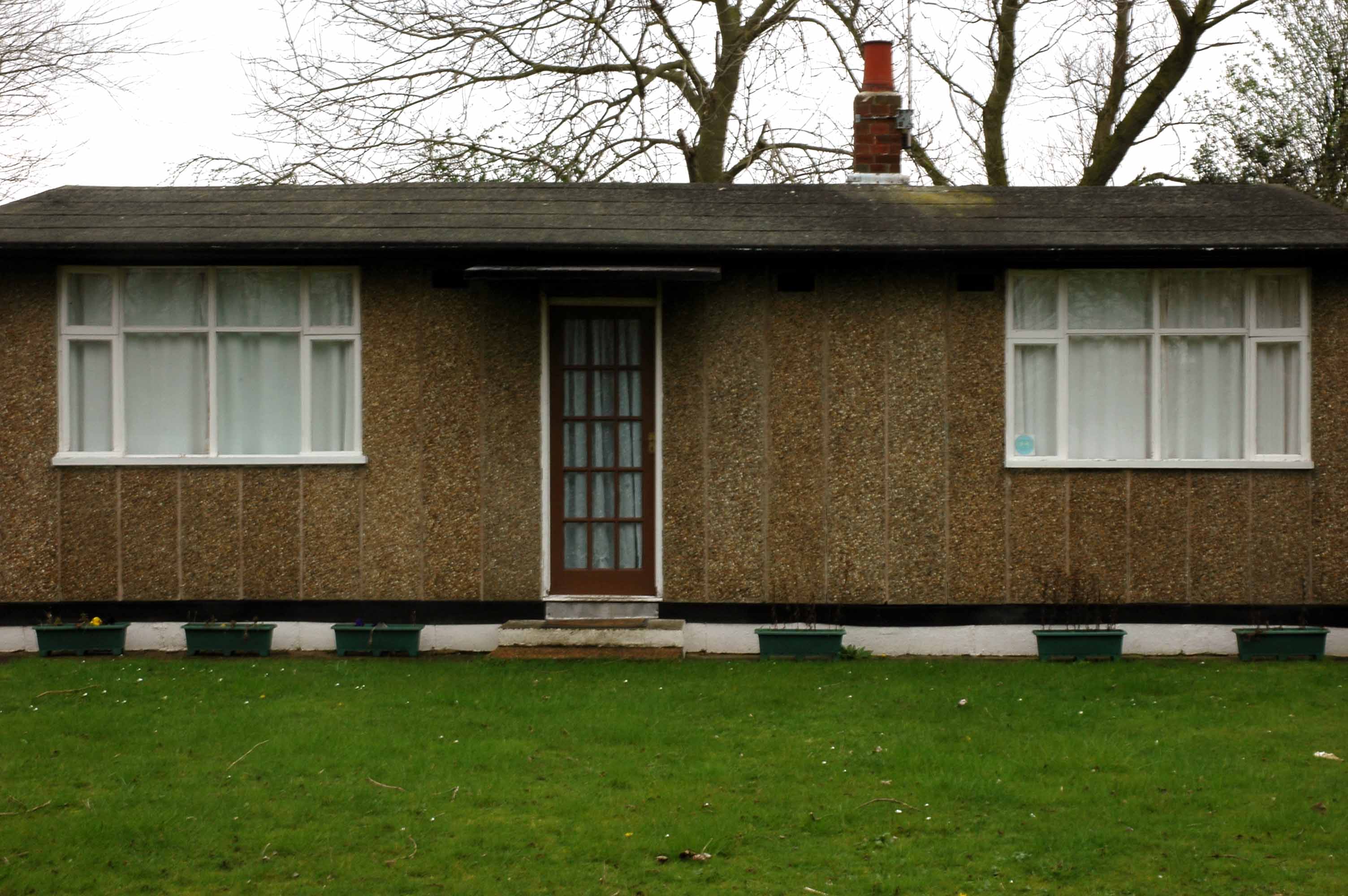
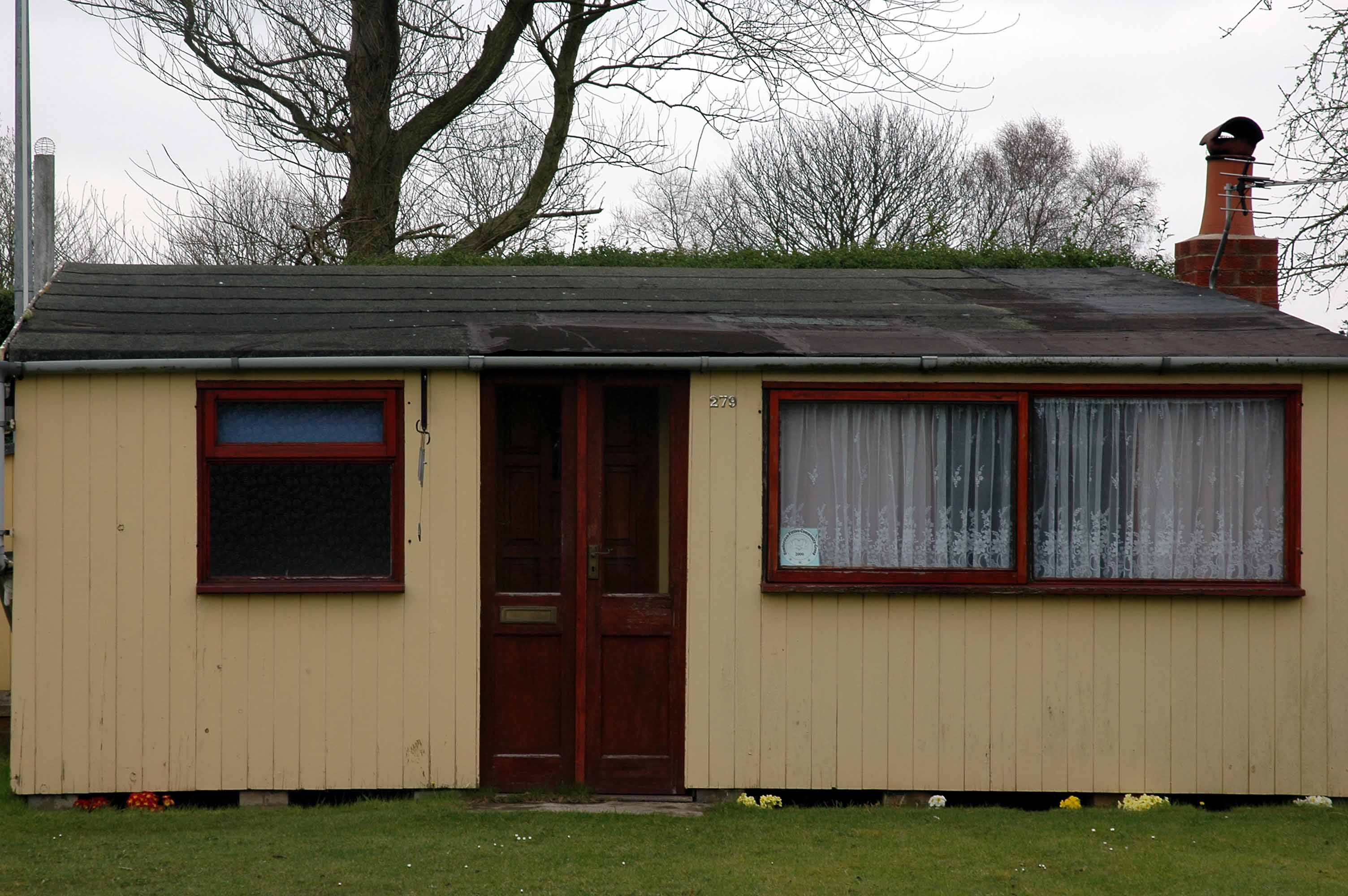
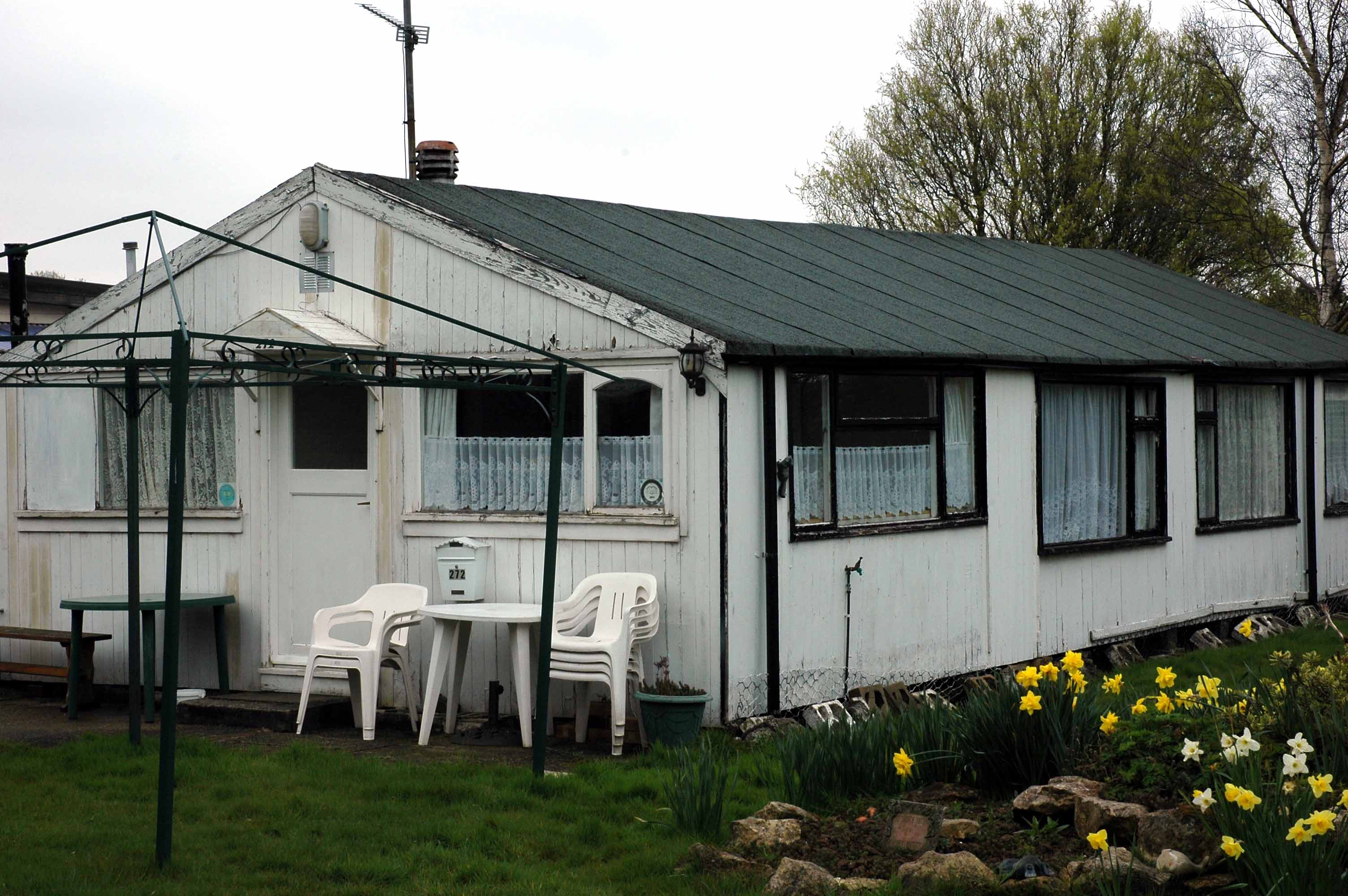
There are signs of hope as the housing association and council embark on a multi million pound refurbishment of the estate including:
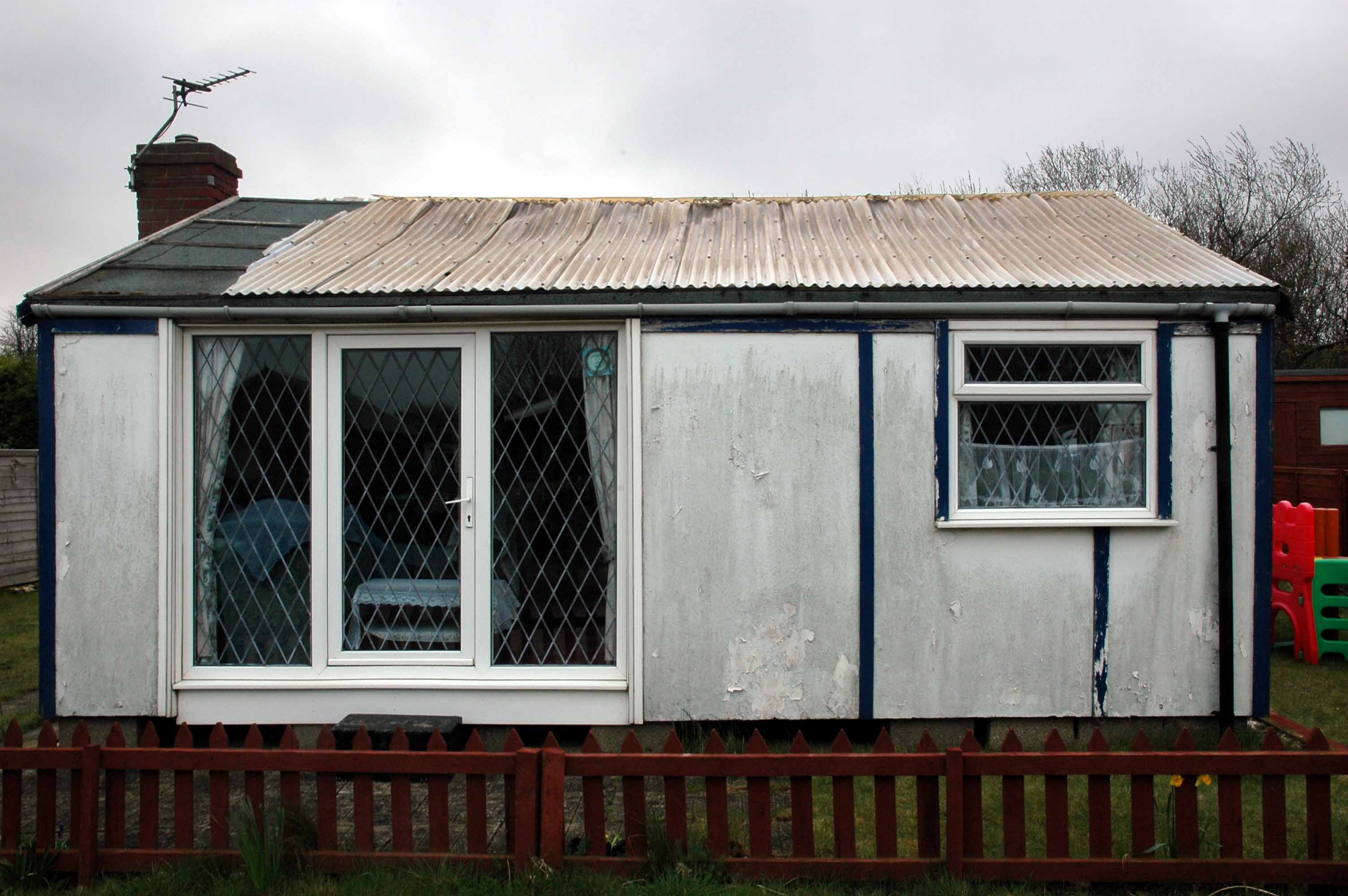
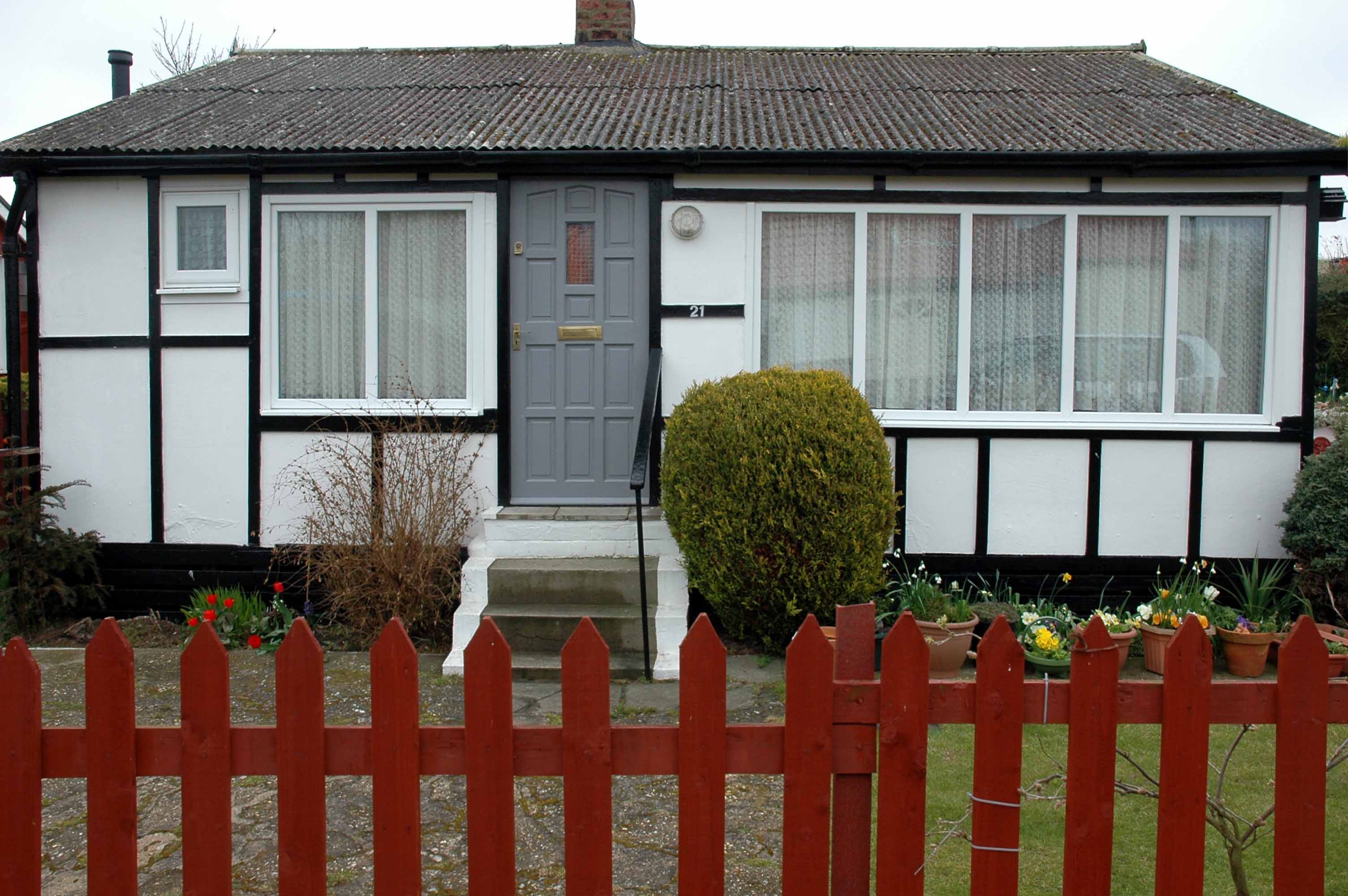
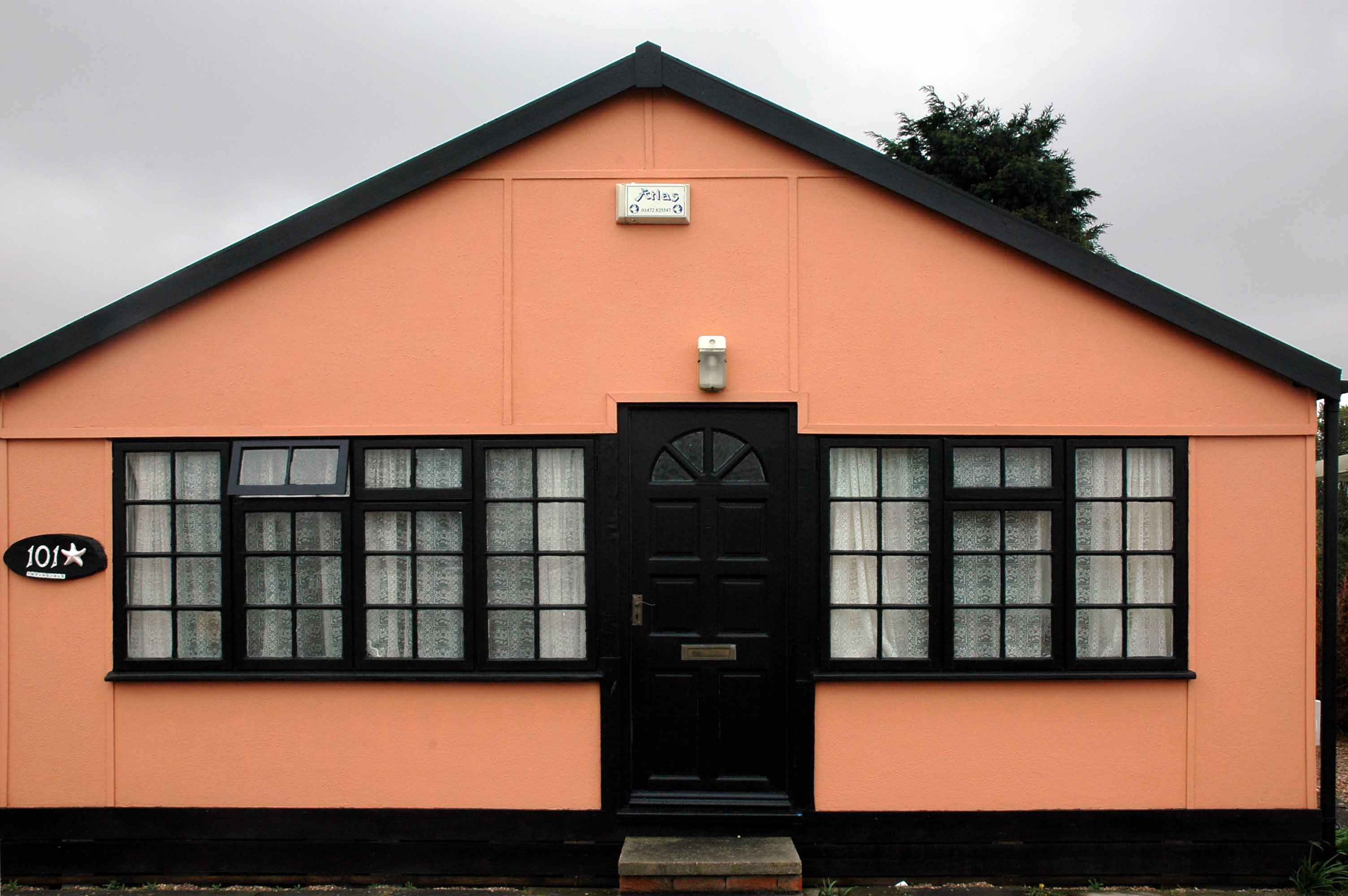
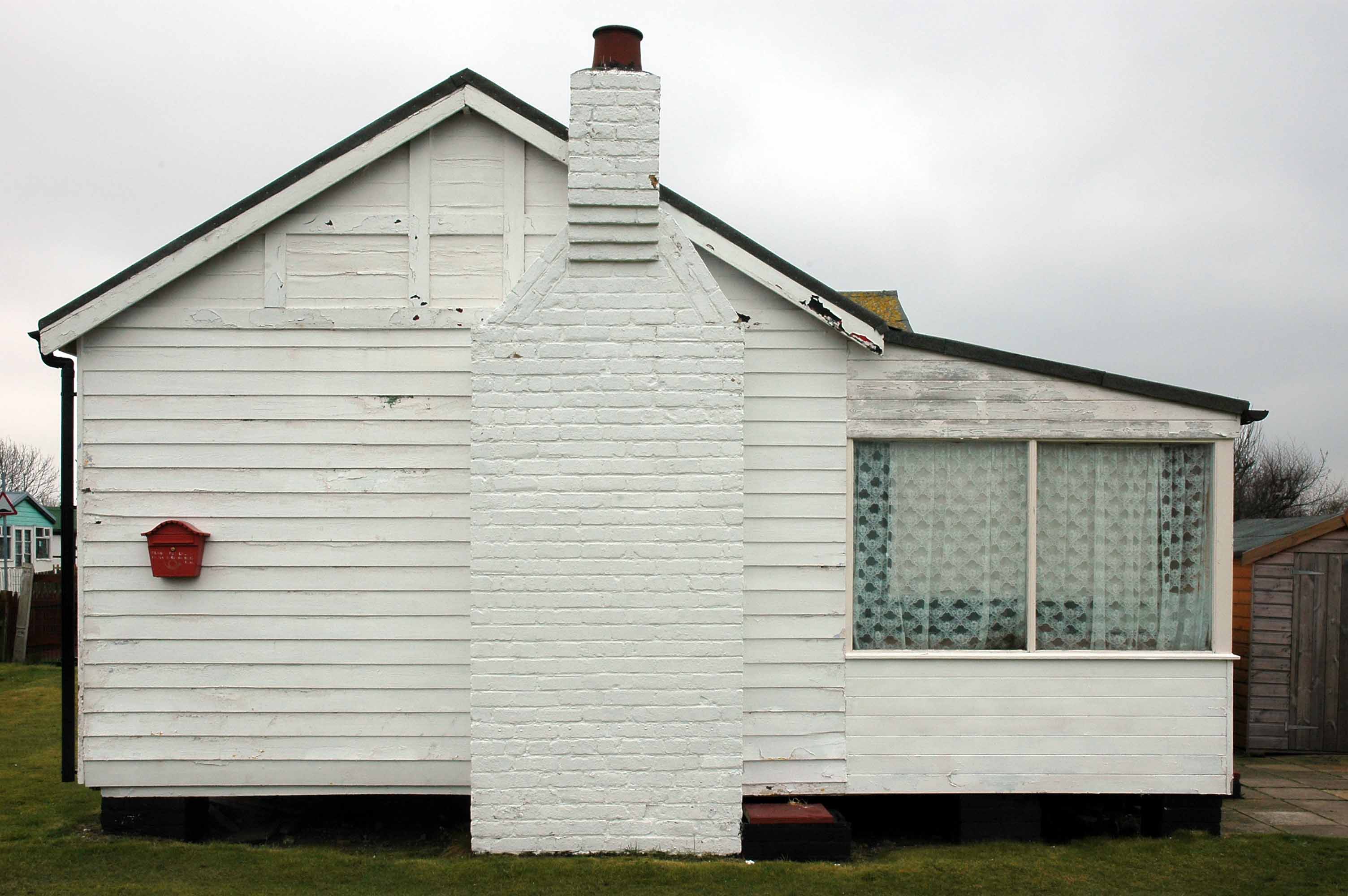
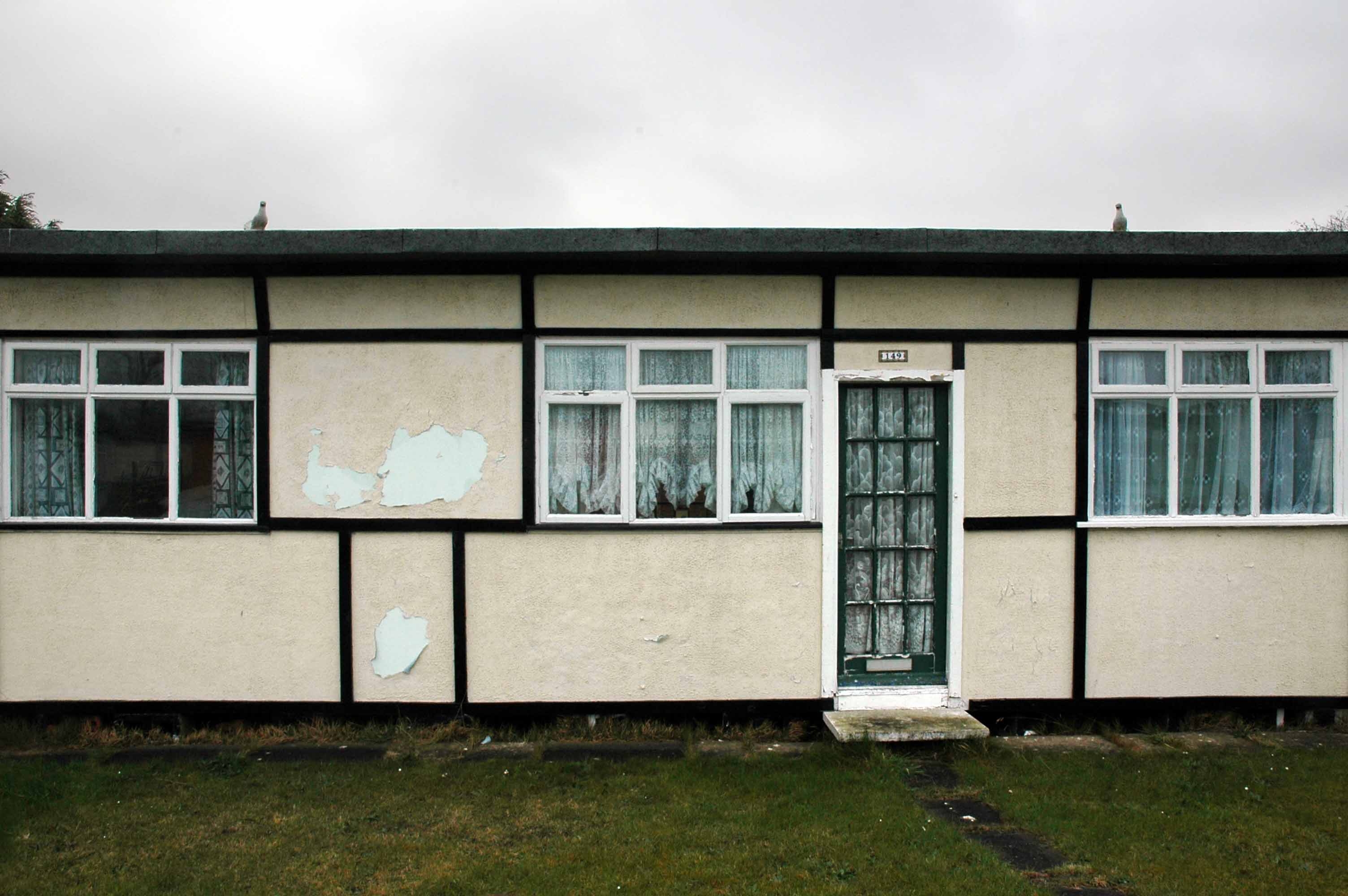
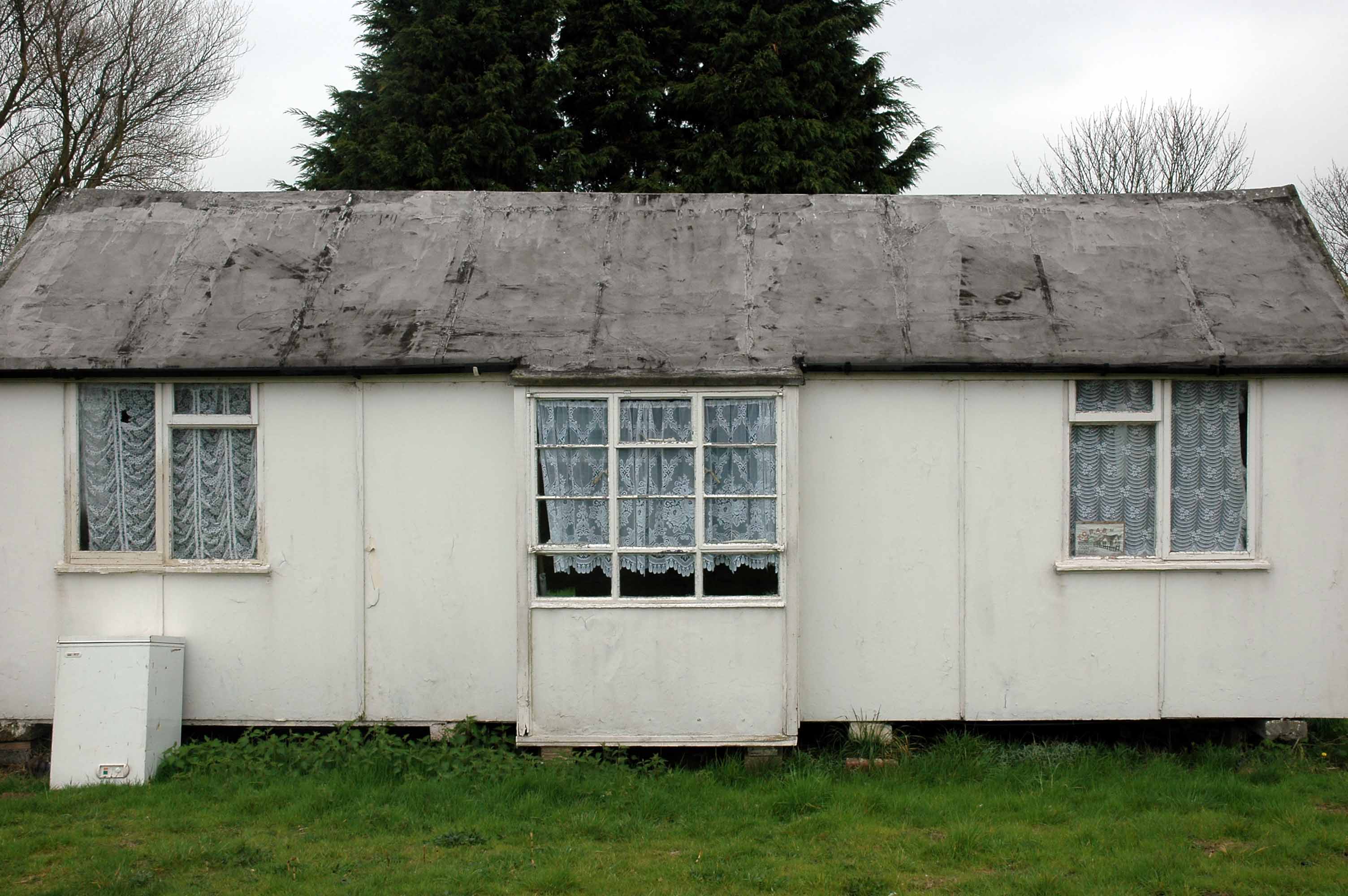
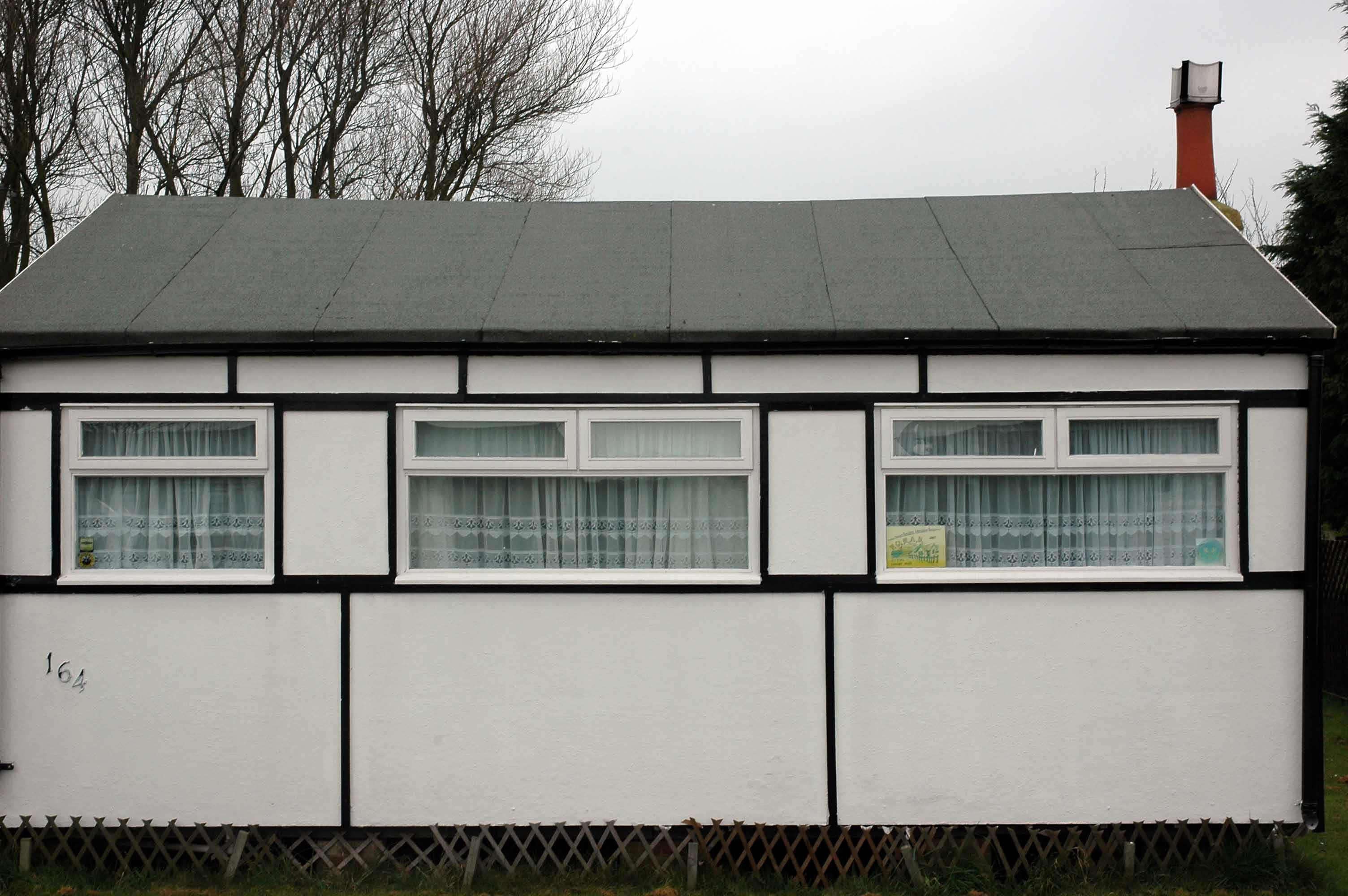
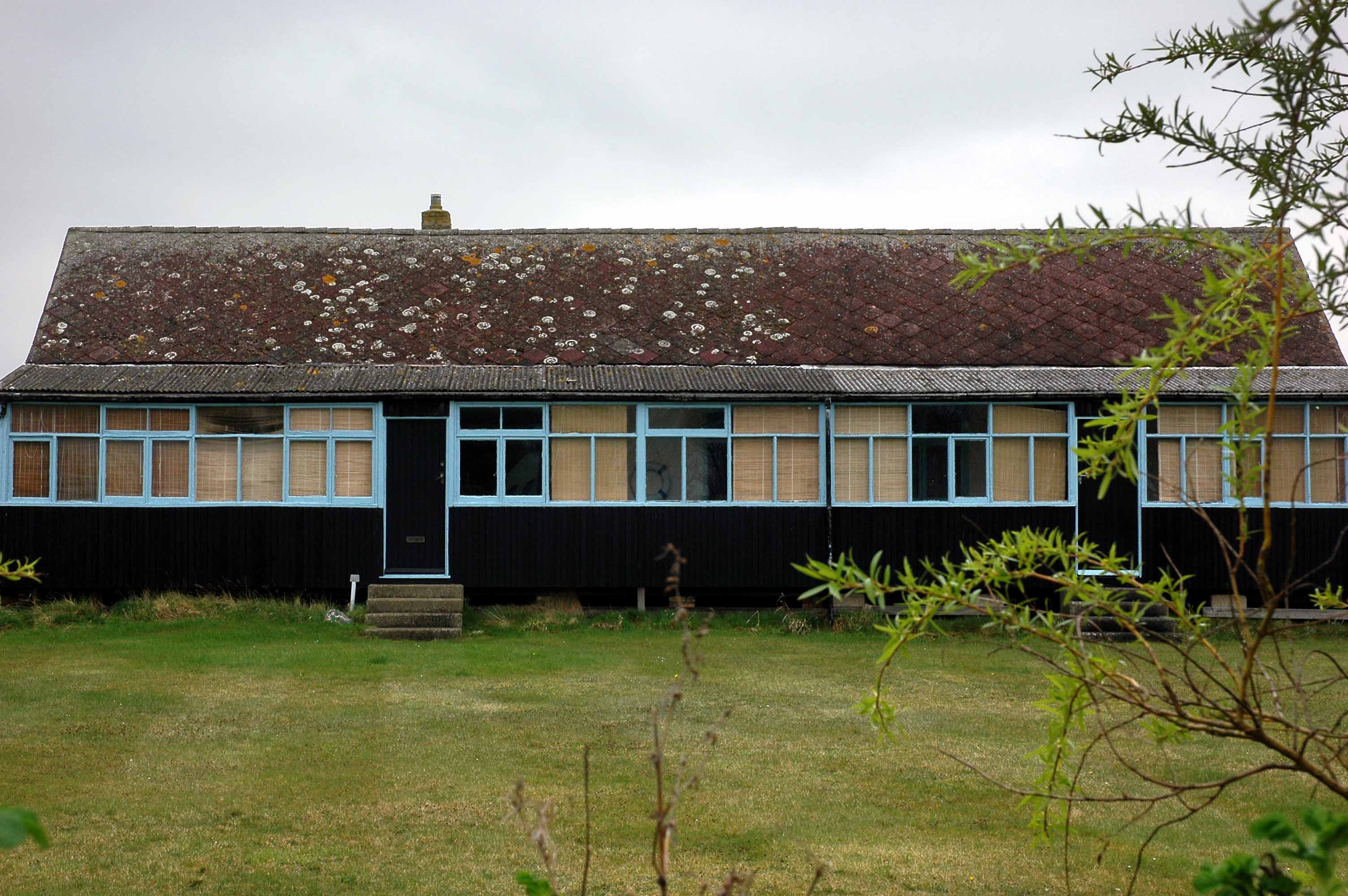
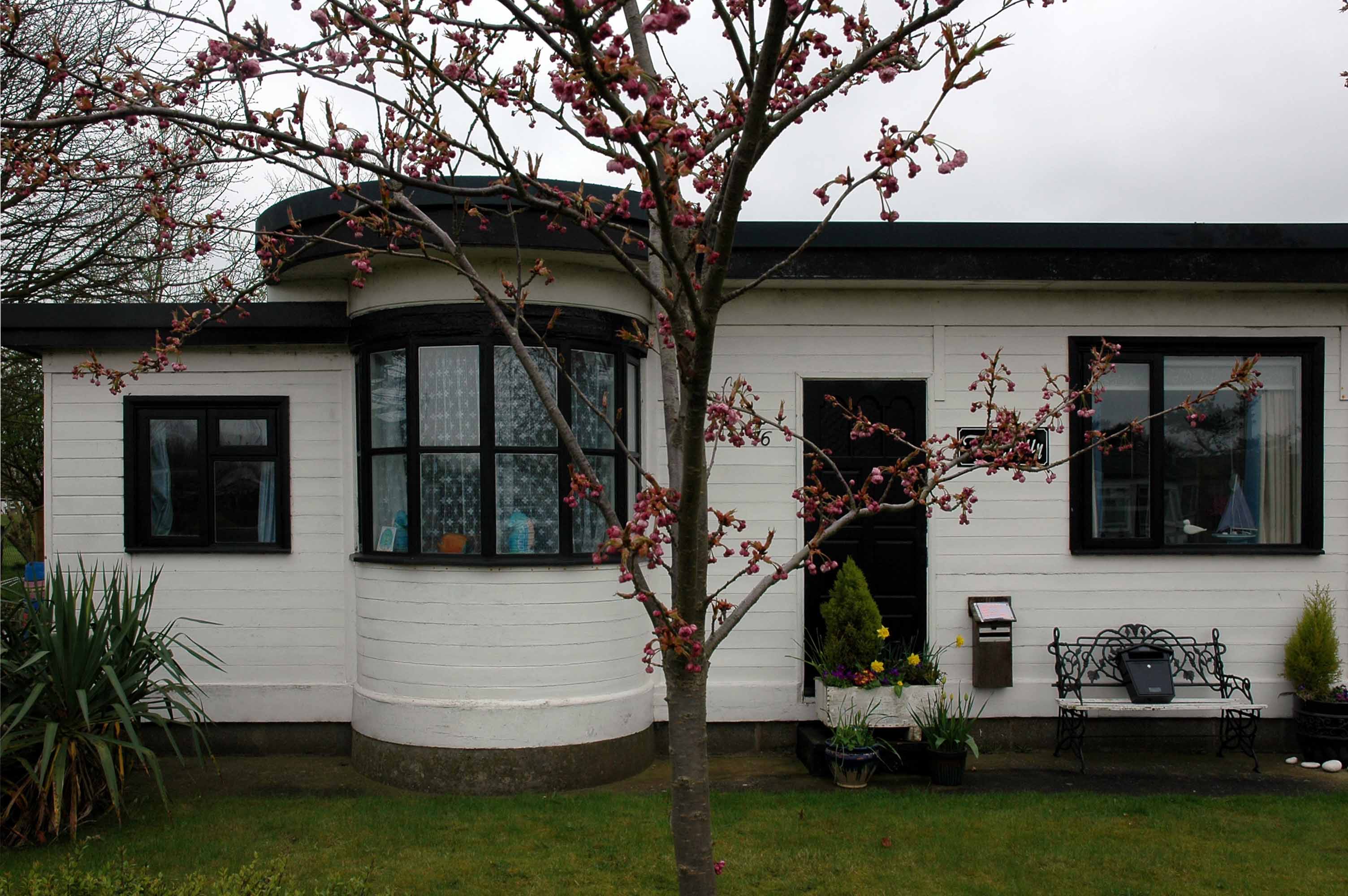
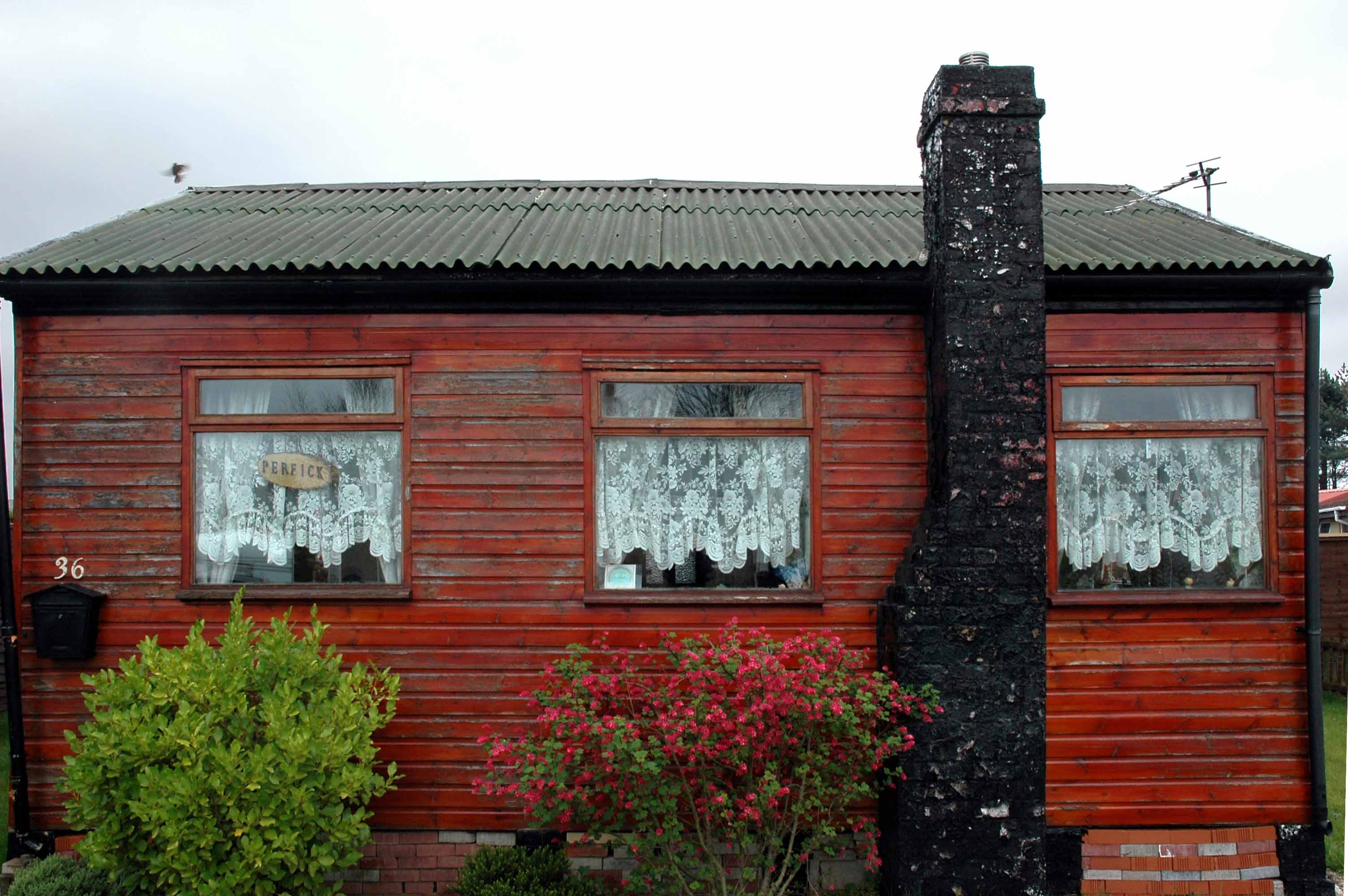
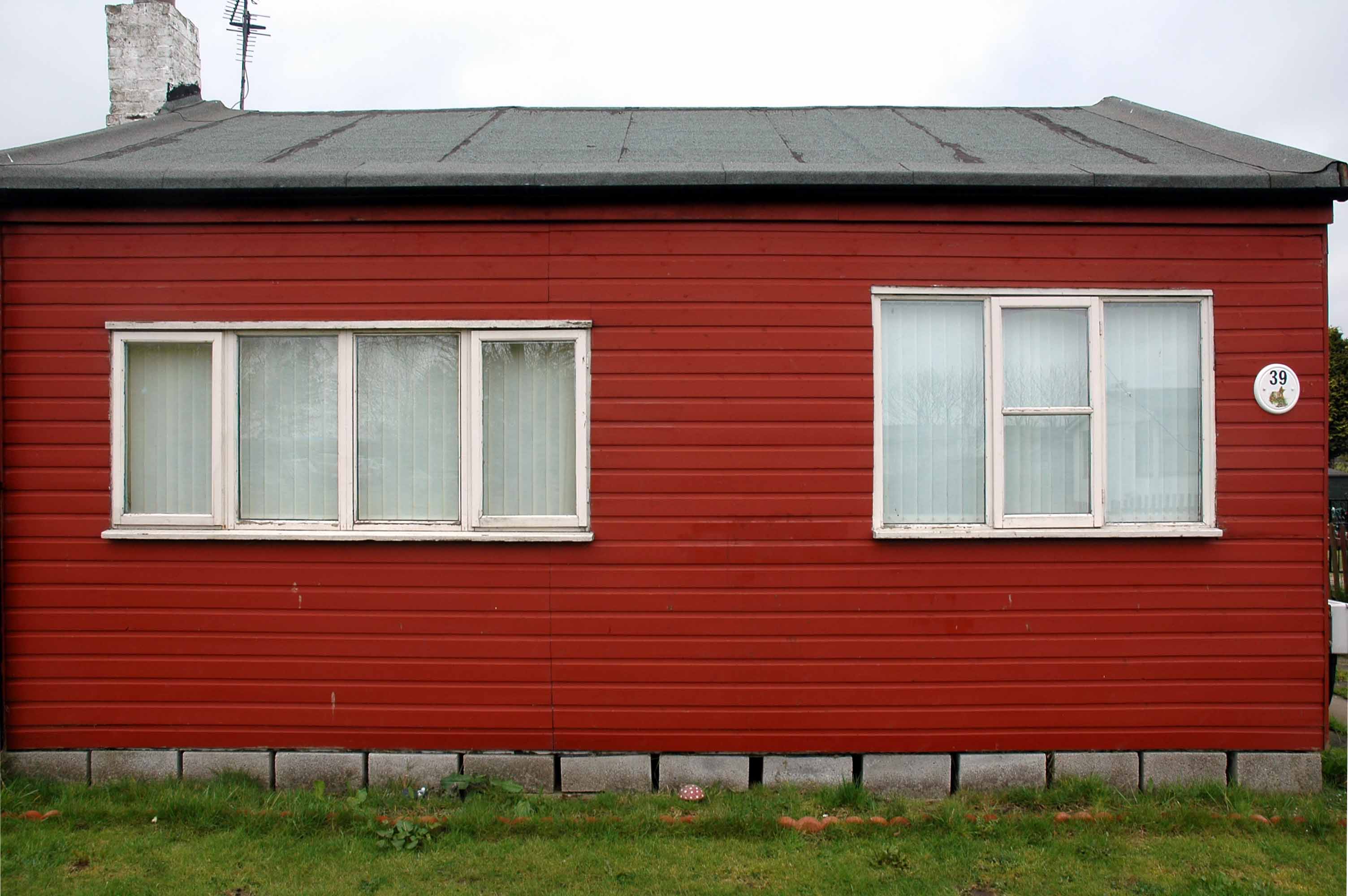
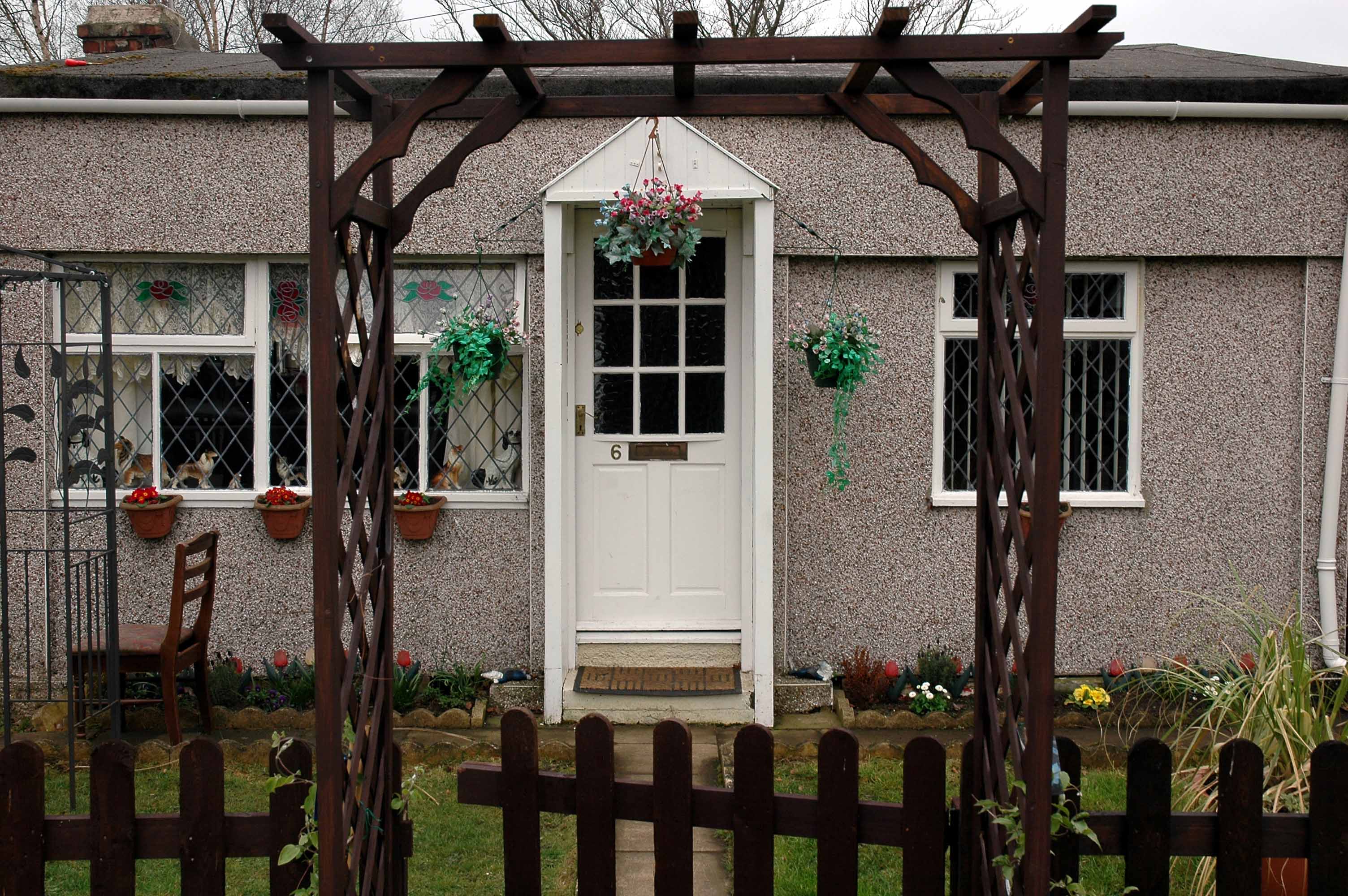
Replacing fencing around bungalows.
On the day of my visit the chill January streets seemed quiet and ordered, and I was enchanted by the mismatched pairs of semis that I encountered.
I set out one morning with a clear intent, to travel.
To travel to see the Warrington Transporter Bridge – of which I had only just become aware. Ignorance in this instance is not bliss, expectation and fulfilment is.
Guided by the detailed instructions on the Transporter Bridge Website I made my way from Bank Quay Station, mildly imperilled yet not impeded by caged walkways, tunnels, bridges, muddy paths and Giant Hogweed!
Finally catching a glimpse of:
Warrington Transporter Bridge, also known as Bank Quay Transporter Bridge or Crosfield’s Transporter Bridge, across the River Mersey is a structural steel transporter bridge with a span of 200 feet. It is 30 feet wide, and 76 feet above high water level, with an overall length of 339 feet. It was built in 1915 and, although it has been out of use since about 1964, it is still standing. It was designed by William Henry Hunter and built by William Arrol and Co.
The bridge in use 1951.
It is till standing today, and was built to despatch finished product from the cement plant that had been built on the peninsula. It was originally used to carry rail vehicles up to 18 tons in weight, and was converted for road vehicles in 1940. In 1953 it was modified to carry loads of up to 30 tons.
The bridge is designated by English Heritage as a Grade II* listed building, and because of its poor condition it is on their Heritage at Risk Register. The bridge is protected as a Scheduled Ancient Monument.
As I walked out one morning, up and down the A49 out of Warrington town centre, on the way somewhere else entirely, the sun and I chanced to fall on a tight group of streets and courtyards, constraining and containing an intriguing collection of modern homes.
Competitively priced, well below national averages – the area looks to be getting along.
Incidence of crime is low to almost non existent.
So an illuminated set of buildings with little by way of further illumination, I presume them to be corporation built, late Seventies? A visually exciting set of varied, interlocking geometric volumes – a formalist model that seems to function. On a chill day most residents were hopefully tucked up safe and warm somewhere or other, public spaces rested, bereft of life. The window spaces are pinched and mean, not only of the elevation facing the adjacent main road, but also on the inward faces. An economy of means and a resultant paucity of light.
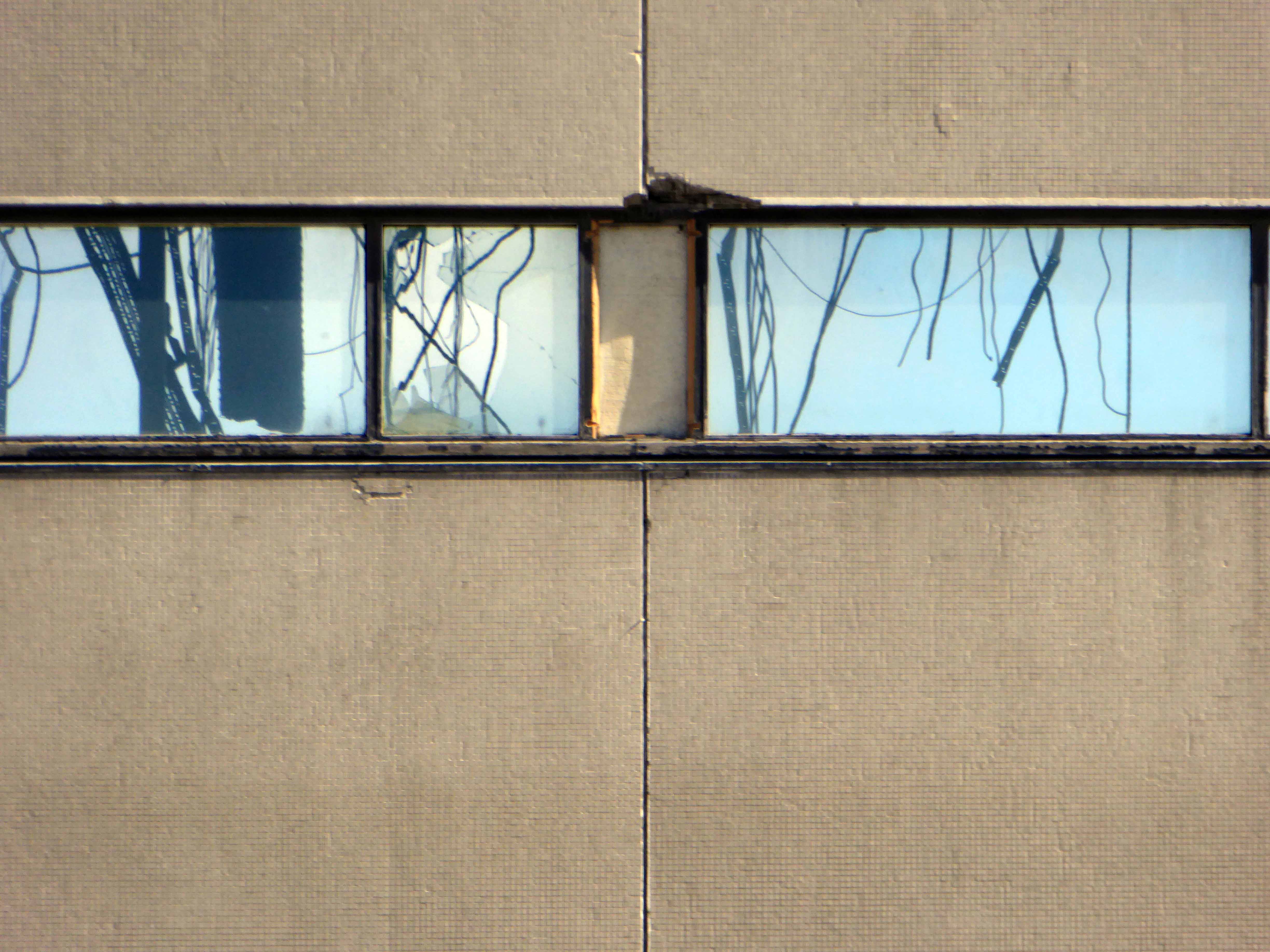
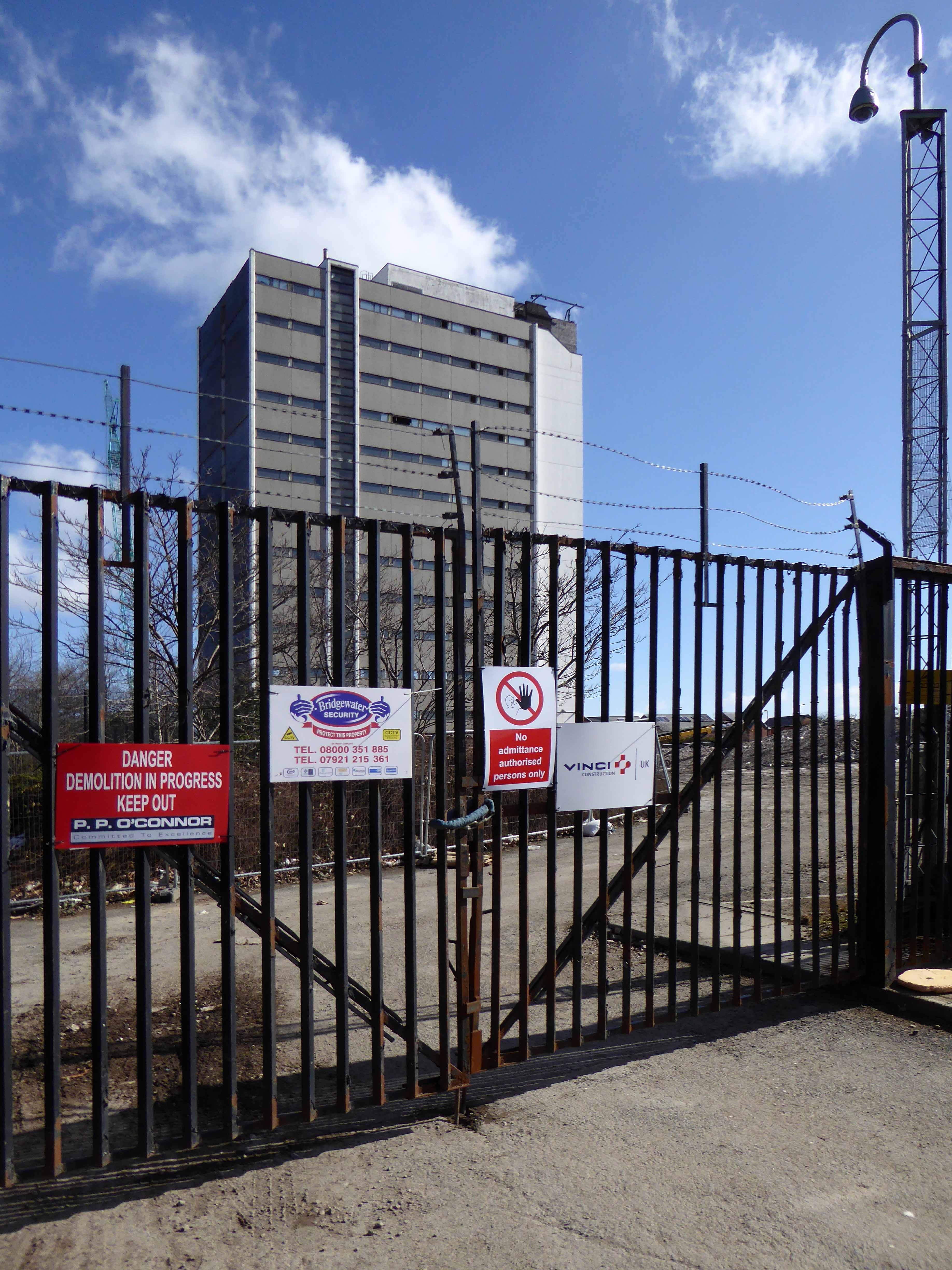
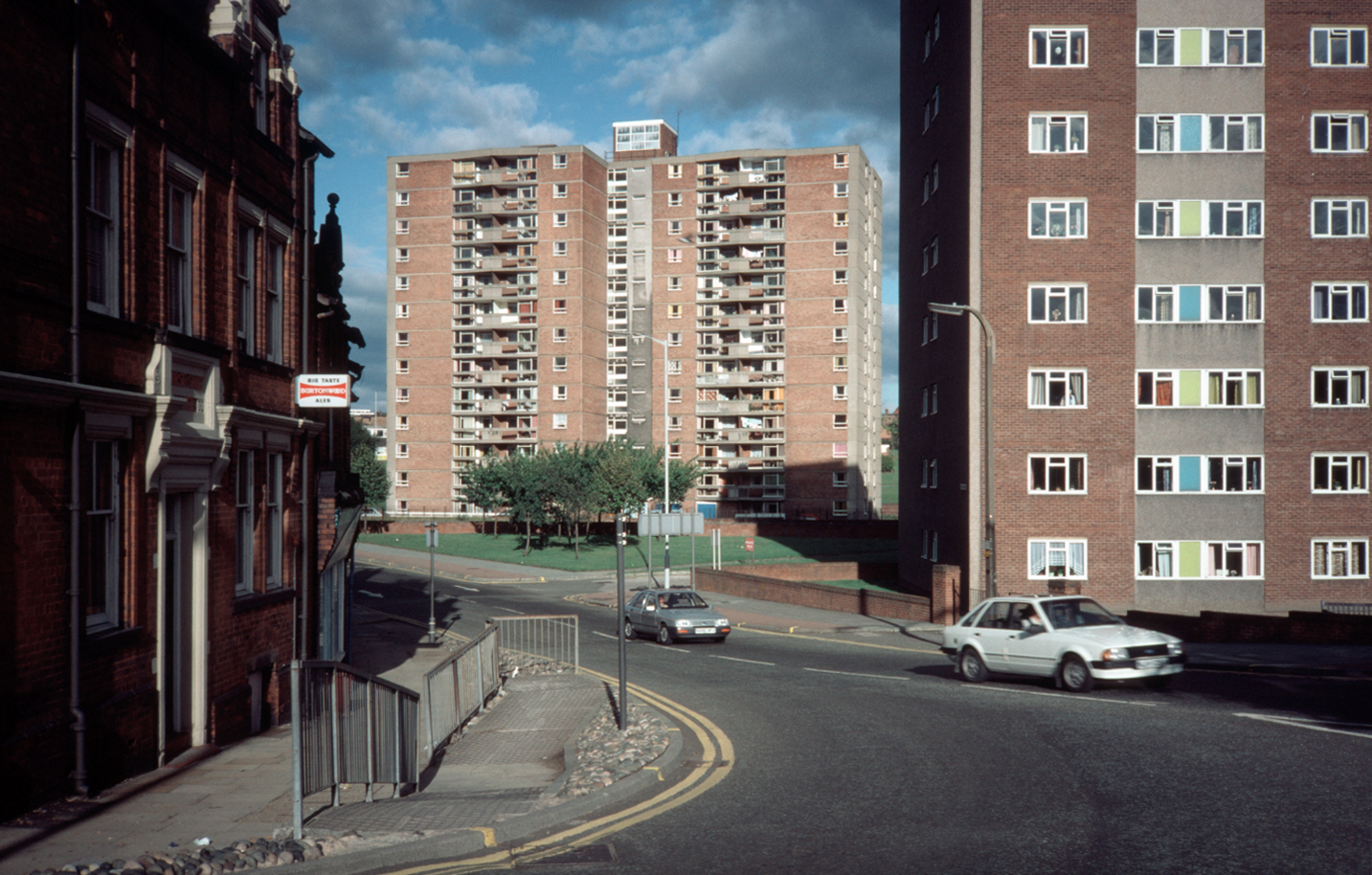
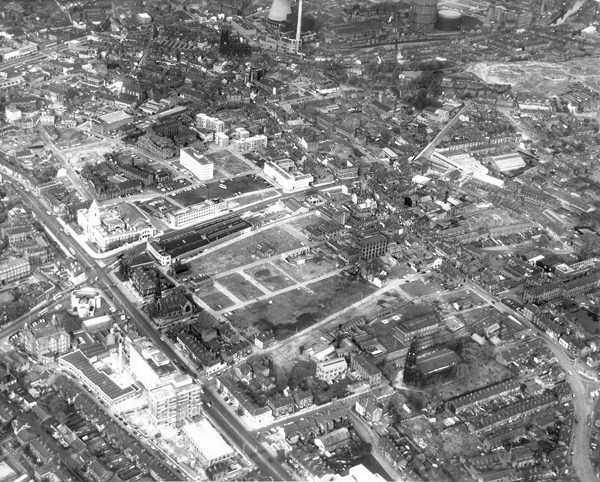
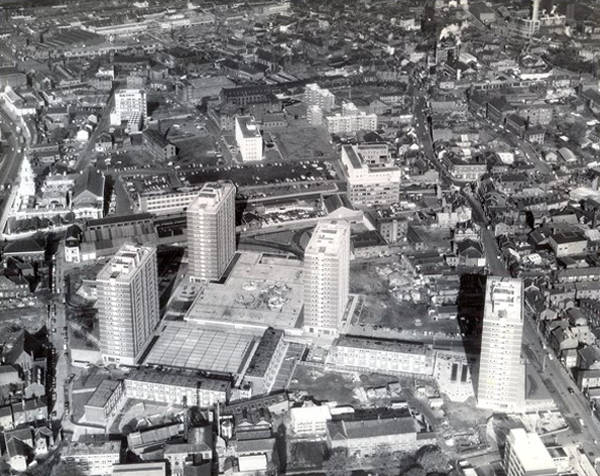
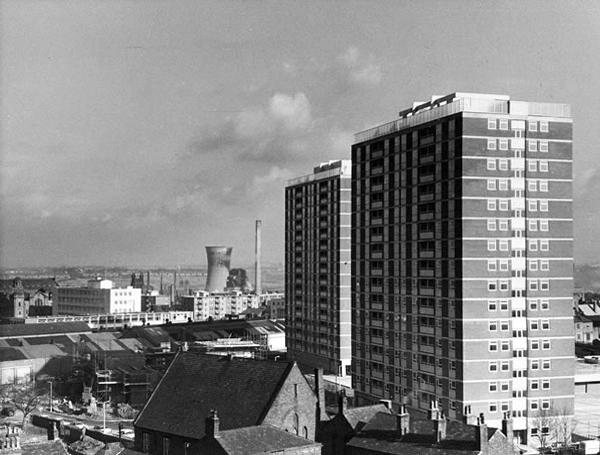
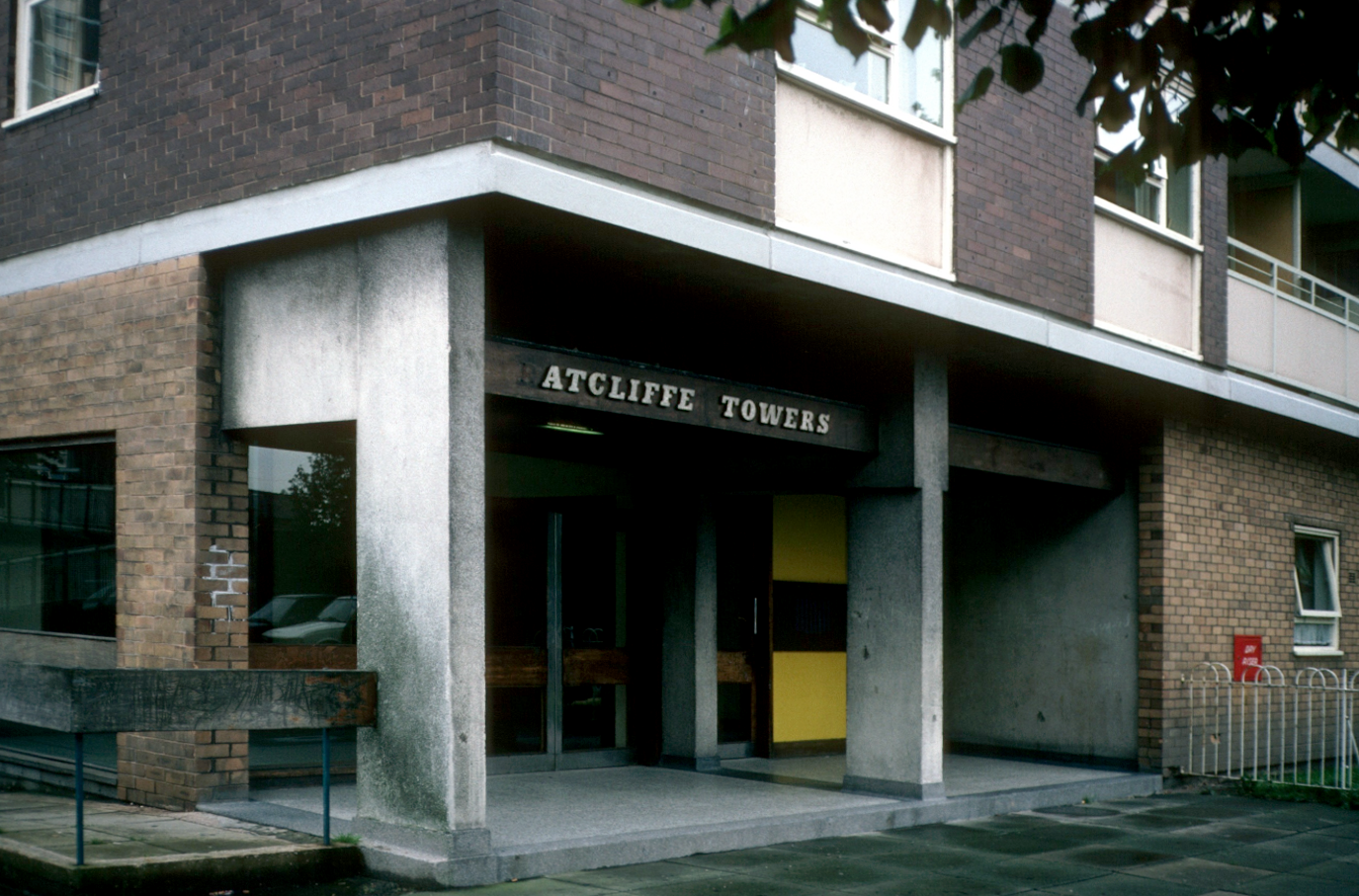
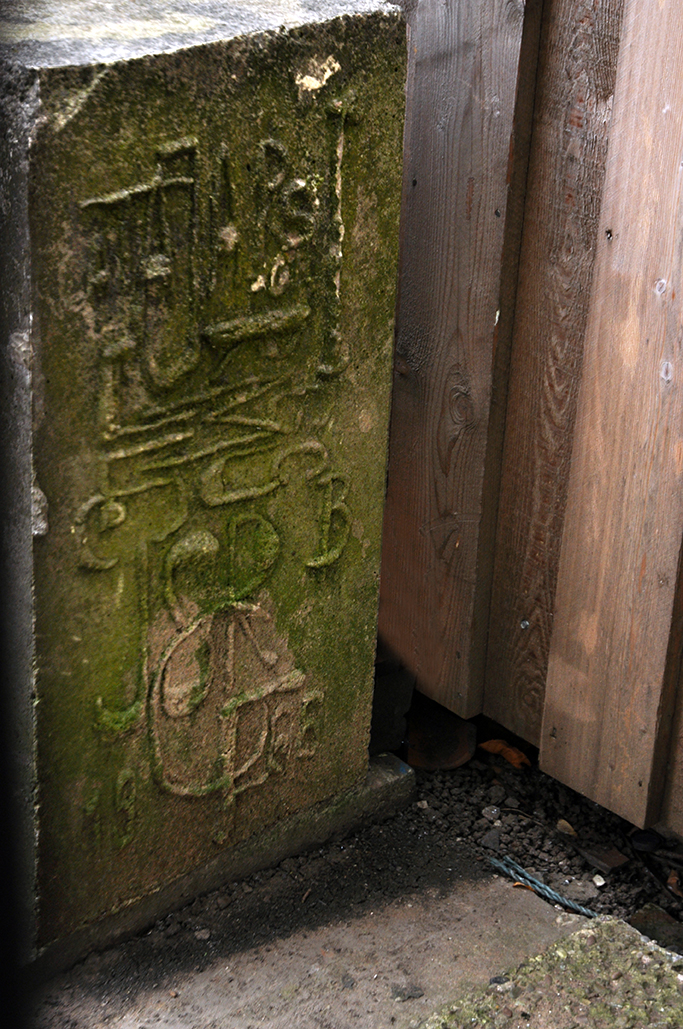
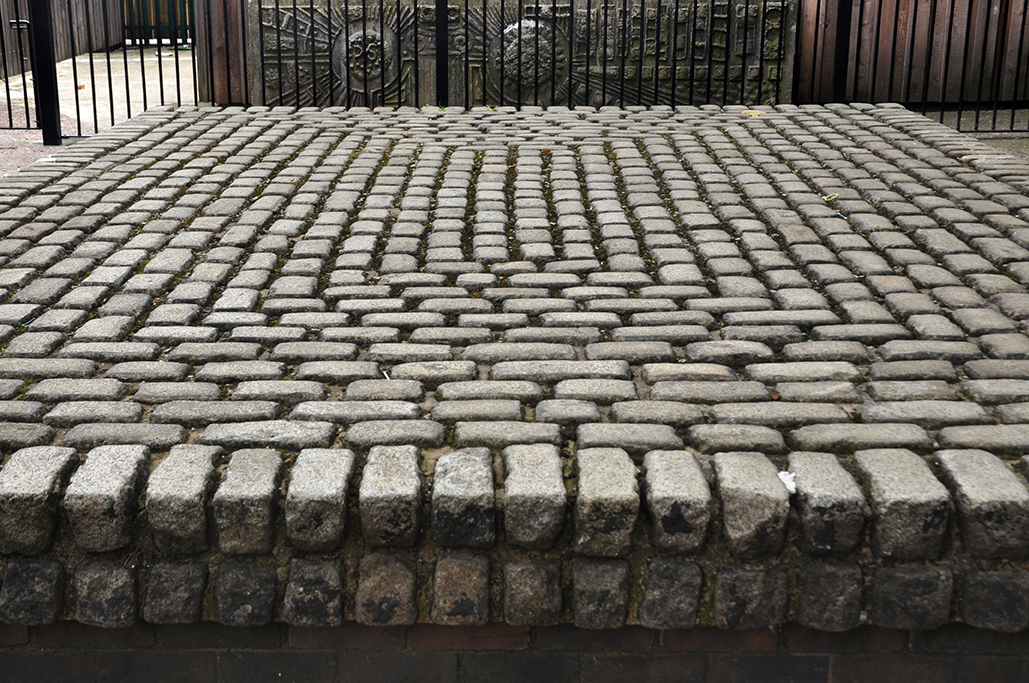
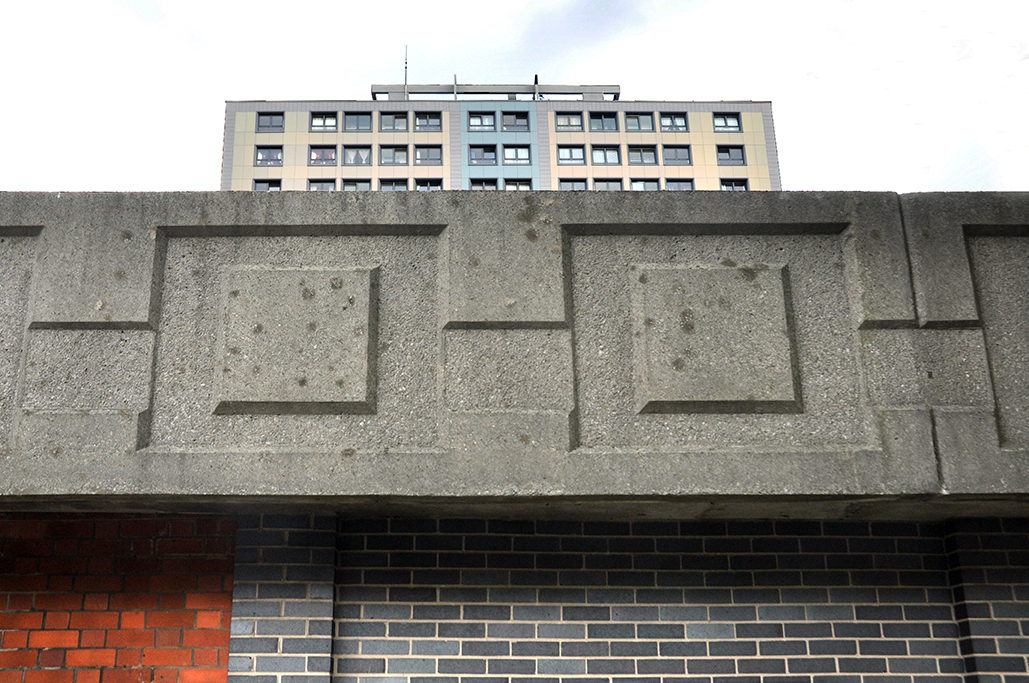
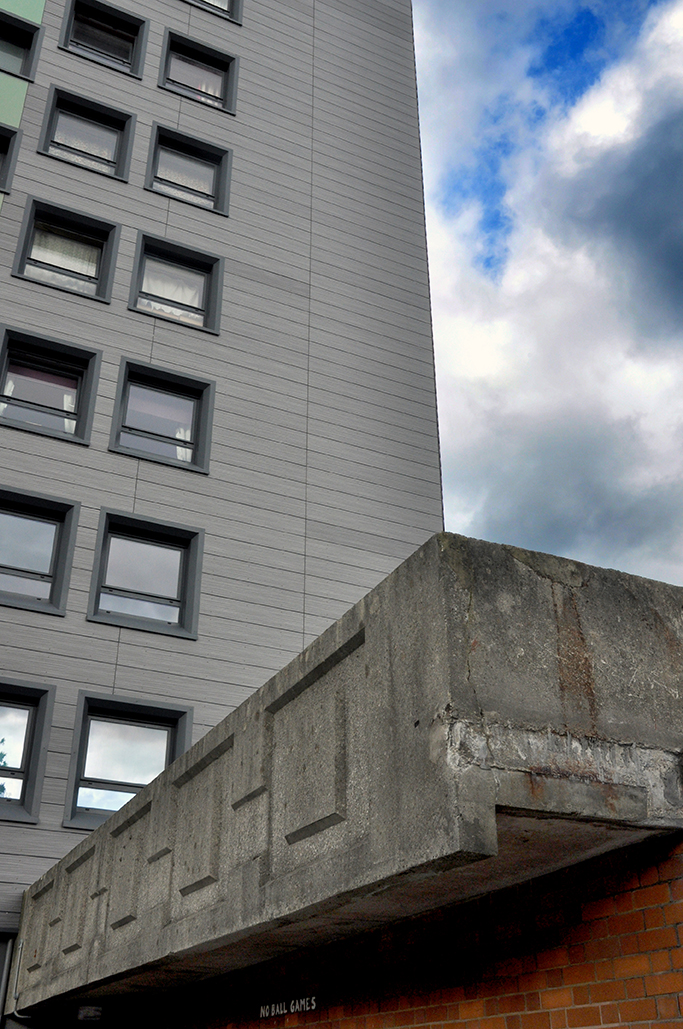
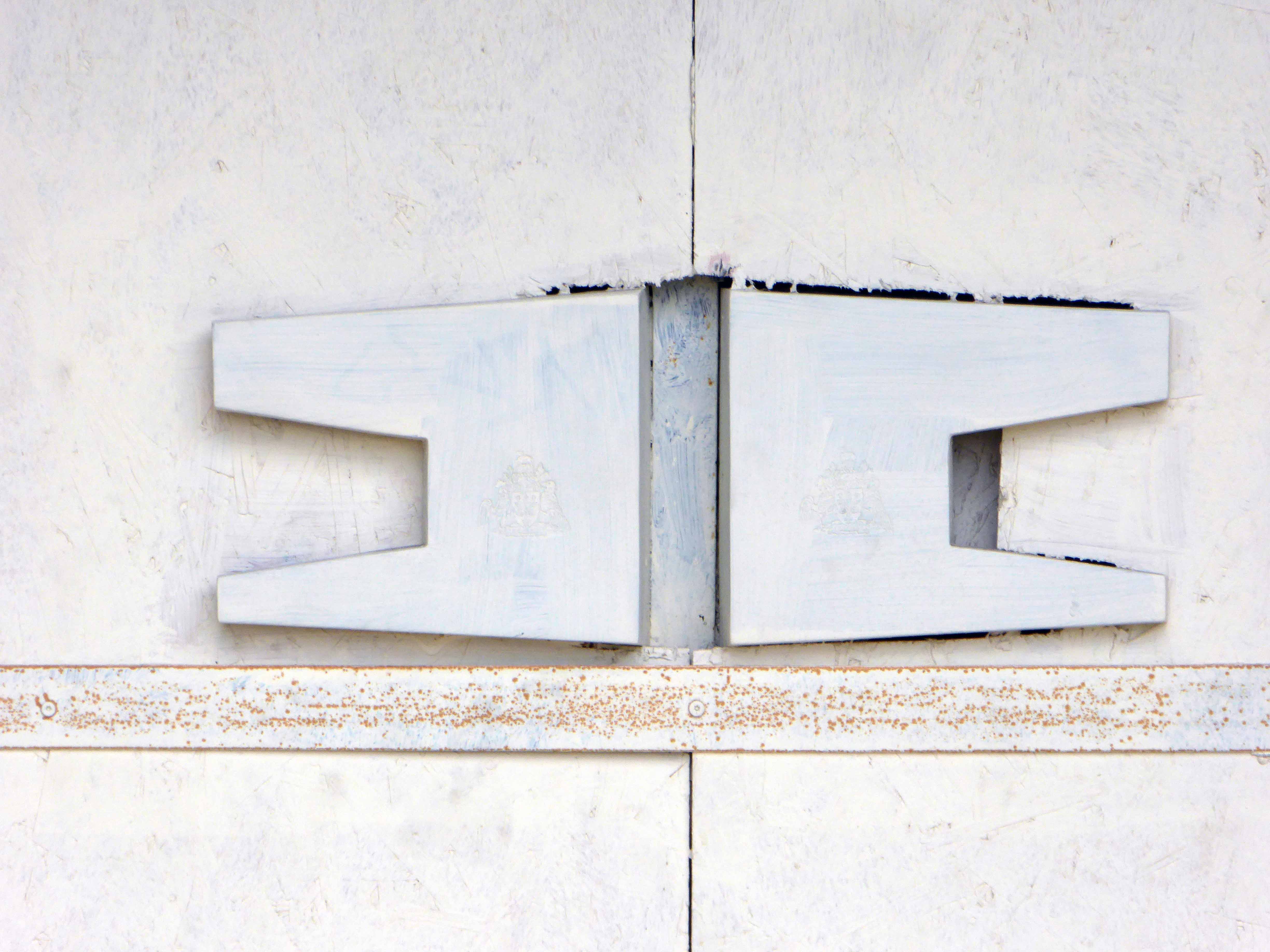
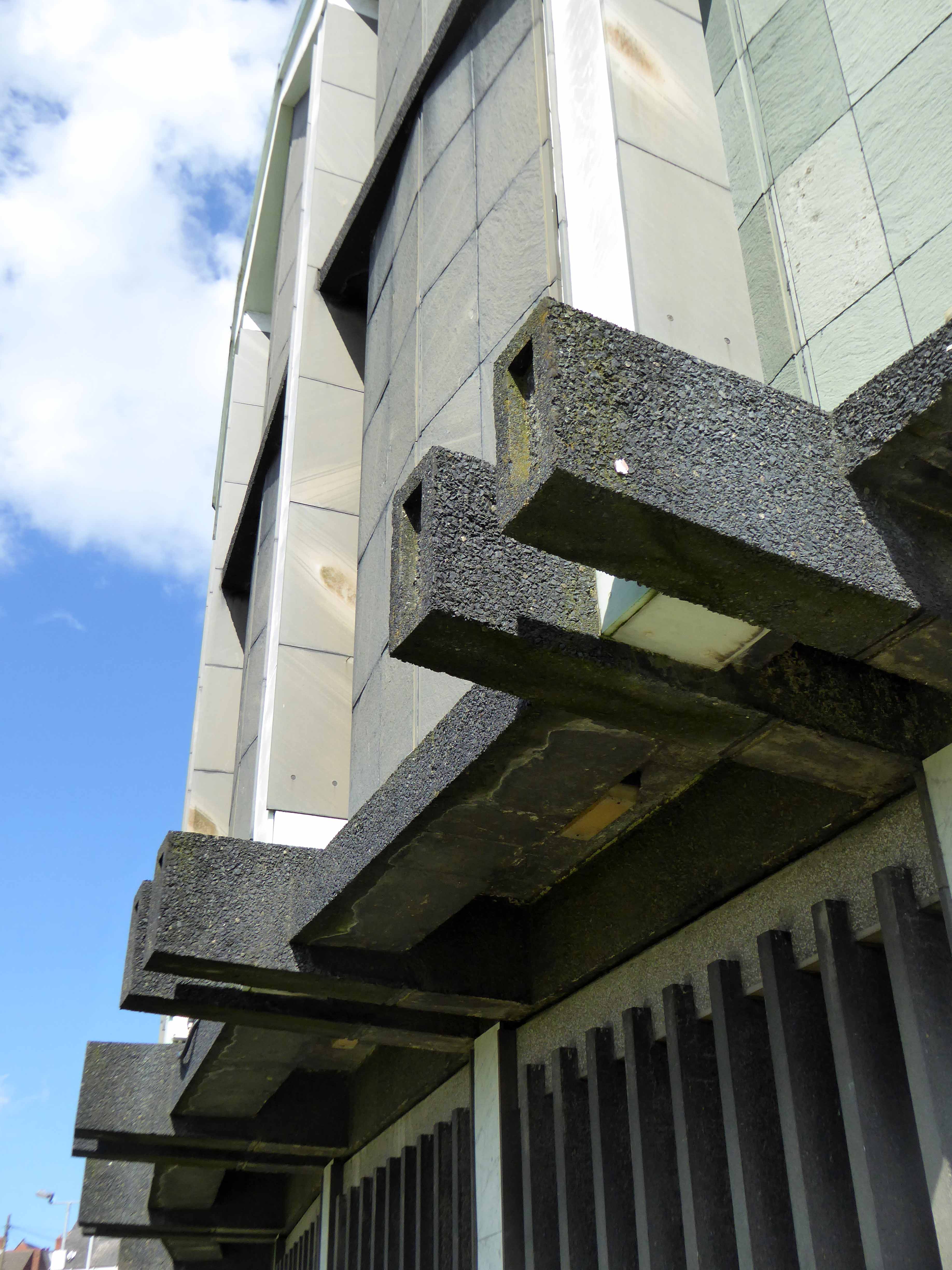
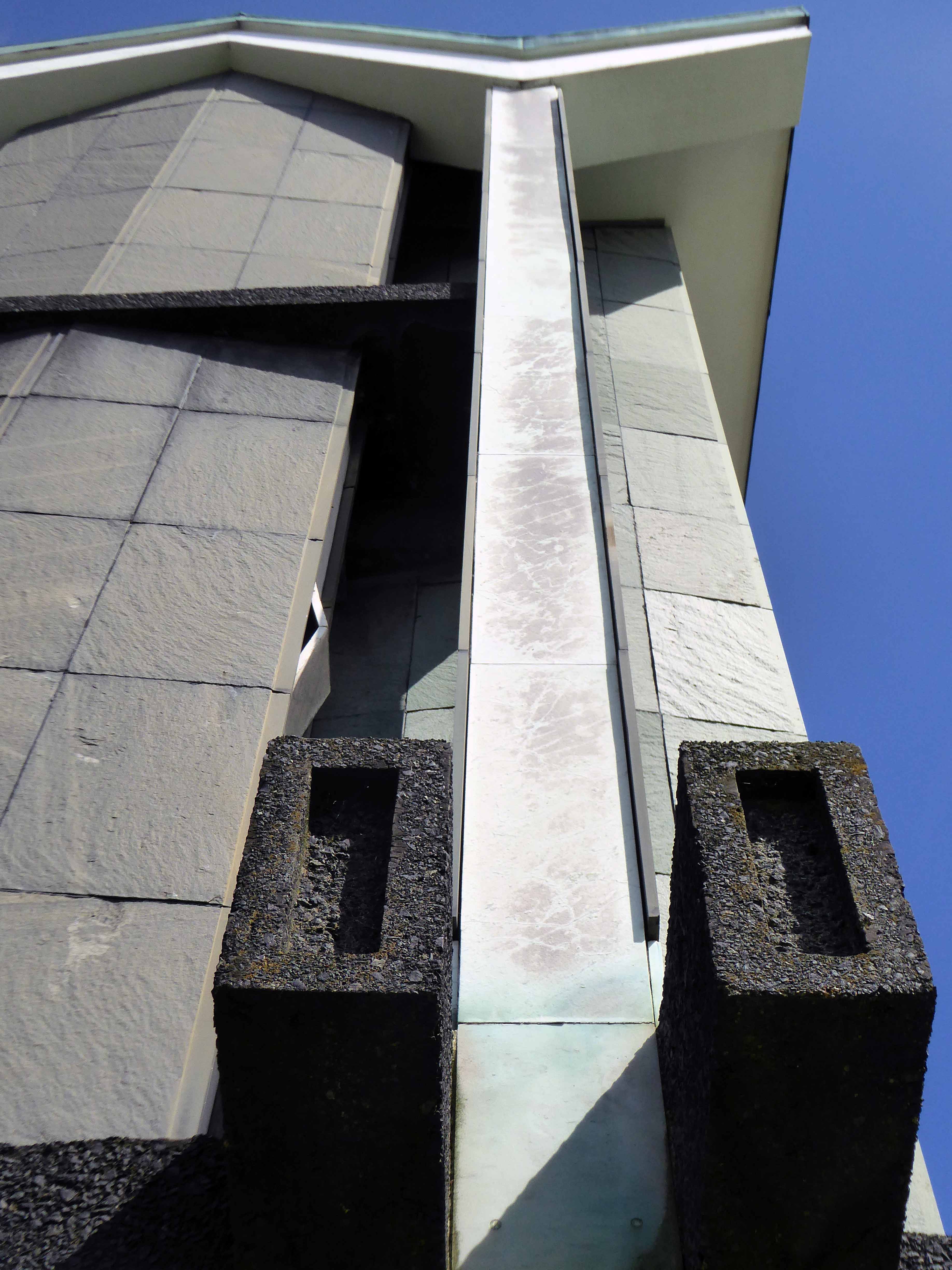
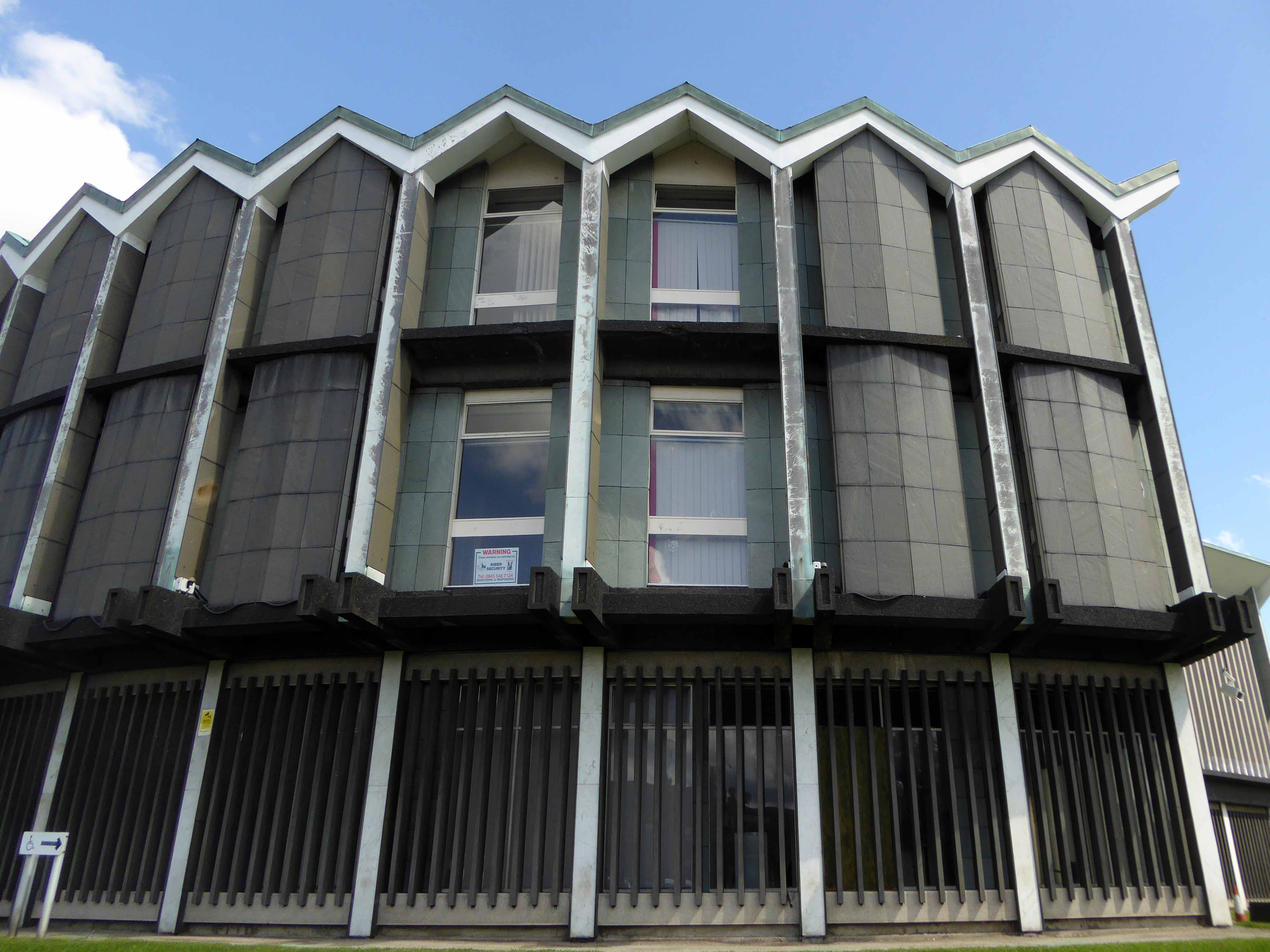
Arriving in Rochdale in search of something else entirely, it was impossible to ignore seven prominent, as yet unclad tower blocks, high upon a hill. I was informed by a local resident that they were known locally as the Seven Sisters, though variously identified as Falinge B, College Bank, and Holland Street flats.
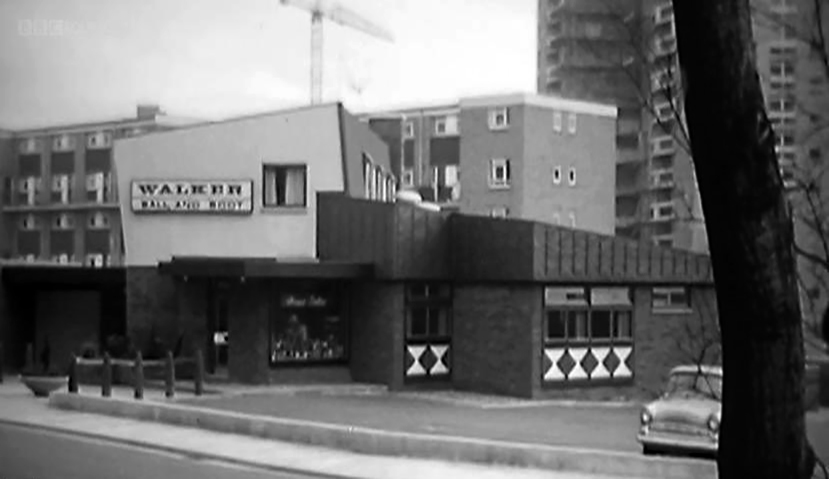
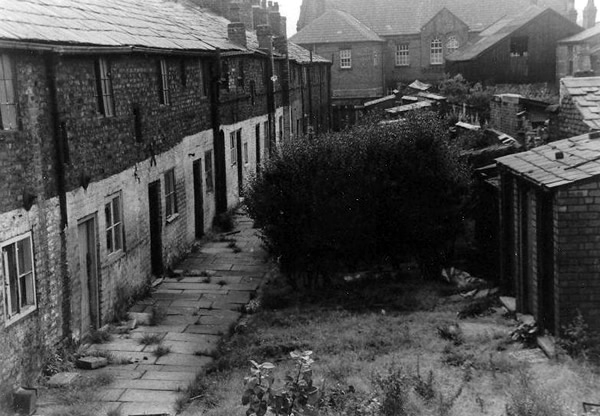
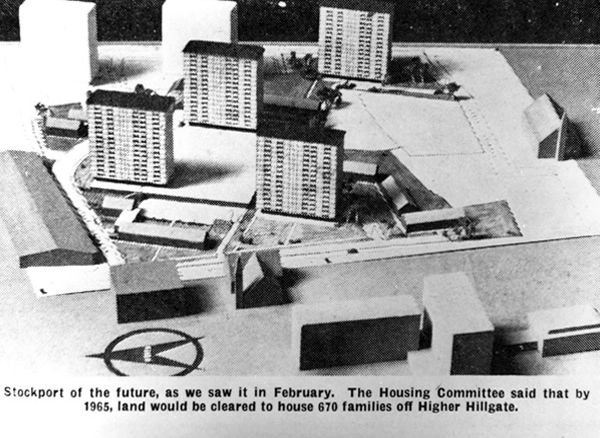
The area was formerly home to Victorian workers’ dwellings, known as The Paddock – the post-war policy of slum clearance saw them swept away, in readiness for municipal modernity.
Hey presto 1963 and there appears four 21 storey blocks containing 476 dwellings; three 17 storey blocks containing 286 dwellings.
Photograph Mancunian 101
Building contractors were Wimpey and the flats were designed by Rochdale’s Borough Surveyor, Mr W H G Mercer and Mr D. Broadbent along with Mr E V Collins, chief architect to contractors George Wimpey and Company.
On Friday October 1 1965 the Minister of Housing and Local Government, Richard Crossman, officially opened the first of the College Bank flats – Underwood.
So go take a look ride the rail or tram, get on your bike, walk a while and abide, take a frenzied dance around with the Seven Sisters.
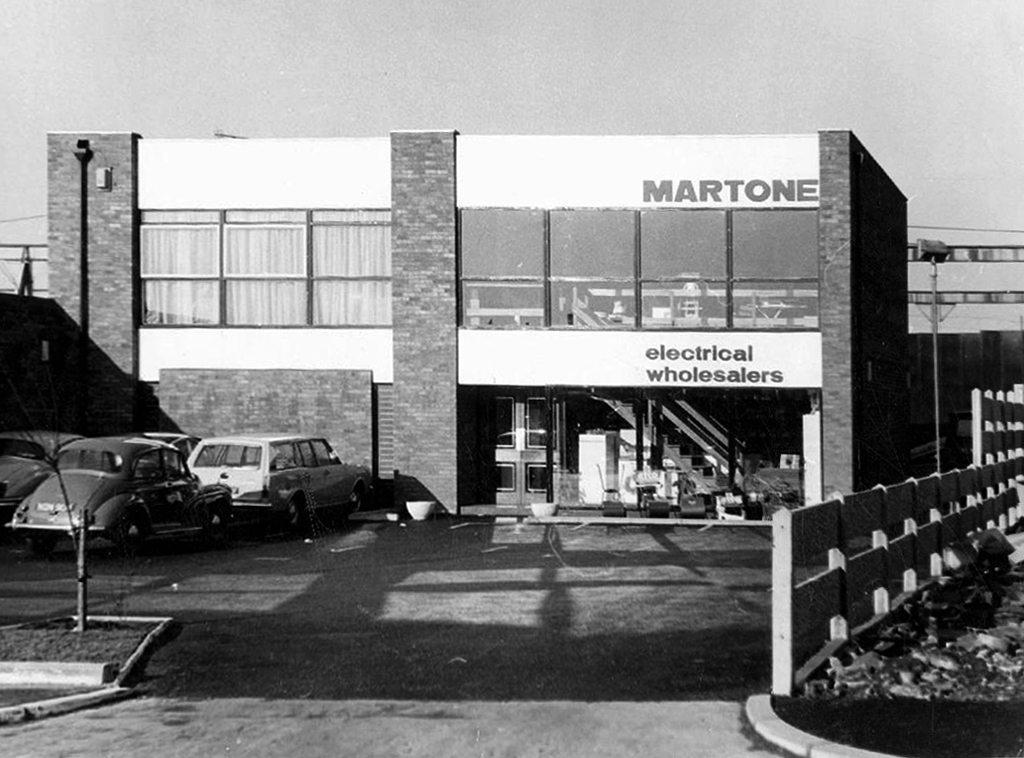
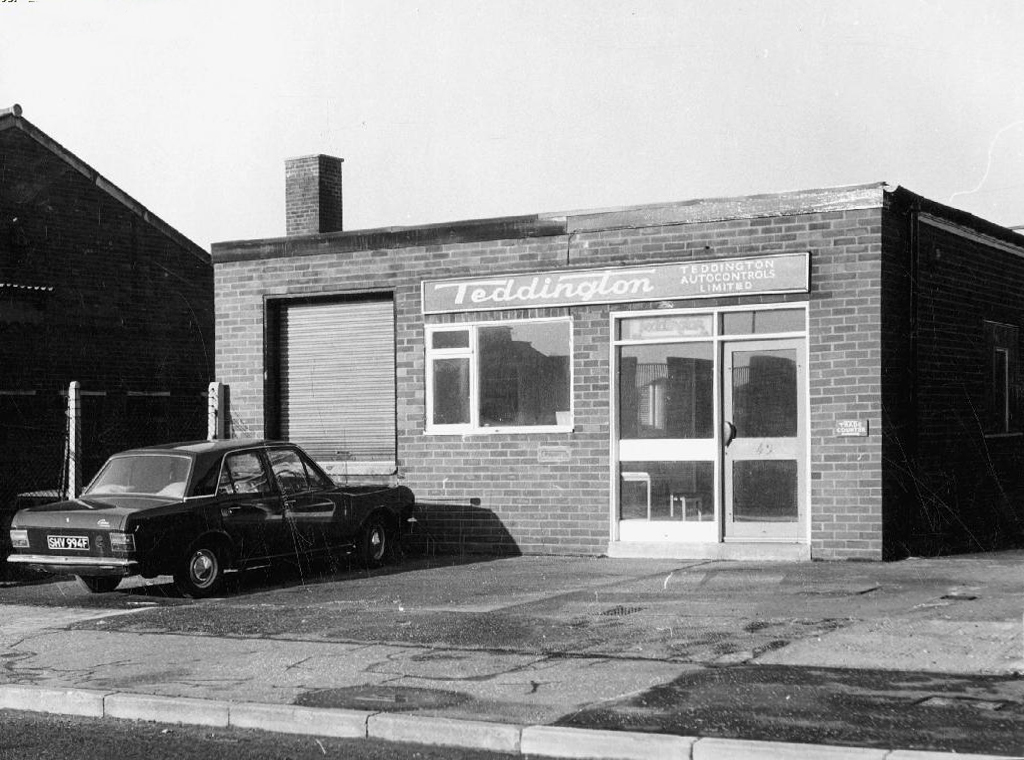
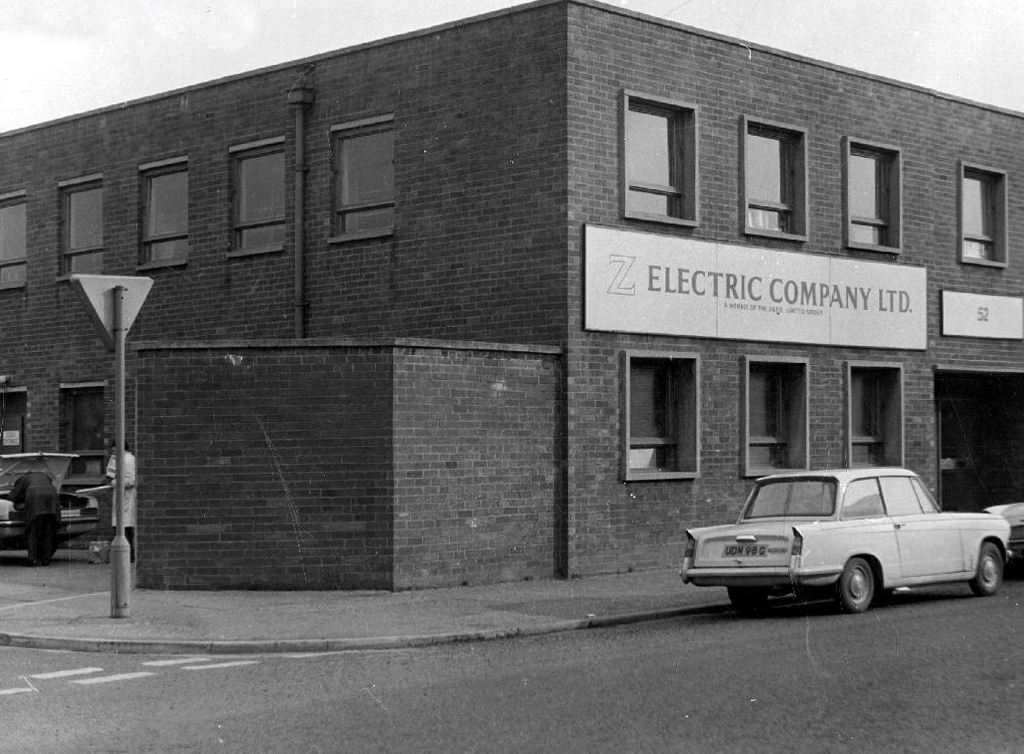
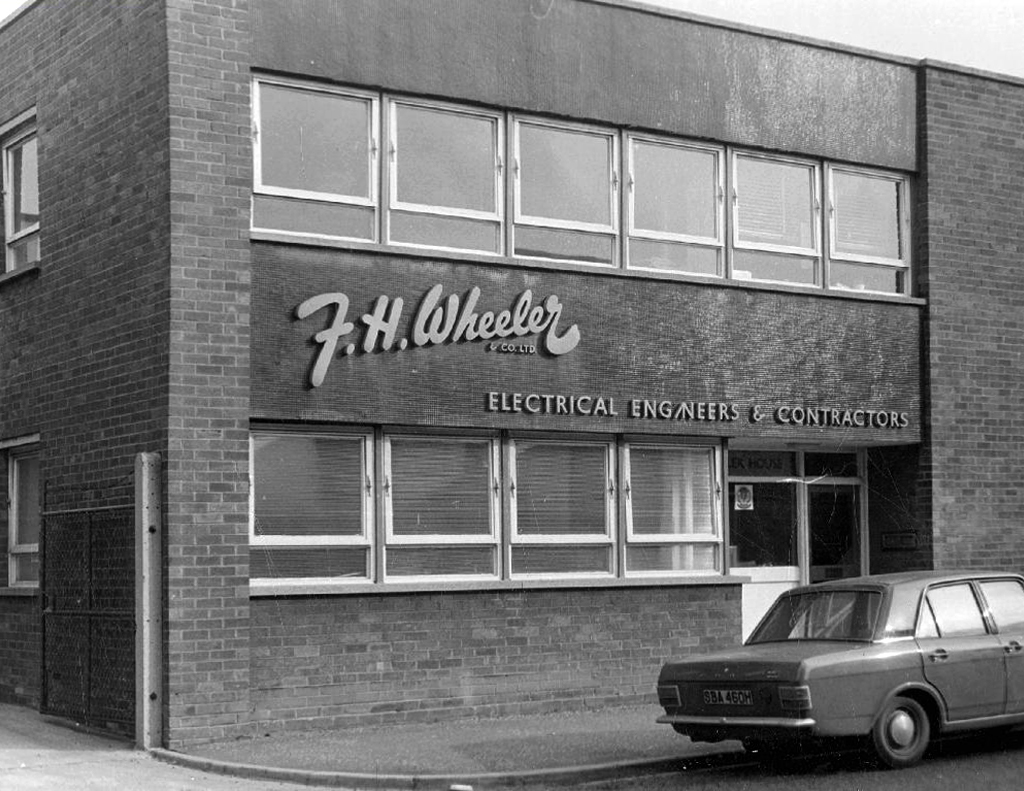
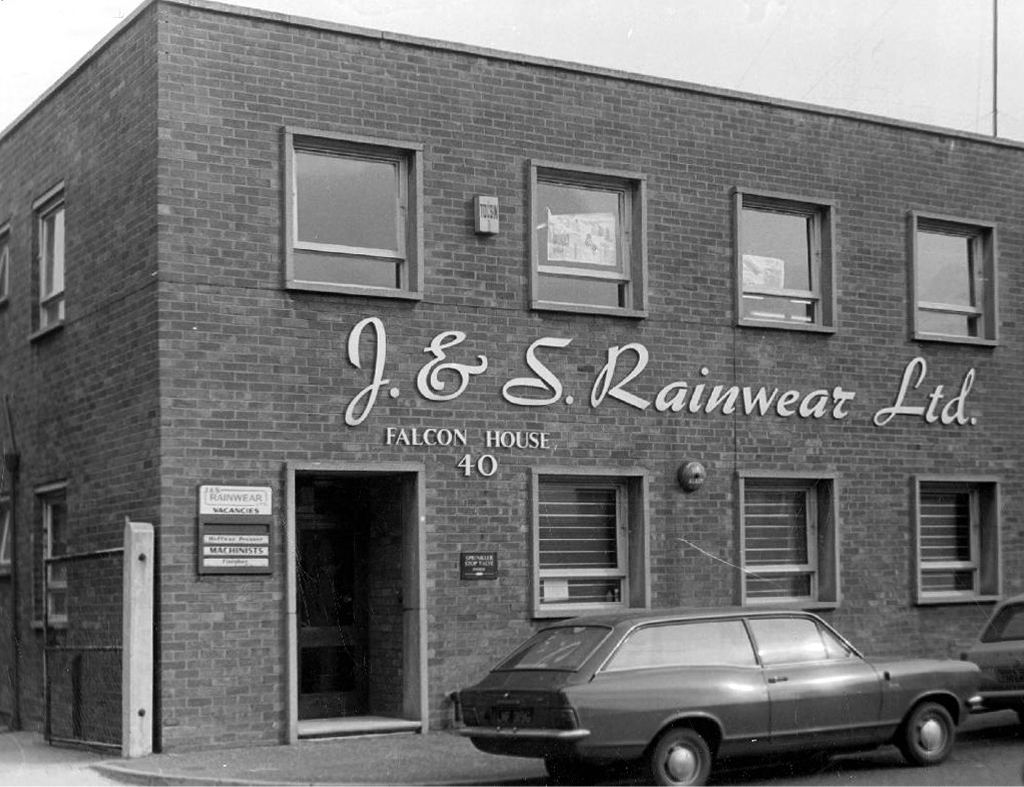
Following a thread, a tenuous electrical link that brought me back home, to an all too familiar household name.
A name that has illuminated, vibrated, mixed, measured, massaged, warmed and dried our lives for over one hundred years.
But what does it mean, where does this stuff come from, what’s it all about Pifco?
Pifco of Failsworth, also of Pifco House, 87 High Street, Manchester.
1900 Company established by Joseph Webber to sell lighting appliances and accessories.
1902 Public company formed as Provincial Incandescent Fittings Co. Ltd.
1911 The Filani Nigeria Tin Mining Co was incorporated as a public company.
1949 Name changed.
1954 Incorporated Walls Ltd, of River Street Birmingham, as a wholly-owned subsidiary to manufacture medical lamps, kettles and small cookers.
1957 The last of the mining assets were sold.
1957 Filani Nigeria Tin Mining Co changed its name to Pifco Holdings Ltd and acquired all of the issued share capital of Pifco 1961 Manufacturers and distributors of electrical appliances and accessories.
1970 The Regent Cotton Mill, in Failsworth was purchased by Pifco.
1984 Agreed to acquire Swan Housewares from BSR International, but later the deal collapsed.
1987 Acquired House of Carmen, maker of heated hair rollers; the other important brand was Salton.
1991 Purchased Russell Hobbs Tower.
2001 Salton Group, a US company making domestic appliances, acquired Pifco.
So Provincial Incandescent Fittings Co. Ltd.
We salute you, so much joy emanating from Failsworth Manchester, making the world a warmer, drier, brighter, cleaner safer place.
Always at never less than entirely reasonable prices.
A true friend to the nocturnal cyclist.
Christmas cheer for all!
Those little things that lighten the wearisome load of the daily beauty regime.
The minor essentials of our everyday electrical lives.
The seemingly frivolous rendered material.
We can all sleep ever so easily abed at night, in the simple knowledge that Pifco is still out there working just for us/you!
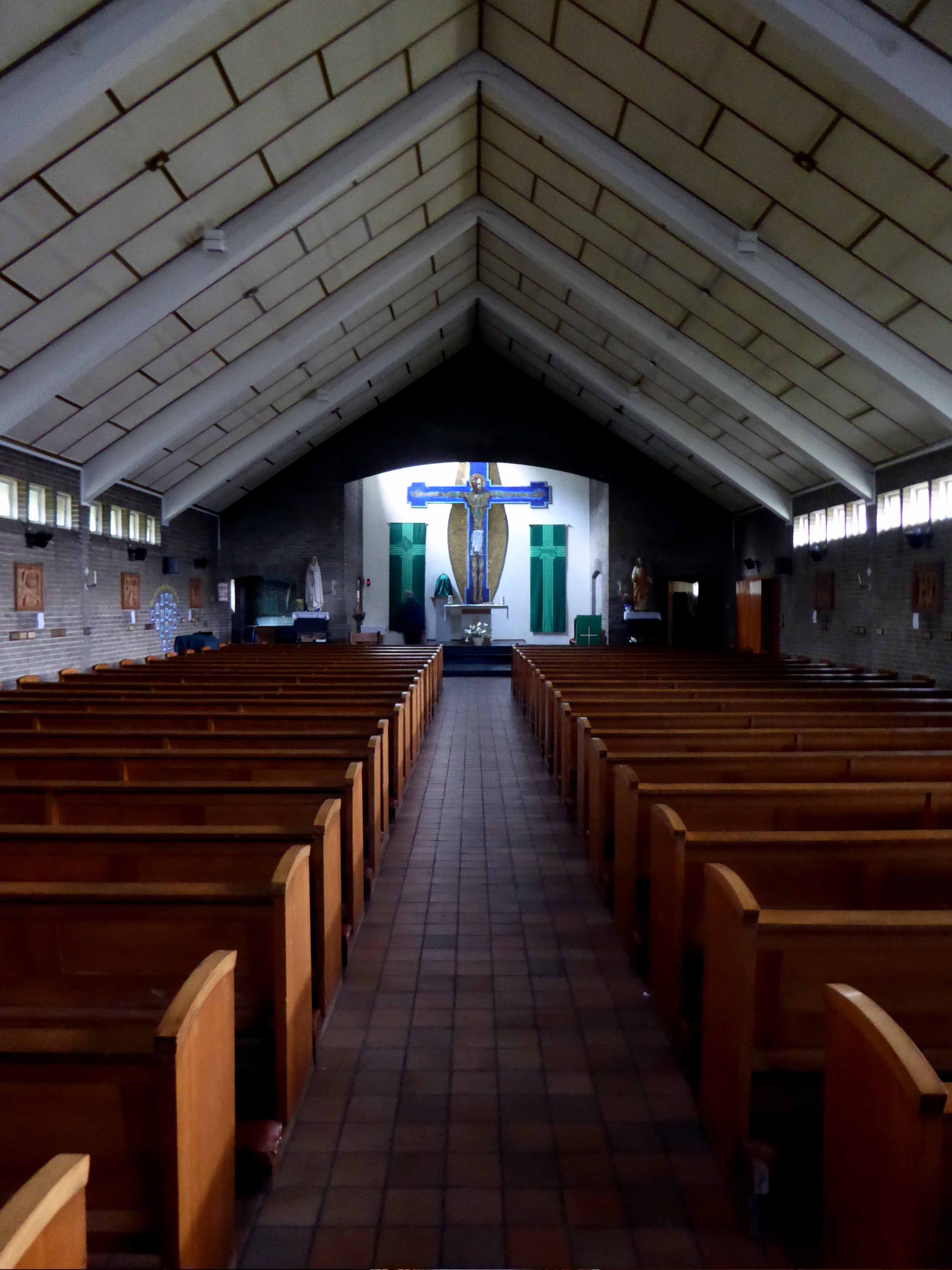
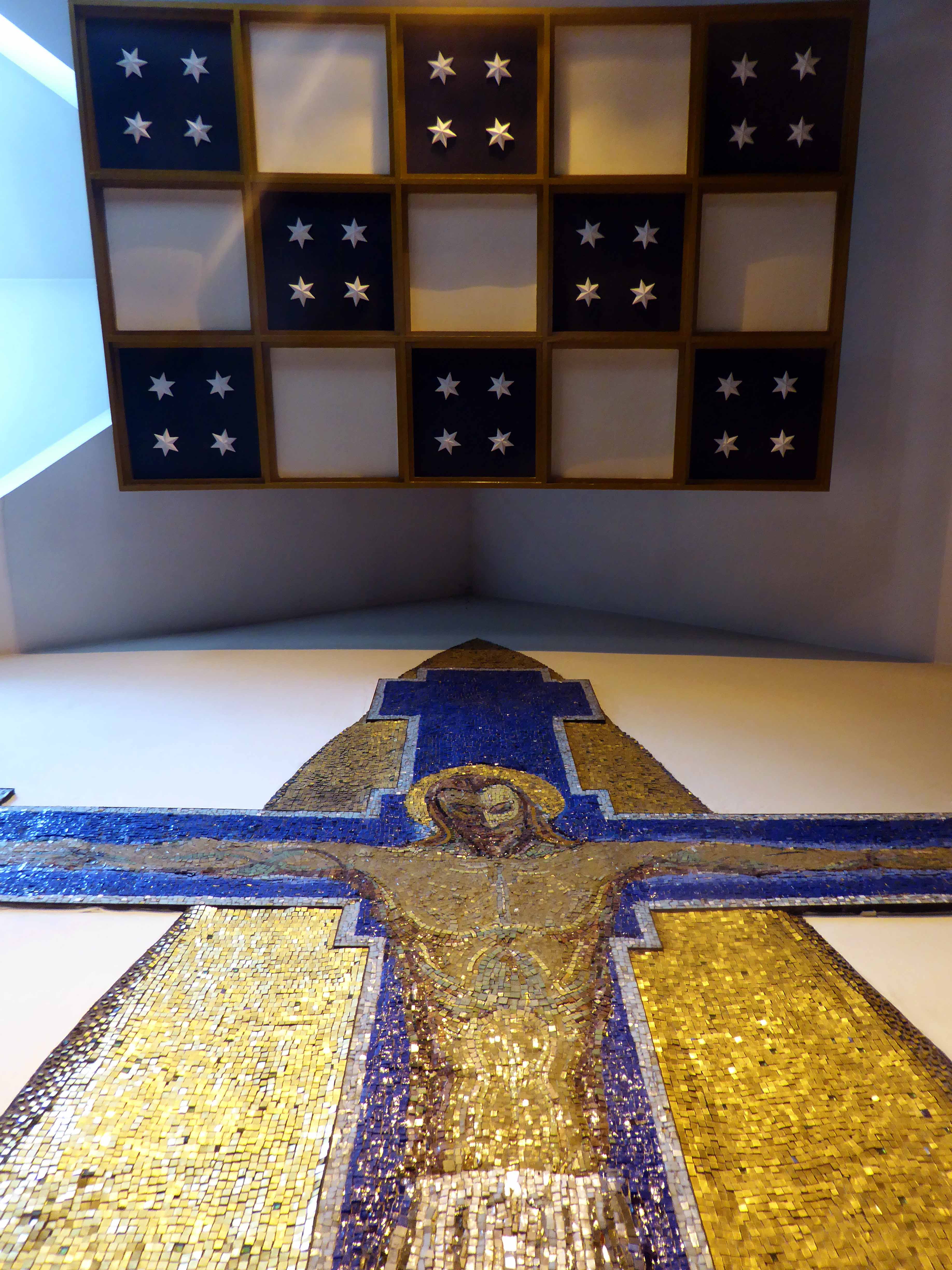
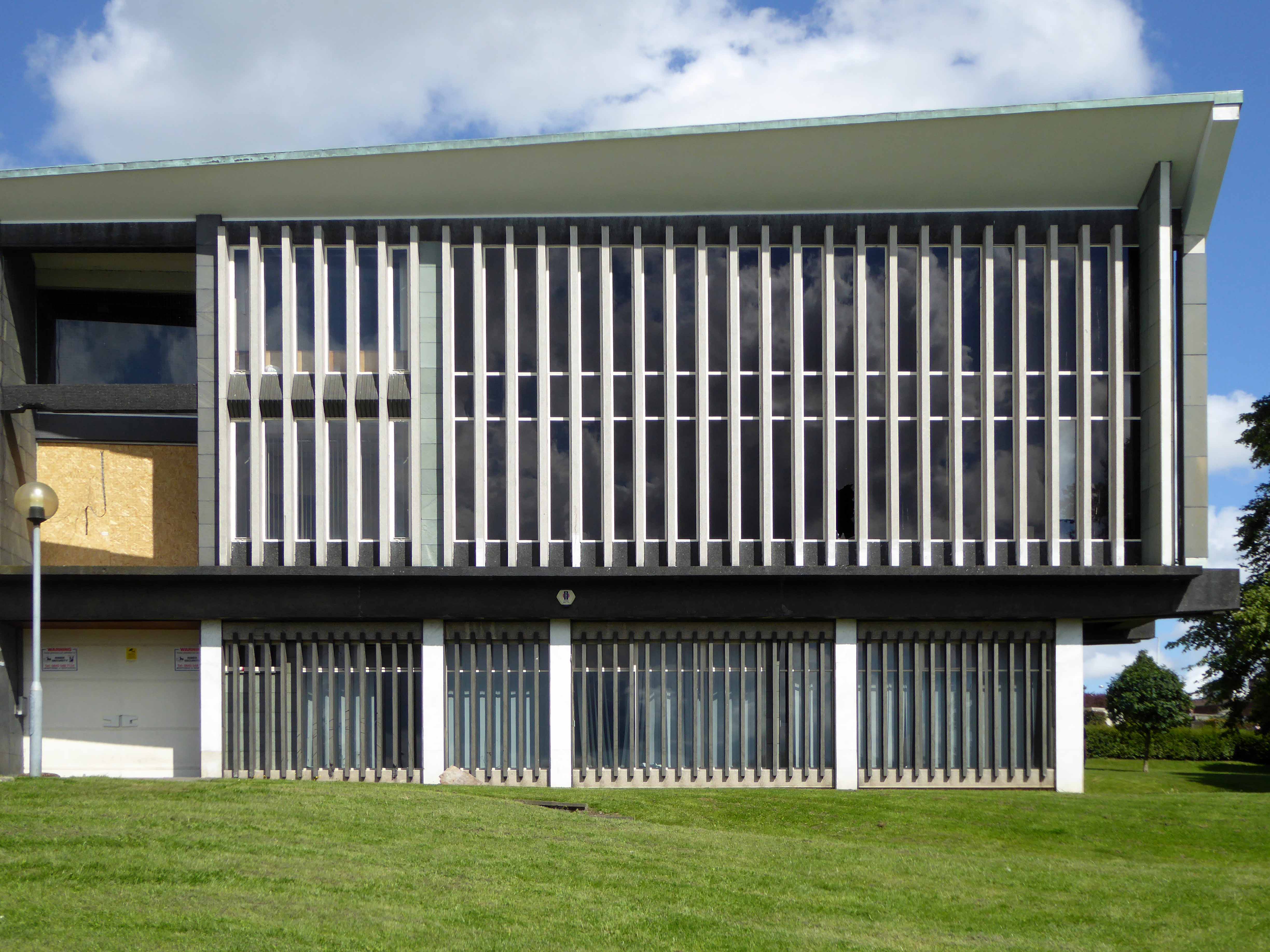
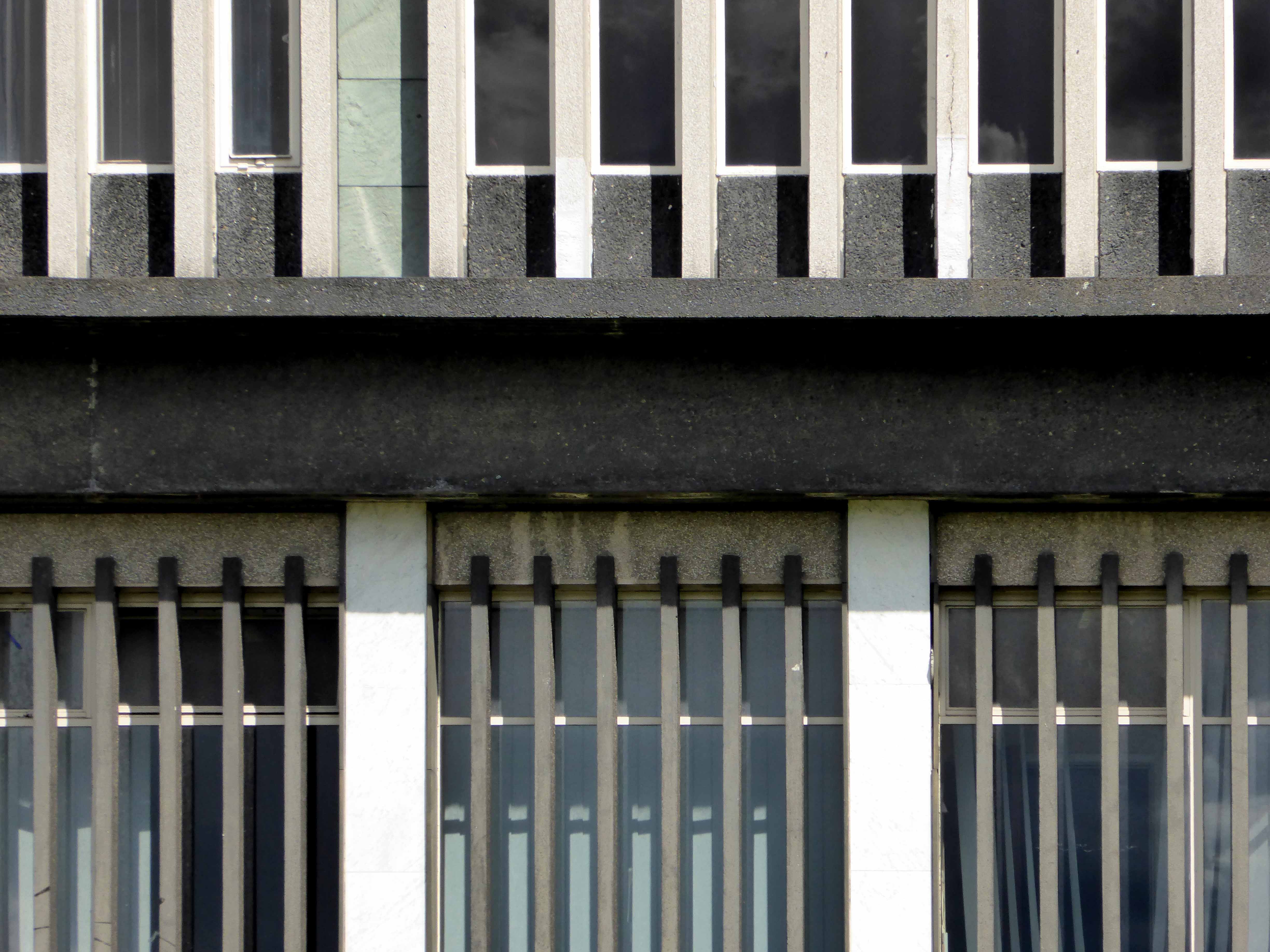
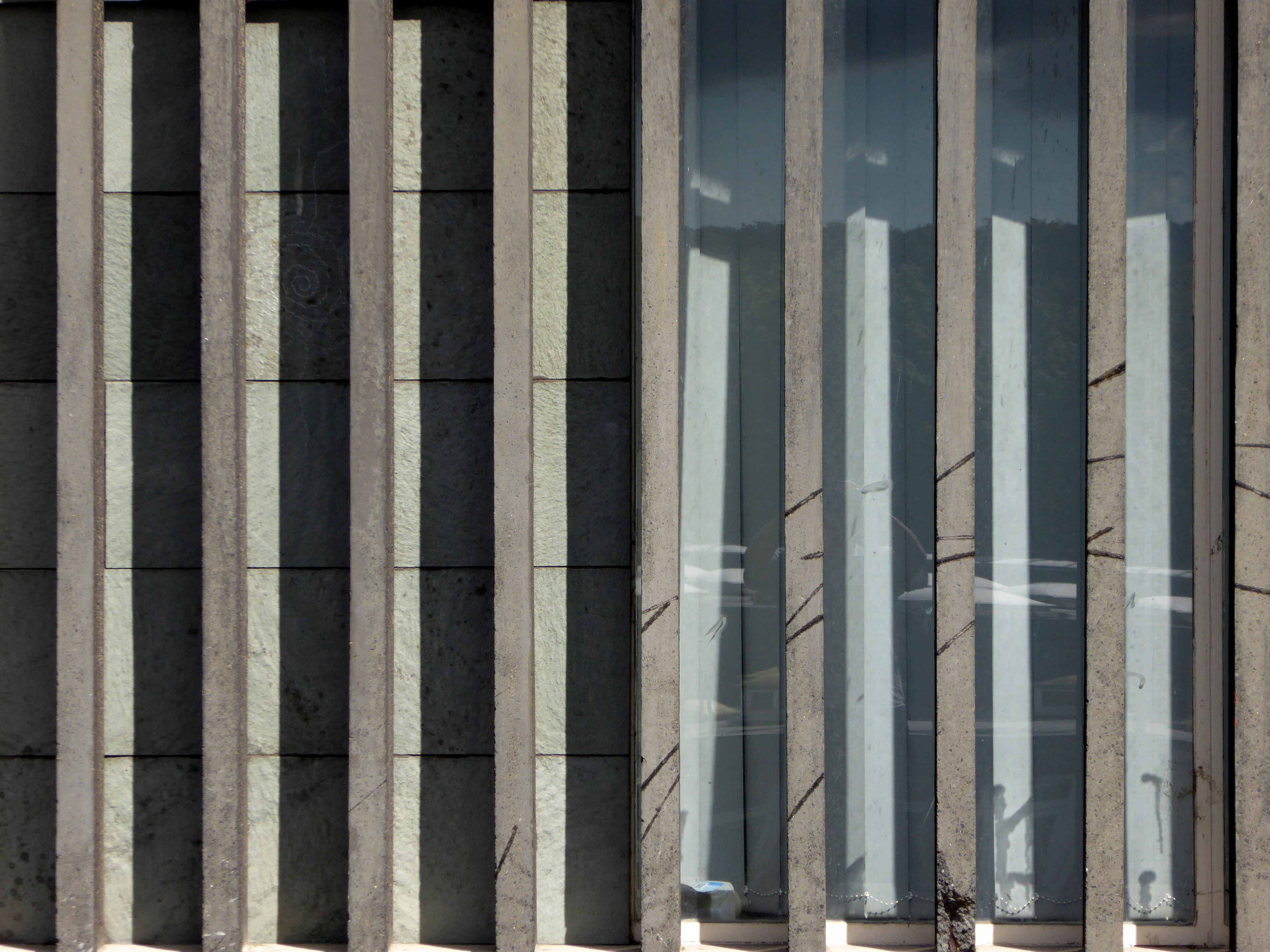
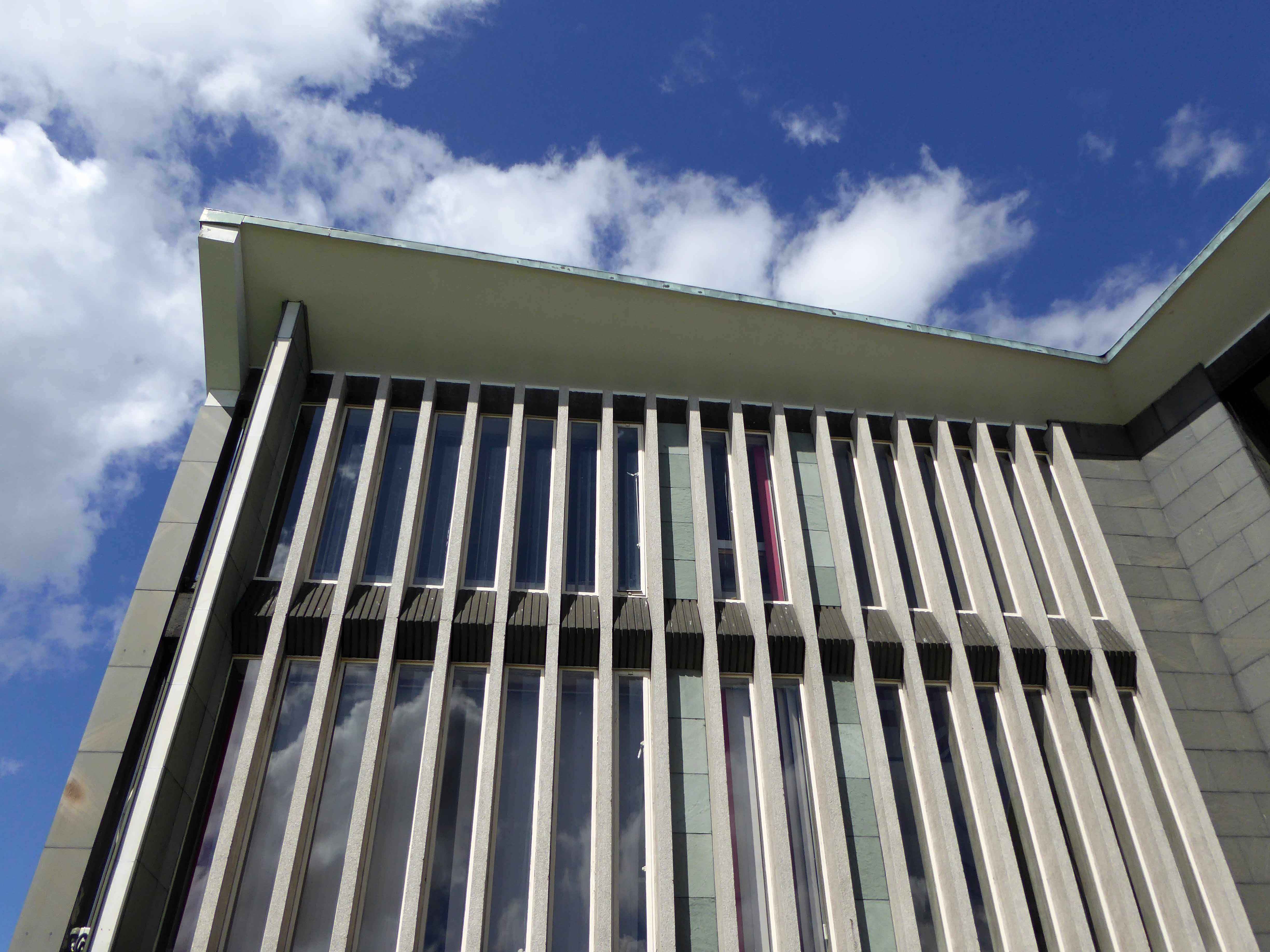
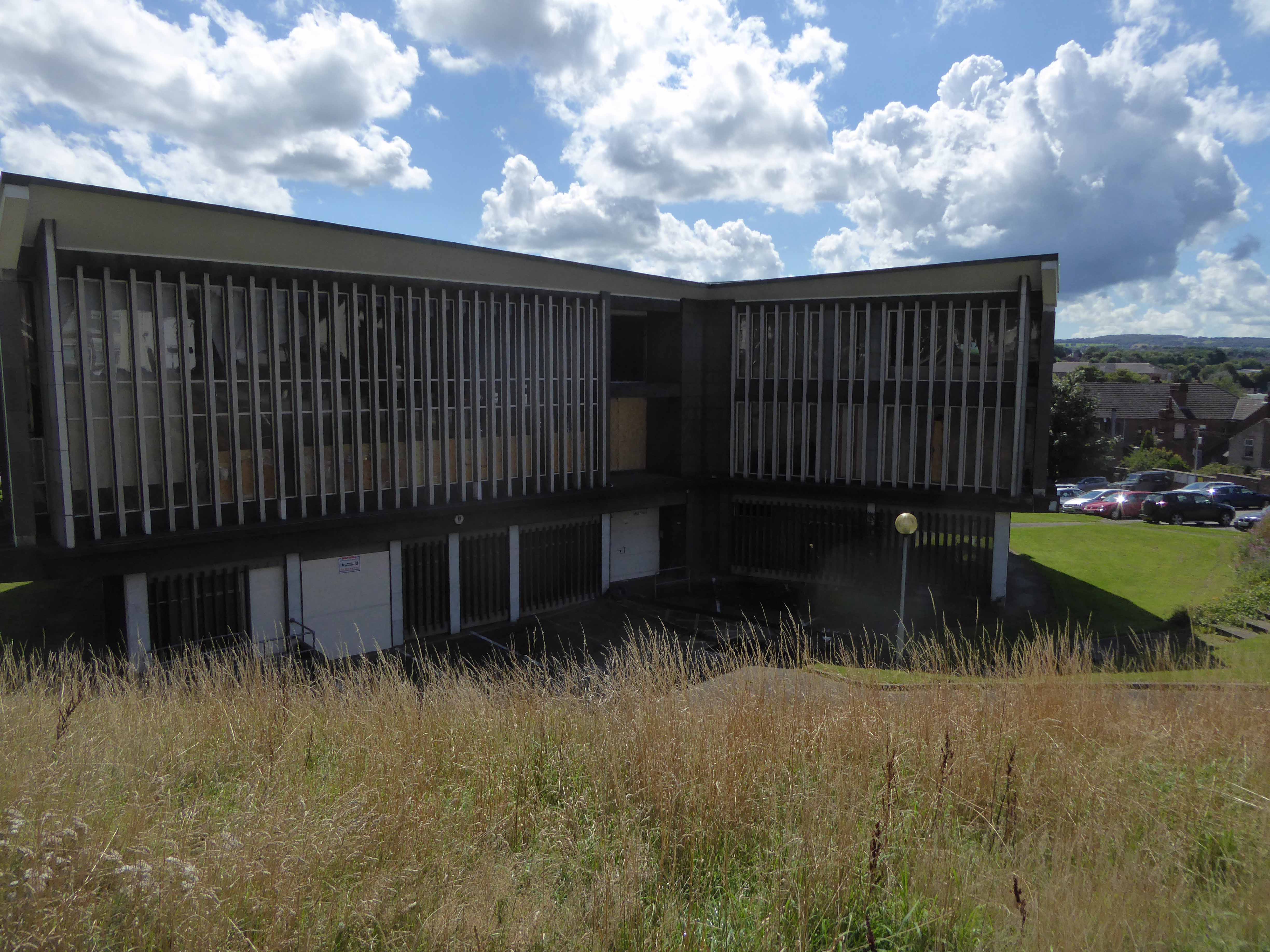
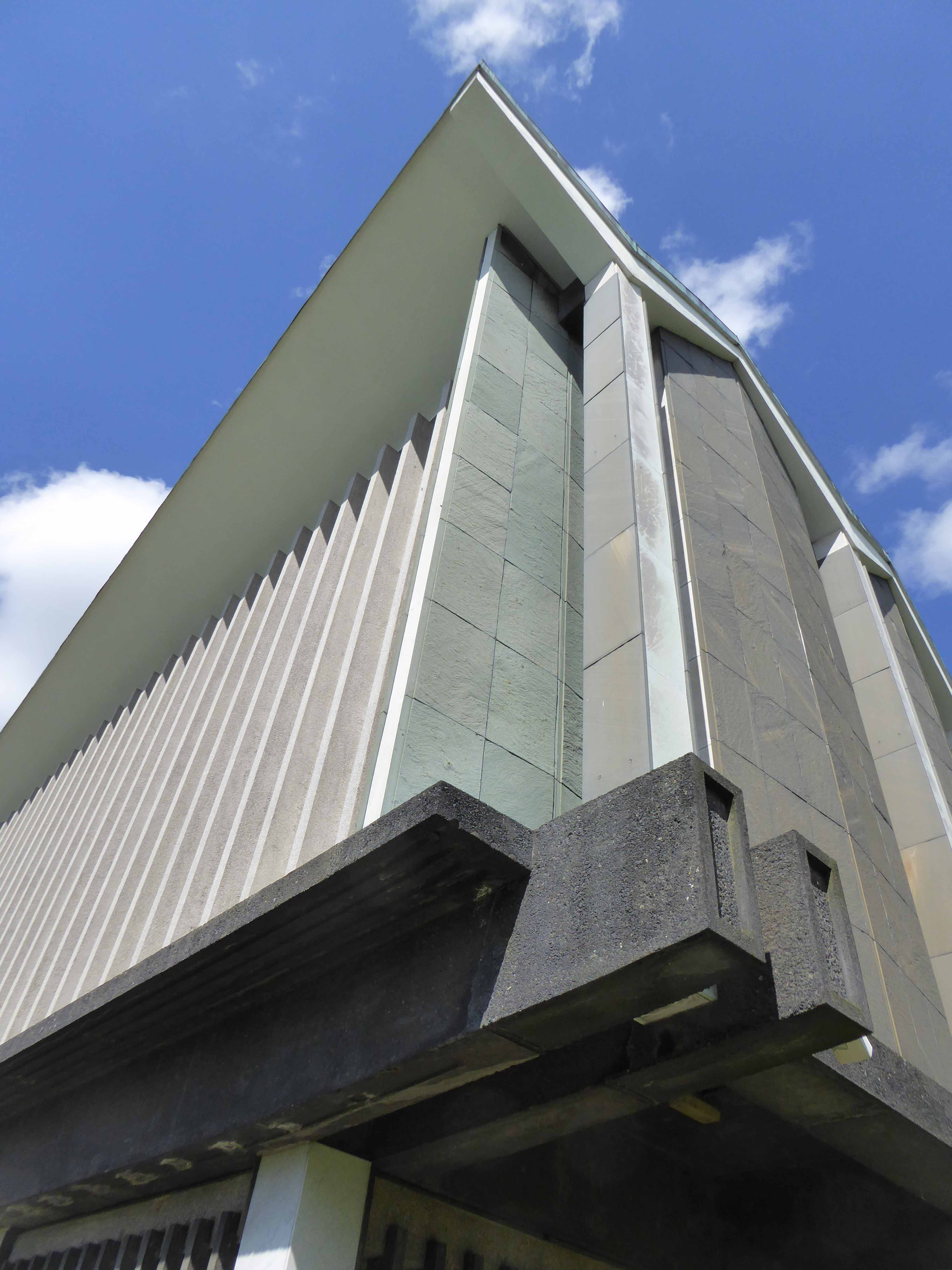
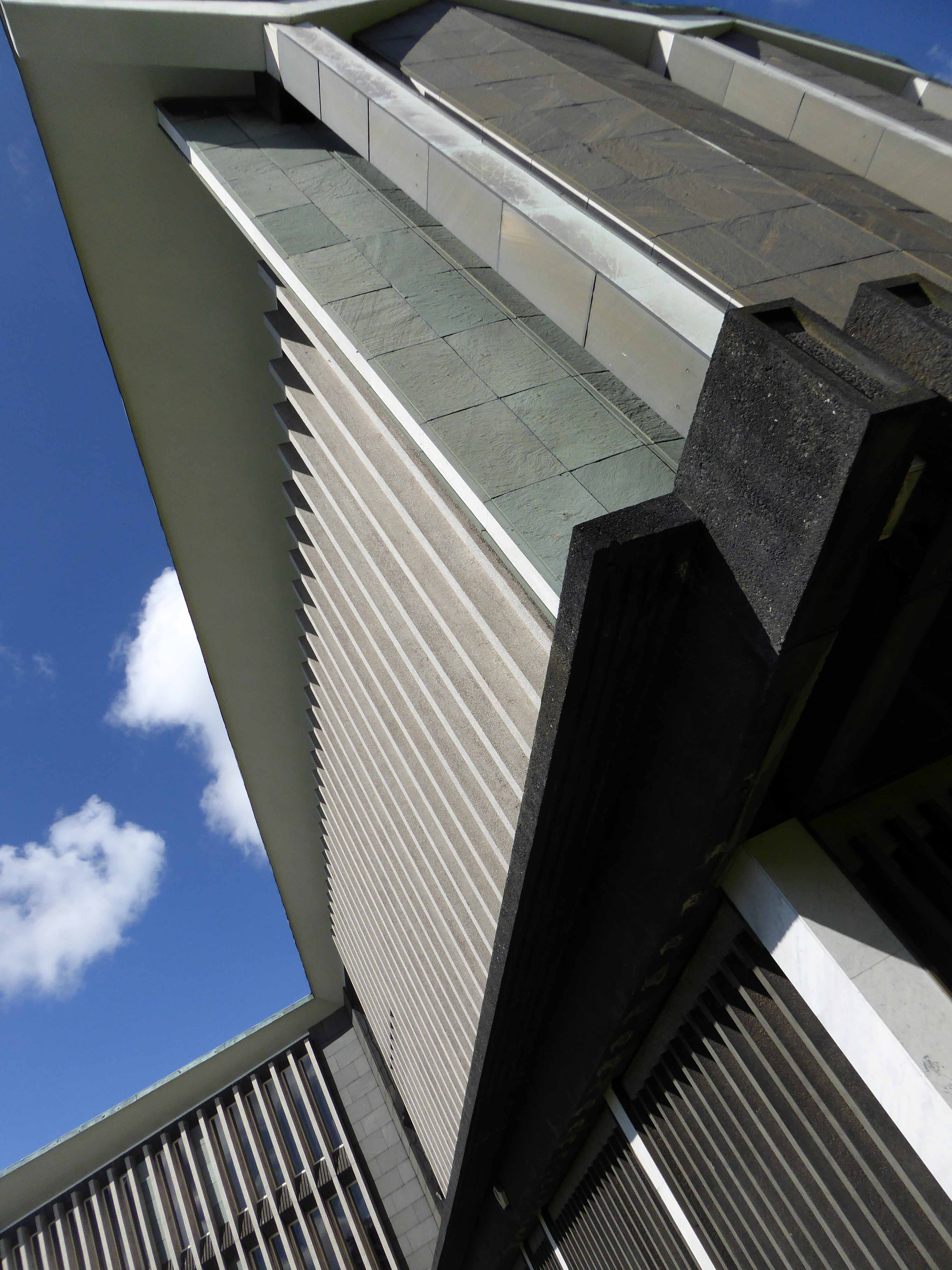
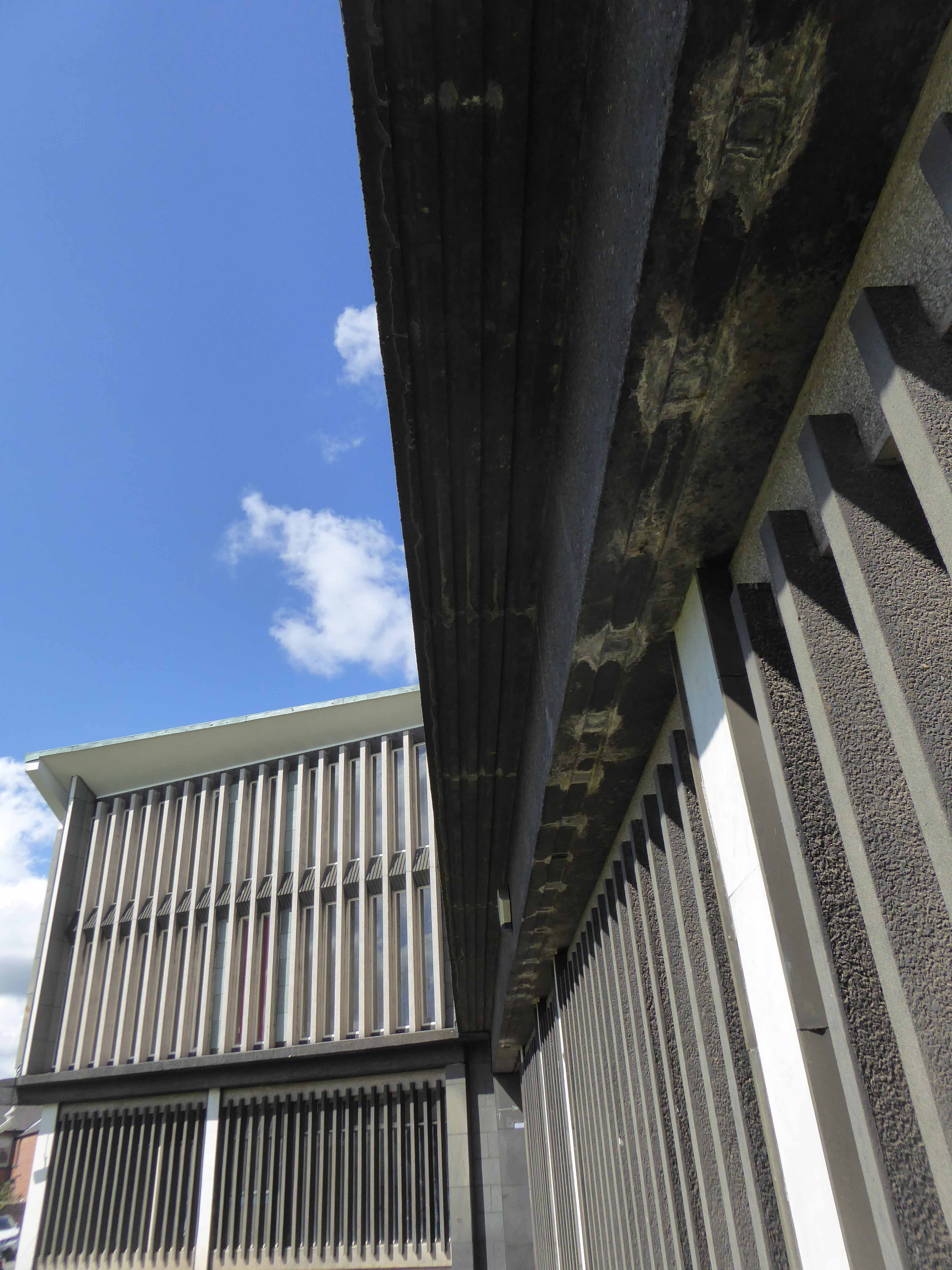
Sir Basil Spence 1958-62. . Brown brick. Roof not visible. Slate cladding to entrance block of parish hall. Rectangular nave sweeping around into a semicircular apsed sanctuary .
EXTERIOR: entrance to liturgical south-west and parish hall to liturgical west with vestry. Carved words “The Church of St Catherine” to left of recessed entrance. Tower linked to liturgical south-east, and comprising two convex slabs forming a sacristy at ground level and linked by concrete beams above. Patinated bronze sculptural group with crucified Christ affixed to its east side.
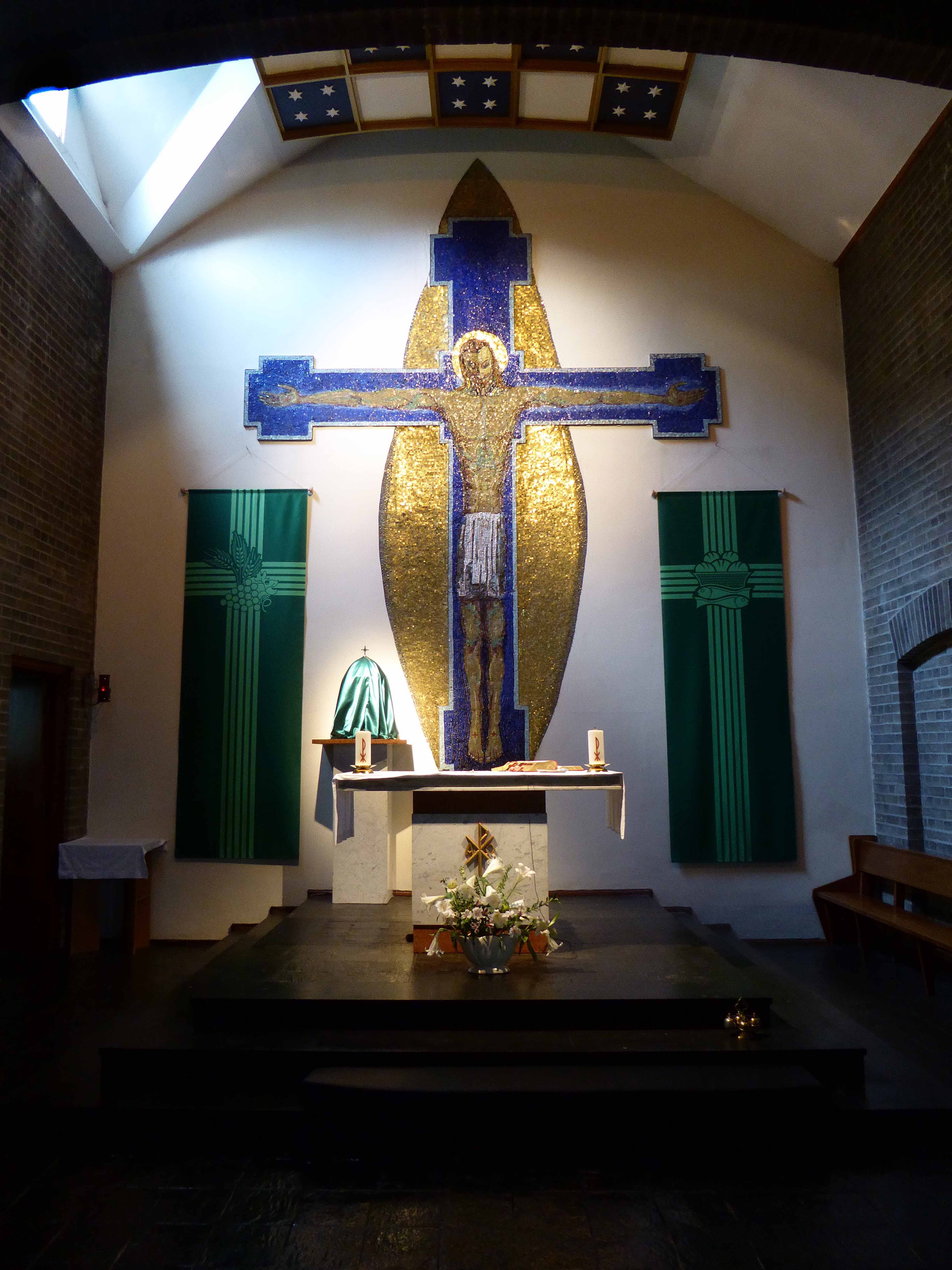
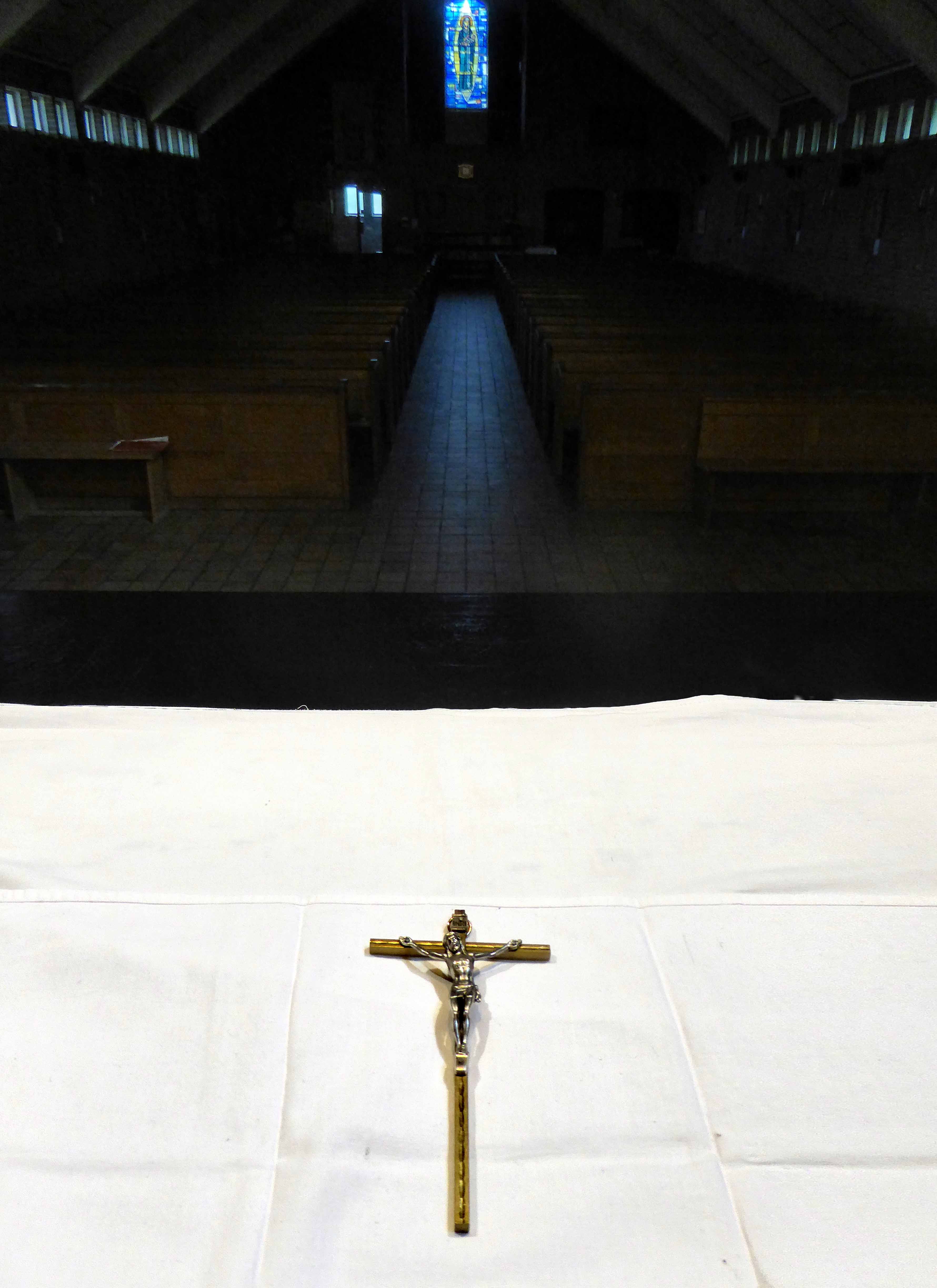
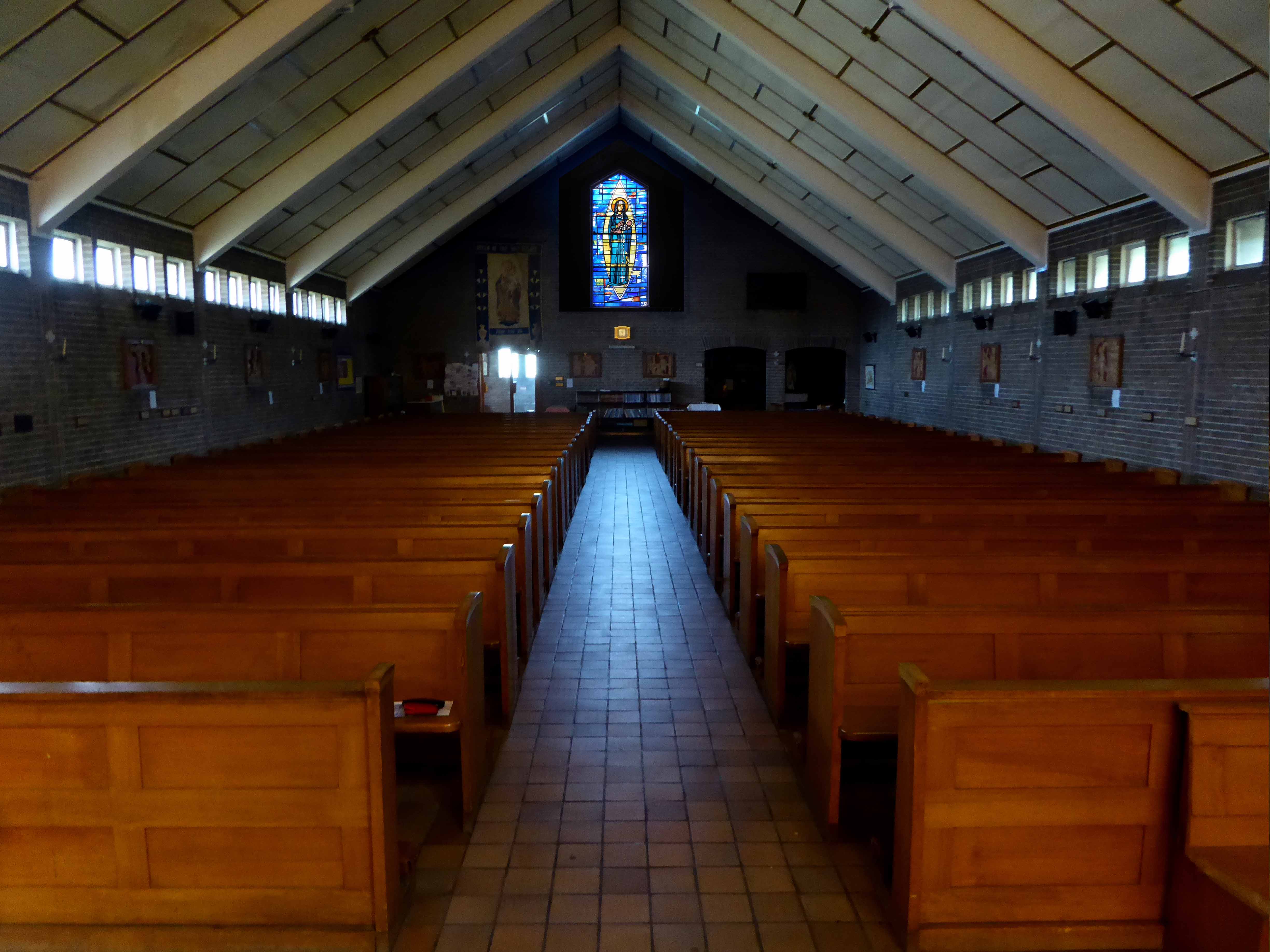
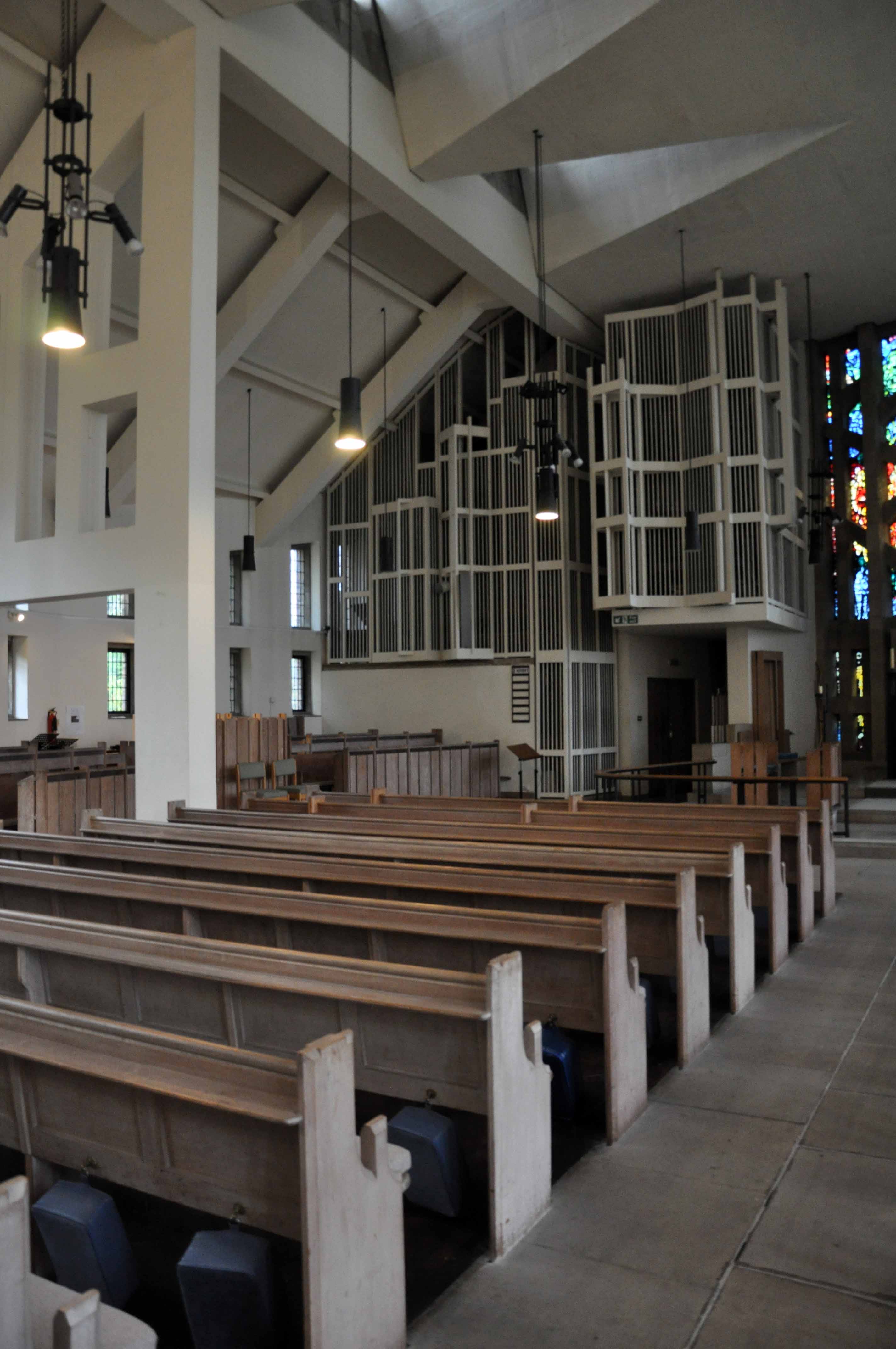
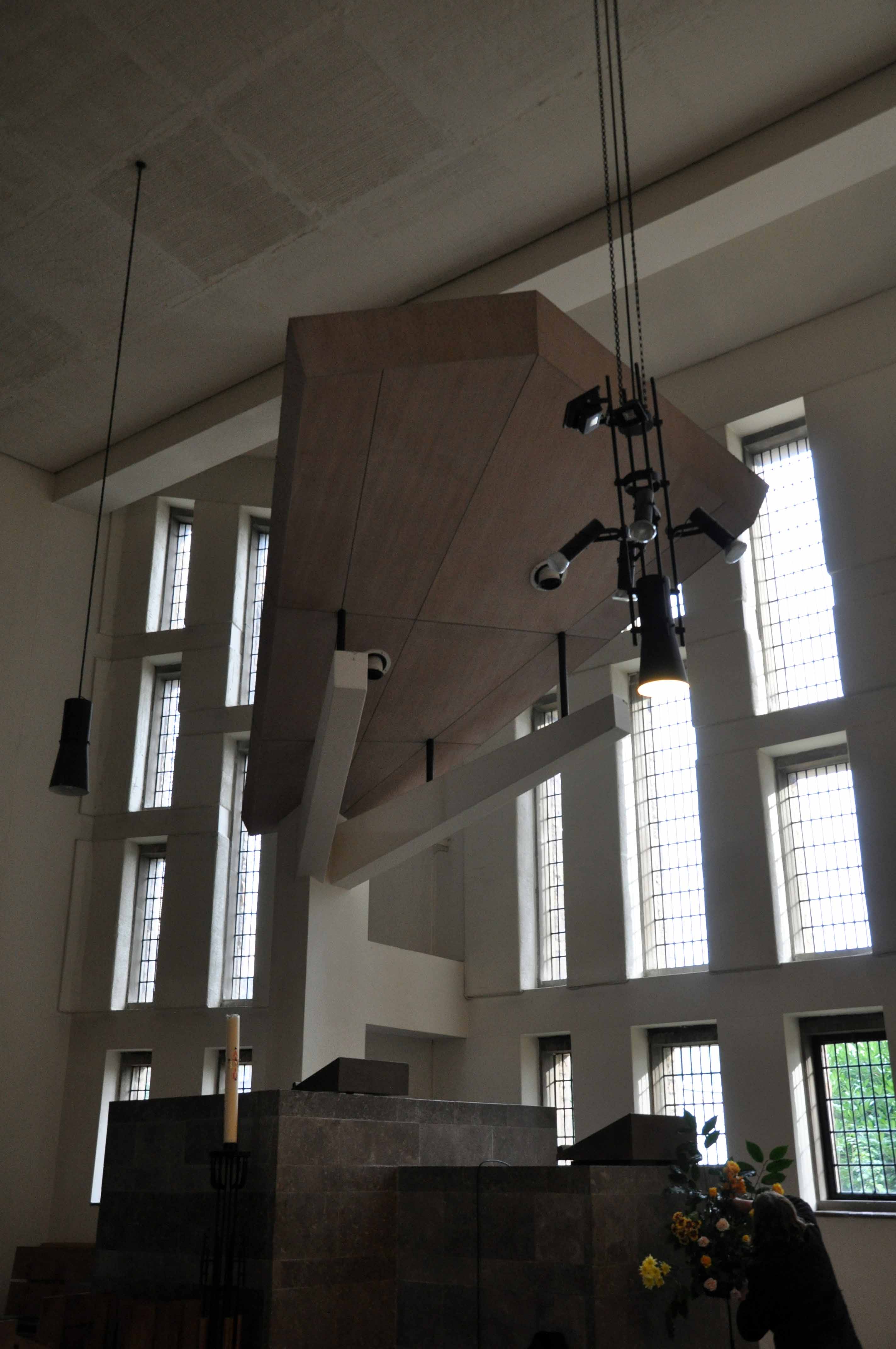
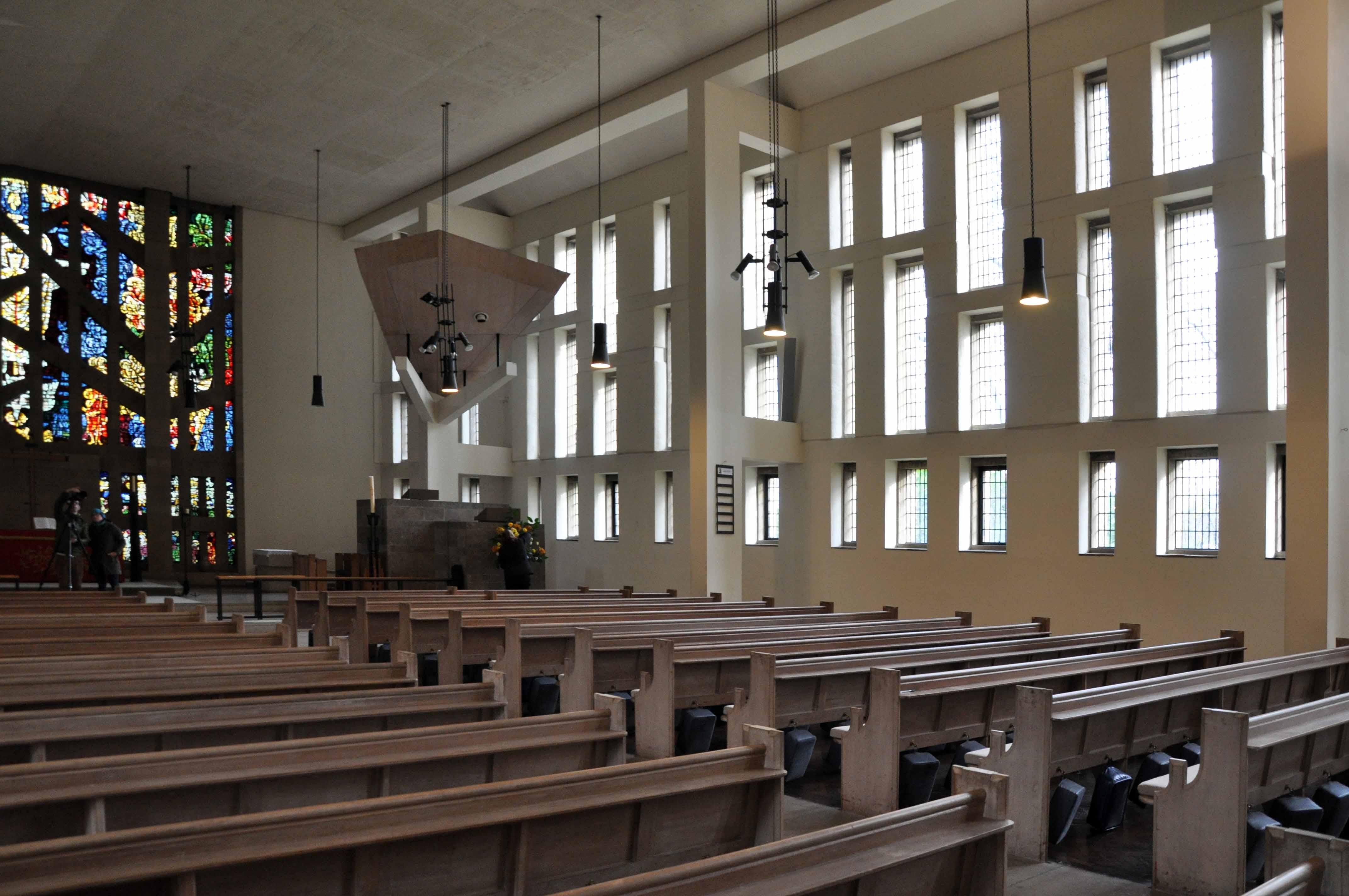
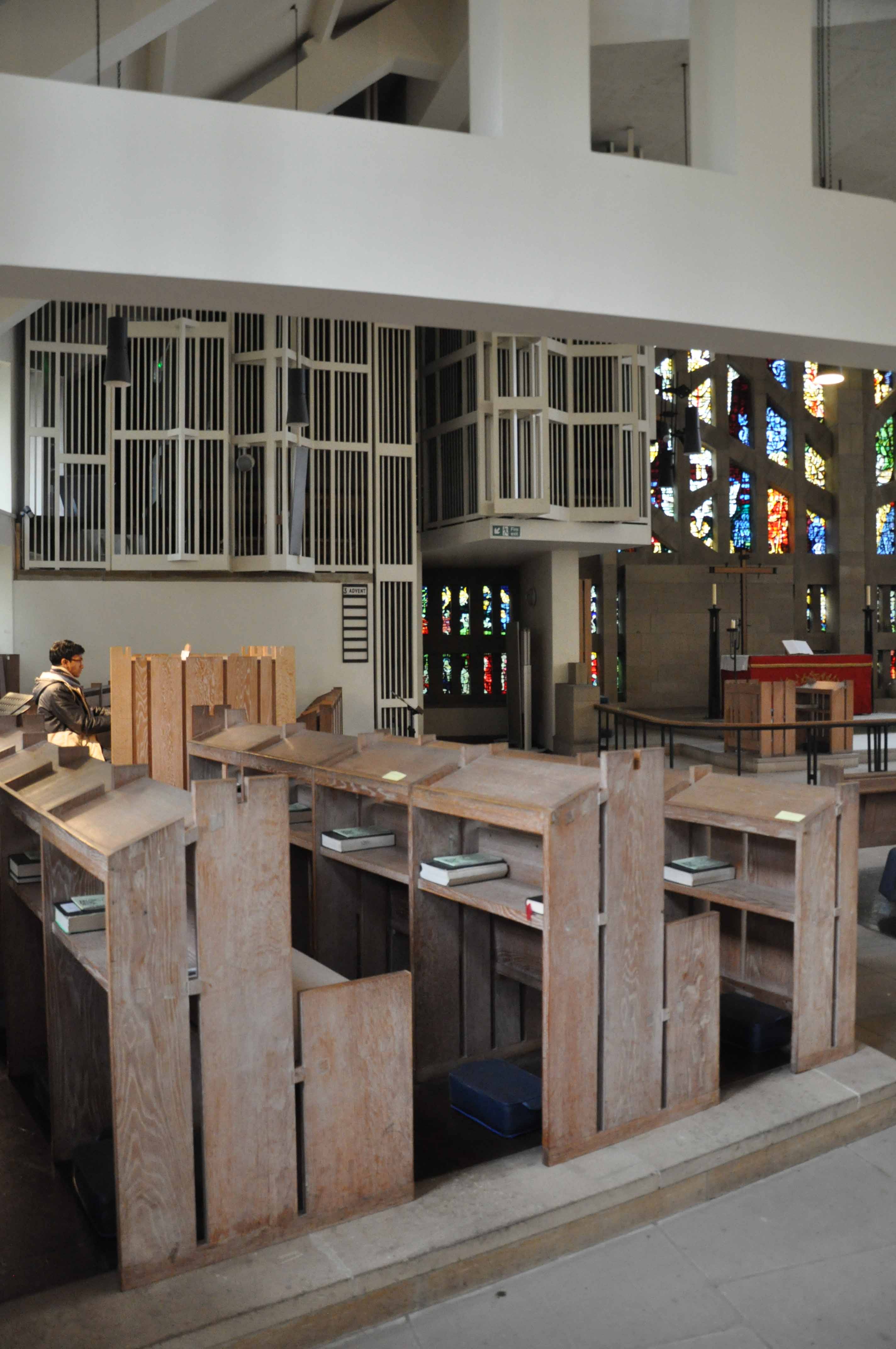
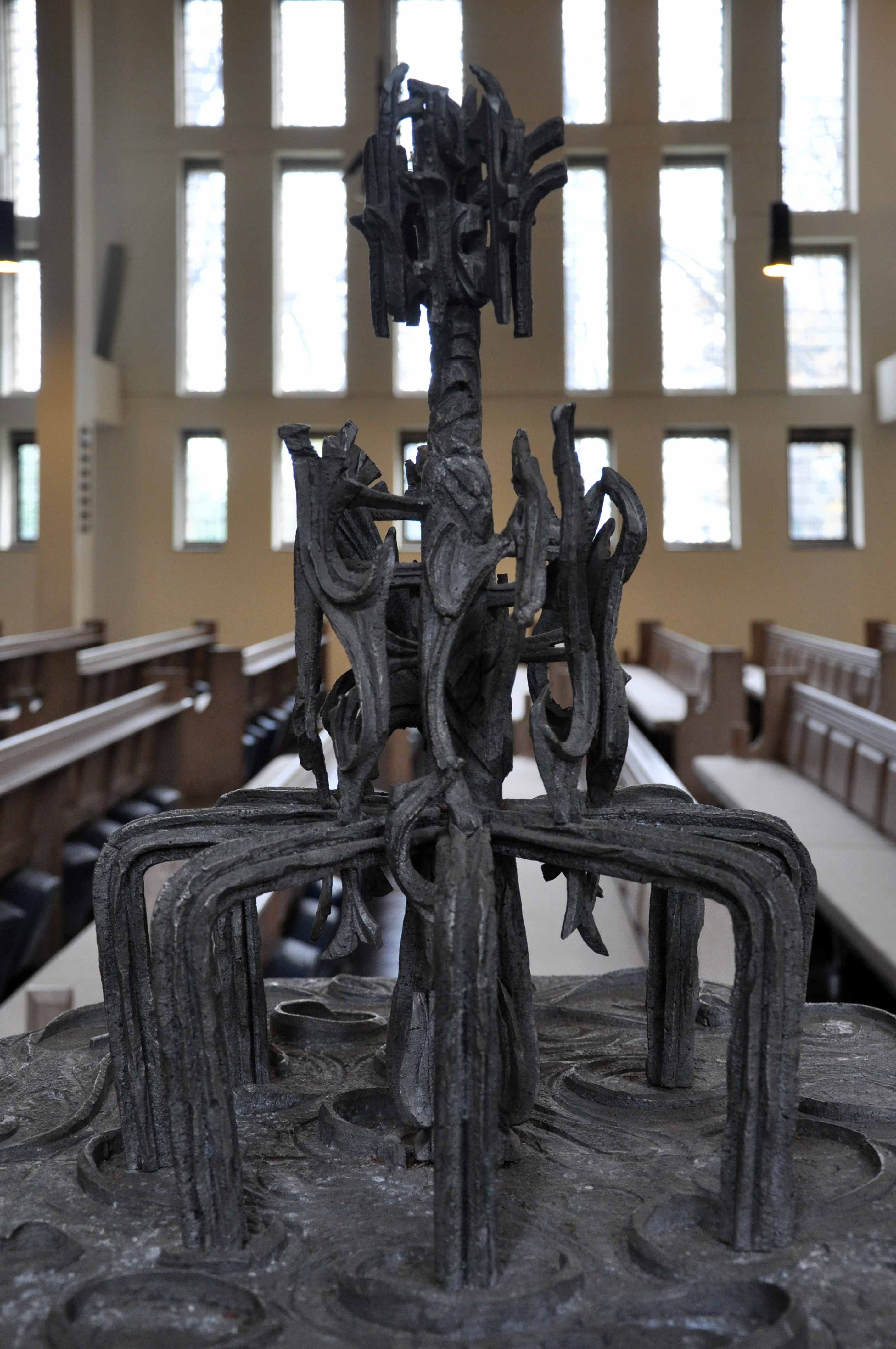
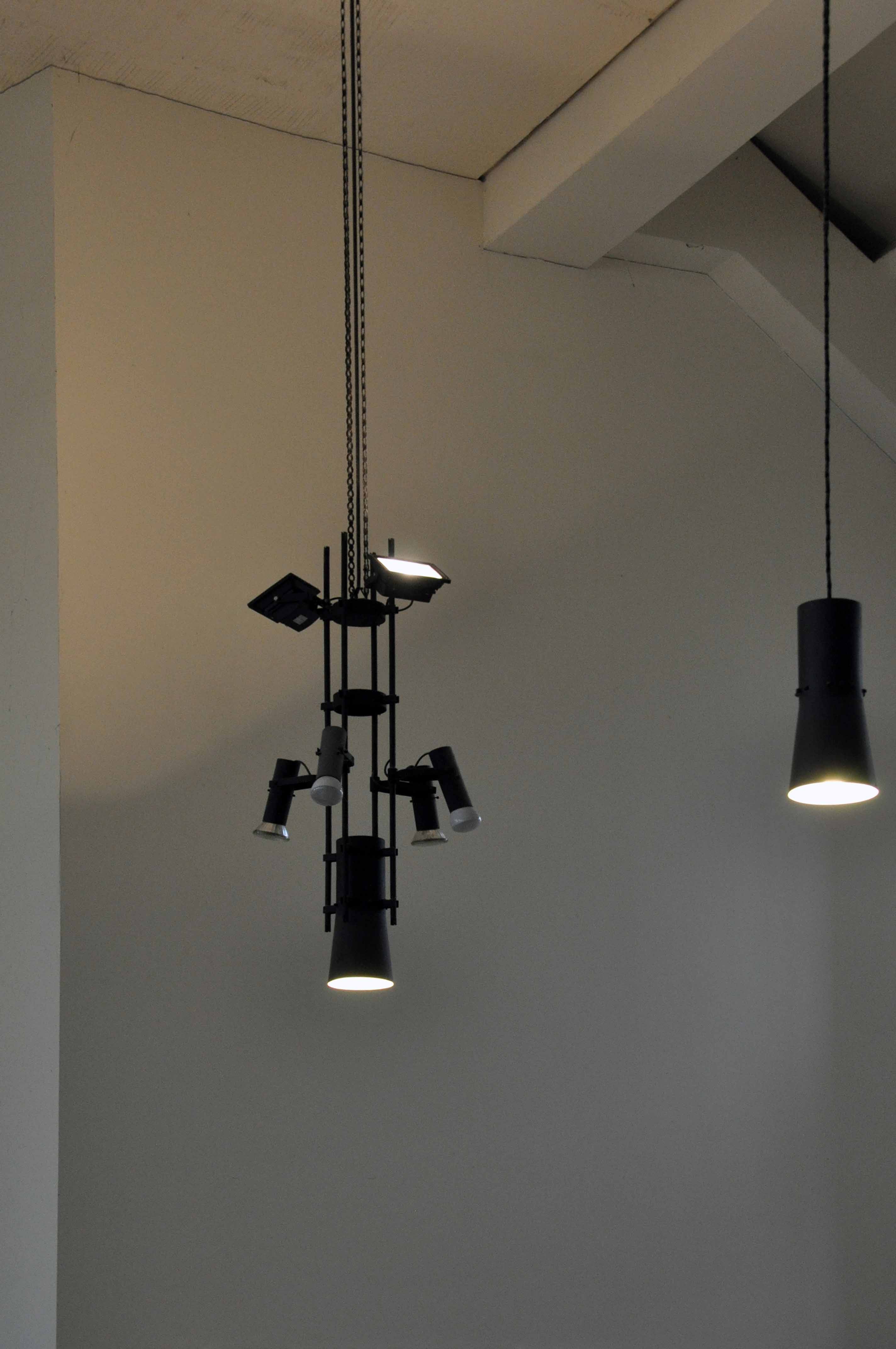
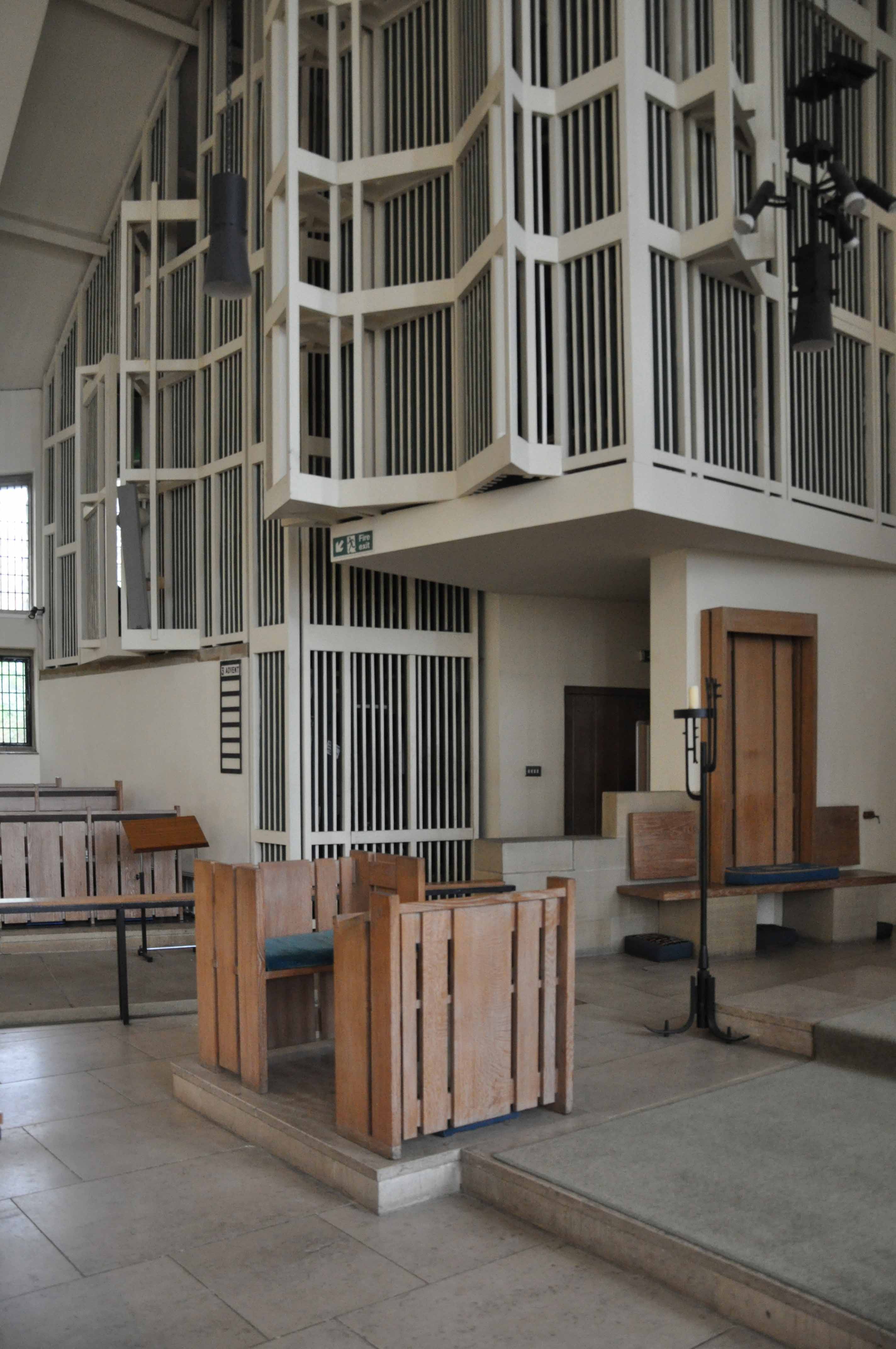
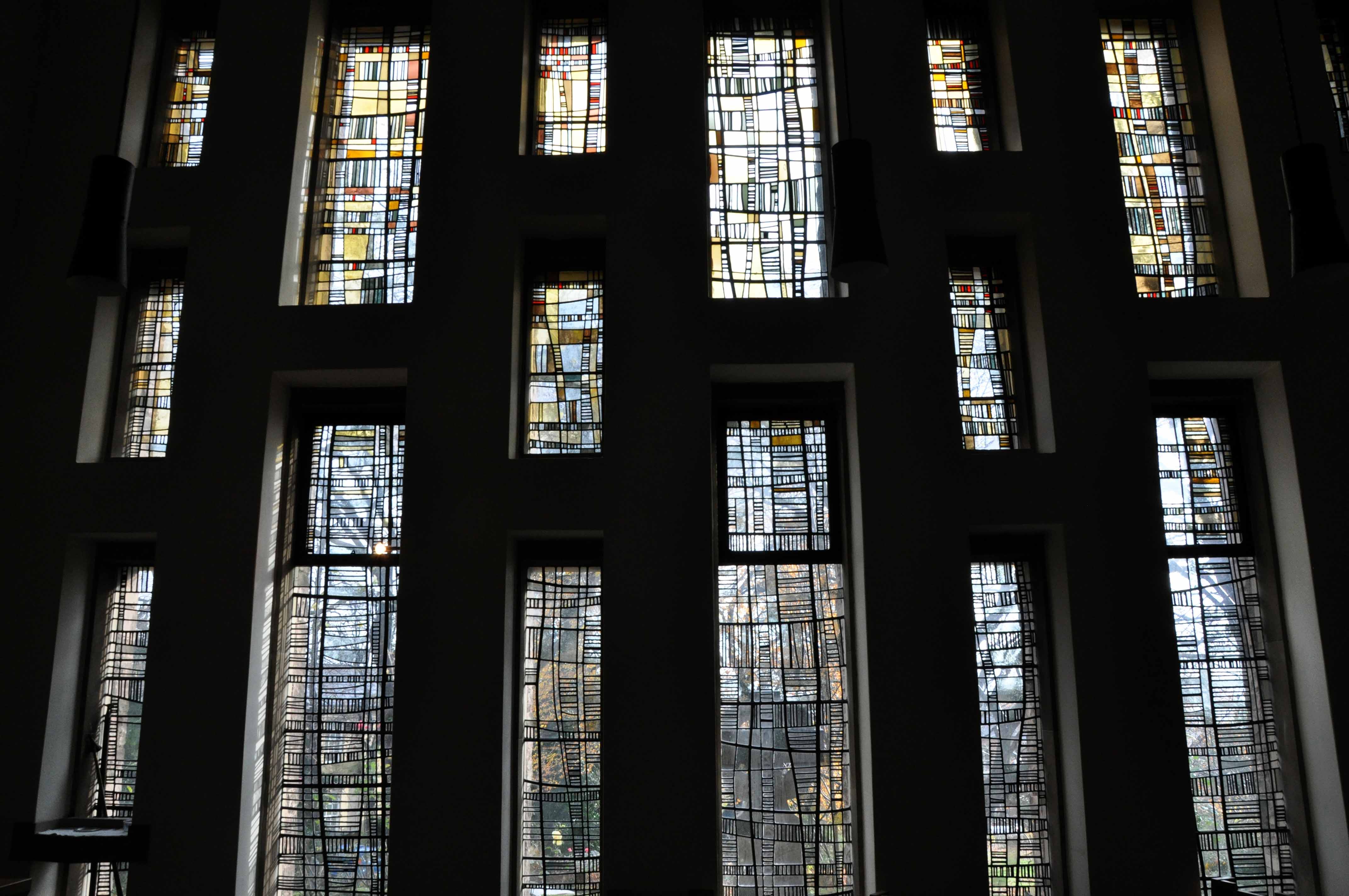
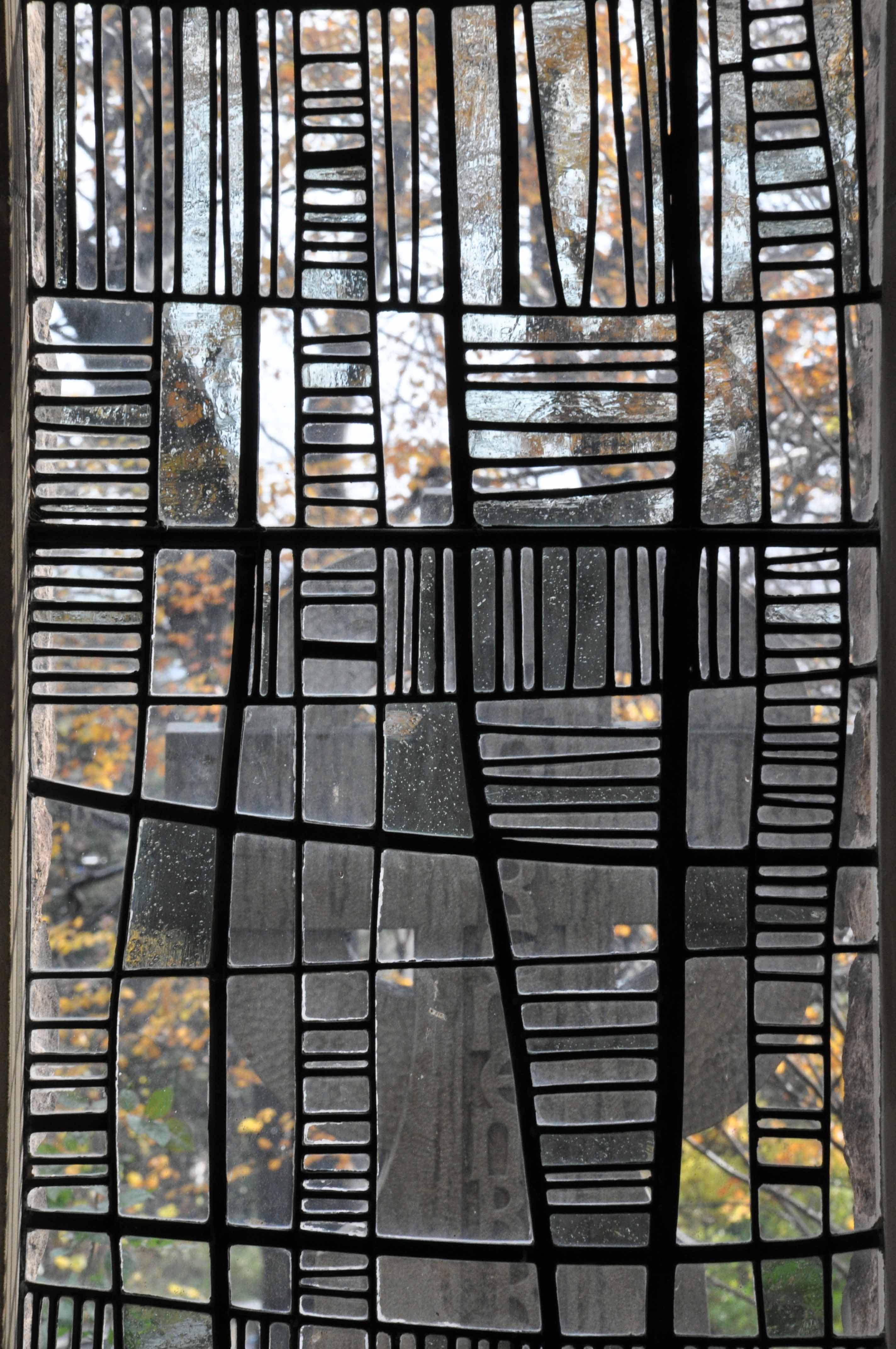
INTERIOR: aisleless with vertical slit windows to north and south walls and roof sloping upwards towards chancel, on laminated timbers beams, so that roof deck is separated from the walls by a narrow glazed strip. Light is thrown onto the east wall by a concealed window at the east end of the nave. Sanctuary is raised two shallow steps, and altar was originally raised on two further steps against the east wall. It has now been moved forward. Altar is a black painted metal framed table with a varnished timber top. Font of polished limestone with fossils is in the original position to liturgical south side of sanctuary. Timber lid with schematic metal dove. Large timber cross behind altar, comprising two pairs of overlapping beams, penetrated symbolically by large nails. Timber sedilia on metal supports. Laminated timber pews. Organ above entrance to sacristy . A strongly sculptural design with a powerful presence.
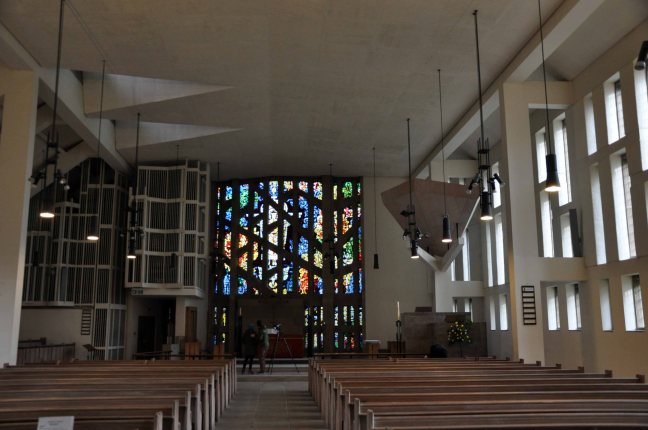
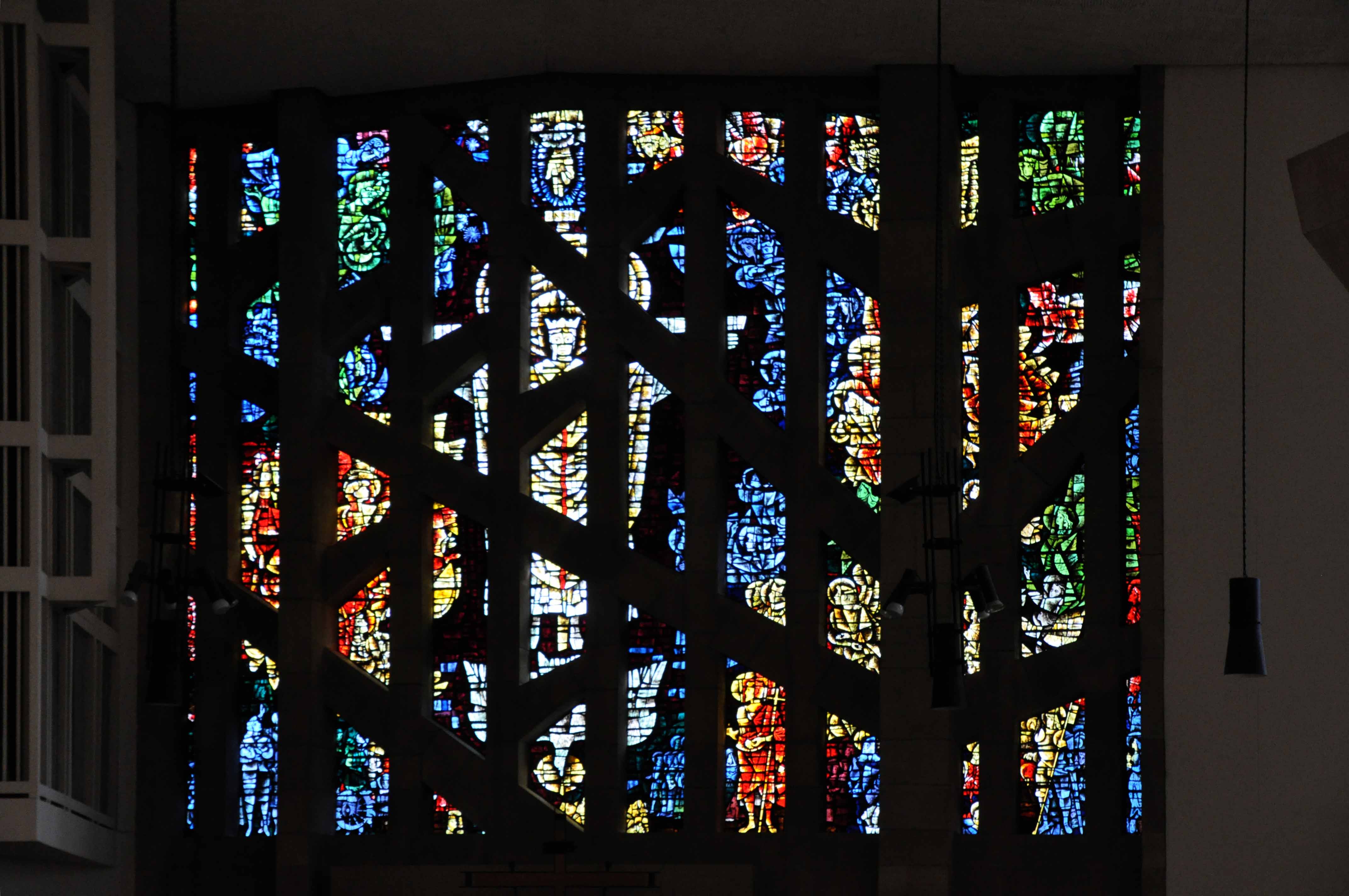
St Catherine Sienna is a fine church, sited impressively and standing imperiously on the Sheffield outer ring road, high above the city. Brick curves, a tall detached tower and open for business, serving the outlying post war housing estate of Woodthorpe with regular services and a firm foundation of community activity.
Lit delicately from side slatted windows and higher apertures, the main body is calm and assured, the scale and proportion in harmony with the simple Spence seating and slightly raised altar. The detail of the wooden roof grid perfectly balancing the warm austerity of the walls.
My thanks to Father Phillip for his time and a fine cup of tea.
Designed by Sir Basil Spence and built by Charles Price of Doncaster Ltd. the church was completed in 1959 and consecrated on24th January 1959.
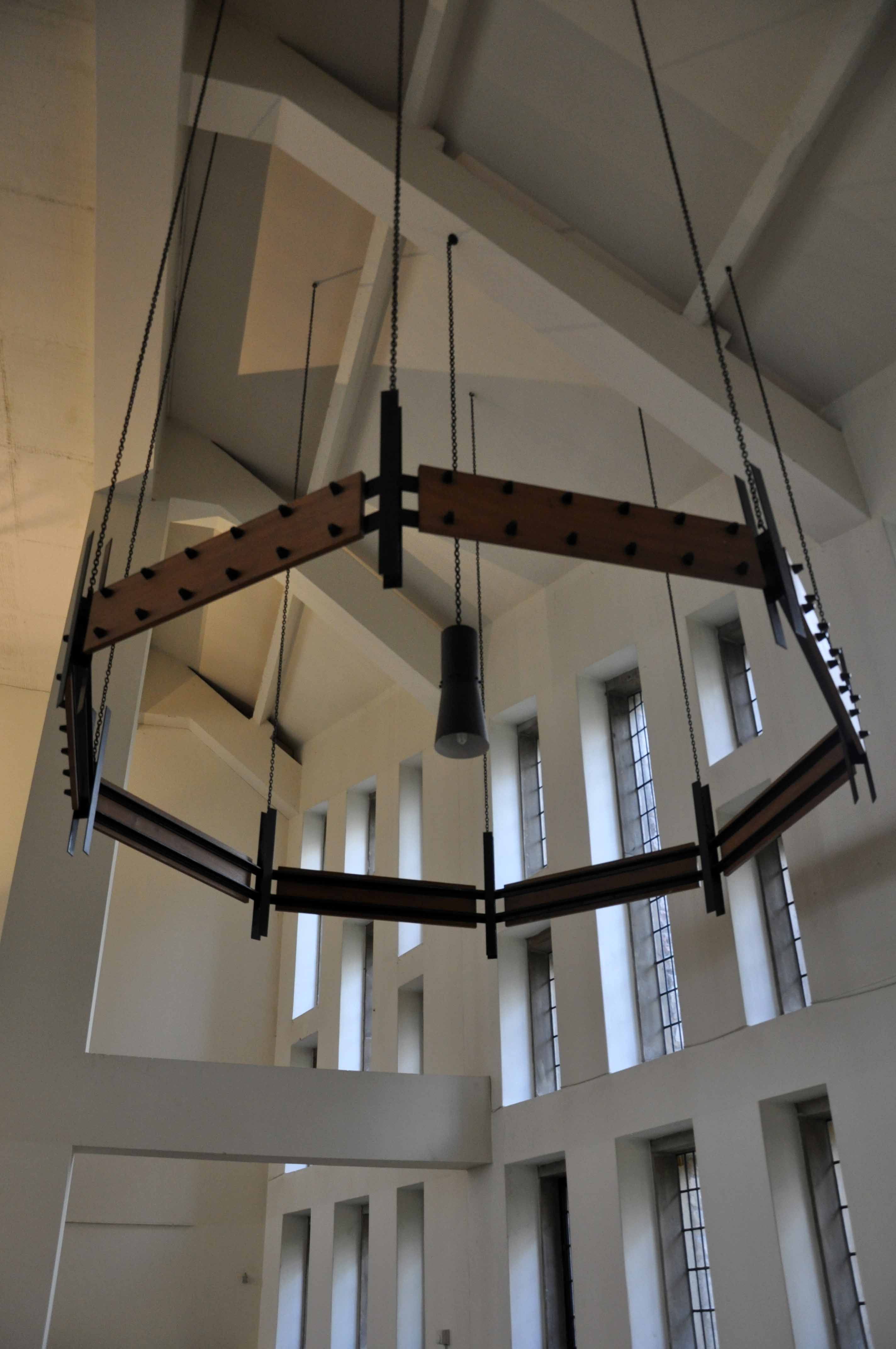
A large open brick steel and concrete structure, glassed and open at each end, a curved roof with vaulted detail, a detached tower is connected by a concrete cloister. There is an elegant simplicity to the body of the church, which is elevated by the staggered supporting walls.
A plain altar is complemented with ornaments, the gift of Spence, decorated by a frontal designed by Anthony Blee and an embroidered panel by Beryl Dean. A plain slatted wooden screen masks the window to the rear.
The pews – also the work of Spence were not costed in the original proposal, additional funds were found and they remain in use as an integral part of the scheme and worship.
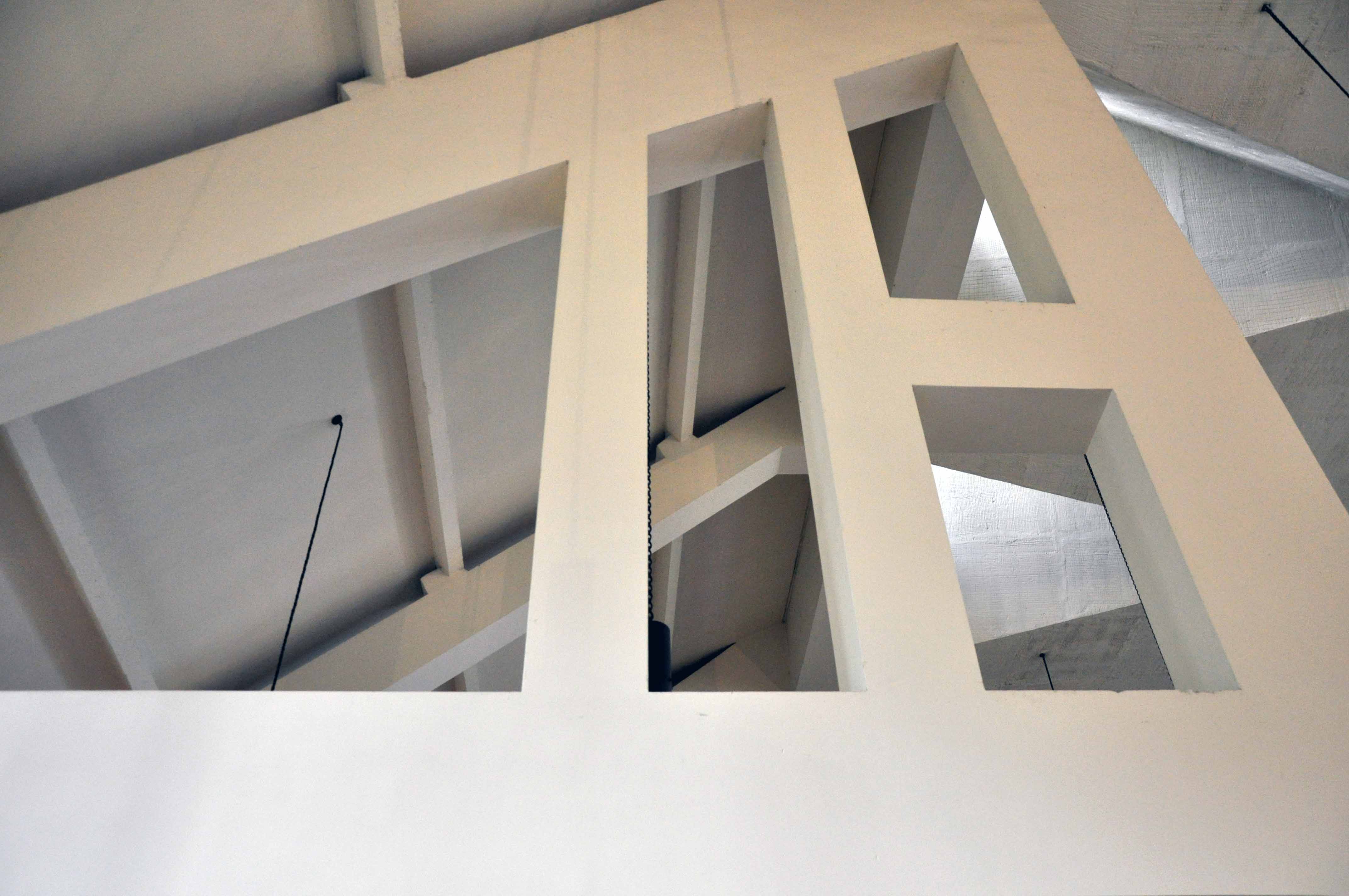
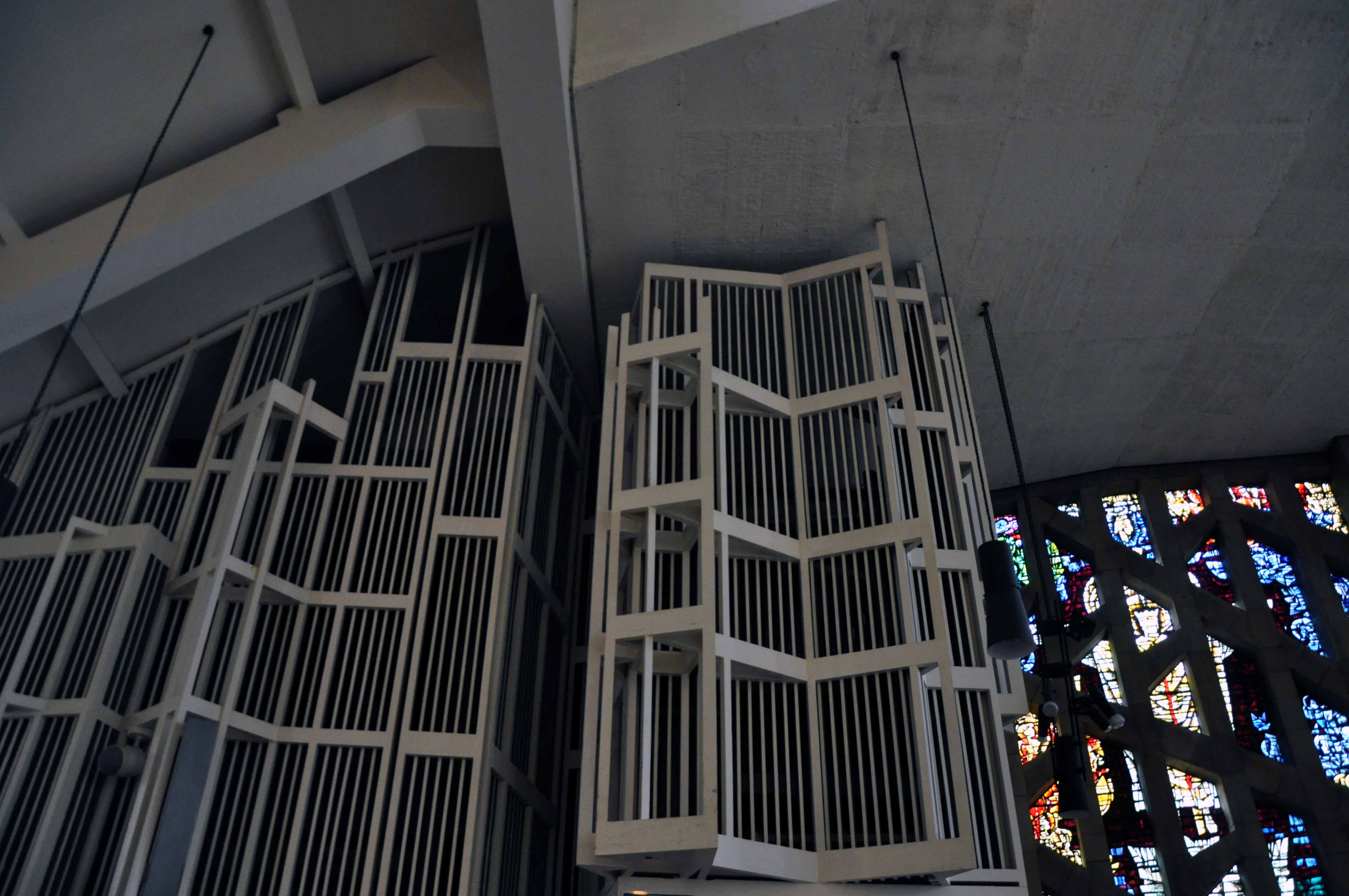
The organ, sited in the gallery, is a later addition of 1962, puchased for £100 from Mount Tabor Church, Holland – integrated into the overall design using slatted wood.
My thanks to John Roch, church organist and lifelong member of the congregation, having attended Sunday School at St Paul on the first day of its opening, for his time and erudite instruction.
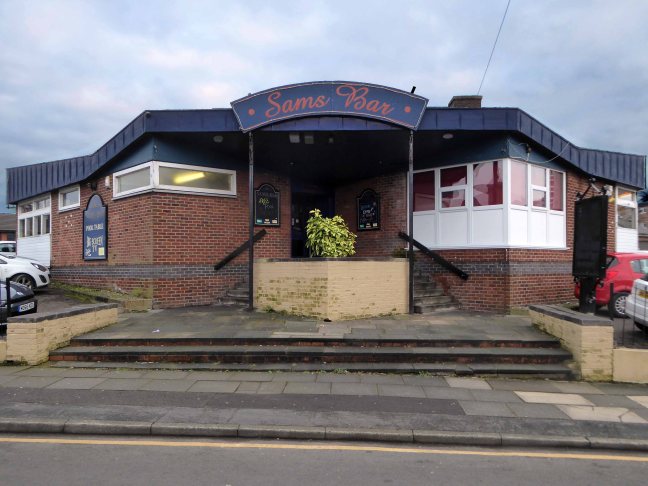
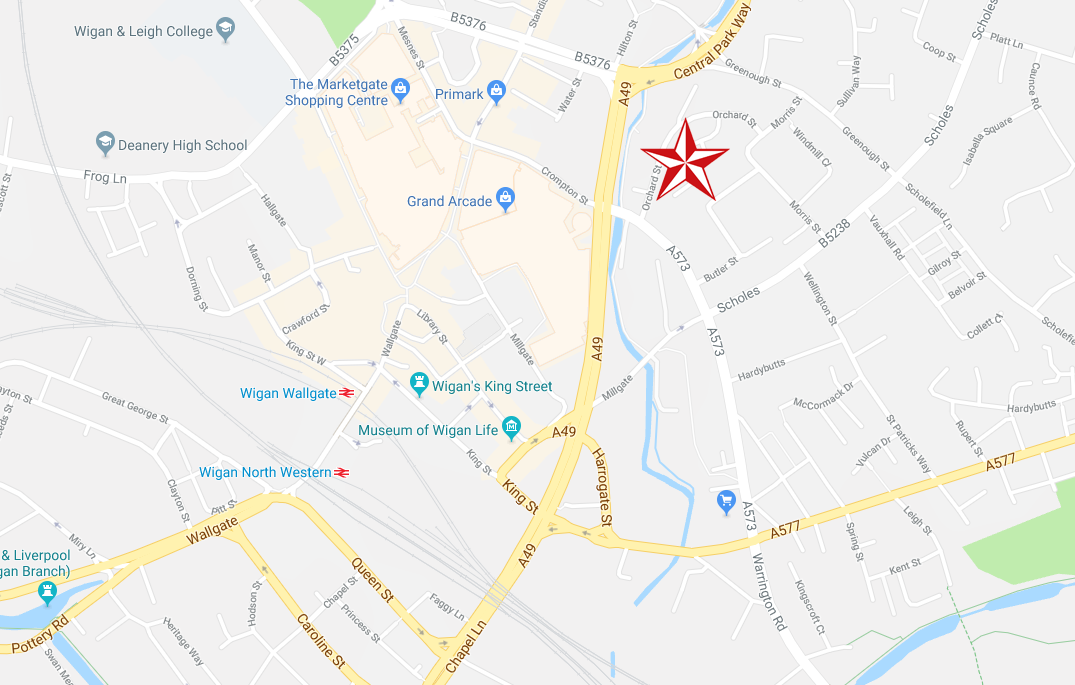
Some time ago, over a year ago or so I went to Wigan.
I found a pub, a launderette, several interesting groups of housing and –
A large concrete Civic Centre, built in the early 1970s under the auspices of the Mayor JT Farrimond, the foundation stone laid by Alderman Ernest Ball on 22nd April 1970 – a man who seems to have collected letters after his name just for fun.
A tight grid structure is broken up with chamfered window fames and a mix of concrete finishes, surfaces and textures, slipping neatly into the inclined topography.
A rather distinguished cantilevered canopy or two sit centrally over the entrance porch.
The building no longer offers public access, services having been transferred to the nearby Life Centre.
Sadly only one of the neon sculptures, remains illuminated – they may have been listed by Historic England, they have certainly given them a coat of looking at. I myself was approached whilst working away by a crack squad of precinct management, questioning my methods and motives. I reassured them I was a serious student of post-war architecture and they allowed happily to go about my business – assuring me that I was following in the footsteps of HE.
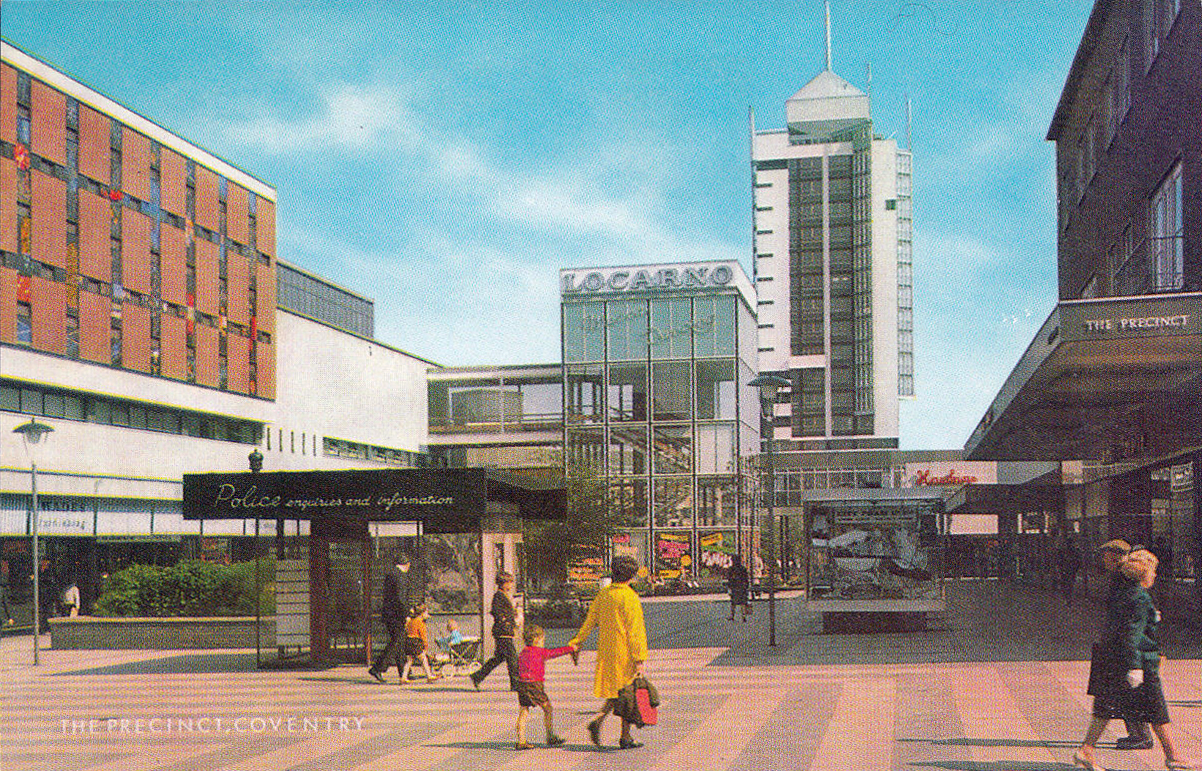
The elevated café, pierced screenwork, mosaics on the former Locarno, now Library and town clock are still every much in situ, Lady Godiva dutifully appearing on the hour, every hour with an ever attendant Peeping Tom for company.
The area is well-used bustling busy, with a smattering of empty units which are sadly typical of most provincial town competing for custom and prosperity on the high street.
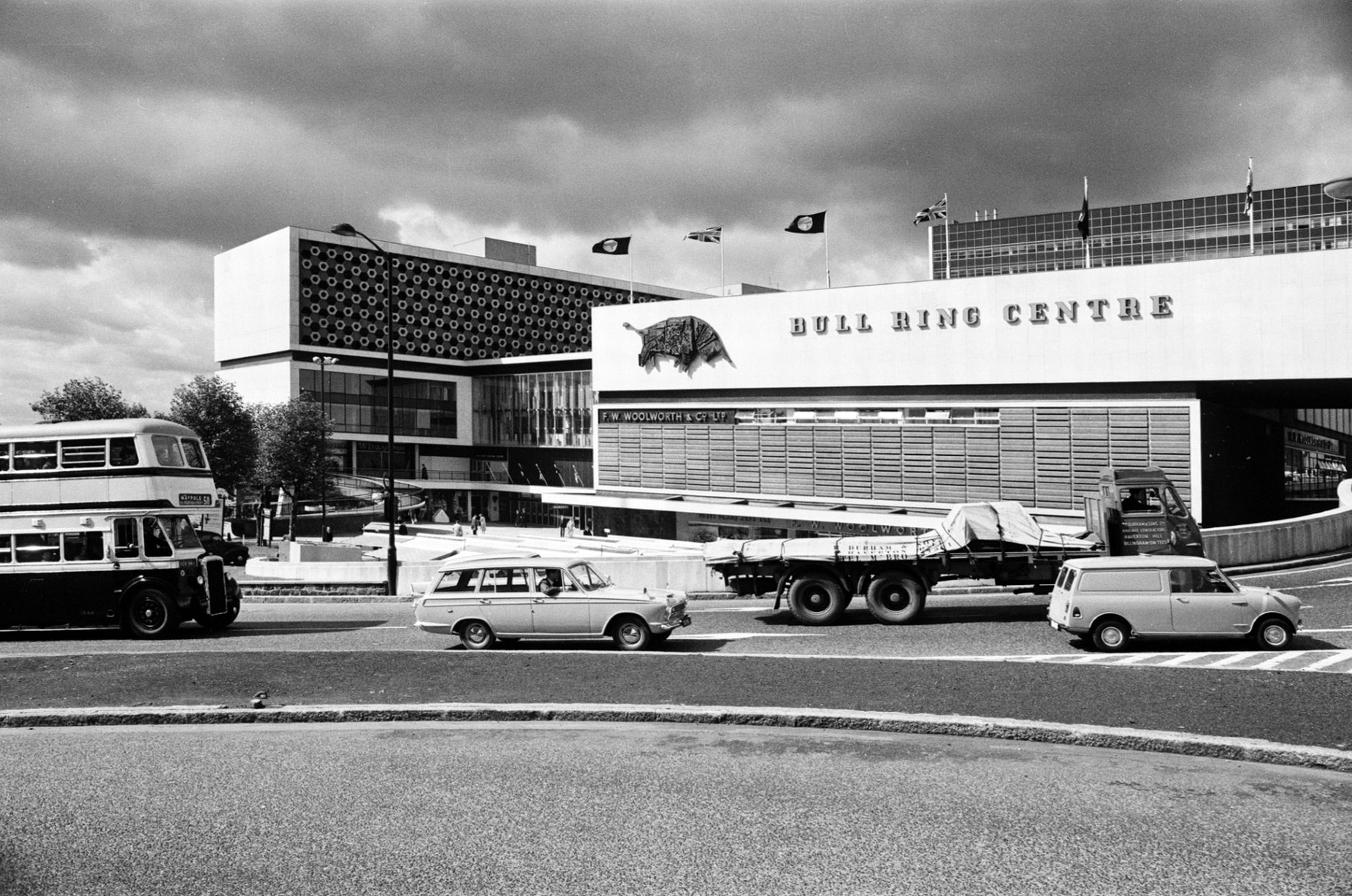
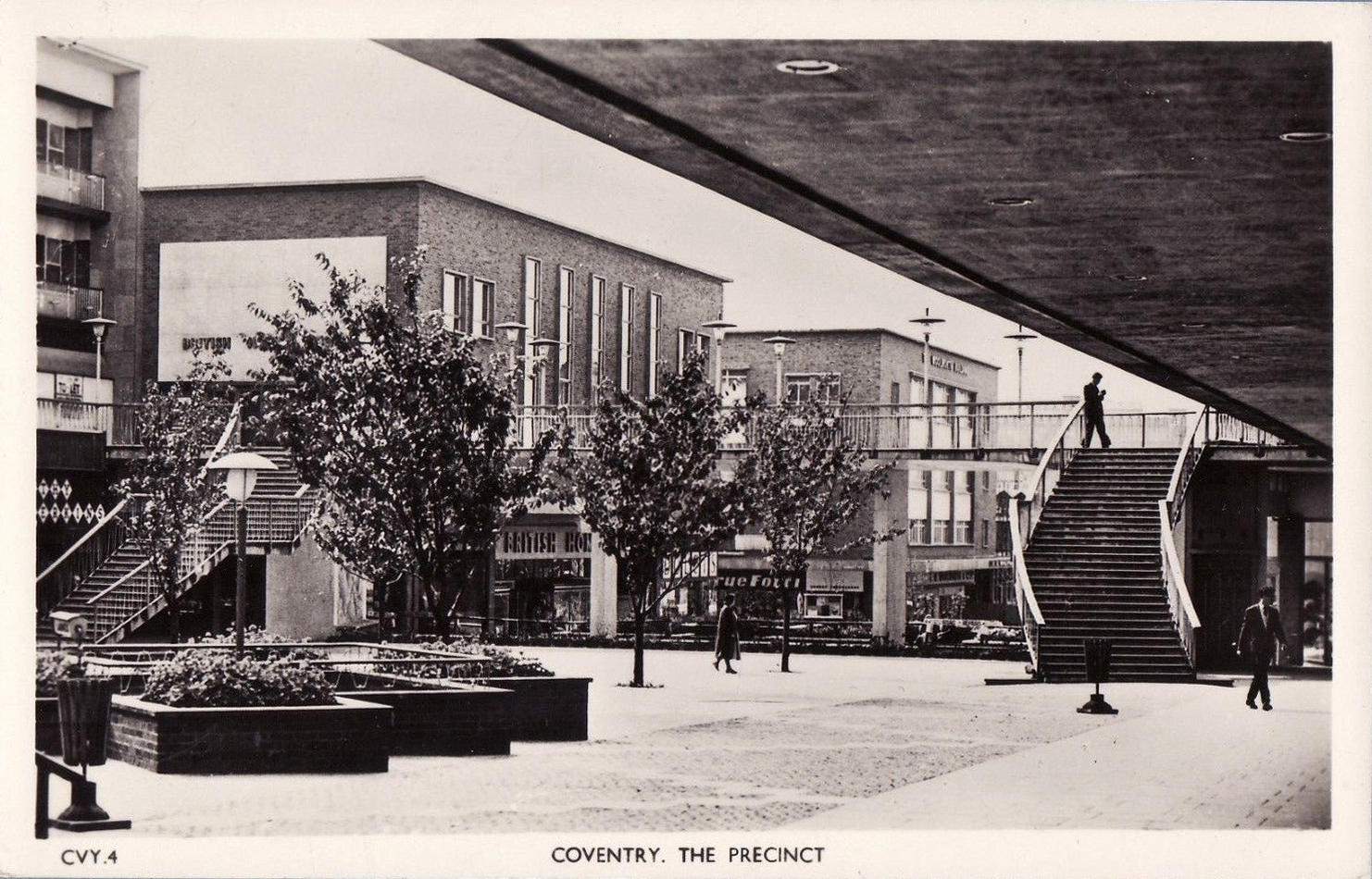
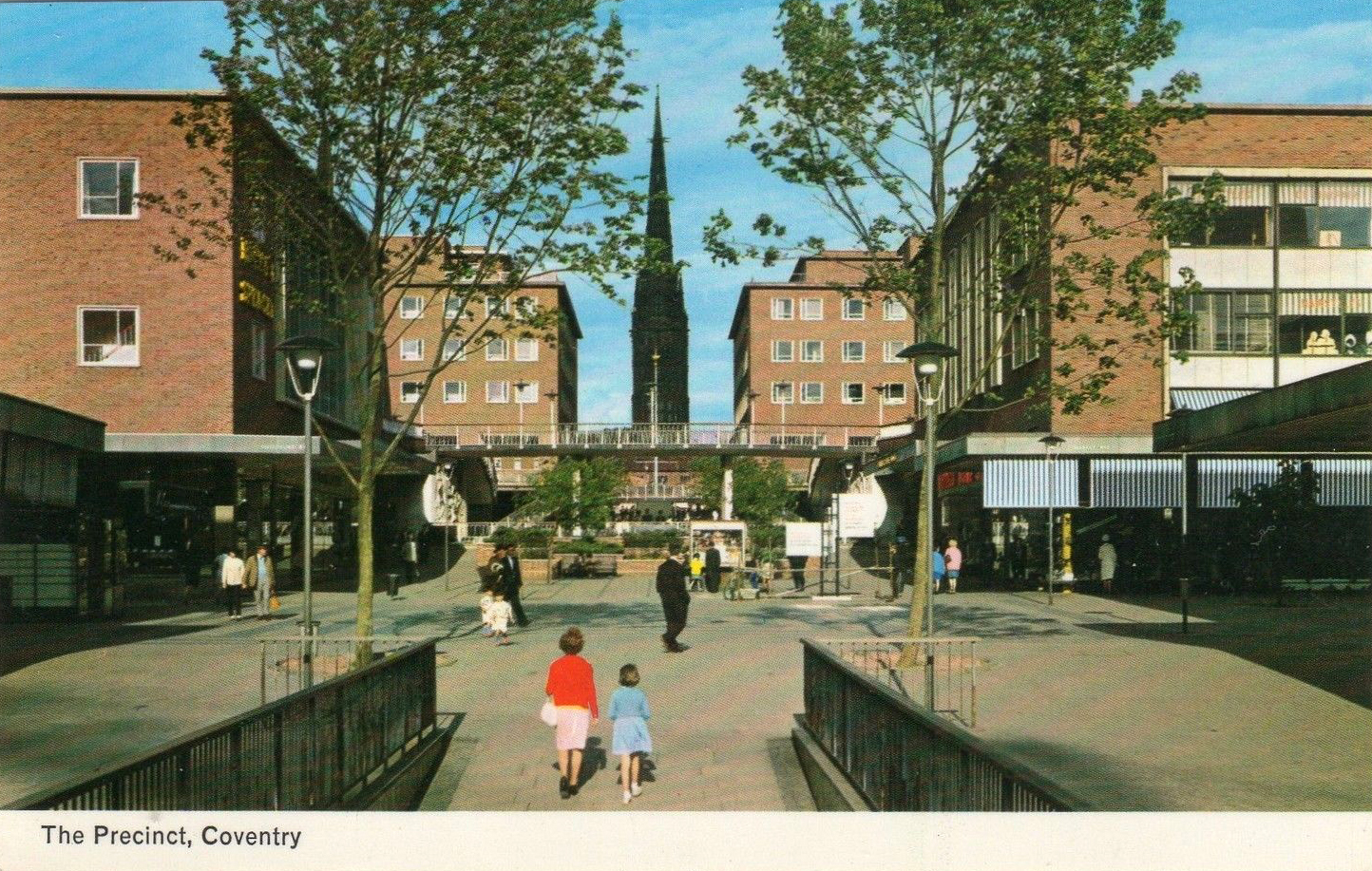
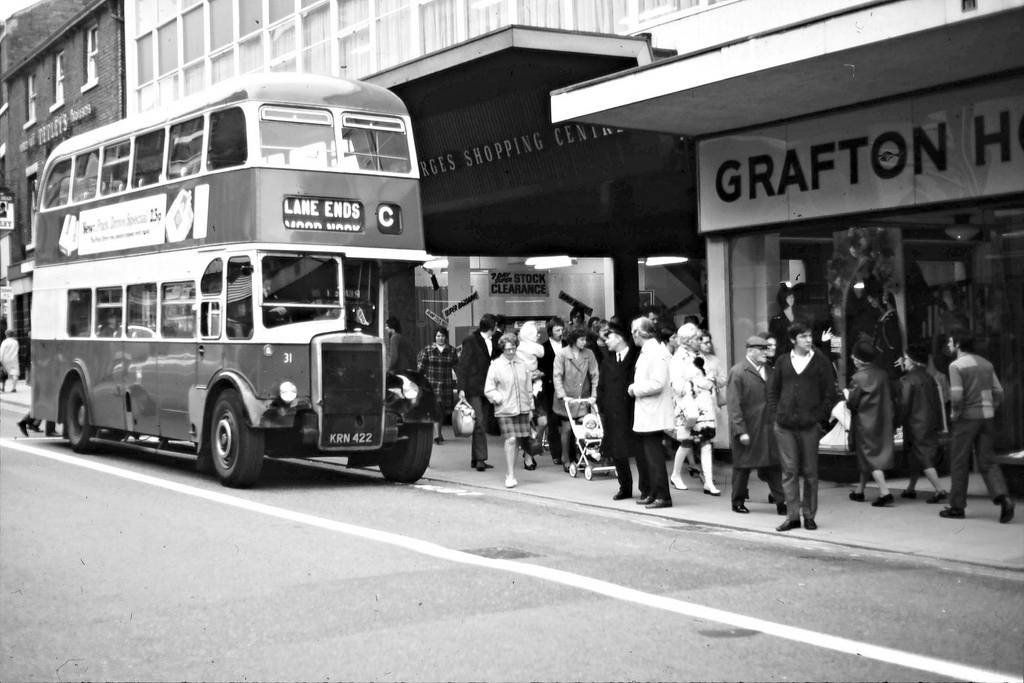
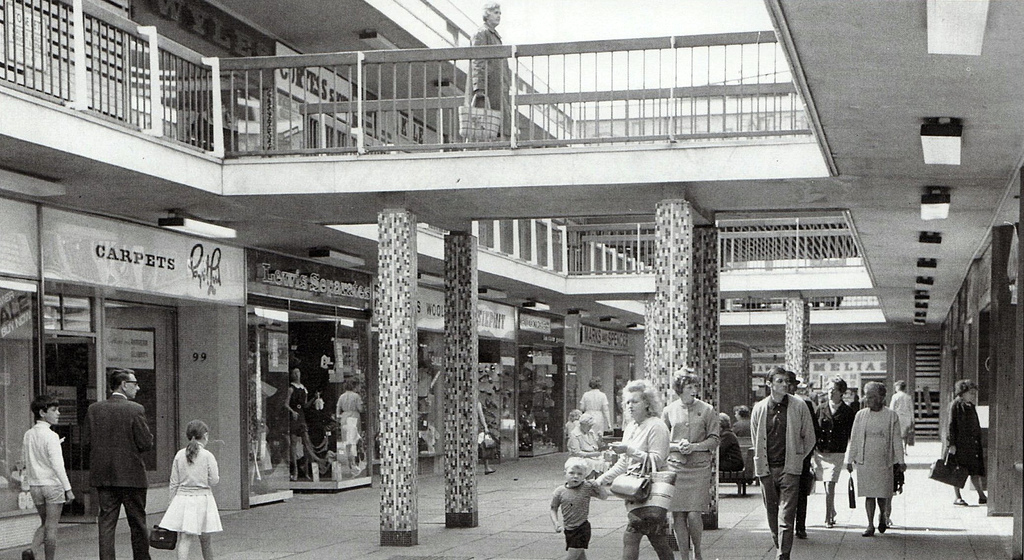
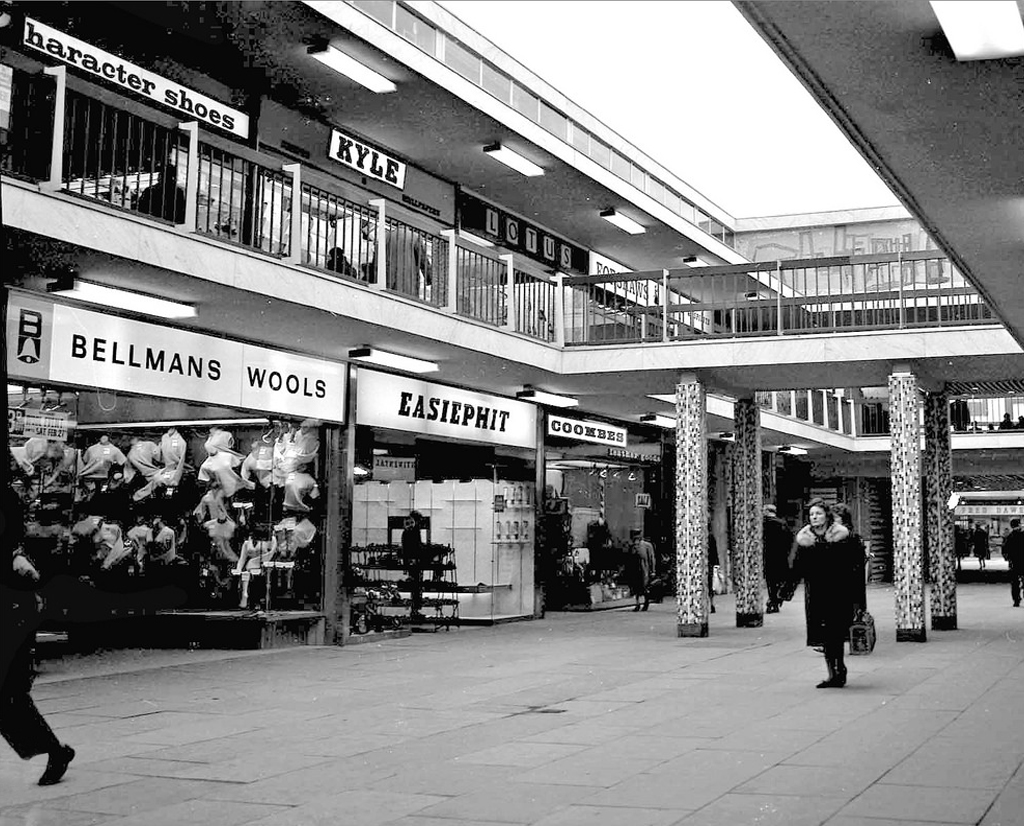
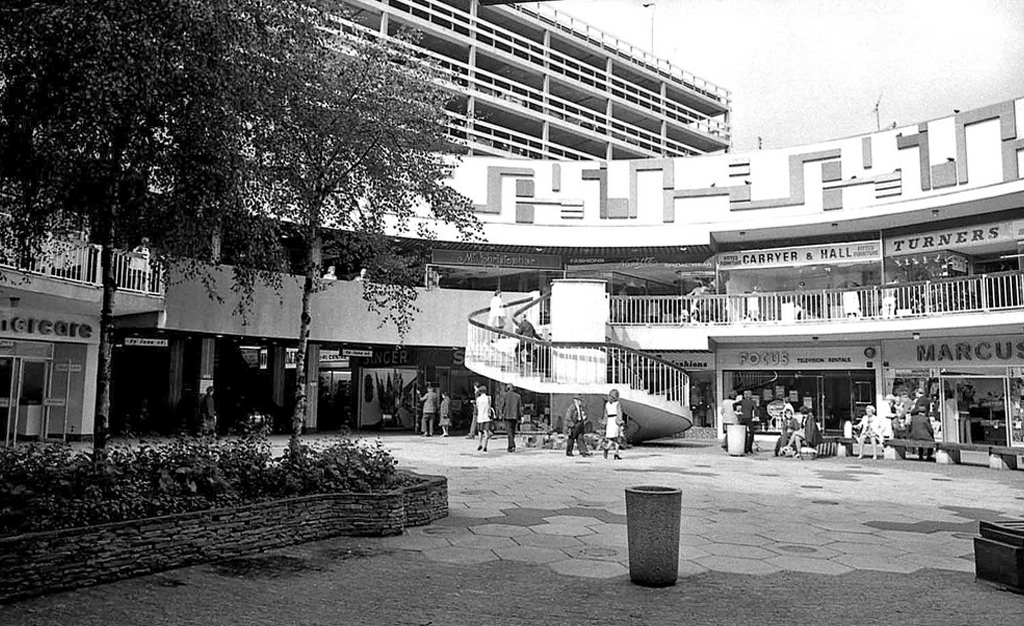
Coventry city centre is a city centre, comprised of several interlocking post- war facets, realised over a thirty year period. This later addition The Bull Yard, the work of Arthur Ling and Terence Gregory, city architects and planning officers 1963-69.
It incorporates pedestrian walkways, retail, civic and car parking facilities with a crowded unease and grace. Much of the original detail survives, though not unusually, some more recent additions detract from the integrity of the scheme.
The site is graced by two major works by William Mitchell – the concrete facade and interior of the former Three Tuns public house.
And the sculpted panels on Hertford Street.
So we are left with a series of spaces that now seem slightly adrift, particularly the City Arcade, as both the earlier and more recent developments in the city compete for clients and customers.
To explore is to discover a work continually in progress, or regression, as the forces of heritage, commercial development, and civic planning pull each other this way and that.
There is an initiative for redevelopment for the area yet to find a satisfactory resolution.
Take a look.
Up on high we find Sir Guy and the Dun Cow by Alma Ramsey 1952.
Coventry Point architects: John Madin Design Group 1969/75
The Peeping Tom head and shoulders sculpture is currently located in Hertford Street, mounted high up over the entrance to the covered walkway. It was originally a public house sign. It is not known who made it. It was displayed sitting in the top corner window of the Peeping Tom Public house which was on the corner of Hertford Street and Bull Yard, not far from where it is now. It was moved when the road was being redeveloped in the late 1960’s and early 70’s.
A market hall built in 1957 to designs by Douglas Beaton, Ralph Iredale and Ian Crawford of Coventry City Architect’s Department.
Various designs were considered, but eventually a circular design was chosen to encourage circulation and to offer a number of entrances. It was given a flat roof in order to create a car park (with a heated ramp to prevent icing, now no longer there), and was to become the central focus for a complex scheme of linked roof car parks in Coventry.
The market consists of a series of concrete arches joined by a ring beam, all left exposed, with brick infilling and a concrete roof, laid out as a car park, with a central circular roof light. It has a circular plan, just over 84m in diameter and 4 ½ m high, is laid out with 160 island stalls, arranged in groups of two or four units in concentric rings, with 40 `shop stalls’ set into the perimeter wall.
Inside, the circular space is characterised by the tall V-shaped concrete `columns’ that hold the roof. Some of the original shop and stall signs have survived. Natural light enters via the clerestory windows along the top perimeter of the building and through the clerestory lighting and oculi in the central dome. The space under this dome, designed as an area for shoppers to rest, is lined with seats and has a terrazzo mosaic floor designed by David Embling, with a central sun motif, a gift from the Coventry Branch of the Association of Building Technicians.
Above the current market office is an impressive painted mural by art students from Dresden commissioned especially for the market in the 1950s in a Socialist Realist manner, depicting farming and industrial scenes.
I visited the market on a busy bustling day and was made to feel more than welcome, a wide range of heavily laden stalls was trading briskly. The Market Office kindly gave me a copy of the book Coventry Market in a Roundabout Way.
It’s a splendid structure, now listed, that functions six days a week.
Built between 1955-56 and opened November 1956 the central Co-operative Society store in Coventry is a clean, clear example of post-war design and redevelopment, epitomised by the city’s plan and realisation.
Sadly it finally closed its doors in 2015, along with many other of the Society’s larger stores, as they moved their focus to smaller food outlets.
Happily it has been listed, saved from the indignity of the wrecking ball and the building of further student flats. Coventry, along with other UK cities, has begun to rely on the expansion of higher education, in the face of industrial and retail decline. The future use of the site, is as yet uncertain. Sadly I am now informed that the listing did not go through, make of that what you will.
While such measures are not an ultimate protection from bulldozers or drastic renovation, it is considered the building helps tell the tale of the city centre’s contemporaneously vaunted but since controversial rebuilding after the Coventry Blitz.
One of the city’s largest and oldest stores was closed last year as a victim of flagging city centre trade in an internet era, and EDG Property bought the site.
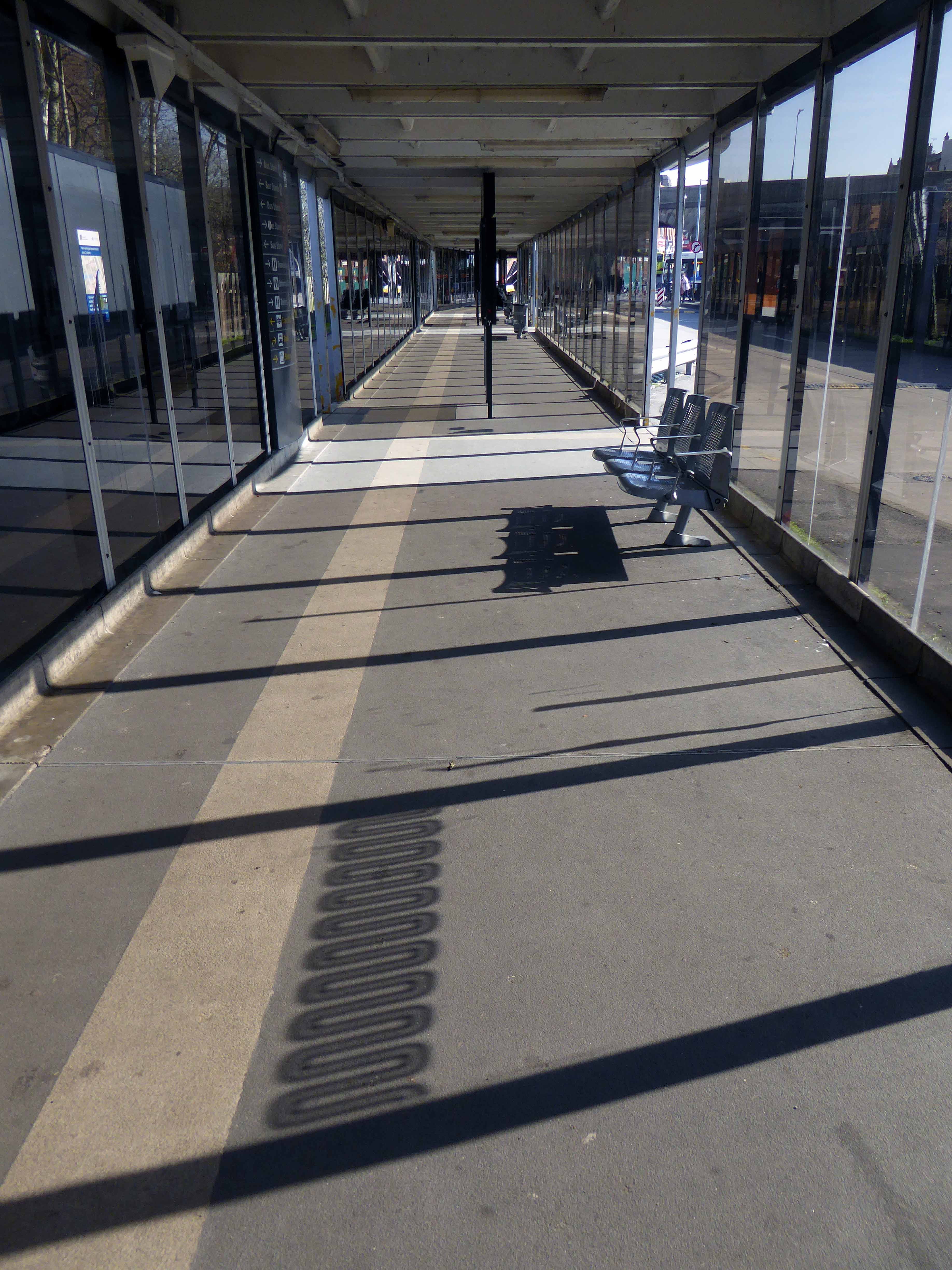
No planning applications have been received, although the council says ‘prospective buyers’ have stated an intention to demolish the building to erect two 12-storey towers of student accommodation.
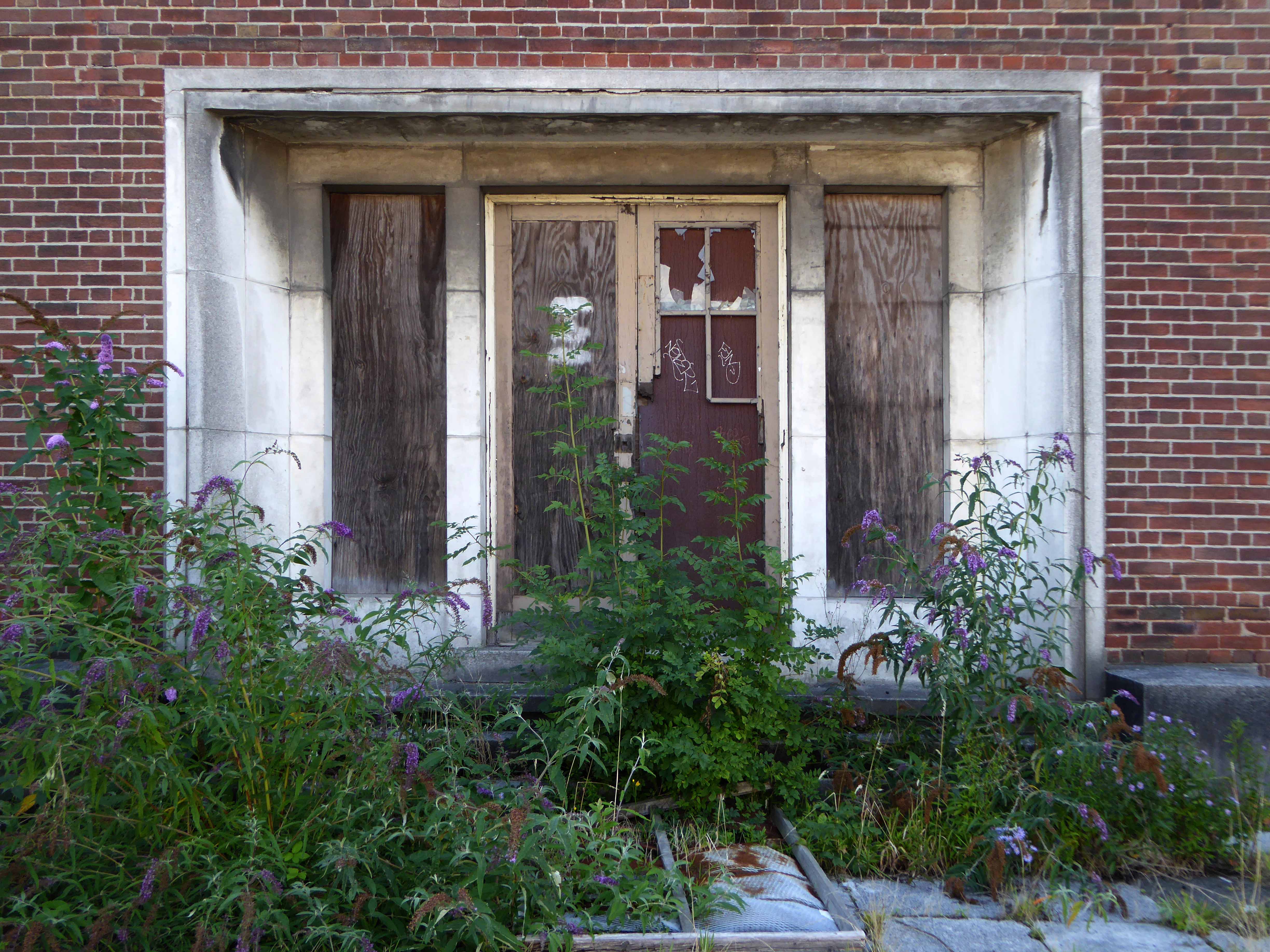
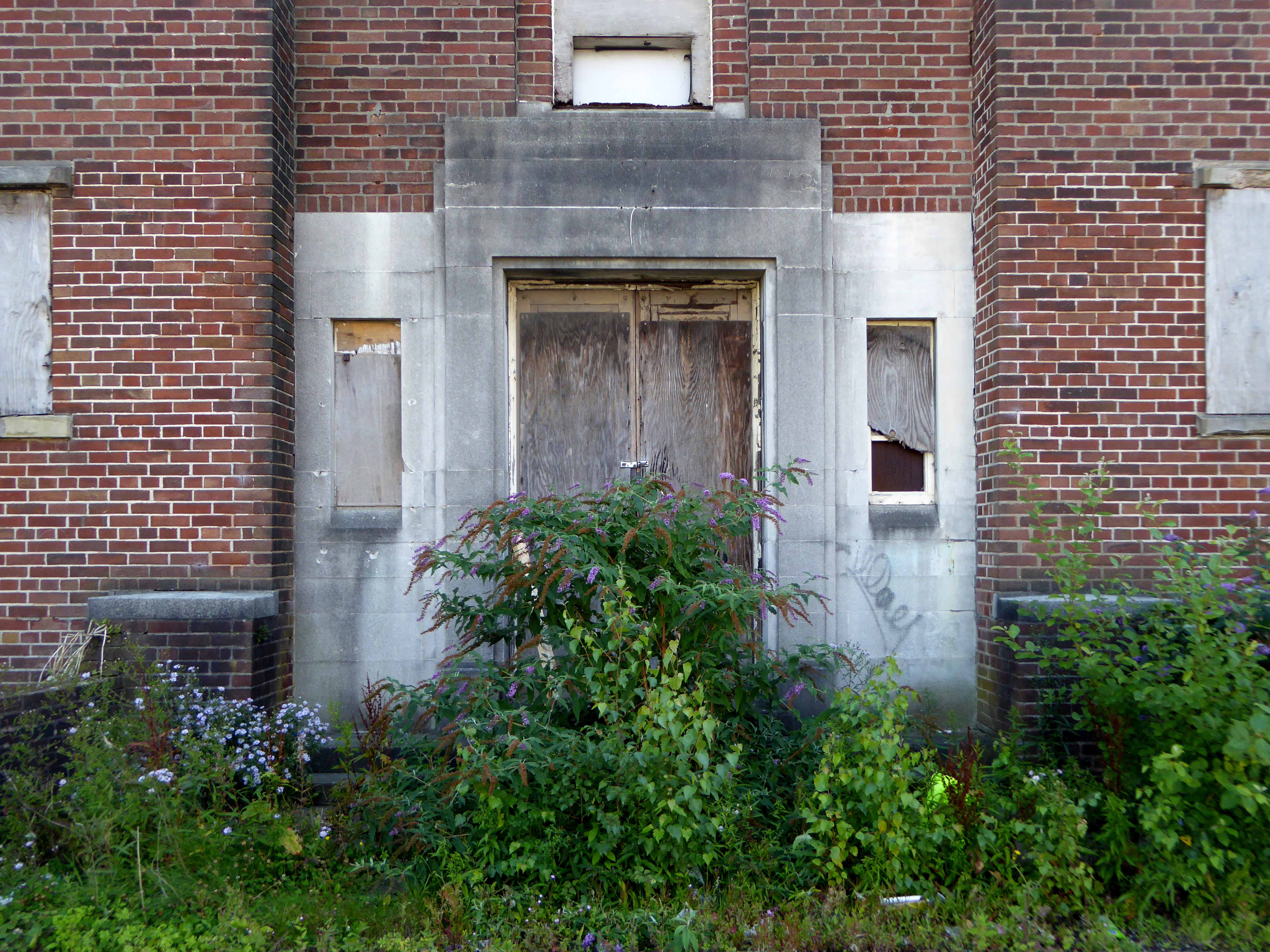
So it stands empty, the late summer foliage obscuring its splendid signage.
Still in clear view the stone relief work of John Skelton November 1956. Three of the eight column have incised Hornston stone works, depicting the activities of the CWS.