An alternate art trip devised by local art trippers Red Fodder.
We set forth from Huddersfield Station on Monday 13th January 2020 at the prearranged time of 14.00 hours. The weather was resolutely overcast and increasingly cold, with an ever present threat of rain.
Never to be knowingly deterred we made good progress around the town – we were hungry for art, the more contemporary the better.
Almost every avenue, alley and byway explored these are the snaps I snapped during our crazy Kirklees caper.
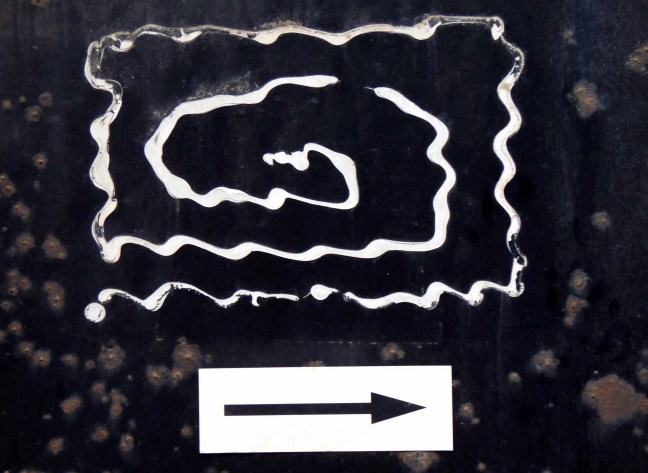
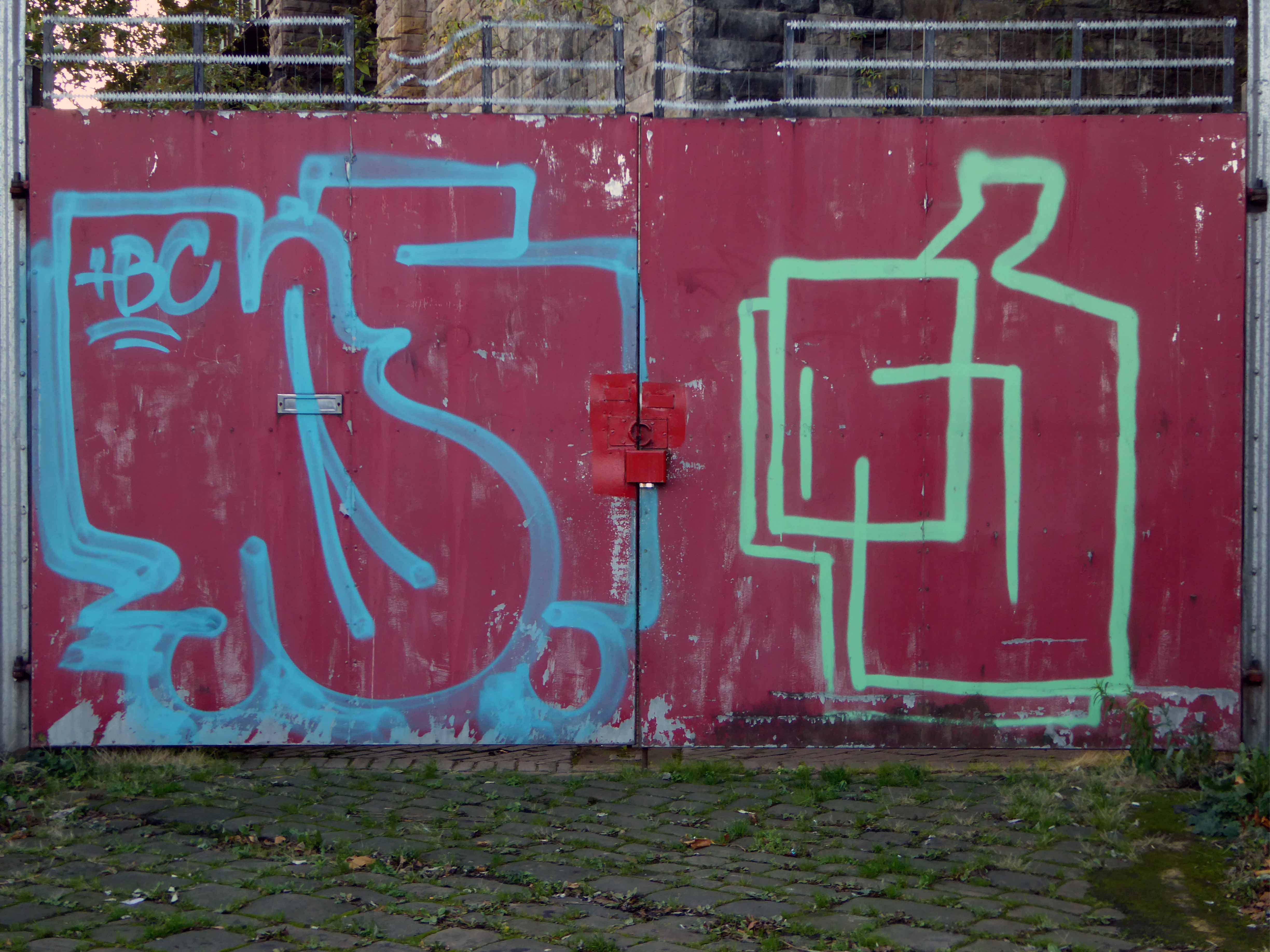
Along the way I added my own small contribution to the town’s contemporary art stock.
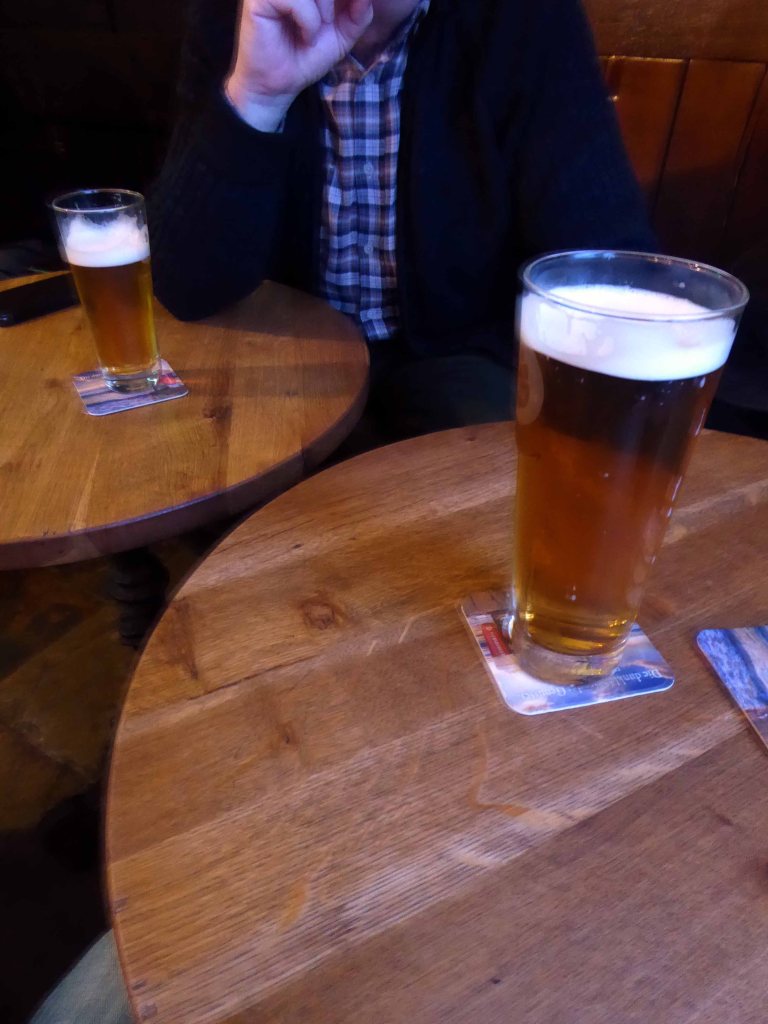
A veil was finally drawn over the afternoon’s cultural caprice with fine glasses of foaming ale in The Grove, where I finally came face to face with the Red Fodder folk for the very first time.
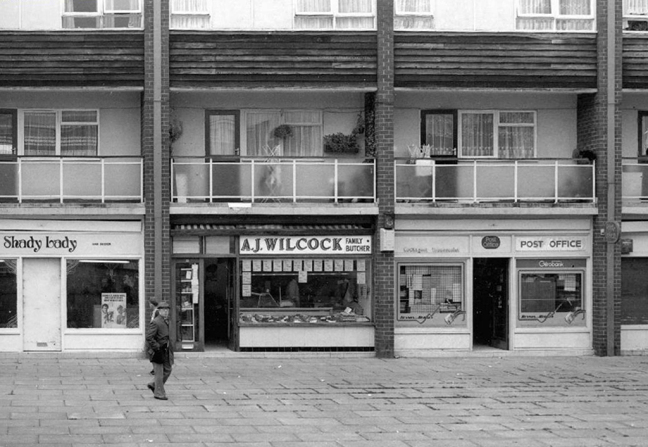
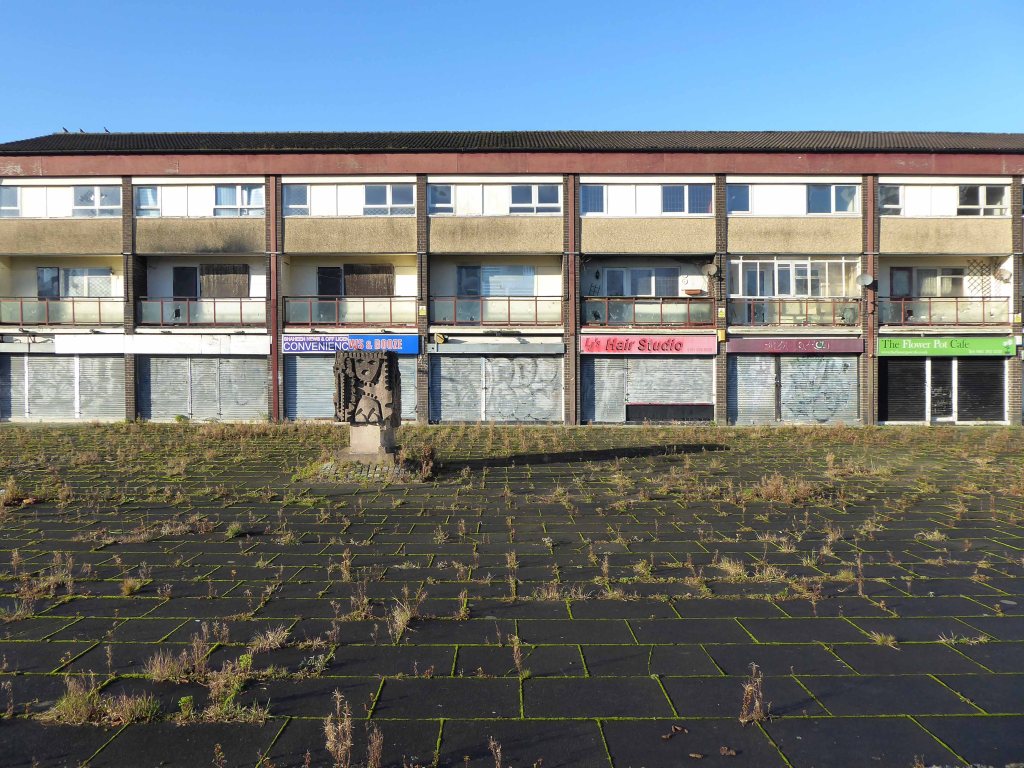
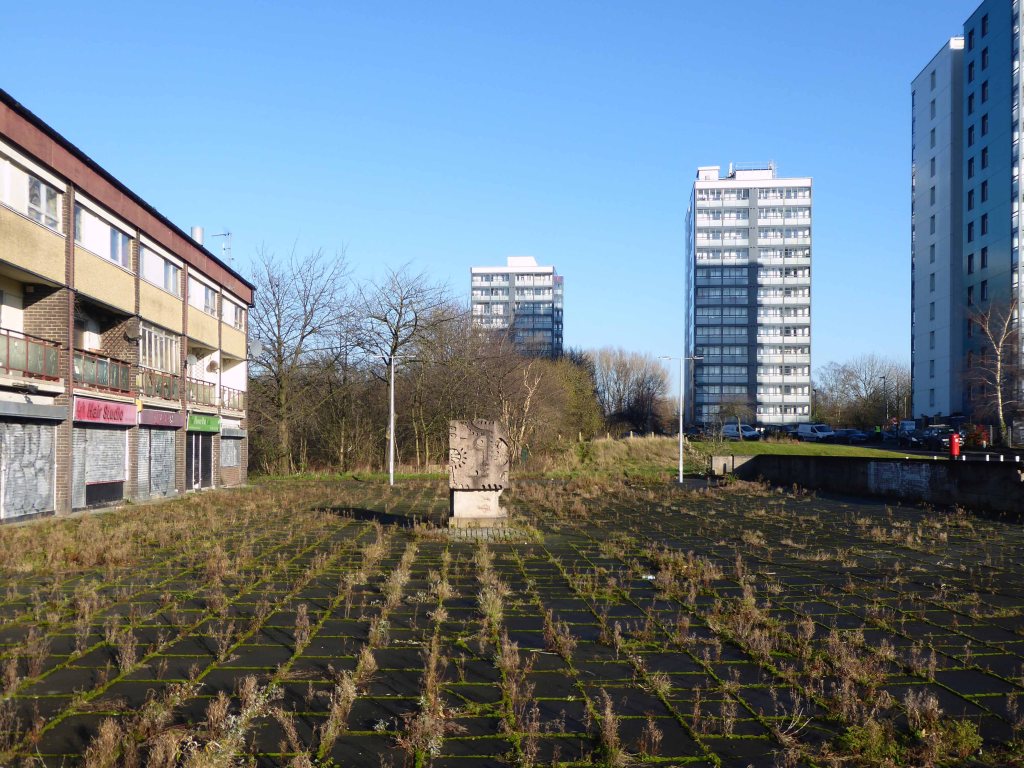
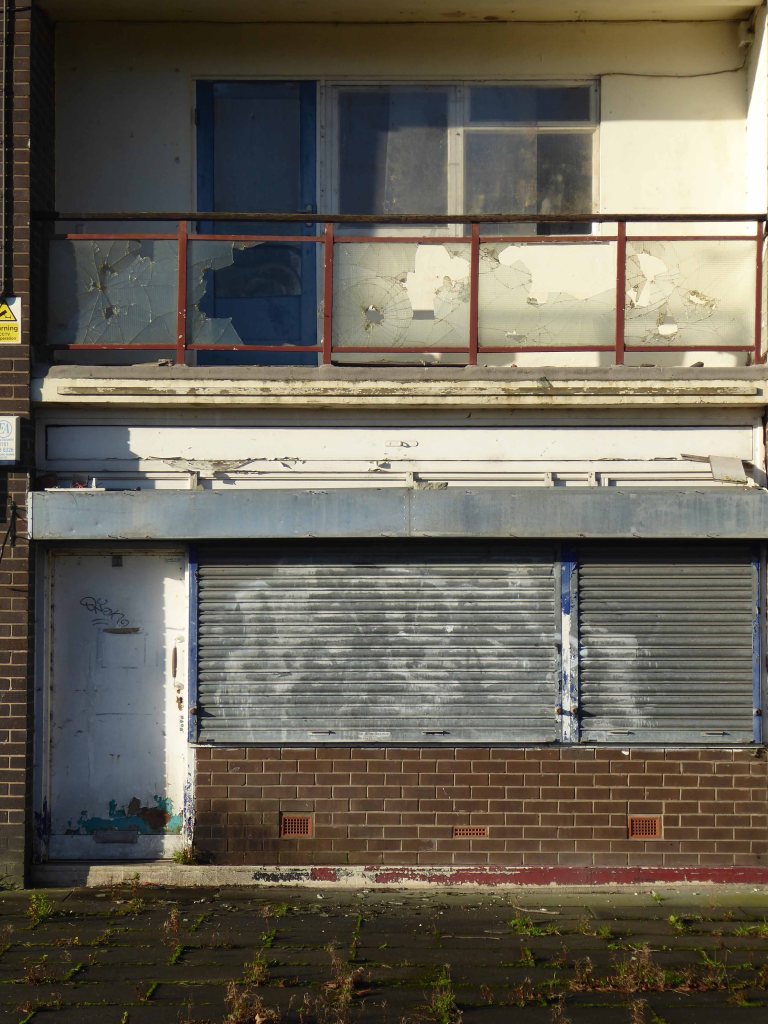
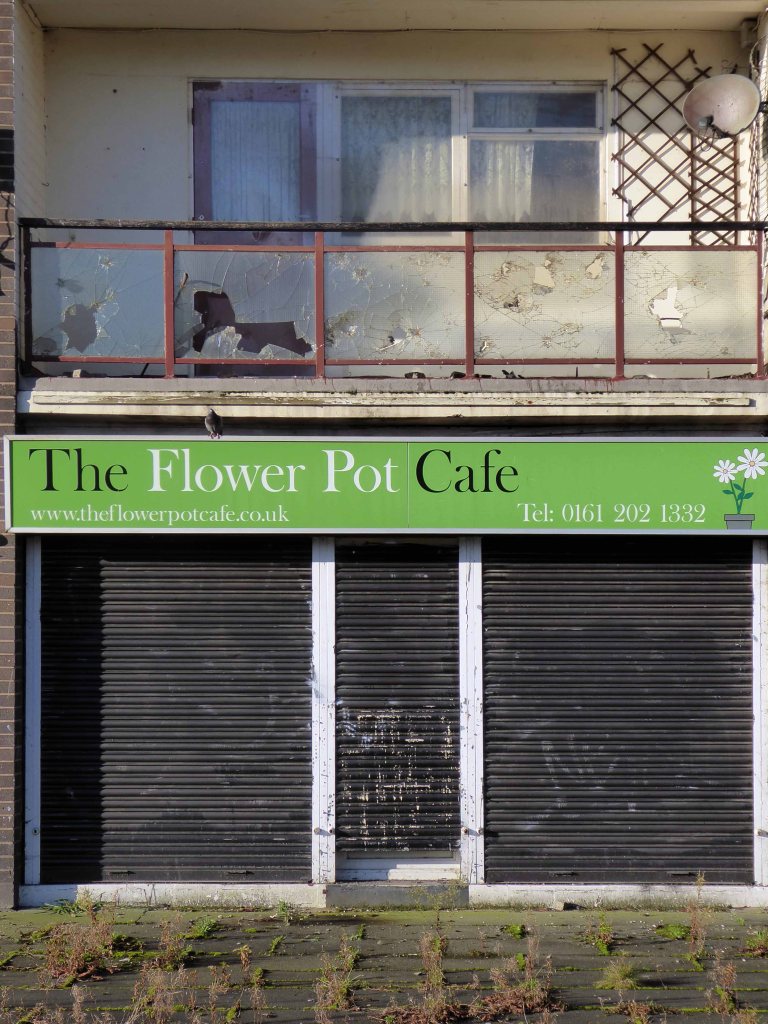
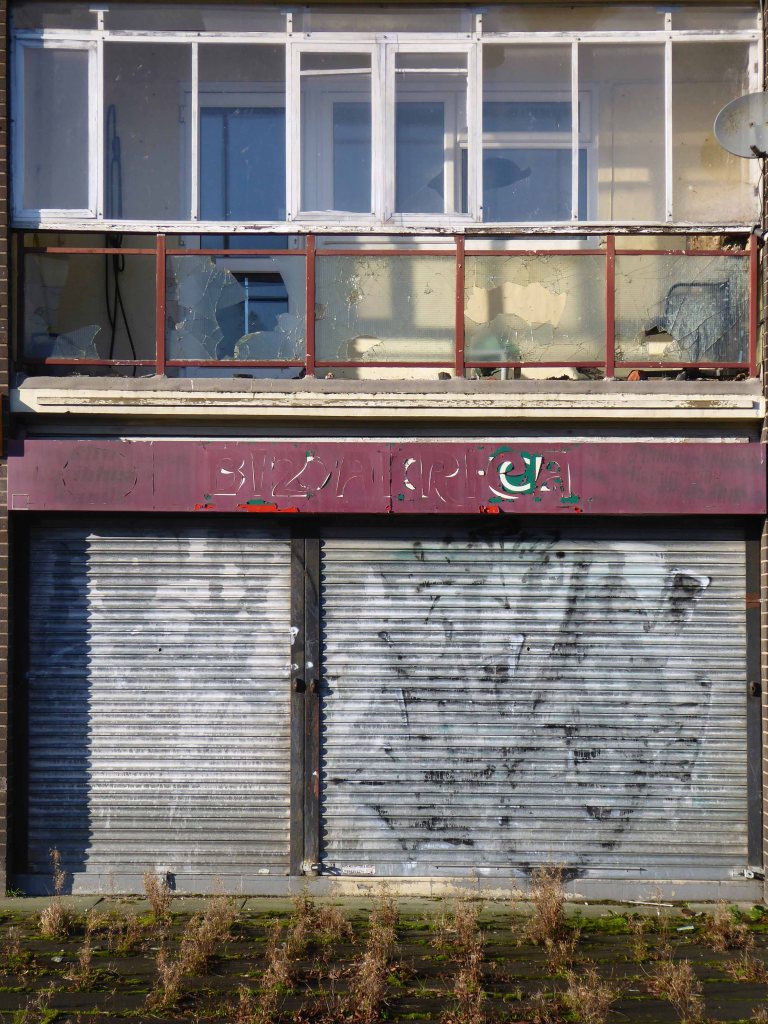
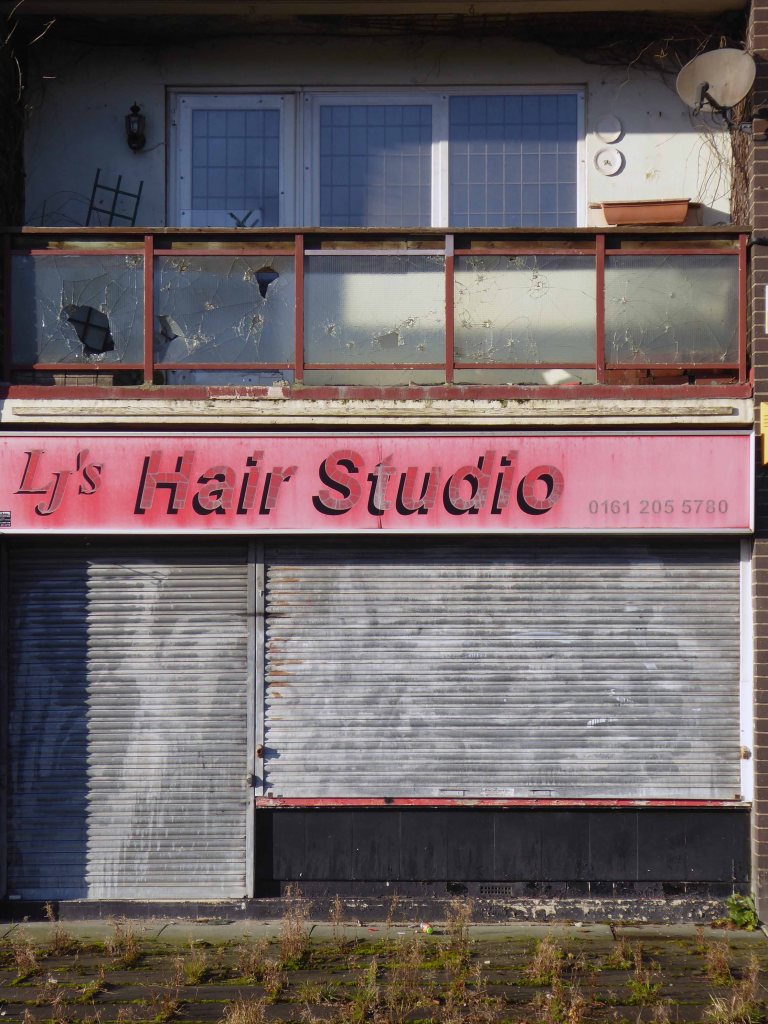
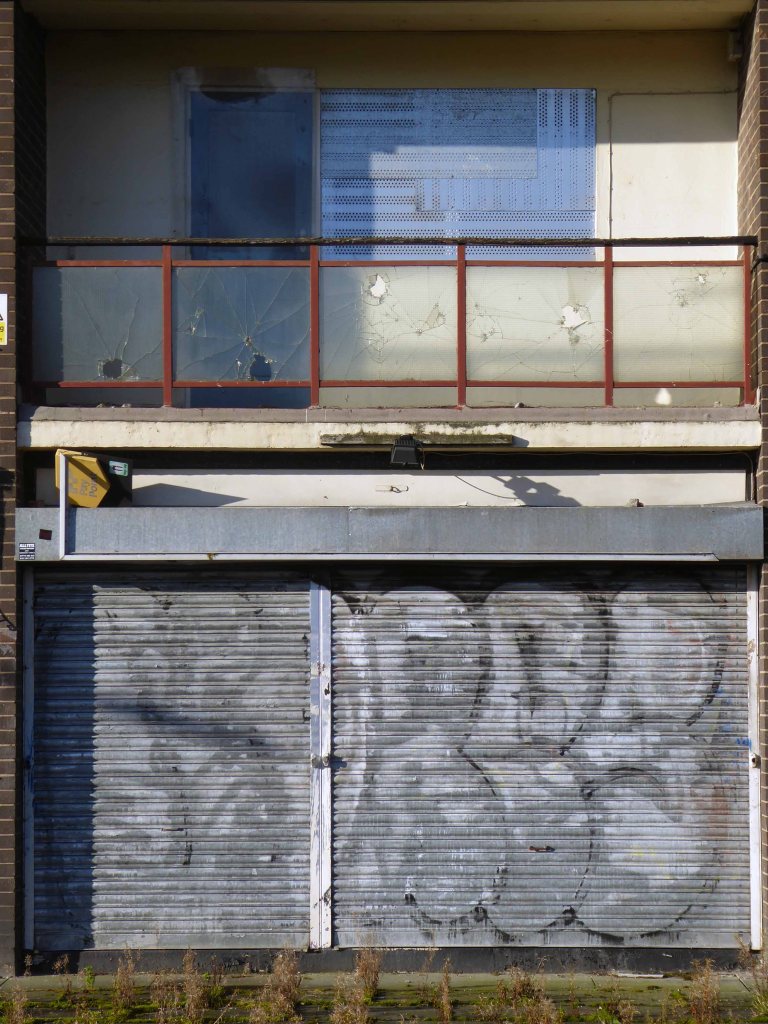
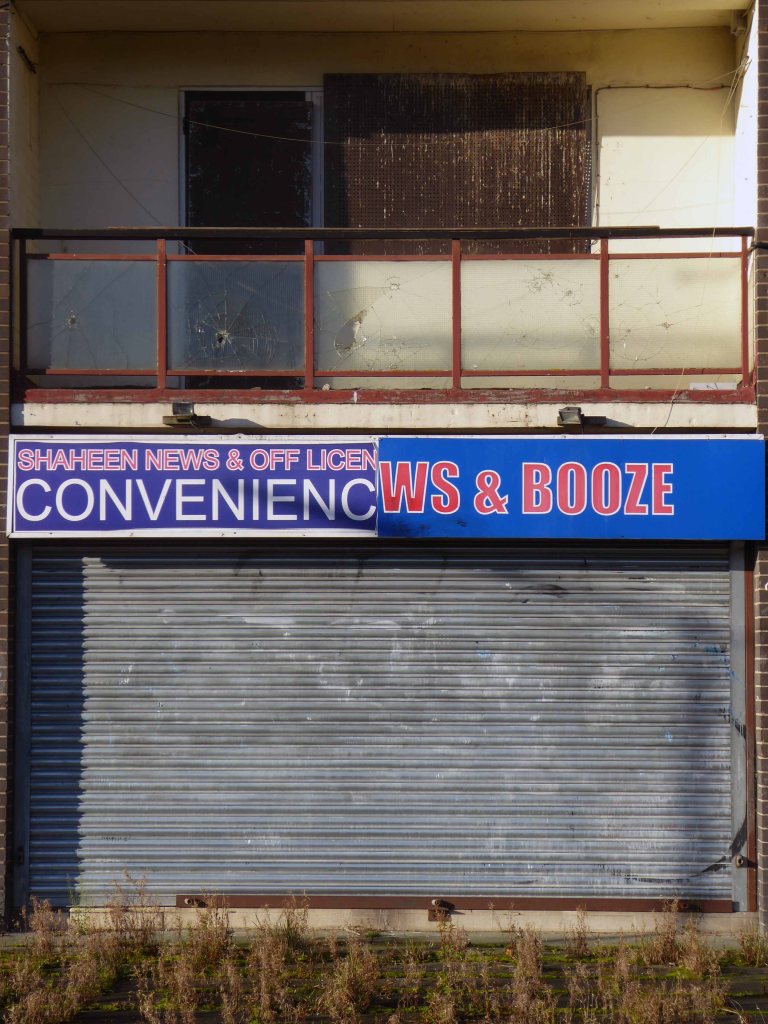
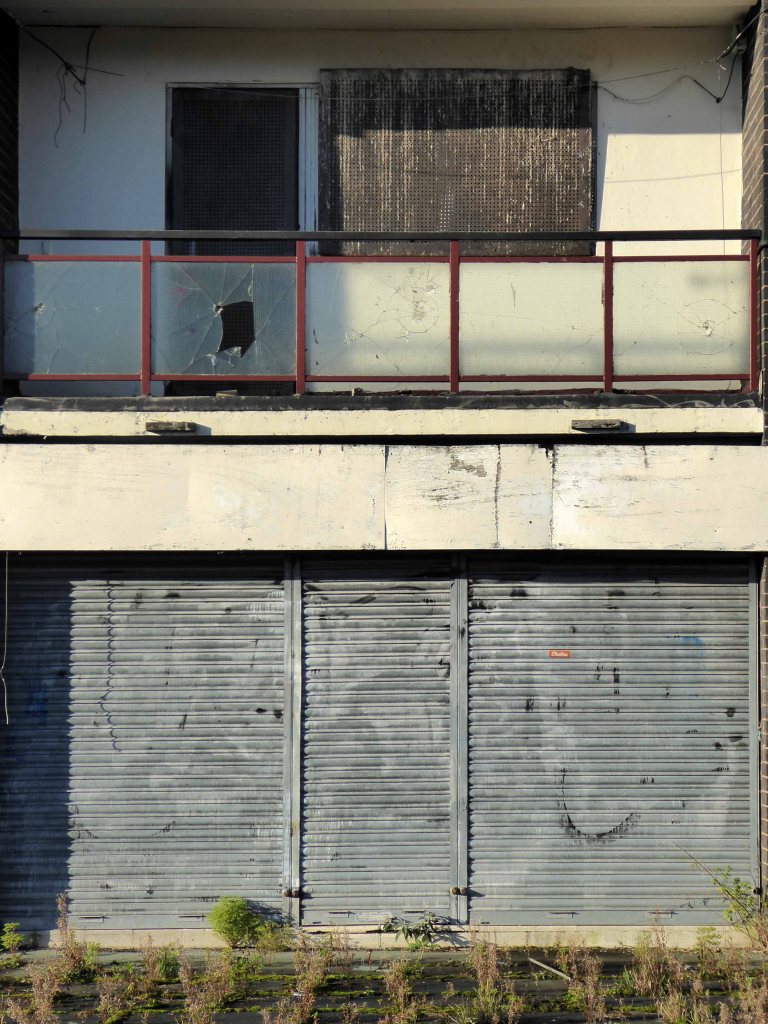
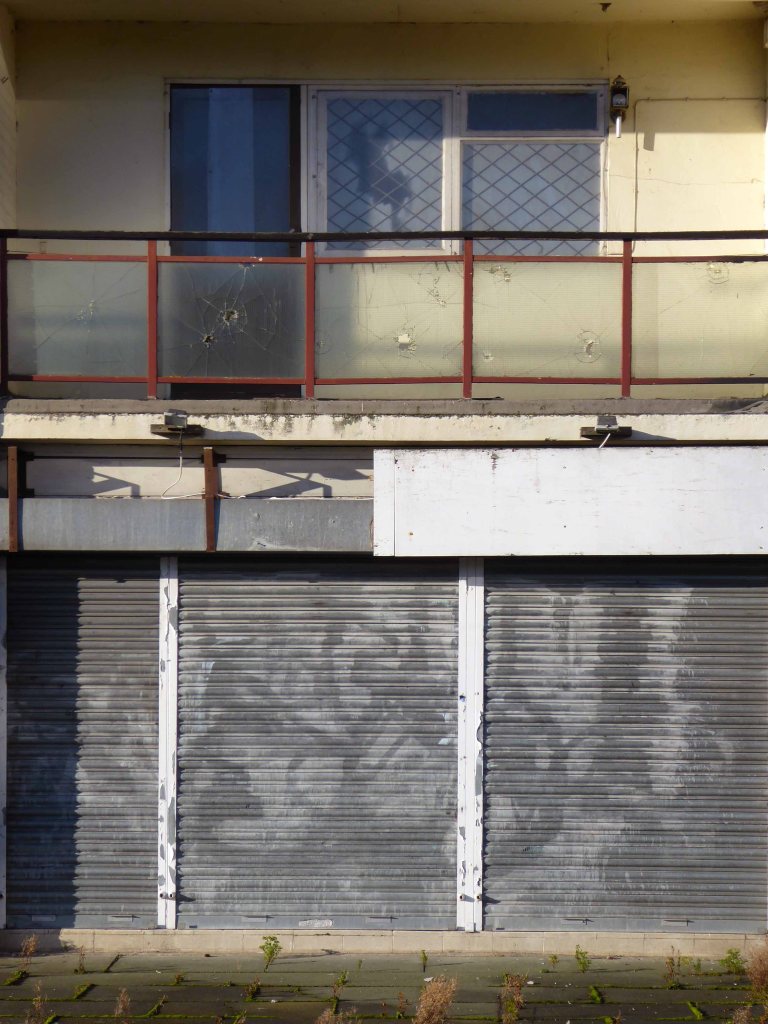
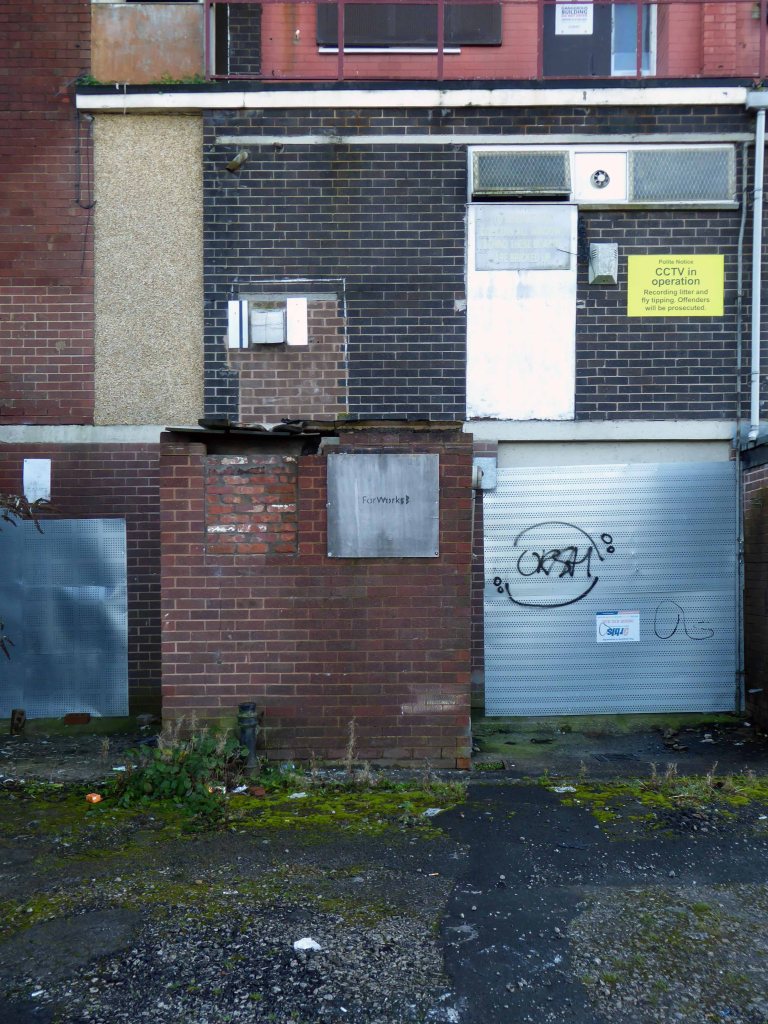
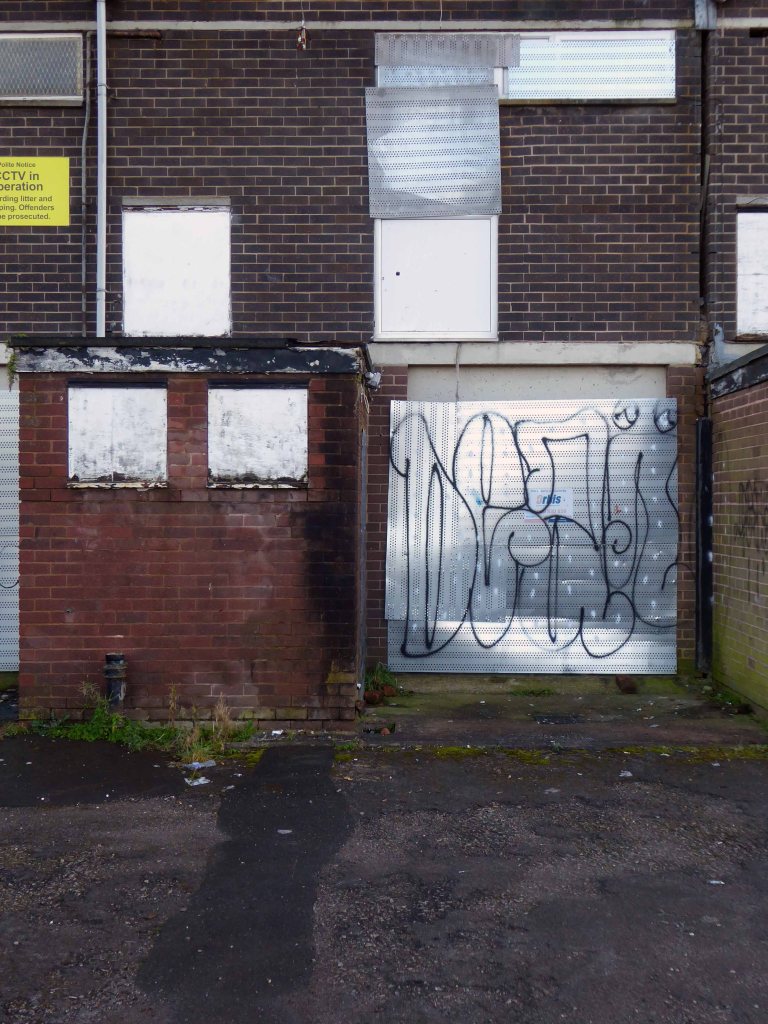
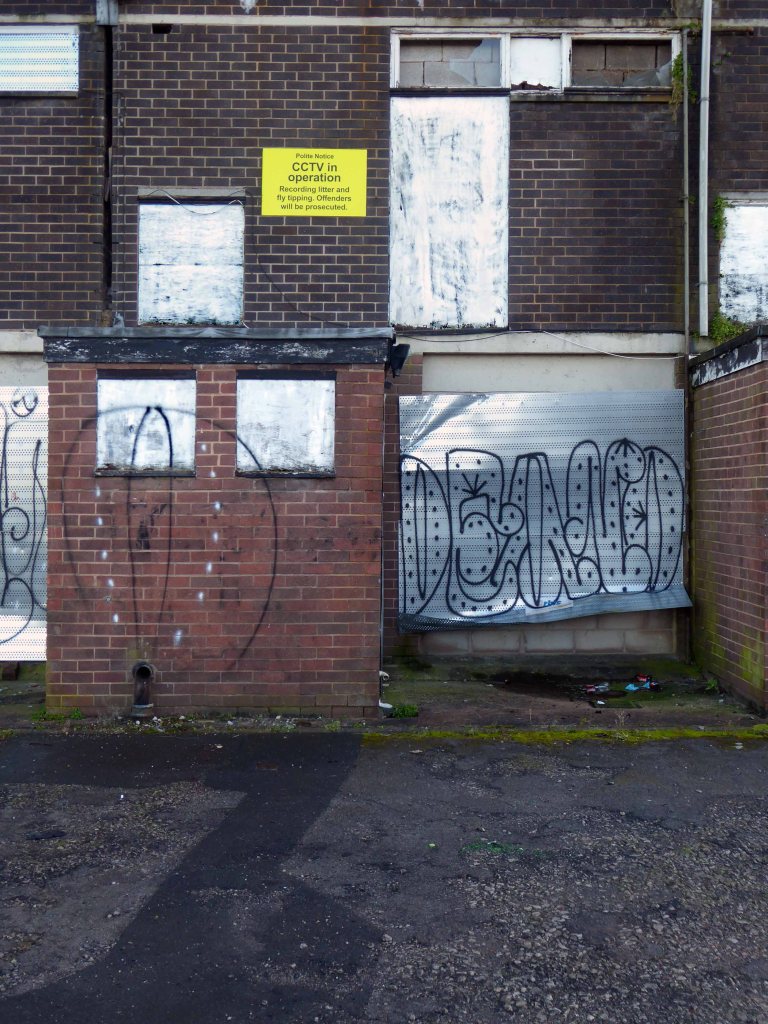
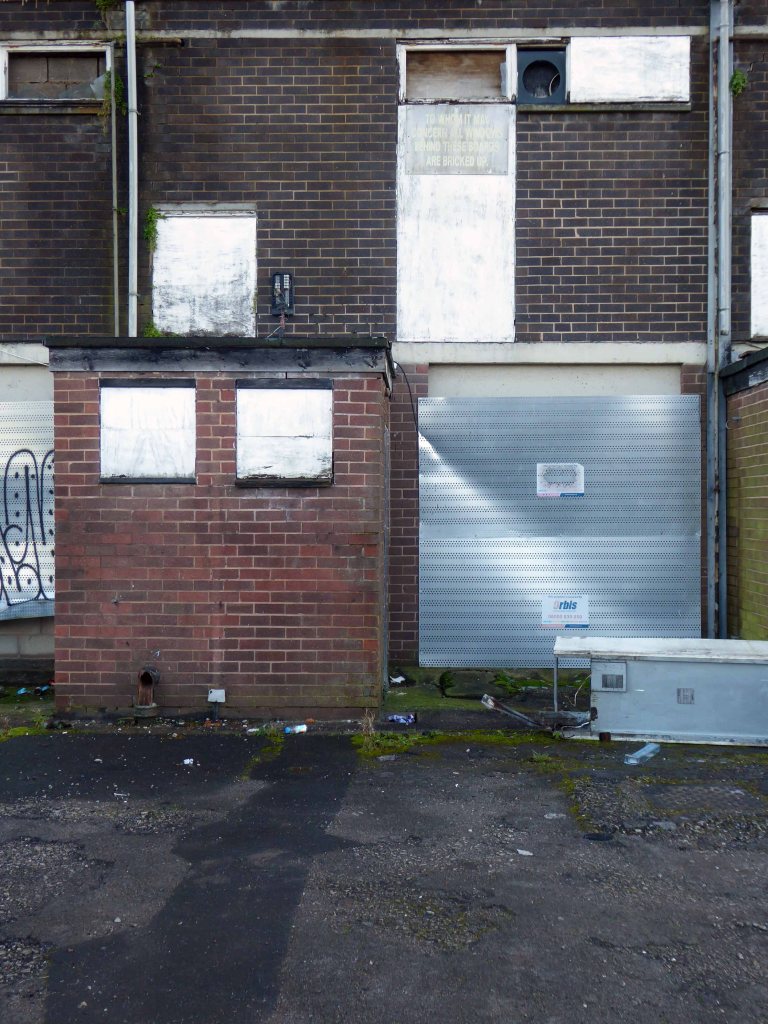
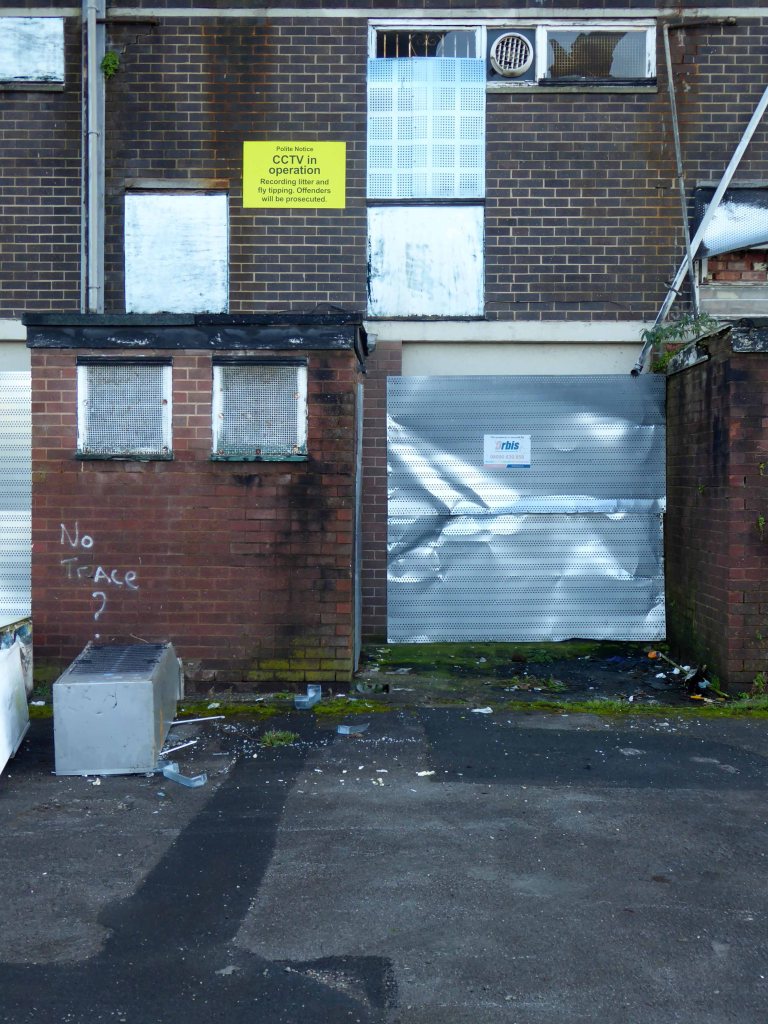
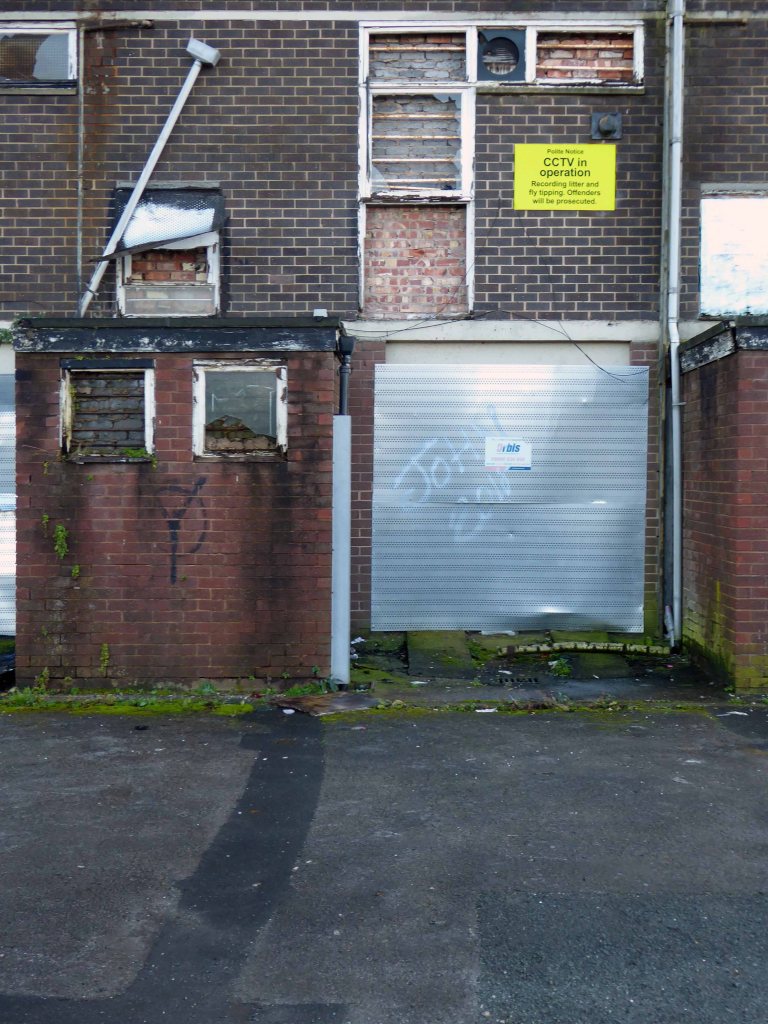
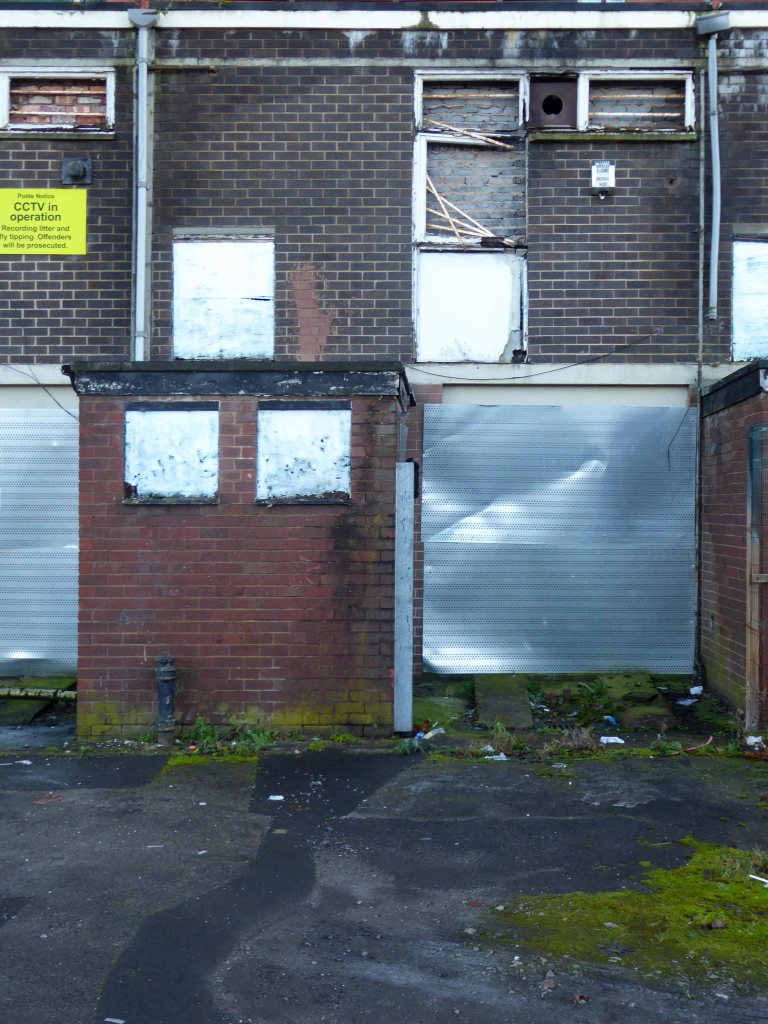
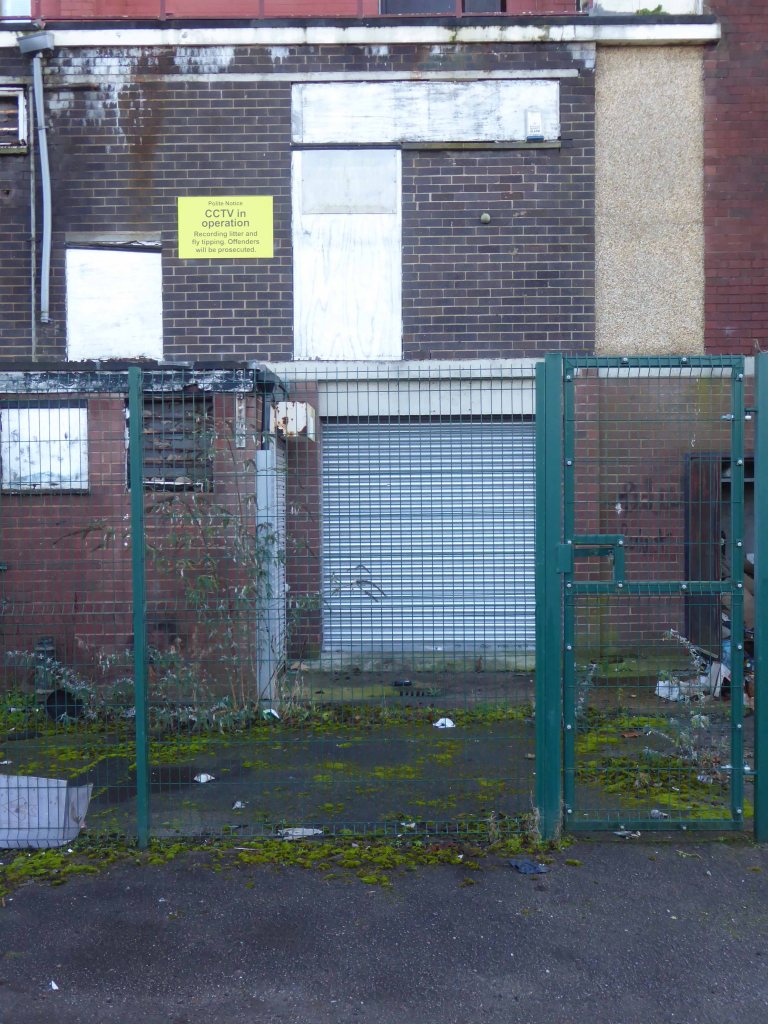
Stasis is the order of the day – the last stand for this forlorn stand of shops.
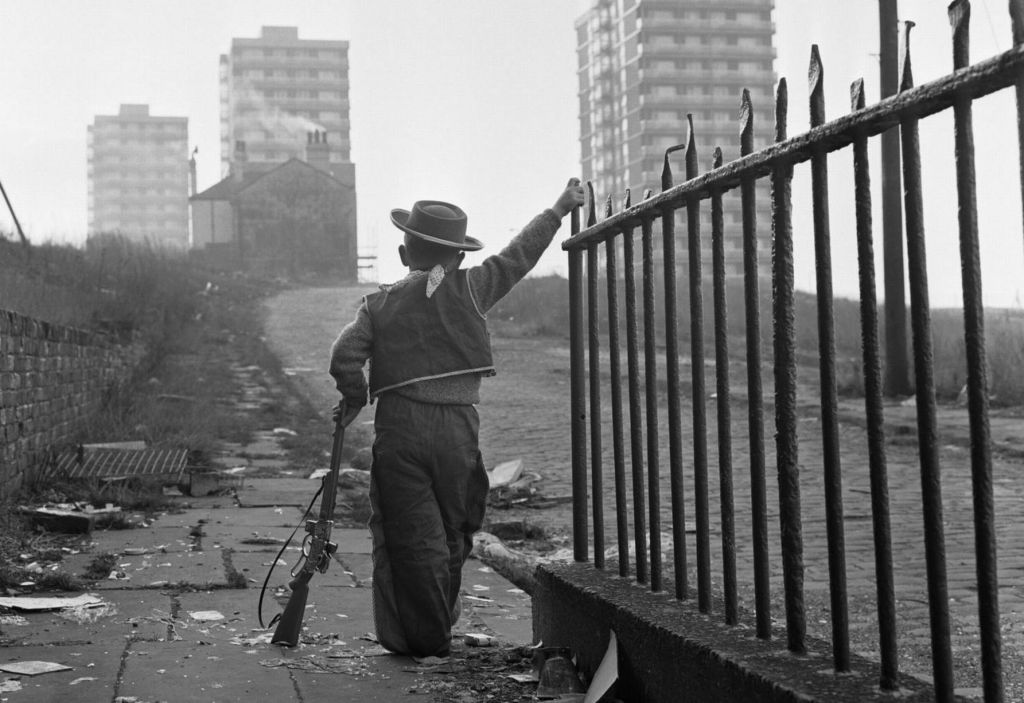
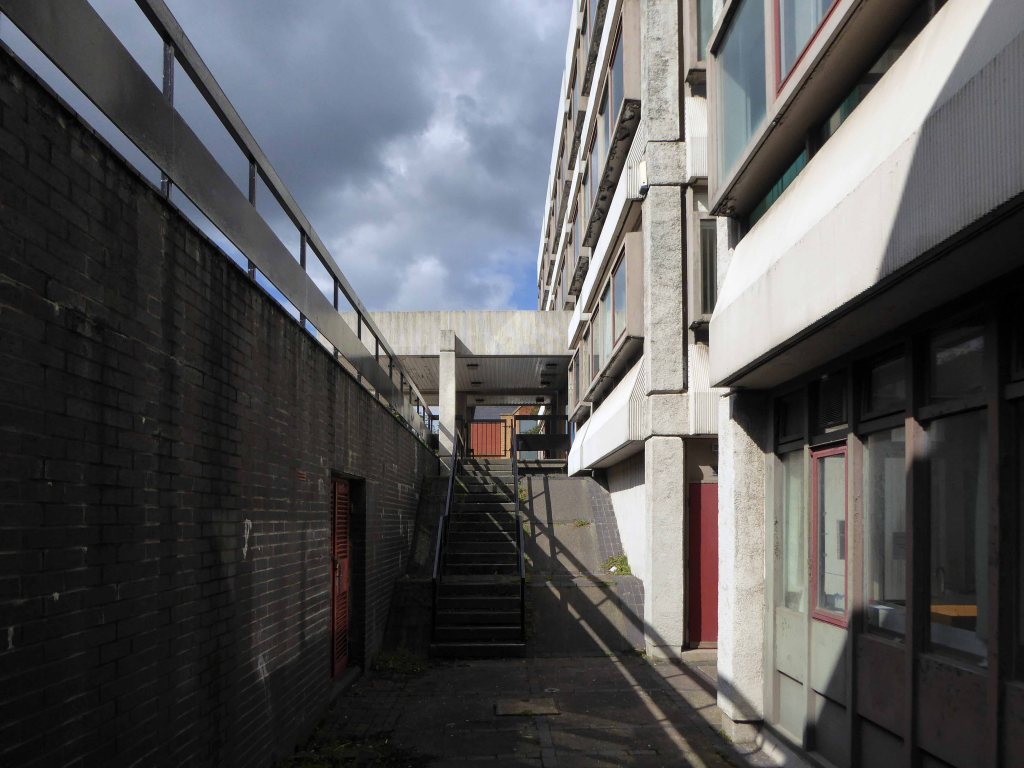
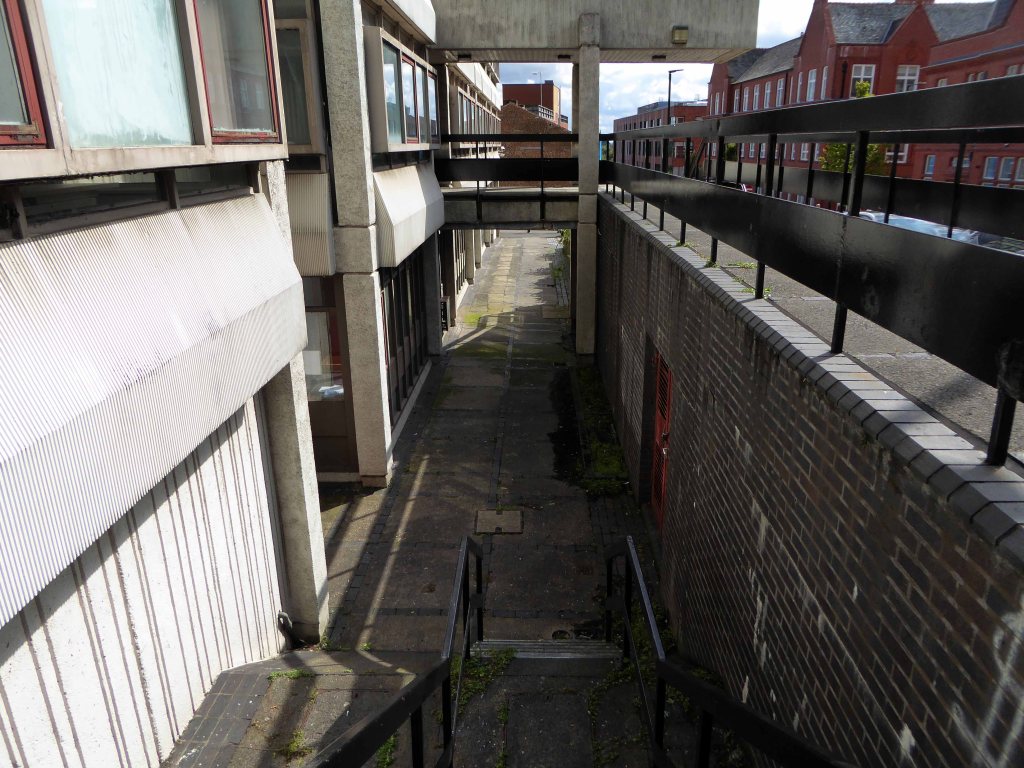
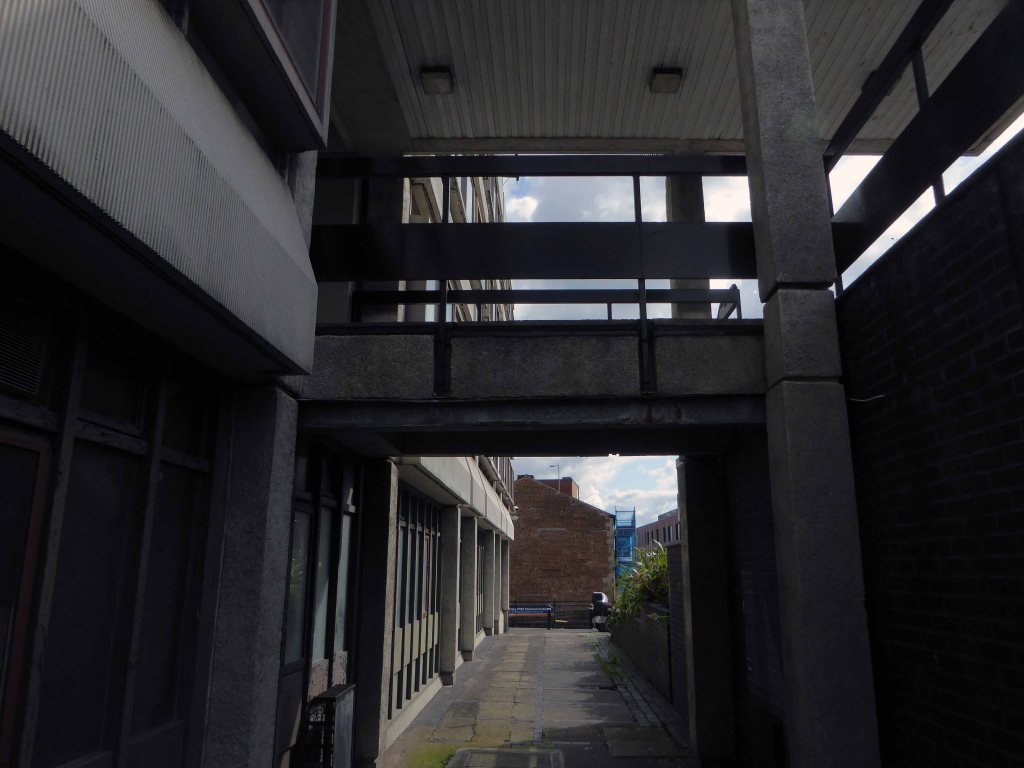
Once the realm of cobbles, railings, high rise arrivals and urban cowboys – an area overwhelmed by the weight of its past and the insubstantial promise of a sustainable future.
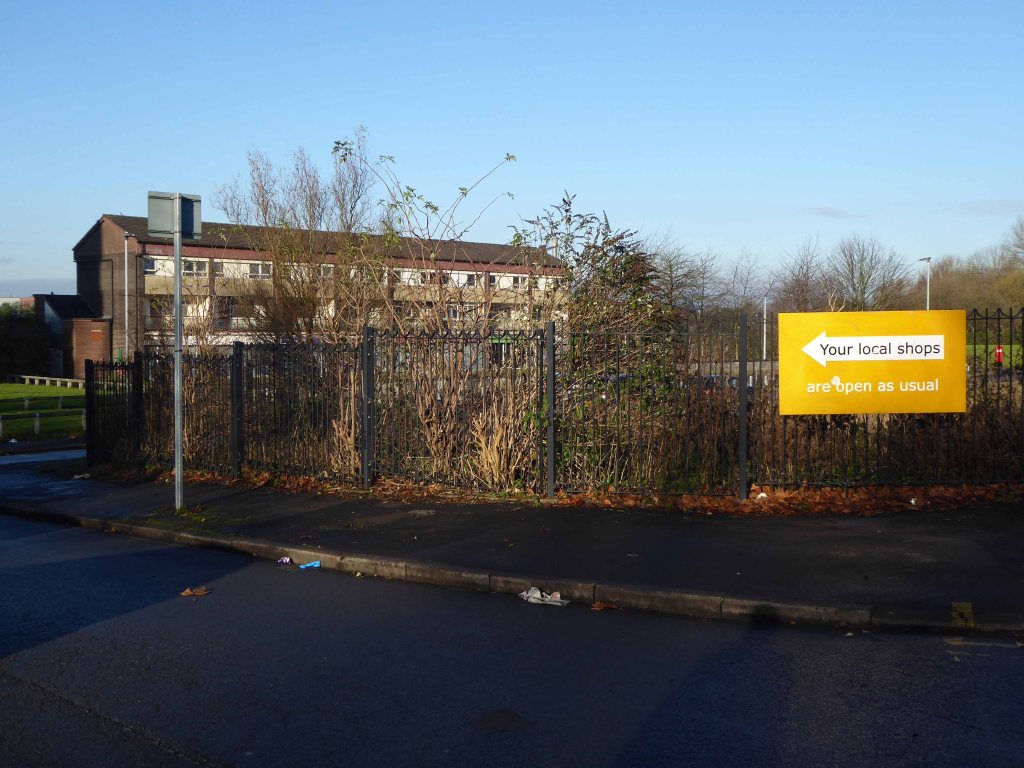
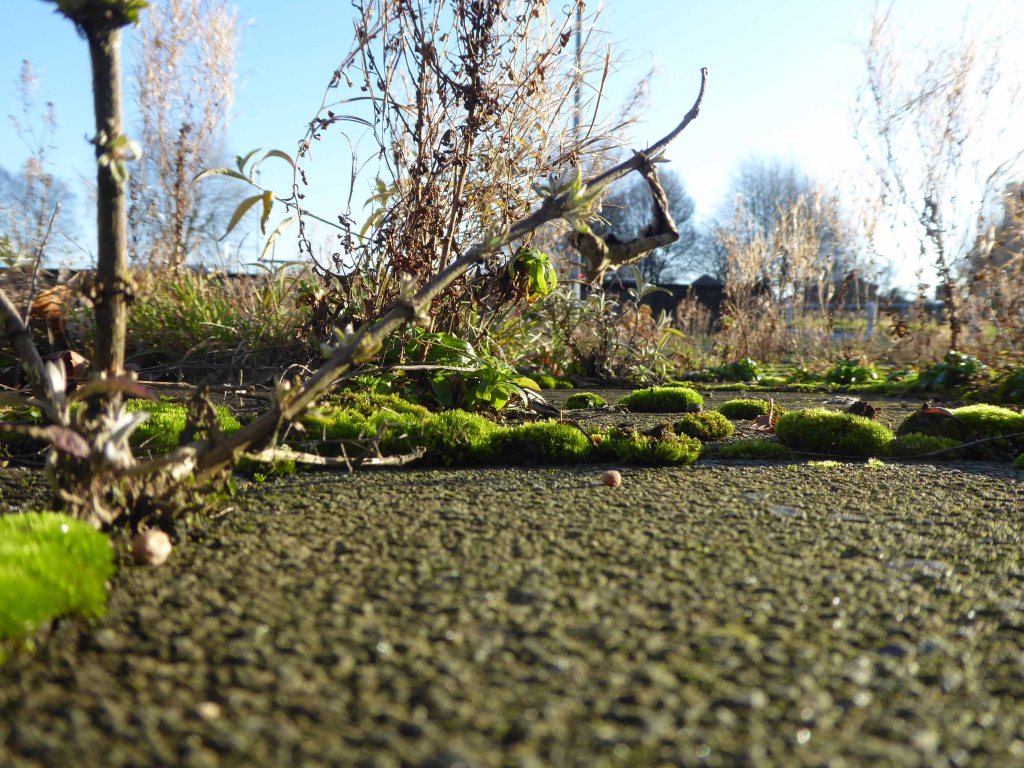
Where once productive and fulfilling lives were lived, buddleia now blooms, whilst thin grass entwines around forlorn fencing and betwixt ever widening cracks in the uneven paving.
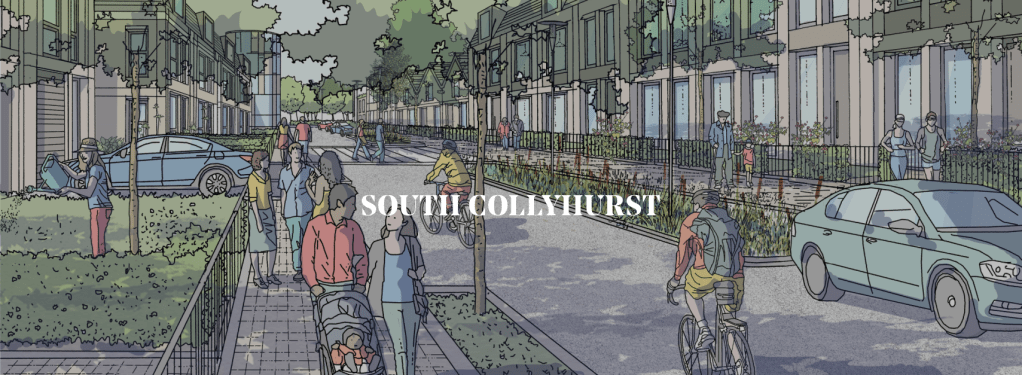
Development in South Collyhurst will take the form of residential-led, family-focused neighbourhoods. We’ll be providing a variety of housing types and tenures to encourage diversity, along with a mix of social and community infrastructure that supports a family lifestyle in close proximity to the city centre.
There are two ideas of government. There are those who believe that if you just legislate to make the well-to-do prosperous, that their prosperity will leak through on those below. The Democratic idea has been that if you legislate to make the masses prosperous their prosperity will find its way up and through every class that rests upon it.
William Jennings Bryan 1896
Indeed, You have turned the city into a heap of rubble, a fortified town into ruins; the fortress of strangers is a city no more; it will never be rebuilt.
Isiah 25:2
And they that shall be of thee shall build the old waste places: thou shalt raise up the foundations of many generations; and thou shalt be called, the repairer of the breach, the restorer of paths to dwell in.
Isiah 58:12
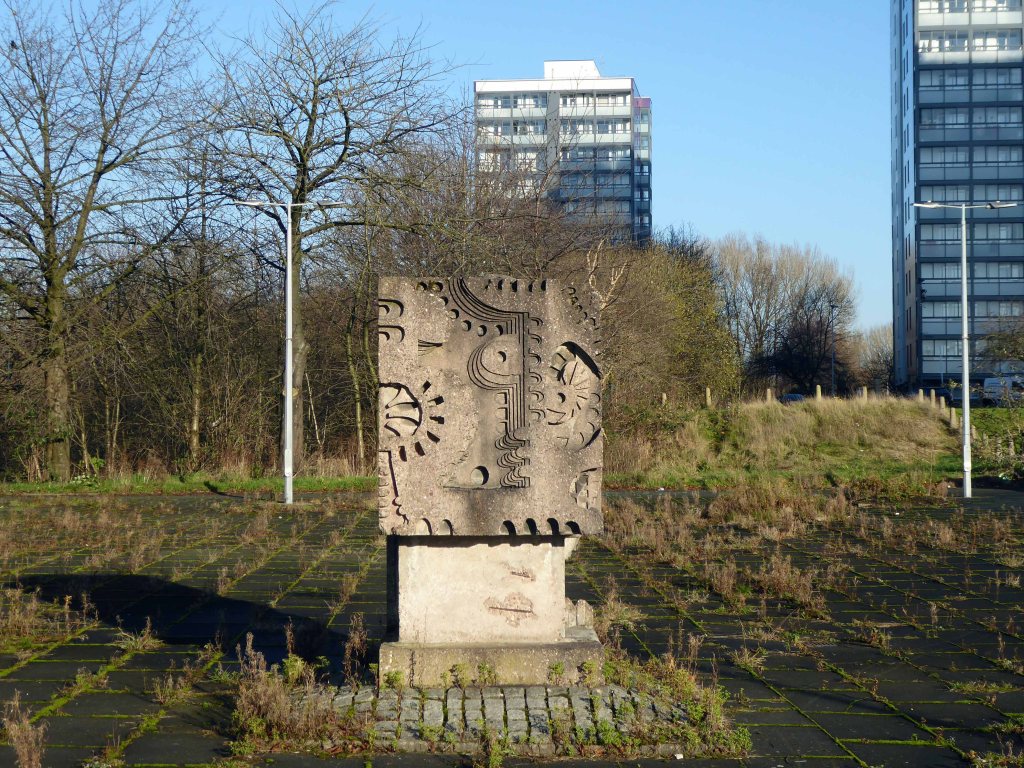
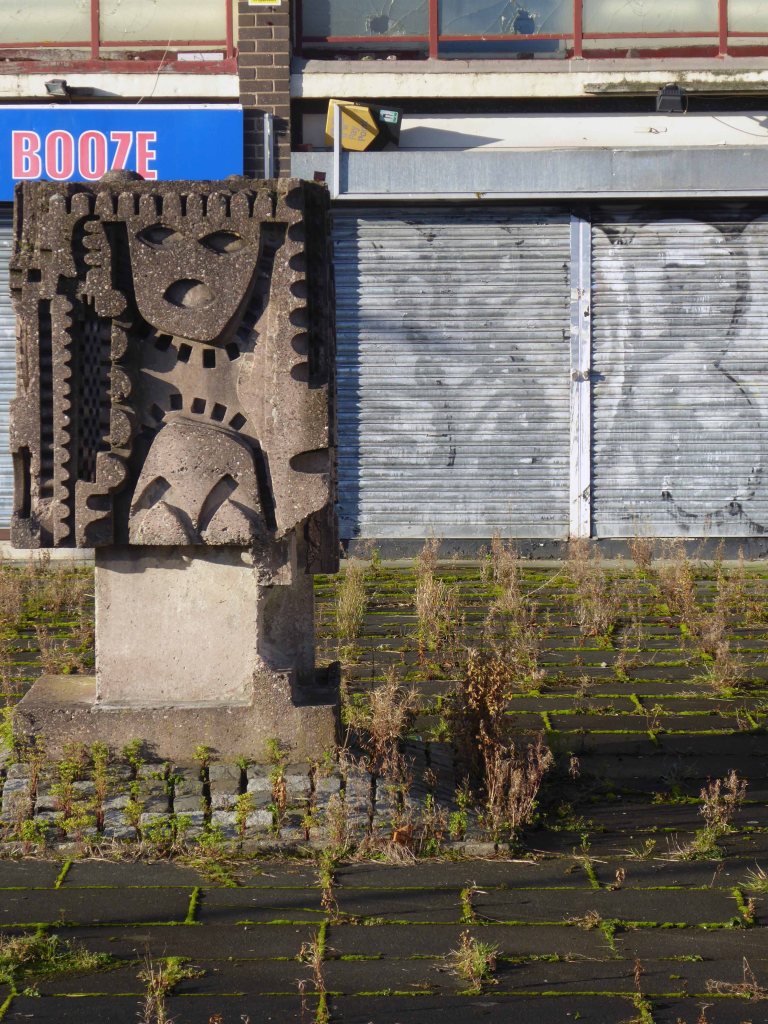
The putative William Mitchell cast concrete block stares stolidly at its surroundings, overseeing a slow and painful decline.
All that is solid melts into air, all that is holy is profaned, and man is at last compelled to face with sober senses his real conditions of life, and his relations with his kind.
There’s no business like no business – it’s no better out the back.
This is an unprecedented opportunity to deliver a significant residential-led development connecting the north to the centre of Manchester. Working with our partners we’re re-imagining the essential neighbourhoods of our city.
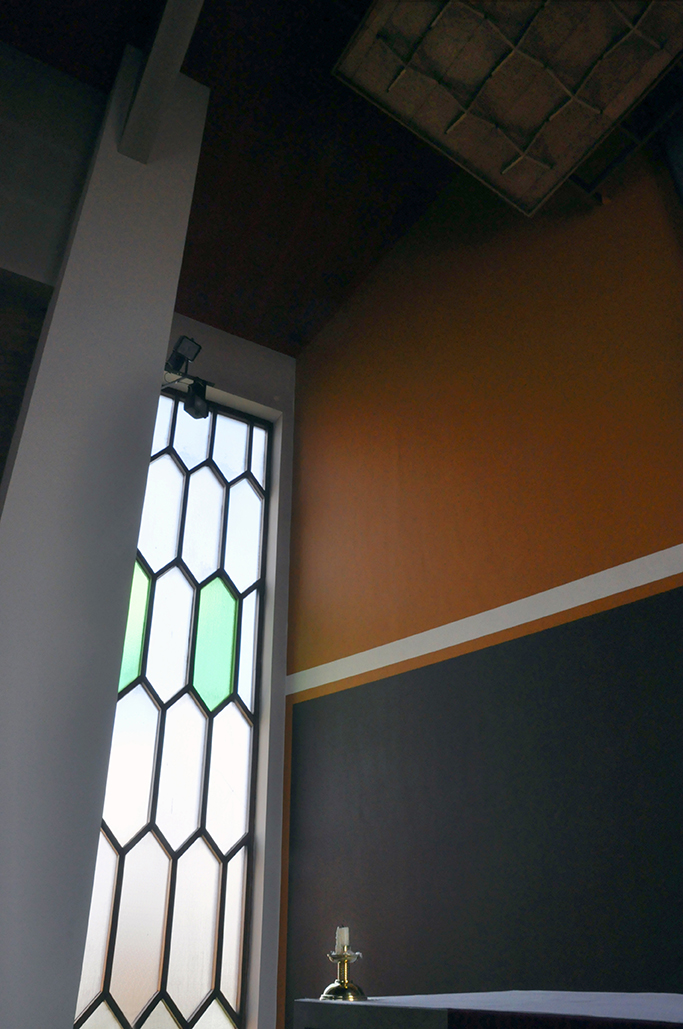
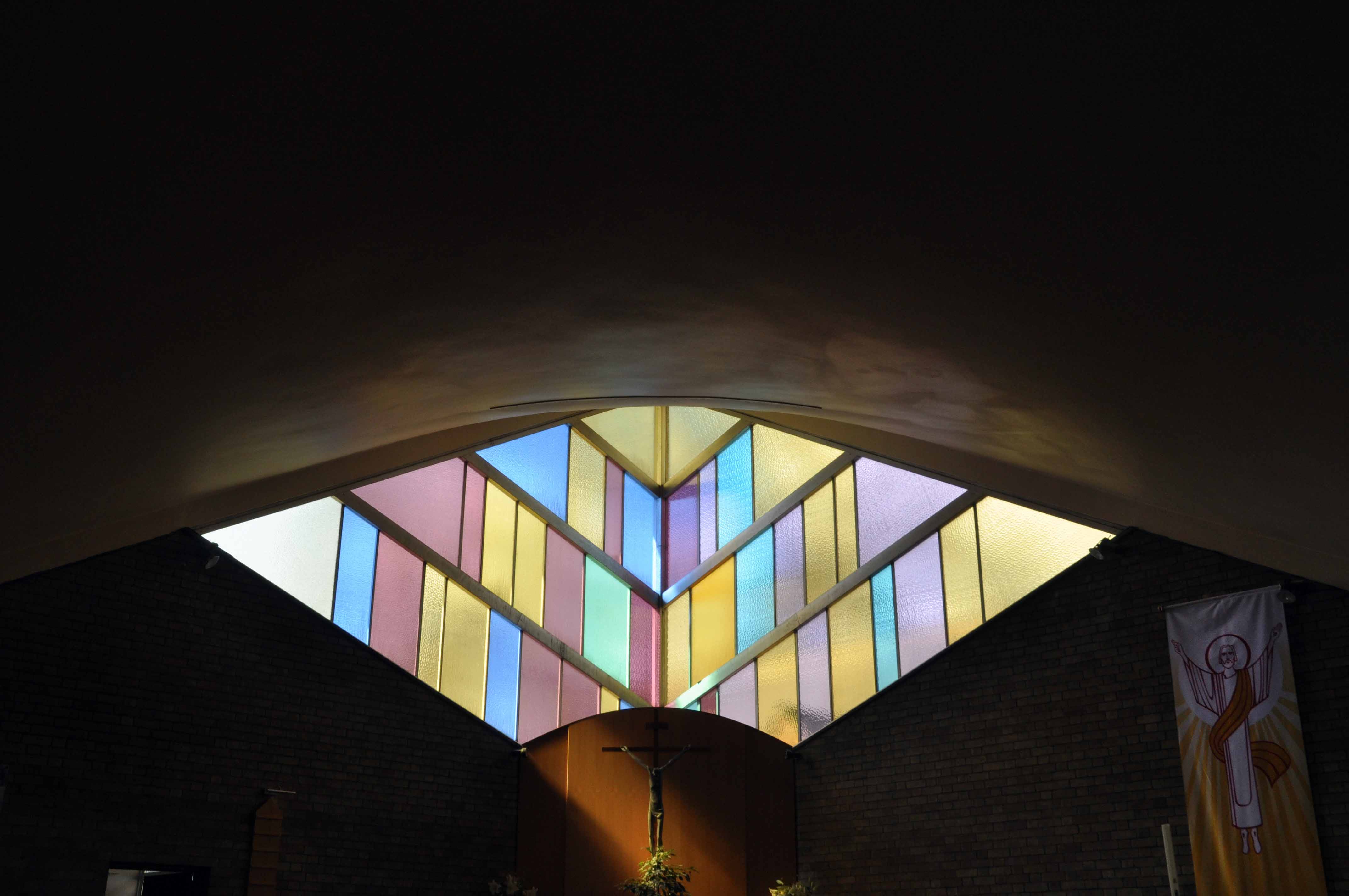
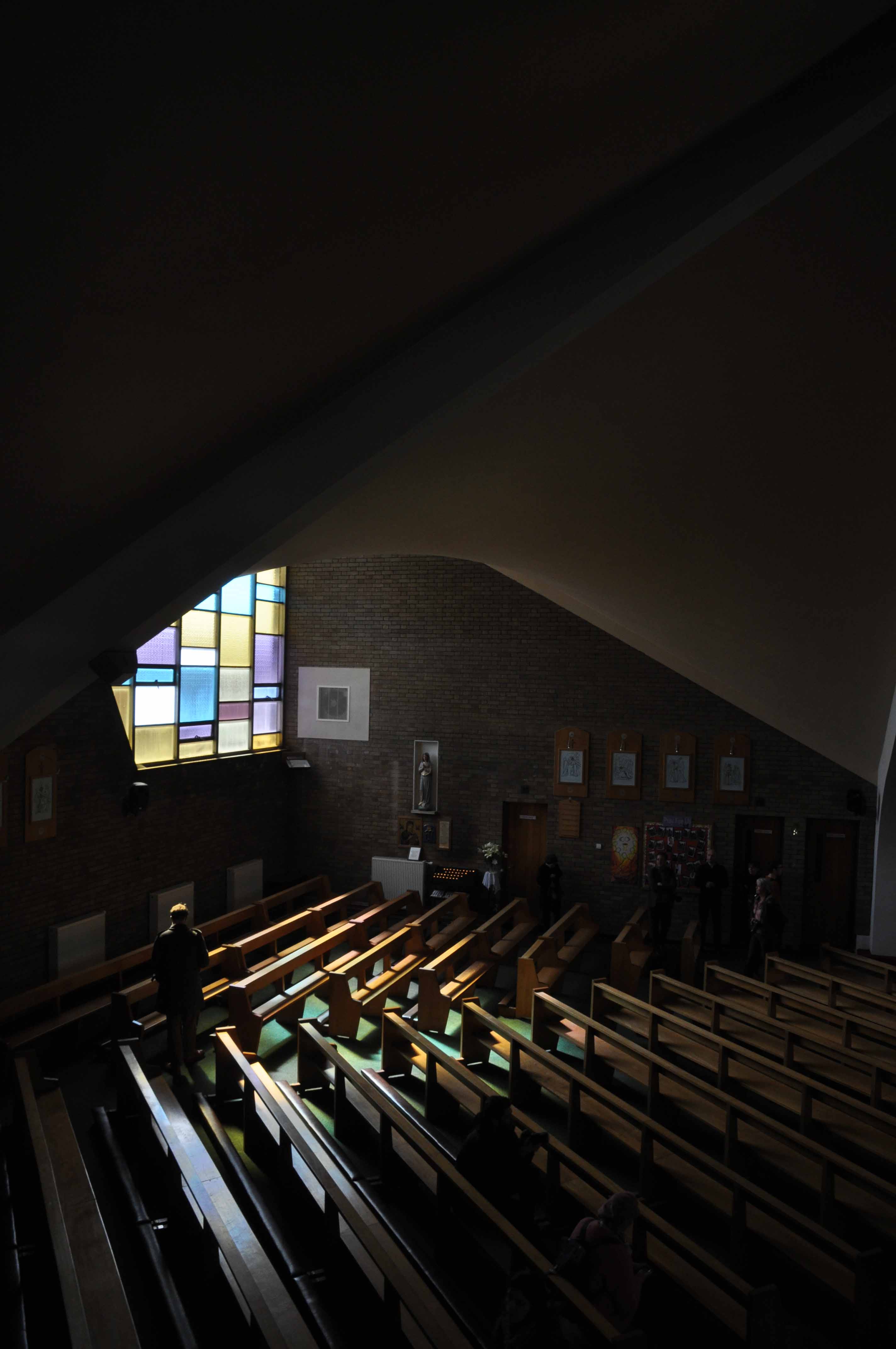
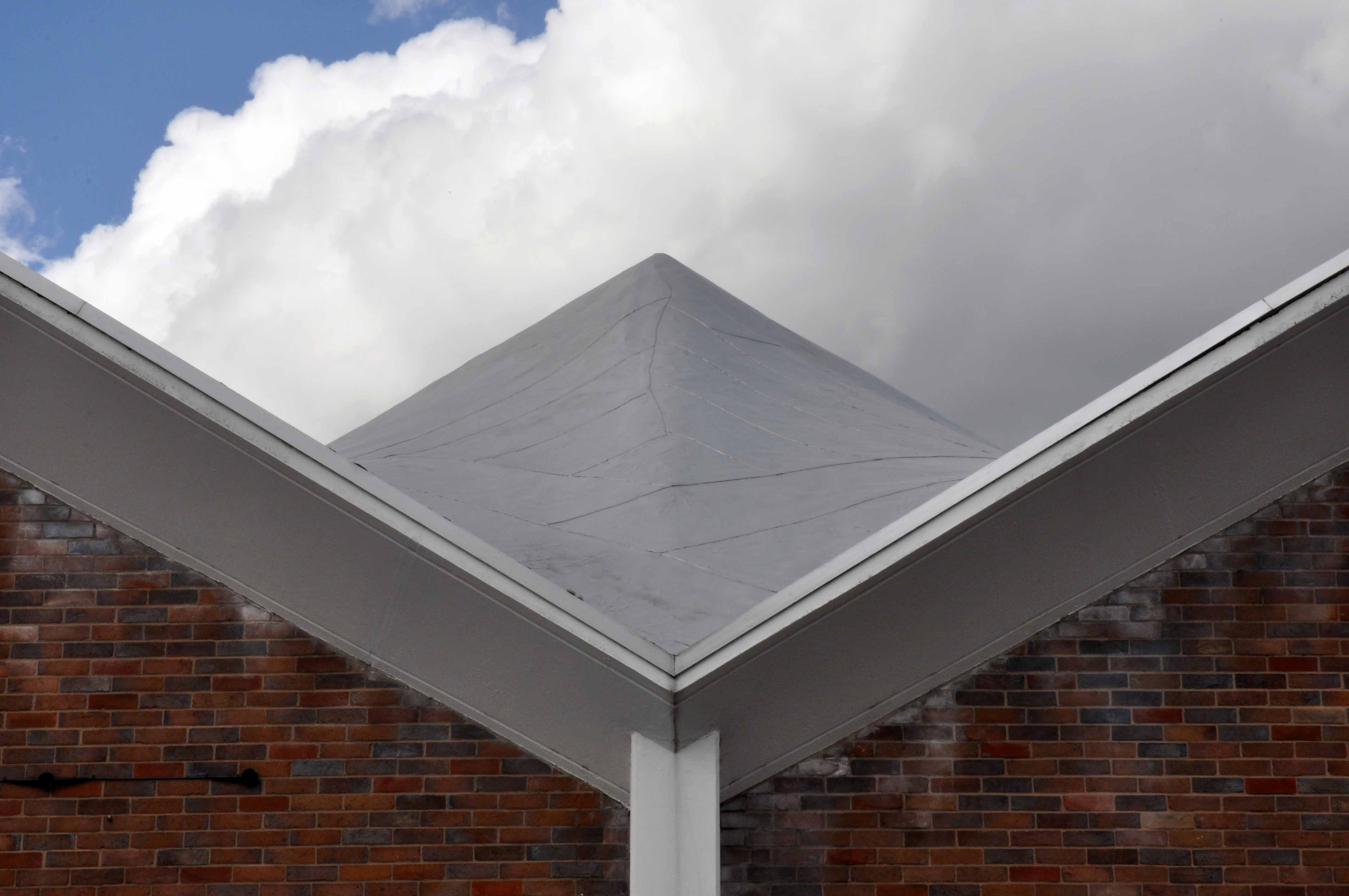
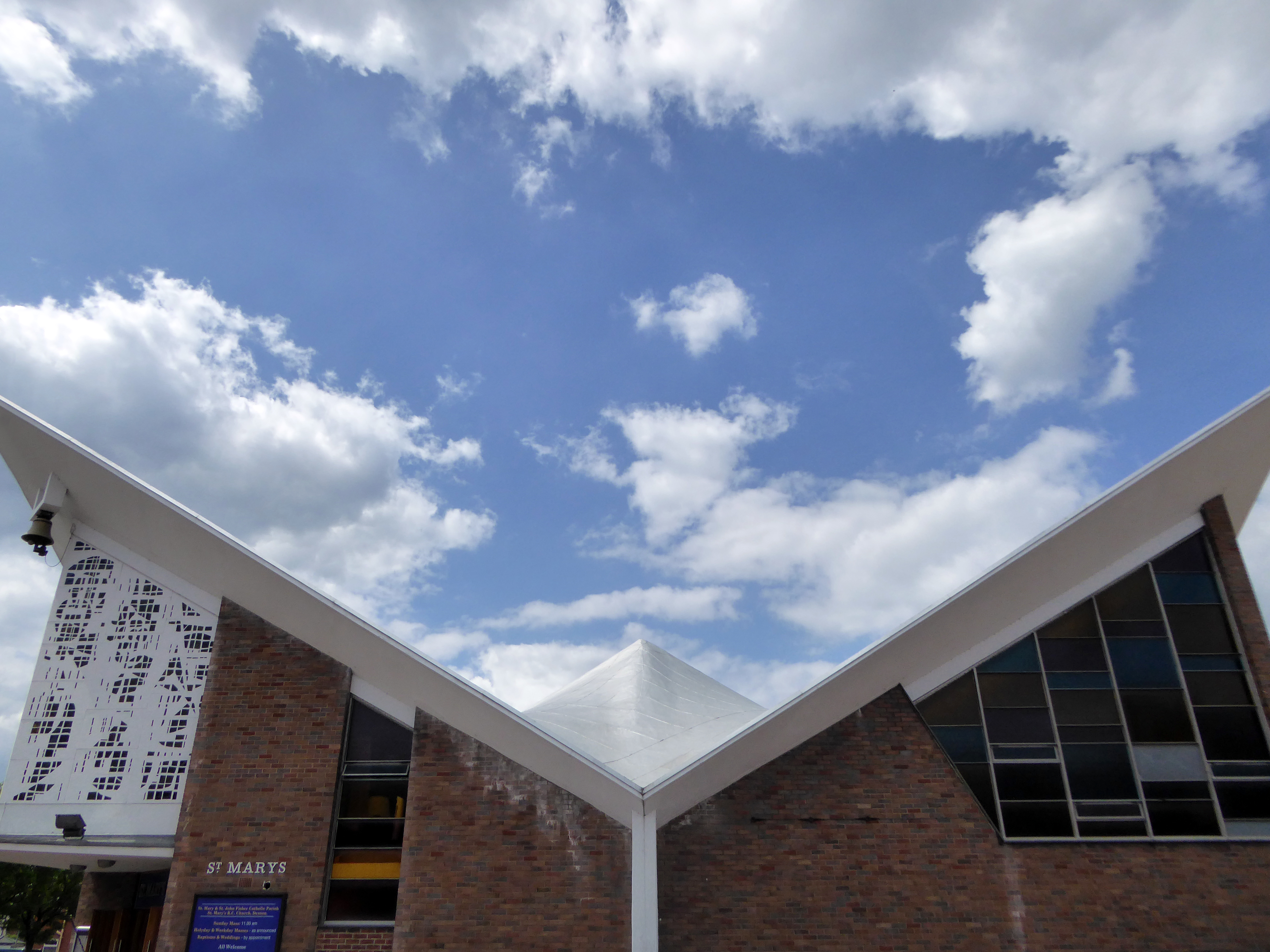
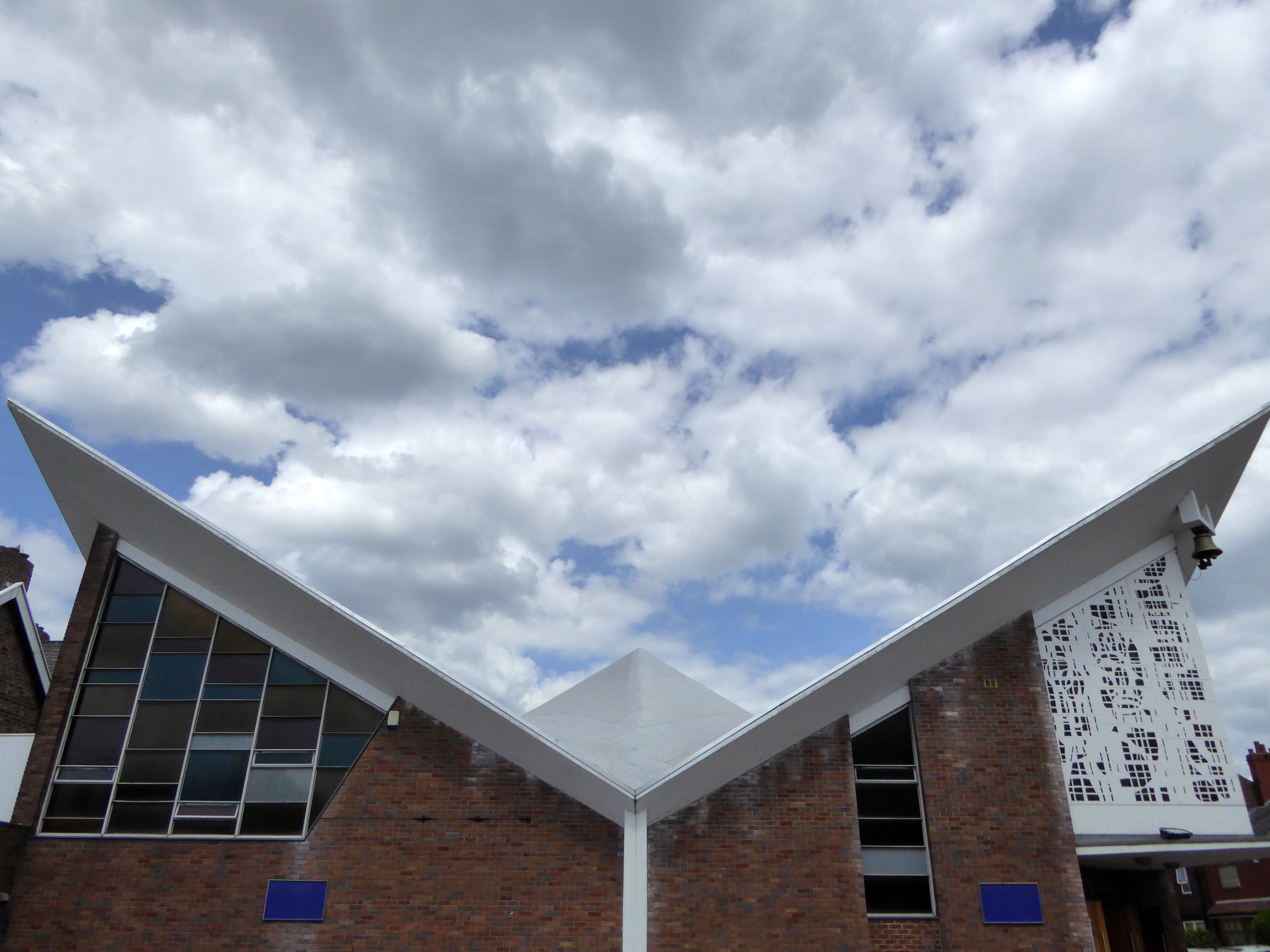
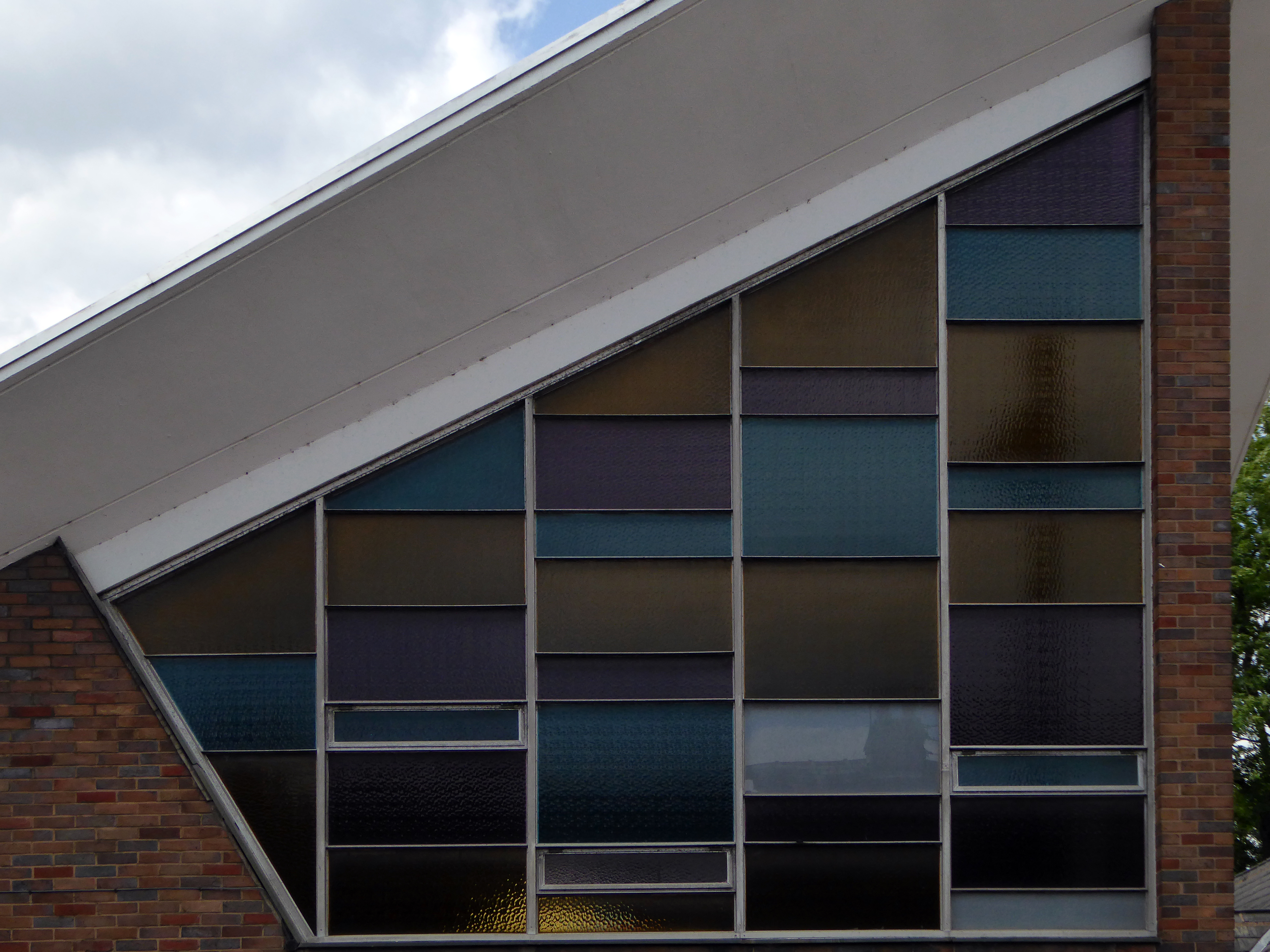
Set back from Beverley Road – we just about found this delightful Modernist gem. Tucked in amongst student accommodation and approximate to the Endsleigh College.
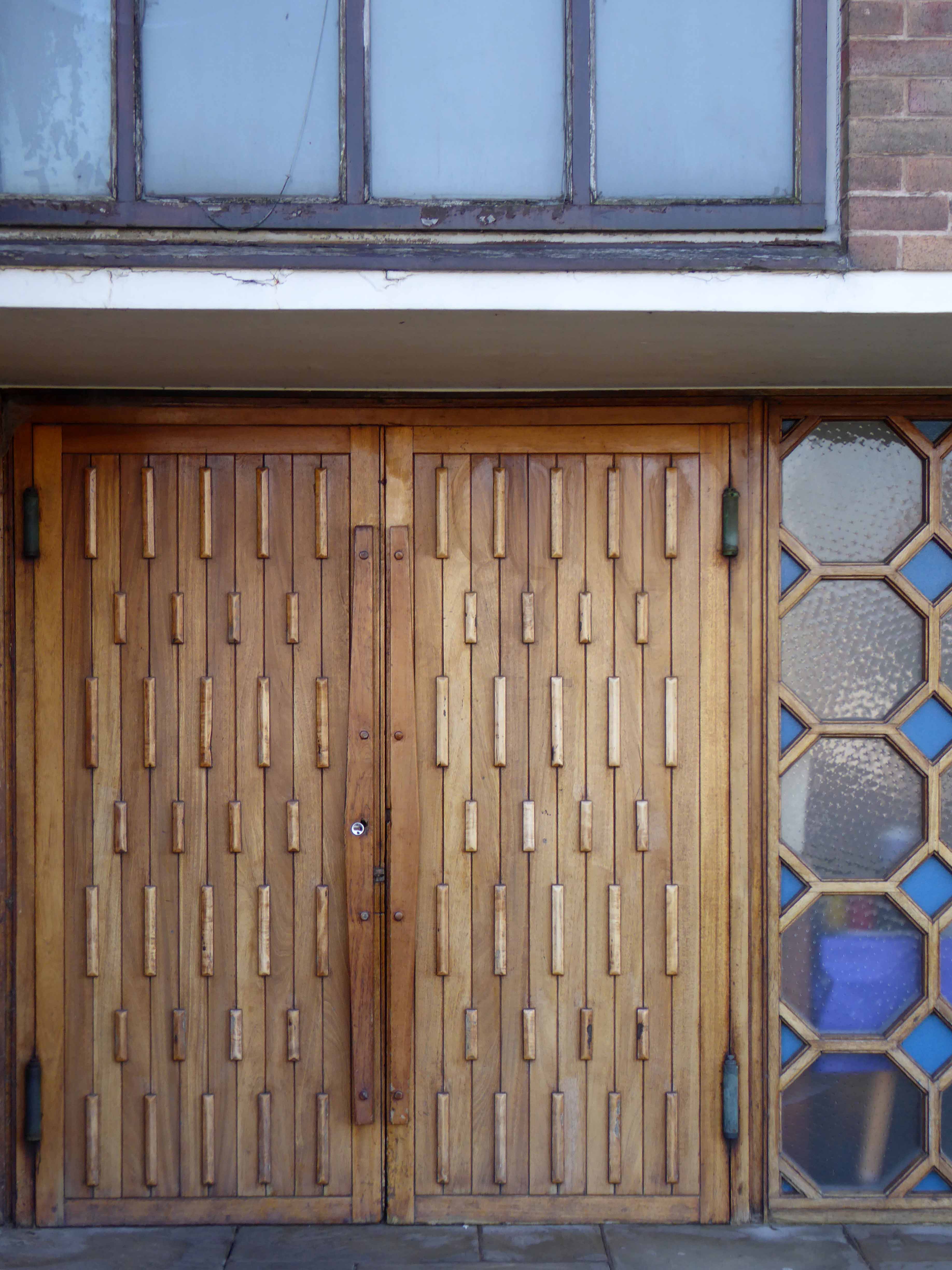
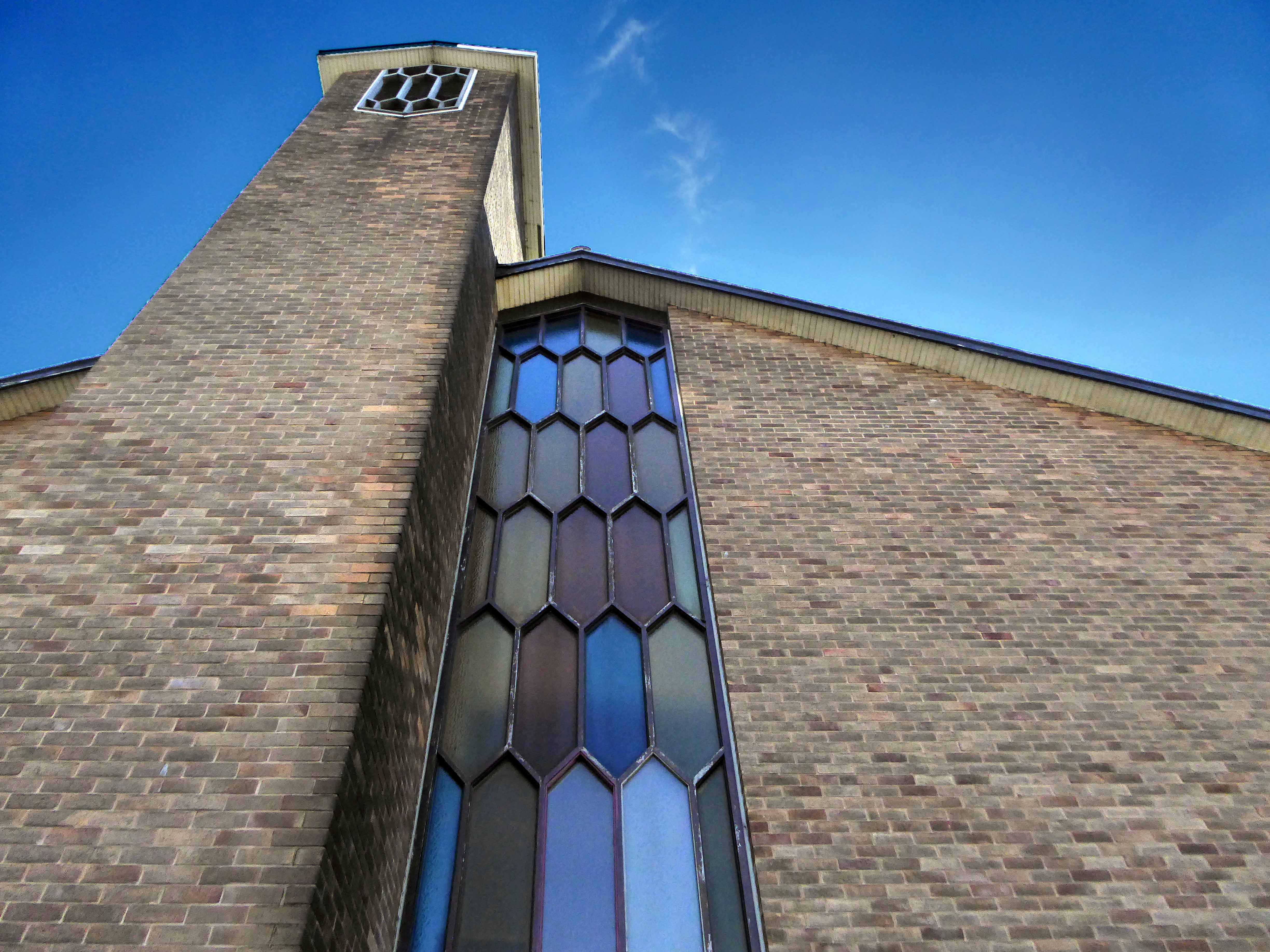
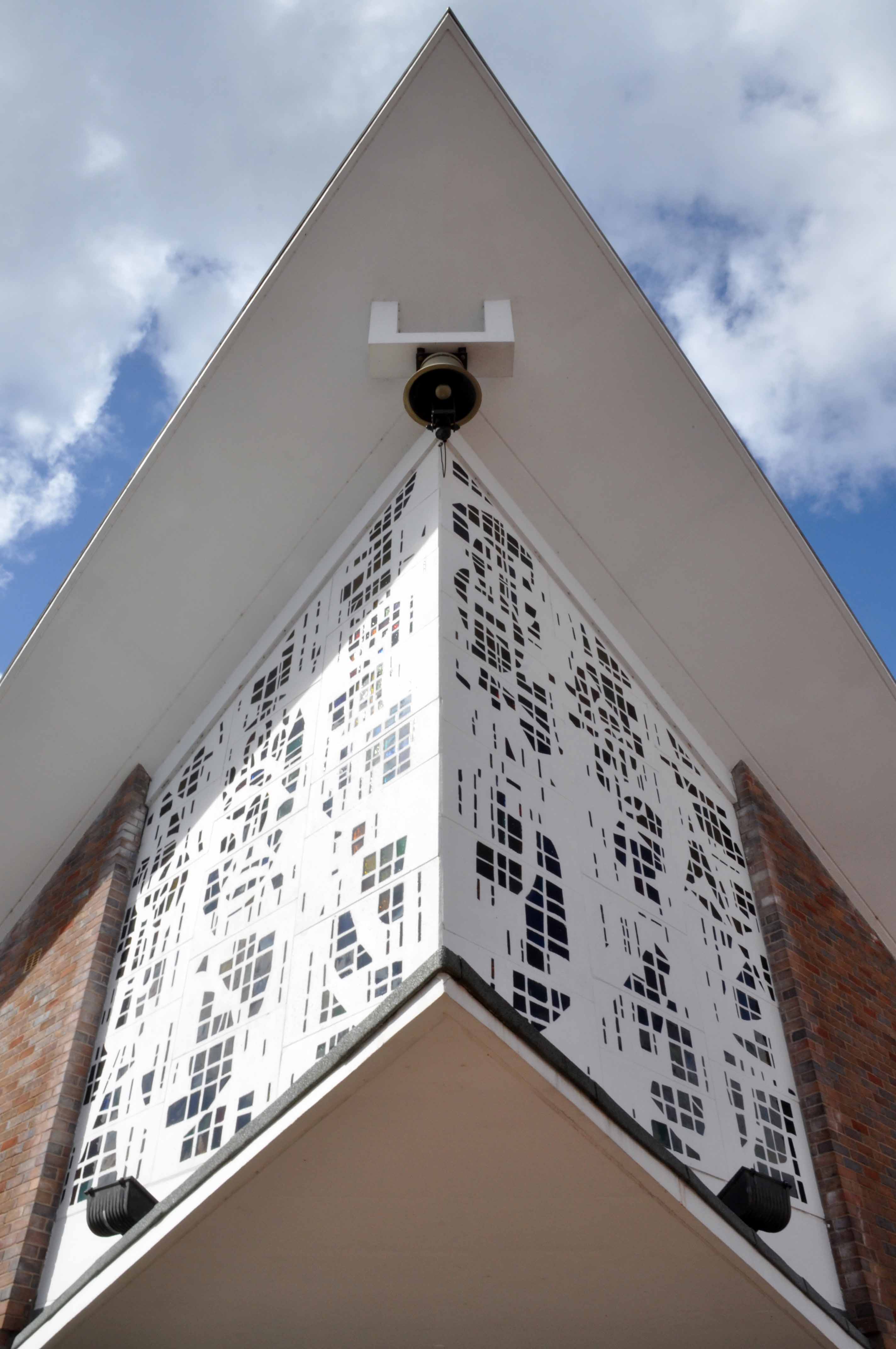
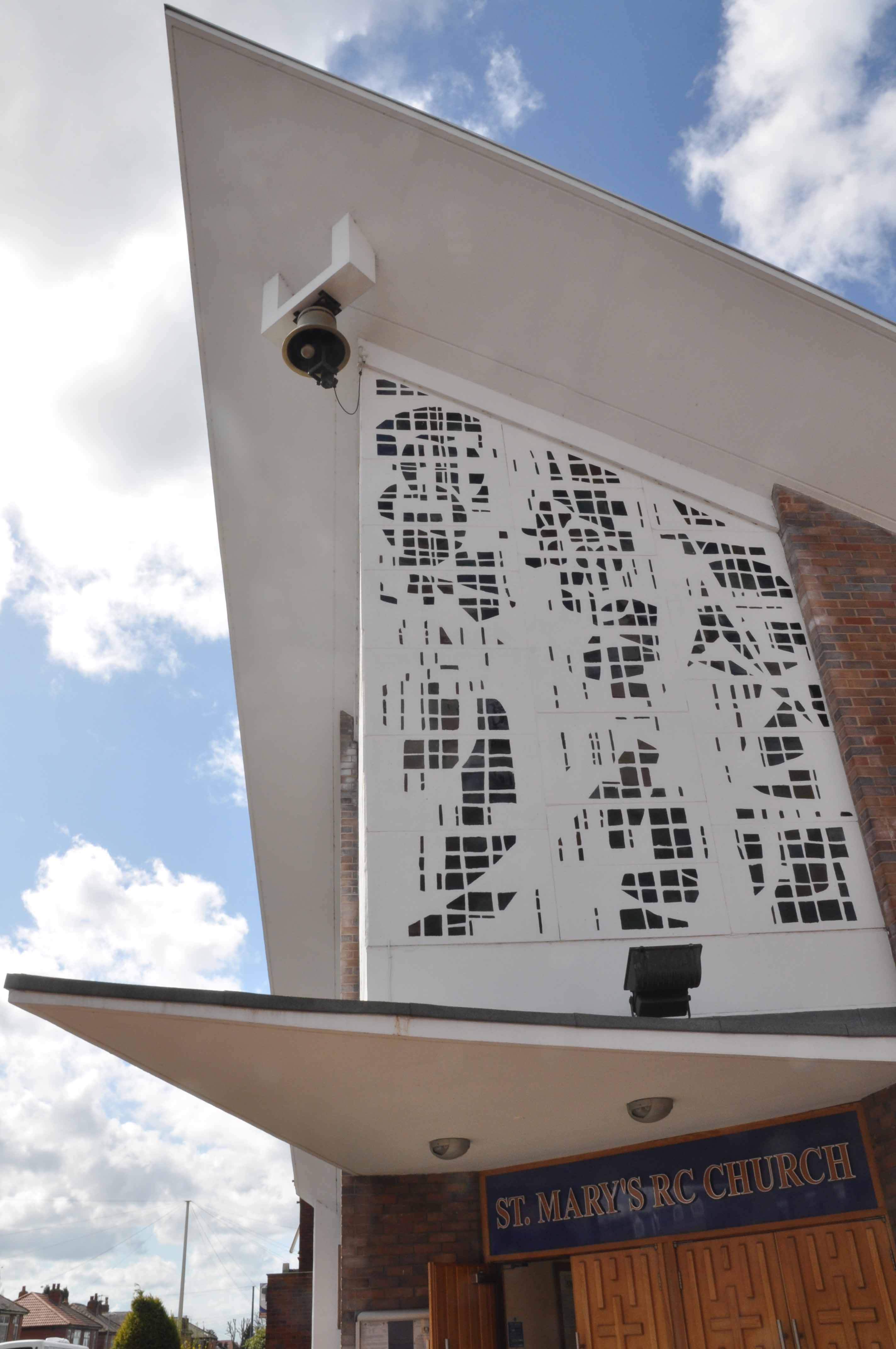
The church built in 1965 is fan-shaped in plan. Concrete portal frame with yellow brick infill. Shallow-pitched sheet metal clad roof. The main rear wall is flat and blind, with a parapet, and extends across the building at full height. From this wall the main body of the church radiates, three facetted bays to either side, with a saw tooth eaves line, then a projecting square block which houses the narthex and west gallery. The saw tooth eaves continue just above the entrance block to complete the fan shape. Attached to the other side of the main wall are the low, square projections of the side chapels and sacristies and a concrete framed bell tower with shallow pitched roof. The entrance block is clad is artificial stone, has a wide, glazed screen with central doors and a thin flat canopy.
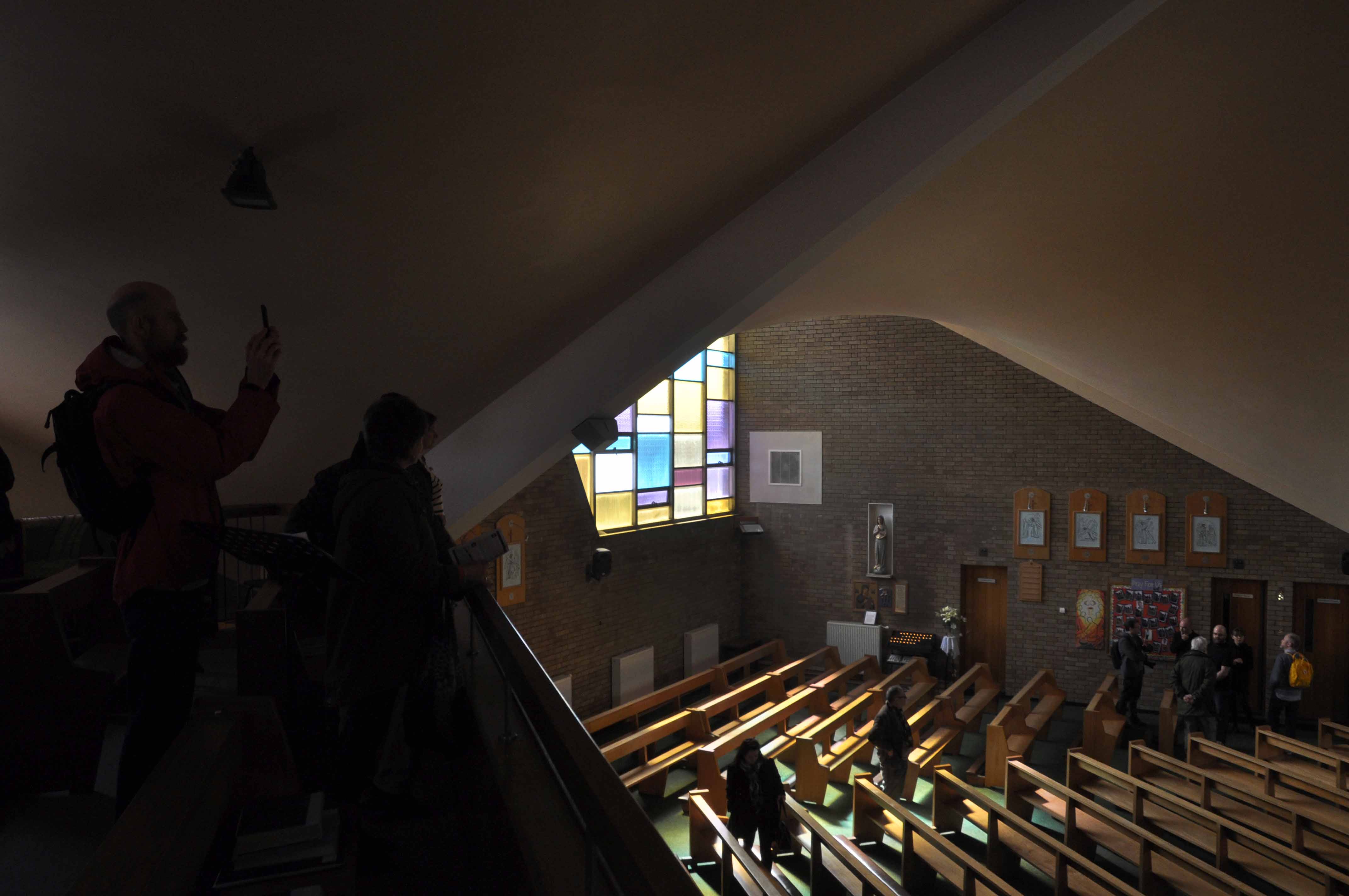
We had arrived some twenty five strong as part of Manchester Modernist’s Hull Mooch – we were very warmly welcomed and left more than satisfied by the riches both within and without.
My thanks to Deacon Rev. Robert Shakesby
Above this an inset panel of decorative mosaic by Ludwig Oppenheimer Ltdof Manchester -the firm ceased trading in 1965. The facetted elevations have large glazed areas set in a bold concrete grid of mullions and transoms, tripartite in the centre with a border of smaller divisions. The bell tower is placed in the centre of the east wall and has a port cullis-like bell-opening facing west.
The mosaic is surrounded by decorative abstract panels in light relief
Let’s take a look inside.
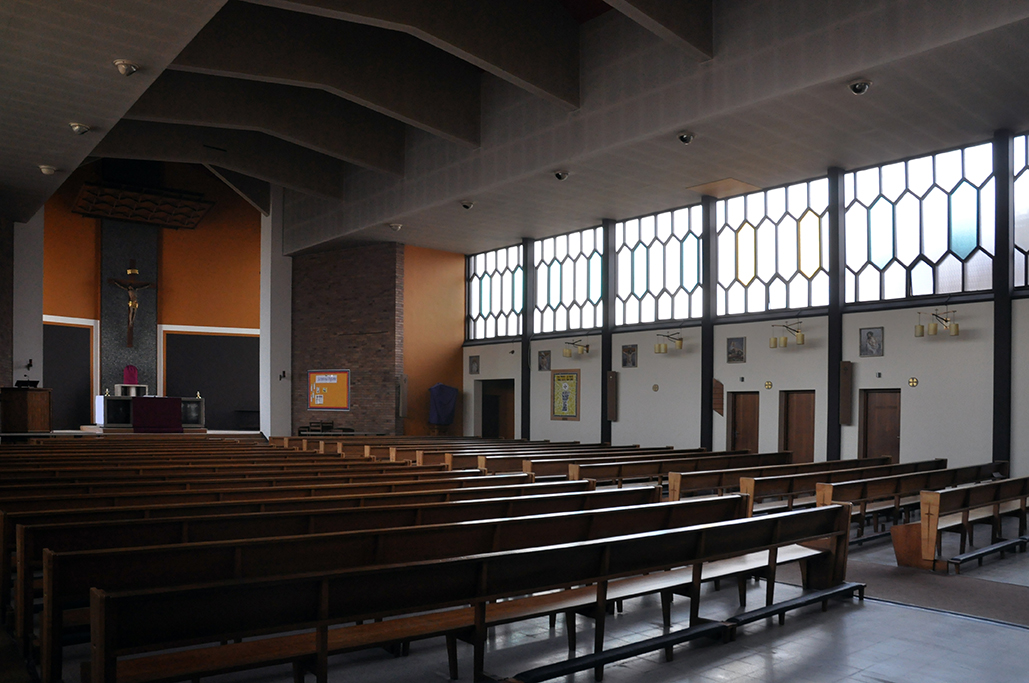
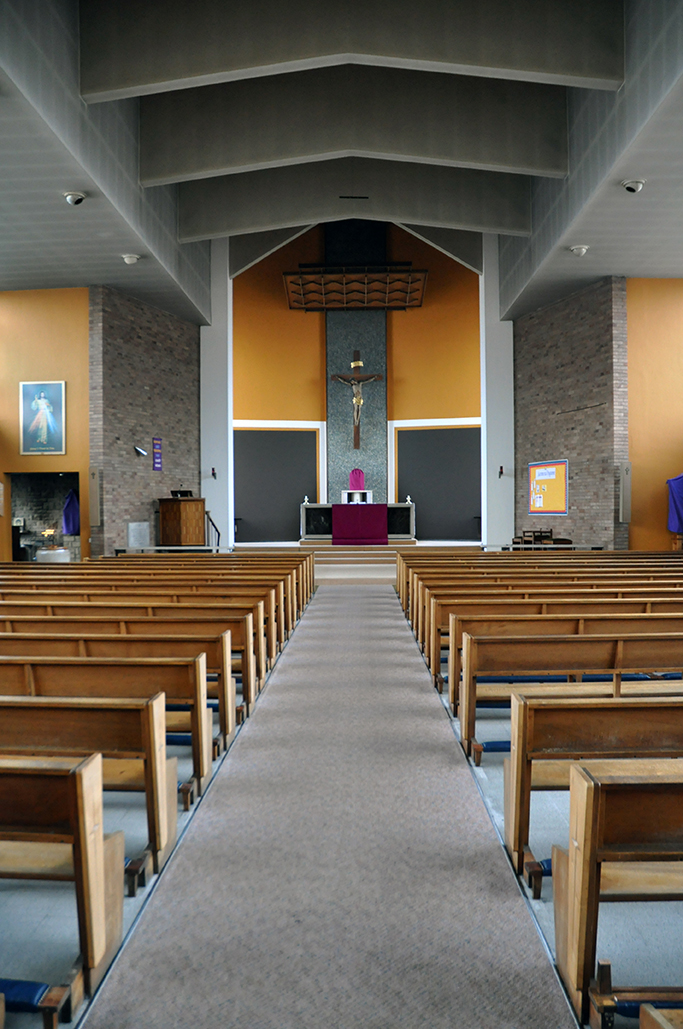
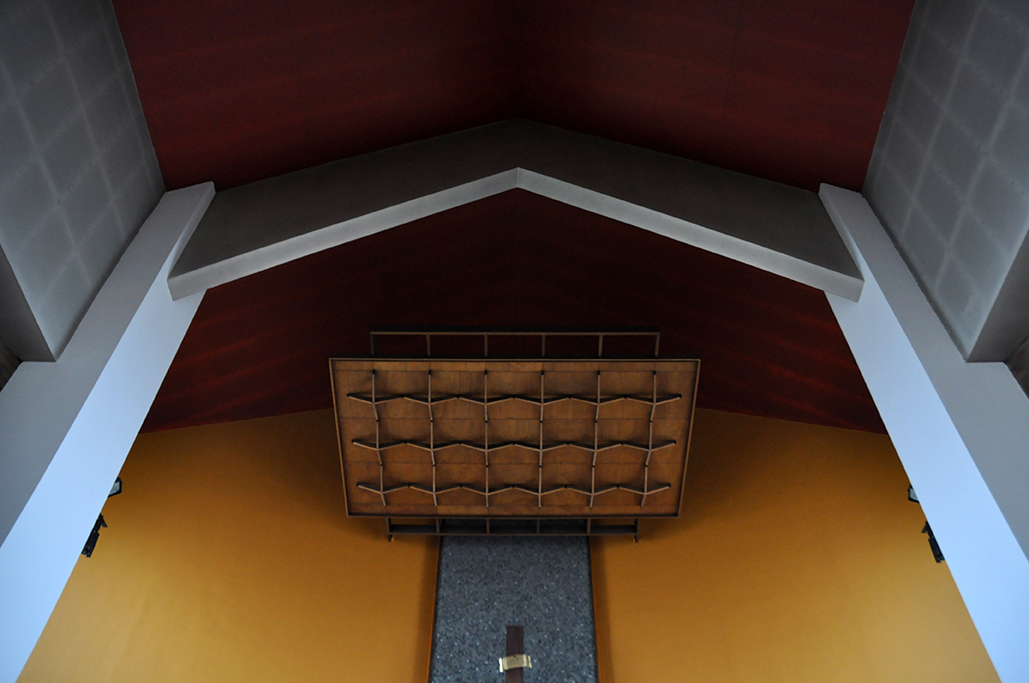
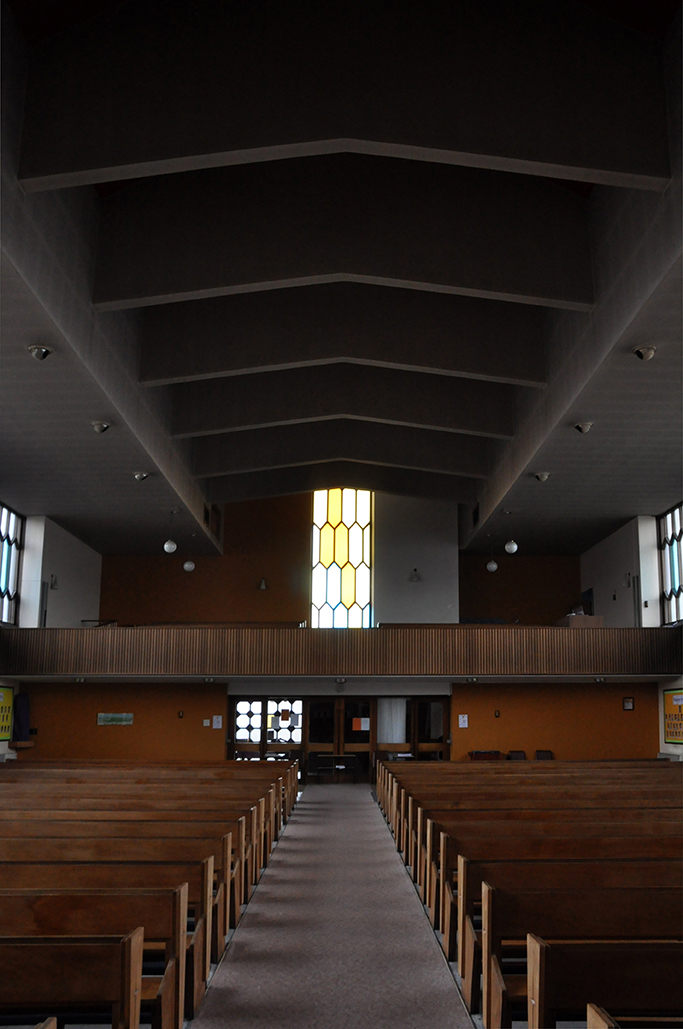
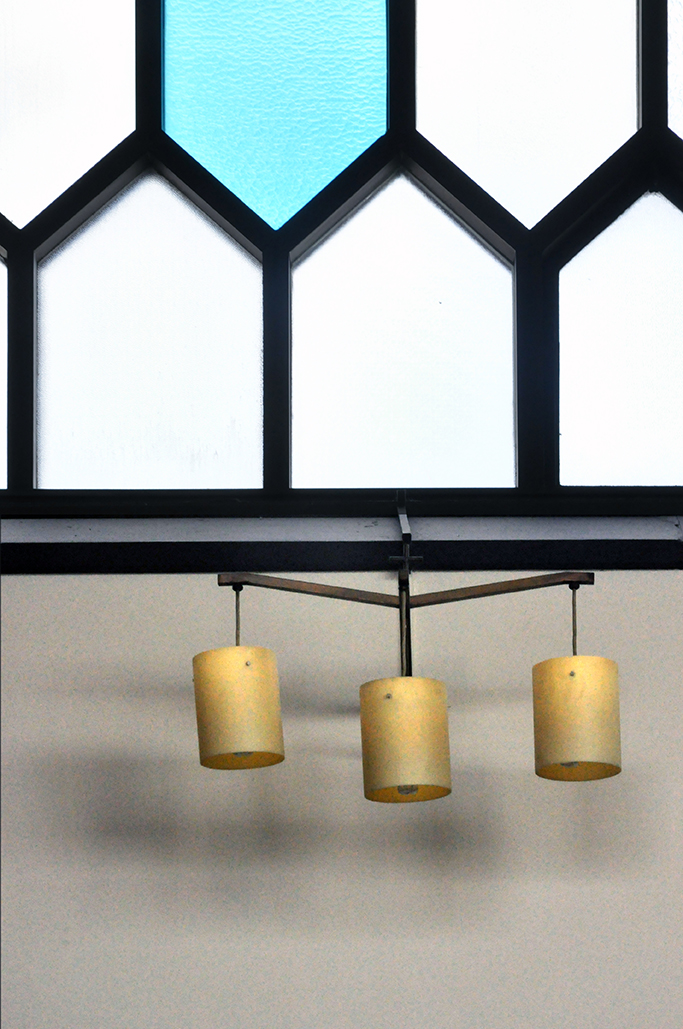
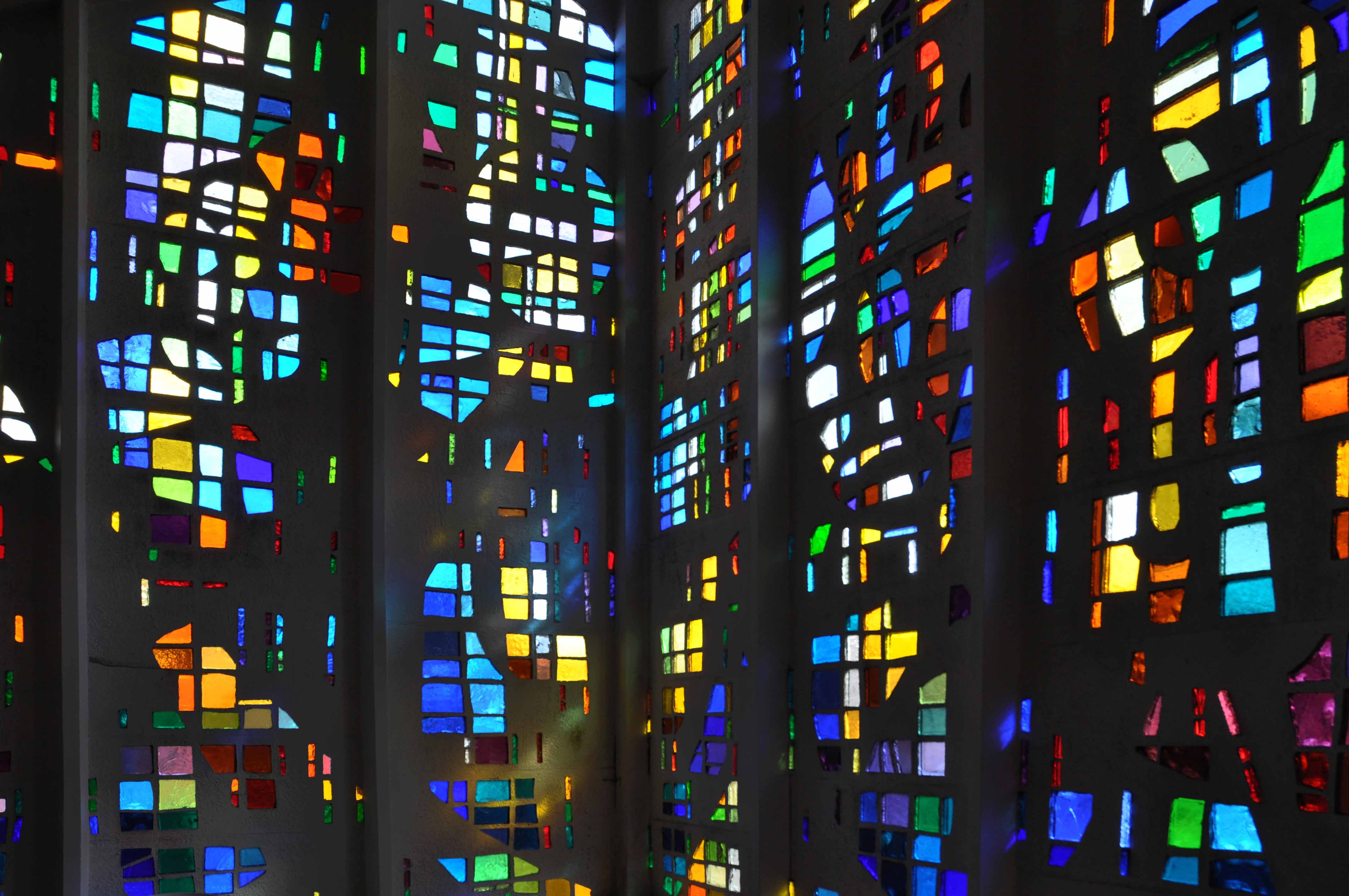
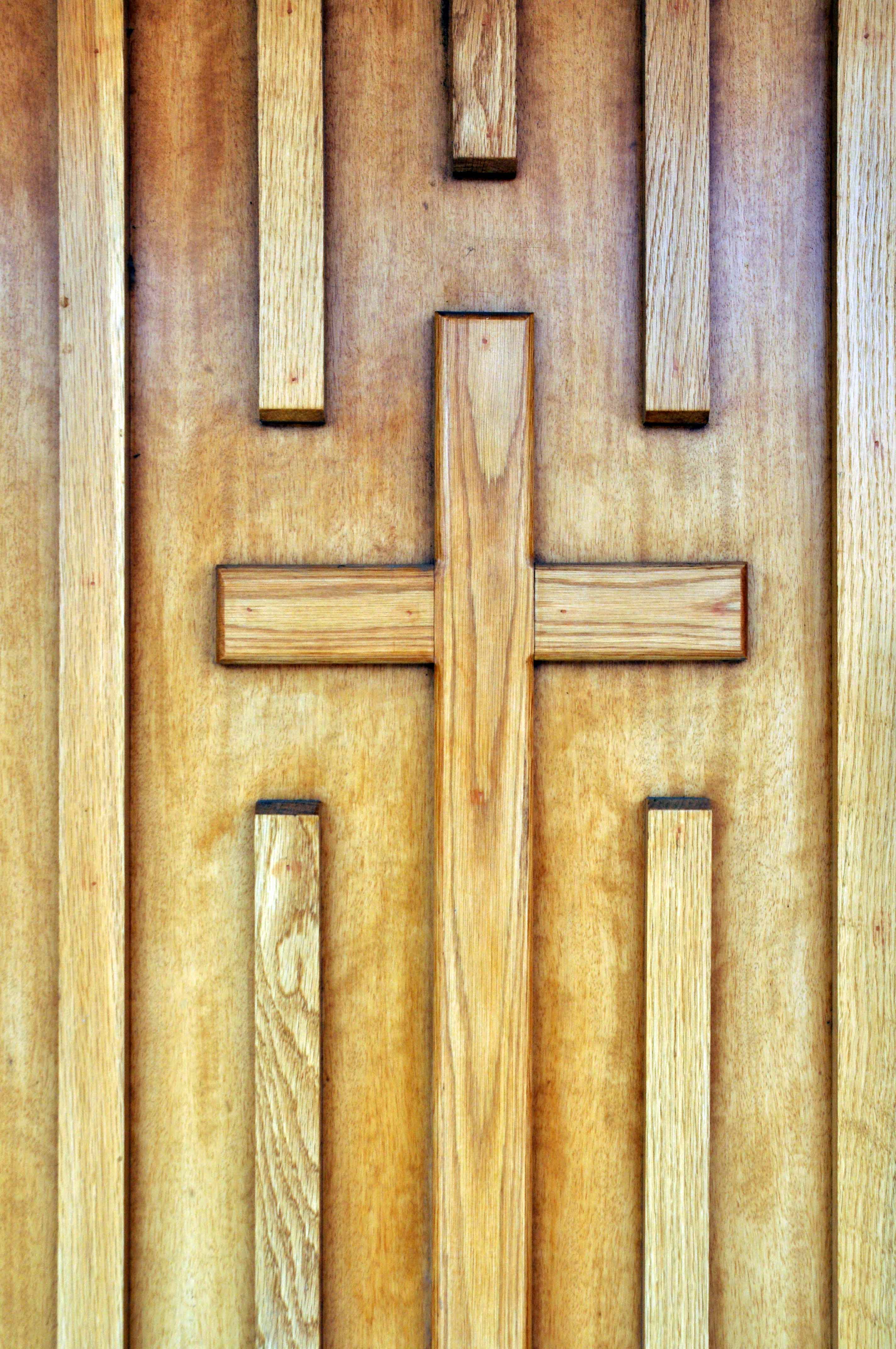
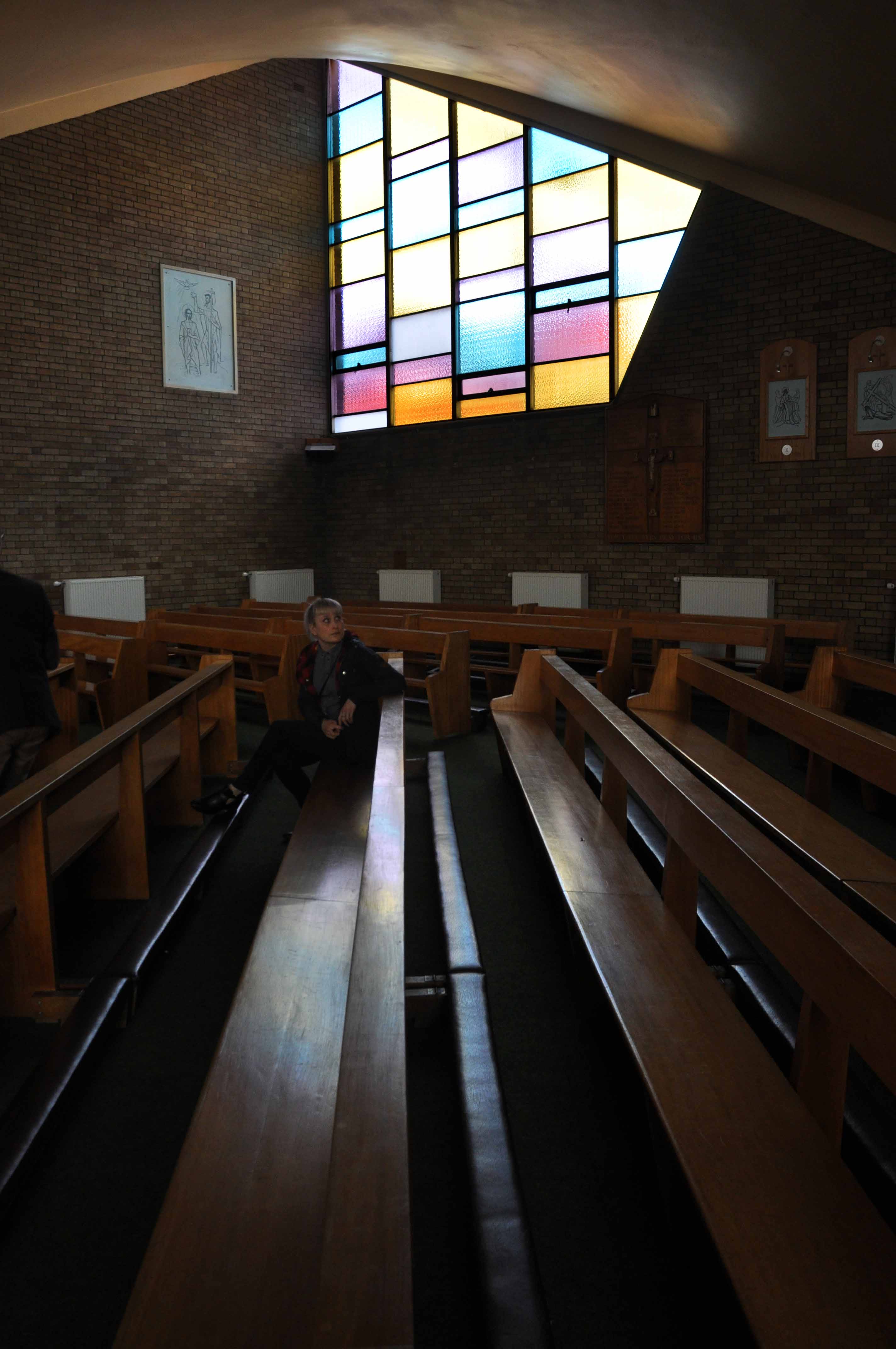
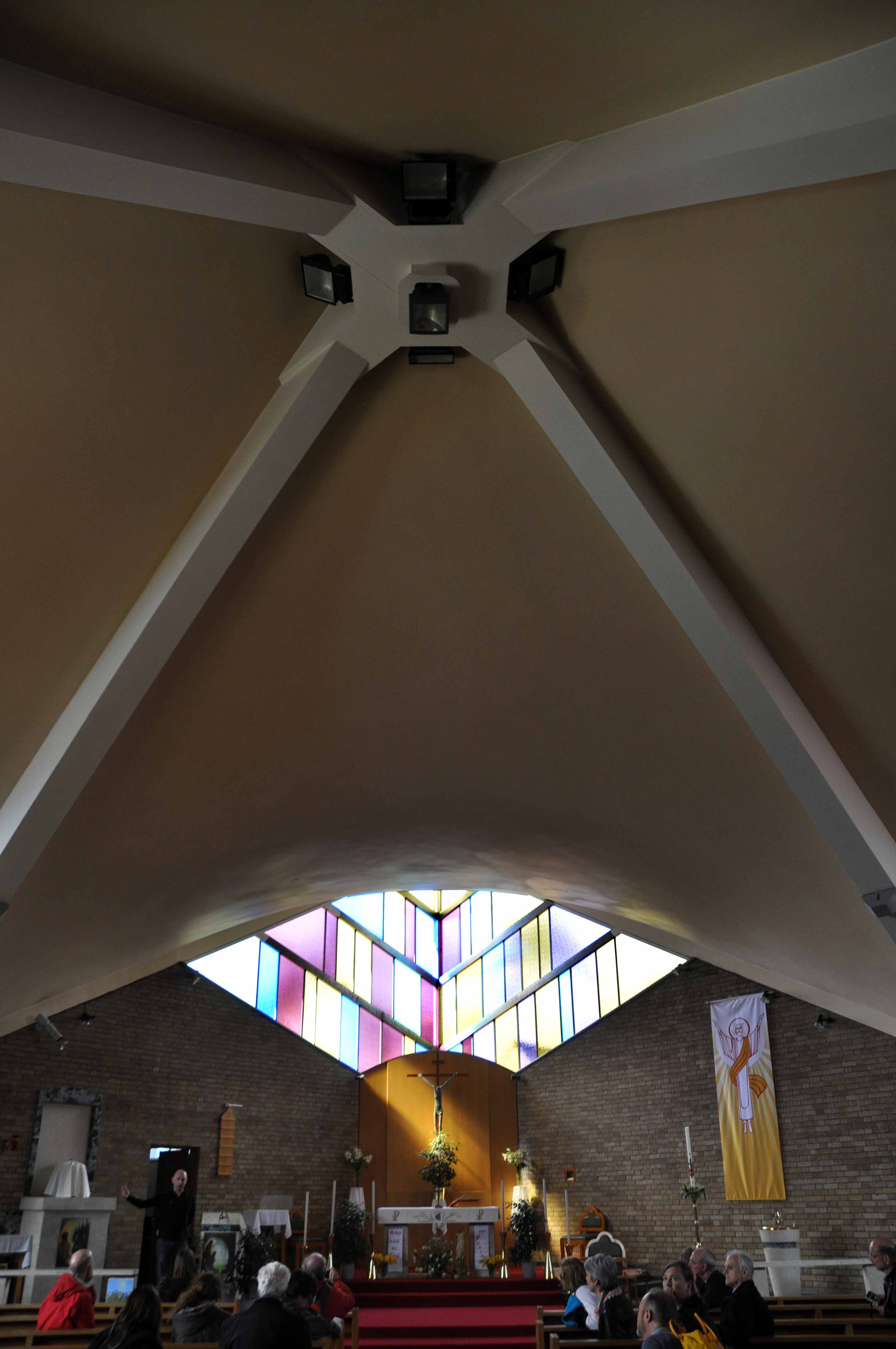
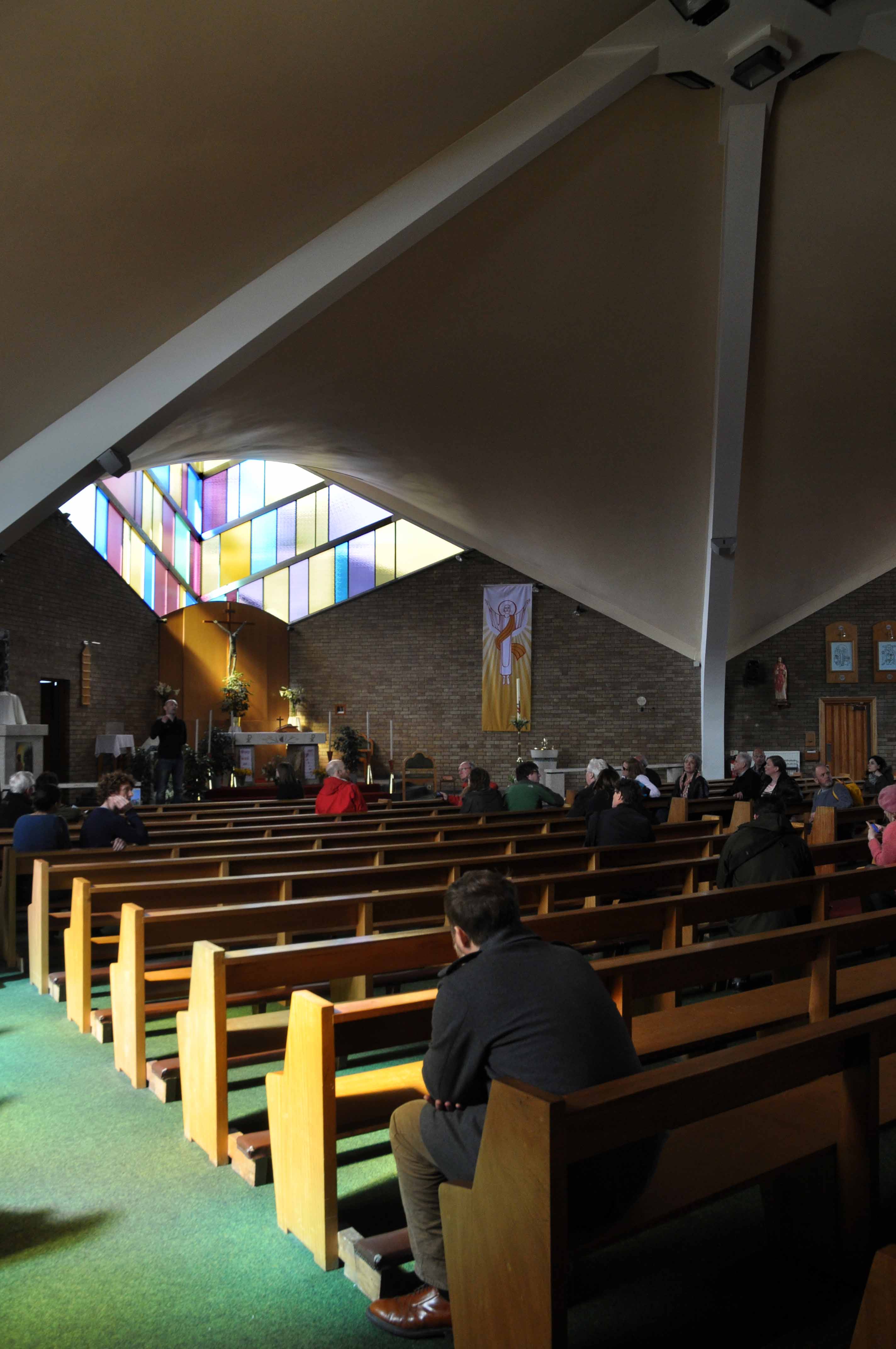
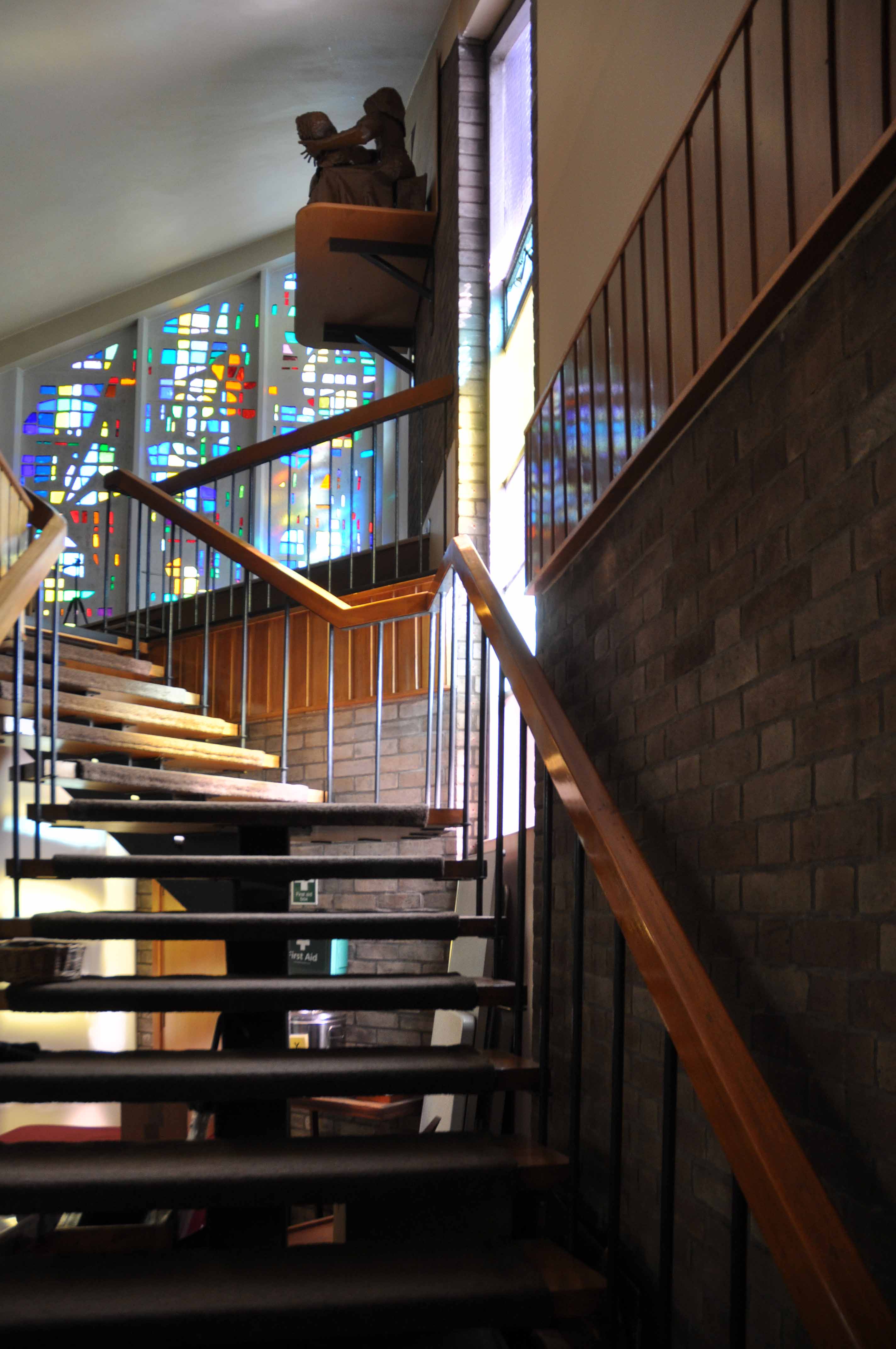
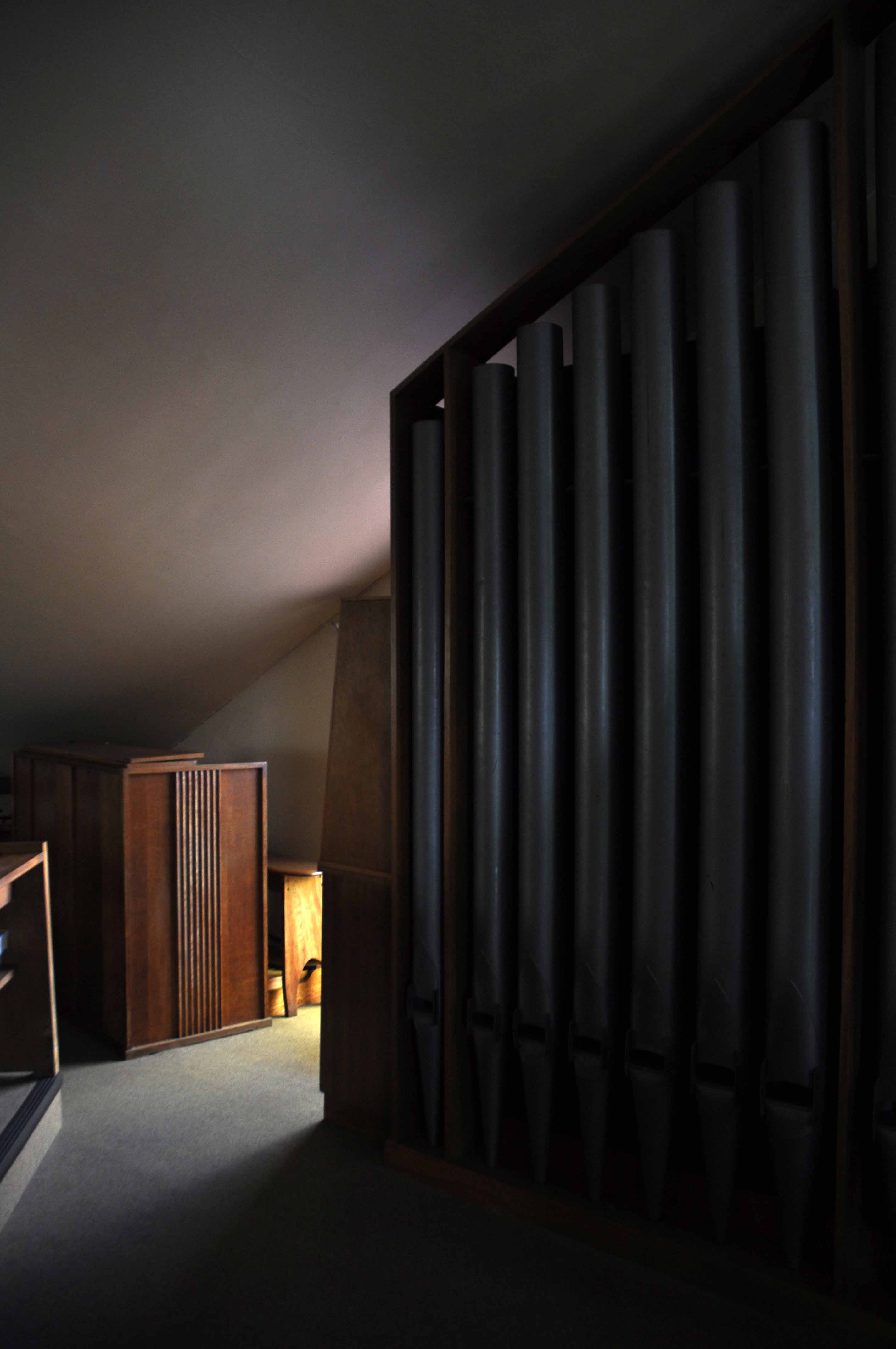
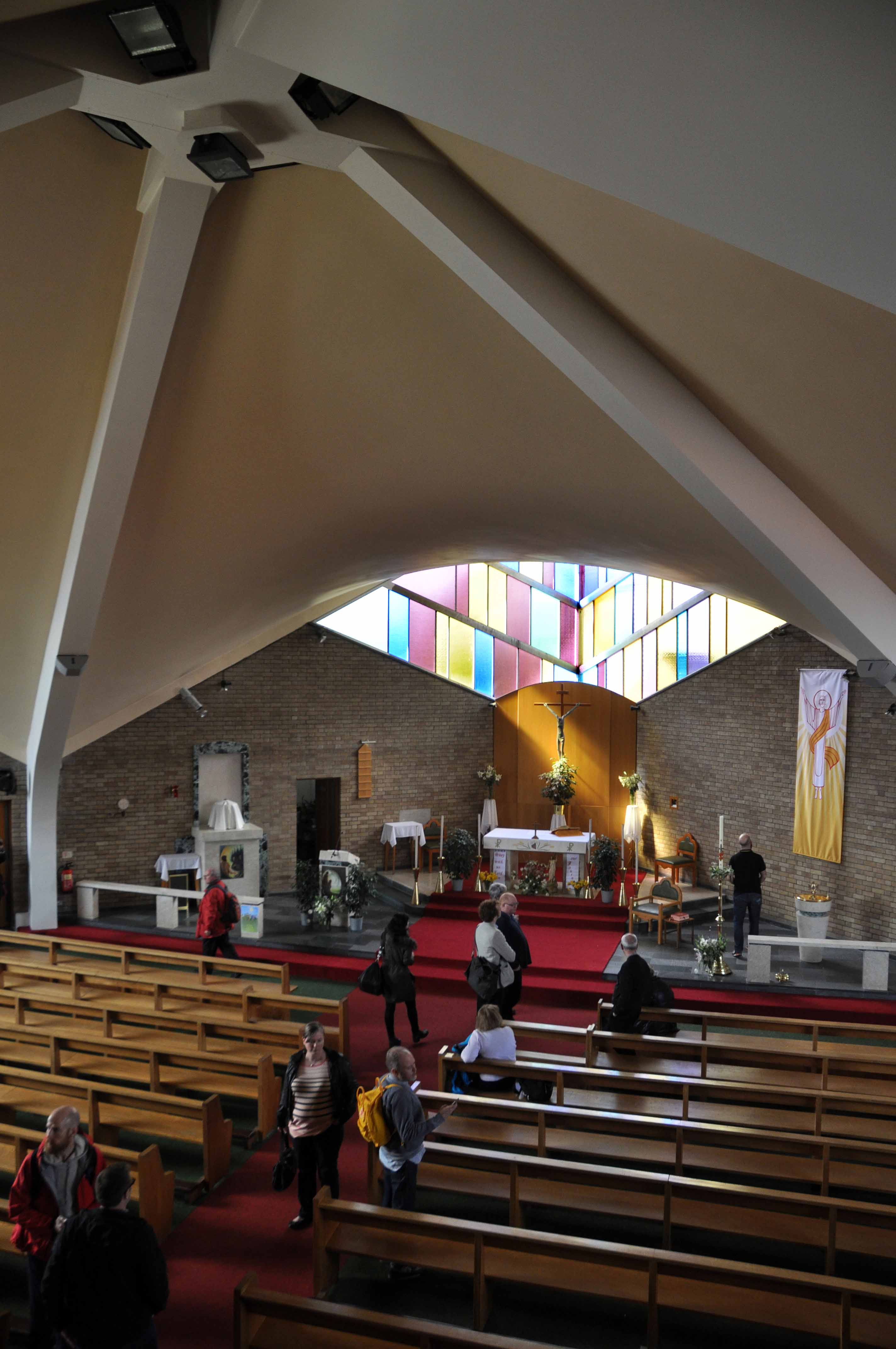
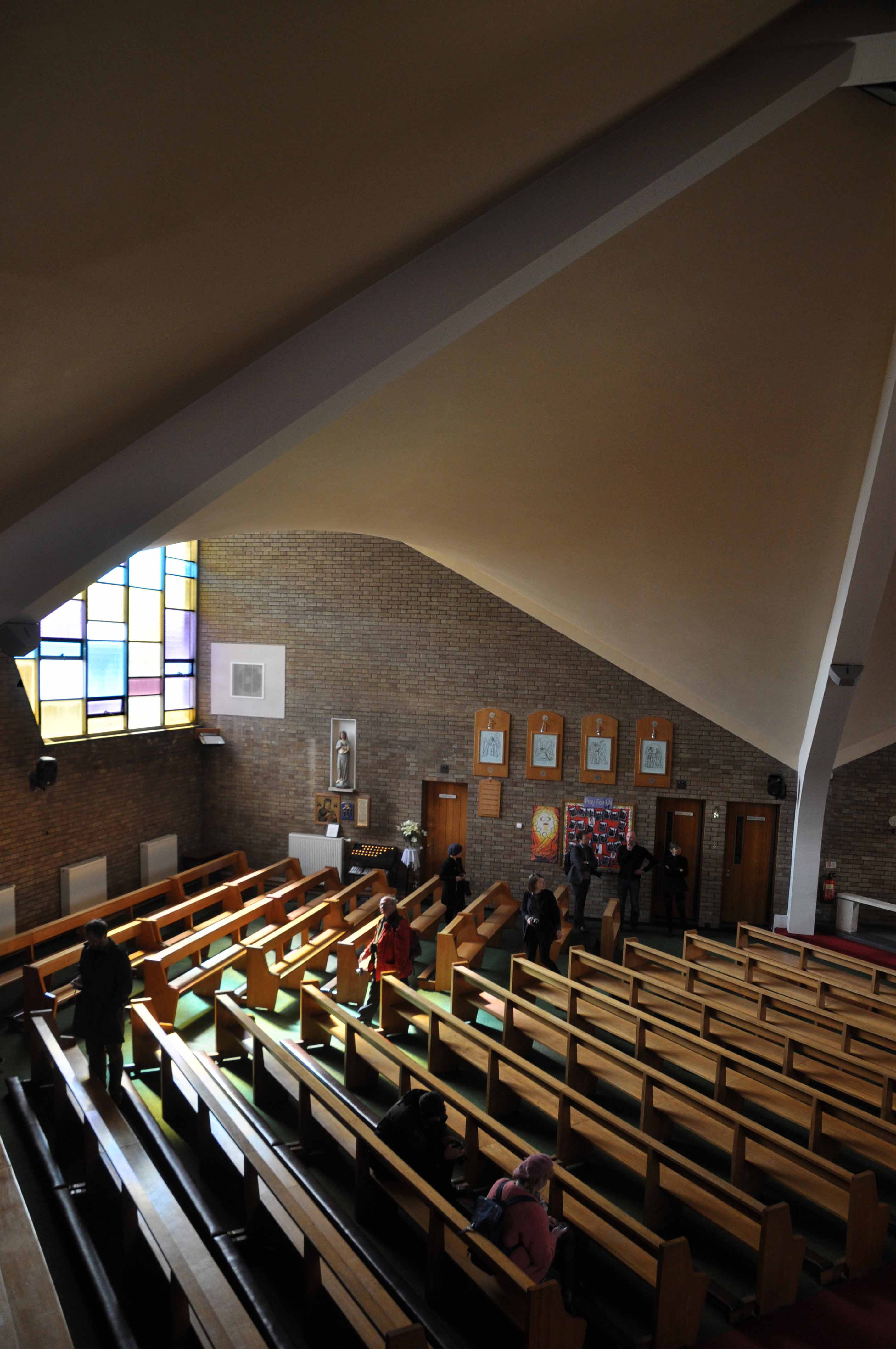
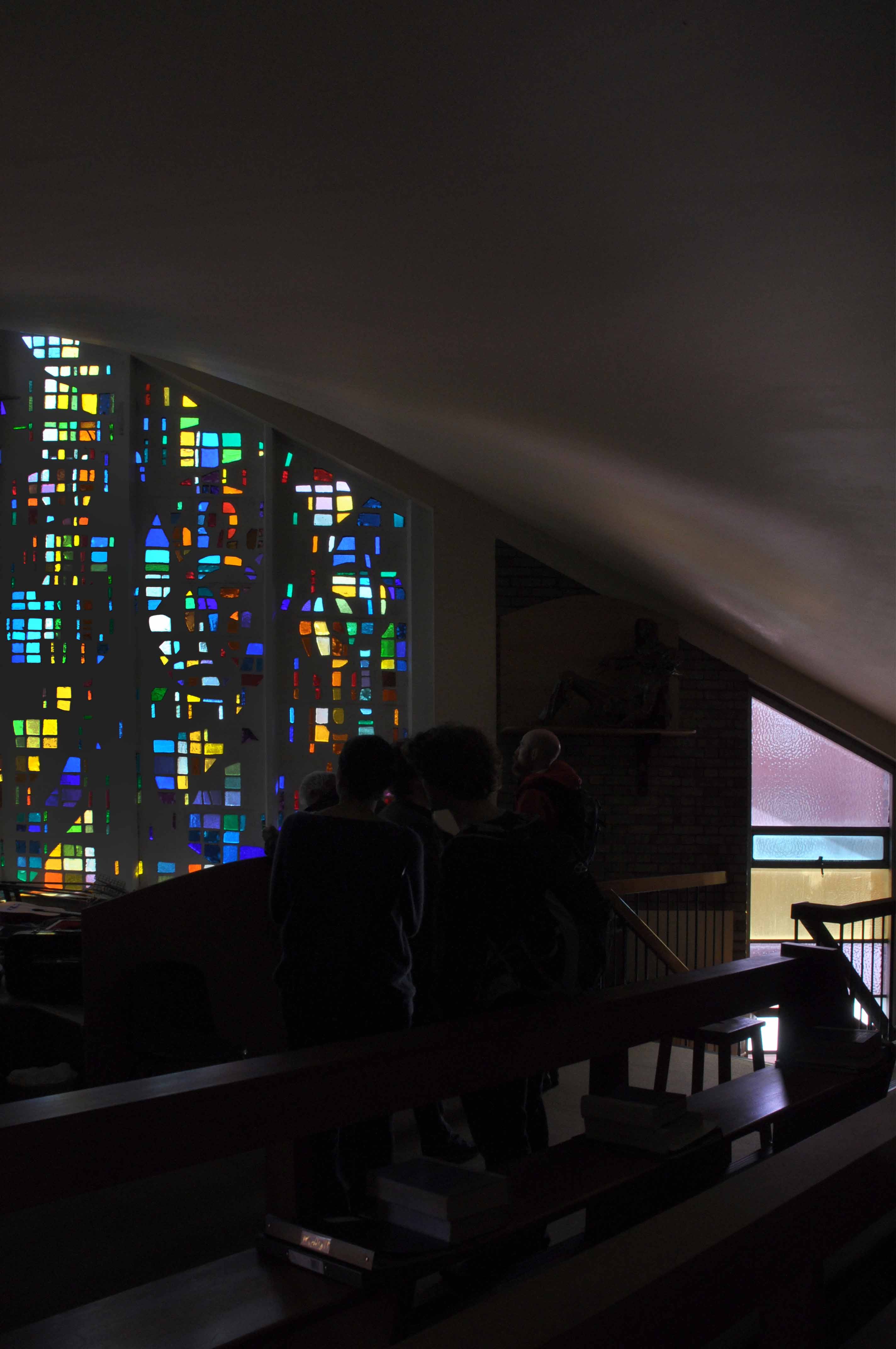
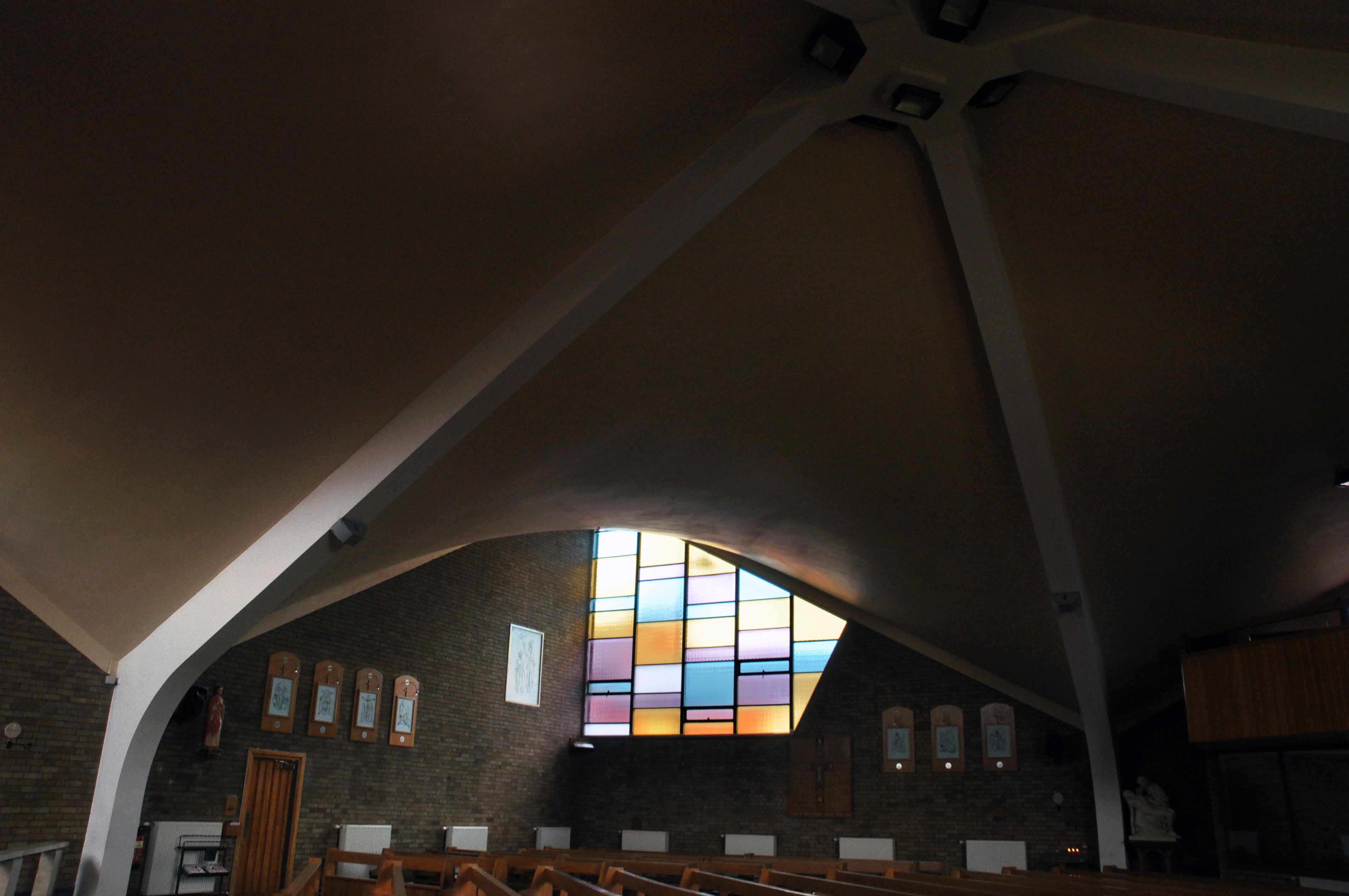
The interior is a light and spacious essentially single cell, with the shallow canted projection of the sanctuary – top lit by a row of seven small circular skylights, the low side chapels and the organ gallery. The concrete portal frame provides a dramatic grid radiating from the centre of the east wall. Sanctuary fittings in contrasting marbles, by Toffolo & Son of Hull, designed as a piece. Similar marble altar in the northeast side chapel. The chapels have subtle shallow-pitched arches. West gallery also with circular skylights. Organ pipes at either end arranged within a striking double-curve enclosure, like a grand piano in plan. Open-backed pews and original light fittings. Stained glass by Leo Earley of Earley & Co. of Dublin. Stations of the Cross, wooden relief panels set within integral frames, somewhat stark.
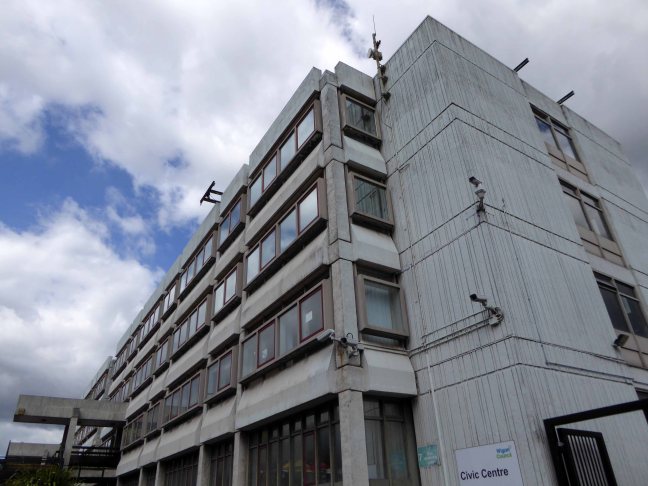
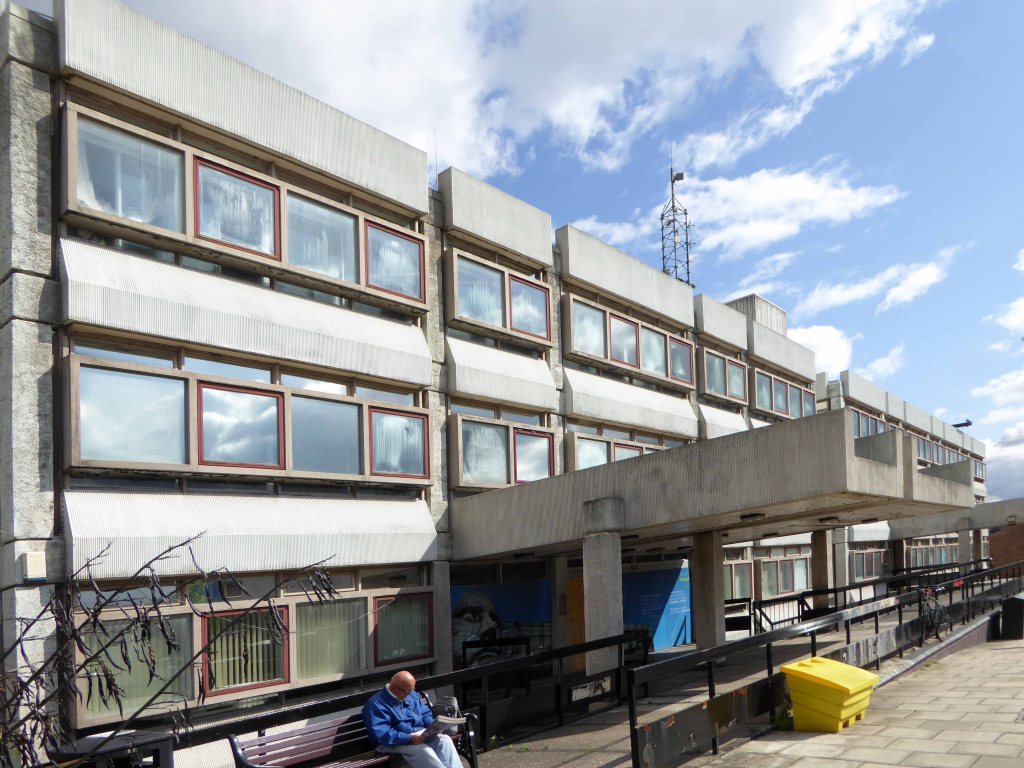
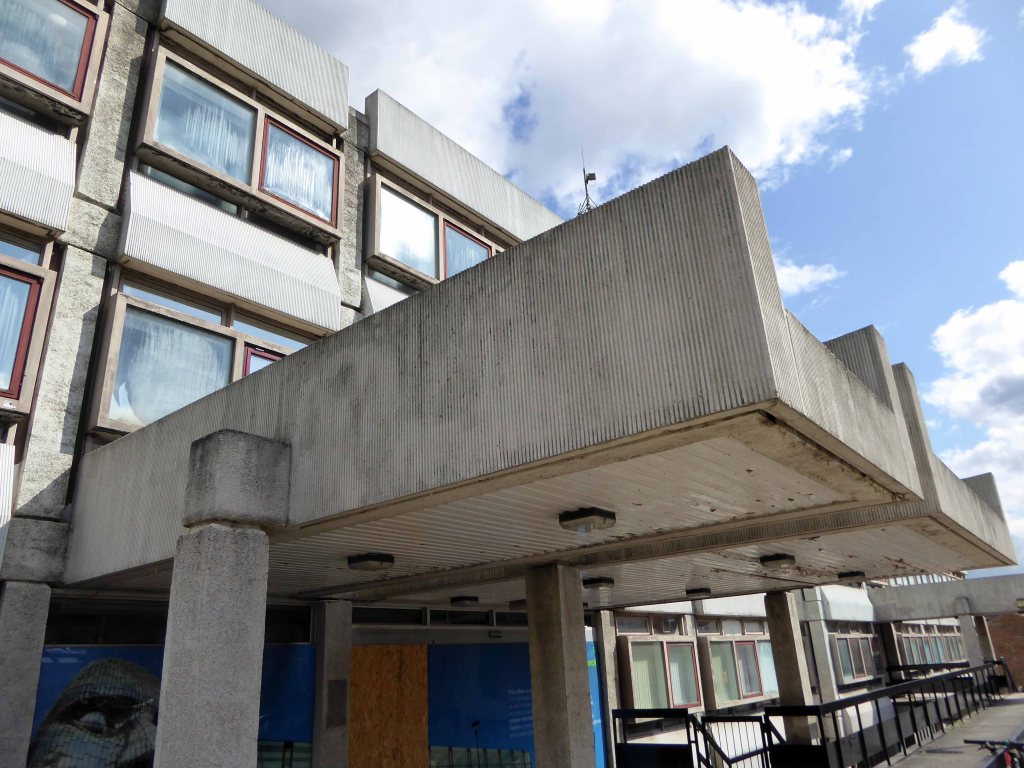
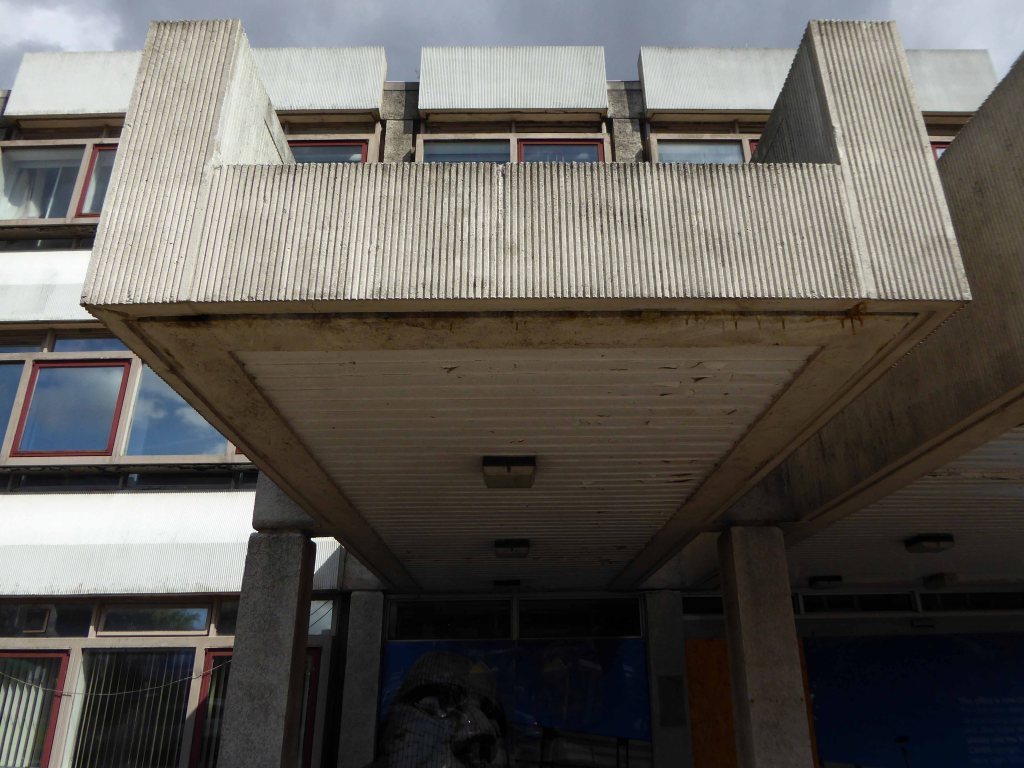
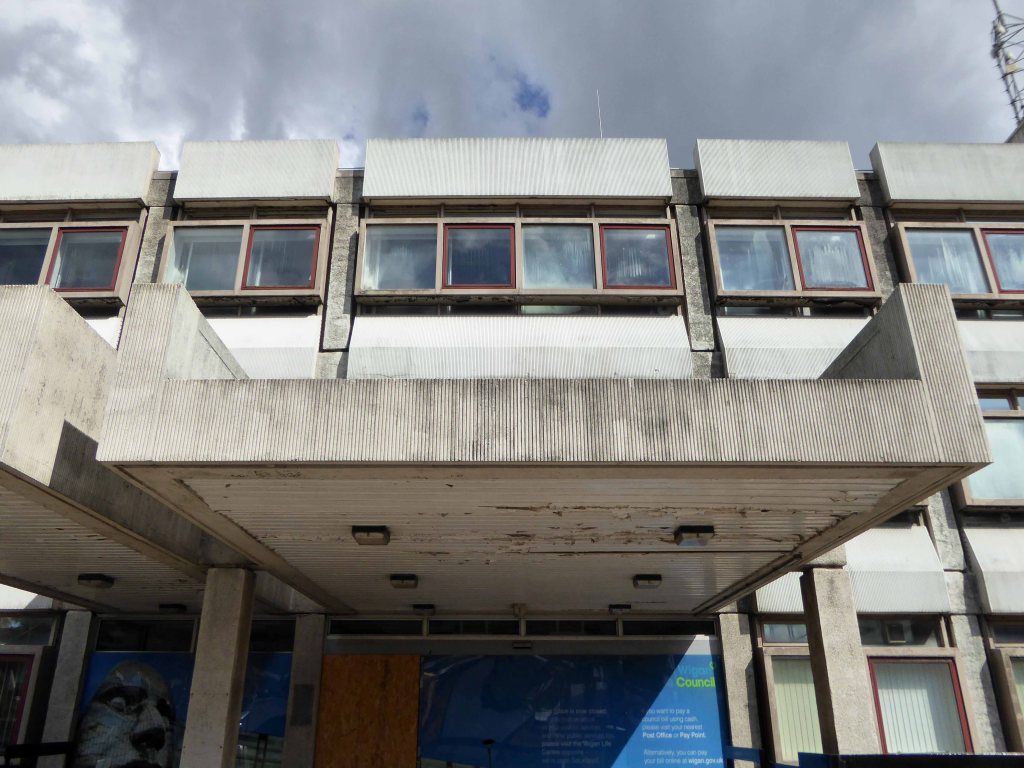
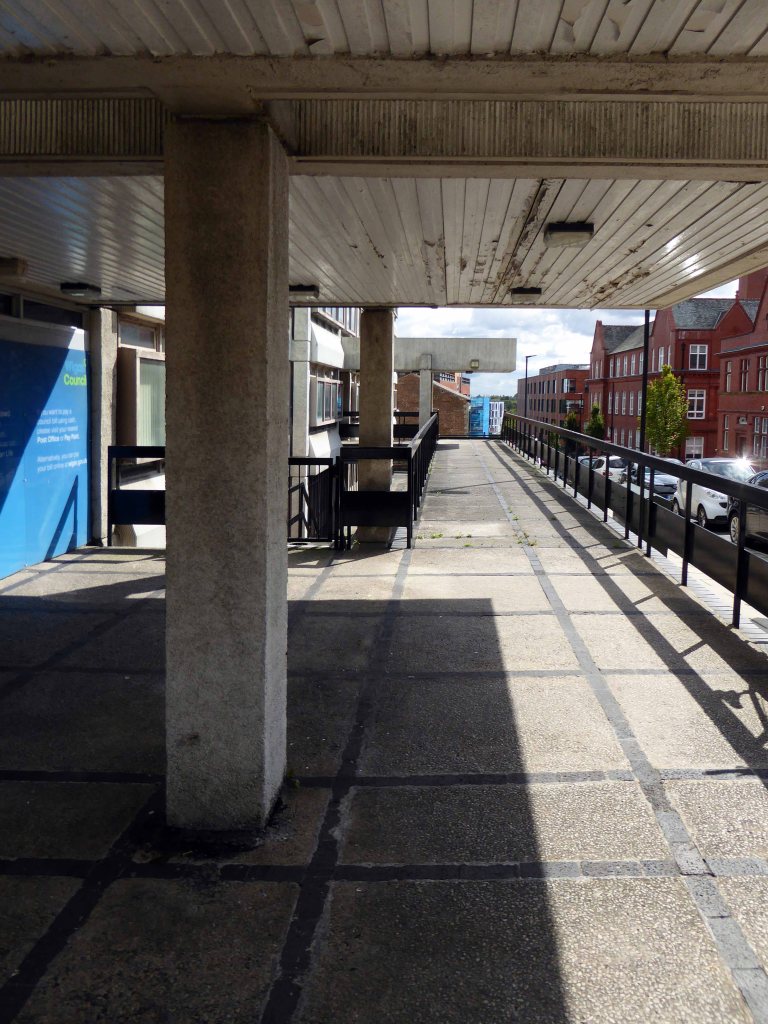
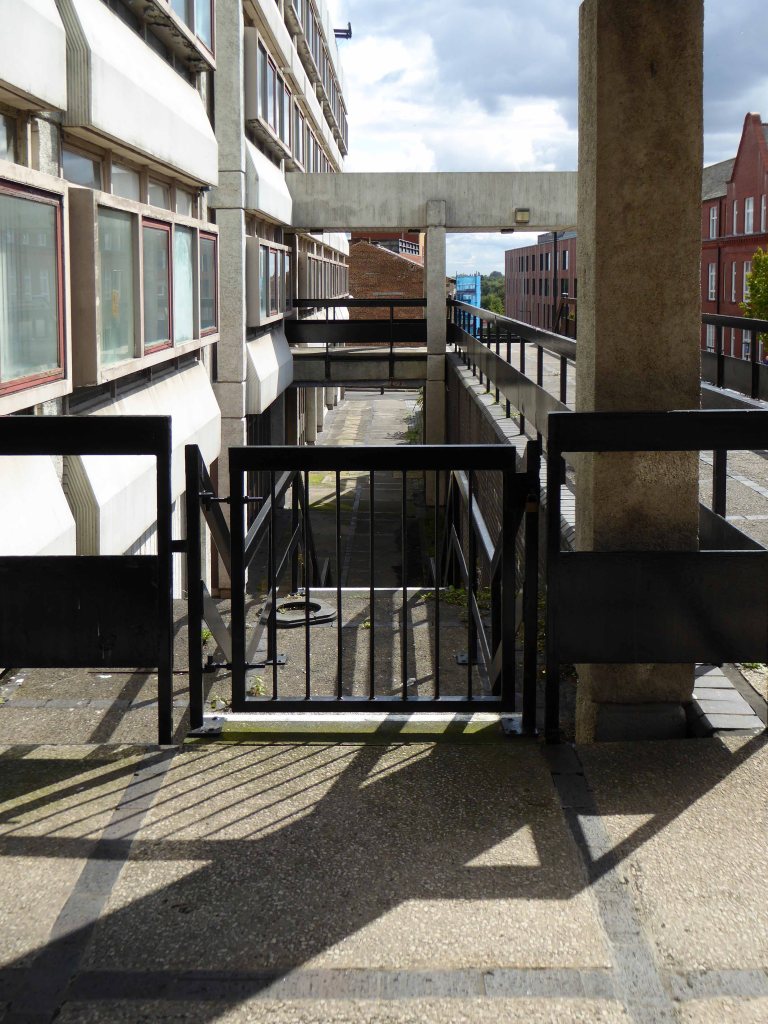
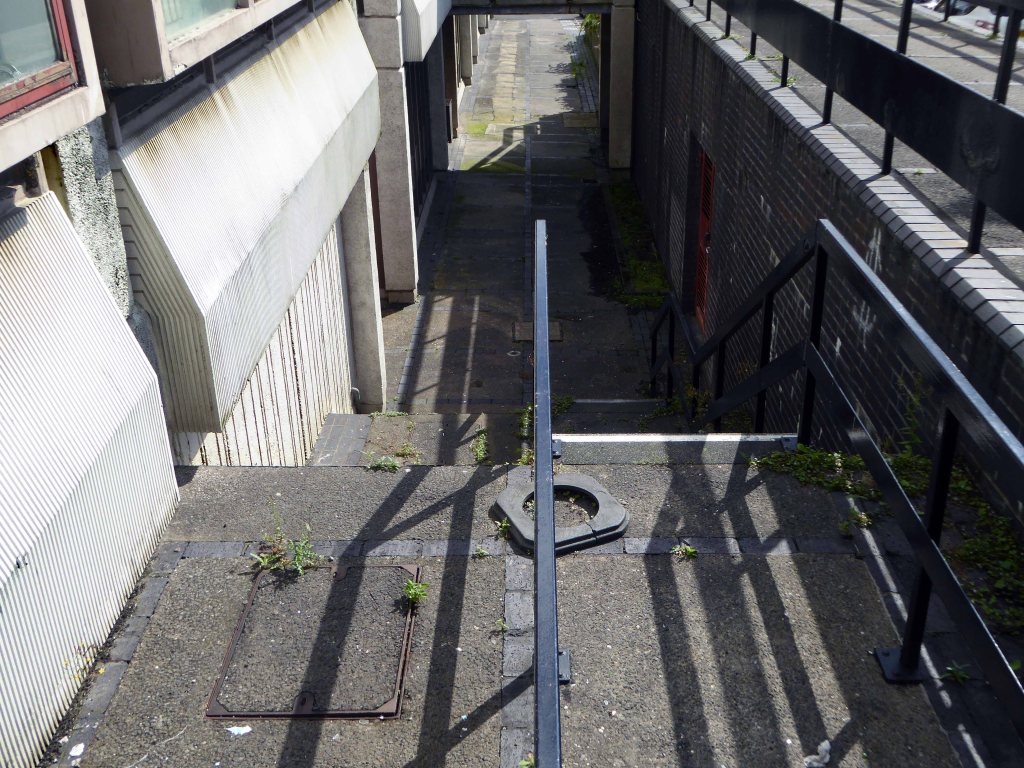
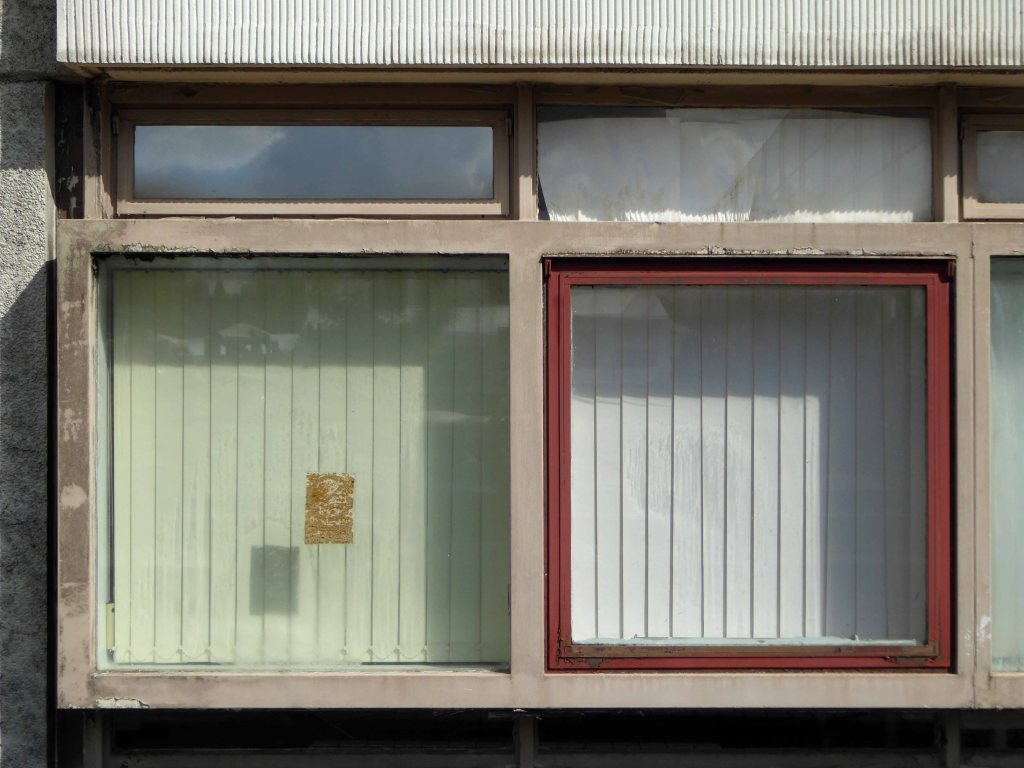
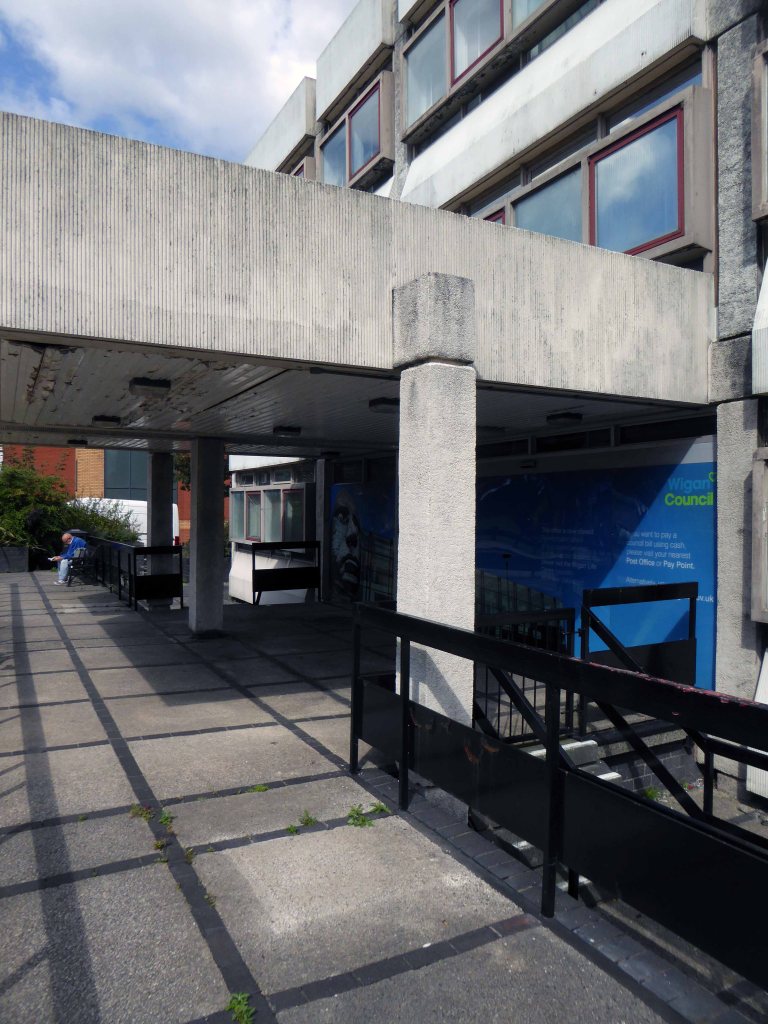
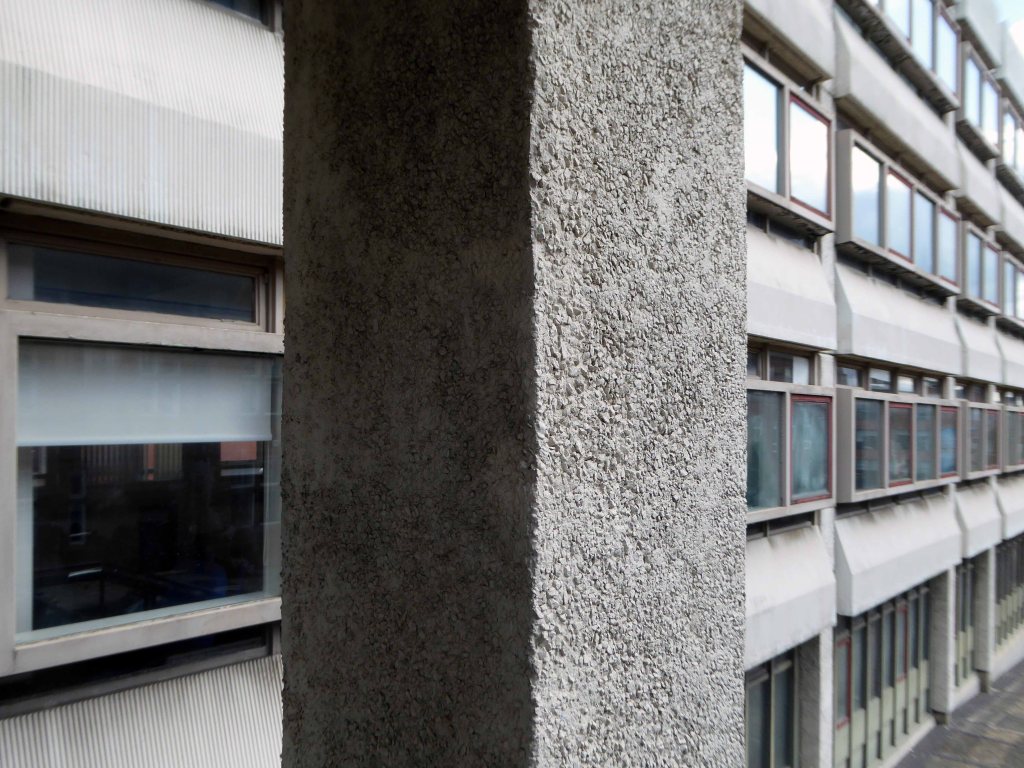
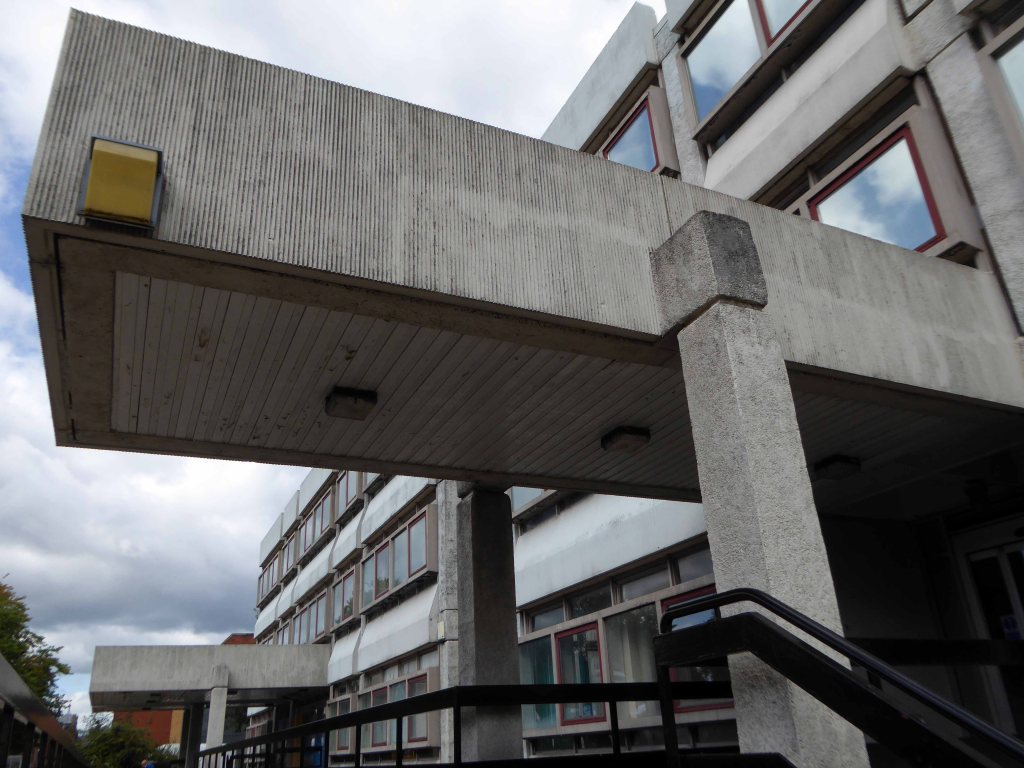
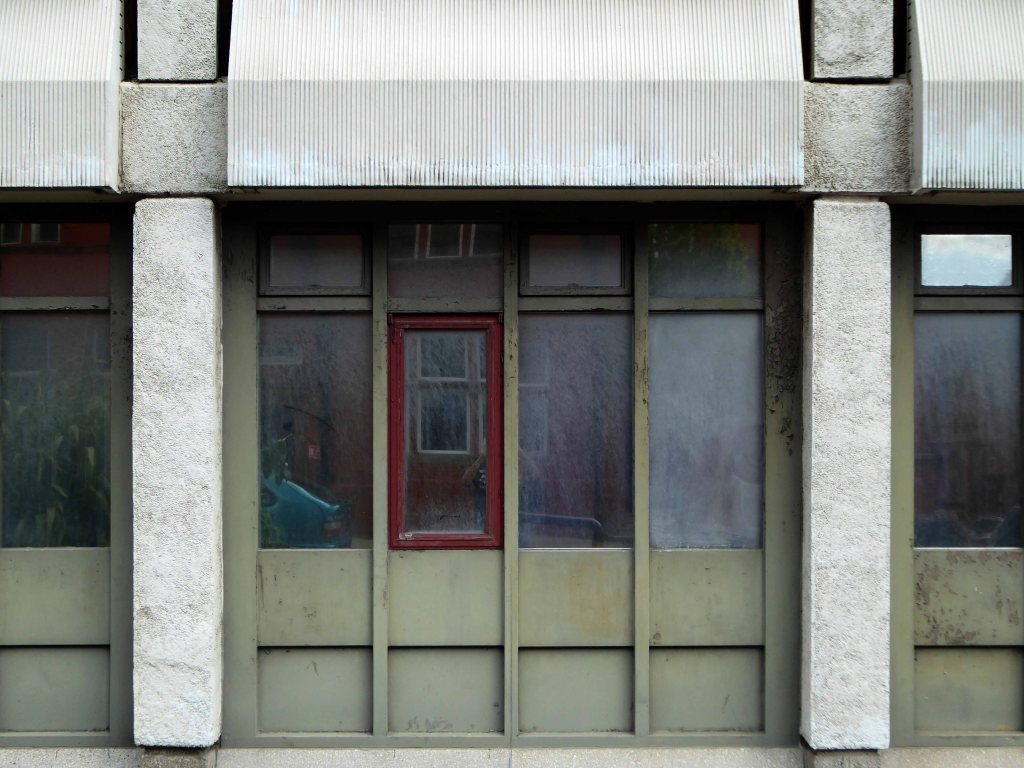
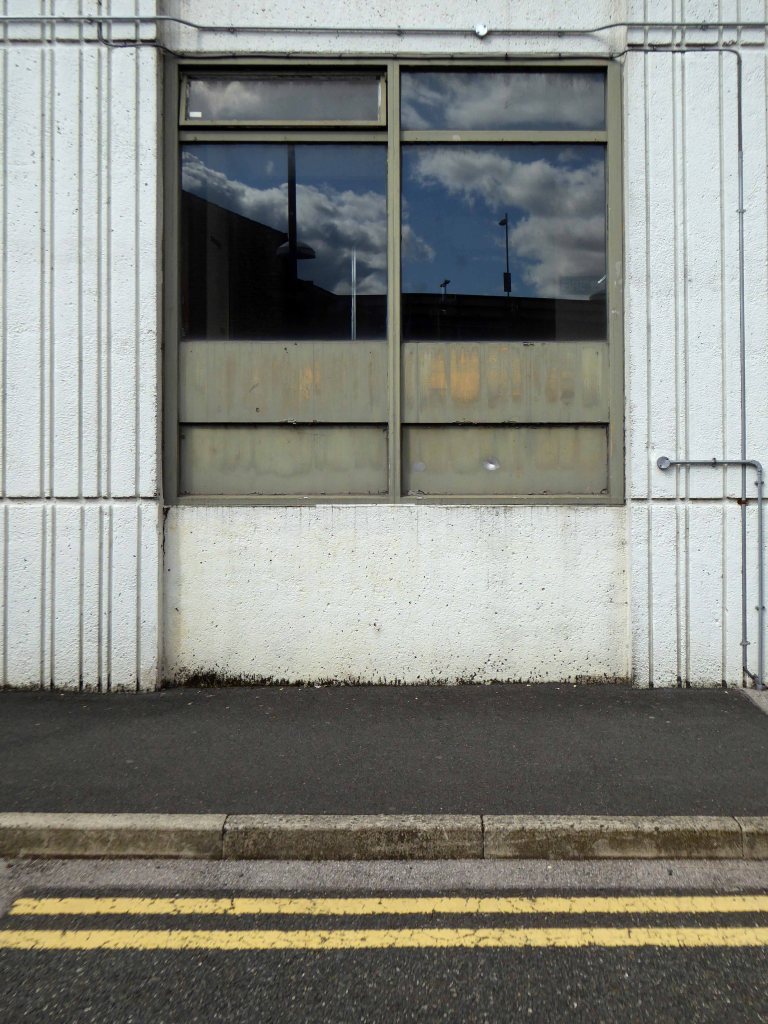
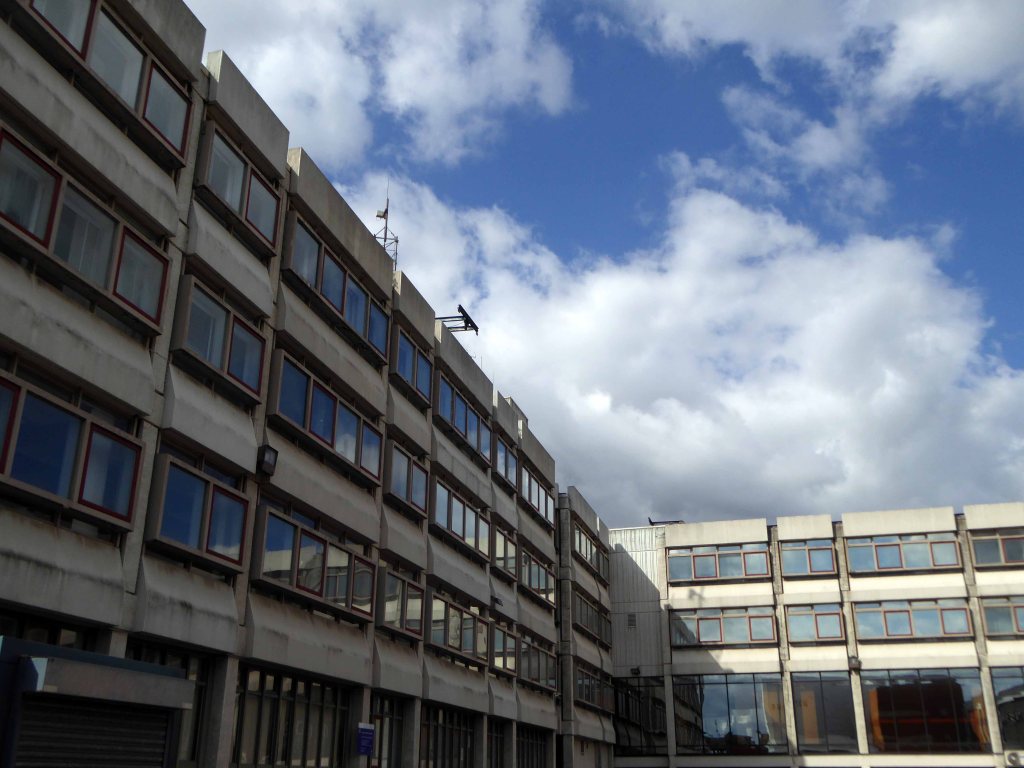
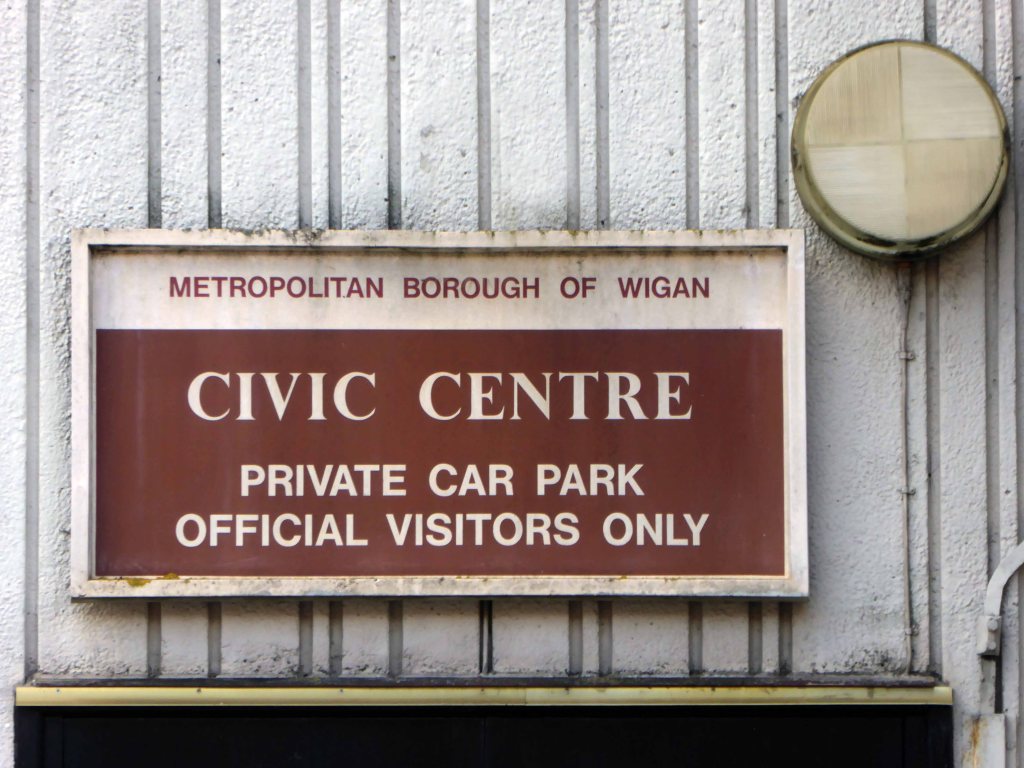
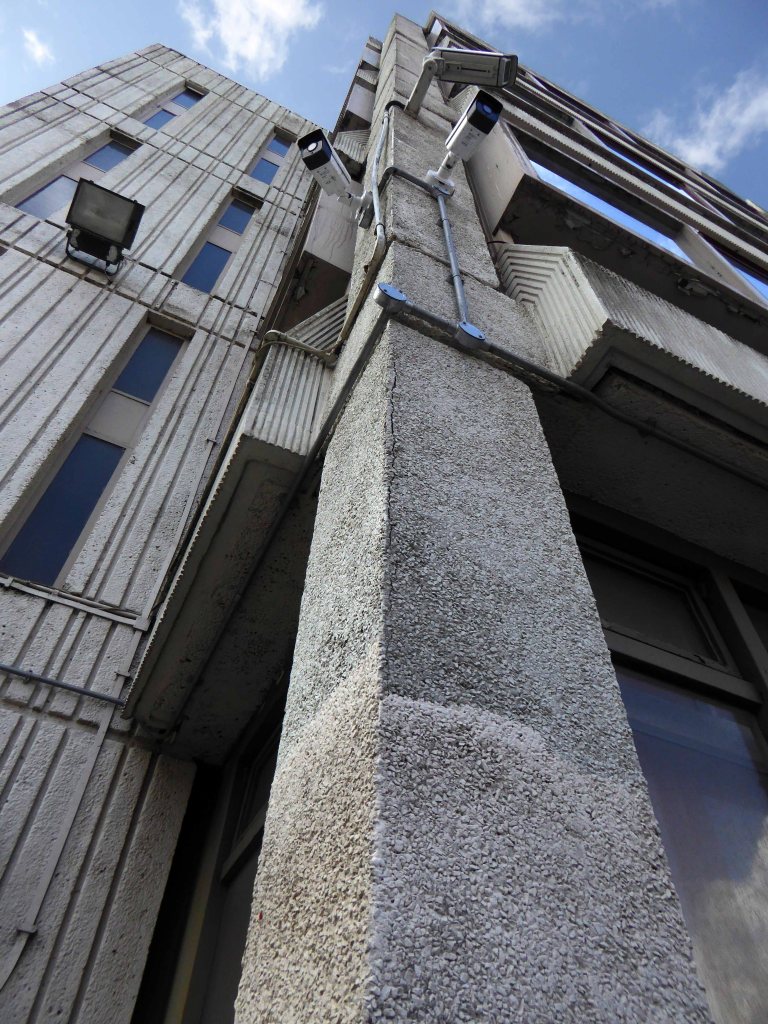
Three years on, now in the shadow of the newly built Life Centre, you stand alone unloved – empty.
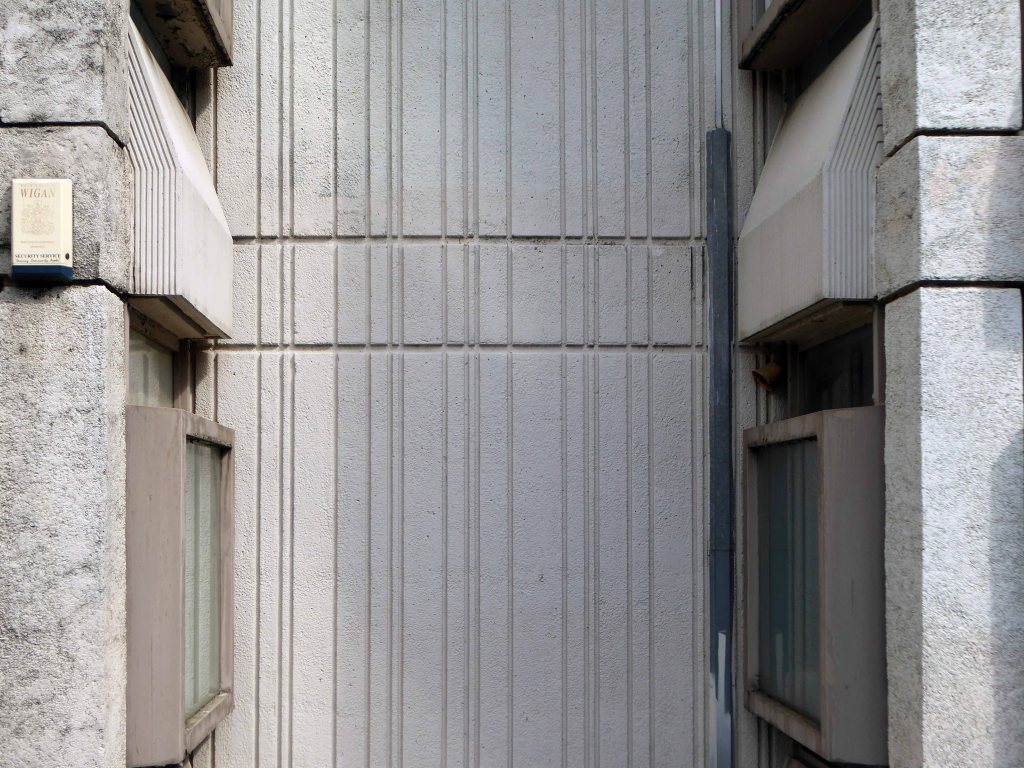
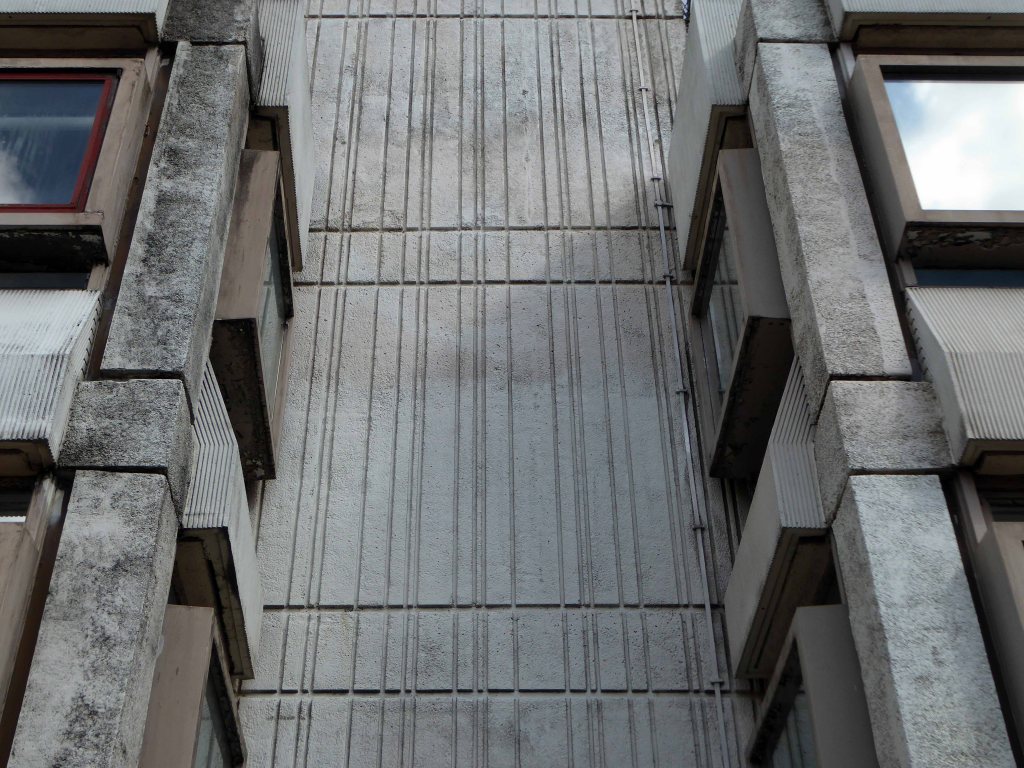
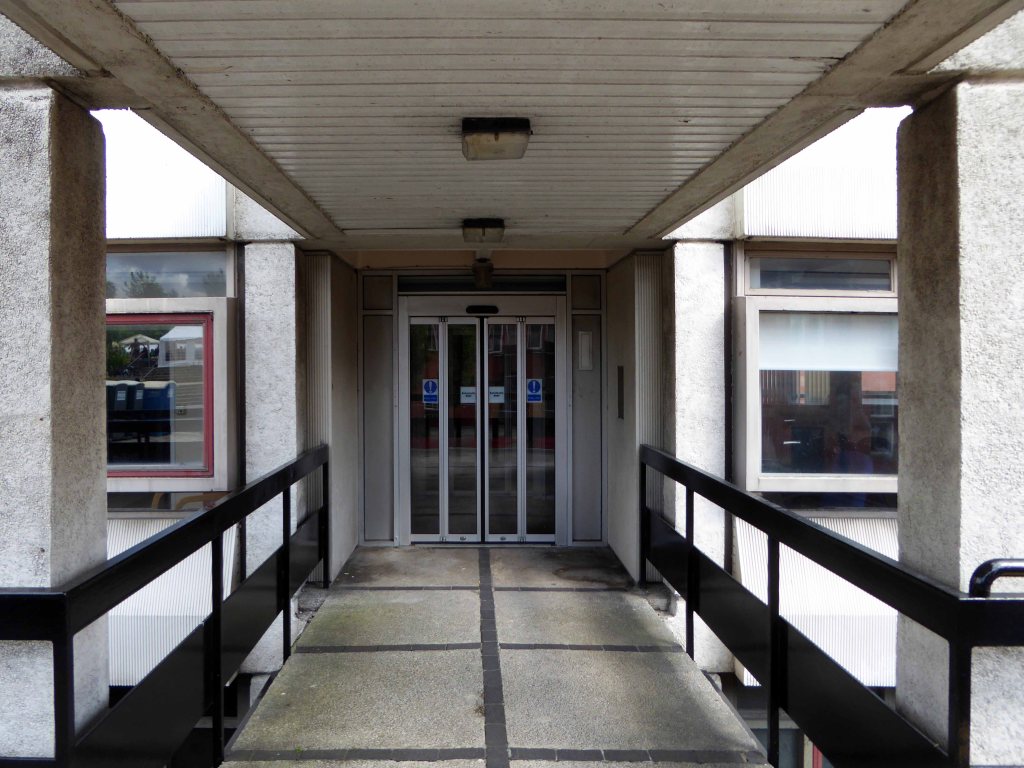
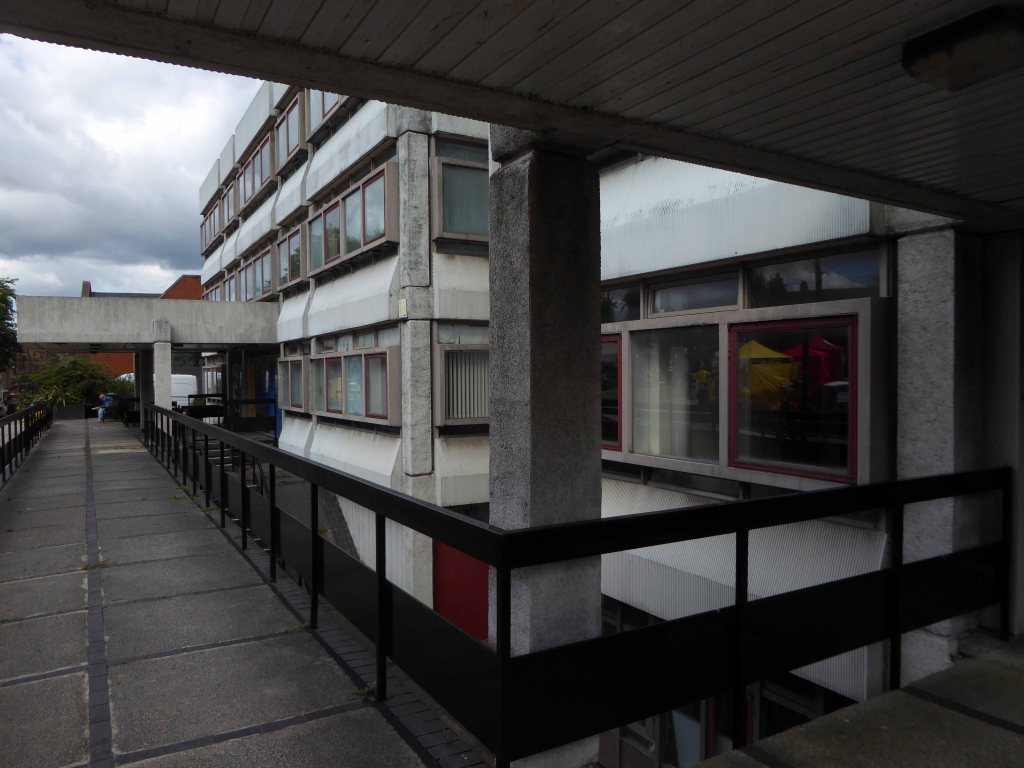
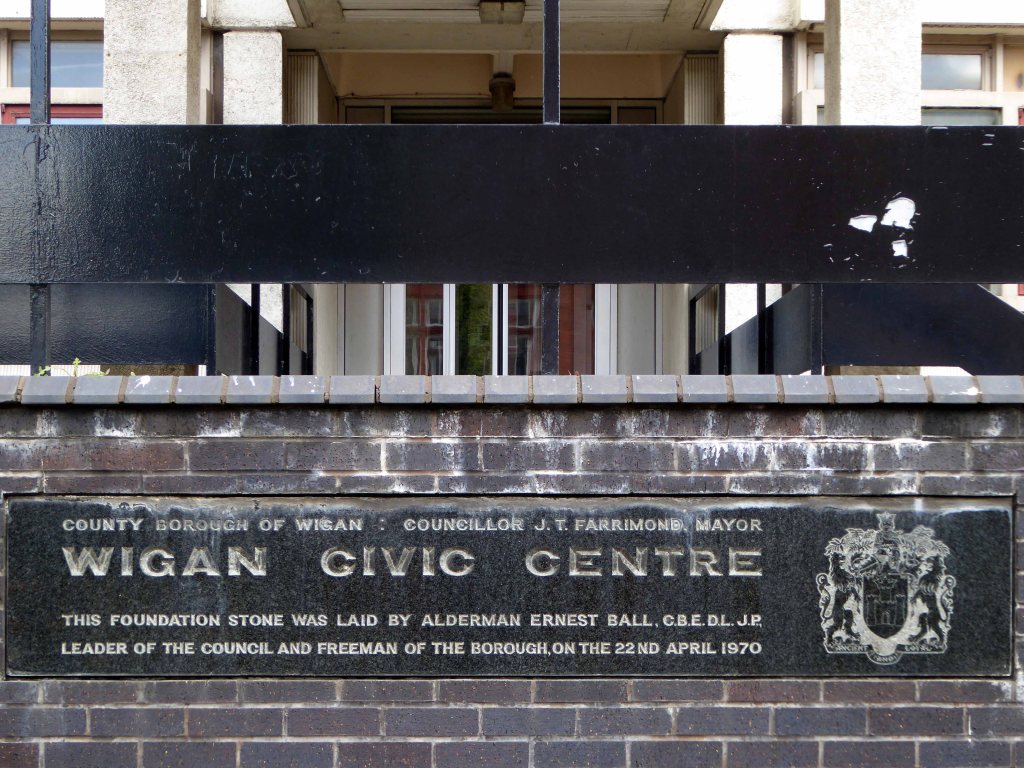
But the future of the Modernist landmark, which was first put in service by the borough in the early 70s, remains unclear. There is speculation that the Millgate building, first unveiled by Wigan Mayor John Farrimond, could become a hotel.
Last October the Wigan Observer revealed how the council had enjoyed mixed fortunes when it came to marketing elements of its existing property portfolio.
But the council has been successful in offloading some venues, with Ince Town Hall now home to Little Giggles nursery.
So who knows what fate awaits you – the town I am told is on the up.
Let’s hope that the Civic Centre is not coming down
One fine sunny Monday morning I set out cycling to Ashton-under-Lyne to buy an enamel pie dish. Almost inevitably I was pushed and pulled in a variety of unforeseen directions, incautiously distracted and diverted serendipitously – towards Droylsden.
Idly pedalling down Greenside Lane looking this way and that I was drawn magnetically to a pitched roof tower, towering over the red brick semis. Rounding the corner I discovered the delightful St Stephen’s RC church, stood high and proud on a grassy corner, glowing golden in the March sunlight.
I leaned my bike against the presbytery wall and with the kindly bidding of a passing parishioner, I went inside.
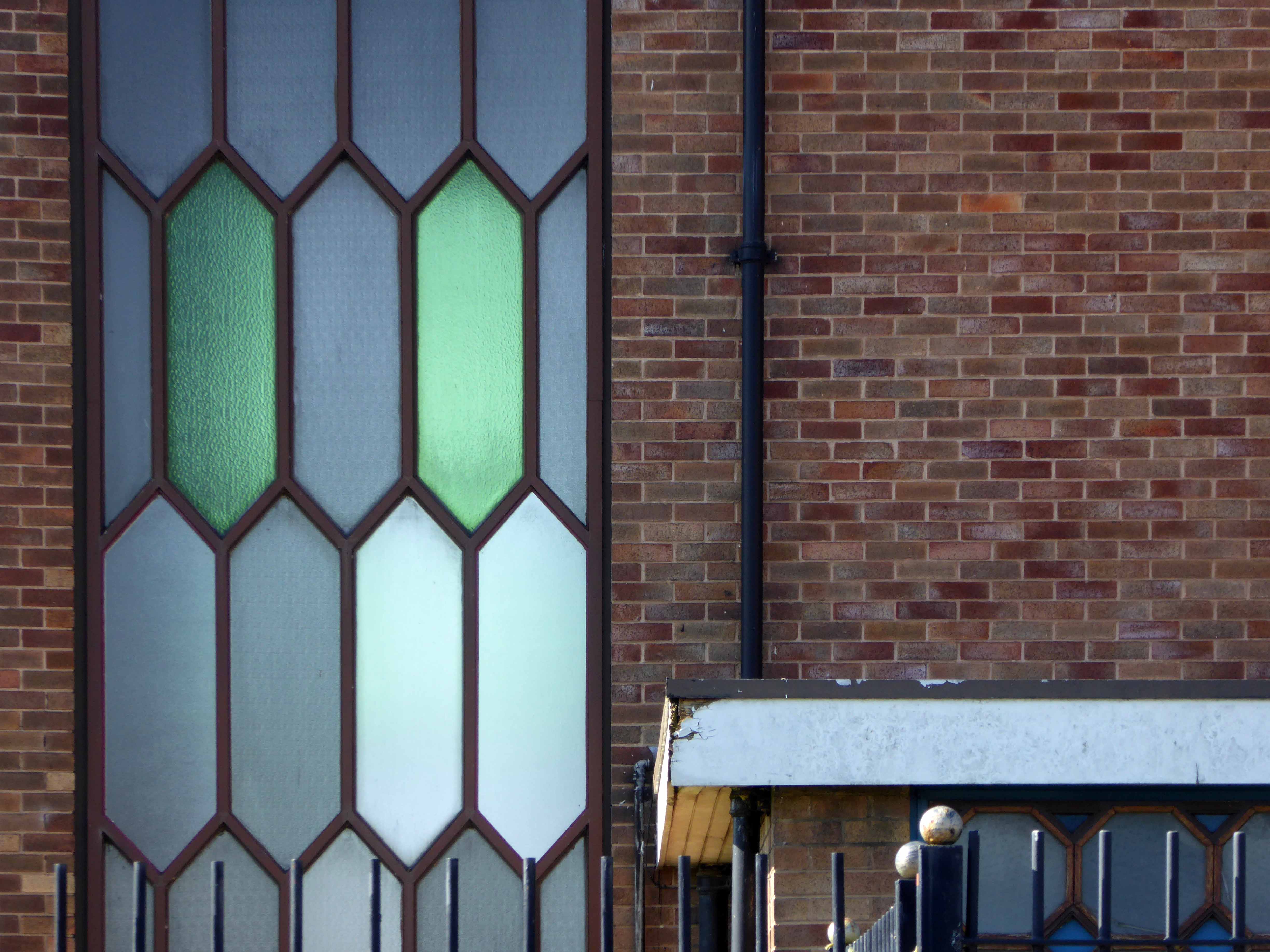
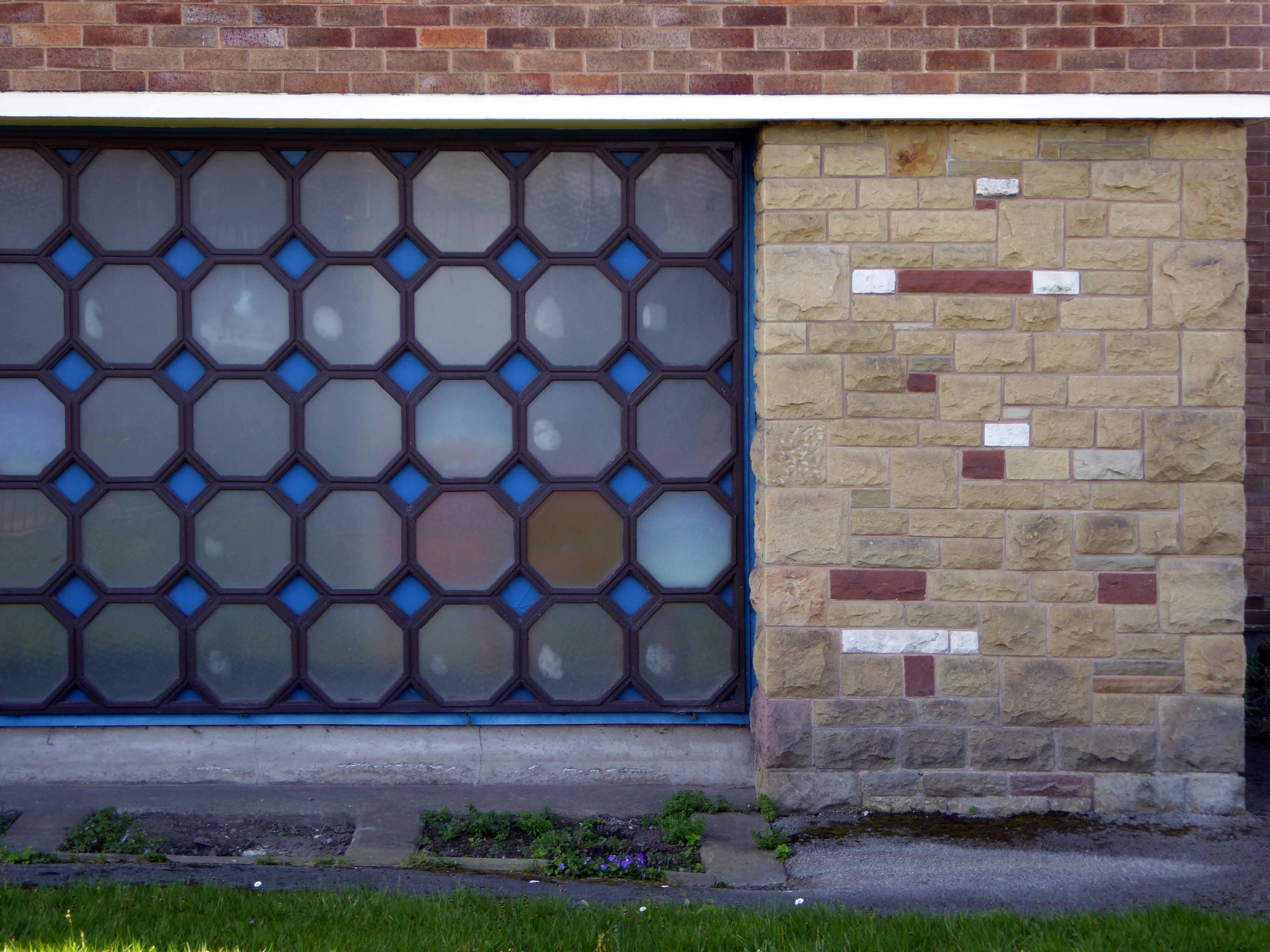
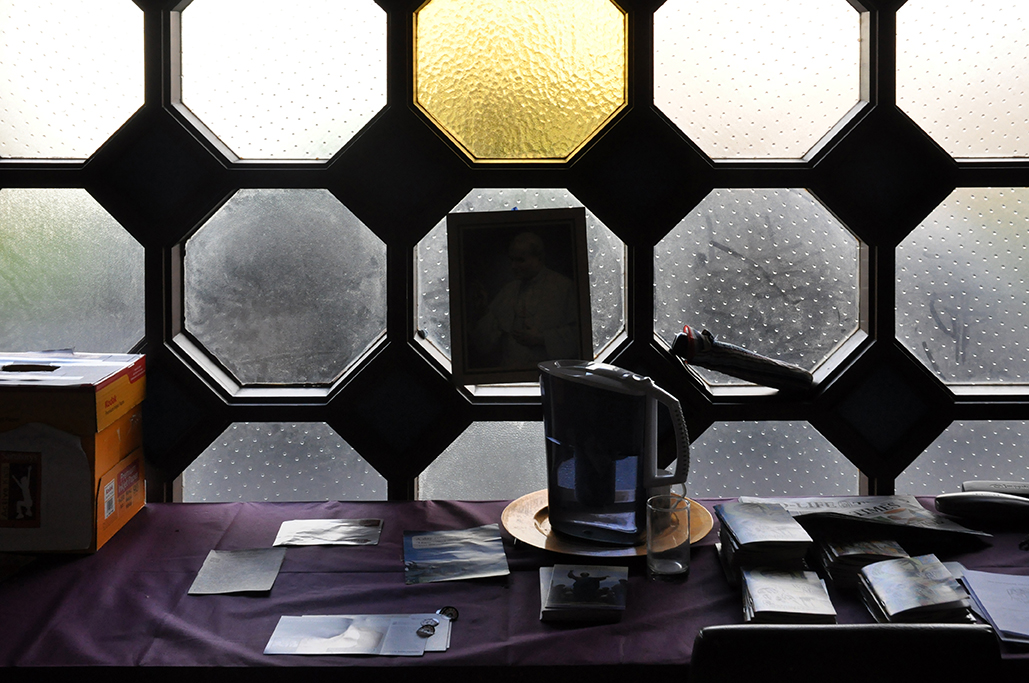
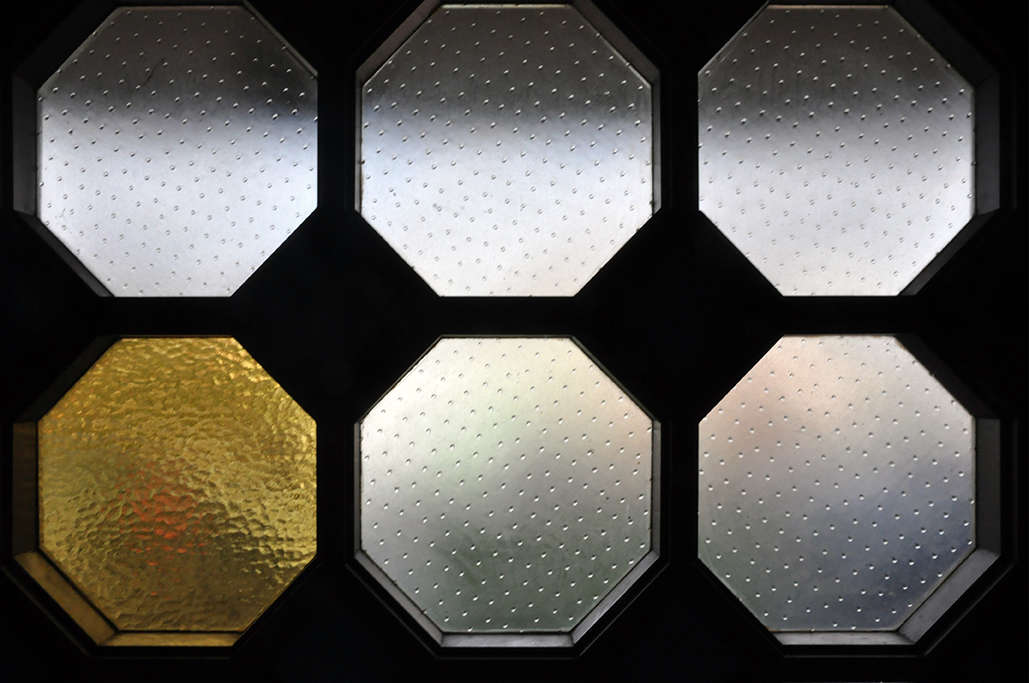
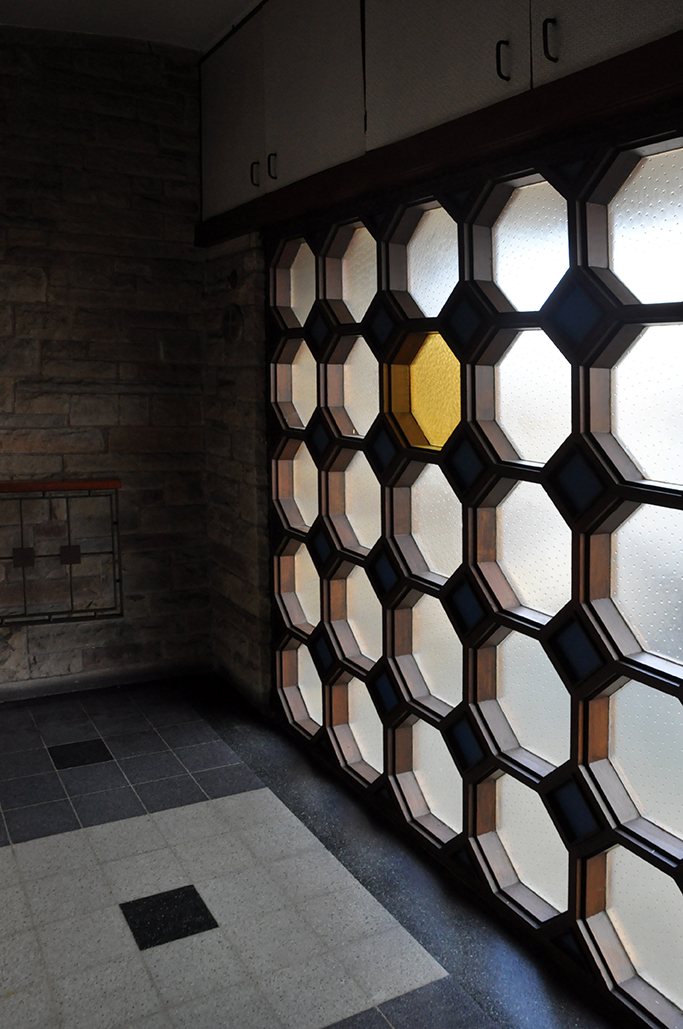
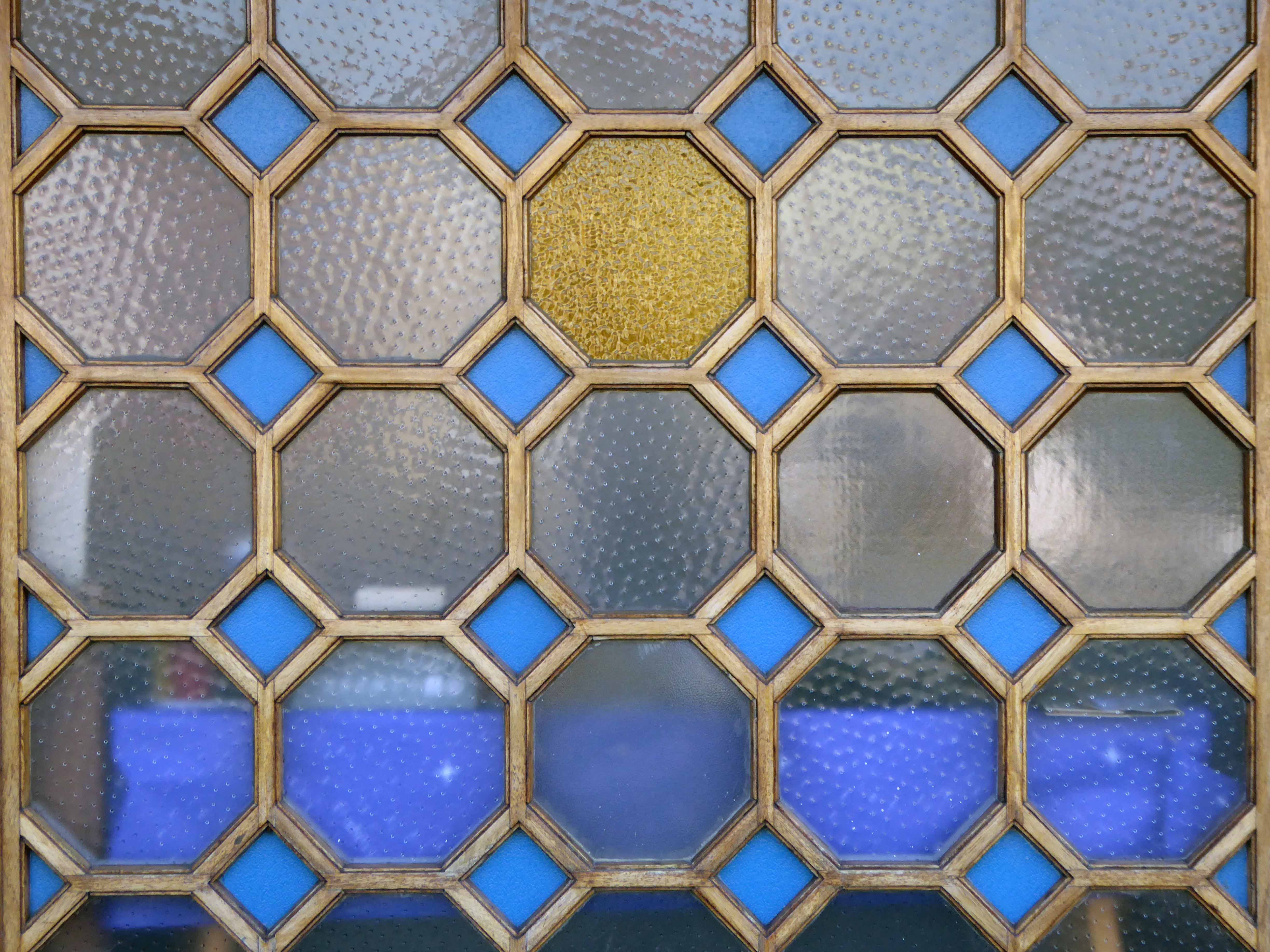
Thanks to Father Tierney for his time and permission to snap the interior. It was a calm space, the large open volume side lit by high octagonal honeycomb modular windows. The elegant plain pitched concrete gambrel roof beams a simple engineered solution.
The church and attached presbytery were built from designs by Greenhalgh & Williams in 1958-9, the church being consecrated on 12 May 1960. A reordering took place, probably in the 1960s or 70s, when the altar rails were removed and the altar moved forward. Probably at the same time, the font was brought into the church from the baptistery.
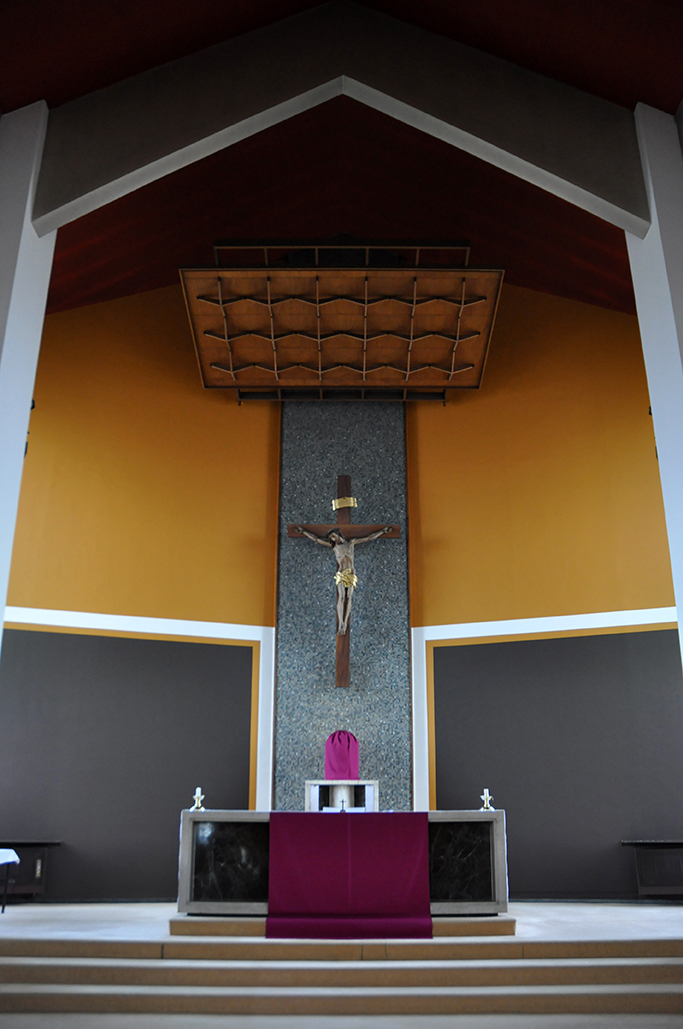
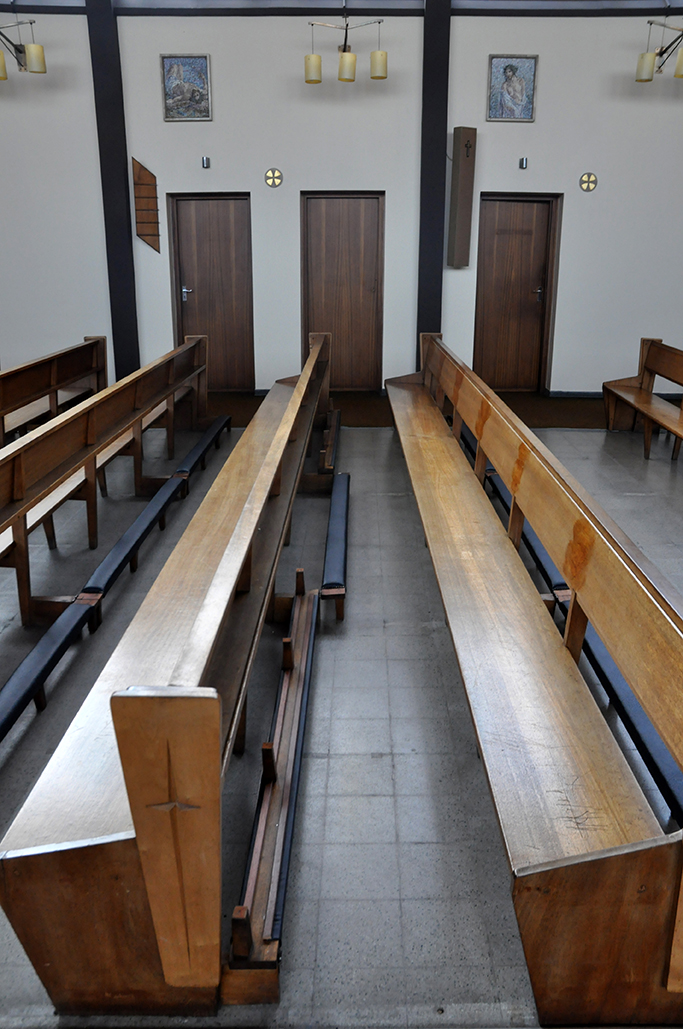
The altar and apse beautifully restrained in colour form and choice of materials. The design and detailing on the pews so warm and understated.
I was loathe to leave.
The exterior does not disappoint, the repetition of modular window shapes, the integration of doors, brick and mixed stone facing.This is a building of elegant grandeur, well proportioned, happily at home in its setting.
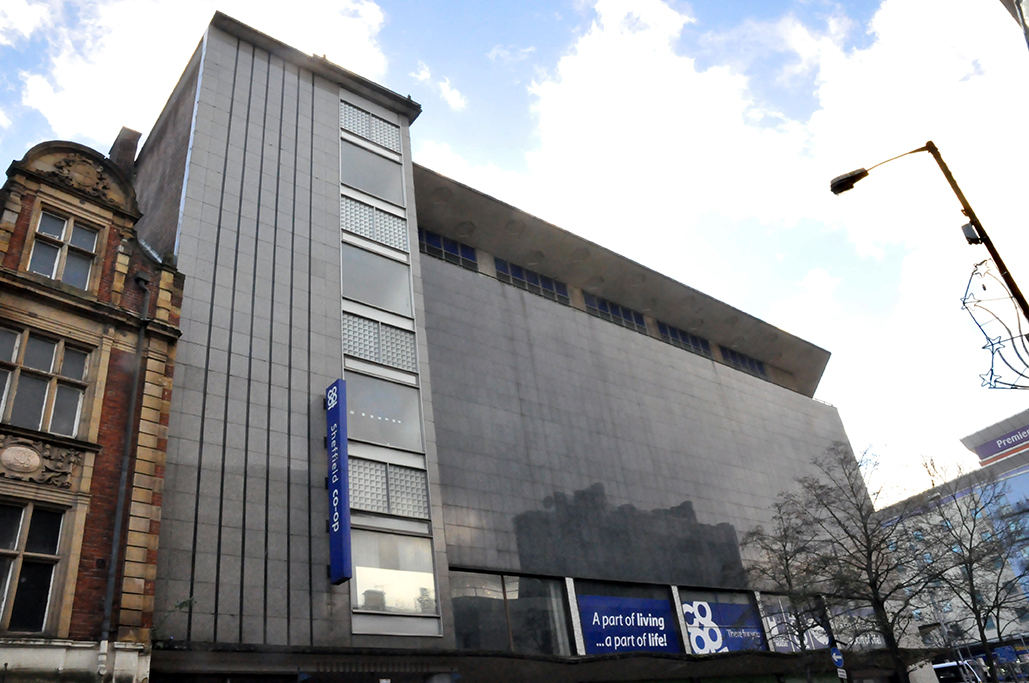
So here we are outside, you and I in 2015 – it seems like yesterday.
Whereas yesterday I was inside not outside, but more of that in a moment.
It seems that you were listed in 2009 and deservedly so.
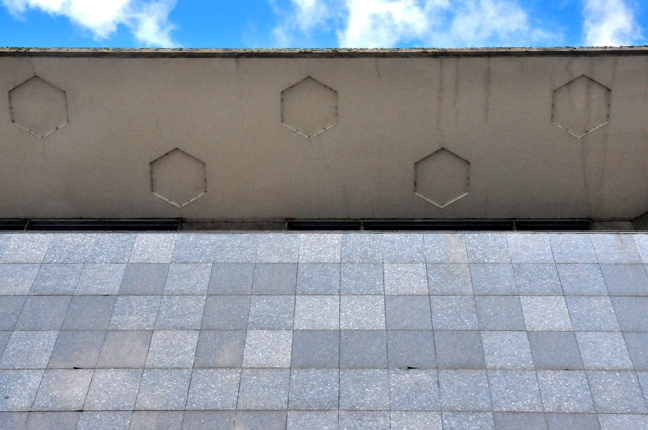
1964 by George S Hay, Chief Architect for CWS, with interior design by Stanley Layland, interior designer for CWS. Reinforced concrete with Blue Pearl granite tiles and veneers, grey granite tiles and veneers, buff granite blocks, glass, and brick.
There’s just so much to stand and stare and marvel at.
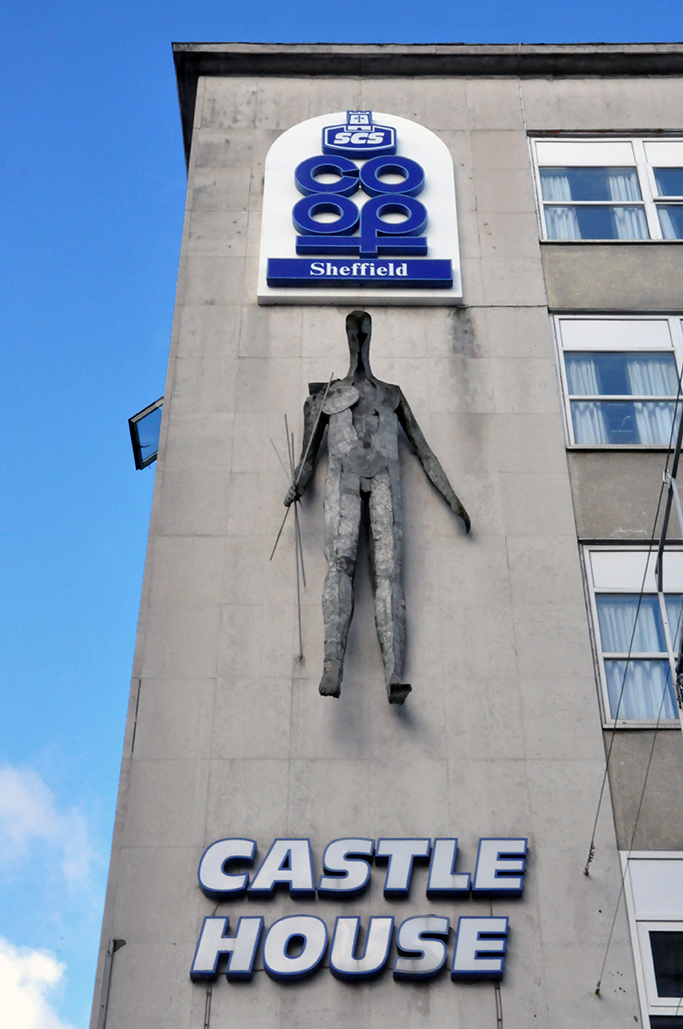
Vulcan by Boris Tietze commisioned by Horne Brothers 1961 for their head office building No. 1 King Street. Glass fibre on a metal armature the 8 foot high figure holding a bundle of metal rods.
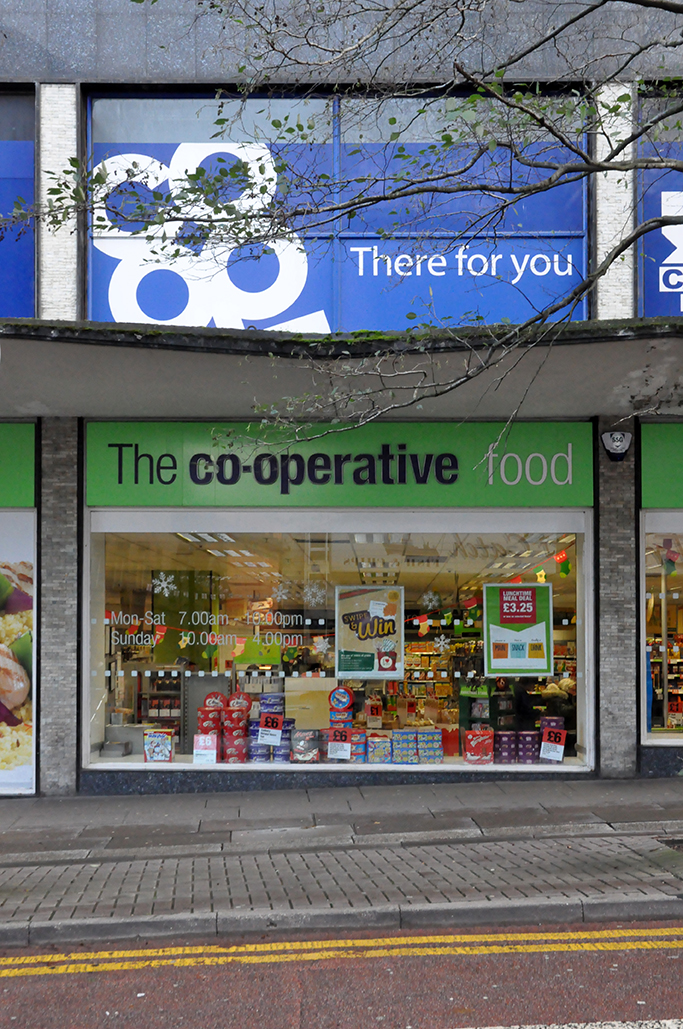
You were just about still open then, then you weren’t, then you were again – but a Co-op no more alas.
Work is underway on plans for a tech hub in Sheffield after a funding package was agreed.
Followed by a casual stroll towards 2019 where we are talking a peep inside courtesy of owners Kollider and book shop La Biblioteka.
I’d never ever seen the interior, save through the photographs of Sean Madner who captured the key features in 2014, prior to refurbishment.
So the Modernists and I pitched up this Sunday afternoon, the conclusion of our Sheffield Walk.
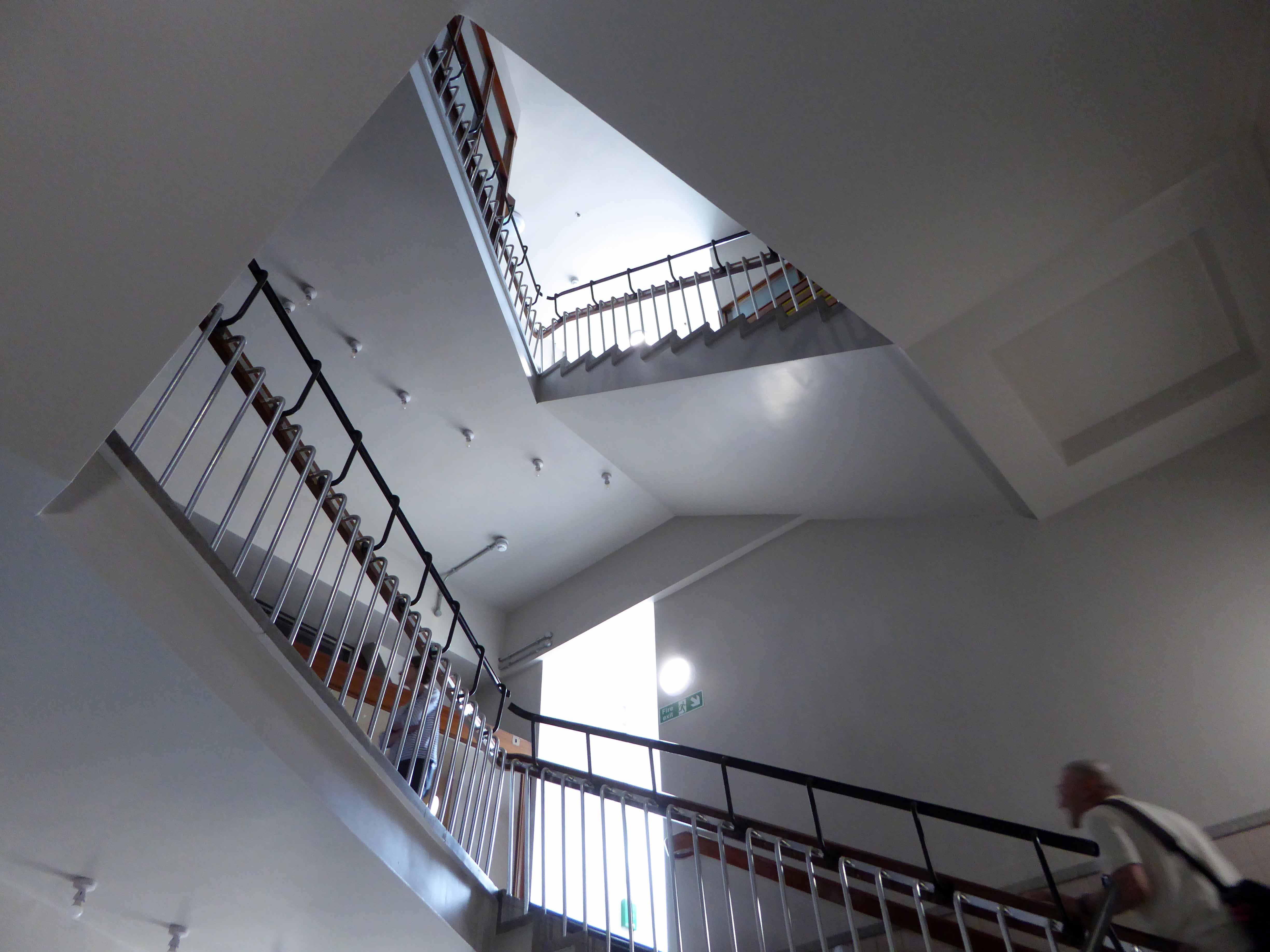
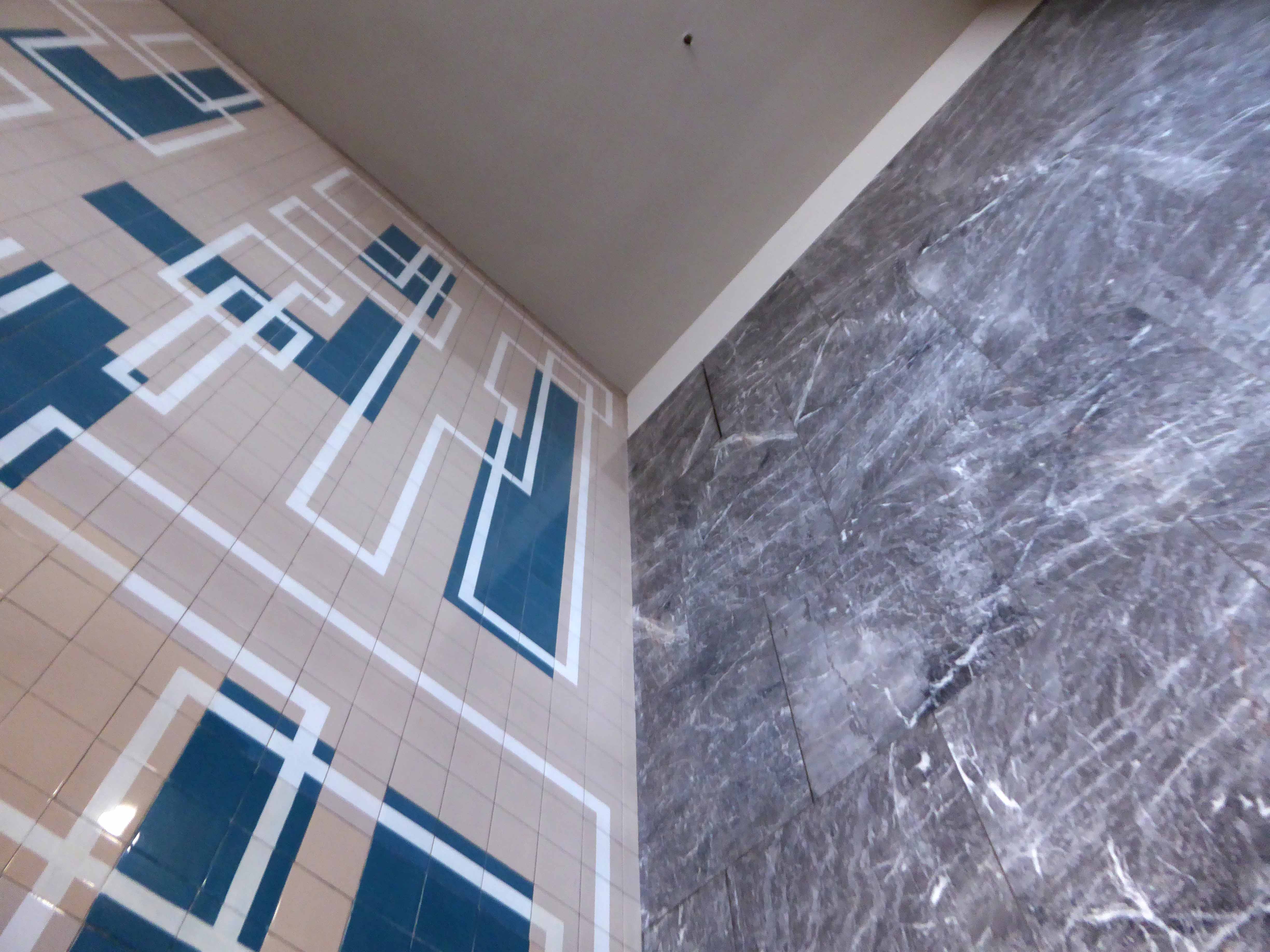
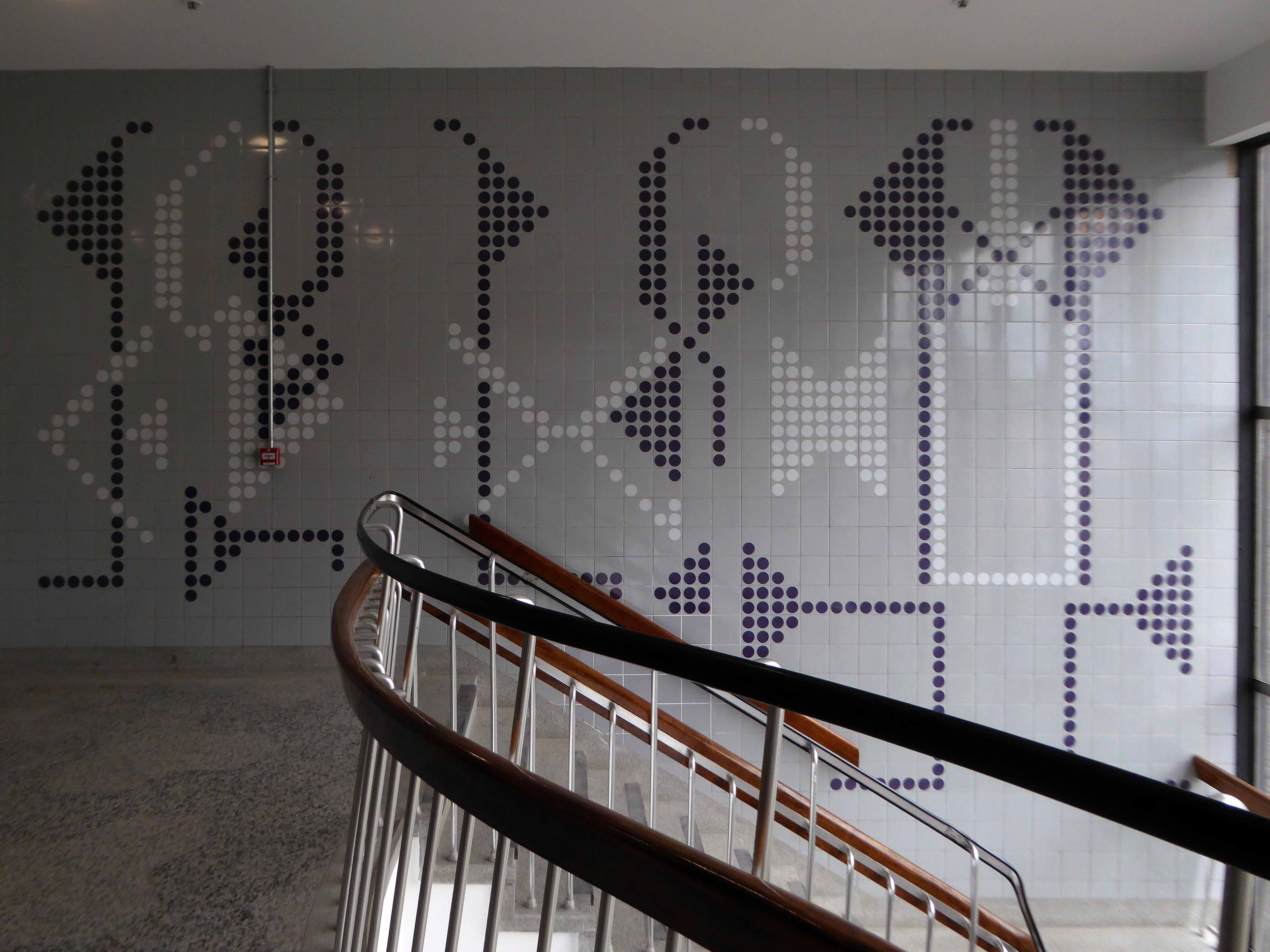
Lets take a look at the end stairwells, two very distinct designs one dotty one linear, both using Carter’s Tiles.
Configured from combinations and rotations of these nine modular units and two plain tiles.
Configured from combinations and rotations of these twelve modular units and two plain tiles.
The site has retained some of its original architectural typography.
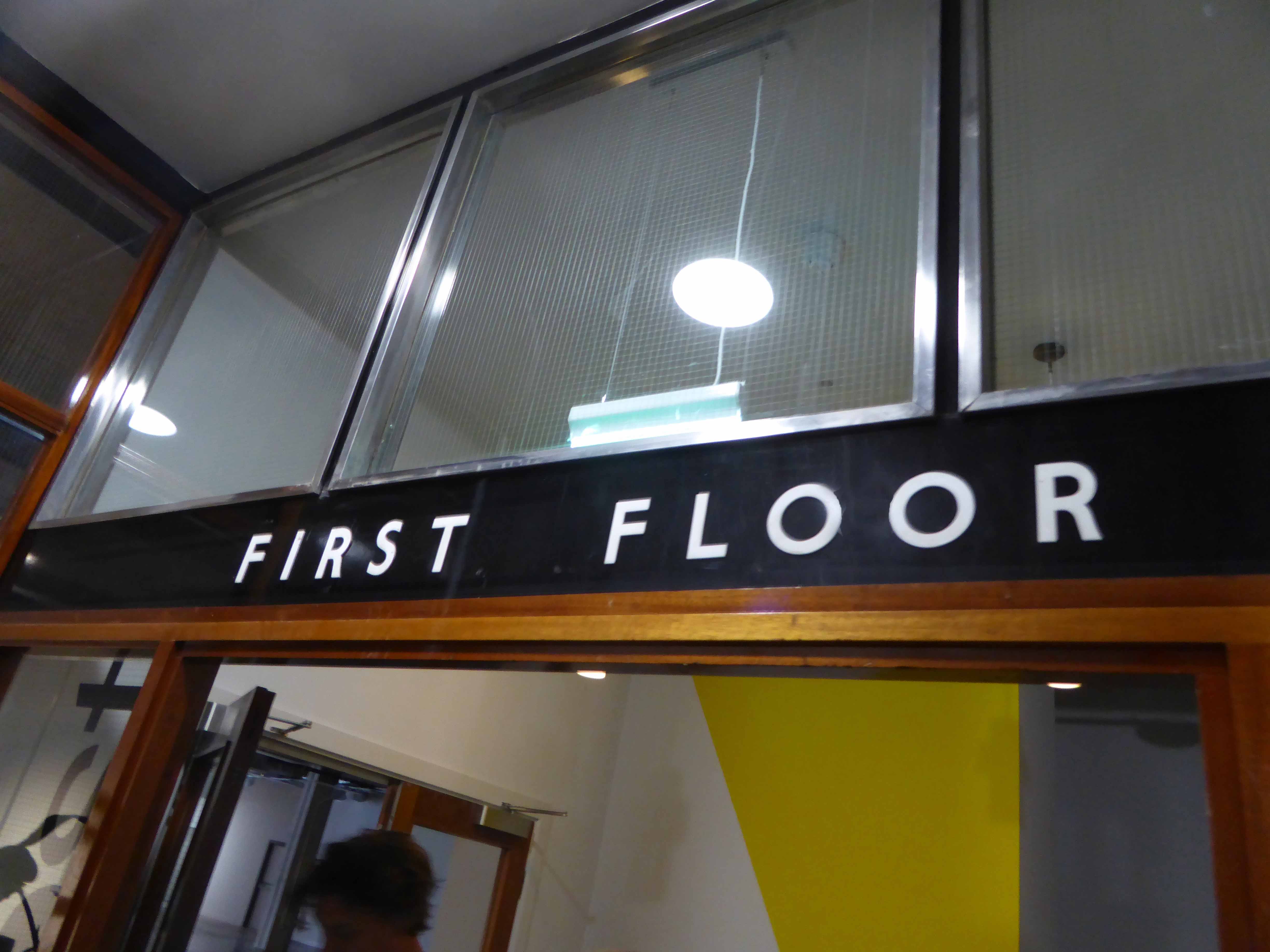
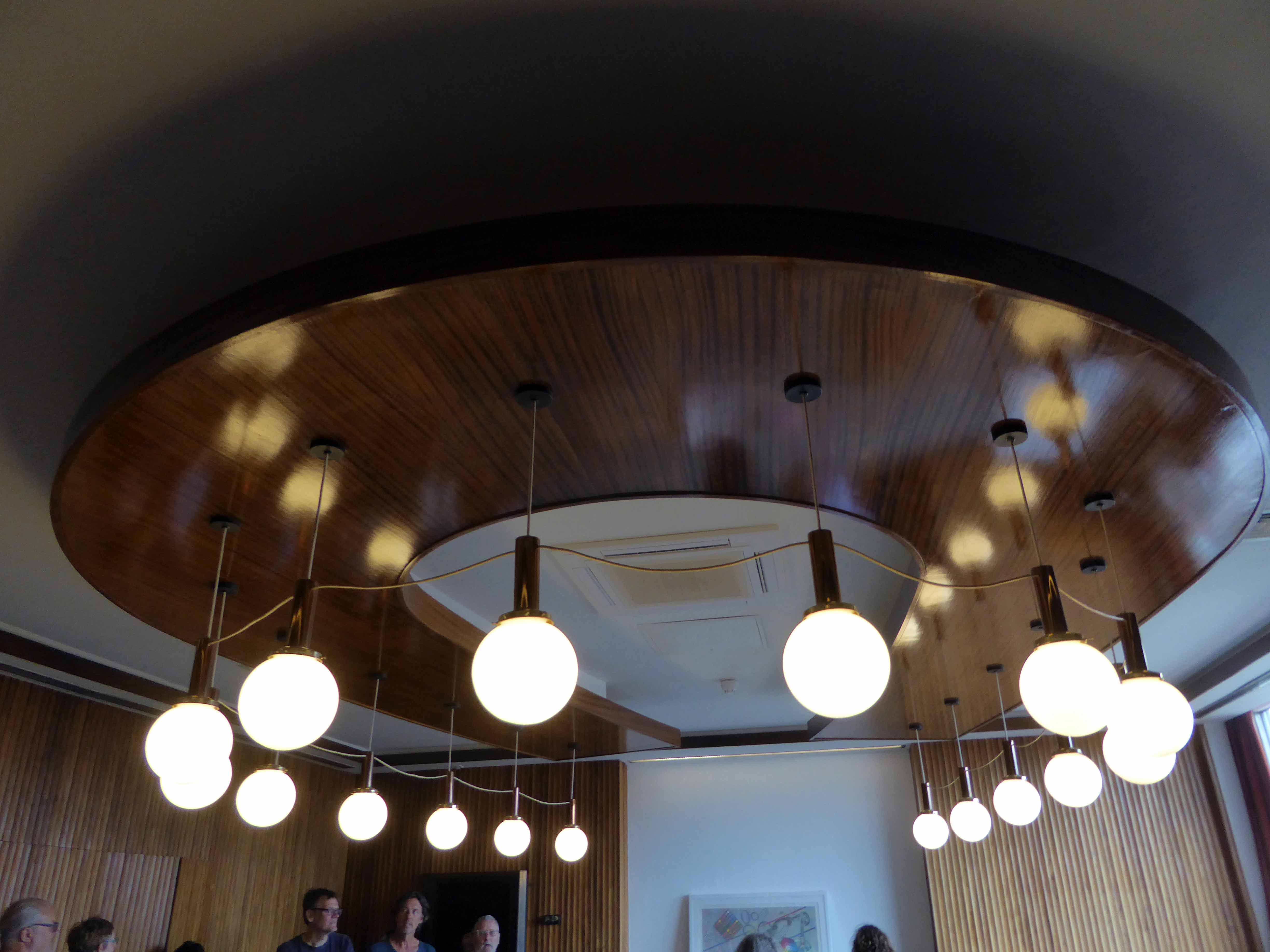
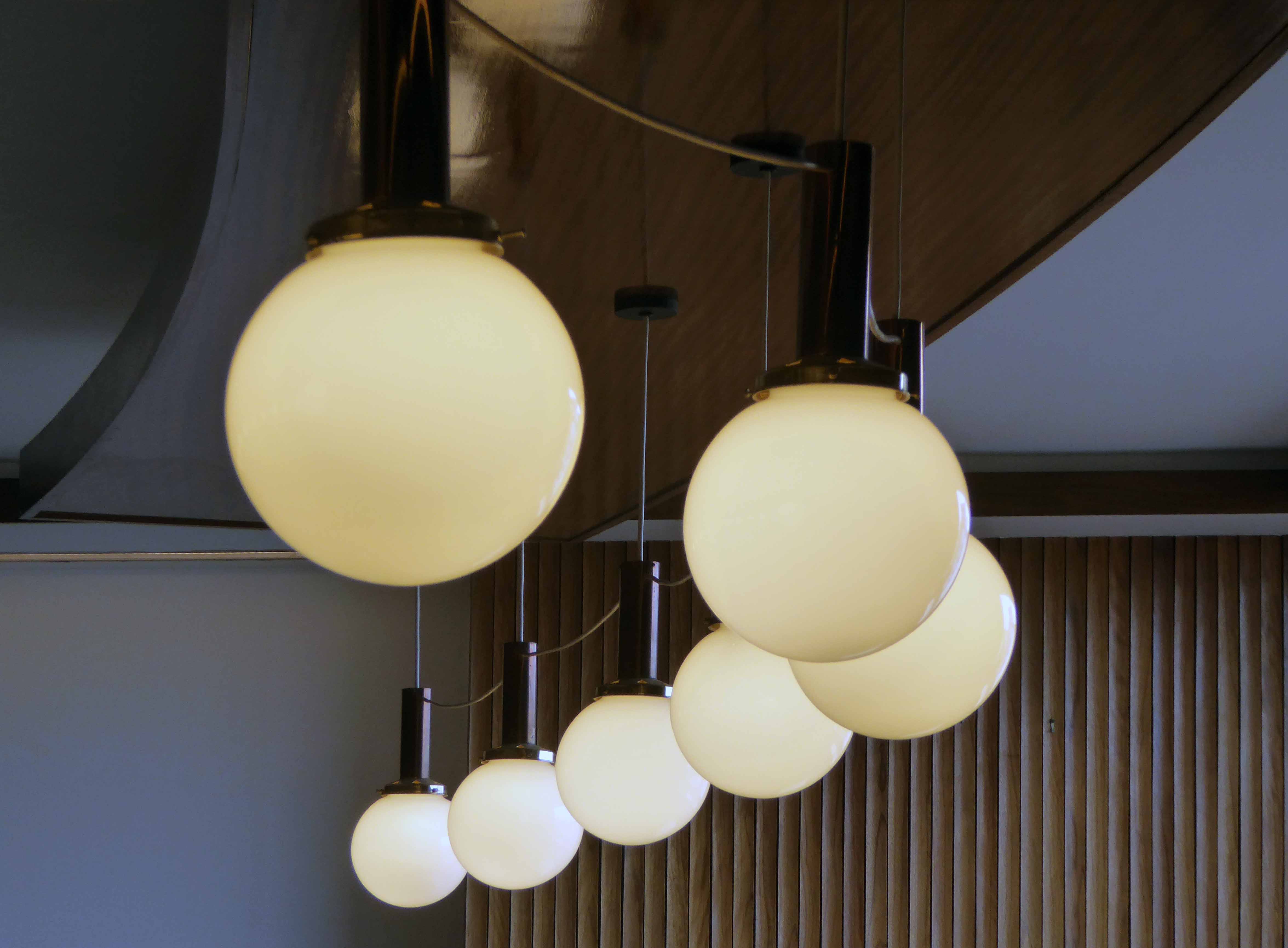
The former top floor restaurant has a suspended geometric ceiling with recently fitted custom made lighting.
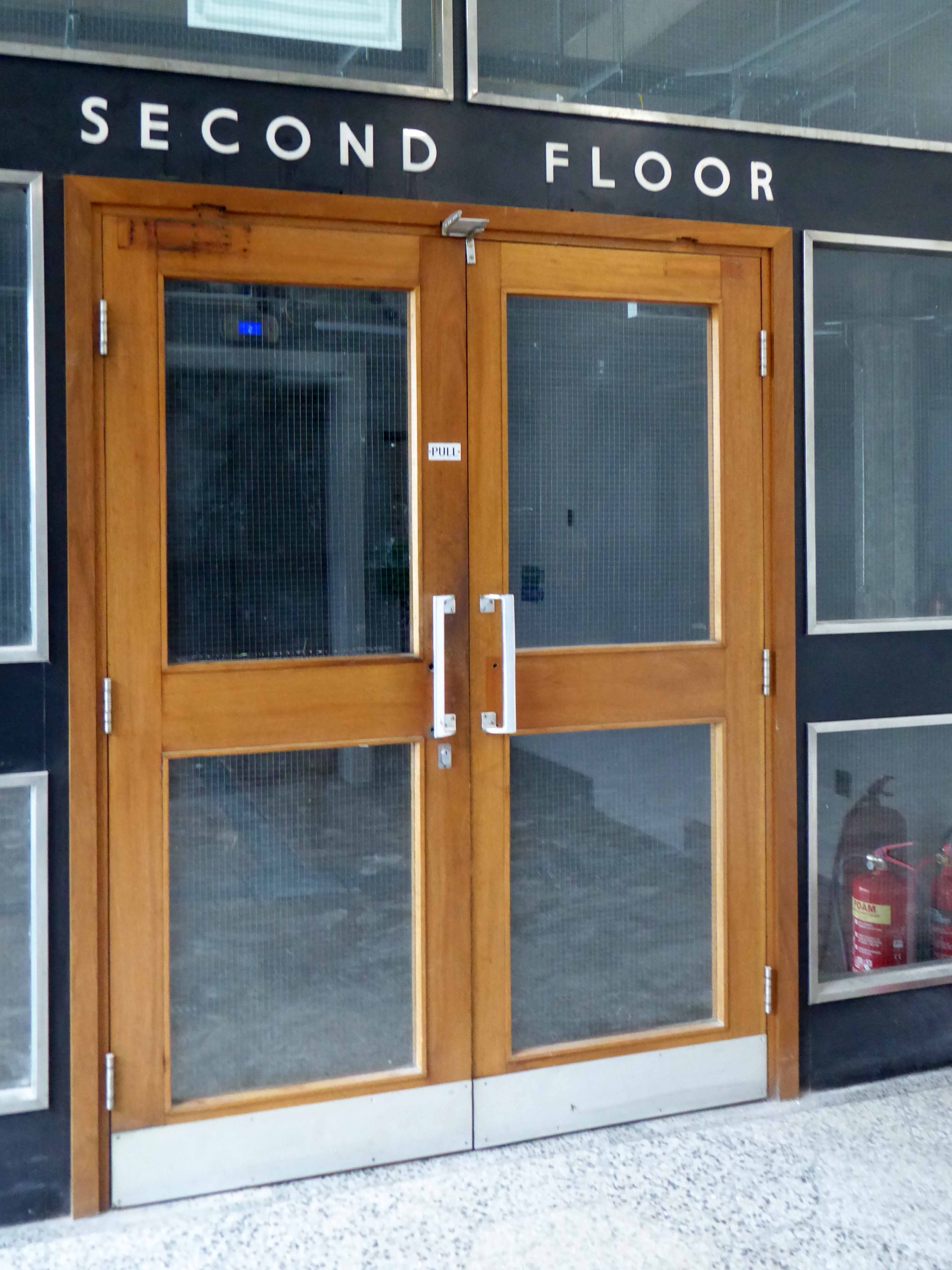
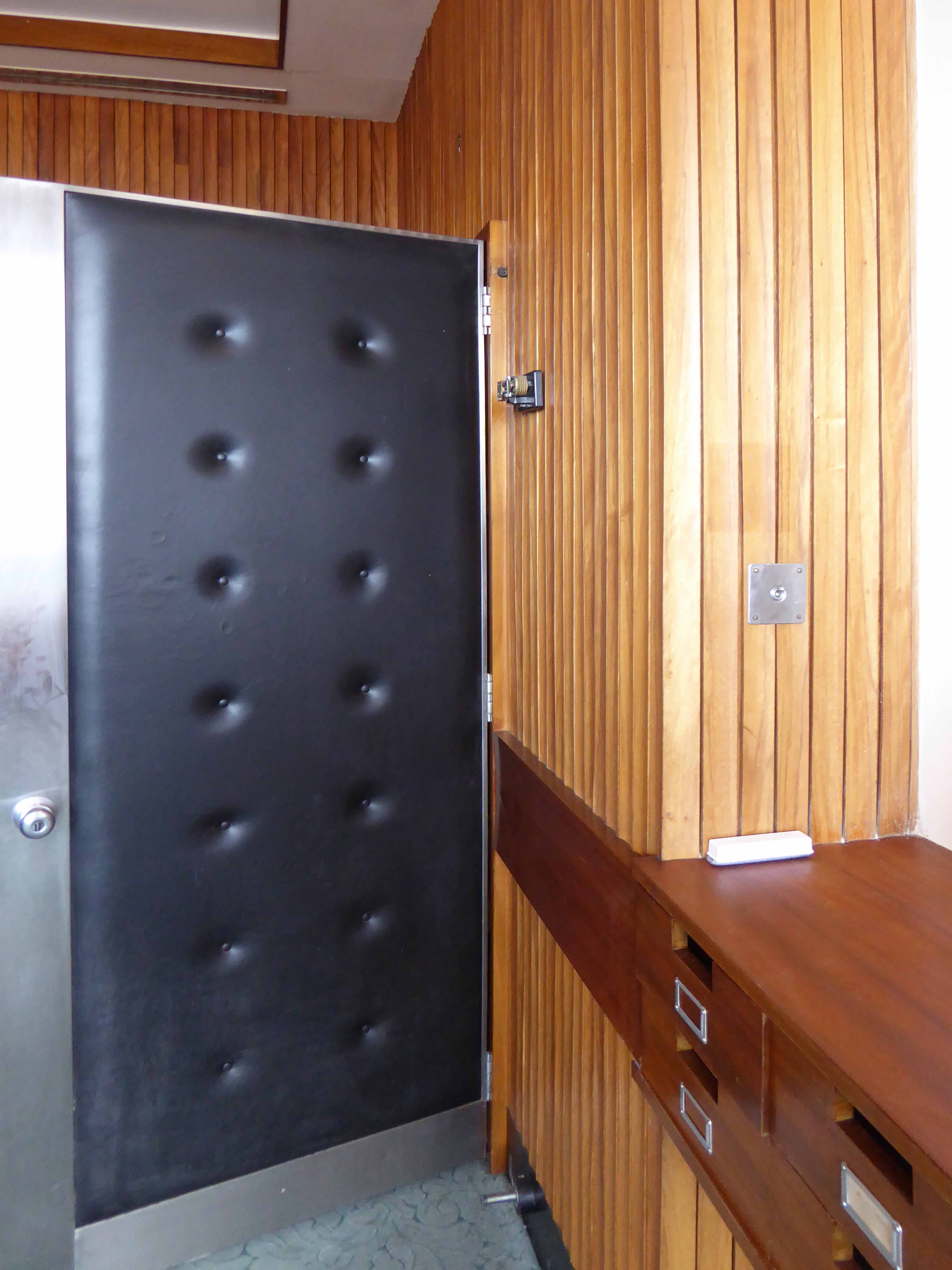
The timber-lined boardroom has a distinctive horseshoe of lighting, augmenting the board room table – which is currently away for repair, oh yes and a delightful door.
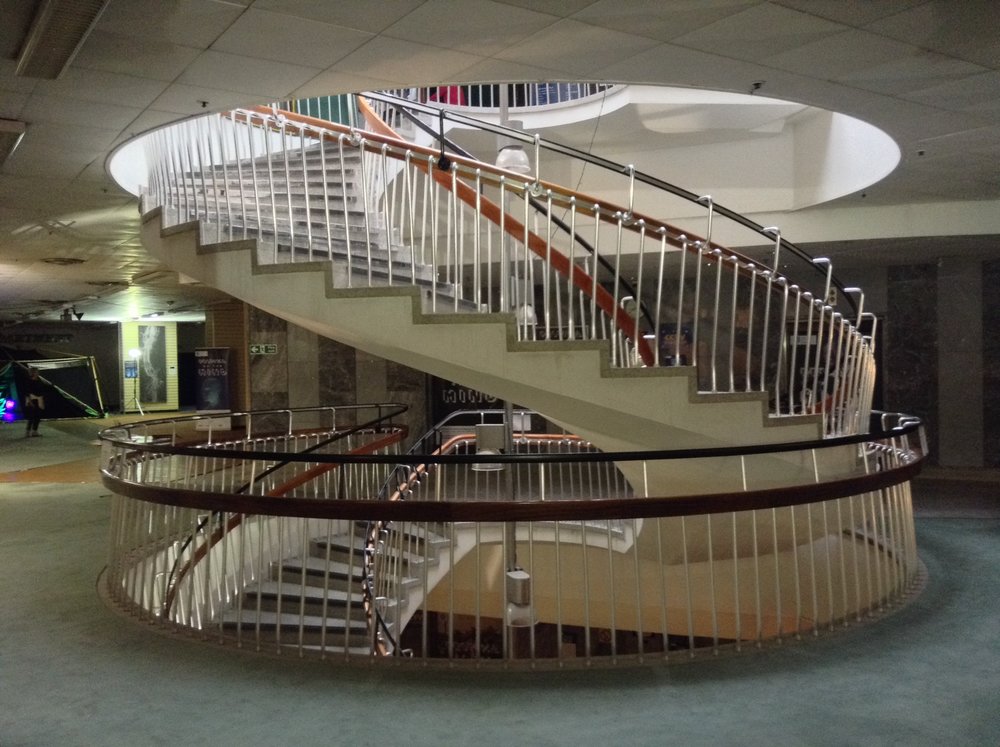
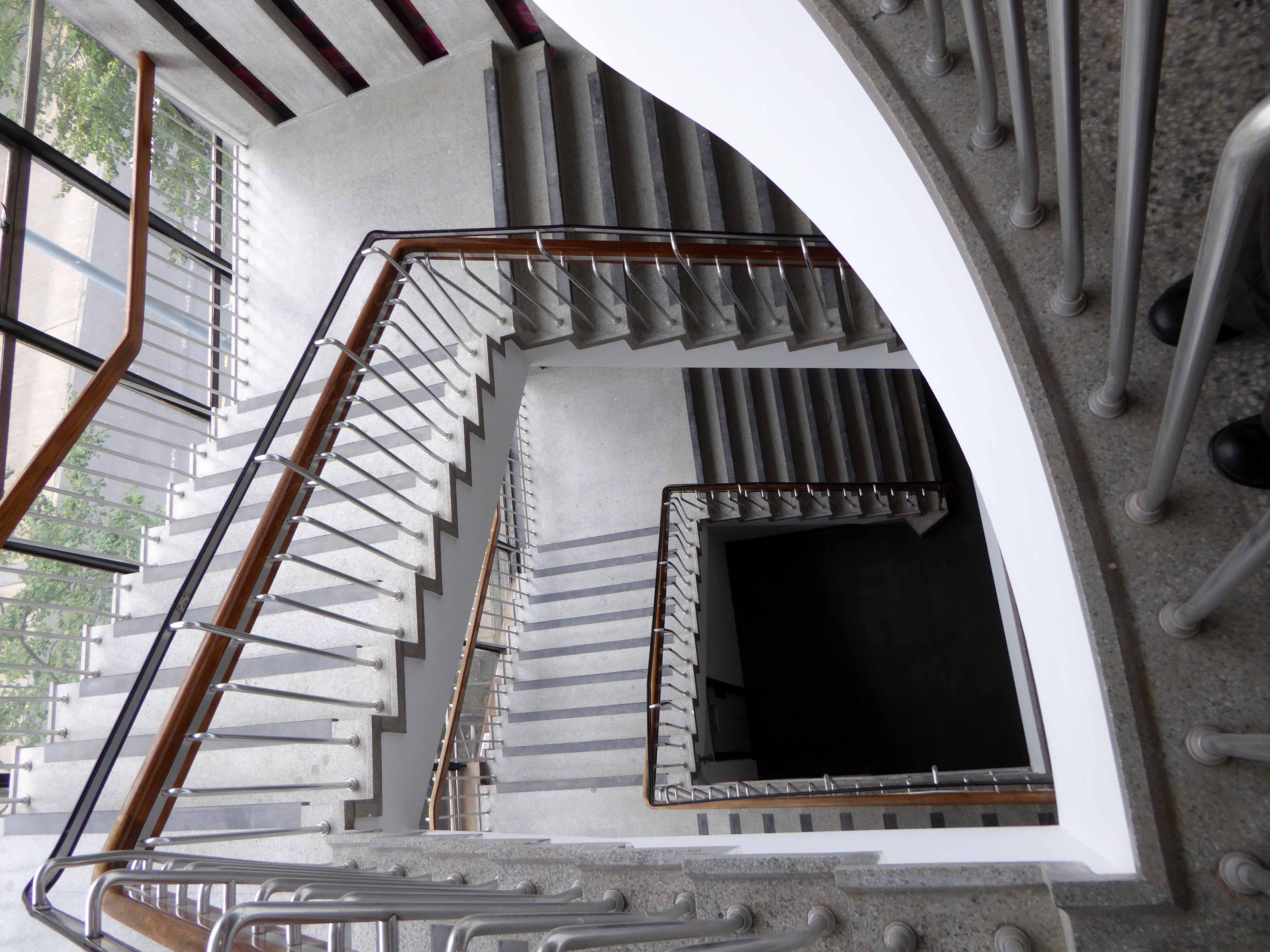
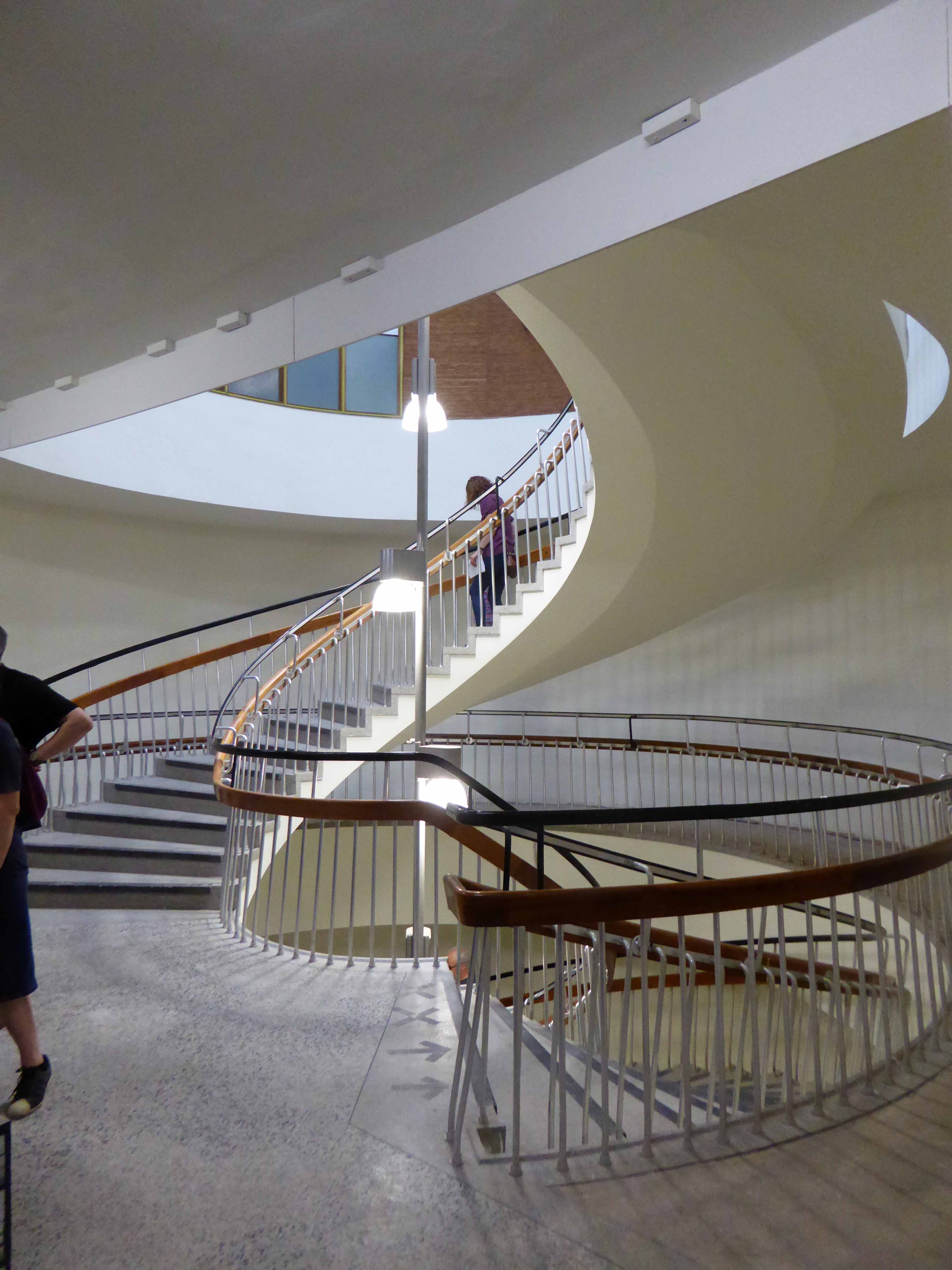
High atop the intoxicating vertiginous swirl of the central spiral stairway is the relief mural representing a cockerel and fish made of aluminium, copper and metal rod, with red French glass for the fish’s eye and cockerel’s comb.
Illuminated from above by this pierced concrete and glass skylight.
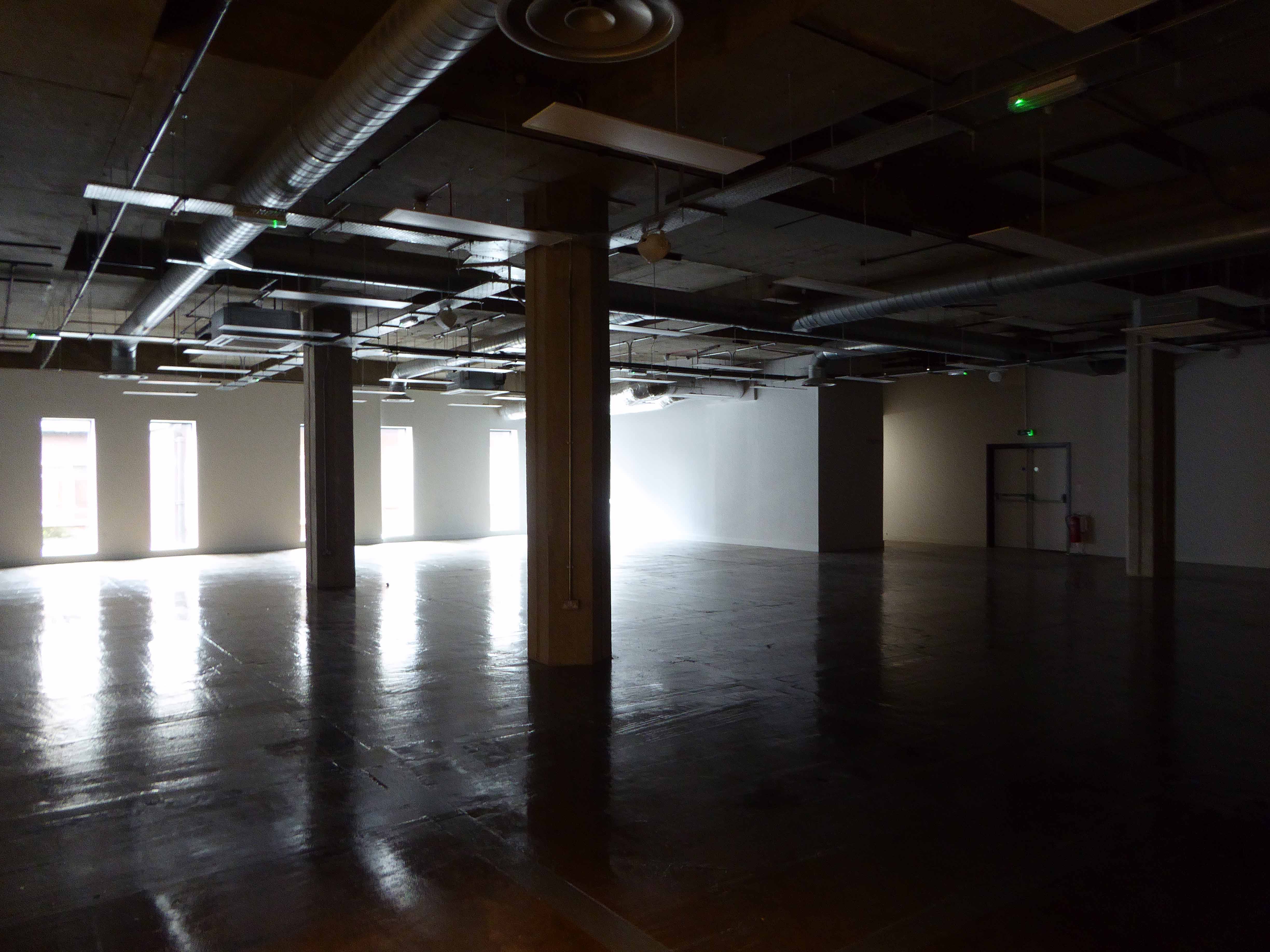
Many of the internal spaces have been ready for their new tenants.
This is a fine example of Modernist retail architecture saved from decay and degradation by the timely intervention of a sympathetic tenant.
Long may they and Castle House prosper – Sheffield we salute you!
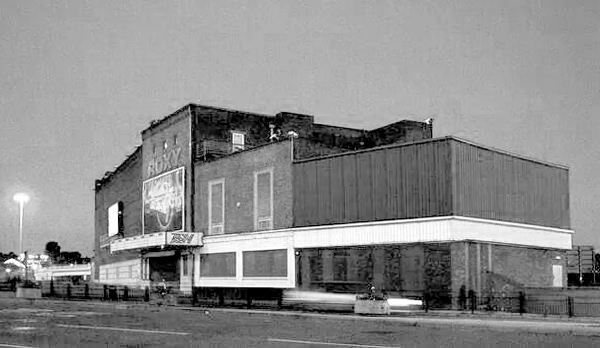
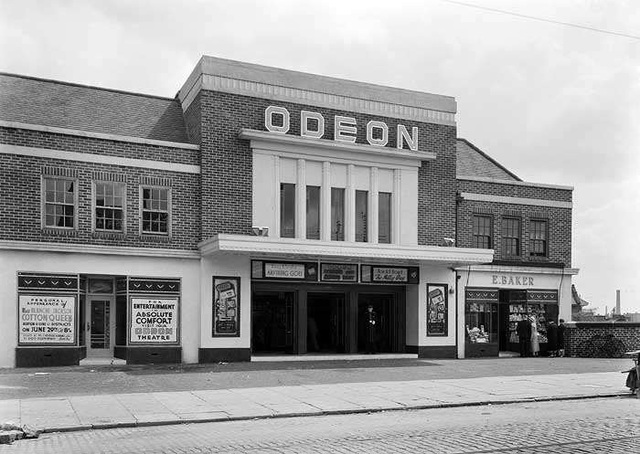
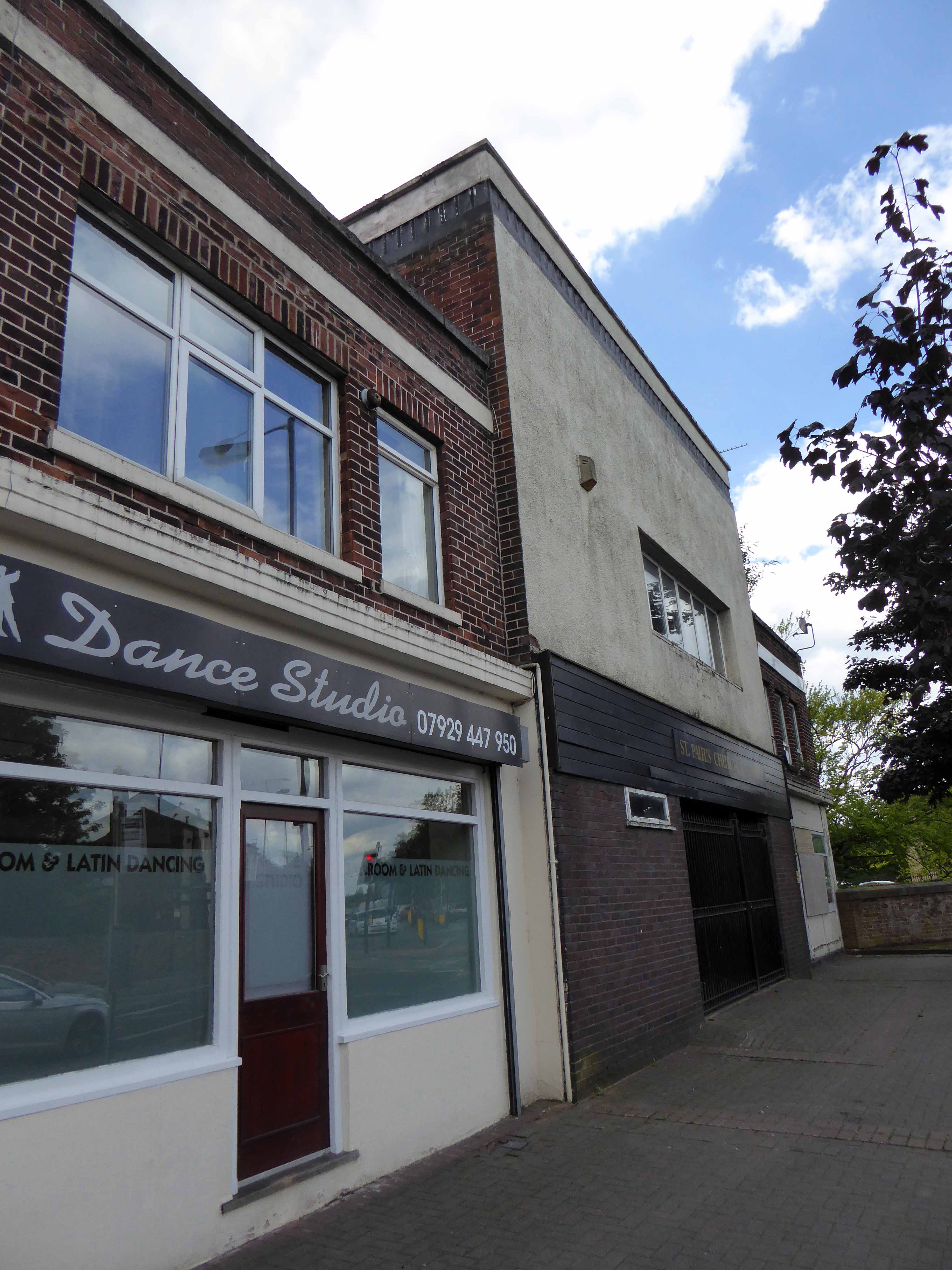
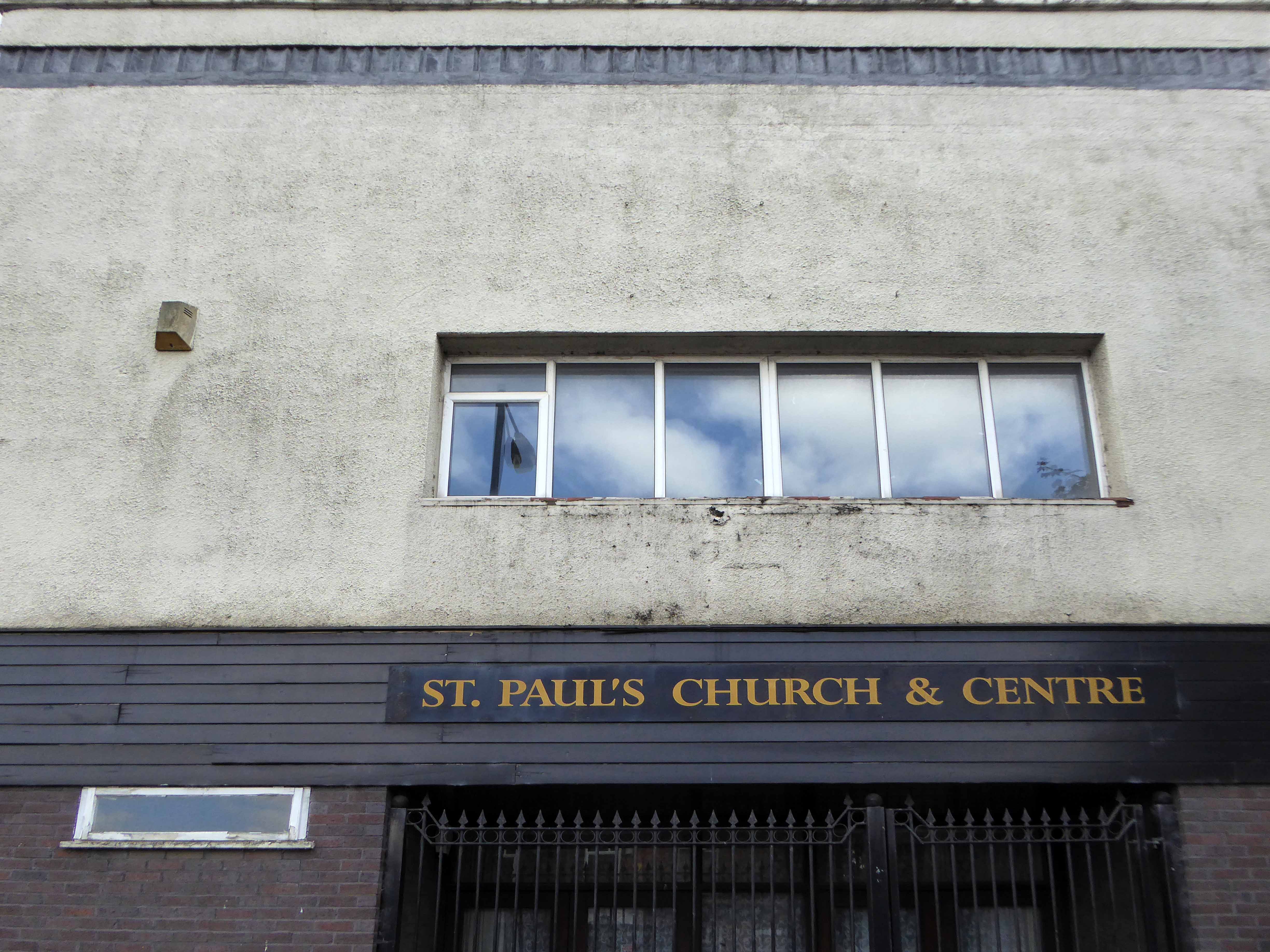
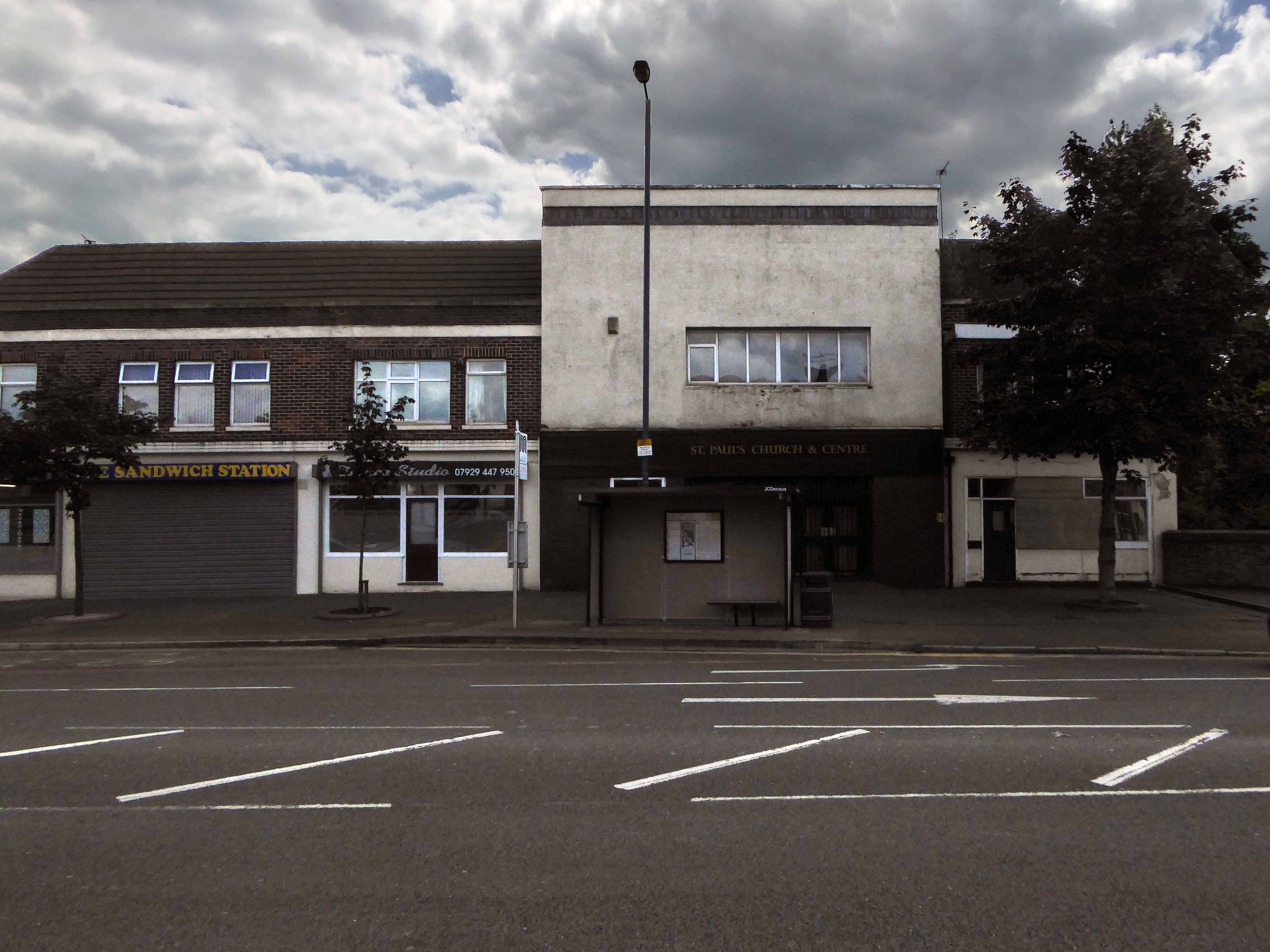
This was planned to be the Verona Cinema, a project of local builders – P Hamer Verona Cinema Ltd. The construction of the cinema was almost completed when Hamer sold the building to Oscar Deutsch and it opened as one of his Odeon theatres.
Hamer then used the proceeds of the sale to build the Roxy Cinema Holinwood, which was designed by Drury & Gomersall.
Opening date of the Odeon Theatre was 29th June 1936, when the first programme was Bing Crosby in “Anything Goes” and Harold Lloyd in “The Milky Way”. Designed by the noted cinema architectural firm of Drury & Gomersall, the frontage had a neat entrance in brick, with white stone facings on the window surrounds. There was a parade of shop units on each side of the entrance which had matching brickwork and a white stone trim.
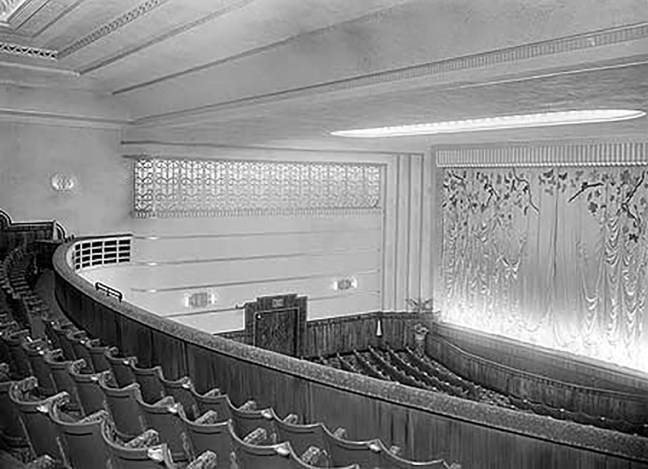
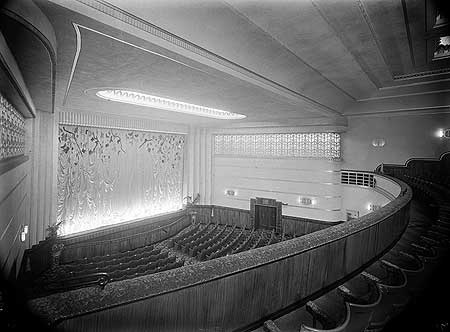
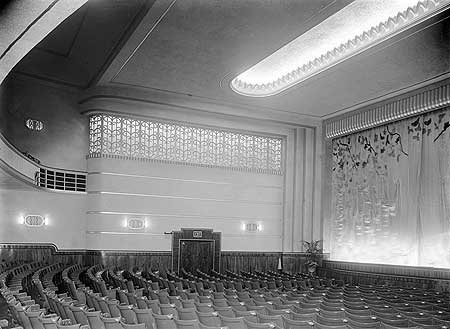
Inside the auditorium the seating was arranged for 834 in the stalls and 330 in the circle. The side splay walls on each side of the proscenium was decorated in wide horizontal bands, and topped with a backlit illuminated grille.
The Odeon was closed by the Rank Organisation on 11th March 1961 with Kenneth More in “Man in the Moon”.
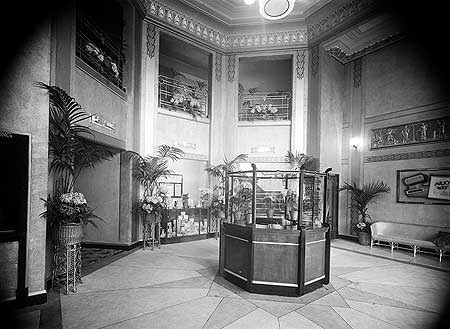
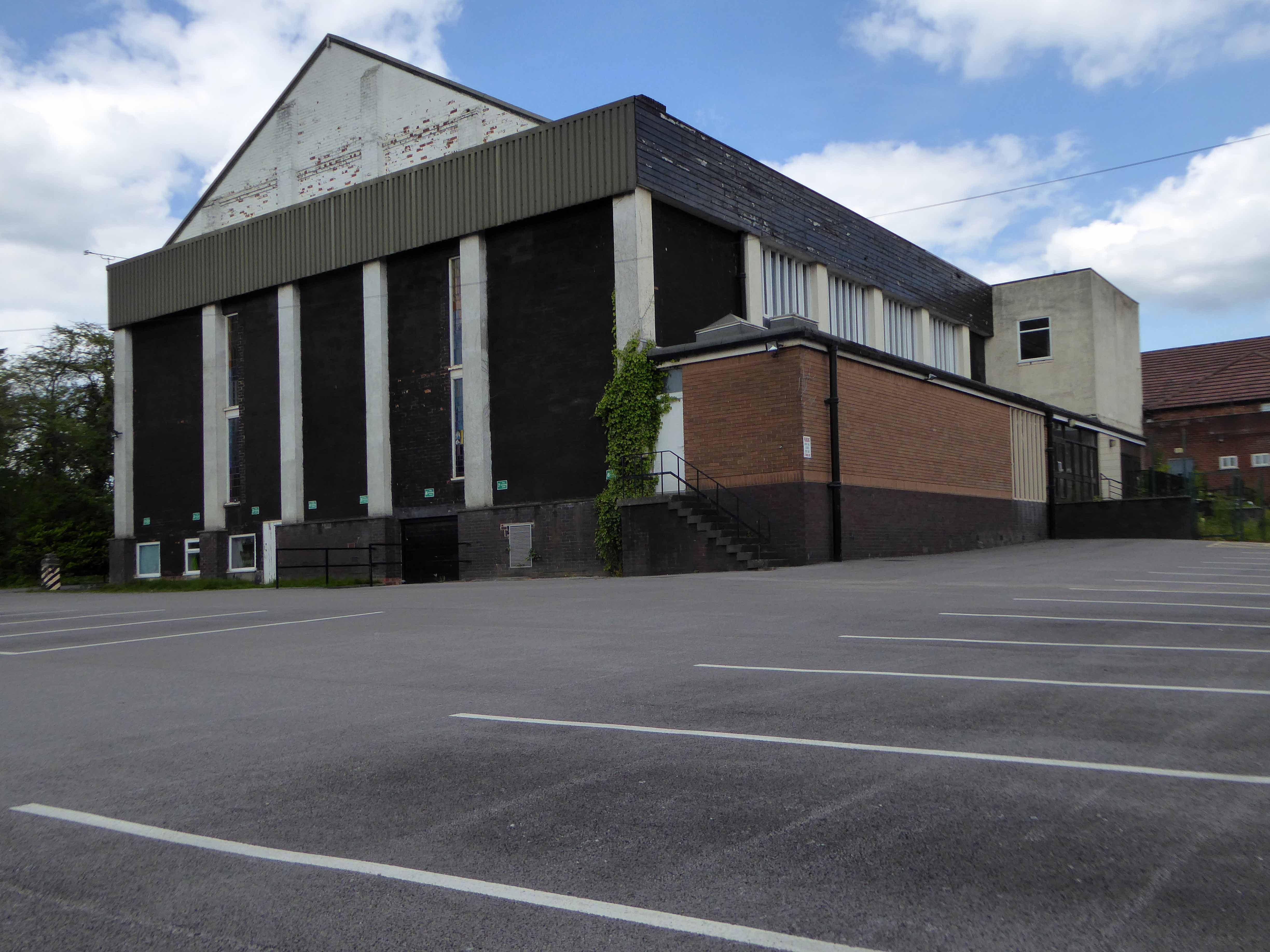
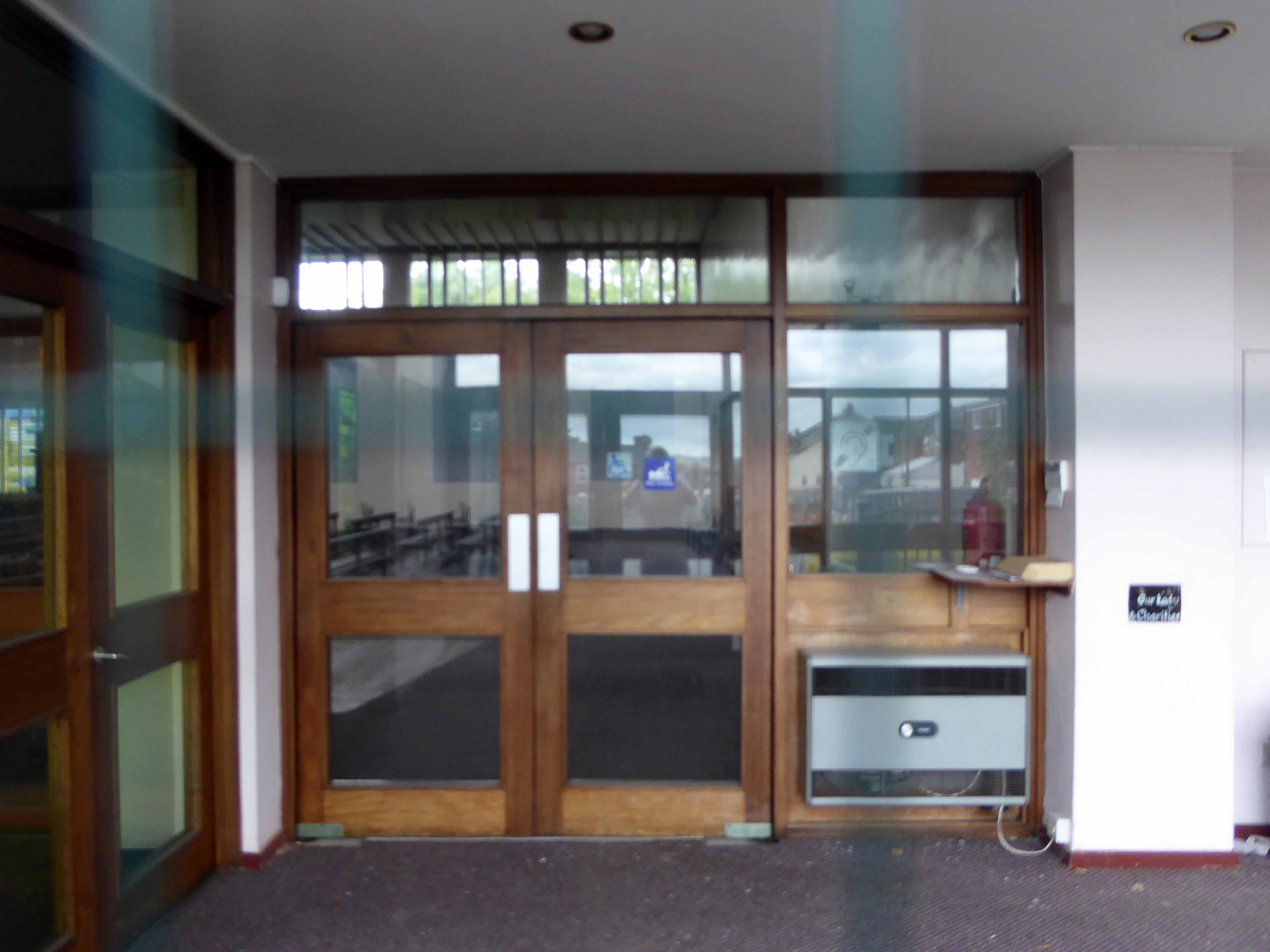
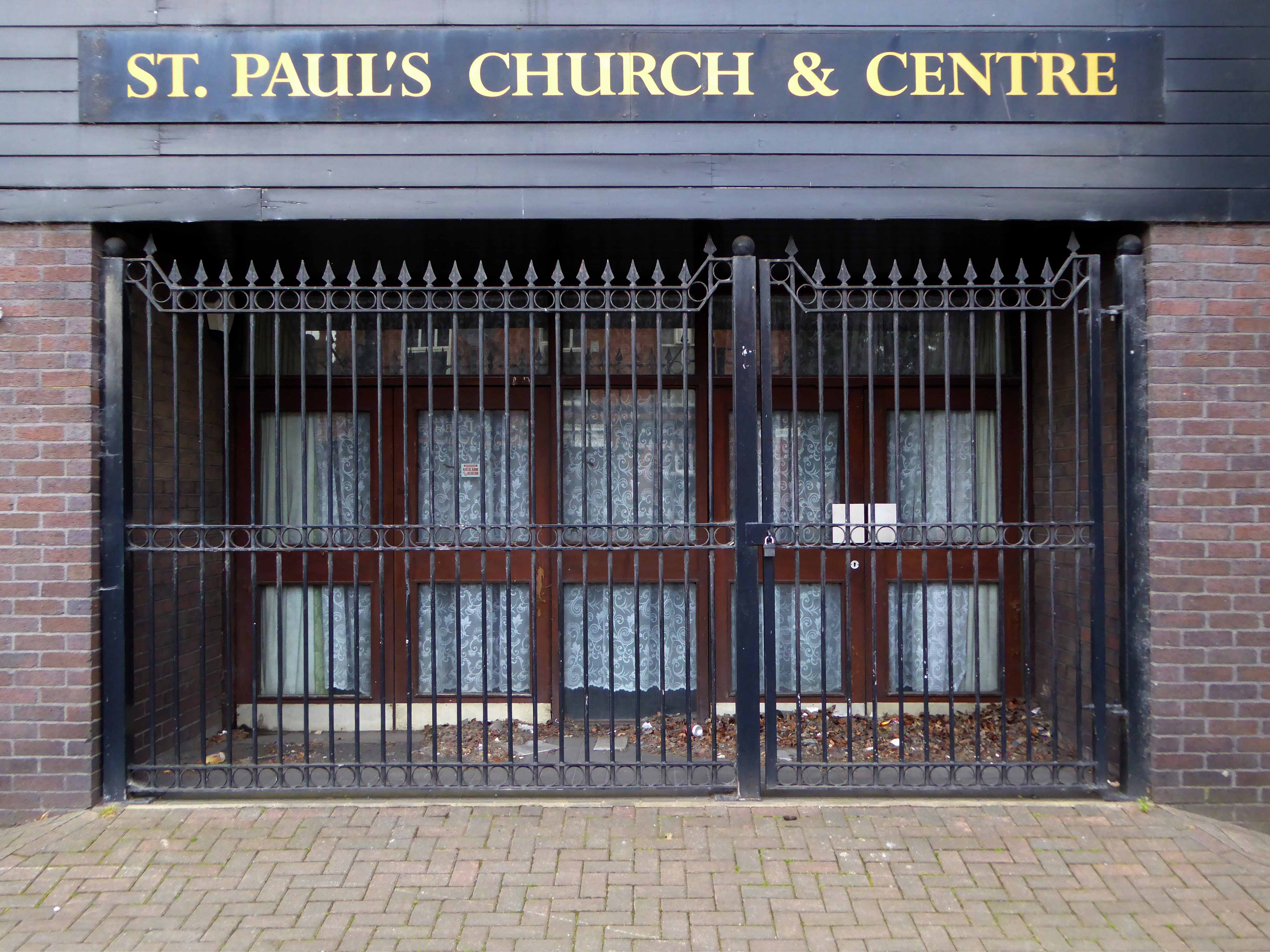
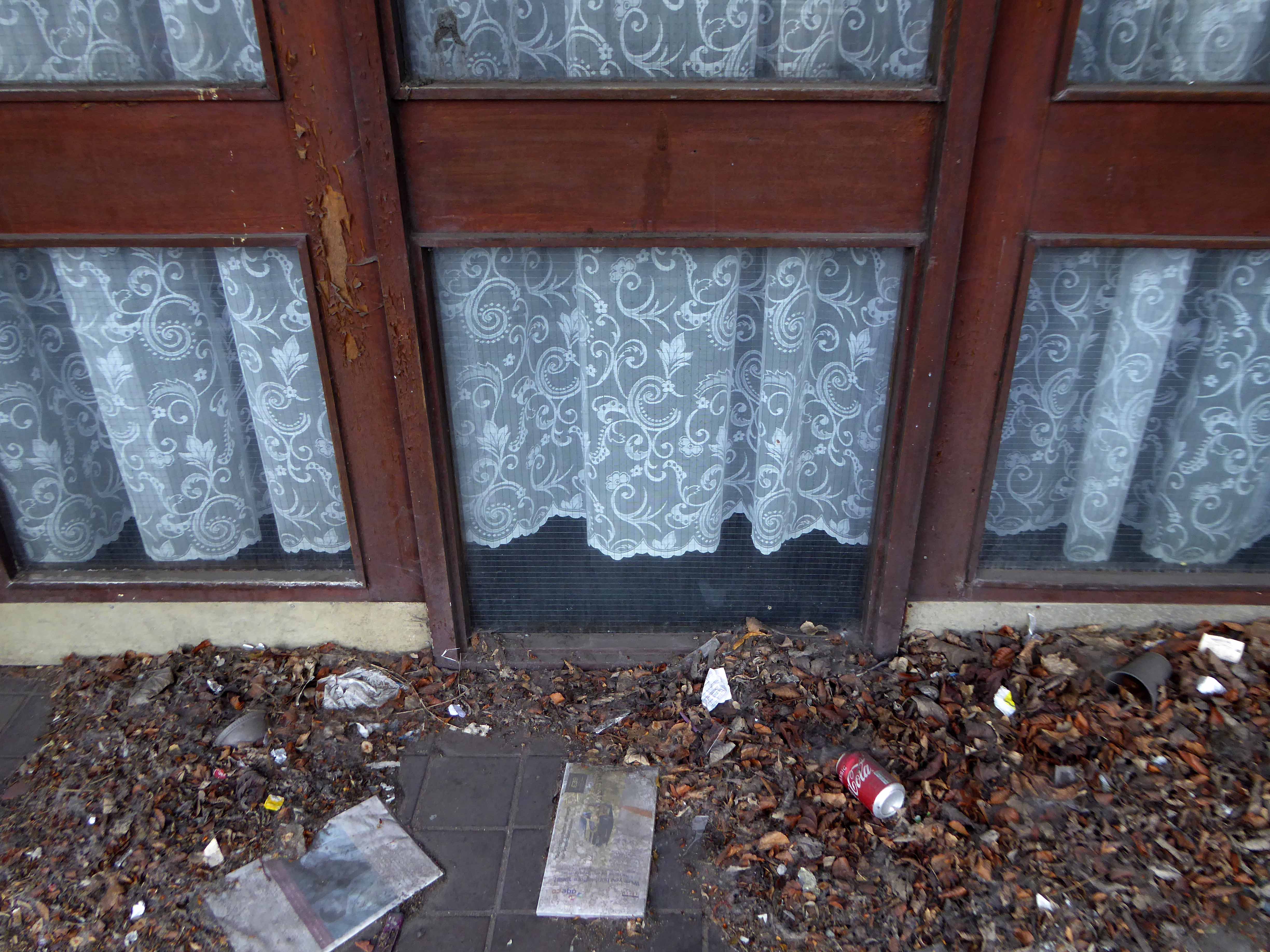
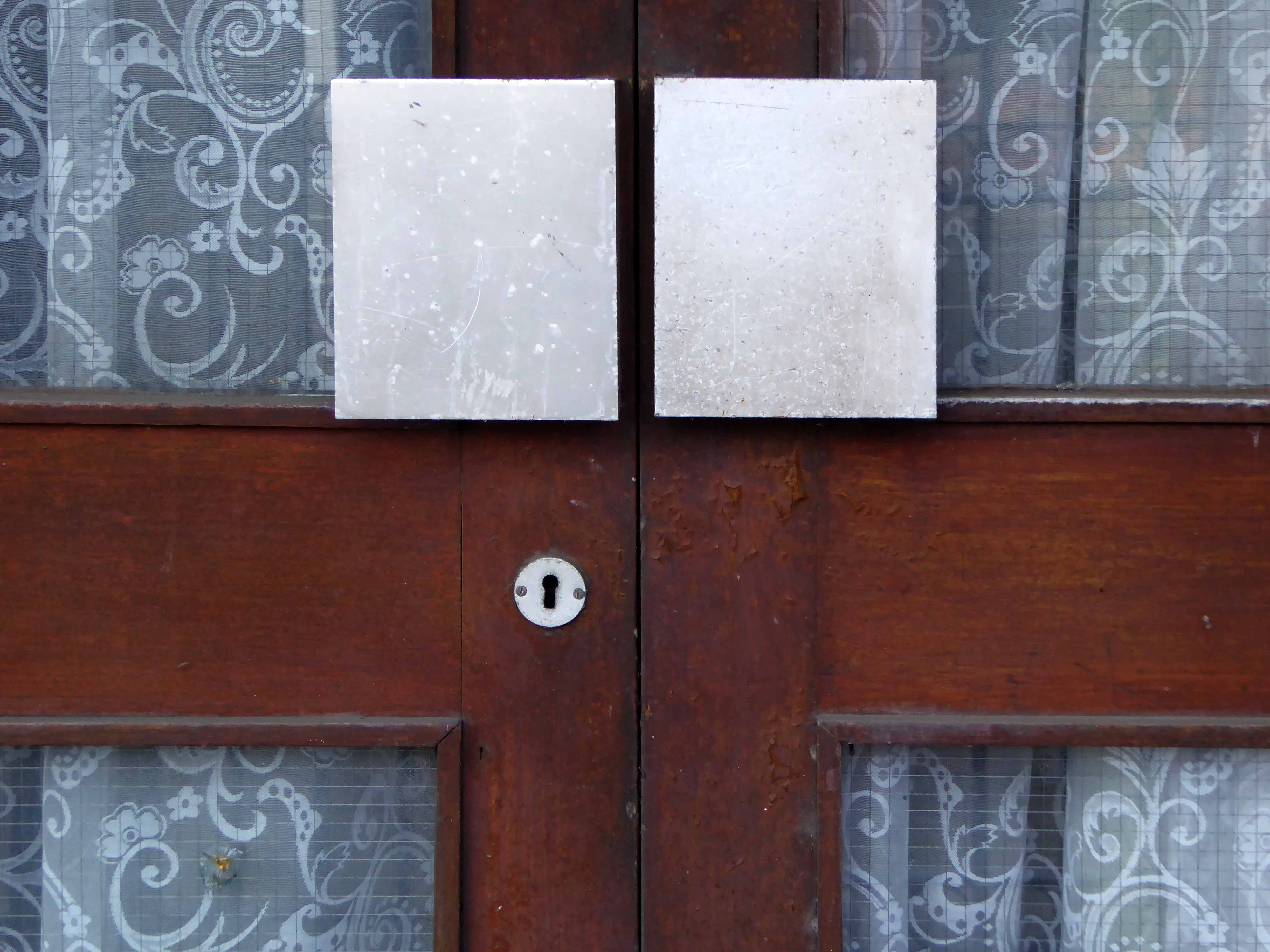
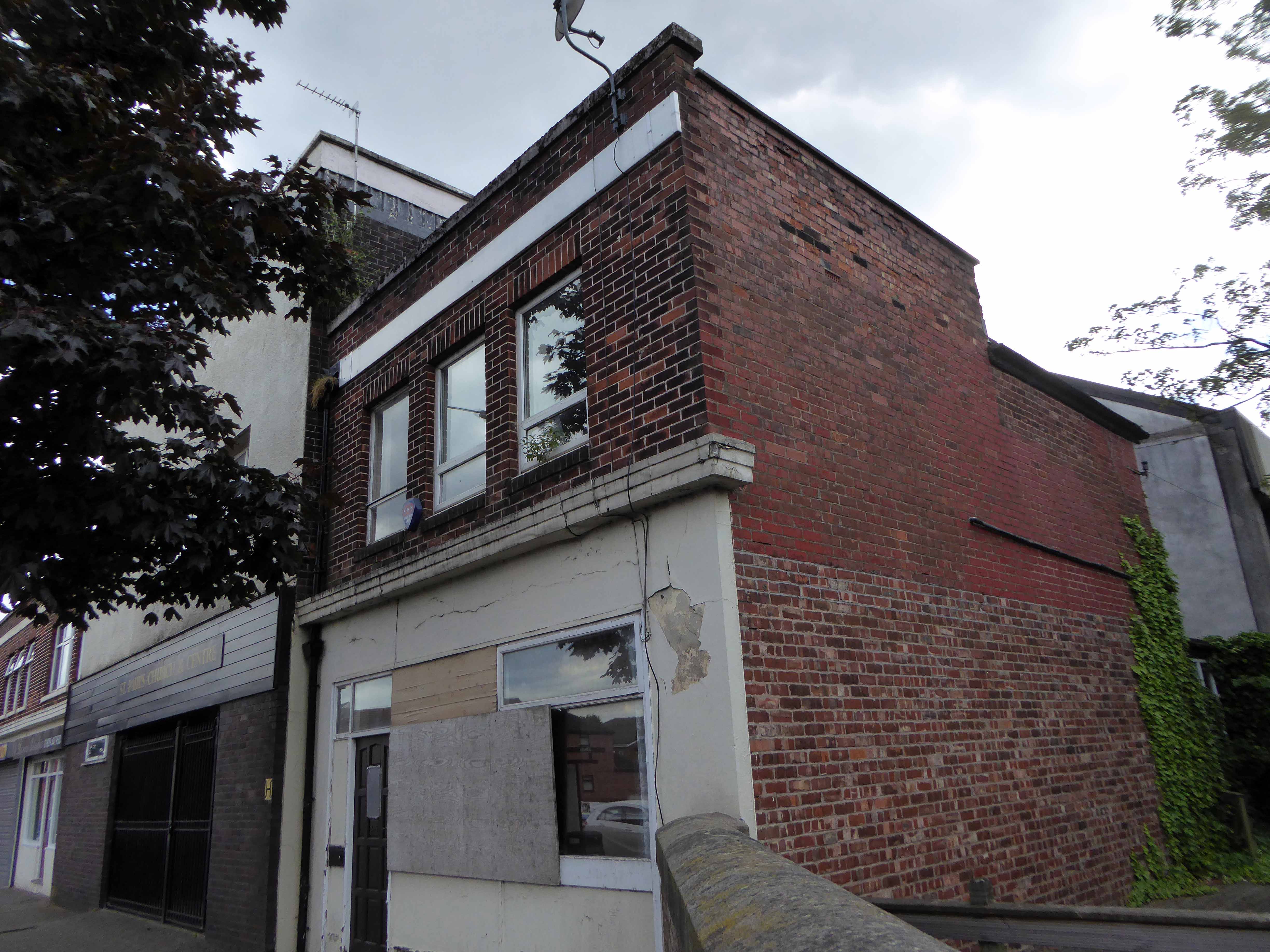
It was converted into St. Paul’s Roman Catholic Church. Former cinemas have made good conversions to churches and the fabric of the buildings are generally respected. In this case though, the sad story is that the front entrance has been rendered over and inside all details of it cinematic past have been erased. You would never know you were inside what had been been an Art Deco styled building.
I passed by nearly every day for years travelling to and from school, I played there at a wedding reception in the church social club. I sadly have no recollection of the building in use as a cinema.
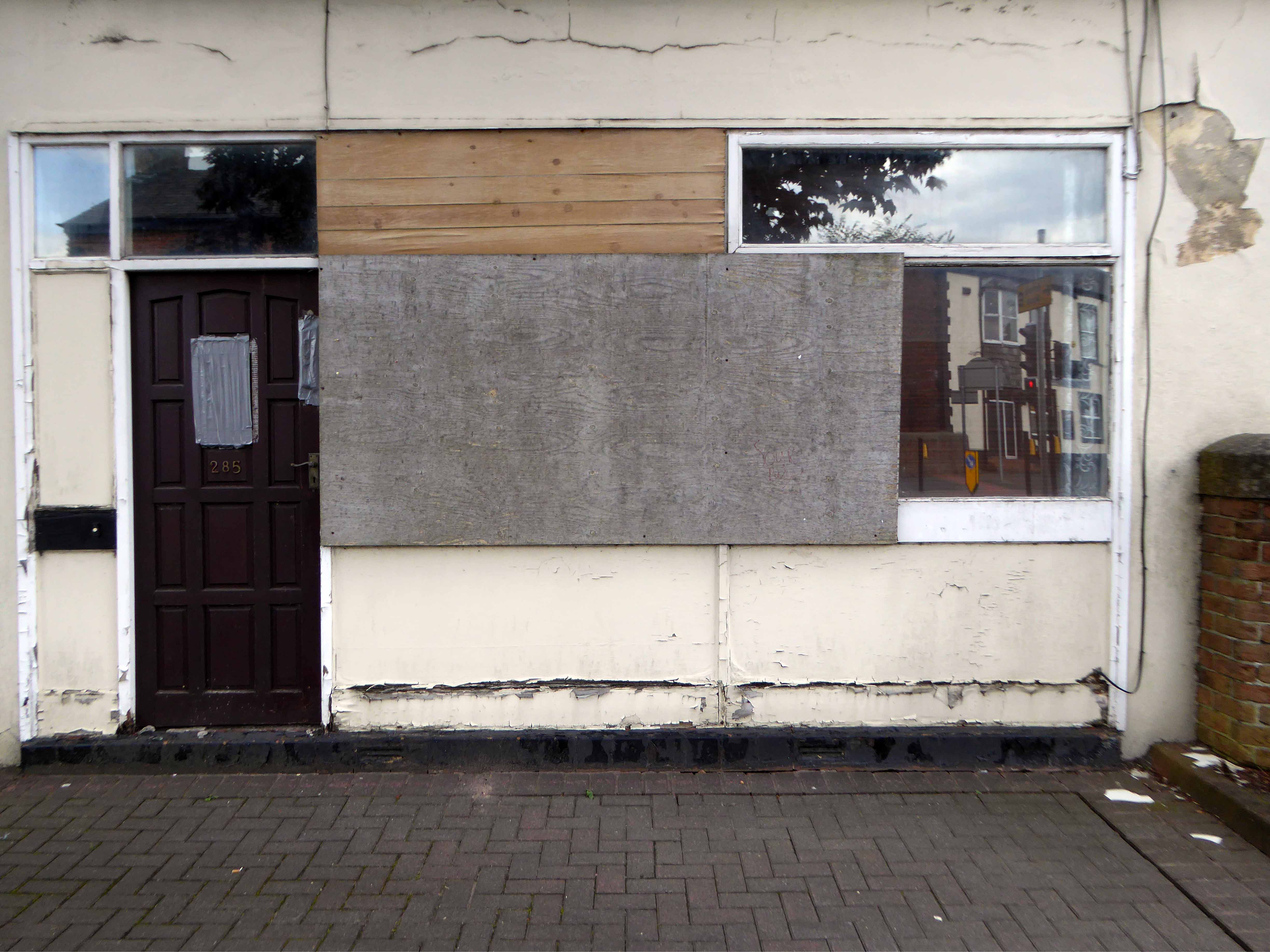
It has been closed since 2010 – currently it has no purpose or seemingly any future use, there are no For Sale signs in evidence.
I popped by to see you yesterday – a truly remarkable structure set amongst the terraced housing of an unremarkable street.
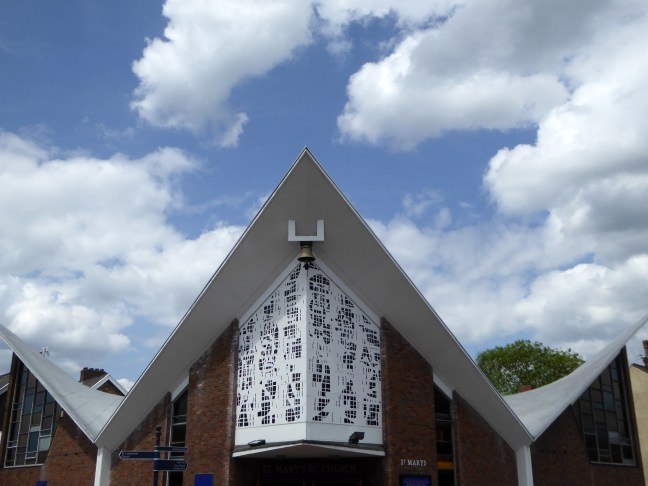
The foundation stone for the present building laid by Bishop Beck in August 1962. He returned to bless and open the church on 25 June 1963. The new church was built from designs by Walter Stirrup & Sons – job architect Kevin Houghton, at a cost of about £60,000. The church is notable for its dalle de verre glass, by Carl Edwards of Whitefriars.
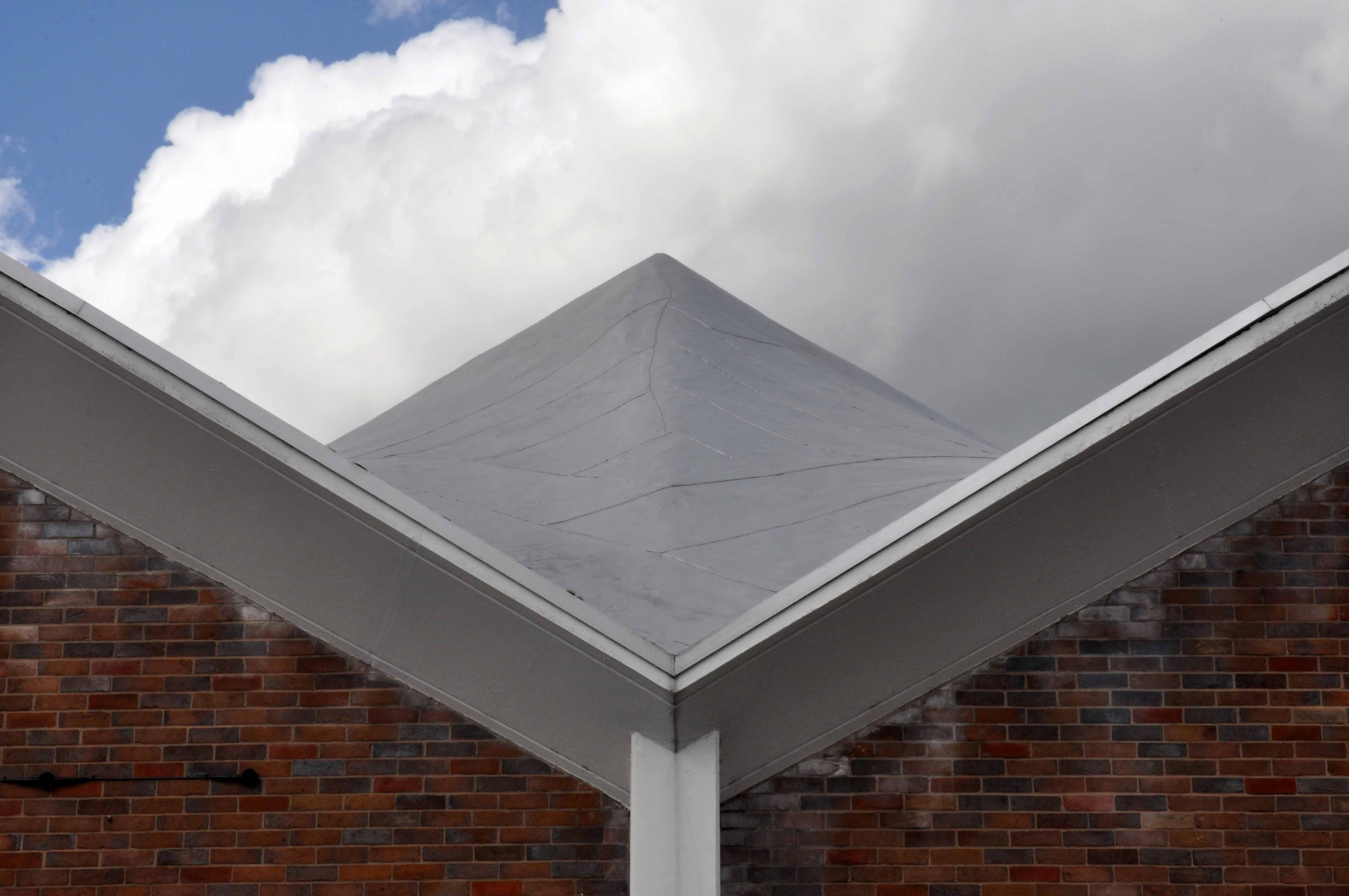
The church is a very striking and characterful building with a hyperbolic paraboloid roof rising in peaks on four sides, with clerestory lighting in the angles, that on the west side jutting out to form a canopy over the entrance. It was described by Nikolaus Pevsner as ‘wildly expressionist’.
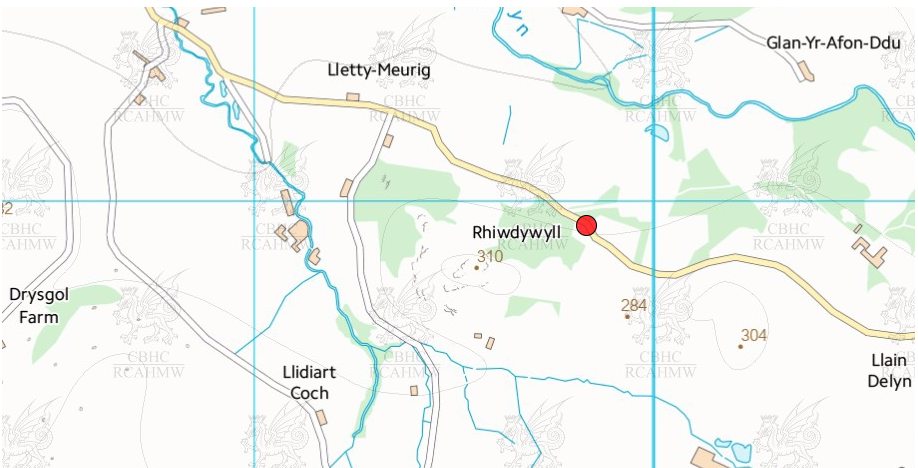
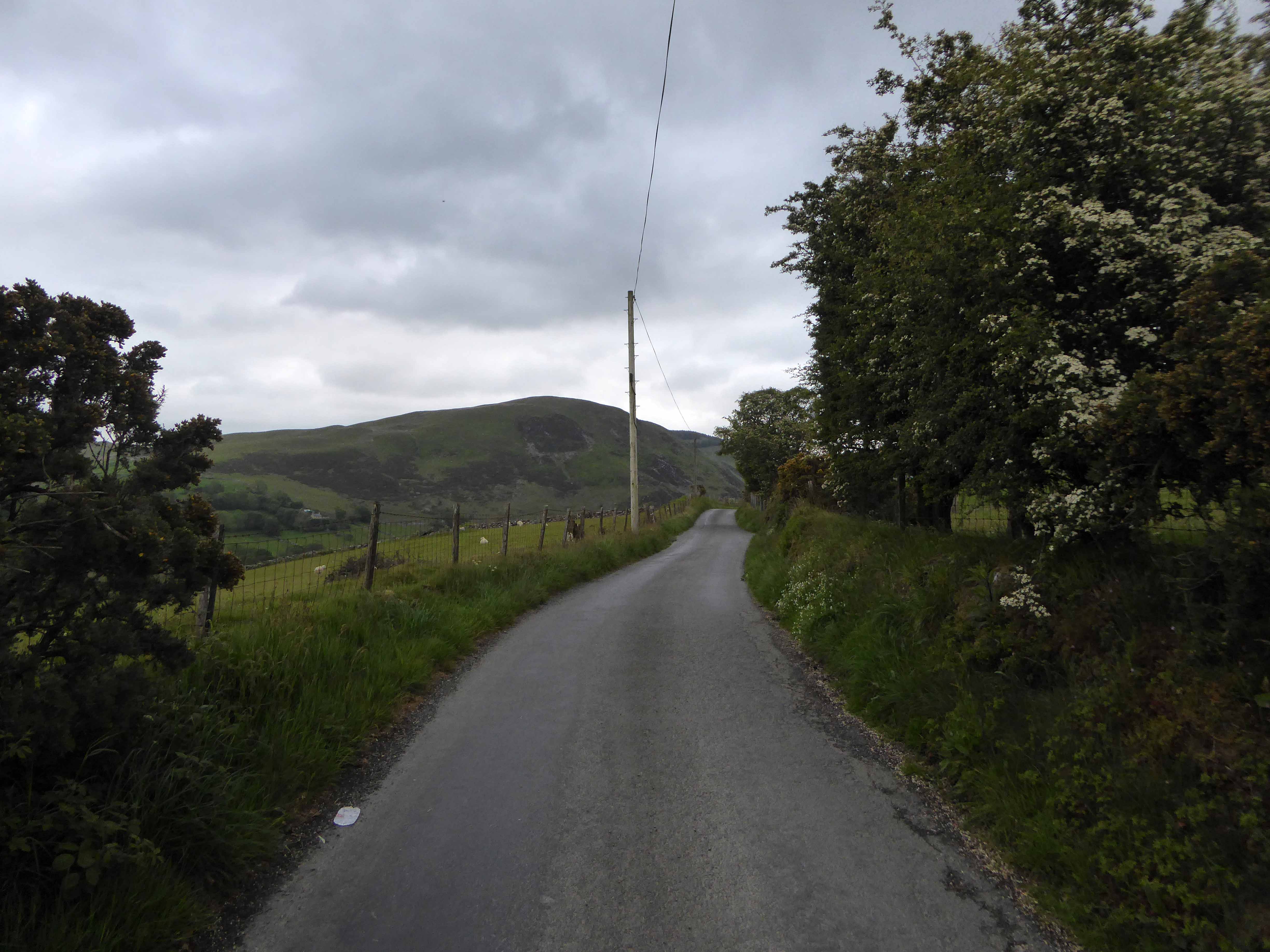
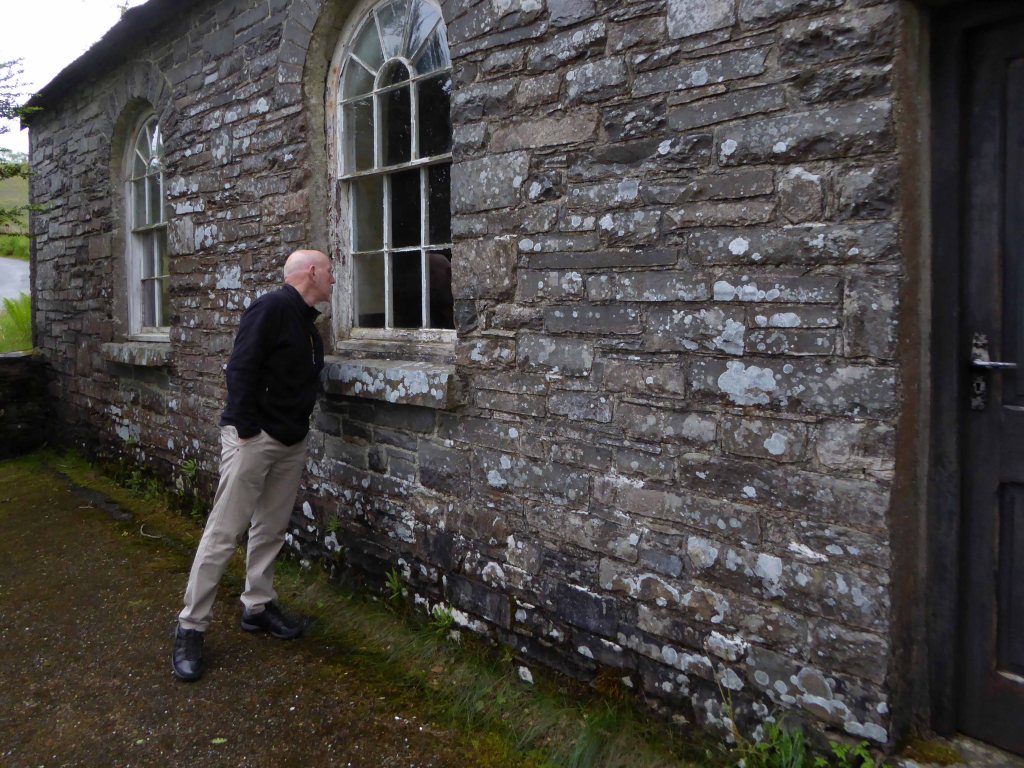
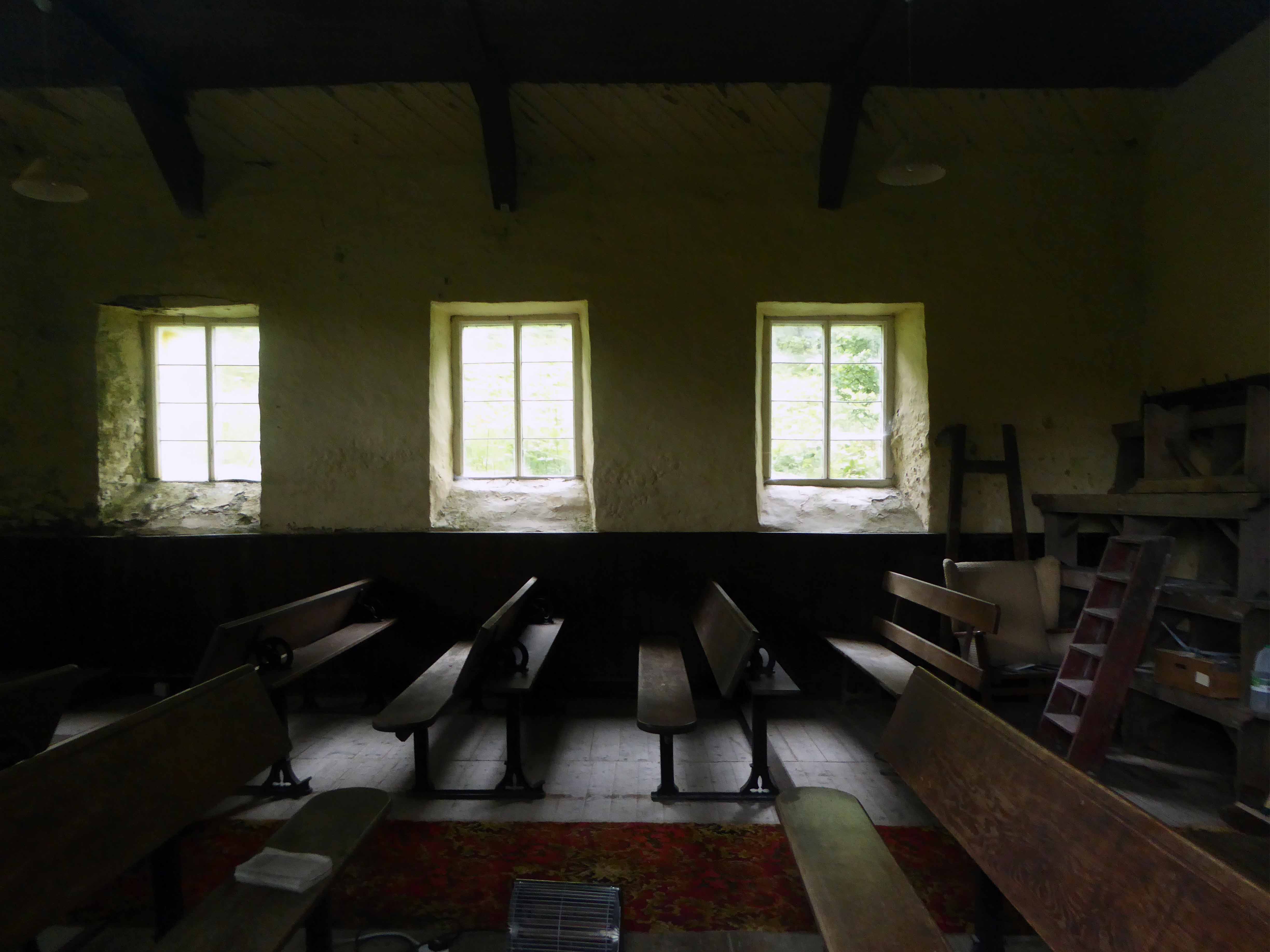
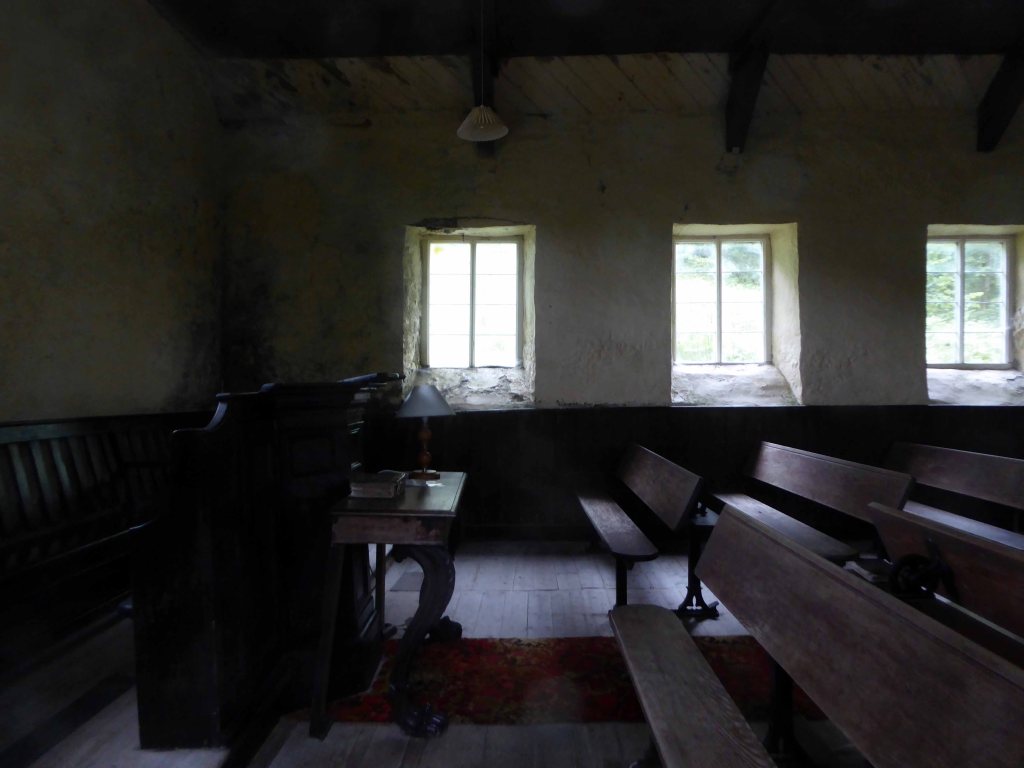
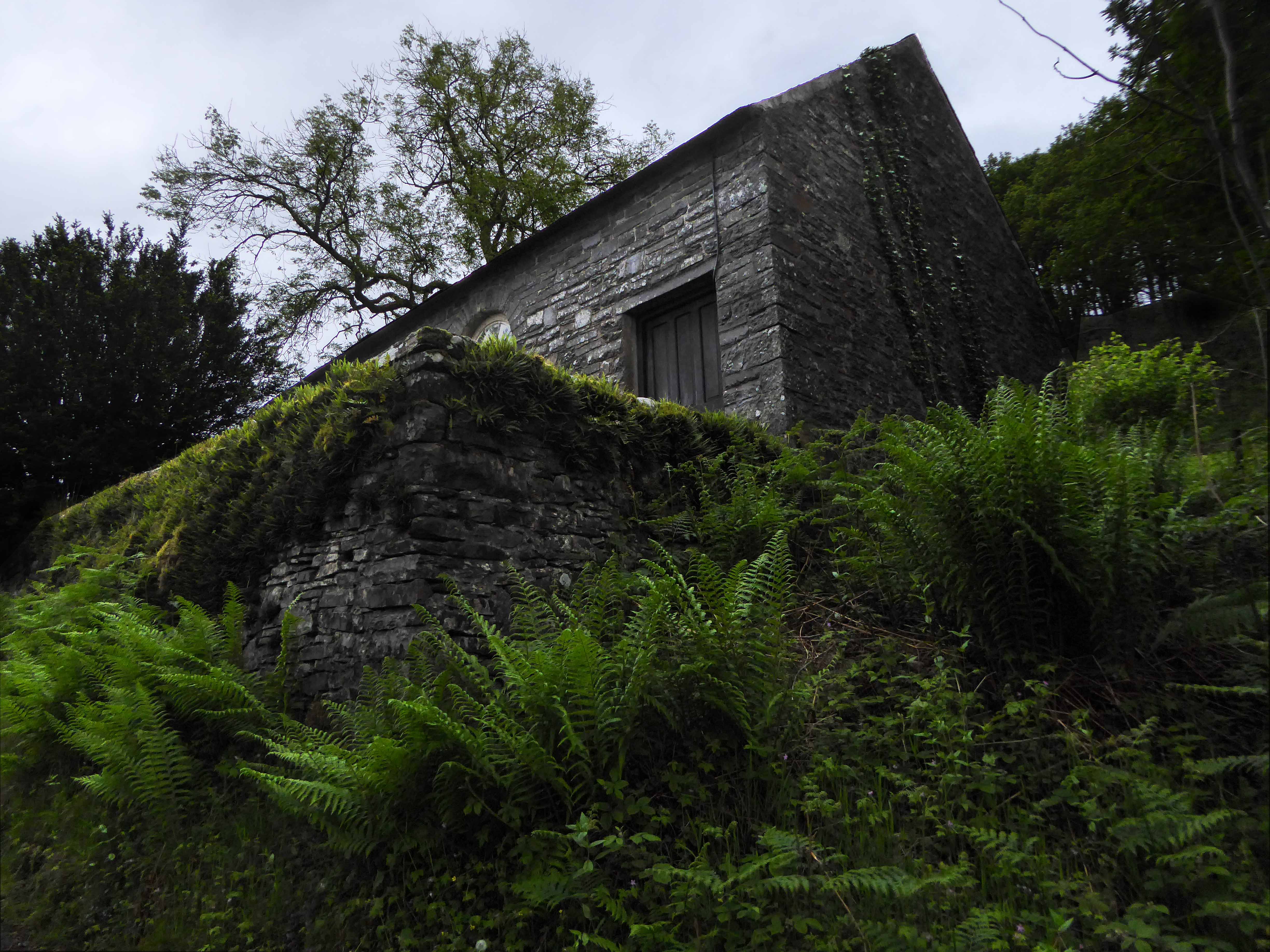
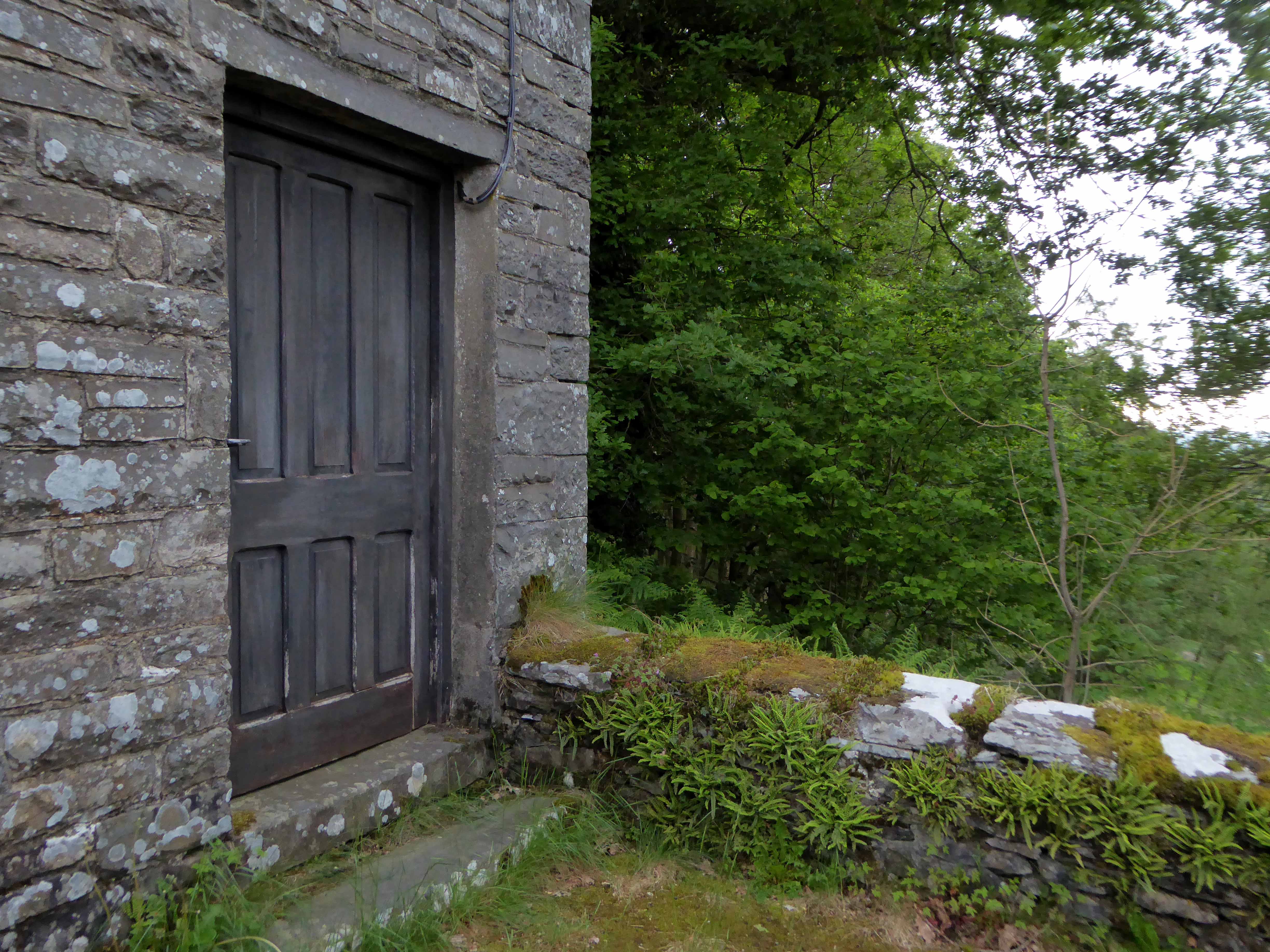
Digressing for once from the modern to the near modern in an ancient landscape. Having cycled to Tregaron I took a walk along the Mountain Road with chapel hat peg expert Tim Rushton.
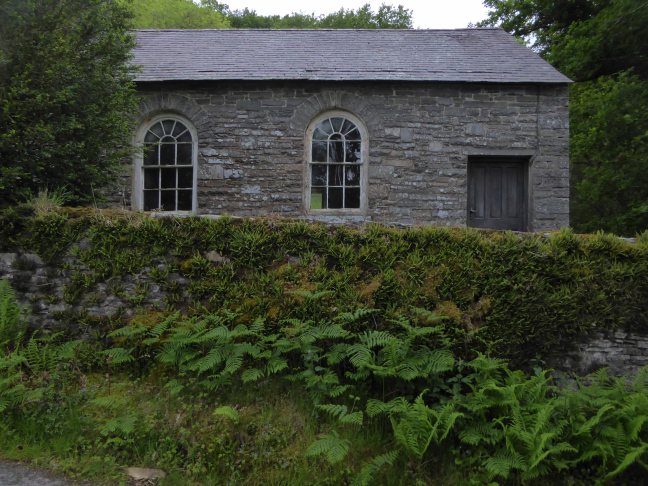
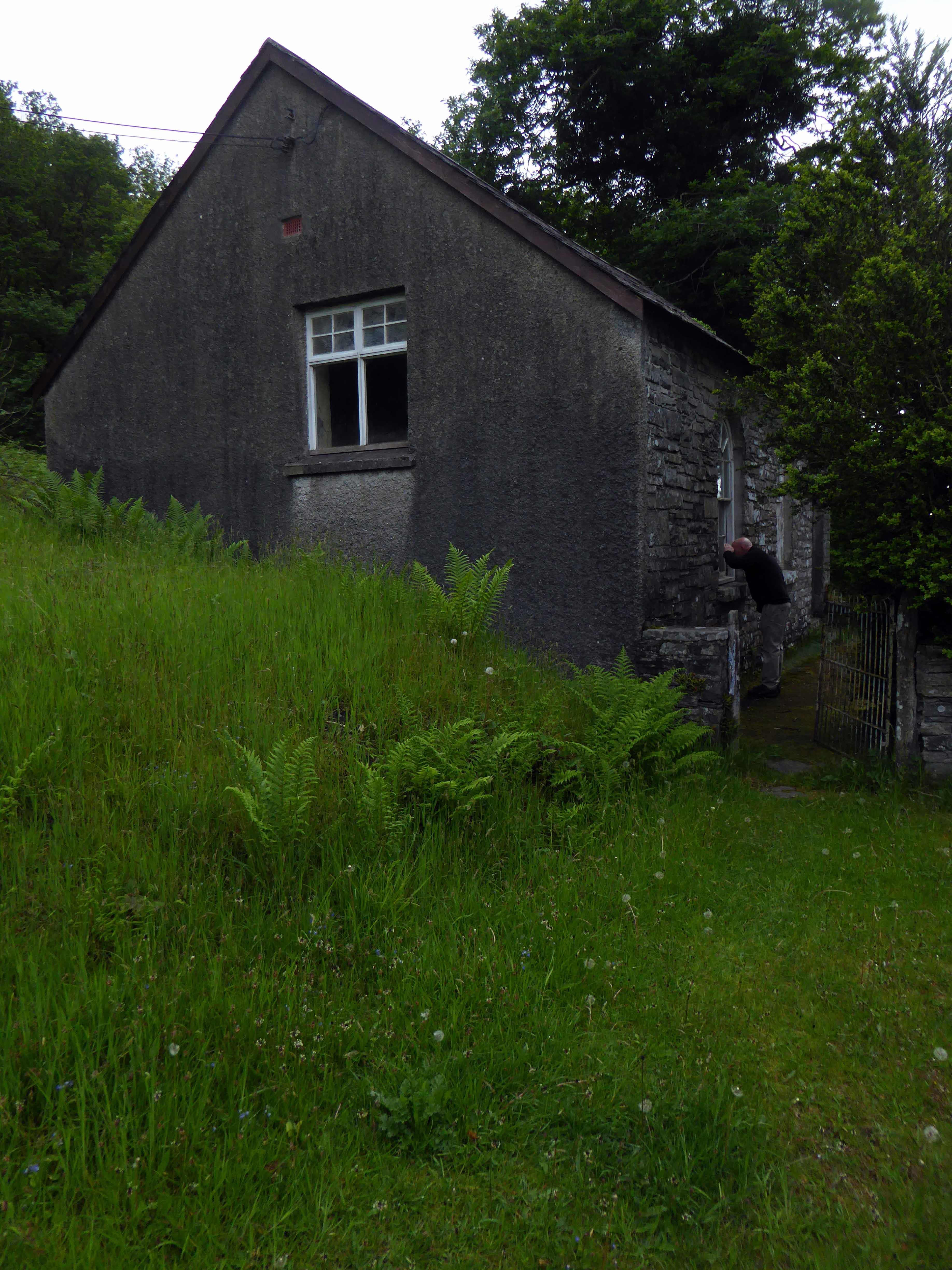
Afore very long we came upon a chapel, set slightly back from the track, tucked snugly into the trees.
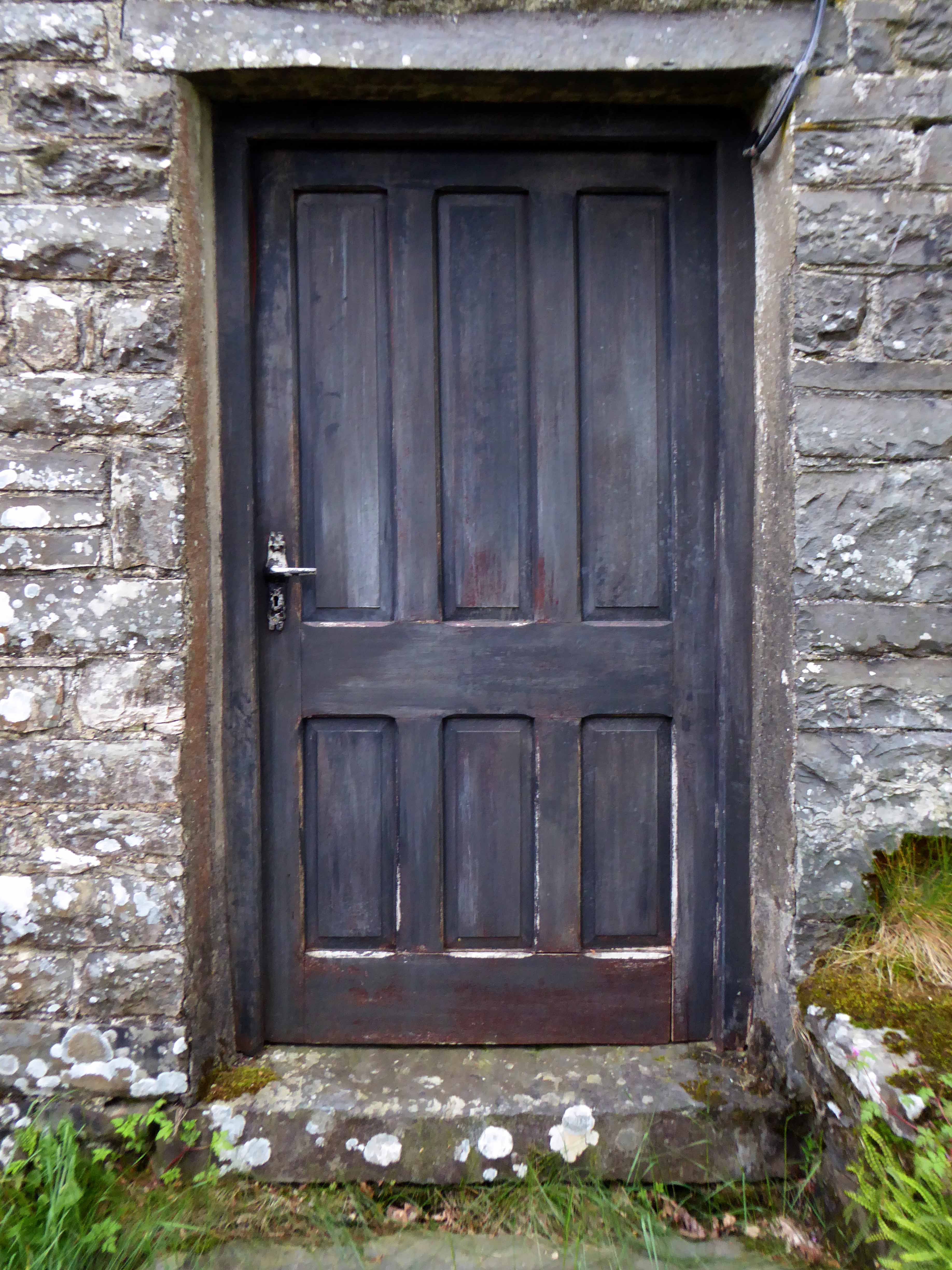
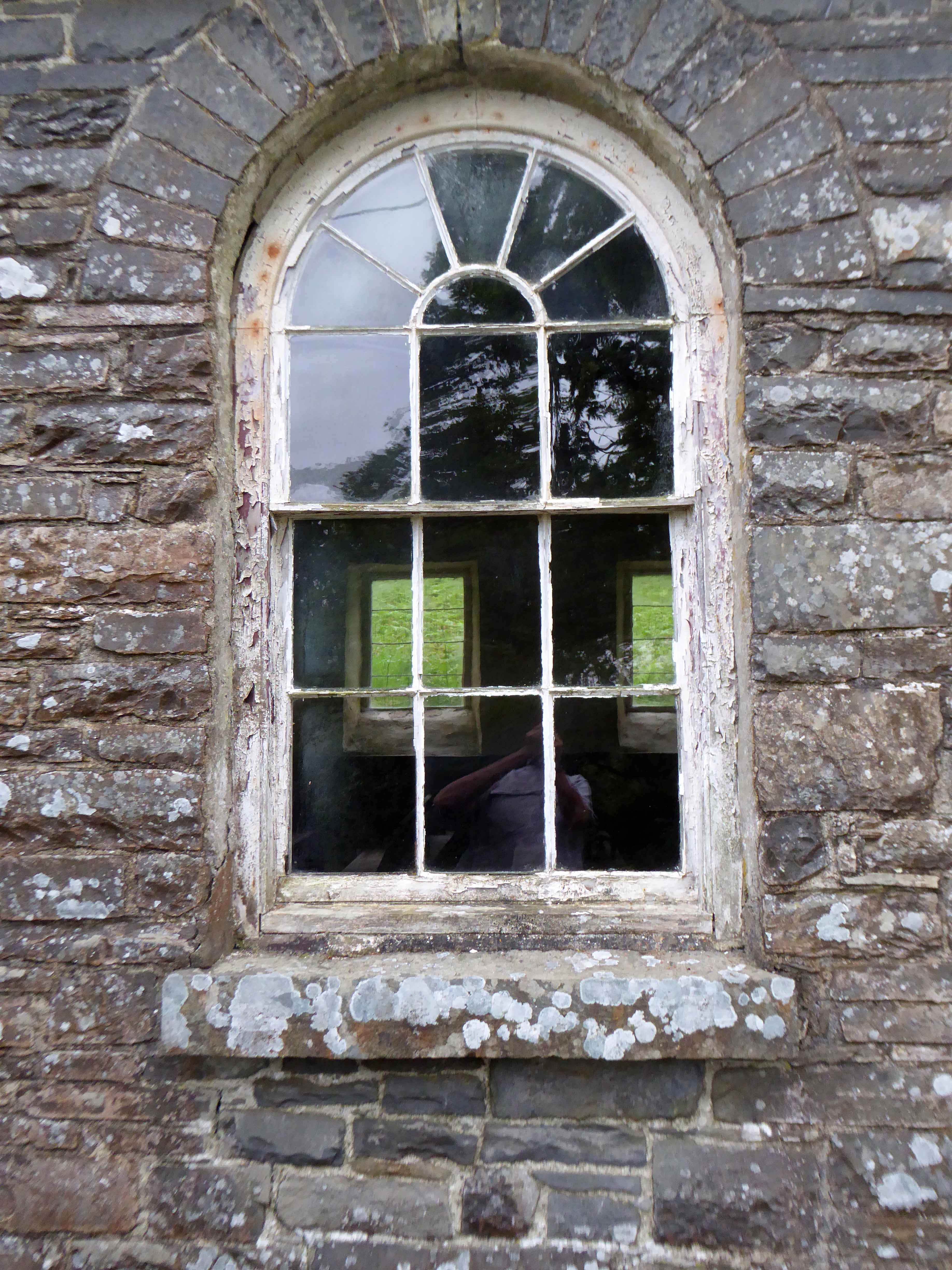
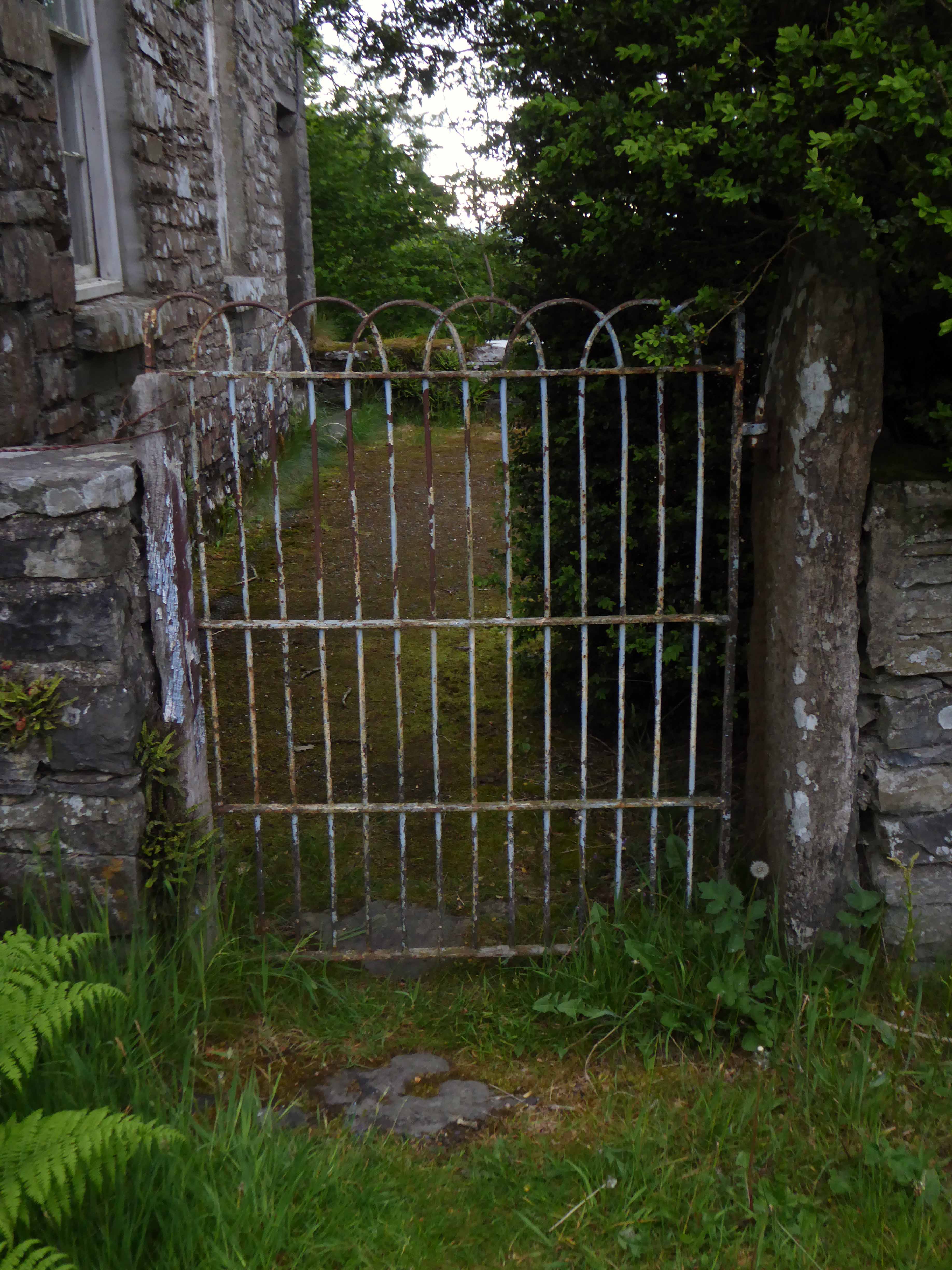
Deserted yet maintained, grass trimmed the low structure sealed soundly against the weather.
Calvinistic Methodist small chapel/schoolroom of 1866, a branch of Bwlchgwynt Chapel, Tregaron. Simple plastered interior with cast-iron and timber combined pews and desks. Small plain pulpit. Listed as the best preserved of the small branch chapels in the region. Historically important as illustrating the spread of non-conformity during the mid to later C19 in sparsely populated upland districts.
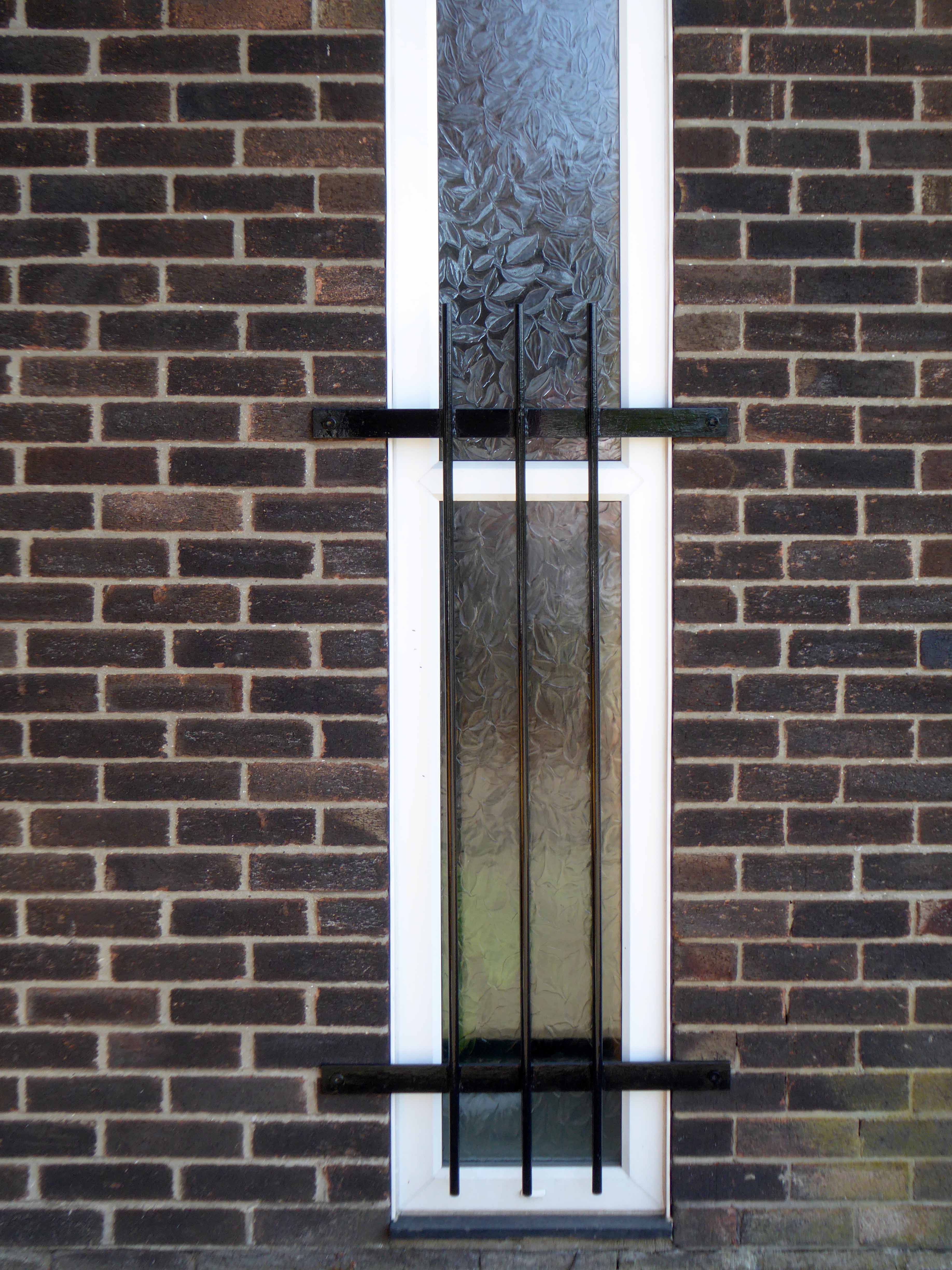
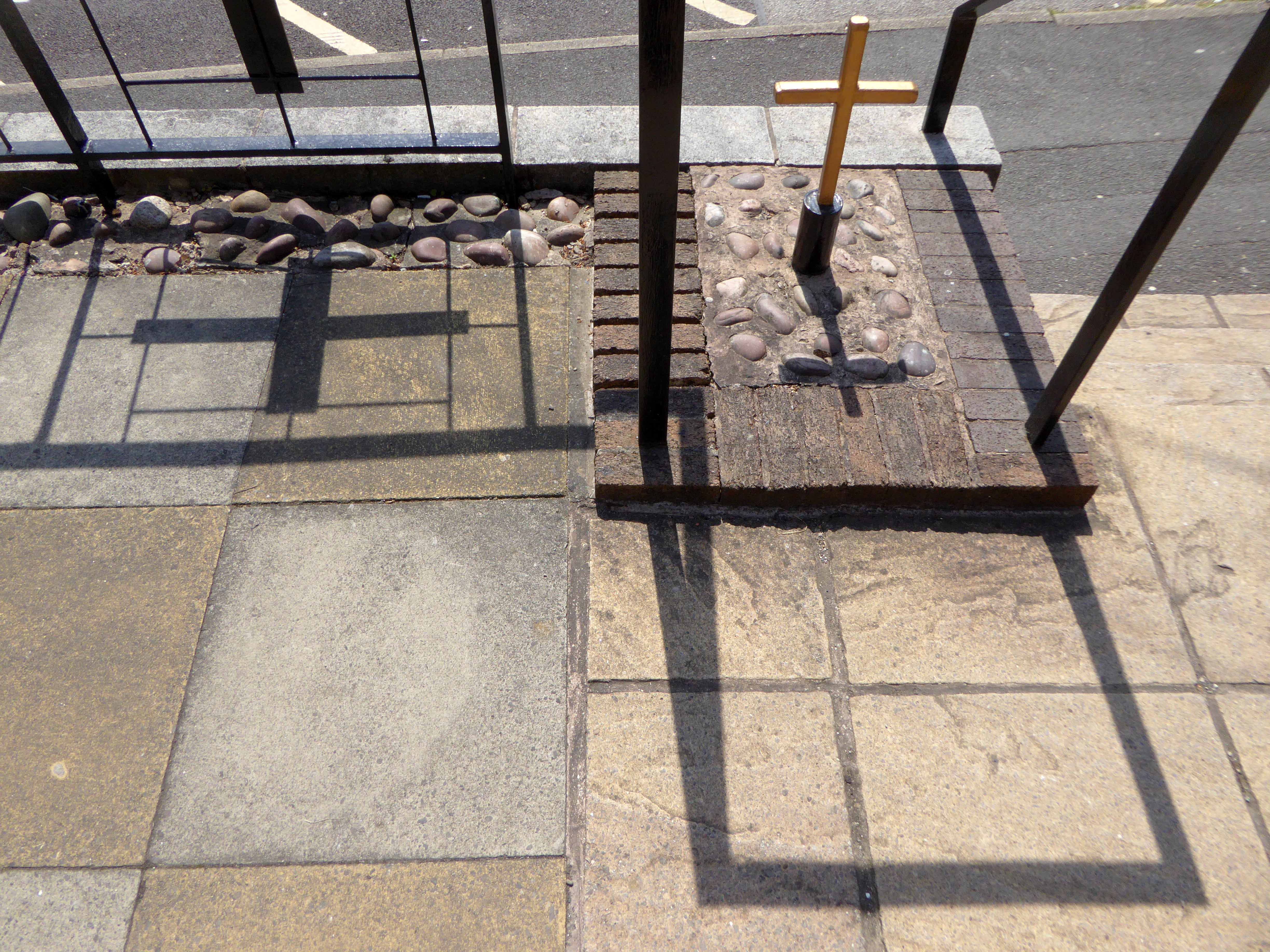
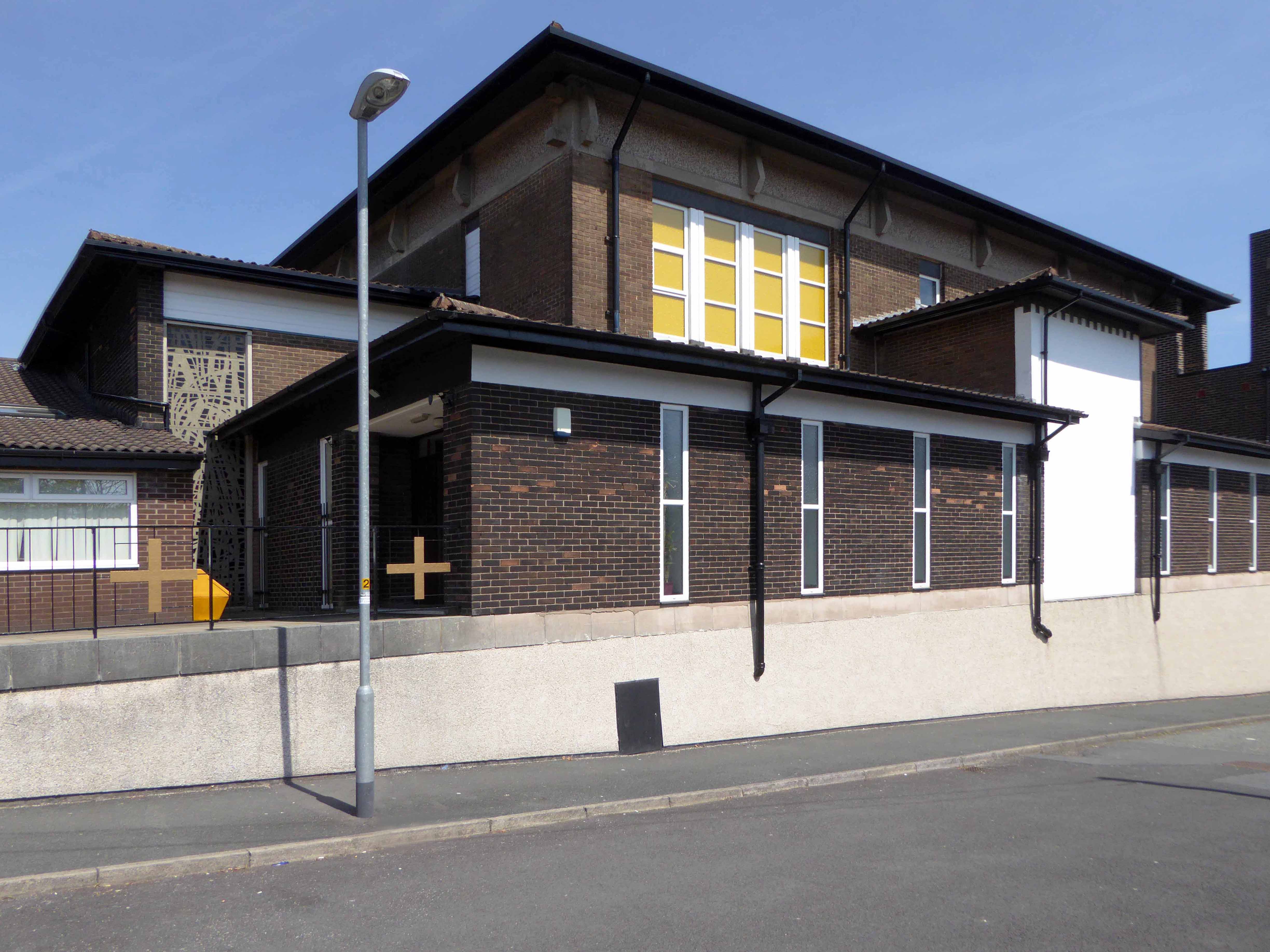
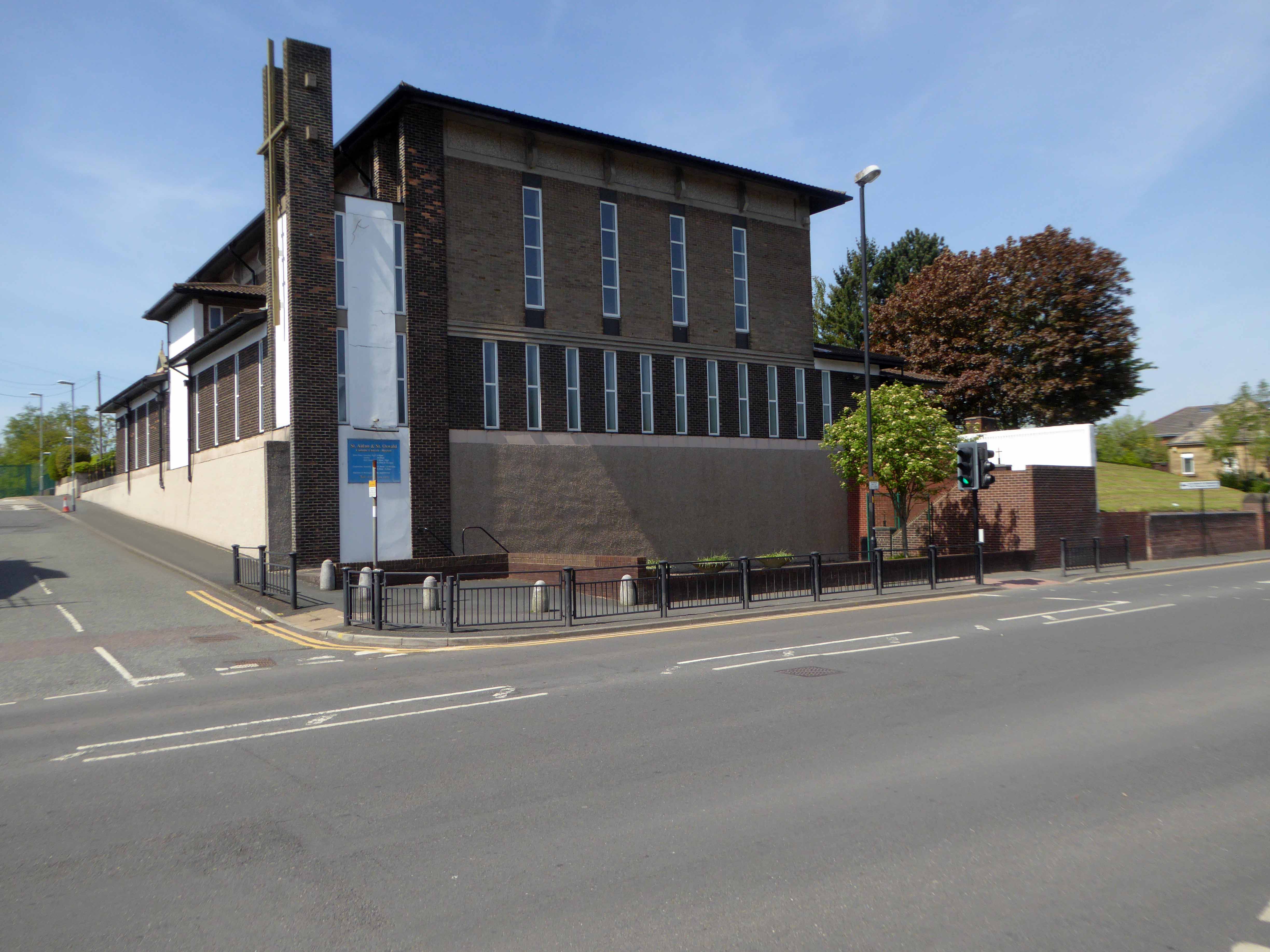
All in a day’s work cycling around north Manchester searching out and snapping five churches in a day.
This just happens to be one of my favourites, tough and uncompromising, monumental and modern – set hard against a main road.
A simple brick, concrete and glass construction, an immovable mass with strong vertical accents.
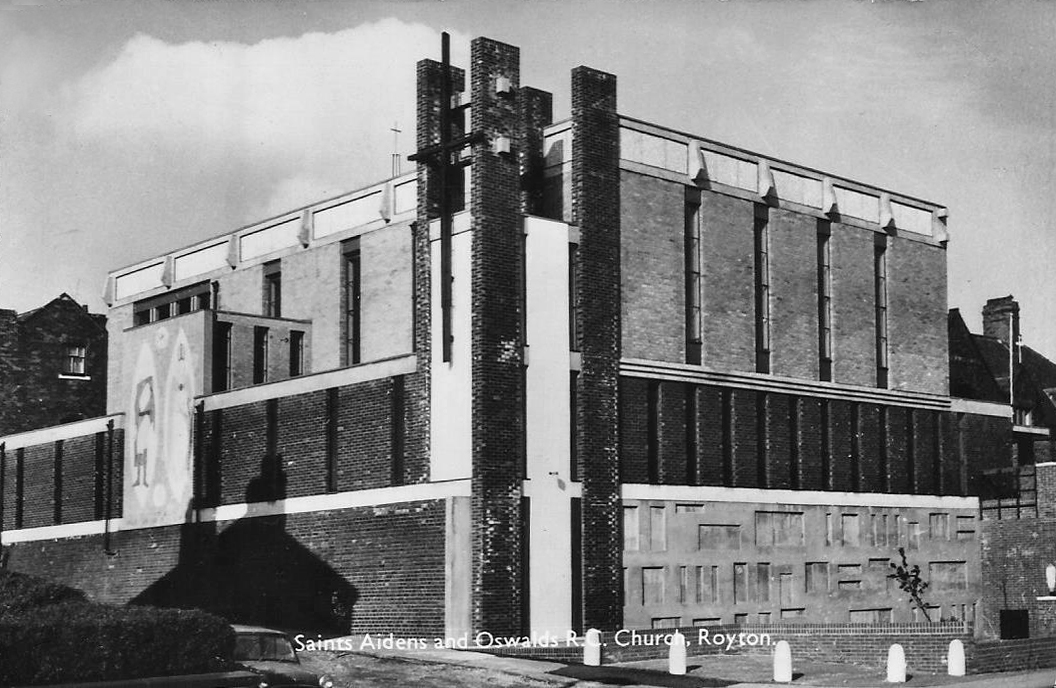
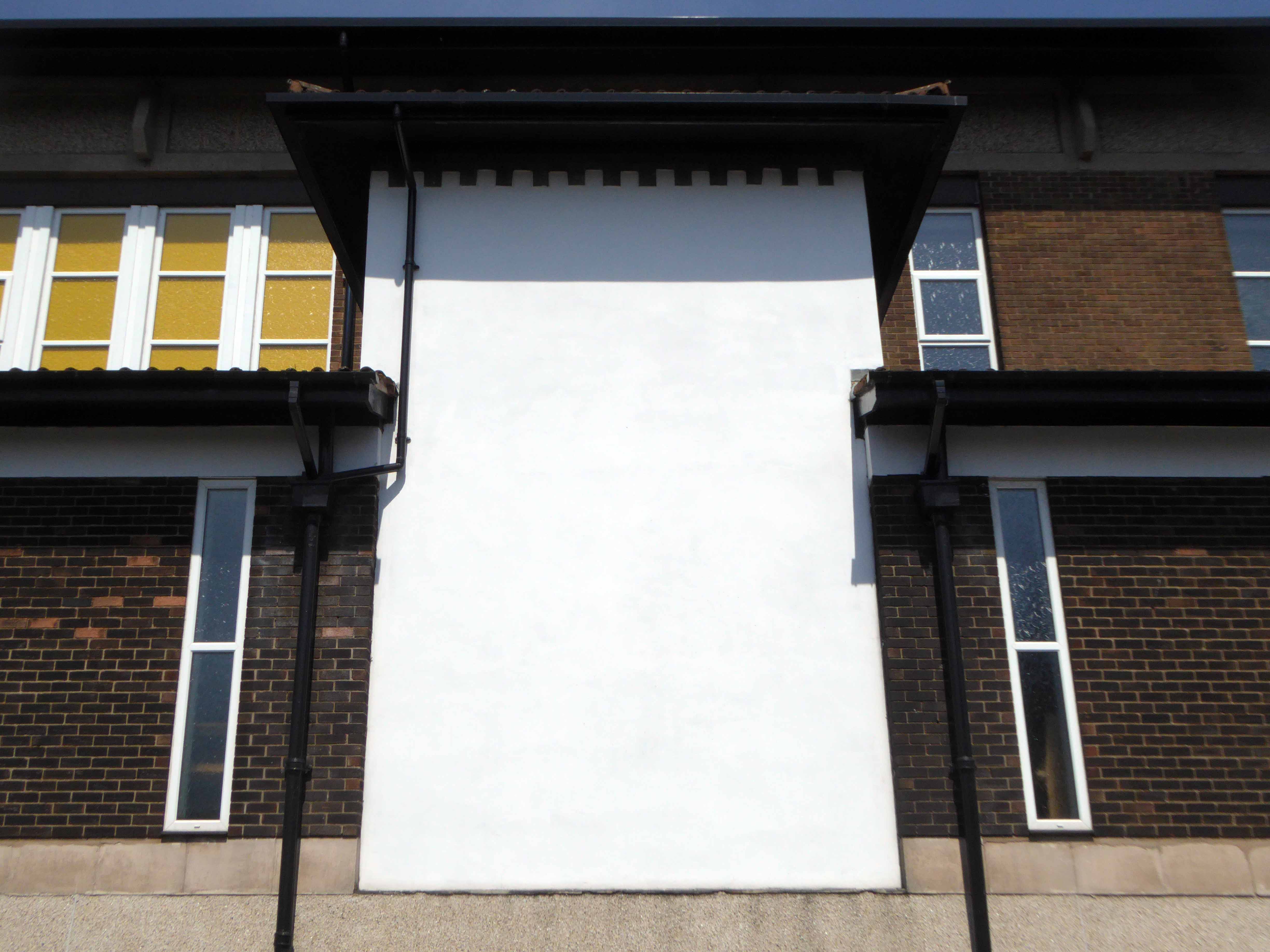
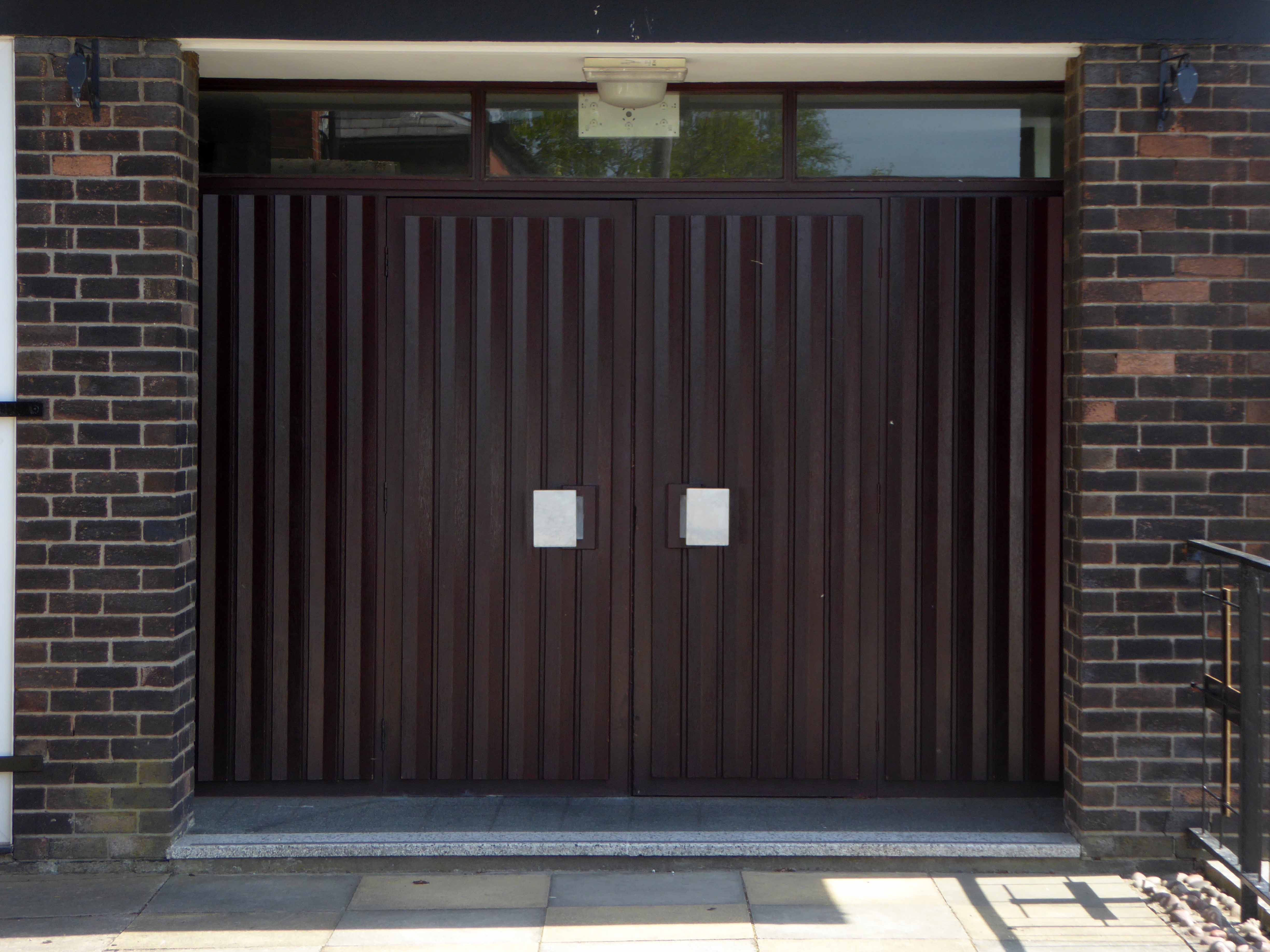
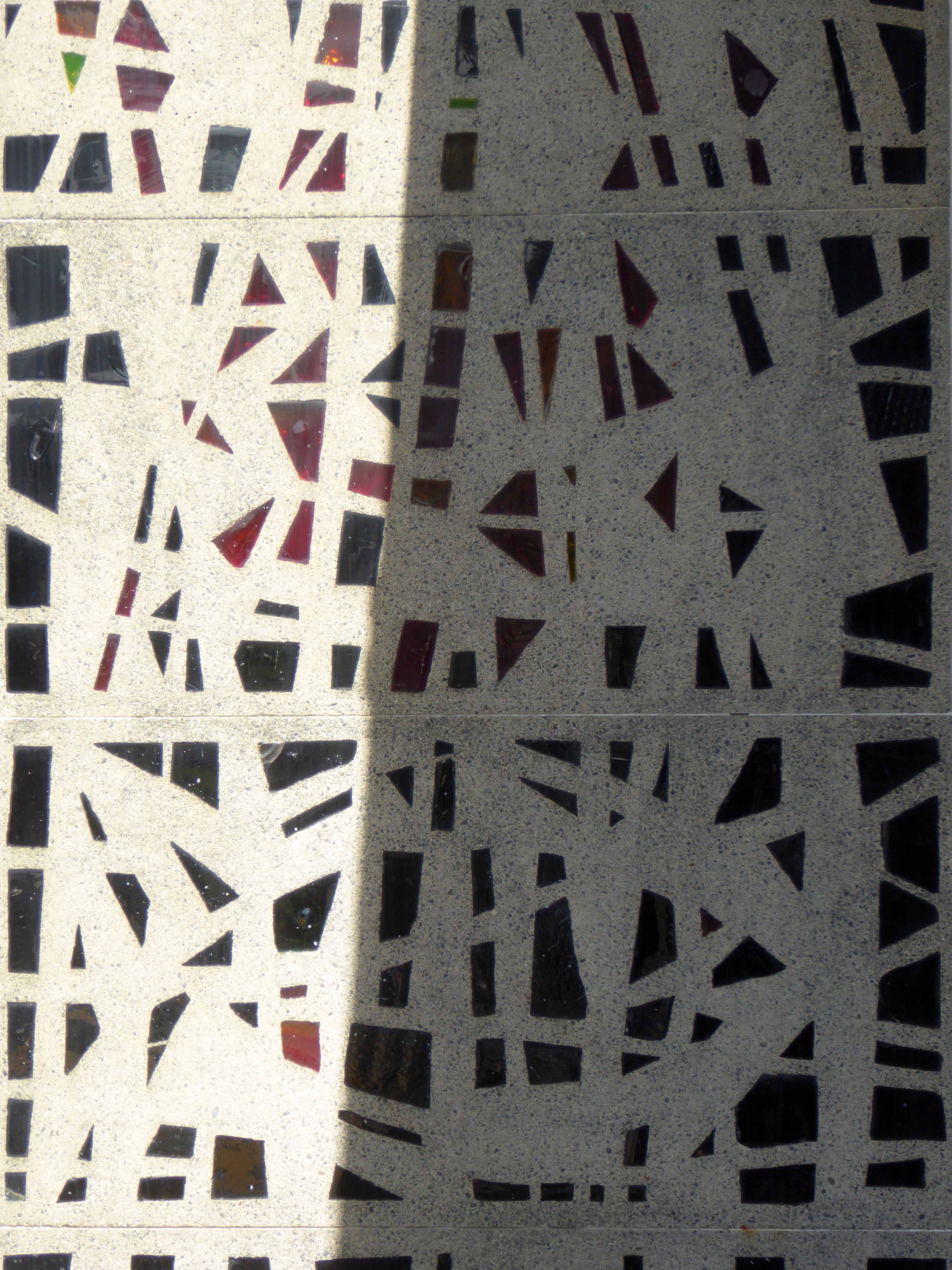
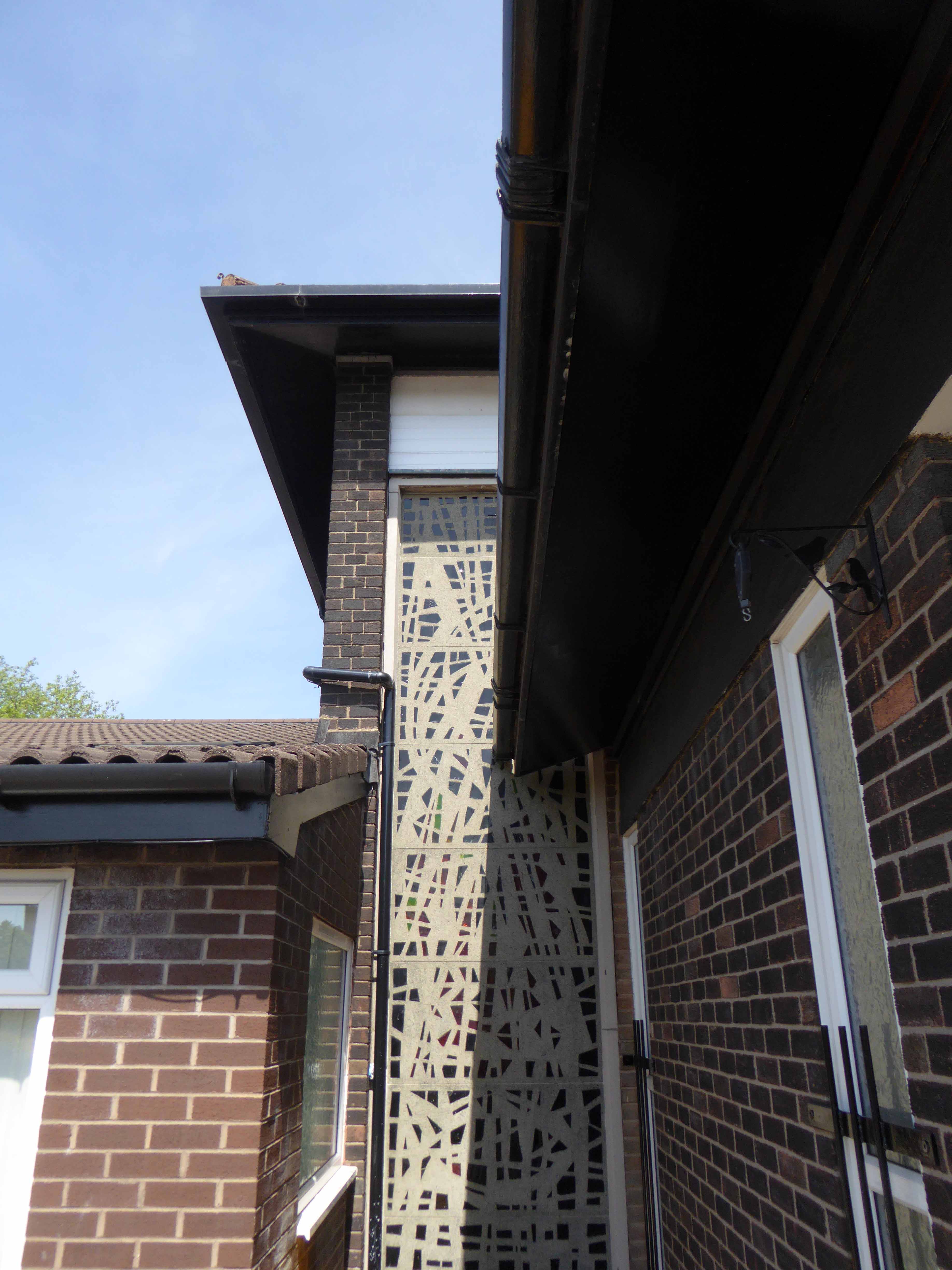
Though over time it has lost its colourful mosaics and concrete relief – gains a pitched roof and obtrusive gutters and drainpipes along the way.
My thanks to Andrew Spence for the info and photo.
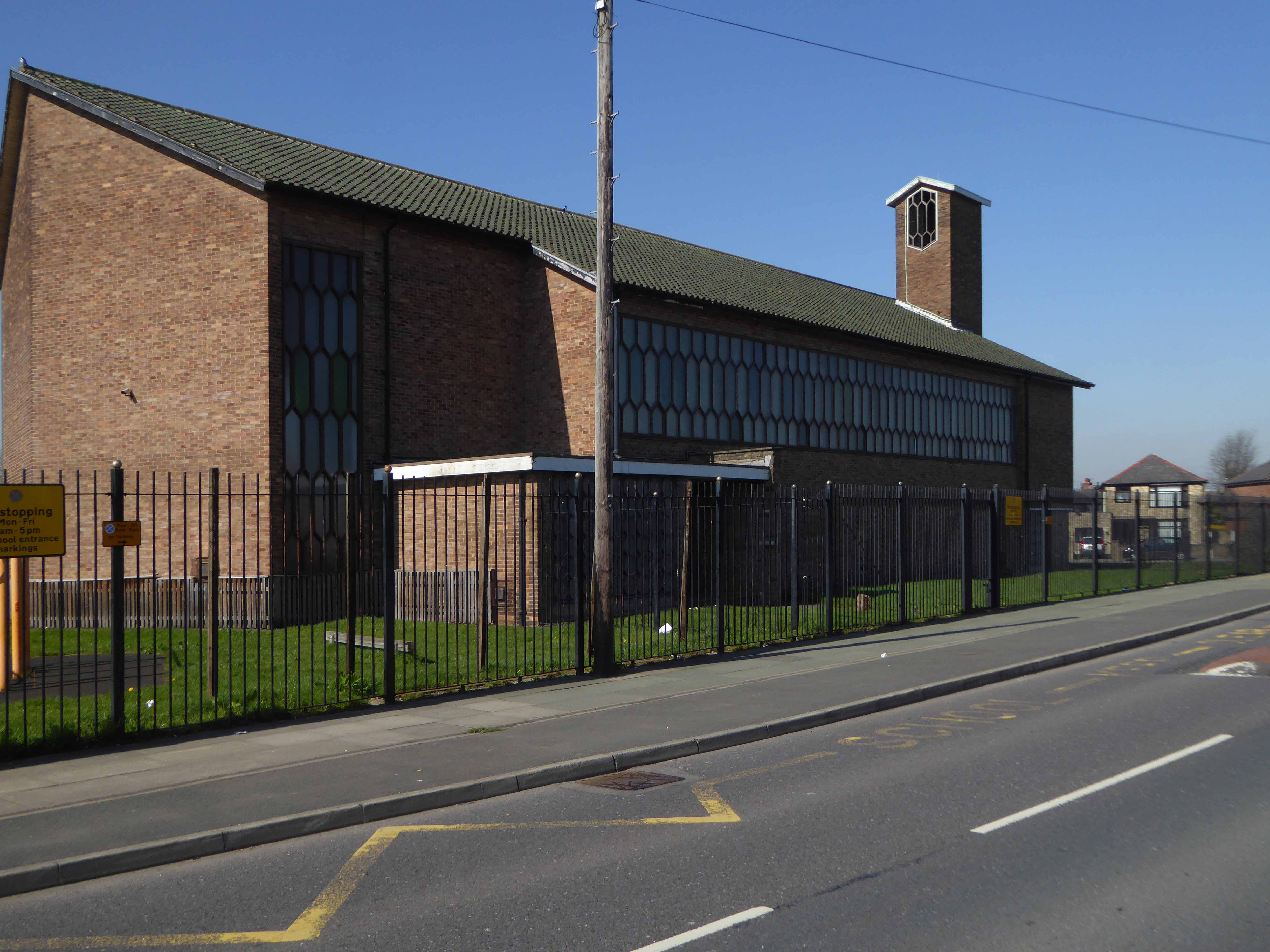
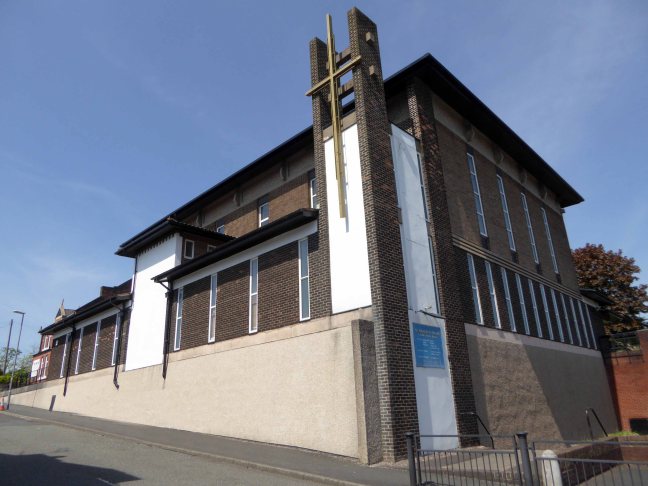
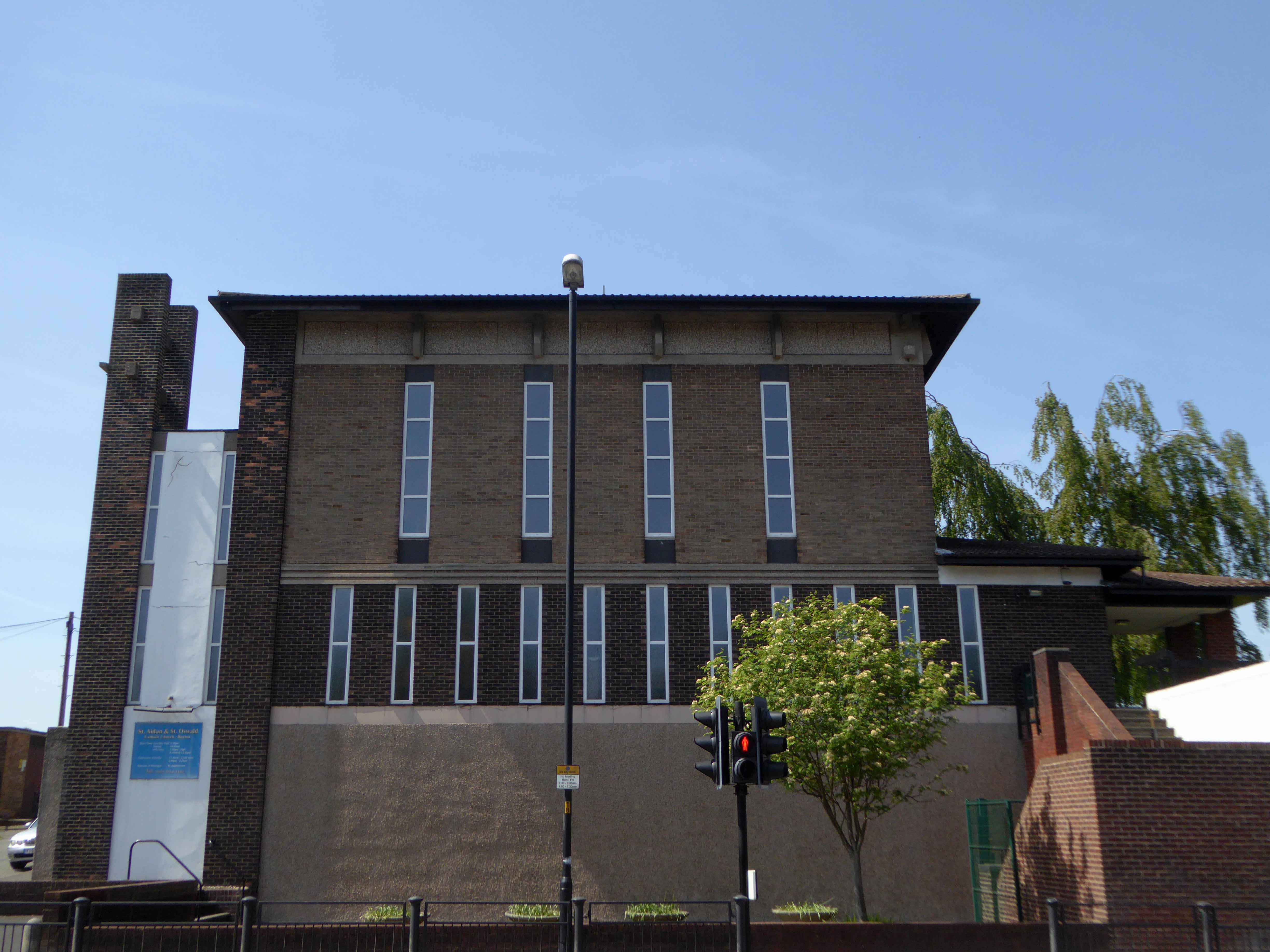
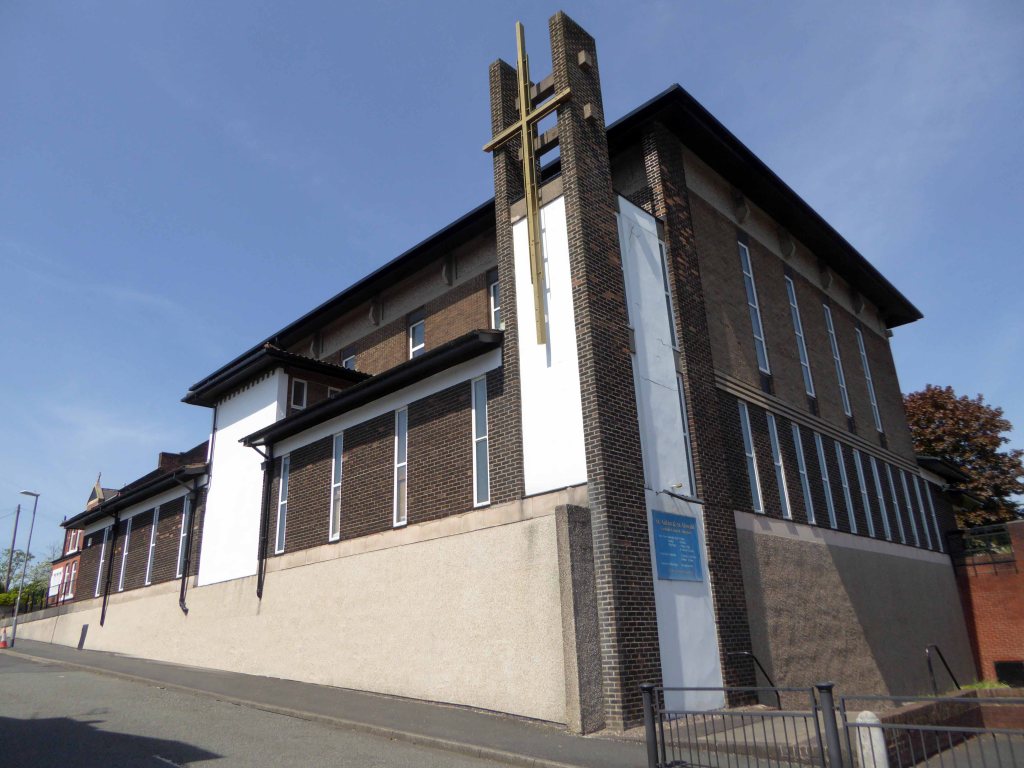
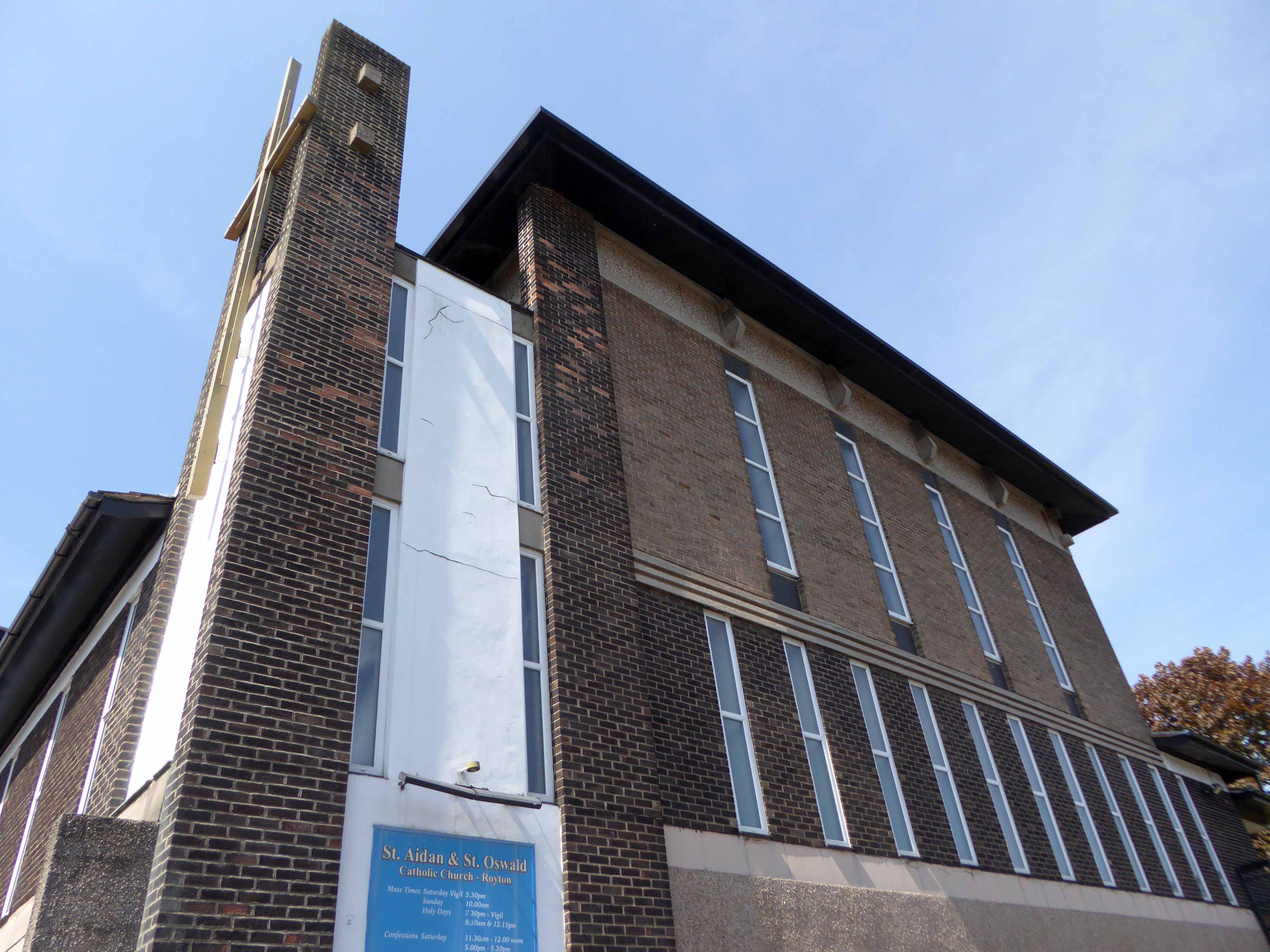
In 1964, Fr Edward Glyn commissioned Massey & Massey of Warrington to design a new larger church in place the previous church, to be built on the same site. The foundation stone was laid on 10 April 1965 by Bishop Holland. R. Partington & Sons Ltd were the contractors and the building cost around £48,000.
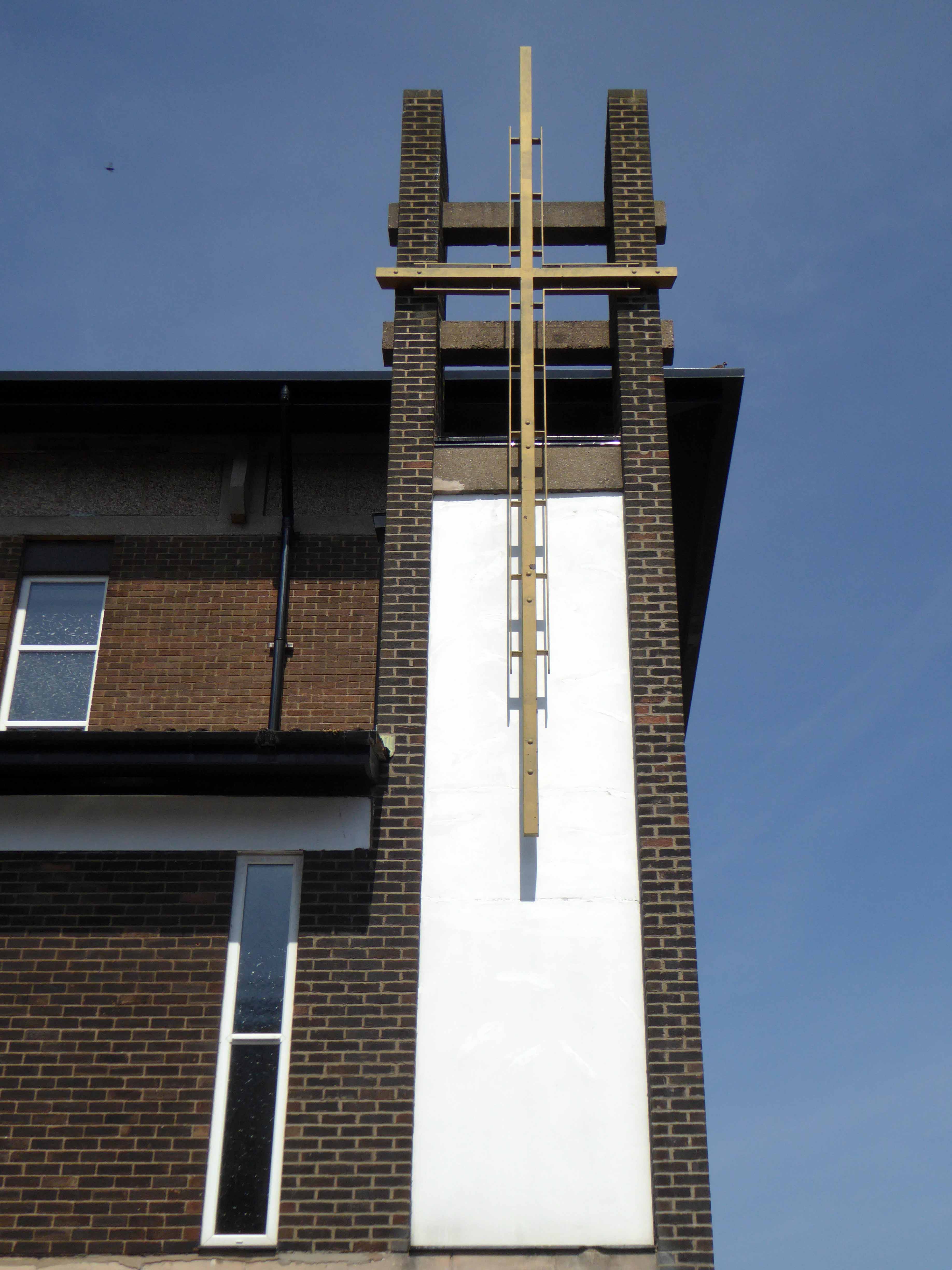
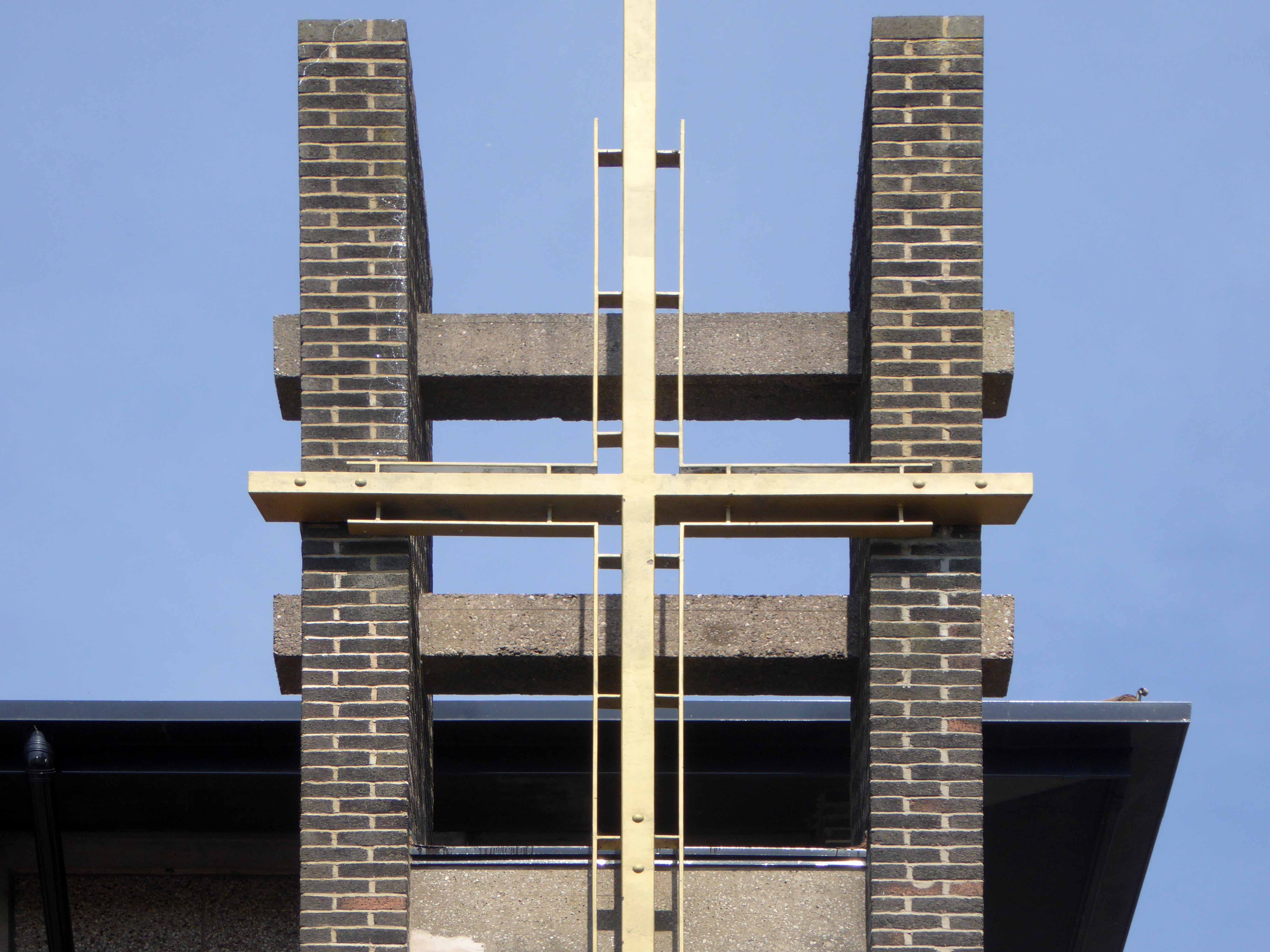
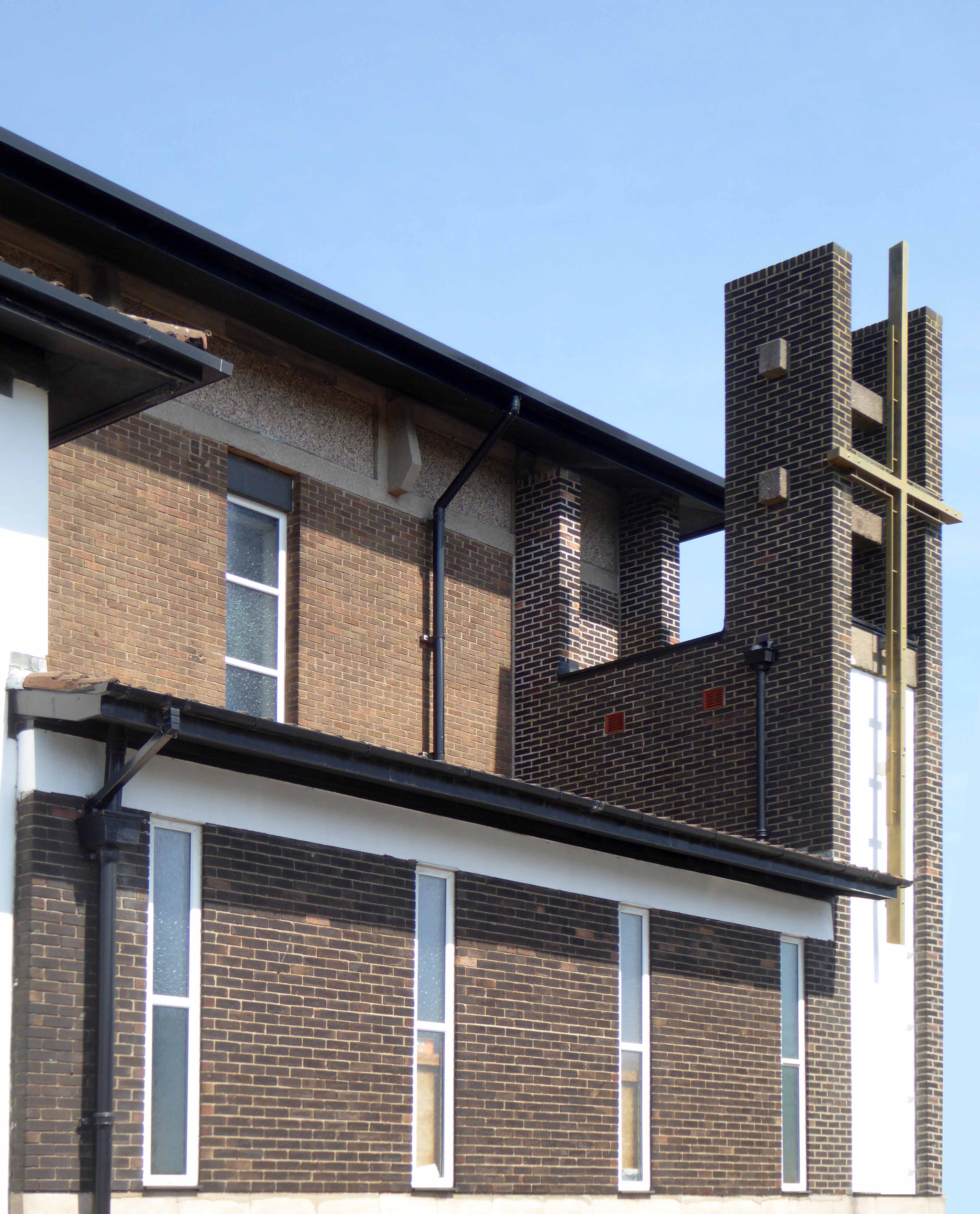
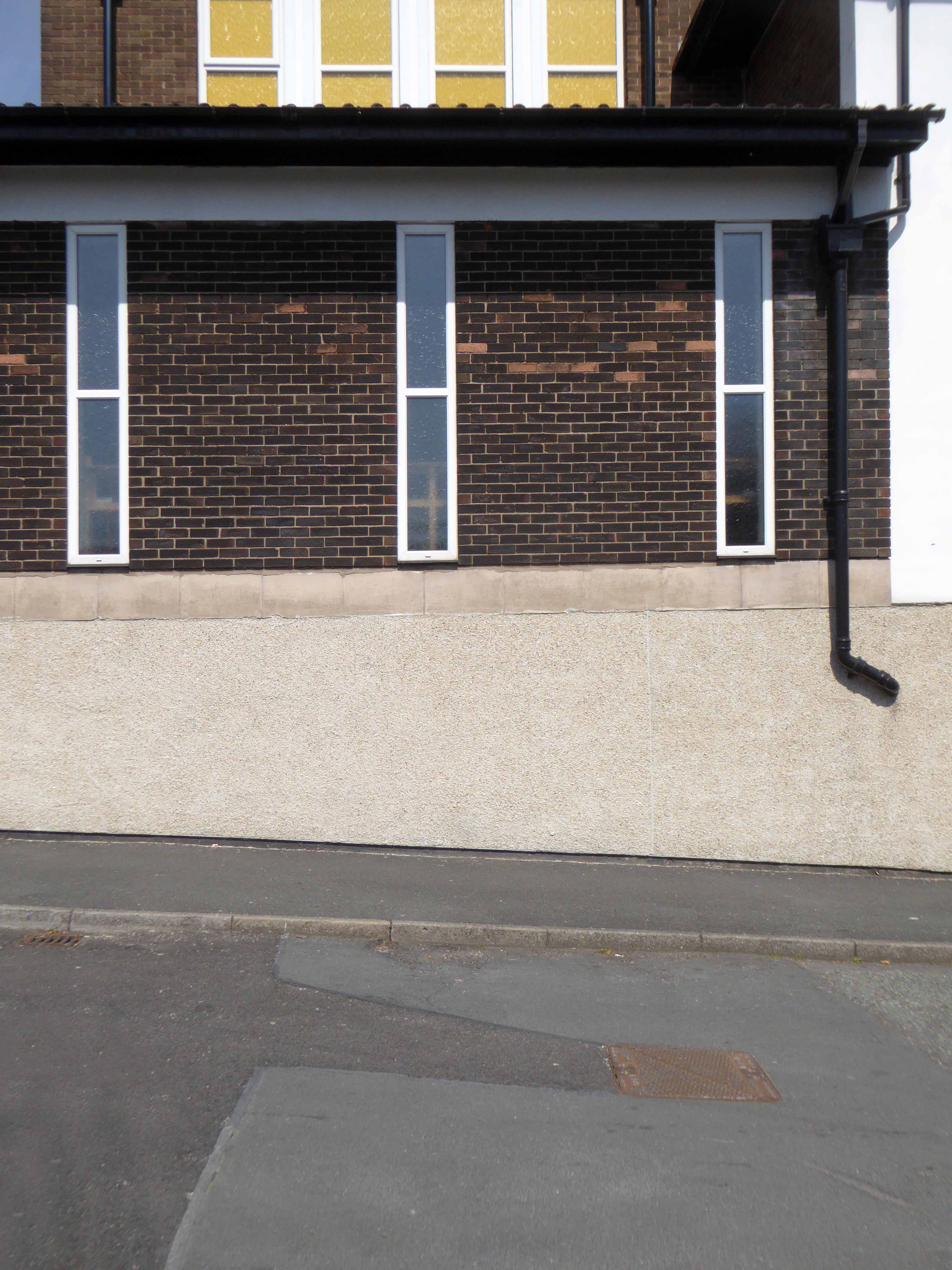
The church is concrete- framed and faced in brick, with dark red brick to the flat-roofed aisles and buff brick to the upper part of the nave. Tall brick piers connected by concrete beams form a vertical accent on the northwest corner, carrying a steel cross.
The shallow-pitched roof is laid with concrete tiles, on deep eaves (originally the roof was flat). Windows are now mostly uPVC, with some stained glass; the six-bay nave is lit by tall narrow windows at clerestory levels, with similar narrow lights to the aisles.
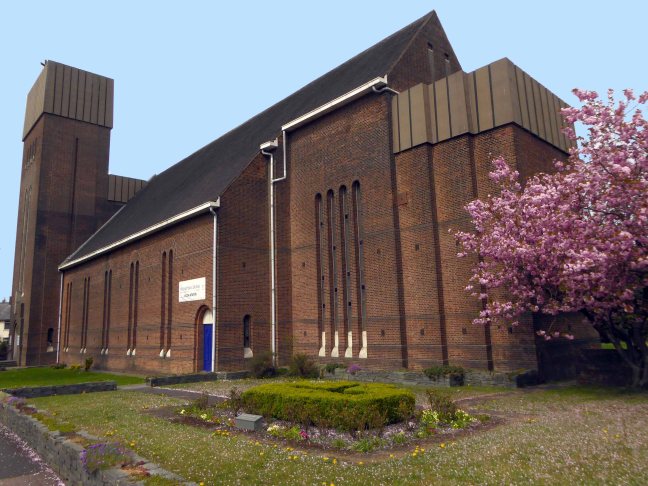
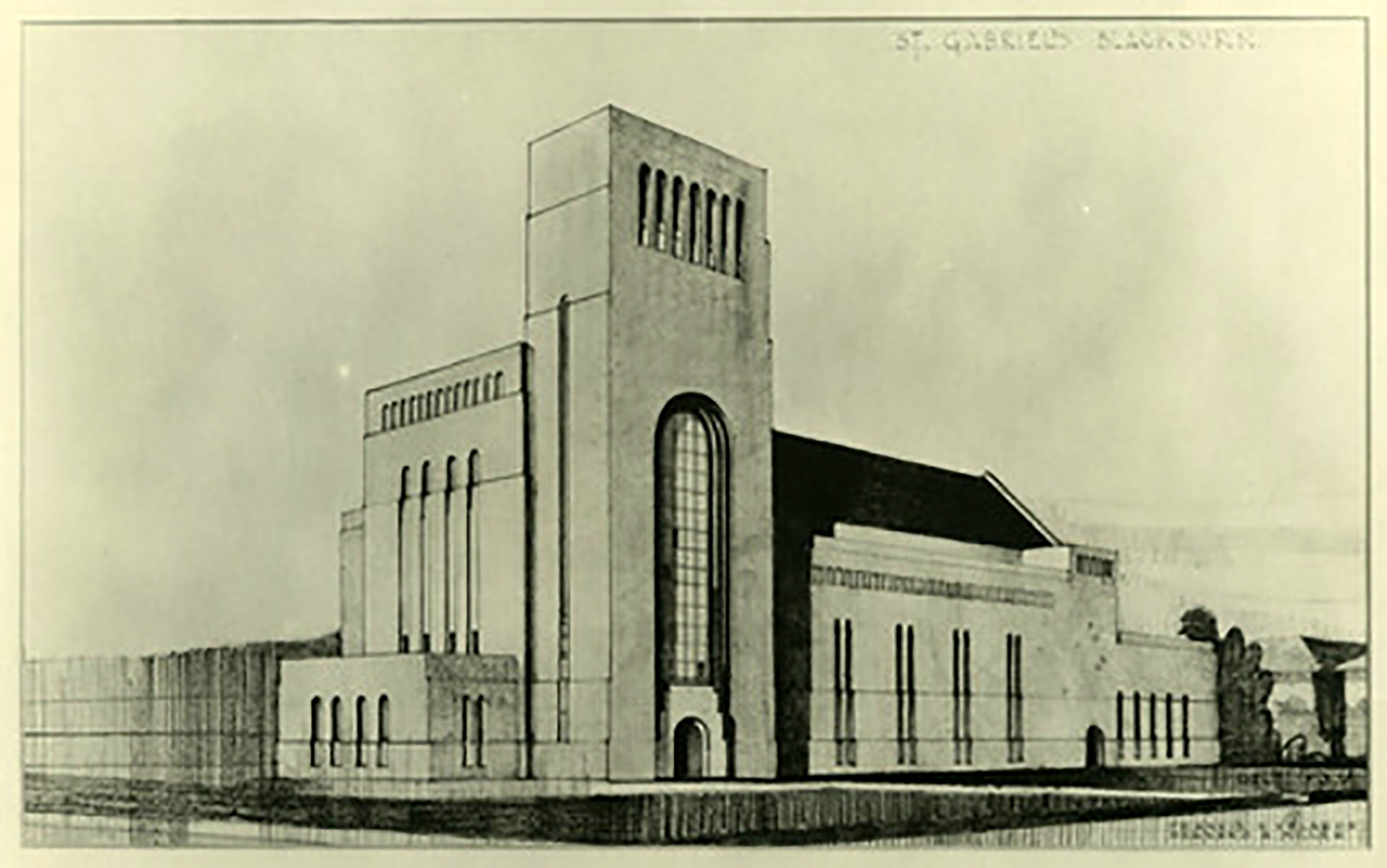
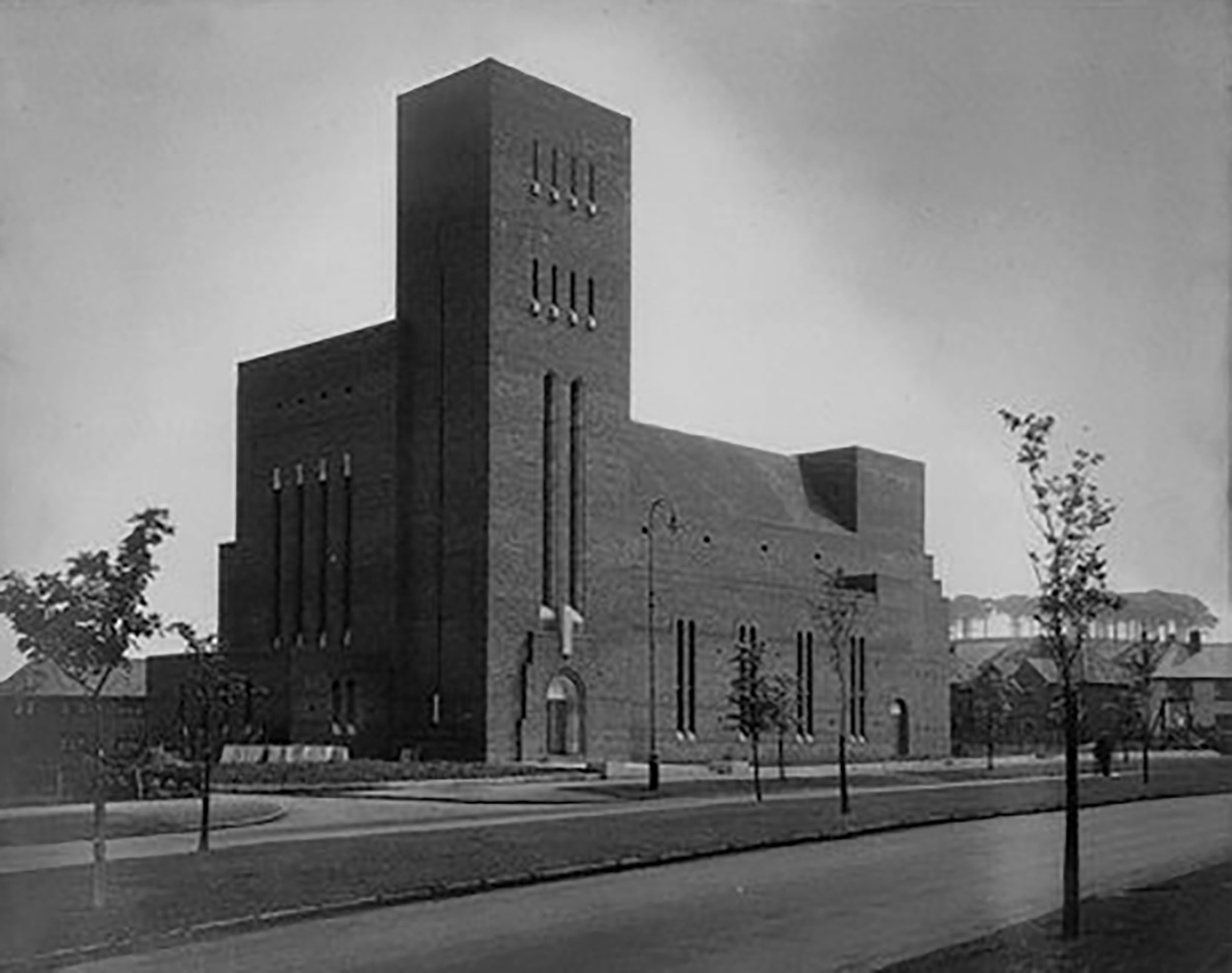
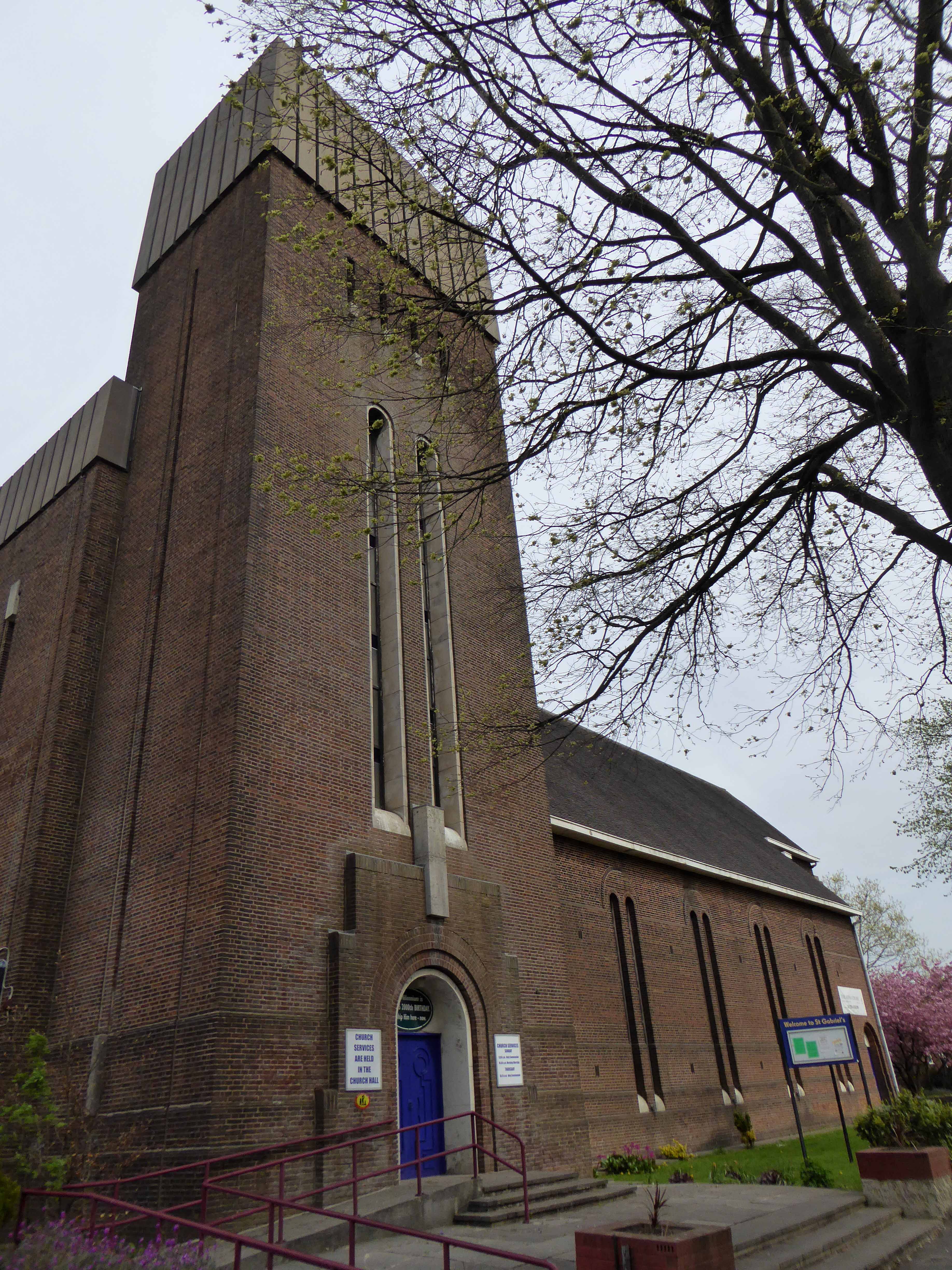
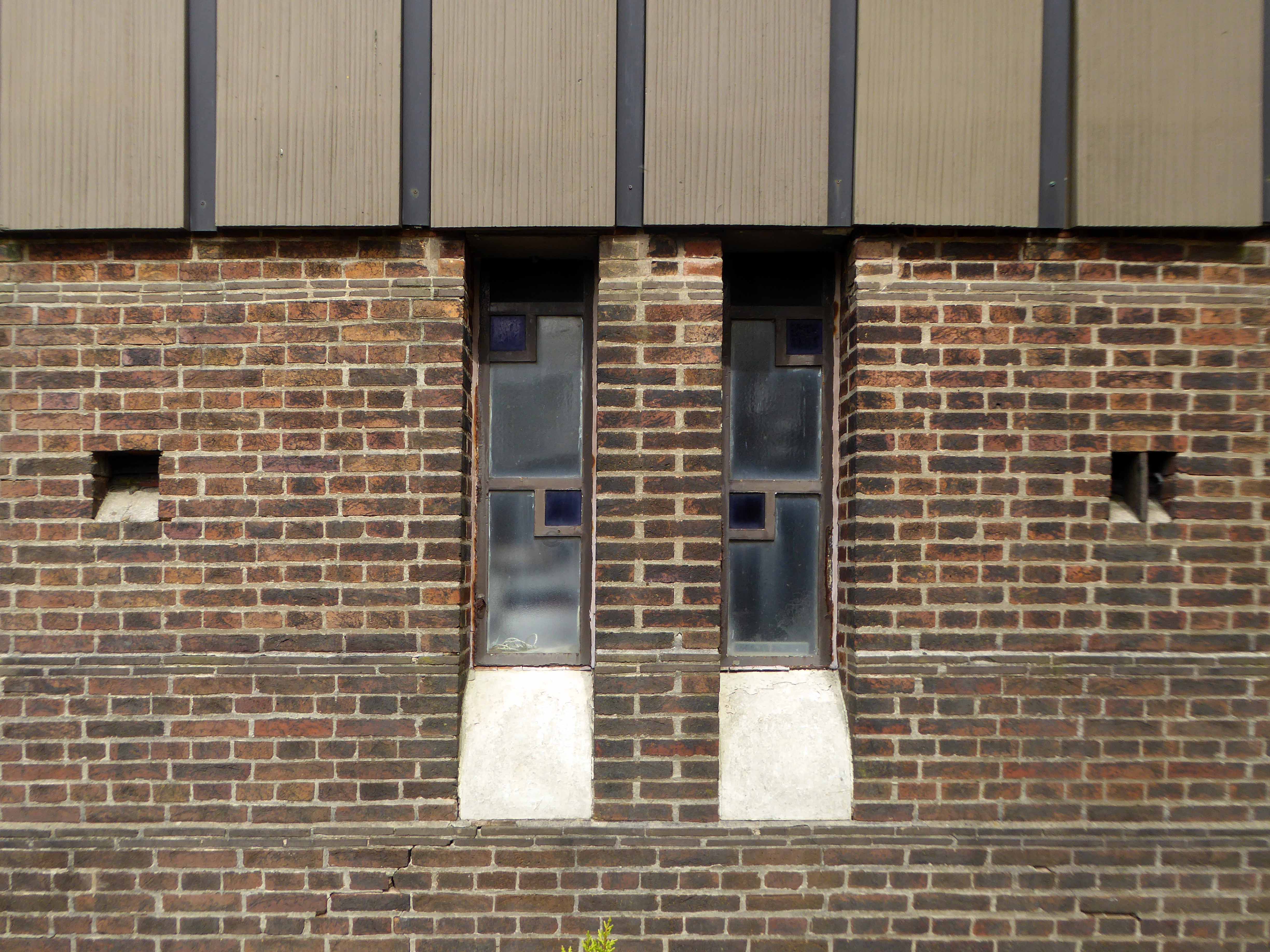
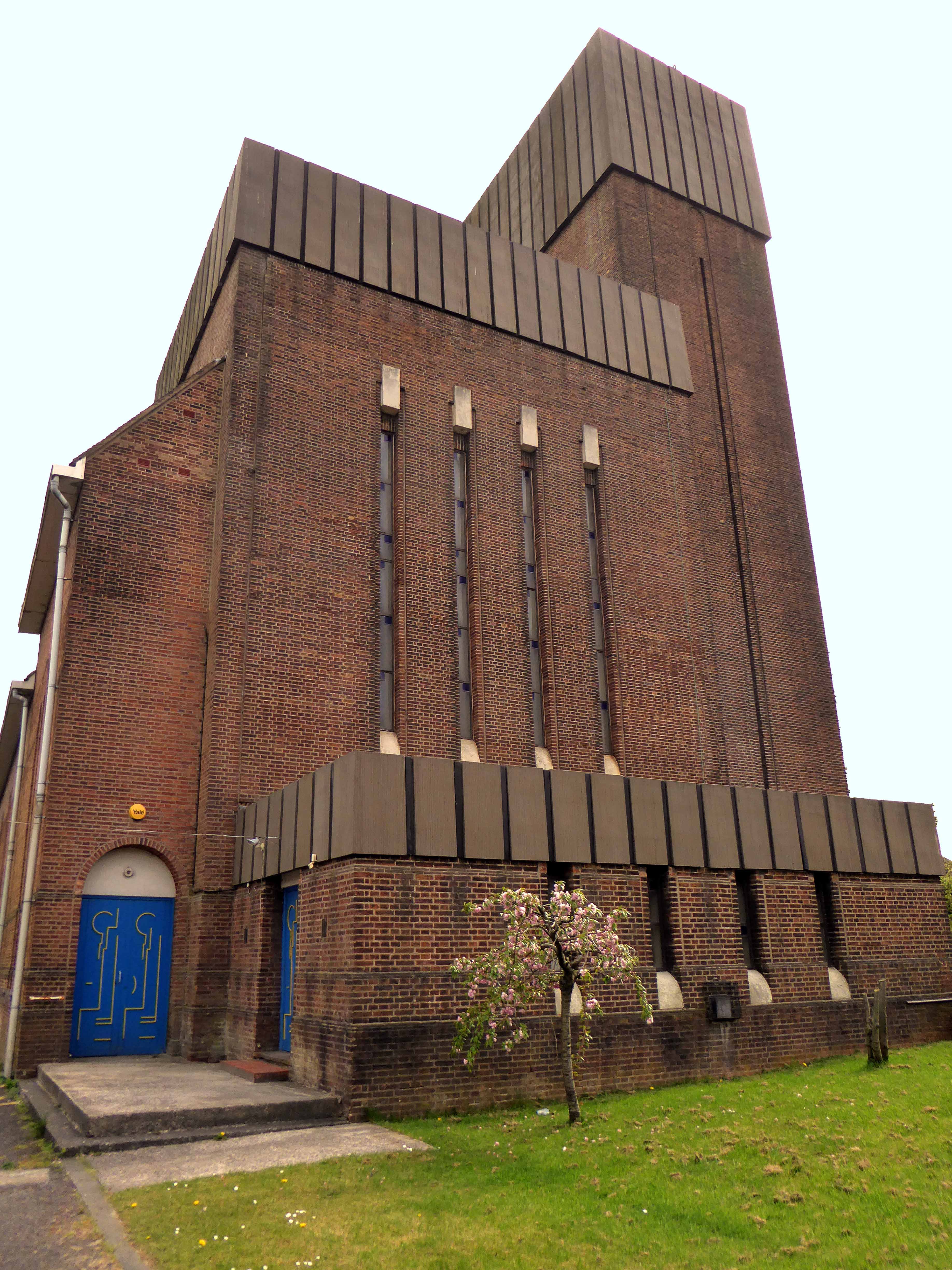
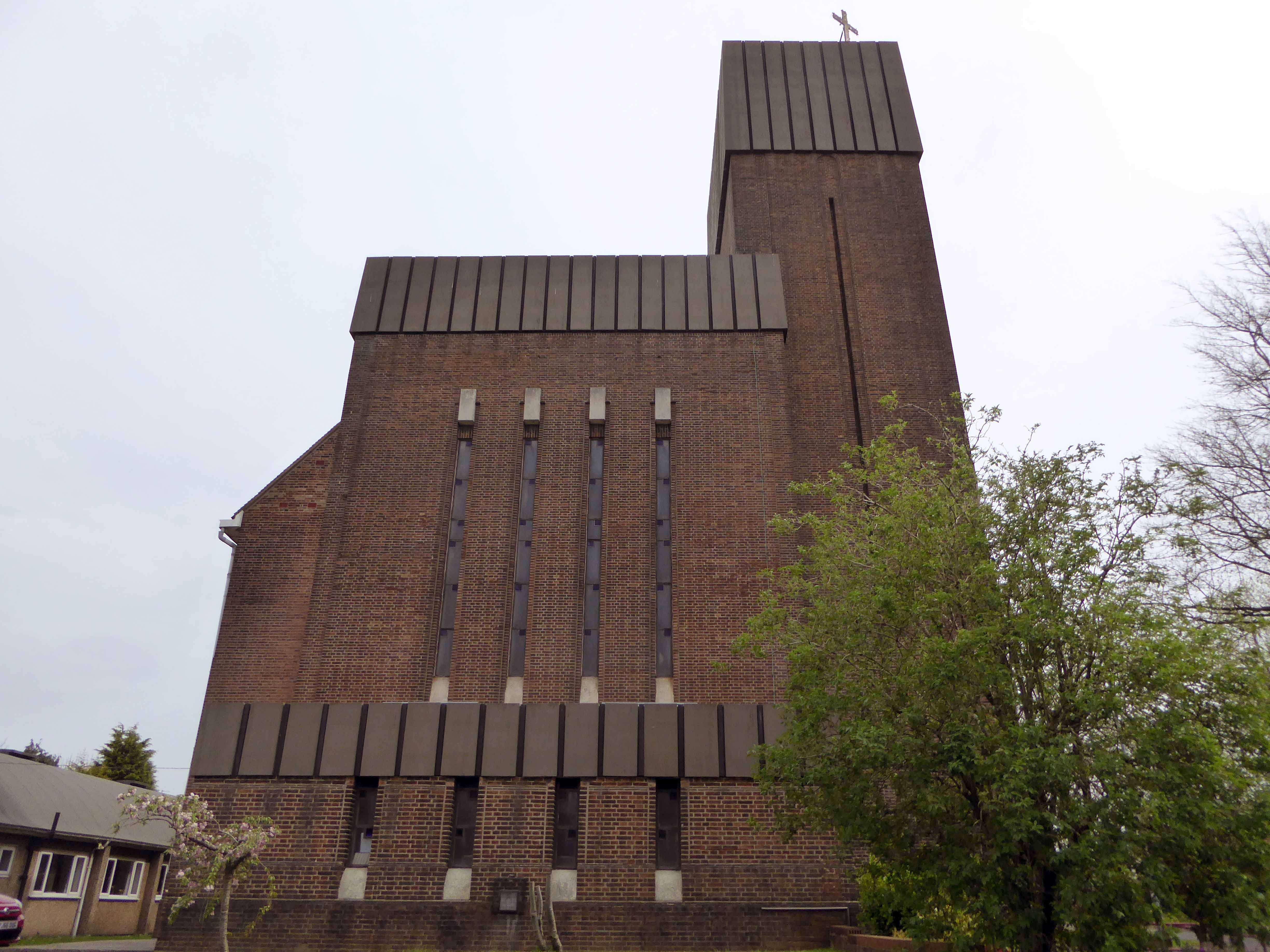
The original design of Liverpool architect F.X. Velarde attracted so much attention when St Gabriel’s opened in 1933.
“The new building… marks a new departure from the accepted ecclesiastical style and is unique in this district,” said the old Blackburn Times when it was consecrated on April 8, 1933, by the Bishop of Blackburn, Dr P.M. Herbert.
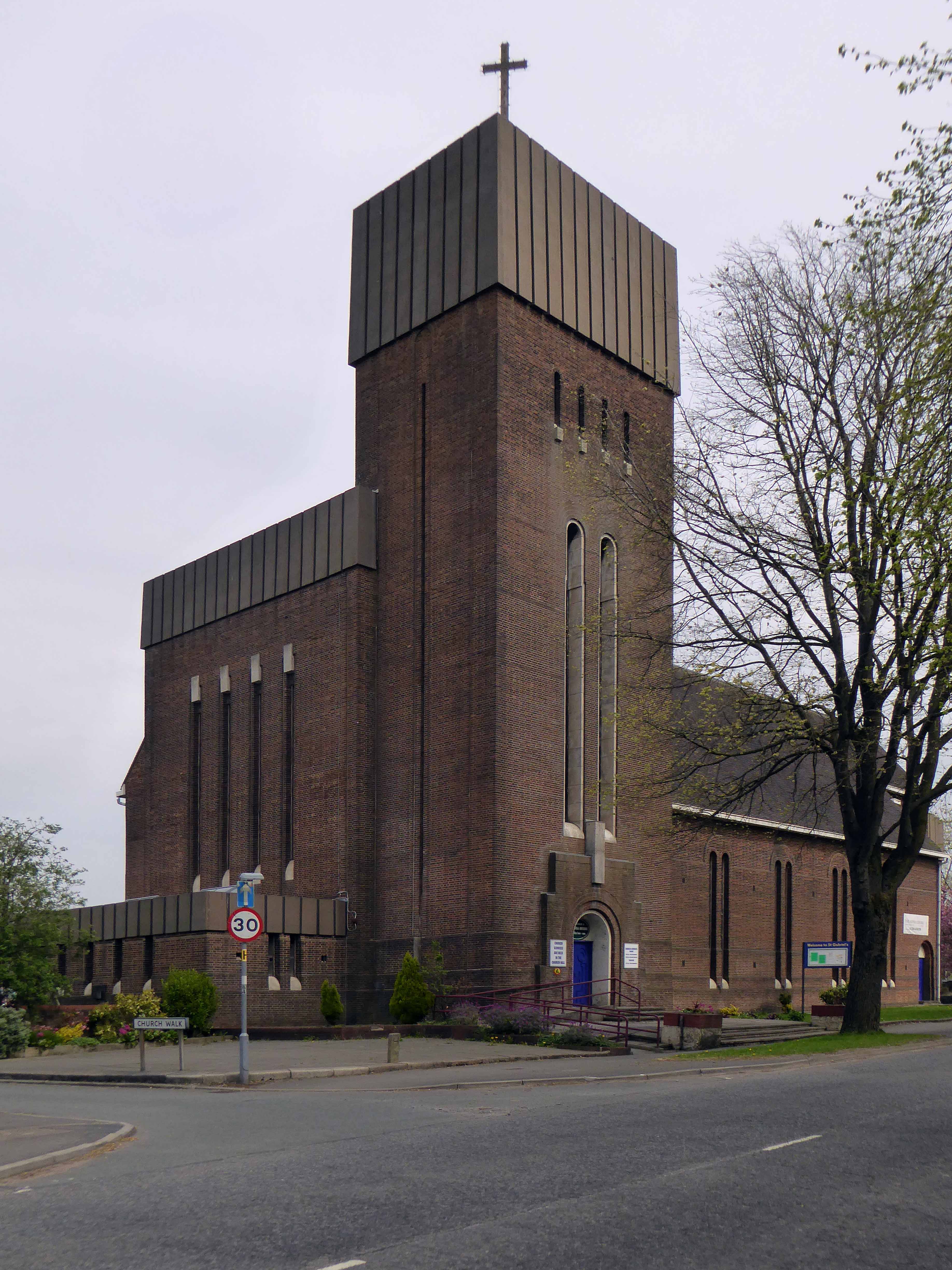
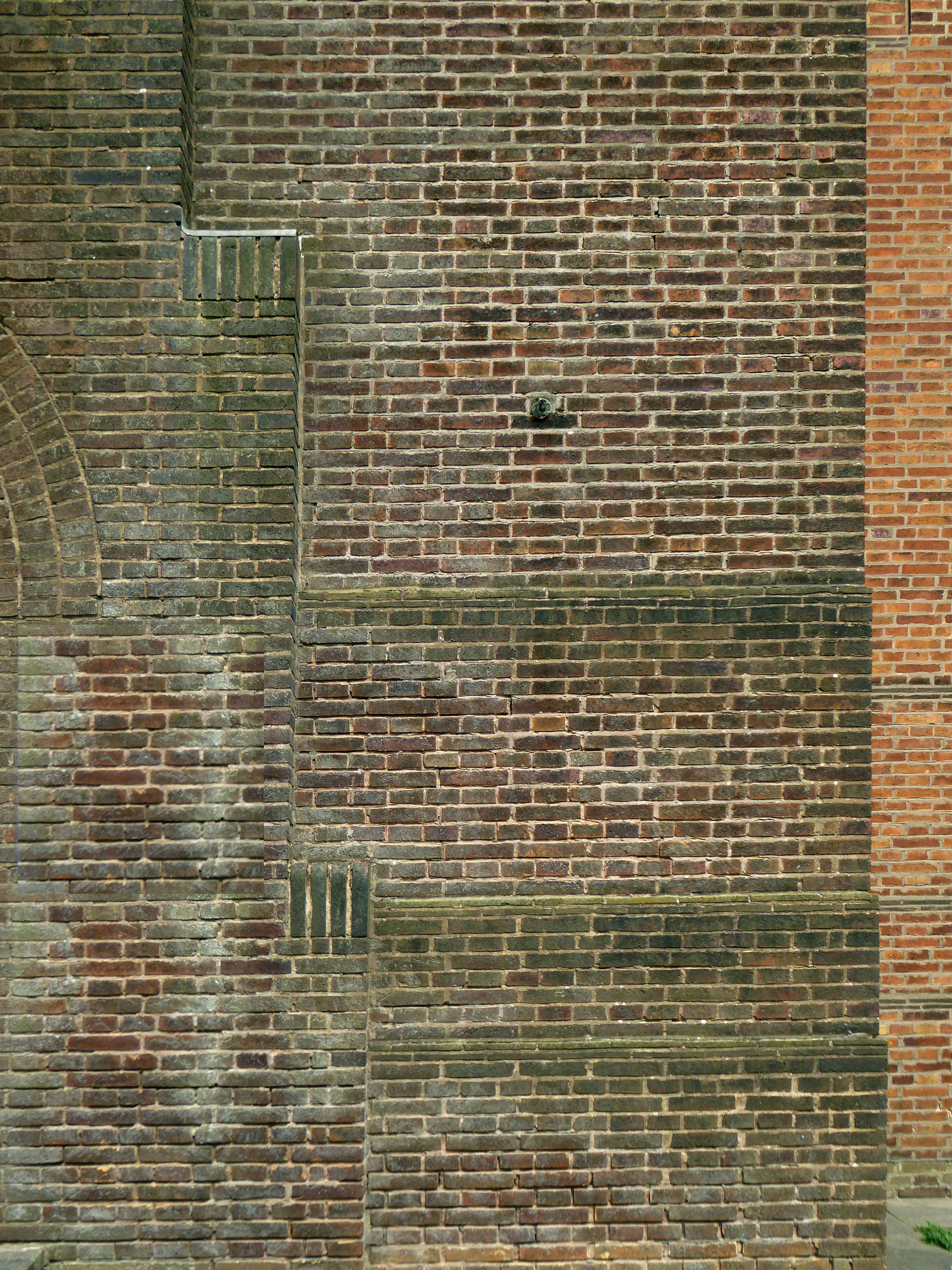
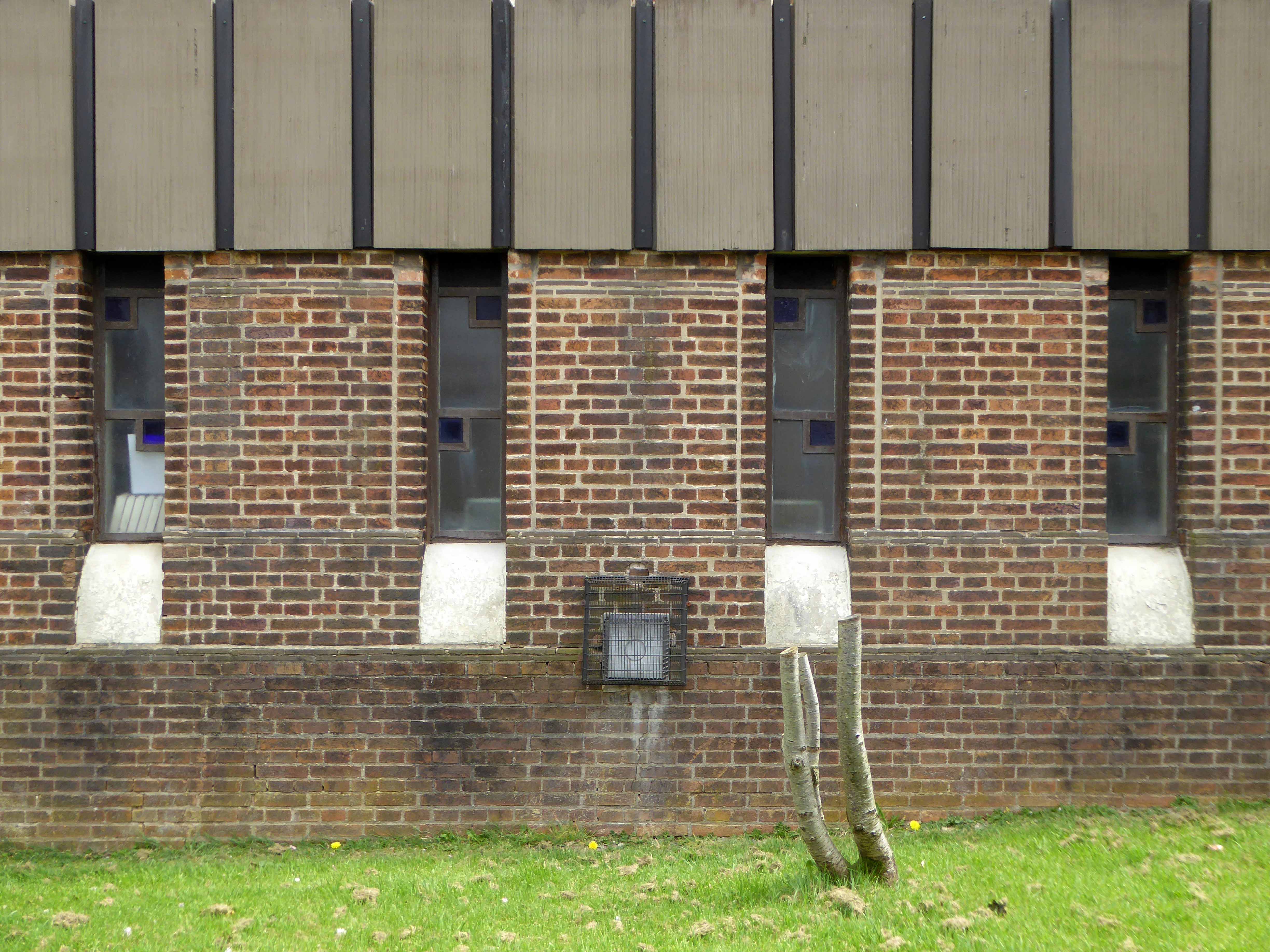
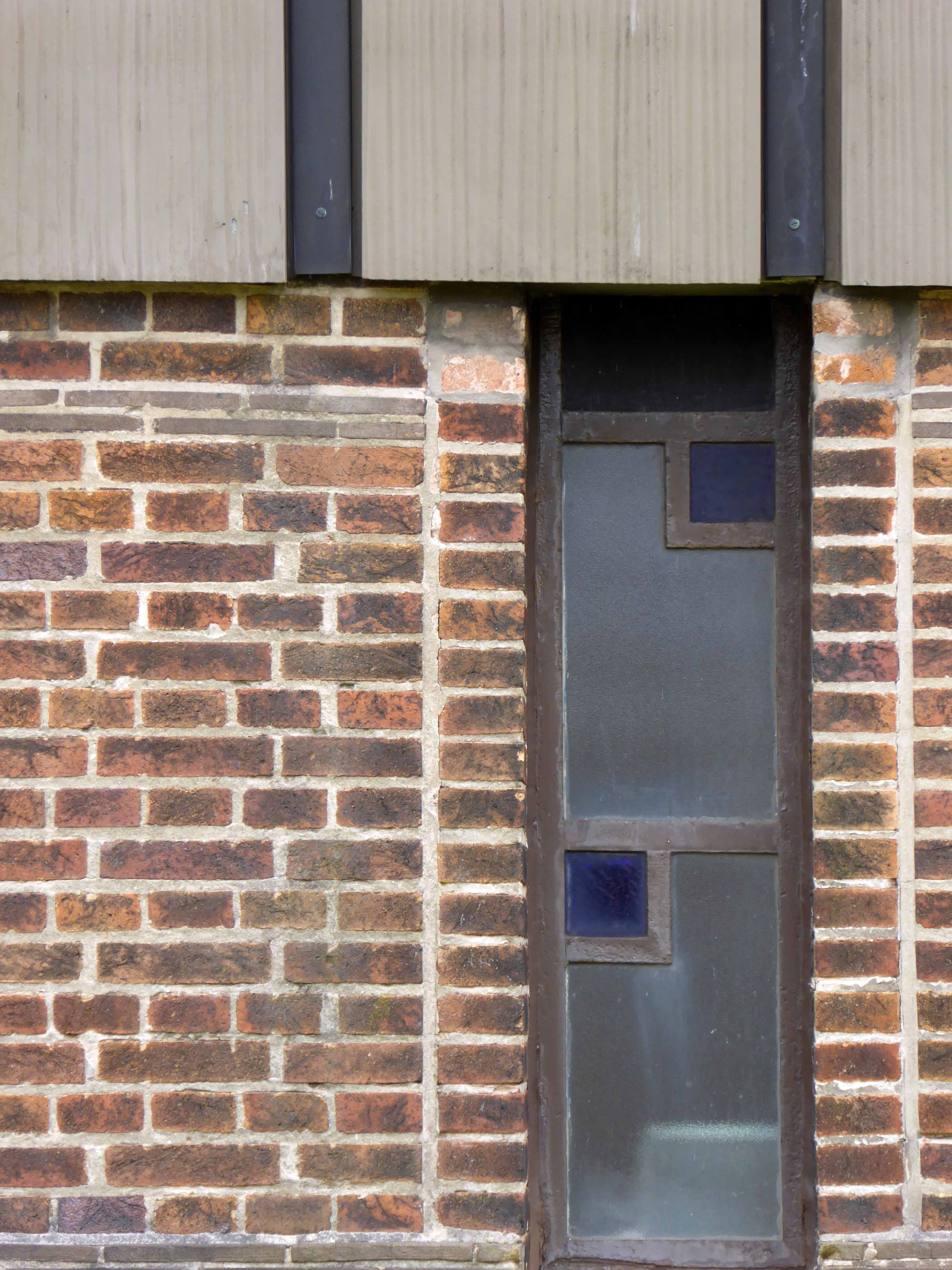
But this is a church which throughout its life has been fraught with settlement cracks, repairs and redesign – it’s original towers truncated and clad, flat roofs pitched and timbers replaced.
For 34 years ago, the landmark building was facing possible demolition — with the parish confronted with a then-immense bill of £15,000 for repairs. The crisis was due to serious damage to the roof timbers caused by water penetration.
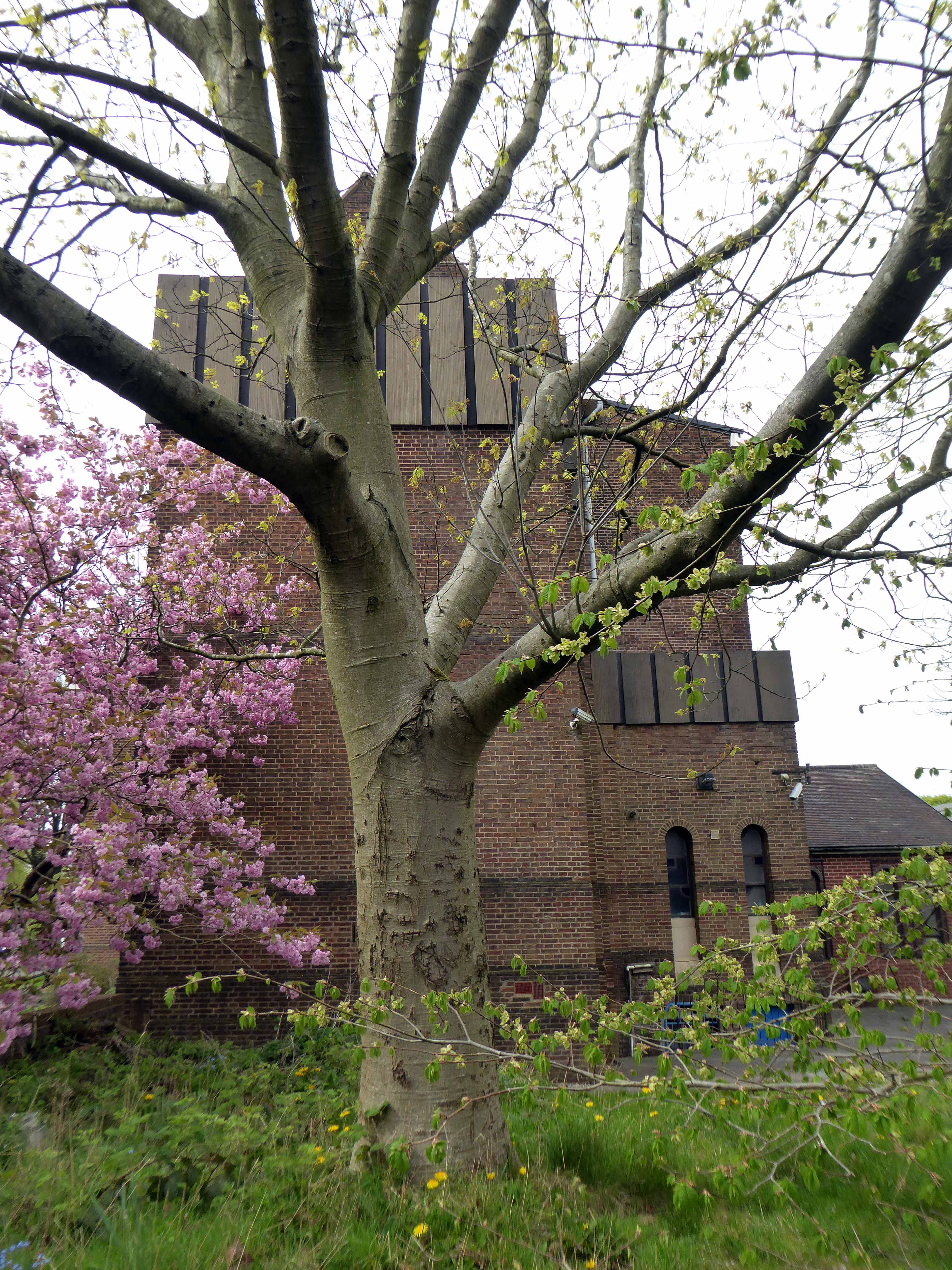
Eventually, it took £40,000-worth of refurbishment inside and out lasting until 1975 to save St Gabriel’s — at considerable expense to its original appearance. The main tower was shortened by six feet and later clad at the top with glass-fibre sheathing while the east tower was removed altogether and its flat roofs were made into pitched ones to deal with the rotting roof timbers and problems of settlement.
In fact, the difficulties that its design and construction posed were recognised much earlier in 1956 when the church, which had cost £20,000 to build, was found to be in urgent need of repairs that would cost more than £1,500. For an inspection by the Diocesan Architect found that major defects in the flat roof could have serious consequences unless they were given early attention and portions of the parapet wall were found to have large cracks due to settlement while half the building’s brickwork needed pointing.
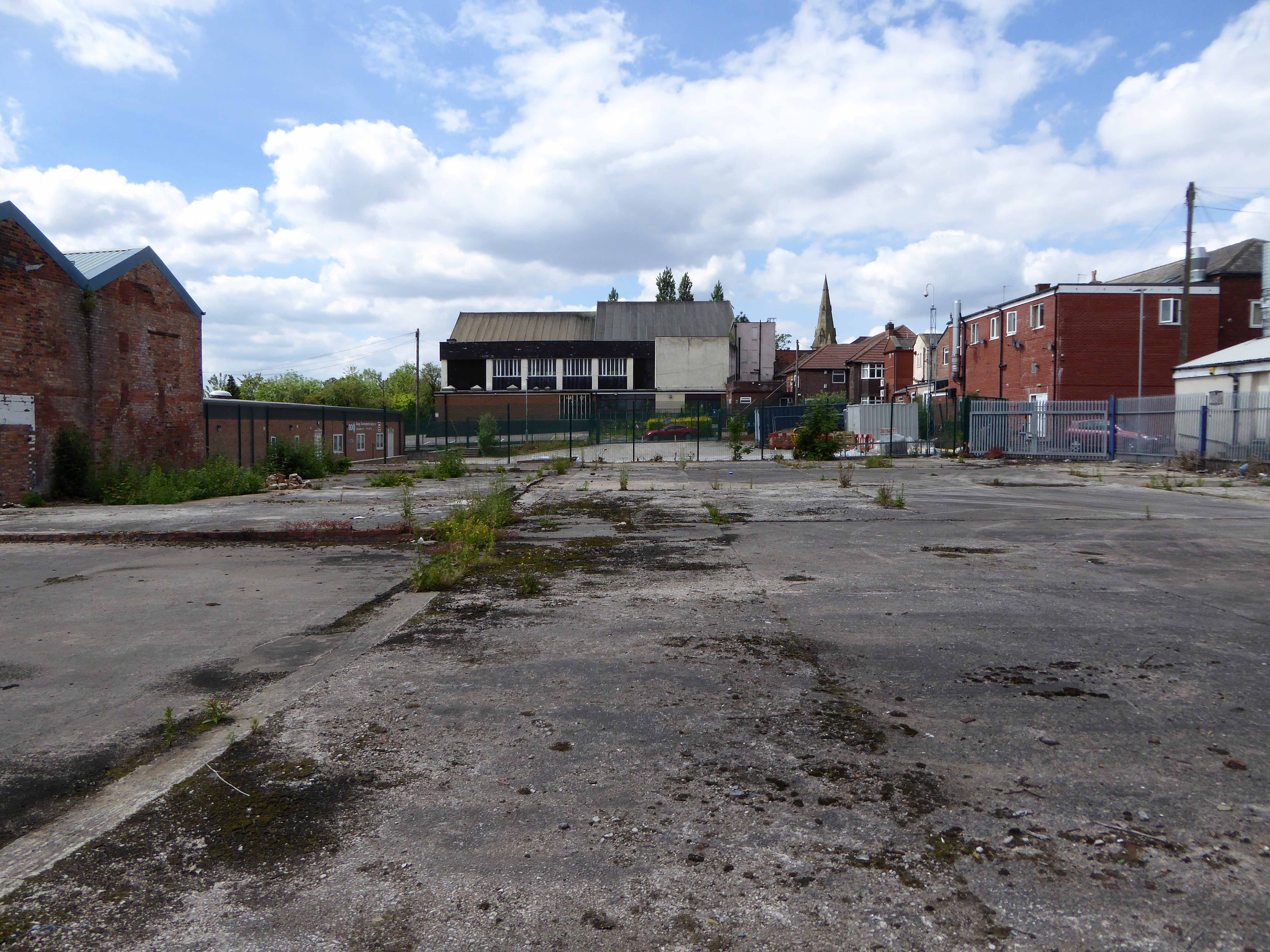
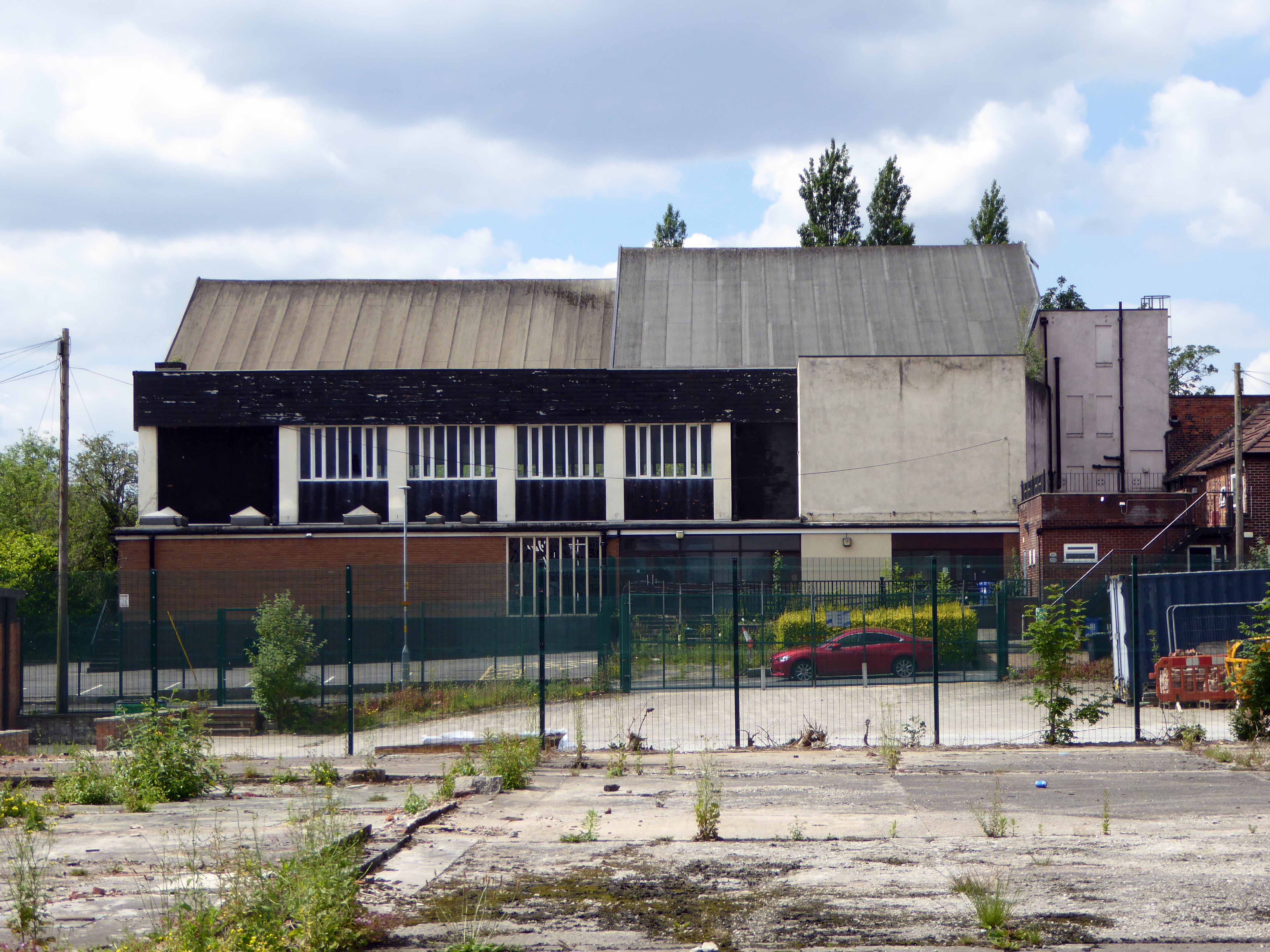
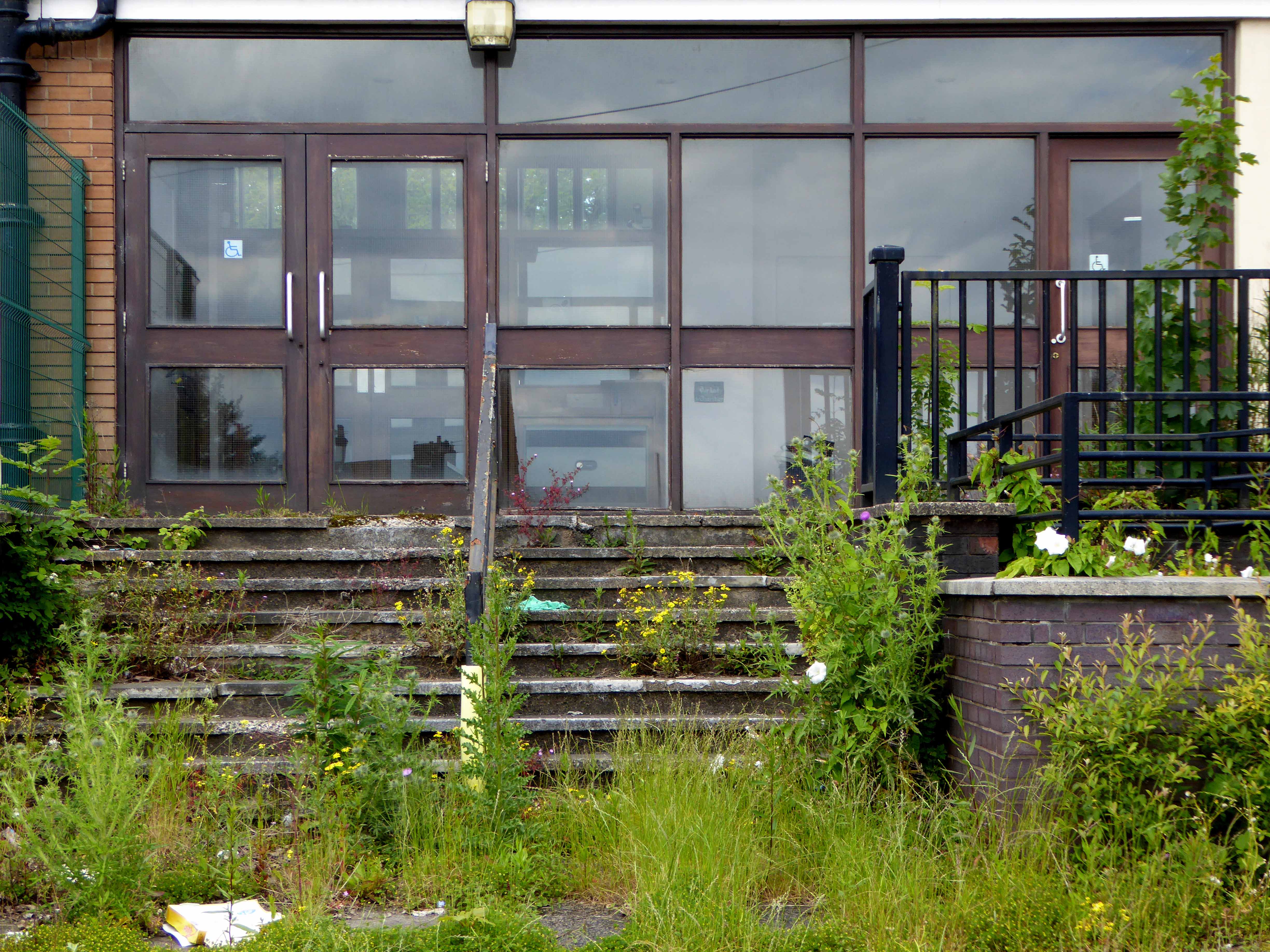
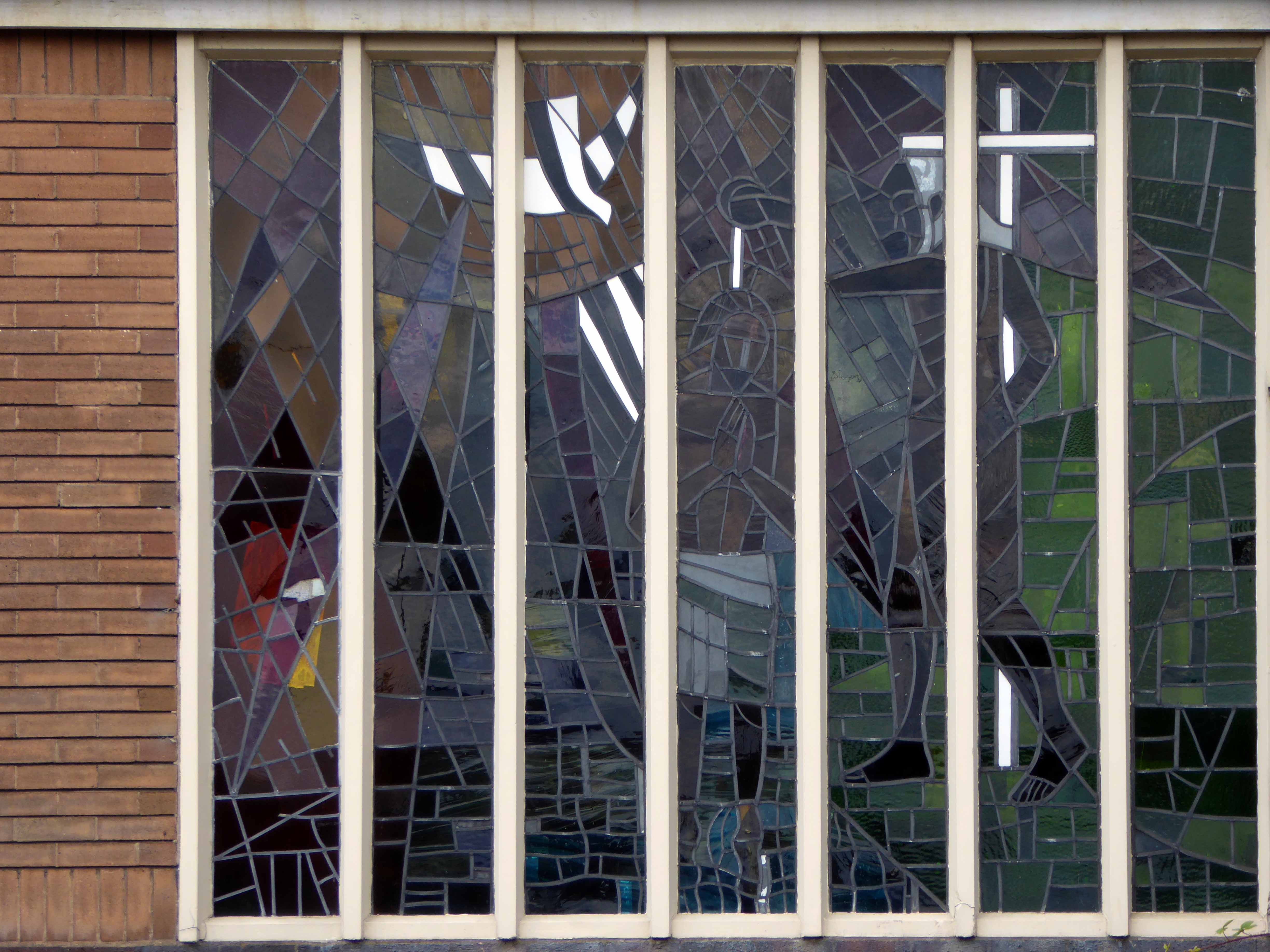
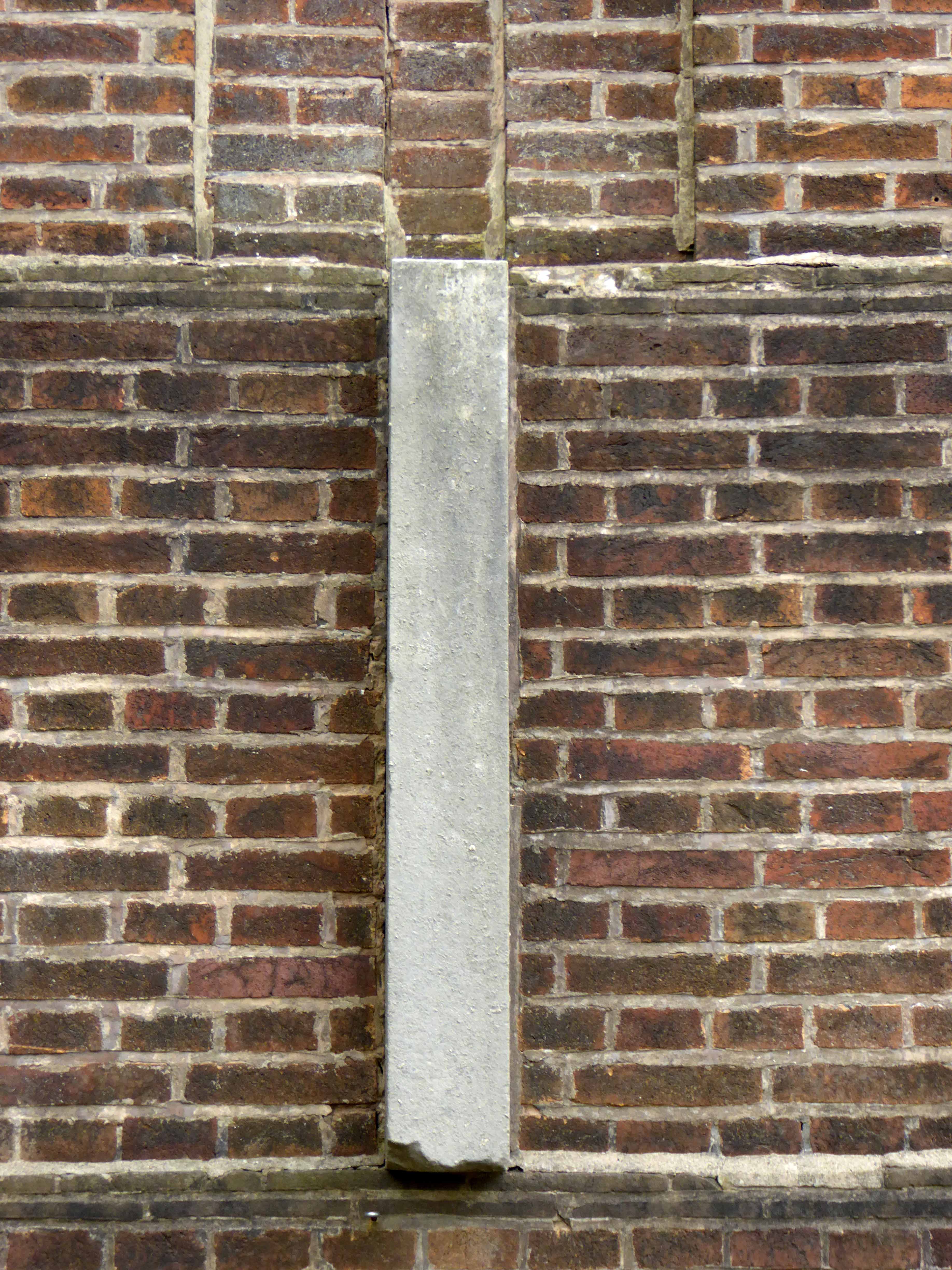
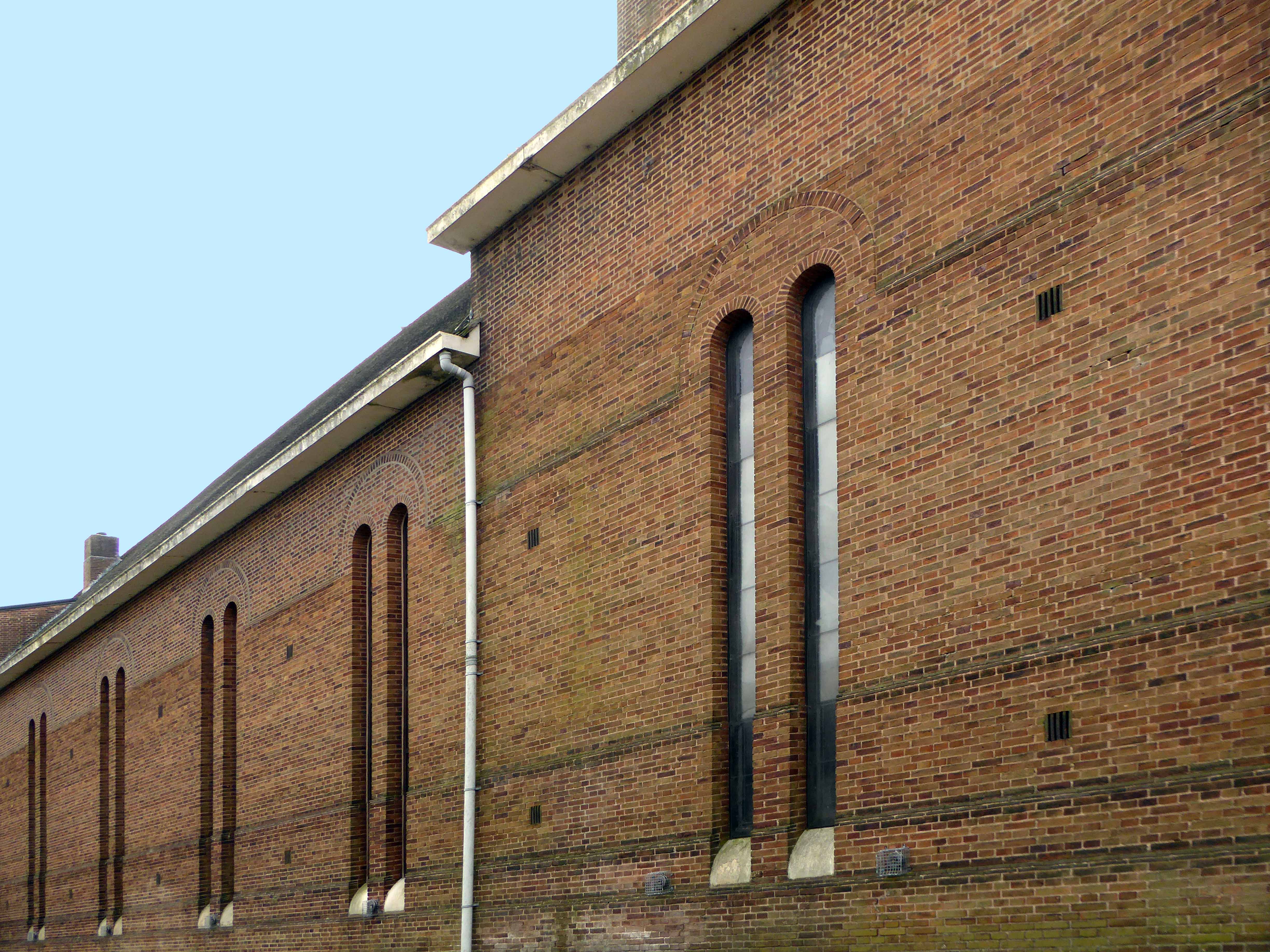
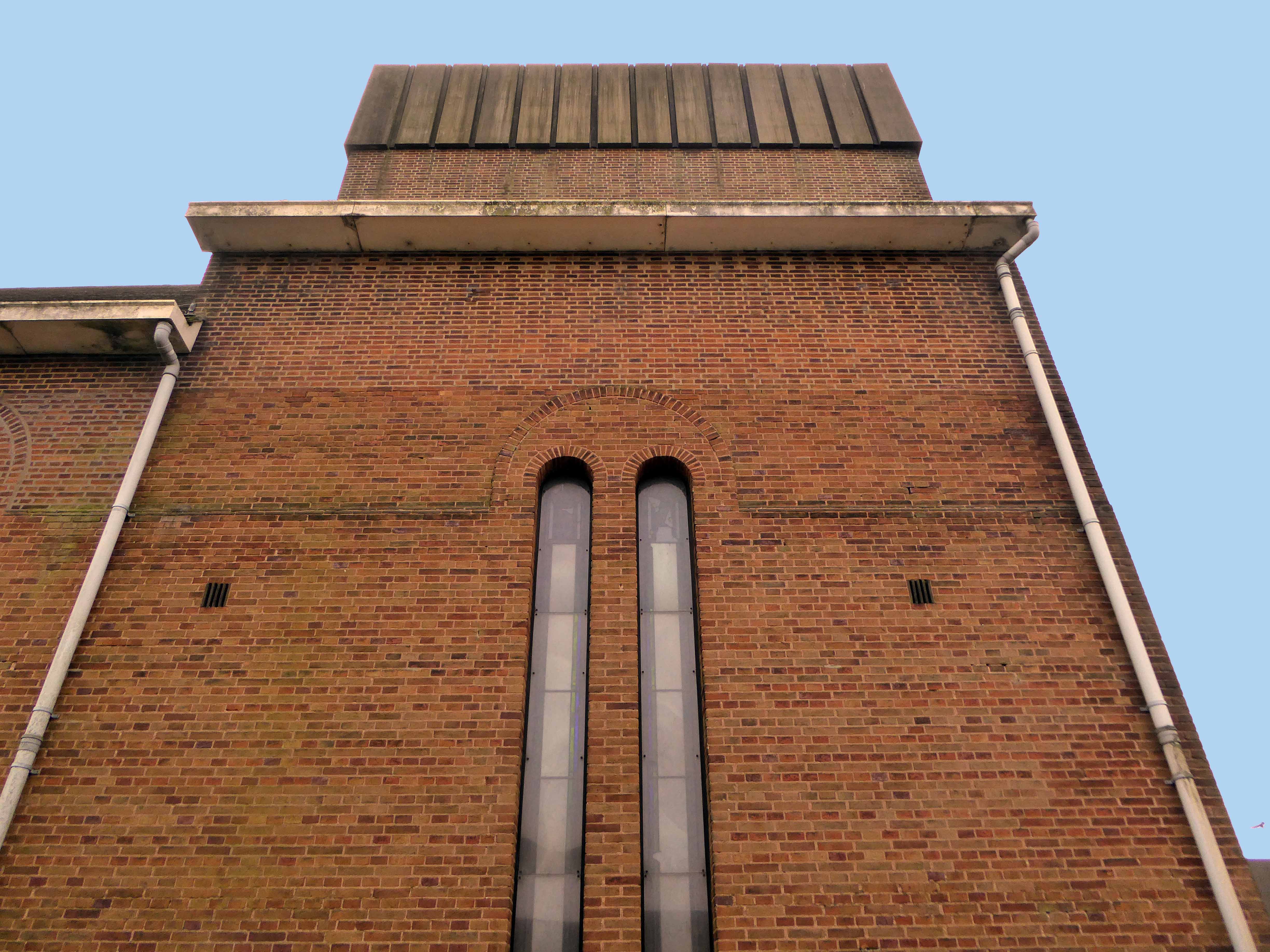
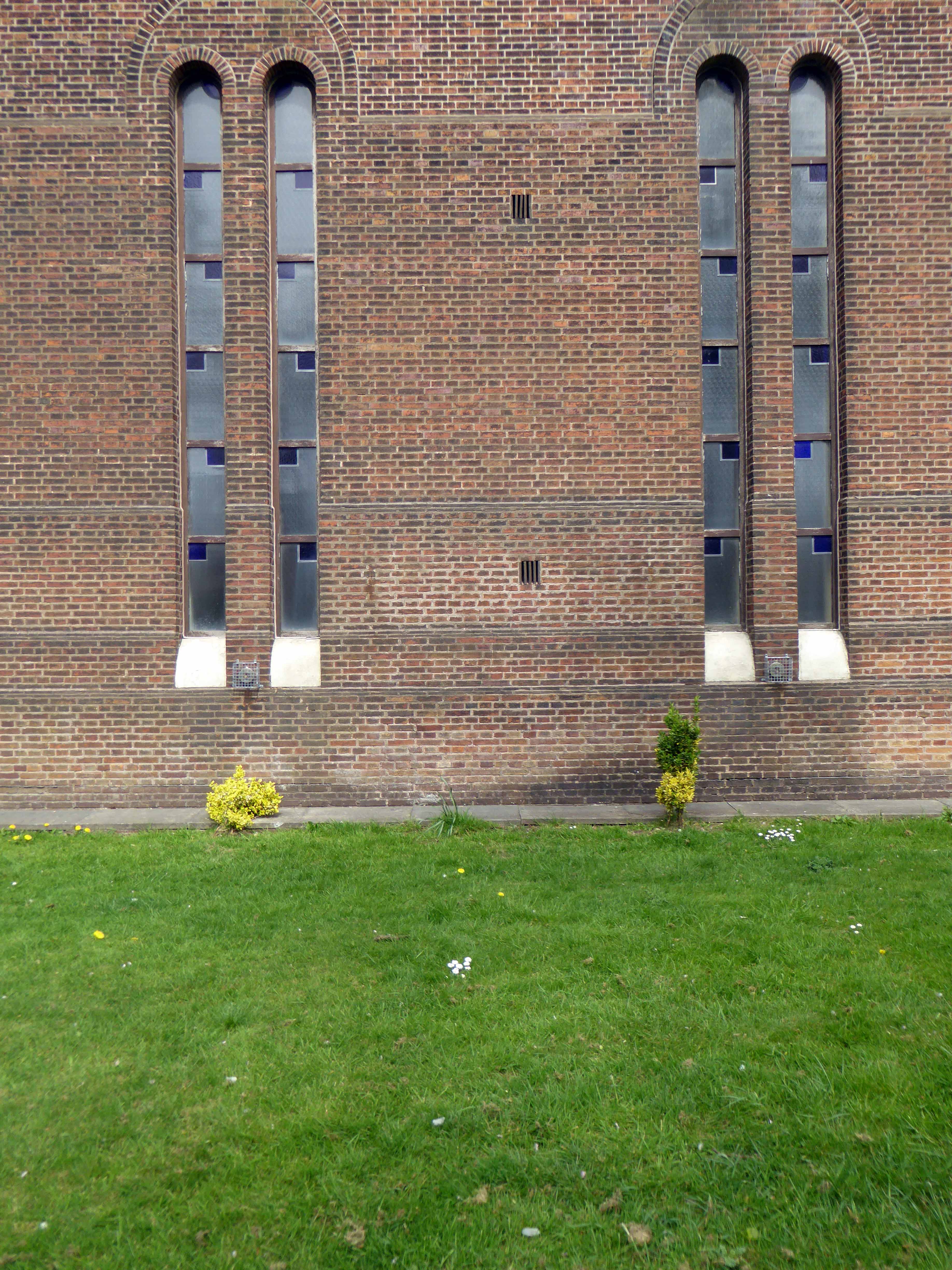
And so it now stands forlorn and unused – services are now held in the adjacent church hall. A series of interlocking monumental interwar functionalist brick clad slabs, once thought to resemble a brewery or cinema, now awaits its fate. Though it remains a thing of wonder in both scale and detailing, well worth a wander around if you’re passing.
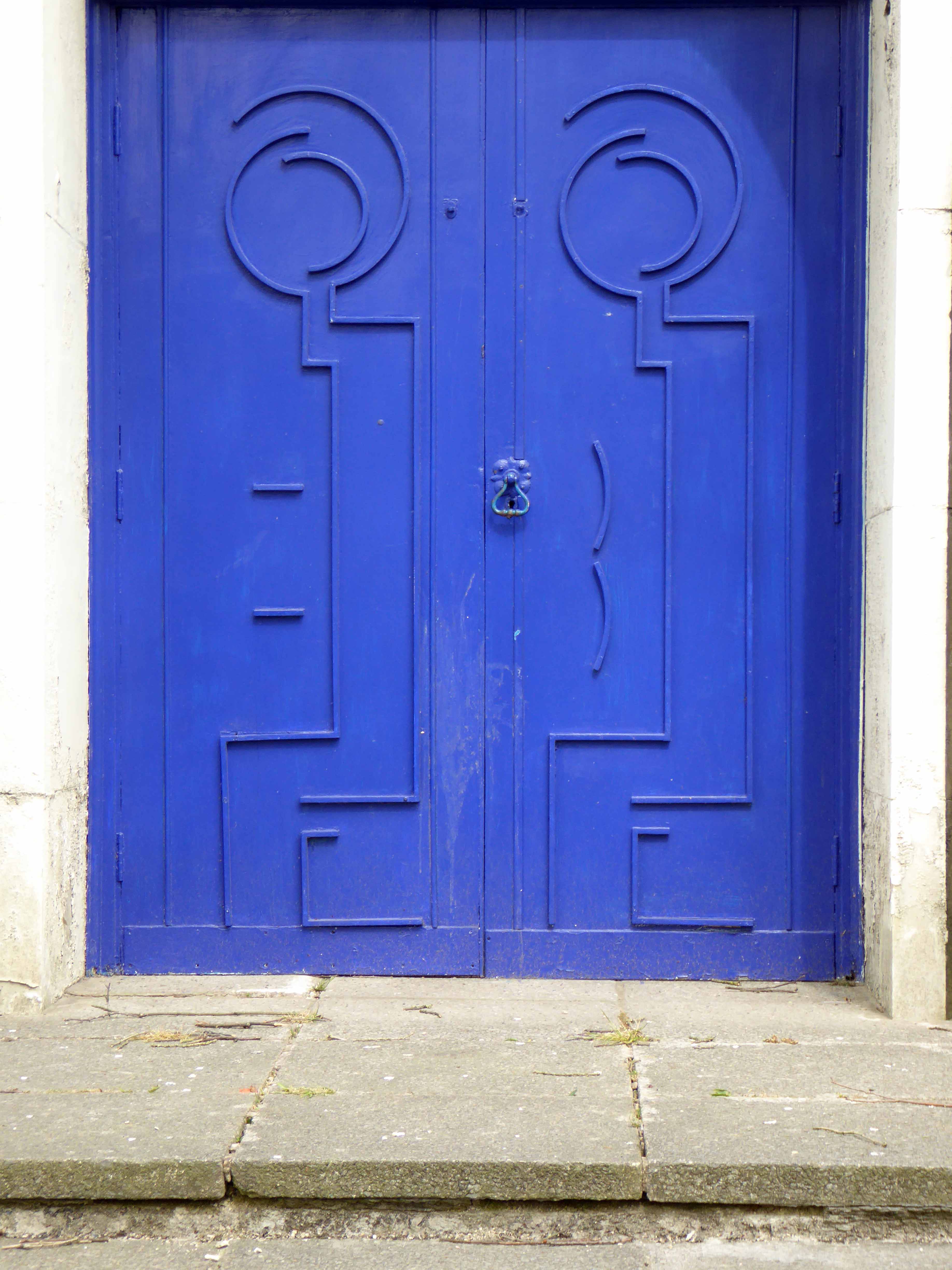
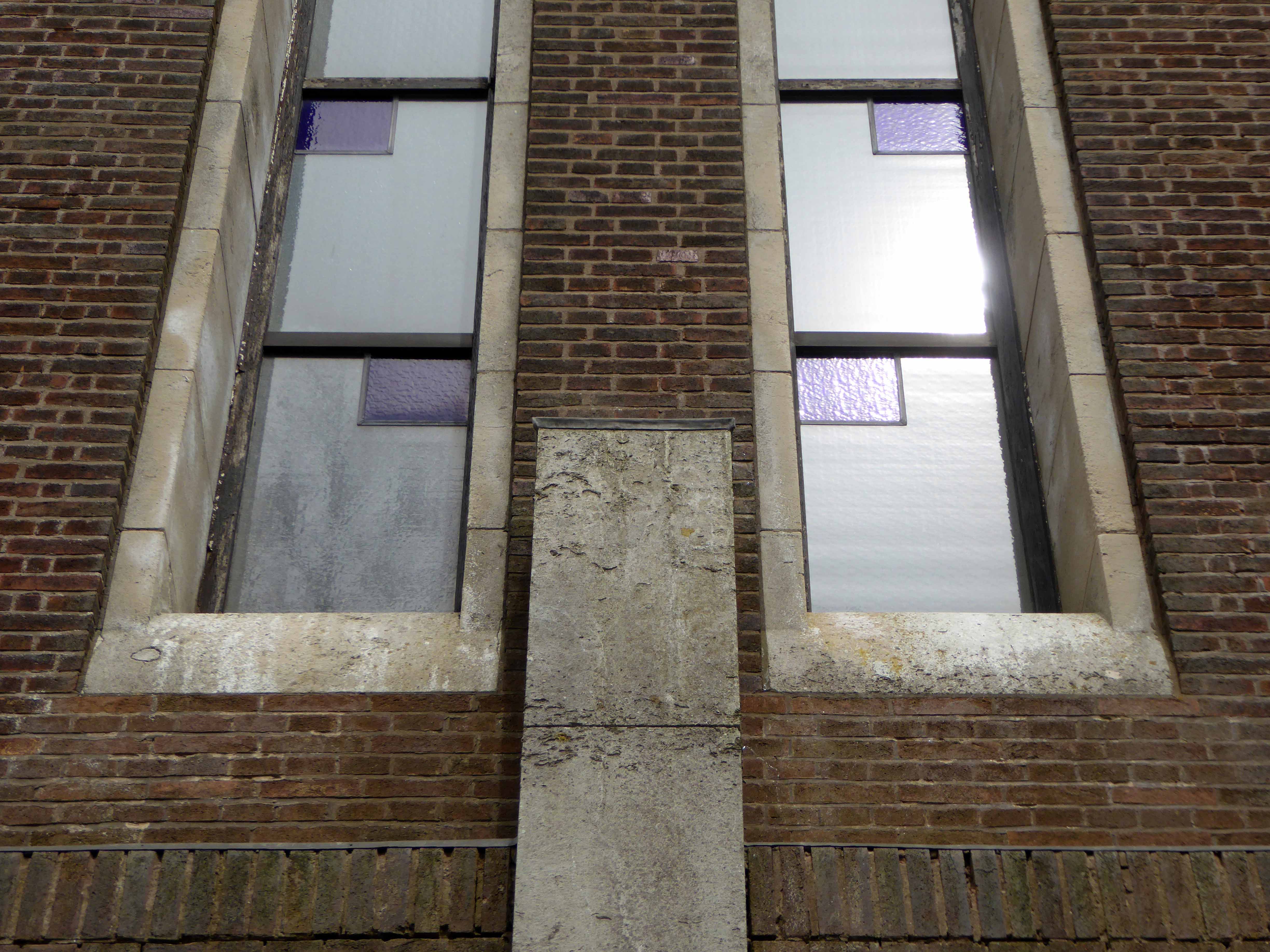
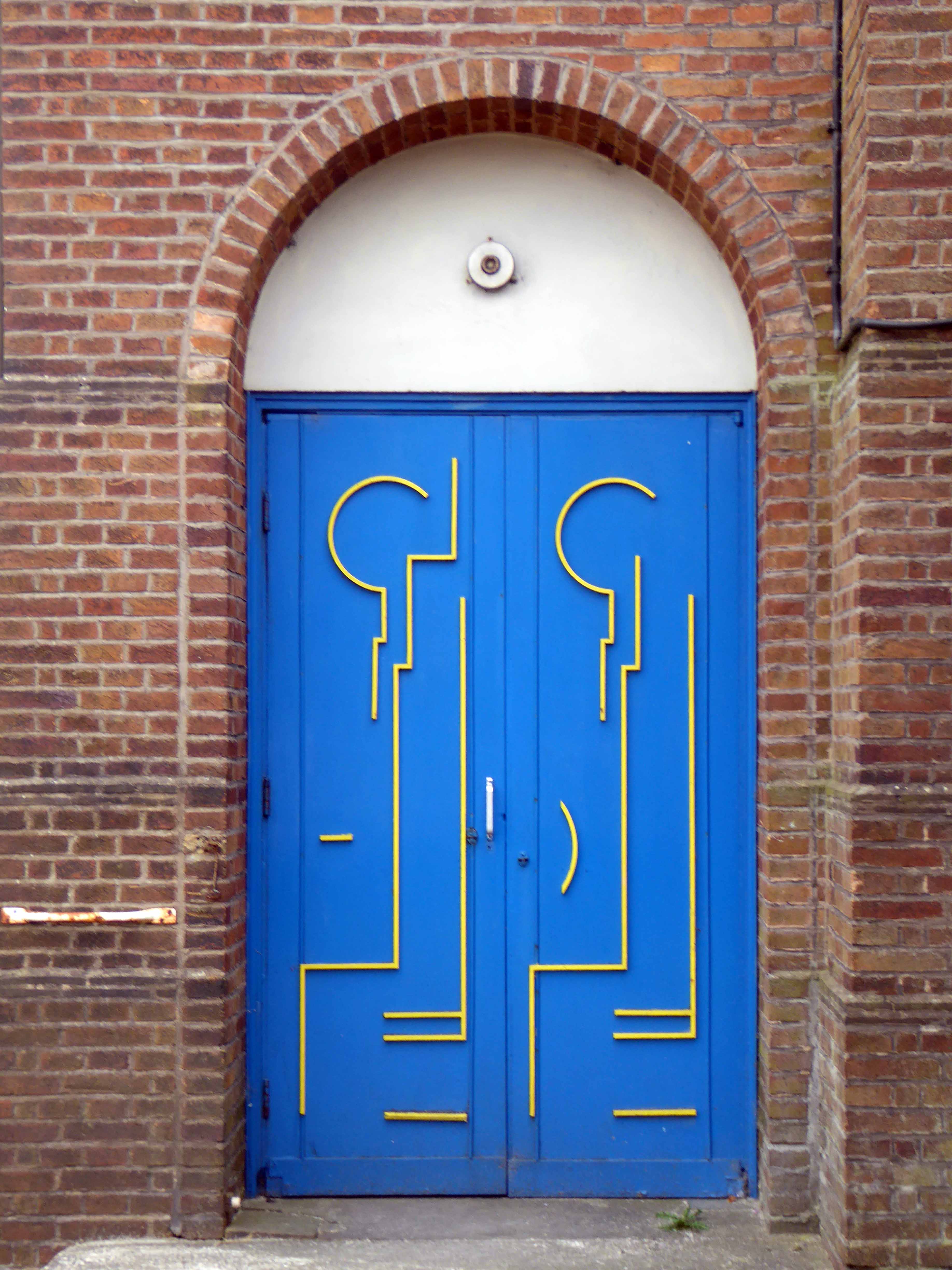
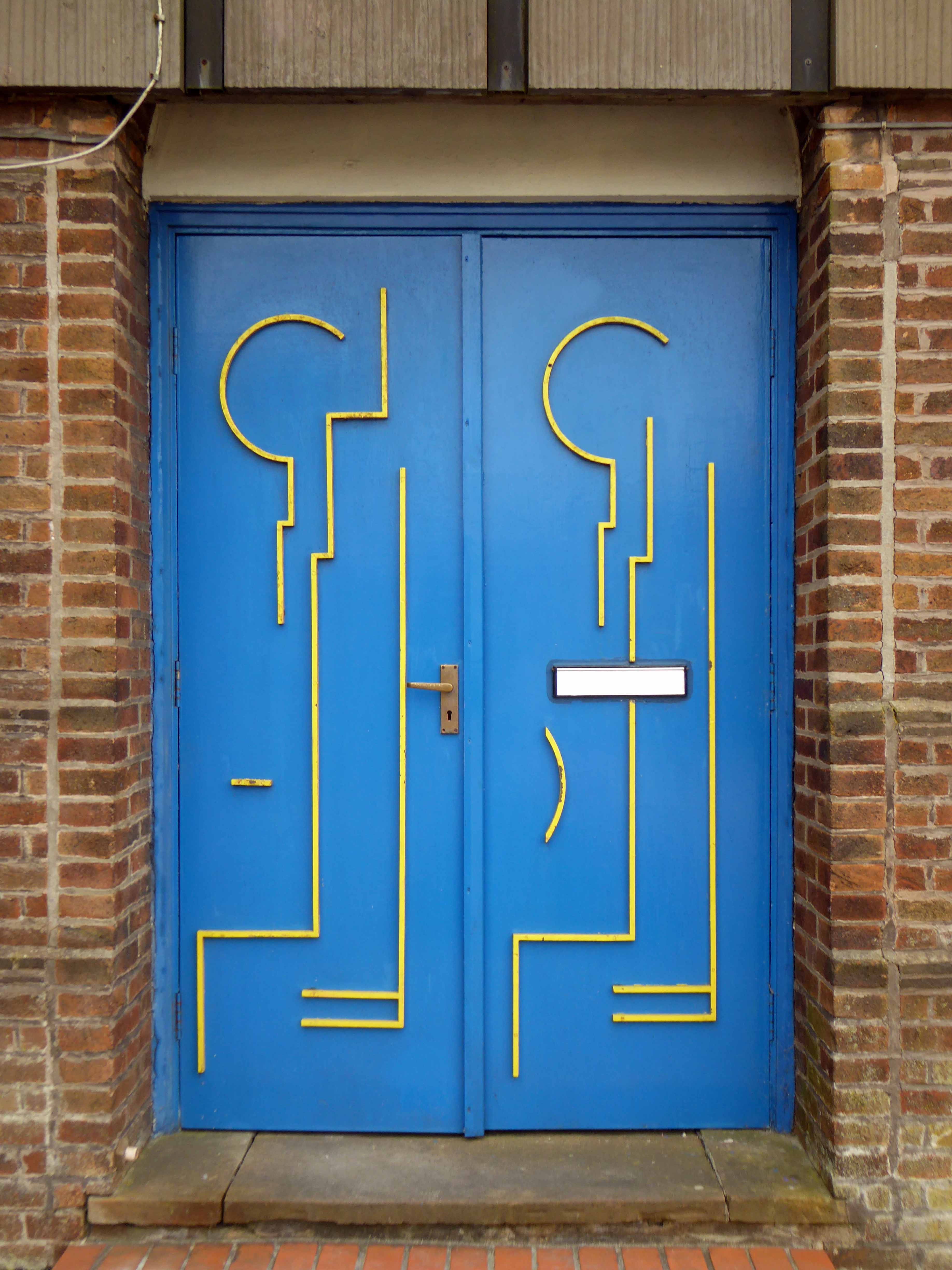
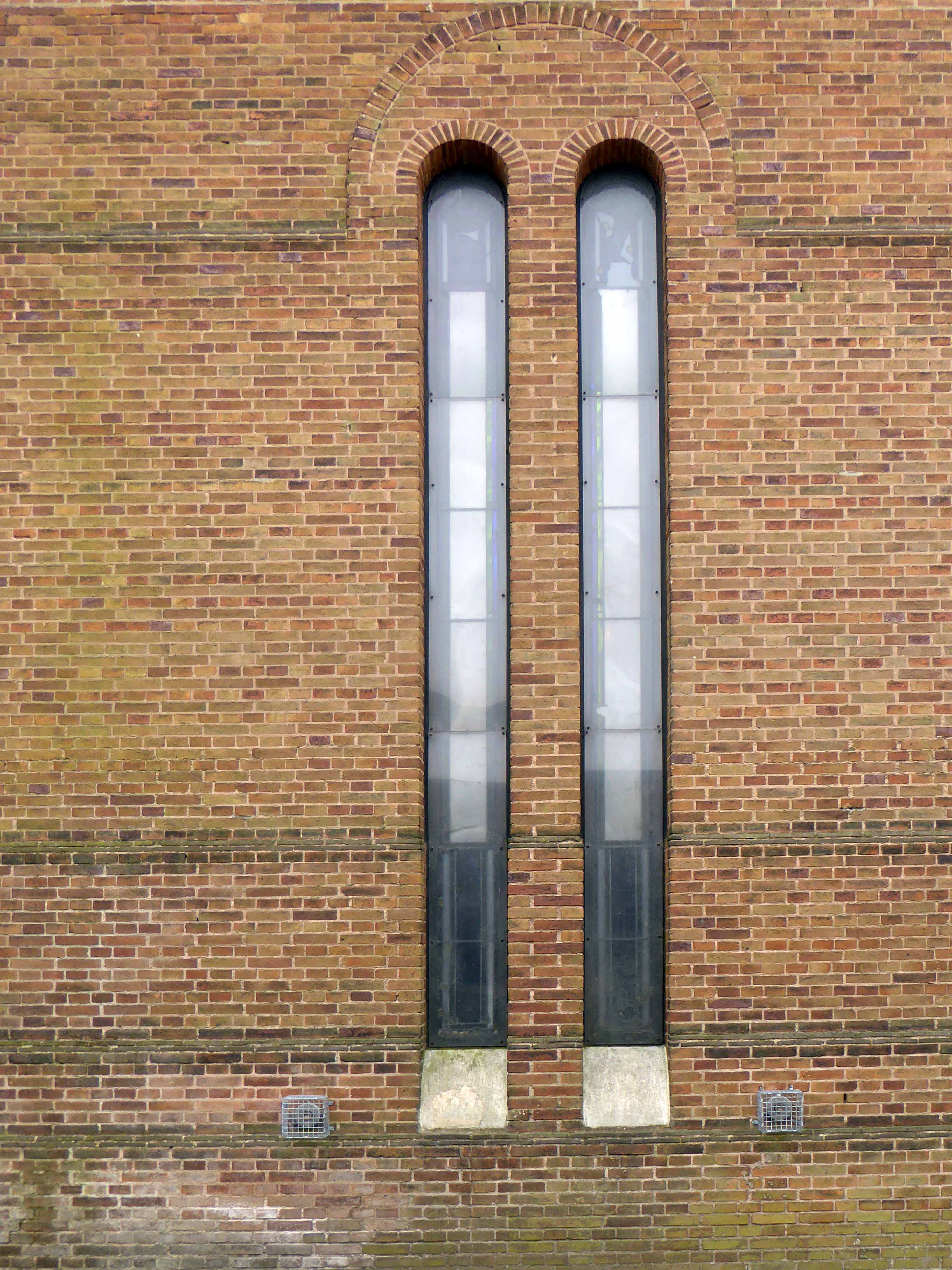
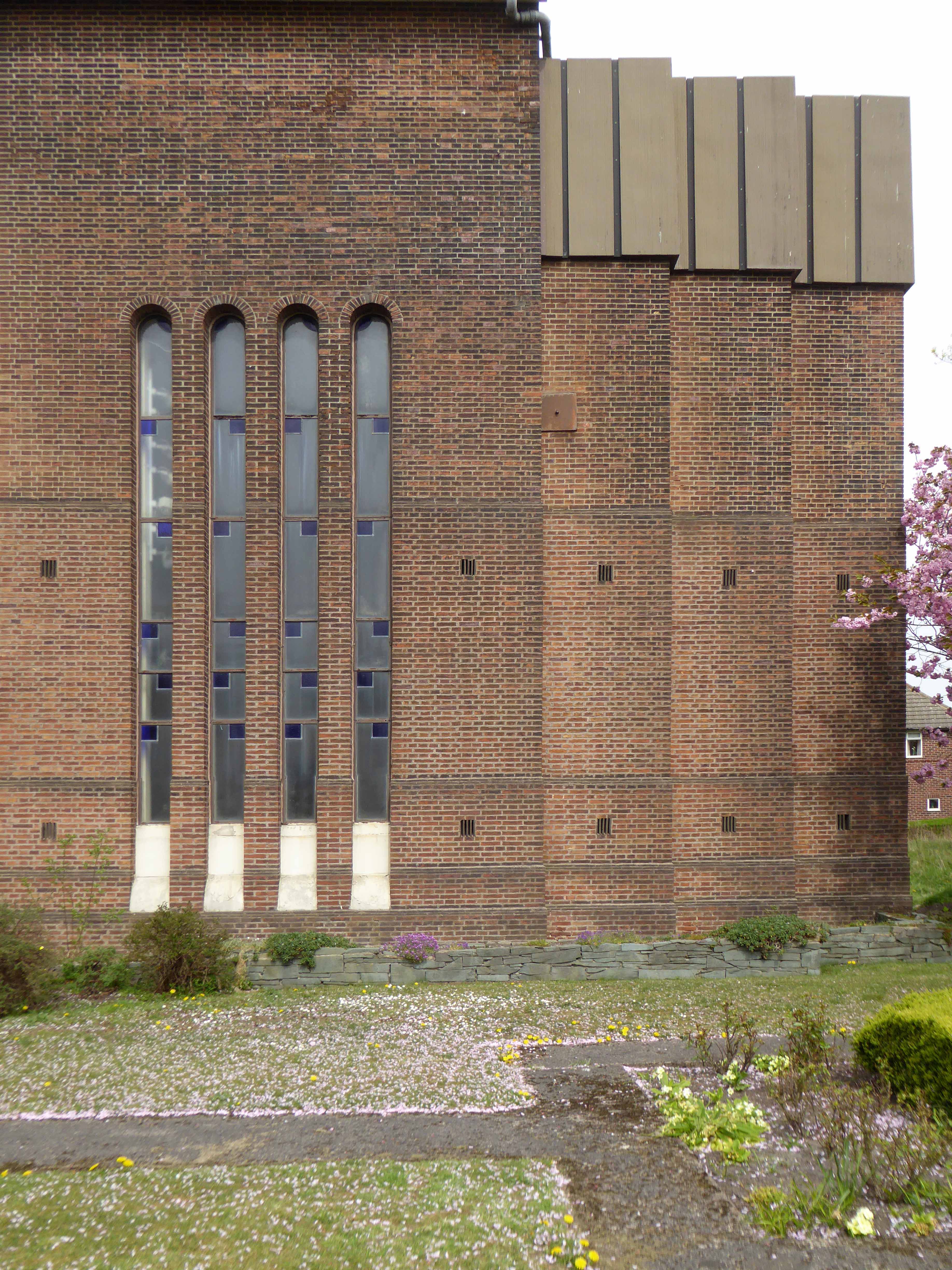
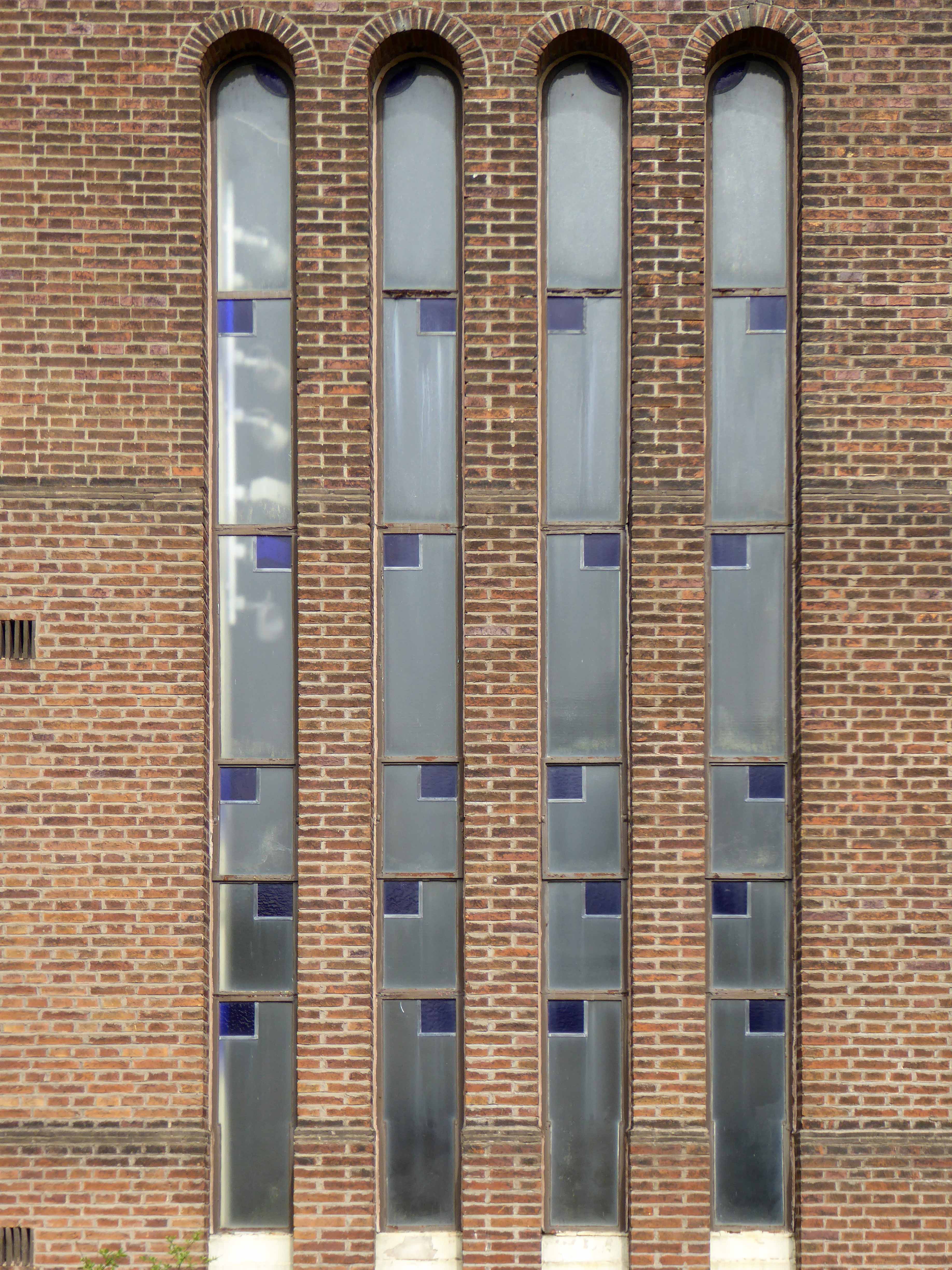
Its tall slim arched windows reaching towards the heavens, Deco detailed doors firmly closed.







































 Modern Mooch