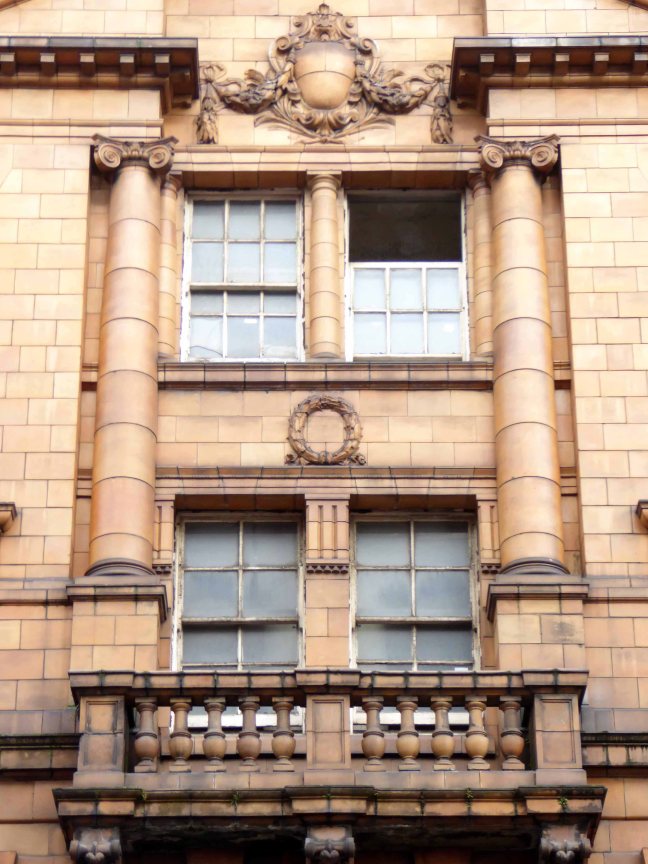
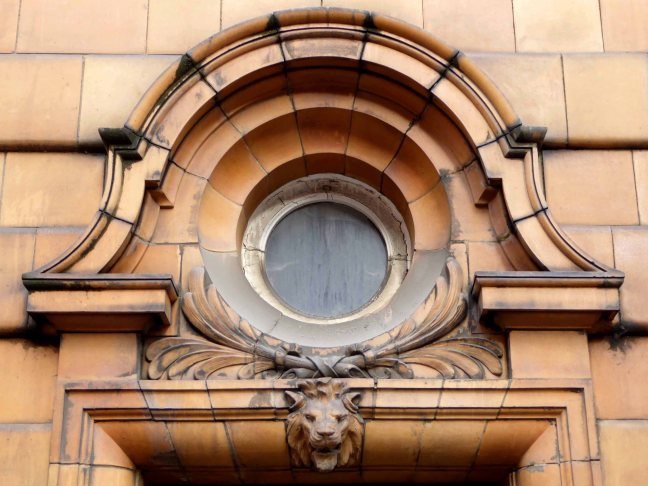
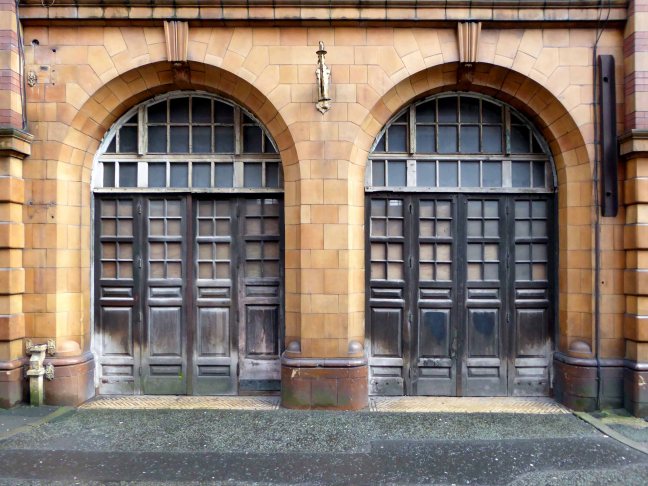
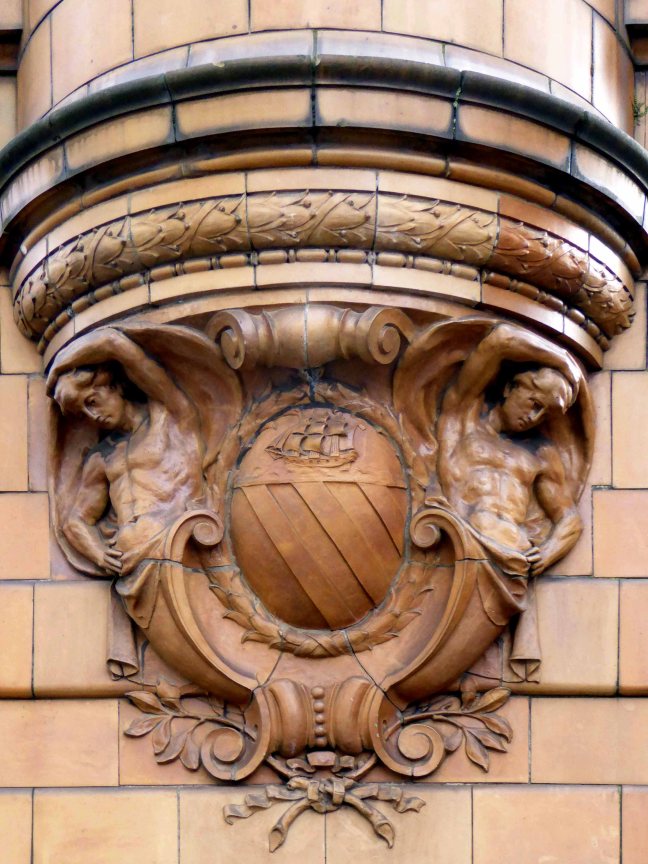
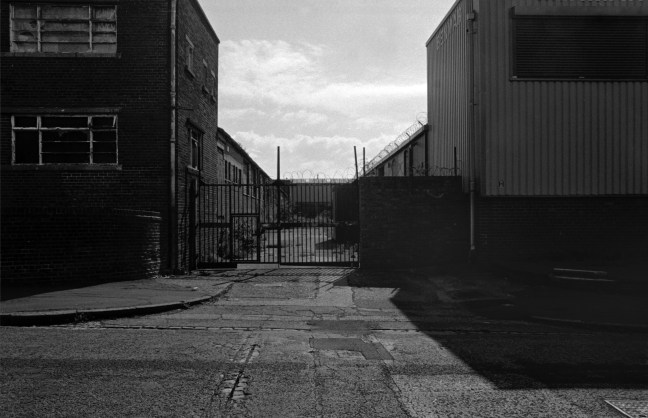
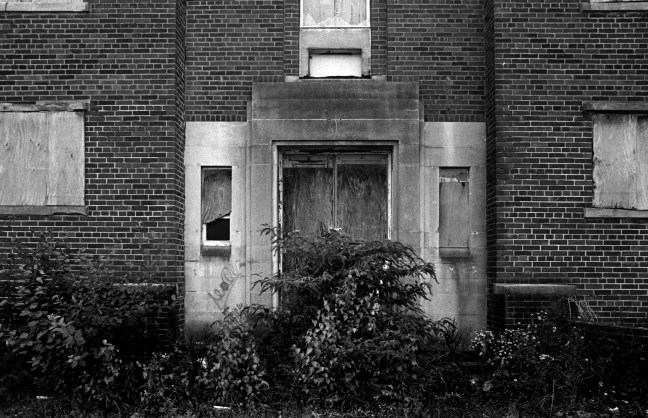
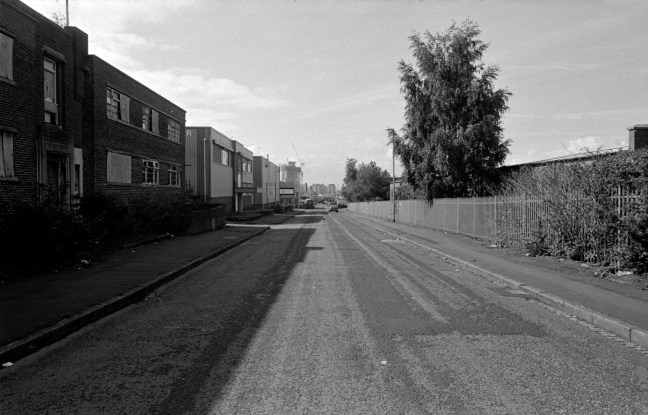
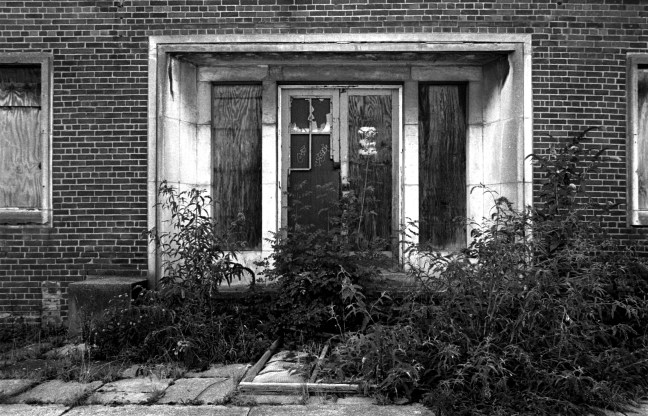
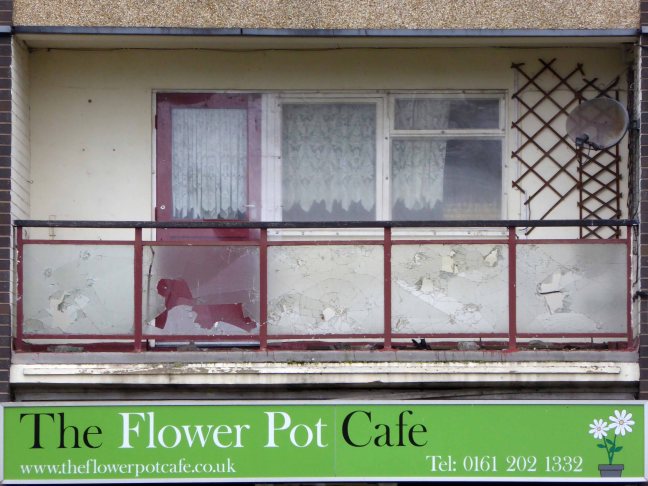
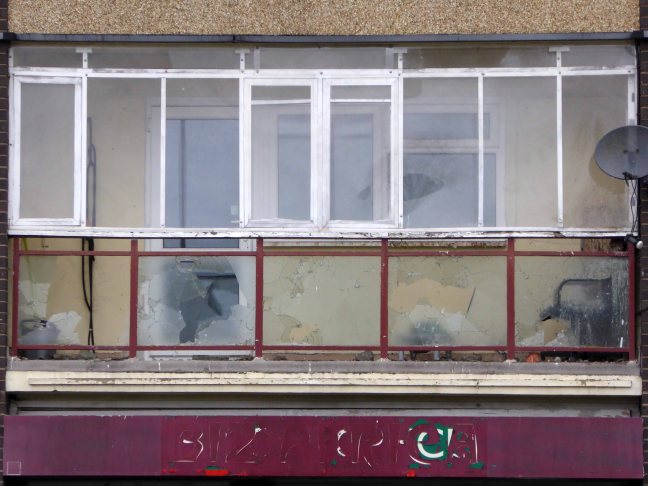
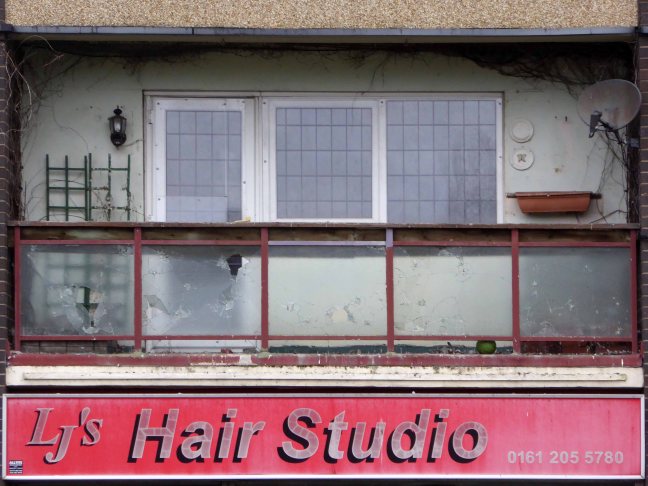
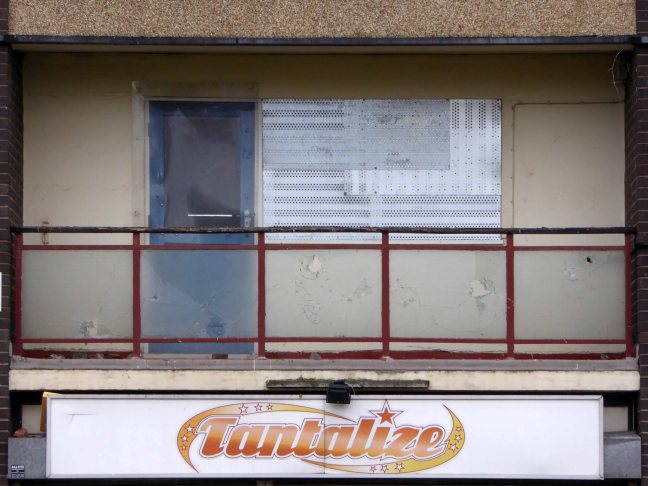
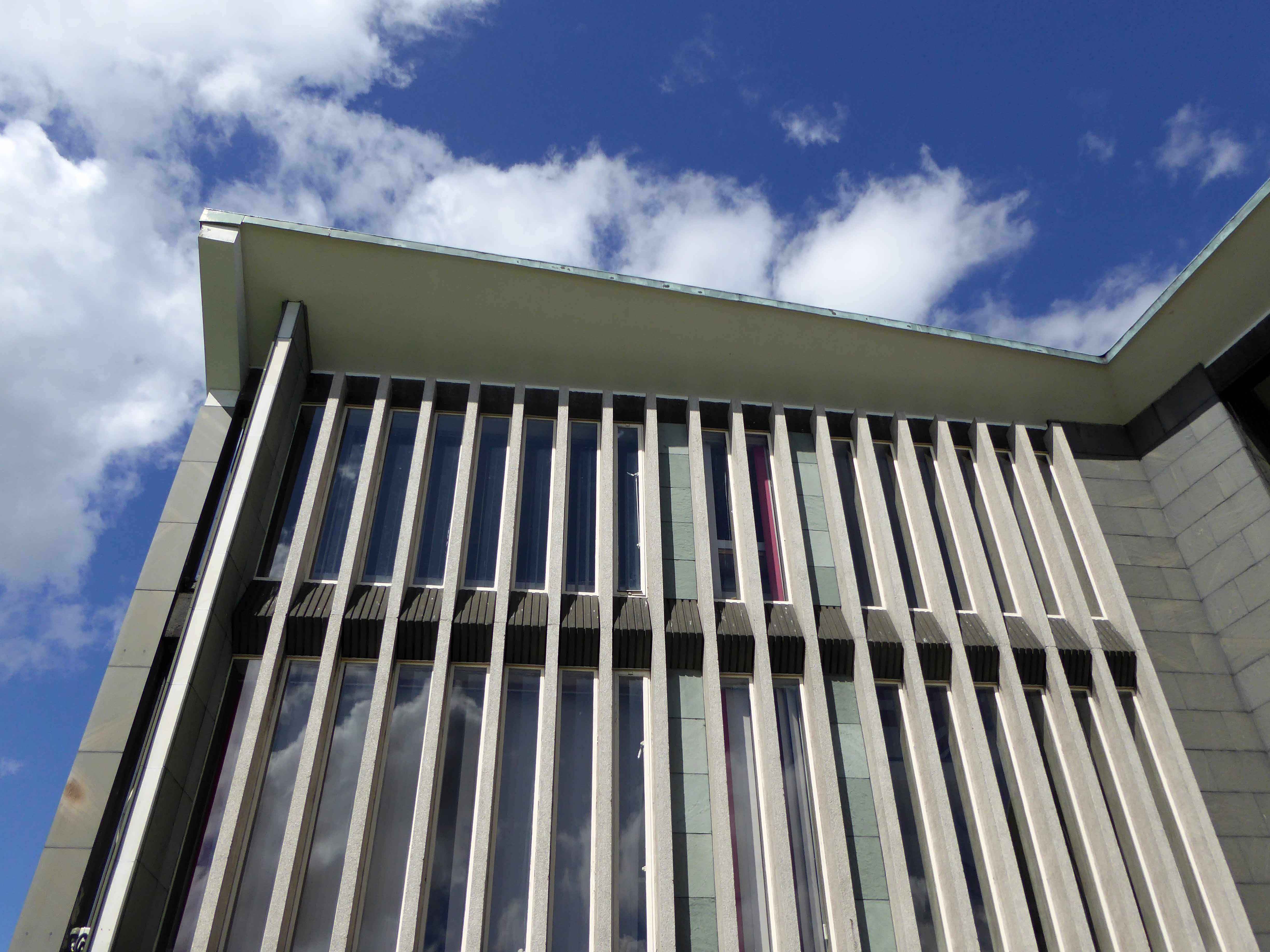
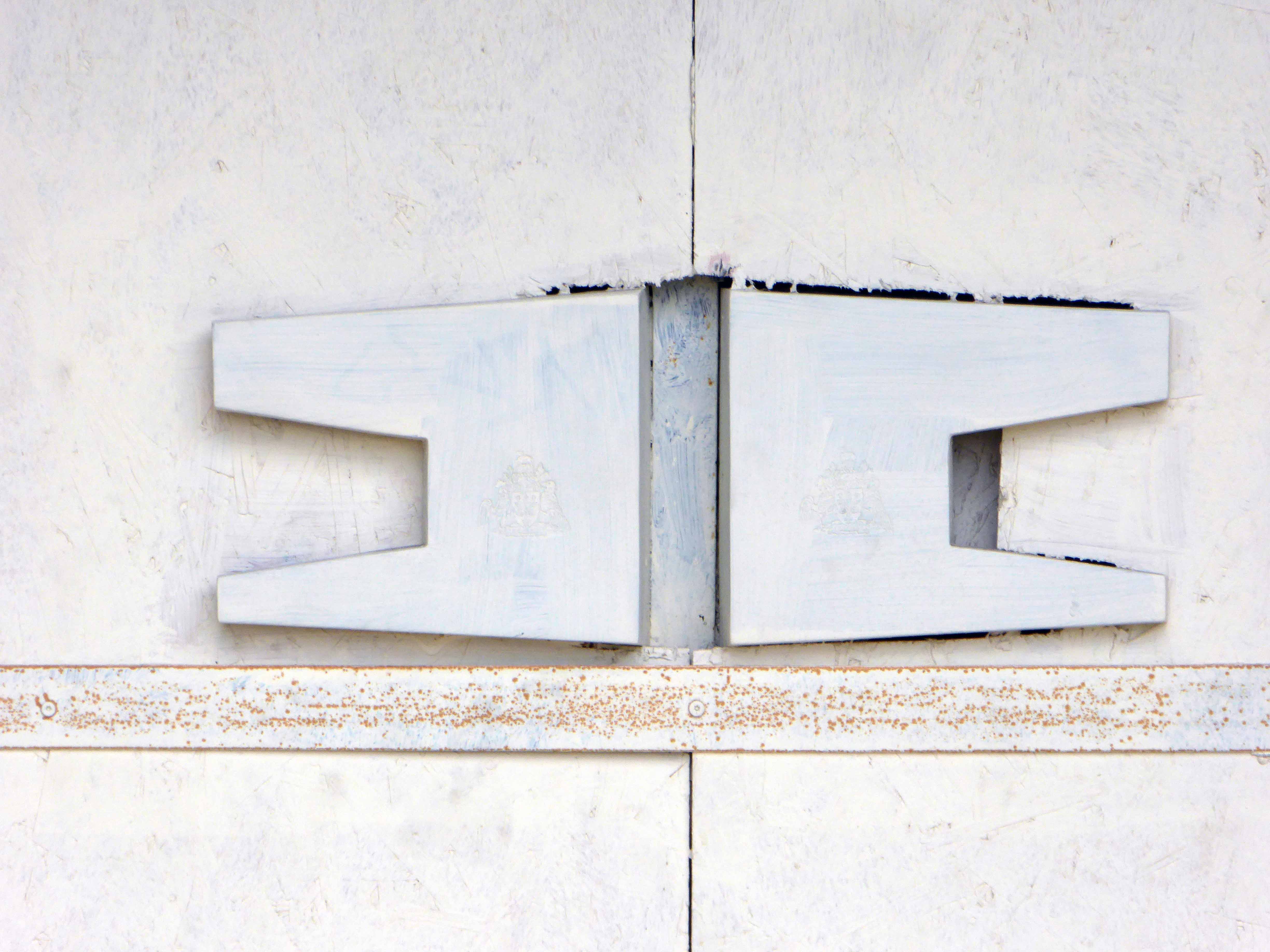
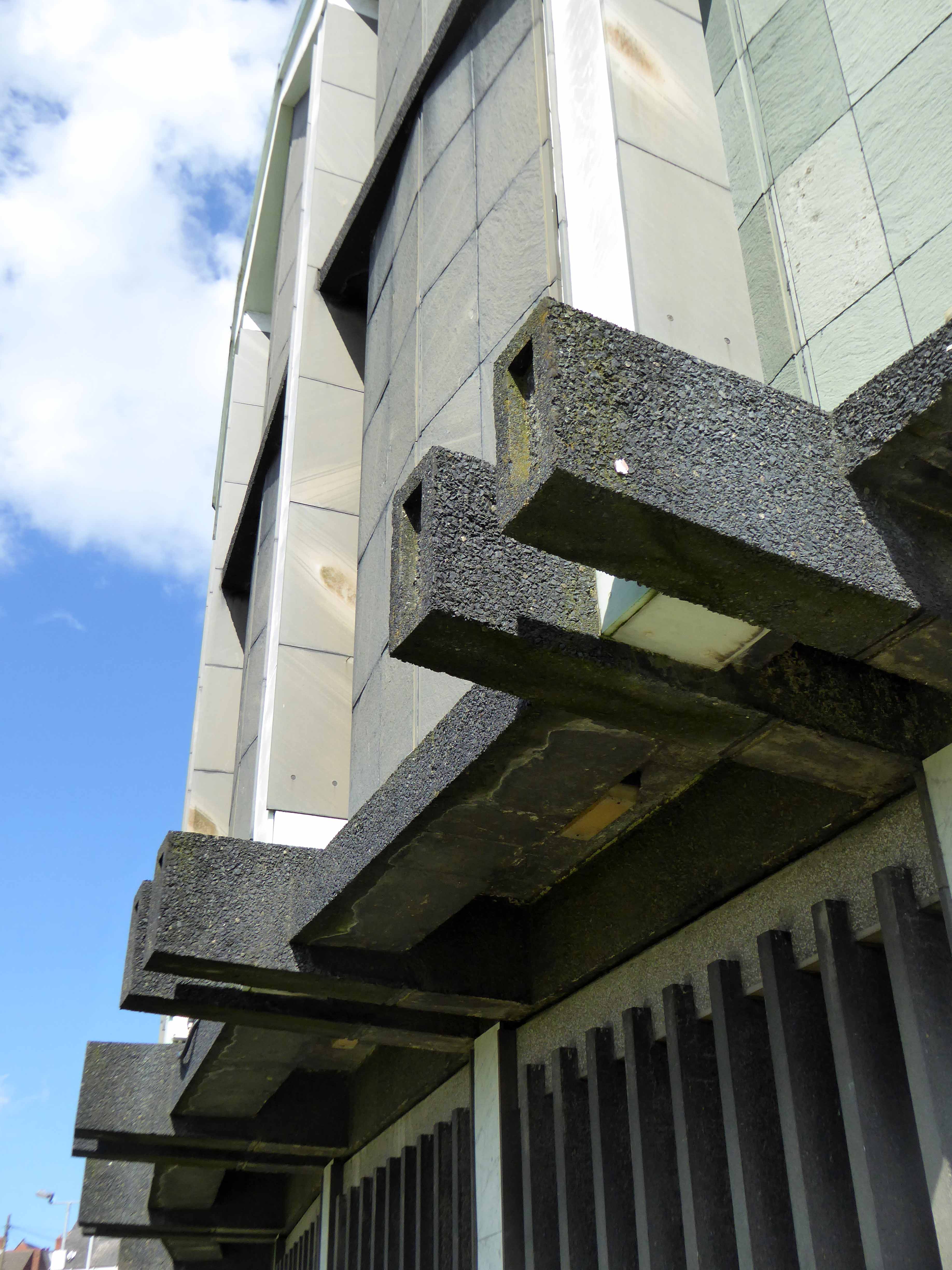
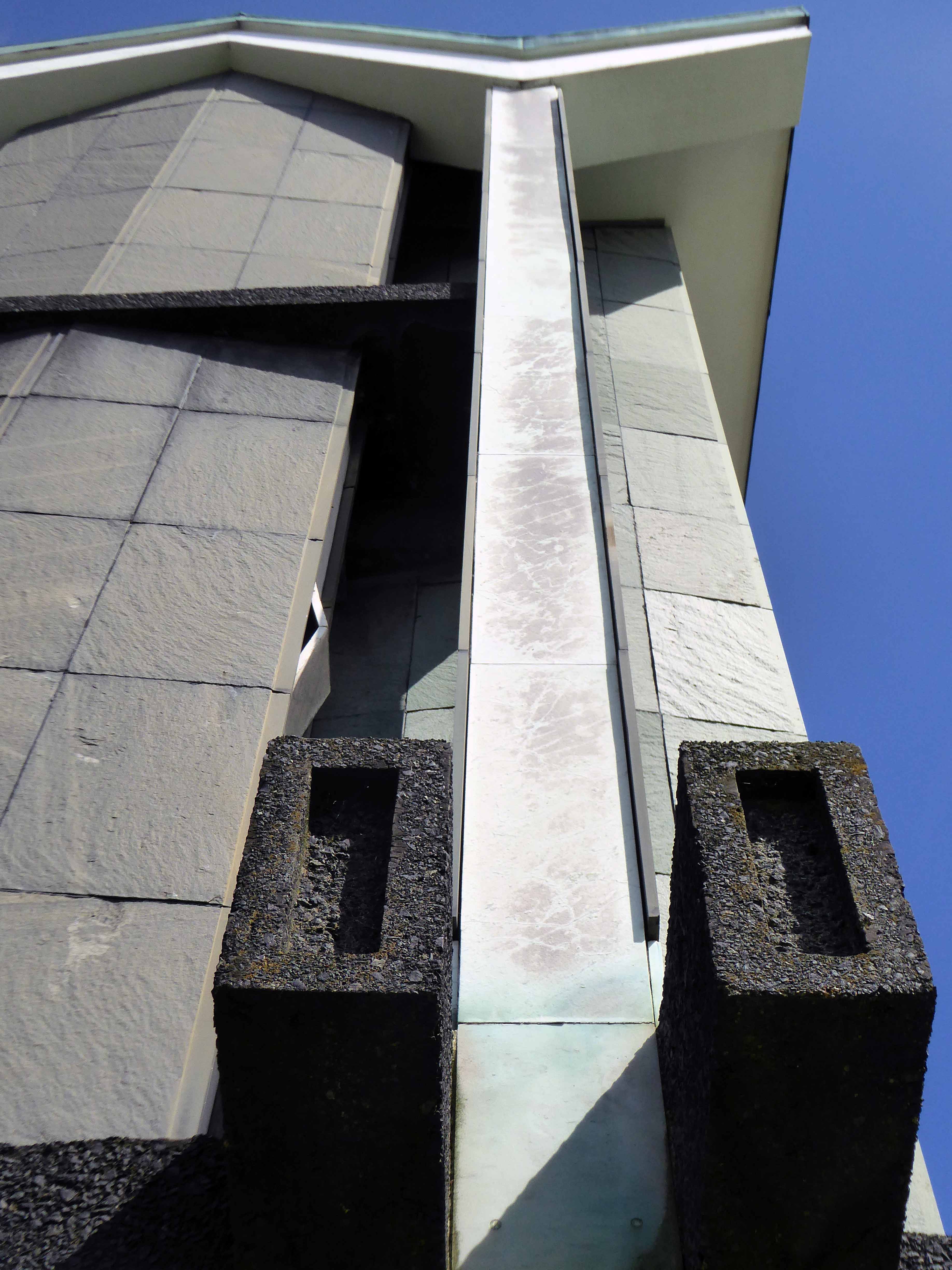
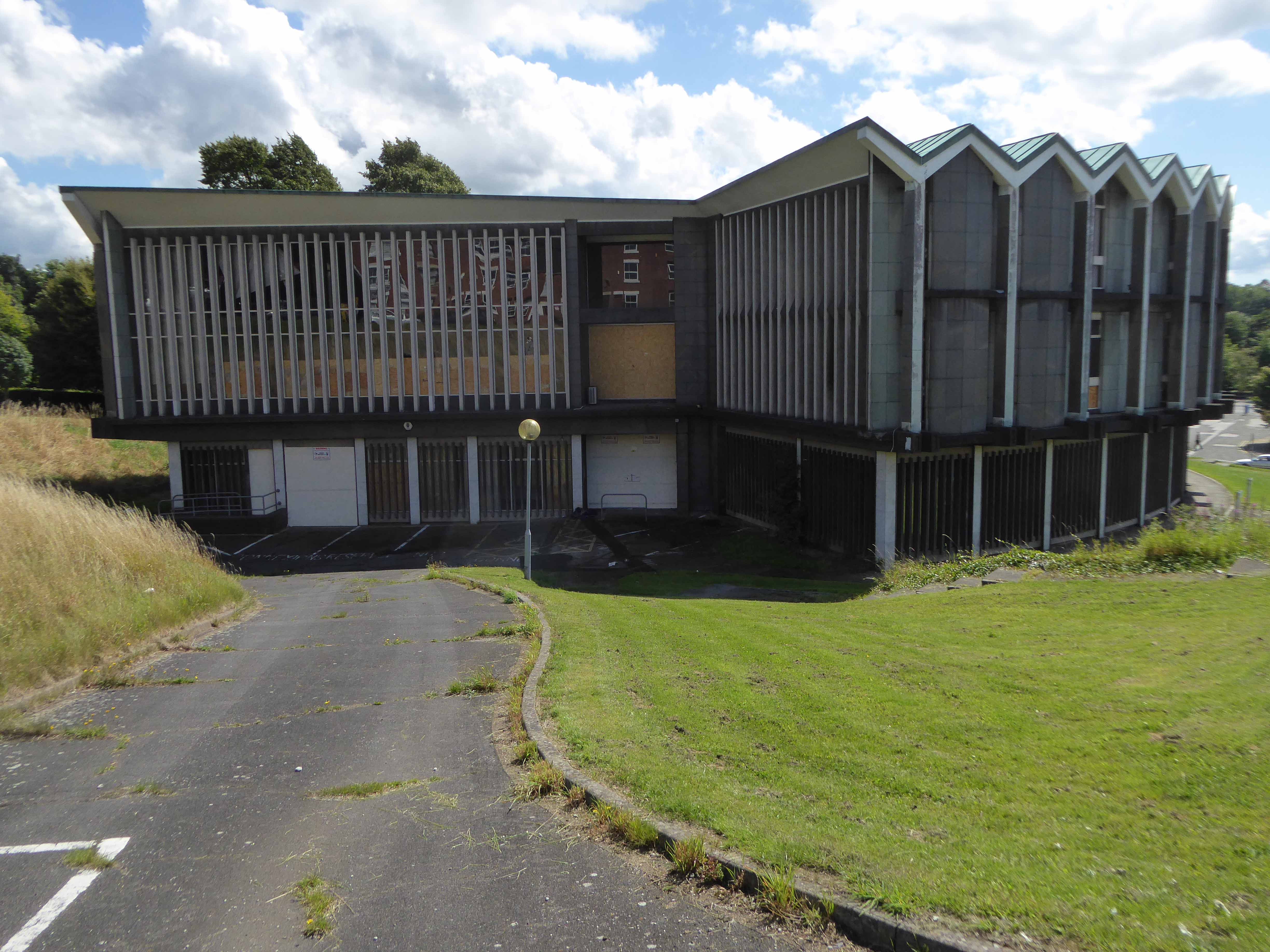
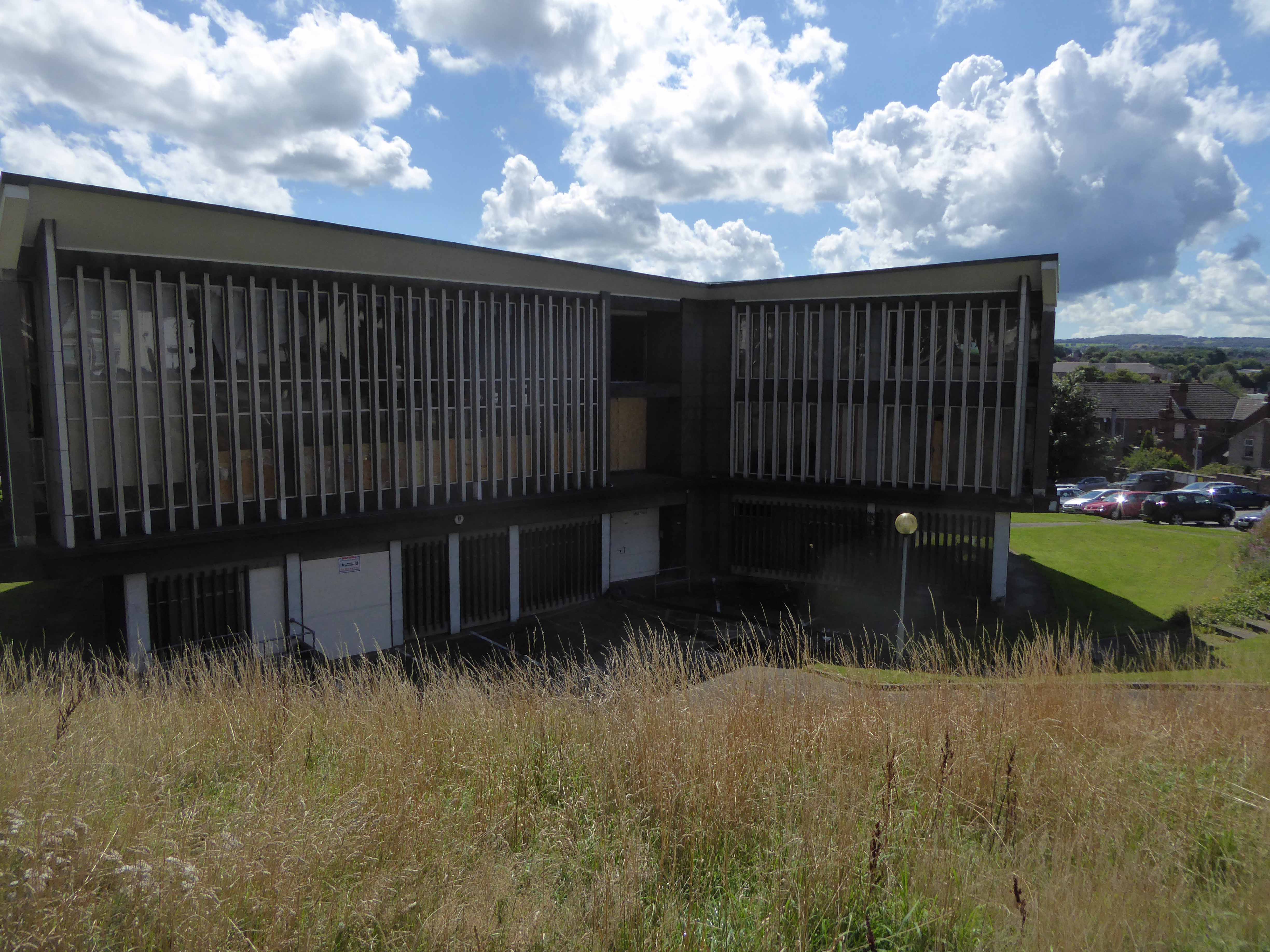
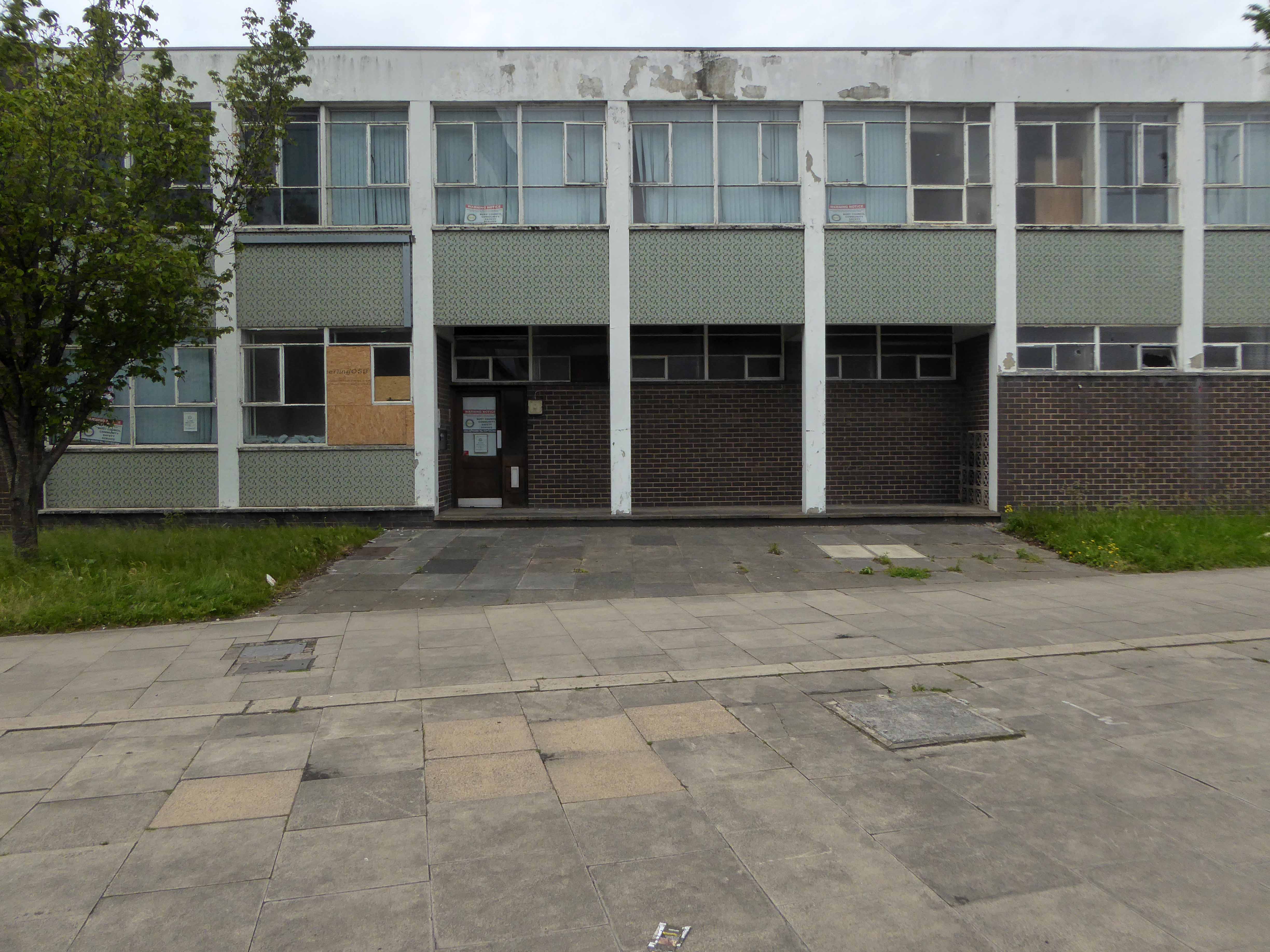
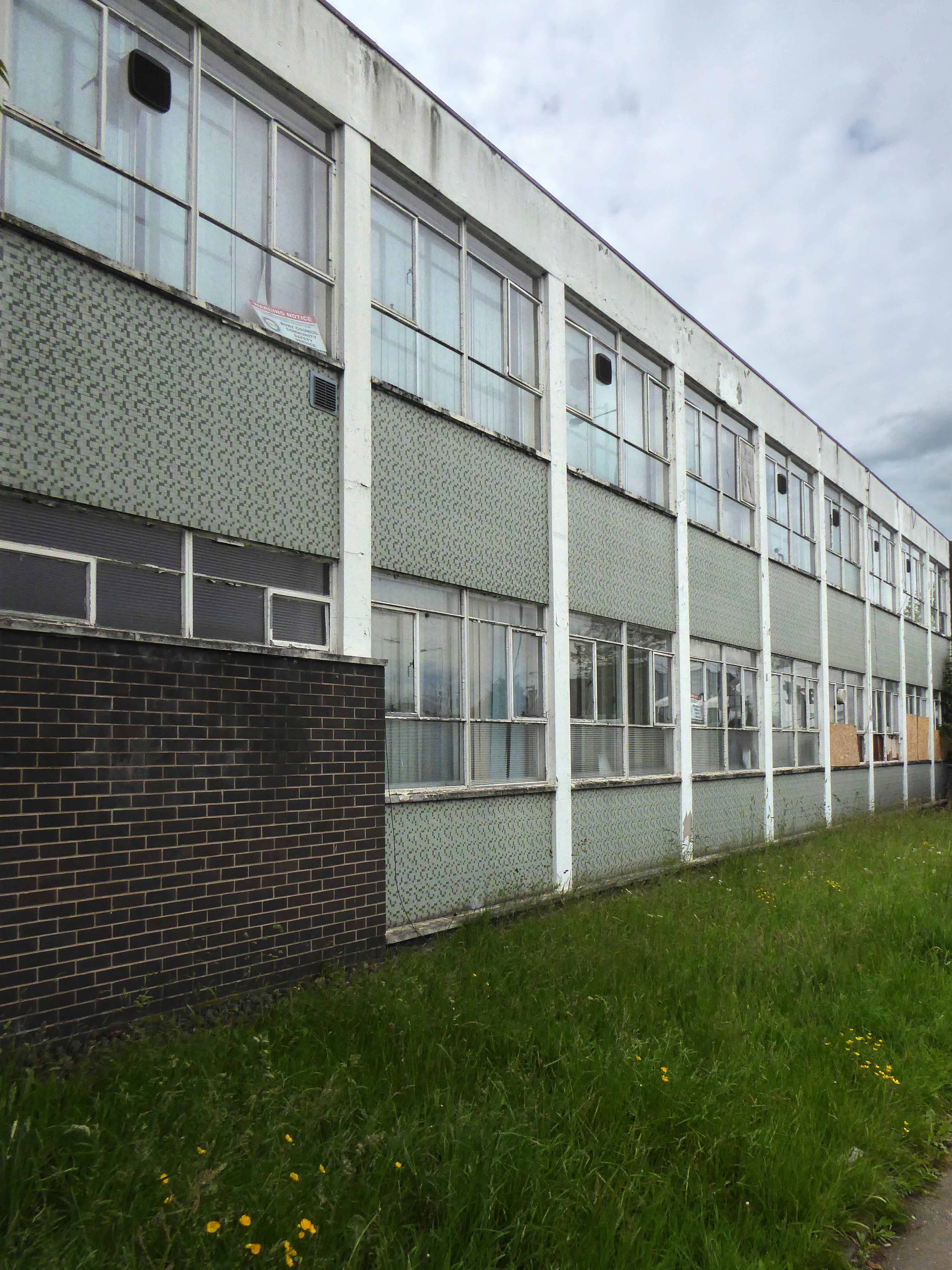
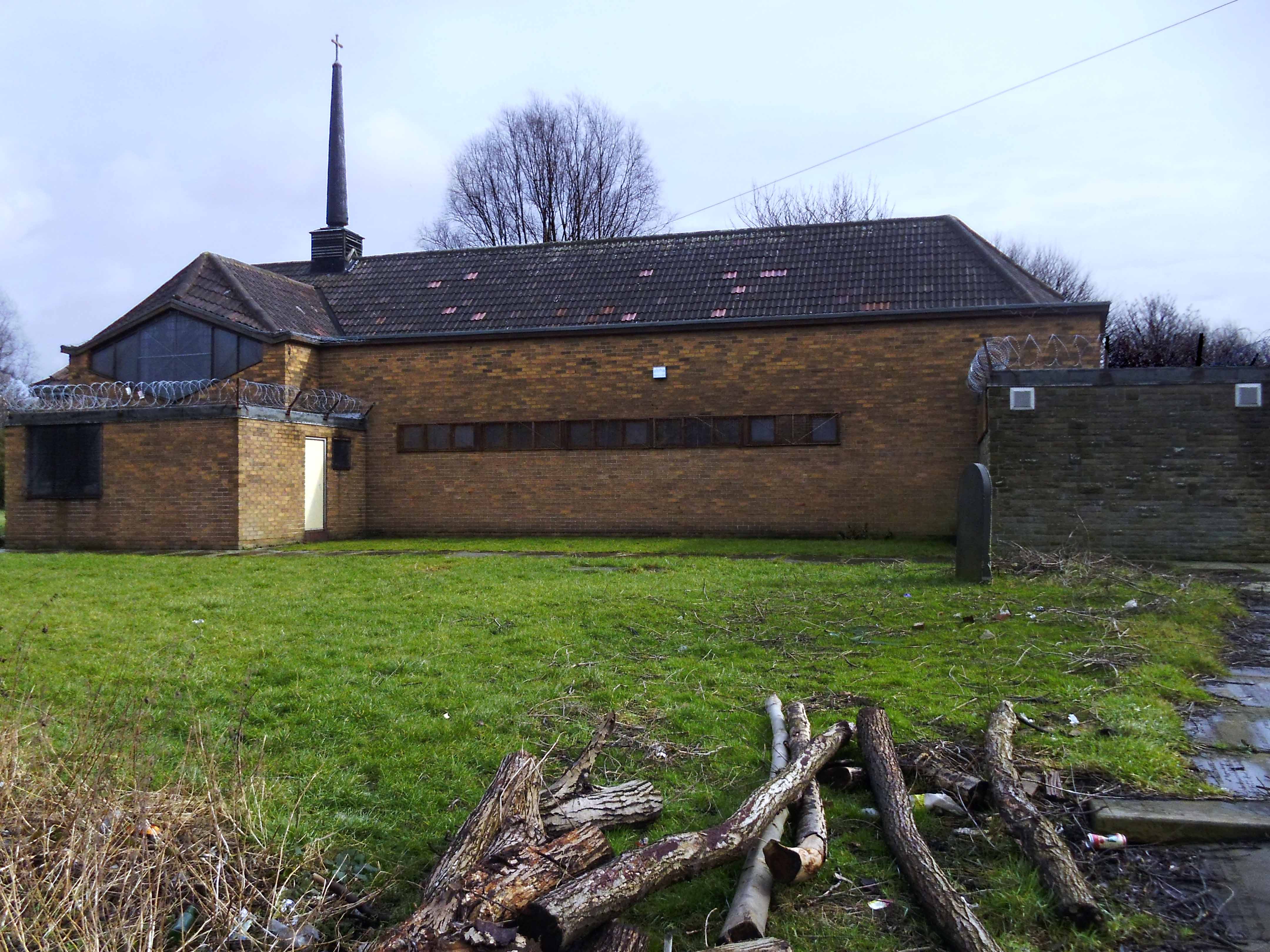
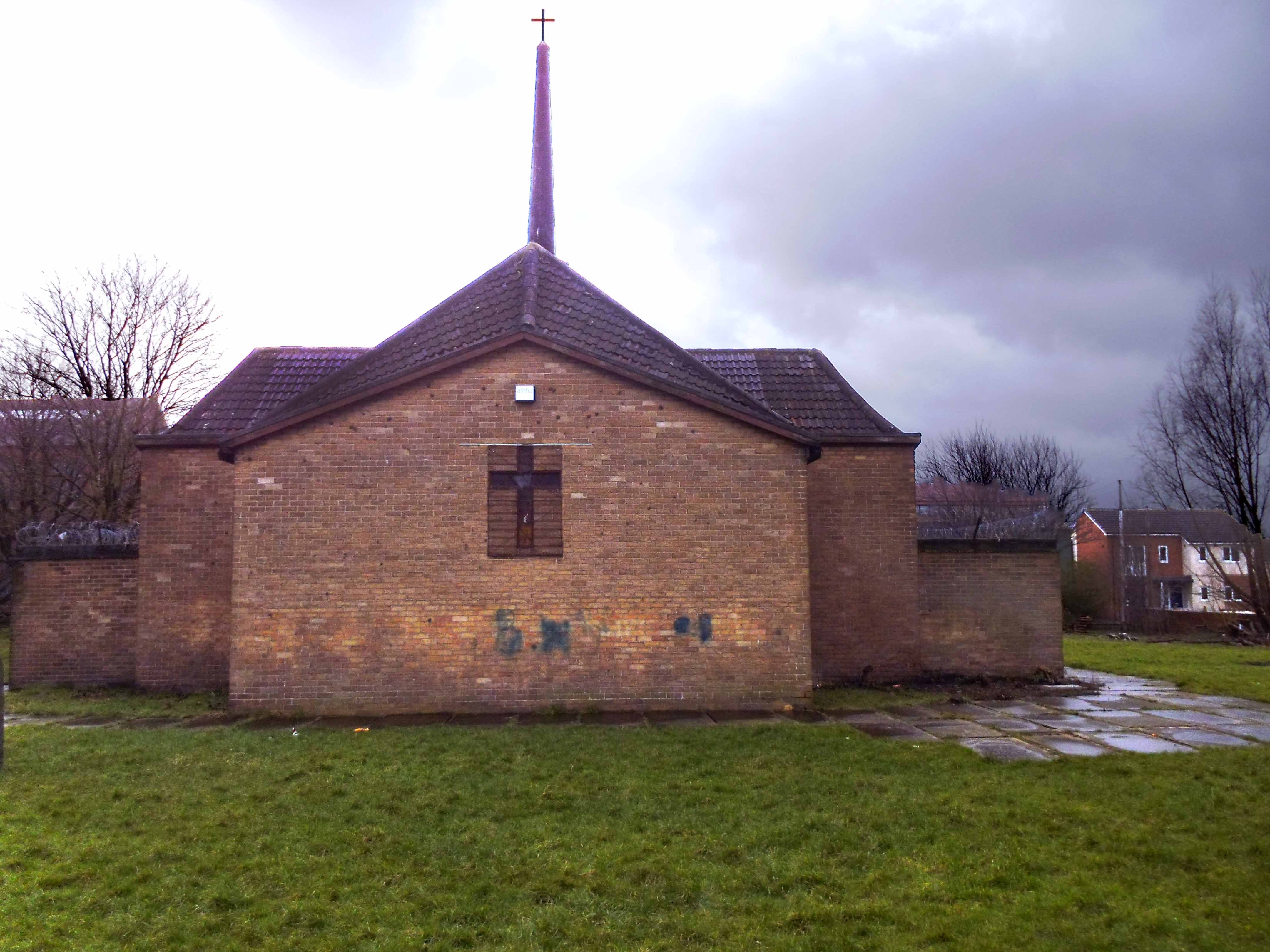
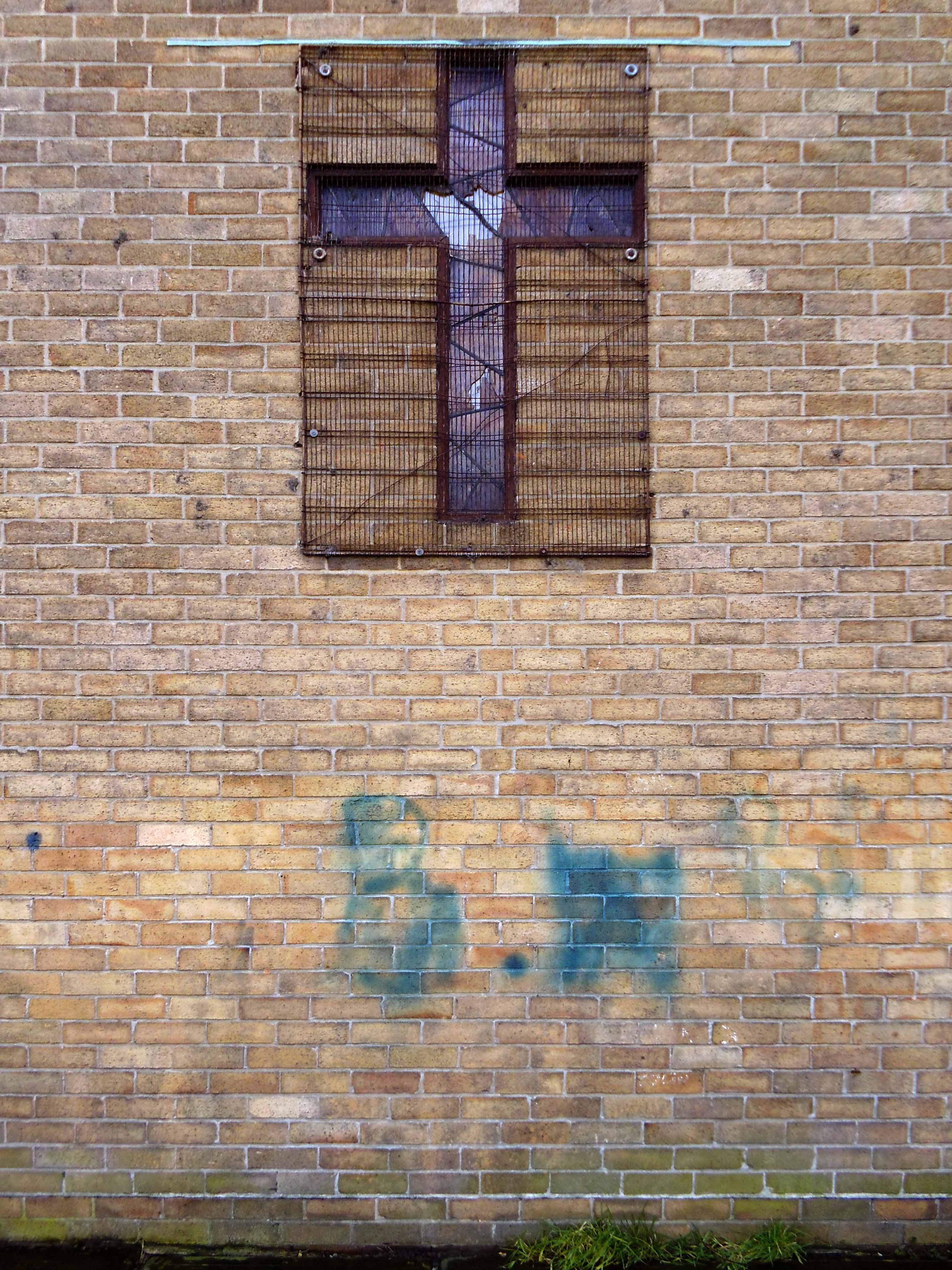
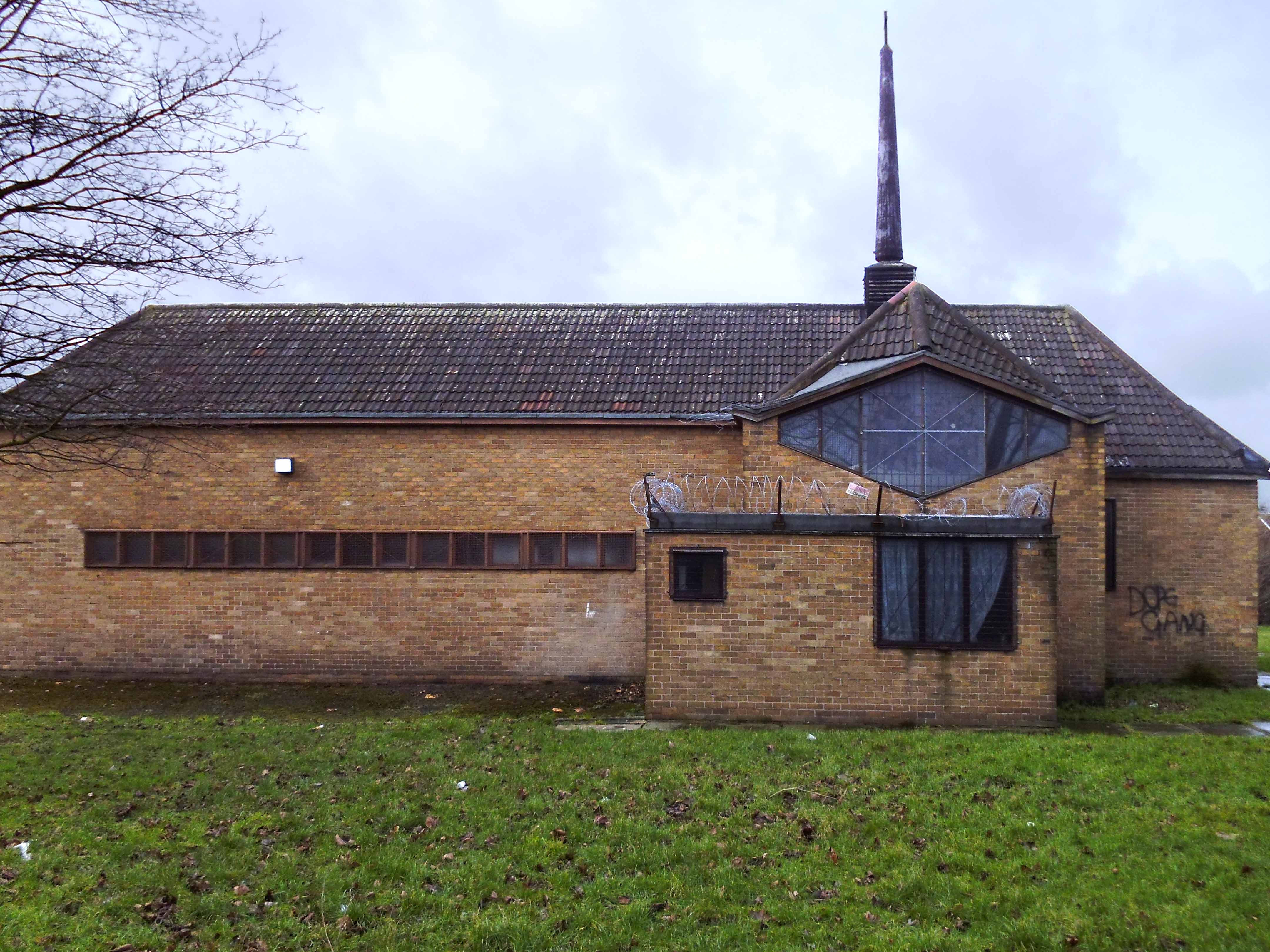
Chesterfield – Magistrates Courts

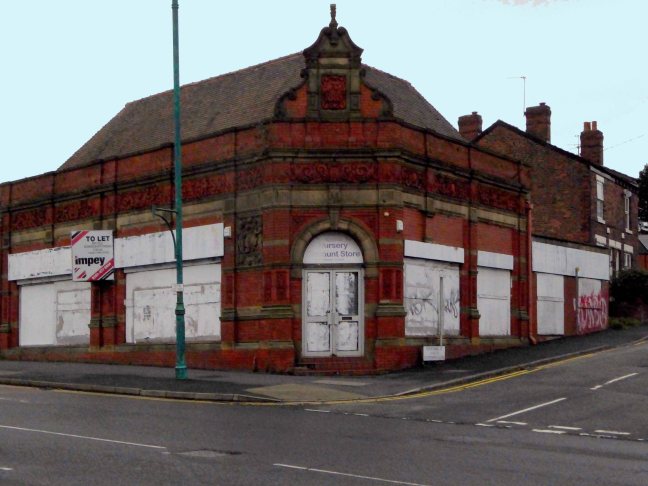
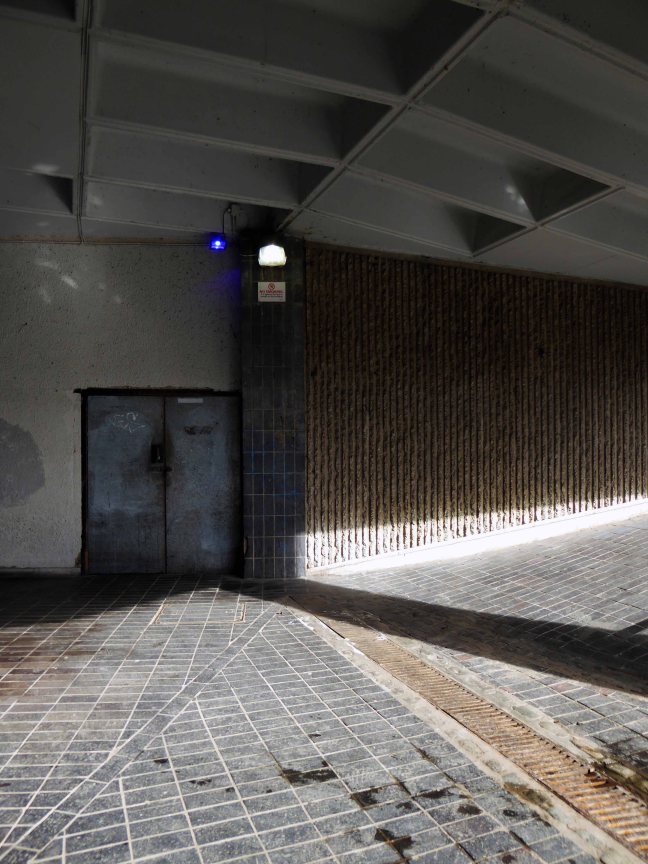
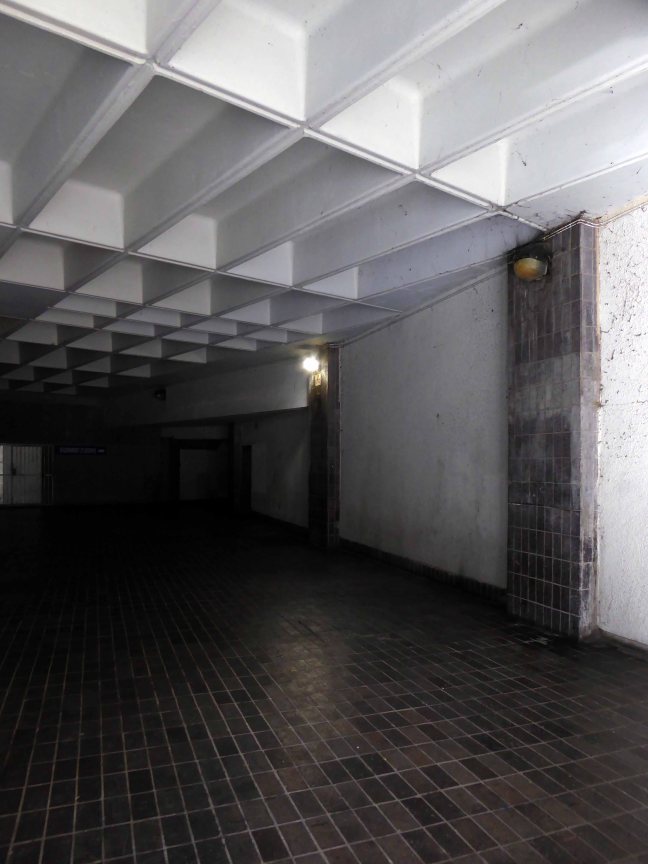
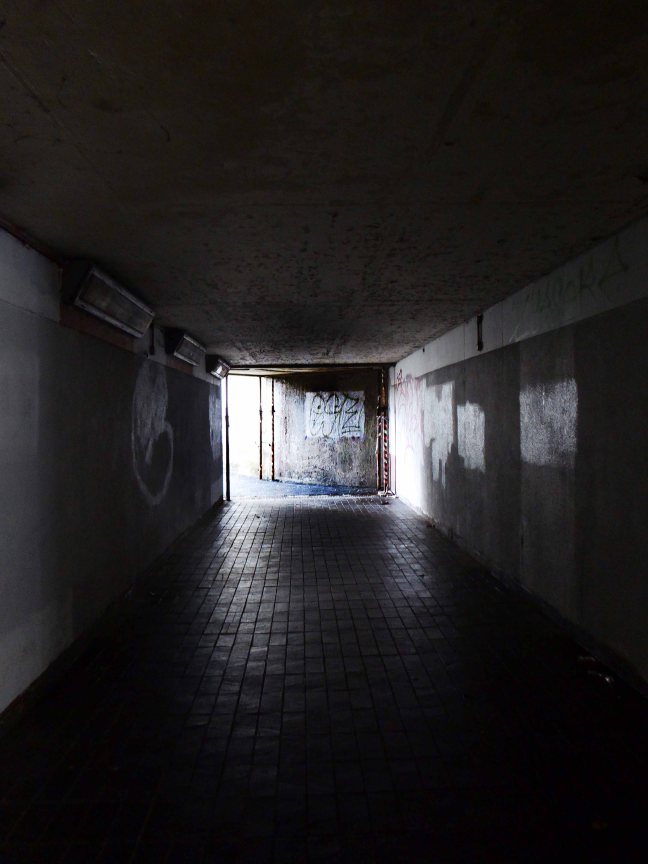
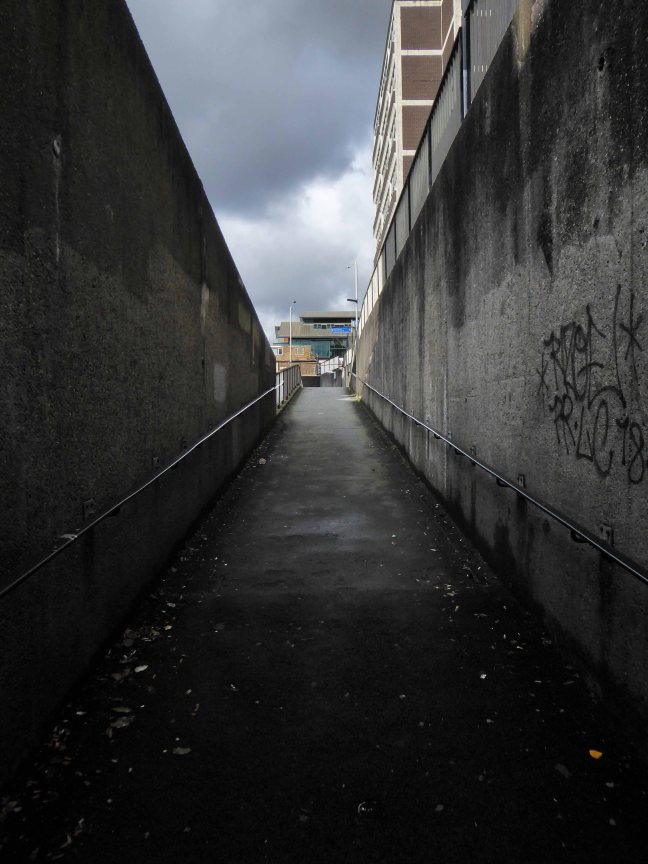
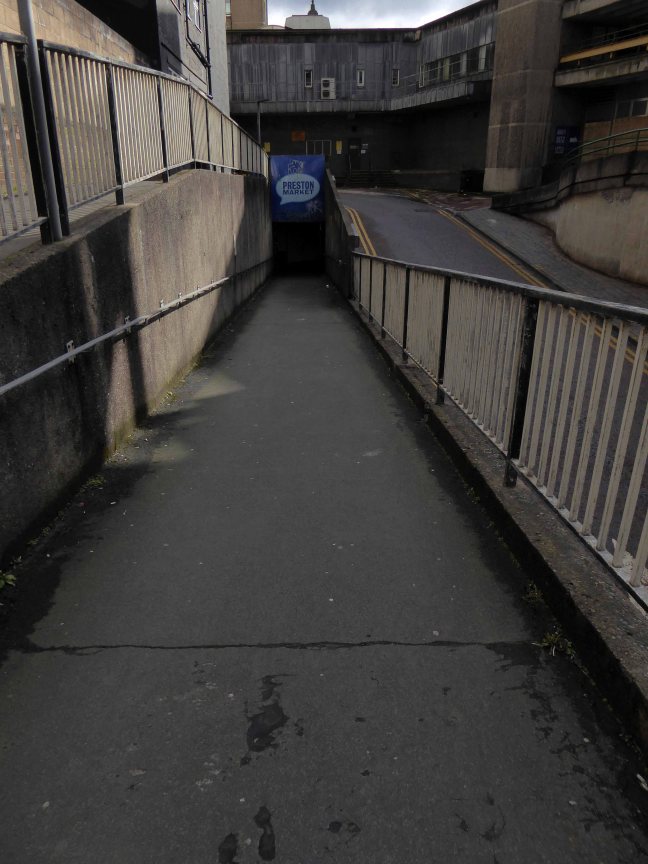
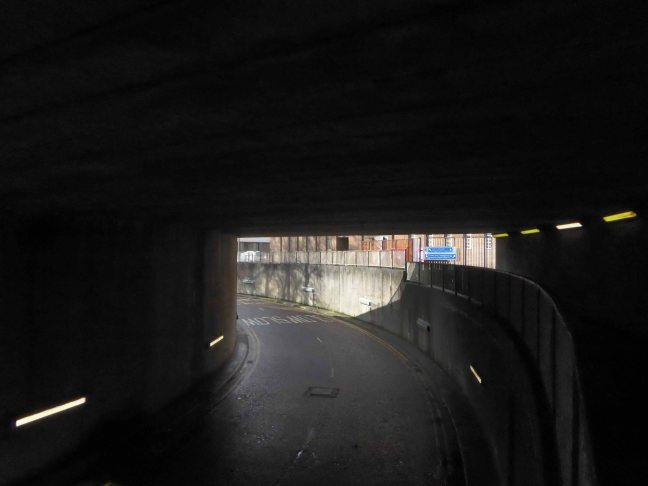
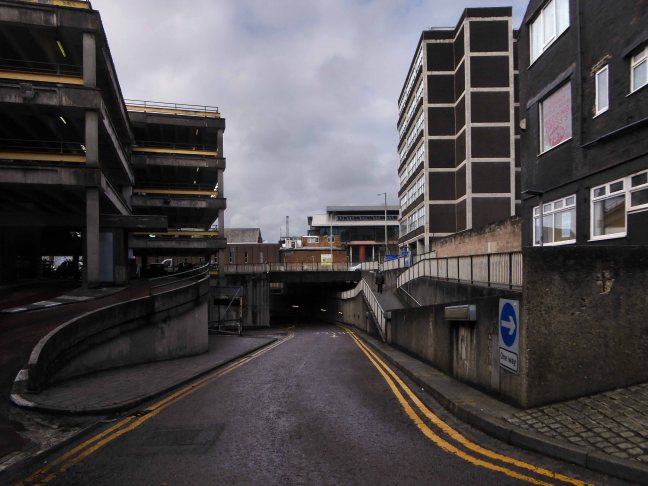
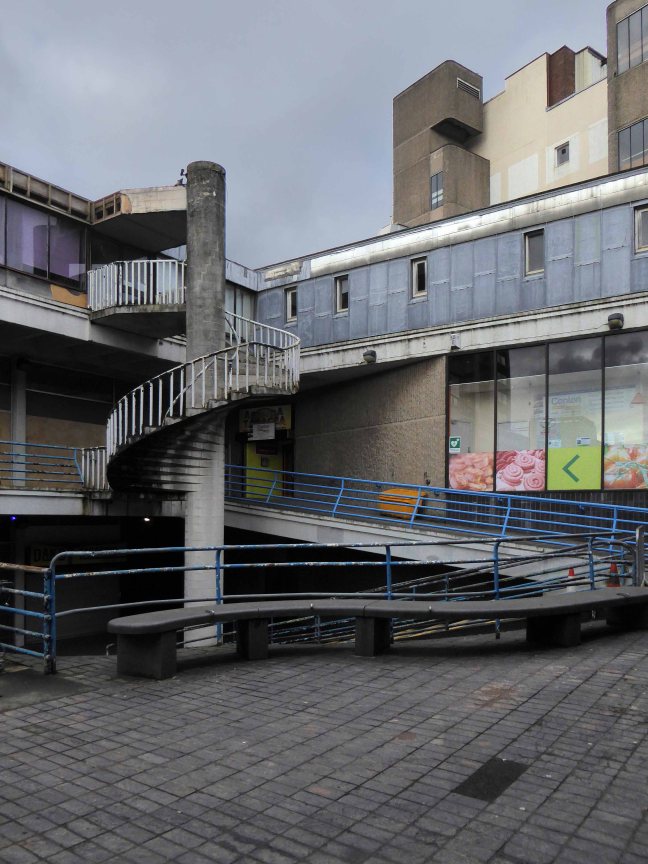
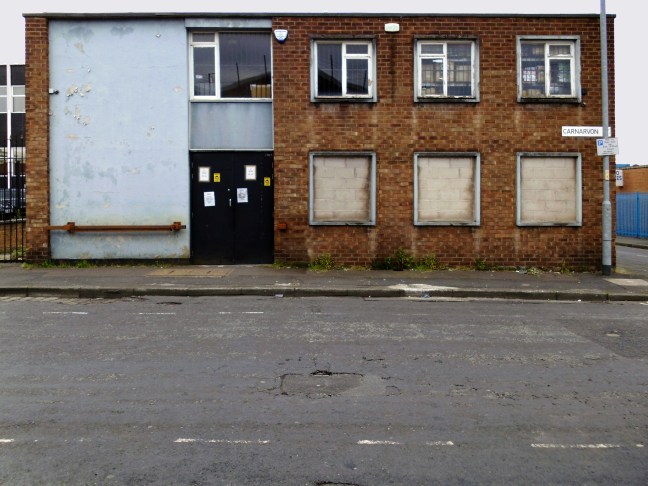
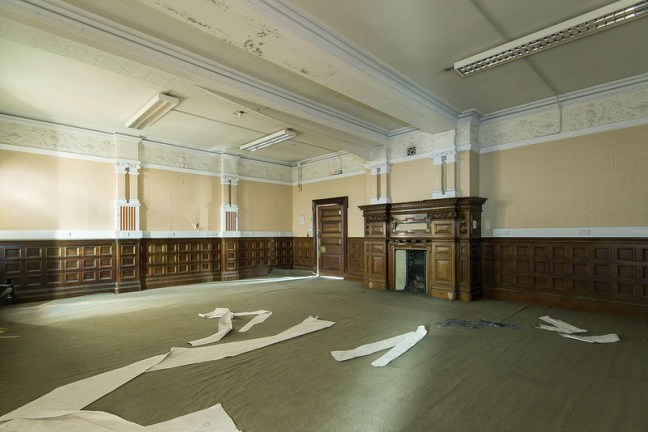
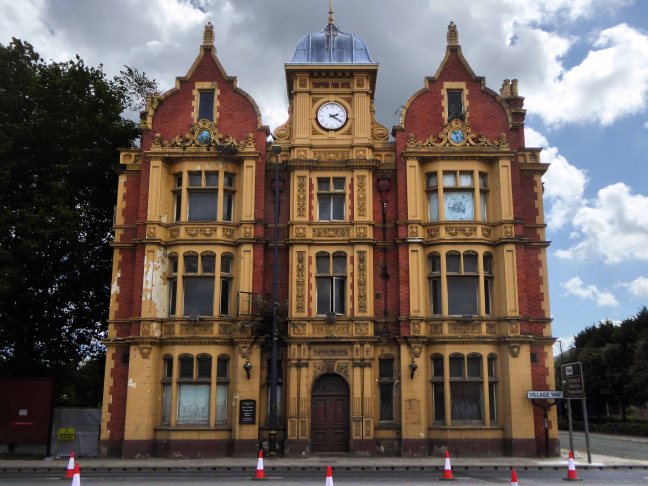
Mysteriously lacking much evidence of its past, save for this Historic England listing.

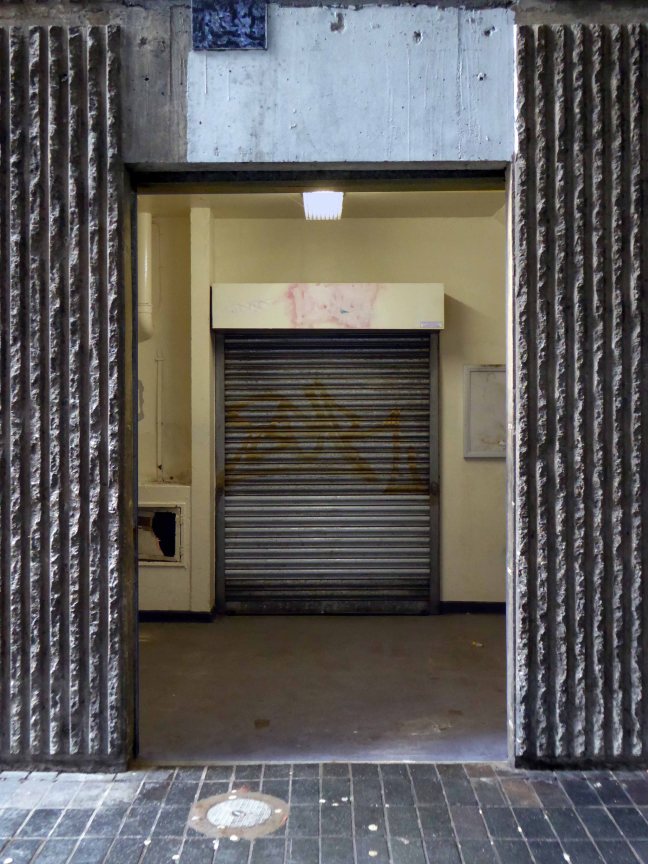
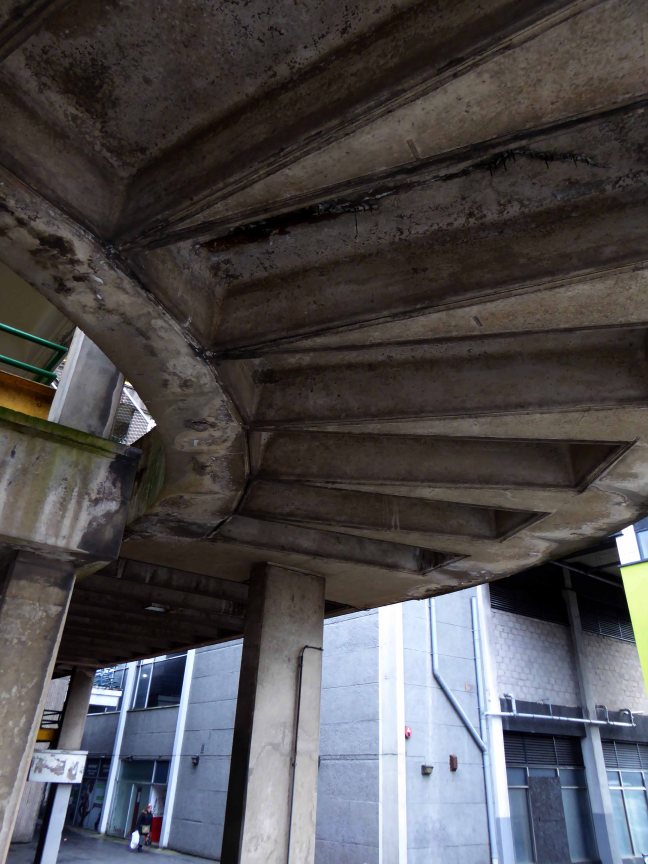
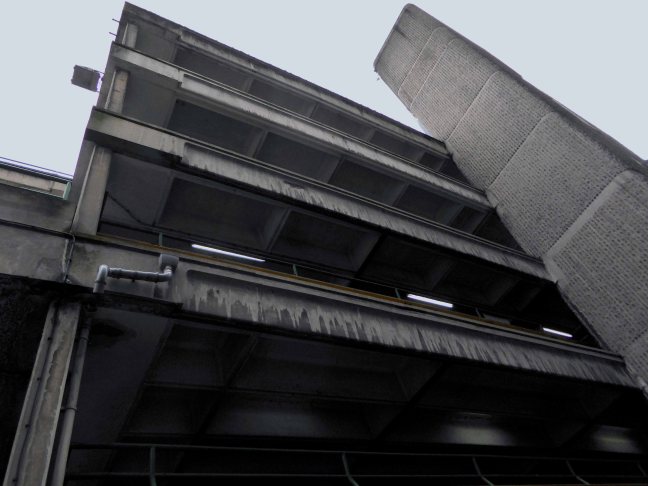
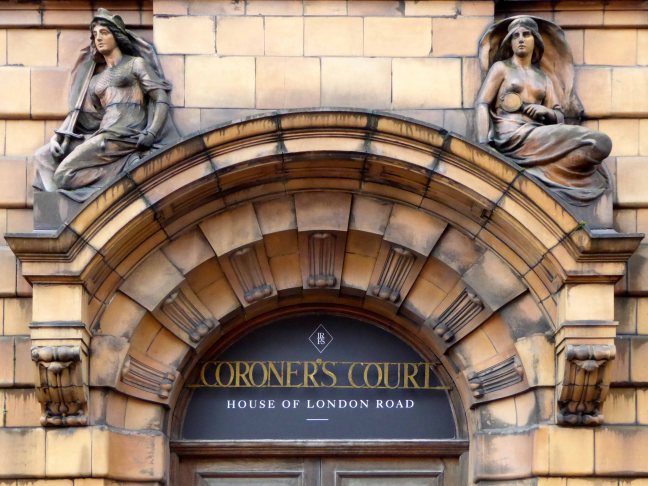
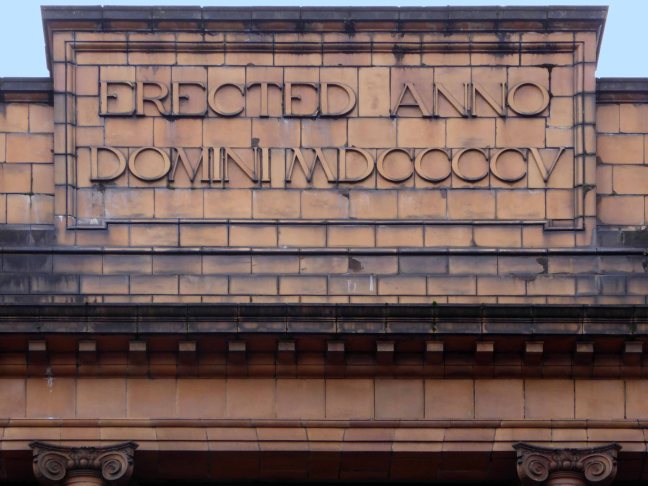
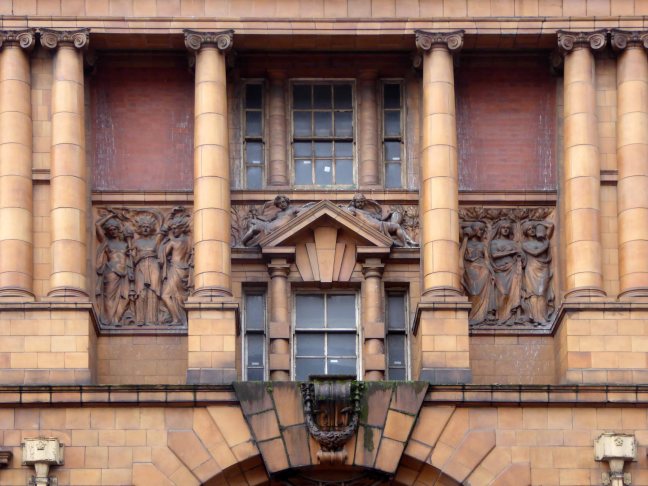
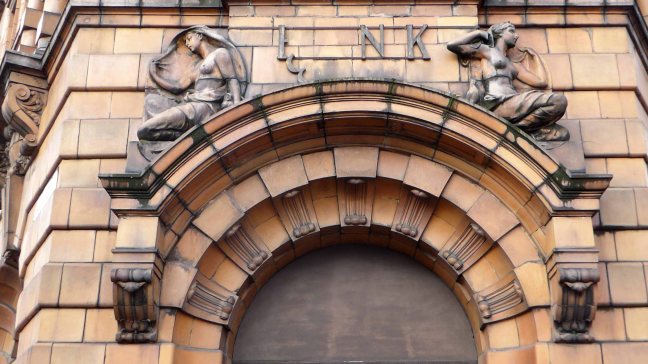
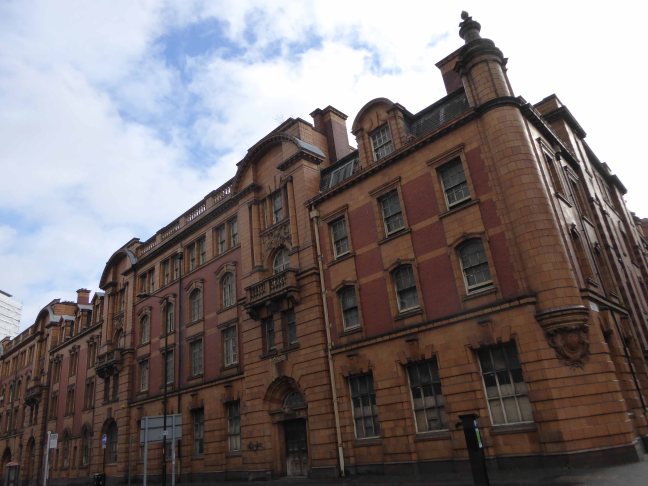
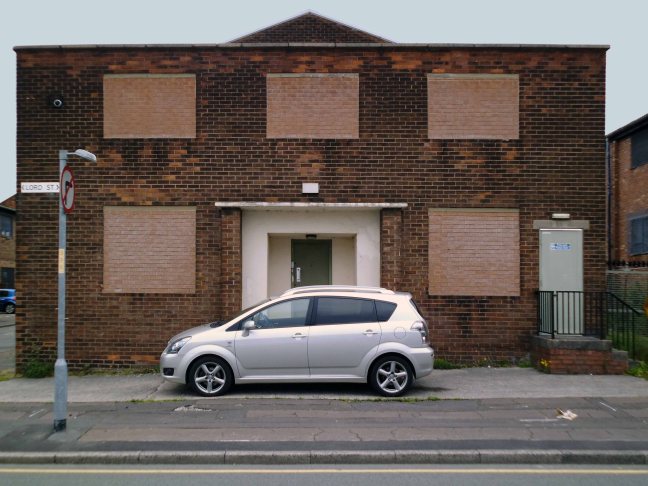
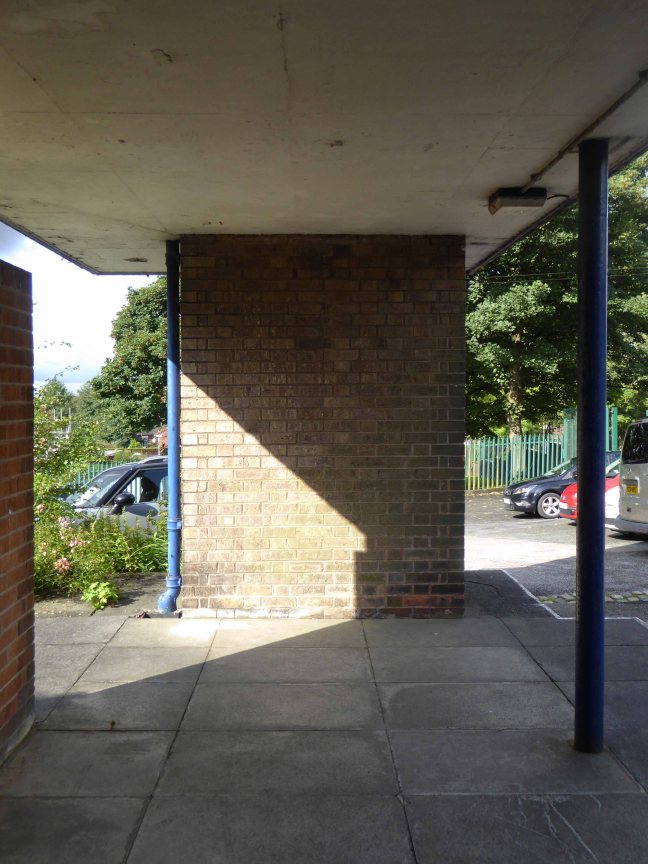
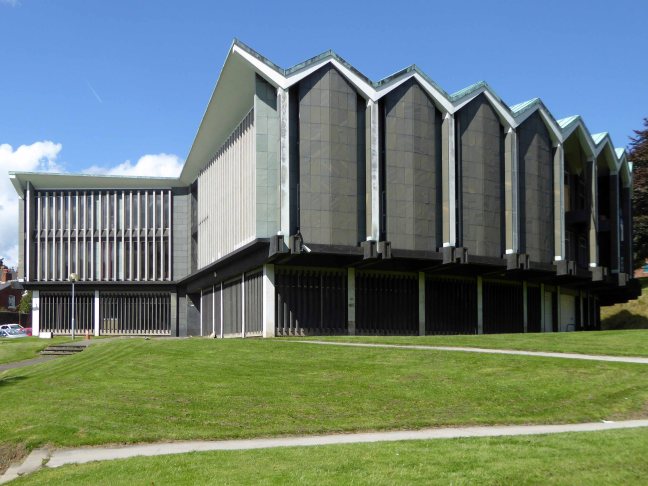
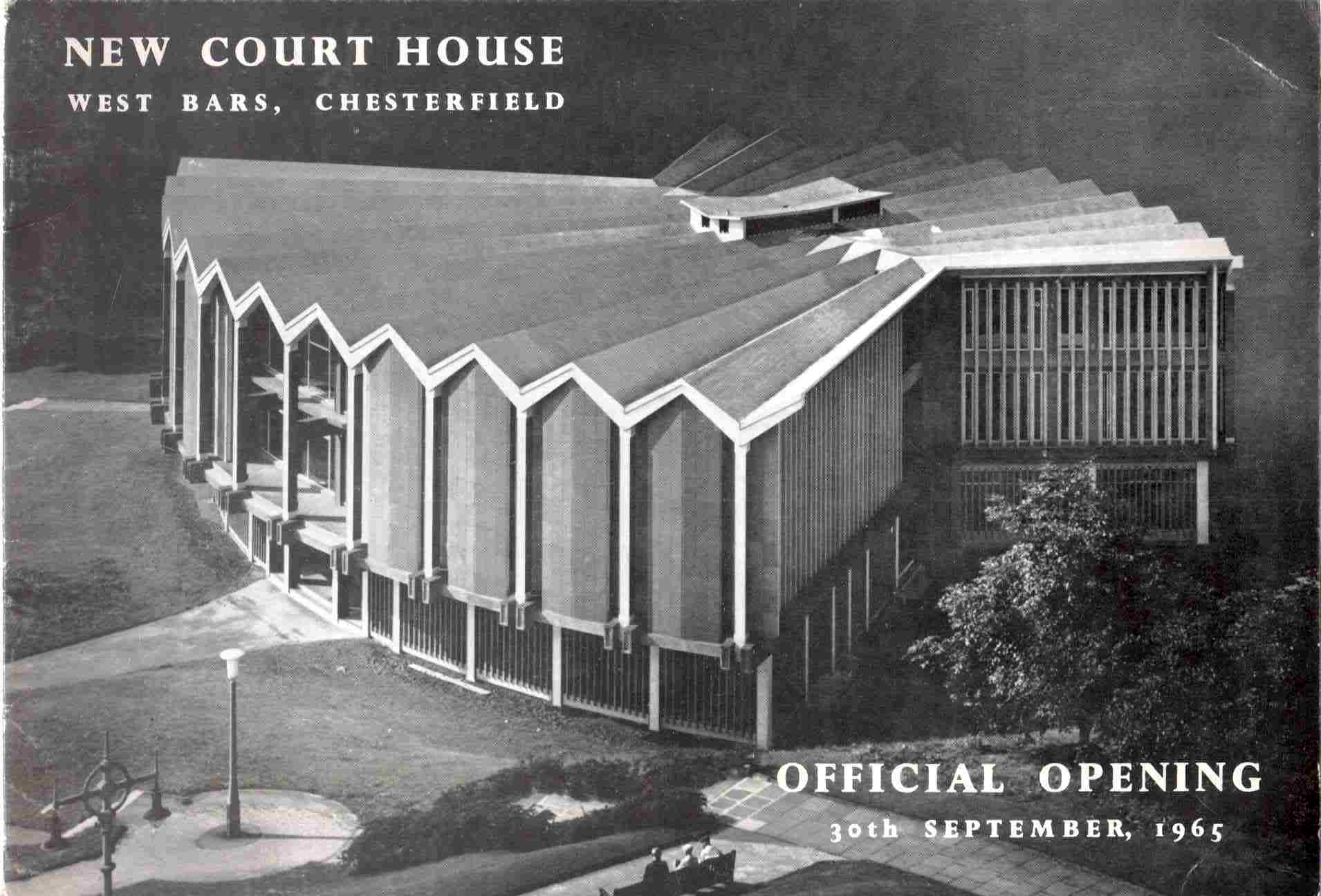
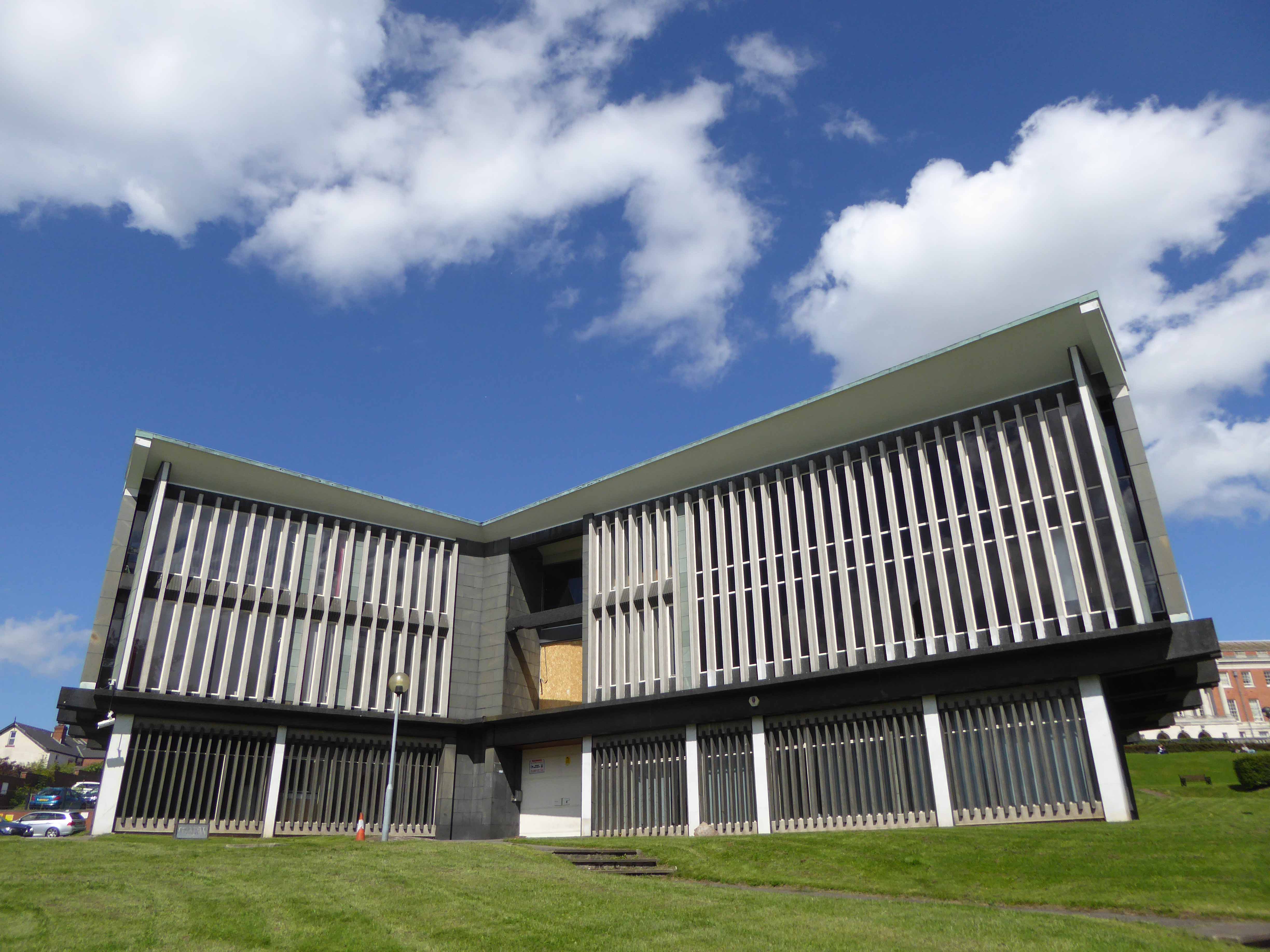
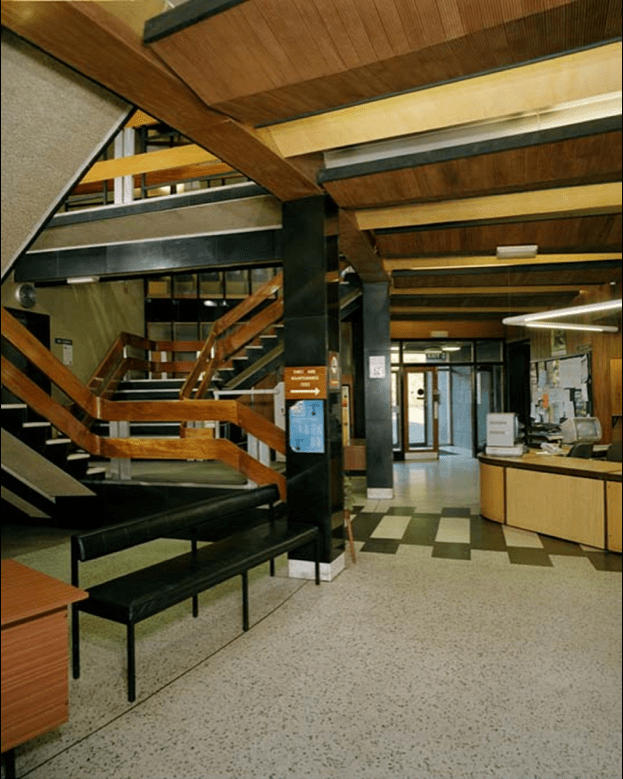
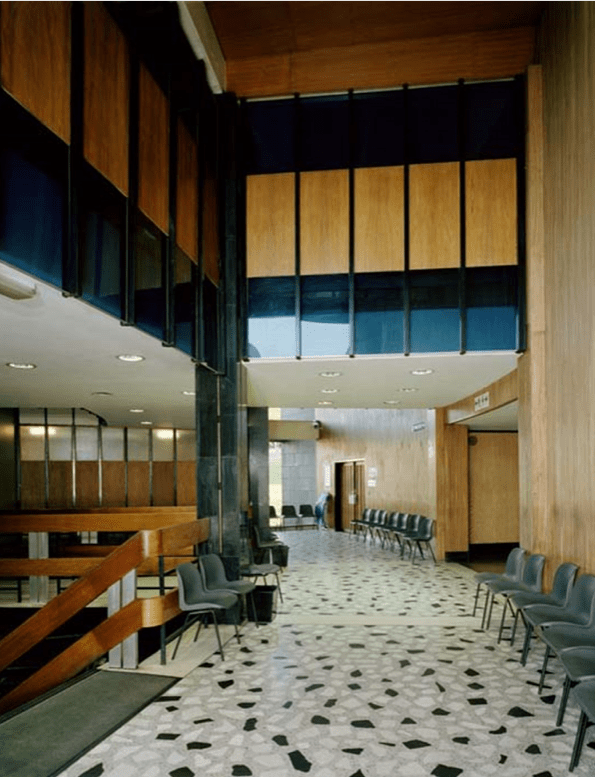
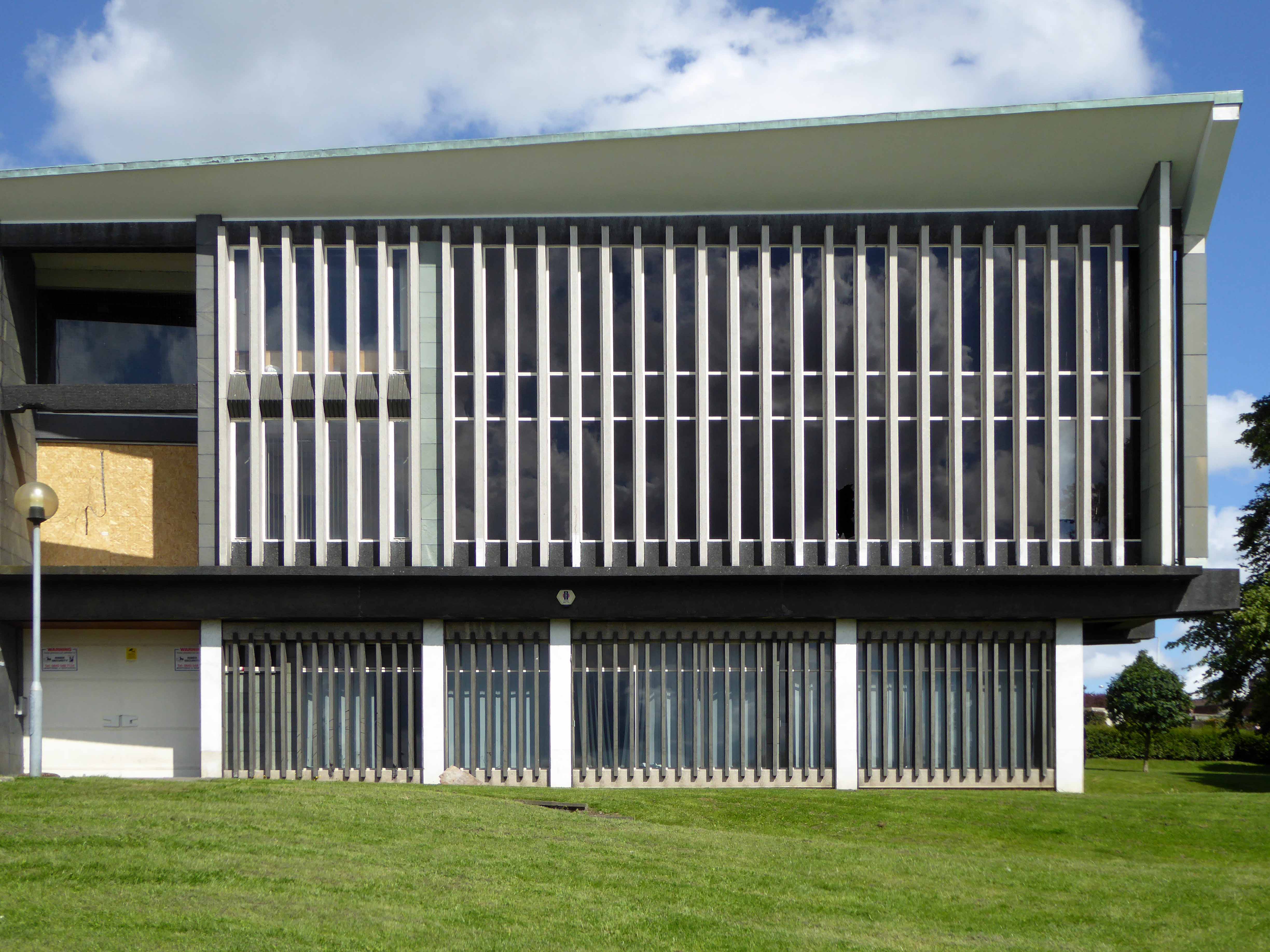
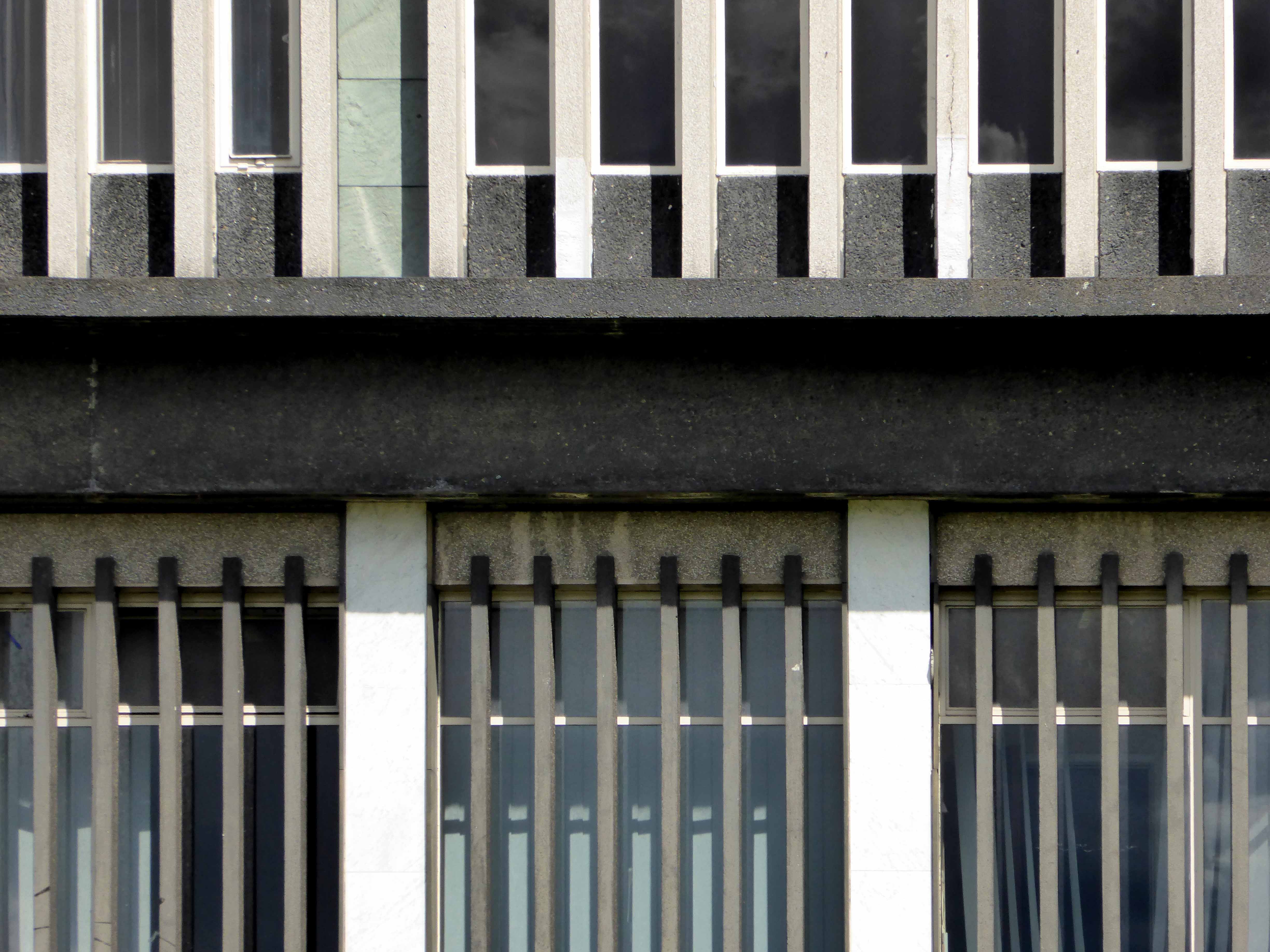
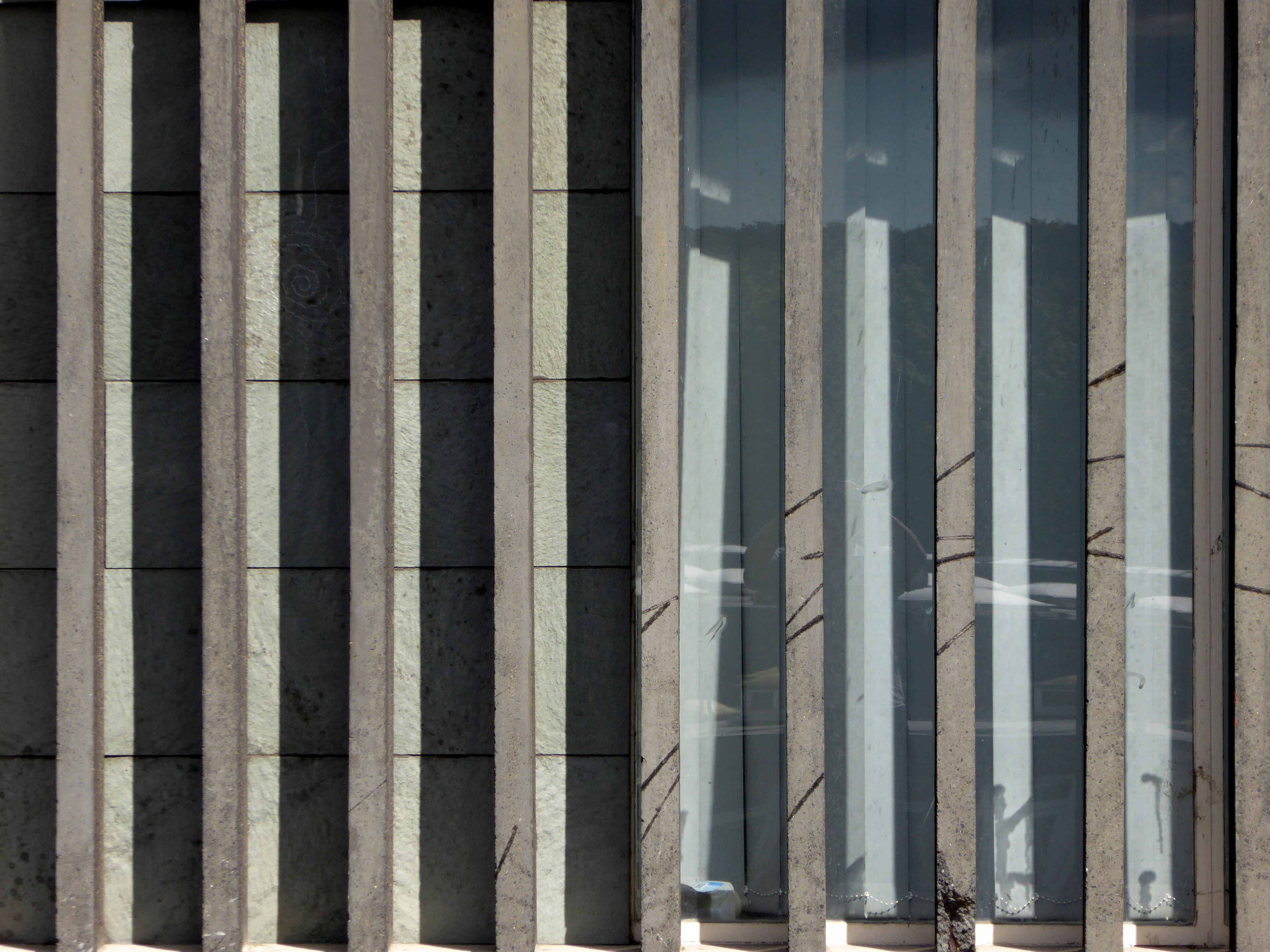
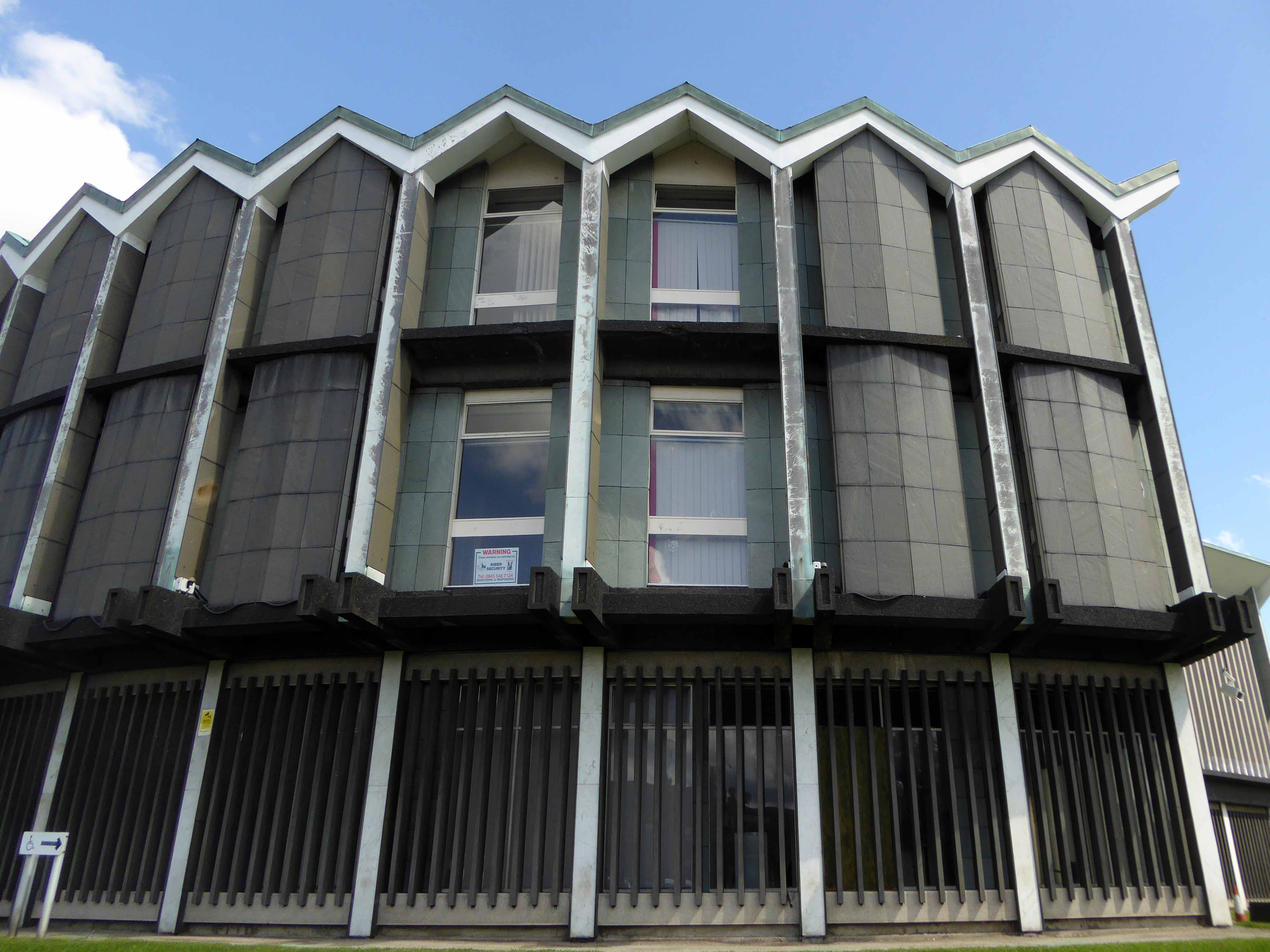
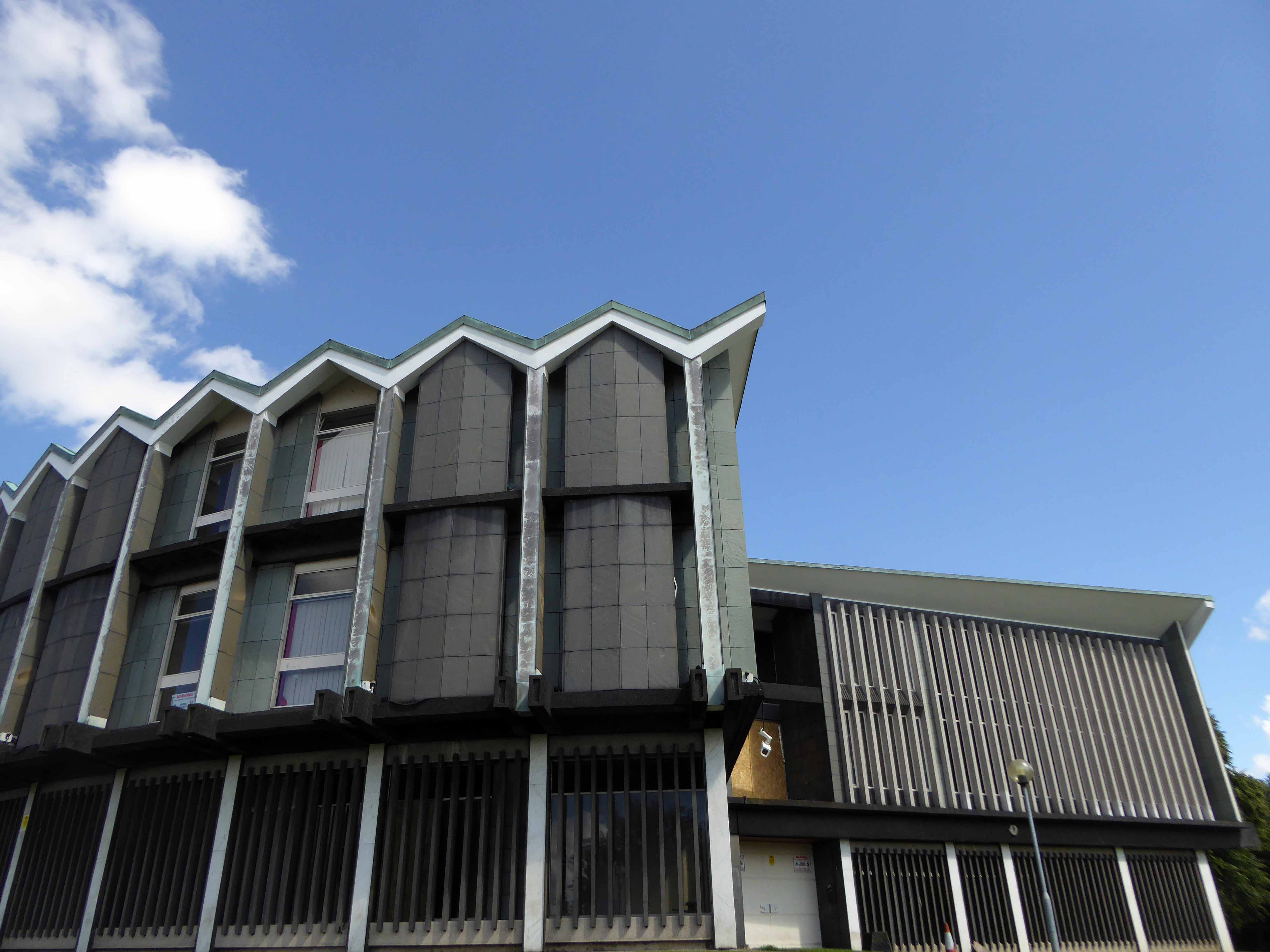
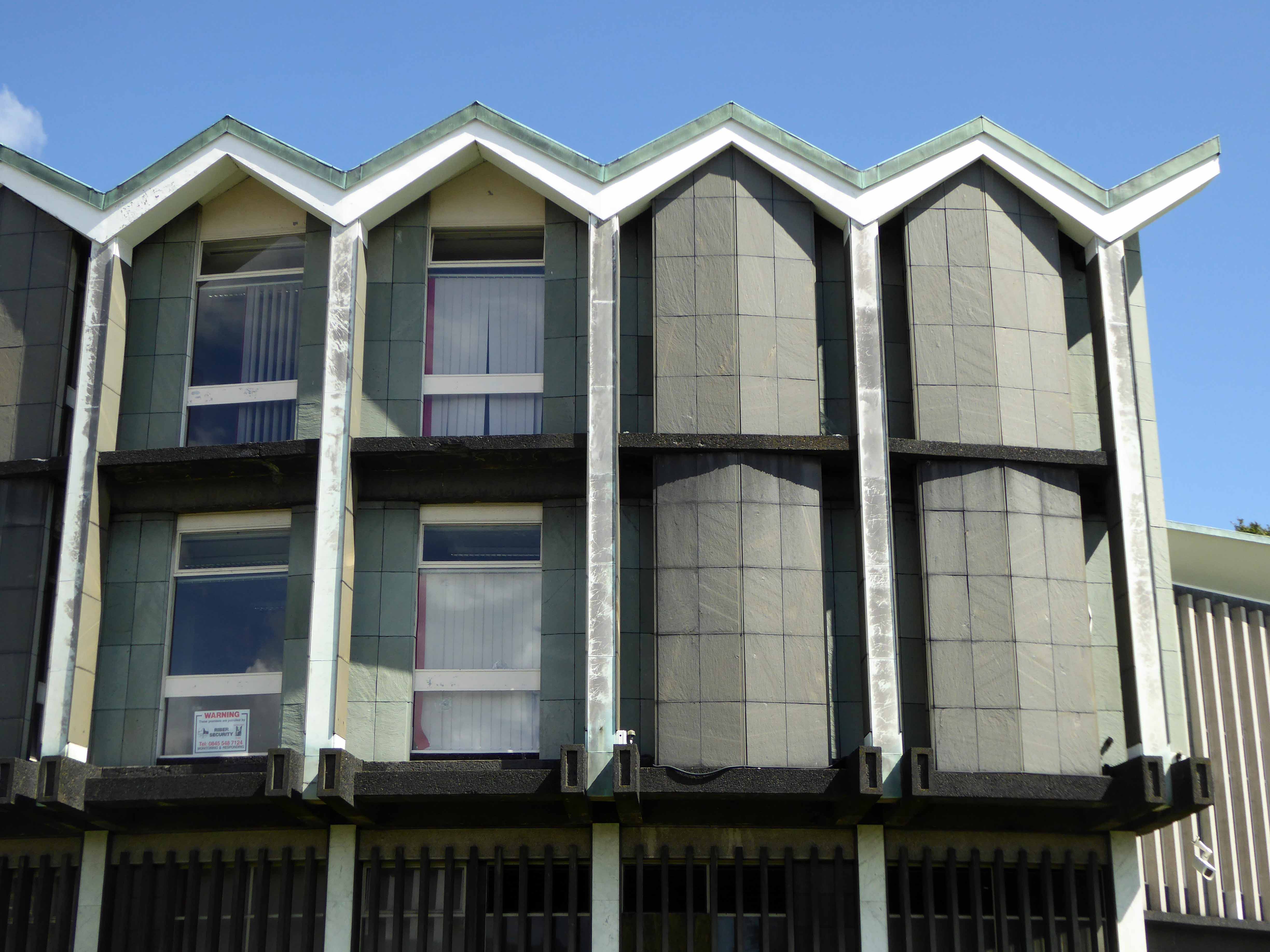
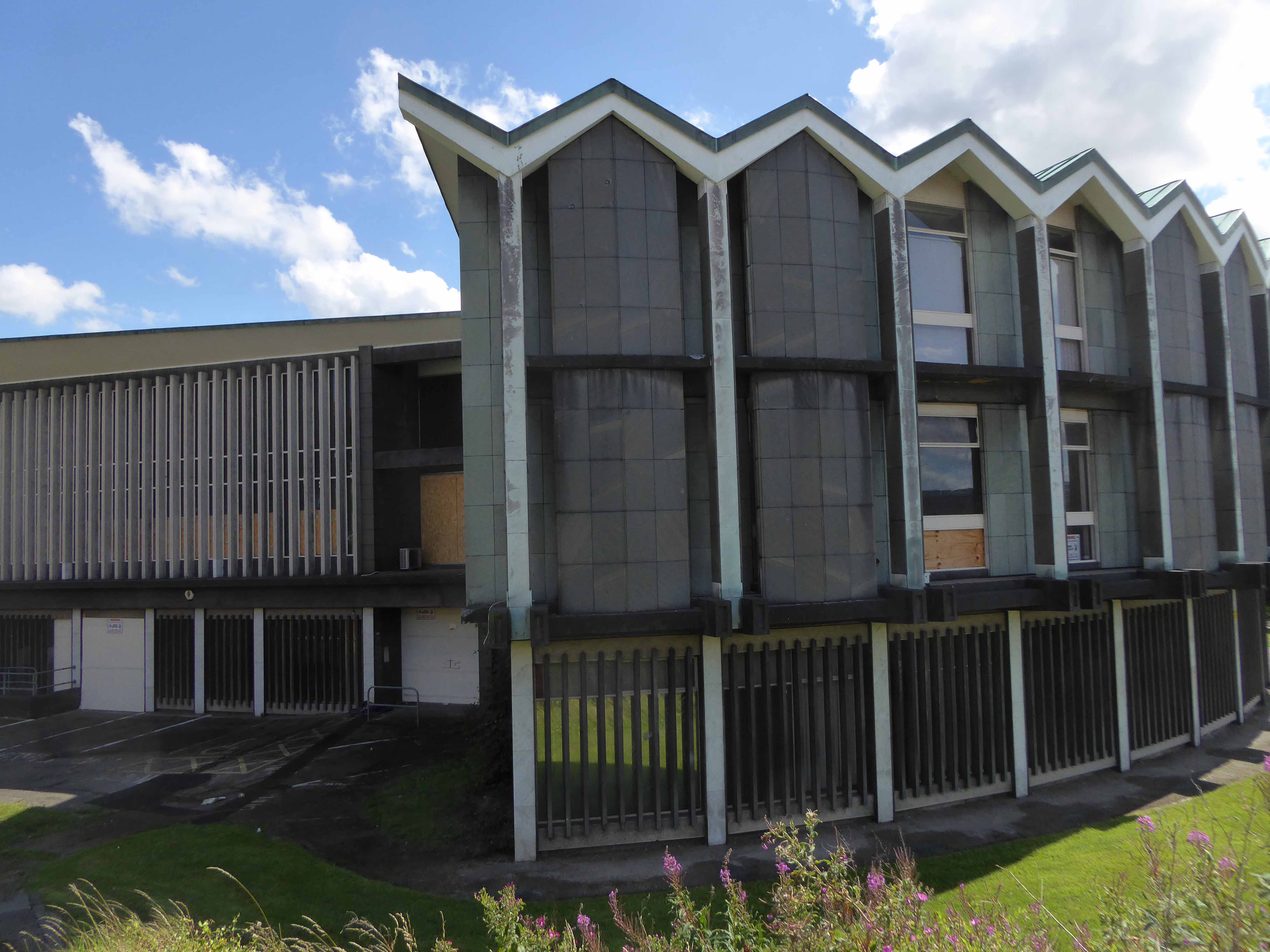
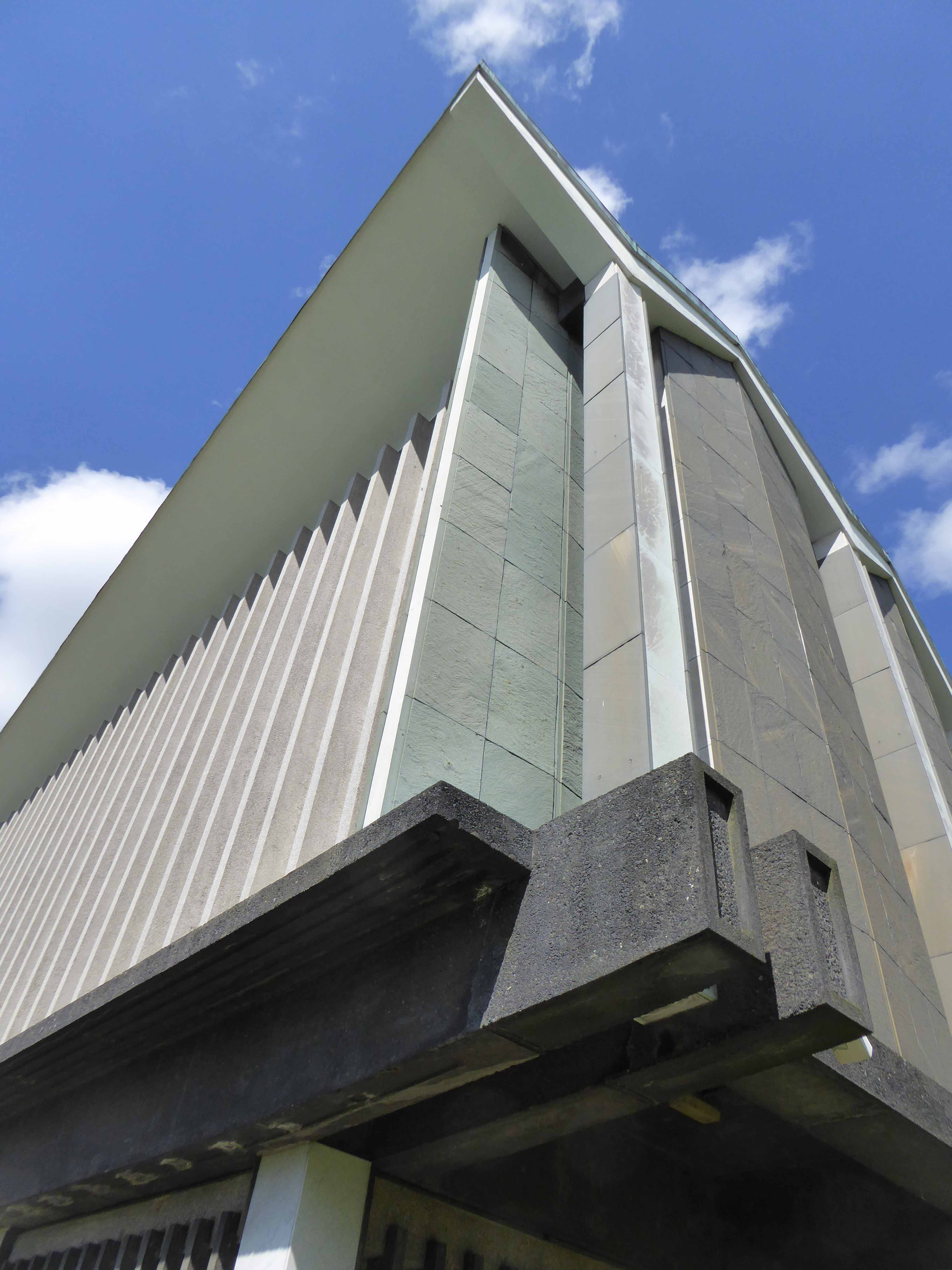
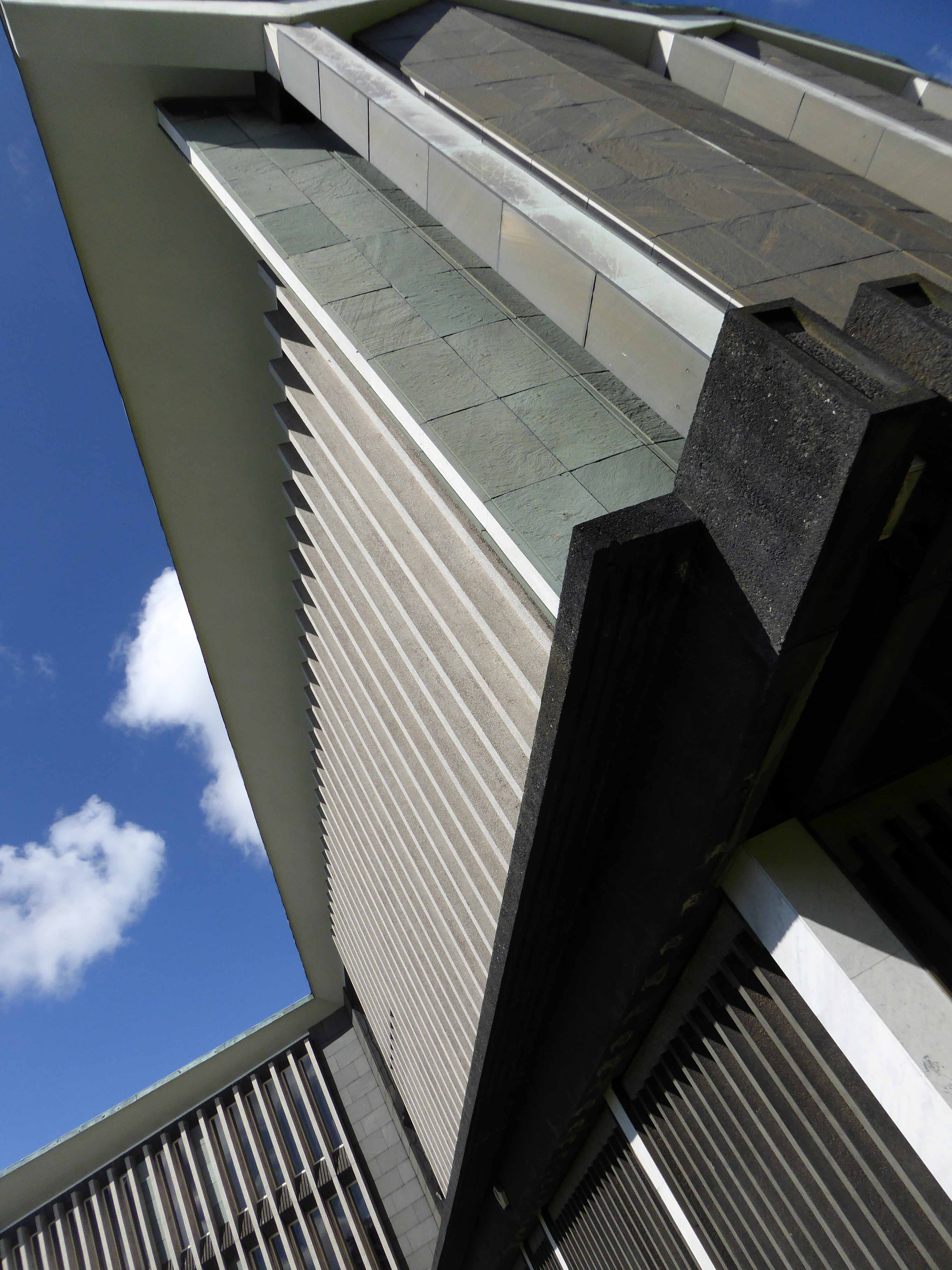
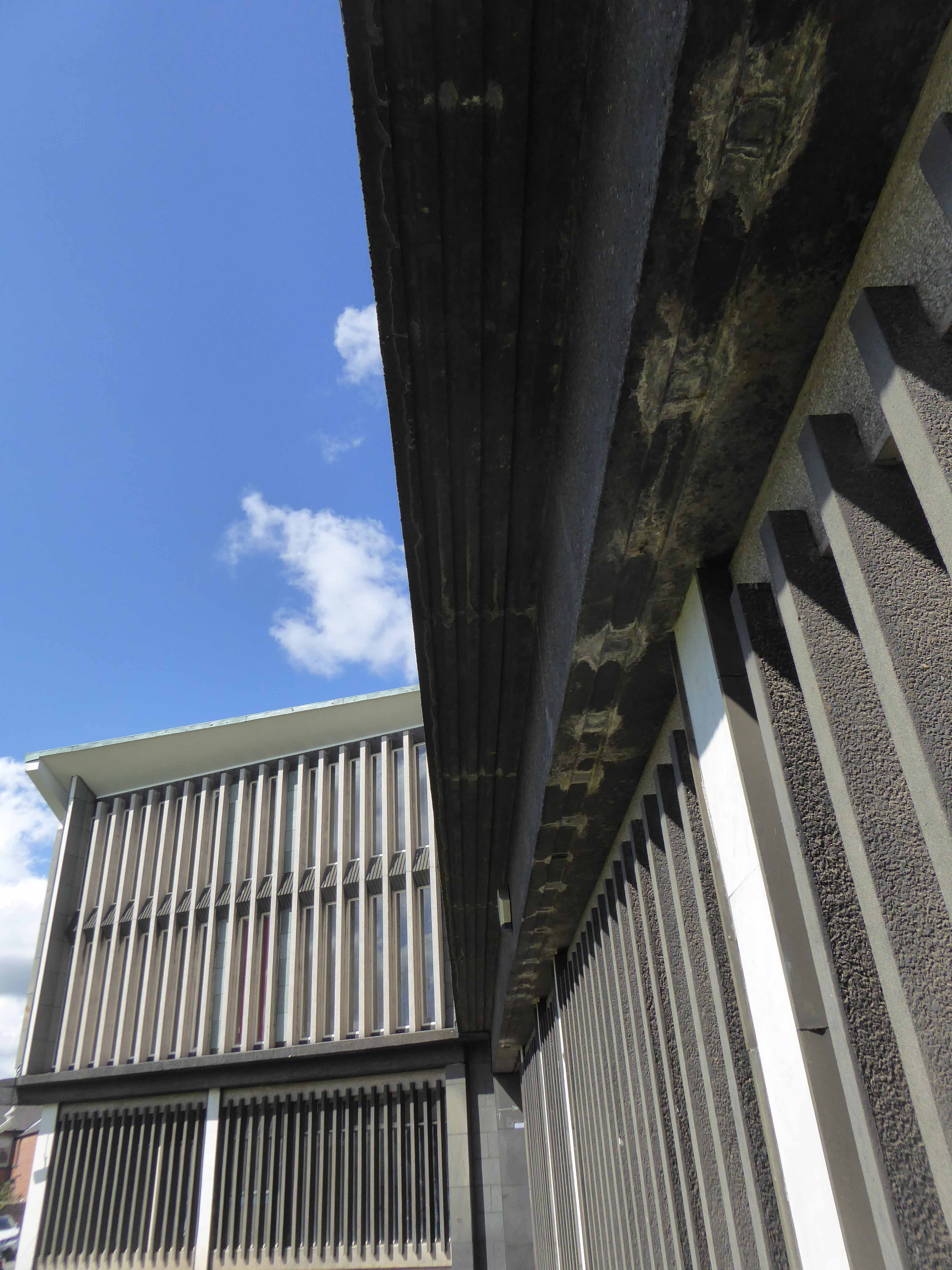
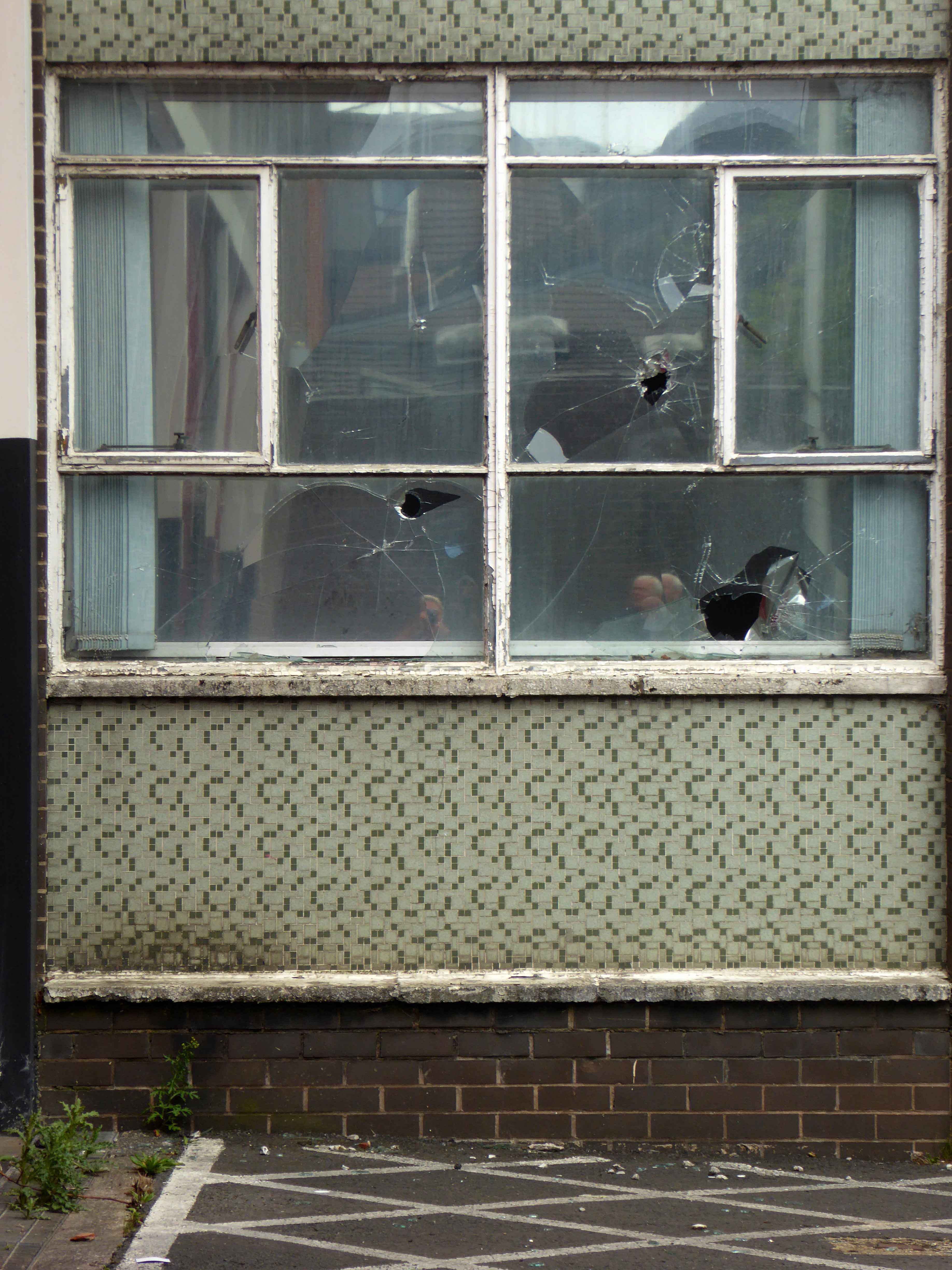
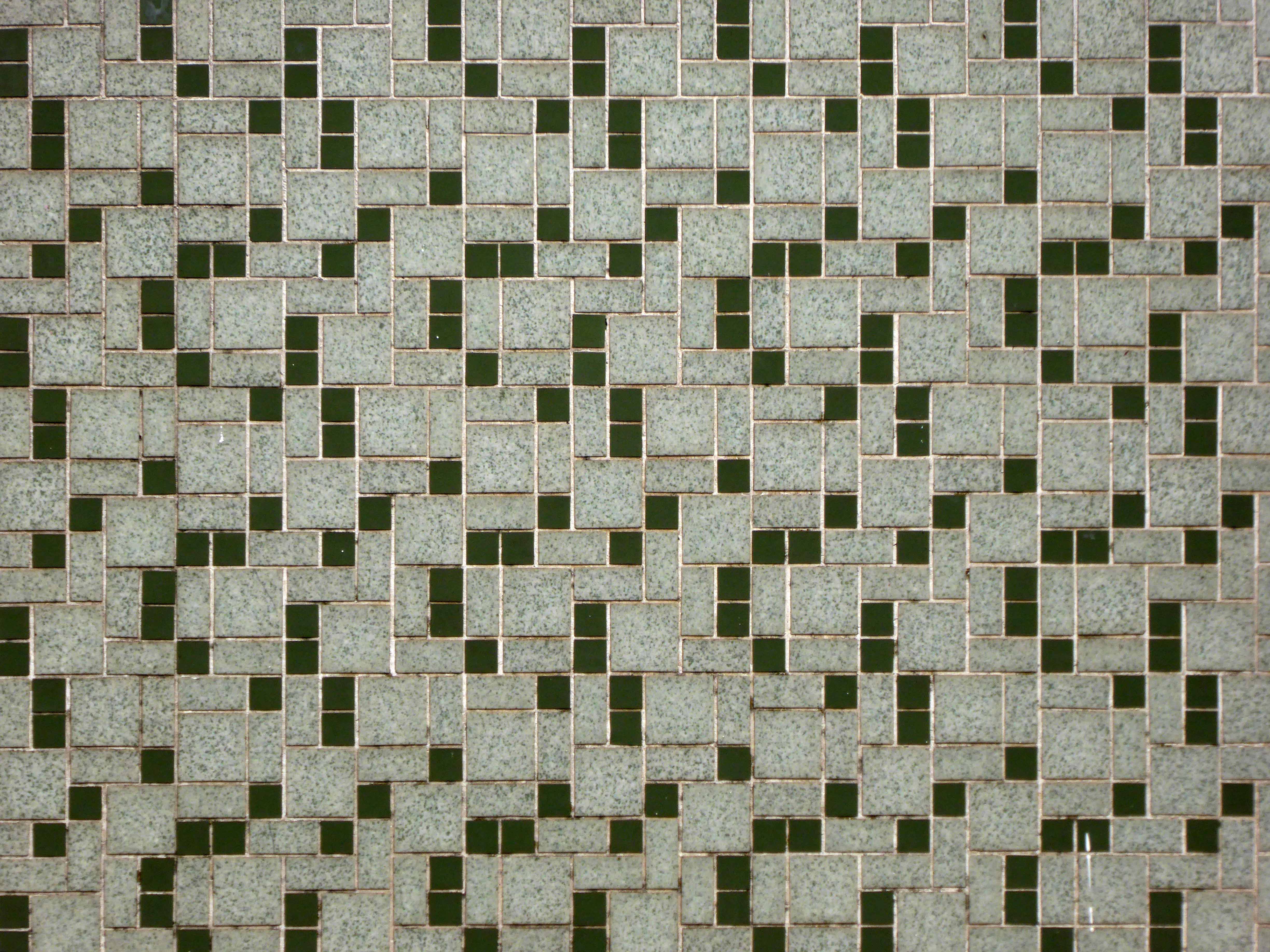
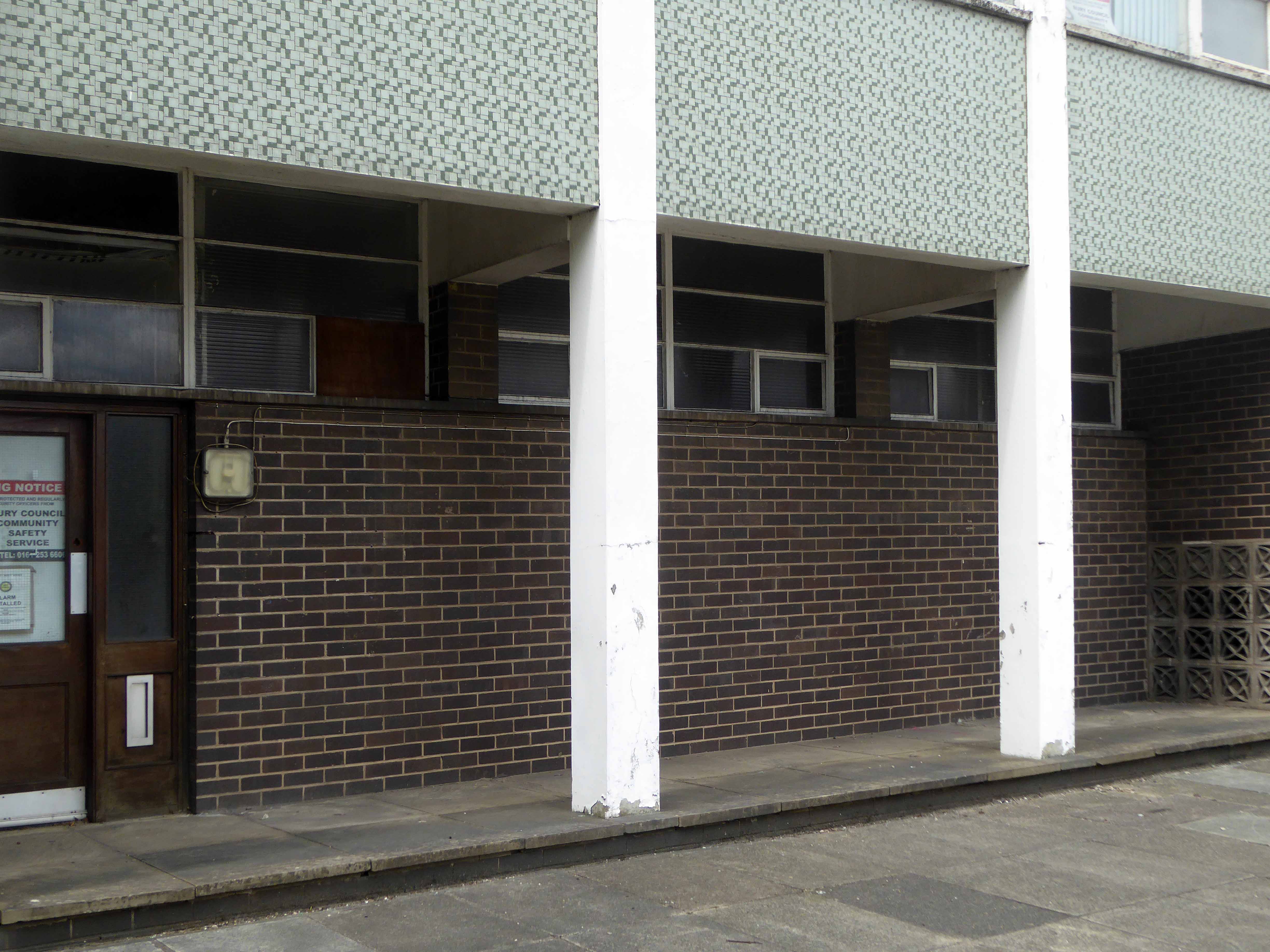
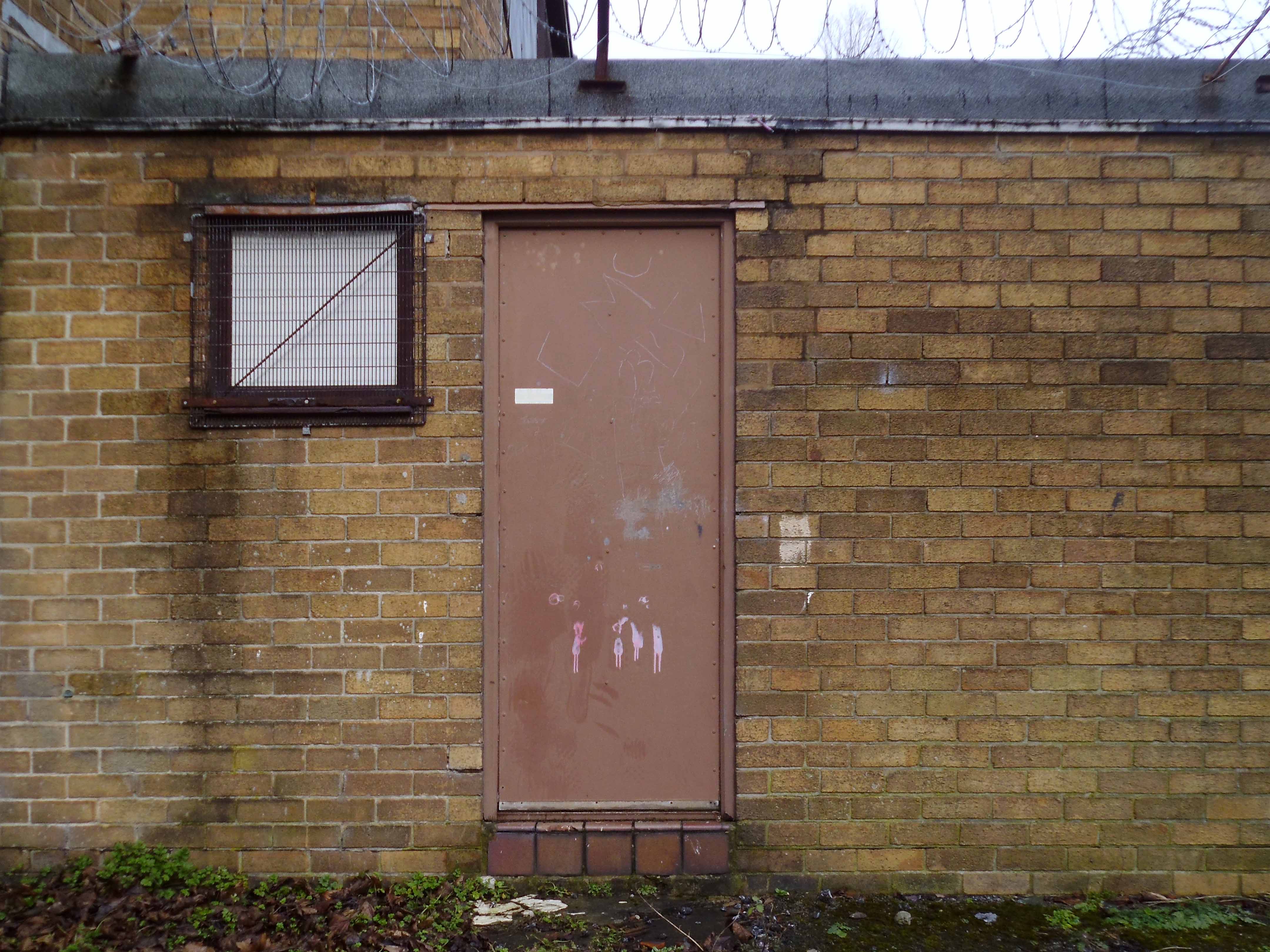
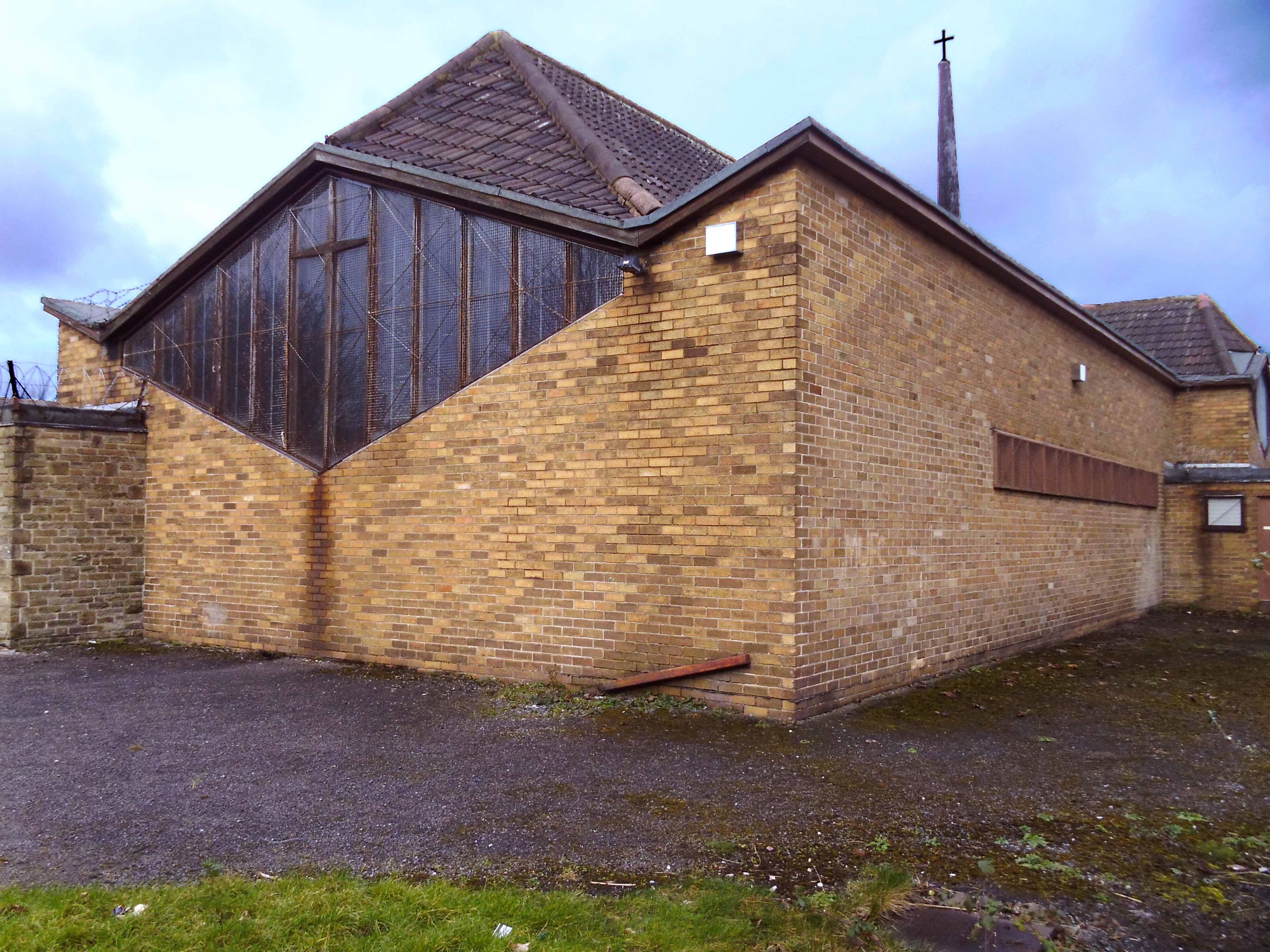
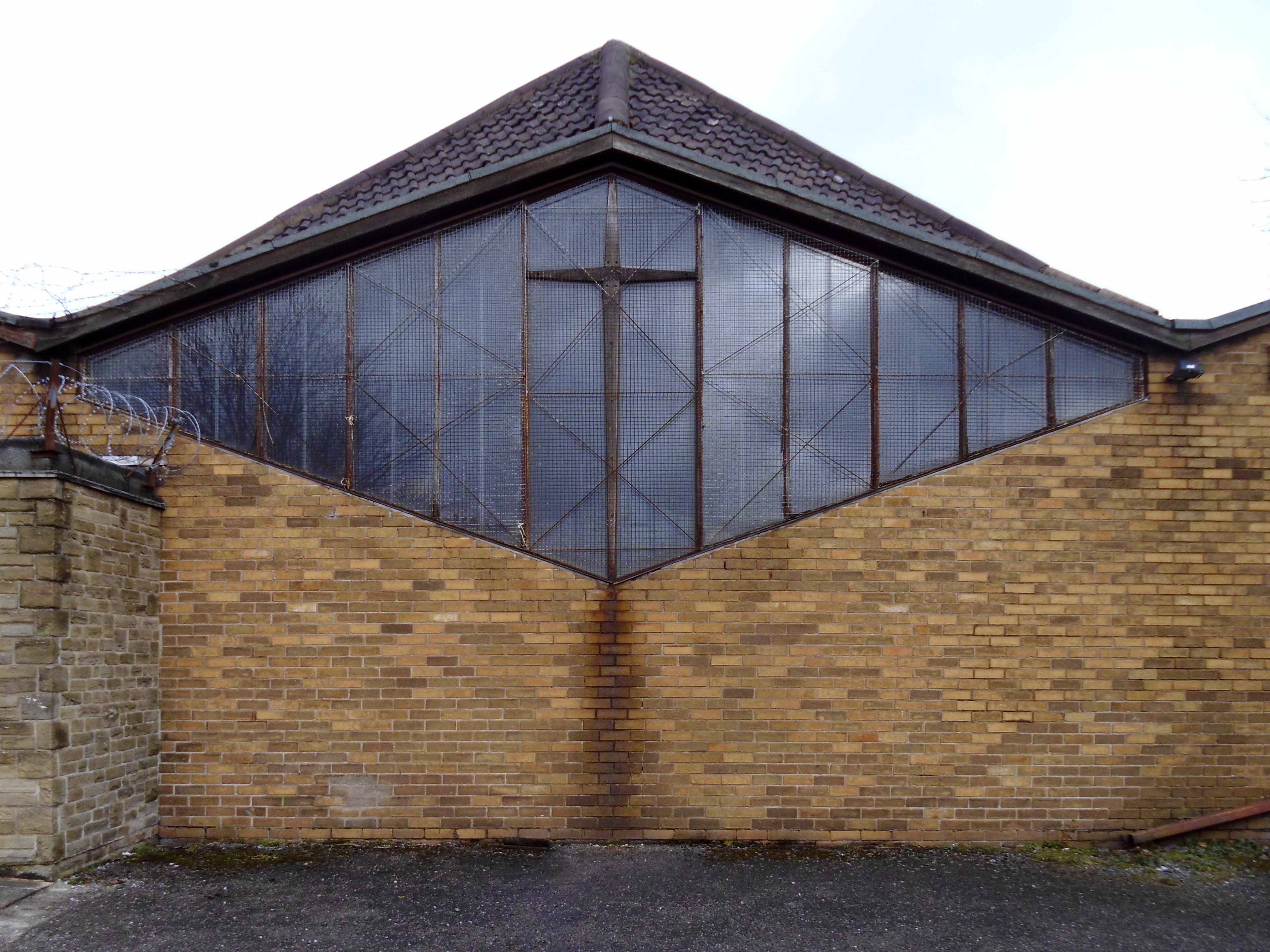
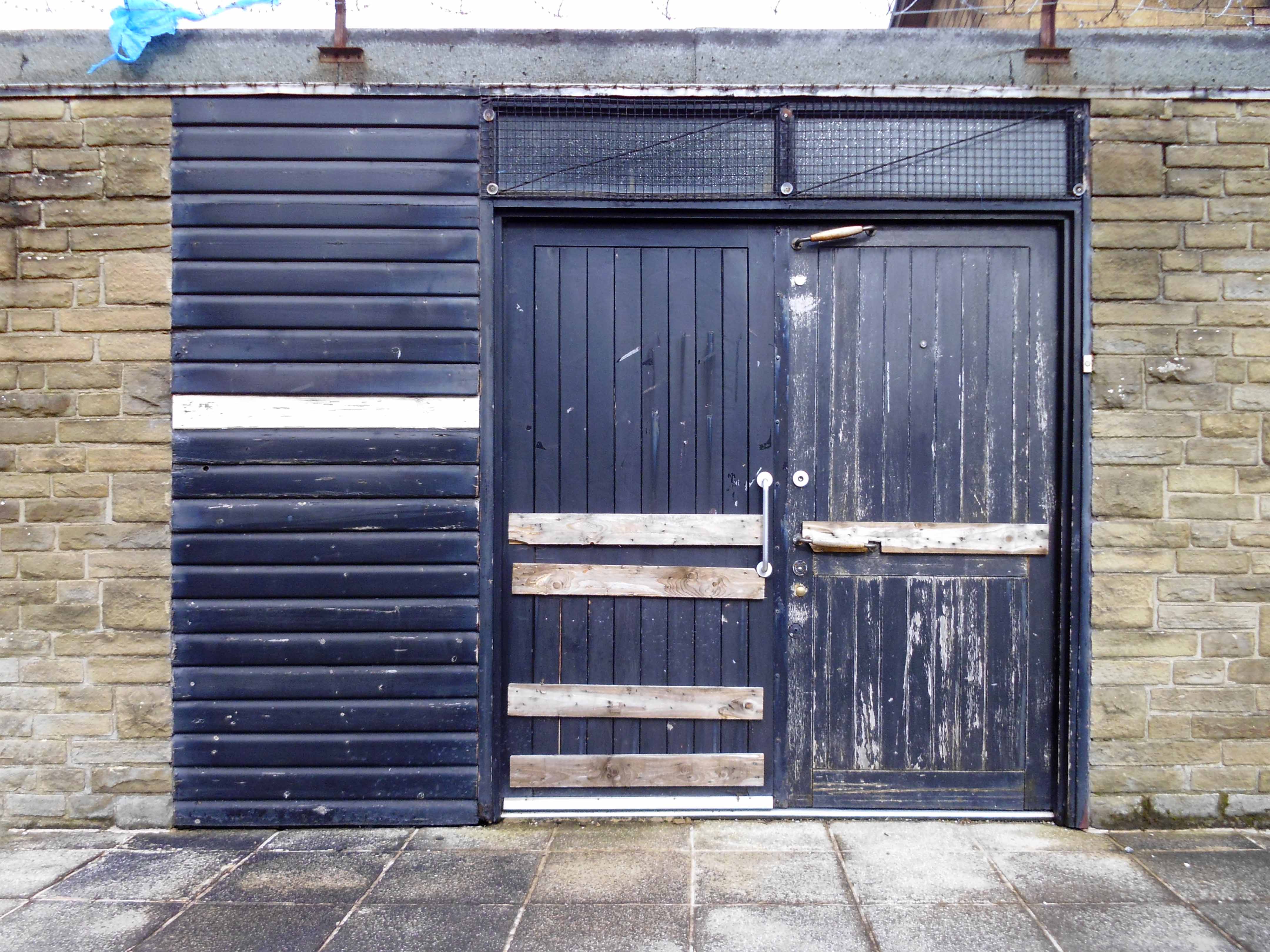
Chesterfield Courthouse – II Magistrates Court house. 1963-65. Designed by Prof S Allen and Robert Keenlyside for Chesterfield Borough Council, altered in 1975. Reinforced concrete, with decorative stone cladding, and timber roofs clad with copper sheeting. Double fan shaped plan, three storeys. Original east entrance front has recessed ground floor with central double glazed doors now blocked with glazed side lights. Either side four windows with concrete louvres to the offices. Above eleven bays topped with gables, the three central bays have recessed windows to both floors. Either side the two storey courts have grey slate panels with side lights and set back grey! green slate cladding. West front has recessed ground floor with eleven windows each with concrete louvres. Above eleven gabled bays, the central three and outer tow with grey slate cladding and side lights with set back grey green slate cladding. The four remaining bays on either side have recessed windows. The north and south sides have recessed angled facades with slightly recessed ground floor with glazed entrance at centre of east section with large glazed windows above. Flanking wings have concrete louvres set in grey slate cladding. Interior has original Y-shaped entrance hall way which rises up through all three floors. East entrance now blocked and converted to offices. Entrances from north and south into hallway with marled floor and marble clad columns with wooden ceilings and recessed lights. Central imperial type staircase marble clad with metal and wood balustrade. Upper floors have wooden clad walls and movable glazed screen for dividing access from juvenile court when in session. Two storey courts on upper floor retain original wooden cladding, ceilings and courtroom fittings, including magistrates bench, dock, seating for lawyers and the public. 

P1190488

And self evidently facing a very uncertain future:

2015 – The Grade II listed building, which is located between Rose Hill and West Bars, has received planning consent allowing it to be used for a range of purposes including office, retail and leisure facilities. Stuart Waite, associate director at Innes England in Derby, who is handling lettings on behalf of a private client, said: “We have been in serious discussions with a number of occupiers regarding this building for a variety of uses. “Occupier confidence is growing and with the economic forecast for 2015 looking positive we are confident that will see early interest converted into deals. “We are working closely with Chesterfield Borough Council which has identified the Rose Hill and West Bars area of the town as a key strategic location for growth.”

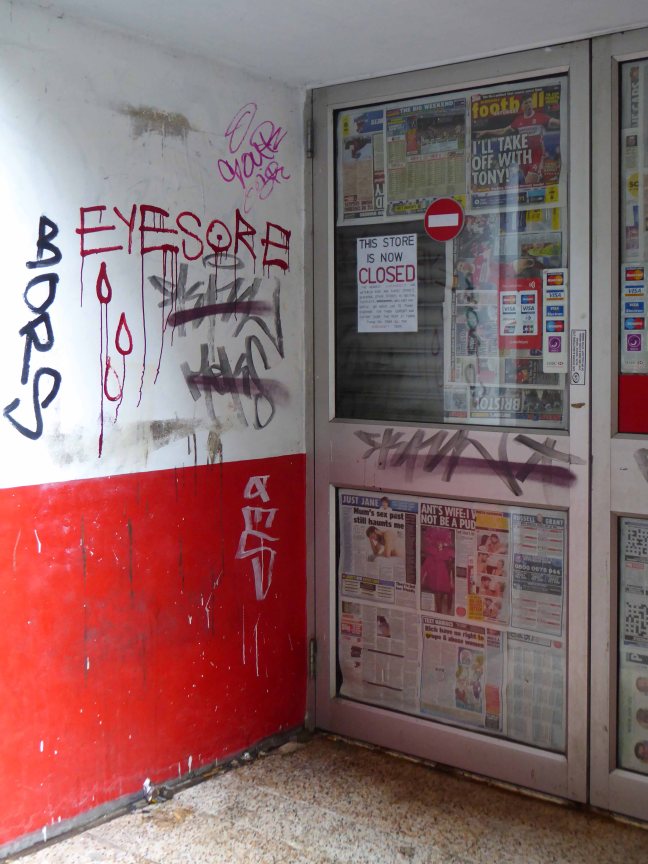
It has stood empty for the last few years and been a hotspot for vandalism.

Last July, arsonists set a wheelie bin on fire and pushed it up against the building, causing the flames to spread.

mqgh90gr0b3fnfoy2jkq

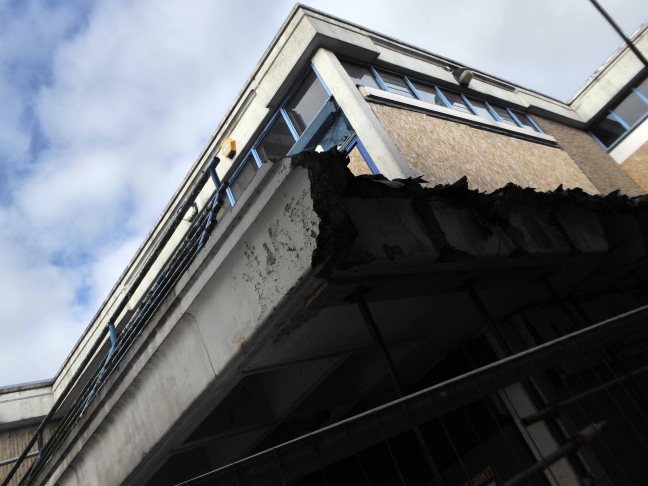
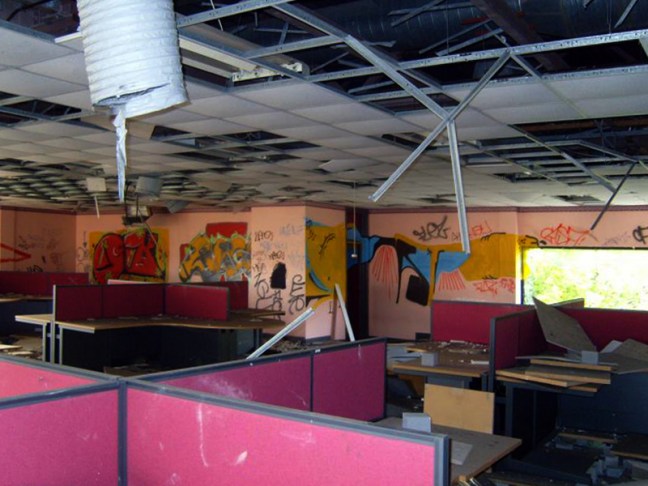
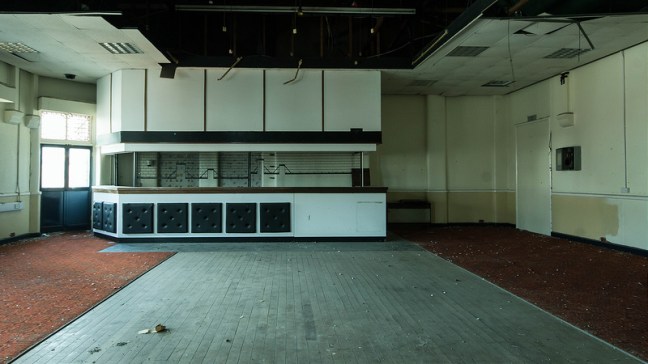
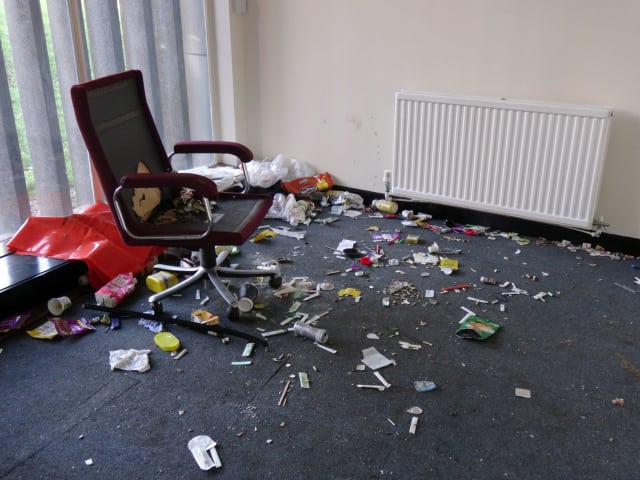
2017 – Chesterfield’s former magistrates’ court is being used as a drugs den, shock pictures reveal – and a council chief has warned that the building poses a danger to public health. Extremely concerning images obtained by the Derbyshire Times today show hypodermic needles and what appears to be heroin inside the historic property – as well as extensive damage in rooms and excrement smeared up walls.

Derbyshire Times.

It’s seen better days.

It remains on the market for £450,000 a steal if you ask me.
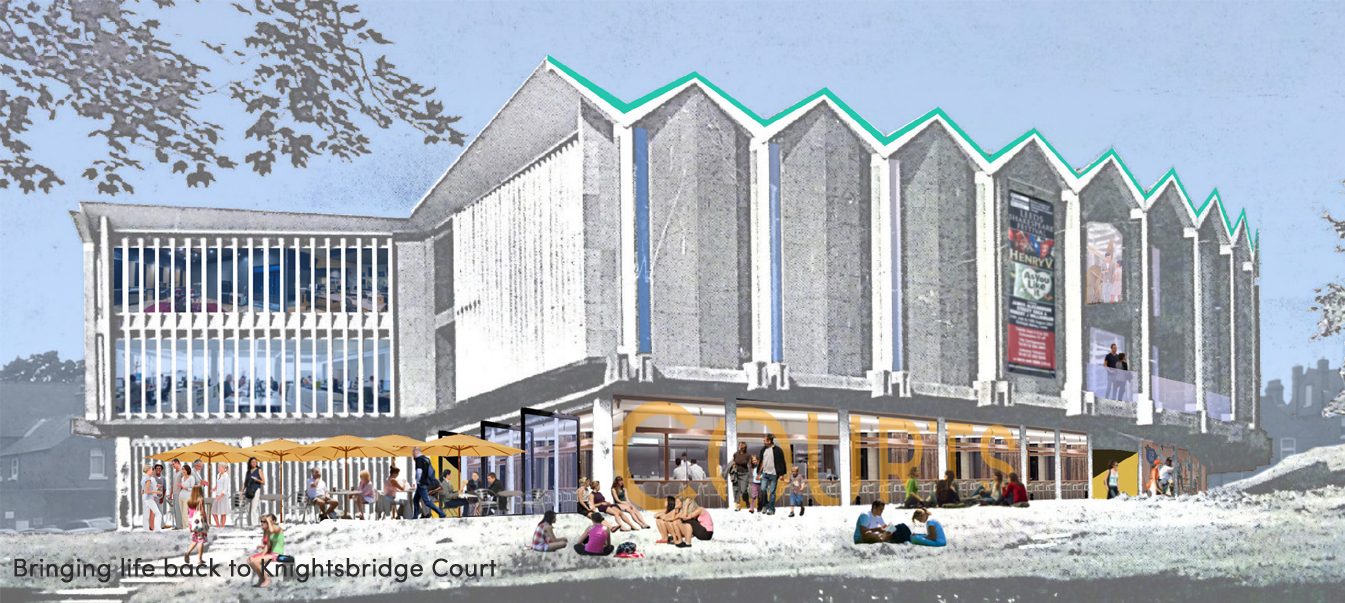
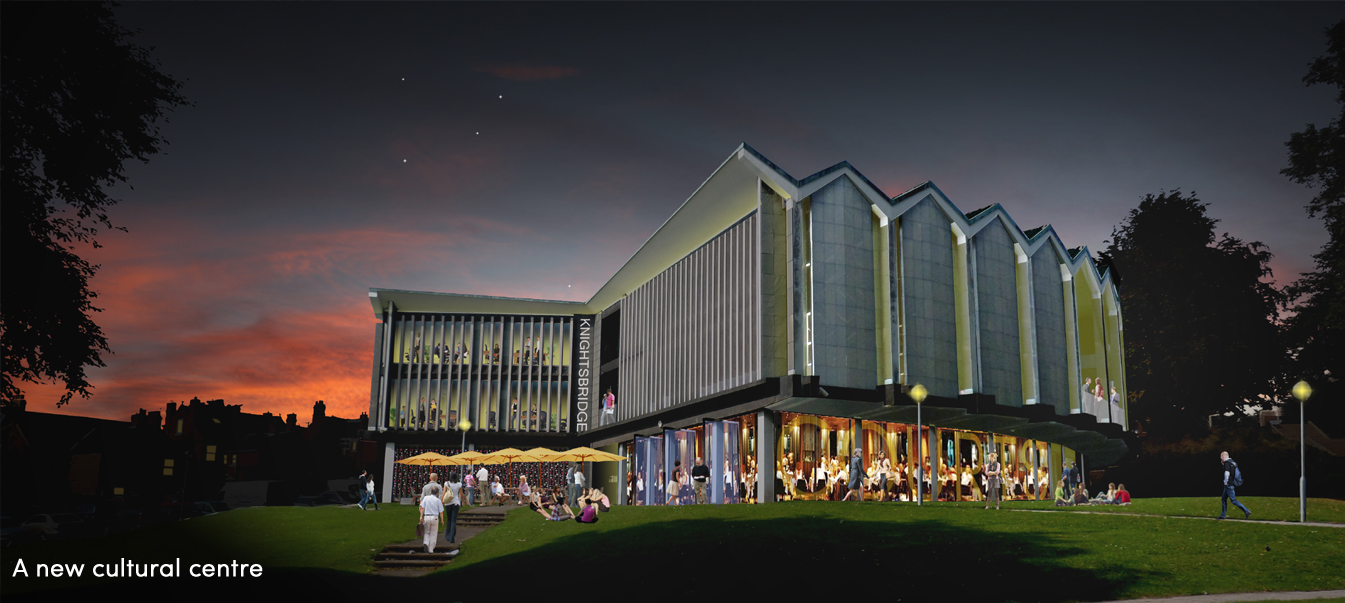
Thread Architects have proposed redevelopment as an Arts Centre

dna p1.psd
dna p1.psd

On the day of my visit there was little evidence of arts activity, save for a short performance piece by a heavily intoxicated mini-mosher and her partner – funding sources having proved to be at best illusory and subject to market forces.

Talk is cheap.

Take a walk on the wild green sward side of town, it remains a marvel, open and accessible, just requires a tender touch, of cash.

P1190489
P1190490
P1190491
P1190492
P1190493
P1190494
P1190495
P1190496
P1190497
P1190499
P1190501
P1190502
P1190503
P1190508
P1190509
P1190510
P1190511

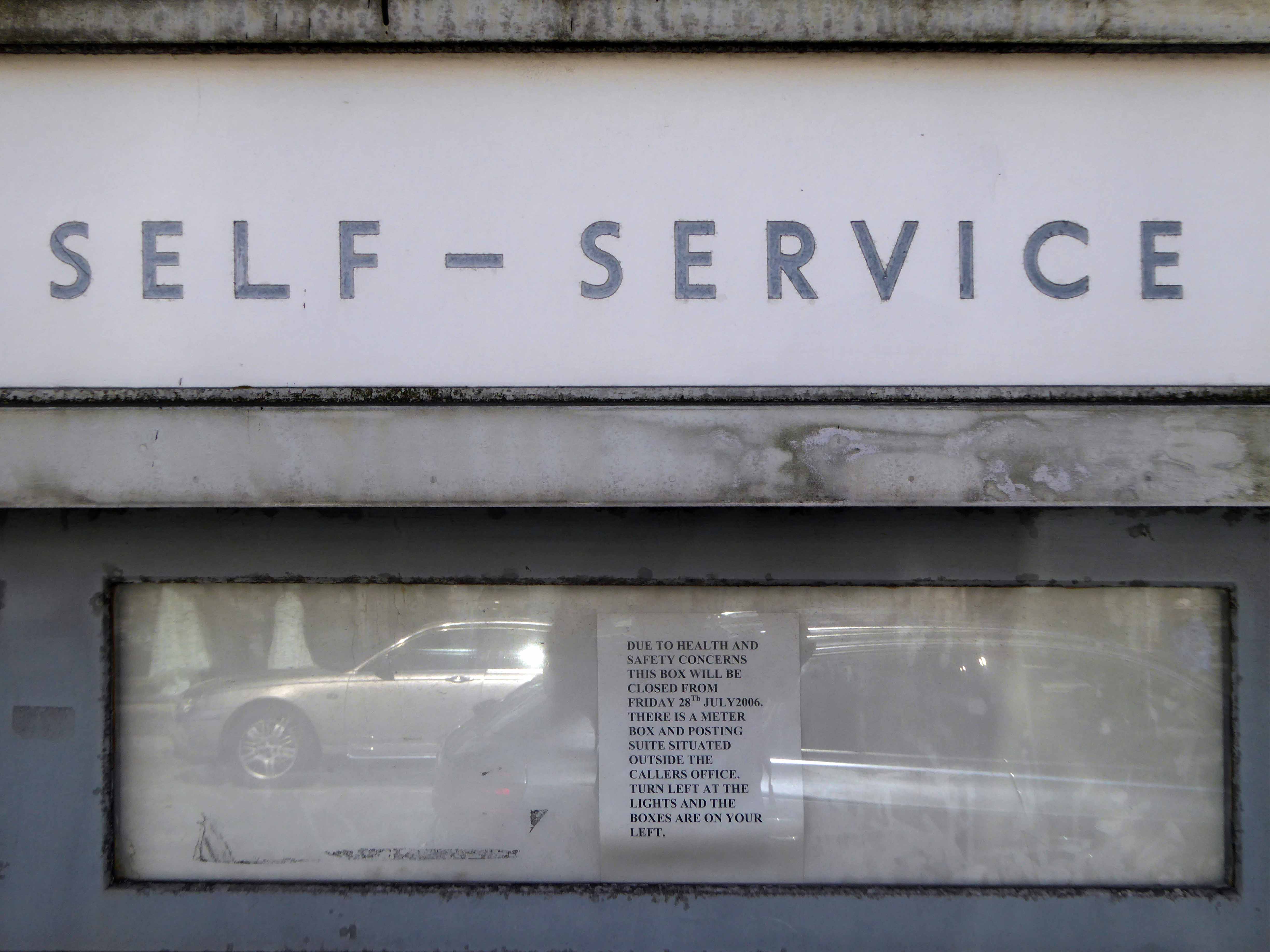
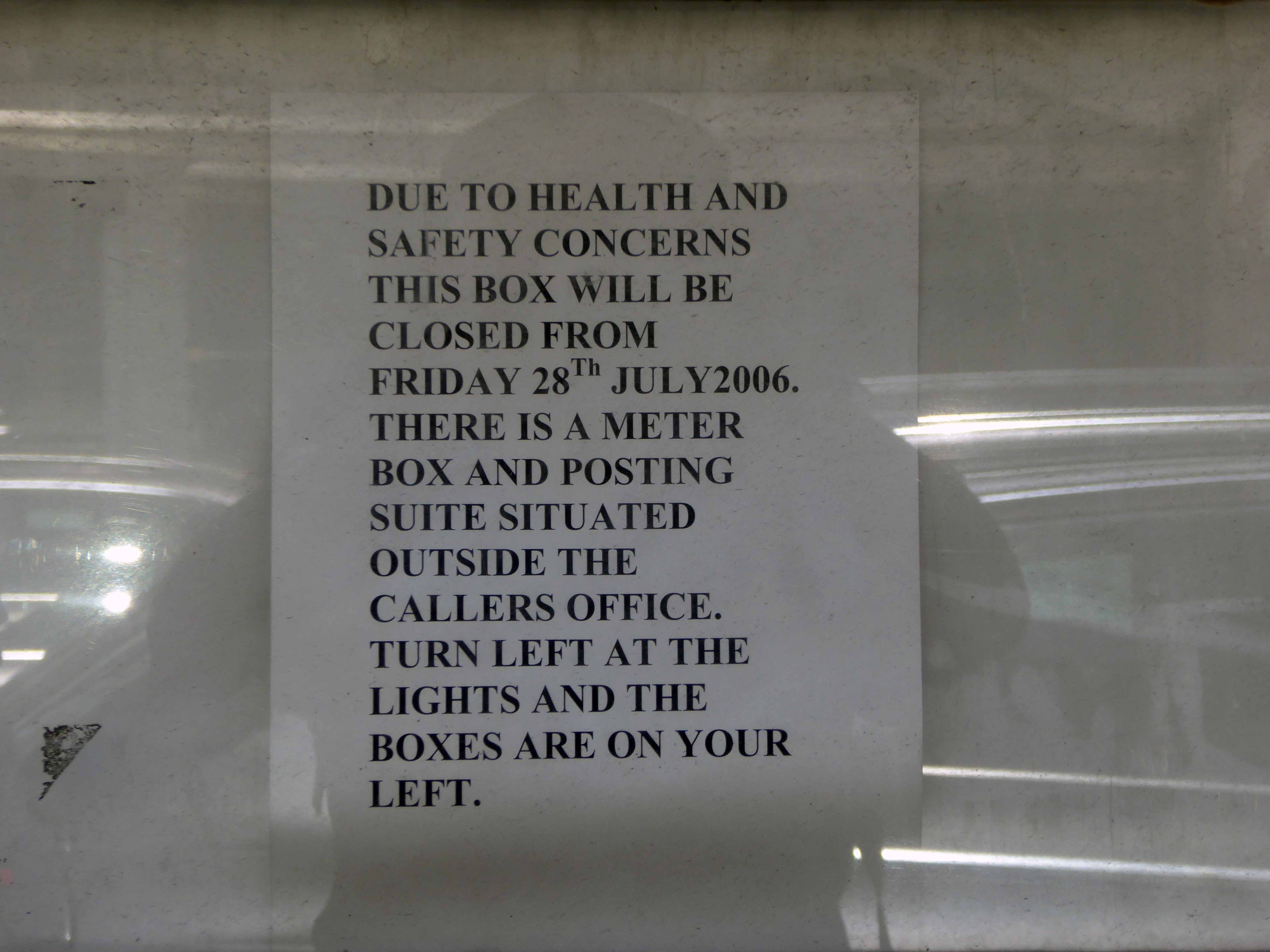
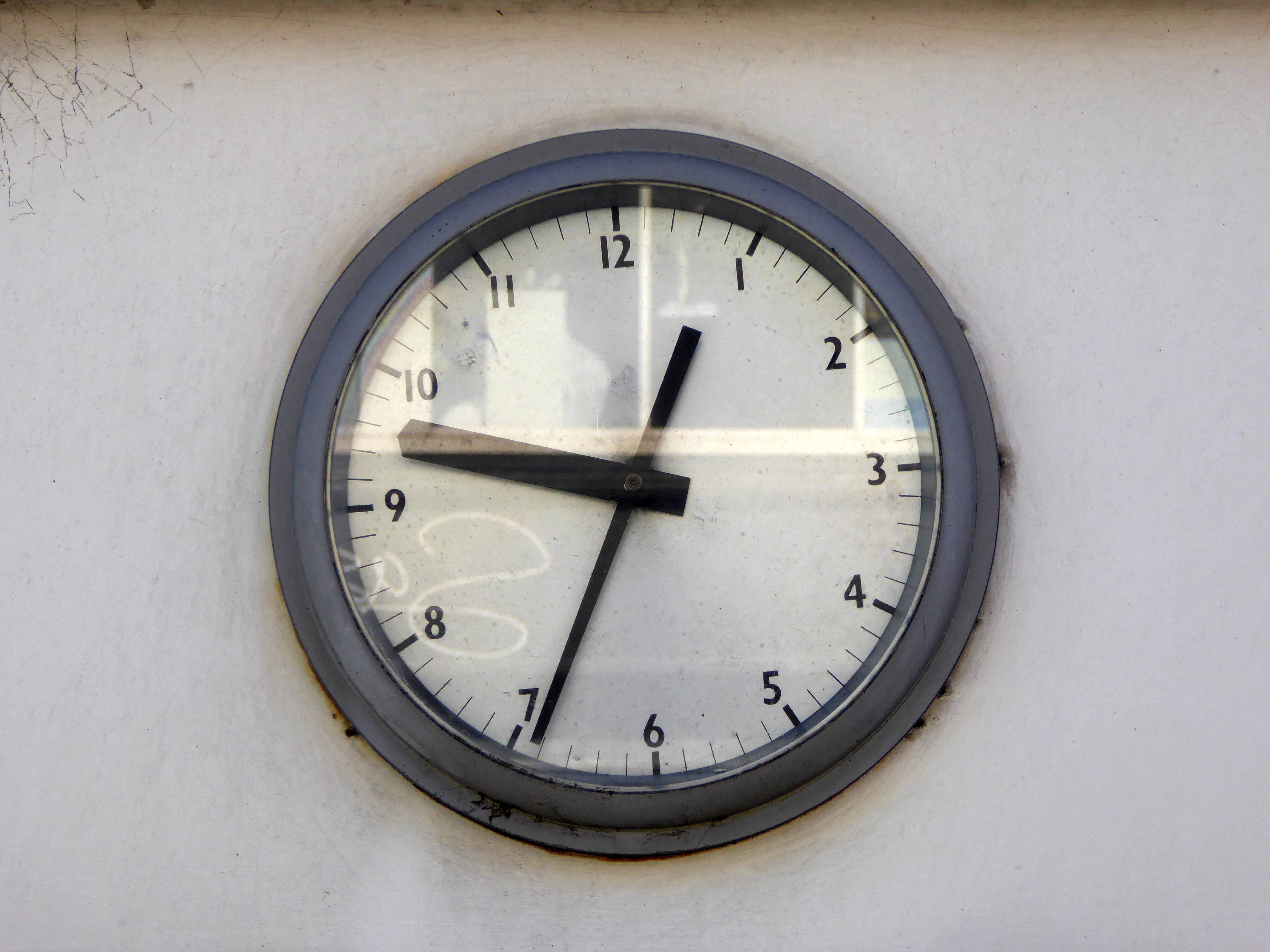
Post Box – Chesterfield

Time’s definitely running out:

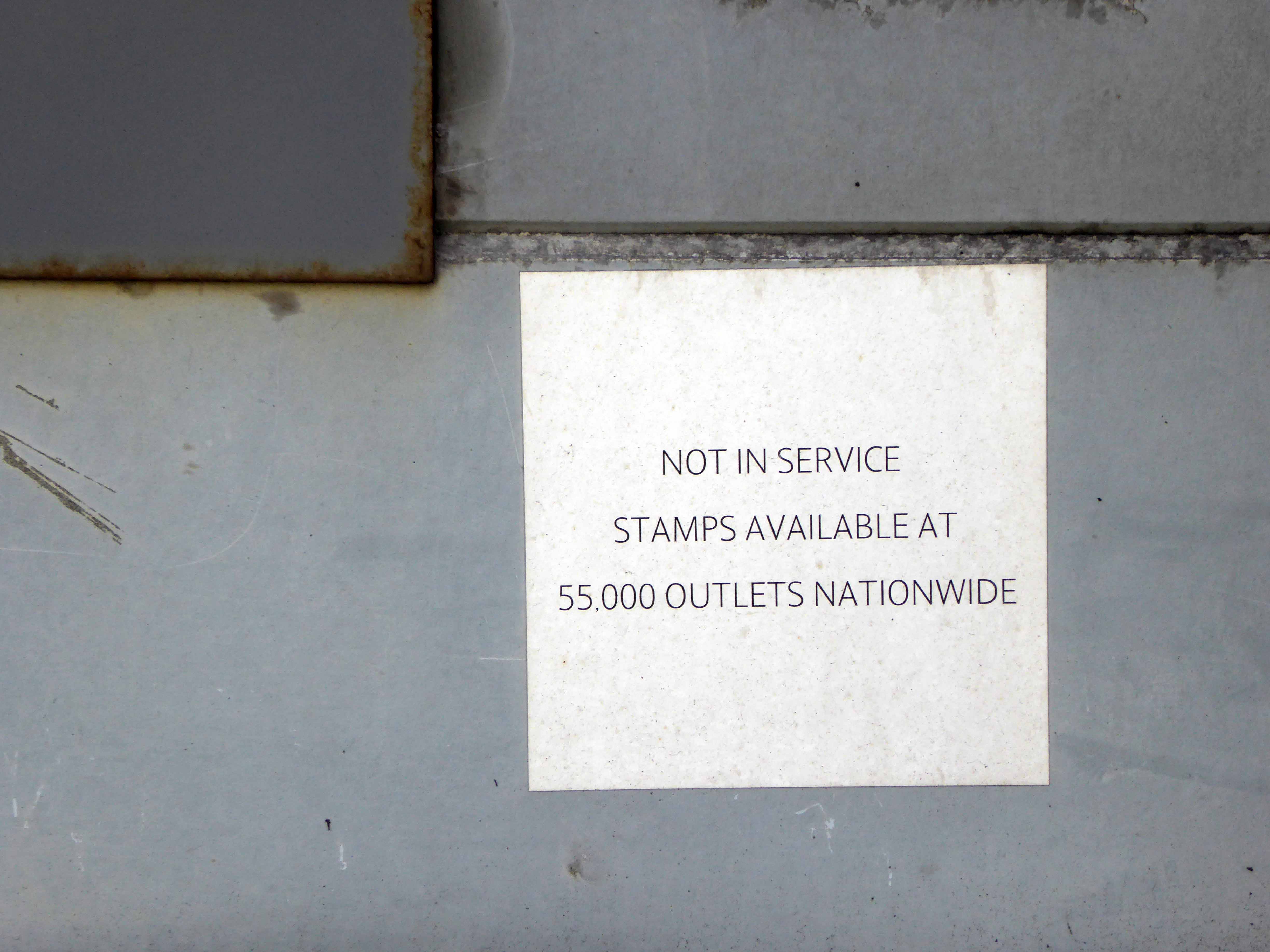
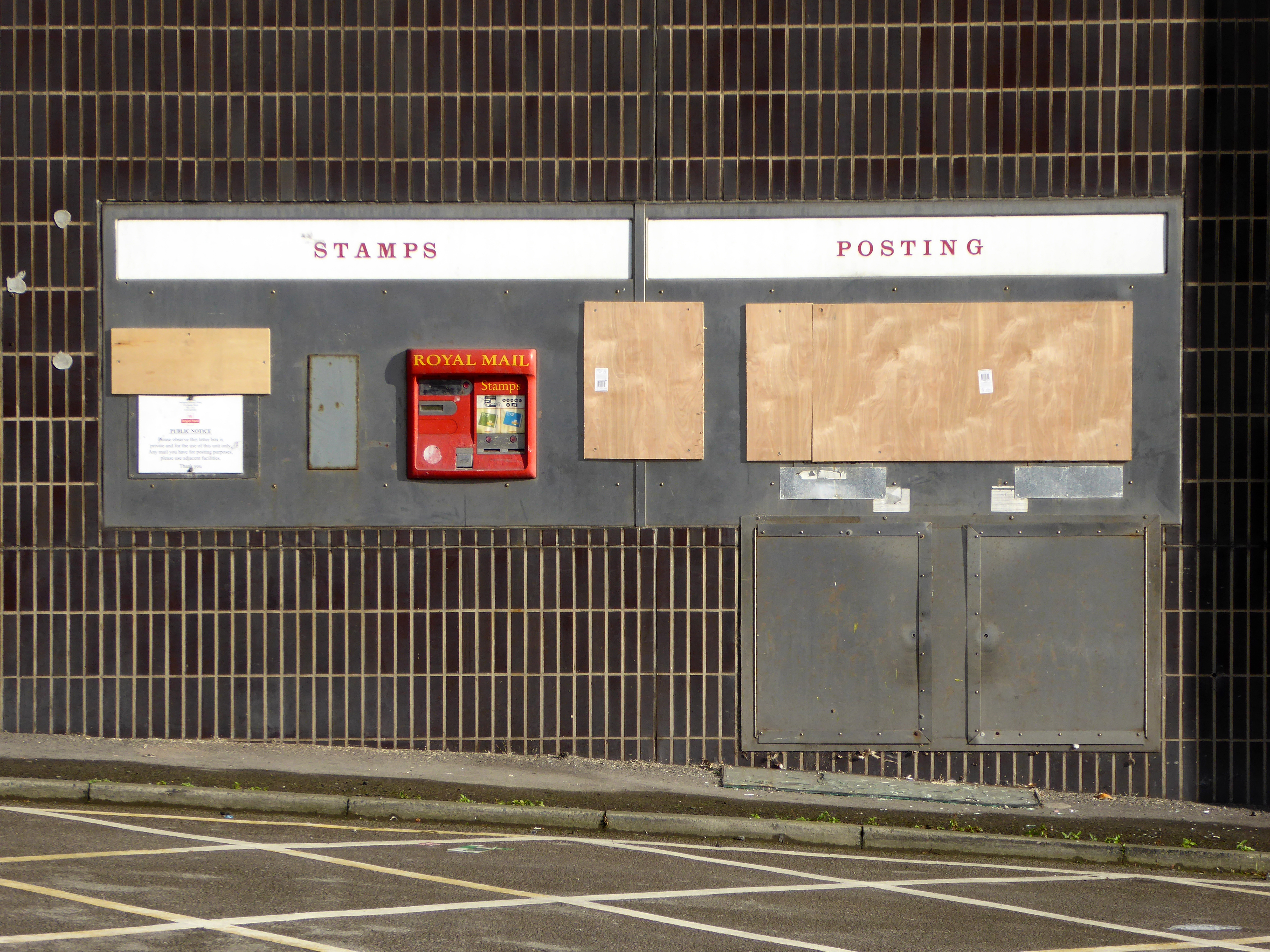
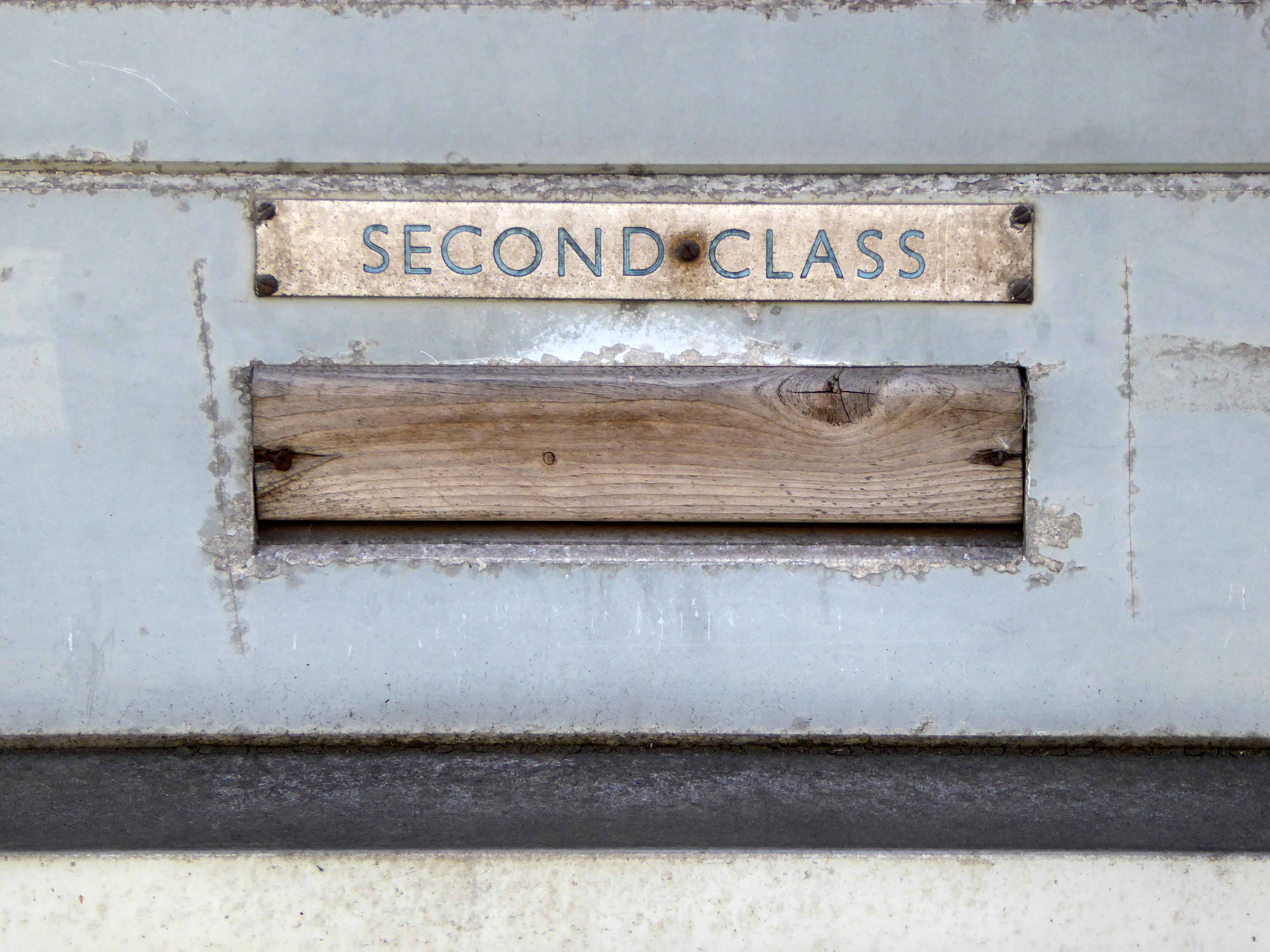
But the post office has been stolen and the mailbox is locked.

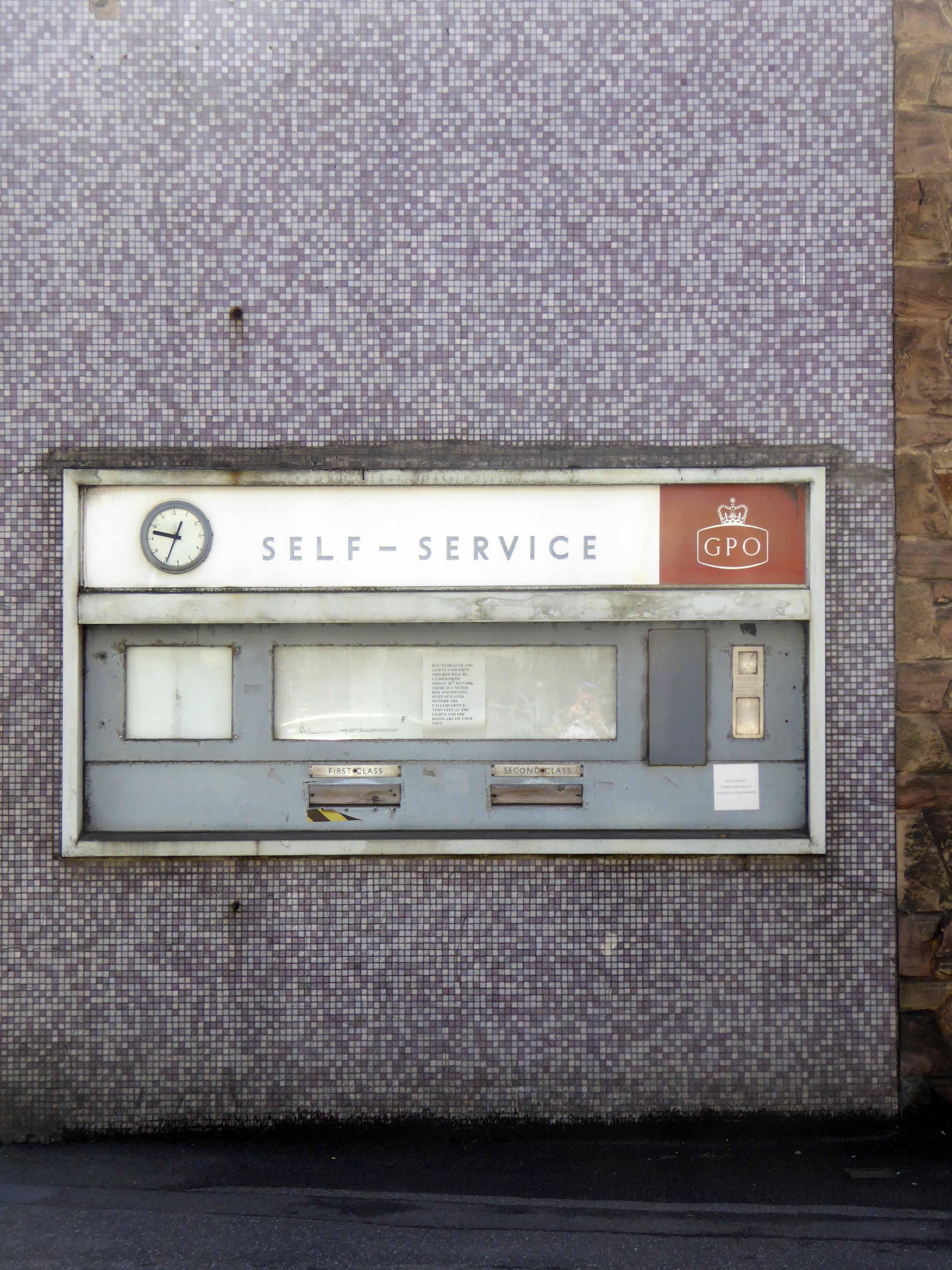
The age of elegant modernist street furniture, has been and almost gone, the previous centuries are under threat.

But does anyone want this neglected postal self-service technology?

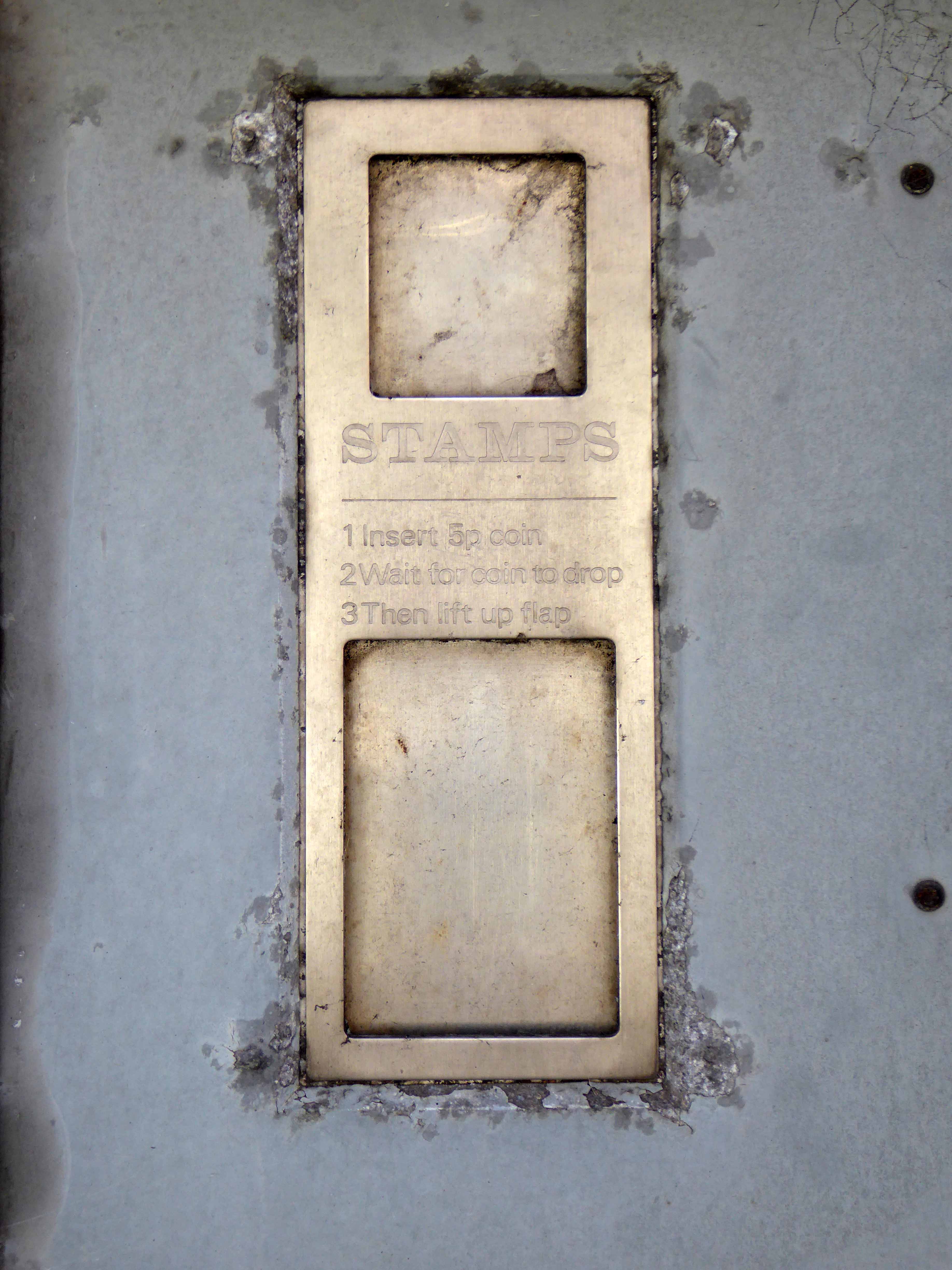
Stamp dispensing is being dispensed with, insert 5p and wait forever.

P1190516

P1190517

We have our own disabused facility in Stockport, I pass it almost every day.

P1190657 copy

And have posted two previous postal posts – here and there.

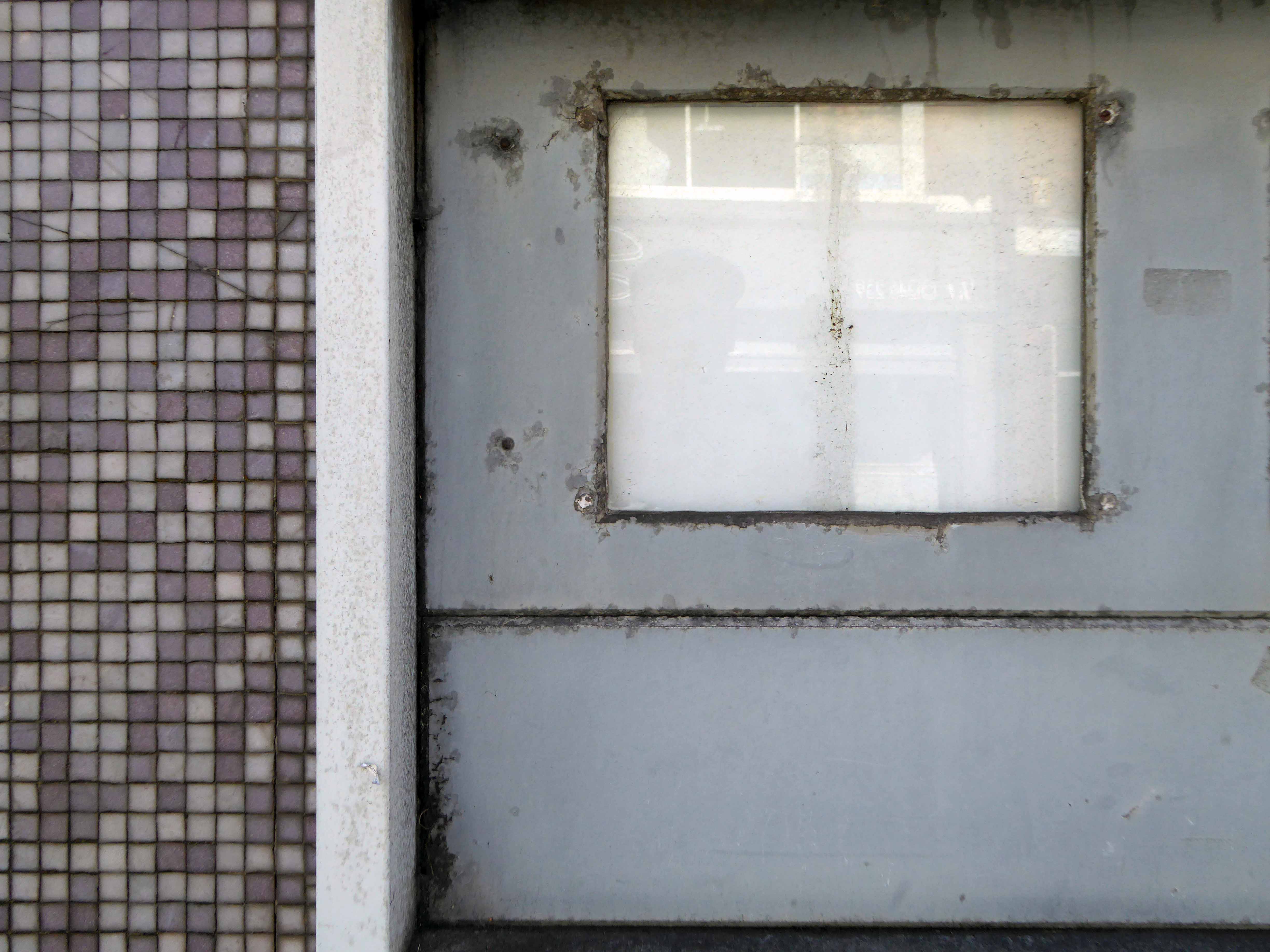
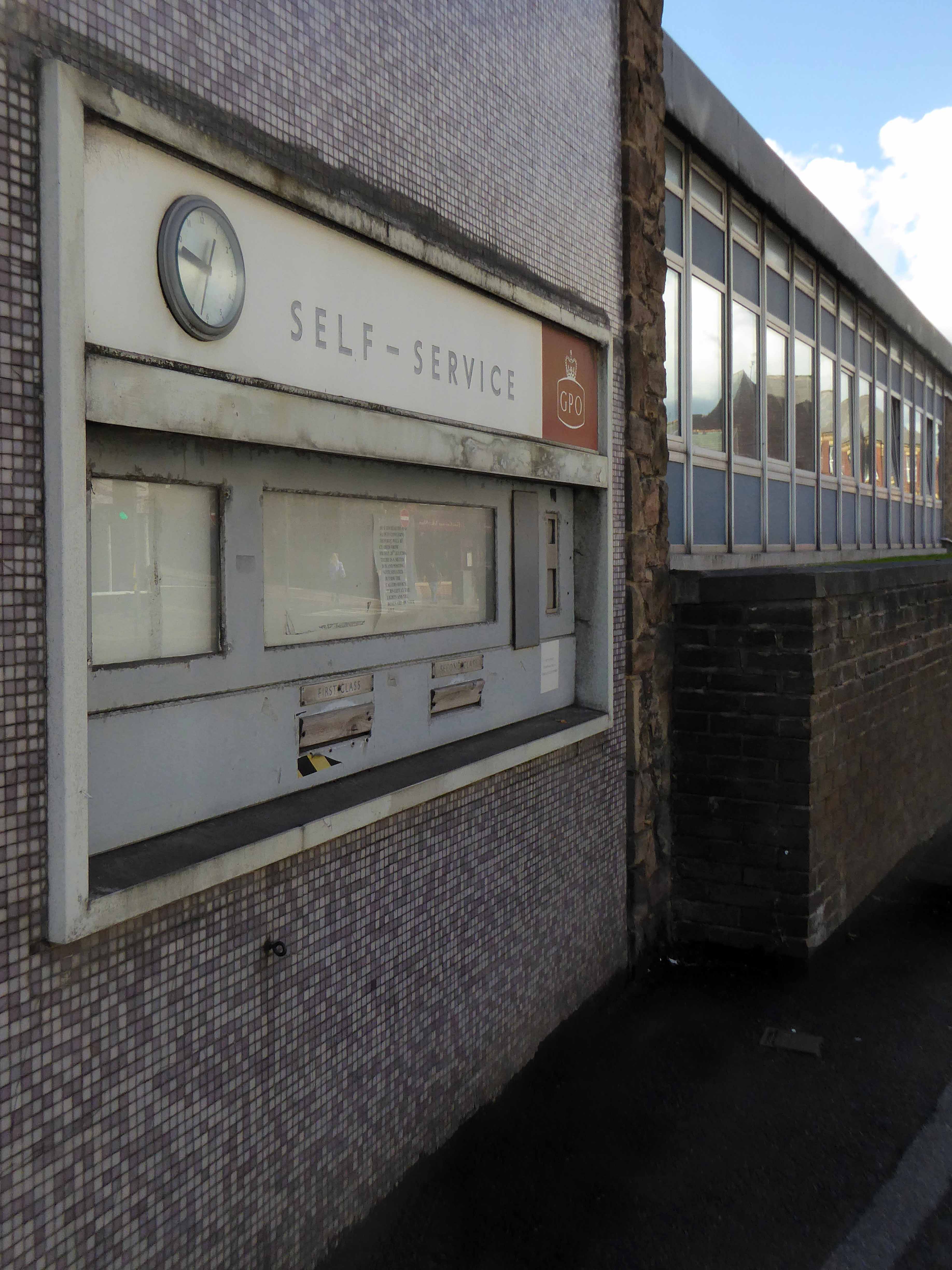
This new discovery, with thanks to Sean Madner, is situated on the wall of the sorting office in Chesterfield. A faded Festival of Britain charm along with a delightful terrazzo surround, has done little to arrest its slow decline into redundancy and subsequent neglect.

Still in situ, take a walk, take a look – wait for the coin to drop.

P1190514

P1190518

P1190519

P1190520

P1190521

P1190522

P1190523

P1190524

Bromley Street Manchester

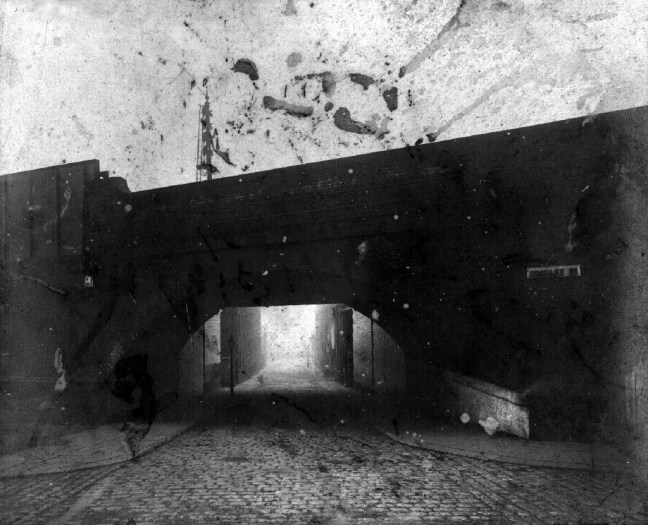
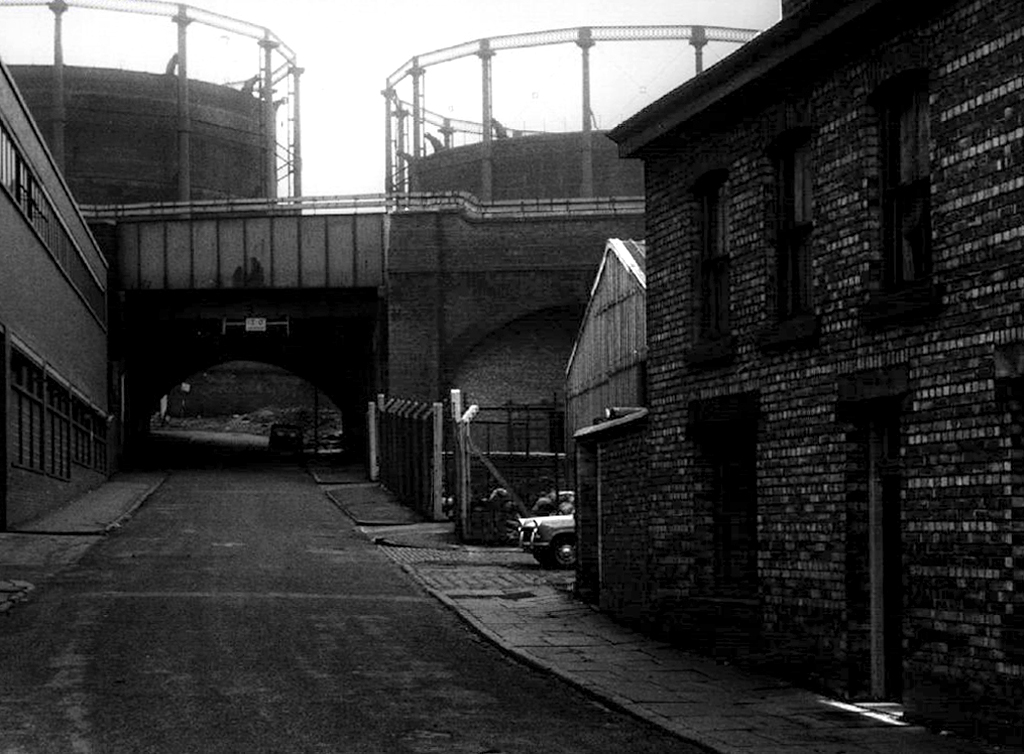
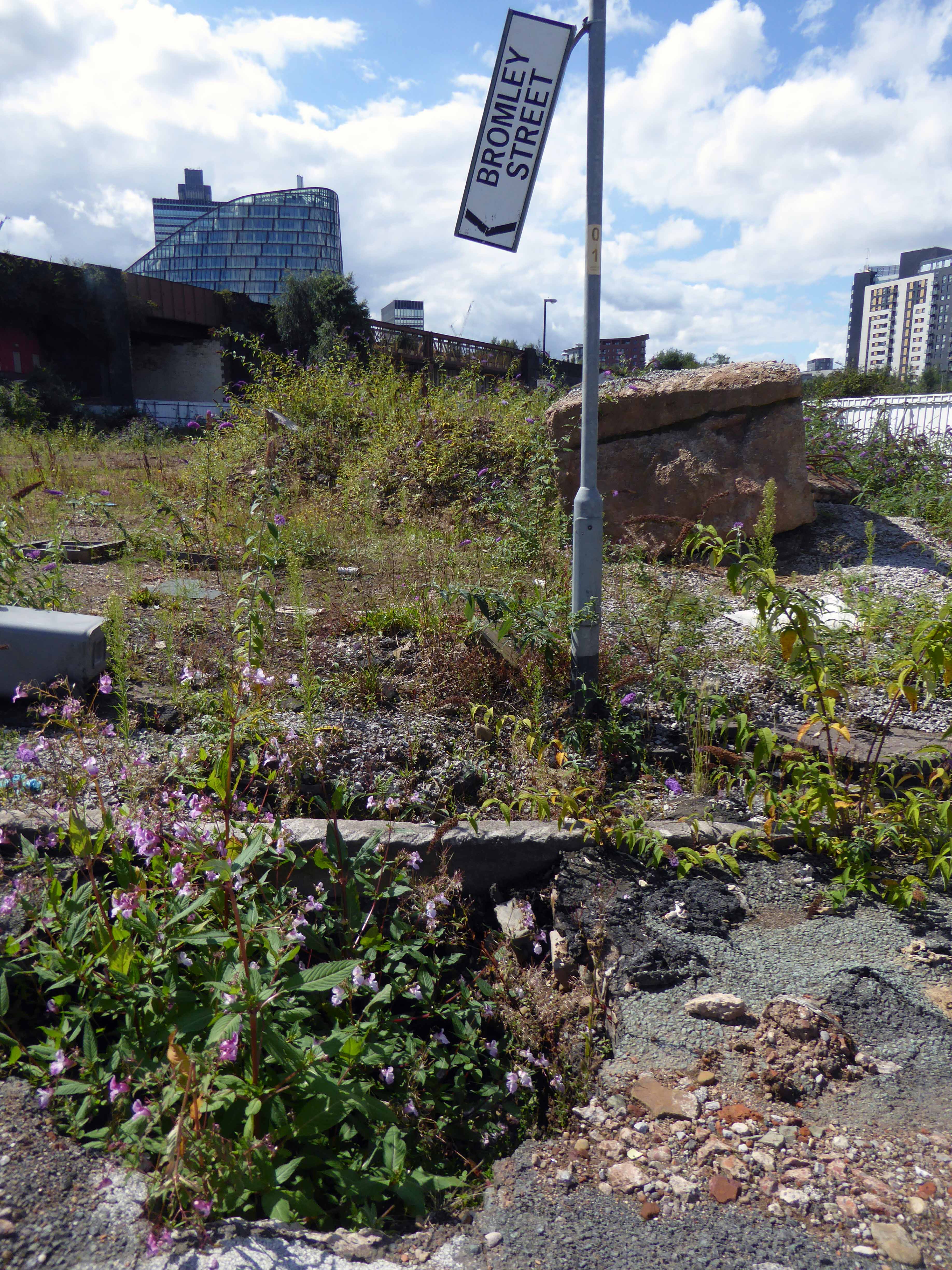
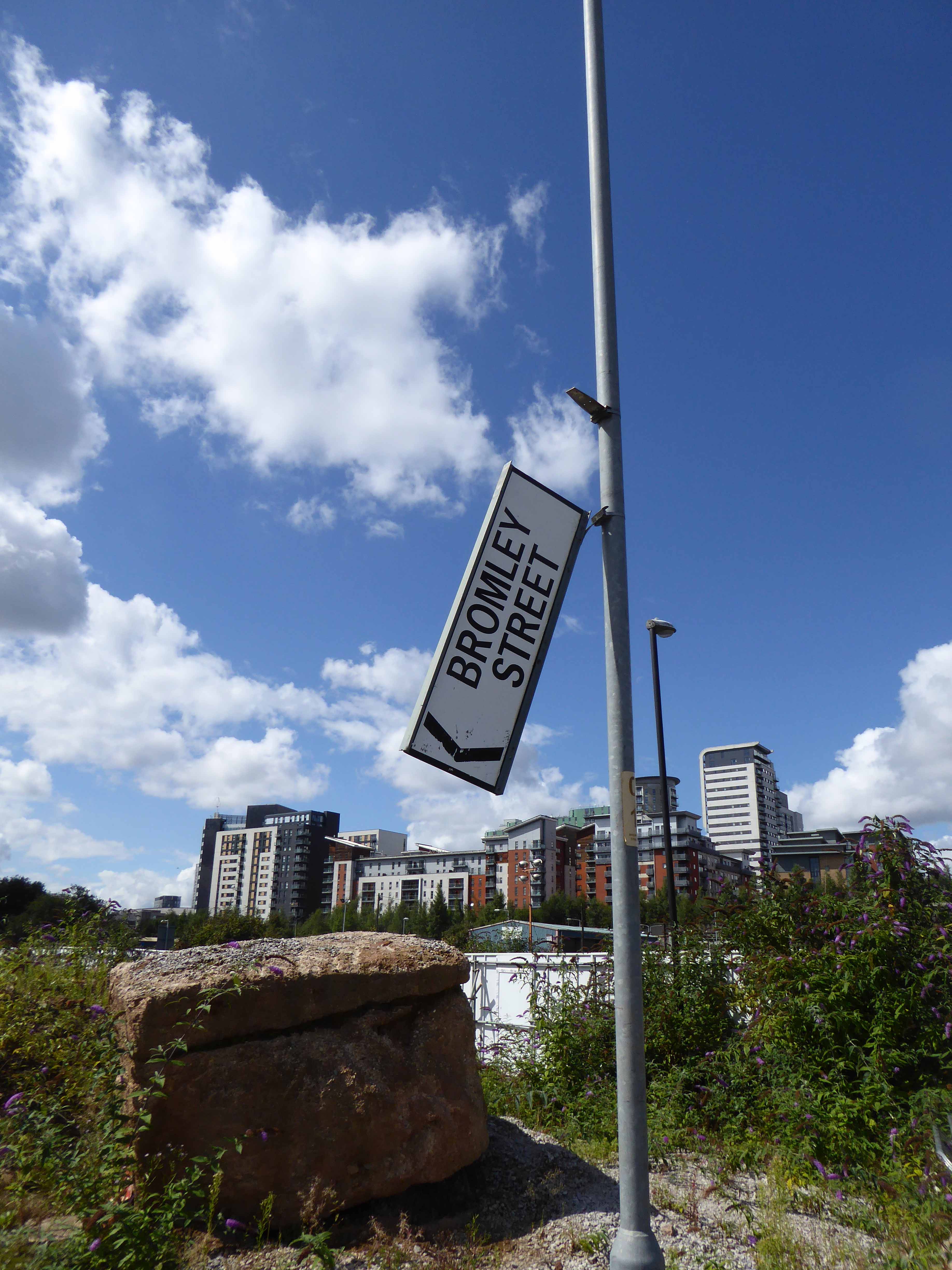
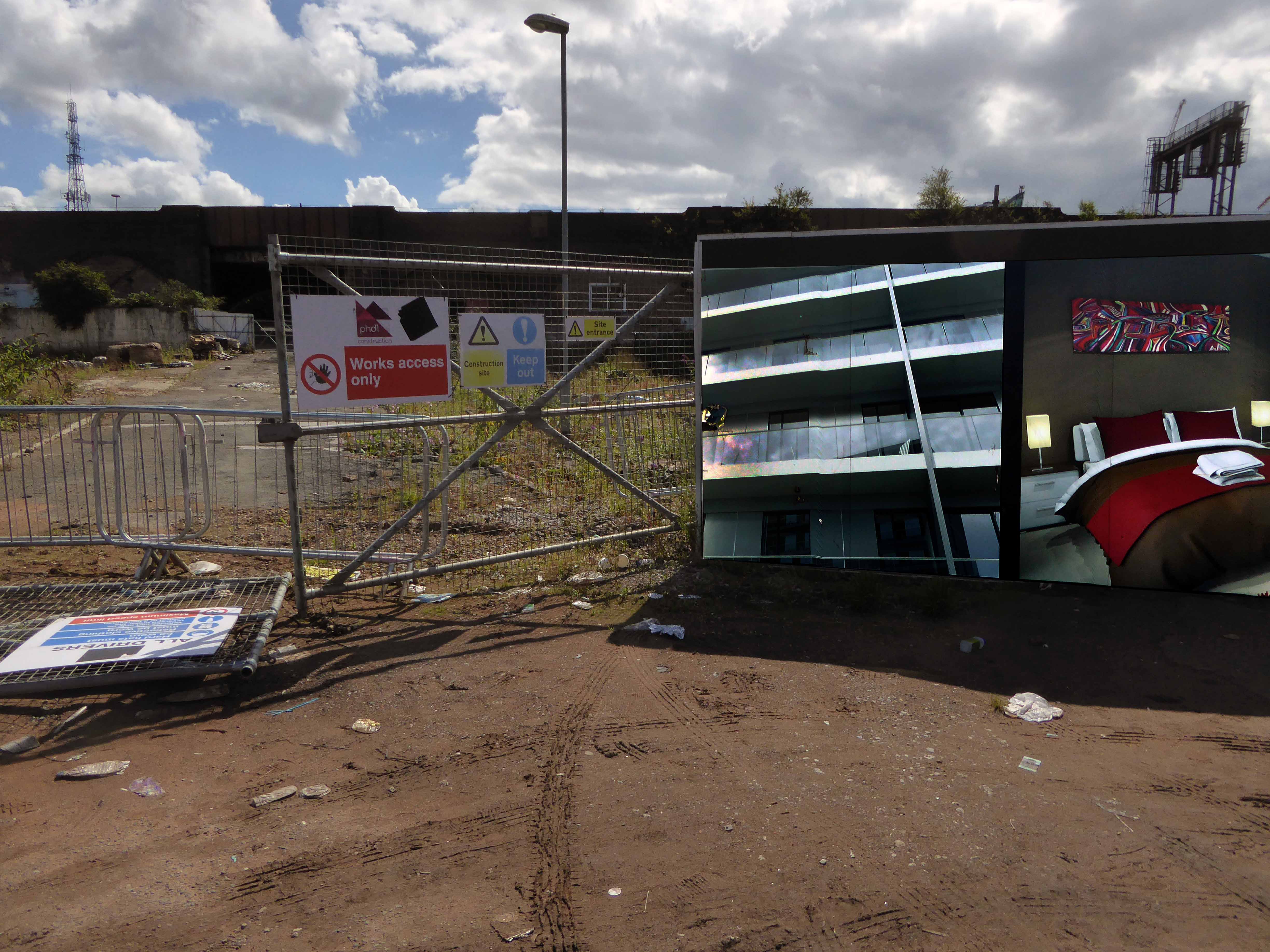
Bromley Street – its northern tip joining with Dantzic Street in the valley of the River Irk, so far so very bucolic, so very, very nice, the street that was going places, tucked cosily beneath the shade of the old L&Y bridge.

webmedia-5.php

The south bank of the Irk is here very steep and between fifteen and thirty feet high. On this declivitous hillside there are planted three rows of houses, of which the lowest rise directly out of the river, while the front walls of the highest stand on the crest of the hill in Long Millgate. Among them are mills on the river, in short, the method of construction is as crowded and disorderly here as in the lower part of Long Millgate. Right and left a multitude of covered passages lead from the main street into numerous courts, and he who turns in thither gets into a filth and disgusting grime, the equal of which is not to be found – especially in the courts which lead down to the Irk, and which contain unqualifiedly the most horrible dwellings which I have yet beheld. Below it on the river there are several tanneries which fill the whole neighbourhood with the stench of animal putrefaction. The view from Ducie Bridge, mercifully concealed from mortals of small stature by a parapet as high as a man, is characteristic for the whole district. At the bottom flows, or rather stagnates, the Irk, a narrow, coal-black, foul-smelling stream, full of debris and refuse, which it deposits on the shallower right bank.

So said Mr Friedrich Engels.

“Not only the blackest but the most sluggish of all rivers” – was surrounded by road, rail, dwelling and factory, high density industrialisation through most of the last century.

webmedia-1.php

Then all of sudden along came a series of events, that saw a shift away from inner-city manufacturing, the outsourcing of all sorts and the demolition of homes. The area and the city became a pale shadow of its former self. Help however was at hand, the boom in buy to let, overseas investment and an ever expanding professional middle class, eagerly  paddled up the murky Irk, emulating the massed forces of 7th Cavalry and the Lone Ranger combined – hurrah!

Screen Shot 2017-08-16 at 15.19.42

If you earn a minimum of £300,000 a year, have a net worth in excess of £3m and want an exceptional mortgage service that is designed to suit your individual needs, get in touch.

160317_DSR_MEN_Angelgate

What have you got to lose?

It’s the gravy train as thick, dark and rewarding as the very inky Irk itself!

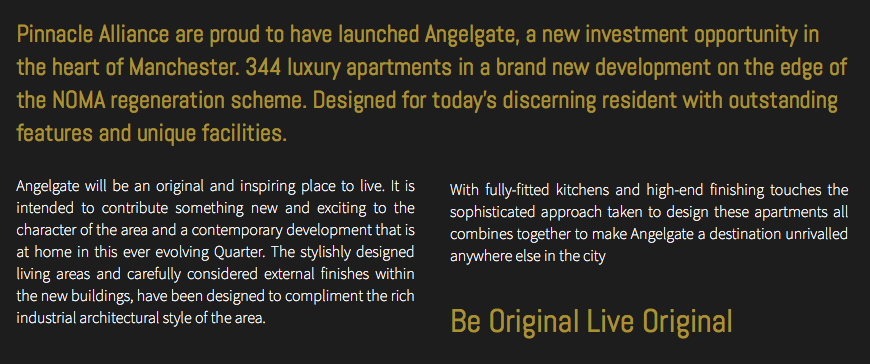
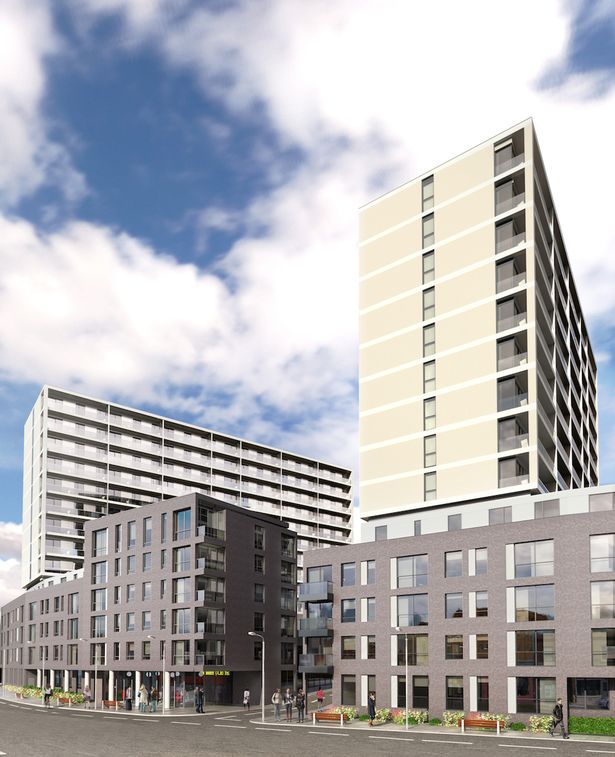
The stylishly designed living areas and carefully considered external finishes within the new buildings, have been designed to compliment the rich industrial architectural style of the area.

A development that even Mr Friedrich Engels himself would be proud of.

But wait, all is not rosy in the digitally constructed flower box garden, that you may see before you, in our online presentation and brochures.

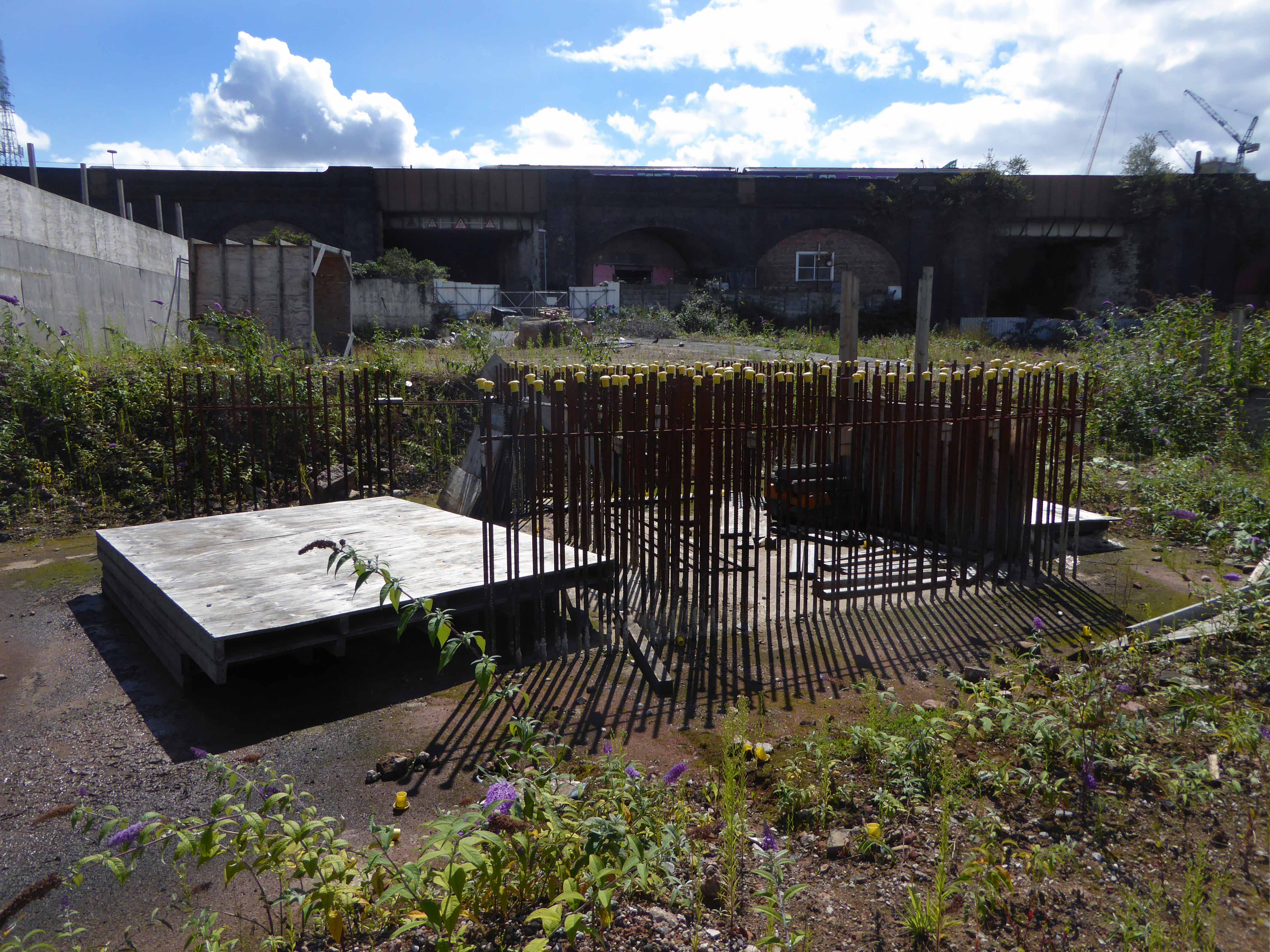
Pinnacle Alliance plans to build 344 luxury apartments on a site near Dantzic Street, as part of the ‘Northern Gateway’. Dozens of investors have paid up to £350,000 for the off-plan apartments in the proposed scheme. But two years since many first paid out for their home, no work has actually begun on the £30m scheme.
The dispute has led to a demonstration in Hong Kong, where around 50 buyers took to the streets over Christmas urging local authorities to take up their concerns. And in an unusual twist, protestors even recorded their own campaign song – to the tune of Jingle Bells – criticising Pinnacle.
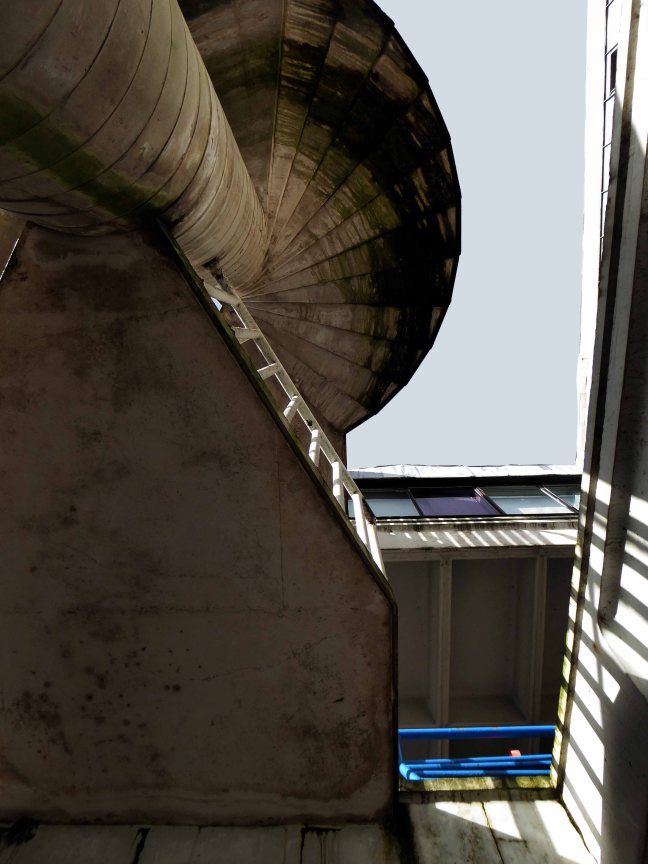
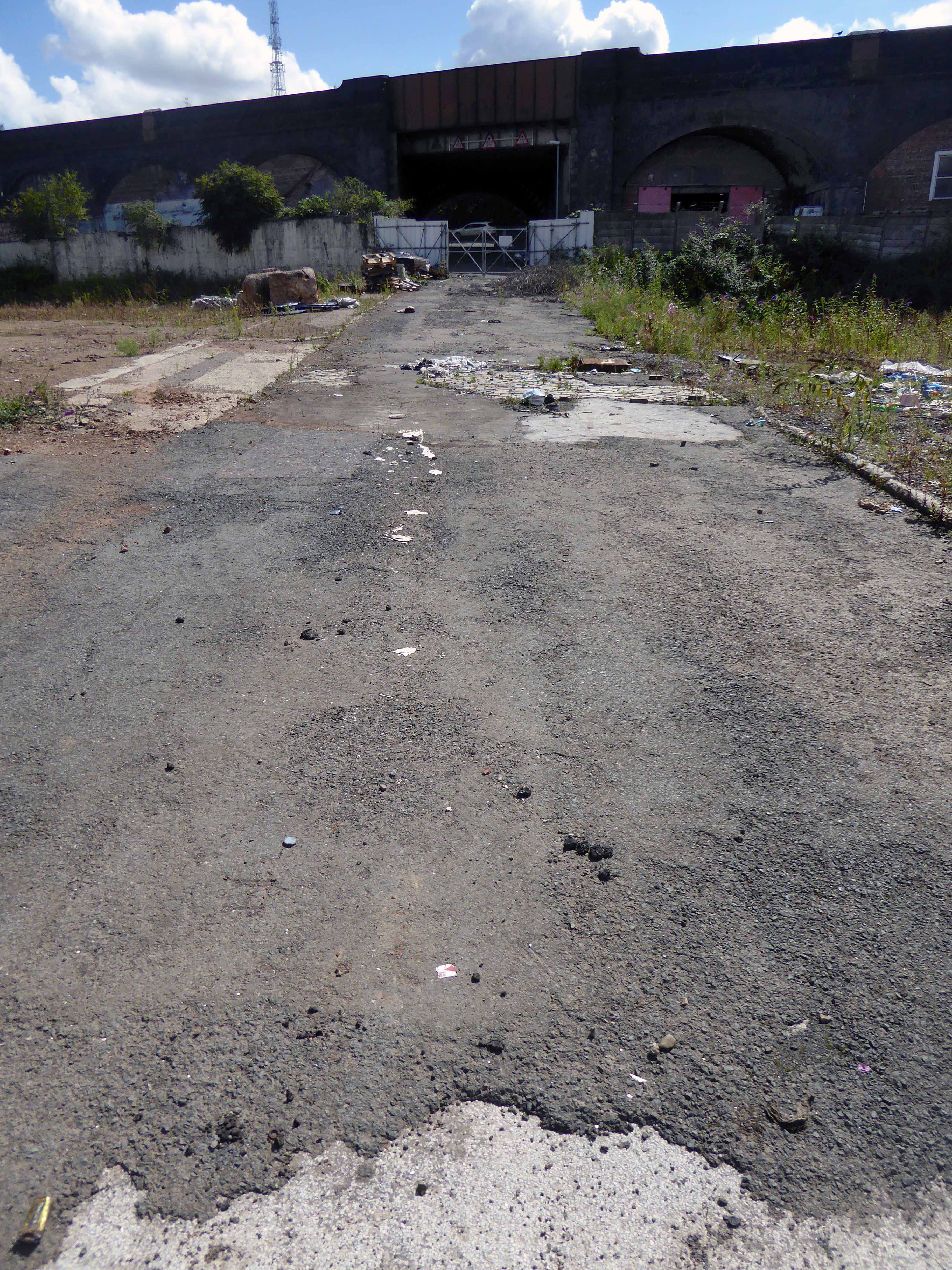
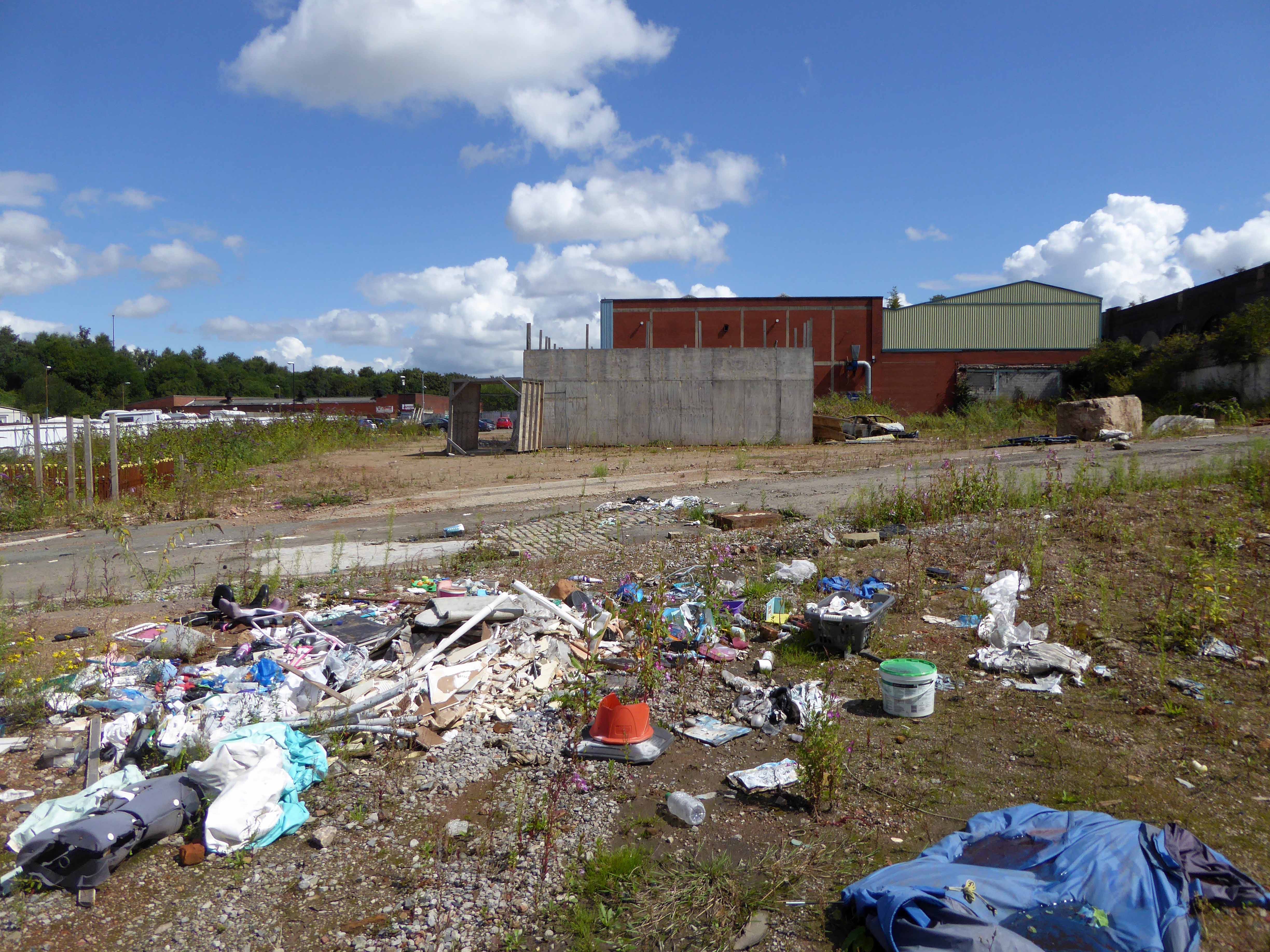
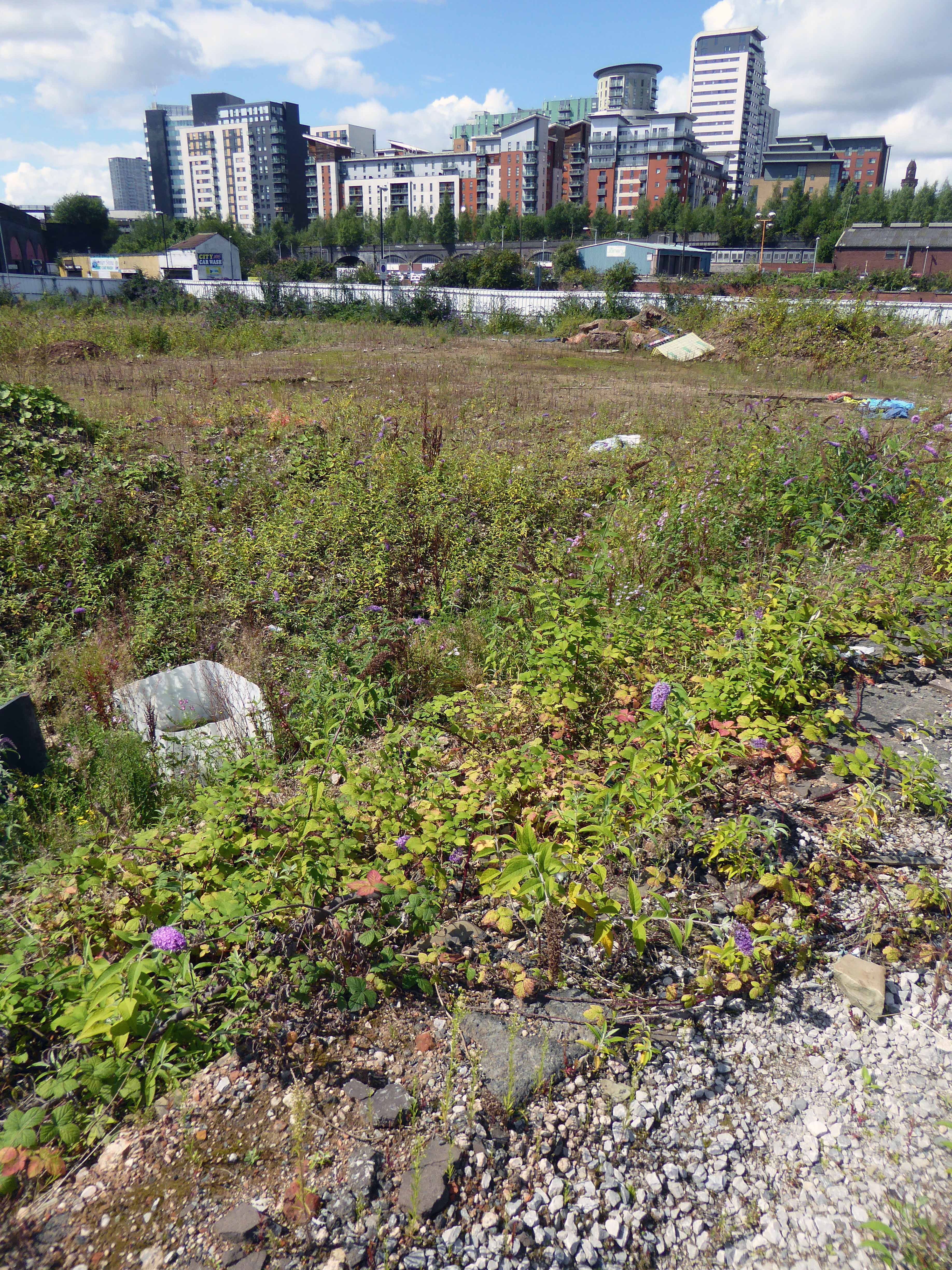
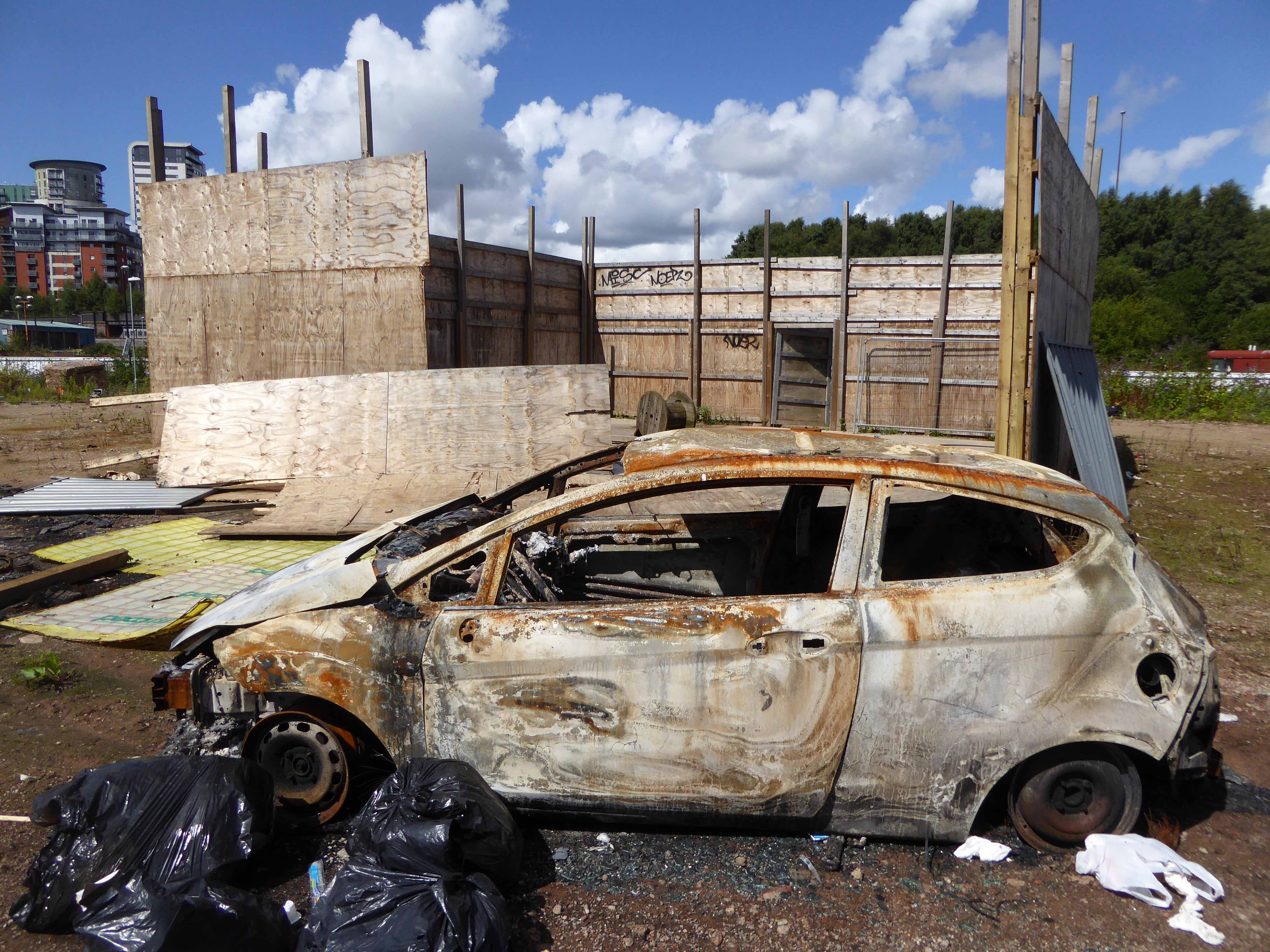
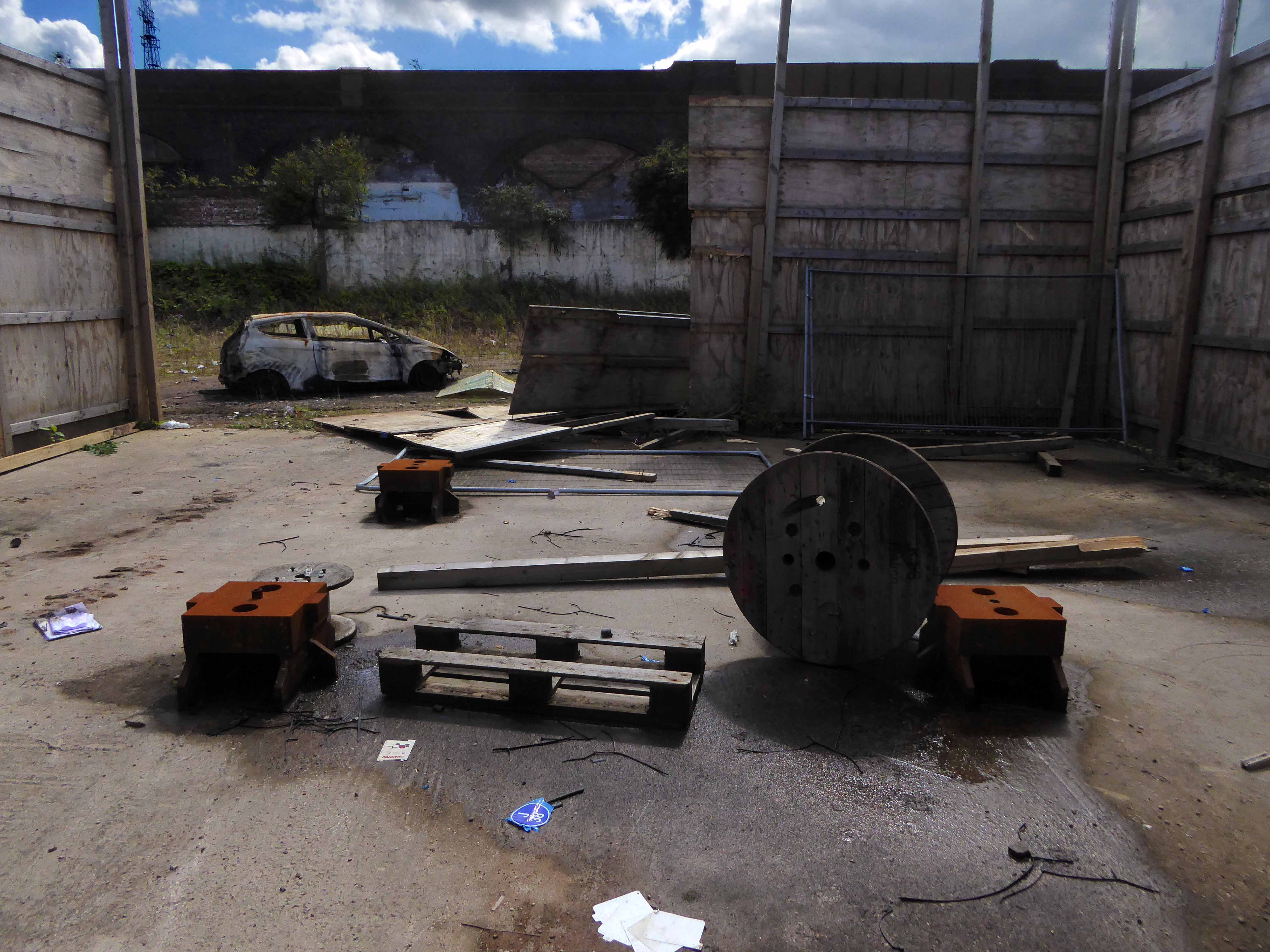
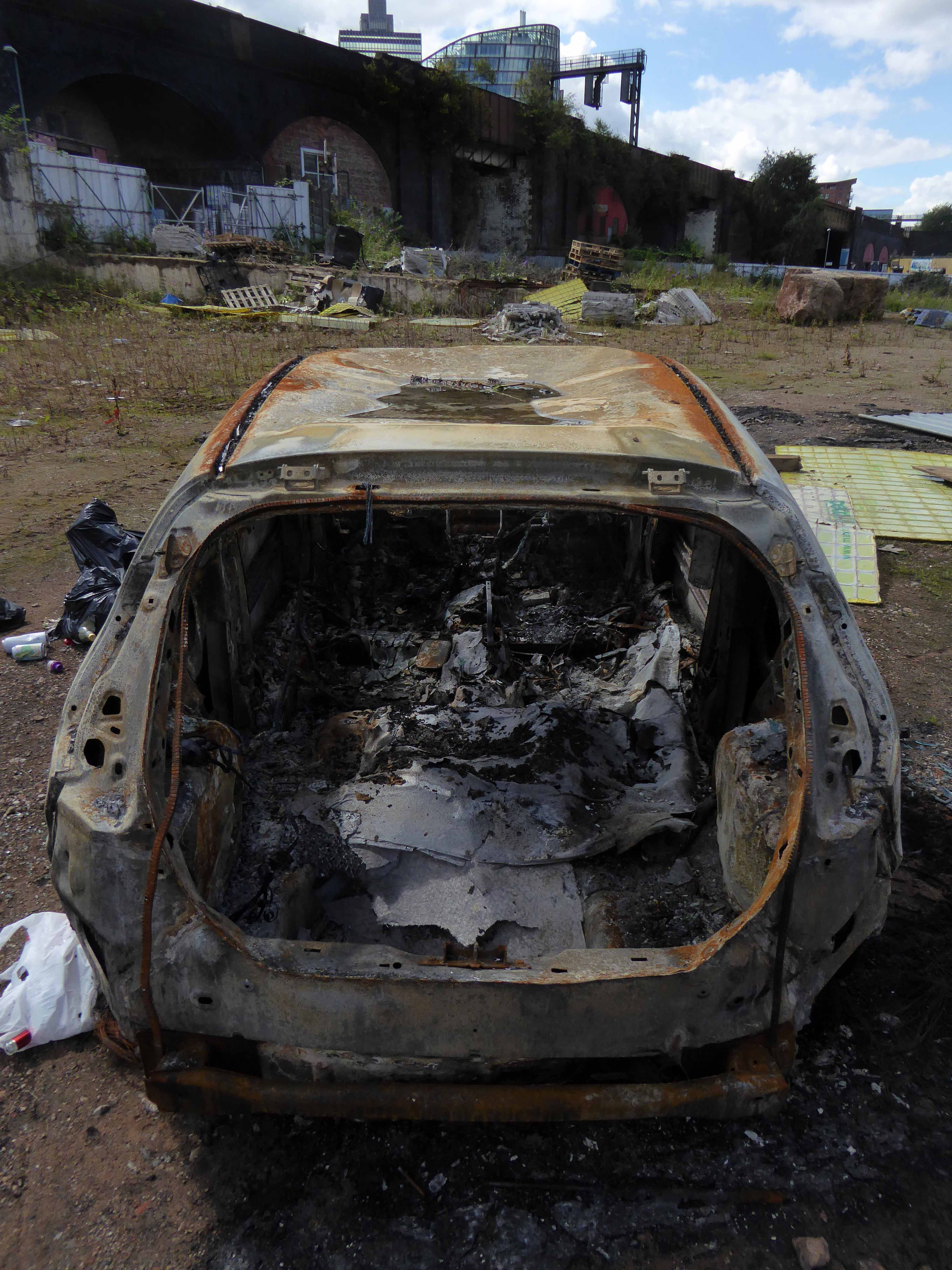
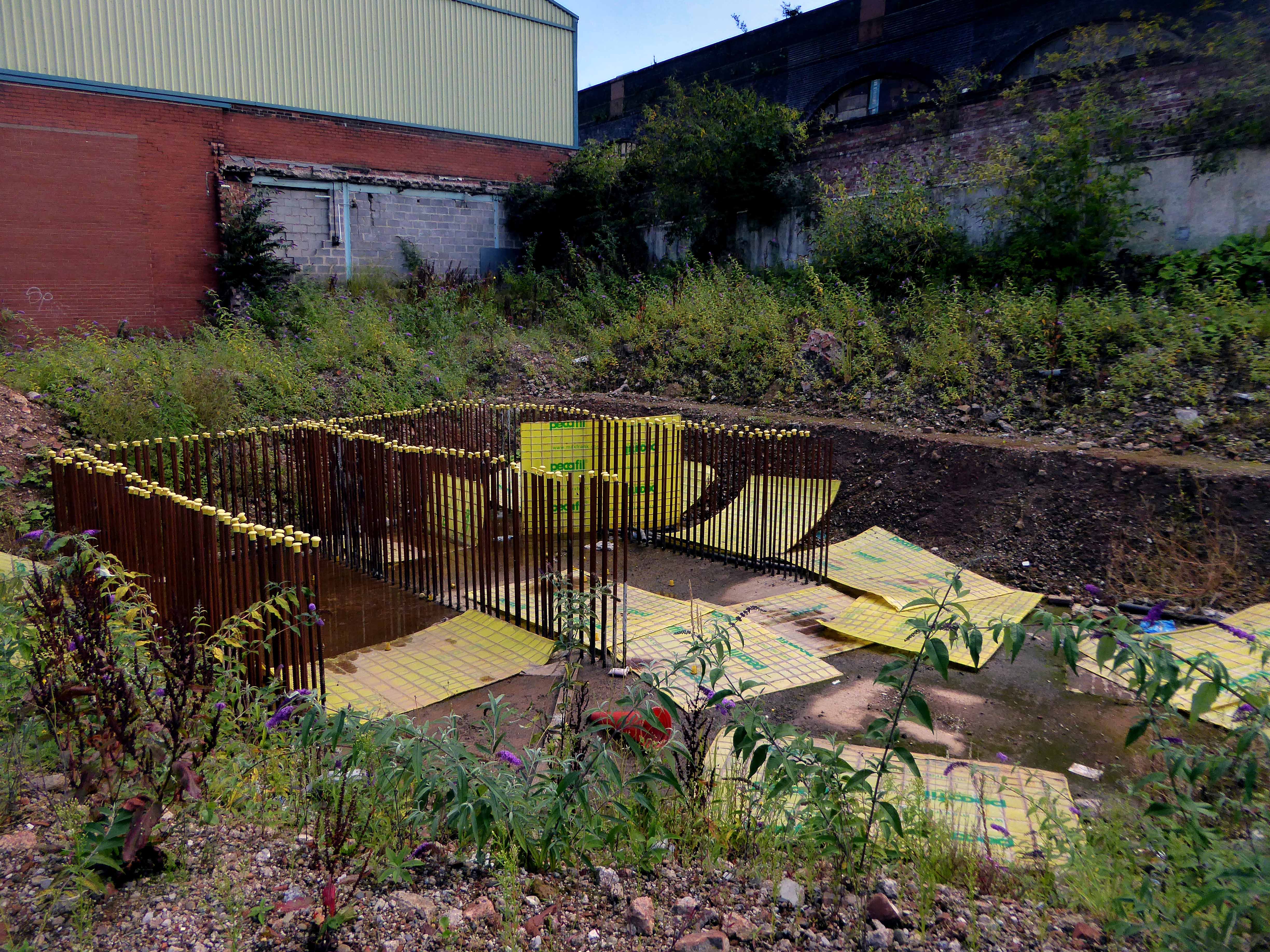
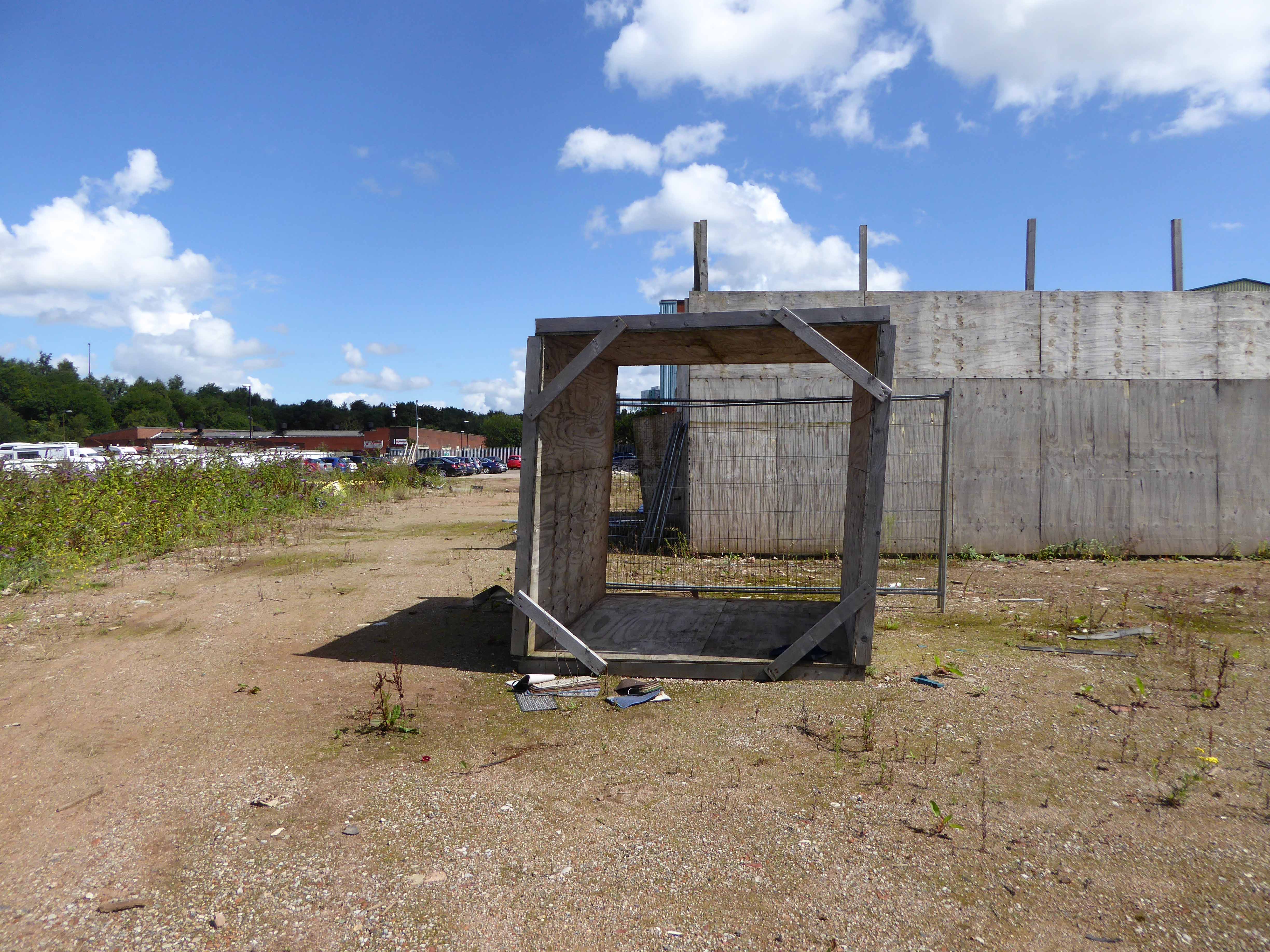
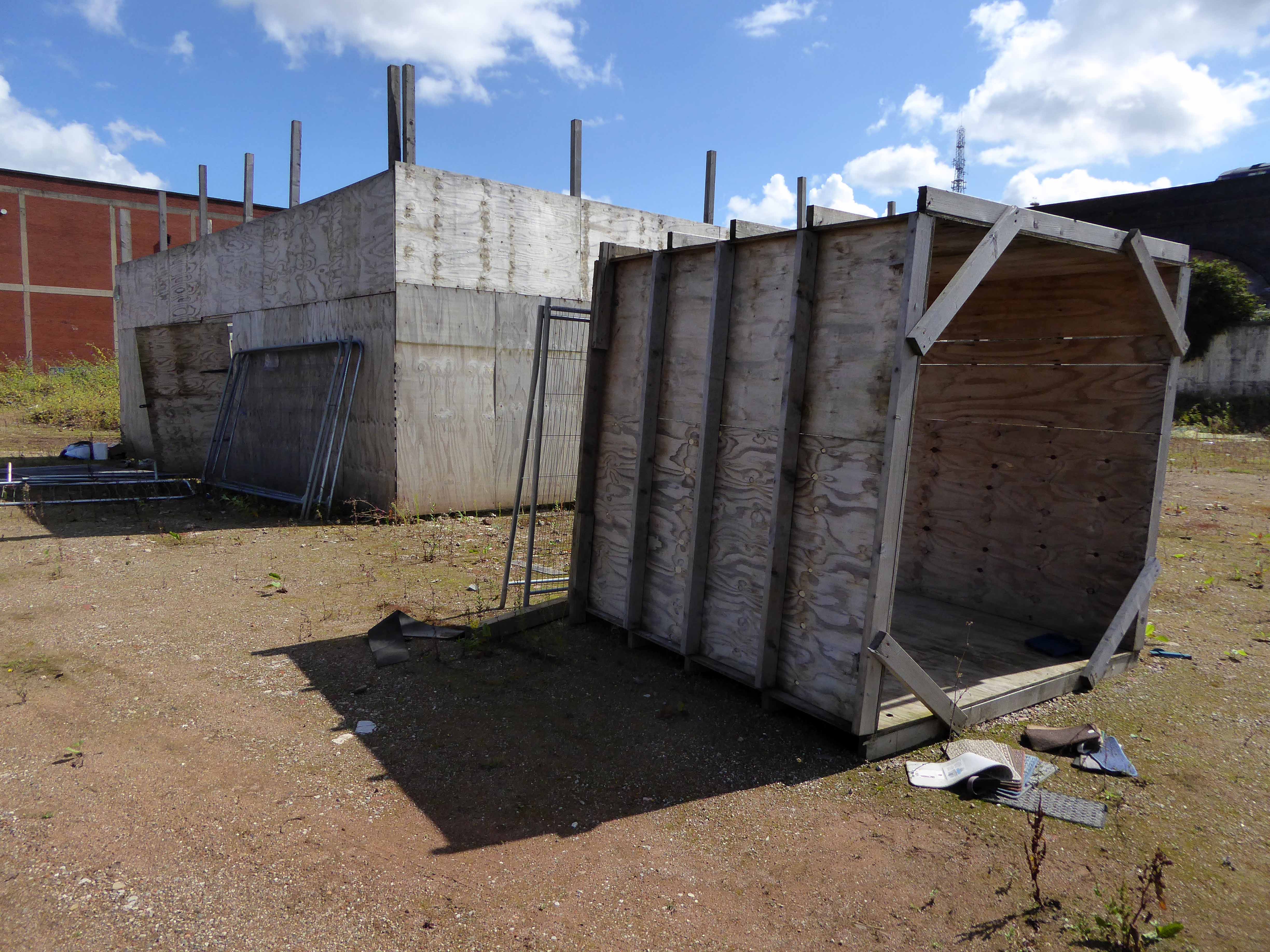
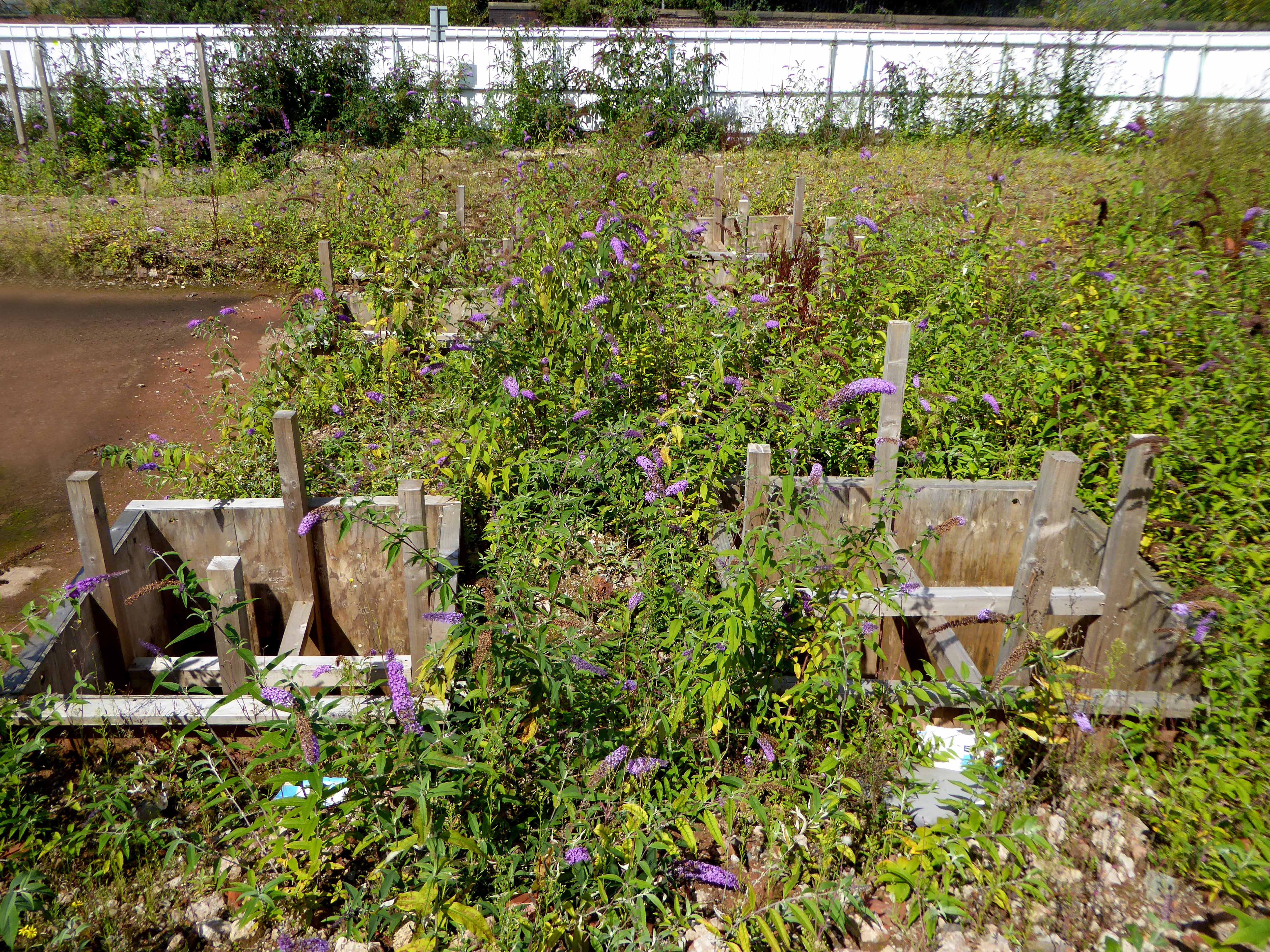
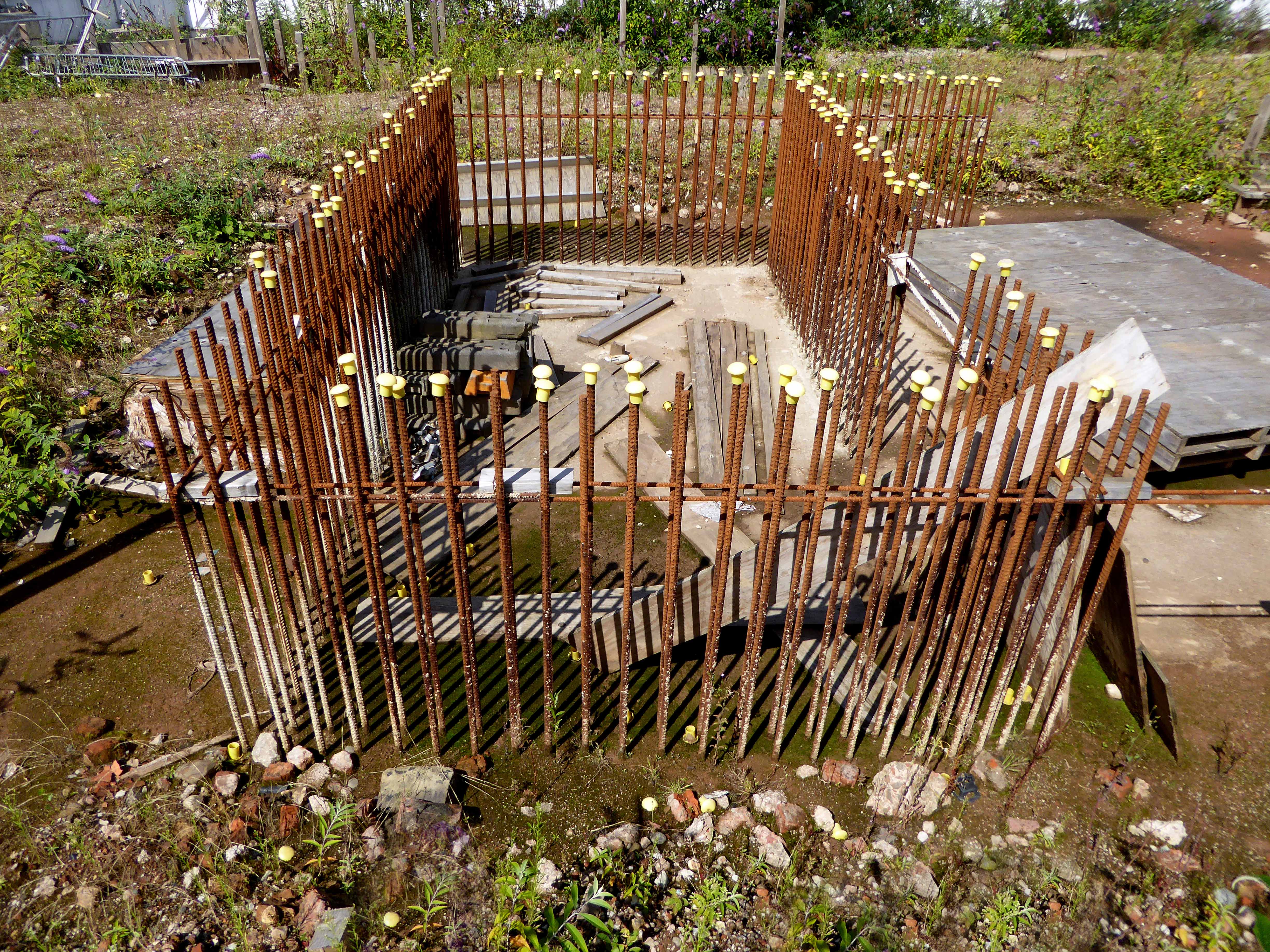
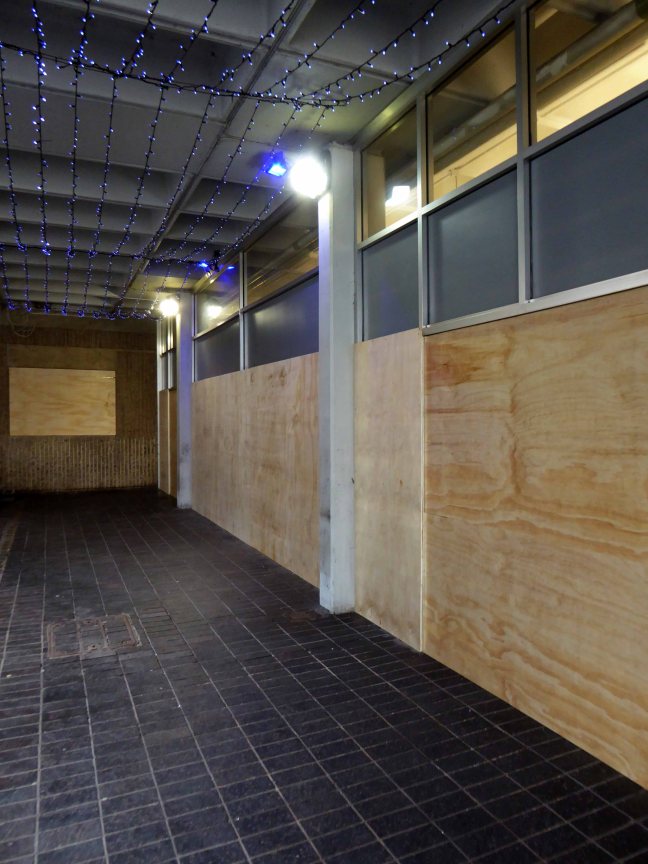
On the day of my visit the site was home to several jackdaws, the charred husk of a burnt out car, hastily discarded childrens’ toys, the most curious of plywood constructs and a sense of anything and everything, ceasing to make any sense whatsoever.

This stunning development will be an original and inspiring place to live.

P1190415

P1190418

P1190419

P1190420

P1190424

P1190428

P1190429

P1190432

P1190438

P1190440

P1190441

P1190442

P1190444

P1190445

P1190446

P1190447

P1190448

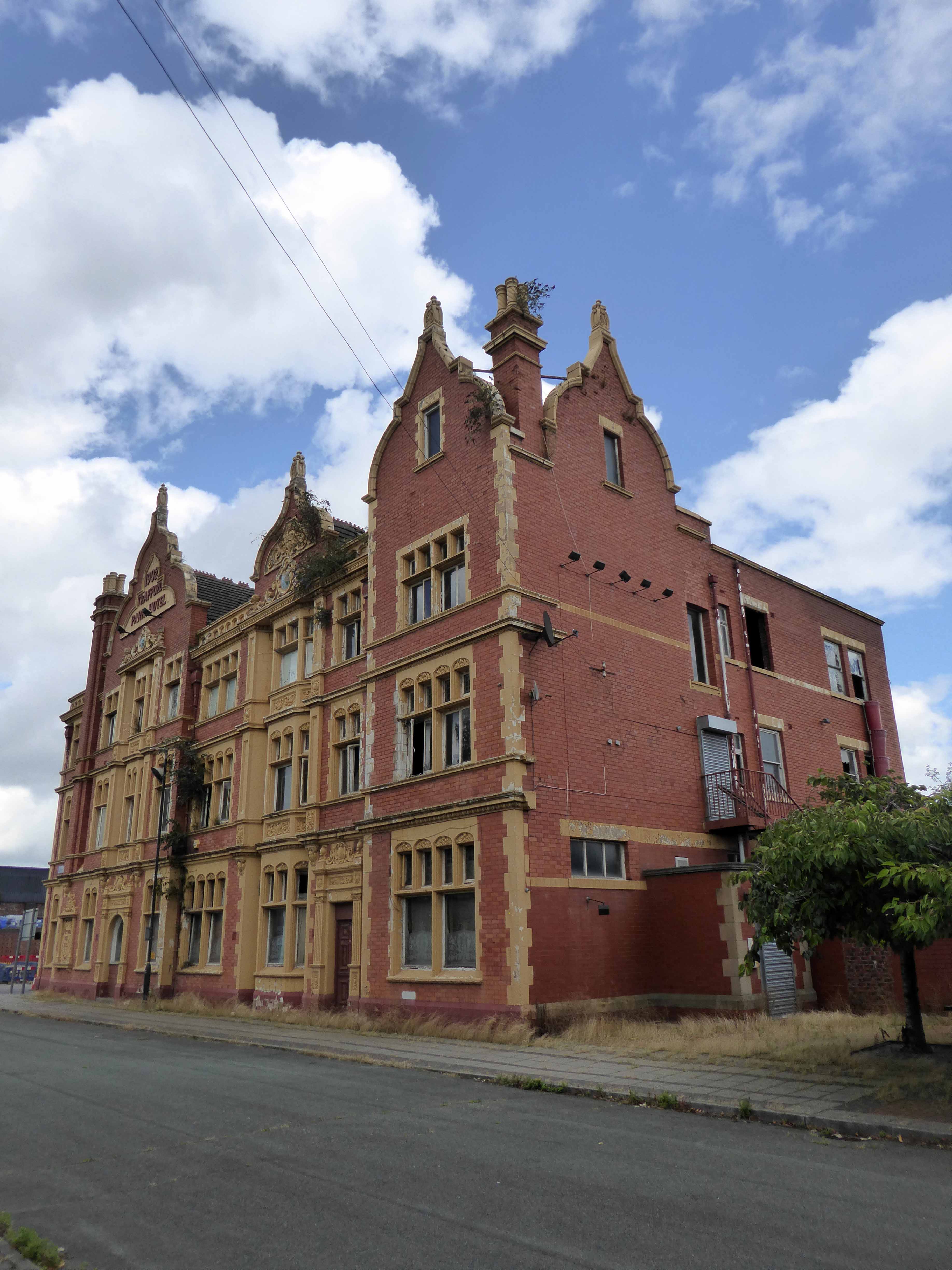
Trafford Park Hotel

It takes a whole corporation to raise a village:

The first American company to arrive was Westinghouse Electric, in 1899, and purchased 130 acres on two sites. Building work started in 1900, and the factory began production of turbines and electric generators in 1902. By the following year, British Westinghouse was employing about half of the 12,000 workers in Trafford Park. Its main machine shop was 899 feet long and 440 feet wide; for almost 100 years Westinghouse’s Trafford Park works was the most important engineering facility in Britain.

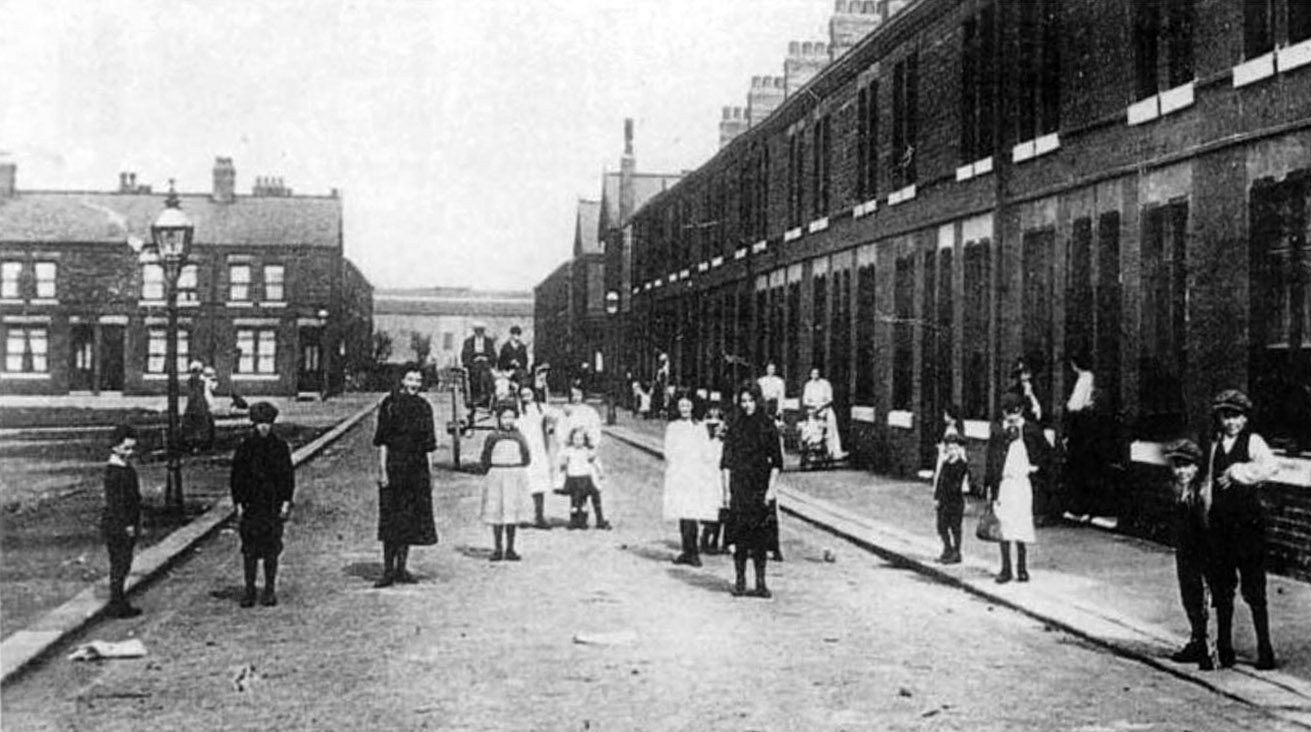
In addition to the factory Westinghouse built a village for his workers on the American style grid system of avenues and streets.  The community had shops, eating rooms, a dance hall, schools, a church, and a cinema.

Eleventh_avenue_trafford_park_1910

And where there is people there is almost inevitably pubs, as sure as night shifts follow day shifts.

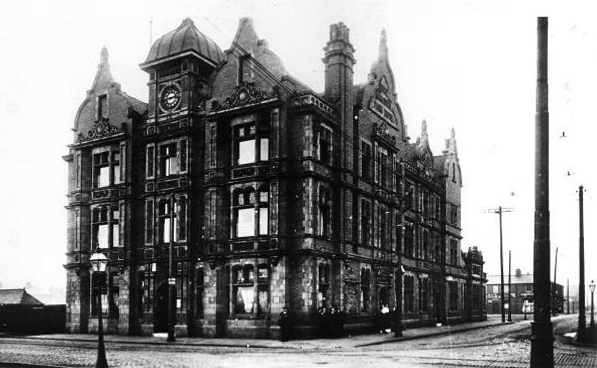
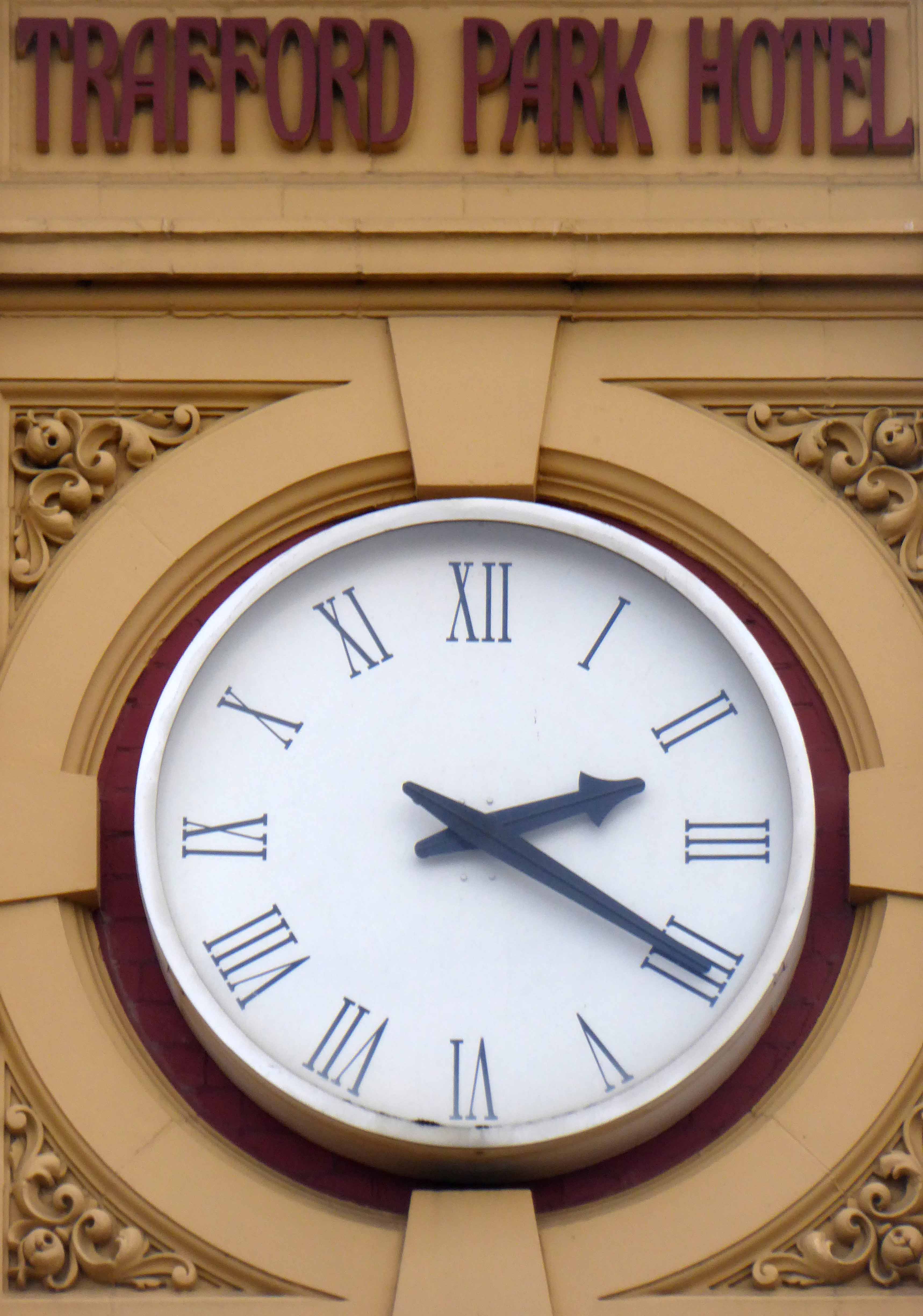
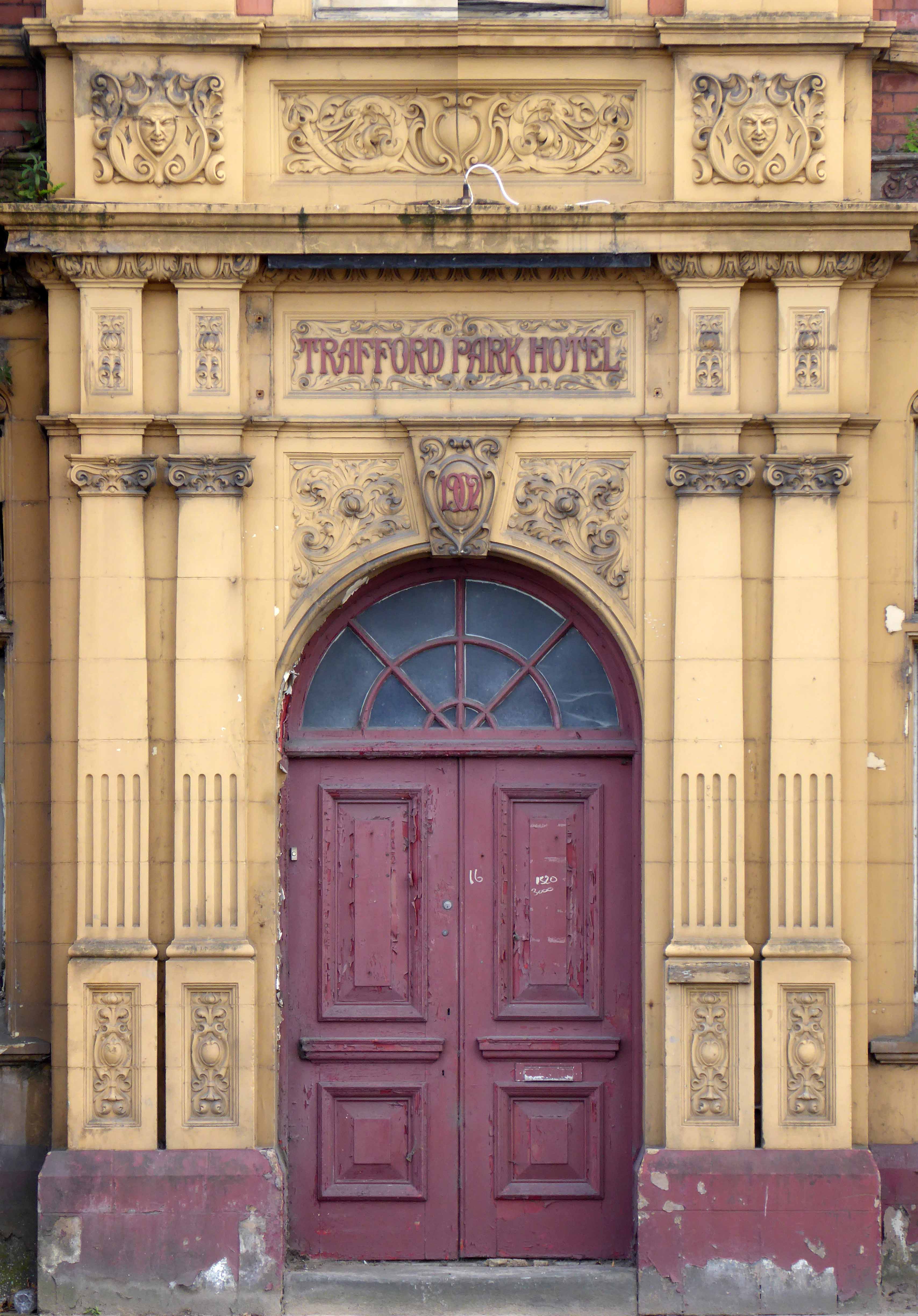
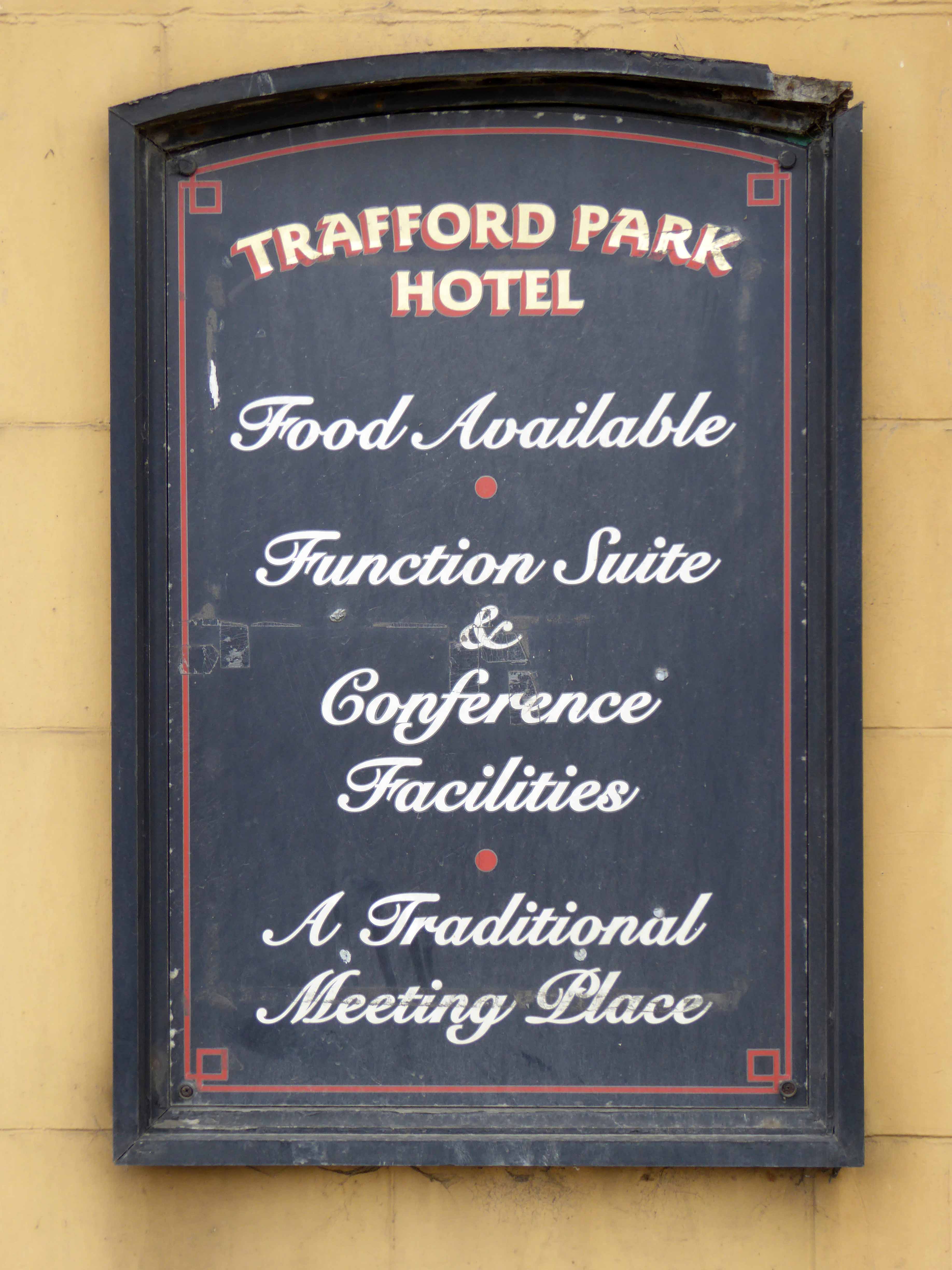
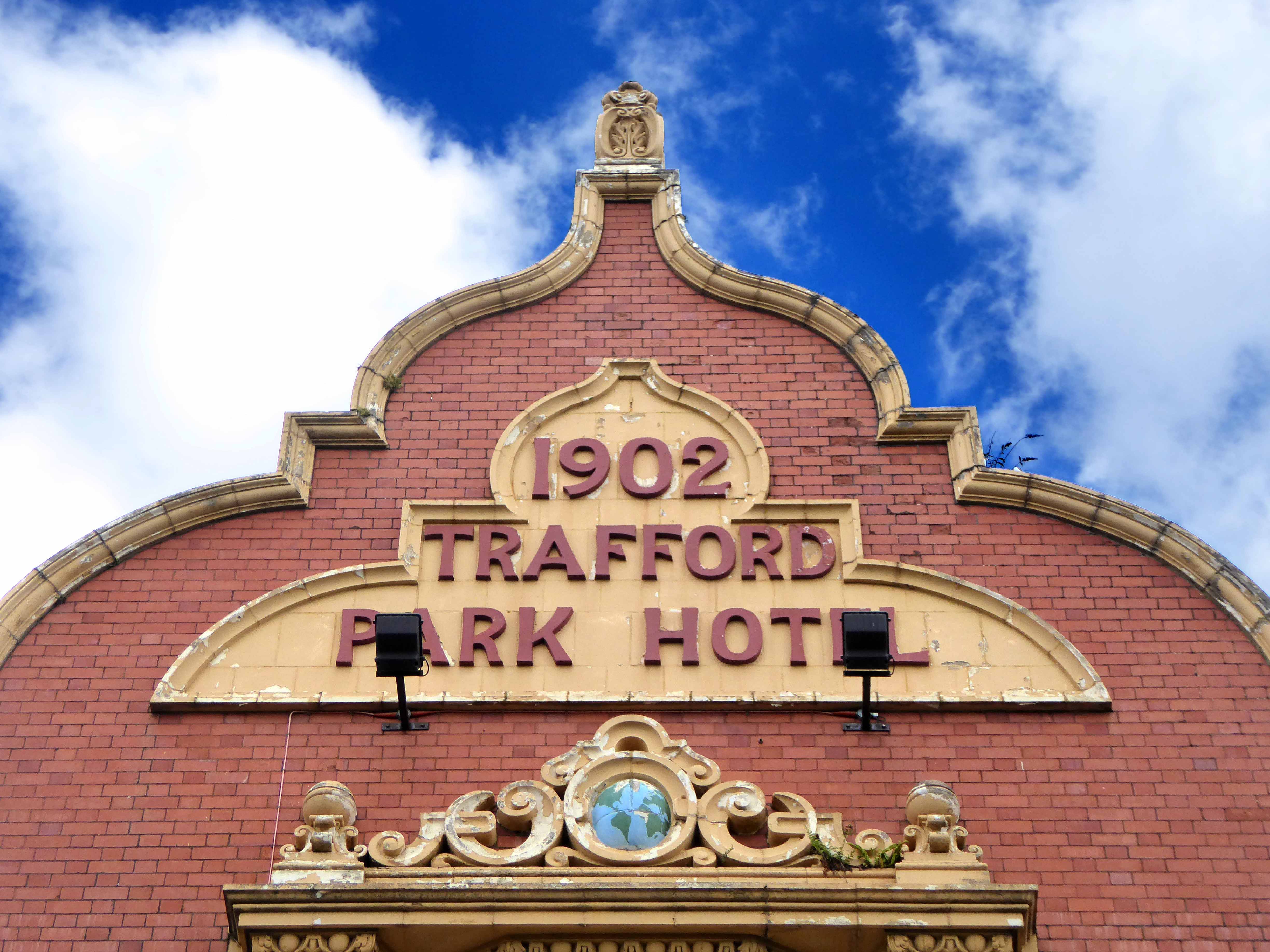
Trafford Park Hotel

Built in 1902 to keep the Trafford Park industrial dust down, quenching the thirst of the workers employed in the world’s first and largest industrial estate – get in and get outside a pint or two.

Speed headlong through the years and by 1984, a mix of industrial and economic decline and the general move away from the urban mix of housing and factories, the end is in sight for most of the Village’s homes.

Untitled-3

Photograph Nigel Richards

Move a little further along the line and by 2009 and the pub is closed, temporarily home first to a marijuana farm, and subsequently squatters.

Paul, 46, originally from Chew Moor, Bolton, was left homeless in May when his house was repossessed after he lost his job as a mechanical engineer. He found The Freedom Project through its Facebook group and was invited to move in to the Trafford Park Hotel. He said: “The group is apolitical – it’s about freedom of expression, activity and thought.” Enterprise Inns have taken members of The Freedom Project to Salford County Court where a judge gave the brewery an order for possession of the building. 

Enterprise Inns declined to comment.

It takes a whole judicial system and corporate clout to deny a man home.
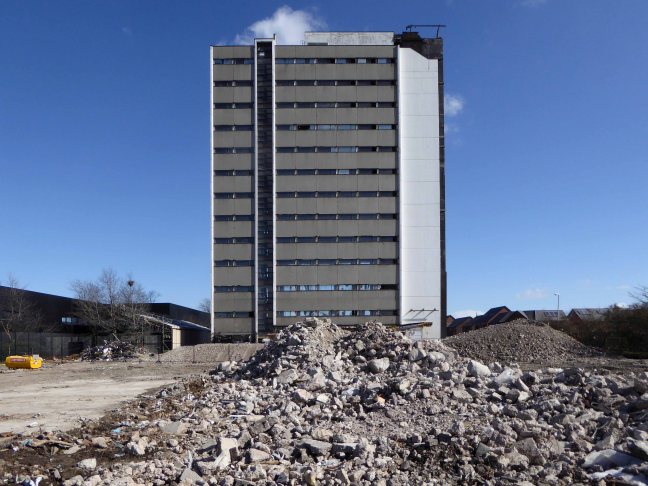
In February 2017 pub was sold for £900,000, though on the day of my August visit there were few signs of the planned conversion to flats or hotel.

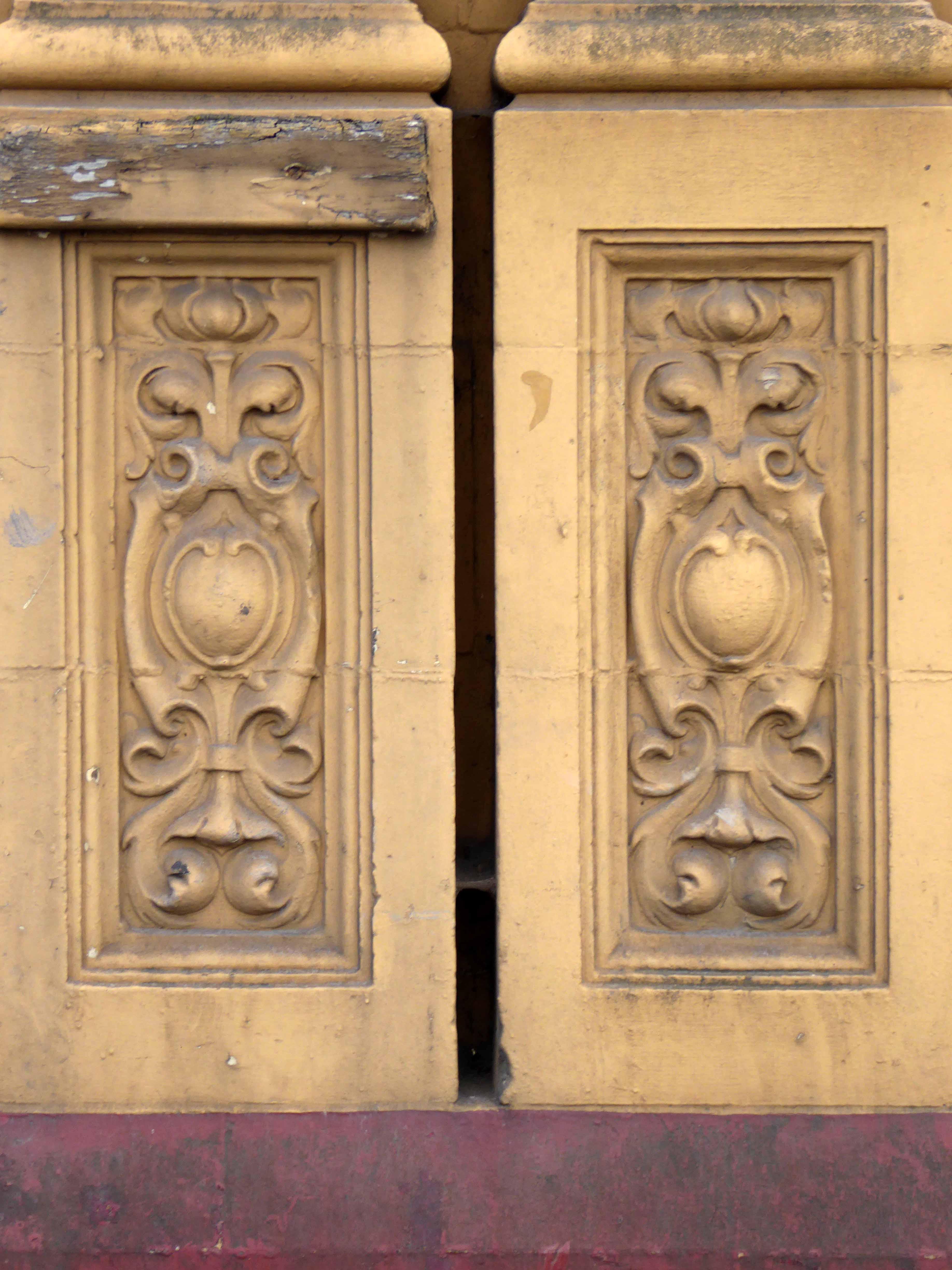
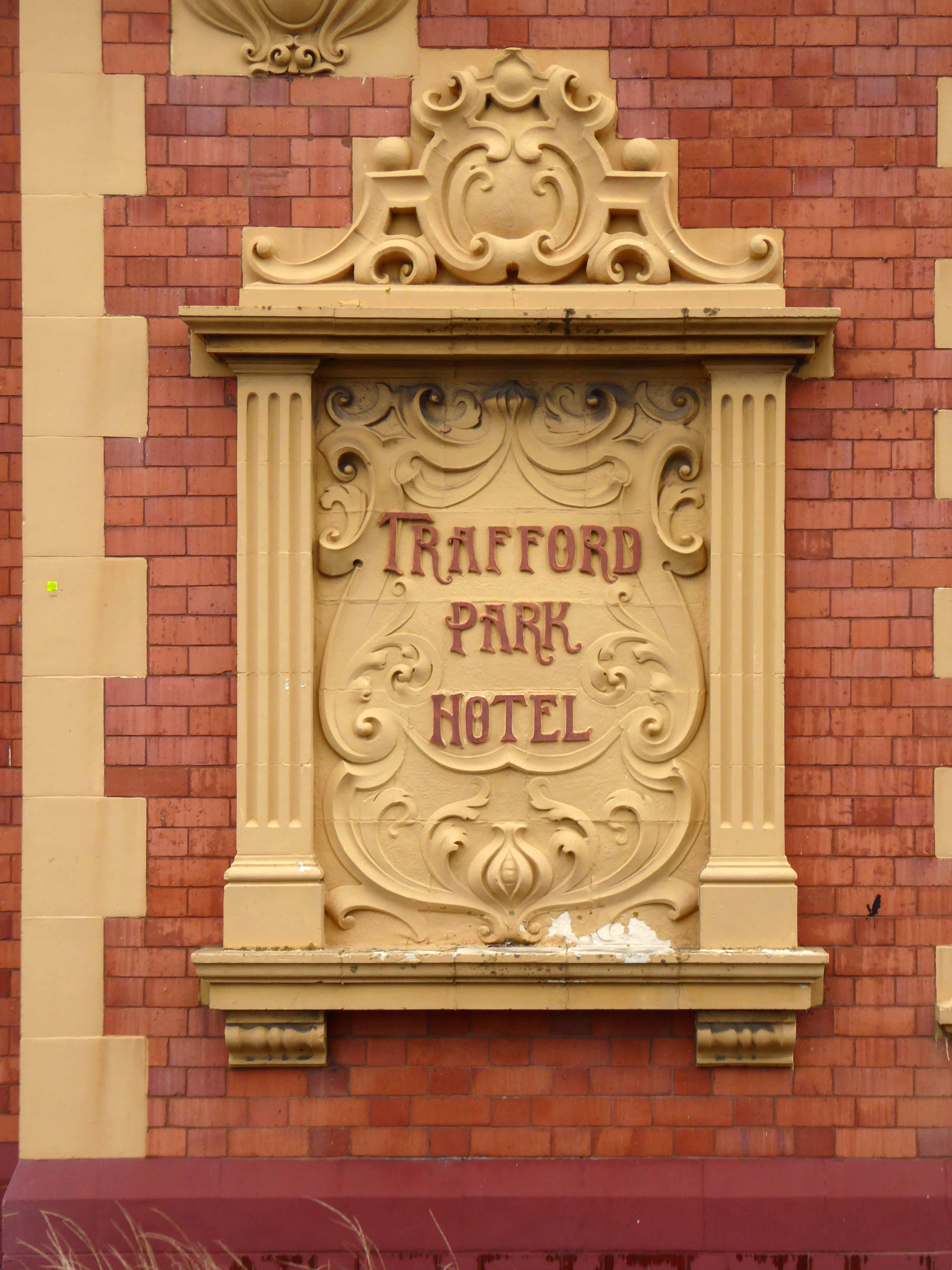
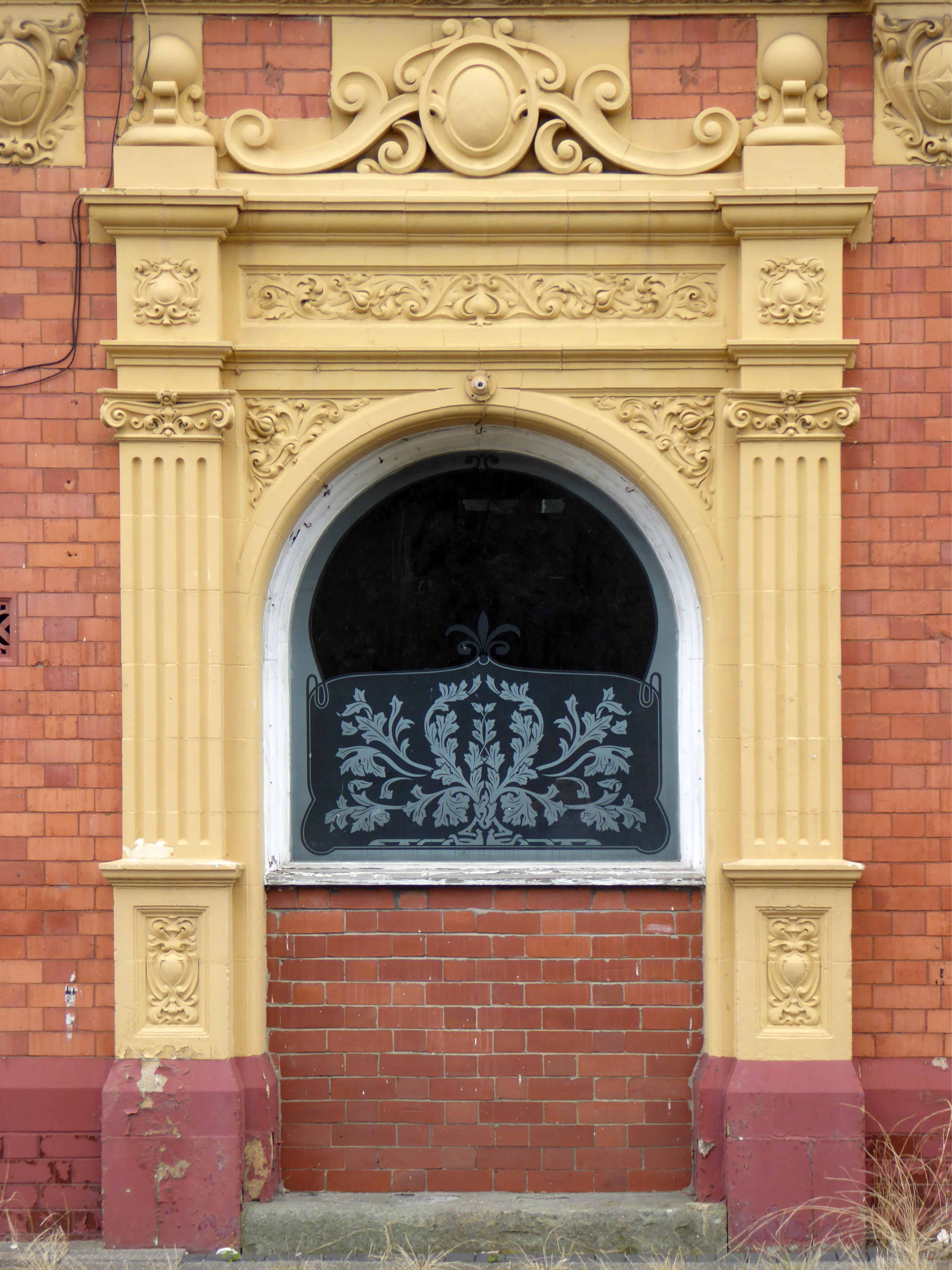
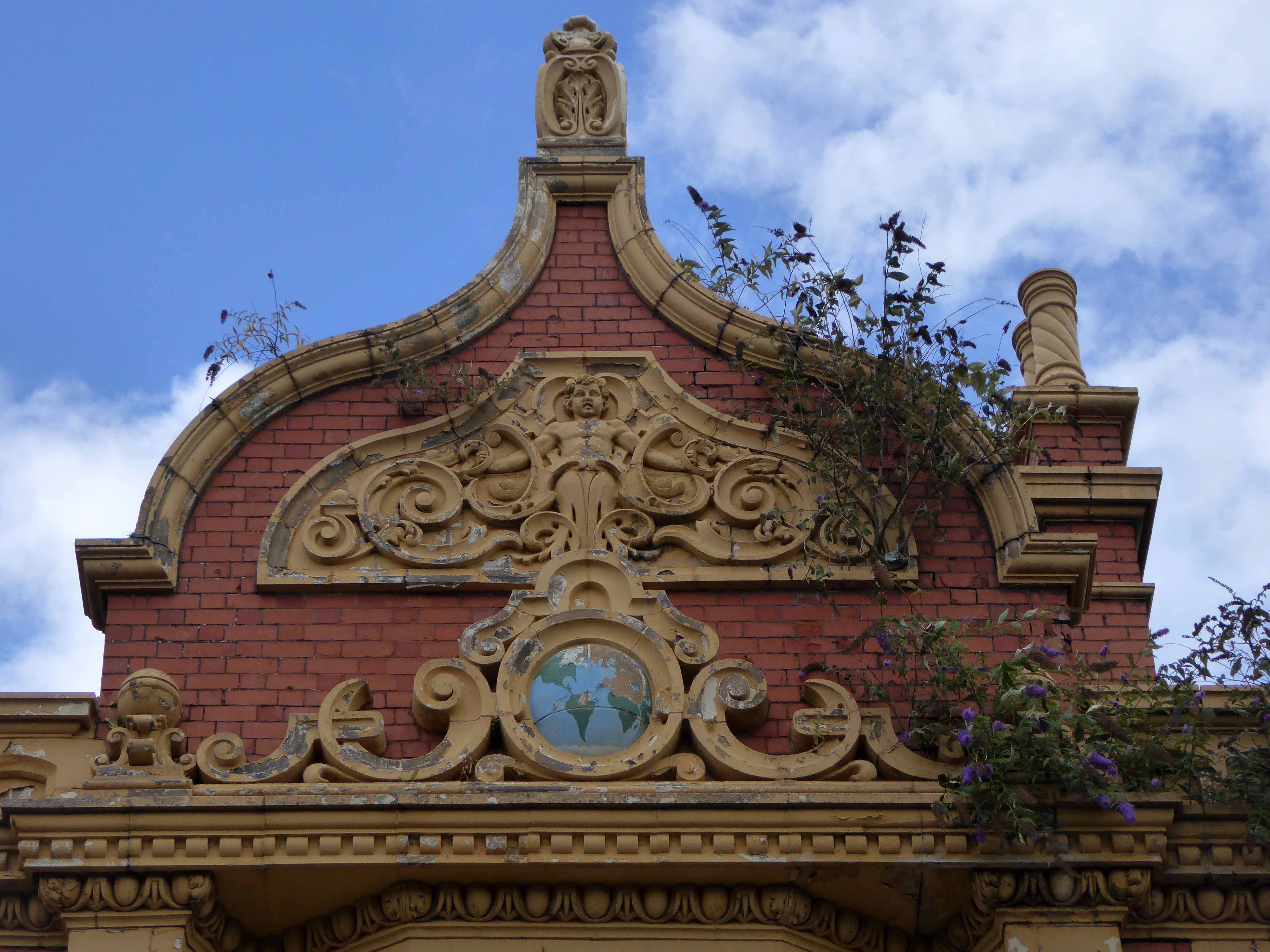
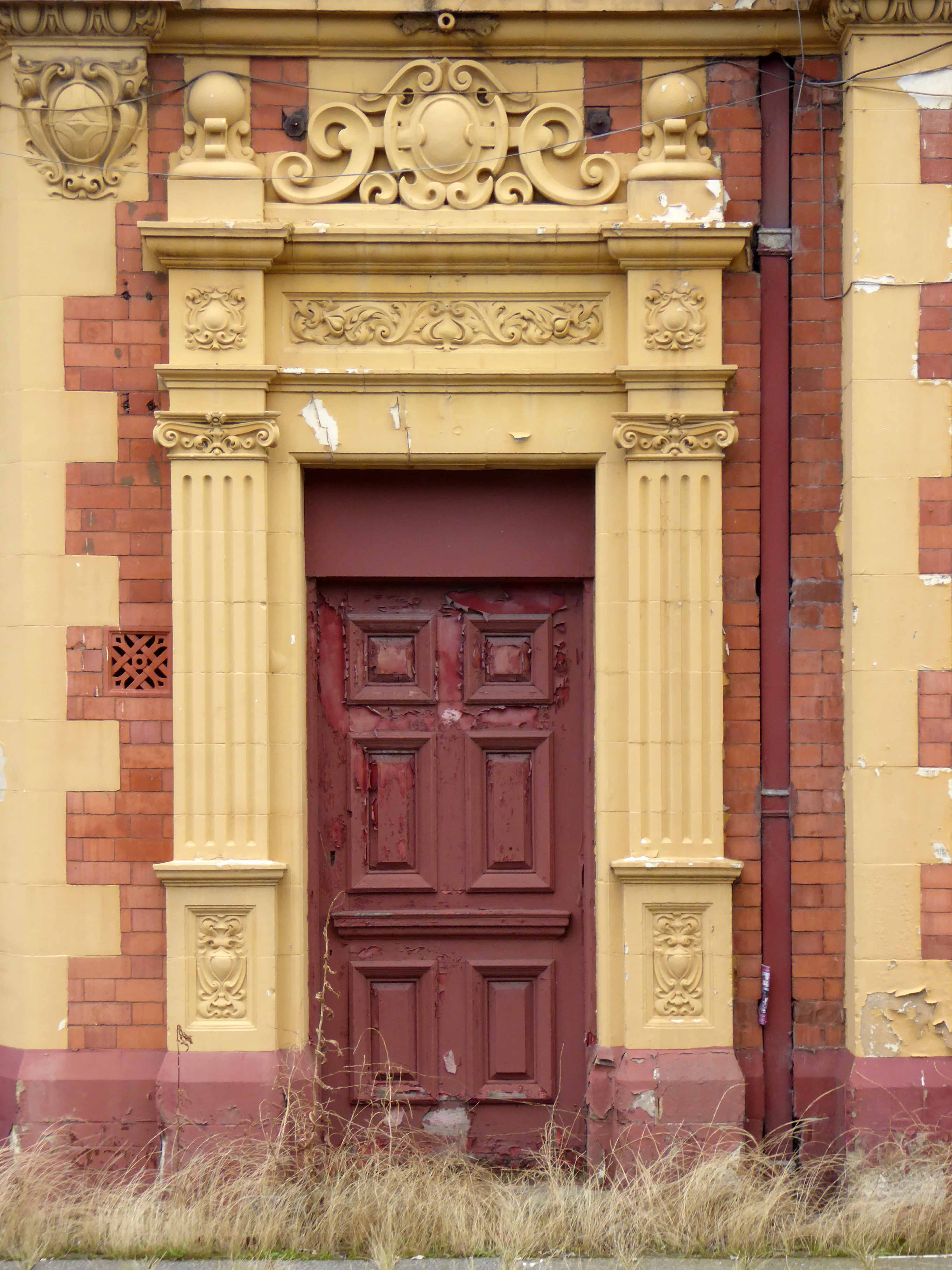
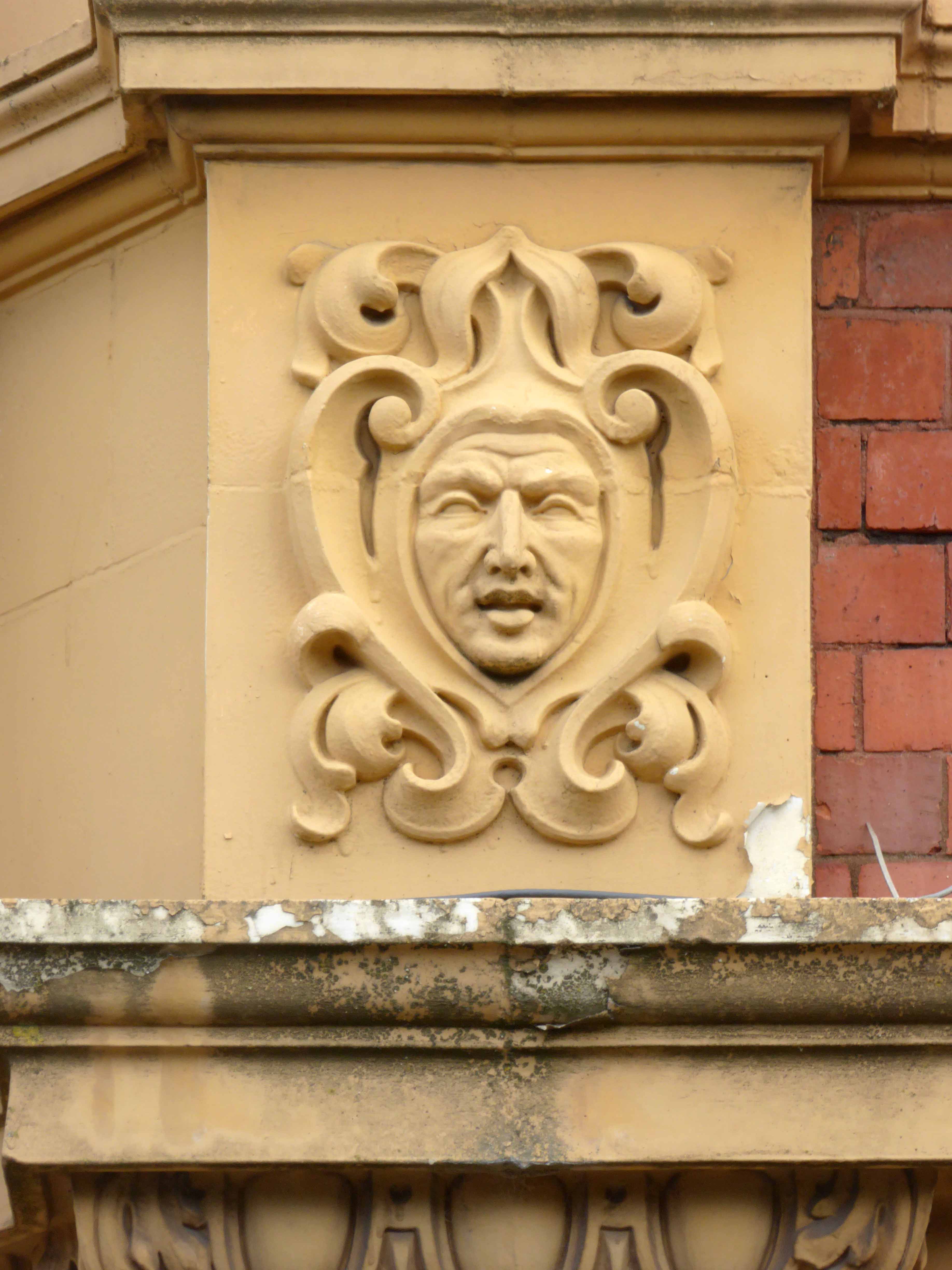
One day time will be called on time itself, in the meantime take a walk down the Avenue and feast your eyes on a Grade II  listed terracotta and brick behemoth.

P1180834

P1180832

P1180836

P1180837

P1180838

P1180839

P1180840

P1180841

P1180842

P1180843

P1180844

P1180845

P1180847

P1180848

P1180849


P1180860

P1180861

P1180862

P1180852

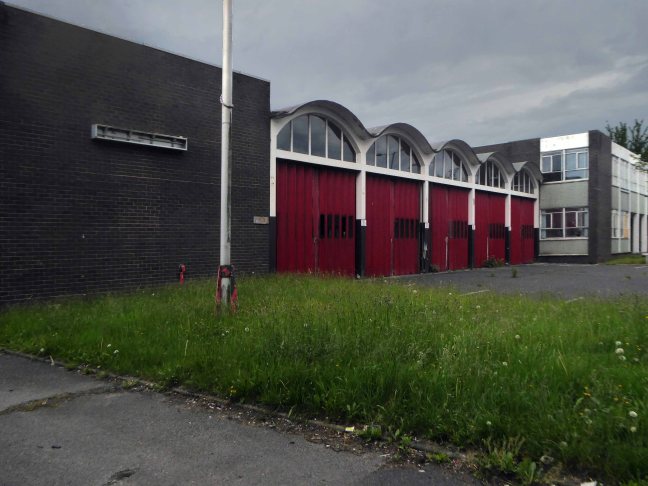
Fire Station – Bury

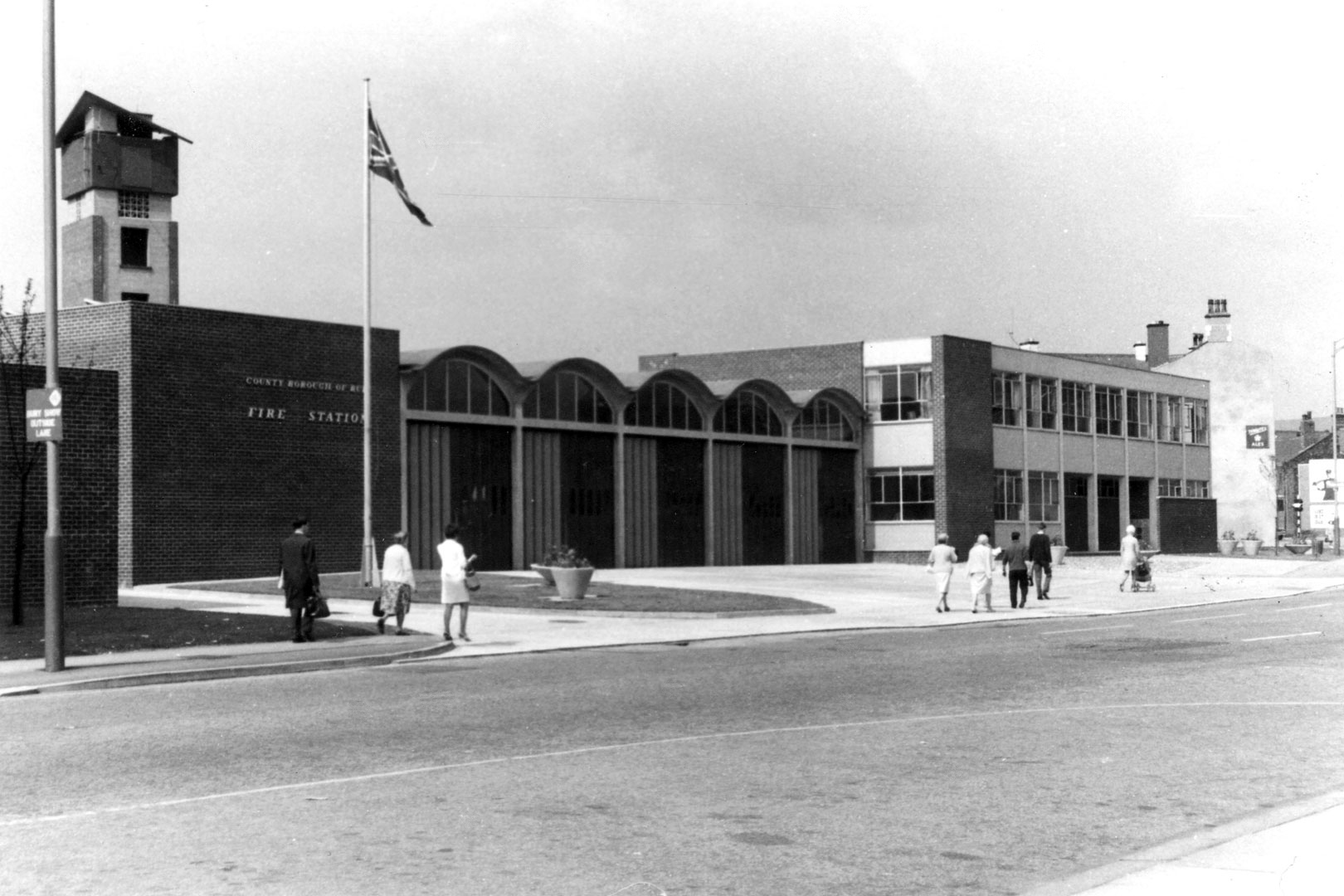
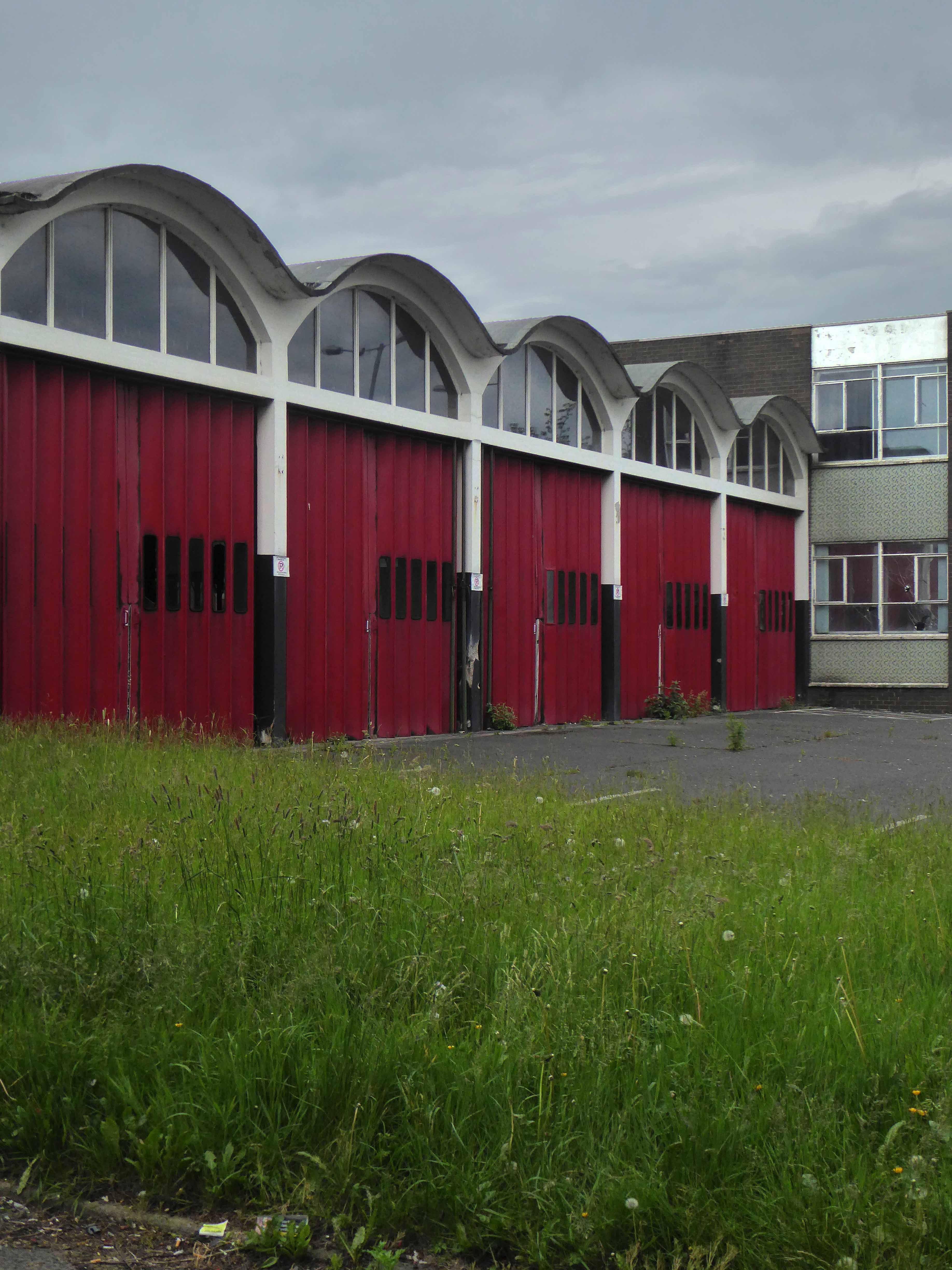
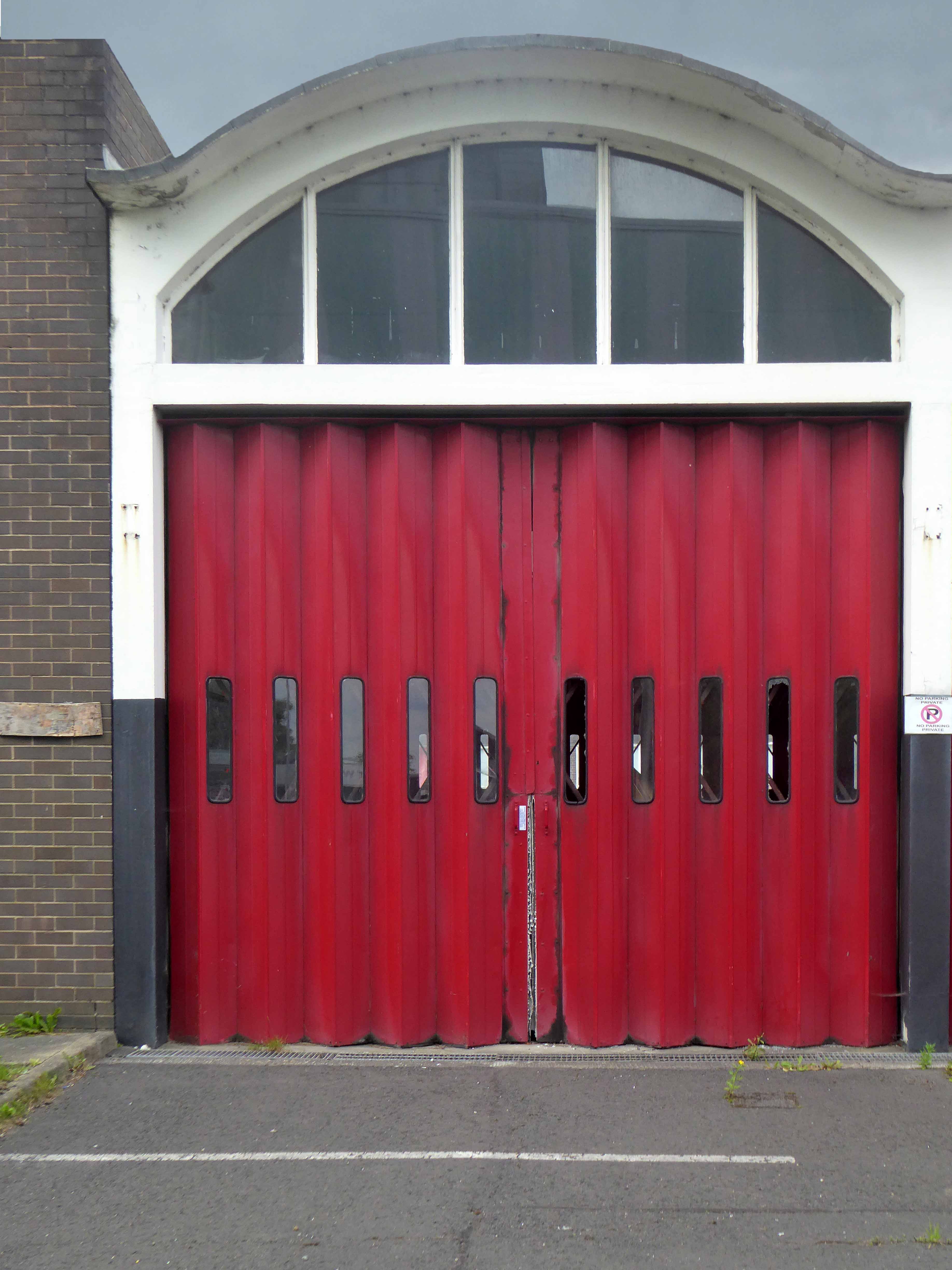
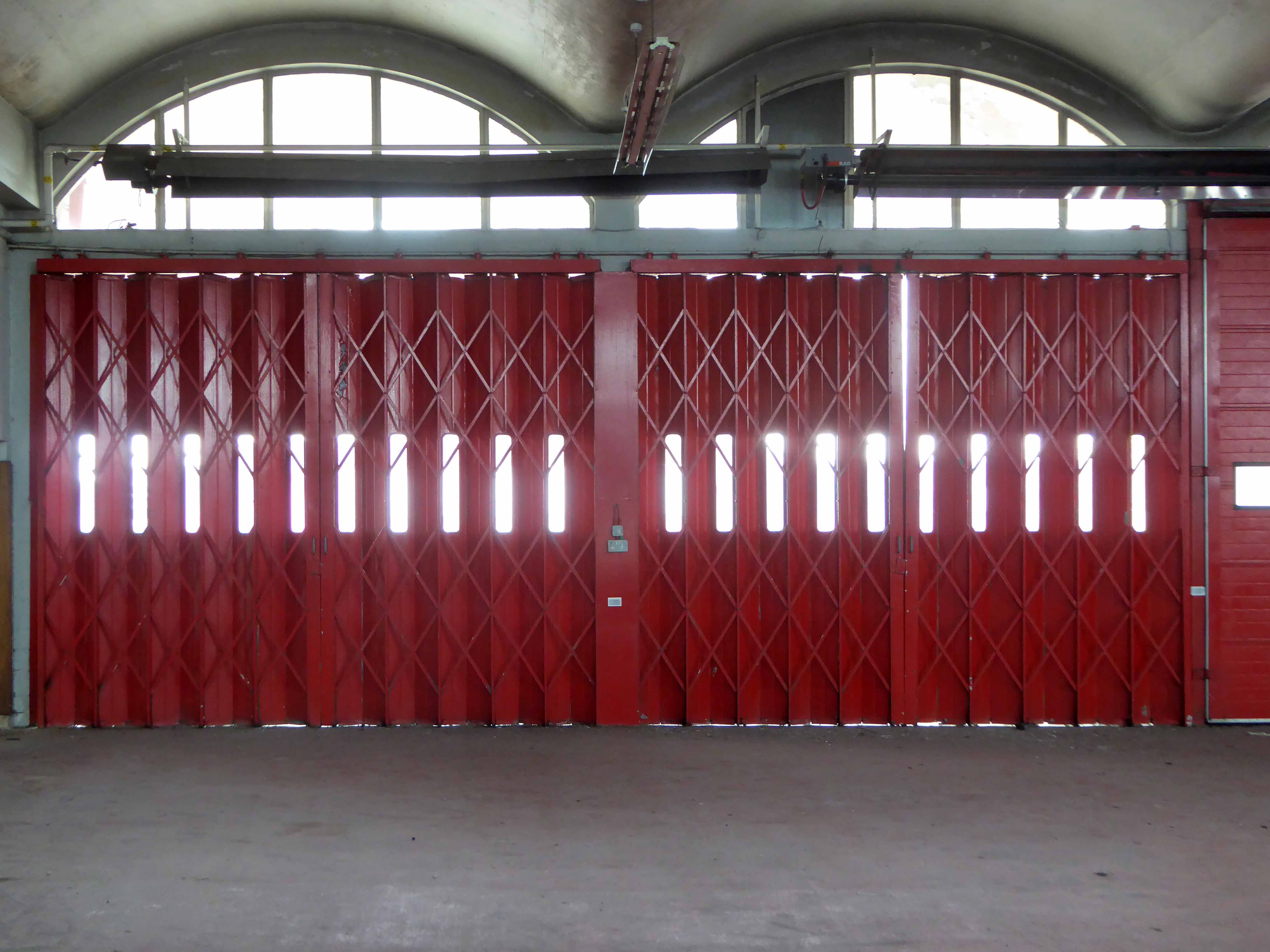
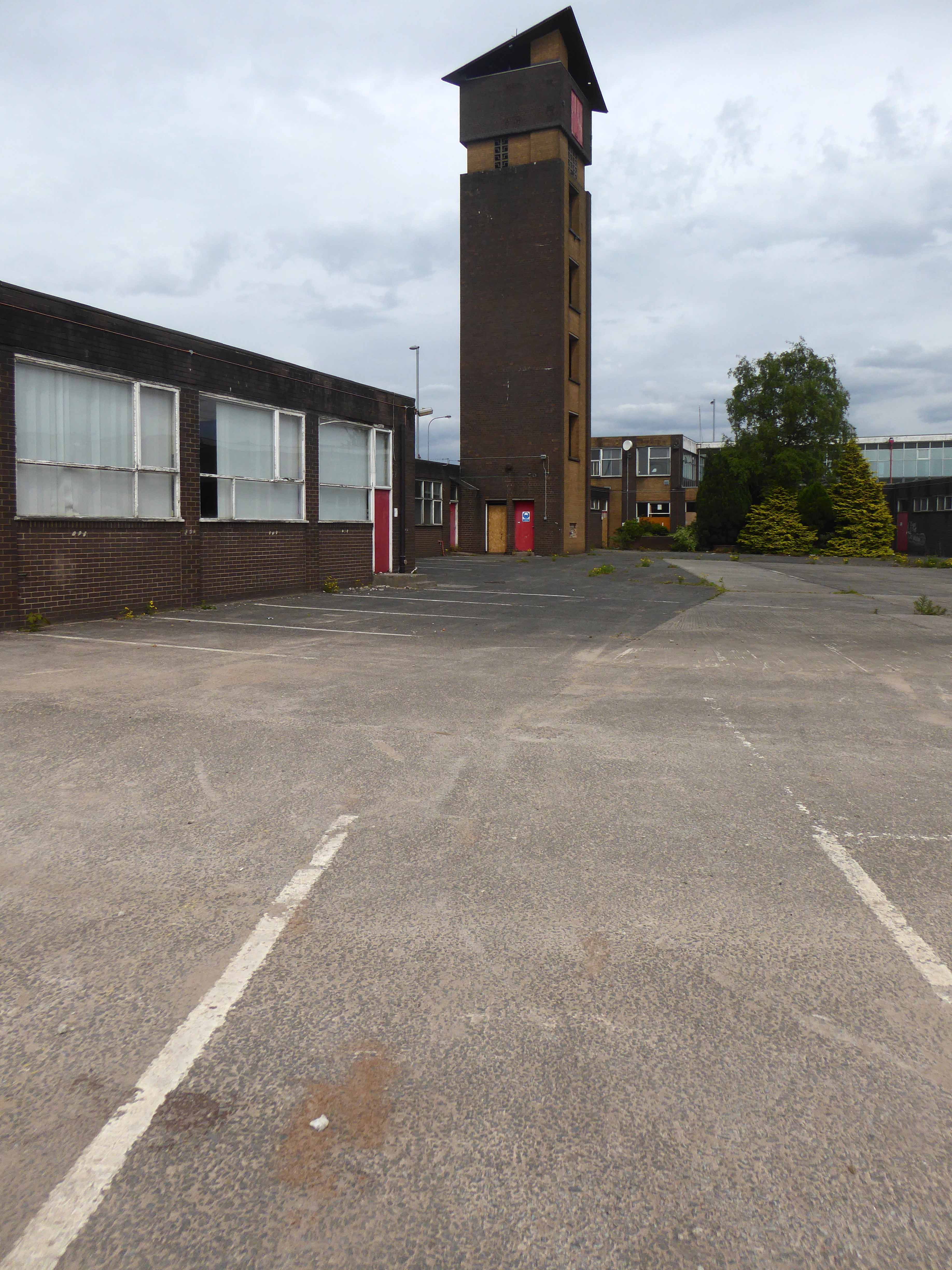
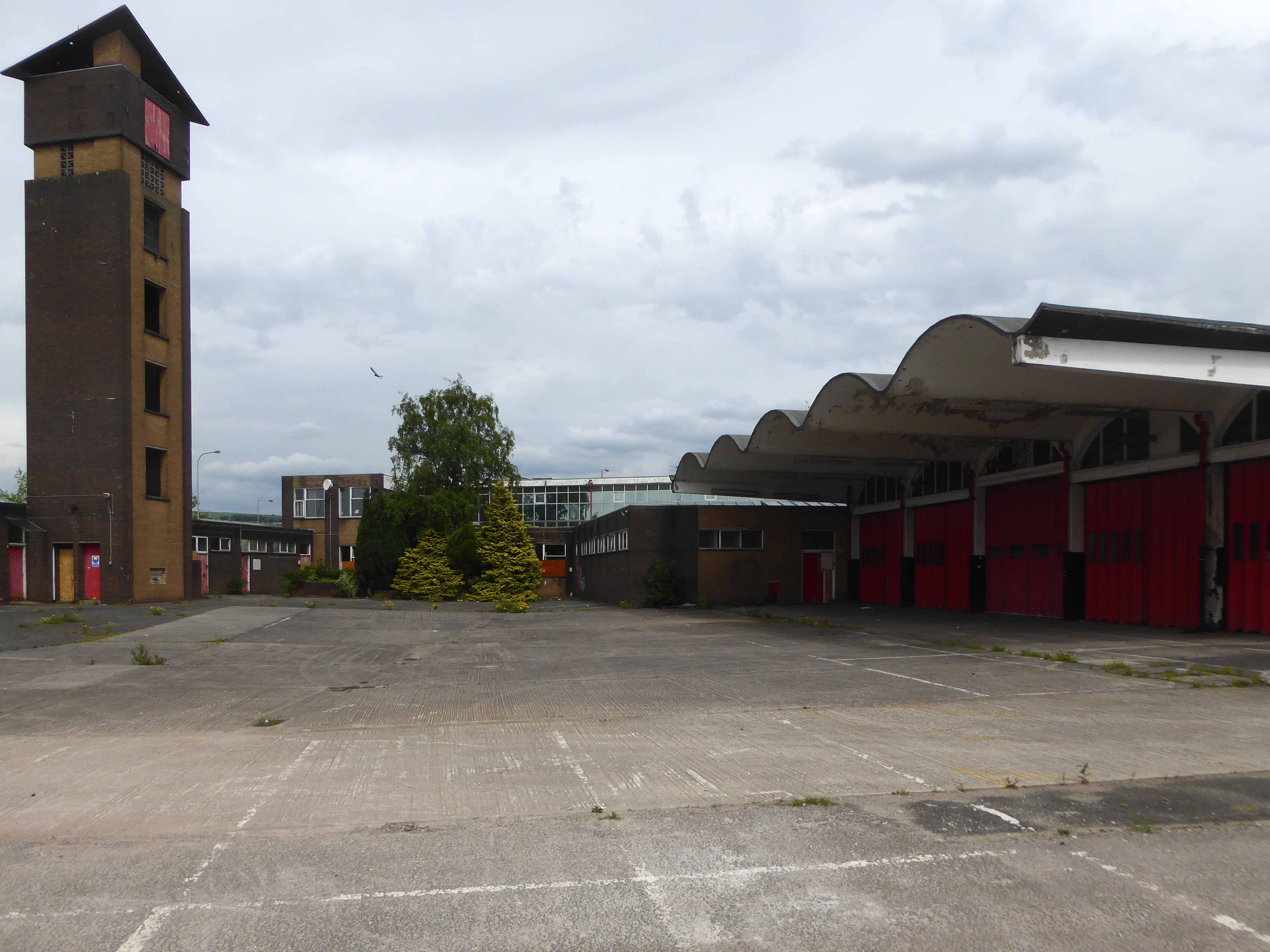
Curvilinear, cantilevered, concrete canopies wave – wave goodbye.
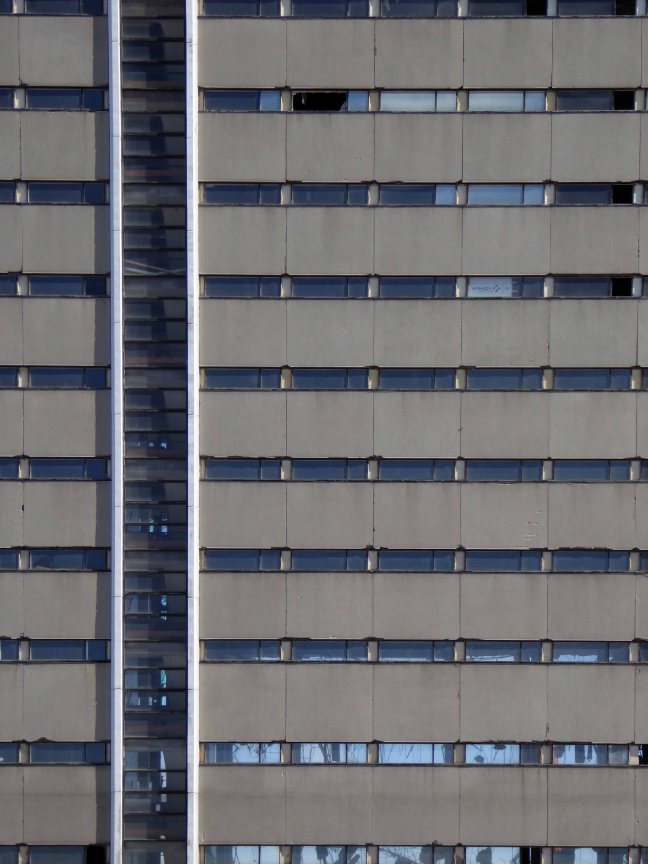
Opened in 1967

fire-station-the-rock-built-1967

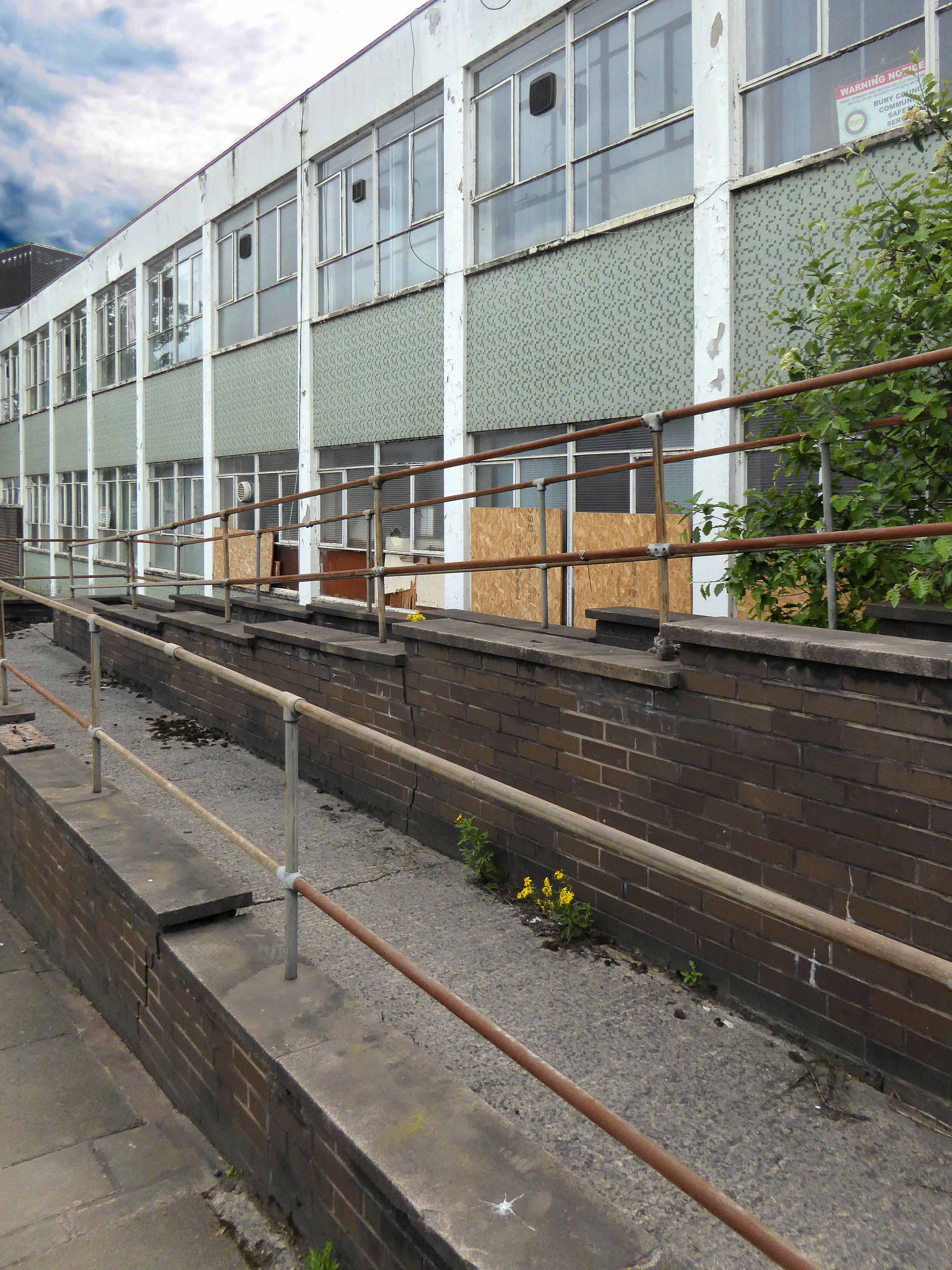
Closed in 2012, it continues to stand idly by, as the Bury Town centre doughnuts the site with shiny new developments.
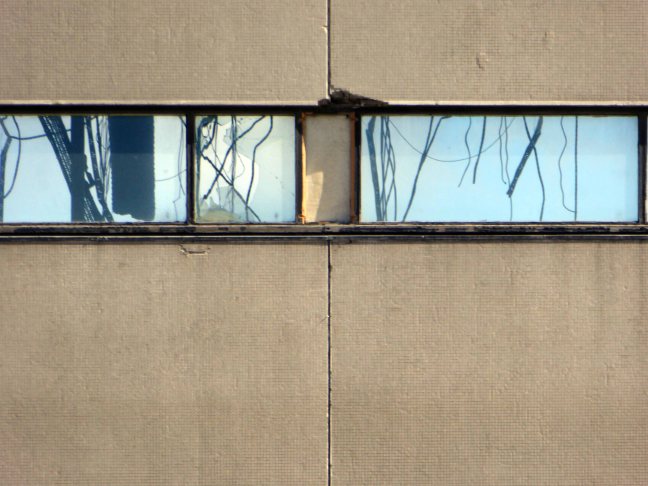
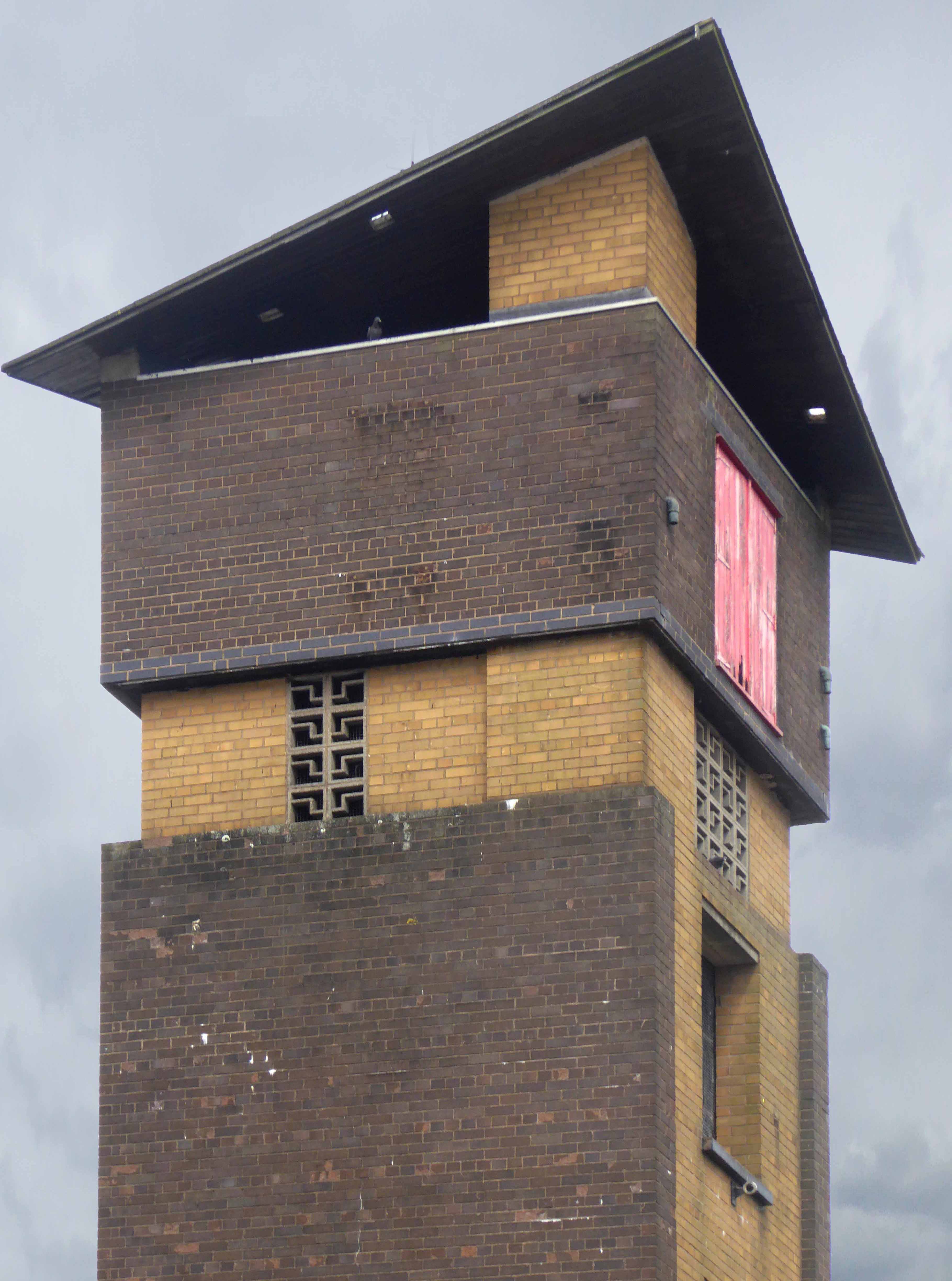
A striking tower topped by a hyper parabolic roof with a cheeky twist, it remains an elegant feature on The Rock.

Facing an uncertain future it can only be a matter of time, as the new build proliferates that the fire station disappears in a puff of smoke.

Who you gonna call?

P1160753

P1160754

P1160755

P1160756

P1160758

P1160759

P1160760

P1160761

P1160762

P1160763

P1160764

P1160765

P1160766

P1160767

P1160768

P1160770

P1160771

P1160772

P1160783

P1160784

Ghost Signs – Scarborough

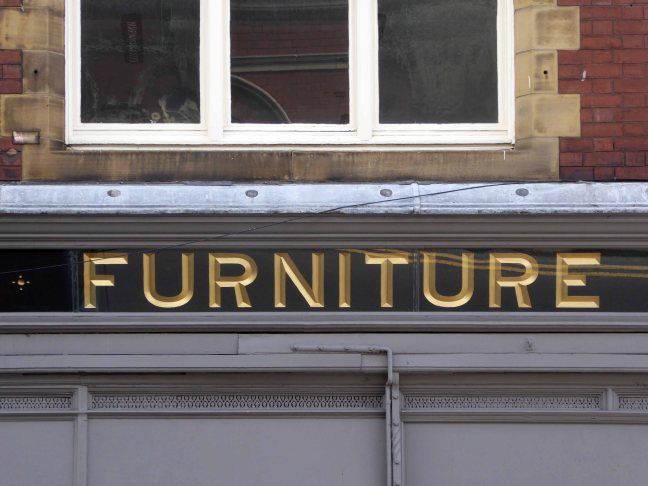
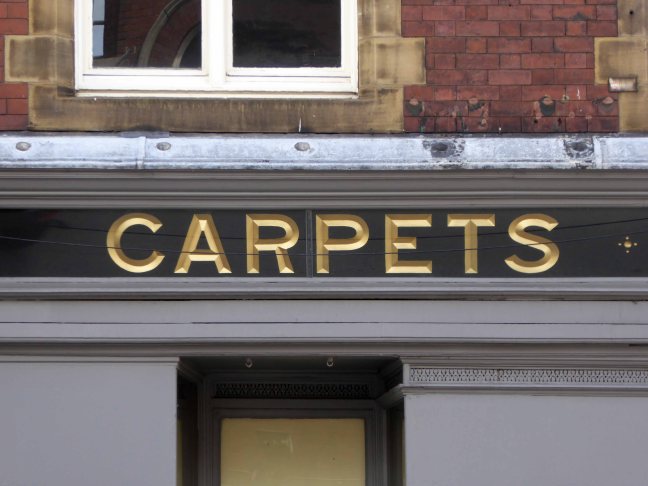
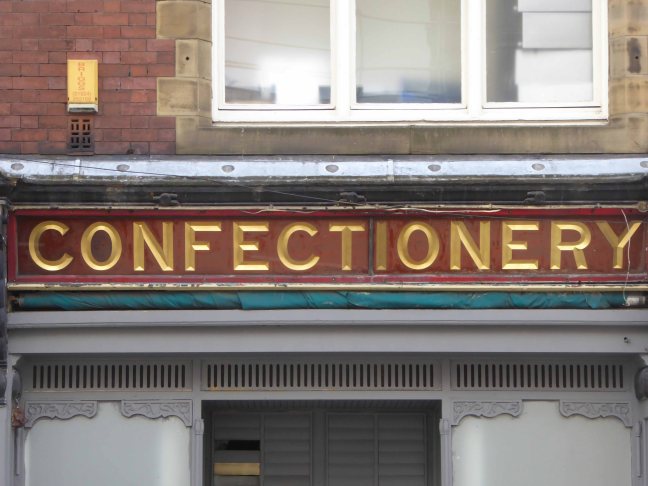
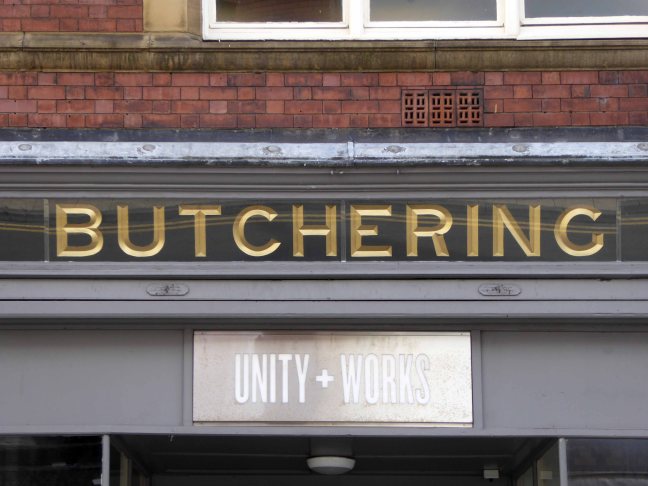
All towns have ghosts, none more so than Scarborough.

High atop a castle topped, wind whipped promontory, lies Anne Bronte, overlooking the harbour below, wayward Whitby whalers wail, lost fisher folk seek solace.

Its walls ache with traders past, scissors that no longer snip, click-less shutters, unlettered rock and loaves that no longer rise.

Layers of sun baked, peeling paint on brick, rendered almost illegible.

As Alan Resnais would say Scarborough, mon amour!

P1150490

P1150639

P1150671

P1150677

P1150696

P1150742

P1150743

P1150744

P1150745

P1150757

P1150761

P1150764

P1150765

P1150766

P1150767

P1150768

P1150769

P1150771

P1150772

P1150774

P1150778

P1150787


St Barnabas – Manchester

barnabas

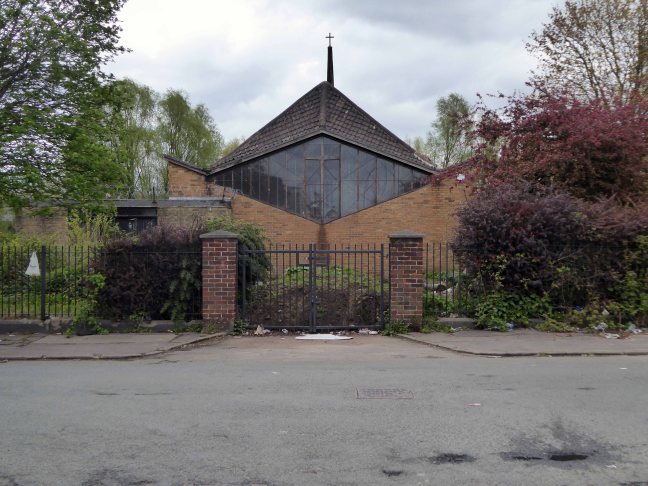
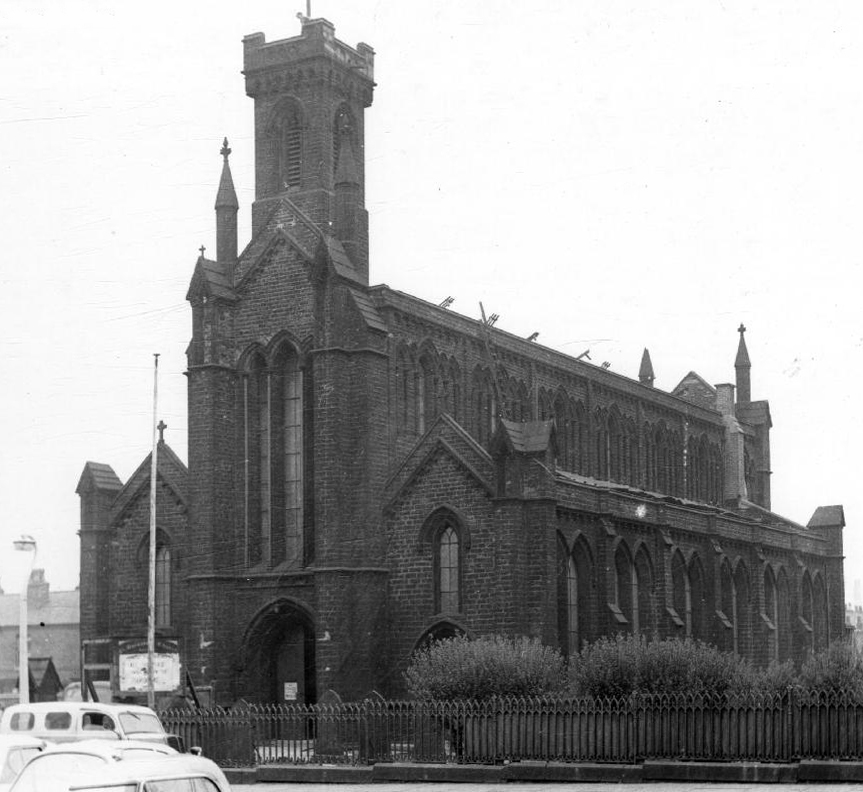
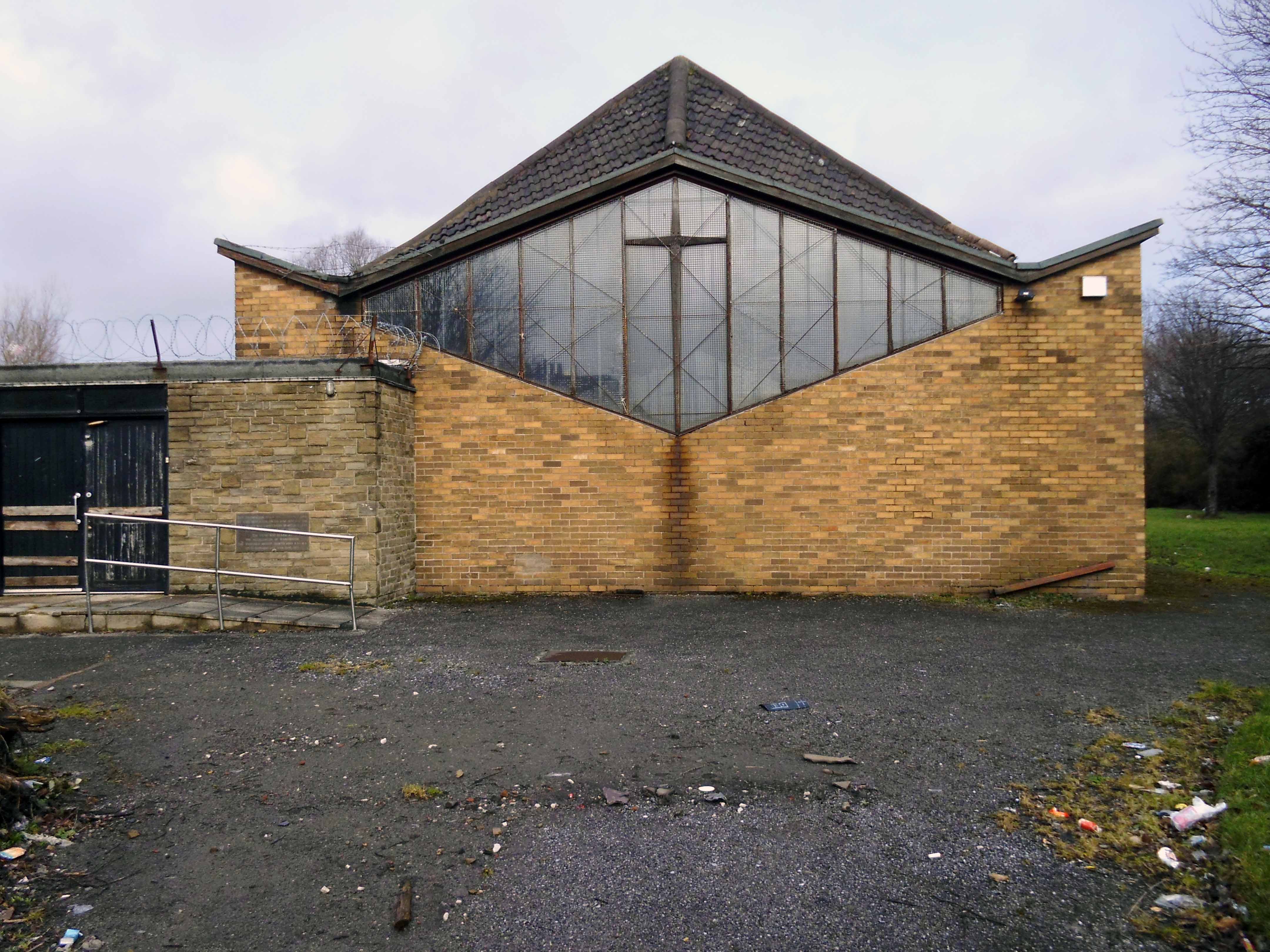
There has been a church here since 1837, there is still a church here.

Almost.

webmedia-1.php

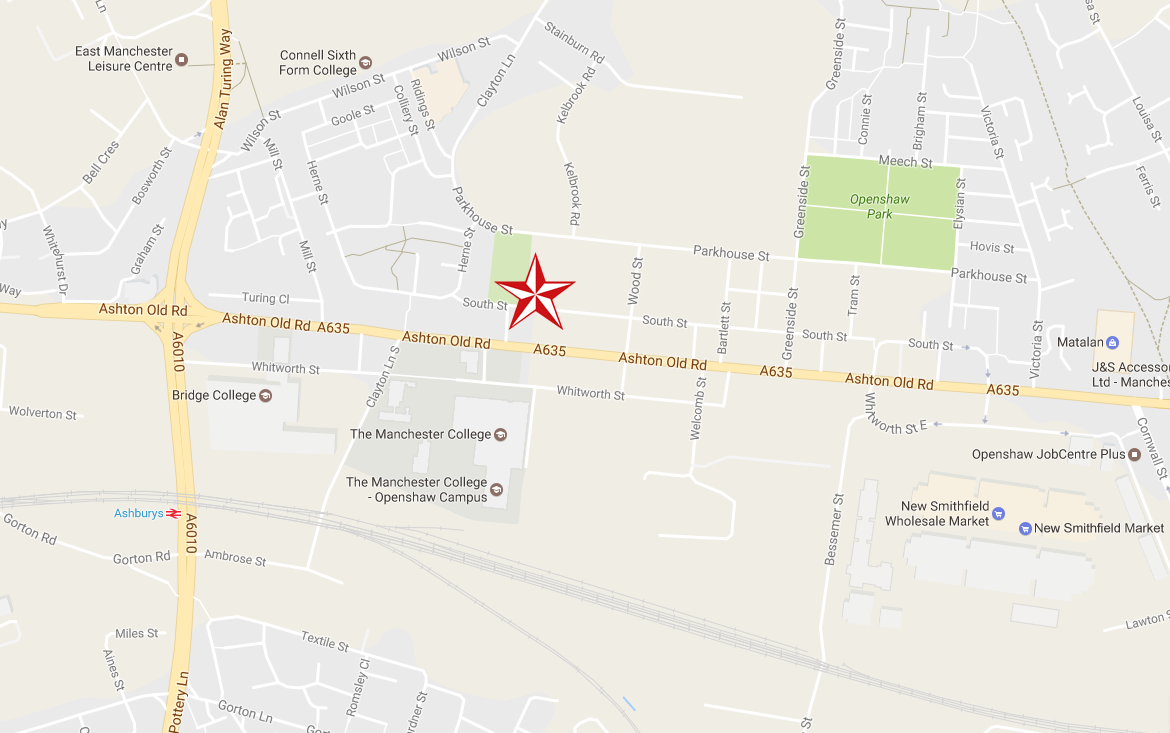
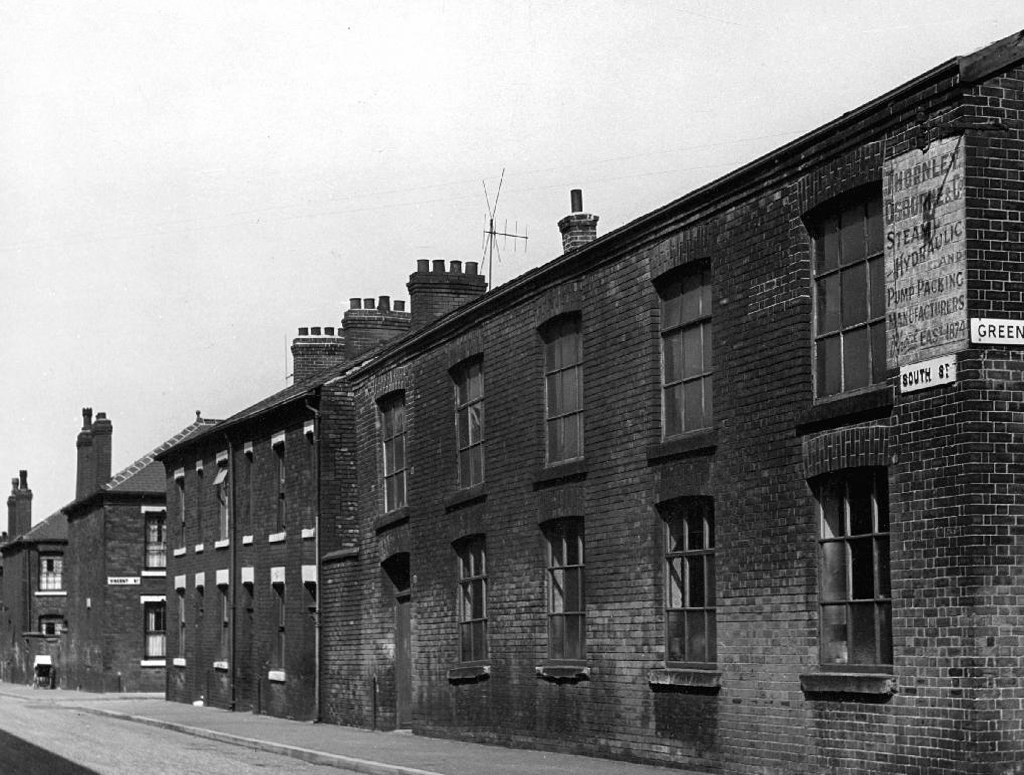
Openshaw in the 60s was still a busy community of terraced homes and their occupants, tumbling cheek by jowl with industry, both heavy and light.

webmedia.php copy

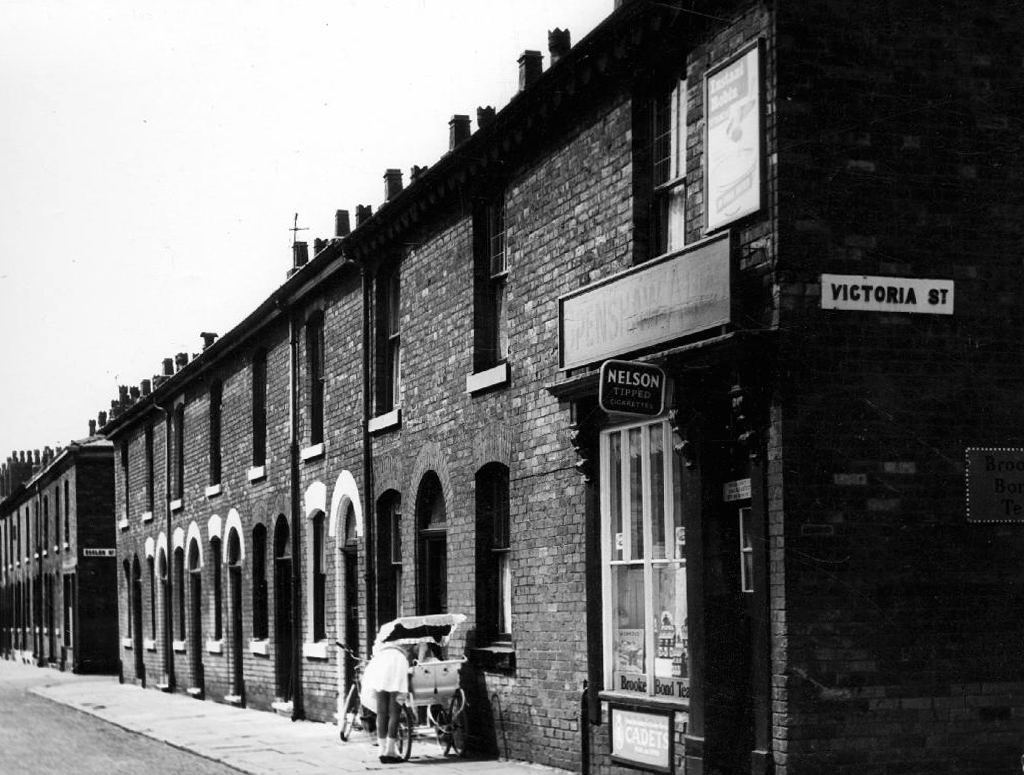
A tightly wrapped world of corner shops and sun-canopied Silver Cross prams.

webmedia-1.php copy

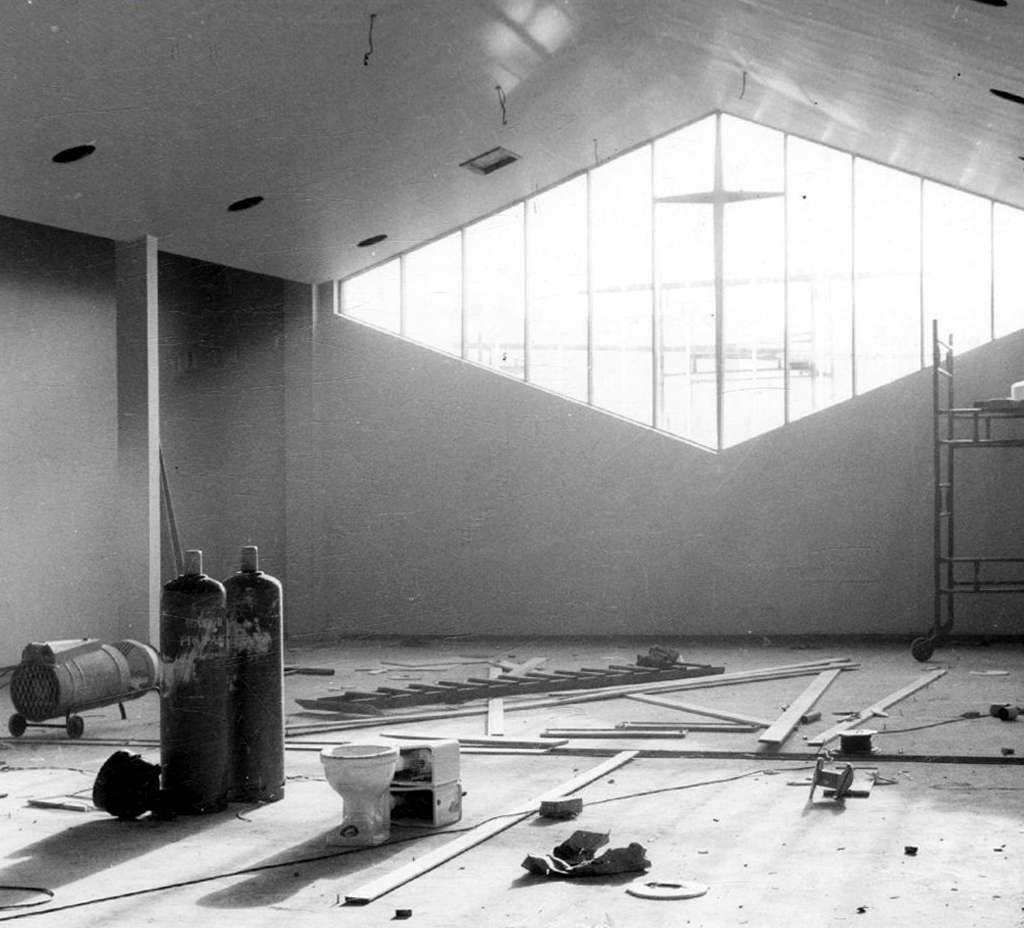
The original imposing, imperious St Barnabas’s was demolished, to be replaced by a sharper space age architecture, embodying a new age of optimism.

webmedia-2.php

webmedia-3.php

webmedia-6.php

webmedia-5.php

Photographs from the Manchester Image Archive

At the same time the soot-blackened Victorian terraces, are in part replaced by newer brick and block homes, the future seemed bright.

The industry however, once so invincible, both light and heavy, begins to disappear, becomes weightless, invisible.

Slowly the assured social cohesion of that new age comes unstuck.

When the doors of one St Barnabas’s close, likewise eventually another closes.

P1050899 copy

P1050900 copy

P1050901 copy

P1050904 copy

P1050905 copy

P1050907 copy

P1050910 copy

P1050911 copy

P1050912 copy

P1050914 copy

P1050915 copy

P1050916 copy

P1150211 copy

P1150212 copy

P1150218 copy

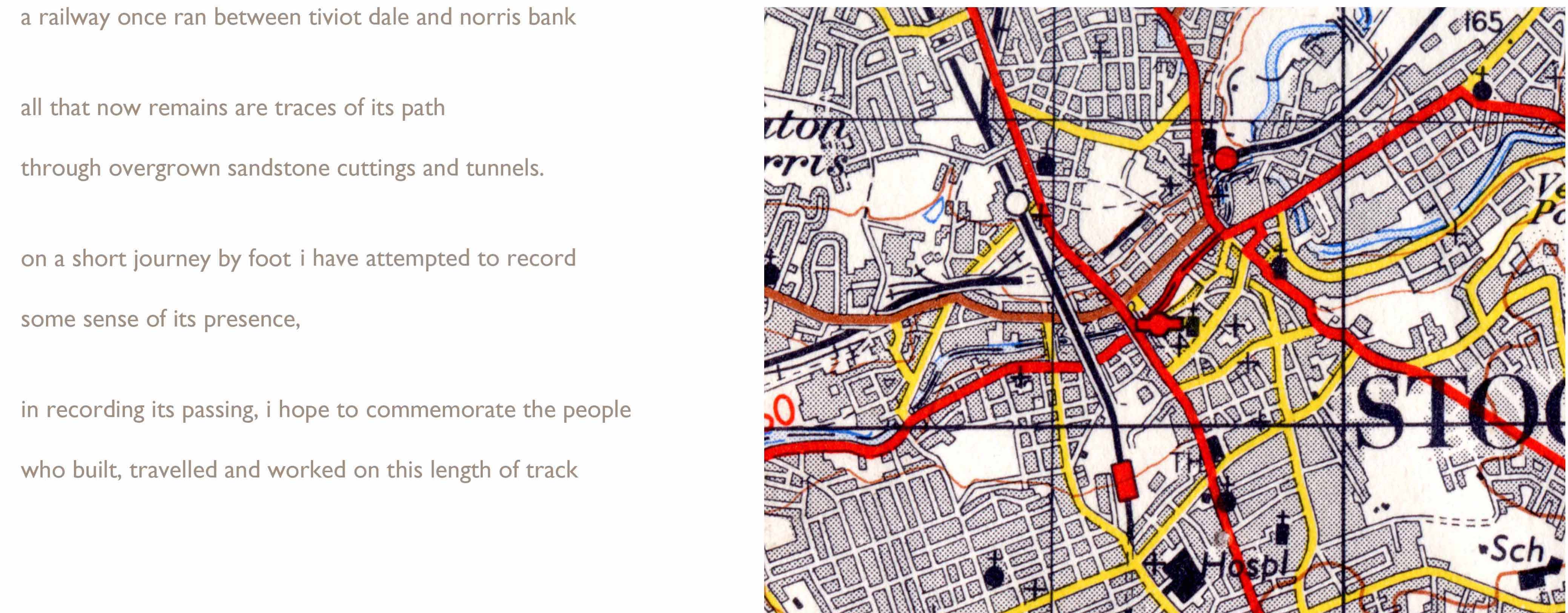
Tiviot Dale to Norris Bank – Stockport

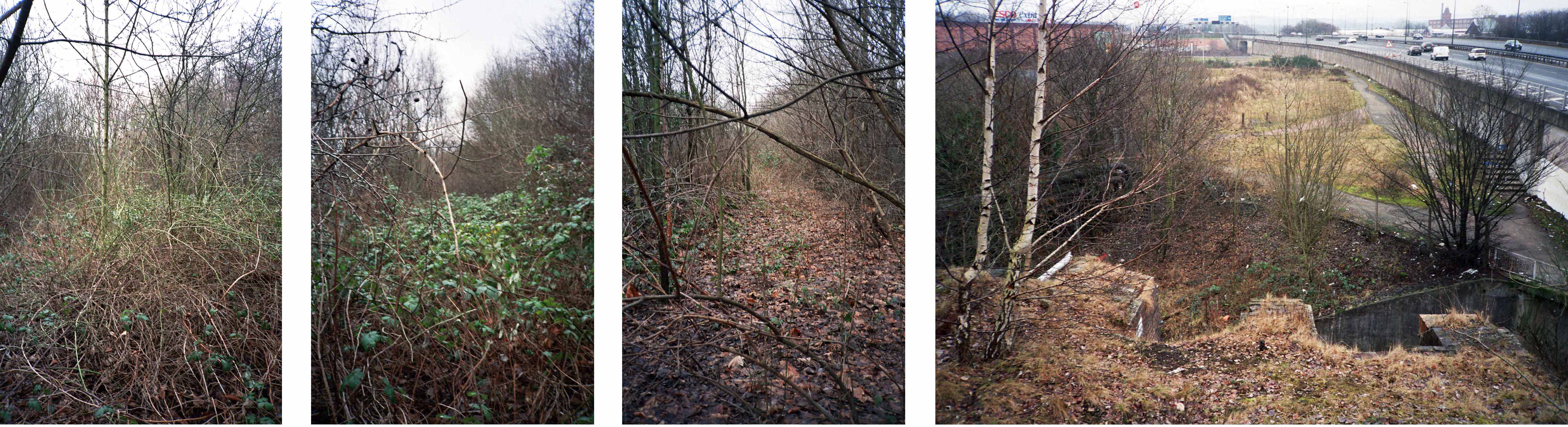
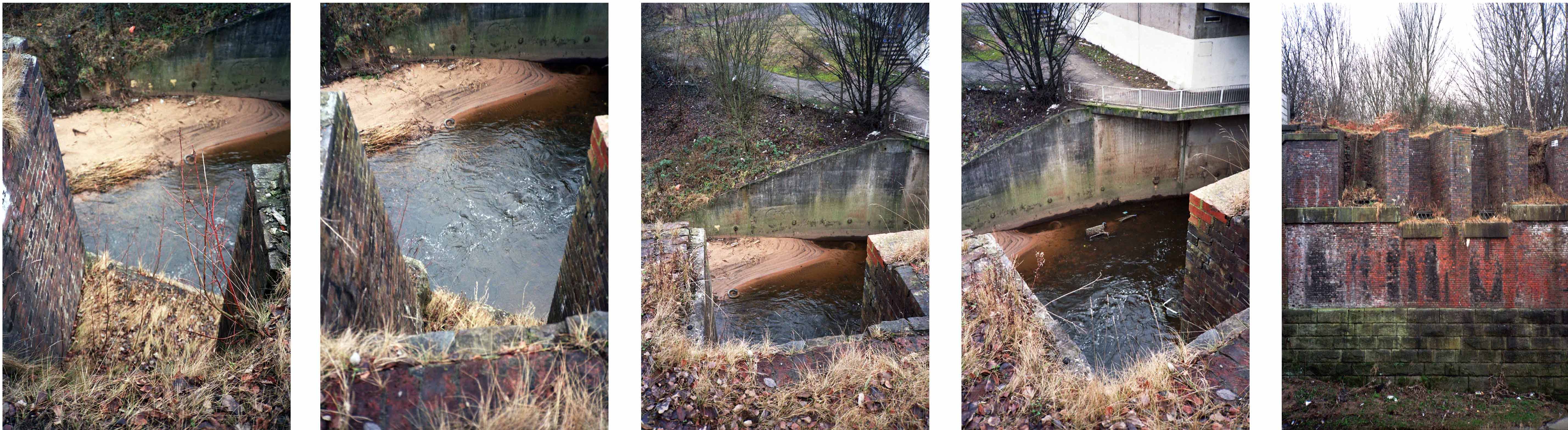
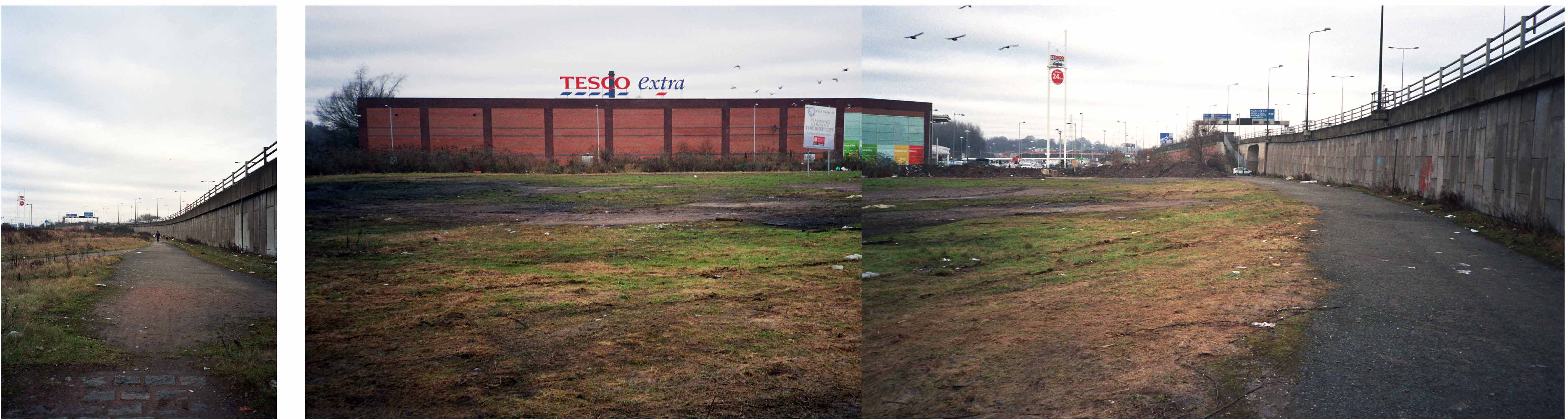
This is a journey I made as a BR Guide Bridge goods guard in the late 1970s, often with driver Eric Clough, into the George’s Road scrap yard. It was also at one time the Cheshire Lines passenger route out of Stockport Tiviot Dale Station to Liverpool, Southport, St Pancras and beyond.

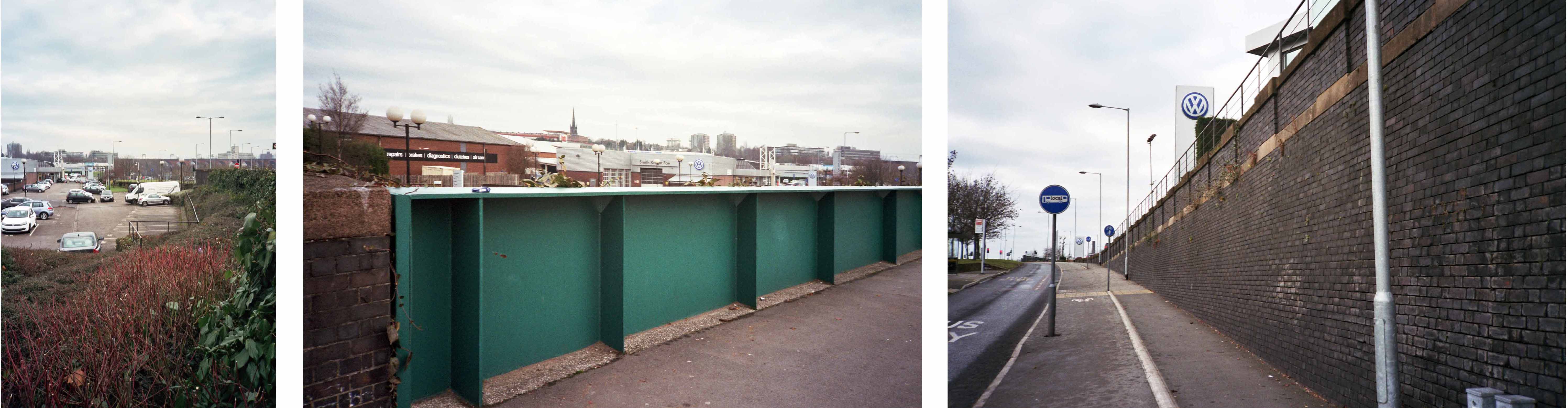
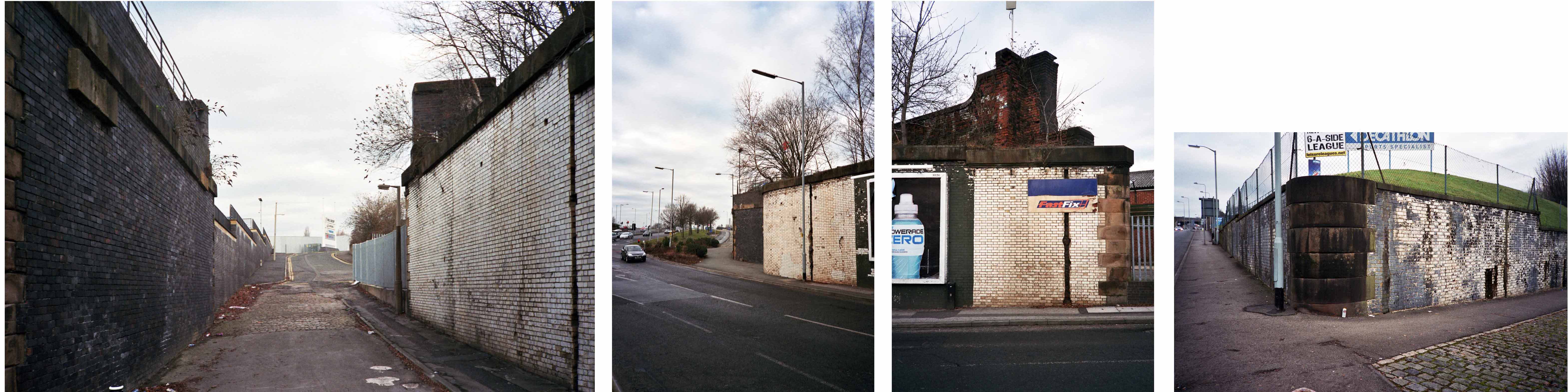
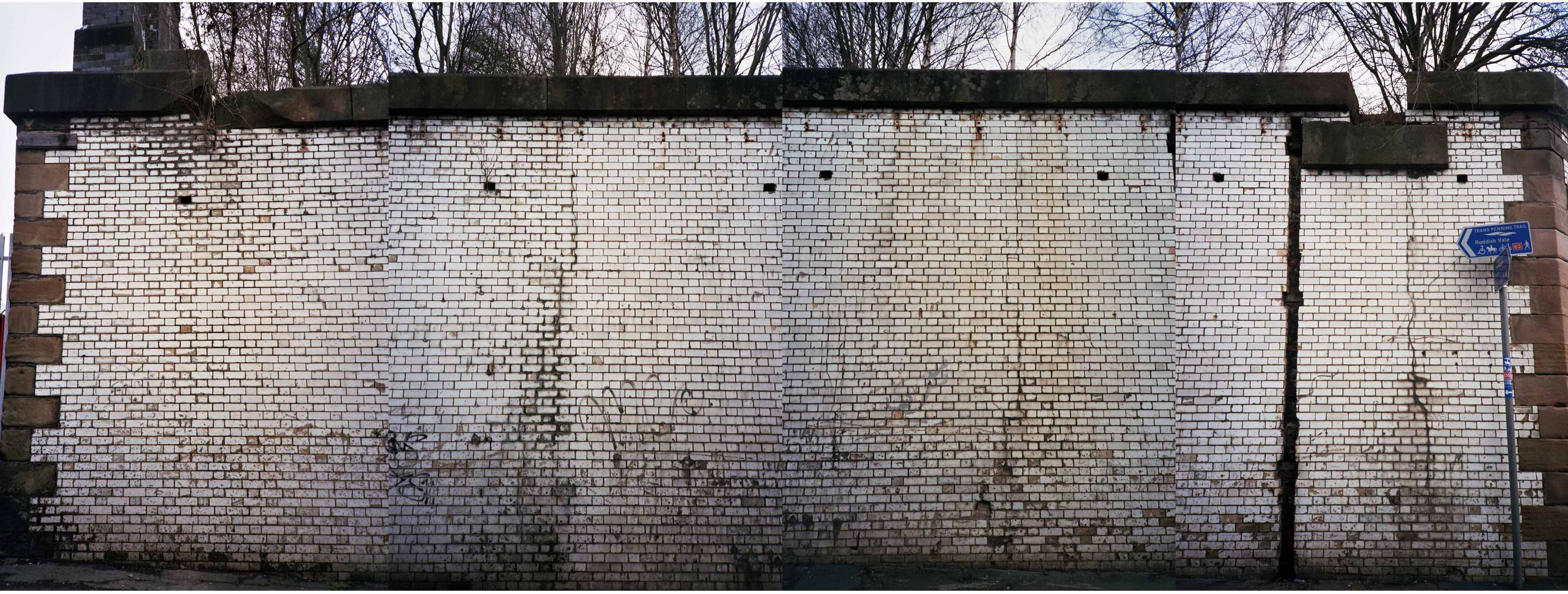
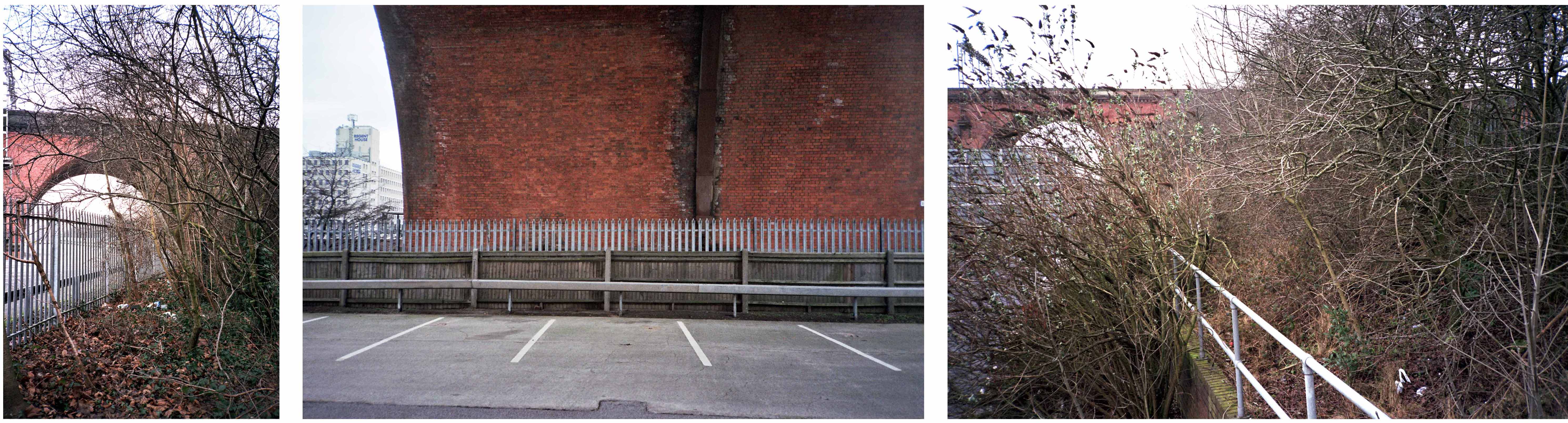
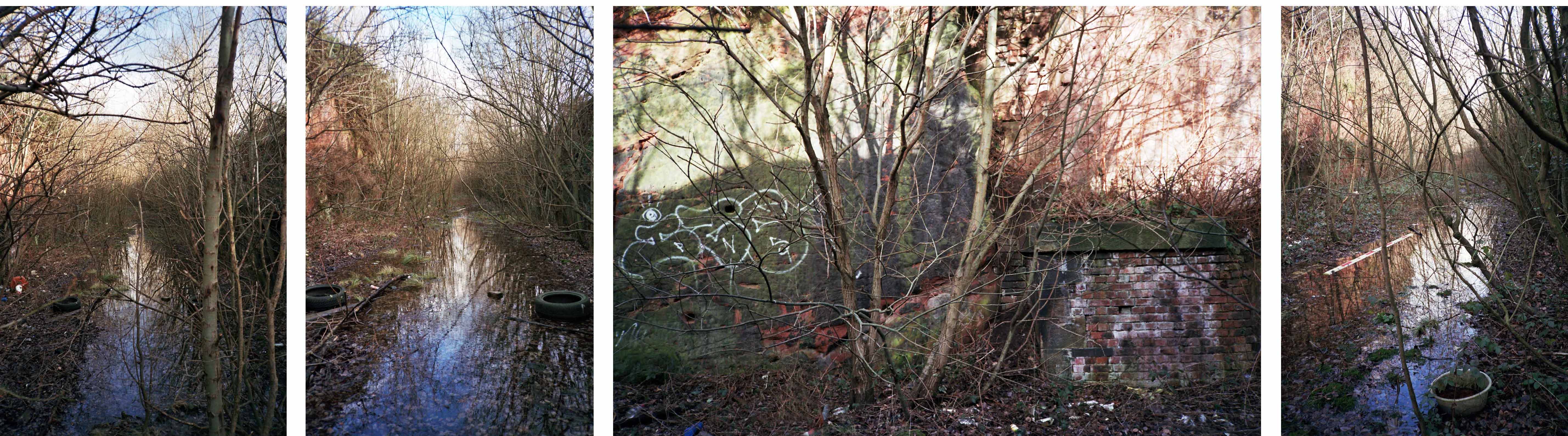
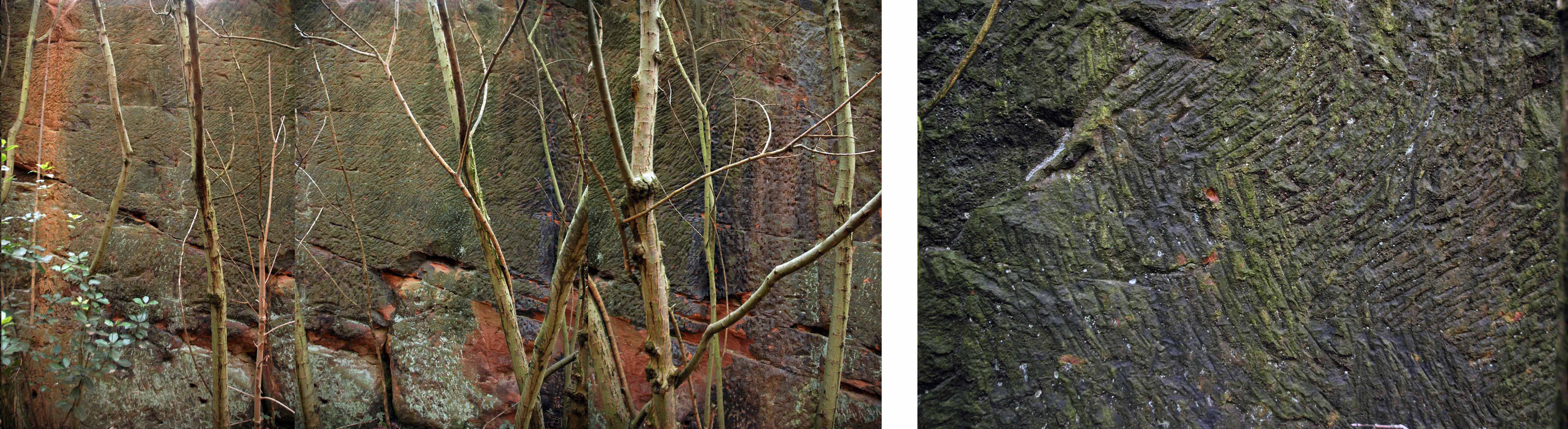
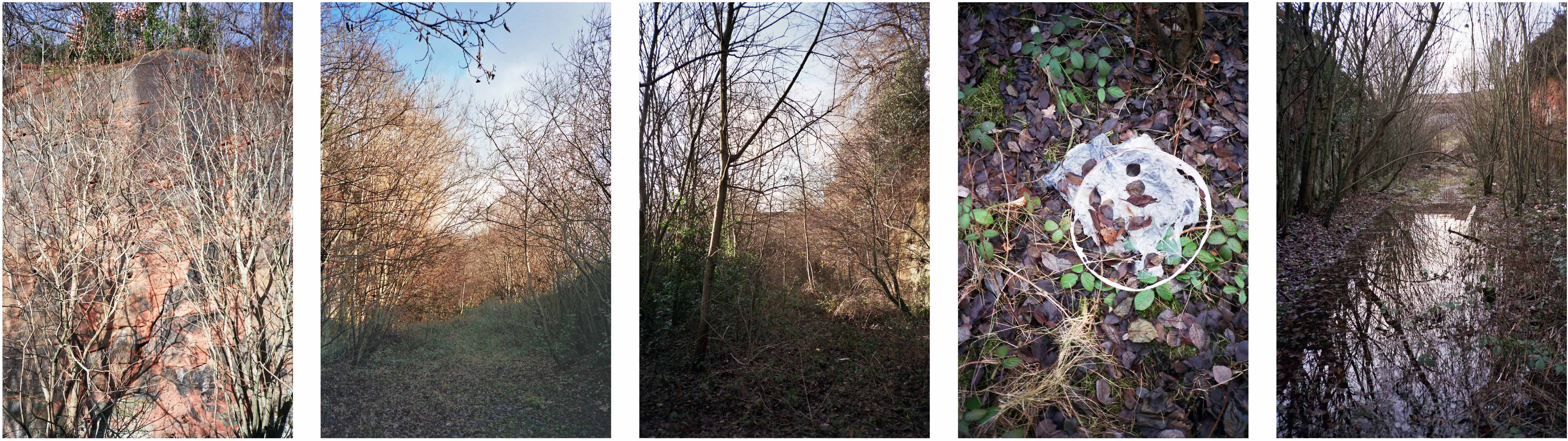
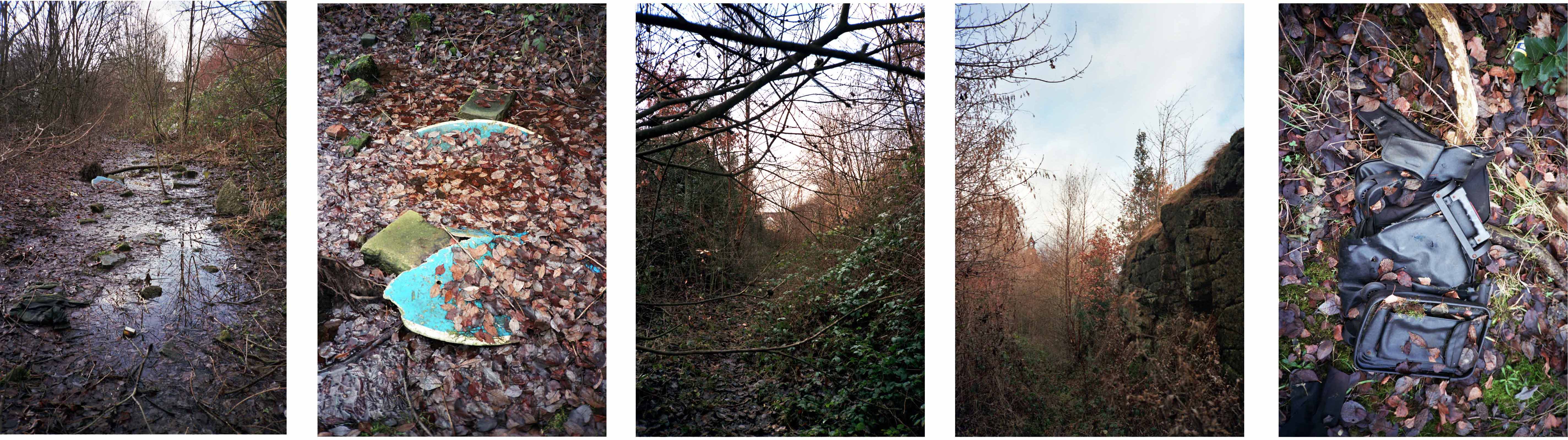
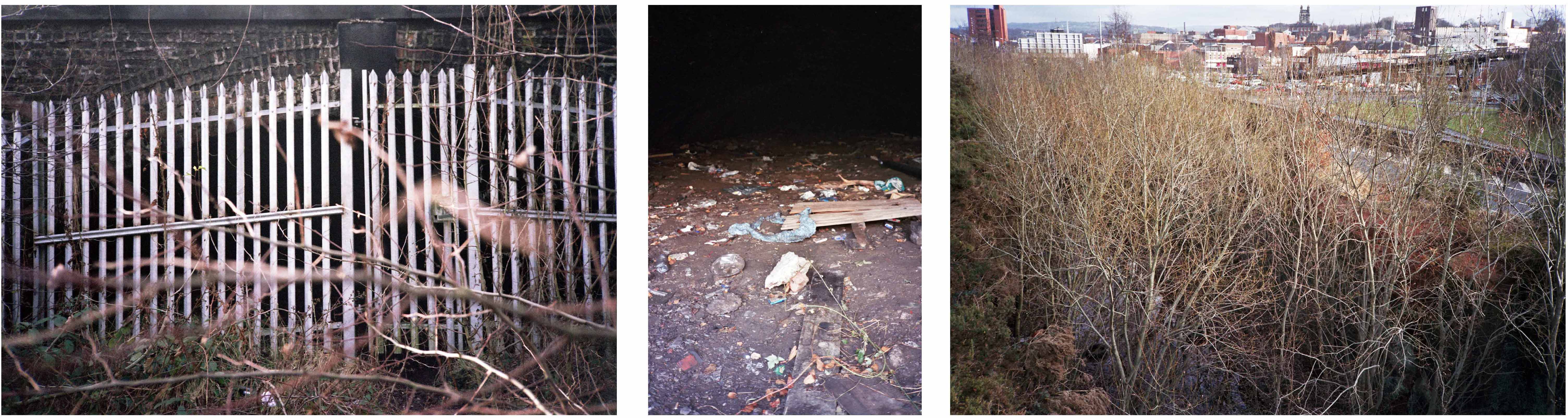
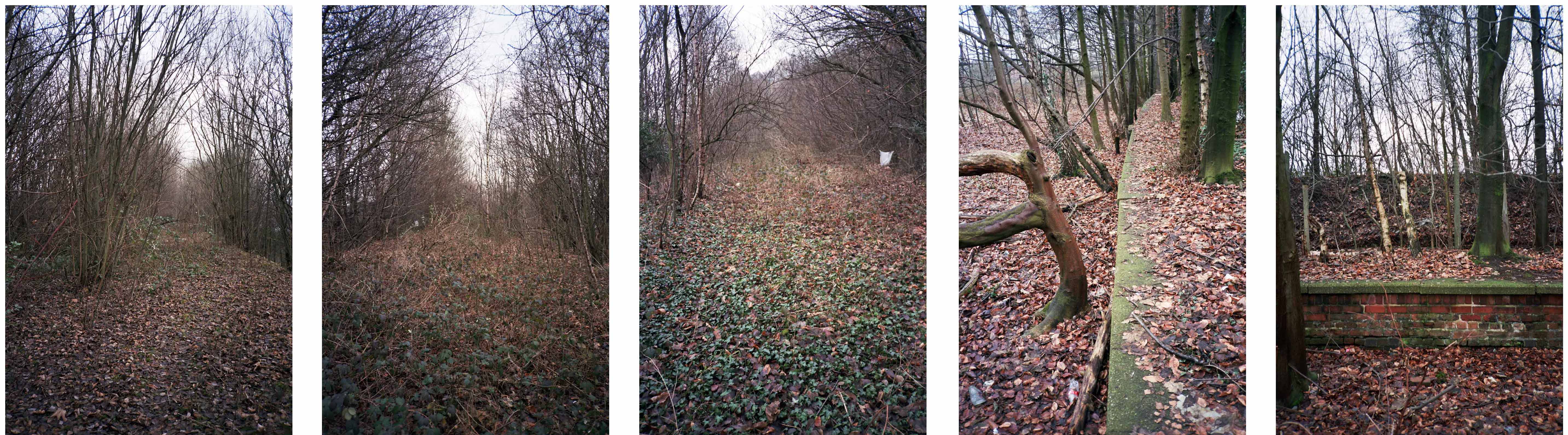
This is a journey I made on foot through bramble, puddle and scrub on a now disused line, cheek by jowl with a motorway and the passing crowd, blissfully unaware of its existence.

intro

page1

page2

page2a

page4

page5

page6a

page7

page8

page9

page9a

page11

page12

page13

page14

Balfron Tower London

The Balfron Tower Conservation Area was designated in October 1998 around the two residential blocks designed by Ernö Goldfinger for the London County Council in the 1960s. The Conservation Area boundary protects the listed Balfron Tower and Carradale House, and other buildings in the ‘Brownfield Estate’, including Glenkerry House, a community centre, shops and associated low-rise housing development.

The 27-storey Balfron Tower is Goldfinger’s first public housing project, and a precursor to his better known Trellick Tower in North Kensington. The neighbouring Carradale House and Glenkerry House sit within the landscaped areas developed at the same time. The Brownfield Estate, also known as the East India Estate, is now recognised as a fine example of planned 1960s social housing. Considered to be exemplary examples of the post-war housing schemes, Balfron Tower and Carradale House were listed in 1998 for their cultural & architectural merit.

This was my first visit, to a key building in the short history of modernist post war housing, currently something of a sleeping giant, awaiting Prince Charming’s kiss.

What will it awake to?

Tower Hamlets are mid consultation, as evidenced in this here document.

On an overcast and ever darkening afternoon, the rain cutting in on a chill wind, set against a slate grey sky, its surfaces and volumes were ever so slightly forlorn.

There is much to be done by way of regeneration, with the attendant issues of heritage, funding, gentrification and inevitably who lives where and why?

Everything you may care to almost know is here.

I walked around the area and took these pictures.

p1130830-copy

p1130831-copy

p1130832-copy

p1130833-copy

p1130834-copy

p1130835-copy

p1130836-copy

p1130837-copy

p1130838-copy

p1130839-copy

p1130840-copy

p1130841-copy

p1130842-copy

p1130843-copy

p1130844-copy

p1130845-copy

p1130846-copy

p1130847-copy

p1130848-copy

p1130849-copy

p1130850-copy

p1130851-copy

p1130852-copy

p1130853-copy

p1130854-copy

p1130855-copy

p1130857-copy

p1130858-copy


p1130860-copy

p1130861-copy

Holt Town Manchester – Part One

1785 Established by David Holt, and described as the only known example of a factory colony in Manchester, that is, an isolated mill complex with housing for the workers.

1794 Mills advertised for sale following the bankruptcy of David Holt and Company.

Things, as we know, have a tendency to come and go – ’twas ever thus.

A whole history of the area can be found here.

screen-shot-2017-02-08-at-12-40-07

River Medlock Holt Town

The area has seen a transition, in some two hundred year or more, from a leafy rural idyll, to smoke choked industrial hell and back again.

pollard-st

Pollard Street

dcs

Photographs from the Manchester Image Archive.

In 2014 I visited the site of the former Distillers Company, later Air Liquide UK, production had ceased. The factory was just about standing, litter and detritus strewn, unloved and unwanted, temporary home to the homeless.

The Industrial Revolution has been and gone – bye bye.

screen-shot-2017-02-08-at-20-51-31

There are plans for redevelopment, couched in the terms of the professional new-speak of the new urban renewalists.

The international design competition for Holt Town looked for a solution to the dilemma of providing a sustainable, distinctive, high density family-led residential community in close proximity of the Manchester regional centre.

Promising open green spaces and housing based on the traditional European perimeter block model, not a mention of a mill.

Possibly lasting a little longer than David Holt’s dream, and subsequent manifestations.

dsc_0139

dsc_0153

dsc_0137

dsc_0141

dsc_0142

dsc_0144

dsc_0147

dsc_0150

dsc_0157

dsc_0184

dsc_0160

dsc_0168

dsc_0171

dsc_0175

dsc_0185

dsc_0189

dsc_0190

dsc_0199

Transporter Bridge – Warrington

I set out one morning with a clear intent, to travel.

To travel to see the Warrington Transporter Bridge – of which I had only just become aware. Ignorance in this instance is not bliss, expectation and fulfilment is.

Guided by the detailed instructions on the Transporter Bridge Website I made my way from Bank Quay Station, mildly imperilled yet not impeded by caged walkways, tunnels, bridges, muddy paths and Giant Hogweed!

p1130109

p1130111

p1130164

p1130122

p1130127

Finally catching a glimpse of:

Warrington Transporter Bridge, also known as Bank Quay Transporter Bridge or Crosfield’s Transporter Bridge, across the River Mersey is a structural steel transporter bridge with a span of 200 feet. It is 30 feet wide, and 76 feet above high water level, with an overall length of 339 feet. It was built in 1915 and, although it has been out of use since about 1964, it is still standing. It was designed by William Henry Hunter and built by William Arrol and Co.

bridge_in_use_1951

The bridge in use 1951.

It is till standing today, and was built to despatch finished product from the cement plant that had been built on the peninsula. It was originally used to carry rail vehicles up to 18 tons in weight, and was converted for road vehicles in 1940. In 1953 it was modified to carry loads of up to 30 tons.

The bridge is designated by English Heritage as a Grade II* listed building, and because of its poor condition it is on their Heritage at Risk Register. The bridge is protected as a Scheduled Ancient Monument.

My thanks to the Friends of the Warrington Transporter Bridge for the historical information and archive image.

Here are my photographs expectations more than fully fulfilled an epic structure and a triumph of engineering, go take a look real soon.

p1130129

p1130133

p1130134

p1130135

p1130136

p1130144

p1130145

p1130148

p1130149

p1130158

p1130166

Wavertree Liverpool – Pathfinder

How does the modern world treat the past?

With a disdain bordering on a sociopathic destructive indifference it appears.

New Labour with an eye to rehouse the housed, tinned up hundreds of homes prior to demolition and redevelopment. They were and still are solid late Victorian terraces possibly in need of improvement – during the 1990’s, period housing stock was refurbished with central government funding, through a system of easily obtained grants. Improving the living conditions of many, maintaining the structures, and  supporting the local self-employed building trade.

So several years down the line, I visited the streets of Wavertree discussed in Owen Hatherley’s article of 2013.

Little or nothing has changed there are some tenanted houses, interspersed between the blanked out windows in sadly deserted streets, save the two camera shy free runners, who had lived and played in the area for some seven years.

p1090427-copy

When one door closes another door closes.

If working-class areas are to defend themselves, they need confidence, both in themselves and in the places they live, otherwise the whole grim process will go on, with councils making the same mistakes and the same lives being destroyed, without interruption.

p1090408-copy

p1090409-copy

p1090410-copy

p1090412-copy

p1090413-copy

p1090414-copy

p1090415-copy

p1090416-copy

p1090417-copy

p1090418-copy

p1090419-copy

p1090420-copy


p1090423-copy

p1090424-copy

p1090425-copy

p1090427a-copy

Kirklees College – Huddersfield

Kirklees College started life as Huddersfield Infirmary in 1831 up until 1967 when the Ramsden Technical College moved in, they paid £105,000 for the site. 

In September 1968 the first students began lectures and the first new building on the site opened in 1969. The main new block was built in 1971 – the year the college became Huddersfield Technical College. In 2008 Huddersfield Technical College merged with Dewsbury College to form Kirklees College and relocated in 2013.

The campus incorporates 10 buildings over a 6.1 Acre site ranging from the old hospital complex to modern blocks of classrooms. 

p1080524

Some of the buildings have been used for the filming of the dramas Black Work, Remember Me where they changed some areas to be a care home, a hospital and a police station and the film Extremis. 

The site is owned by Wiggett Construction Group, who have now confirmed they want to demolish the 1970s college buildings to make way for a Lidl supermarket.

Thanks to Derelict Places – they went inside, I didn’t, I don’t do that sort of thing.

24873199691_49c901c0f0_c

I walked the lengthy perimeter, bobbing in and out of nooks and crannies in search of nothing in particular. Chatted to a Kirklees employee who had worked at the site, he regretted its closure and passing.

“This building had character, it was great to work here – now it’s going to be a supermarket.”

A curious amalgam of municipal classicism and hard edged 70s modernity, presided over by a sombre, care worn and  patinated Edward VII.

“Worth a few bob, a bugger to shift.”

p1080517-copy

p1080518-copy

p1080521-copy

p1080522-copy

p1080523-copy

p1080531-copy

p1080534-copy

p1080538-copy

p1080545-copy

p1080546-copy

p1080547-copy

p1080550-copy

p1080551-copy

p1080553-copy

p1080554-copy

p1080557-copy

p1080558-copy

p1080561-copy

p1080562-copy

p1080564-copy

p1080565-copy

p1080567-copy

p1080569-copy

p1080574-copy

p1080576-copy

p1080577-copy

Ashton Moss – Expo 2025

Why are we here?

Screen Shot 2016-09-03 at 13.02.21

A heady cocktail of capital, coal, cotton, cultivation, commerce and cricket created you.

The end of the age of celery heralded the construction of a new landscape of consumption.

Spoil and soil from the cuttings of the M60, added to by Etihad detritus created an elevated mound some hundred feet in height, across an area of seventeen hectares.

Where are we going?

Playing golf has been permanently postponed, the proposed light industrial units were knocked back by local authority planning officers, and residents’ objections.

So let’s get off to the Expo!

I took myself off there, take a look around, get a feel for the place. Currently the province of rebel dog walkers and guerrilla gardeners, I was informed that the rights of way are regularly blocked by an employee of Cordingley’s Estate Agents, who closes the gaps in the perimeter fencing, subsequently photographing his wiry handiwork. The gaps are then promptly reopened and walkways reestablished.

P1080223

Short eared owls have been spotted.

I was told of the legend concerning Peg’s lantern – fearing for the well being of her son, Peg wanders the dark lanes in search of the errant offspring, later found drunk in a ditch.

This area is a locus of deep, deep energies and histories, monkey with it at your peril.

These are observations from a hill:

P1080237

P1080246

P1080239

P1080236

P1080219

P1080216

P1080207

P1080198

P1080197

P1080195

P1080194

P1080193

P1080191

P1080189

P1080184

P1080181

P1080179


Found Art

For more years than I care to remember I have had an interest in Found Art.

The naturally occurring collision of printed material, the unseen hand and weather.

Our streets are literally littered with the stuff.

Conscious of the work of Kurt Schwitters, Hannah Hoch, Jasper Johns and Robert Rauschenberg, I’m conscientiously out and about in search of the unconscious.

something-or-other-1922

getimageexe1363235610983

1987_Web

header_rauschenberg

Here’s a sample of my findings so far:

P1060361 copy

P1060413 copy

Screen Shot 2016-08-09 at 12.47.51

Screen Shot 2016-08-09 at 12.48.18

Screen Shot 2016-08-09 at 12.48.46

Screen Shot 2016-08-09 at 12.49.21

Screen Shot 2016-08-09 at 12.54.52

Screen Shot 2016-08-09 at 12.55.17

Screen Shot 2016-08-09 at 12.55.30

Screen Shot 2016-08-09 at 12.55.49

Screen Shot 2016-08-09 at 12.56.11

Screen Shot 2016-08-09 at 12.56.27

Screen Shot 2016-08-09 at 12.56.39

Screen Shot 2016-08-09 at 12.56.56

Ashton under Lyne – The Dustbin Demolished

For over thirty year you have weathered the storms of public ignominy.

The unloved Dustbin – repository of Tameside Council’s officers and offices.

Last time I was here you were there.

Screen Shot 2016-08-01 at 13.07.59

Then along came the ‘dozers.

DSC_0001 copy

DSC_0002 copy

DSC_0004 copy

DSC_0005 copy

DSC_0008 copy

DSC_0009 copy

DSC_0016 copy

DSC_0018 copy

DSC_0019 copy

DSC_0023 copy

DSC_0022 copy

Vision Tameside has left you in tiny pieces.

– poked out your eyes and stamped you into the ground.

P1070145 copy

P1070148 copy

P1070138 copy

P1070152 copy

flag

Needwood Close – Collyhurst

Deep in the heart, just on the edge of central Manchester, there exists a dilemma.

Once a place of full employment and home occupation, time has not been kind to Collyhurst. Work is scarce and the area blighted by a reputation for crime and social problems. Yet it sits by an area of inner city wealth, economic expansion and a growing professional class.

The plan is to expand this growth outside of the fringes of city and into north Manchester, since 2008 this has been the stated aim of the local authority. Tram stops, academies, and retail parks apart, change seems slow to arrive.

Screen Shot 2016-06-17 at 13.54.30

There is a chronic shortage of public funding and seemingly an absence of private capital and speculative development – life is elsewhere.

In the mean time there are properties tinned up awaiting a new dawn.

Needwood Close is one such example.

P1040450 copy

P1040451 copy

P1040453 copy

P1040458 copy

P1040459 copy

P1040460 copy

P1040465 copy

P1040466 copy

P1040468 copy

P1040469 copy

P1040476 copy

P1040477 copy

P1040480 copy

P1040483 copy


Lost and Found – Portwood

Ὁ βίος βραχύς,ἡ δὲ τέχνη μακρή,ὁ δὲ καιρὸς ὀξύς,ἡ δὲ πεῖρα σφαλερή,ἡ δὲ κρίσις χαλεπή.

30cc0c813d69ba409723f2b3d9bc5dd0

I have no wish to take issue, with the finer thoughts and feelings of Deborah A. Ten Brink.

However.

There is a sense that our earthly endeavours, may serve to assist us in avoiding the void, the cold dark inevitability of eternity, that everyday here today, gone tomorrow feeling.

However.

Nothing lasts forever, except forever and nothing.

The cherished memories, condensed in a fraction of a second, rendered corporeal in photographic emulsion, carefully stored in family albums.

Are but a trick of light, a slight of hand, heart and mind.

Blink and they’re gone.

Blink again and you’re gone.

P1050559 copy

Here they were.

P1050558 copy

Here they are.

P1050525 copy

P1050526 copy

P1050527 copy

P1050528 copy

P1050530 copy

P1050531 copy

P1050532 copy

P1050533 copy

P1050534 copy

P1050535 copy

P1050536 copy

P1050537 copy

P1050538 copy

P1050539 copy

P1050541 copy

P1050542 copy

P1050543 copy

P1050544 copy

P1050545 copy

P1050546 copy

P1050547 copy

P1050548 copy

P1050549 copy

P1050550 copy

P1050551 copy

P1050552 copy

P1050553 copy

P1050554 copy

P1050555 copy

P1050556 copy

P1050557 copy


Collyhurst

It’s the end of the road, for the middle of the street.

Needwood Close Collyhurst is closed.

An area that has suffered the slings, swings and arrows of failed PFI bids, absent partners and putative city fathers.

2012

After missing out on £252m of state investment when the Government cut the Homes and Communities Agency budget, Manchester is now trying another approach to deliver the much needed regeneration of Collyhurst.

As reported by Manchester Confidential

2014

The masterplan is part of Manchester Place, a joint initiative between Manchester City Council and the Homes & Communities Agency that looks to create a pipeline of development-ready sites to help the city meet its ambitious target of creating 55,000 new homes by 2027 as set out in the Manchester Residential Growth Prospectus.

Manchester Place will work with investors, such as Manchester Life, a £1bn, partnership between Manchester City Football Club and Abu Dhabi United Group, the privately owned investment company which also owns Manchester City Football Club, to bring 6,000 new homes to east Manchester over the next 10 years.

As outlined in Place North West

2016

Hartfield Close – Manchester

Screen Shot 2016-05-19 at 10.23.35

It’s not unusual.

To discover something, whilst looking for something else.

For me, it’s almost a way of life.

I was in the area to look around the nearby Brunswick Parish Church.

Just around the corner was Hartfield Close a low, white two-storey terrace of six homes, each with a small fenced garden to the rear, facing onto a large open grassed area,  backed by further housing.

It was difficult to discern whether they were empty or inhabited – two seemed to have residents. Curious in a city with a growing population and a demand for vacant property. Are they in limbo, between redevelopment, refurbishment or CPO?

They have ben offered to the market within the last year.

Screen Shot 2016-04-22 at 12.10.46

At a value way below comparable properties, currently they seem to be adrift in an uncaring world, a tiny lost island of Municipal Modernism.

P1030819 copy

They deserve a little care an attention.

We all do.