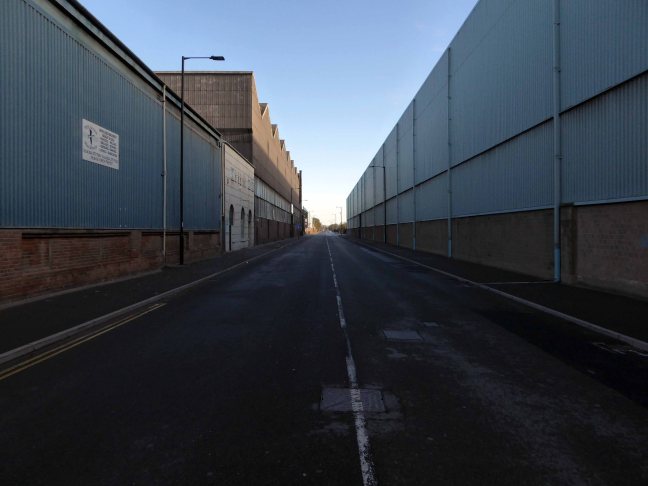
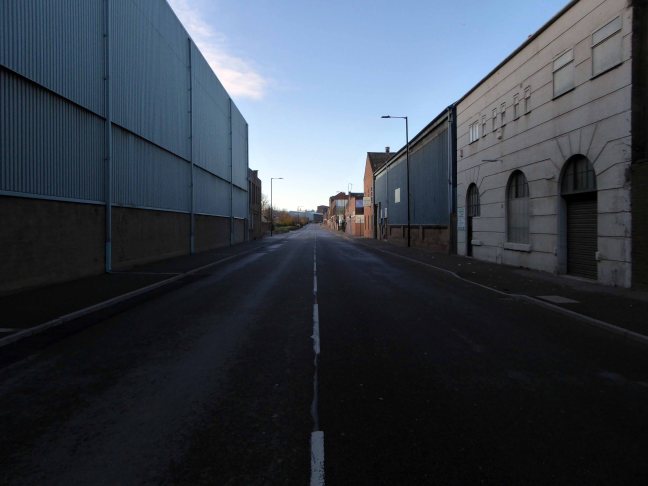
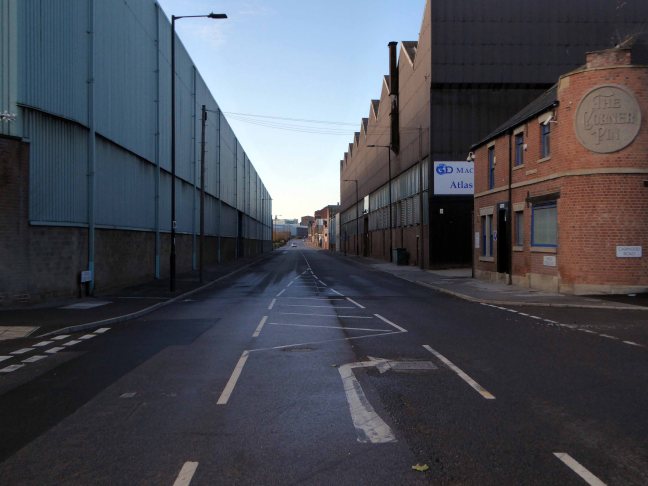
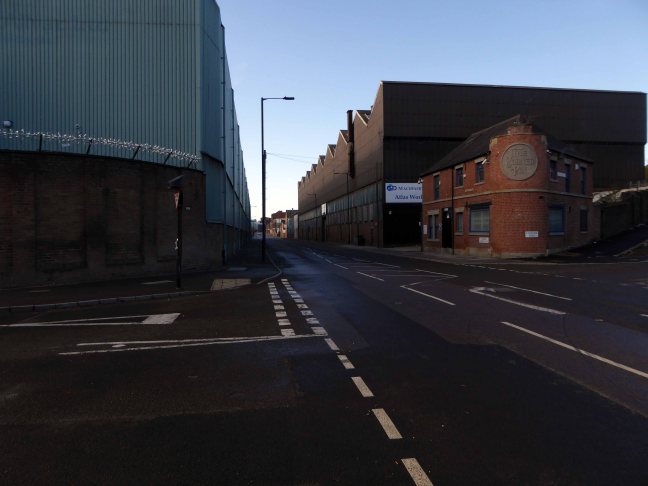
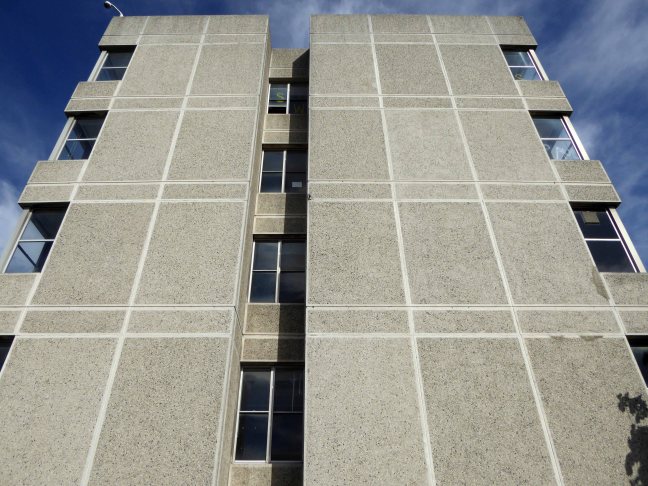
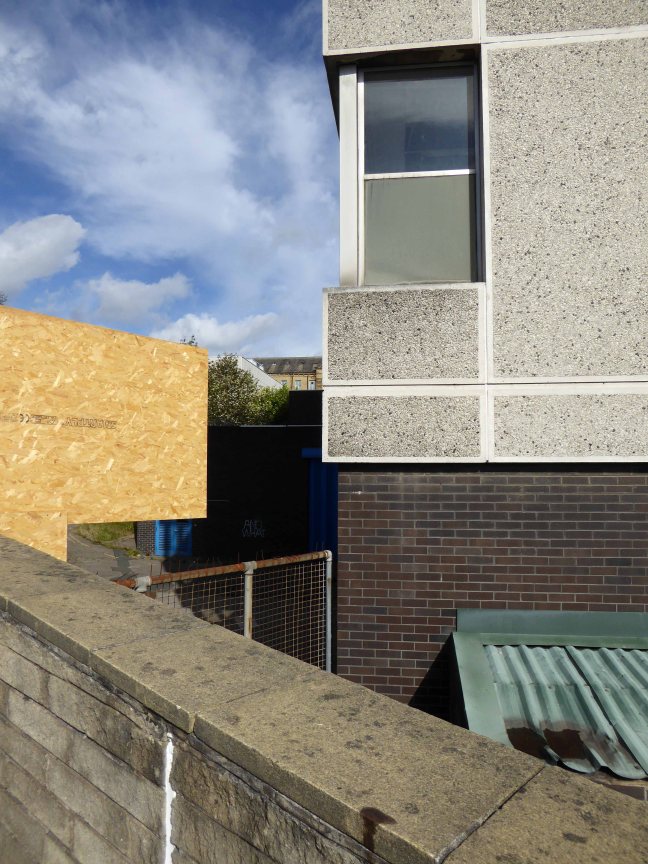
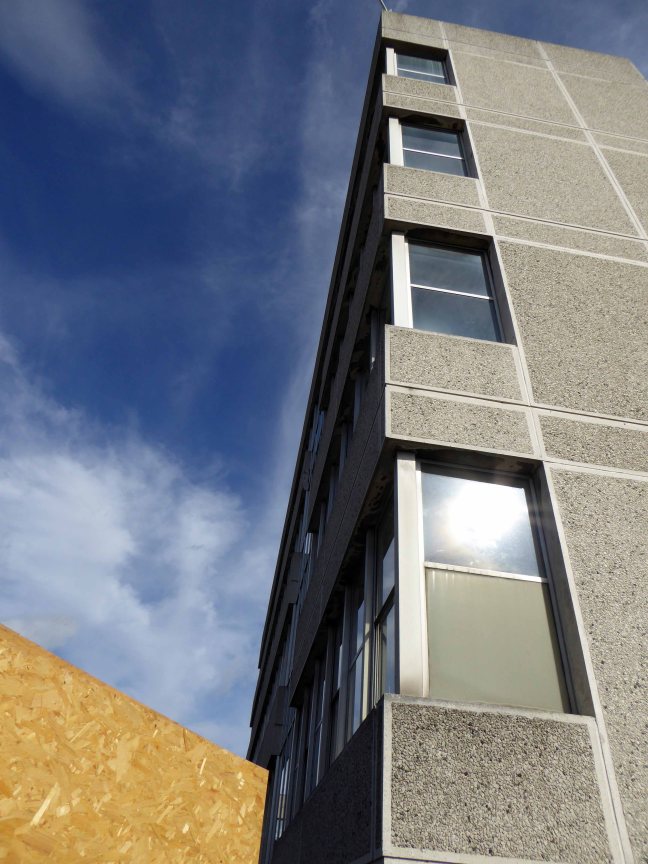
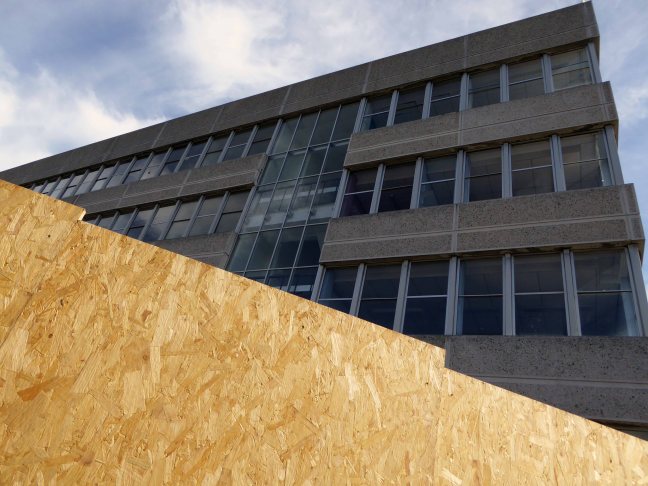
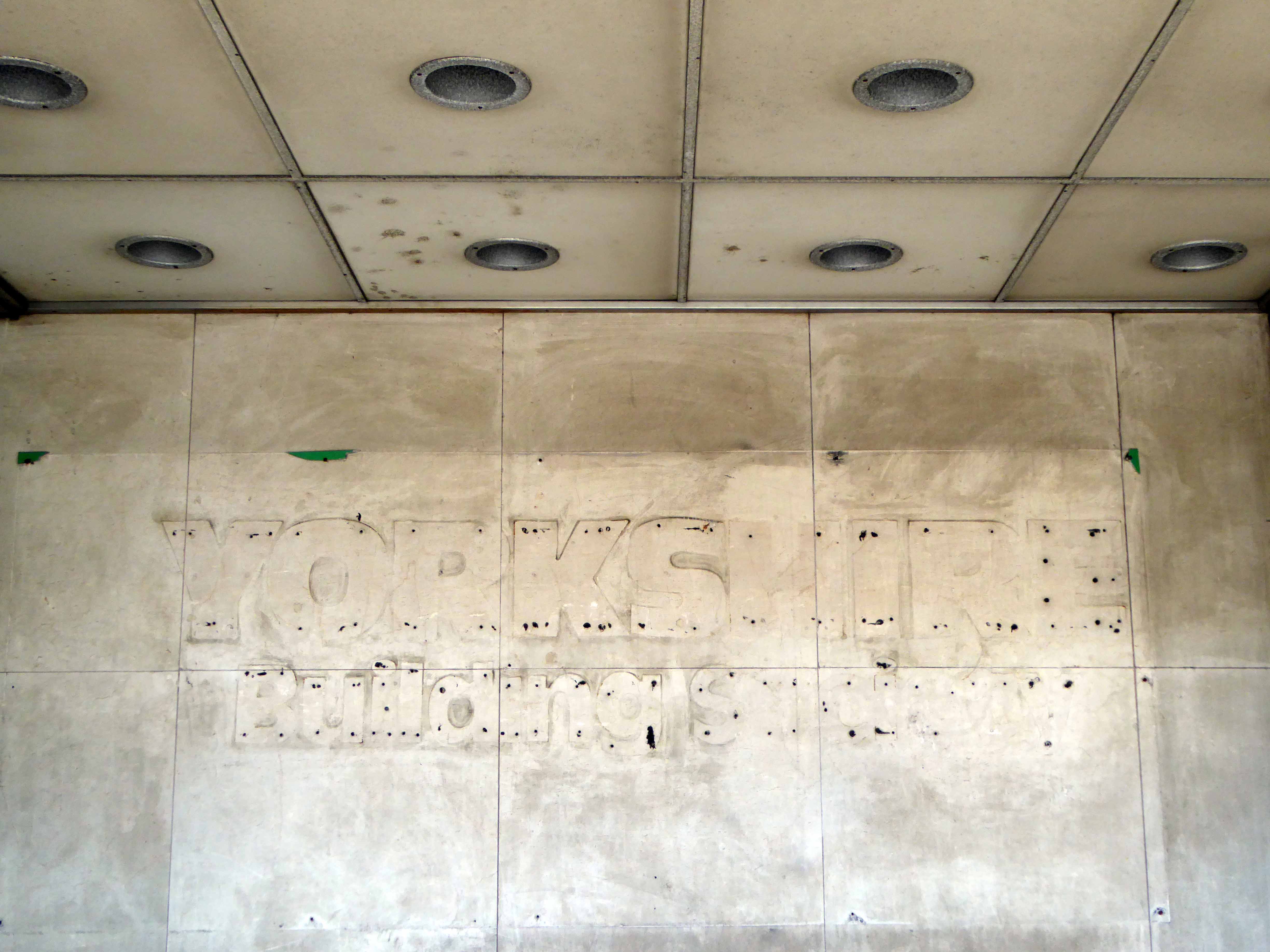
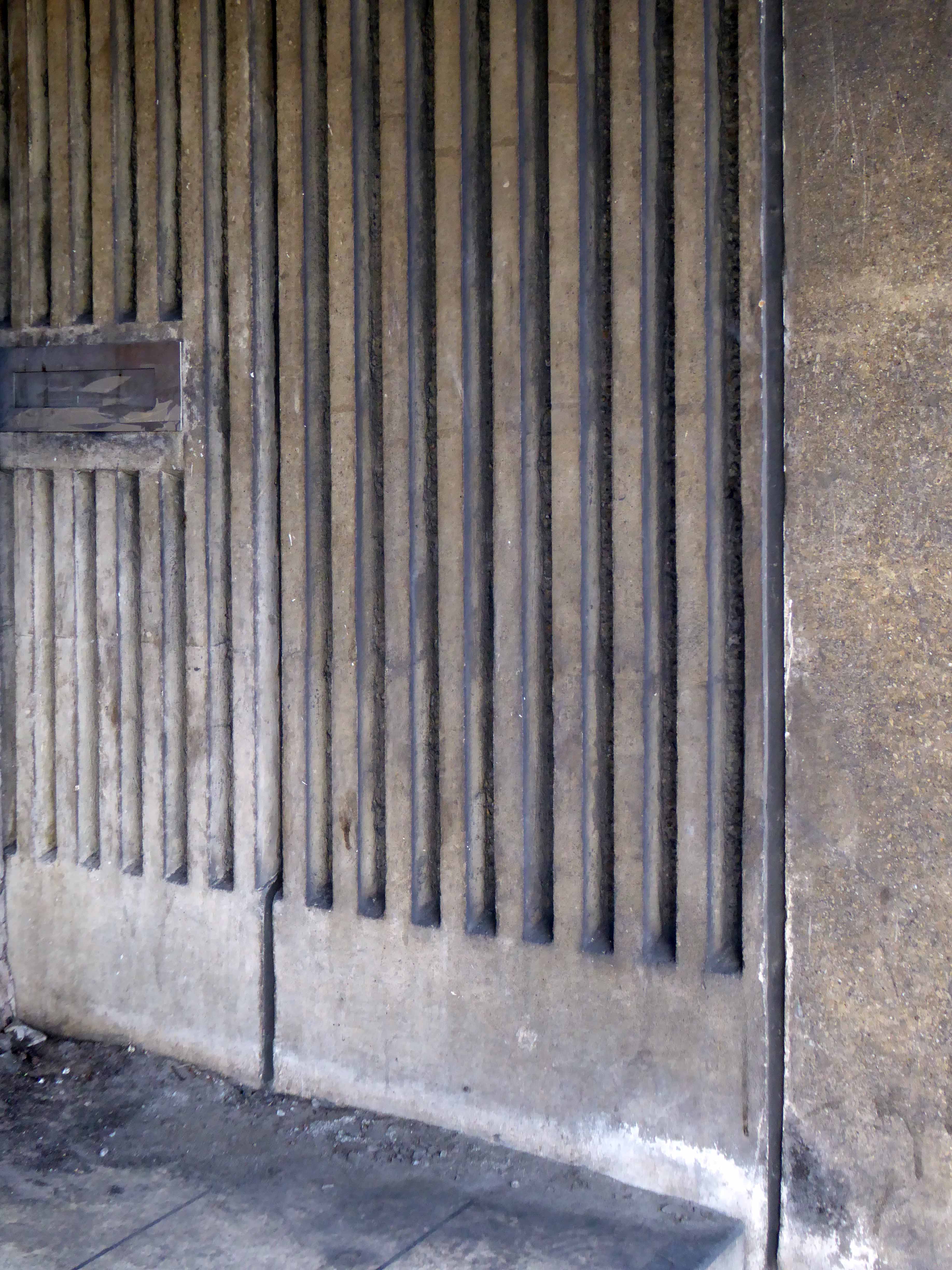
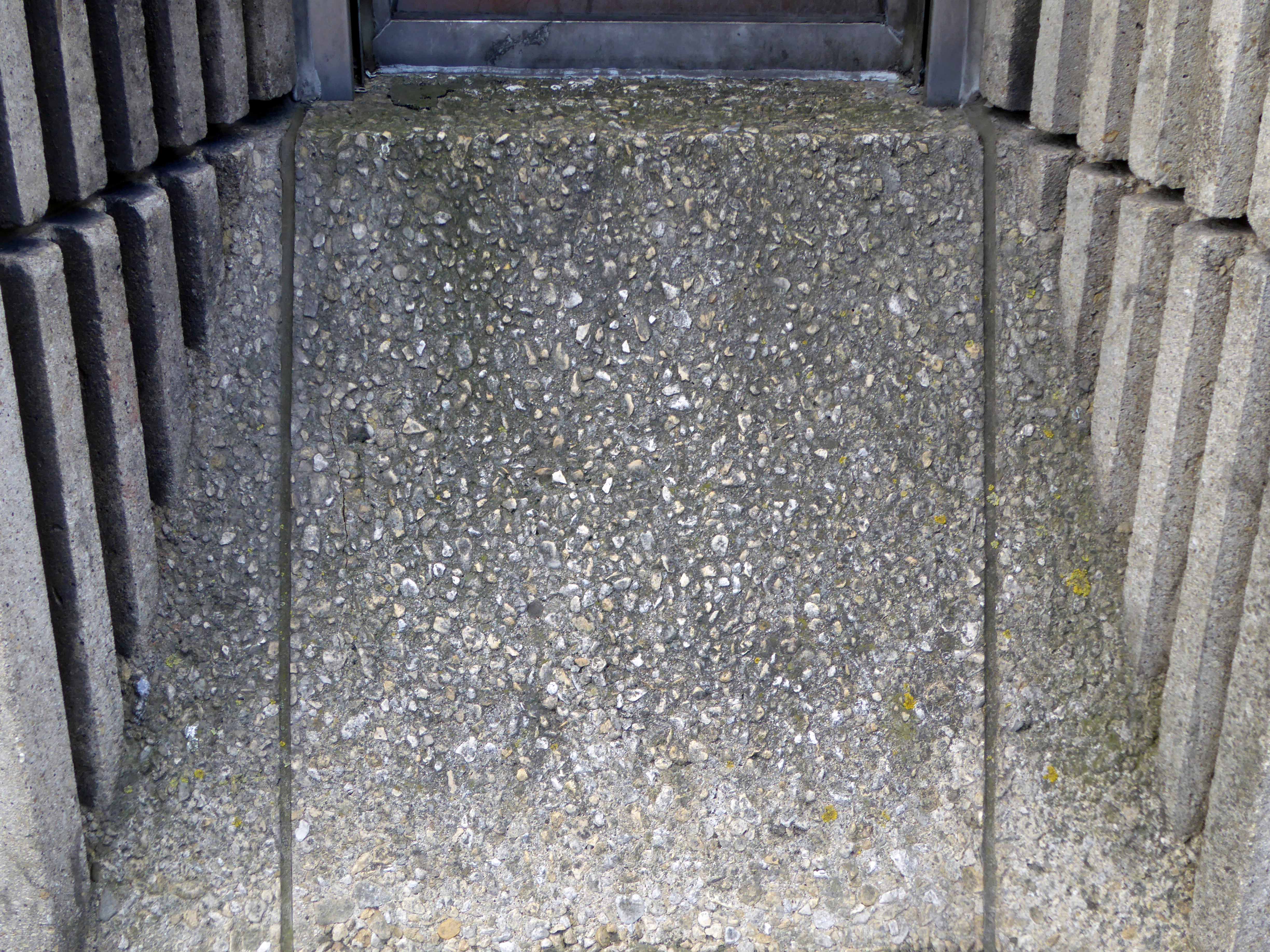
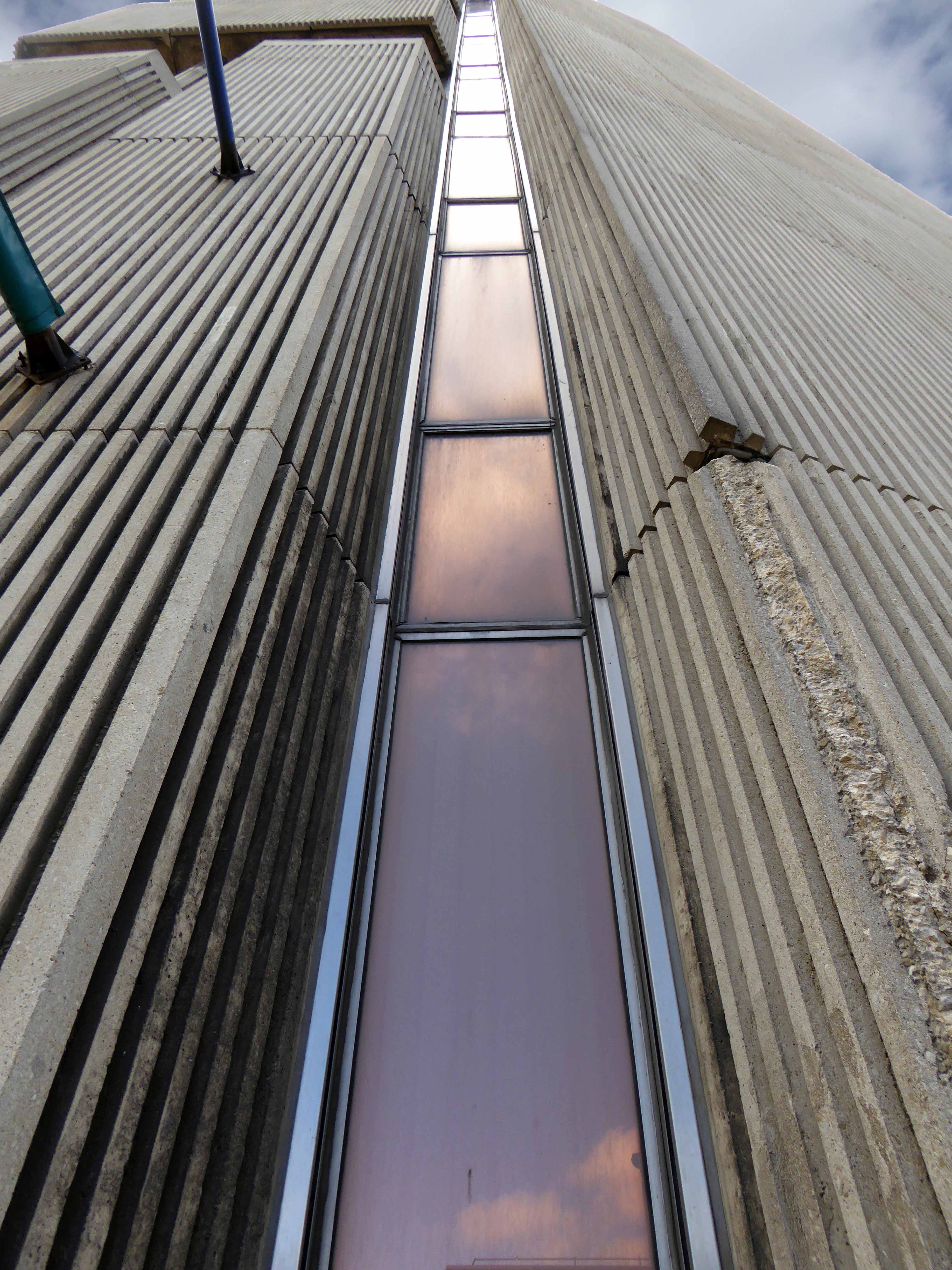
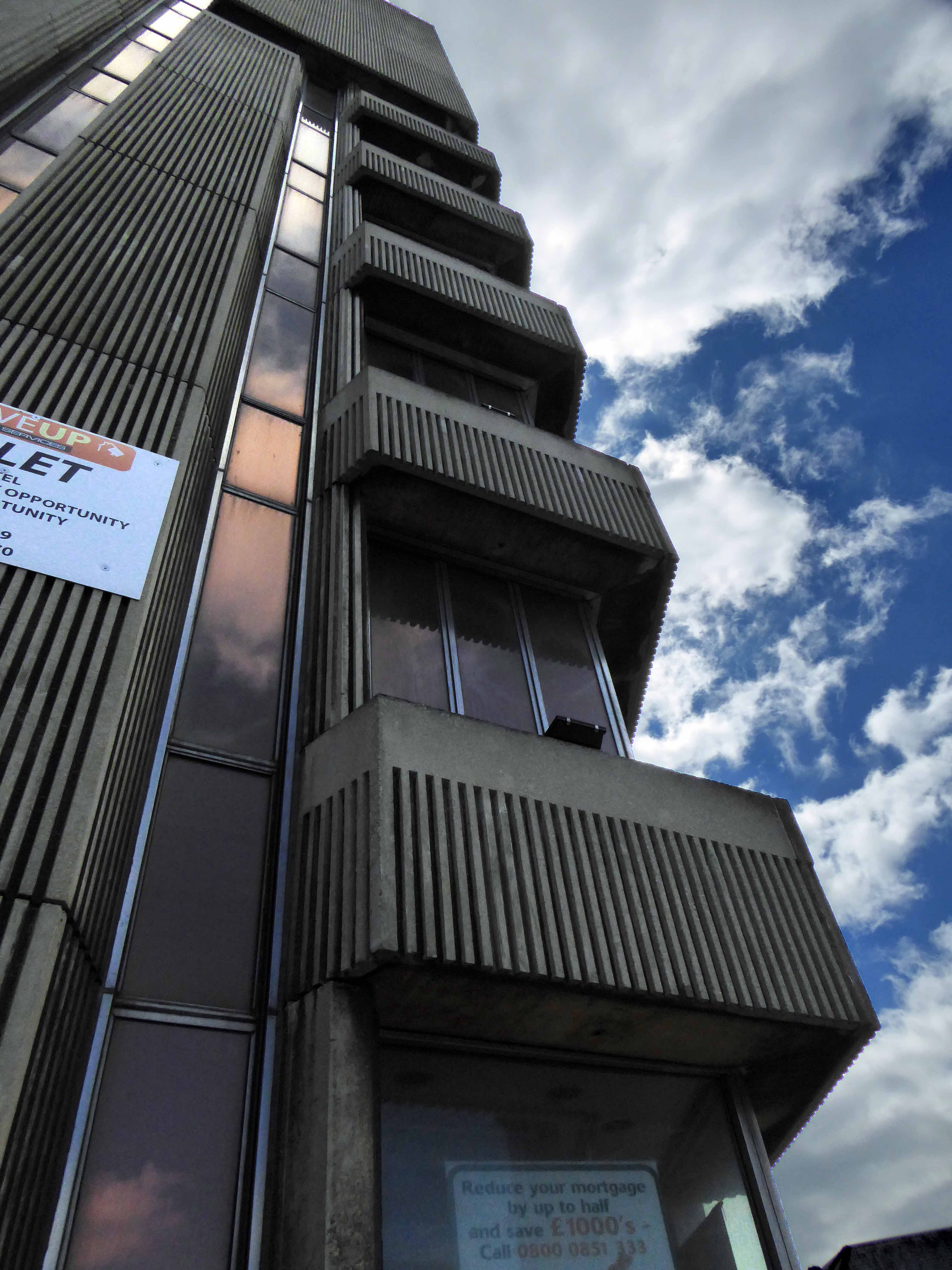
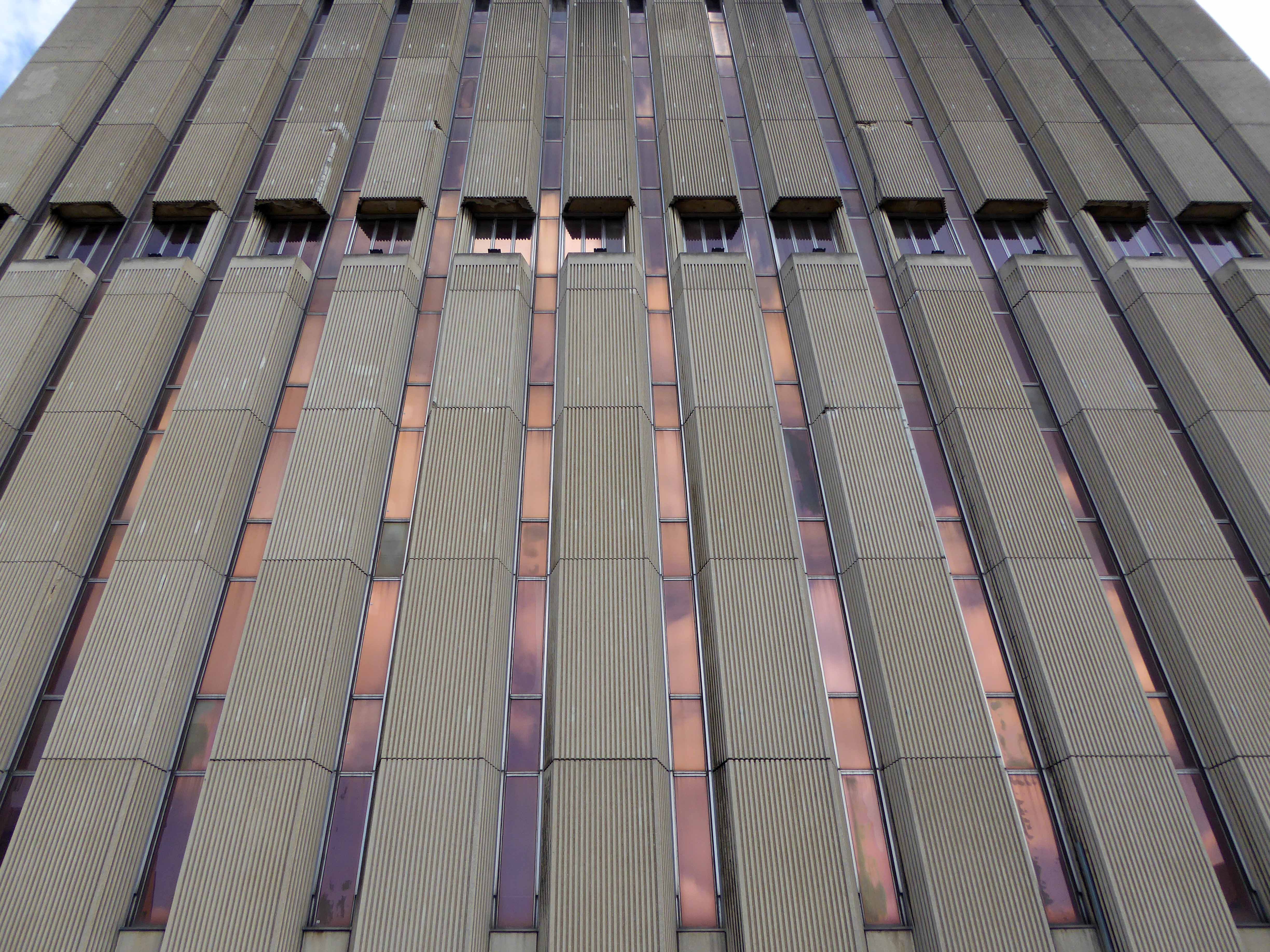
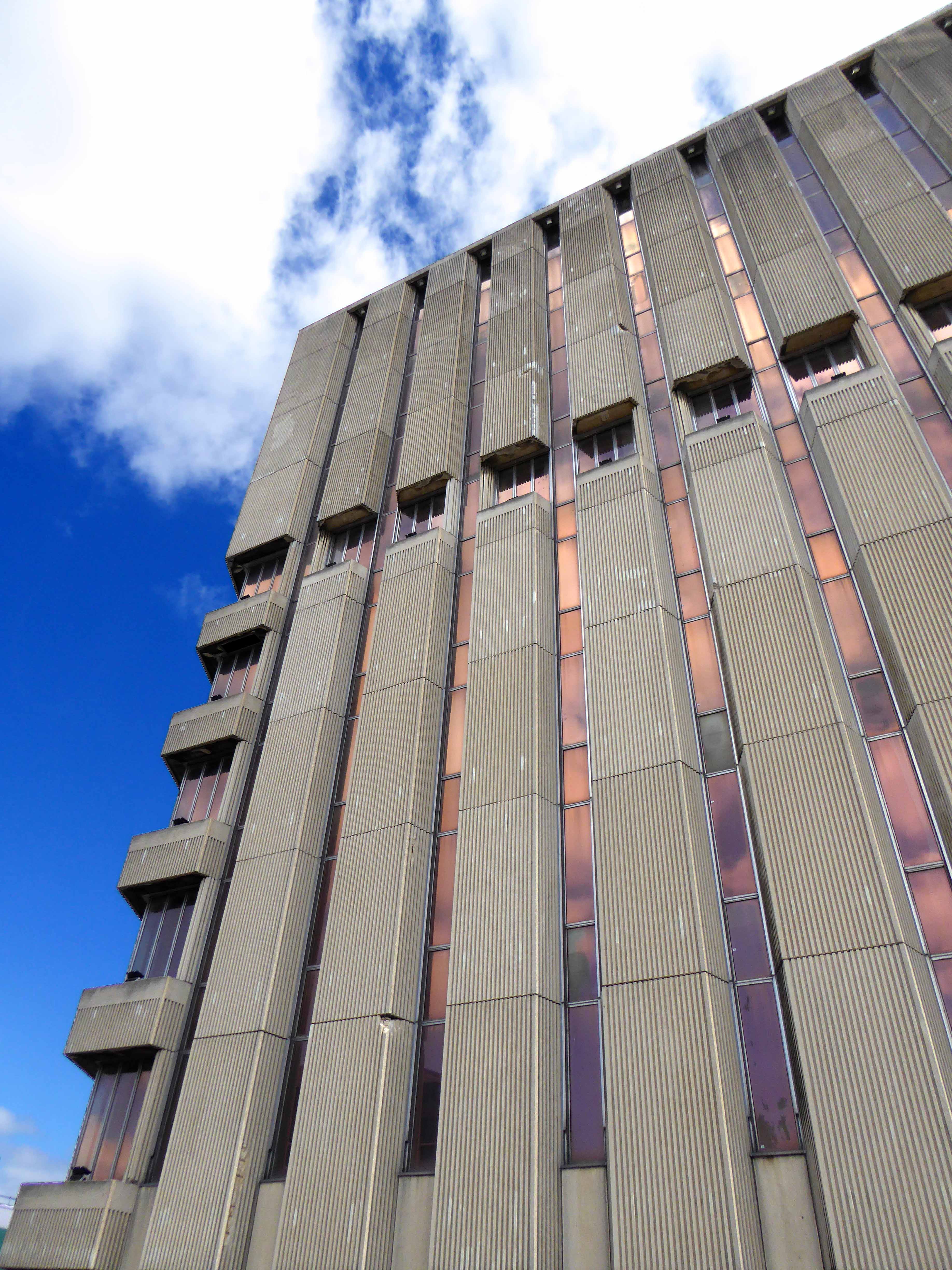
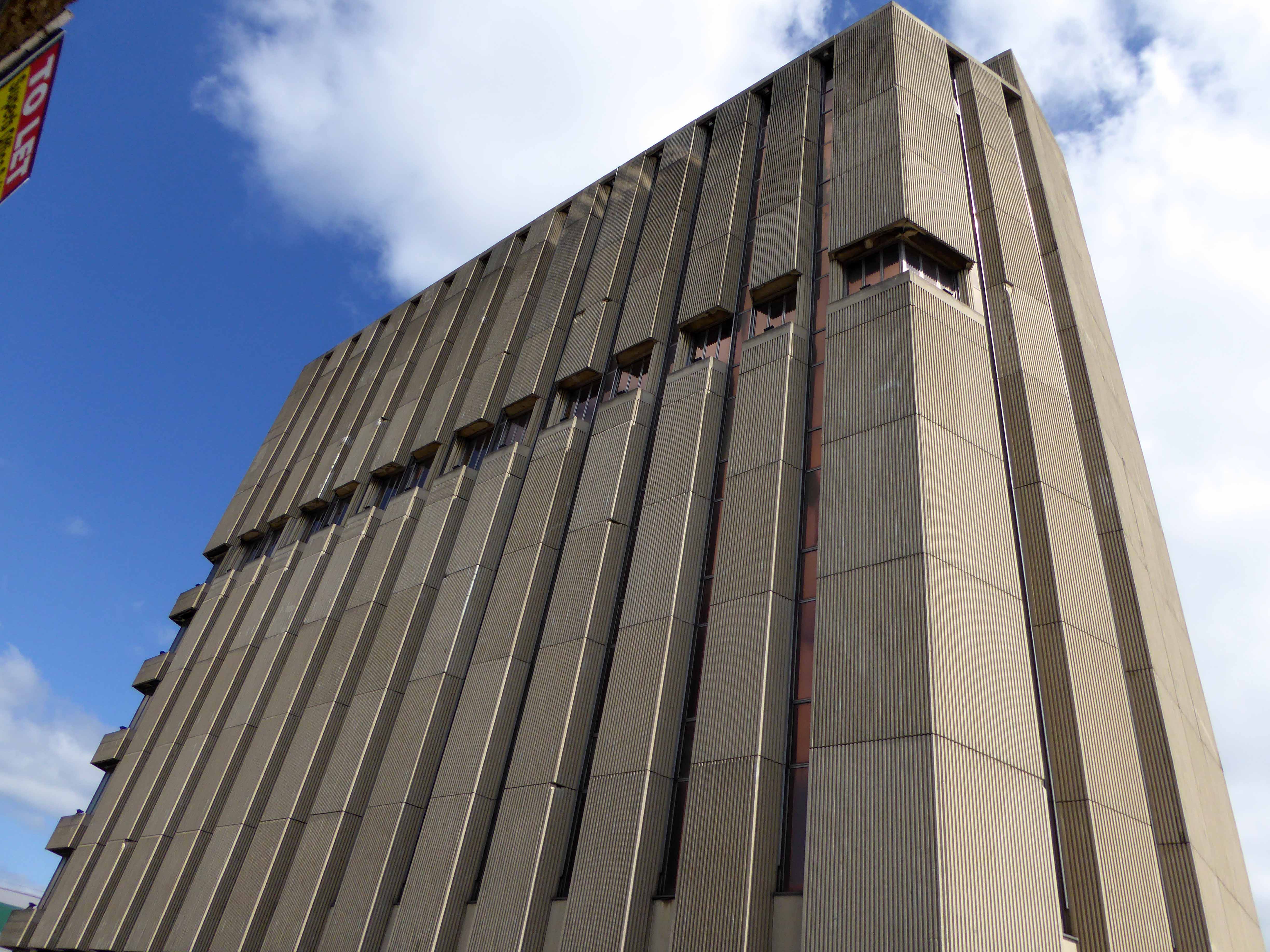
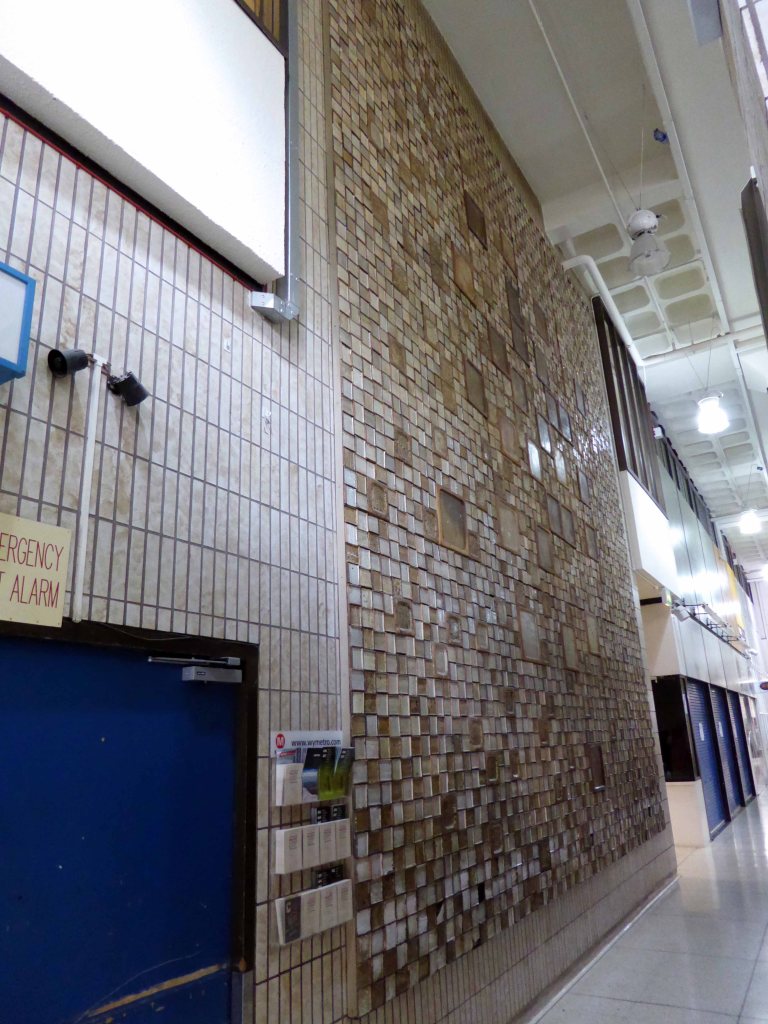
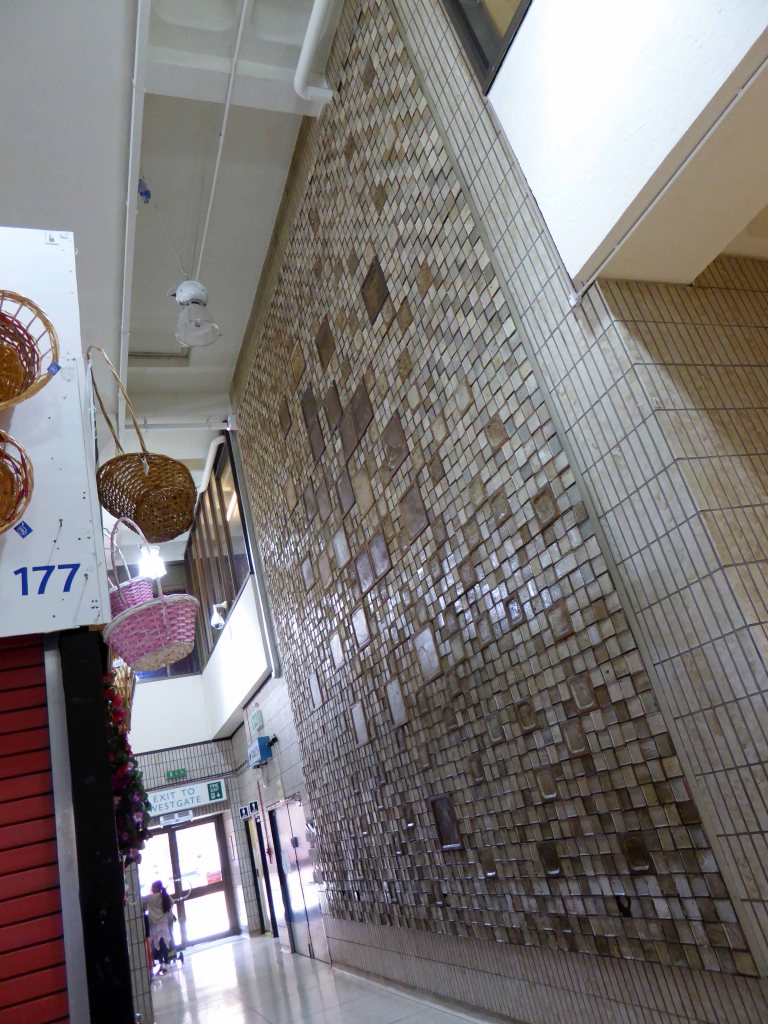
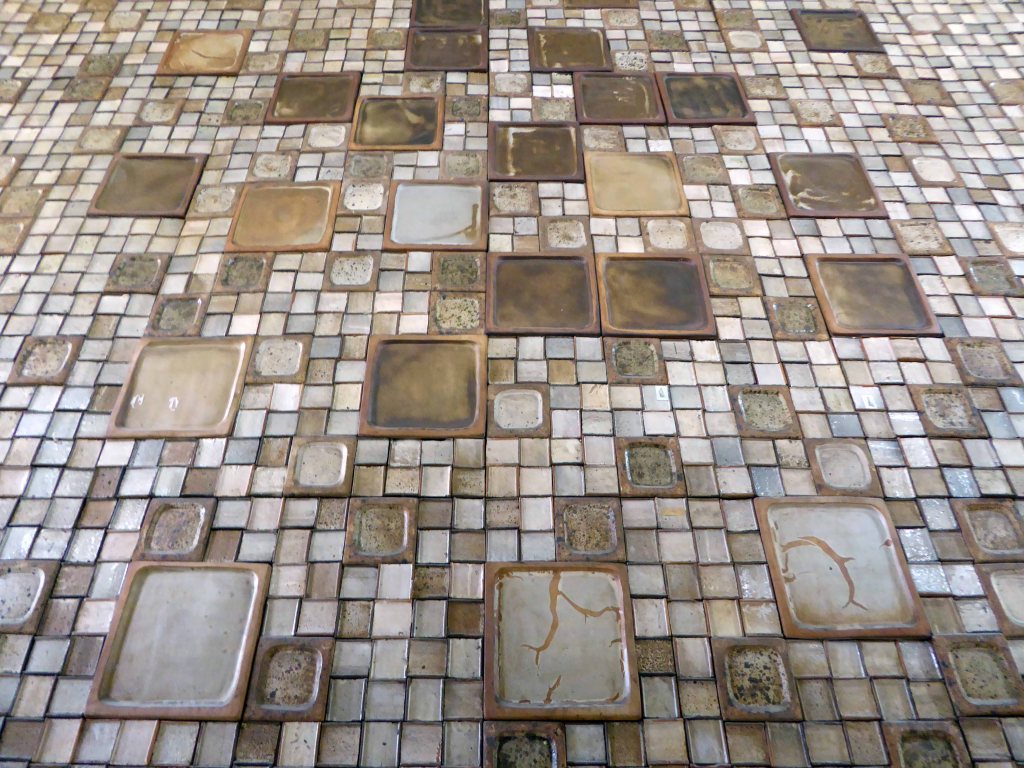
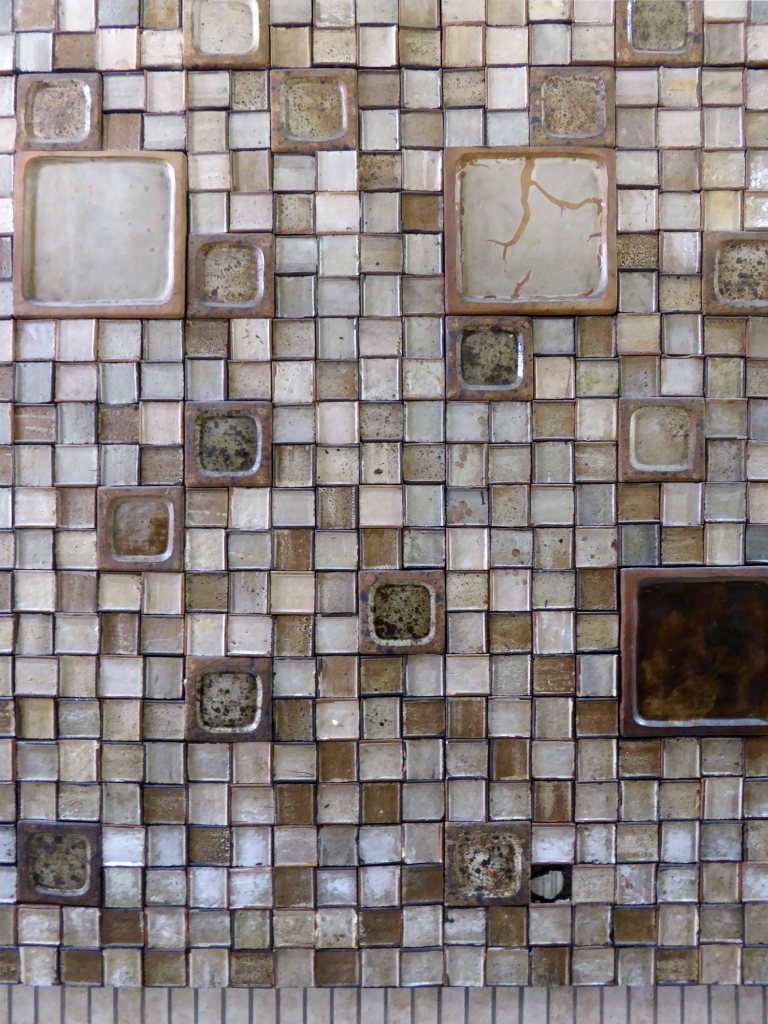
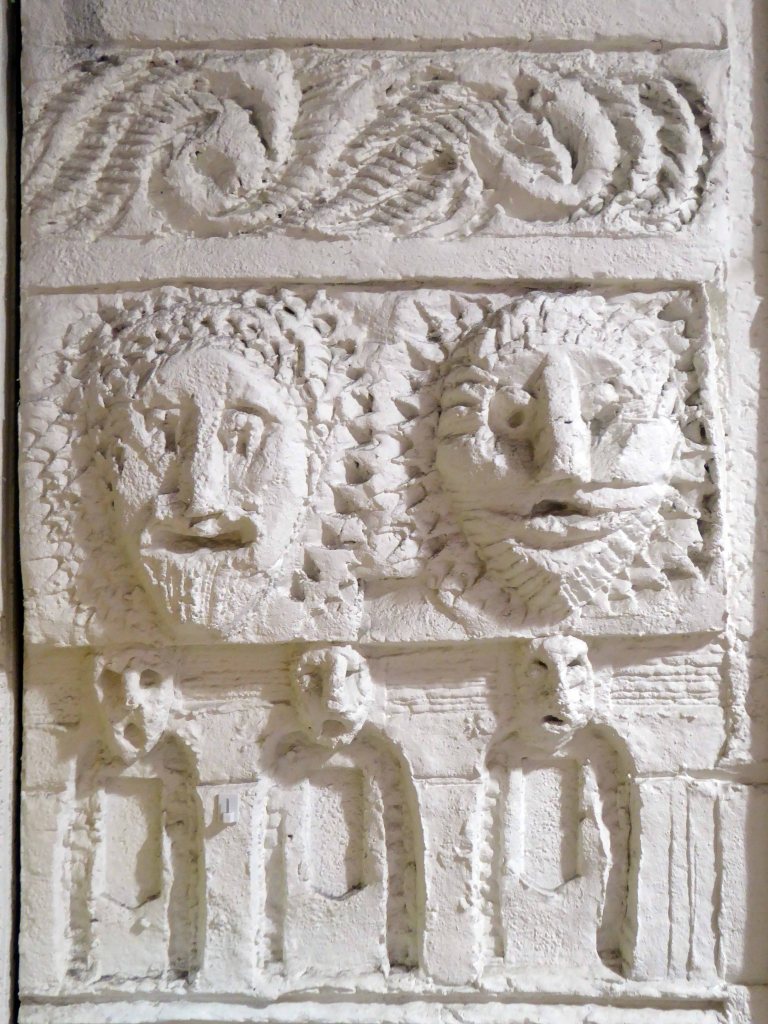
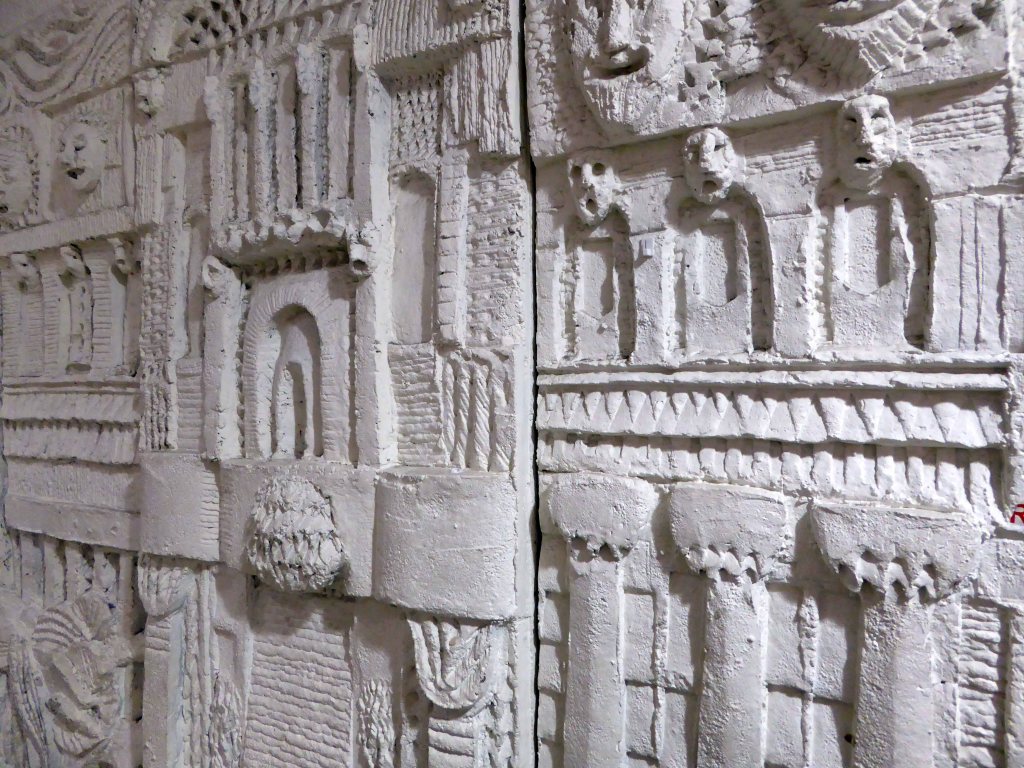
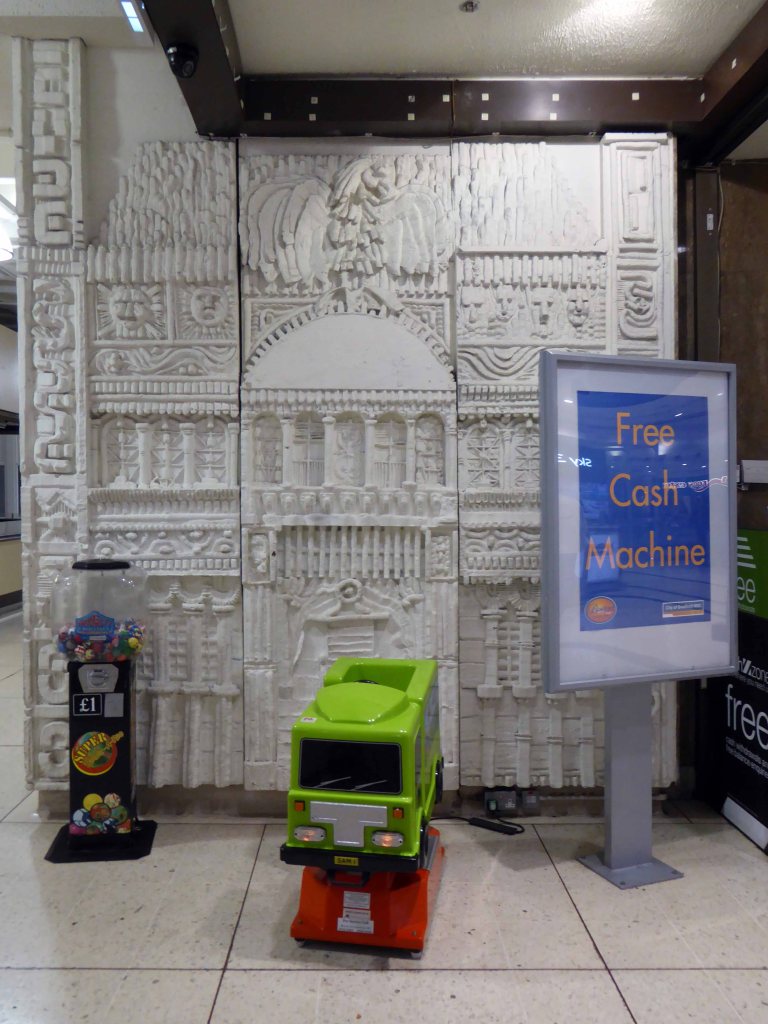
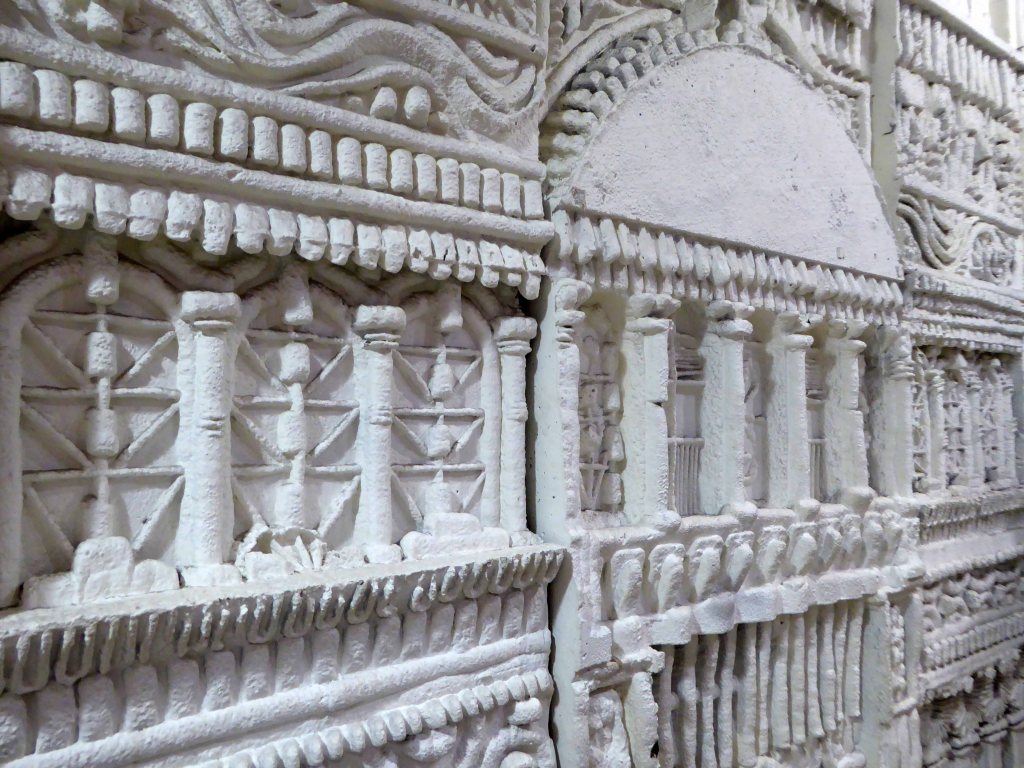
Underpass – Scarborough

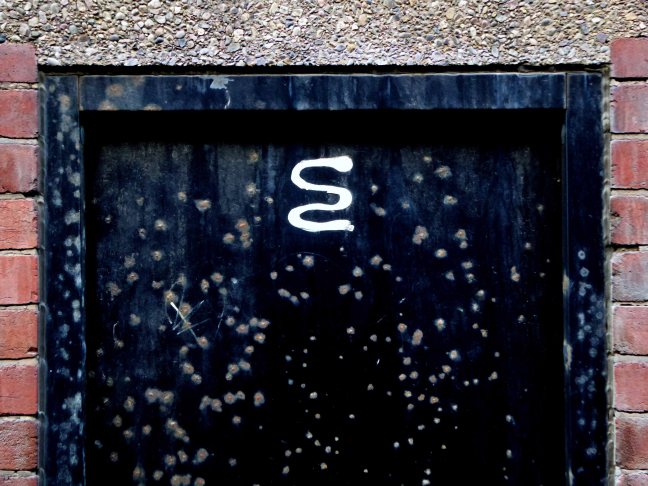
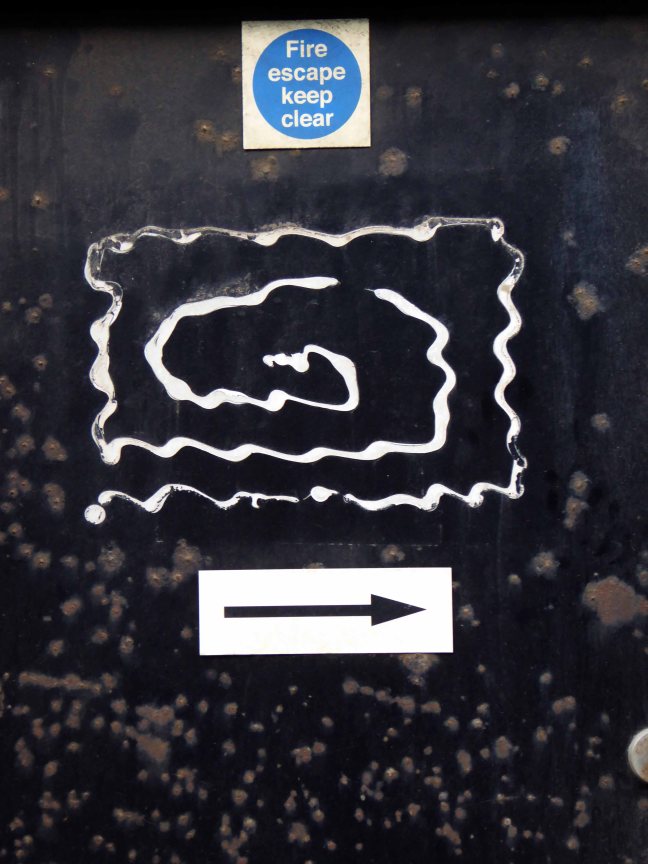
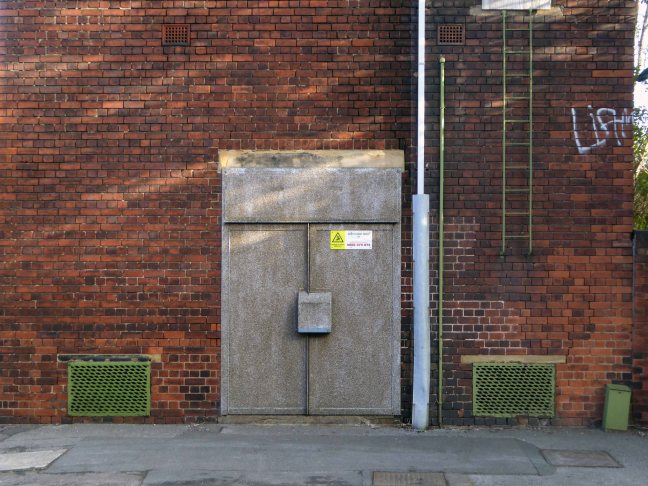
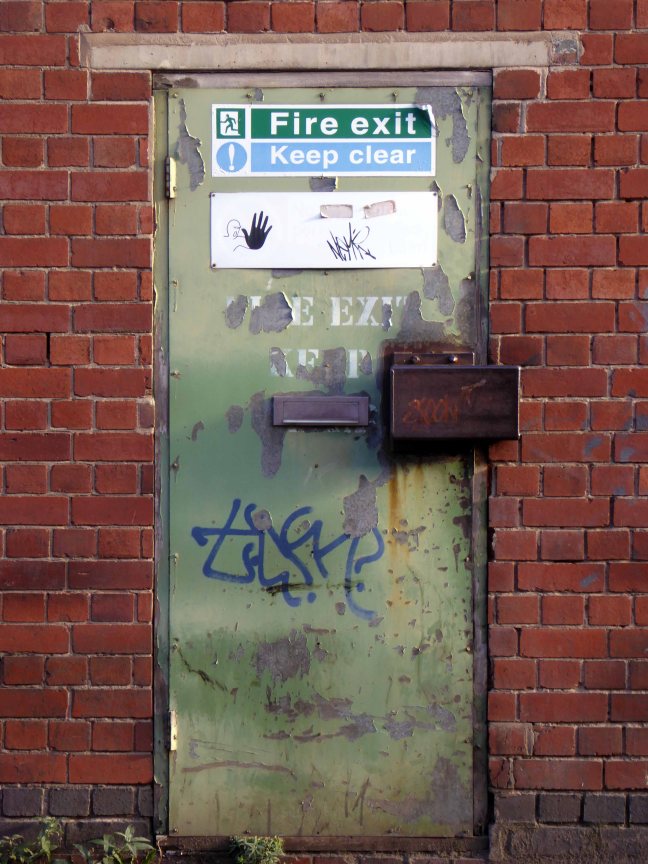
I’ve been here before.

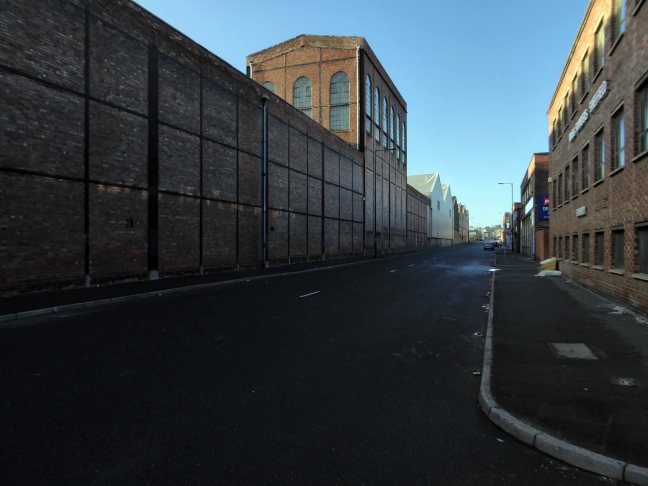
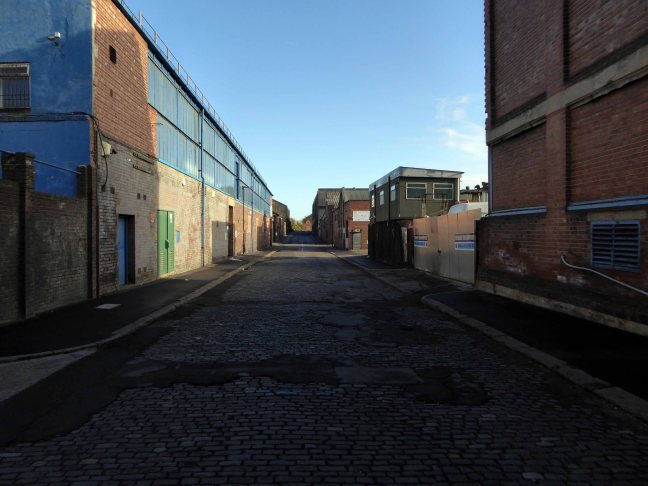
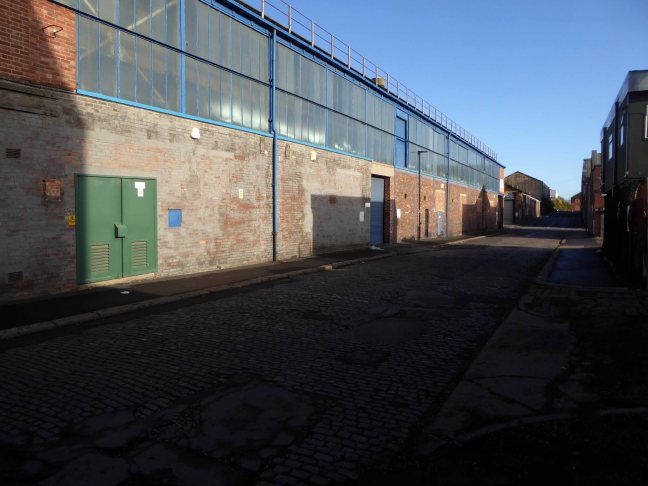
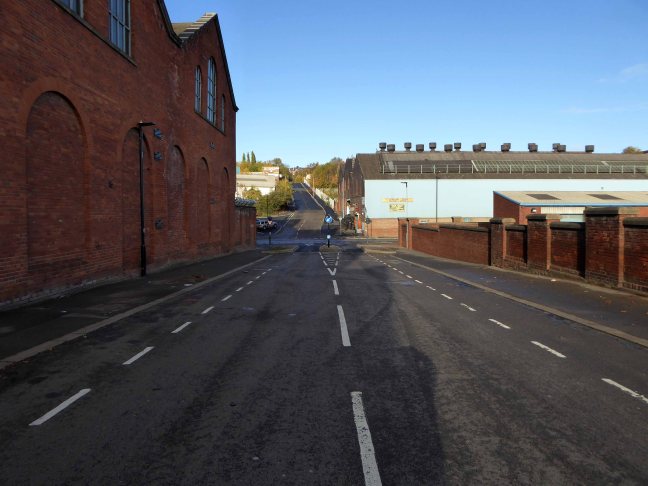
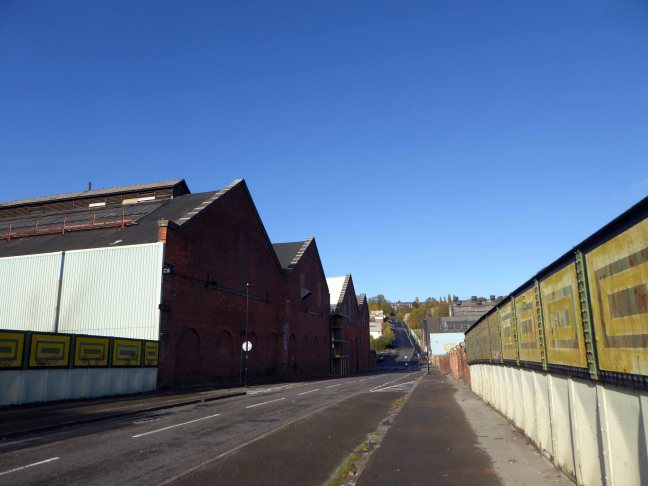
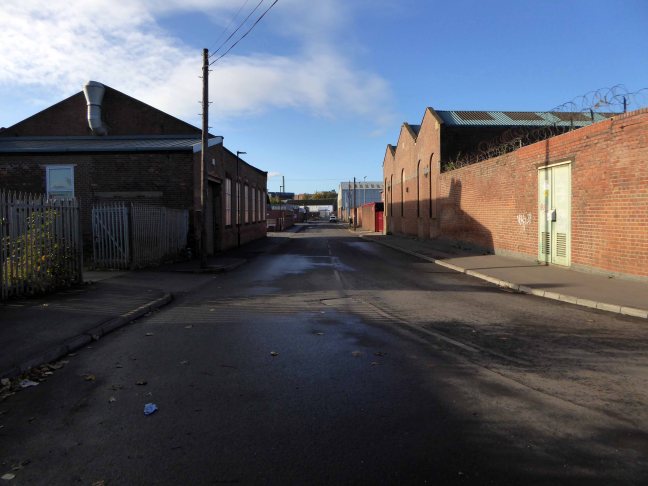
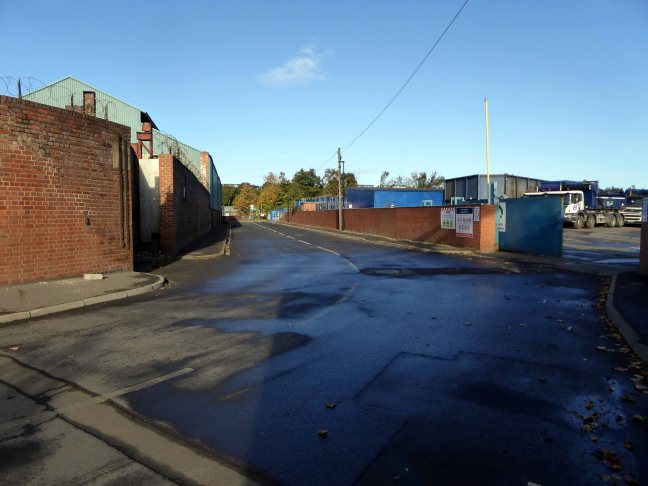
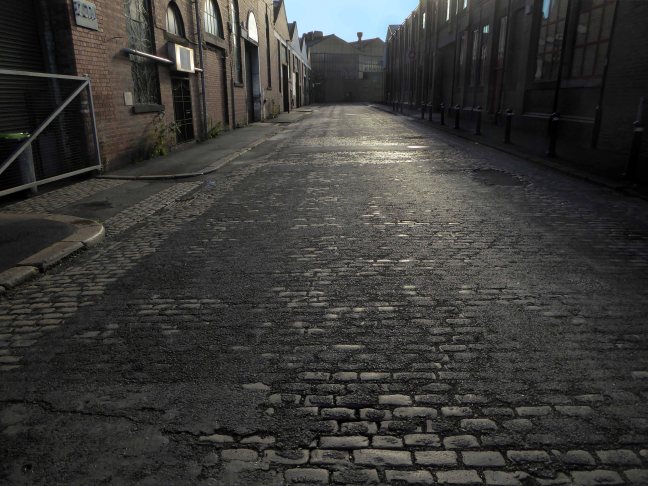
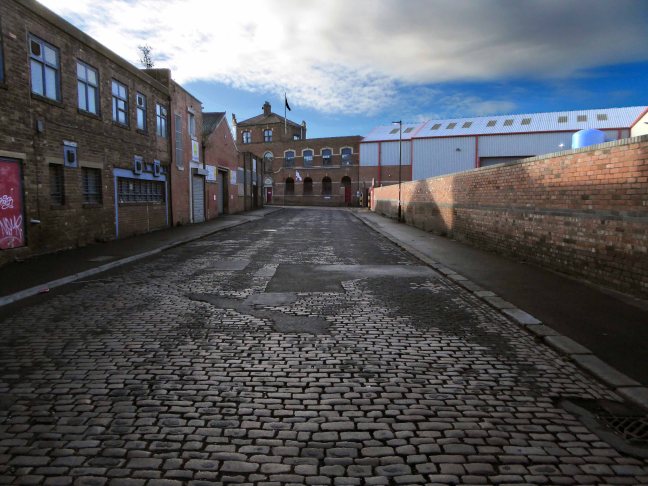
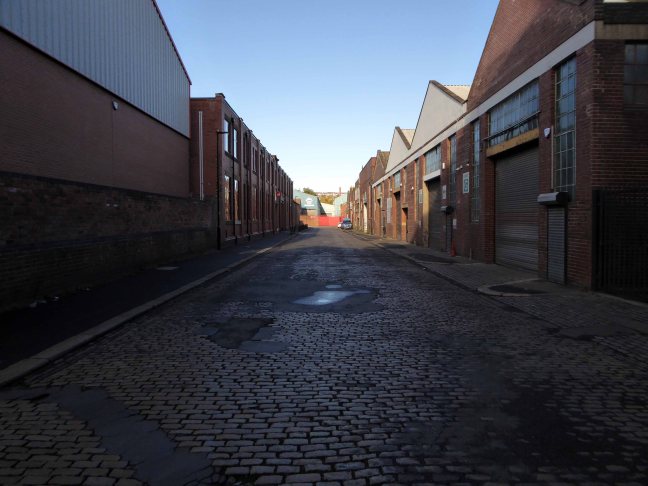
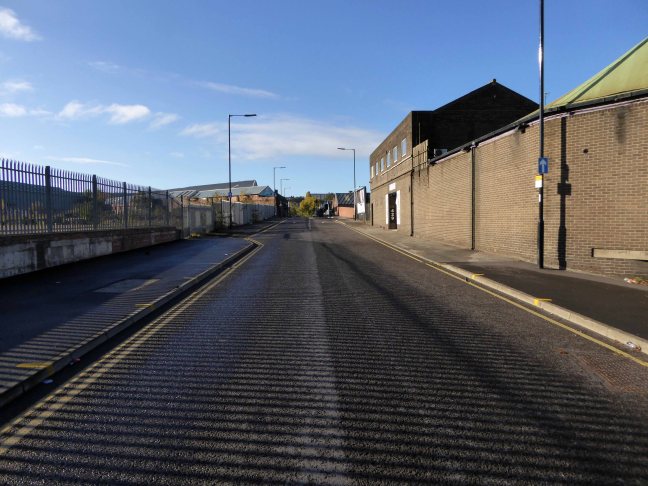
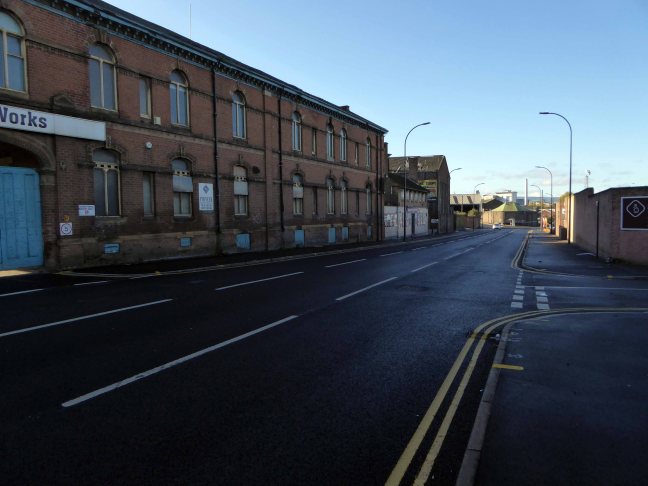
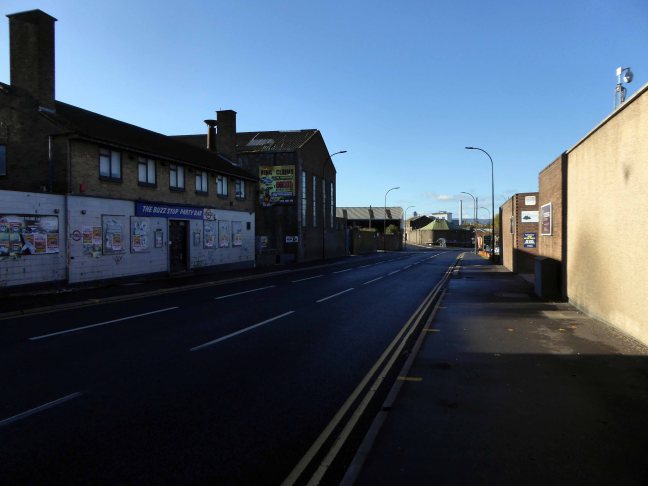
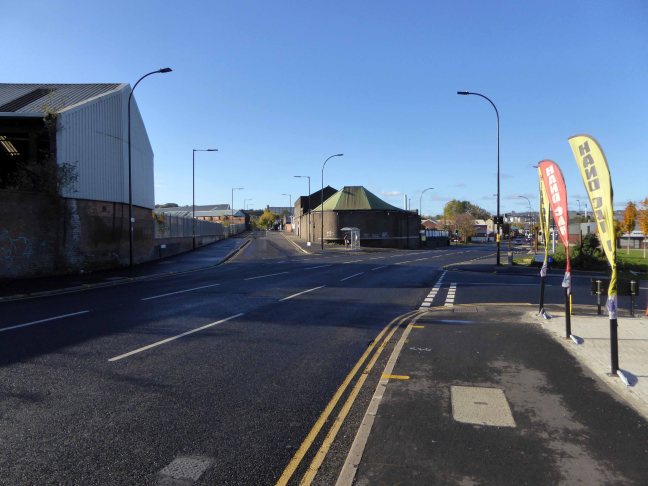
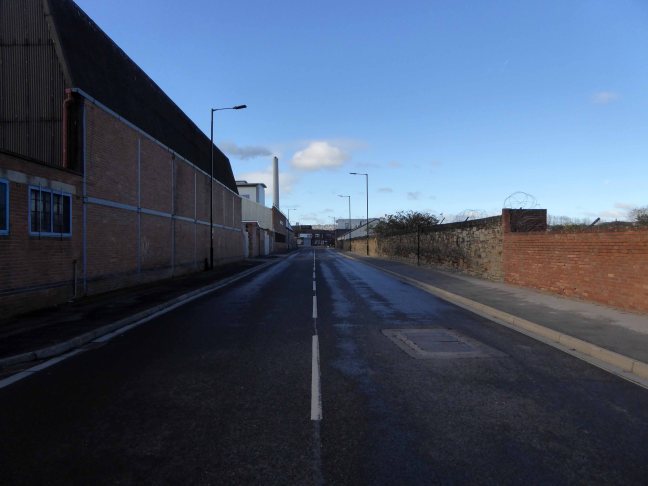
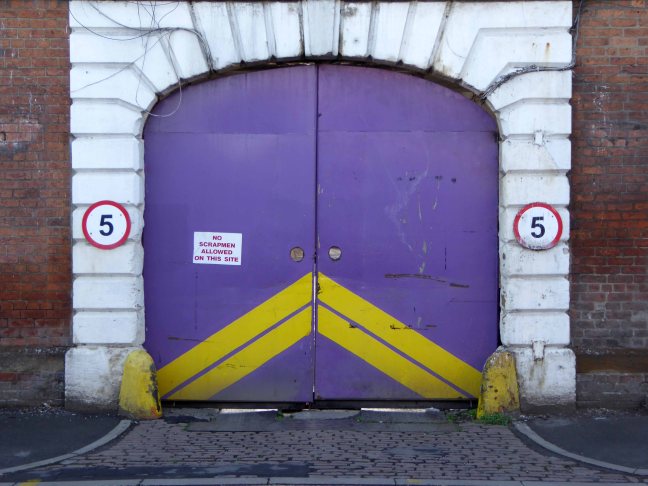
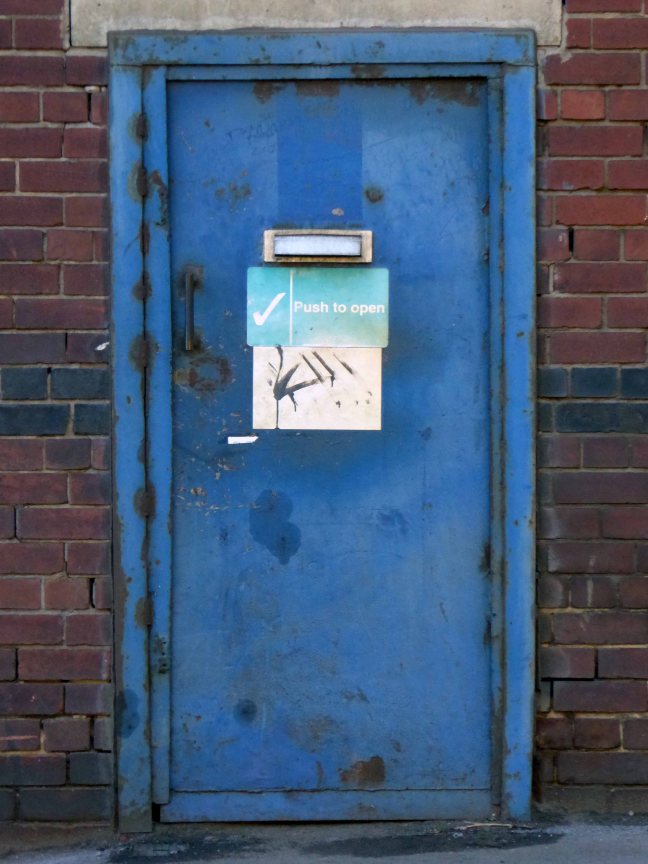
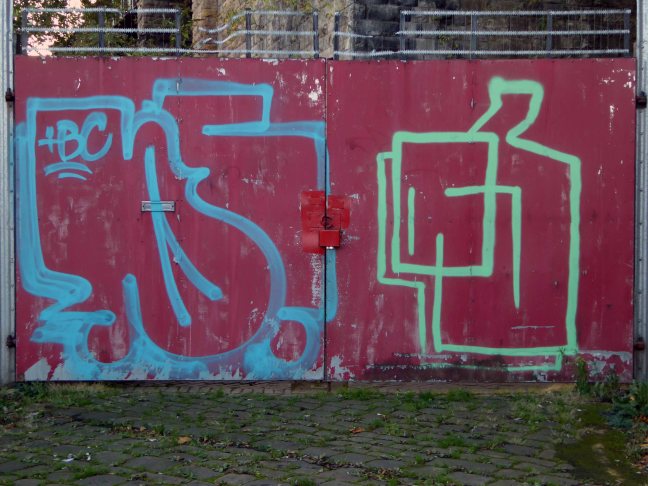
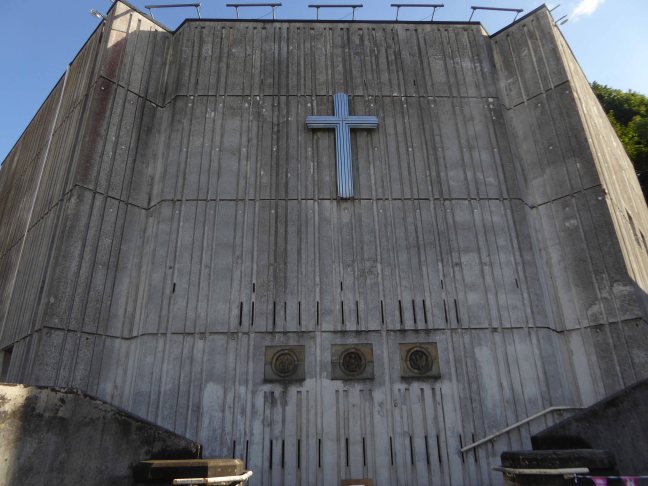
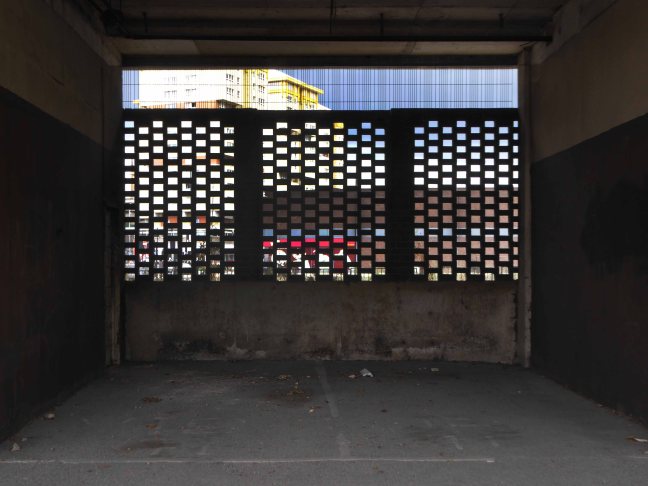
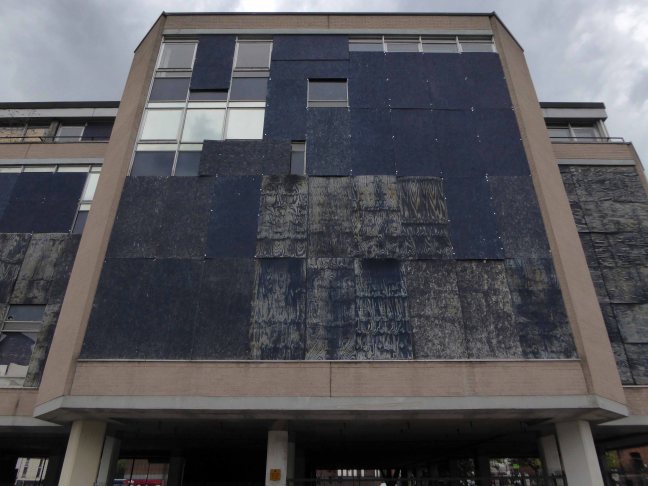
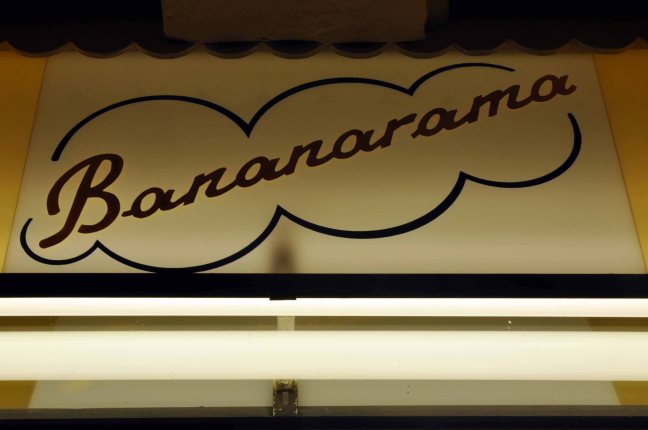
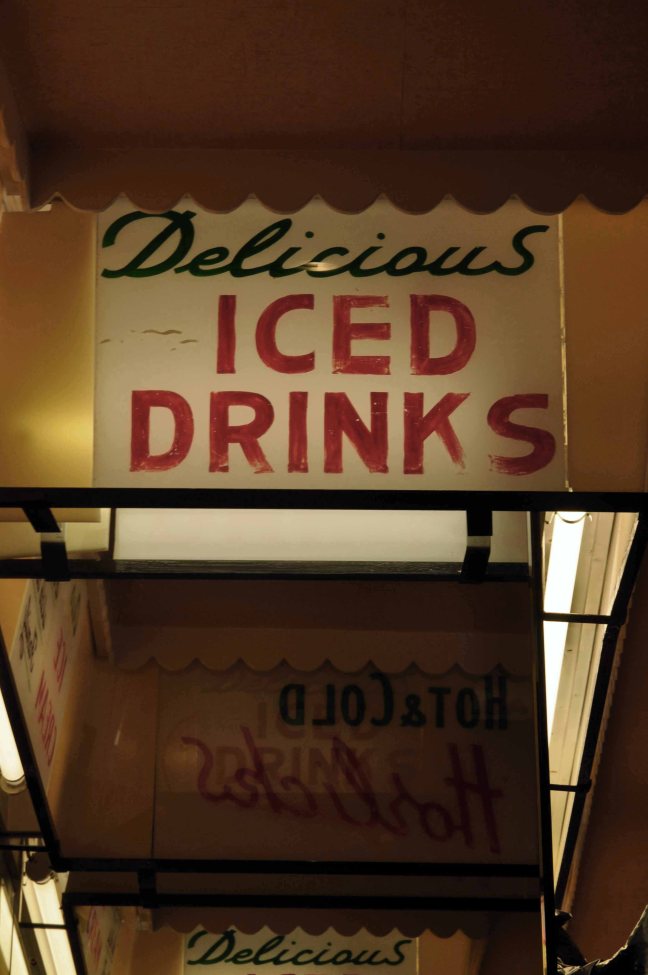
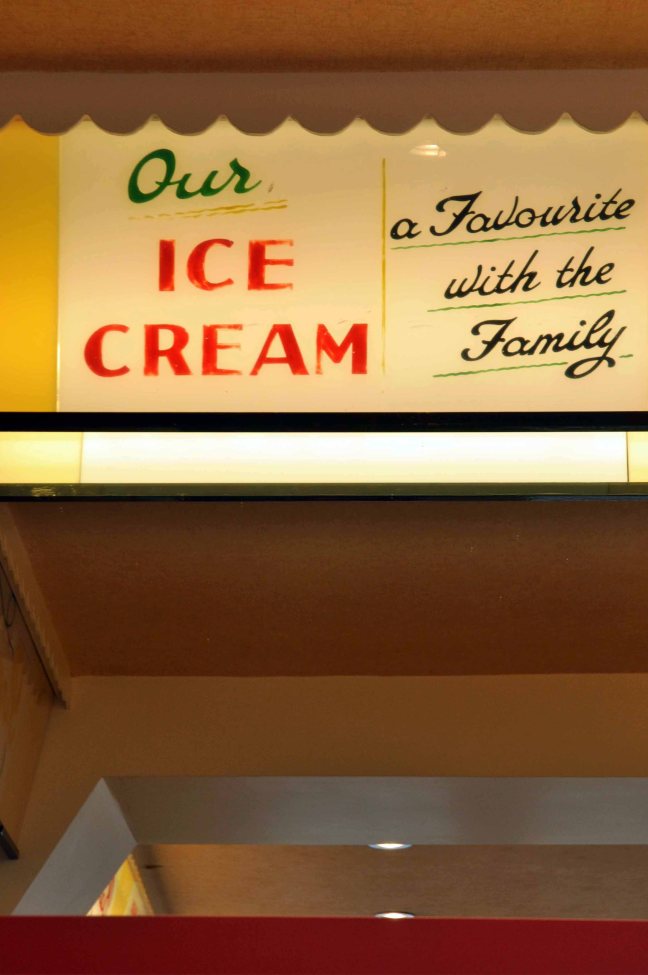
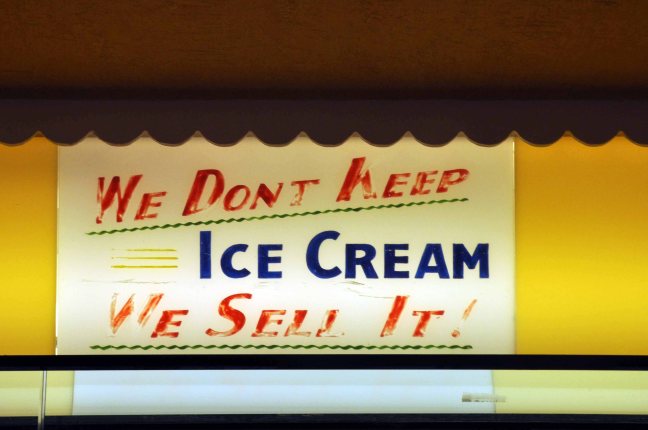
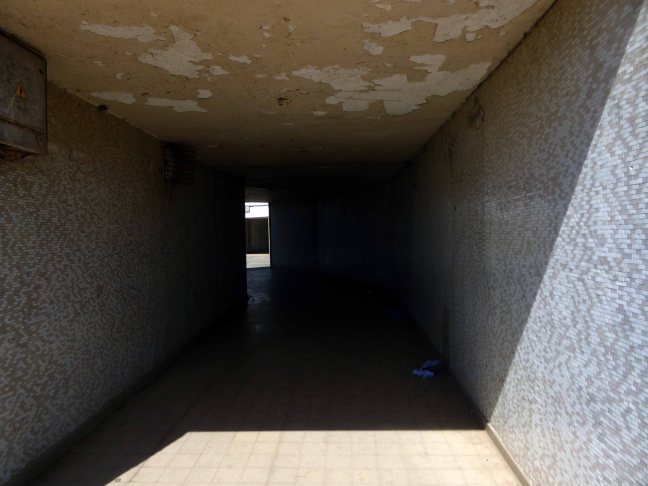
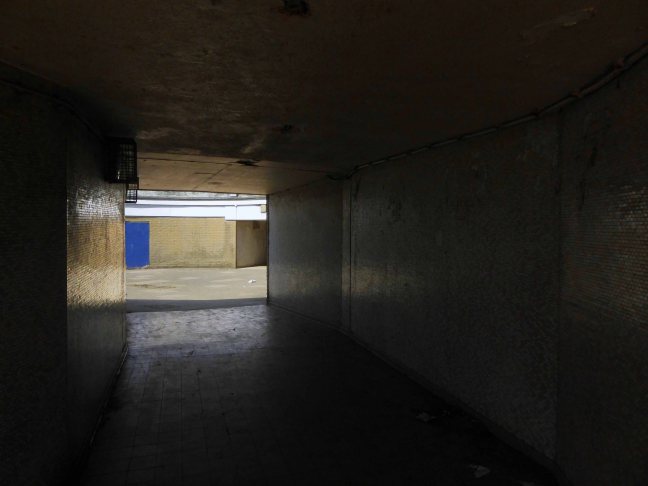
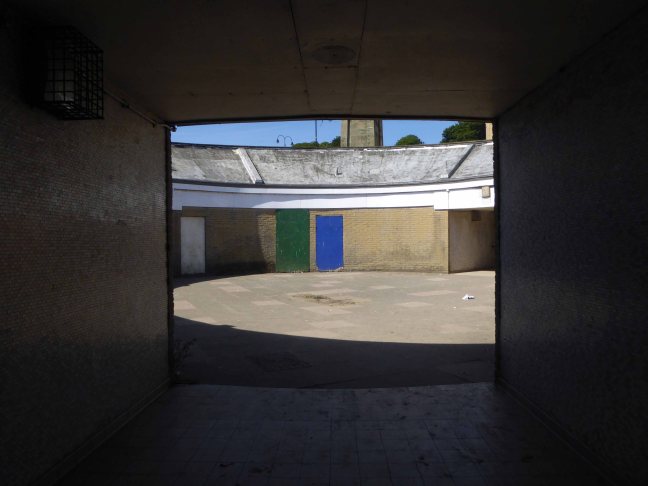
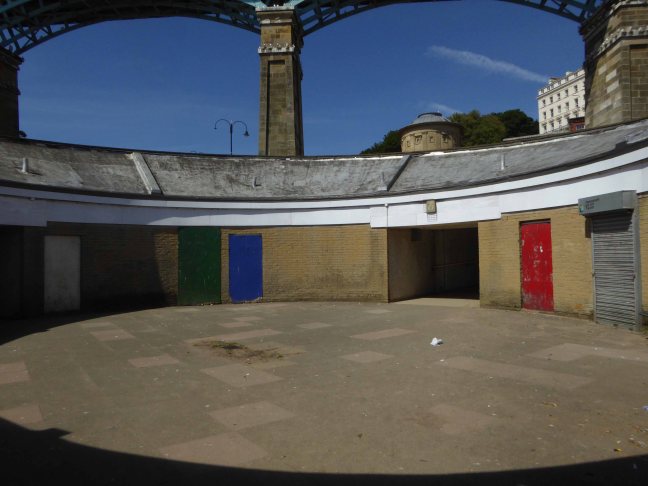
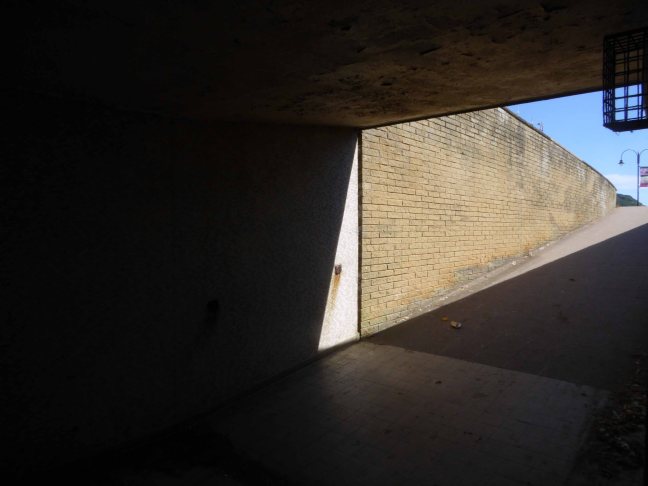
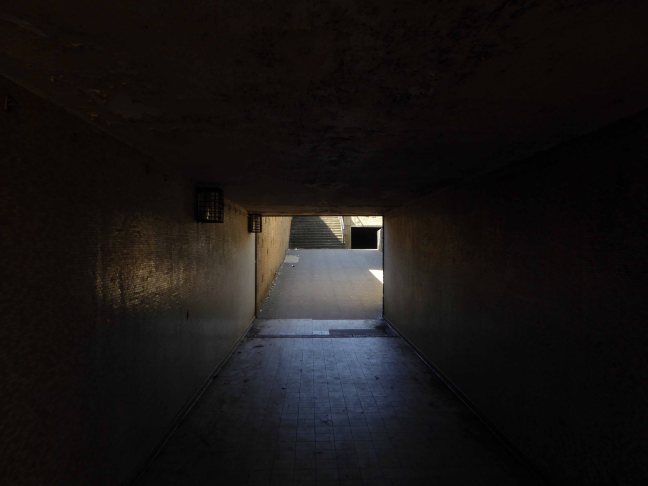
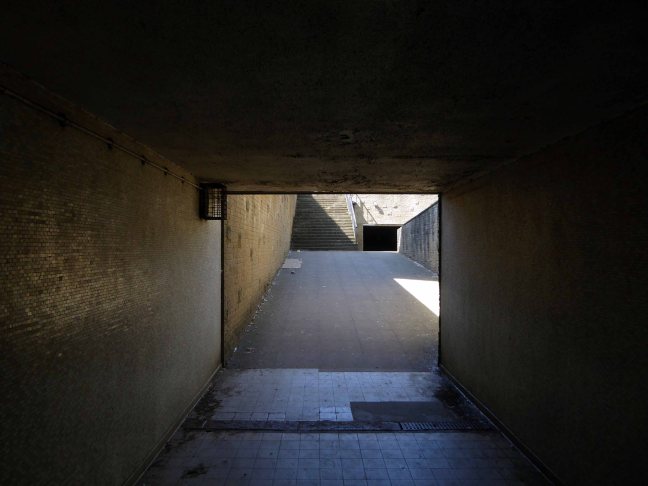
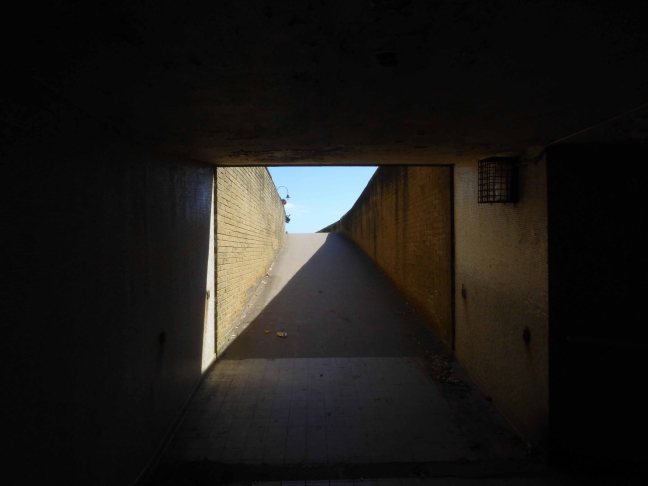
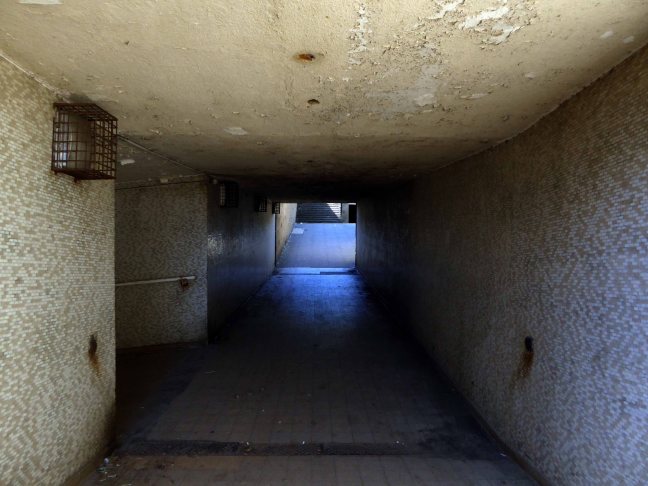
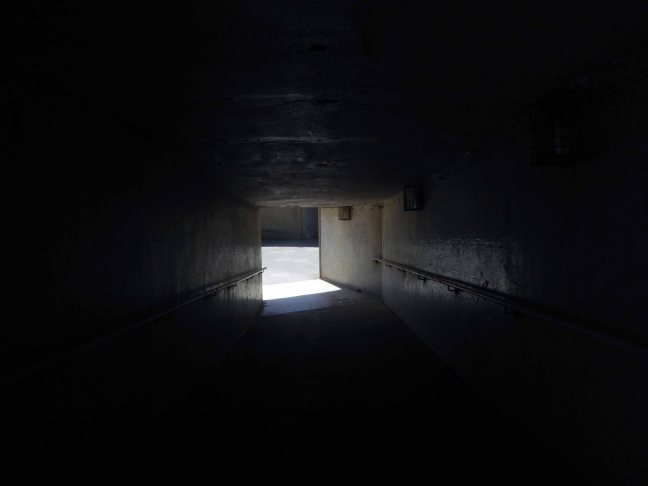
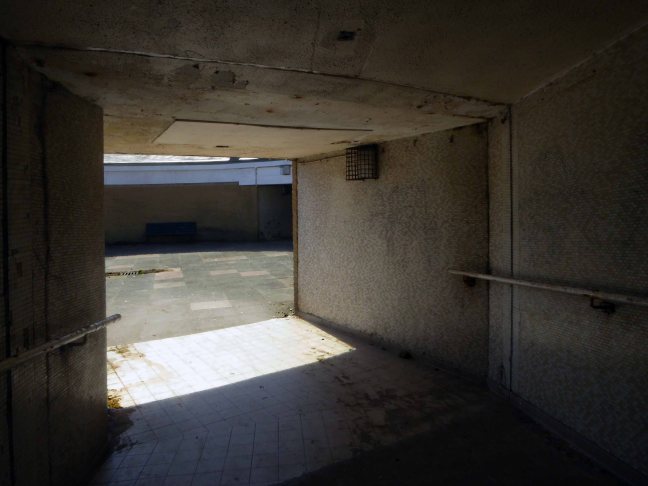
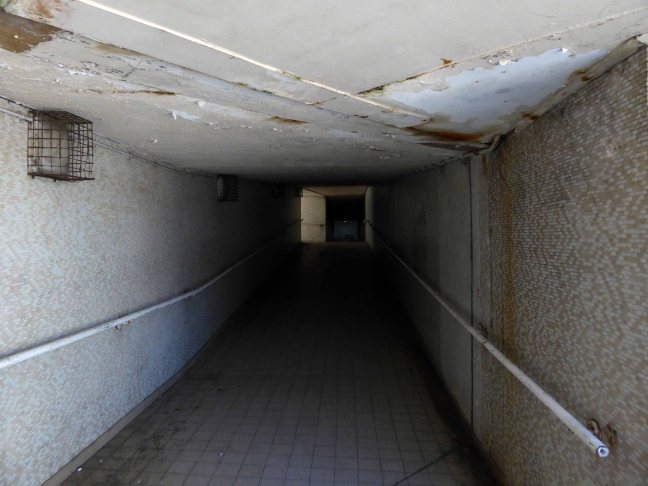
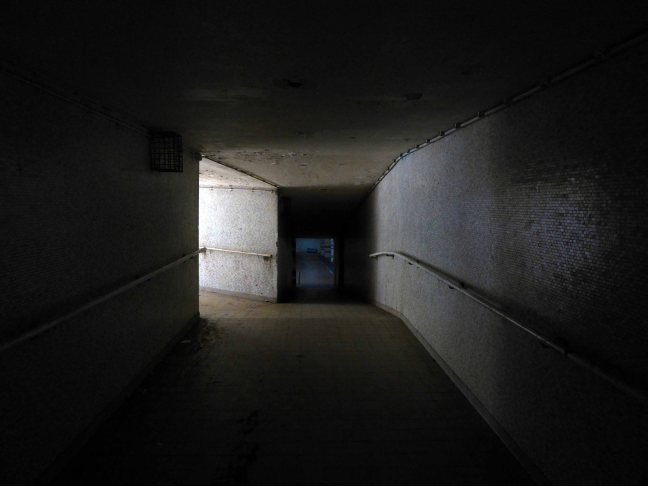
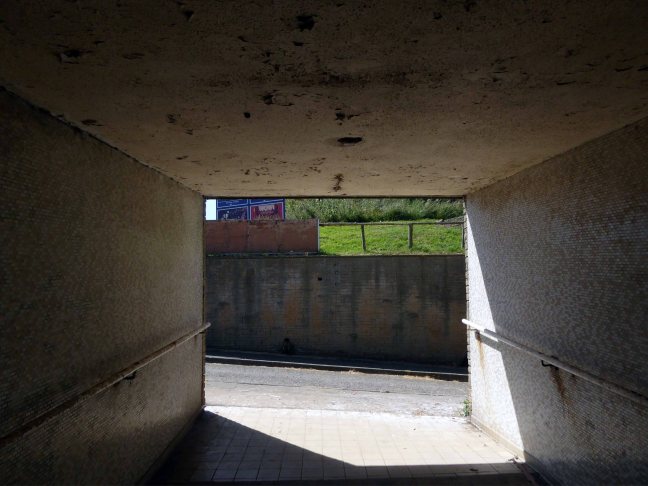
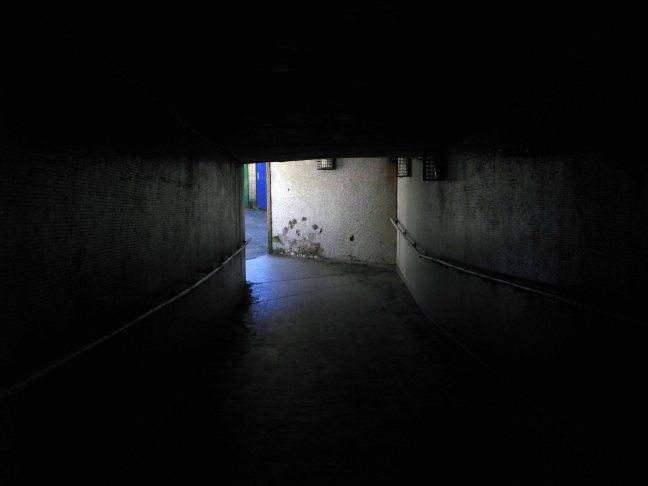
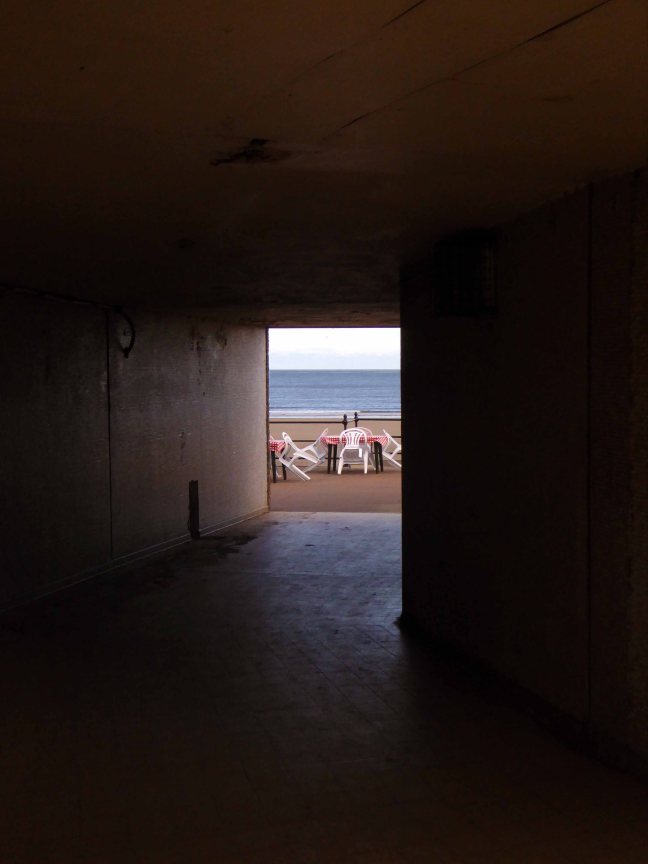
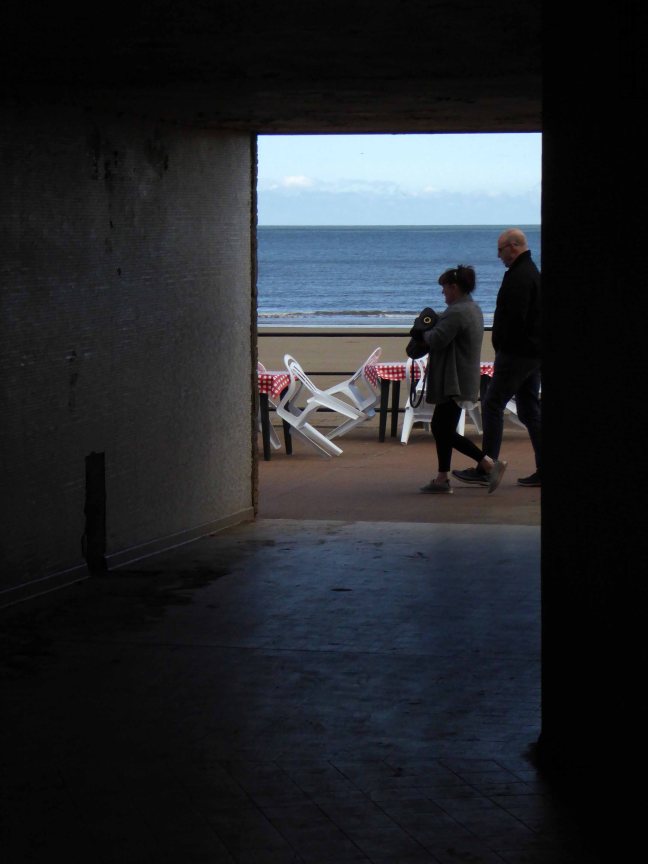
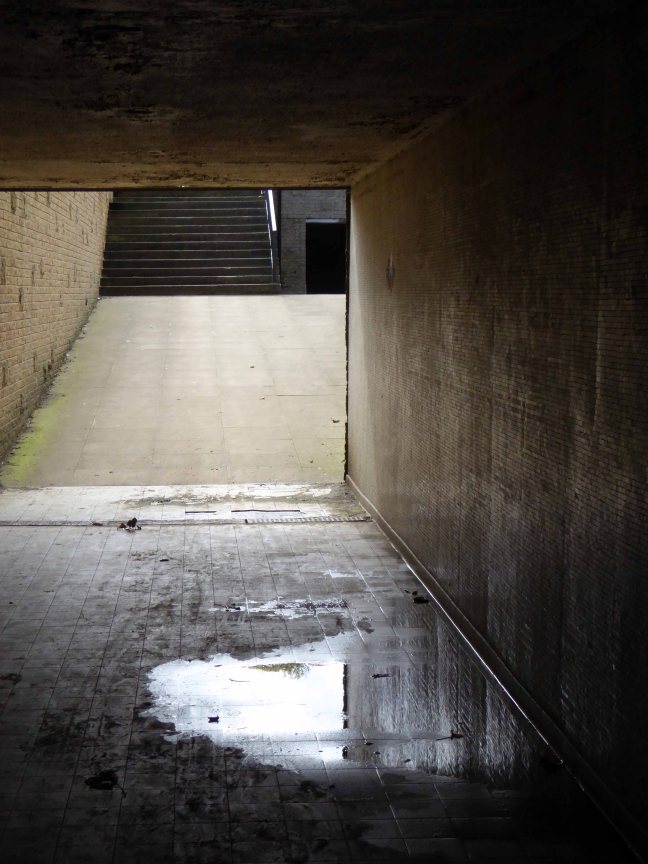
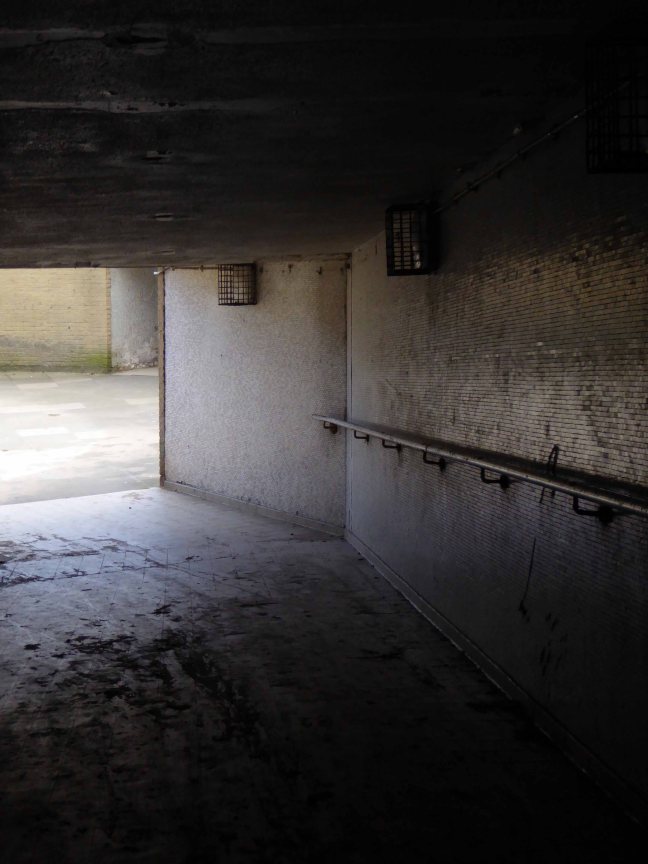
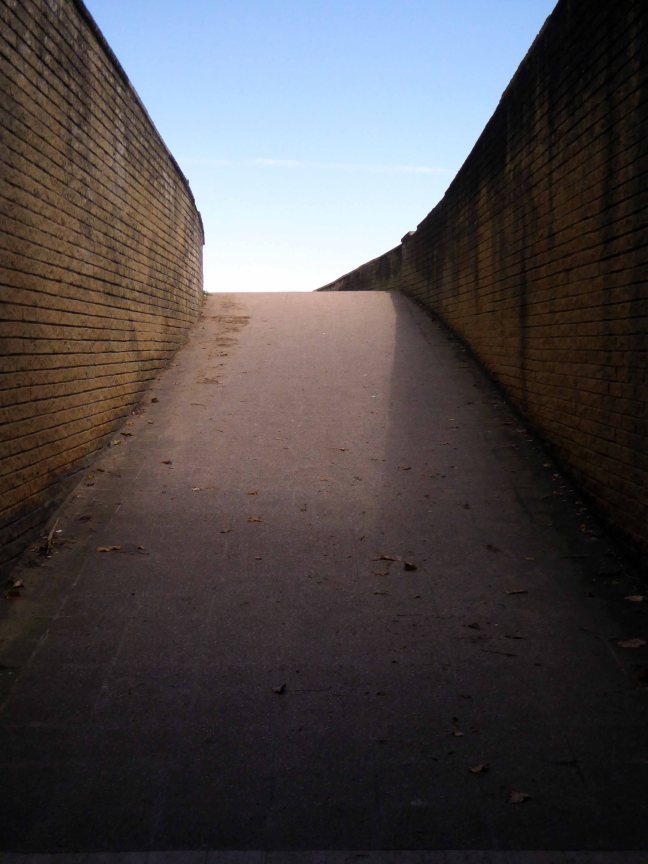
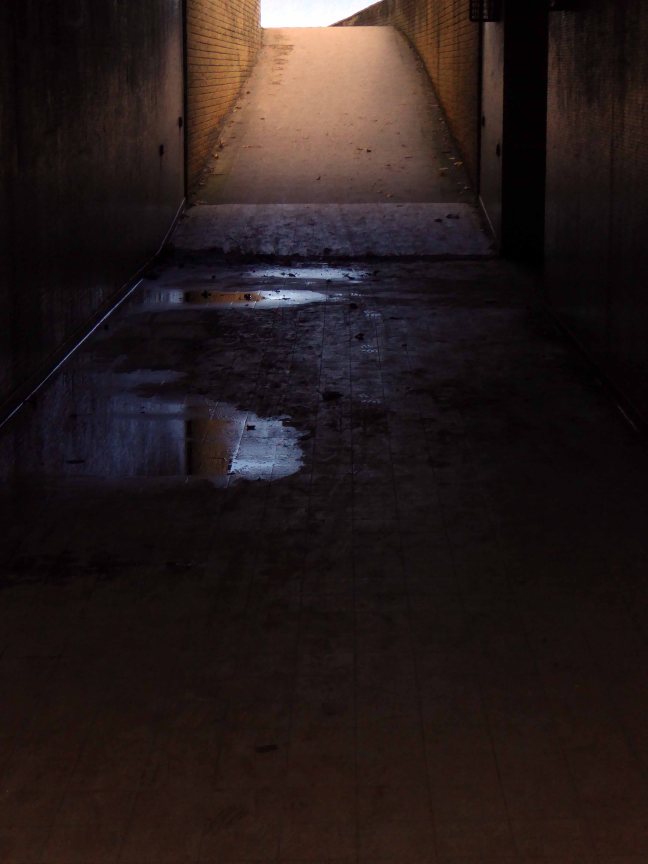
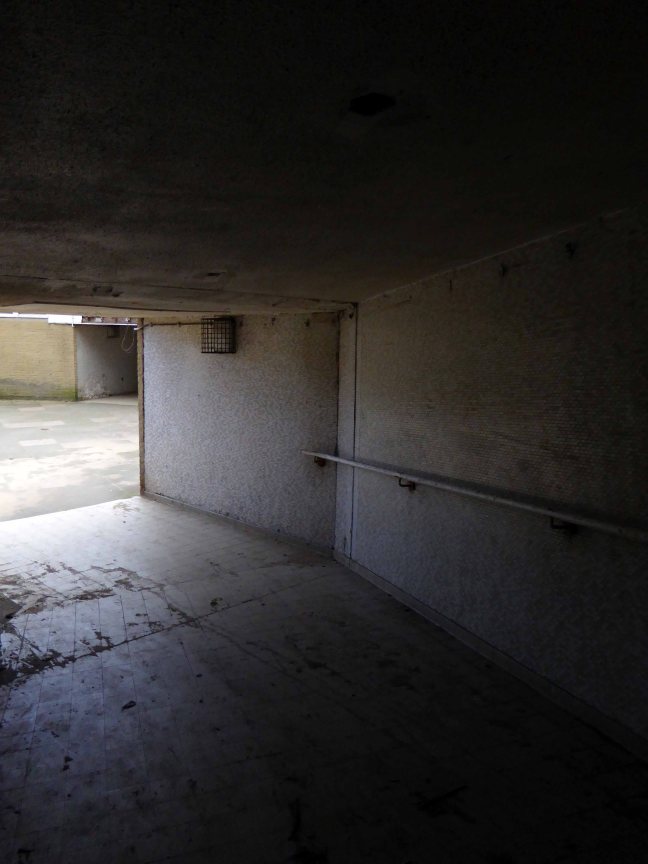
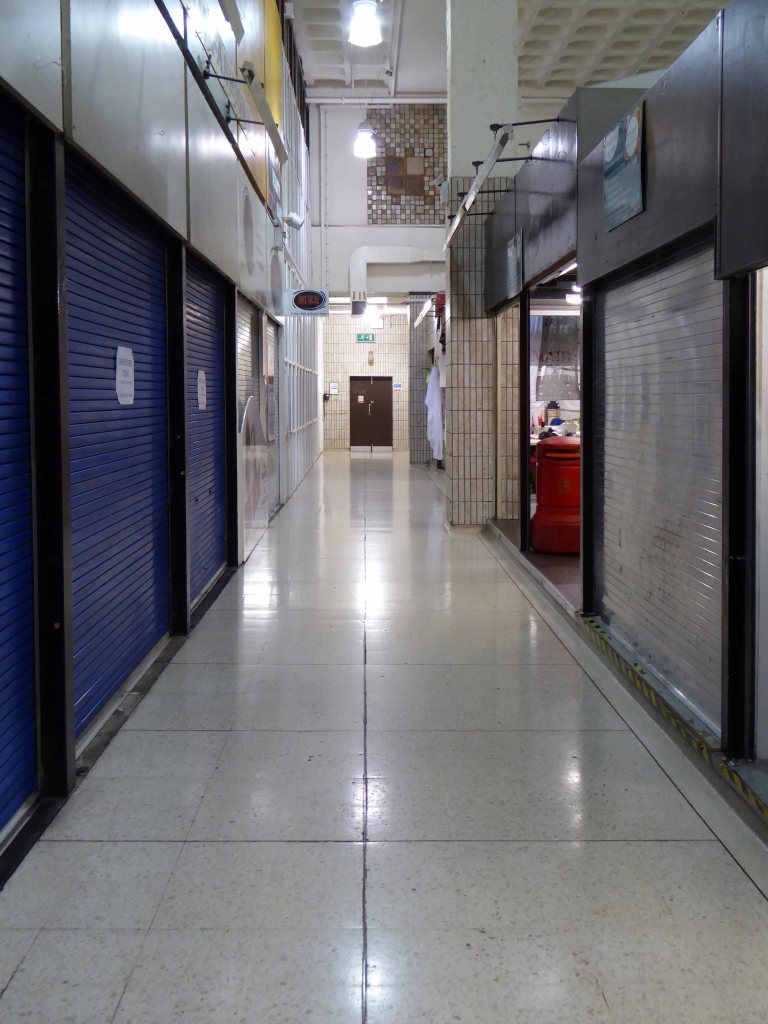
In and out of the underpass from shore to mighty sea.

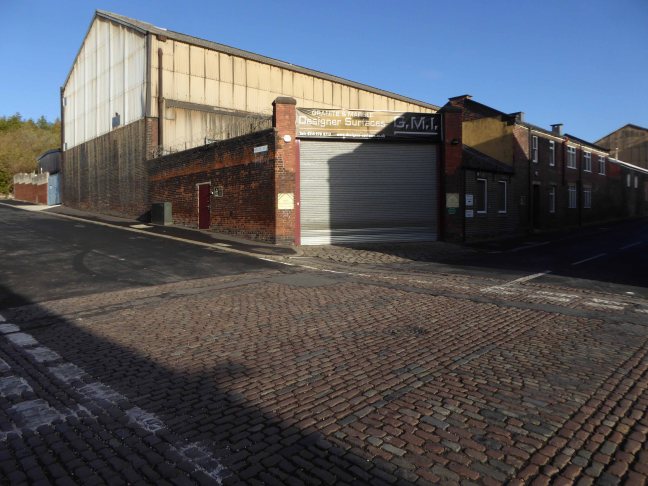
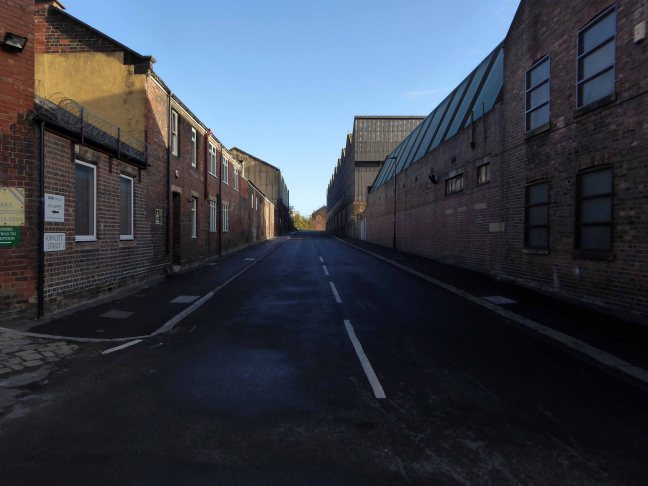
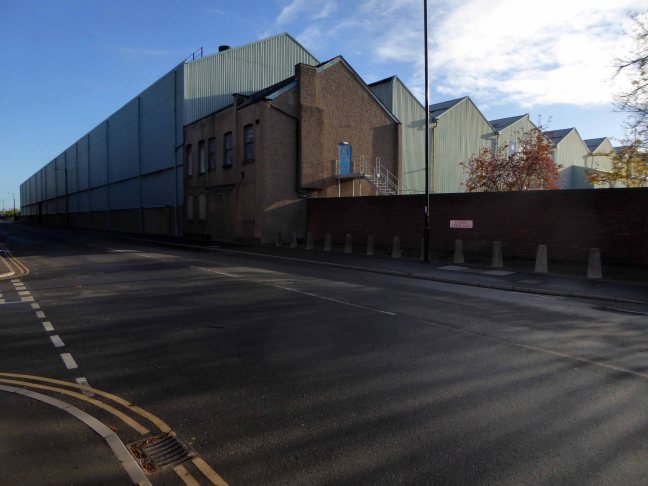
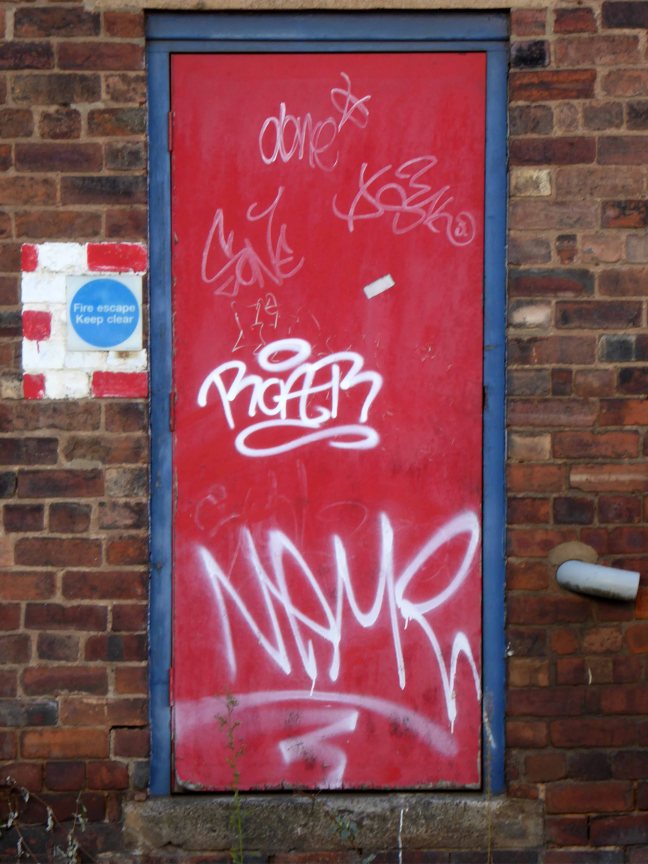
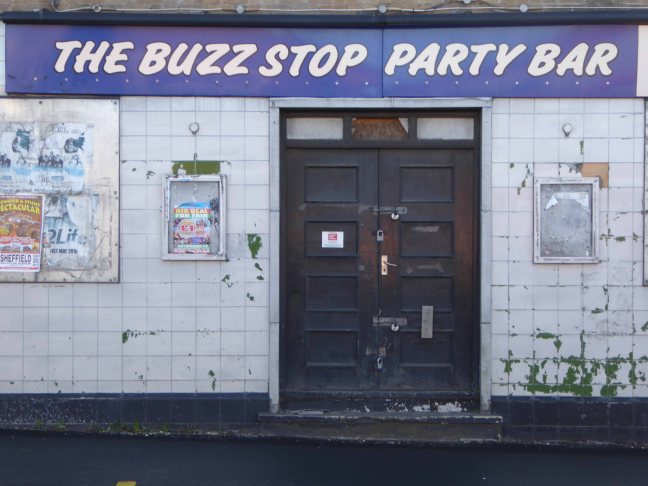
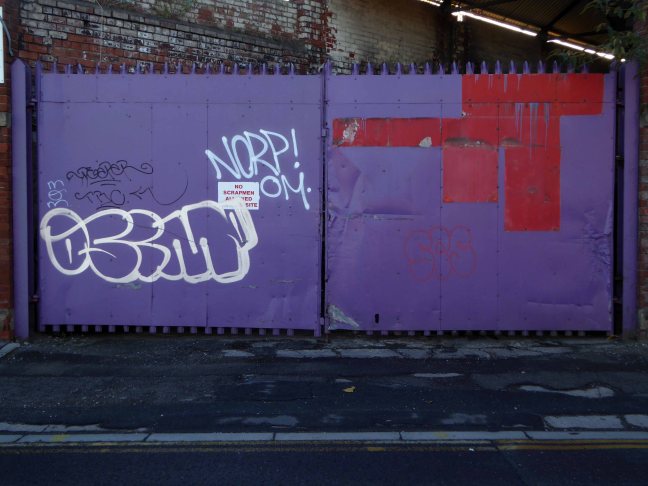
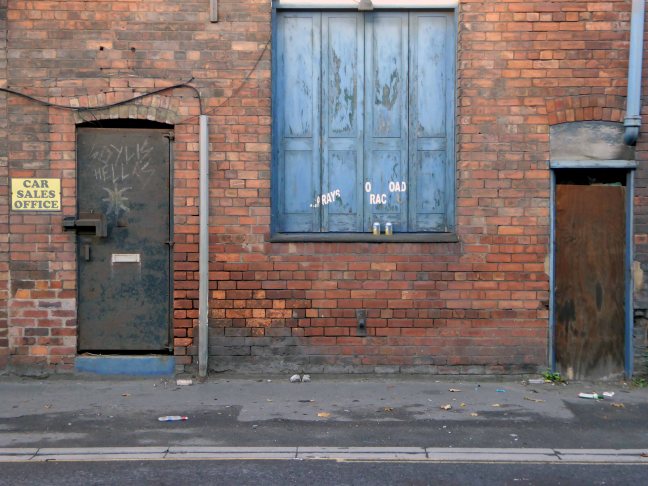
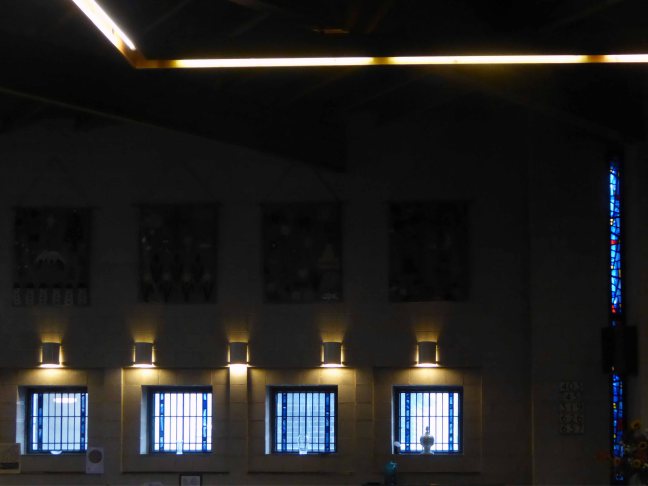
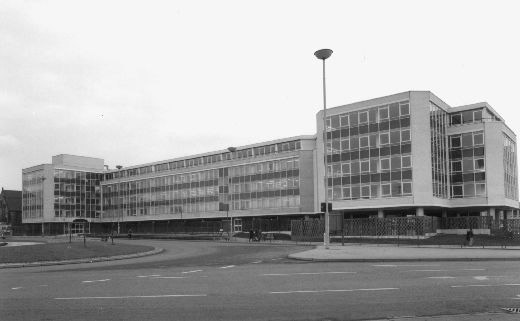
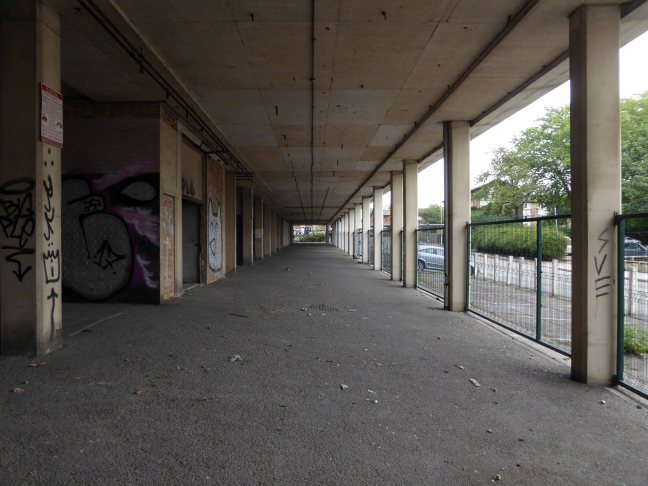
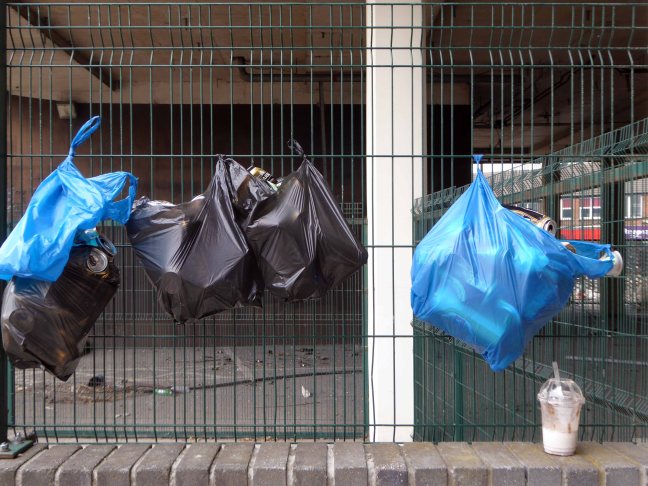
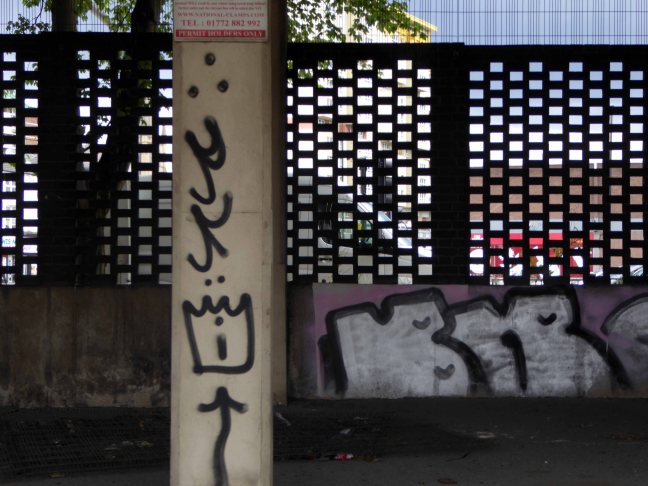
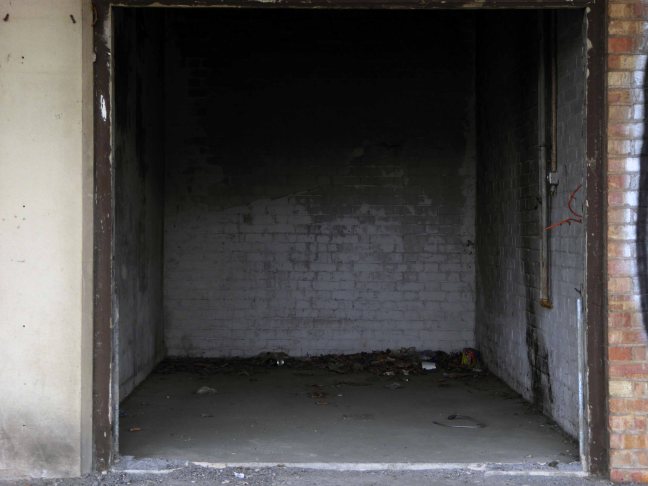
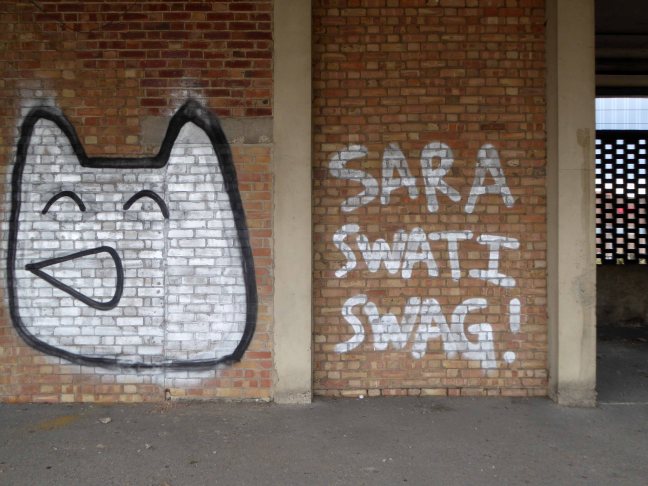
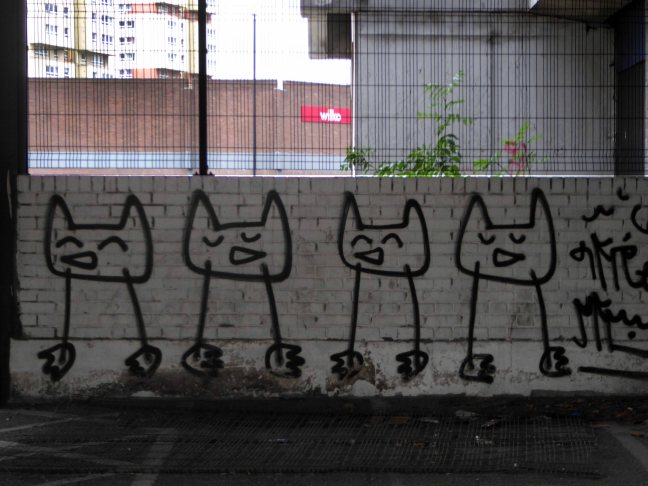
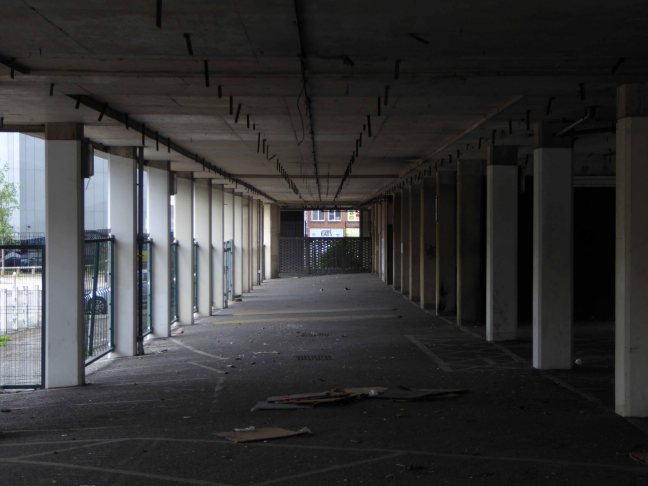
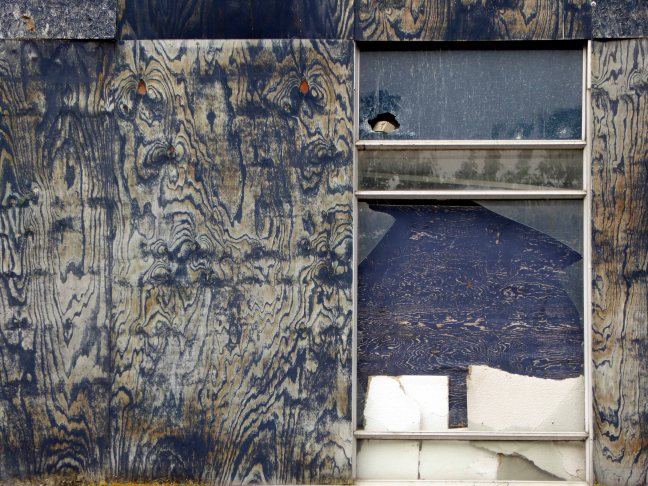
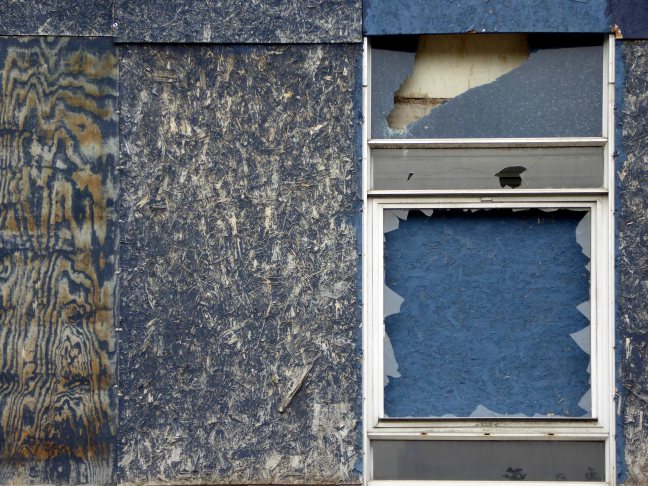
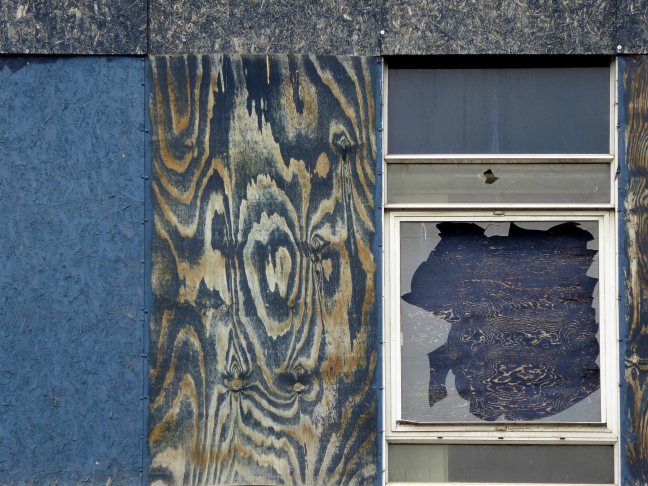
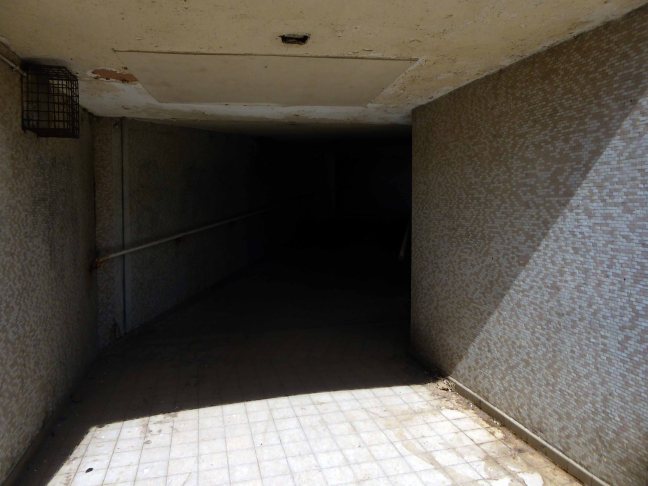
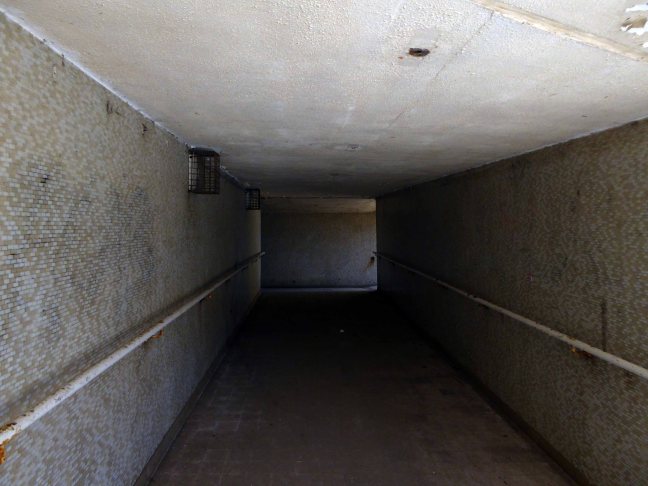
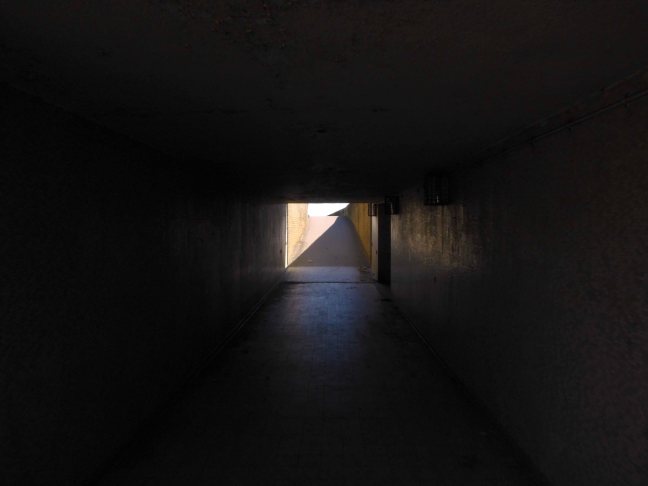
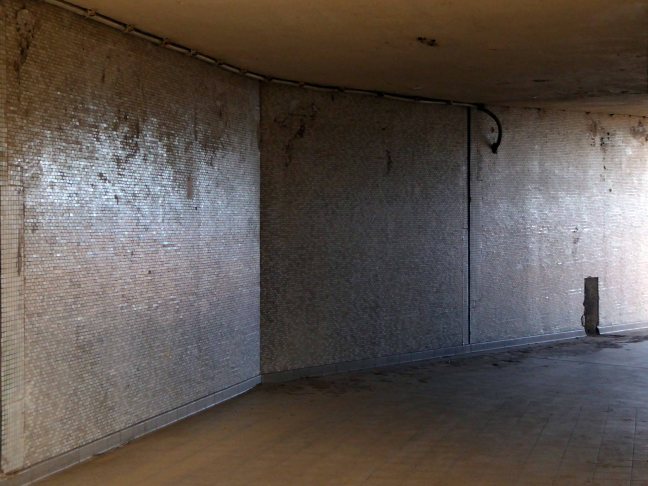
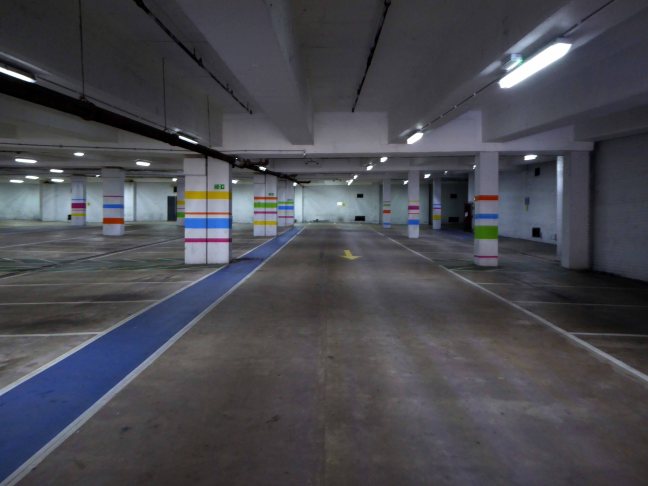
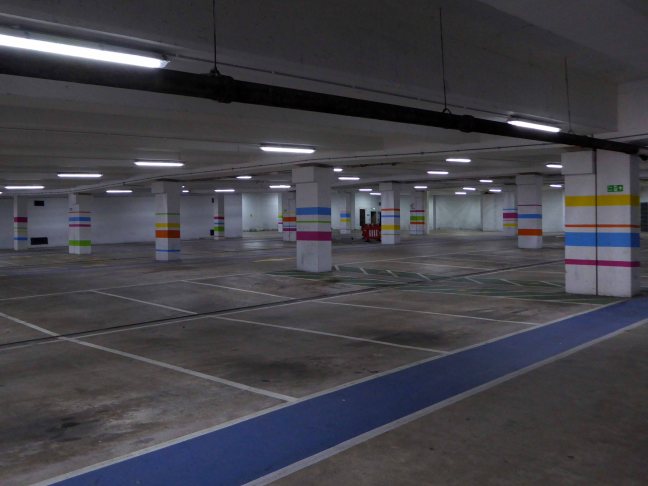
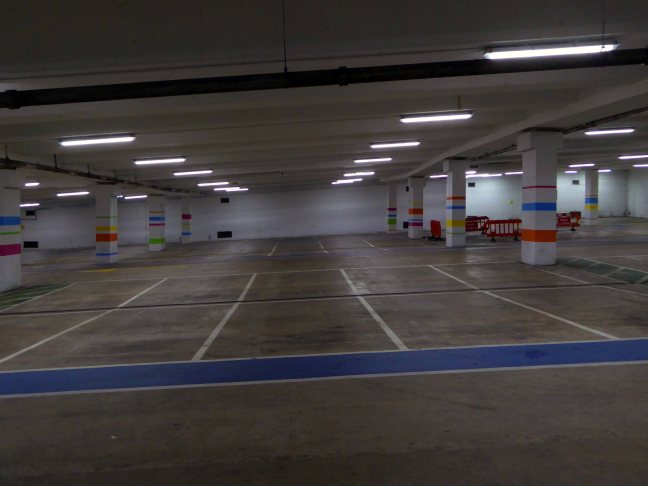
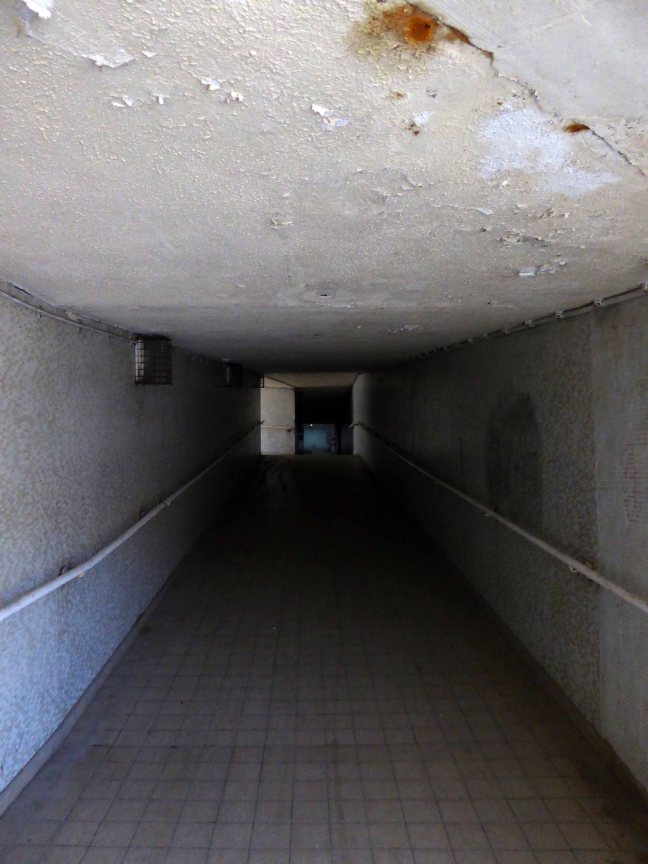
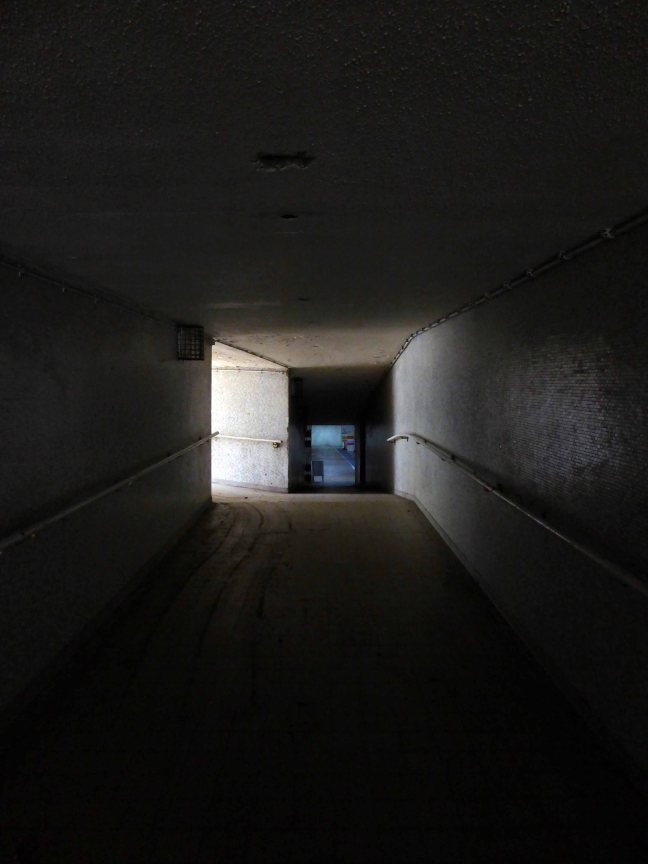
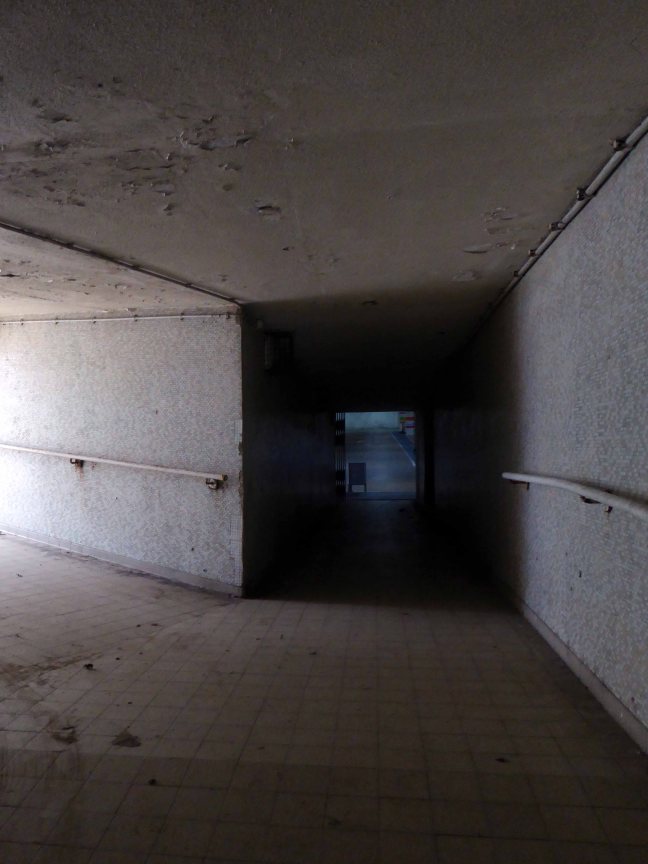
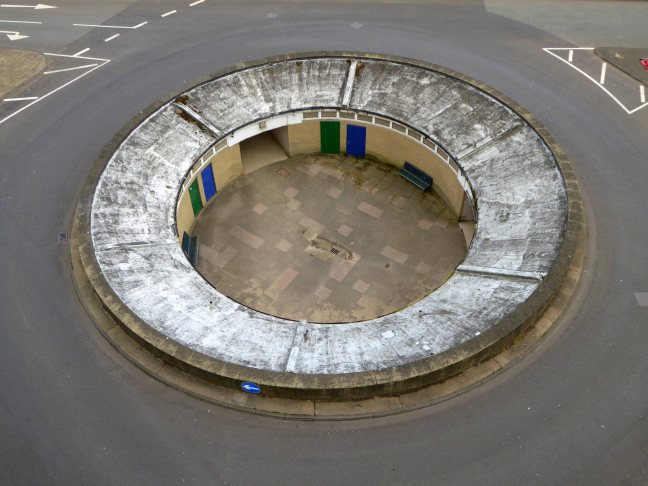
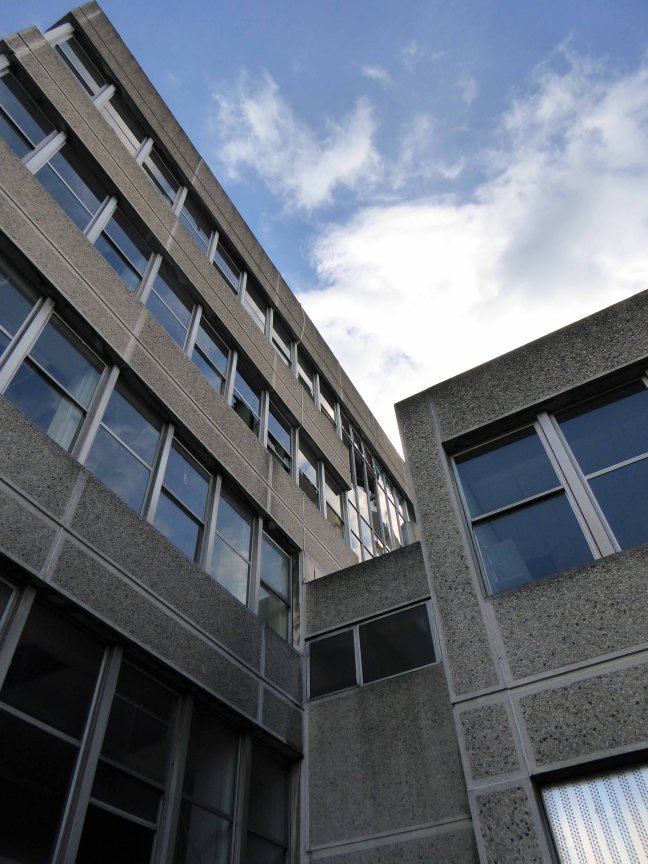
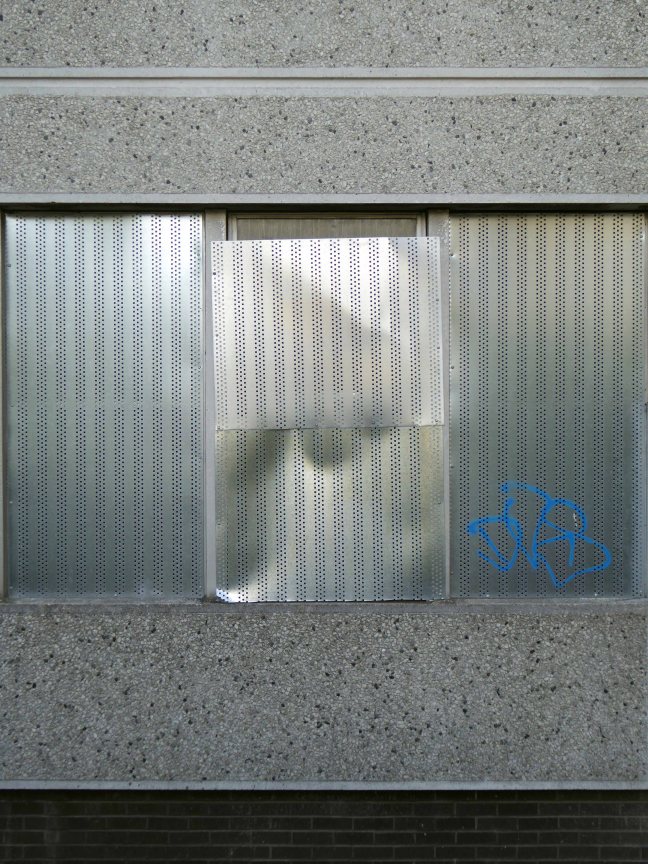
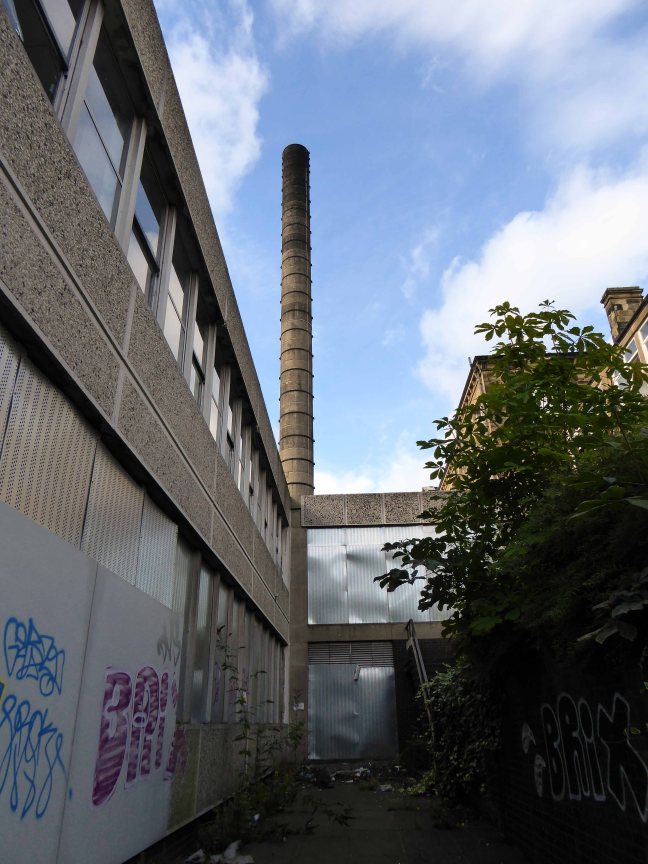
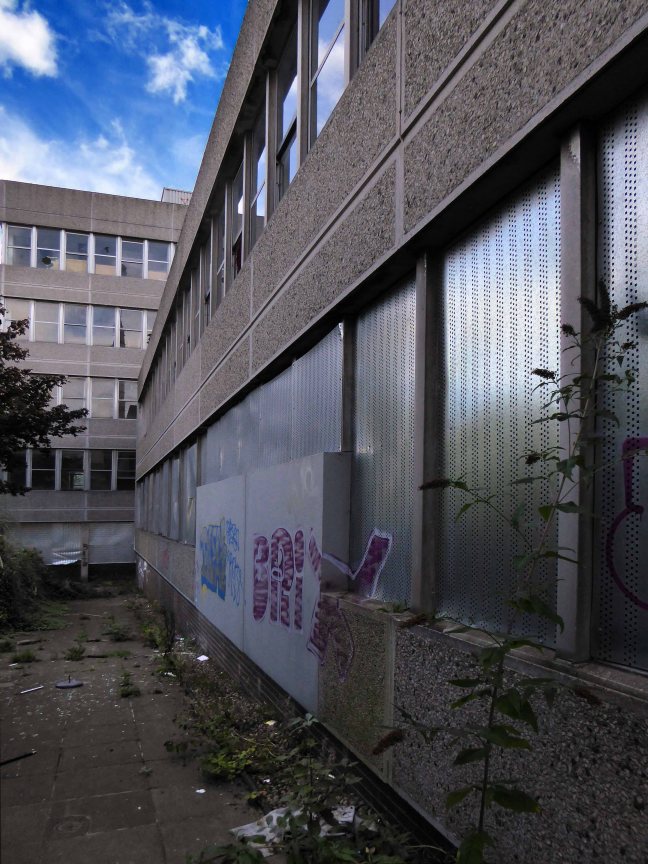
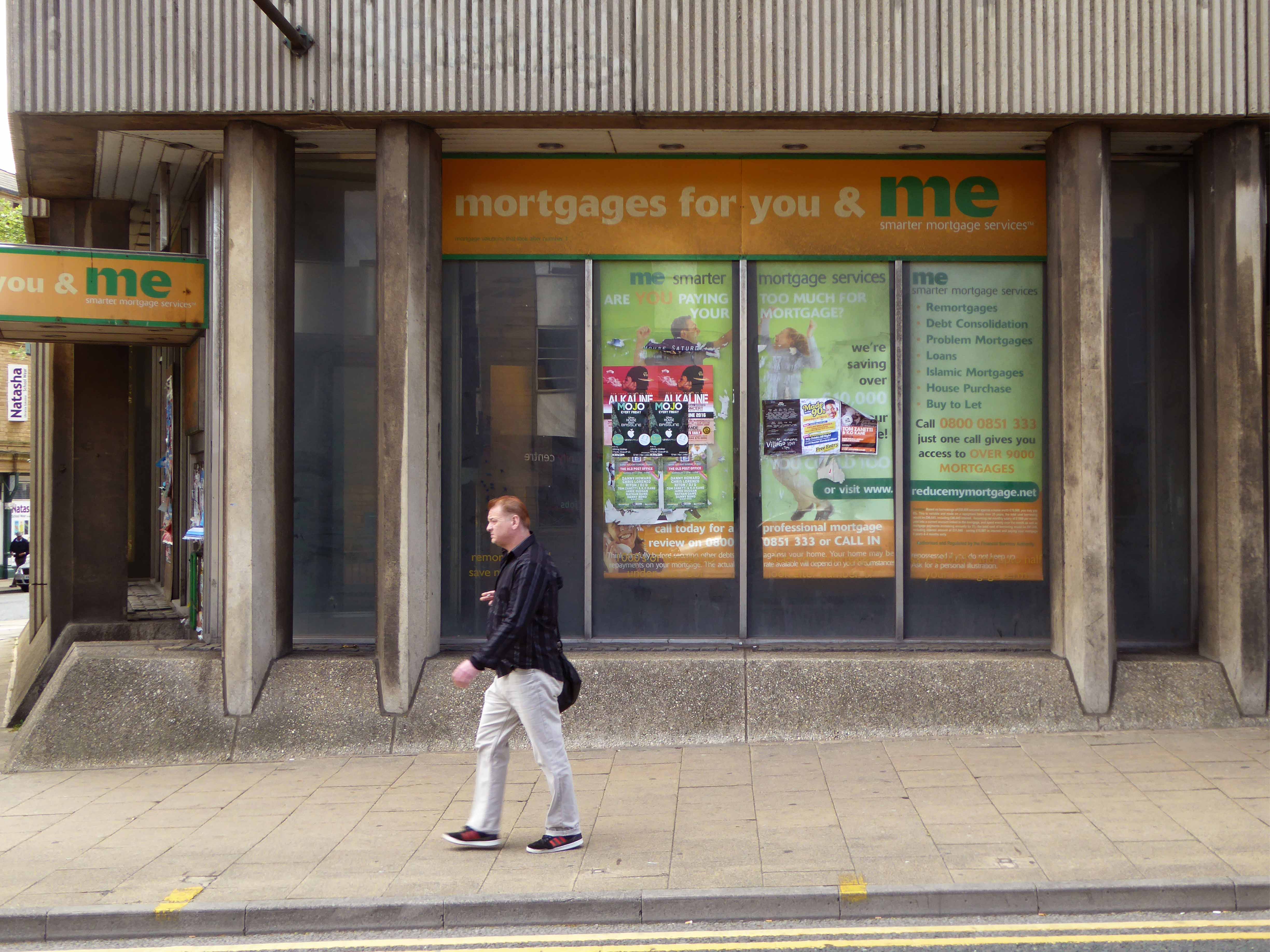
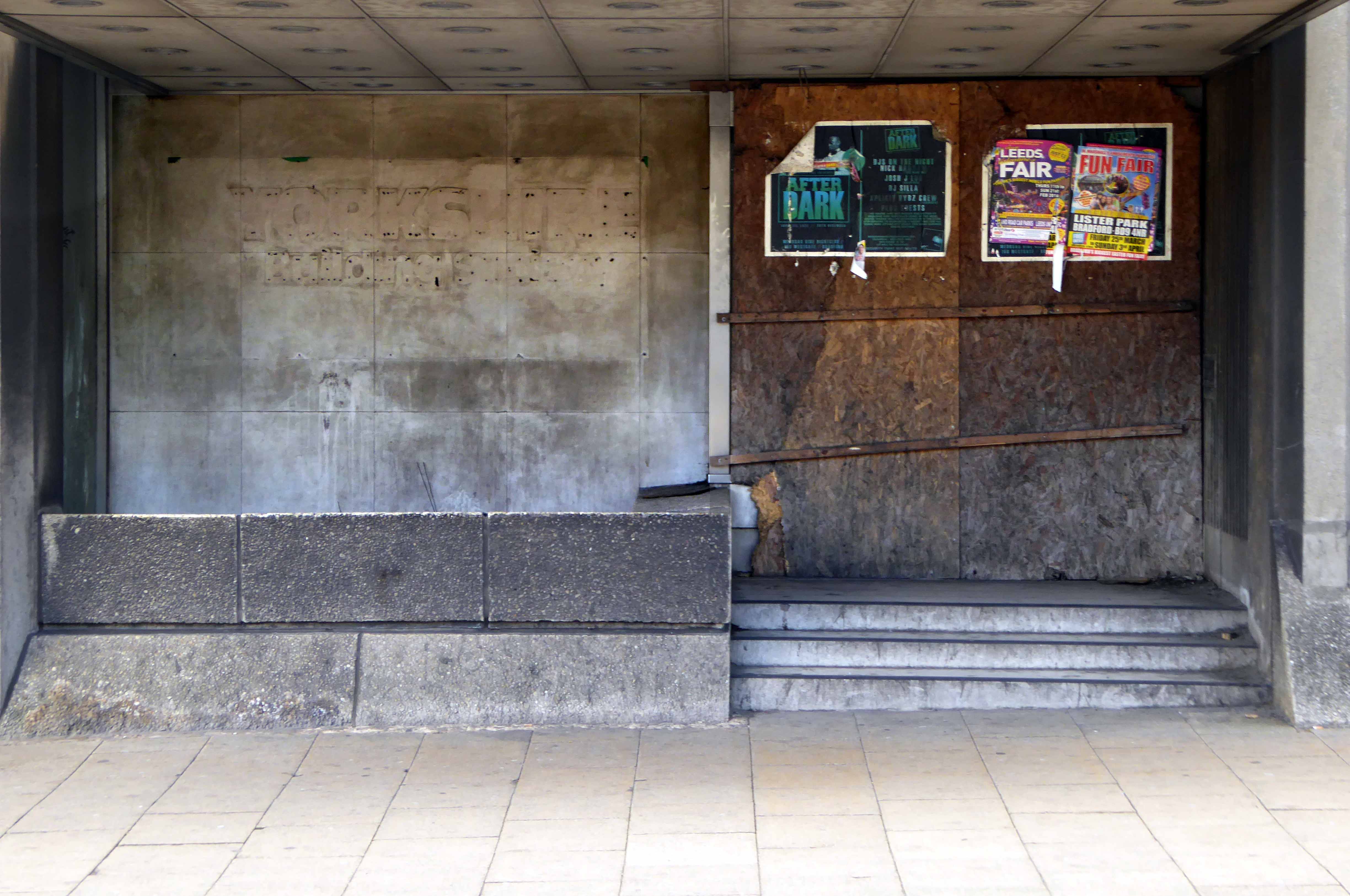
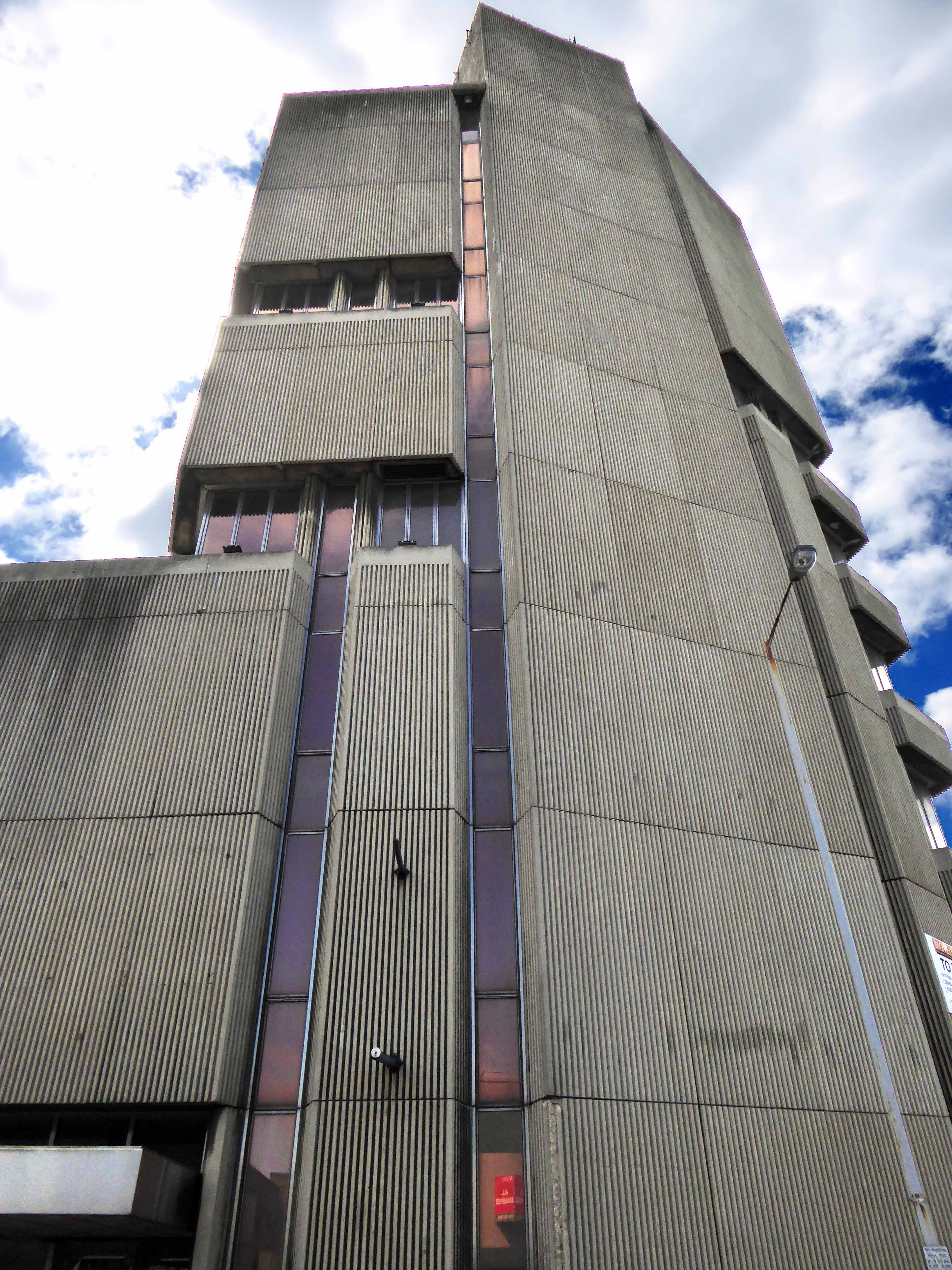
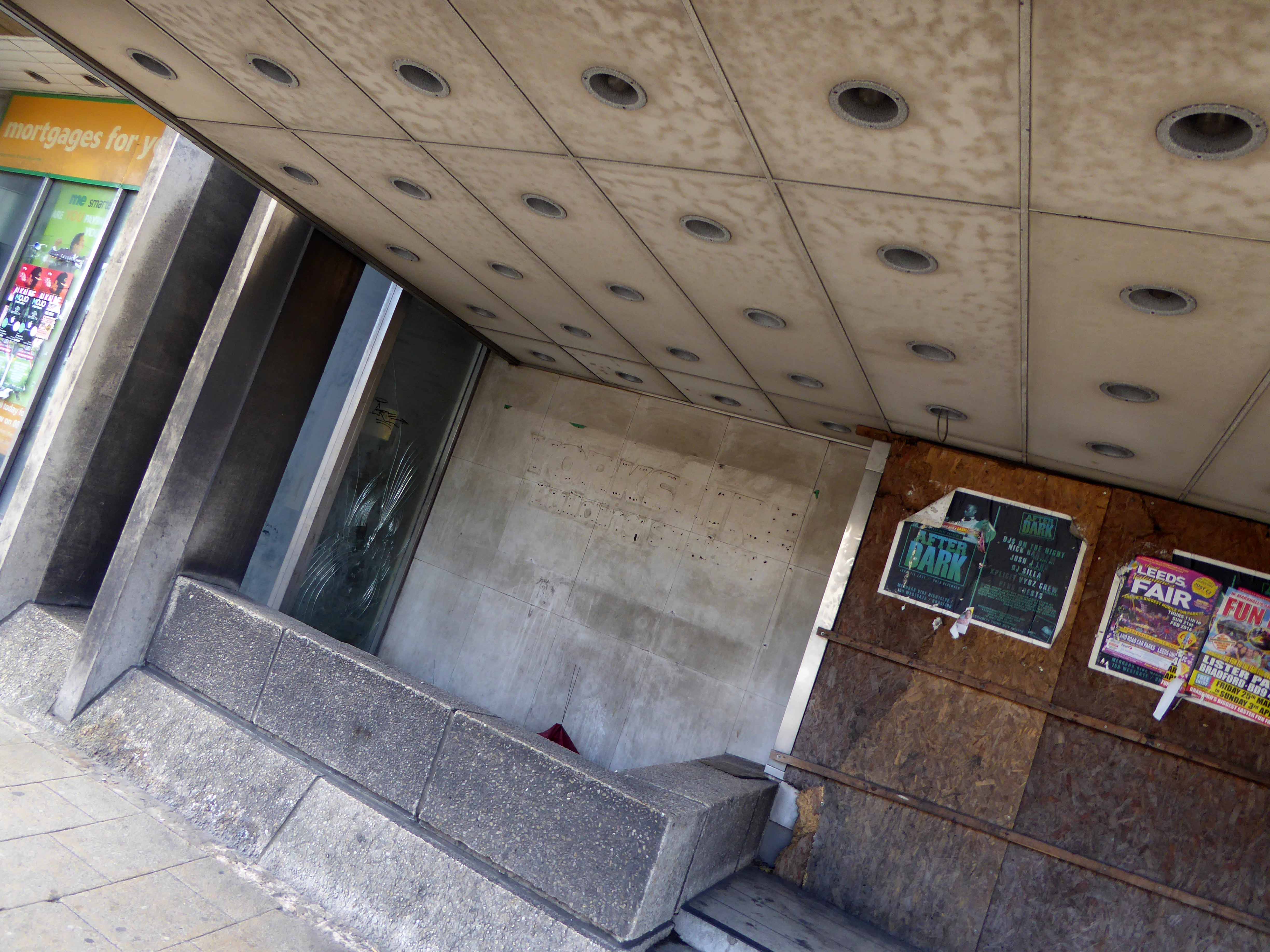
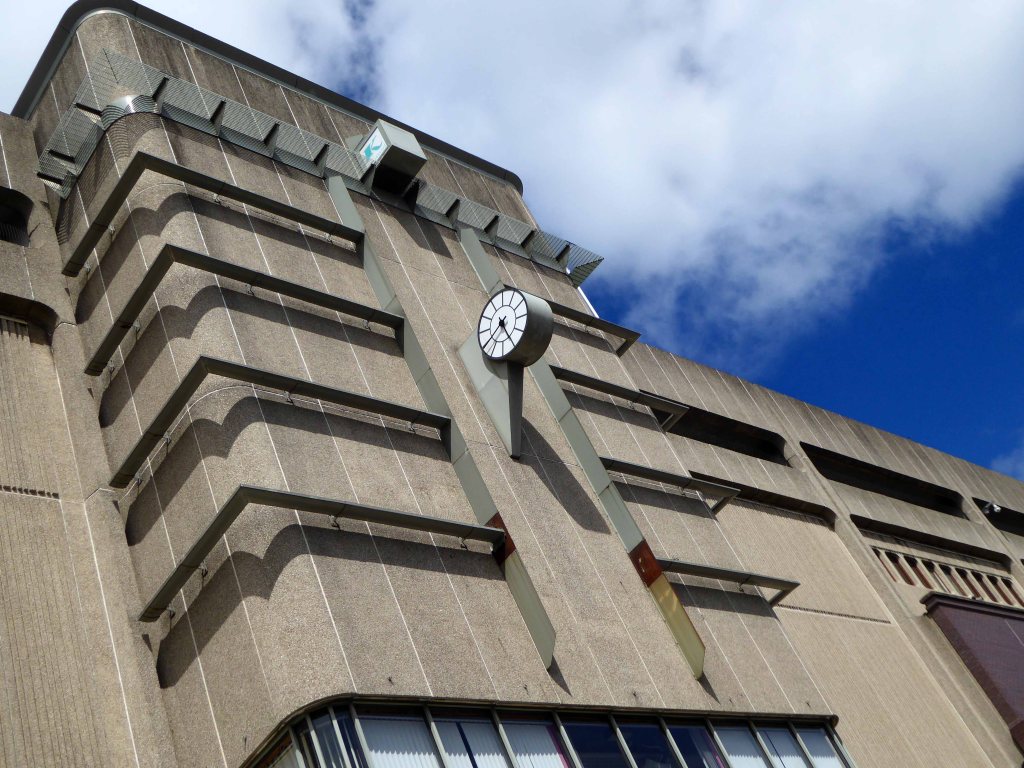
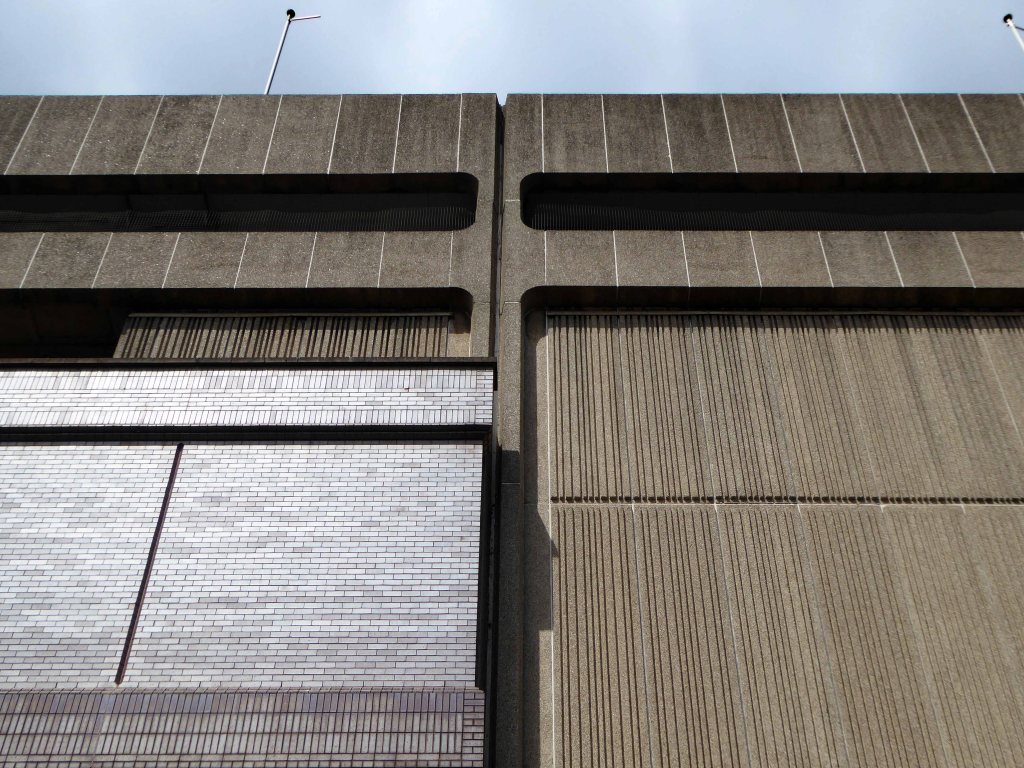
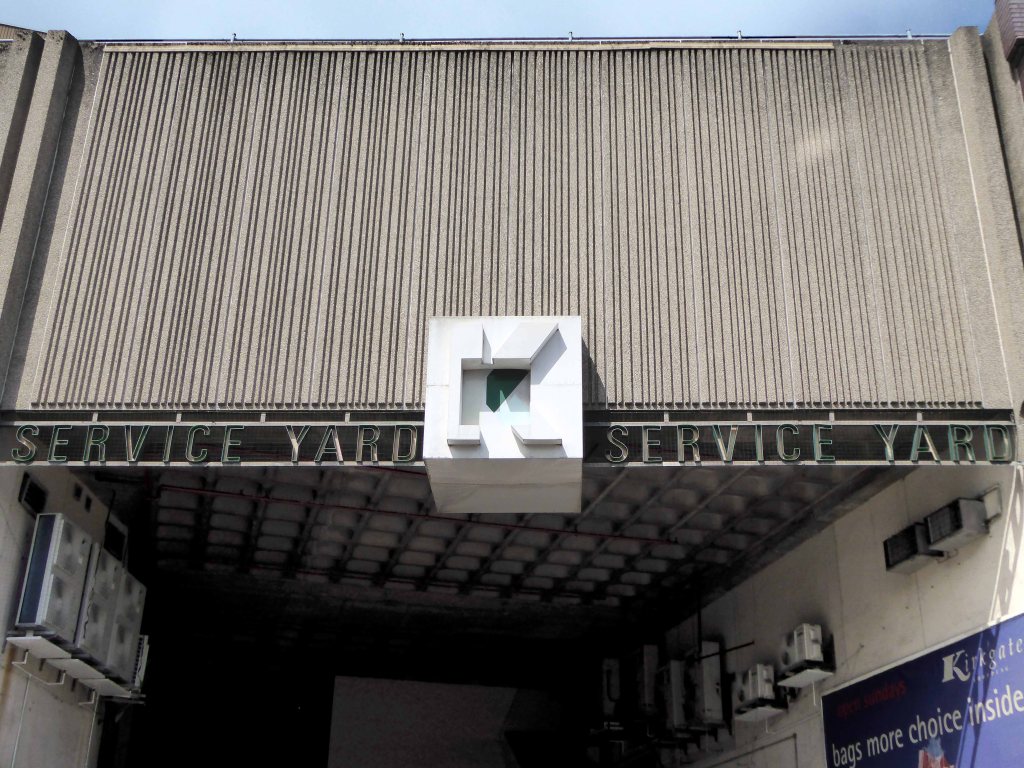
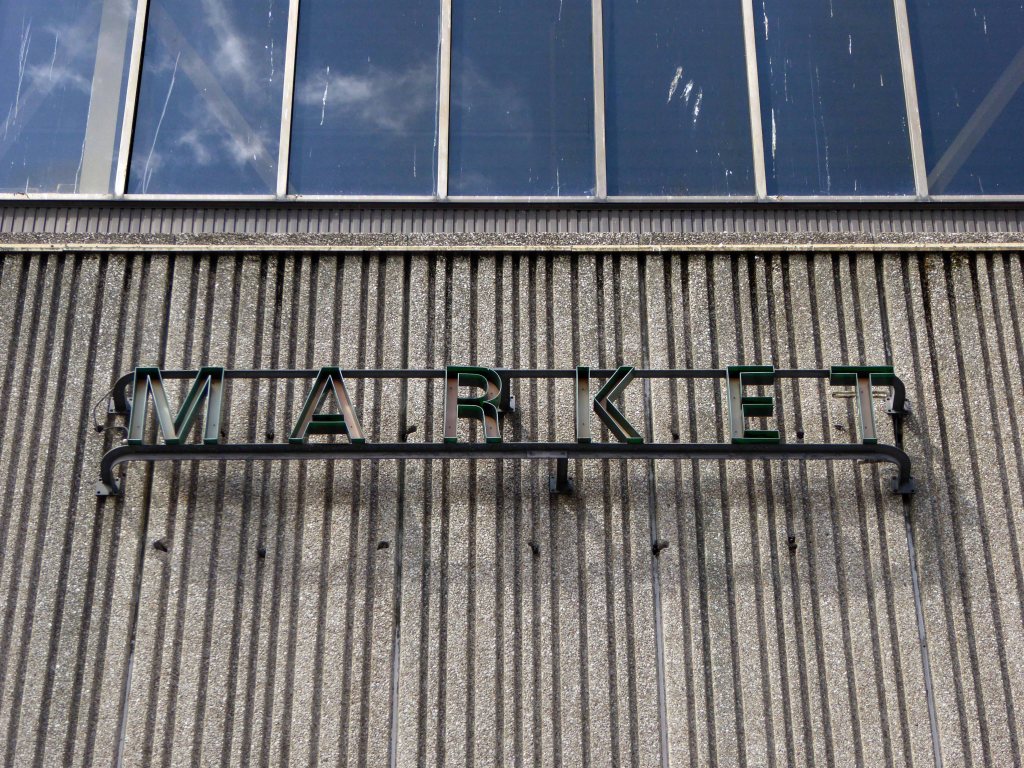
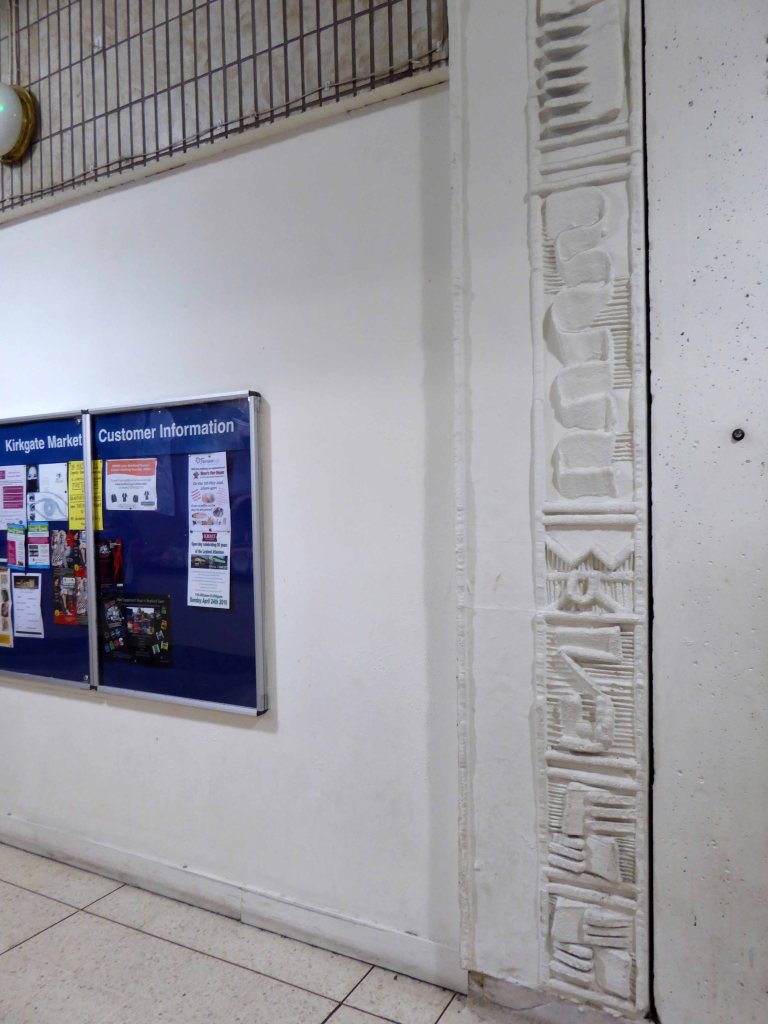
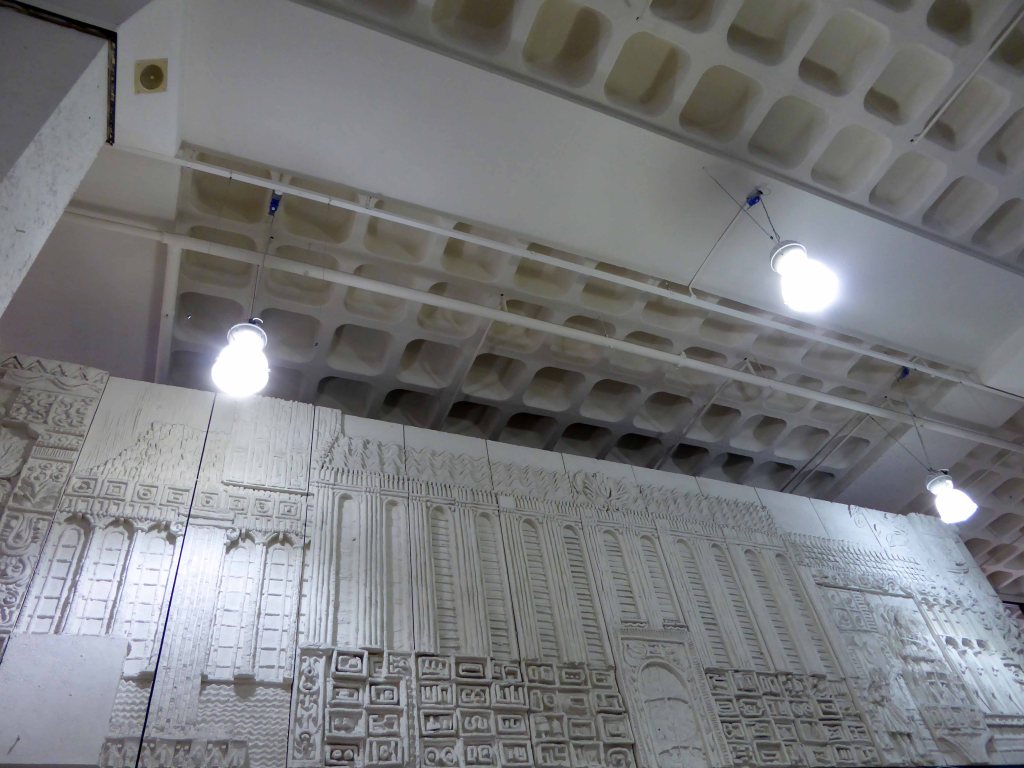
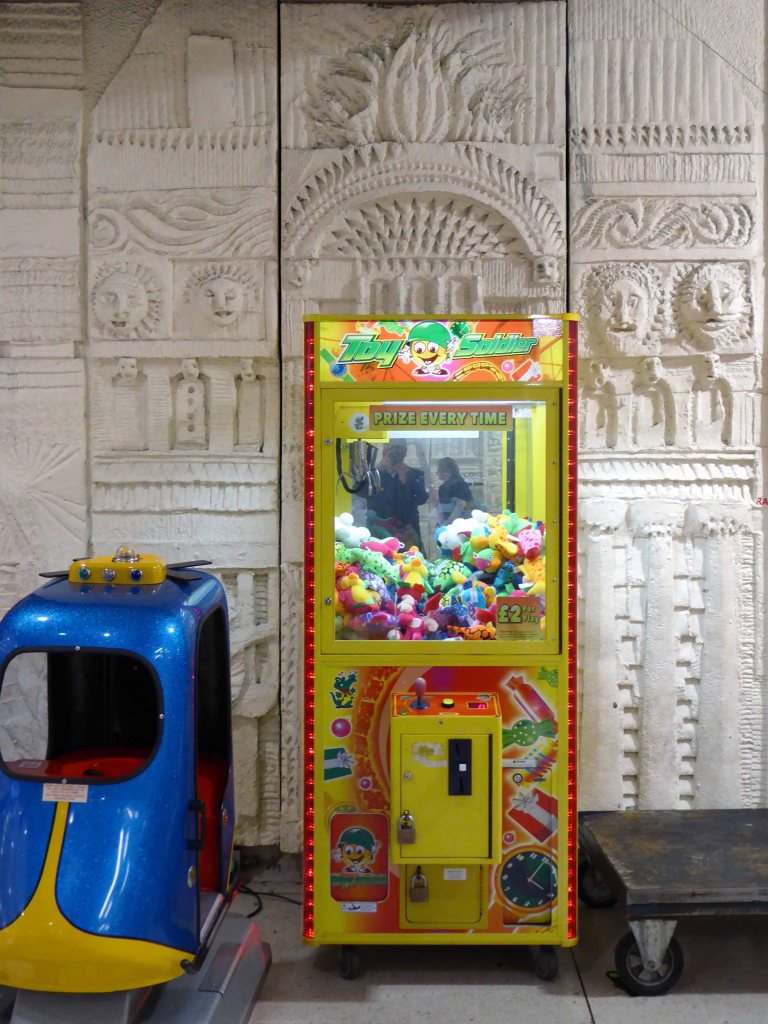
I’ve come back again, fascinated by the barely illuminated utilitarian infrastructure that seems so rarely used, alone in world of my own.

Take a closer walk and look with me.

The light at the end the tunnel is another tunnel.

P1260862

P1260863

P1260864

P1260865

P1260866

P1260867

P1260868

P1260869

P1260870

P1260871

P1260872

P1260873

P1260874

P1260875

P1260877


P1260879

P1260880

P1260881

P1260885

P1260890

P1260951 copy

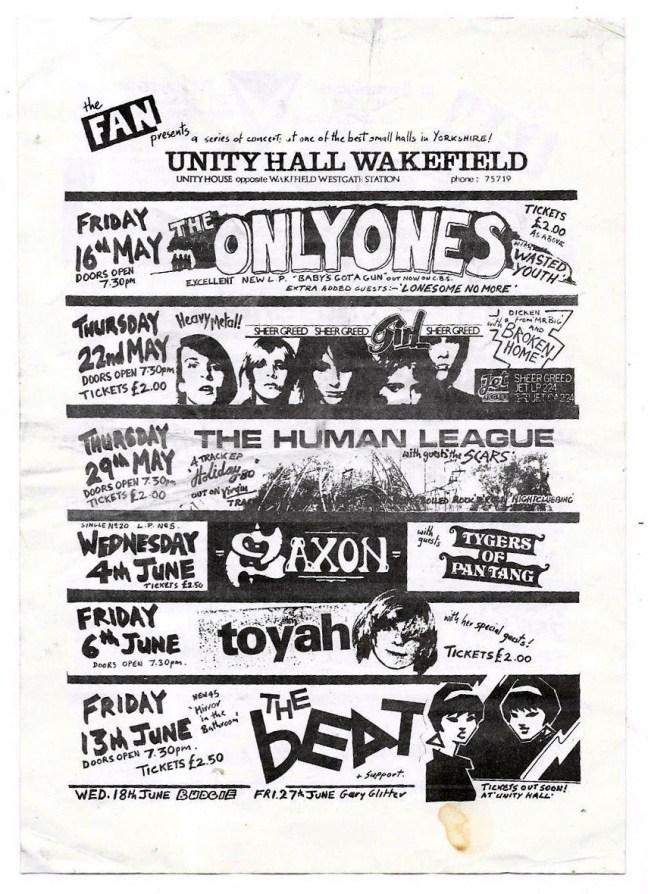
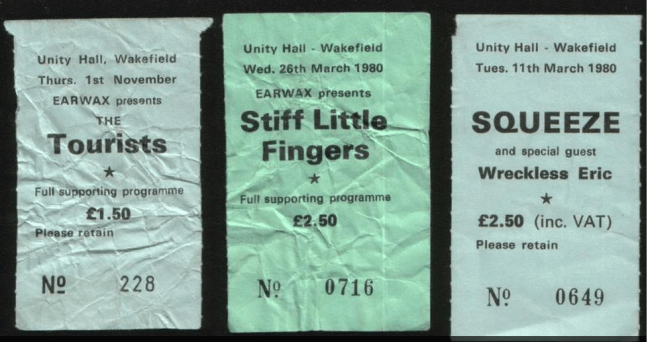
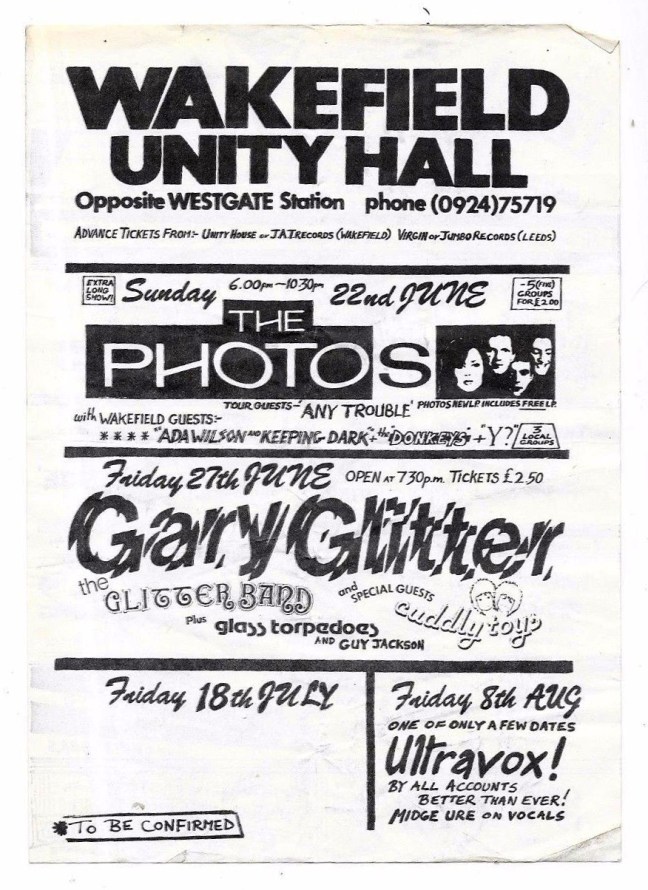
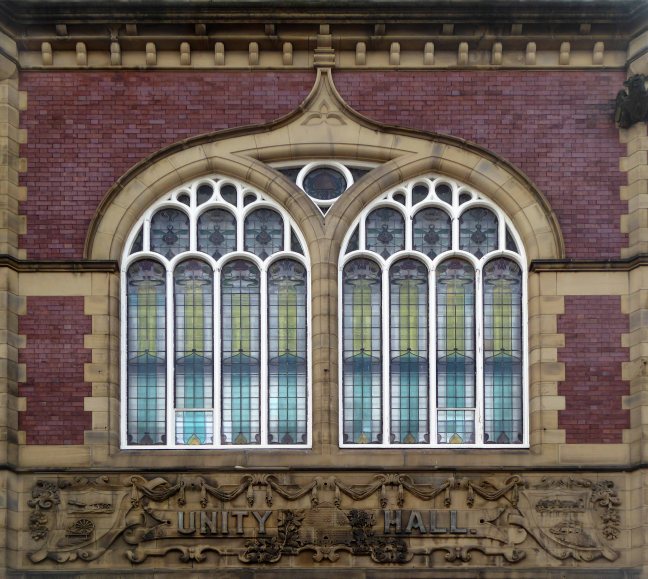
Unity Hall – Wakefield

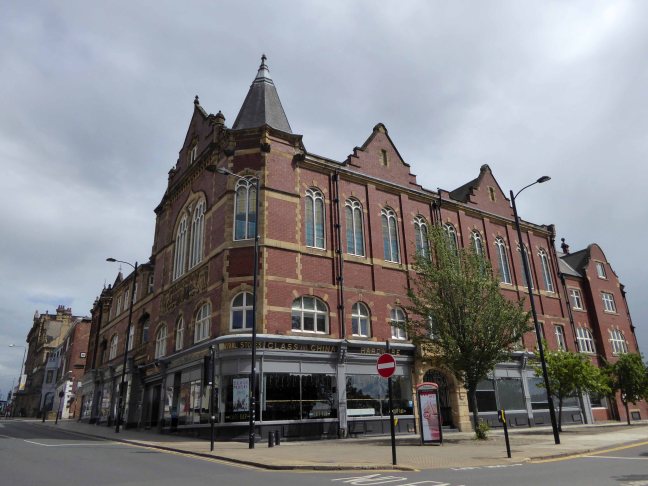
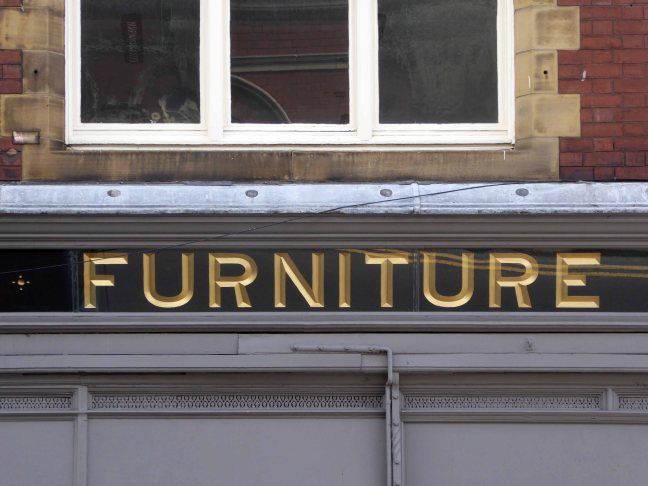
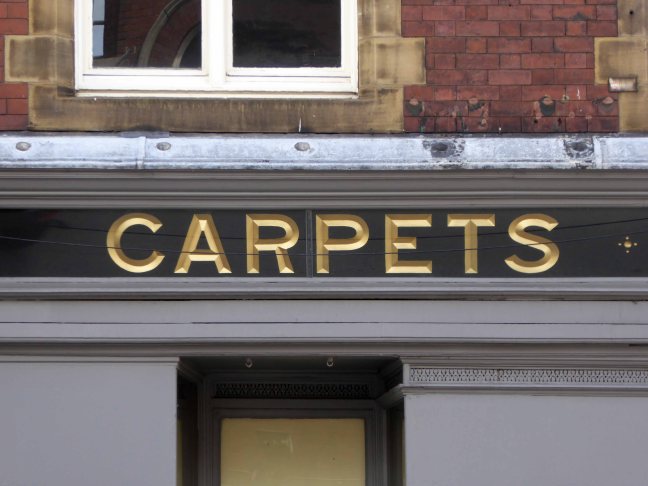
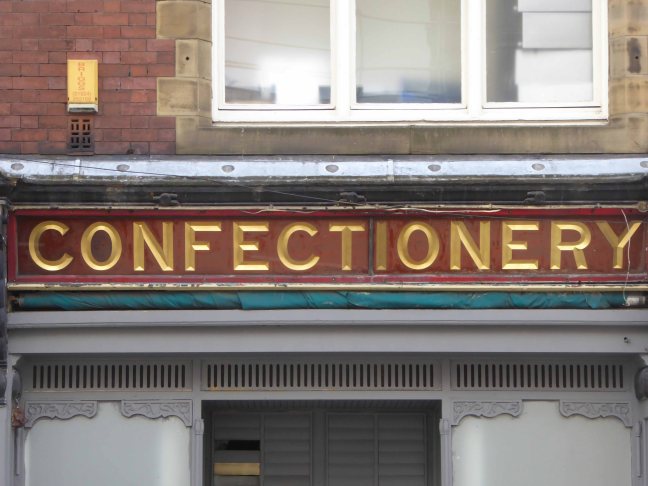
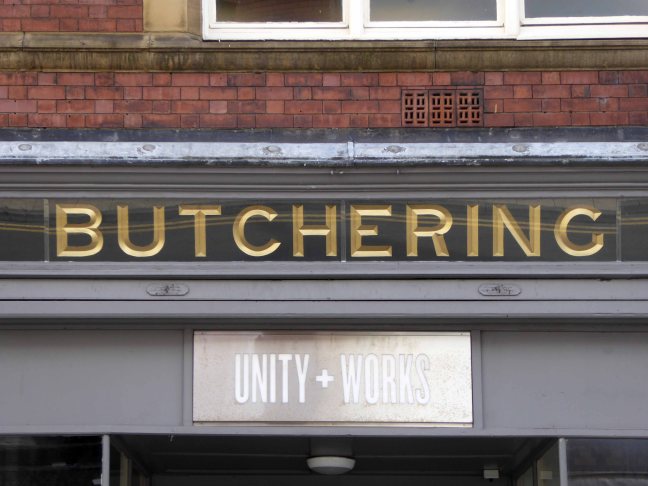
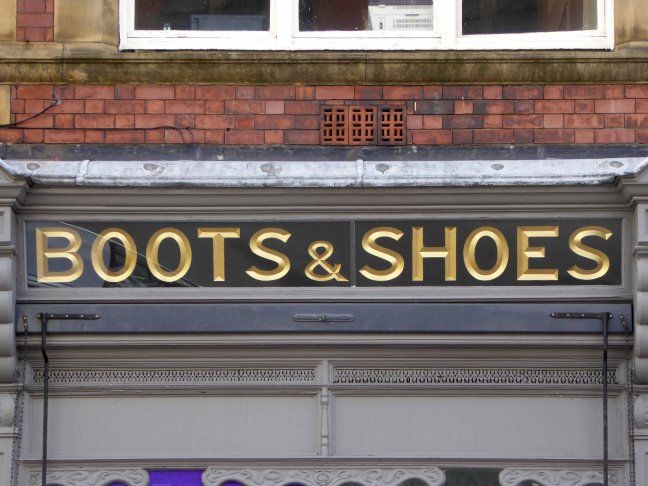
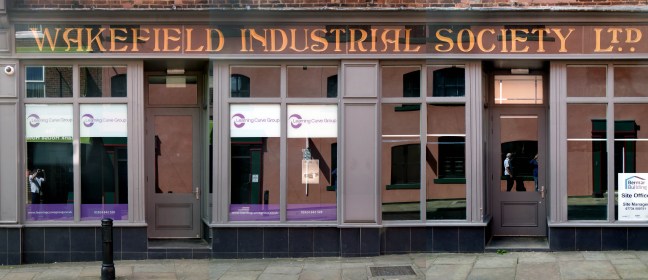
Wool, wool, wool I do declare – Westgate Wakefield the worse for wear, warehousing, banks and halls in a state of transition. The enormous wealth created by the local textile trade and associated industries, has left an architectural legacy that permeates the wide street, with a more than somewhat faded grandeur.

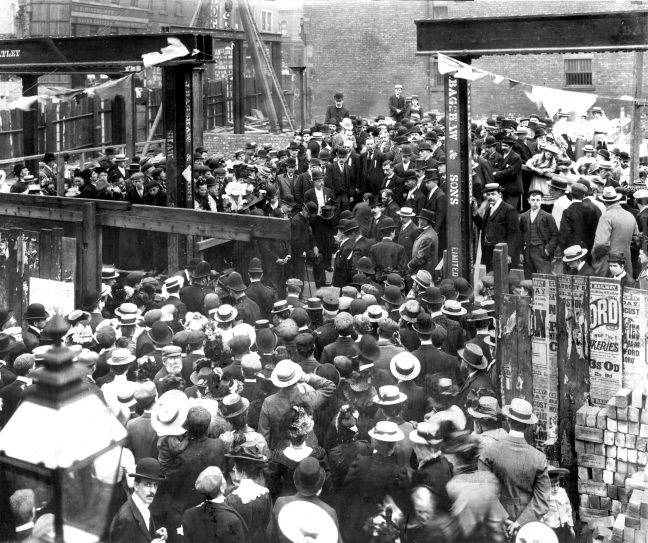
laying-of-foundation-stone

Laying the Foundation Stone

The Co-operative Unity Hall has seen better days – opened in 1902 and offering extensive retail space, along with a concert and dance hall, echoing to the sound of silent films, all-in wrestling and a fine array of music.

$_57Screen Shot 2017-08-02 at 15.30.55s-l1600

Sadly, as the post-war boom becomes an ever distant, sonic shadow of its former self, the hall closes. Listed yet unused, it stood aloof and alone, unloved. The Beat were on, sadly the beat no longer went on.

9276764393_e5b1688d09_c

9276733799_772ac84eb7_c

9276755169_9fd0bacd58_c

Derelict Places 

Happily a corner has been turned and under new management:

Unity Works is a stunning grade II listed multi-use space, where modern meets state-of-the-art. Unity Works is a great space for work and play, from 1:1 meeting areas, to large conferences, office & work space, to live events, comedy, music, theatre and film screenings.

There’s something for everyone!

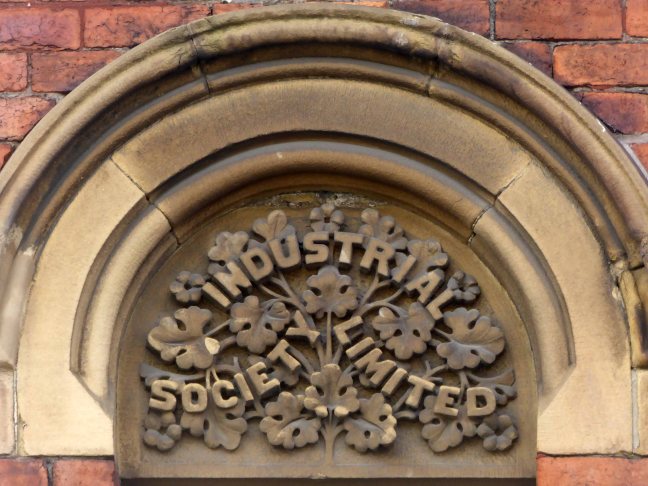
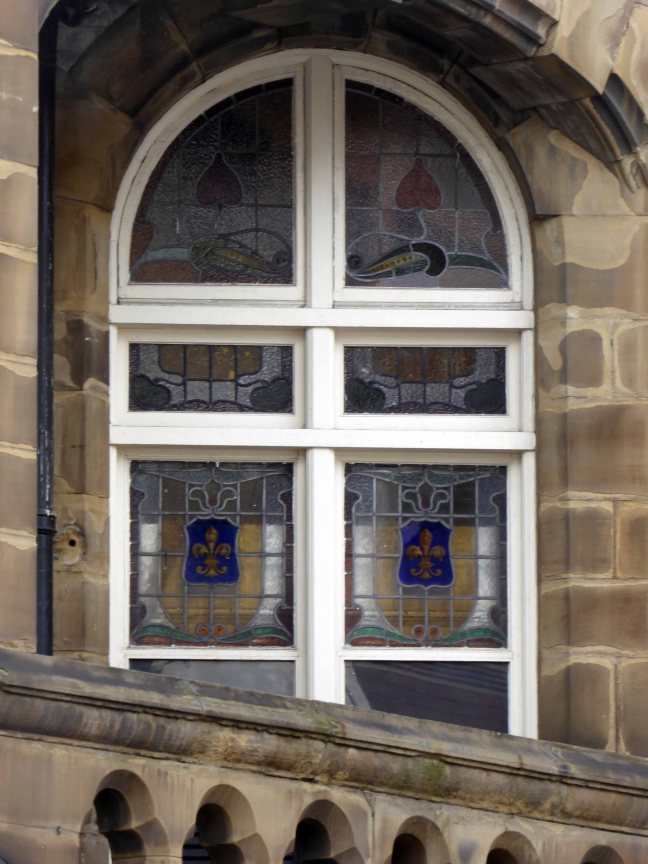
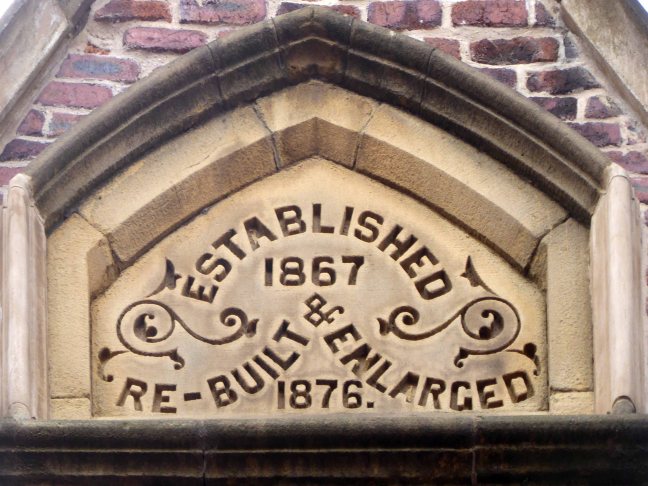
More than 400 people invested in a community share scheme to help fund the refurbishment, which began in January. Continuing the tradition of a movement in this architectural gem, which was established as the Wakefield Co-operative headquarters in 1867, a building alive with rich detailing, signage, architectural type and mosaic.

Get gone take a look, listen and dance.

P1070024 copy

P1070025 copy

P1070026 copy

P1070027 copy

P1070029 copy

P1180727

P1180728

P1180729

P1180730

P1180731

P1180732

P1180733

P1180734

P1180735

P1180736

P1180737

P1180738

P1180739


P1180746

P1180747

P1180748

P1180749

WISLa copy


St Marks Broomhill – Sheffield

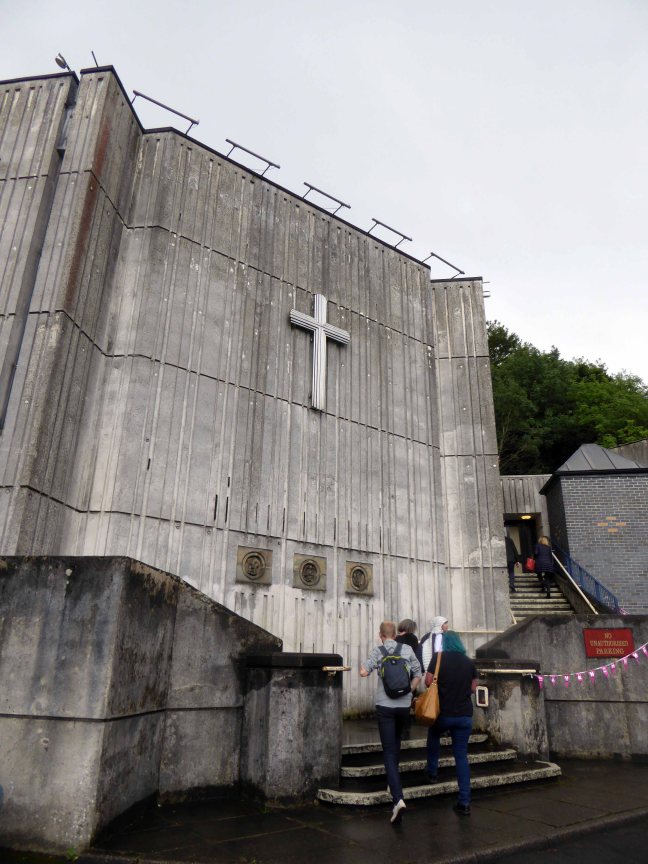
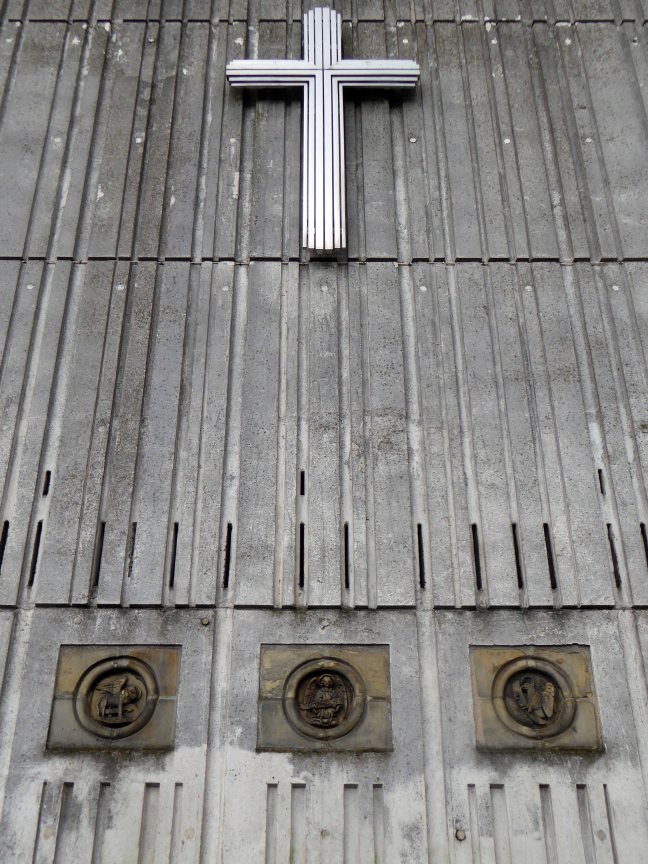
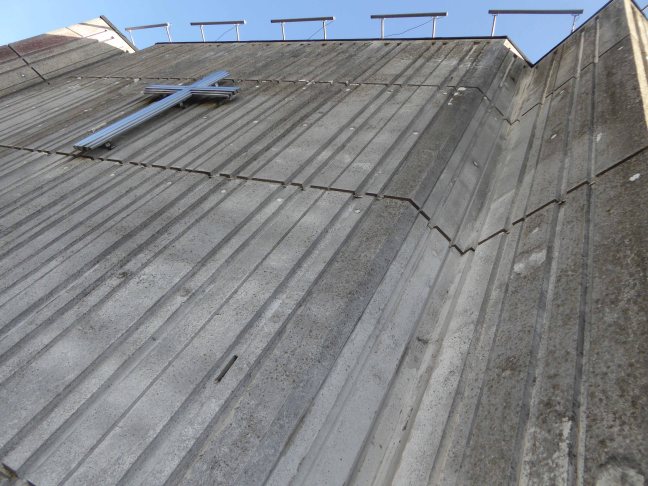
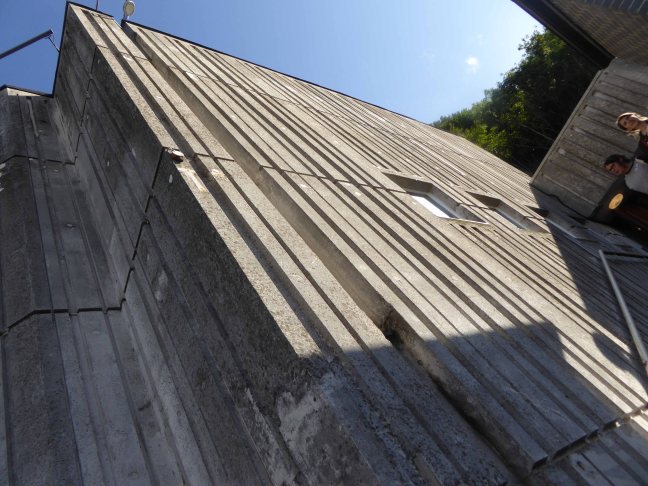
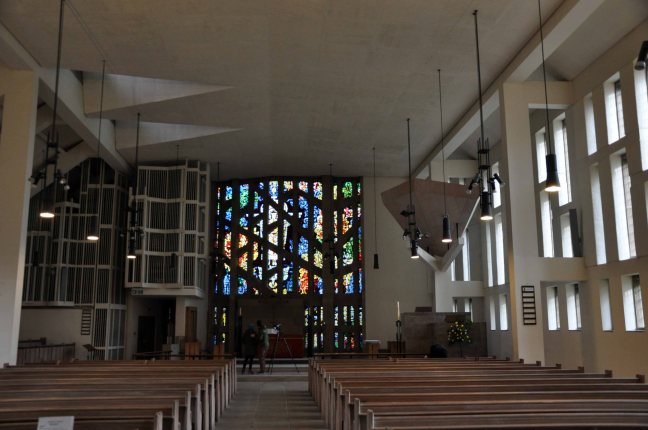
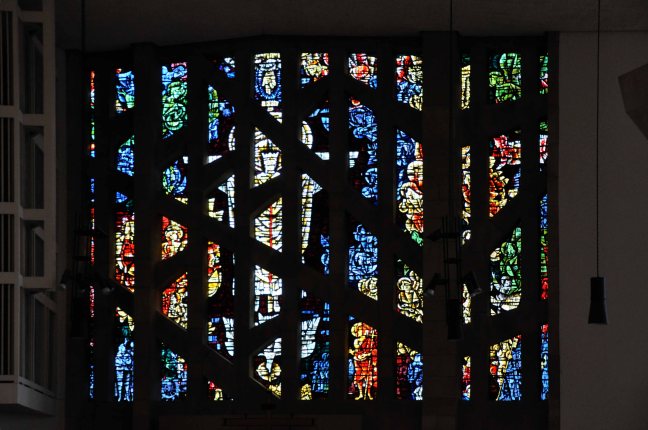
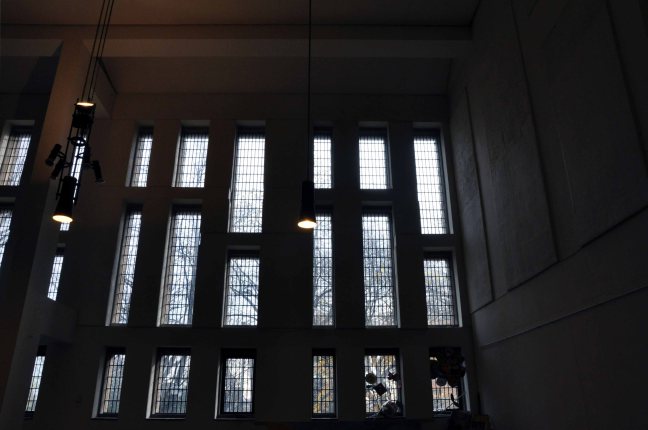
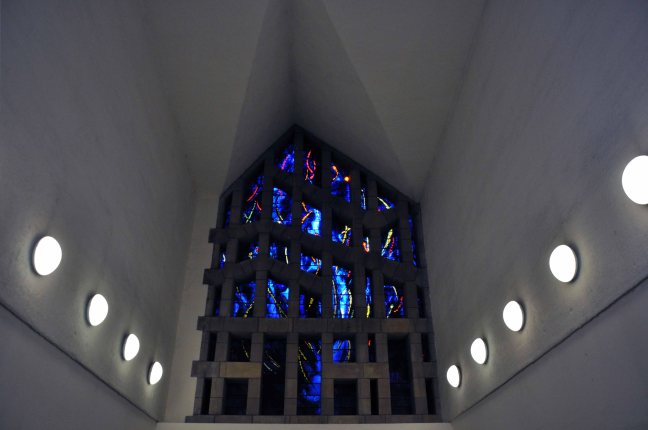
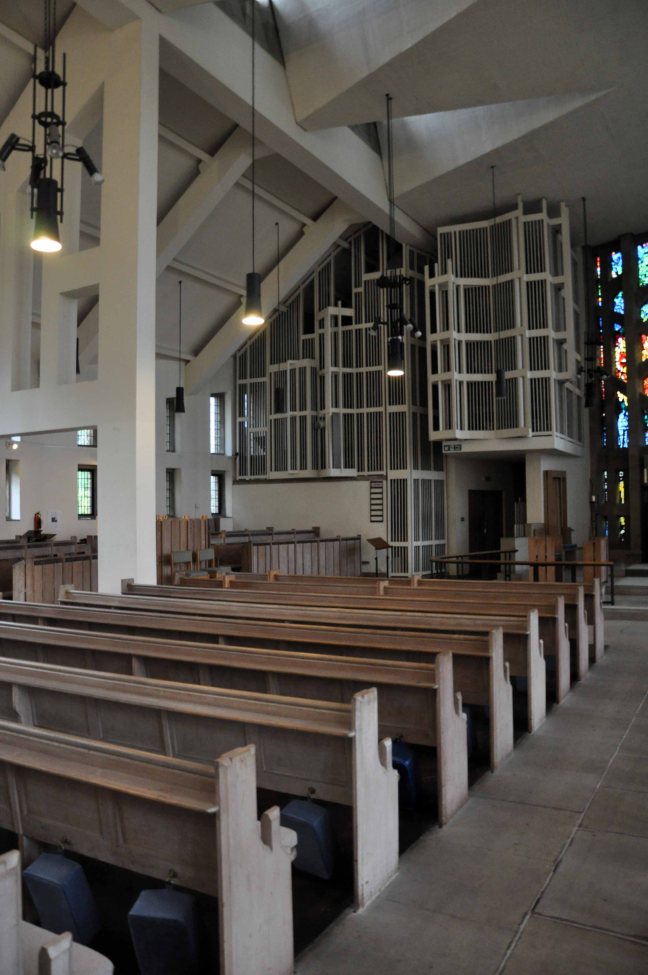
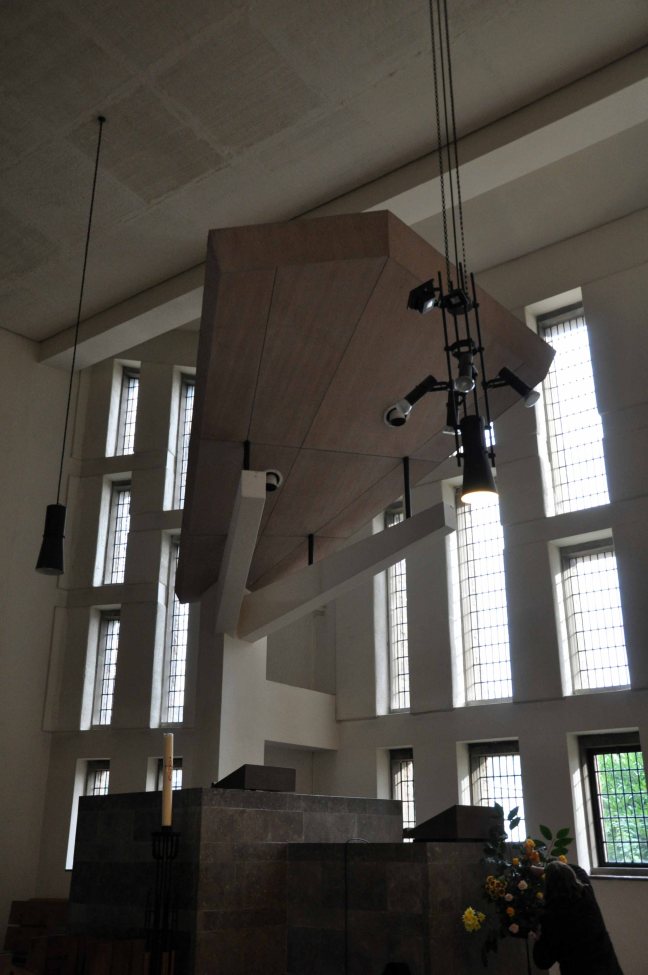
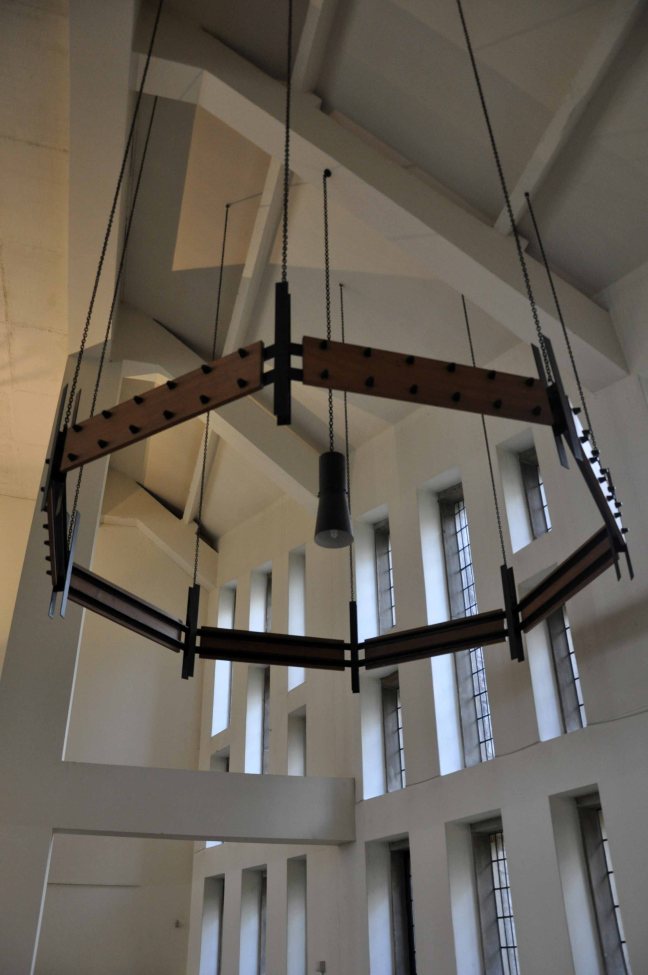
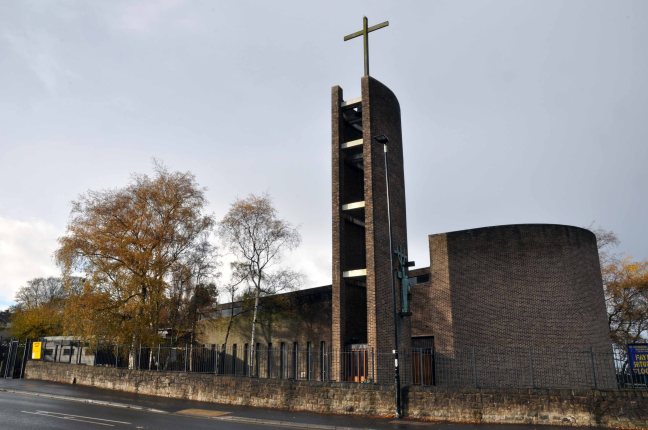
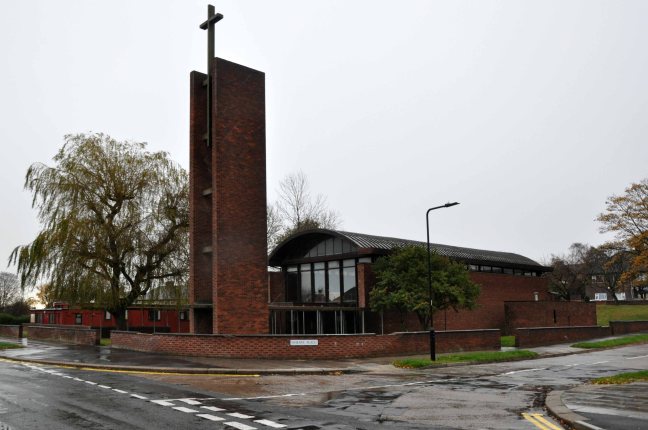
The church was originally built in 1868–1871 to a standard neo-Gothic design by William Henry Crossland. This building was destroyed by an incendiary bomb during the “Sheffield Blitz” of 12 December 1940, only the spire and a porch survived (they are now Grade II listed structures). The remnants of the bombed church were used as the basis for a new church designed by George Pace and constructed 1958–1963. This new building is of a Modernist design but is also sympathetic to the Gothic spire and porch. It is a rubble-faced concrete building with striking slit windows of varying numbers and locations around the building. There are also two notable stained glass windows: the Te Deum window by Harry Stammers and the west window by John Piper and Patrick Reyntiens.

Wikipedia told me so.

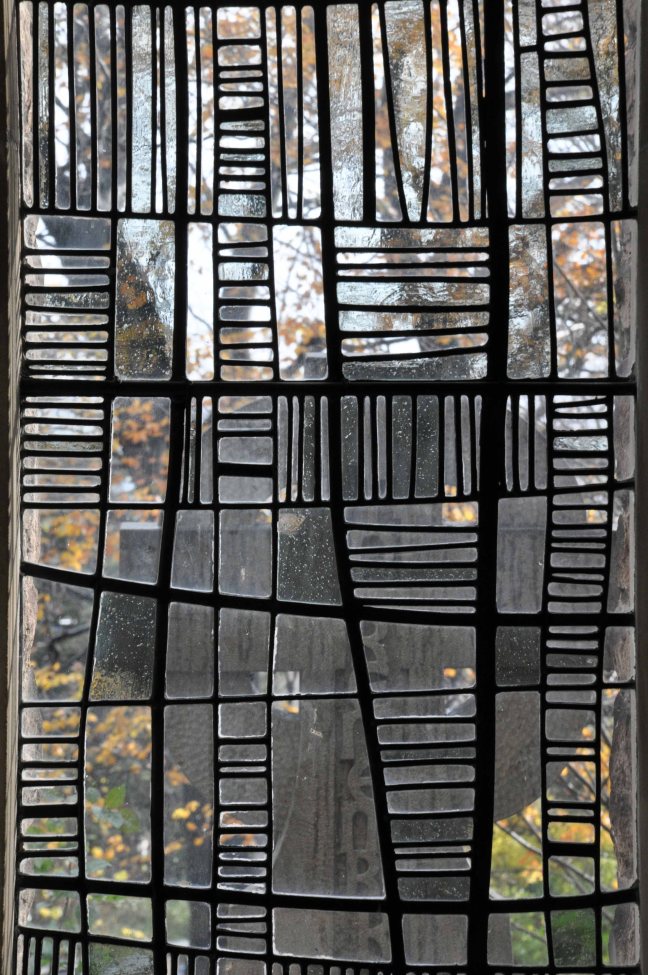
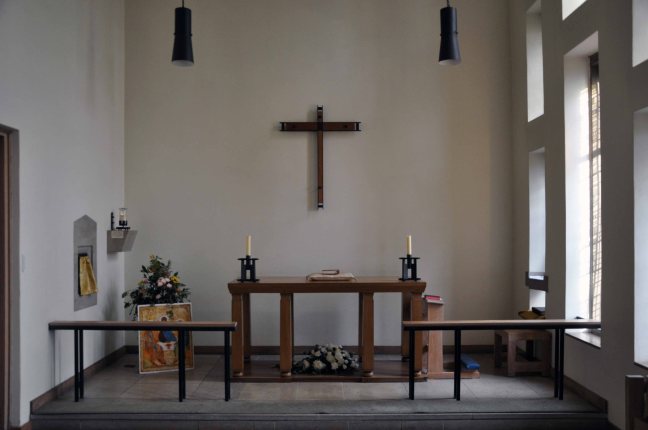
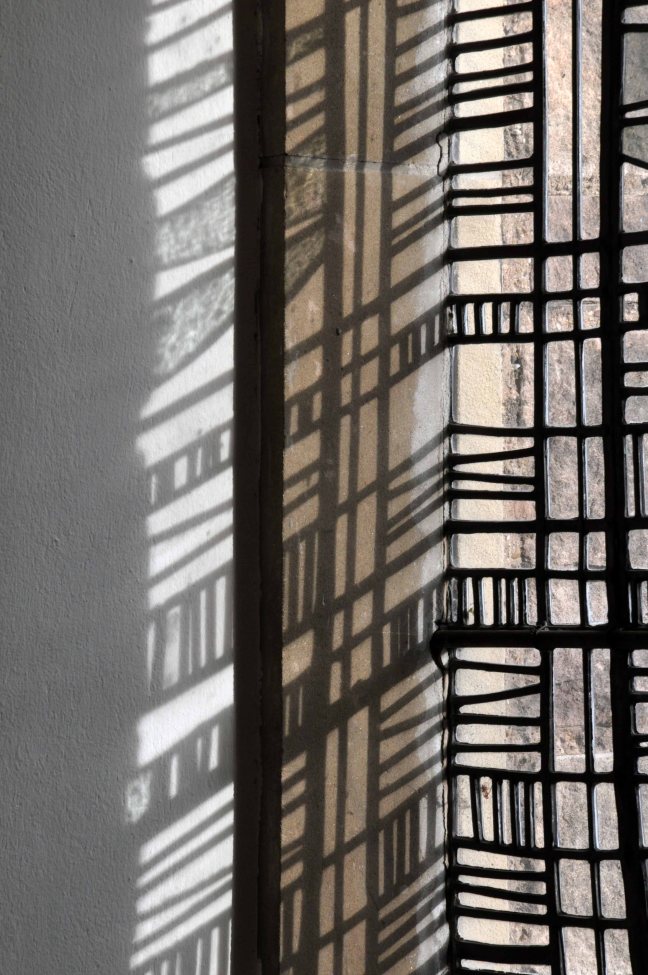
he laddered design glass in the side chapel, is by Gillian Rees-Thomas.

Welcome to St Mark’s – an open, welcoming church for people from all walks of life who wish to learn more about Jesus and Christian faith and seek the freedom to ask the big questions. We have strong engagement with Christian communities and other faith traditions. People come from all over the country to participate in our Centre for Radical Christianity, where a lively climate of debate and learning can be found.
blank
Their website told me so.
 blank
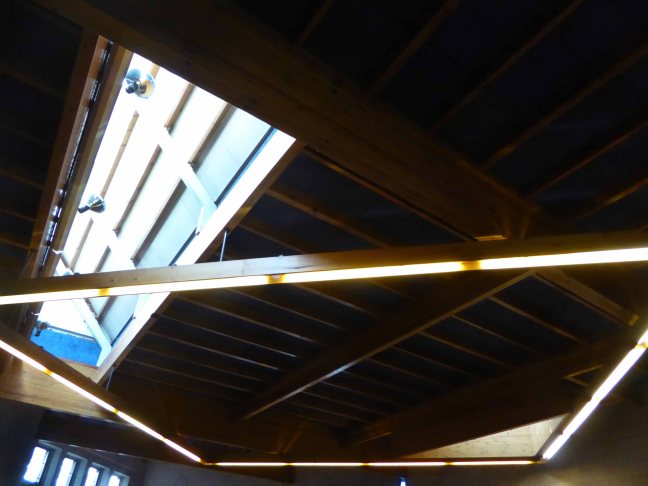
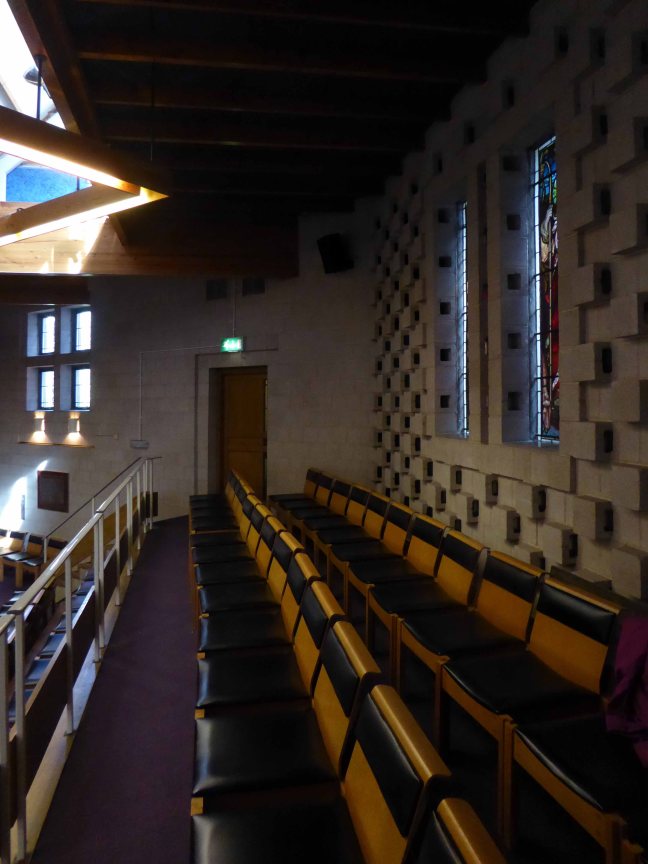
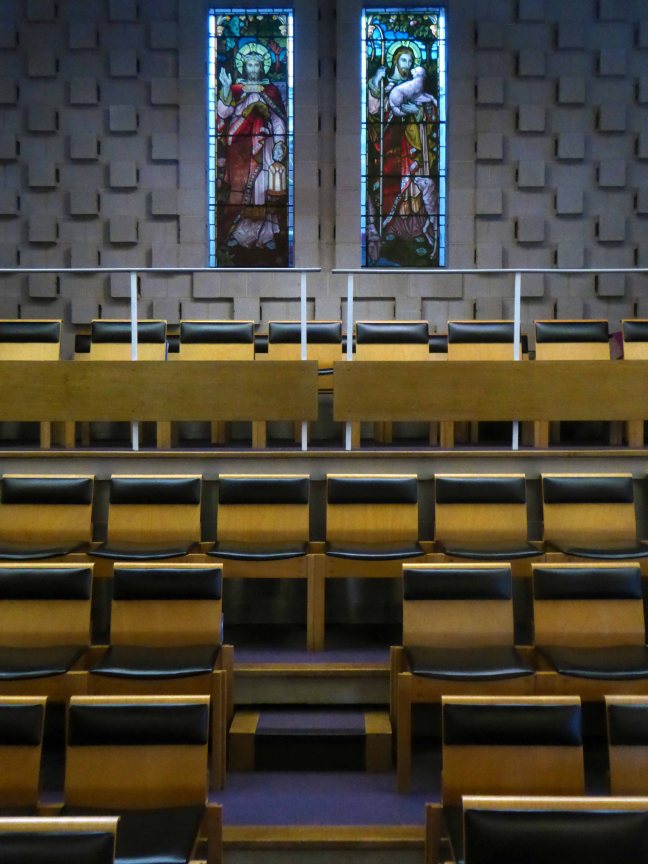
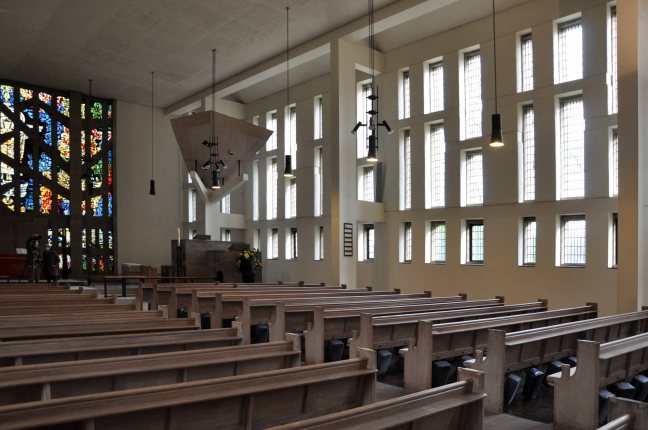
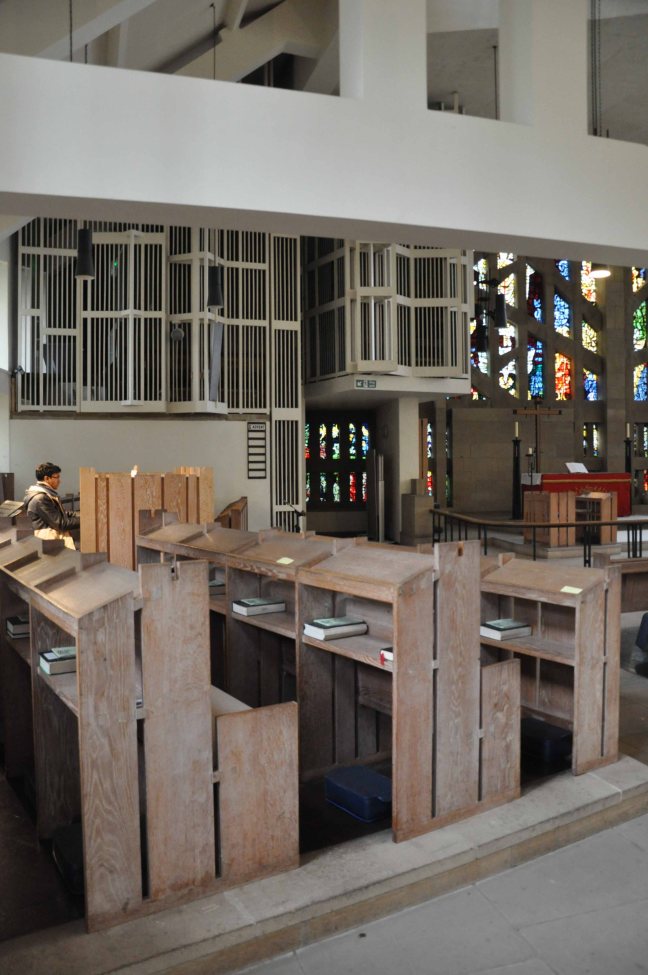
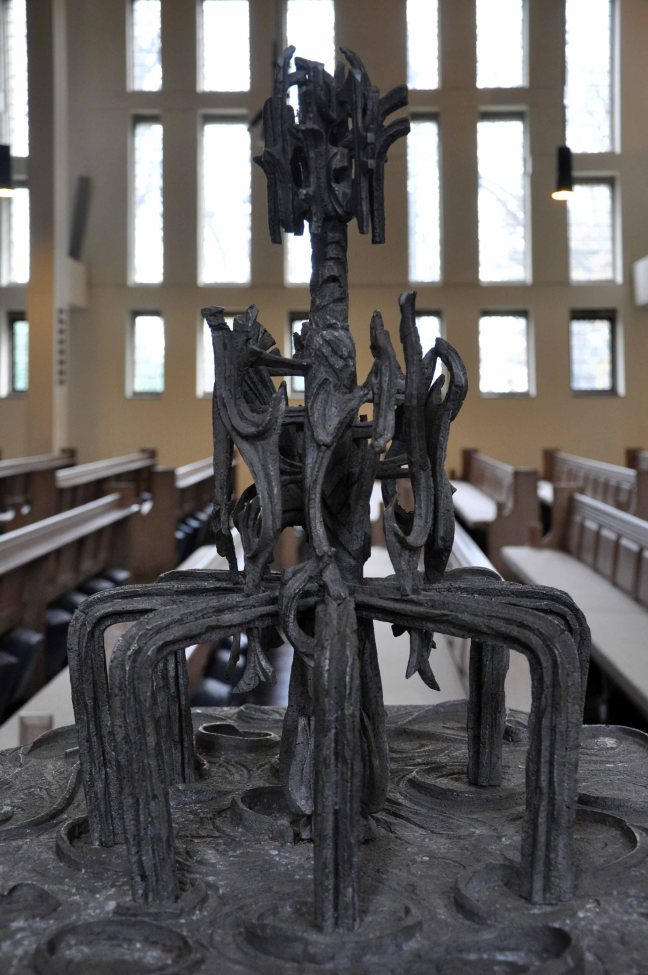
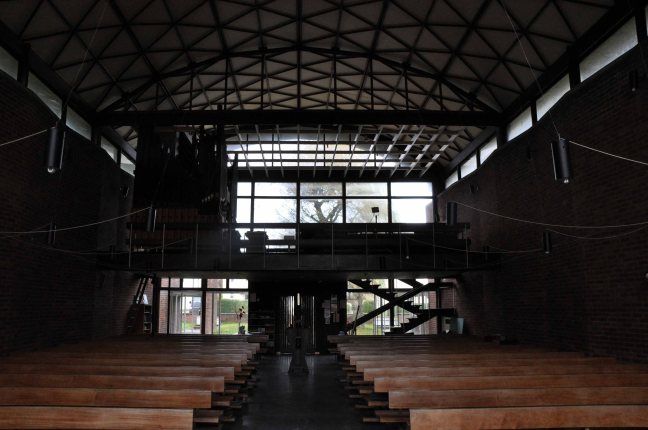
This a remarkable building staffed by remarkably welcoming people, it’s exterior betraying little of the wonders within. Divine stained glass, brut concrete structures, pale limed wood, sculptural forms – full of light and warmth.
 blank
DSC_0065
 DSC_0066
 DSC_0067
 DSC_0068
 DSC_0069
 DSC_0070
 DSC_0071
 DSC_0073
 DSC_0074
 DSC_0075
 DSC_0076
 DSC_0085
 DSC_0083
 DSC_0089
 DSC_0090
 DSC_0092
 DSC_0093

Tudor House – Wakefield

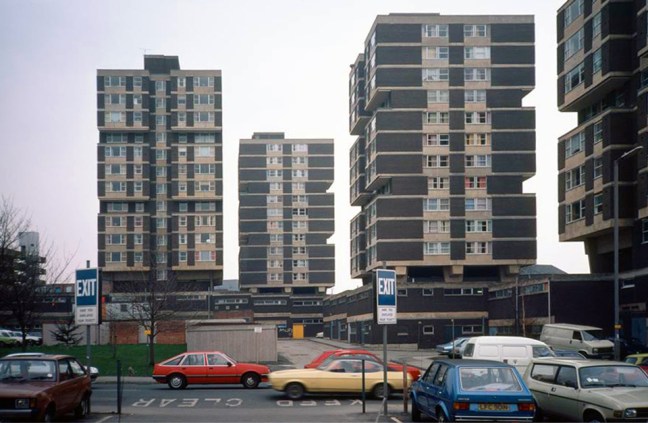
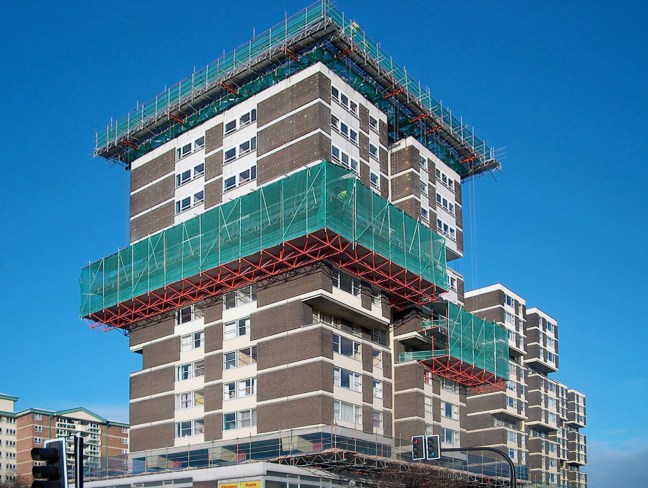
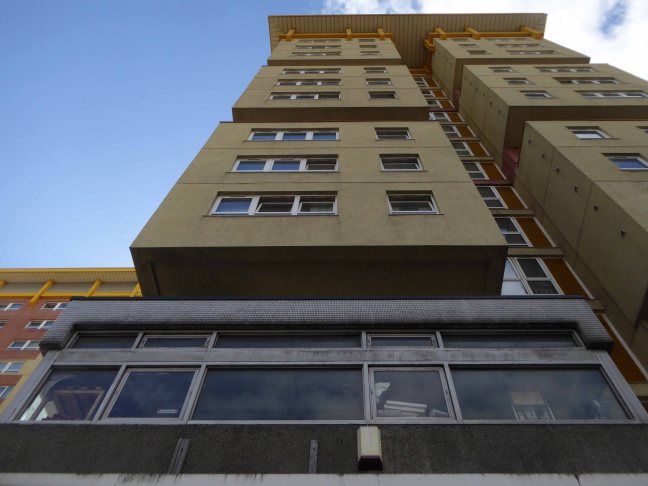
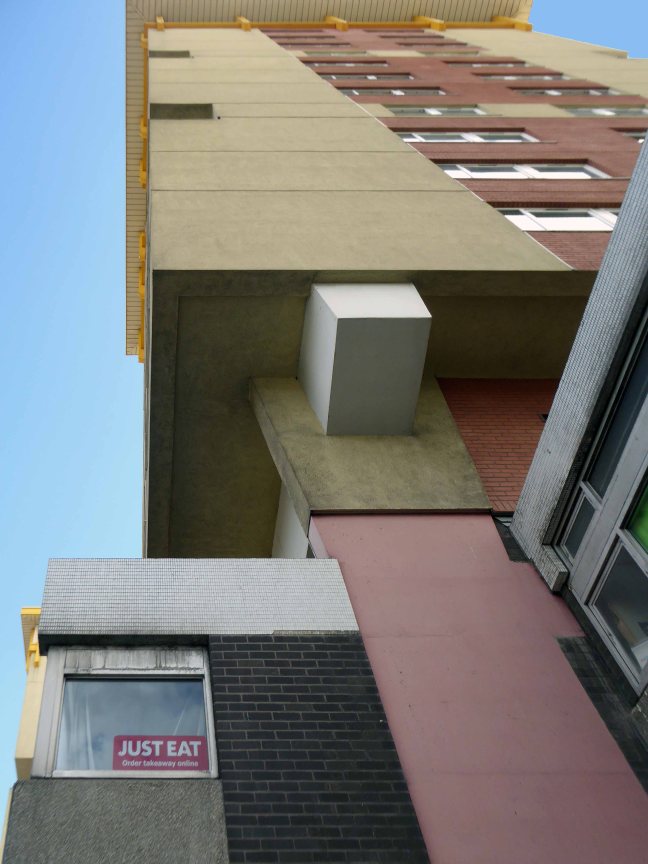
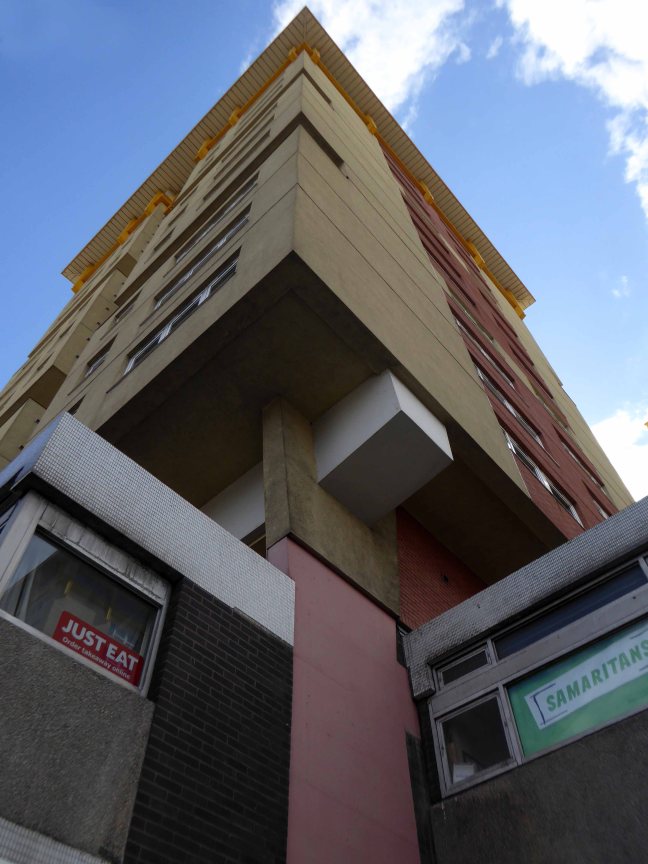
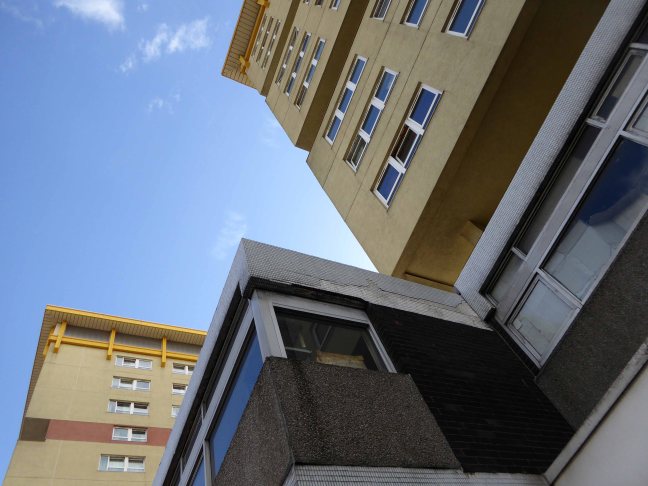
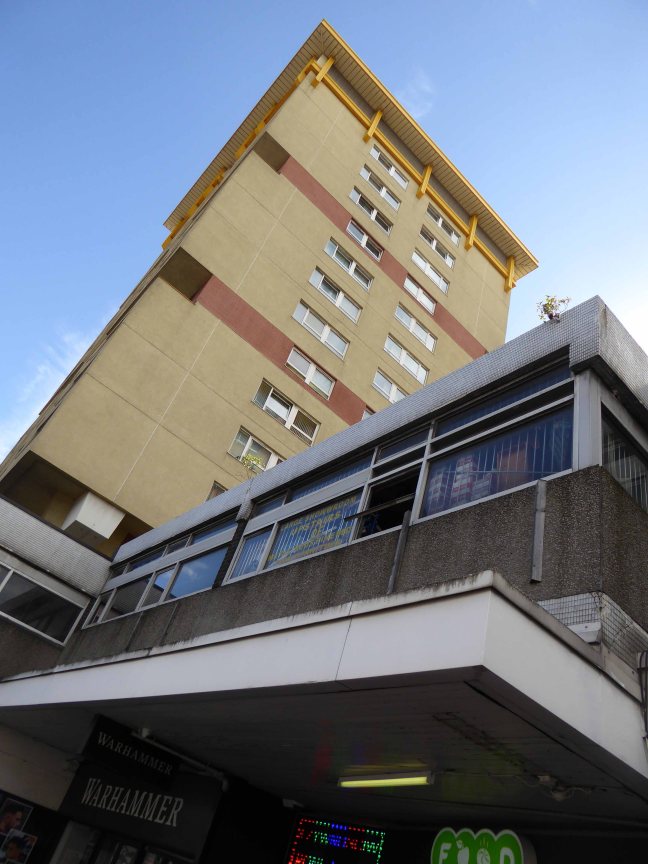
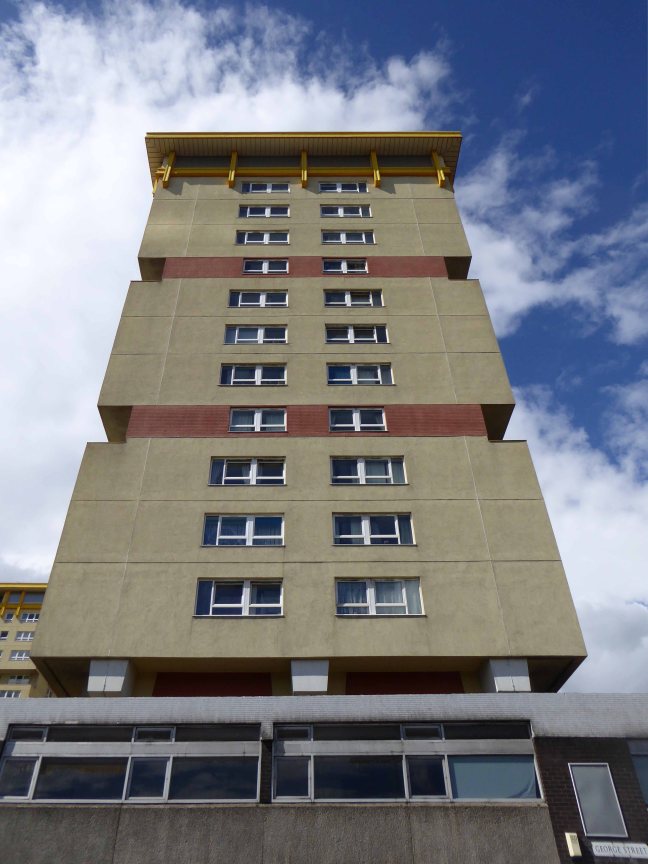
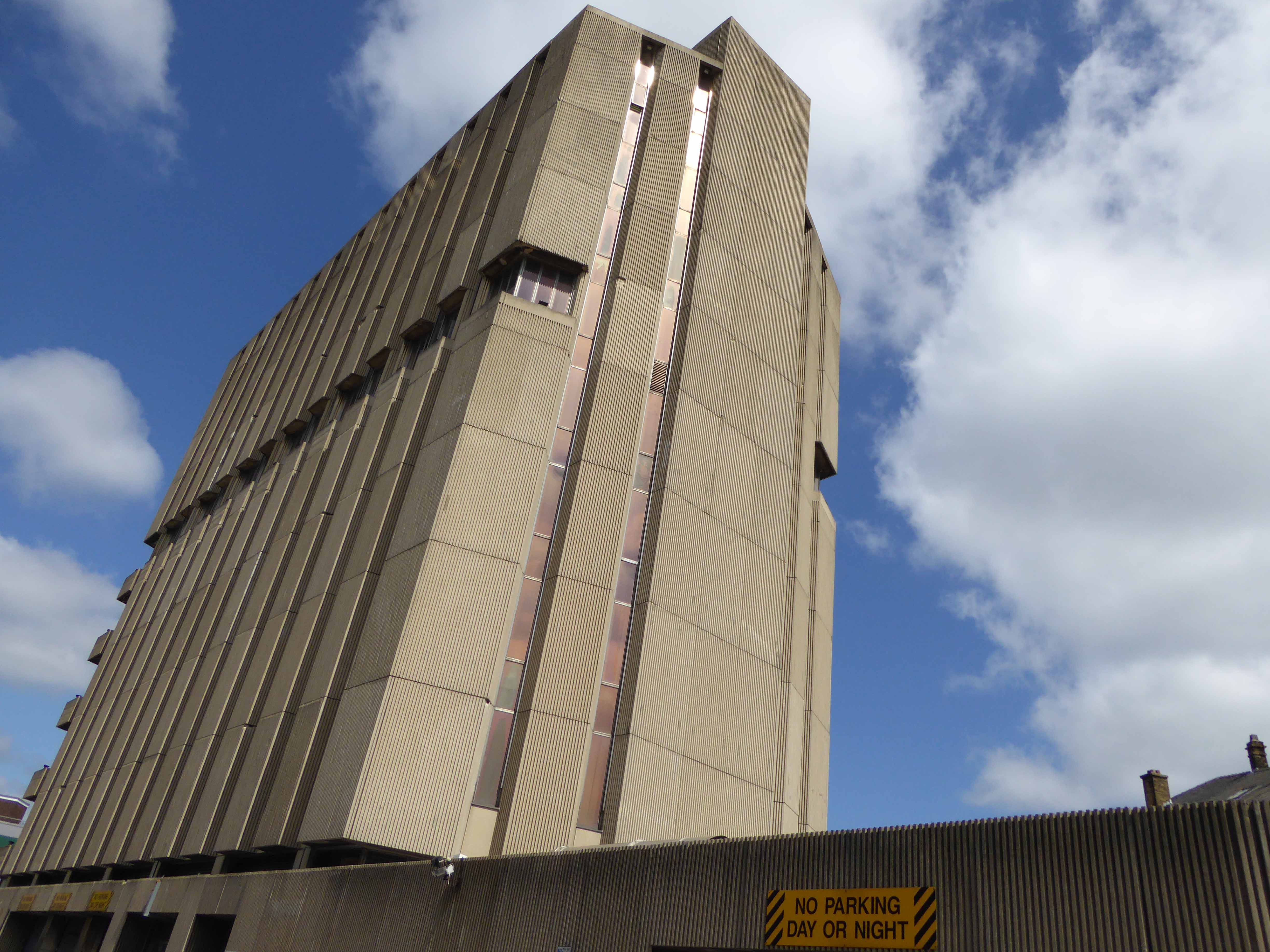
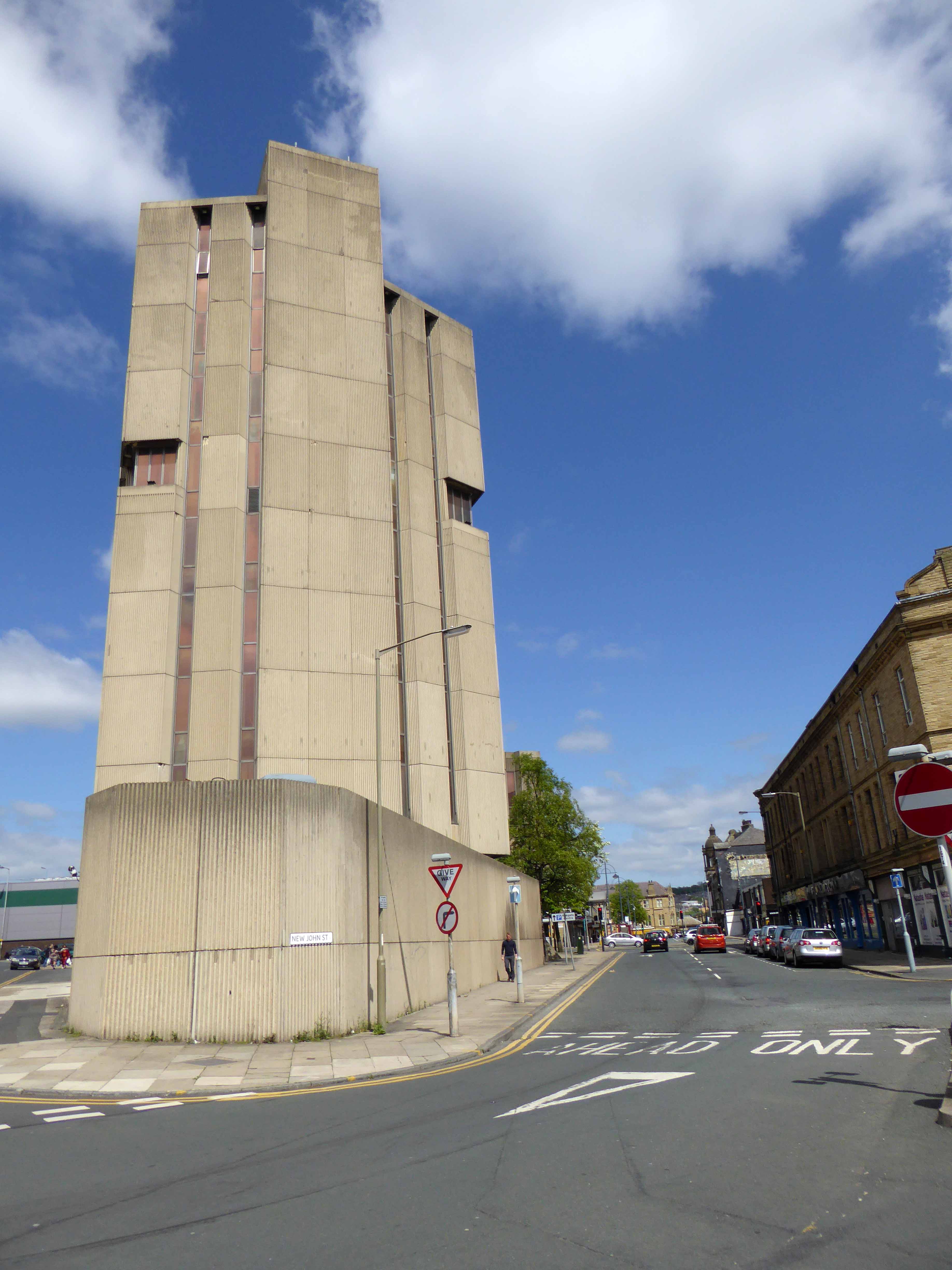
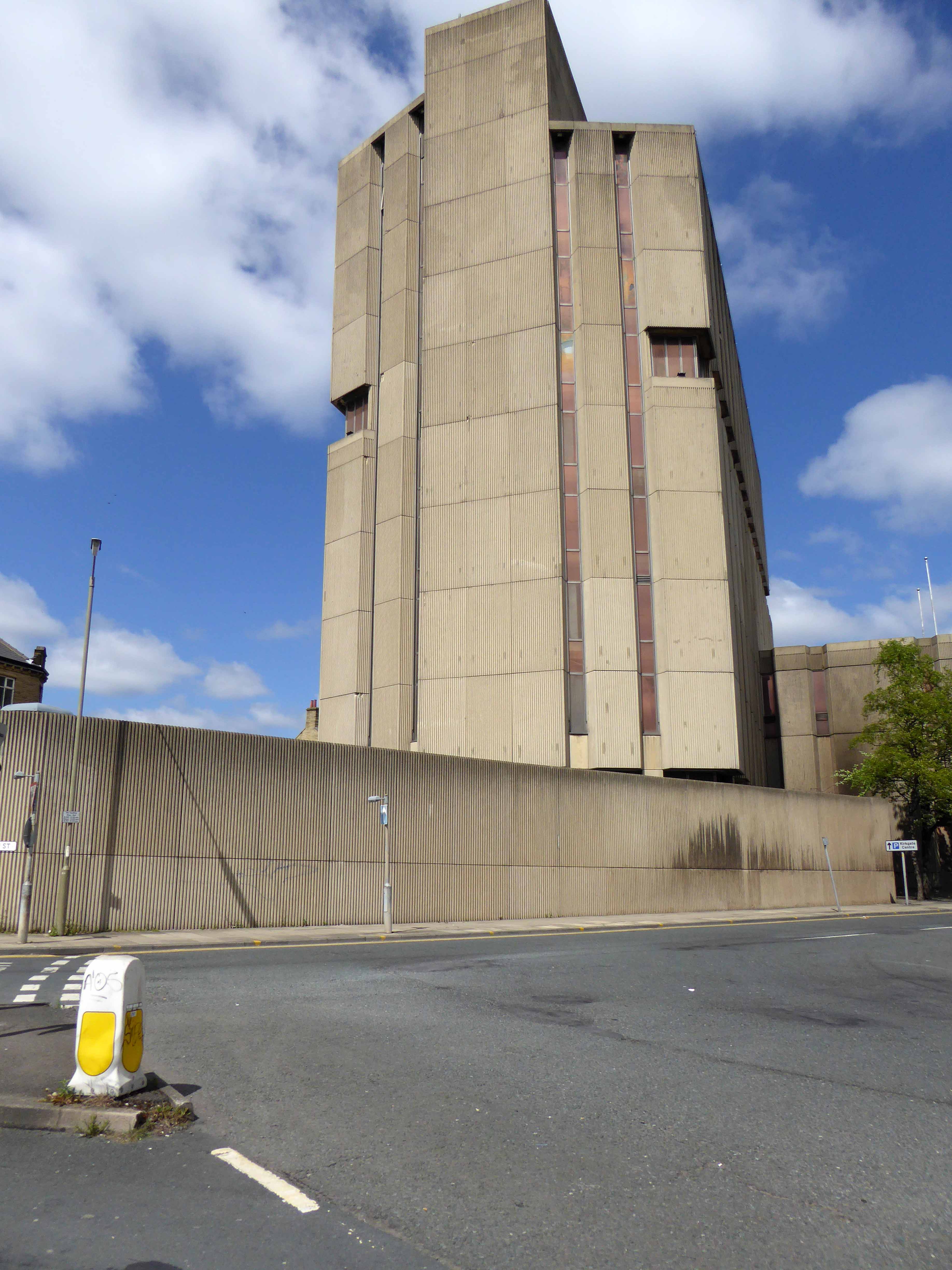
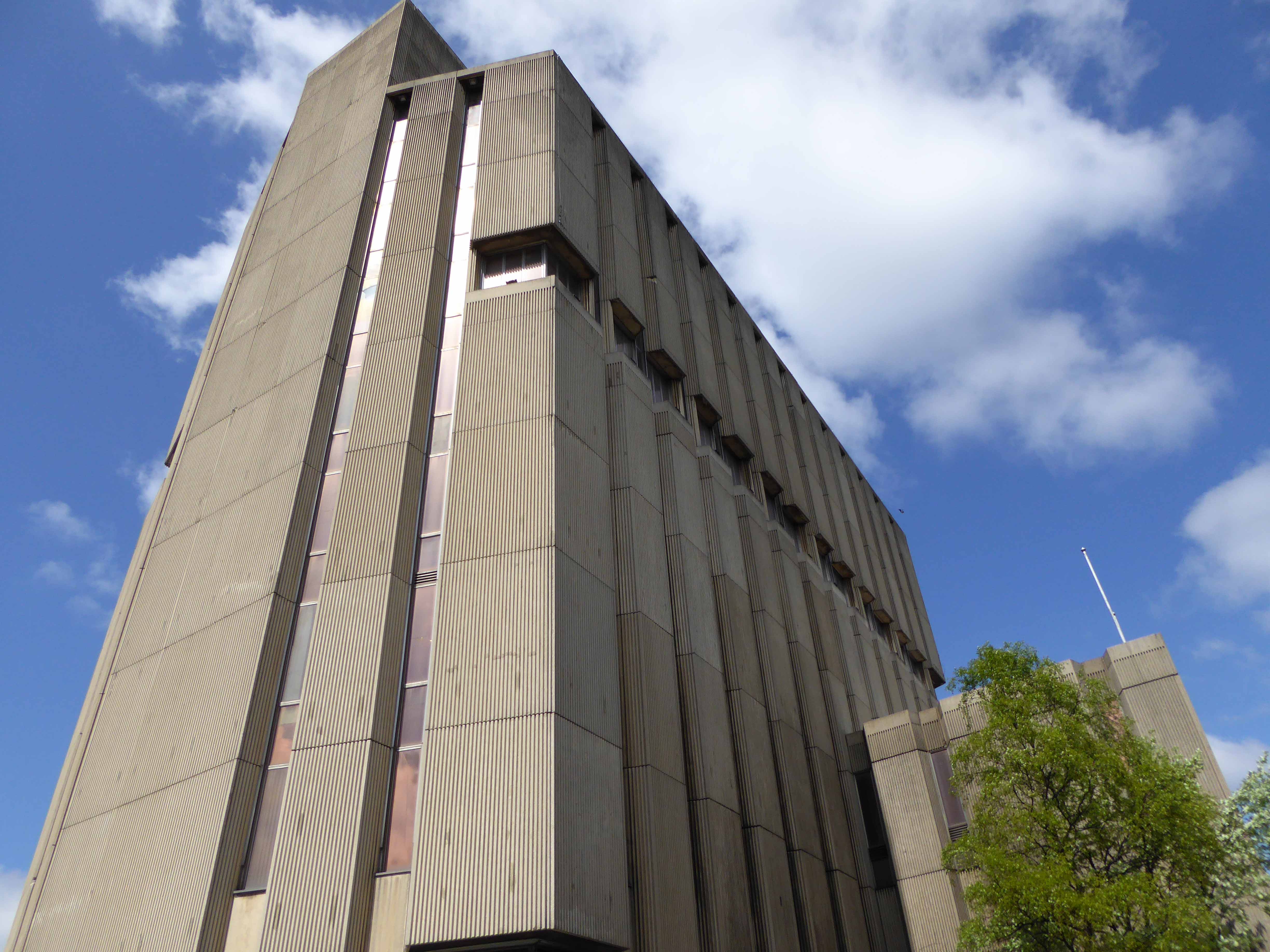
You wouldn’t ever want a bad case of the cladding, the triumph of the expedient over the purist aesthetic. We all may wish to be warm, dry and free from unwanted ingress, whilst exercising a degree of discernment and restraint, regarding the manner in which we are clad.

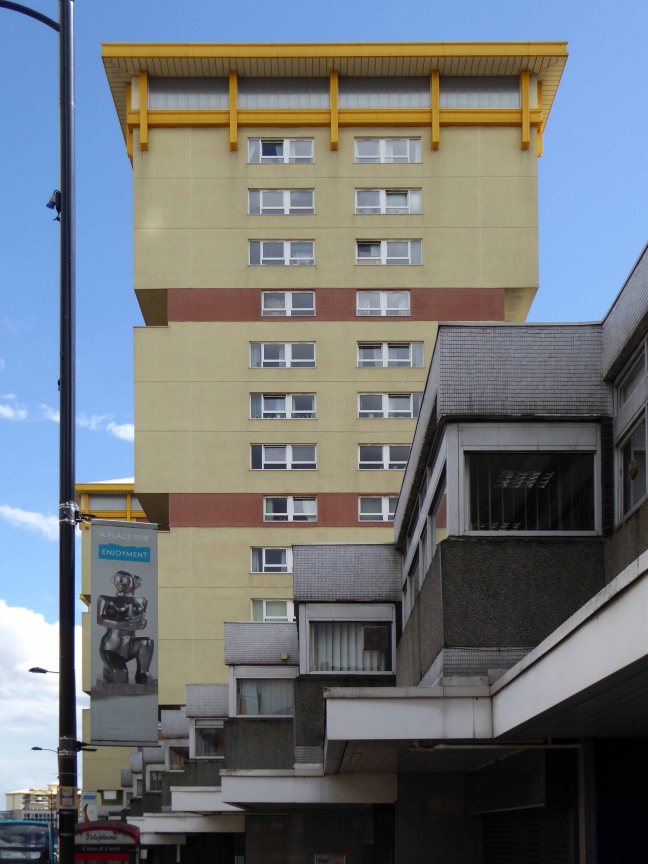
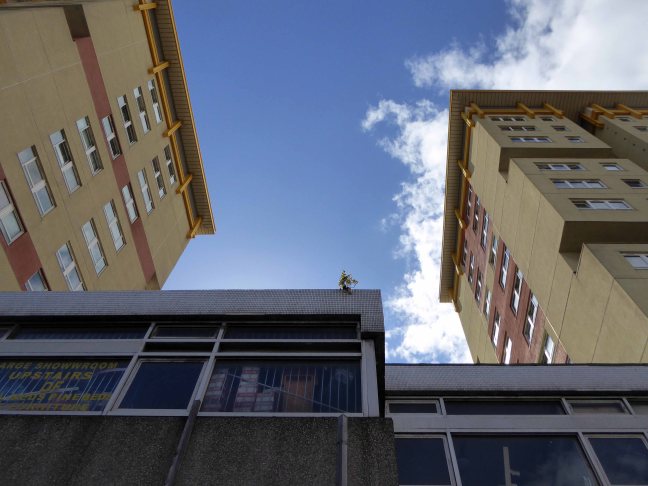
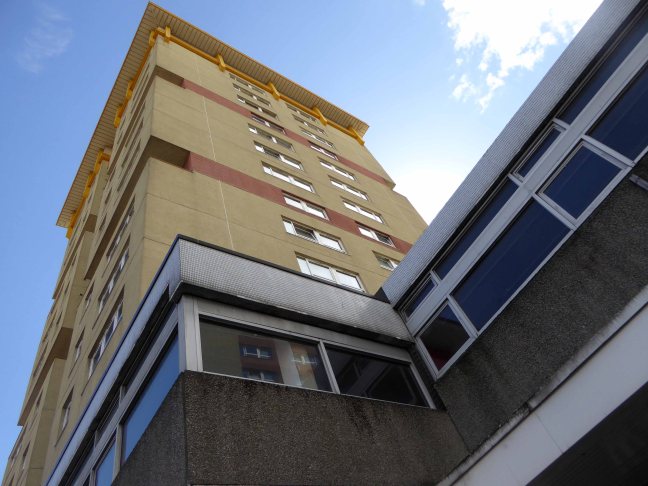
In Wakefield and in local authorities throughout this fair land there seems to have been a distinct lack of discernment and restraint, regarding the manner in which modern tower blocks are clad.

Cloaking concrete in coloured surfaces better suited to Toytown than our town.

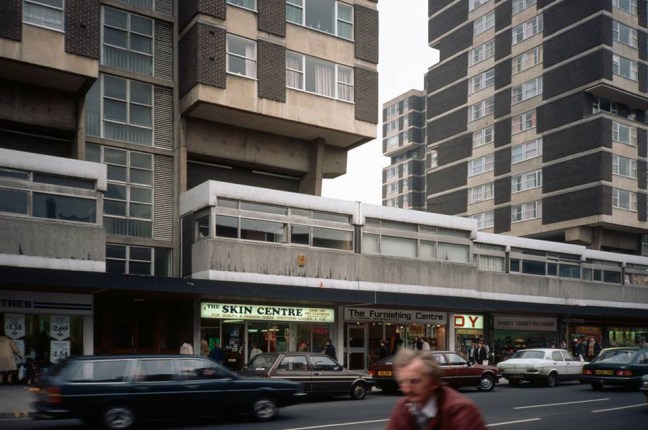
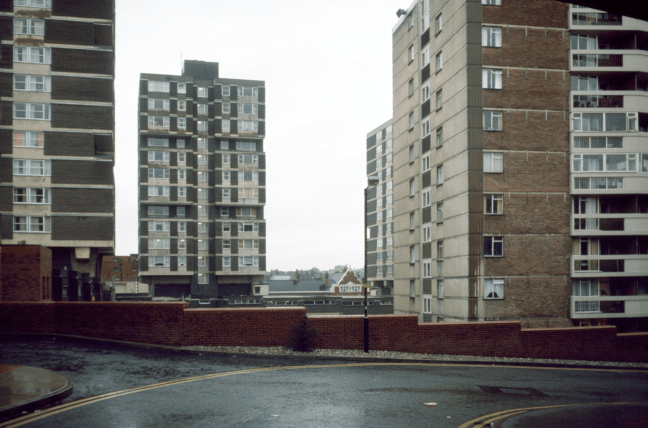
Four twelve-storey H-plan tower blocks built as public housing as part of the central area development of lower Kirkgate. The blocks rise out of other low-rise development. Each block contains 44 one and two-bedroom flats, providing 176 dwellings in total. The consulting architects for the development were Richard Seifert & Partners. Construction is of concrete frame with brick infill panels. The blocks were approved by committee in 1964.

Tudor House aka Lower Kirkgate Comprehensive Development area as was:

13669171_10154435787311600_6732873241408697456_n

13873008_10154435787336600_5185297045755258748_n

Screen Shot 2017-08-01 at 13.37.59

Photographs Tower Block

Ain’t it funny how time and integrity slips away?

wakefield_flats2l

wakefield_flats3l

Photographs Alan White Design

Gone the bold flat roofed, cuboid contrasting concrete and brick towers, whilst confusingly the ground floor retail development remains untouched.

P1180757

P1180759

P1180760

P1180761

P1180762

P1180763

P1180765

P1180766

P1180767

P1180768

P1180769

P1180770

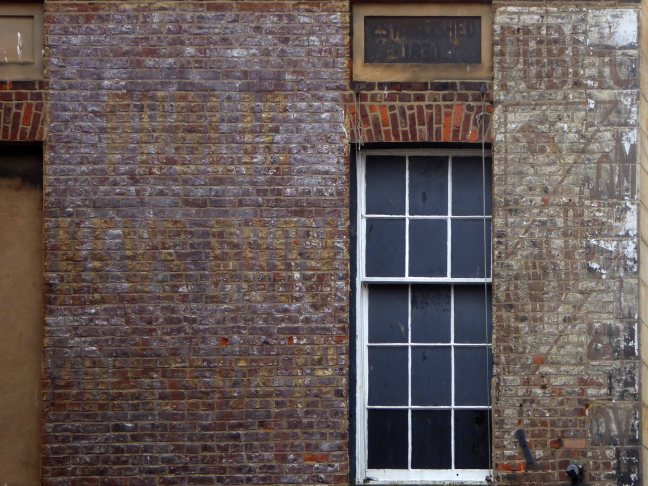
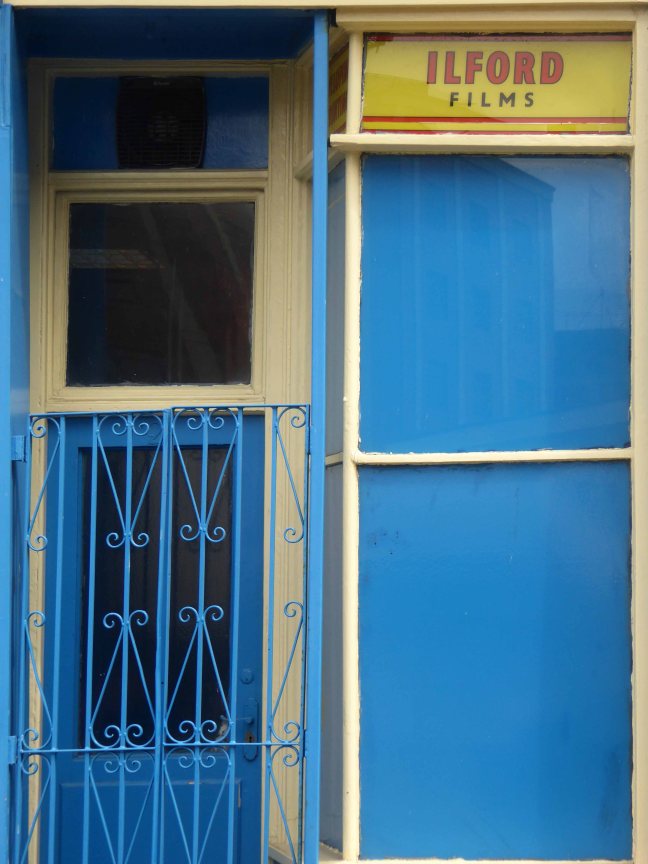
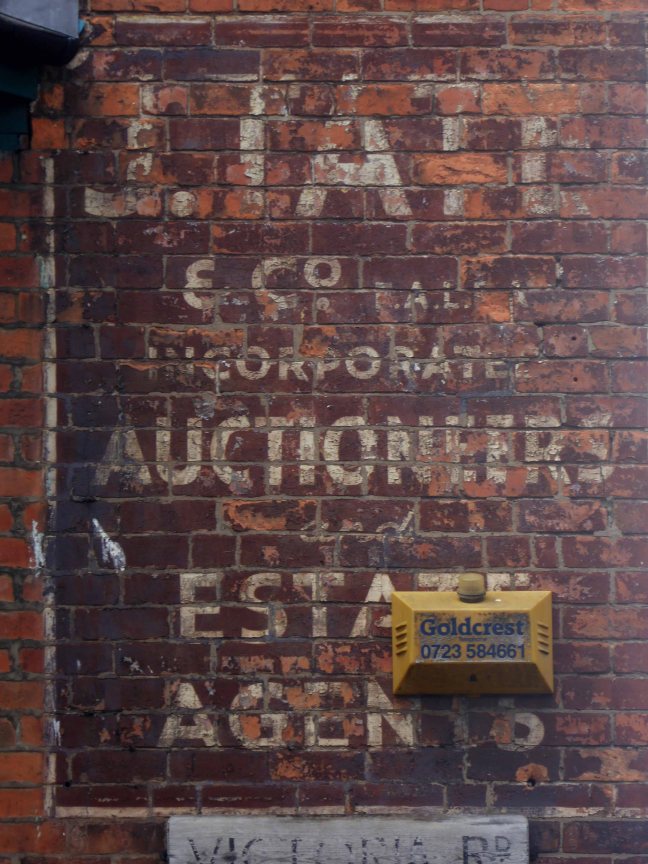
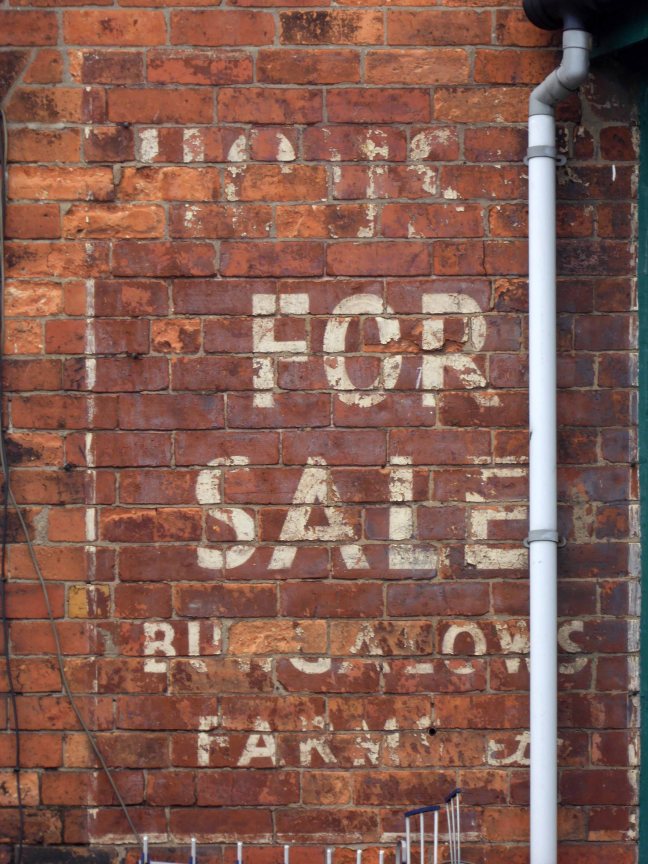
Ghost Signs – Scarborough

All towns have ghosts, none more so than Scarborough.

High atop a castle topped, wind whipped promontory, lies Anne Bronte, overlooking the harbour below, wayward Whitby whalers wail, lost fisher folk seek solace.

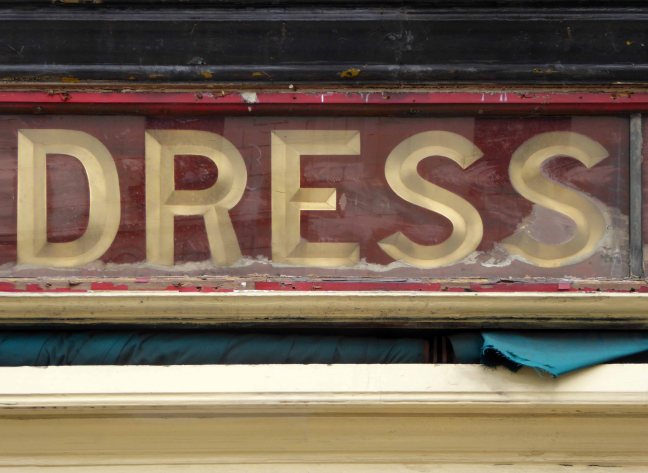
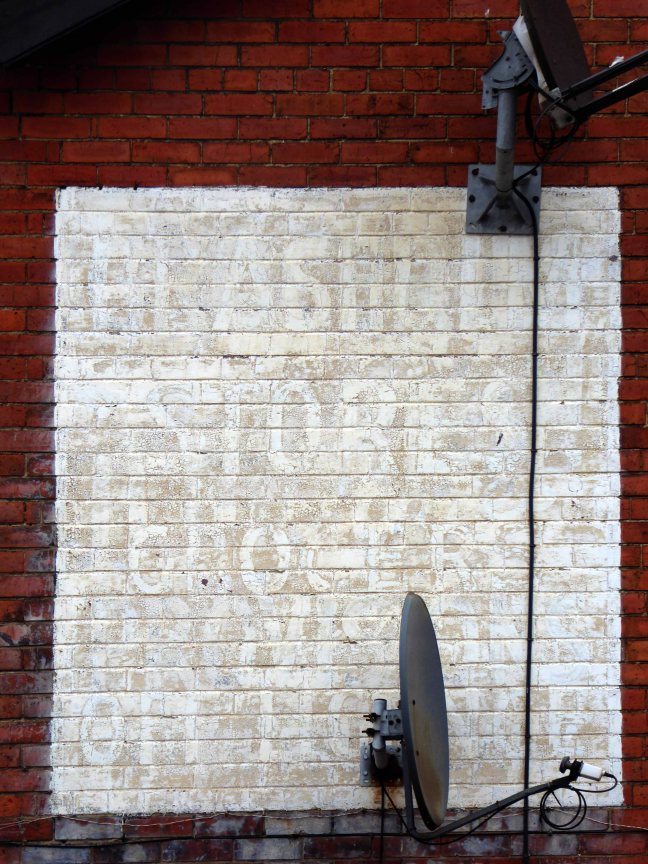
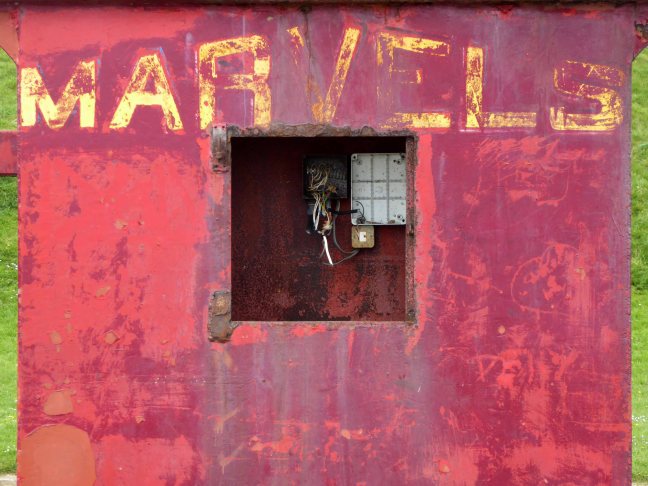
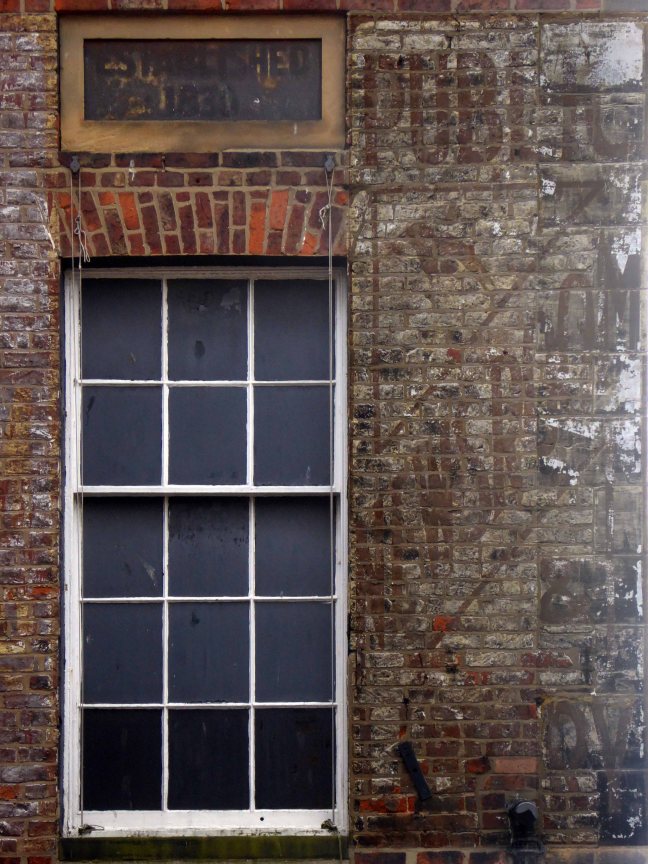
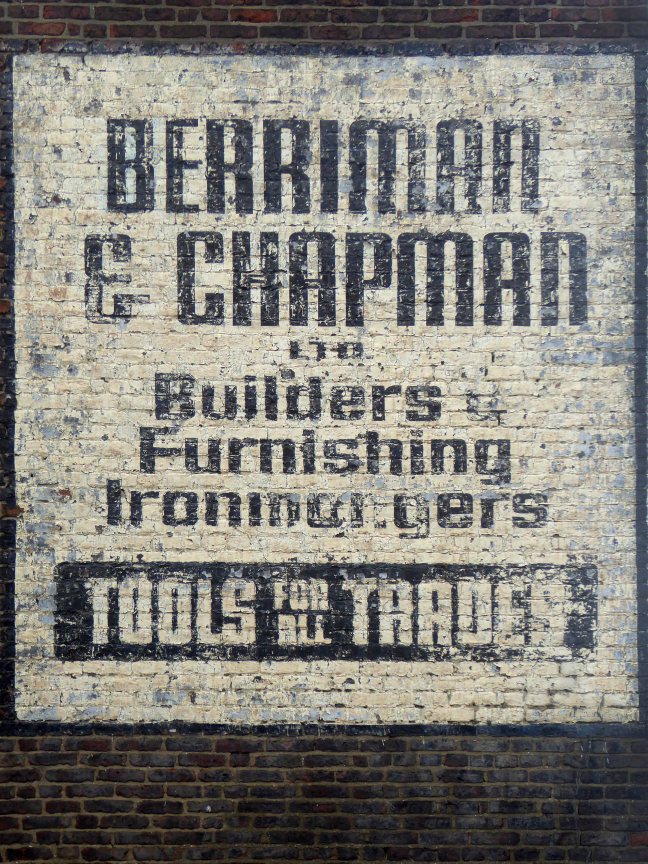
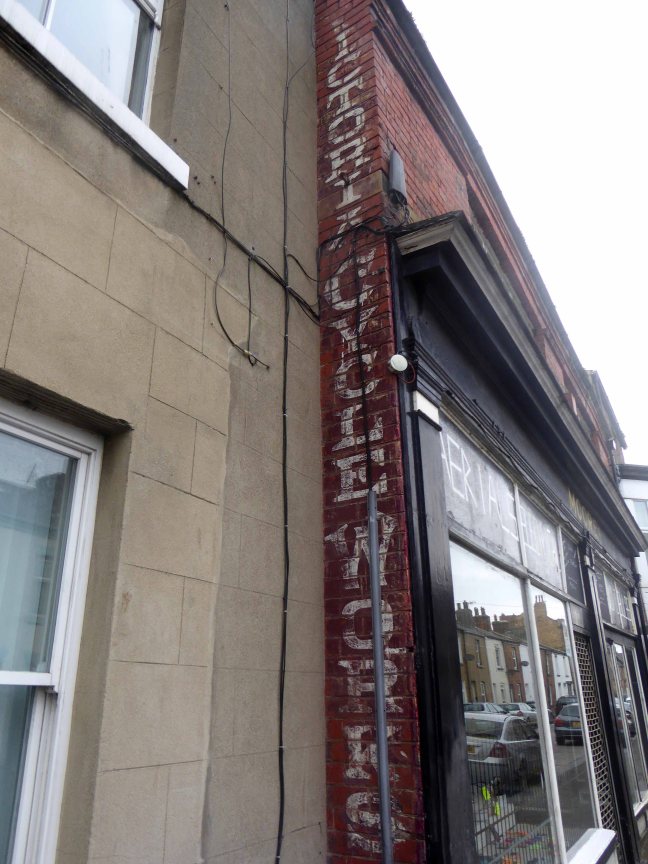
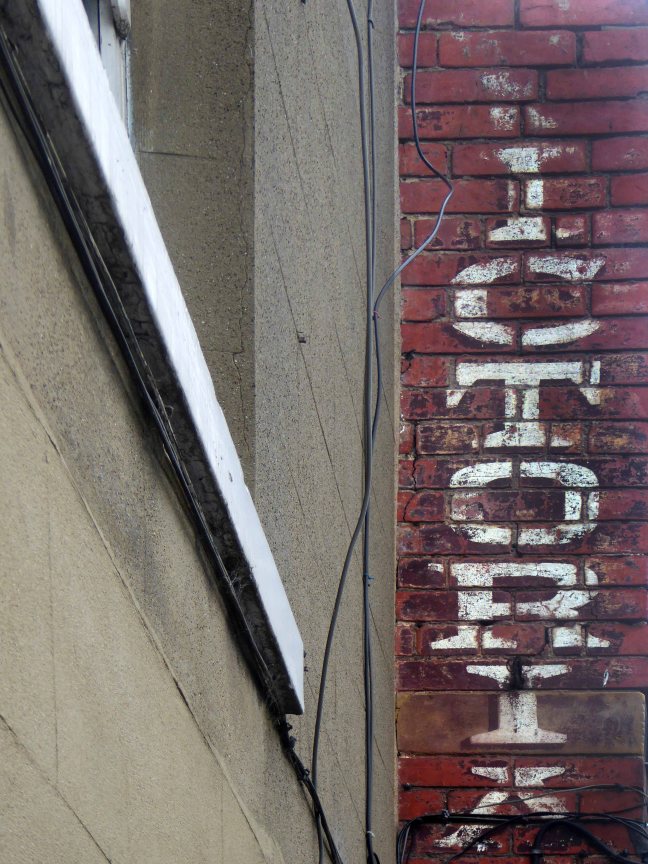
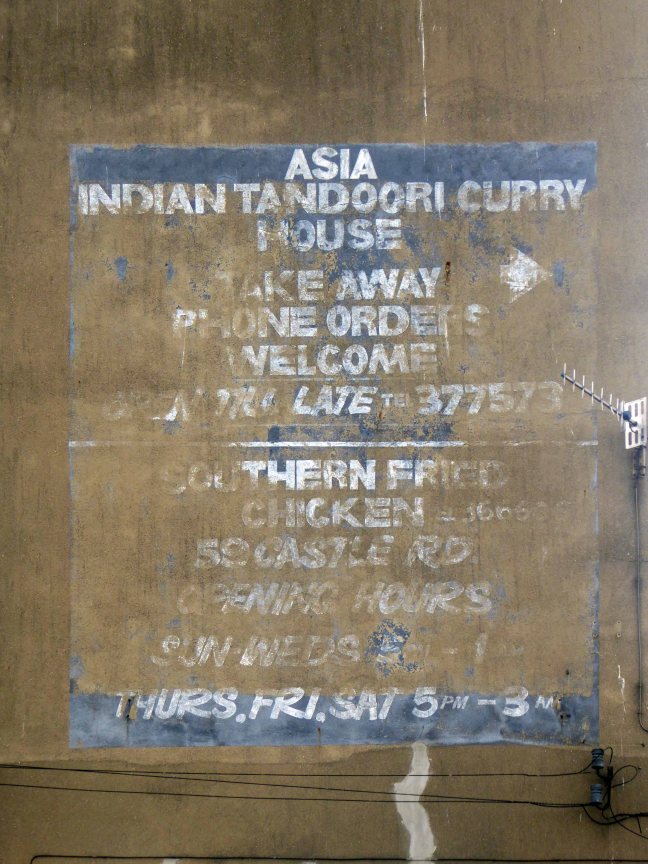
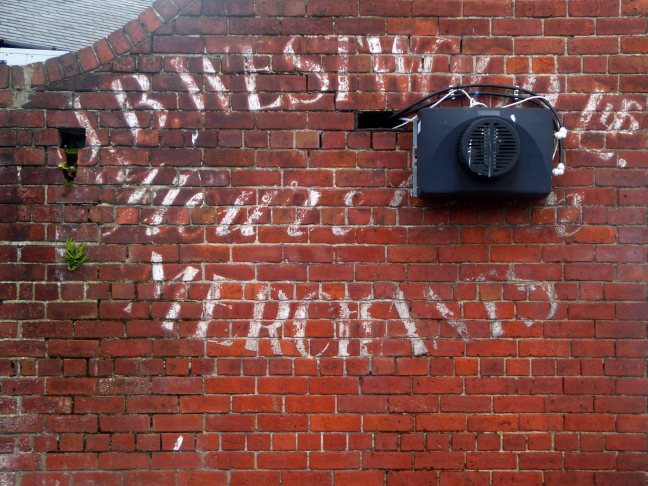
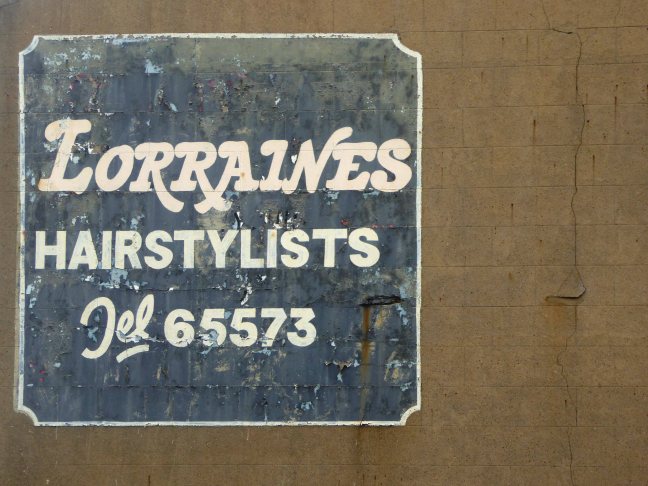
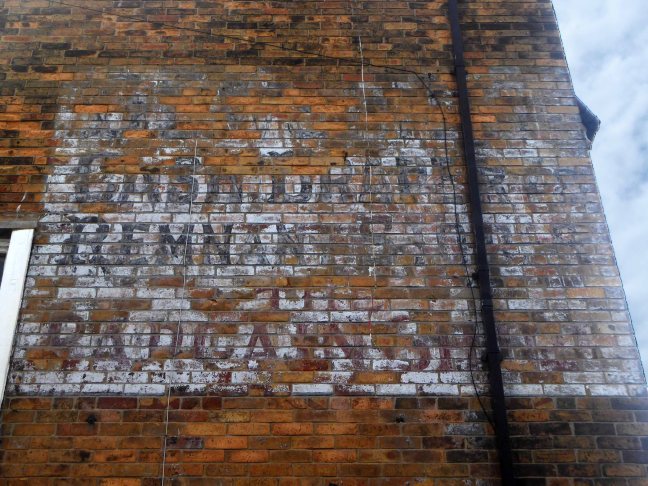
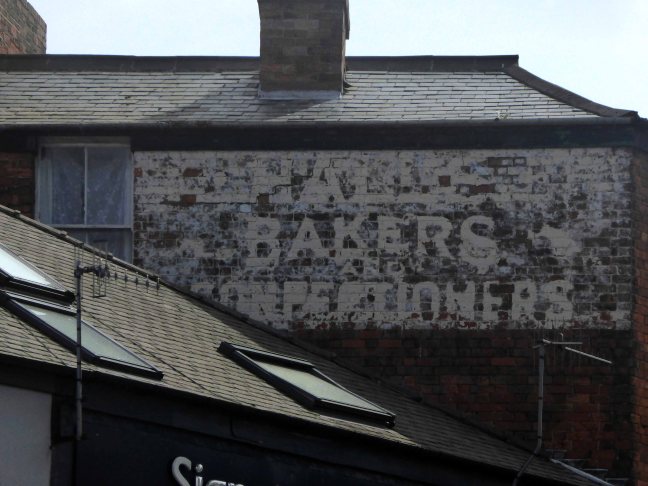
Its walls ache with traders past, scissors that no longer snip, click-less shutters, unlettered rock and loaves that no longer rise.

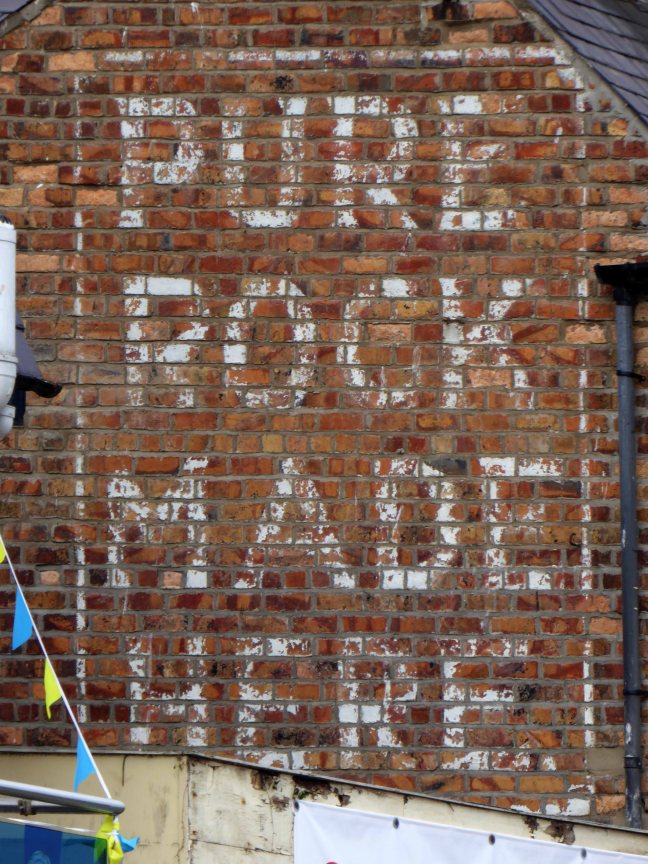
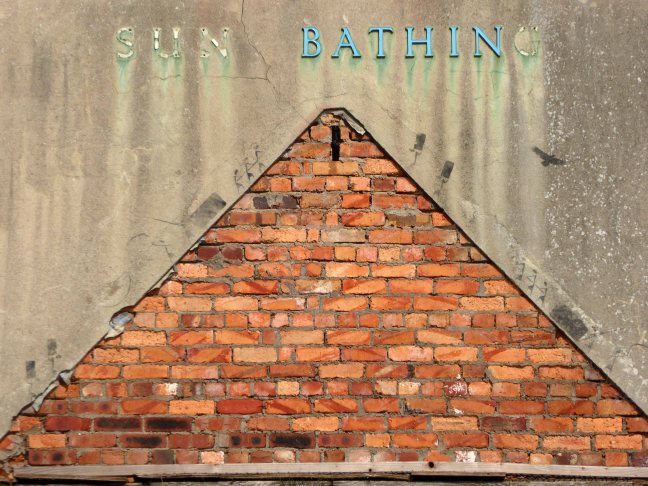
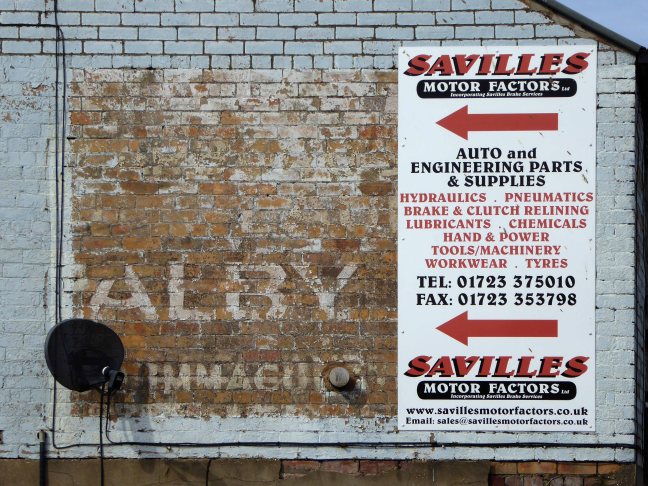
Layers of sun baked, peeling paint on brick, rendered almost illegible.

As Alan Resnais would say Scarborough, mon amour!

P1150490

P1150639

P1150671

P1150677

P1150696

P1150742

P1150743

P1150744

P1150745

P1150757

P1150761

P1150764

P1150765

P1150766

P1150767

P1150768

P1150769

P1150771

P1150772

P1150774

P1150778

P1150787


Subway – Scarborough

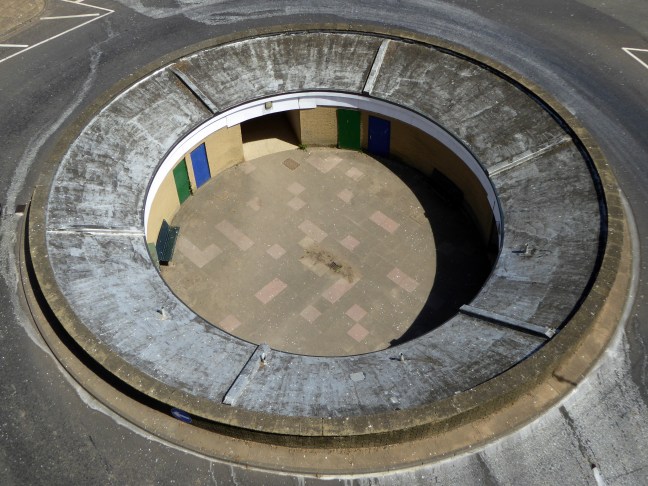
When is a subway not a sandwich?

When it’s a doughnut!

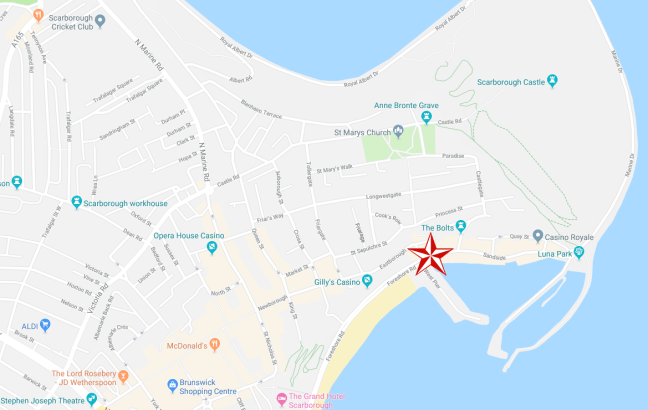
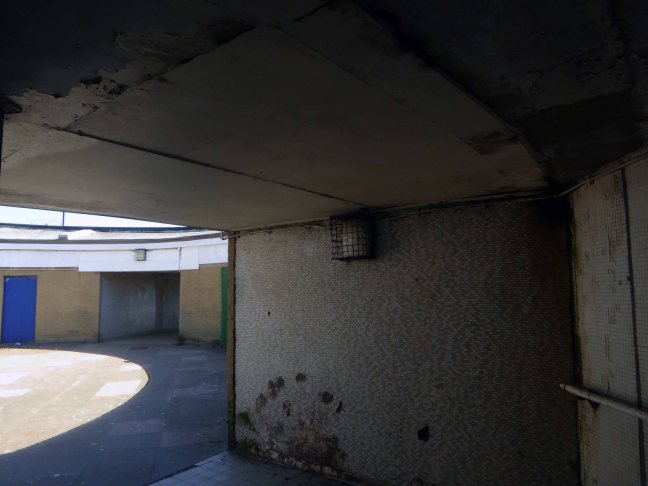
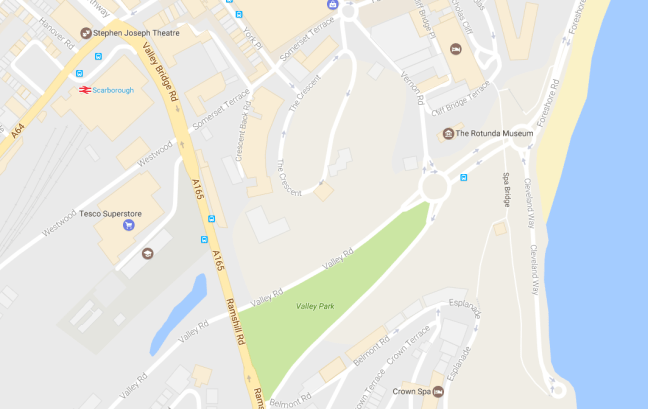
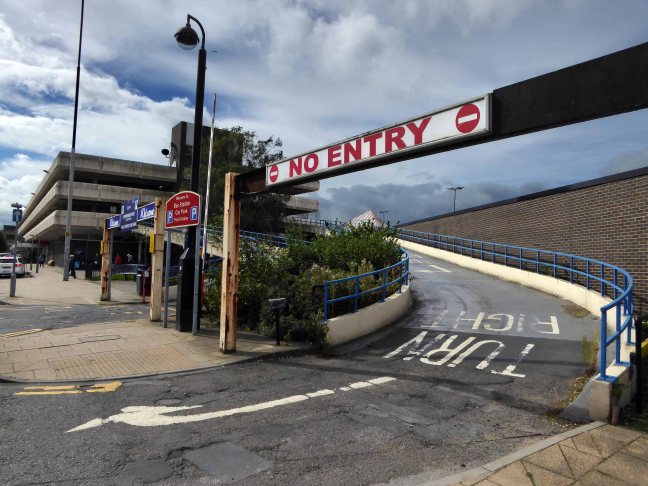
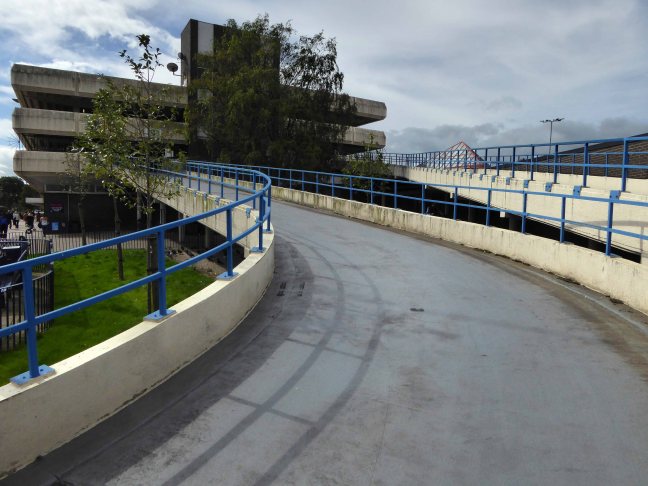
Hard by the seafront linking Foreshore, Cleveland Way and Valley Road sits a neat little tight little island, giving pedestrian access to almost everywhere – and a car park.

Screen Shot 2017-05-03 at 16.54.51

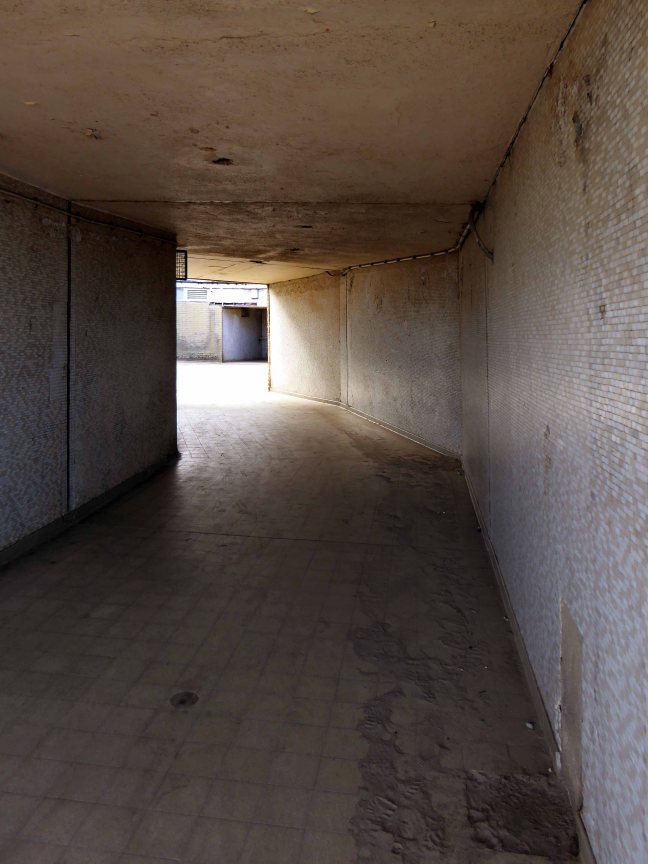
As with every other torus worth calling a torus, at its very centre sits the presence of absence, darkened concrete subterranean causeways, linking everything to nothing.

There’s a world going on underground.

P1150450

P1150451

P1150452

P1150453

P1150454

P1150456

P1150457

P1150458

P1150459

P1150461

P1150465

P1150467

P1150468

P1150469

P1150471

P1150472

P1150482

Paddling Pool – Whitby

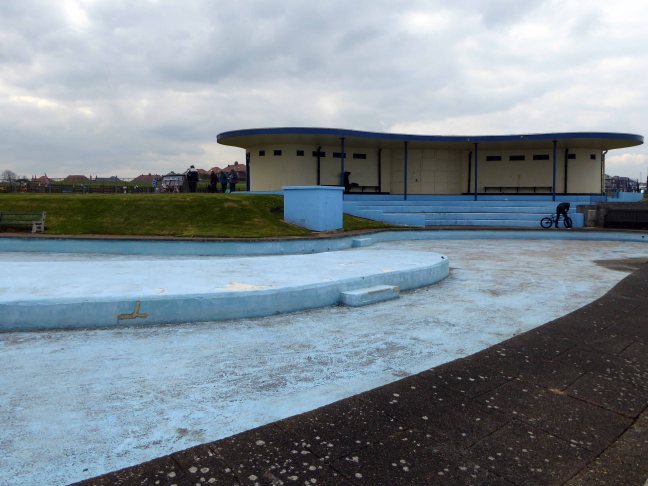
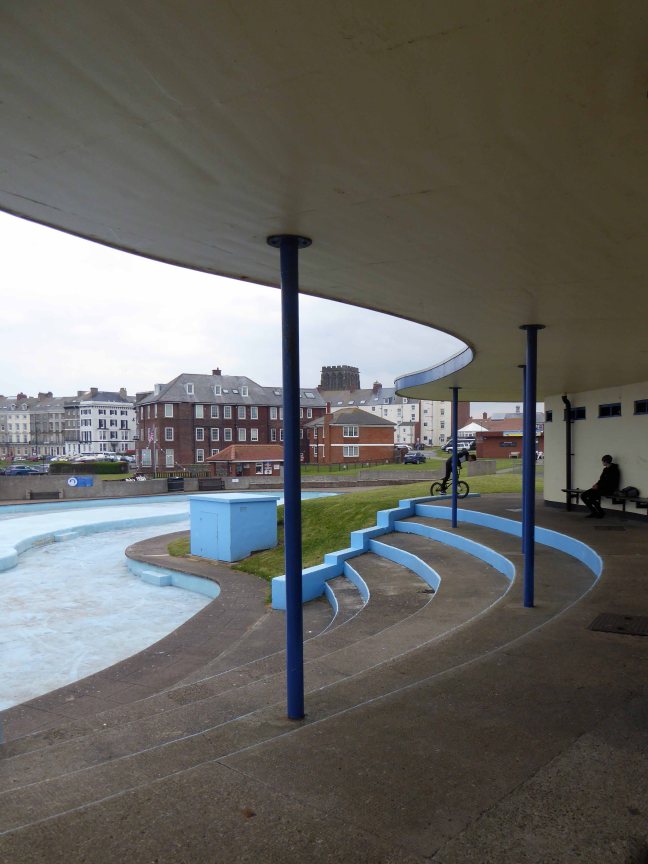
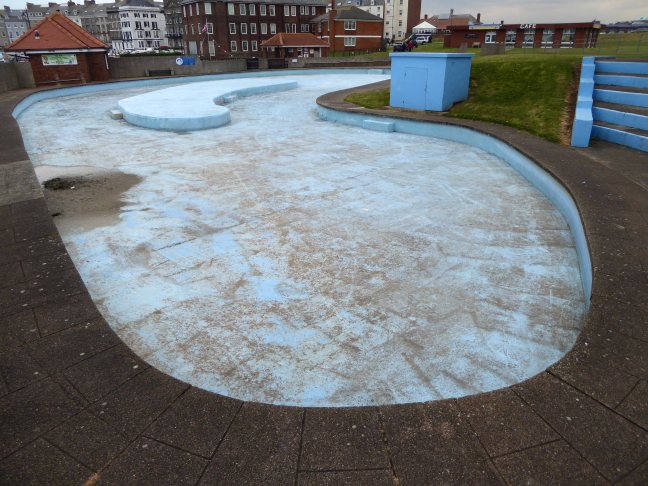
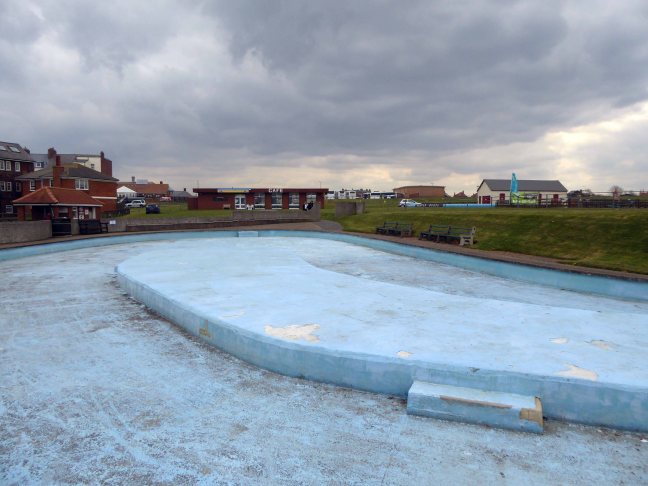
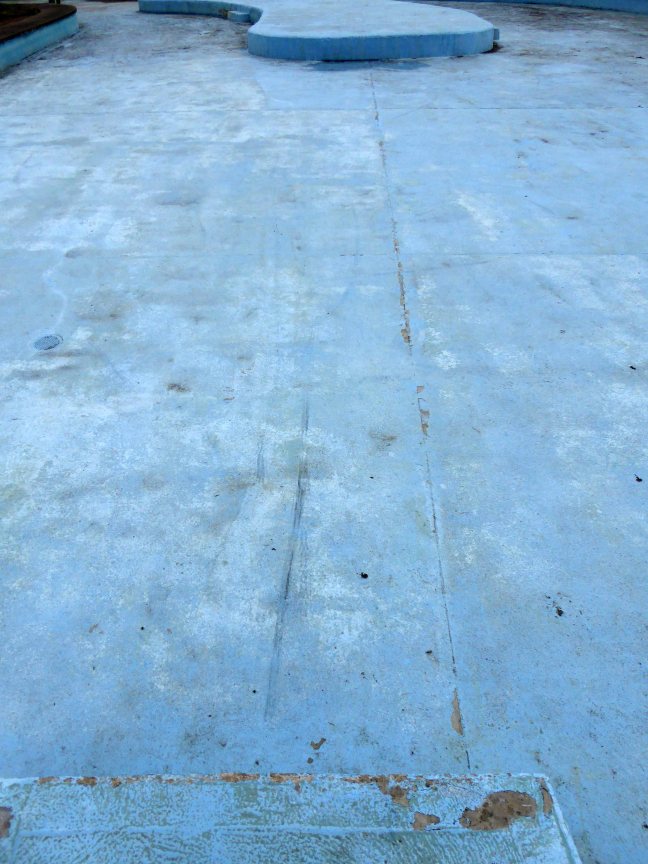
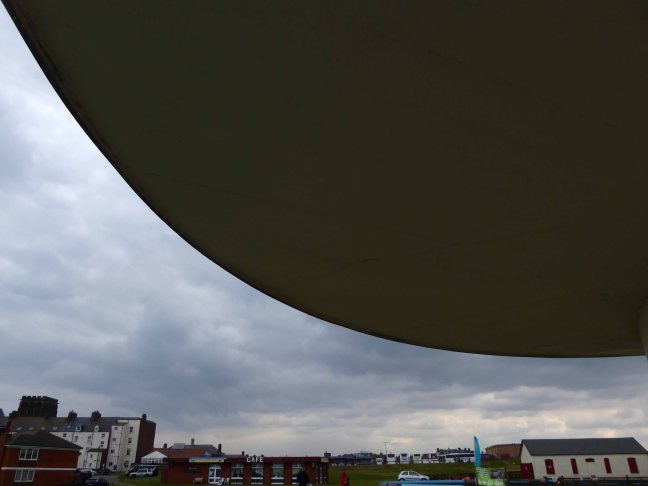
High atop West Cliff Whitby is a pale blue imitation of the deep blue North Sea below.

A TG Green Cornishware blue and cream striped pot, reimagined on the distant Yorkshire coast, in paddling pool form.

Scarborough Borough Council has resurfaced the paddling pool, re-concreted and repainted the bottom and the sides. The railings adjacent to the footpaths at Whitby Pavilion have been repaired and re-painted and seating next to the crazy golf has also been improved.

 Martin Pedley, Scarborough Borough Council’s asset and risk manager said:
The council has, in conjunction with the voluntary sector, invested both time and money in continuing to revitalise the West Cliff area in preparation for the summer season and the influx of visitors to Whitby.
1033839943West Cliff councillor Joe Plant added:

The improvement works that have been done both last year and this year is most welcome. Not only the visitors will benefit, but local people also and it again shows working in partnership with the voluntary sector does make a difference.

The Big Society in action, replacing railings improving lives.

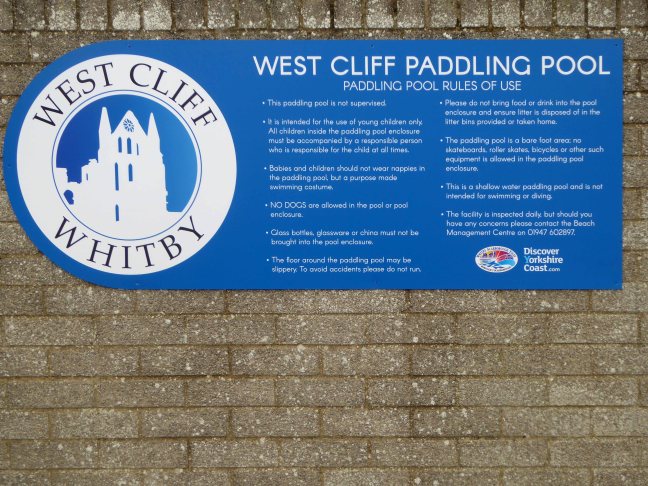
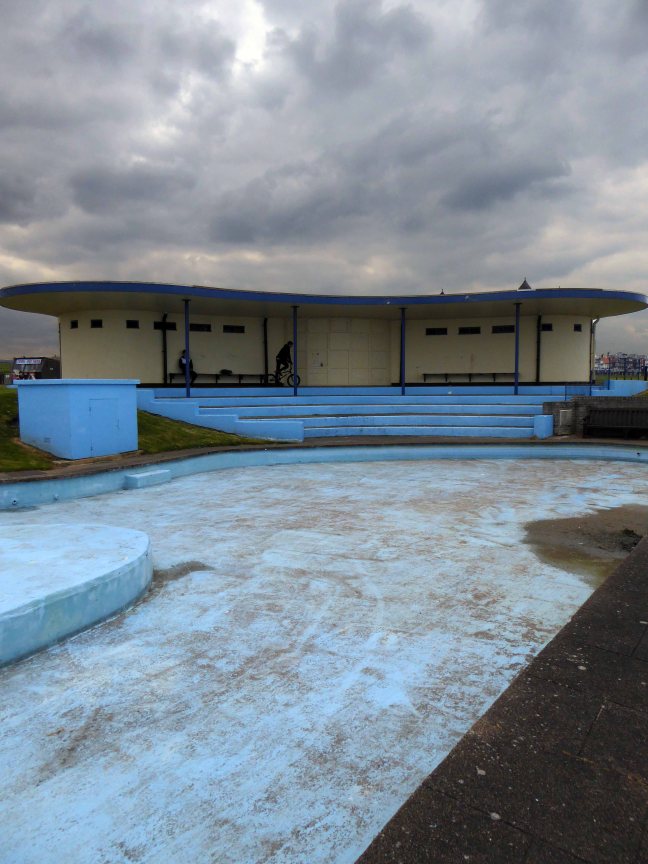
I arrived in late April the pool as yet sans d’eau, more of a pedalling pool than paddling pool as the BMX bandits invaded the space, in direct contravention of the rules and regulations.

P1150592

The water when present is some twelve inches deep, clearly better suited to larking, splashing and cavorting rather than performing The Twister, a  bewildering blur of twists and turns two and a half back-somersaults with two and a half twists during the 1.5 seconds between launching and entering the water at 40mph.

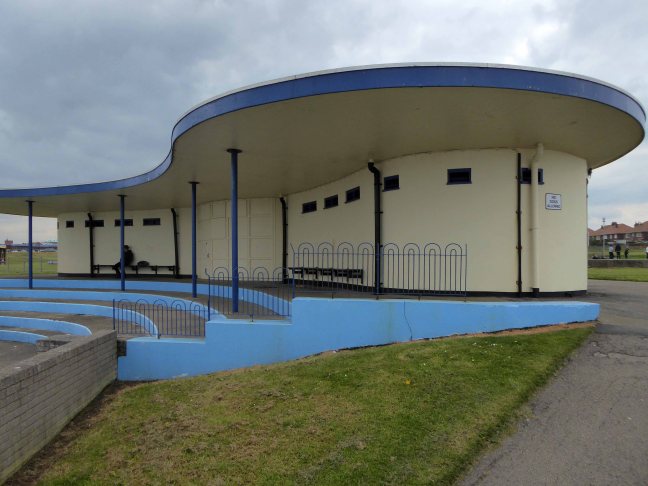
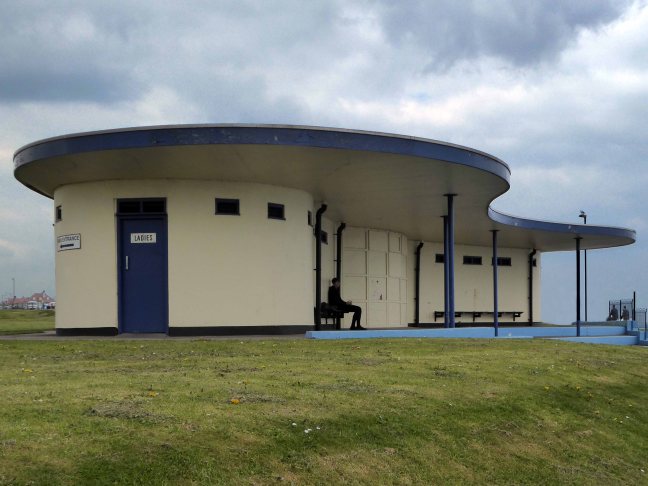
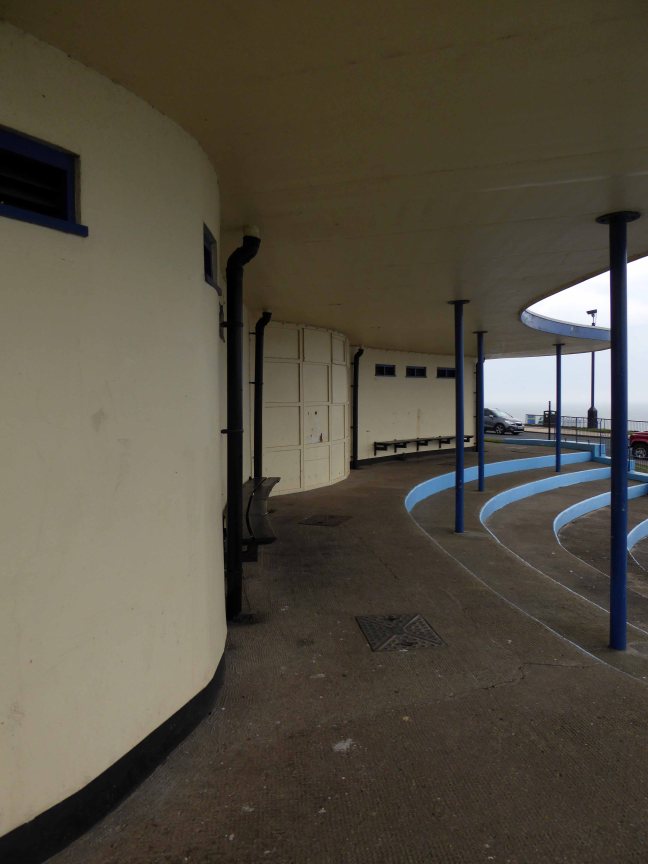
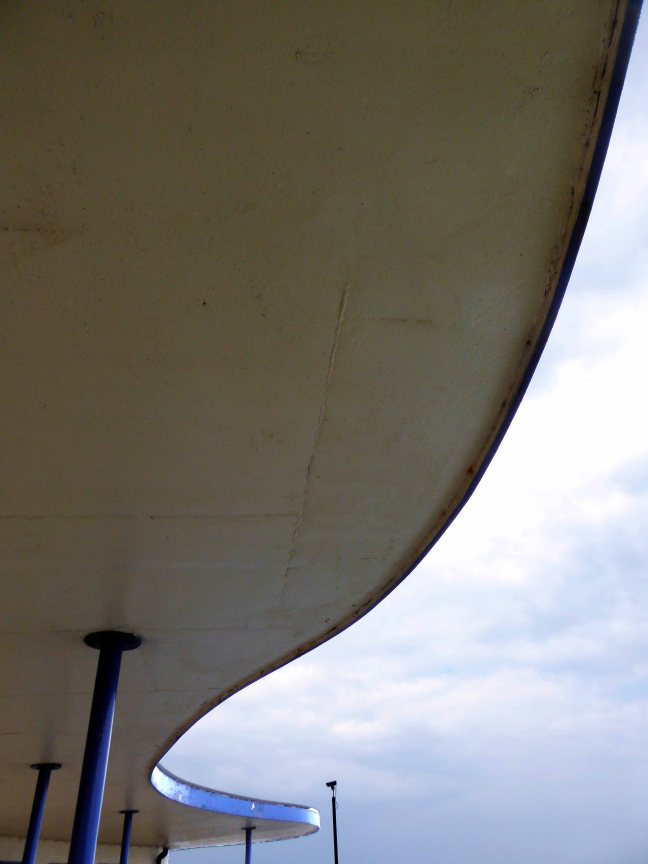
The pool is flanked to the north by a sweeping Lubetkin style, flat roofed pavilion complete with fully functioning toilet facilities.

Turn your back on the Abbey, go wild – take a wet walk on the West Cliff side.

P1150586

P1150587

P1150588

P1150589

P1150590

P1150596

P1150599

P1150603

P1150604

P1150605

P1150606

P1150607

St Catherine of Sienna – Sheffield

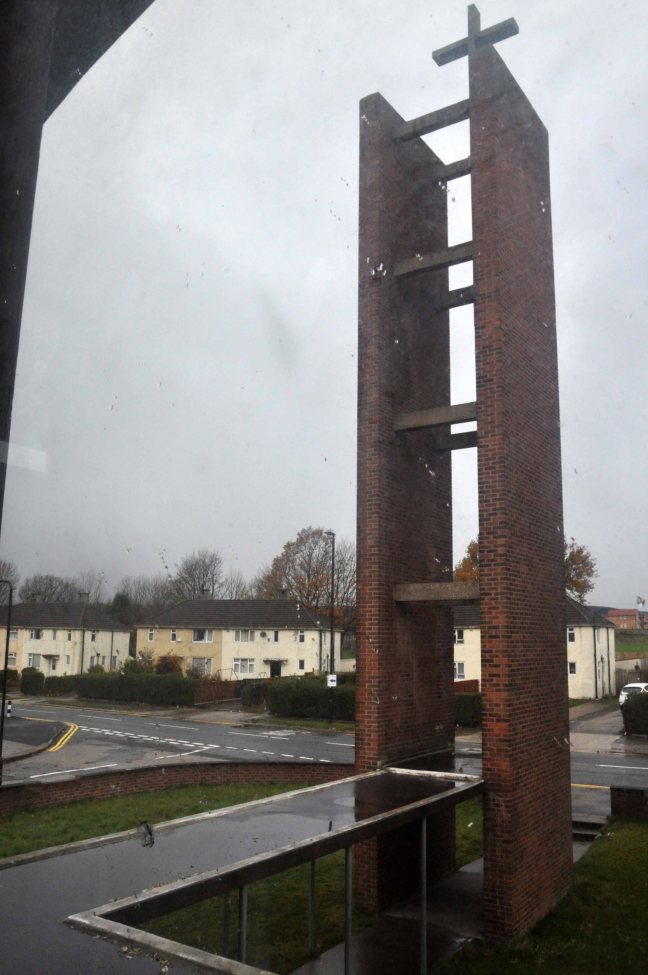
Sir Basil Spence 1958-62. . Brown brick. Roof not visible. Slate cladding to entrance block of parish hall. Rectangular nave sweeping around into a semicircular apsed sanctuary .

EXTERIOR: entrance to liturgical south-west and parish hall to liturgical west with vestry. Carved words “The Church of St Catherine” to left of recessed entrance. Tower linked to liturgical south-east, and comprising two convex slabs forming a sacristy at ground level and linked by concrete beams above. Patinated bronze sculptural group with crucified Christ affixed to its east side.

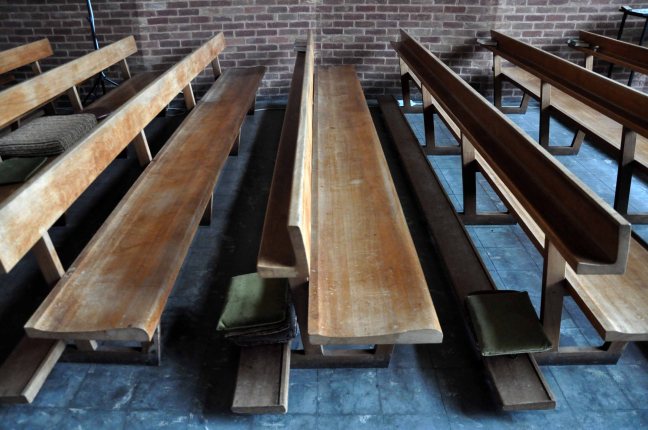
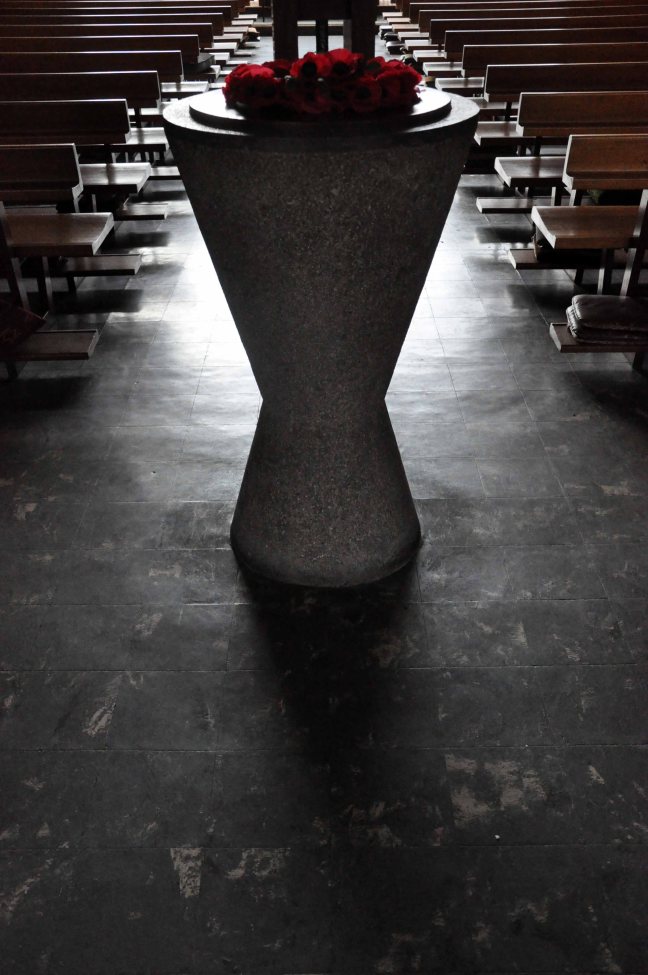
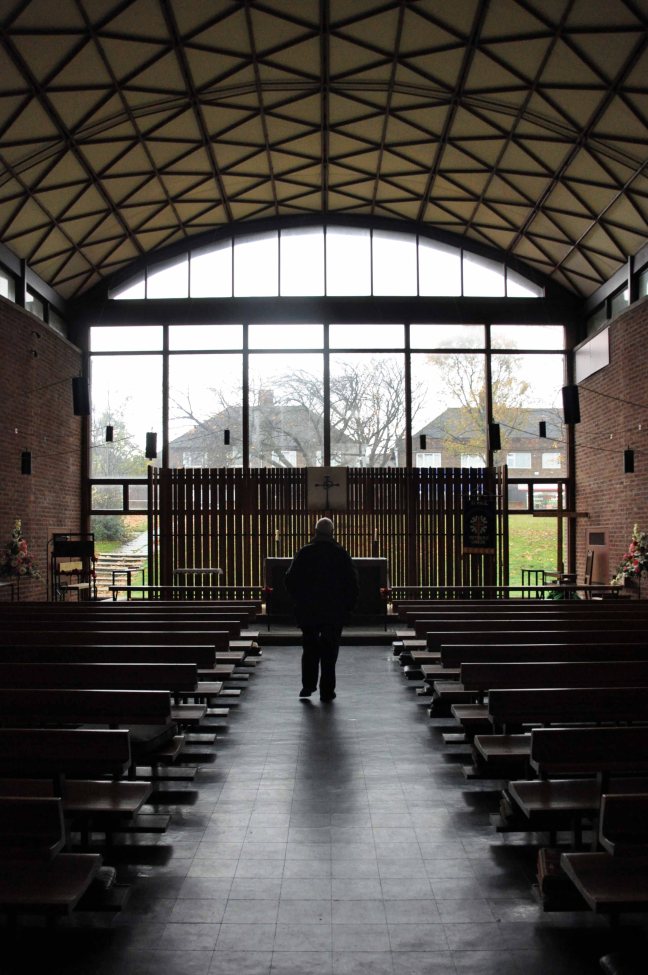
INTERIOR: aisleless with vertical slit windows to north and south walls and roof sloping upwards towards chancel, on laminated timbers beams, so that roof deck is separated from the walls by a narrow glazed strip. Light is thrown onto the east wall by a concealed window at the east end of the nave. Sanctuary is raised two shallow steps, and altar was originally raised on two further steps against the east wall. It has now been moved forward. Altar is a black painted metal framed table with a varnished timber top. Font of polished limestone with fossils is in the original position to liturgical south side of sanctuary. Timber lid with schematic metal dove. Large timber cross behind altar, comprising two pairs of overlapping beams, penetrated symbolically by large nails. Timber sedilia on metal supports. Laminated timber pews. Organ above entrance to sacristy . A strongly sculptural design with a powerful presence.
British Listed Buildings.

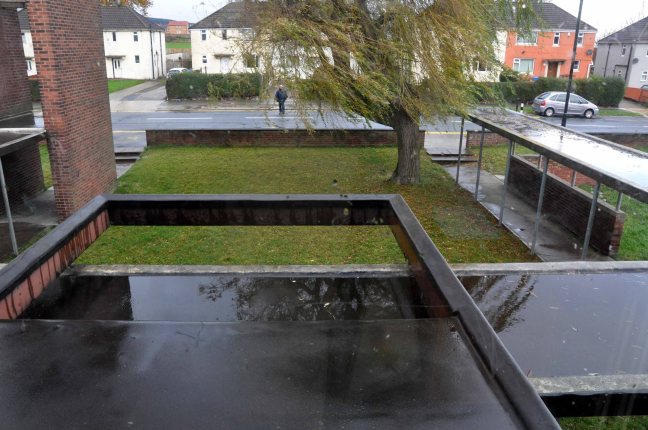
St Catherine Sienna is a fine church, sited impressively and standing imperiously on the Sheffield outer ring road, high above the city. Brick curves, a tall detached tower and open for business, serving the outlying post war housing estate of Woodthorpe with regular services and a firm foundation of community activity.

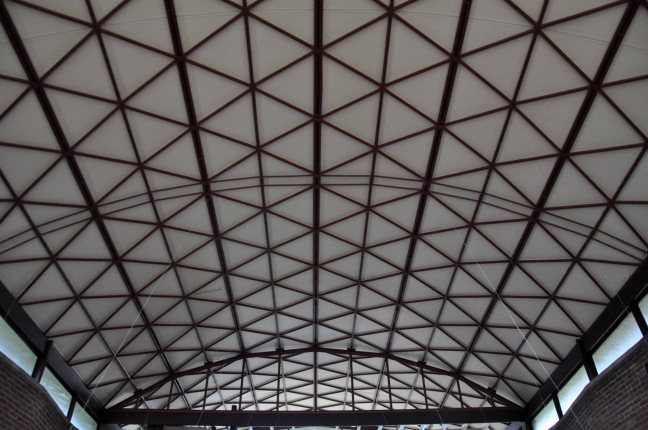
Lit delicately from side slatted windows and higher apertures, the main body is calm and assured, the scale and proportion in harmony with the simple Spence seating and slightly raised altar. The detail of the wooden roof grid perfectly balancing the warm austerity of the walls.

My thanks to Father Phillip for his time and a fine cup of tea.

dsc_0111

dsc_0117

dsc_0119

dsc_0121

dsc_0122

dsc_0123

dsc_0124

dsc_0127

dsc_0128

dsc_0130

dsc_0131

dsc_0133

dsc_0134

dsc_0135

dsc_0138

dsc_0139

dsc_0140

dsc_0142

dsc_0144

dsc_0136

St Paul – Ecclesfield/Sheffield

High above the city on Wordsworth Avenue, Eccleshall, built to serve the large Parson Cross post-war social housing estate, stands St Paul.

On the day of my visit, more than somewhat windswept and sleet lashed, almost imperious, the church stood steadfast set against the elements.

It is however registered as at risk by Historic England.

Designed by Sir Basil Spence and built by Charles Price of Doncaster Ltd. the church was completed in 1959 and consecrated on24th January 1959.

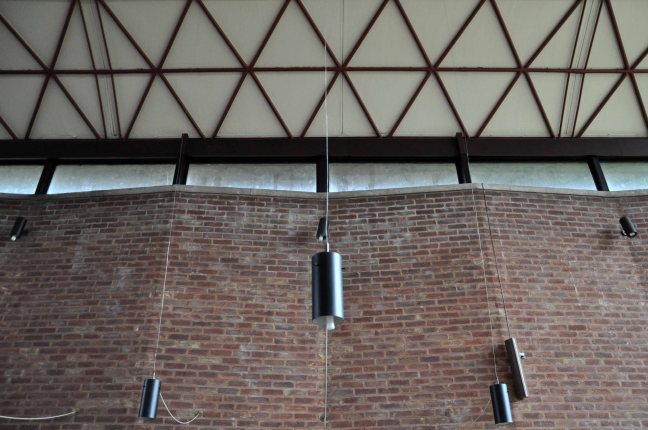
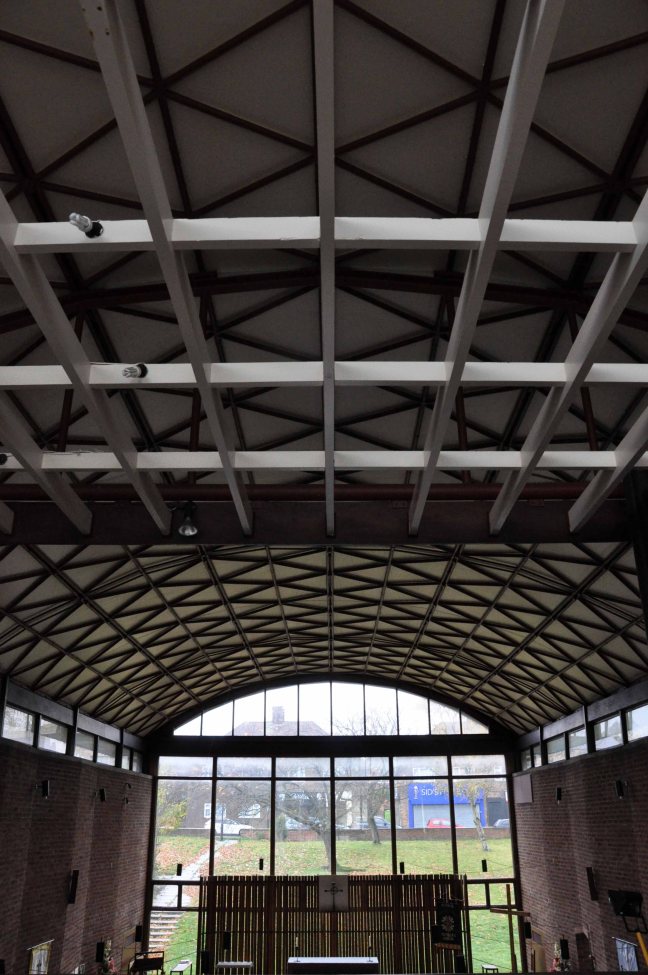
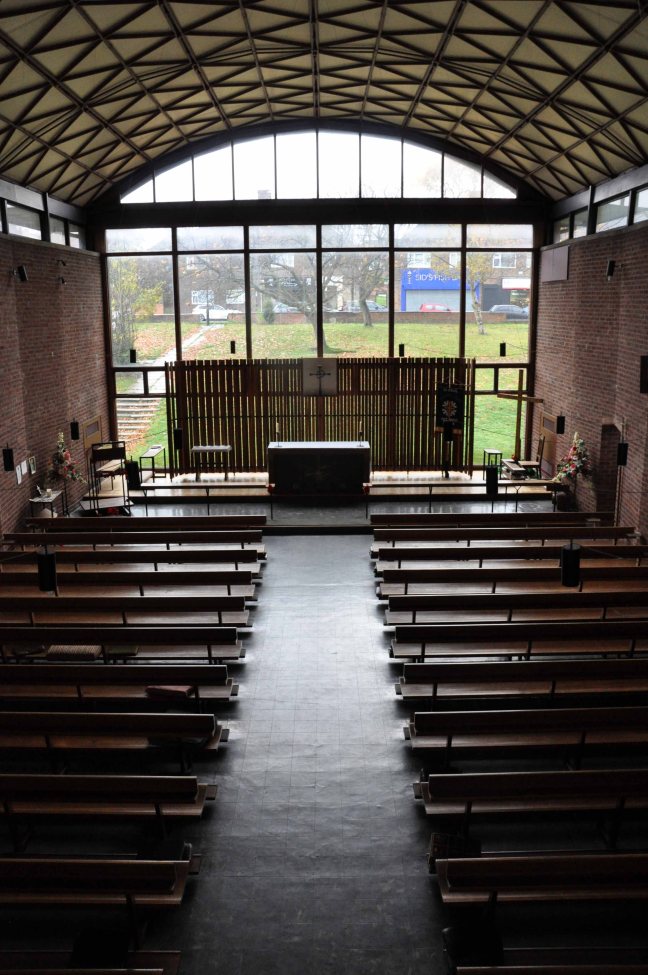
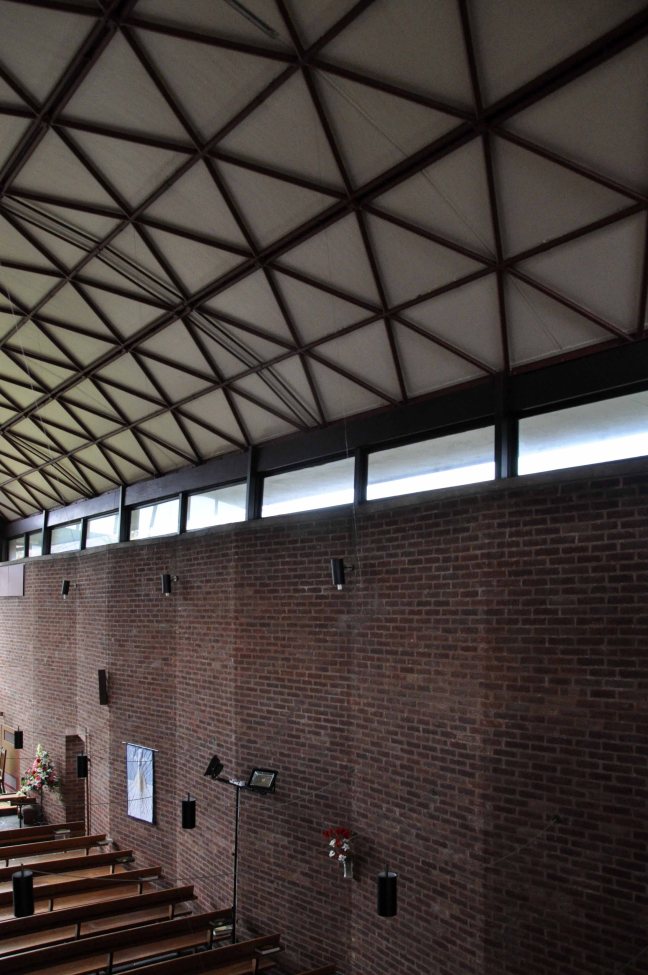
A large open brick steel and concrete structure, glassed and open at each end, a curved roof with vaulted detail, a detached tower is connected by a concrete cloister. There is an elegant simplicity to the body of the church, which is elevated by the staggered supporting walls.

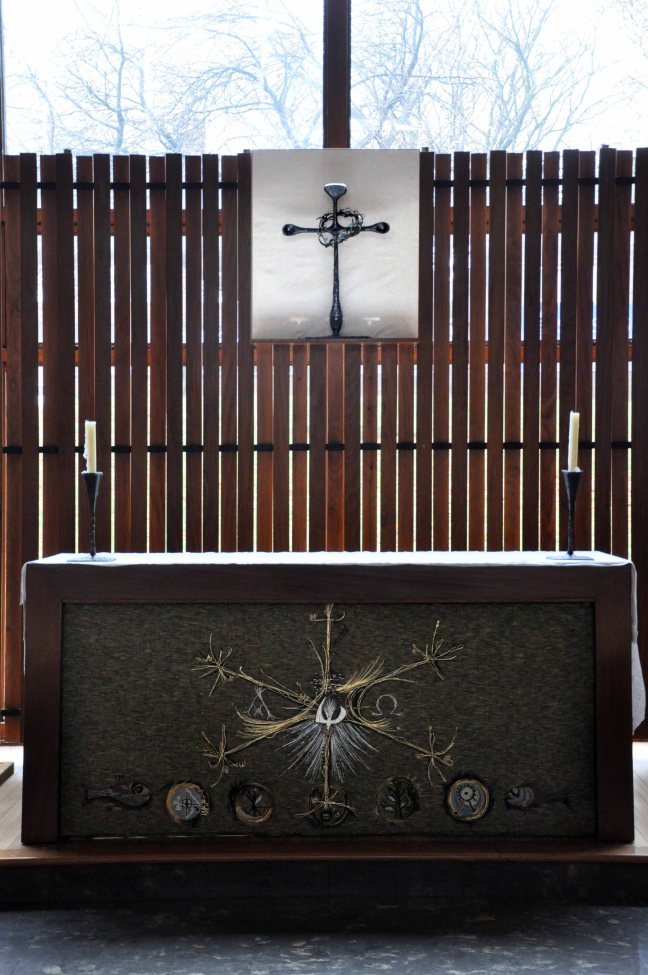
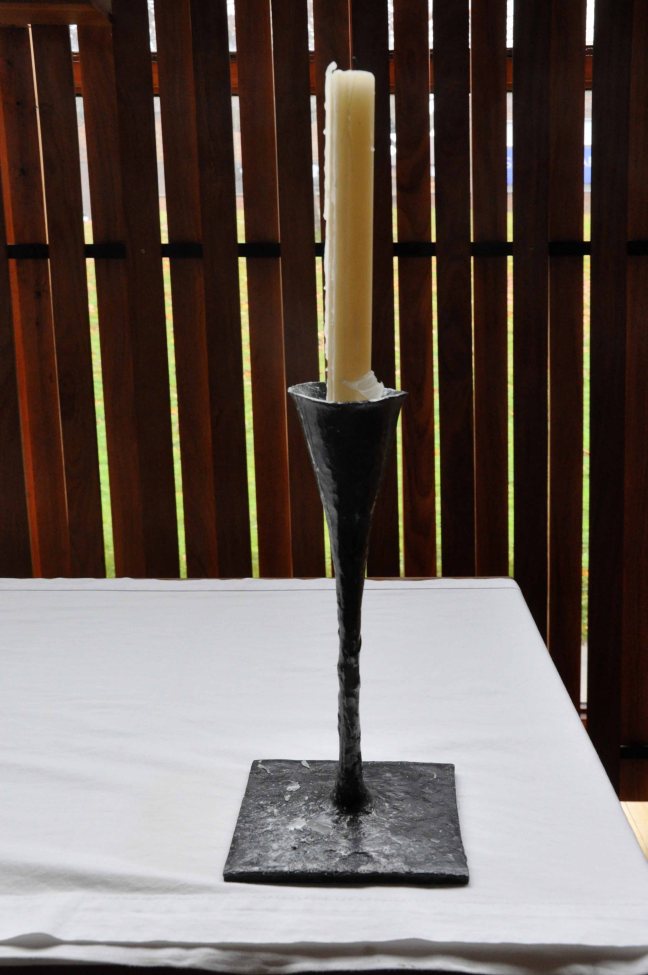
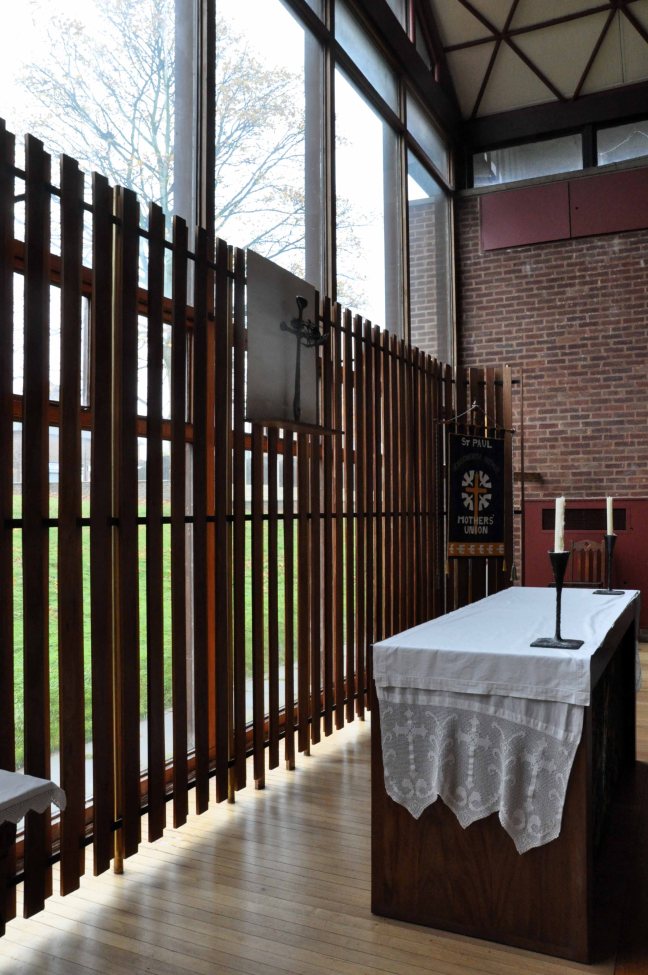
A plain altar is complemented with ornaments, the gift of Spence, decorated by a frontal designed by Anthony Blee and an embroidered panel by Beryl Dean. A plain slatted wooden screen masks the window to the rear.

The pews – also the work of Spence were not costed in the original proposal, additional funds were found and they remain in use as an integral part of the scheme and worship.

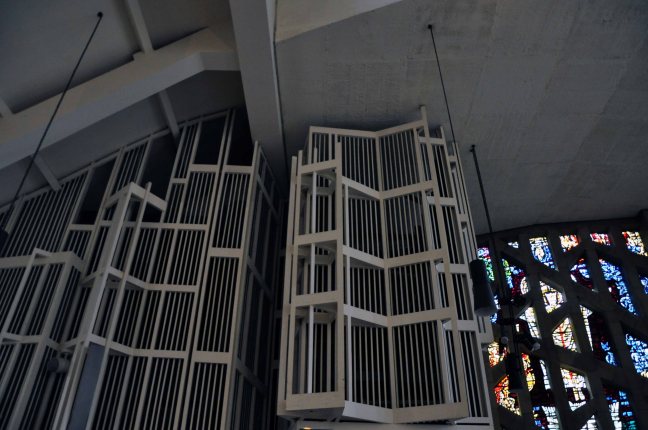
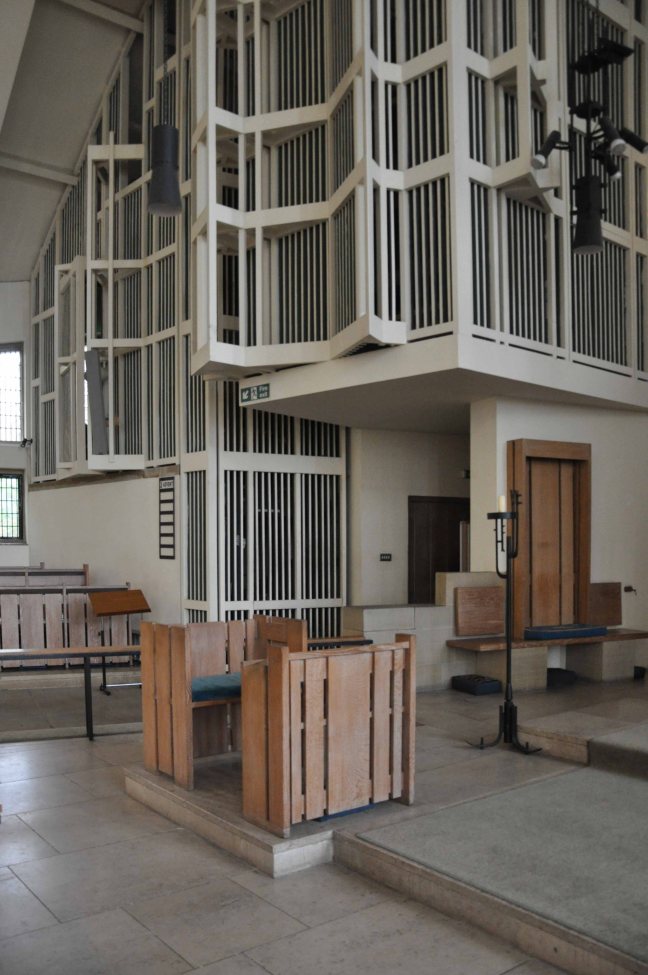
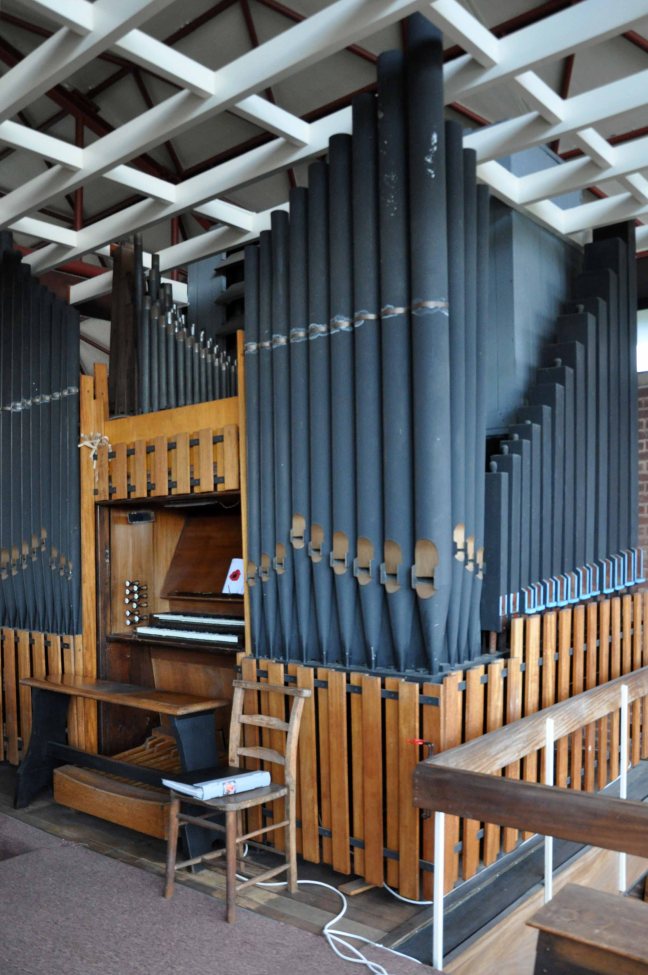
The organ, sited in the gallery, is a later addition of 1962, puchased for £100 from Mount Tabor Church, Holland – integrated into the overall design using slatted wood.

My thanks to John Roch, church organist and lifelong member of the congregation, having attended Sunday School at St Paul on the first day of its opening, for his time and erudite instruction.

dsc_0001

dsc_0002

dsc_0003

dsc_0004


dsc_0008

dsc_0010

dsc_0011

dsc_0012

dsc_0013

dsc_0014

dsc_0016

dsc_0019

dsc_0021

dsc_0022dsc_0024

dsc_0025

dsc_0026

dsc_0030

dsc_0033

dsc_0035

dsc_0042

dsc_0046

dsc_0049

dsc_0052

Kirklees College – Huddersfield

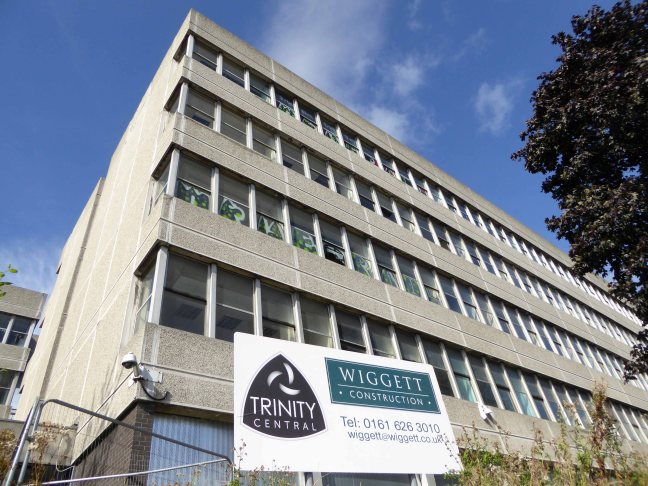
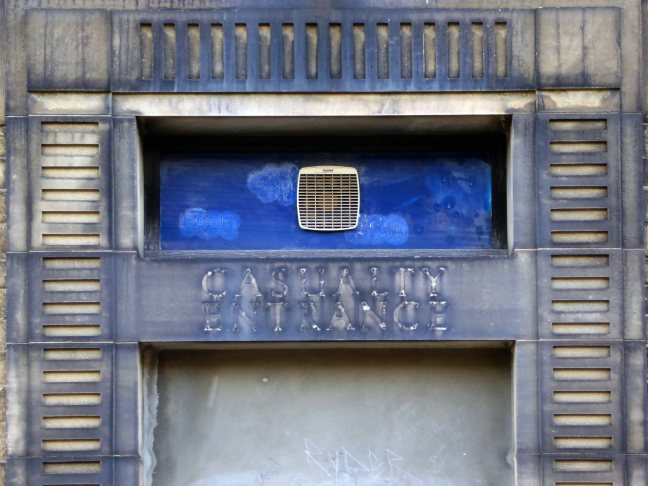
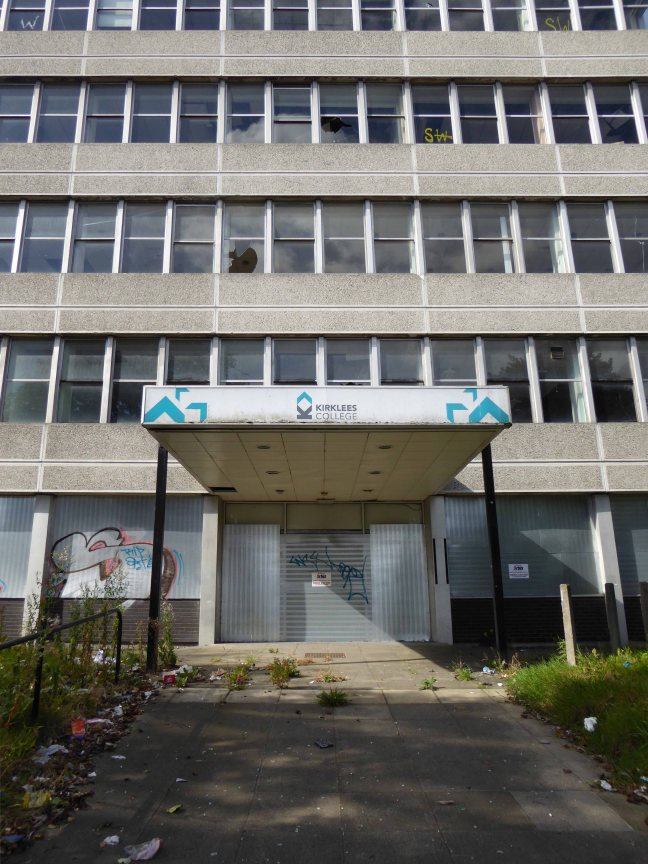
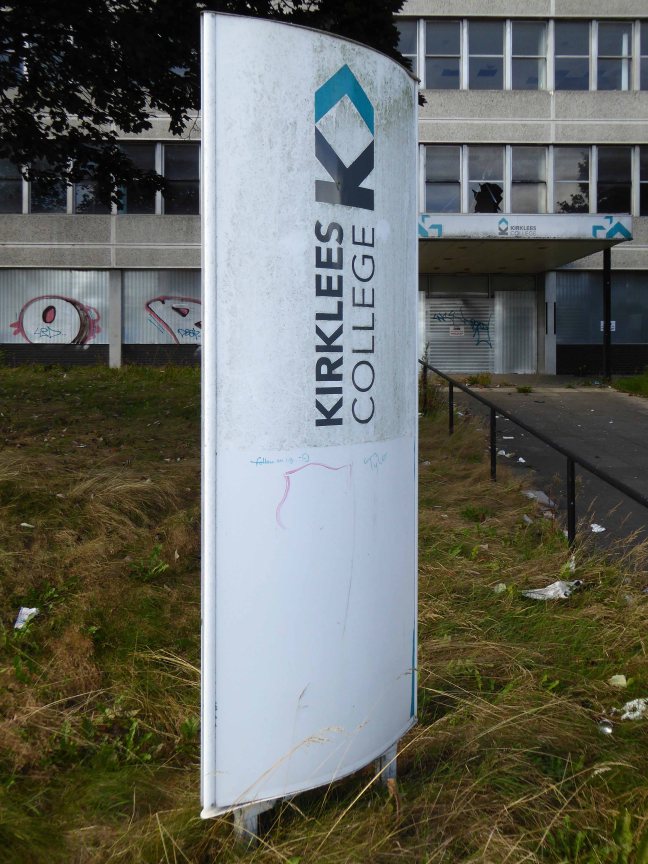
Kirklees College started life as Huddersfield Infirmary in 1831 up until 1967 when the Ramsden Technical College moved in, they paid £105,000 for the site. 

In September 1968 the first students began lectures and the first new building on the site opened in 1969. The main new block was built in 1971 – the year the college became Huddersfield Technical College. In 2008 Huddersfield Technical College merged with Dewsbury College to form Kirklees College and relocated in 2013.

The campus incorporates 10 buildings over a 6.1 Acre site ranging from the old hospital complex to modern blocks of classrooms. 

p1080524

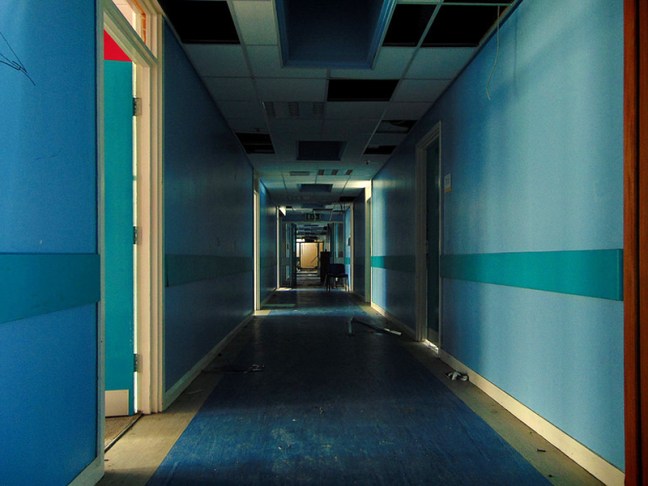
Some of the buildings have been used for the filming of the dramas Black Work, Remember Me where they changed some areas to be a care home, a hospital and a police station and the film Extremis. 

The site is owned by Wiggett Construction Group, who have now confirmed they want to demolish the 1970s college buildings to make way for a Lidl supermarket.

Thanks to Derelict Places – they went inside, I didn’t, I don’t do that sort of thing.

24873199691_49c901c0f0_c

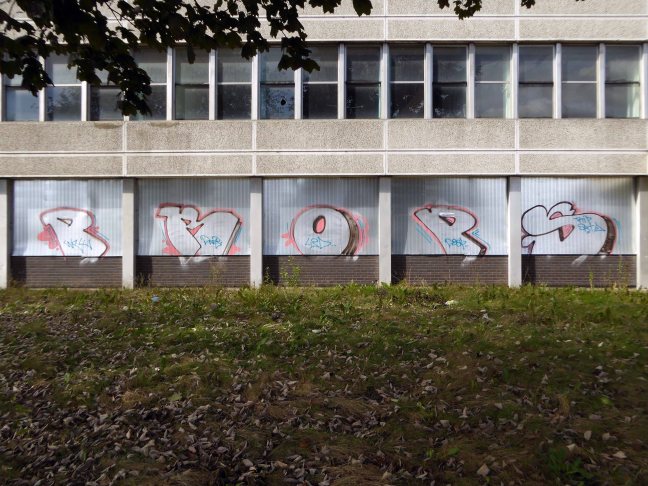
I walked the lengthy perimeter, bobbing in and out of nooks and crannies in search of nothing in particular. Chatted to a Kirklees employee who had worked at the site, he regretted its closure and passing.

“This building had character, it was great to work here – now it’s going to be a supermarket.”

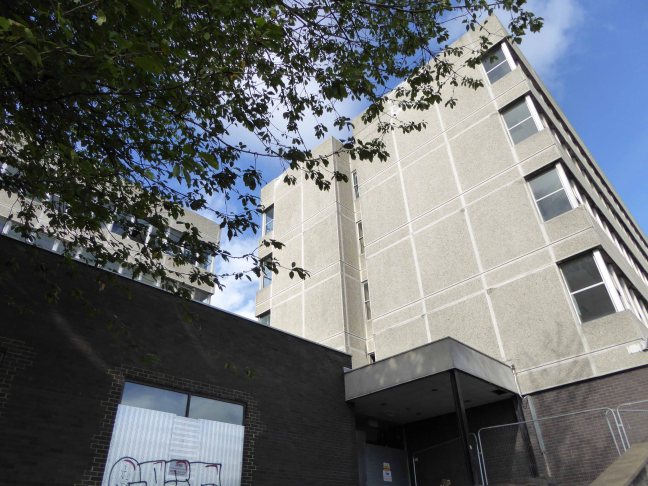
A curious amalgam of municipal classicism and hard edged 70s modernity, presided over by a sombre, care worn and  patinated Edward VII.

“Worth a few bob, a bugger to shift.”

p1080517-copy

p1080518-copy

p1080521-copy

p1080522-copy

p1080523-copy

p1080531-copy

p1080534-copy

p1080538-copy

p1080545-copy

p1080546-copy

p1080547-copy

p1080550-copy

p1080551-copy

p1080553-copy

p1080554-copy

p1080557-copy

p1080558-copy

p1080561-copy

p1080562-copy

p1080564-copy

p1080565-copy

p1080567-copy

p1080569-copy

p1080574-copy

p1080576-copy

p1080577-copy

Bus Station – Huddersfield

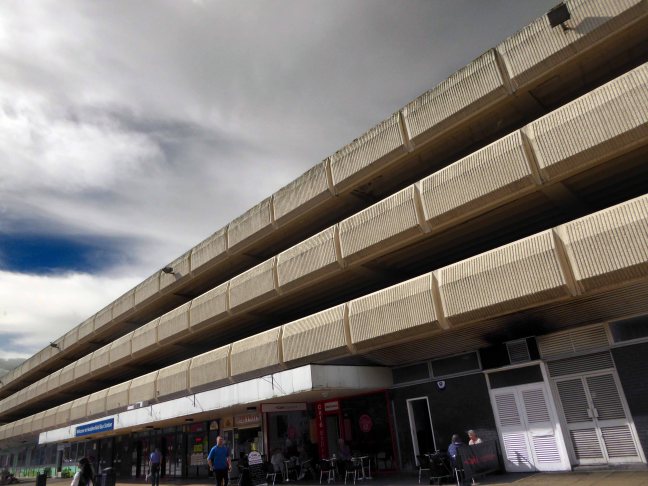
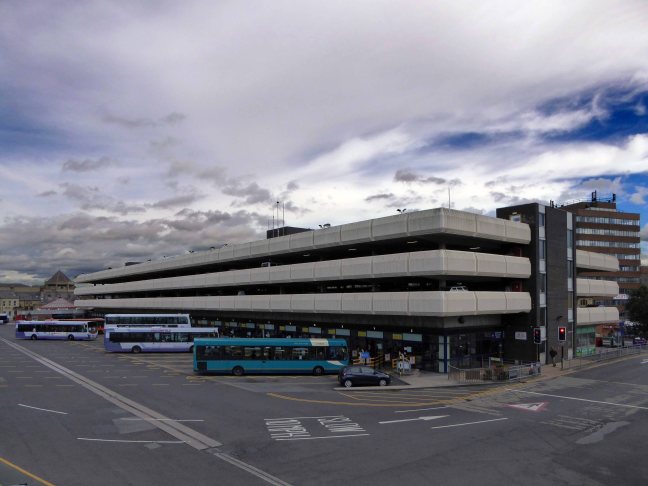
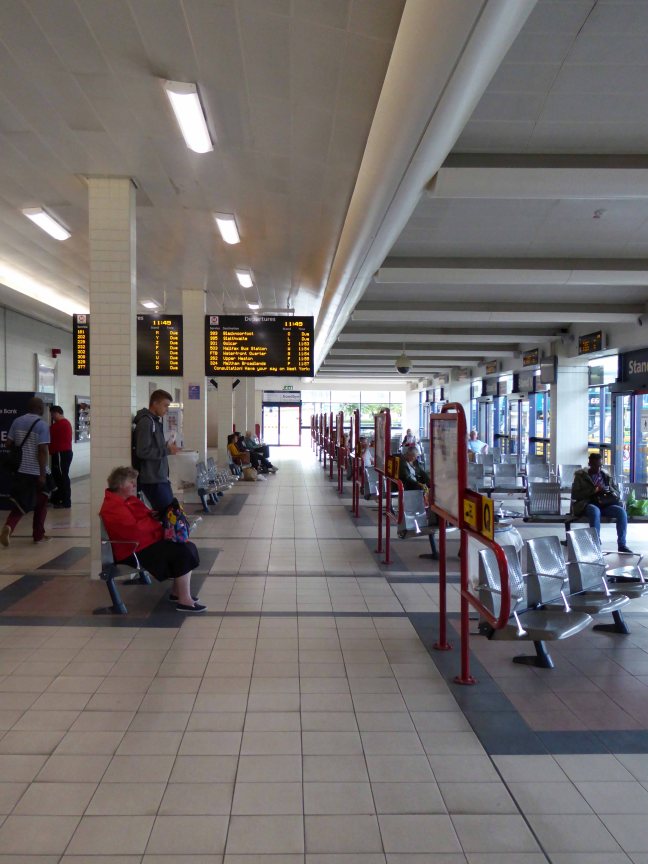
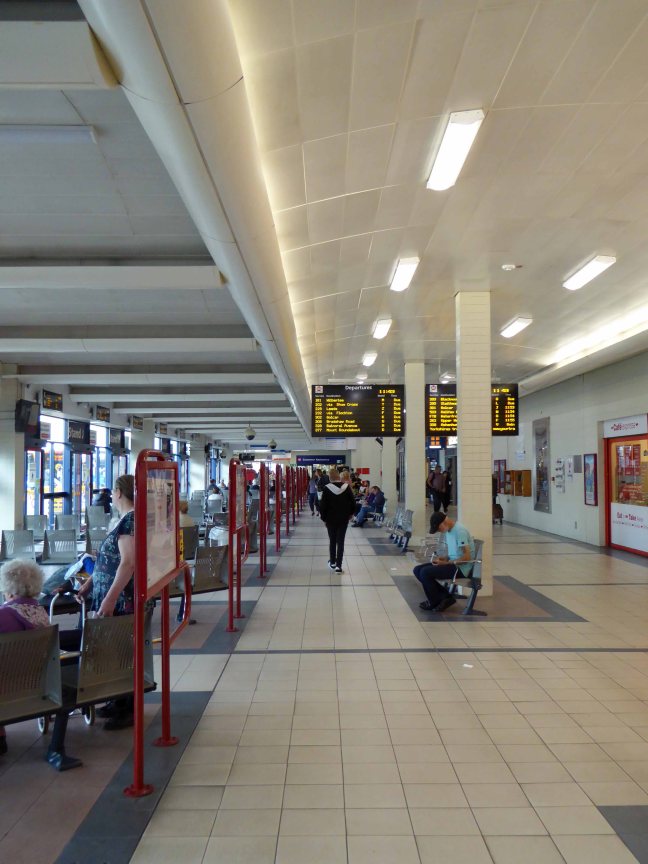
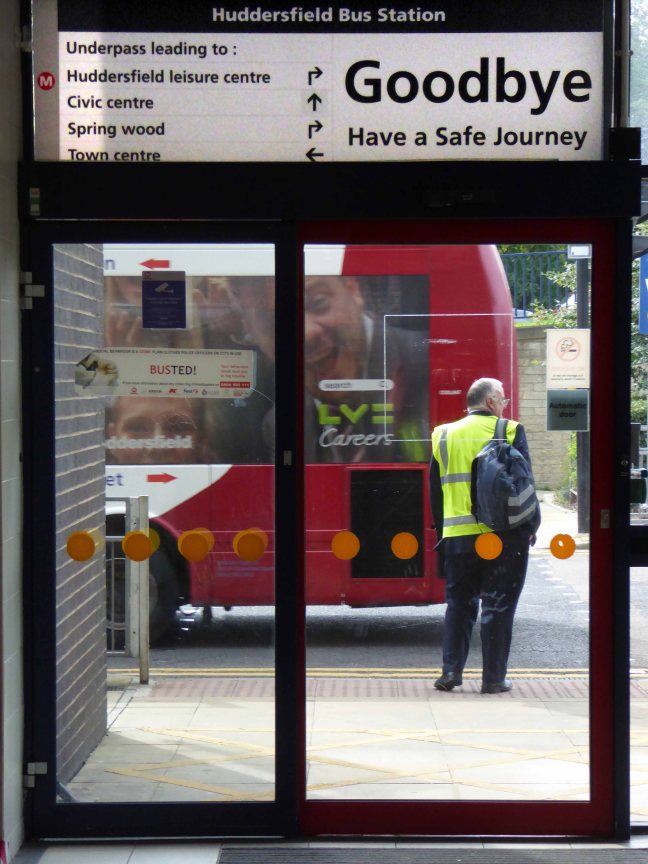
Huddersfield bus station serves the town of Huddersfield, West Yorkshire, England.

Which seems both serendipitous and heartwarmingly convenient.

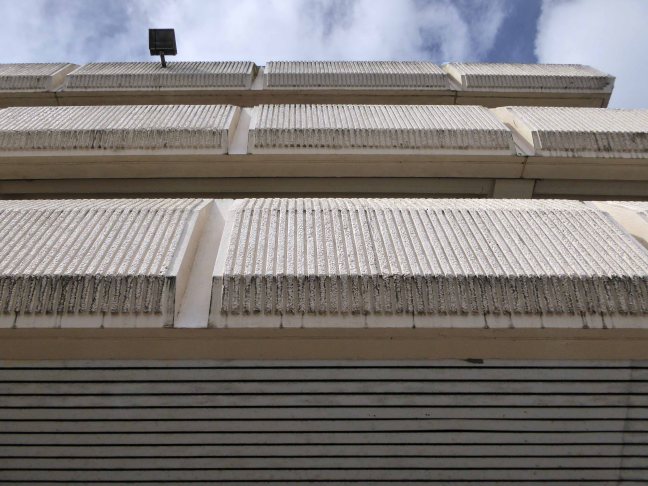
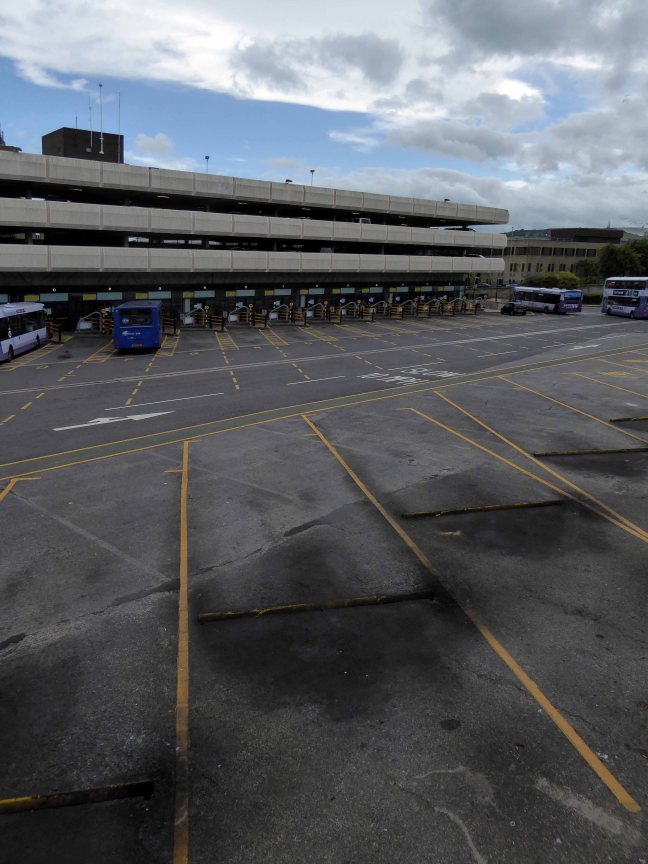
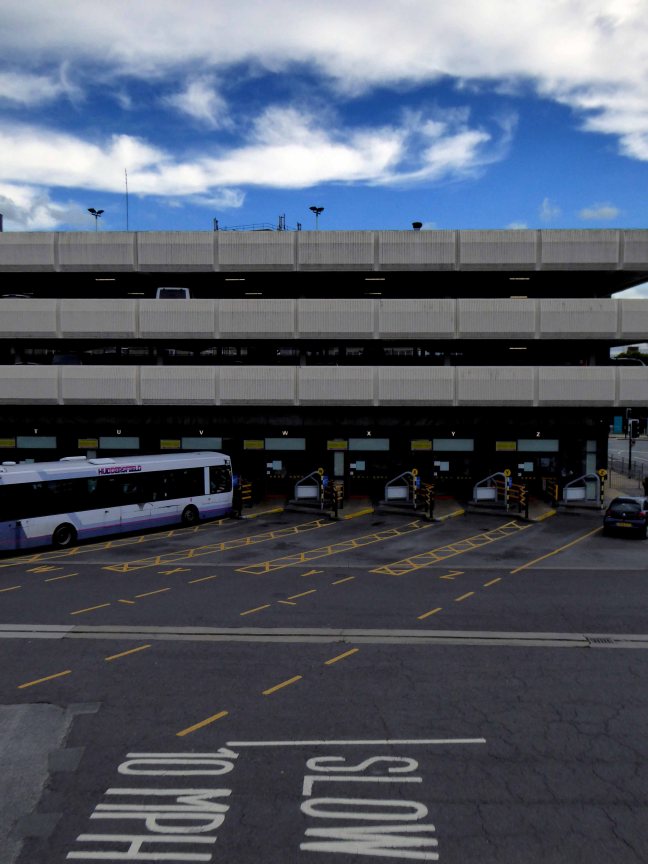
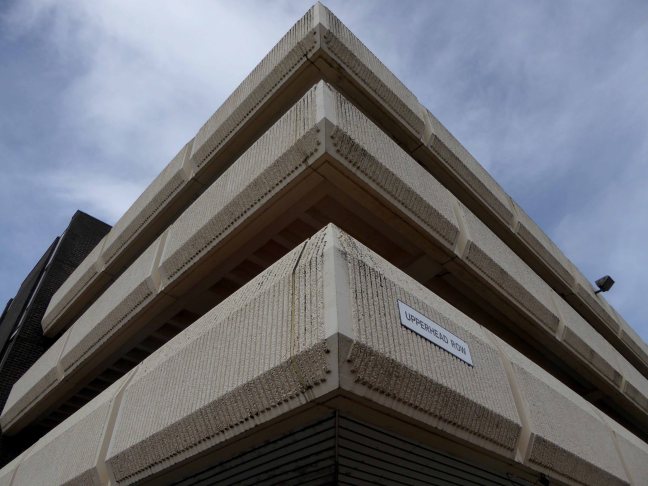
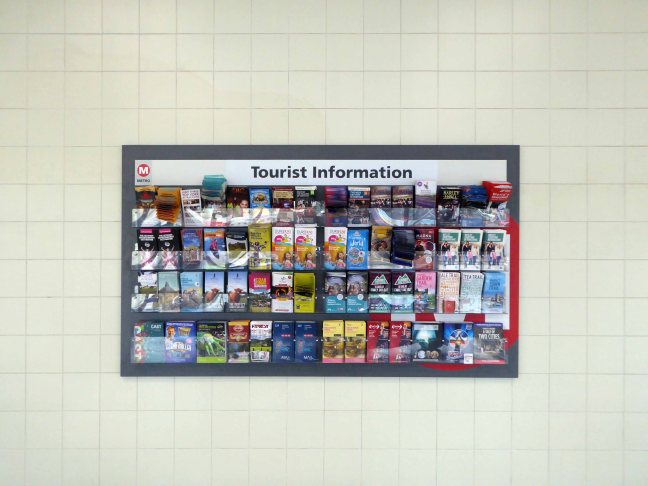
The bus station was opened on Sunday 1 December 1974 and is owned and managed by Metro. It is now the busiest bus station in West Yorkshire. The bus station is situated in Huddersfield town centre, underneath the Multi-storey car park. It is bordered by the Ring Road – Castlegate A62 and can be accessed from High Street, Upperhead Row and Henry Street.

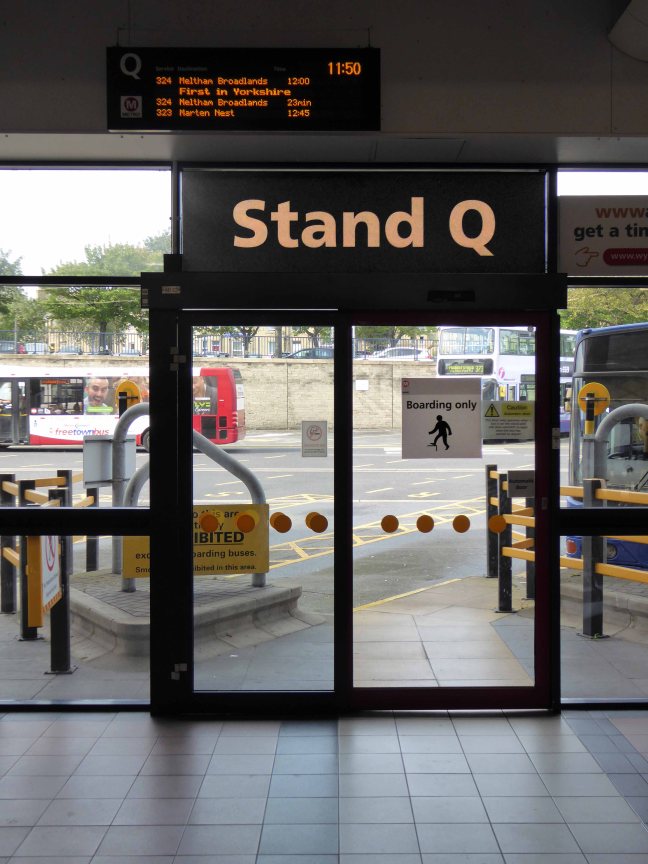
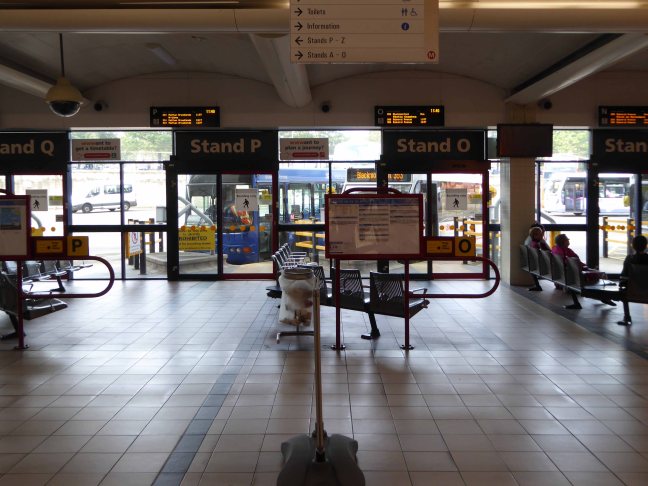
There are 25 pick-up and three alighting only stands at the bus station.

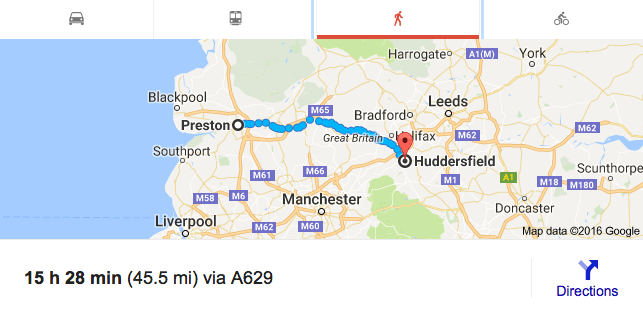
Forever in the shadow of its Red Rose almost neighbour in Preston.

Some forty five miles and a fifteen and a half hour walk to the west.

screen-shot-2016-09-12-at-07-00-56

Yet still a thing of beauty and a joy forever  – given the recent repairs to the membrane covering of its multi-storey car park.

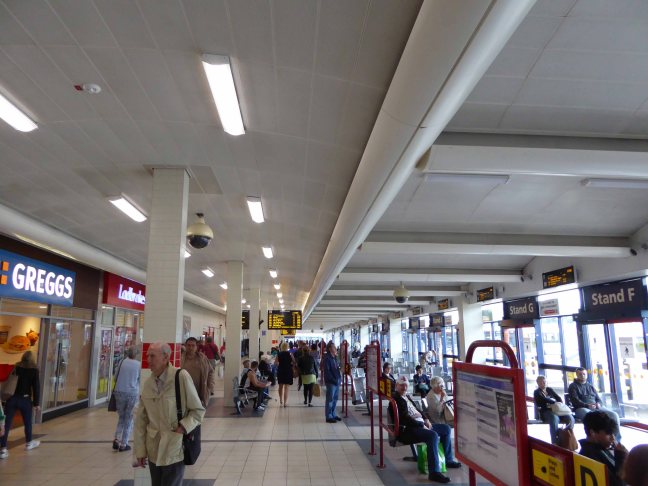
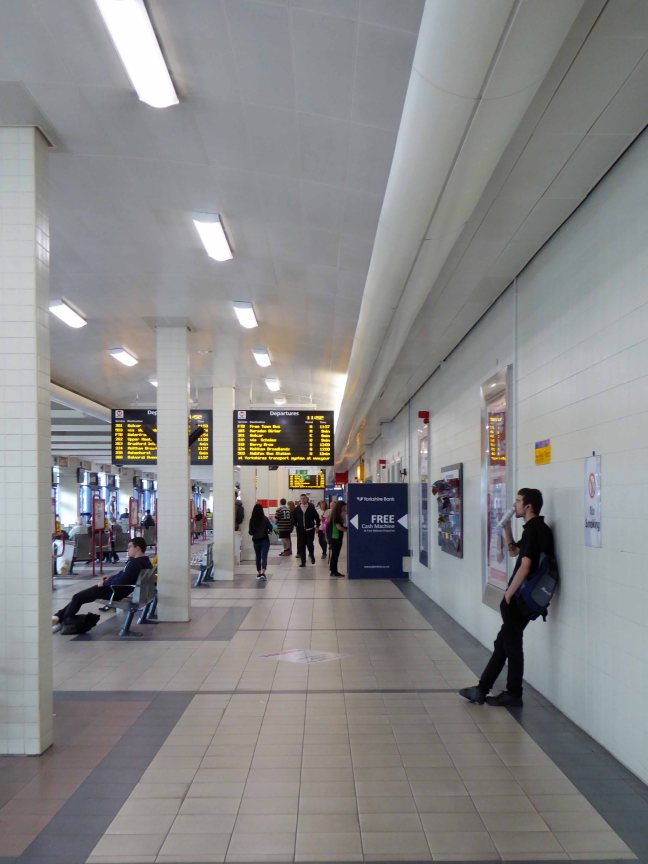
On the day of my visit it was clean, compact, cheerfully bustling and well used, passengers busy going about their business, of busily going about their business of going.

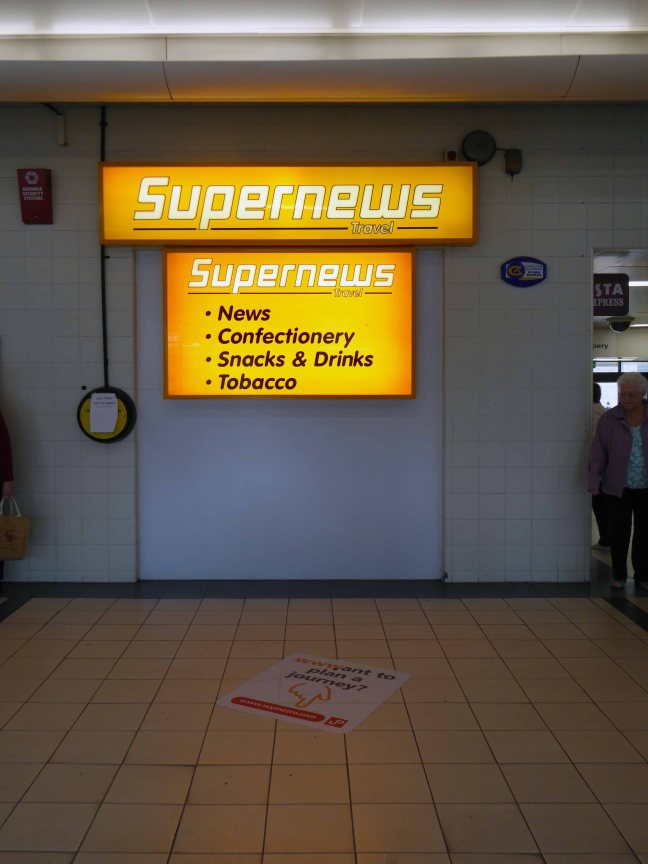
Light classics played soothingly upon the Tannoy, punters popped in and out of Ladbrokes, the kiosk plied its trade, the café was full and an air of calm, clear functionality reigned.

I walked quietly away.

p1080644-copy

p1080645-copy

p1080646-copy

p1080647-copy

p1080648-copy

p1080678-copy

p1080677-copy

p1080675-copy

p1080673-copy

p1080651-copy

p1080671-copy

p1080667-copy

p1080662-copy

p1080663-copy

p1080661-copy

p1080664-copy

p1080666-copy

p1080665-copy

p1080660-copy

p1080659-copy

p1080658-copy

p1080655-copy

p1080654-copy

p1080653-copy

p1080652-copy

p1080657-copy


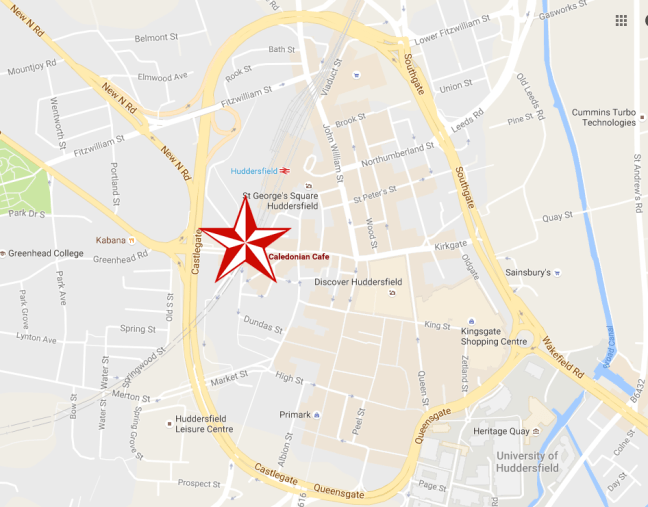
Caledonian Café – Huddersfield

screen-shot-2016-09-11-at-14-47-39

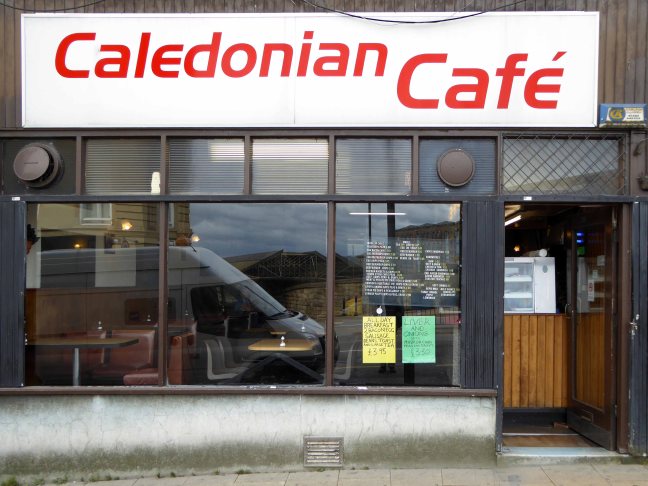
I often visit Huddersfield, and I often discover something new, exciting and different.

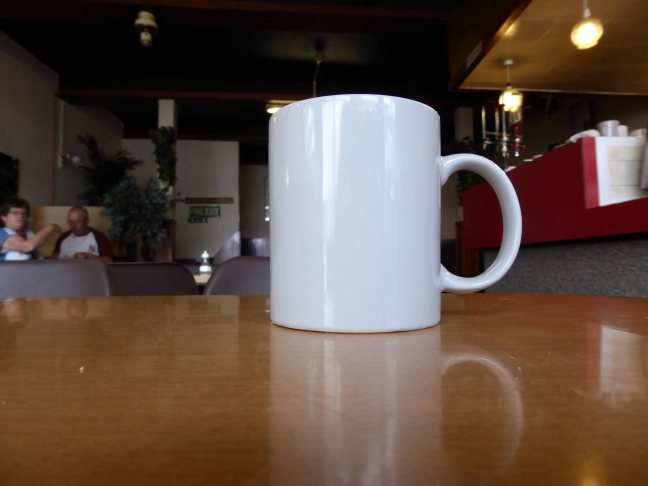
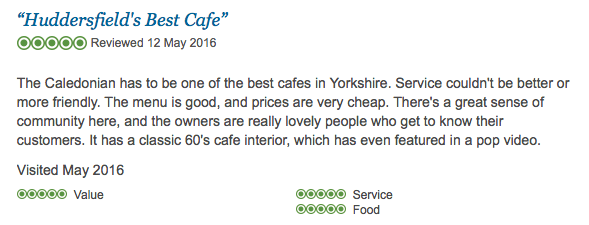
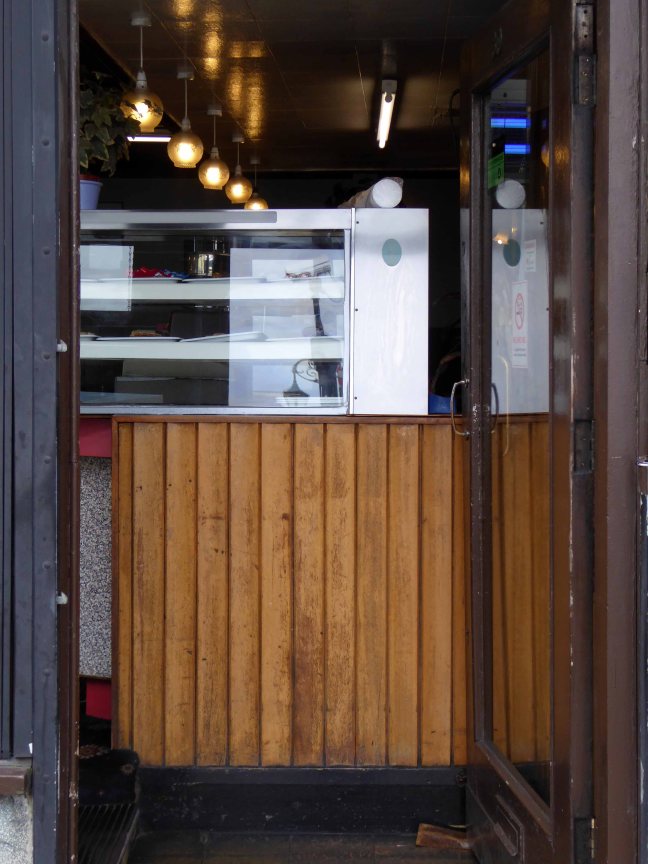
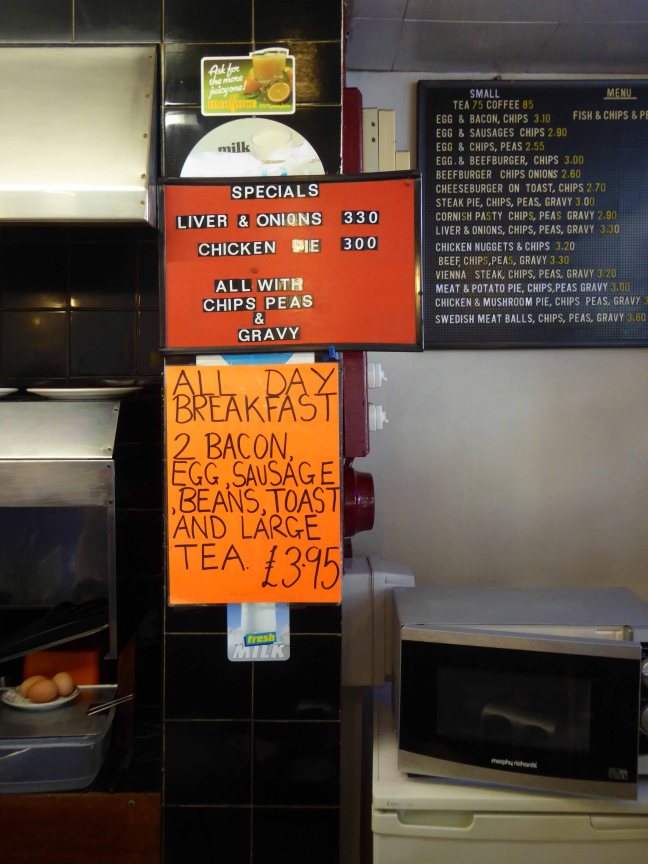
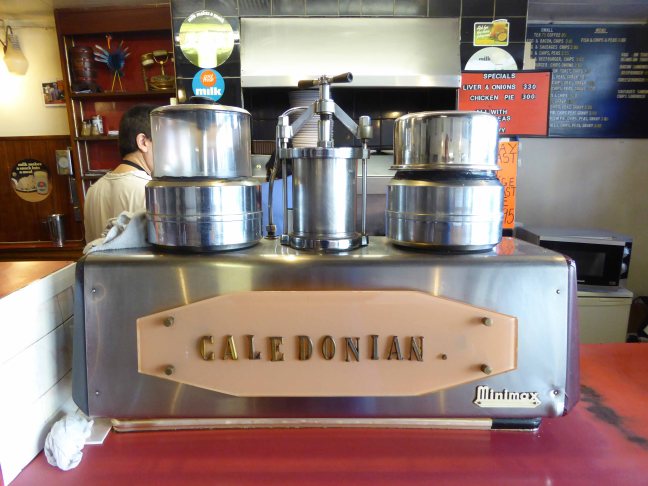
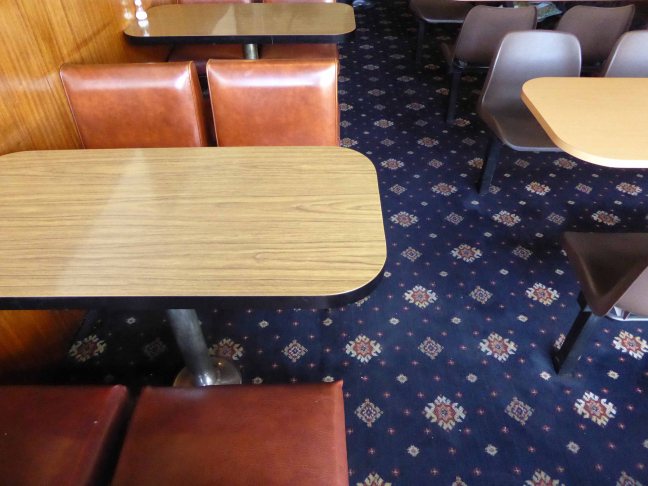
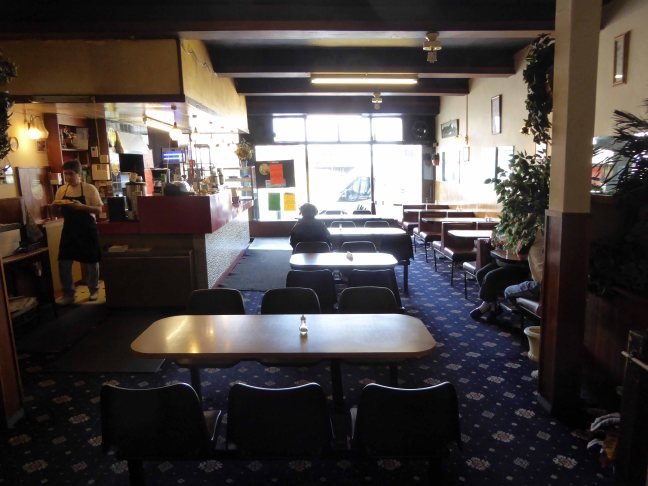
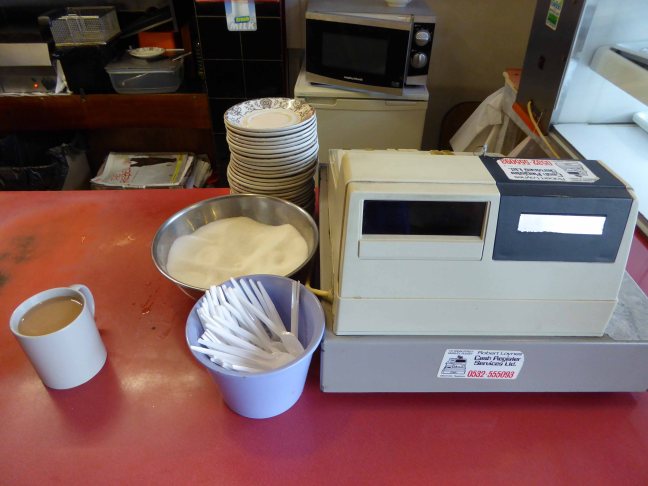
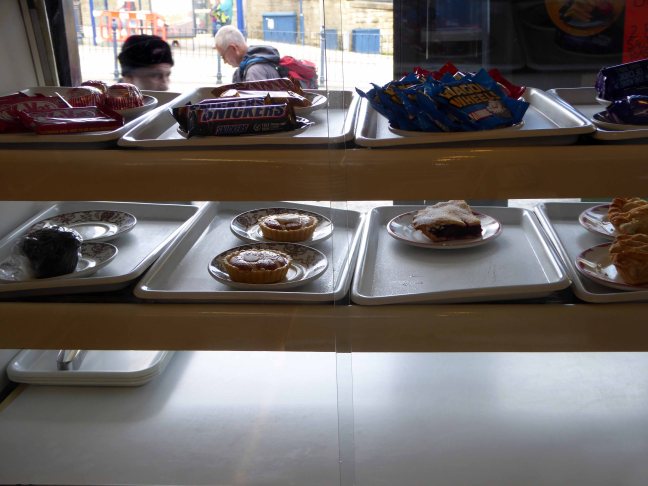
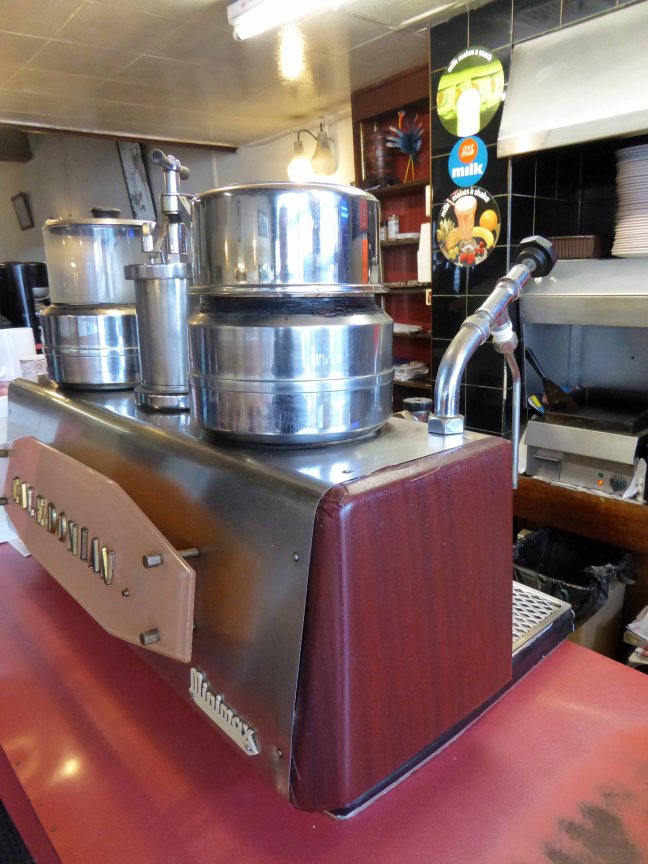
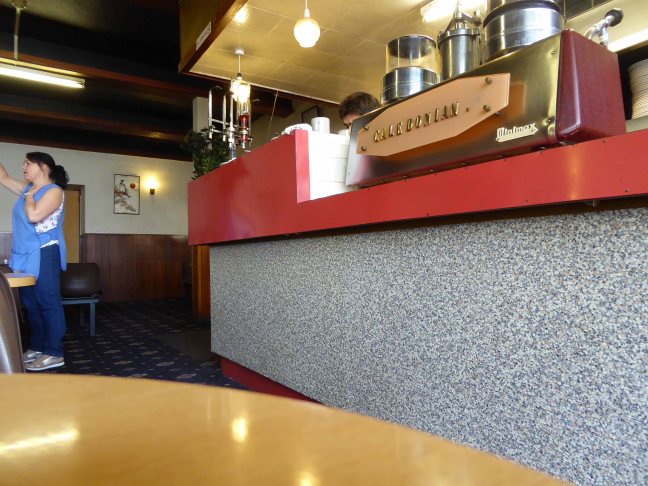
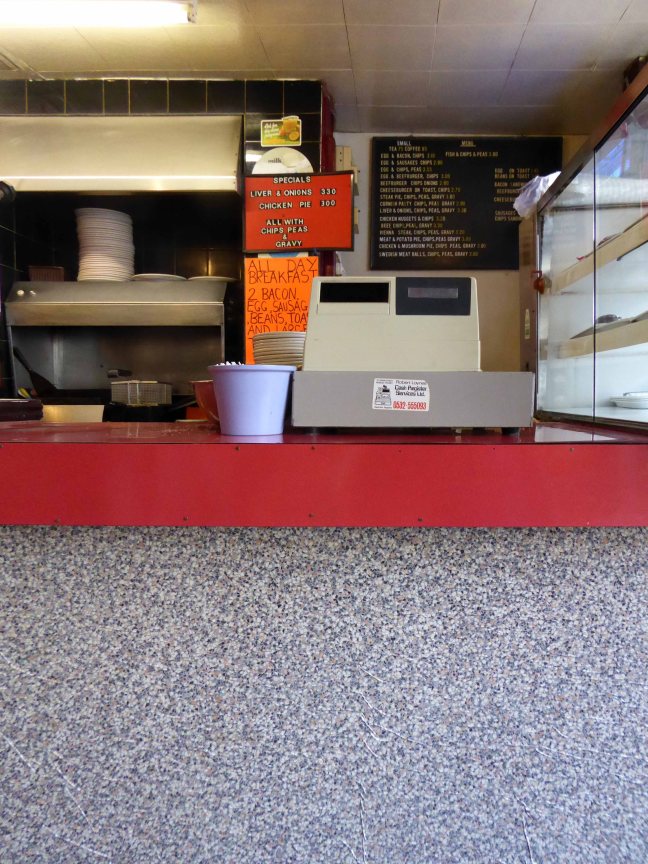
The Caledonian Café is everything that it isn’t, it’s the slow accretion of time, personal taste and accoutrements. Not frozen but slowly evolving, warm and welcoming. Owners Tony and Claire were more than happy to offer their company, tea and sympathy.

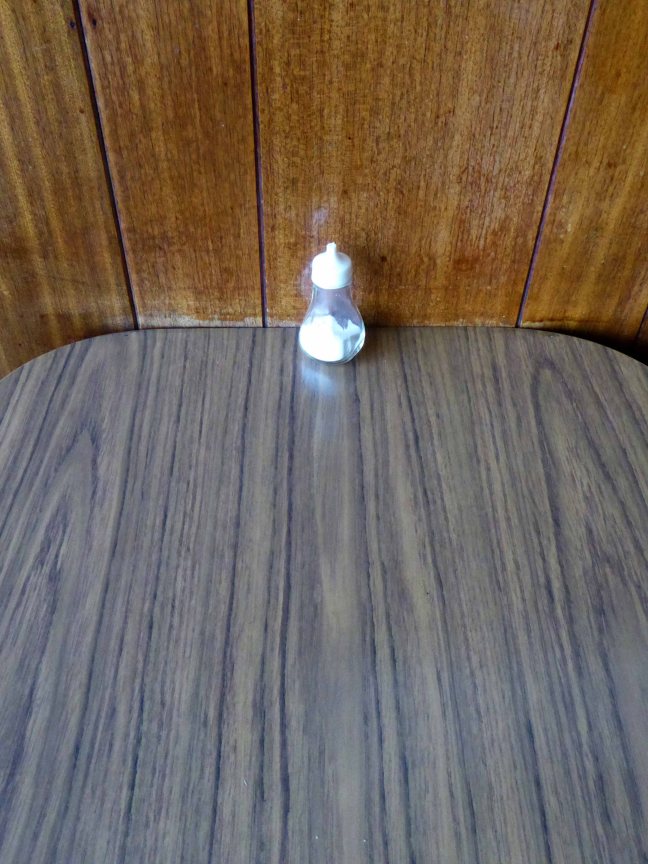
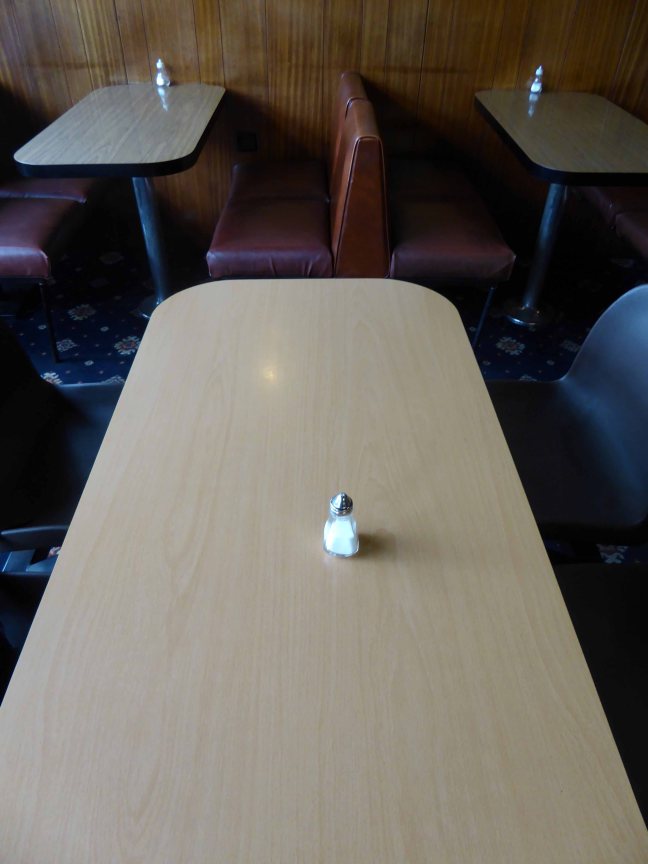
“The students come in to do their projects, sometimes they just ask to photograph the salt pots.”

I was more than happy to oblige and comply.

p1080592-copy

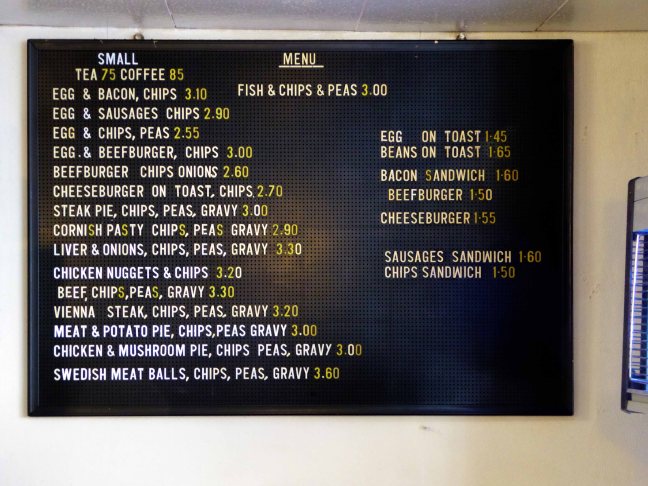
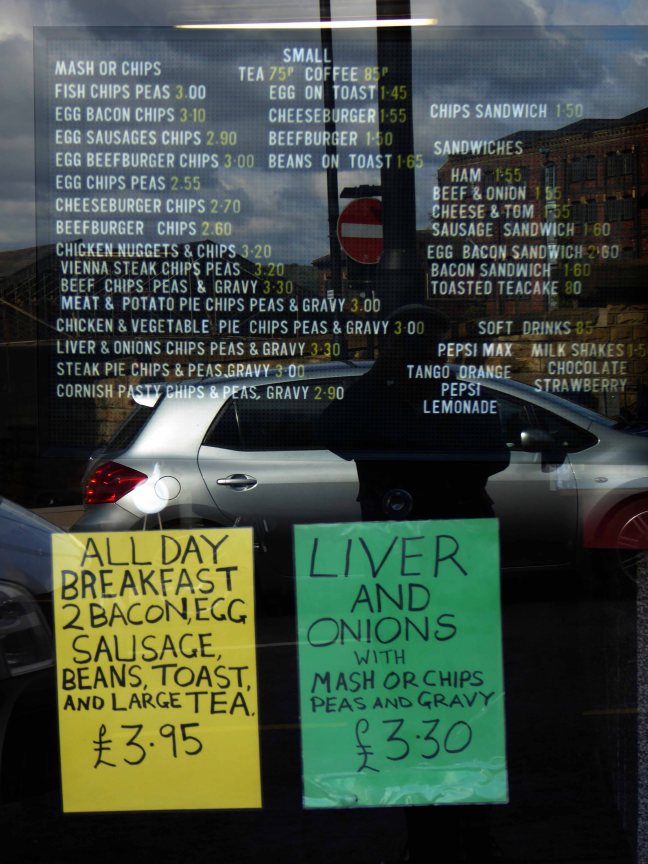
The prices are more than reasonable, and Tony goes out of his way to accommodate his customers.

” The families don’t always have a lot, so I give them two plates and split the burger and chips for the two kiddies.”

p1080584-copy

It was still early for me so I settled on a large tea, but I’ll be back before long for a bite to eat.

p1080623-copy

So best foot forward, get yourself down to the Caledonian, you won’t be disappointed.

screen-shot-2016-09-11-at-14-46-57

p1080640-copy

p1080583-copy

p1080643-copy

p1080585-copy

p1080586-copy

p1080591-copy

p1080594-copy

p1080595-copy

p1080596-copy

p1080597-copy

p1080599-copy

p1080600-copy

p1080601-copy

p1080603-copy

p1080605-copy

p1080608-copy

p1080613-copy

p1080614-copy

p1080615-copy

p1080617-copy

p1080618-copy

p1080621-copy

p1080622-copy

p1080624-copy

p1080625-copy

p1080627-copy

p1080630-copy

p1080631-copy

p1080634-copy

p1080635-copy

p1080637-copy

p1080638-copy

Yorkshire Building Society – Bradford

I don’t know much about the Yorkshire Building Society, I must say I have less than a passing interest in Building Societies generally.

I more of a building societies man myself.

But I do know this

In 1993 the former Hammonds Sauce Works Band was renamed as the Yorkshire Building Society Band. The building society supported the main band and also the YBS Hawley Band and YBS Juniors. The building society ceased its sponsorship in December 2004 although the YBS initials were retained in the band’s name until 2008. From January 2009 the band was renamed the Hammonds Saltaire Band.

Which seems a particularly cruel way, to treat a sauce works band.

Their former HQ has been standing on the corner, watching all the world go by.

For some time now.

Empty.

For sale, to let, facing an uncertain future.

Alone.

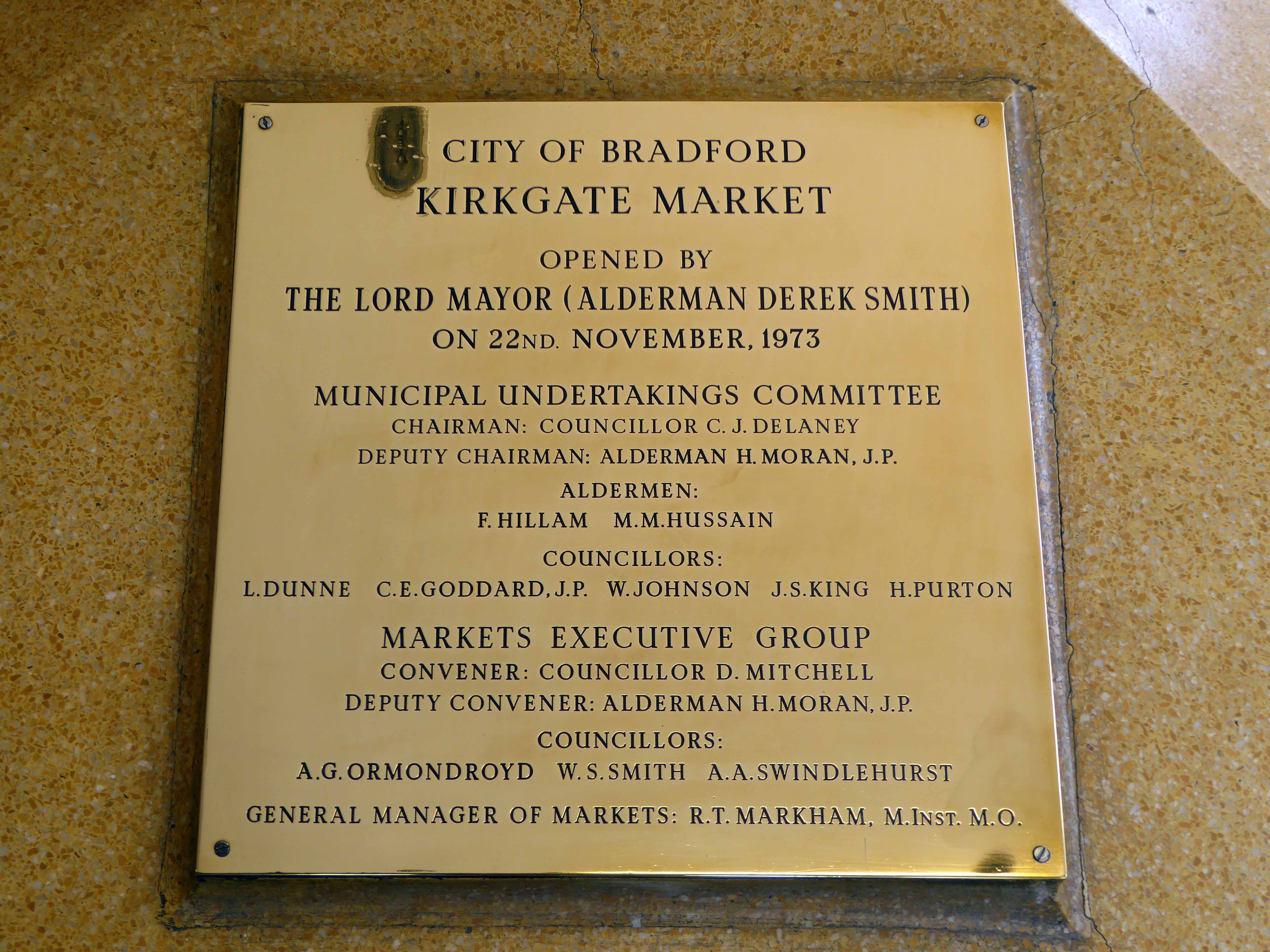
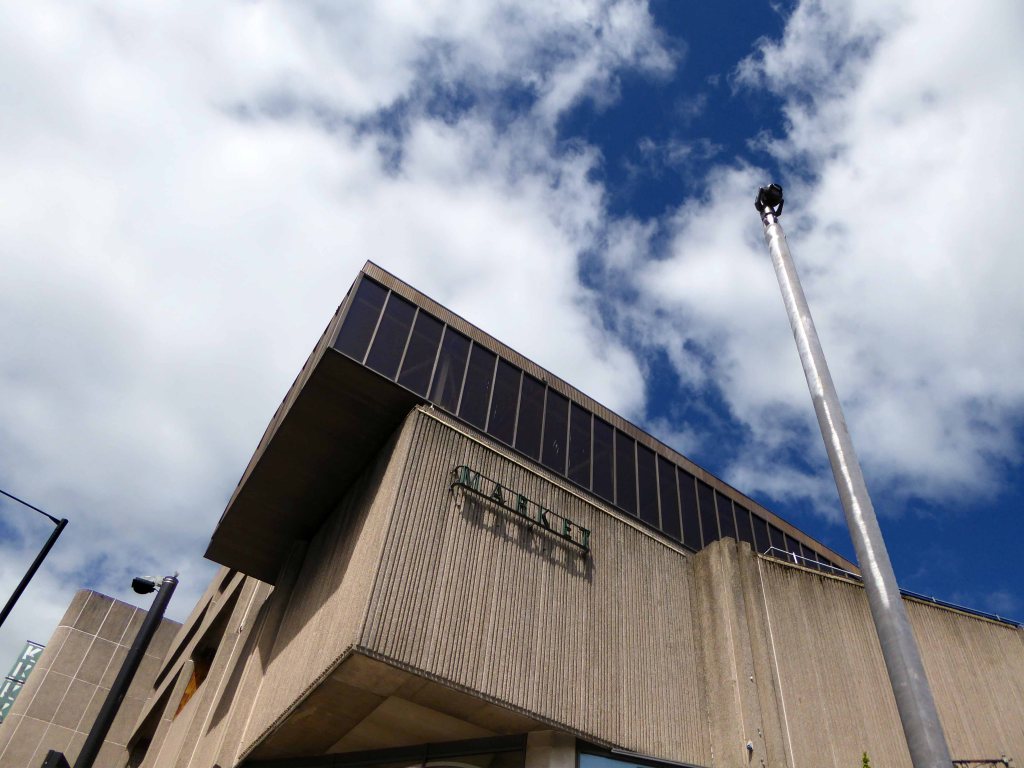
Kirkgate Market – Bradford

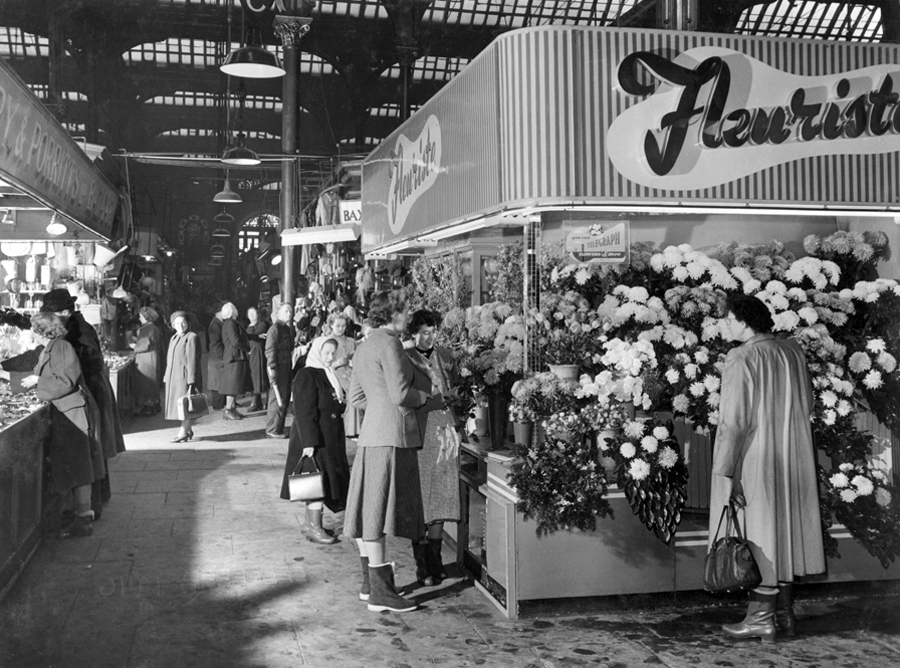
Yorkshire is a county of market towns – Bradford is no exception, a mediaeval village expanding with the growth of the wool trade and the coming of the Industrial Revolution.

P1050380 copy

Flourishing.

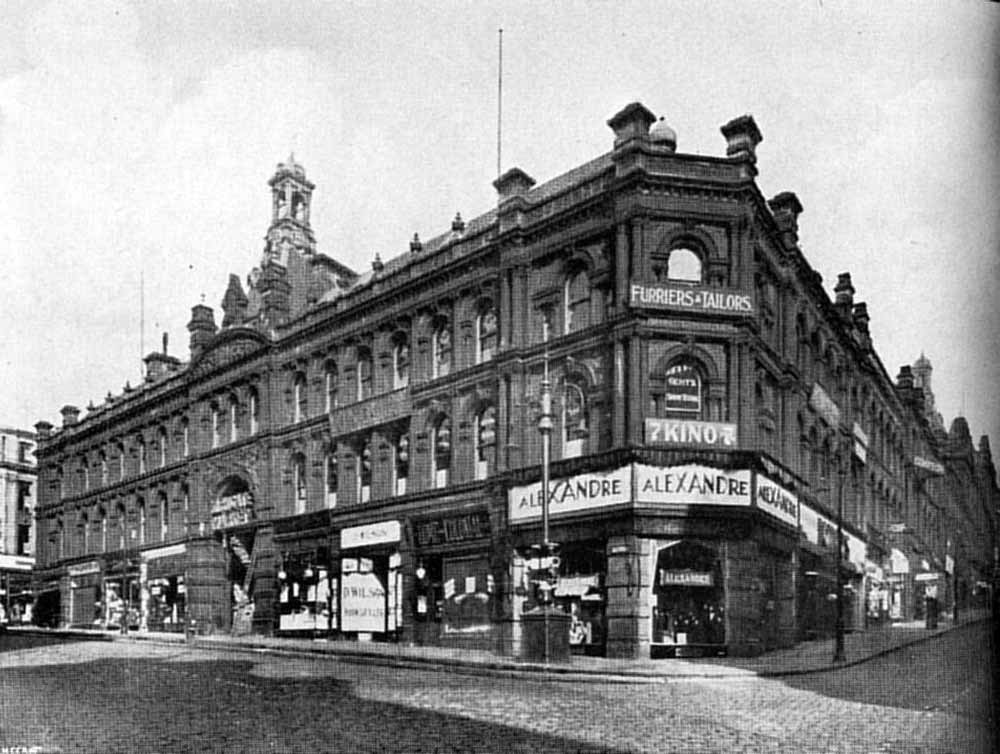
The site was originally occupied by an imposing building of 1878.

5142193649_7127ea46f8_b
Q1976

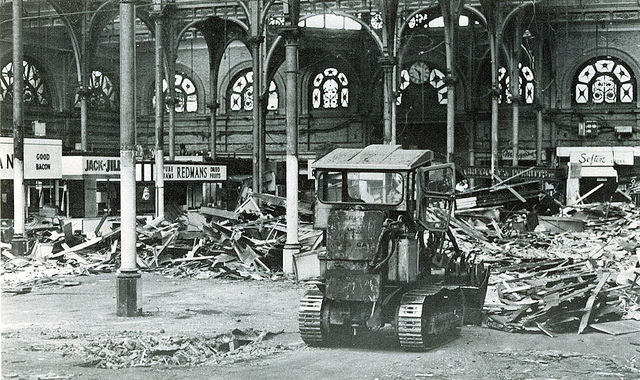
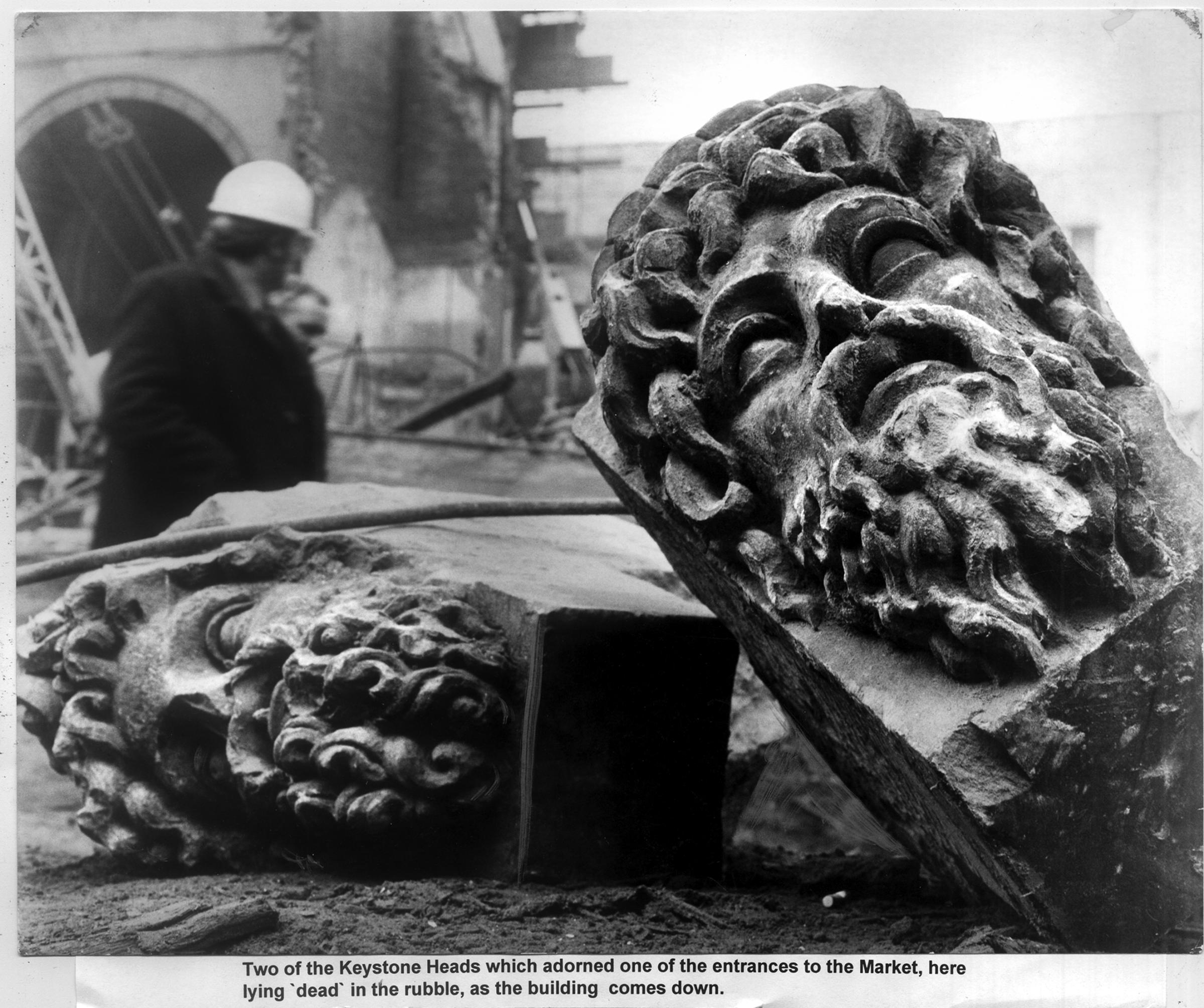
Demolished in 1973.

5177960364_c44e85ae92_z
imgID8575583

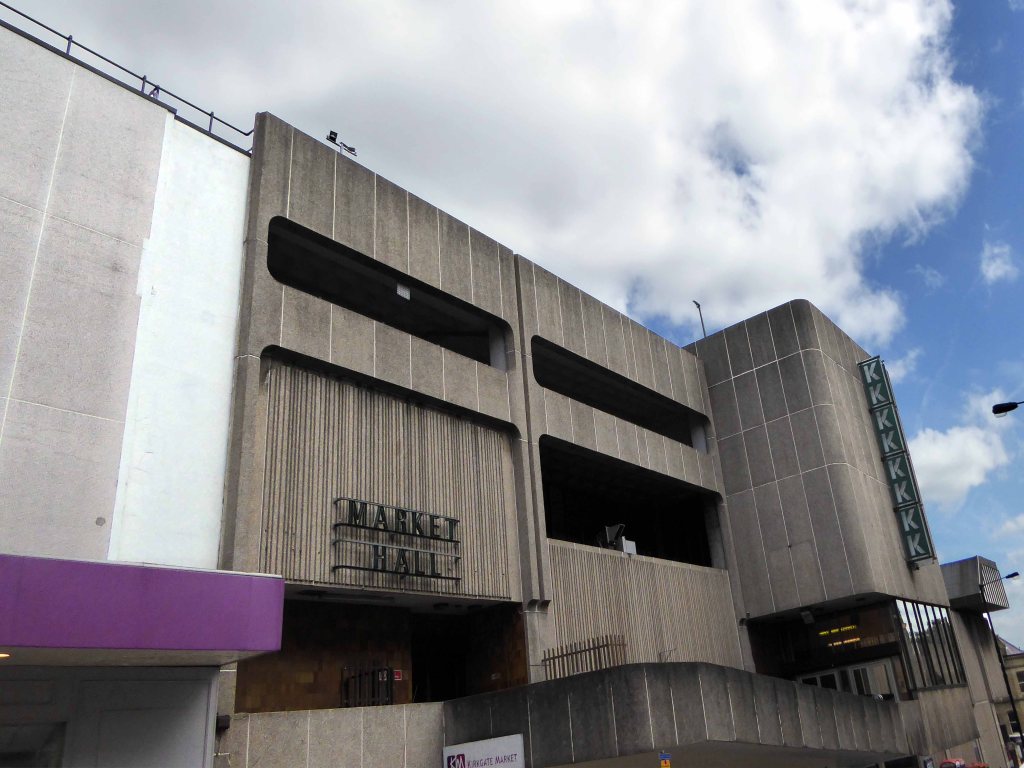
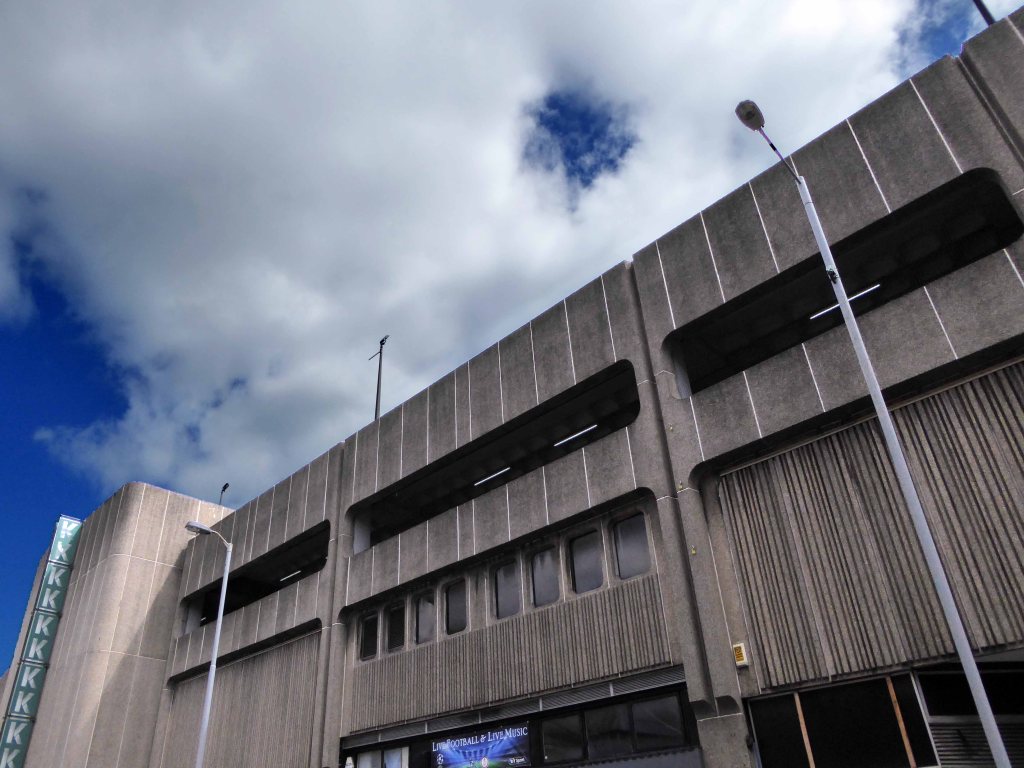
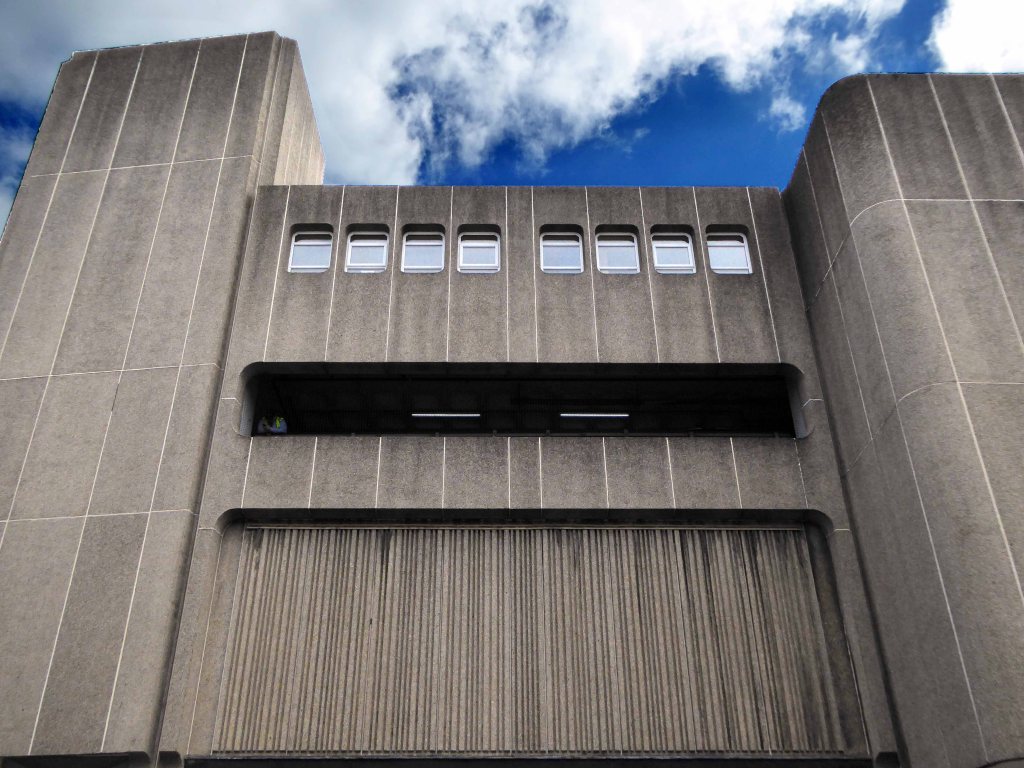
To be replaced by a Brutalist build in the same year.

P1050379 copy

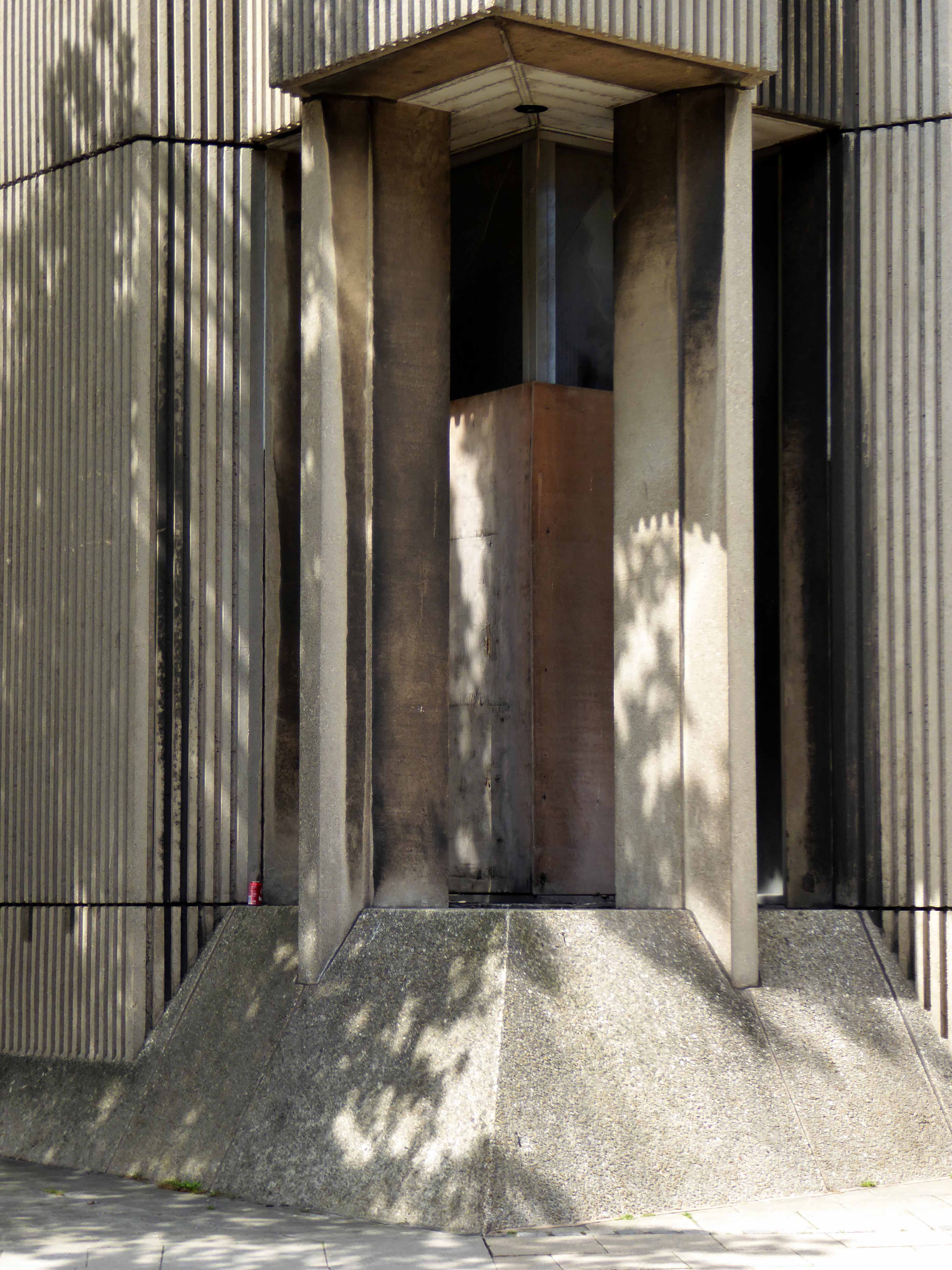
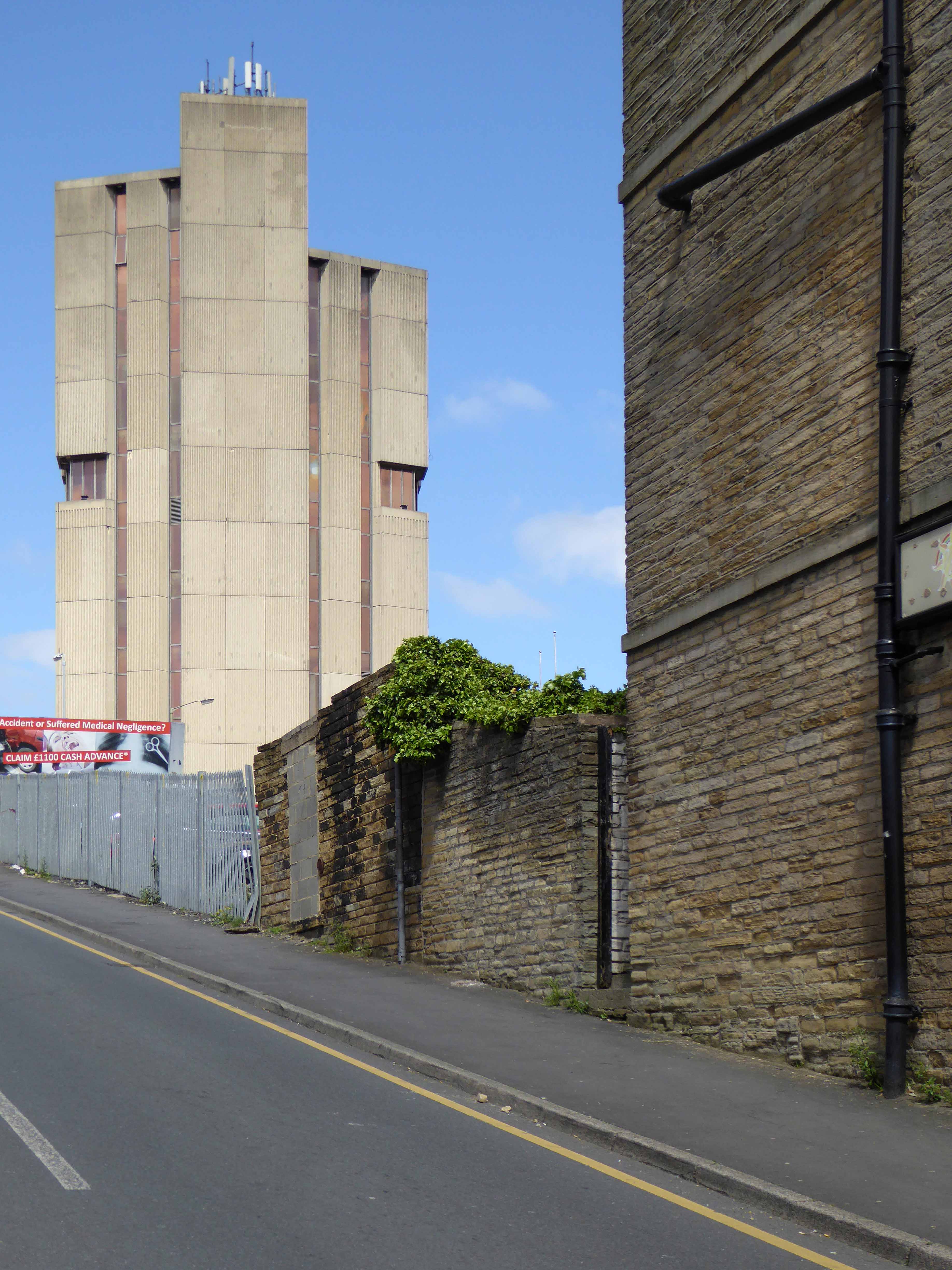
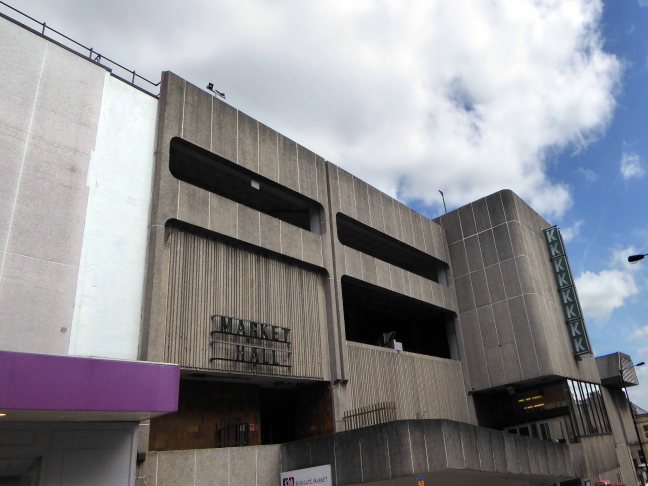
A structure of bold geometry, contrasting brick and warm, raw striated concrete.

The huge building, designed by John Brunton & Partners, was dubbed Bradford’s ‘space-age shopping centre’ when it opened in 1976. One of a series of American-style Arndale malls

Now the city council has purchased the centre for £15.5 million and agreed a deal that will see Primark – the largest of Kirkgate’s remaining stores – move to Bradford’s Broadway mall which opened in 2015.

The initiative will allow the authority to double the size of its proposed City Village programme, which it hopes will create better public spaces and 1,000 new homes in a ‘world-class sustainable urban’ across 5 acres of city centre land.

Architects Journal

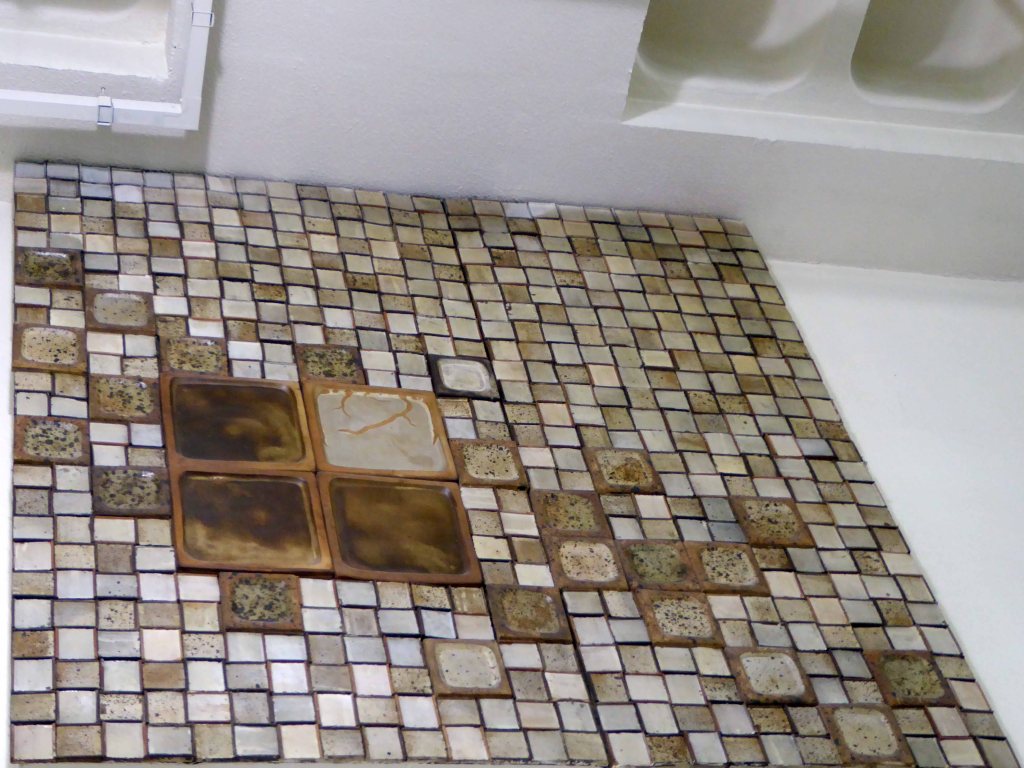
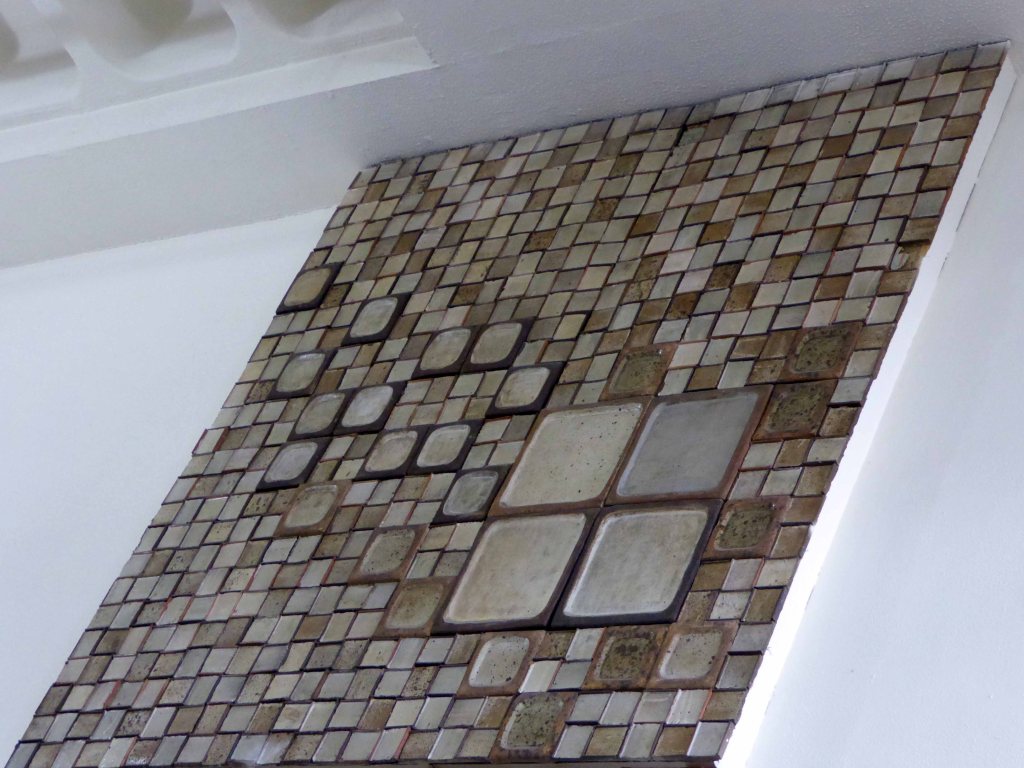
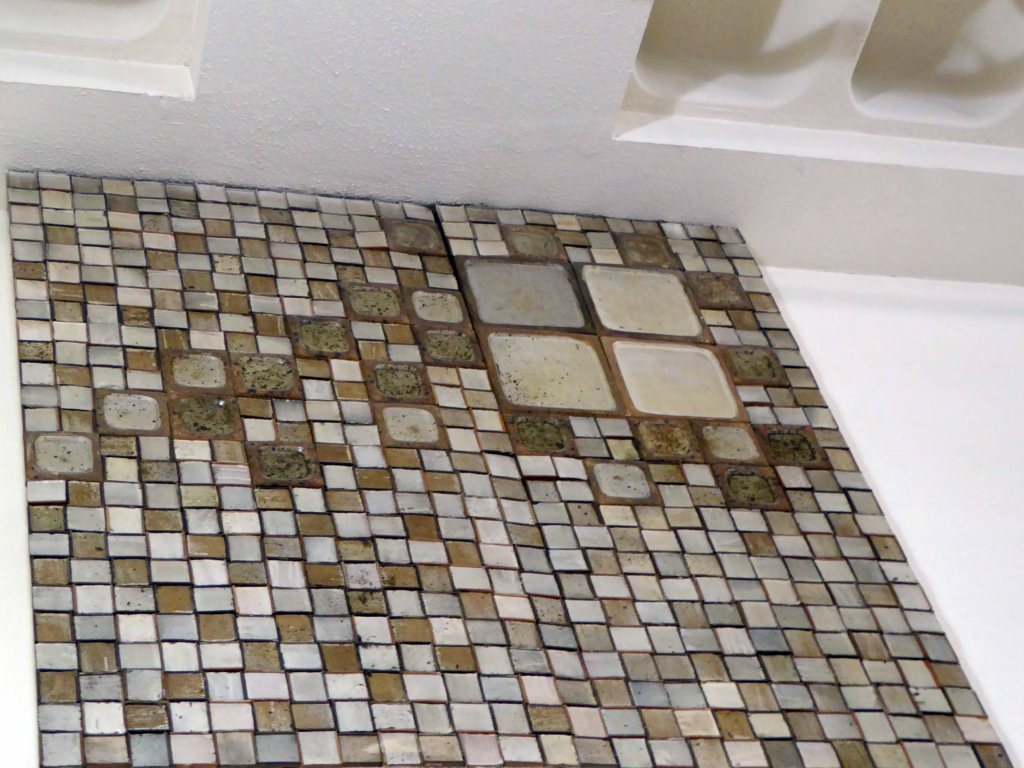
The interior has several decorative features, tiles their authorship and origins unknown, consisting of four 2.5 metre, and one 6.5 metre  square ceramic panels.

Alongside William Mitchell concrete reliefs.

We now know that they are the work of Fritz Steller – also responsible for Huddersfield’s Queensgate Market ceramics.

So farewell fair Kirkgate, I love your stairwell.

Well.

P1050382 copy

Park Hill – Last Train To

This is the fourth time I’ve visited Park Hill.

Alone on a hill – sans the sound of music.

I think it may be the last time.


10934972796_6d4cc15562_b

Alone on a hill – two weathered stickers on a public bench for company.

P1030019 copy

Visitor.

On previous visits, there were a few remaining residents on the western wing.

https://modernmooch.wordpress.com/2015/12/13/park-hill-sheffield/

Now they are gone.

Their homes tinned up, the walkways and stairways too – once these streets in the sky could accommodate a milk float, they now echo emptily, with the sound of a restless wind.

And so, in early sunny Sunday morning light, heavy hearted I wandered the open areas, colonnades, service lifts and terrazzo walls.

A small gift to the families, folks, workers, planners and architects who brought this estate to life – a celebration of the modern aesthetic in clear, broad daylight.

P1030059 copy

P1030029 copy

P1030054 copy

P1030051 copy

P1020971 copy

P1030044 copy

P1030026 copy

P1030038 copy

P1030052 copy

P1030048 copy

P1030042 copy

P1030053 copy

P1020989 copy

P1030049 copy

P1030039 copy

P1030060 copy

P1020987 copy

P1030057 copy

P1020977 copy

P1030061 copy


Sheffield – Arts Tower and Library

I’ve never ever been here before – my thanks to the Sheffield Modernist Society for arranging the visit, part of a walking tour of the city, the first of many, one hopes.

You can find them here http://www.modernist-society.org/sheffield/

Or possibly simply bump into them, casually walking around Sheffield and environs.

The Arts Tower is an exciting amalgam of Manchester’s CIS Tower, Mies van der Rohe’s Seagram Building and itself. A sleek slab of steel and glass, occupying a prominent site with views across Sheffield’s seven hills.

On a sunny Sunday in early April the adjoining library was alive with studying students and Modernists, attracting the odd, odd look, as we stopped and stooped to snap the odd period detail or two. It has retained much of its original character and features, deliciously elegant, almost edible chairs, some signage – and a clock.

Though the seven is mysteriously missing.

It was opened by TS Elliot.

P1030222 copy

On 12th May 1959 – it was a Tuesday.

P1030223 copy


The Arts Tower 12 Bolsover Street in Sheffield,  belonging to the University of Sheffield and opened in 1966. English Heritage has called it

“the most elegant university tower block in Britain of its period”. 

At 255 feet/78 m tall, it is the second tallest building in the city. It is also the tallest university building in the United Kingdom.

Designed by architects Gollins, Melvin, Ward & Partners, construction of the tower started in 1961 and lasted four years. 

Entry to the building was originally made by a wide bridge between fountains over a shallow pool area in front of the building. This pool was eventually drained and covered over when it was found that strong down drafts of wind hitting the building on gusty days caused the fountain to soak people entering and exiting the building. 

The building was officially opened by Queen Elizabeth, The Queen Mother in June 1966; it has 20 stories and a mezzanine level above ground. As its name suggests, the building originally housed all the University’s arts departments. Circulation is through two ordinary lifts and a paternoster lift, at 38 cars the largest of the few surviving in the United Kingdom.

A bridge at the mezzanine level links the tower to Western Bank Library. This building was also designed by Gollins, Melvin, Ward & Partners—the two buildings are intended to be viewed together, the Arts Tower and Library are Grade II* listed buildings.

So if you have a penchant for a tall slab with an adjoining library, set in expansive parkland on the perimeter of a dual carriageway – go take a look.


Halifax Building Society HQ – Halifax

Why are we here?

The Halifax was formed in 1853 as the Halifax Permanent Benefit Building and Investment Society. The idea was thought up in a meeting room situated above the Old Cock Inn close to the original Building Society building. Like all early building societies, the purpose of the society was for the mutual benefit of local working people.

Why are we not here?

In 2006, the HBOS Group Reorganisation Act 2006 was passed. The aim of the Act was to simplify the corporate structure of HBOS. The Act was fully implemented on 17 September 2007 and the assets and liabilities of Halifax plc transferred to Bank of Scotland plc. The Halifax brand name was to be retained as a trading name, but it no longer exists as a legal entity.

What have we here?

The Halifax Building was designed by the architecture firm BDP and constructed in 1968-74, as the headquarters for the Halifax Building Society and built with an unusually high budget. The rapid growth of the society over the twentieth century prompted the requirement for a new headquarters building, and in 1968 the aim of the architects was to design not only a practical building but a bold building for a confident client.

The building was Grade II listed in February 2013

In their report, Historic England comment that:
“Though necessarily large in scale, and centrally located in the town, the design is one of humanity, respecting both the townscape in which it was placed, and the employees it was to house…The high budget was reflected in the building’s finishes inside and out. Externally a limited colour palette and use of York stone cladding gave a homogeneity and showed consideration to the local character of the stone buildings of Halifax. Internally, materials were high quality and colour co-ordinated, with landscaping to both the public ground-floor spaces and the executive fourth floor.”

Ian Nairn thought well of it –

I wandered around amazed by the sheer mass of the main volume of the building, and the thin slithers of sunlight and blue sky which abutted its glass and stone skin.

When approached by a curious security guard, I quickly allayed his initial fears, on production of my Manchester Modernist Society membership card and badge.

However fellow urbanists, take care, for the public is often mutually private and public at one and the same time, don’t step over the line.

P1010375 copy

Go take a look make of it what you will.

P1010359 copy

P1010361 copy

P1010367 copy

P1010365 copy

P1010357 copy

P1010358 copy

P1010362 copy

P1010355 copy

P1010377 copy

P1010366 copy

P1010371 copy

P1010354 copy

P1010363 copy

P1010374 copy

P1010372 copy

P1010368 copy

P1010373 copy

P1010364 copy

St Peter in Chains – Doncaster

A church shrouded in history and mystery – and on the day of my visit:
Torrential rain.

How appropriate as:

On the eve of the Reformation came a reputed miracle for Robert Leche and his family who were saved from drowning after invocation of Our Lady of Doncaster.

Its location on the Great North Road seems to have placed it through the years at the centre myth and magic.

On 30 November 1350, licence was granted for alienation in mortmain by, John son of Henry Nicbrothere de Eyoun and Richard le Ewere of Doncastre to the Carmelite Friars who are coming there to dwell in the town of Doncastre, of a messuage and six acres of land there, to build thereon a church in honour of St Mary and houses to dwell in.

A shrine was established to Our Lady of Doncaster.

Time and the Reformation were not kind to the shrine and Our Lady.

She and the church of St Peter came and went over the years until:

A new church was opened by Cardinal Heenan on Palm Sunday 1973, octagonal in shape. John Bentley’s Tabernacle Door, the four reredos panels and the altar designed for the old church are incorporated in the Blessed Sacrament Chapel of the new church.

The statue of Our Lady of Doncaster now stands in a circular shrine chapel on the north side of the church. Phyffers’ statue stands in an oak reredos with modern stained glass windows depicting St Joseph, the Annunciation, the Nativity and the Assumption.

A large and striking design by J. H. Langtry-Langton, incorporating important furnishings by J. F. Bentley from the predecessor church, along with good furnishings of the 1970s. The churches houses the modern successor to the medieval shrine of Our Lady of Doncaster.

Ambitious in scale, dotted with vertical detail, the main body of the church has an integrated meeting hall and clerical house. I remain however, more than somewhat unconvinced by its brick monumentality.

On September 23, 1974, the budding Liverpool star married his childhood sweetheart, Jean, at St Peters in Chains Roman Catholic Church in his hometown of Doncaster. 

There was no fanfare, no fans, no celebrity guests and certainly no Hello! style deal. Kevin was just 24, his bride a year younger. 

Watching them with a tear in their eyes were his proud parents, Joe, a miner, and Doris.

Screen Shot 2016-02-12 at 10.52.09

Kevin says: ‘Jean and I hadn’t planned to get married for months, but I had a five-week ban for fighting with Billy Bremner and, as they say, every cloud has a silver lining, so we decided to use the time to get married quietly.’ 

P1010134 copy

P1010127 copy

P1010126 copy

P1010123 copy

P1010108 copy

P1010125 copy

P1010128 copy

P1010133 copy

P1010129 copy

P1010132 copy

P1010120 copy

P1010136 copy

P1010130 copy

P1010124 copy

P1010135 copy

Park Hill – Sheffield

An estate with a chequered career.

Once a beacon of Modernist design, now a listed concrete grid, in arrested decline, an essay in status and stasis, high above the city of Sheffield.

A handful of former residents of the once acclaimed social housing, cling to the western edge.

Phase one of the Urbansplash redevelopment has carefully coloured in a portion of the eastern corner, then exited, their cladding tucked tightly under their arms.

Impasse.

All tinned up with nowhere to go, to walk the walkways, is to enter a ghost town, where no tumbleweeds tumble. Billy the corporation cleaner is happy to work alone, sweeping the empty spaces.

“Some don’t like working up here, I don’t mind my own company. Even if there was just one resident left, we’d still have to keep the place in order. You’d love my house, it’s an Army Barracks in the centre of town. Wife’s the caretaker, been in her family for three generations.”

billy

This is the second of three visits I have made from across the Pennines.

Mark – “Why are all these photographers coming here from Manchester?”

Screen Shot 2015-12-13 at 04.57.05


“Been here some time, this is the second flat I’ve had, just missed out on one of the new ones though. Had this one nine years. Bloke threw himself off last week, he had a wife kids, parked up and just jumped.”

Take a look around.

DSC_0168

DSC_0071

DSC_0017

DSC_0170

DSC_0175

DSC_0008

DSC_0020

DSC_0116

DSC_0074

DSC_0093

DSC_0029

DSC_0165DSC_0106

DSC_0164

DSC_0101

DSC_0159

DSC_0051

DSC_0091

DSC_0047

DSC_0112

DSC_0145

DSC_0099

DSC_0026

DSC_0140


The Whetstone – Sheffield

Confusion

Fusion

Confusion

Imagine

A single storey brick built street corner boozer, it’s not so hard to do.

It’s Sheffield let’s call it the Whetstone, how appropriate.

Bored?

How about the Moorfoot Tavern?

Sounds classy, that’ll do.

Well it did until it didn’t, somehow it migrates south, then west.

Paris Texas – how about Rome Mexico Yorkshire?

El Paso it is then –