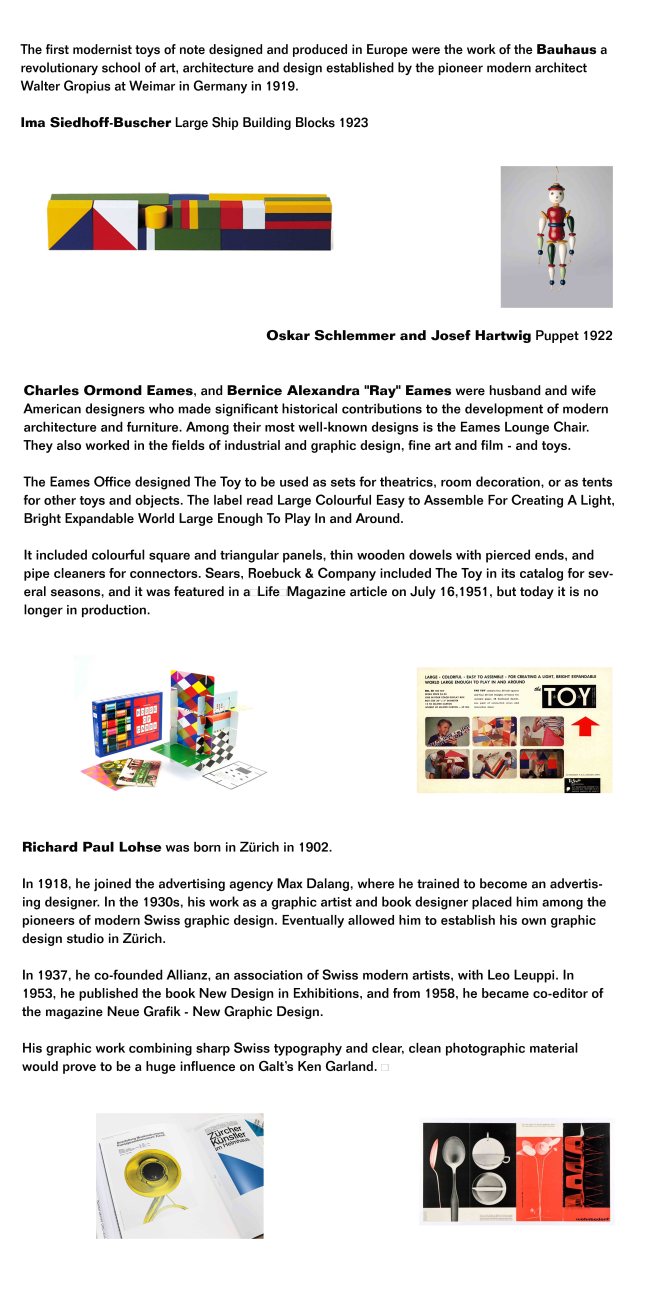
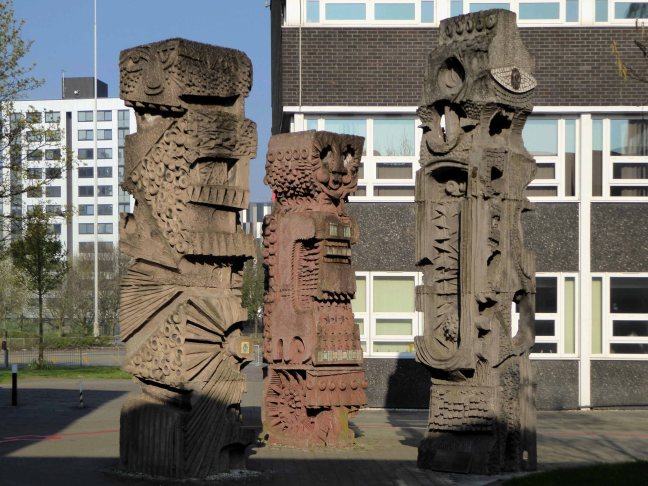
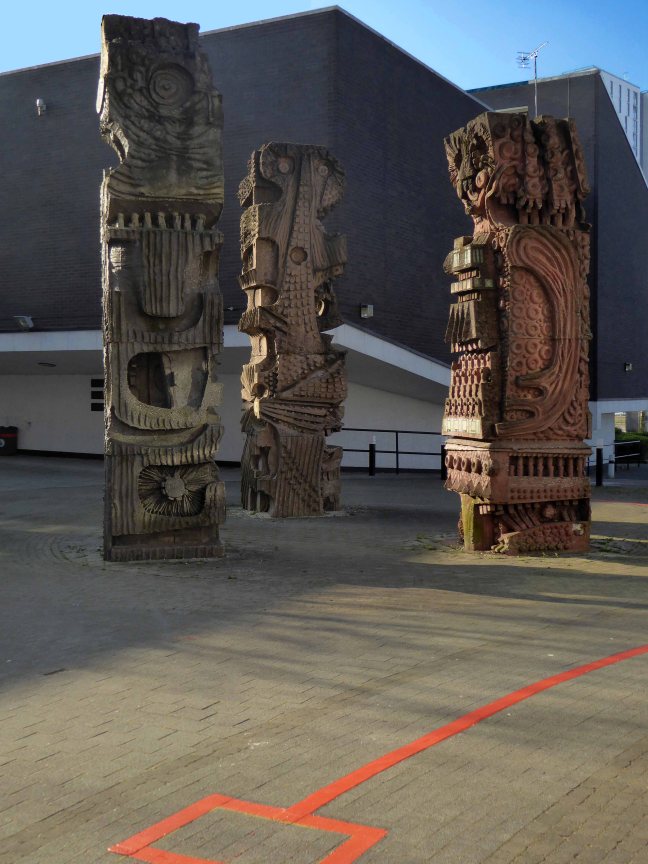
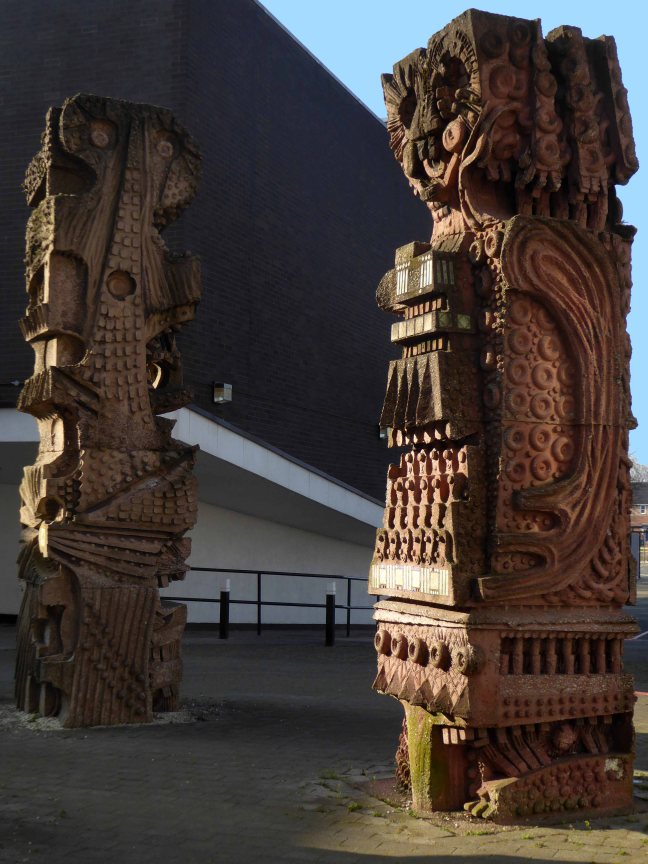
Minut Men Totems – Salford

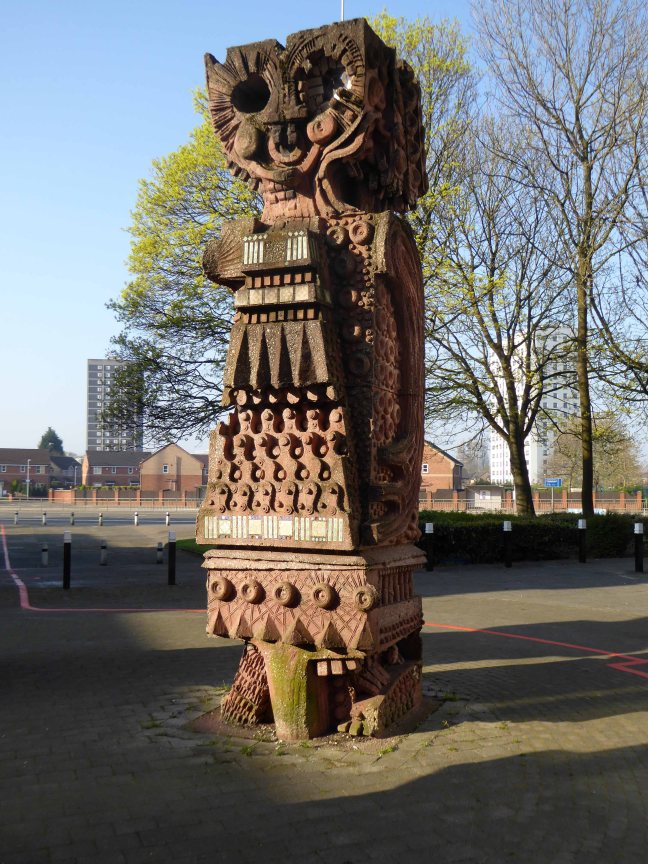
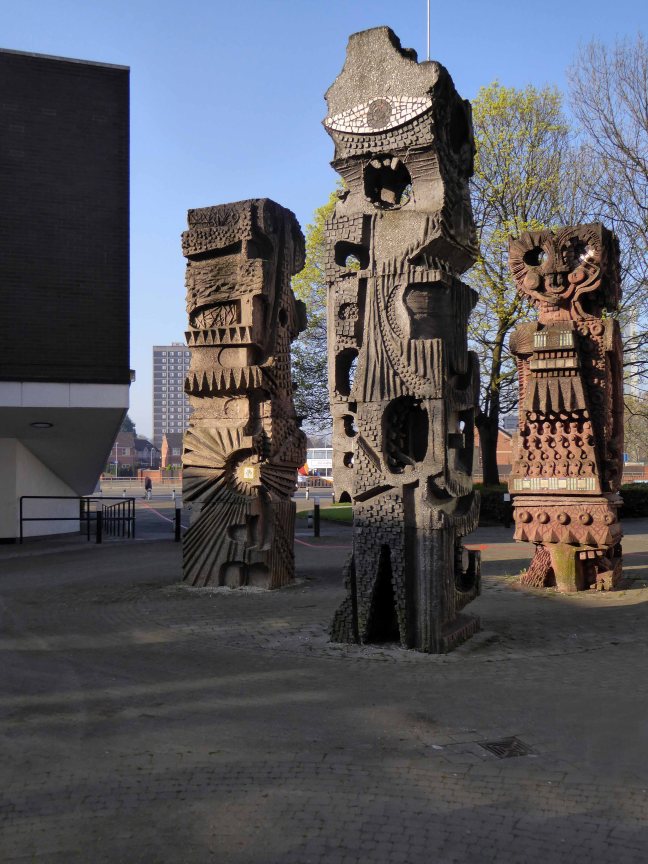
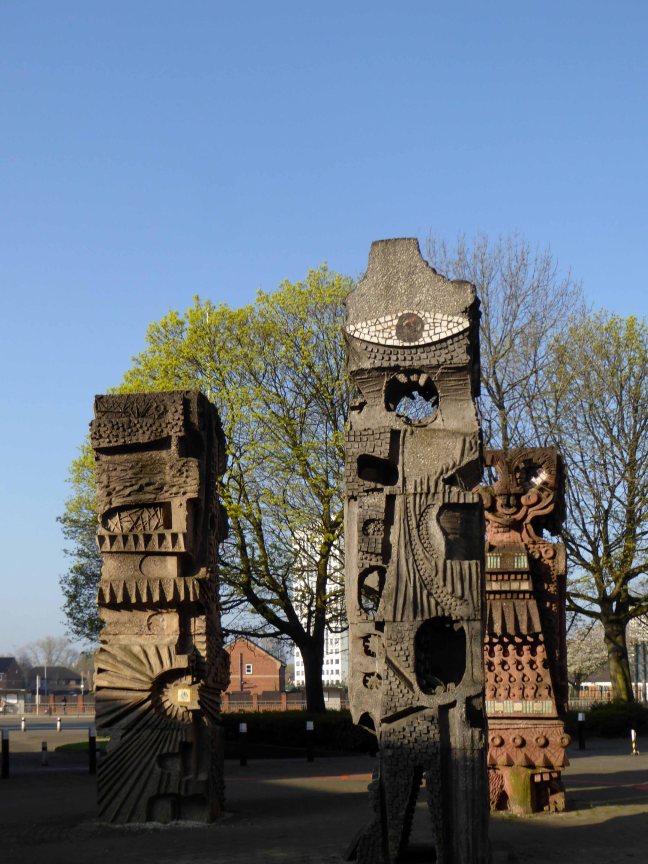
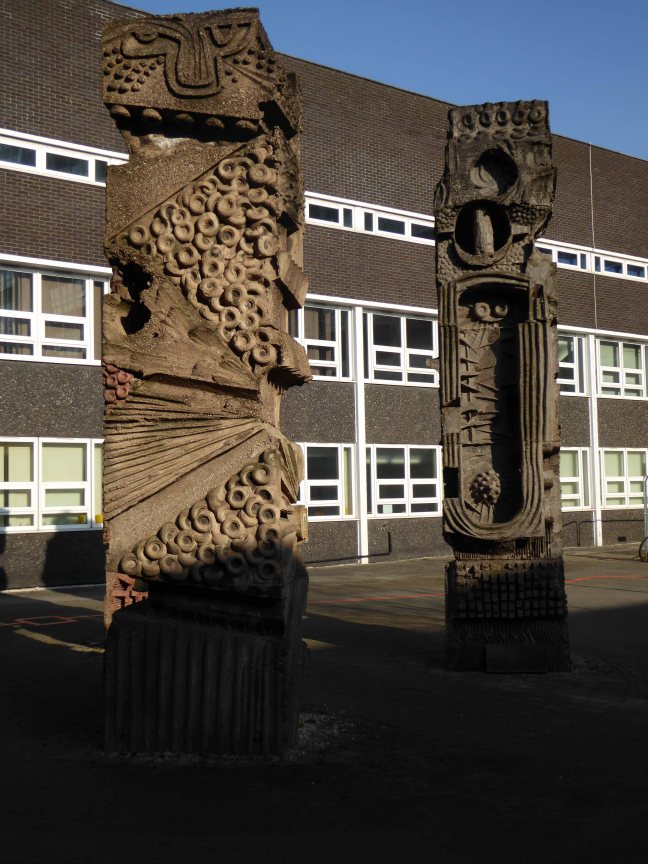
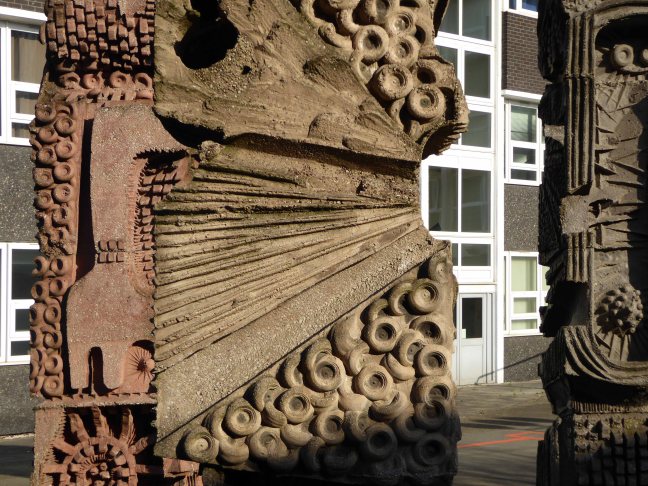
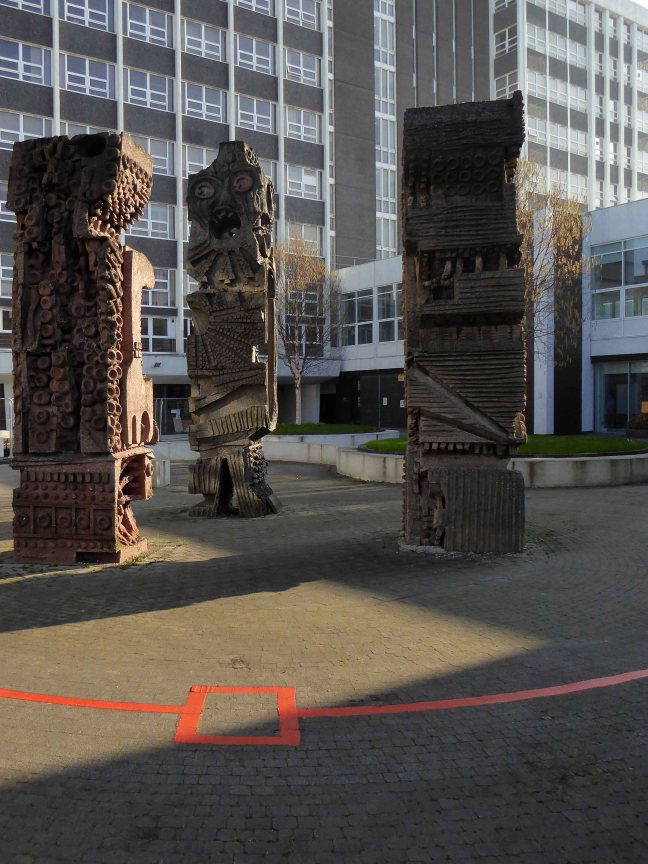
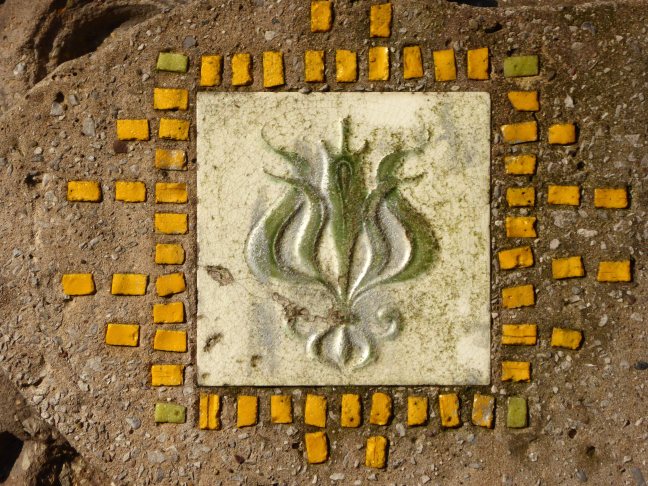
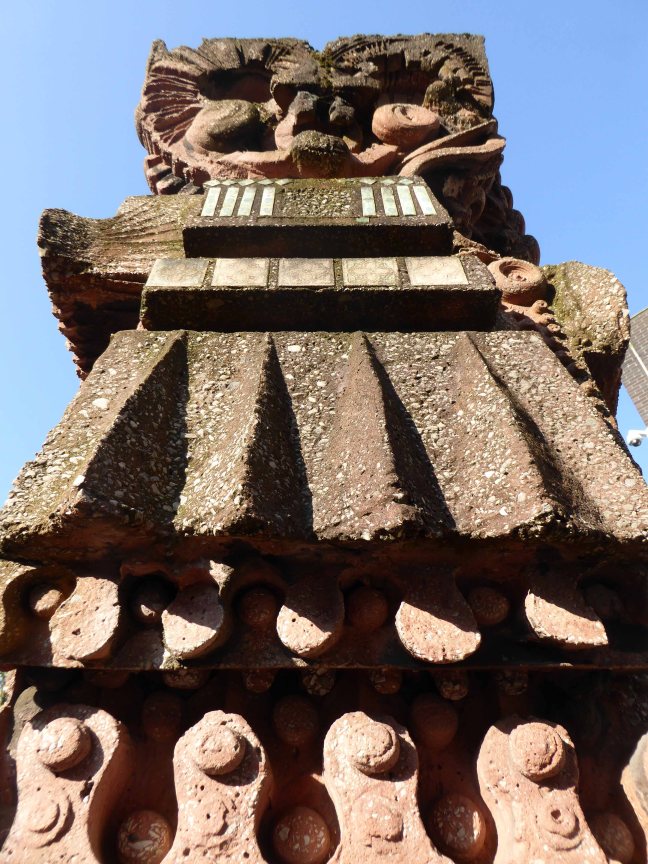
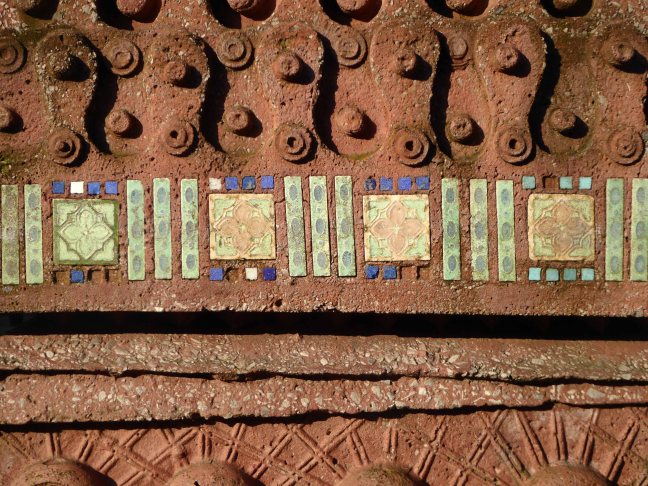
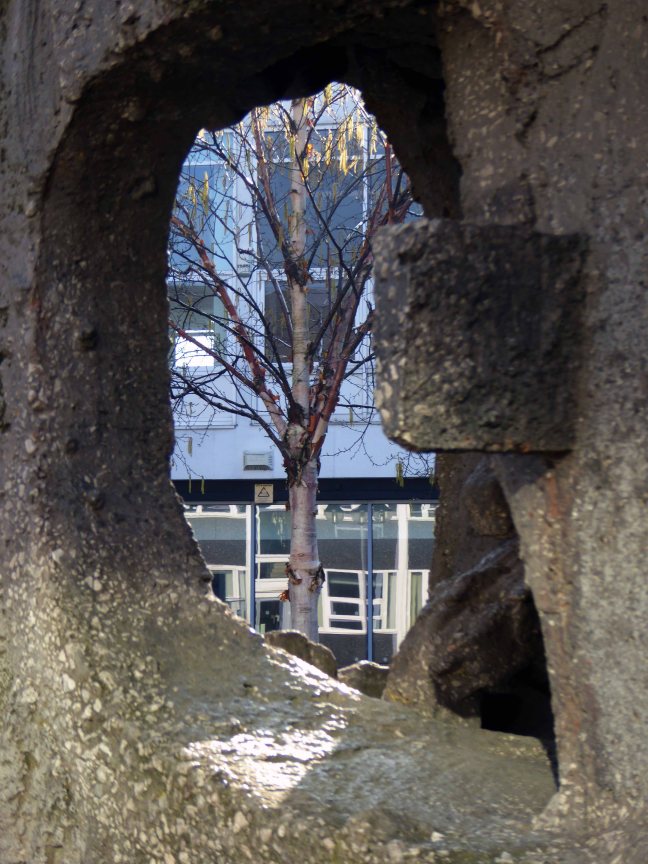
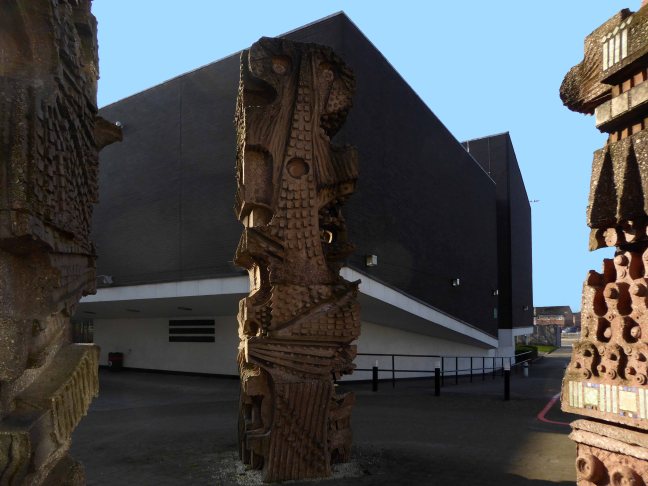
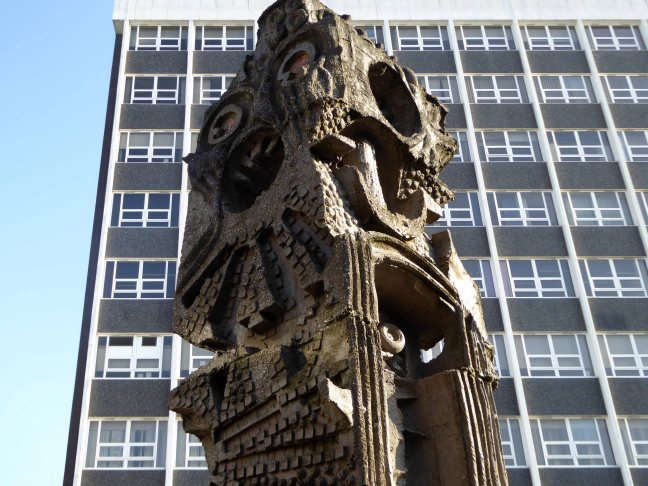
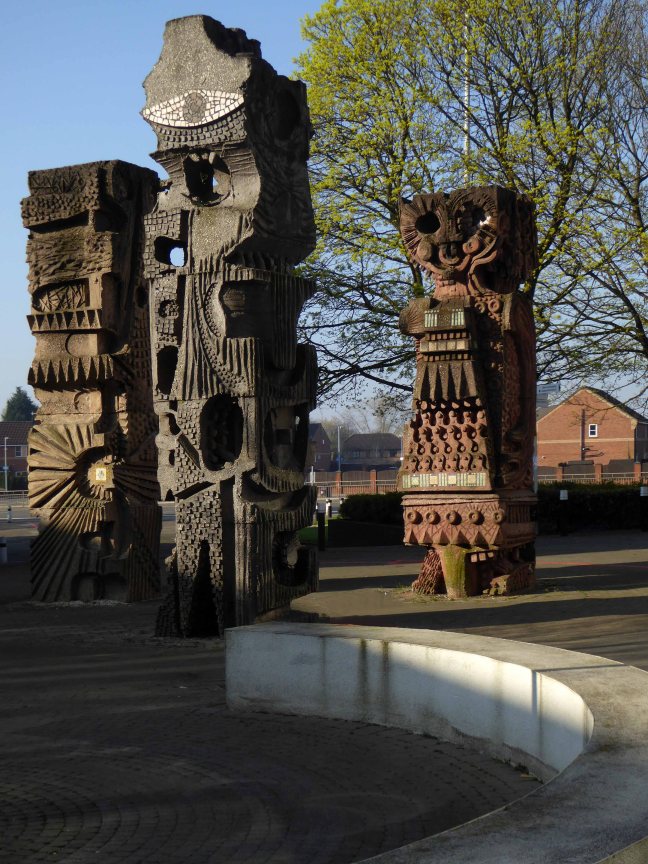
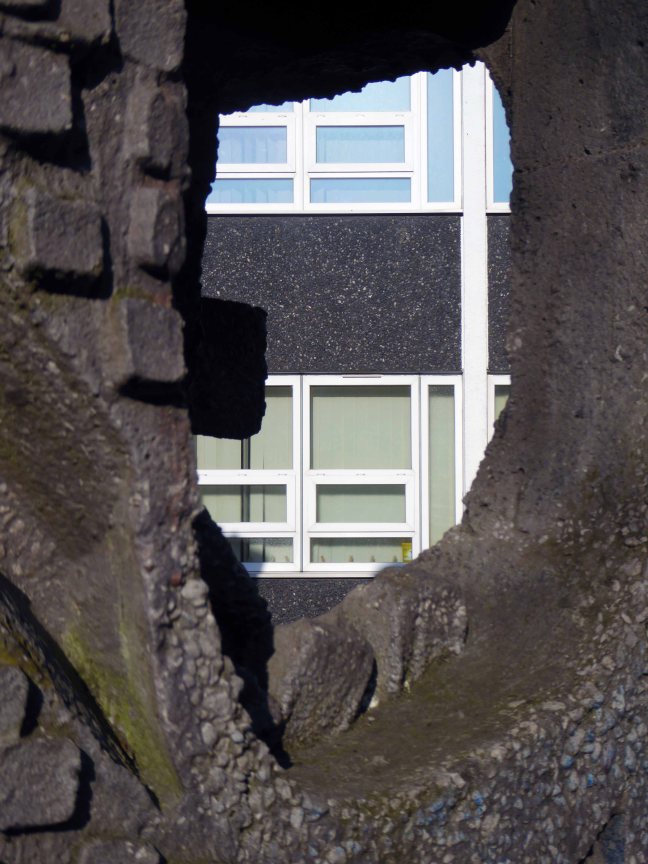
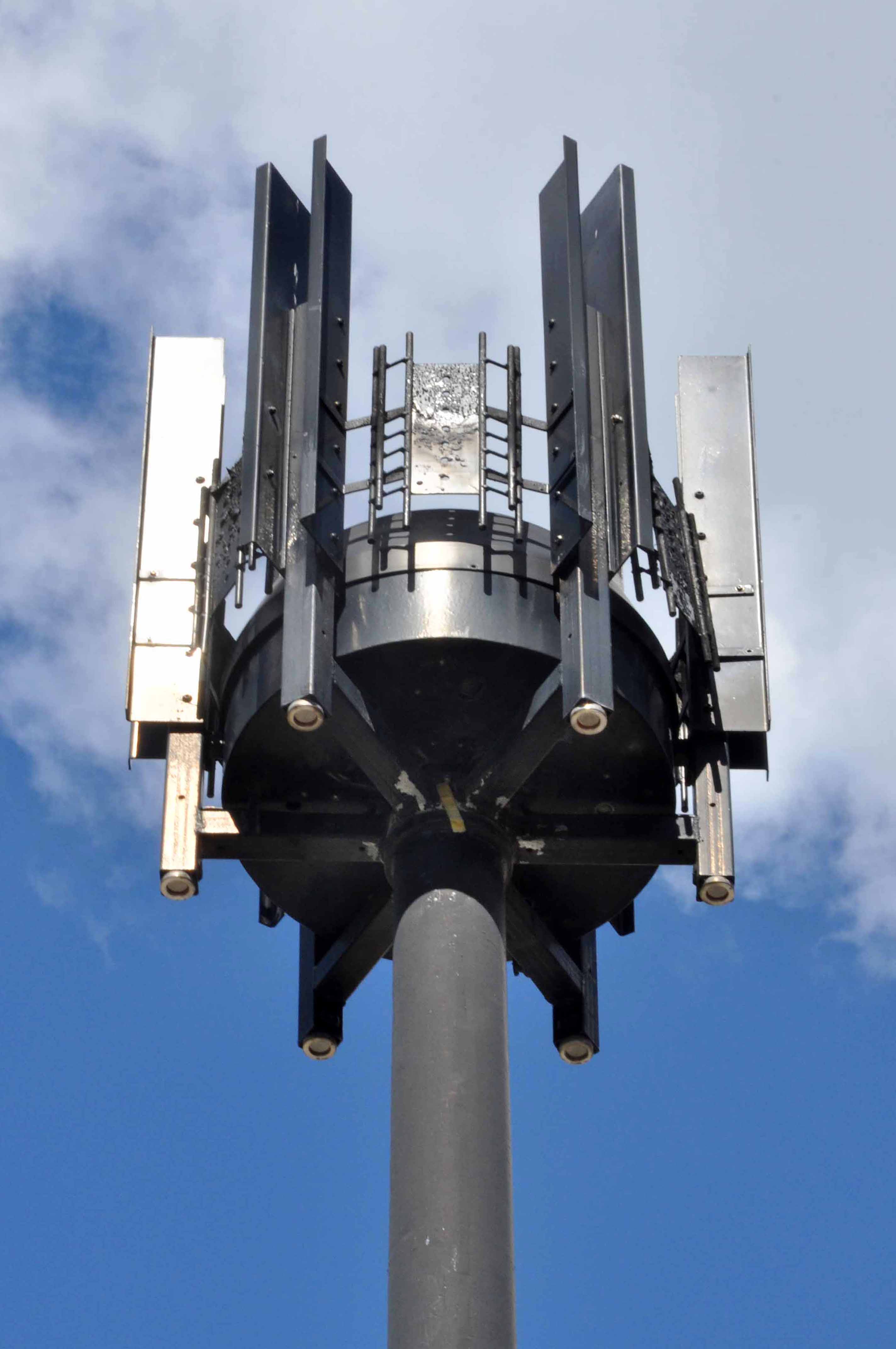
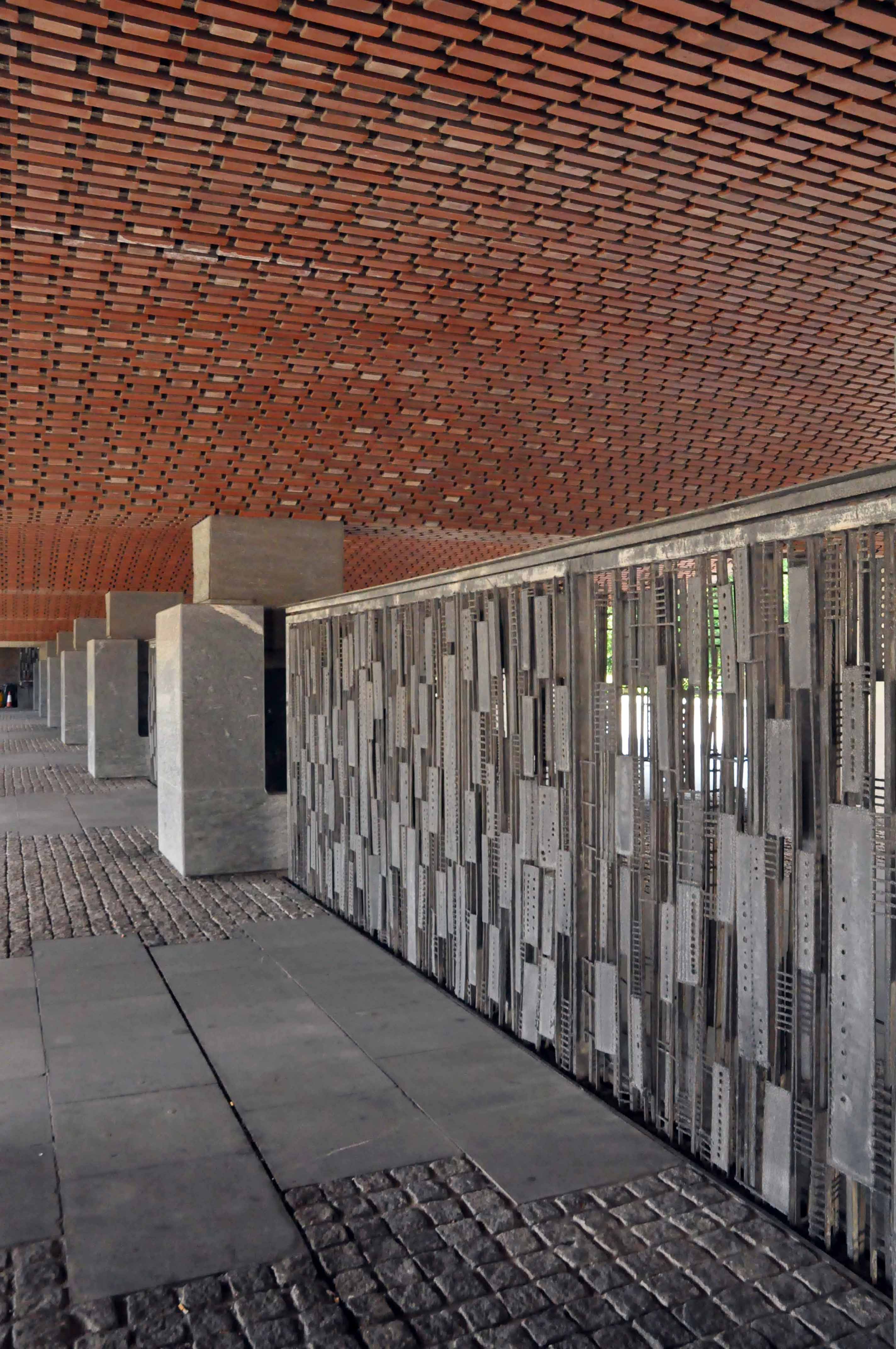
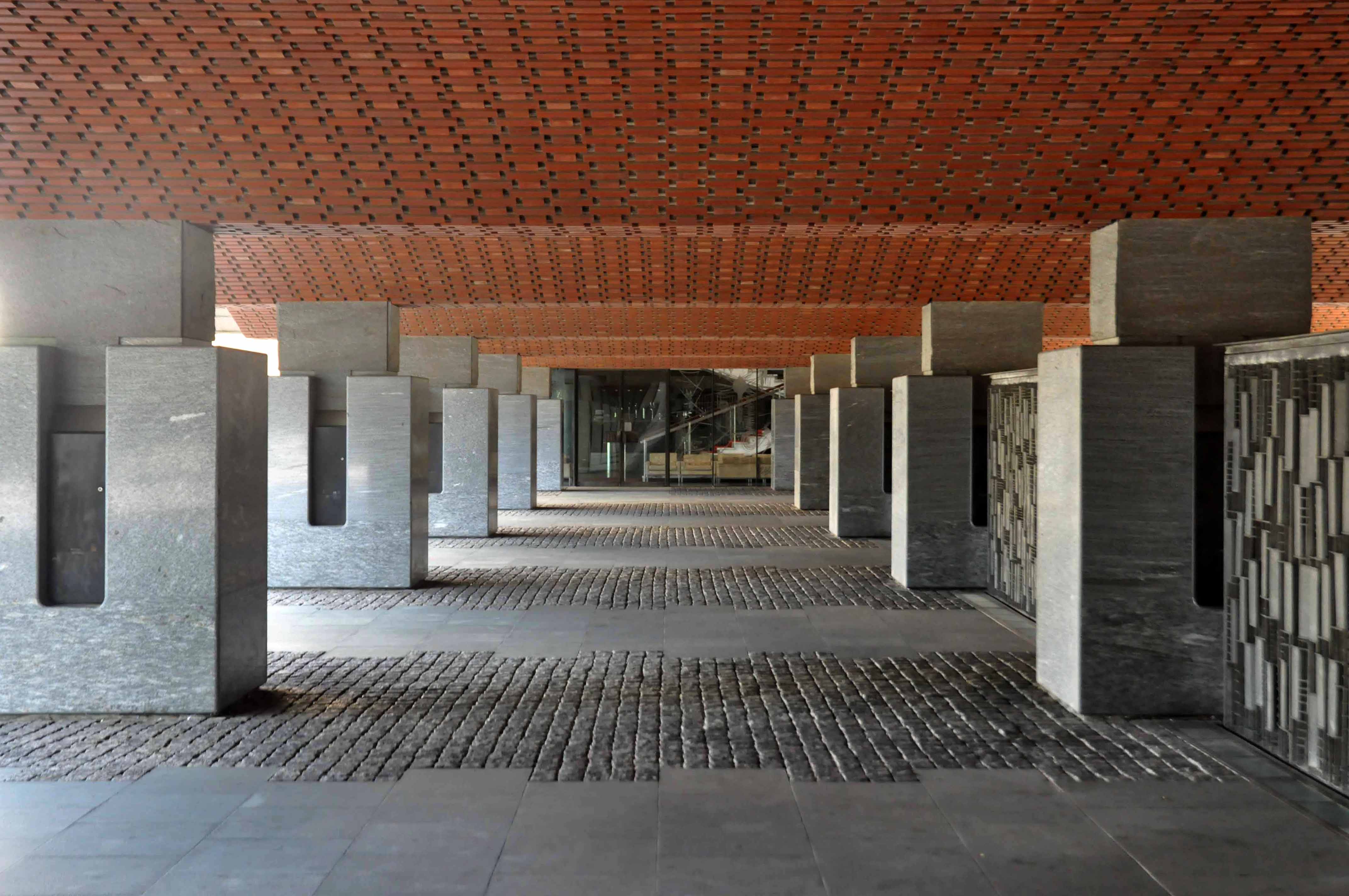
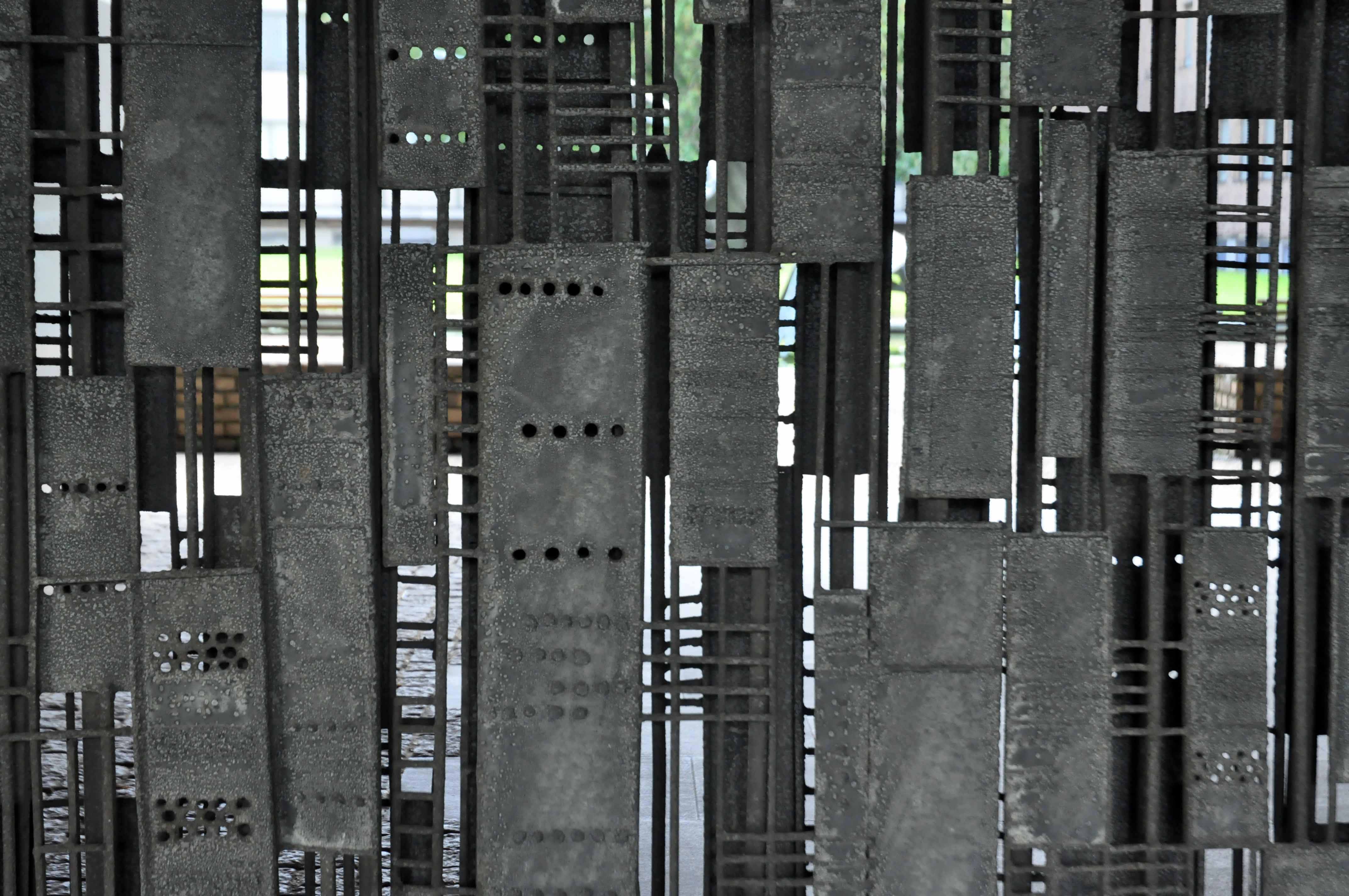
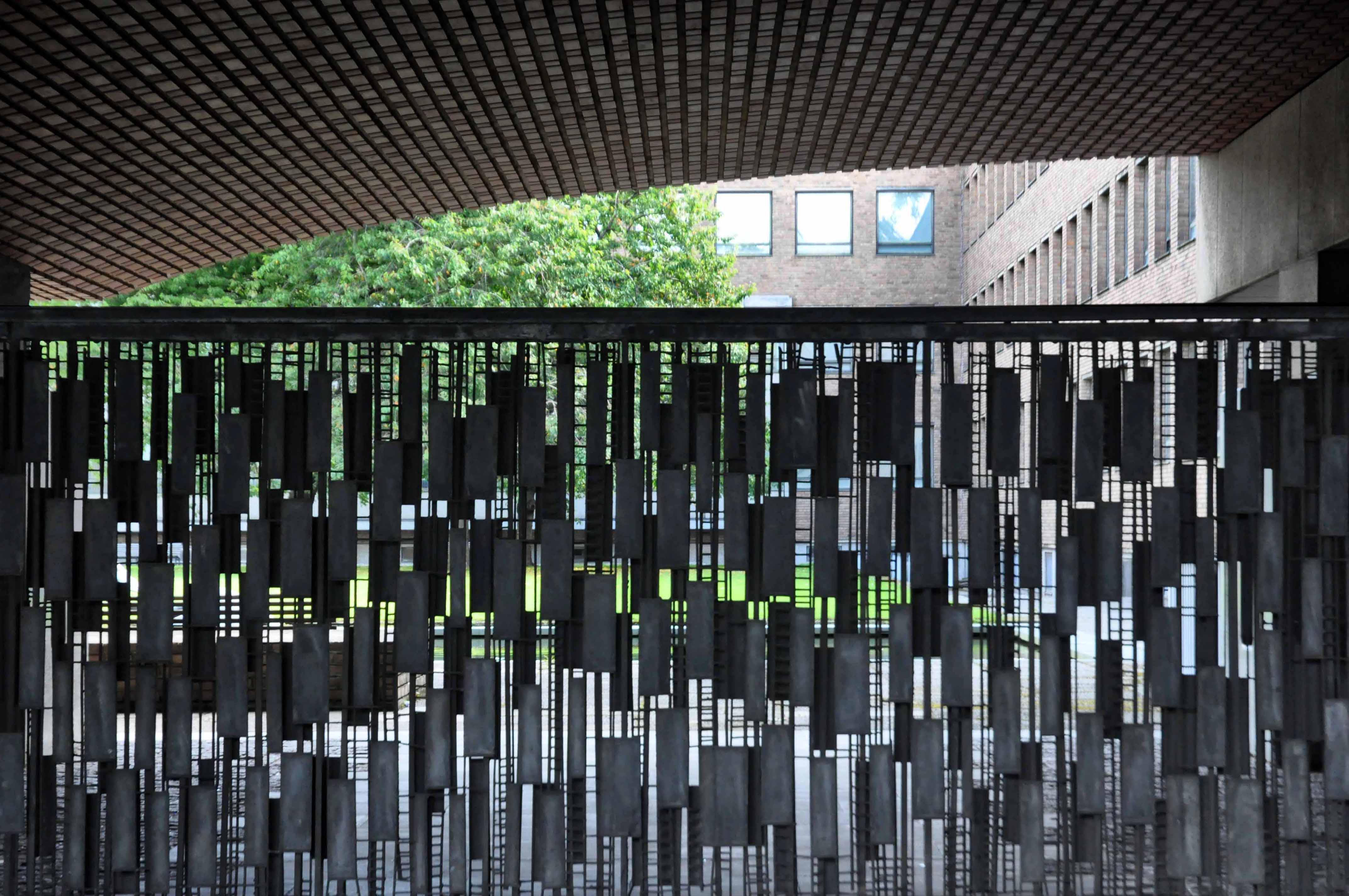
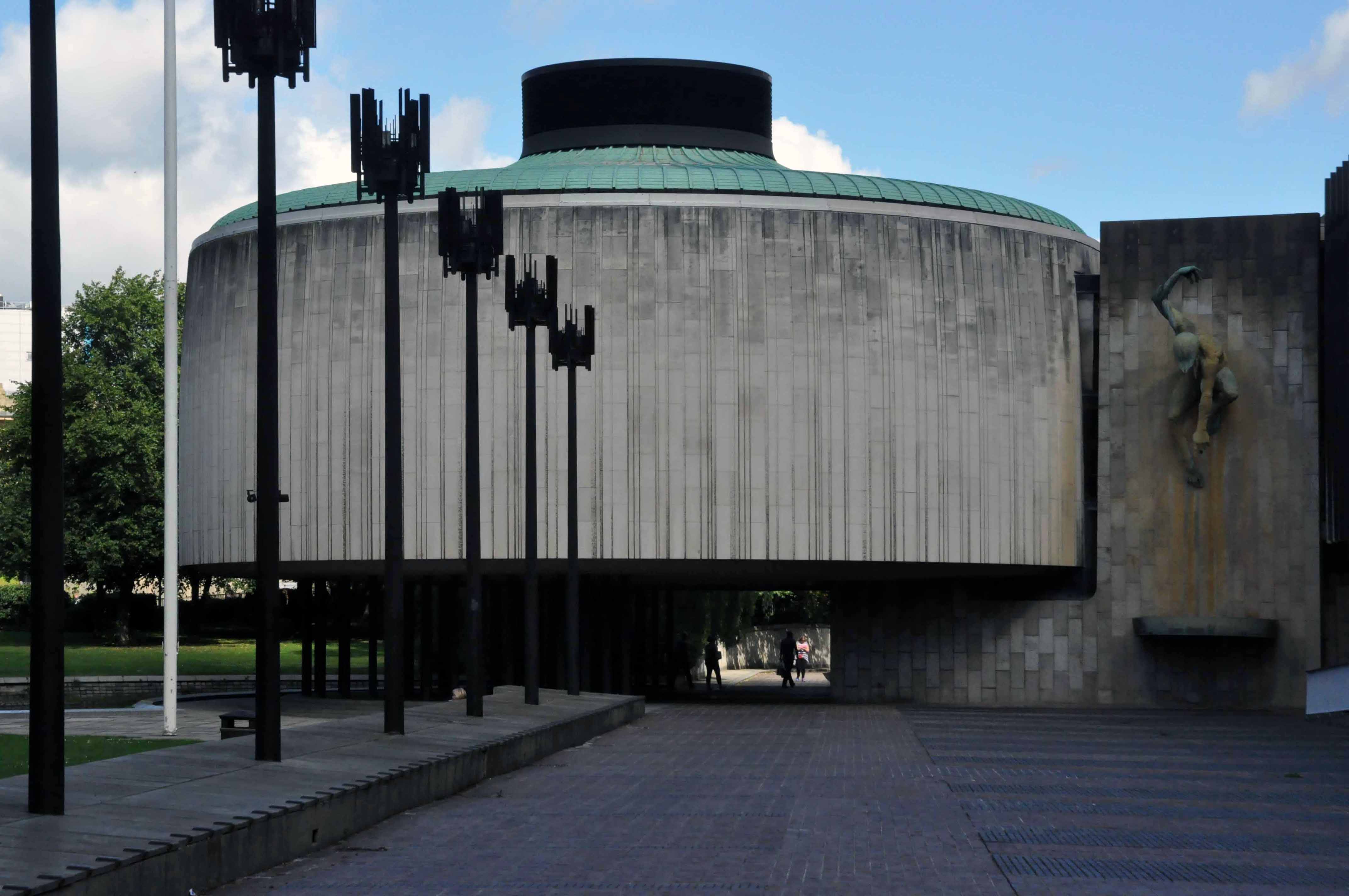
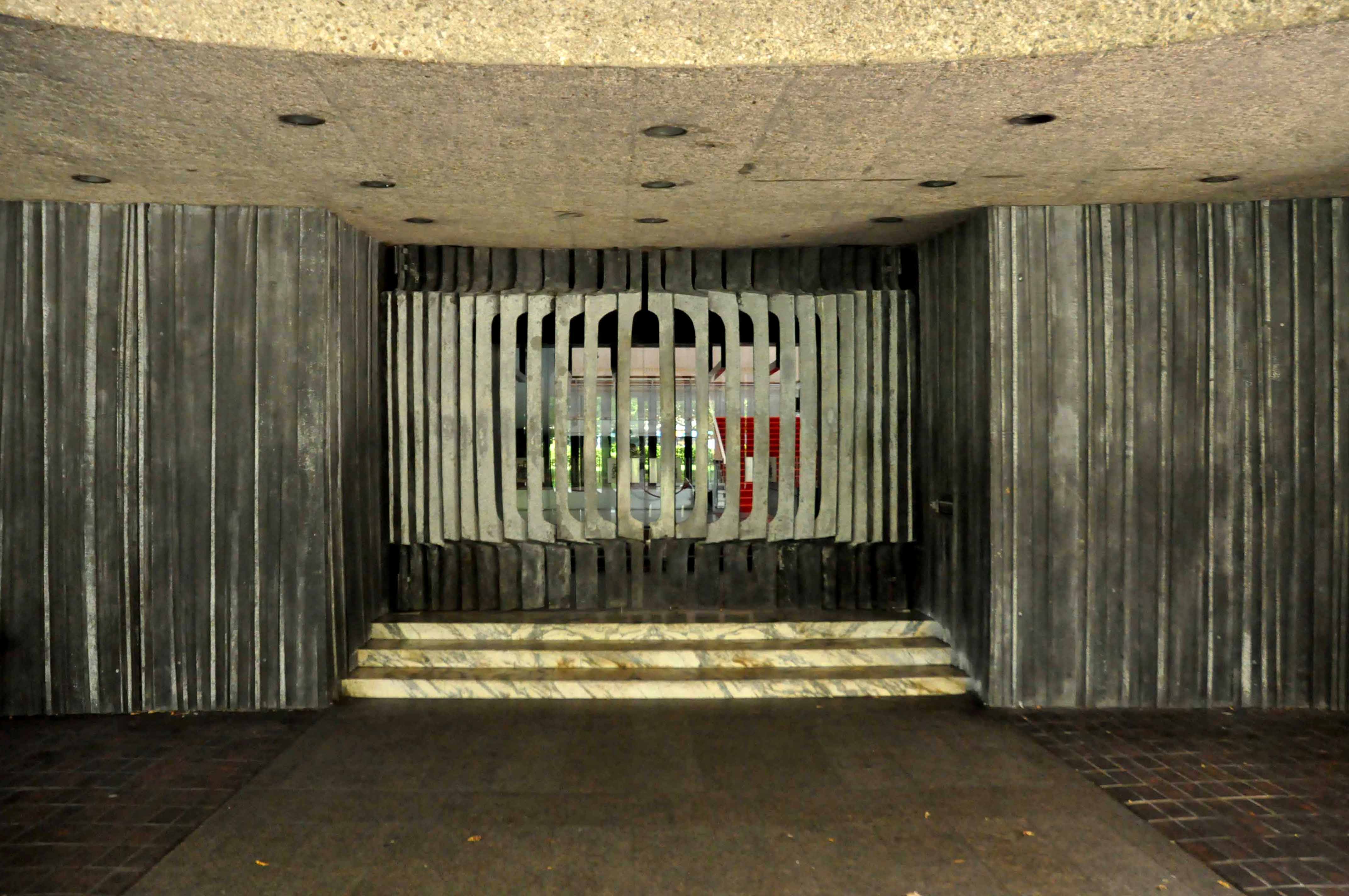
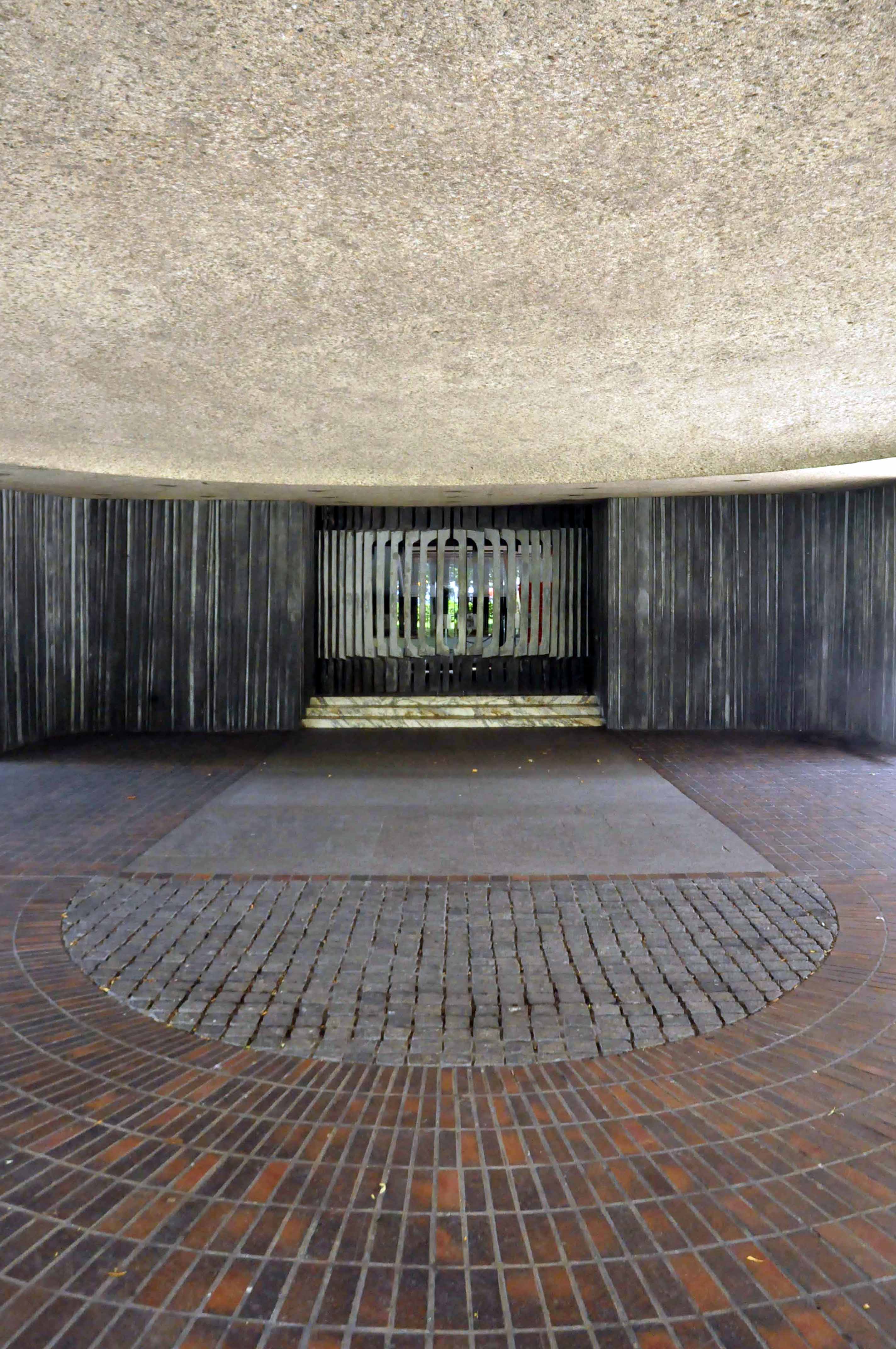
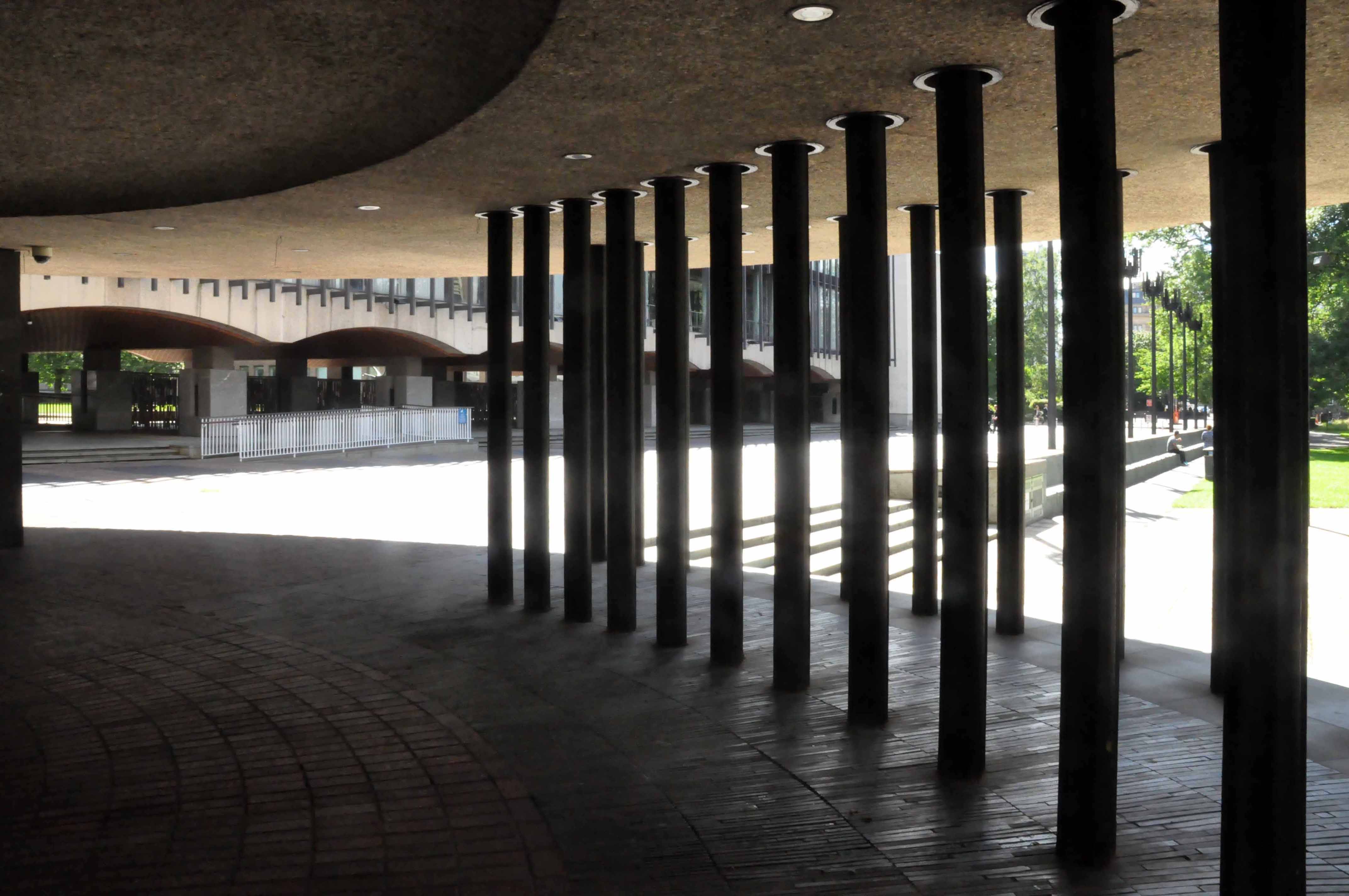
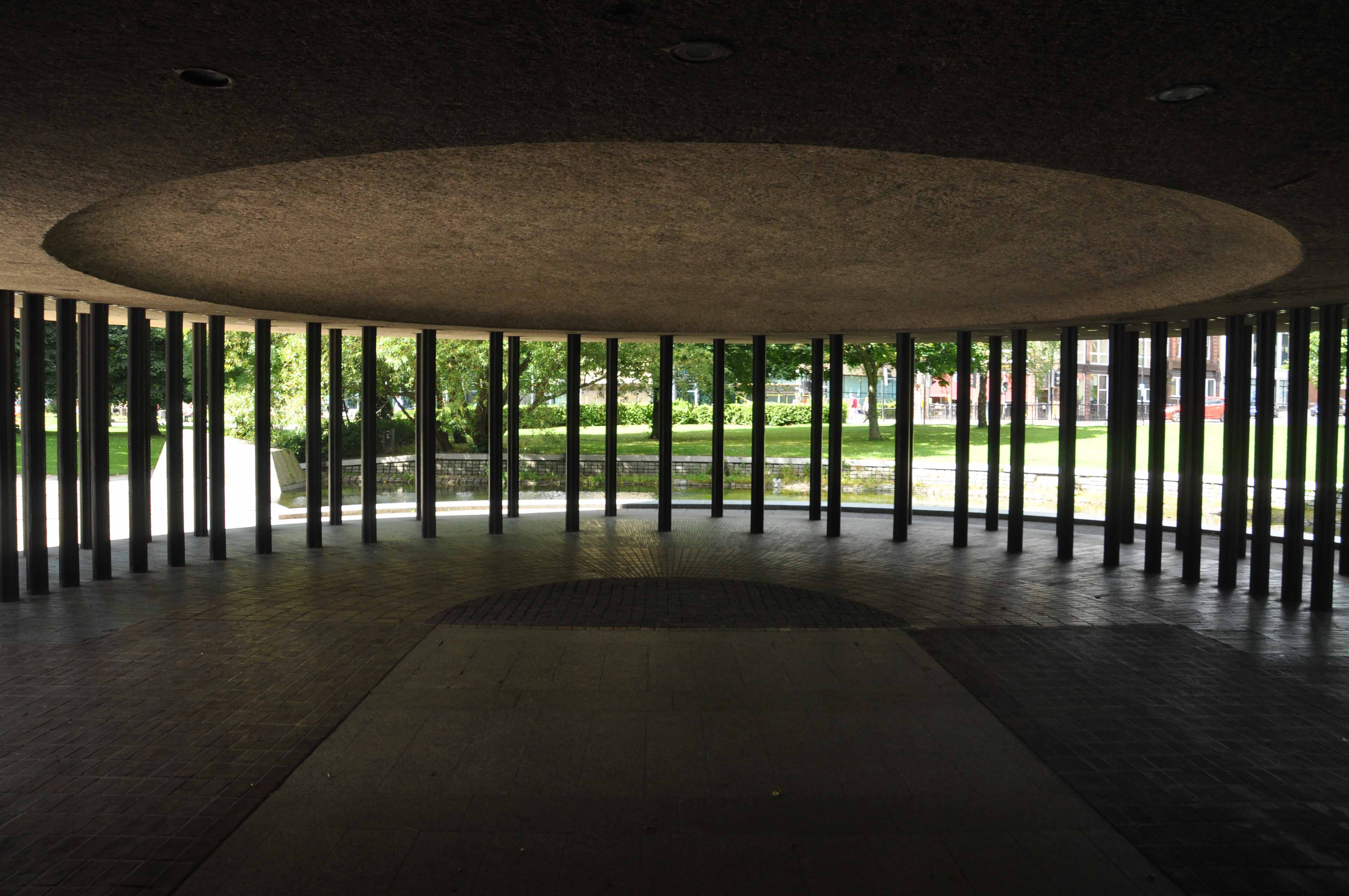
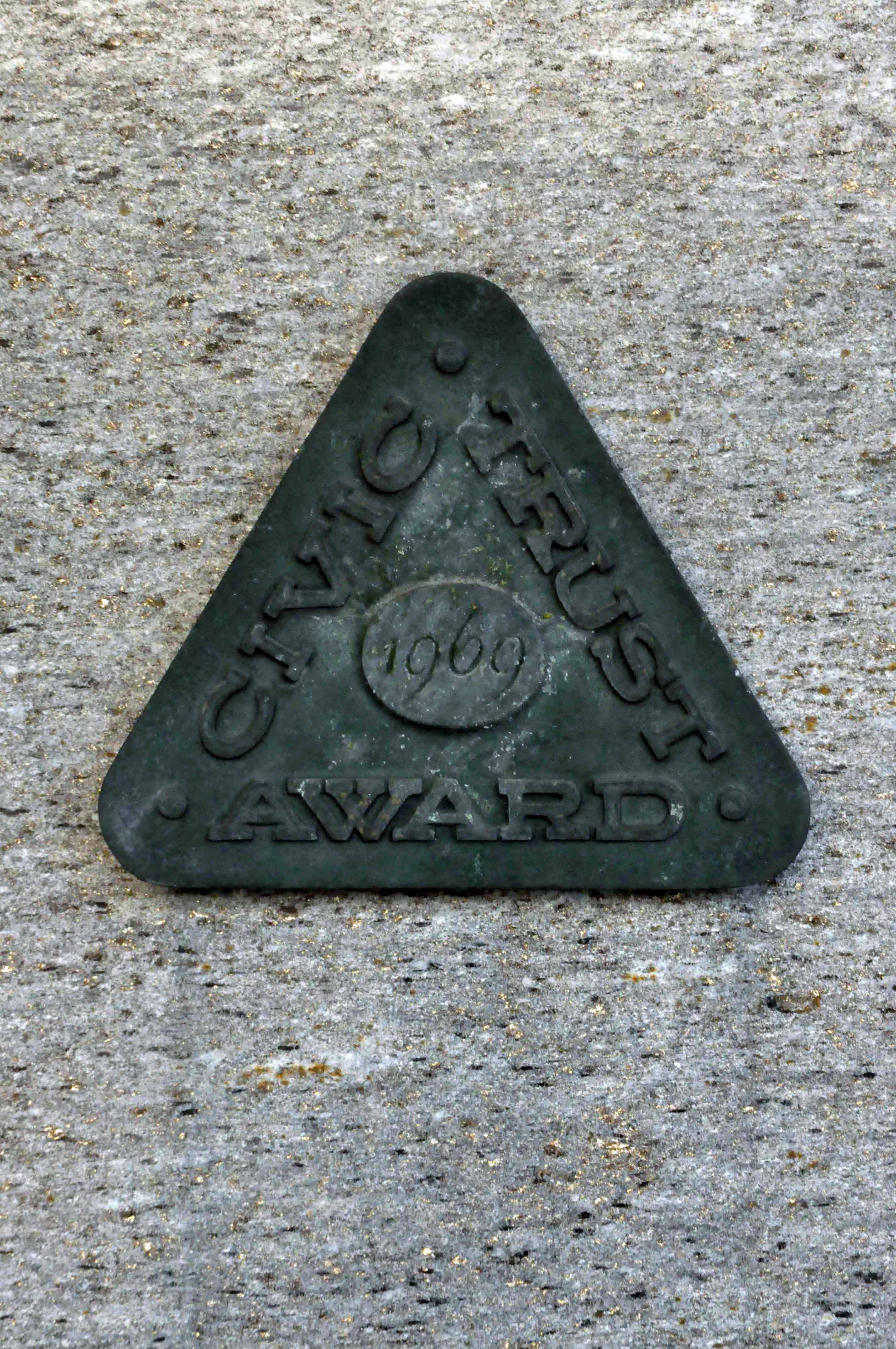
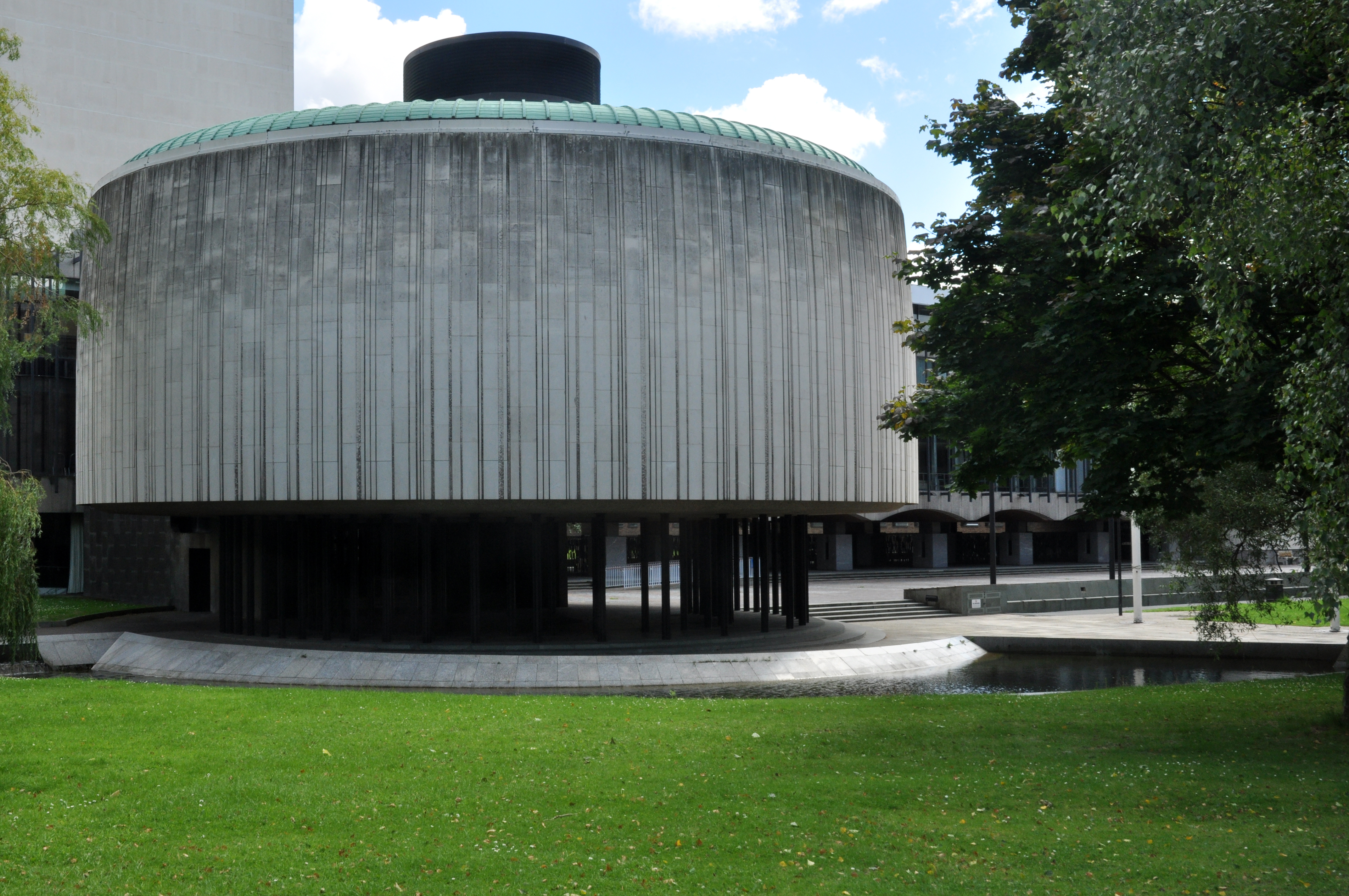
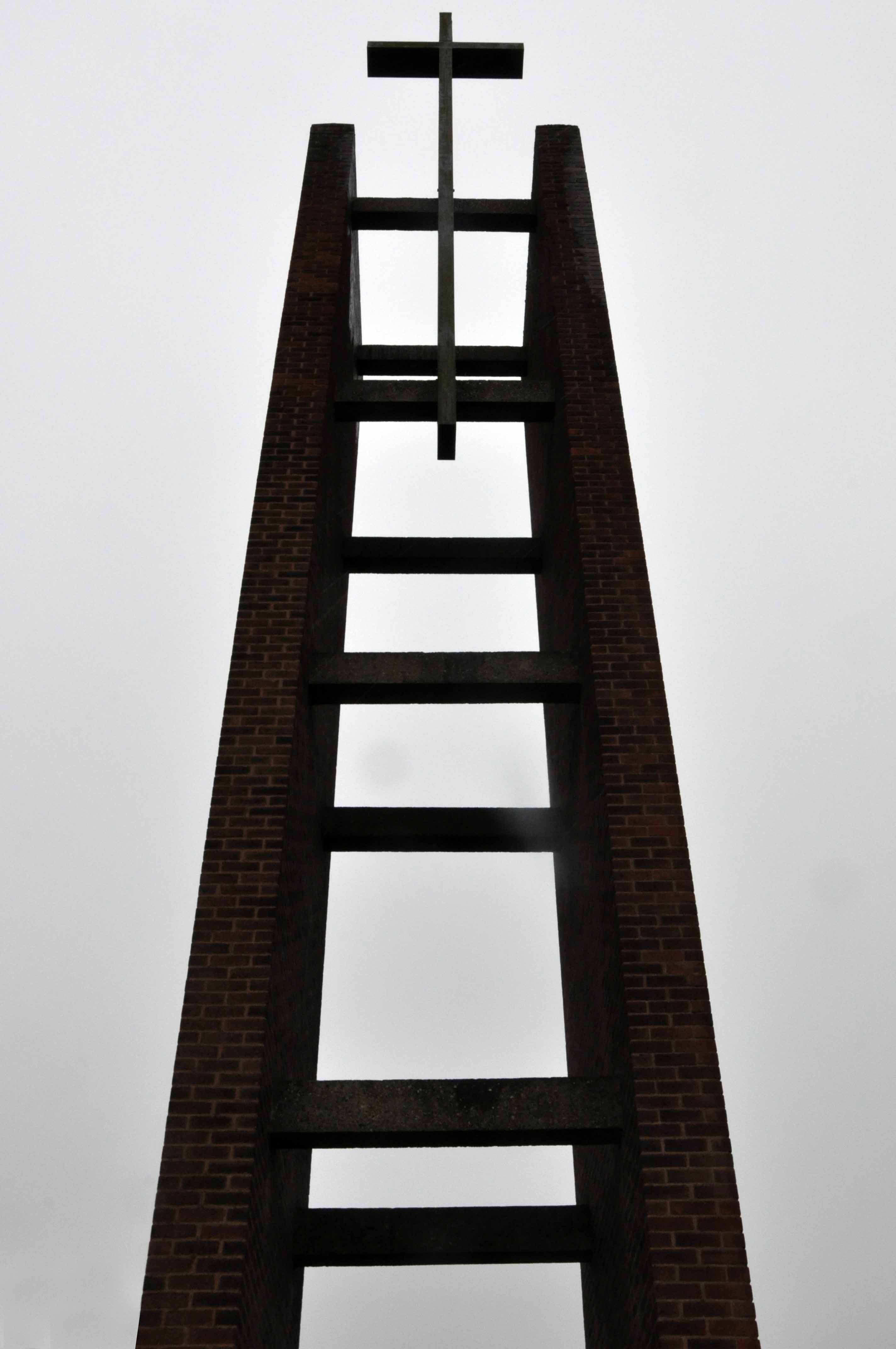
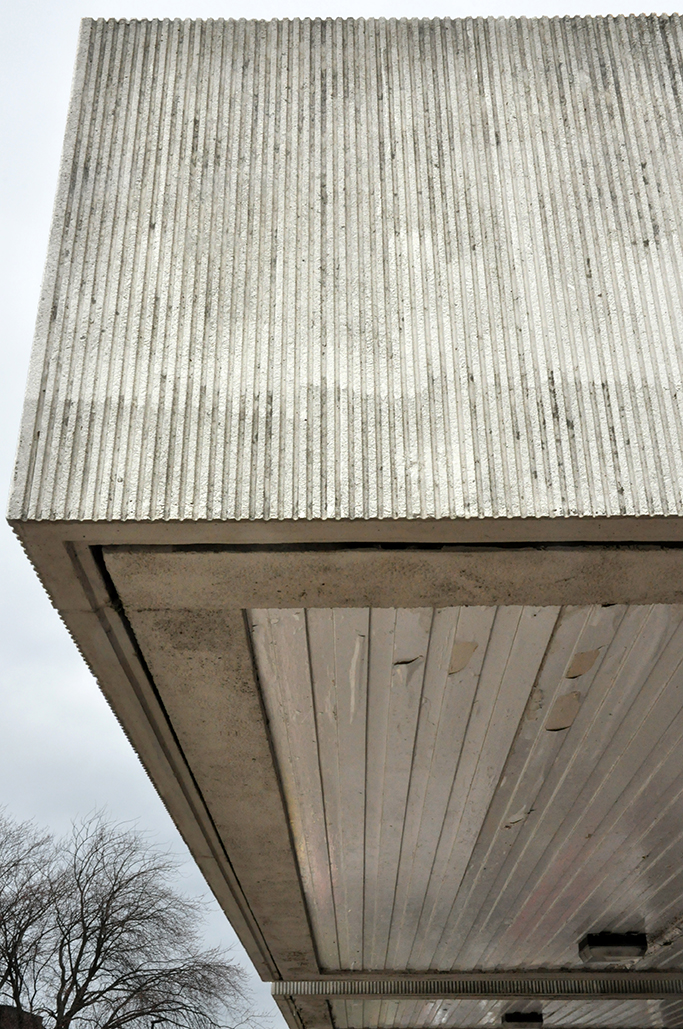
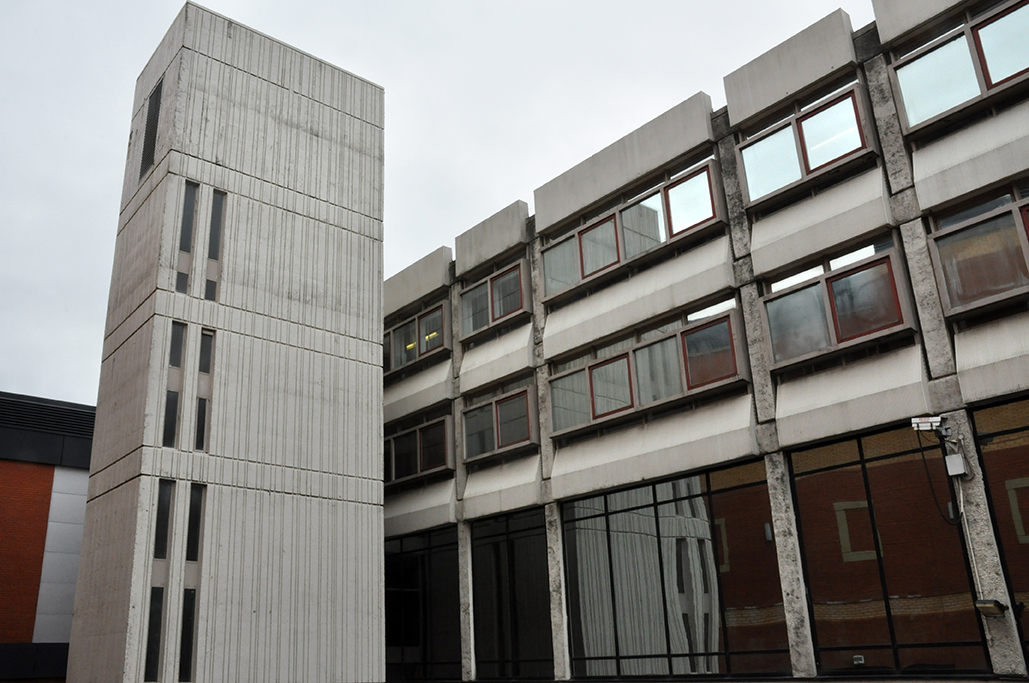
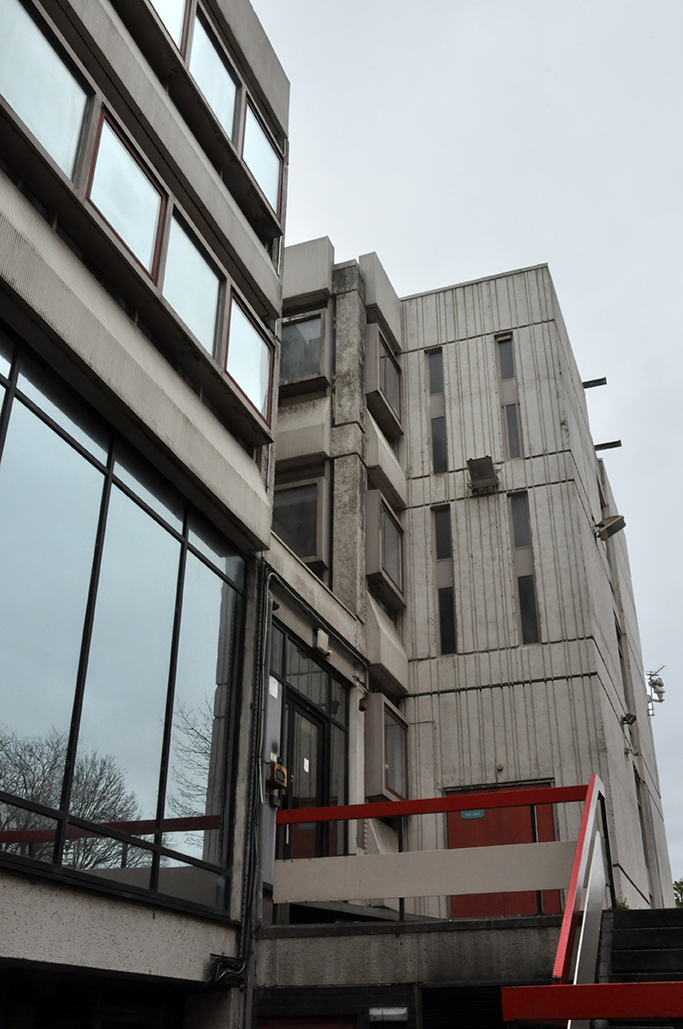
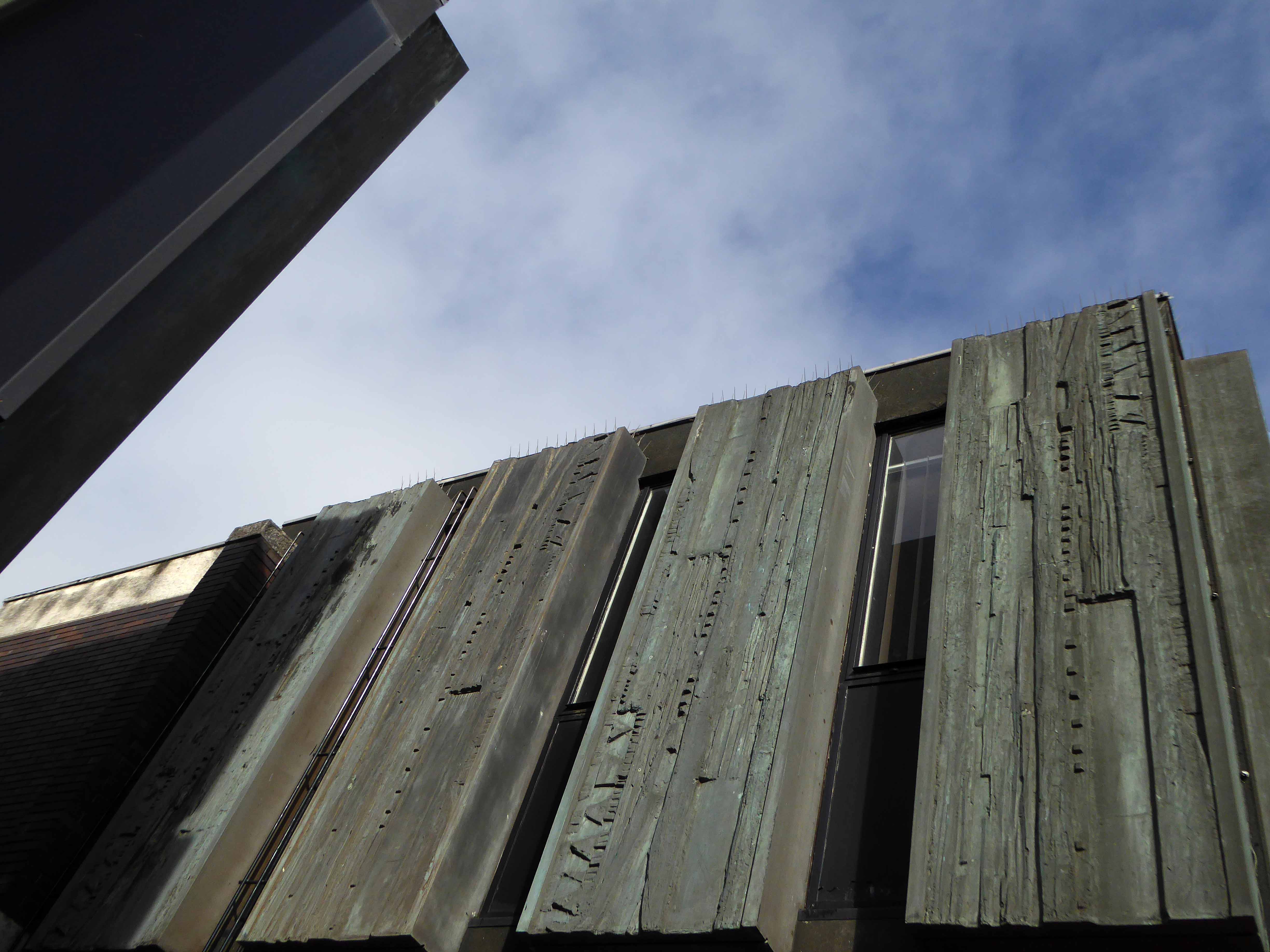
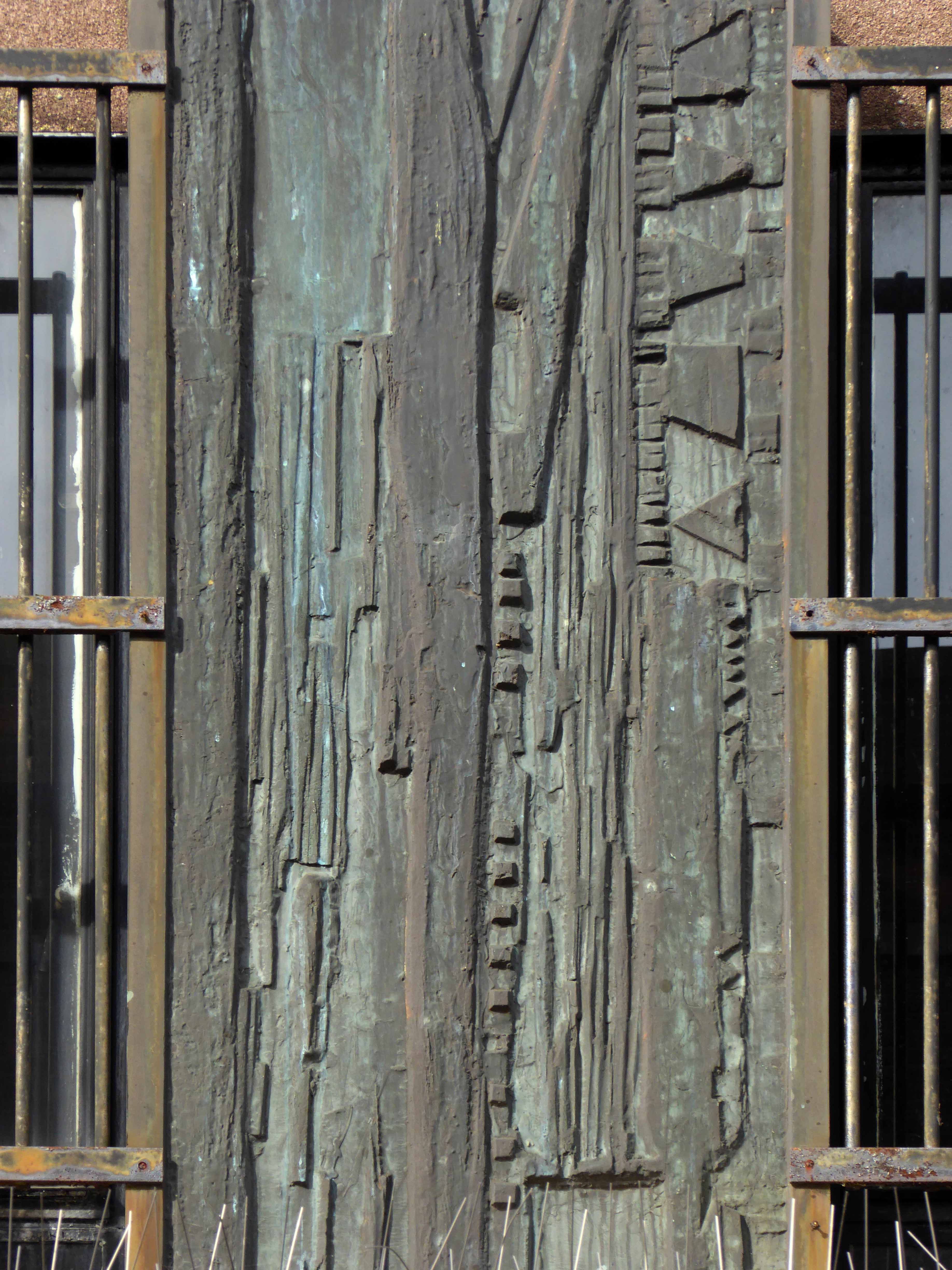
The three concrete totem sculptures of 1966 by William Mitchell, which stand in the courtyard of the Allerton Building, University of Salford, are recommended for designation at Grade II for the following principal reasons: * Historic Interest: as a good representative example of the commissioning of public artwork as an integral element of the design of new higher education colleges and universities in the post-war period, here succeeding in imbuing a distinct identity and image on an otherwise relatively plain complex.

So it seemed appropriate to cycle to Salford early one sunny Saturday morning, in an otherwise relatively plain manner in order to see the three totems.

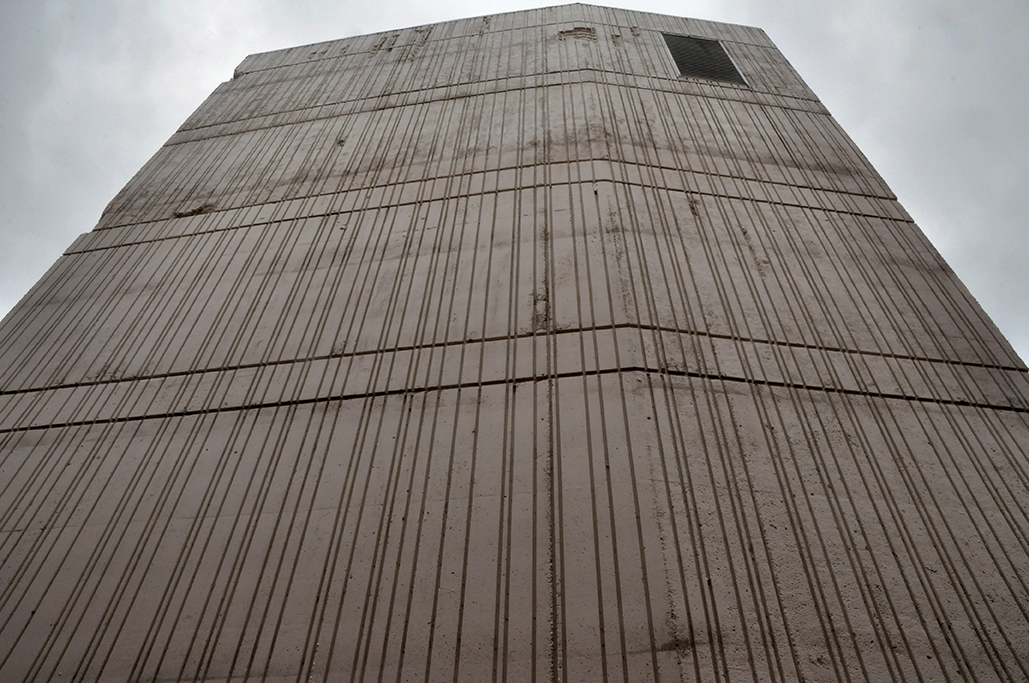
William Mitchell was a leading public artist in the post-war period who designed many pieces of art in the public realm, working to a high artistic quality in various materials but most notably concrete, a material in which he was highly skilled, using innovative and unusual casting techniques, as seen in this sculptural group. He has a number of listed pieces to his name, both individual designs and components of larger architectural commissions by leading architects of the day.

Historic England says so, they loved them so much they listed them Grade II.

I loved them so much I listed them lovely, especially in lowish spring light, set against a clear blue sky and framed by the surrounding academic buildings.

Further info here on Skyliner

Go take a look.

P1140759

P1140760

P1140761

P1140762

P1140764

P1140766

P1140767

P1140770

P1140771

P1140774

P1140776

P1140777

P1140778

P1140779

P1140780

P1140784

P1140786

P1140789

P1140790


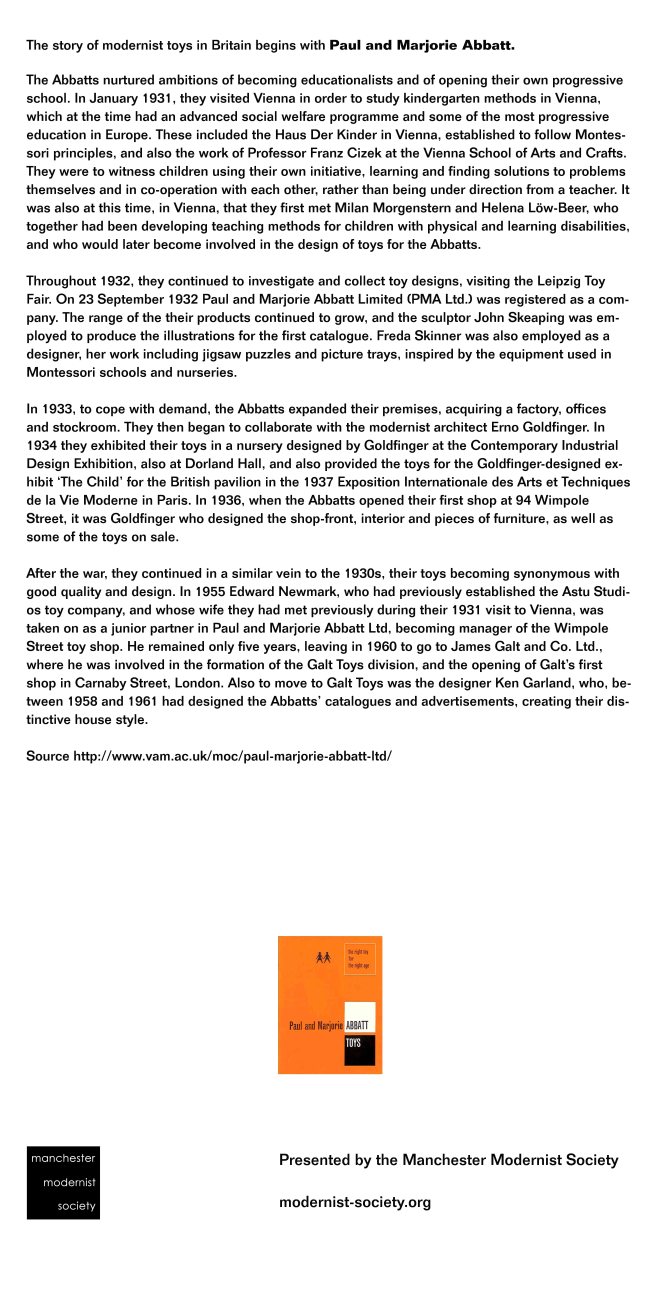
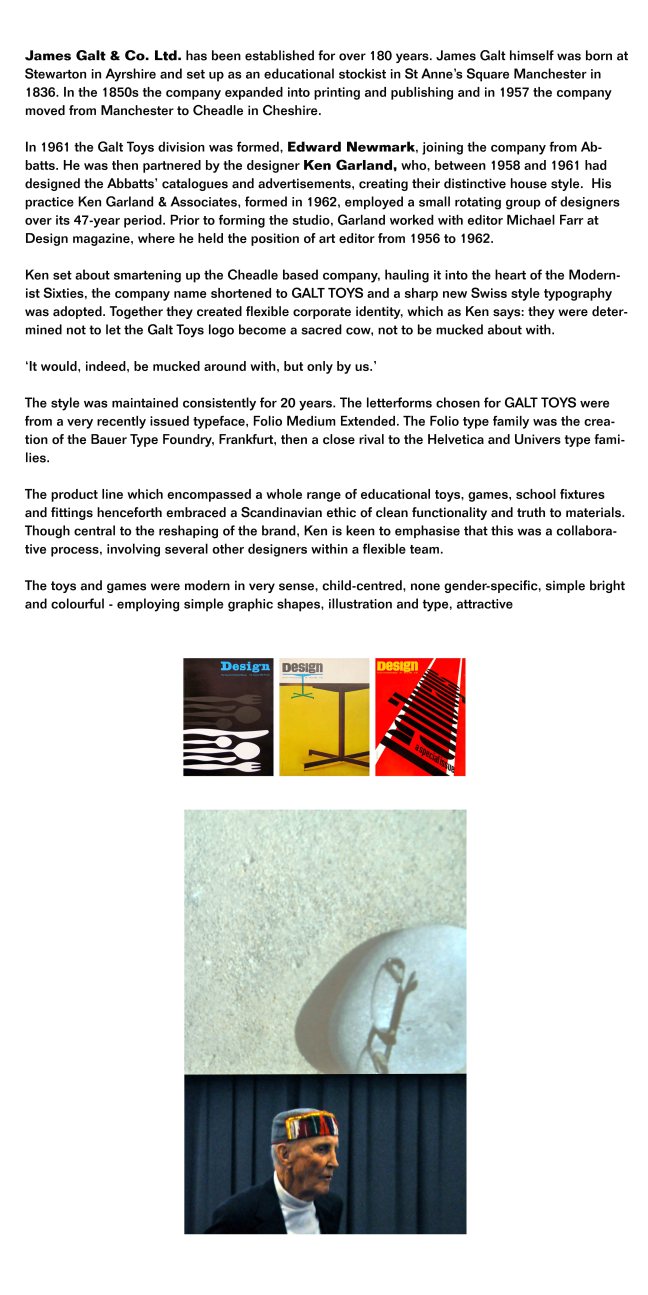
Galt Toys – An Exhibition

Cheadle, Stockport, Greater Manchester 1962 – and the grey post-war fug of austerity is blown away, almost forever. Though very much a local enterprise their toys, games and puzzles display a strong European influence and were distributed globally.

Educational in nature, non-gender specific, simple, bold, well constructed, collaborative not competitive – employing sound modernist principles and design, they were at that time almost unique in the UK toy industry.

James Galt & Co Ltd. were established in Manchester in 1836 as a manufacturer and publisher of educational books and toys, relocating to Cheadle in 1956.

Ken Garland had worked for the influential Abbatt Toys, formed in 1931 by Paul and Marjorie Abbatt. Paul and Marjorie had collaborated with Modernist architects Oliver Hill and Ernő Goldfinger – committed to designing and producing educational childrens’ toys influenced by the new European movements in art and design.

Paul emphasised the importance of play, described as:

‘A force which can be used for development and valuable experience, a force which, if it is not thwarted by the wrong choice of playthings, develops into the power behind the successful architect or engineer.’ 

In 1955 Edward Newmark, who had established the Astu Studios toy company, was taken on as a junior partner by Paul and Marjorie. He remained only five years, leaving in 1960 to go to James Galt and Co. Ltd. He was joined the designer Ken Garland, who, between 1958 and 1961 had designed the Abbatts’ catalogues and advertisements, creating their distinctive house style.  His practice Ken Garland & Associates, formed in 1962, employed a small rotating group of designers over its 47-year period. Prior to forming the studio, Garland worked with editor Michael Farr at Design magazine, where he held the position of art editor from 1956 to 1962.

Ken set about smartening up the Cheadle based company, hauling it into the heart of the Modernist Sixties, the company name shortened to GALT TOYS and a sharp new Swiss style typography was adopted. Together they created flexible corporate identity, which as Ken says: they were determined not to let the Galt Toys logo become a sacred cow, not to be mucked about with.

It would, indeed, be mucked around with, but only by us.’

The style was maintained consistently for 20 years. The letterforms chosen for GALT TOYS were from a very recently issued typeface, Folio Medium Extended. The Folio type family was the creation of the Bauer Type Foundry, Frankfurt, then a close rival to the Helvetica and Univers type families.

The product line which encompassed a whole range of educational toys, games, school fixtures and fittings henceforth embraced a Scandinavian ethic of clean functionality and truth to materials. Though central to the reshaping of the brand, Ken is keen to emphasise that this was a collaborative process, involving several other designers within a flexible team.

The toys and games were modern in very sense, child-centred, none gender-specific, simple bright and colourful – employing simple graphic shapes, illustration and type, attractive and durable. The newly designed shop in Carnaby Street, with Verity & Beverley as architects, and a retail/factory/café in Cheadle were equally forward thinking in design and layout, purposely encouraging children to play with the stock, prior to possibly purchasing.

His ancillary work on the design of packaging, catalogues and in-store graphics was similarly ground-breaking, mixing image and text, very much in the mid European manner, pioneered by the likes of Max Bill and Richard Paul Lohse.

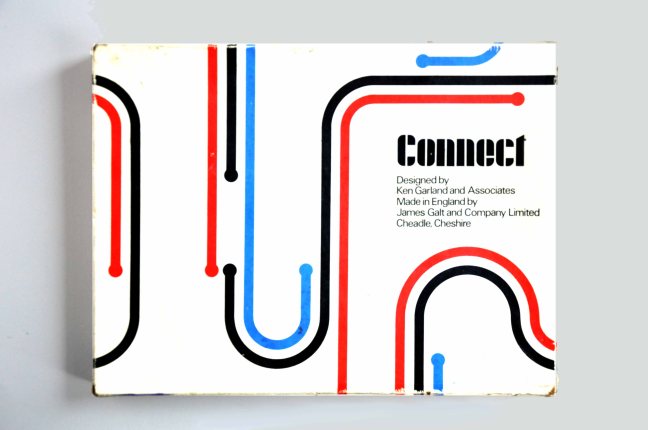
Connect exemplifies the best of Garland and Galt, twelve squares of card each with a simple linear motif, which can then be combined in a succession of seemingly infinite permutations – following a simple set of rules, the players can then produce a carpet covered in exciting abstraction. The connection to Harry Beck’s London Underground map is clear, Ken wrote and published Mr. Beck’s Underground Map in 1994, a tribute to the clarity, functionality and modernity of good design. This imaginative use of a single unit  which continually unfolds from limited graphic means to limitless possibilities, was further developed in Ken’s Trap Snap and Anymals.

Bob Chapman and I spent a lot of time developing Connect, based very loosely on dominoes, which turned out to be a best-seller, and still is, in a modified form now produced by Ravensburger Spieleverlag of Germany.  Another associate, Daria Gan, found a most satisfying outlet for her drawing skills in the card games Anymals and Upside-Down Jigsaws.’

Octons was designed by William Edward David Ryan, he was educated at Preston Grammar School and Harris Technical College/School of Art pursuing architecture. He became a member of Royal Institute of British Architects in 1965 and a partner in Derby Fazackerley Wood & Ryan Architects, Preston from 1965-1993. It is an eight sided modular construction toy manufactured in clear, coloured plastic, a slot cut into each face, permitting their interconnection in a mind boggling array of three dimensional forms. Further exemplifying the principles of simplicity and inherent stimulation of the child’s fertile imagination and explorative creativity. It is one of the few Galt games which has remained in production until the present day.

Fizzog remains a firm favourite, a fabulous name, a fabulous game of many faces. Pairing pairs of halved fizzogs, the better to produce ever more inventive and laughter inducing visages.

Kenneth Townsend was based in Hastings and worked as a freelance designer for Galt along with Hornsea Pottery, Chance Brothers, Cuckoo Bird Productions and Merit. His lively and stylised illustrative style enlivens both Super Snap and Remember Remember – these were produced, alongside several other matching games in the golden age of Galt. Employing yet again the use of strong graphic shapes, bold colour and a happy go lucky playfulness that were central to the company’s output. Developing shape recognition, numeracy, colour identification and a simple love of the visual world through play and fun.

So for some twenty years Galt and Garland et al injected some much needed life into an otherwise moribund world of play, their catalogues and products finding a way into the majority of Britain’s schools and homes, from Bauhaus to your house.

Many thanks for the loan and/or sourcing of exhibits to Wayne Astbury, Dawn Bunnell, Gemma Burgess, Paul Burnett, Sue Cook, Gail Eagle, Alison Heffernan, Sarah Moss and Alex Stone.
info panel 1ainfo panel 2ainfo panel 3a

.

Merseyway – Stockport

Once there was a river there, formed by the thunder of Irish Sea ice gouging a great glacial valley, bowling along boulders and millstone grit through phyllosilicate clays and sedimentary sandstone.

27983074_10215926263608490_3556820789336334741_o

Then there wasn’t.

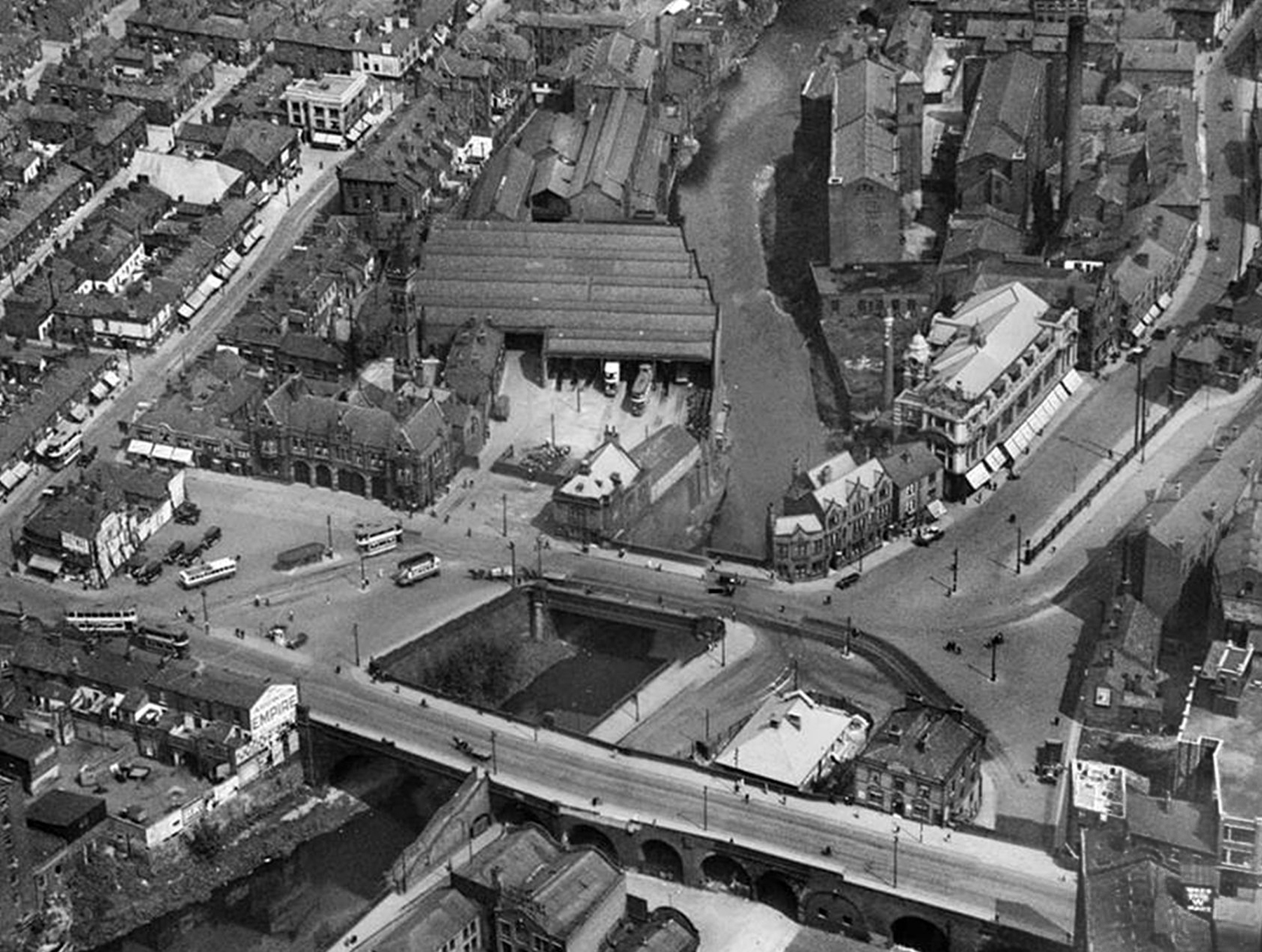
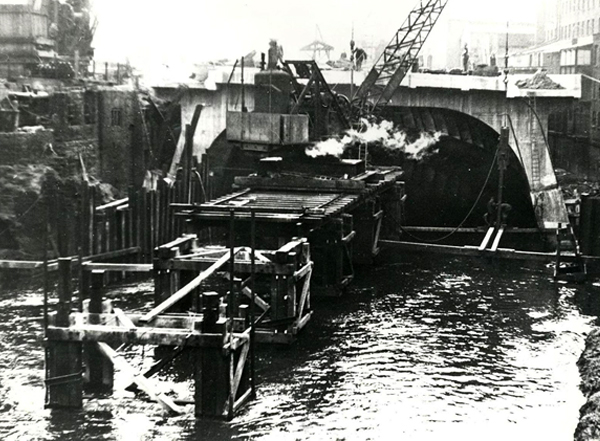
The Mersey, formed in Stockport as the Tame and Goyt conjoined, inconveniently filled with industrial grime and mire, then conveniently covered over in 1936.

16066

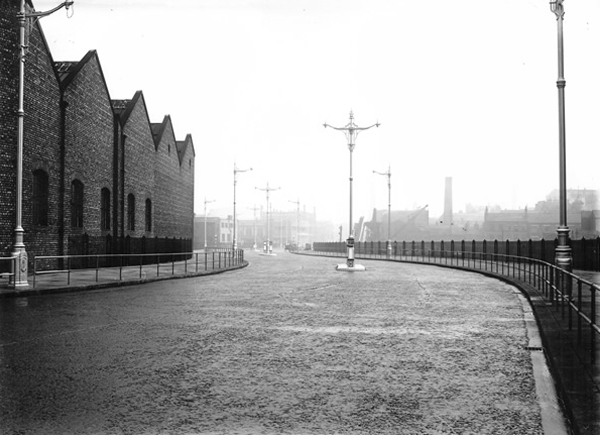
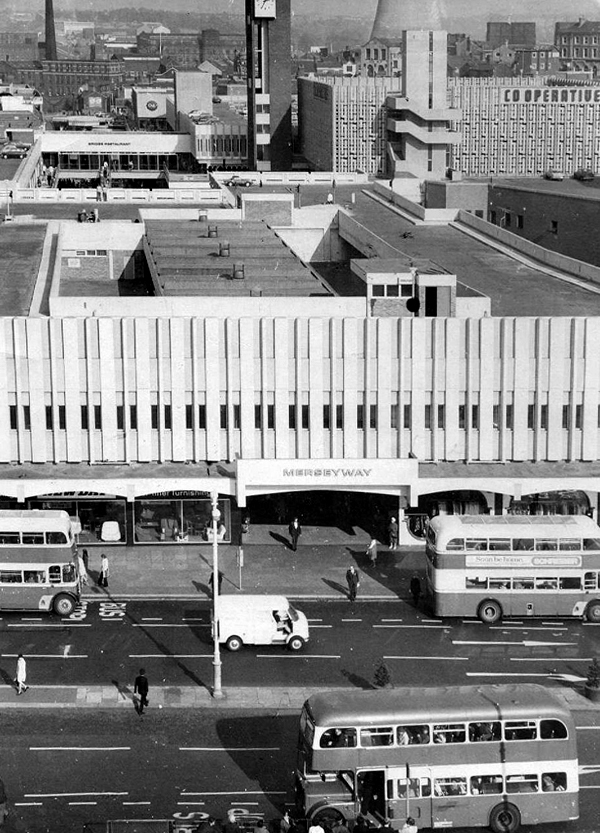
Creating the thoroughly modern thoroughfare Merseyway.

43094

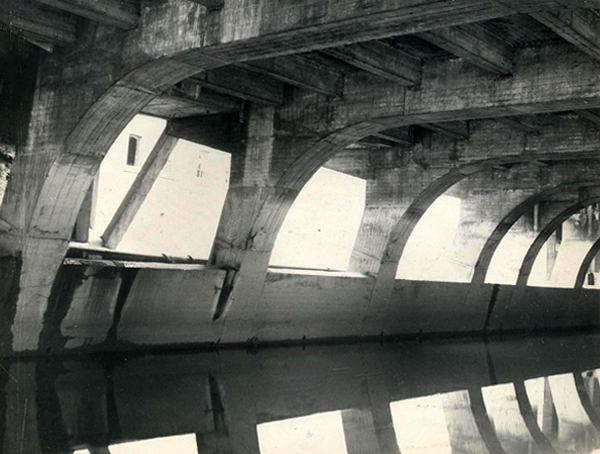
The giant concrete culvert and bridge leaving the river cowering cautiously below.

11889

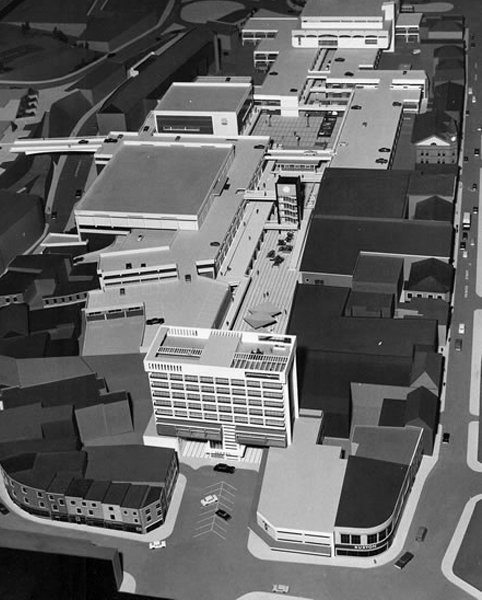
Of time and a river – little stands still and the town is whisked briskly into the late Twentieth Century with plans for a pedestrianised precinct.

15162

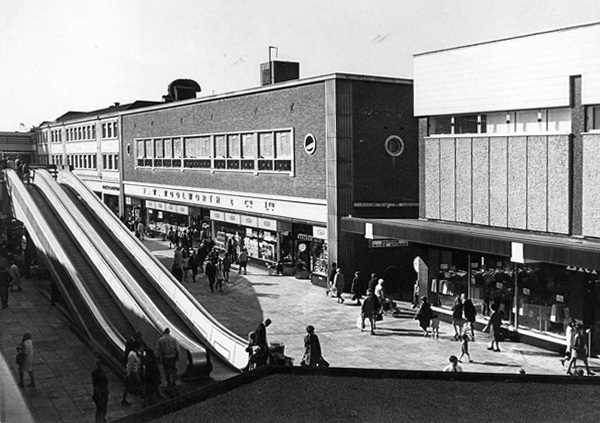
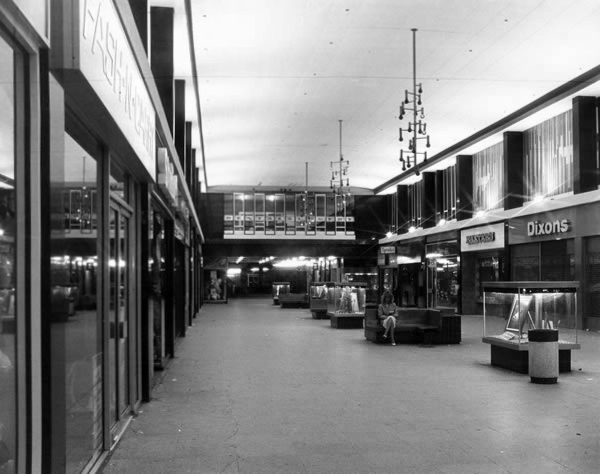
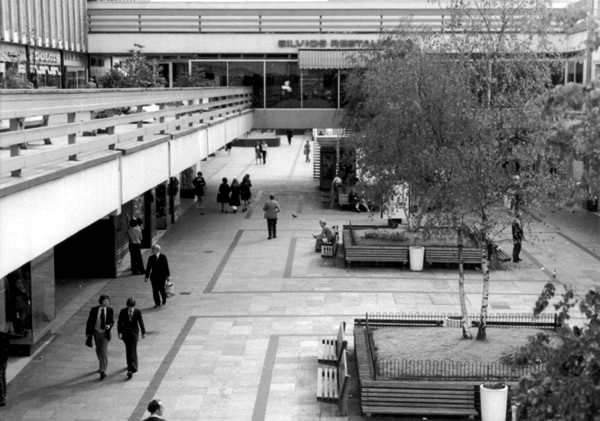
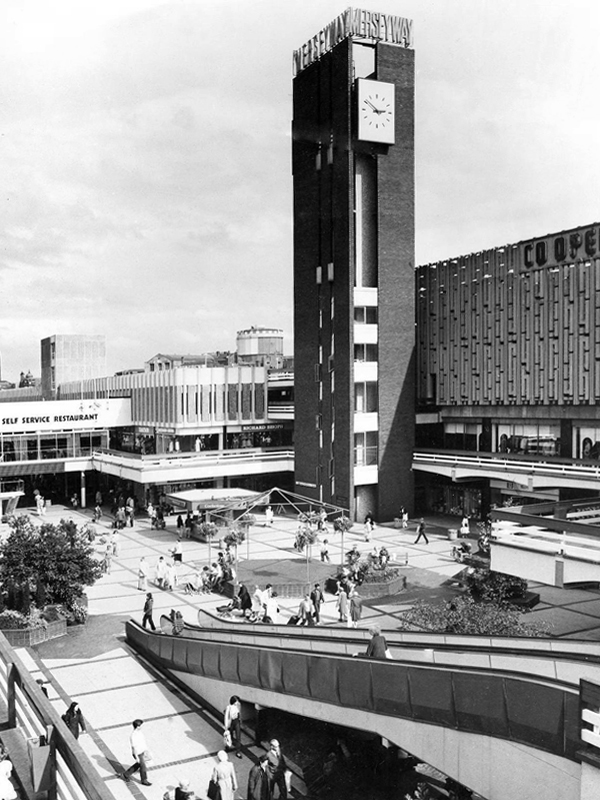
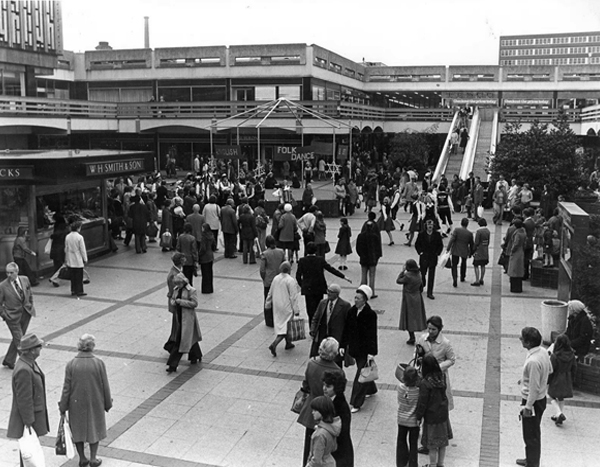
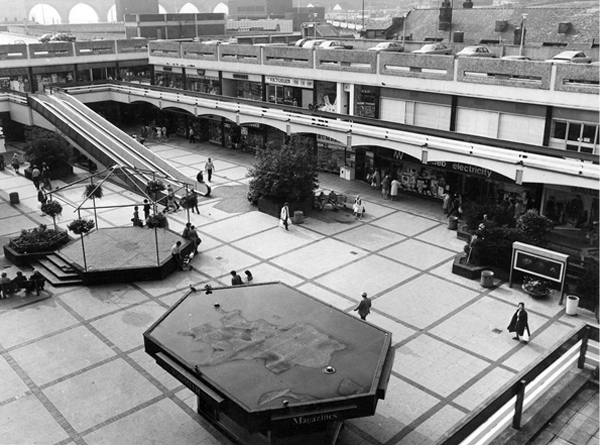
Completed and opened in 1965 the shopping precinct was concrete poetry in motion, incorporating the surrounding topography and extant architecture with grace and aplomb. Combining retail, restaurants and car parking facilities in a manner that critic Ian Nairn considered to be amongst the finest in the land.

4906

We had travelators, integrated paving, street furniture, and lighting across several levels. A carefully considered whole, combining all that was best in modern design with style, élan and panache – along with Freeman, Hardy and Willis.

16347
34942
44282

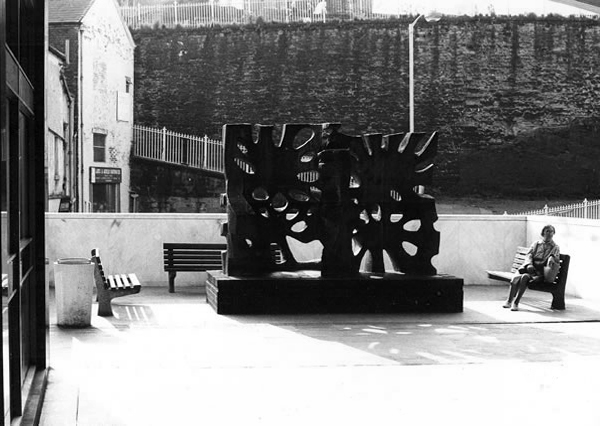
A clock tower, an Alan Boyson concrete car park screen and public art.

17379
19366

Would that it was still so, a variety of additions and subtractions have left Merseyway in architectural limbo, concrete legs akimbo across the river below, striding towards the future in a more than somewhat bewildered manner.

Yet we still continue cast our eyes upwards towards a clock that isn’t there, ride a non-existent walkway to the sky, try on an imaginary crop-top in C&A’s Clockhouse.

11408
17376
25379
17594

Photographs Stockport Image Archive

Lansbury Tower – London

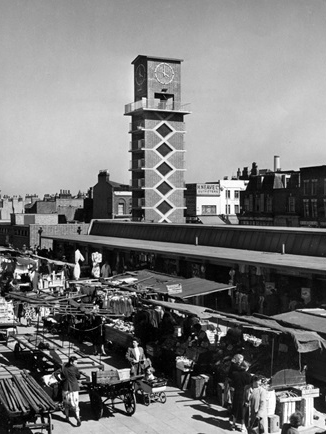
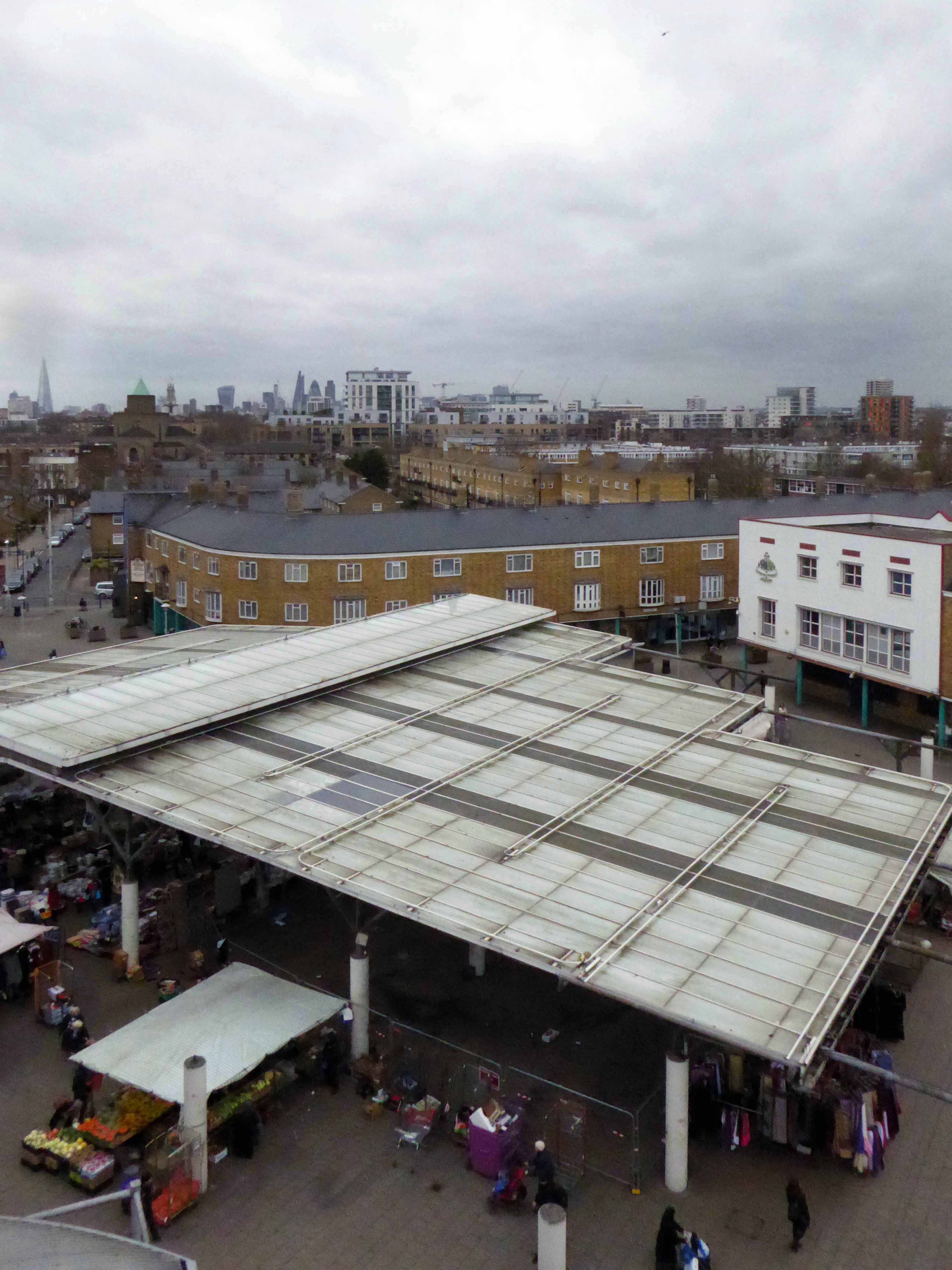
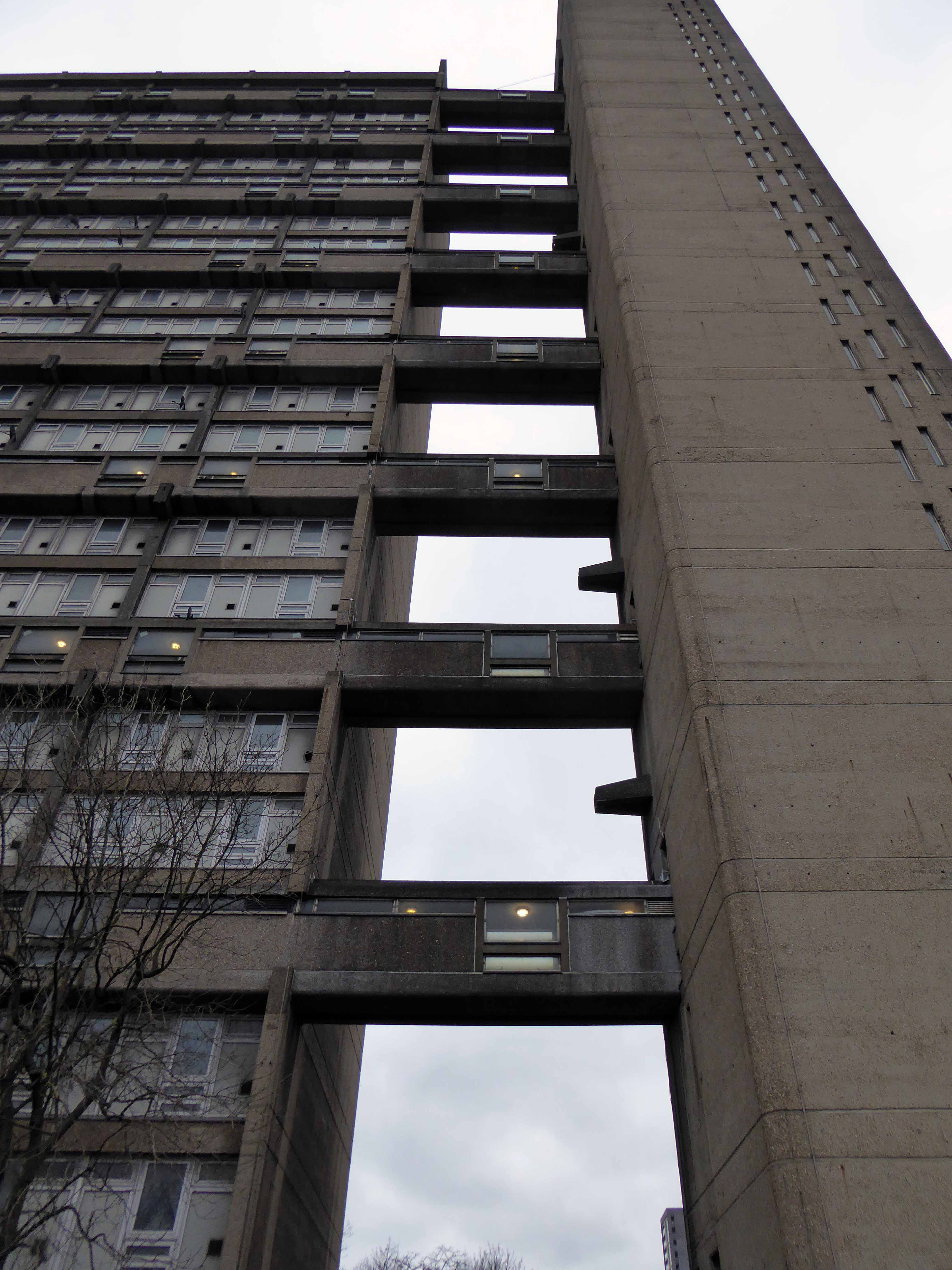
Neither wrought from purest ivory, nor containing some woe begotten, long gone, misplaced Rapunzel, but conceived as a democratic symbol of a new age of concrete, brick and steel.

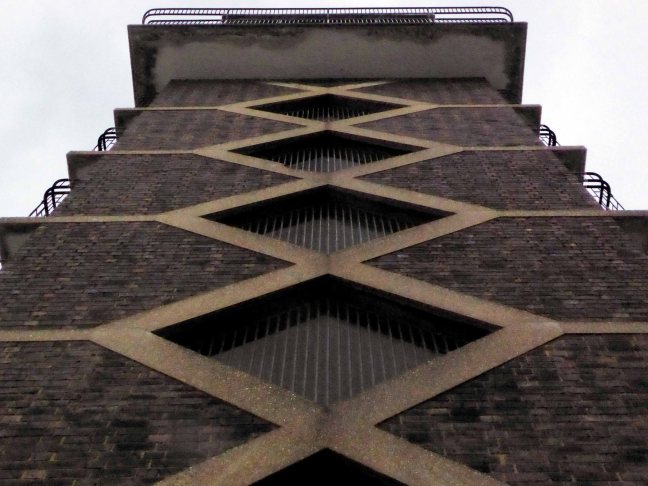
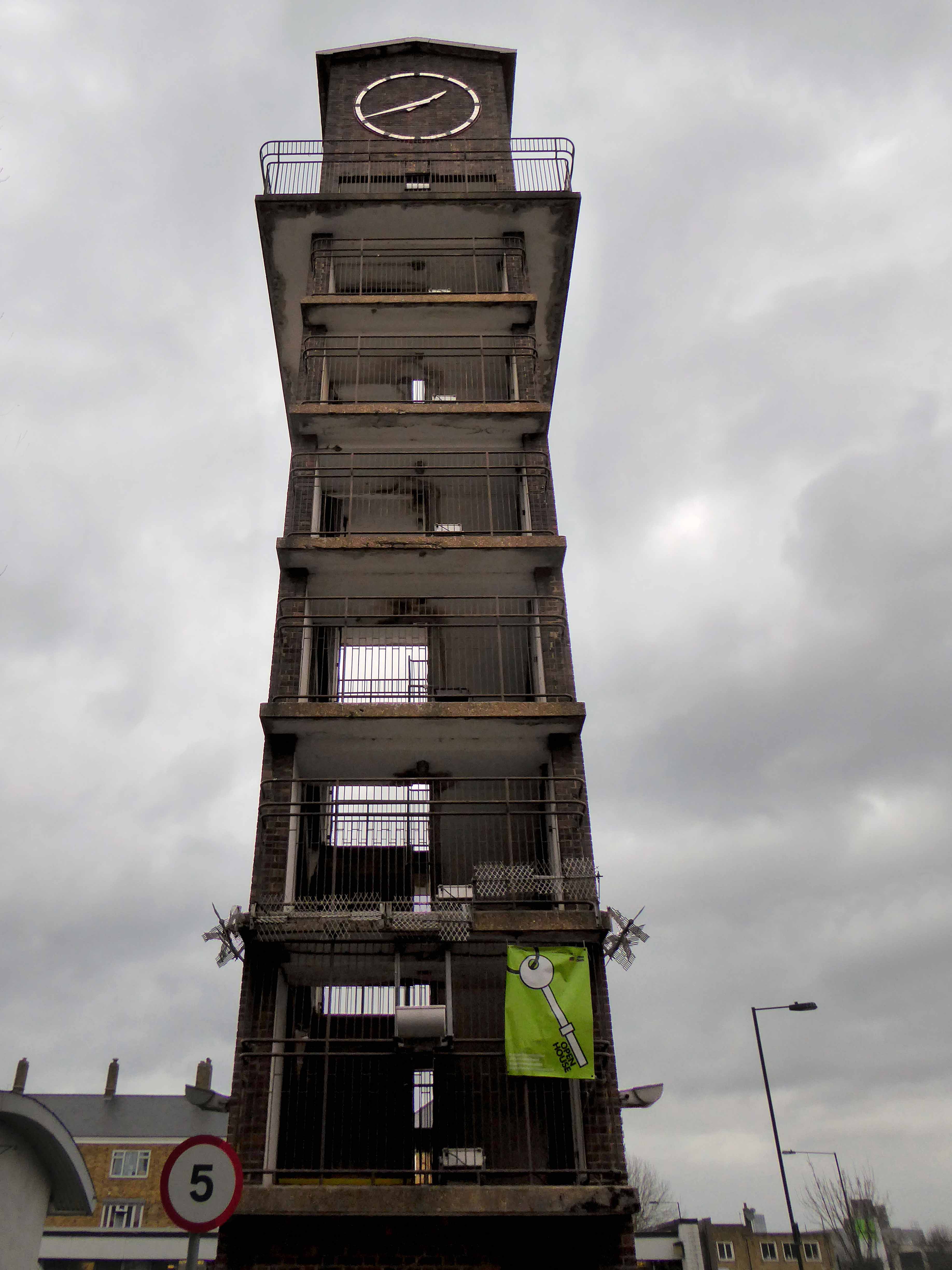
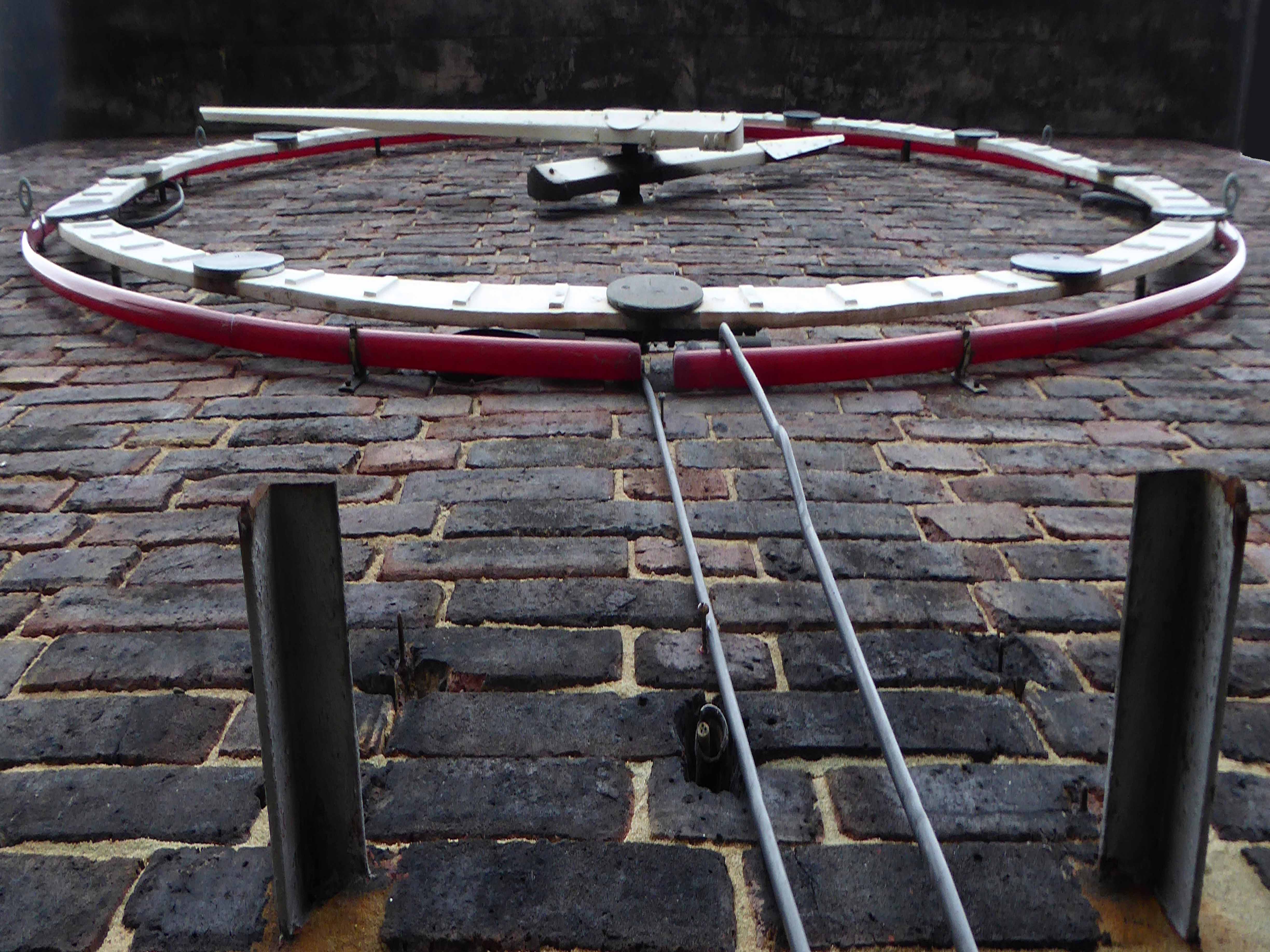
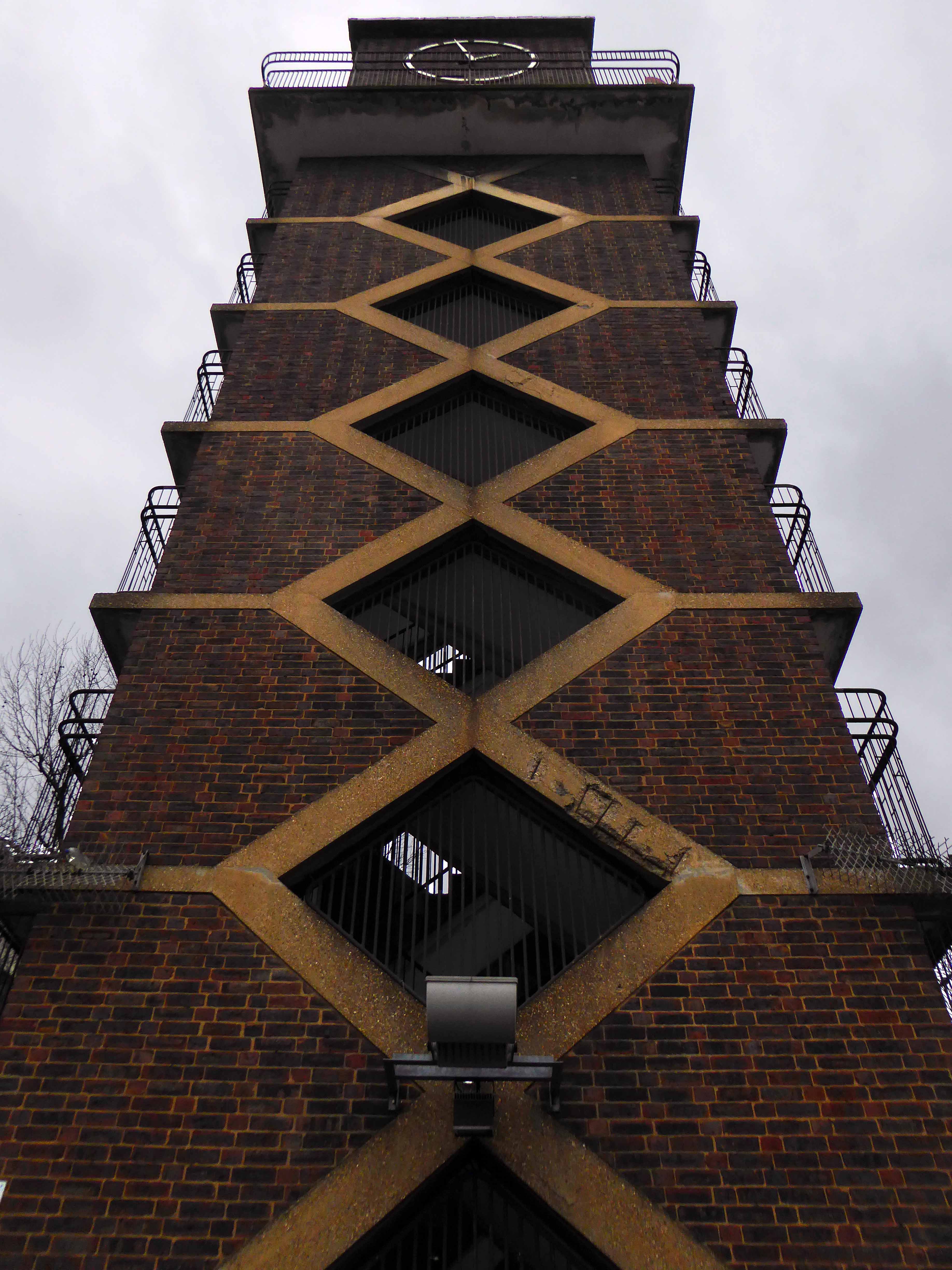
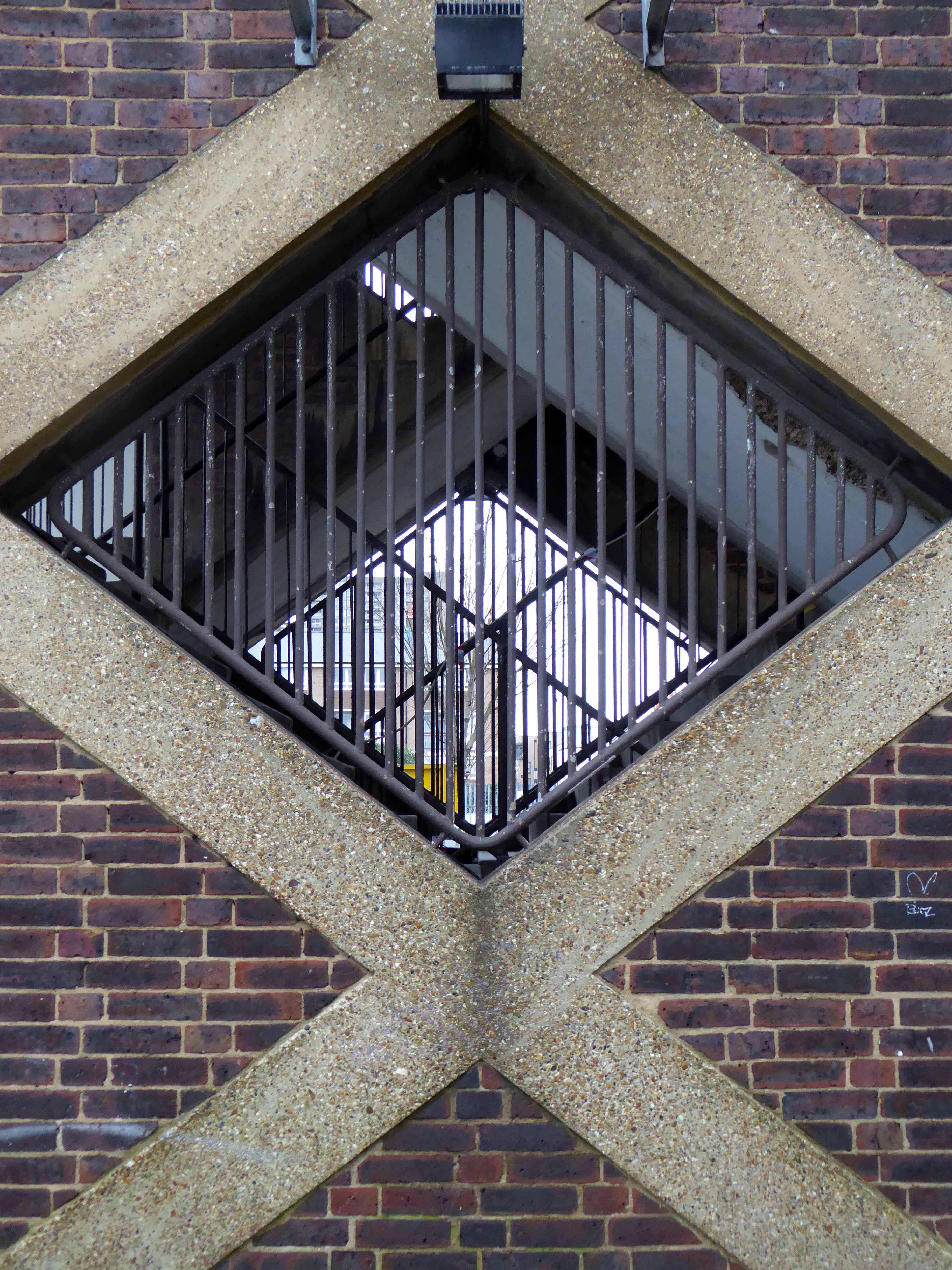
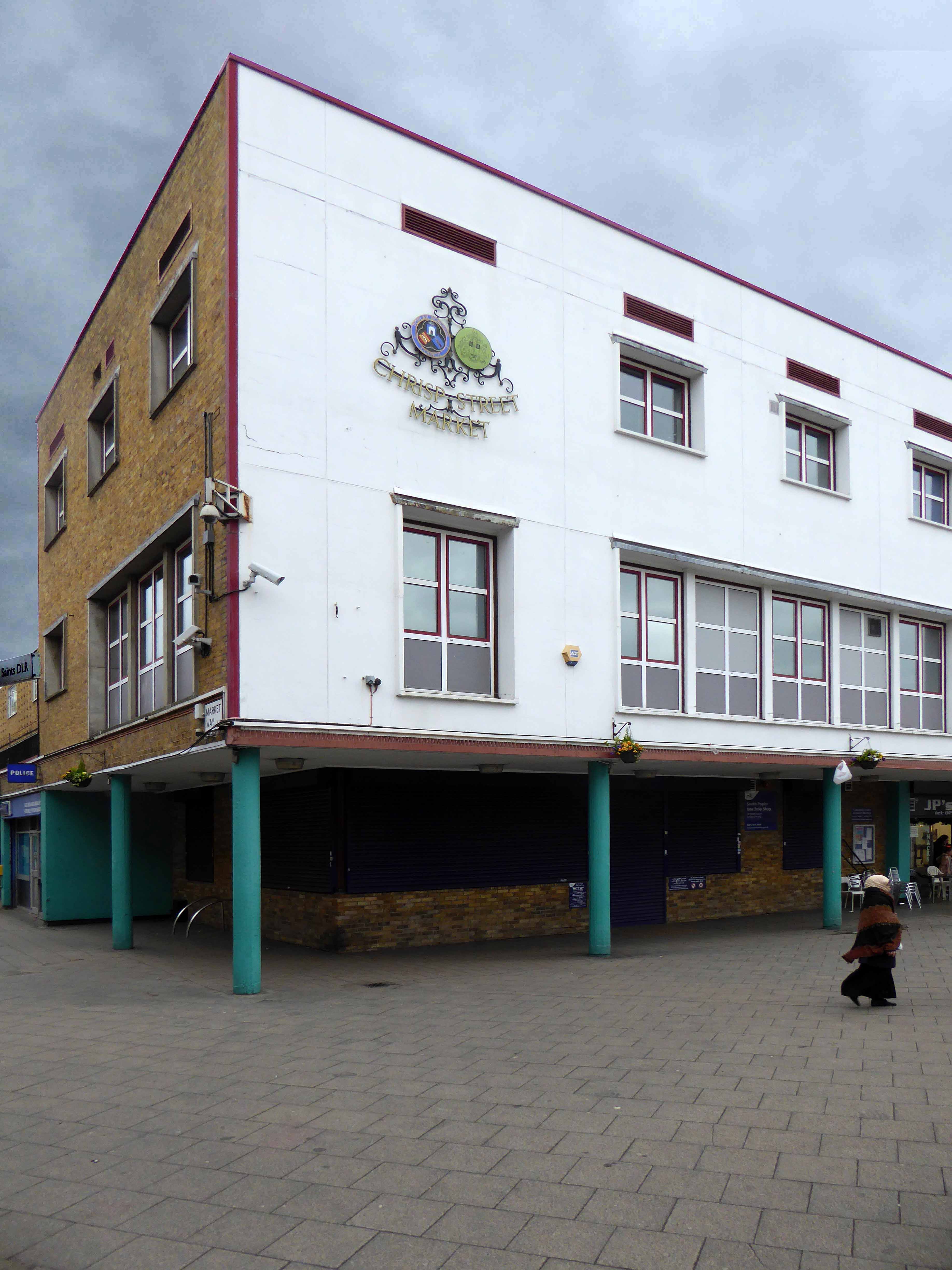
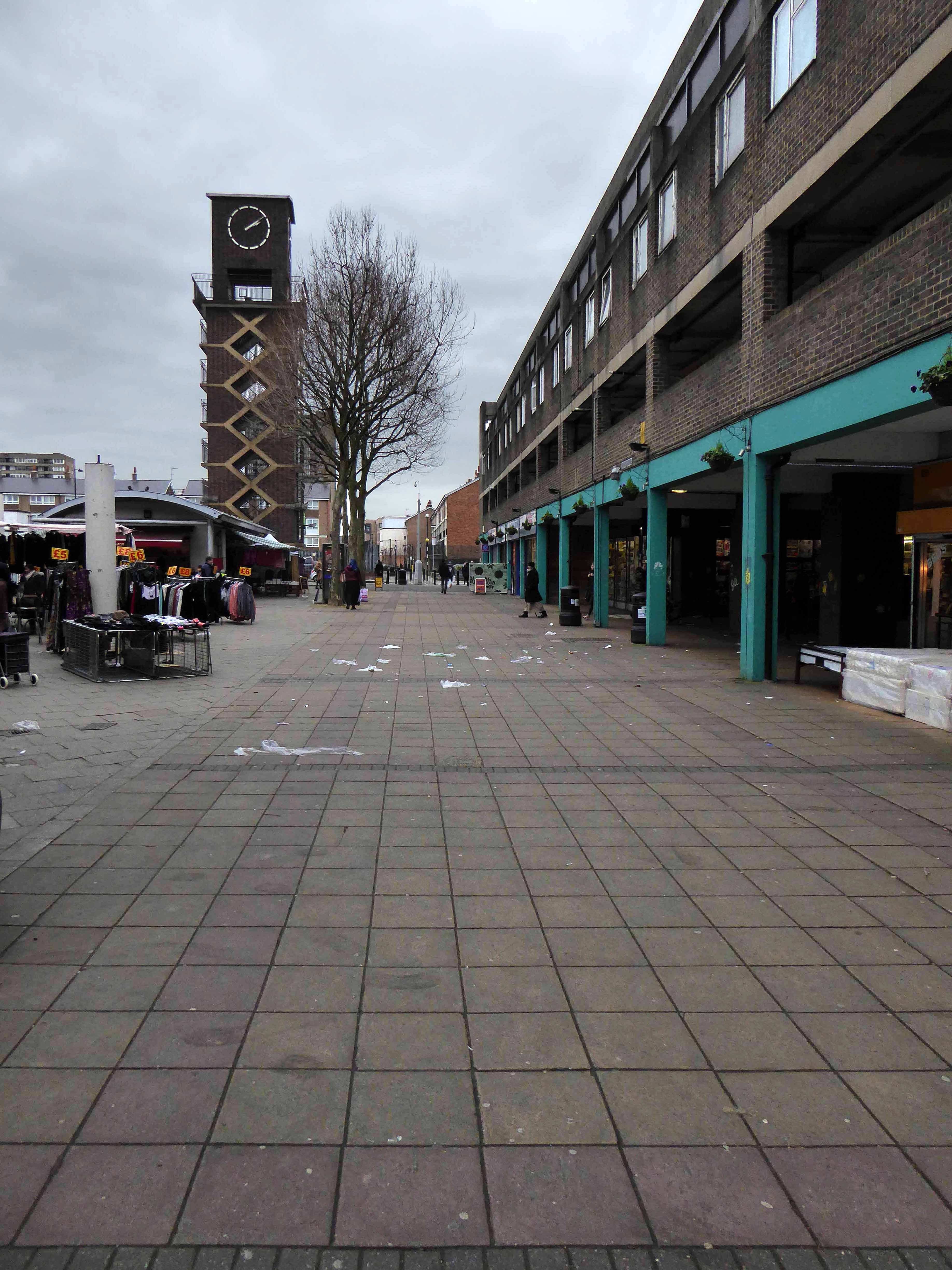
Frederick Gibberd’s almost triumphal tower interlocks zig-zag diamonds of cast concrete upwards towards a silently clicking clock, at the head of the Chrisp Street Market.

Lewis Mumford wrote of the adjoining Lansbury Estate:  

Its design has been based not solely on abstract aesthetic principles, or on the economics of commercial construction, or on the techniques of mass production, but on the social constitution of the community itself, with its diversity of human interests and human needs.

15631.1.434.434.FFFFFF

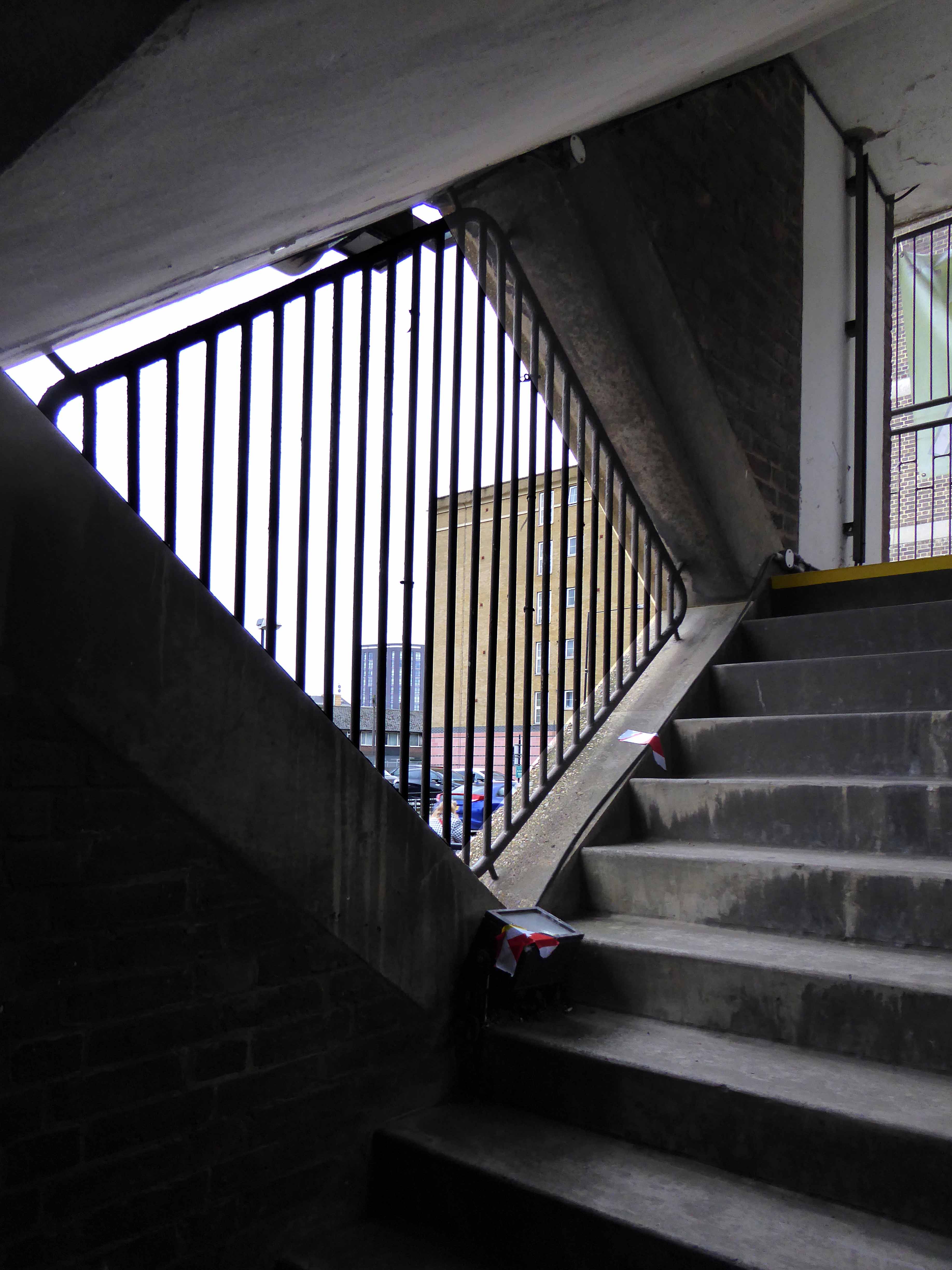
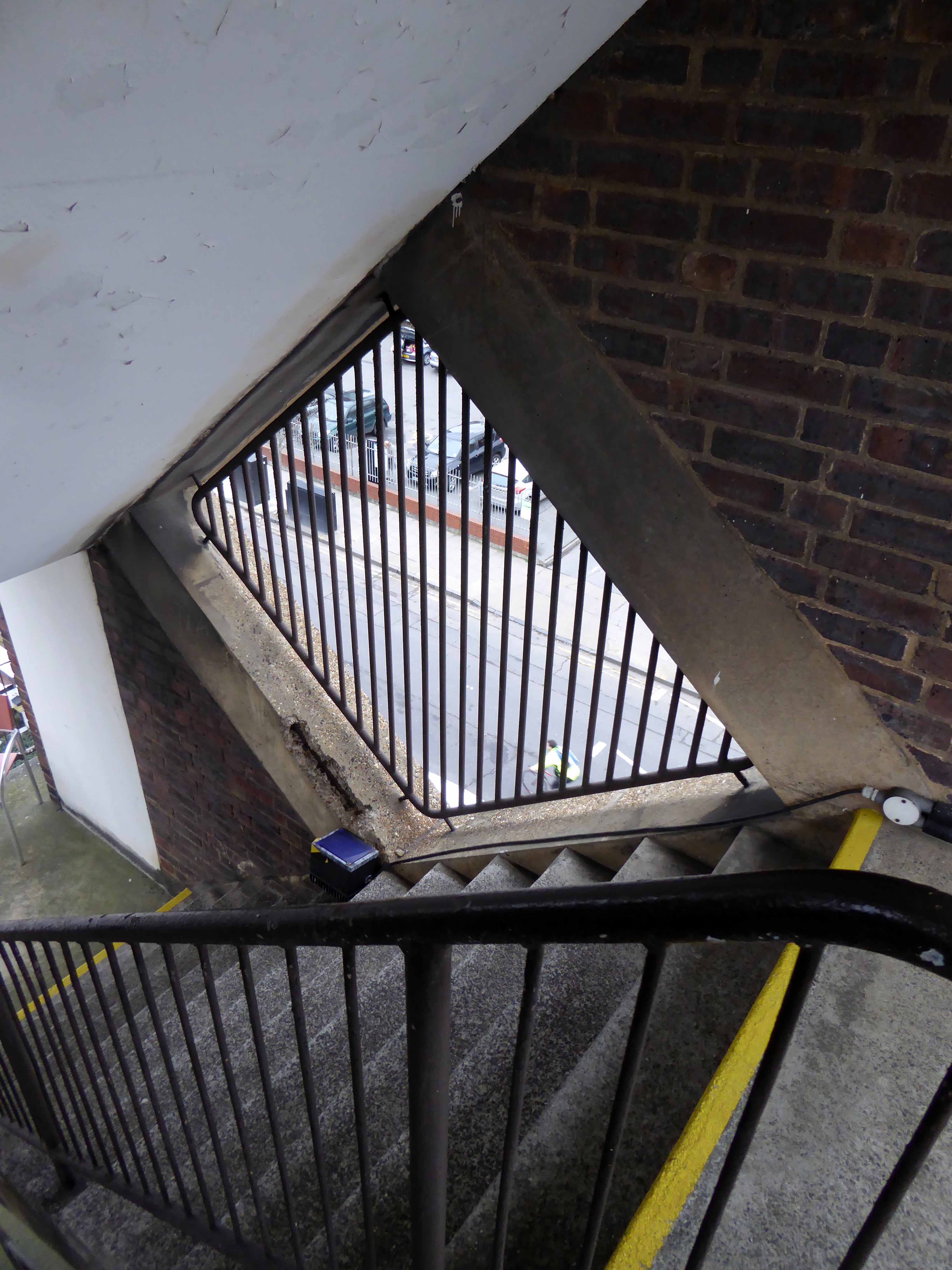
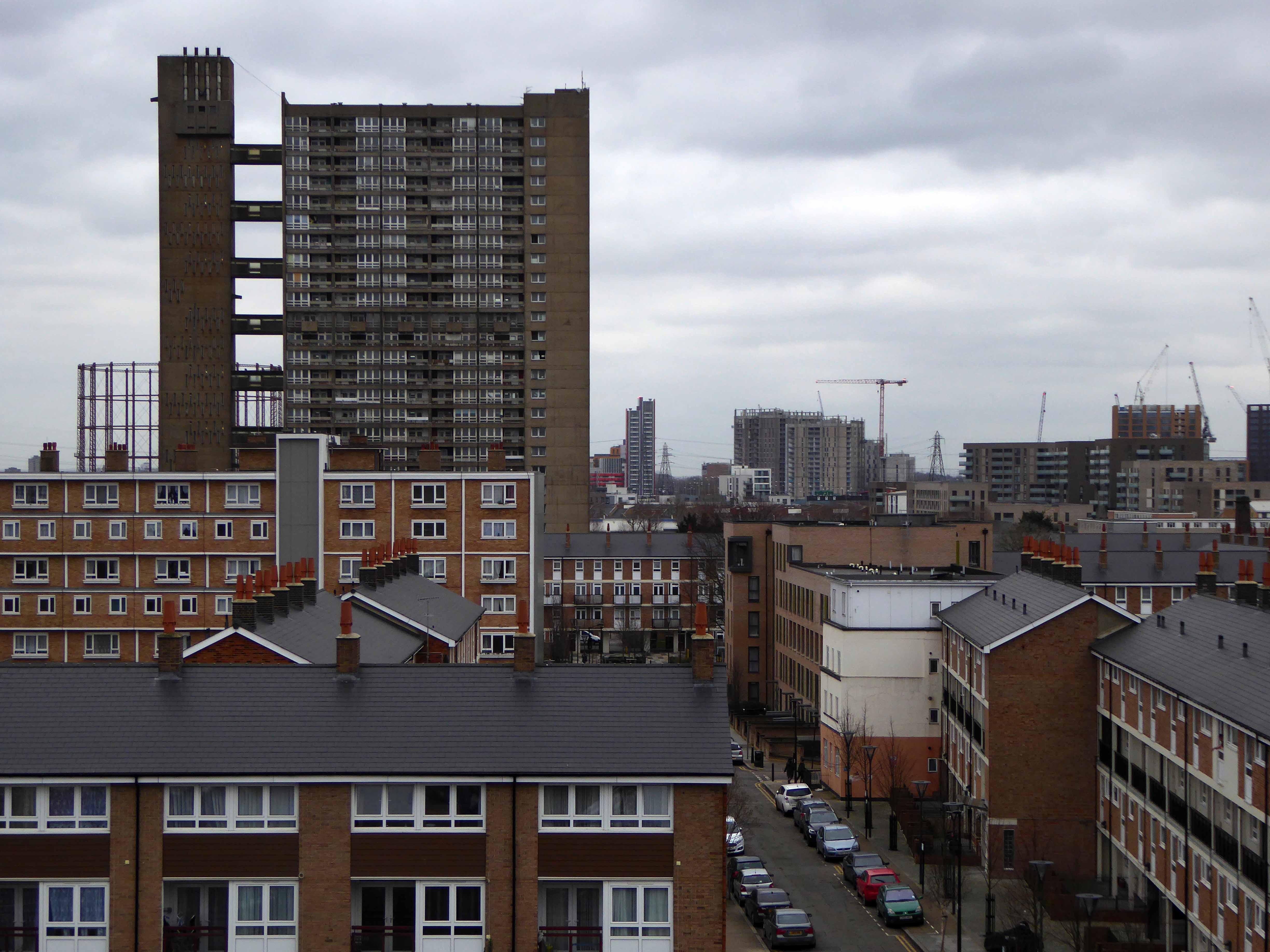
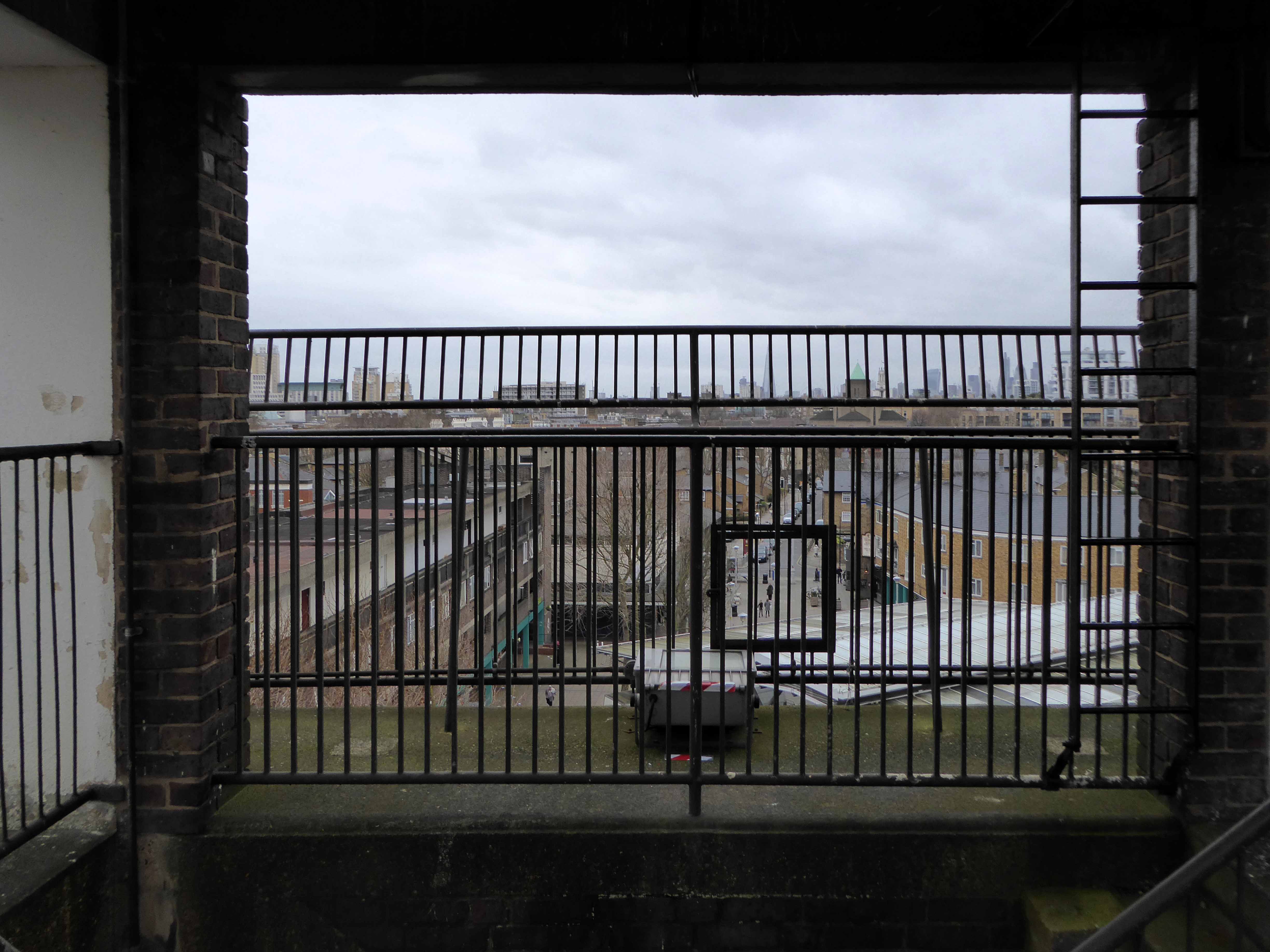
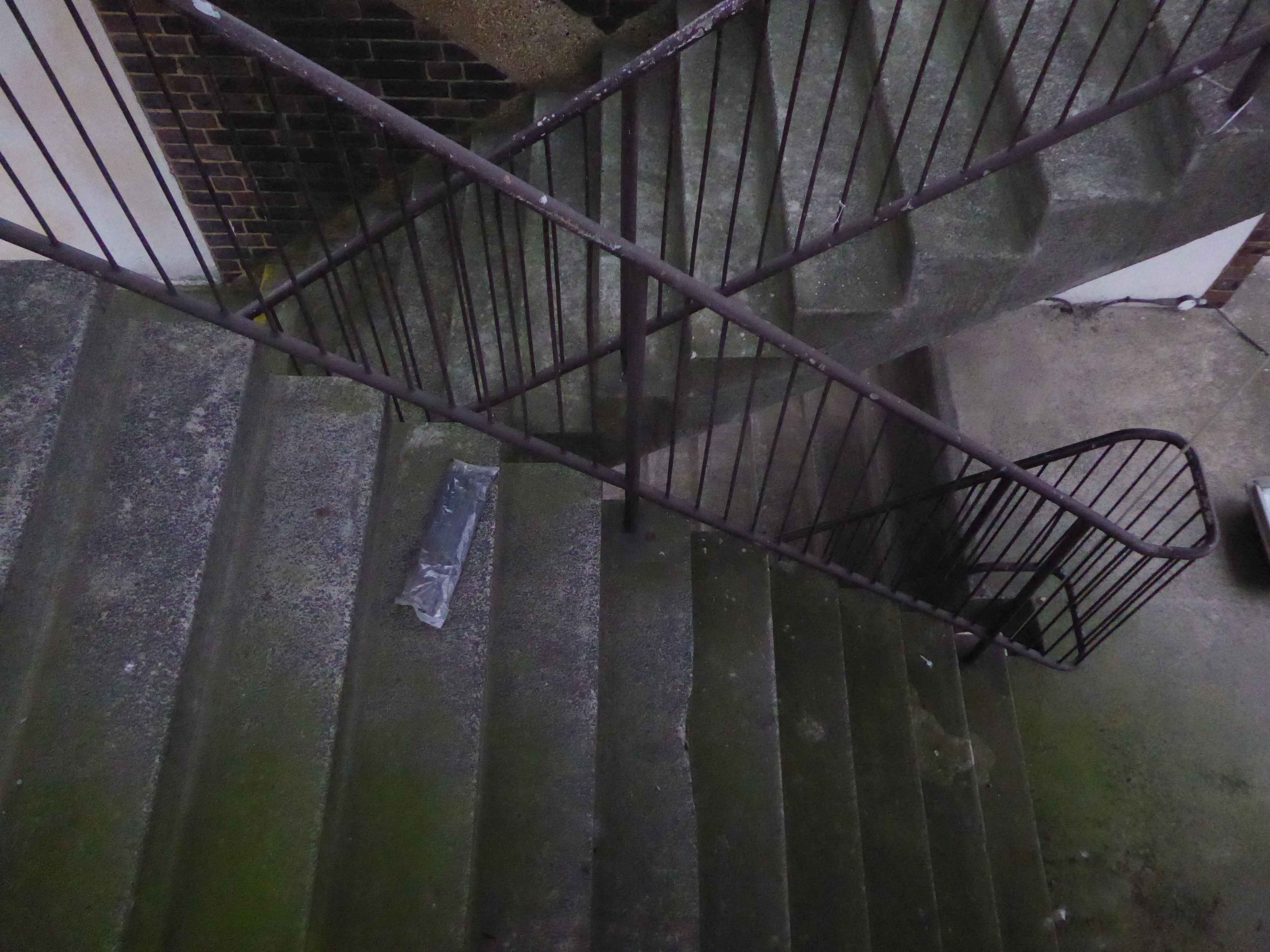
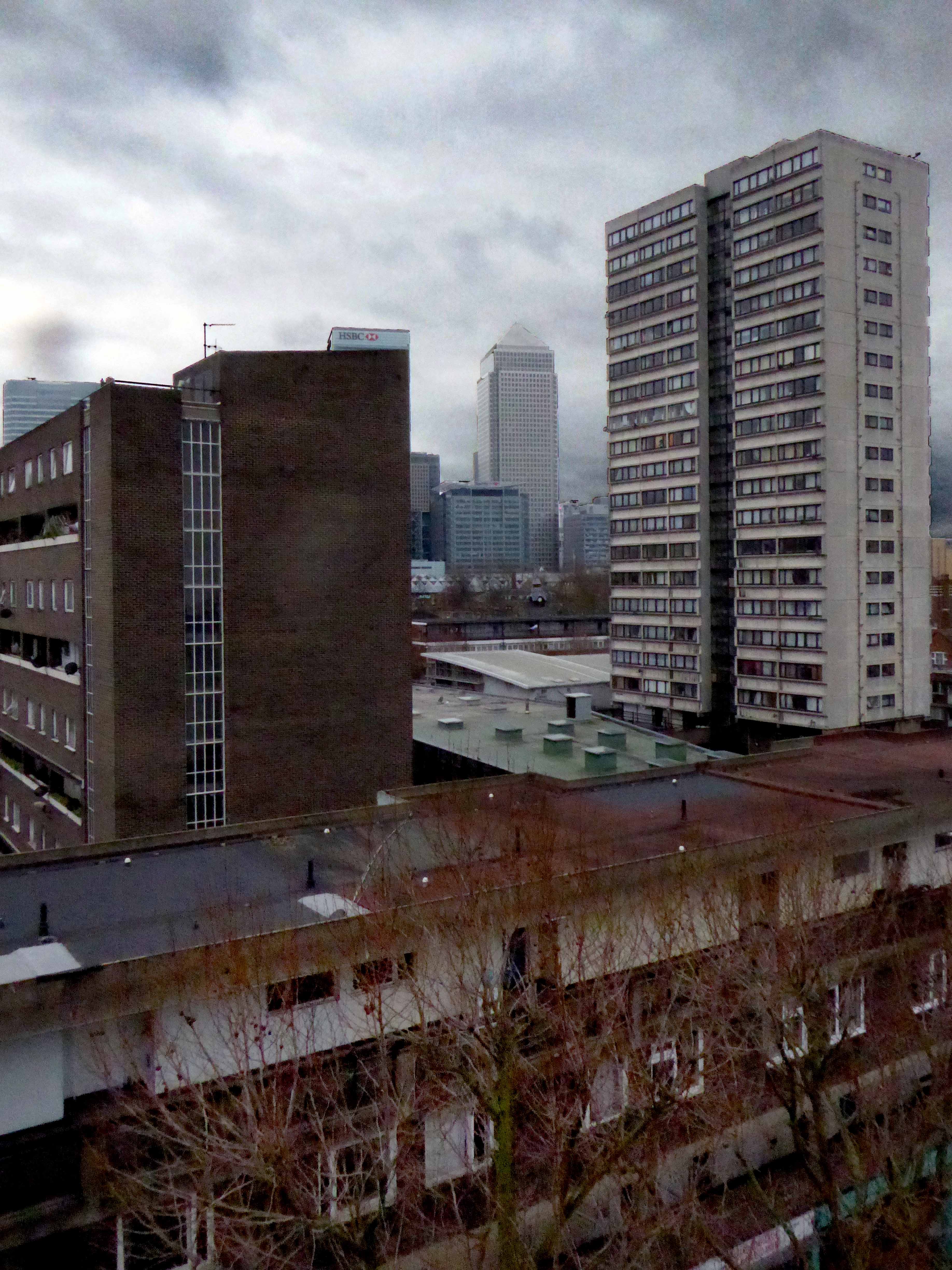
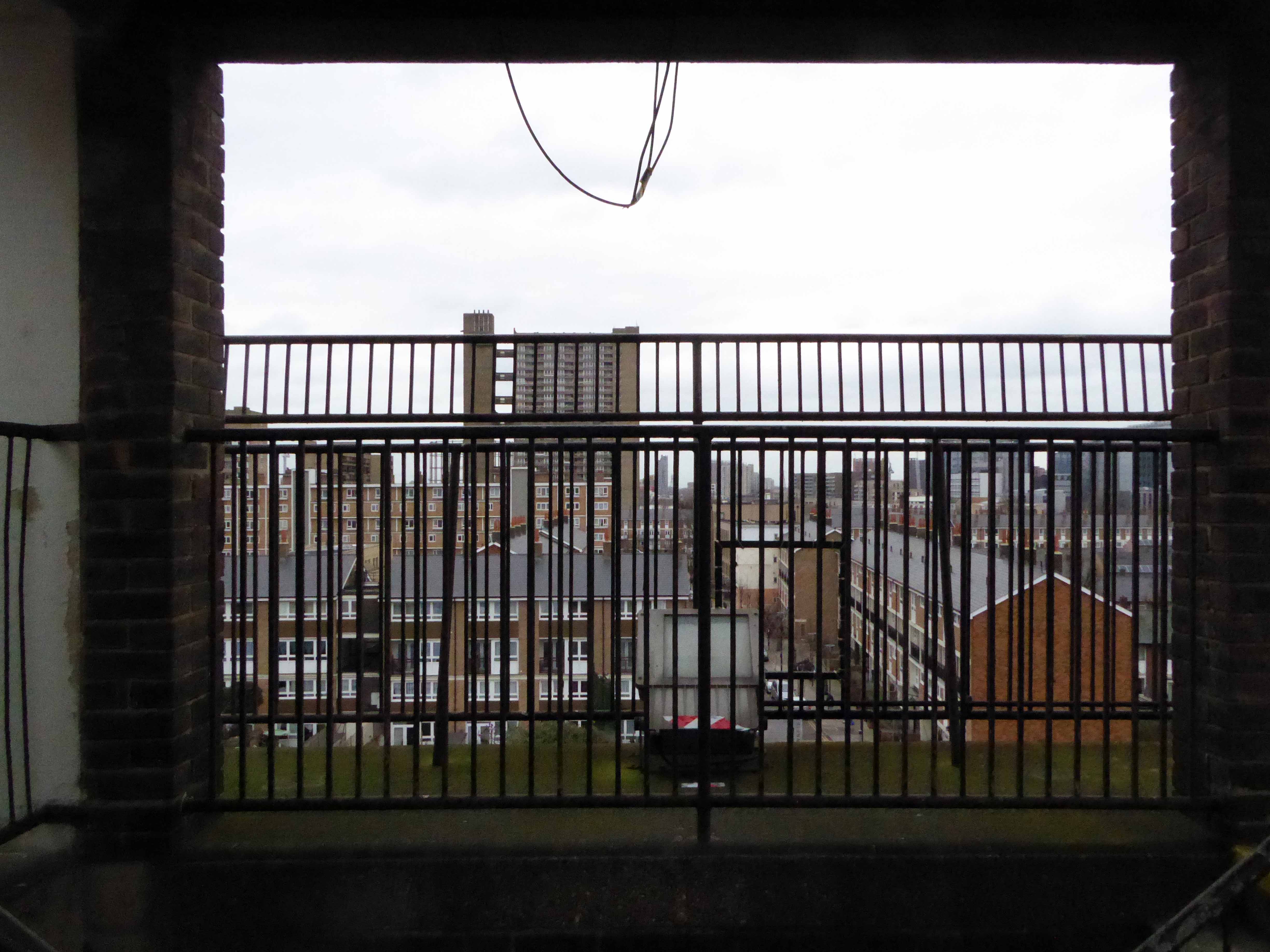
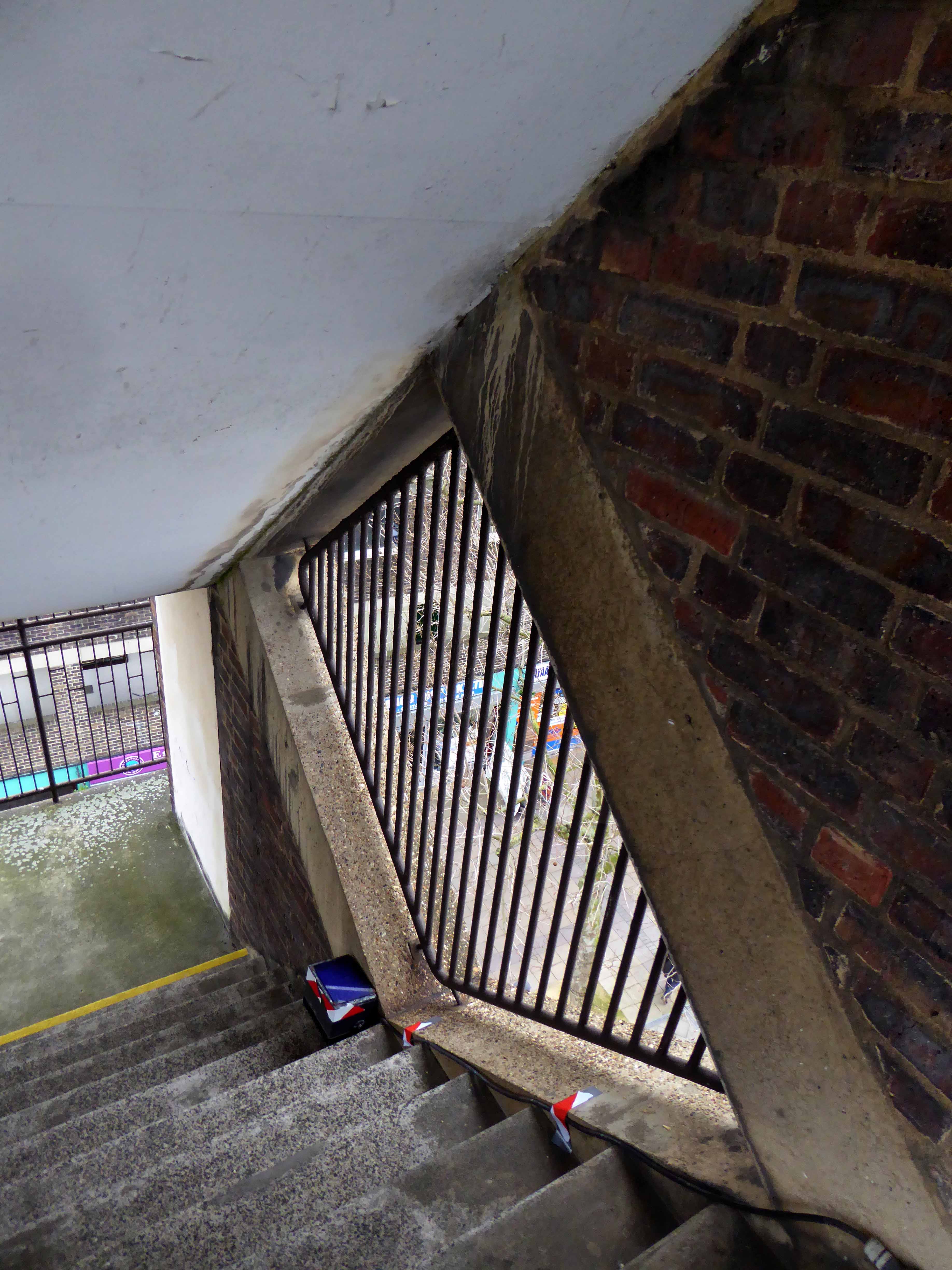
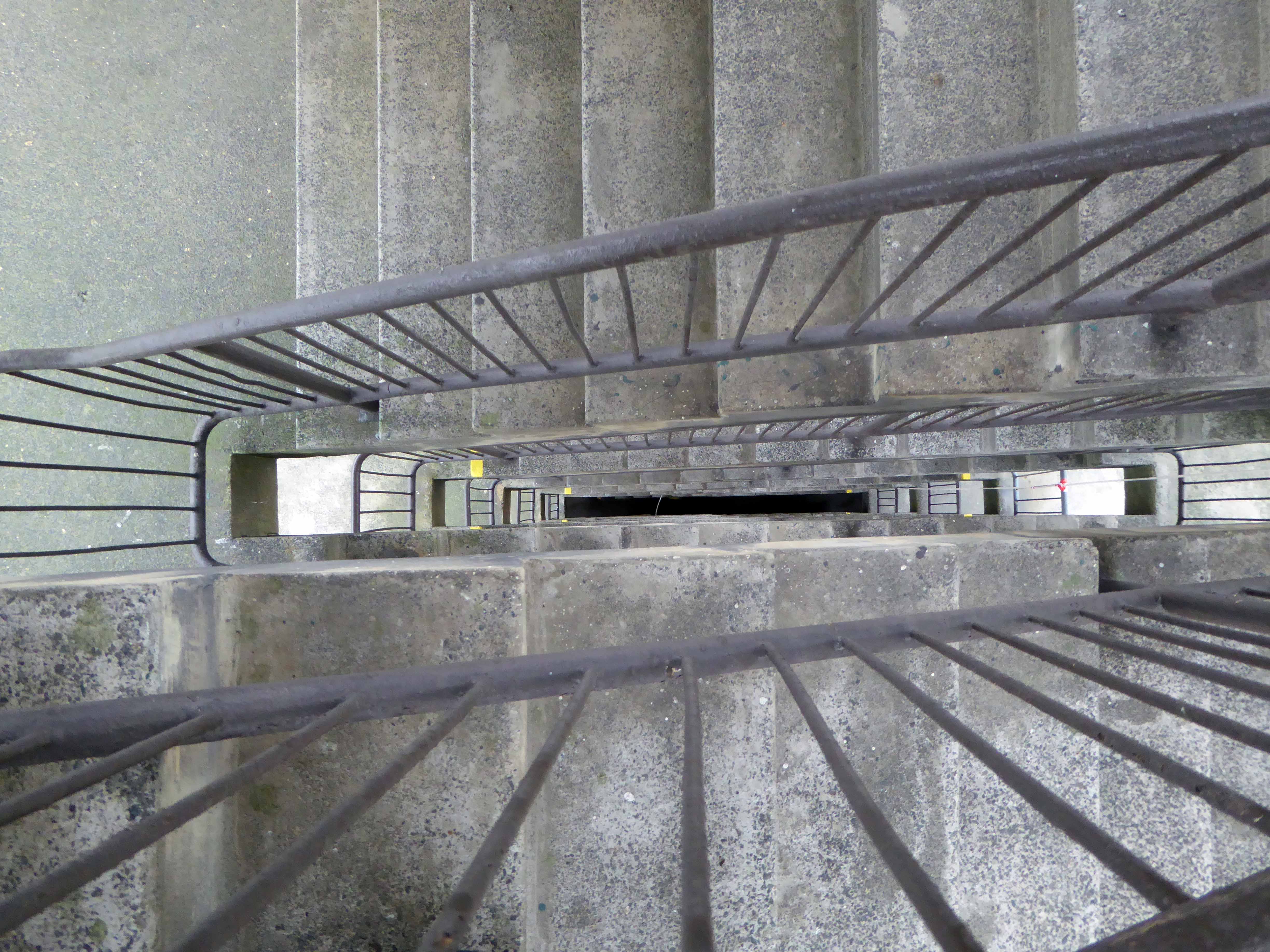
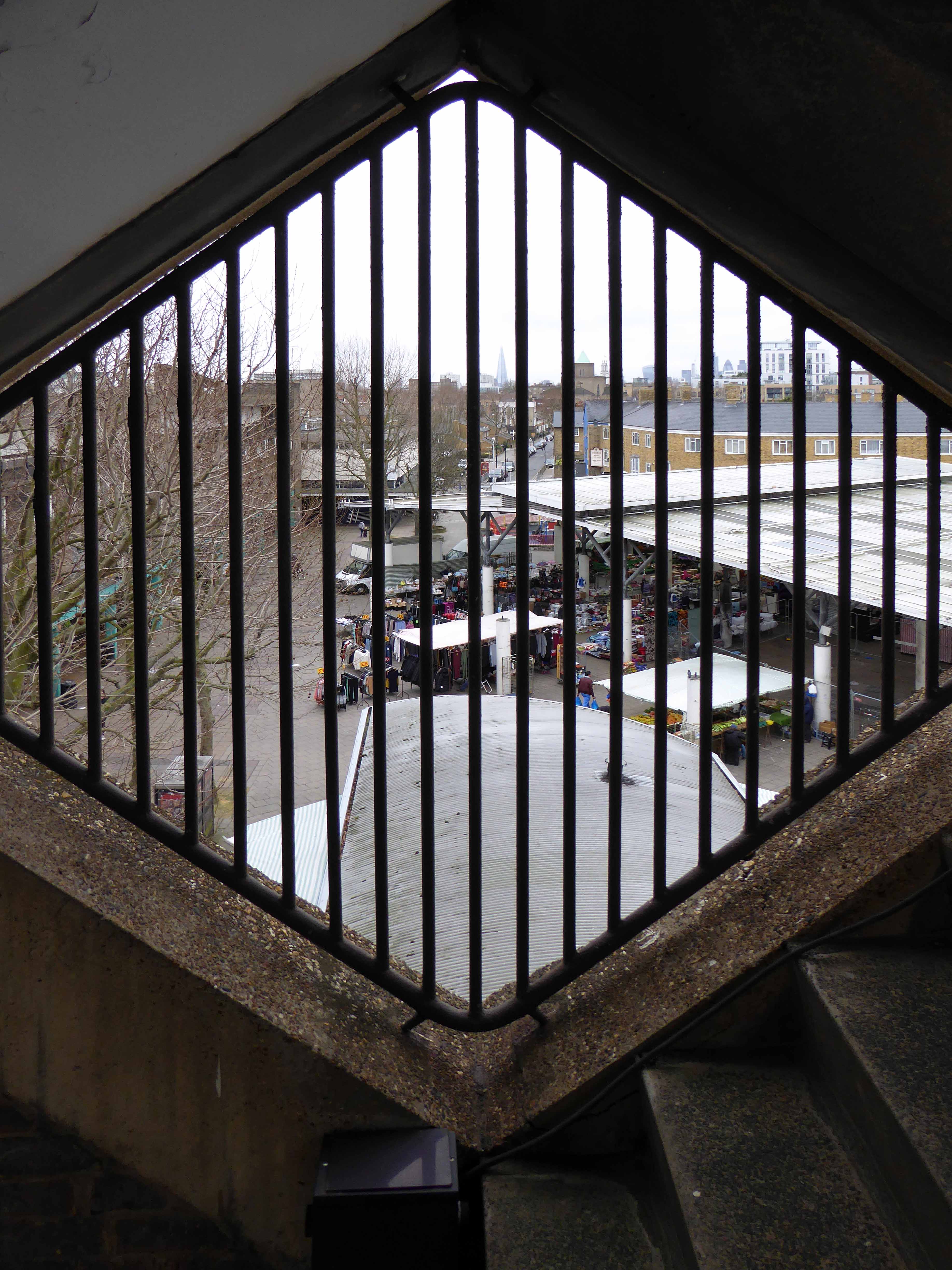
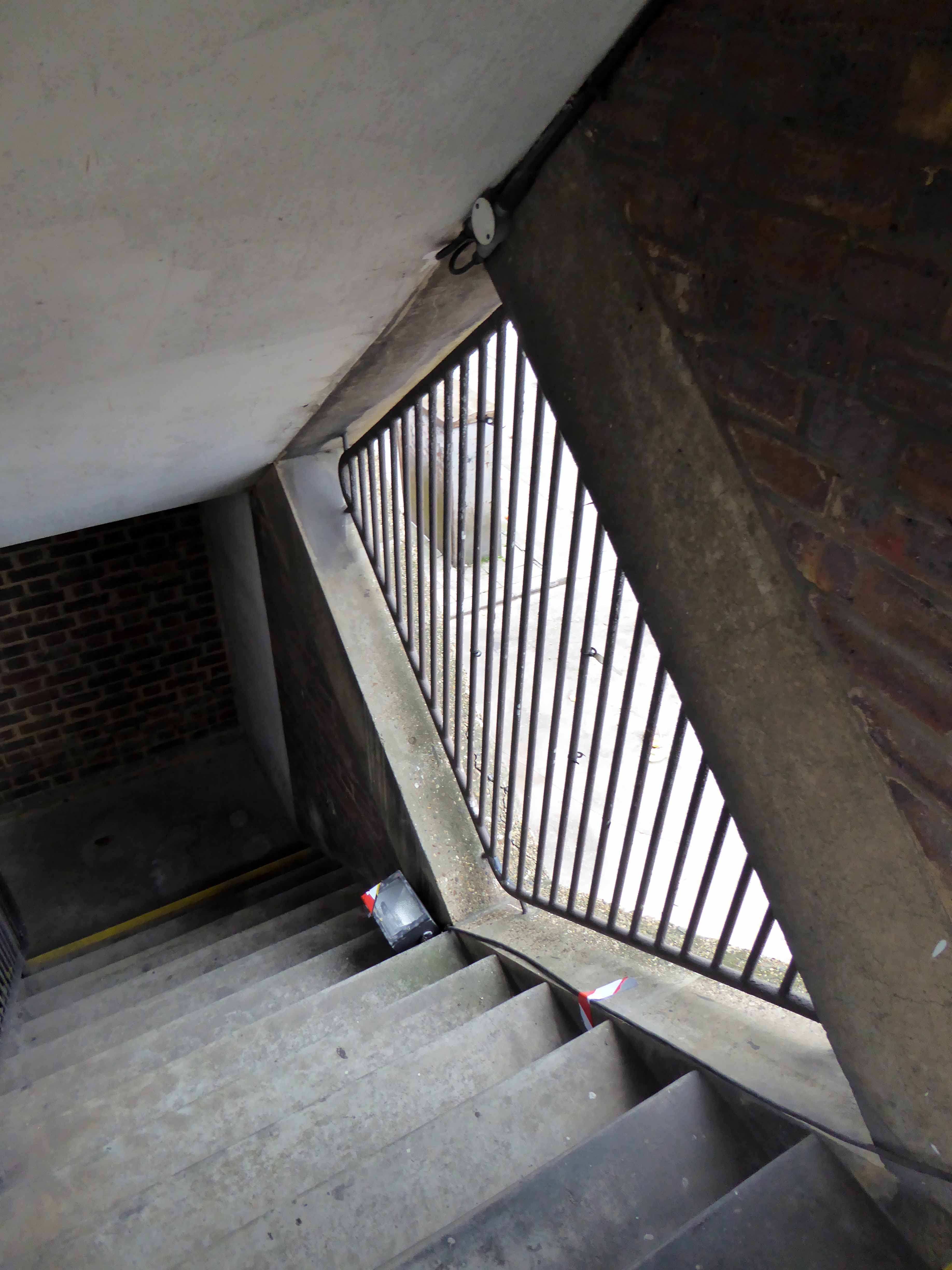
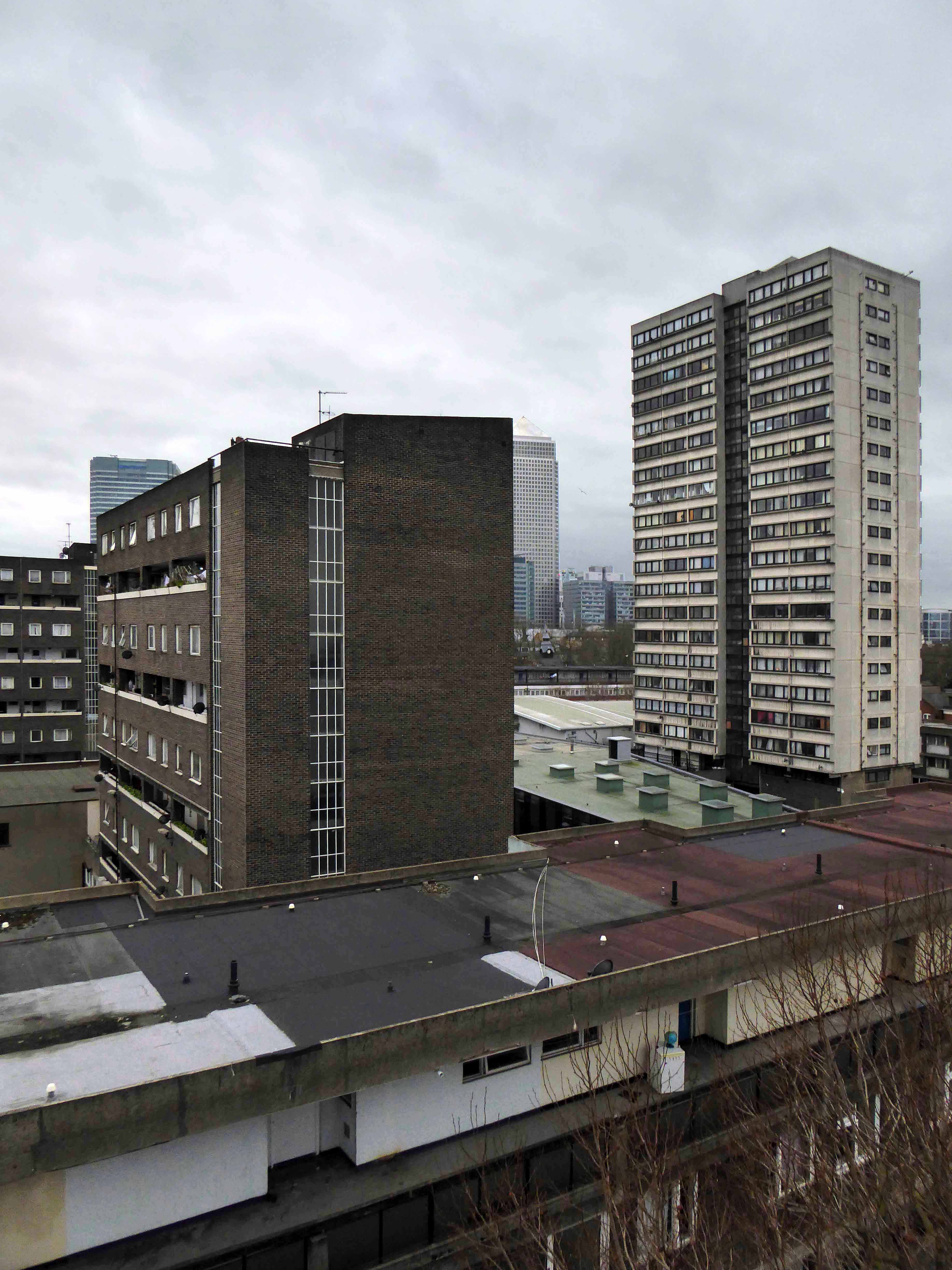
I was privileged to ascend the internal staircase, once open to the public – now reserved for high days, holidays and nosey northern interlopers. Having mildly vertiginous inclinations when so inclined, I gingerly went up in the world and leaned out to take the air and the view.

And this is what I saw.

P1130755 copy

P1130757 copy

P1130758 copy

P1130759 copy

P1130760 copy

P1130761 copy

P1130762 copy

P1130763 copy

P1130765 copy

P1130766 copy

P1130768 copy

P1130770 copy

P1130771 copy

P1130773 copy

P1130775 copy

P1130777 copy

P1130778 copy

P1130825 copy

Lansbury Estate – London

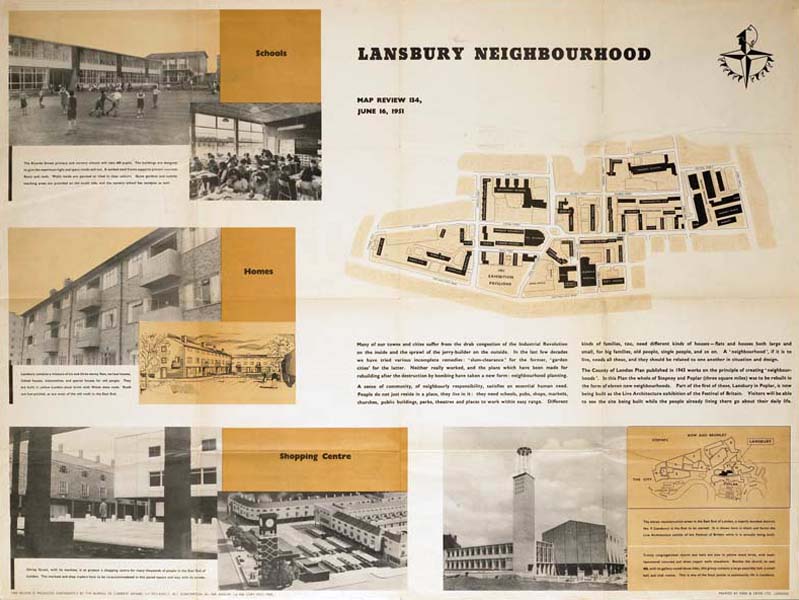
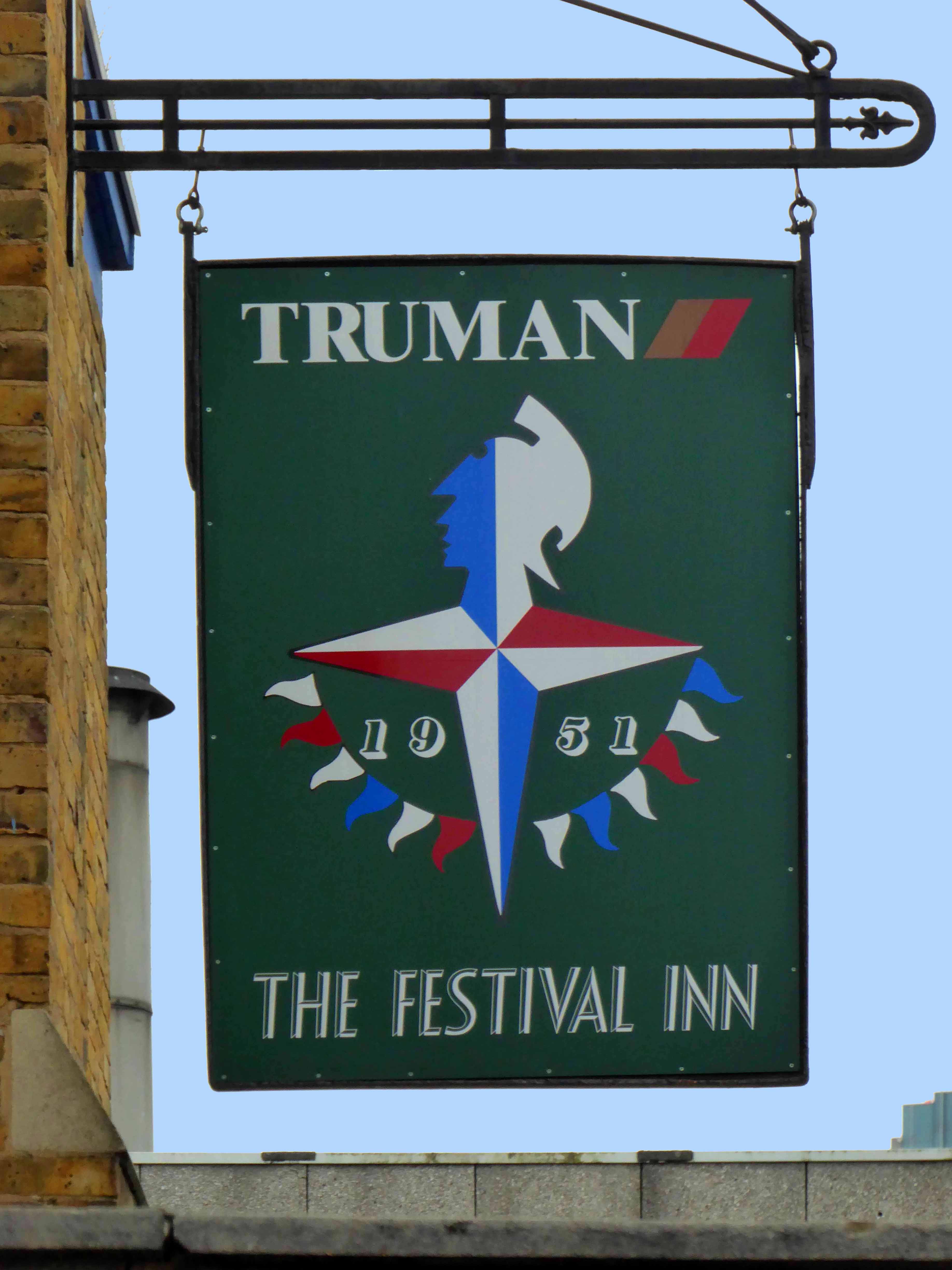
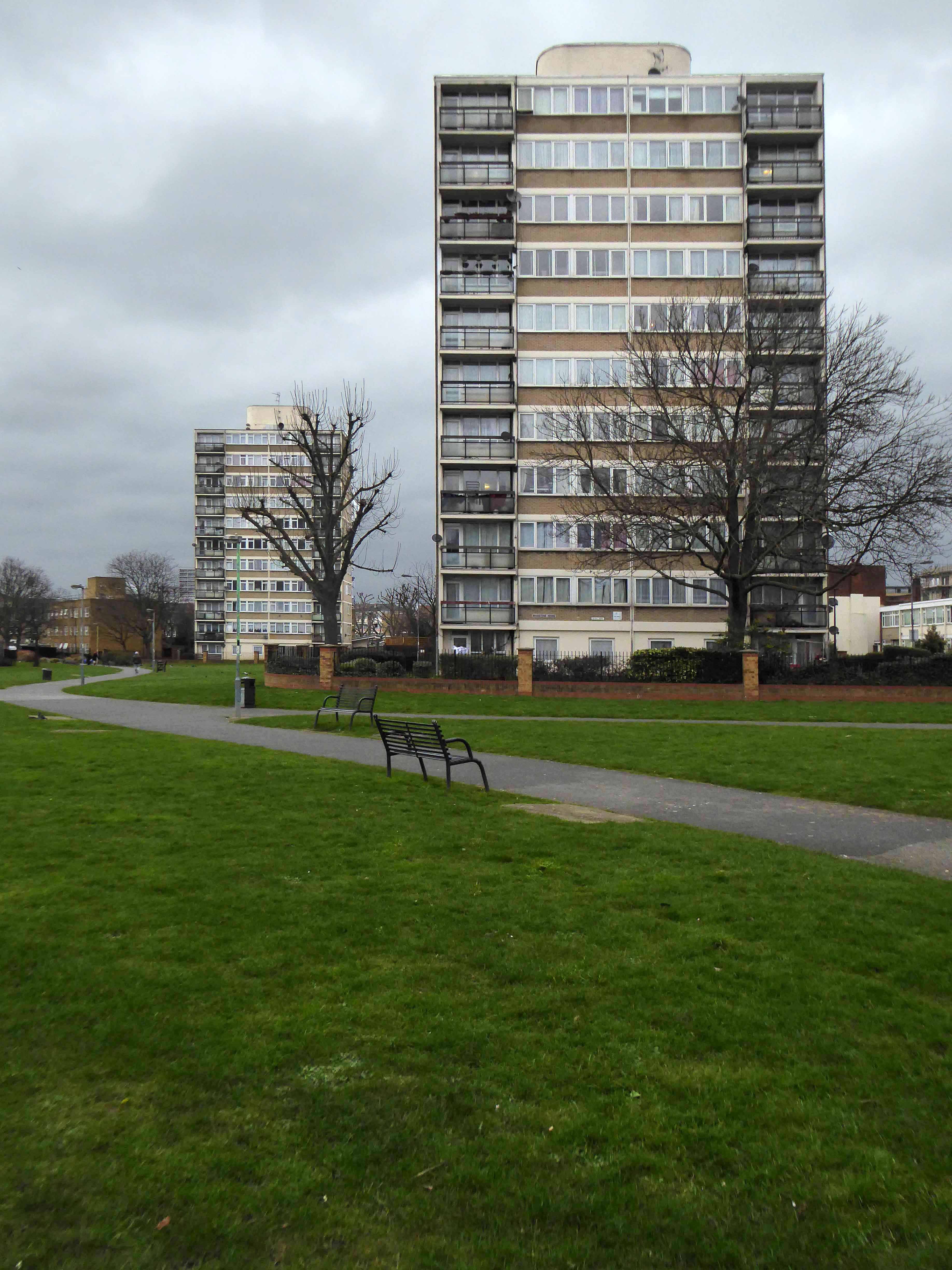
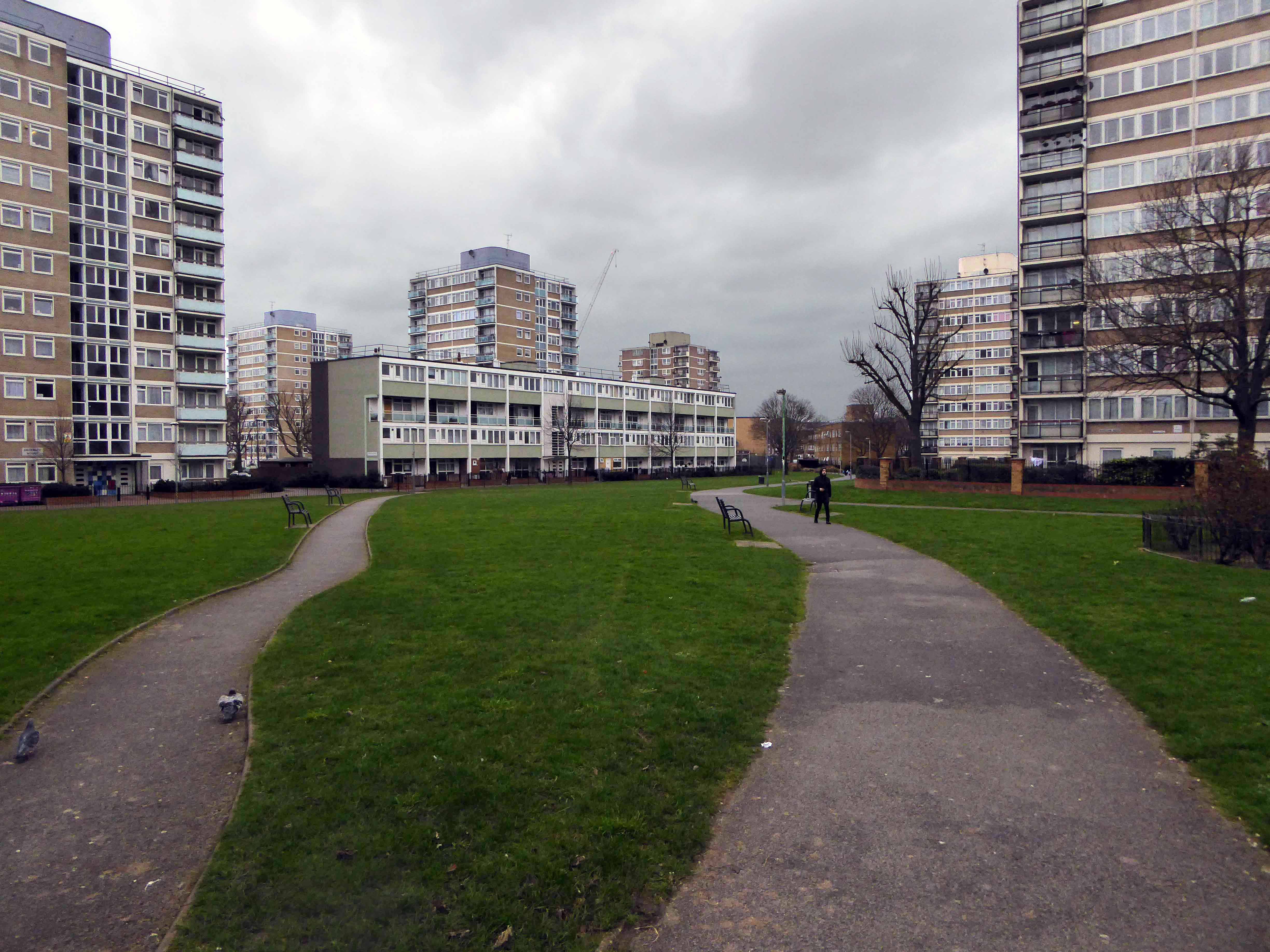
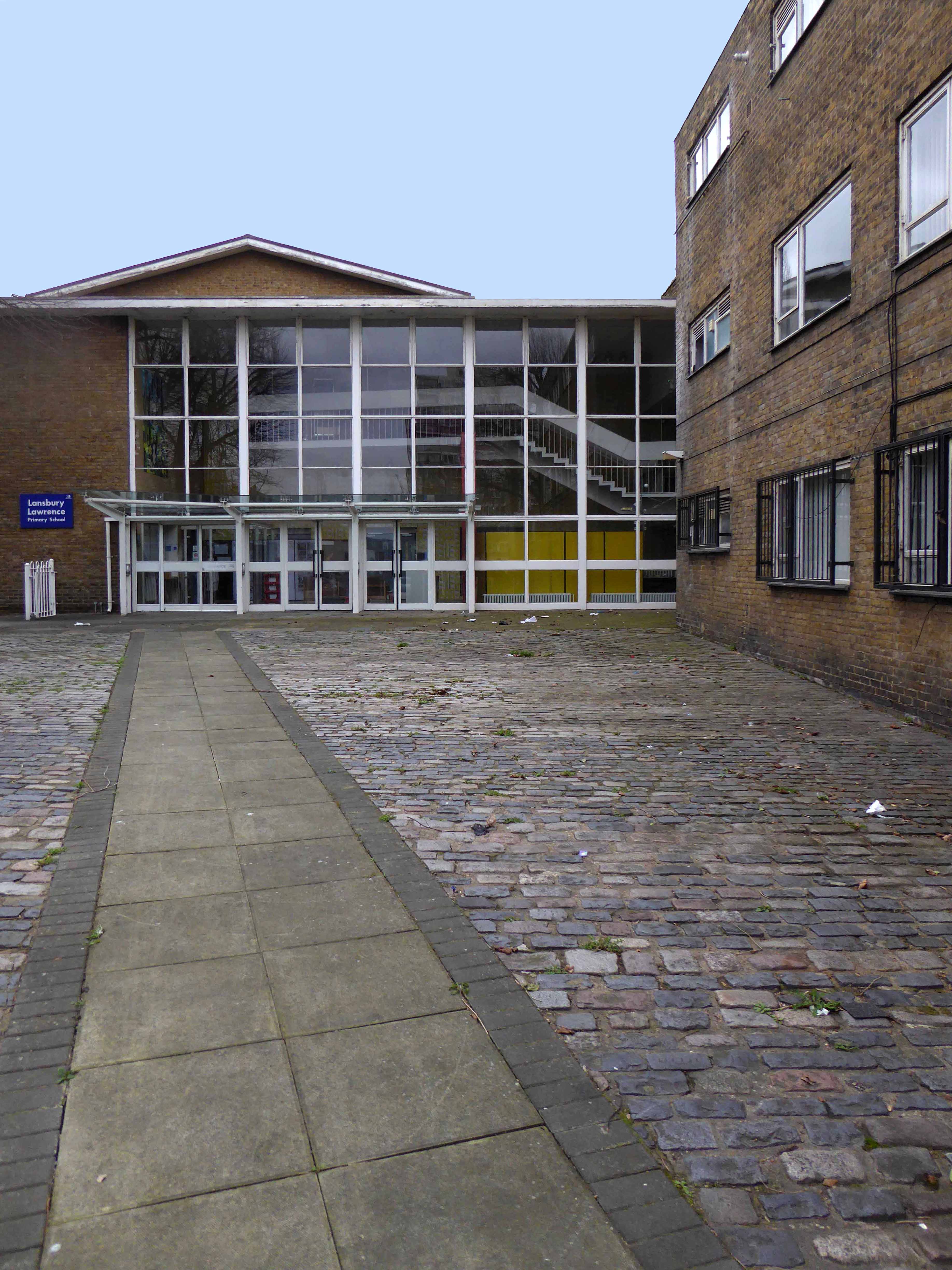
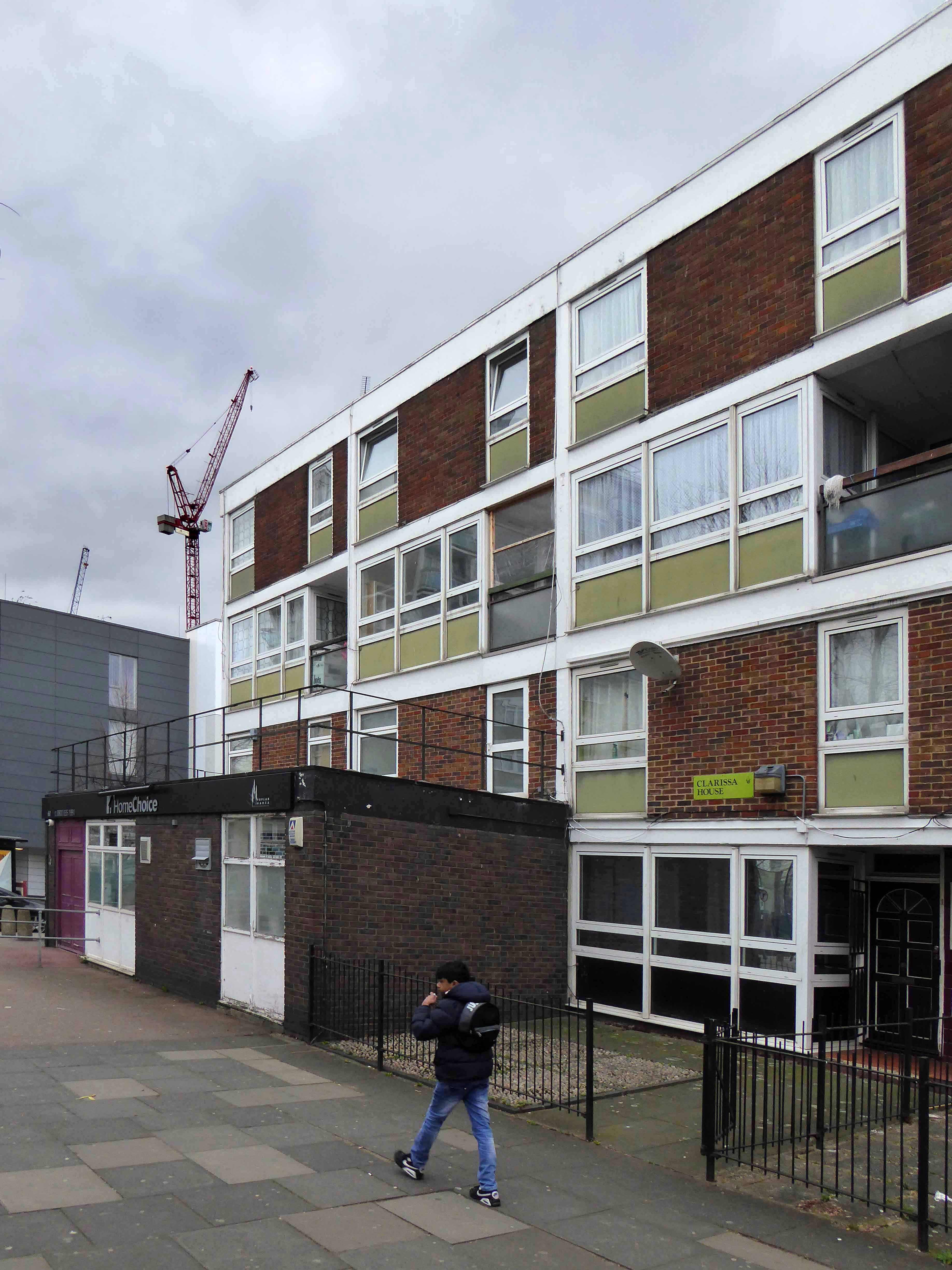
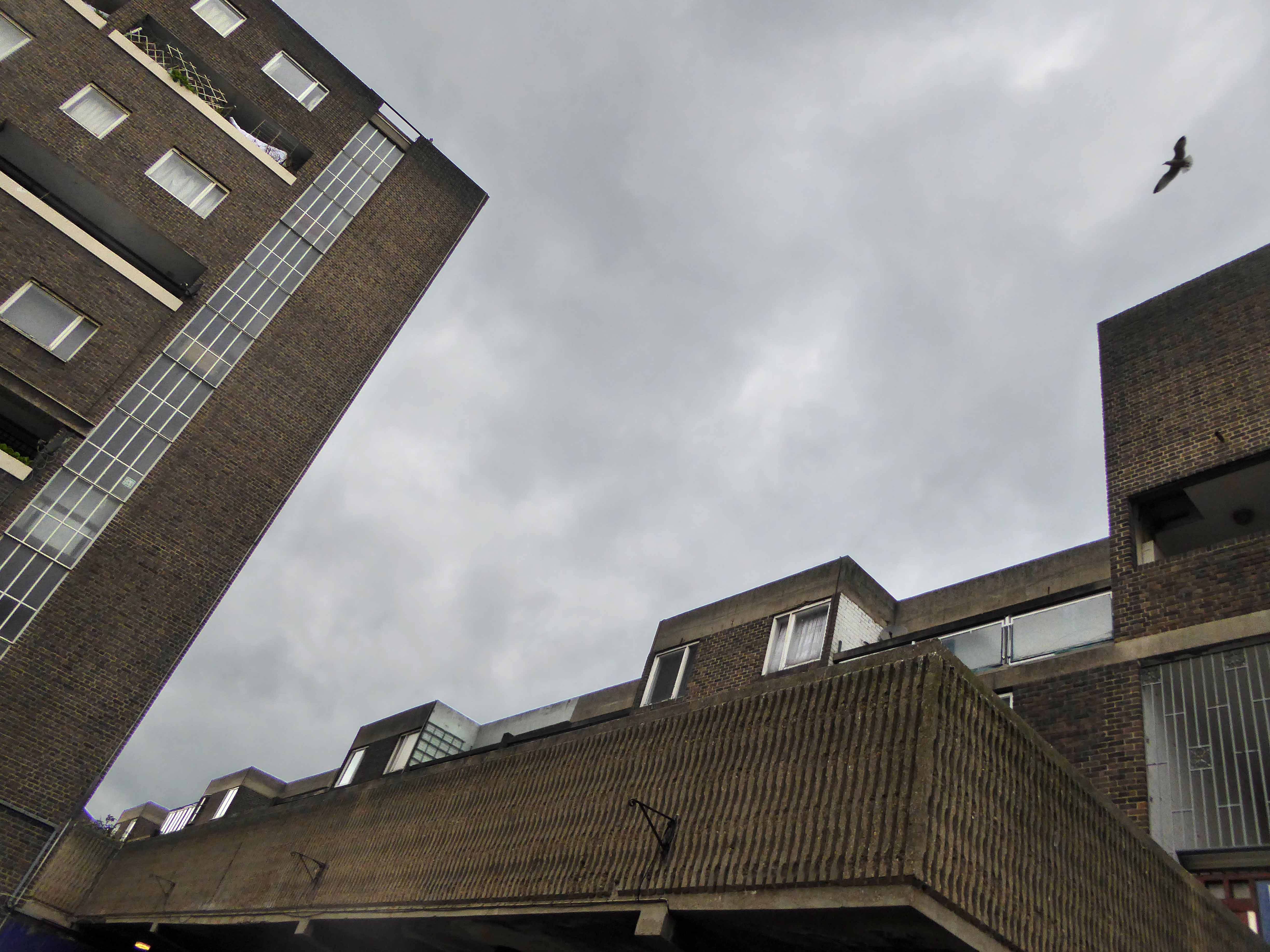
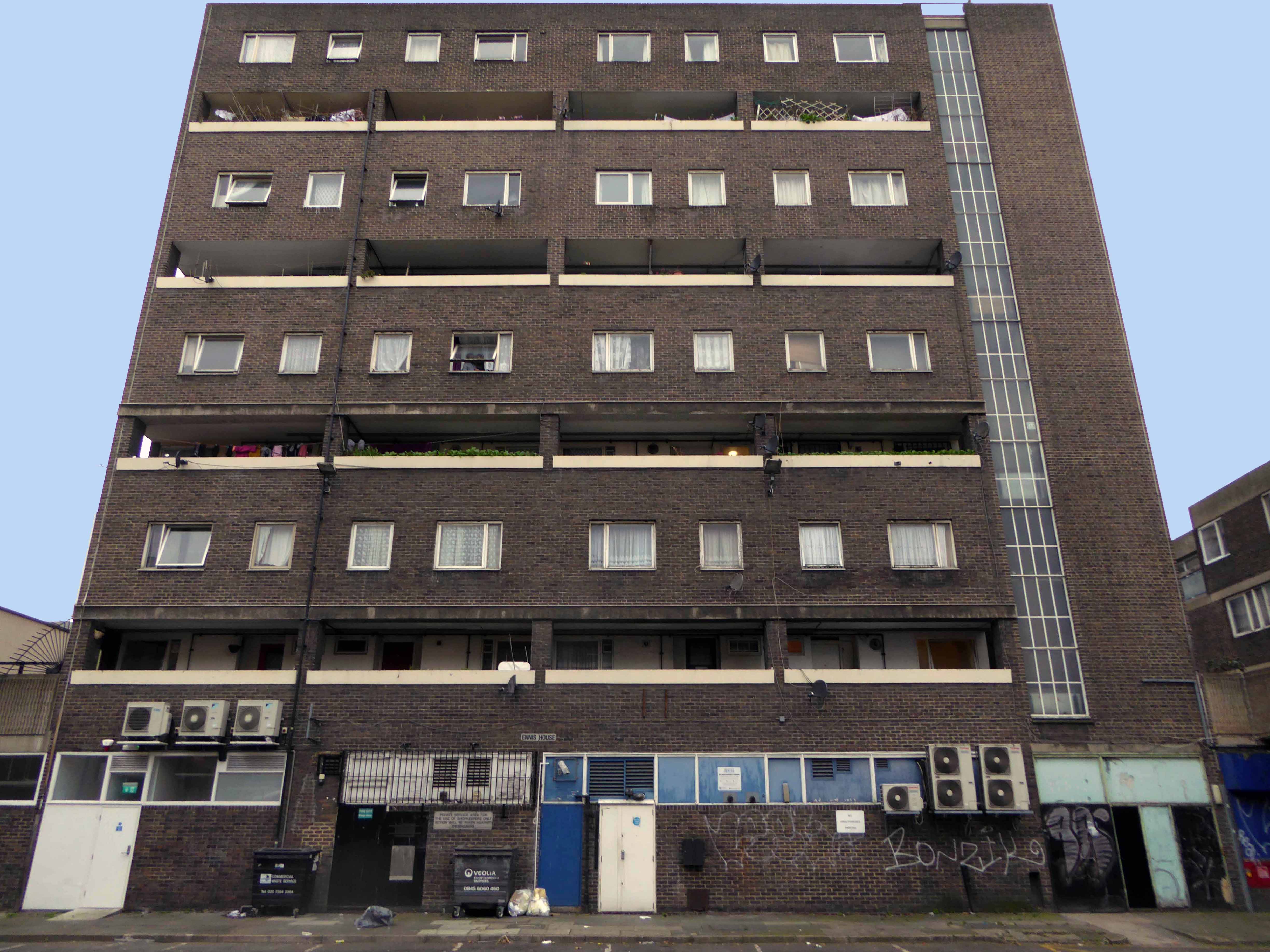
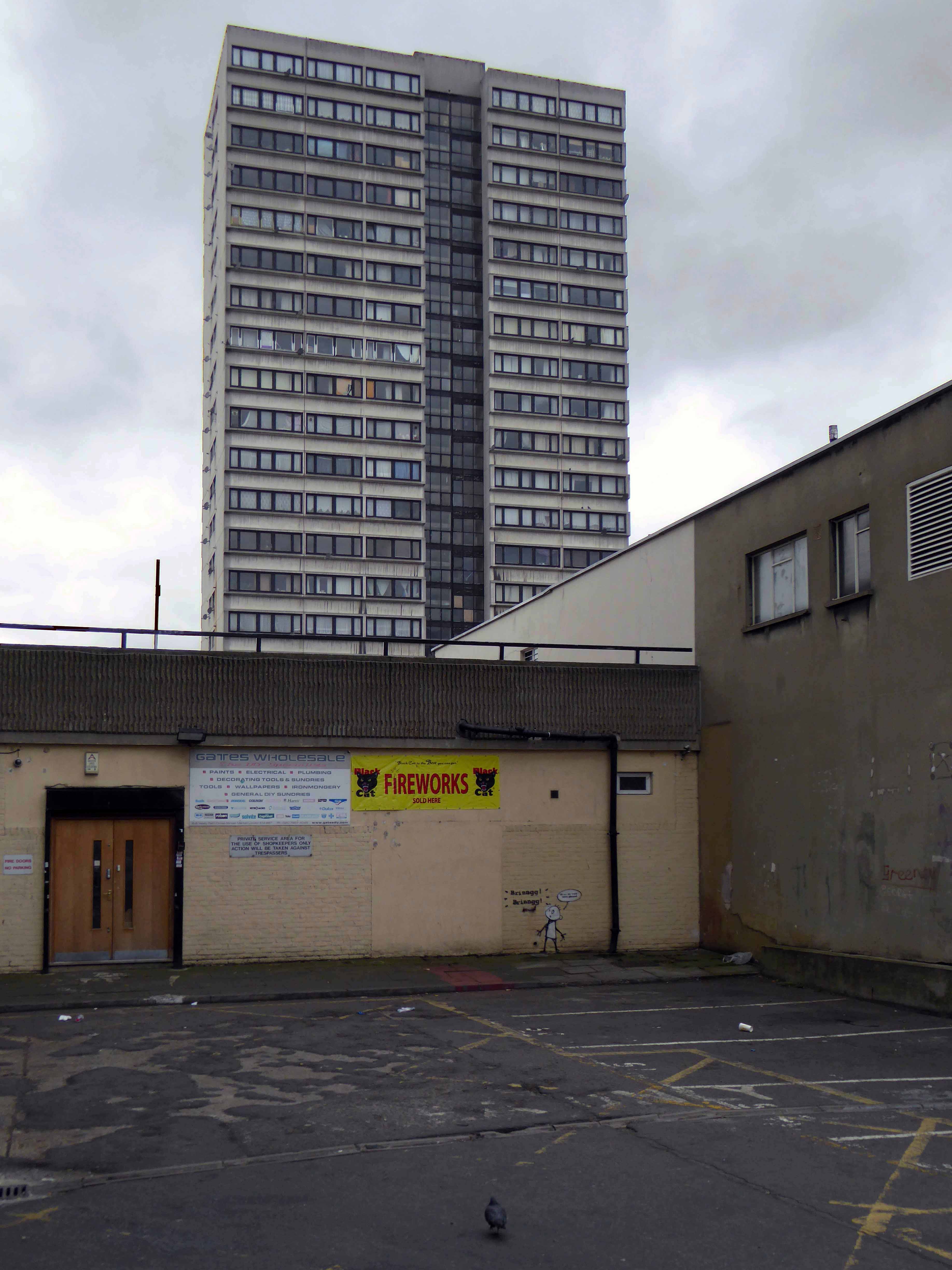
The Lansbury Estate, to the north of East India Dock Road, is the most important, largest and best-known council estate in Poplar. It demonstrates the different trends in post-war council house design and layout. The interest of the estate lies as much, if not more, in the story of its planning and construction, as in what was actually built. This is especially true of its first phase, which formed the basis of the Live Architecture Exhibition in the 1951 Festival of Britain.

lansbury-neighbourhood-map-1951


Originally outlined in the 1943 plan for London, replacing the bomb damaged homes of displaced dockers, the estate has weathered well enough, though changes in demographics, the ever greater engulfing tide of gentrification and the containerisation of all ports, brings a fresh set of challenges and changes.

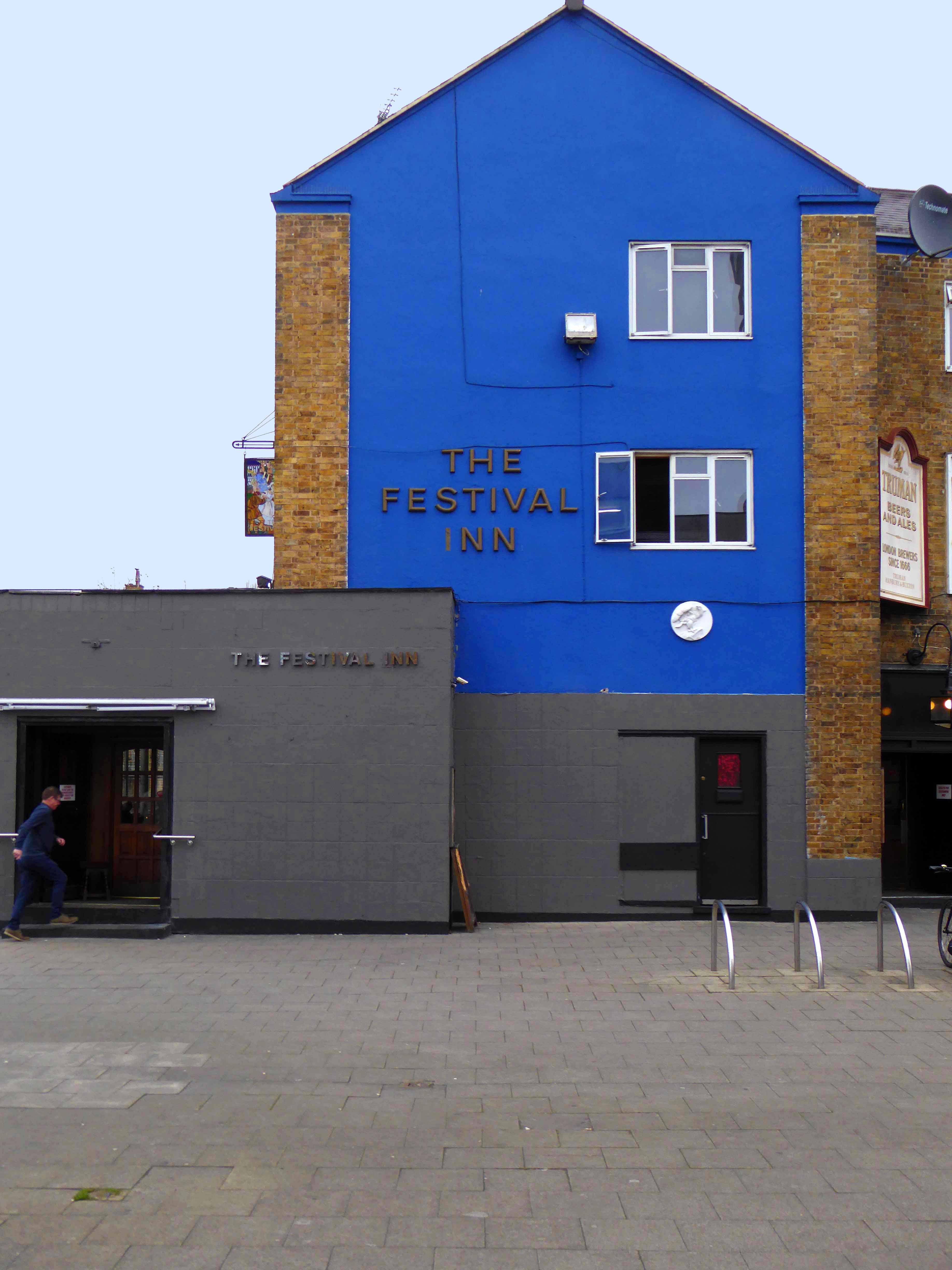
Go east – I visited the V&A Micro Museum, which has become a focus for residents’ and visitors’  memories and projections of a certain uncertain past and future. Arriving by the Docklands Light Railway, I was immediately drawn towards my destination, by the prominent Lansbury Tower, its clock patiently ticking away the time to and from 1951. Welcomed by staff and fellow travellers at the Chrisp Street Market site we began our tour at the heart of the Festival area – further details of which can be found here at Municipal Dreams.

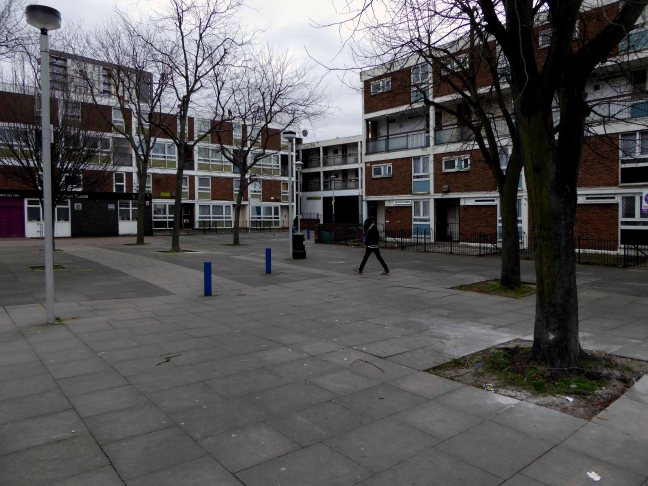
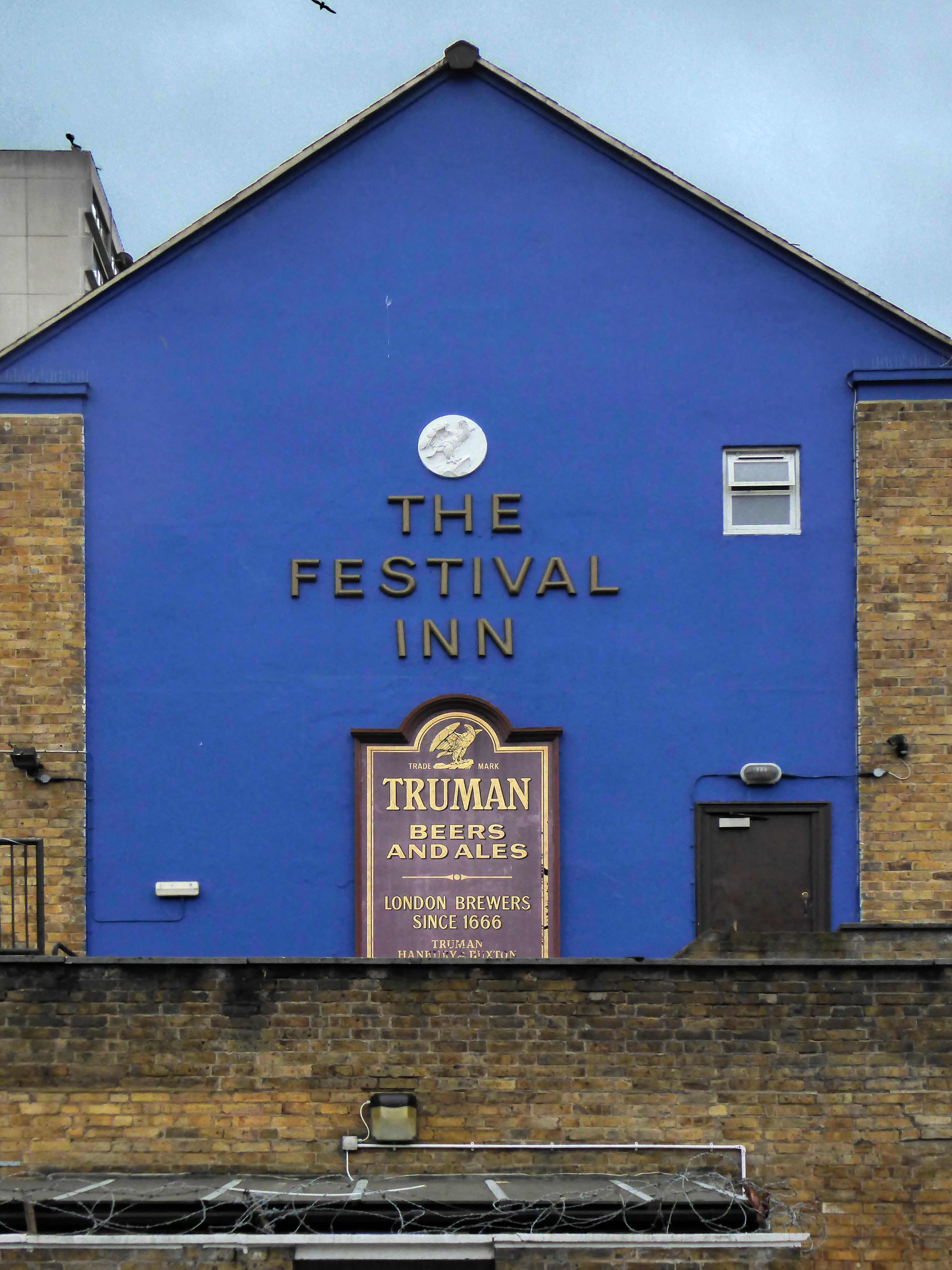
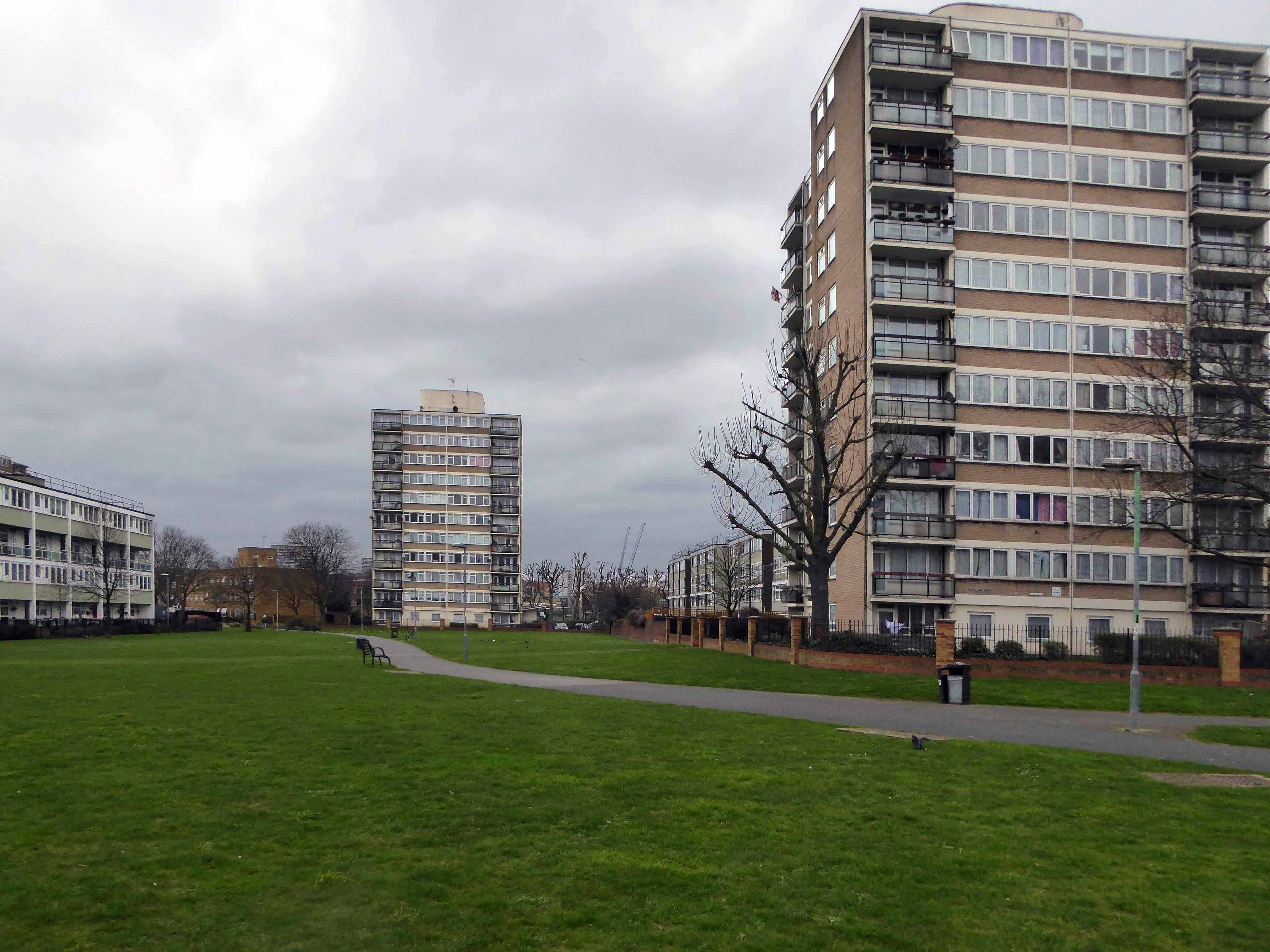
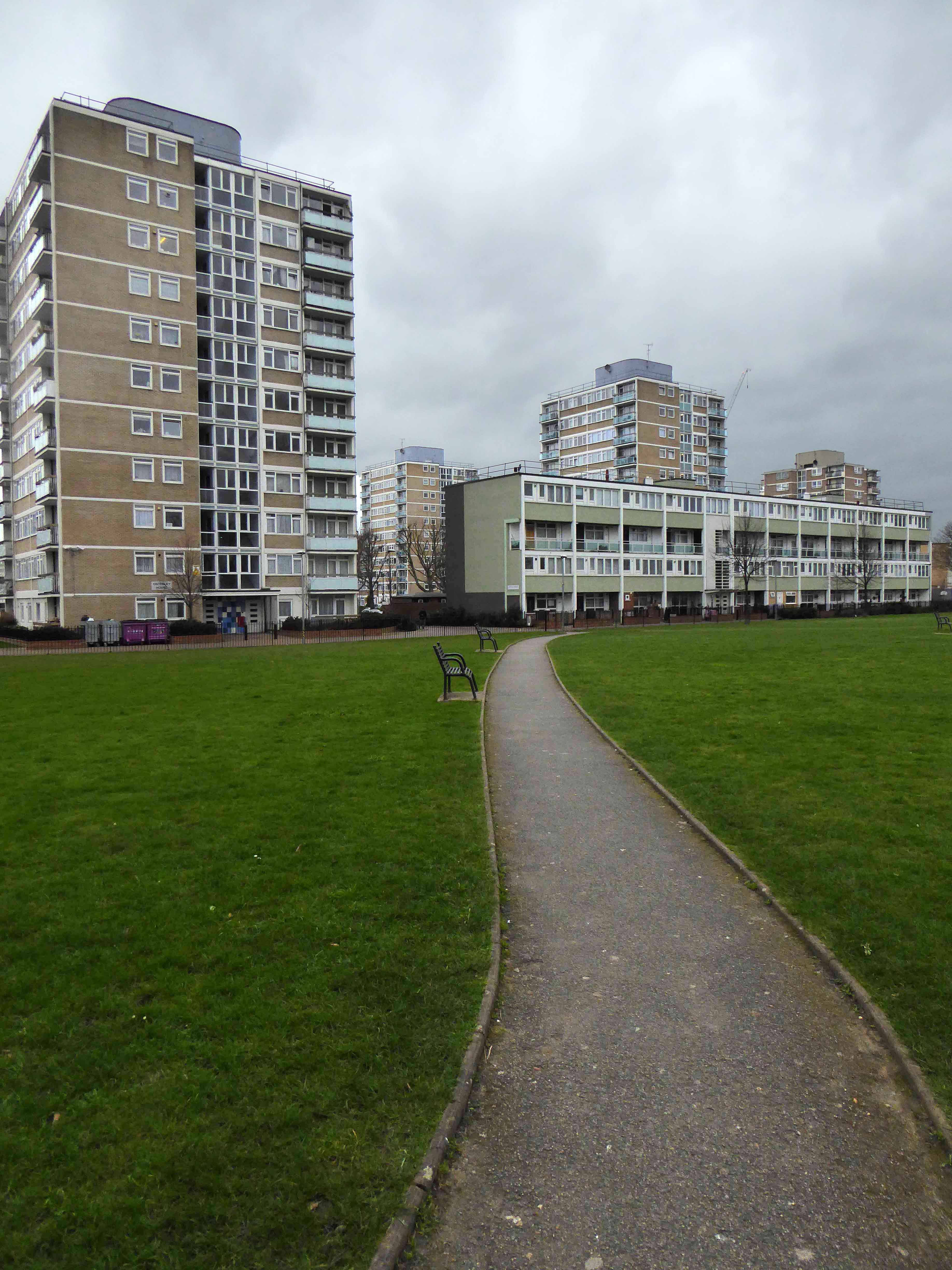
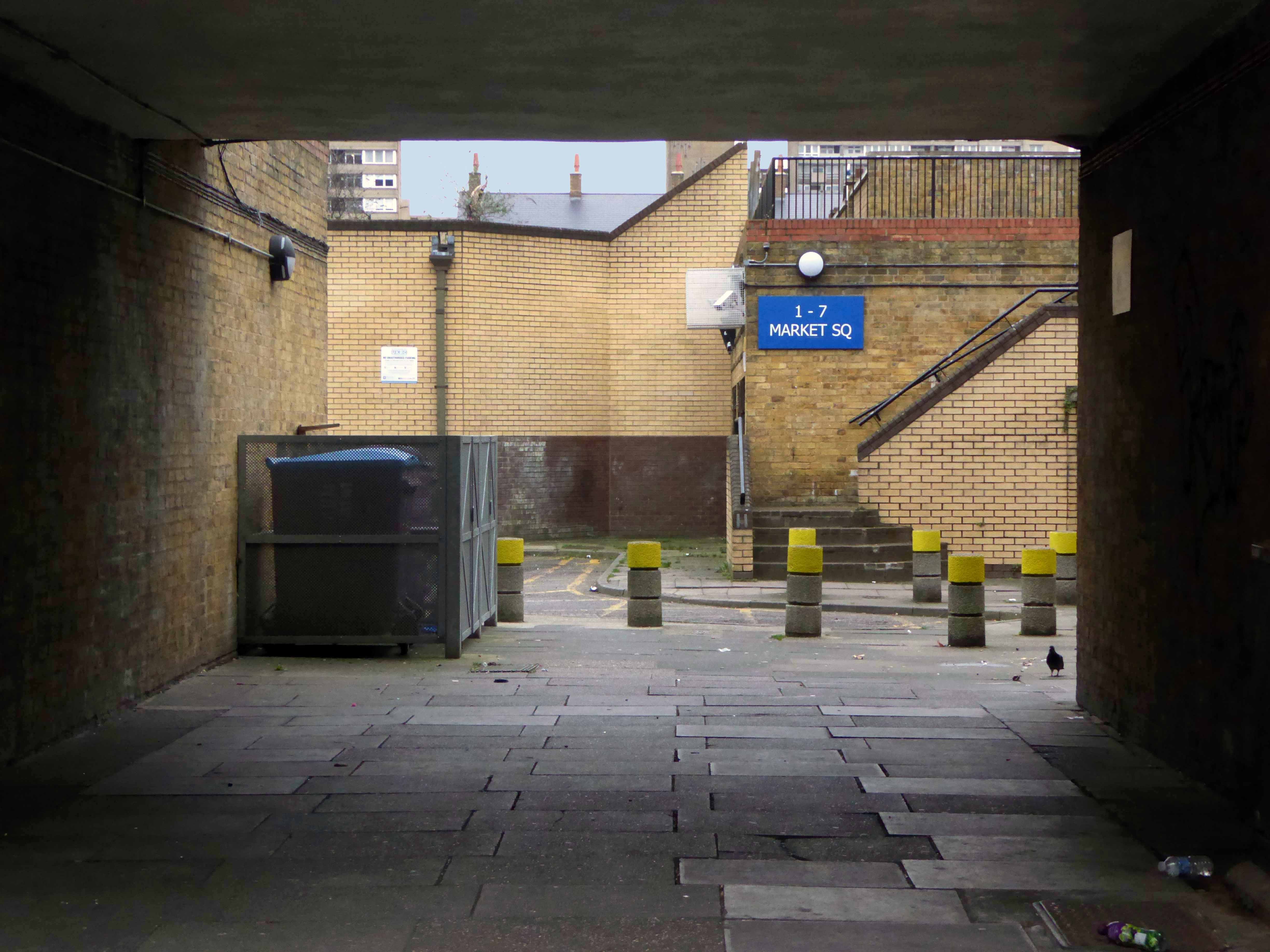
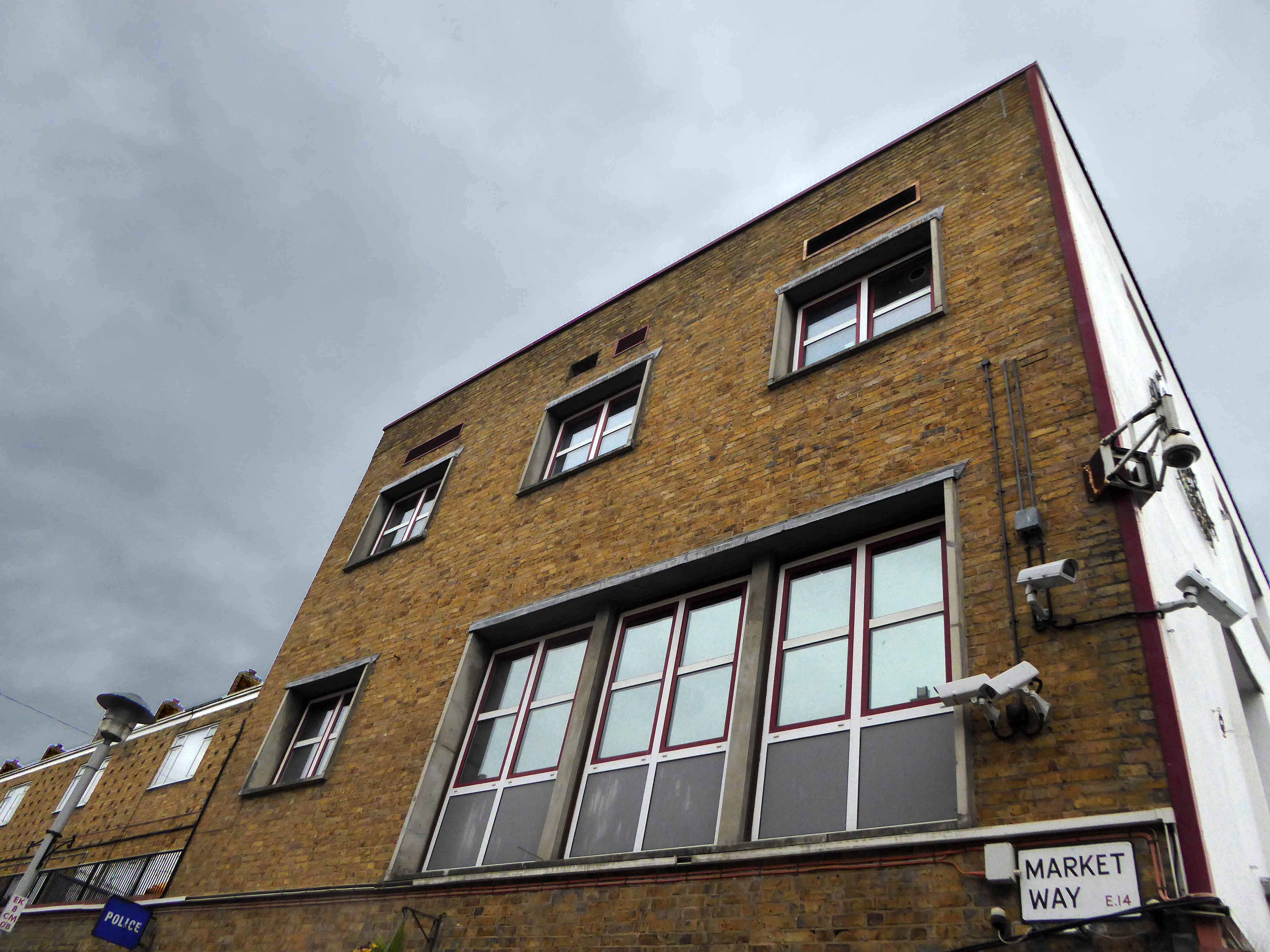
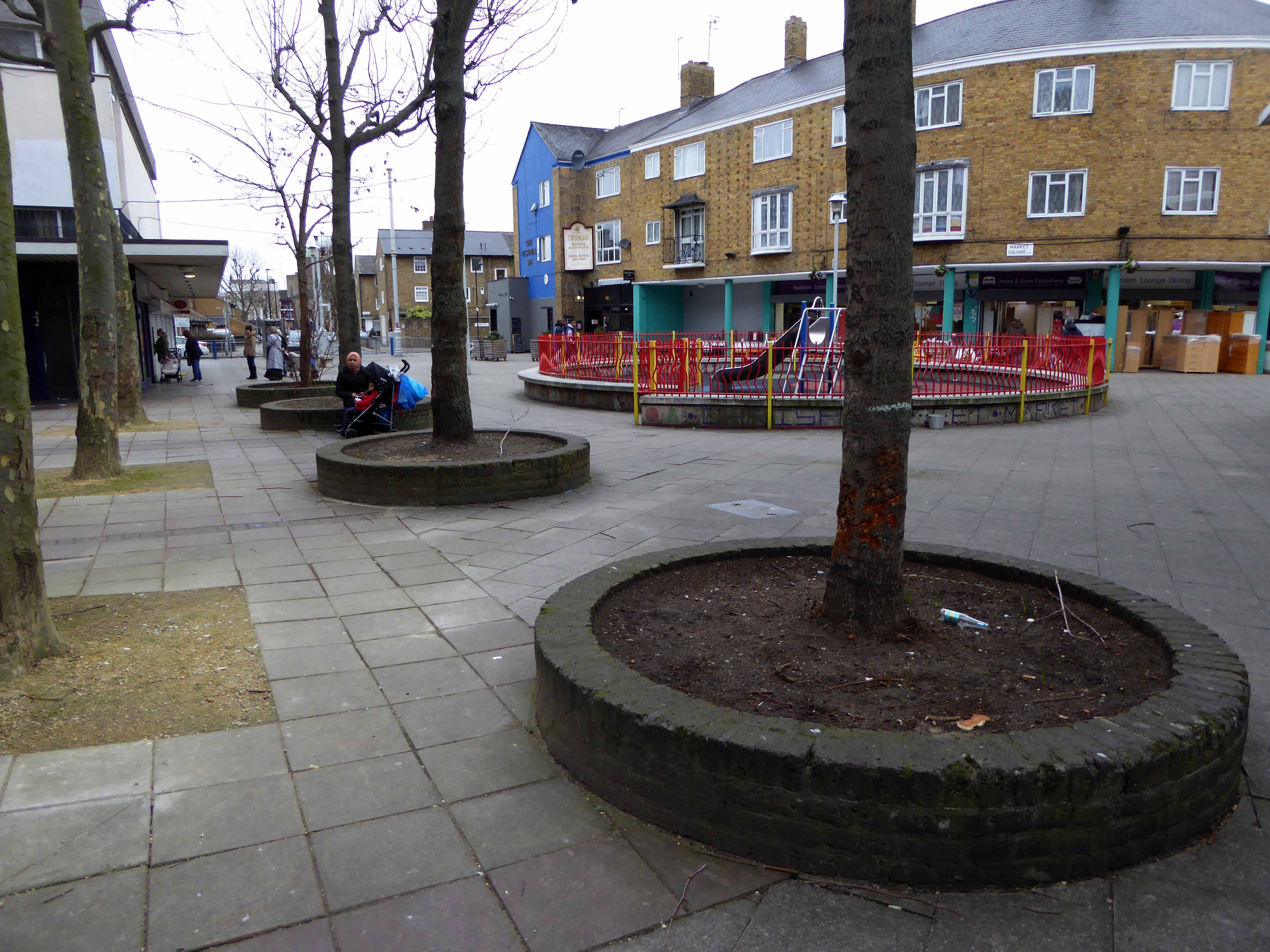
A mix of market, shops, Festival pub, warm cream London brick terraces and low rise, later tower blocks, schools, churches and open grassed communal areas. On a cold and getting colder late winter’s day, a smattering of residents went purposefully about their business.

Life goes on.

Next time everything’s going to be different.

P1130822 copy

P1130821 copy

P1130820 copy

P1130819 copy

P1130818 copy

P1130817 copy

P1130815 copy


P1130812 copy

P1130811 copy

P1130810 copy

P1130809 copy

P1130807 copy

P1130806 copy

P1130805 copy

P1130803 copy

P1130800 copy

P1130796 copy

P1130794 copy

P1130793 copy

P1130788 copy

P1130786 copy

P1130785 copy

P1130784 copy

P1130783 copy

P1130781 copy

P1130769 copy

P1130767 copy

P1130754 copy

P1130753 copy

P1130751 copy


Seven Sisters – Return to Rochdale

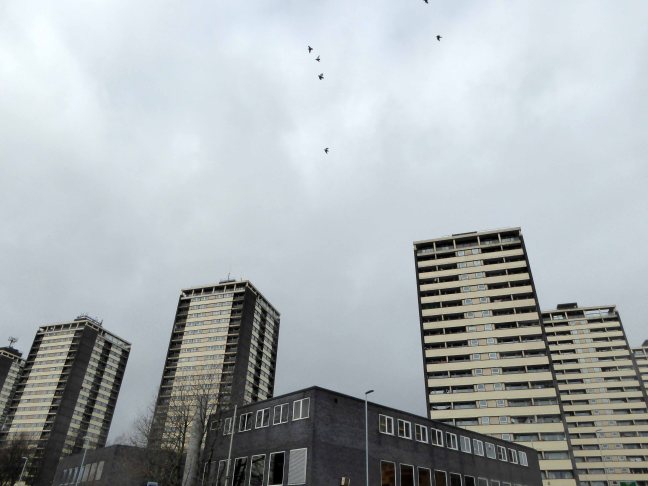
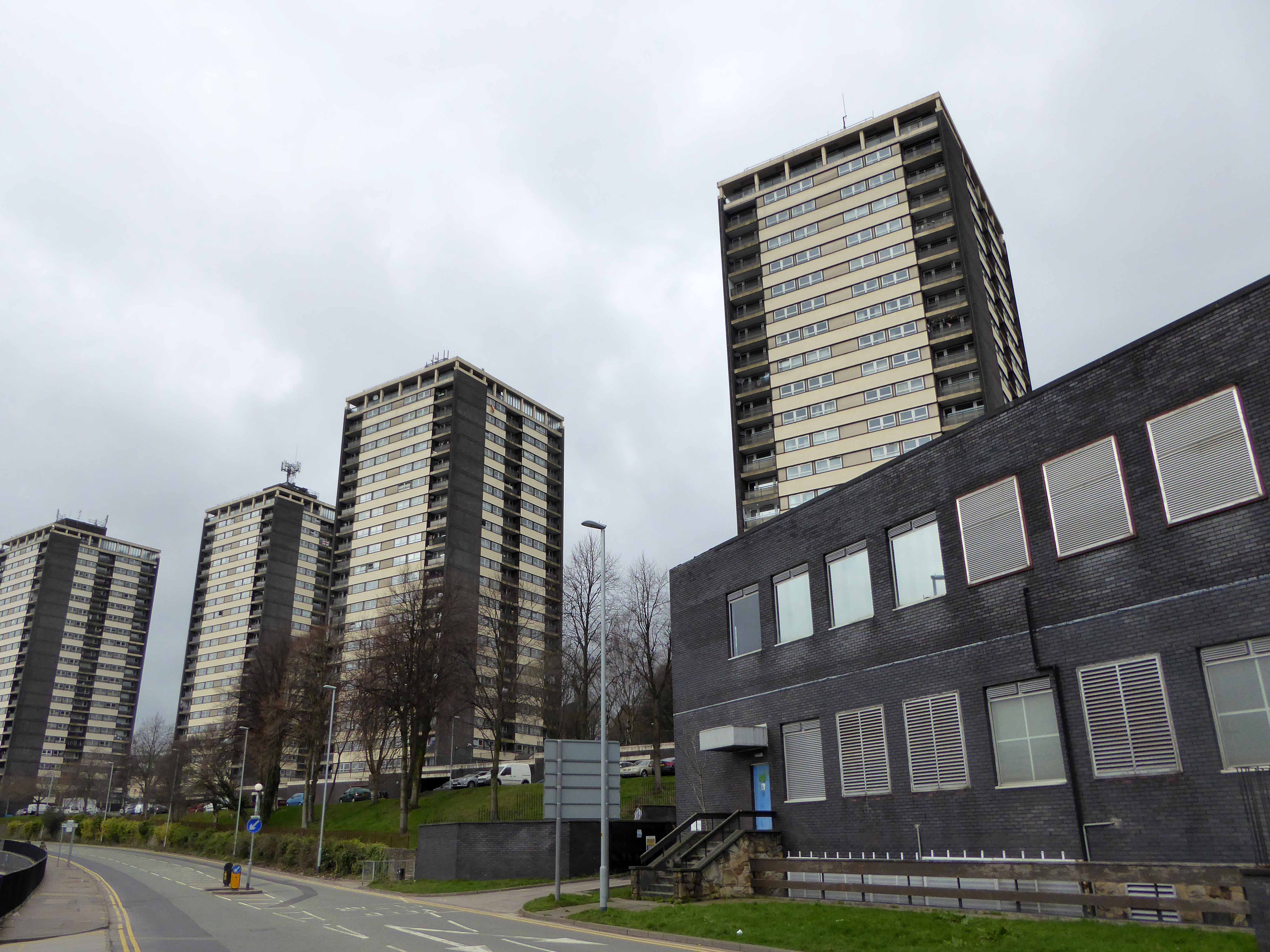
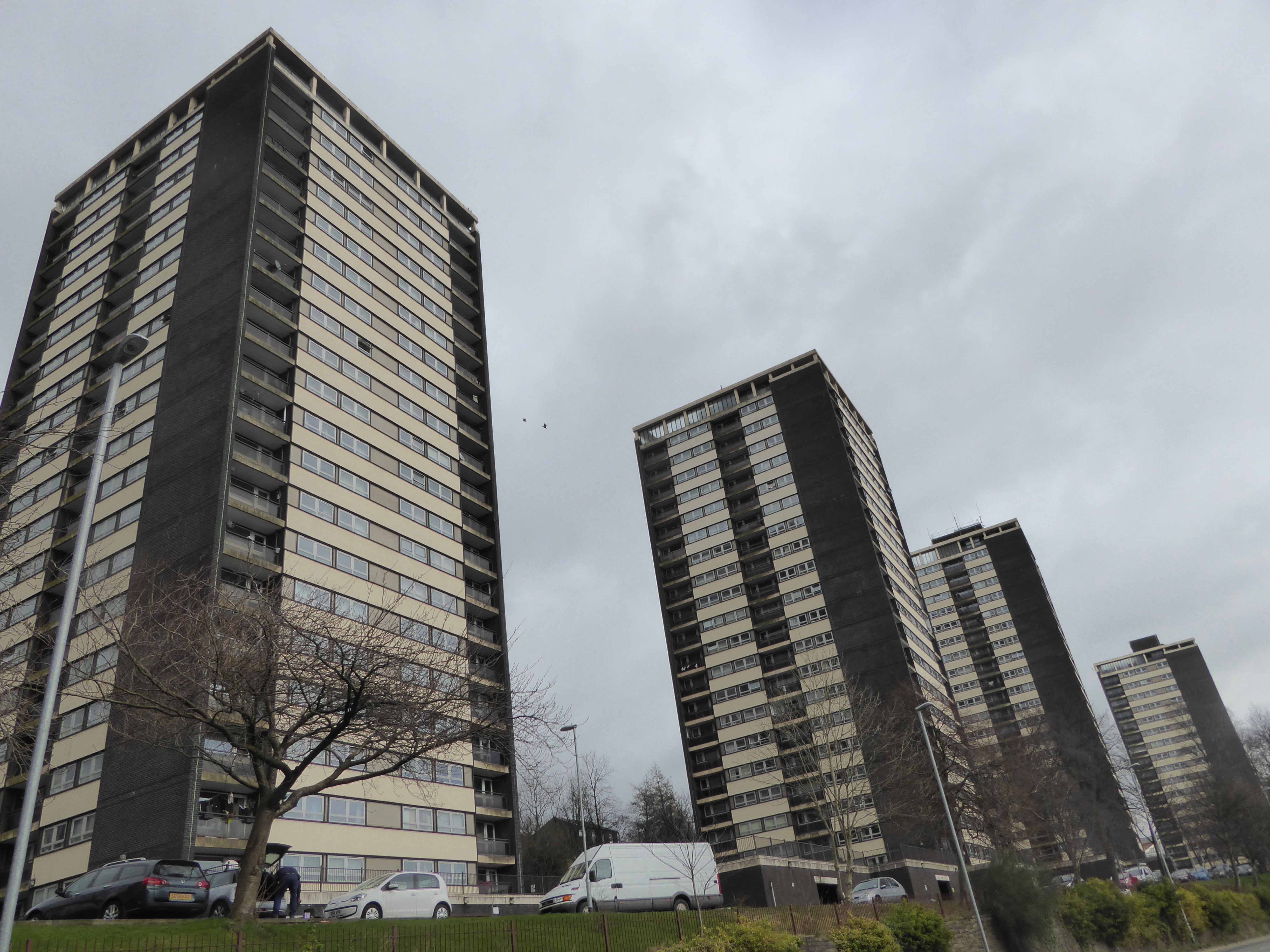
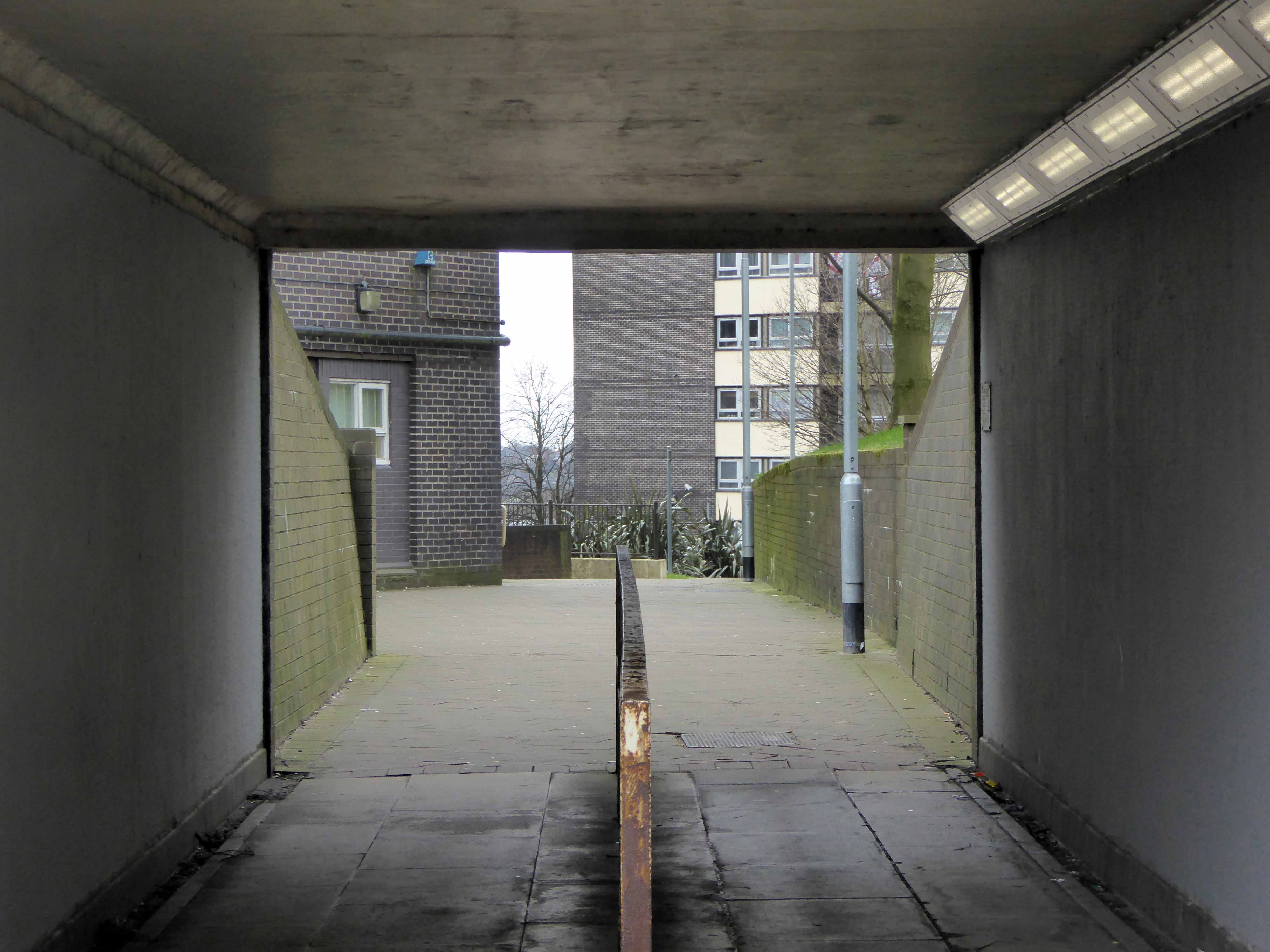
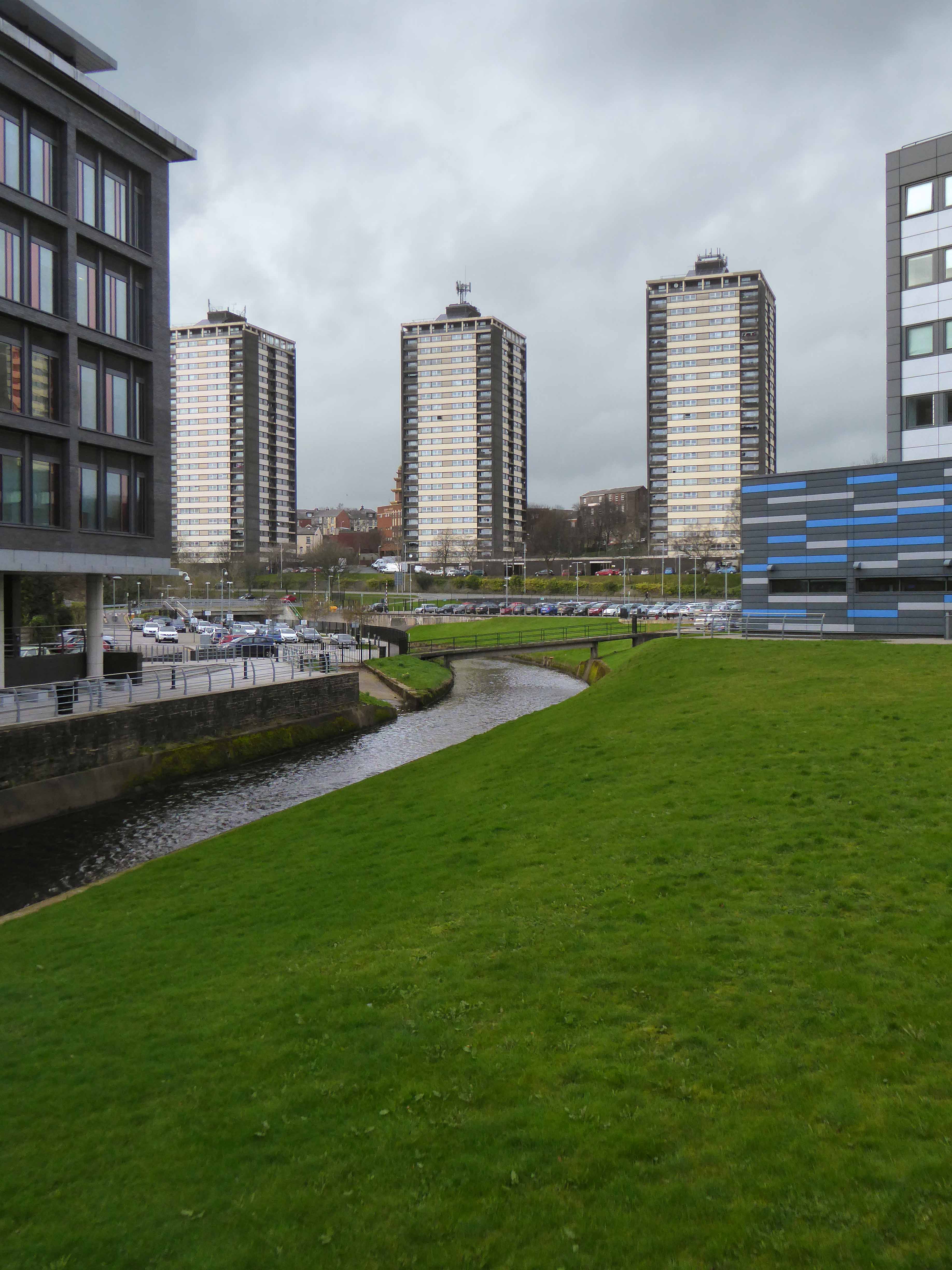
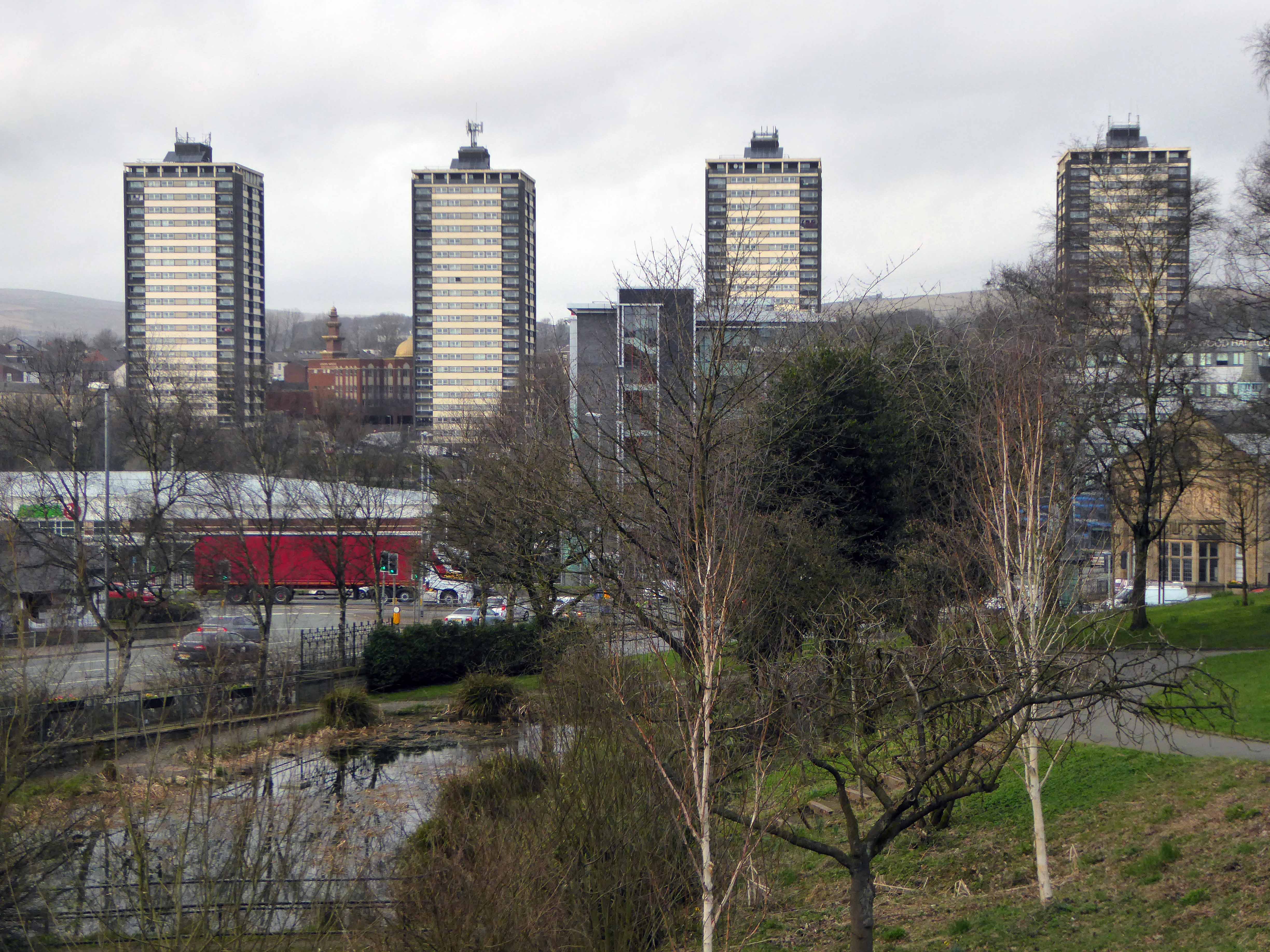
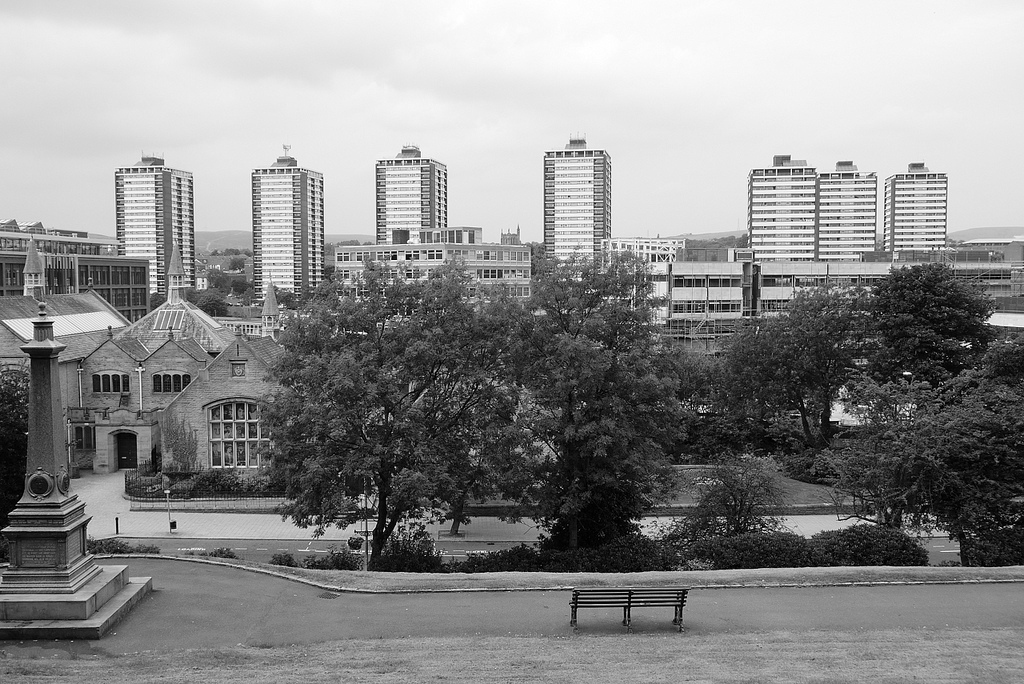
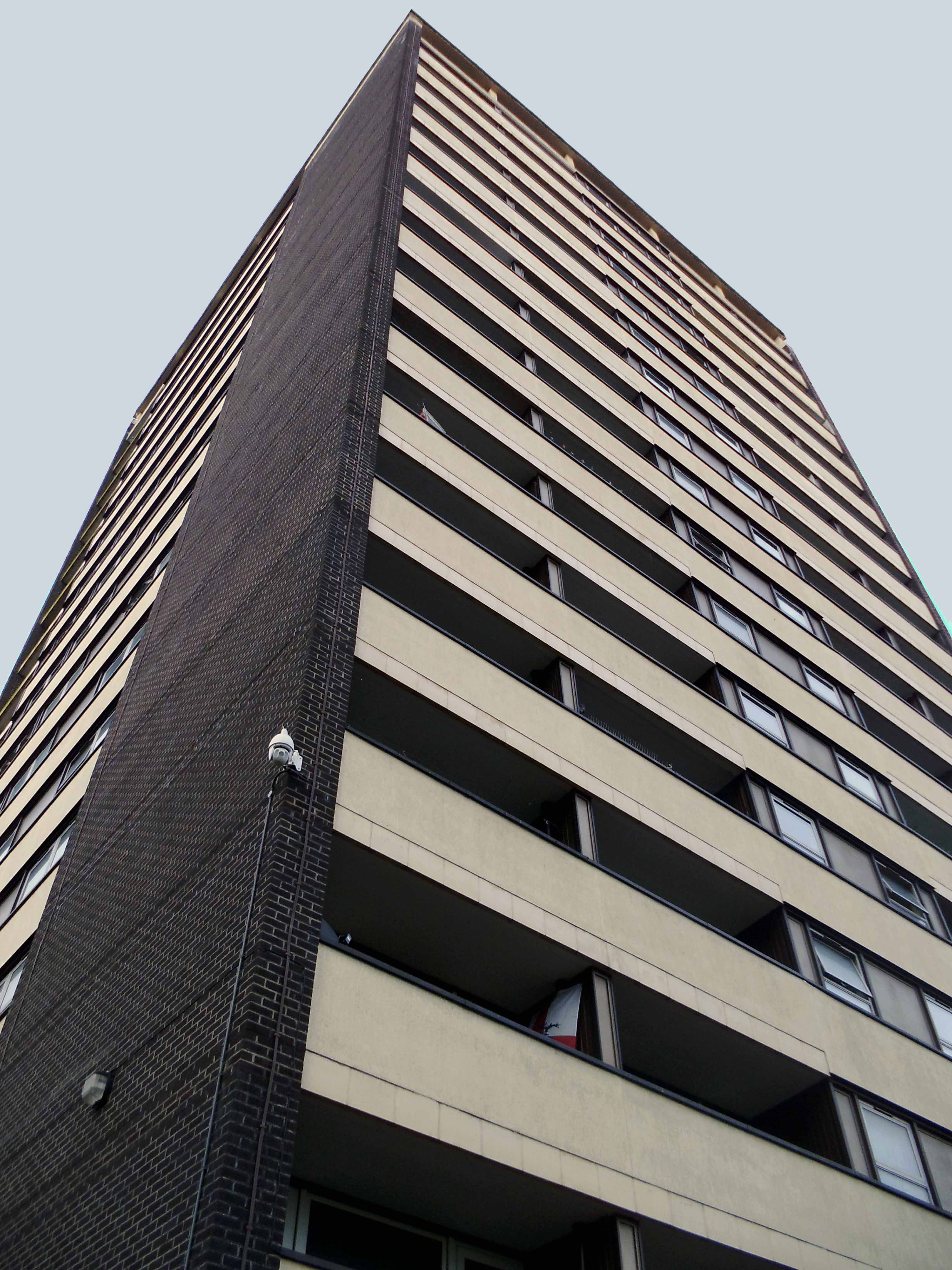
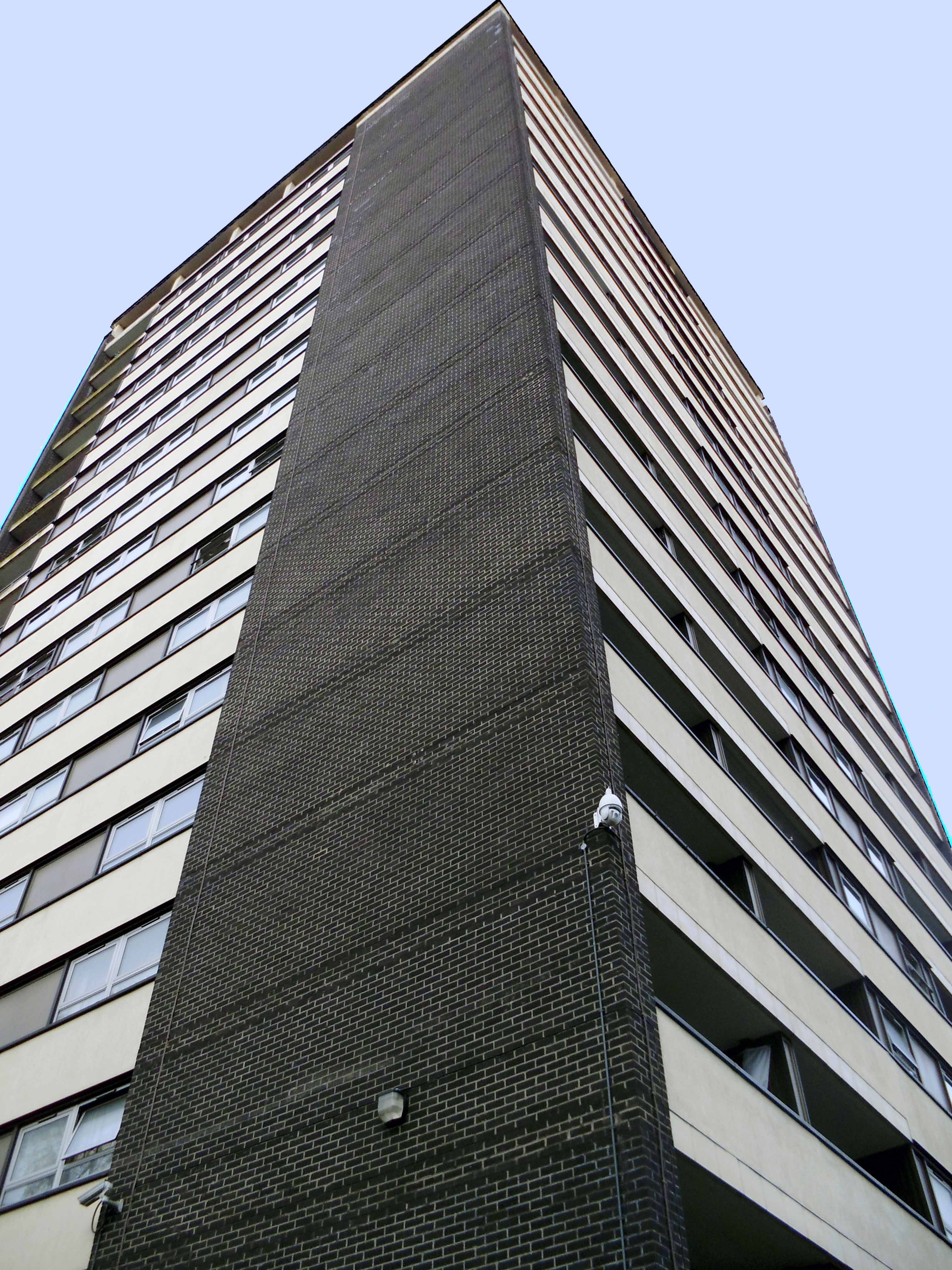
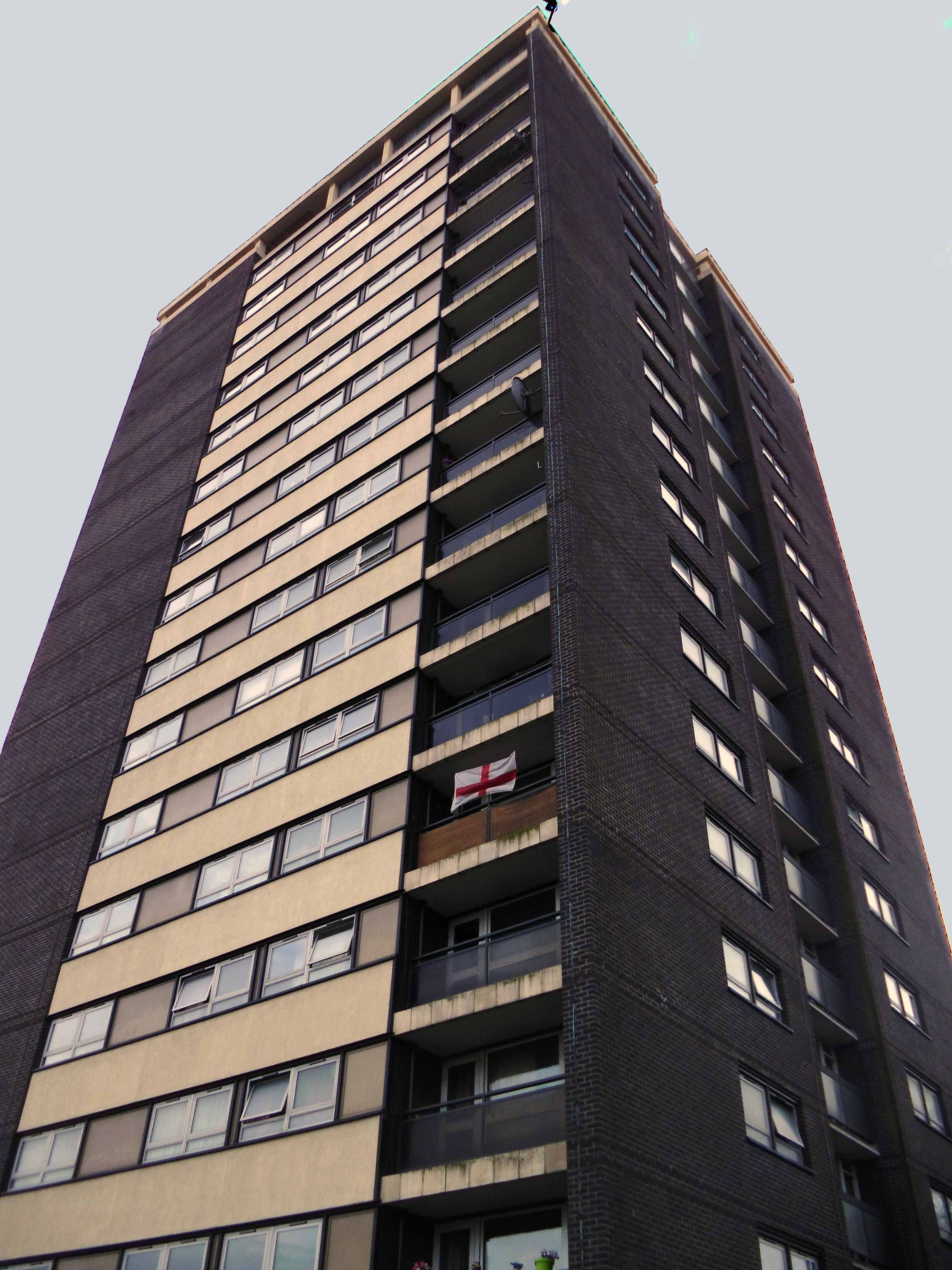
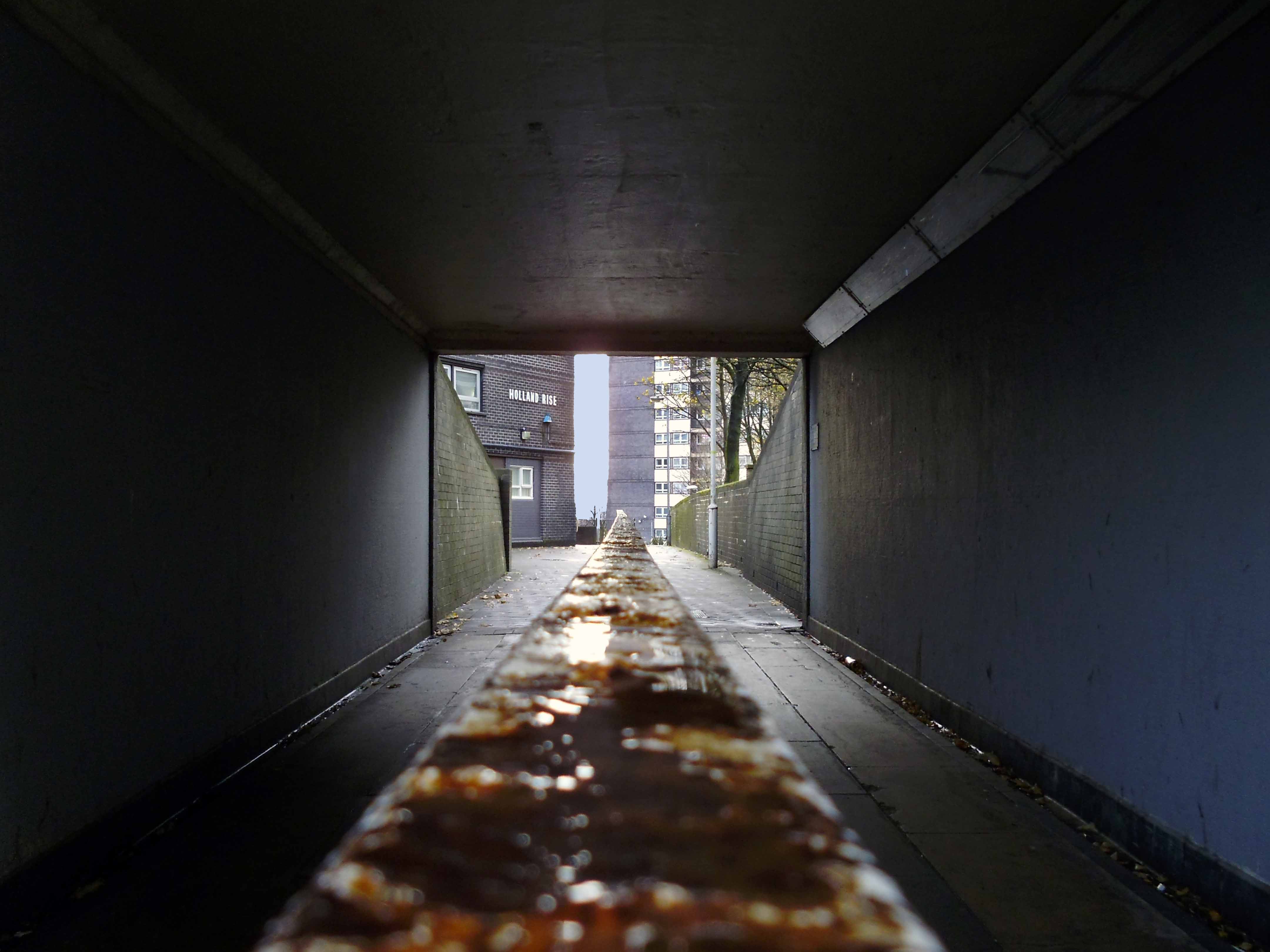
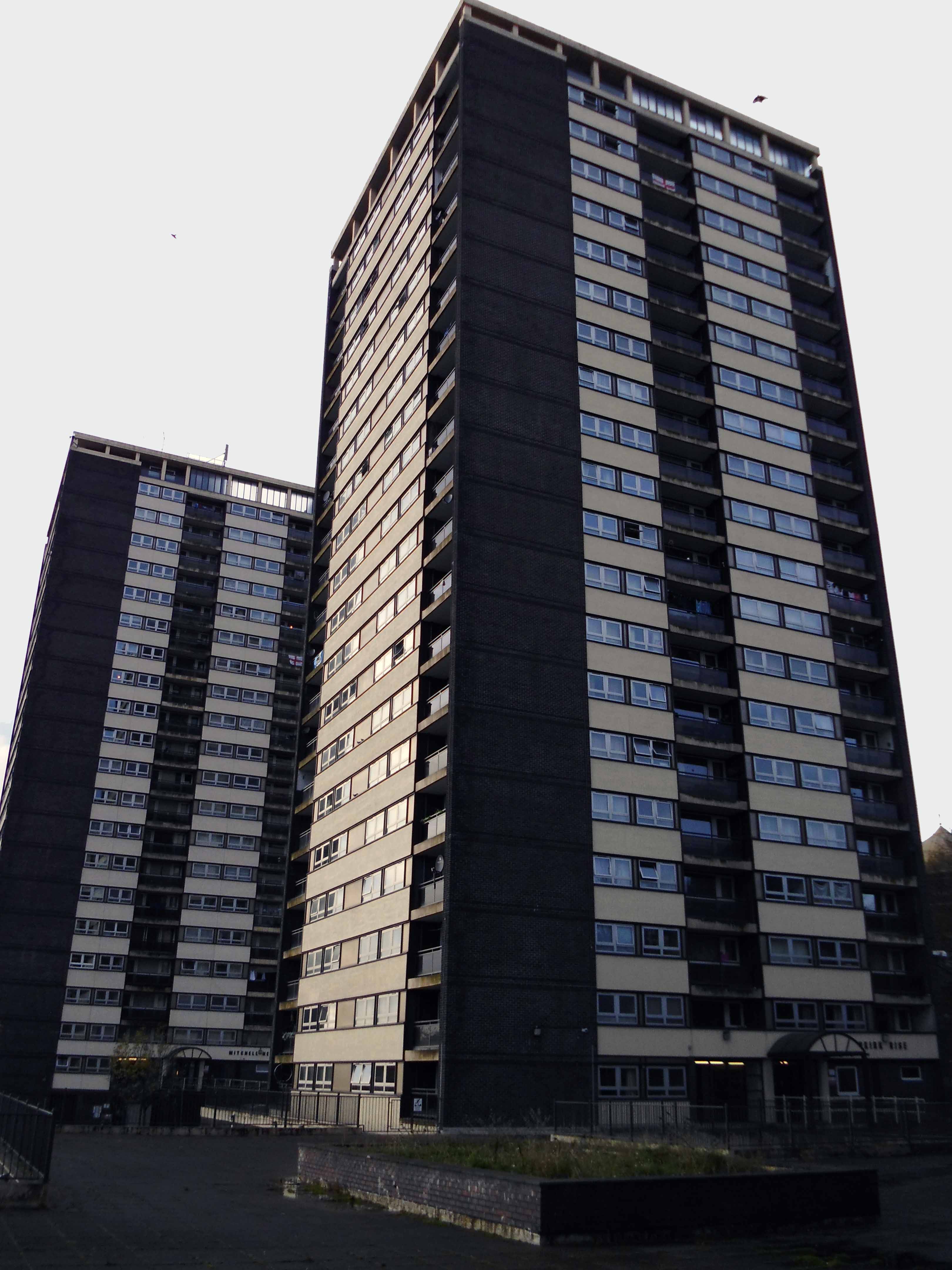
I’ve passed this way before, they’re hard to miss, seven substantial tower blocks towering over the town on College Bank.

But what goes up, may come down.

Screen Shot 2017-03-23 at 13.53.11

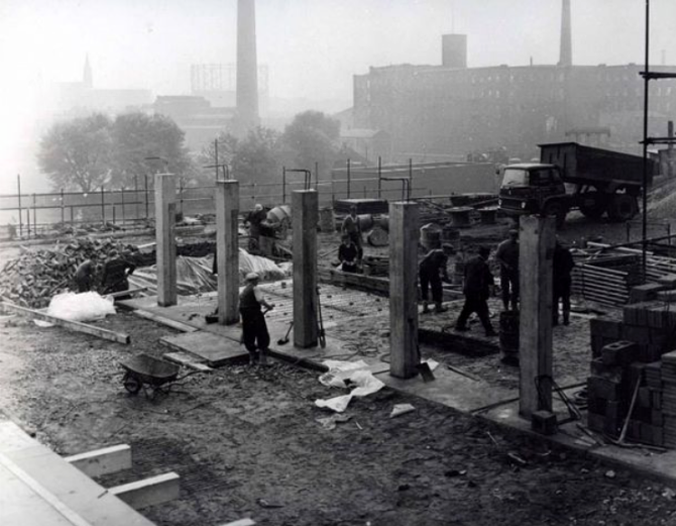
Construction in 1963

Demolition in 2017 is one suggestion – following years of poor maintenance, problems of heating and ingress, plus a whole host of other reasons outlined here.

Screen Shot 2017-03-23 at 13.50.02

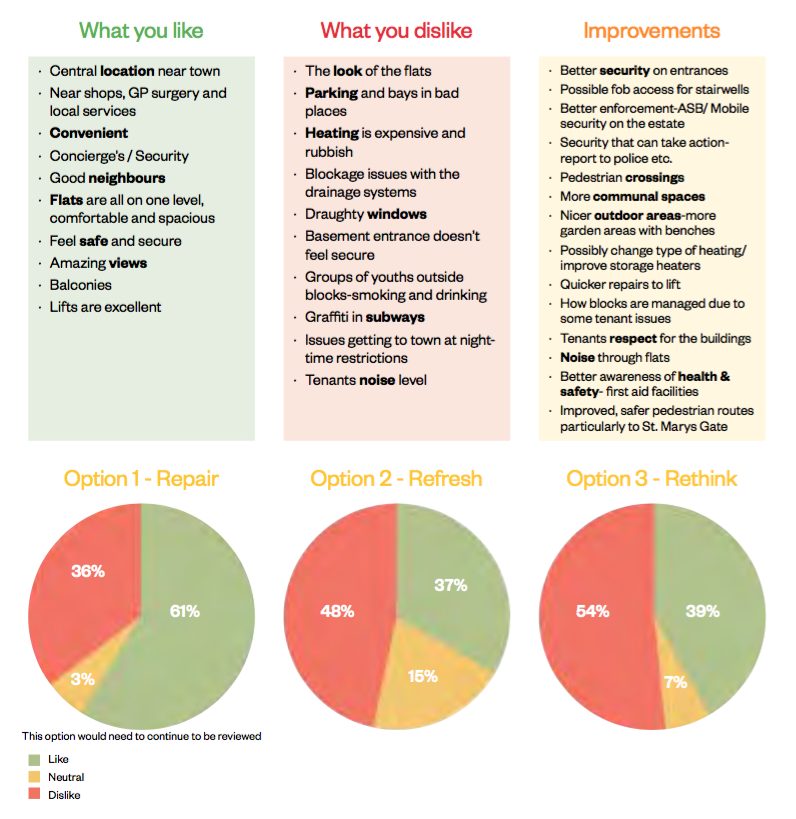
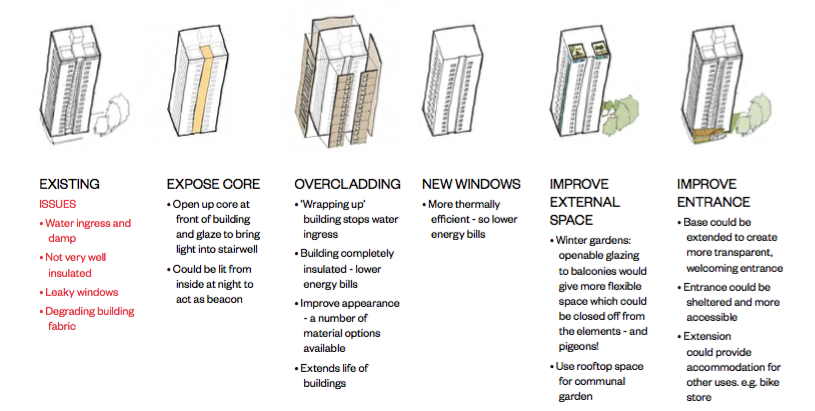
The housing trust in consultation with residents, have produced a tentative plan.

Screen Shot 2017-03-23 at 13.50.49

This may or may not include the demolition of one or more blocks. On the day of my visit, the tenants I spoke with understood that the blocks faced an uncertain future, and were rightly concerned by the rumours and conjecture. The majority would prefer to stay put, having lived there for several years, raising families and building  homes.

Whatever the outcome I hope that the wishes of the residents are not overwhelmed by political expedience, or the will of the developer.

Take a look for yourself.

P1140328 copy

P1140335 copy

P1140337 copy

P1140339 copy

P1140340 copy

P1140346 copy

P1140347 copy

P1140348 copy

P1140350 copy

P1140351 copy

P1140353 copy

P1140355 copy

P1140356 copy

P1140358 copy

P1140362 copy

P1140370 copy

P1140372 copy

P1140374 copy

P1140444 copy

P1140445 copy


Lower Falinge – Rochdale

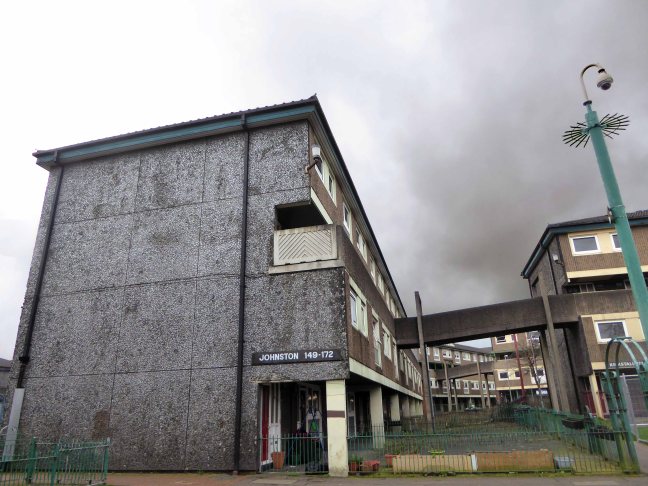
Walking between College Bank flats and St Patrick’s church you and I will almost inevitably pass through Lower Falinge.

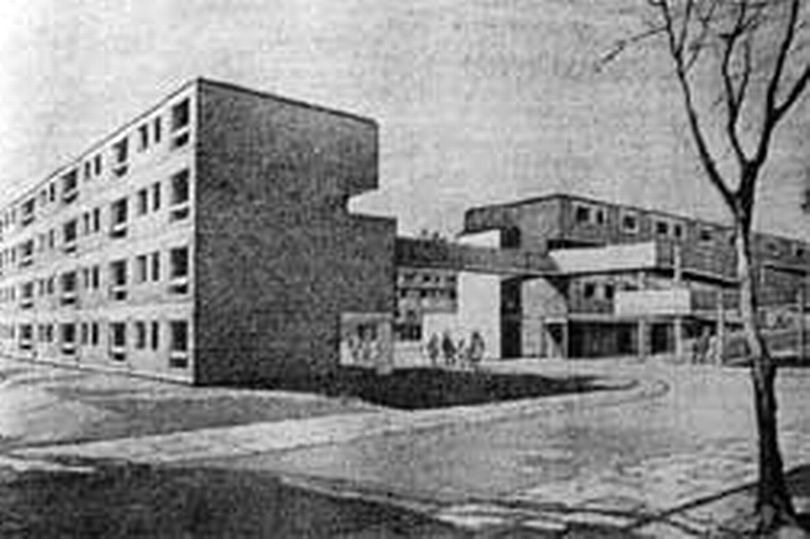
In April 1967 Rochdale Council’s Estates Committee considered a proposal to build 750 dwellings in four-storey deck access flats in the Falinge area. By November the £1,810,000 scheme for the area bounded by Spotland Road, Hudson Street and Toad Lane was given the thumbs up.

C_71_article_515340_body_articleblock_0_bodyimage

The four-storey development was to provide 527 dwellings with deck access, ramps and overheard walkways. It was planned so people could walk from any point in the area to another without having to return to ground level. Work began in early 1968 and was completed in three stages. More recently they have been up-graded and now have pitched roofs. Freehold Flats were built in the early 1970s. Eleven of the eventual 19 blocks were occupied by August 1971. 

Redevelopment_in_Falinge,_Rochdale,_Lancashire_-_geograph.org.uk_-_1395299

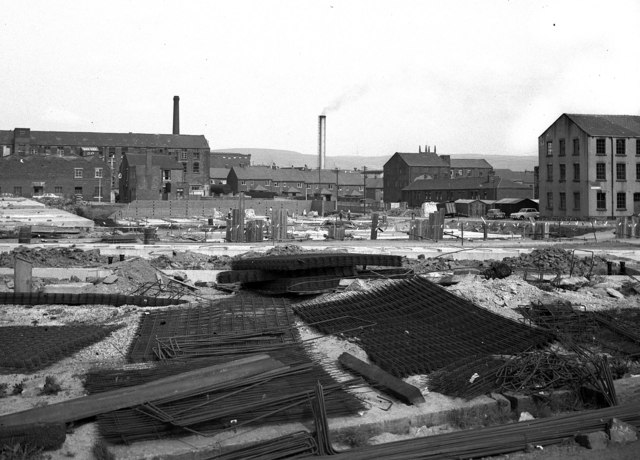
Built at a time when full employment was a tangible reality rather than a fondly recounted folk memory, the area was buoyant and relatively prosperous.

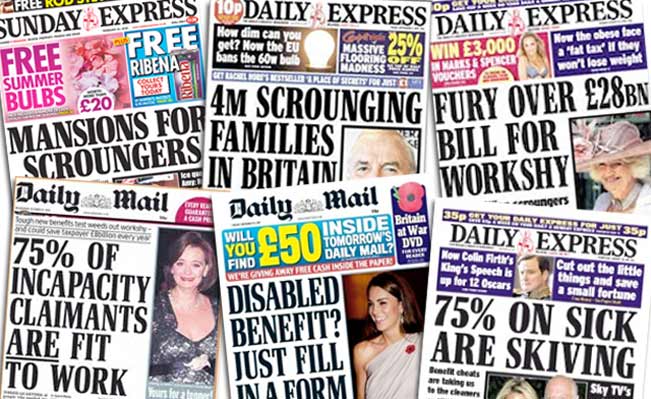
Time, the free market, and casualised labour has not been kind to Lower Falinge and many other post-industrial estates. The Thatcherite press conveniently badges the residents as scum, scroungers and frauds, a carefully conceived sleight of hand, transferring responsibility onto those careless enough to become the victims of an uncaring economic system.

scroungers_headlines_lg

Demonising and dividing working people regardless of ethnicity, ability, sexuality or ability – the equal opportunities abuser.

A few years ago there was even a national news story about a Falinge café serving fry-ups with a can of Stella for £2.50, this was untrue.

So Lower Falinge and its like become the convenient exemplar for the inconvenience of Broken Britain, a PR device to whitewash the very dirty hands that authored its very dirty demise. Those very dirty hands that have no viable solution to a very real problem, of resolving poor peoples’ uncertain futures.

Meanwhile the journalists form a disorderly queue to file the next in line, online assessment of an awful situation devoid of resolution, short of revolution.

2008826_152139

2016126_162425

Transferred from local authority control to charitable trust, forever shape shifting its hard lines to a softer, home made, fluffier image as limited resources, chase limited opportunities, all around the deck access landings.

Life goes on, we live in hope or Lower Falinge.

Limbo-5880

Mishka Henner

The estate is now post-post modern, acquiring another veneer of refurbishment over the now tarnished green of the cover all, all purpose un-repurposed steel railings.

P1140380

P1140381

P1140382

P1140383

P1140384

P1140385

P1140386

P1140387

P1140388

P1140397

P1140399

P1140401

P1140403

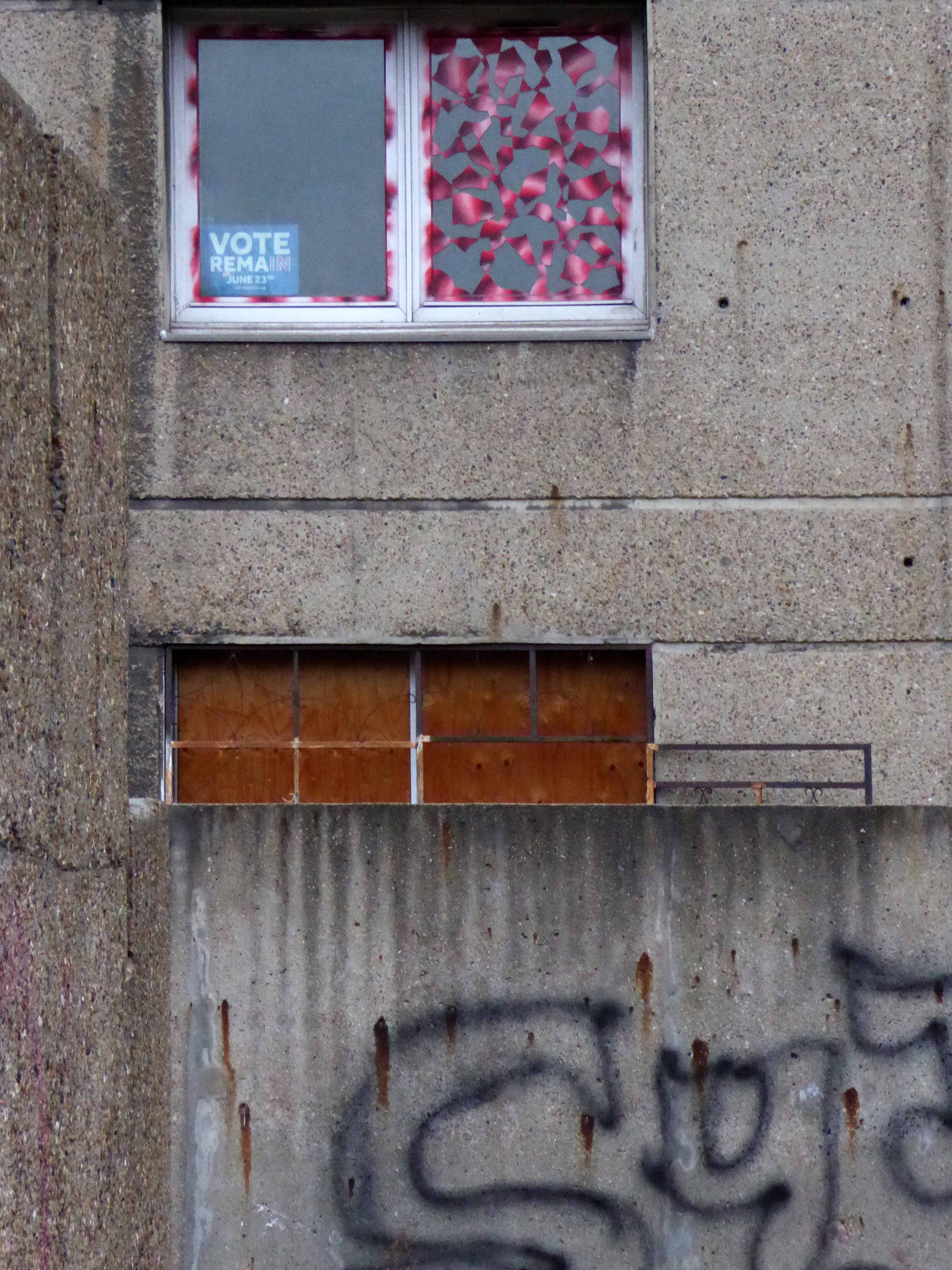
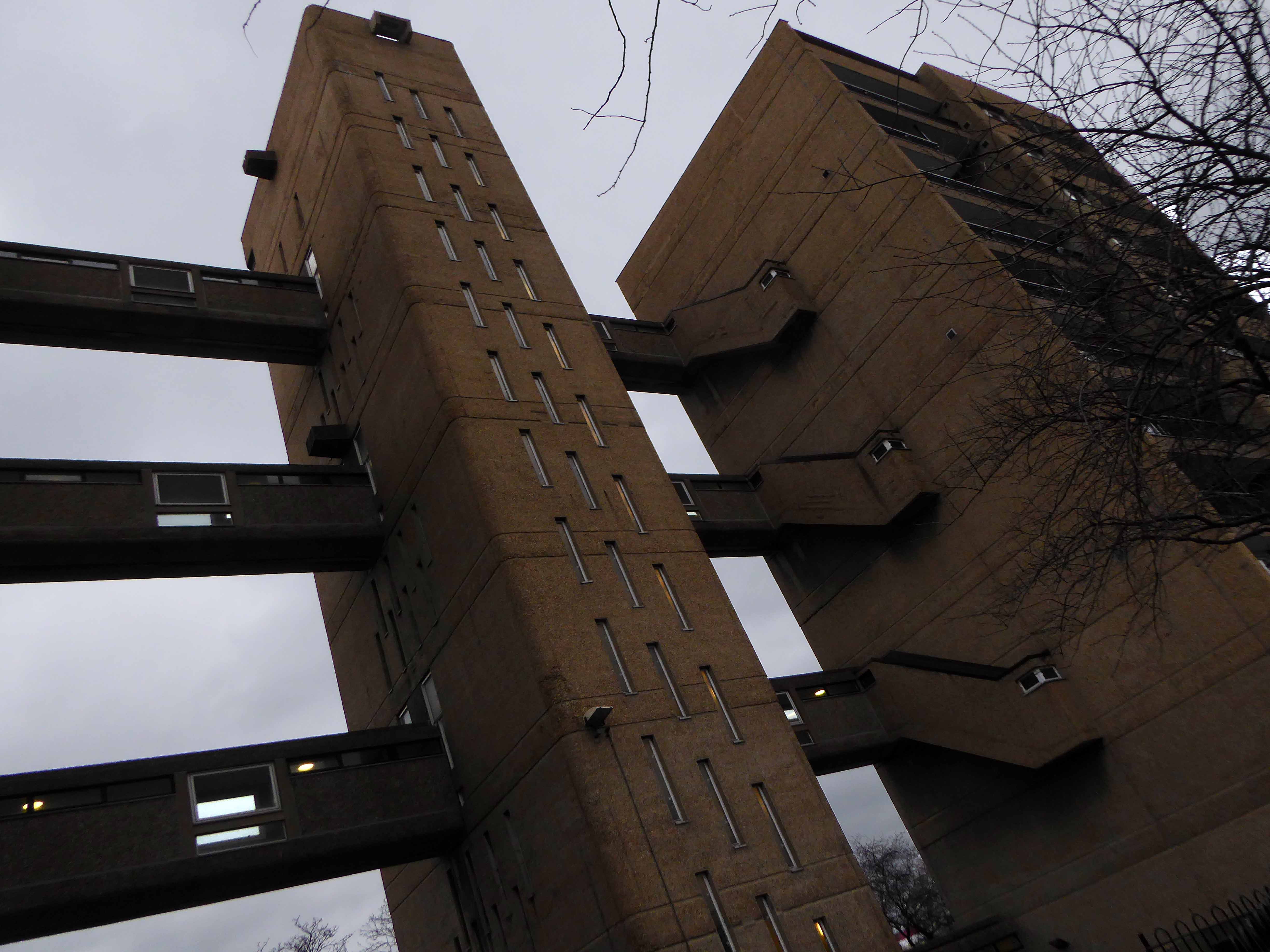
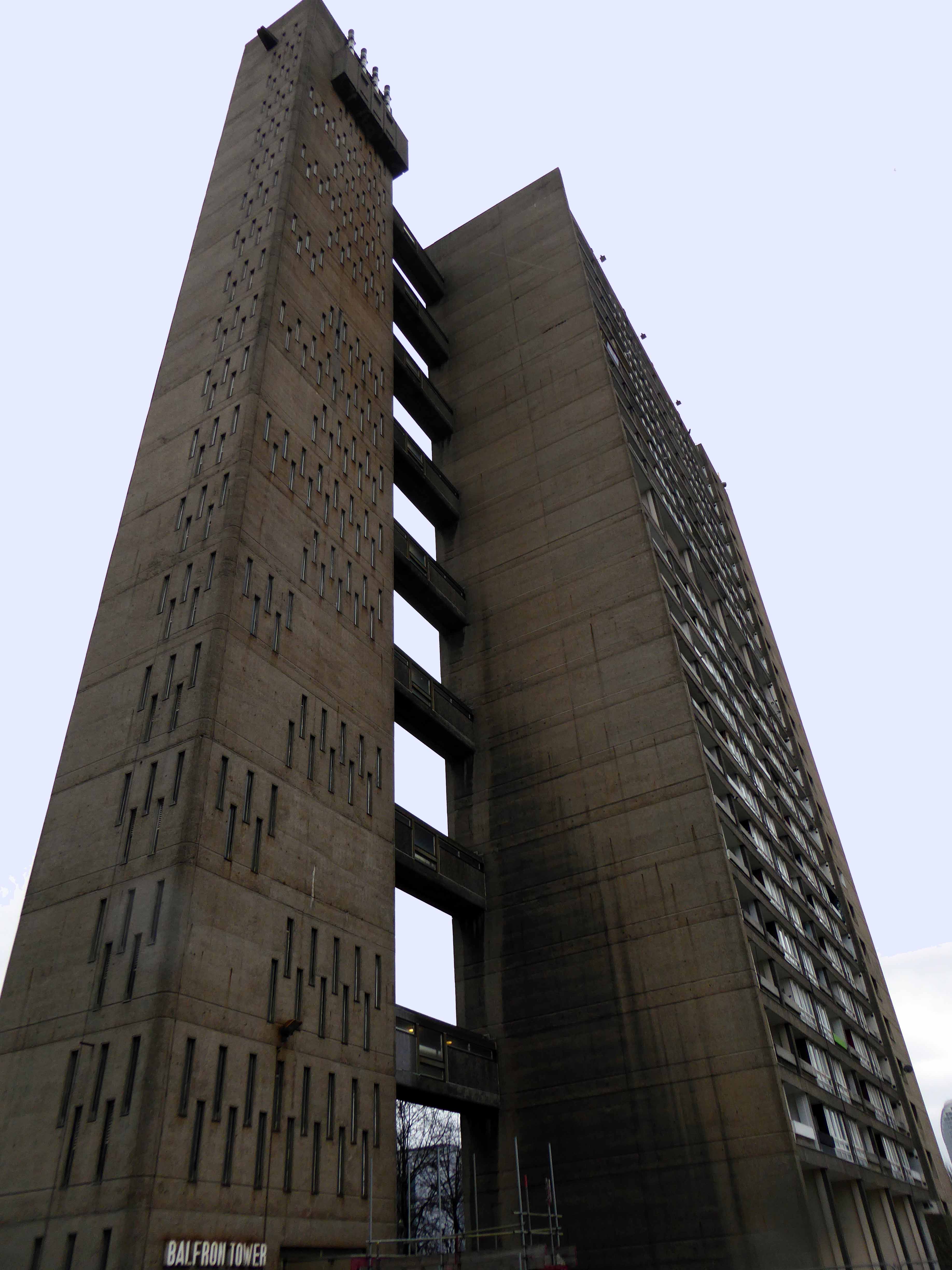
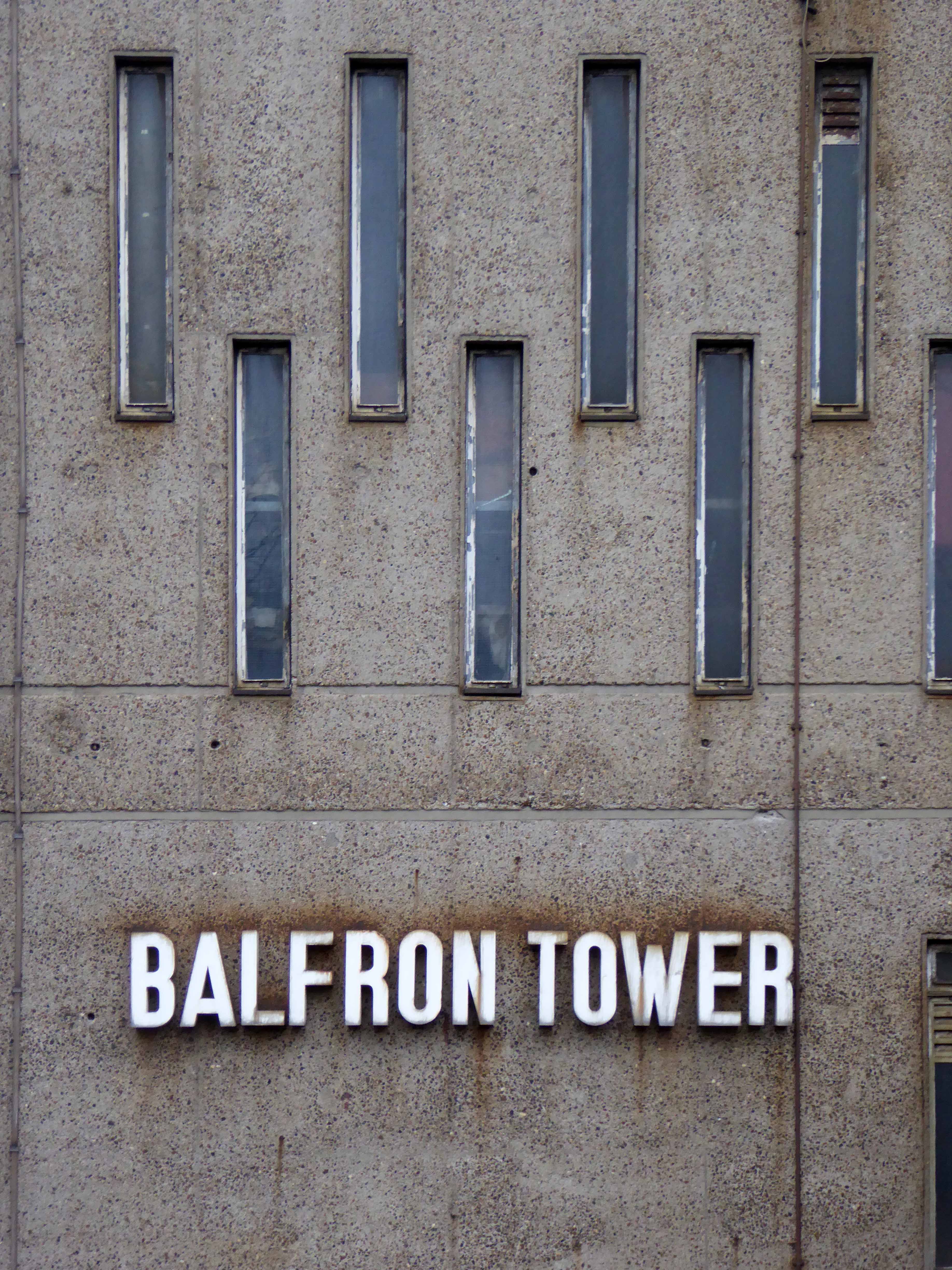
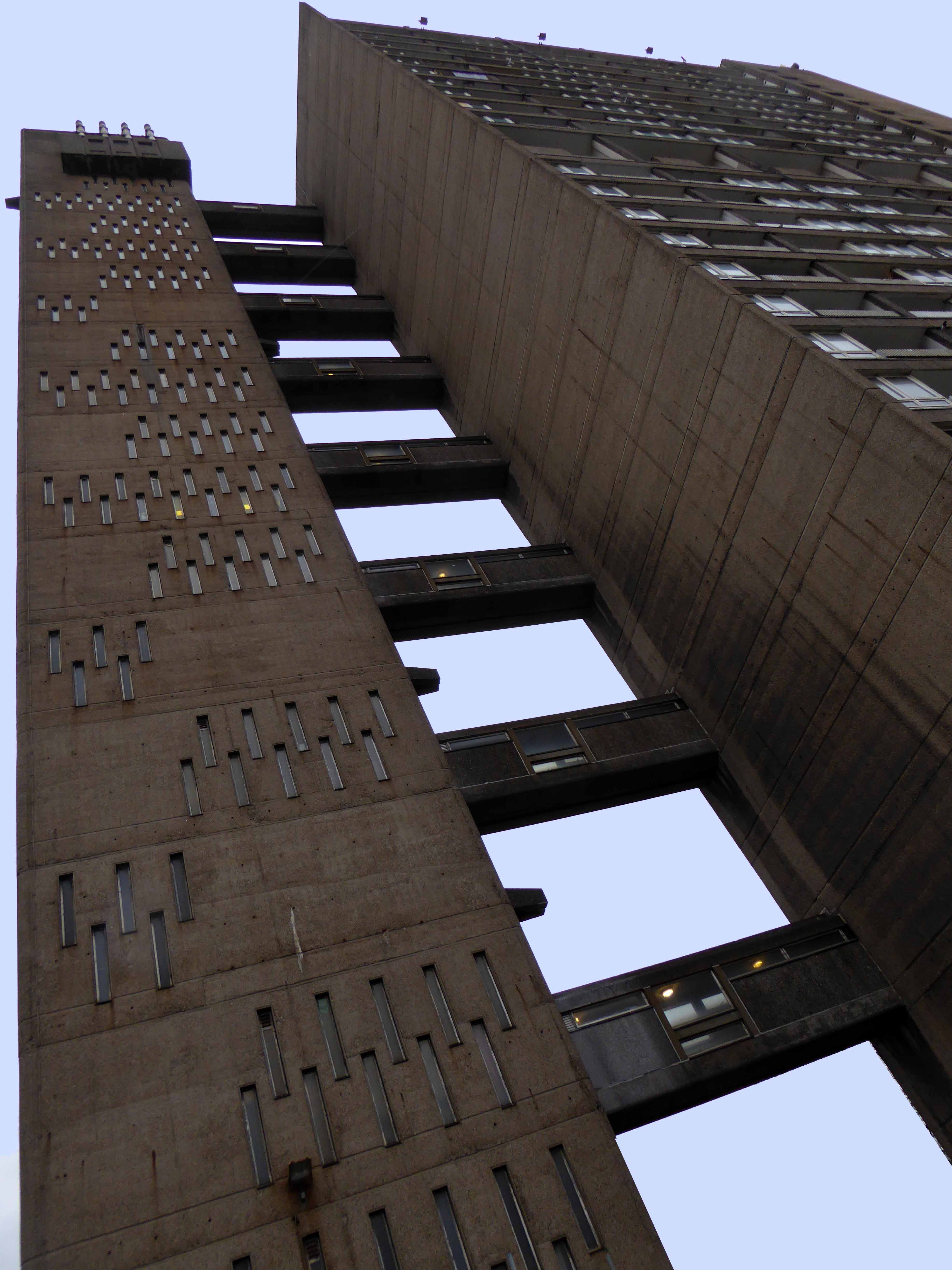
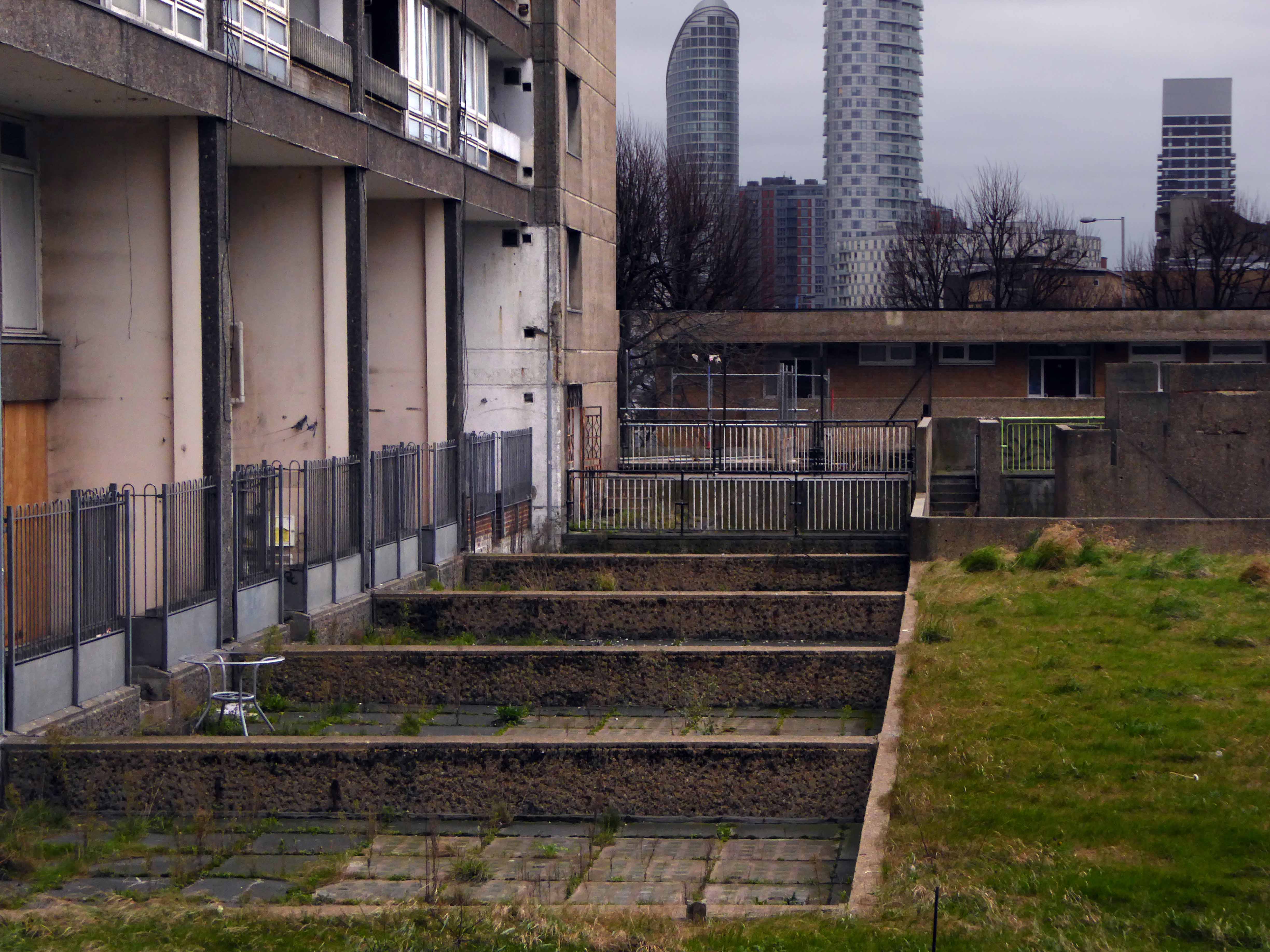
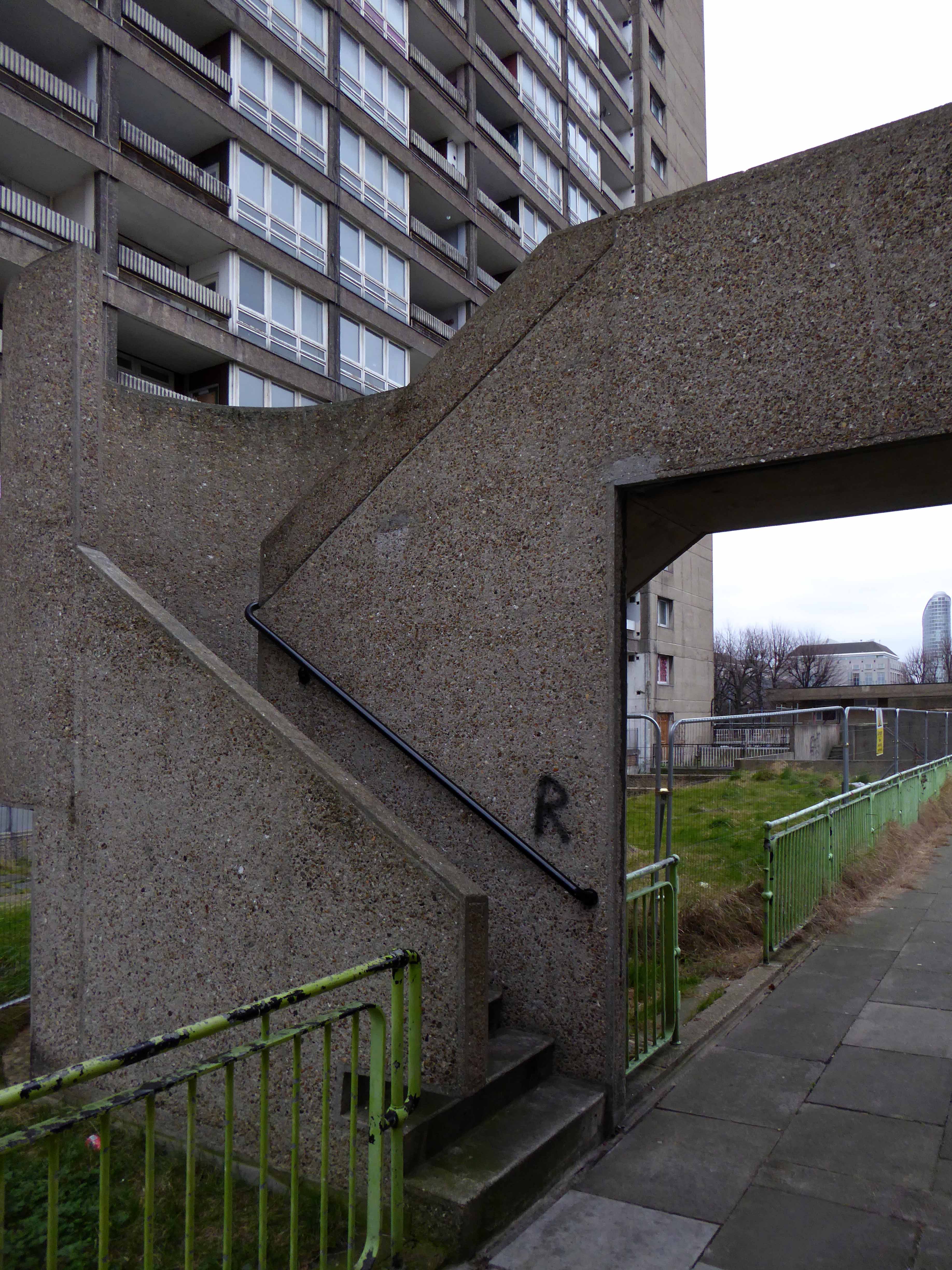
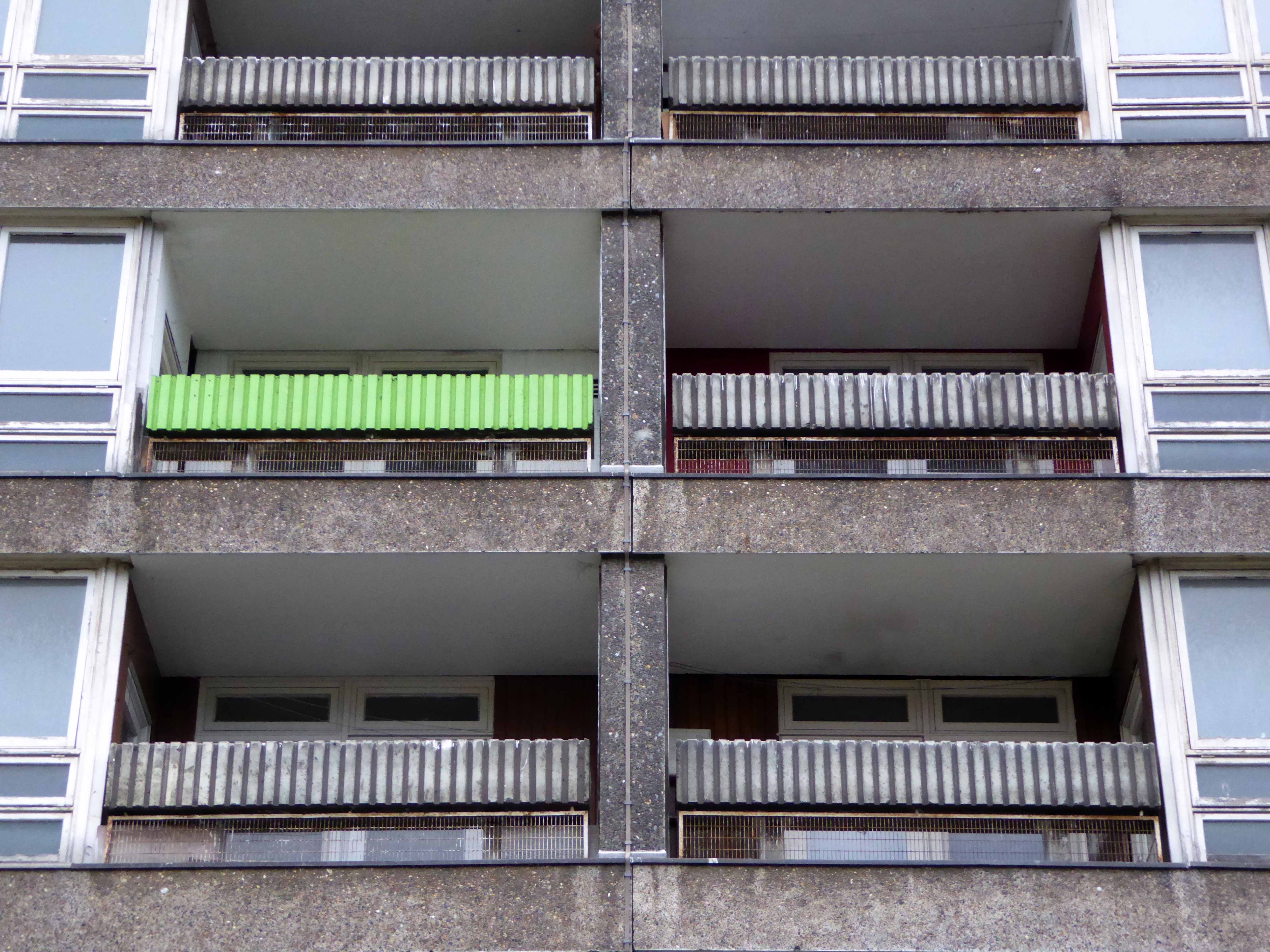
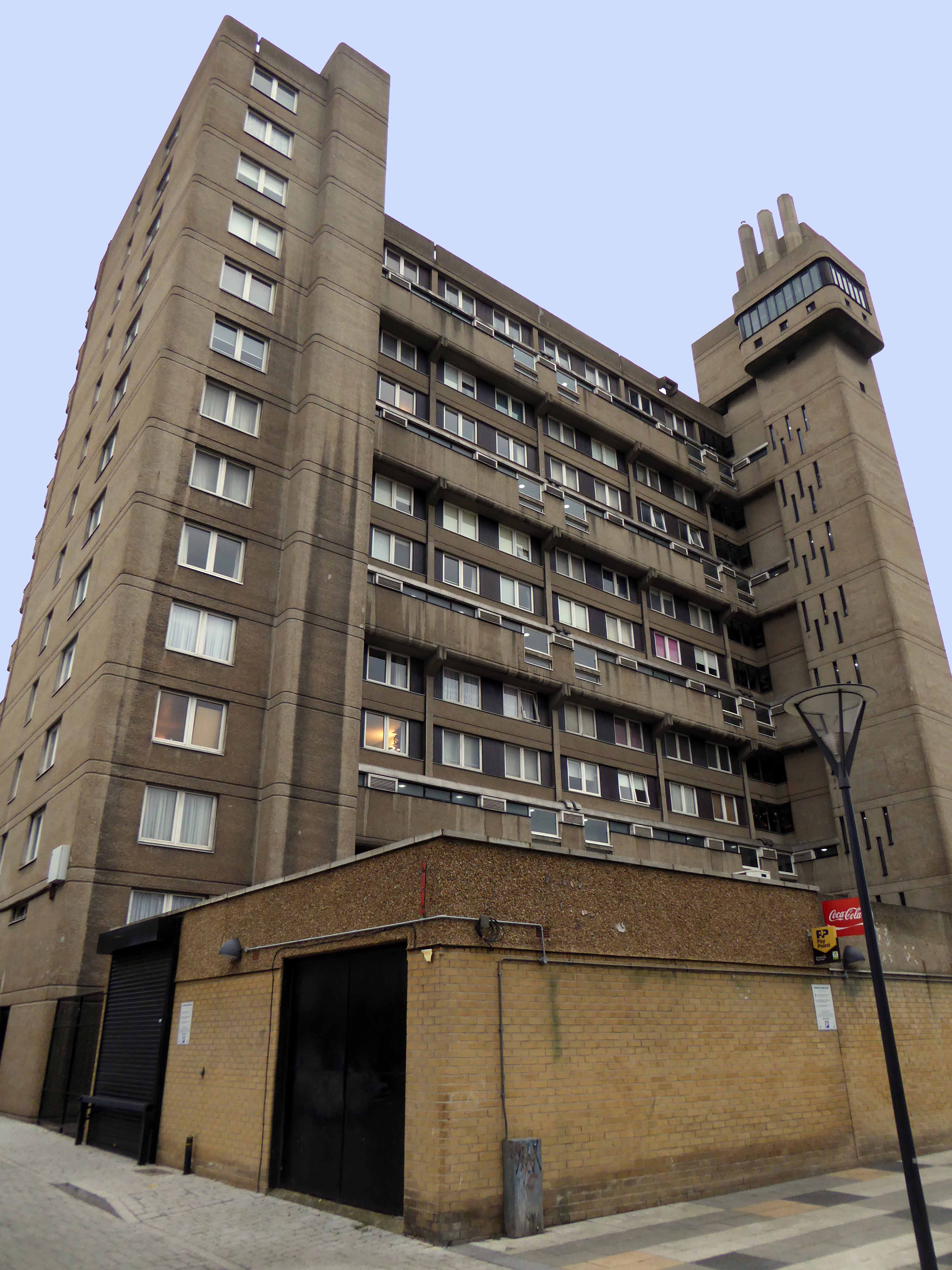
Balfron Tower London

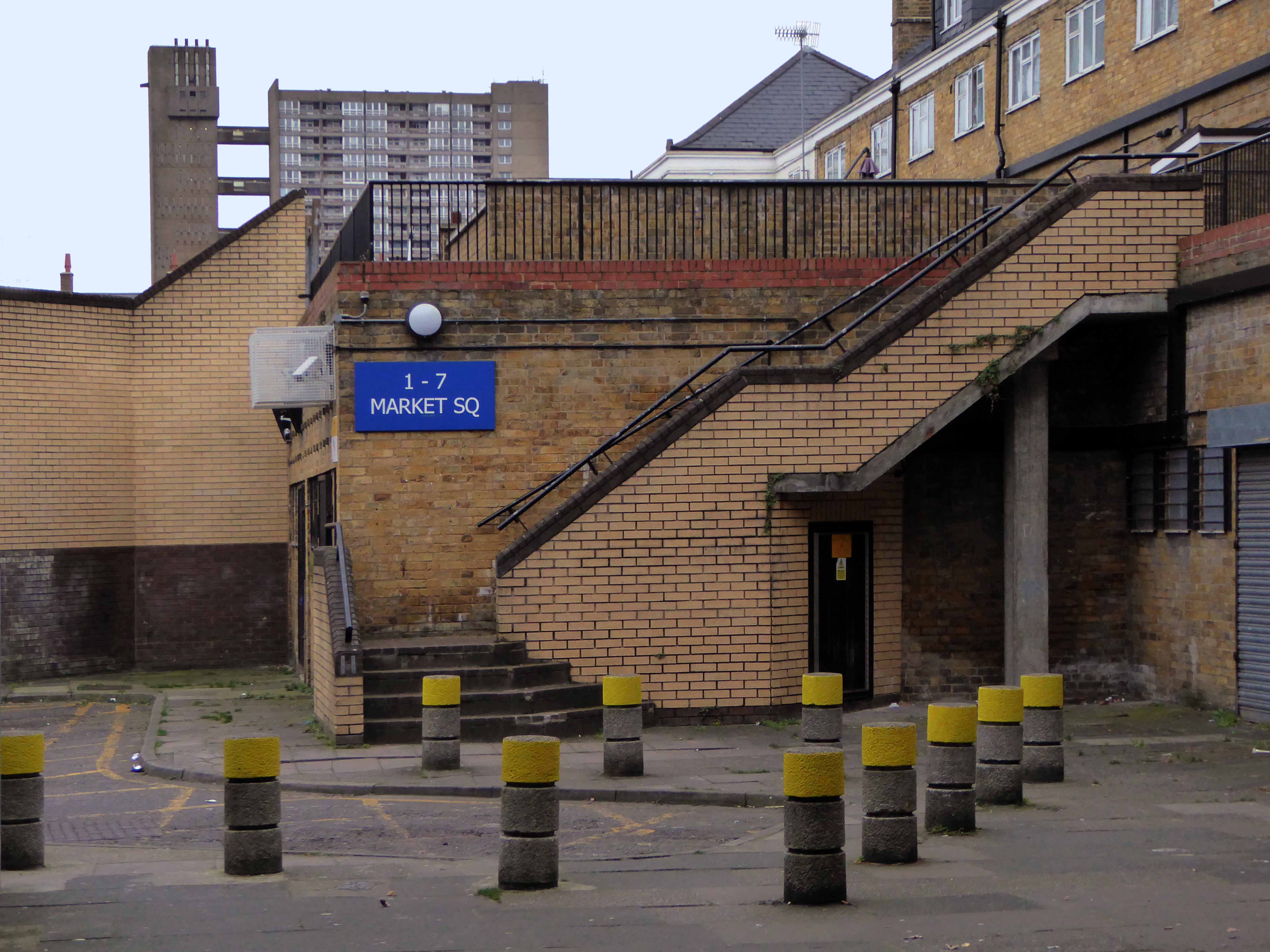
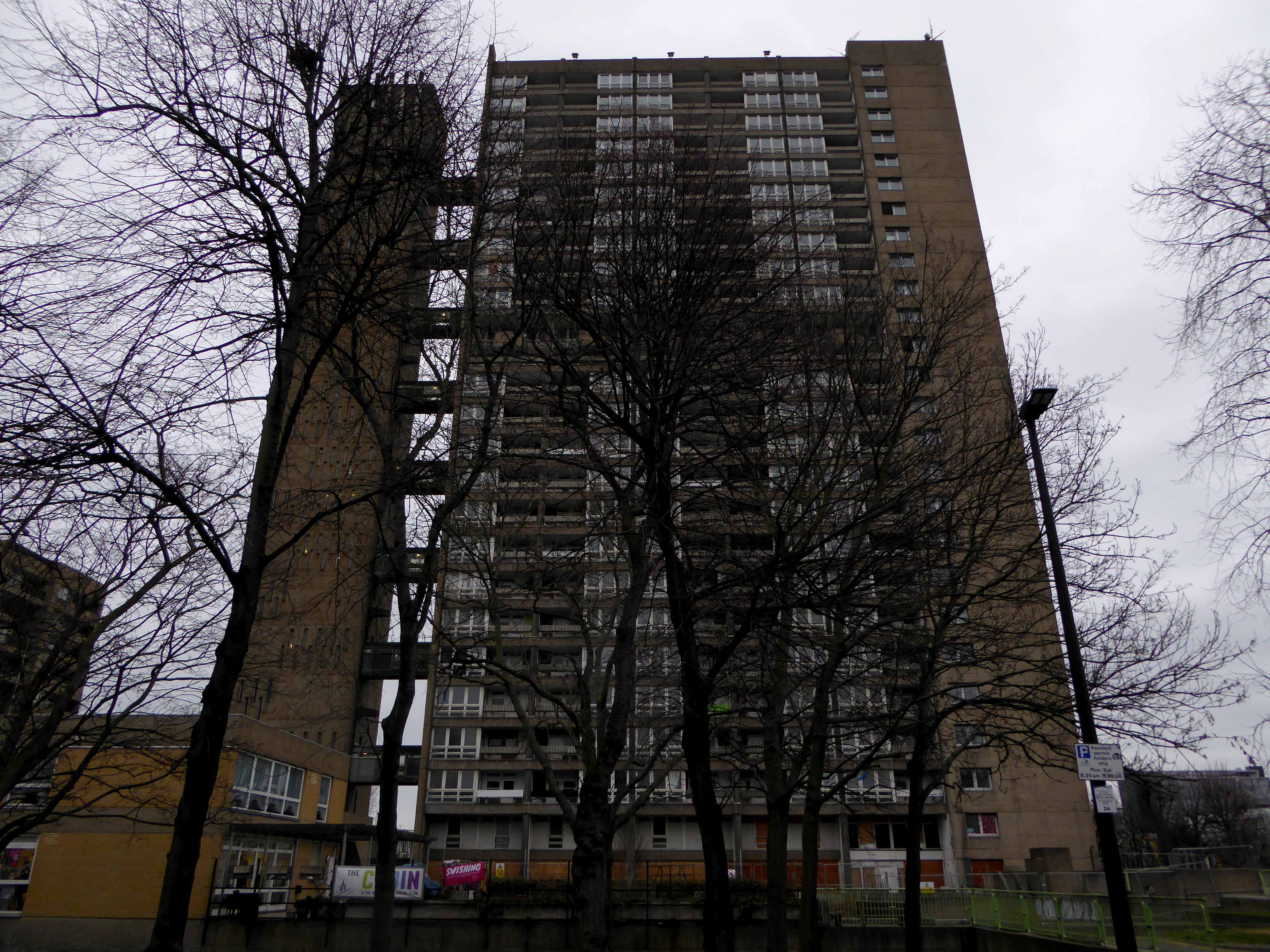
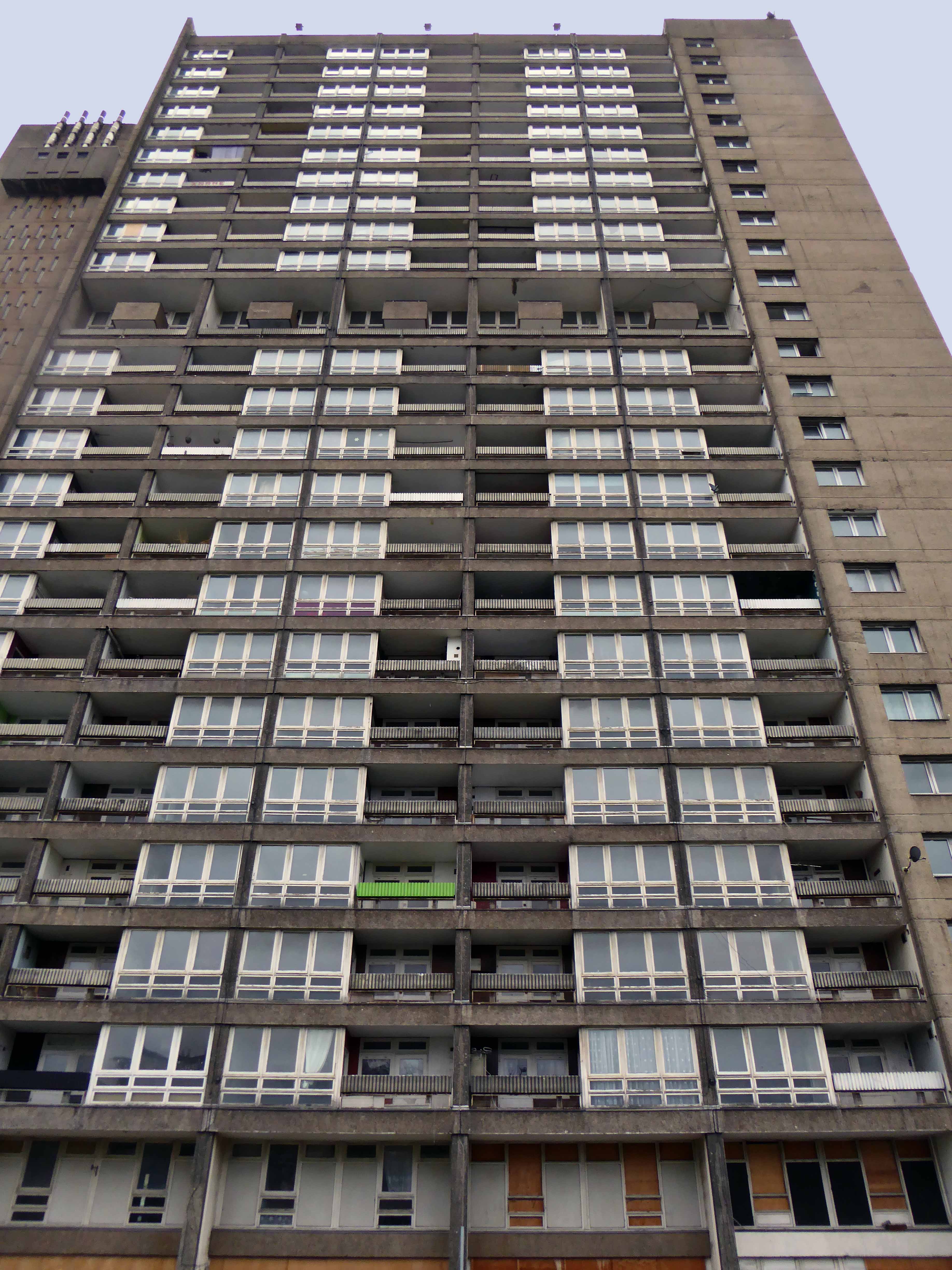
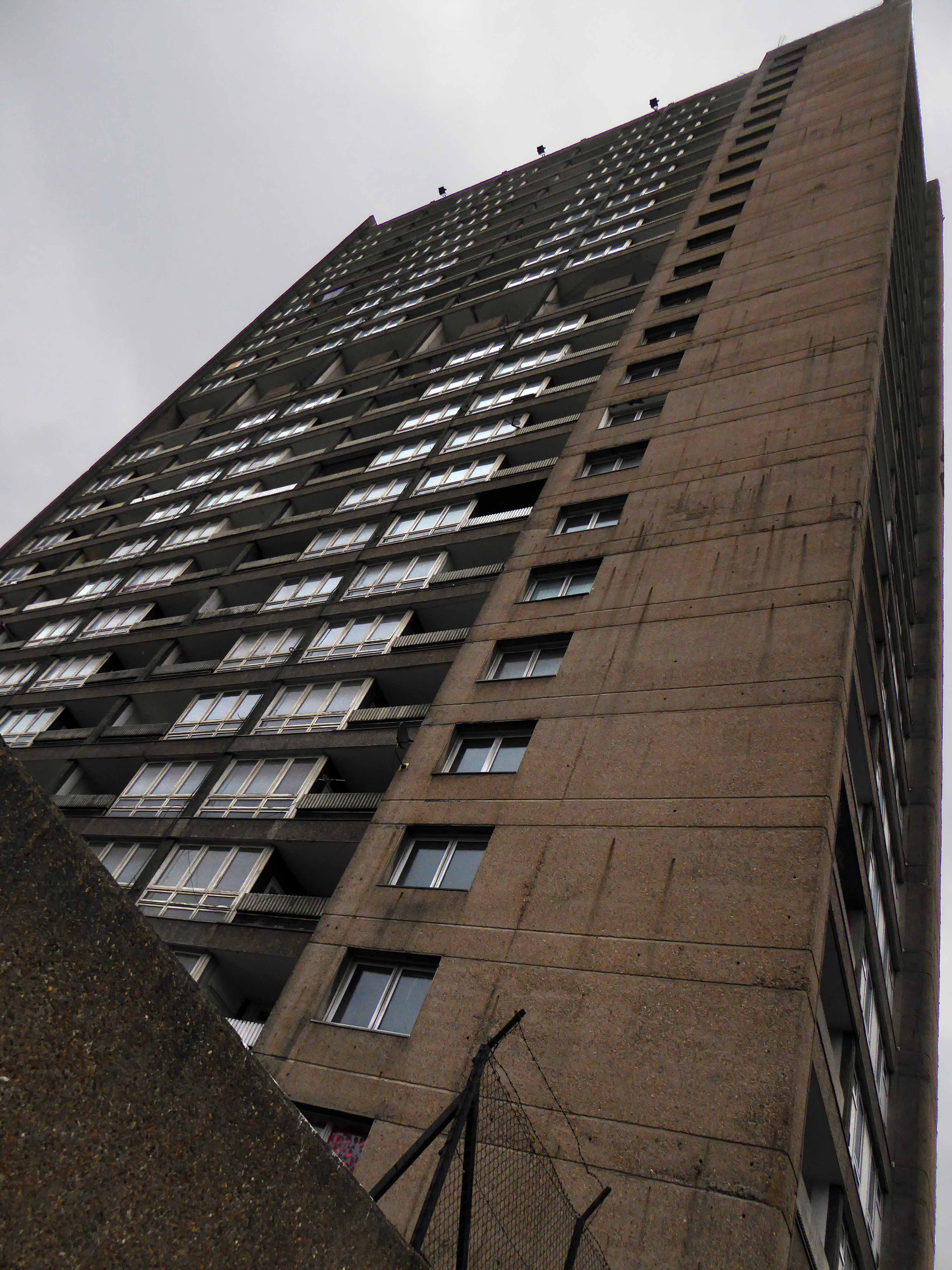
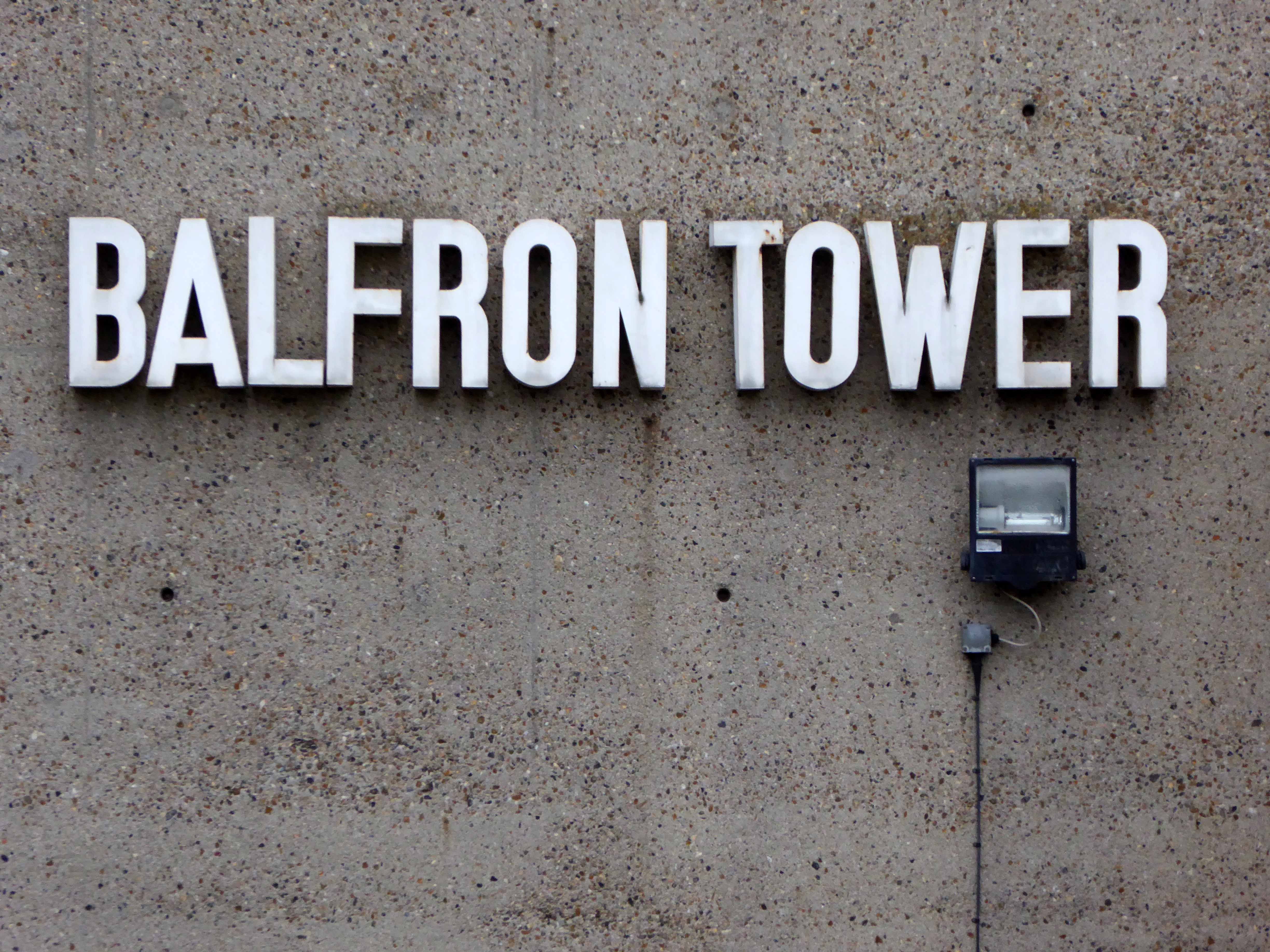
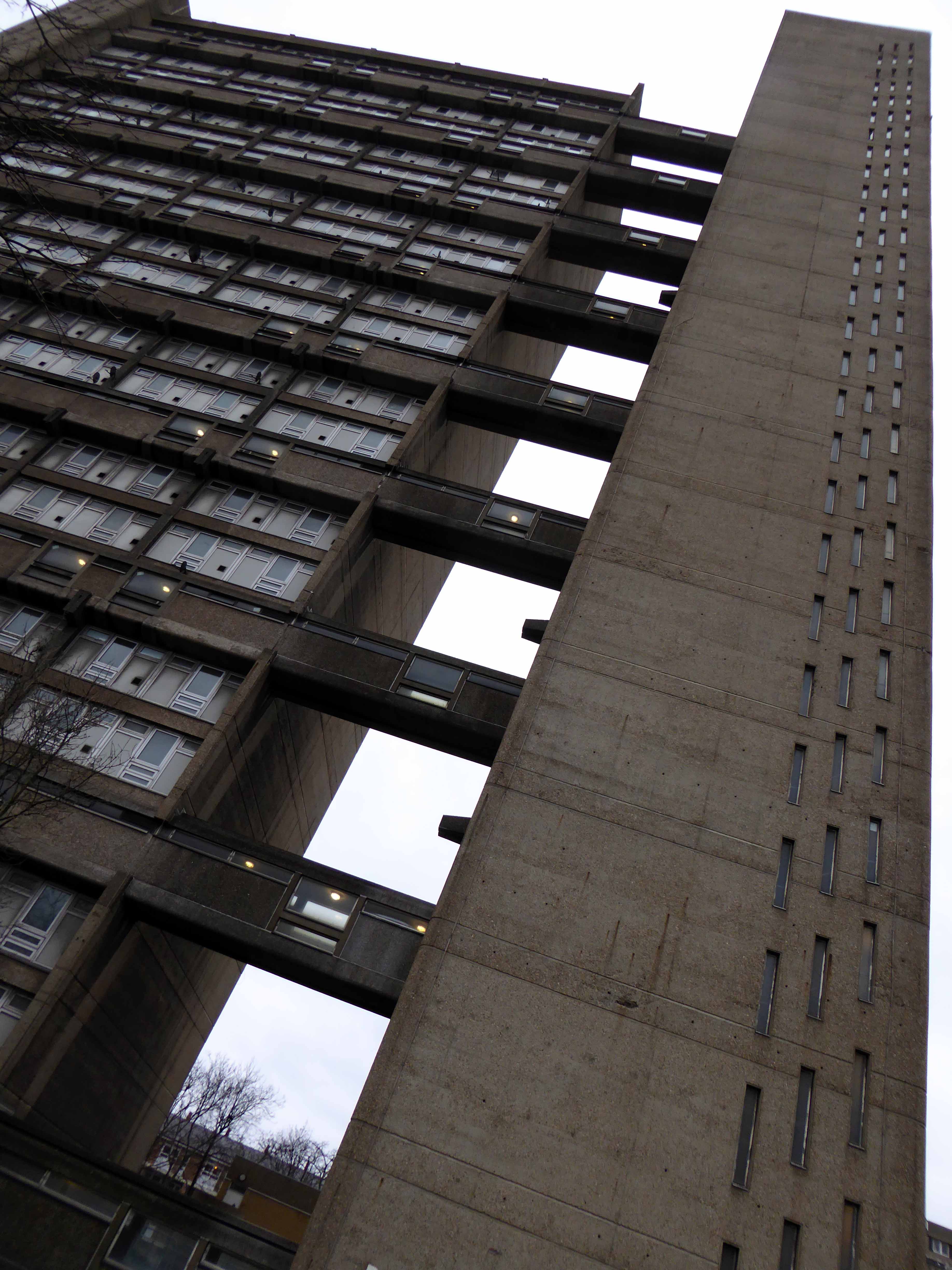
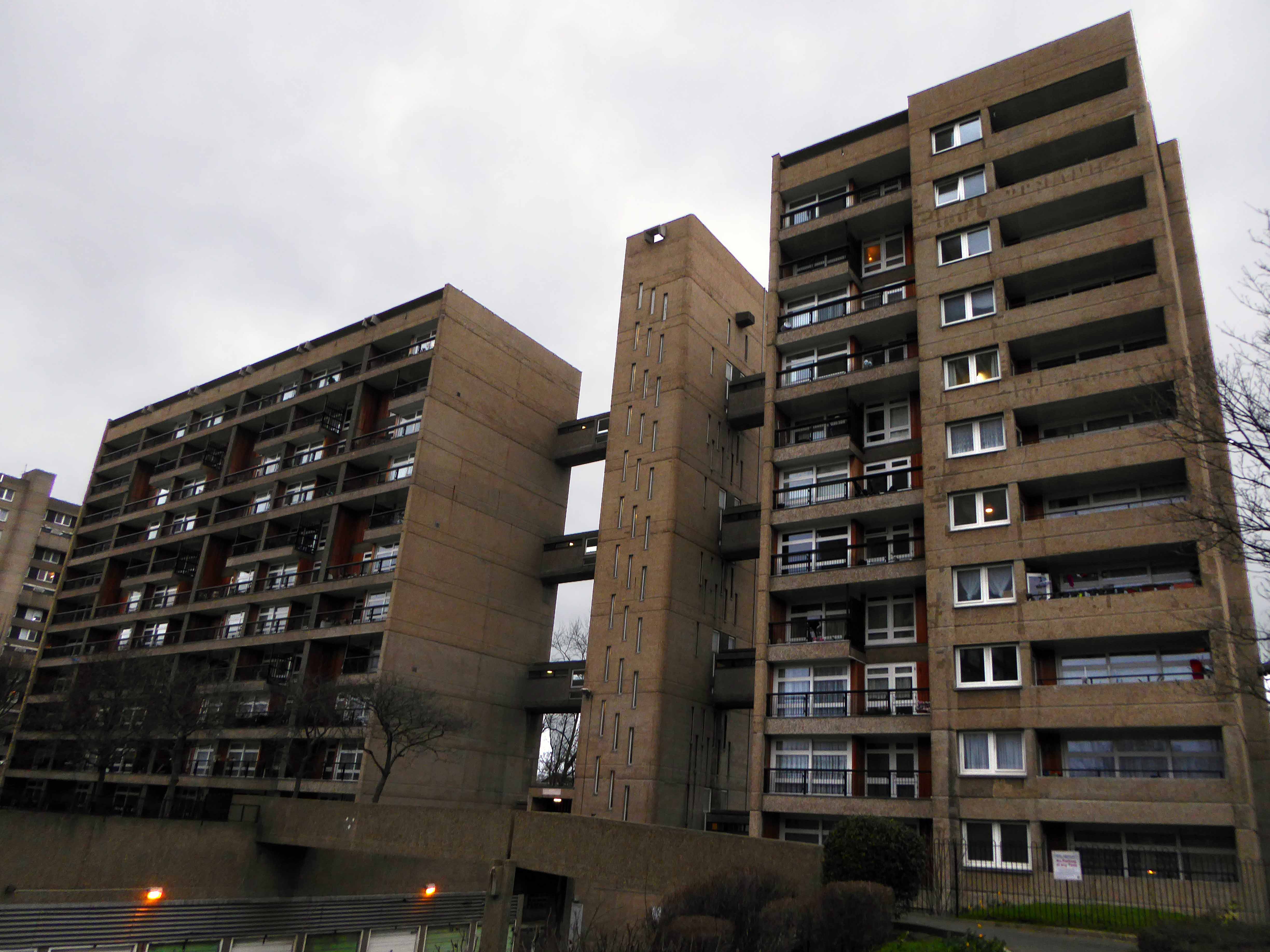
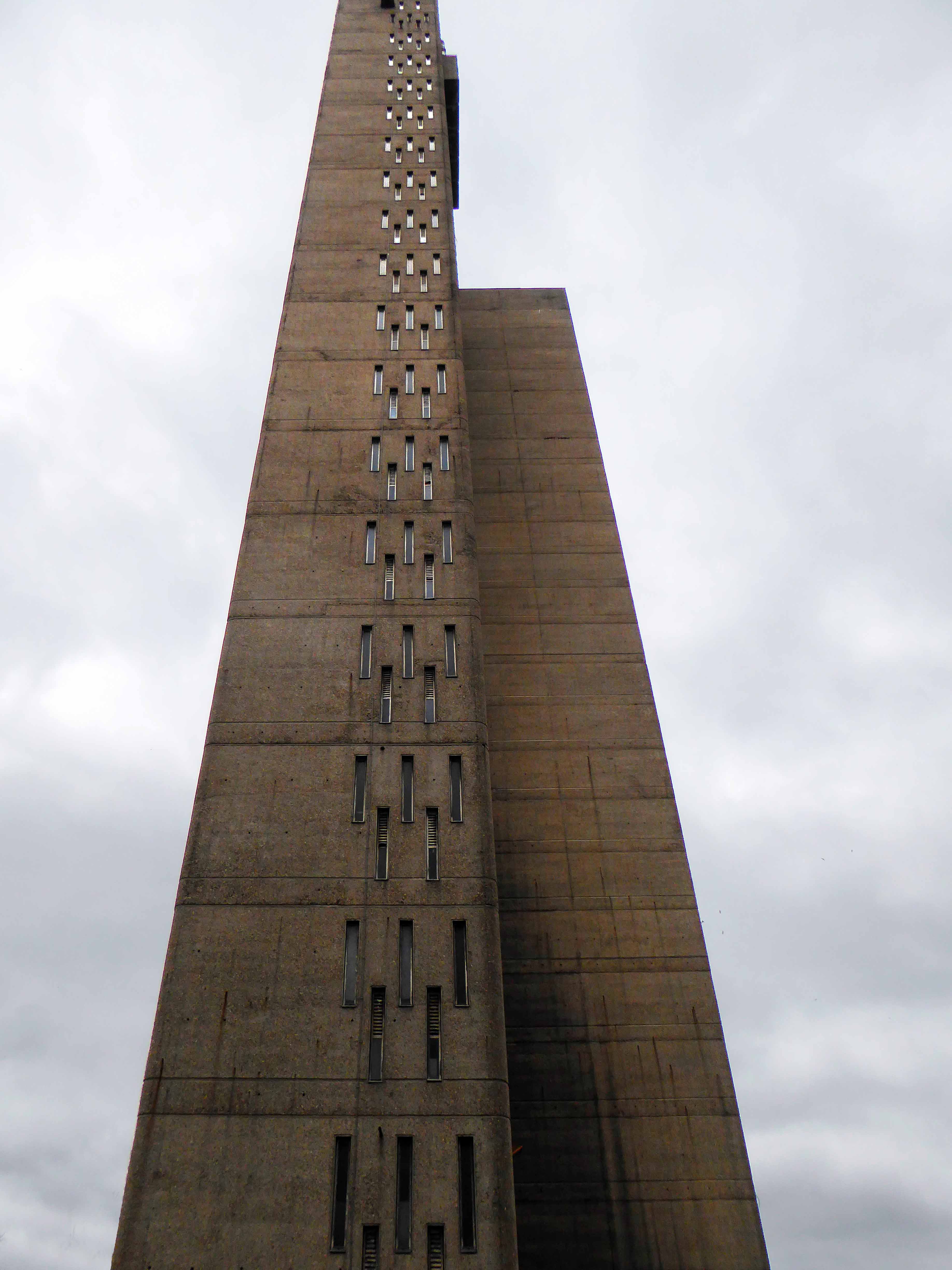
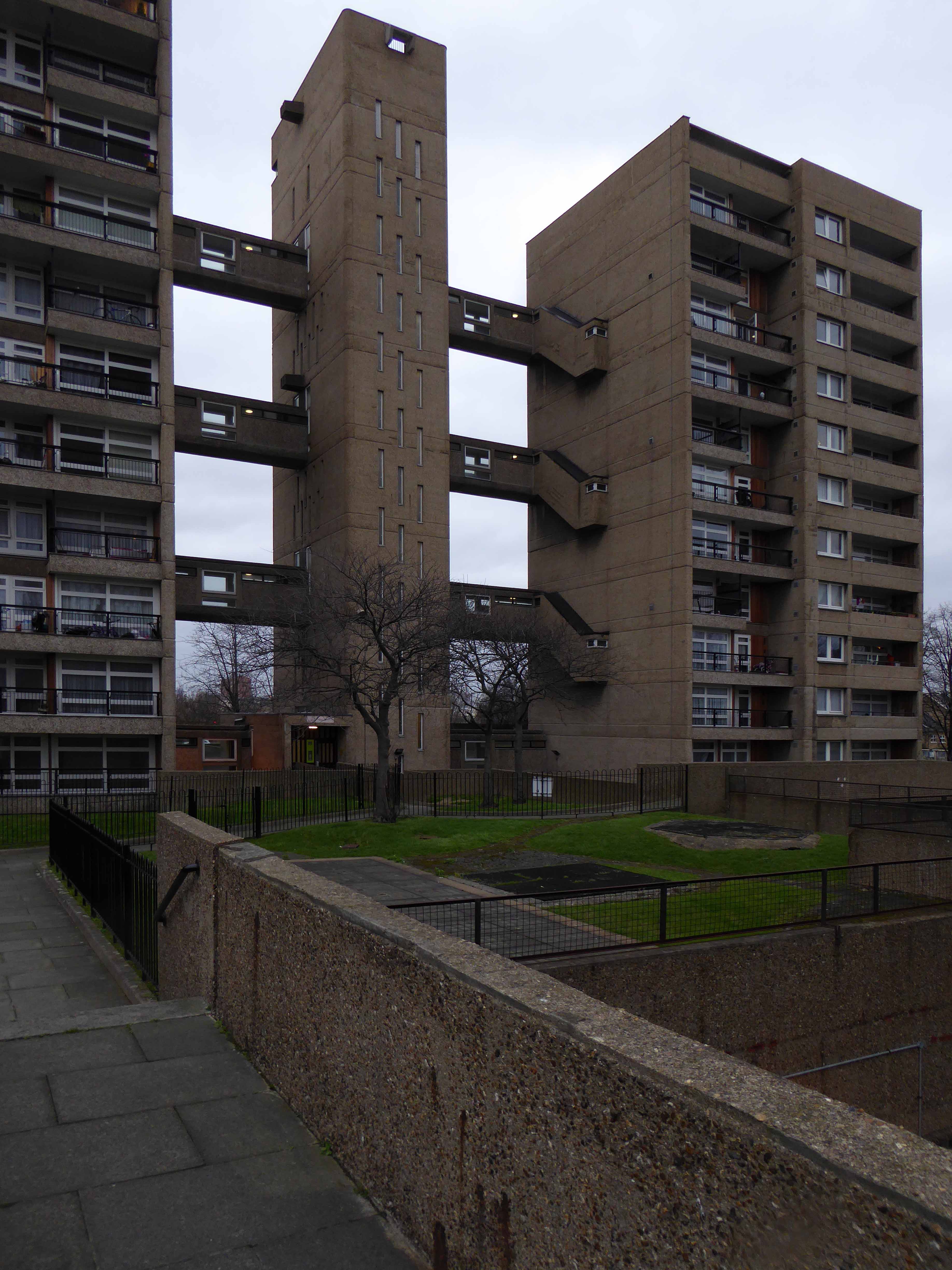
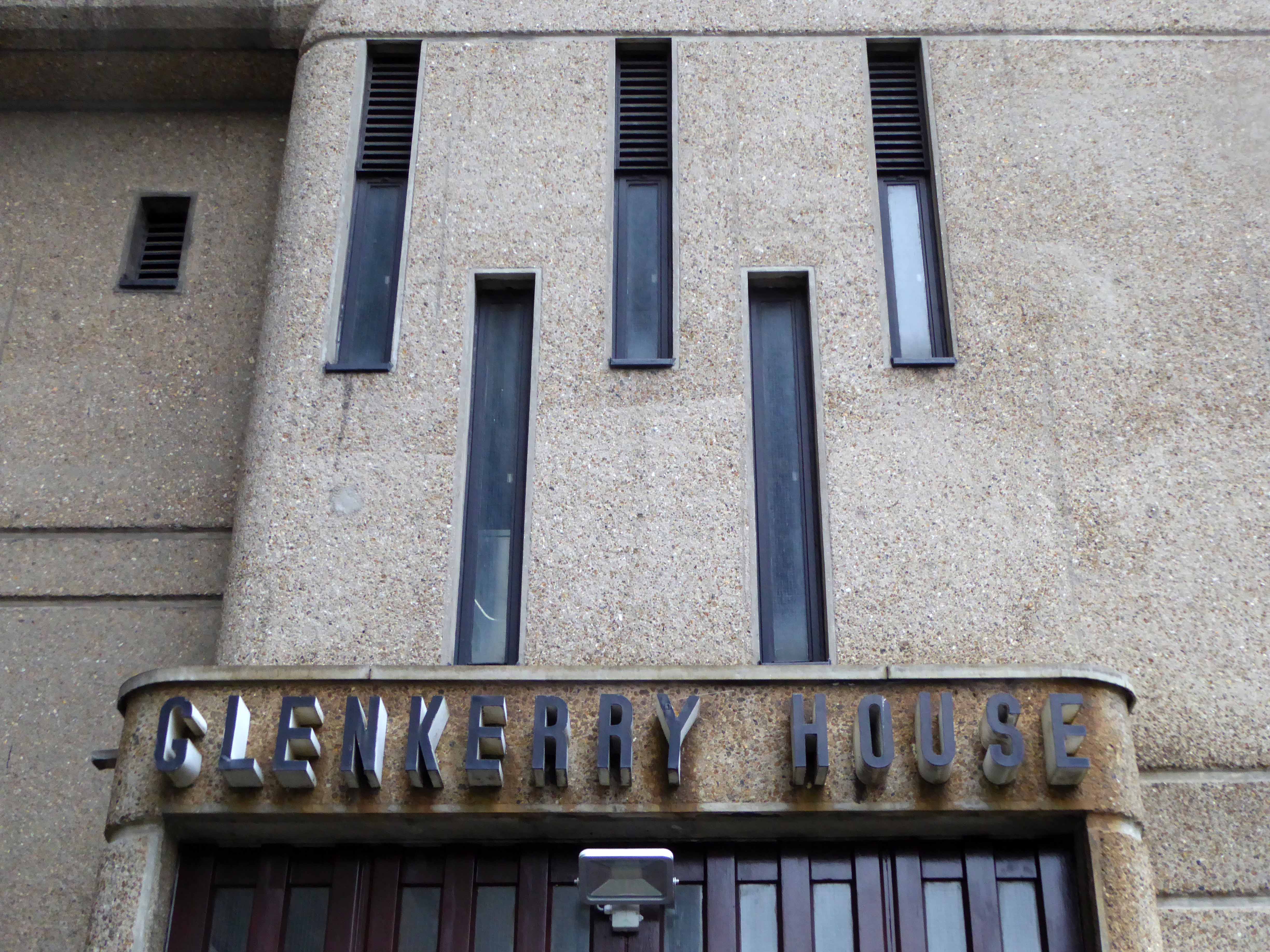
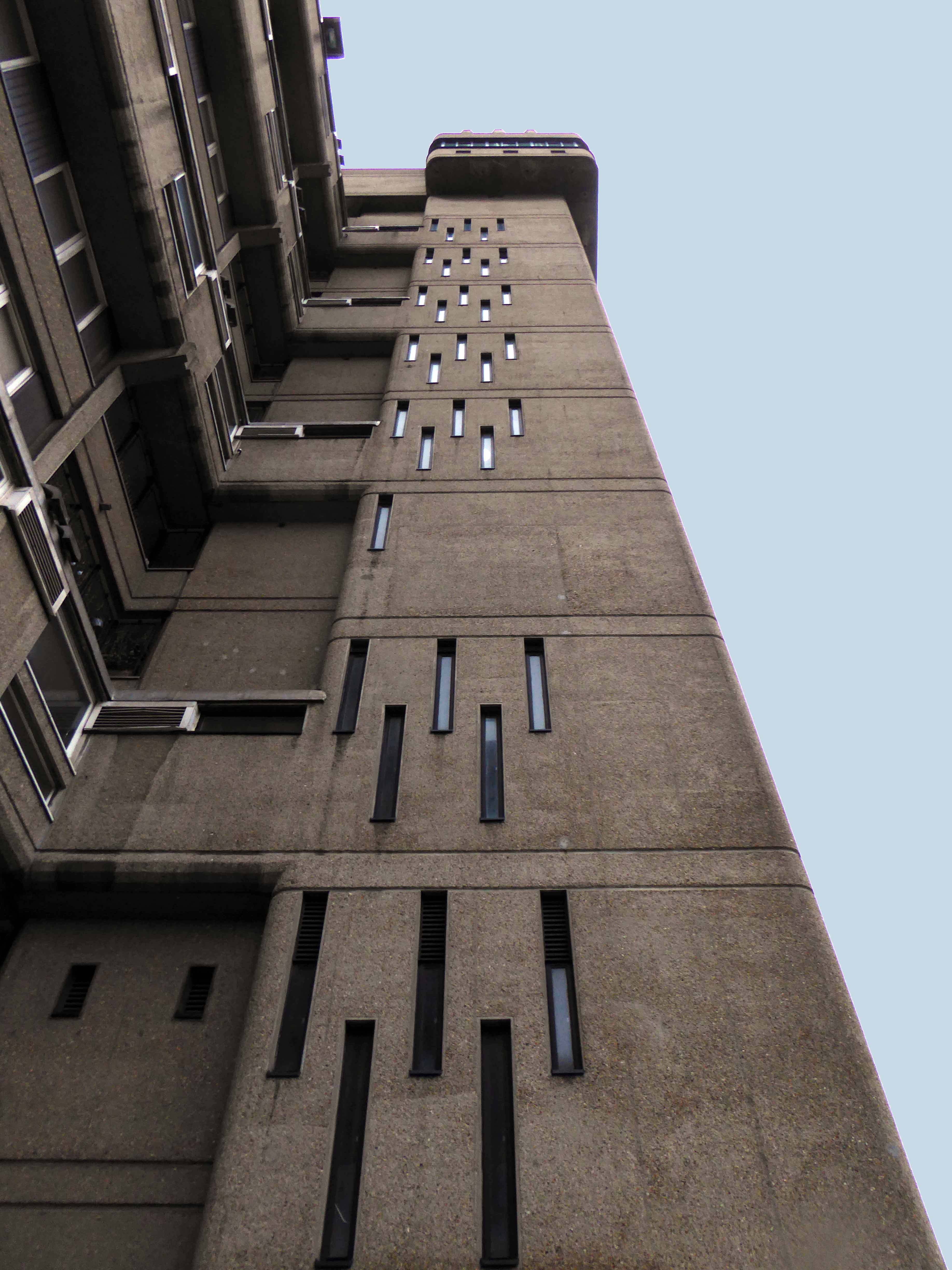
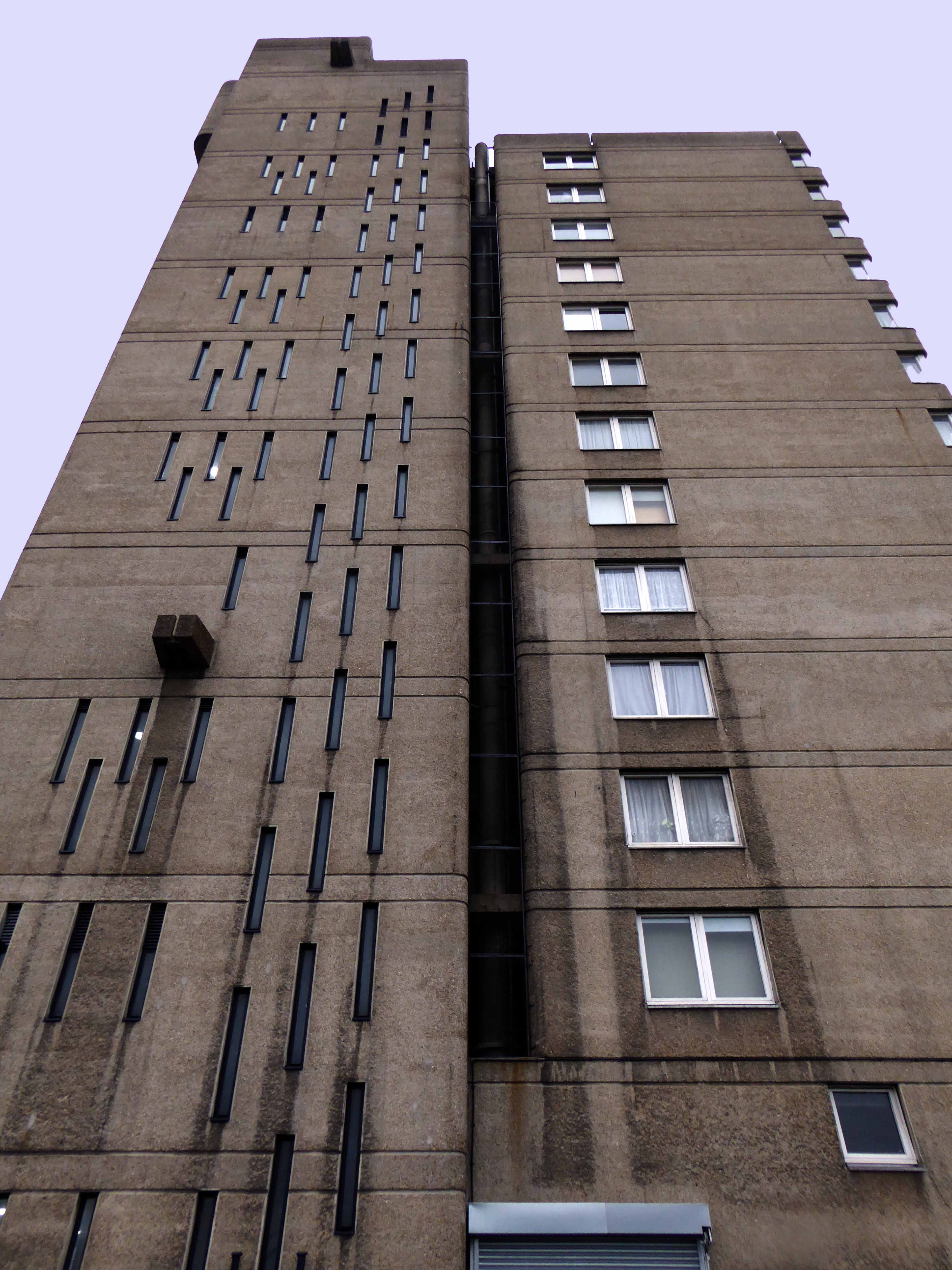
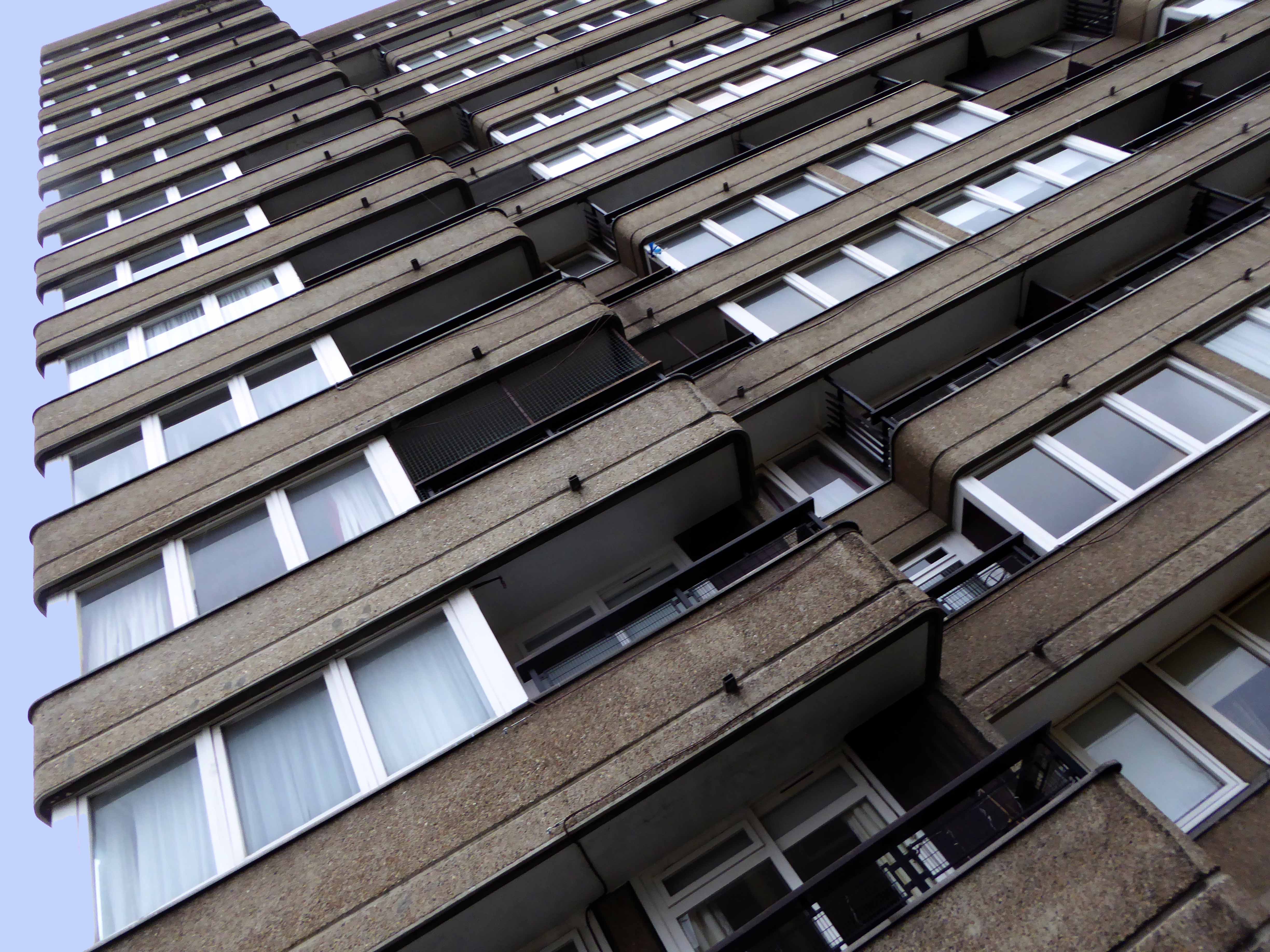
The Balfron Tower Conservation Area was designated in October 1998 around the two residential blocks designed by Ernö Goldfinger for the London County Council in the 1960s. The Conservation Area boundary protects the listed Balfron Tower and Carradale House, and other buildings in the ‘Brownfield Estate’, including Glenkerry House, a community centre, shops and associated low-rise housing development.

The 27-storey Balfron Tower is Goldfinger’s first public housing project, and a precursor to his better known Trellick Tower in North Kensington. The neighbouring Carradale House and Glenkerry House sit within the landscaped areas developed at the same time. The Brownfield Estate, also known as the East India Estate, is now recognised as a fine example of planned 1960s social housing. Considered to be exemplary examples of the post-war housing schemes, Balfron Tower and Carradale House were listed in 1998 for their cultural & architectural merit.

This was my first visit, to a key building in the short history of modernist post war housing, currently something of a sleeping giant, awaiting Prince Charming’s kiss.

What will it awake to?

Tower Hamlets are mid consultation, as evidenced in this here document.

On an overcast and ever darkening afternoon, the rain cutting in on a chill wind, set against a slate grey sky, its surfaces and volumes were ever so slightly forlorn.

There is much to be done by way of regeneration, with the attendant issues of heritage, funding, gentrification and inevitably who lives where and why?

Everything you may care to almost know is here.

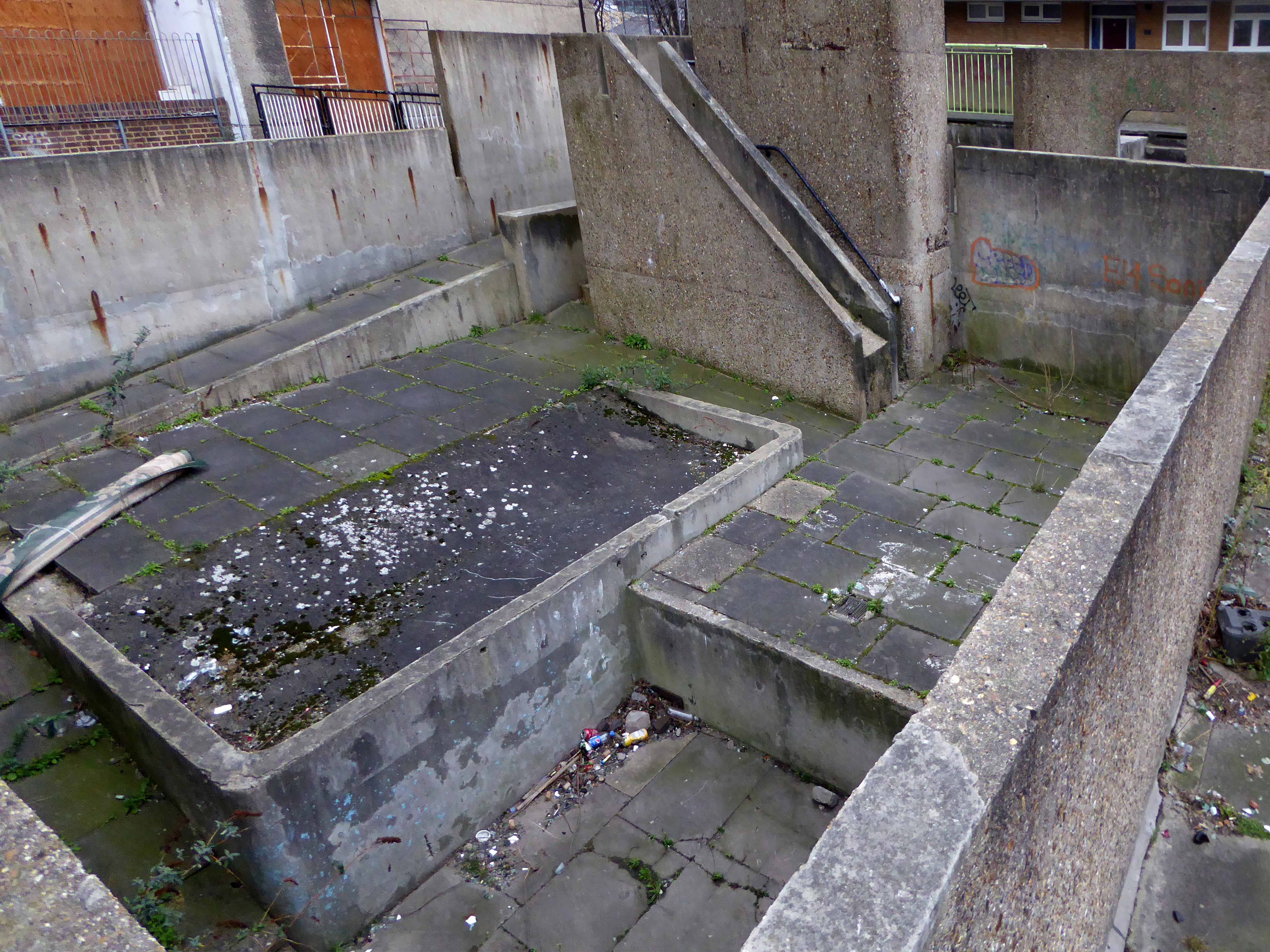
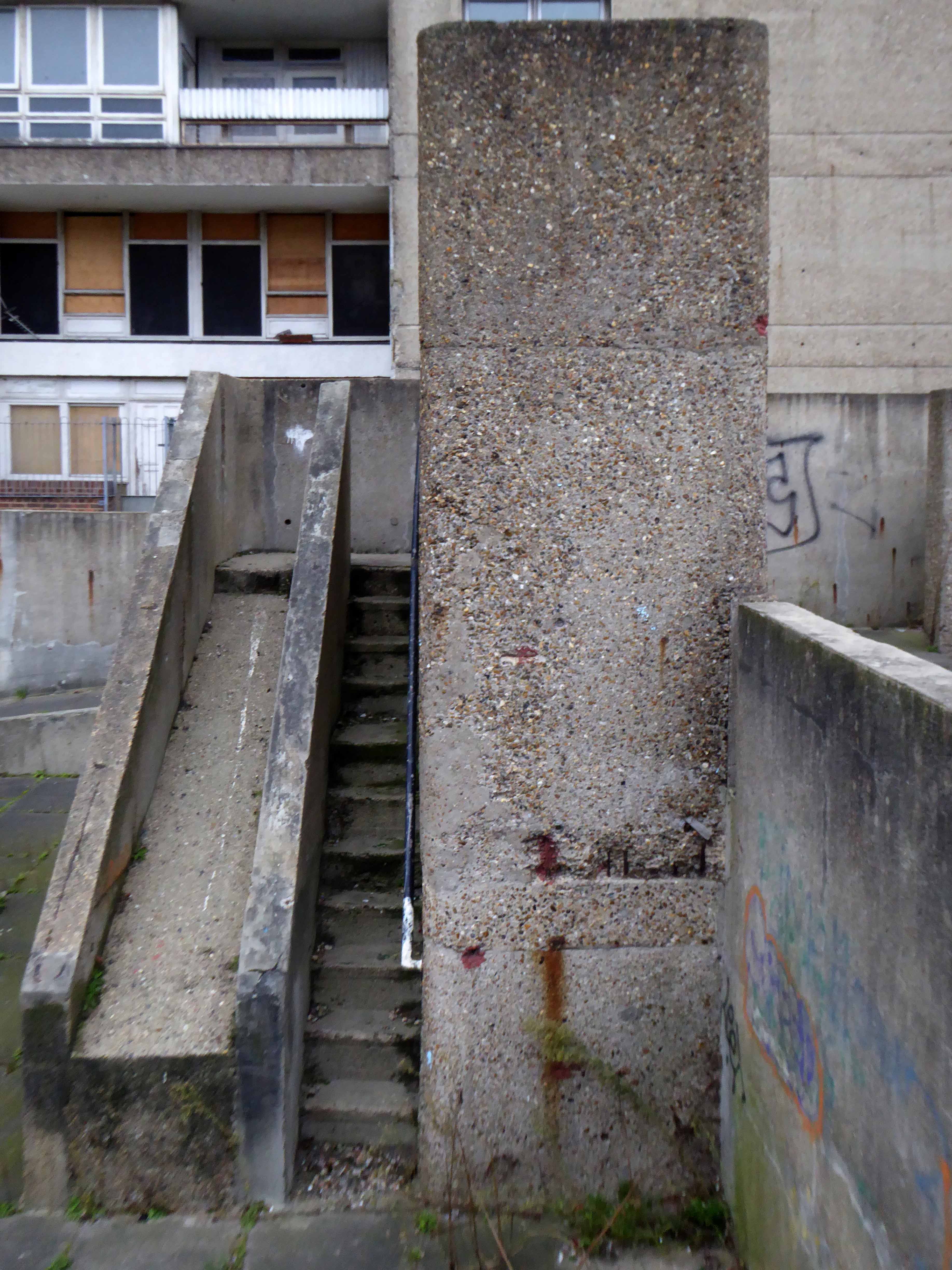
I walked around the area and took these pictures.

p1130830-copy

p1130831-copy

p1130832-copy

p1130833-copy

p1130834-copy

p1130835-copy

p1130836-copy

p1130837-copy

p1130838-copy

p1130839-copy

p1130840-copy

p1130841-copy

p1130842-copy

p1130843-copy

p1130844-copy

p1130845-copy

p1130846-copy

p1130847-copy

p1130848-copy

p1130849-copy

p1130850-copy

p1130851-copy

p1130852-copy

p1130853-copy

p1130854-copy

p1130855-copy

p1130857-copy

p1130858-copy


p1130860-copy

p1130861-copy

Newcastle upon Tyne – Civic Centre

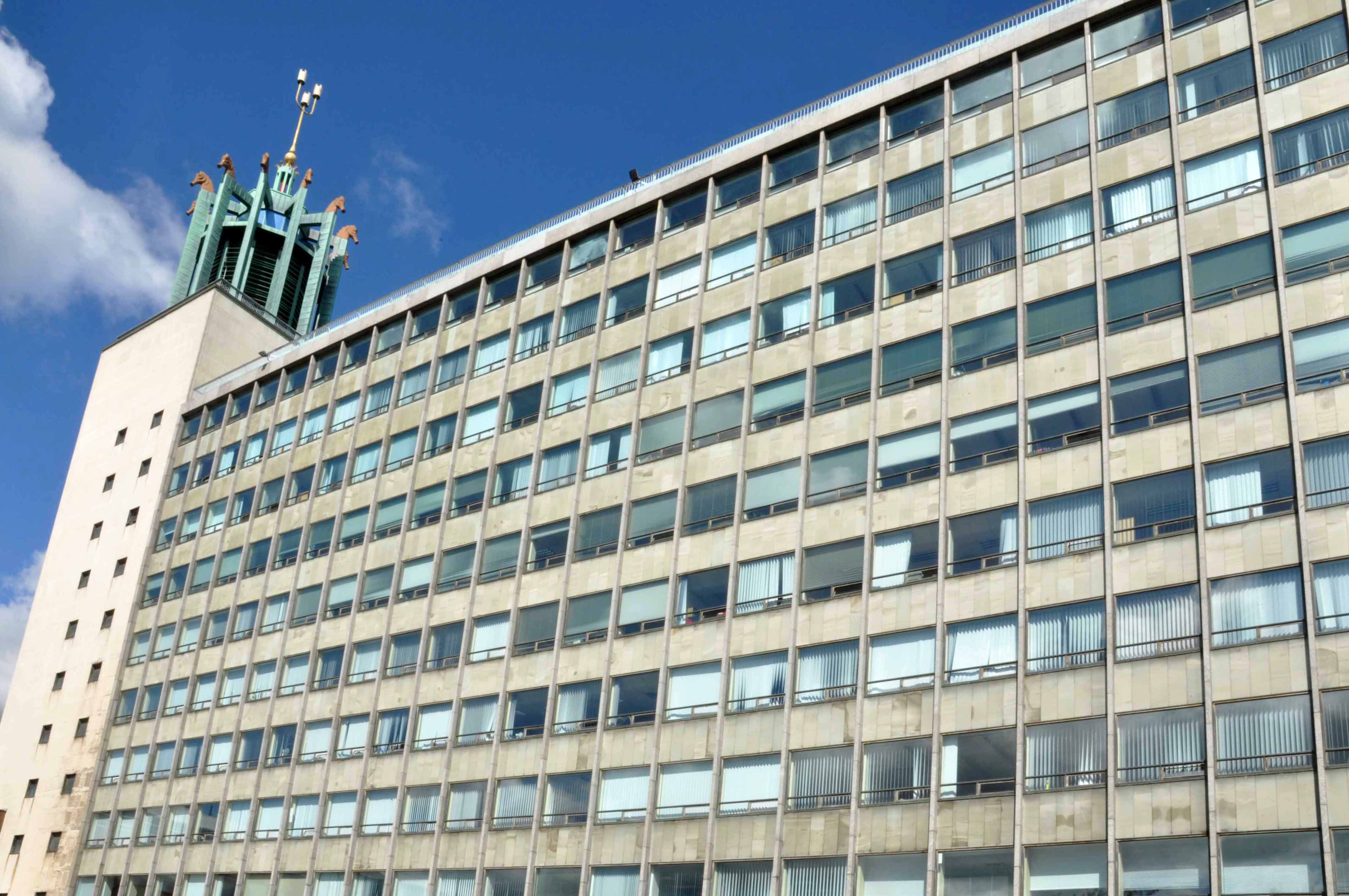
Hope, we need a little hope, here embodied in a huge municipal undertaking.

Having survived the indignity of the Luftwaffe’s absence, Newcastle set about the task of knocking itself down. T Dan Smith’s Brasilia of the North had to be built, the self-styled former revolutionary communist, Sunday painter and jail bird had a vision – fuelled by that hopped up, post war optimism that had engulfed the land.

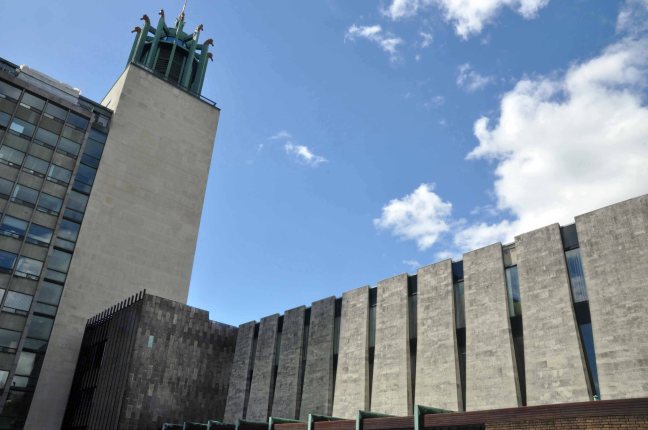
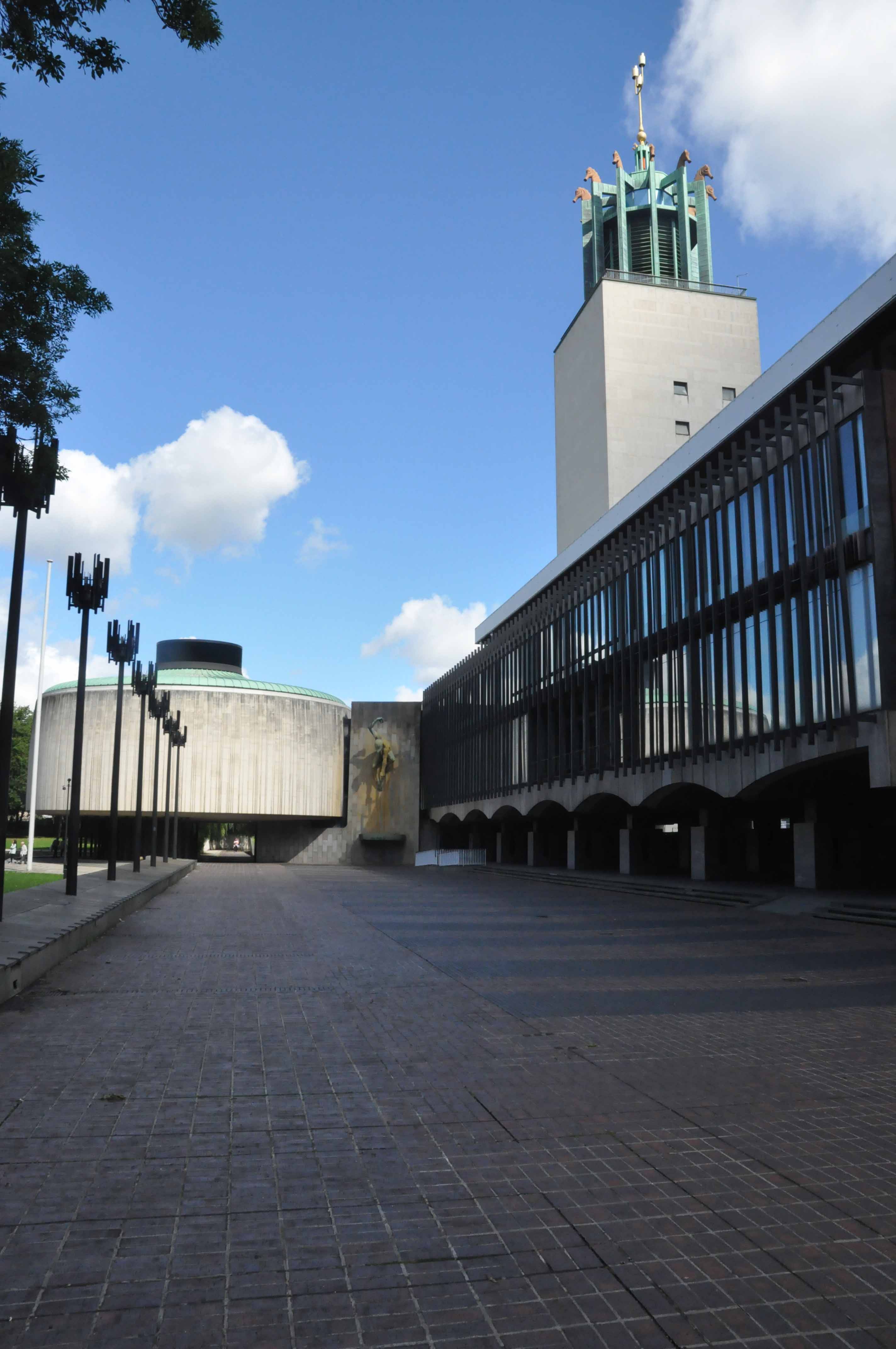
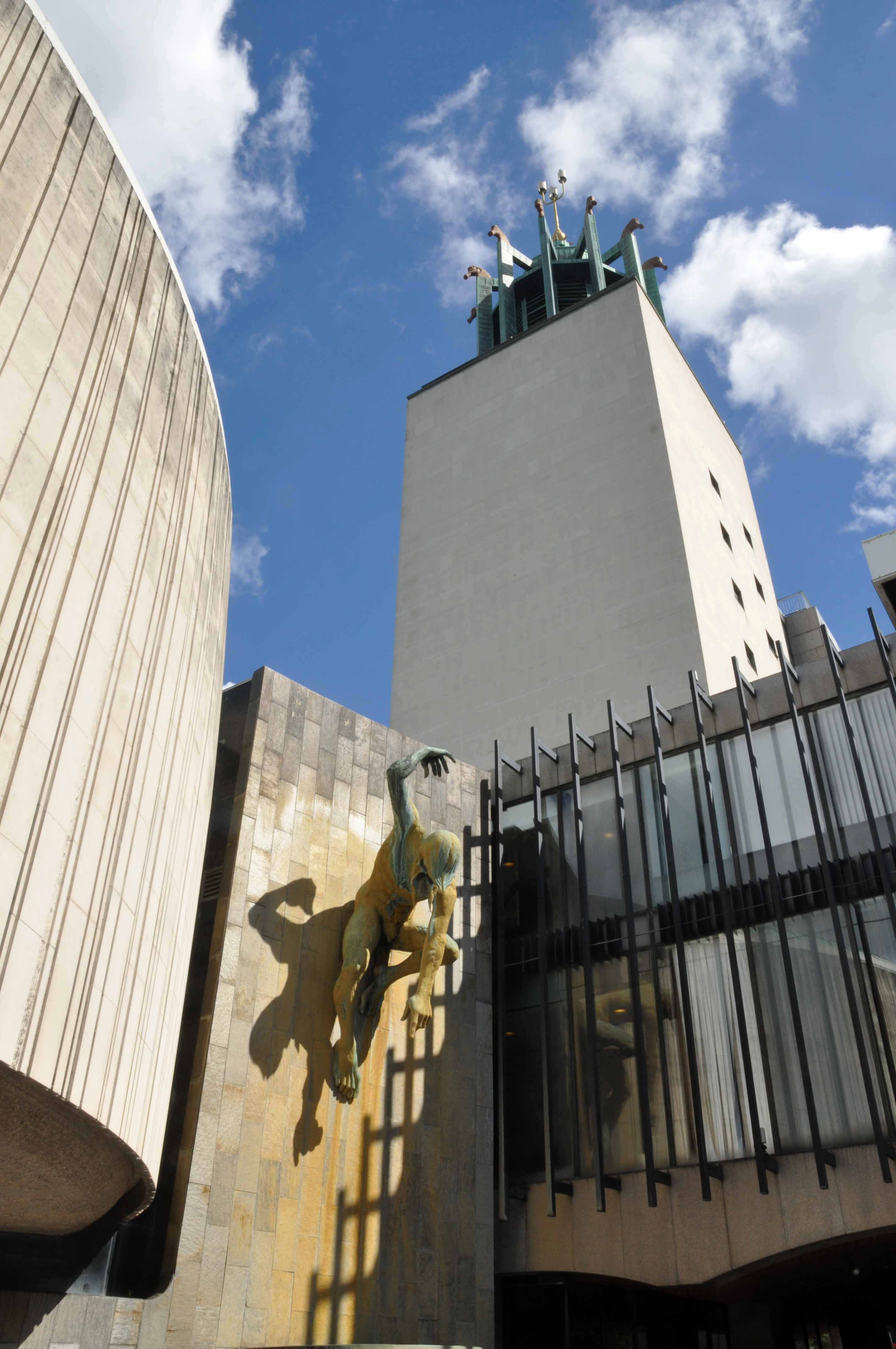
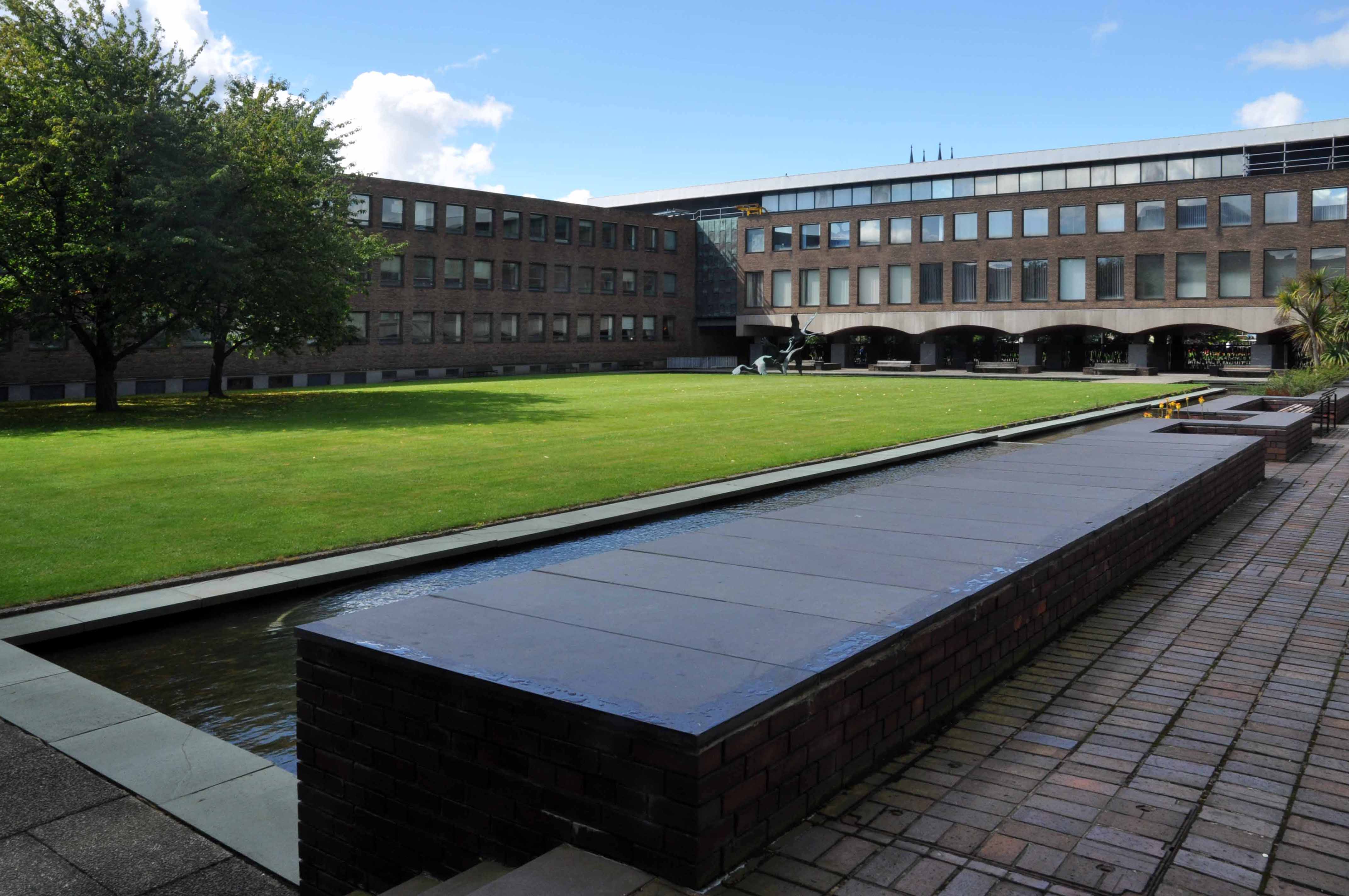
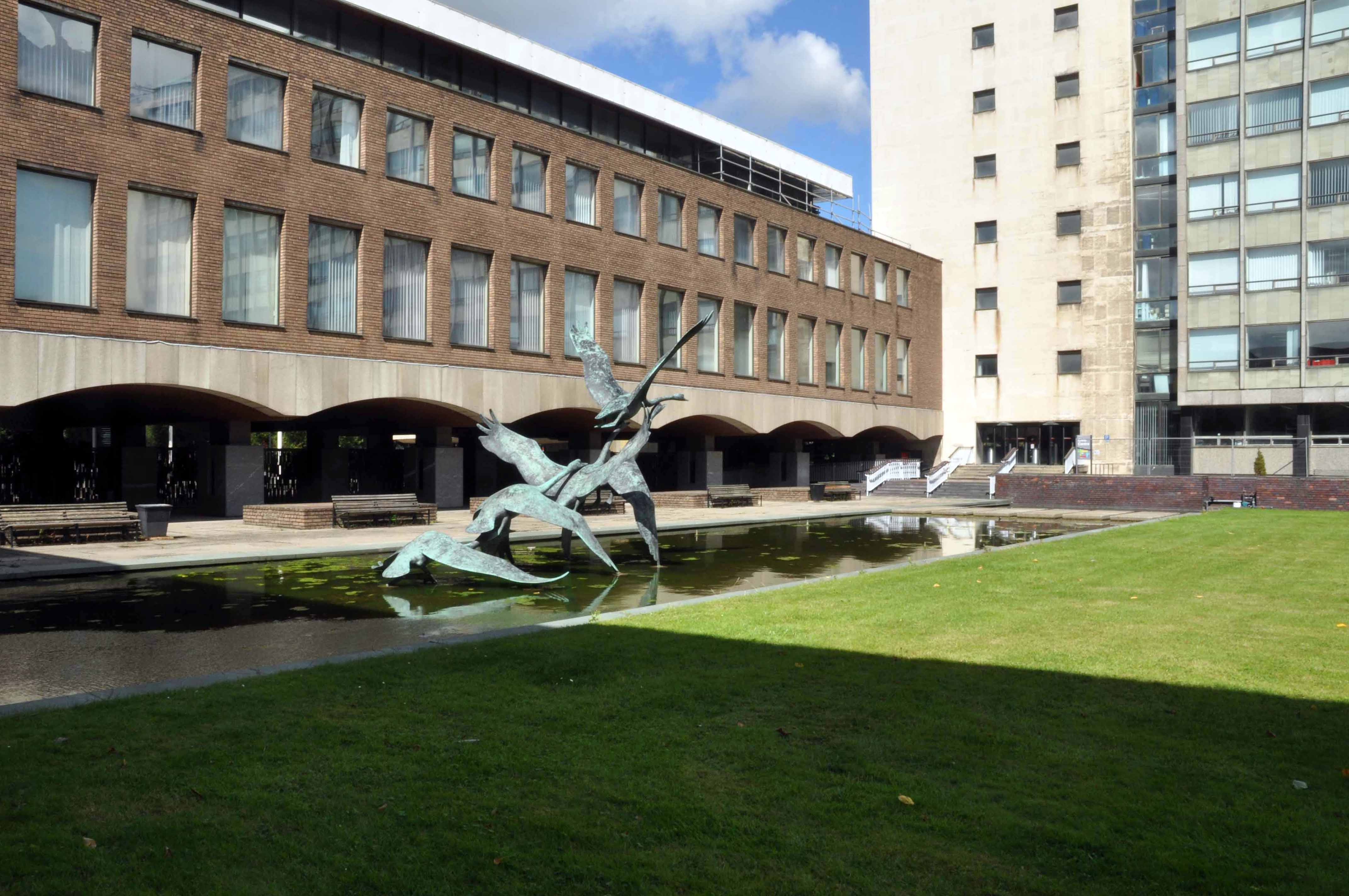
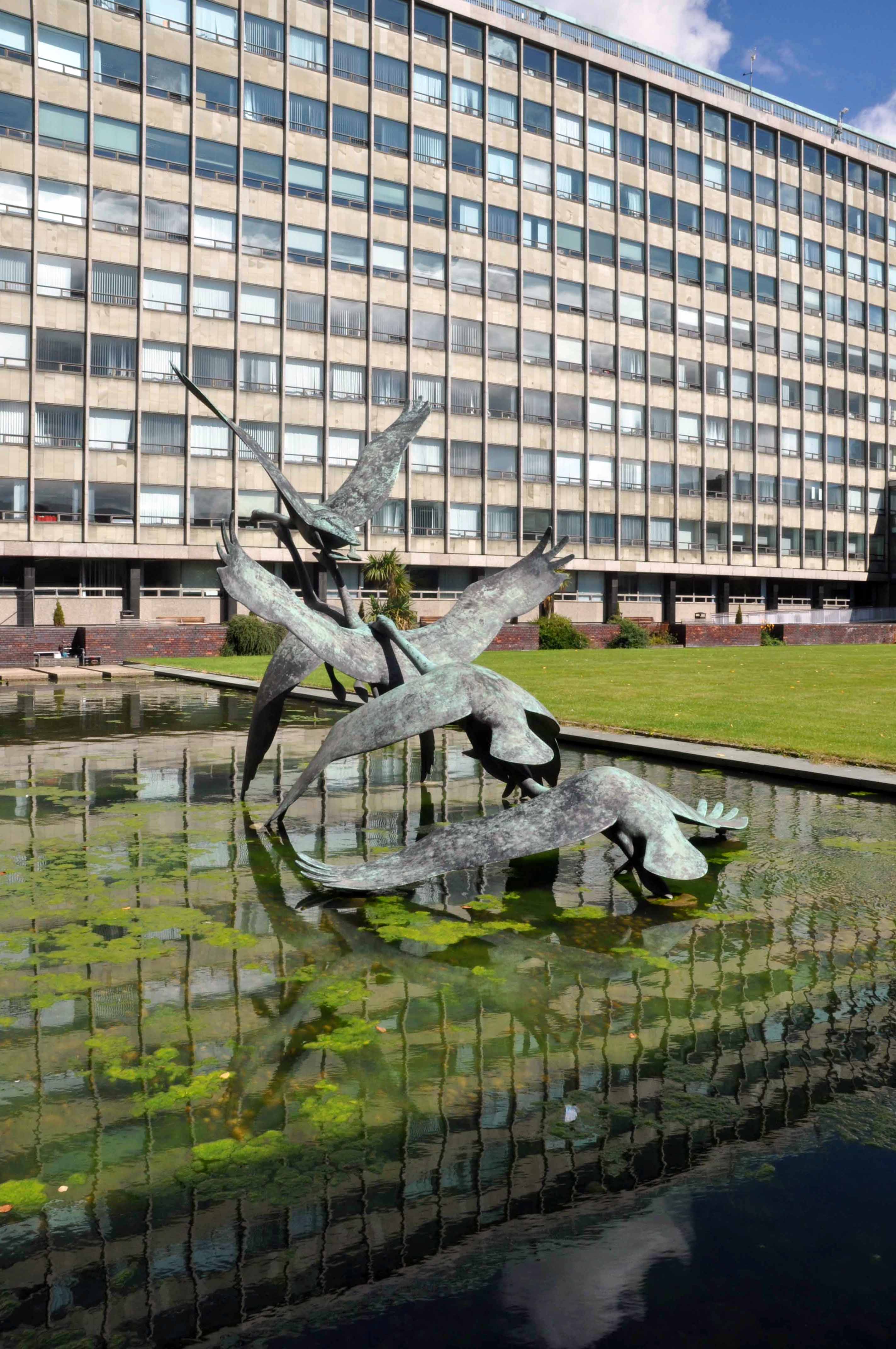
Newcastle Civic Centre is a local government building located in the Haymarket area of Newcastle upon Tyne, England. It is the main administrative and ceremonial centre for Newcastle City Council. Designed by the city architect, George Kenyon, the building was completed in 1967 and was formally opened by HM King Olav V of Norway on 14 November 1968. It is a Grade II* listed building. The Newcastle Civic Centre is the joint eighth tallest building in the city.

It is a concrete poem clad in Portland stone ashlar, Cornish granite, Broughton Moor stone, hand made bricks, Norwegian slate, Portuguese marble, English oak, travertine hand hewn and assembled into one of the finest buildings in the land, no expense spared. Liberally dotted with the labours of John Piper, Victor Pasmore, John Robert Murray McCheyne, Charles Sansbury Geoffrey Clarke, David Dewey, John Hutton and David Wynne.

A building full of surprises, big and small that repays exploration and further exploration, in that order. Go take a look, breathe that air, that air which whistles up the River Tyne, fresh from the Continent – and glow, all aglow with civic centre pride.

dsc_0058

dsc_0108

dsc_0119

dsc_0122

dsc_0121

dsc_0099

dsc_0068

dsc_0067

dsc_0063

dsc_0059

dsc_0077

dsc_0087

dsc_0088

dsc_0124

dsc_0090

dsc_0133

dsc_0091

dsc_0092

dsc_0093

dsc_0096

dsc_0106

dsc_0109

dsc_0113

dsc_0114

dsc_0116

dsc_0115

Concord Suite – Droylsden

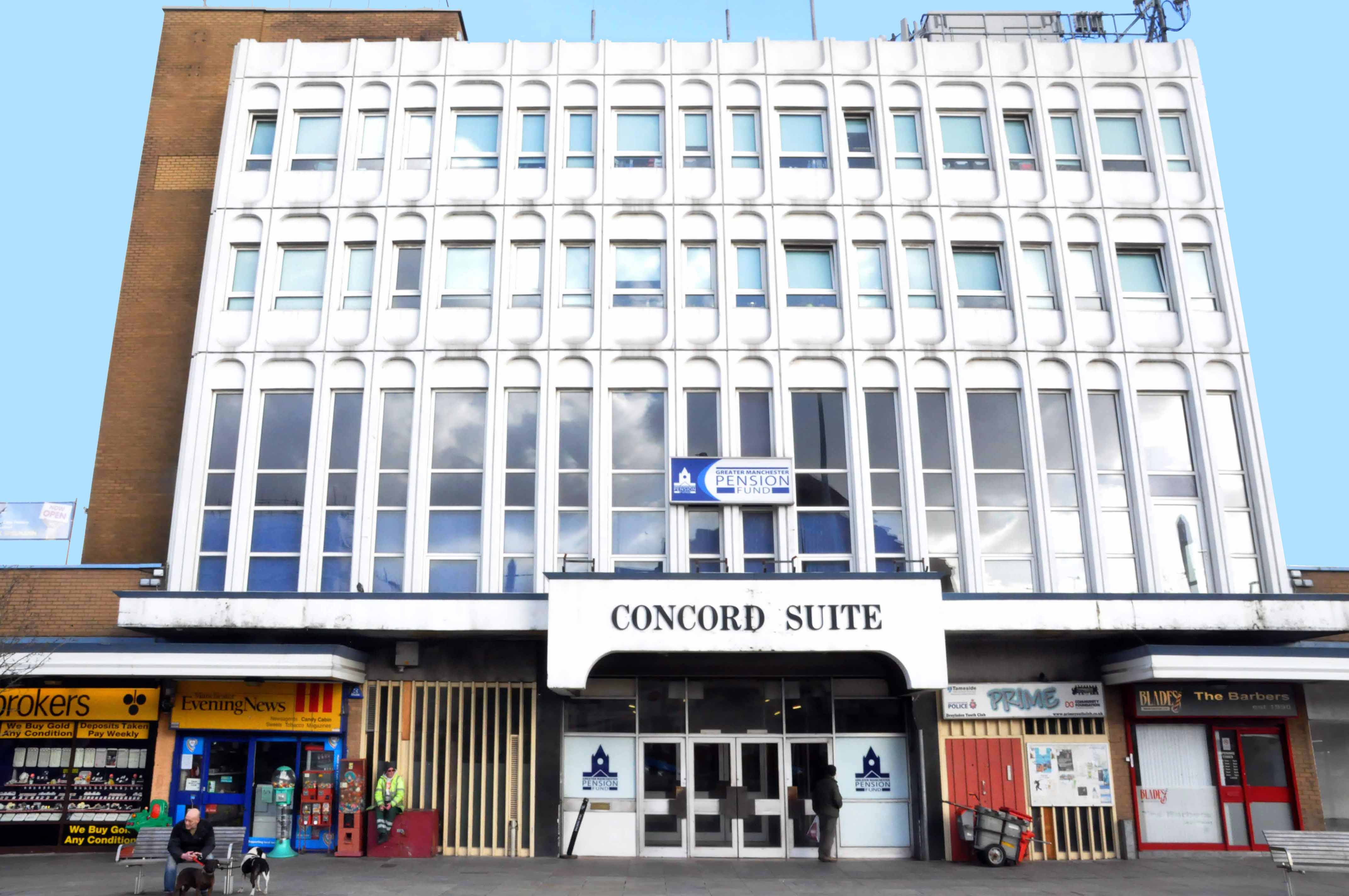
There is little or no reference to this fine building on the whole world wide web – the wise people of Wikipedia tell us –

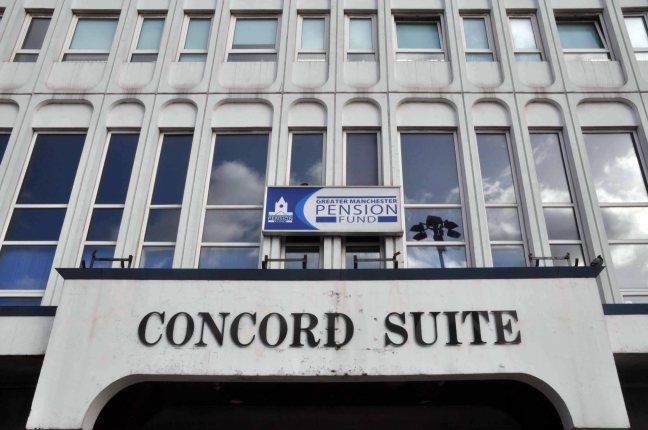
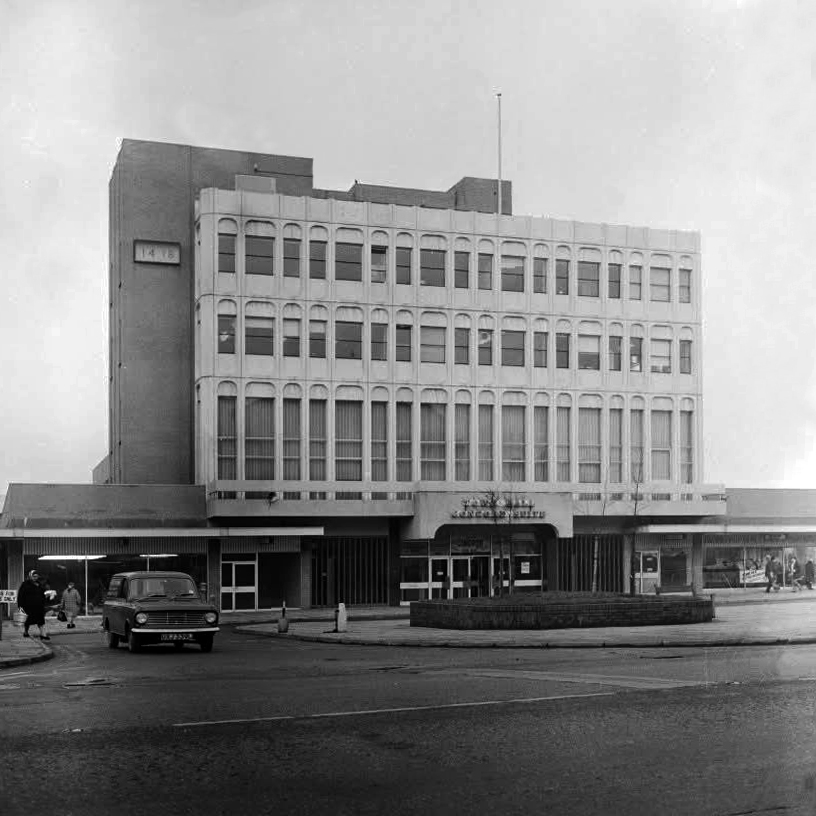
The Concord Suite was built in the early 1970’s to house Droylsden Council. The word Concord comes from the town’s motto Concordia, meaning harmony.

Today’s visit reveals the hard facts!

Architects: Bernard Engle & Partners – who are also responsible for Merseyway in Stockport.

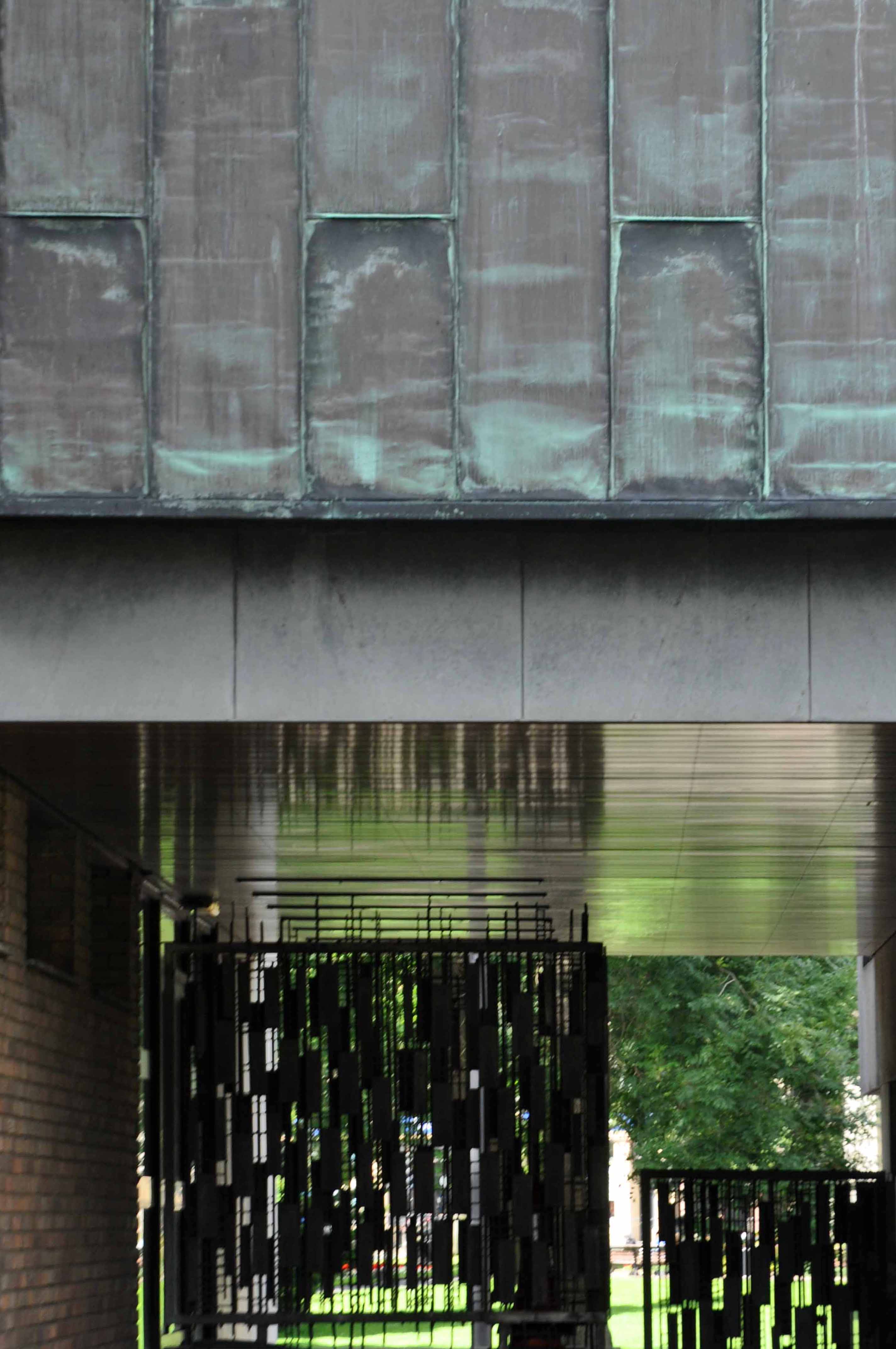
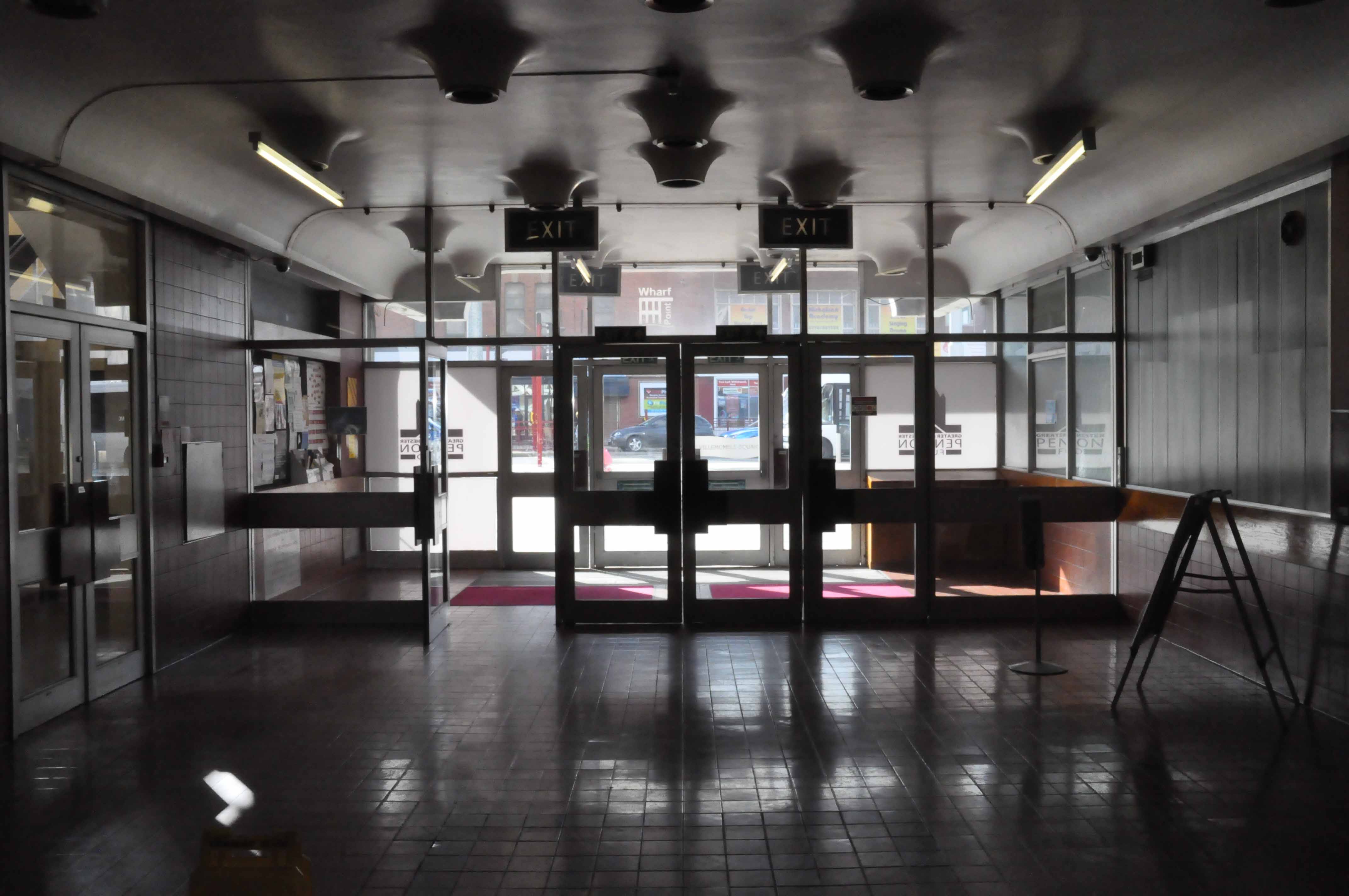
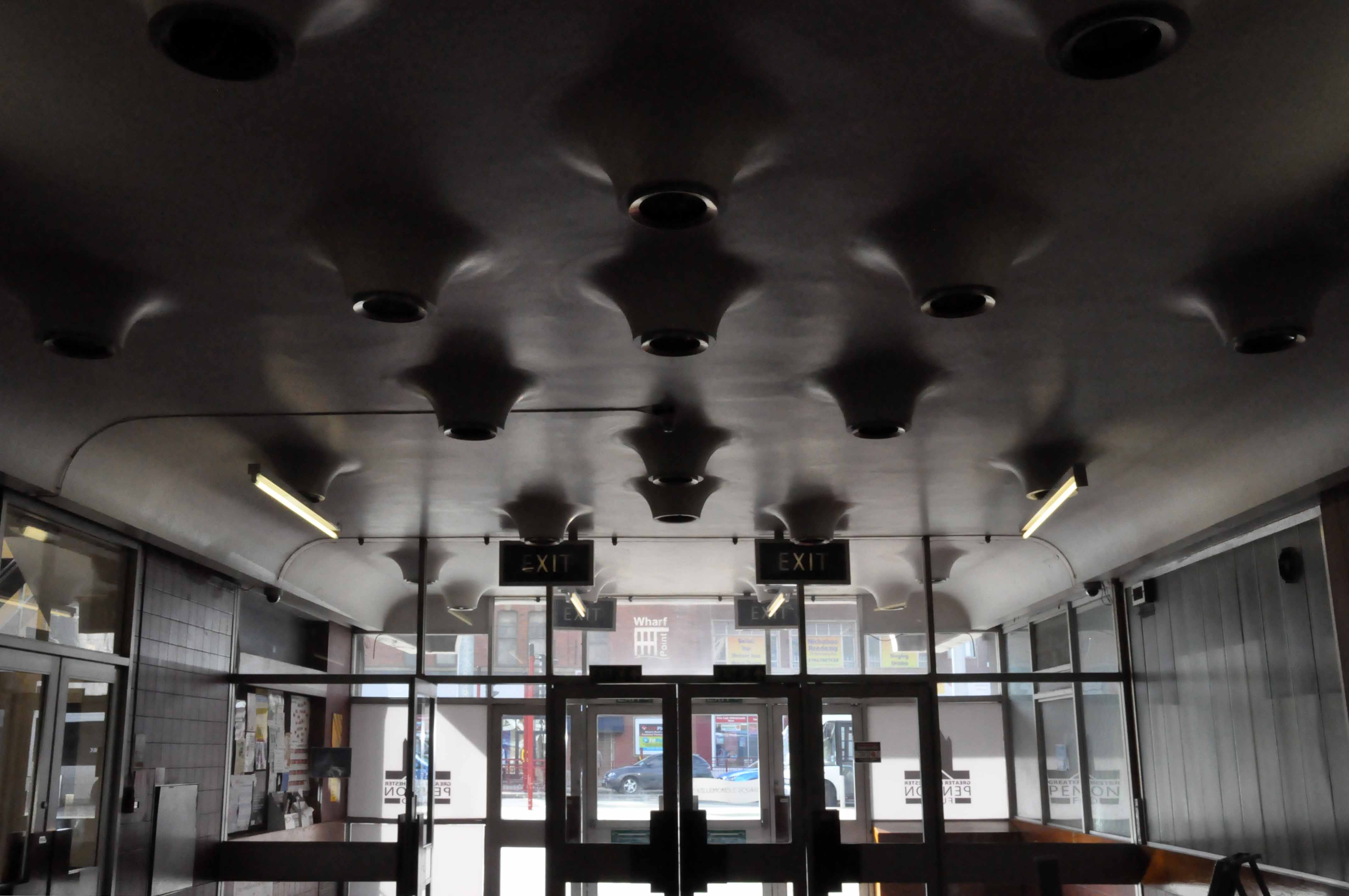
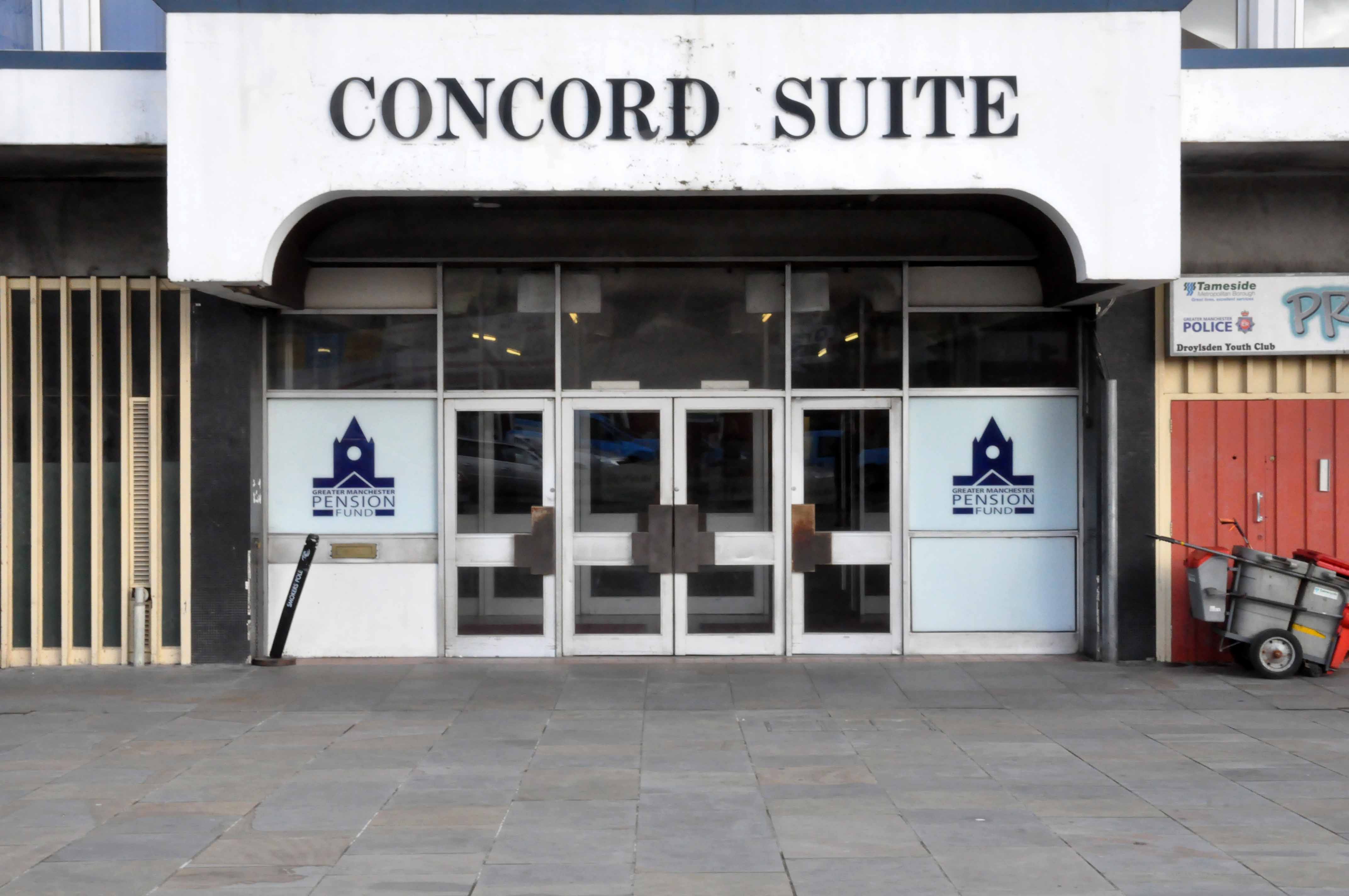
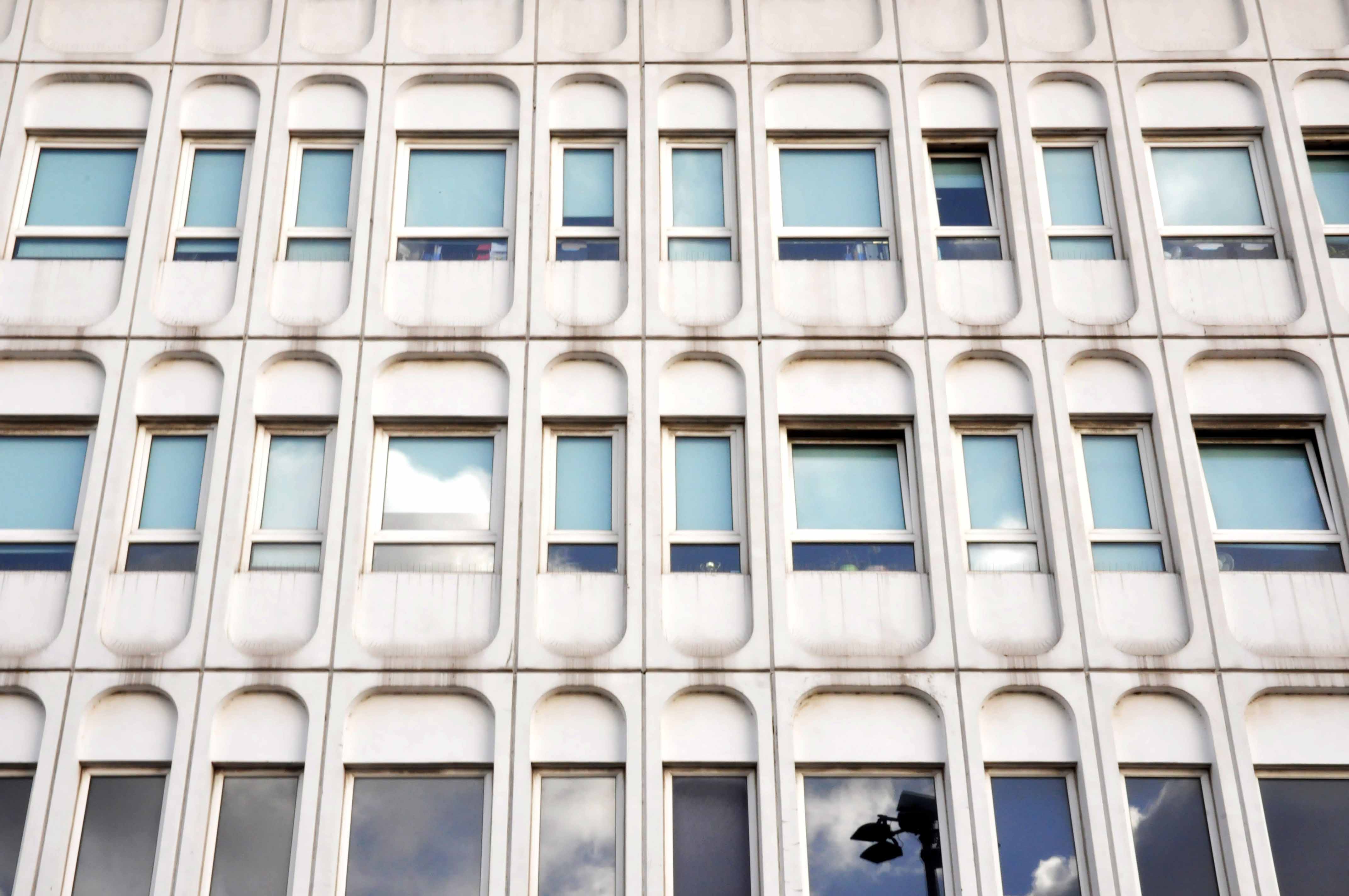
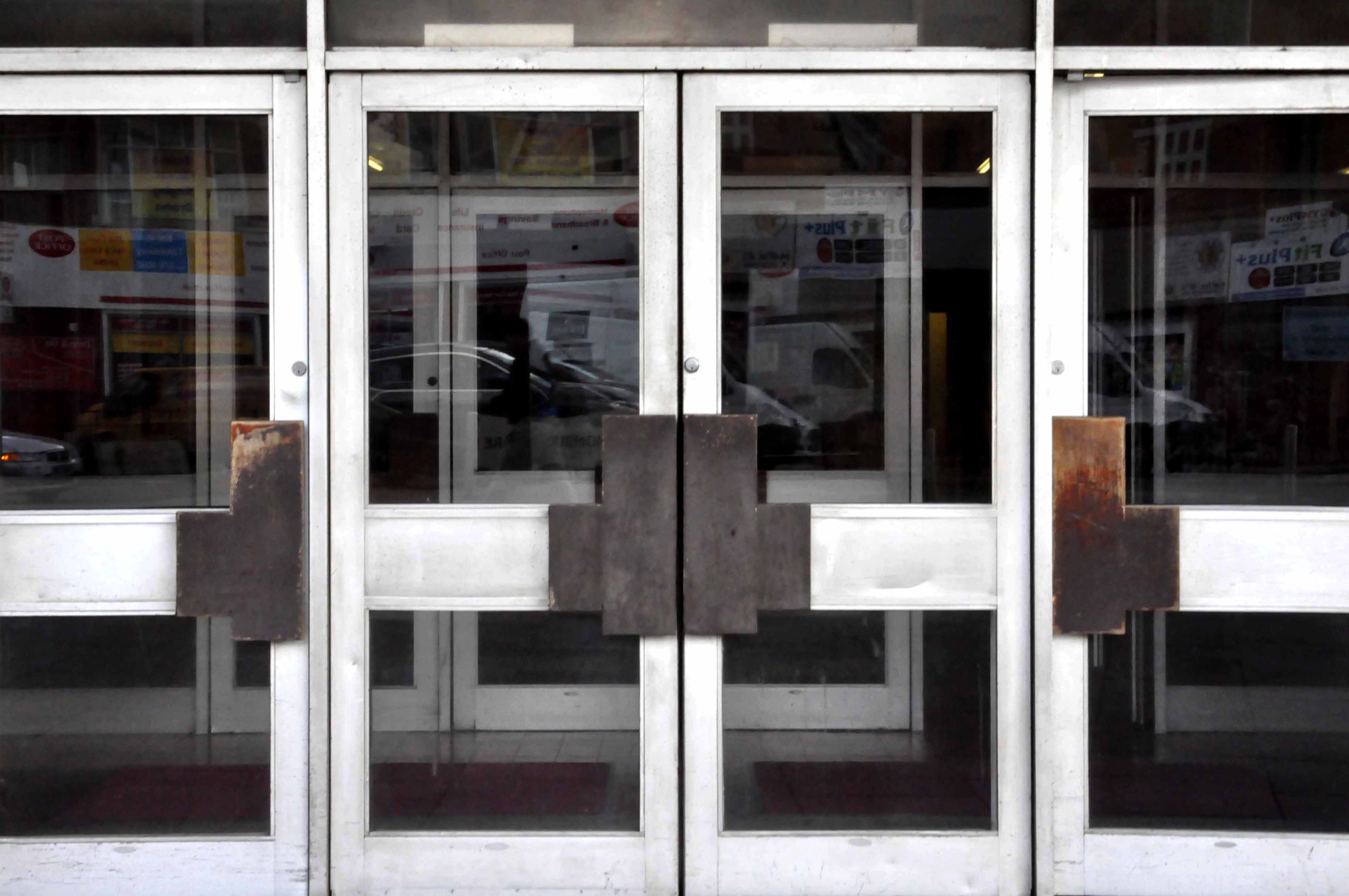
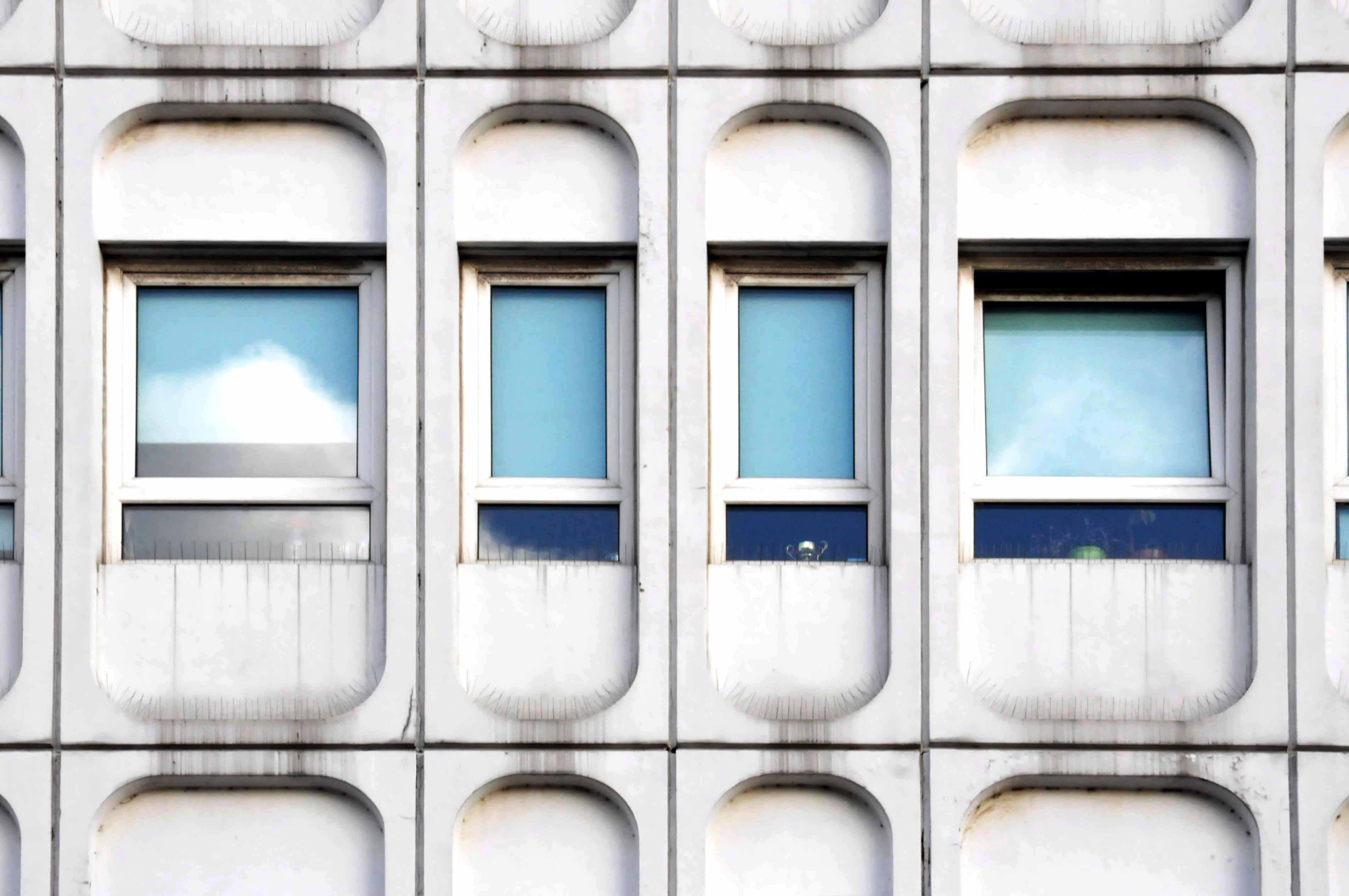
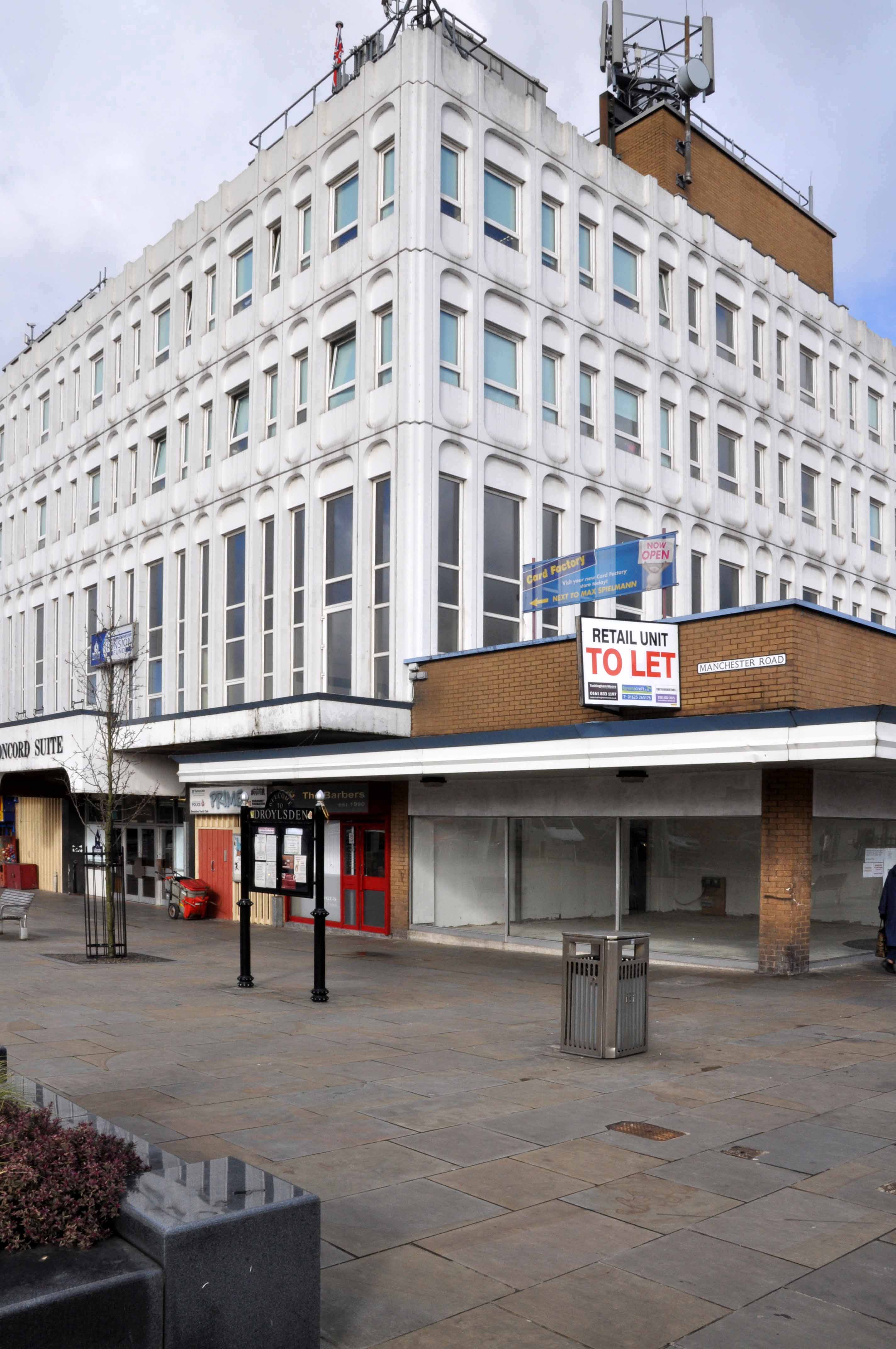
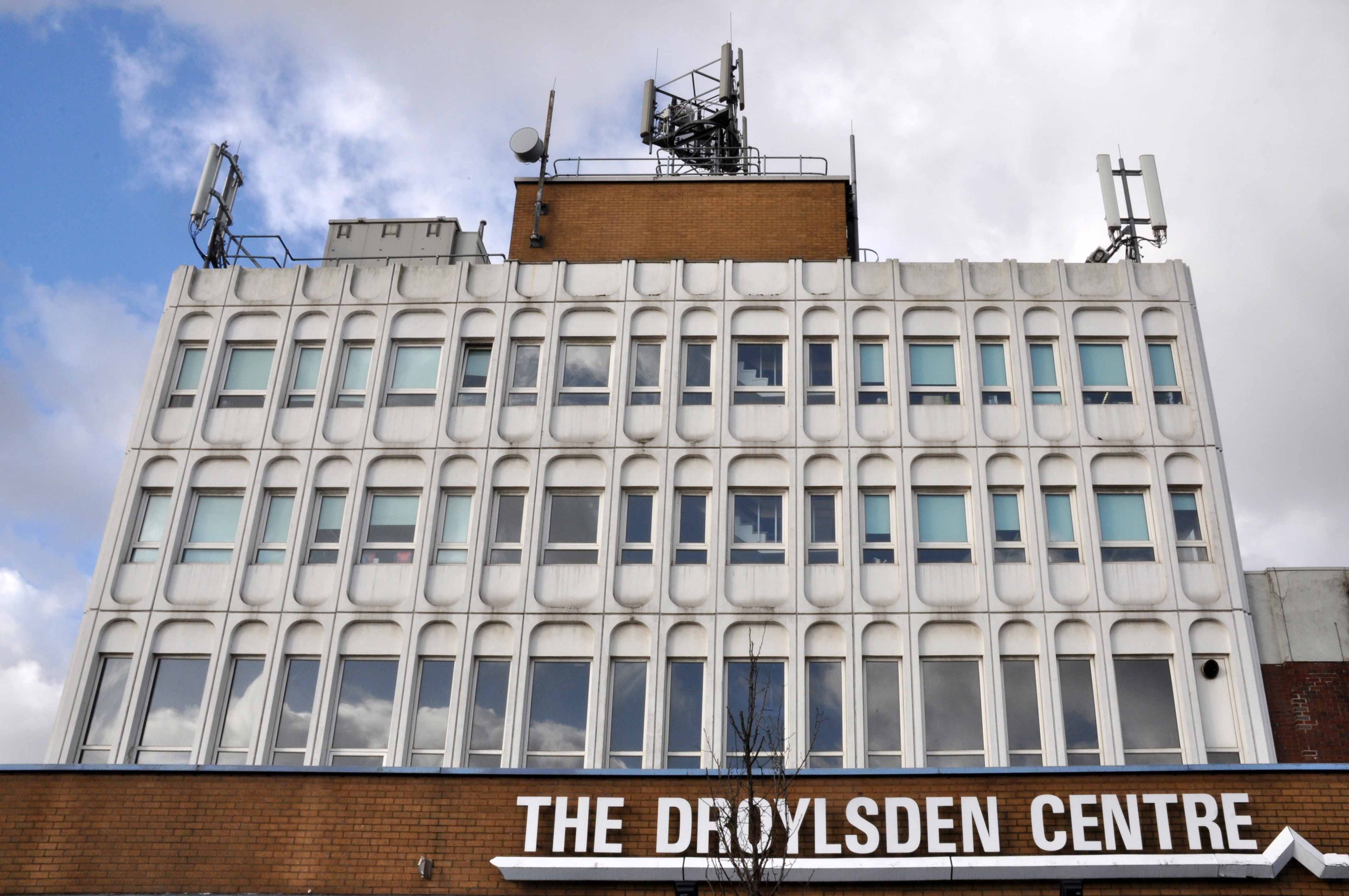
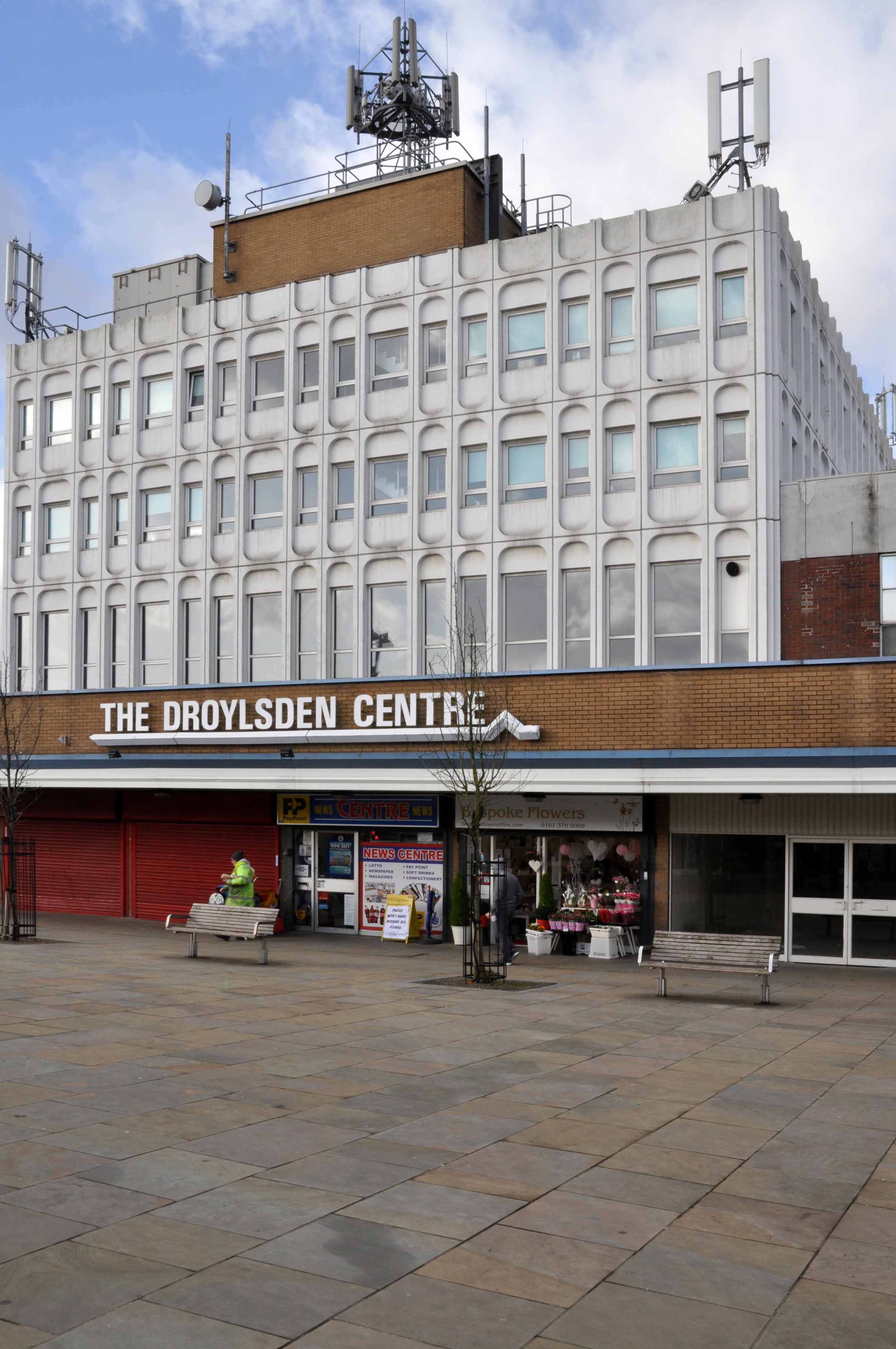
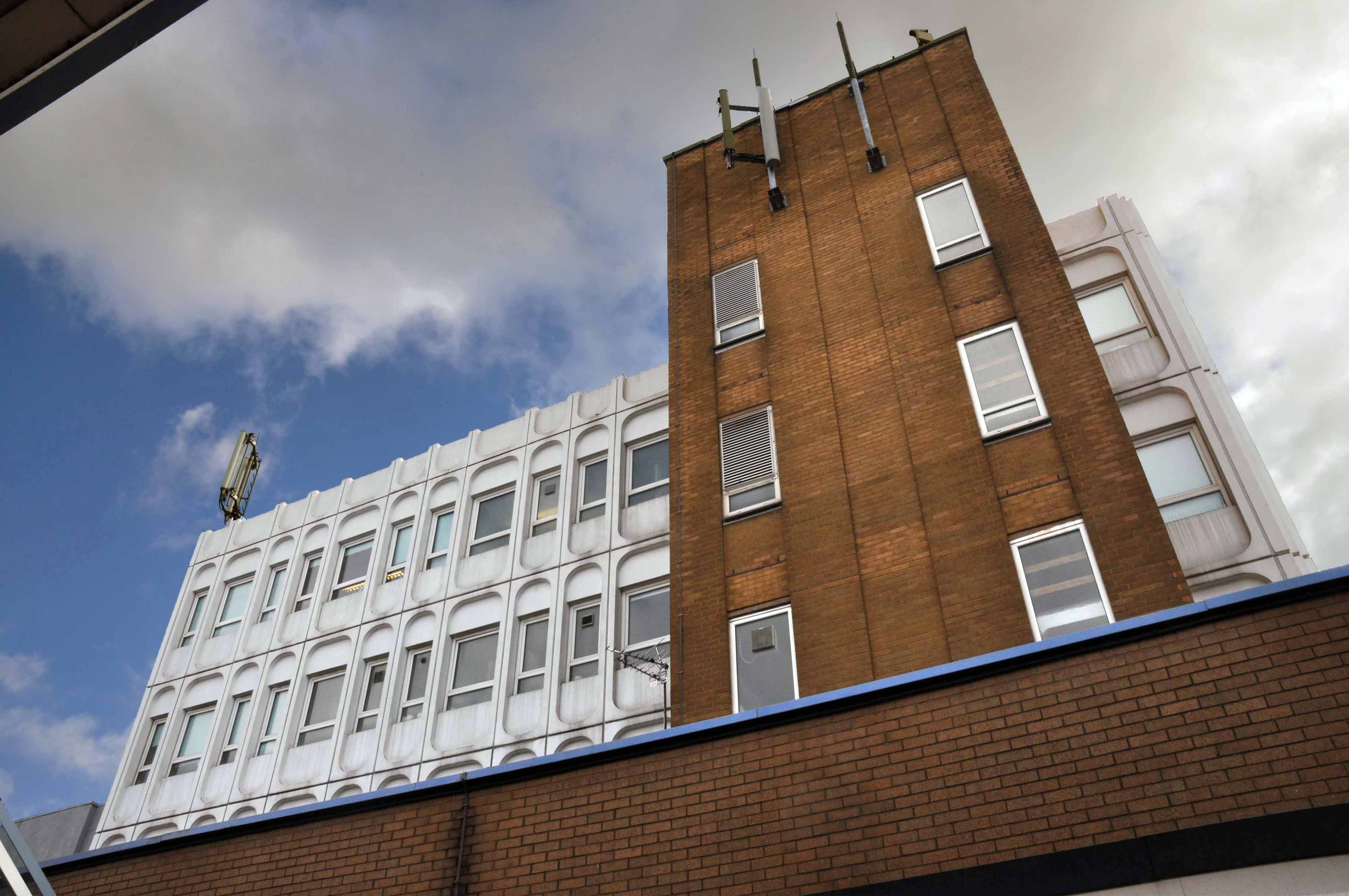
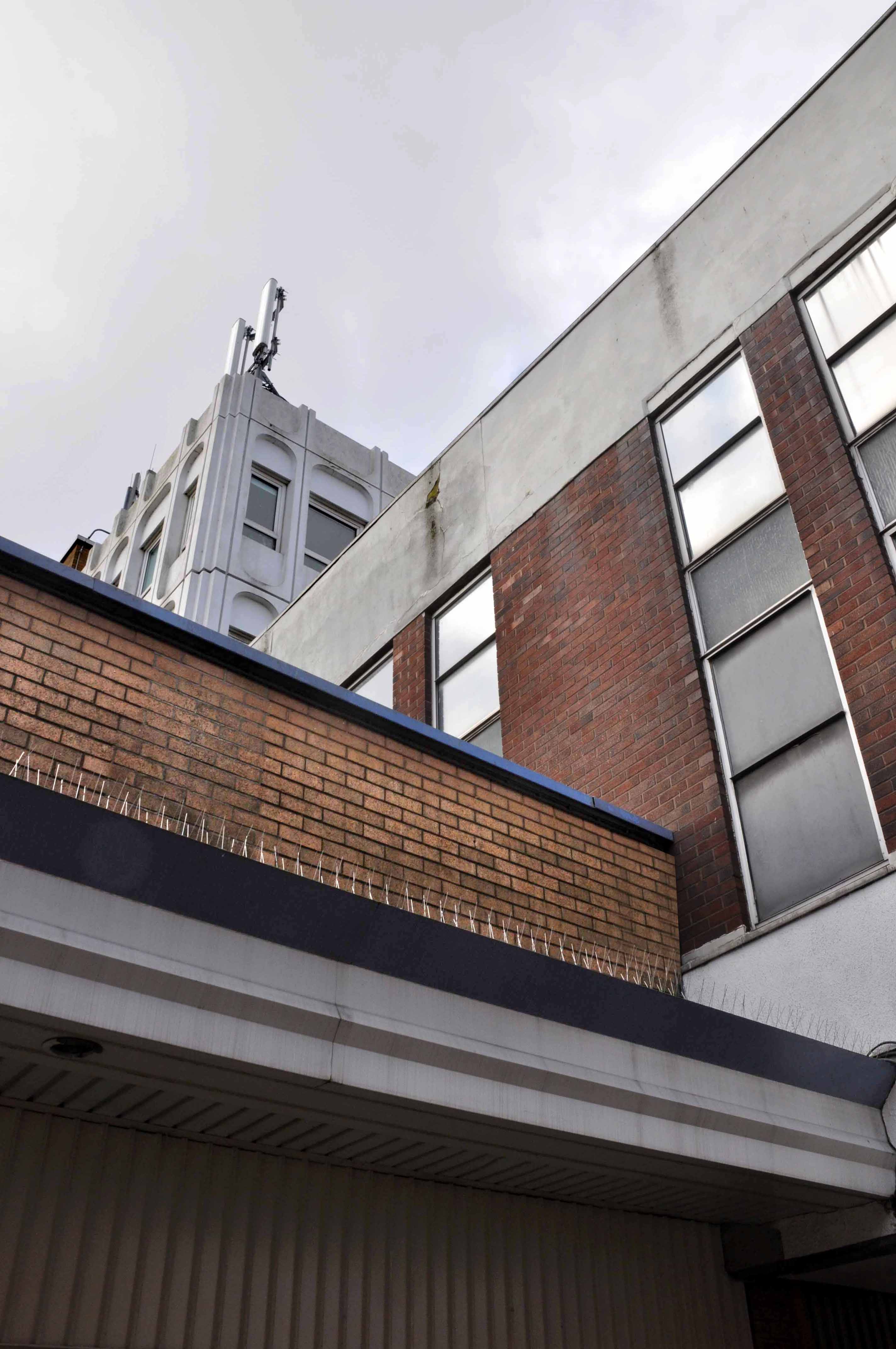
I’ve passed by for almost all of its life, marvelling at its white modular space age panels. The wide paved piazza frontage affords the lucky viewer a full appreciation of its futuristic whole, a giddy mix of brick, glass and concrete optimism. Civic architecture has never seemed so sunny.

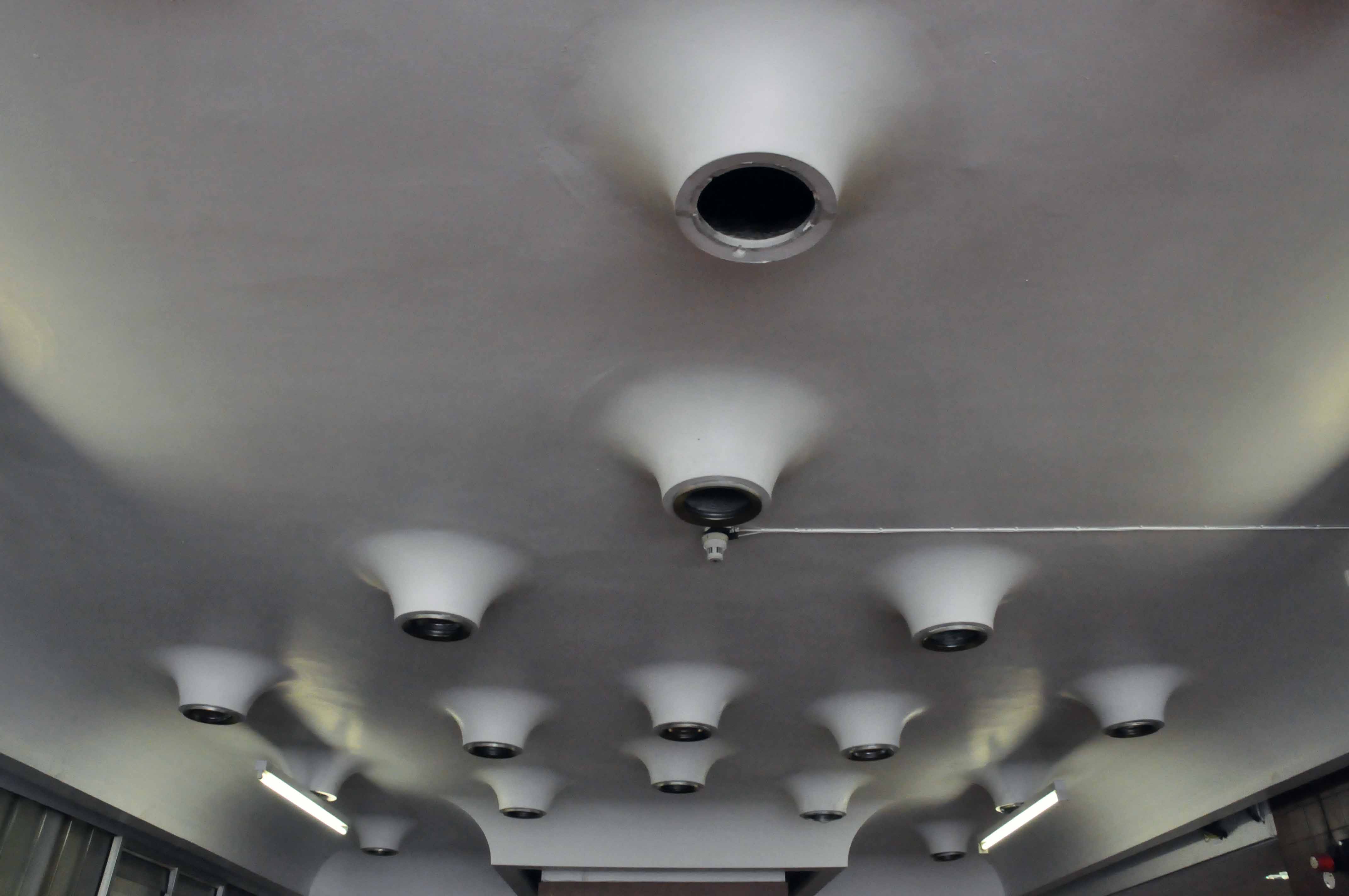
The interior lighting is straight out of 2001, white organic and fully functioning – the upstairs function room is available for functions at the junction of Market Street and Ashton New Road.

dsc_0415-copy
dsc_0417
dsc_0418-copy

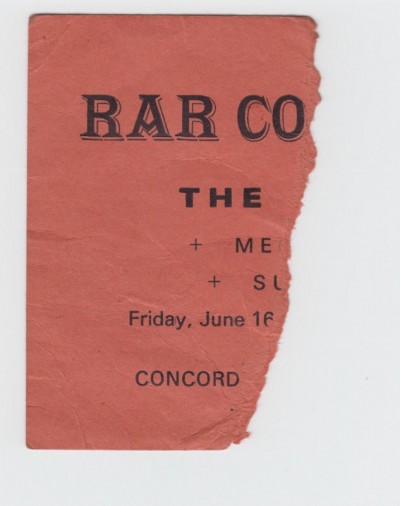
I saw The Fall there for the first time in 1978, suitably shambolic and suitably feisty.

1978-06-16_ticket-concordsuitedroylsden

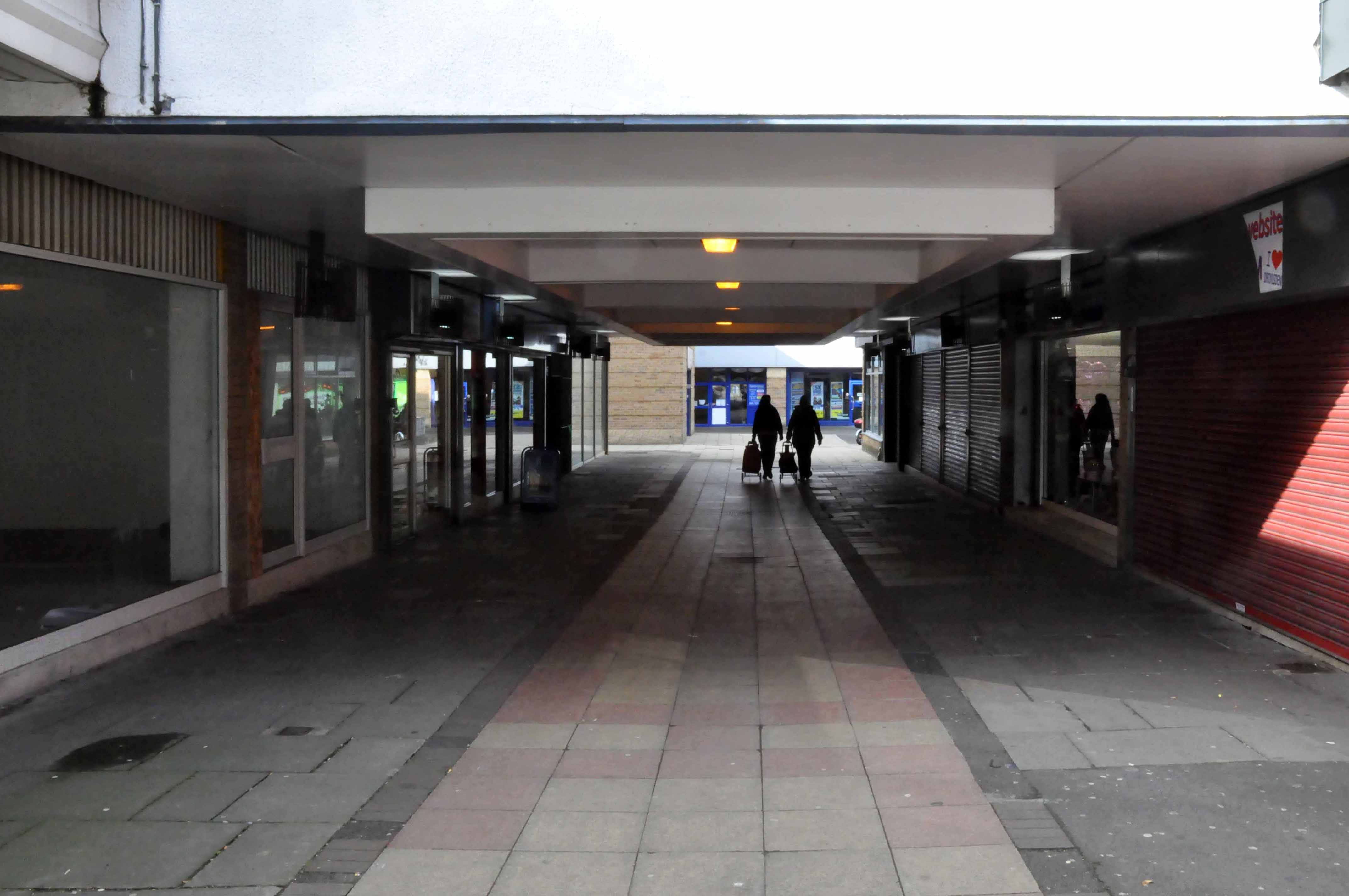
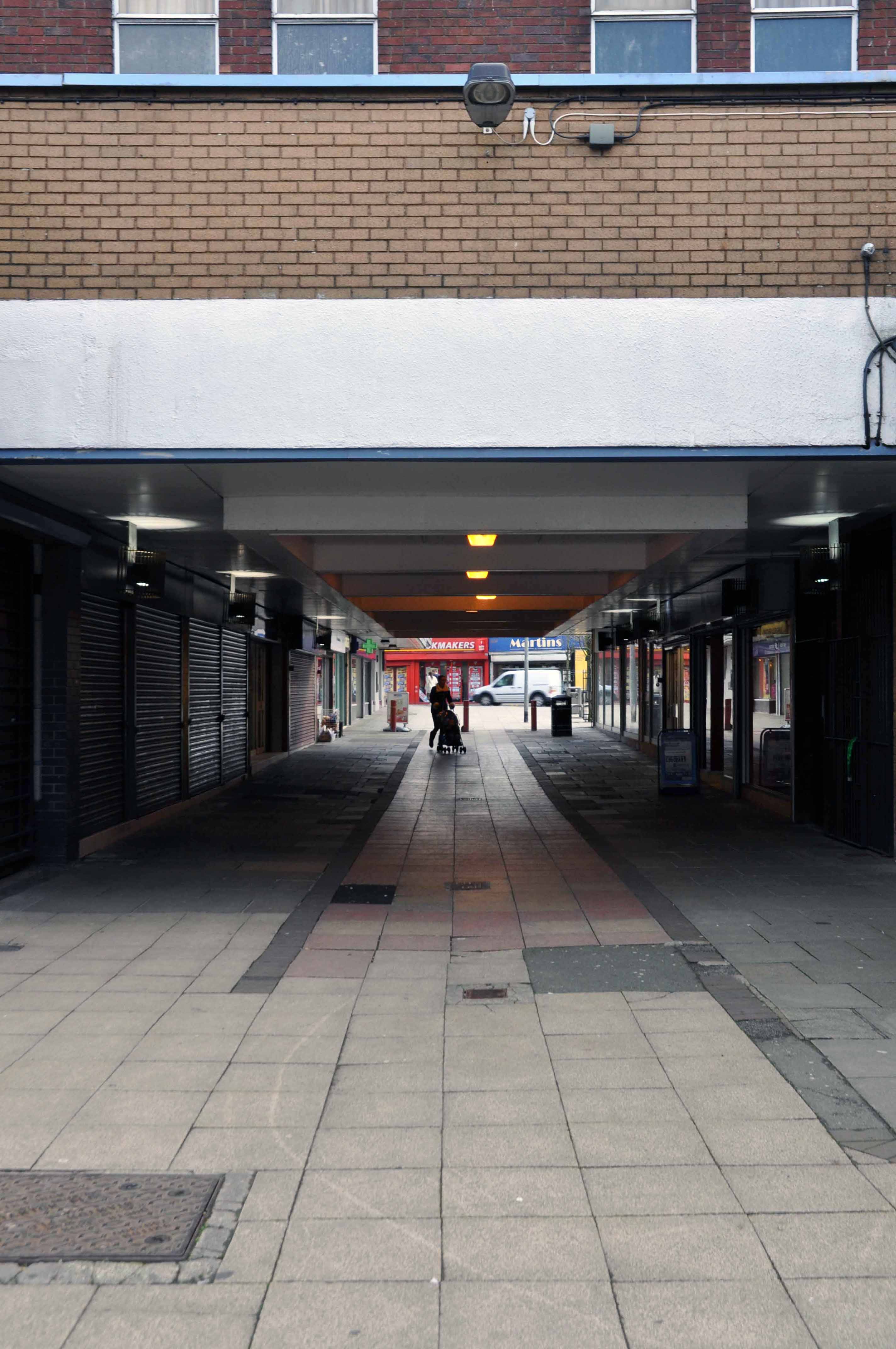
Renamed the Droylsden Centre on one side, it houses the regulation issue of charity shops and empty units. The main building is home to the Greater Manchester Pension Fund, soon to relocate to a new build across the road. The Concord will then provide a home for the workers leaving the now demolished Tameside Council Offices in Ashton.

The tram stops here.

dsc_0381
dsc_0375-copy
dsc_0377-copy
dsc_0379-copy
dsc_0383-copy
dsc_0380-copy
dsc_0389
dsc_0397-copy
dsc_0399
dsc_0400-copy
dsc_0401
dsc_0413-copy
dsc_0403
dsc_0409
dsc_0404
dsc_0407
dsc_0412-copy

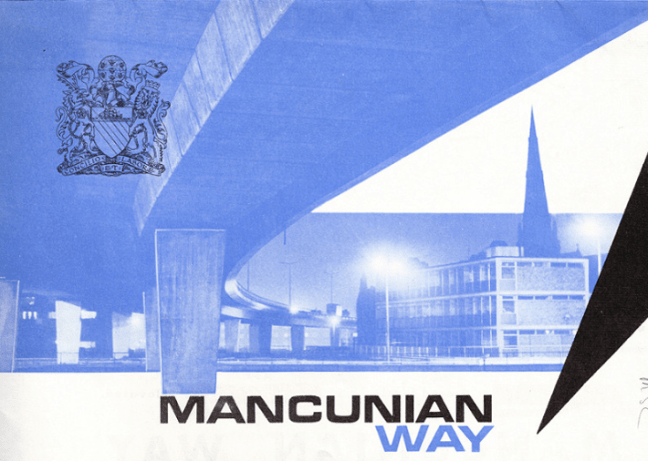
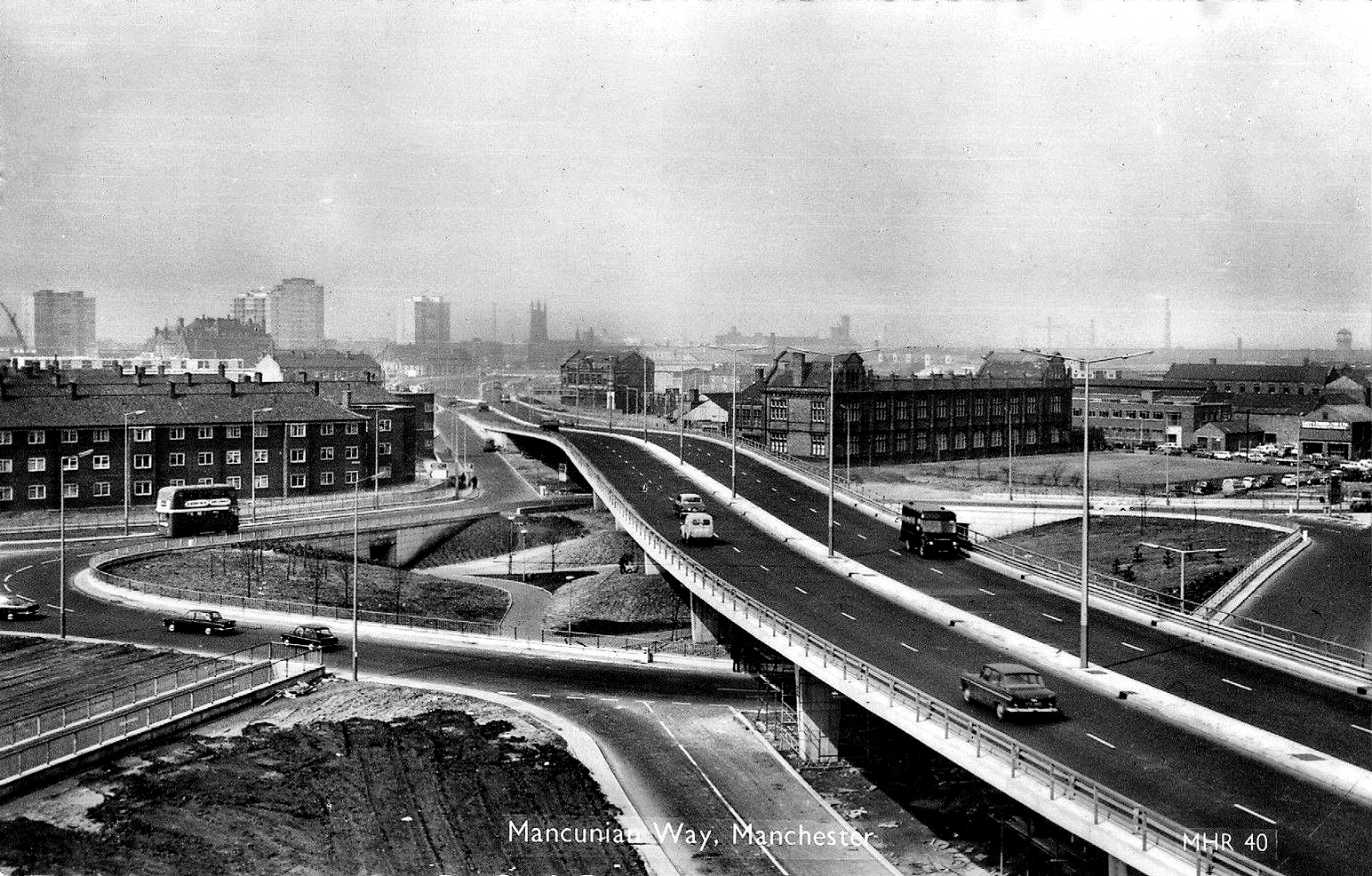
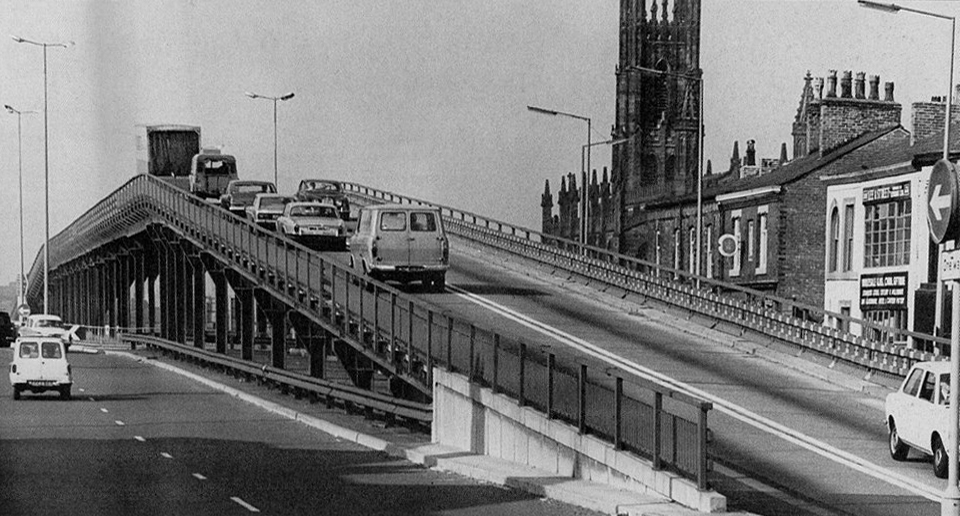
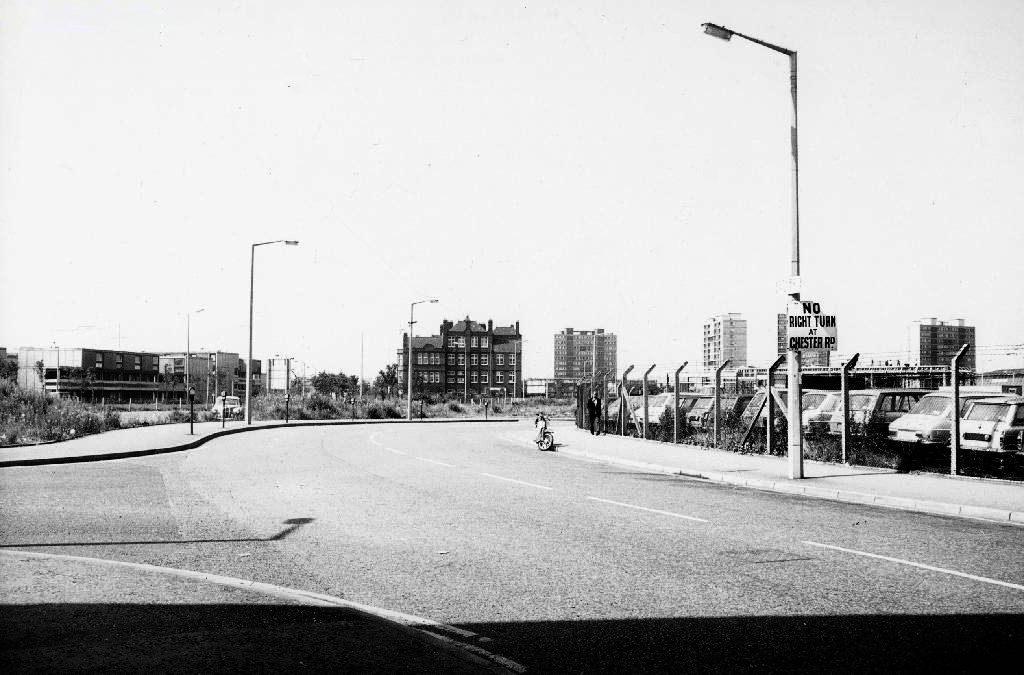
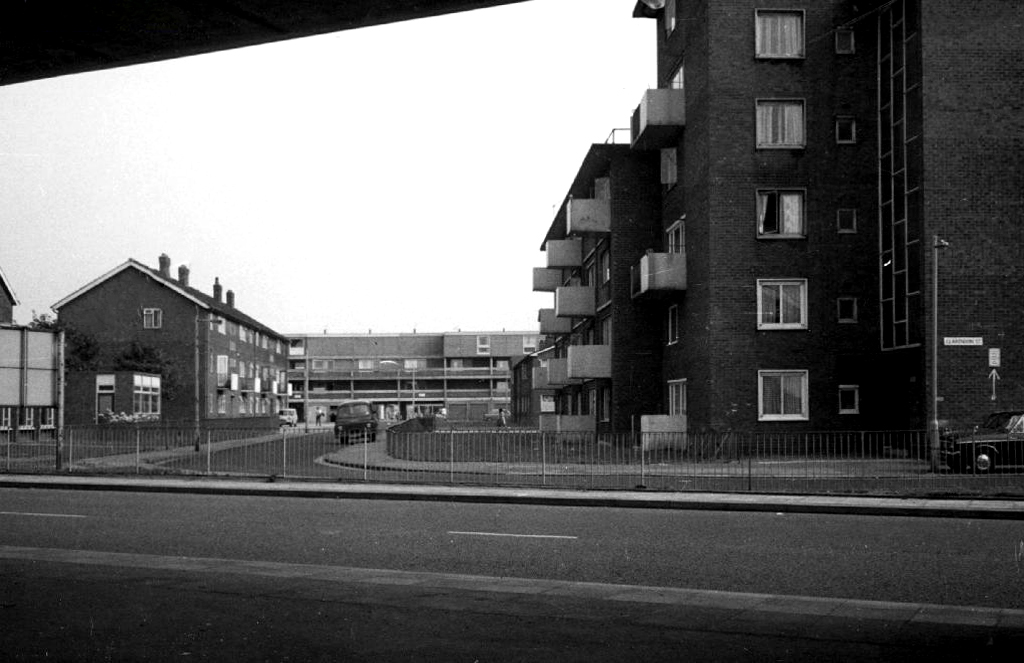
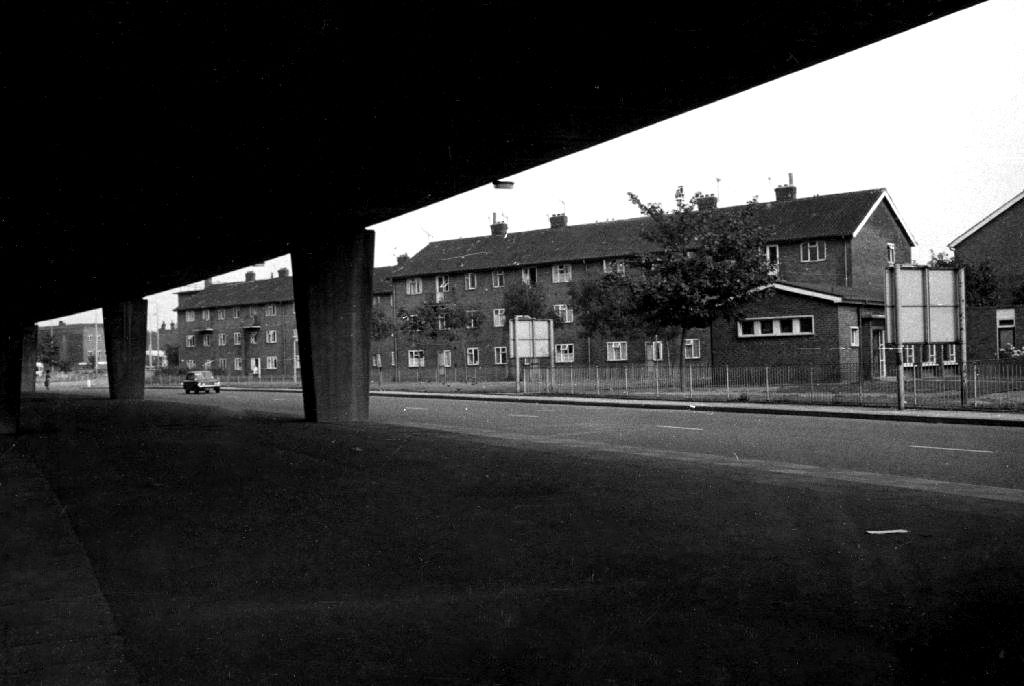
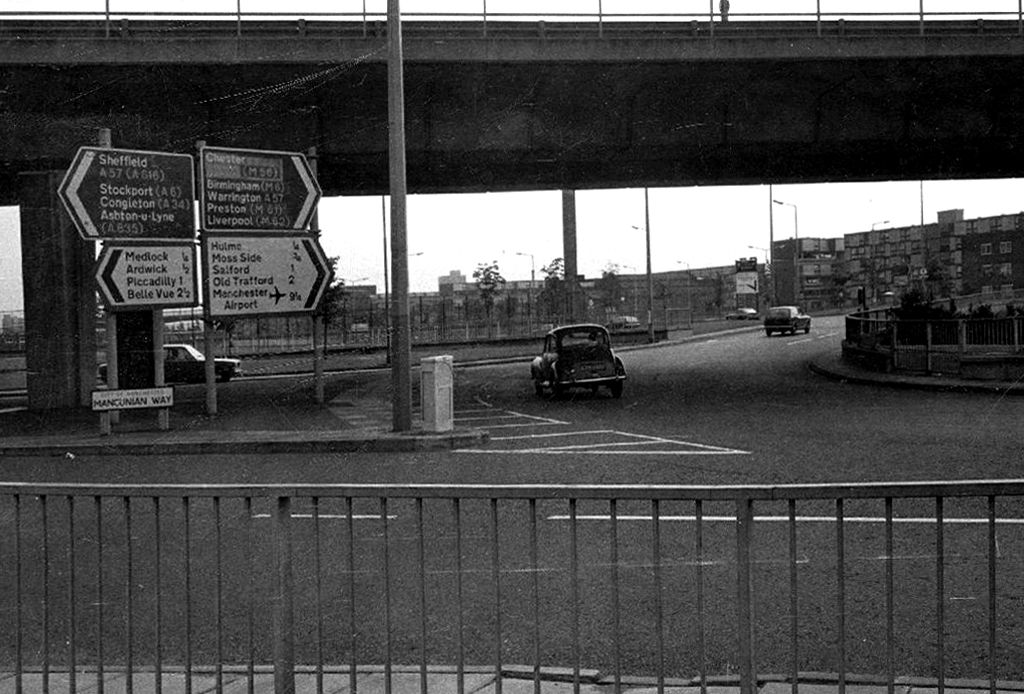
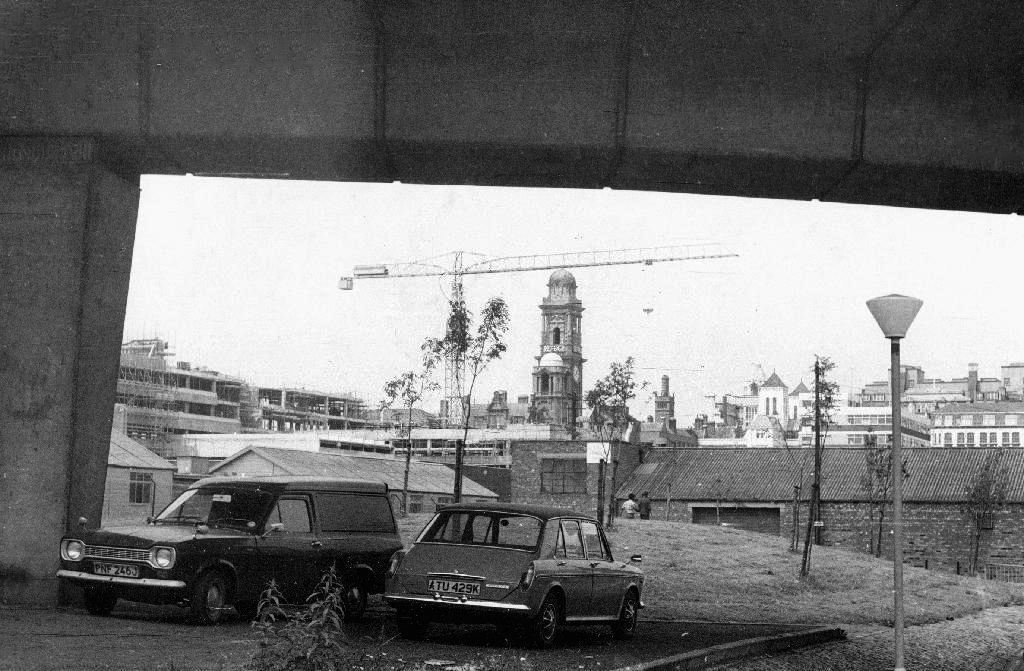
The Mancunian Way

The burnt out carcasses of cars are now hastily improvised cloches, following the annual cataclysmic courgette shortage.

Almost everything is made of Graphene, and a robot has taken your job.

The lucky ones are comfortably ensconced in custom built eco-pods, watching implanted Tarkovsky flicks around the clock and eating tasteless gloop.

Or Ultra-HD projections from the past.

Turn on.

Tune in.

Drop off.

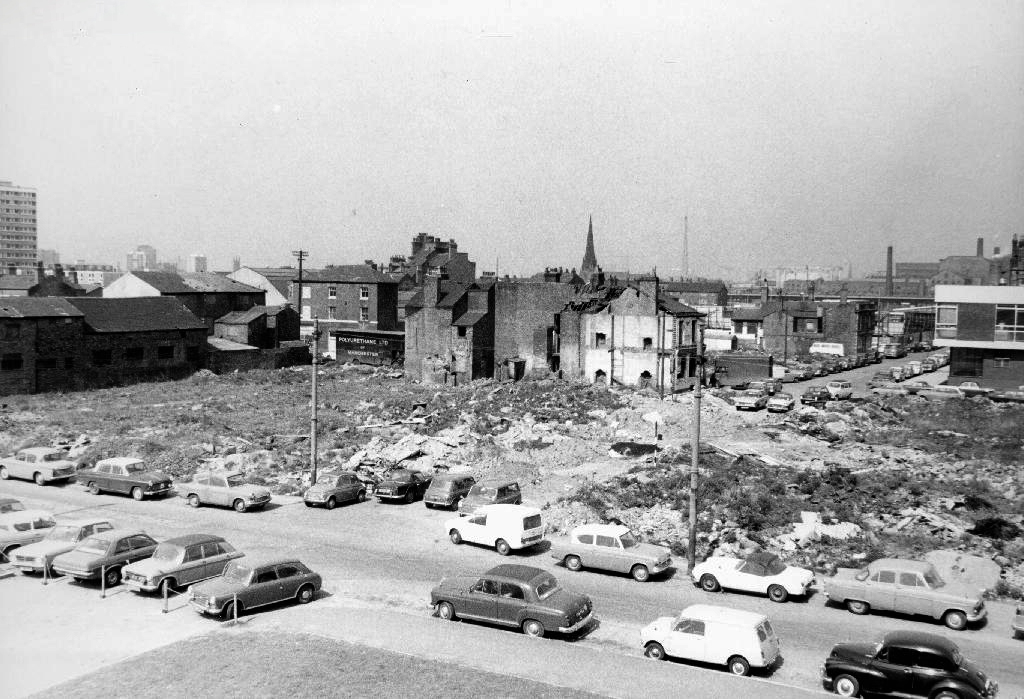
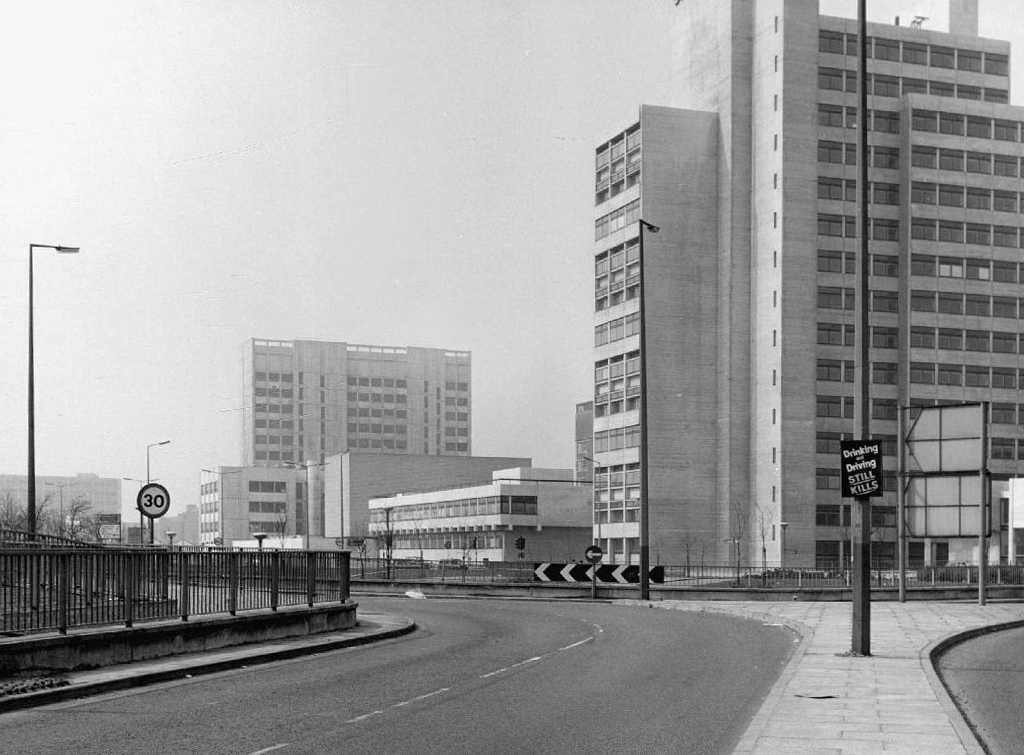
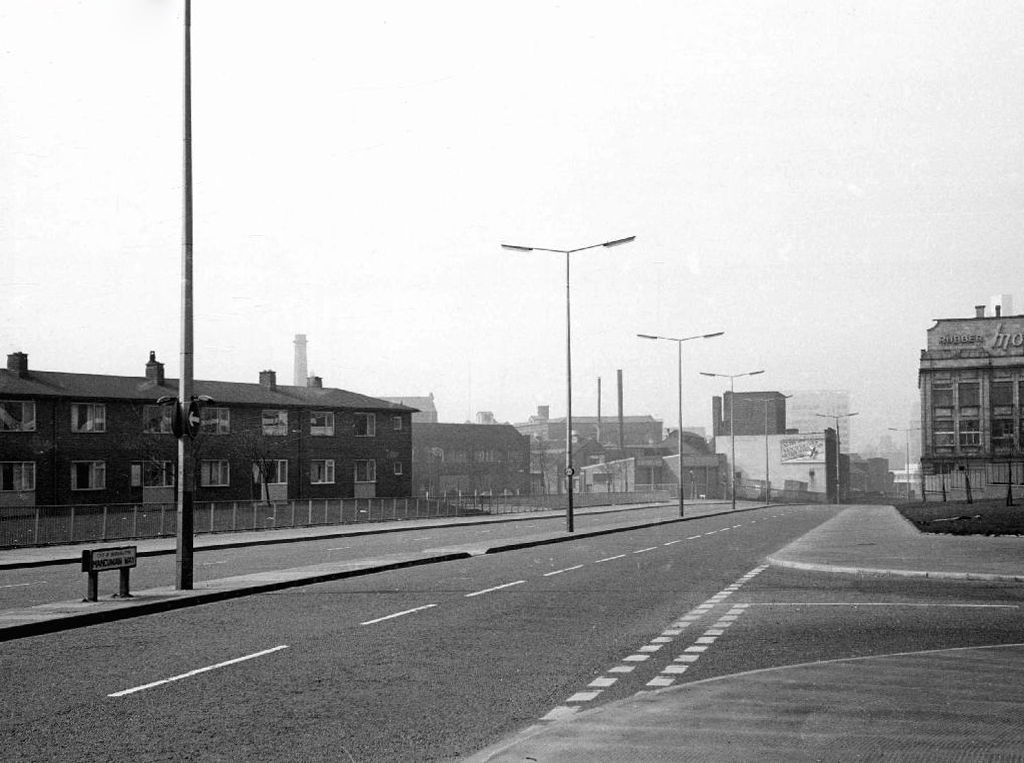
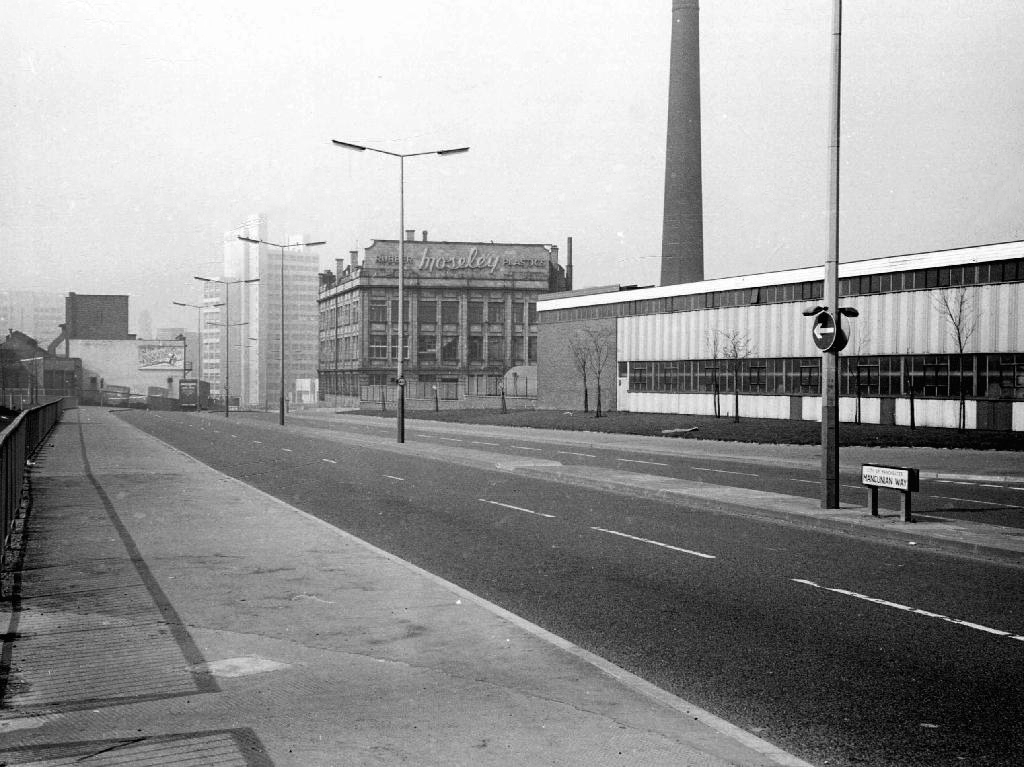
Walk the Mancunian way – history buffs and tech heads can take a look here.

Photographs from the Manchester Image Archive

16463426_10212141901922228_700052626864377295_o

tumblr_nm6lpv4wwg1rr41pto1_1280

webmedia-1-php

webmedia-2-php

webmedia-3-php

webmedia-4-php

webmedia-7-php

webmedia-5-php

webmedia-6-php

webmedia-8-php

webmedia-9-php

webmedia-10-php

webmedia-11-php

webmedia-12-php

webmedia-13-php

webmedia-14-php

webmedia-15-php

webmedia-php

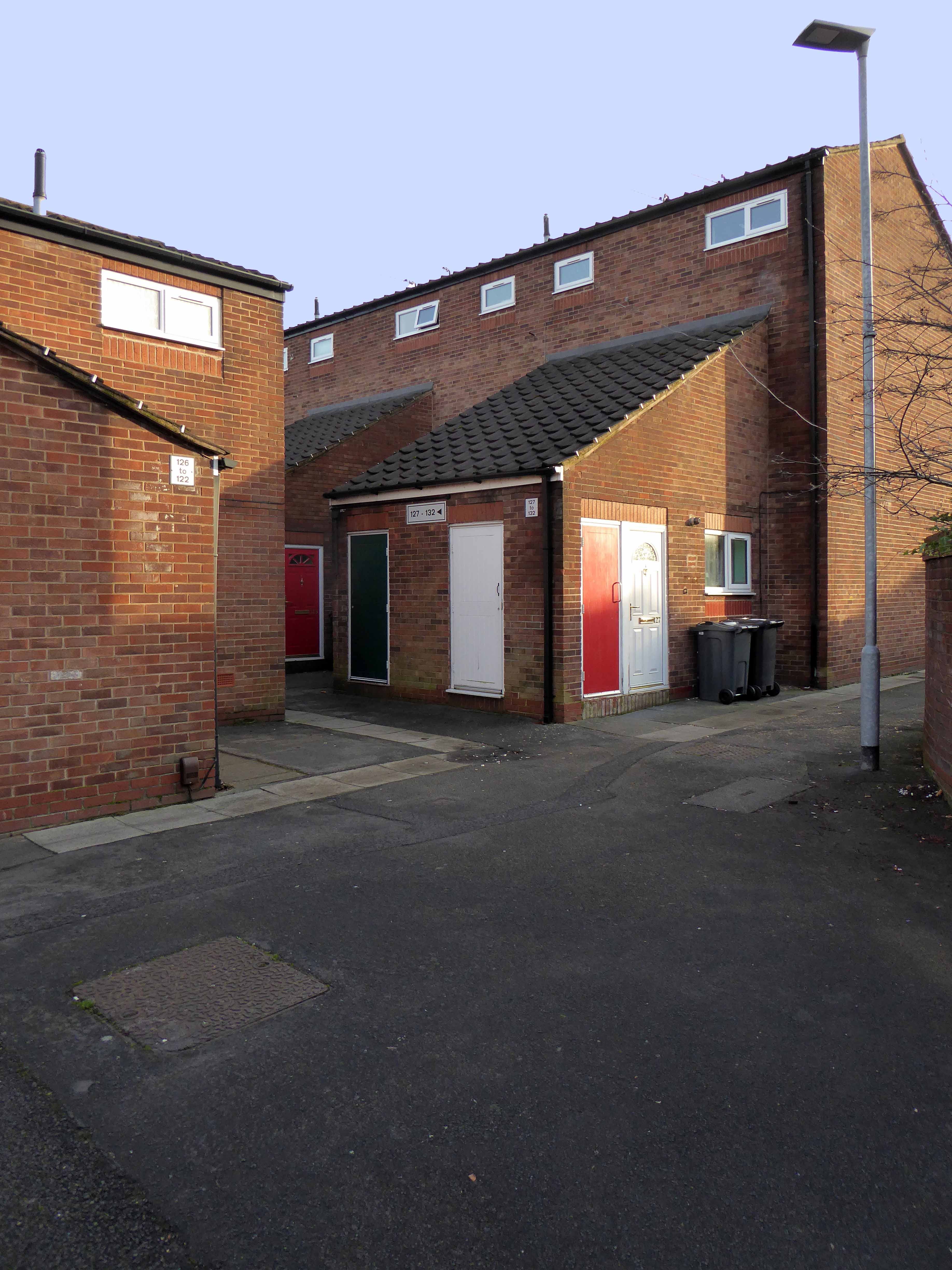
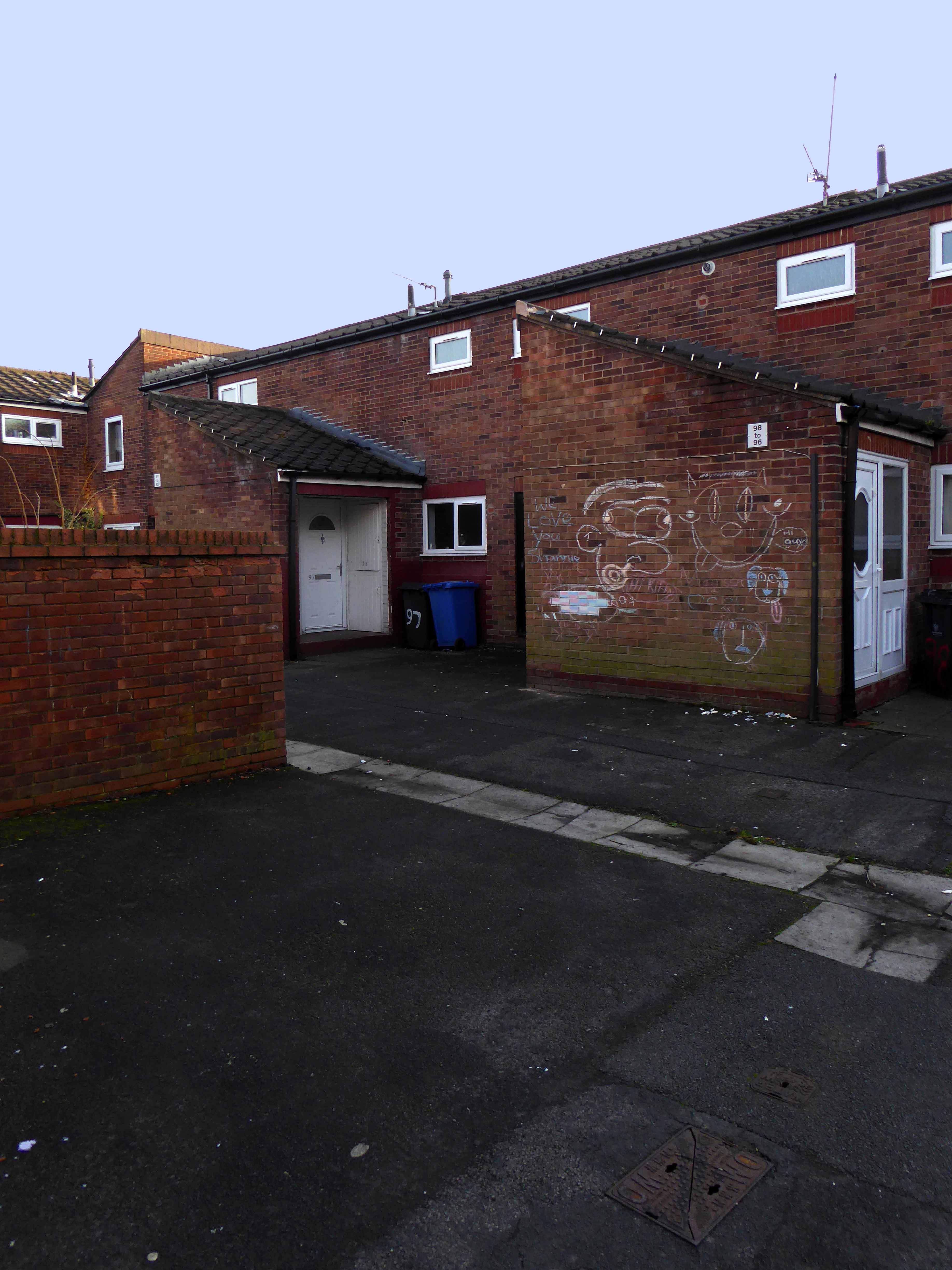
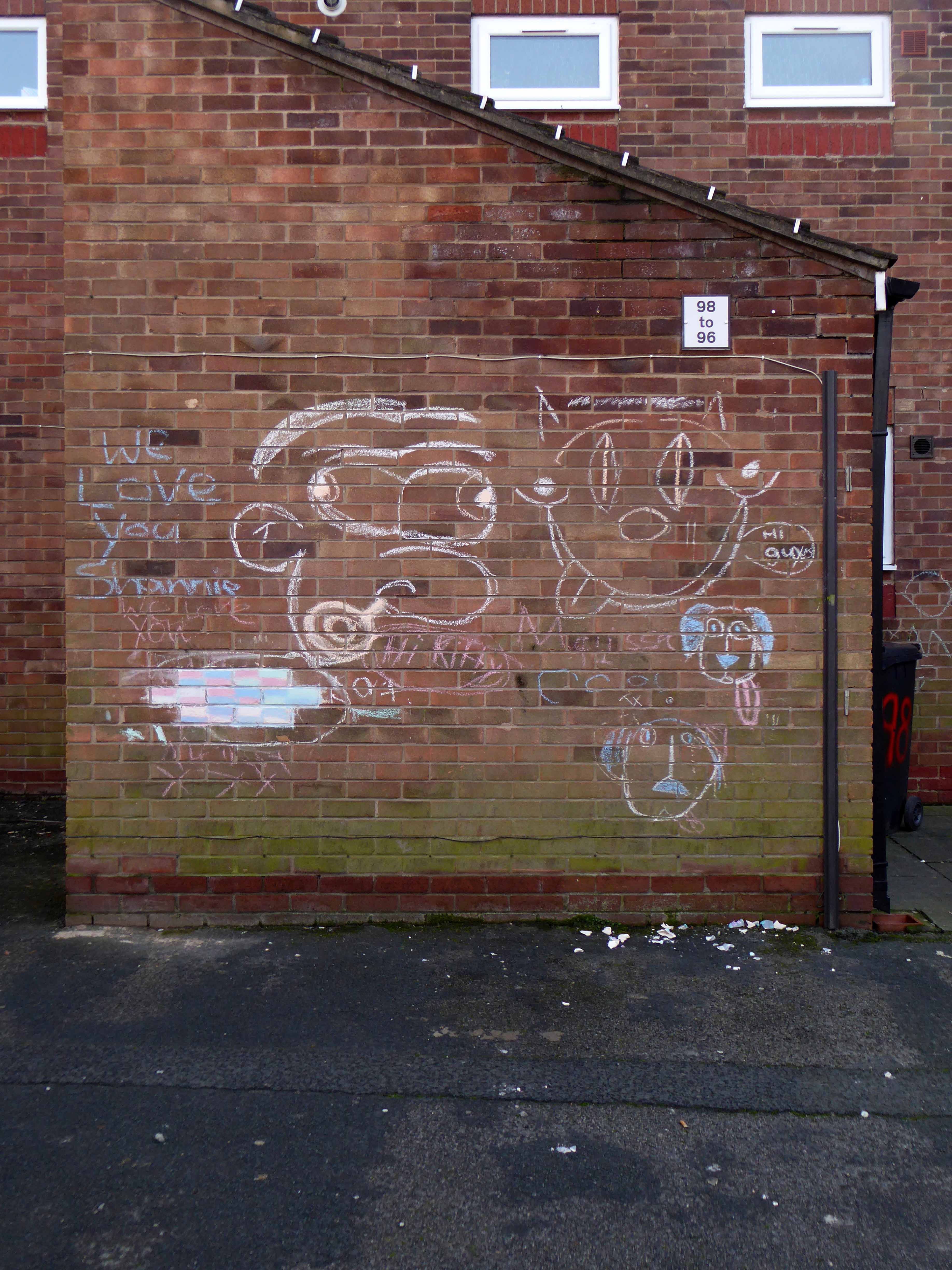
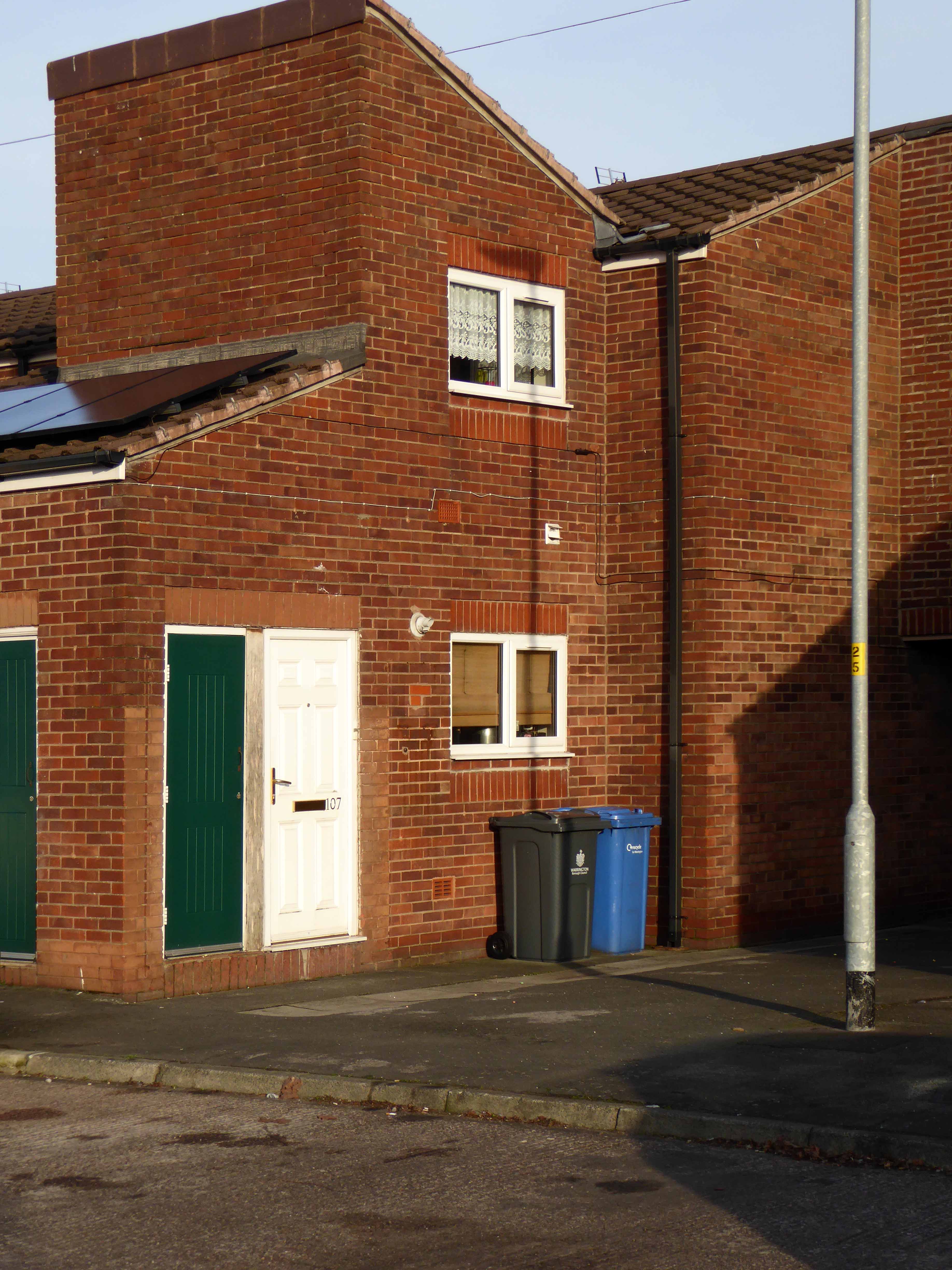
Semi Detached – Warrington

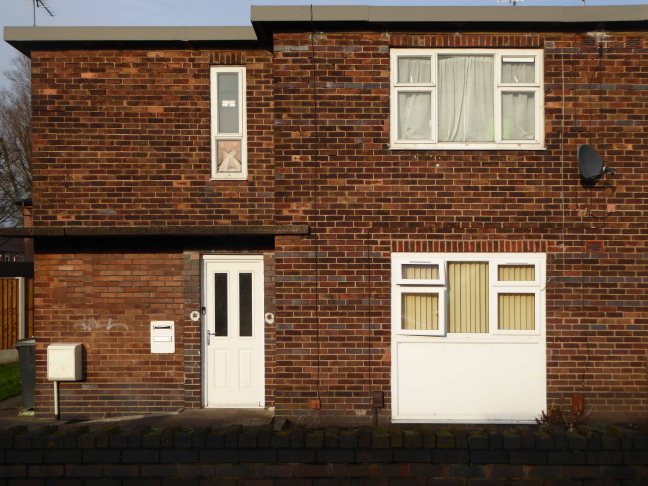
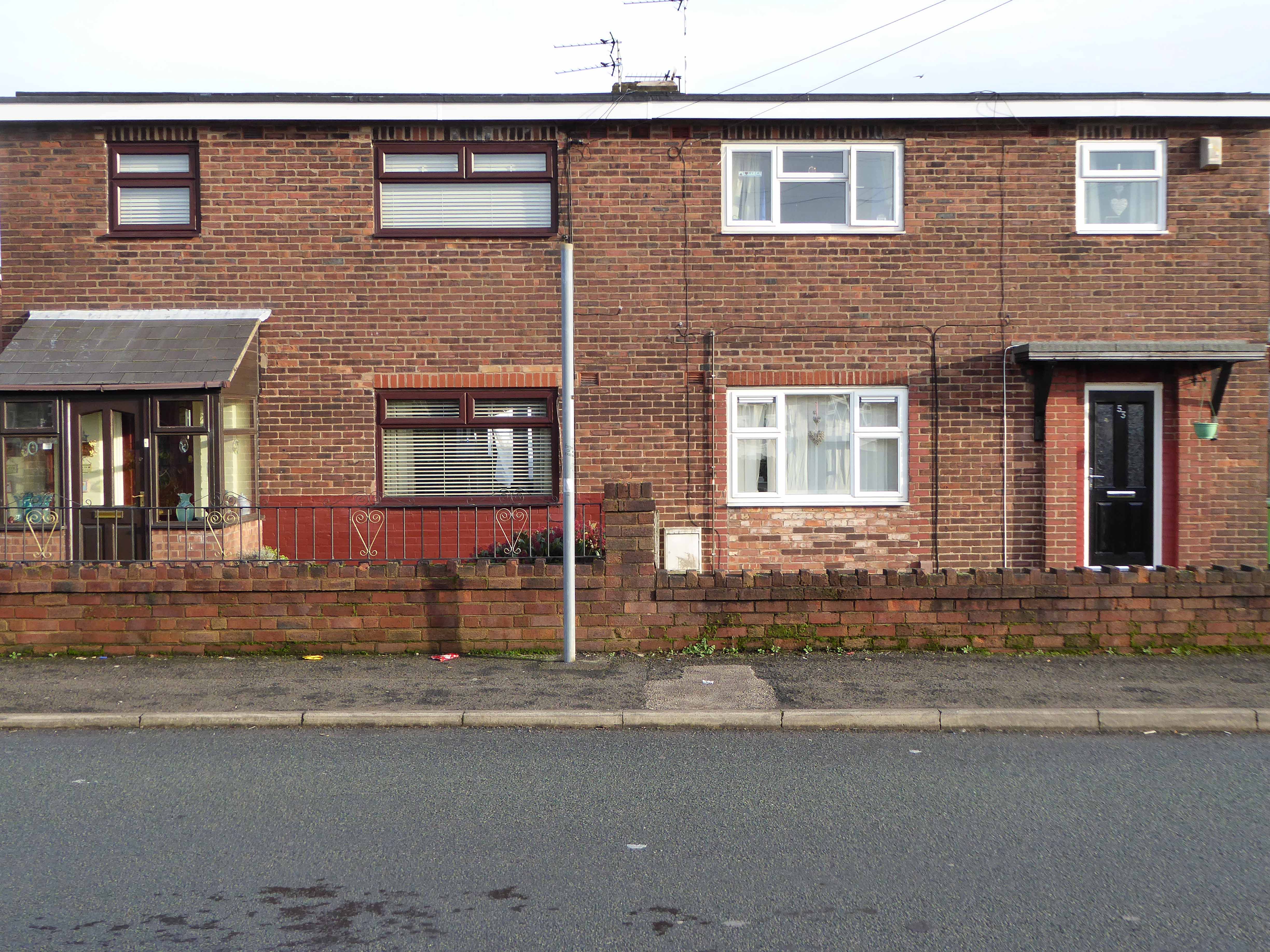
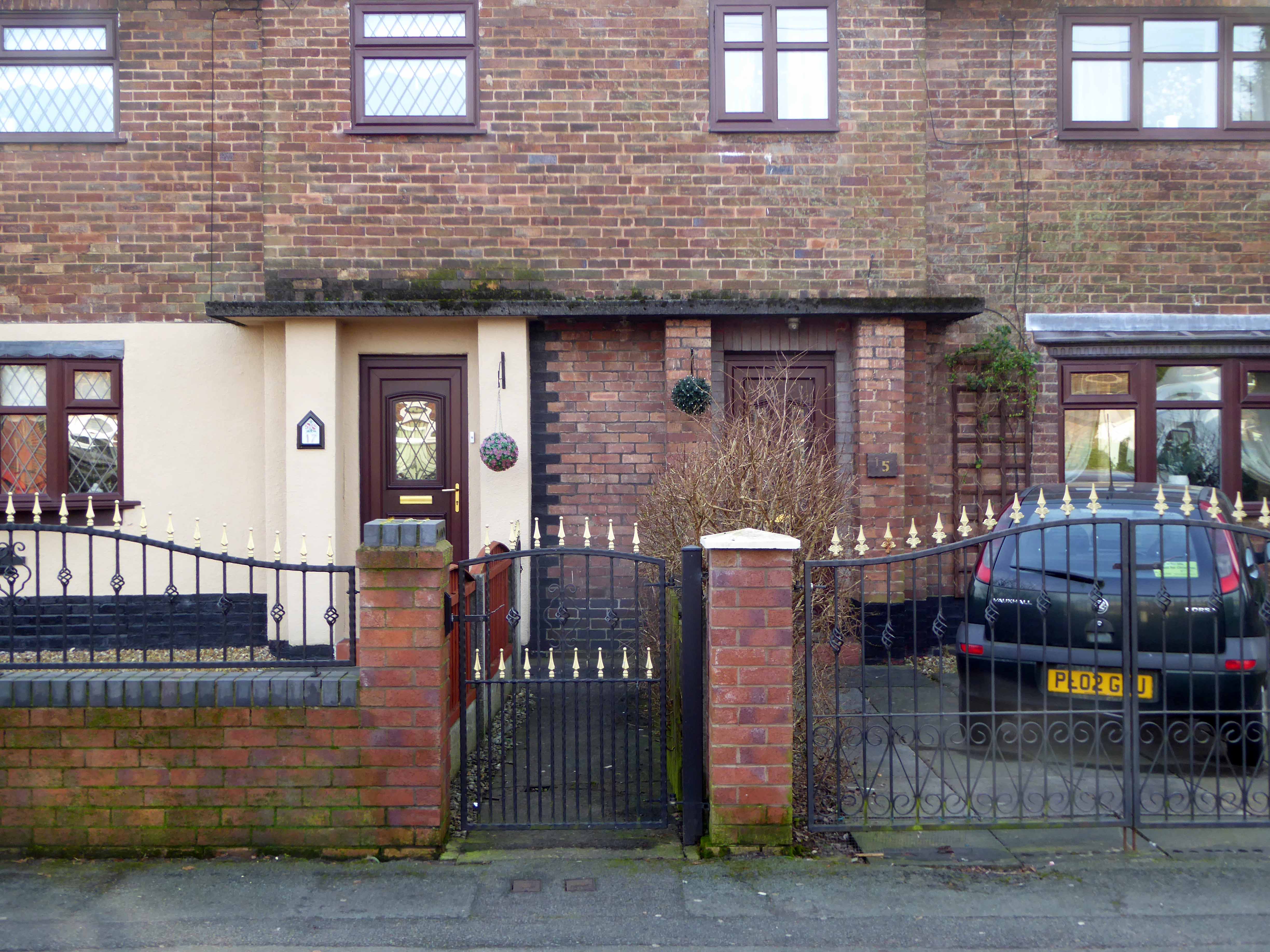
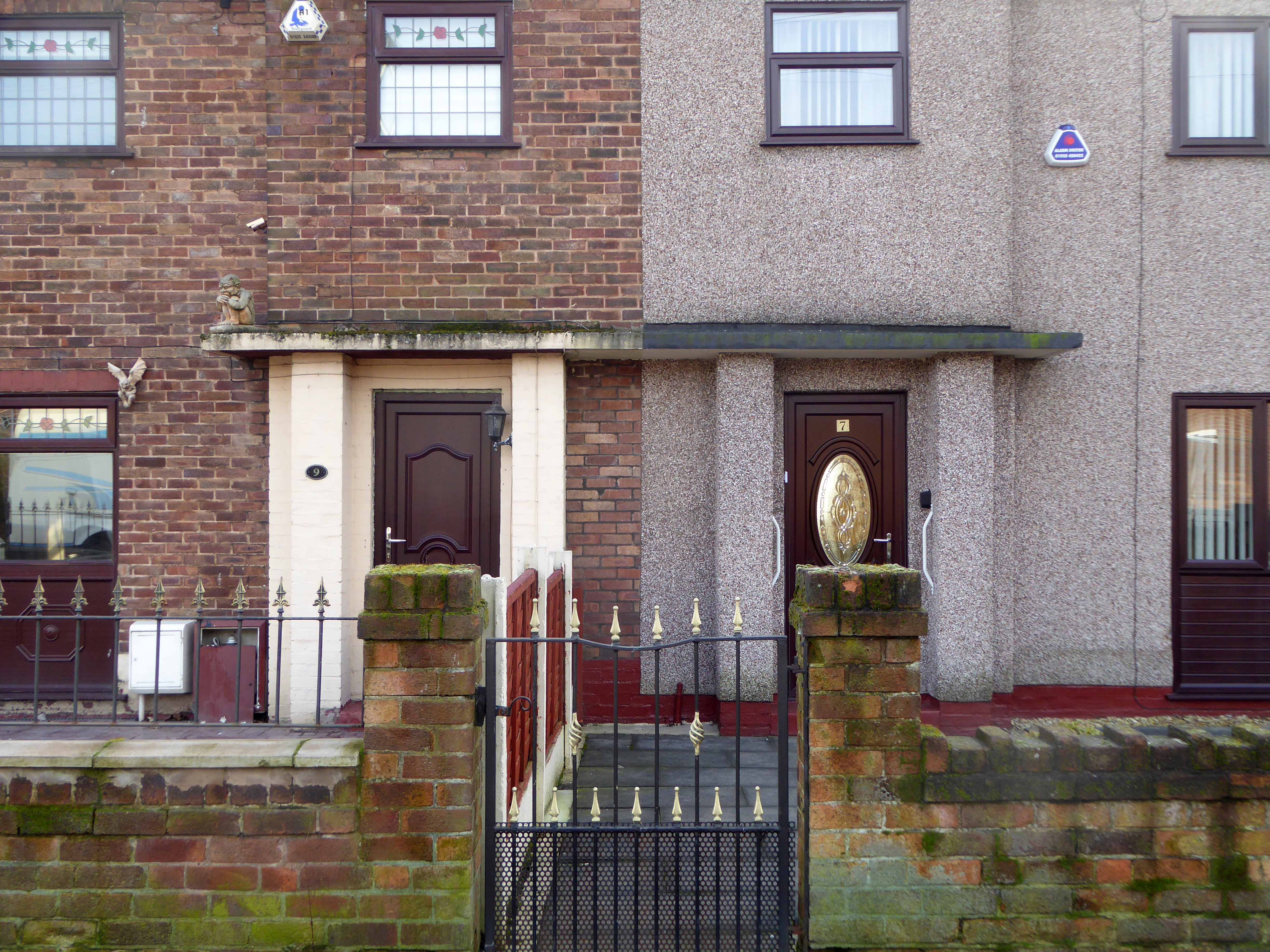
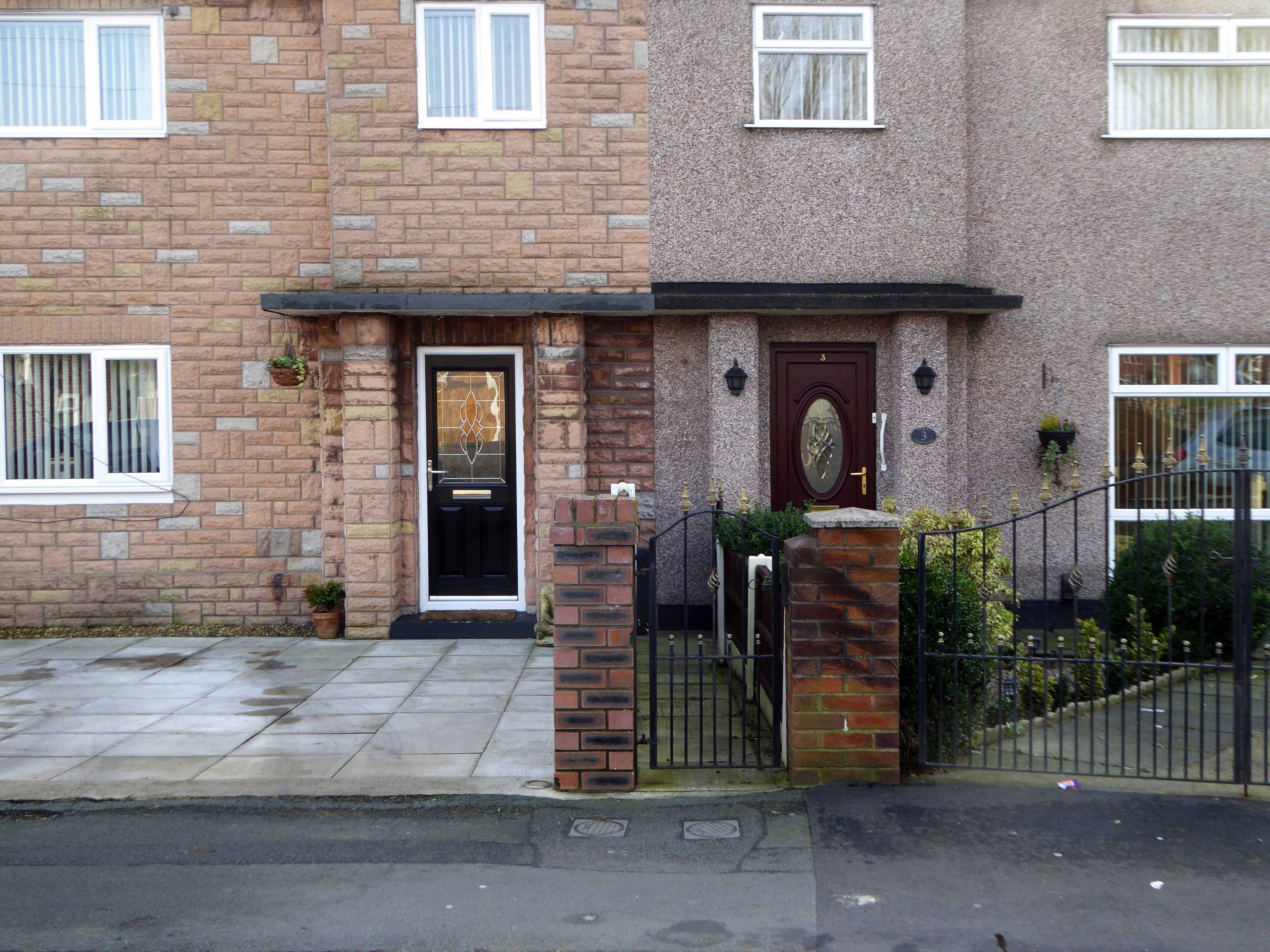
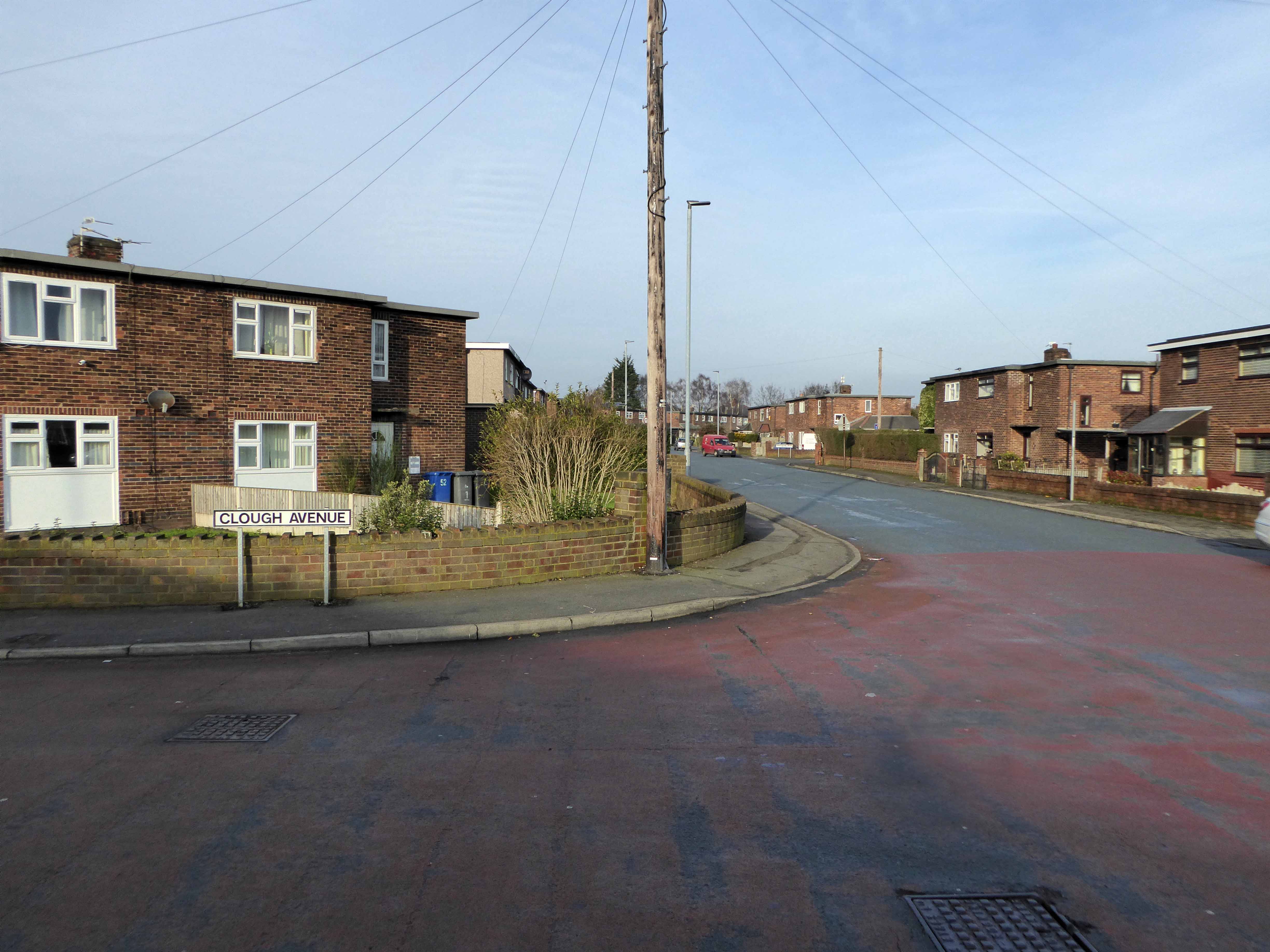
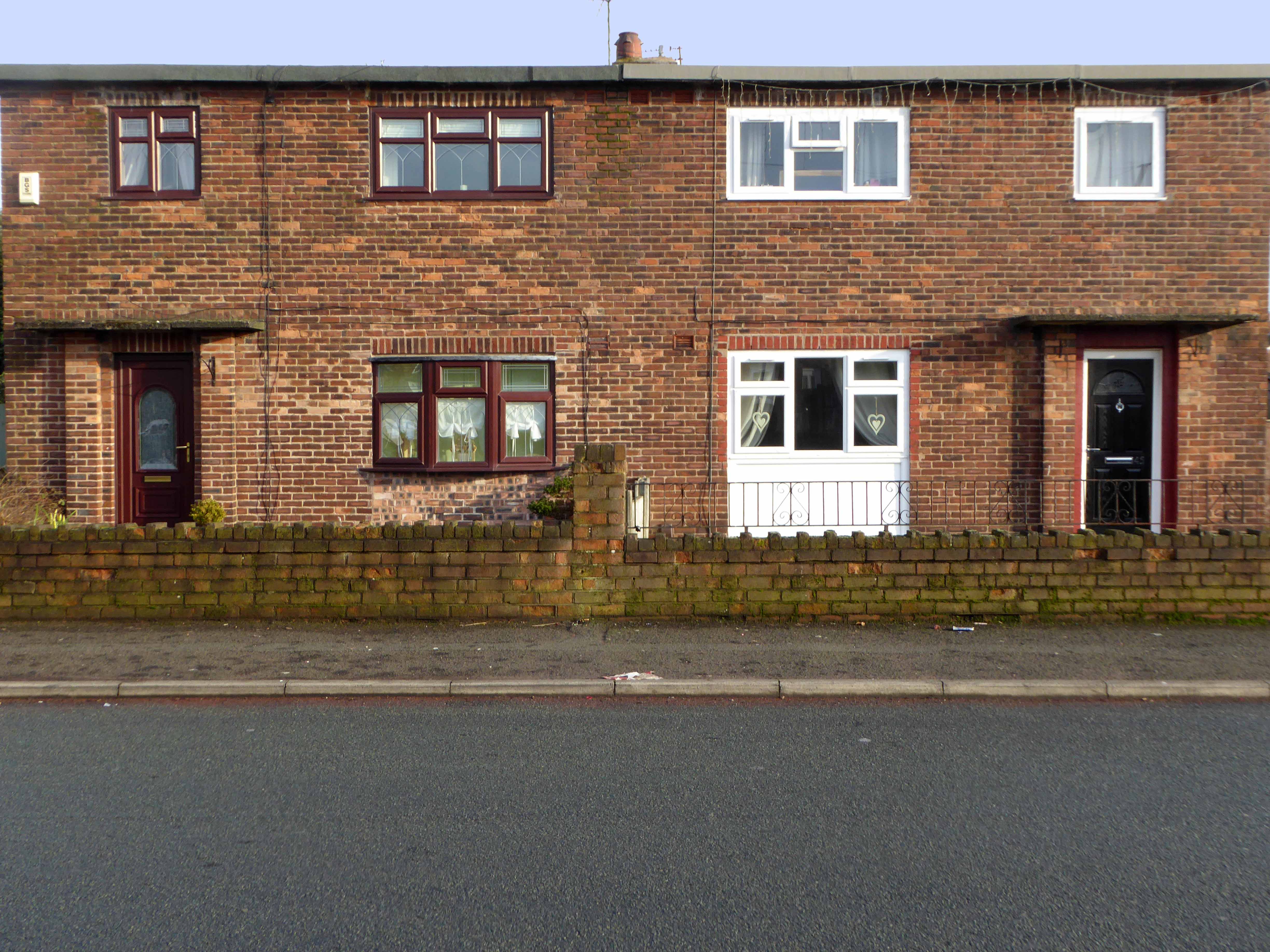
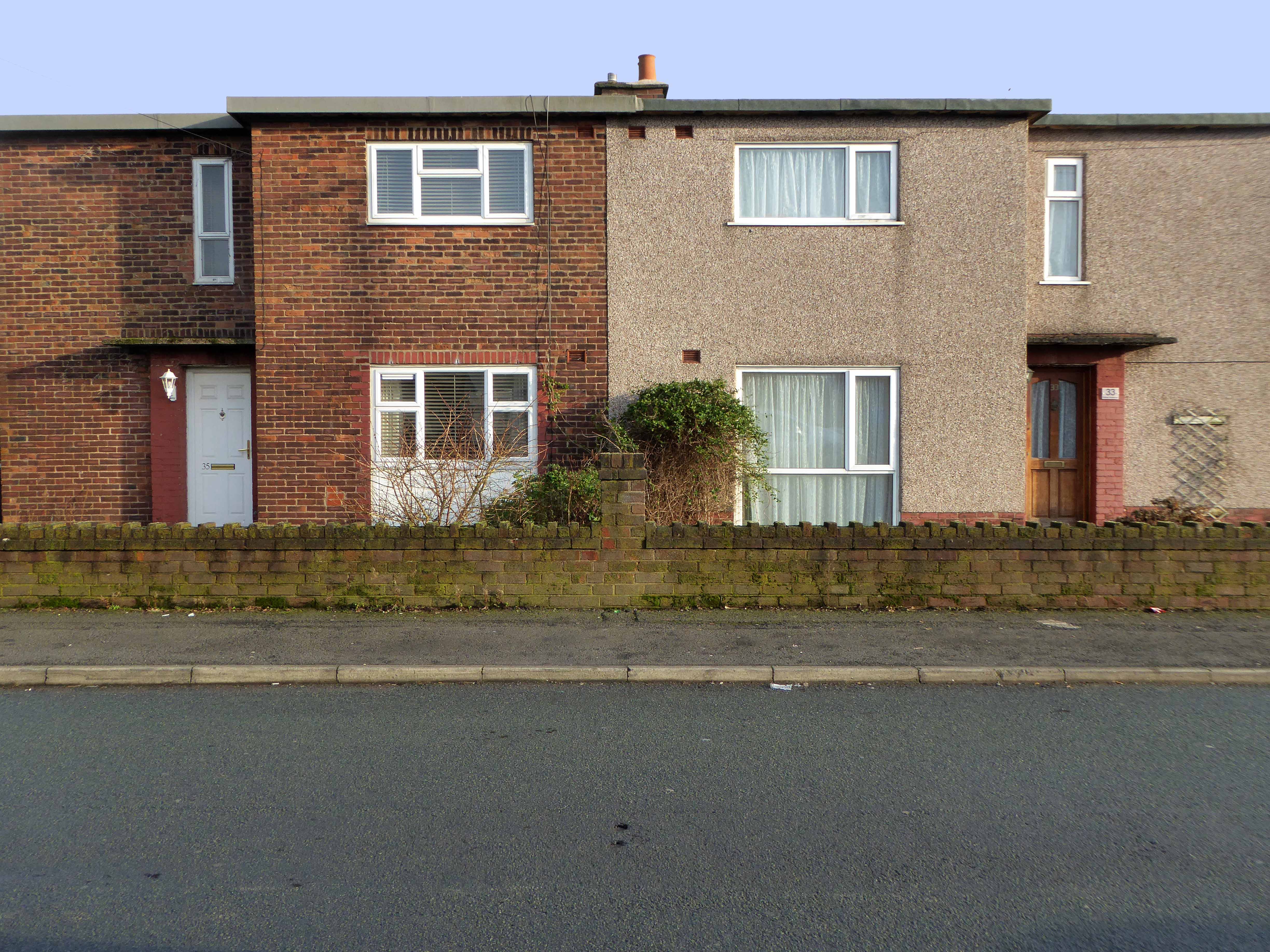
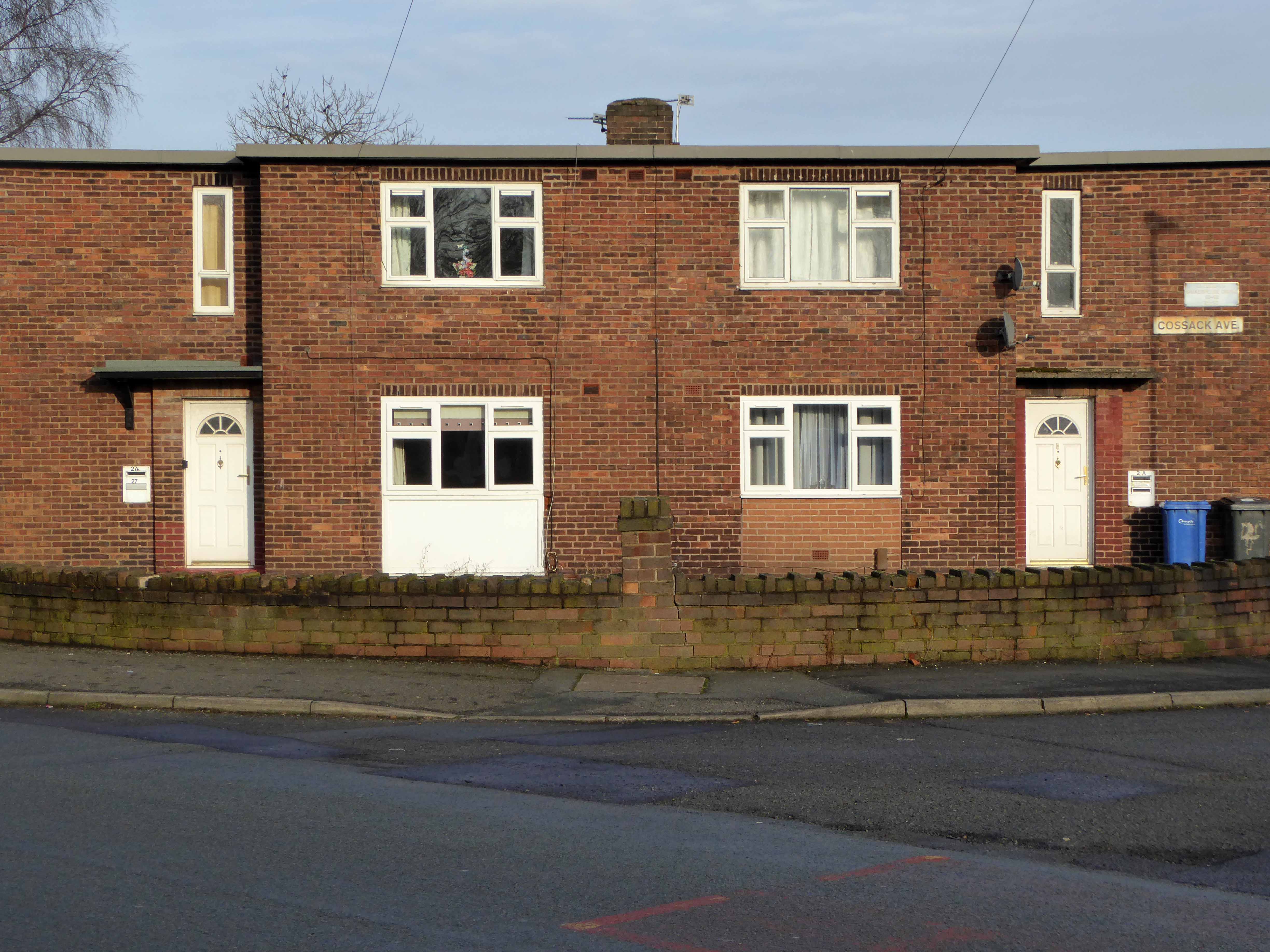
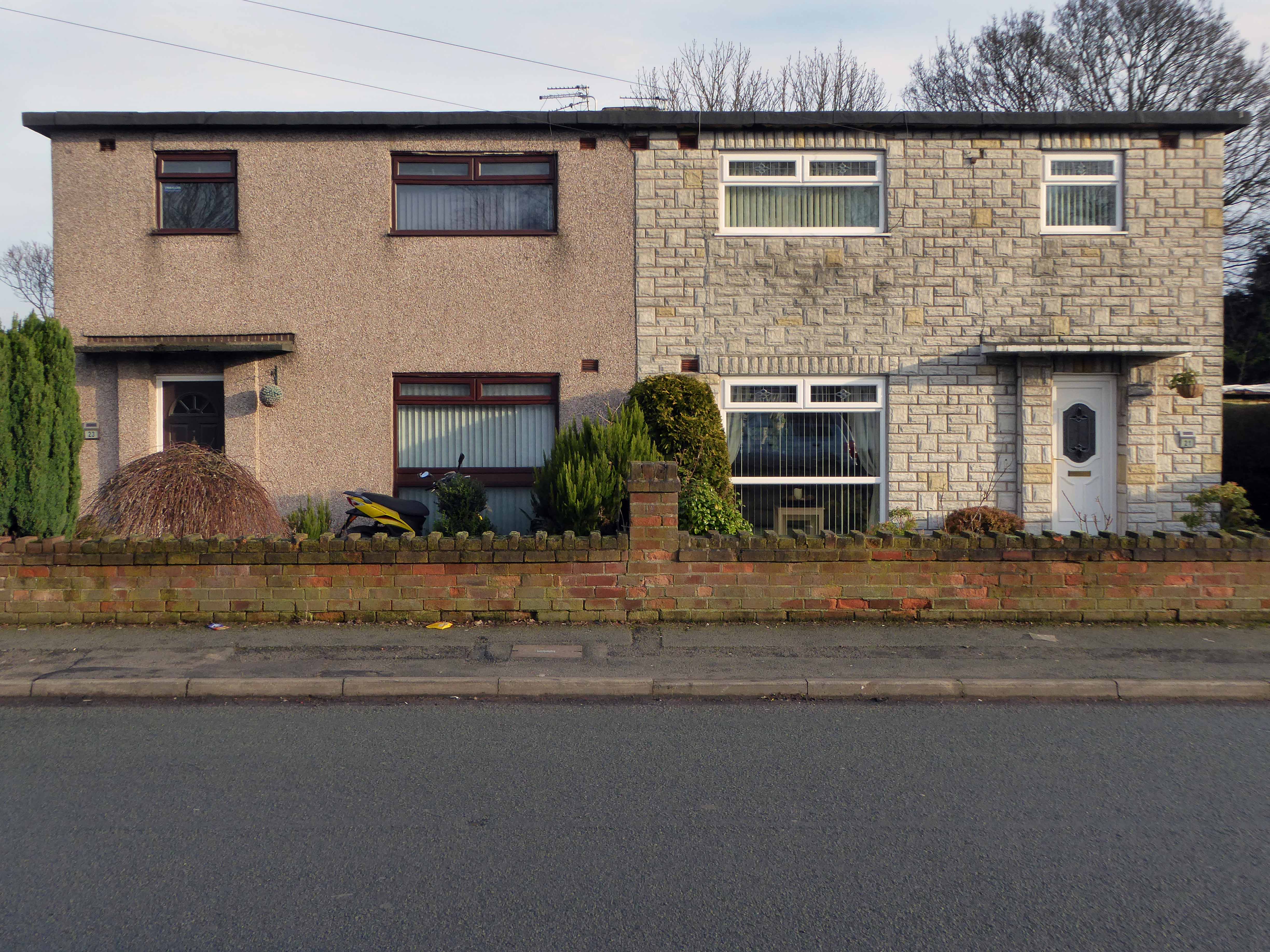
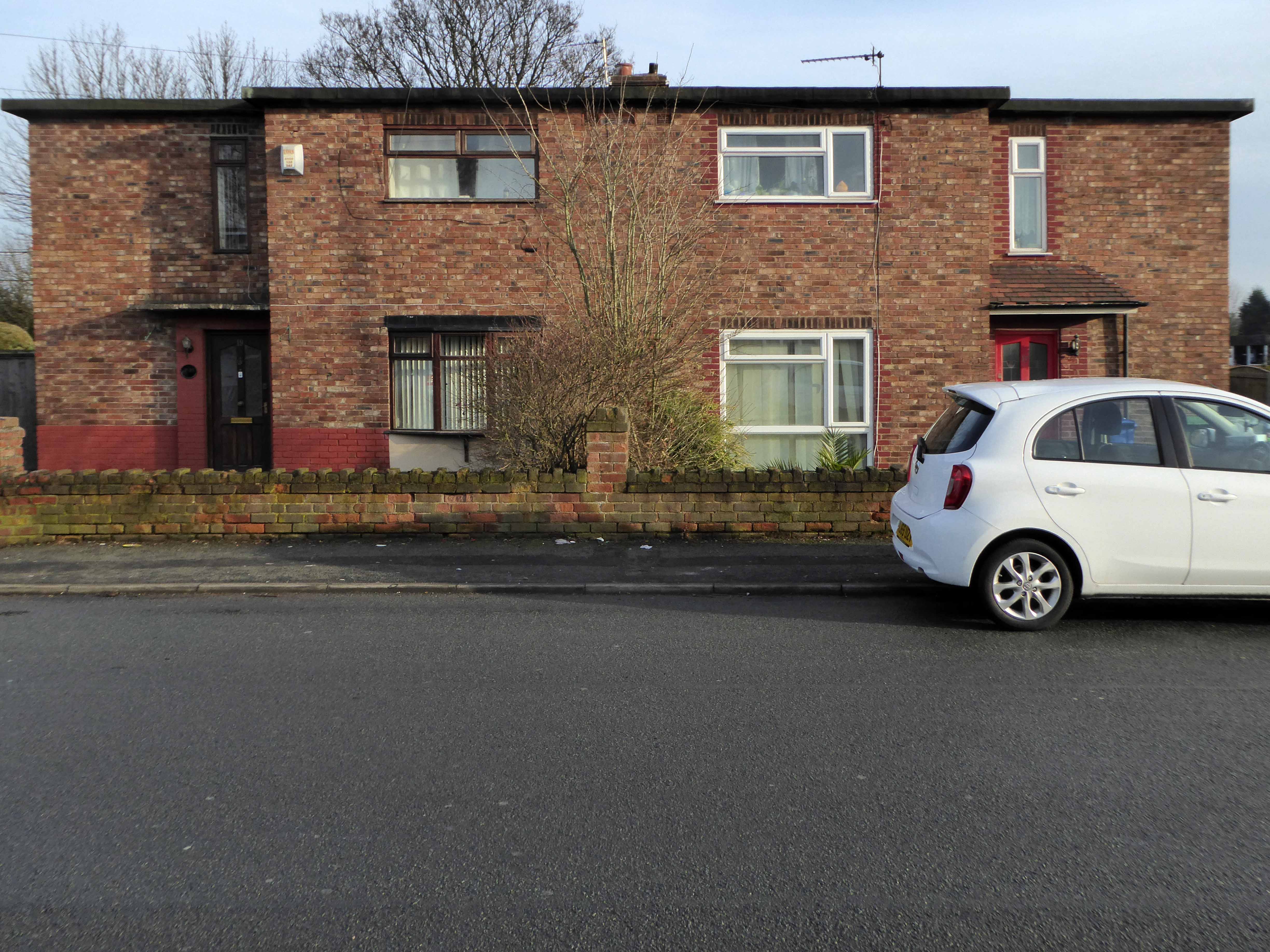
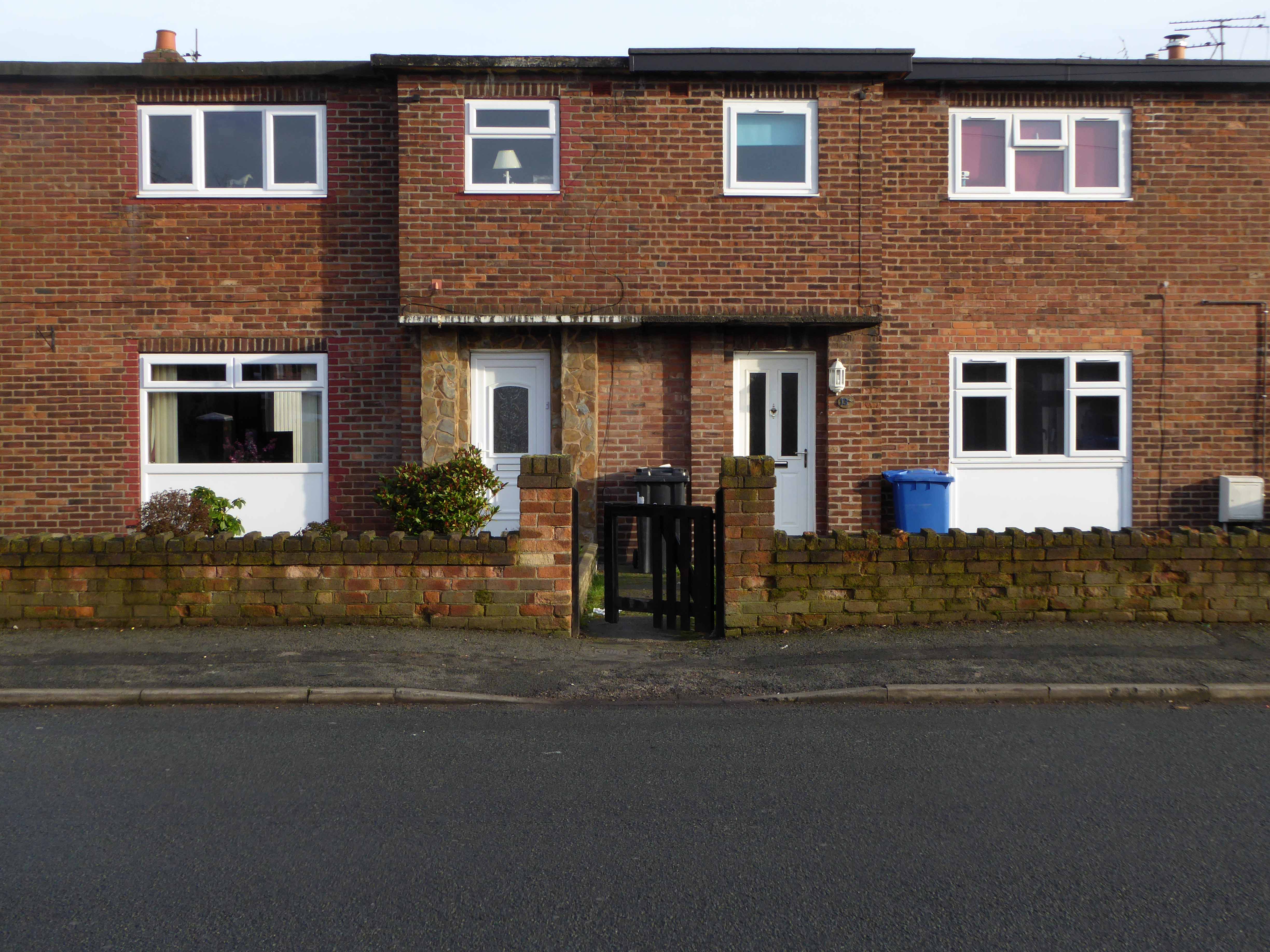
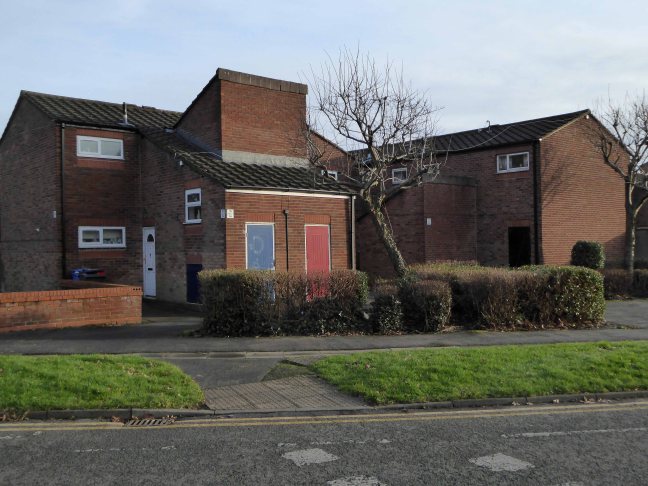
I was walking back from St Stephen’s Church recently, when I chanced upon a small group of two storey, flat roofed, semi detached social houses.

They were blessed with that post war functionalist brick and concrete chic.

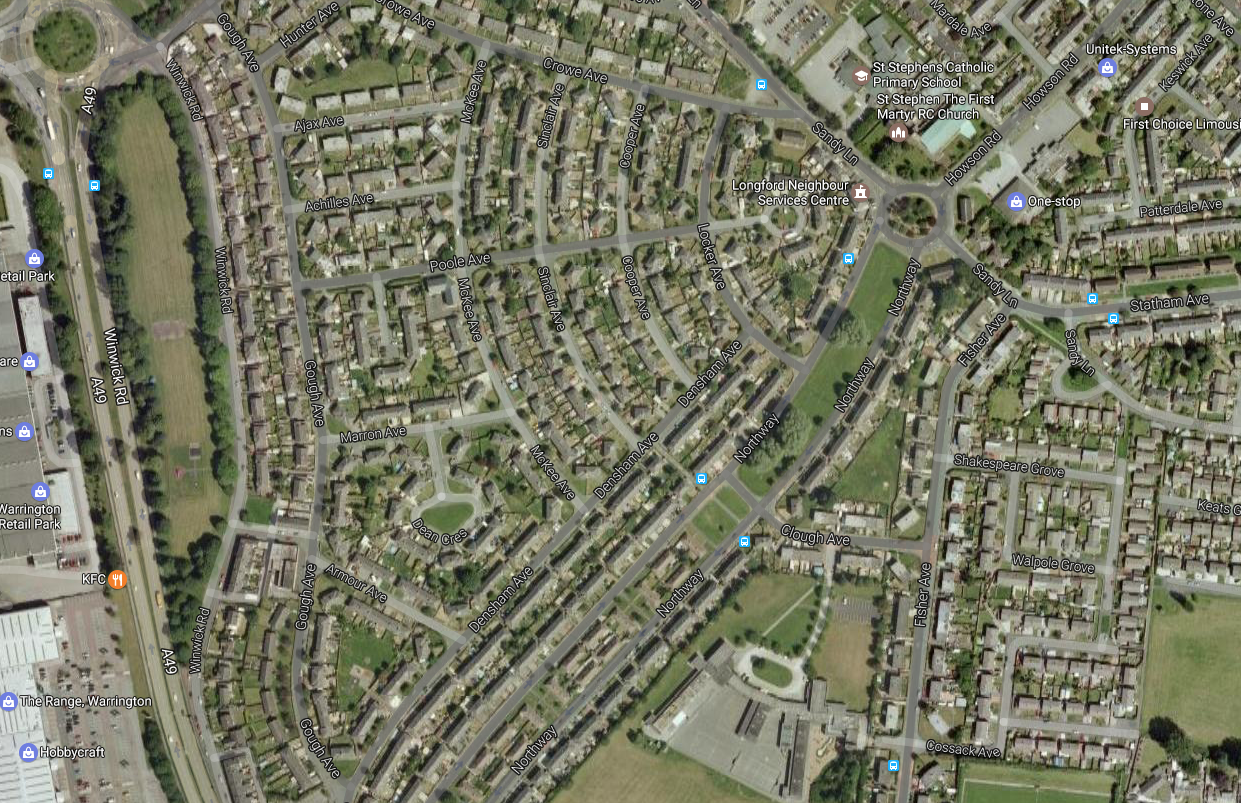
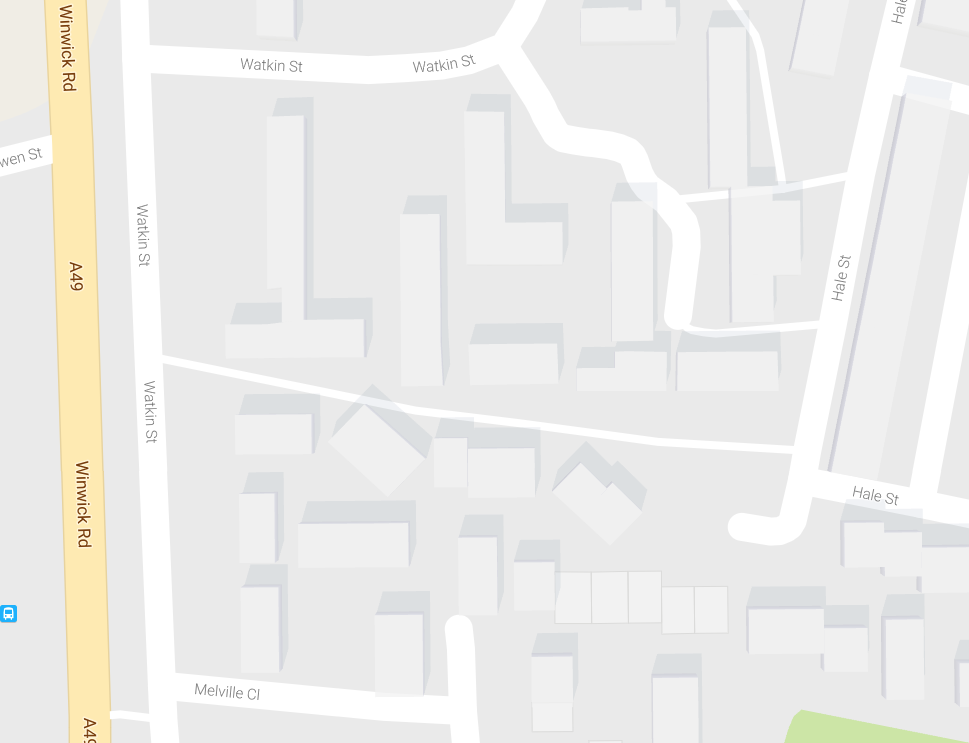
Part of a larger development of homes in the Longford area of the town.

screen-shot-2017-01-31-at-15-33-18

An area which is one of the most socially deprived in the country, with more than its fair share of problems, crack and weed would once have been pressing matters for the Borough Highways Department – these days they are more likely to attract the attention of the boys and girls in blue.

screen-shot-2017-01-31-at-17-17-47

And to cap it all the area is prone to frequent flooding.

longford-flooding

There are signs of hope as the housing association and council embark on a multi million pound refurbishment of the estate including:

Replacing fencing around bungalows.

On the day of my visit the chill January streets seemed quiet and ordered, and I was enchanted by the mismatched pairs of semis that I encountered.

p1130204

p1130205

p1130206

p1130207

p1130208

p1130209

p1130210

p1130212

p1130213

p1130214

p1130215

p1130216

p1130218

p1130219

p1130220


Transporter Bridge – Warrington

I set out one morning with a clear intent, to travel.

To travel to see the Warrington Transporter Bridge – of which I had only just become aware. Ignorance in this instance is not bliss, expectation and fulfilment is.

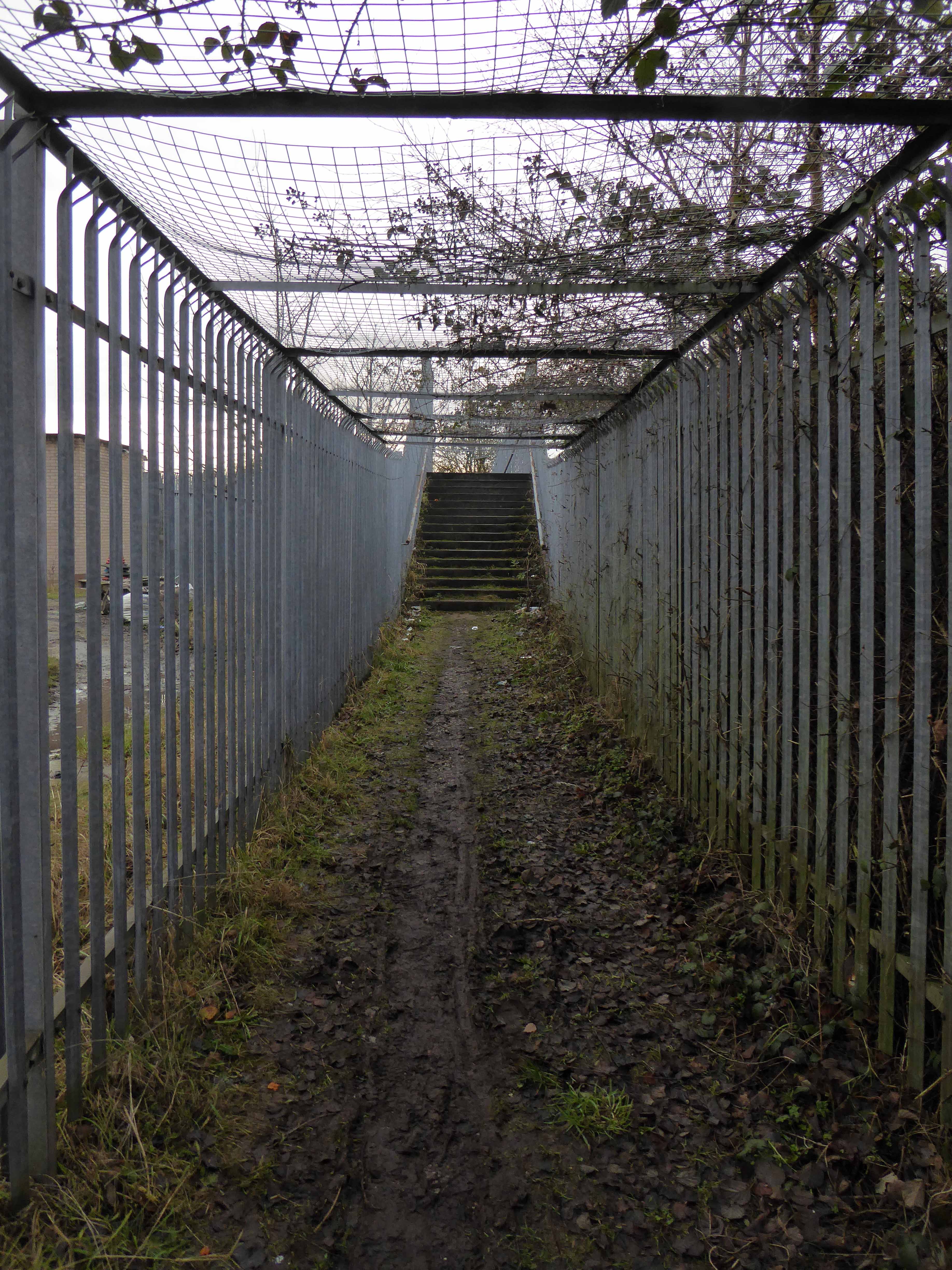
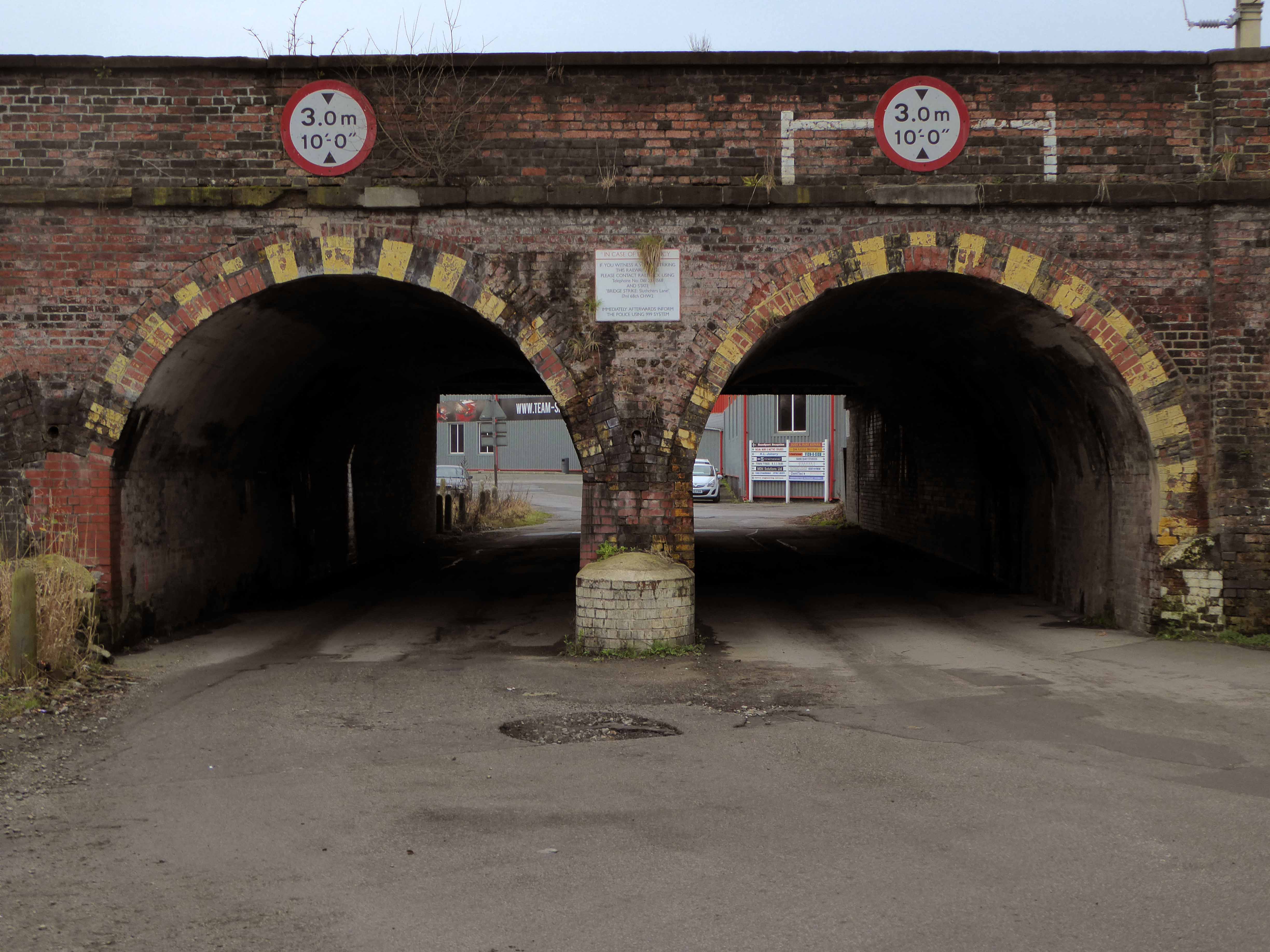
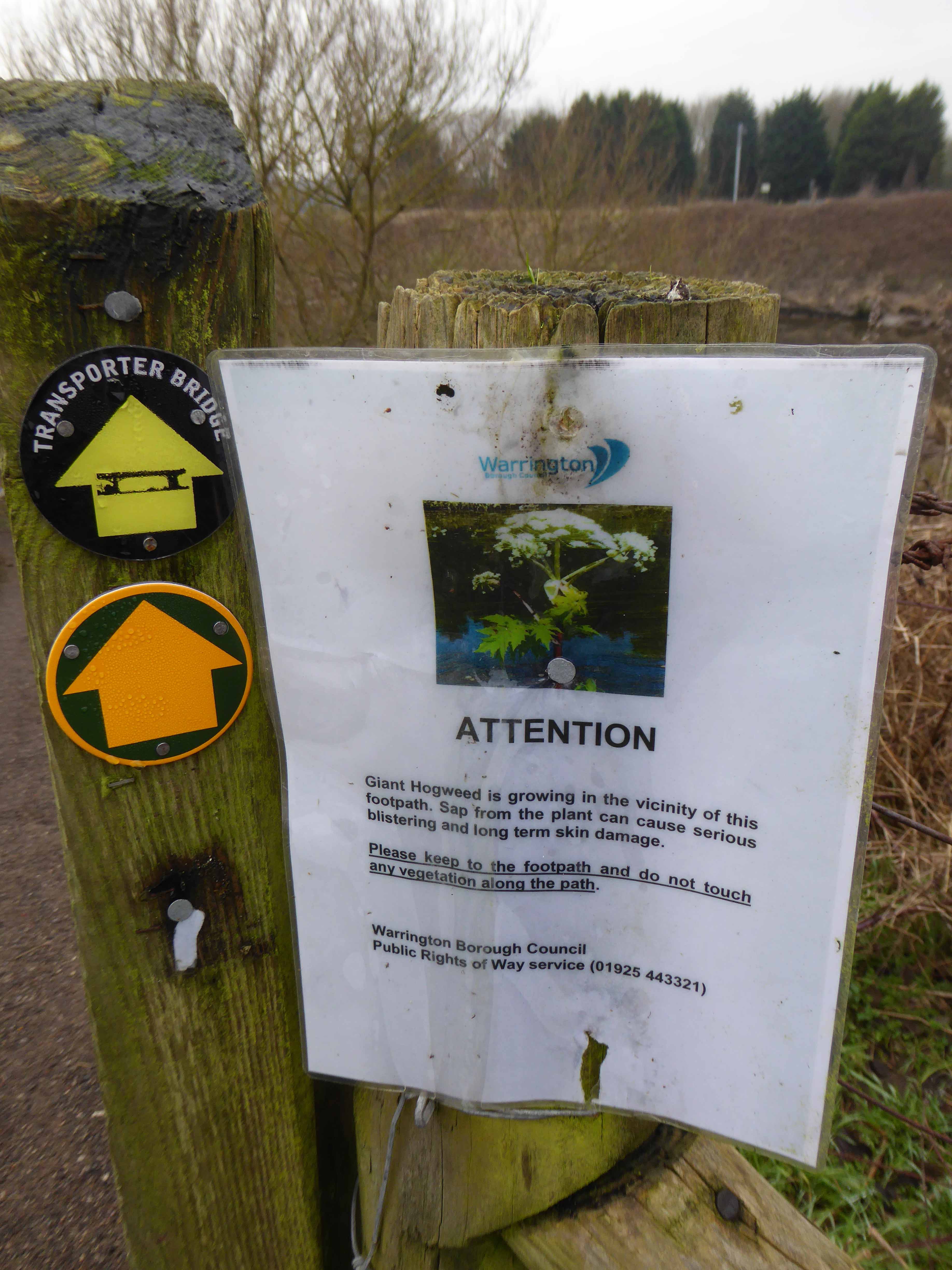
Guided by the detailed instructions on the Transporter Bridge Website I made my way from Bank Quay Station, mildly imperilled yet not impeded by caged walkways, tunnels, bridges, muddy paths and Giant Hogweed!

p1130109

p1130111

p1130164

p1130122

p1130127

Finally catching a glimpse of:

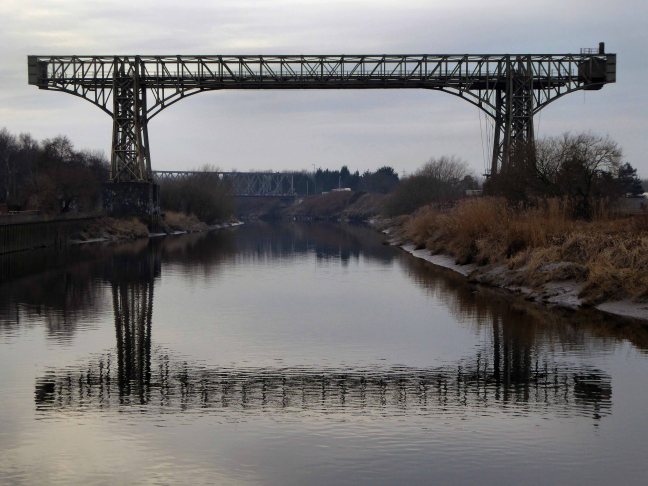
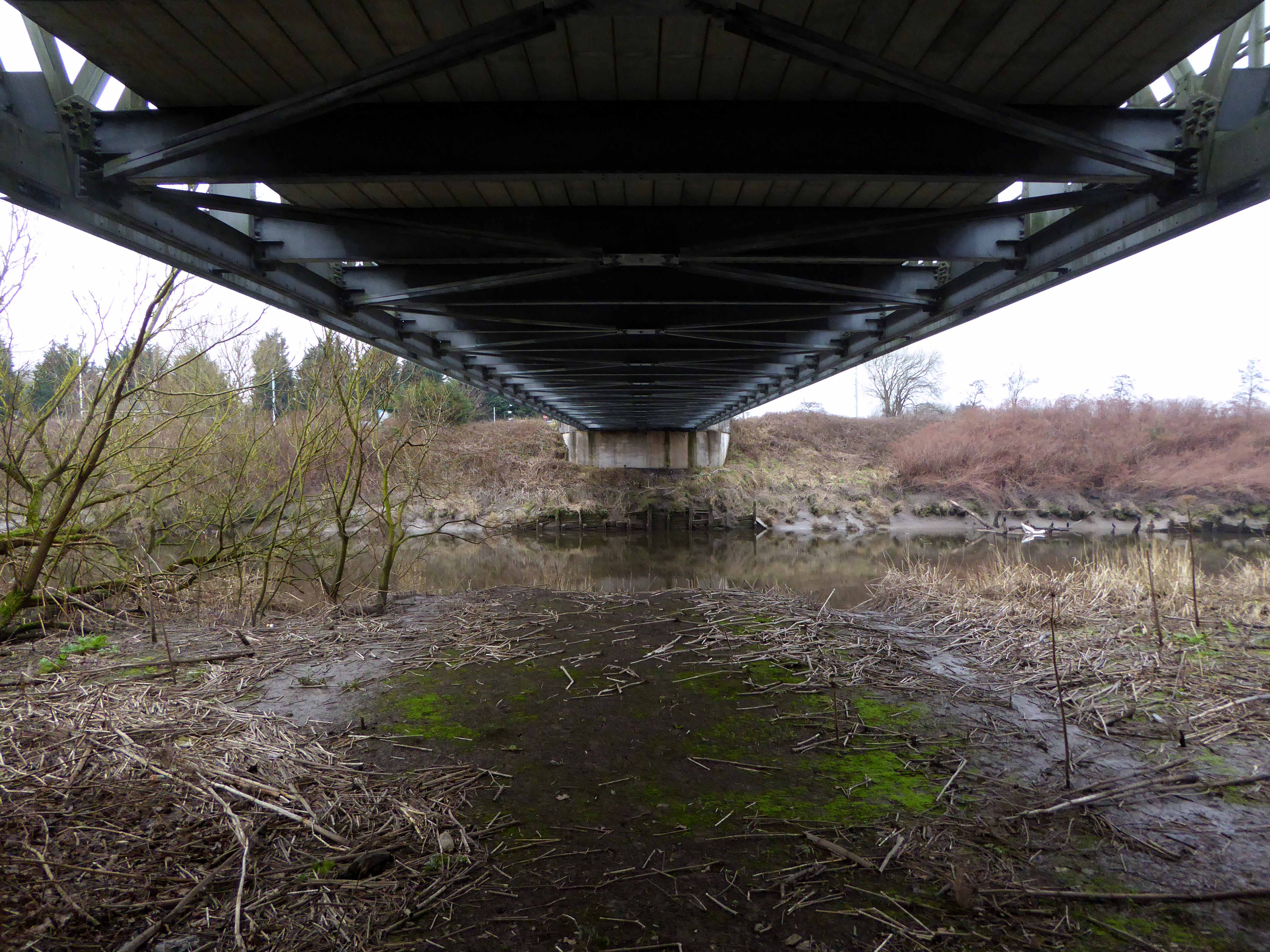
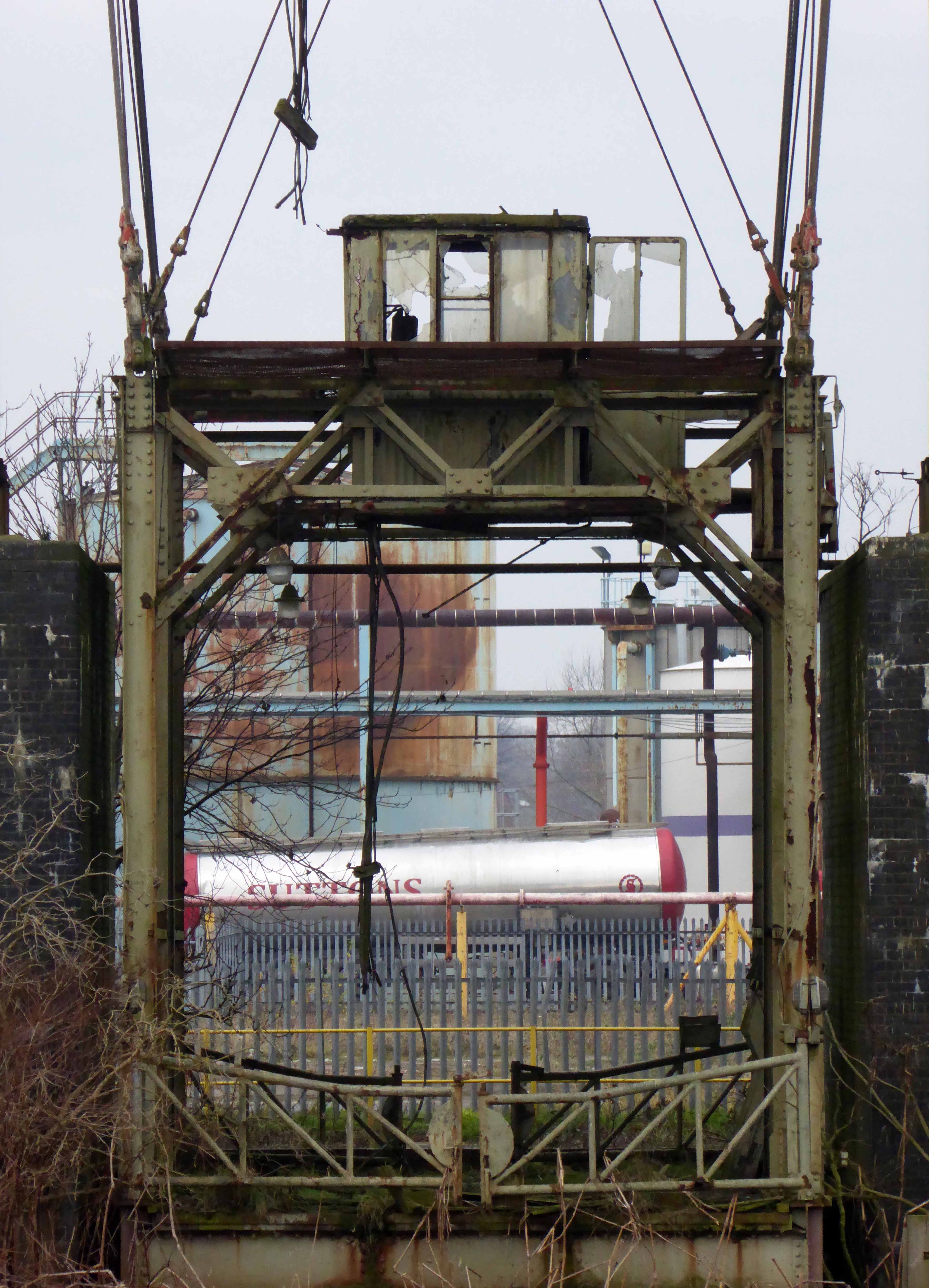
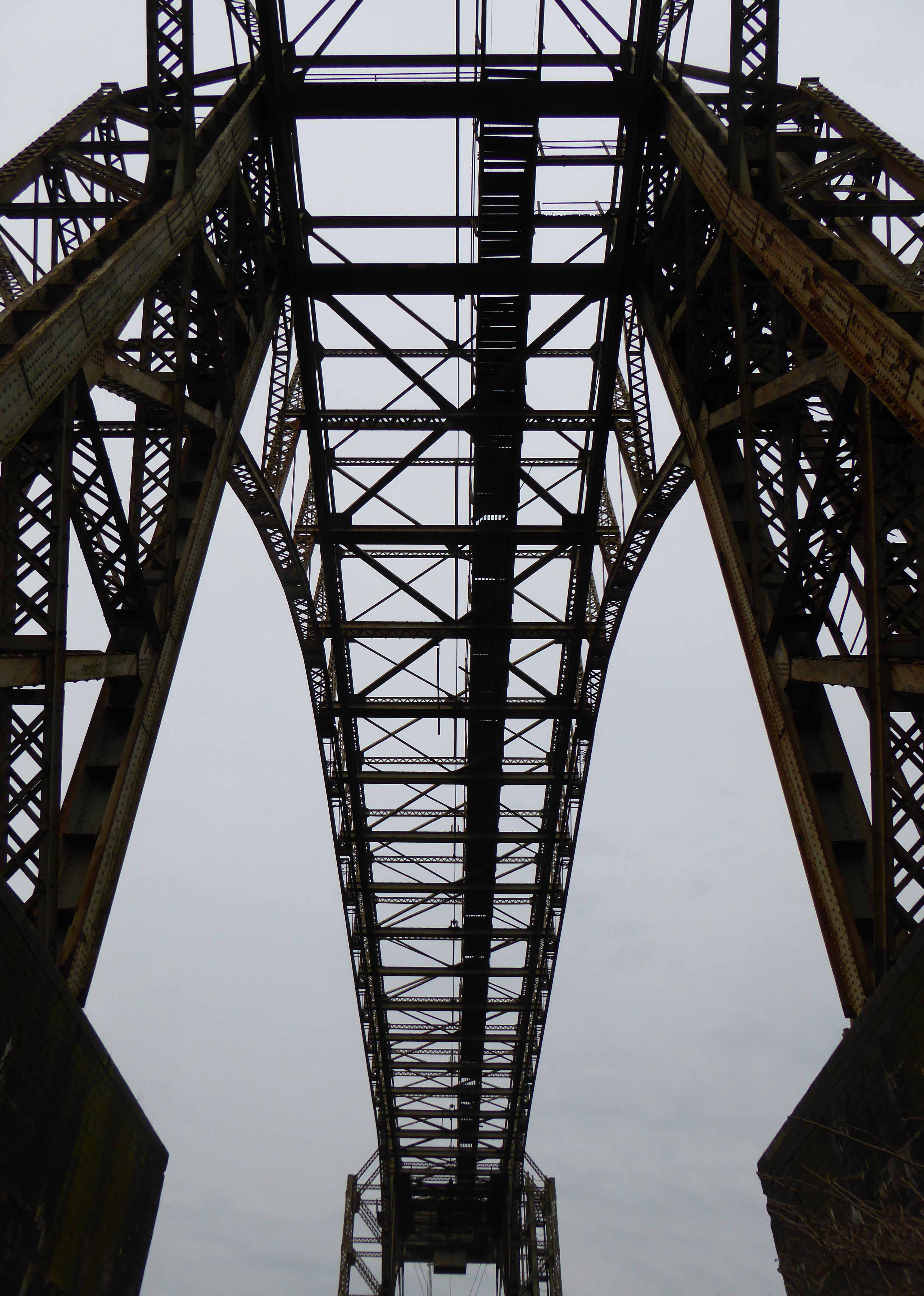
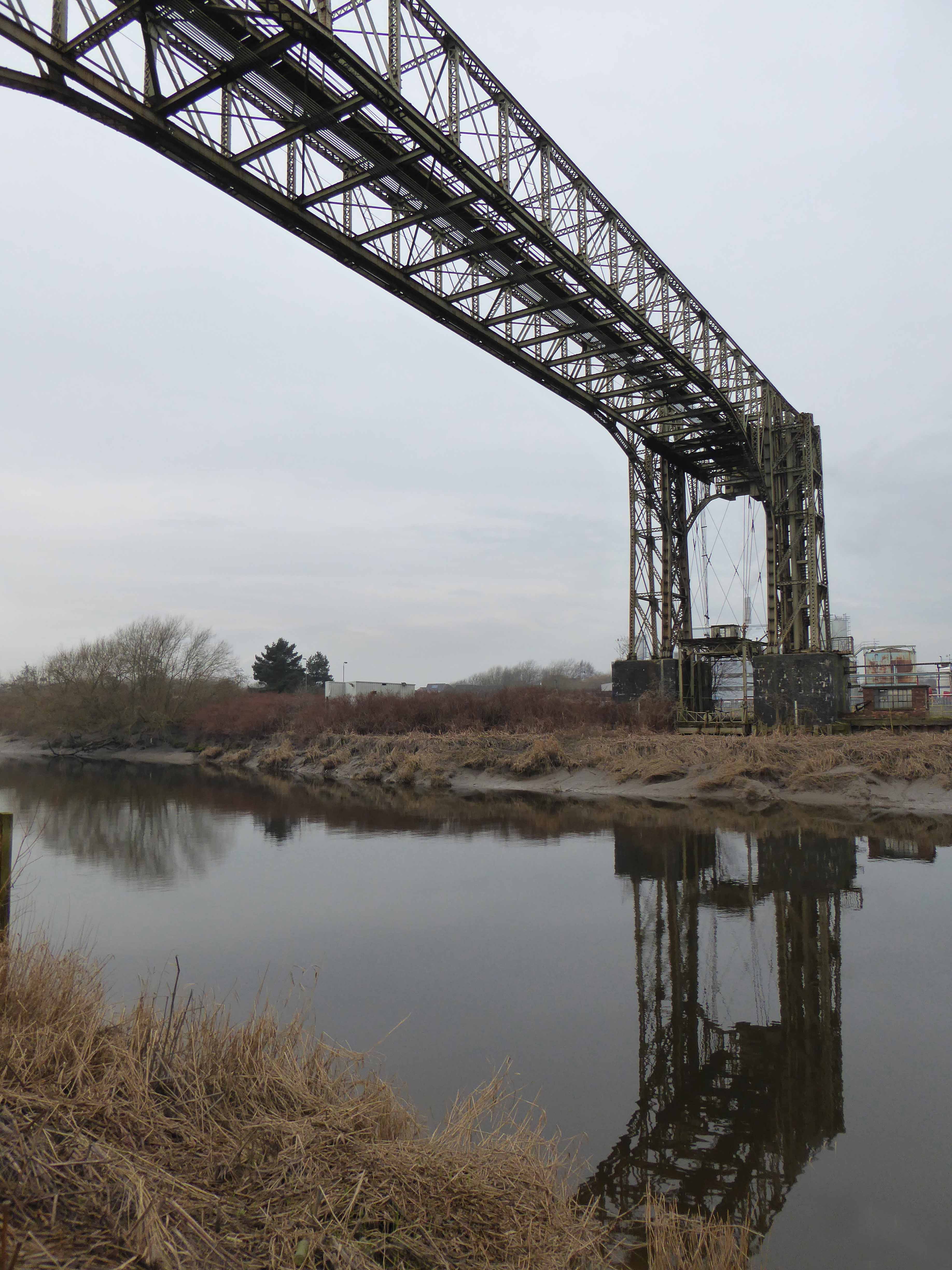
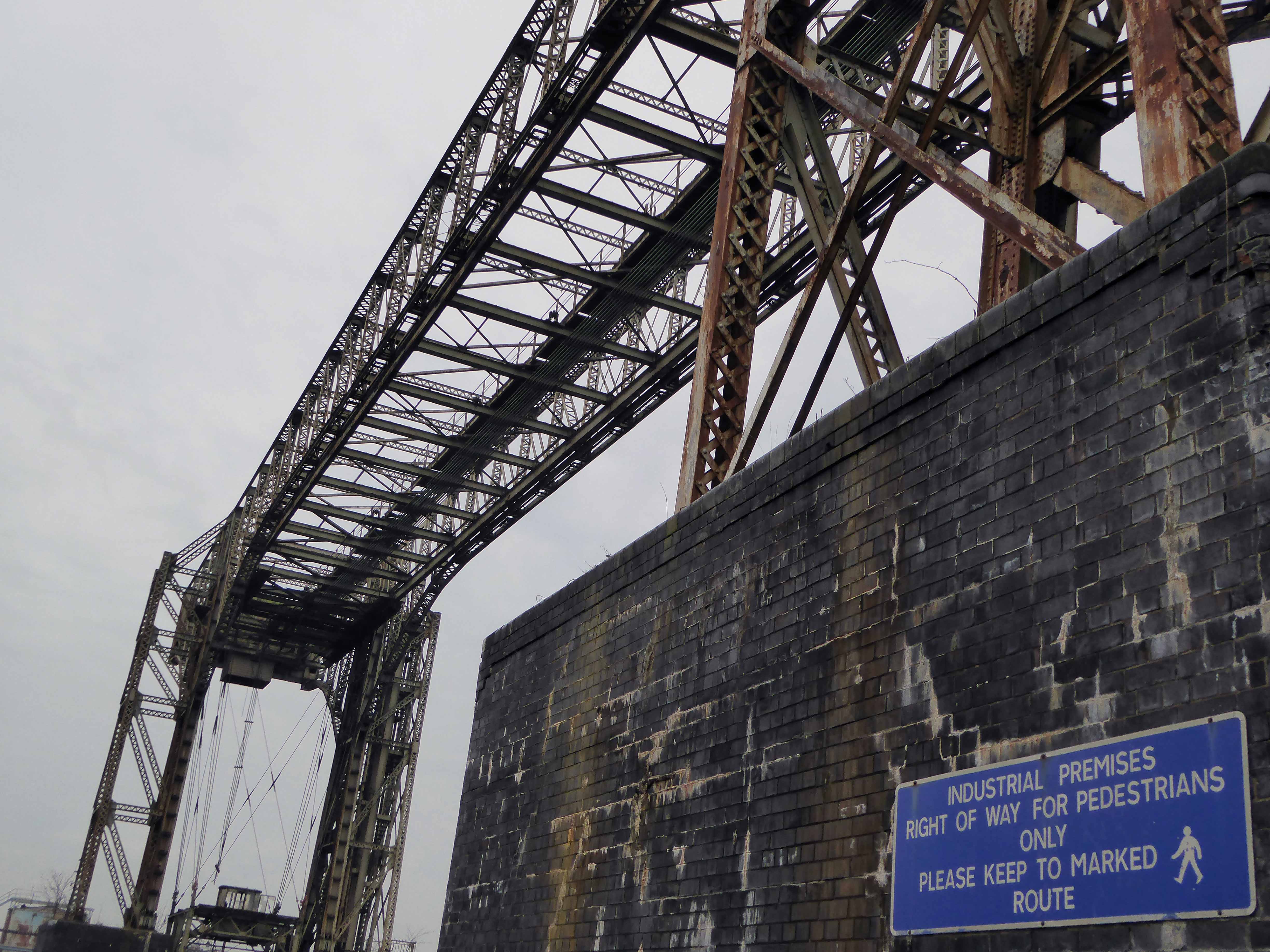
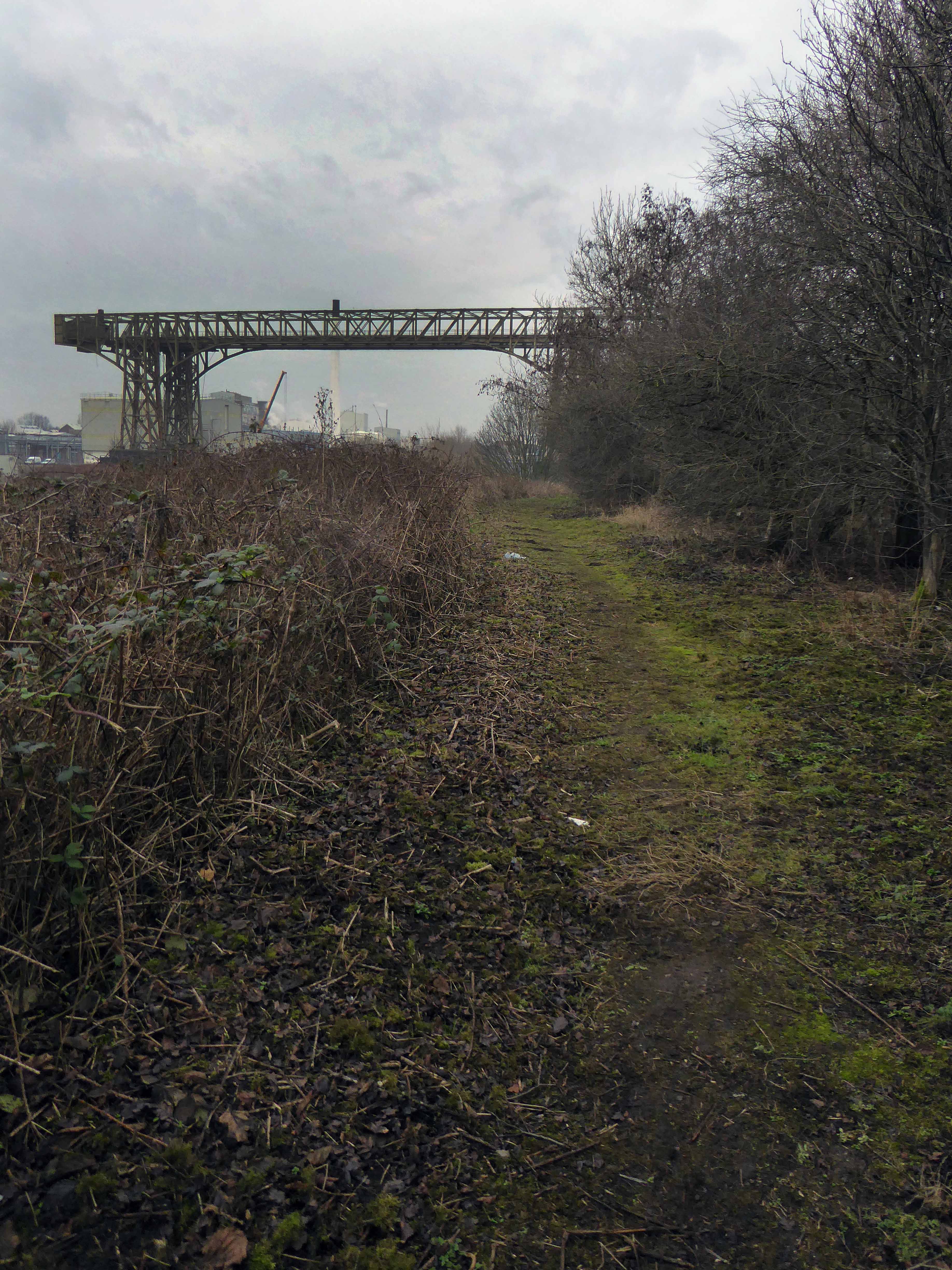
Warrington Transporter Bridge, also known as Bank Quay Transporter Bridge or Crosfield’s Transporter Bridge, across the River Mersey is a structural steel transporter bridge with a span of 200 feet. It is 30 feet wide, and 76 feet above high water level, with an overall length of 339 feet. It was built in 1915 and, although it has been out of use since about 1964, it is still standing. It was designed by William Henry Hunter and built by William Arrol and Co.

bridge_in_use_1951

The bridge in use 1951.

It is till standing today, and was built to despatch finished product from the cement plant that had been built on the peninsula. It was originally used to carry rail vehicles up to 18 tons in weight, and was converted for road vehicles in 1940. In 1953 it was modified to carry loads of up to 30 tons.

The bridge is designated by English Heritage as a Grade II* listed building, and because of its poor condition it is on their Heritage at Risk Register. The bridge is protected as a Scheduled Ancient Monument.

My thanks to the Friends of the Warrington Transporter Bridge for the historical information and archive image.

Here are my photographs expectations more than fully fulfilled an epic structure and a triumph of engineering, go take a look real soon.

p1130129

p1130133

p1130134

p1130135

p1130136

p1130144

p1130145

p1130148

p1130149

p1130158

p1130166

Modern Housing – Warrington

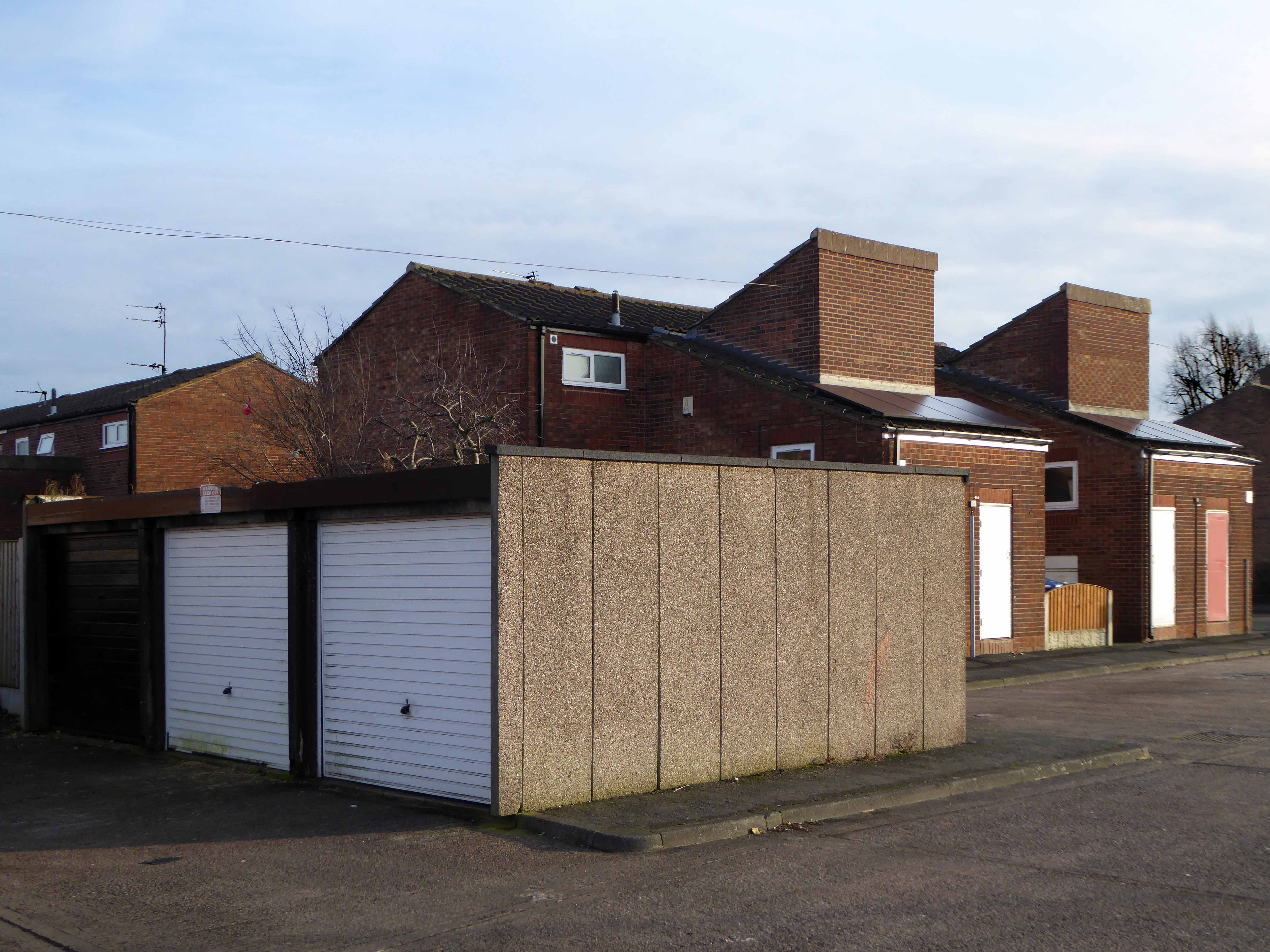
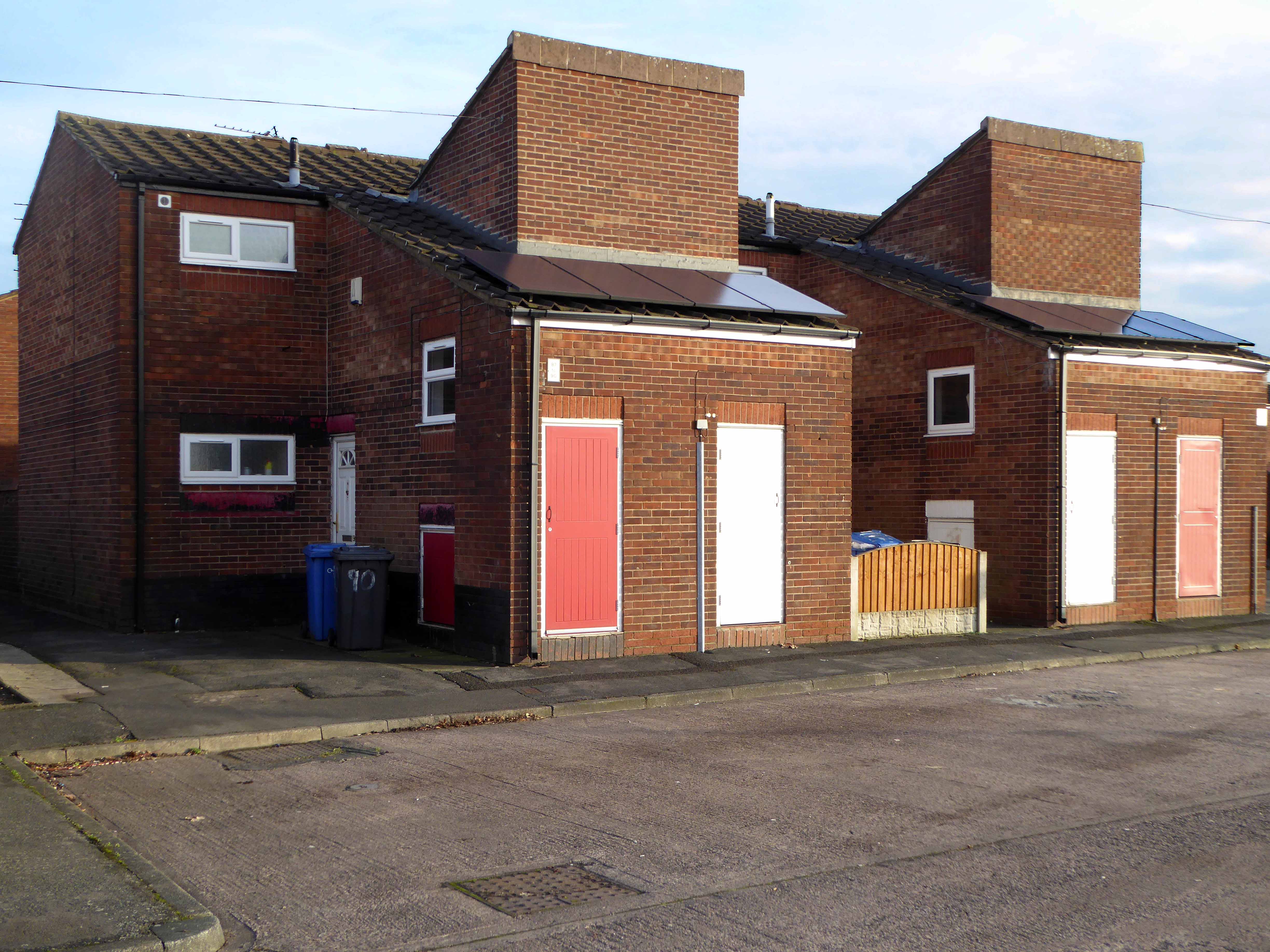
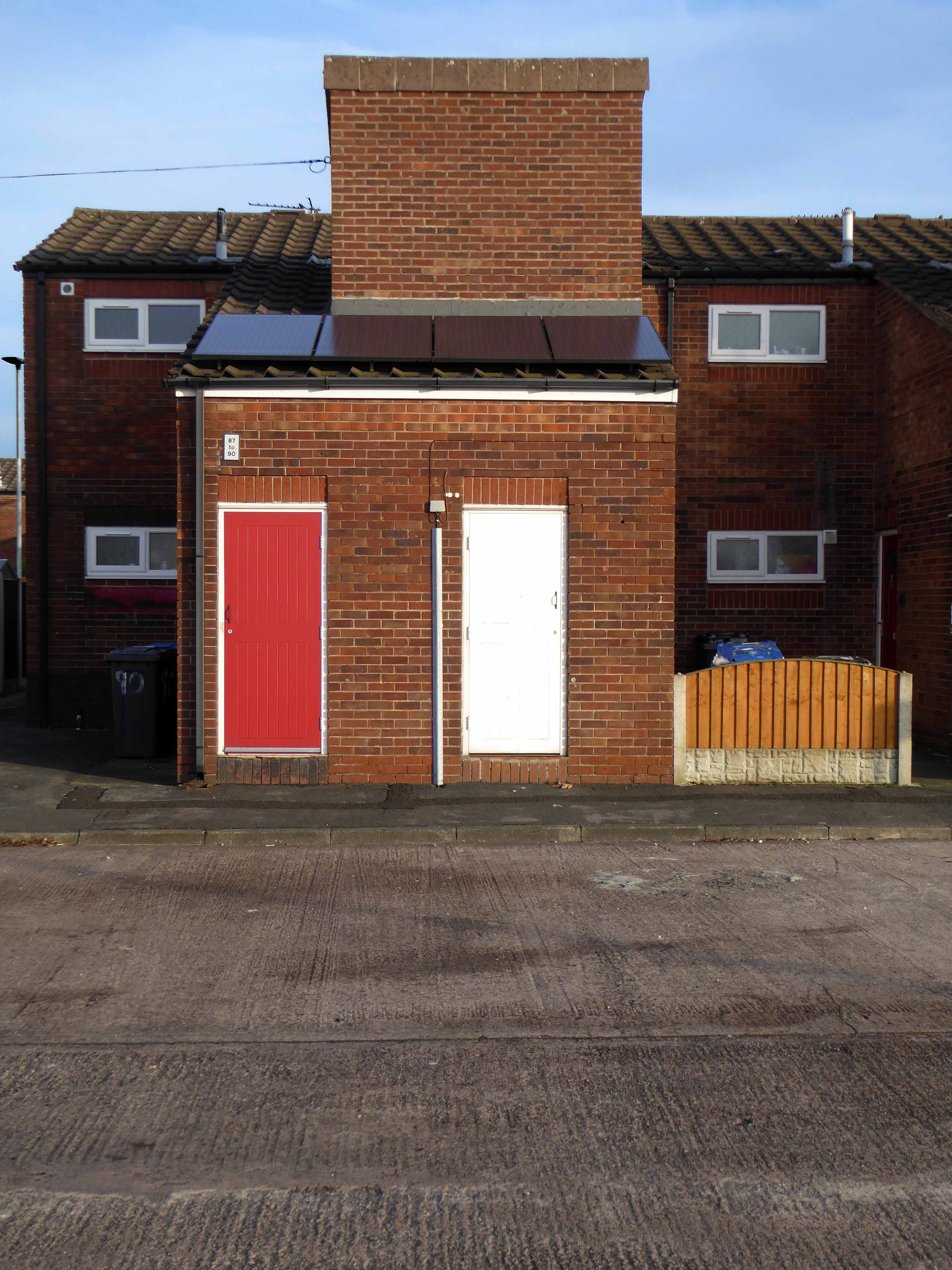
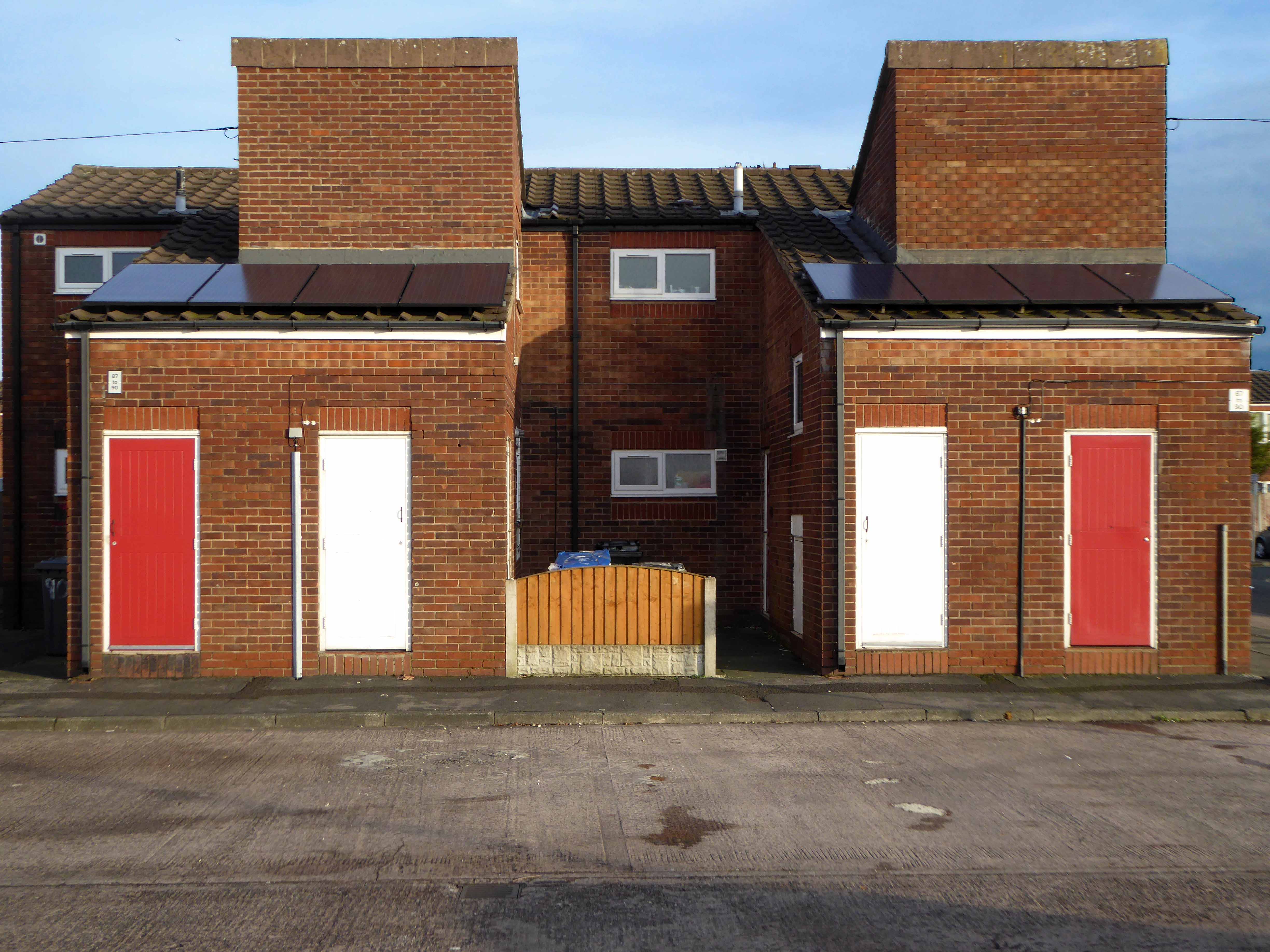
As I walked out one morning, up and down the A49 out of Warrington town centre, on the way somewhere else entirely, the sun and I chanced to fall on a tight group of streets and courtyards, constraining and containing an intriguing collection of modern homes.

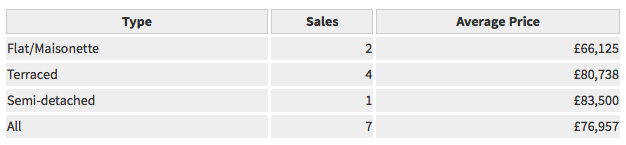
screen-shot-2017-01-26-at-13-27-22

Competitively priced, well below national averages – the area looks to be getting along.

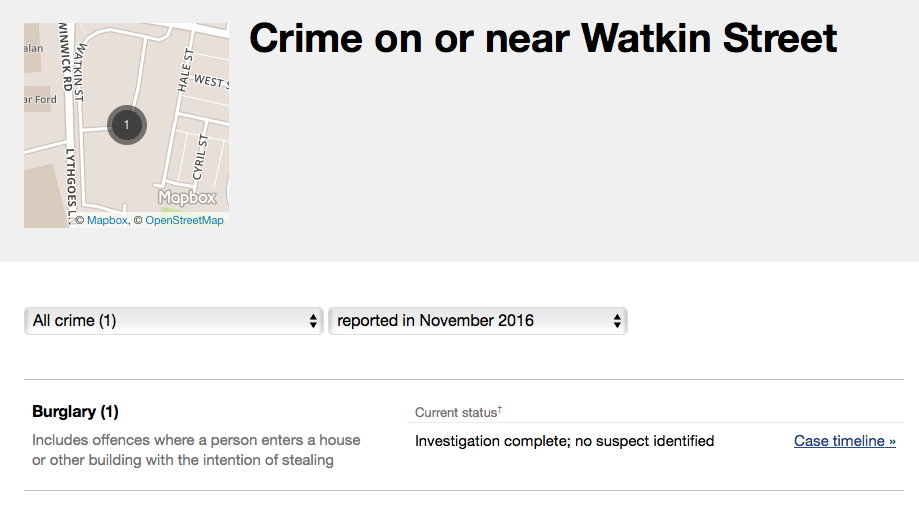
screen-shot-2017-01-26-at-13-31-05

Incidence of crime is low to almost non existent.

screen-shot-2017-01-26-at-13-29-59

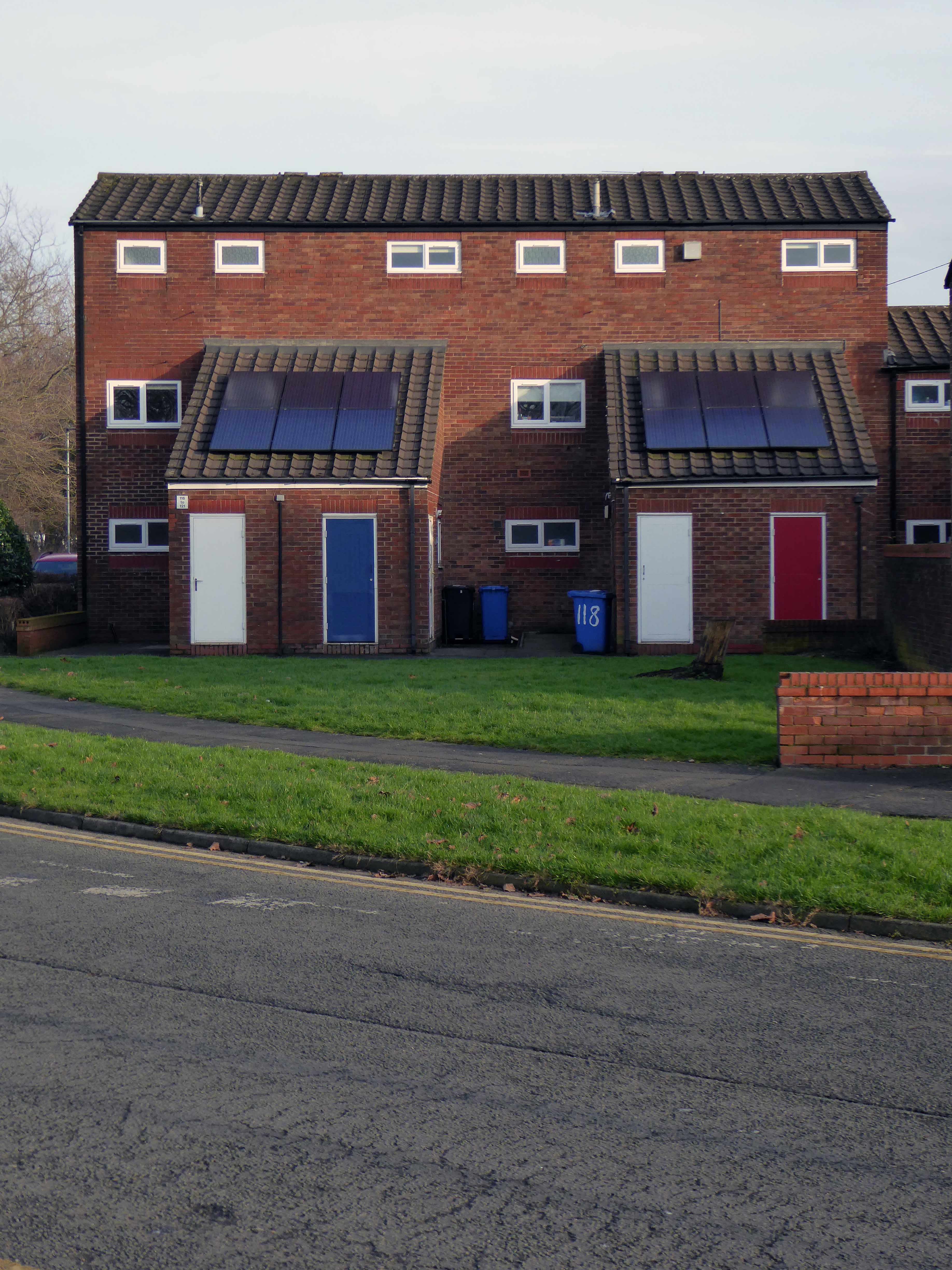
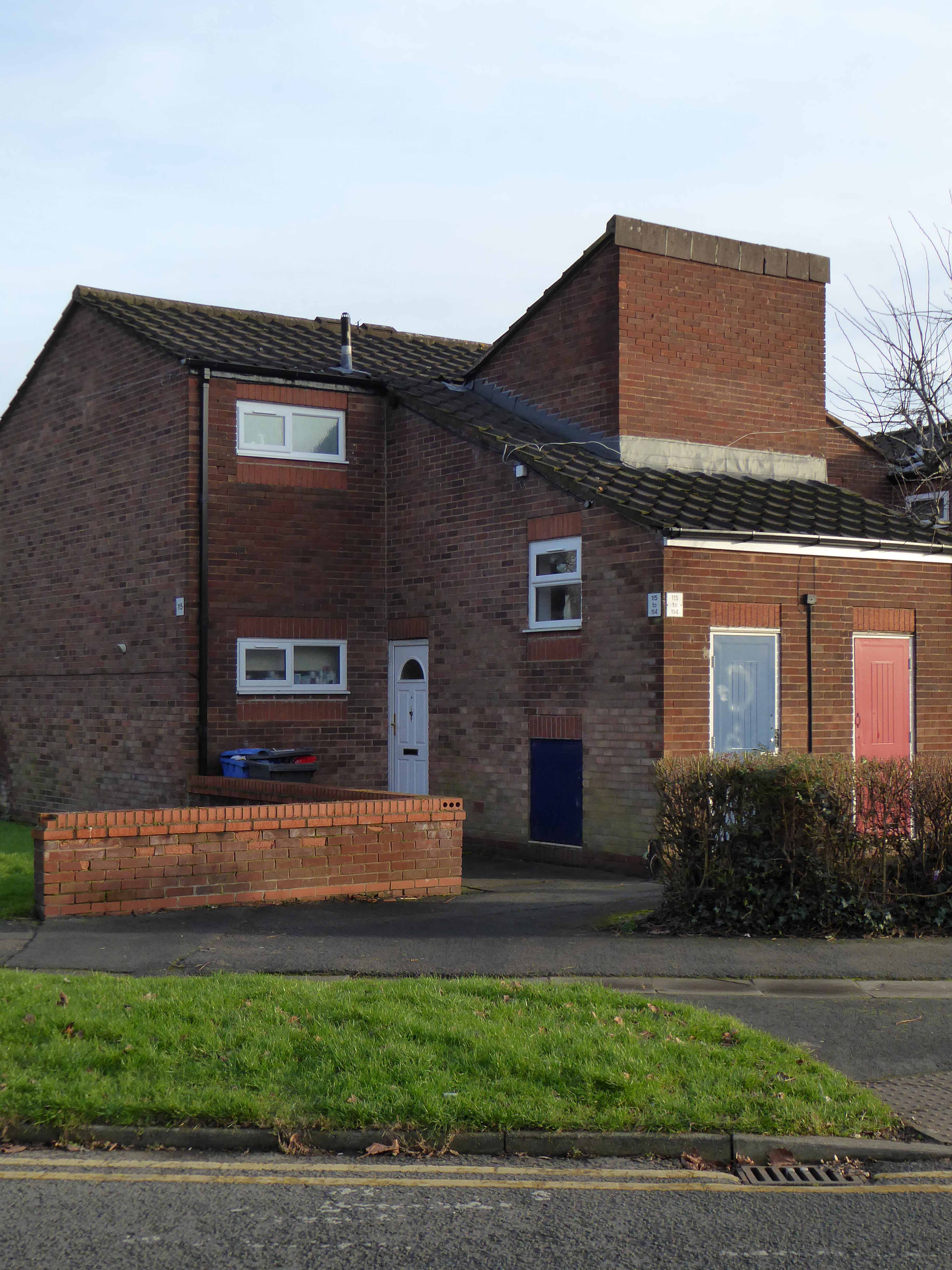
So an illuminated set of buildings with little by way of further illumination, I presume them to be corporation built, late Seventies? A visually exciting set of varied, interlocking geometric volumes – a formalist model that seems to function. On a chill day most residents were hopefully tucked up safe and warm somewhere or other, public spaces rested, bereft of life. The window spaces are pinched and mean, not only of the elevation facing the adjacent main road, but also on the inward faces. An economy of means and a resultant paucity of light.

p1130228

p1130230

p1130231

p1130233

p1130234

p1130235

p1130236

p1130237

p1130238

p1130239

p1130240

p1130241

p1130242

p1130243

p1130244

p1130245

p1130246

p1130248

Rochdale – Seven Sisters Flats

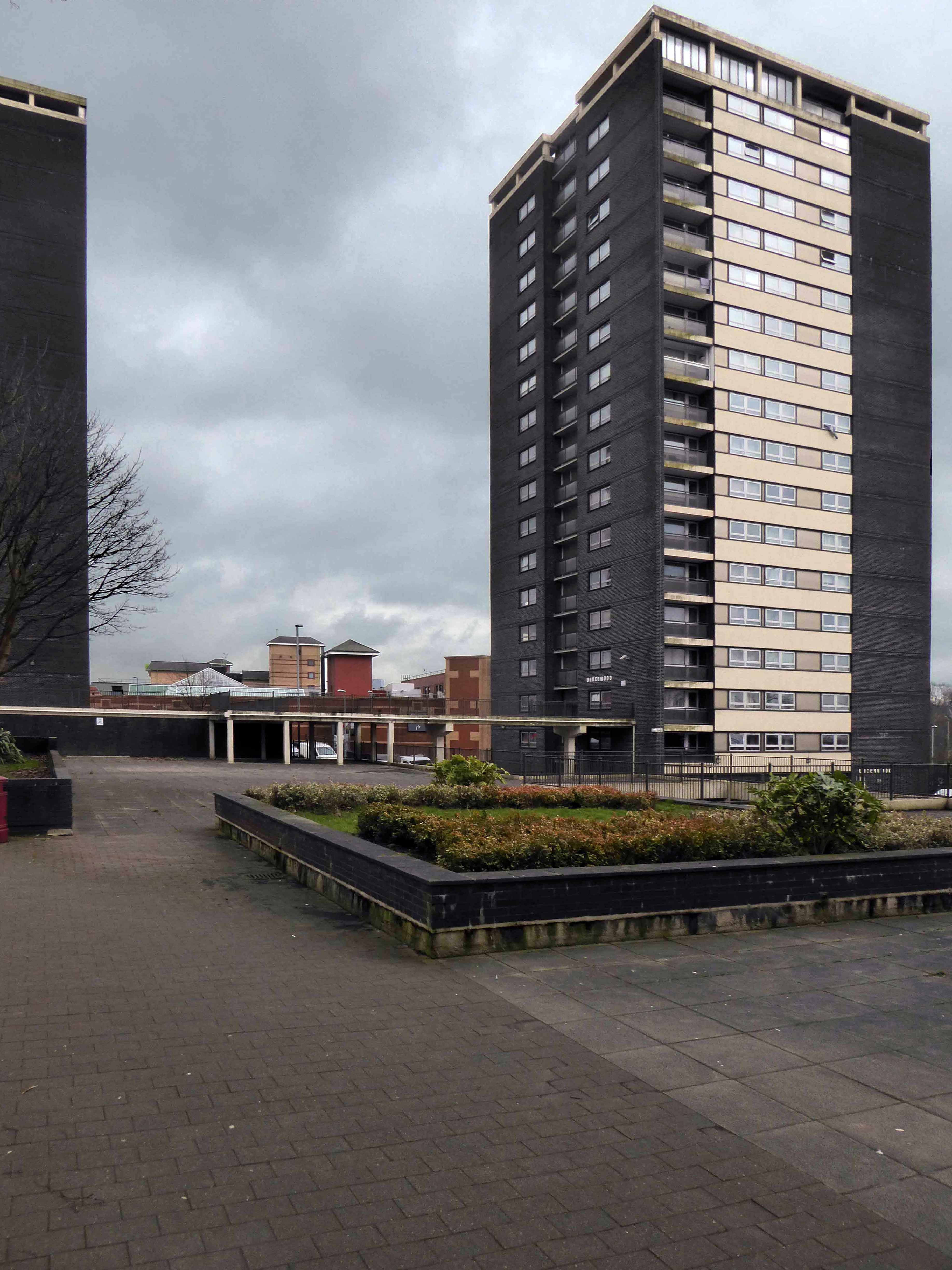
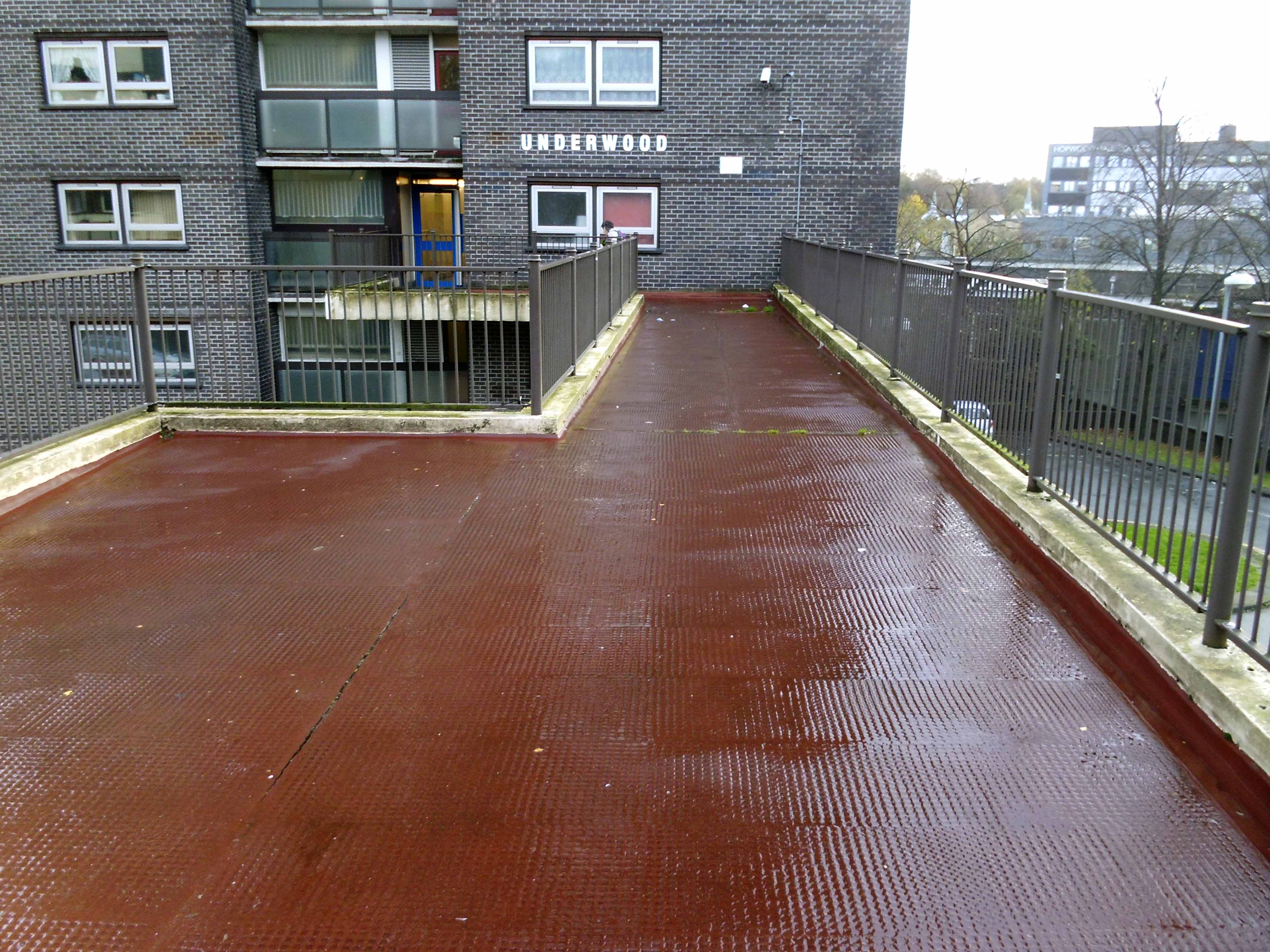
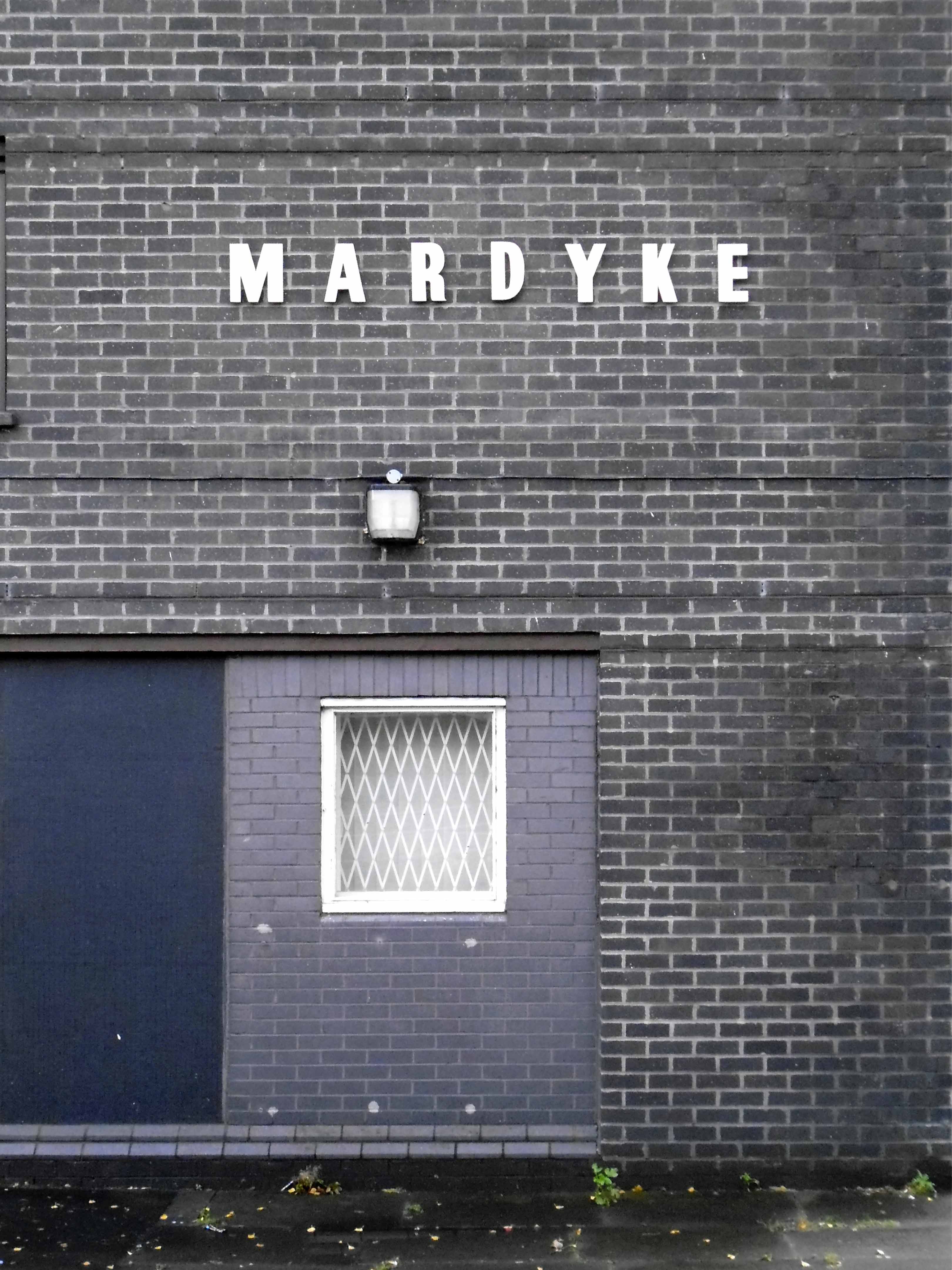
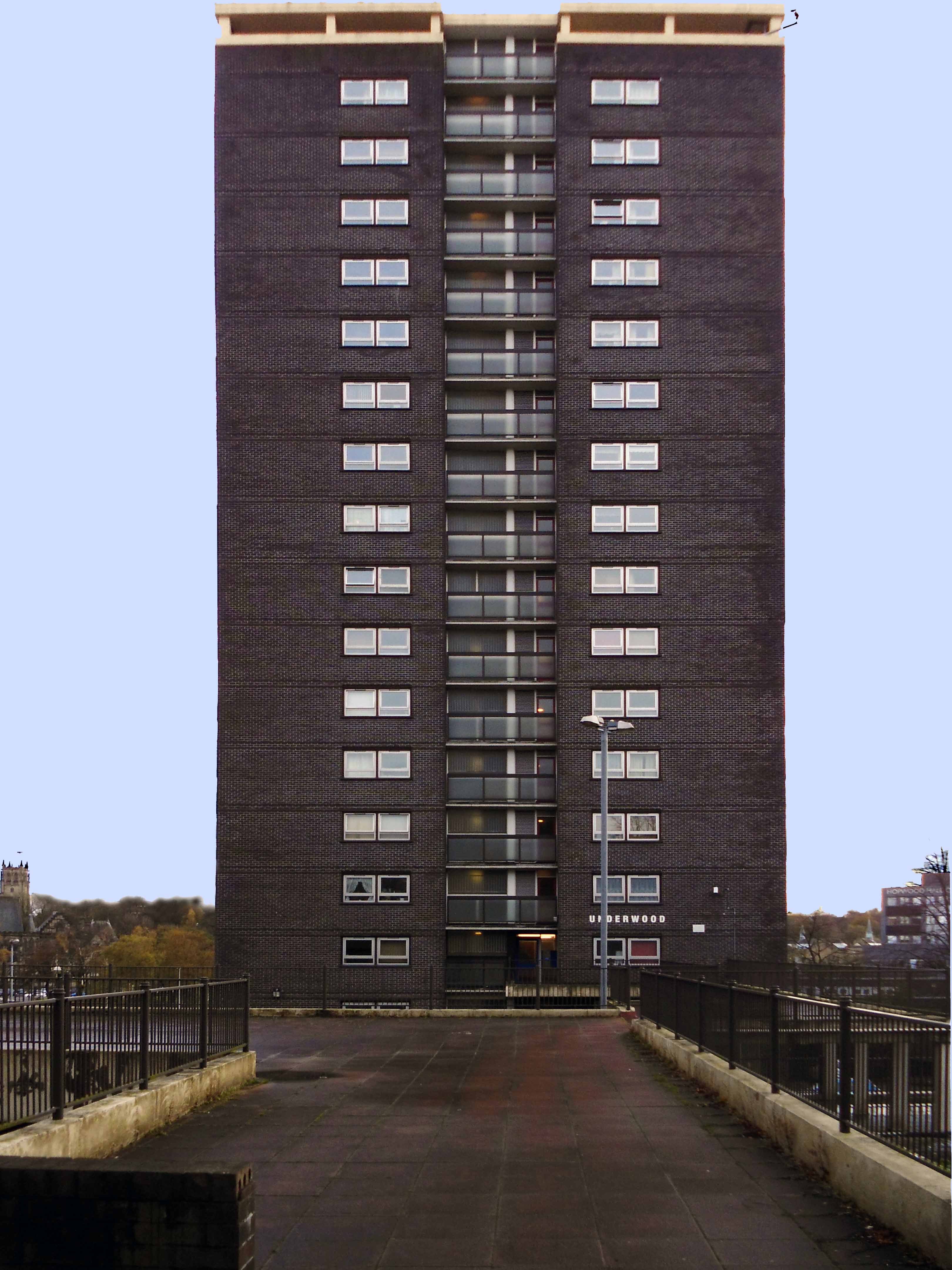
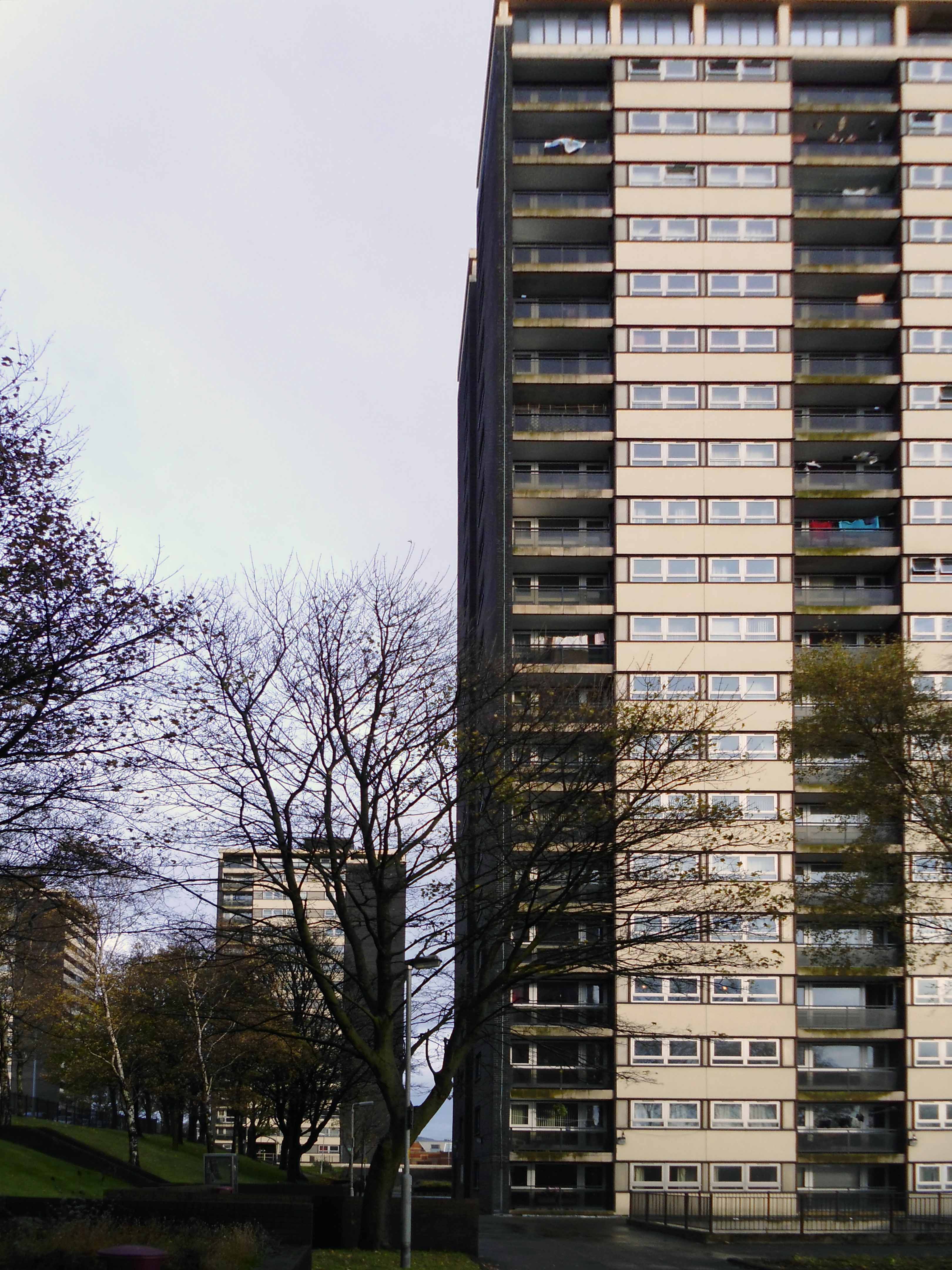
Arriving in Rochdale in search of something else entirely, it was impossible to ignore seven prominent, as yet unclad tower blocks, high upon a hill. I was informed by a local resident that they were known locally as the Seven Sisters, though variously identified as Falinge B, College Bank, and Holland Street flats.

js81348360

The area was formerly home to Victorian workers’ dwellings, known as The Paddock – the post-war policy of slum clearance saw them swept away, in readiness for municipal modernity.

js81348349

js81348353

js81348355

Photographs Rochdale Image Archives

Hey presto 1963 and there appears four 21 storey blocks containing 476 dwellings; three 17 storey blocks containing 286 dwellings.

5995650872_2ed2d9ab80_b

Photograph Mancunian 101

Building contractors were Wimpey and the flats were designed by Rochdale’s Borough Surveyor, Mr W H G Mercer and Mr D. Broadbent along with Mr E V Collins, chief architect to contractors George Wimpey and Company.

Many thanks to the Tower Block project for the facts.

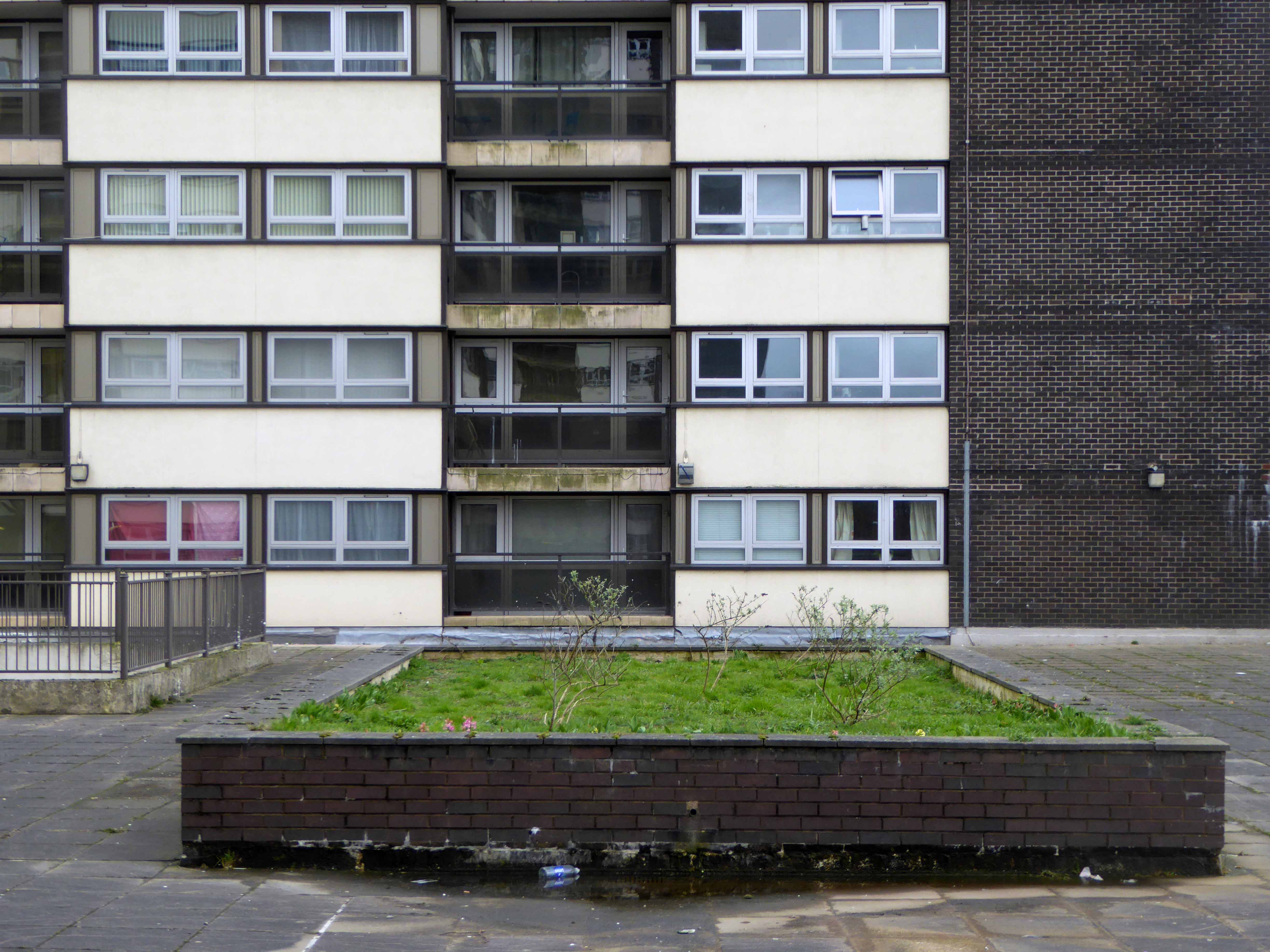
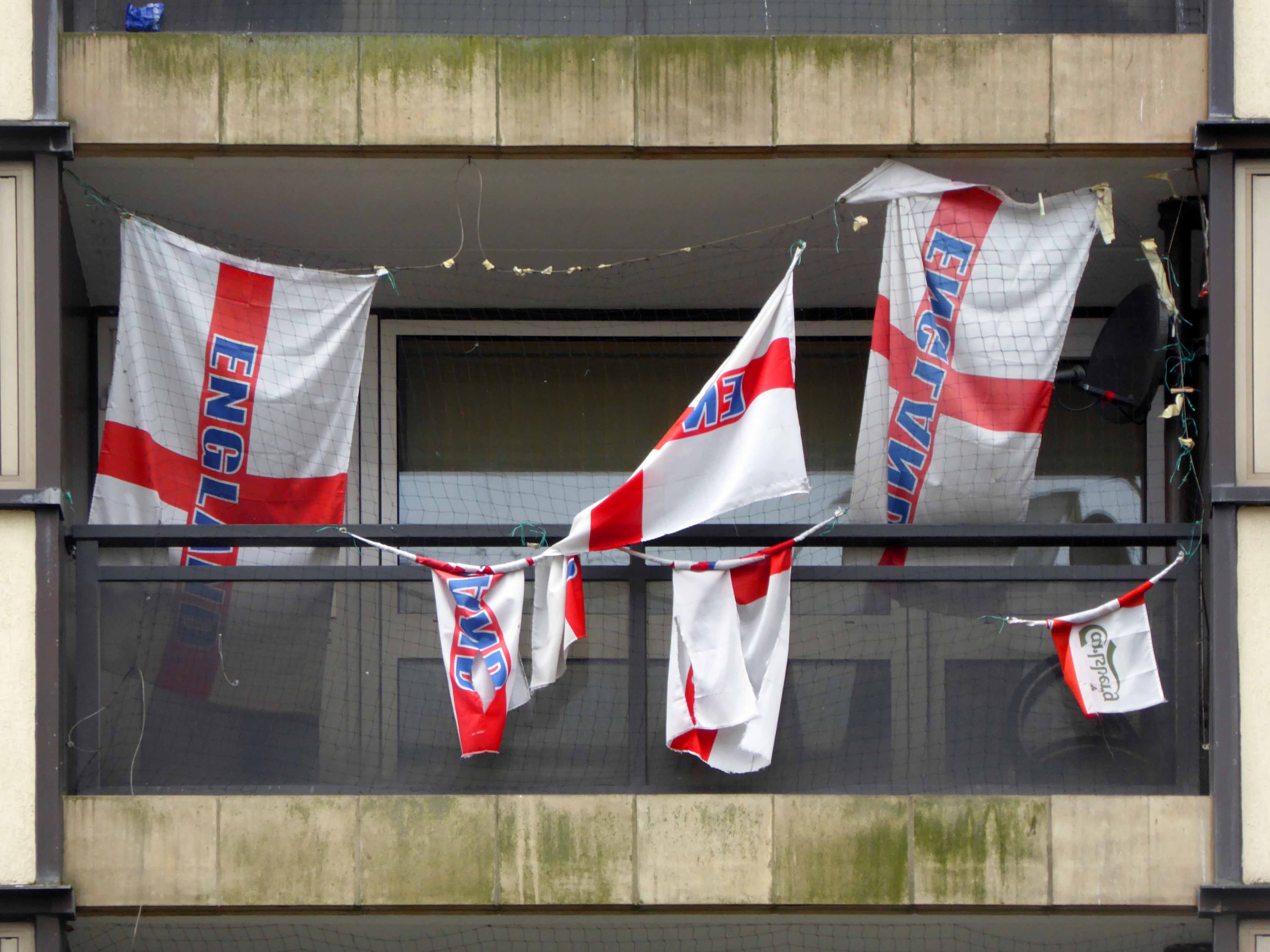
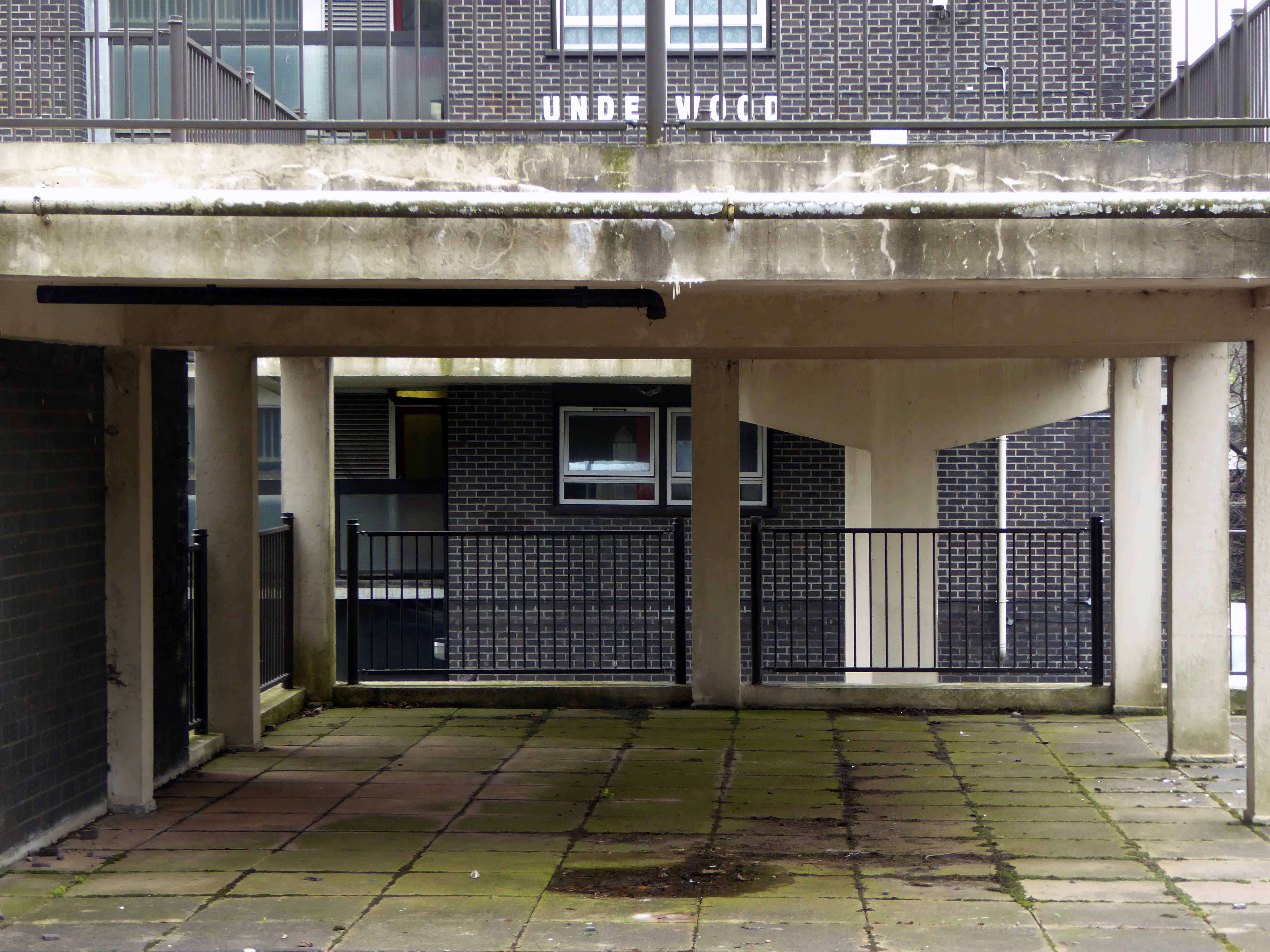
On Friday October 1 1965 the Minister of Housing and Local Government, Richard Crossman, officially opened the first of the College Bank flats – Underwood.

So go take a look ride the rail or tram, get on your bike, walk a while and abide, take a frenzied dance around with the Seven Sisters.

p1040789-copy

p1040787-copy

p1040785-copy

p1040788-copy

p1040797-copy

p1040795-copy

p1040794-copy

p1040793-copy

p1040792-copy

p1040786-copy

p1040800-copy

p1040801-copy

p1040791-copy

p1040796-copy

p1040798-copy

p1040799-copy

St Catherine of Sienna – Sheffield

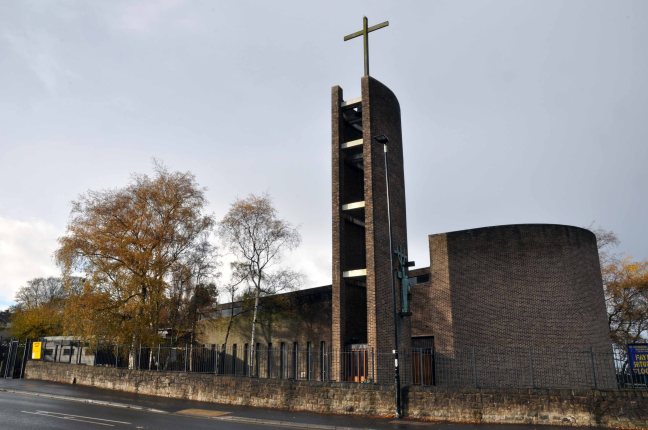
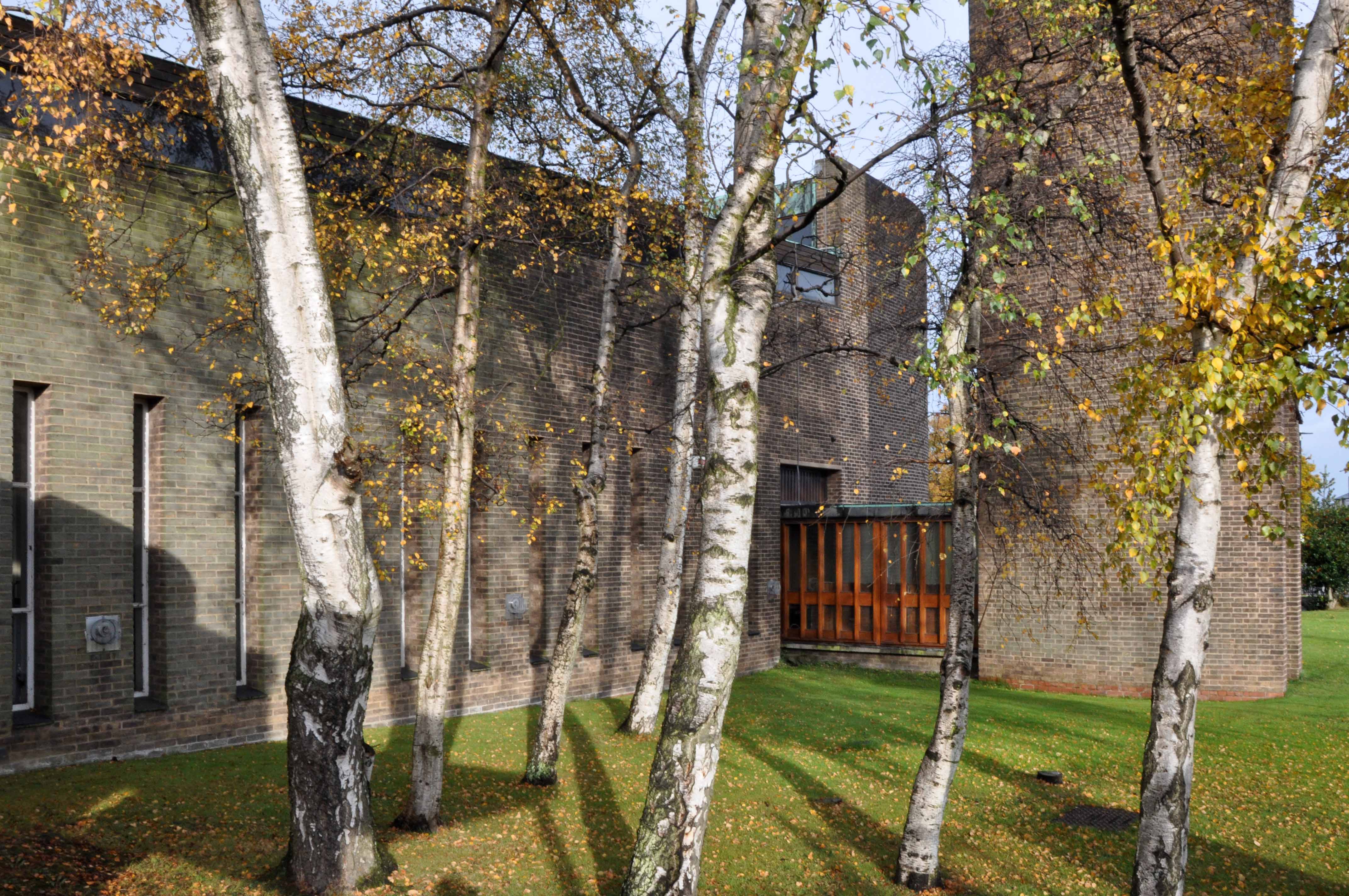
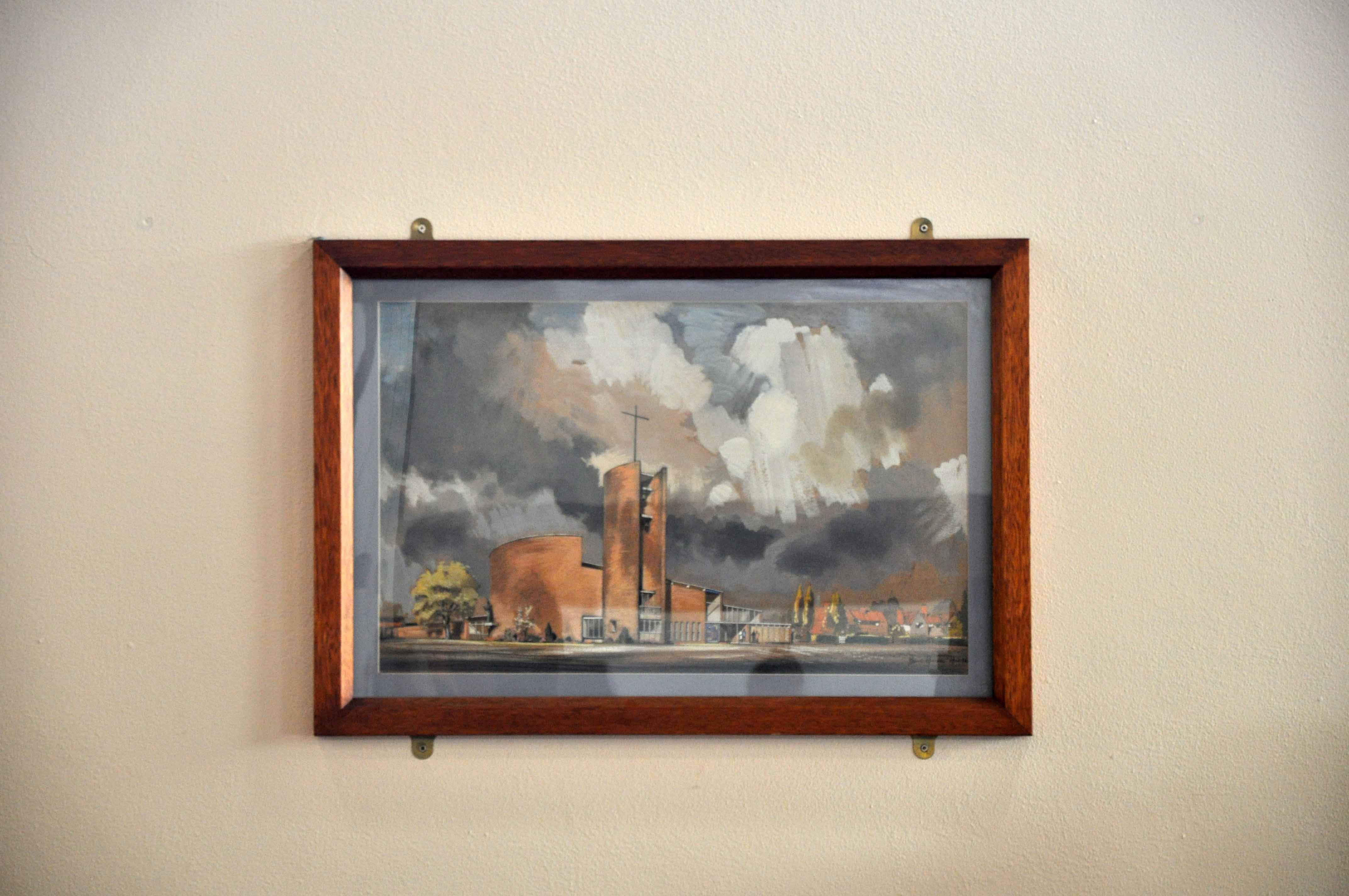
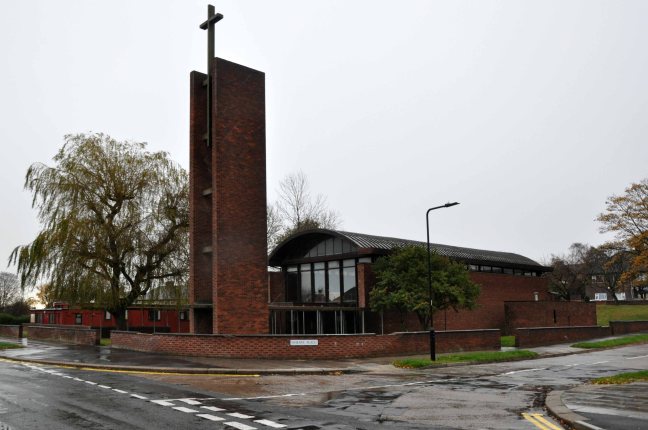
Sir Basil Spence 1958-62. . Brown brick. Roof not visible. Slate cladding to entrance block of parish hall. Rectangular nave sweeping around into a semicircular apsed sanctuary .

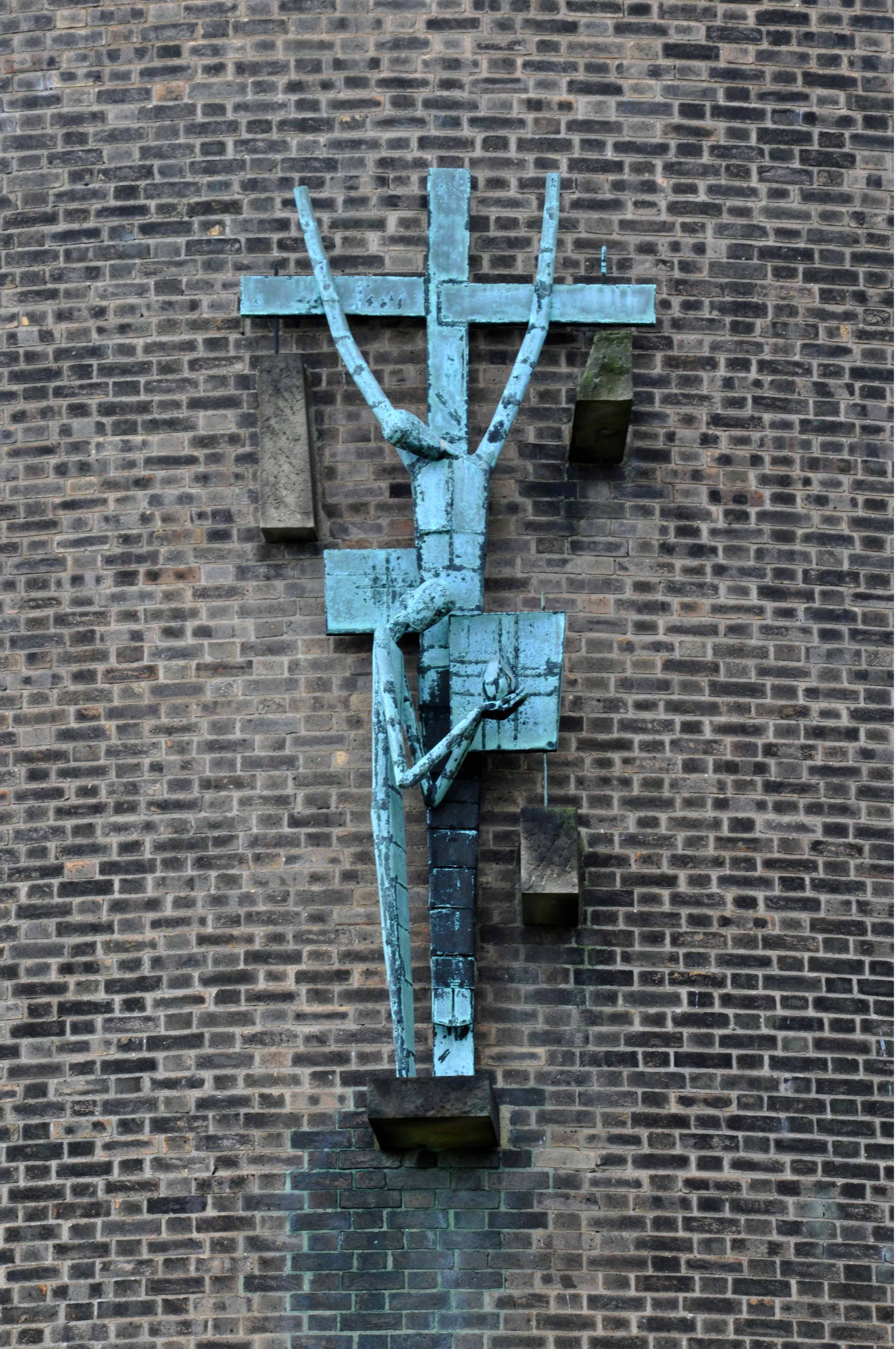
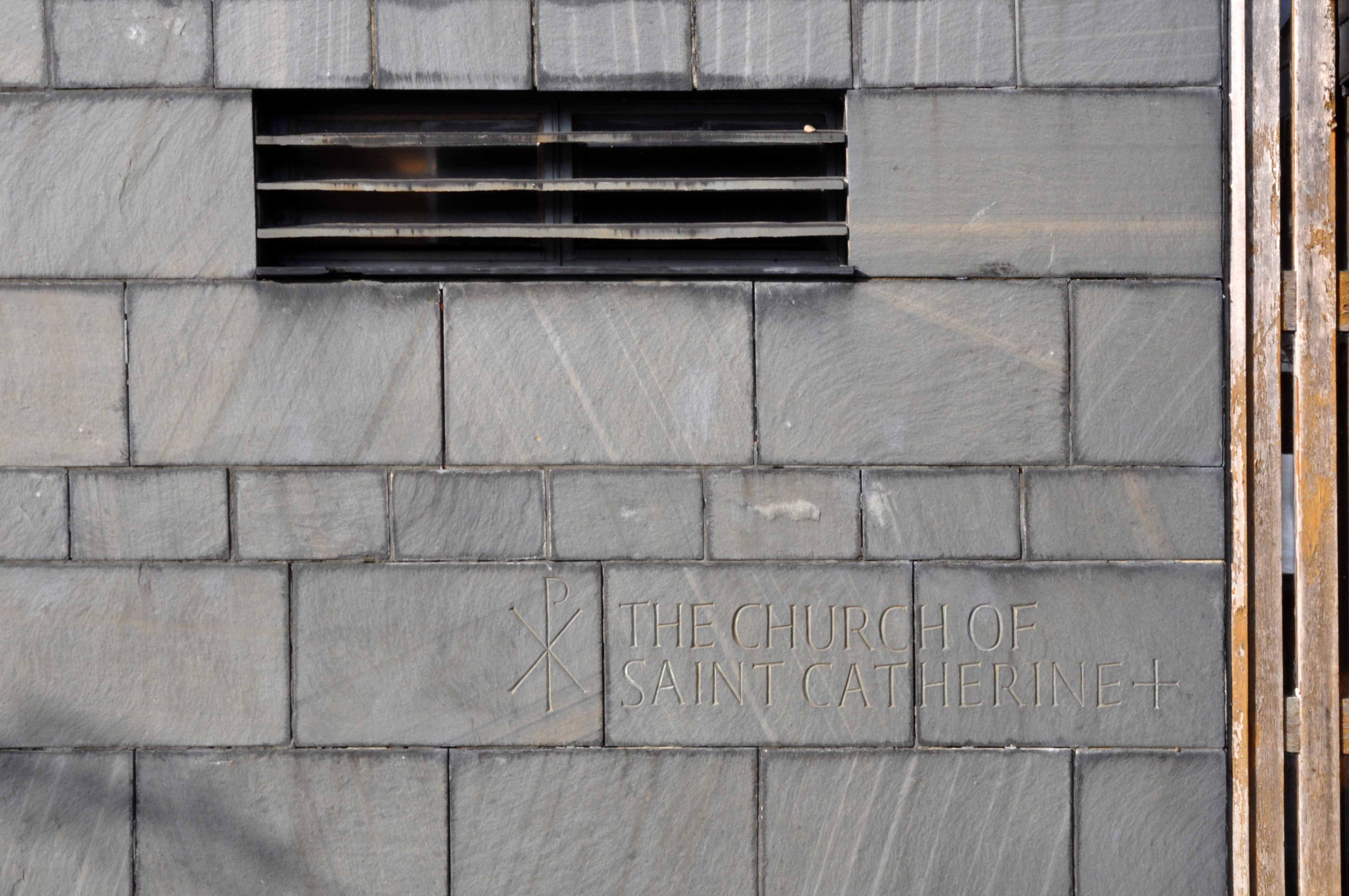
EXTERIOR: entrance to liturgical south-west and parish hall to liturgical west with vestry. Carved words “The Church of St Catherine” to left of recessed entrance. Tower linked to liturgical south-east, and comprising two convex slabs forming a sacristy at ground level and linked by concrete beams above. Patinated bronze sculptural group with crucified Christ affixed to its east side.

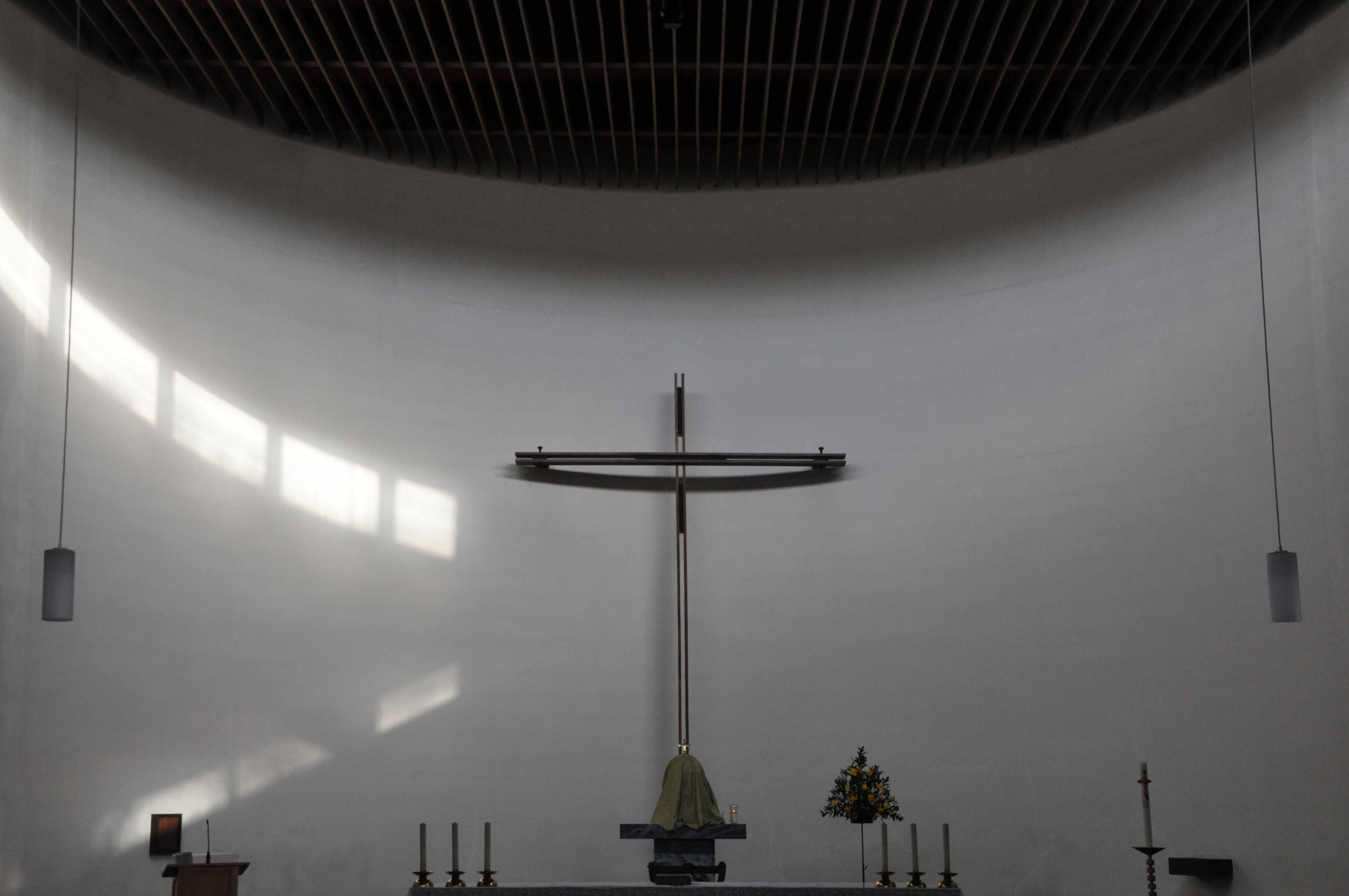
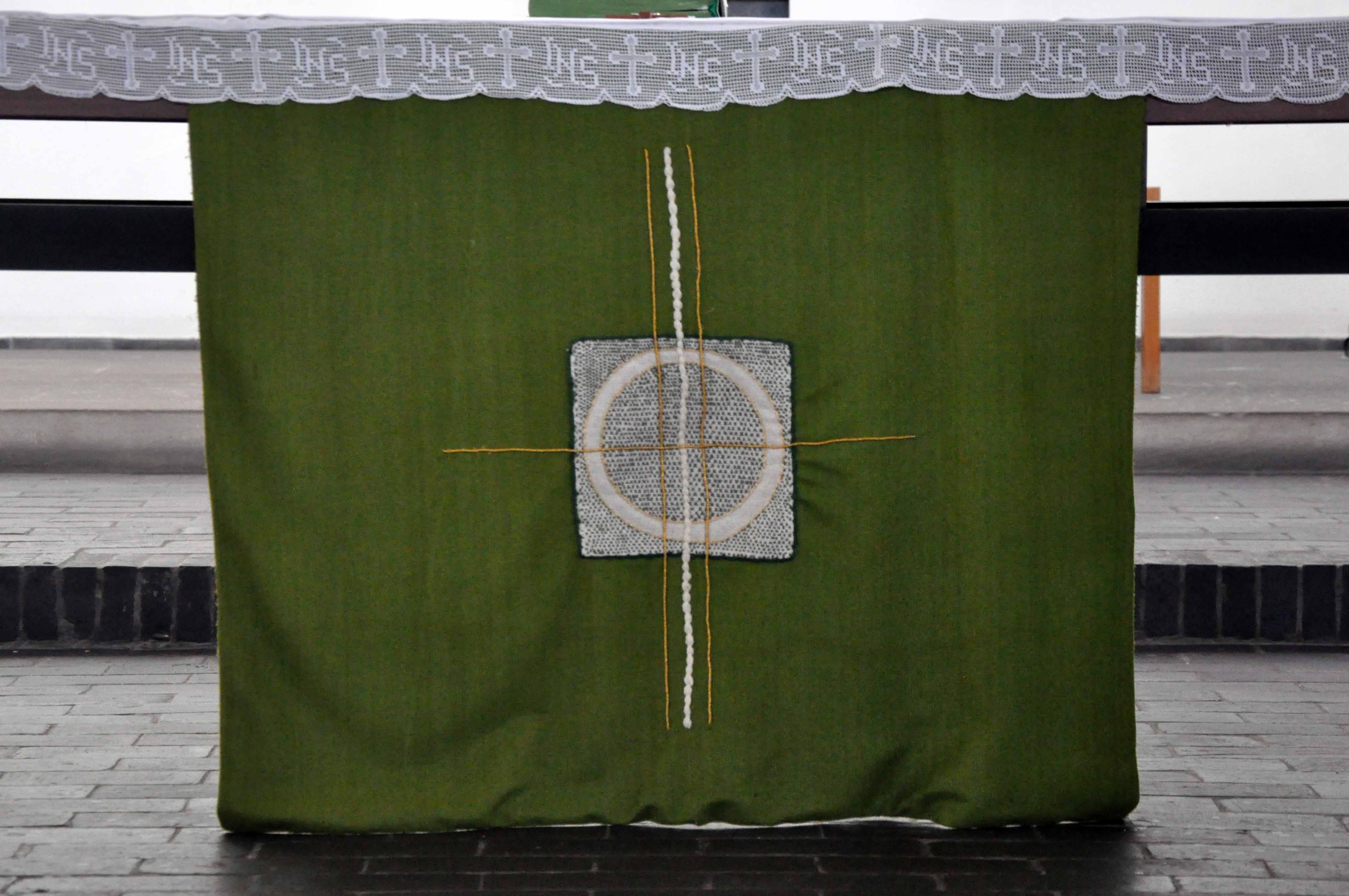
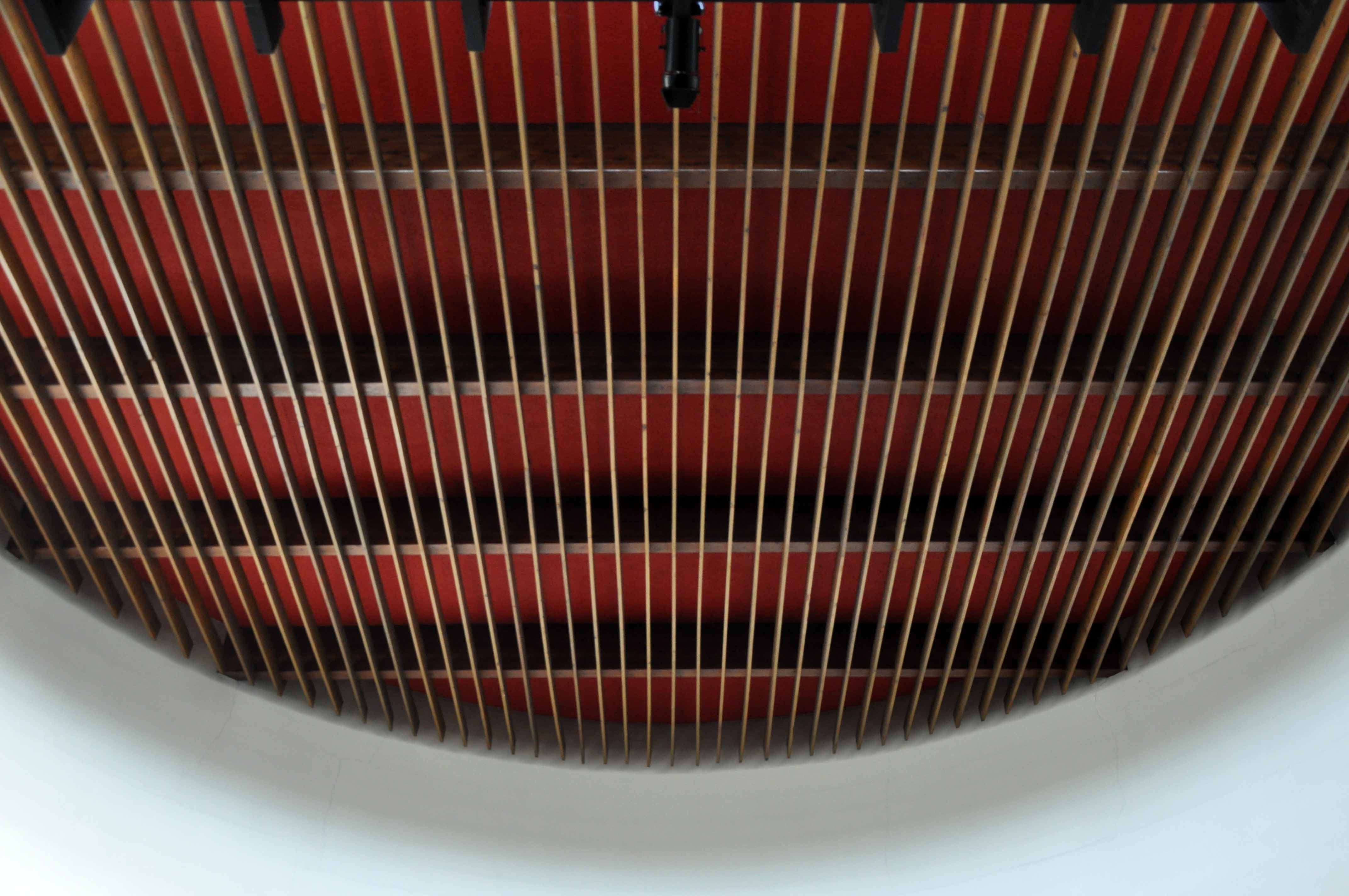
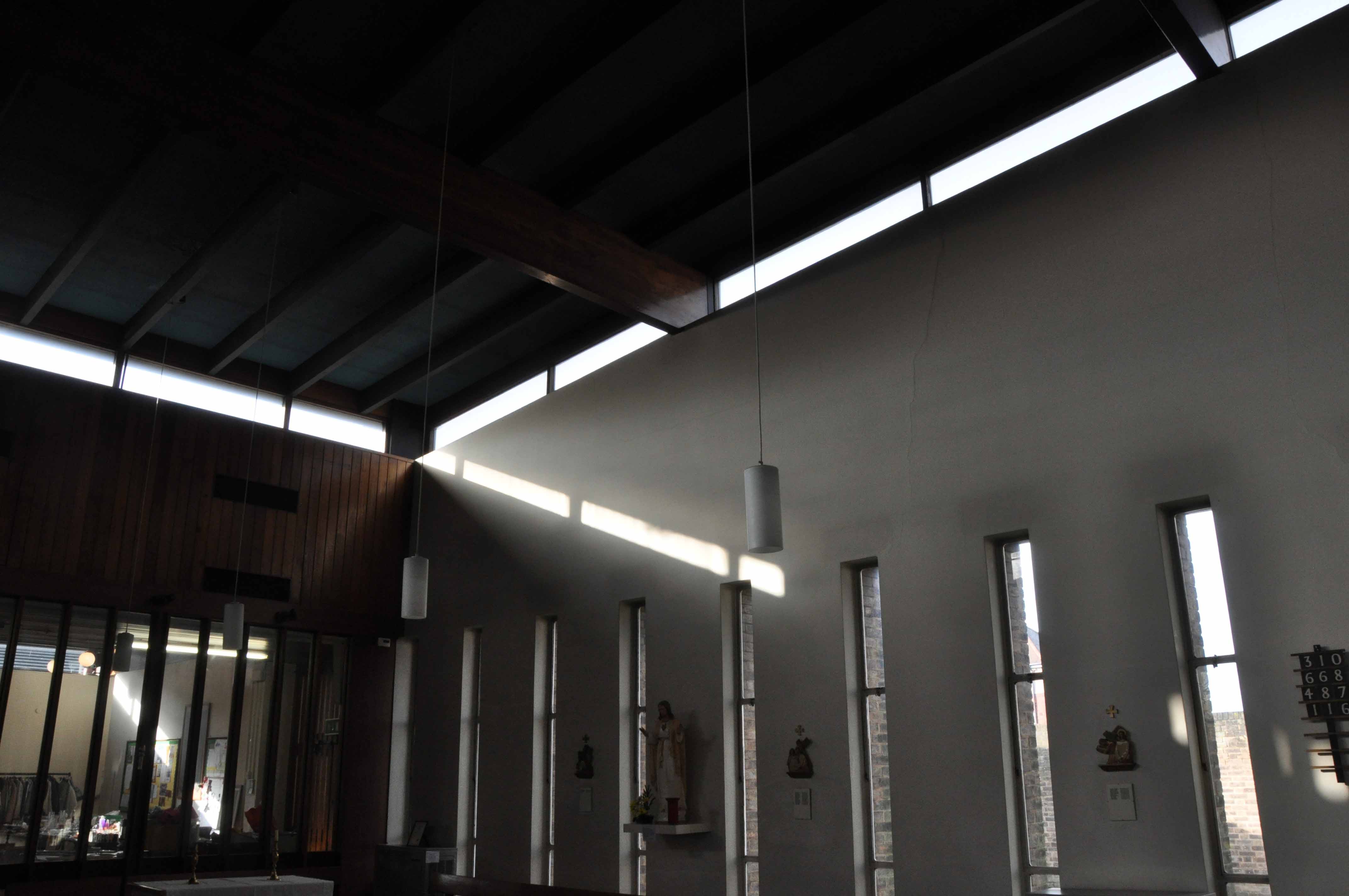
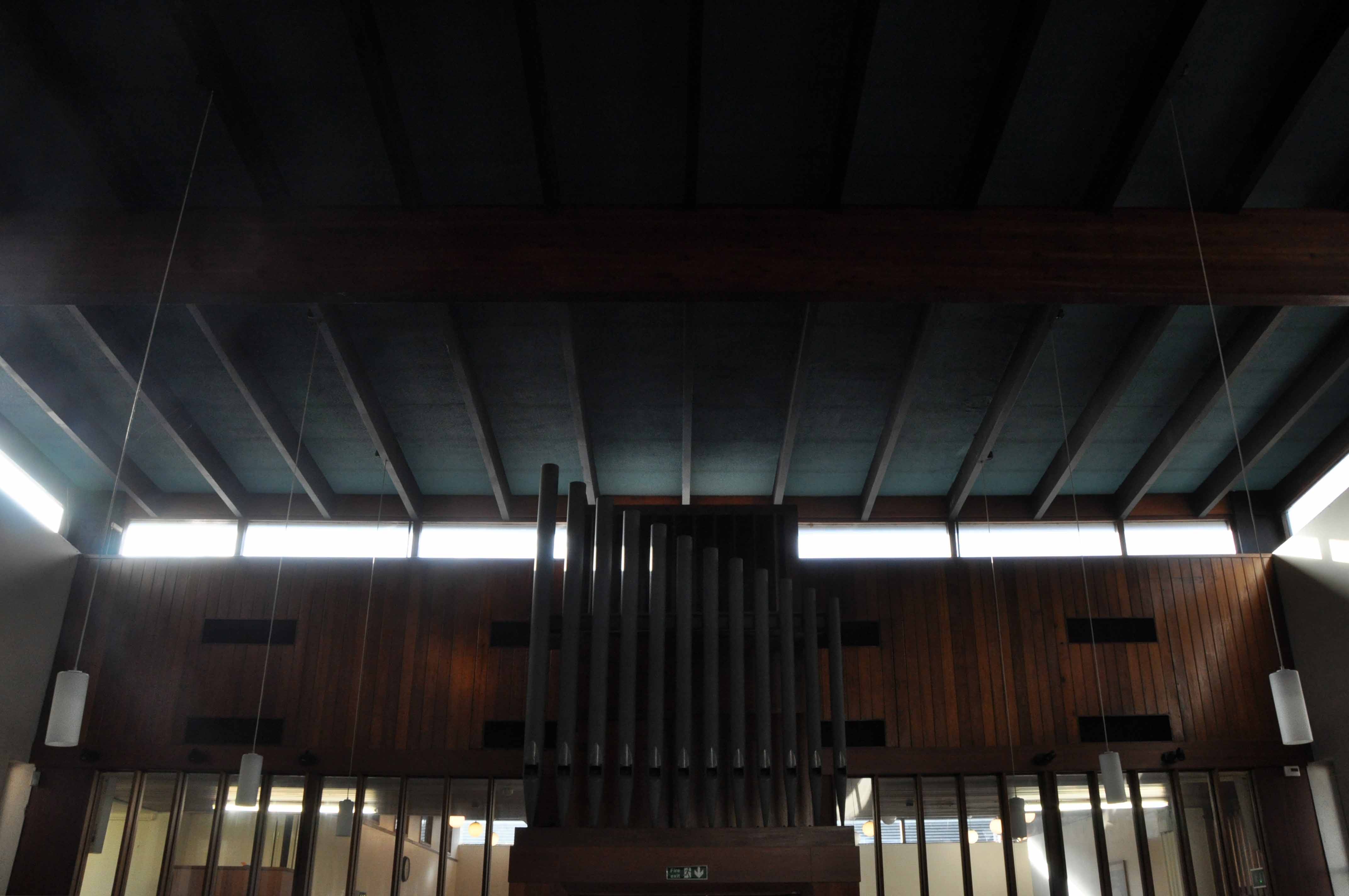
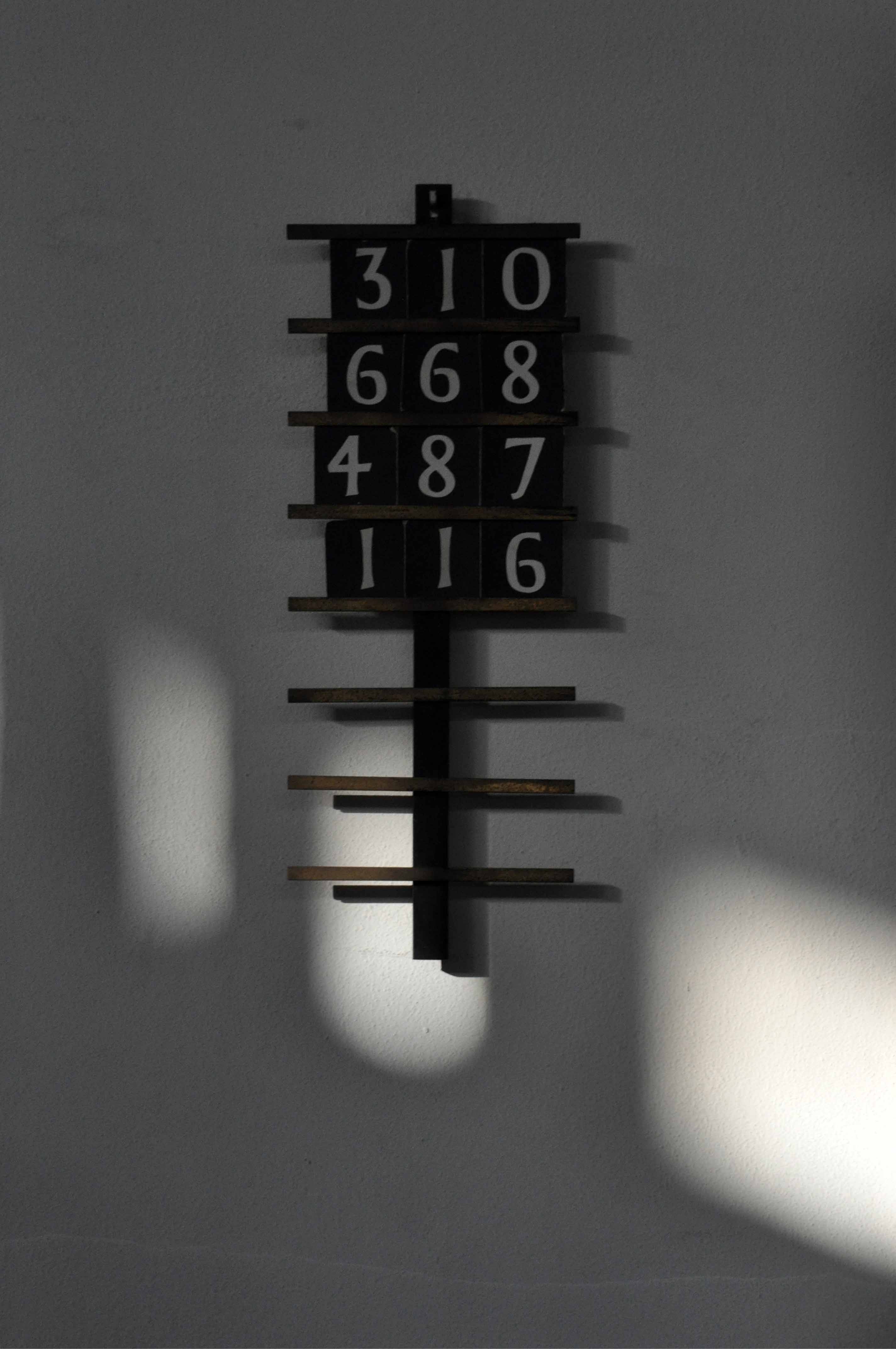
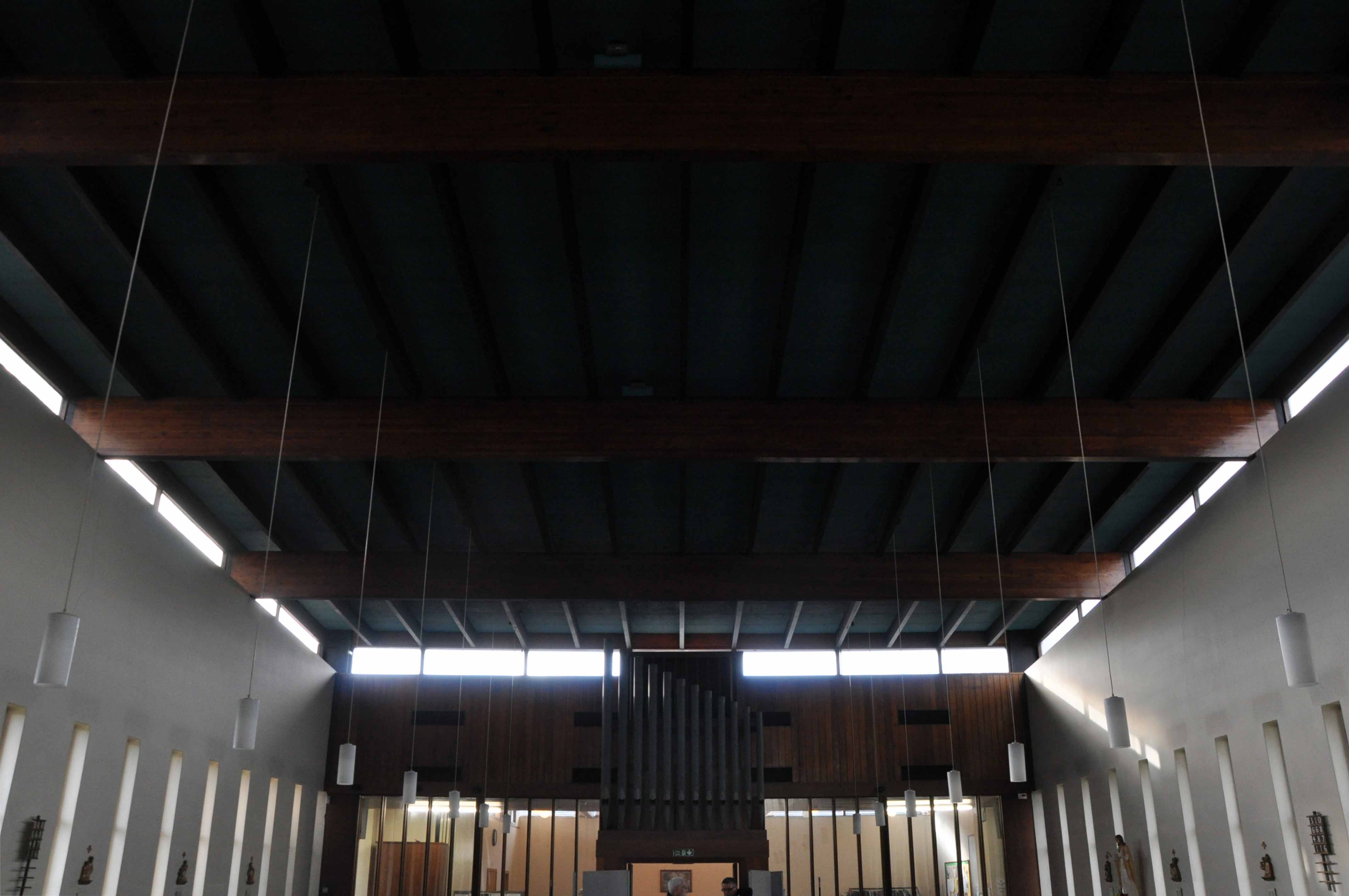
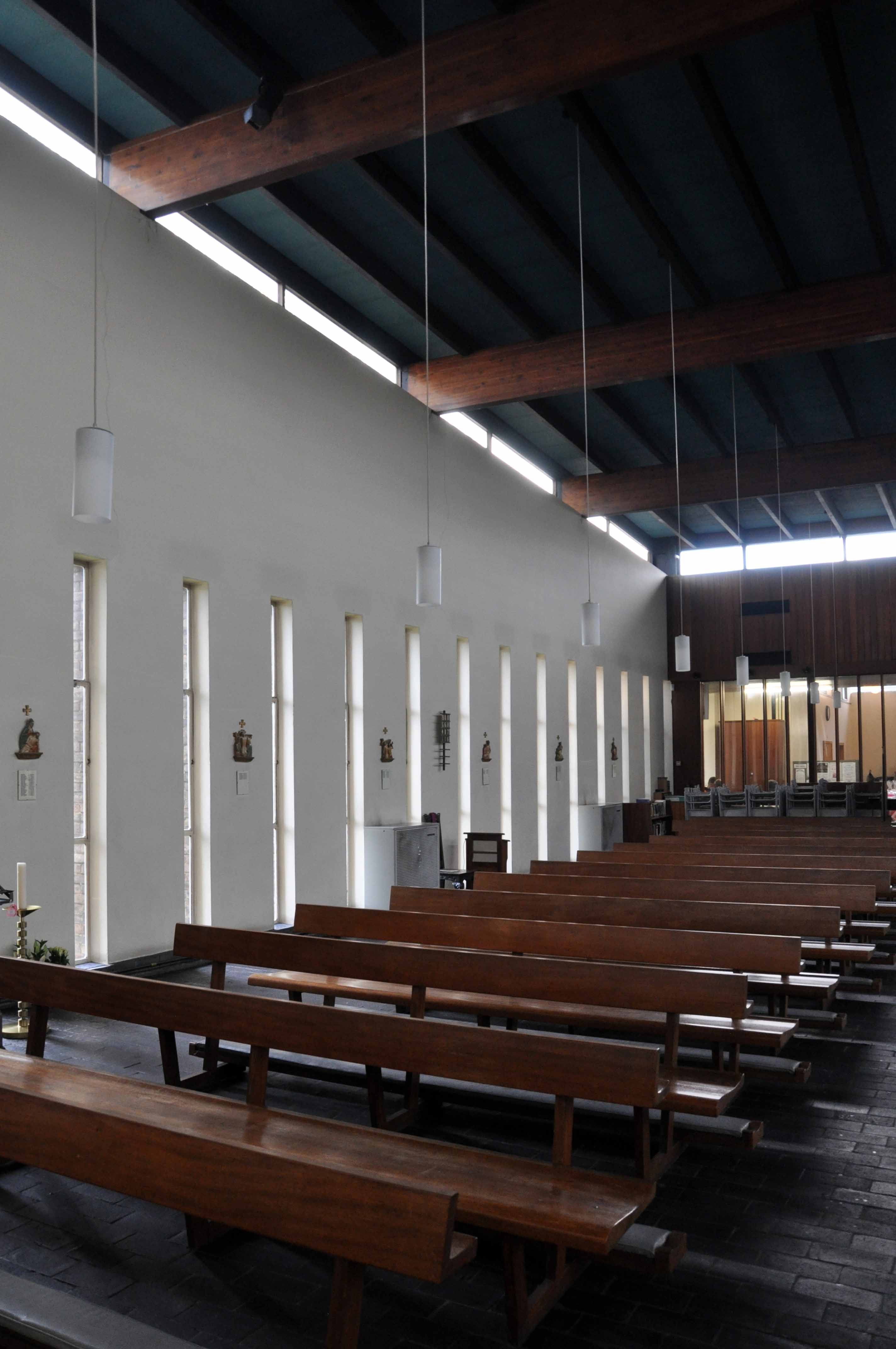
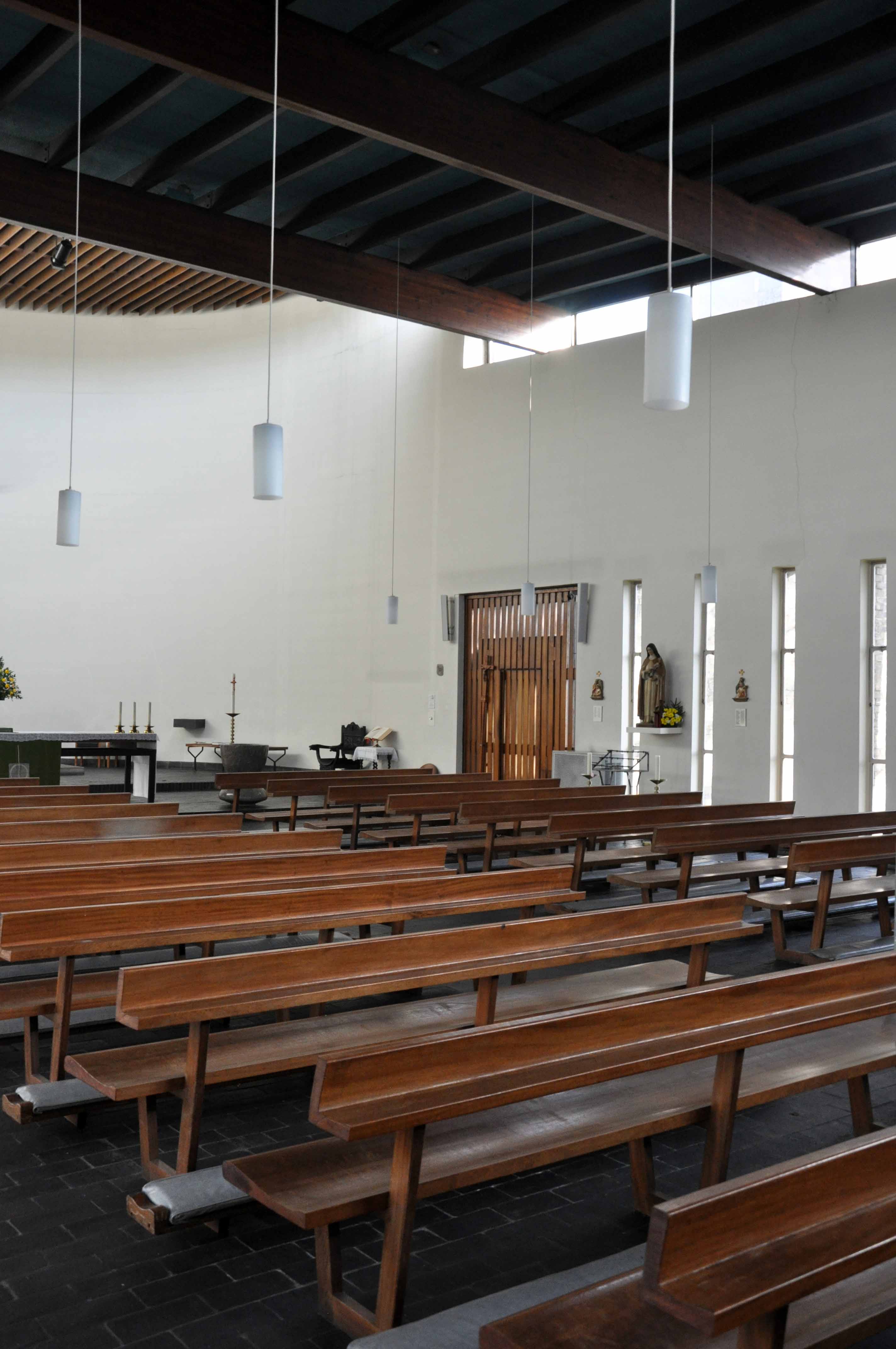
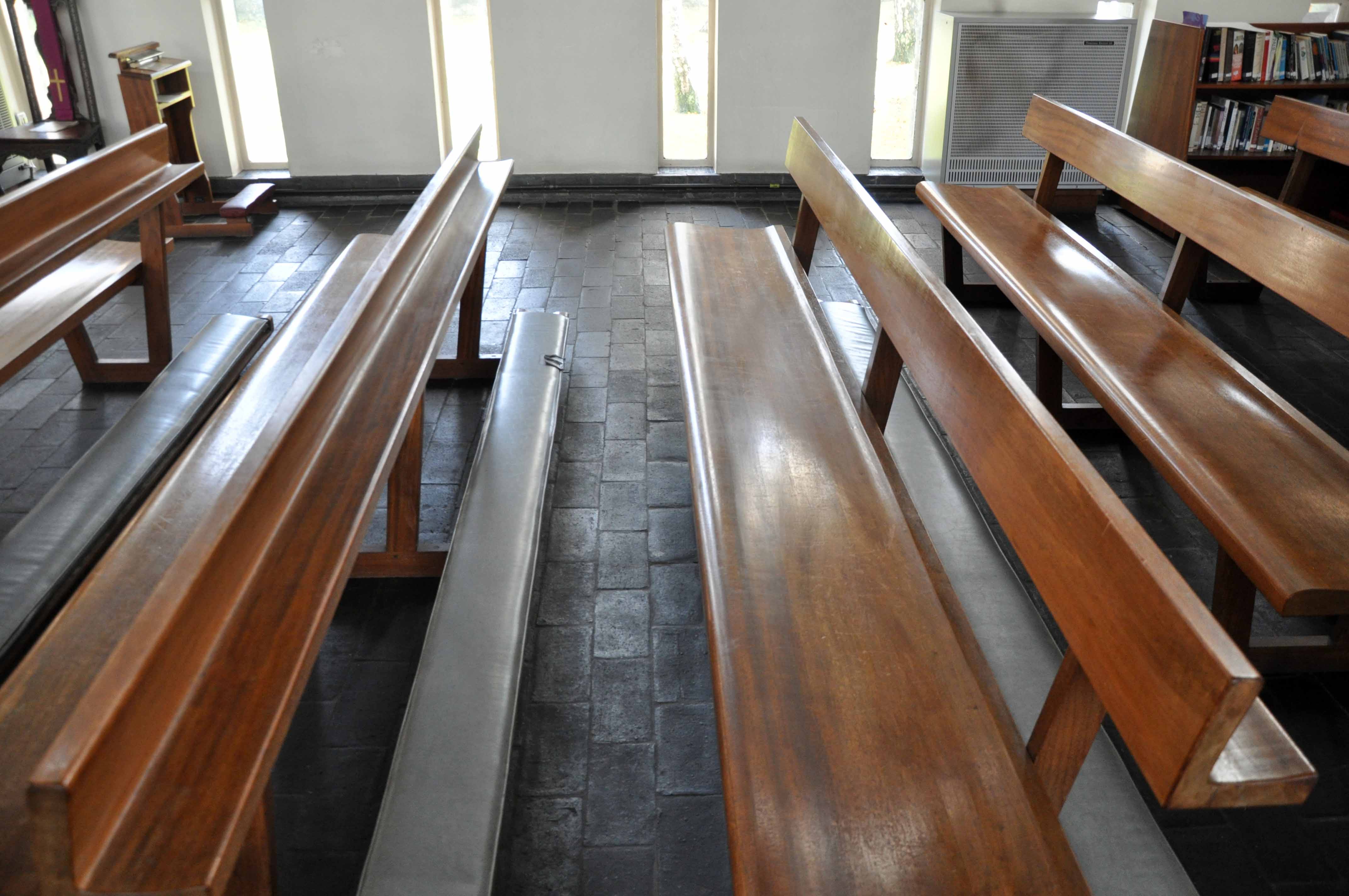
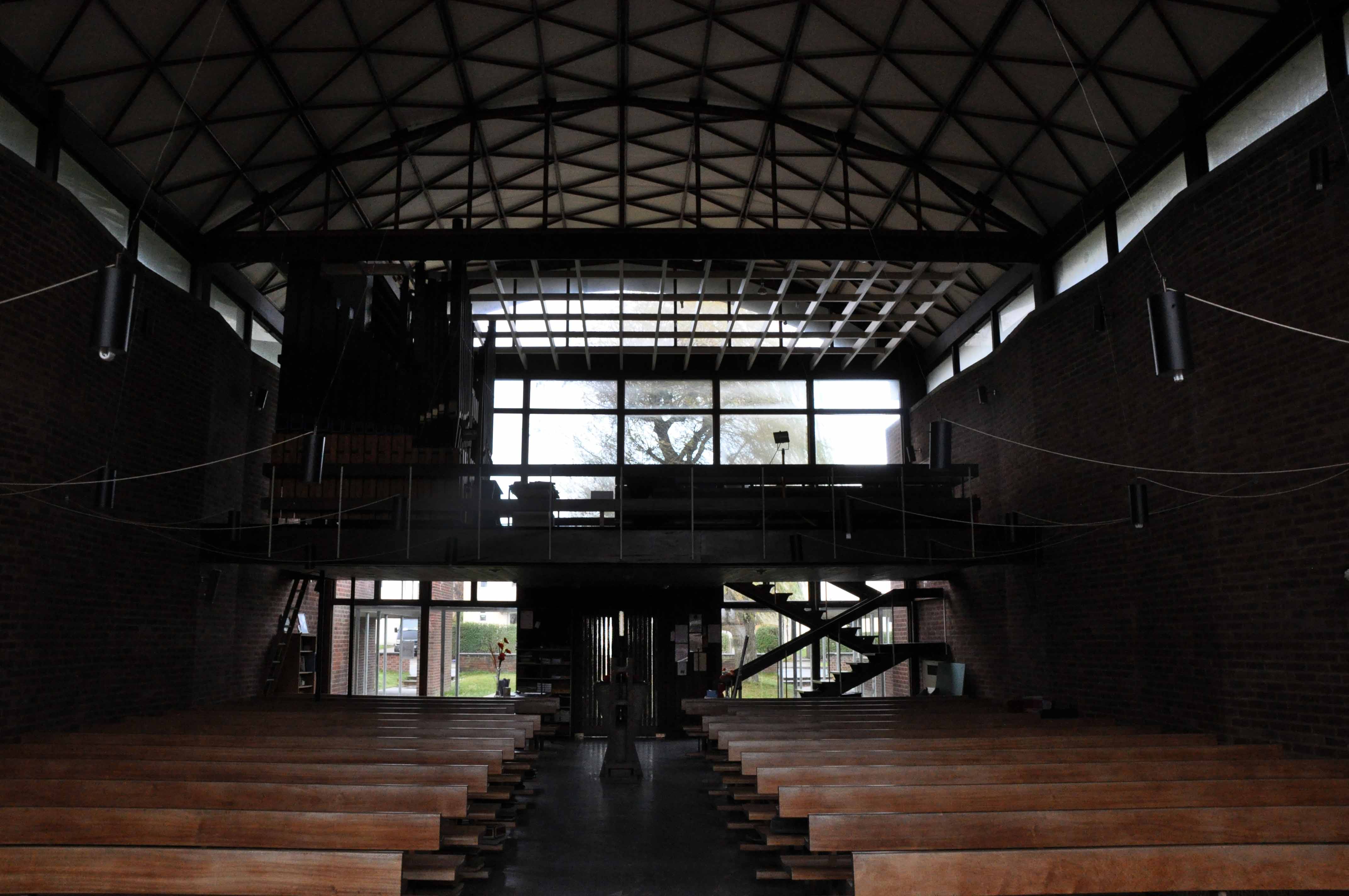
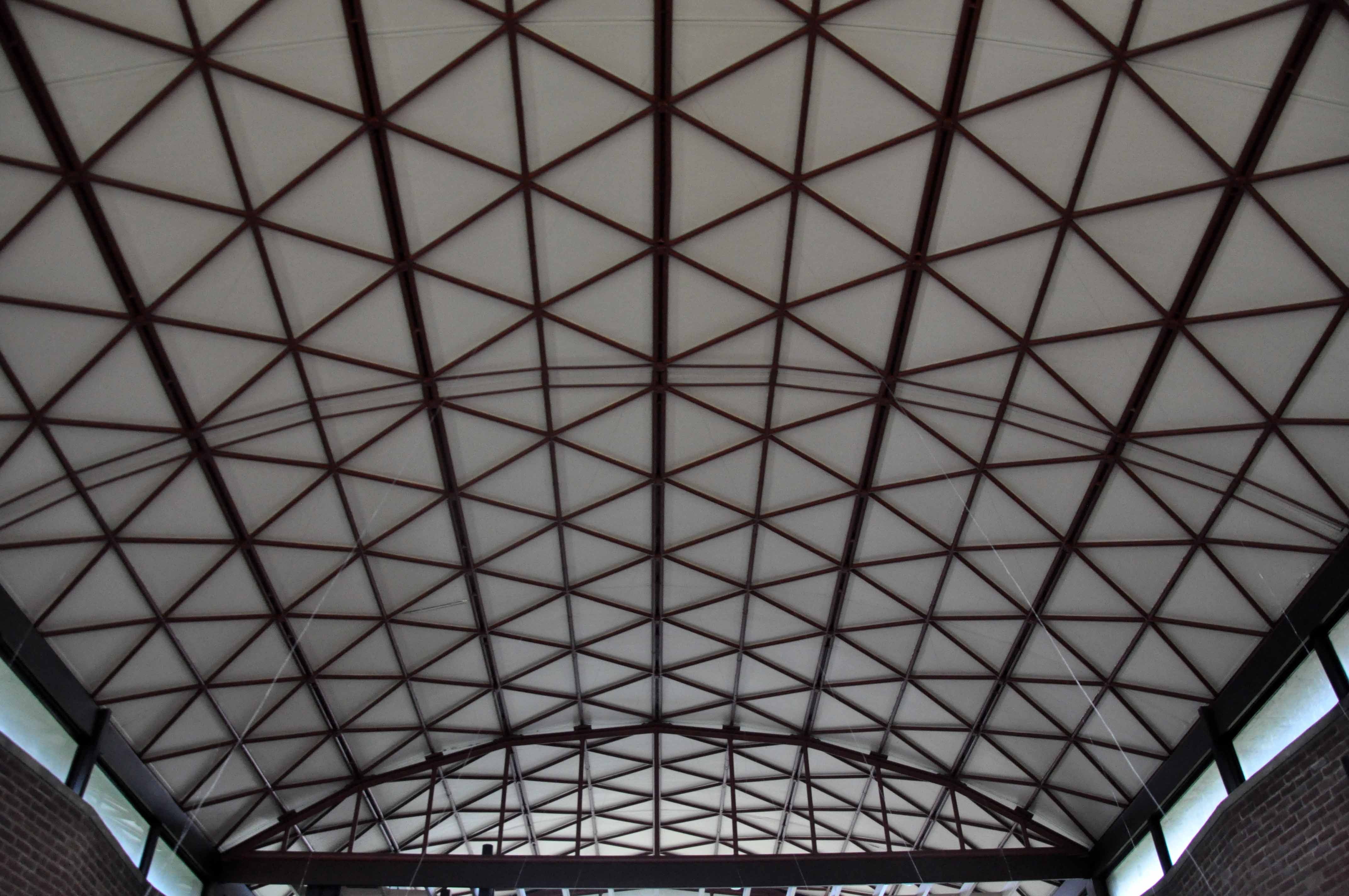
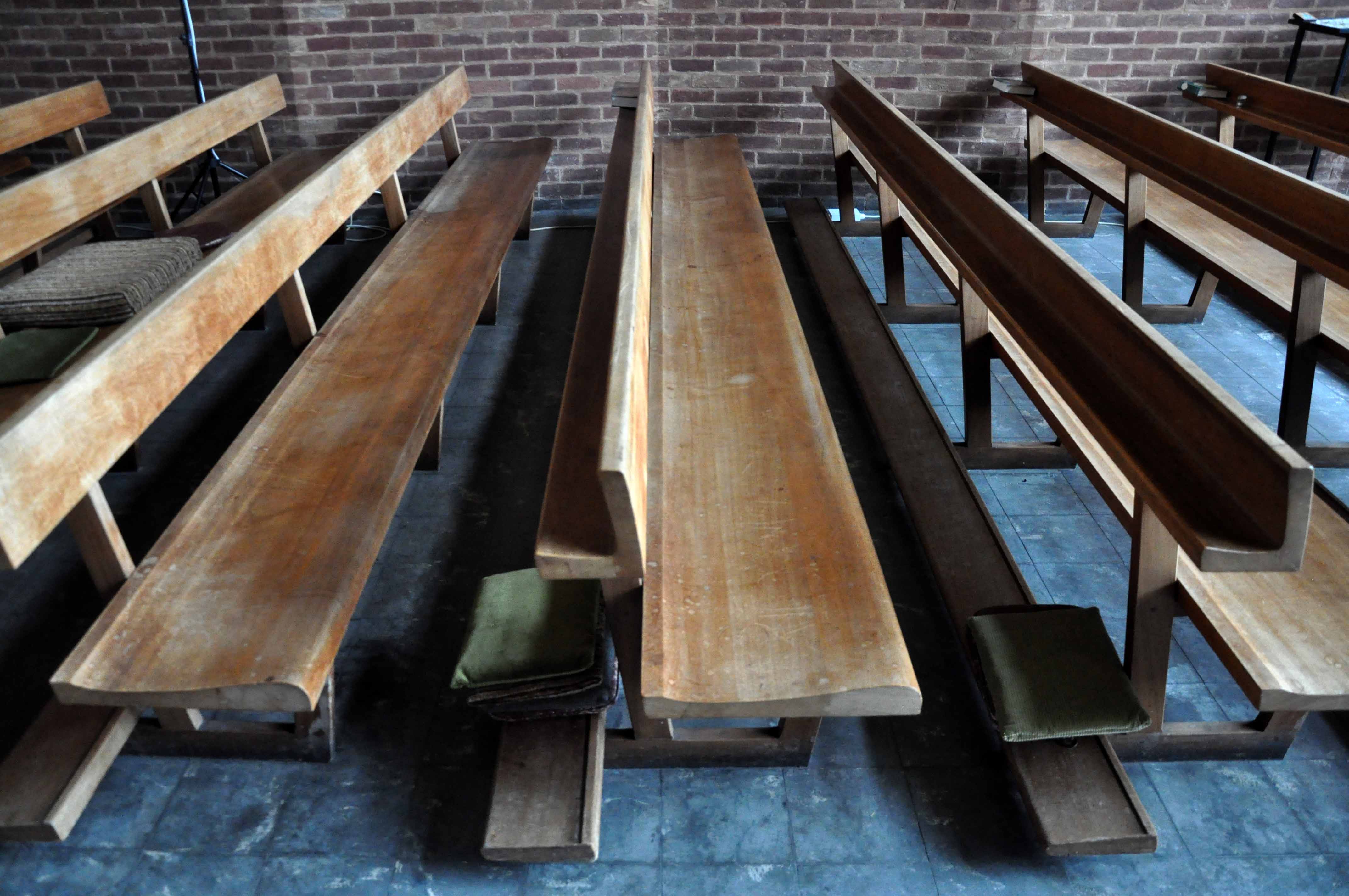
INTERIOR: aisleless with vertical slit windows to north and south walls and roof sloping upwards towards chancel, on laminated timbers beams, so that roof deck is separated from the walls by a narrow glazed strip. Light is thrown onto the east wall by a concealed window at the east end of the nave. Sanctuary is raised two shallow steps, and altar was originally raised on two further steps against the east wall. It has now been moved forward. Altar is a black painted metal framed table with a varnished timber top. Font of polished limestone with fossils is in the original position to liturgical south side of sanctuary. Timber lid with schematic metal dove. Large timber cross behind altar, comprising two pairs of overlapping beams, penetrated symbolically by large nails. Timber sedilia on metal supports. Laminated timber pews. Organ above entrance to sacristy . A strongly sculptural design with a powerful presence.

British Listed Buildings.

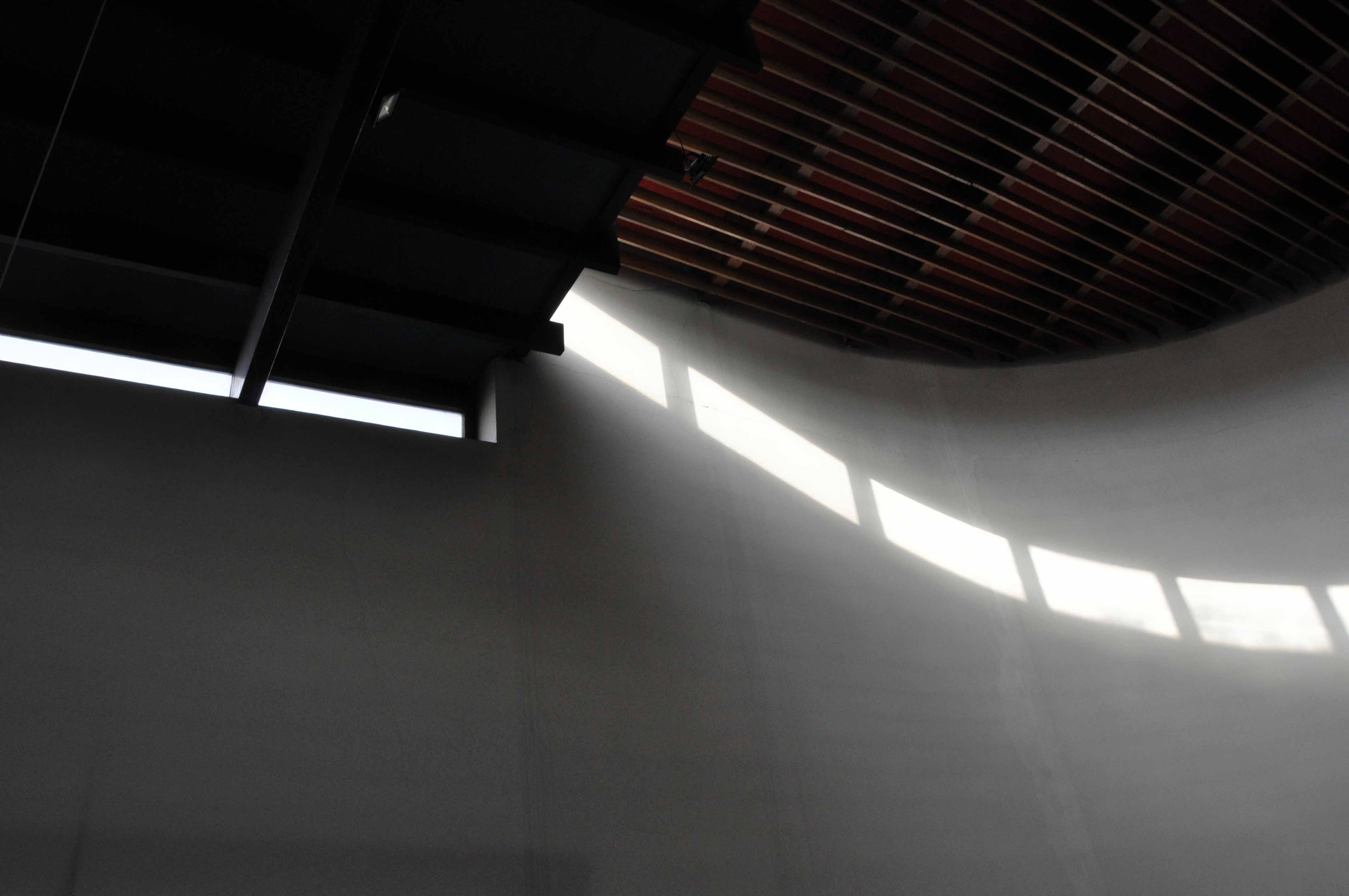
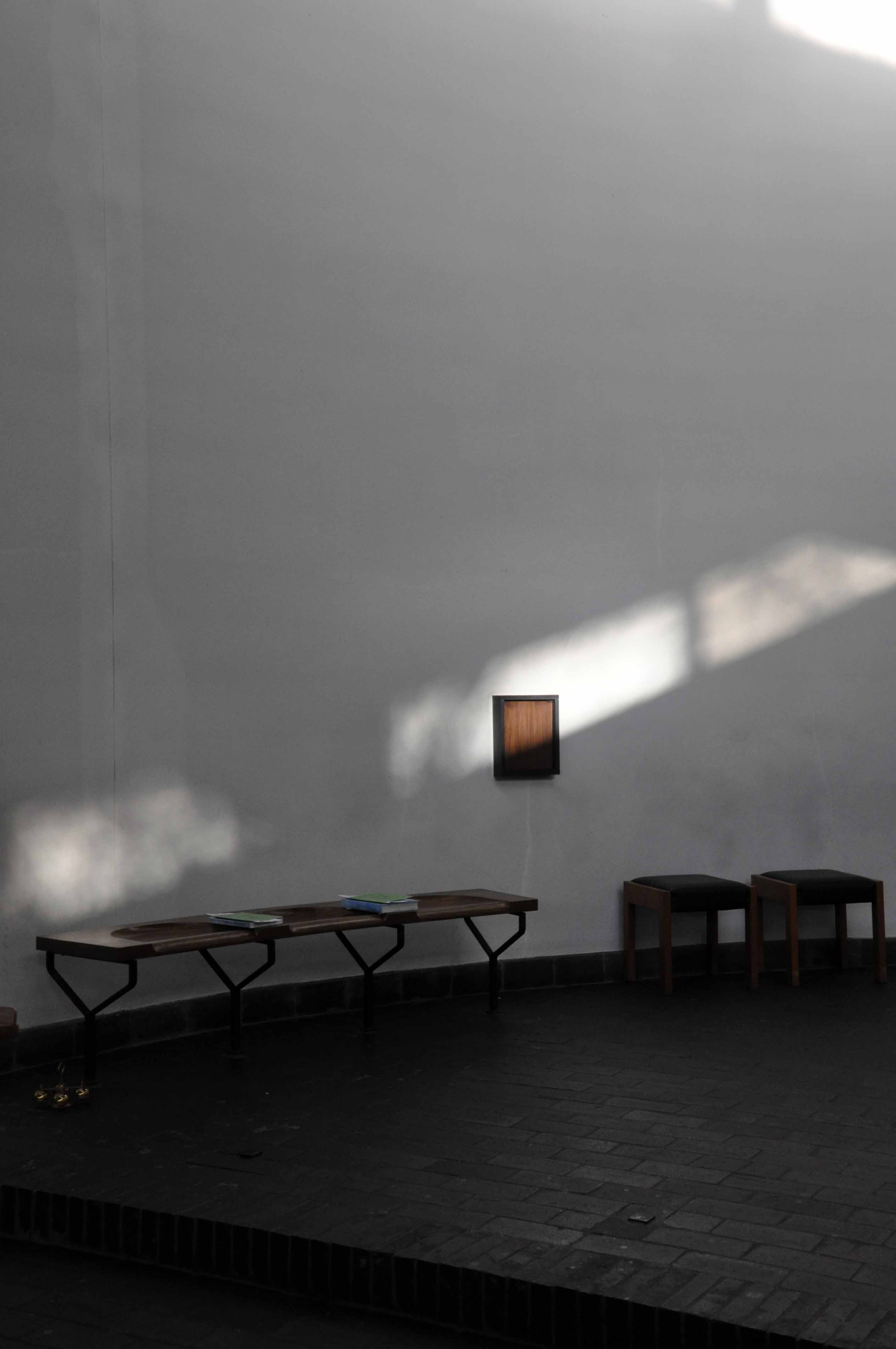
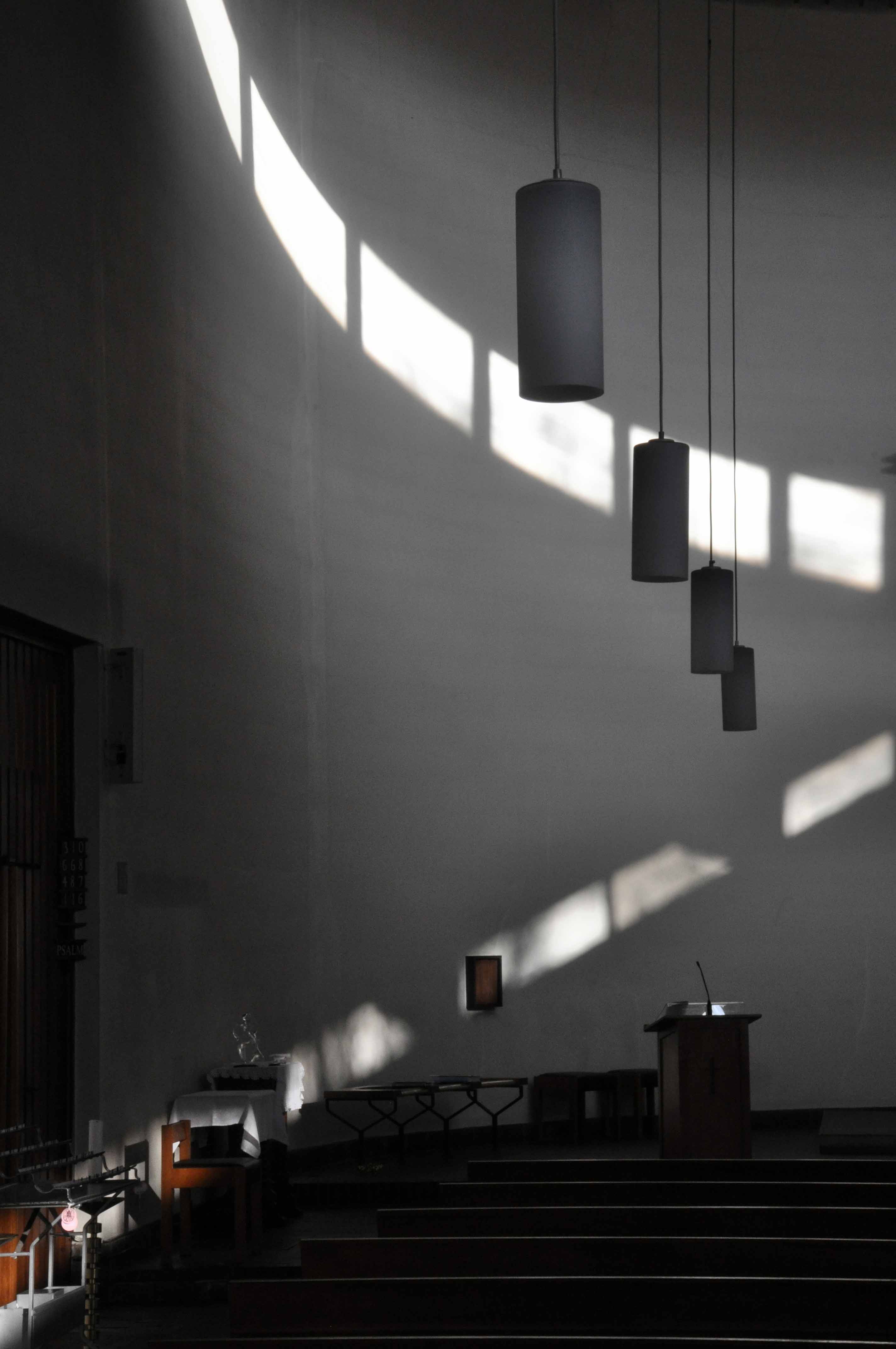
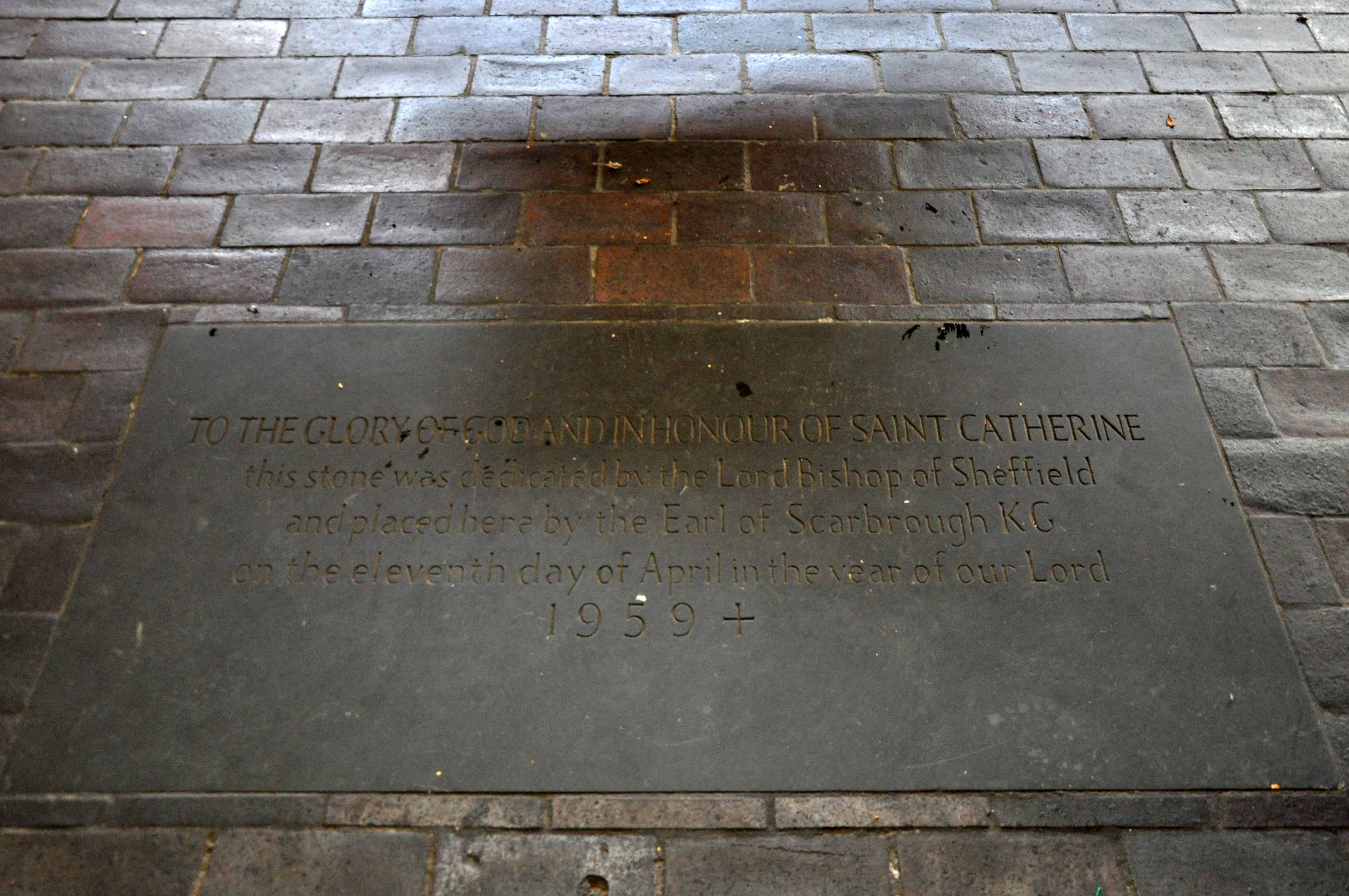
St Catherine Sienna is a fine church, sited impressively and standing imperiously on the Sheffield outer ring road, high above the city. Brick curves, a tall detached tower and open for business, serving the outlying post war housing estate of Woodthorpe with regular services and a firm foundation of community activity.

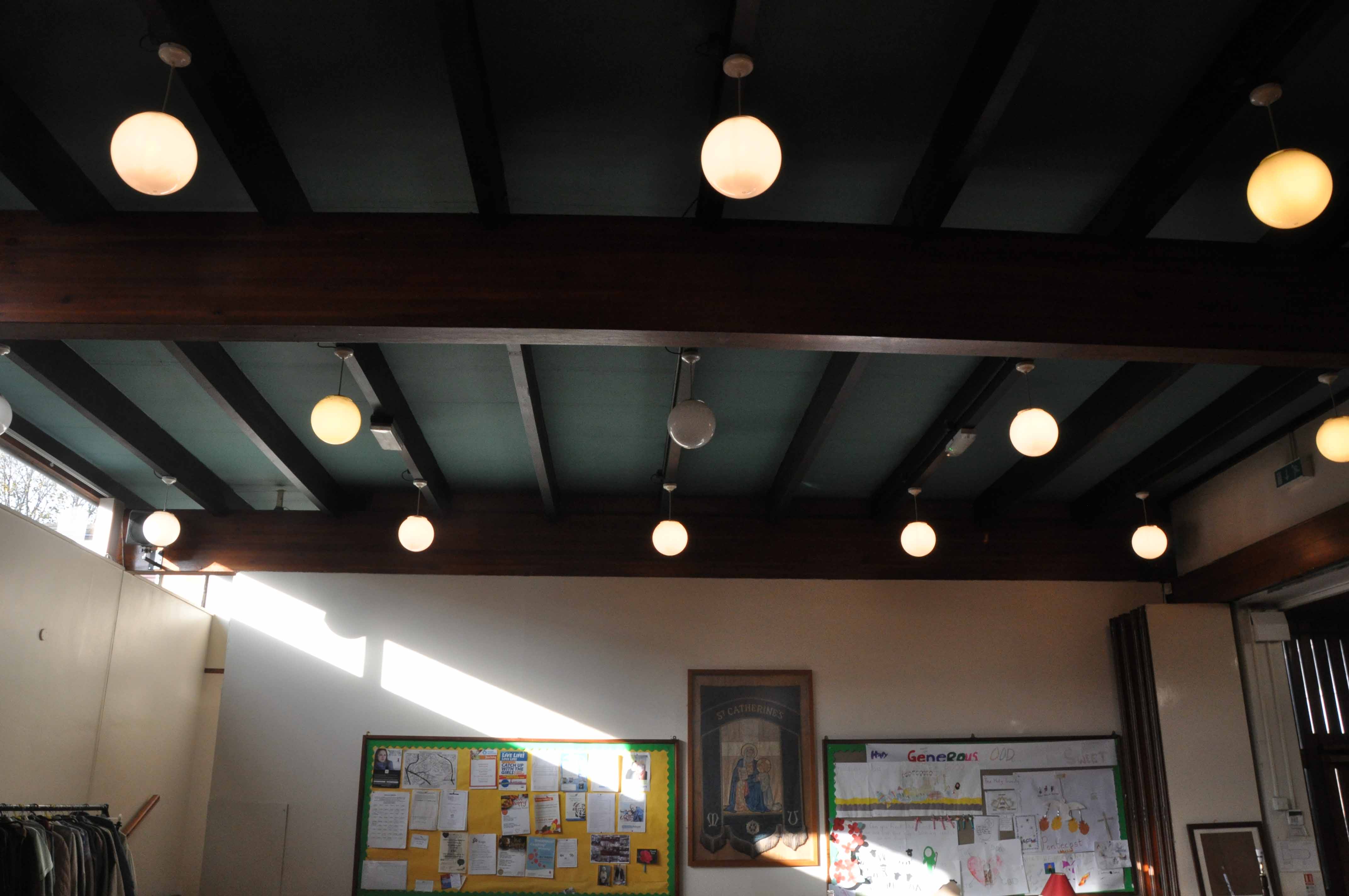
Lit delicately from side slatted windows and higher apertures, the main body is calm and assured, the scale and proportion in harmony with the simple Spence seating and slightly raised altar. The detail of the wooden roof grid perfectly balancing the warm austerity of the walls.

My thanks to Father Phillip for his time and a fine cup of tea.

dsc_0111

dsc_0117

dsc_0119

dsc_0121

dsc_0122

dsc_0123

dsc_0124

dsc_0127

dsc_0128

dsc_0130

dsc_0131

dsc_0133

dsc_0134

dsc_0135

dsc_0138

dsc_0139

dsc_0140

dsc_0142

dsc_0144

dsc_0136

St Paul – Ecclesfield/Sheffield

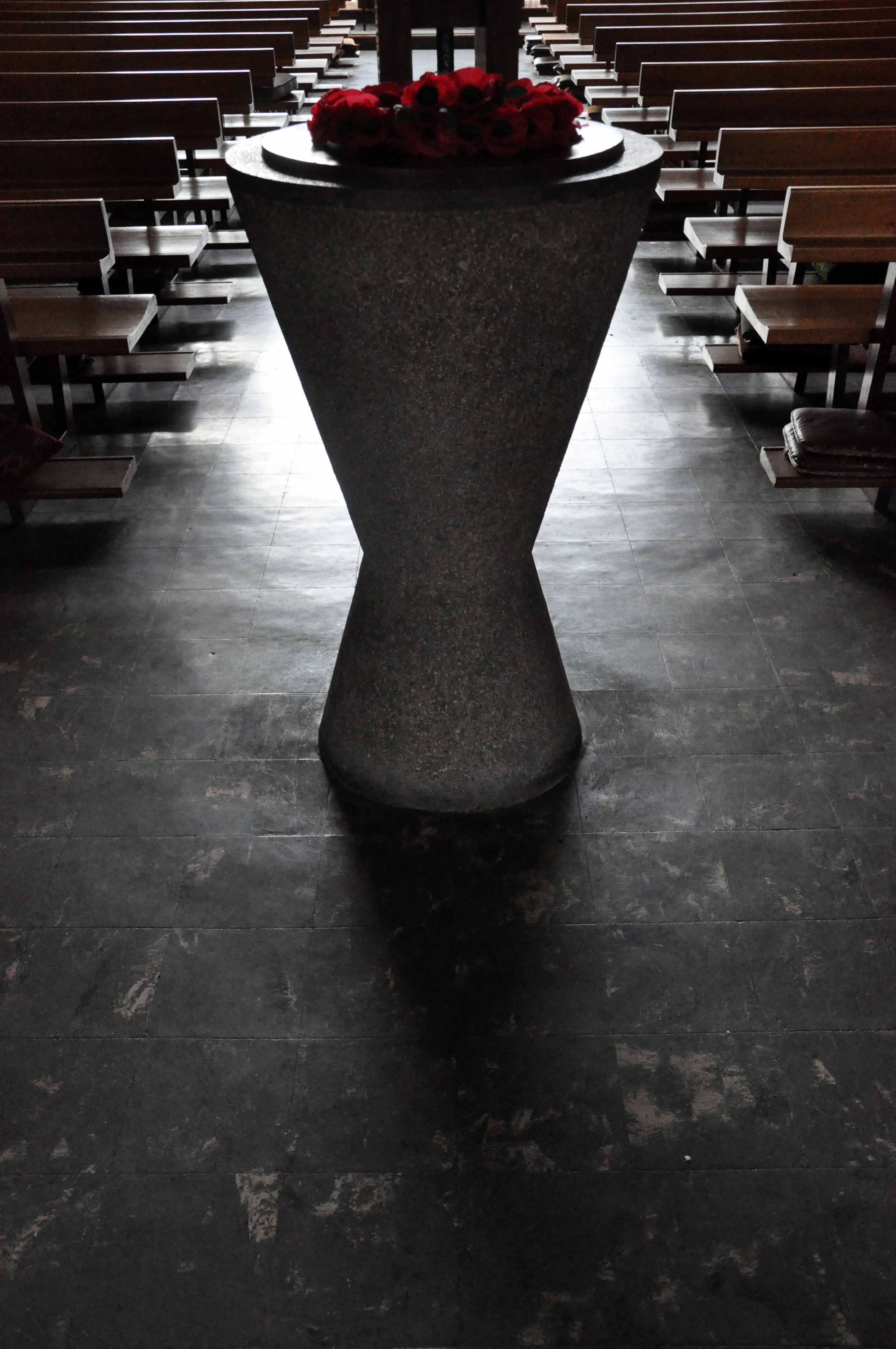
High above the city on Wordsworth Avenue, Eccleshall, built to serve the large Parson Cross post-war social housing estate, stands St Paul.

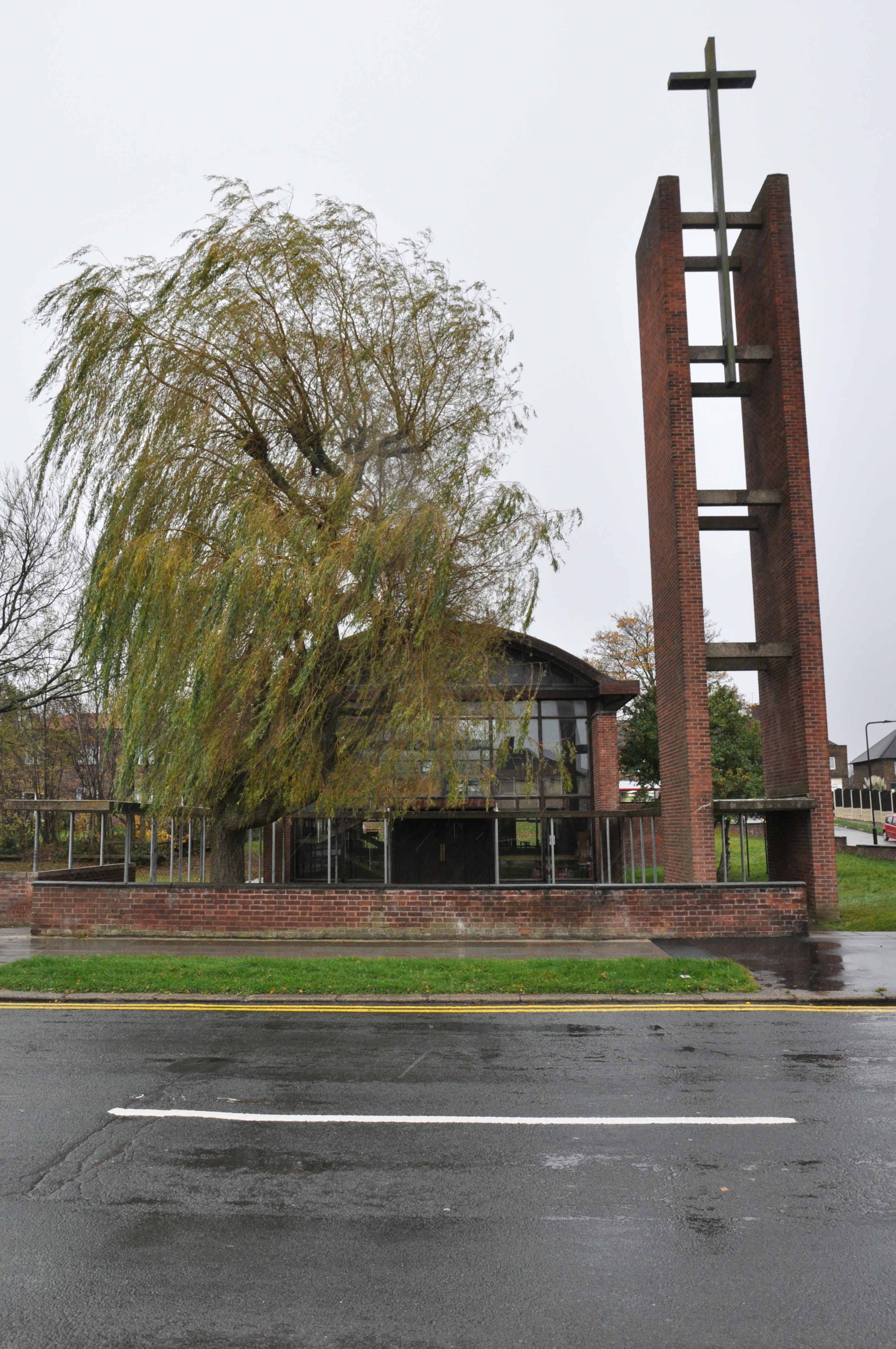
On the day of my visit, more than somewhat windswept and sleet lashed, almost imperious, the church stood steadfast set against the elements.

It is however registered as at risk by Historic England.

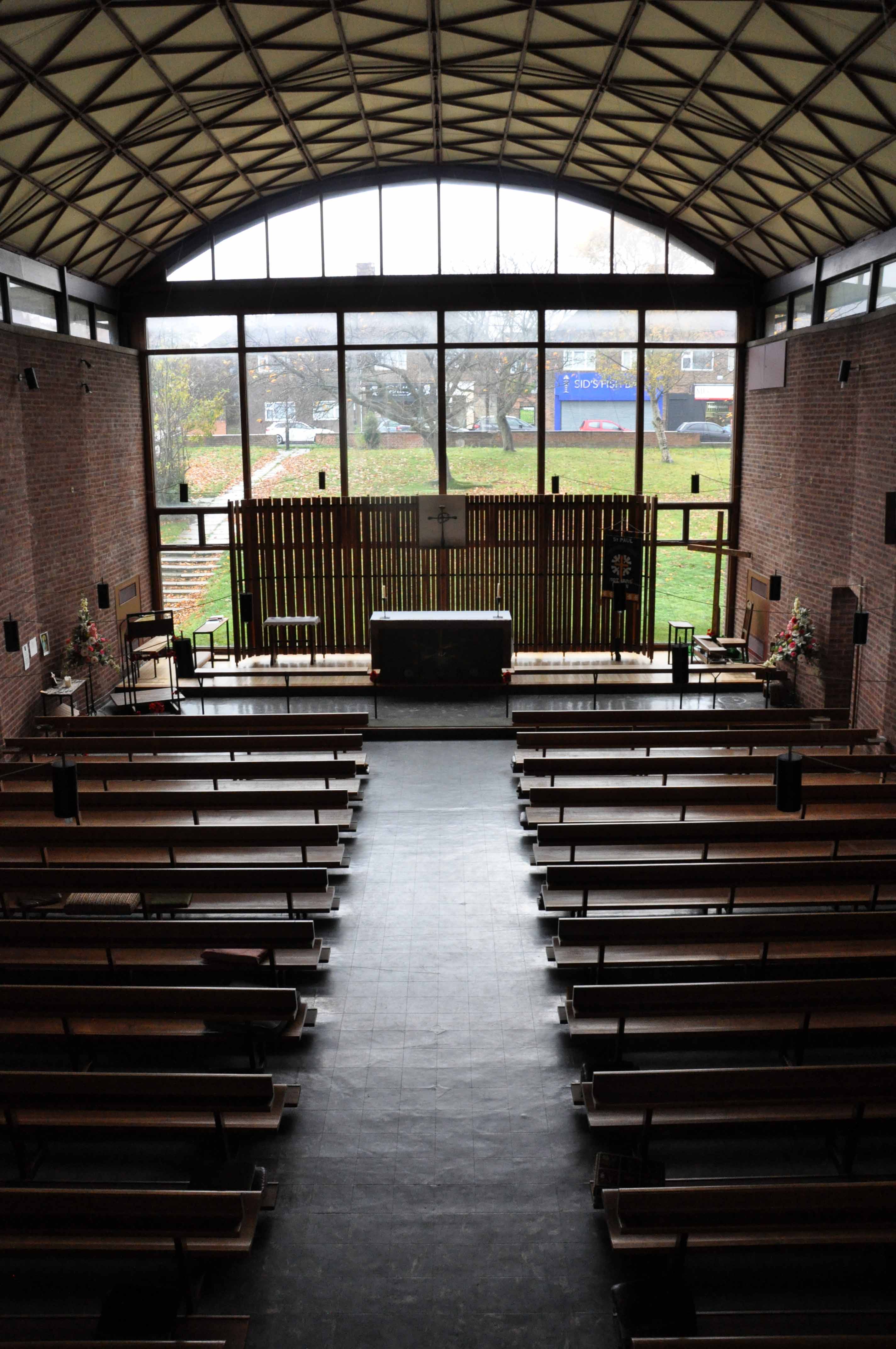
Designed by Sir Basil Spence and built by Charles Price of Doncaster Ltd. the church was completed in 1959 and consecrated on24th January 1959.

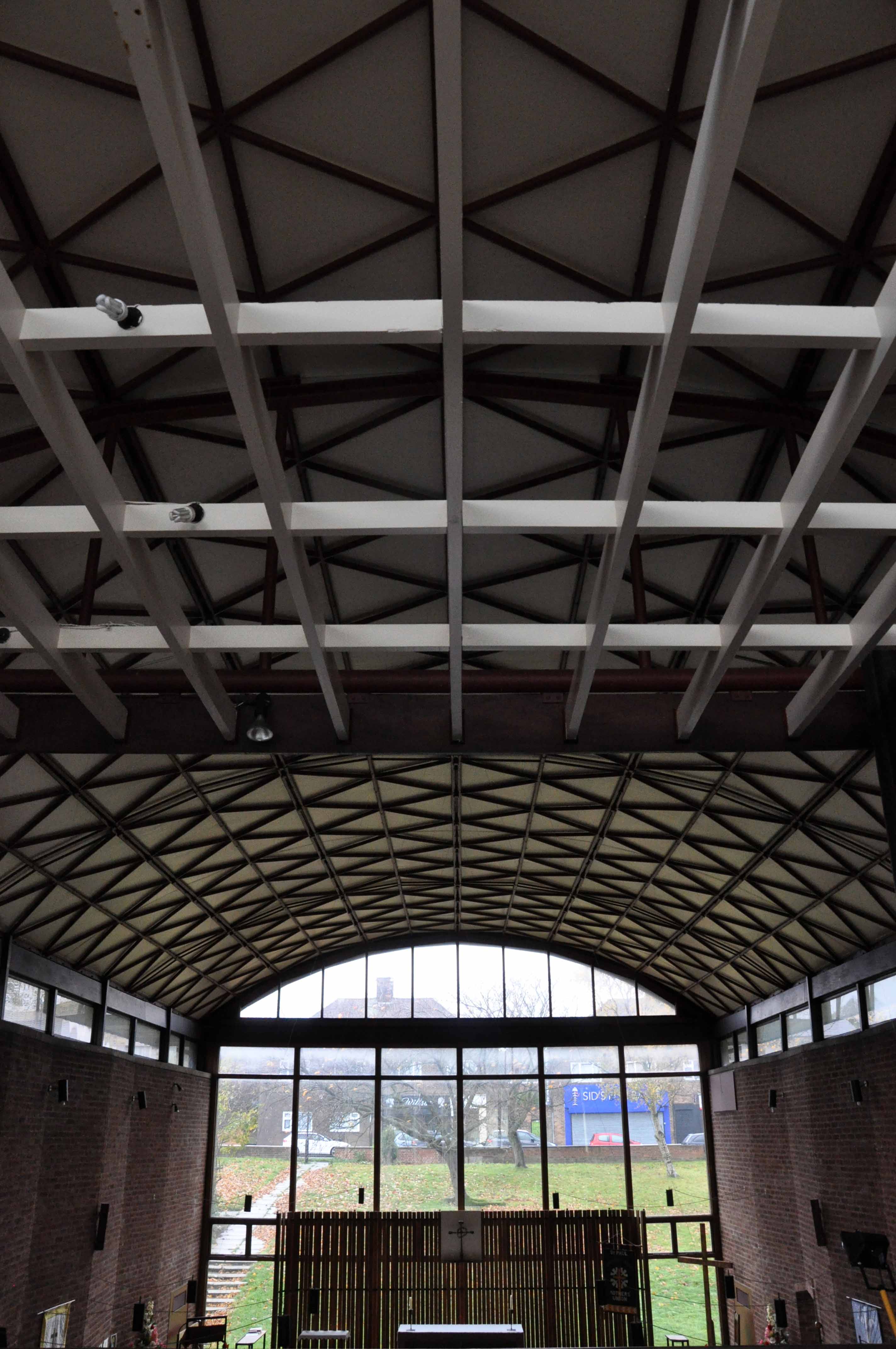
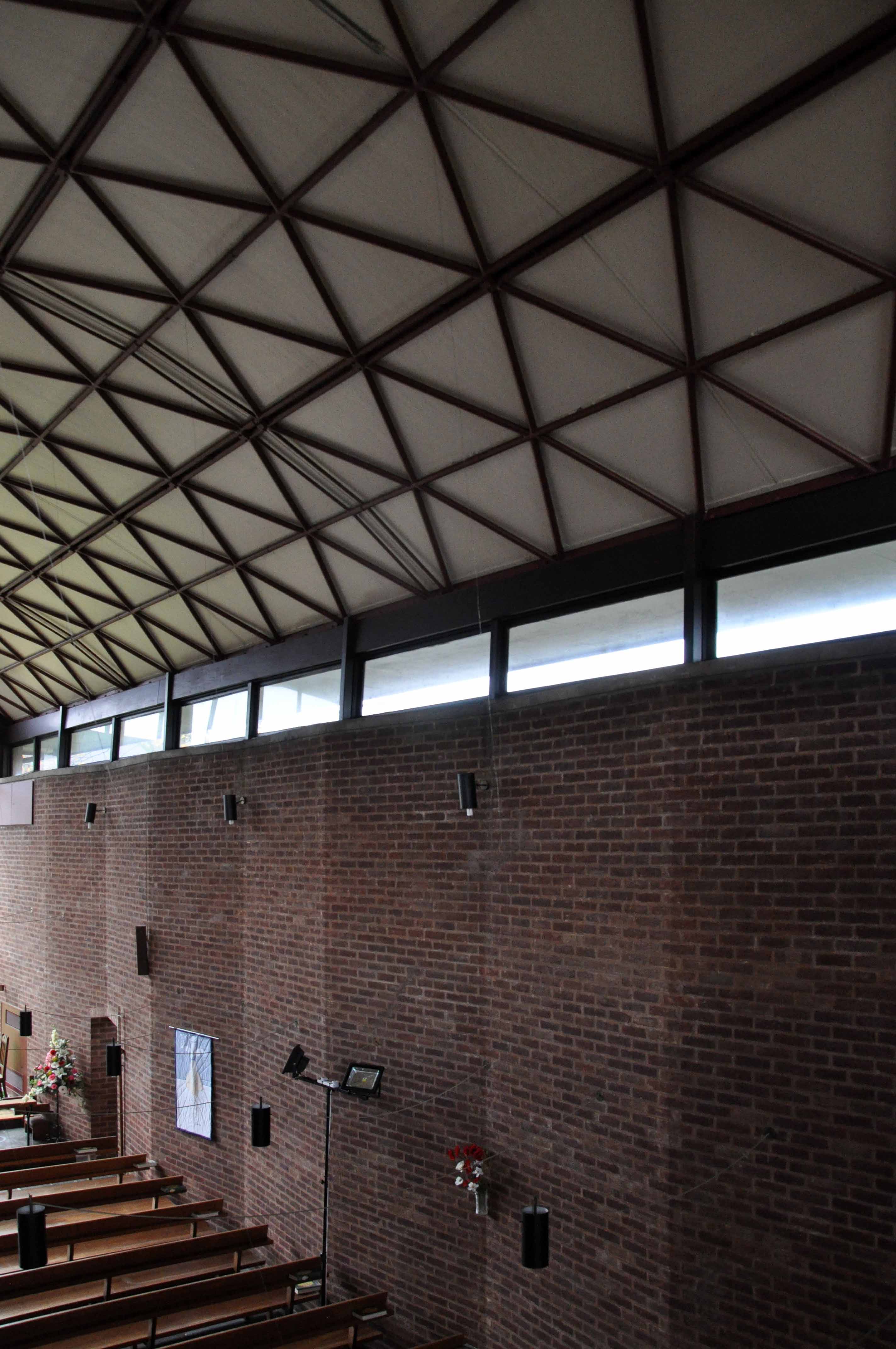
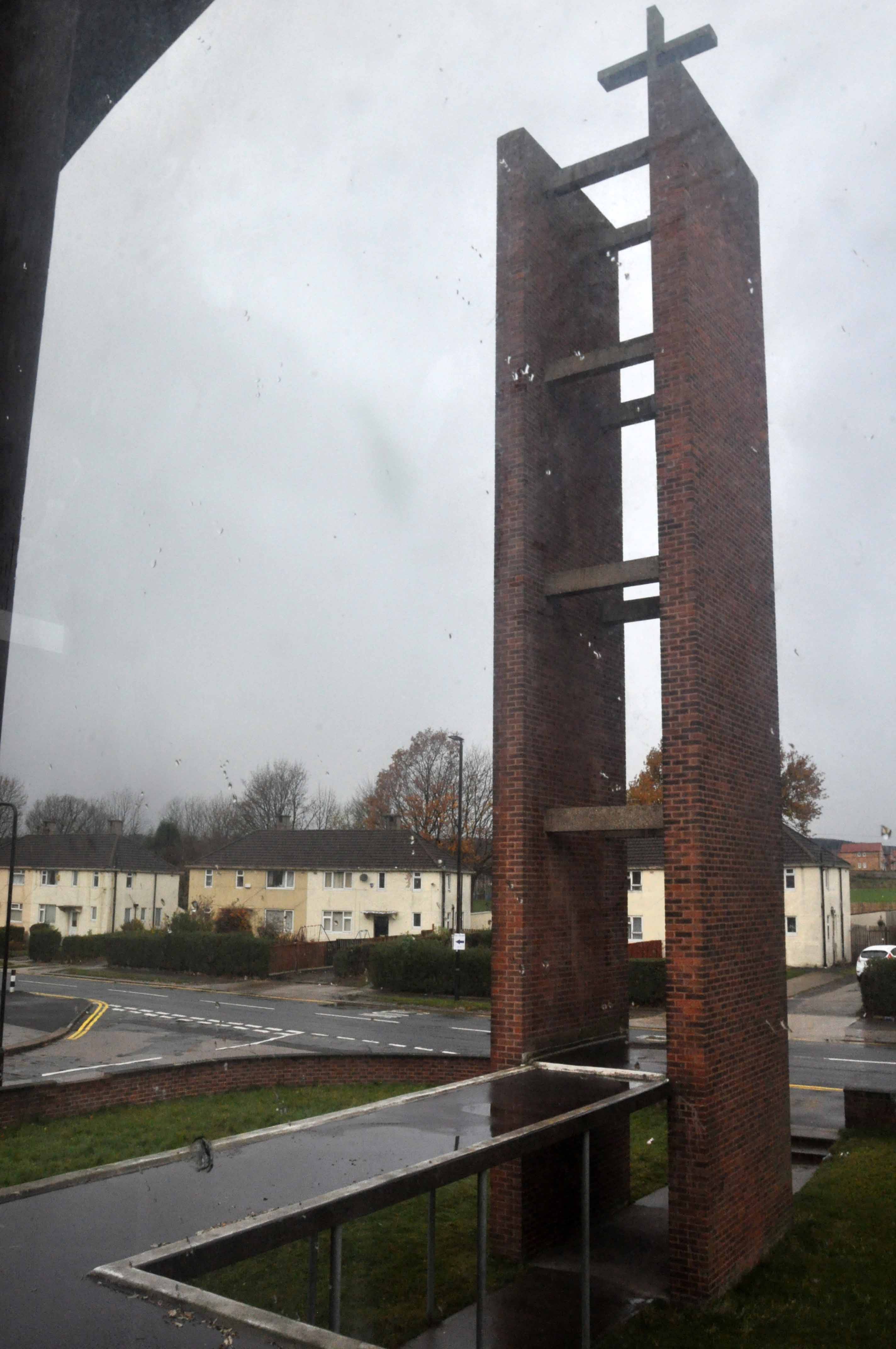
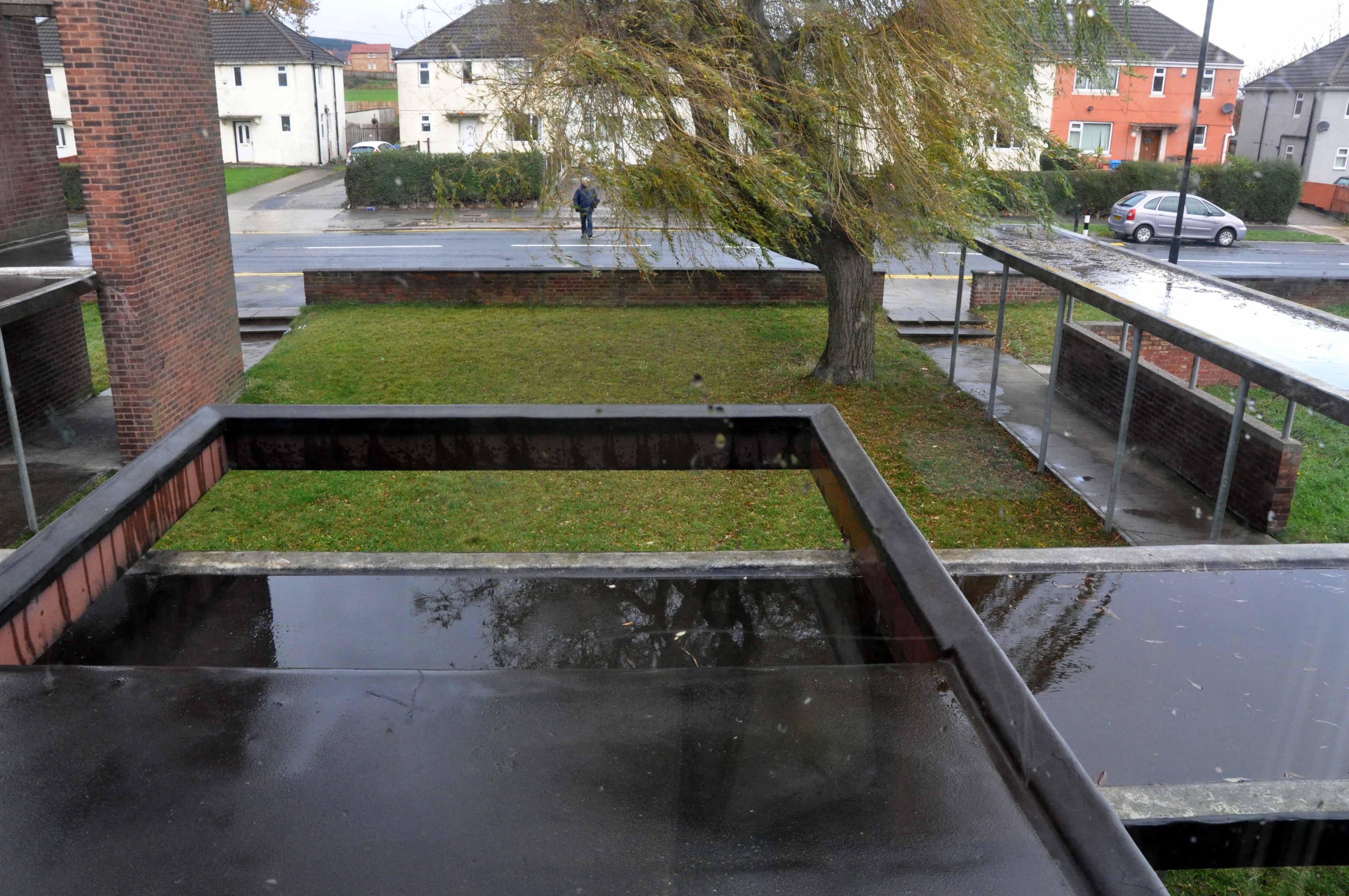
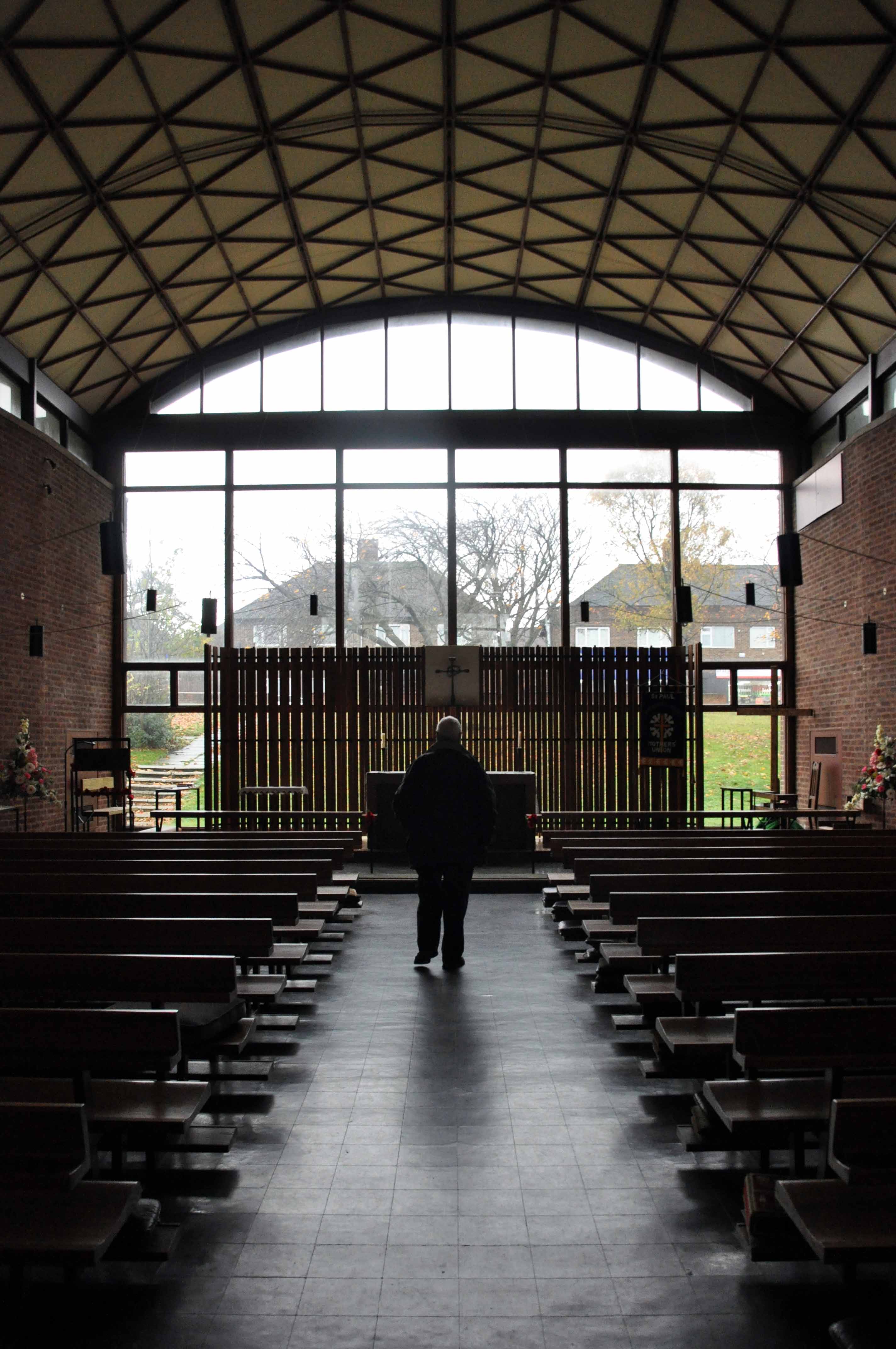
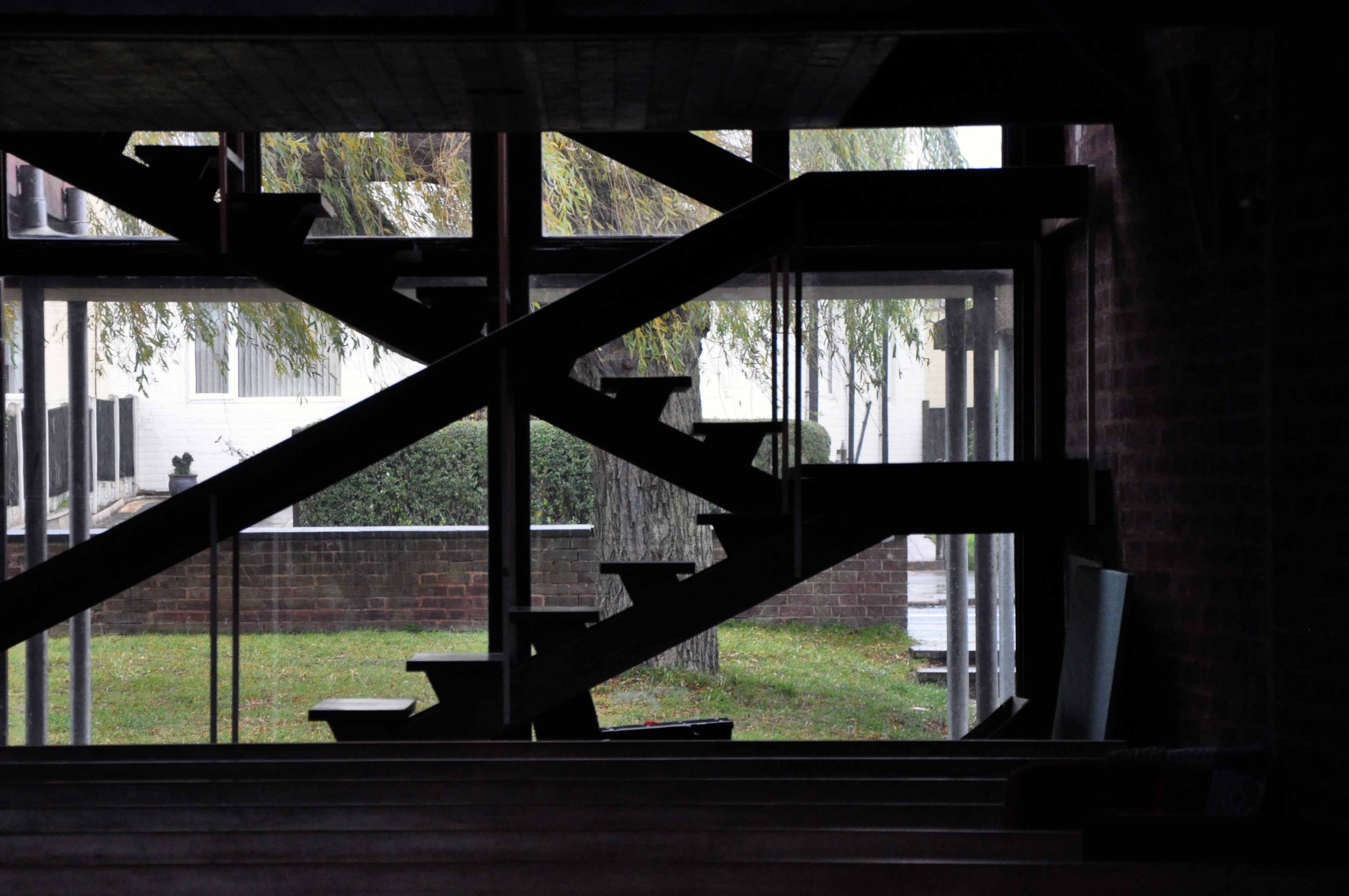
A large open brick steel and concrete structure, glassed and open at each end, a curved roof with vaulted detail, a detached tower is connected by a concrete cloister. There is an elegant simplicity to the body of the church, which is elevated by the staggered supporting walls.

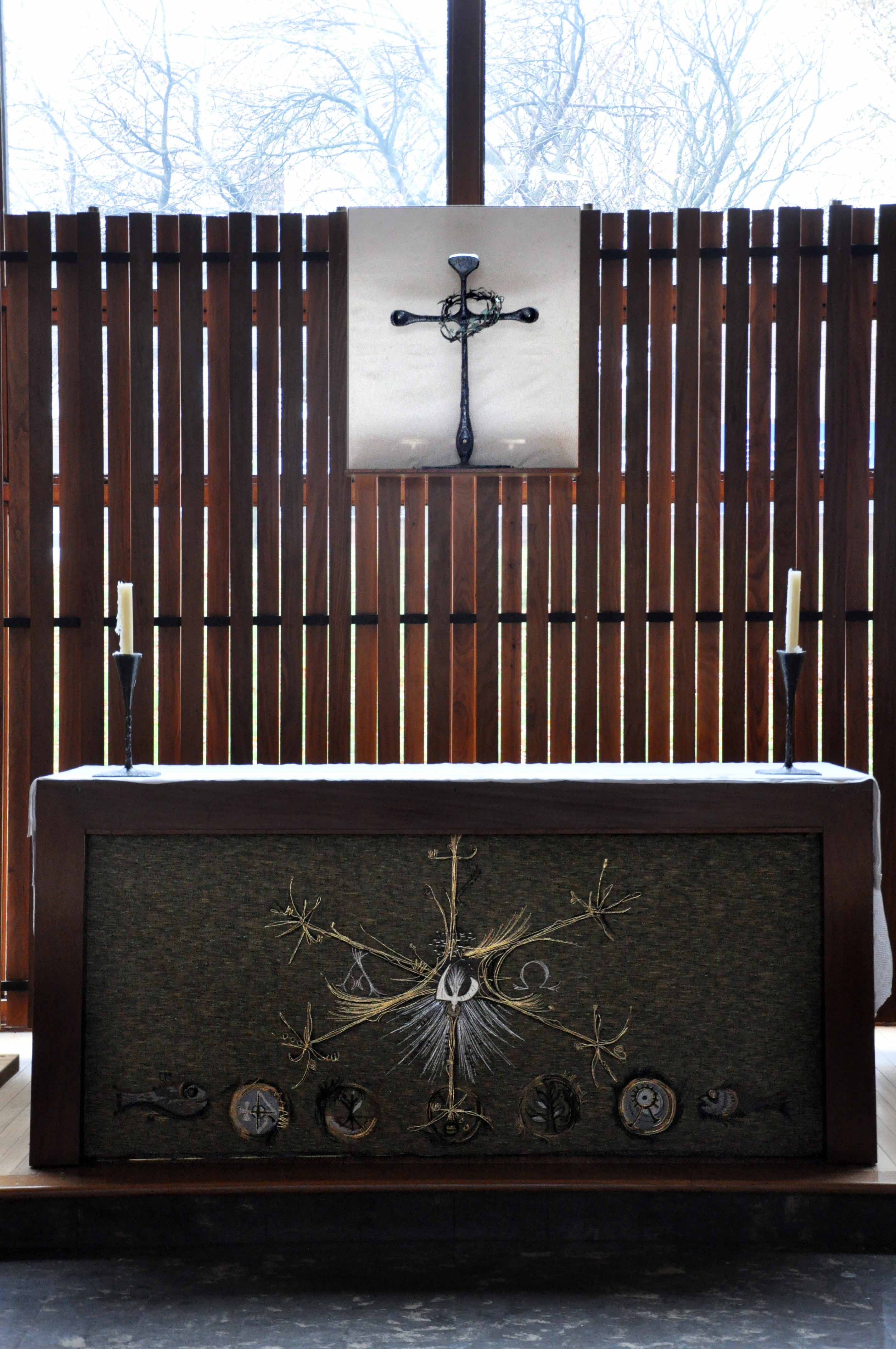
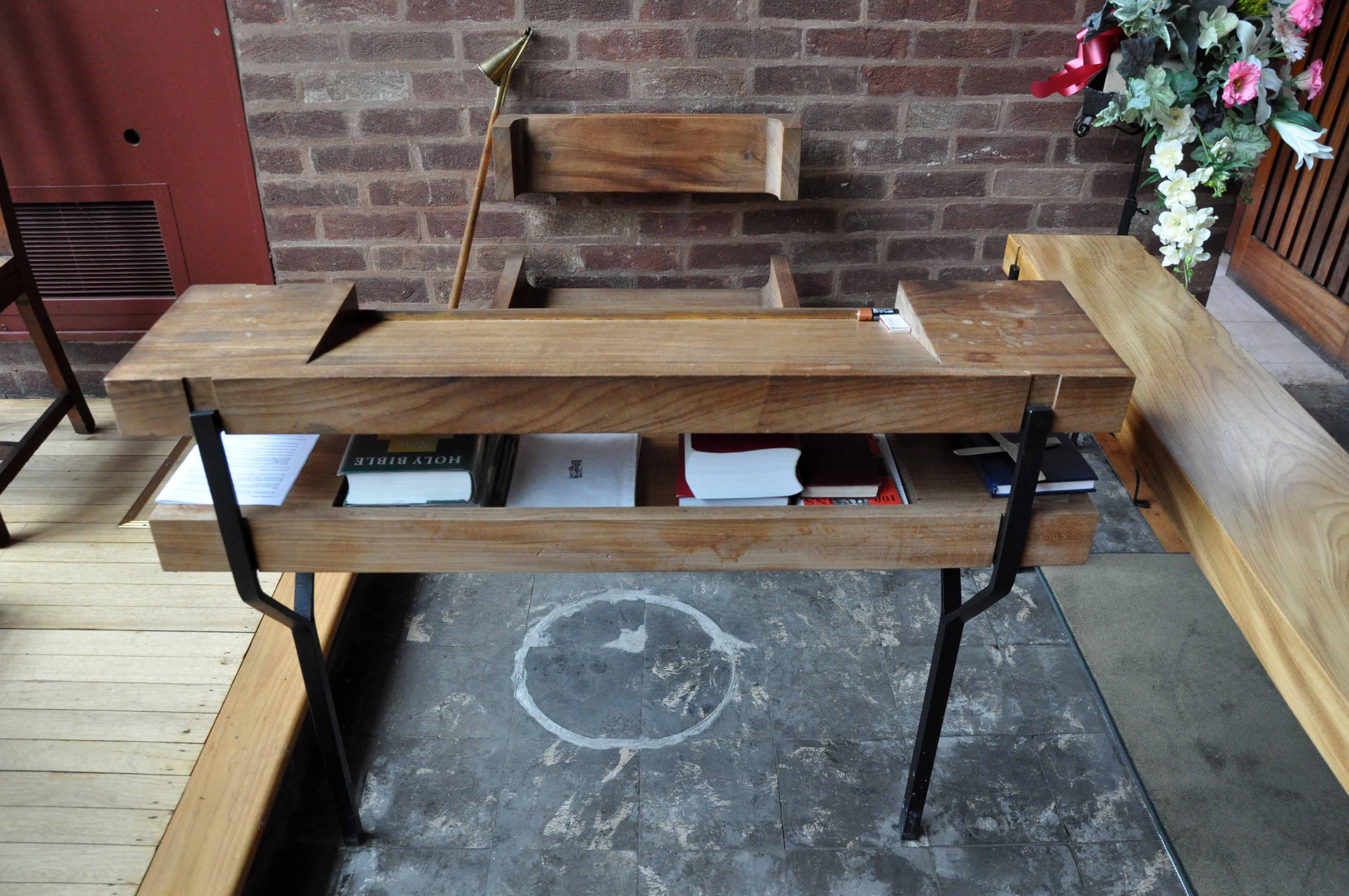
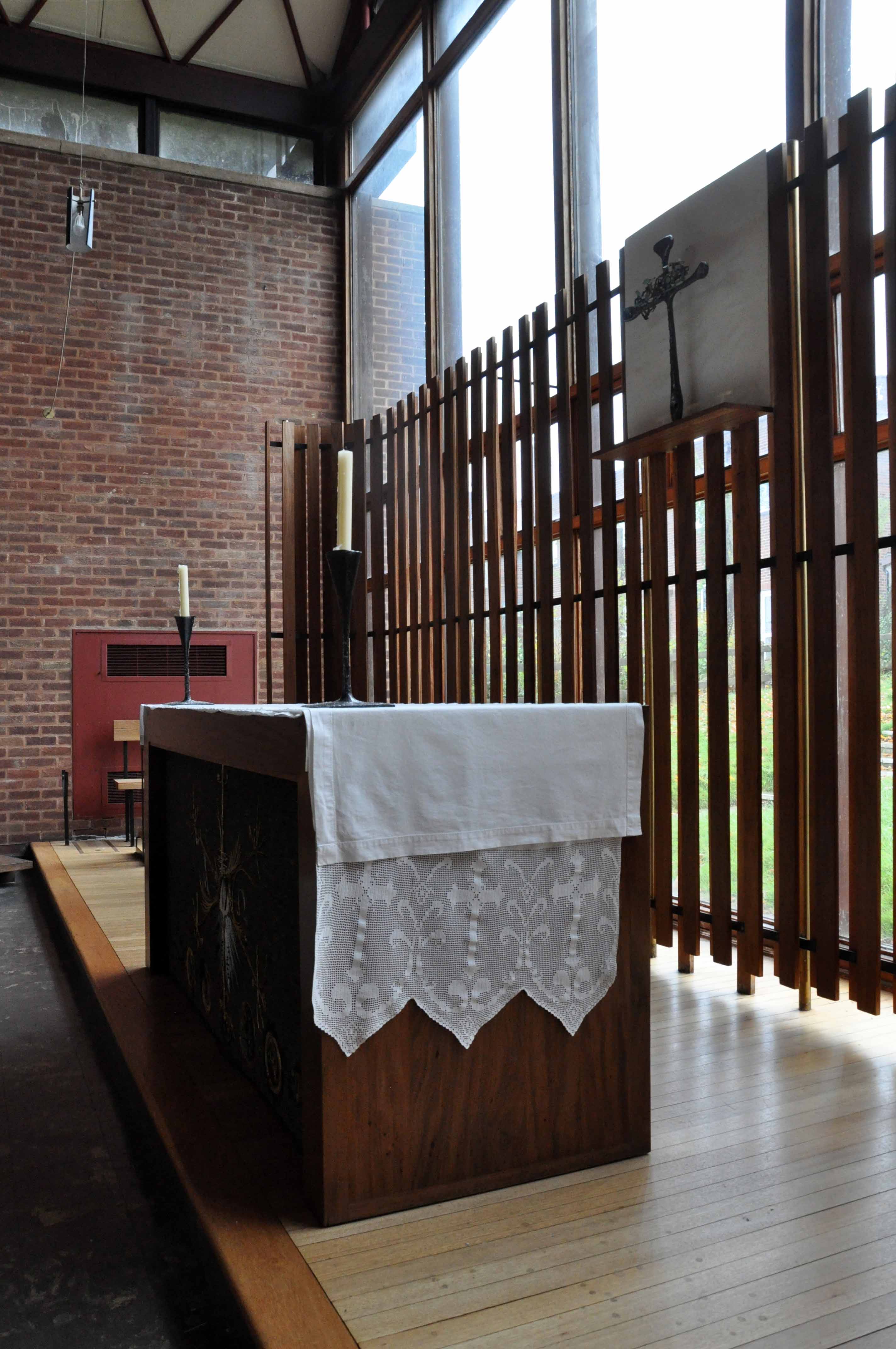
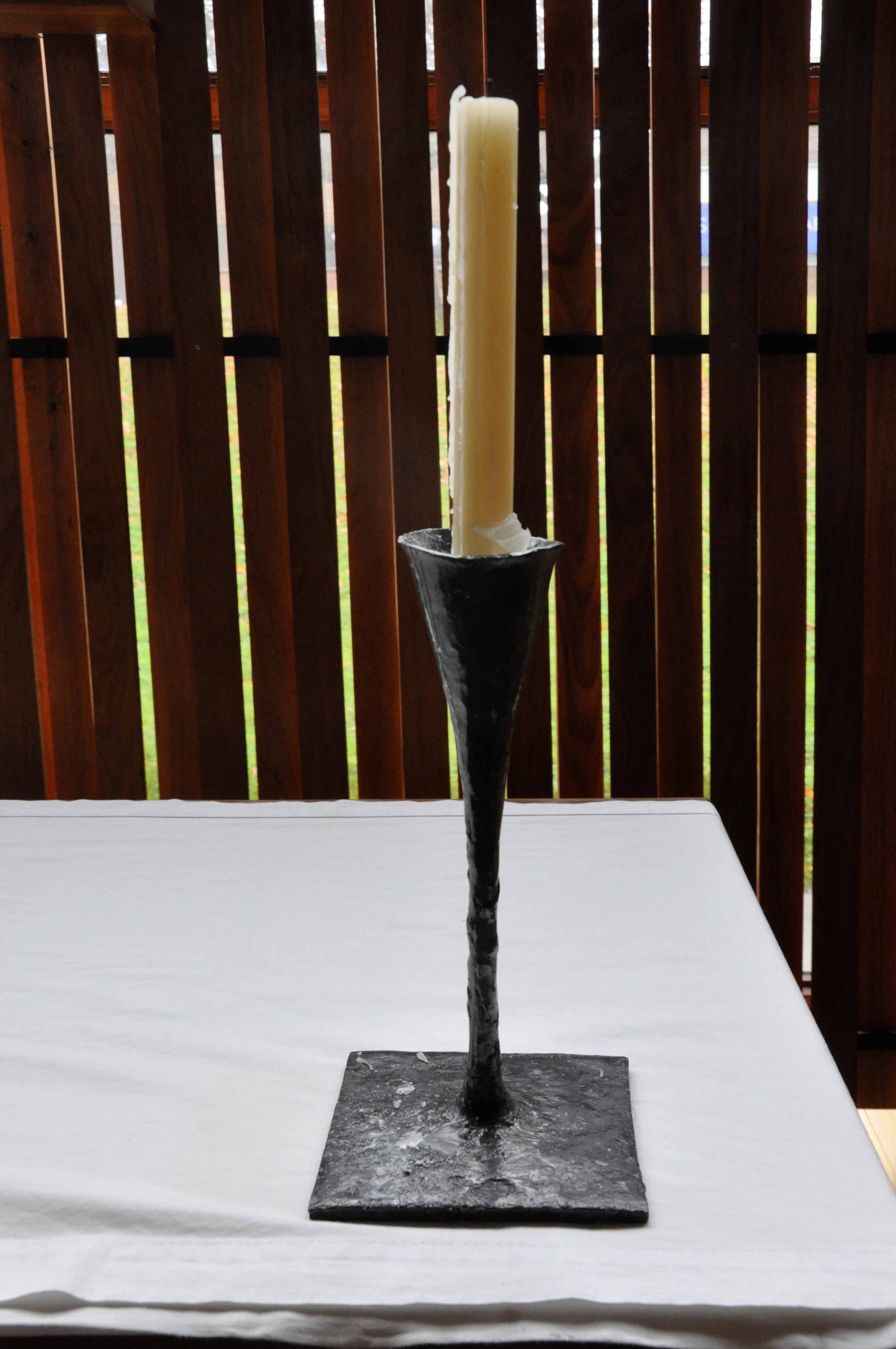
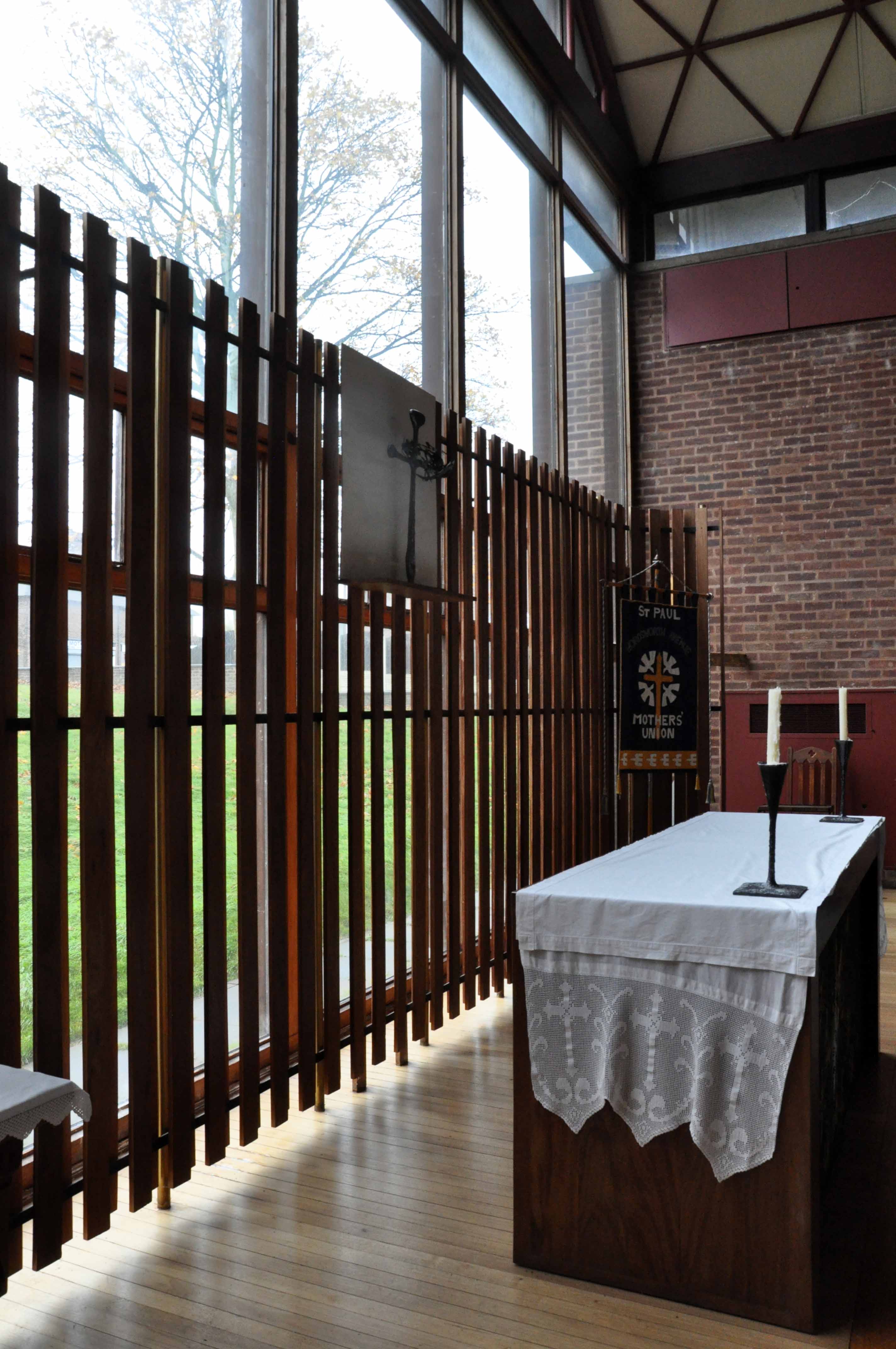
A plain altar is complemented with ornaments, the gift of Spence, decorated by a frontal designed by Anthony Blee and an embroidered panel by Beryl Dean. A plain slatted wooden screen masks the window to the rear.

The pews – also the work of Spence were not costed in the original proposal, additional funds were found and they remain in use as an integral part of the scheme and worship.

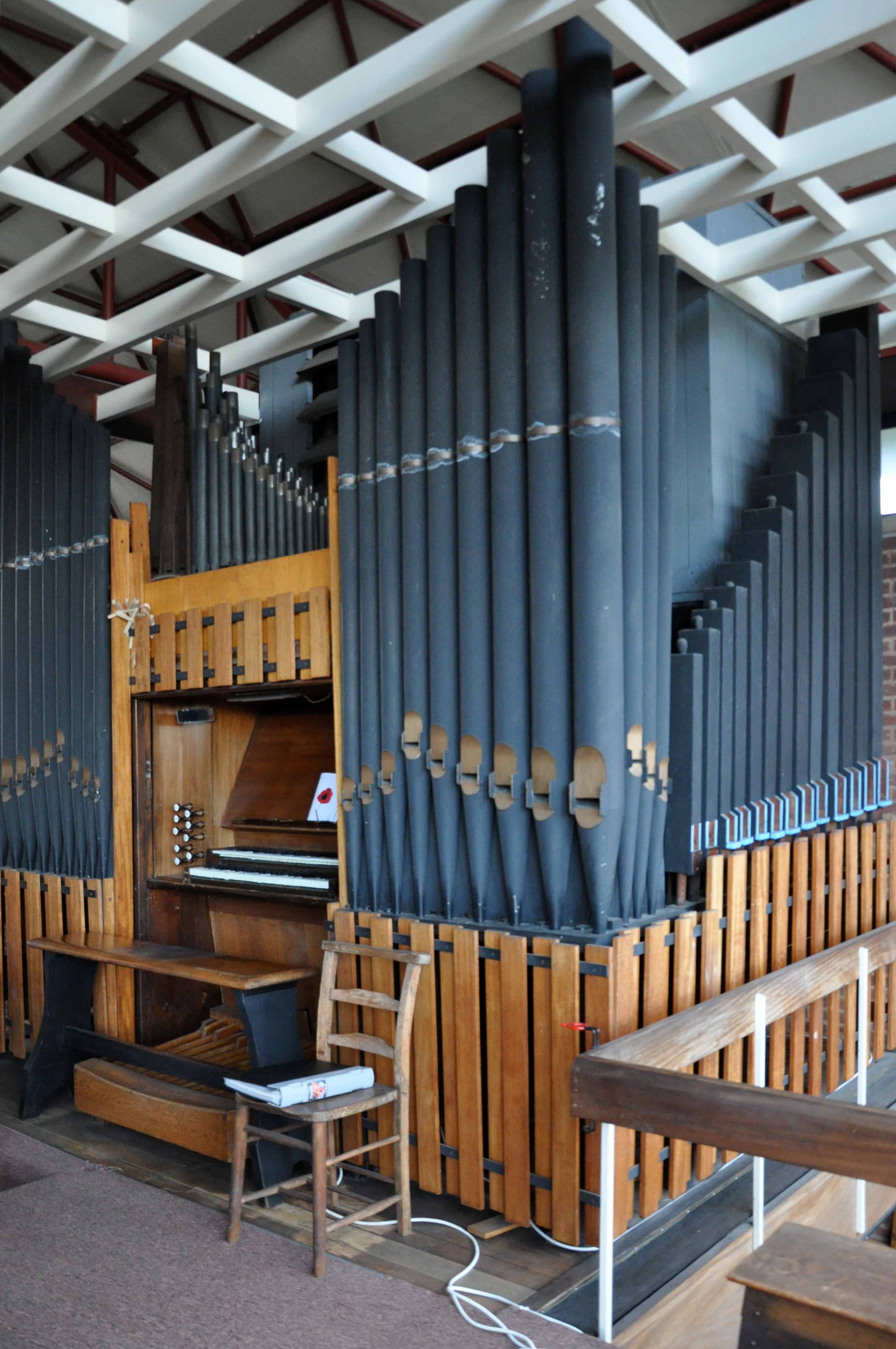
The organ, sited in the gallery, is a later addition of 1962, puchased for £100 from Mount Tabor Church, Holland – integrated into the overall design using slatted wood.

My thanks to John Roch, church organist and lifelong member of the congregation, having attended Sunday School at St Paul on the first day of its opening, for his time and erudite instruction.

dsc_0001

dsc_0002

dsc_0003

dsc_0004


dsc_0008

dsc_0010

dsc_0011

dsc_0012

dsc_0013

dsc_0014

dsc_0016

dsc_0019

dsc_0021

dsc_0022dsc_0024

dsc_0025

dsc_0026

dsc_0030

dsc_0033

dsc_0035

dsc_0042

dsc_0046

dsc_0049

dsc_0052

Wigan – Civic Centre

Some time ago, over a year ago or so I went to Wigan.

I found a pub,  a launderette, several interesting groups of housing and –

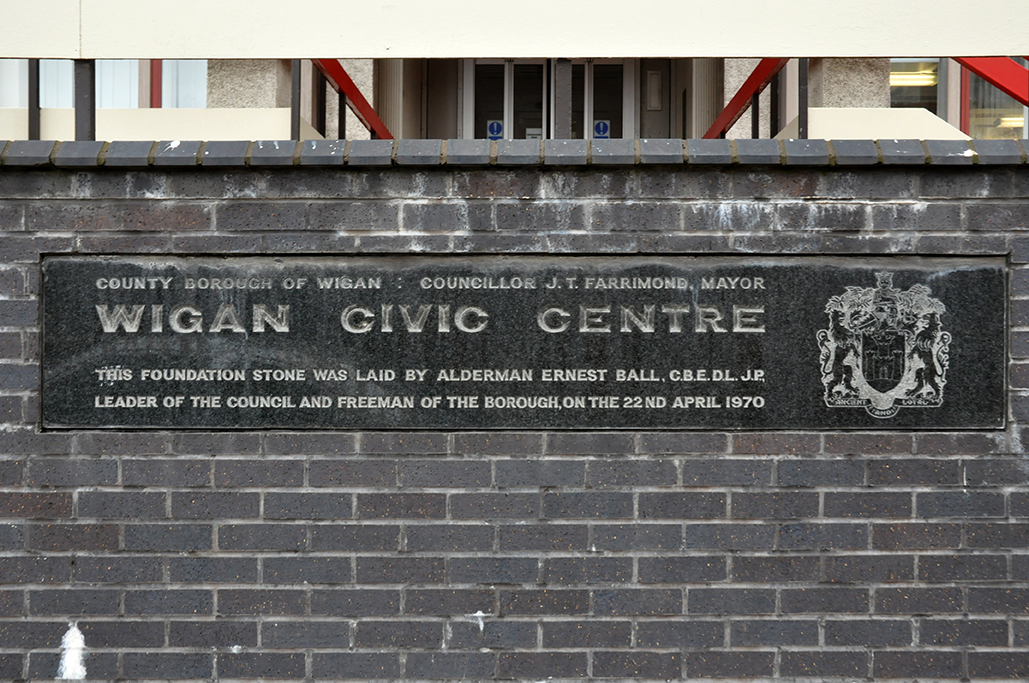
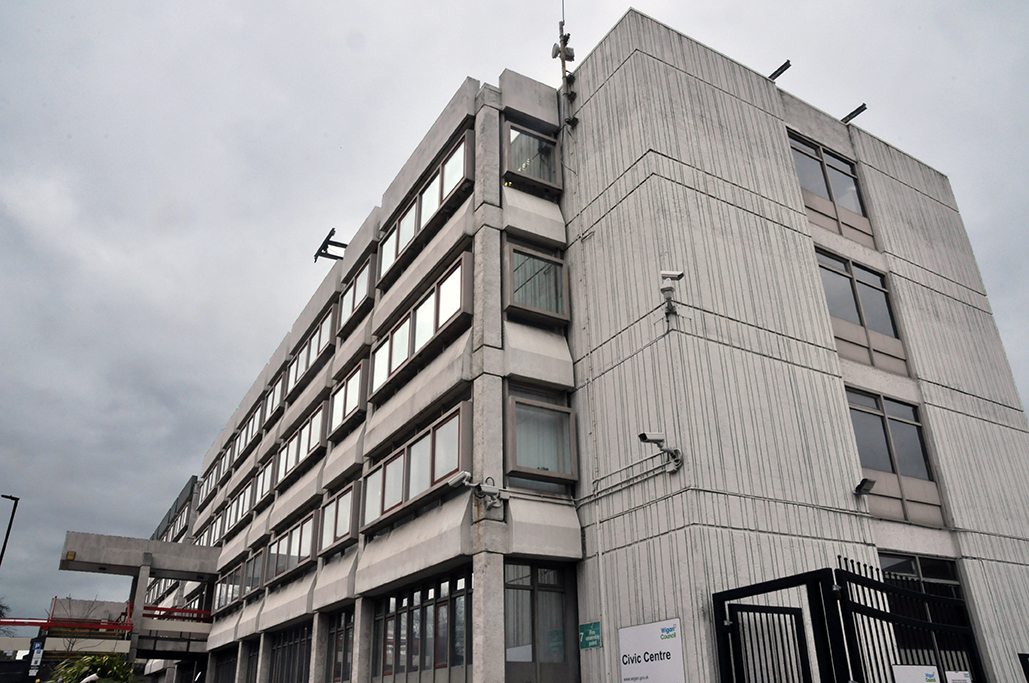
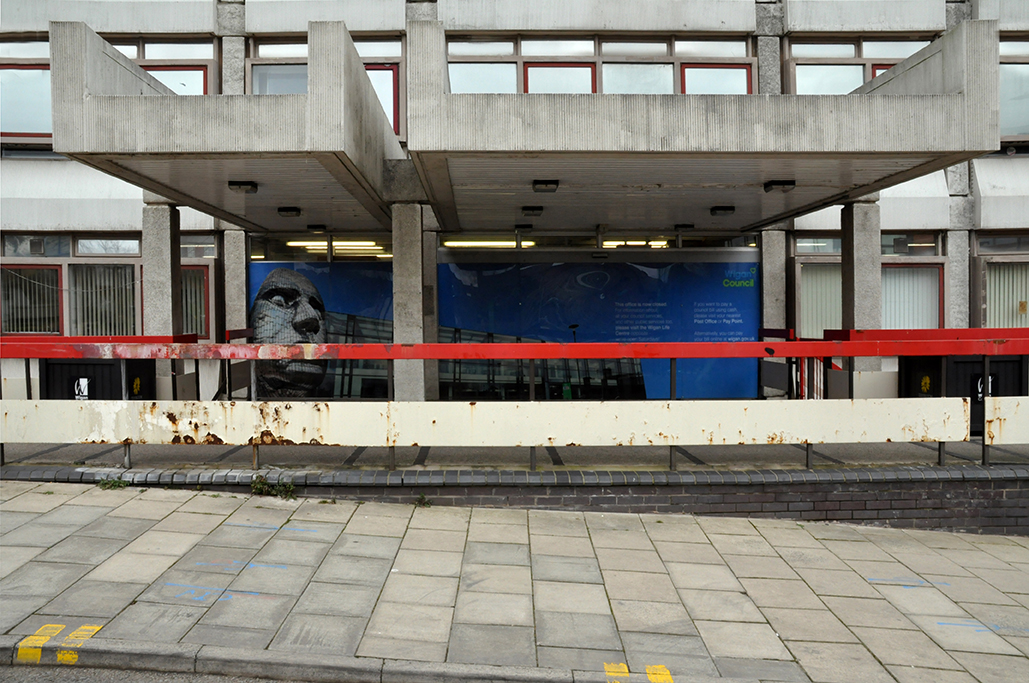
A large concrete Civic Centre, built in the early 1970s under the auspices of the Mayor JT Farrimond, the foundation stone laid by Alderman Ernest Ball on 22nd April 1970 – a man who seems to have collected letters after his name just for fun.

dsc_0129-copy

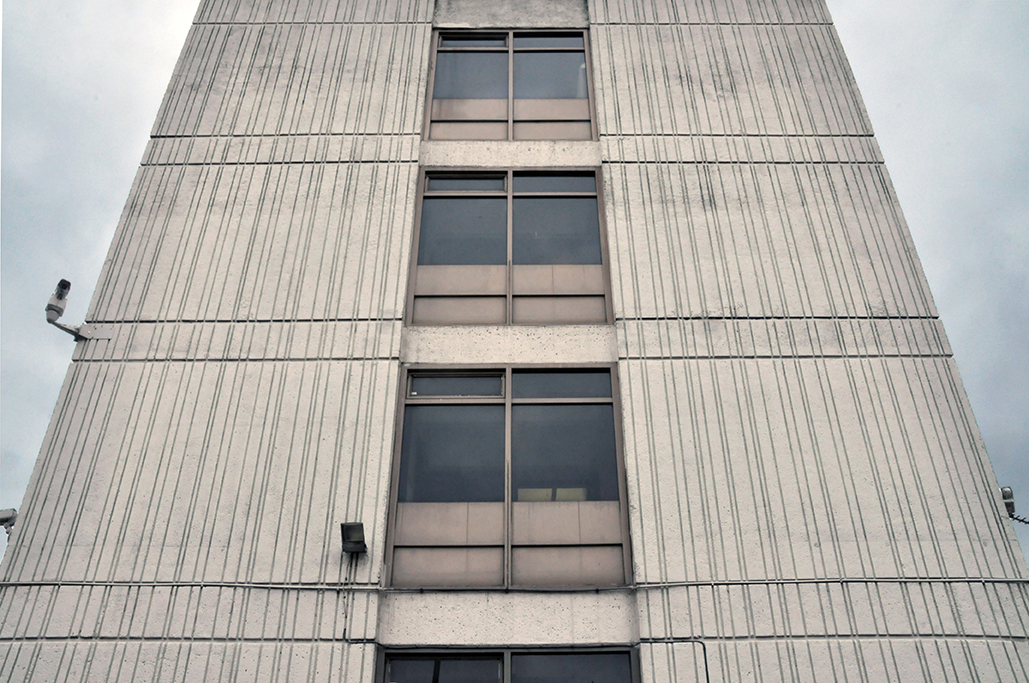
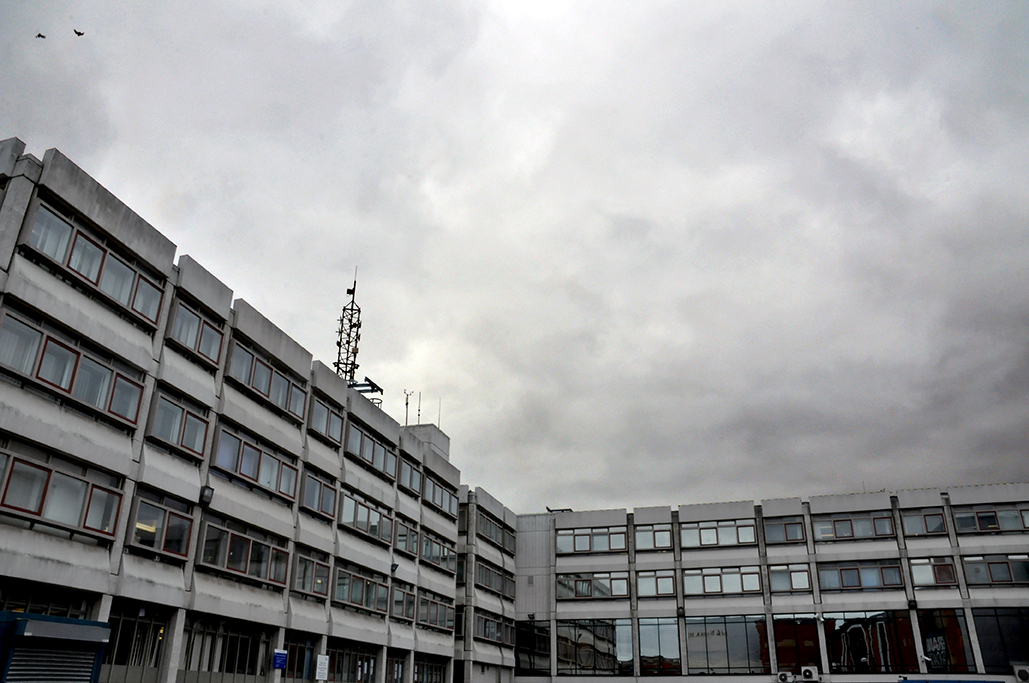
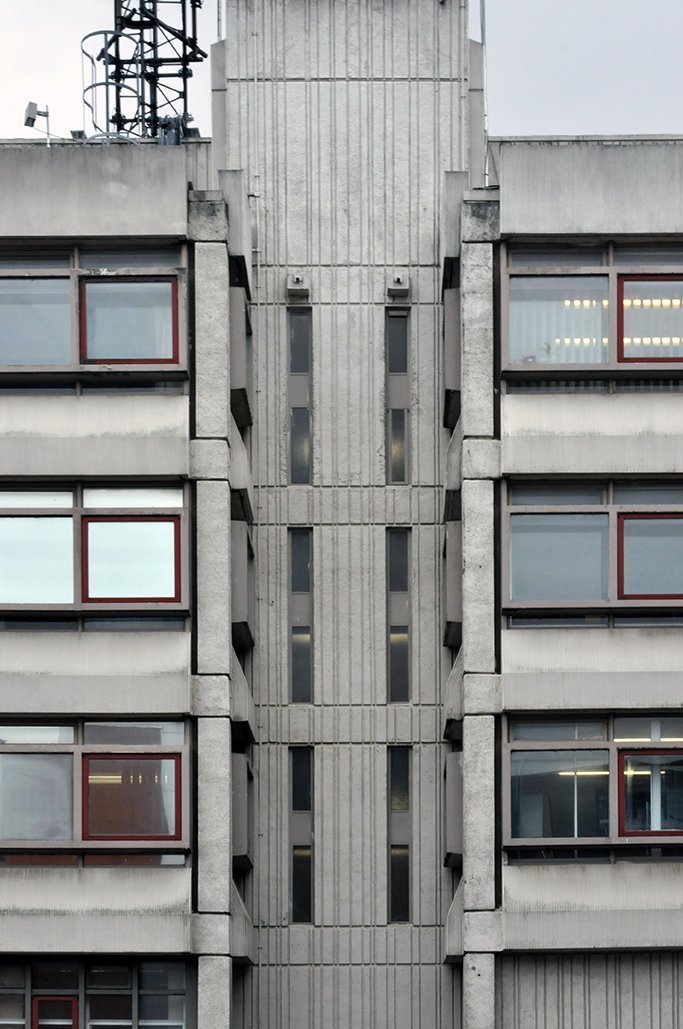
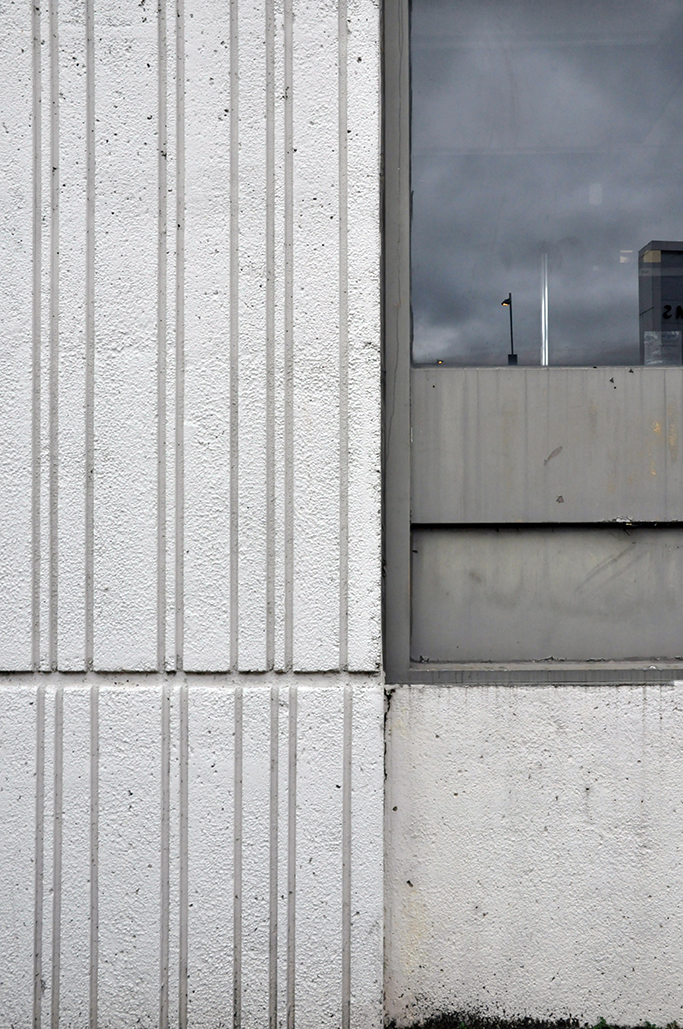
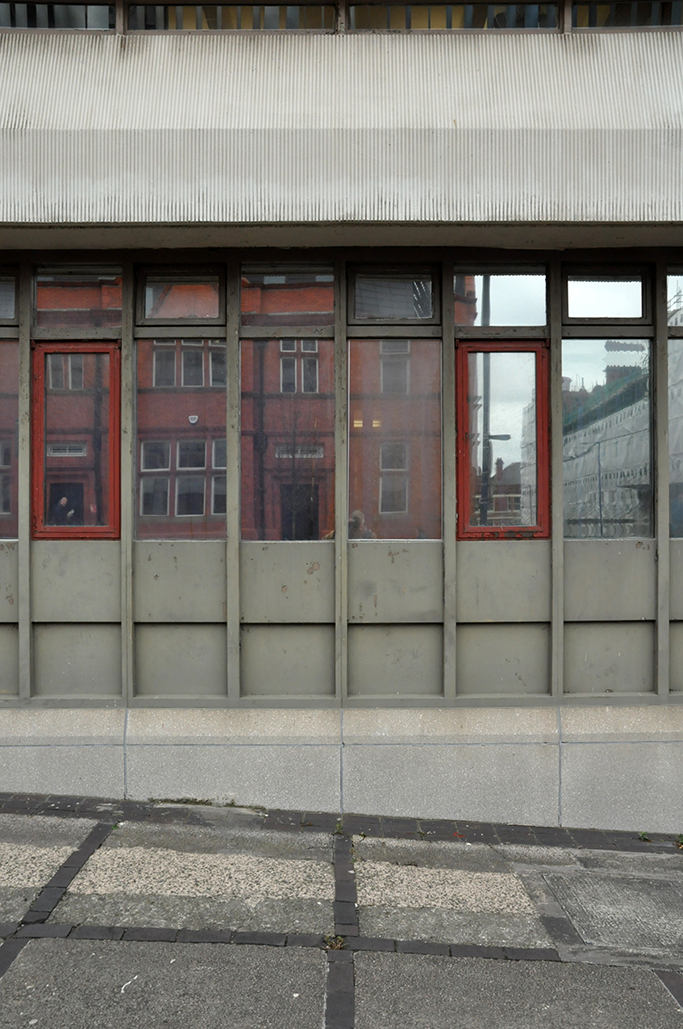
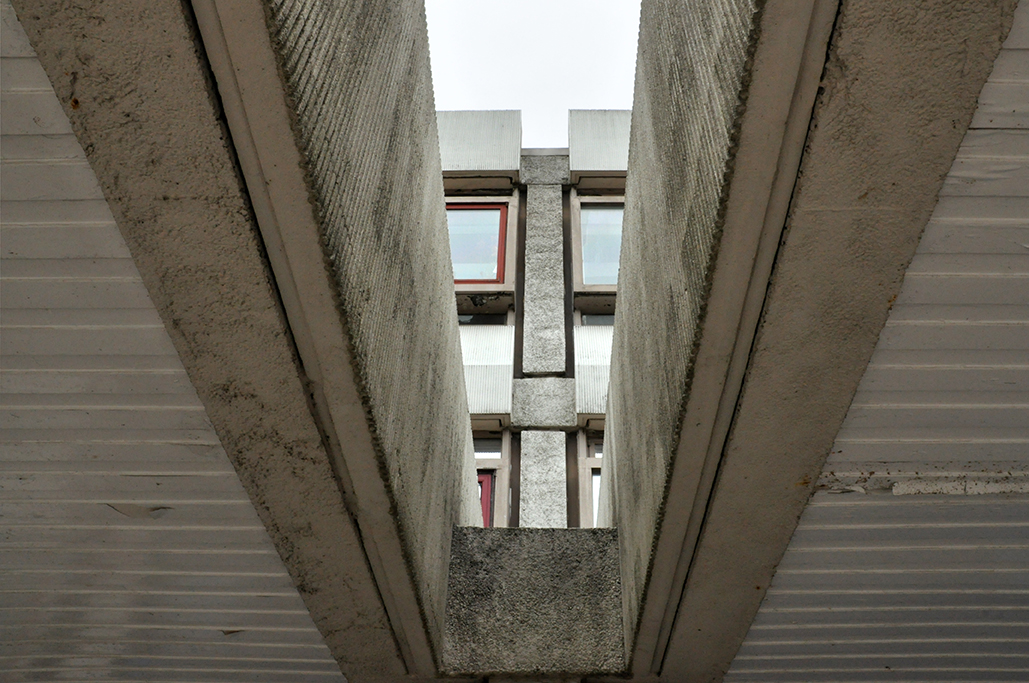
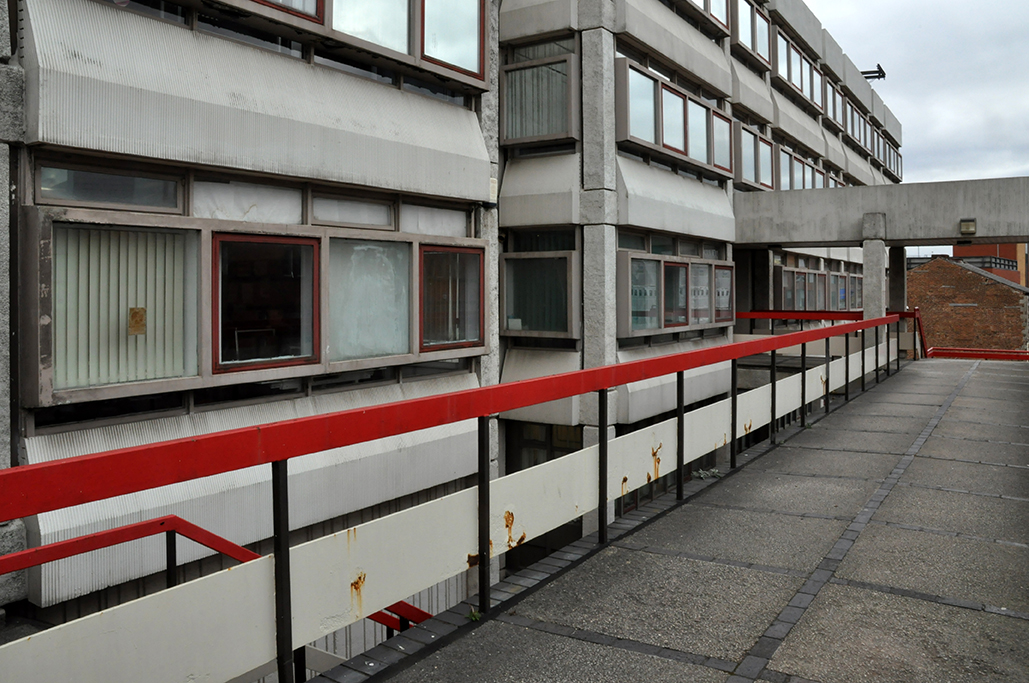
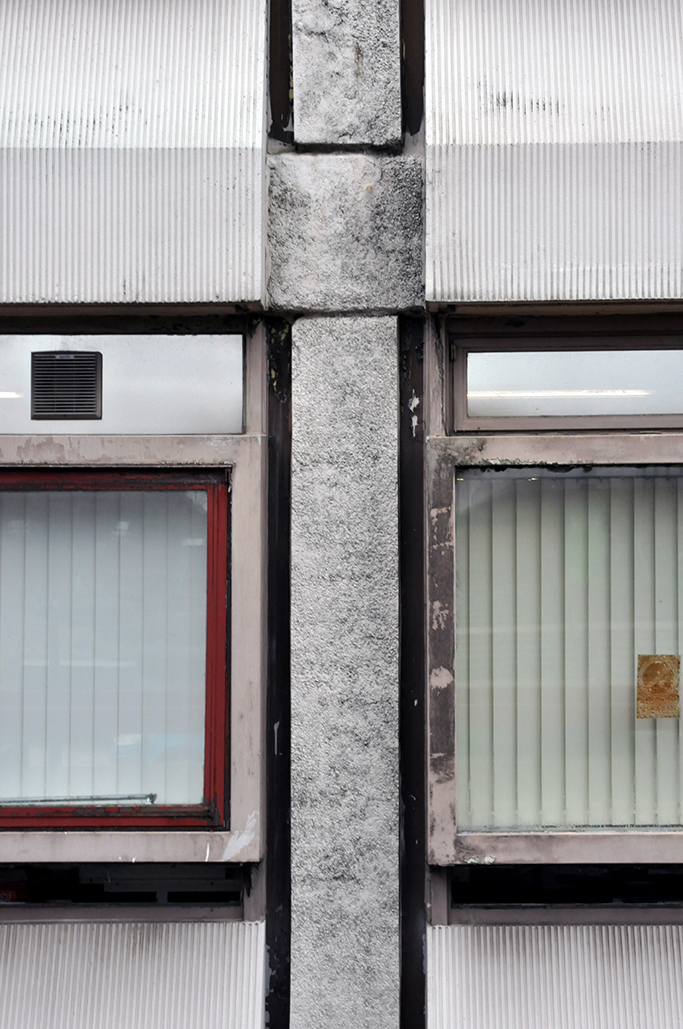
A tight grid structure is broken up with chamfered  window fames and a mix of concrete finishes, surfaces and textures, slipping neatly into the inclined topography.

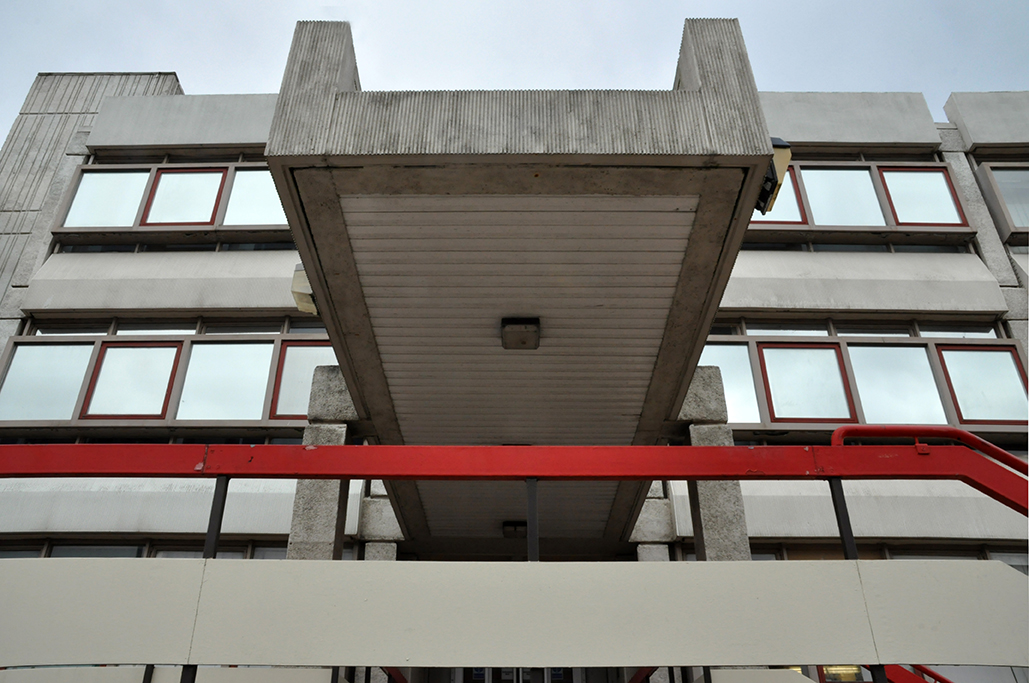
A rather distinguished cantilevered canopy or two sit centrally over the entrance porch.

The building no longer offers public access, services having been transferred to the nearby Life Centre.

The Manchester Modernists have highlighted the centre in its new Top Ten Twentieth Century Buildings project.

Why not bob along, see what you think and remember – vote, vote, vote!

dsc_0119-copy

dsc_0120-copy

dsc_0121-copy

dsc_0122-copy

dsc_0125-copy


dsc_0127-copy

dsc_0128-copy

dsc_0130-copy

dsc_0133-copy

dsc_0135-copy

dsc_0136-copy

dsc_0138-copy

dsc_0139-copy

dsc_0140-copy

dsc_0141-copy

dsc_0142-copy

dsc_0143-copy

dsc_0144-copy

dsc_0145-copy

dsc_0146-copy

dsc_0147-copy

dsc_0148-copy

dsc_0150-copy

dsc_0151-copy

dsc_0152-copy

dsc_0153-copy

dsc_0155-copy

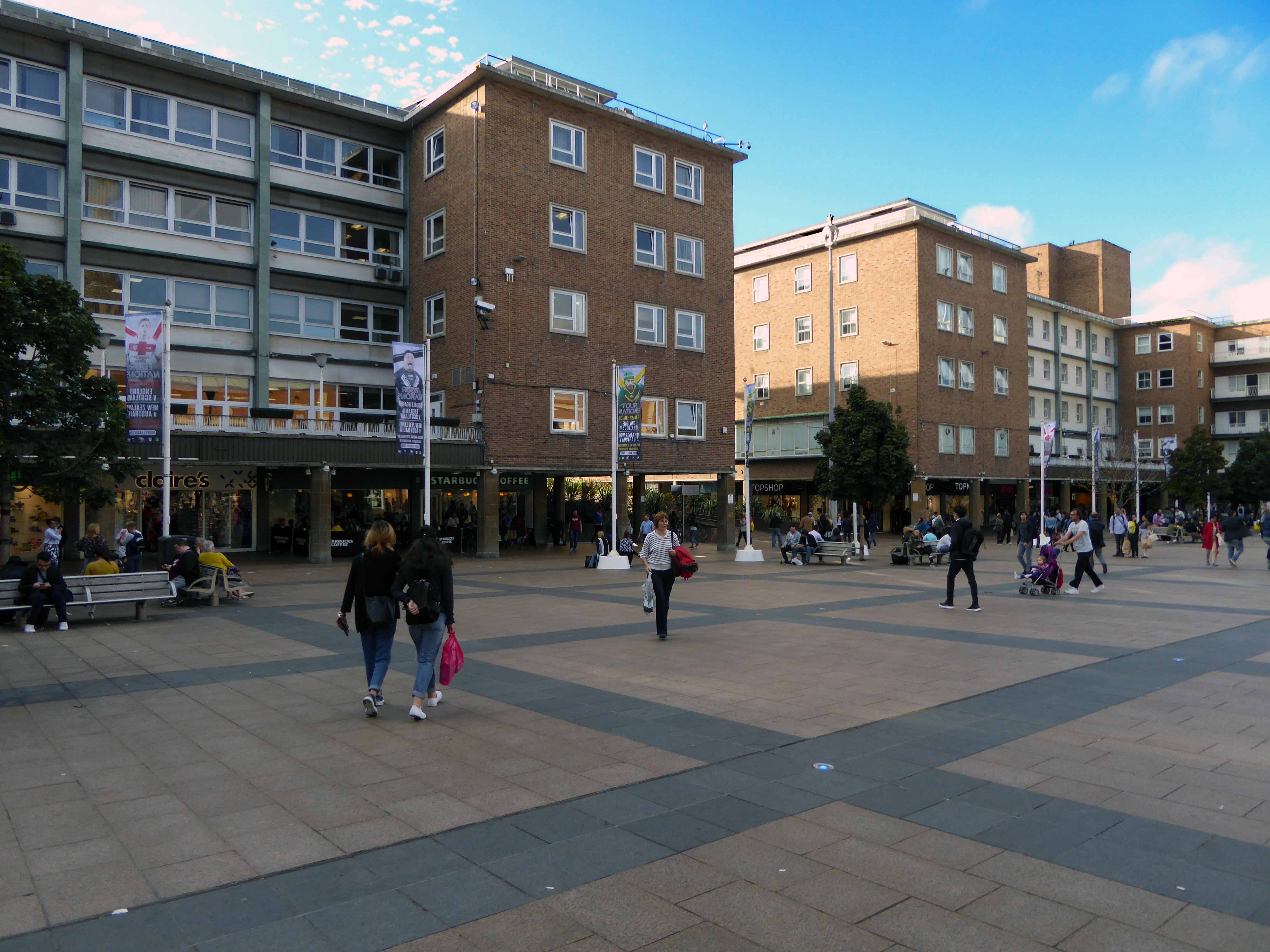
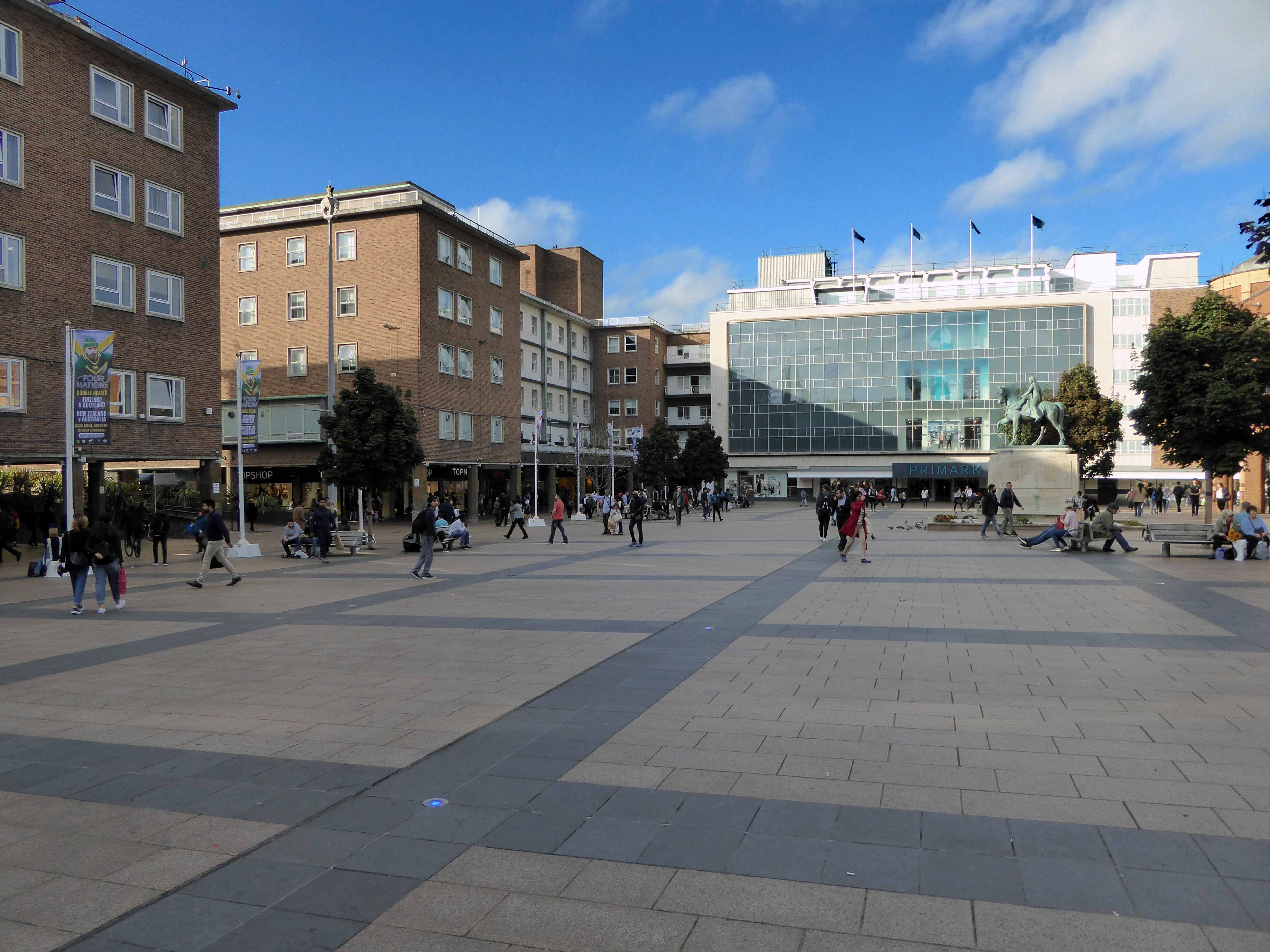
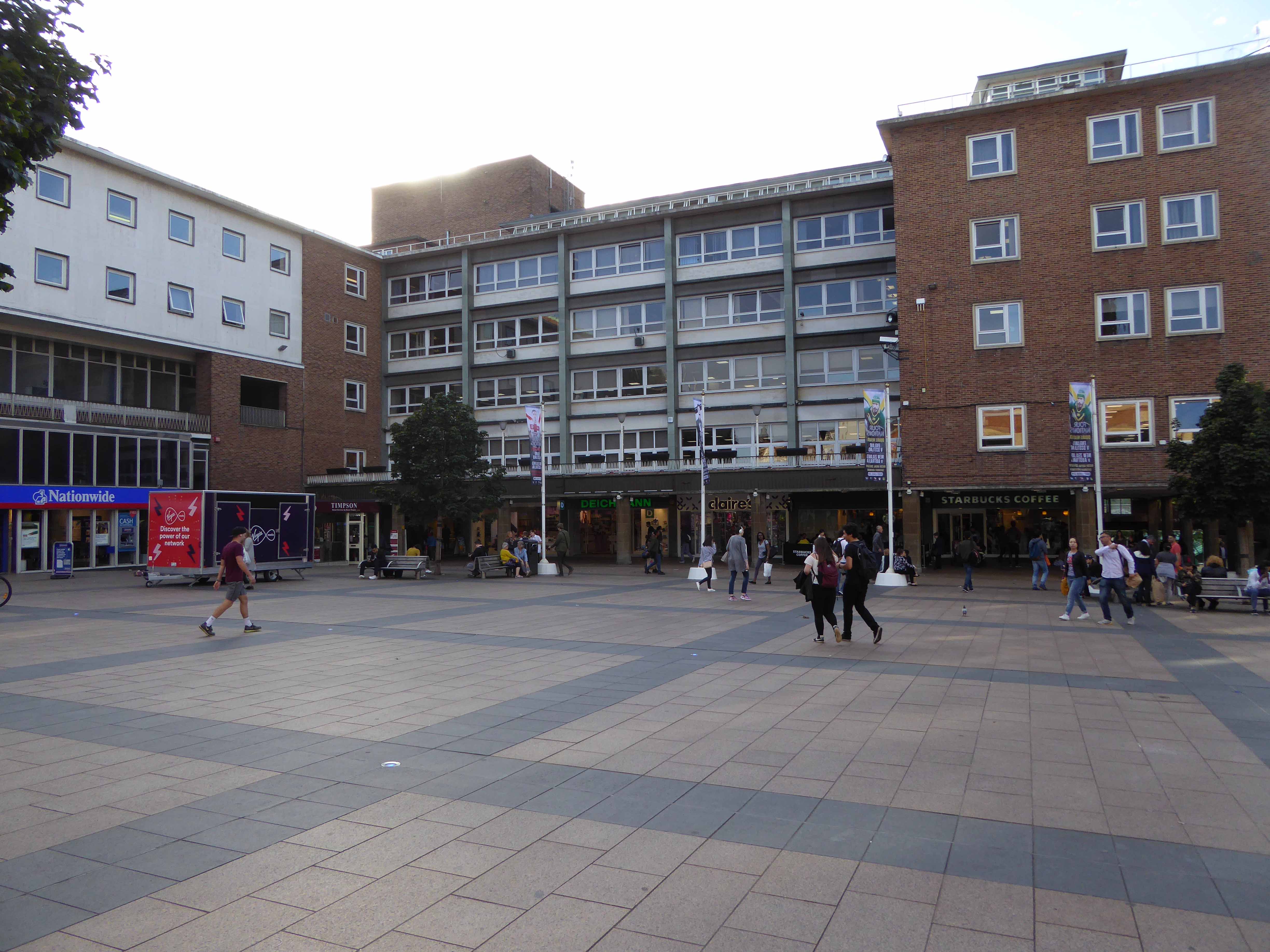
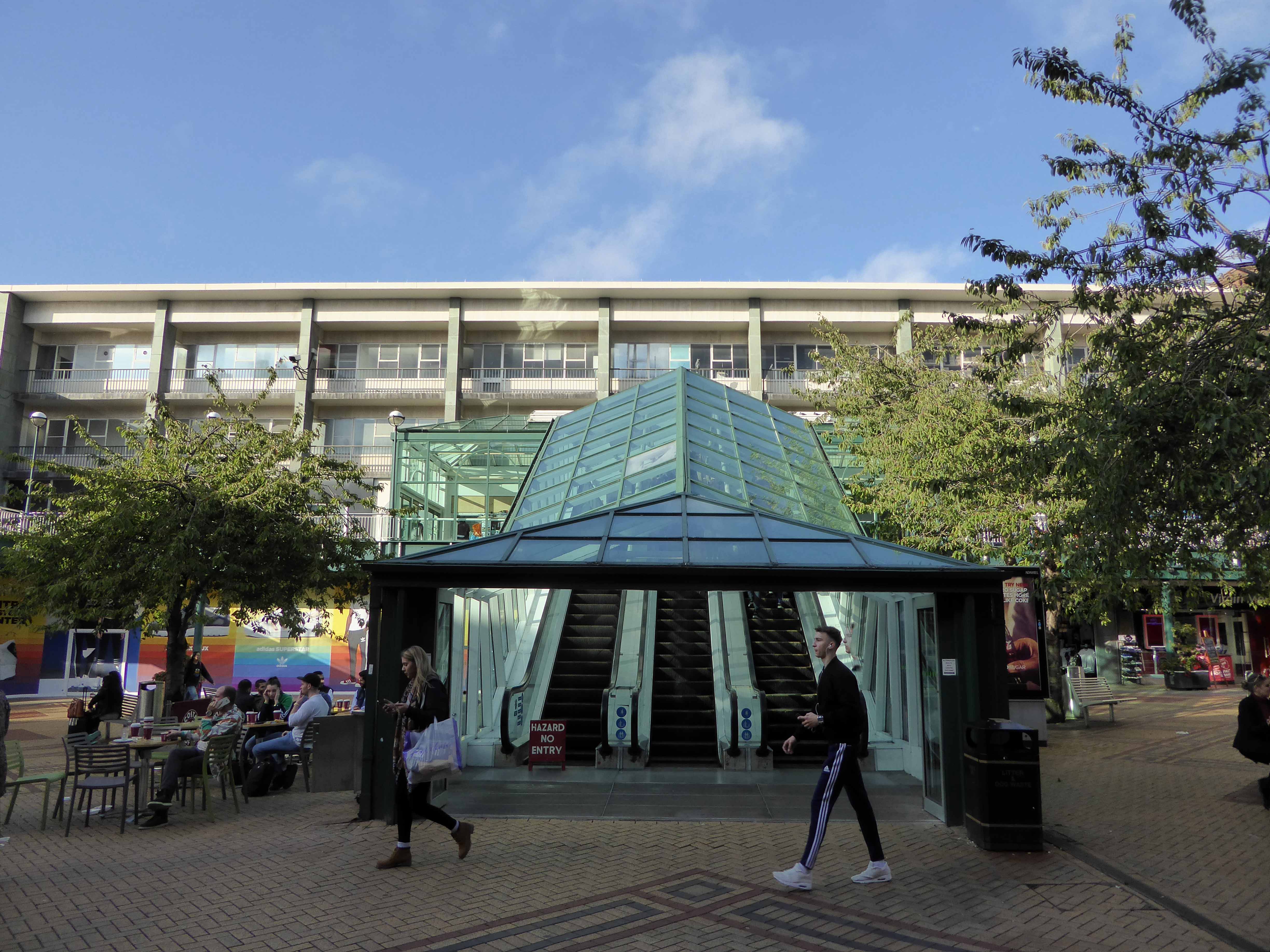
Coventry – Upper Precinct

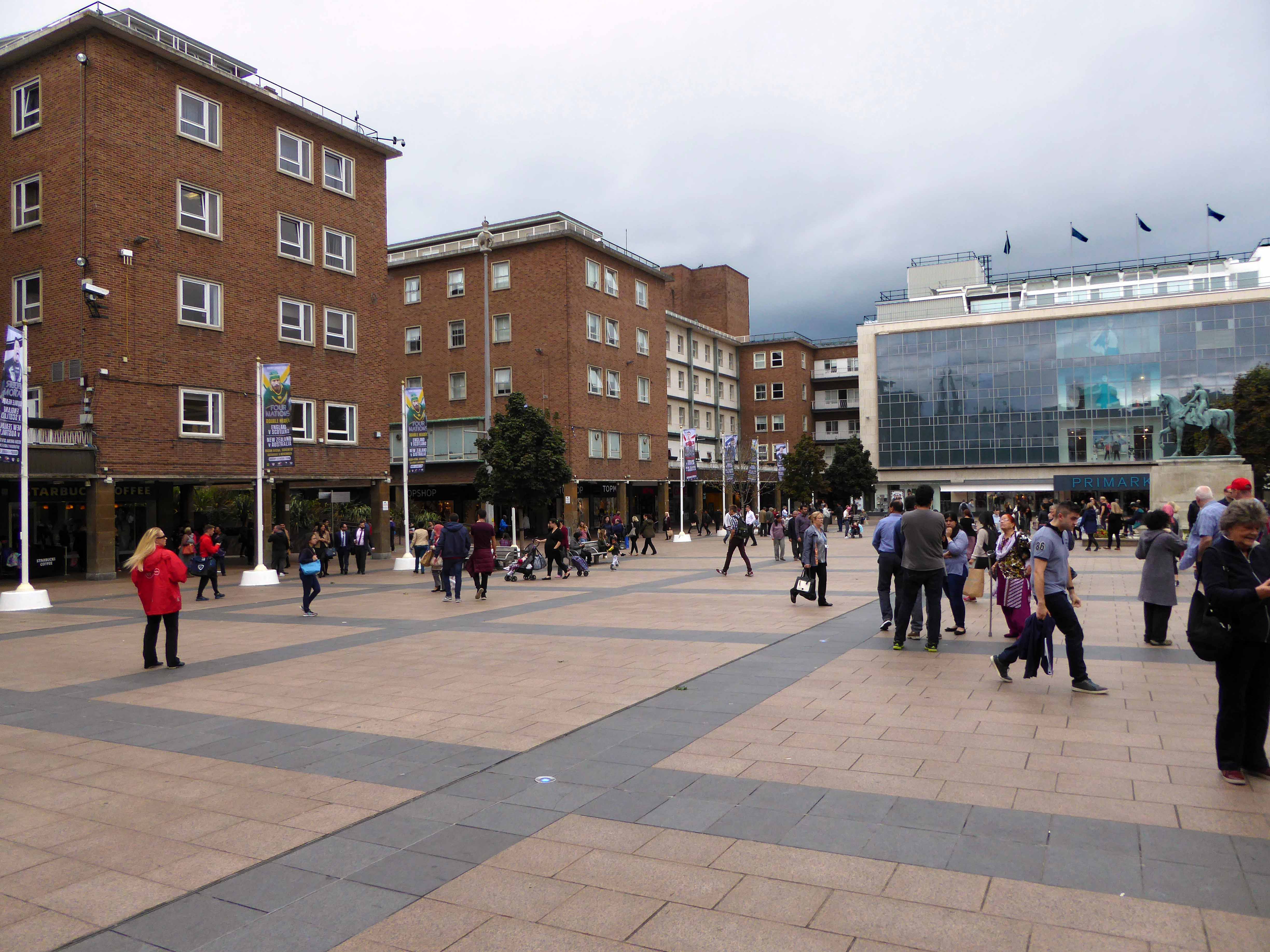
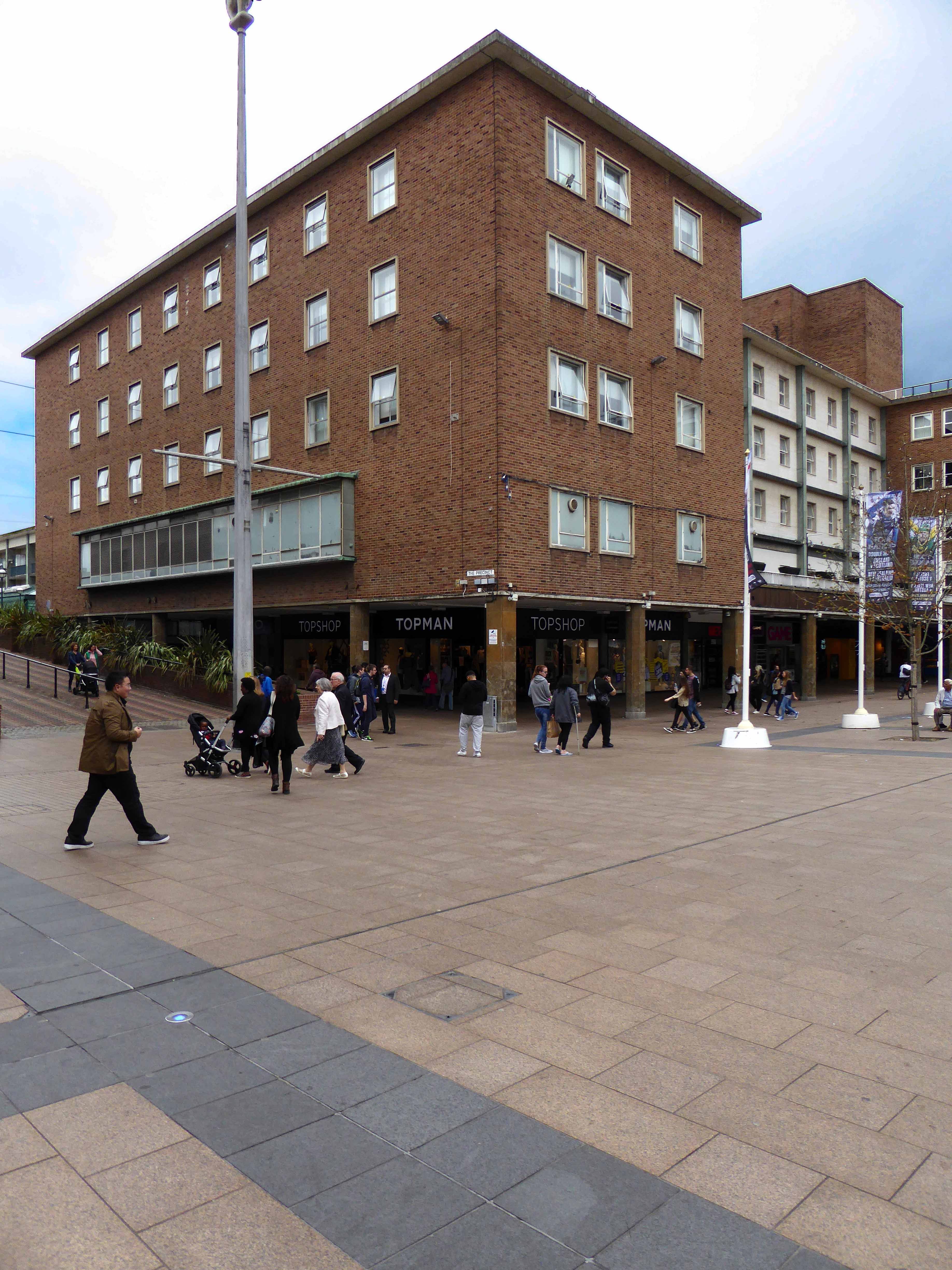
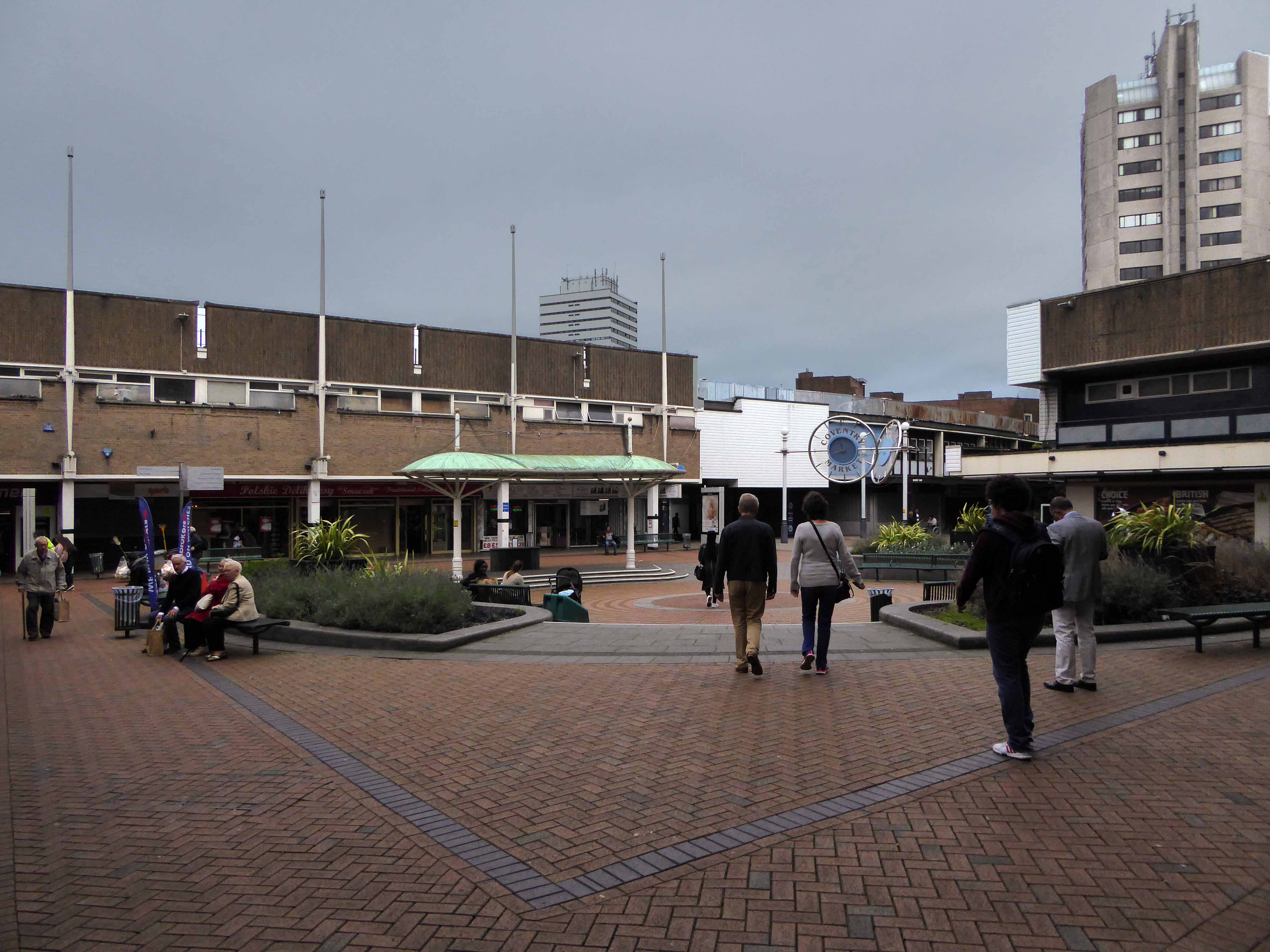
Here we are again wandering the pedestrianised precincts of Coventry  – having previously travelled by picture postcard and archival image.

Back to the future.

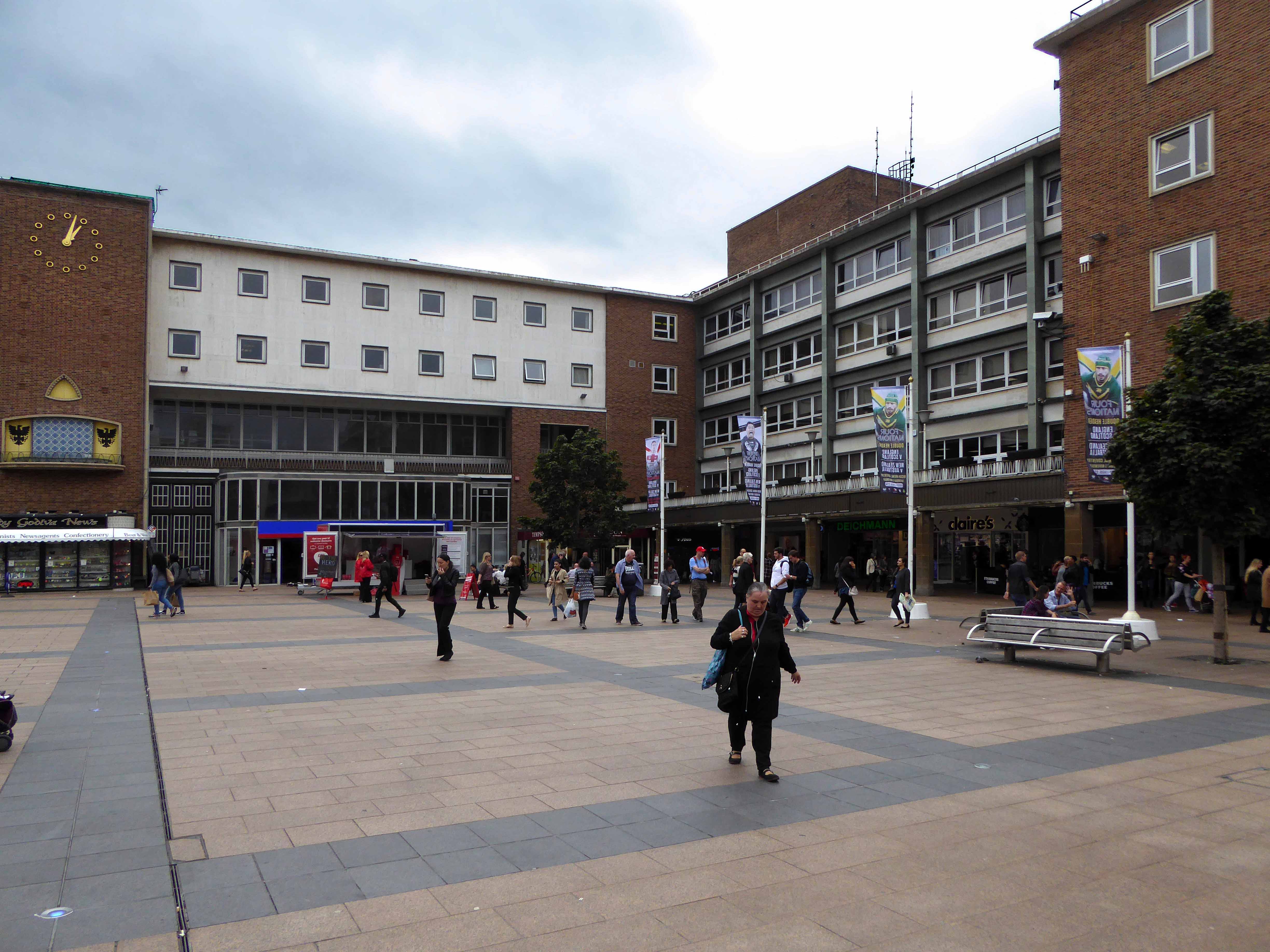
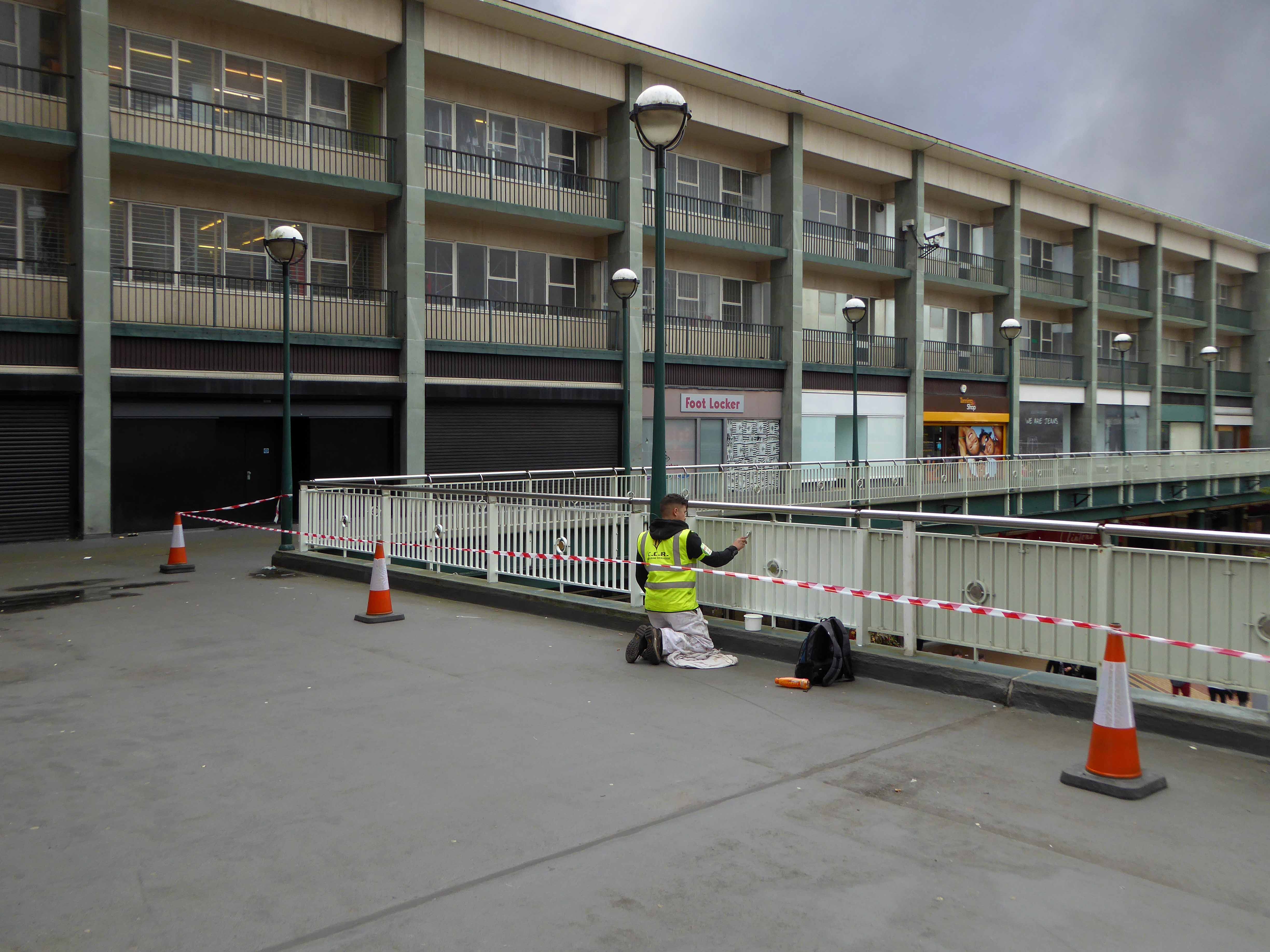
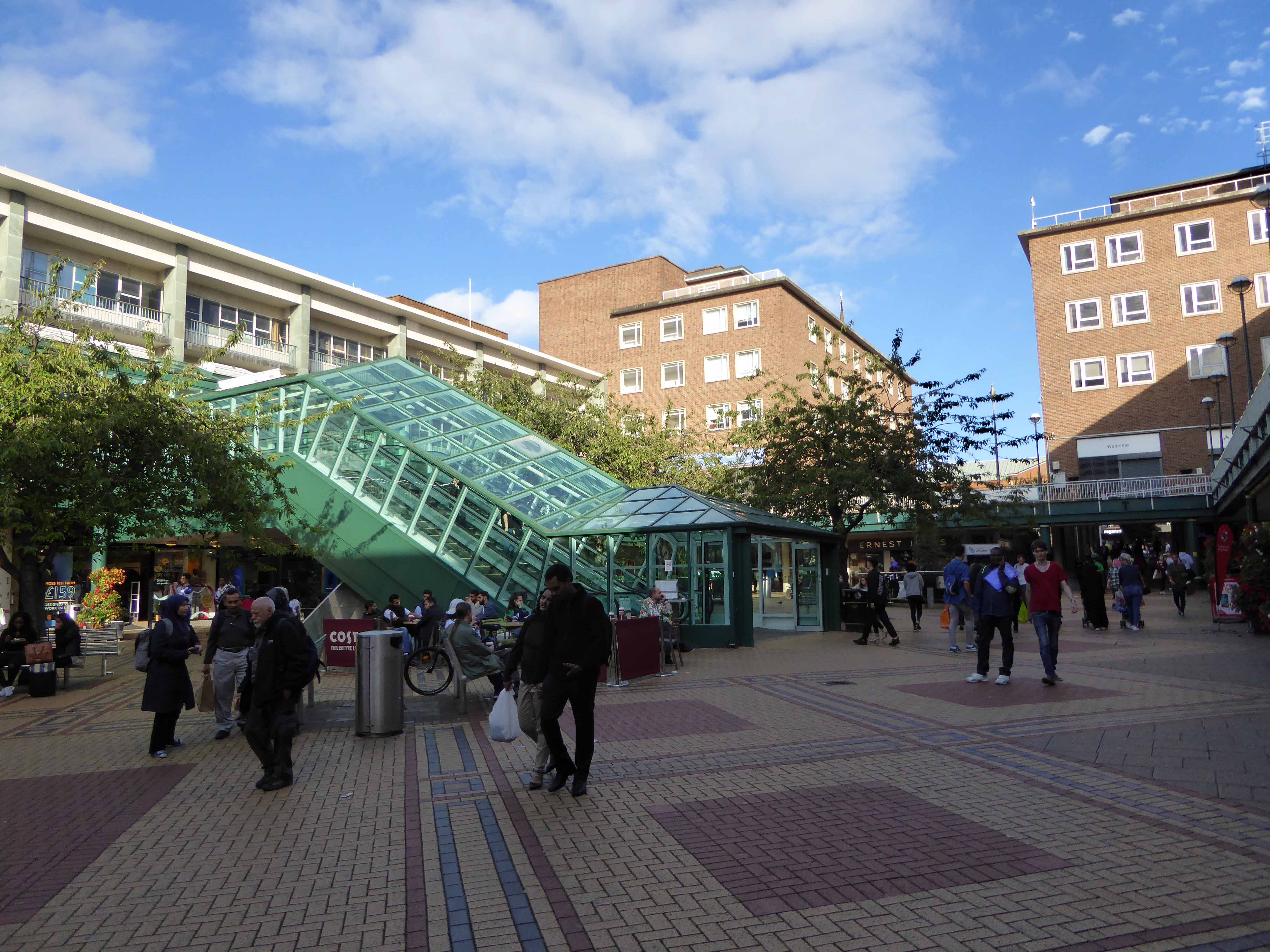
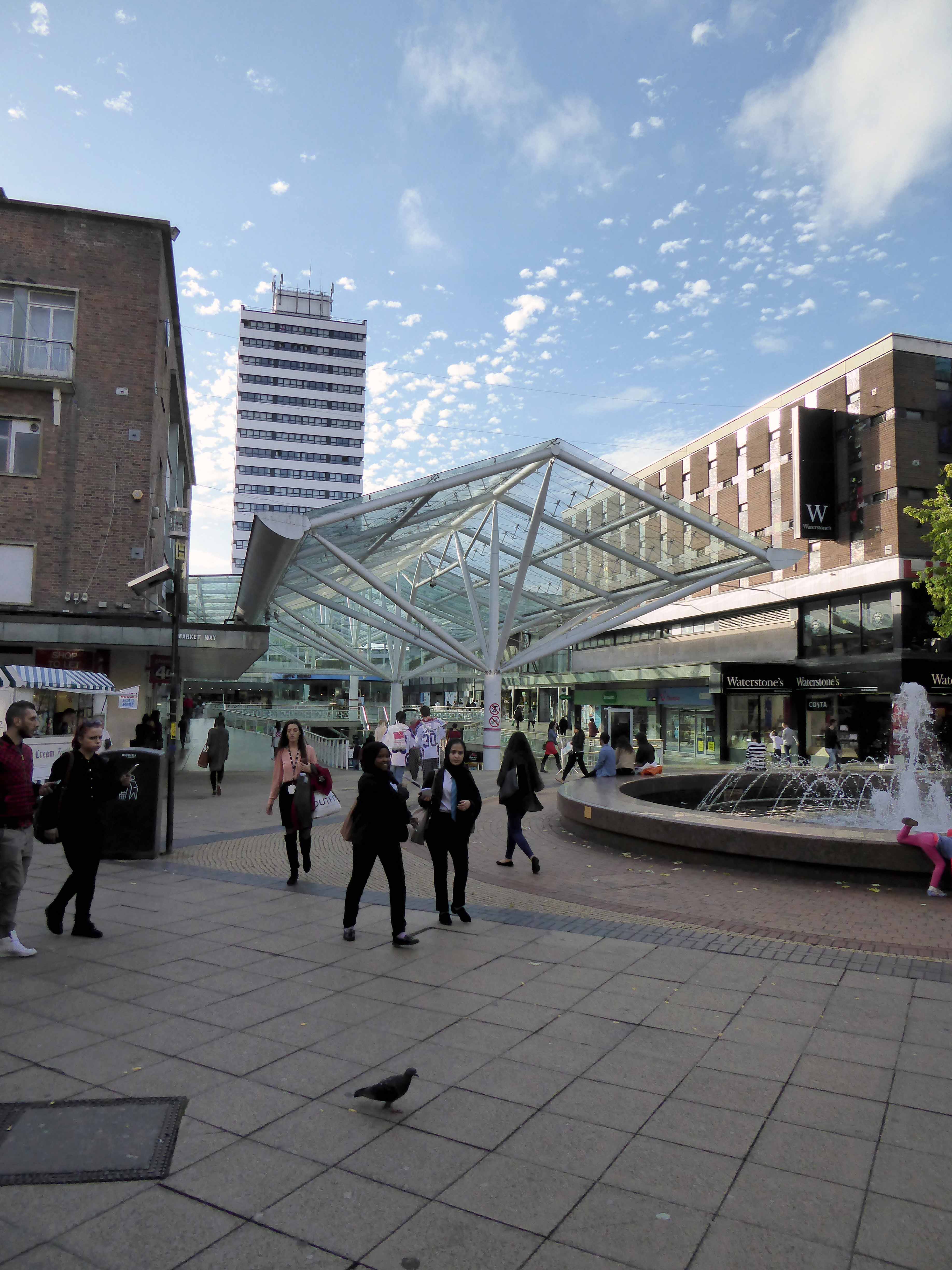
Today much of the original footprint and well-built brick, stone, glass and concrete structure prevails, with more recent retro fitted additions.

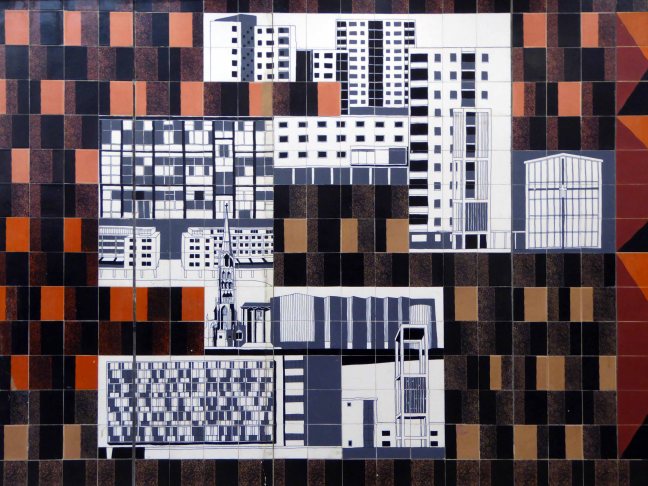
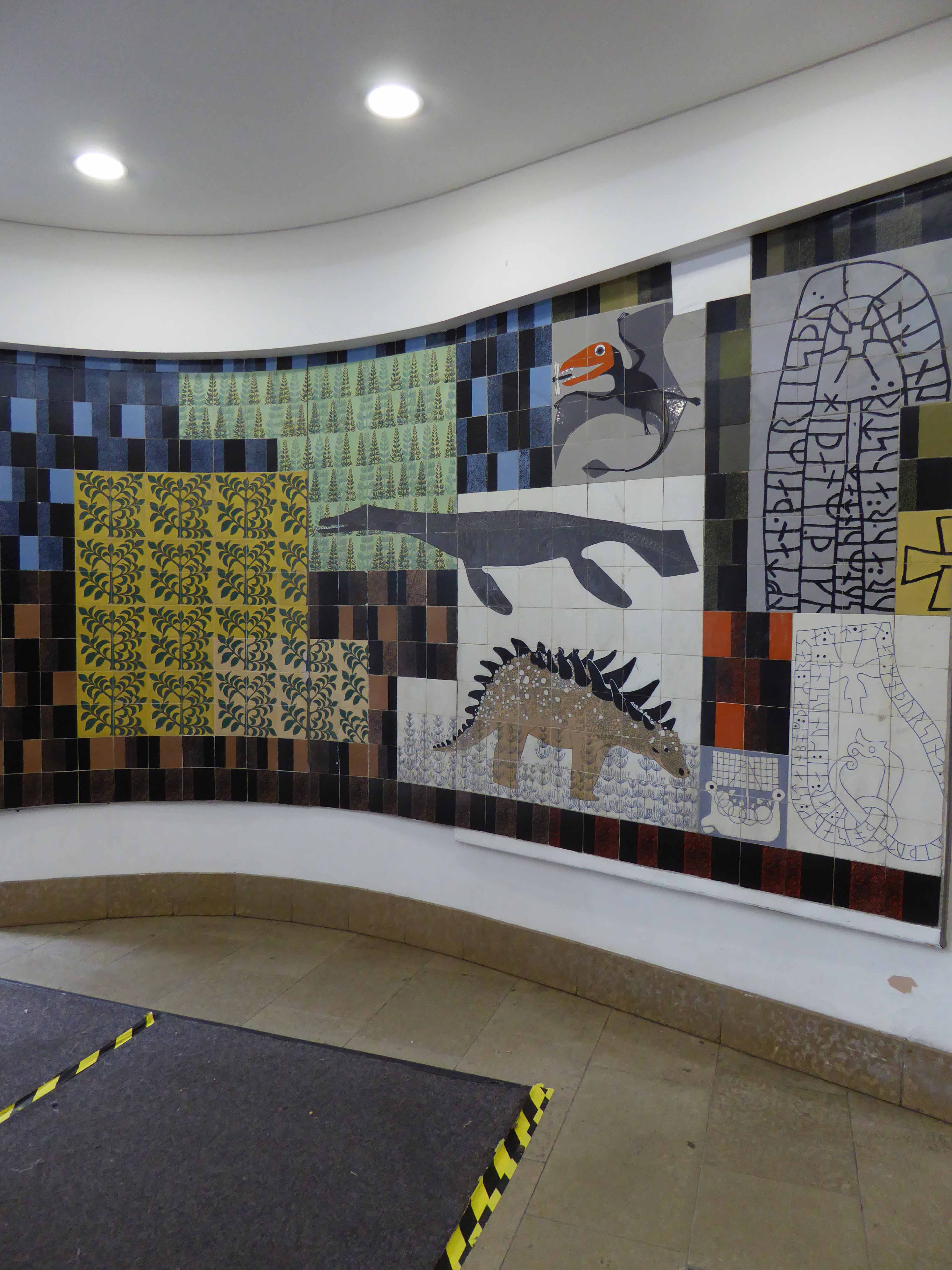
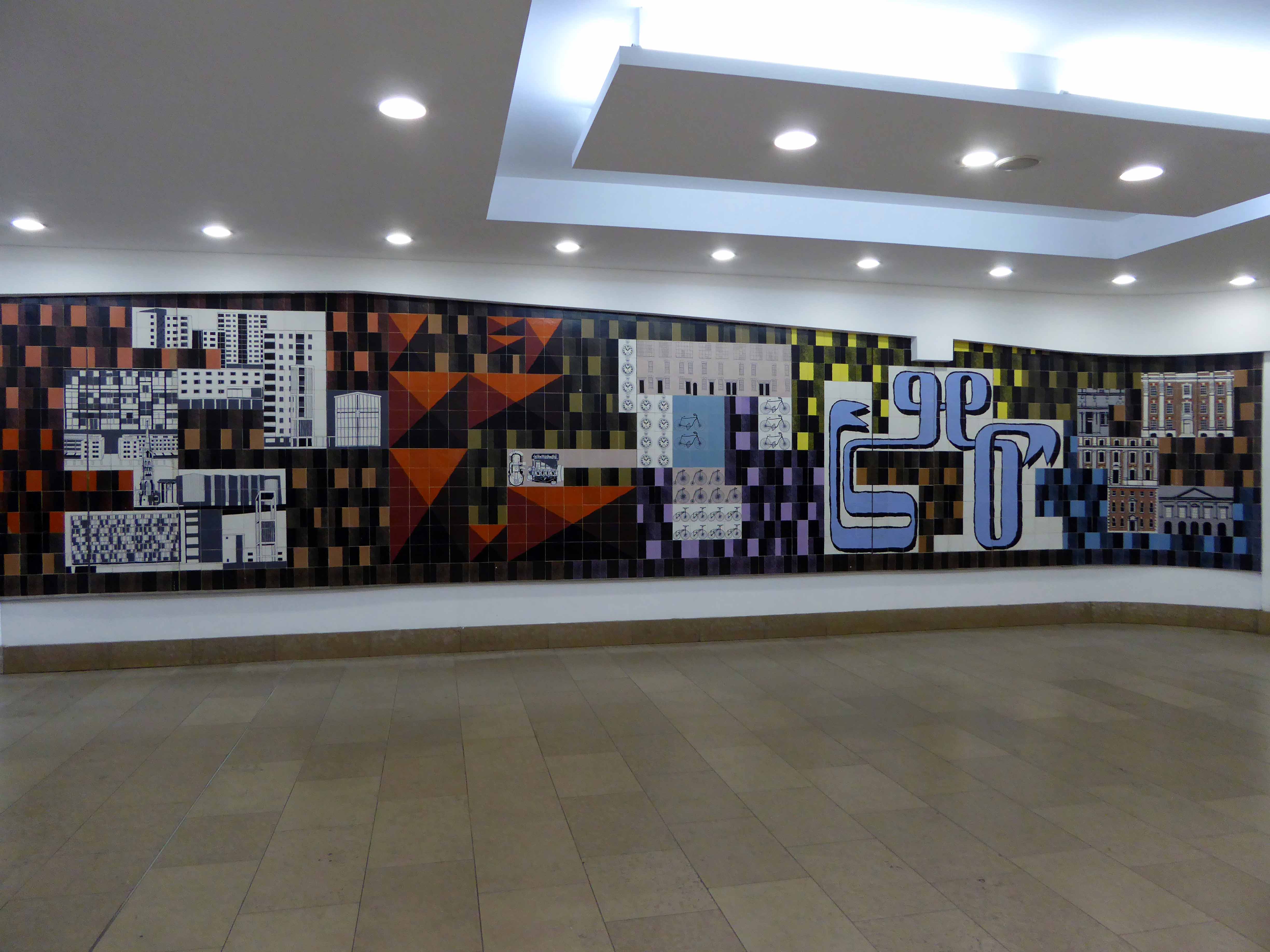
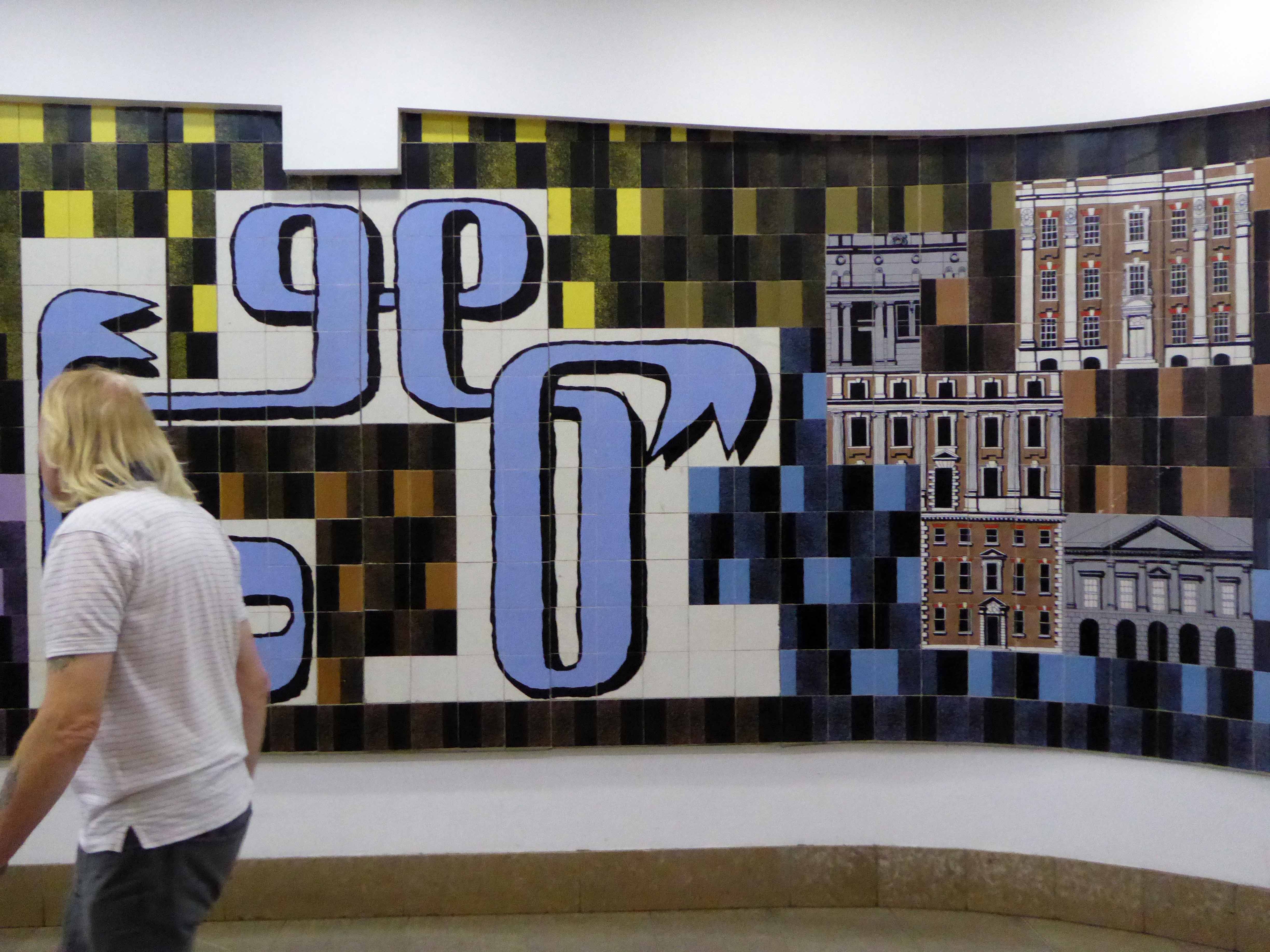
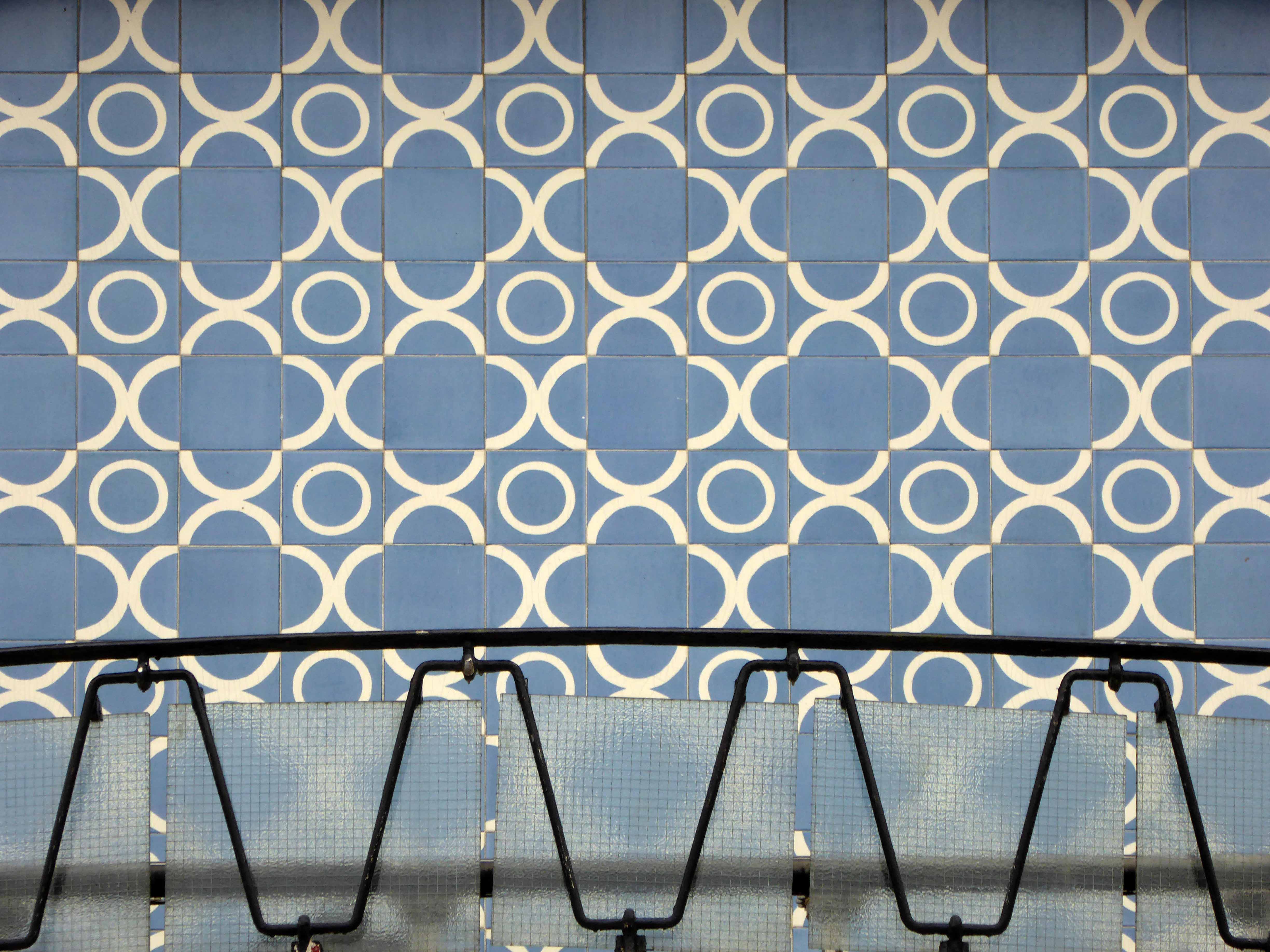
The Gordon Cullen mural has been renovated and re-sited.

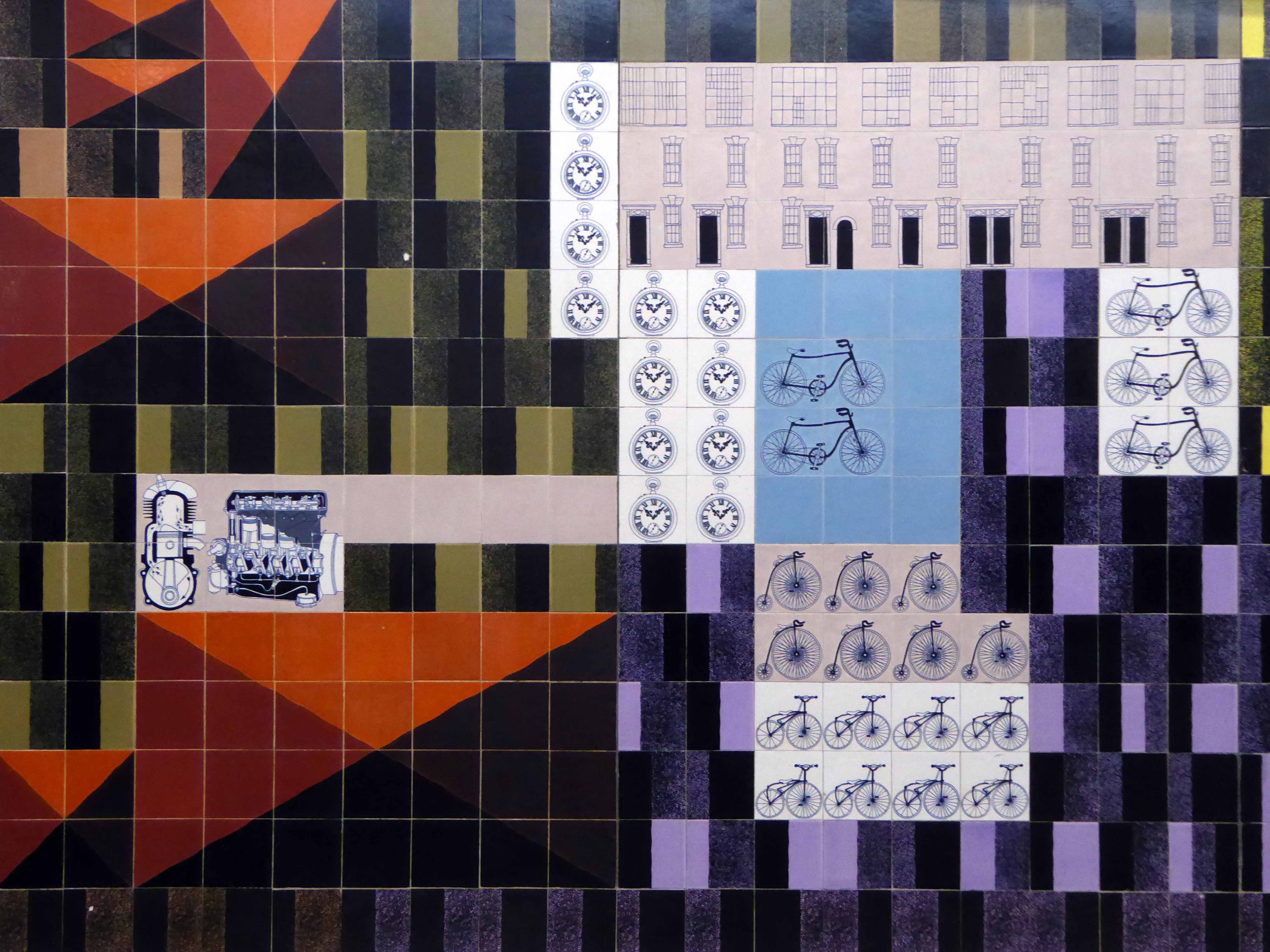
Commissioned in 1957 on the recommendation of Arthur Ling – it was made by Carter’s Tiles of Poole.

Coventry Society

p1100005
p1100006
p1100009
p1100008
p1100013
p1100054
p1100055

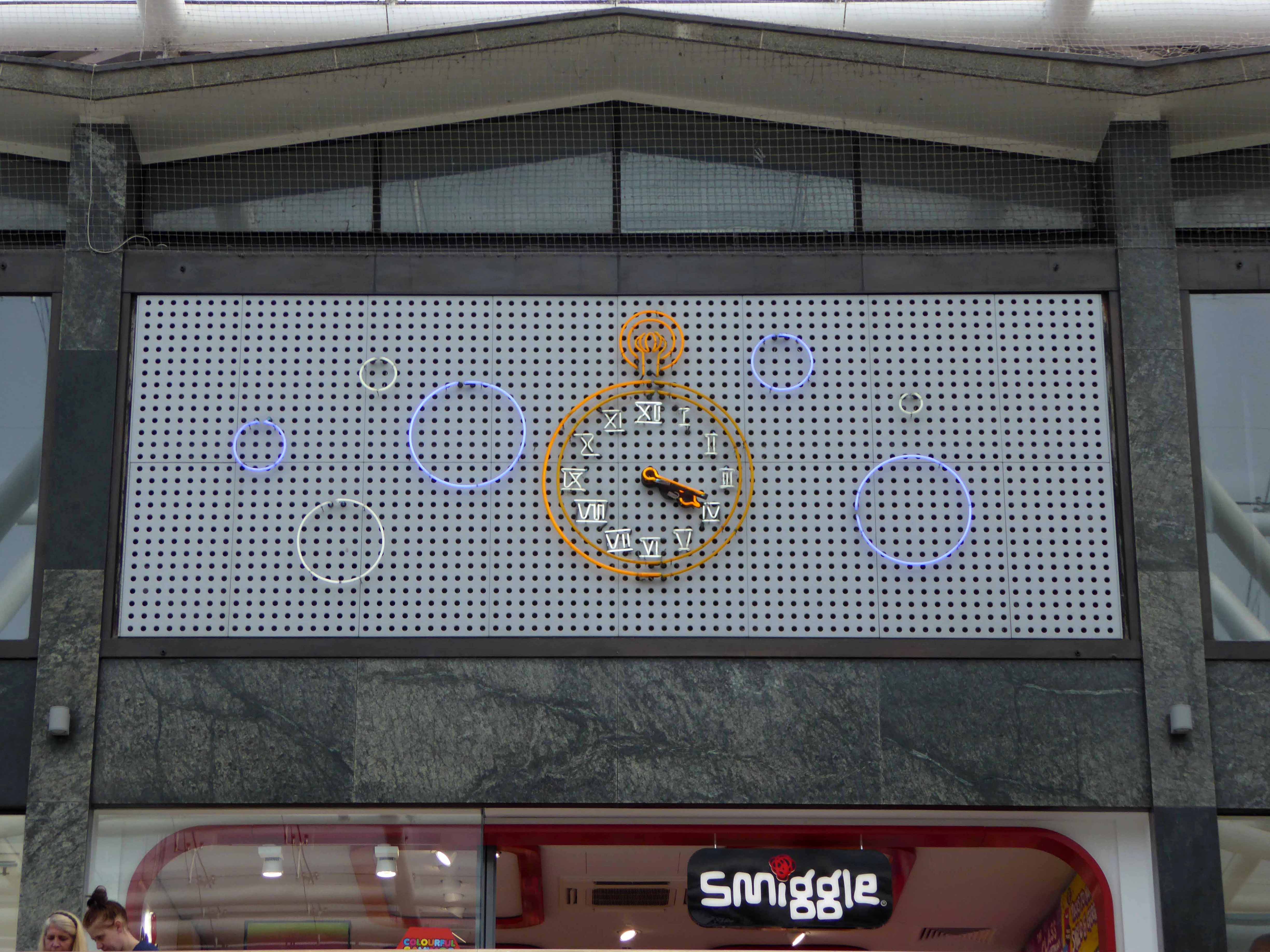
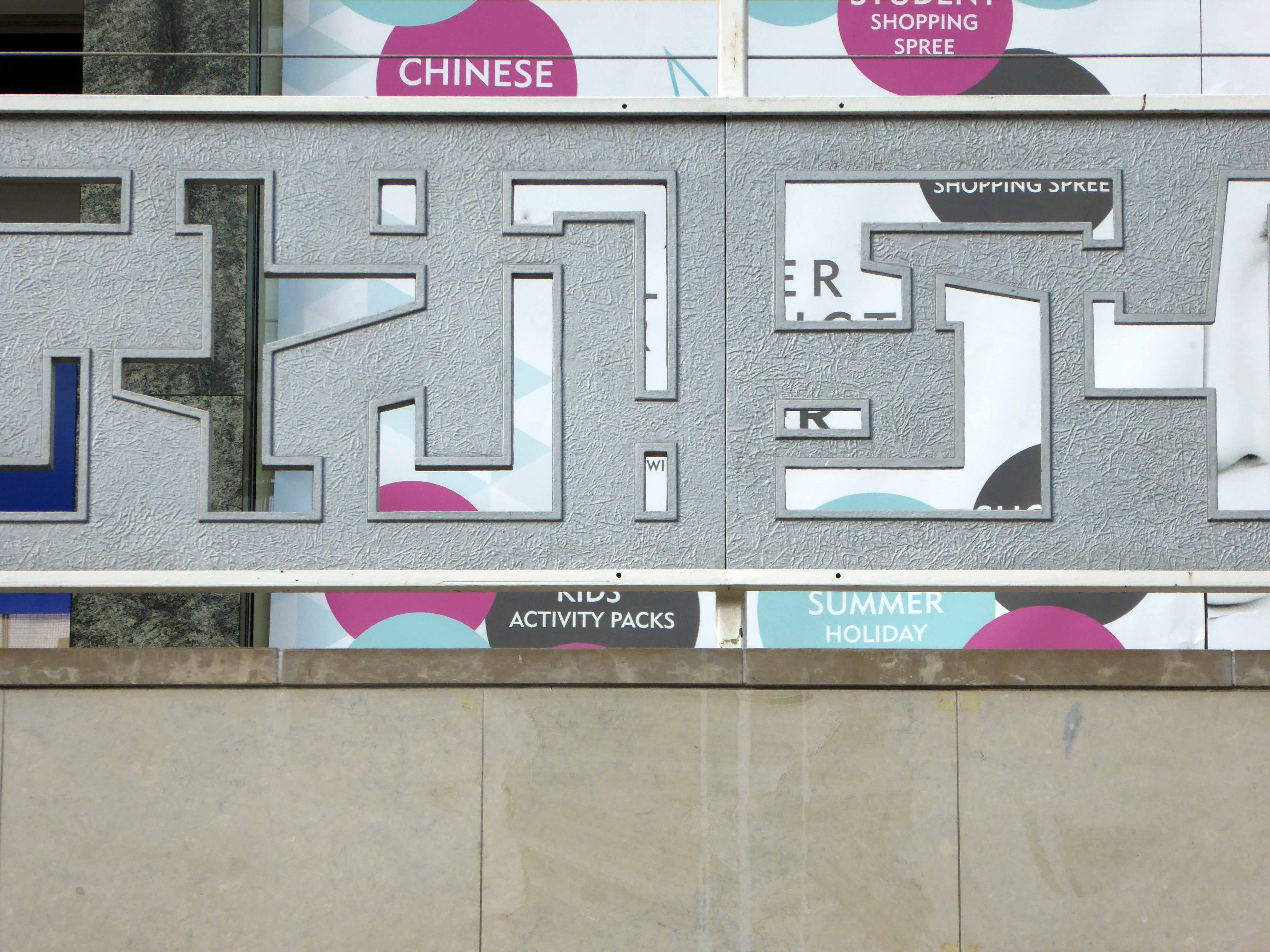
Sadly only one of the neon sculptures, remains illuminated – they may have been listed by Historic England, they have certainly given them a coat of looking at. I myself was approached whilst working away by a crack squad of precinct management, questioning my methods and motives. I reassured them I was a serious student of post-war architecture and they allowed happily to go about my business – assuring me that I was following in the footsteps of HE.

p1100015

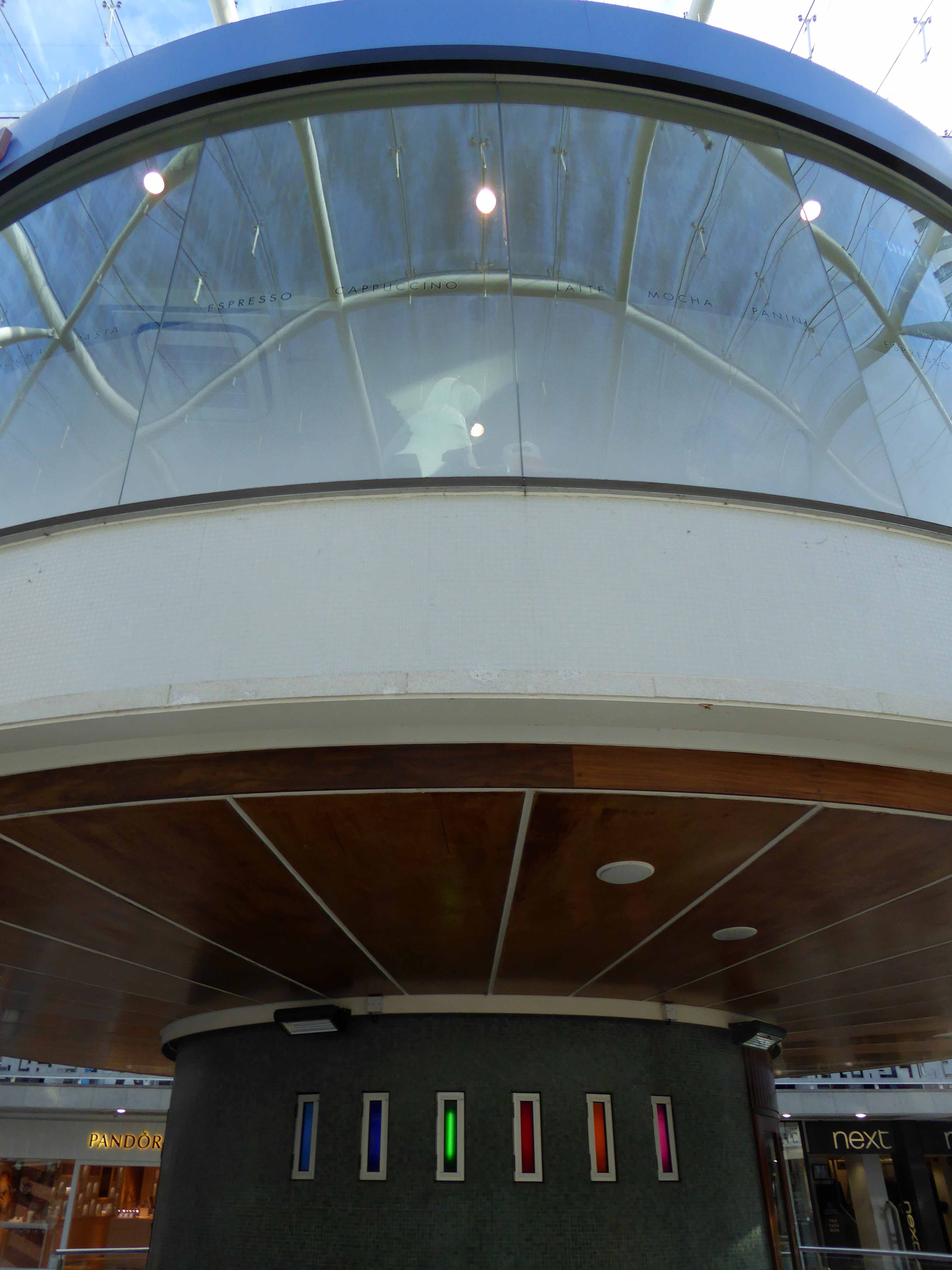
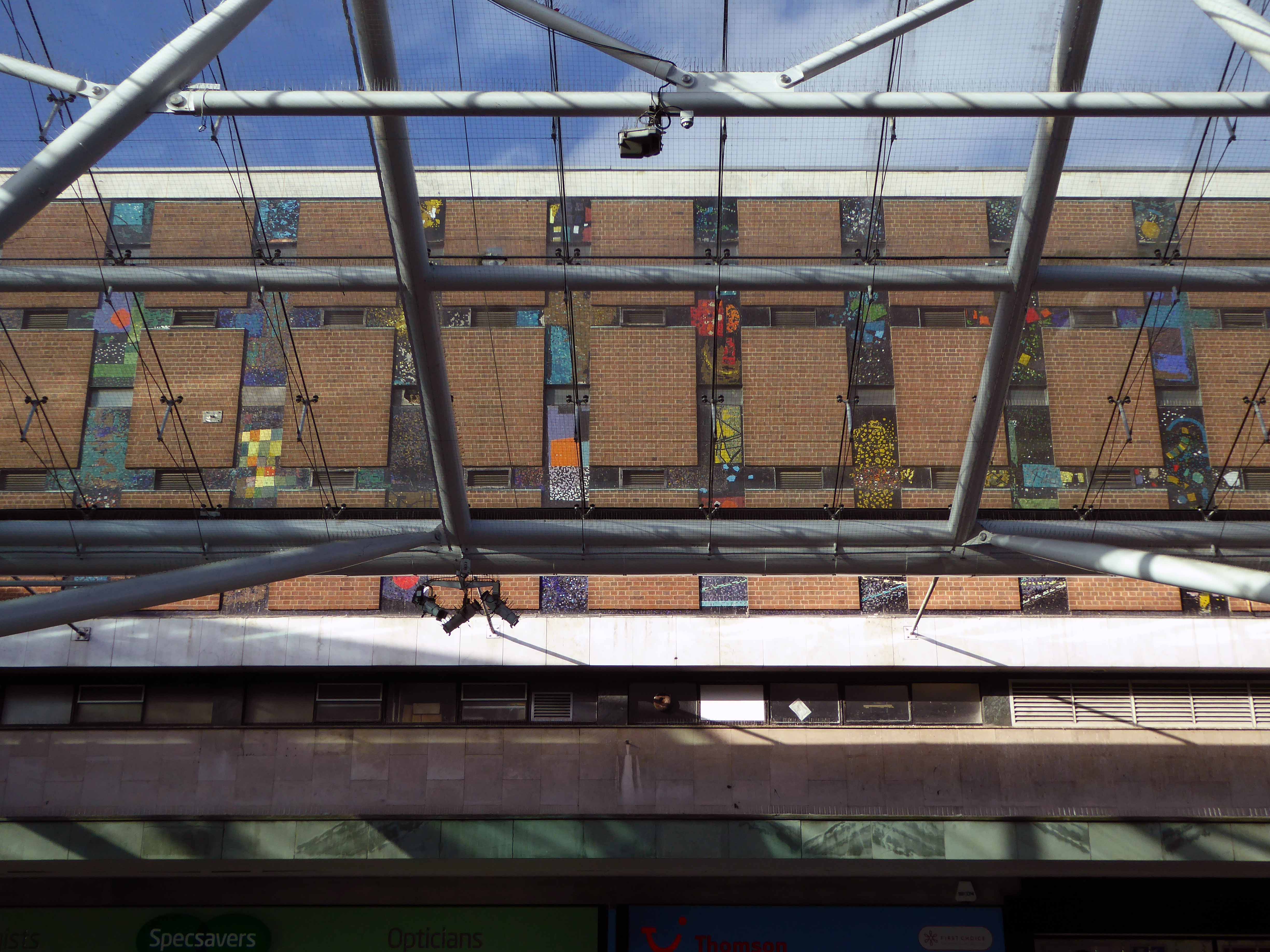
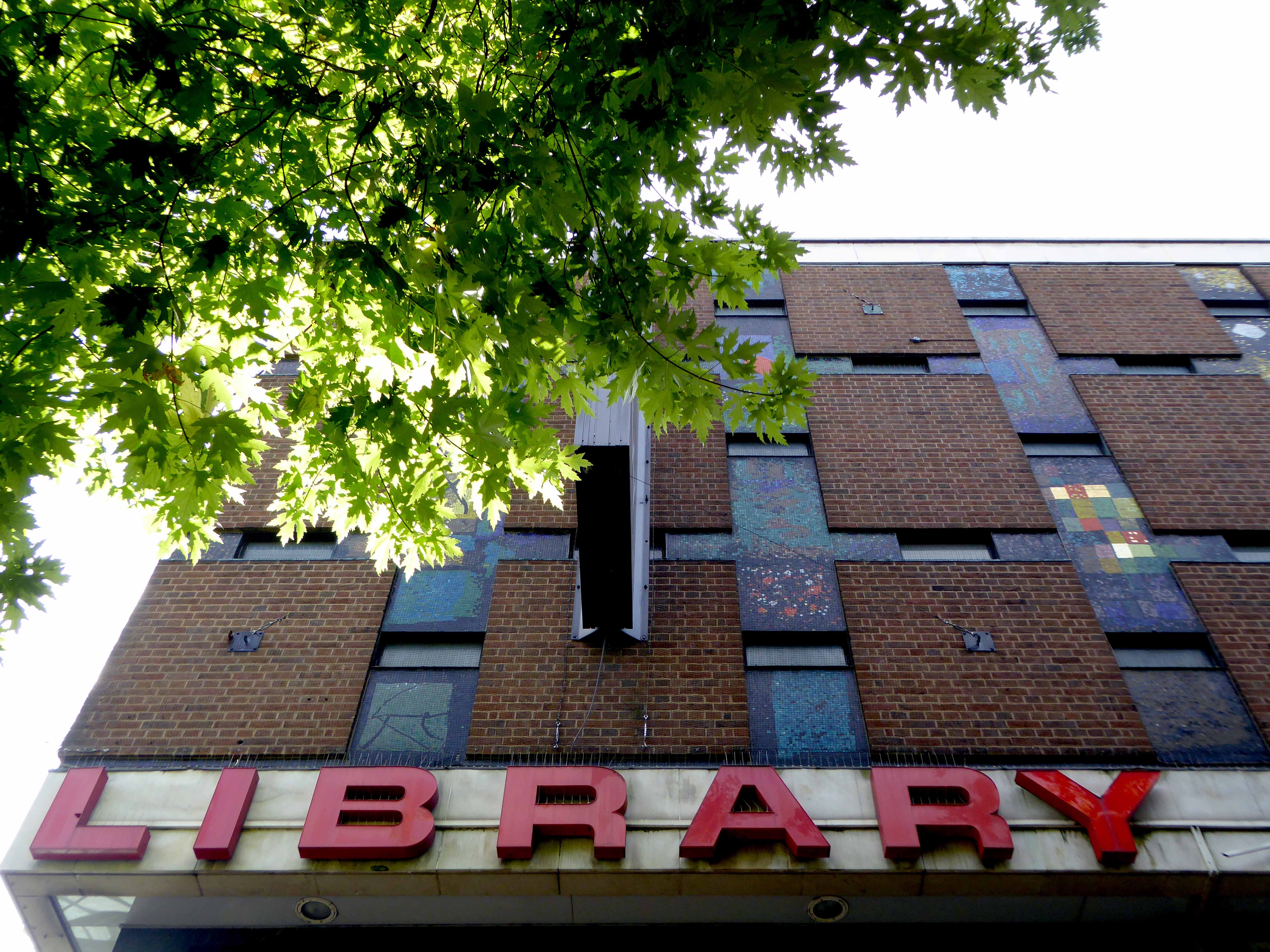
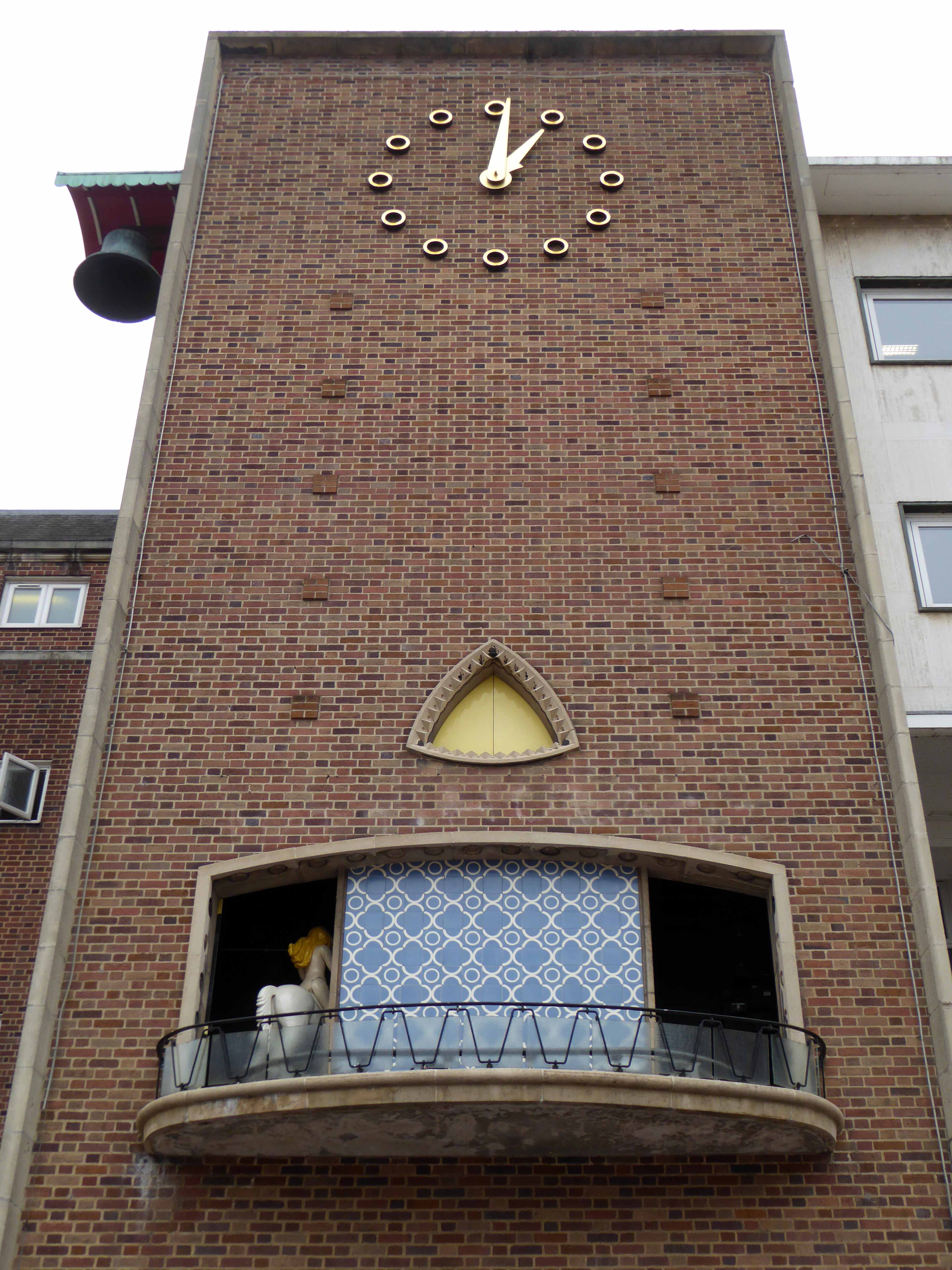
The elevated café, pierced screenwork, mosaics on the former Locarno, now Library and town clock are still every much in situ, Lady Godiva dutifully appearing on the hour, every hour with an ever attendant Peeping Tom for company.

p1100052
p1100039
p1100032
p1100016
p1090806
p1090807

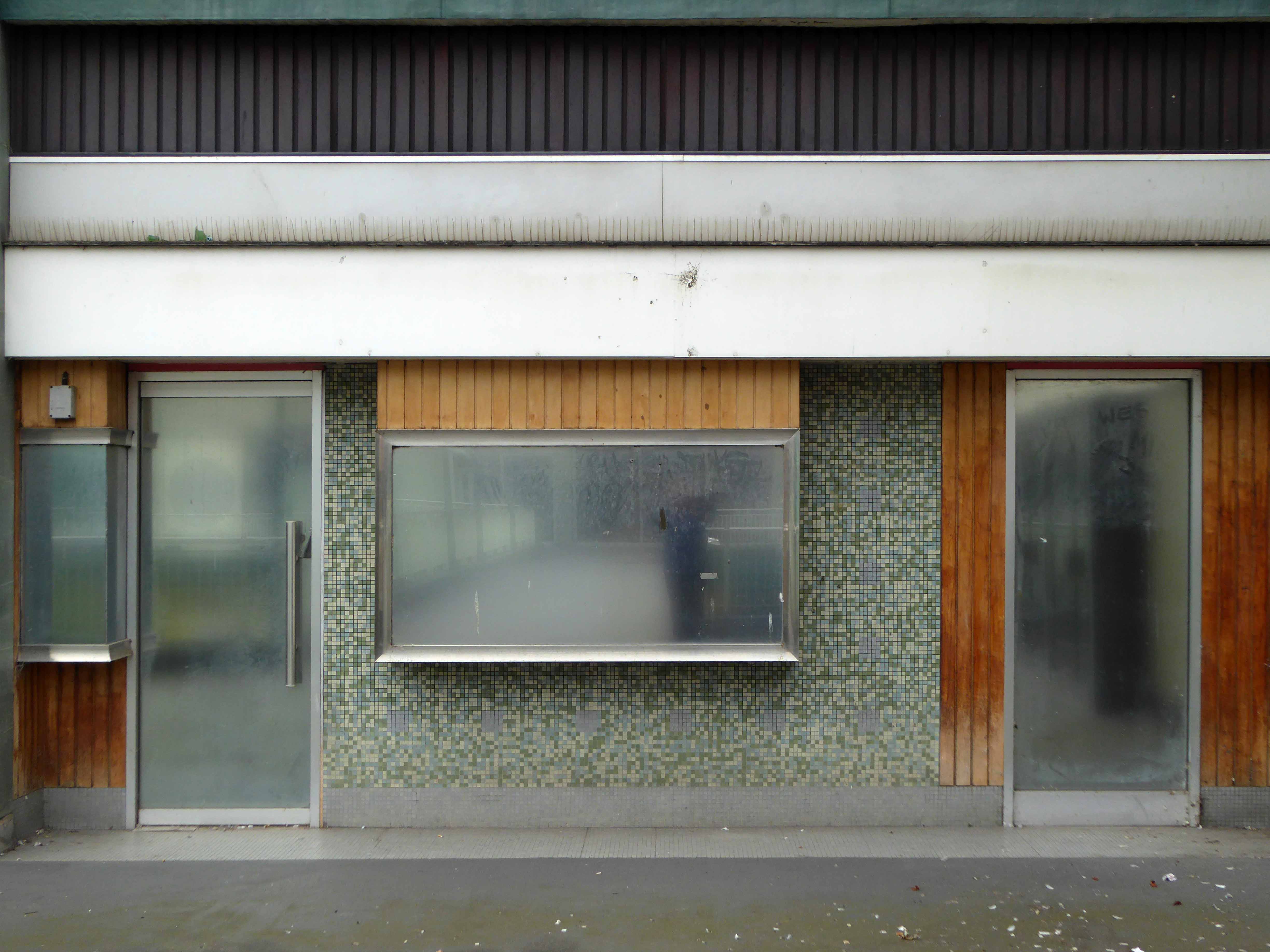
The area is well-used bustling busy, with a smattering of empty units which are sadly typical of most provincial town competing for custom and prosperity on the high street.

p1090808
p1090809
p1090810
p1090811
p1090812
p1090813
p1090814
p1090815
p1090817
p1100033
p1100034
p1100035
p1100036
p1100037
p1100038

Coventry – Precinct

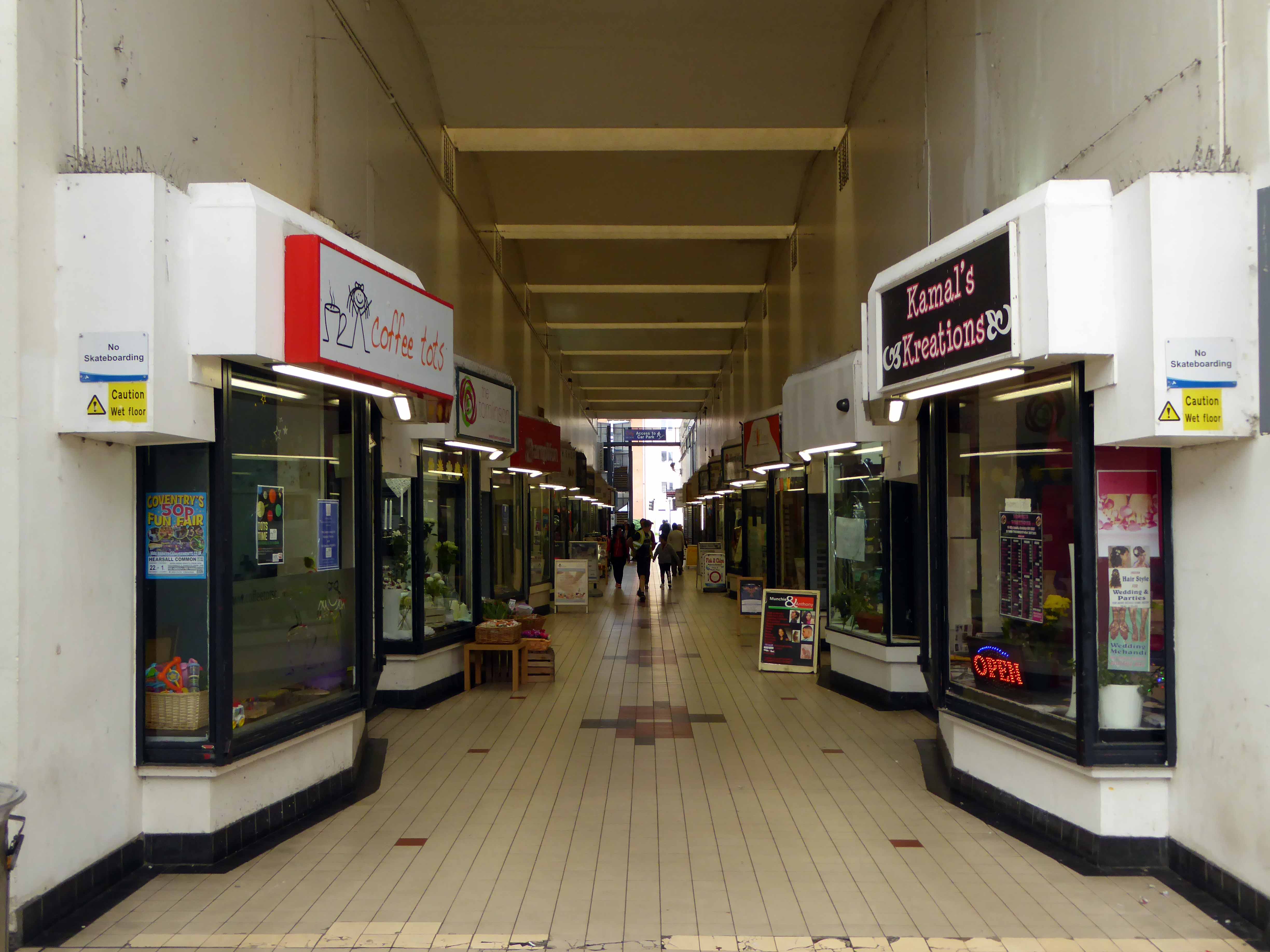
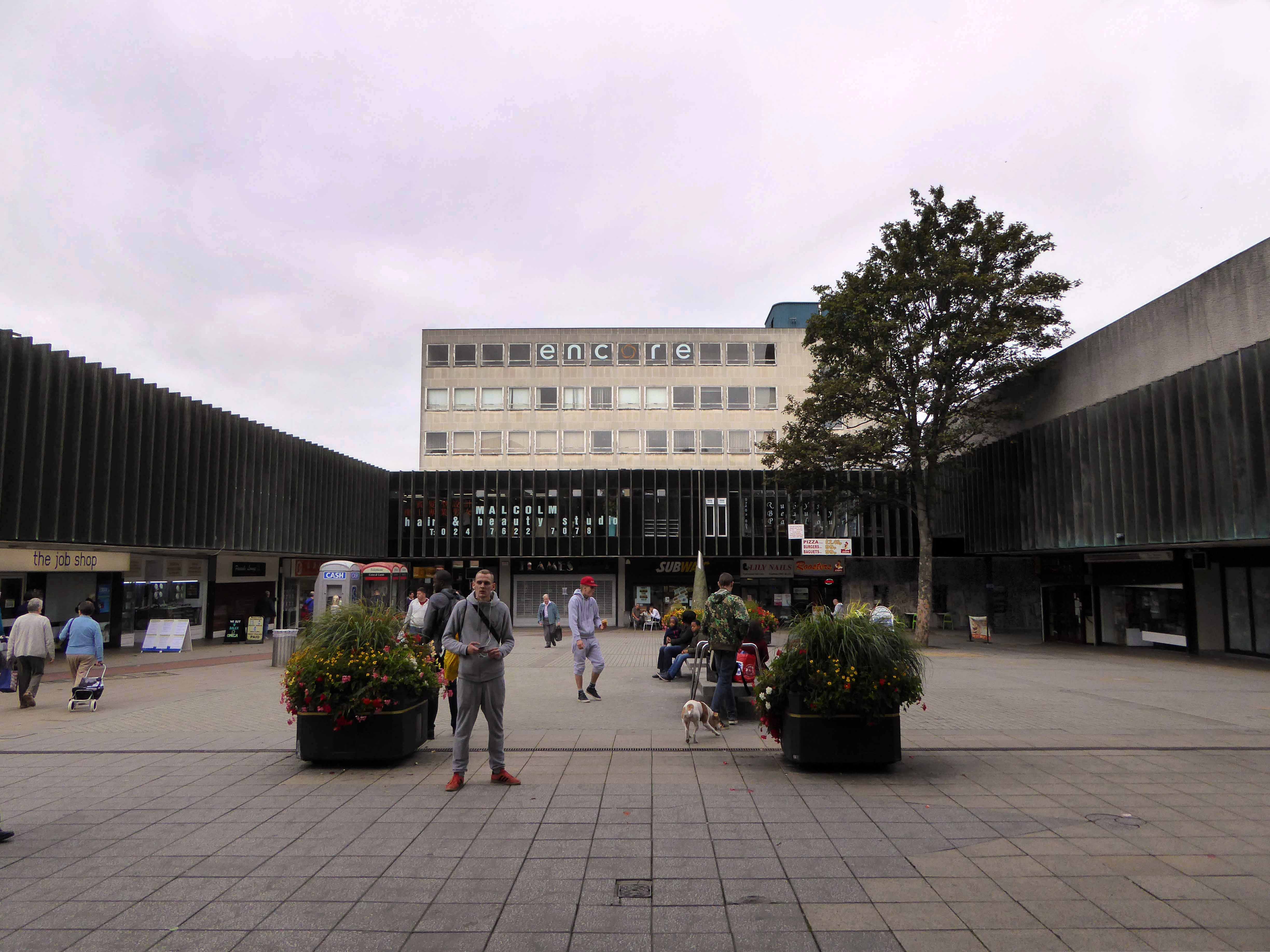
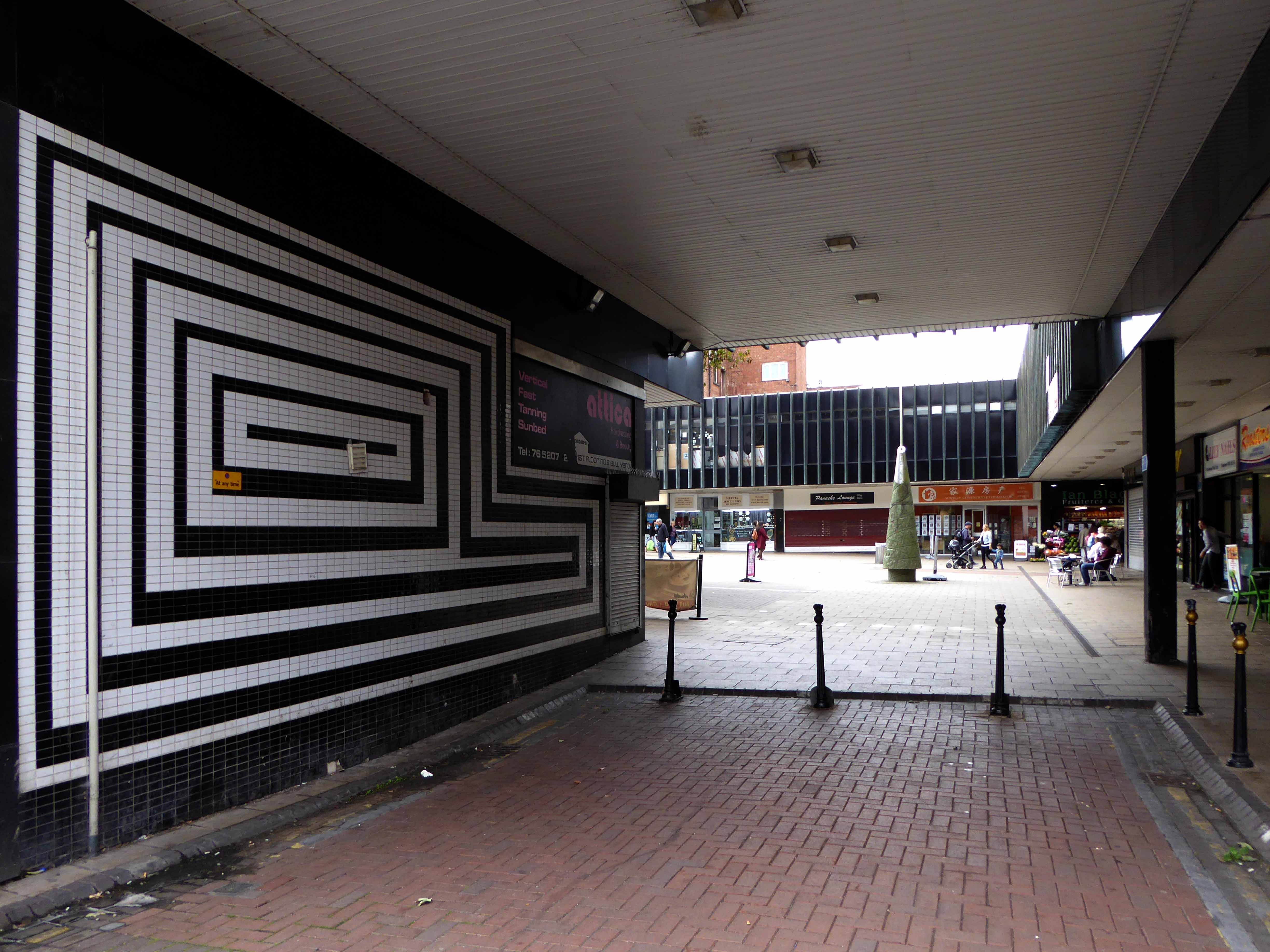
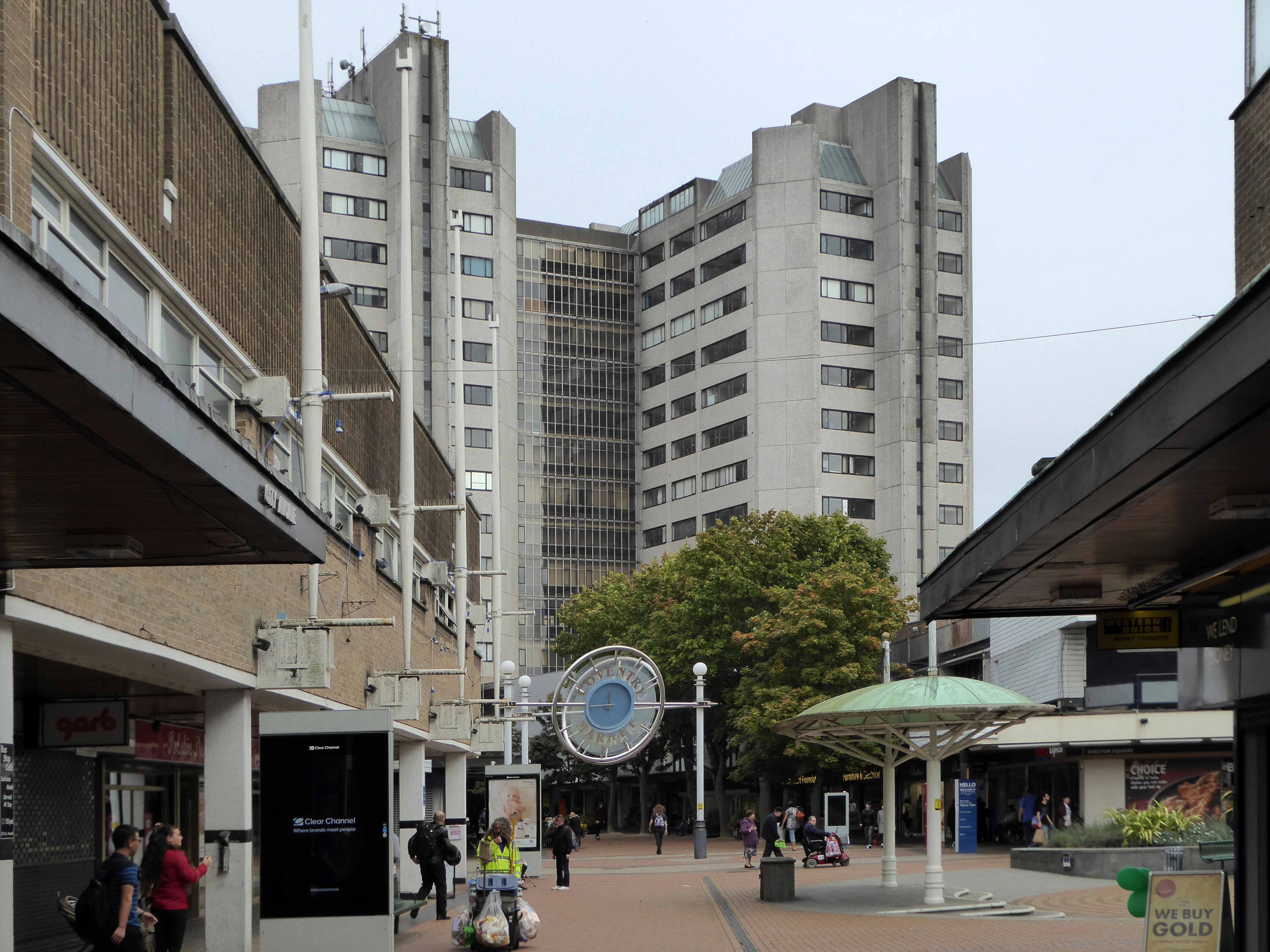
Coventry city centre is a city centre, comprised of several interlocking post- war facets, realised over a thirty year period. This later addition The Bull Yard, the work of Arthur Ling and Terence Gregory, city architects and planning officers 1963-69.

It incorporates pedestrian walkways, retail, civic and car parking facilities with a crowded unease and grace. Much of the original detail survives, though not unusually, some more recent additions detract from the integrity of the scheme.

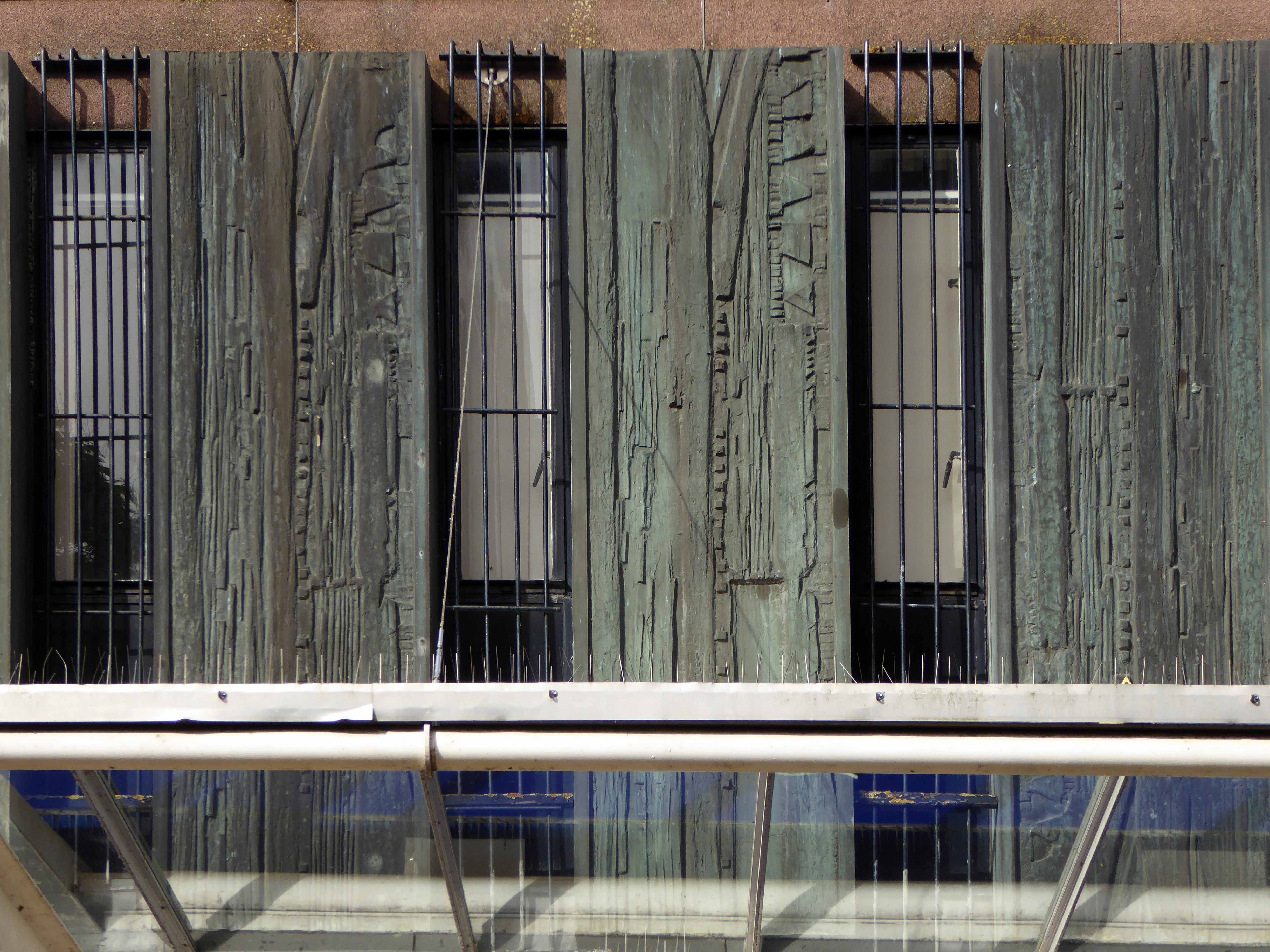
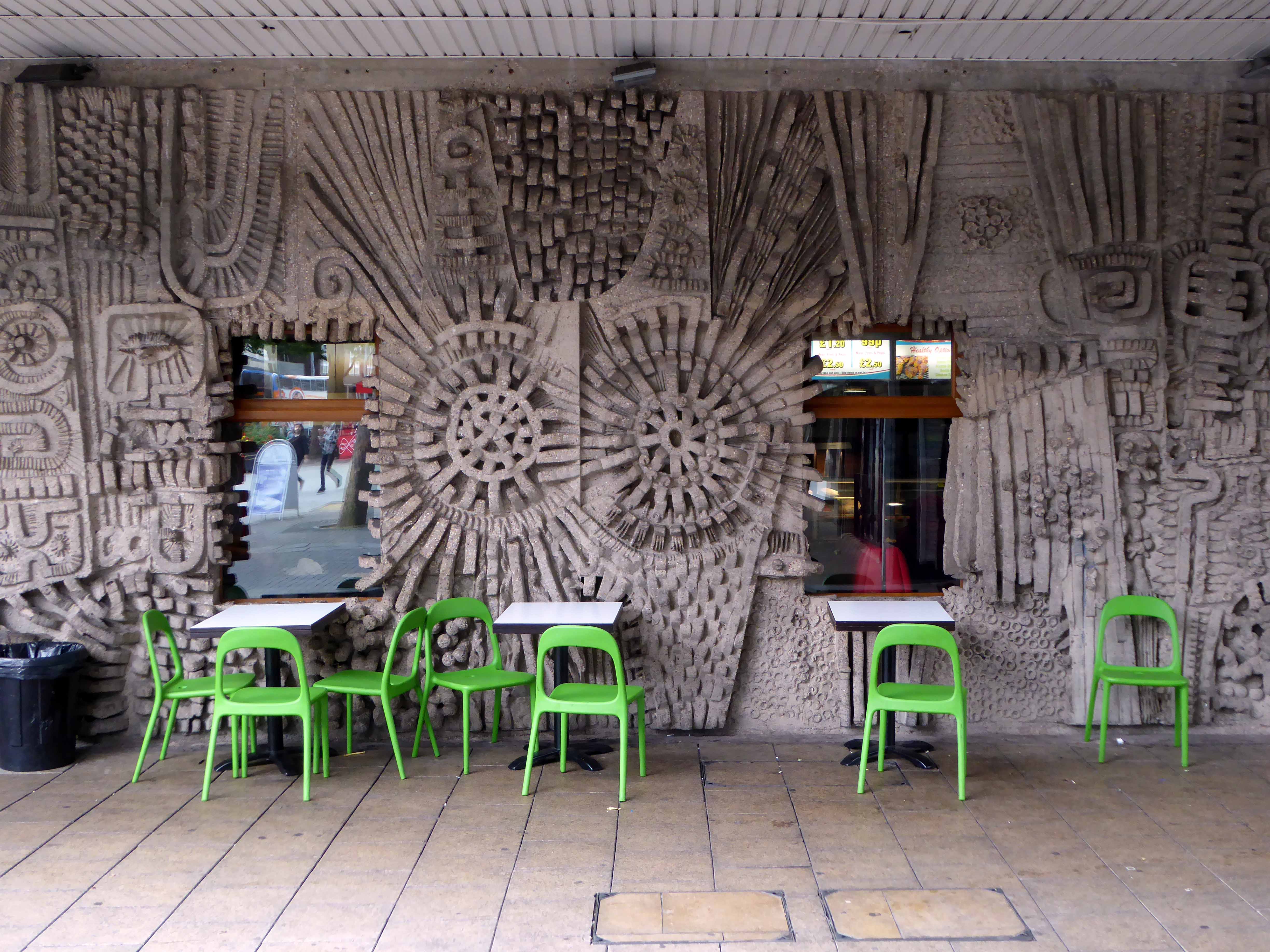
The site is graced by two major works by William Mitchell – the concrete facade and interior of the former Three Tuns public house.

fudge9

And the sculpted panels on Hertford Street.

p1090773

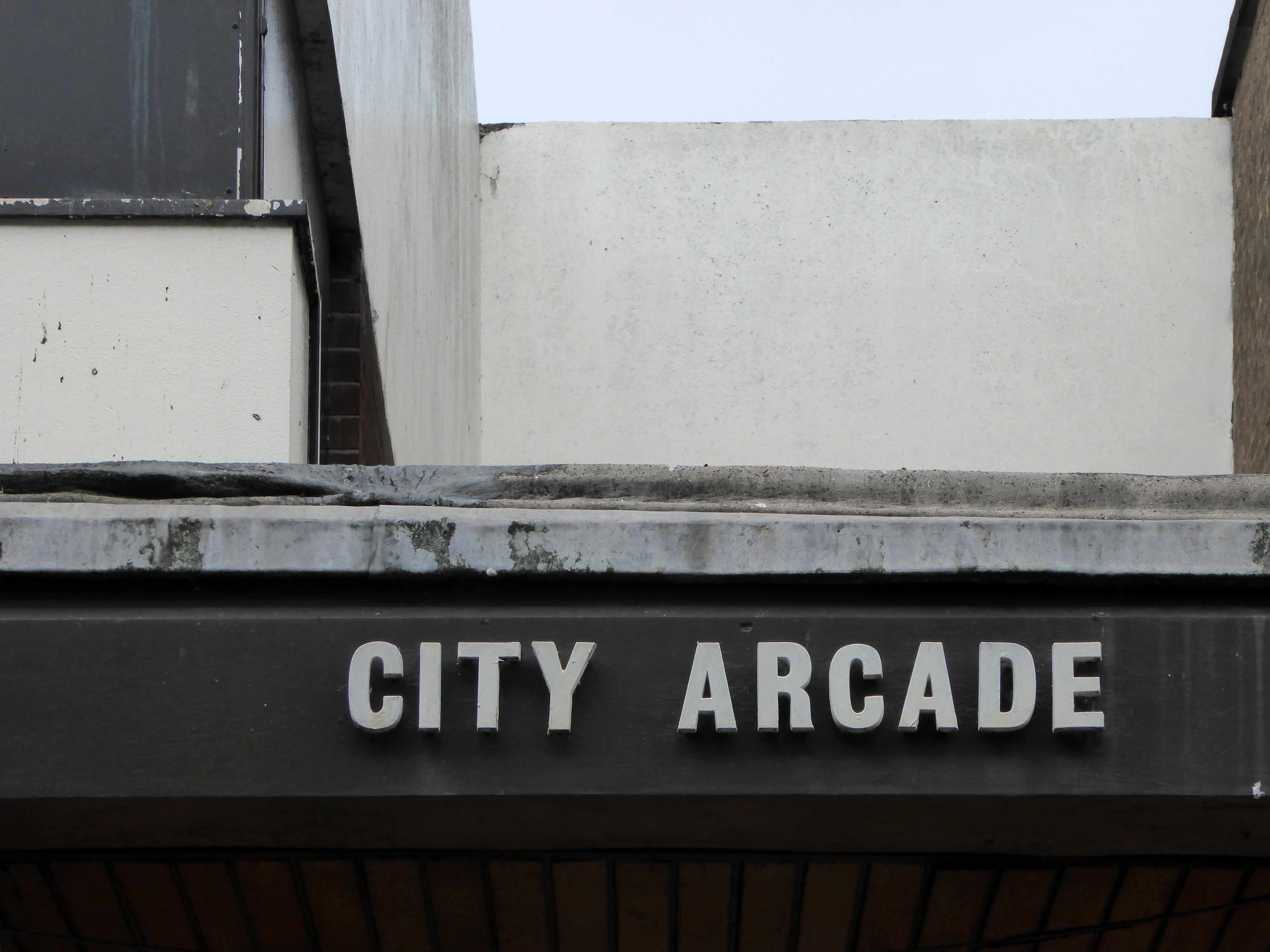
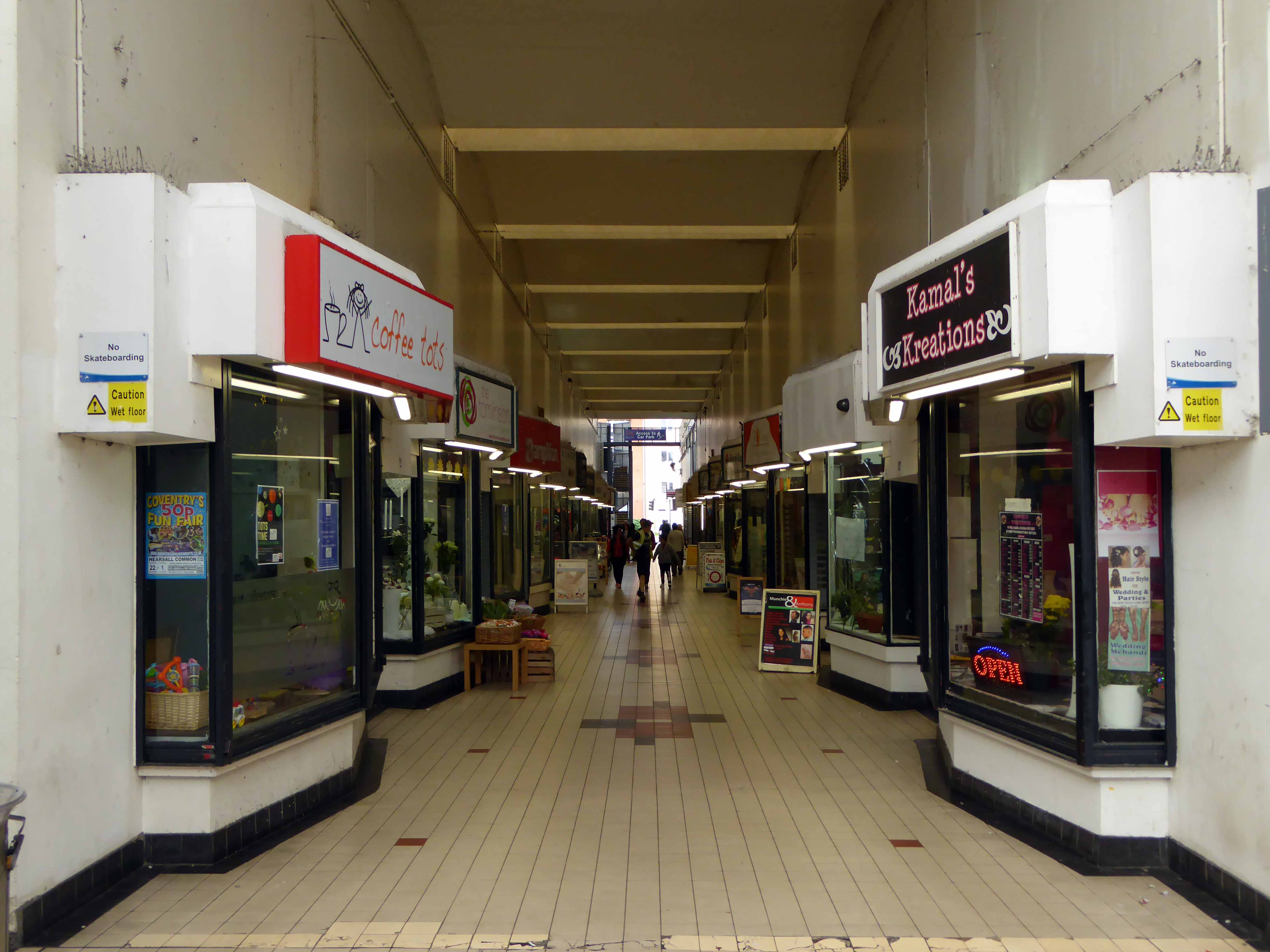
So we are left with a series of spaces that now seem slightly adrift, particularly the City Arcade, as both the earlier and more recent developments in the city compete for clients and customers.

p1090707

To explore is to discover a work continually in progress, or regression, as the forces of heritage, commercial development, and civic planning pull each other this way and that.

There is an initiative for redevelopment for the area yet to find a satisfactory resolution.

Take a look.

p1090676
p1090681
p1090687

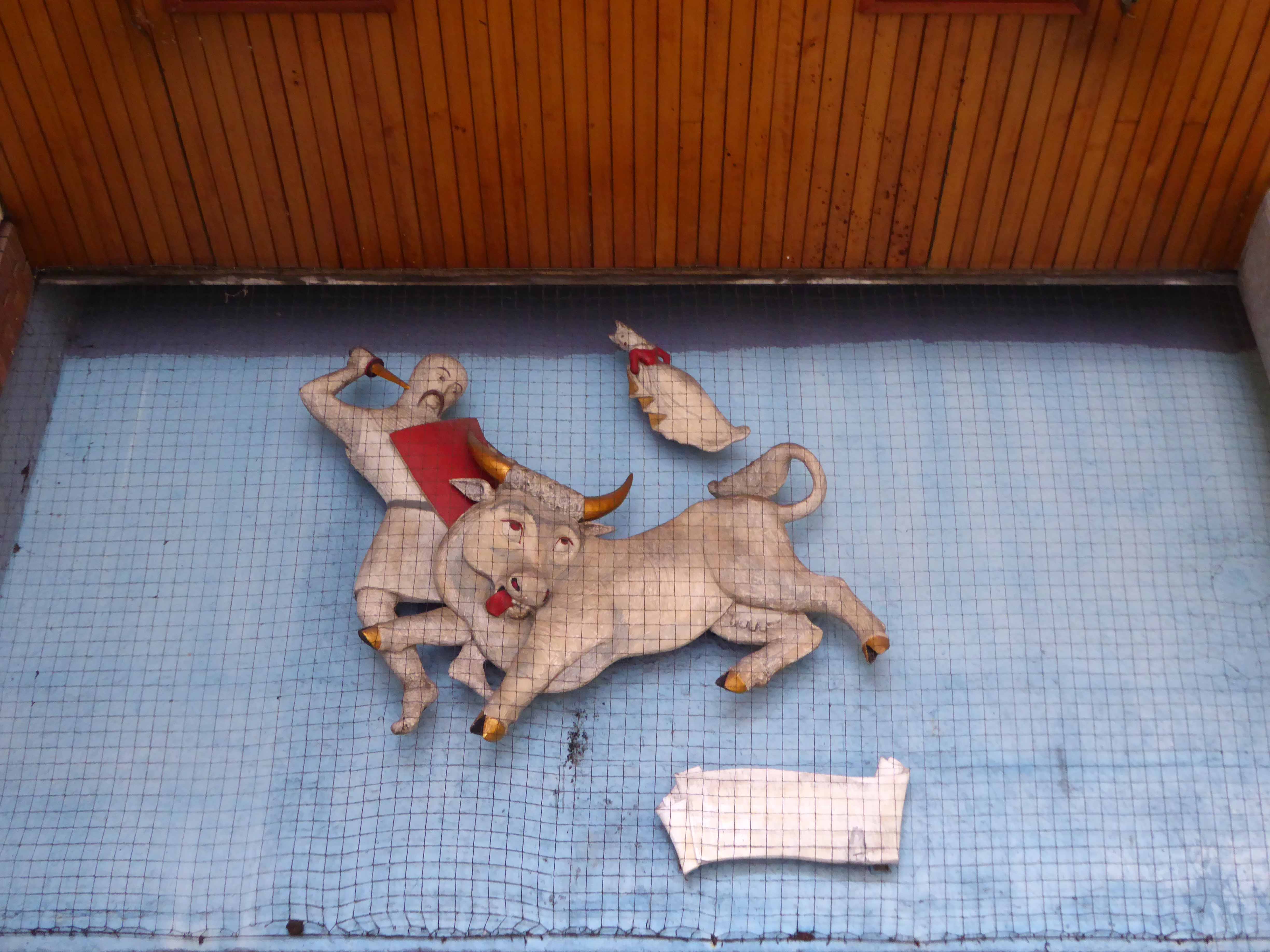
Up on high we find Sir Guy and the Dun Cow by Alma Ramsey 1952.

p1090699
p1090770
p1090700
p1090703
p1090705
p1090701

Coventry Point architects: John Madin Design Group 1969/75

p1090706
p1090707

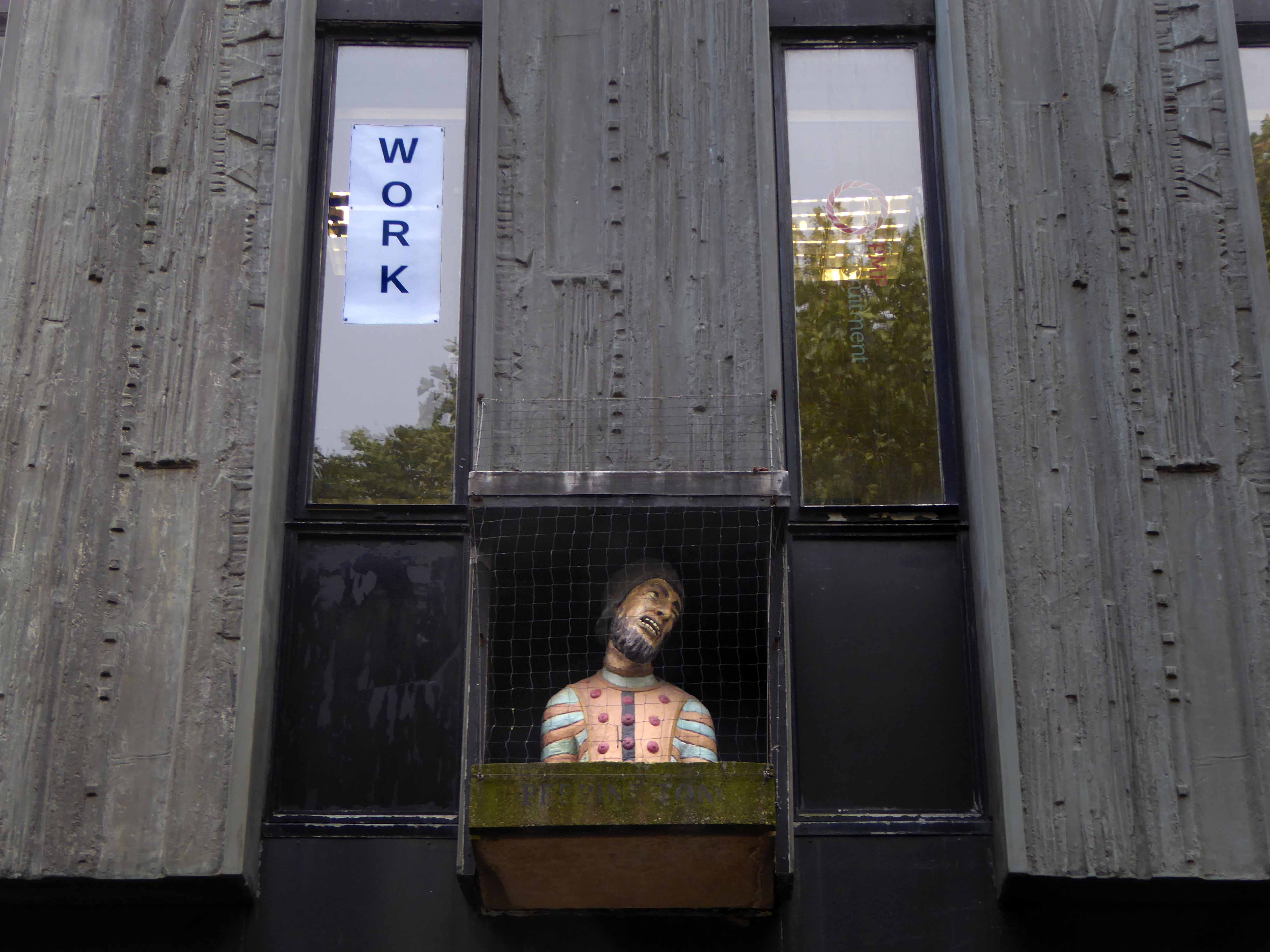
The Peeping Tom head and shoulders sculpture is currently located in Hertford Street, mounted high up over the entrance to the covered walkway. It was originally a public house sign. It is not known who made it. It was displayed sitting in the top corner window of the Peeping Tom Public house which was on the corner of Hertford Street and Bull Yard, not far from where it is now. It was moved when the road was being redeveloped in the late 1960’s and early 70’s.

Coventry Society

p1090793
p1090771
p1090776
p1090775
p1090789
p1090779
p1090790
p1090791