A Short Stockport Walk

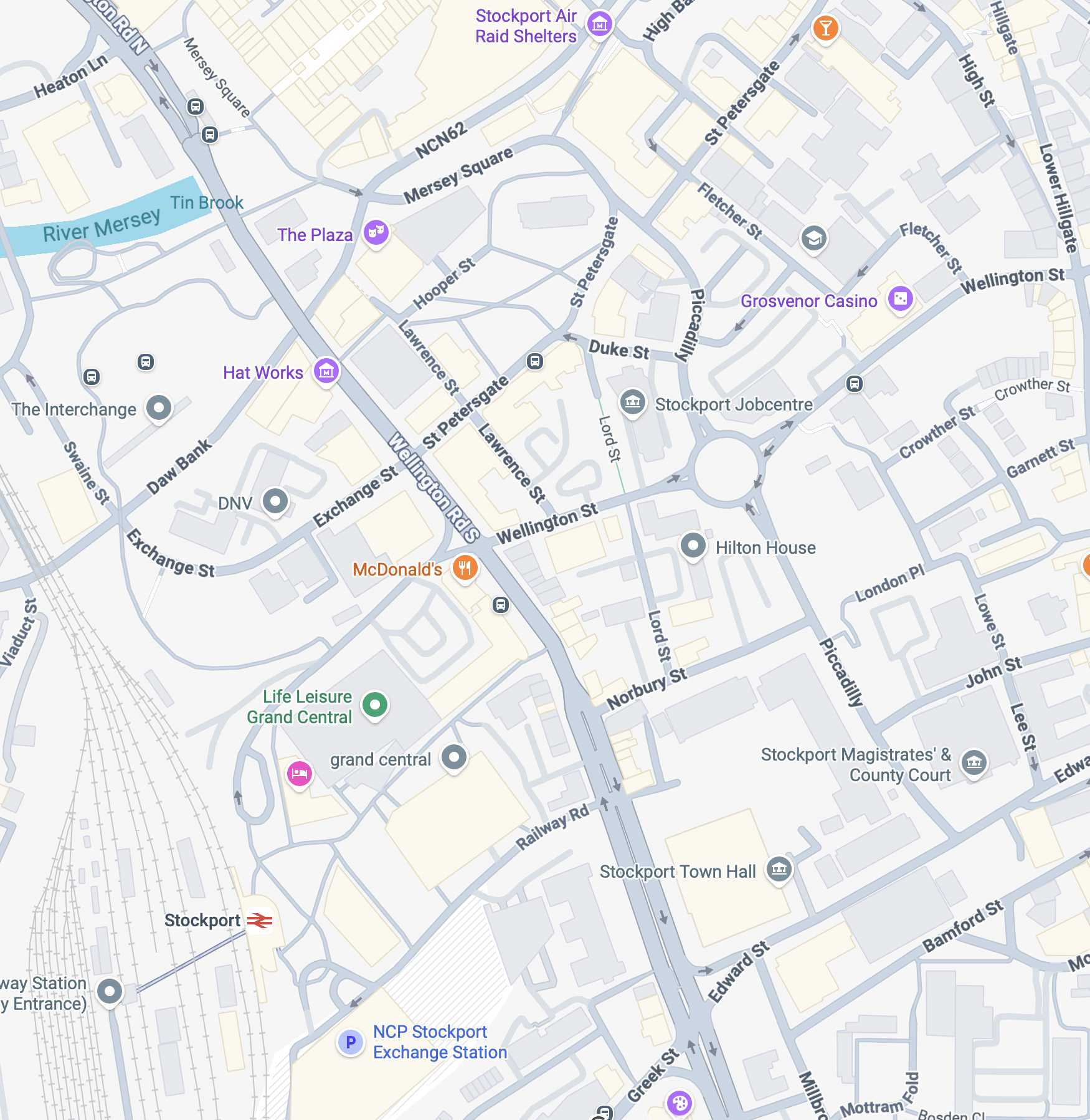
I was asked by SMBC to take folks on a short Stockport walk – beginning at Stockport War Memorial Art Gallery and concluding at the Stockroom, a distance of less than a mile.

So here we are beginning at Stockport War Memorial Art Gallery a Grade II* listed building opened in 1927.

Designed in Neoclassical Greek Revival style with central tetrastyle Corinthian portico, the order loosely based on Temple of Apollo at Bassae

The Gallery has a long history of exhibitions from some of the art world’s finest artists. Today the gallery boasts an extensive exhibition program, which gives emerging artists a chance to showcase their work.
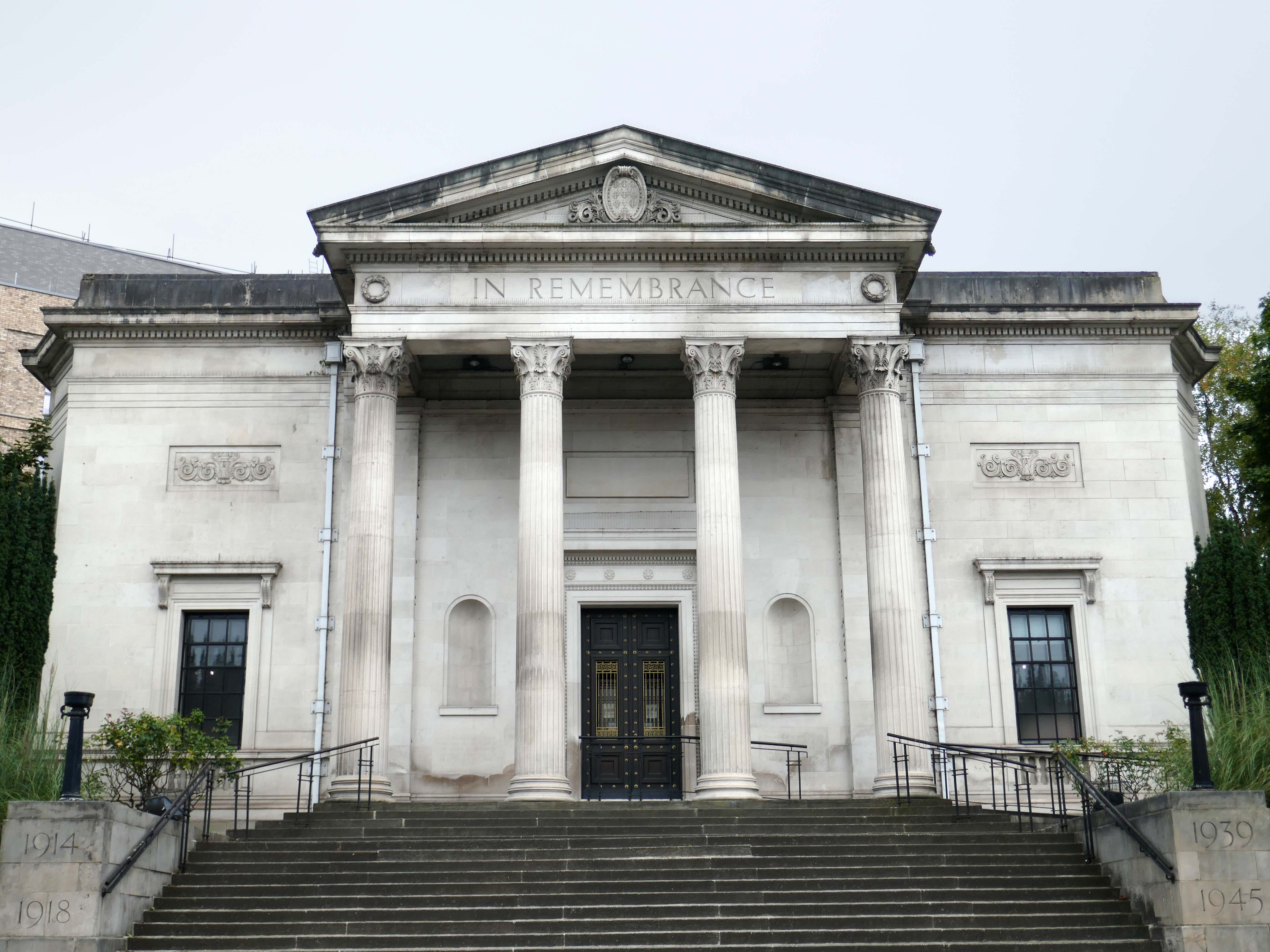
 Designed by James Theodore Halliday of Halliday Paterson & Agate of Manchester.

Sculpture by Gilbert Ledward.
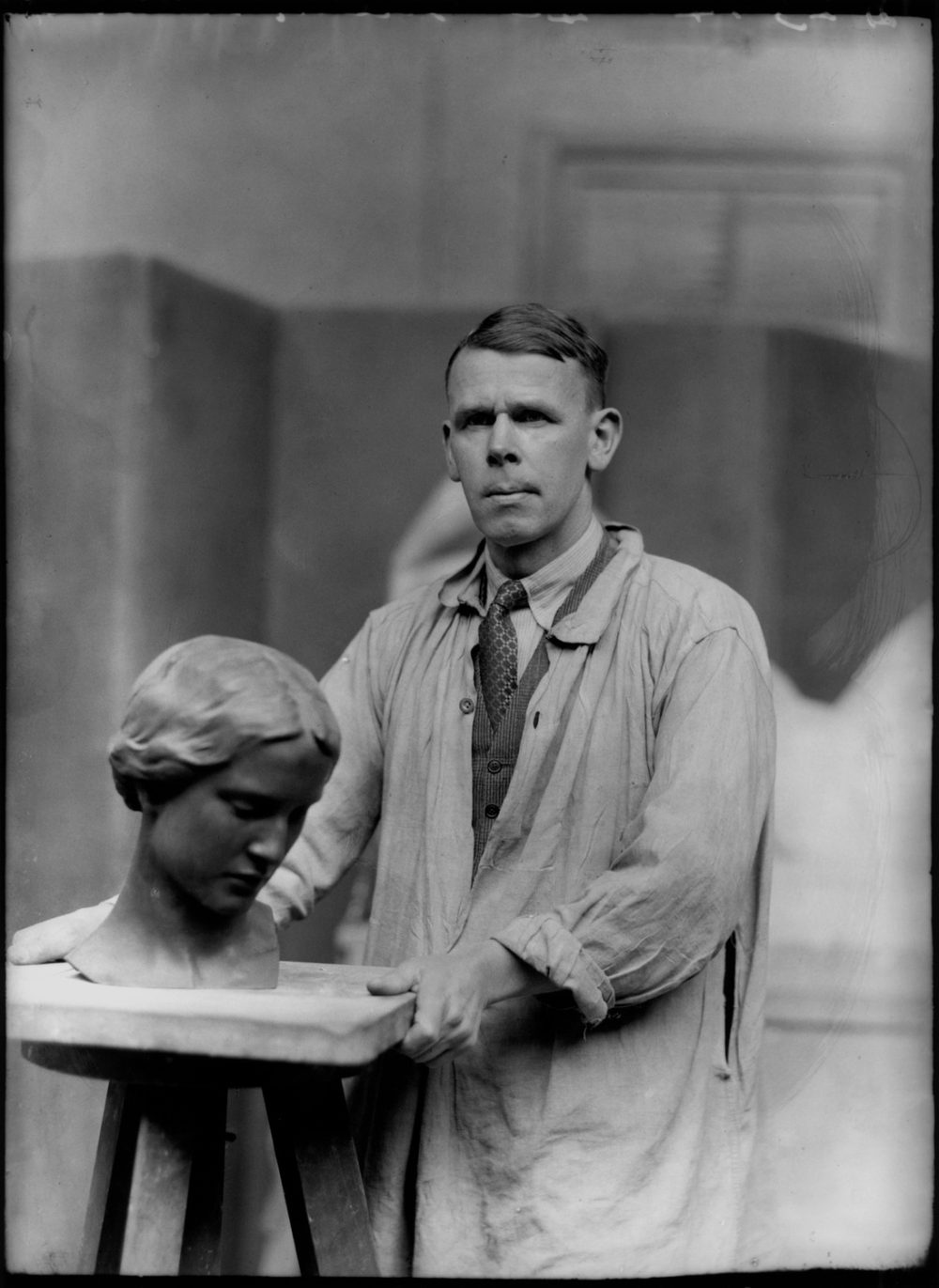
© National Portrait Gallery

Crossing over the Wellington Road South to the site of the former Mount Tabor Chapel 1868 designed by William Hill.
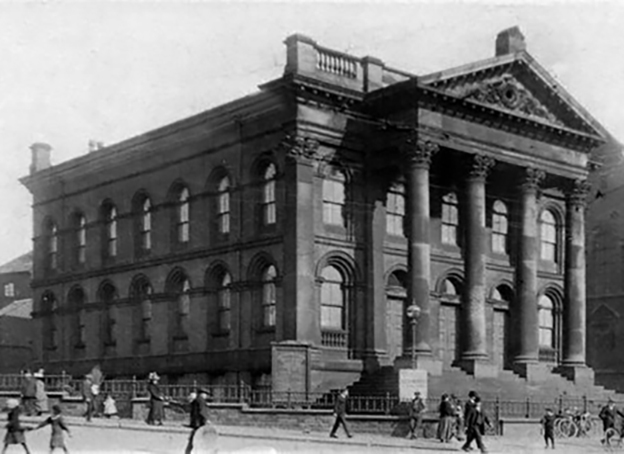
Closed in 1954 demolished in 1969.

The capitals of Chapel’s Corinthian columns, surround the site of the Cockleshell Hero memorial 2017 – sculptor Luke Perry.

The former Edgeley milkman James Conway took part in the Royal Marines’ most famous wartime raid, where he was one of the twelve men who paddled more than eighty miles in canoes up the Gironde to plant limpet mines on shipping in the German occupied French city of Bordeaux in 1942.
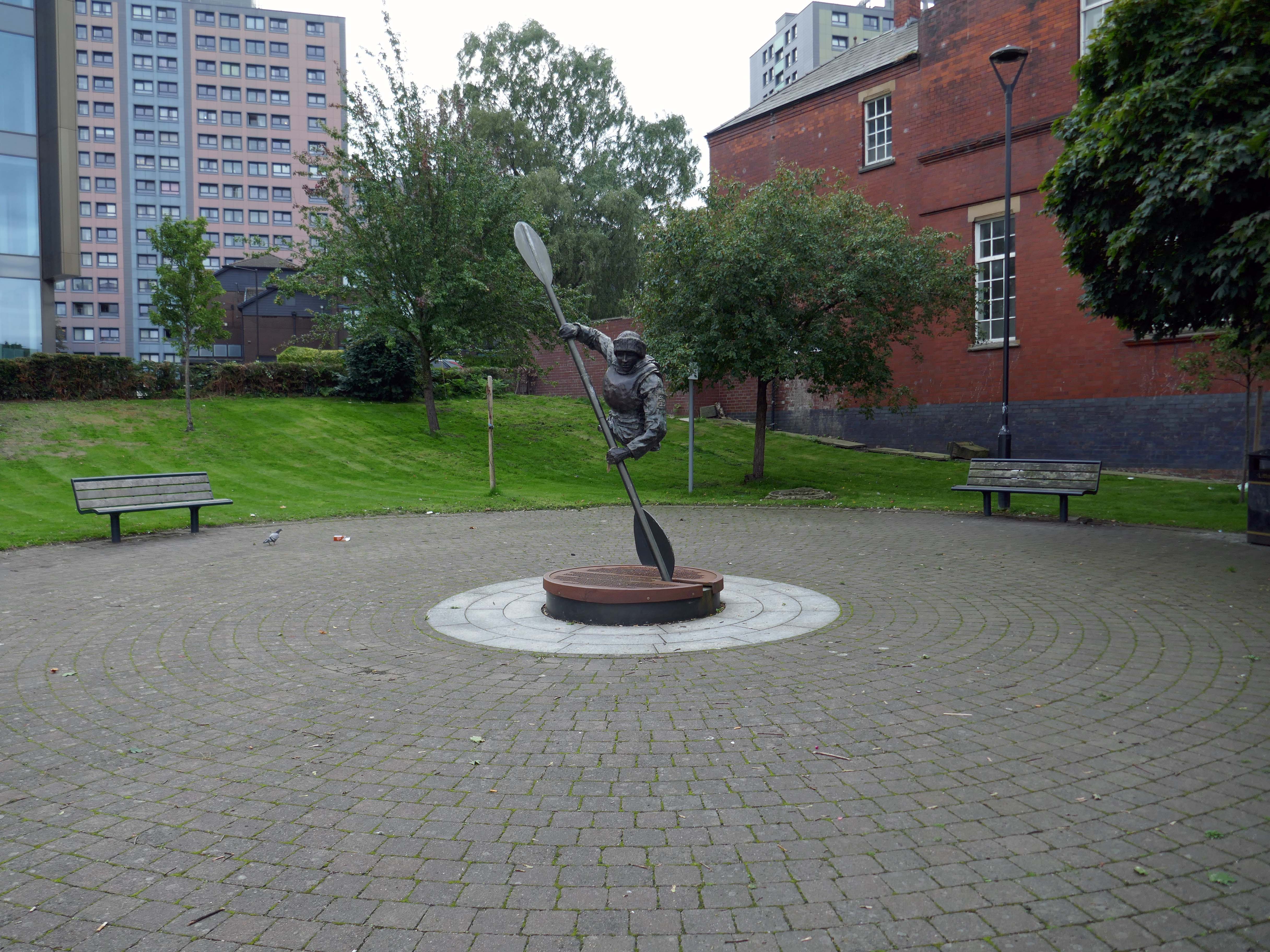
Royal Navy UK

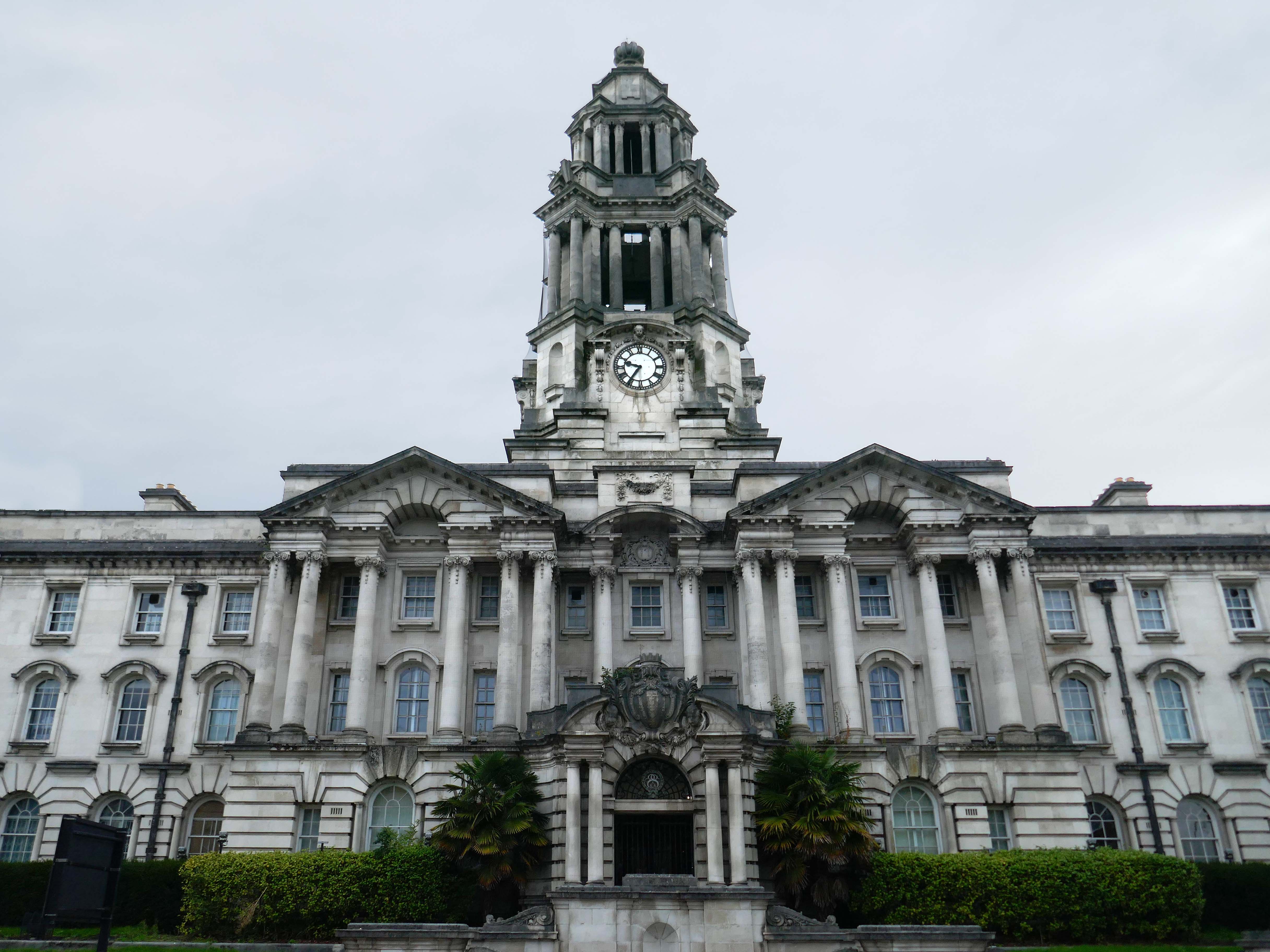
Down the hill to Stockport Town Hall 1908 another Grade II* listed building – designed by Sir Alfred Brumwell Thomas, built in a free English Baroque style.

Although much simpler than continental Baroque architecture, English Baroque designs were equally heavy, sensual and decorative.
Across the road the former Stockport Infirmary l832 Grade II listed – architect Richard Lane.

Currently named Millennium House, home to the Department of Works and Pensions.
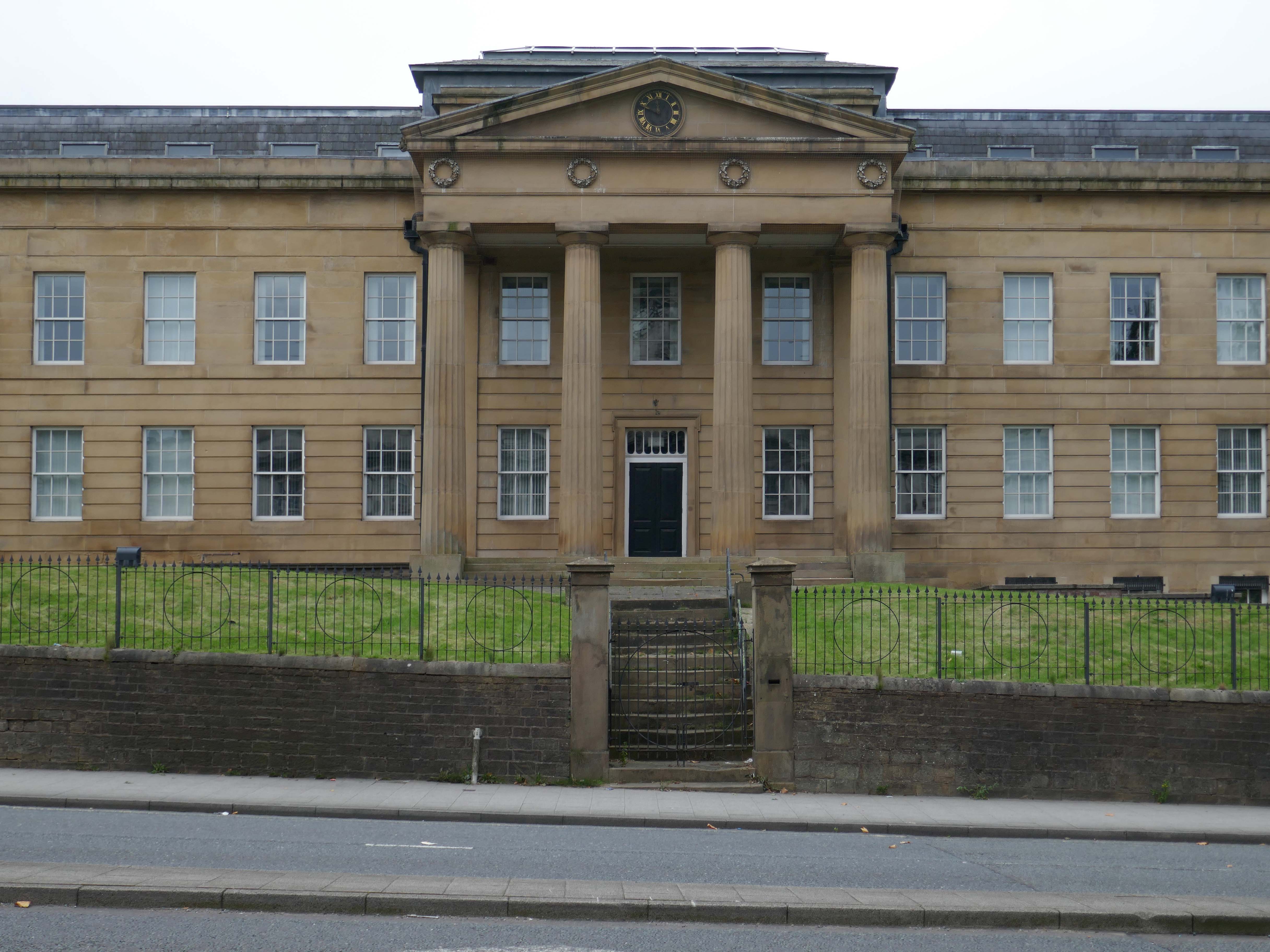
Around the back of the Town hall we find Stopford House built in 1975 and designed by JS Rank OBE, Director of Development & Town Planning, Stockport Council.
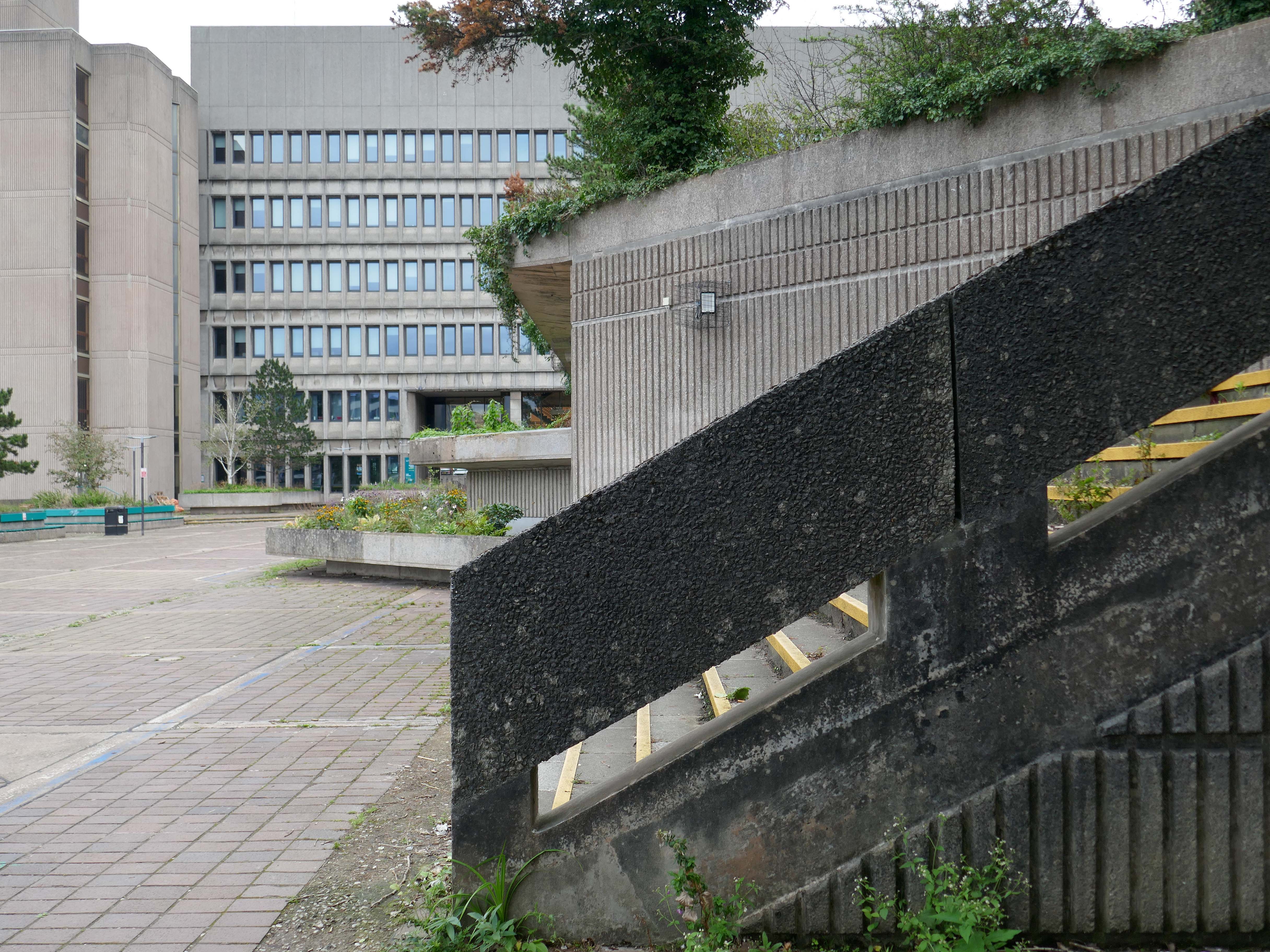
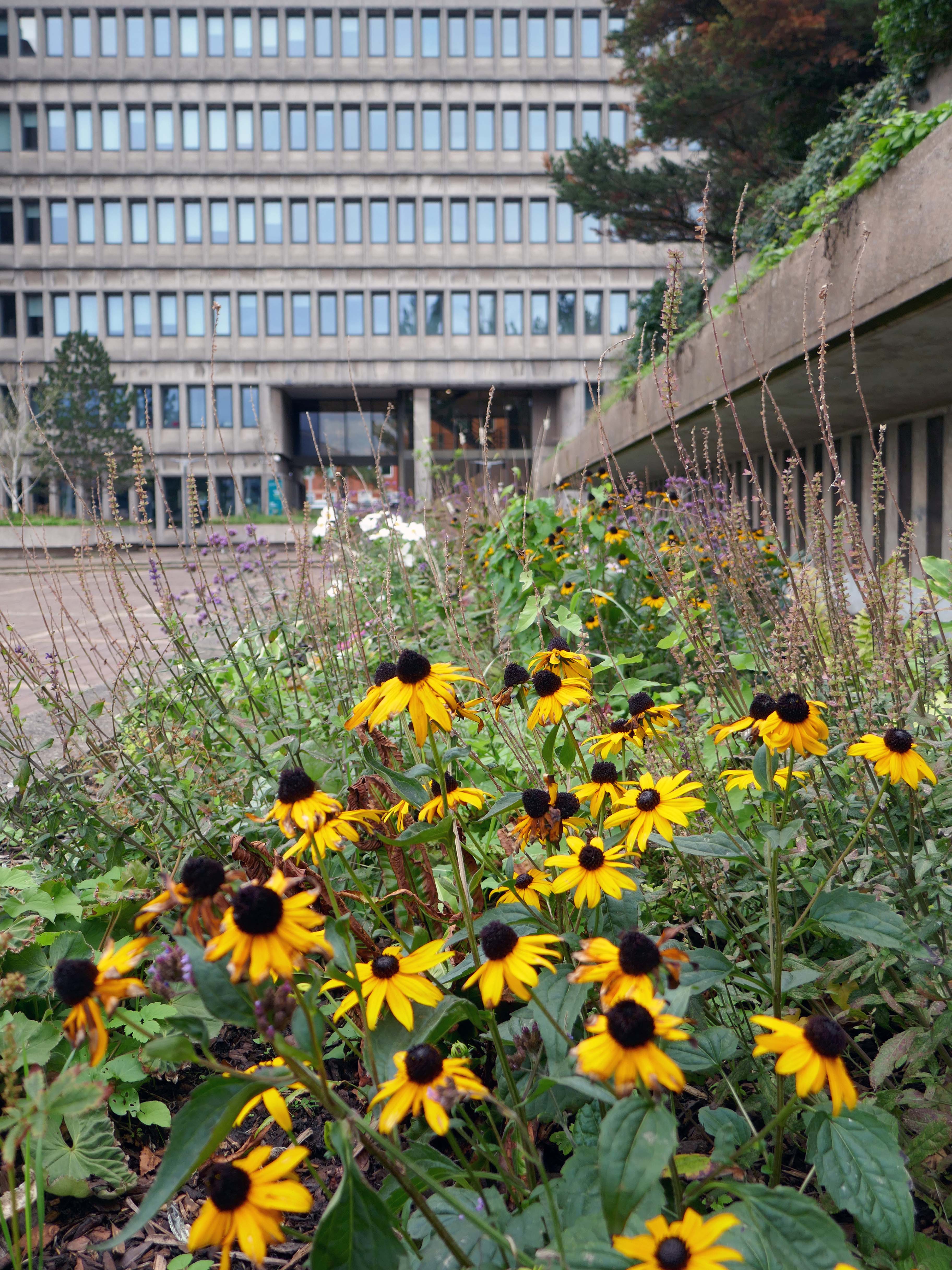
The painting has recently been much improved by the folks from Merseyway Workshop along with local volunteers.
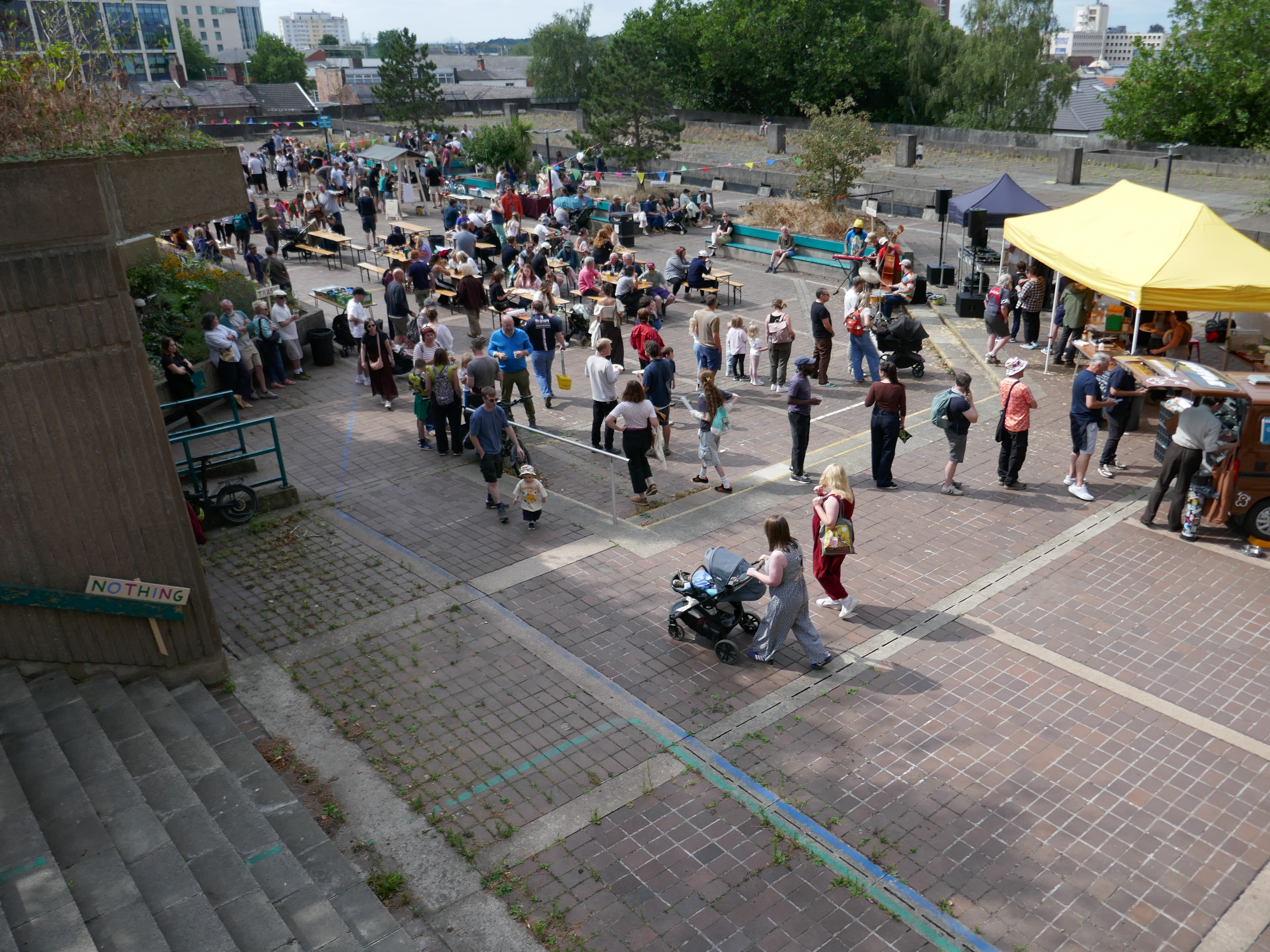
They also staged the hugely successful Stopford House Party in August.
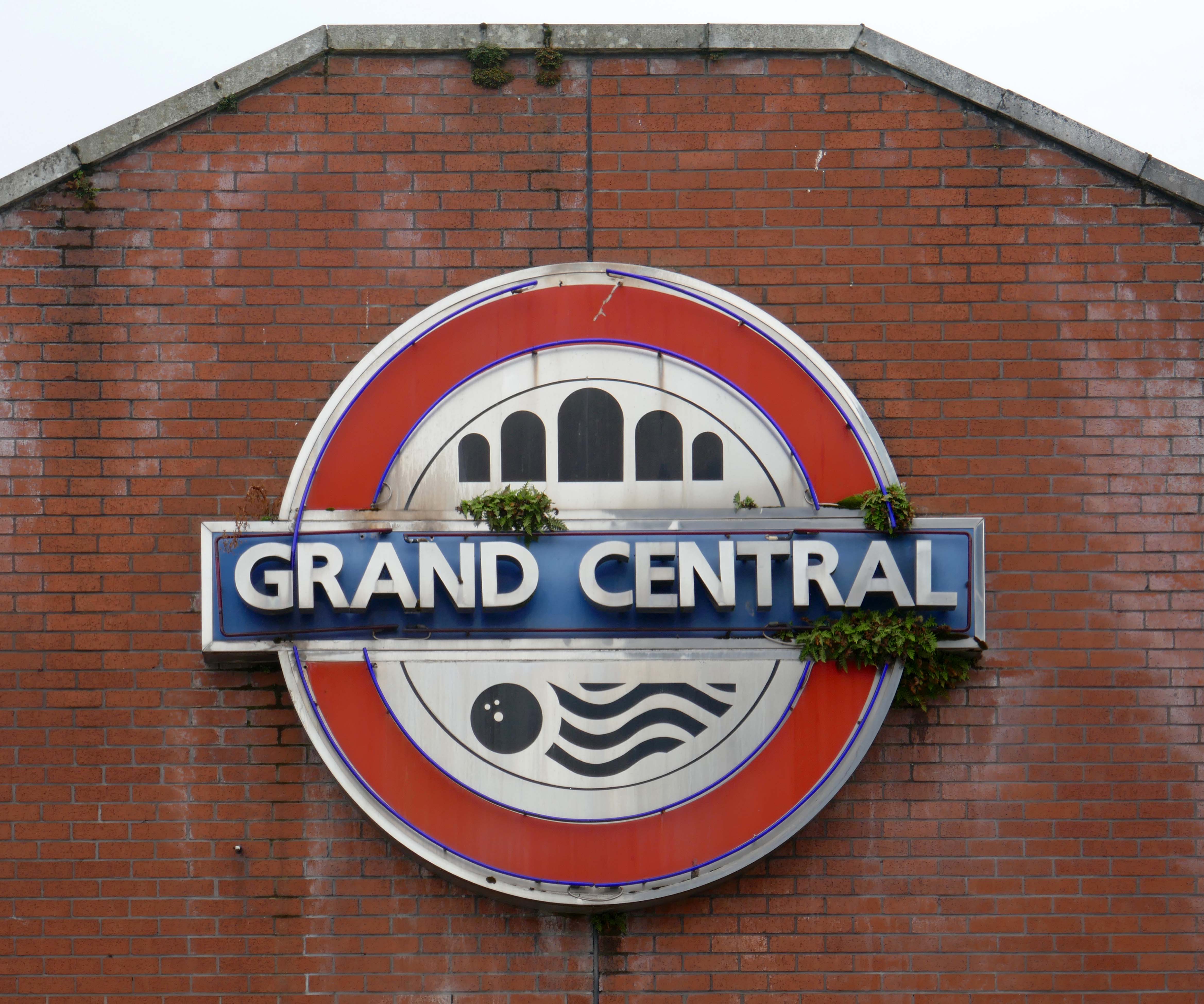
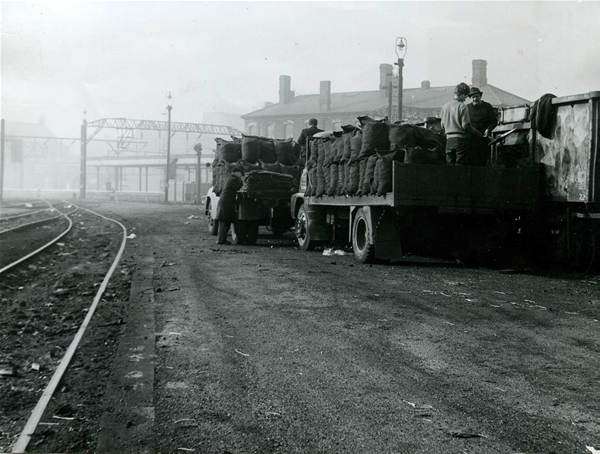
Back down the road to the old Grand Central.
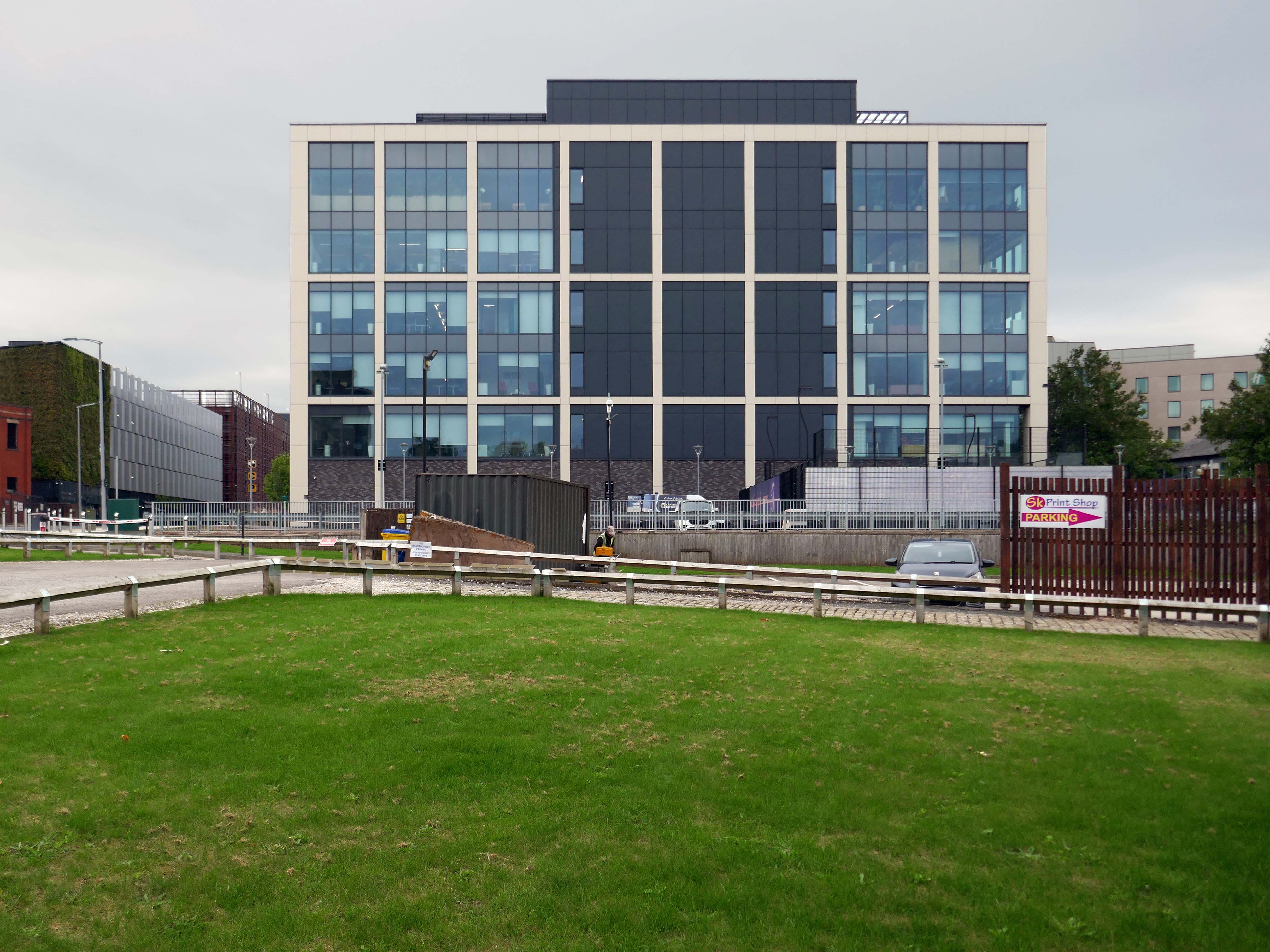
Formerly a large coal yard, replaced by a huge leisure facility and now a hotel and office complex, with a municipal swimming pool attached.
Next door the former Royal Mail sorting office.
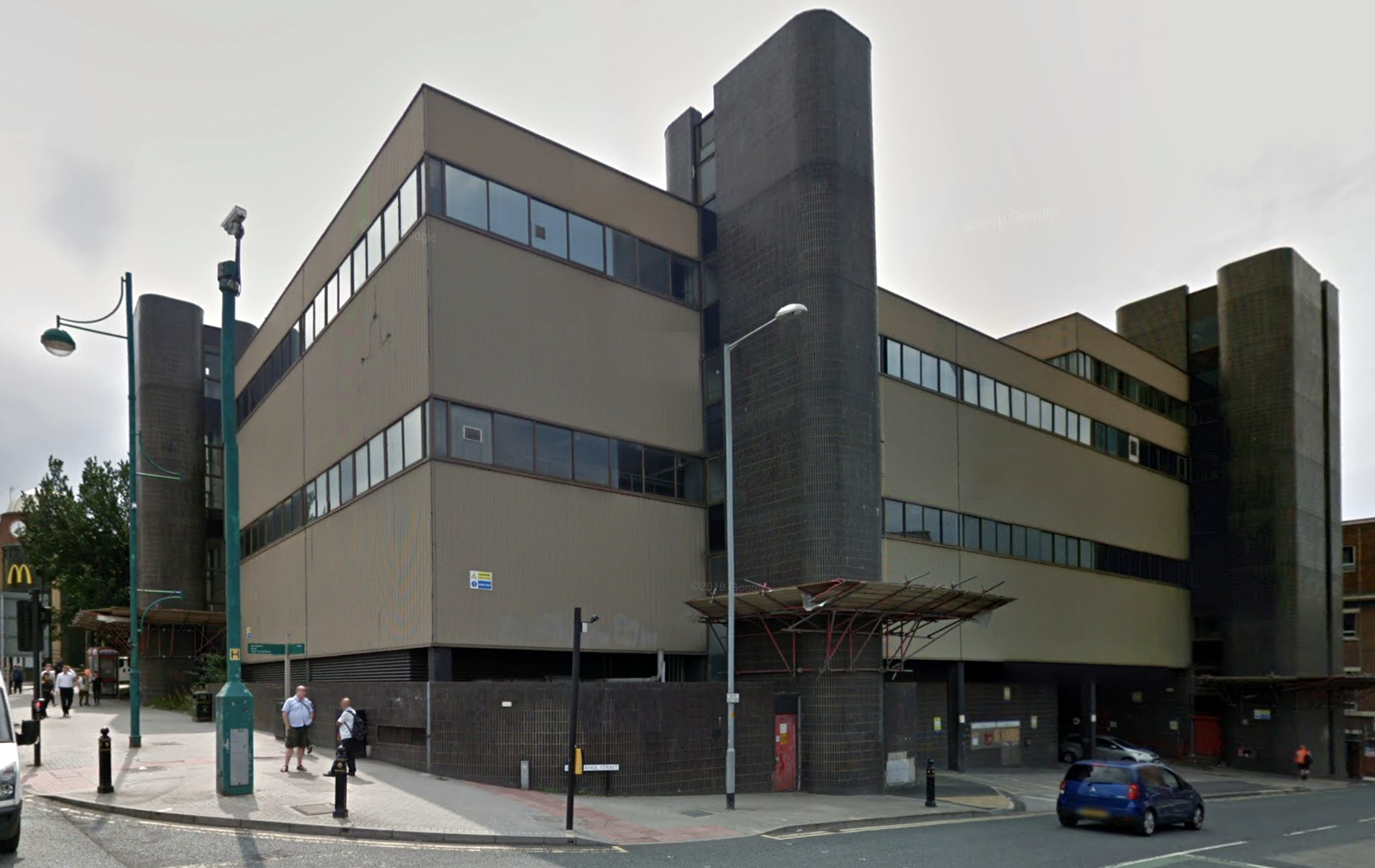
The transformation of a building once dubbed Stockport’s ugliest has been completed, now known as The Mailbox.

When it was built in the 1970s, it was given extra reinforcement due to the risk of IRA letter bombs. The sorting office closed and moved sites in 2010, from when the building was vacant for nearly a decade.

The state-of-the-art development is now home to 117 ‘stunning’ new one and two-bedroom apartments and 12,500 square feet of commercial space. There is an atrium at its heart a roof terrace with views across the town centre.

It also has an eighteen -metre high green ‘living wall’ covering the front and other parts of the exterior, which with 114,500 plants is the largest of its kind by surface area in the North of England.
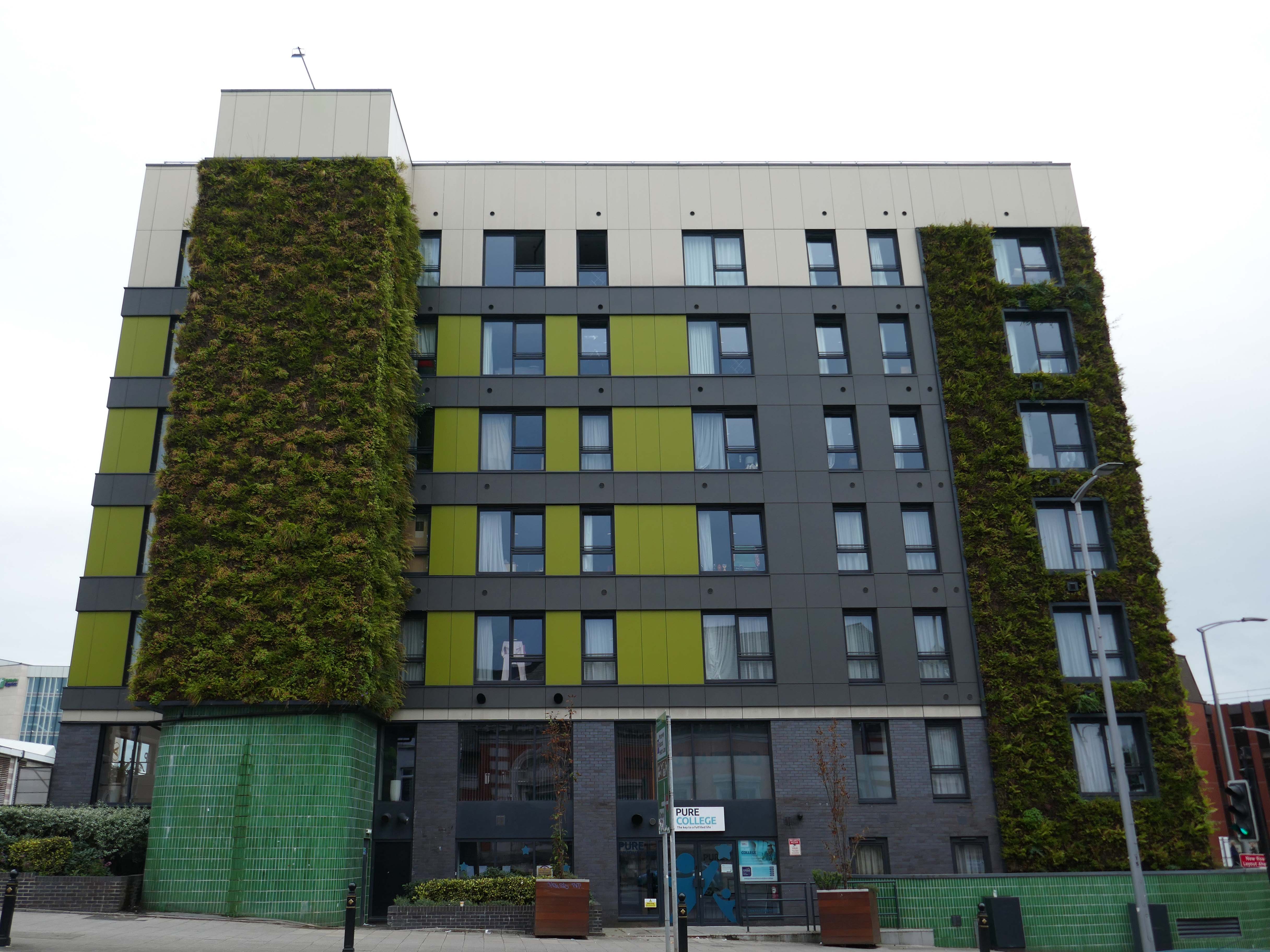
MEN 2023

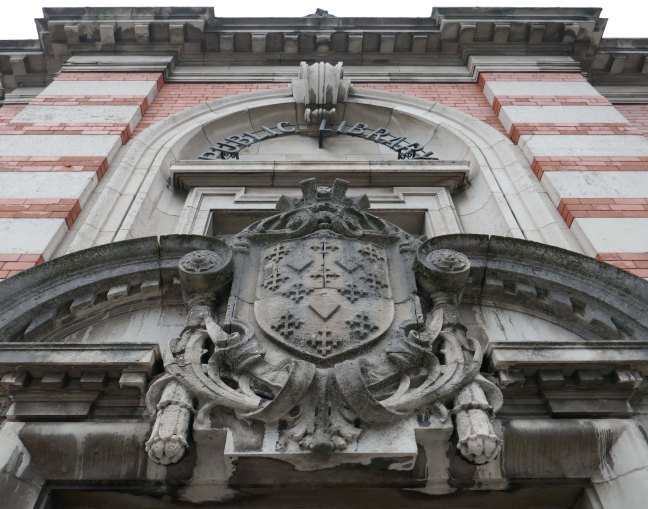
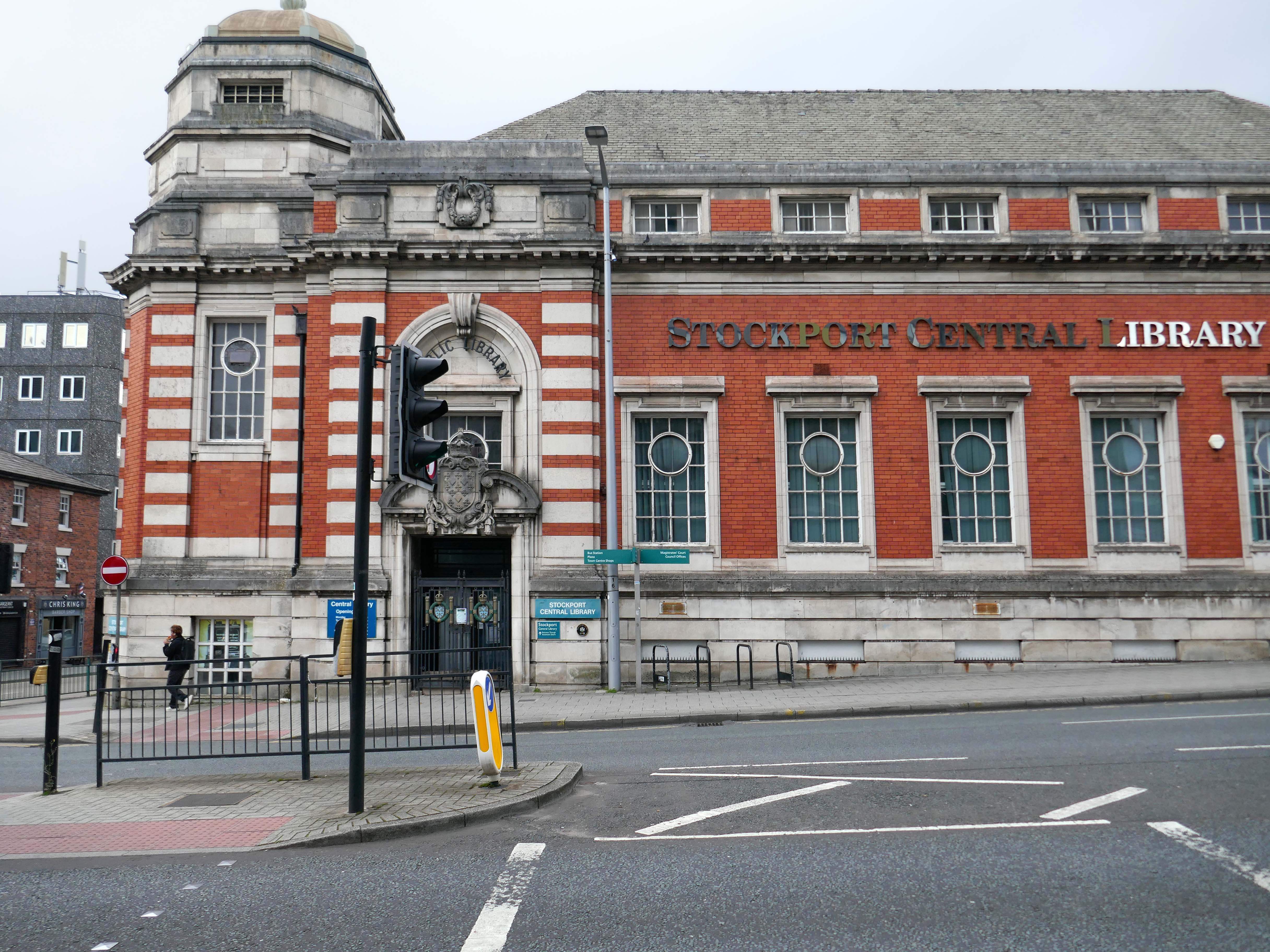
Over the road the Grade II listed former Central Library – architects Bradshaw Gass and Hope, funded by Andrew Carnegie, opened in October 1913.

Current plans are to use the building as a new home for the Stockport Music Service.
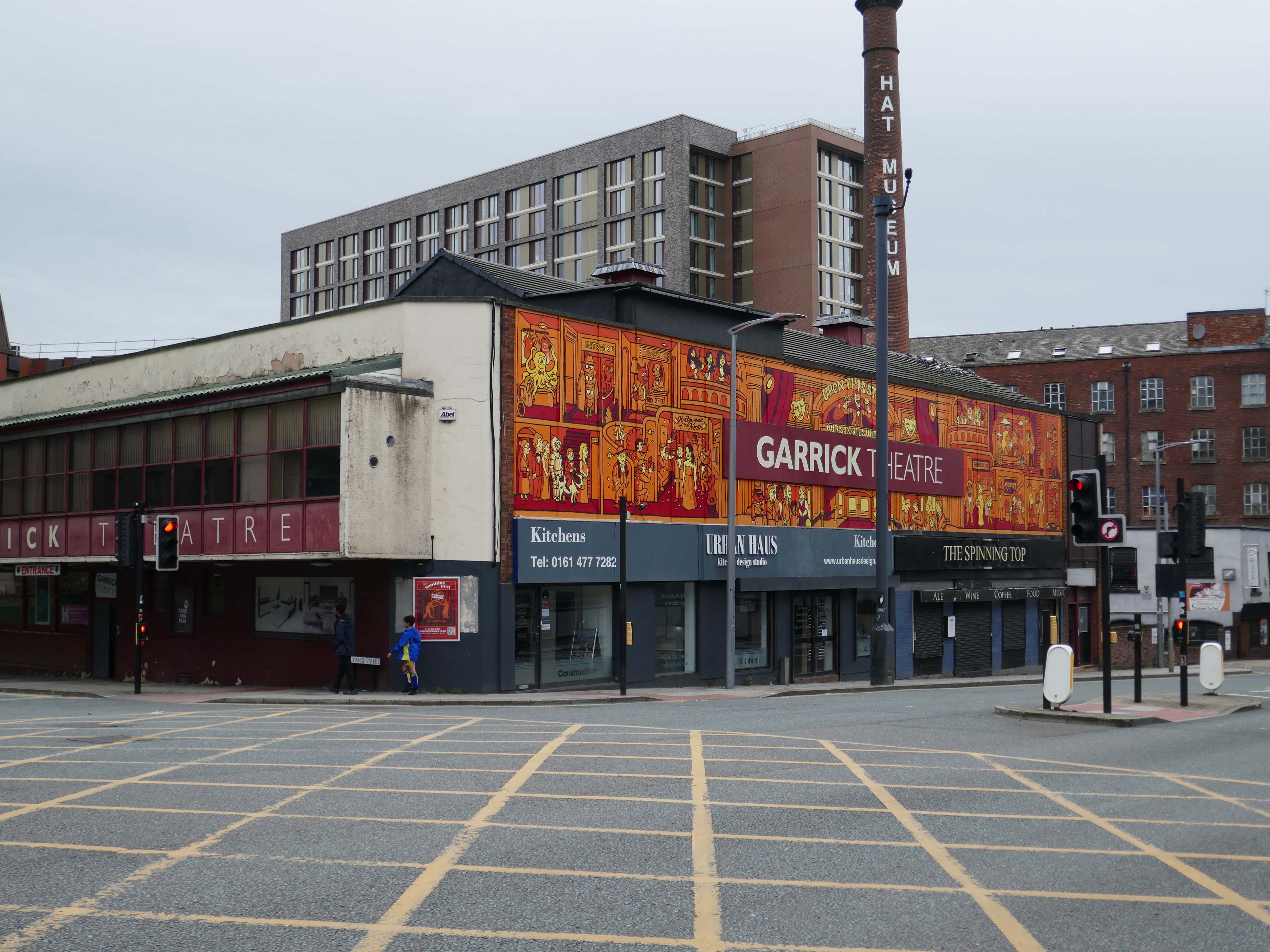
Adjacent is the Garrick Theatre.

The Stockport Garrick Theatre was founded on 24th of October 1901, by engineer Edwin Heys and his fellow actors: fugitives from the disbanded dramatic society of Stockport Unitarian Church. Meeting in what was then The Church Coffee Tavern on St Petersgate, Heys and his friends resolved to found a new society ‘to perform the best plays by the most capable amateur actors and with the finest scenic effects’.

The society purchased its current building, an old mill occupied by an assortment of small businesses, in 1920. Since then, the building’s labyrinthine interior has undergone various refurbishments to enhance the society’s ability to produce theatre to the highest standards possible.

The newly painted murals are by Captain Kris.
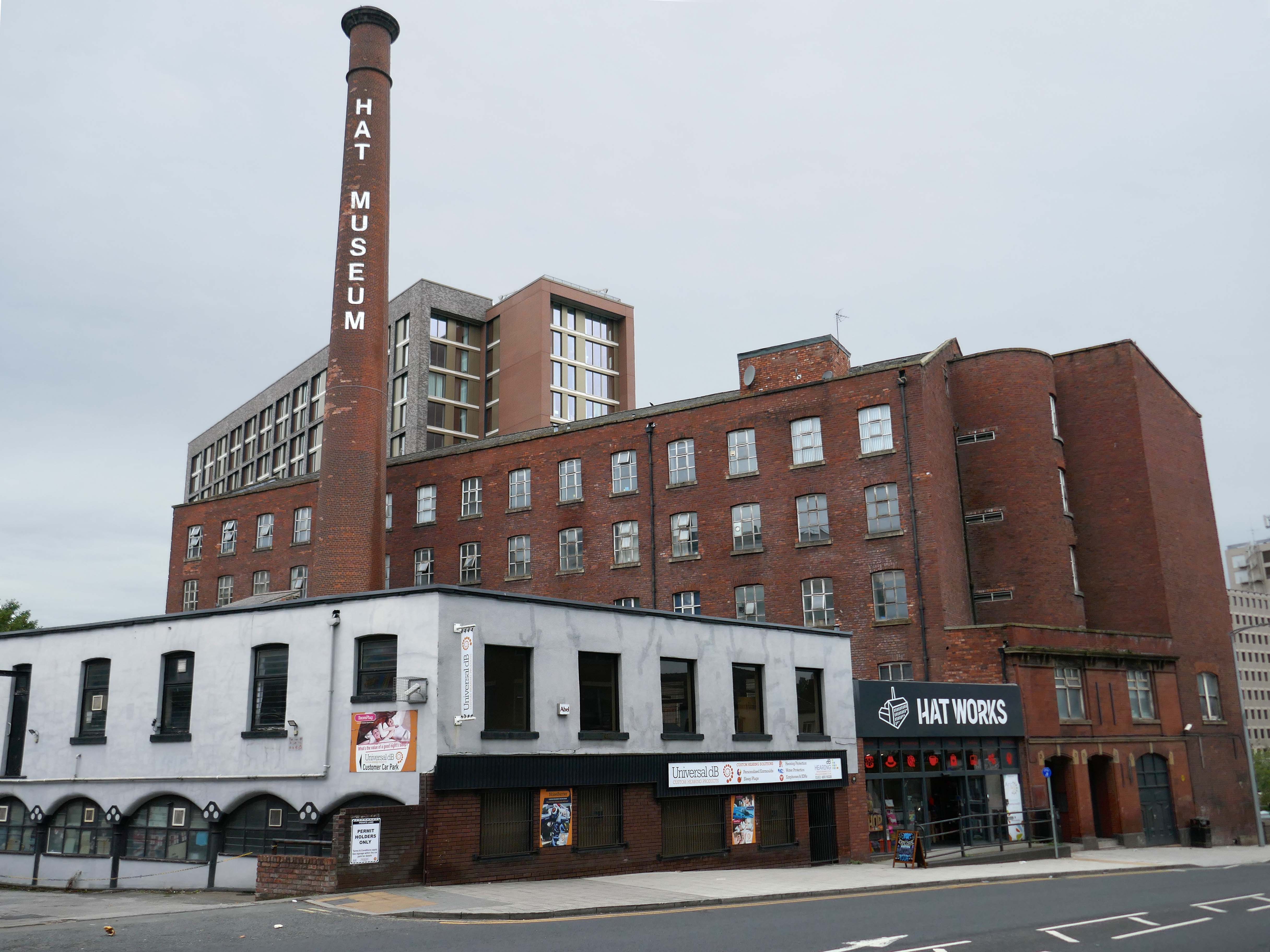
Next door the Hat Works – the UK’s only museum dedicated to the hatting industry, hats and headwear.
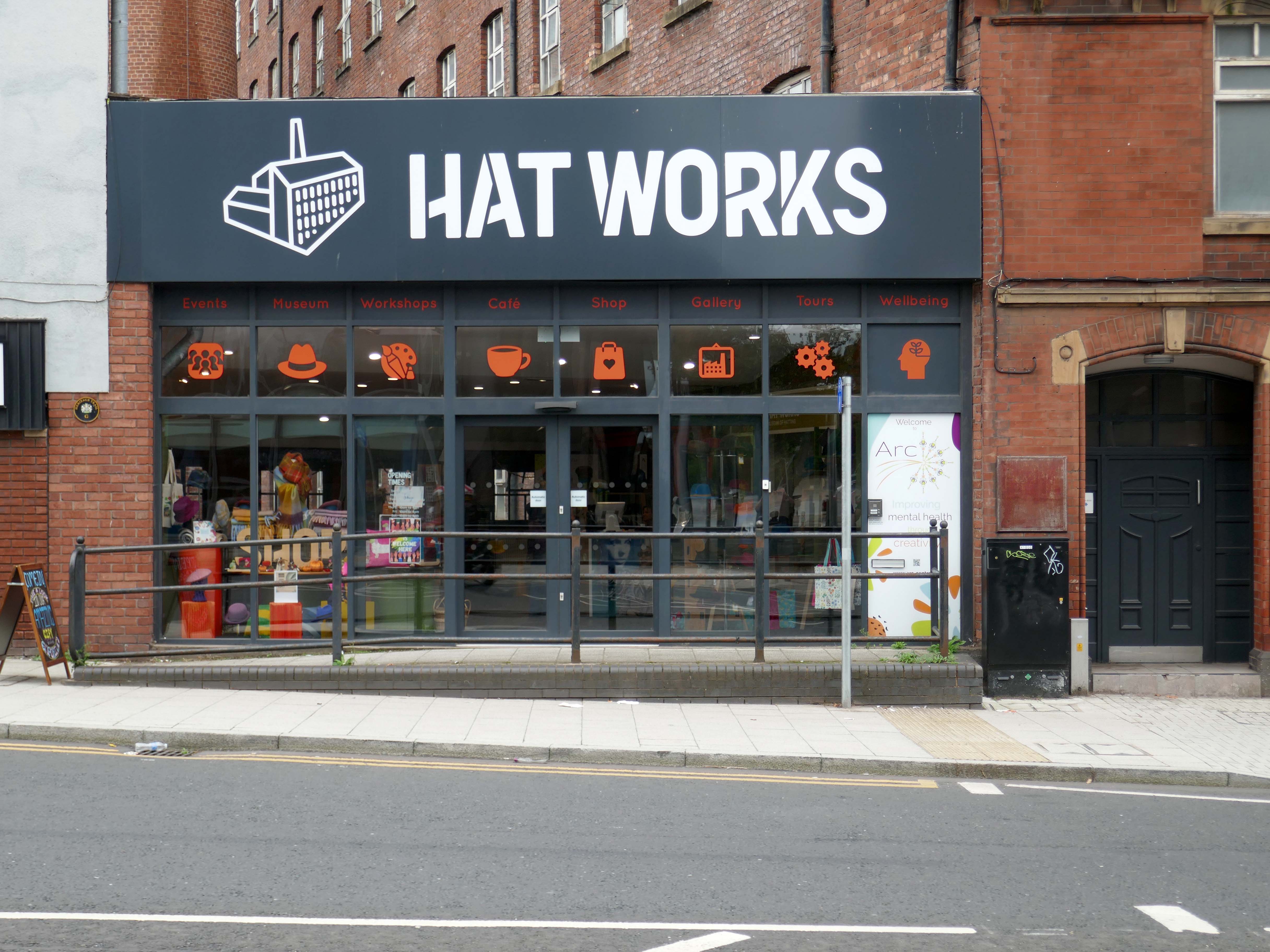
Occupying part of the Grade II listed Wellington Mill, a cotton mill of 1831 which became Ward’s Hat Works.

Both cotton spinning and hat making contributing to the economic development of Stockport in the C19th.
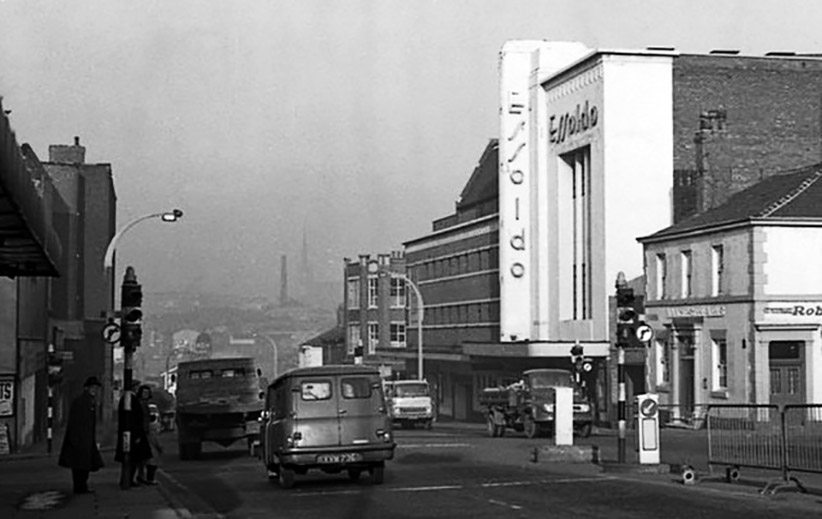
Across the way the long gone Carlton Cinema Architects: Francis Edison Drury and Joseph G Gomersall.

Opened on 28th July 1937.

In July 1948 the cinema was taken over by the Essoldo Cinemas chain. In 1954 the Essoldo became the town’s first CinemaScope cinema and for many years was the only cinema to offer full stereophonic sound. Richard Burton in The Robe was the first widescreen film to be shown, followed by Marilyn Monroe in How to Marry a Millionaire.

At the height of the Davy Crockett craze, in 1956, Fess Parker made a personal appearance at the Essoldo.

It was converted into a twin screen cinema in 1971, by converting the balcony into Screen 2, it was taken over by the Classic Cinemas chain in 1972. Its final owners were the Cannon Group who ran the cinema from 1982 to its final closure on June 21st 1990.

The cinema was demolished in 1994 and a small park occupied the site for several years.

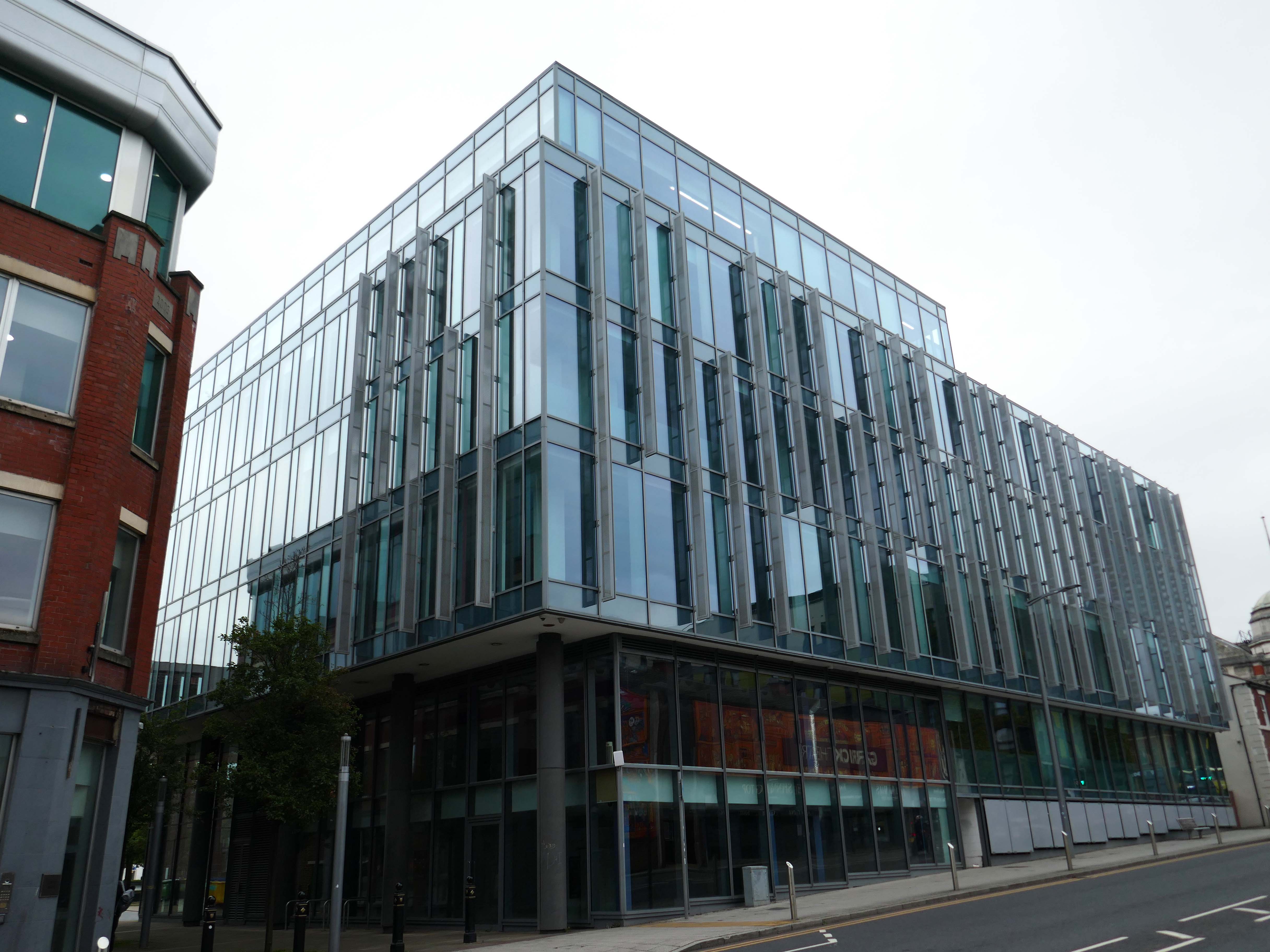
By 2011, offices had been built on site.
Cinema Treasures

Until March 2025 home to the Sky call centre.
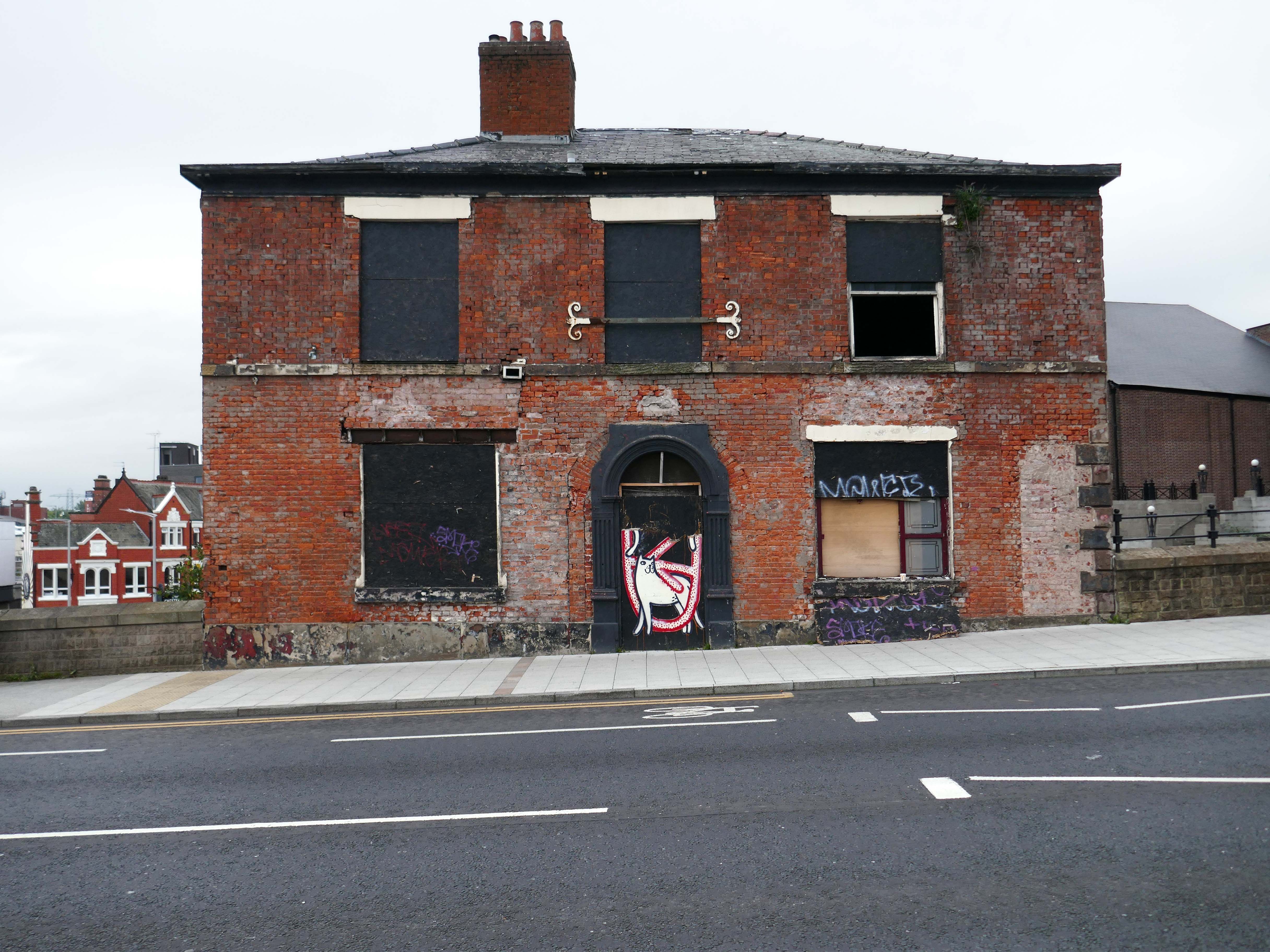
Further down the road the former Wellington Hotel.
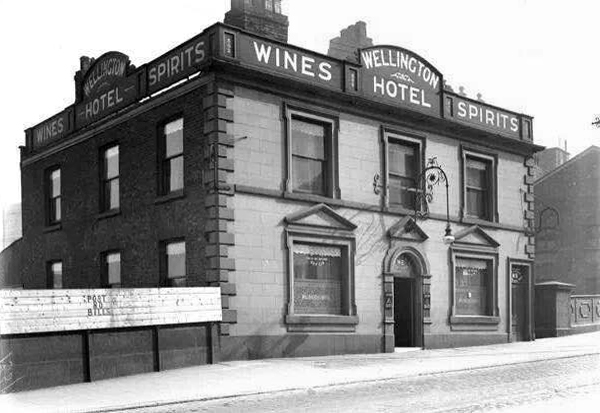
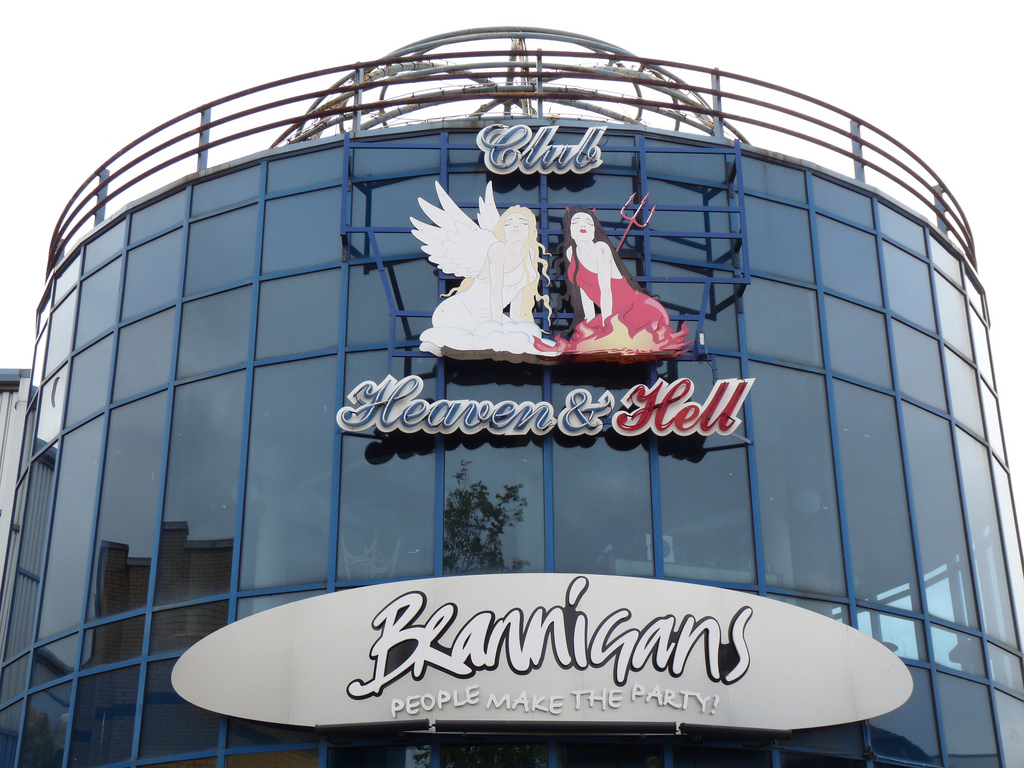
Known variously as Ups ‘n’ Downs, Glitz, Bentley’s and the Bees Knees.

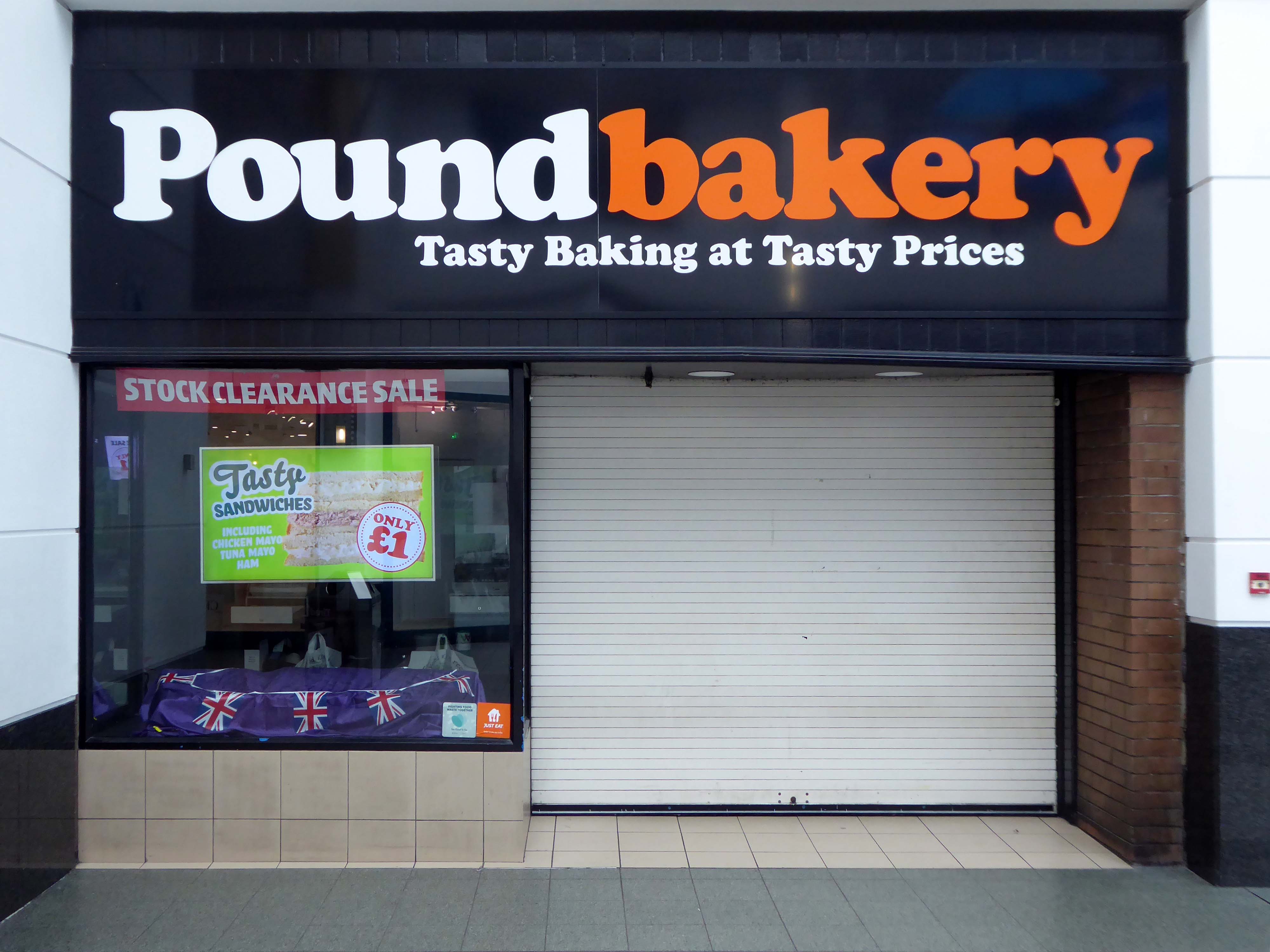
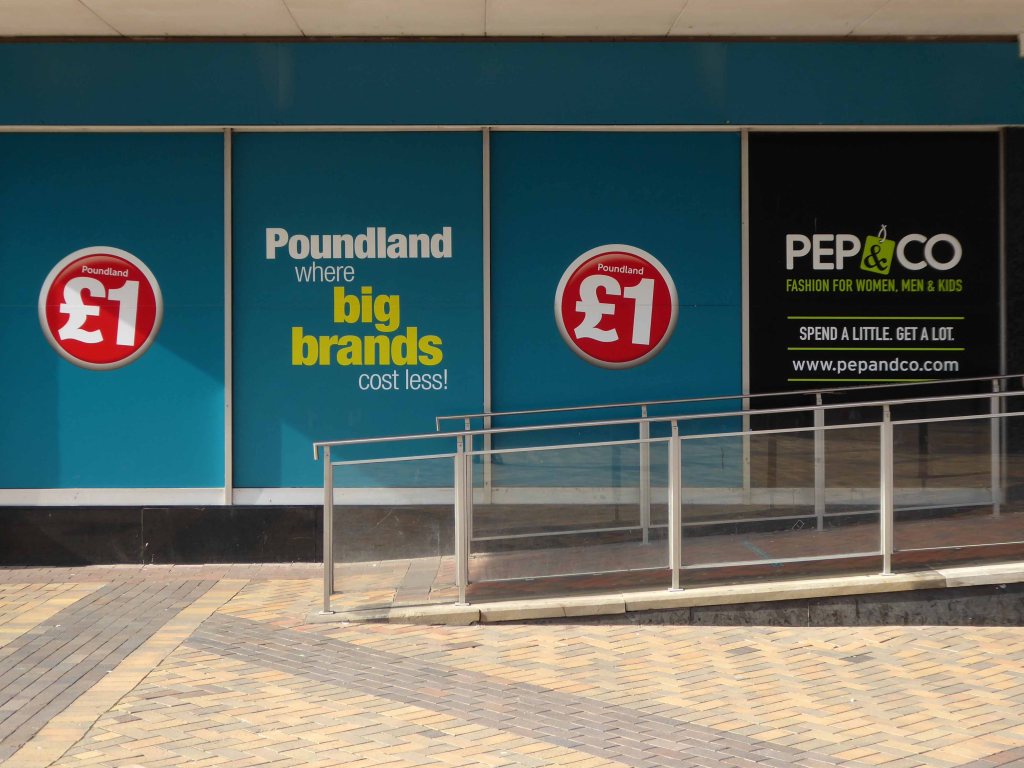
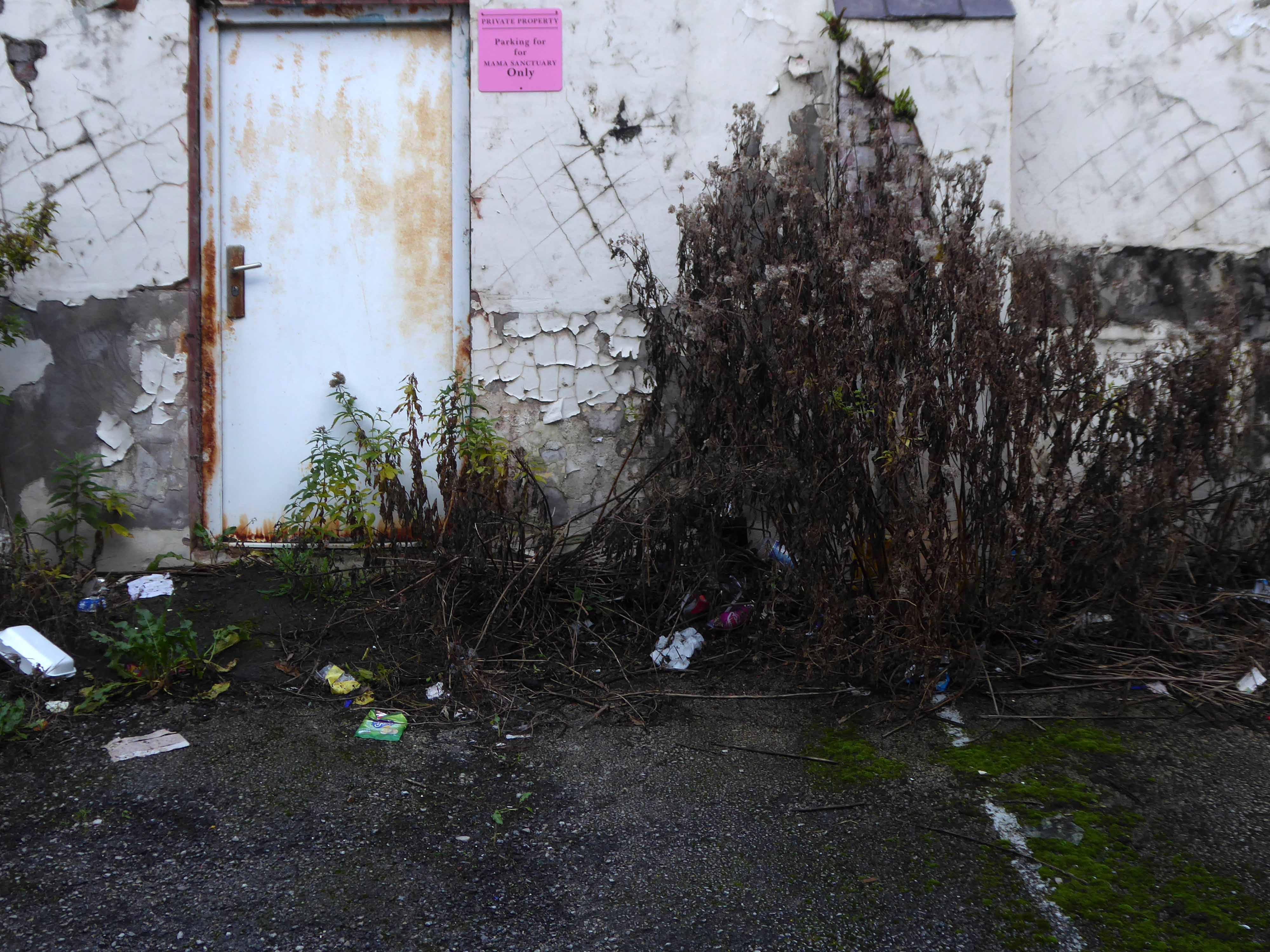
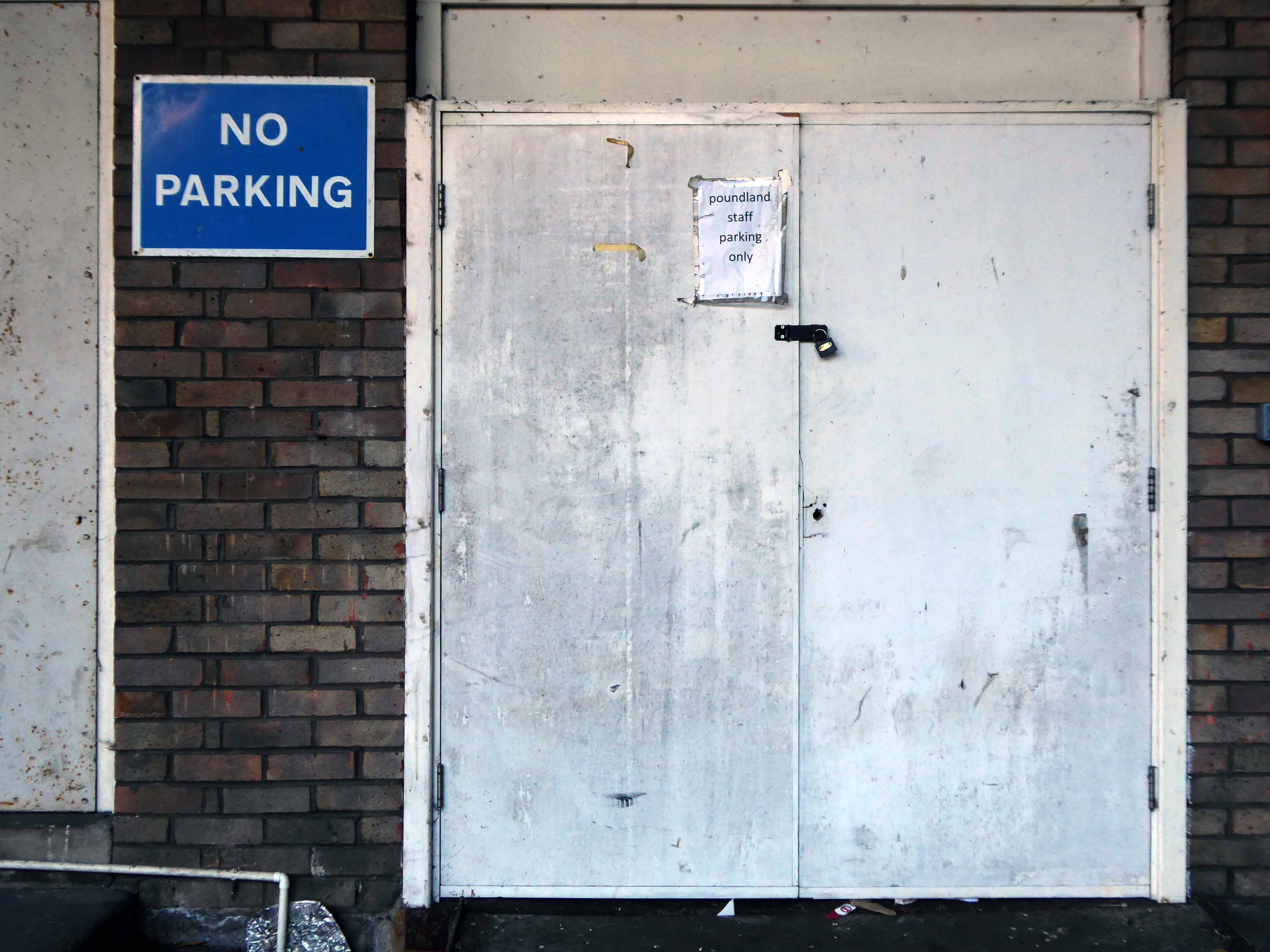
Finally, partial occupation by a forlorn Pound Shop – defying economic trends by closing.

Street art by Cats and That.
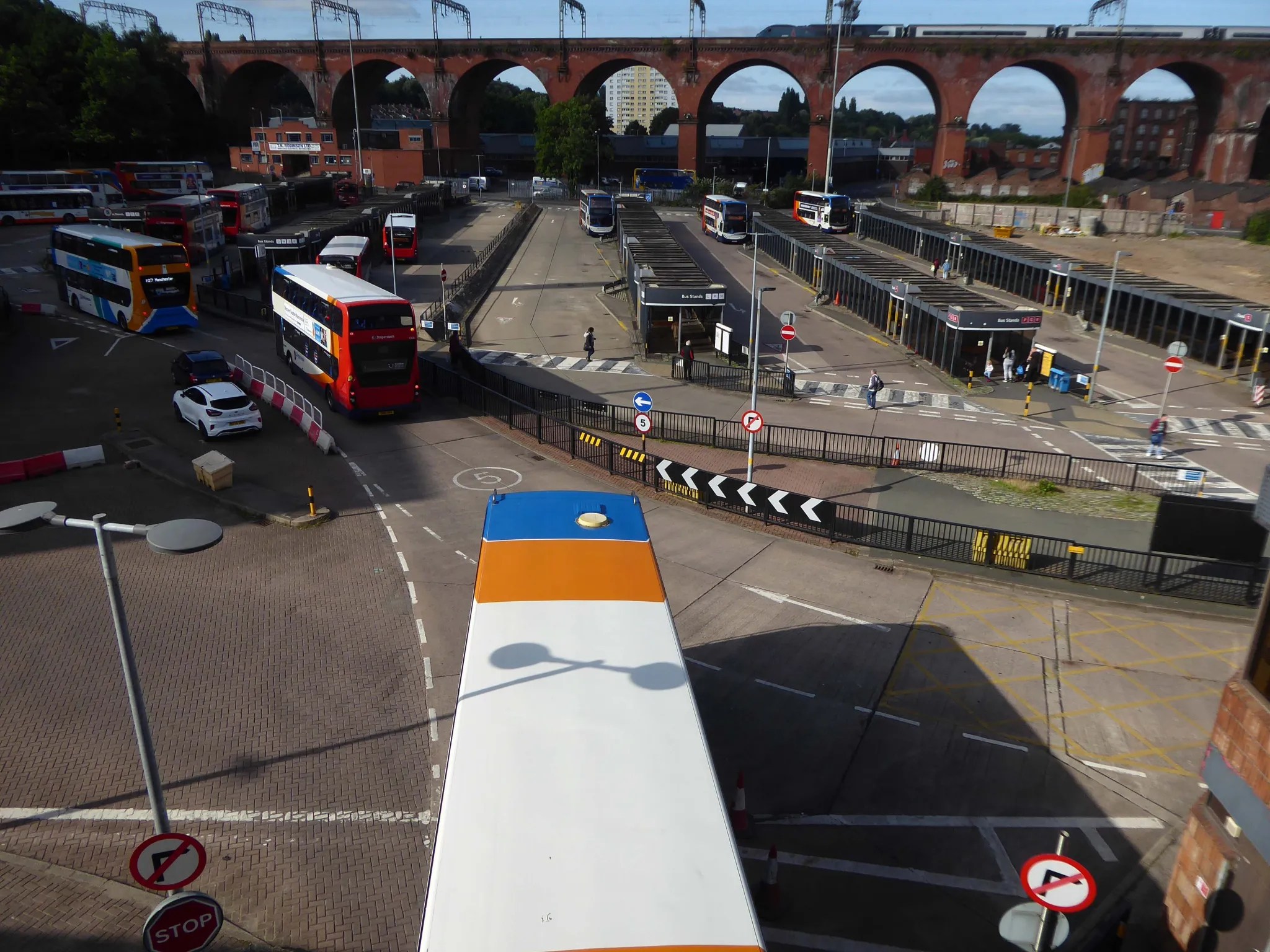
Next to the Transport Interchange aka the Bus Station.

In collaboration with Transport for Greater Manchester and Stockport Metropolitan Borough Council, the project redesigned a 10,000 sq m bus interchange, linking the rail station with new landscaped parks. 

The development includes a fifteen-storey building with one hundred and ninety six apartments, commercial space, and parking. New parks and riverside spaces improve connectivity and enhance urban living, marking a transformative step in placemaking for Stockport.
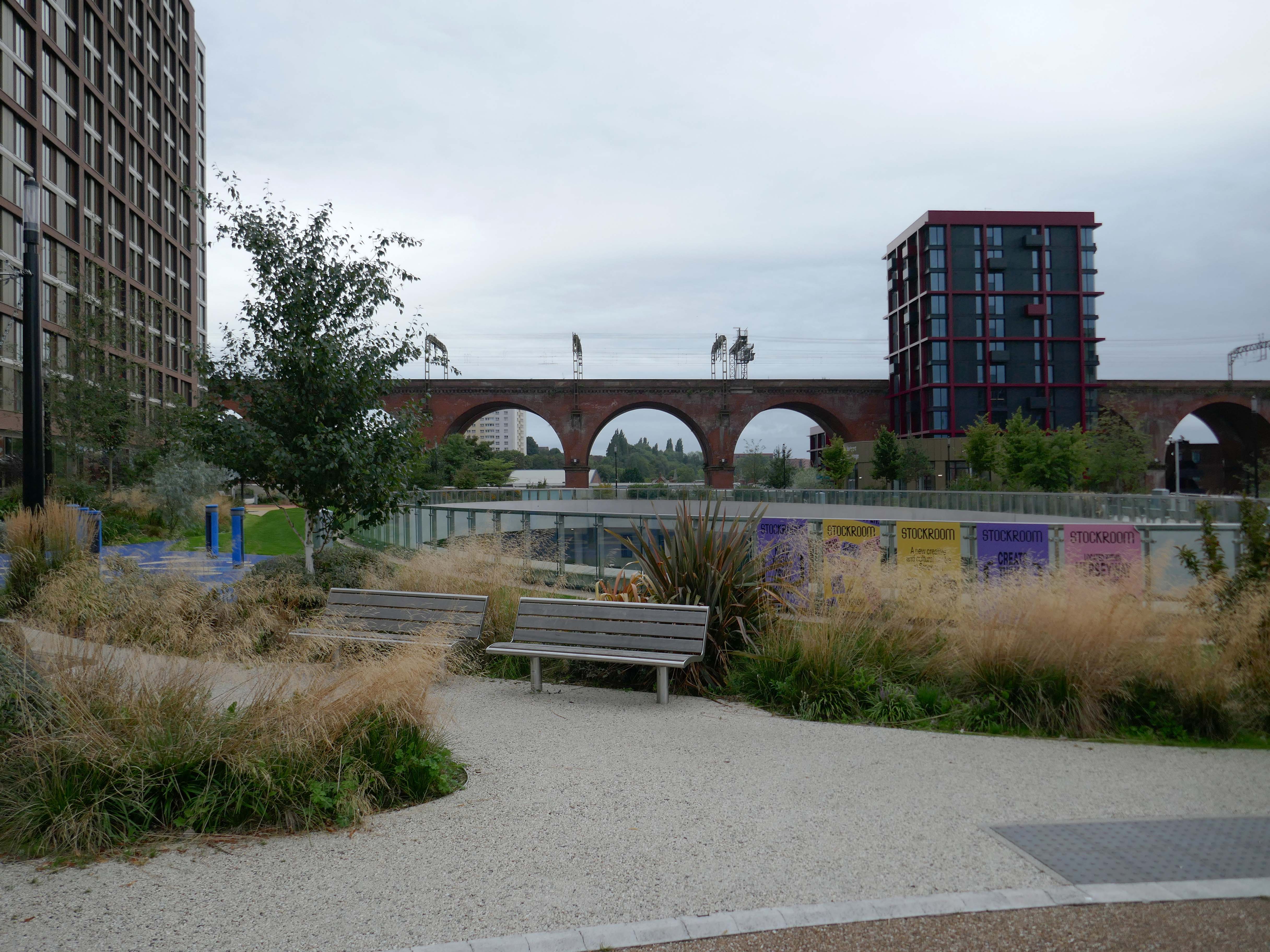
BDP Design

Replacing the former Bus Station closed on Saturday 28th August 2021.
Down to the top of the Lowry Steps
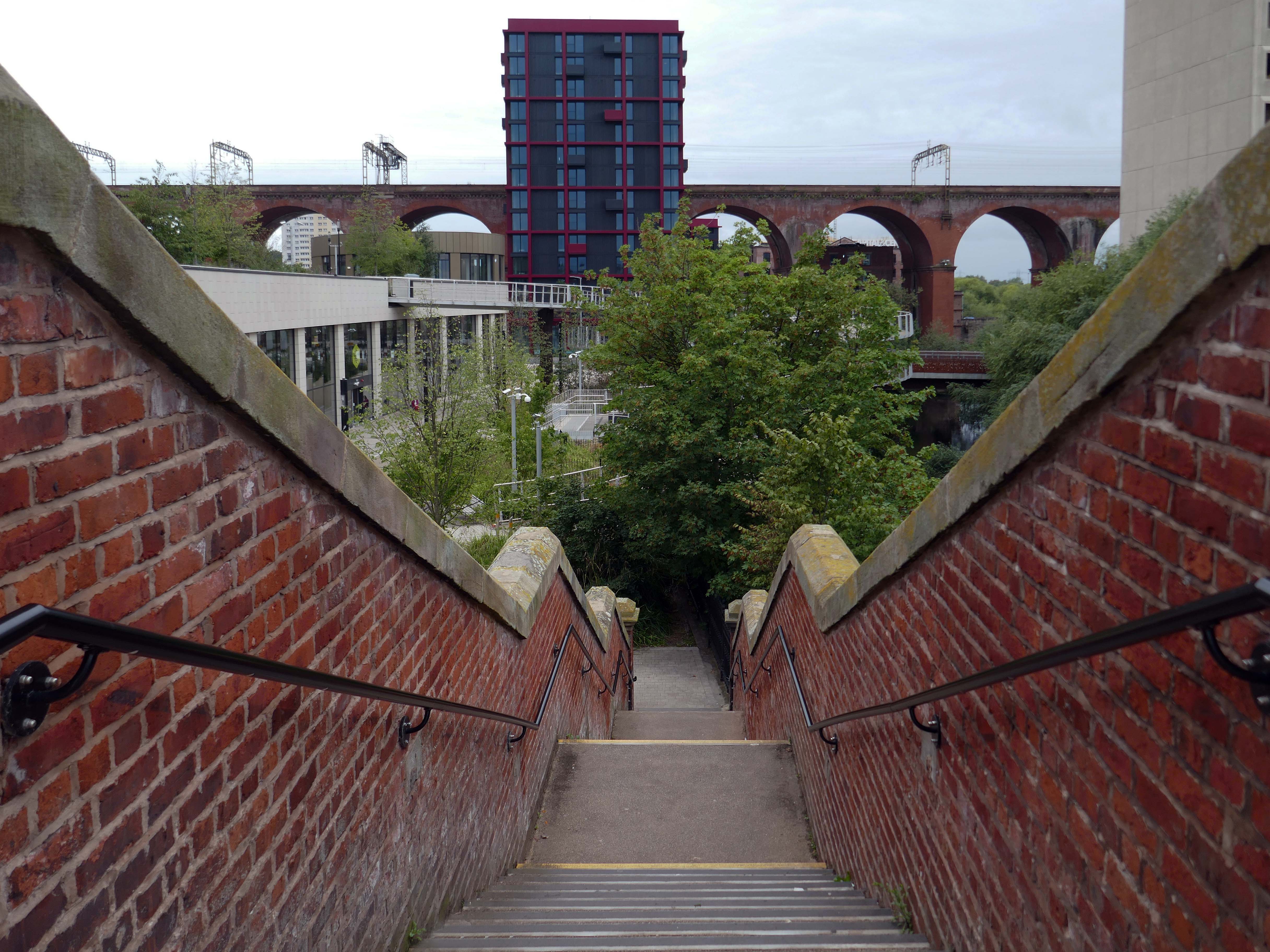
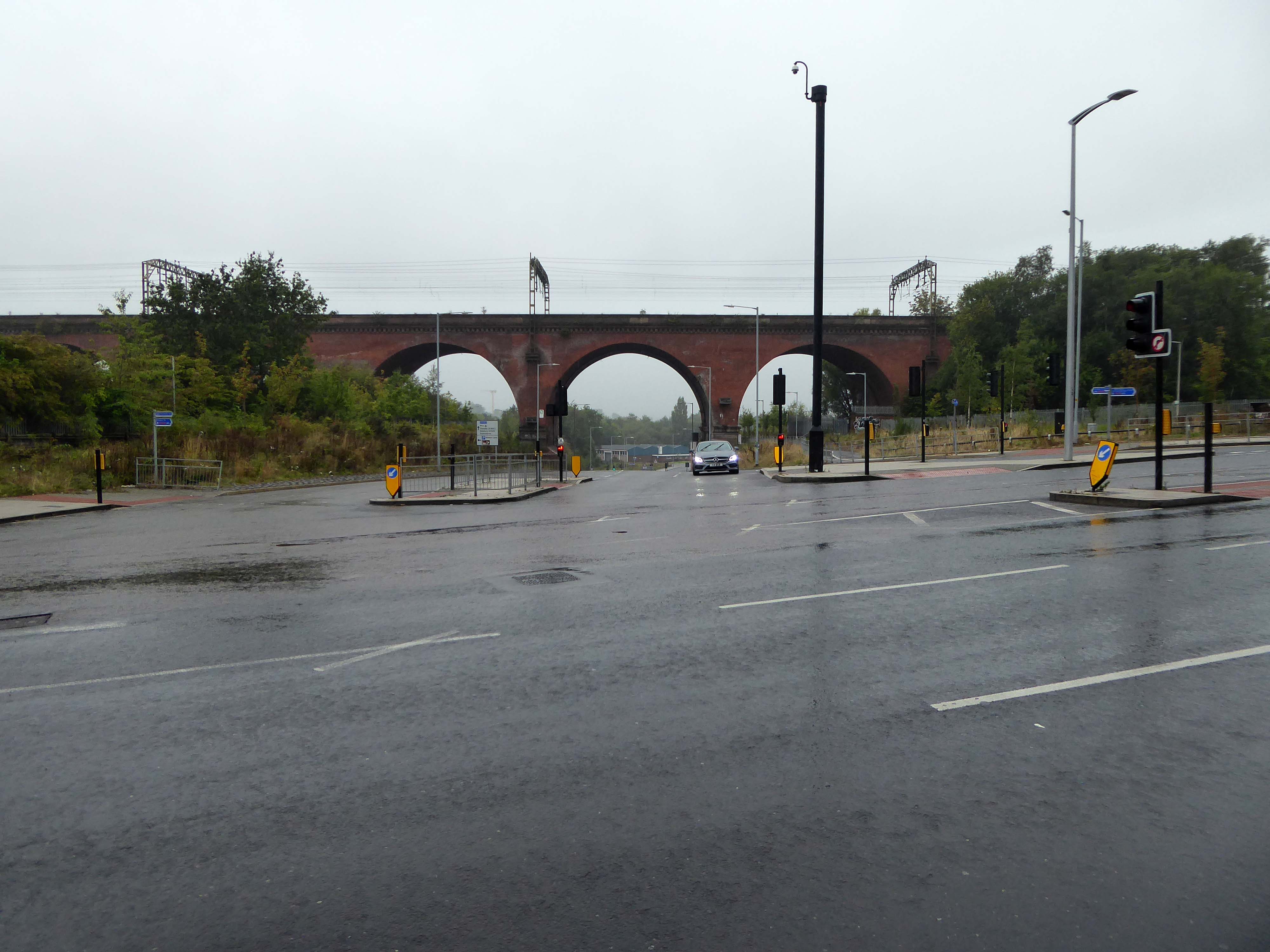
LS Lowry snapped in 1962, the Viaduct in the not too distant distance – Grade II* listed structure and remains one of the world’s biggest brick structures.
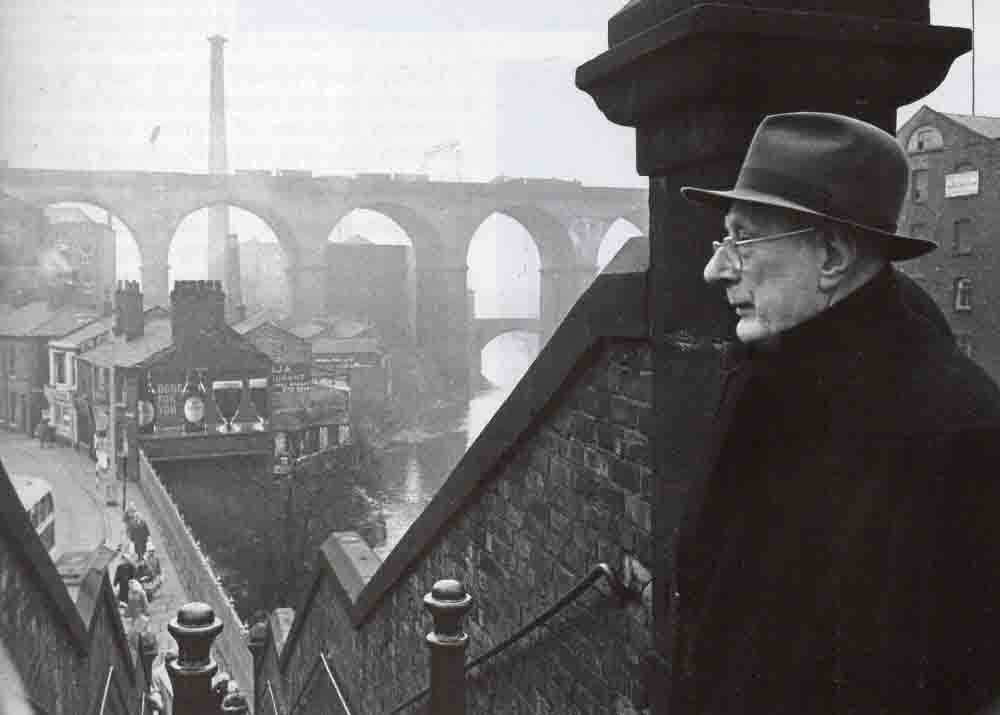
Railway viaduct opened 1840 by GW Buck for Manchester and Birmingham Railway in brick and stone.

Twenty eight arches of total length over 540m – three spans at either end of 18ft, twenty two spans between of 63ft, and nearly 34m high above the river.

Said to contain eleven million bricks.

Stone moulded impost bands and rusticated faces to piers.

Took 21 months to build, at a cost of £72,700.

Widened to the west 1888 to 1889.

Historic England.
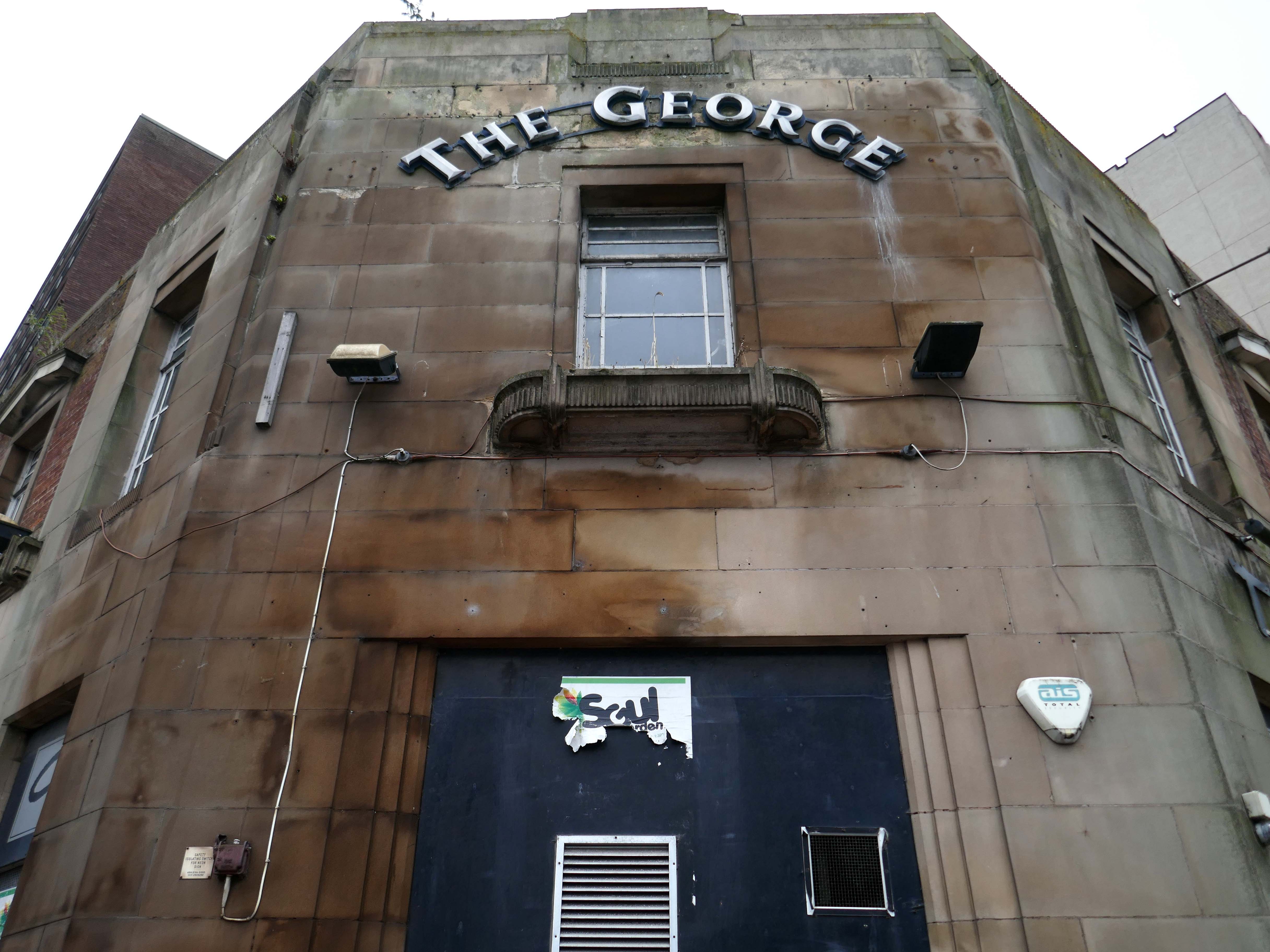
Down on the corner the former George Hotel.

Premises To Let as of 13th May 2018 – on the 2nd April 2018 the licence has lapsed, so this proved to be a barrier to it re-opening.

A former pub in Stockport town centre could be knocked down to make way for a tower stretching 17-storeys high. Plans have been sent to Stockport council for consideration and would bring 76 new apartments to the town replacing The George on Wellington Road, based opposite Merseyway Shopping Centre and near Stockport Viaduct.
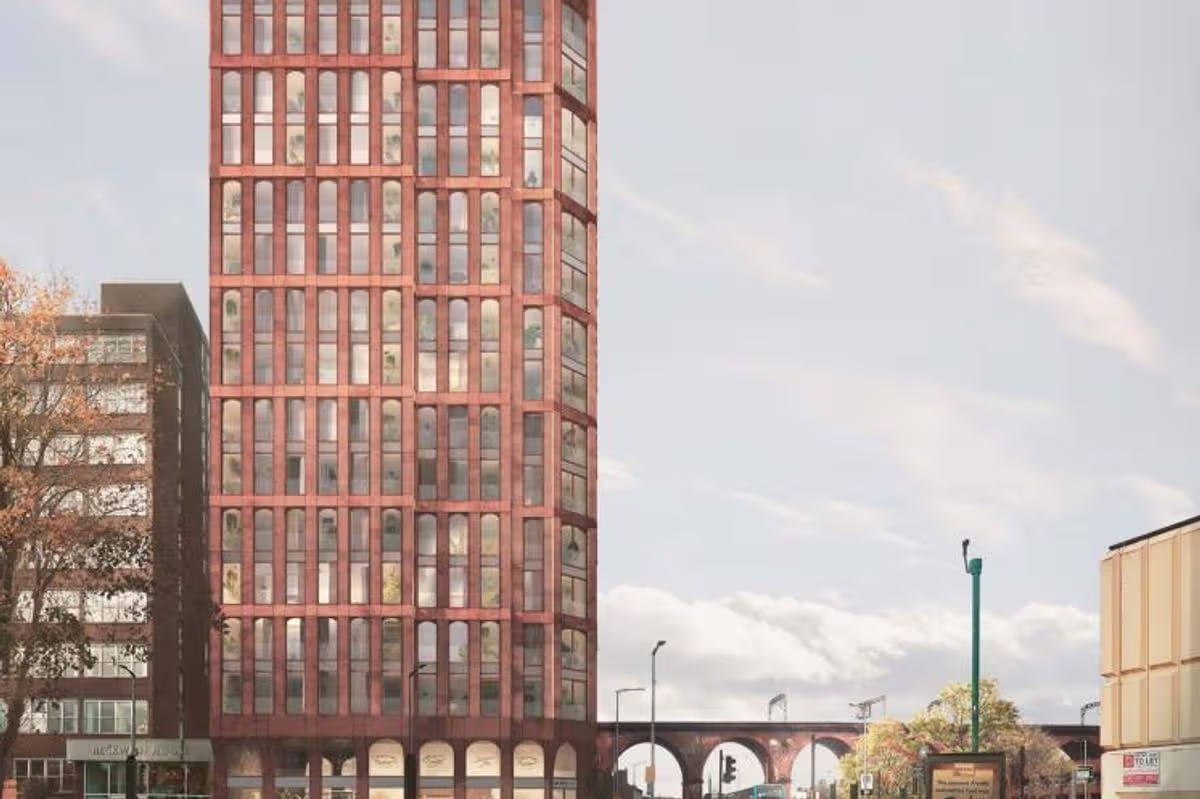
MEN November 2025

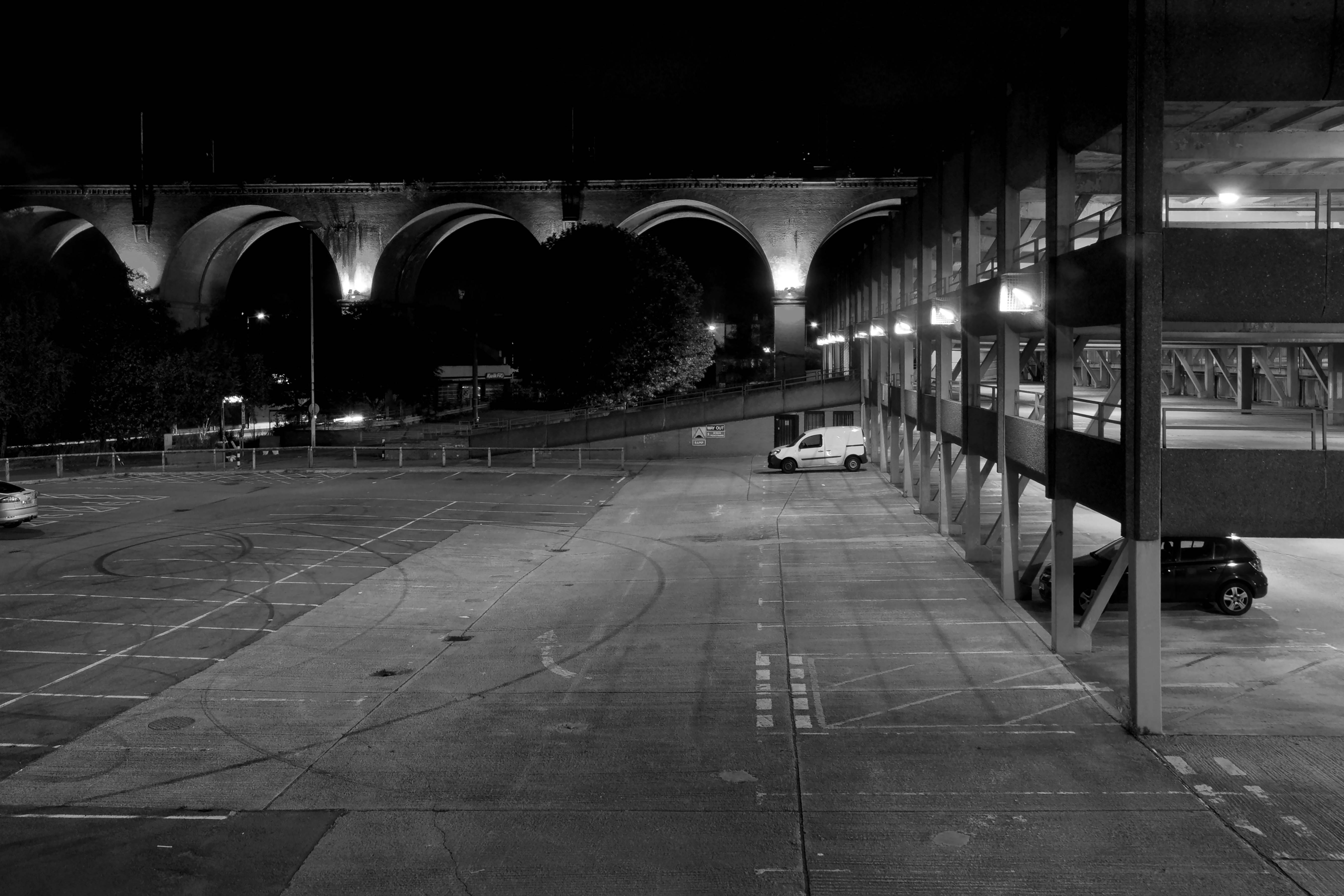
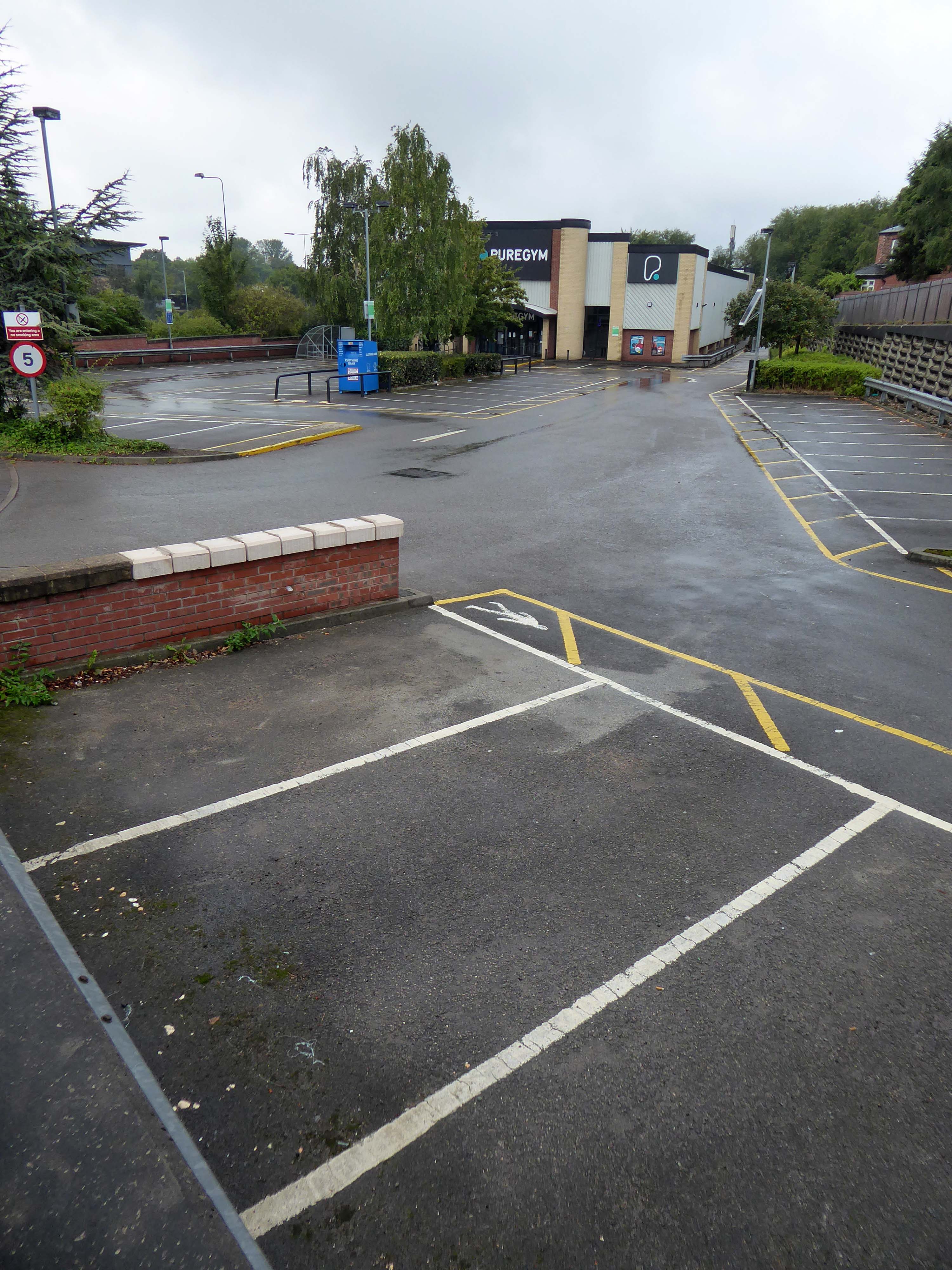
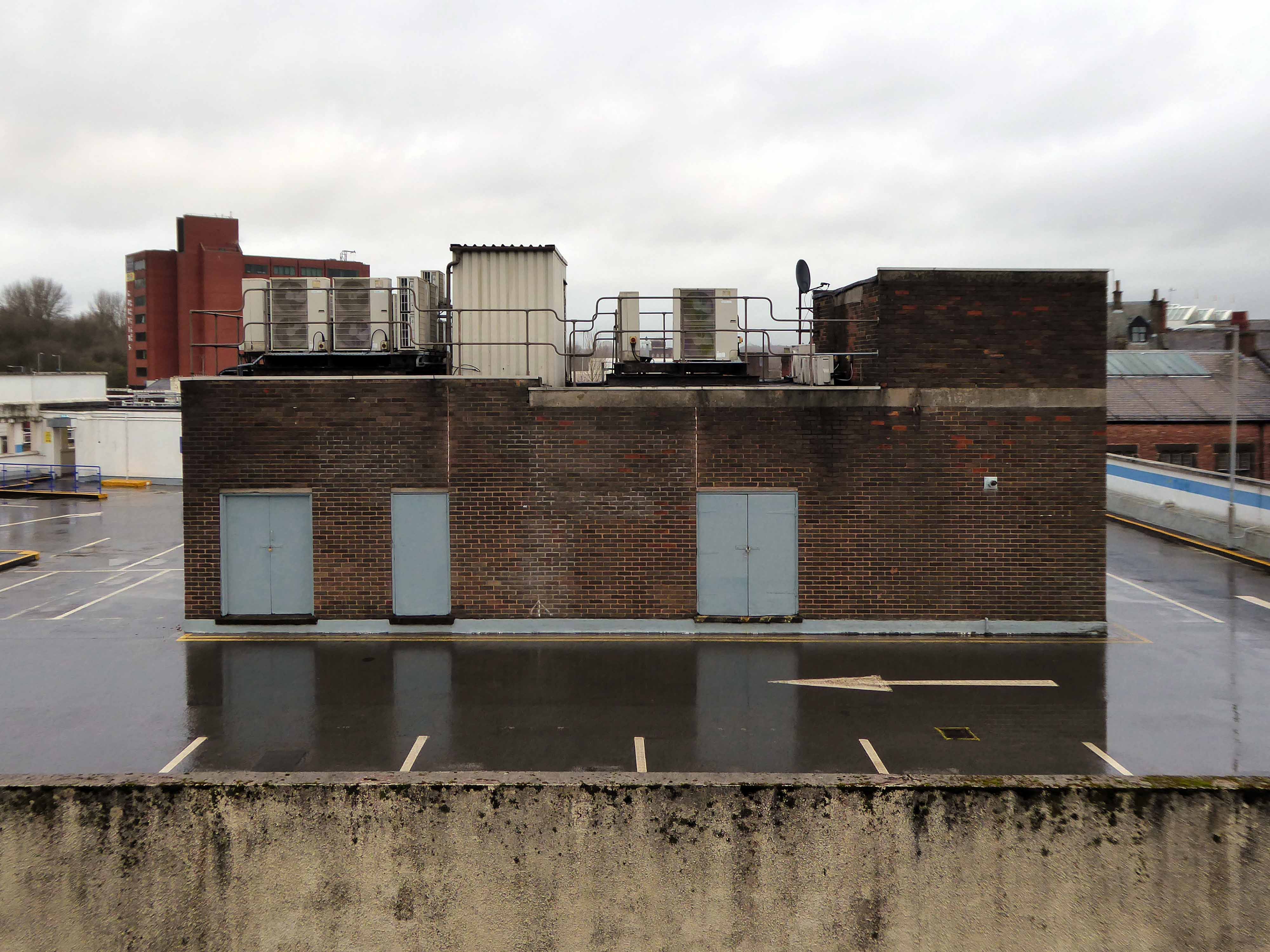
Across the way the Heaton Lane Car Park is now rubble.
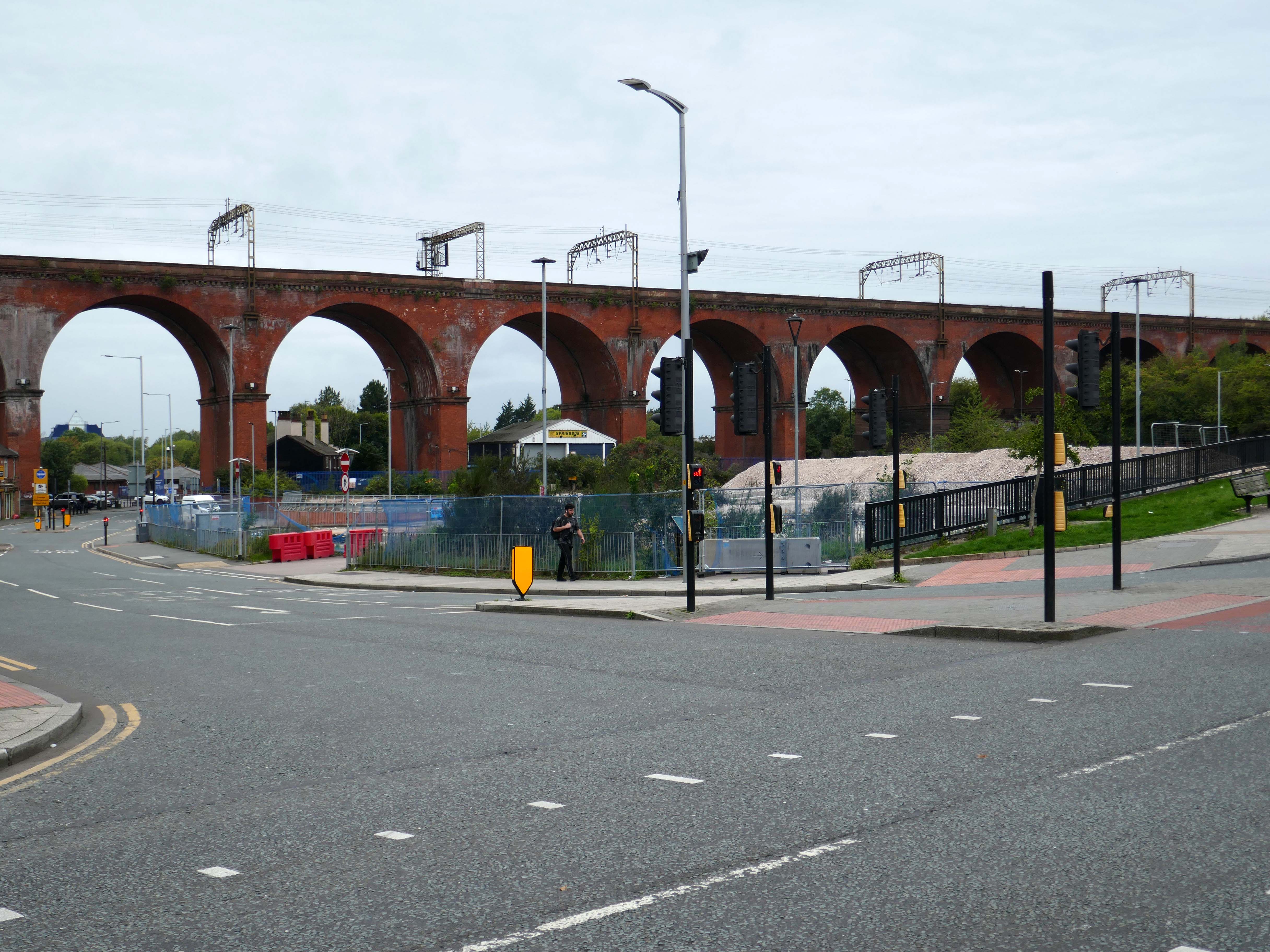
It is to become the site for the re-sited bus depot, as the current bus depot is demolished to make way for housing.

Though Place North West reports in August 2026:

Talks over a deal for a bus depot off Daw Bank have broken down after the council refused to meet the operator’s financial demands, prompting the authority to use compulsory purchase powers to acquire the site.

Despite protracted negotiations, Stockport Council and Stagecoach have failed to reach an agreement over an important piece of land the authority needs to deliver Stockport 8, a £350m, 1,300-home regeneration scheme.

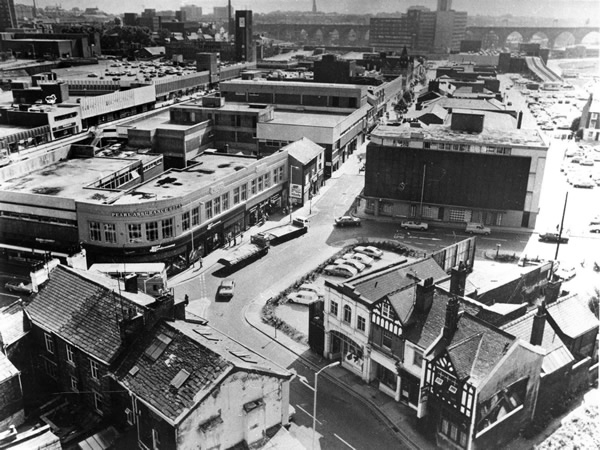
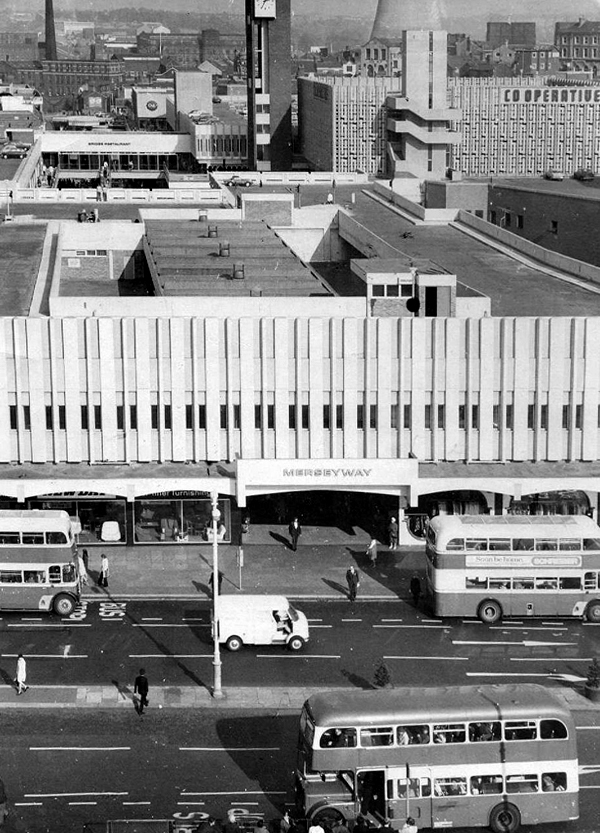
Leaving Wellington Road we head for the Merseyway Precinct – 1965 architects Bernard Engle & Partners.
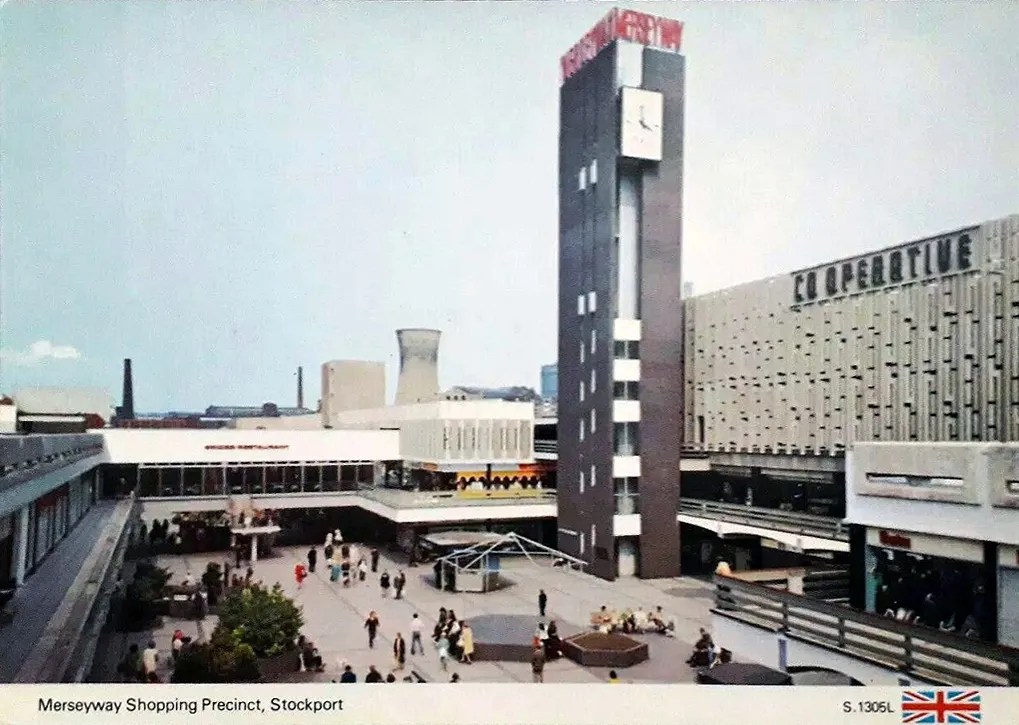
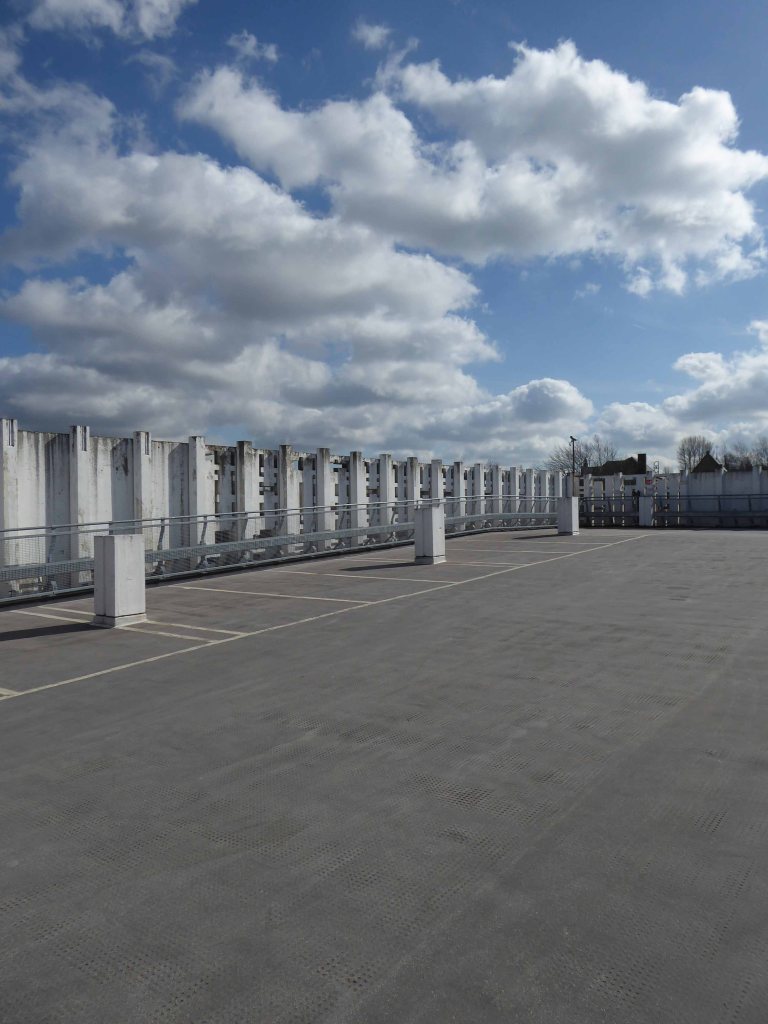
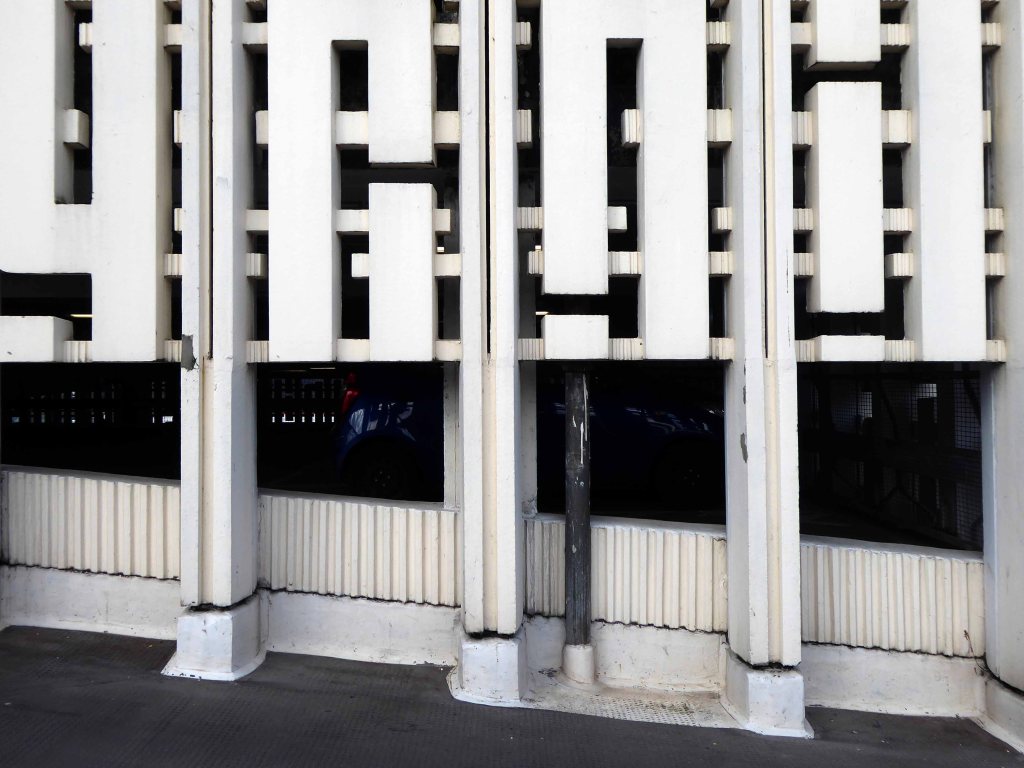
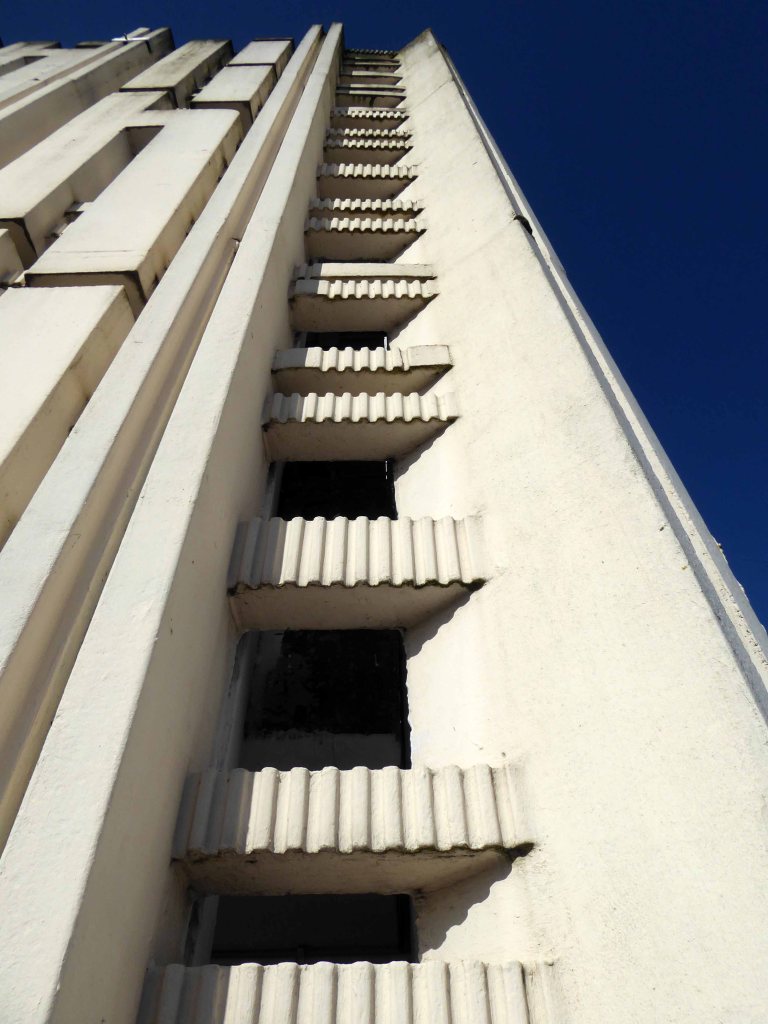
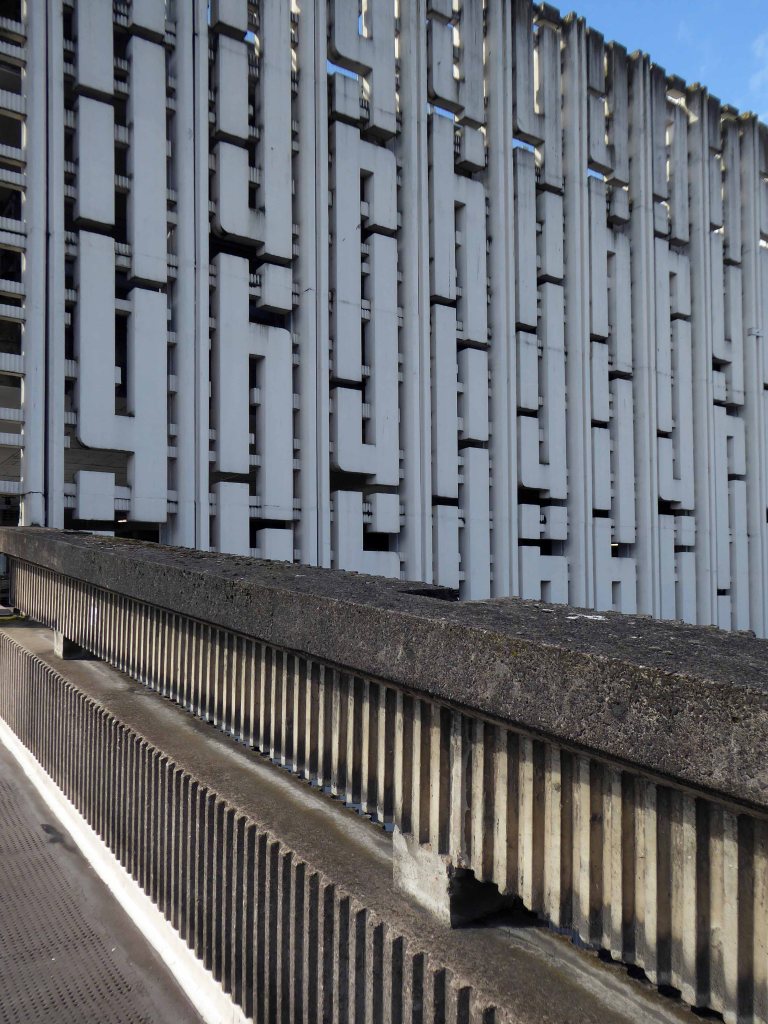
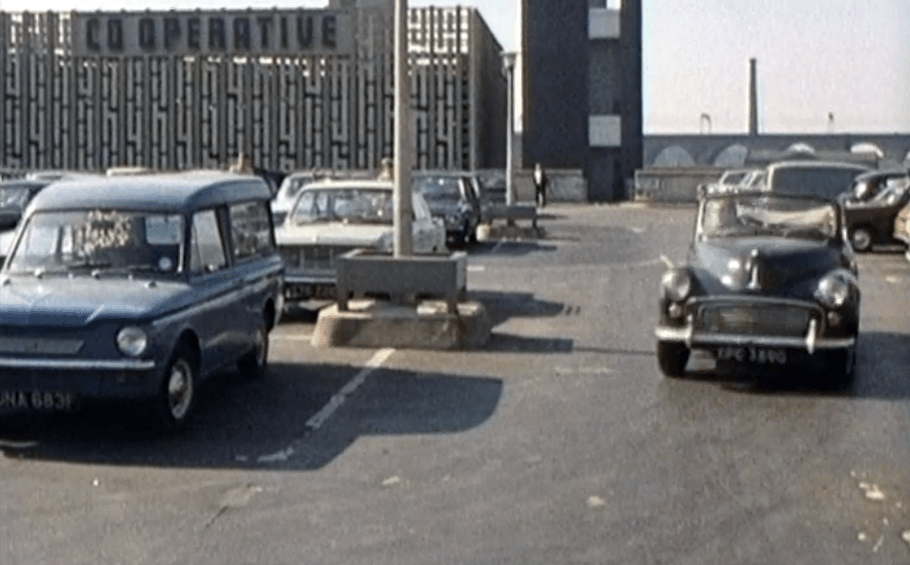
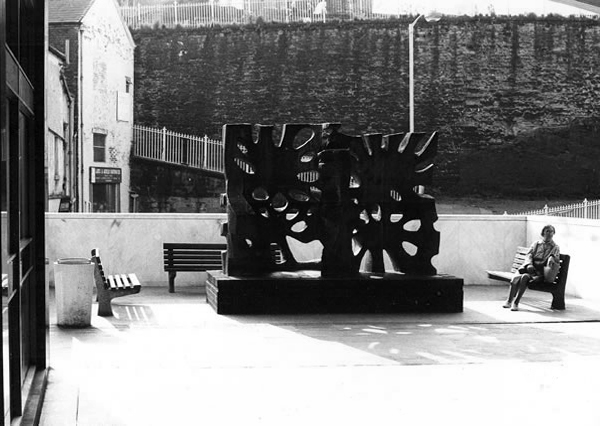
Where we find the Alan Boyson screen wall, screening the multi storey car park, now no longer above the Co-operative store, but above Primark.
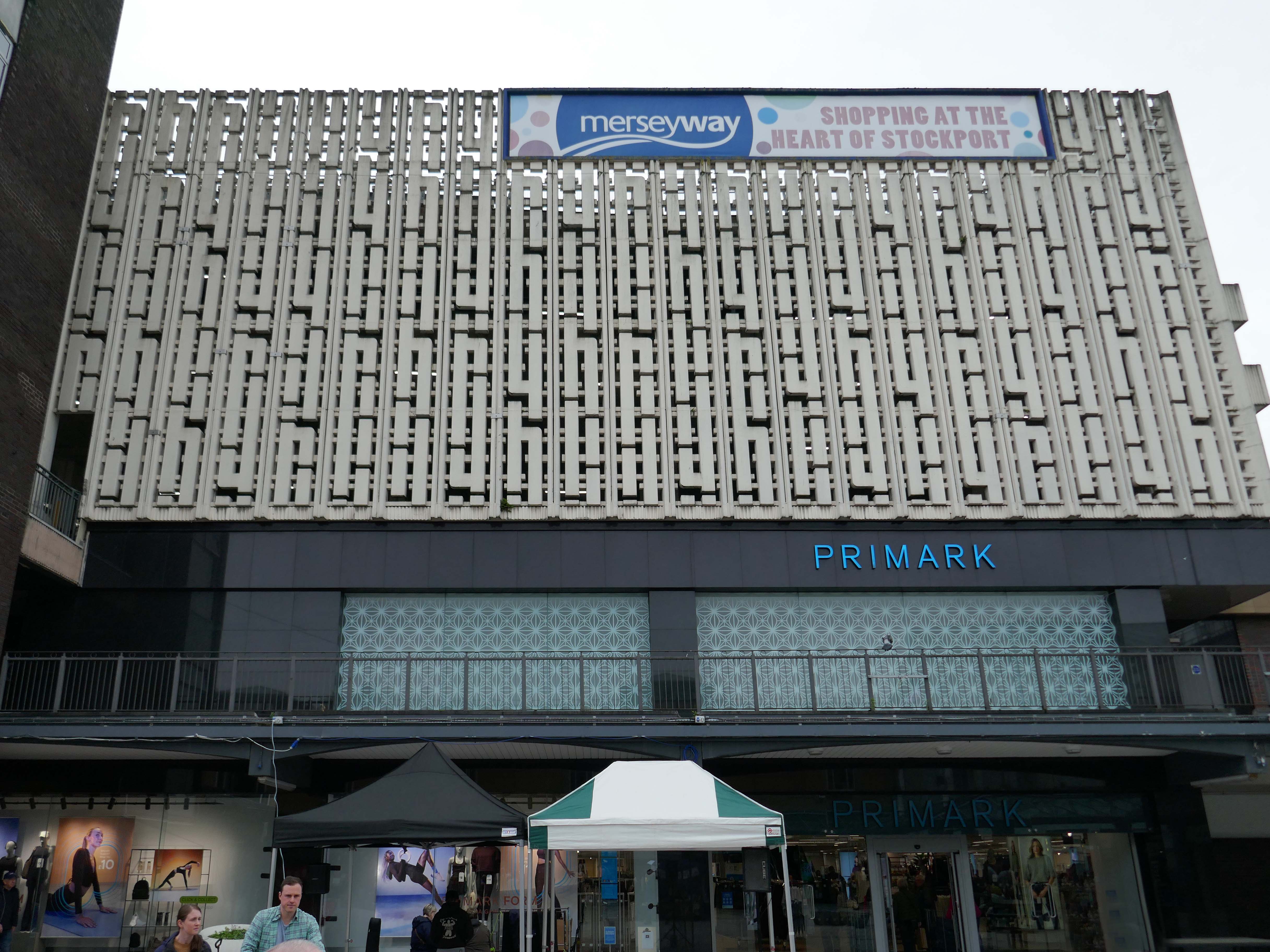
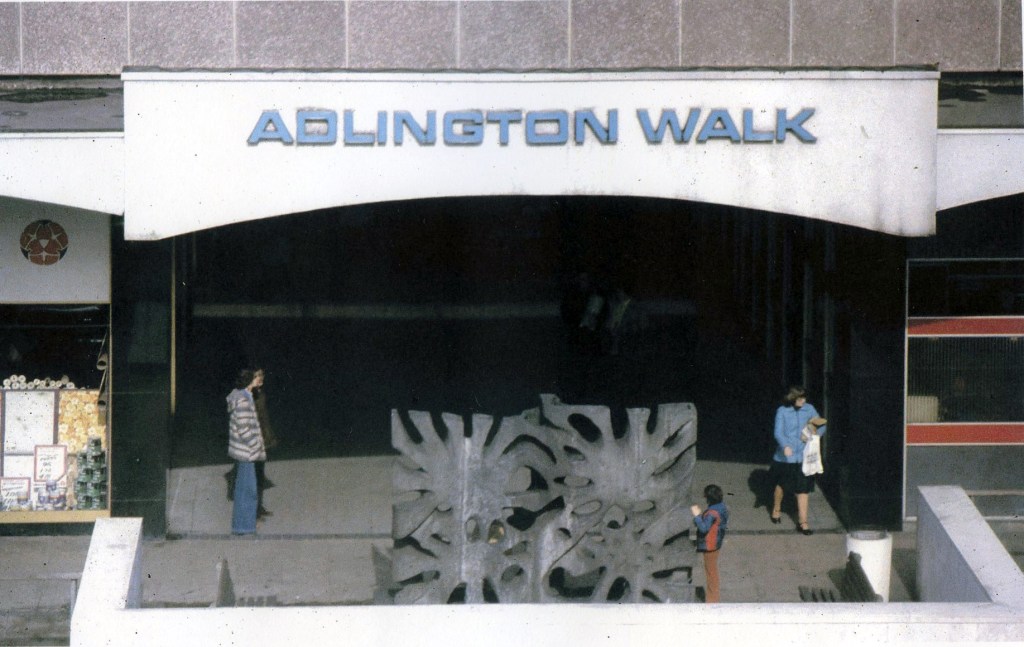
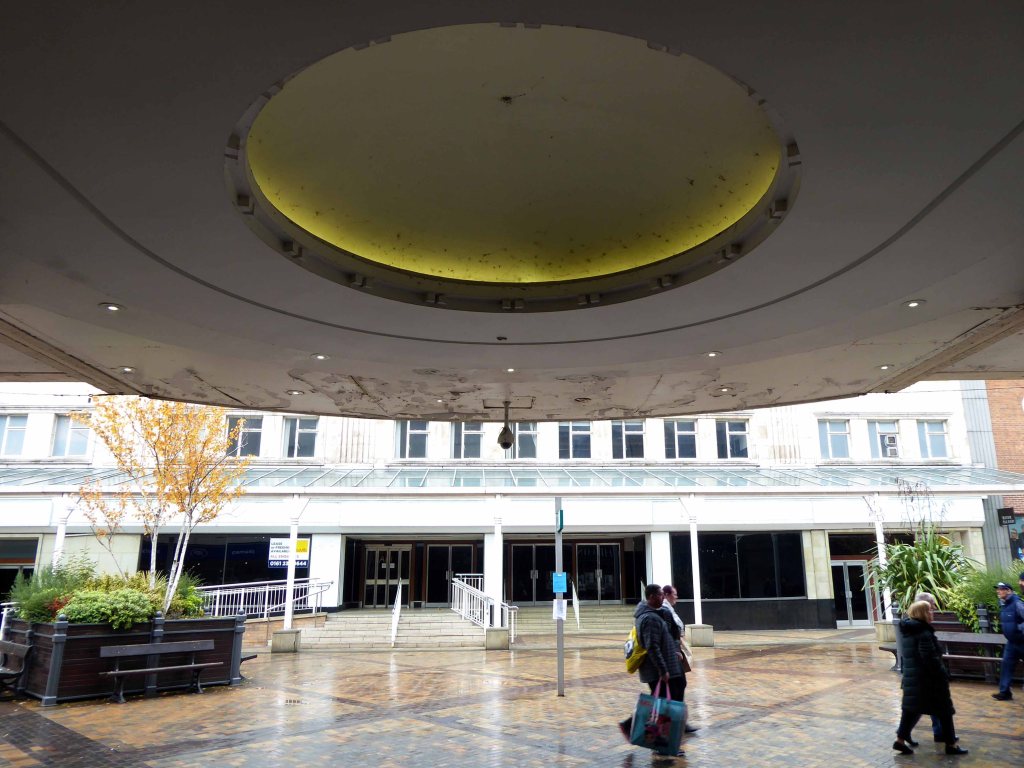
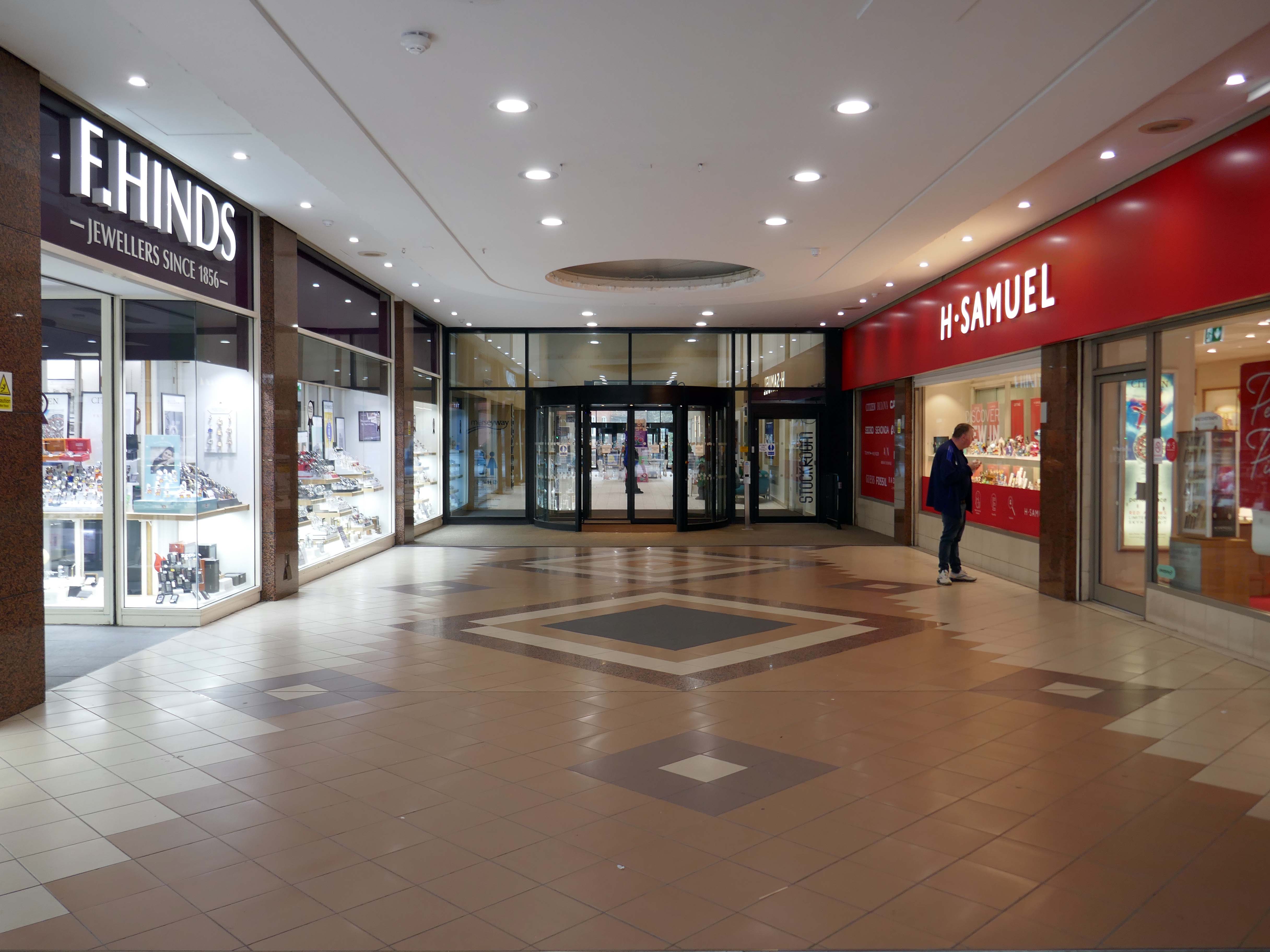
Next in line the new occupants of Adlington Walk – Stockport’s fabulous Stockroom.
Stockroom is an exciting new creative and cultural centre in Stockport, designed for getting together, getting involved or just popping by for a brew. It has been developed with and for local people and the creative community to build an exceptional communal resource for entertainment and learning.

There’s room for everyone: to make noise, meet friends or find some peace, play, take part, think or do new things.

Part of Stockport’s £1 billion transformation, Stockroom is an ambitious £14.5 million cultural and creative centre that will breathe new life into the heart of the town.

Located in previously disused retail units, Stockroom has been brought to life through funding from UK Government’s Future High Streets Fund, which aims to rejuvenate town centres across the country.
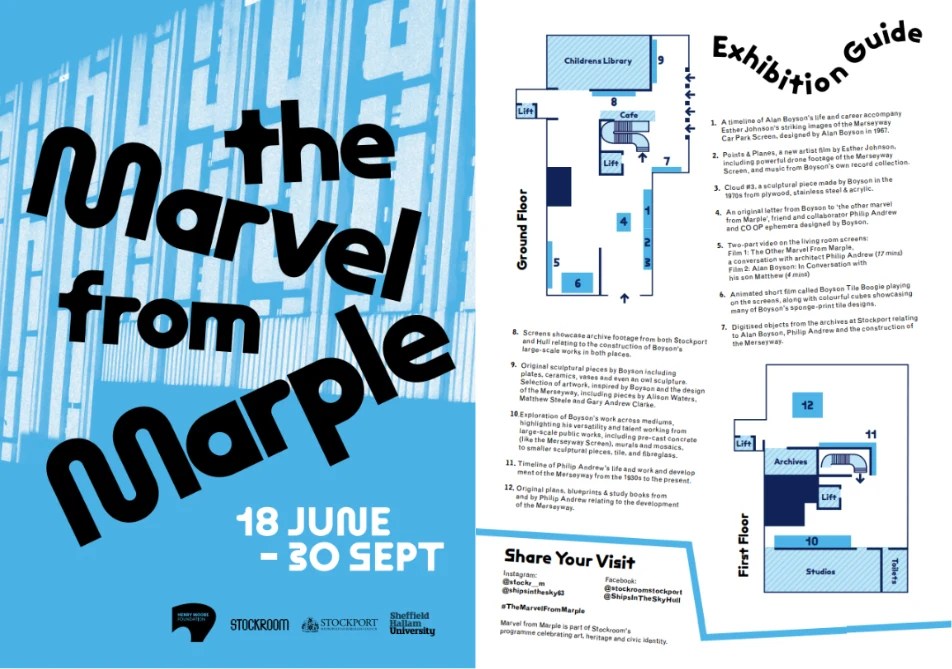
The Stockroom have hosted a tribute to Alan Boyson, the exhibition The Marvel from Marple.
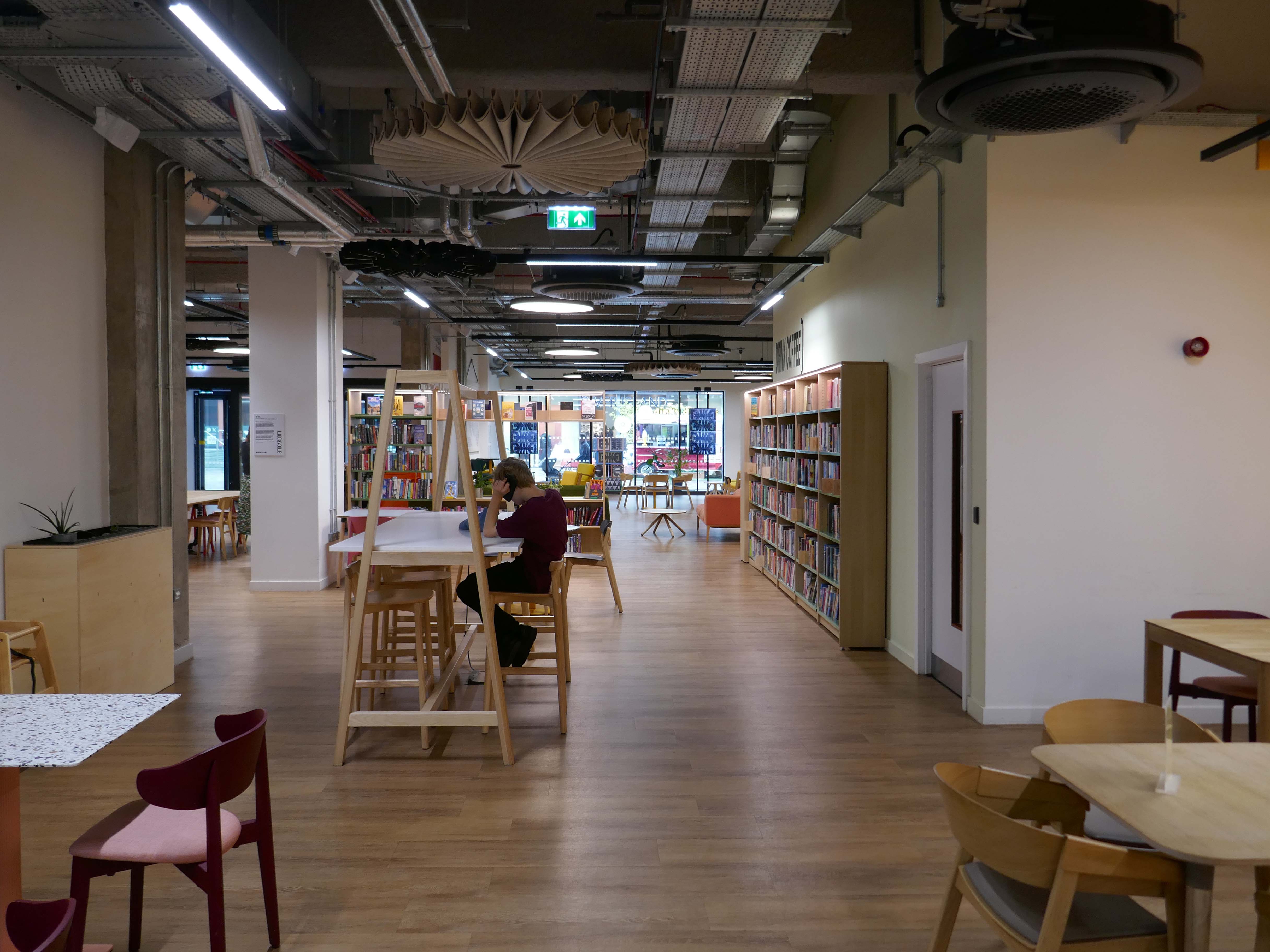
Otherwise open to access the Library service and archives, eat drink and play, use a computer, or a lavatory, read whilst relaxing in a comfy chair, stay cool or warm, stare into space either upstairs or downstairs.

Whatever floats your personal boat, though currently unsuitable for floating actual boats.
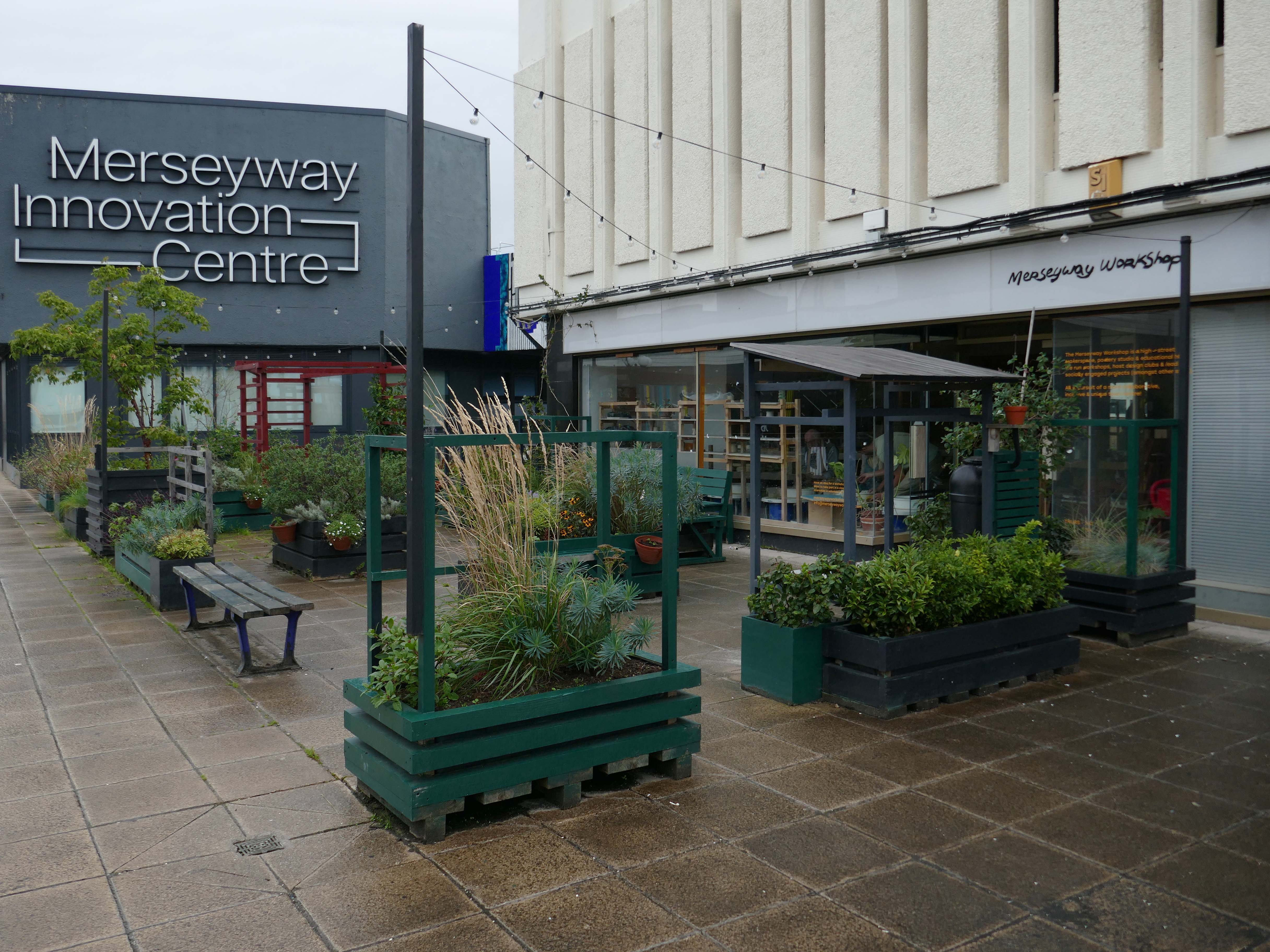
Mention must be made of near neighbours the Merseyway Workshop – the plant planters who we met up at Stopford House.

The Merseyway Workshop is a community focused, inspiring place for innovation and collaboration.

A DIY-style hub on Stockport’s pedestrianised high-street. Offering open use of creative workshops, drop-in activity sessions and skill exchanges.

Working in clay and wood, access to a fully equipped B&W darkroom and so much more.
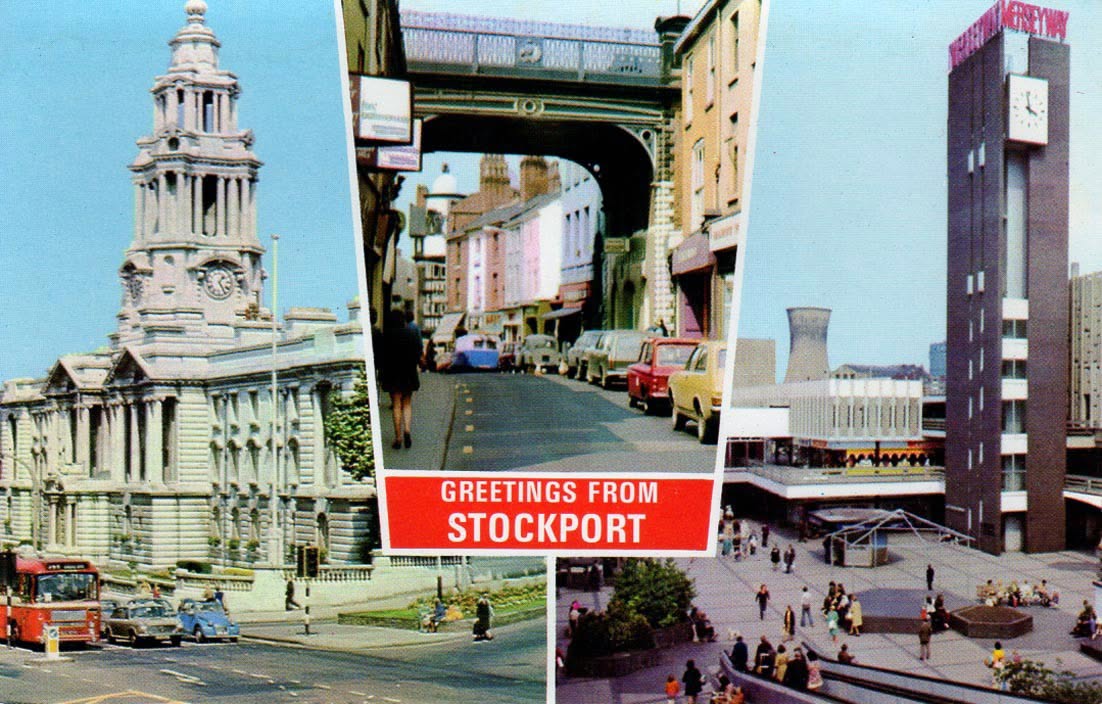
One short mile or so a cornucopia of history – layer upon layer of exciting architecture.

Get out take a walk take a look!
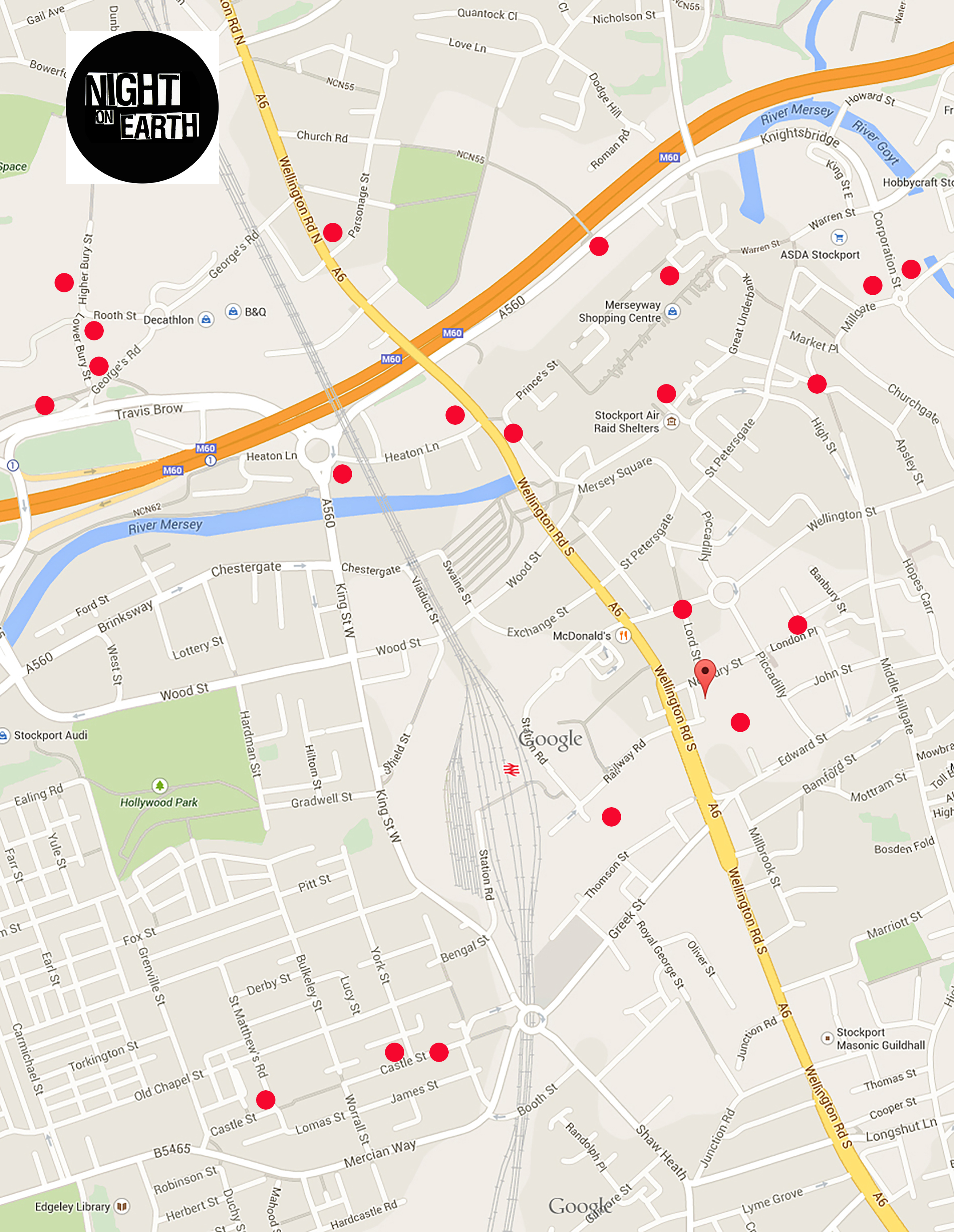
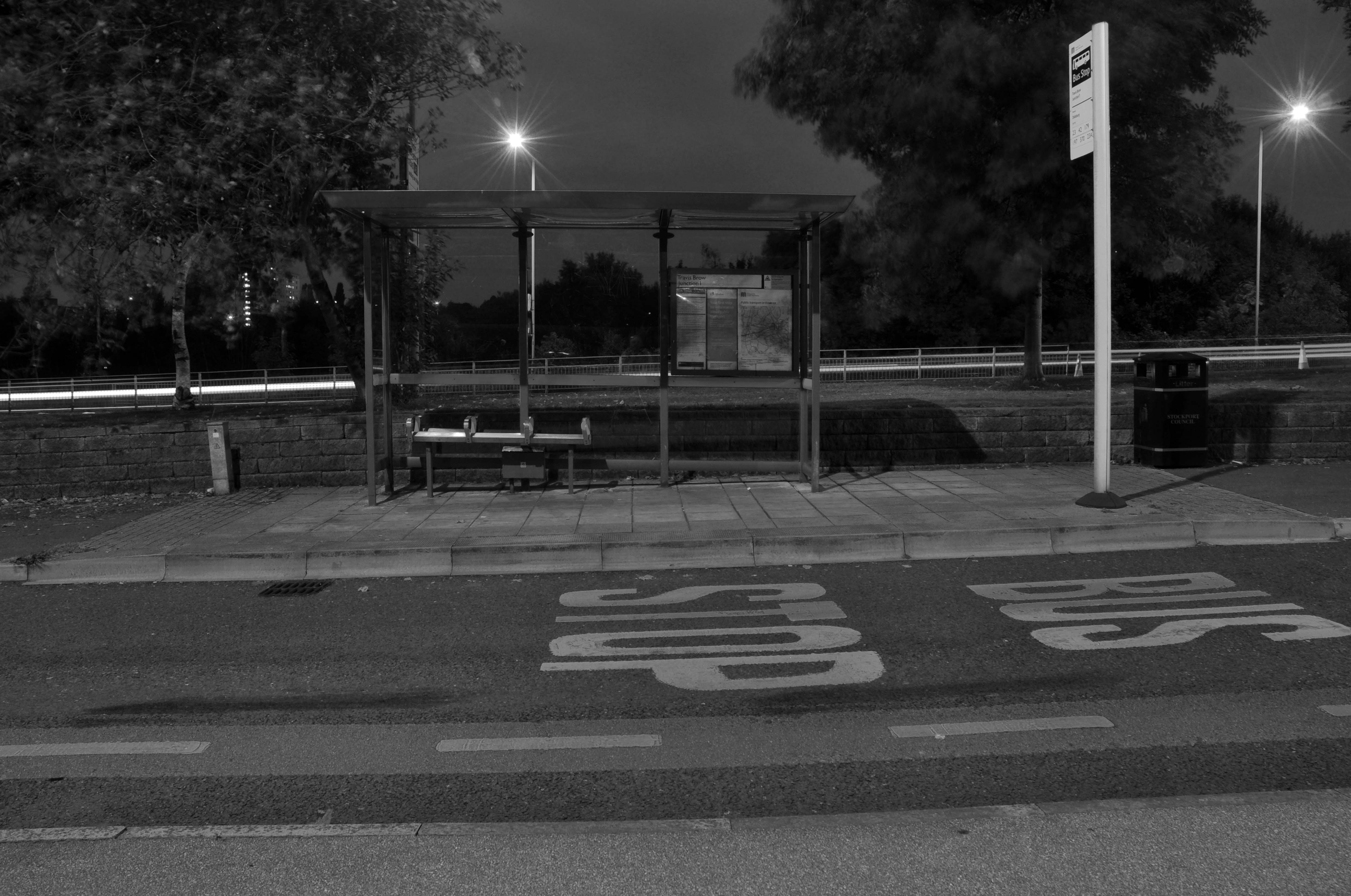
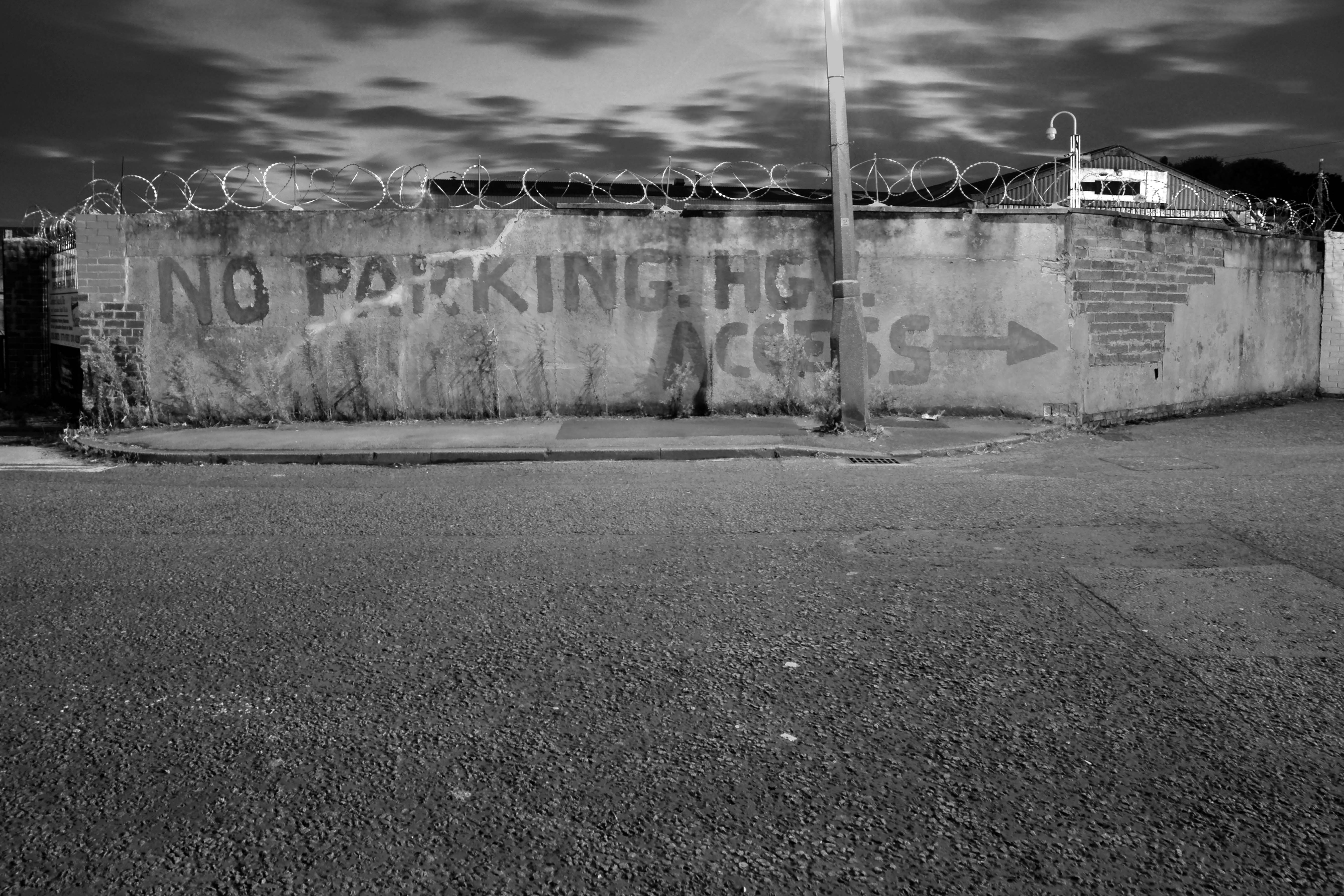
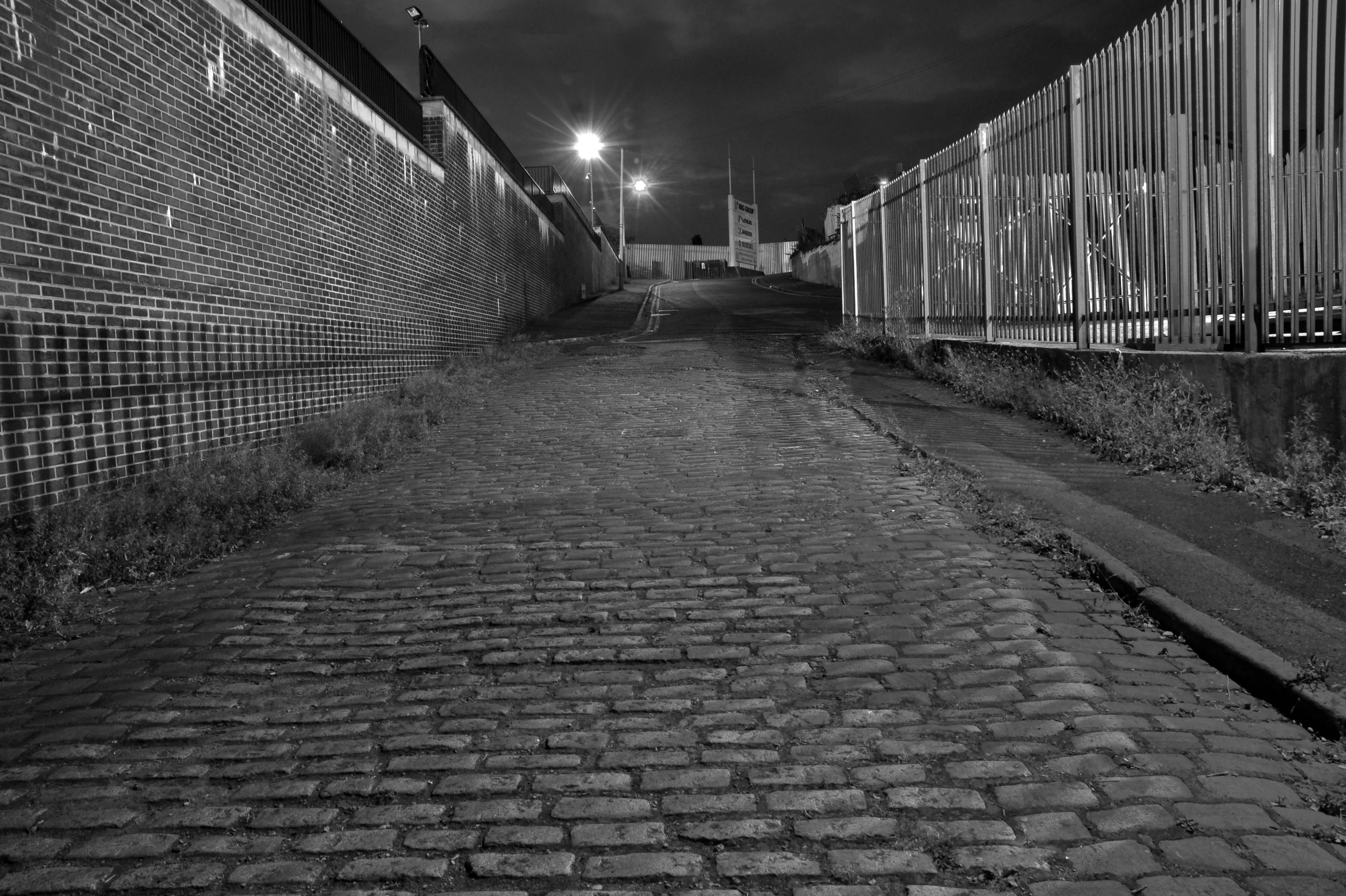
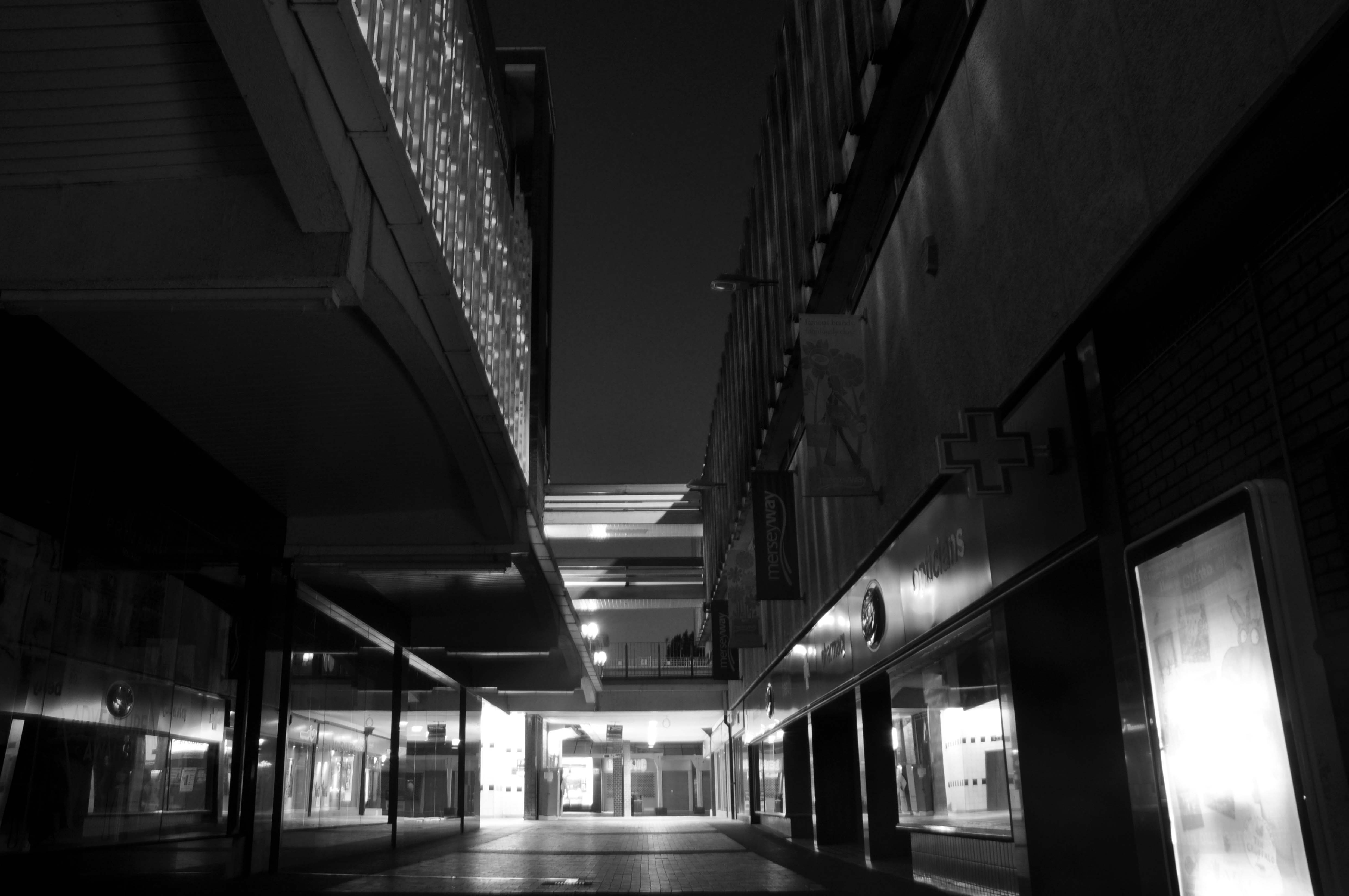
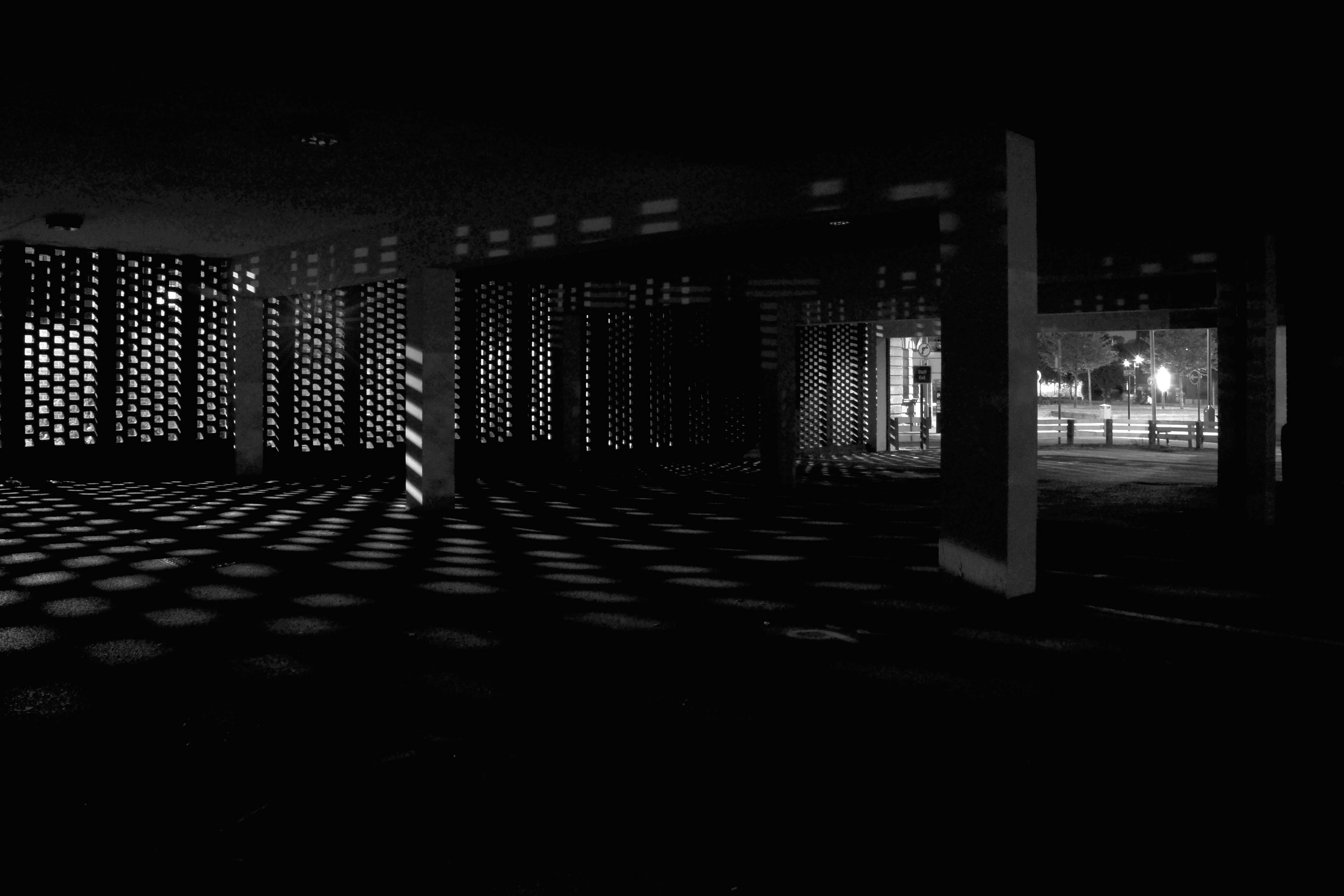
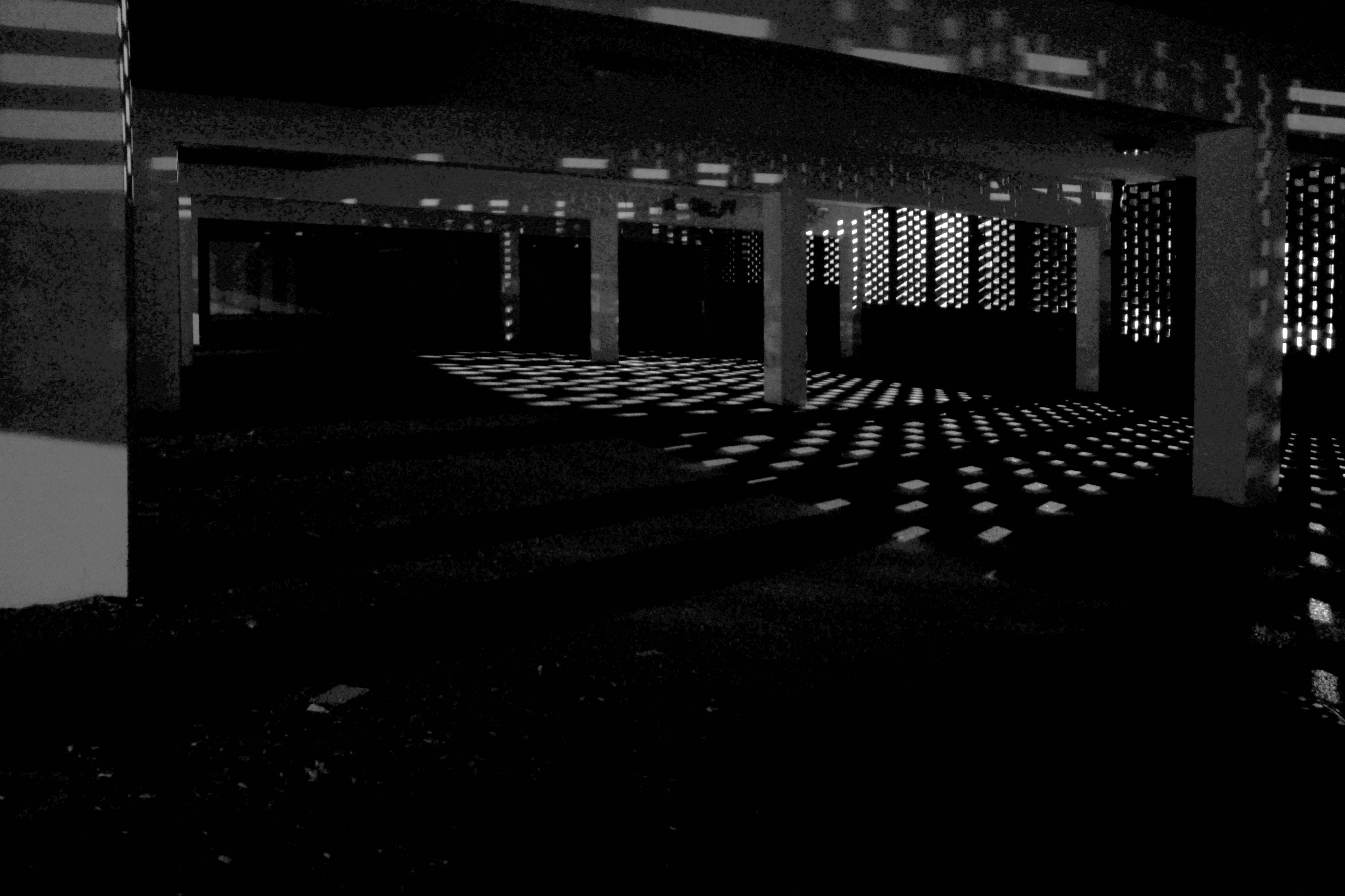
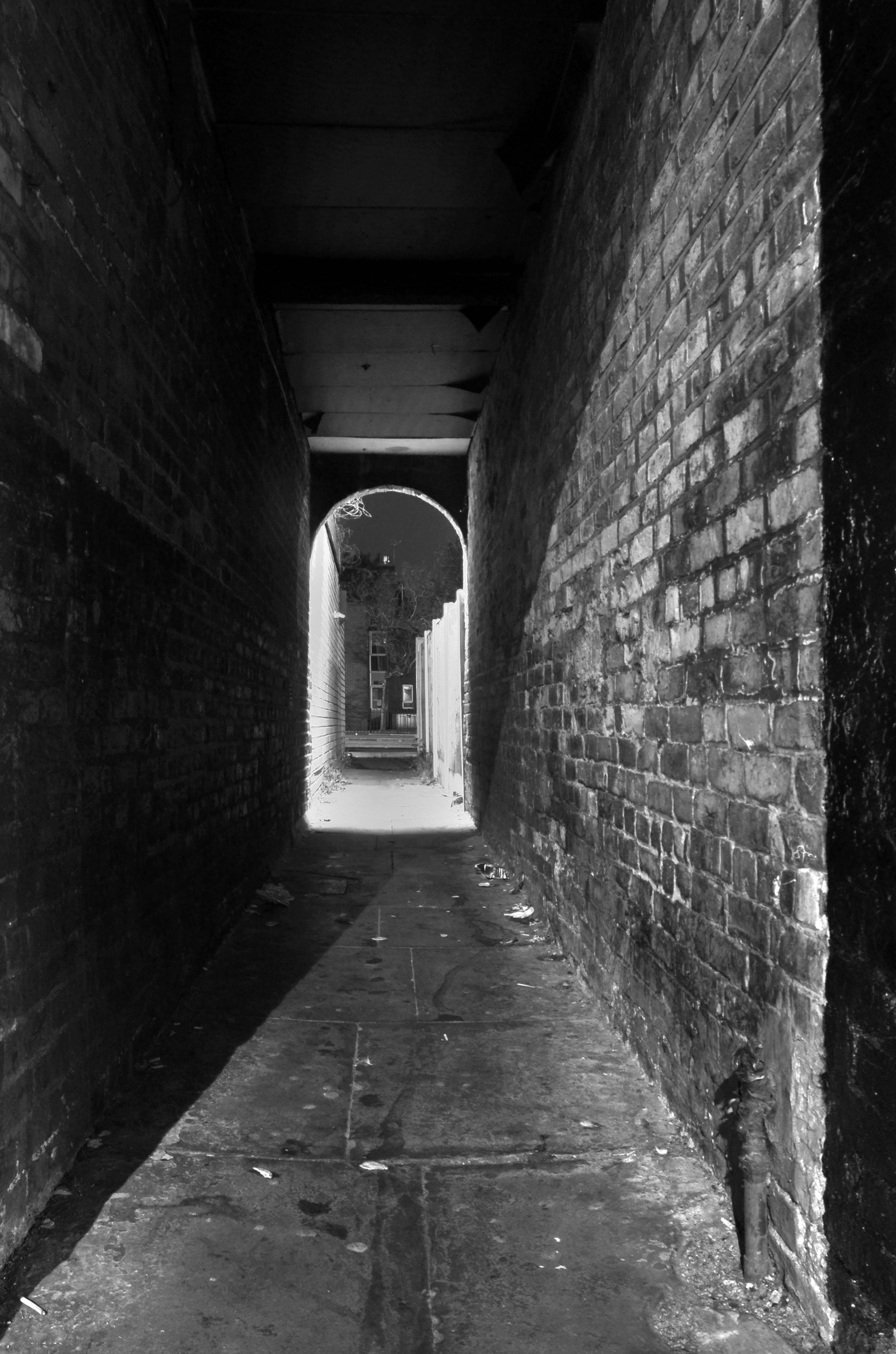
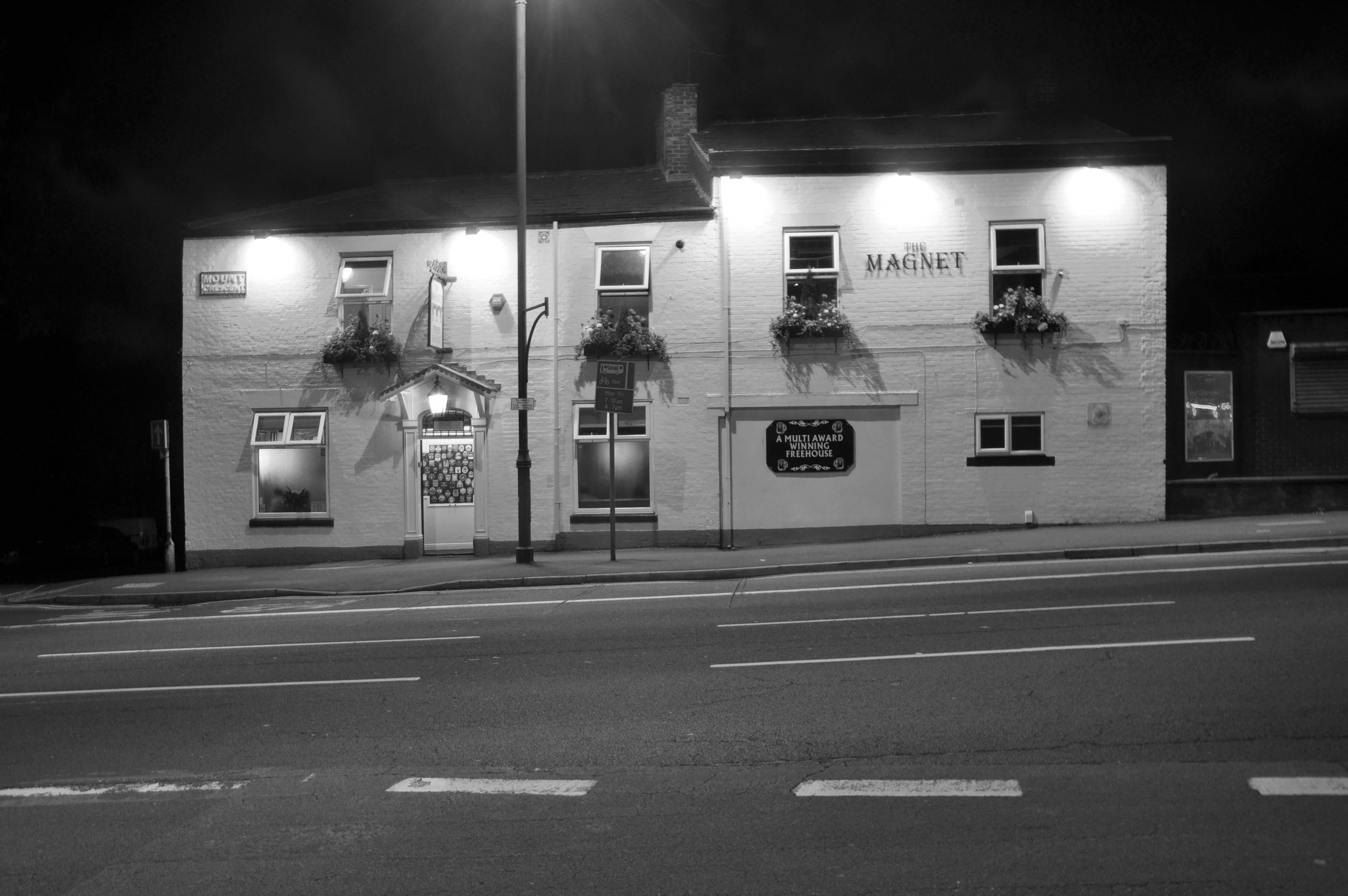
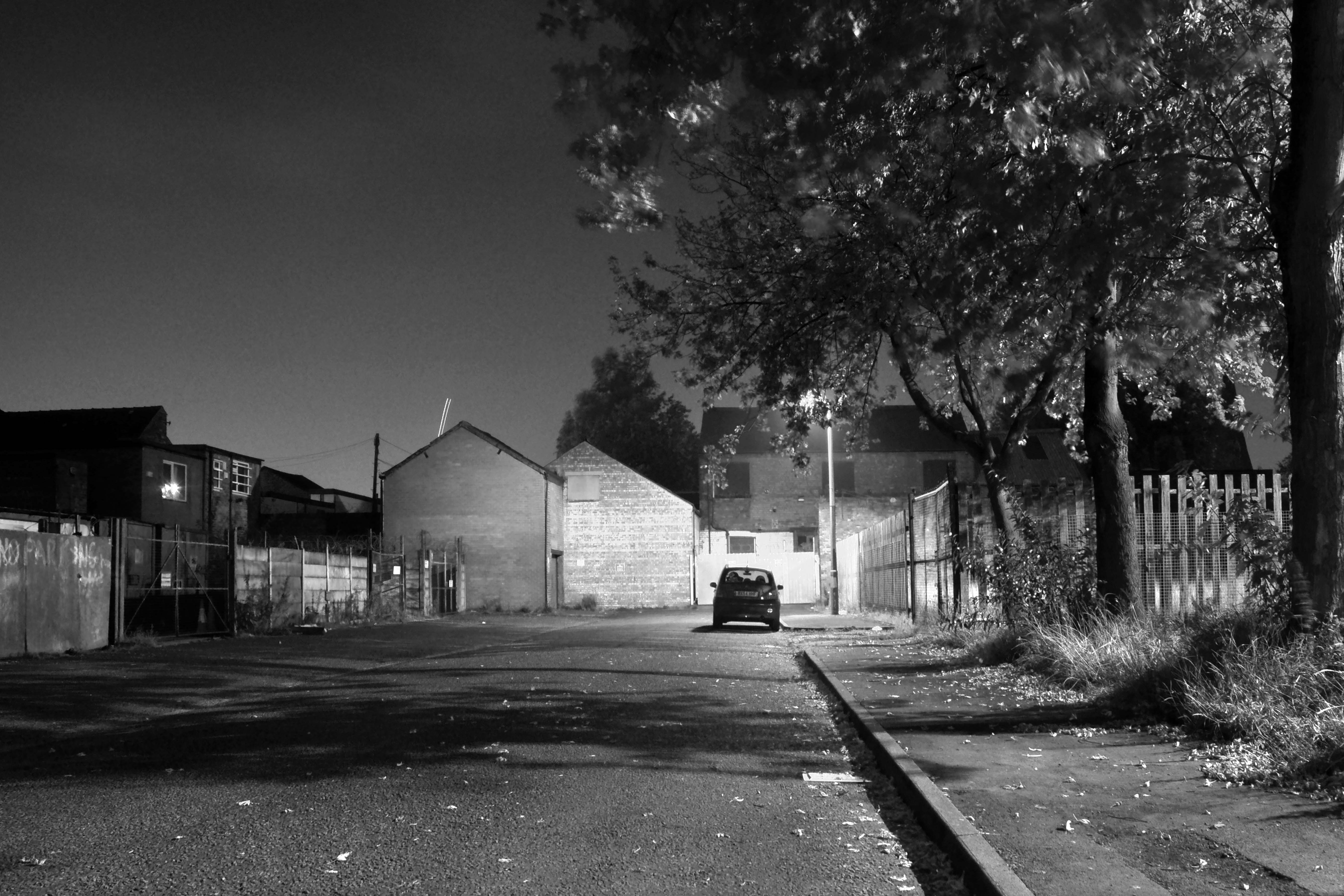
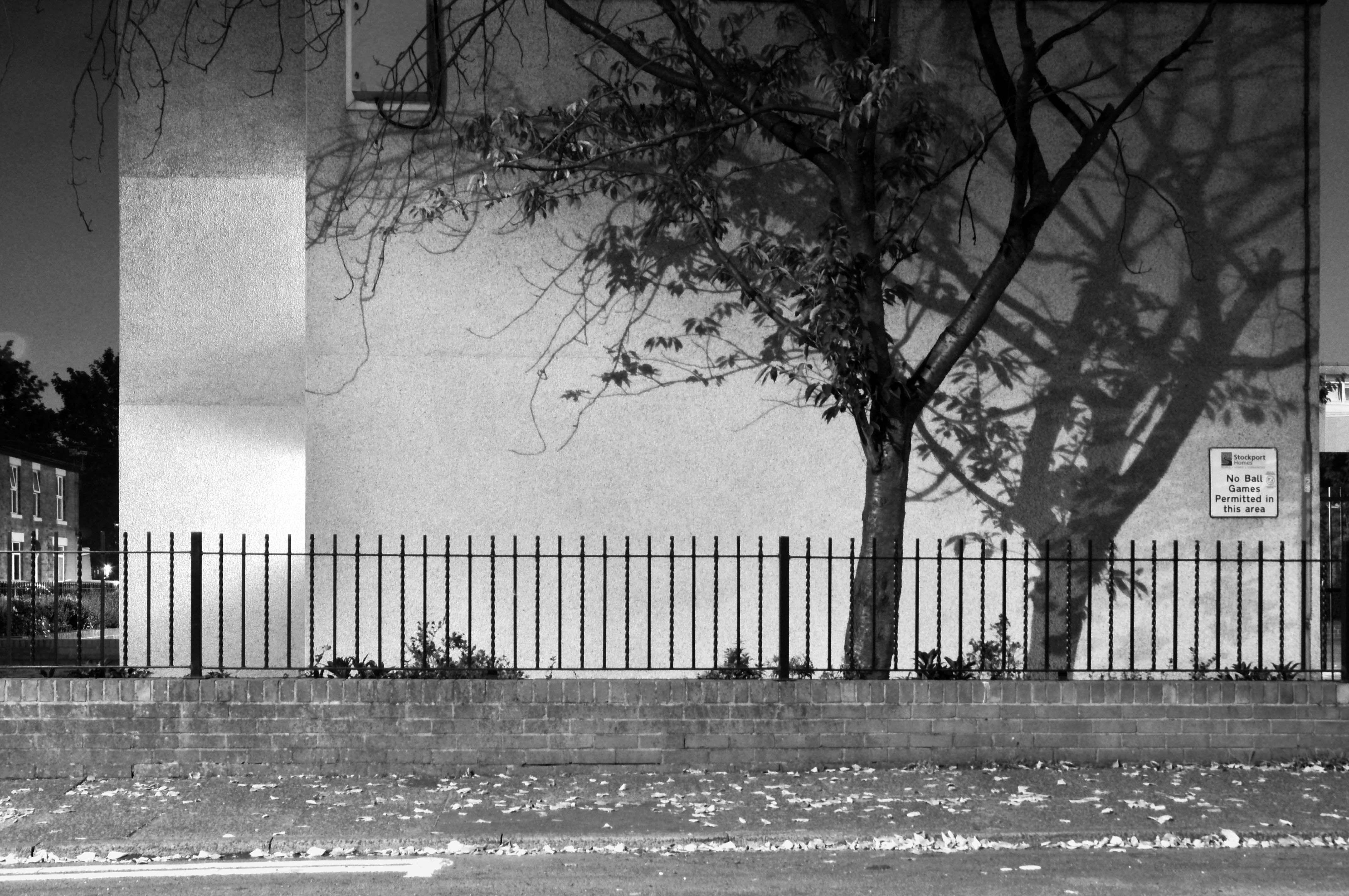
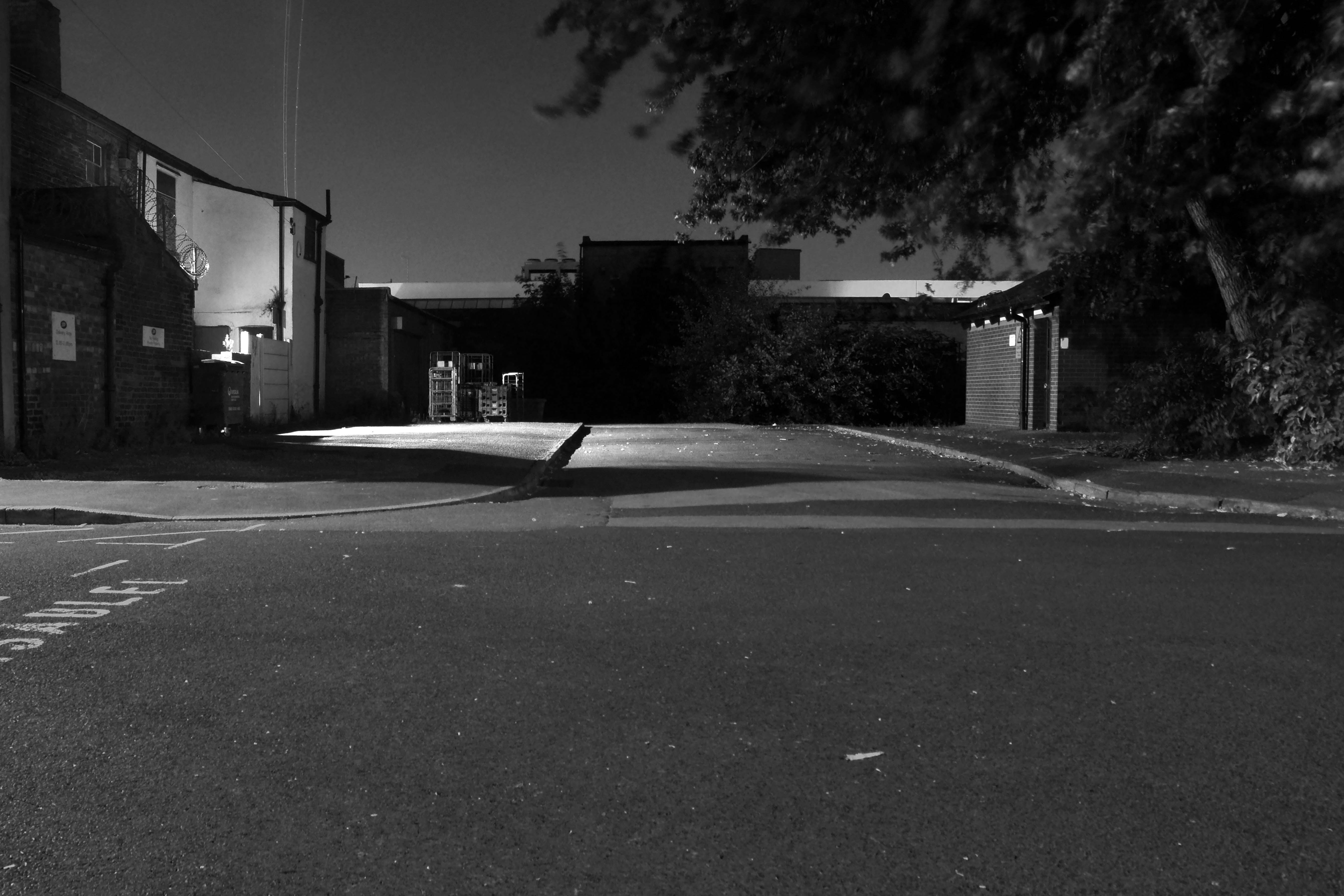
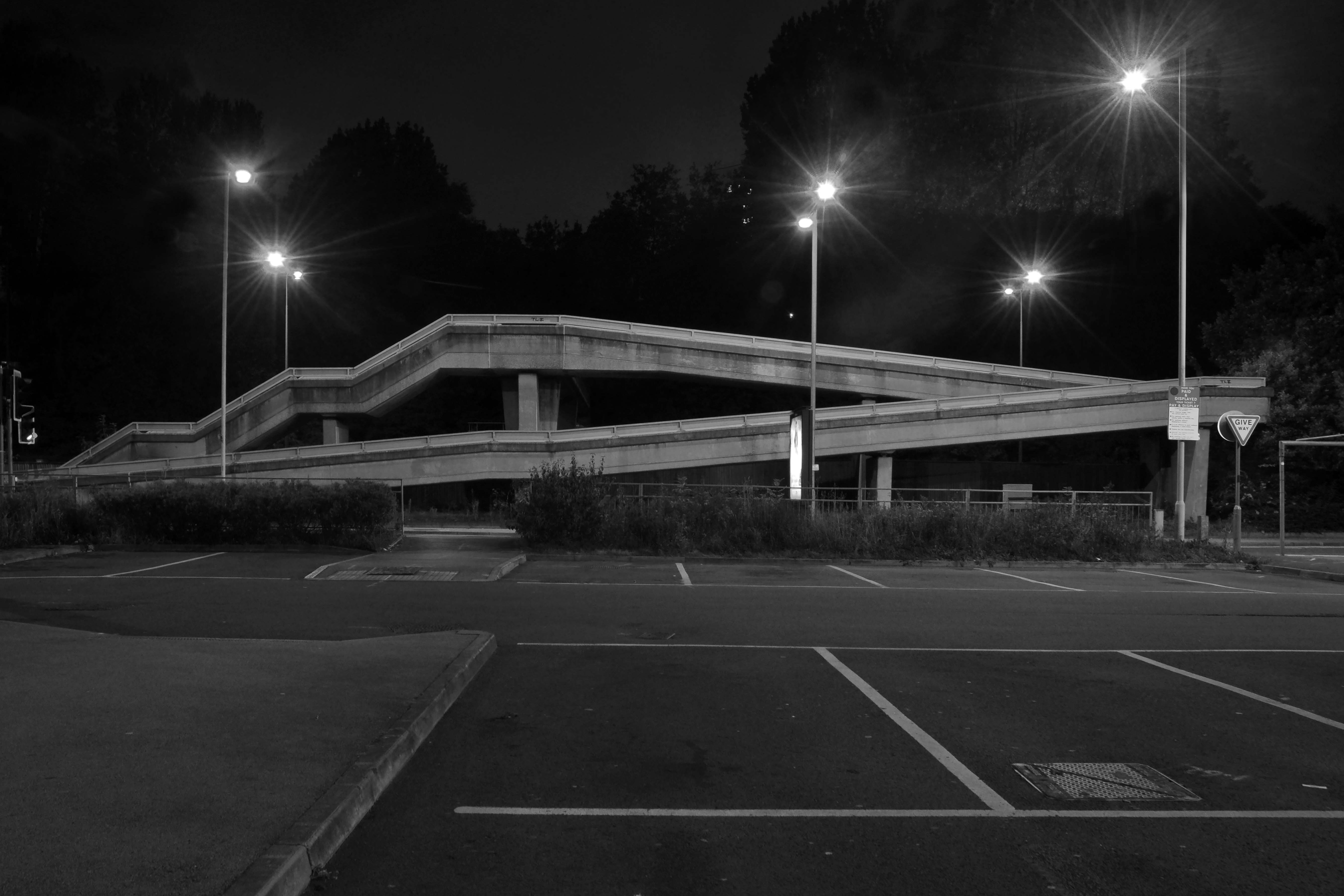
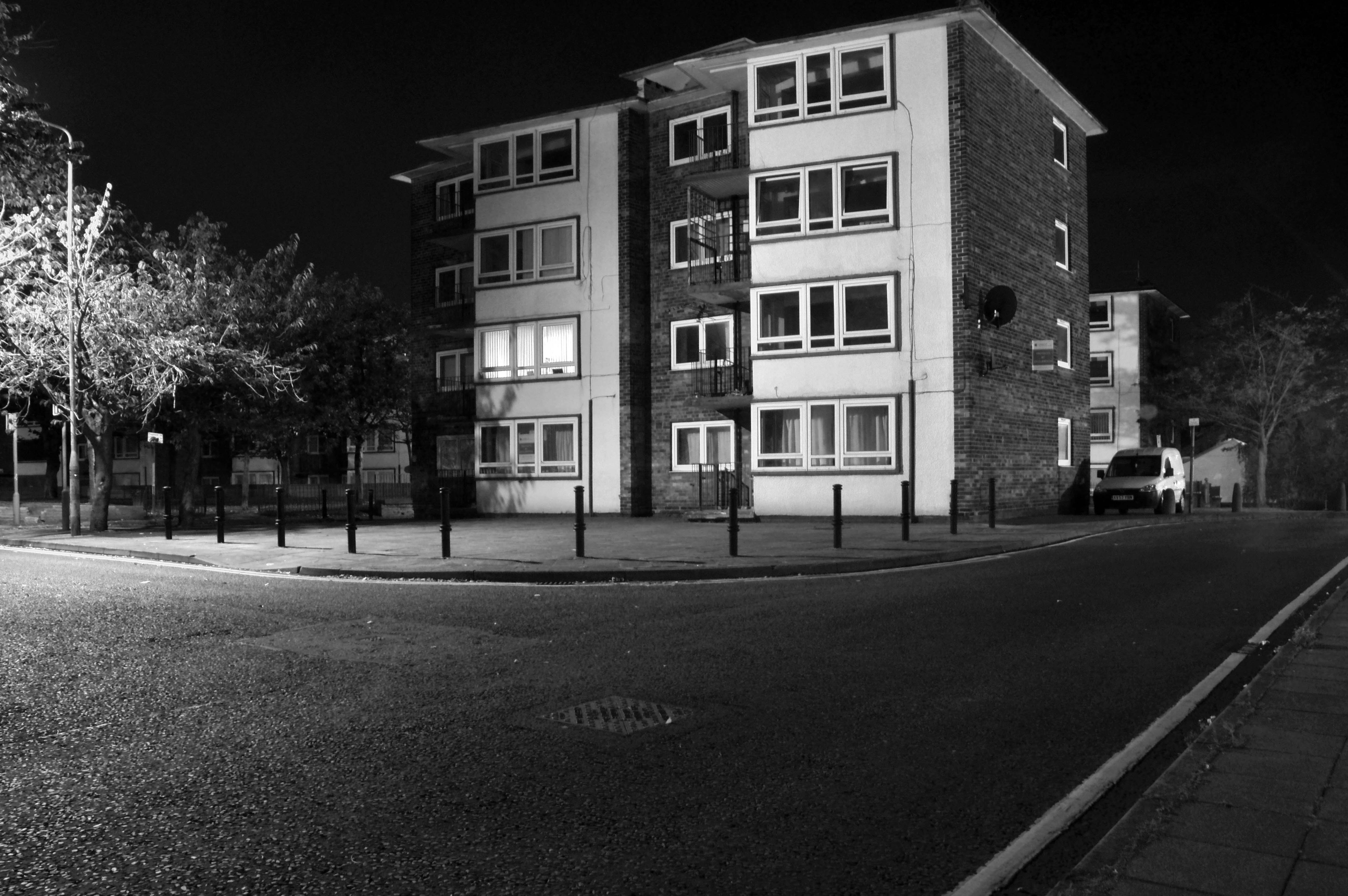
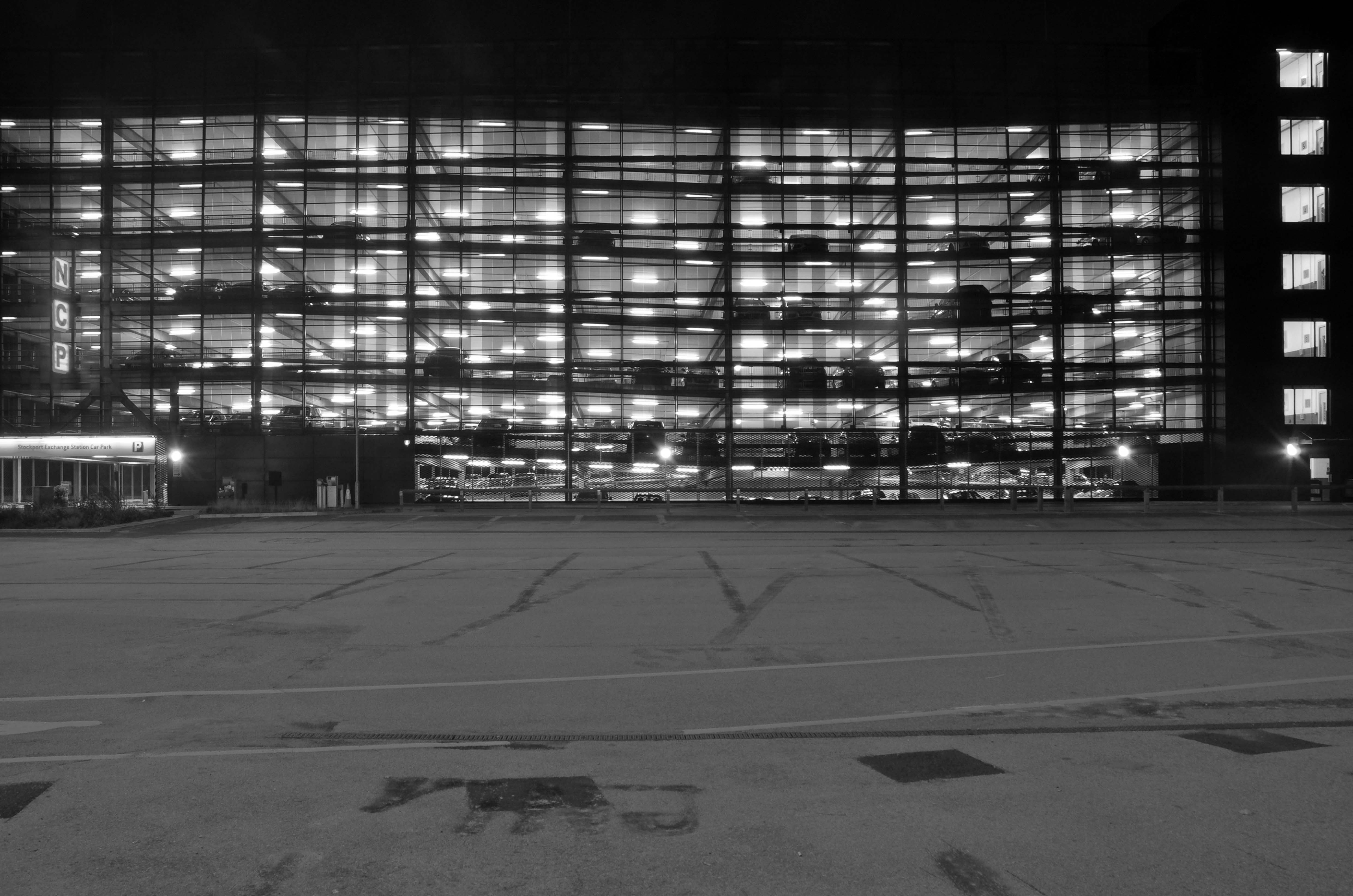
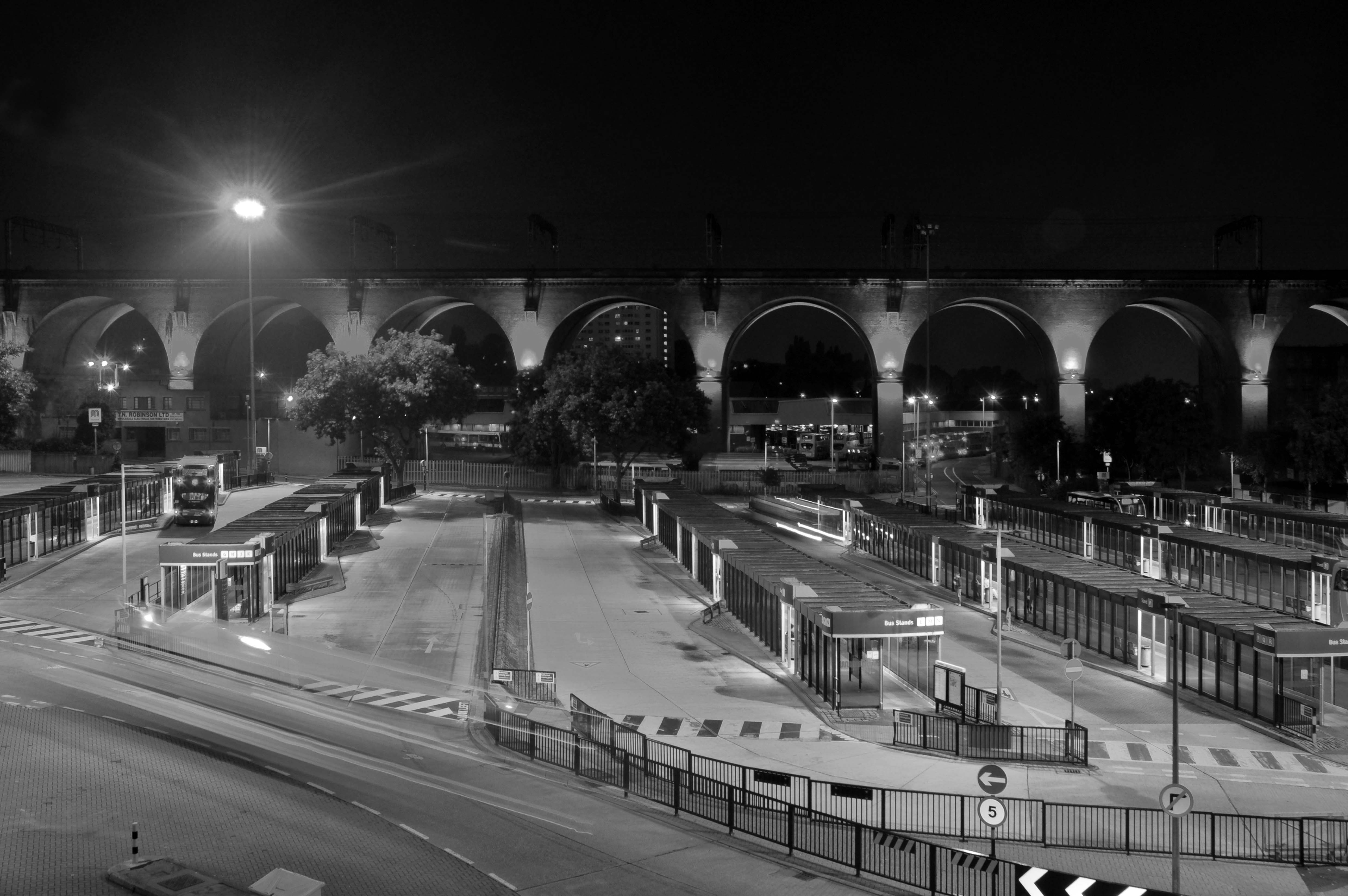
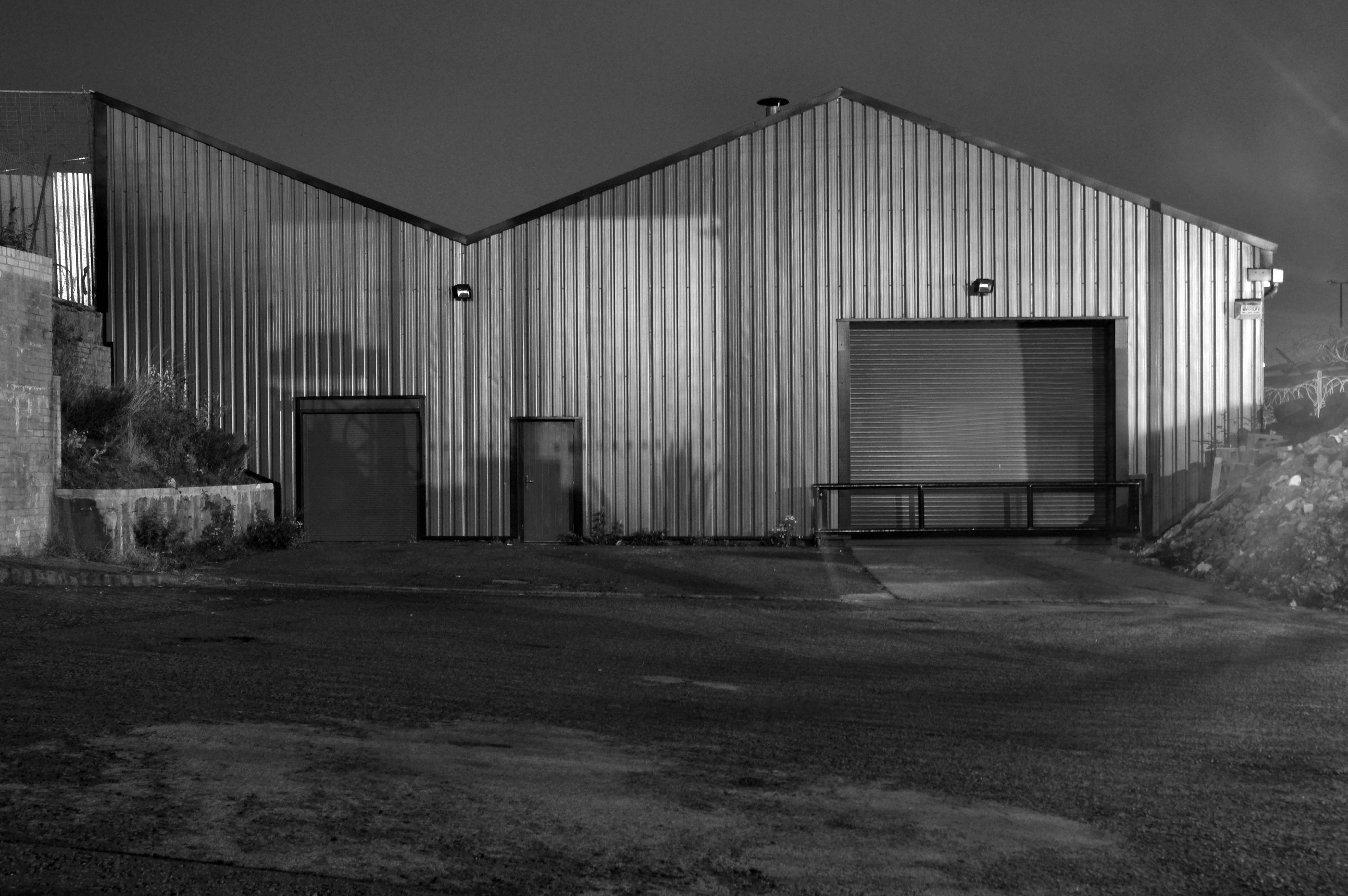
Night on Earth – Stockport

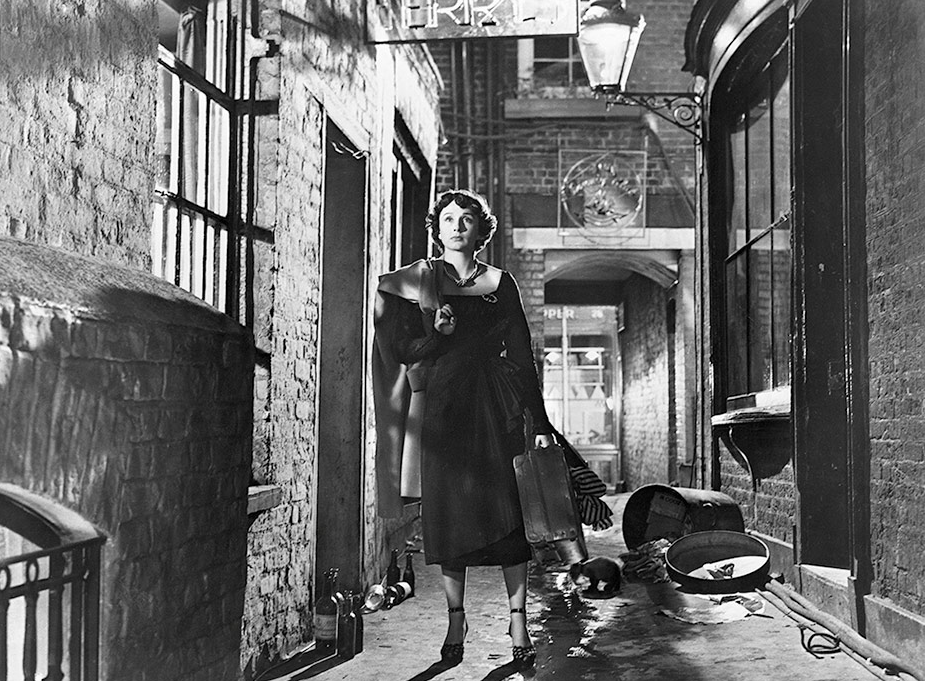
I have always admired feature films shot at night – particularly Jules Dassin’s Night and the City

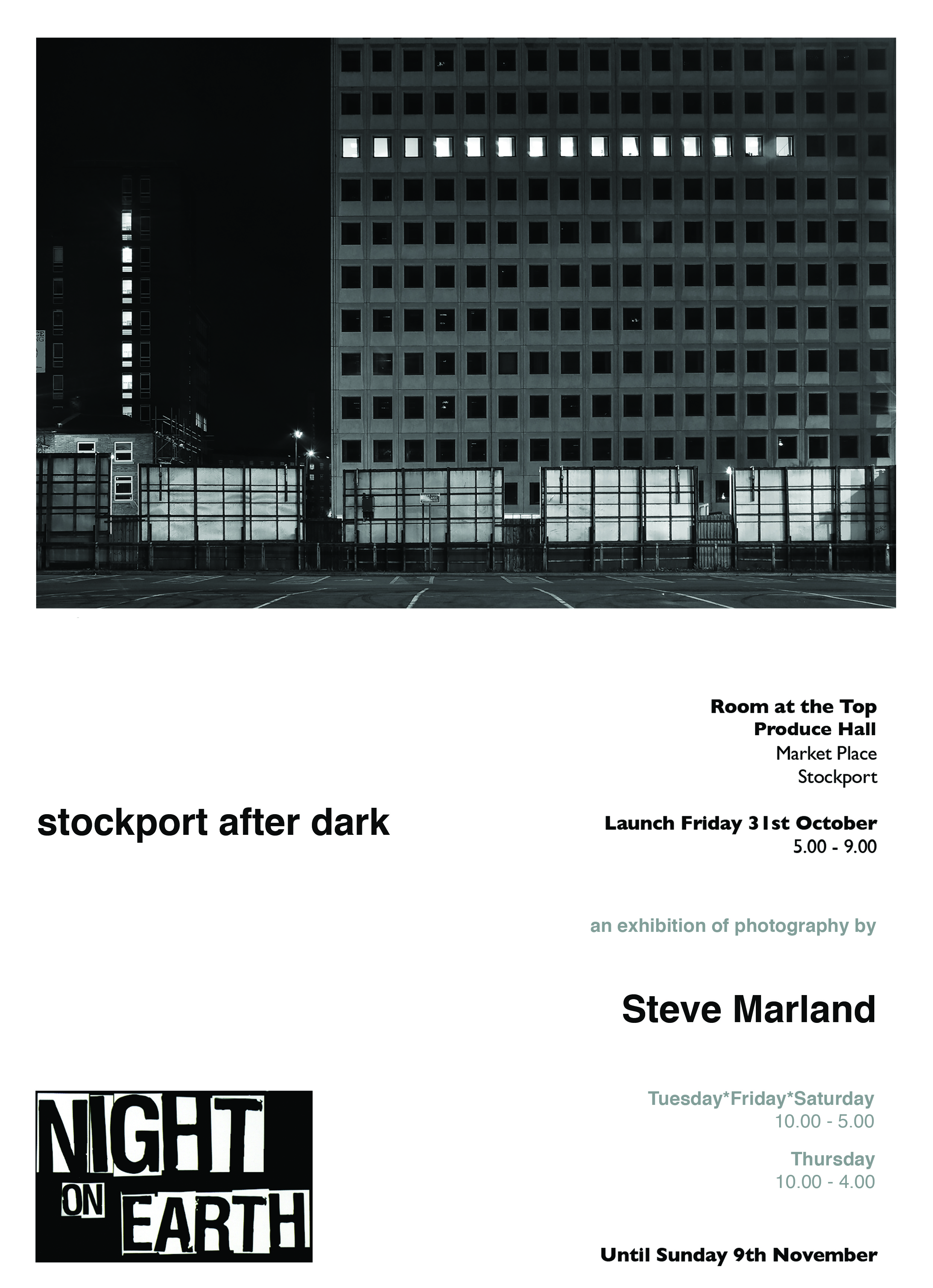
Along with Jim Jarmusch’s Night On Earth – so I stole the title and graphics for my photographs.

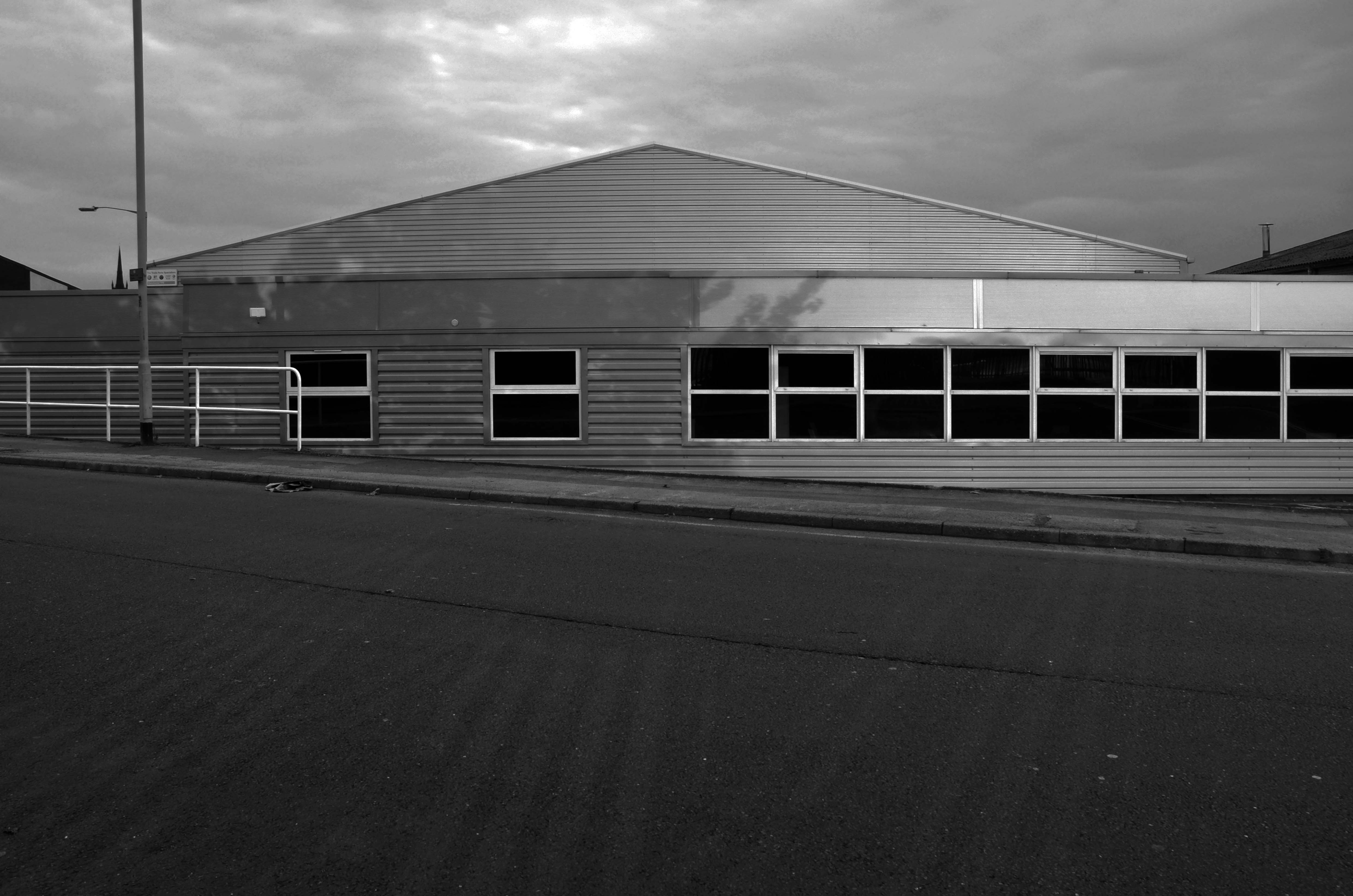
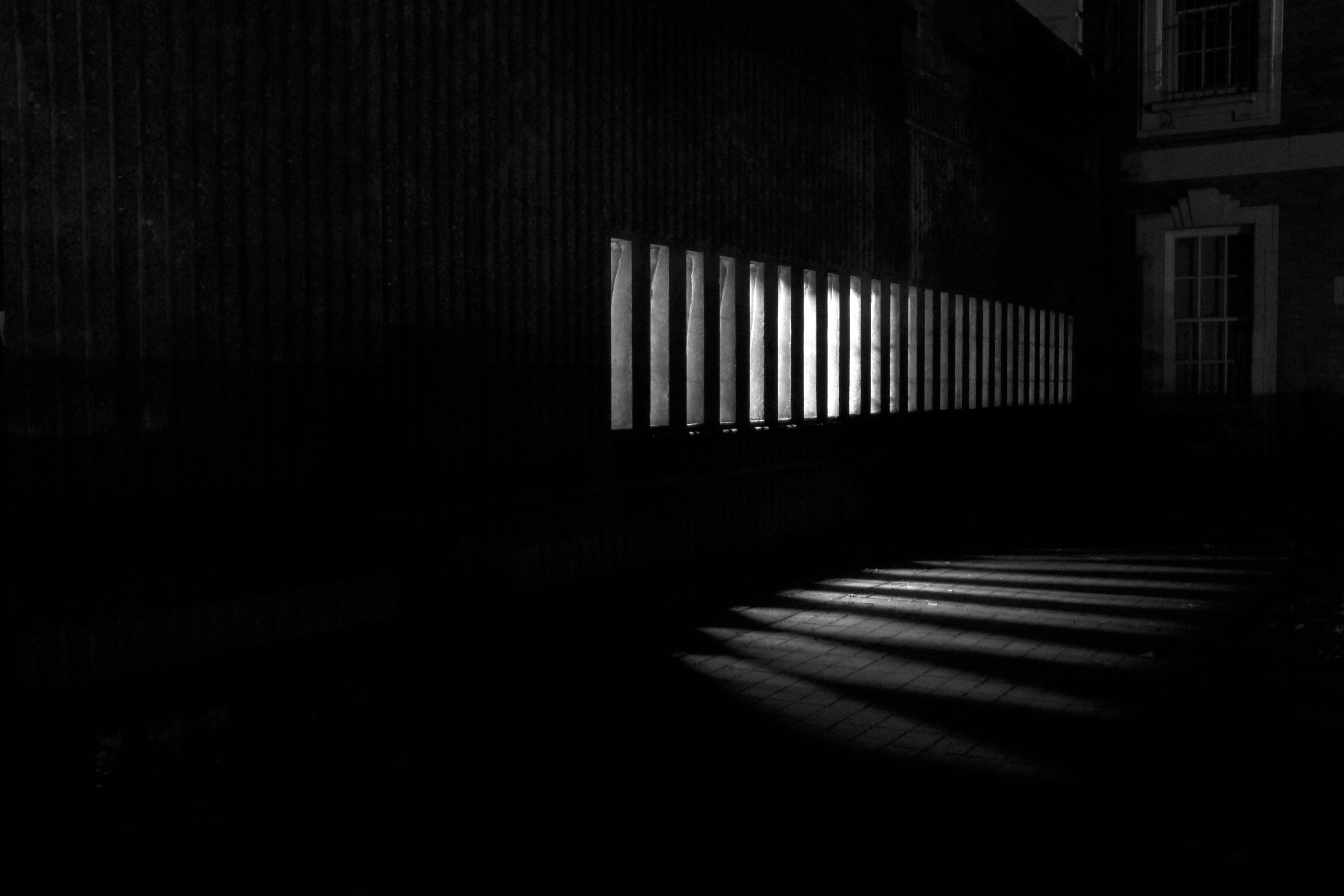
They were all taken within walking distance of my home in Norris Bank in September 2014.

Subsequently shown at Room at the Top in Stockport at the behest of John Cox.

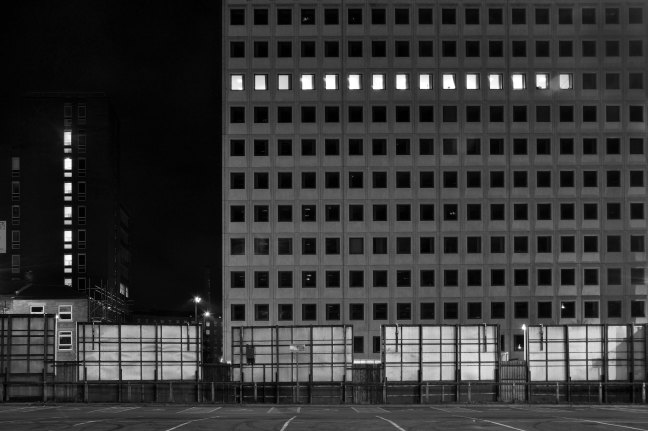
I set out as the sun began to set, equipped with a tripod and a Nikon D70.

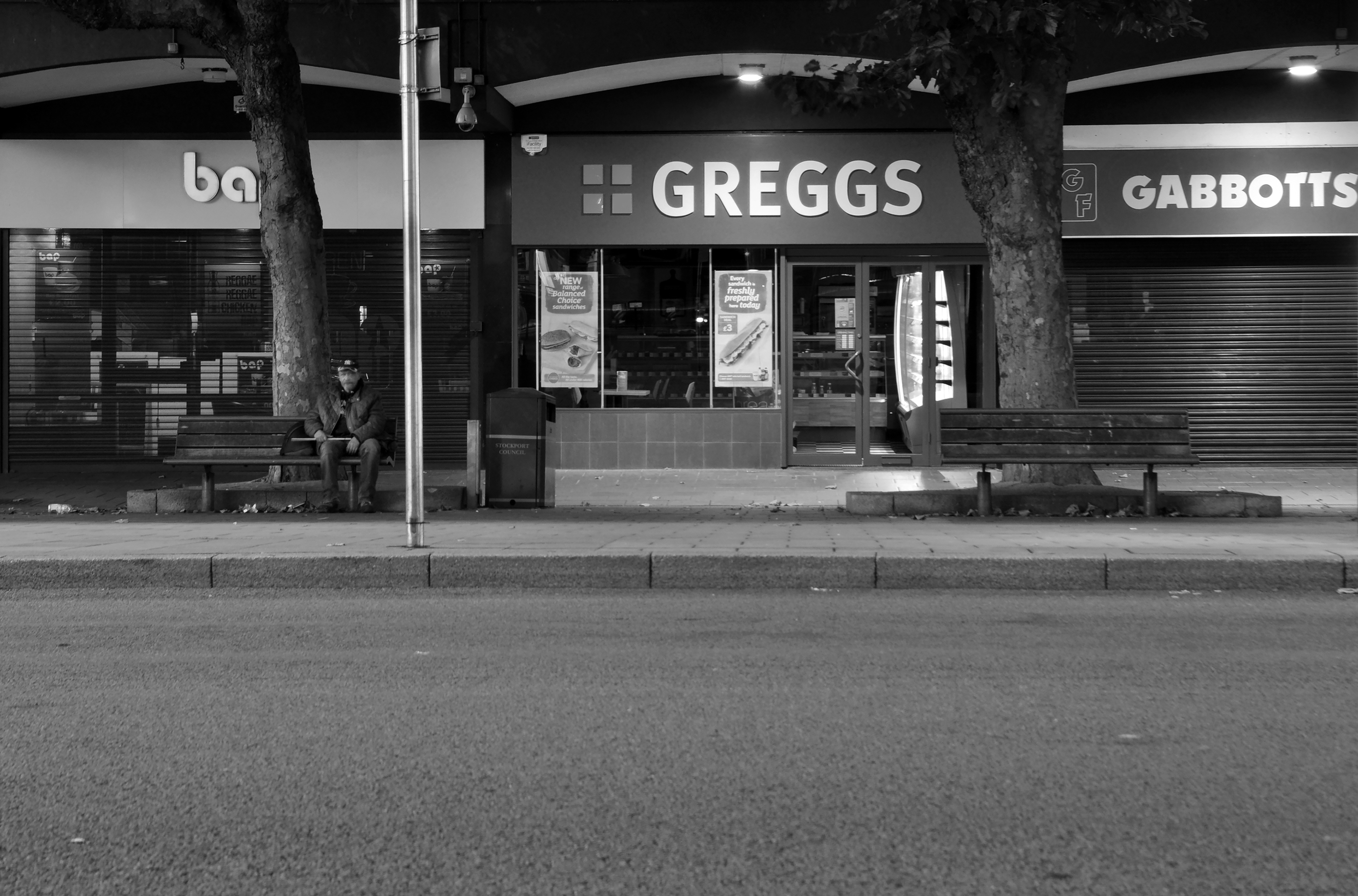
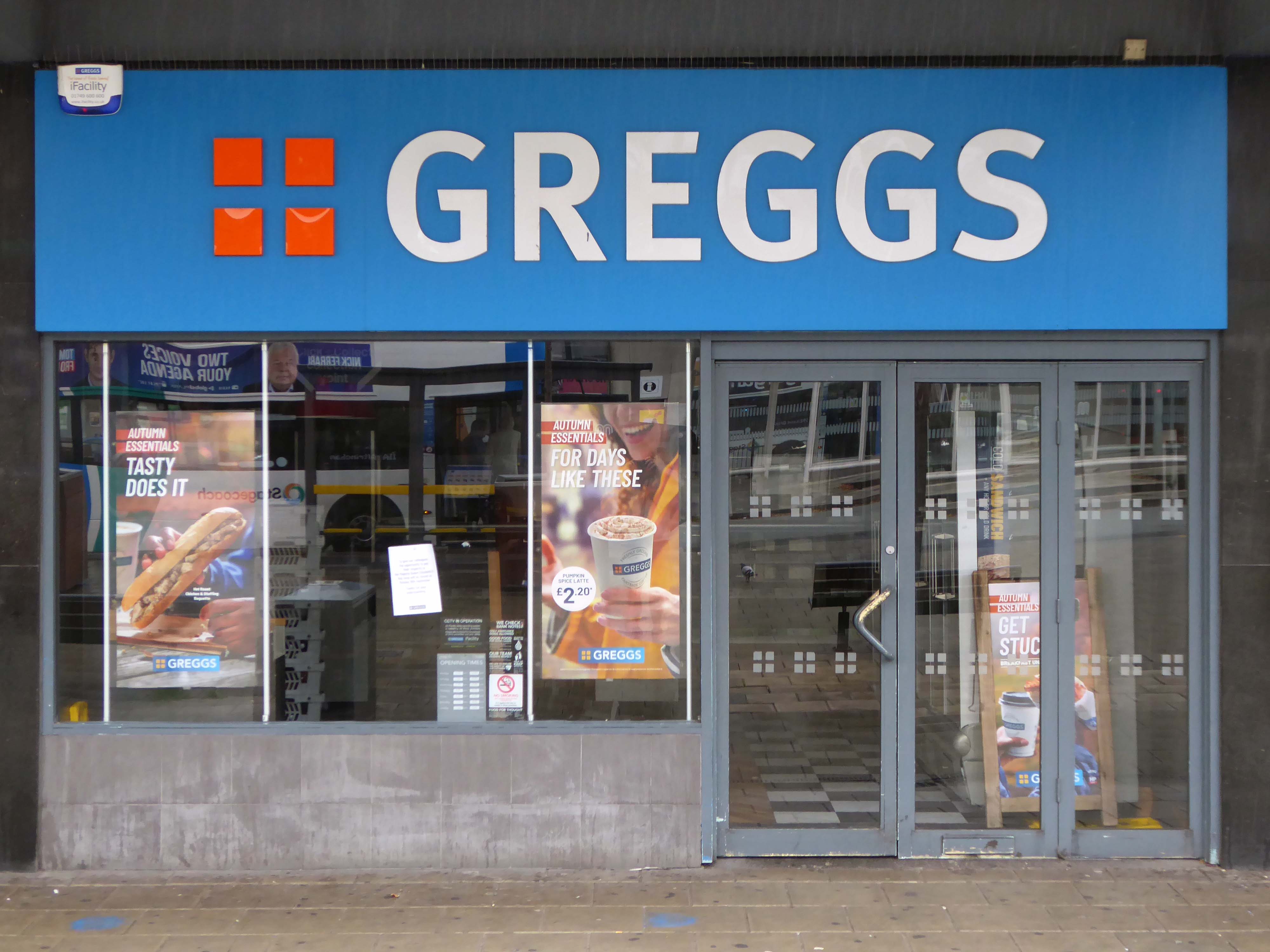
The town was largely unpopulated – save for this lone figure sat sitting on a bench outside Greggs.

Gregg’s has subsequently doubled in size, consuming Baps, Gabbotts Farm has become Sterling Foods.

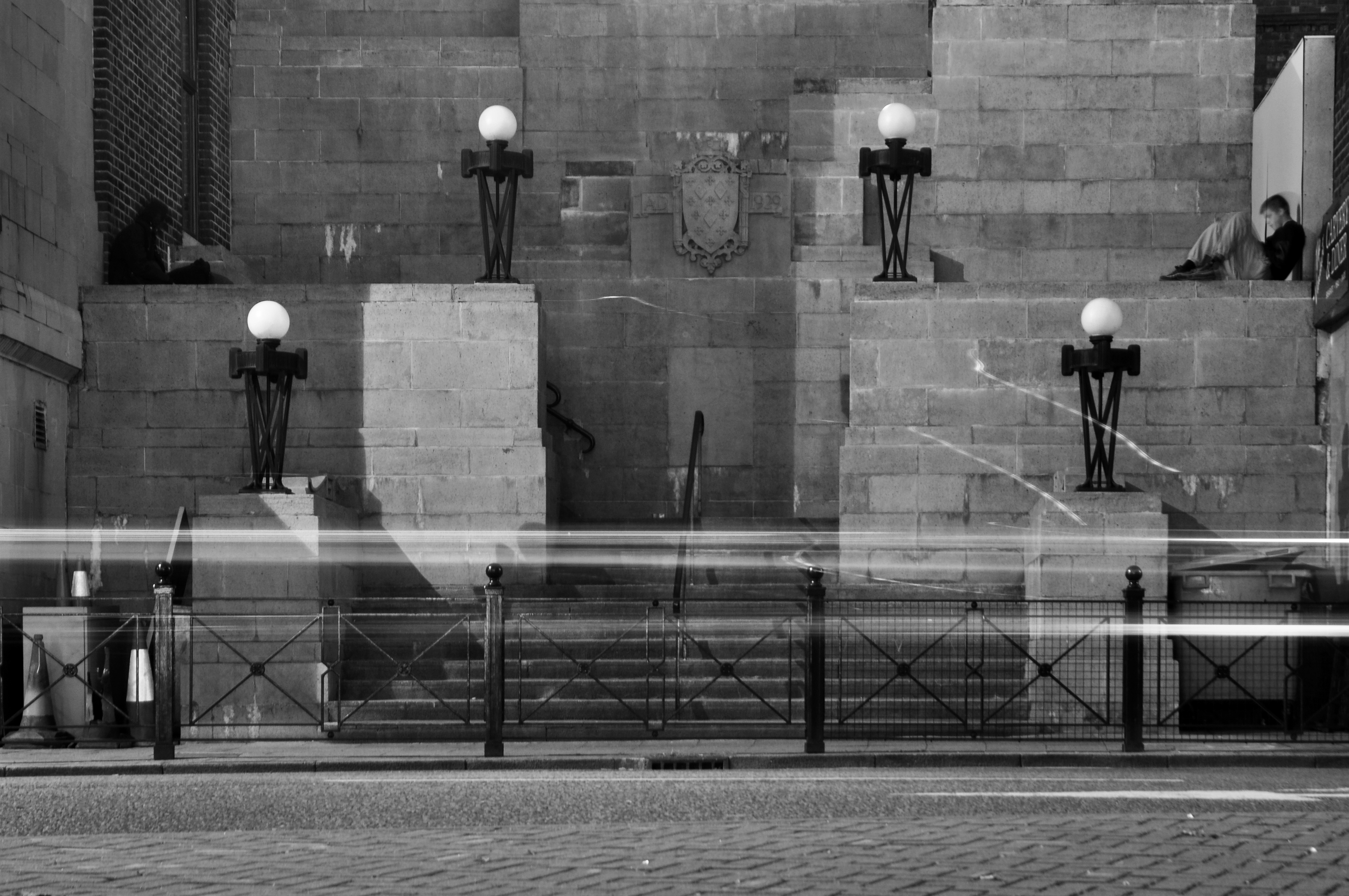
Along with these two lads sat on the Plaza Steps.

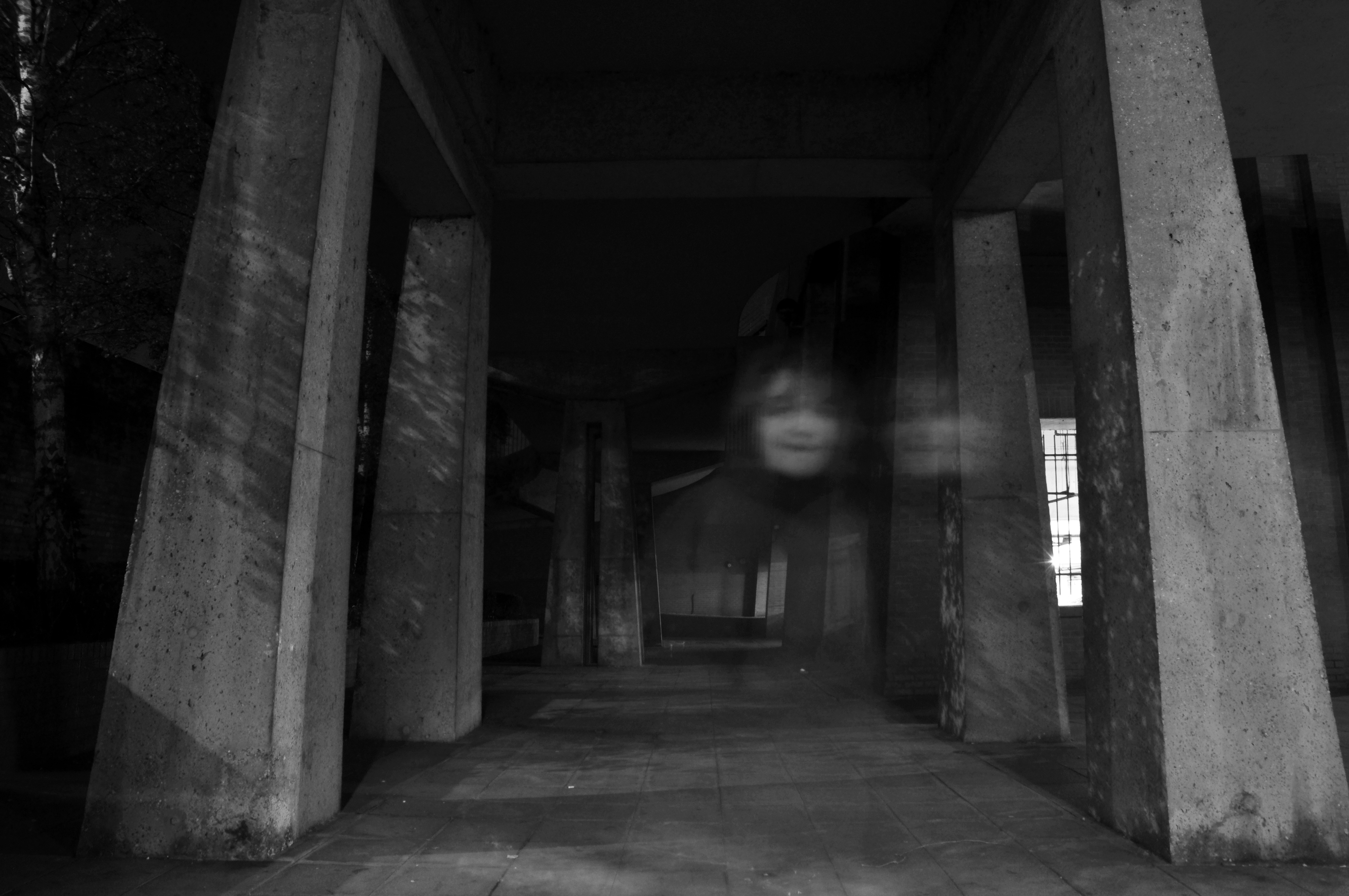
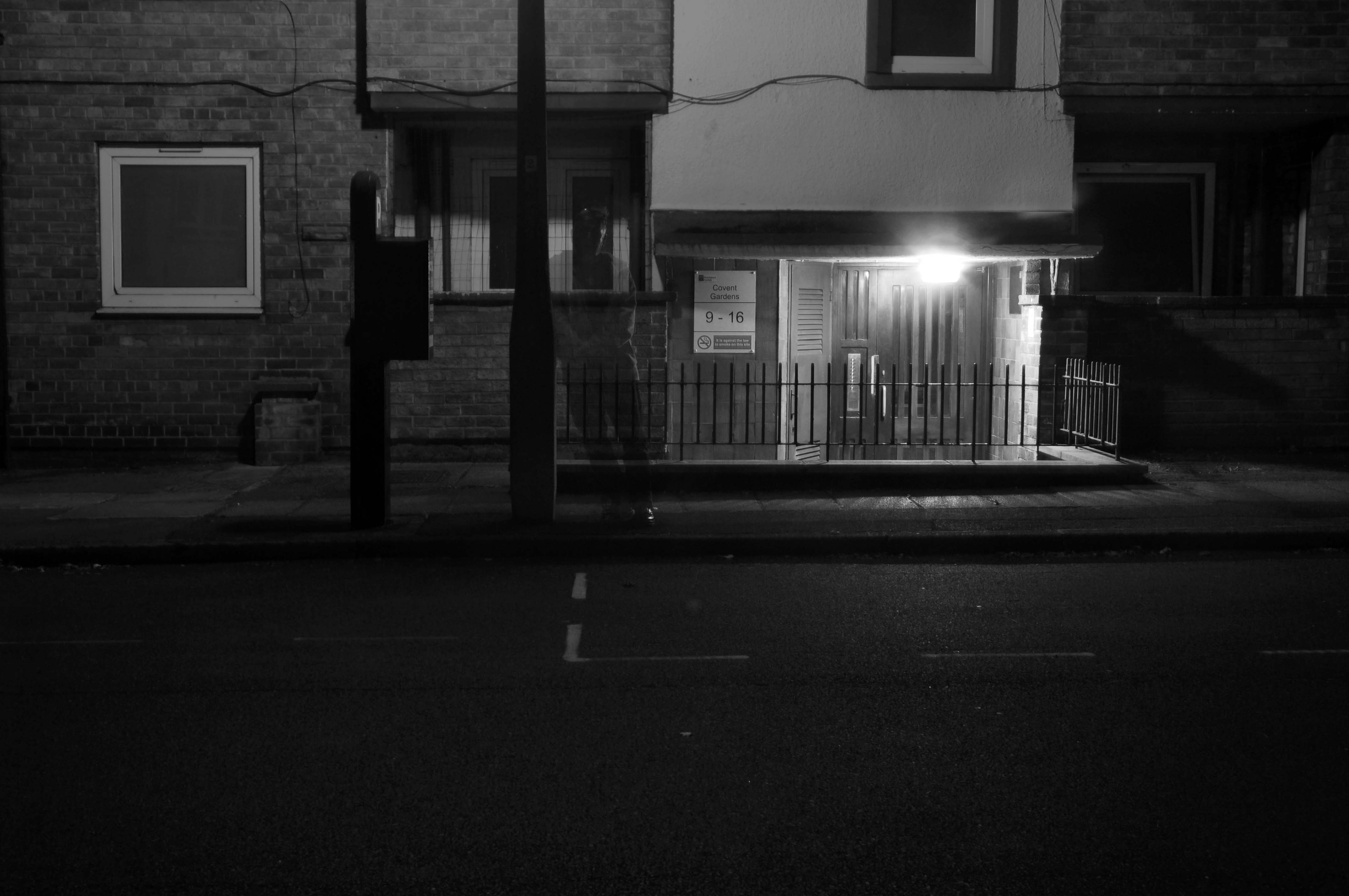
And finally, this ghostly figure – who stood before me during the long exposure required, enquiring about what I was up to.

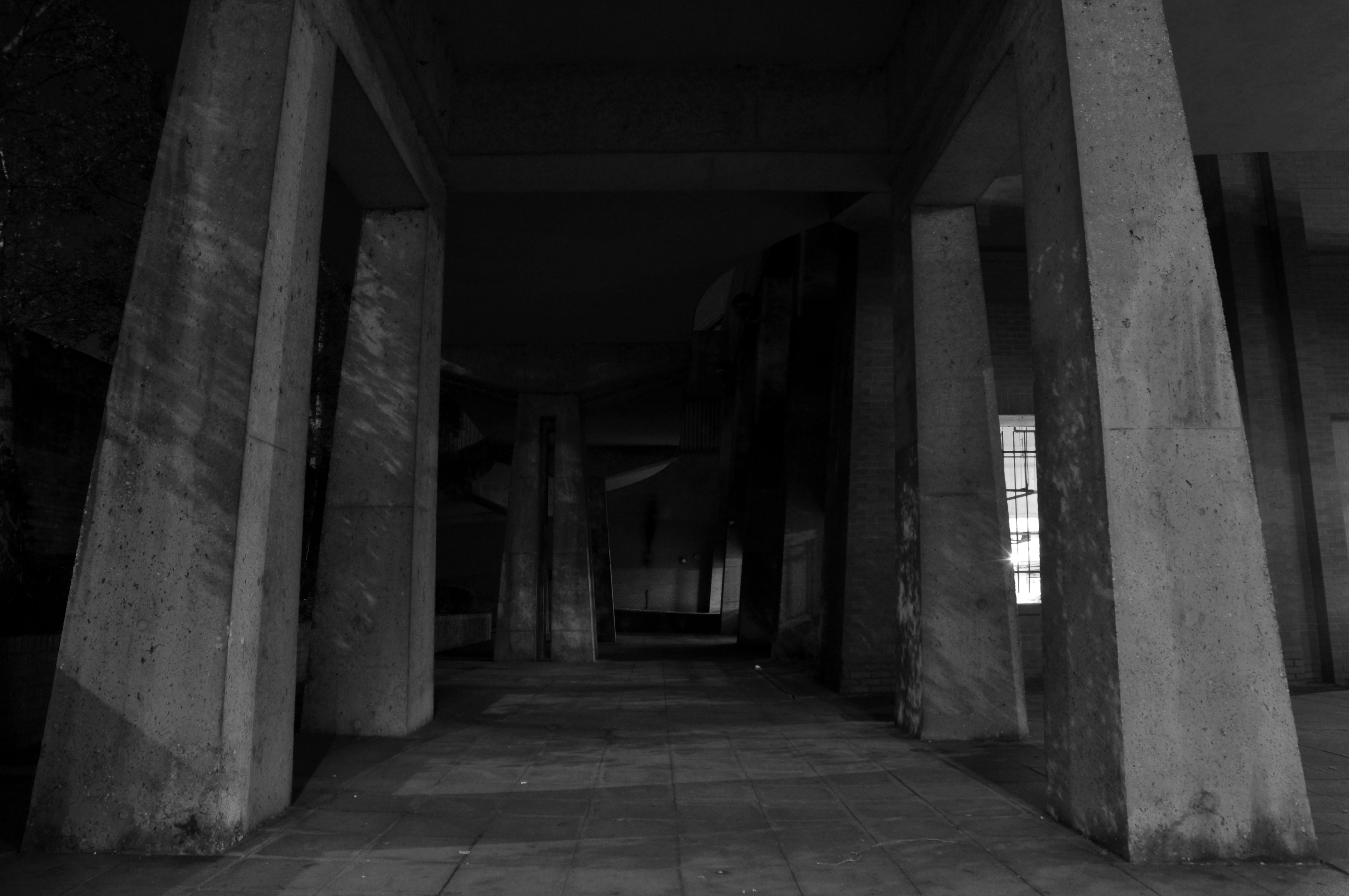
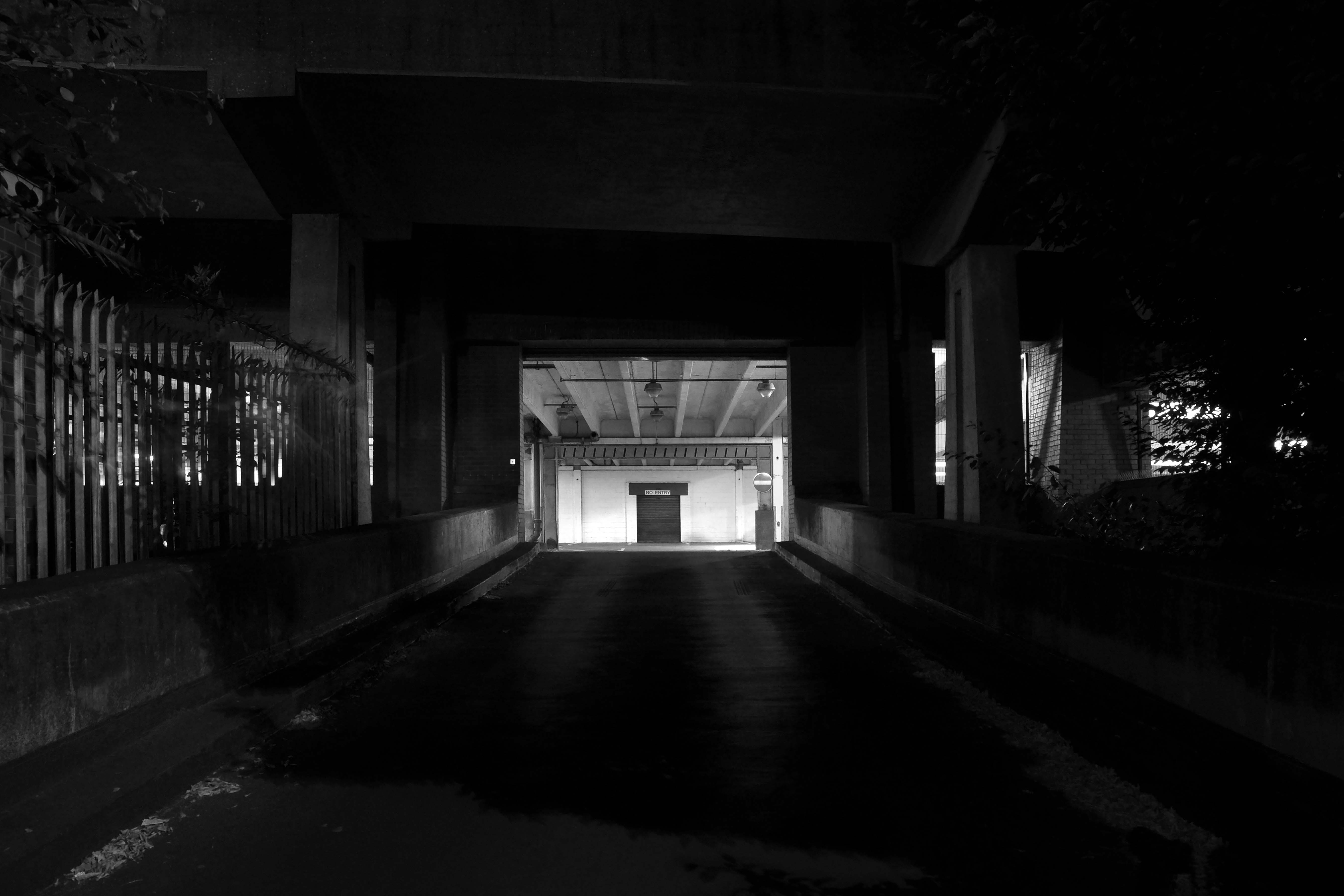
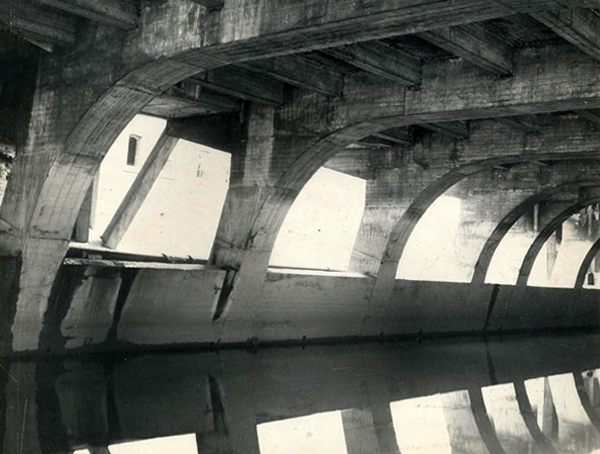
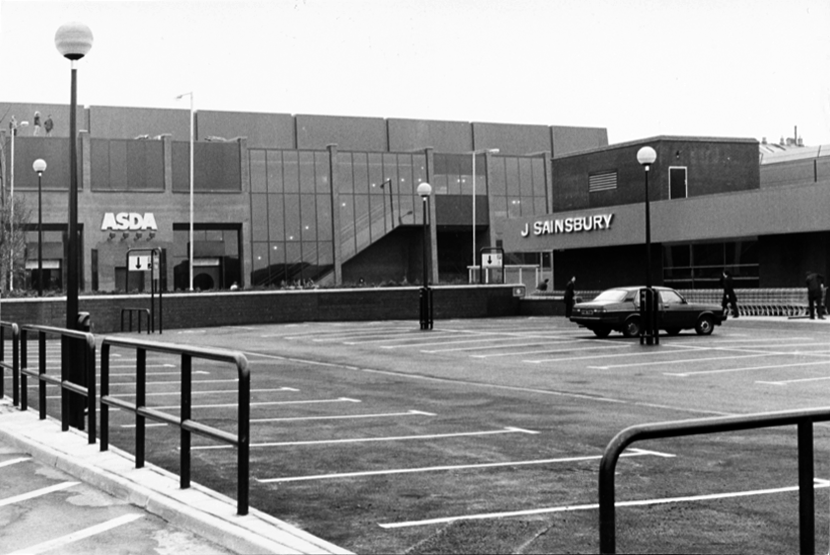
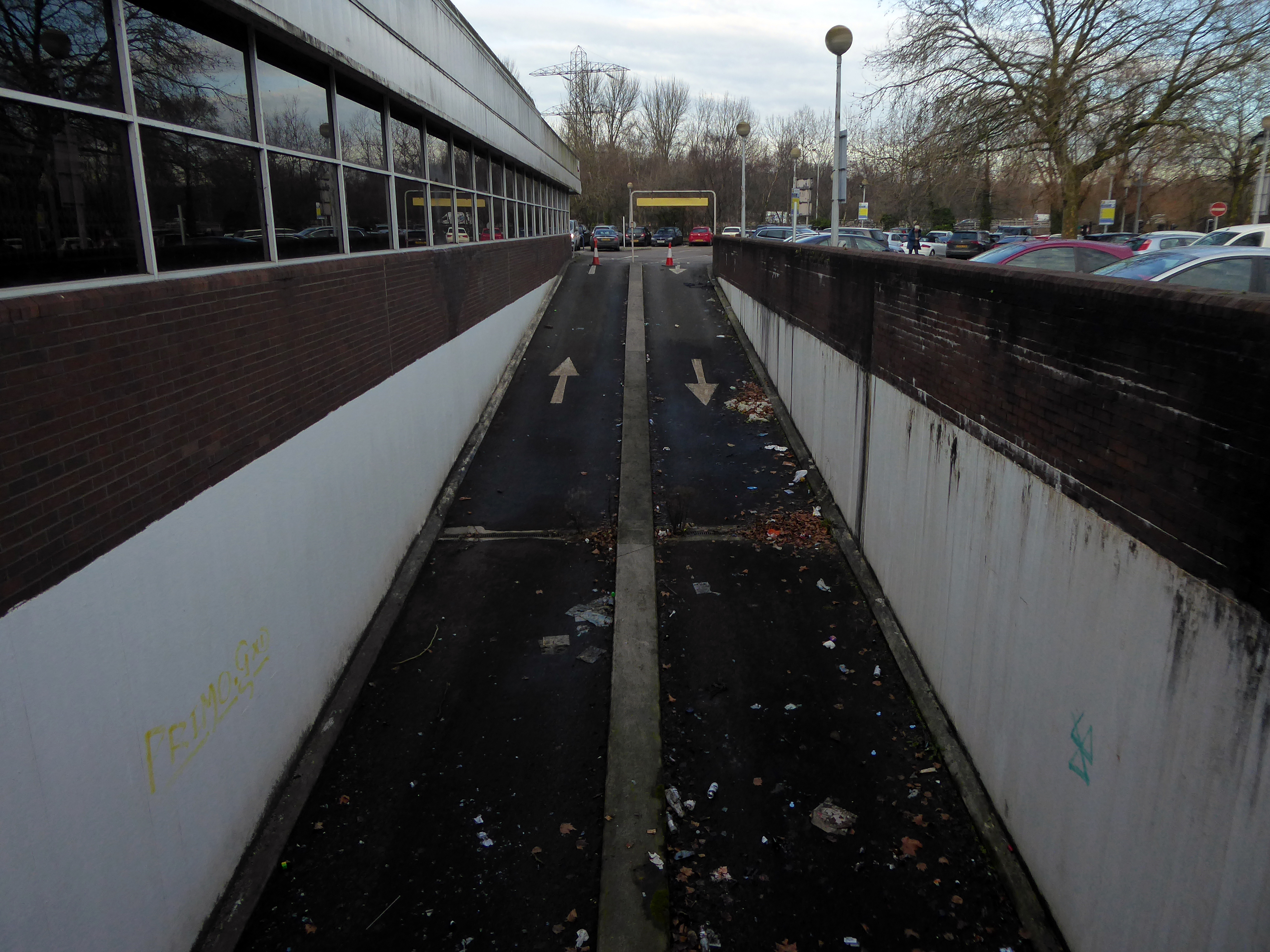
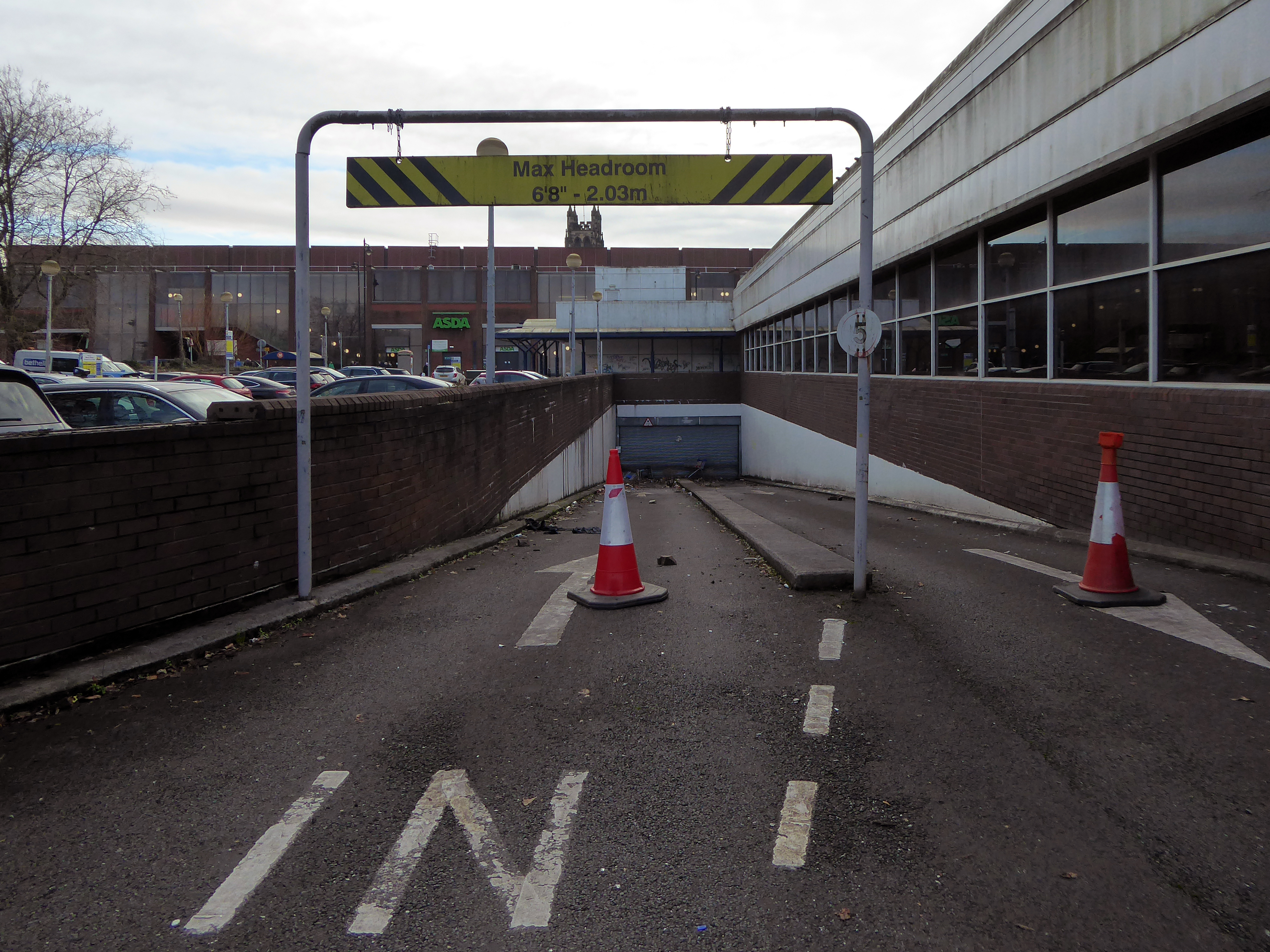
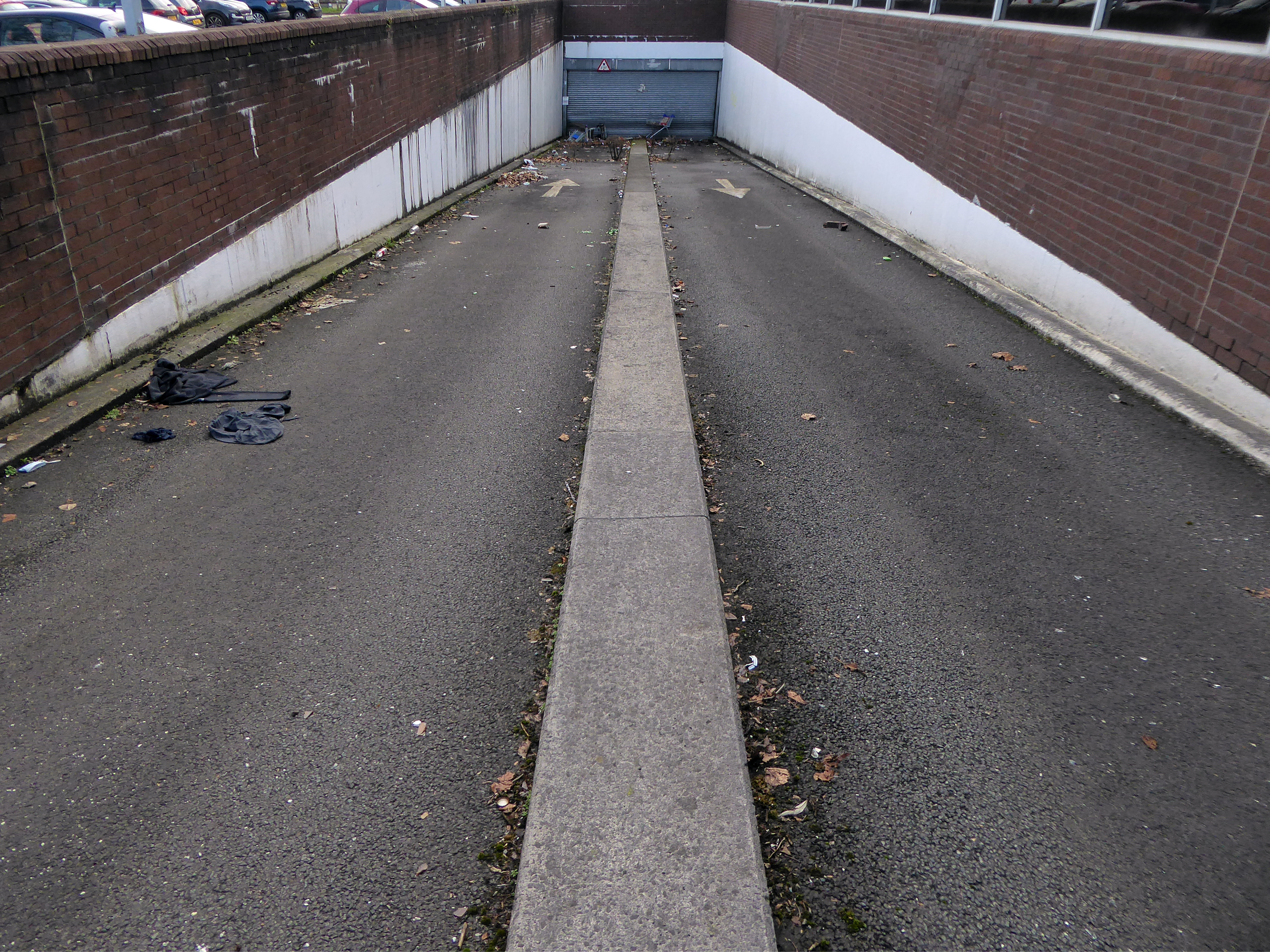
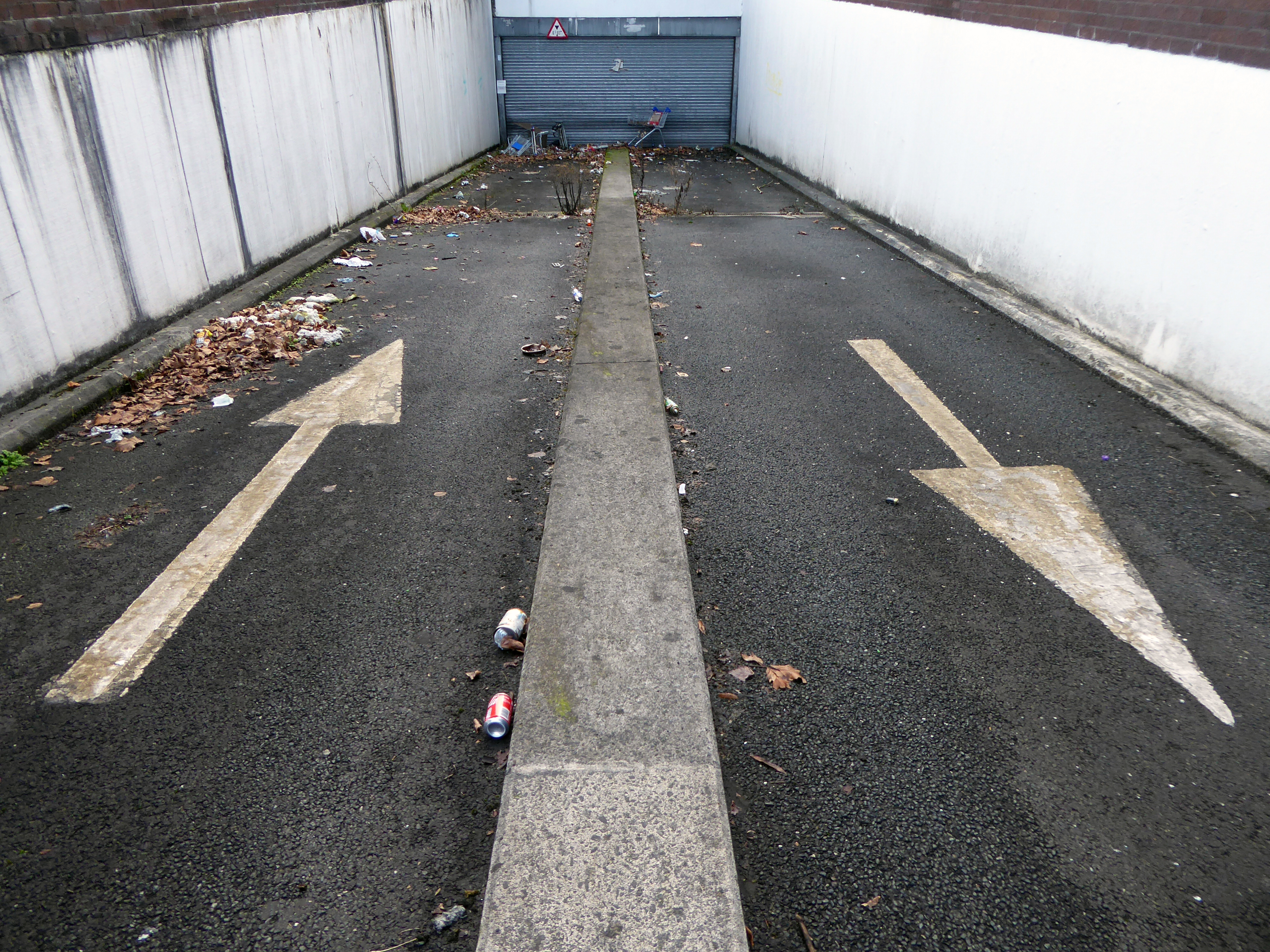
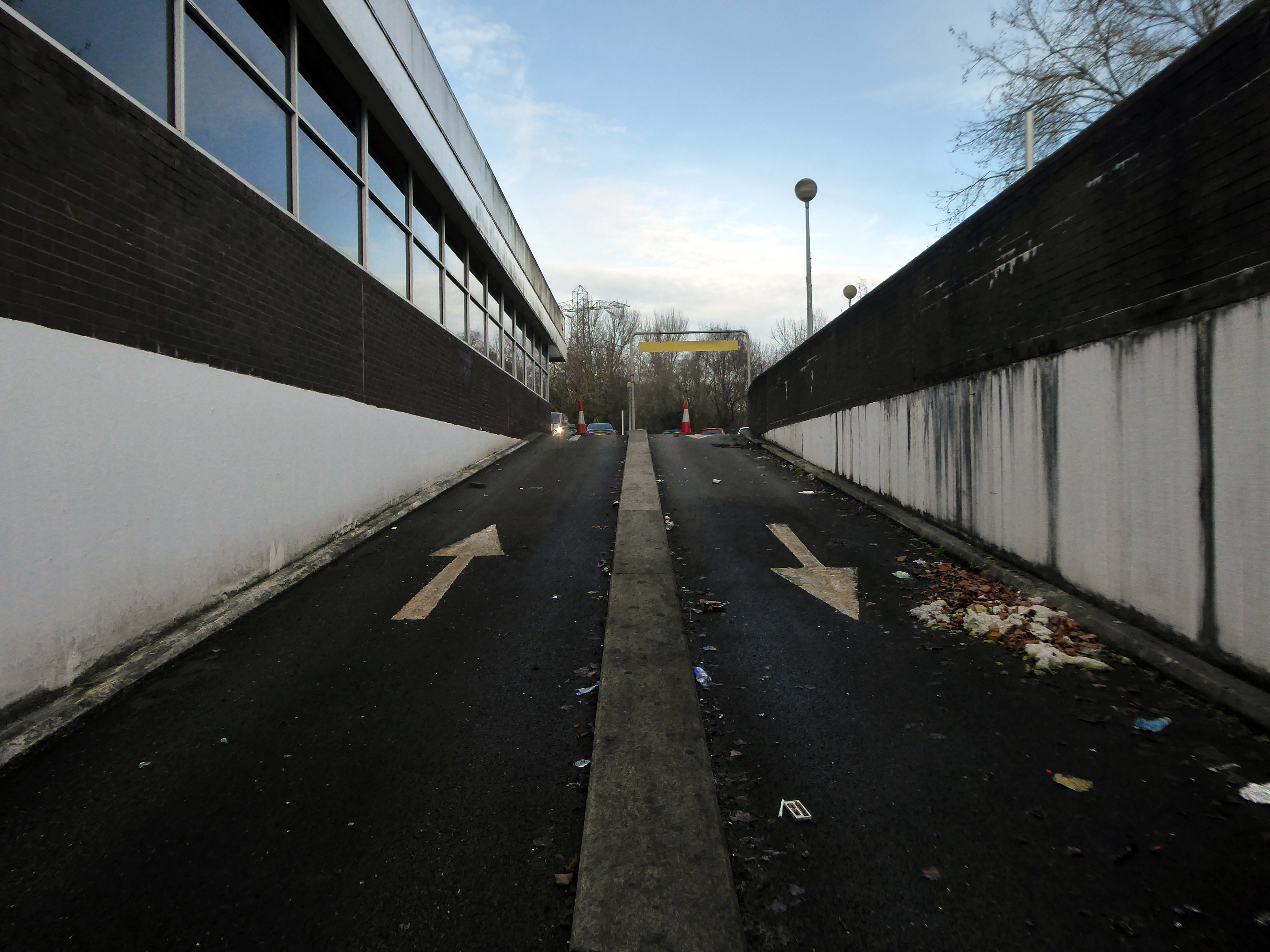
A chance encounter beneath the Asda car park ramp.

Once I had satiated her nascent curiosity, I continued unabashed with my nocturnal snapping.

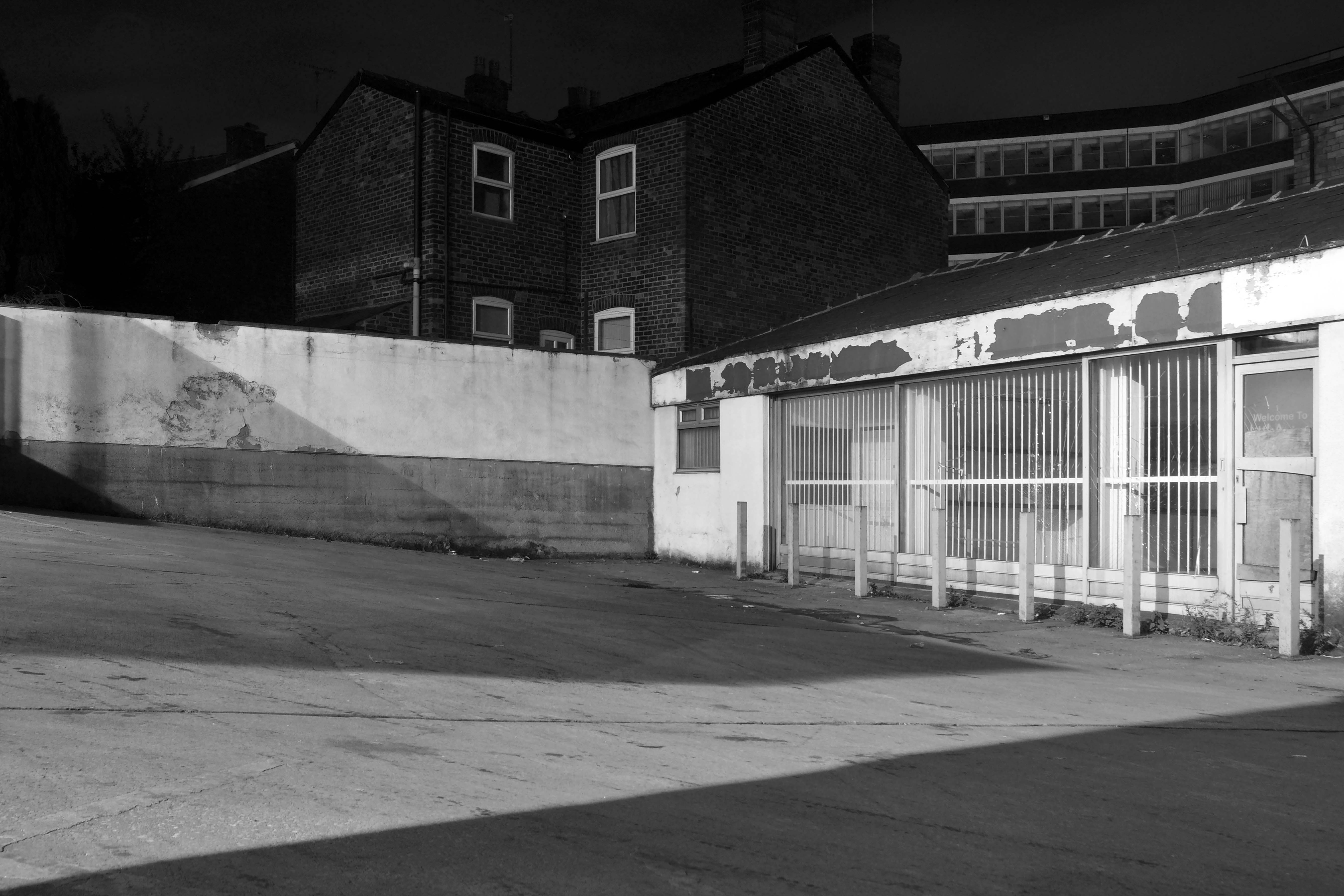
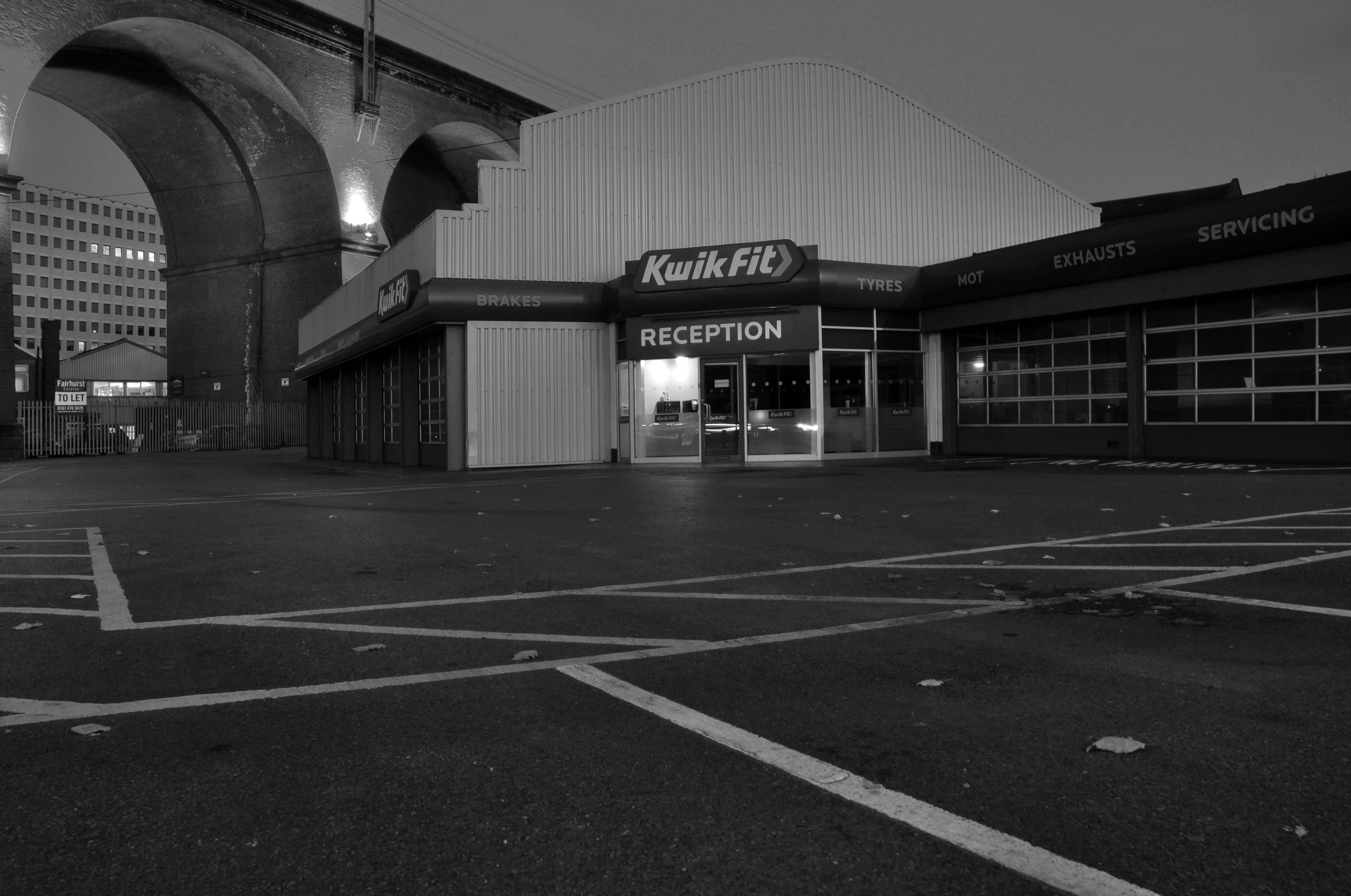
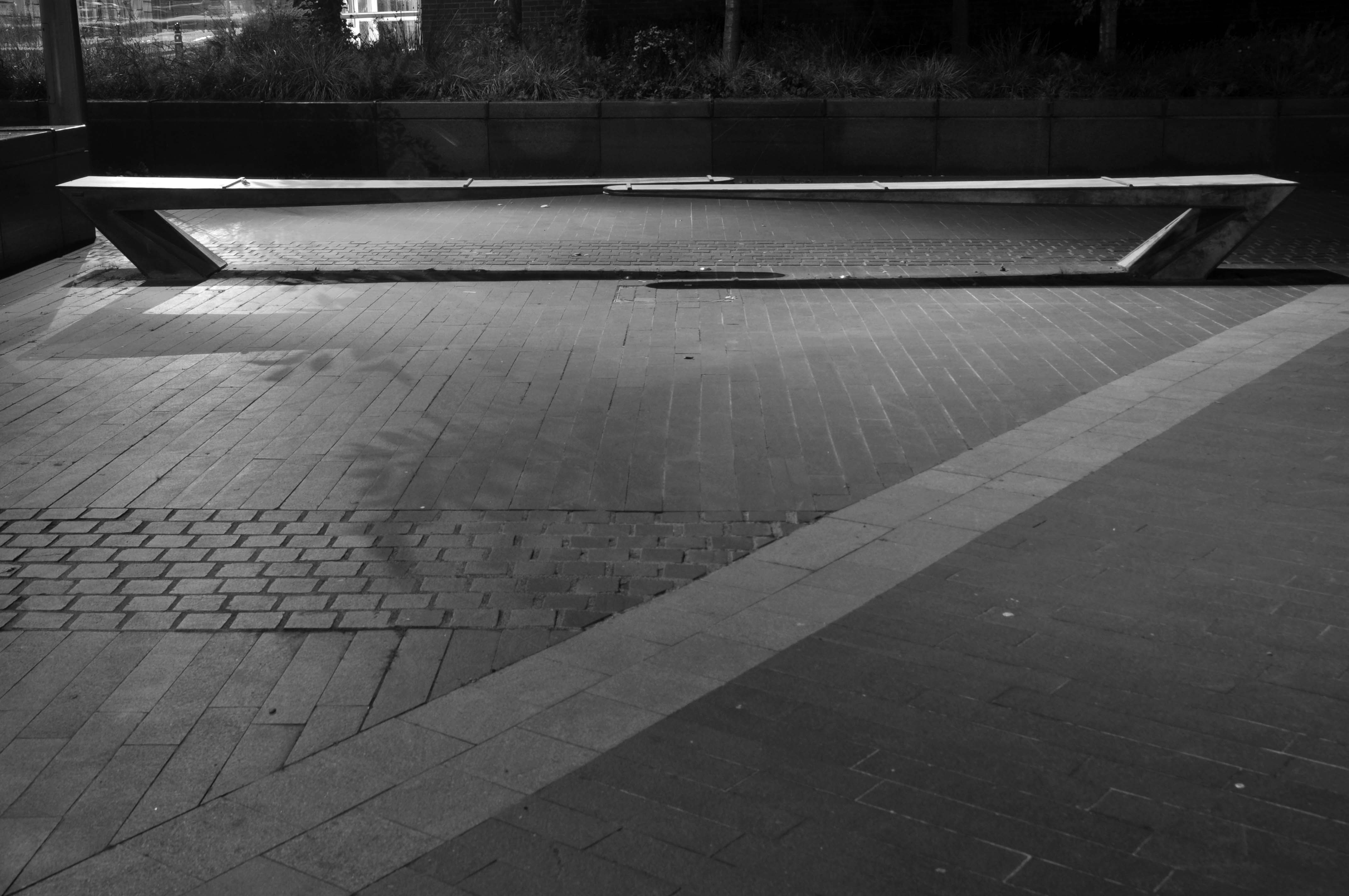
This is where I went and that which I snapped.

Stockport Viaduct is still extant, Heaton Lane Car Park is no longer.

The car park at Stopford House.

One of the ninety eight bus shelters on the 192 route.

Merseyway Shopping Centre

Beneath Heron House.

My local The Magnet – I am proud to say that a copy of this photo hangs in the pub’s Vault.

My vast favourite concrete footbridge.

Covent Garden Flats are no more, social housing replaced by owner occupiers.

The Bus Station has since become a Transport Interchange.

And finally, as local lad Mike Yarwood was wont to say – This is me.

Impersonating myself in the manner of Flann O’Brien’s literary creation De Selby

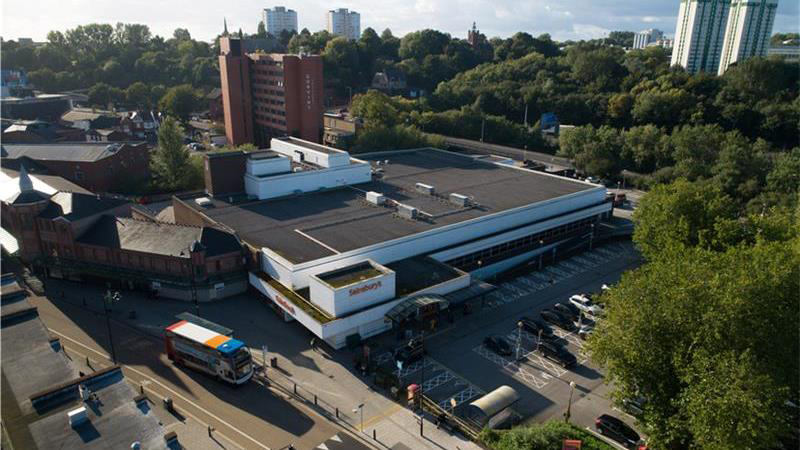
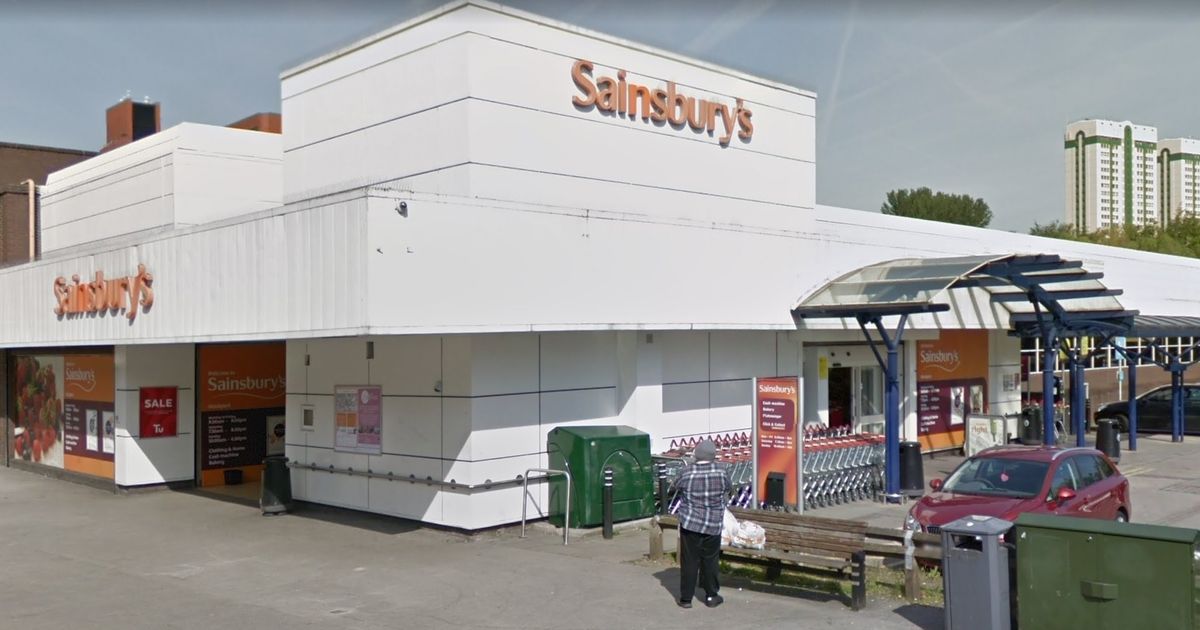
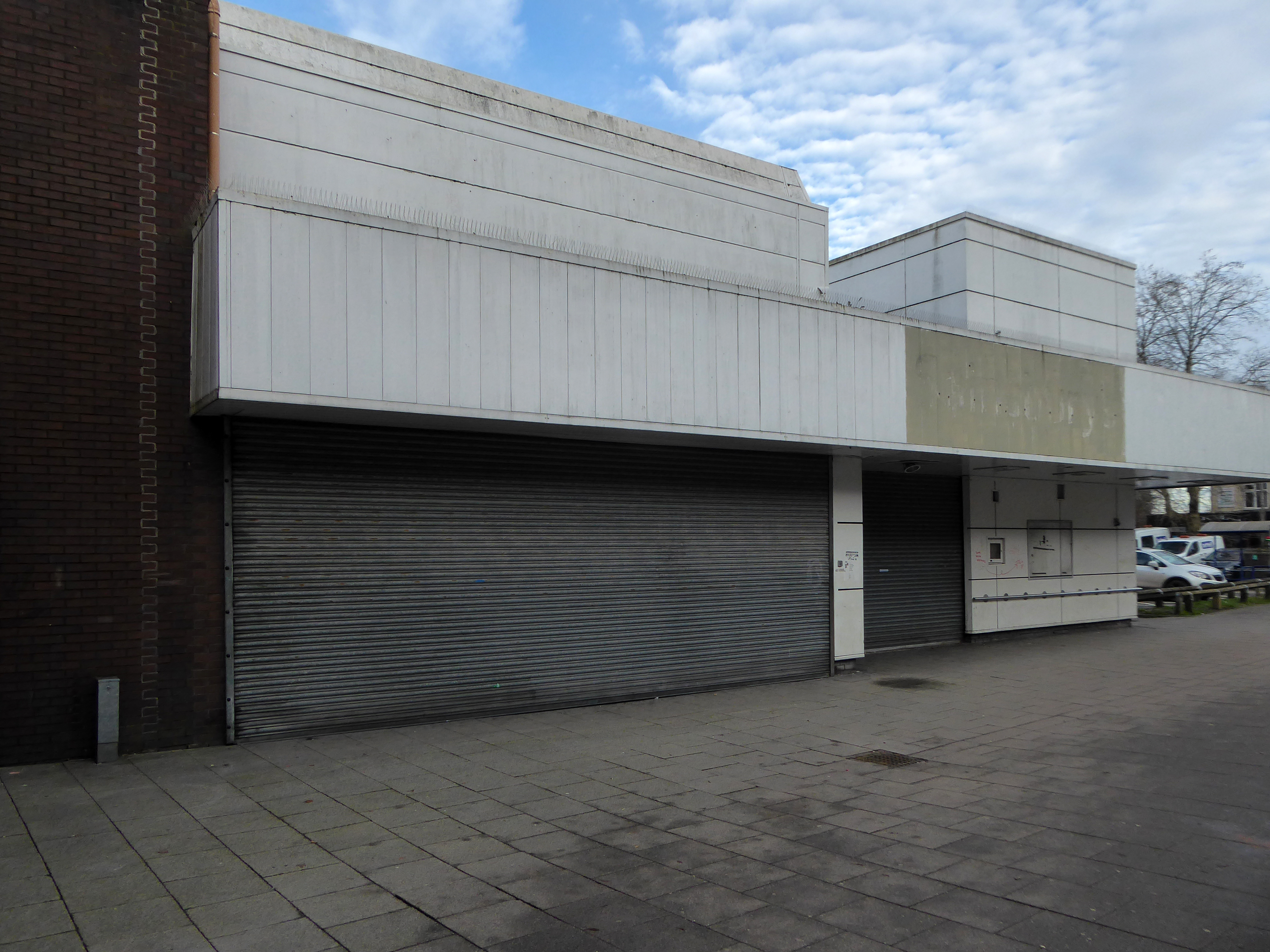
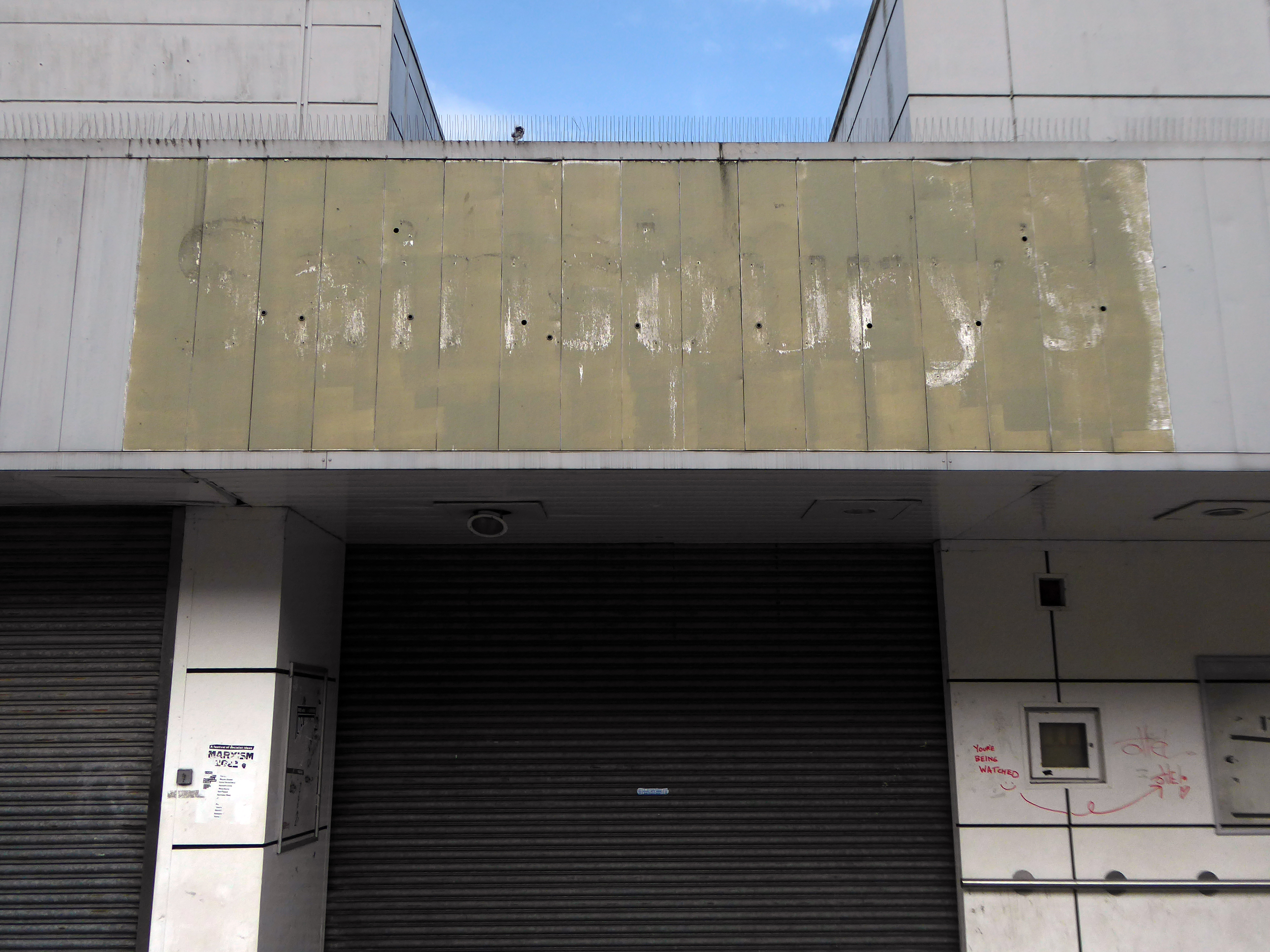
Sainsbury’s Stockport

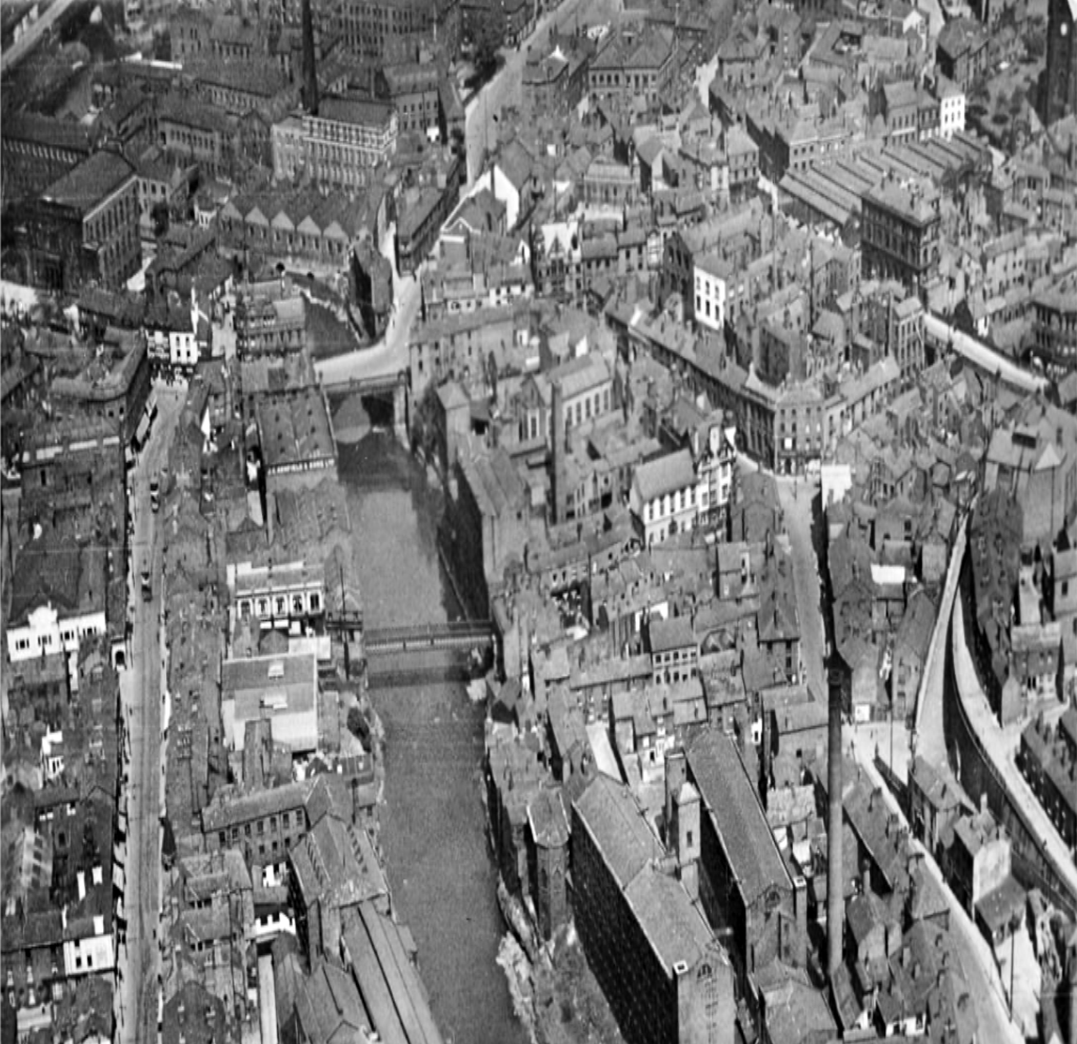
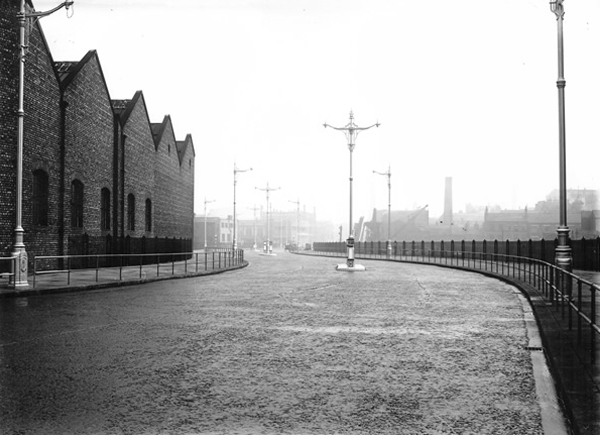
Warren Street Stockport, north of Lancashire Bridge beside the Mersey – seen here in the 1920s a mix of retail, dwellings and industry as was most of the town centre.

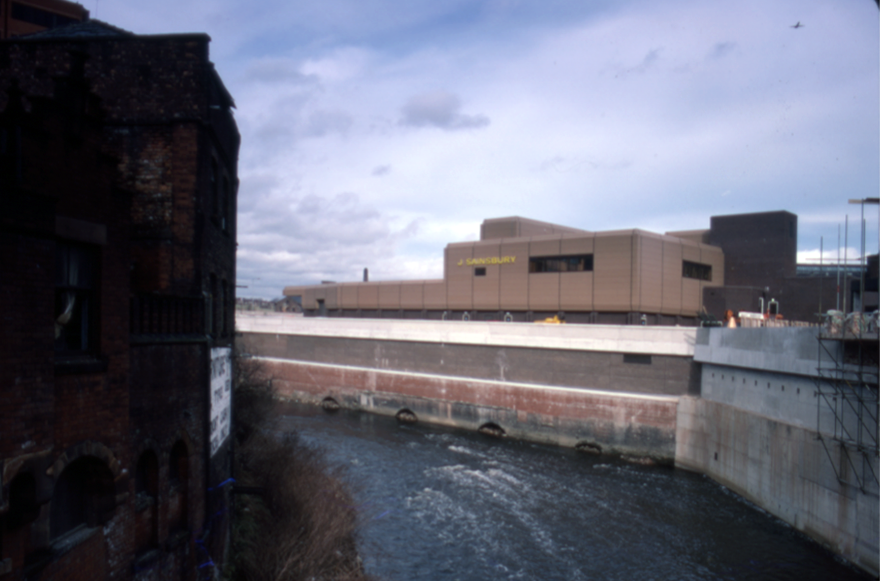
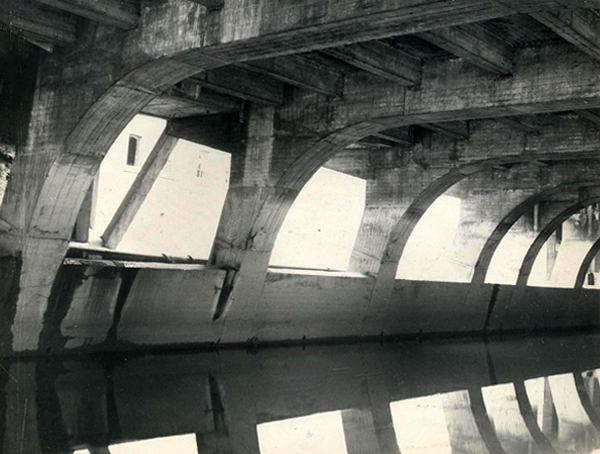
The river was culverted and covered as it passed through in 1936

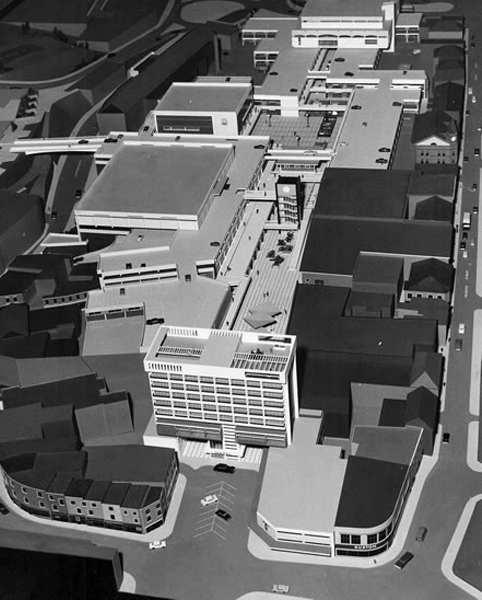
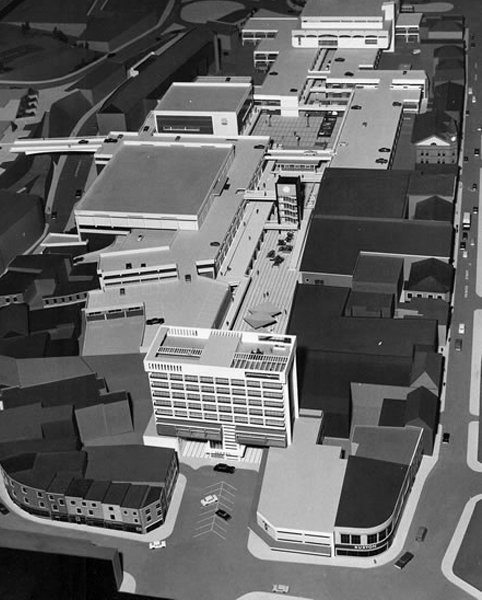
The Merseyway Shopping Centre was completed and opened in 1965 – architects Bernard Engle and Partners

A later extension followed along Warren Street.

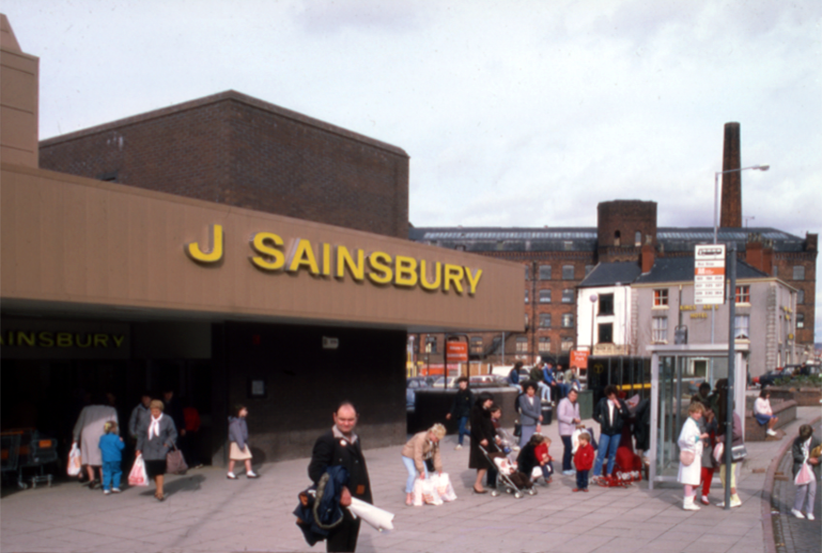
The Sainsbury’s building can be seen beside the river – opened 29th October 1985

The branch closed in January 2021 – the Asda is still open.

Store Images – Sainsbury’s Archive

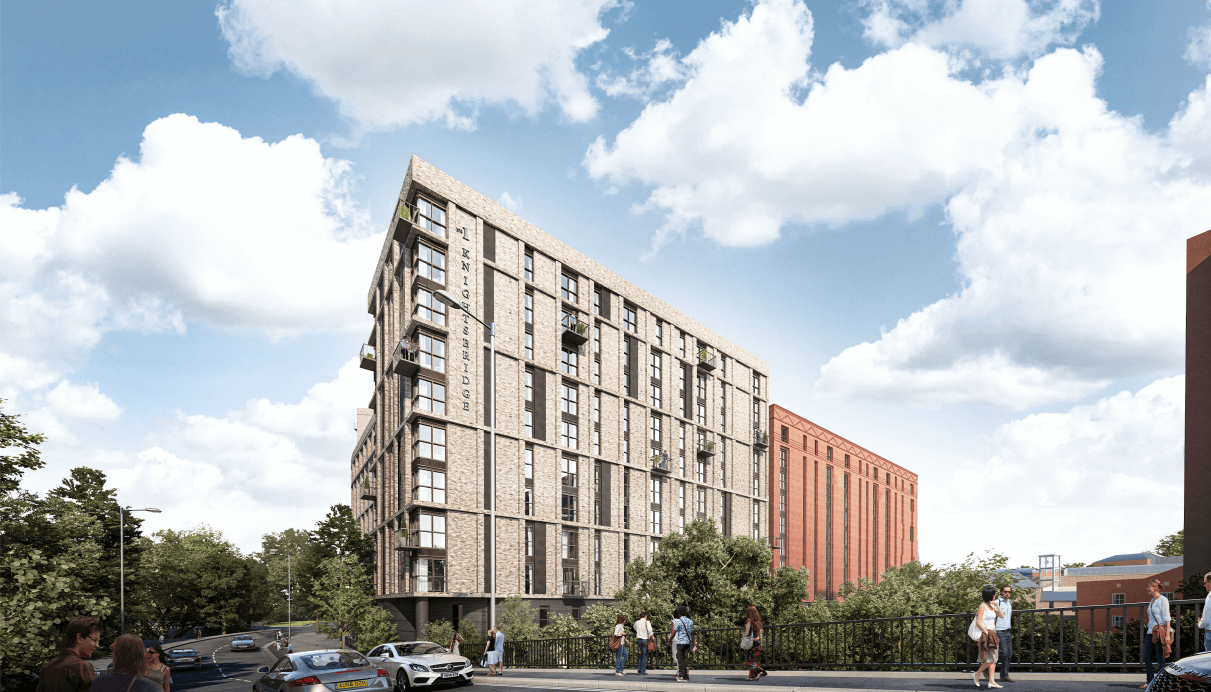
Plans to build hundreds of new homes – including a 15-storey tower block – on a vacant Sainsbury’s site in Stockport town centre are set to get the go-ahead.

Proposals that would bring more than 500 flats and 34 townhouses to the three-acre plot, in Warren Street, are set to go before the council’s planning committee next Thursday night. The 573 homes would be spread across a trio of buildings – rising in height  from five to 15 storeys. Two of these would  also have space for a range of potential uses, ranging from shops and cafes to gyms and creches.

Manchester World

Martin Halsey, operations director at Amstone Ventures, added:

We can see that Stockport has untapped demand for quality homes within its town centre, offering a vibrant lifestyle and everything Stockport town centre has to offer, all on the doorstep.”

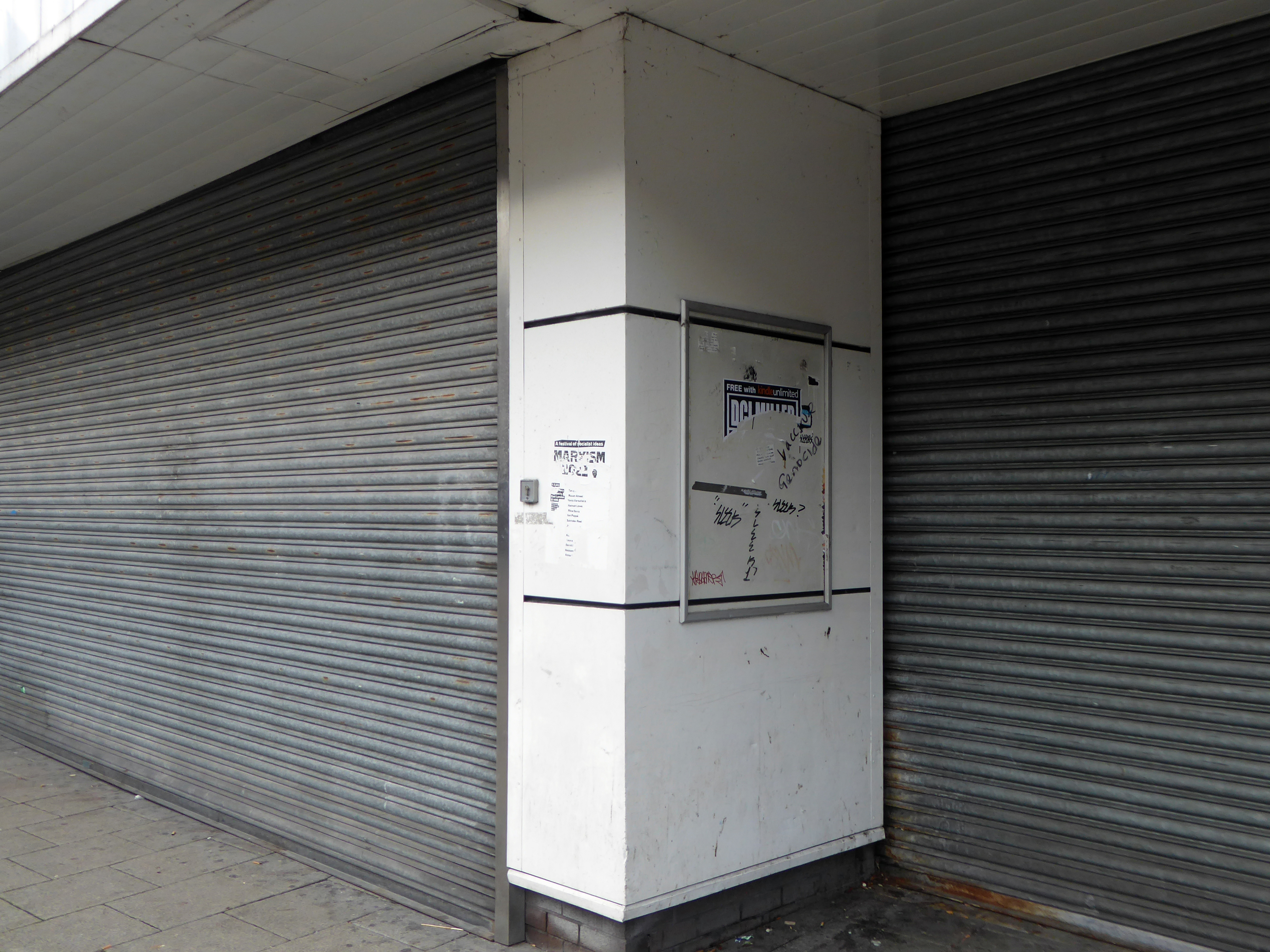
Took a look around the site before it’s no longer possible to look around the site.

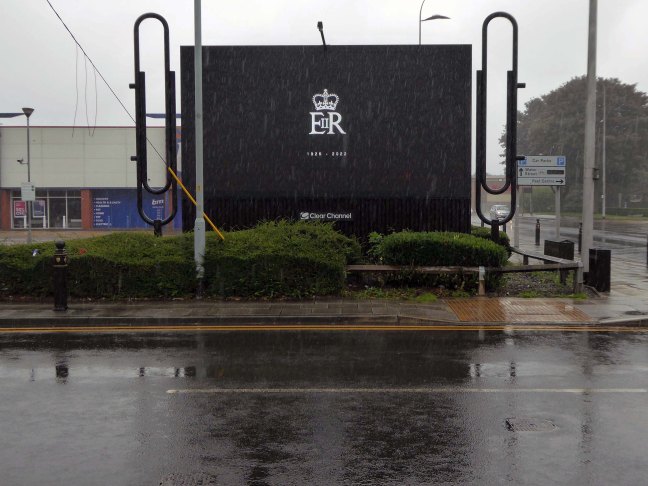
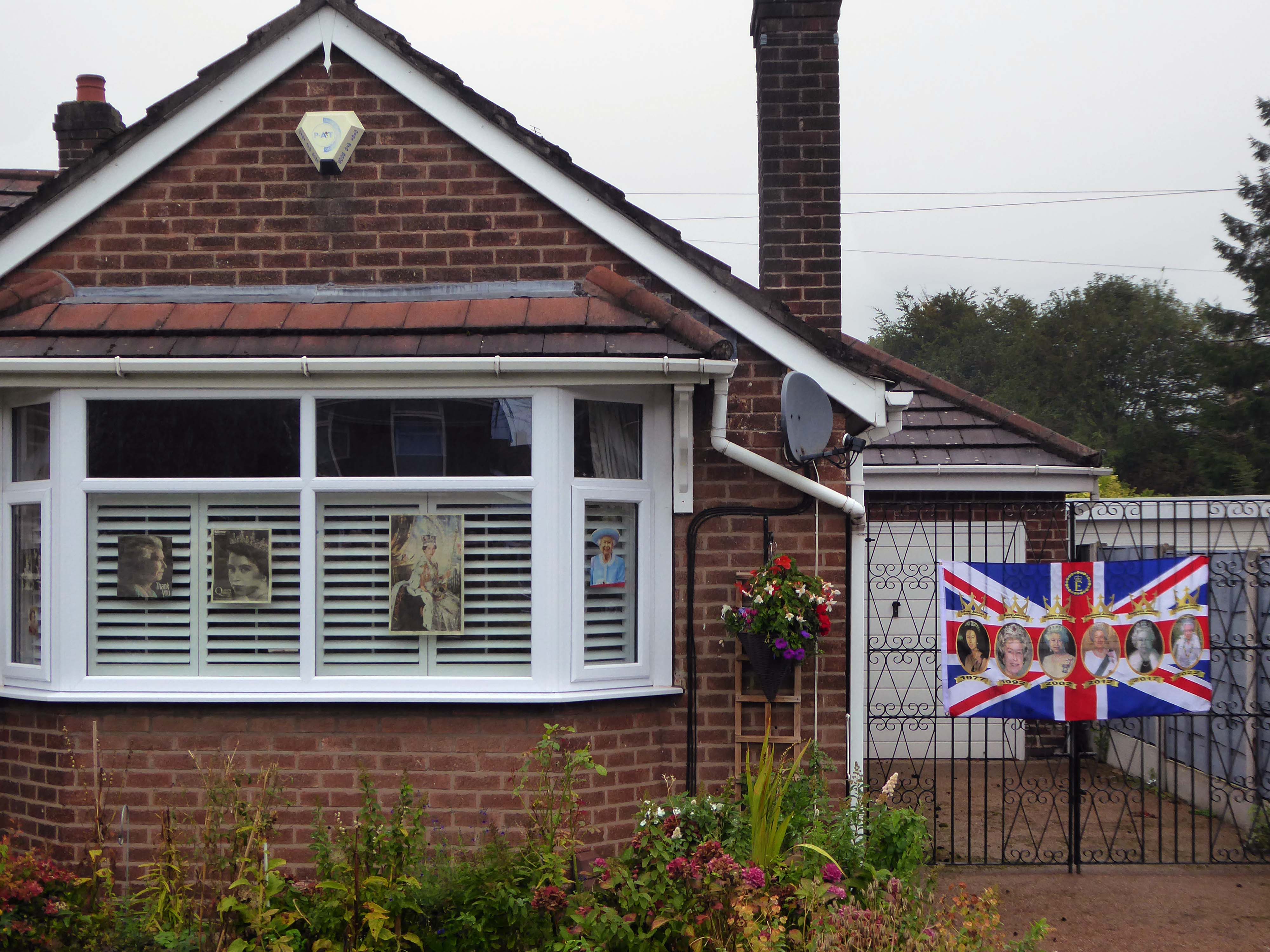
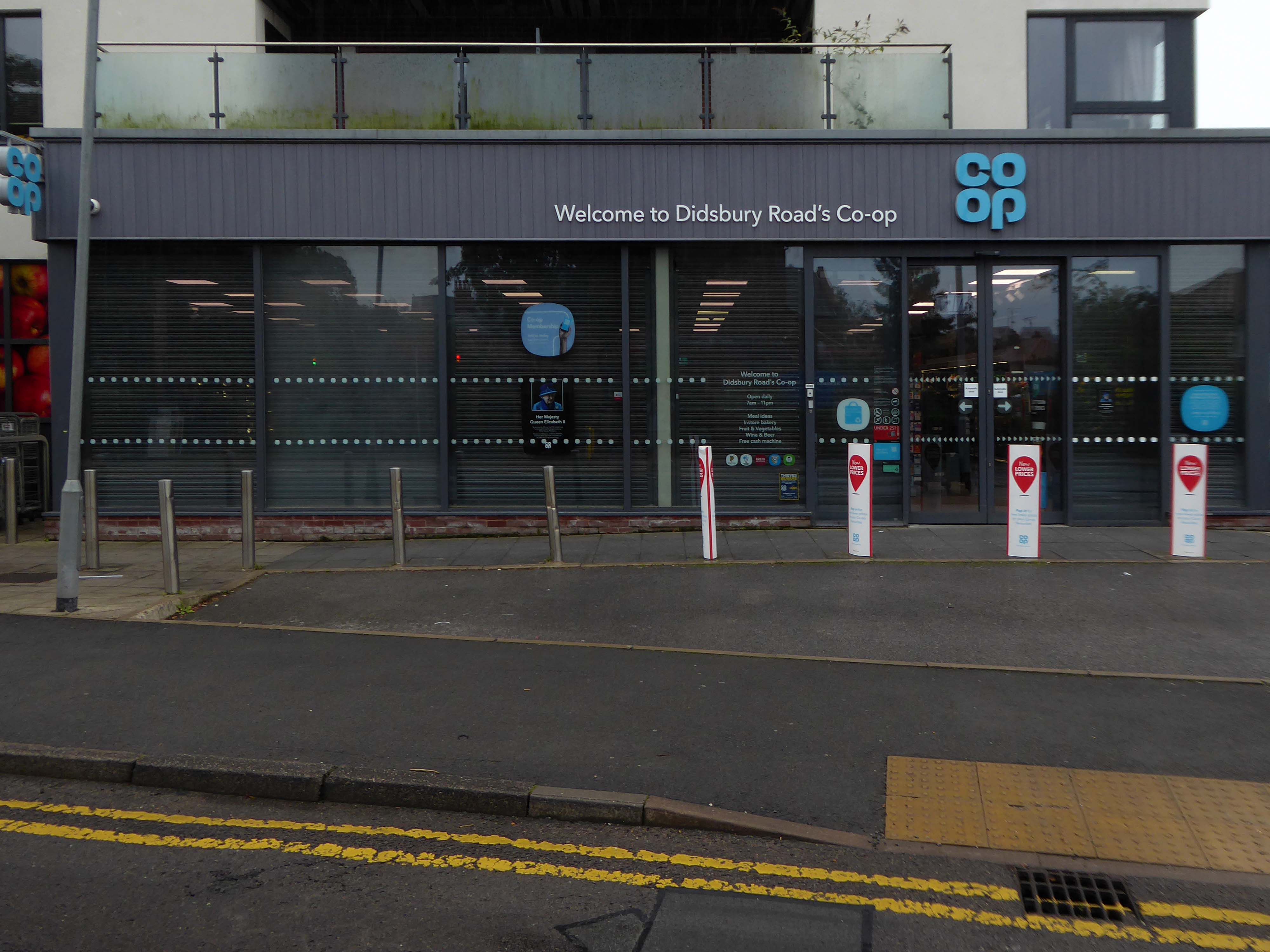
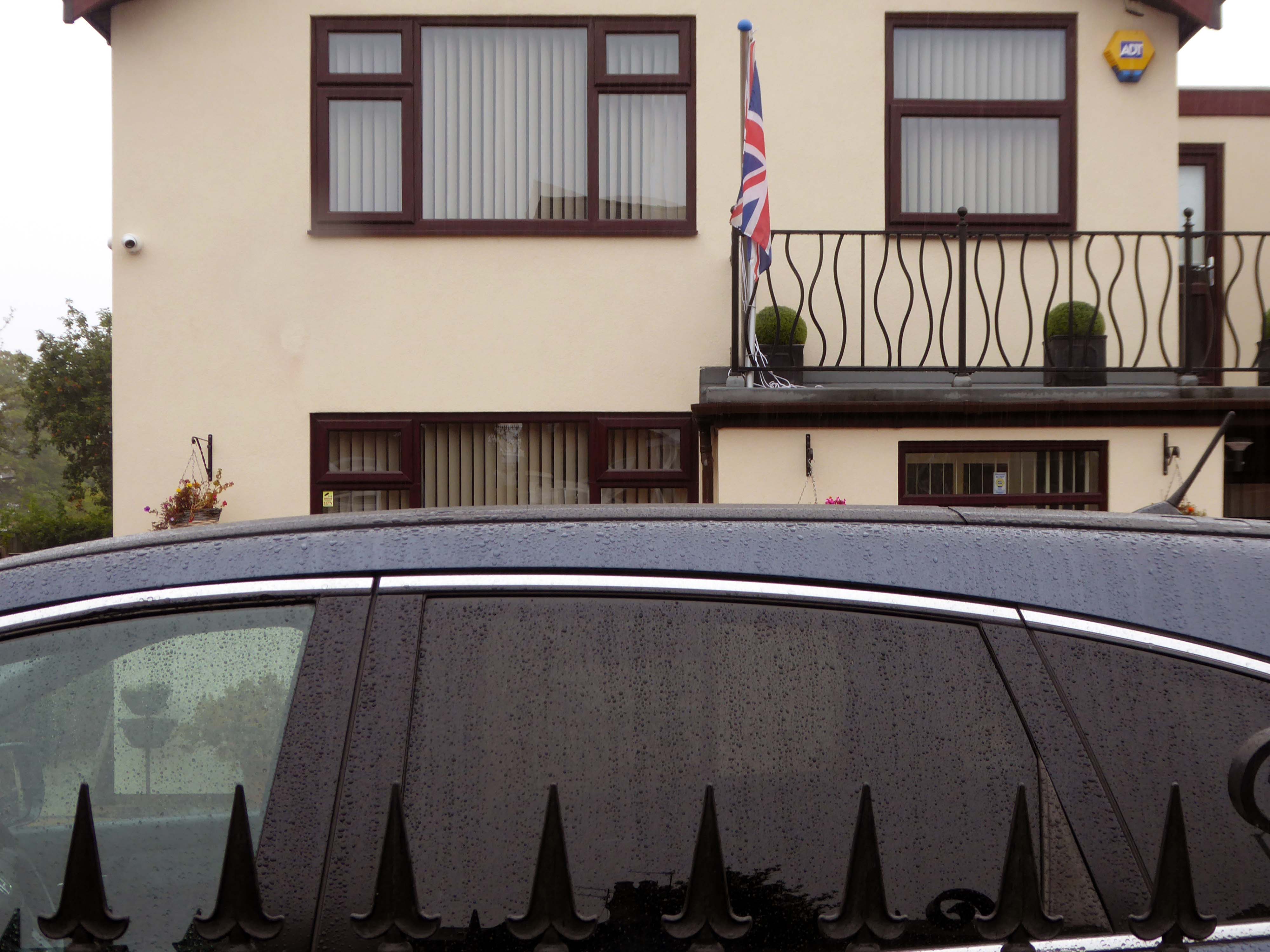
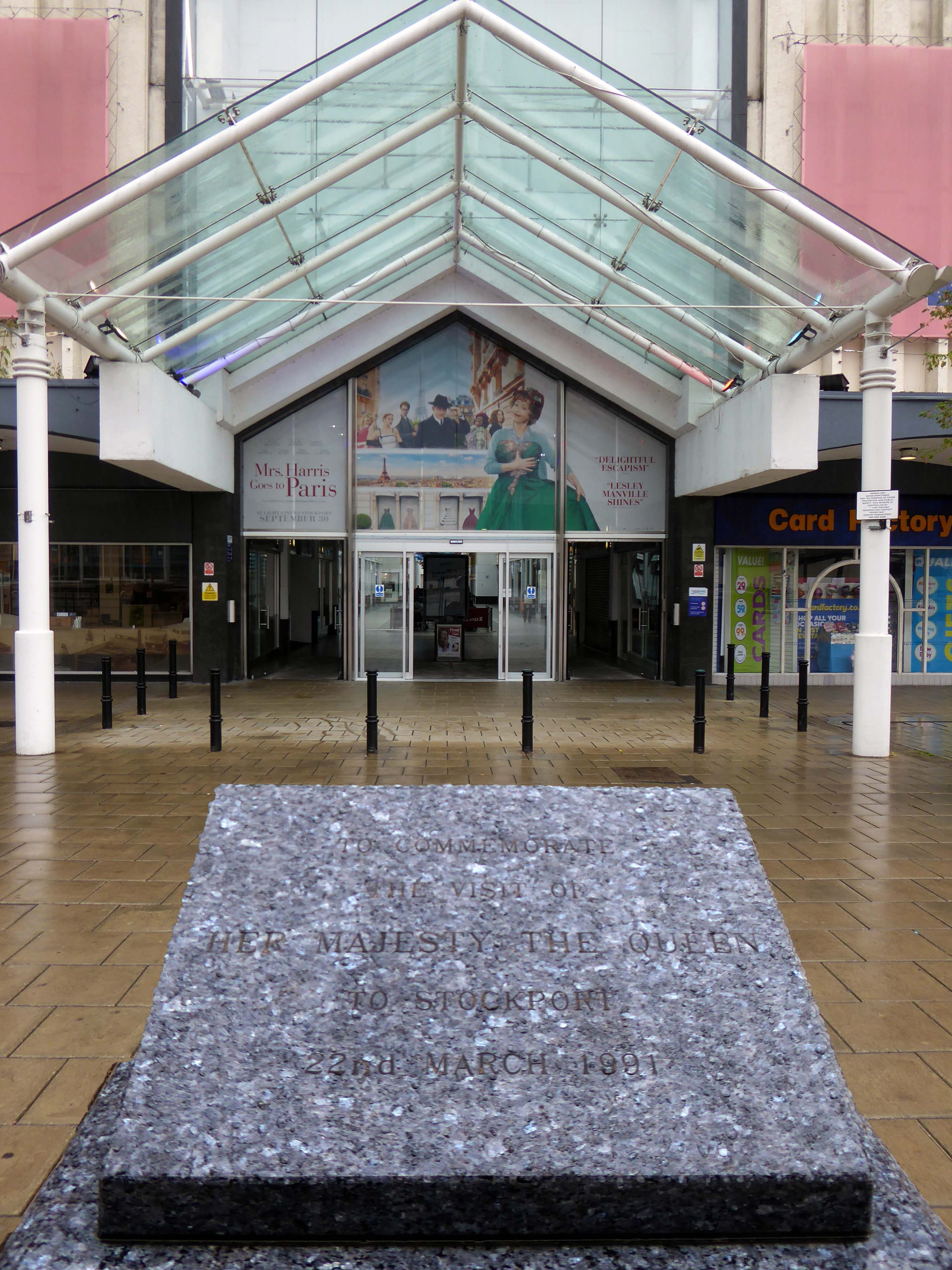
The Queen and I

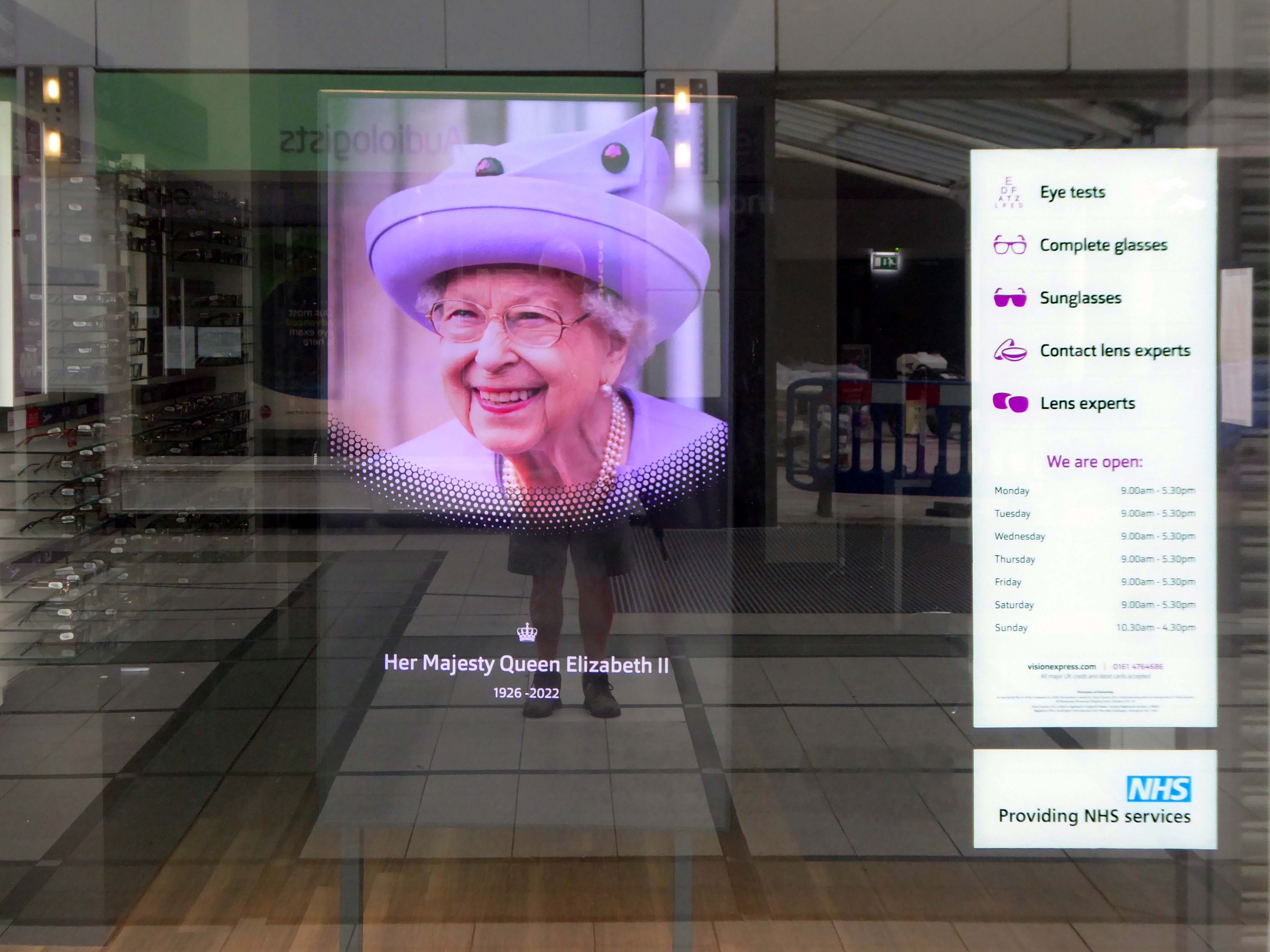
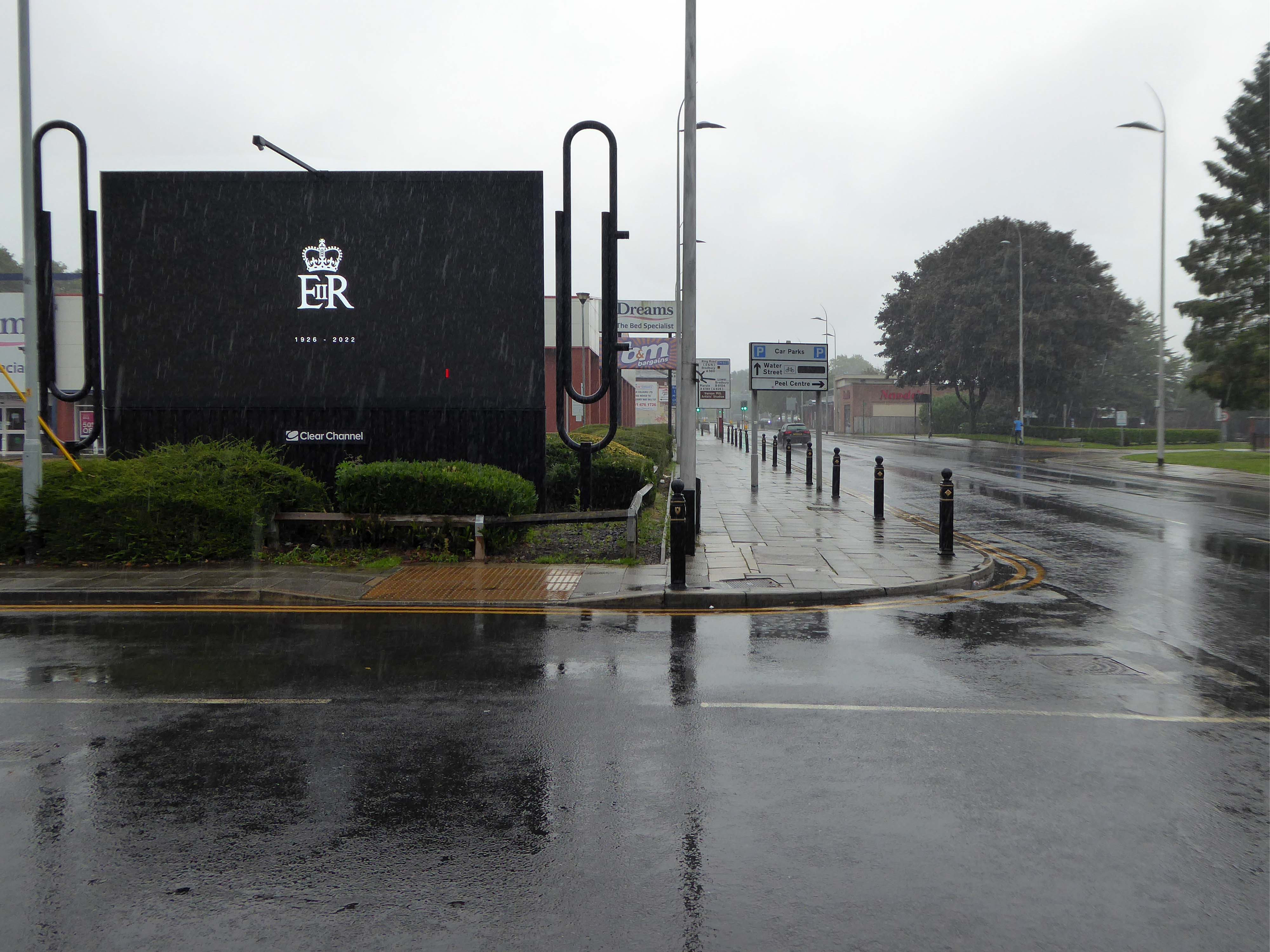
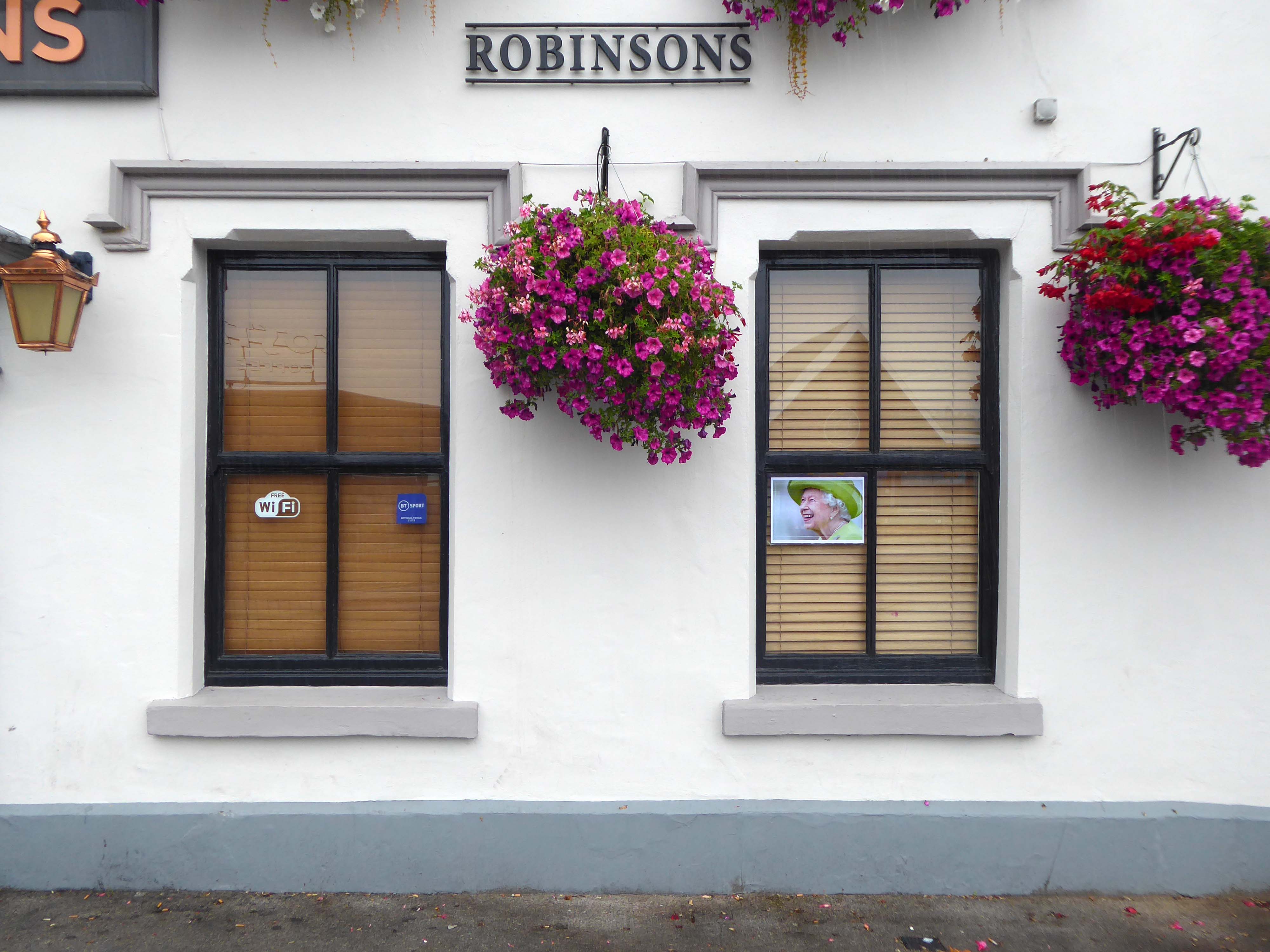
On the day of HM Queen Elizabeth II’s Diamond Jubilee, I cycled around Ashton under Lyne in search of landmarks of her sixty year reign.

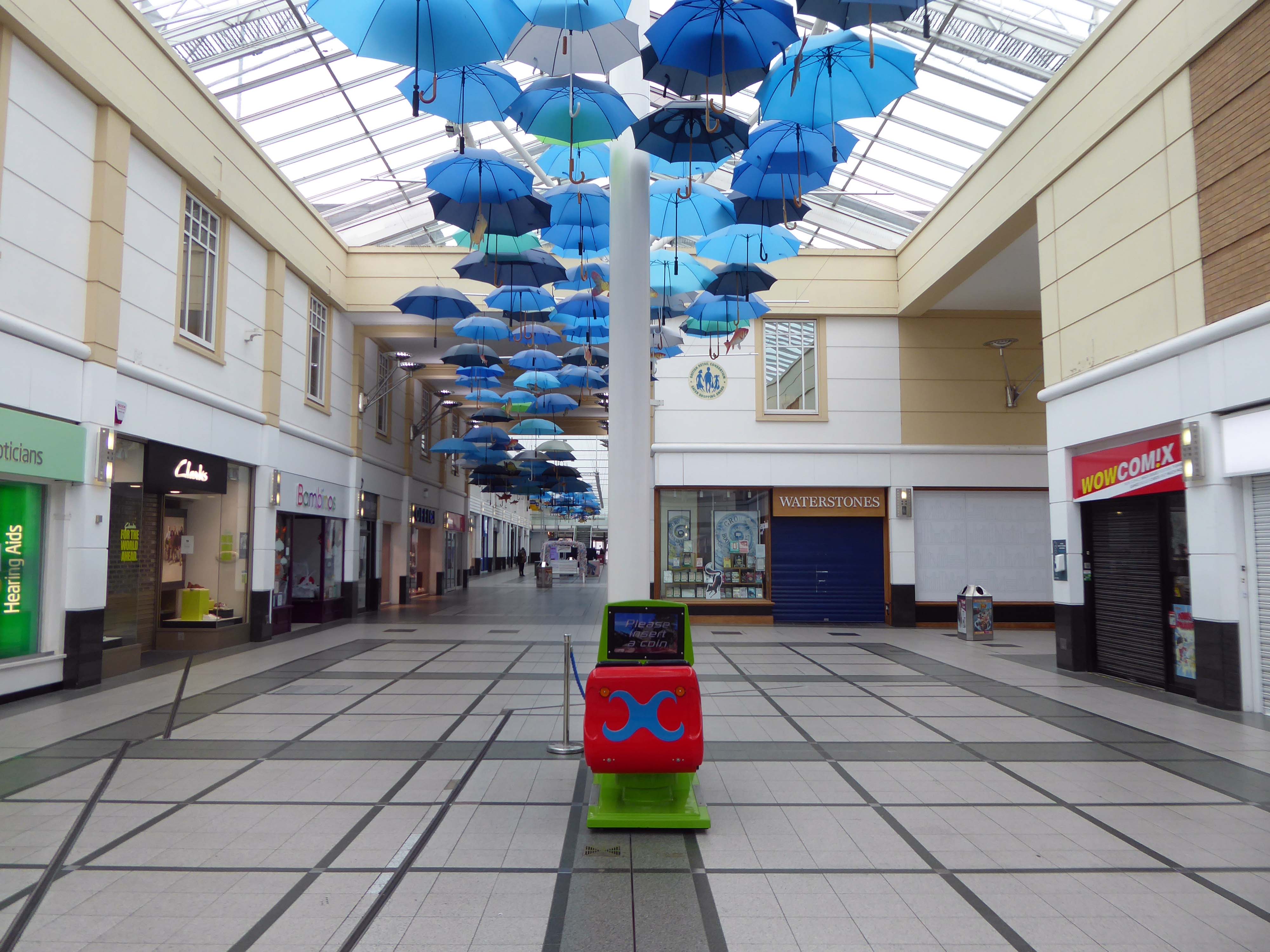
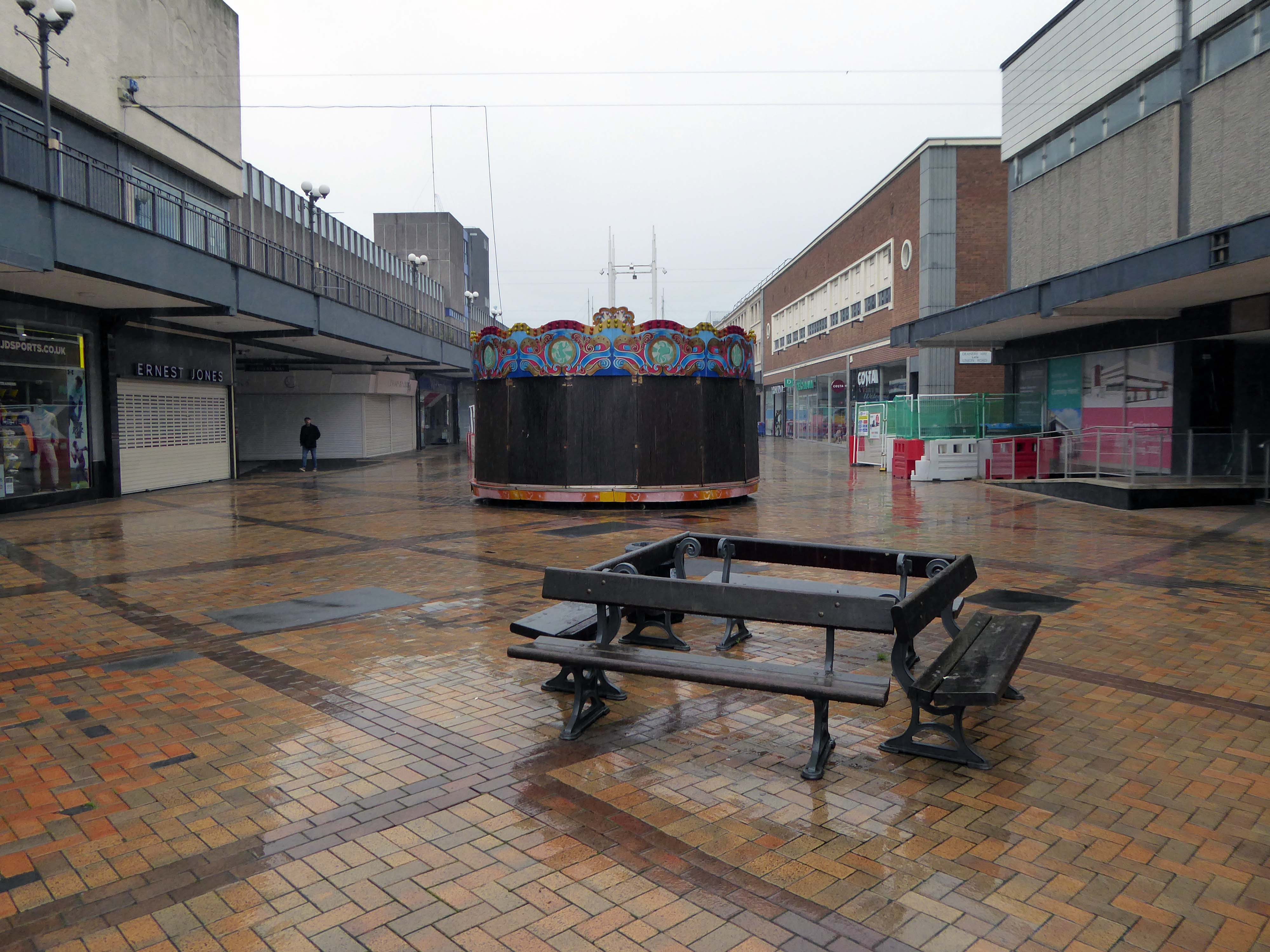
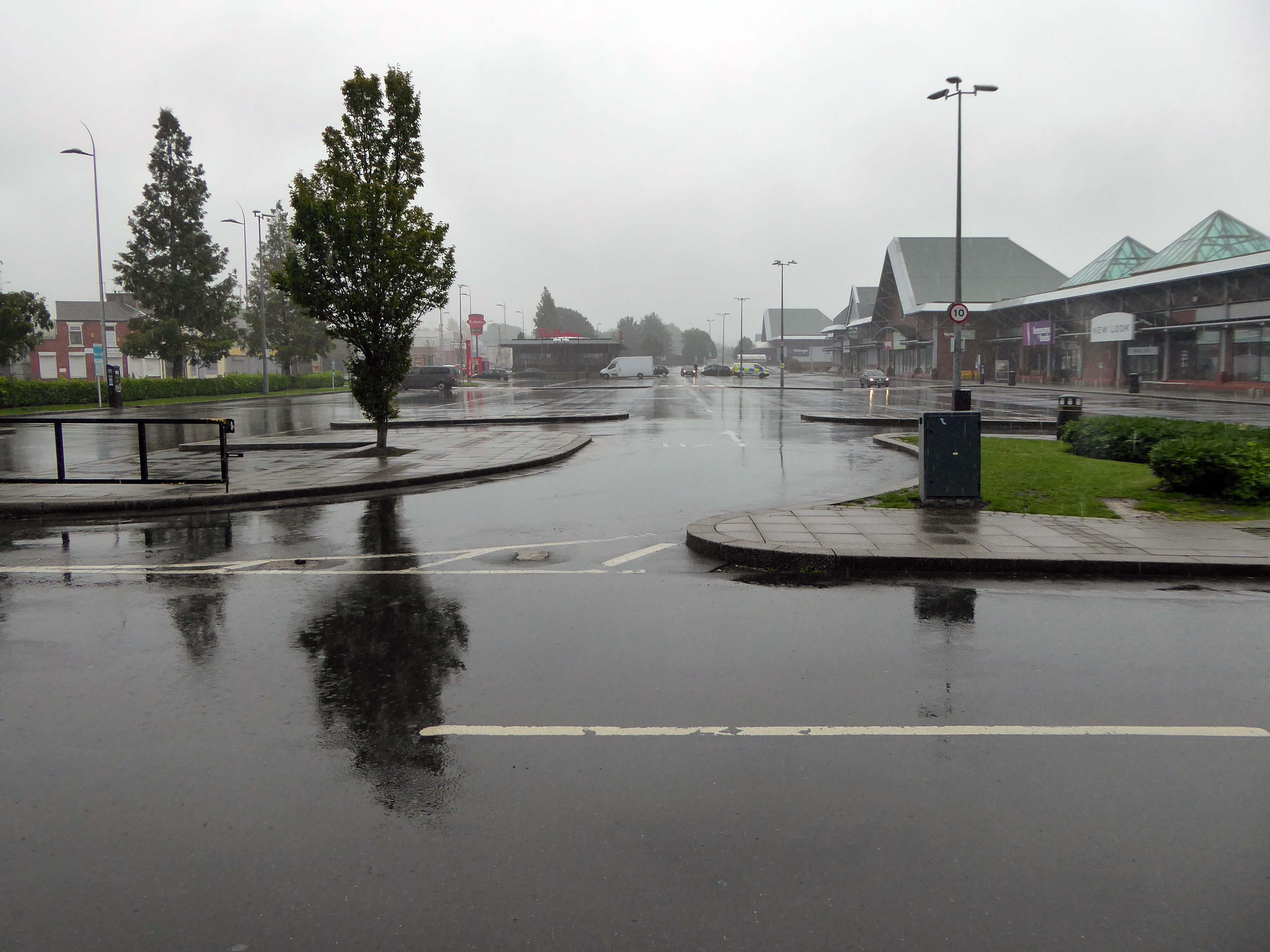
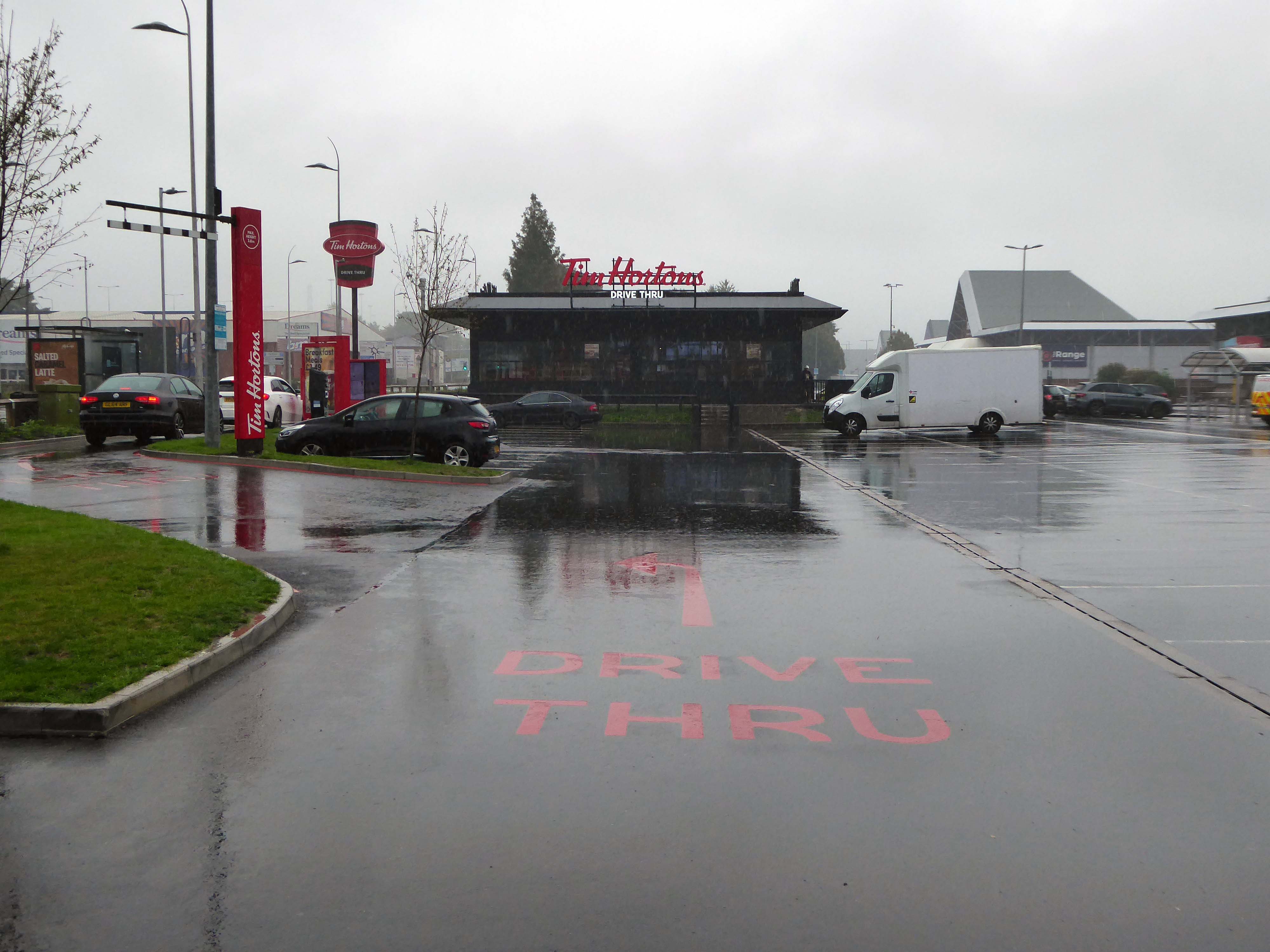
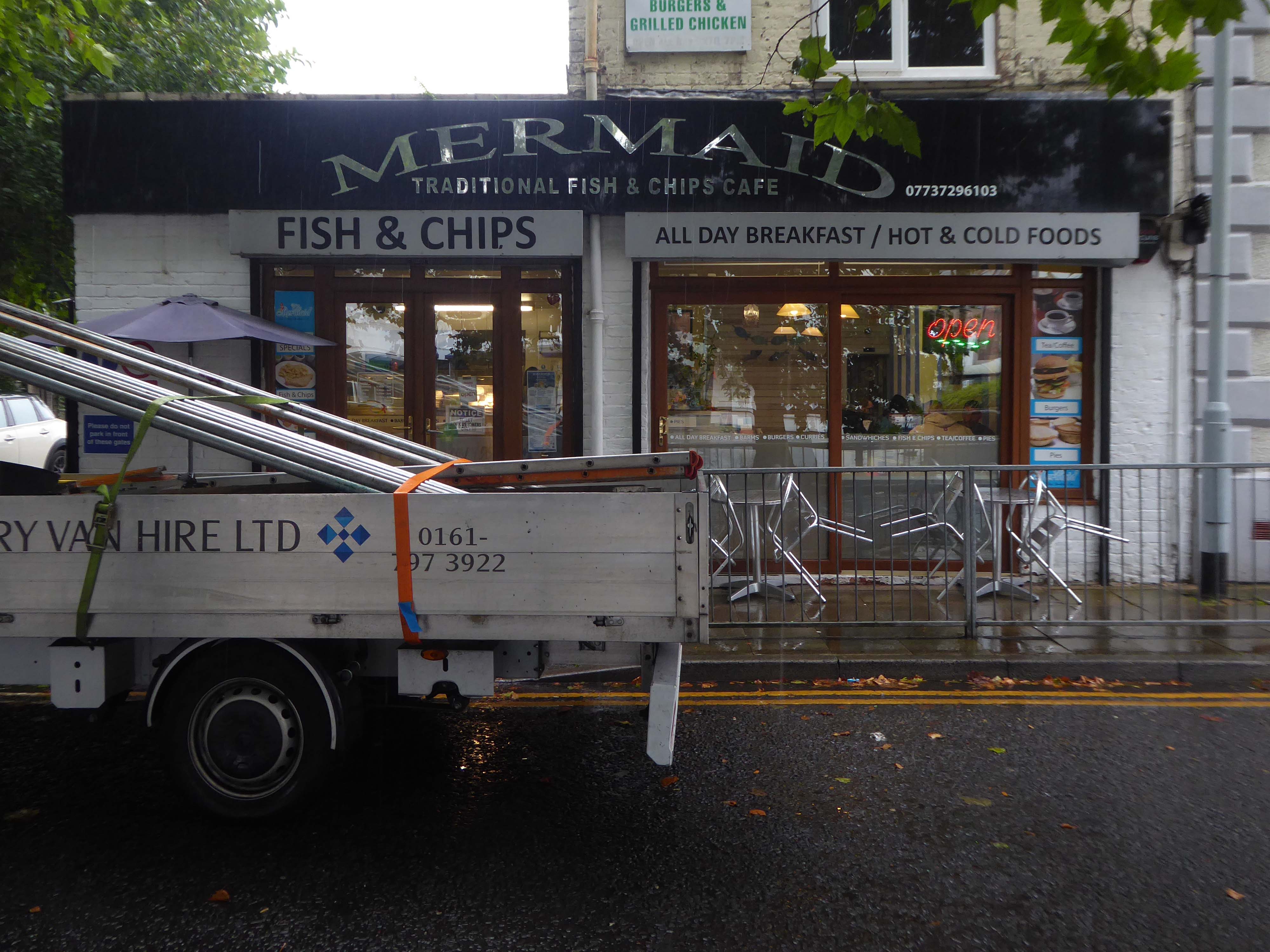
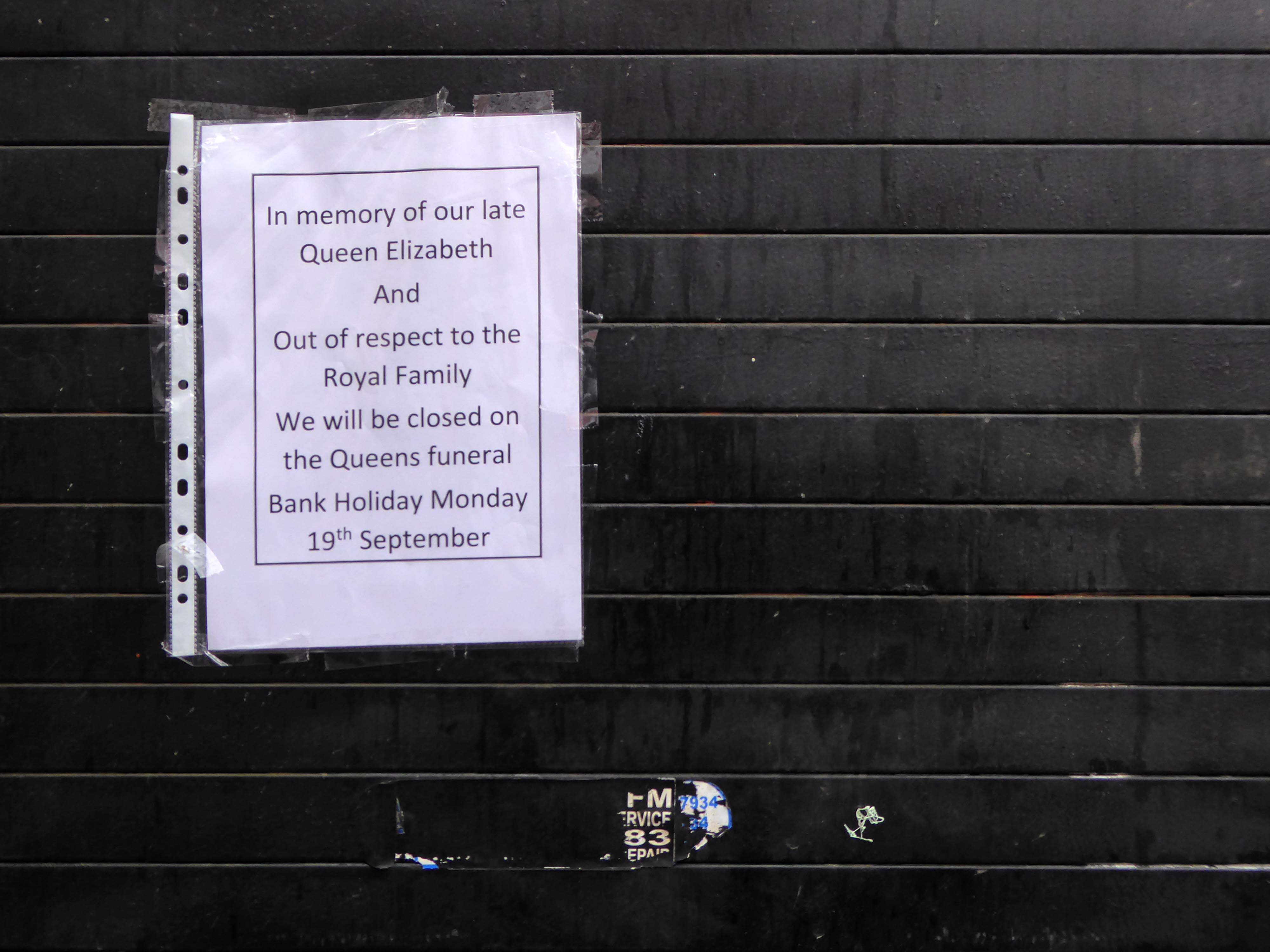
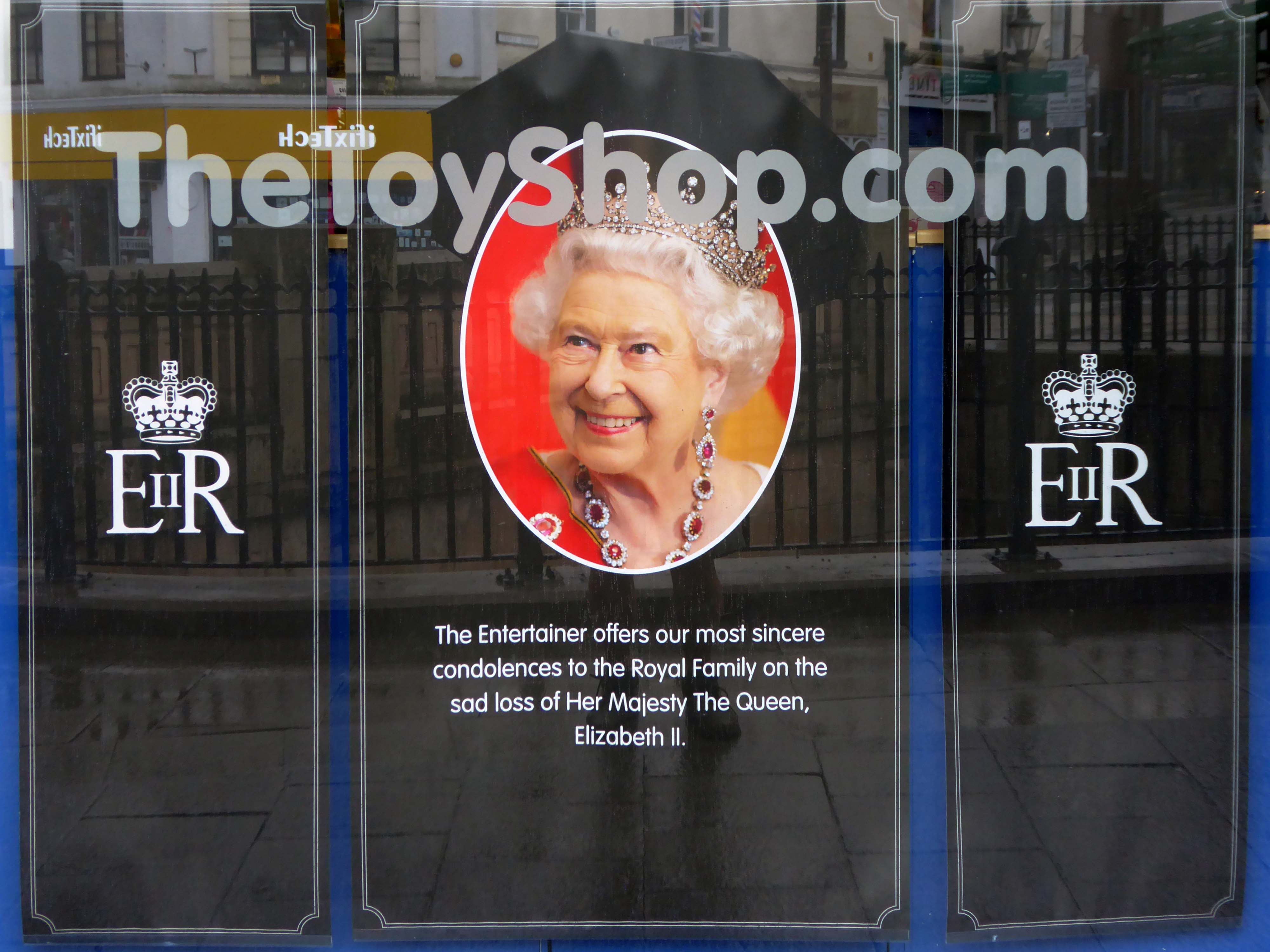
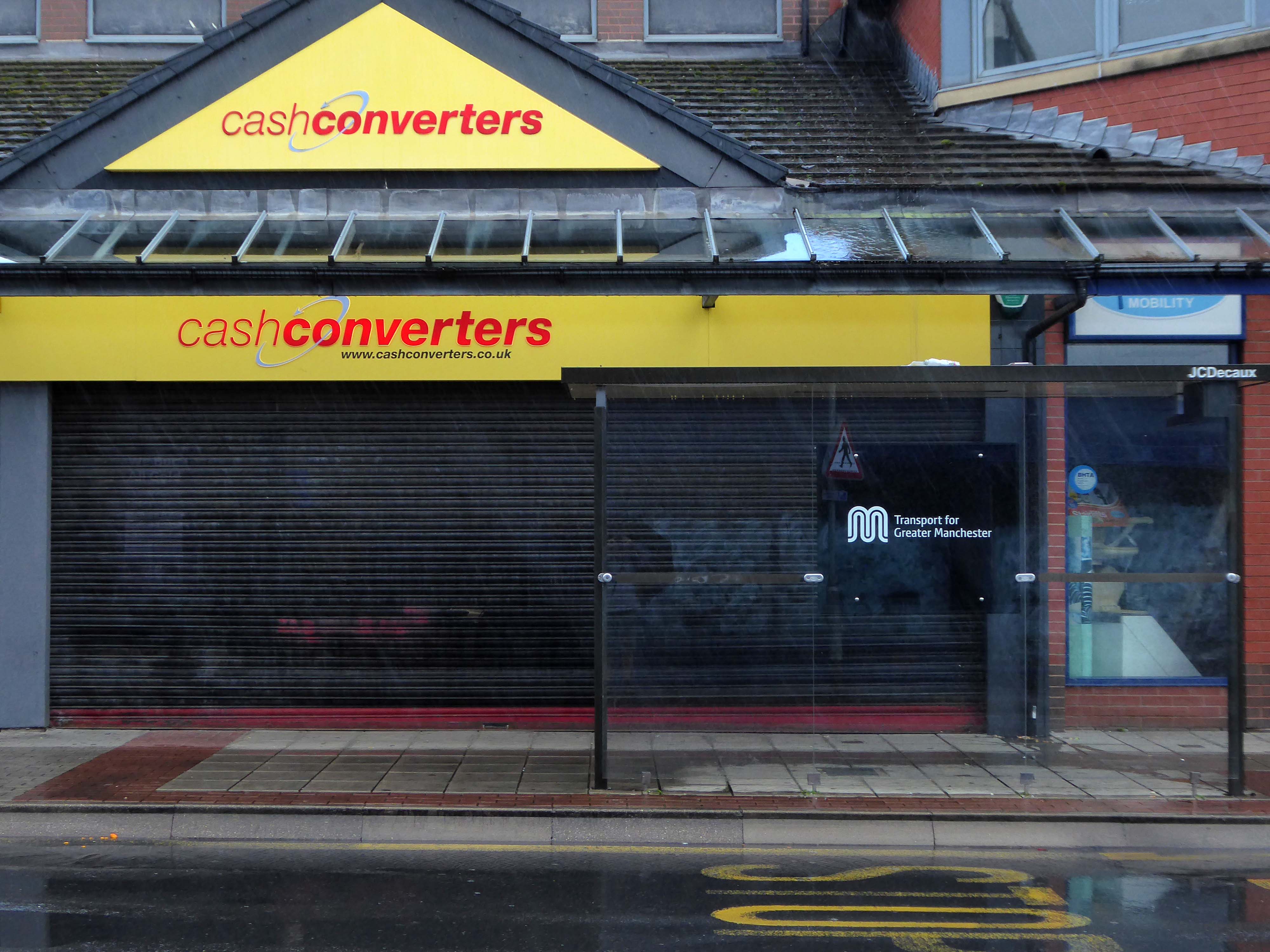
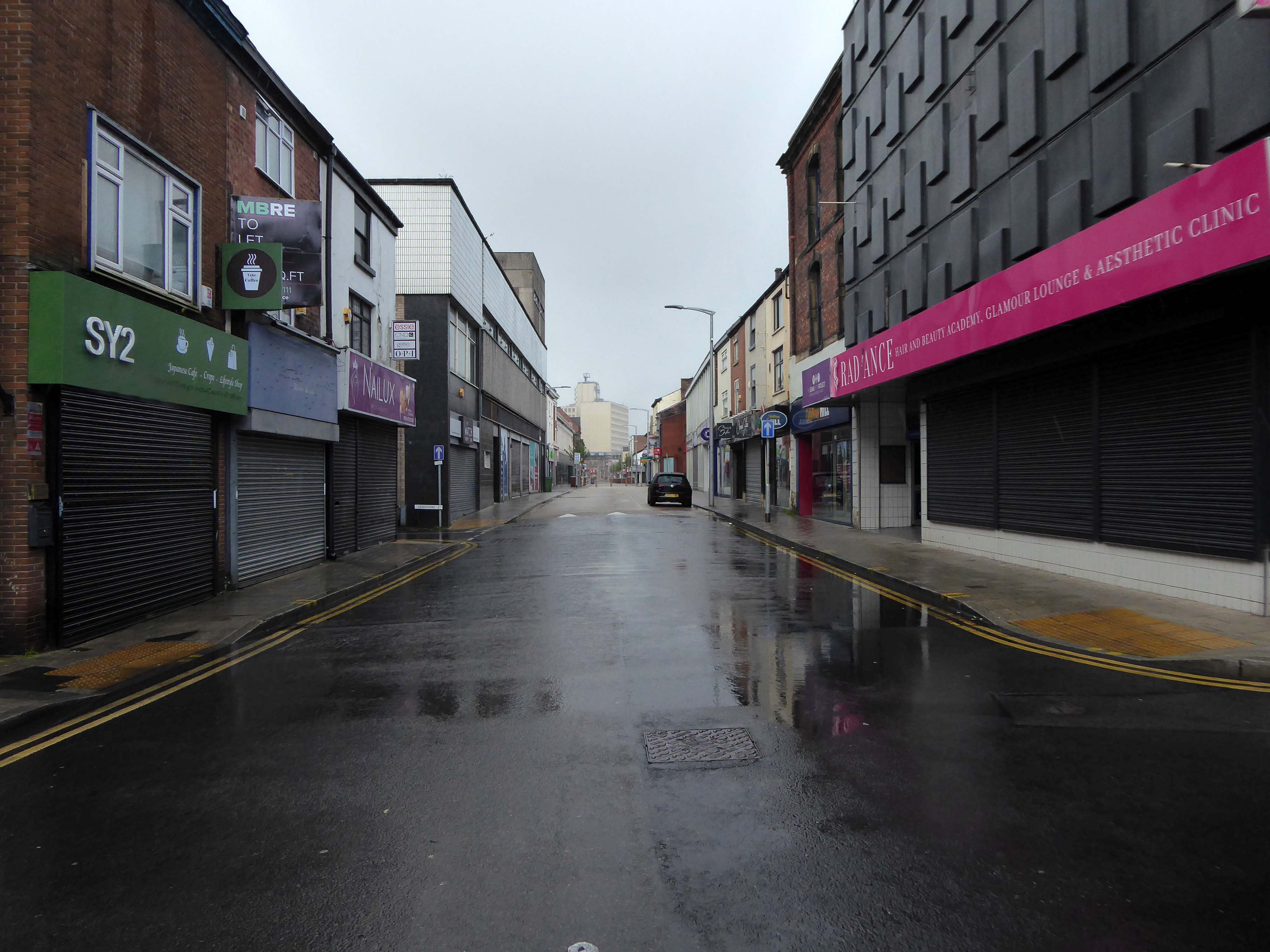
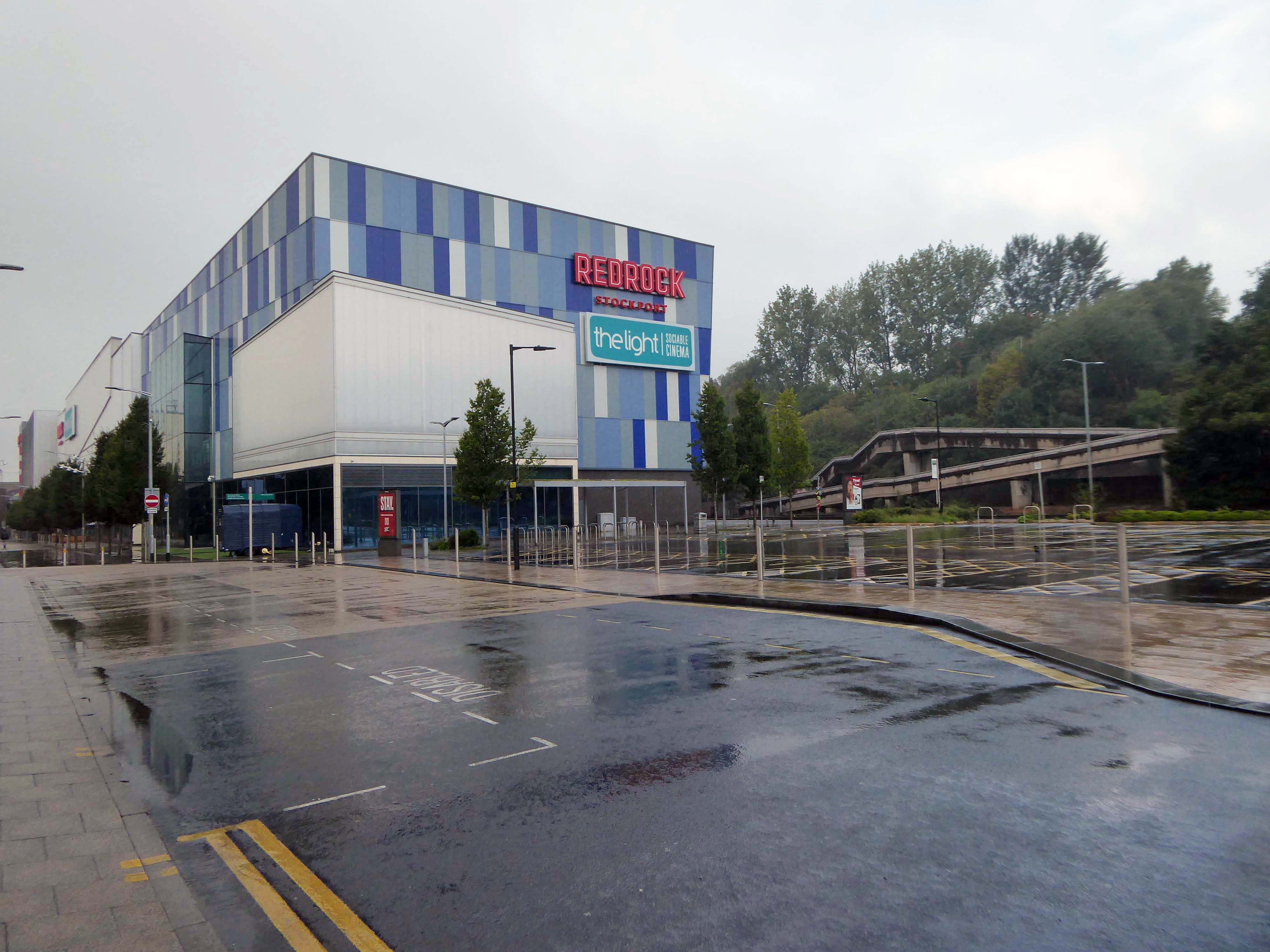
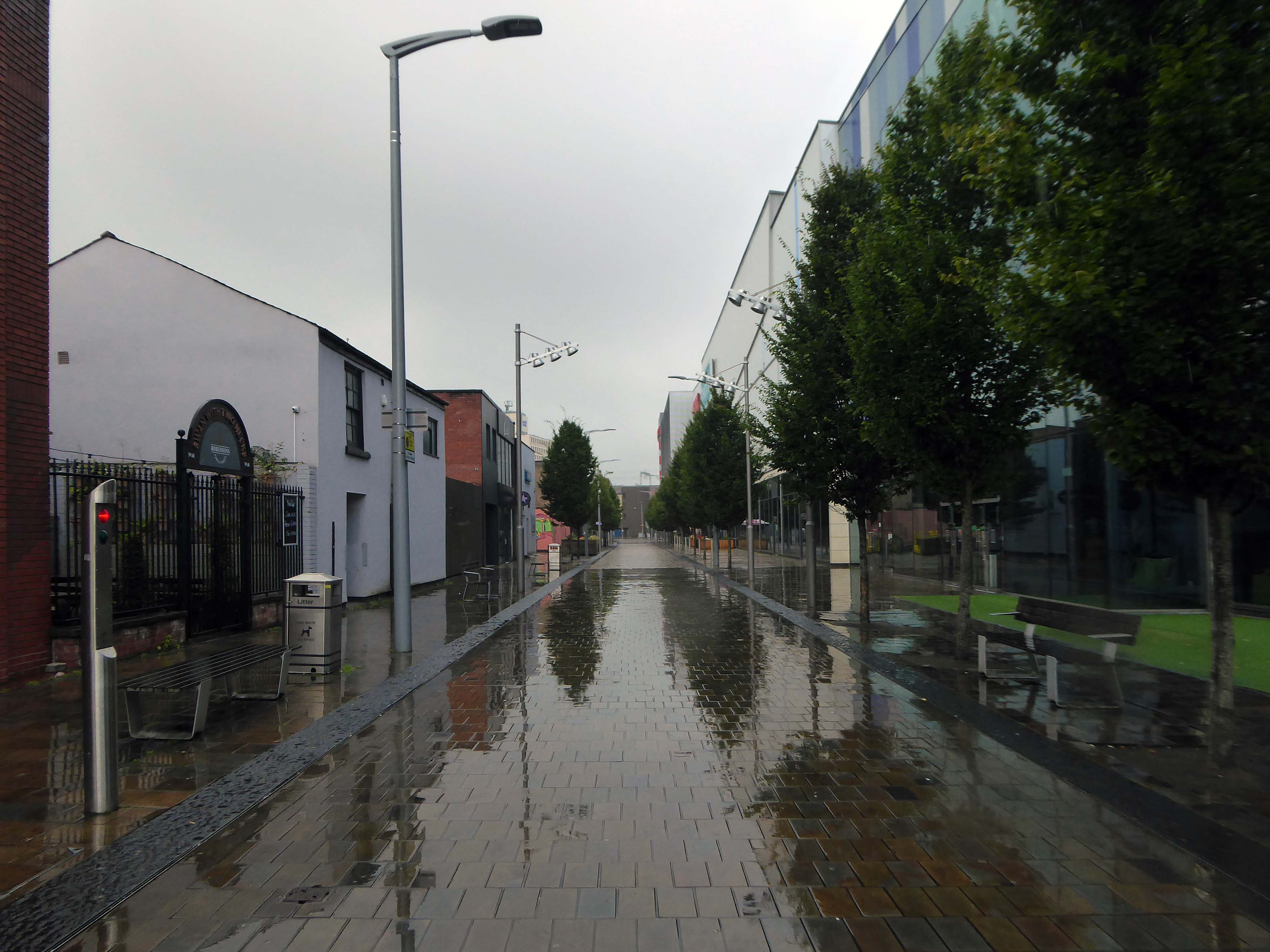
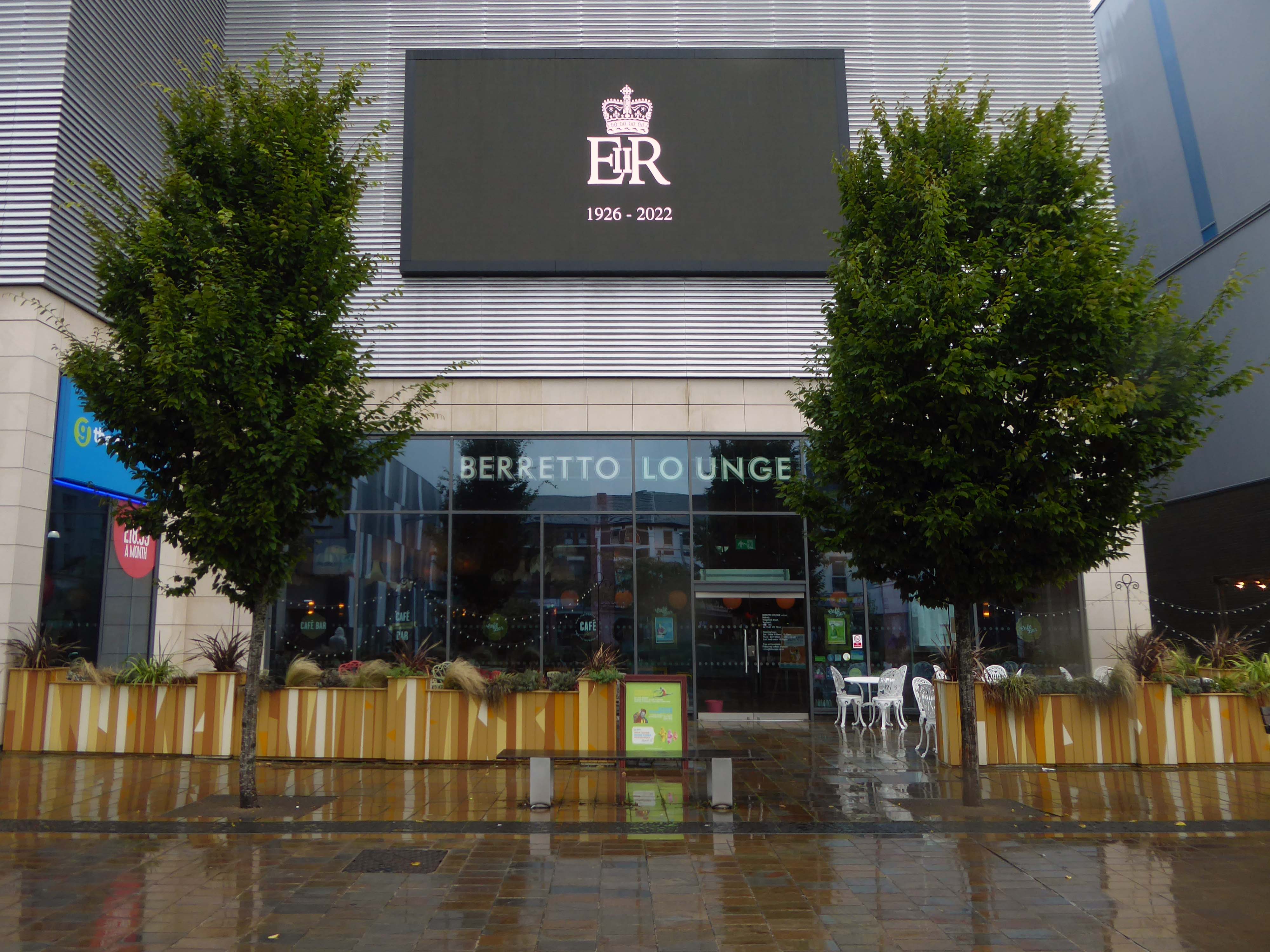
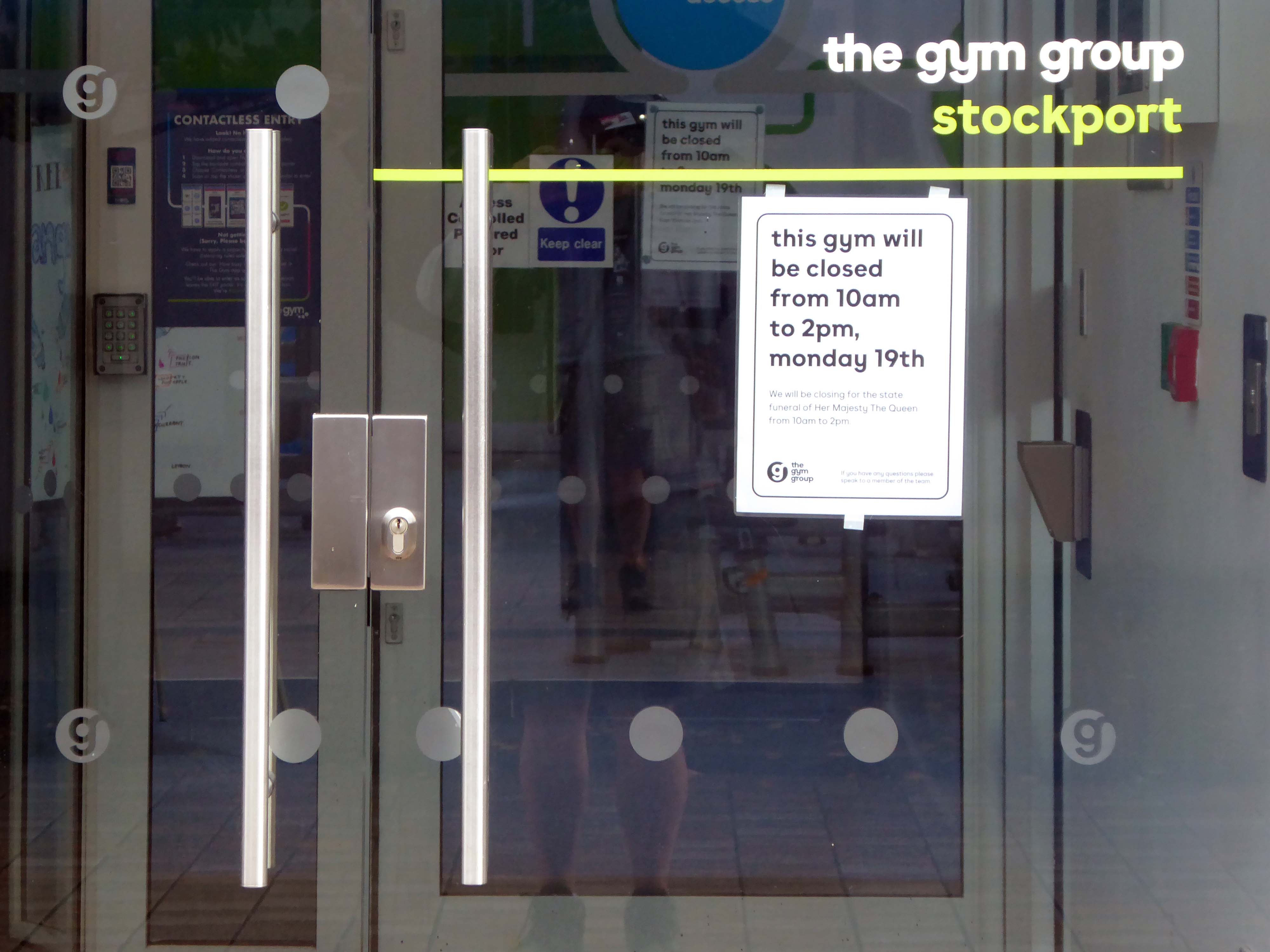
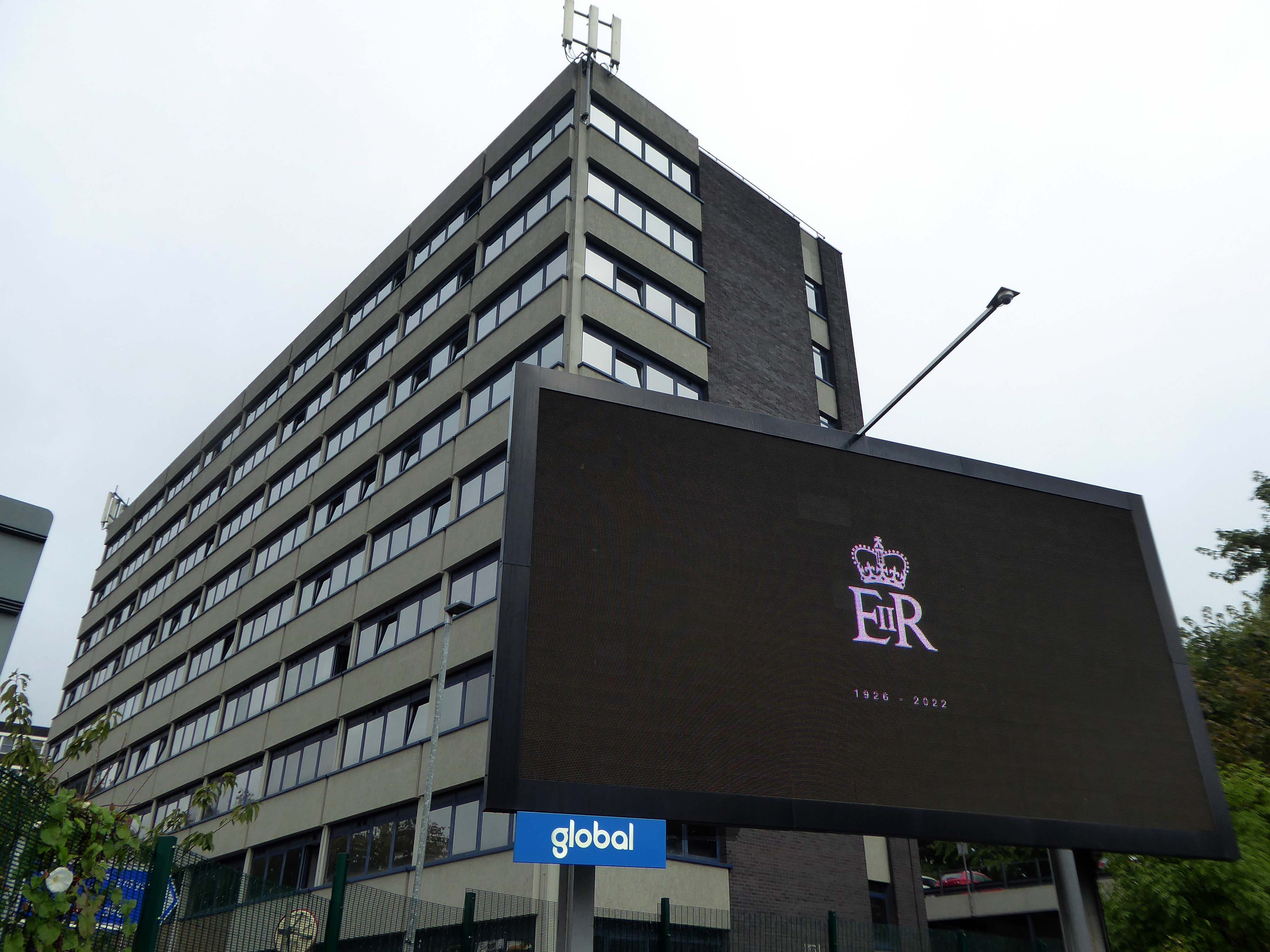
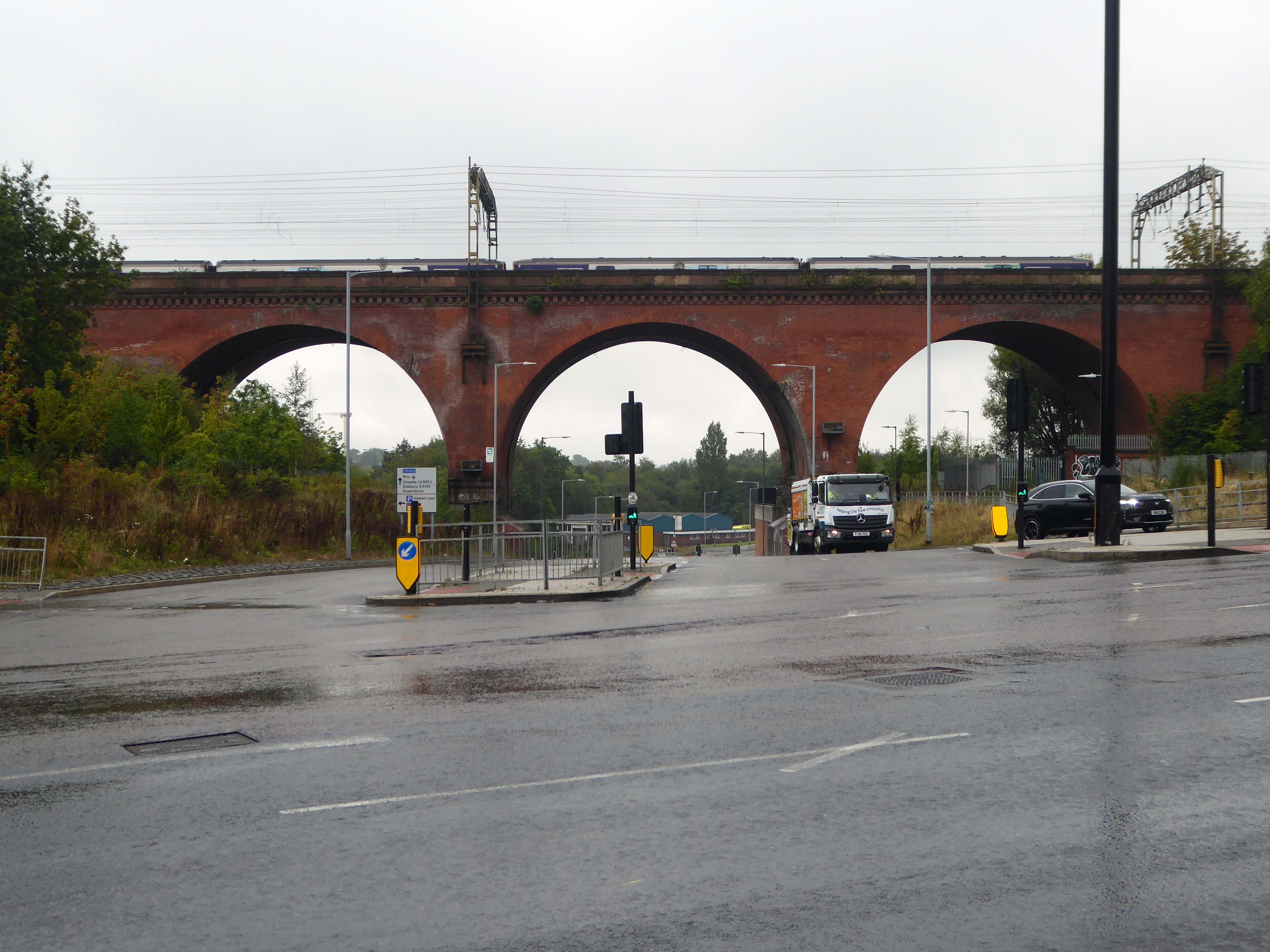
Today, on the day of her funeral, I set out for a walk around Stockport, to record a town largely closed for business. Overcast but far from downcast, I defied the almost persistent fine rain and these are the pictures that I took.

Many of the subjects are products of her time on the throne.

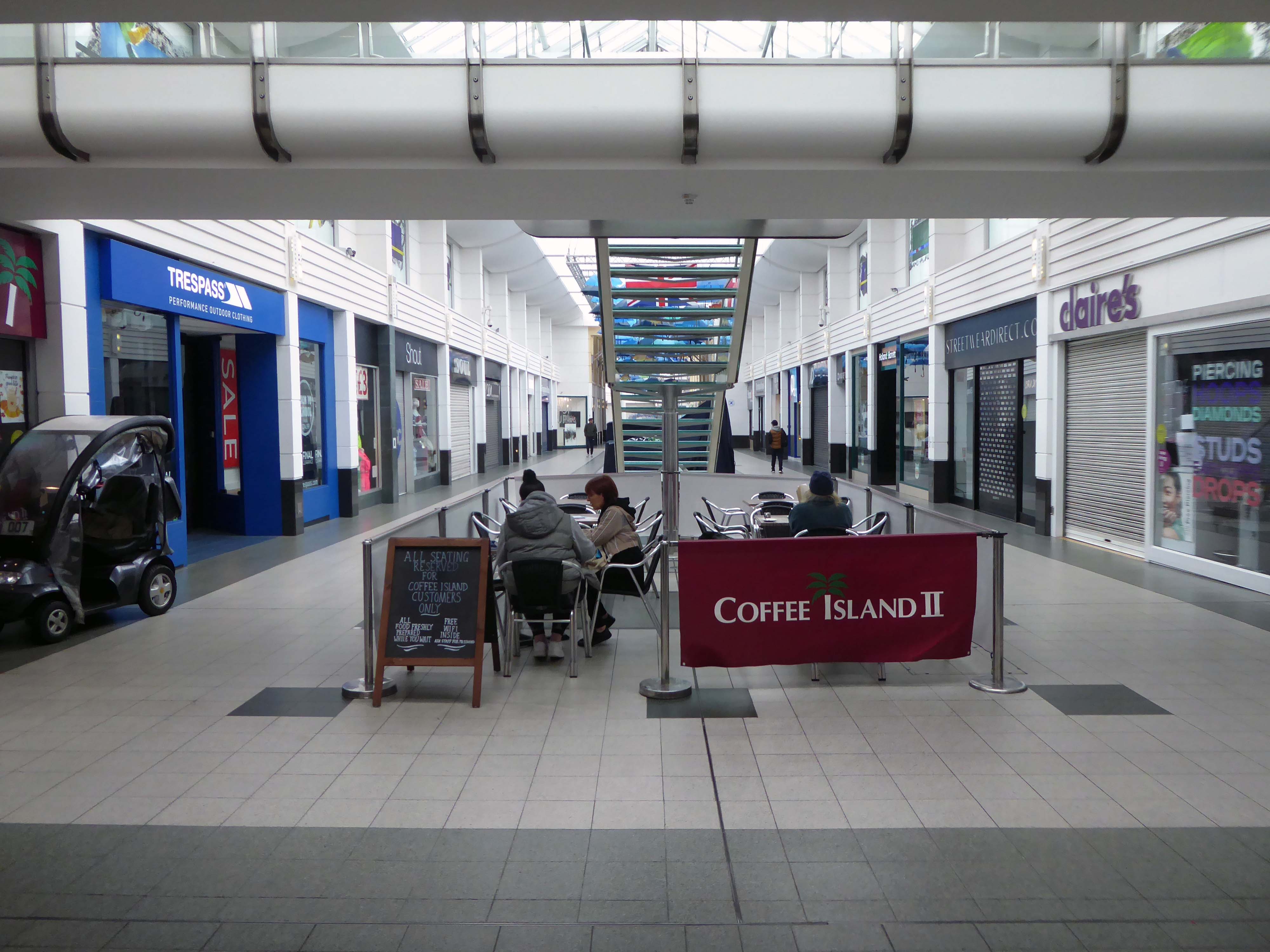
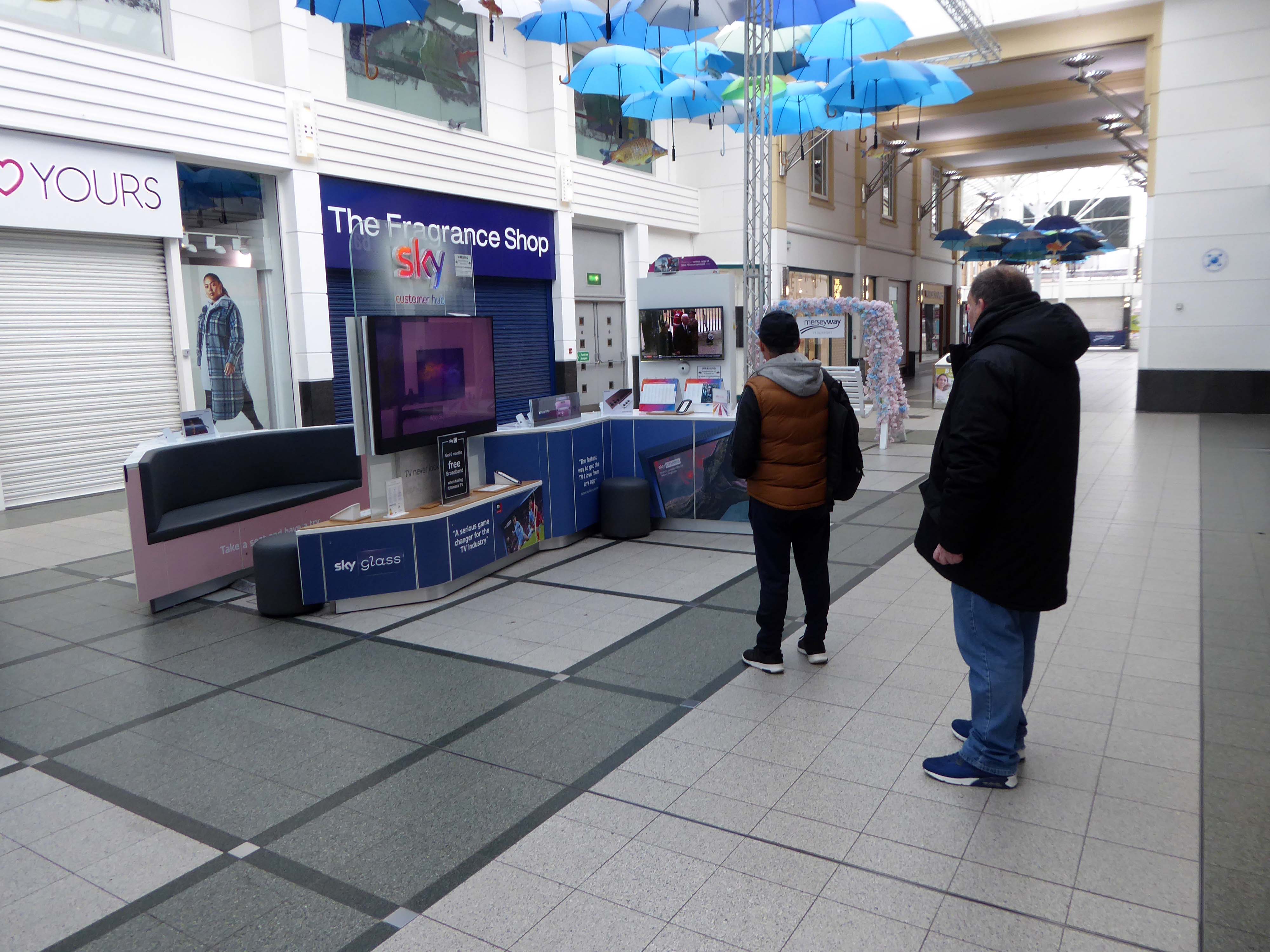
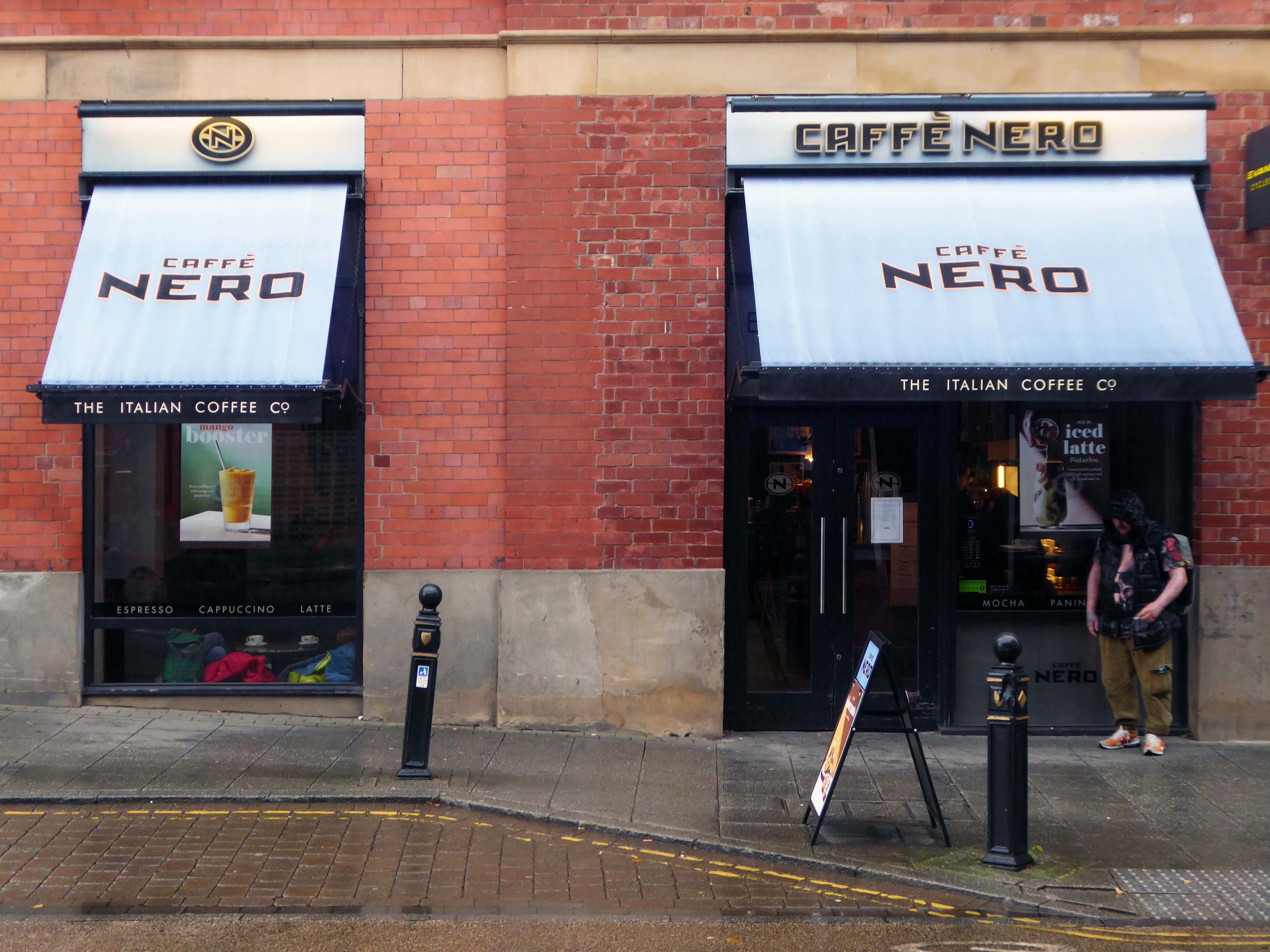
The traffic was much lighter, there were few pedestrians, a couple of cafés were open and two men watched the funeral service on the Sky TV stand in the precinct.

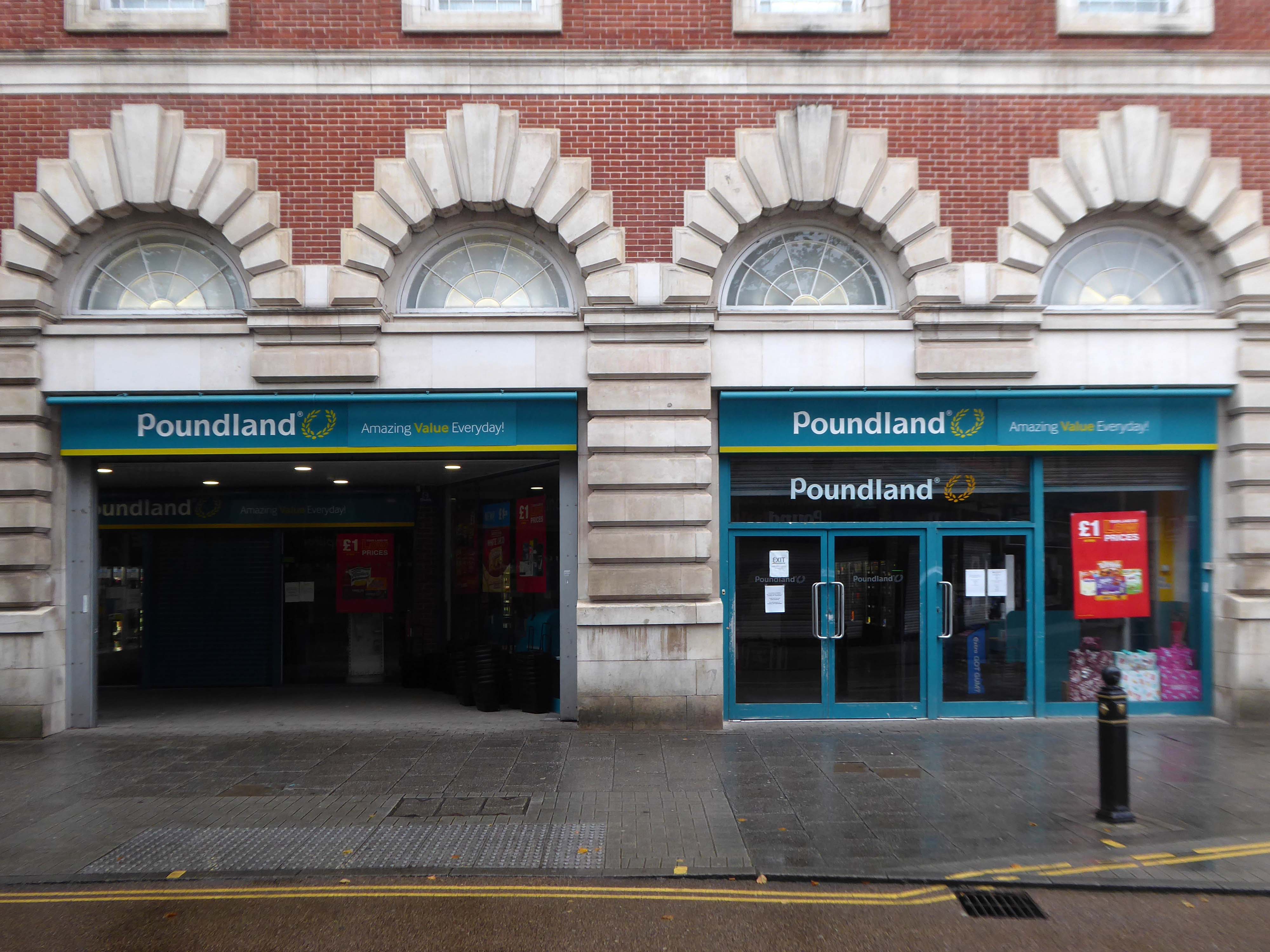
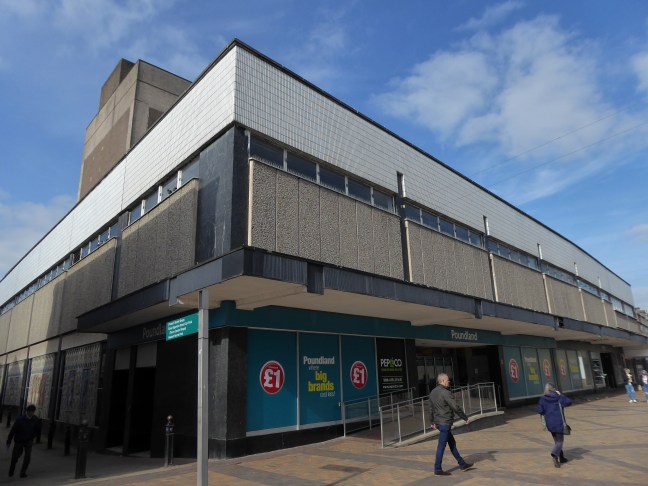
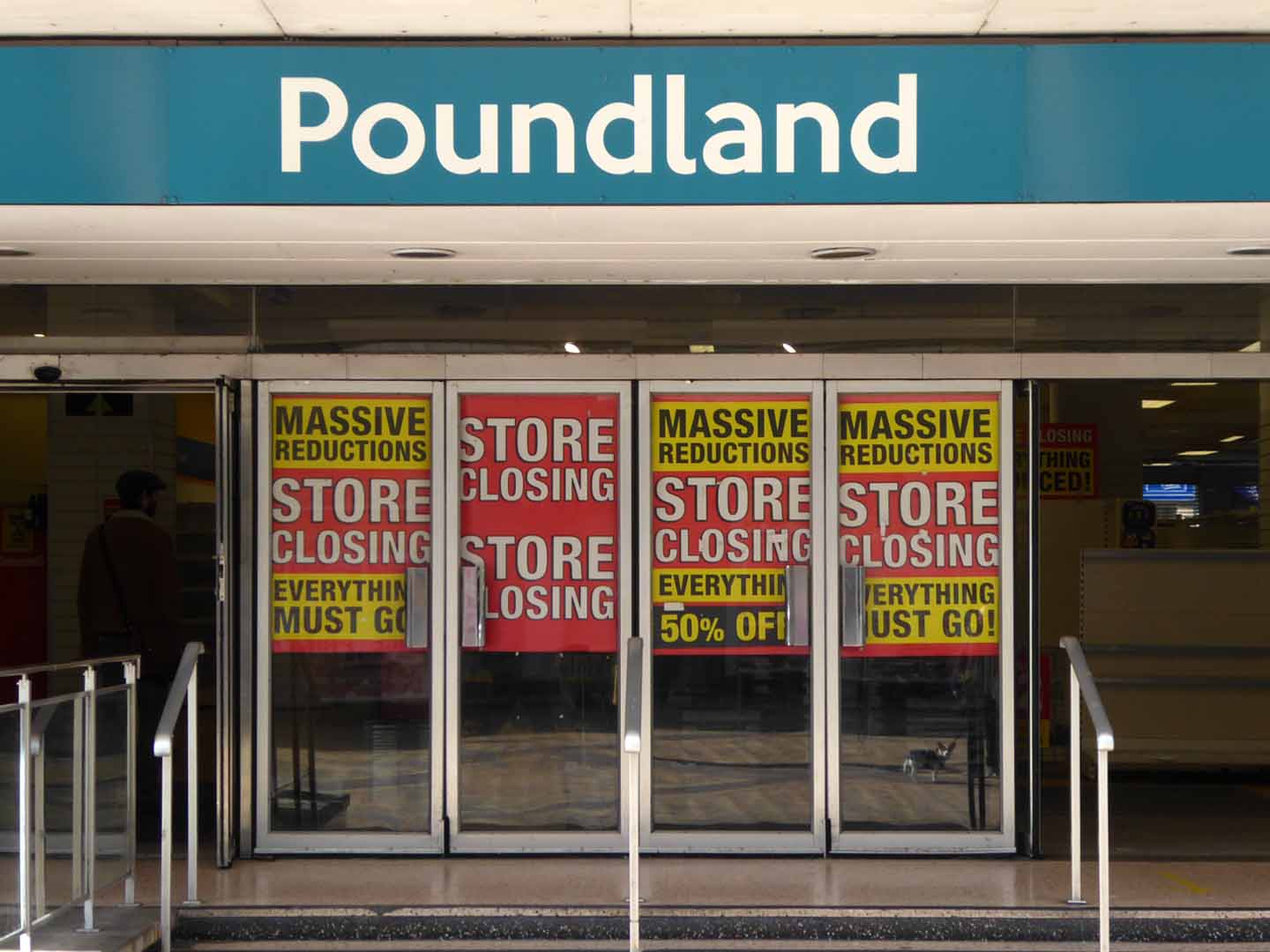
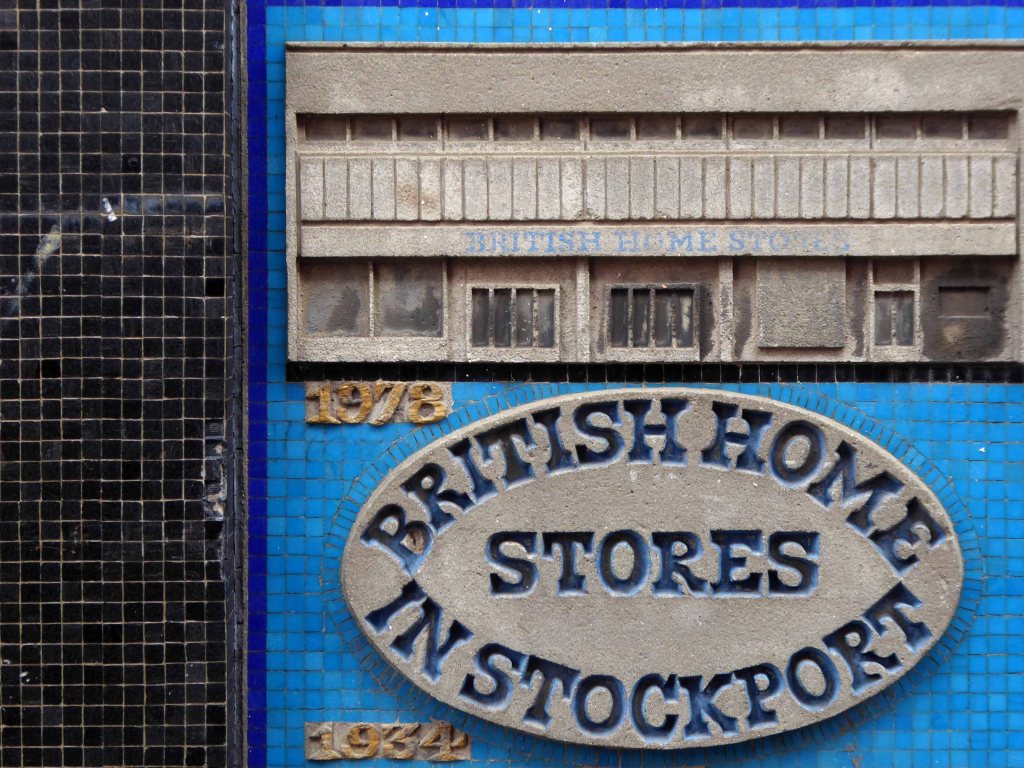
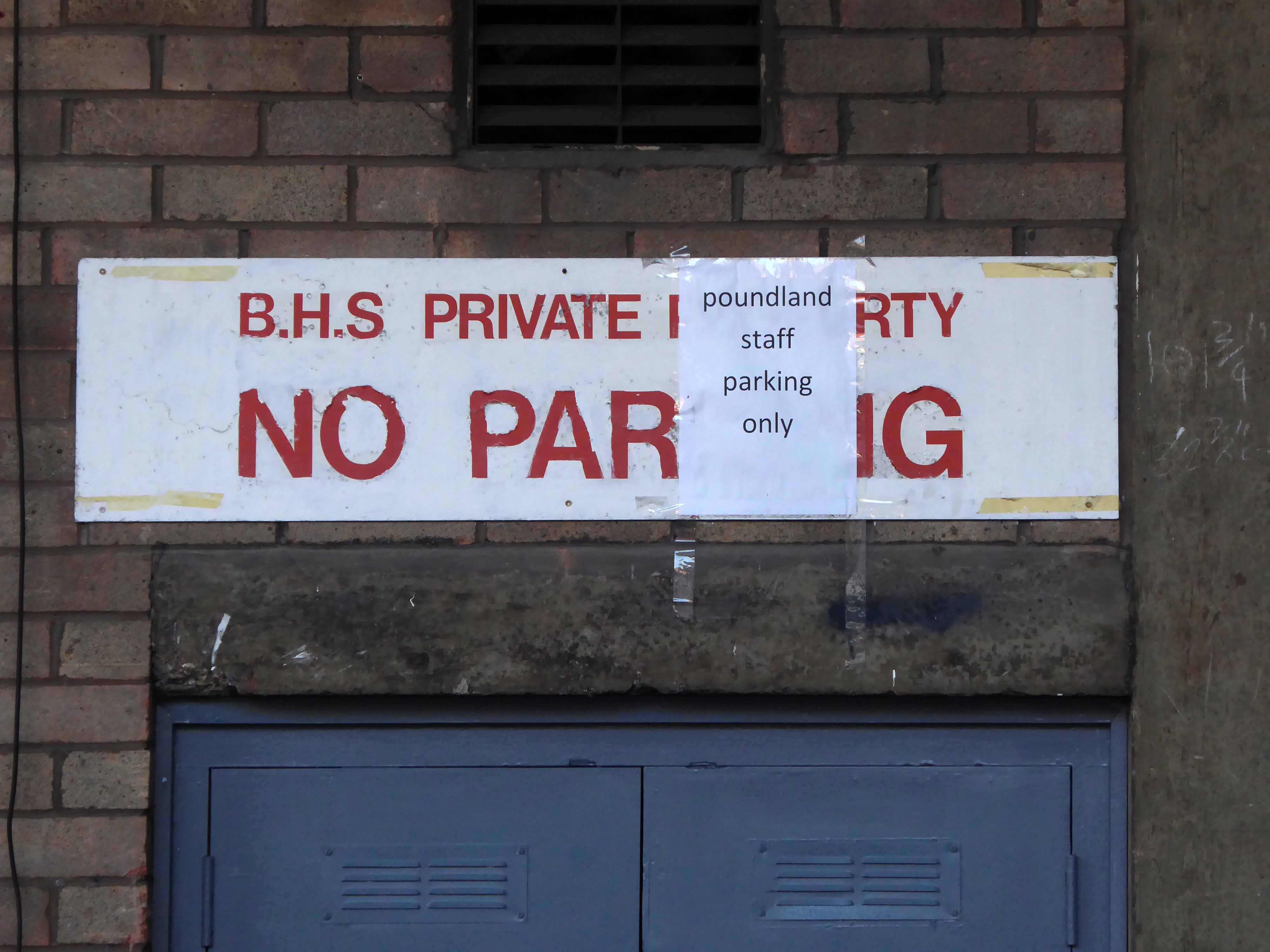
Poundland née BHS – Stockport

Stockport council bought the building in 2019 following the collapse of BHS three years earlier.

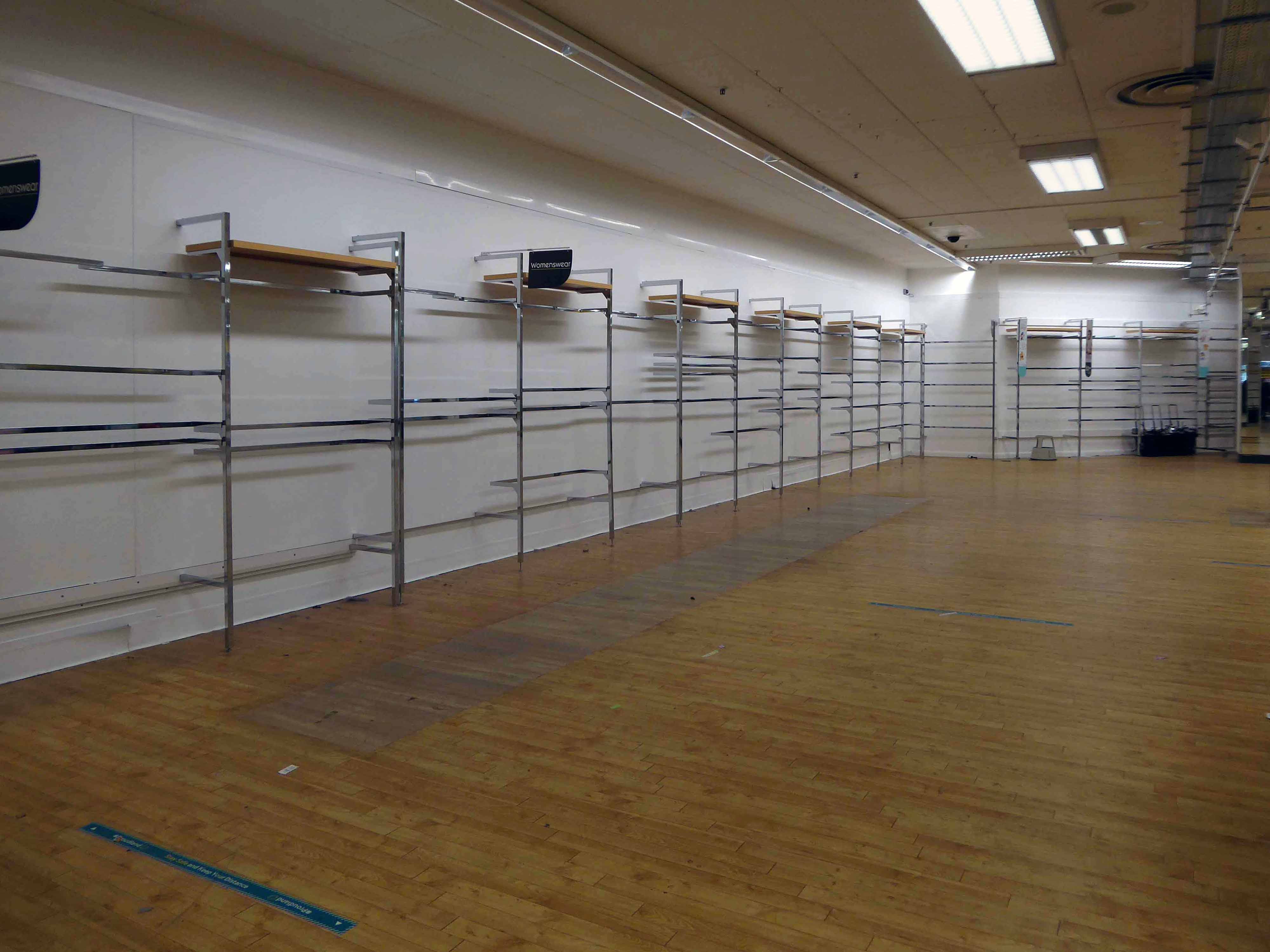
The report says the store is now in a poor condition, looks ‘dated and tired’ and ‘contributes to negative perceptions’ of Merseway.

MEN

You were conceived as an integral part of the Merseyway development, which on its inception, was held in the highest regard.

Innovative architecture with confidence, integrity and a clear sense of purpose.

The failure of BHS was a national disgrace, venal management, asset stripping, avaricious, grasping rodents ruled the day.

Dominic Chappell, who had no previous retail experience, bought the high street chain from the billionaire Sir Philip Green for £1 in March 2015. The company collapsed with the loss of 11,000 jobs 13 months later, leaving a pension deficit of about £571m.

Guardian

A sad end for a company with a long history and presence on the high street.

With an architectural heritage to match:

BHS’s chief architect at this time was G. W. Clarke, who generally worked alongside W. S. Atkins & Partners, as consulting engineers. The stores – like Woolworth’s buildings – were composite structures, with steel frames and concrete floors. Clarke sometimes appointed local architects.

At first, like C&A, BHS retained the narrow vertical window bays and margin-light glazing that had characterised high street façades in the 1930s, but by the end of the 1950s Clarke had embraced a modified form of curtain-walling.

This architectural approach became firmly associated with BHS, with framed curtain wall panels – like giant TV screens – dominating the frontages of many stores.

Building Our Past

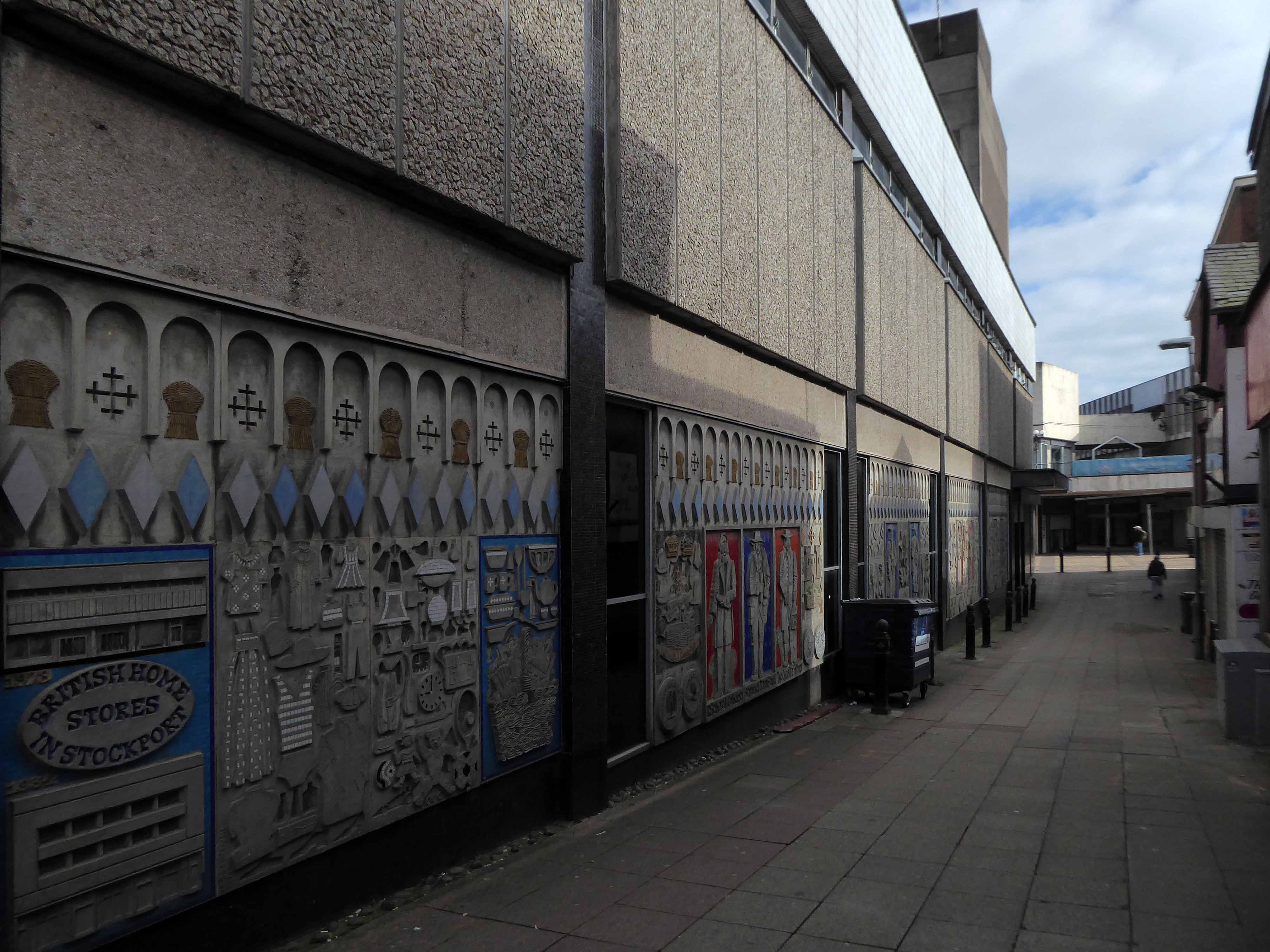
Of note are the Joyce Pallot and Henry Collins concrete panels on the Deanery Row elevation.

There have been moves to have the work listed, without success.

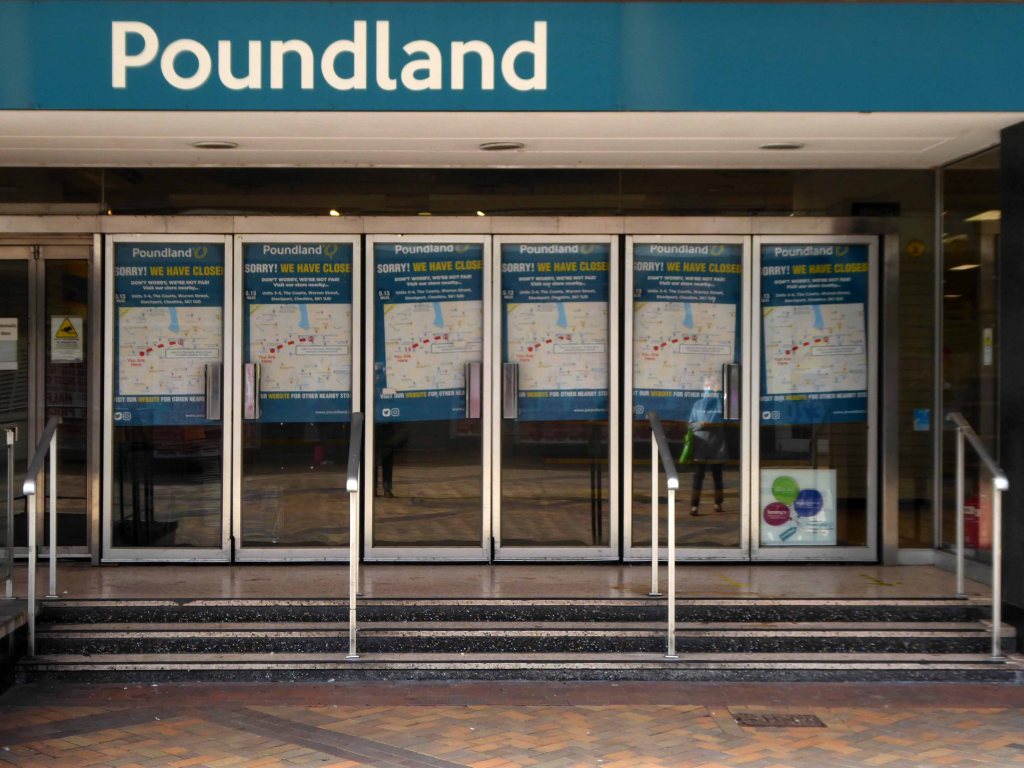
Of late the store has been home to Poundland – though time has now been called.

Poundland’s retailing concept is extremely simple: a range of more than three thousand – representing amazing value for money.

Our pilot store opened in the Octagon Centre, Burton-upon-Trent, in December of 1990, followed by new stores in High Street, Meadowhall and other quality trading locations.  Shoppers loved the concept and so did fellow retailers and landlords.  The stores proved to be a huge success. Meadowhall’s success was repeated by further stores opening by the end of the year.

The store has been a success even during COVID restrictions, let us hope that the planned return goes ahead.

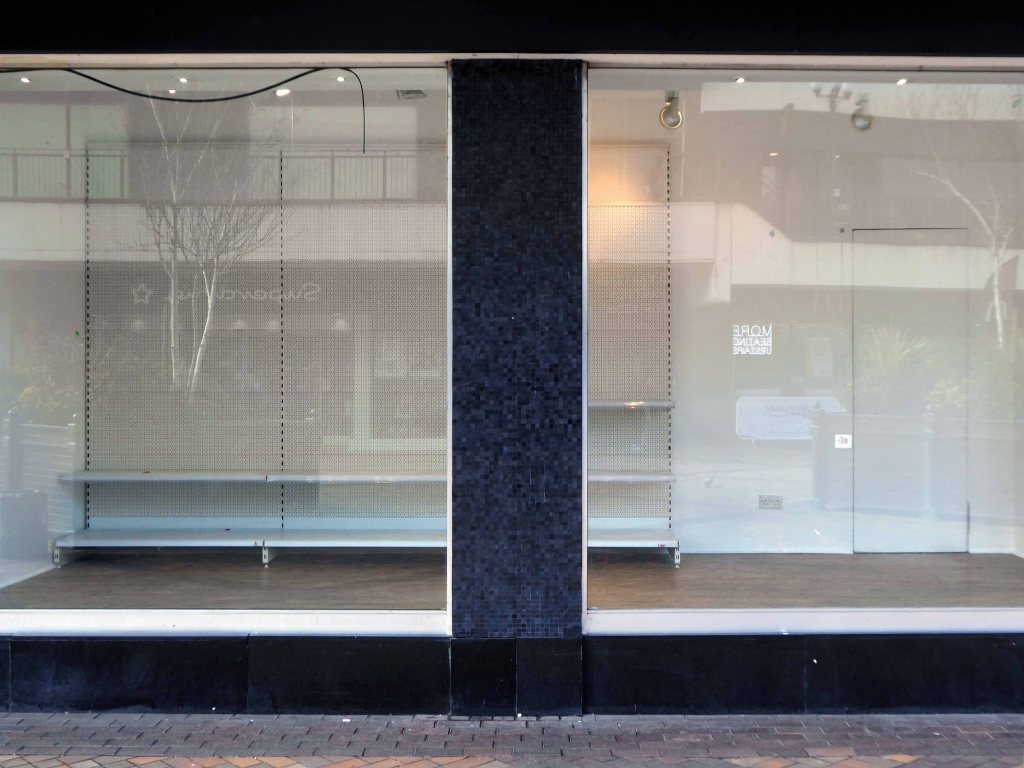
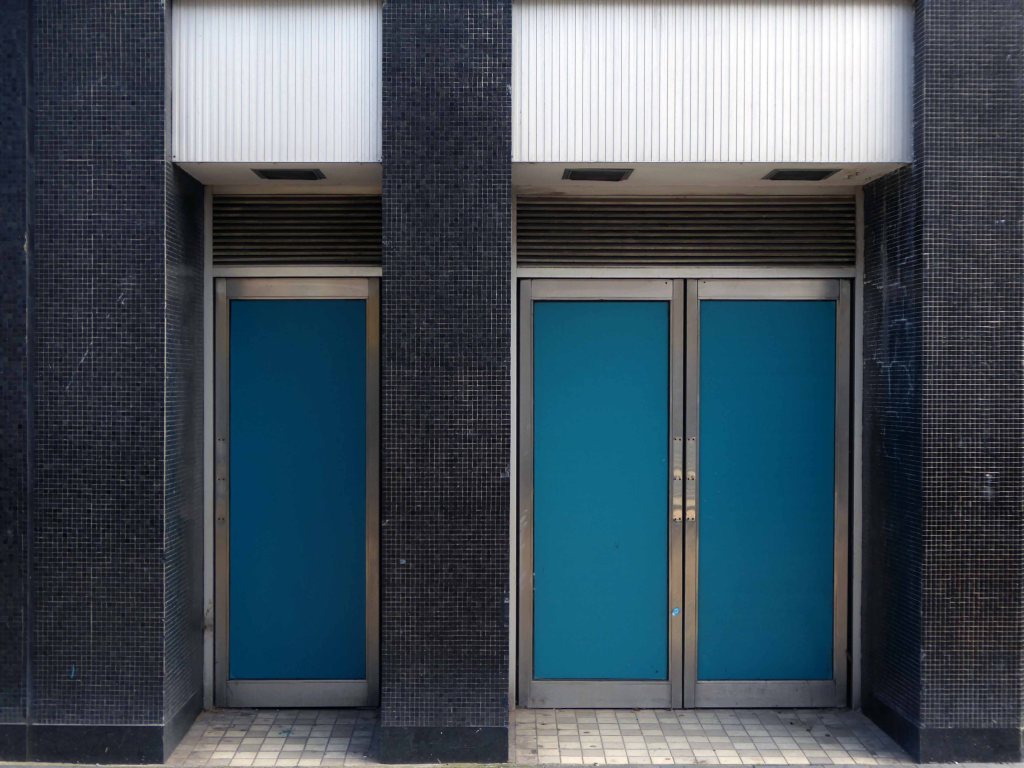
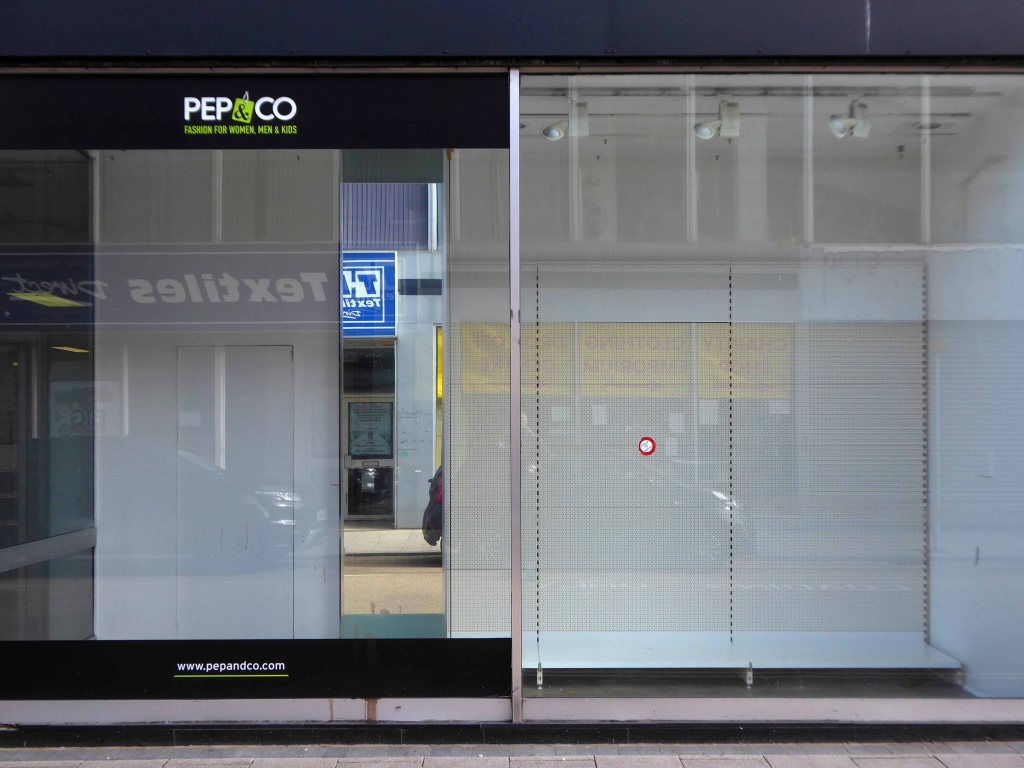
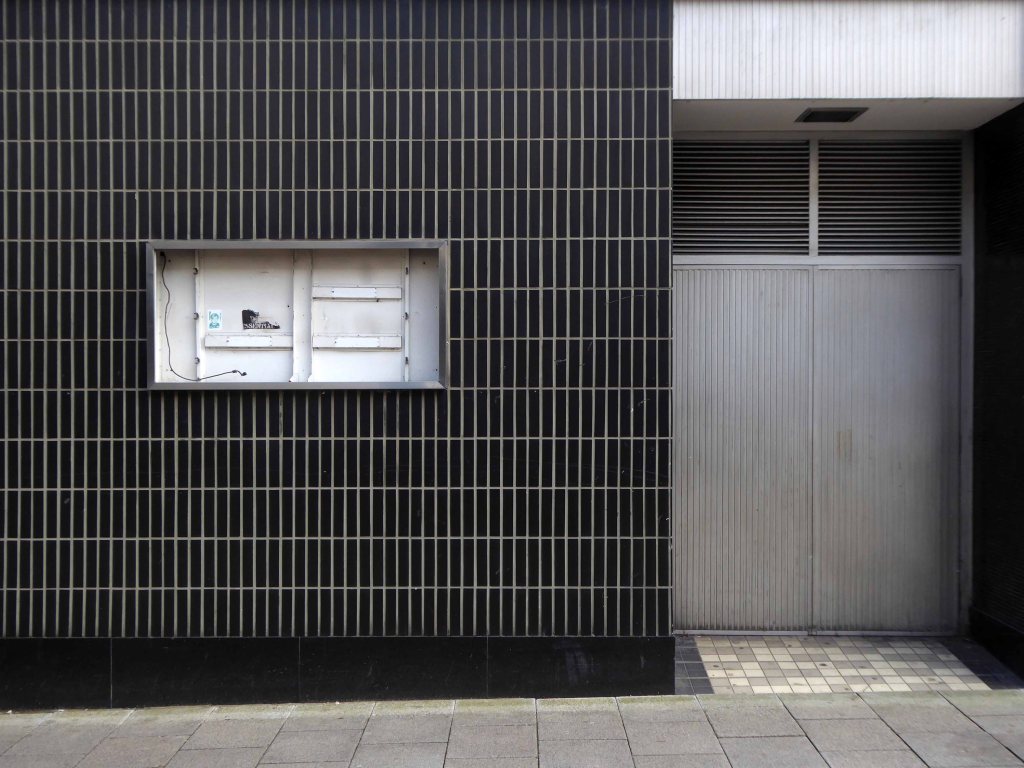
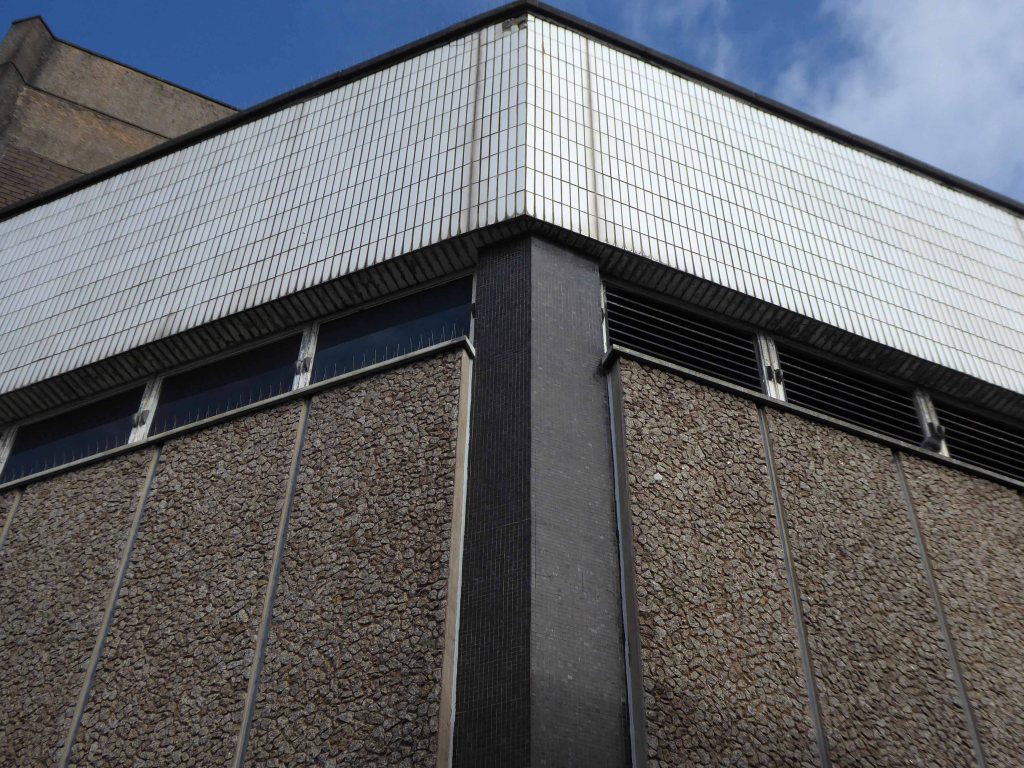
So here is my record of the building as is, a tad tired, but in its day a simple and authoritative amalgam of volumes and materials.

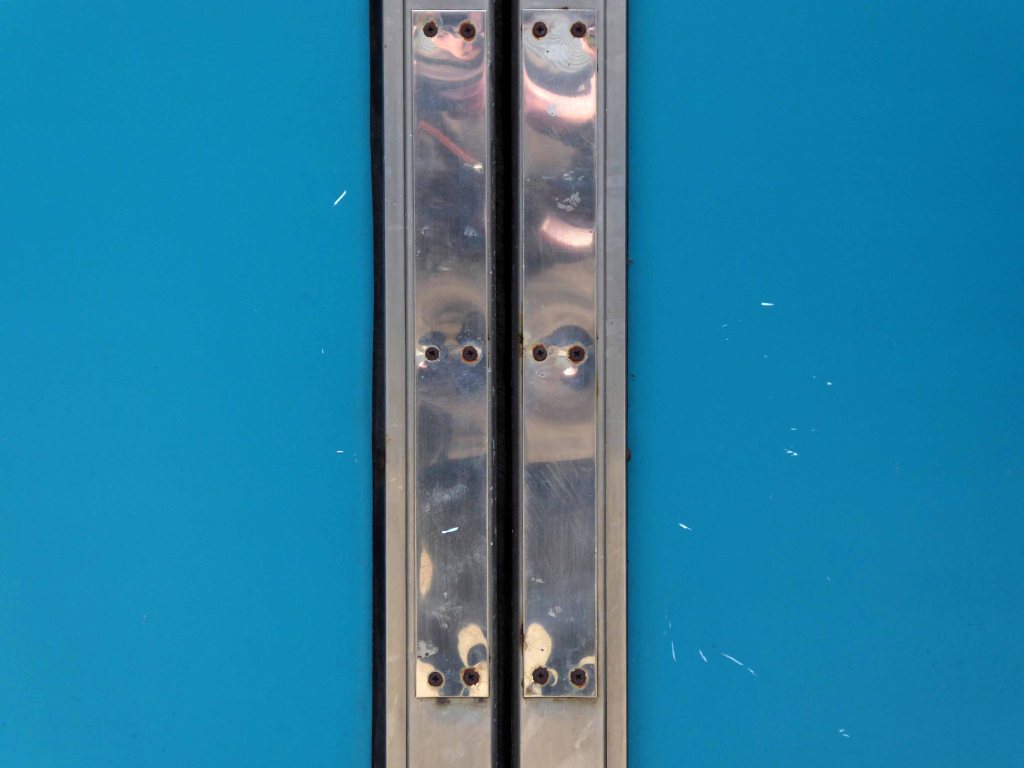
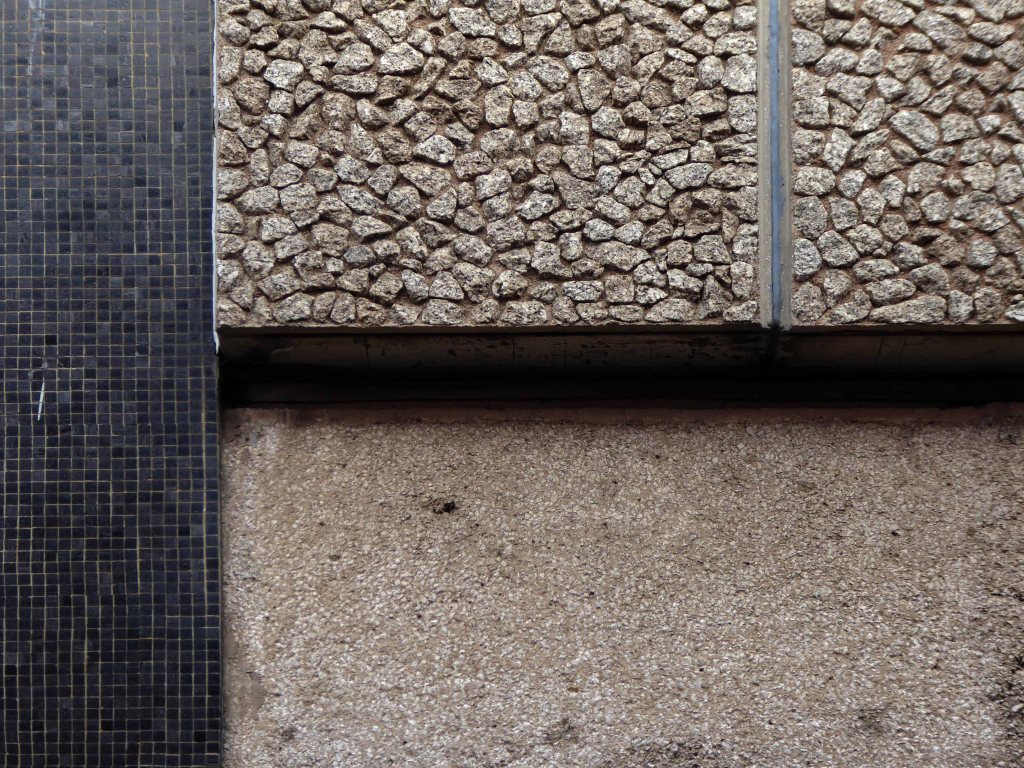
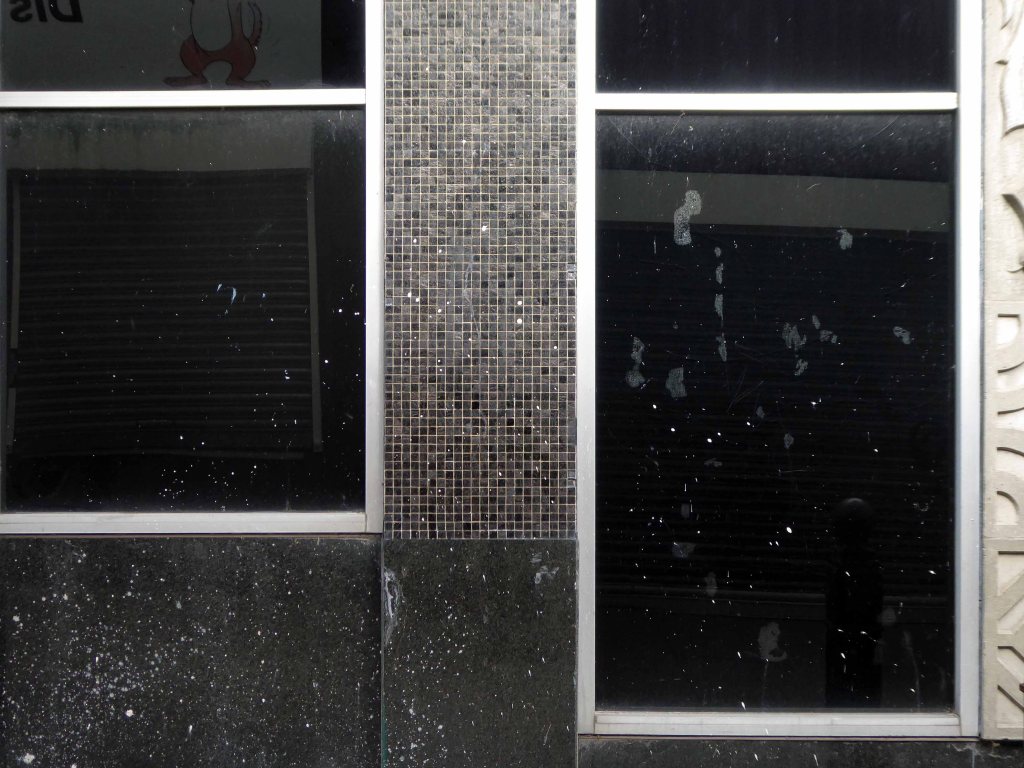
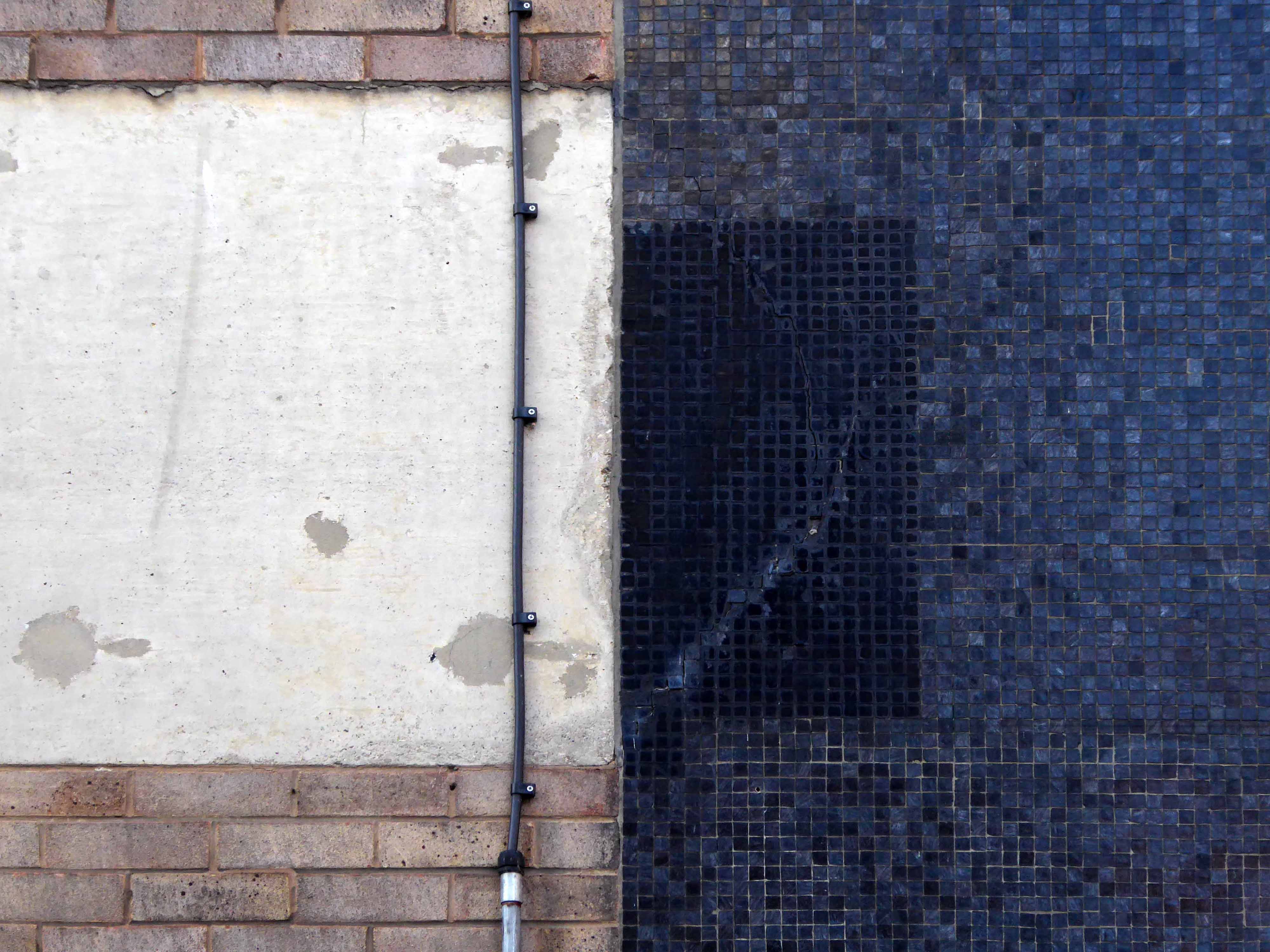
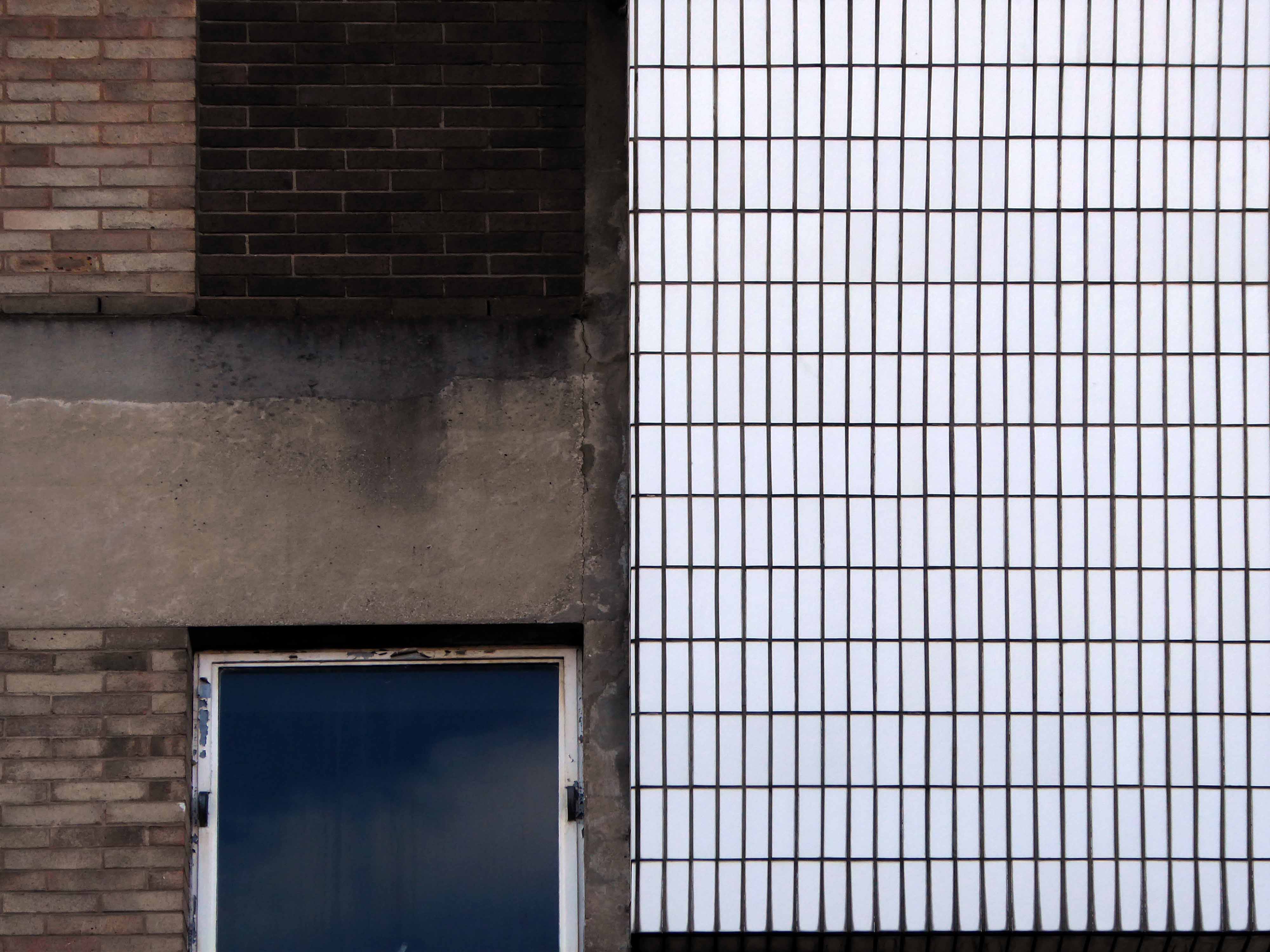
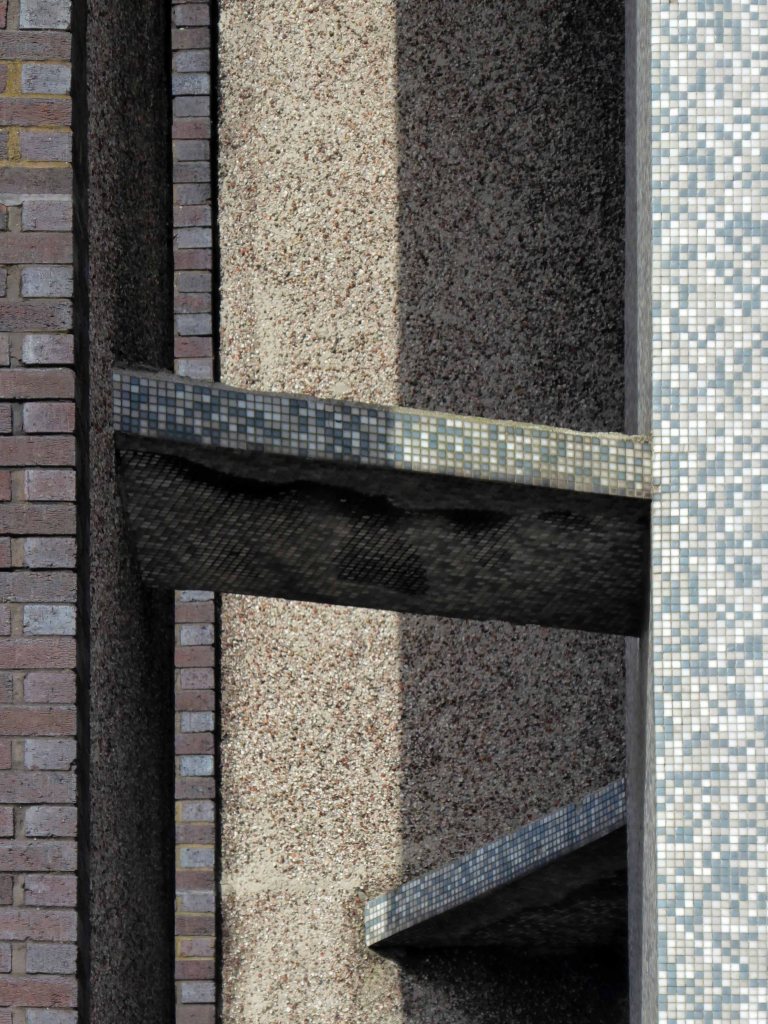
Mixing variegated grades of concrete, tiling, mosaic, brick, steel and glass.

Pedestrian In A Car Park Again

Having visited Heaton Lane yesterday, today I set my sights high above Primark on Merseyway.

I have been here before, primarily to record Alan Boyson’s screen wall.

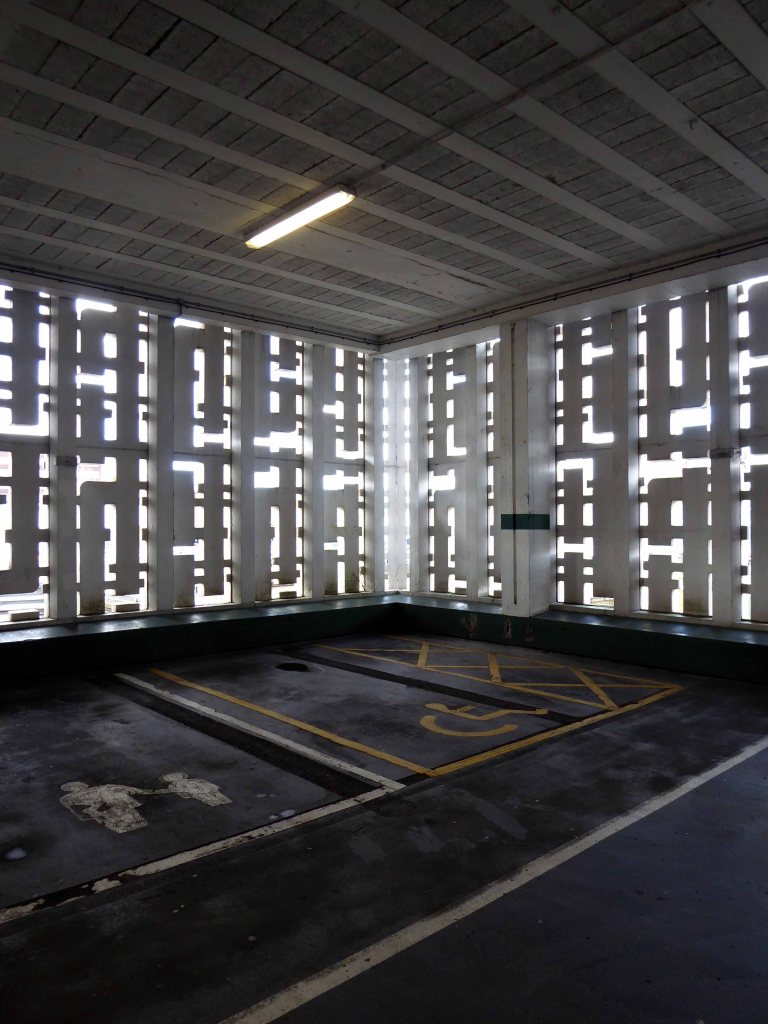
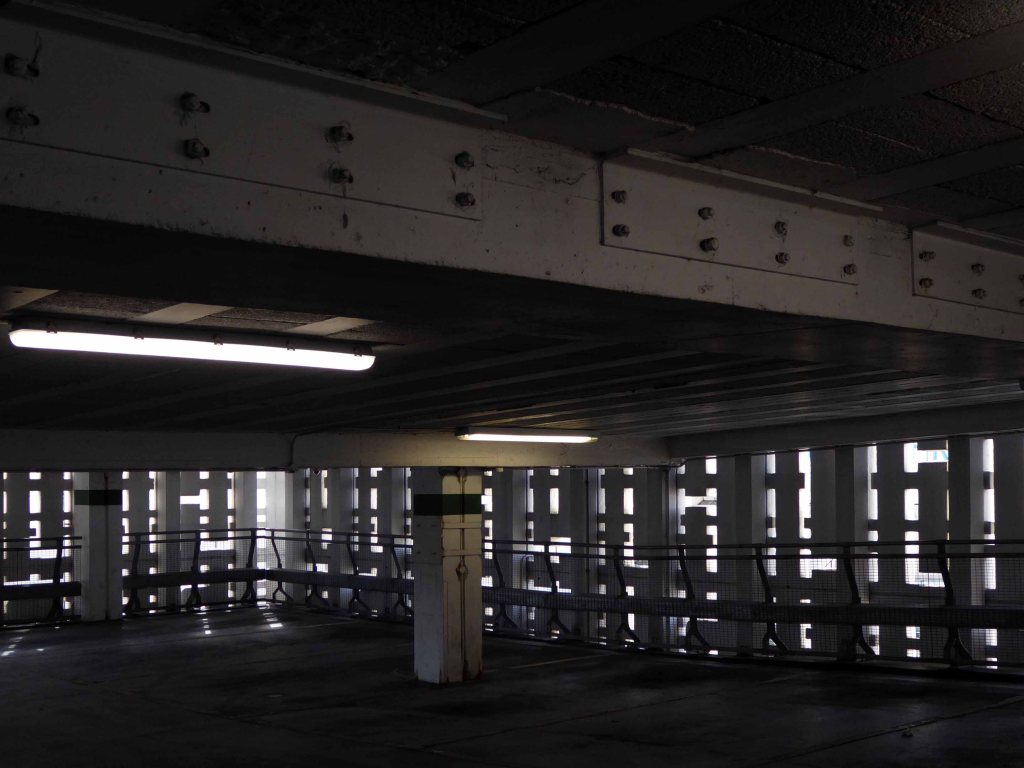
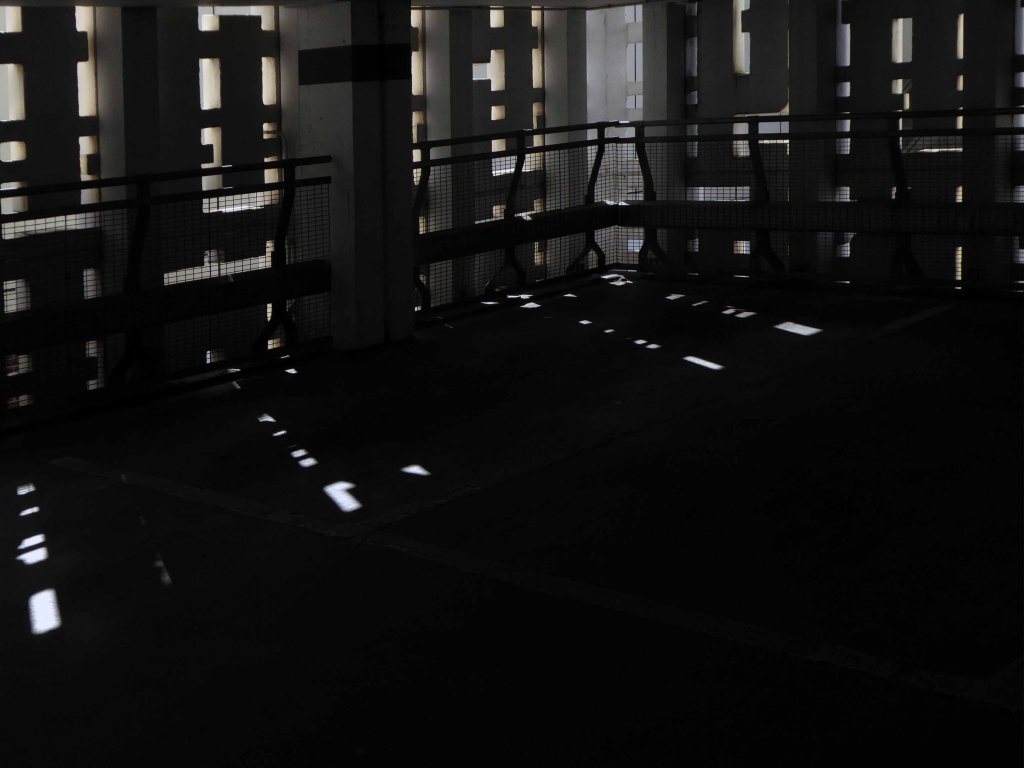
Walking the stairwells, ramps and interlocking tiers, the curious pedestrian becomes aware of the ambition and complexity of the scheme. Often identified on local social media groups as an anachronistic eyesore, I feel that it is a thing of rare and precious beauty.

Knock most of the precinct down, free the river, but keep this wall and what is within.

Anon

Some are slaughtering imaginary white elephants, whilst others are riding white swans.

Currently under the ownership of Stockport Borough Council, changes are afoot.

Work to redevelop Adlington Walk in Stockport starts this week, as the first stage in the regeneration of the 55-year-old Merseyway shopping centre.

Place North West

As of today work is still in Covid induced abeyance, it is still possible to walk the old revamped Adlington Walk. The future of retail in particular and town centres in general is in the balance, the best of the past and the finest of the new should be the watchword.

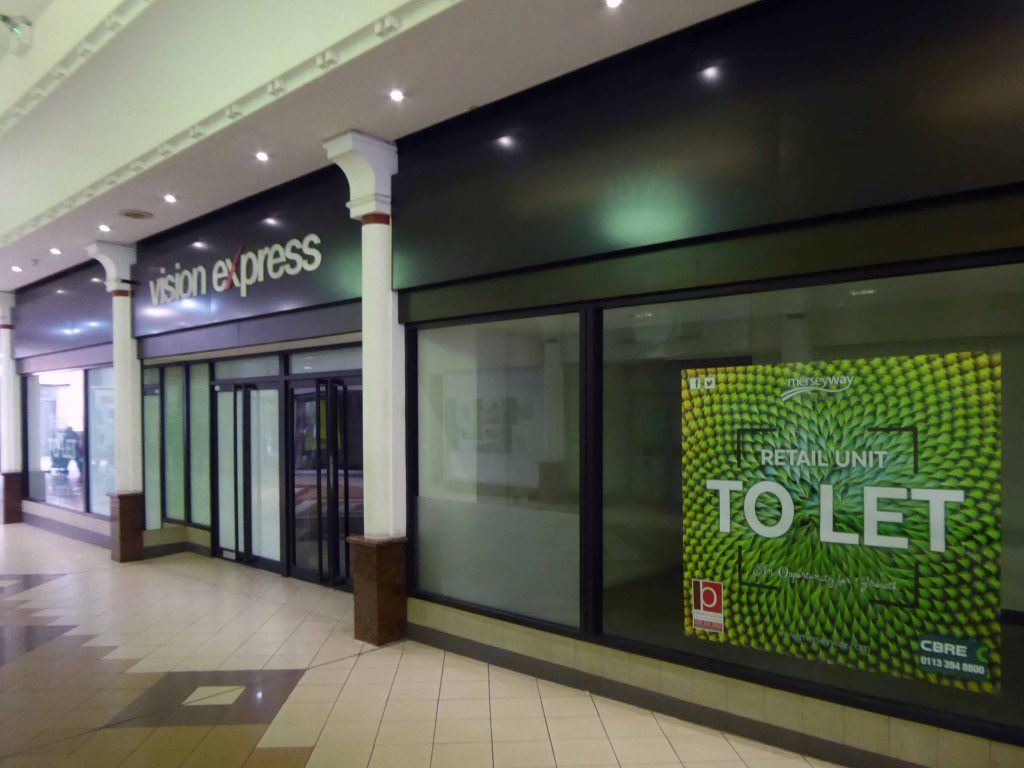
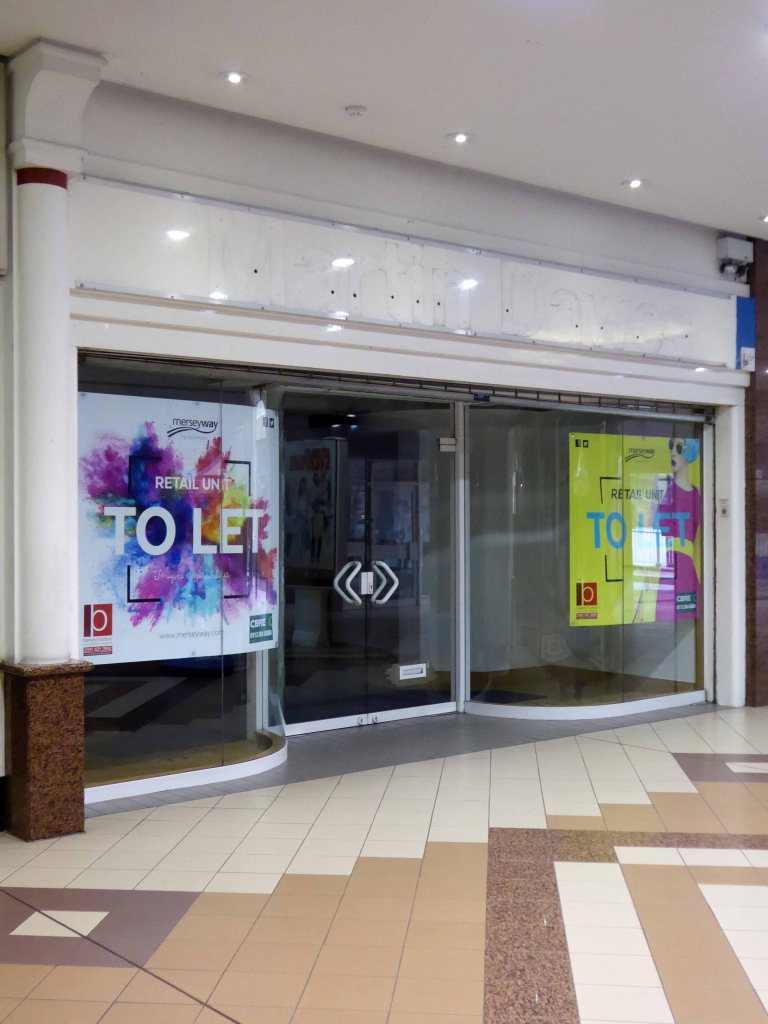
The scheme and car park redevelopment, is managed by CBRE of Manchester.

The future shopper is looking for more than just a simple buying transaction, they want an experience, entertainment and excitement.

This is where Merseyway Shopping Centre’s future lies.

CBRE Group Inc. is an American commercial real estate services and investment firm. The abbreviation CBRE stands for Coldwell Banker Richard Ellis. It is the largest commercial real estate services company in the world.

Their net worth as of January 28th 2021 is $21.18 Billion.

It is to be hoped that these dreams of entertainment and excitement, may be realised in the not too distant future.

In the meanest of mean times, in the mean time let’s have a look around.

The future moocher is looking for more than just a simple buying transaction, they want an experience, entertainment and excitement.

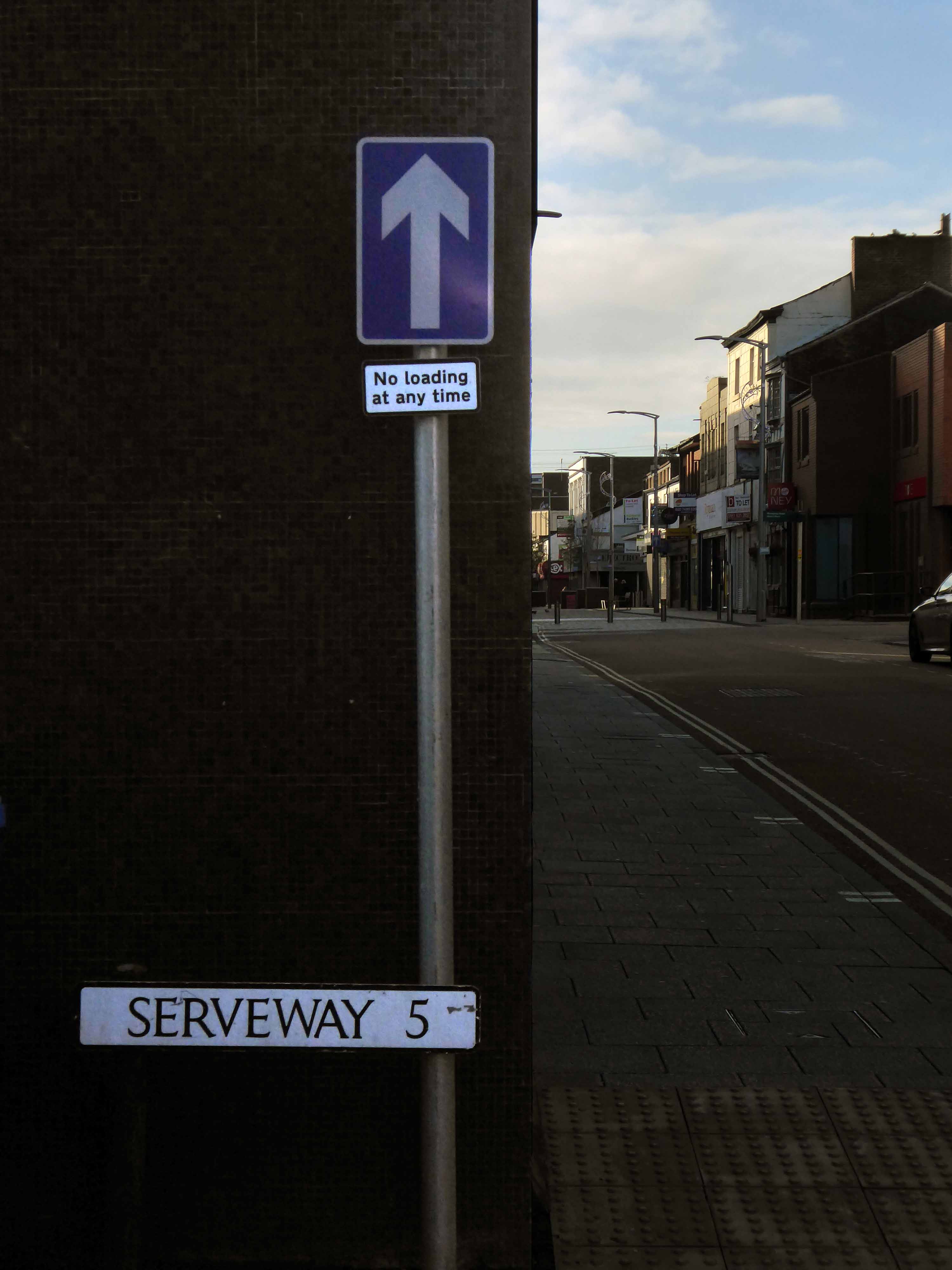
Serveway Five – Merseyway

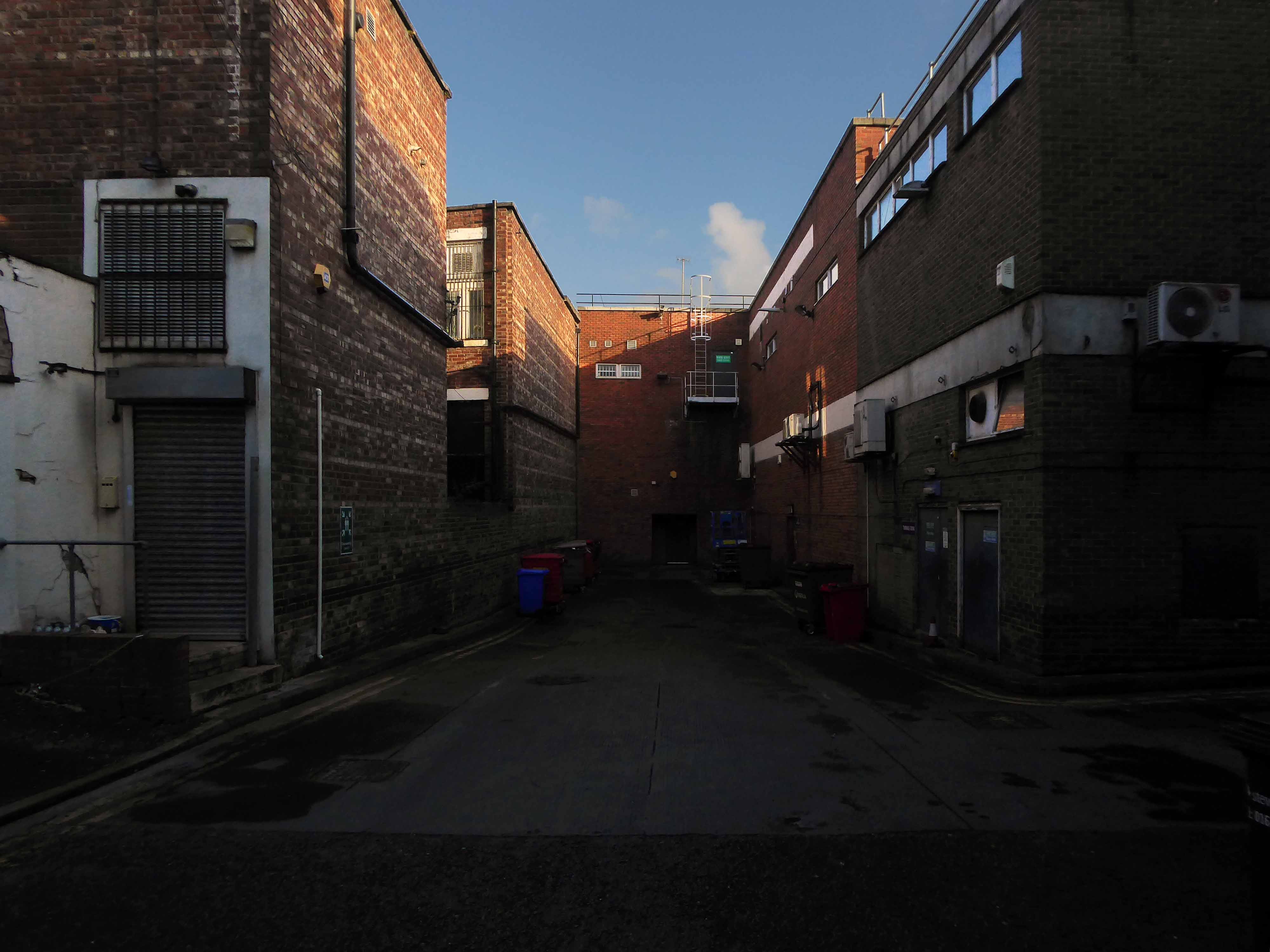
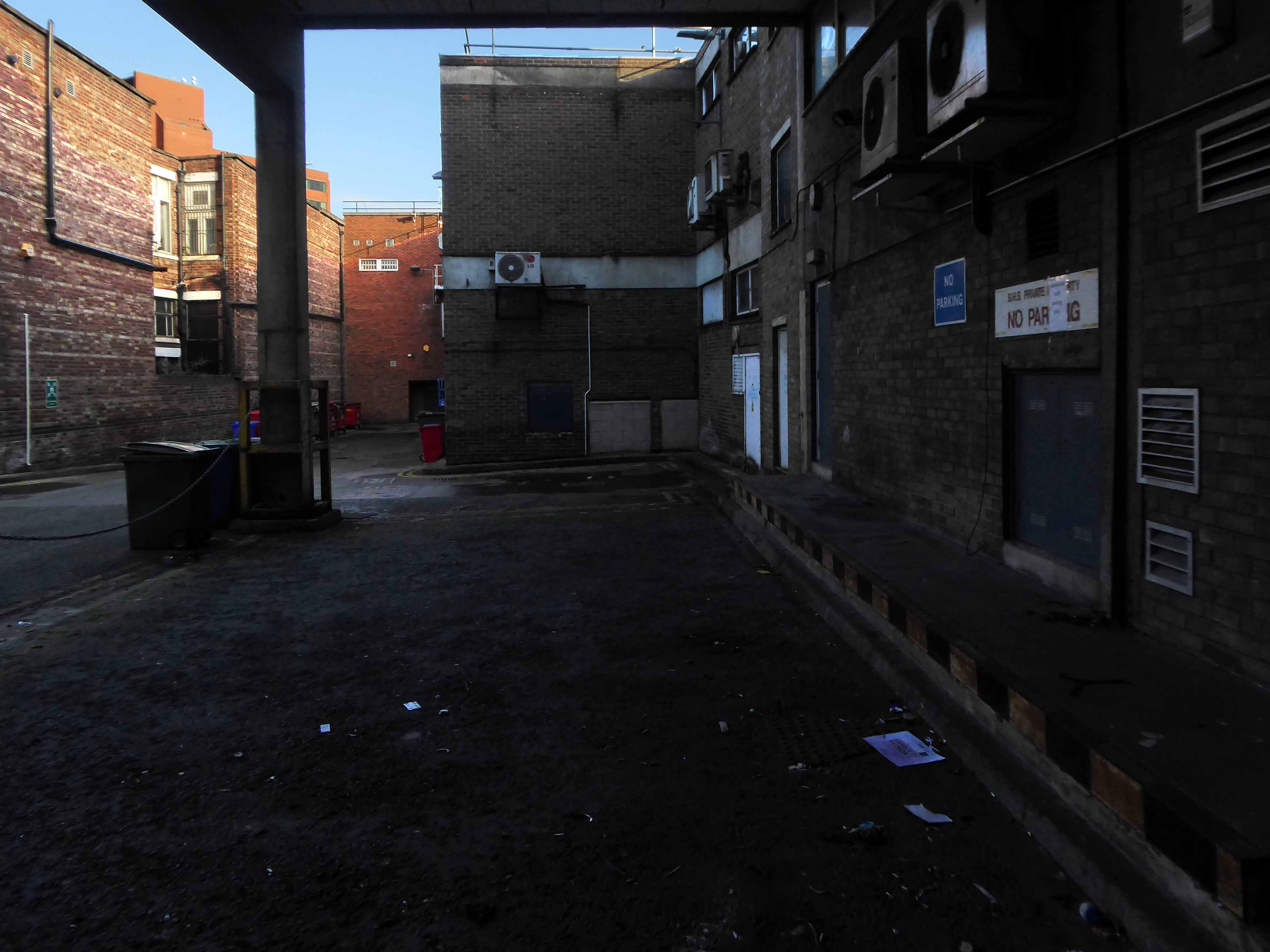
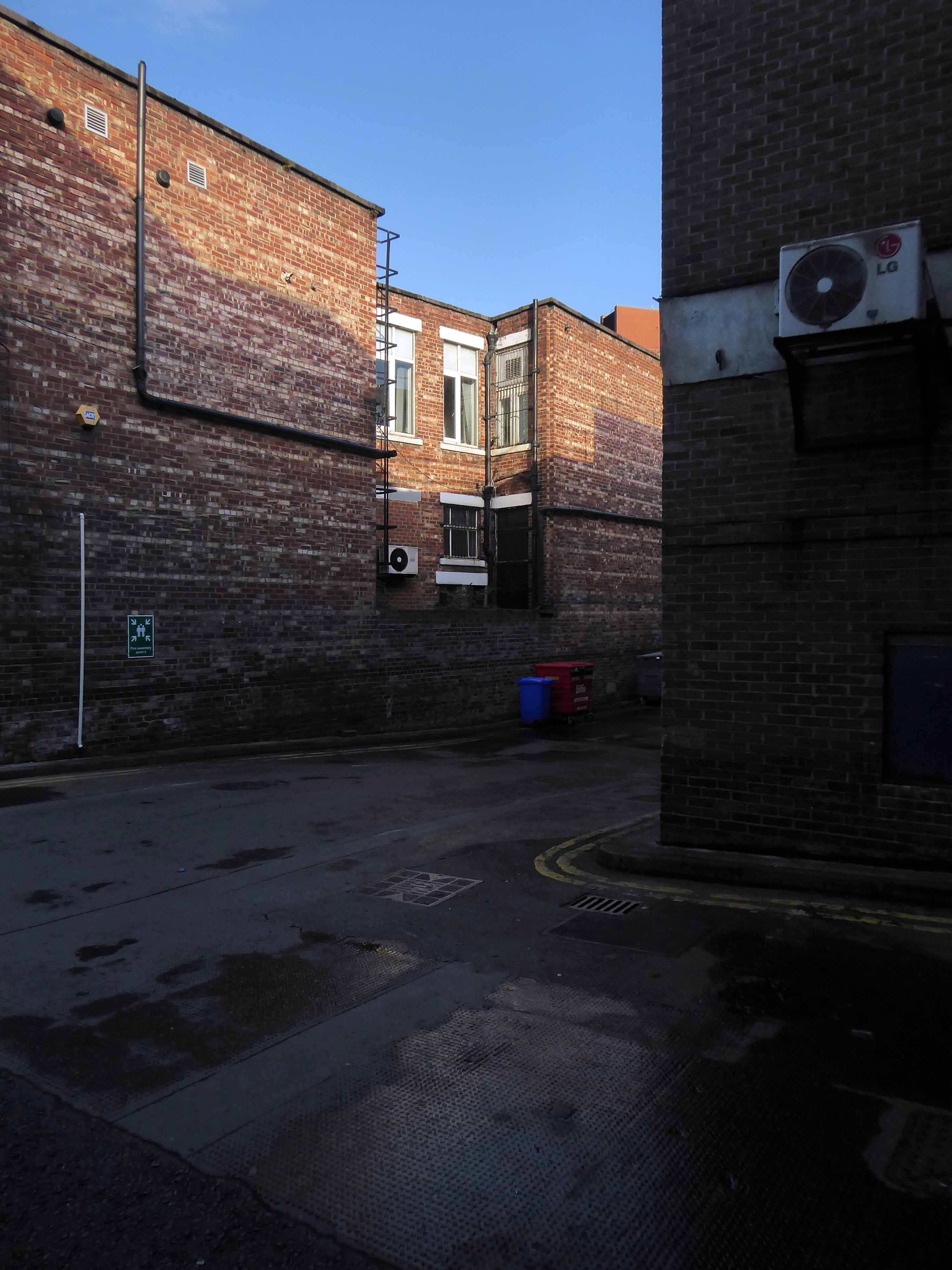
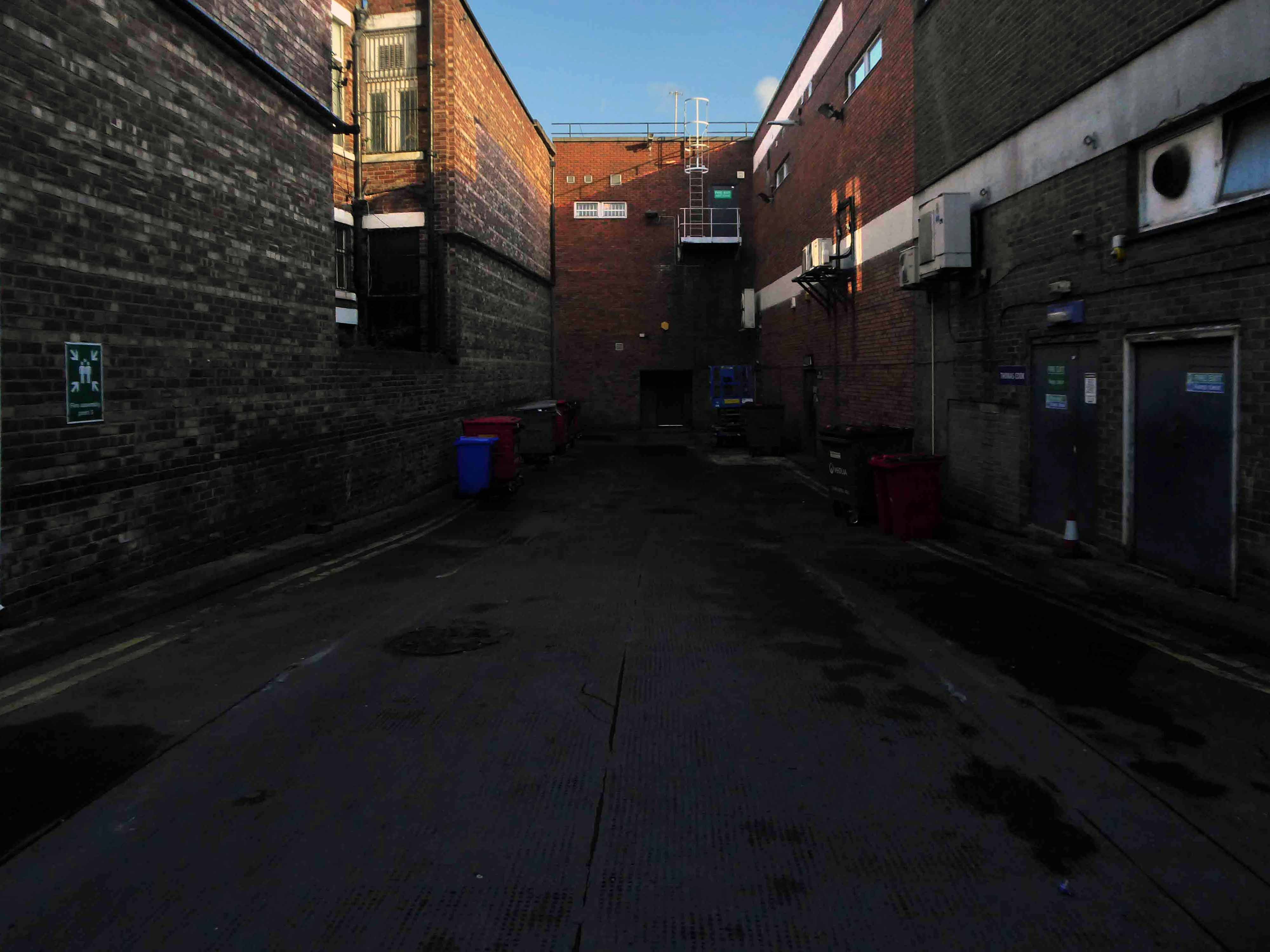
There comes a time in very life when you finally go where you have never been before – even though you have walked by that very same place almost every day.

That’s how I found myself in Serveway Five.

Situated on the north east corner of Merseyway.

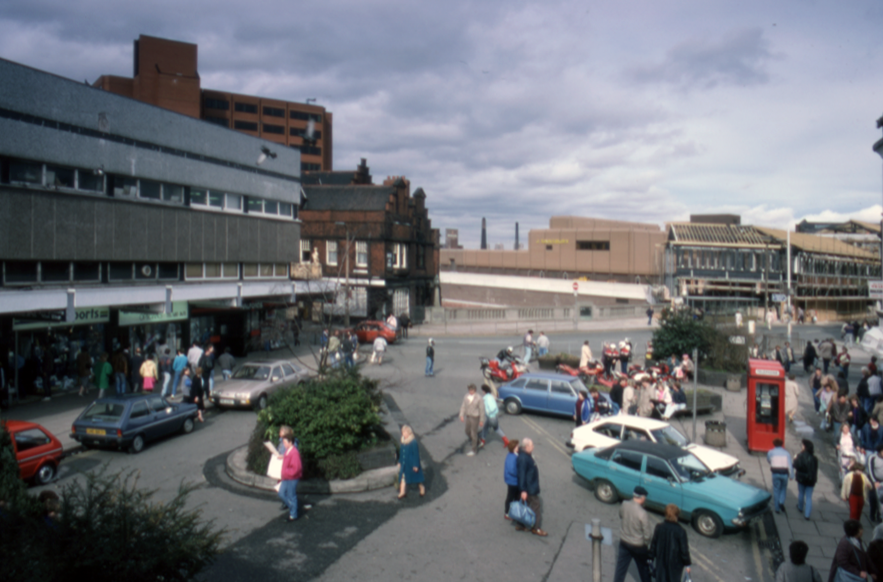
1984 – Stockport Image Archive

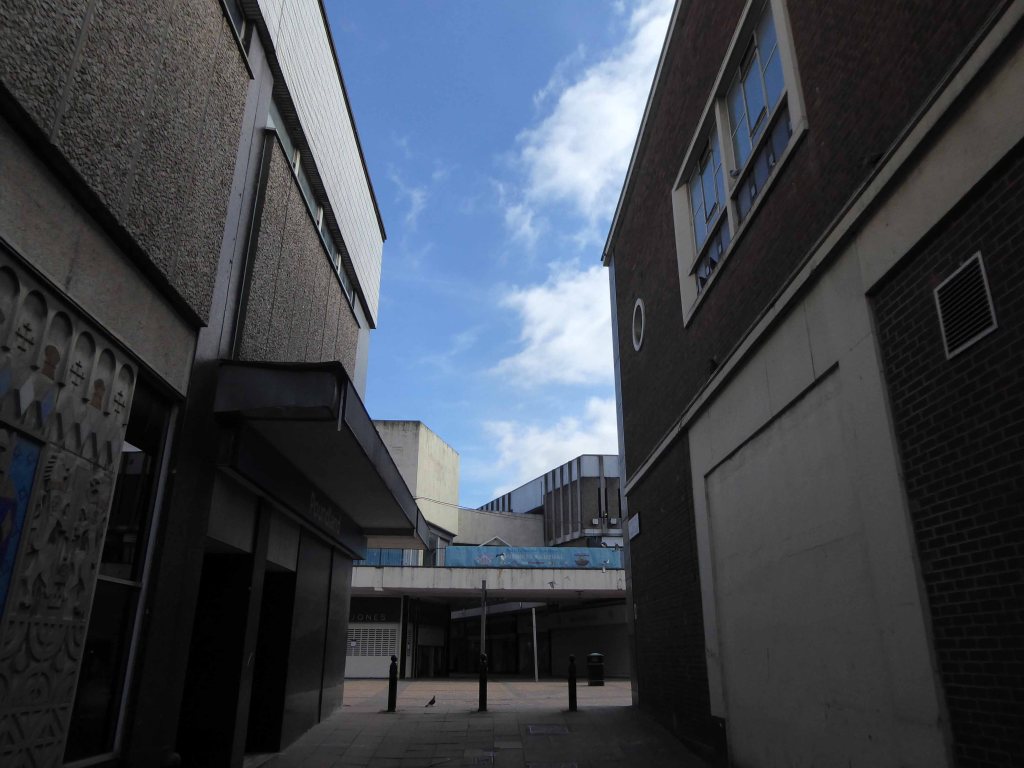
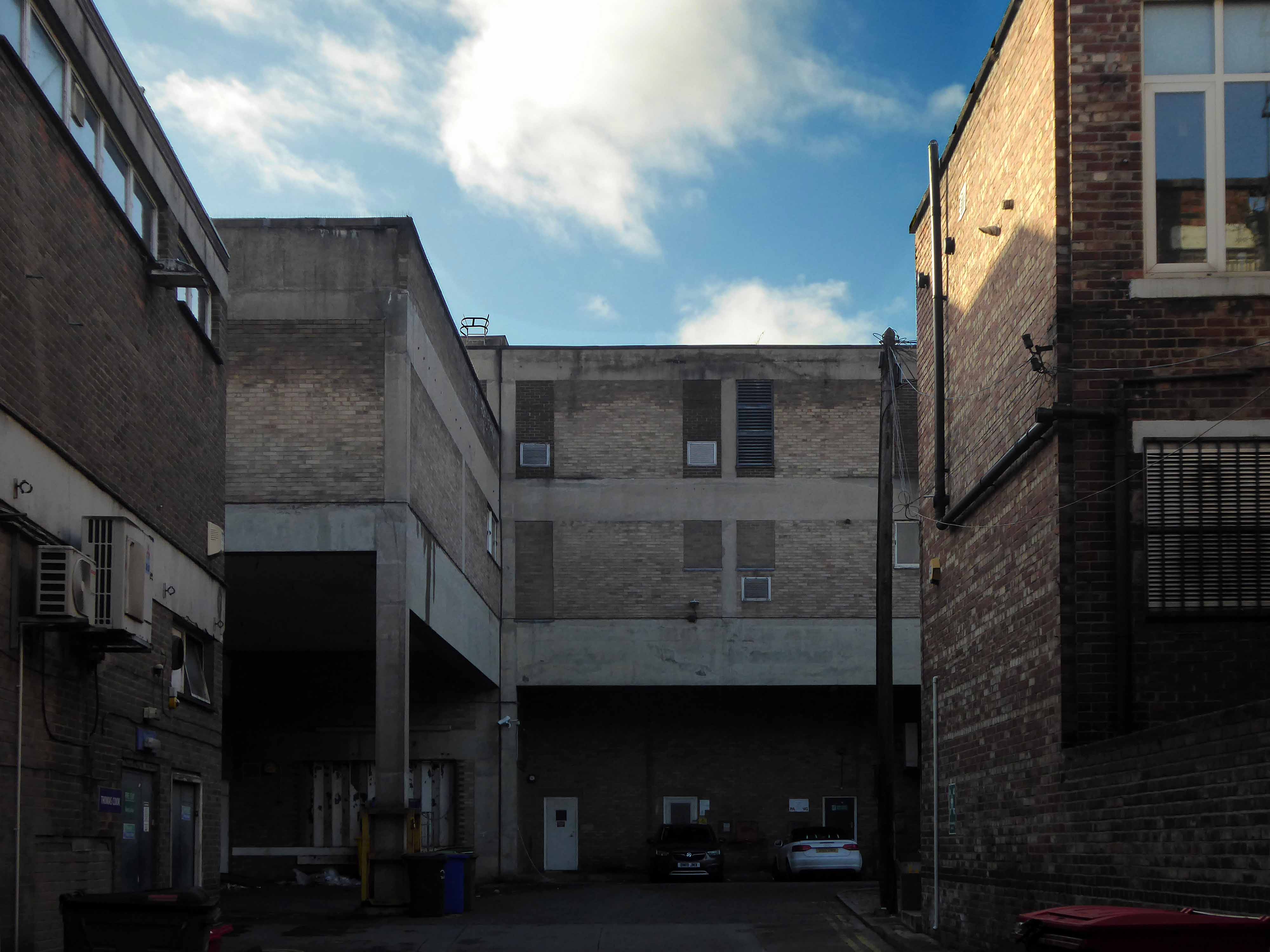
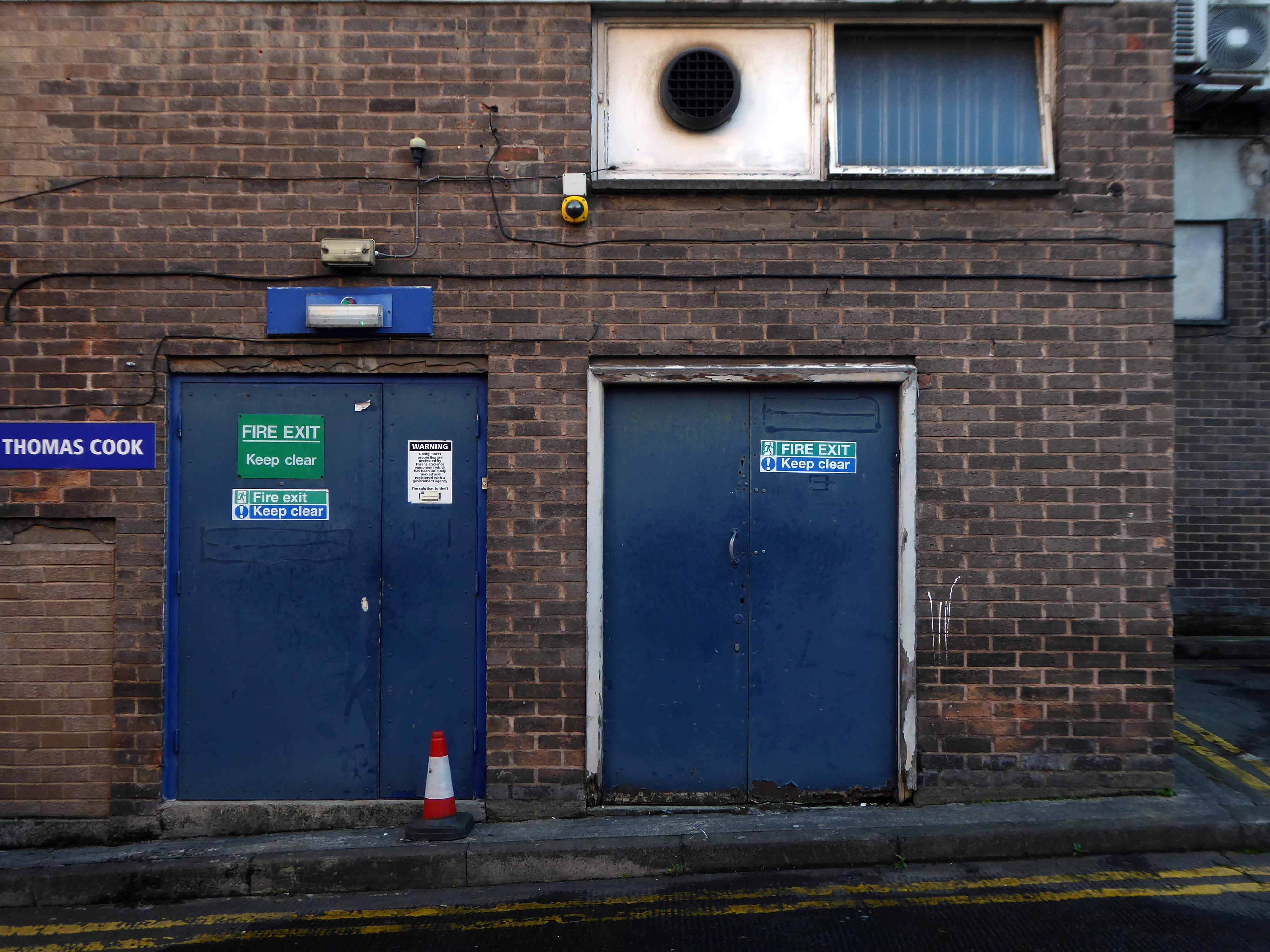
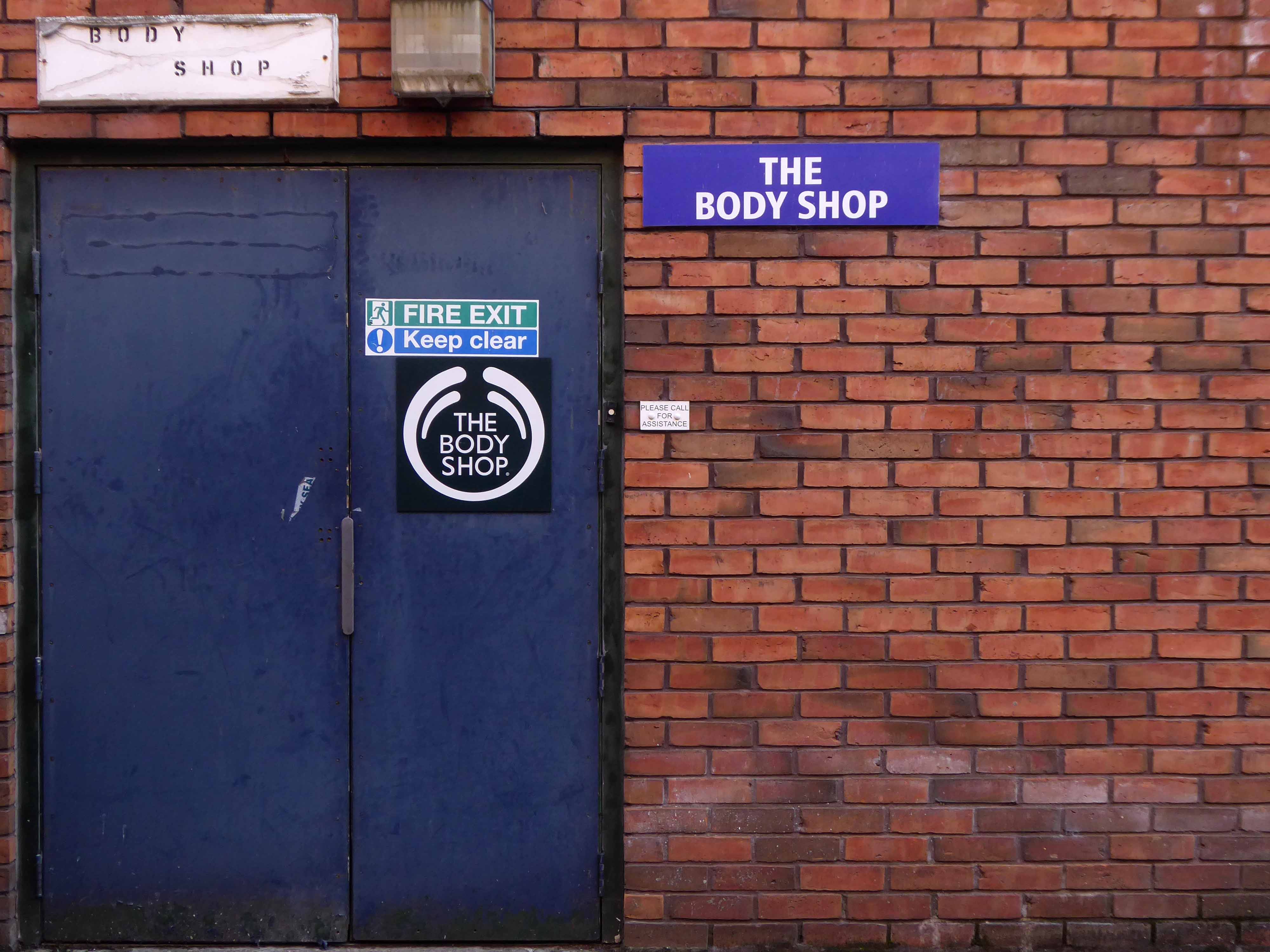
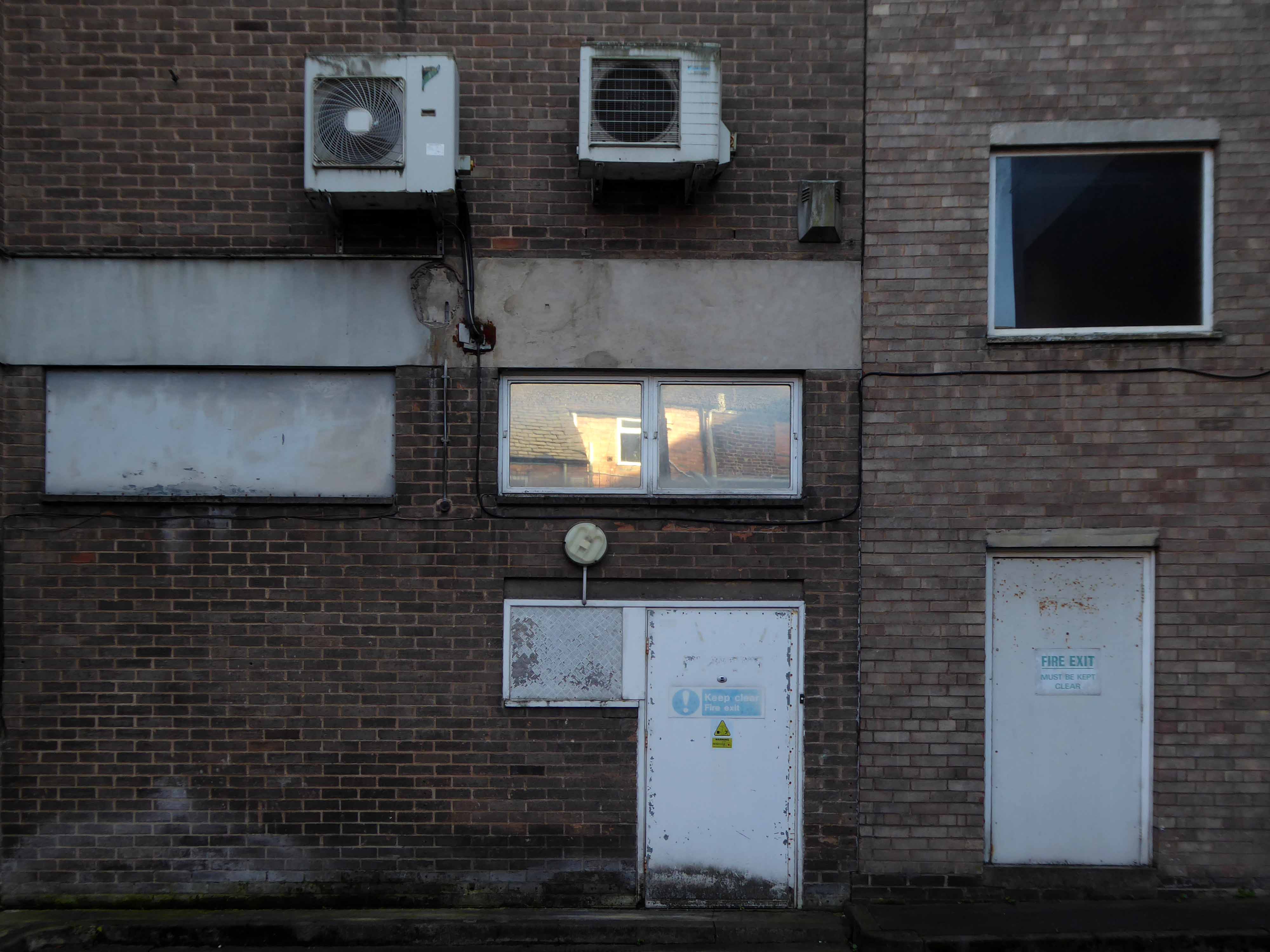
It is bounded by the former Burton’s store, the long gone BHS now home to Poundland, a later extension to the precinct and a Nineteenth century building. Illustrating the mongrel nature of many English towns, the result of world wars, speculative development and town planning.

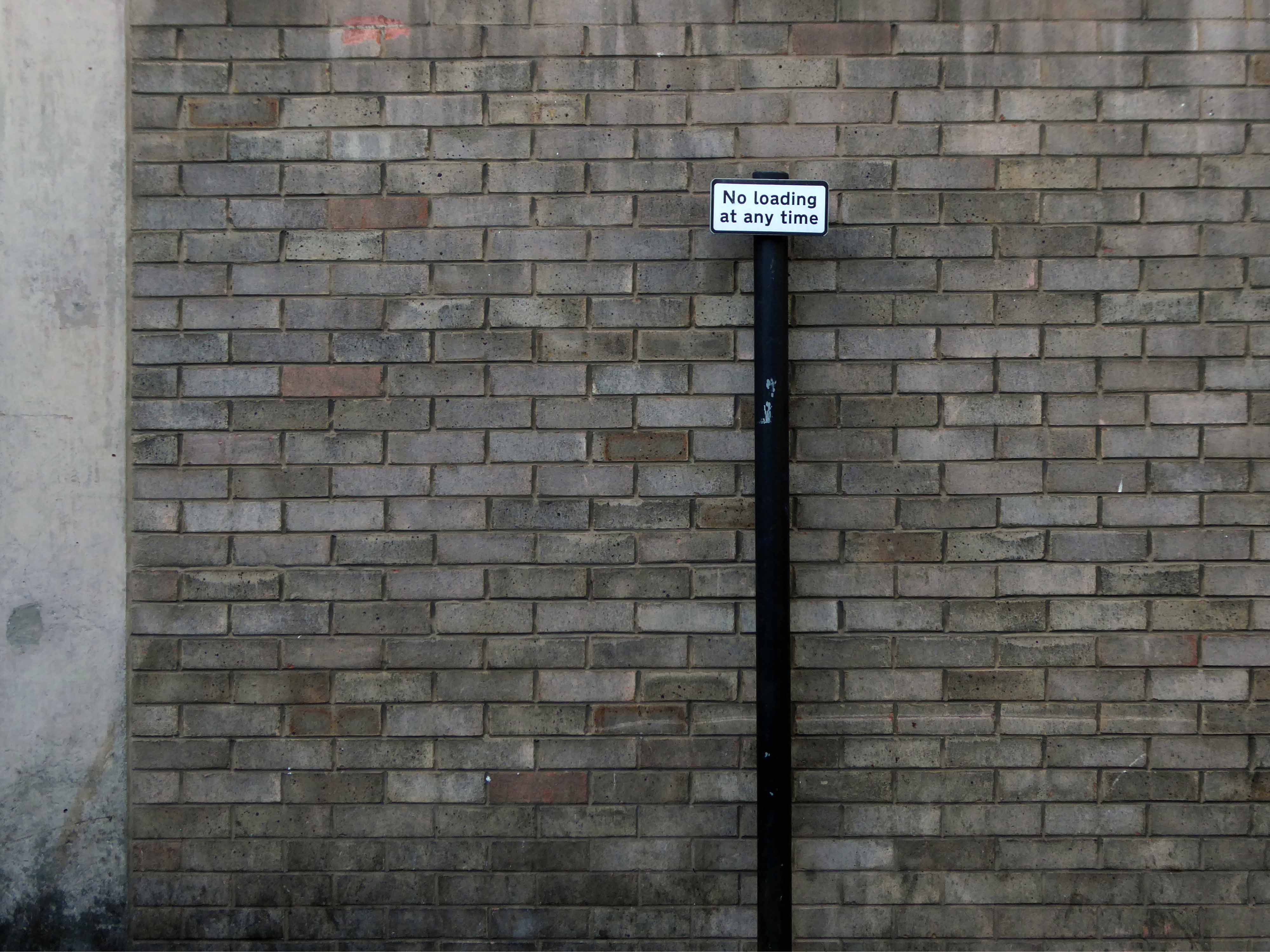
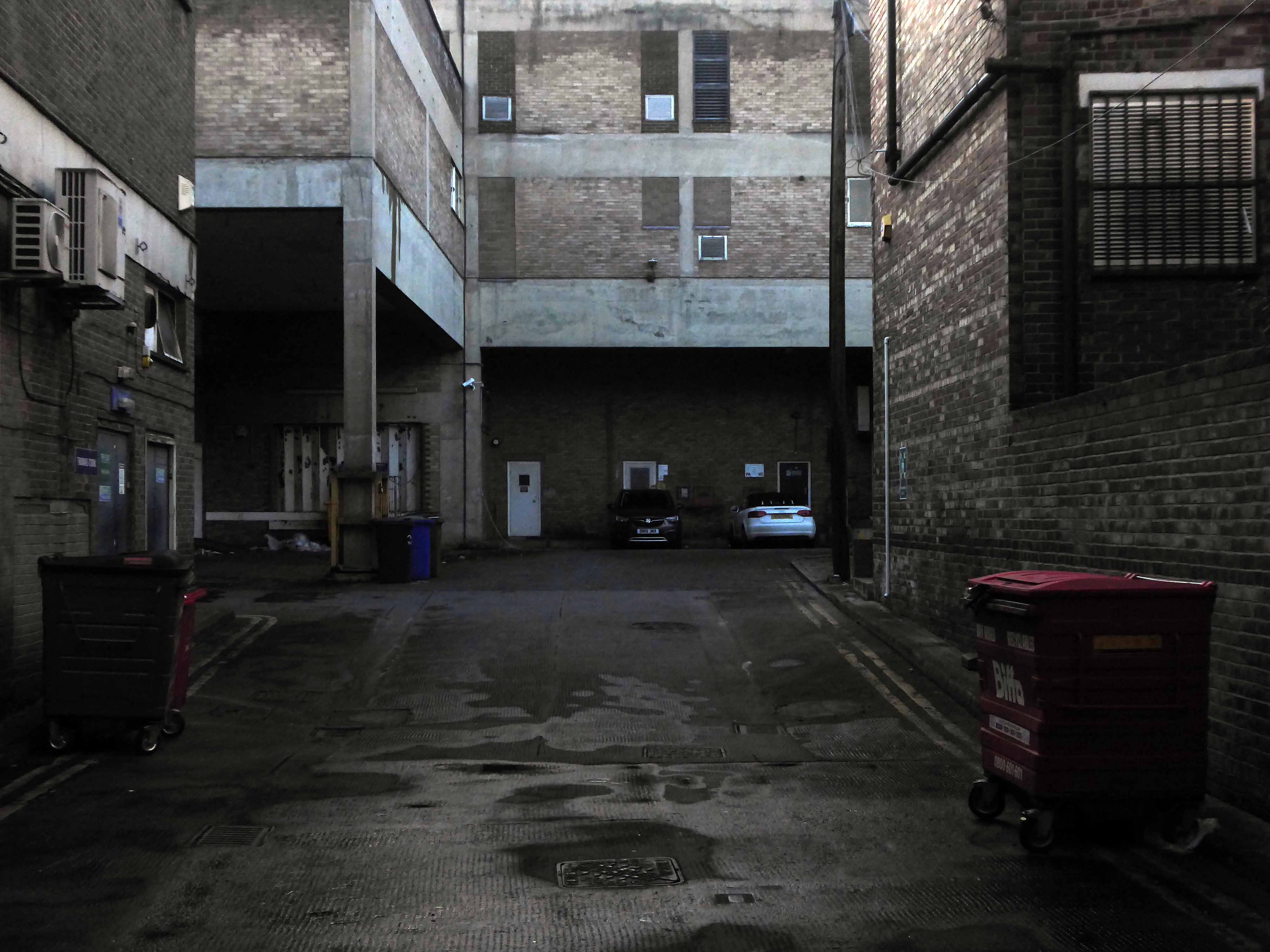
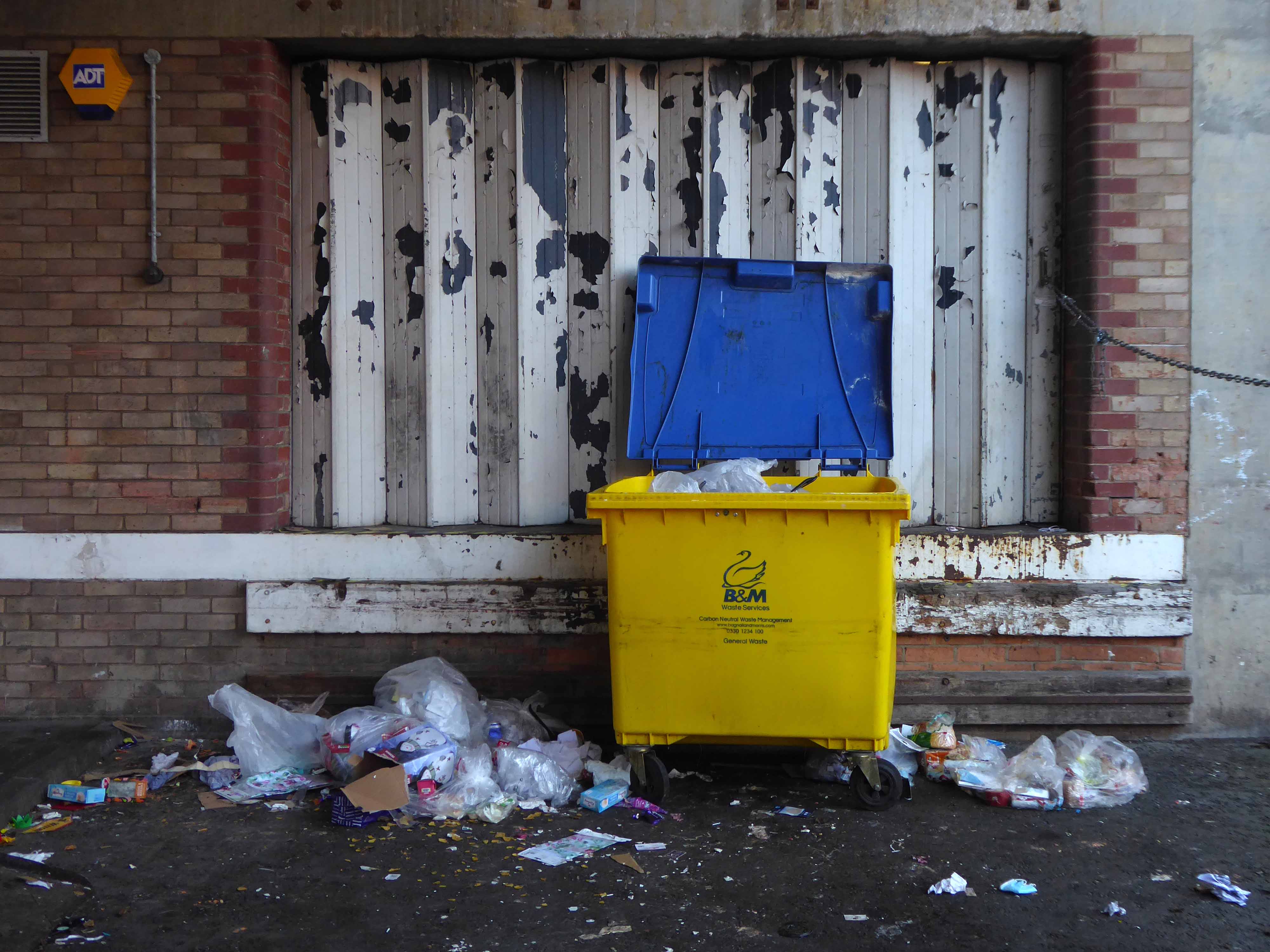
It’s a self contained world of loading, unloading unloved and overused.

Home to the pirate parker, carelessly avoiding the imposition of the municipal surcharges.

Shops and goods come and go part of the merry retail gavotte.

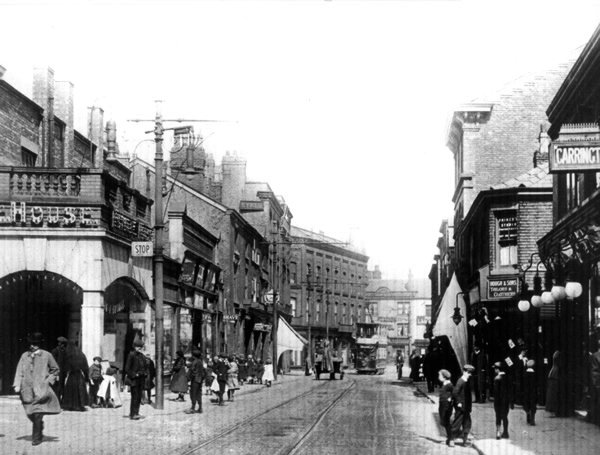
The trams once clang, clang, clanged along and the Picture House opened 2nd June 1913, later The Palladium, finally closing in 1956 – now occupied by a huge Charity Shop – Highway Hope.

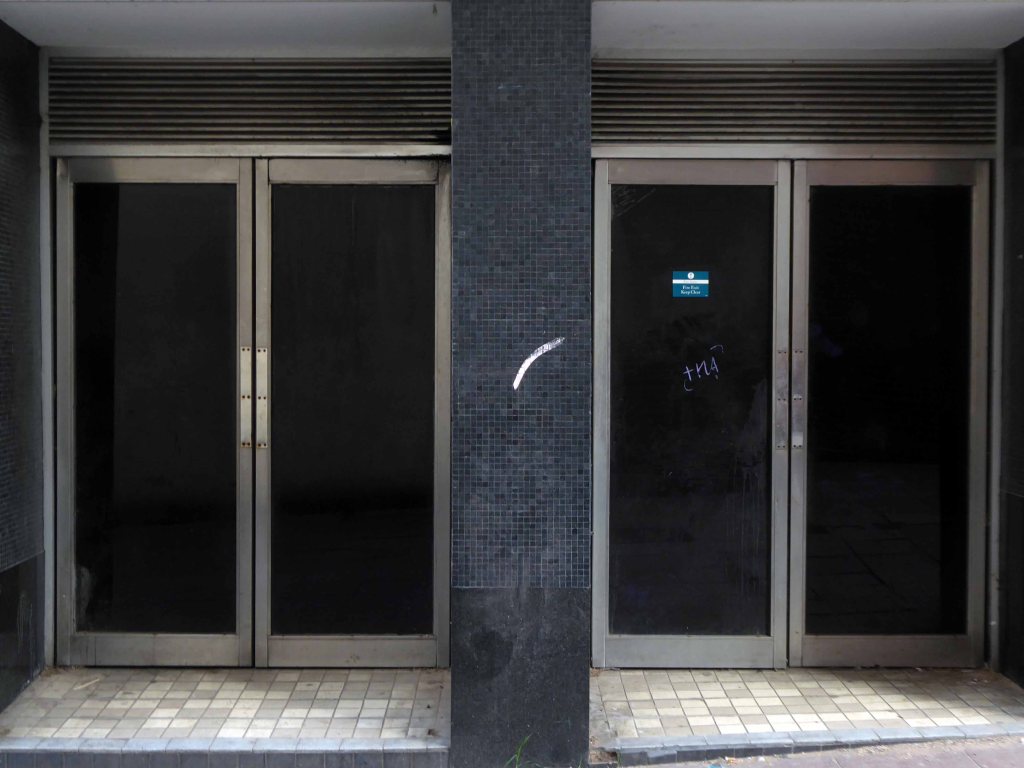
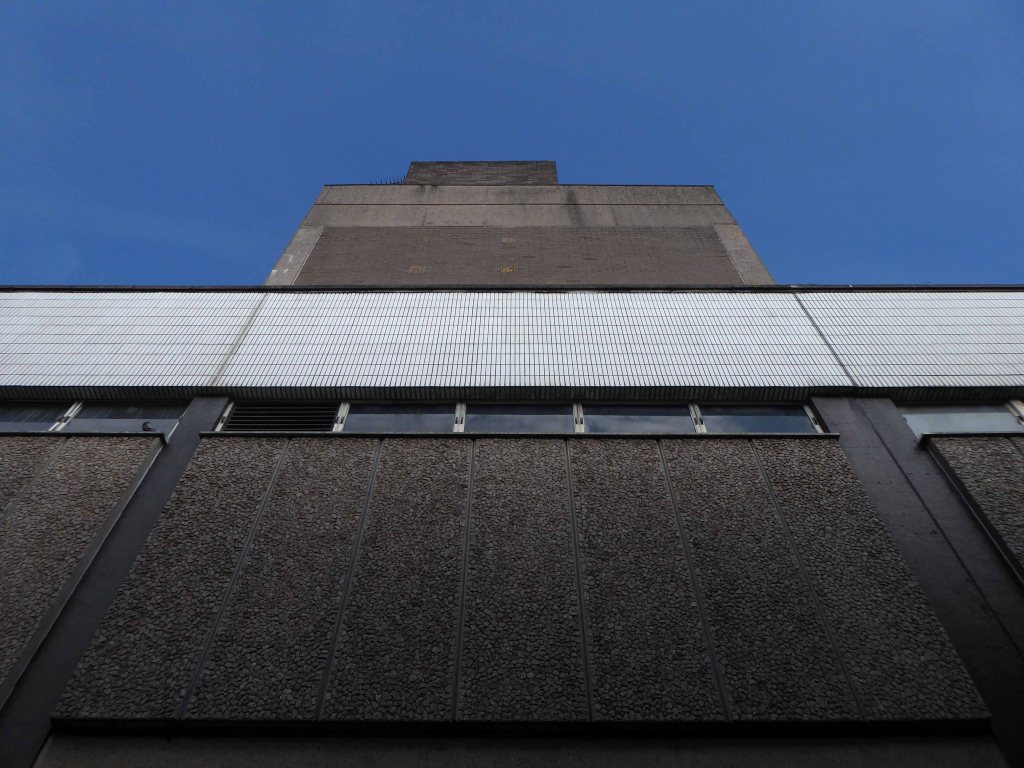
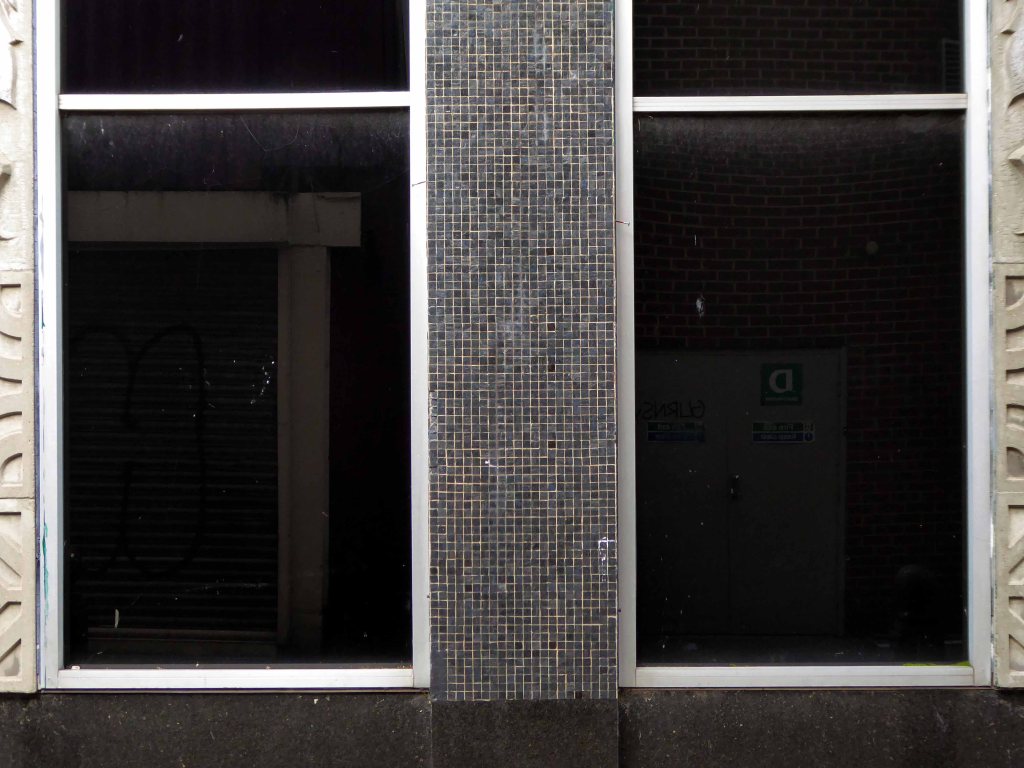
The Merseyway construction is a modern amalgam of mosaic, brick and cast concrete.

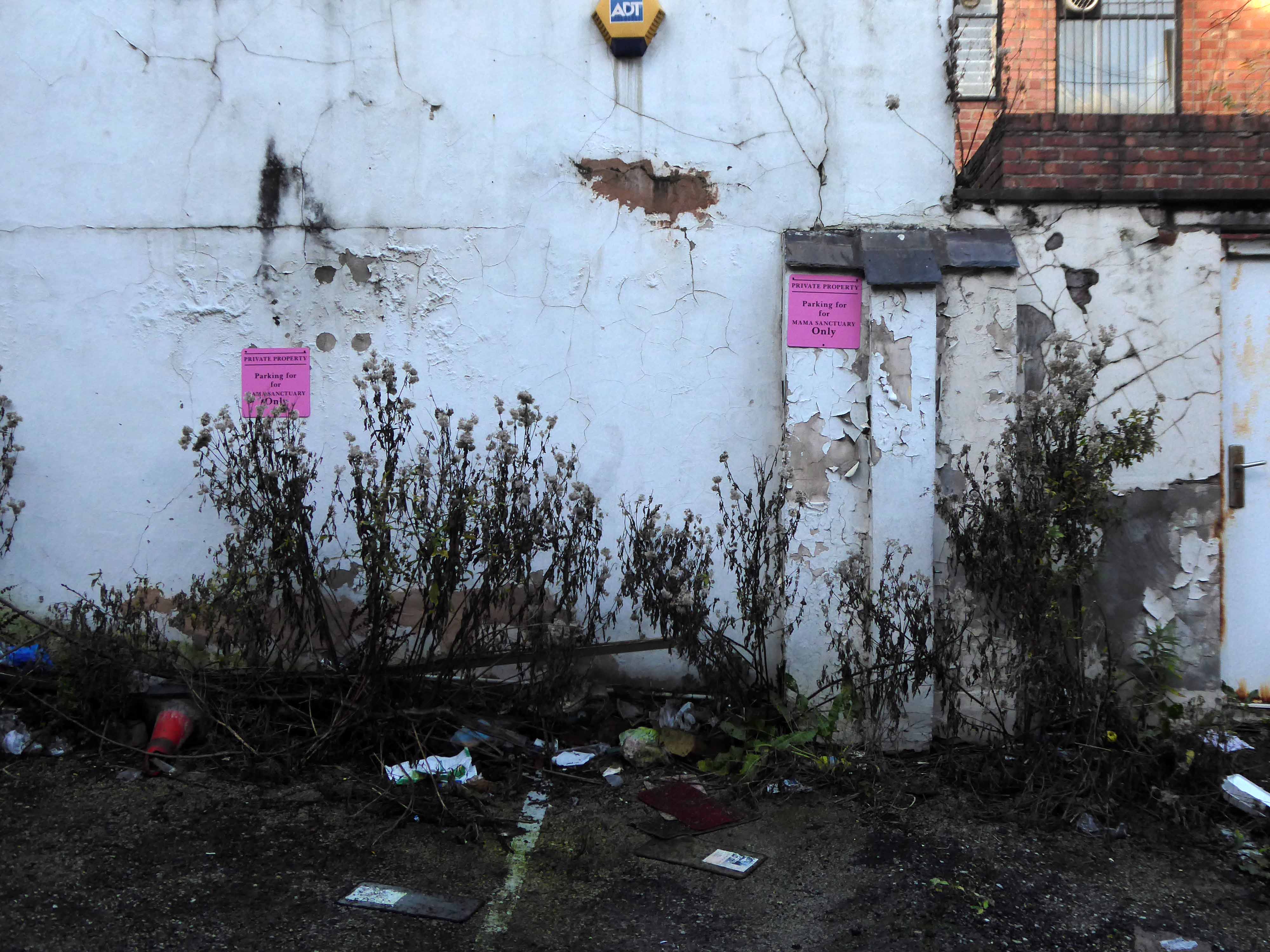
The older brick building now almost rendered and coated in off white exterior emulsion.

There are signs of life and former lives.

This is a nether world that never really was a world at all.

The place where the sun almost doesn’t shine.

And the blue sky seems like an unwelcome intrusion.

So as the retail sector contracts and the virus remains viral – wither Serveway Five?

The Council purchased the development at no cost to taxpayers via the current income stream. The rationale for purchase was to create a sustainable future for the centre via a series of targeted redevelopments. Key aspirations for the centre will be to fully integrate it into the town centre. We also want it to complement our exciting ownerships such as Debenhams, Redrock and Market Place and Underbanks.

The investment will seek to change perceptions of not only the retail offer but also Stockport as a whole. It will ultimately create a town centre that will benefit the local business community and Stockport residents.

Merseyway – Alan Boyson Screen Wall

Deep in the heart of Stockport at the centre of our very own shopping centre – Merseyway.

A pierced concrete relief screen wall surrounds the former Co-op, currently Primark, car park.

The work of Alan Boyson – today the 16th of March 2020 would have been his ninetieth birthday.

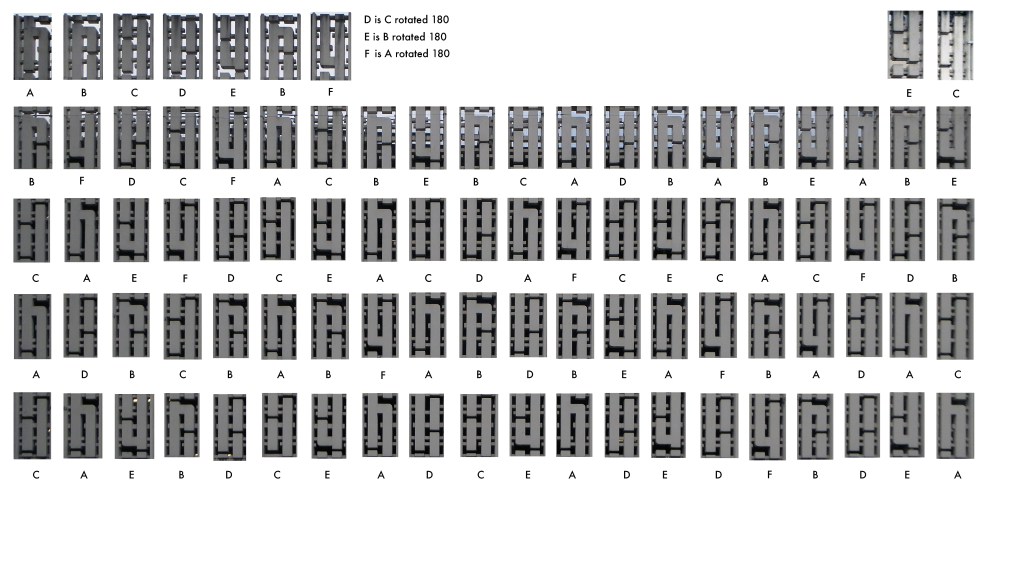
I’ve even gone so far as to analyse its structure:

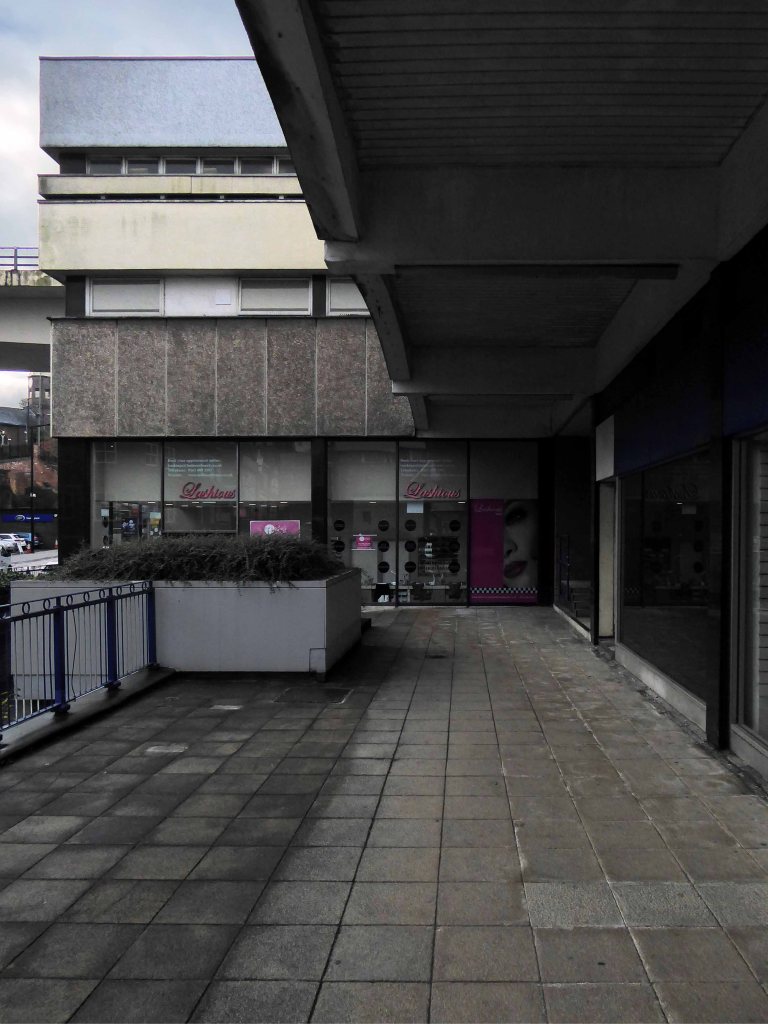
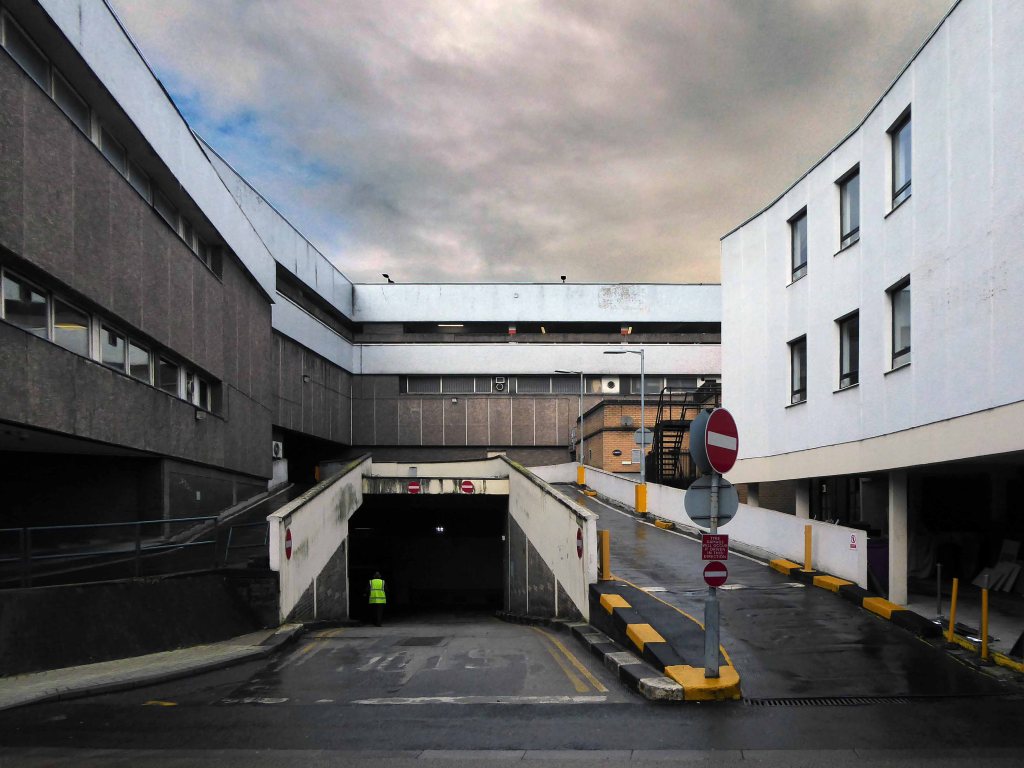
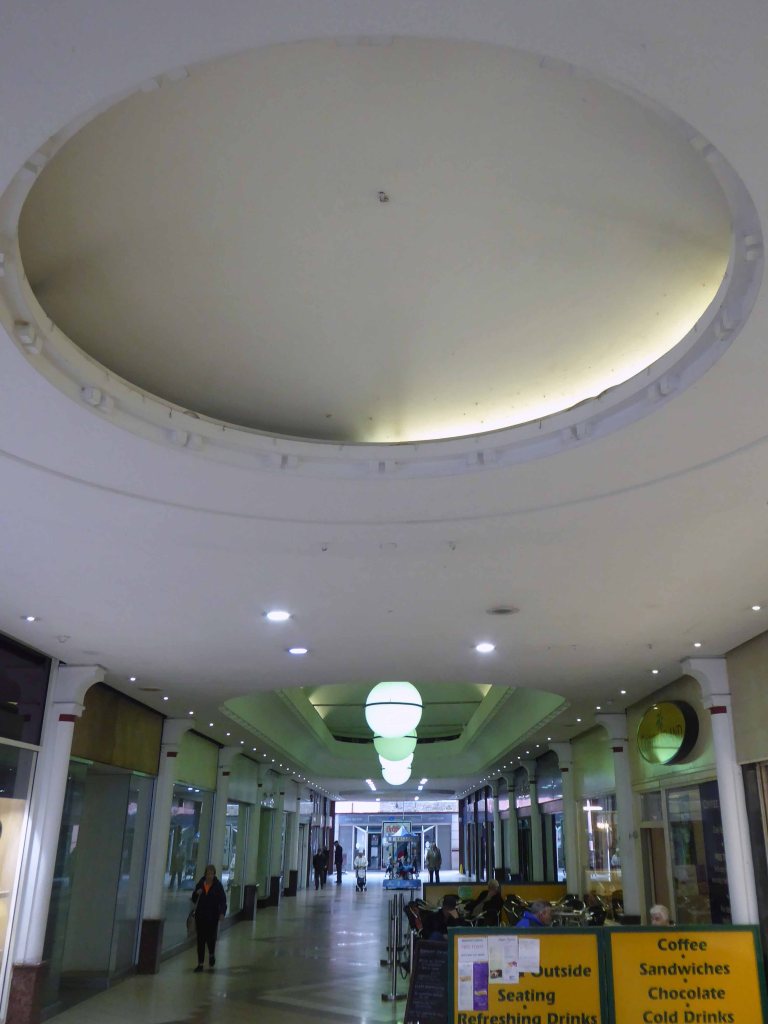
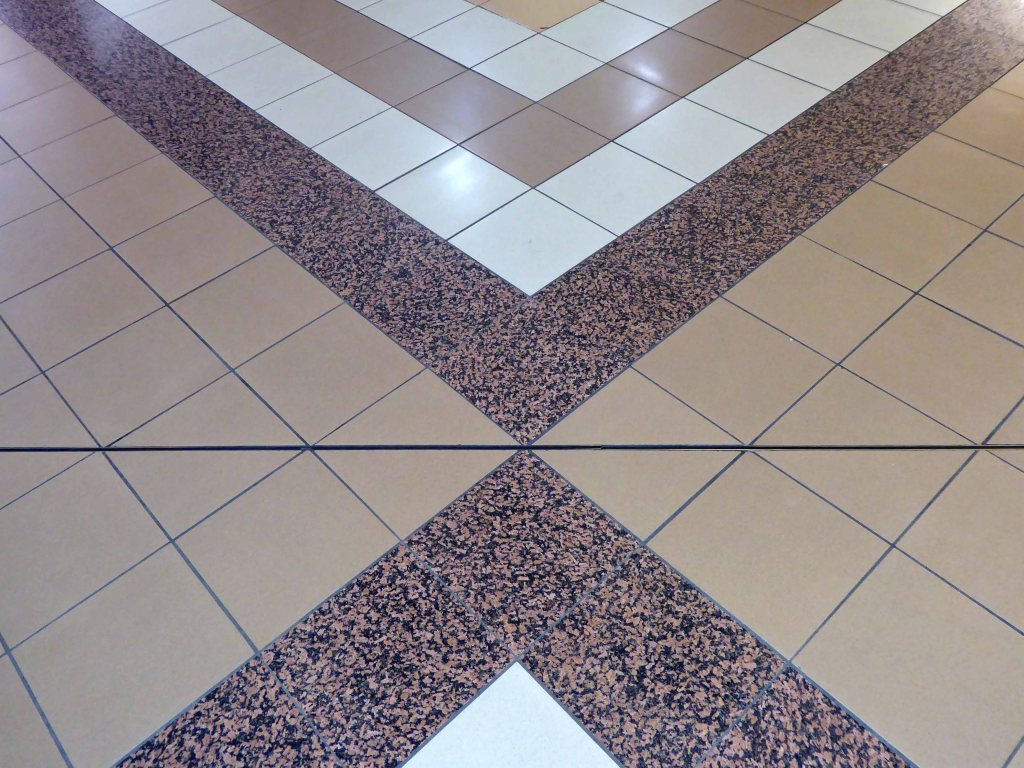
So I went for a walk this morning, as I have on several previous occasions, to take a look around the site – inside and out.

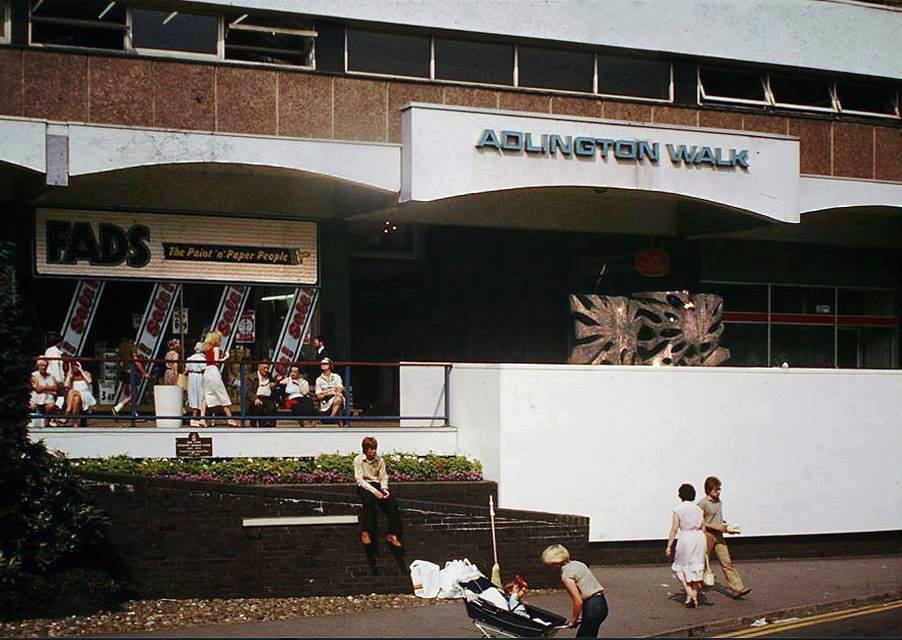
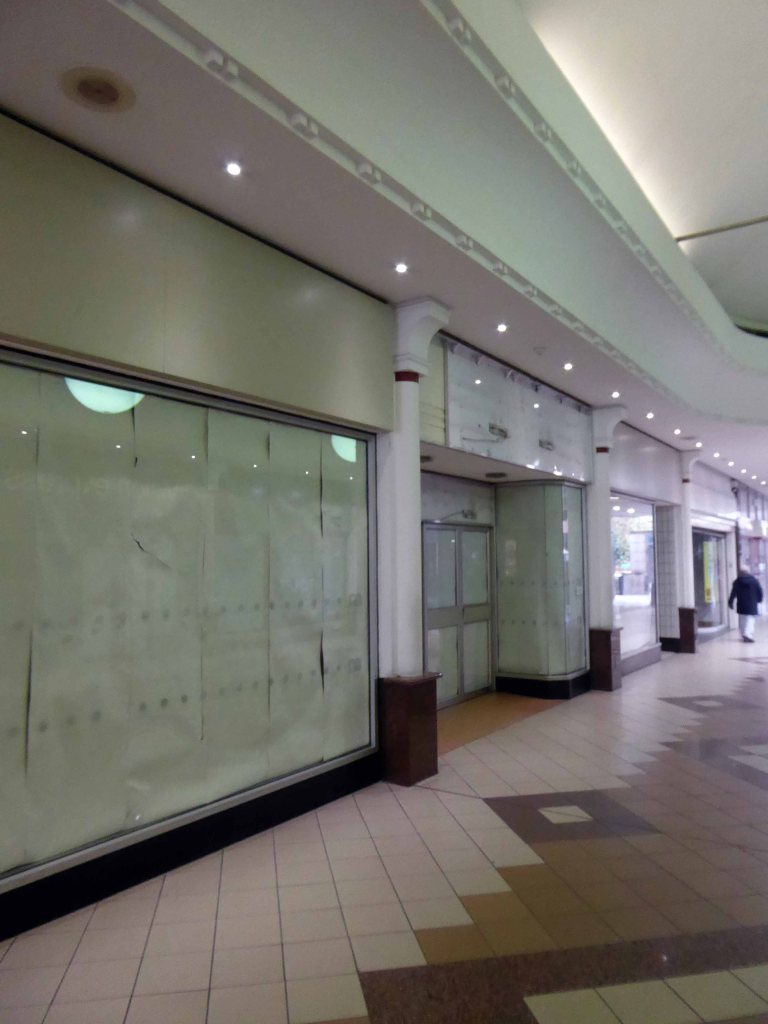
Merseyway – Adlington Walk

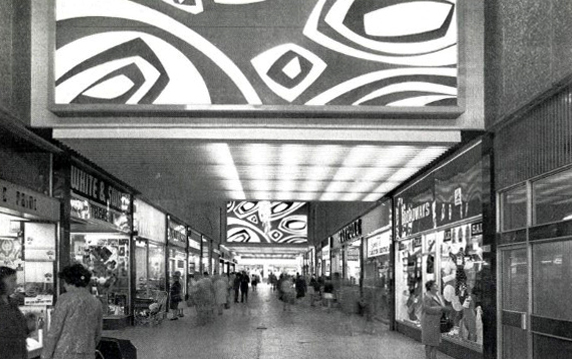
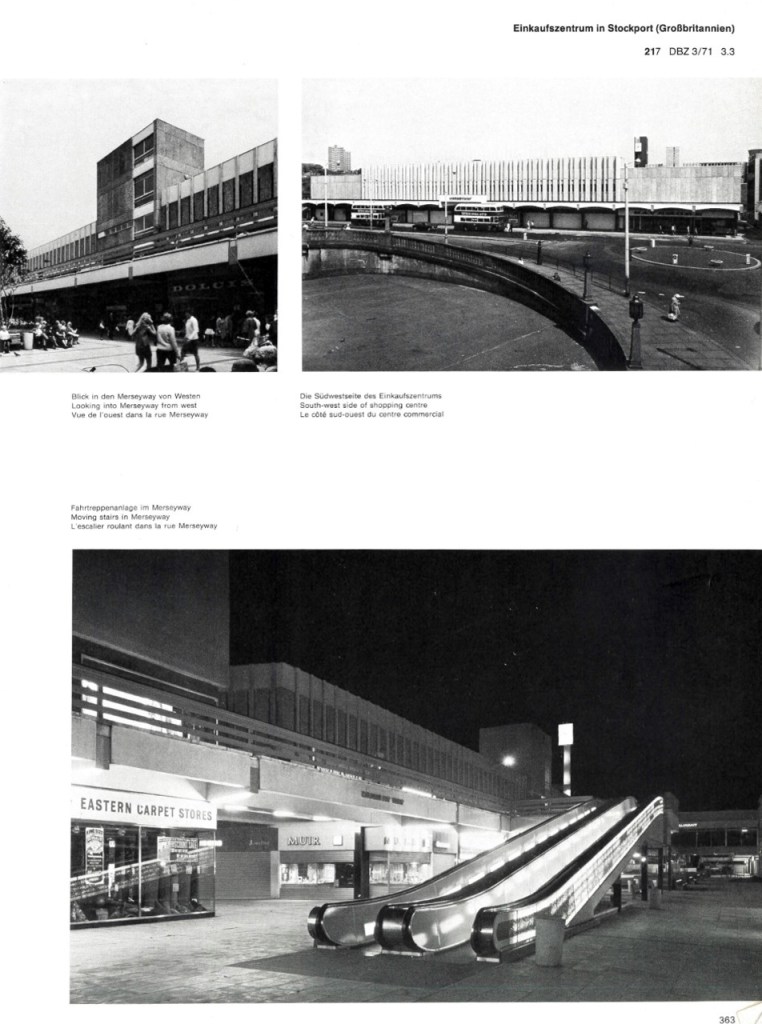
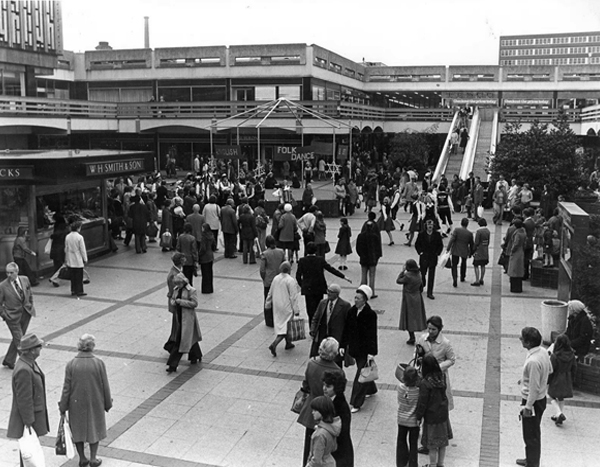
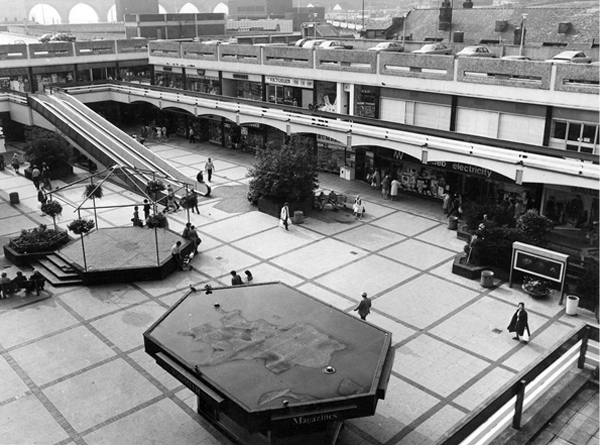
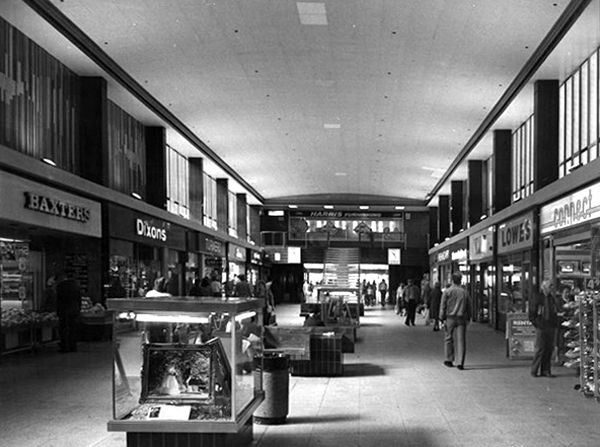
Once widely admired, Ian Nairn esteemed architectural writer, thought it an exemplary exposition of modern integrated shopping and parking, sitting perfectly in its particular topography – way back in 1972.

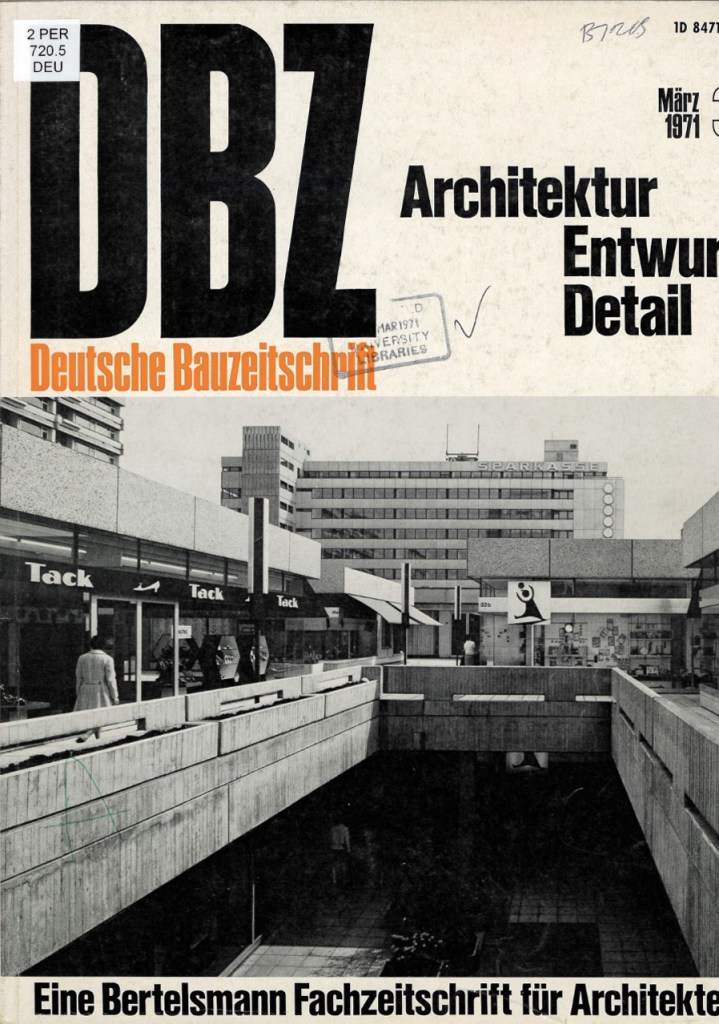
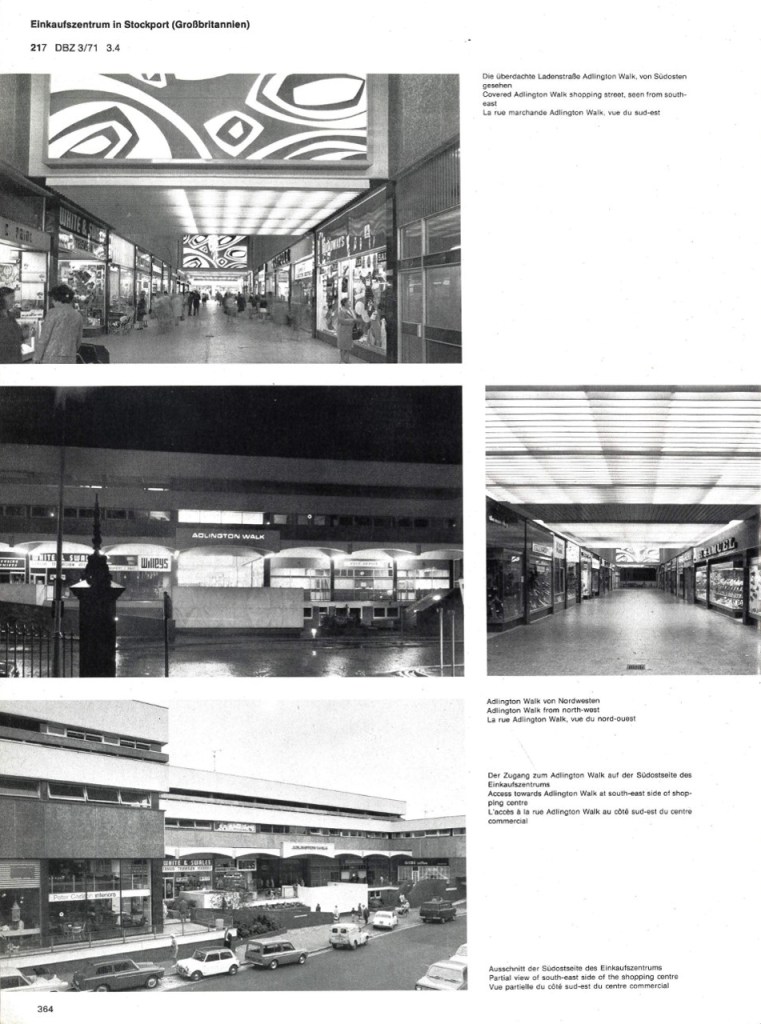
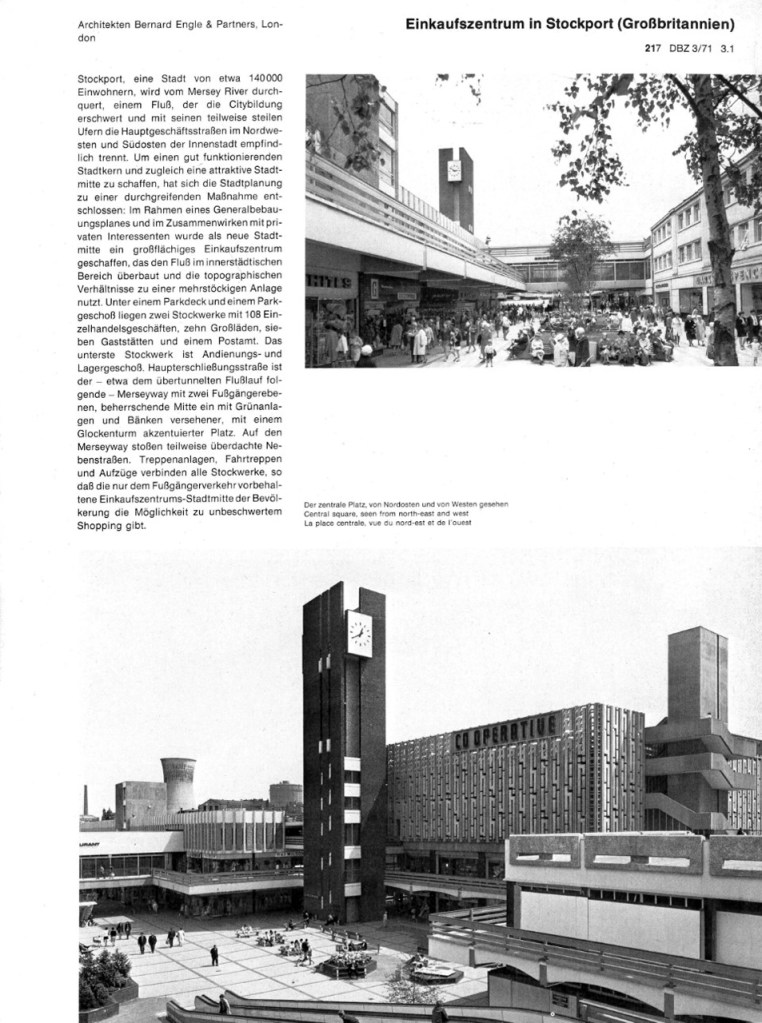
This German magazine dedicated several pages to coverage of Merseyway back in 1971.

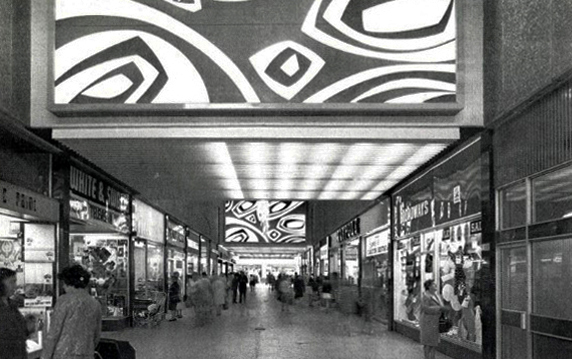
Note the long lost decorative panels of Adlington Walk.

Many thanks to Sean Madner for these archive images.

Mainstream Modern has recorded its conception and inception, as part of a wider appreciation of Greater Manchester’s architecture.

The architects were Bernard Engle and Partners in conjunction with officers of Stockport Corporation and the centre opened in 1965. The separation of pedestrians and cars, the service areas, the multi level street, the city block that negotiates difficult topography to its advantage, are all planning moves that are of the new, ordered and systemised, second wave modernism in the UK. The aggregate of the highways engineering, the urban planning and the shifting demands of retailers frequently arrived at a form and order such as this. In this way Merseyway is unremarkable, it’s like many other centres in many other towns – consider the rooftop landscape of Blackburn. It is, however, typical and has been typically added to and adjusted during its life and presents perhaps the face of the last retail metamorphosis before the out-of-town really made the grade.

Each successive remaking and remodelling has seriously compromised the integrity of the development. We are left with dog’s dinner of poorly realised Post Modern and Hi-Tech additions, along with a failure to maintain the best of the original scheme.

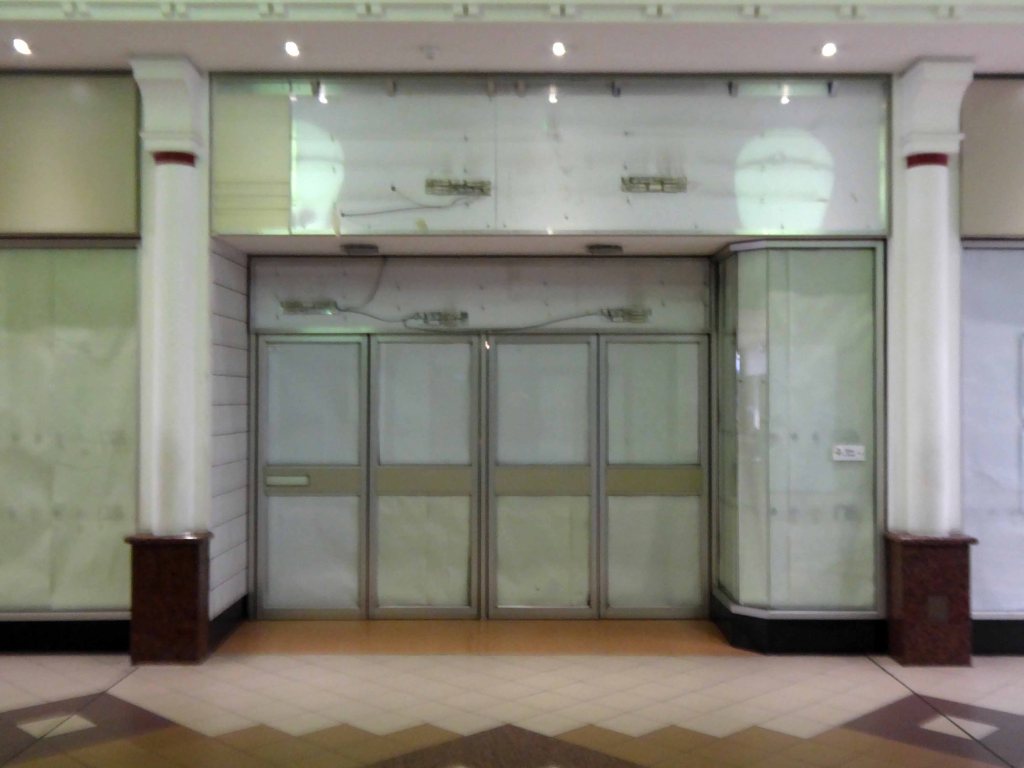
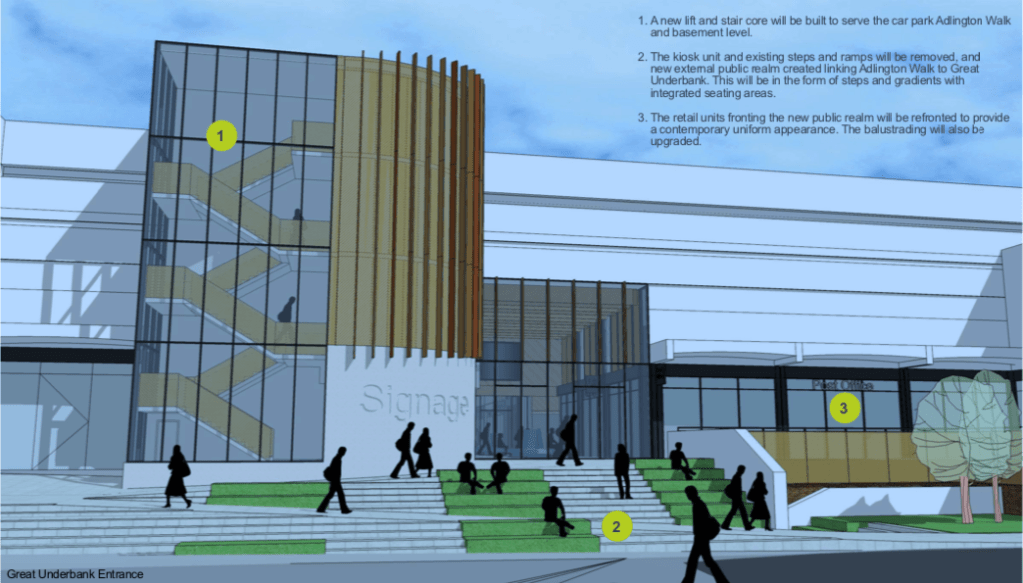
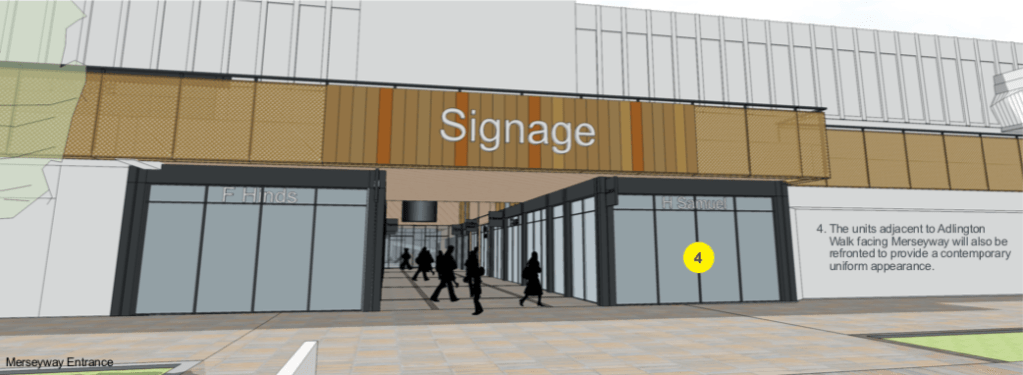
Plans are now afoot to revamp the precinct – starting with Adlington Walk.

Proposed facilities include a soft play space, new seating, buggy stores, high grade toilets, parent and child facilities and a multi faith prayer room.

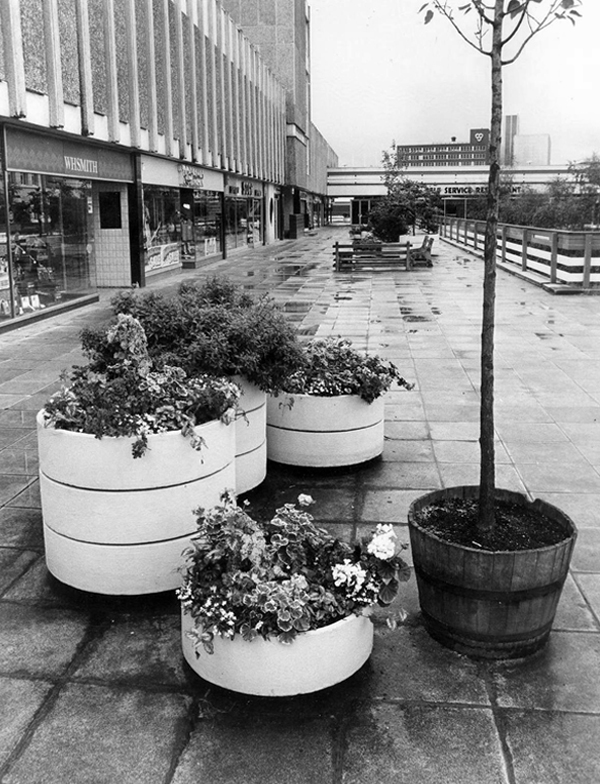
Merseyway – Stockport

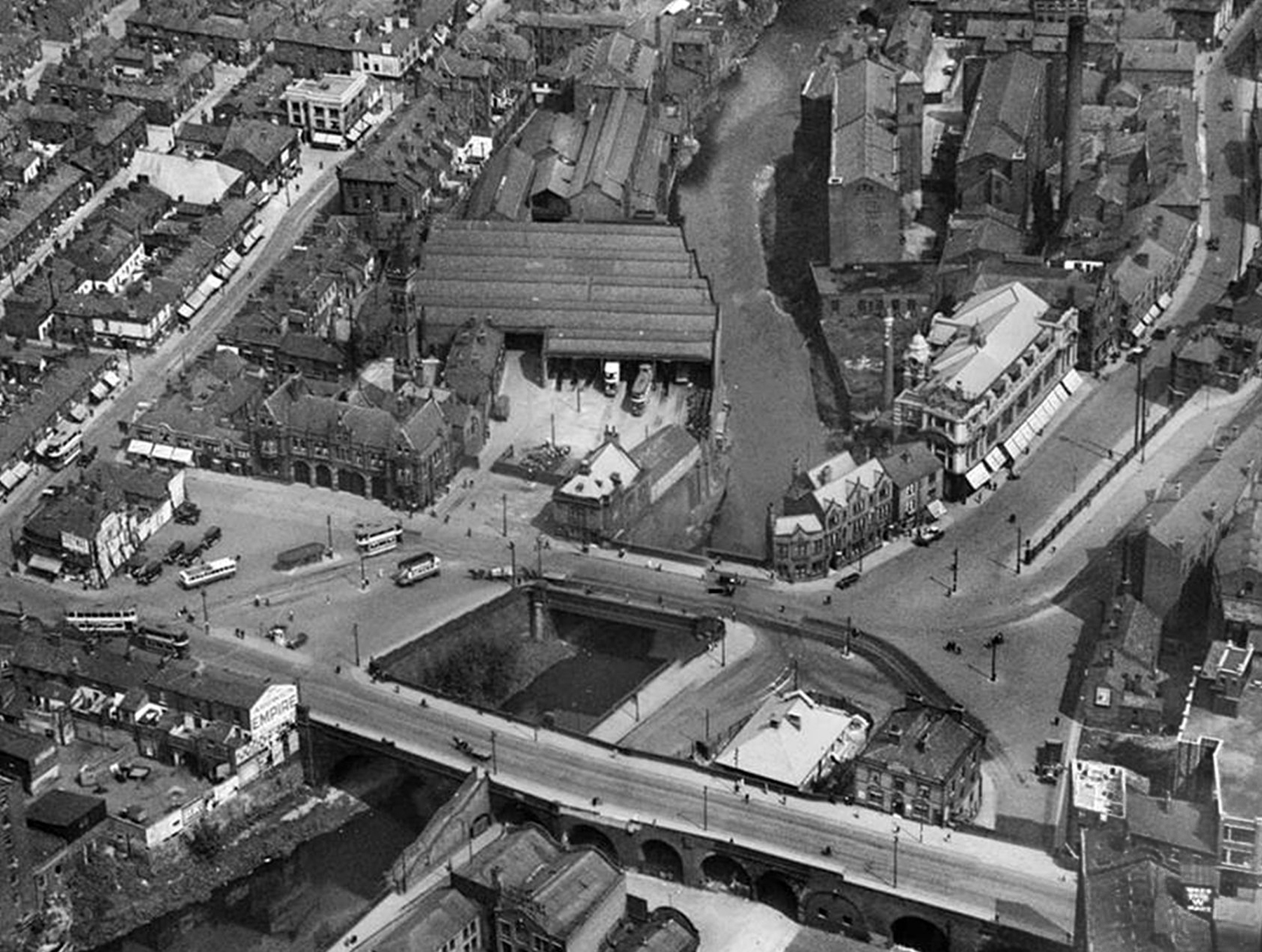
Once there was a river there, formed by the thunder of Irish Sea ice gouging a great glacial valley, bowling along boulders and millstone grit through phyllosilicate clays and sedimentary sandstone.

27983074_10215926263608490_3556820789336334741_o

Then there wasn’t.

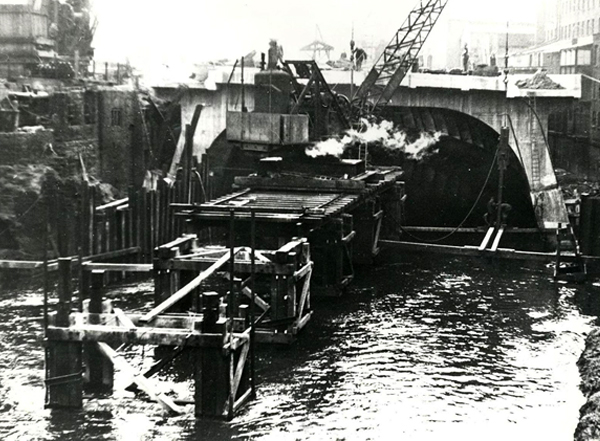
The Mersey, formed in Stockport as the Tame and Goyt conjoined, inconveniently filled with industrial grime and mire, then conveniently covered over in 1936.

16066

Creating the thoroughly modern thoroughfare Merseyway.

43094

The giant concrete culvert and bridge leaving the river cowering cautiously below.

11889

Of time and a river – little stands still and the town is whisked briskly into the late Twentieth Century with plans for a pedestrianised precinct.

15162

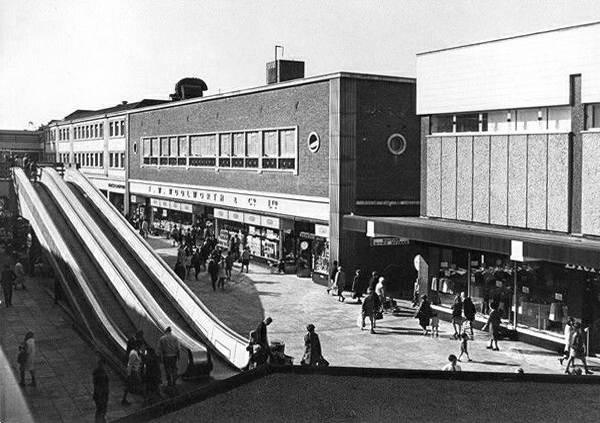
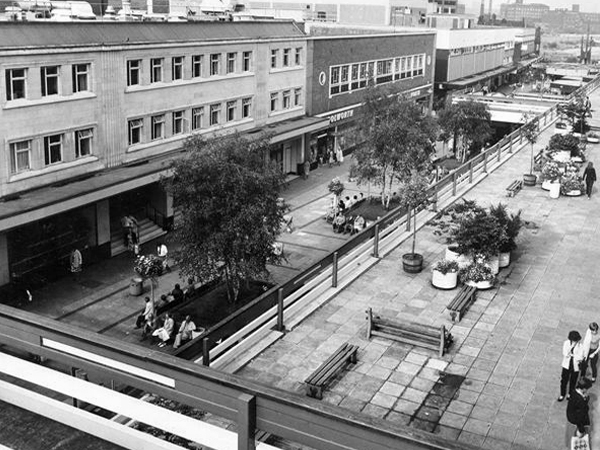
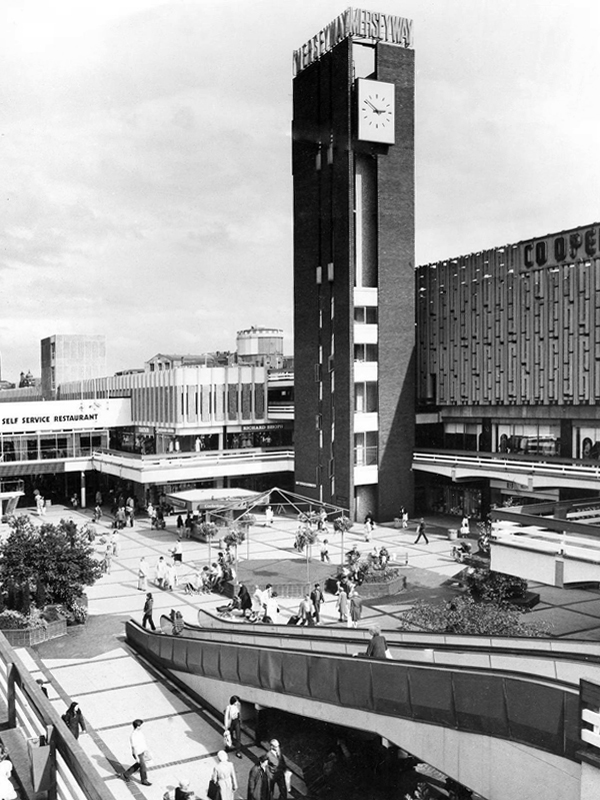
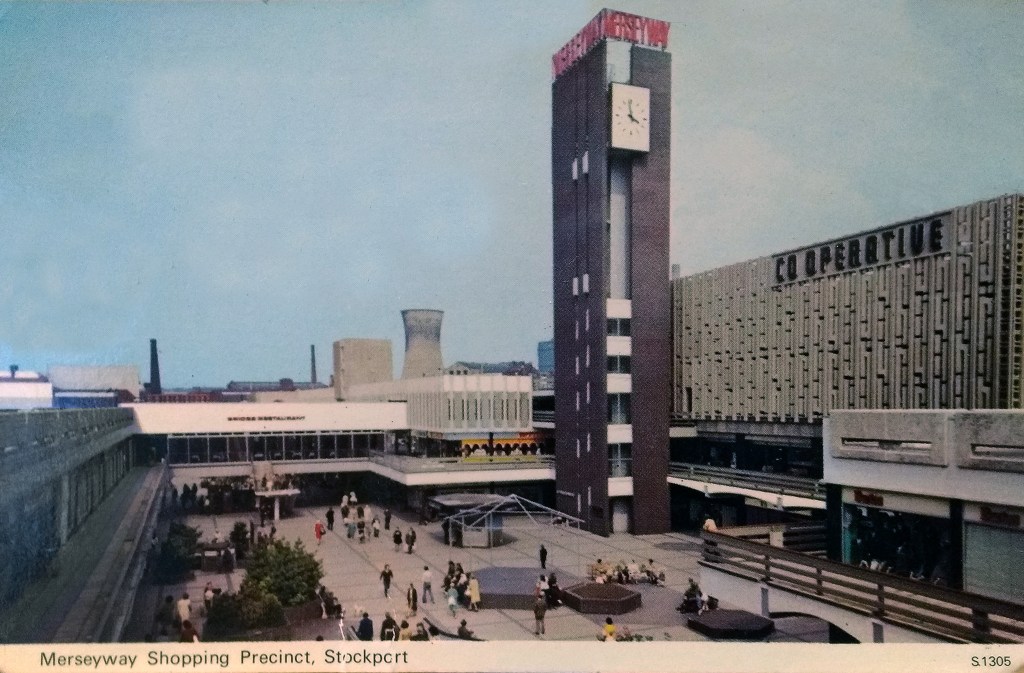
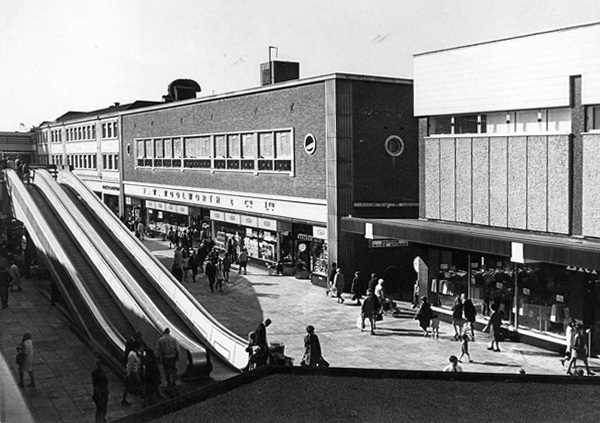
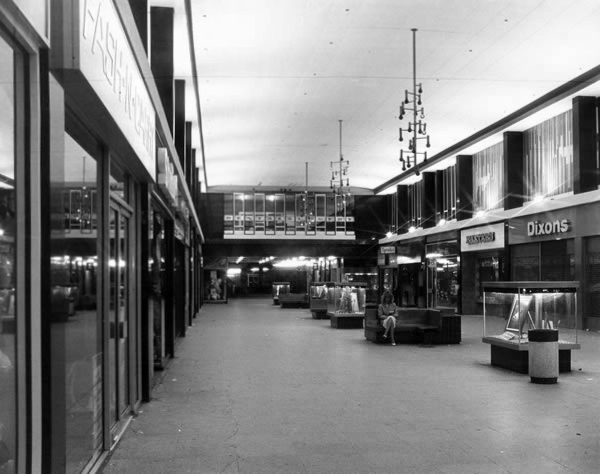
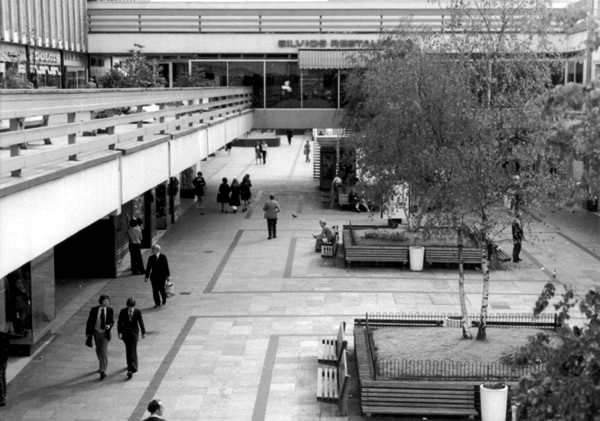
Completed and opened in 1965 the shopping precinct was concrete poetry in motion, incorporating the surrounding topography and extant architecture with grace and aplomb. Combining retail, restaurants and car parking facilities in a manner that critic Ian Nairn considered to be amongst the finest in the land.

4906

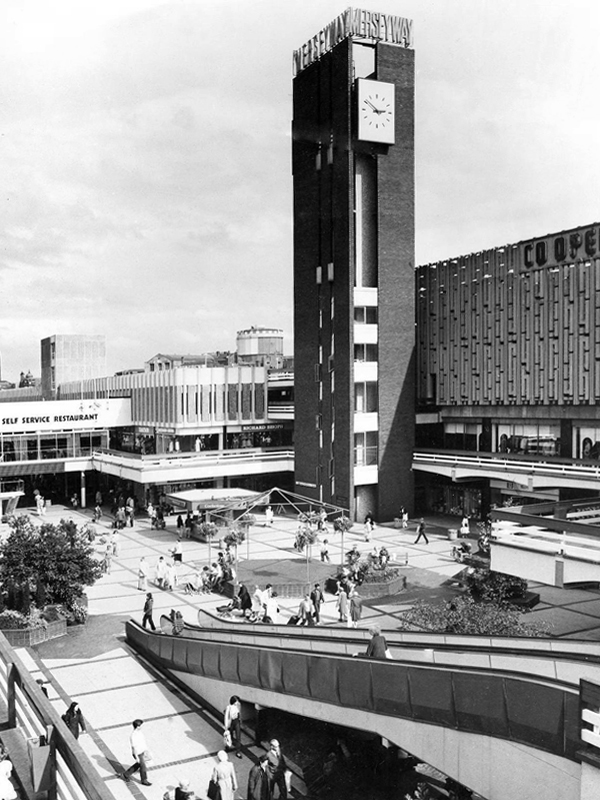
We had travelators, integrated paving, street furniture, and lighting across several levels. A carefully considered whole, combining all that was best in modern design with style, élan and panache – along with Freeman, Hardy and Willis.

16347
34942
44282

A clock tower, an Alan Boyson concrete car park screen and public art.

17379
19366

Would that it was still so, a variety of additions and subtractions have left Merseyway in architectural limbo, concrete legs akimbo across the river below, striding towards the future in a more than somewhat bewildered manner.

Yet we still continue cast our eyes upwards towards a clock that isn’t there, ride a non-existent walkway to the sky, try on an imaginary crop-top in C&A’s Clockhouse.

11408
17376
25379
17594

Photographs Stockport Image Archive