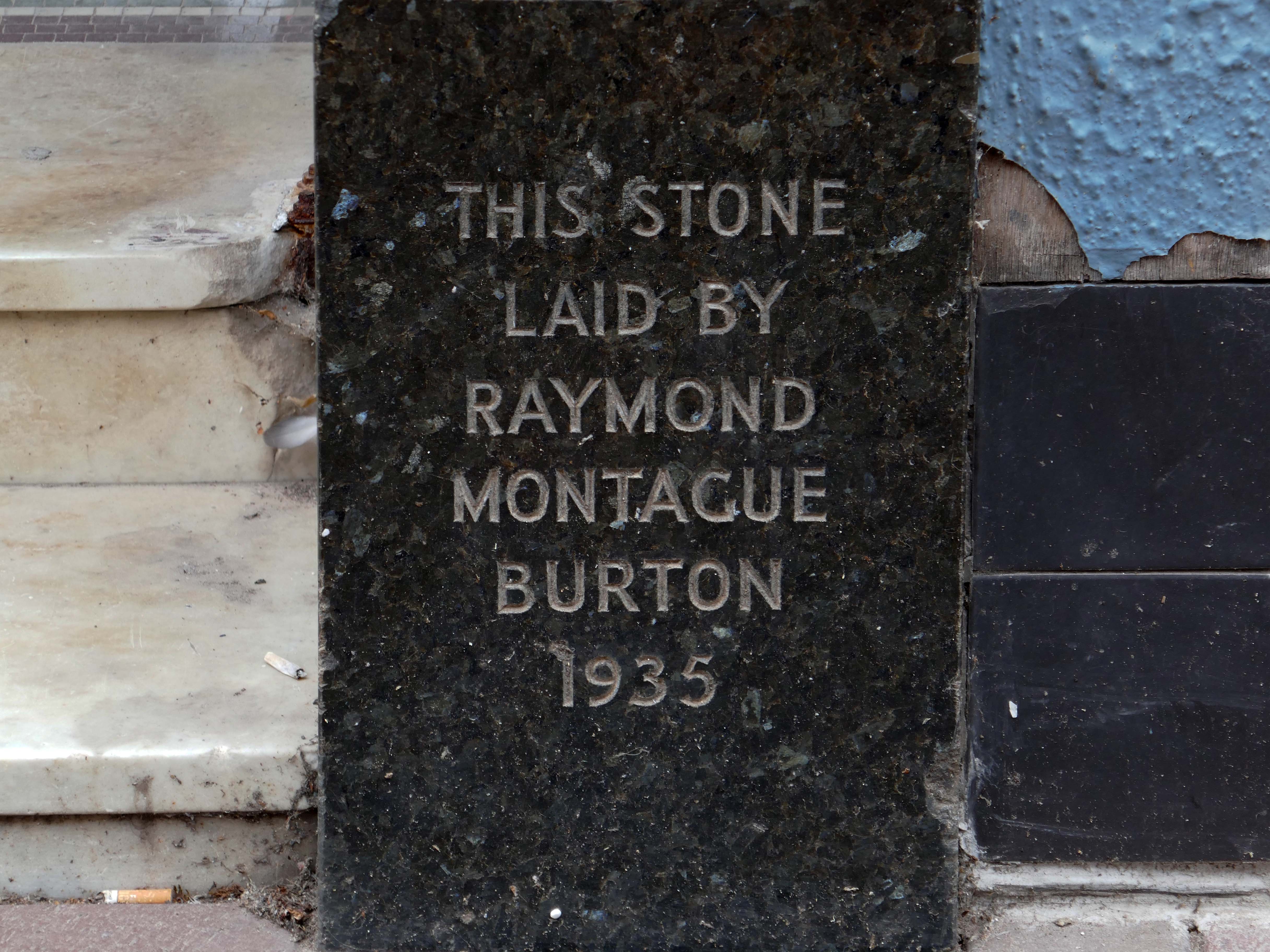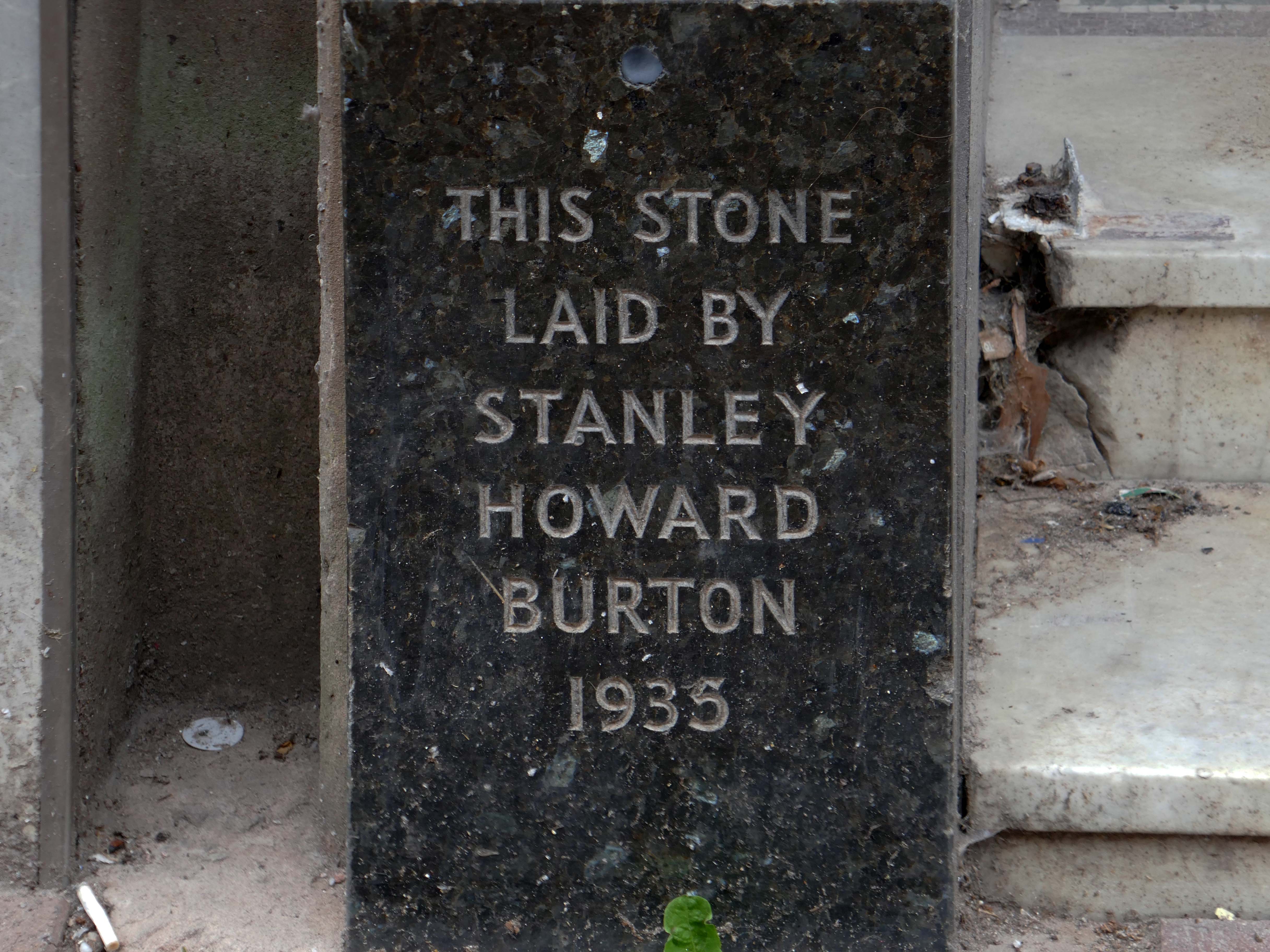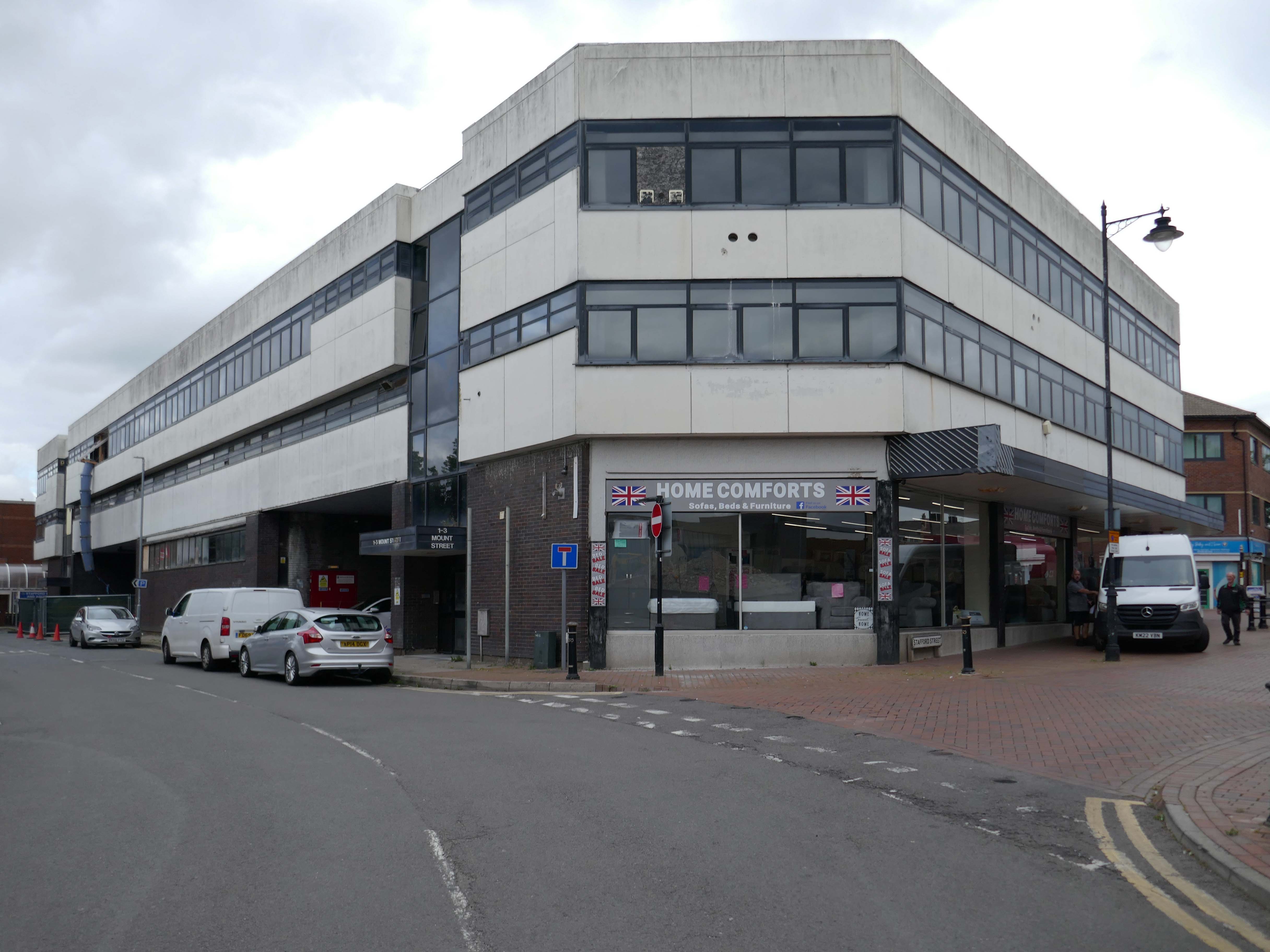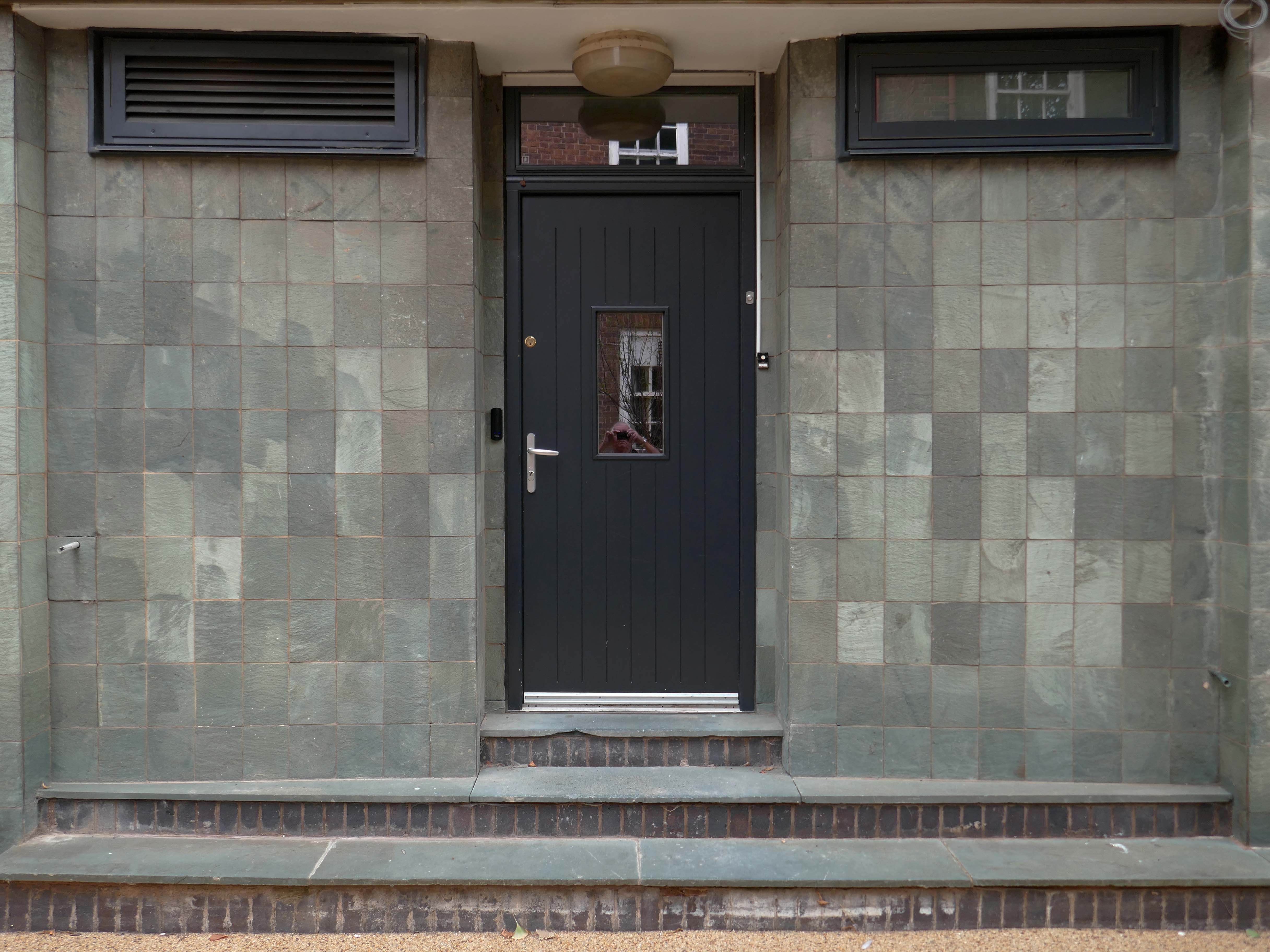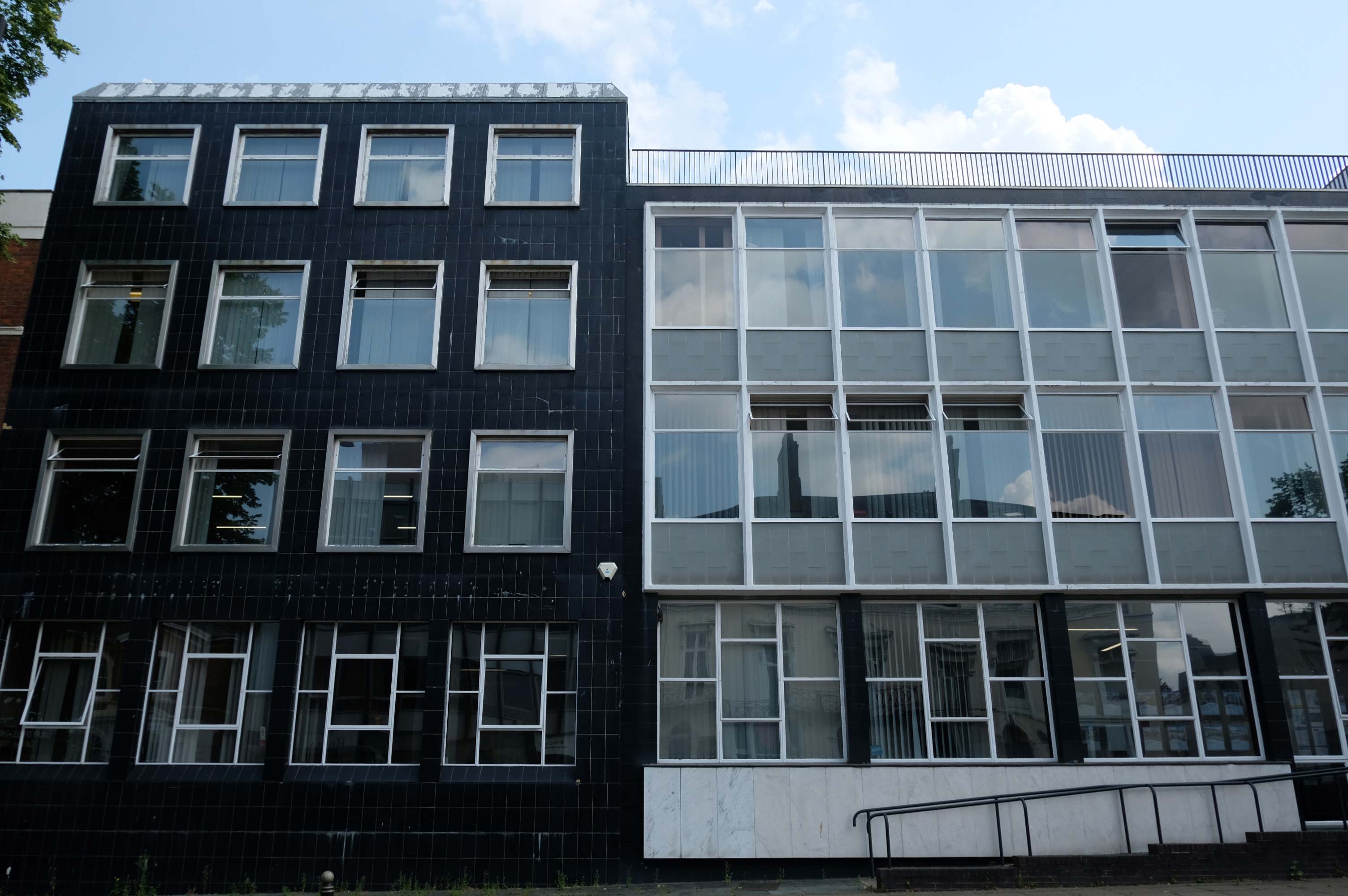
Stafford Walk

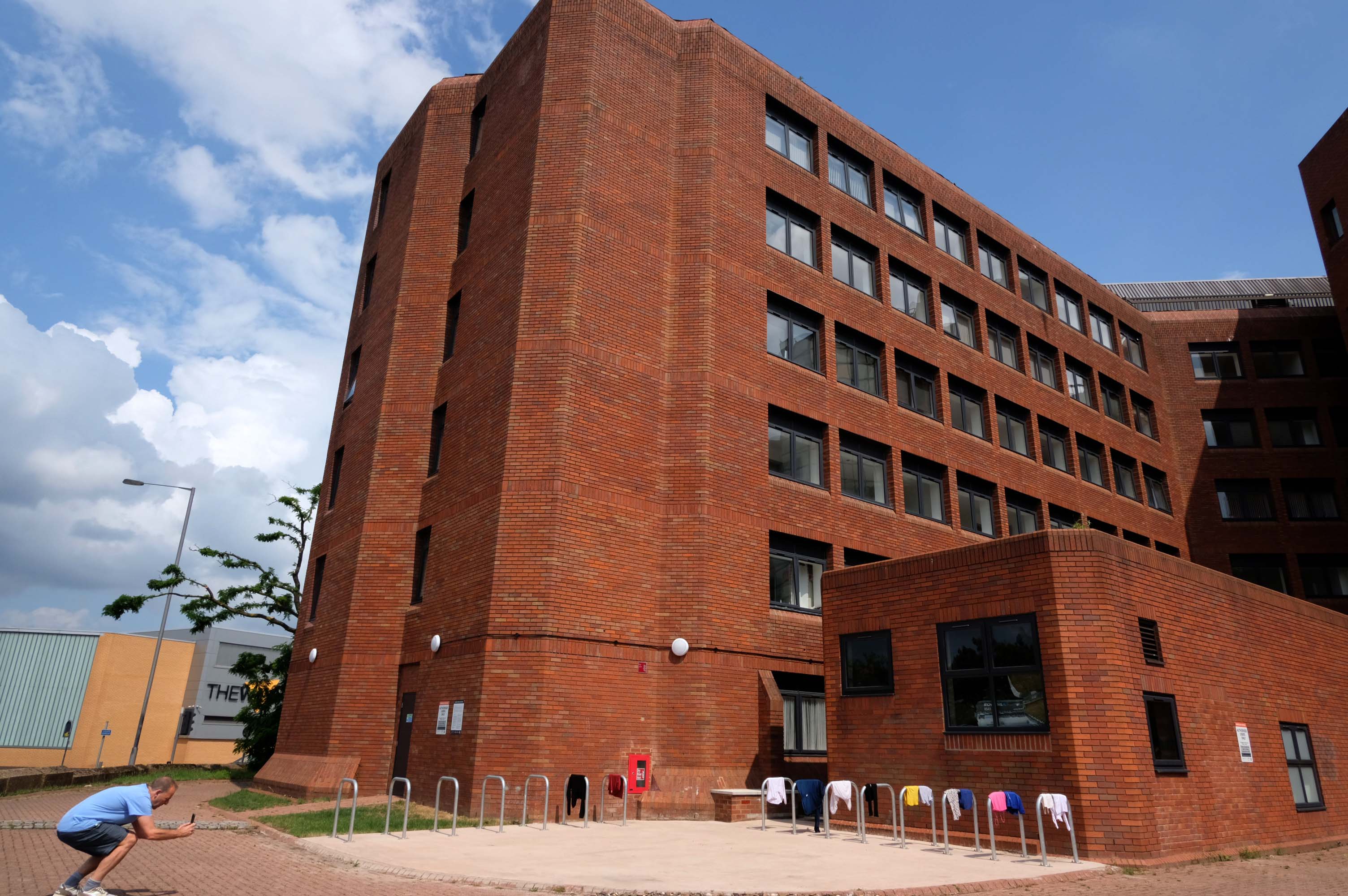
To begin at the beginning – we arrive at Stafford Railway Station.
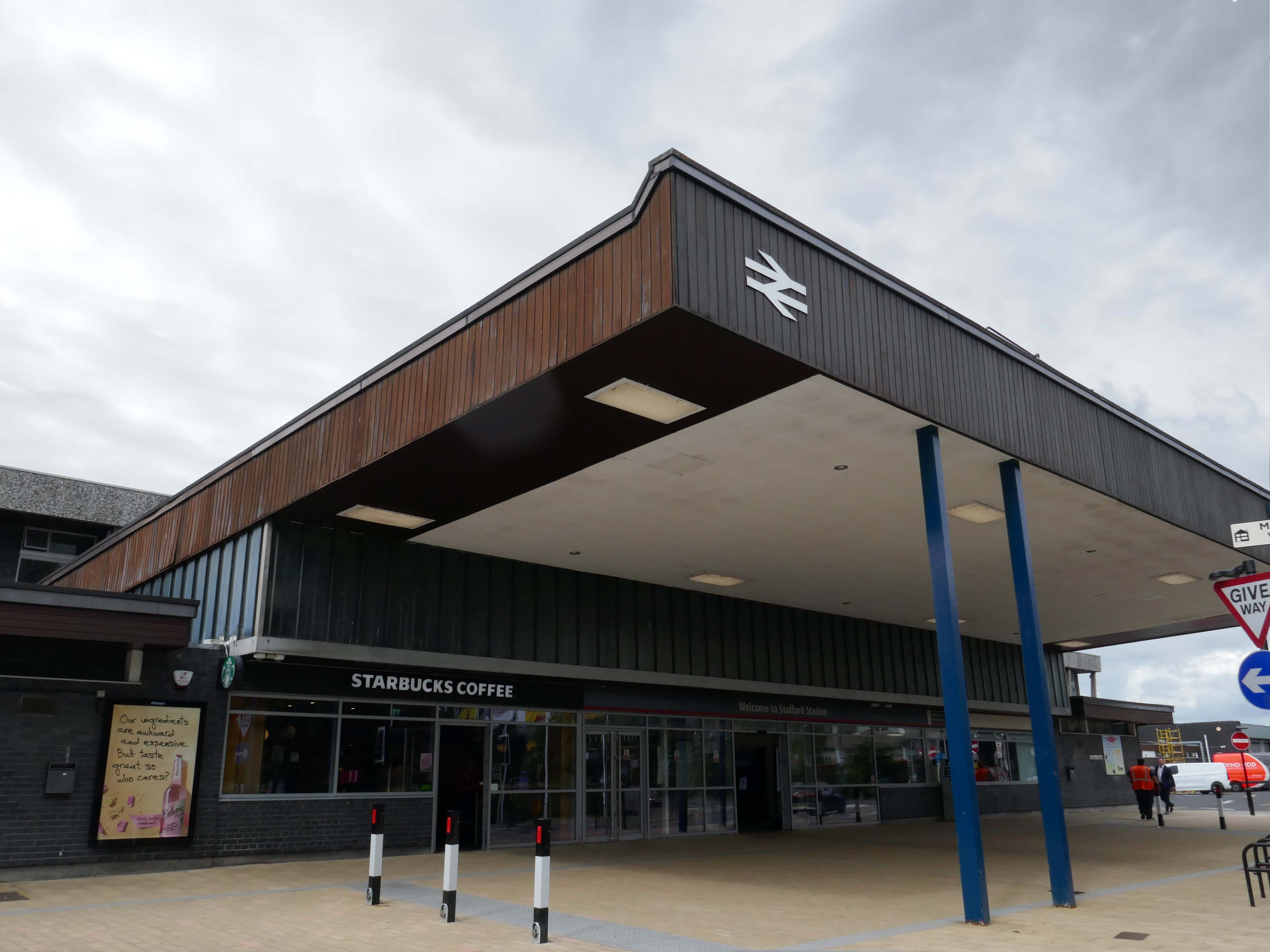
The current station was built in 1962, by the architect William Robert Headley, as part of the modernisation programme which saw the electrification of the West Coast Main Line.
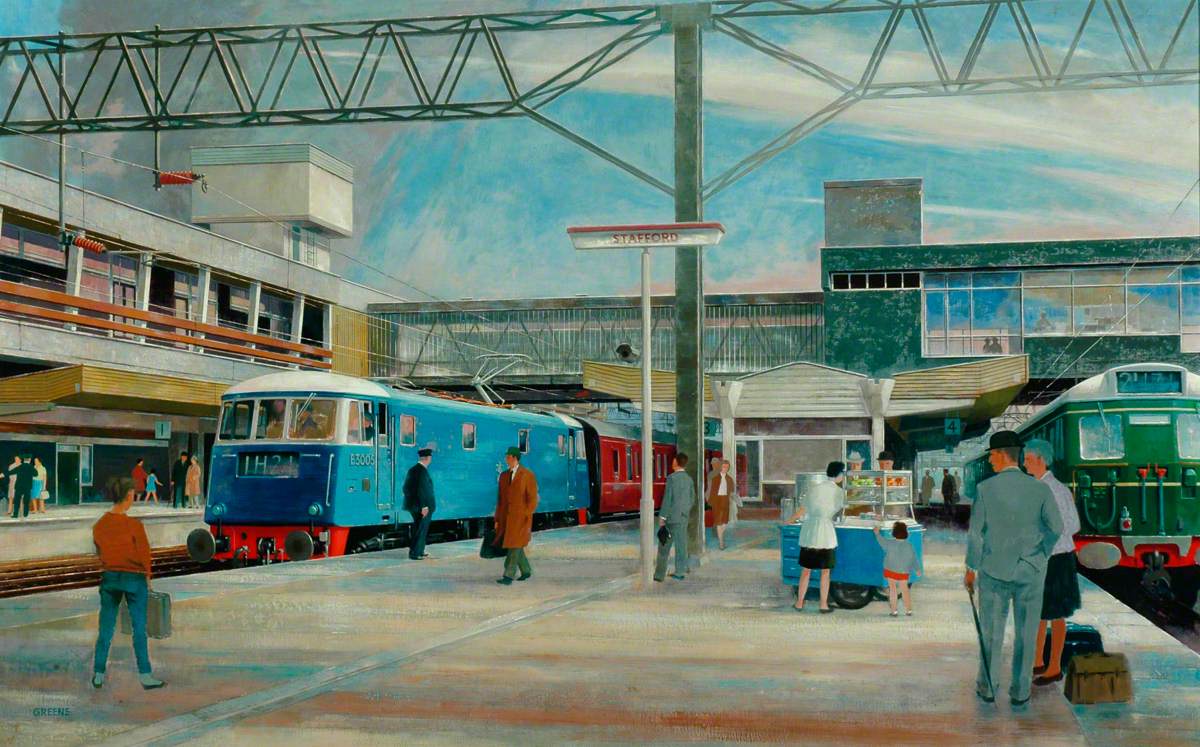
Illustration: John Greene

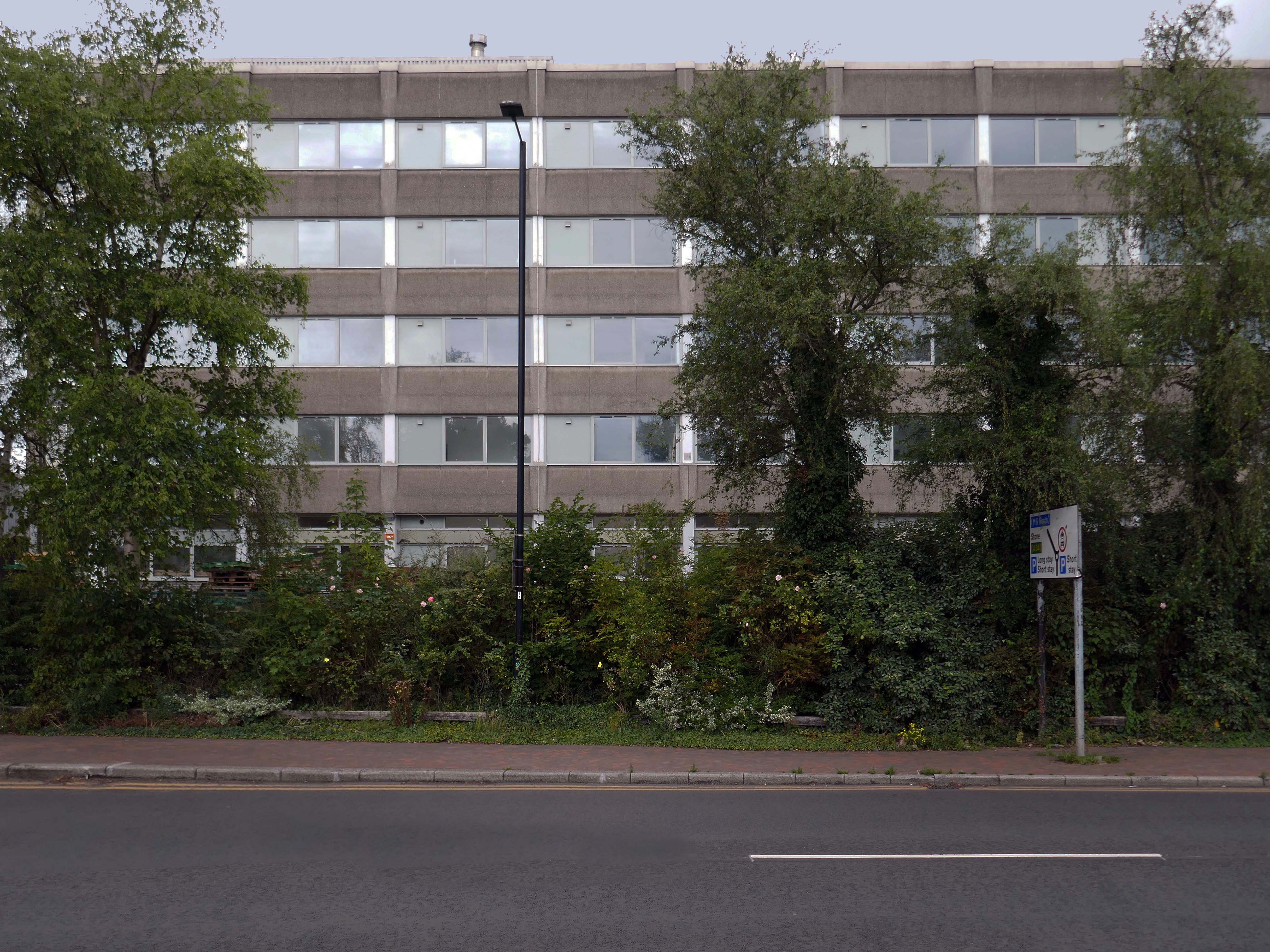
On leaving the station there is an as yet partially un-let Sixties office block to let – Victoria Park House.
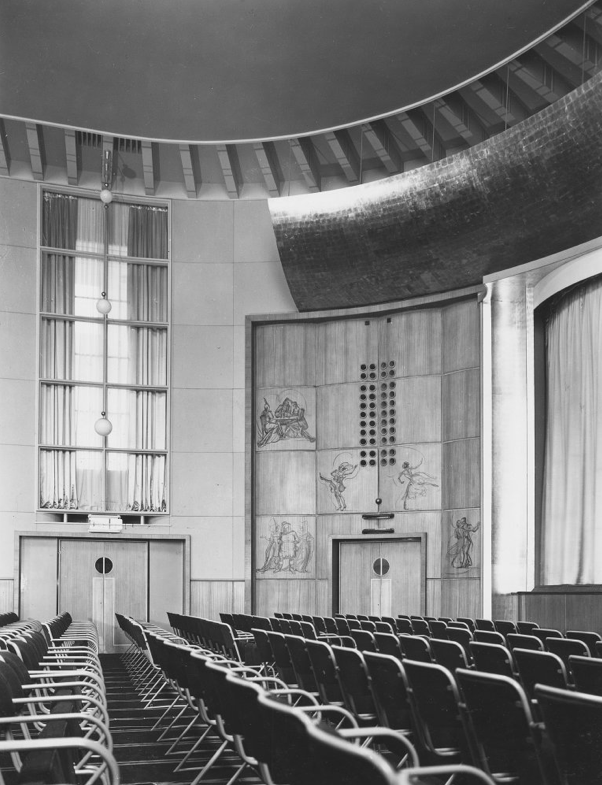
Onward to the County Technical College 1937 Grade II Listed – interior completed 1946.

The shell of the building was completed in 1937, after which it was used as an American army hospital during the war, then completed afterwards. 
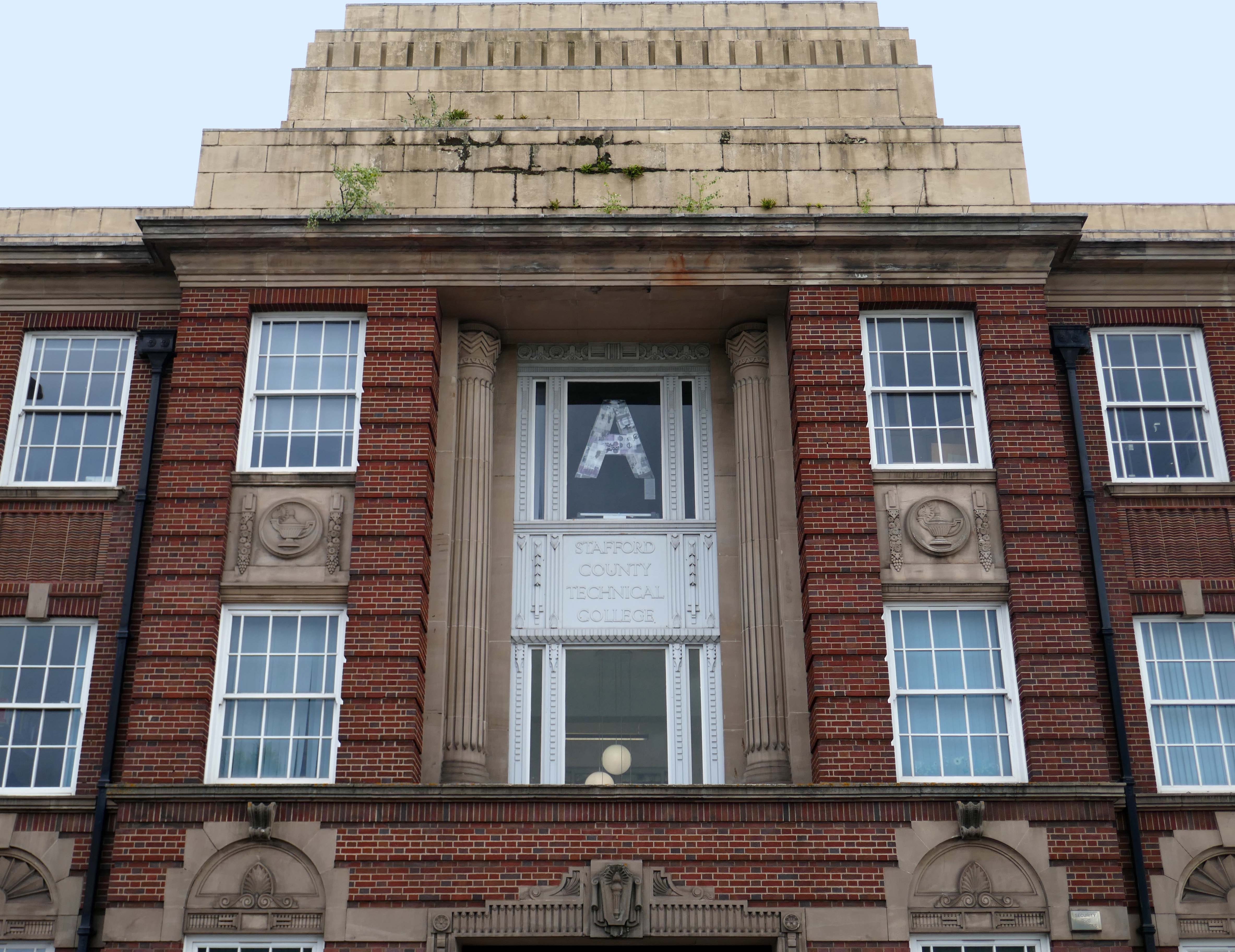
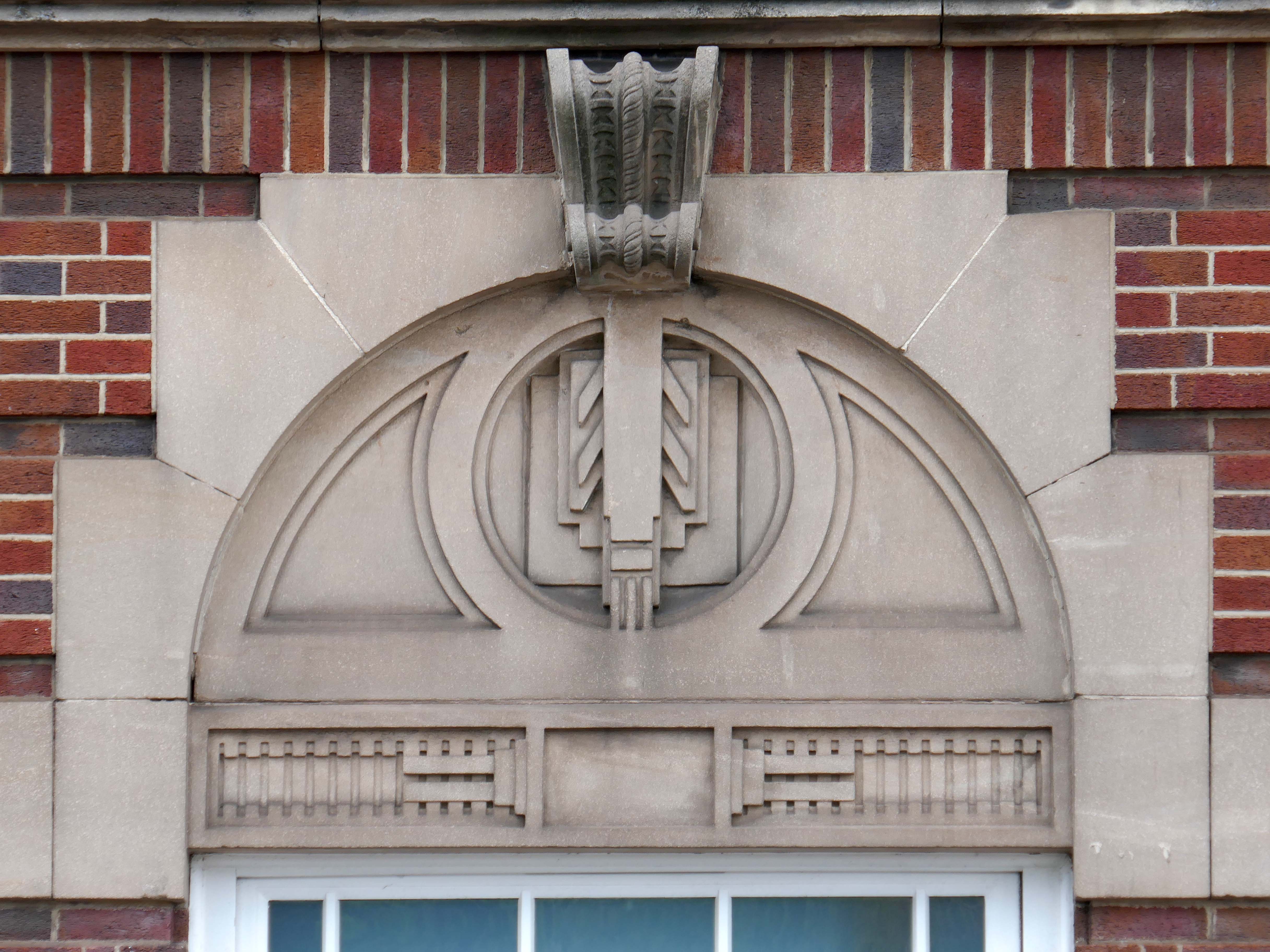
Heavily loaded with Art Deco details.
The new £28m three-storey Skills & Innovation Centre at Stafford College, completed in August 2023, was one of the first further education college schemes to be delivered under the DfE framework and a pathfinder scheme for delivery in accordance with the Further Education Output Specification. The new Centre is equipped with cutting-edge equipment and state-of-the-art facilities for construction, engineering and hybrid / electric vehicle maintenance facilities, as well as IT rich seminar suites and open learning break-out spaces along with a 4-court sports hall, a fully-equipped gym and a flexible 300-seat auditorium.
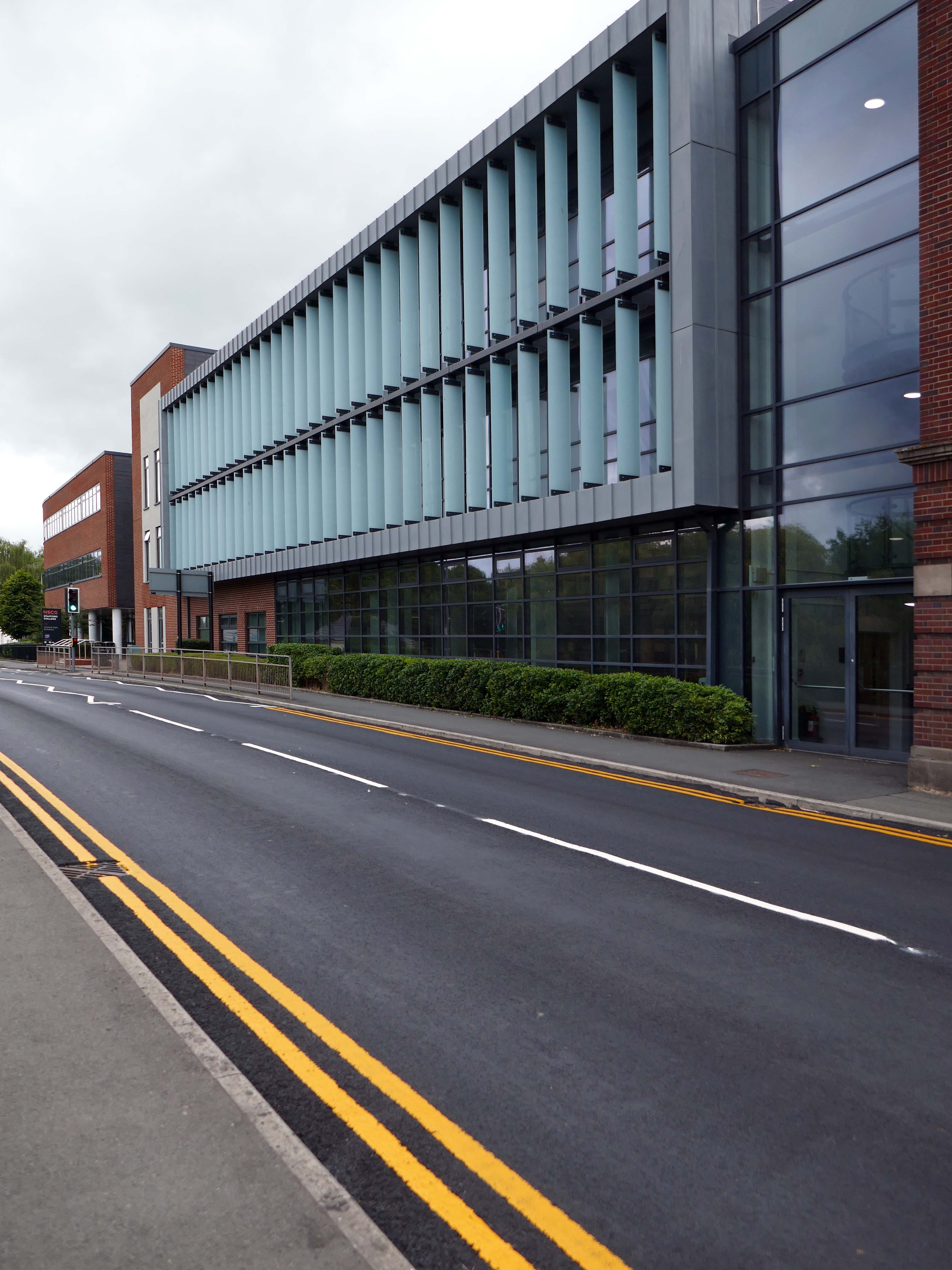
Ellis Williams

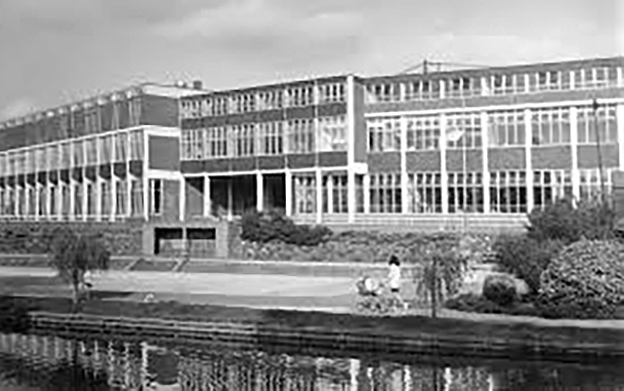
A 1970’s block was demolished to make way for the new development.
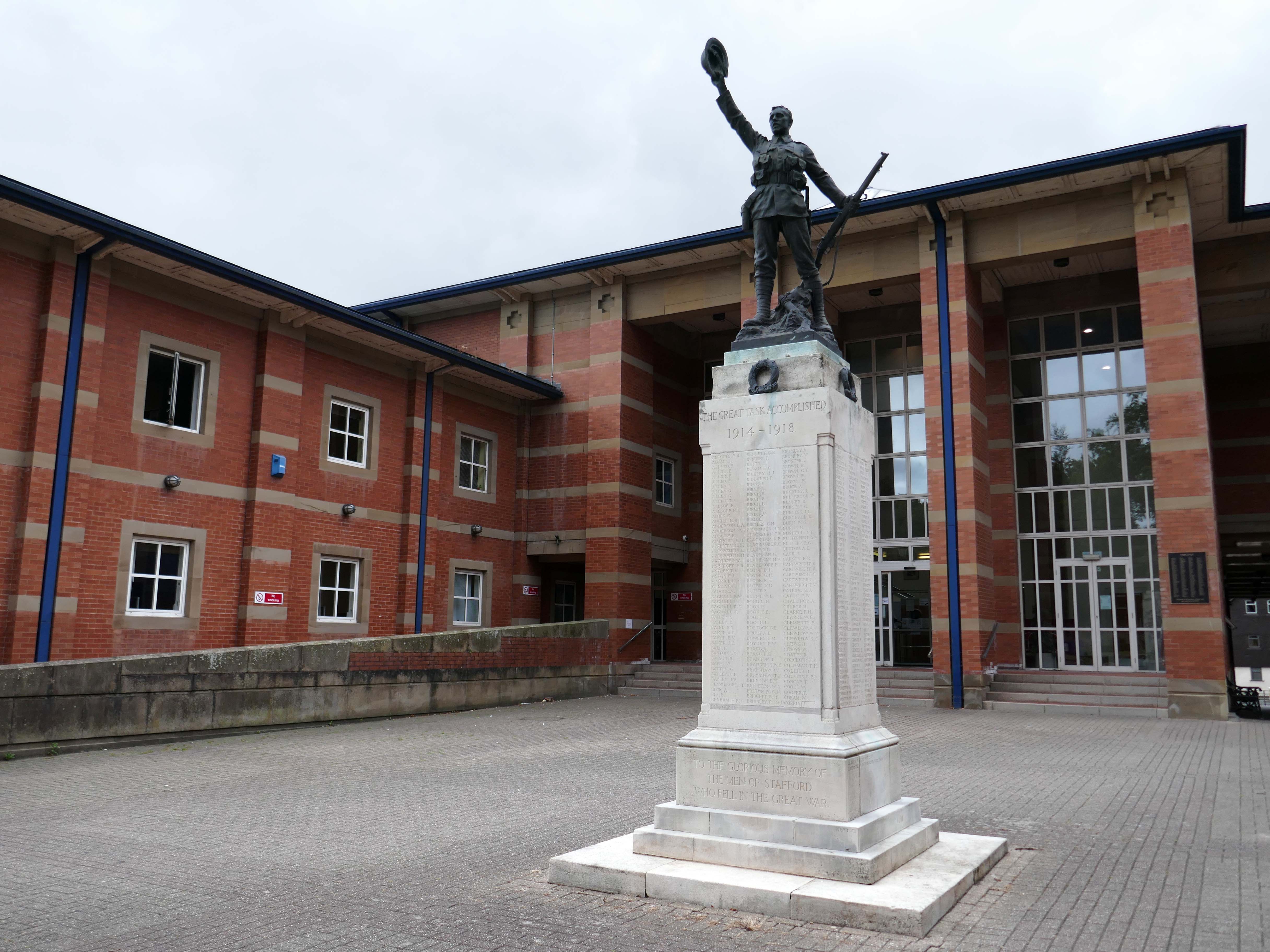
Almost everywhere we go we find a PoMo Crown Courts 1991 – architects: Associated Architects of Birmingham, cost of £10.4 million.

The war memorial of 1922 is by Joseph James Whitehead.
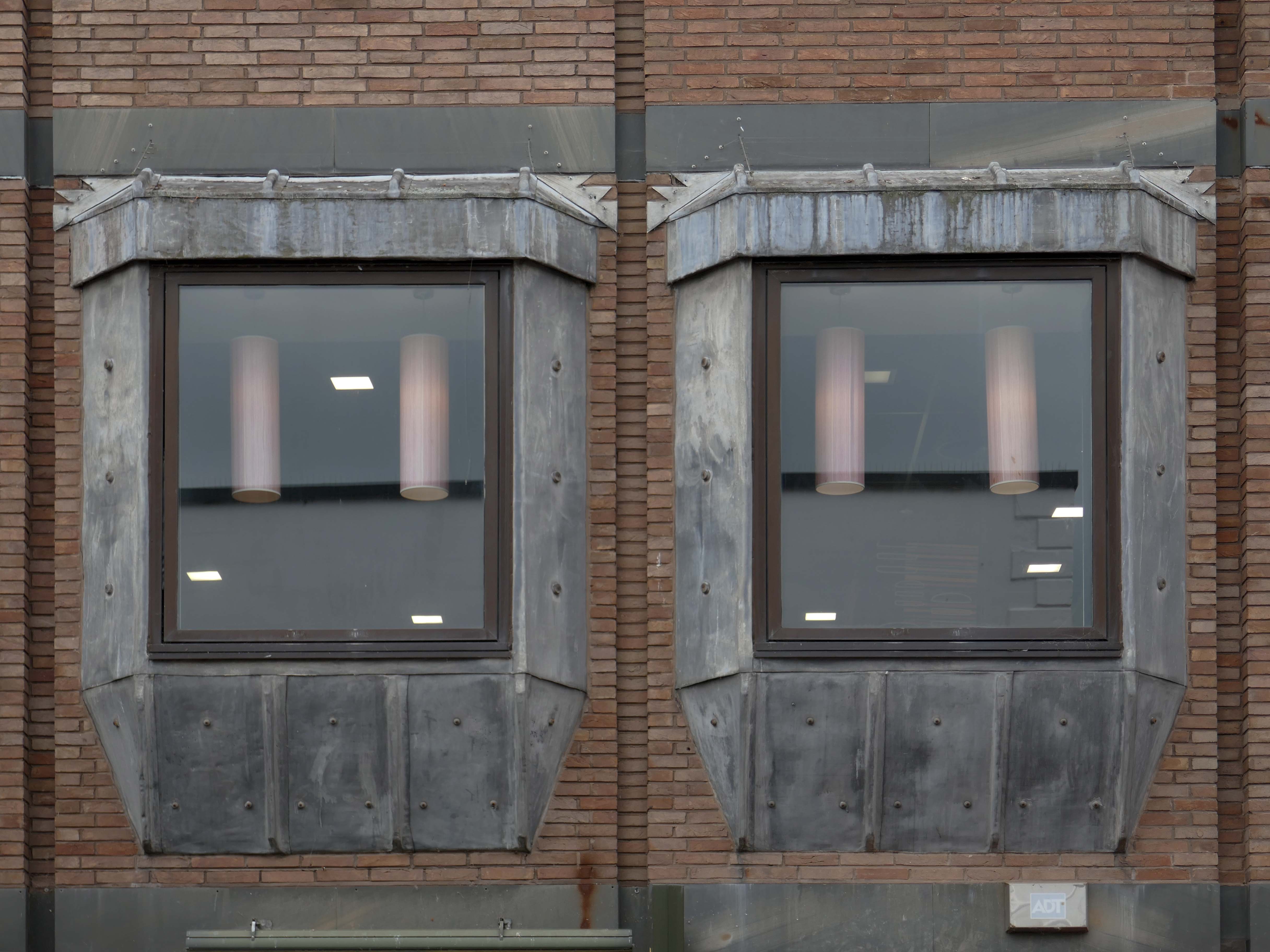
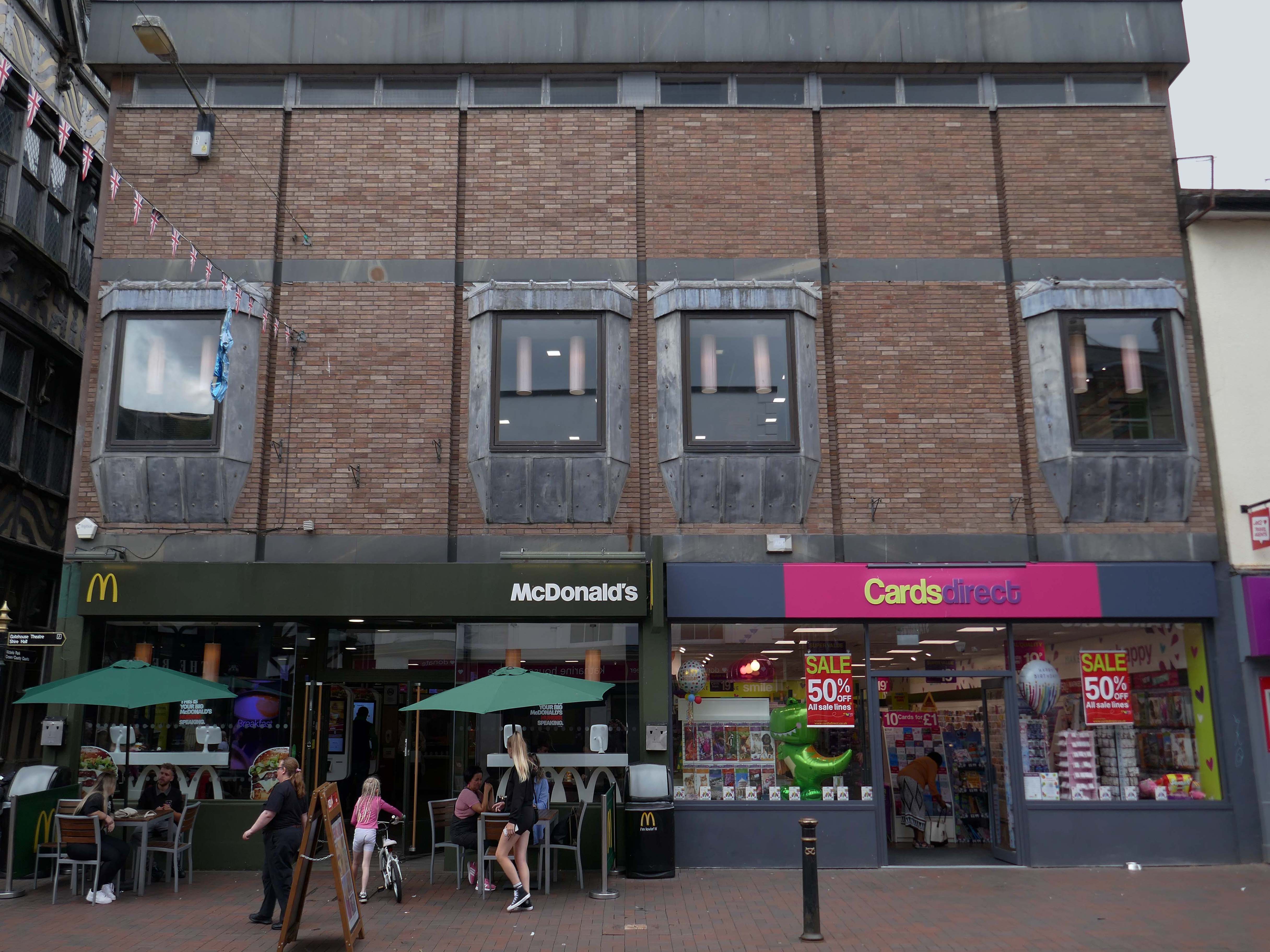
Sneaking through the alley to and before the McDonalds – one many more recent buildings with jetted lead clad bays.

Keeping the town Tudor one bay at a time..
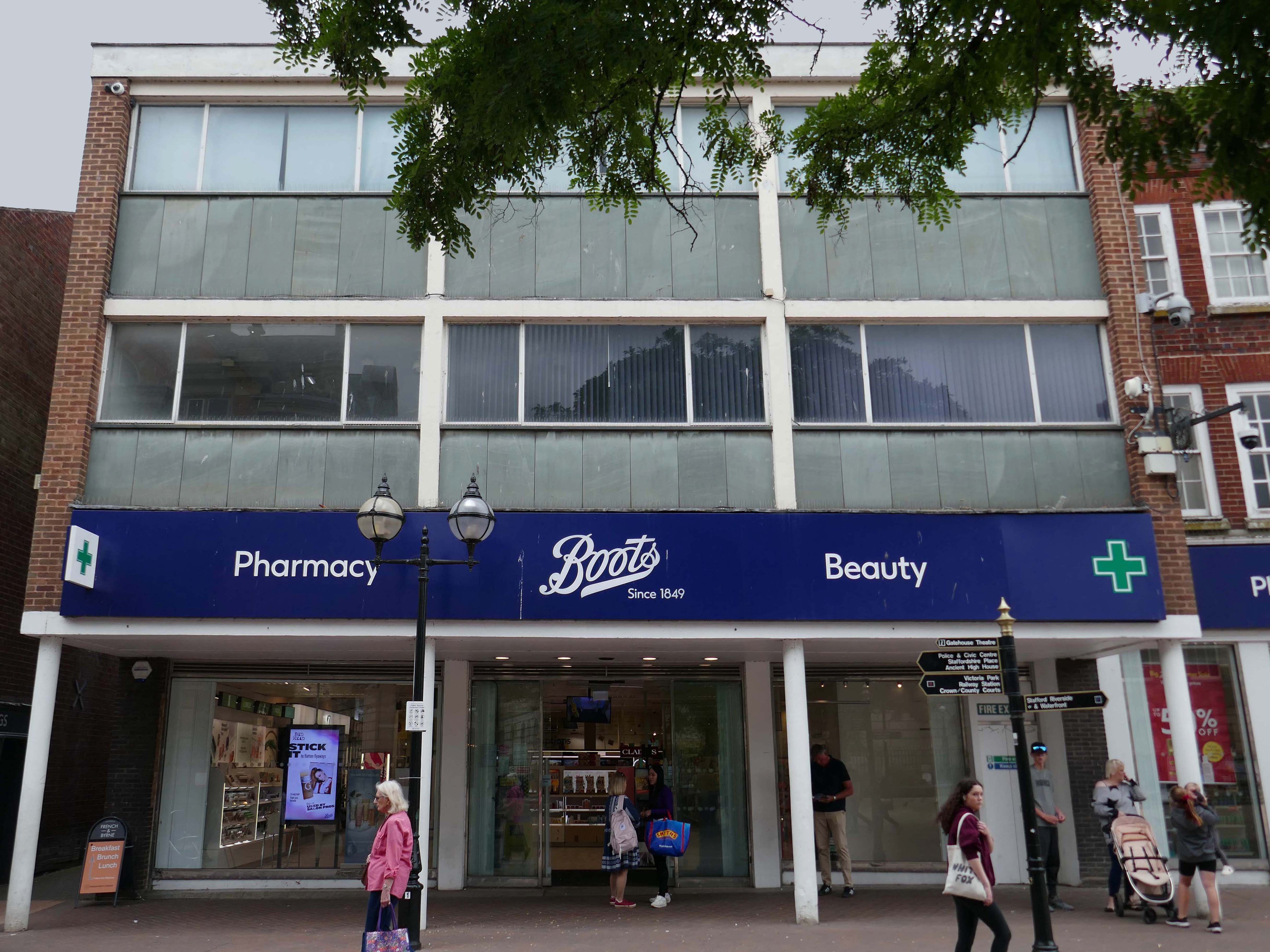
Further along a Sixties Boots.
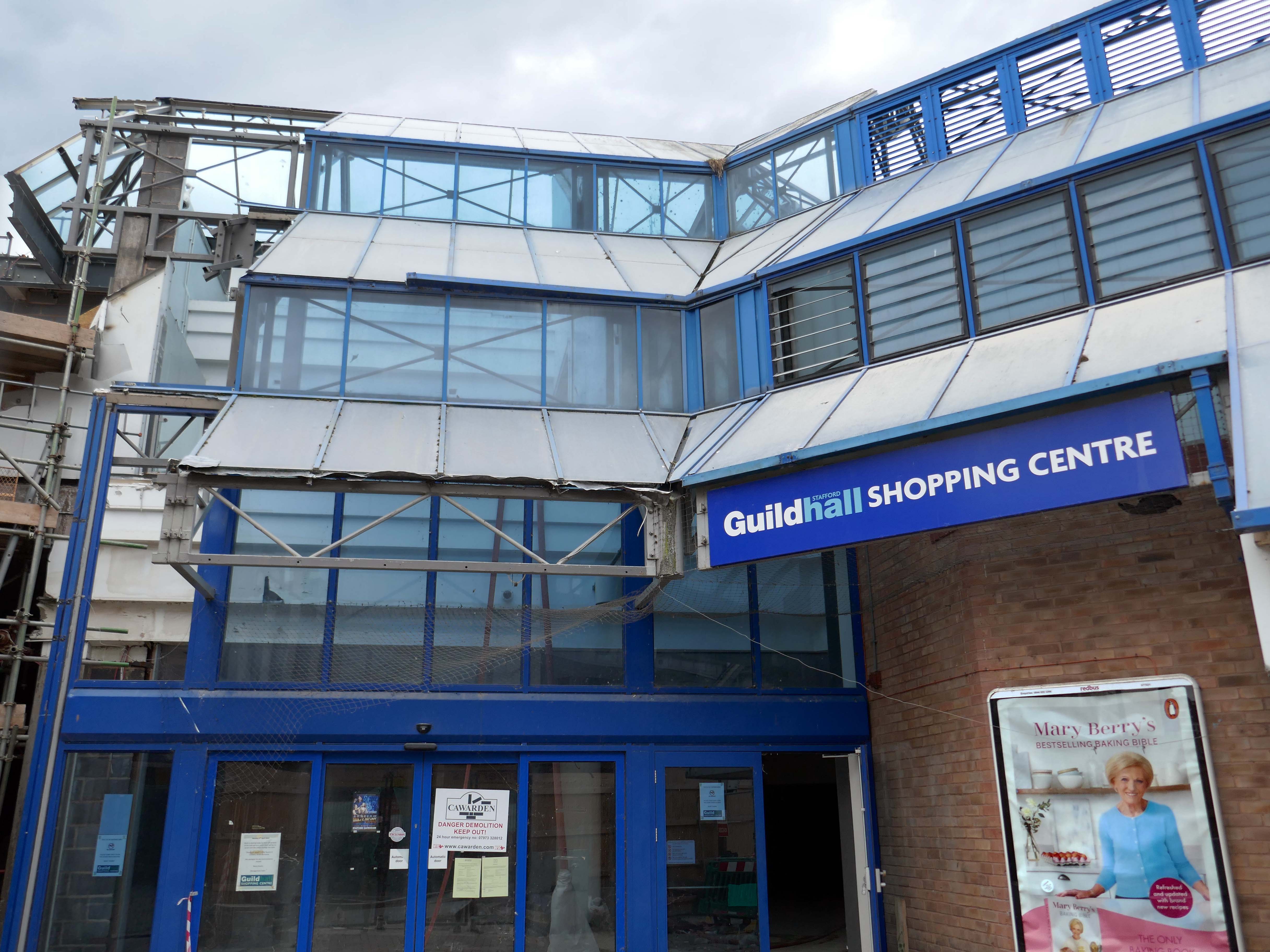
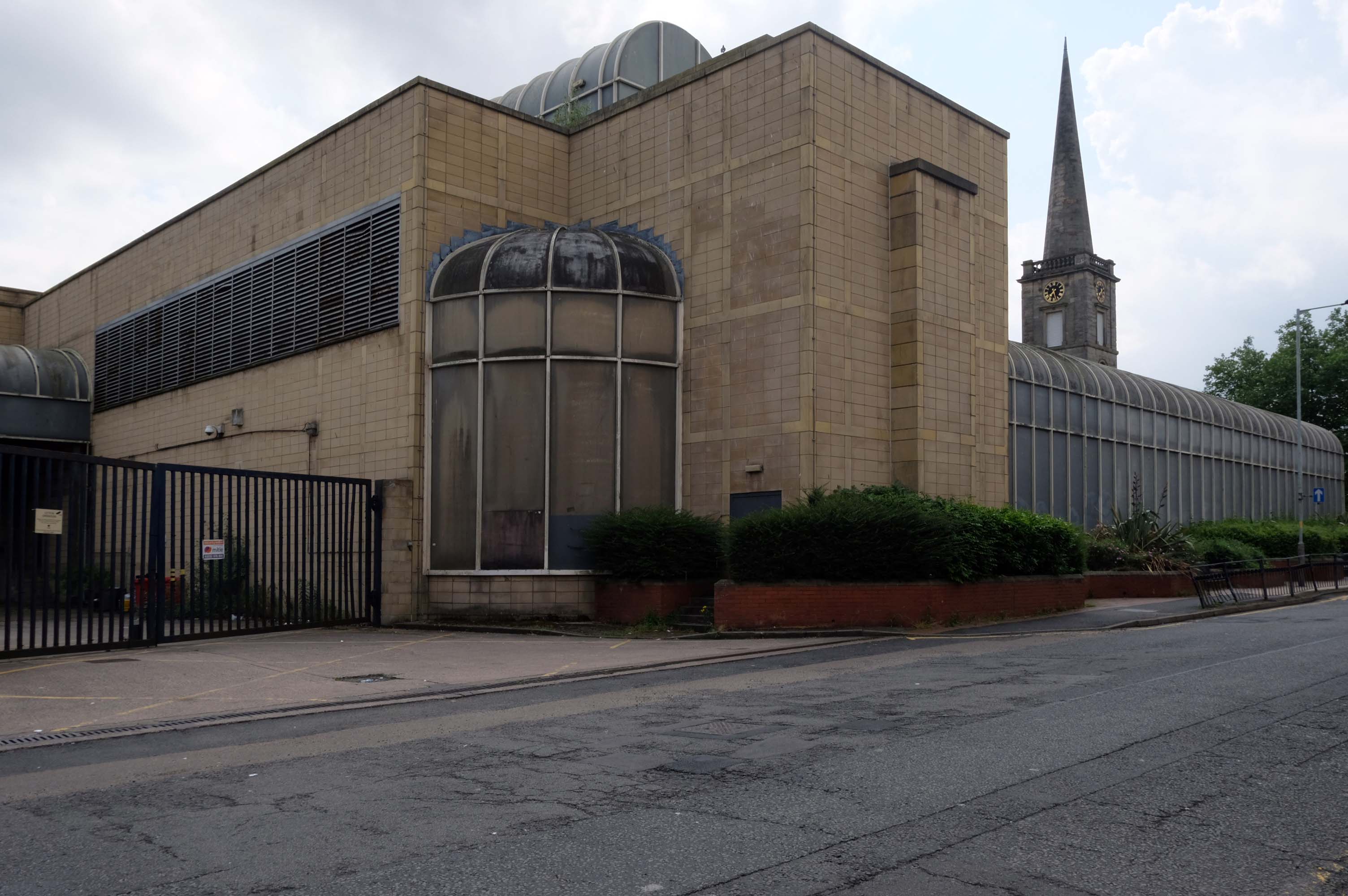
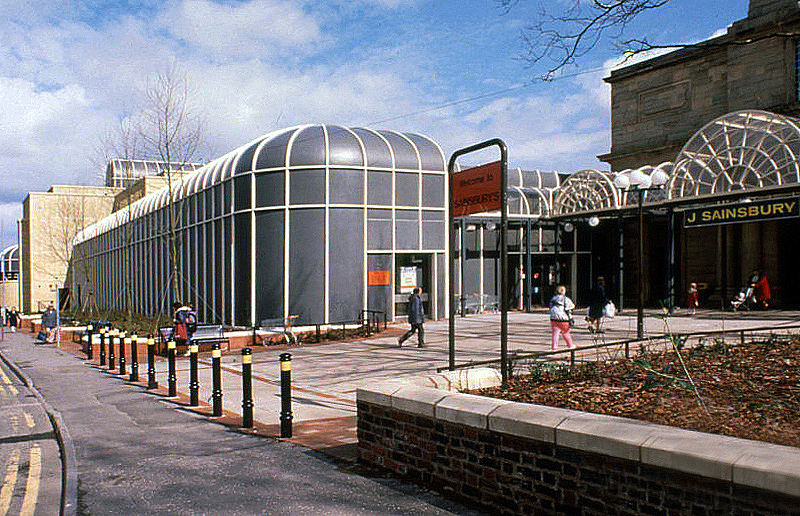
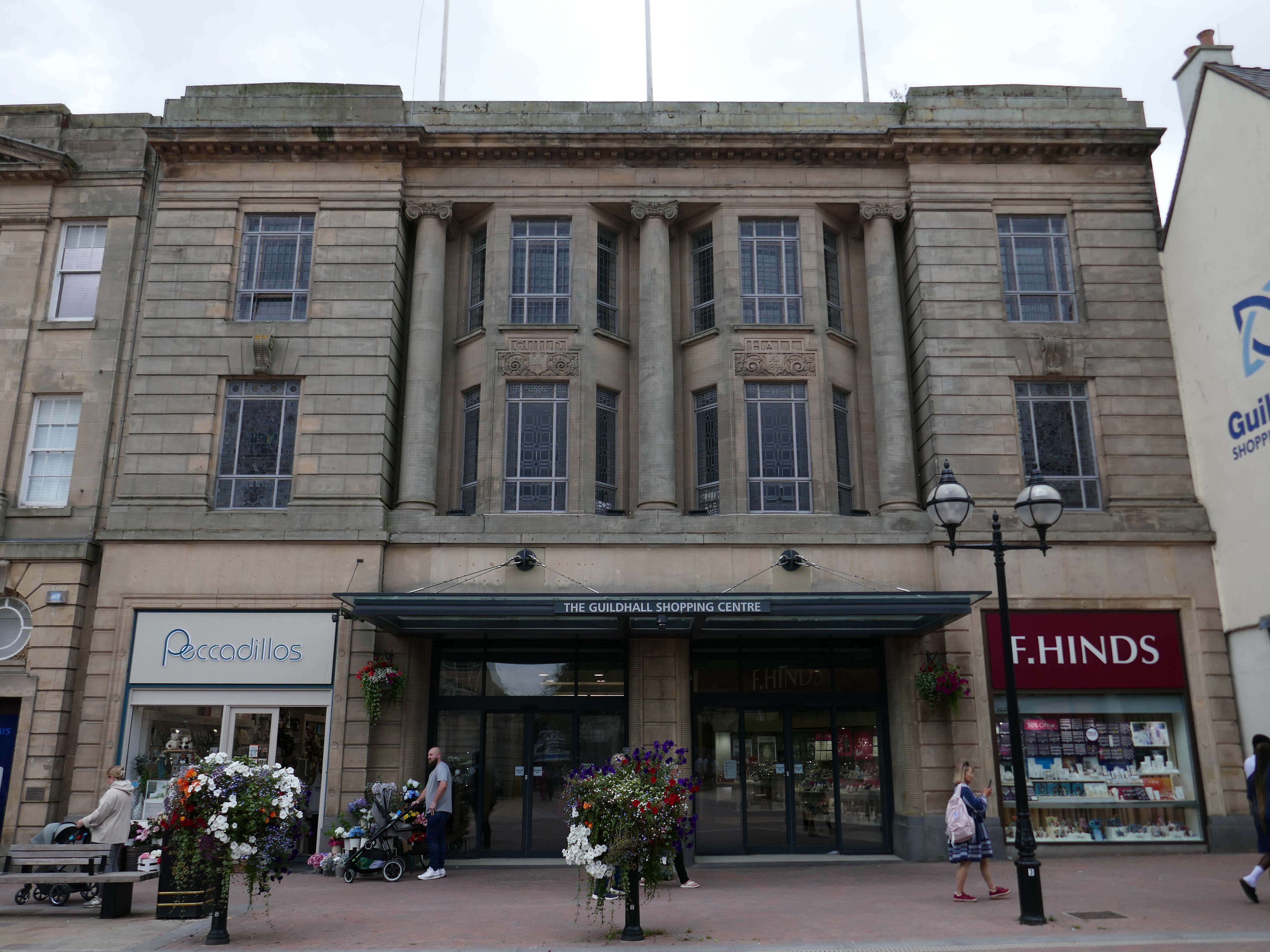
The Classical stone frontage of the Guildhall Shopping Centre.
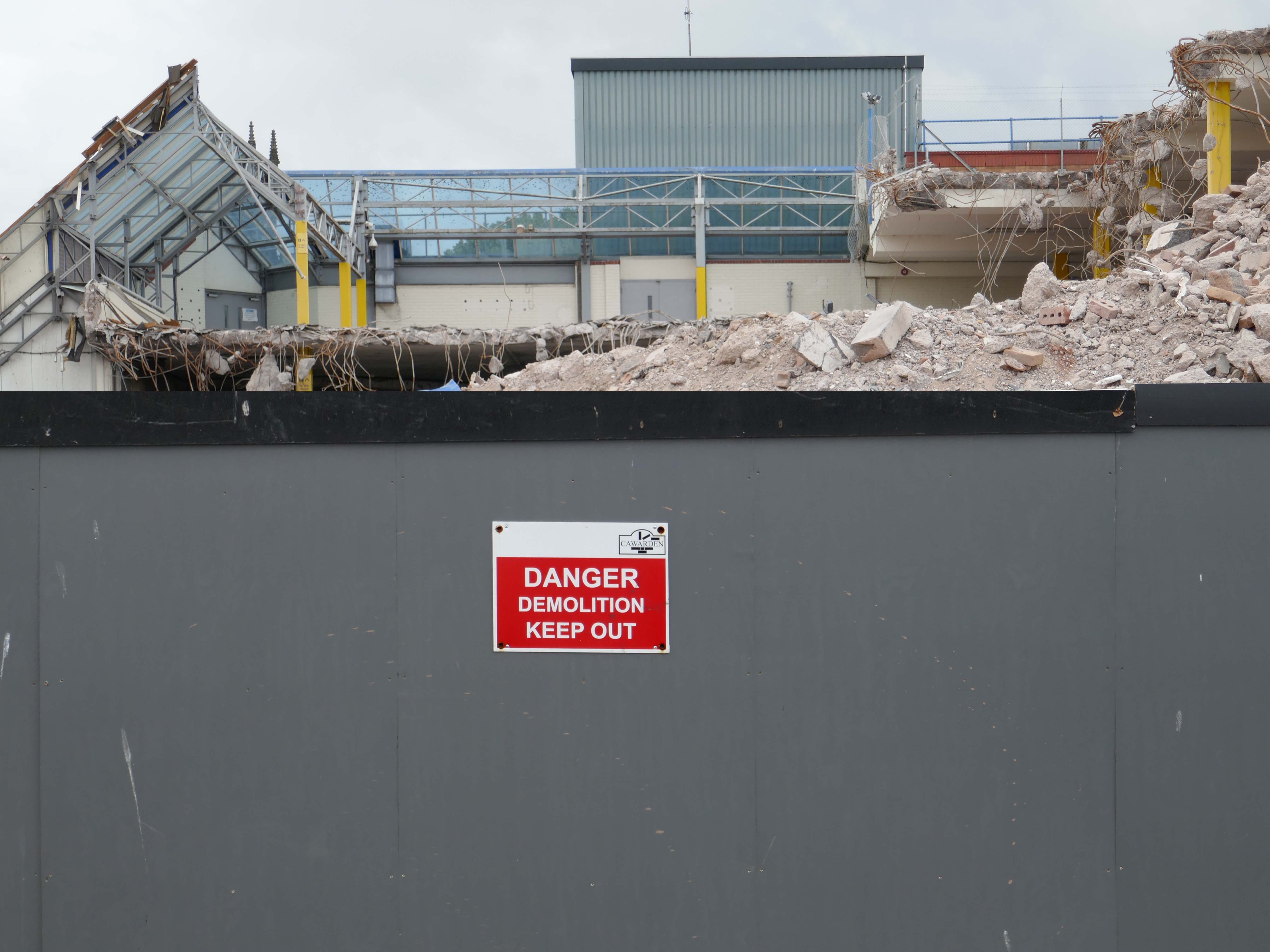
Working with Mercia Real Estate, Glancy Nicholls Architects have designed a contextual mixed-use scheme in the heart of Stafford Town Centre, within the footprint of a disused shopping centre. This includes the regeneration of the 1930’s Guildhall building that serves as the main entrance to the shopping centre and the listed Market Square building. 
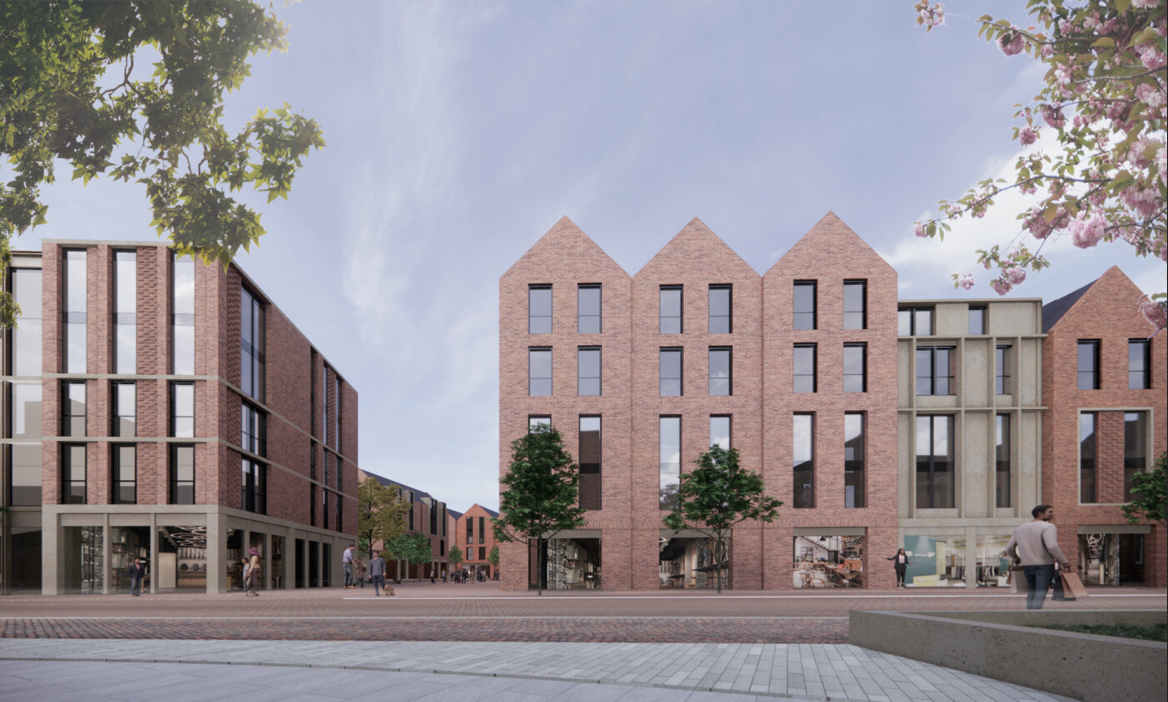
Glancy Nicholls

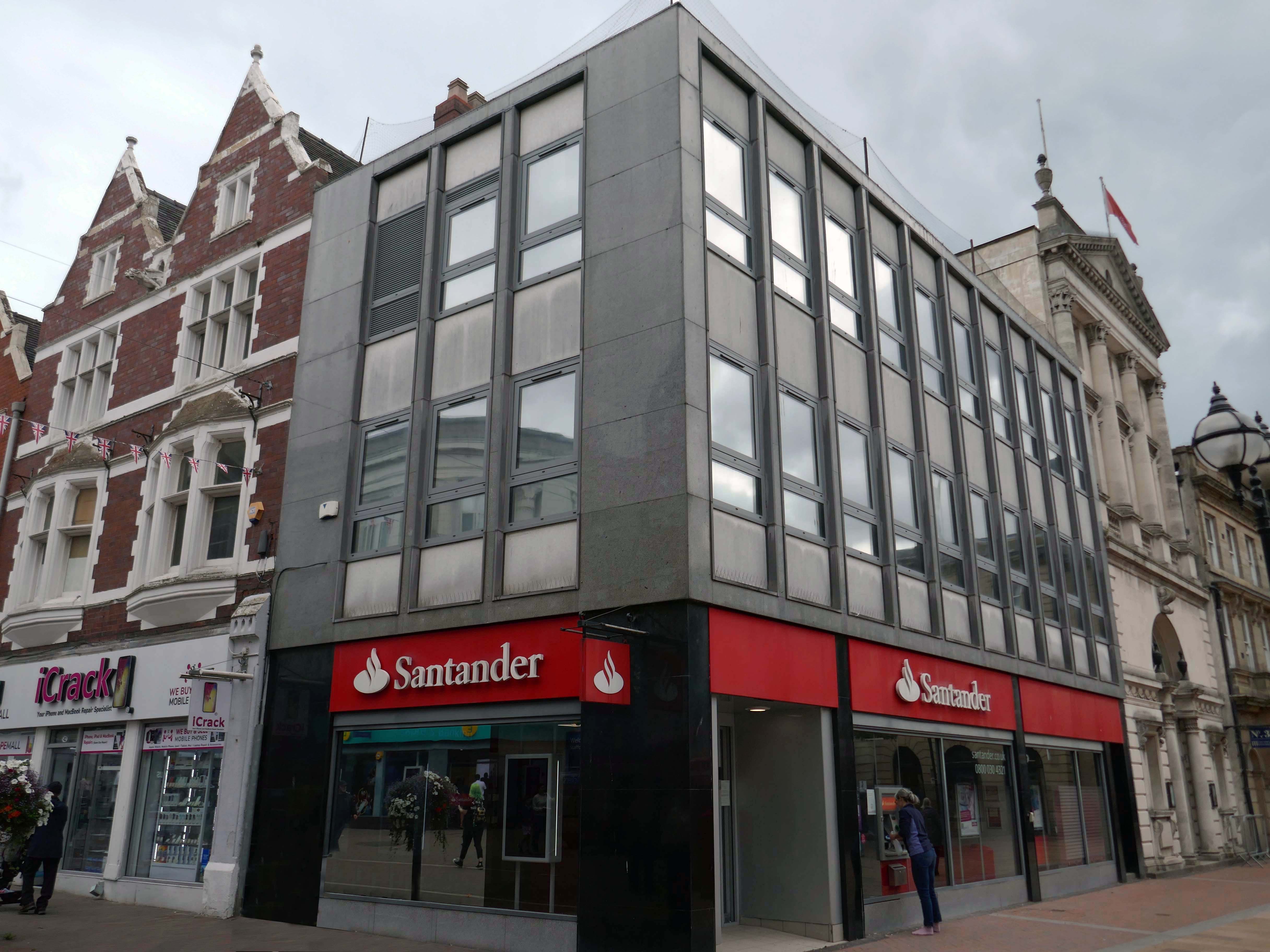
On the corner a Santander Bank

Across the way an understated Burton’s.
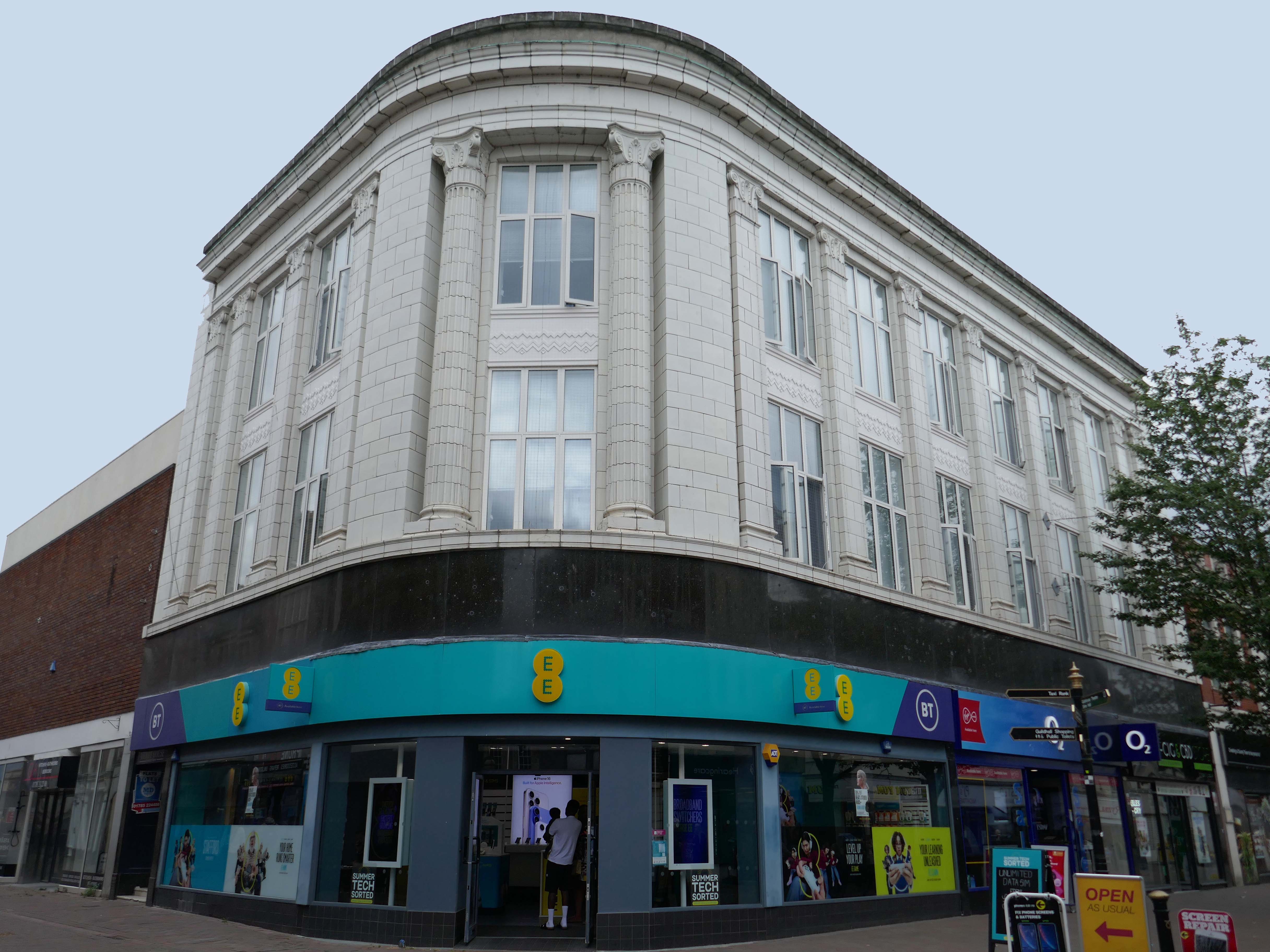
Around the corner a somewhat neglected retail development.
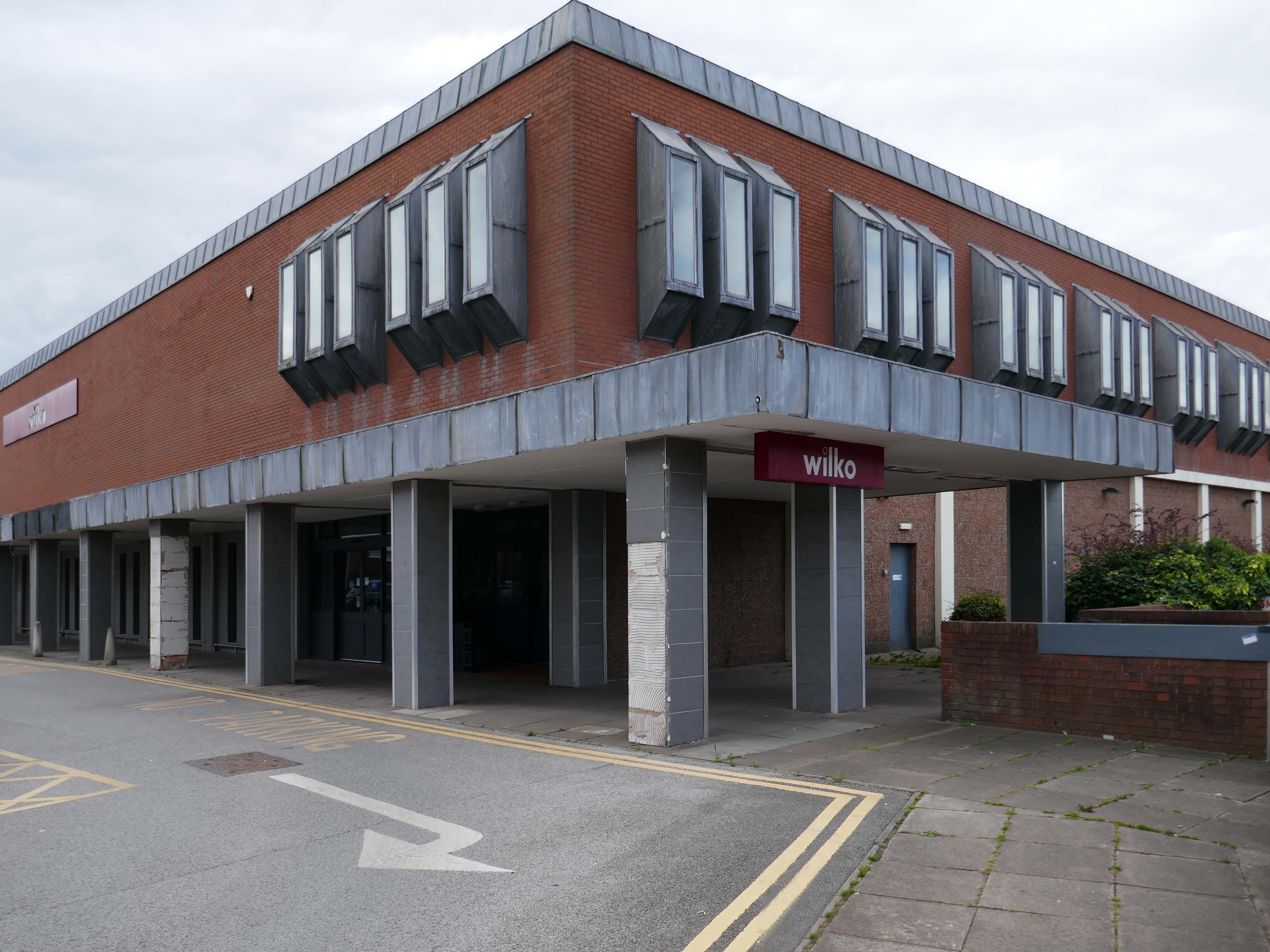
And a long lost Wilko.
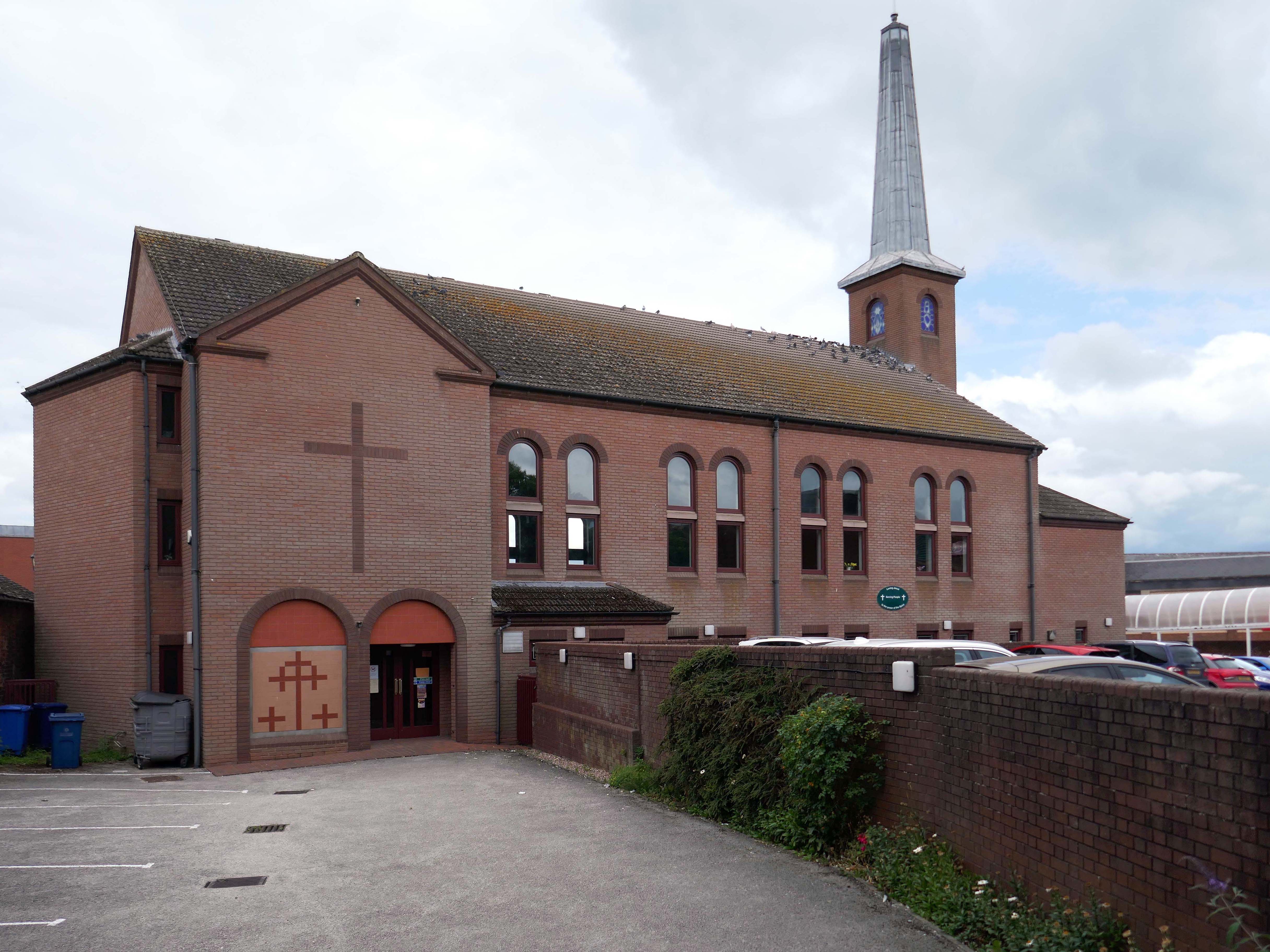
Amidst it all the curious time warp that is Trinity Church 1988.

It is used by Methodist and United Reformed Church congregations.
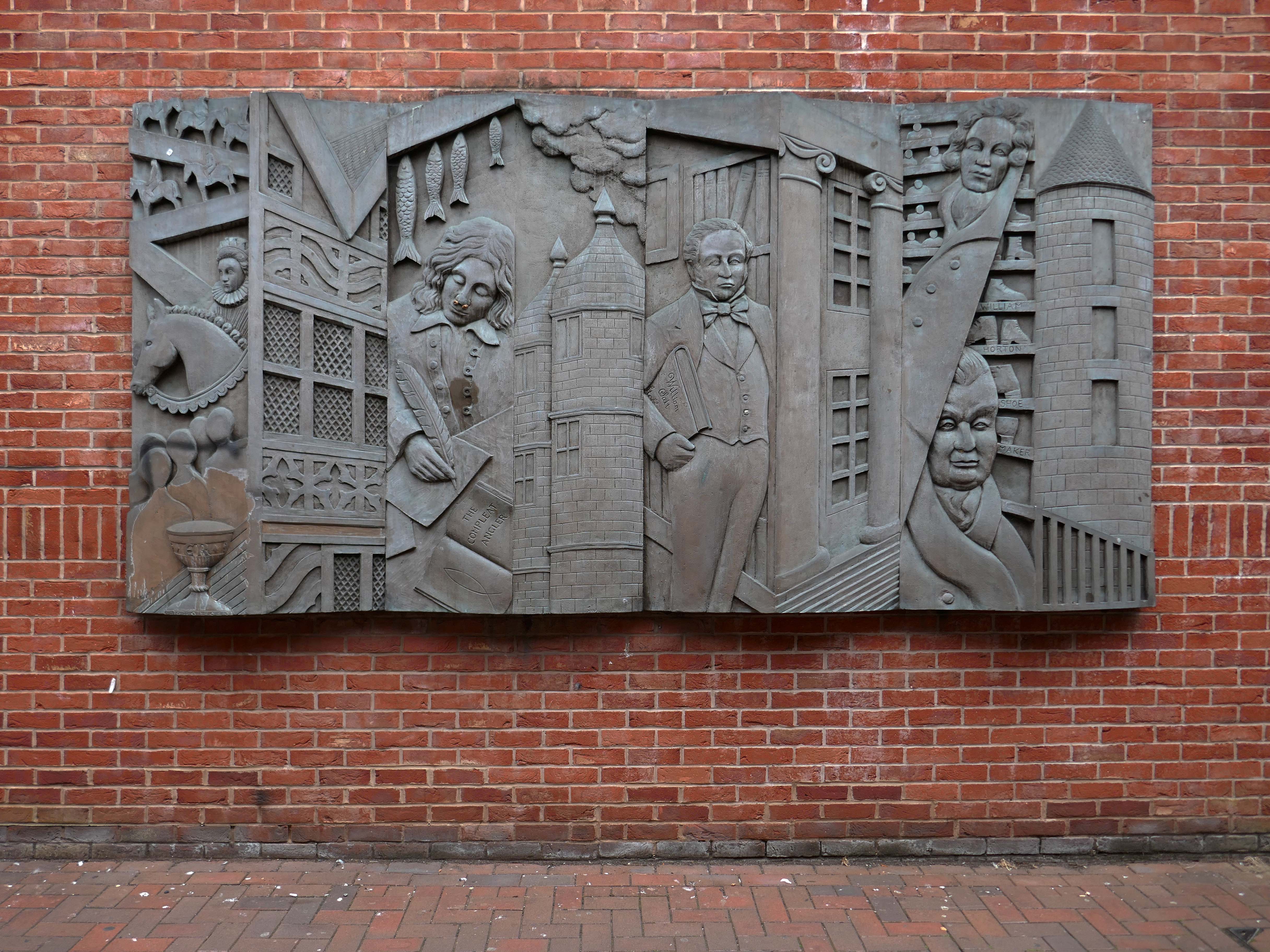
Tucked away in a minor maze of retail a piece of figurative commemorative public art by Glynis Owen Jones, entitled Stafford Faces.
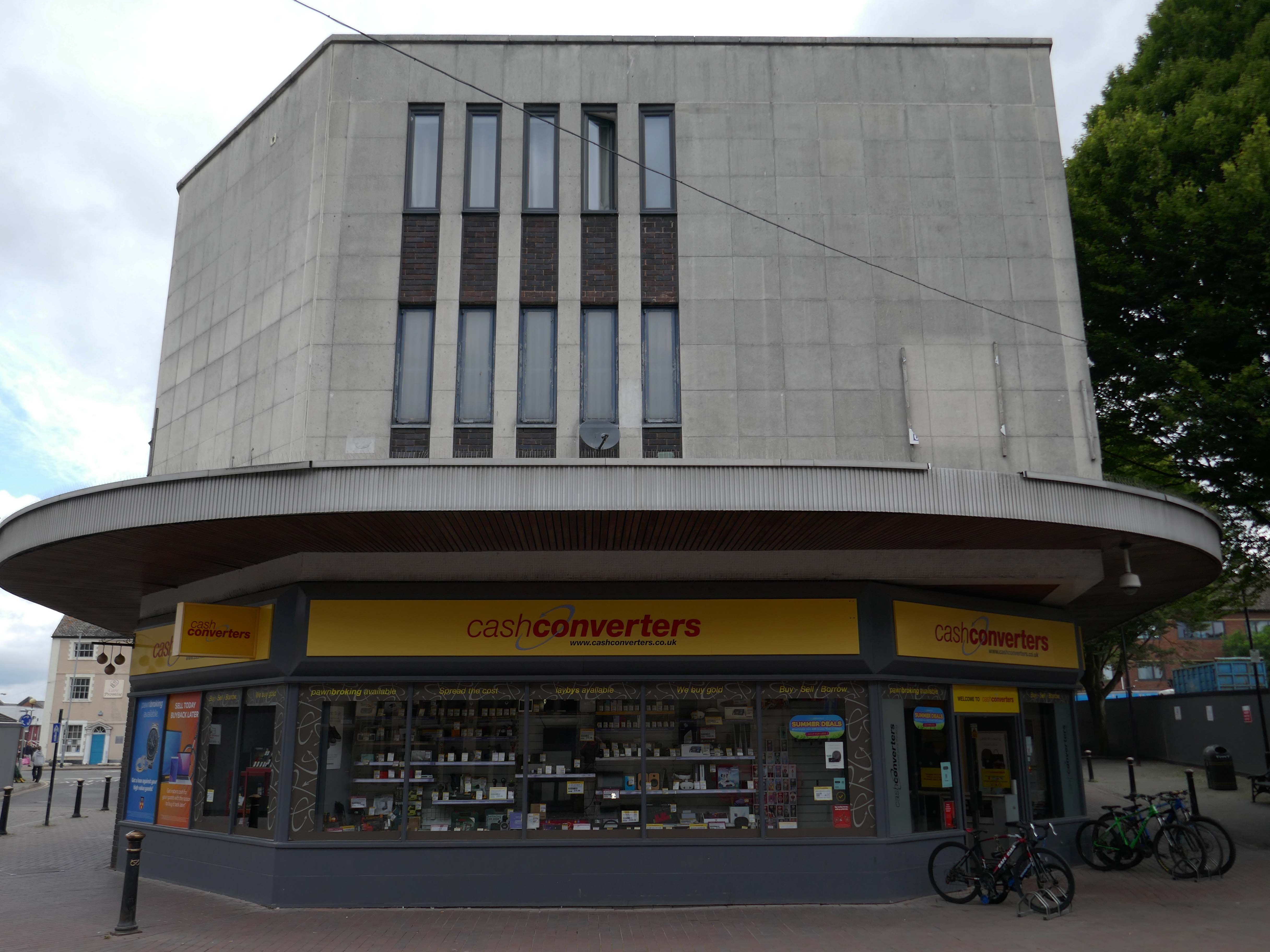
Around the corner a big B&M.
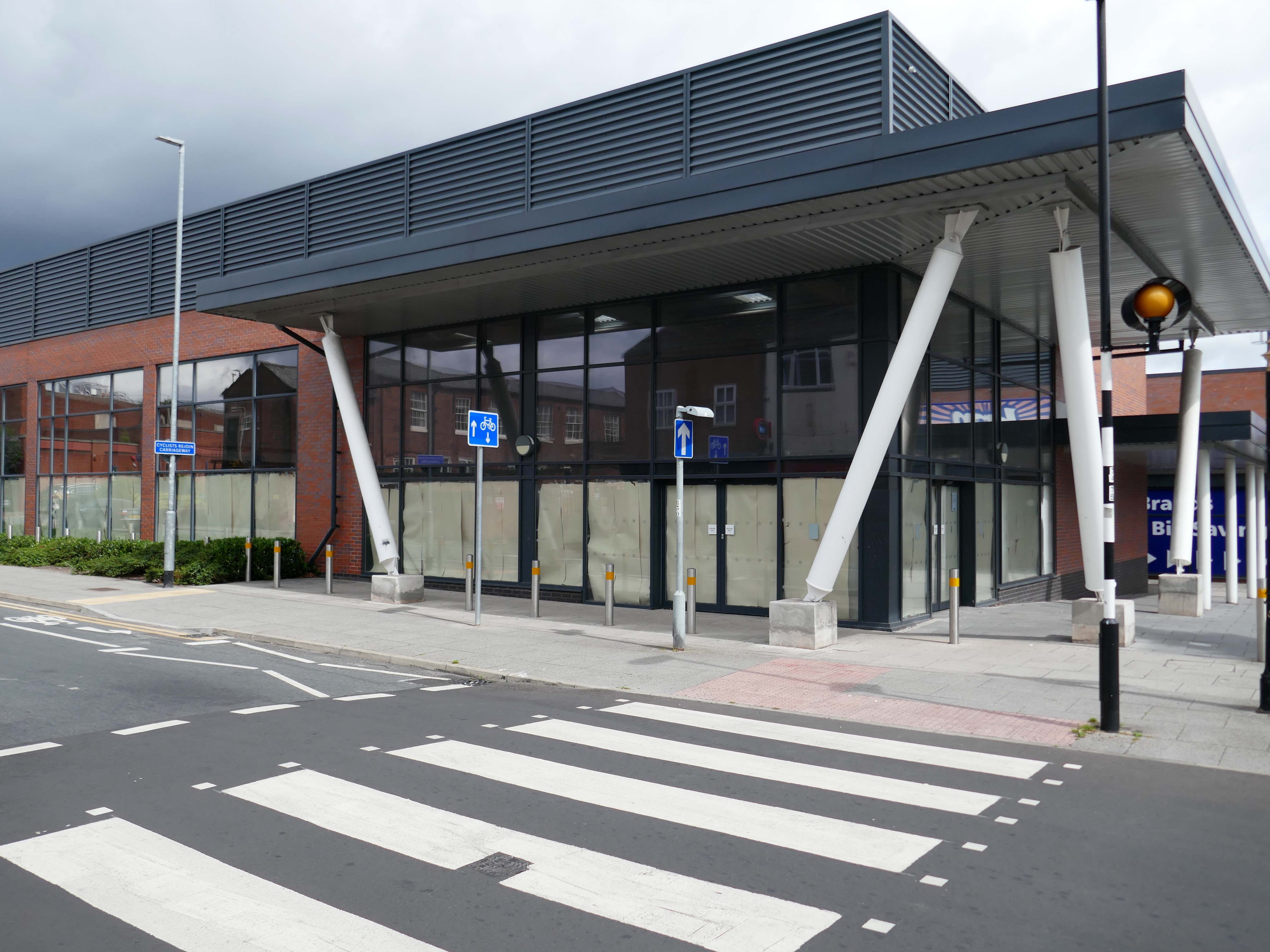
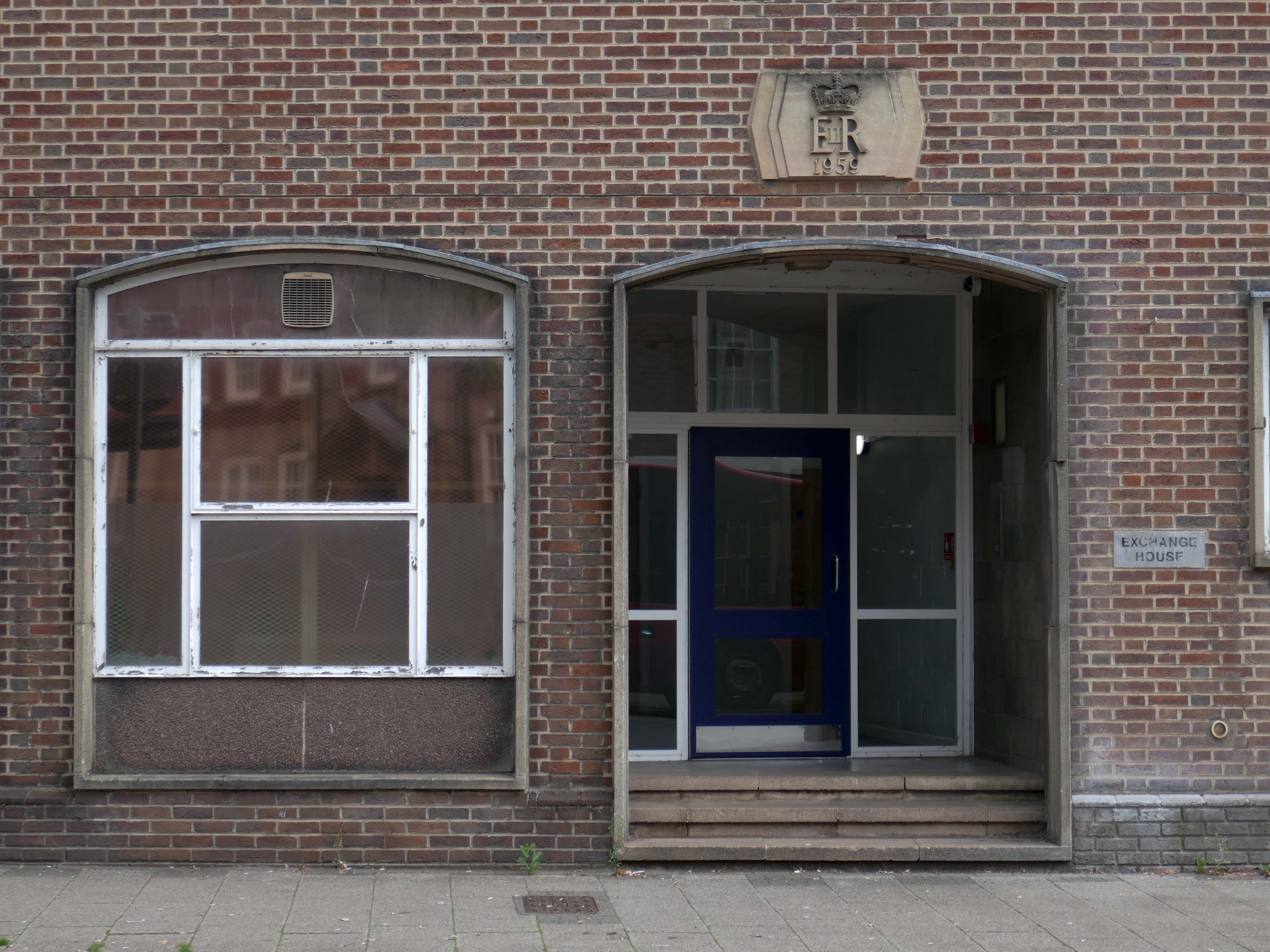
Further along a brick FoB Telephone Exchange of 1959.
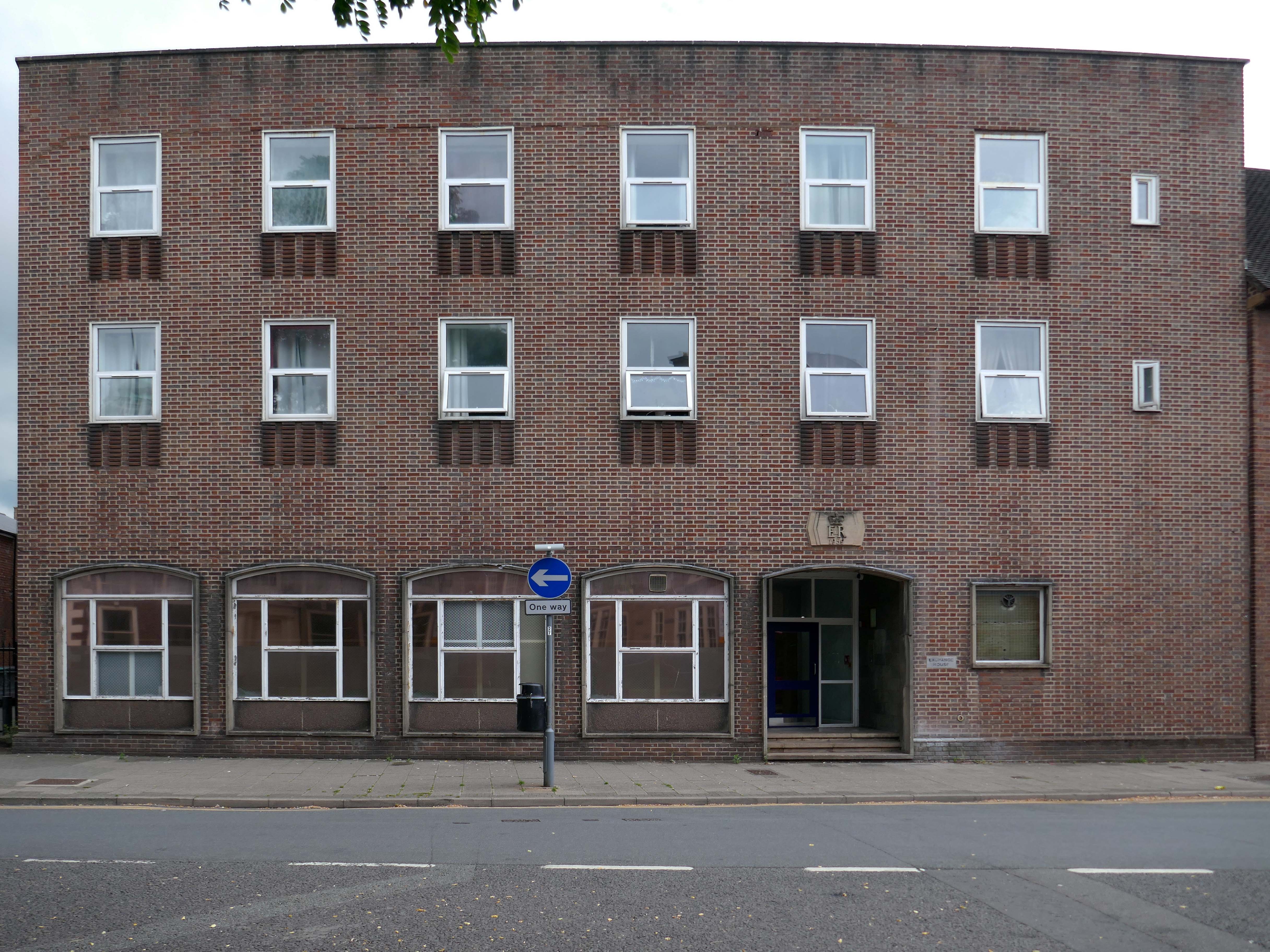
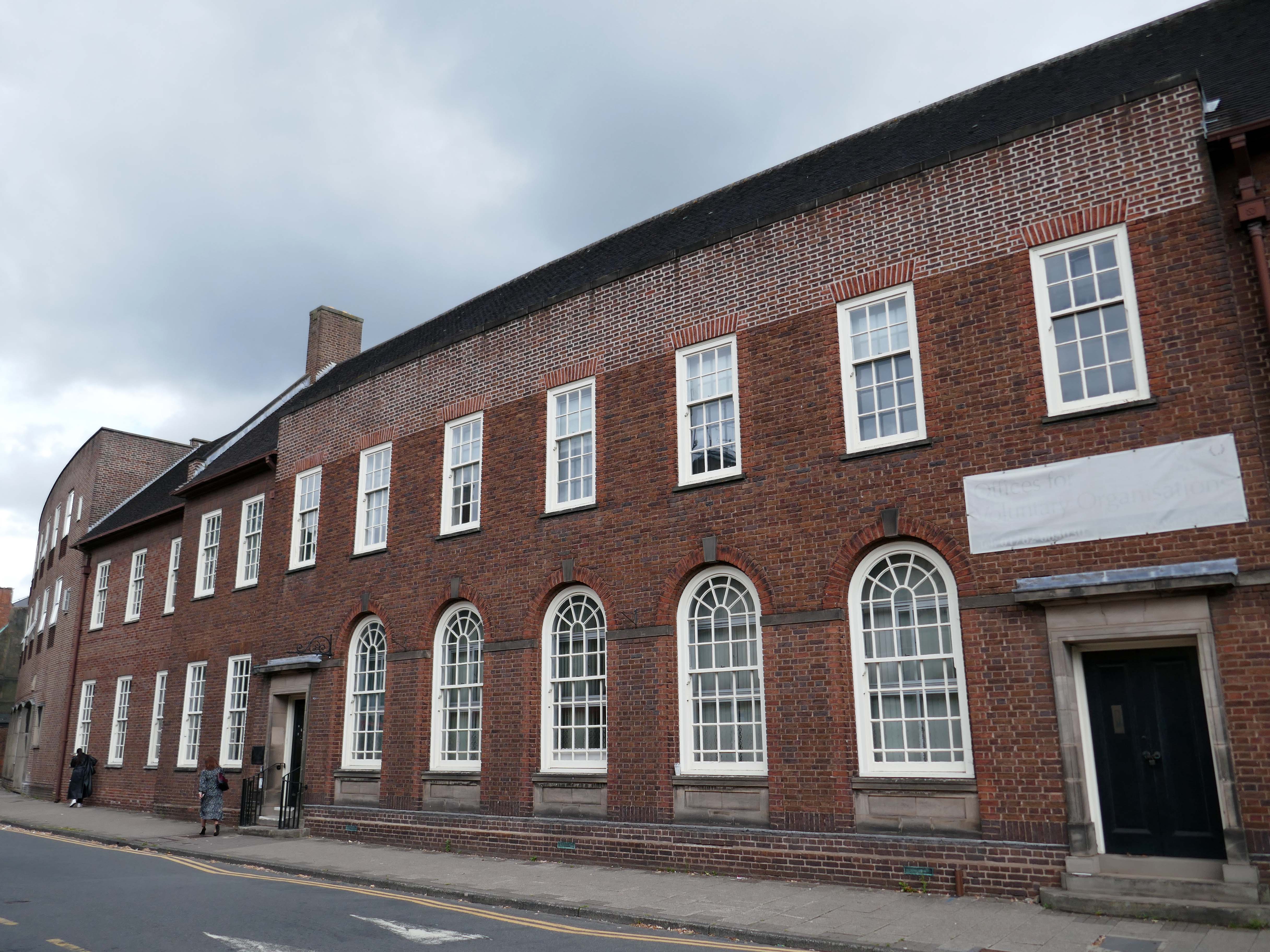
Adjoined by the County Records building.

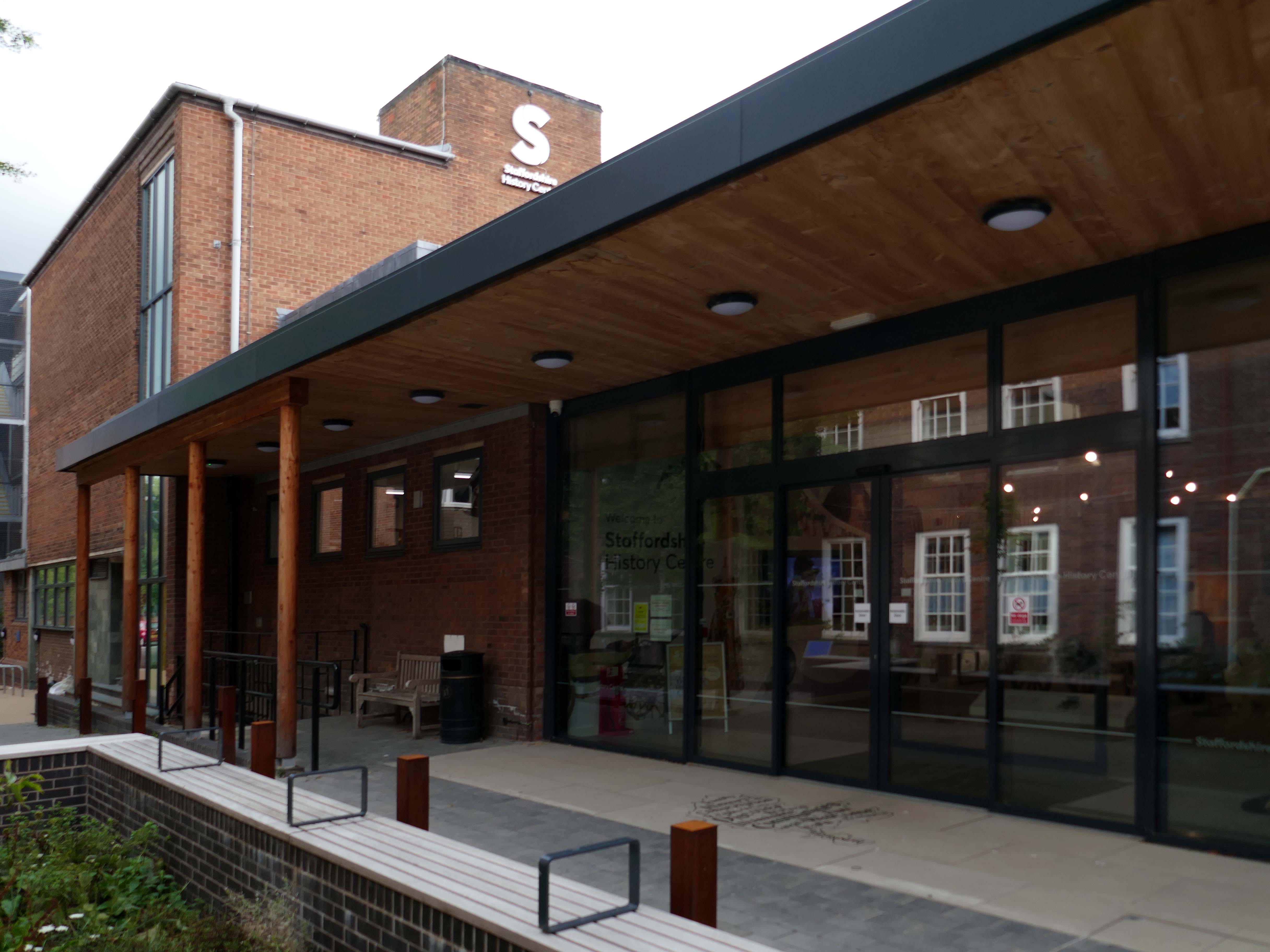
Pringle Richards Sharratt Architects have been appointed by Staffordshire County Council to create a new History Centre for Staffordshire and Stoke on Trent.

The new £4m centre will be located on Eastgate Street in Stafford and will hold historical records and collections up to 1,000 years old.

The scheme will help to provide a rejuvenated service combining the existing Records Office building and William Salt Library, in Stafford and provide a welcoming destination for all of those with an interest in local history. This will include bringing on to the Stafford site the Lichfield Records Office and aspects of the County museum.
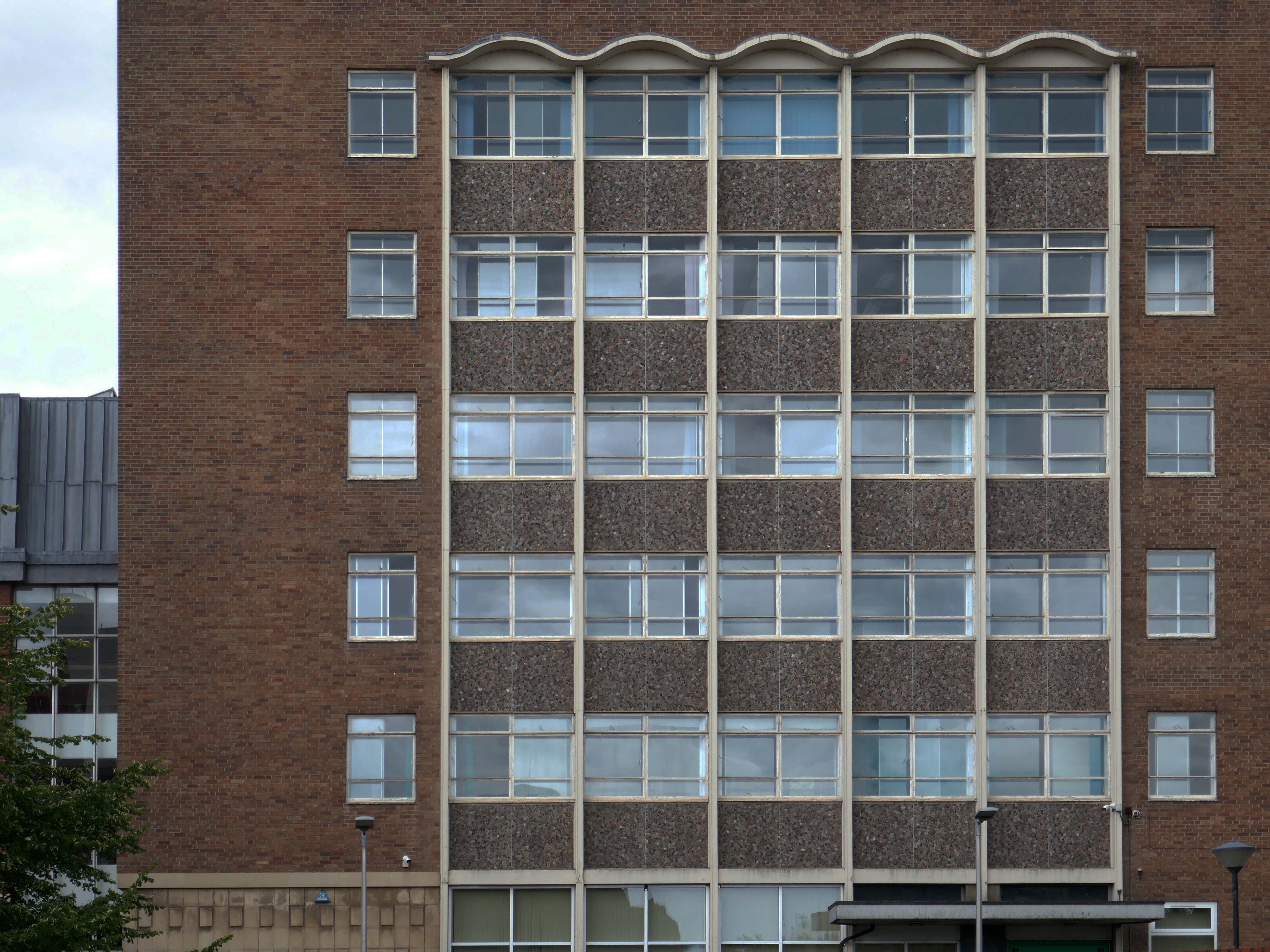
Further FoB in the Civic Building.
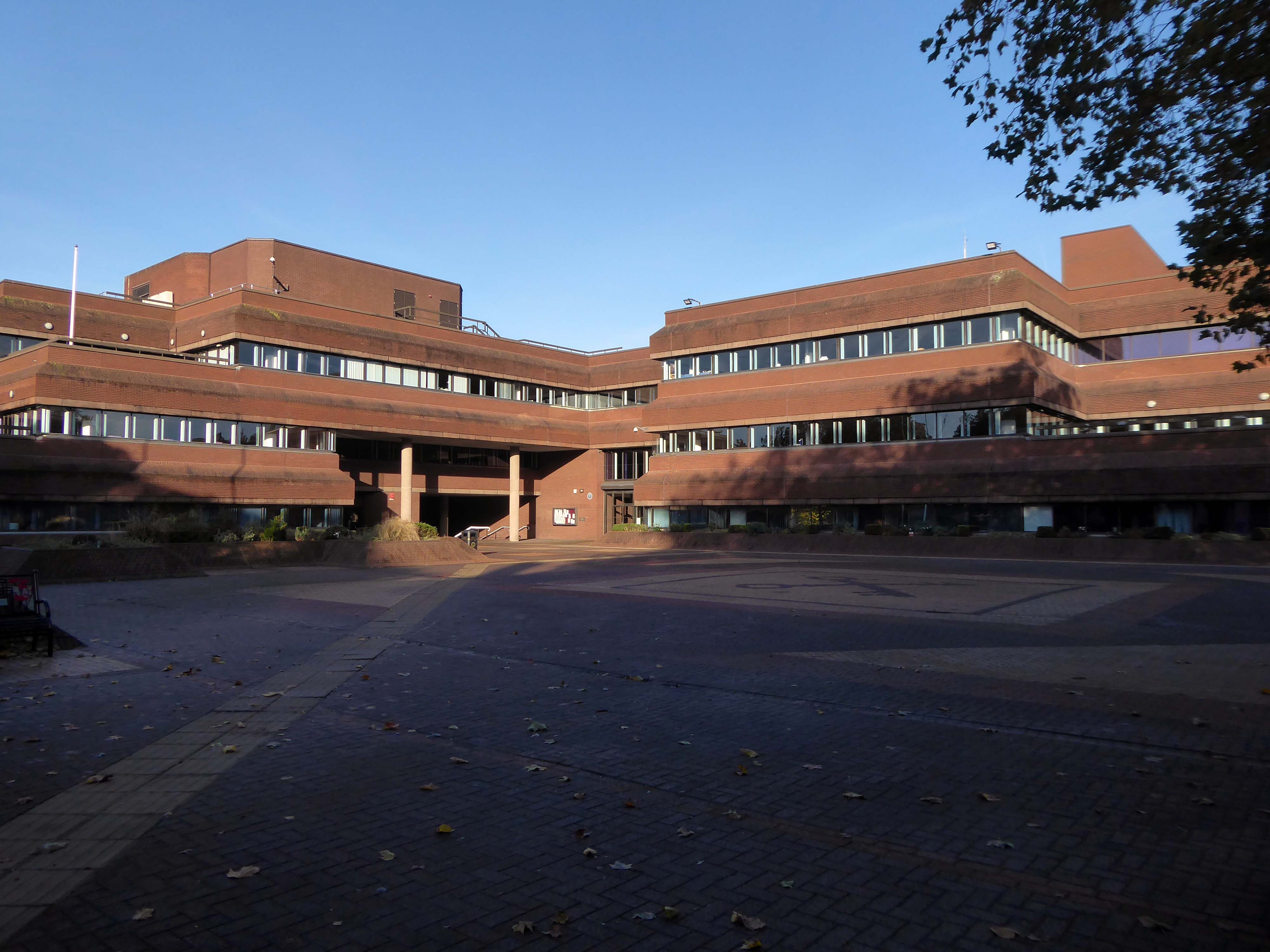
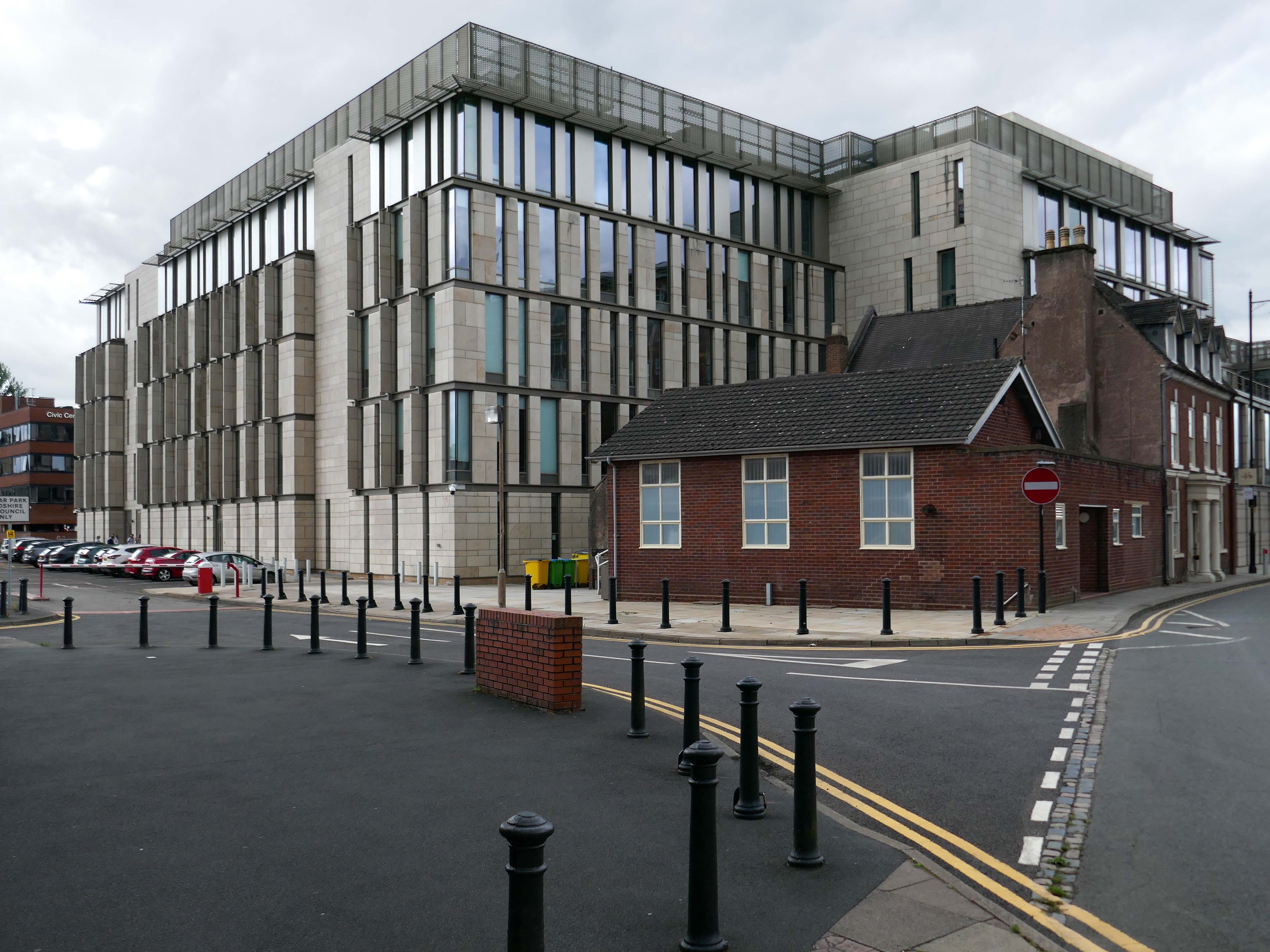
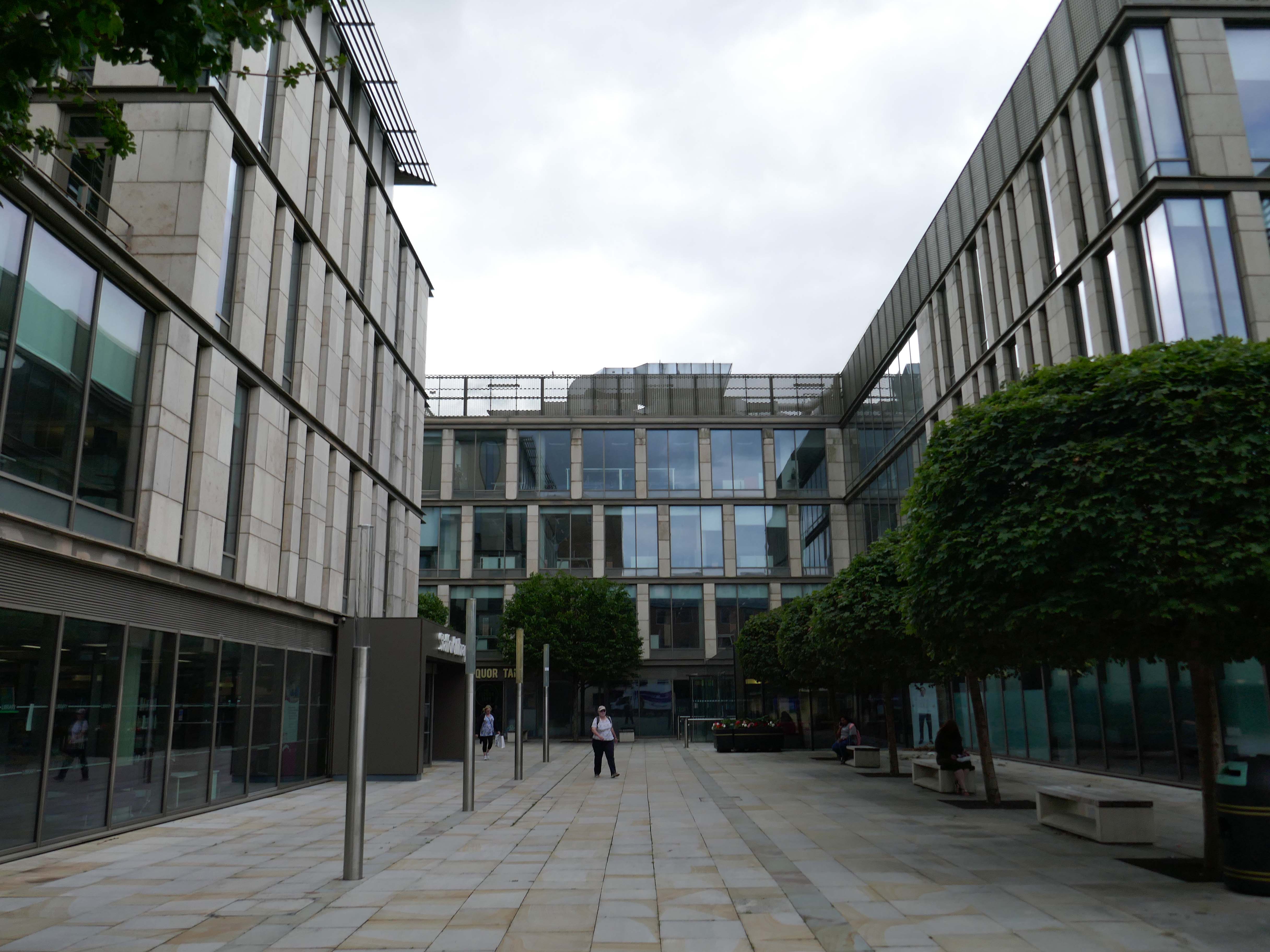
Close by the Staffordshire Place a civic and retail mixed use development.

Our scheme delivers 135,000 ft2 of high quality contemporary office space across two buildings linked by a new town square. The ground floor incorporates a mix of retail and leisure uses around
a sequence of smaller public spaces to maximise the amount of visible active frontage and create a natural extension to the town centre.

Sustainability issues fundamentally informed the design approach, from mitigating energy consumption to ‘future proofing’ the finished building. The building achieves a BREEAM ‘Excellent’ rating and a European Energy Performance of Buildings Directive Rating ‘A’.
3D Reid

Surprise surprise another retail development Riverside.

£70m riverside town centre retail and leisure development in the heart of Stafford. The 230,000 sq. ft. scheme anchored by M&S will deliver 18 retail units arranged over ground and first floors, five leisure units and a six-screen cinema to complement and strengthen the town centre economy and create new businesses and jobs.
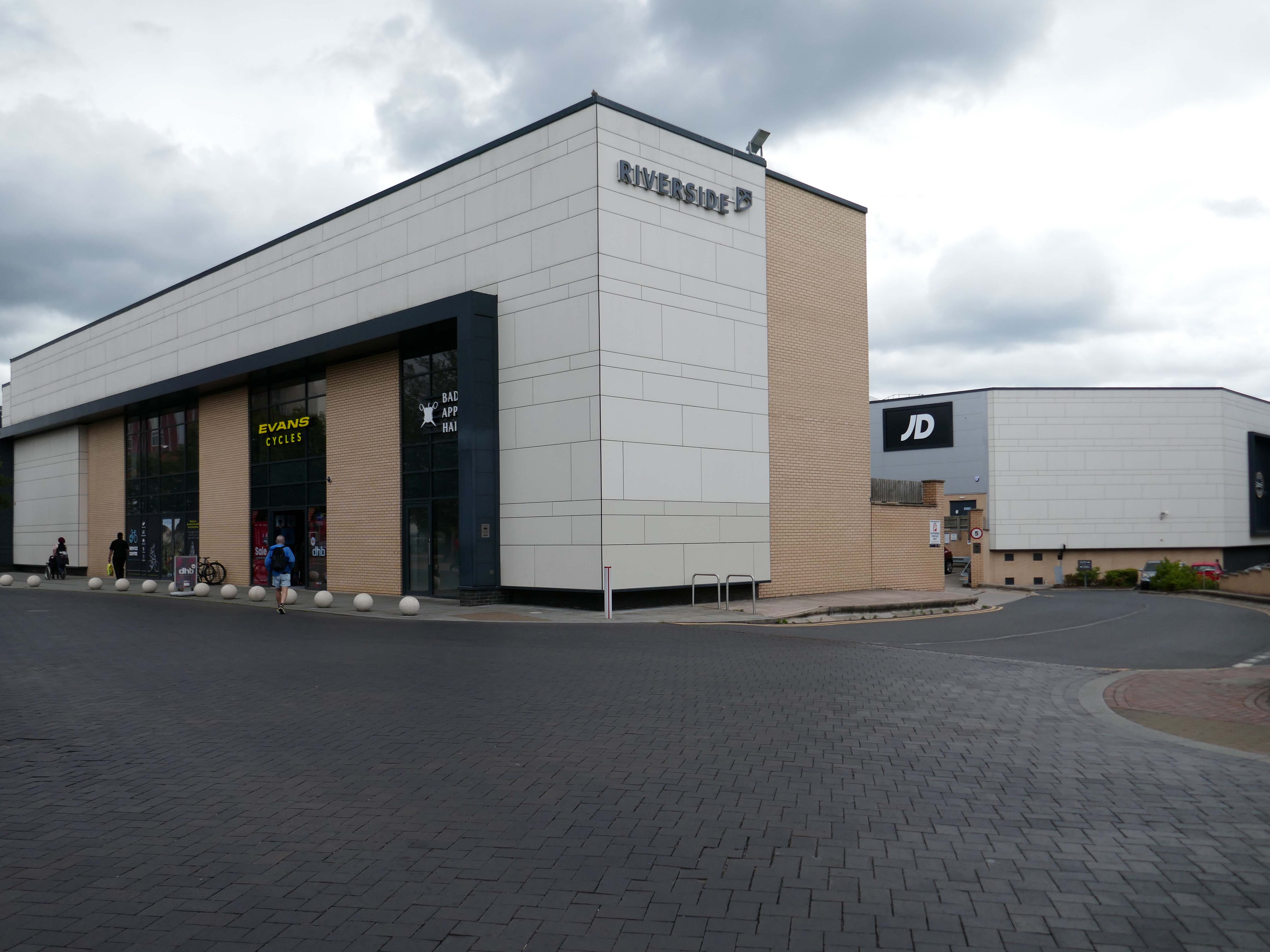
Harris Partnership

Stafford’s £100 million Riverside development was officially launching today with two high street chains open for business on August 4th 2016.

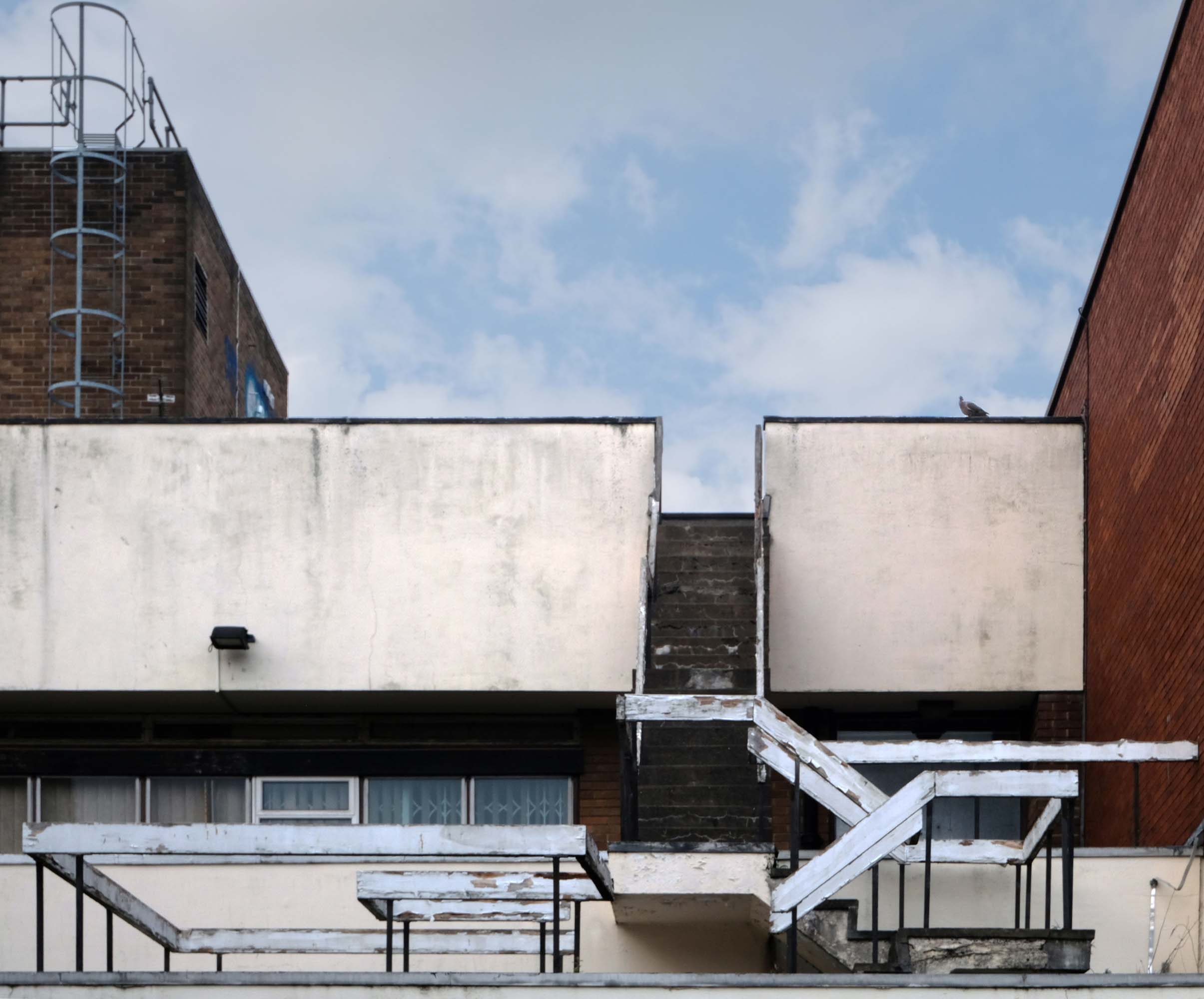
None of this can detract from the monolithic complex Telephone Exchange.
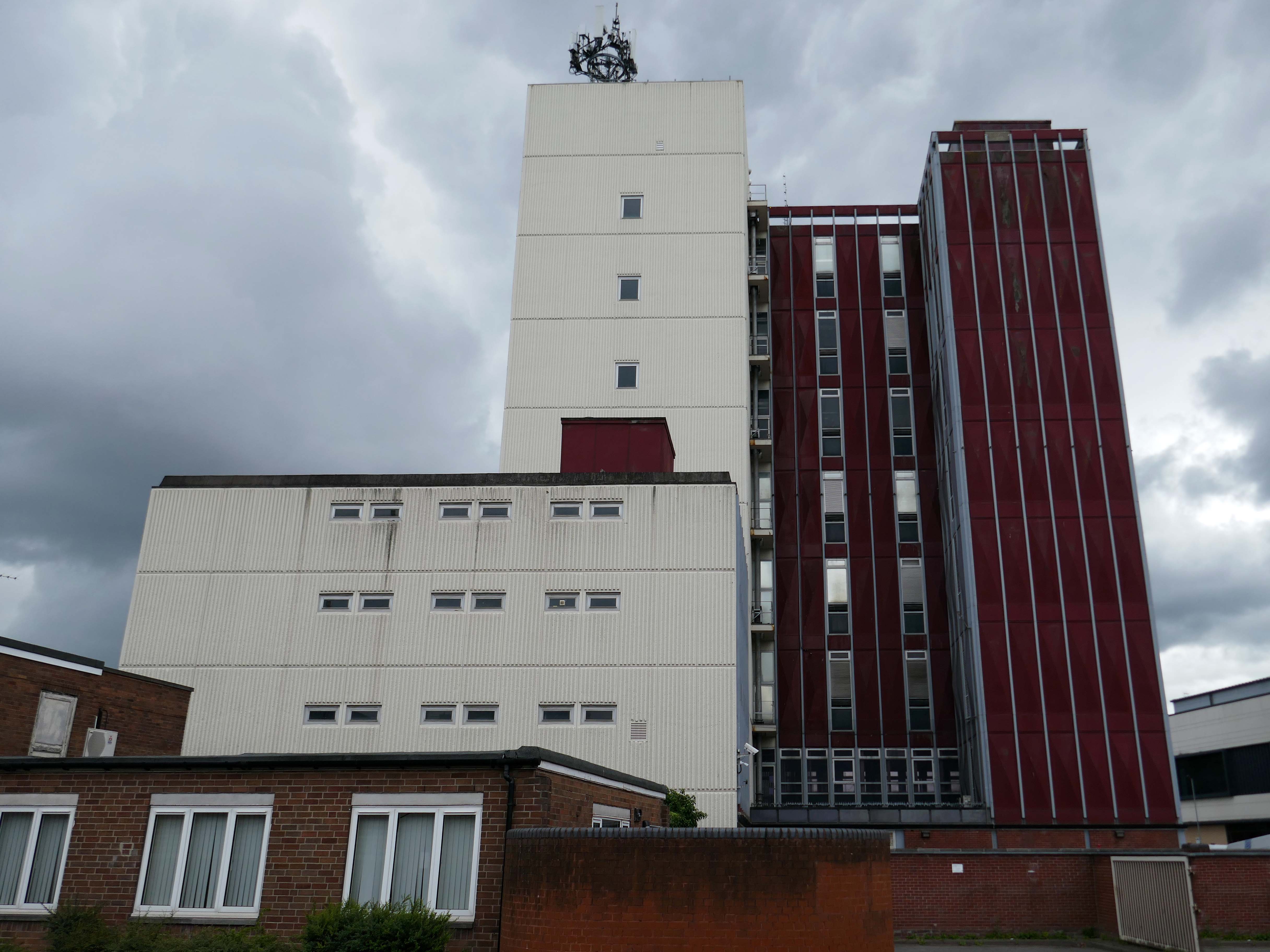
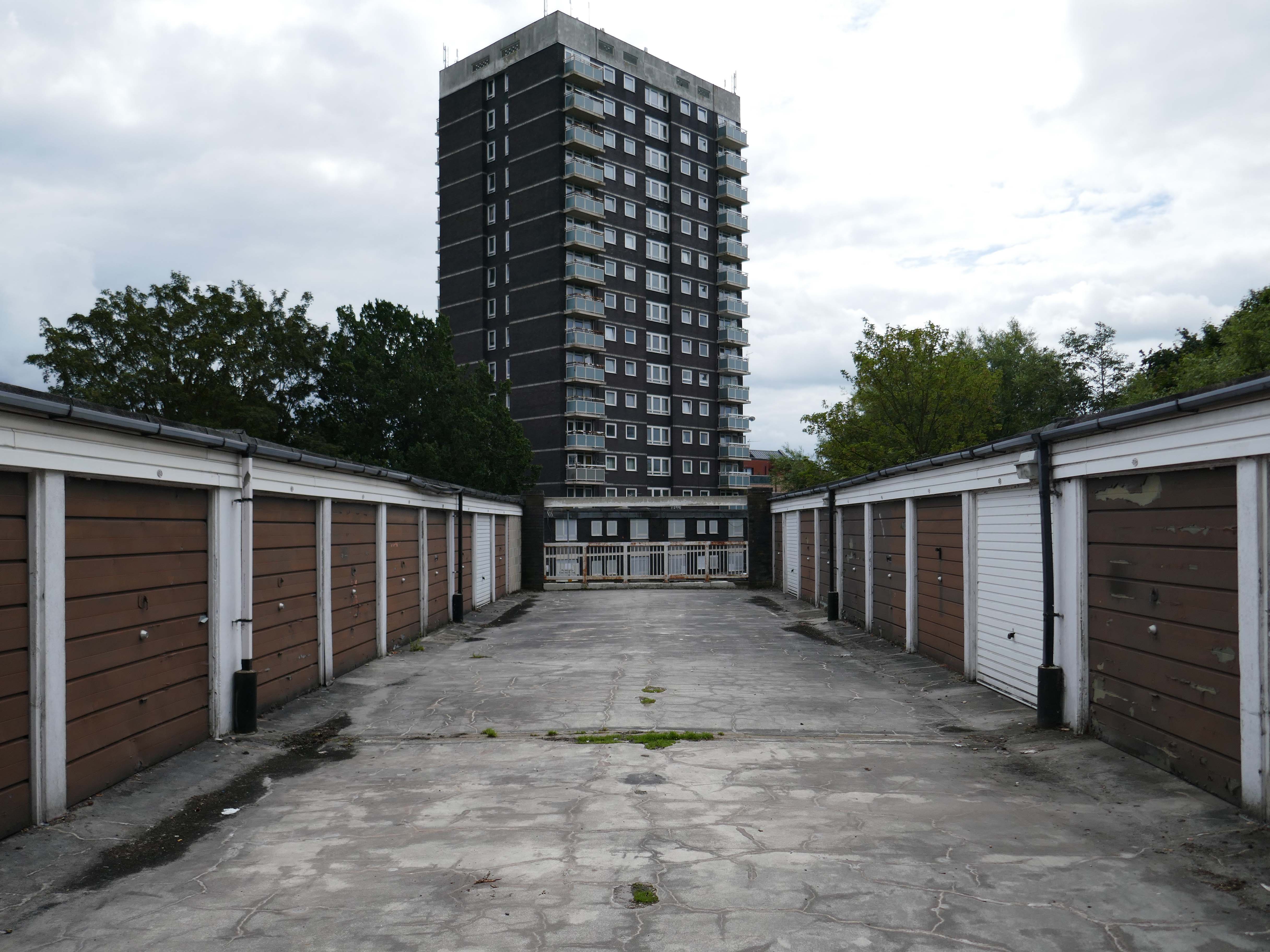
Onwards across the main road past the Asda and up the road to Pennycrofts Court.
Featuring a split level garage facility.
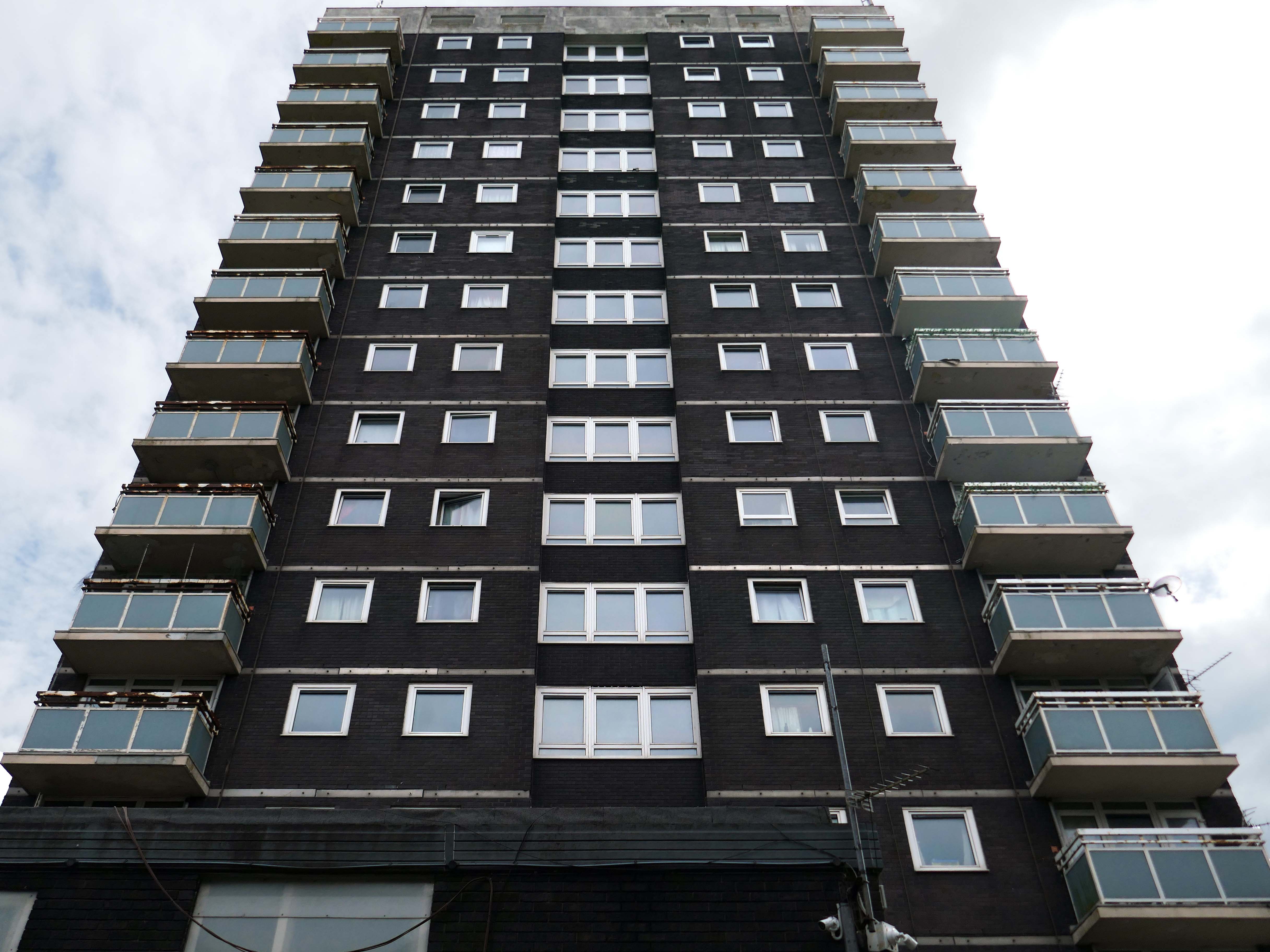
The just around the corner this little corner of Vienna in Stafford – Corporation Street Flats.
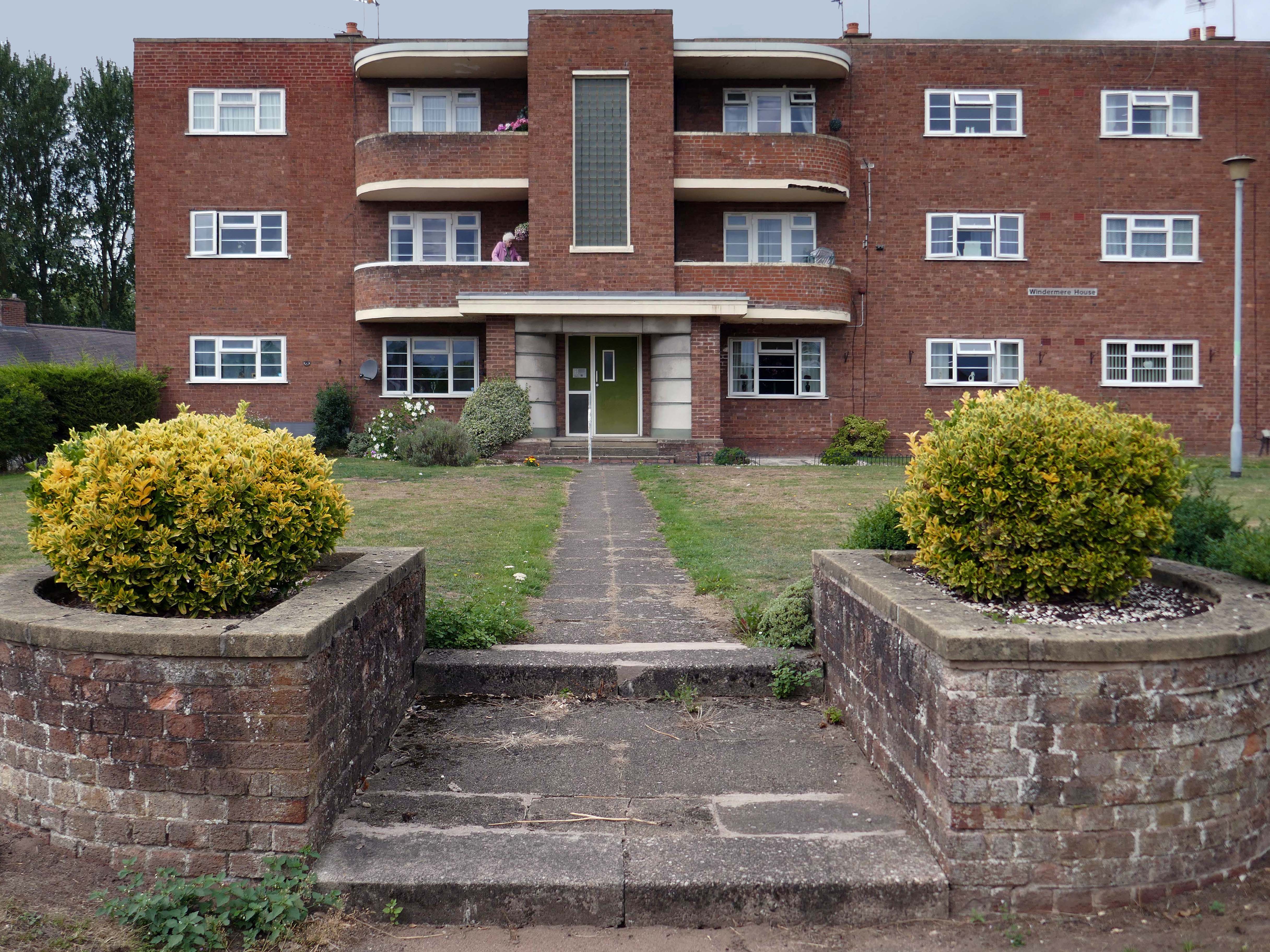
Coniston, Windemere and Rydal were among the first council homes to be built in Stafford, between 1951-52, under the direction of County Architect CM Coombes.

The flats were built as a result of The Housing – Financial and Miscellaneous Provisions Act 1946, which gave subsidies to local authorities to provide social housing. The expansion of the Borough Council’s civic duties included the employment of County Architects, in this case CM Coombes FRIBA, to whom these flats are attributed. 

54 flats were built in total, to a distinctly Modernist design, and their appearance and setting are very well preserved.

Let’s head back into the town centre – to the Grade II Listed Picture House 1914

Architectural alterations made by: Captain Fred Campbell in 1930.
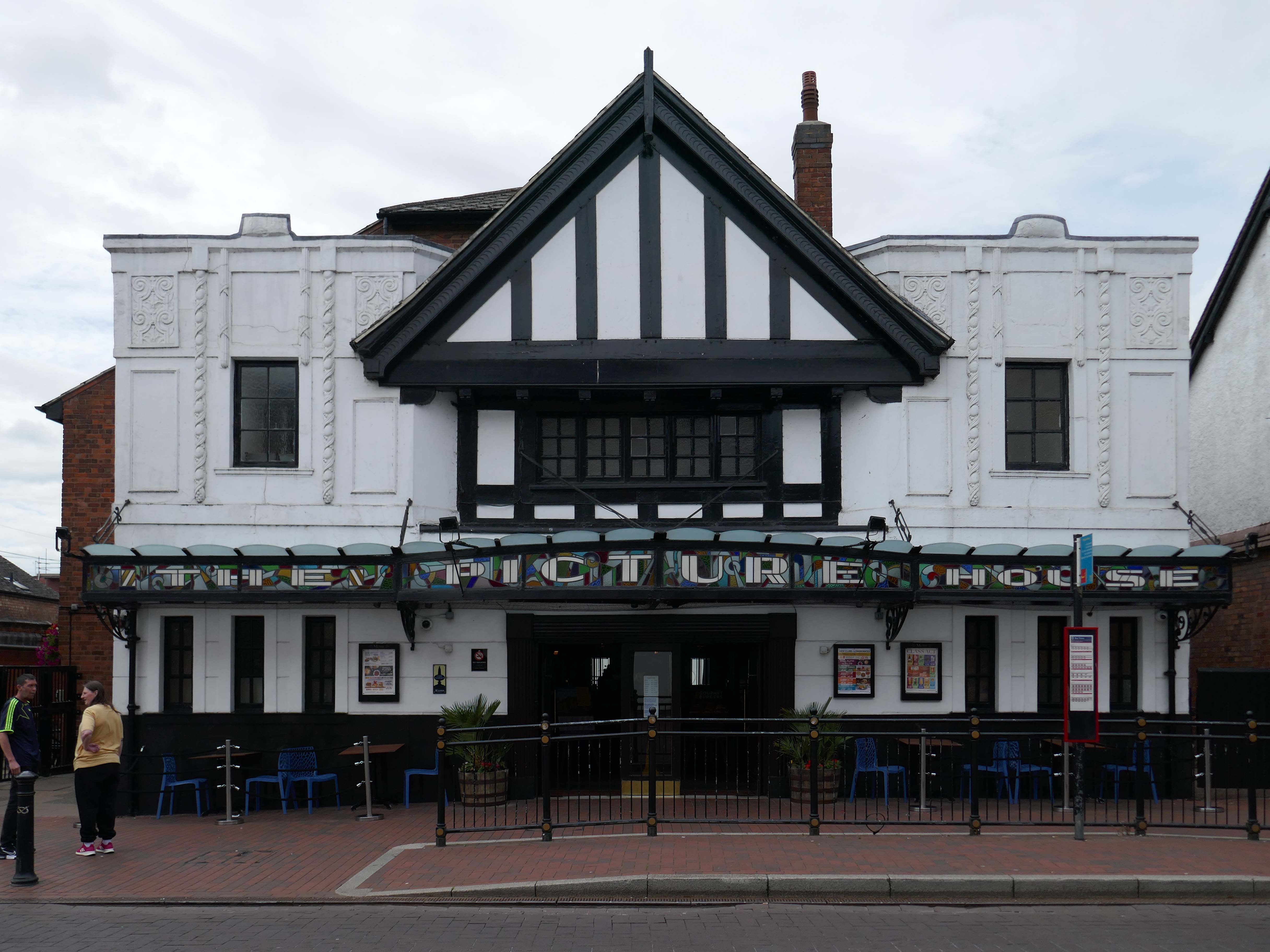
The Picture House was closed on 30th March 1995 after a three week run of Disclosure starring Michael Douglas, there were seventy eight attending the final performance.

Cinema Treasures.

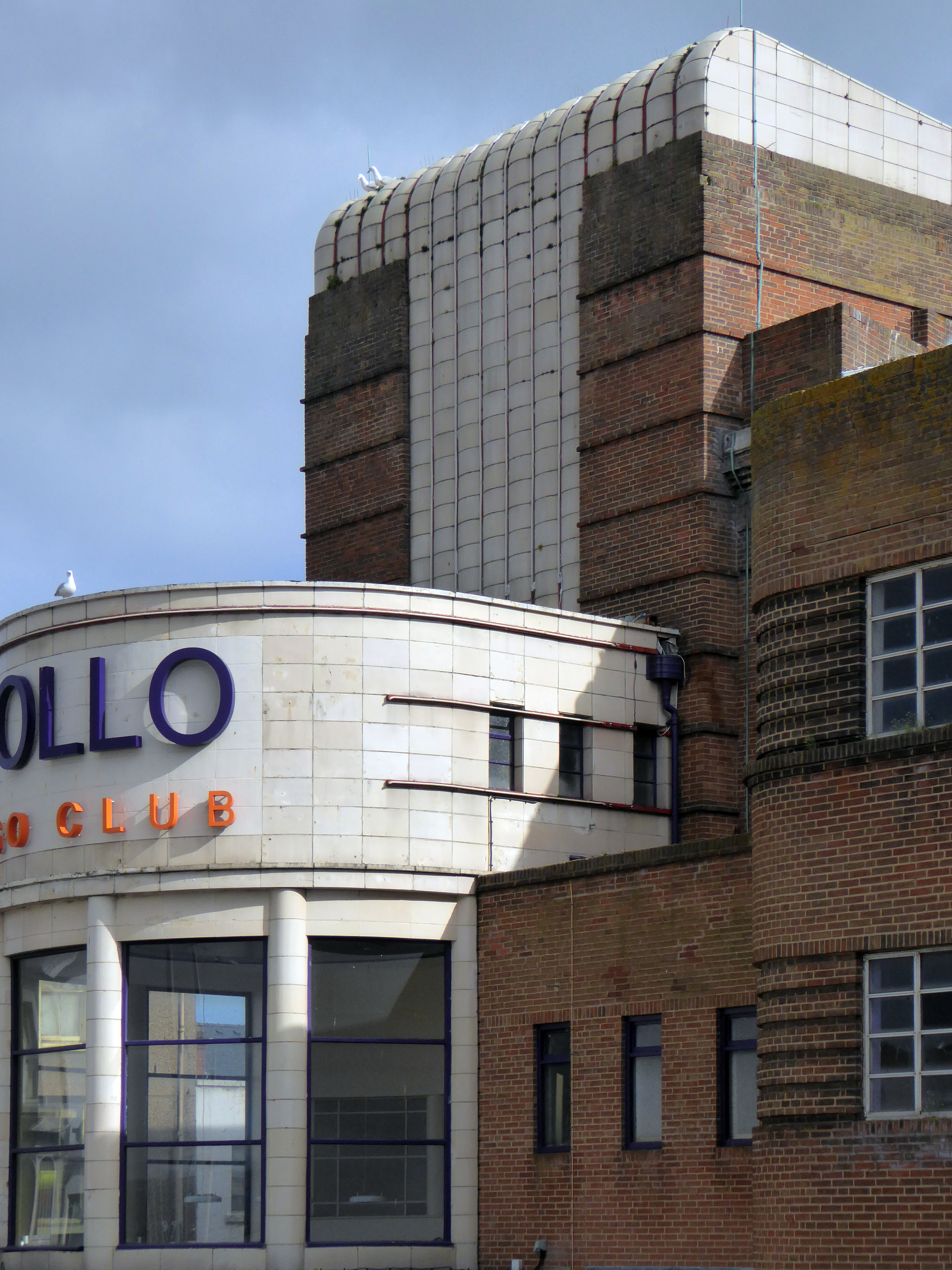
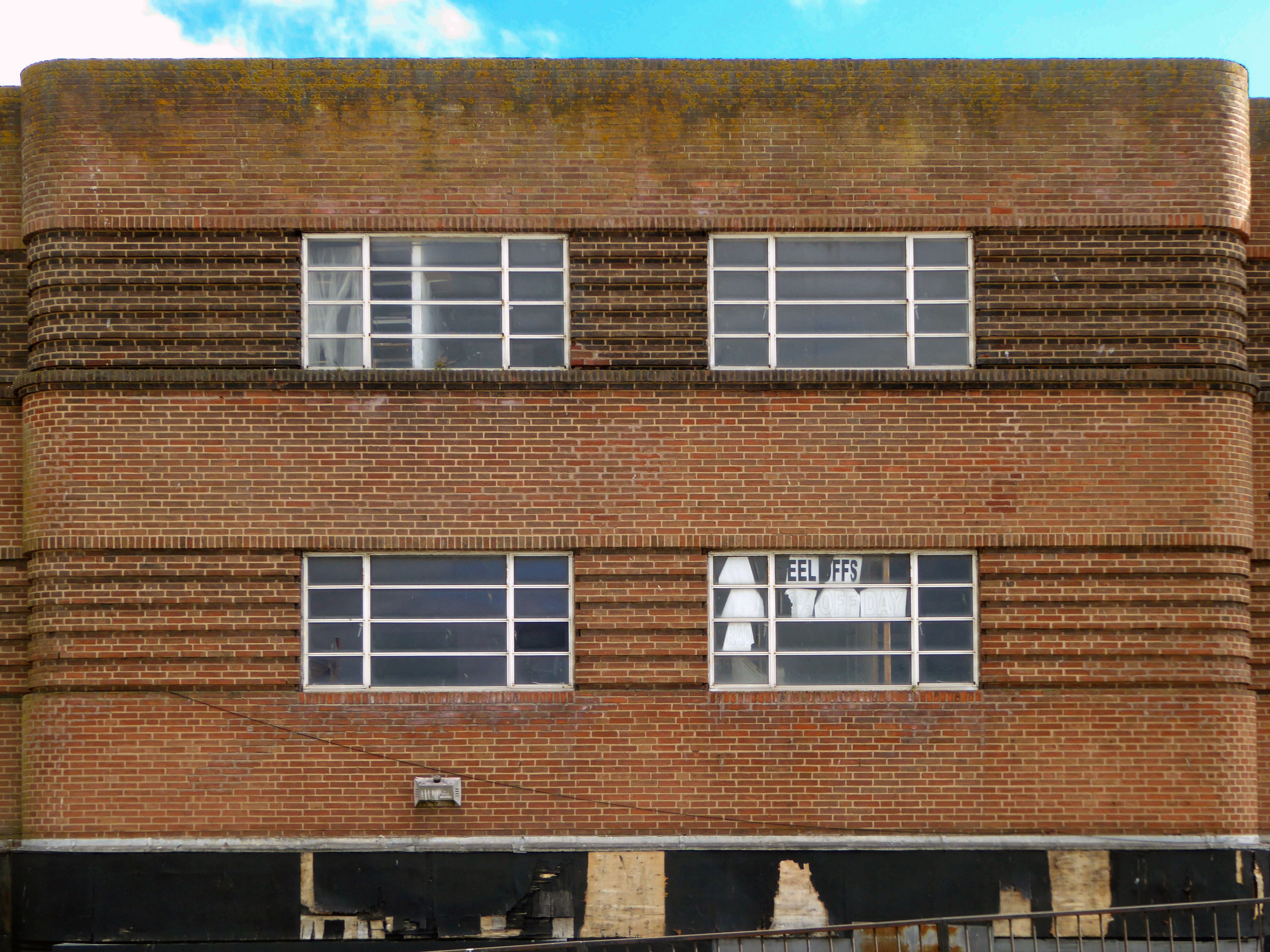
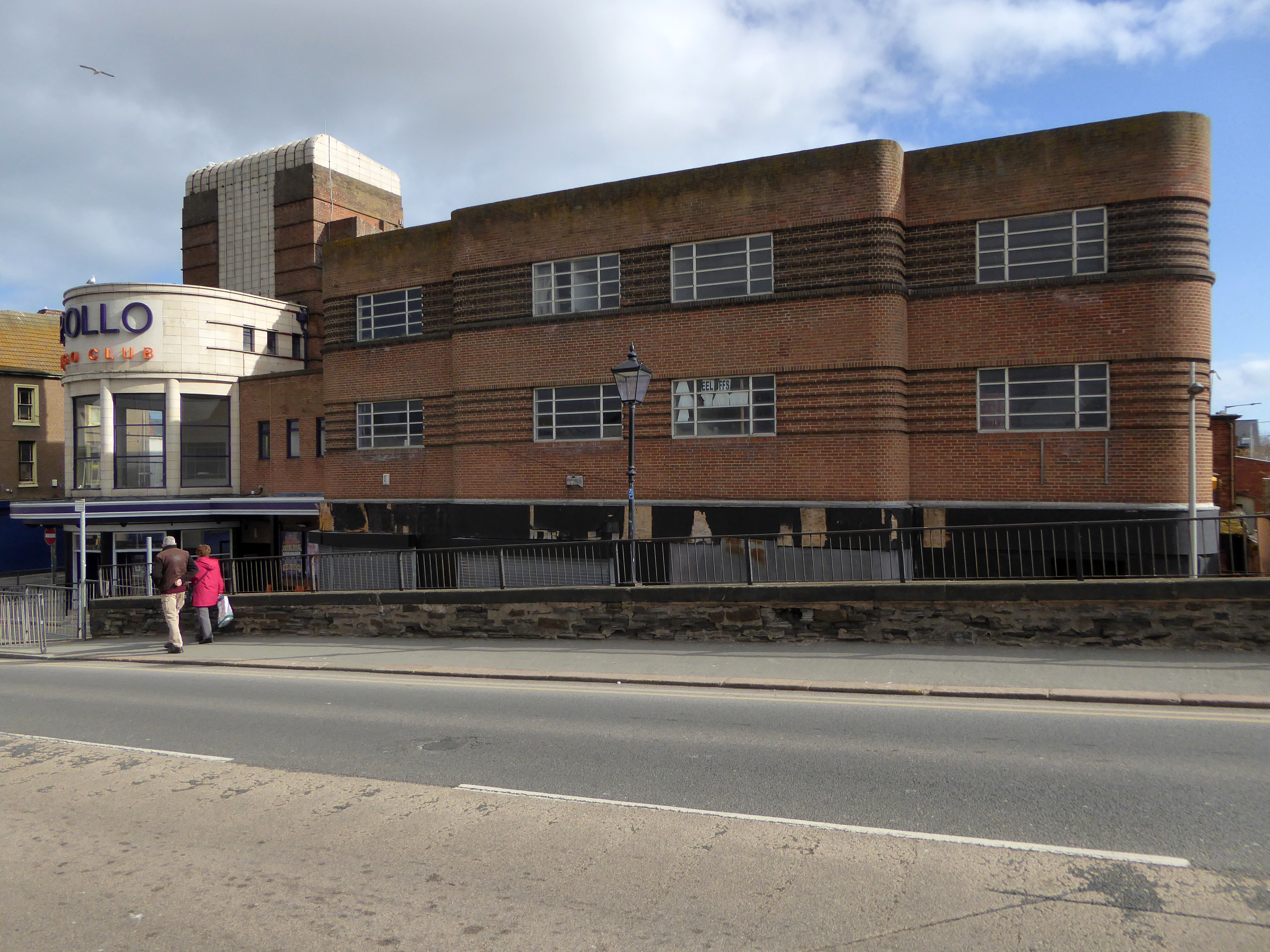
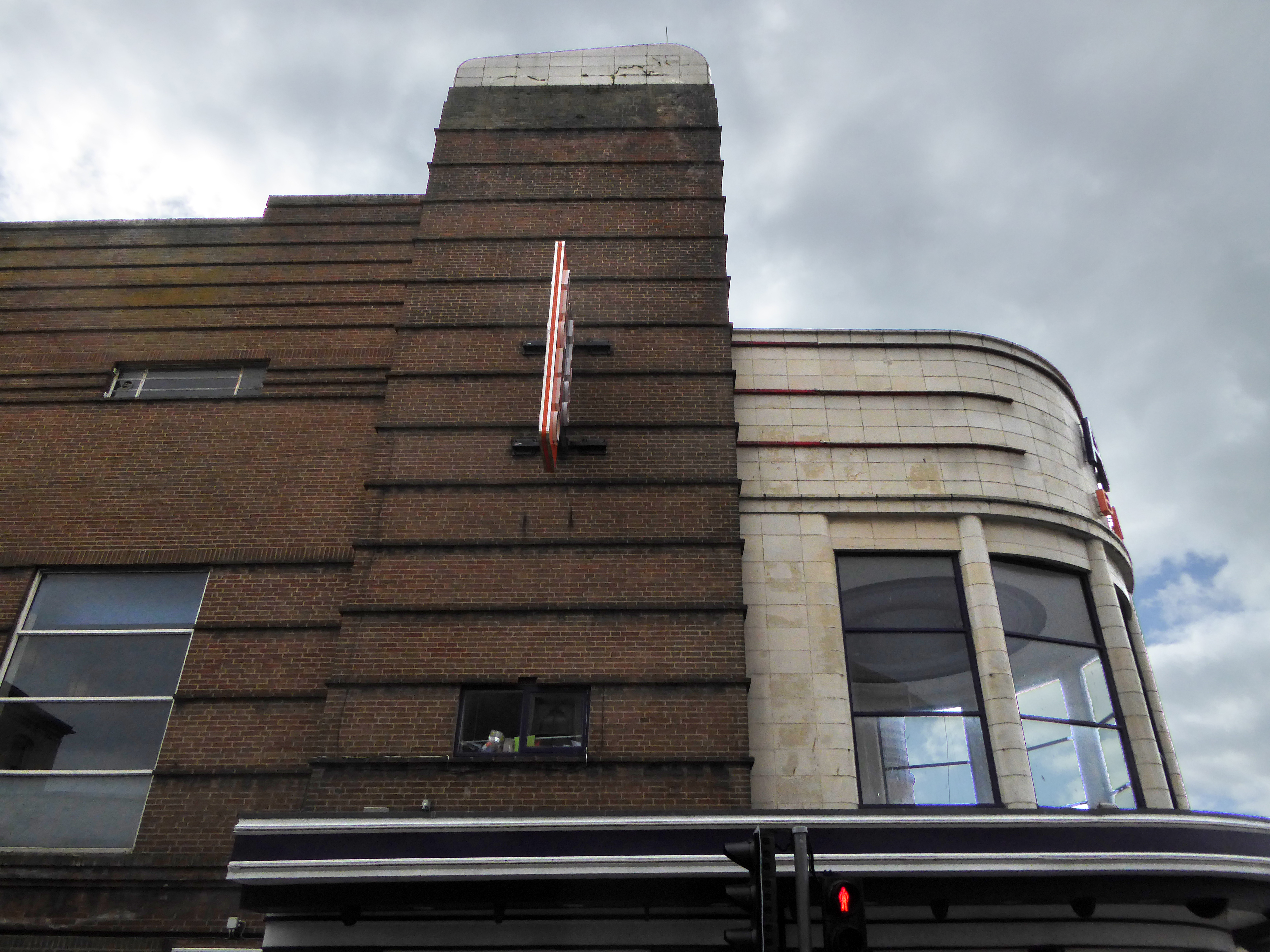
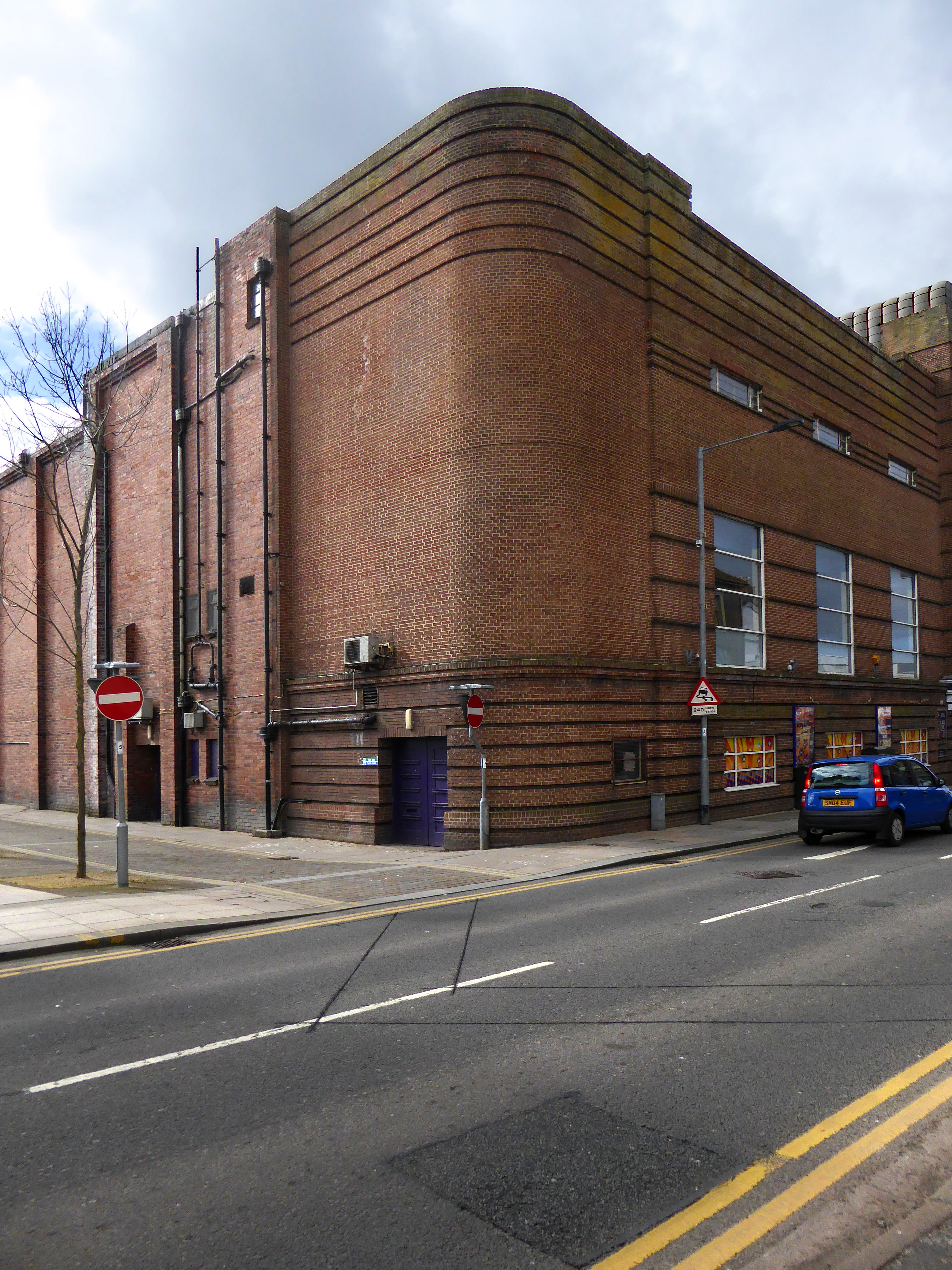
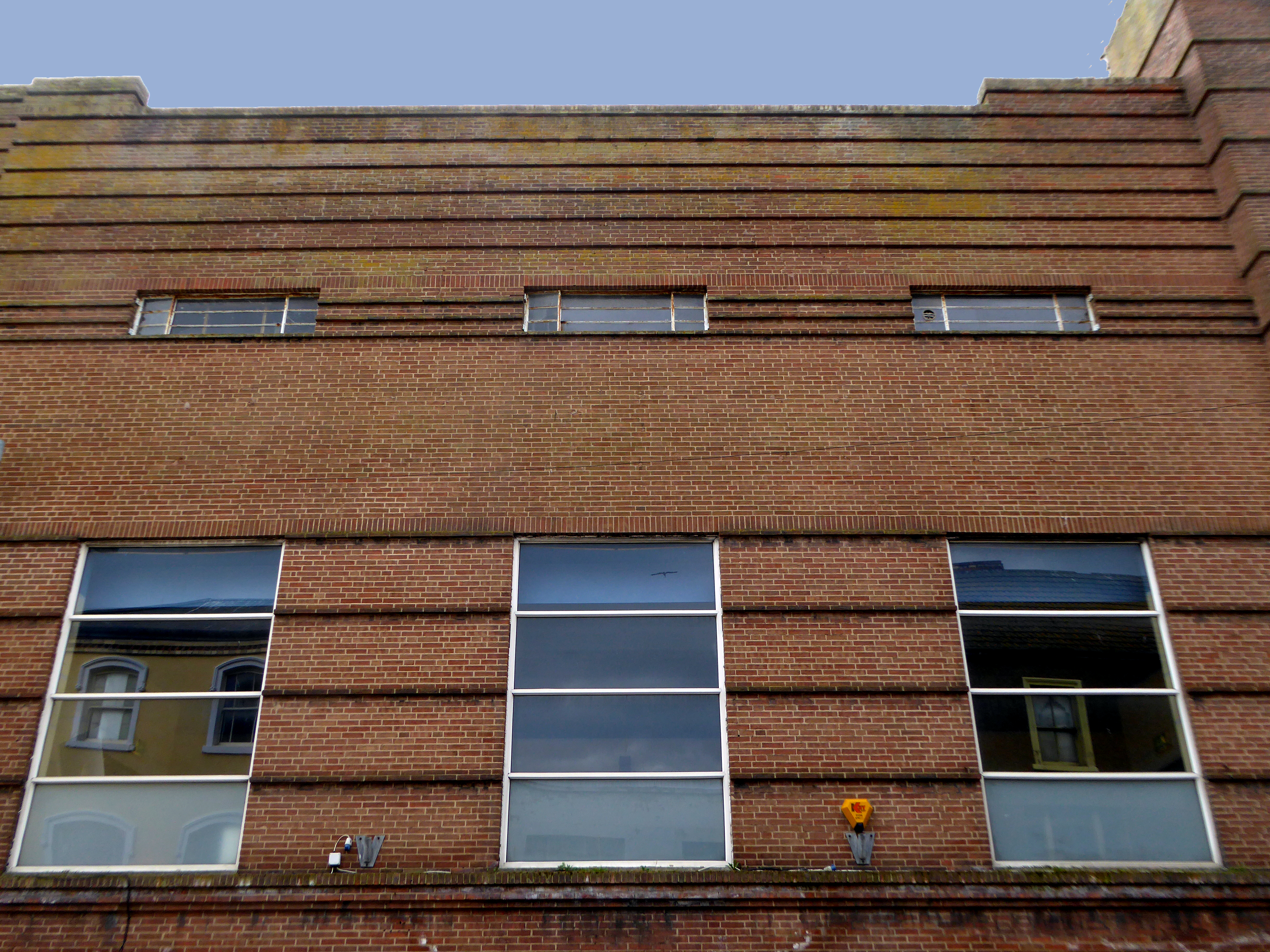
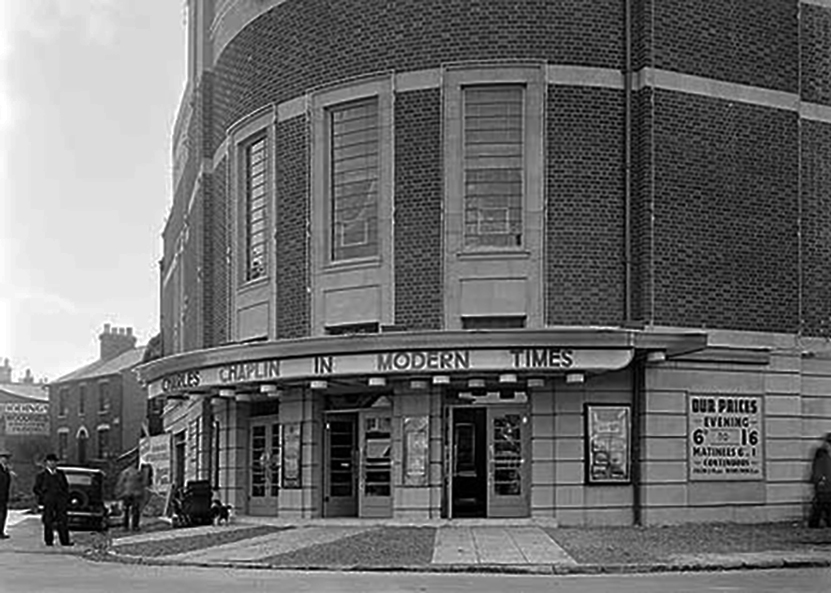
Close by the former Odeon

Architects: Roland Satchwell 1936
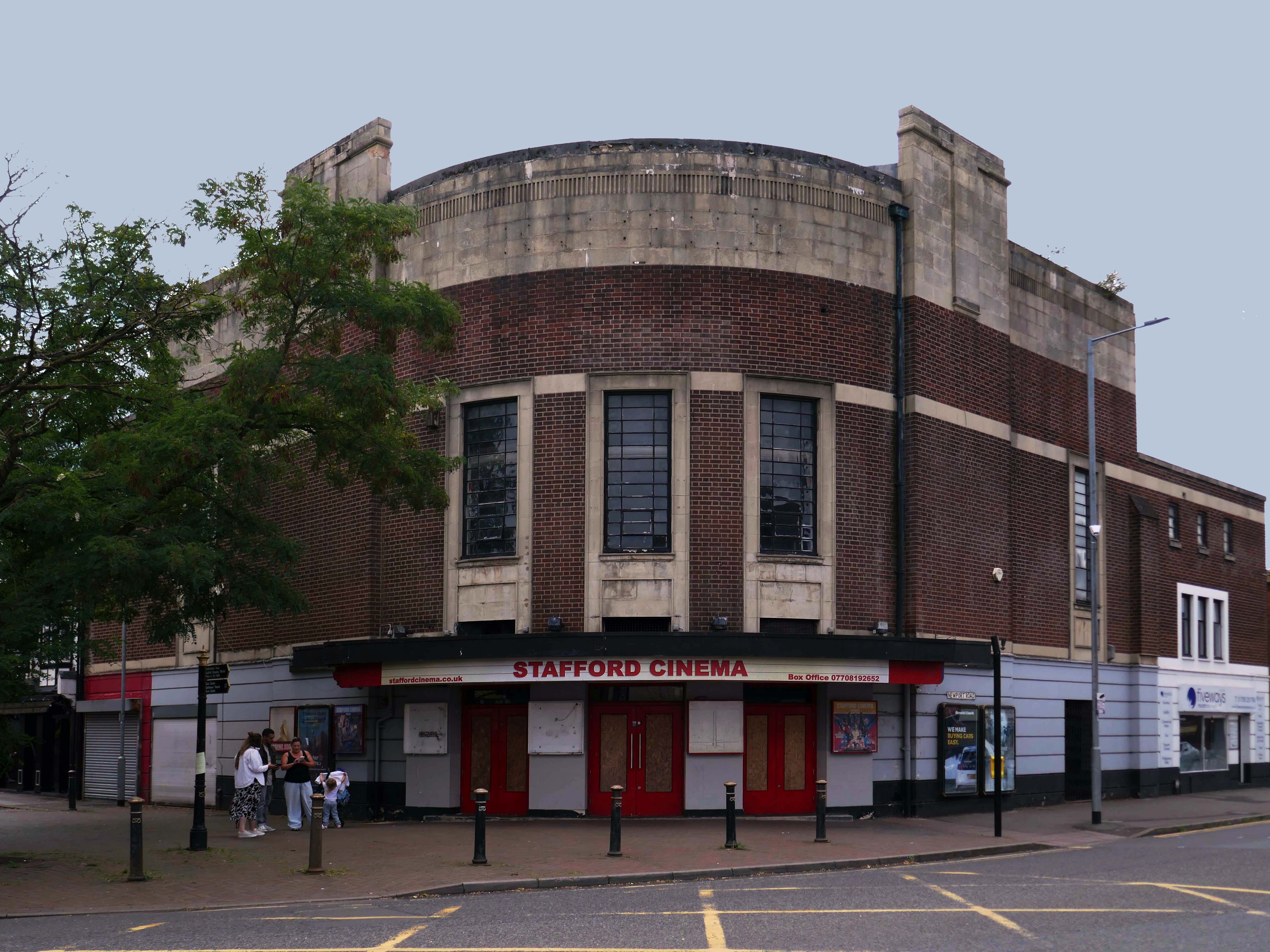
It was disposed of by the Rank Organisation in July 1981 and was taken over by the Hutchinson Leisure Group who re-named it Astra Cinema. In December 1981 it was tripled with 435 seats in the former stalls and two mini cinemas in the former circle seating 170 and 168.

In 1988 it was taken over by Apollo Cinemas and re-named Apollo Cinema. The downstairs cinema was closed and became a bingo club for a couple of years, during which time the two mini cinemas in the former circle remained open. The bingo operation gave way to films again in 1990 and all three screens were again open, with seating for 305, 170 and 164. In January 2014 it was taken over by the Curzon Cinemas chain and renamed Stafford Cinema.

It was closed on 18th December 2017 with Star Wars:The Last Jedi.
Cinema Treasures

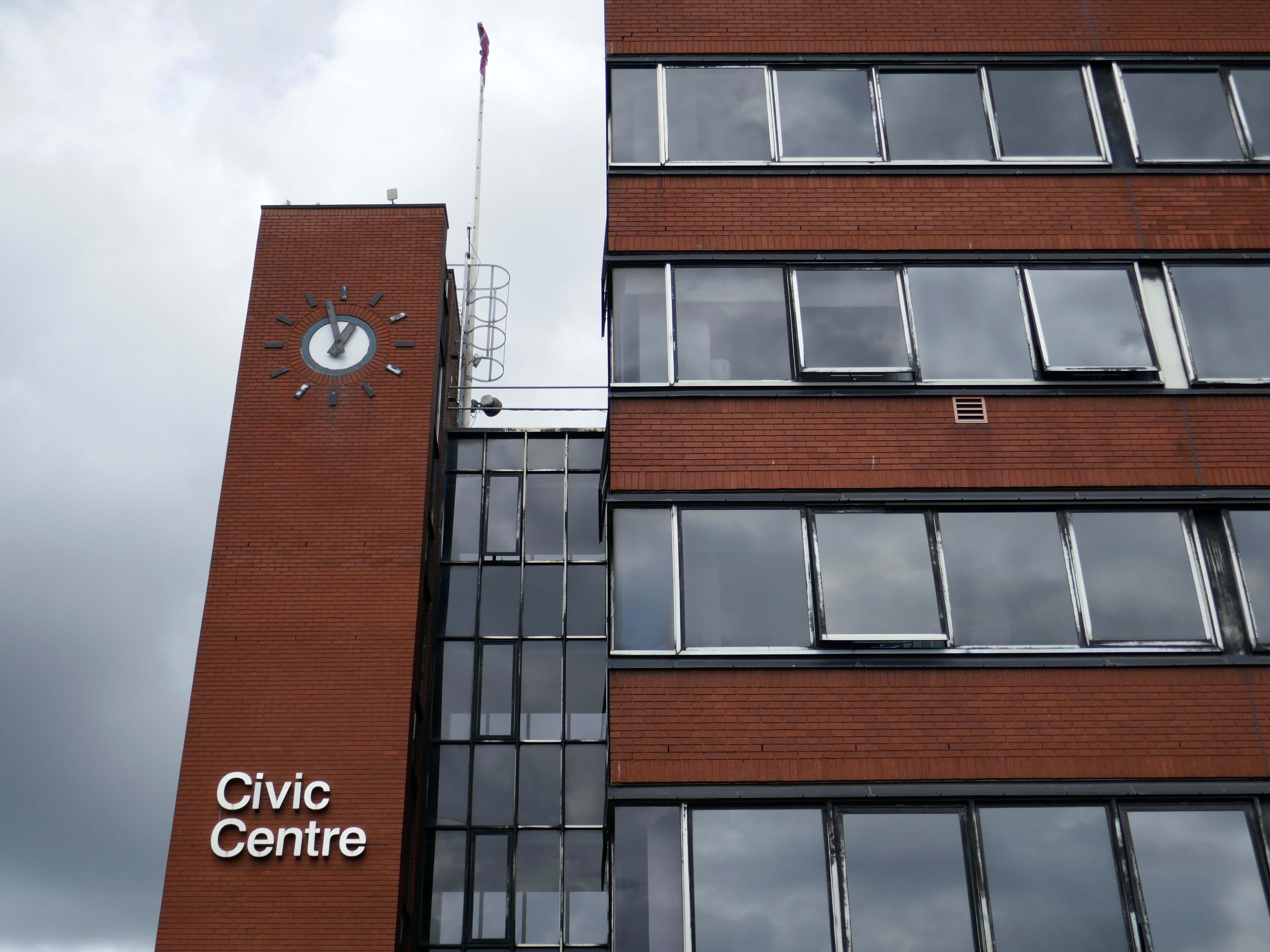
Onwards but backwards to the Civic Centre.
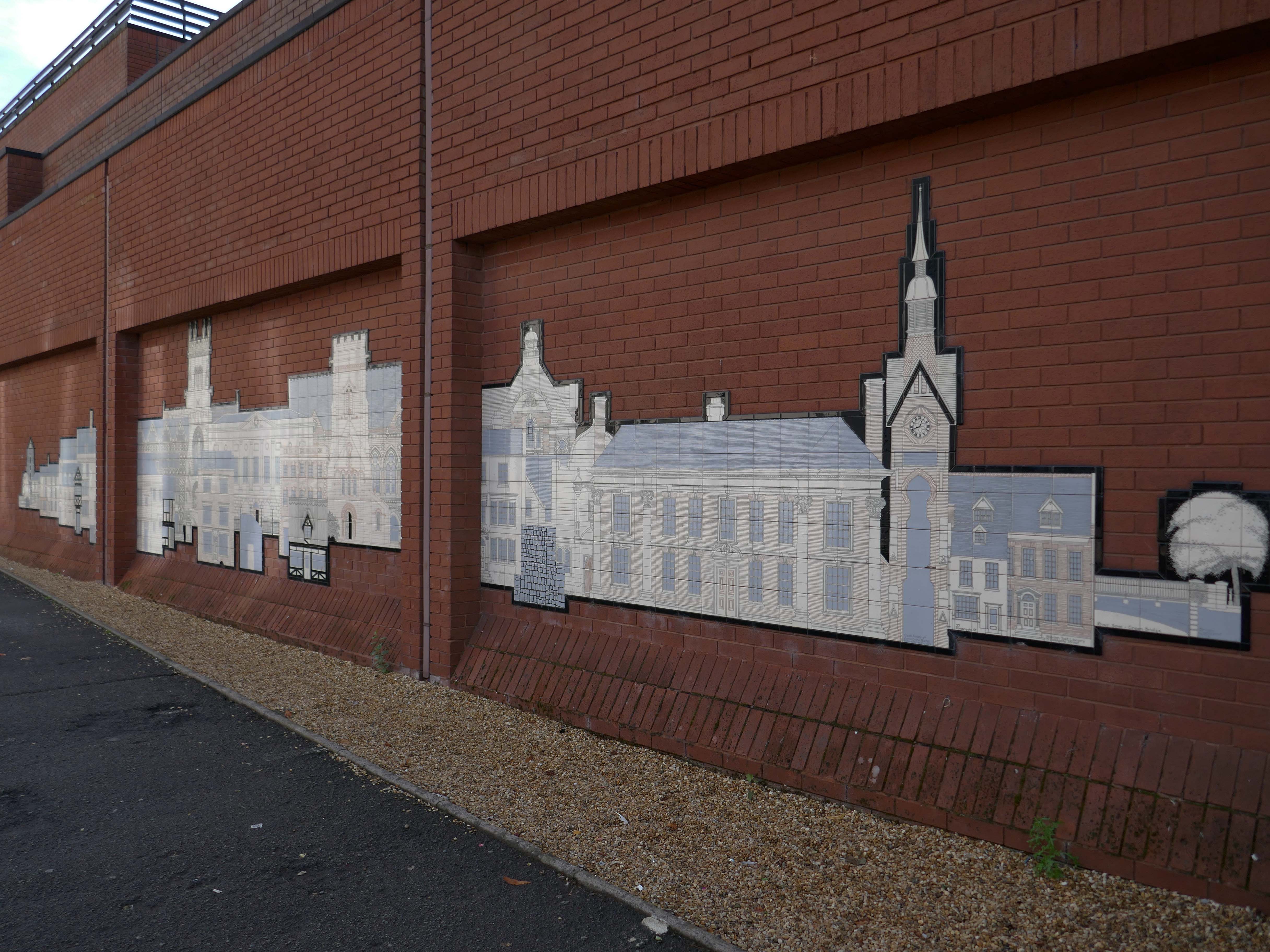
Tiled mural by Brian Lambert 1979
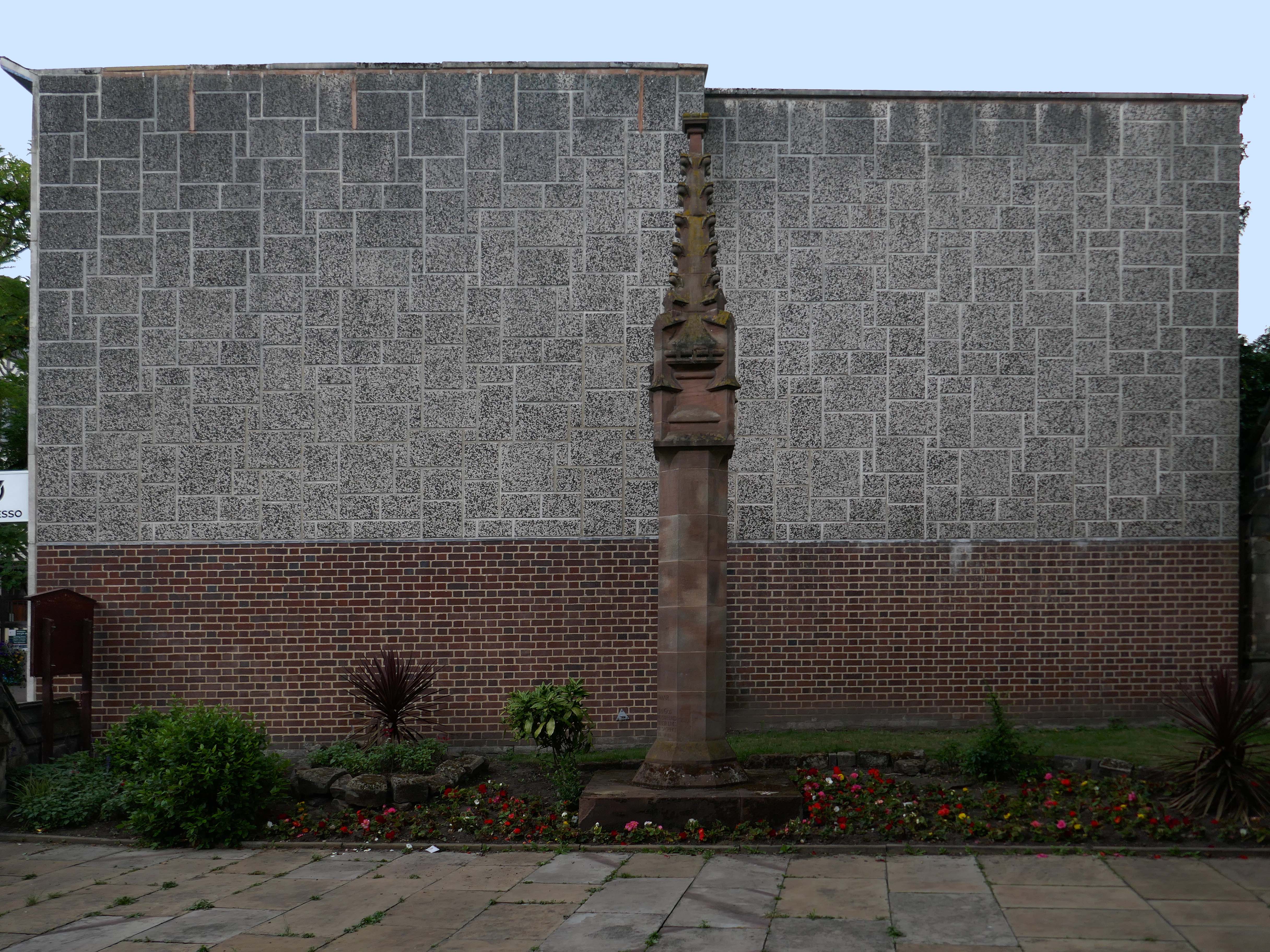
Finally arriving at this lively aggregate gable.
Wolverhampton Walk

Architects: Austin Smith Lord

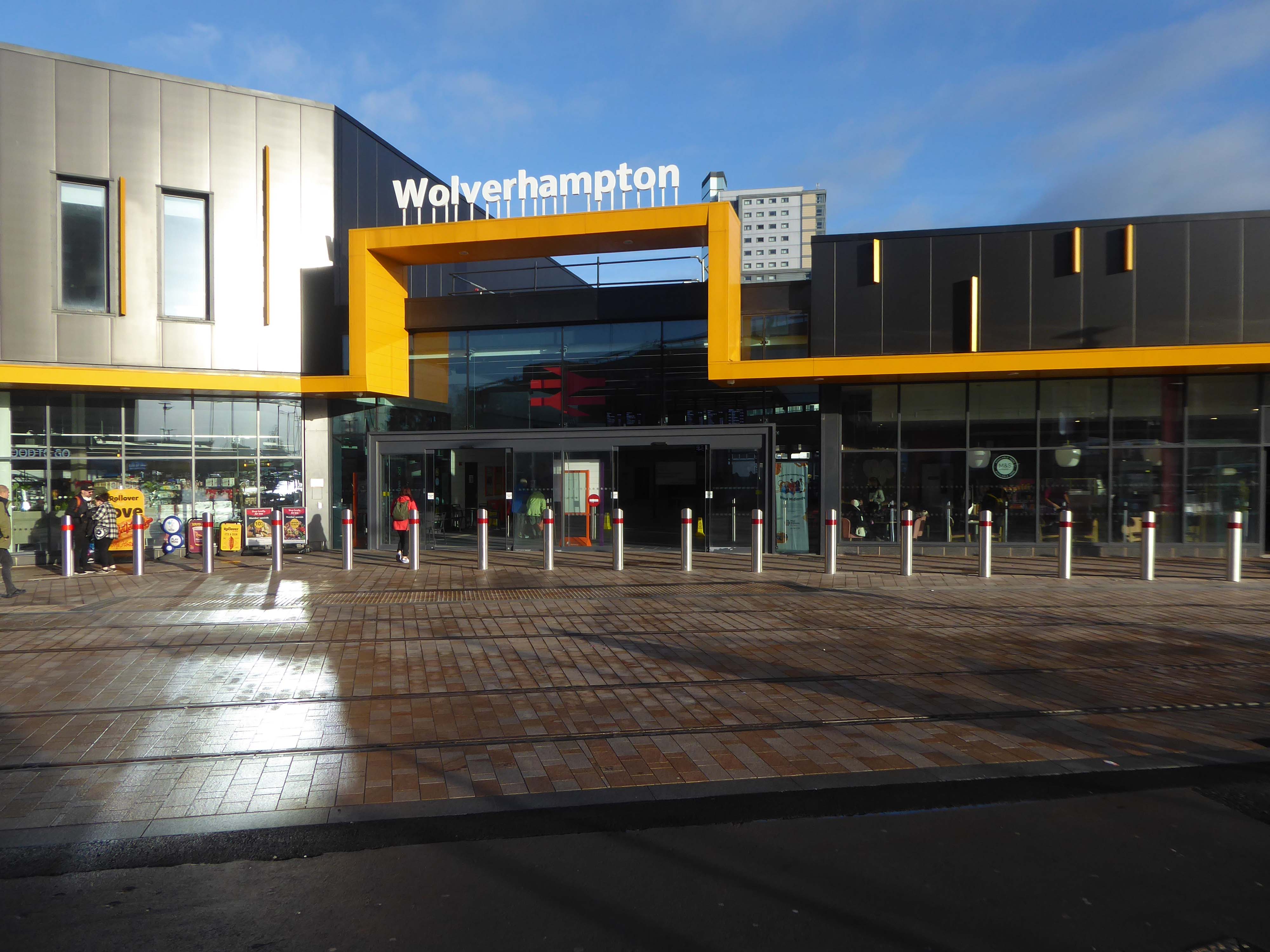
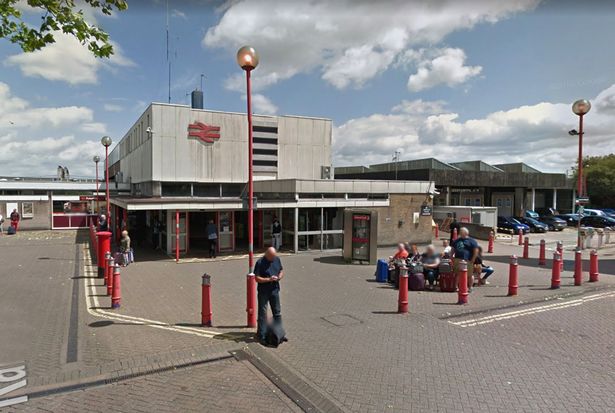
We begin at the Railway Station – recently refurbished, overwriting its 60s iteration – completely rebuilt by the architect Ray Moorcroft as part of the modernisation programme which saw the West Coast Main Line electrified.

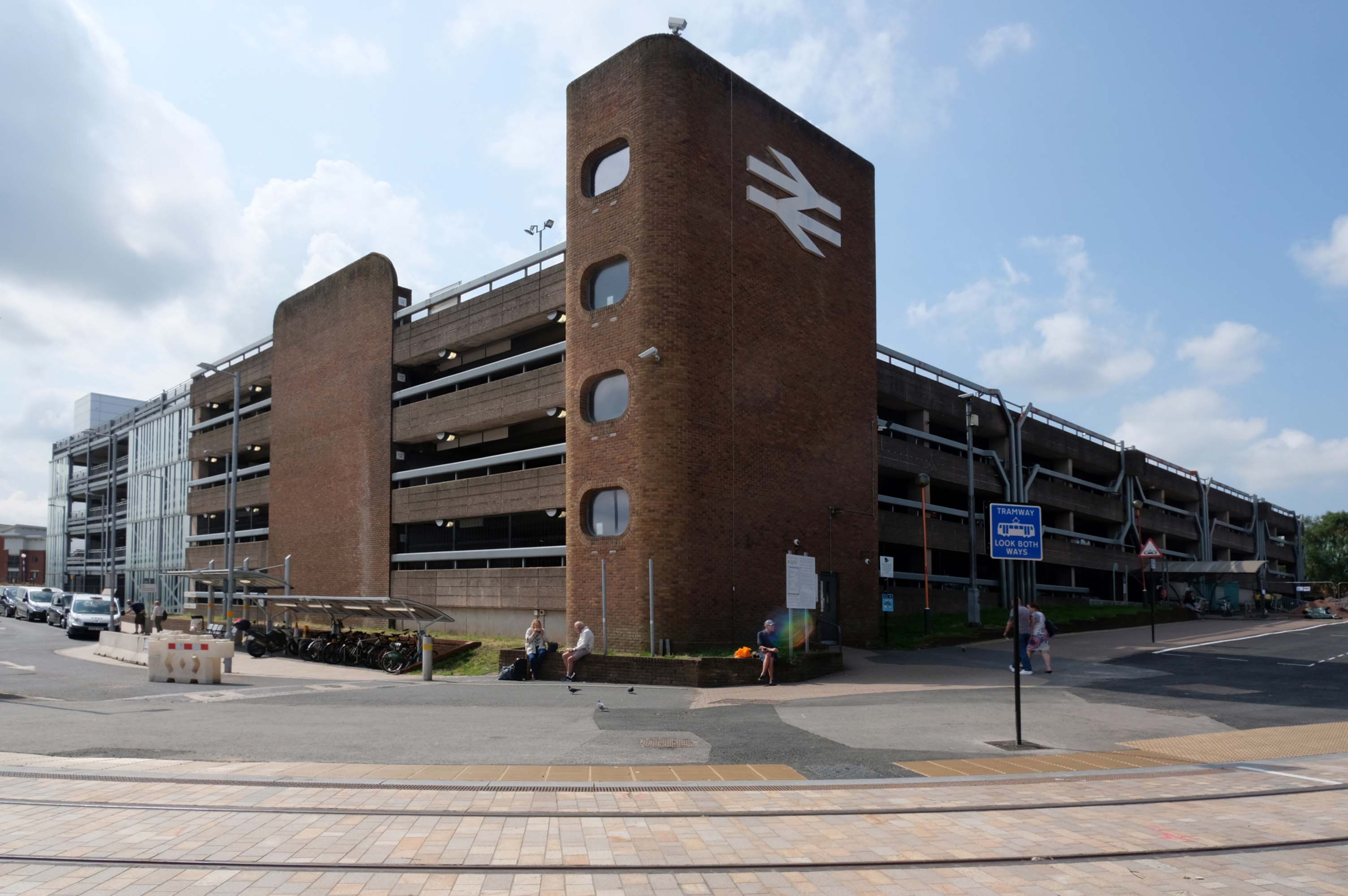
Across the way an enormous brick clad multi-storey car park – skirted by the lines for the tram, which travels to and from Birmingham.

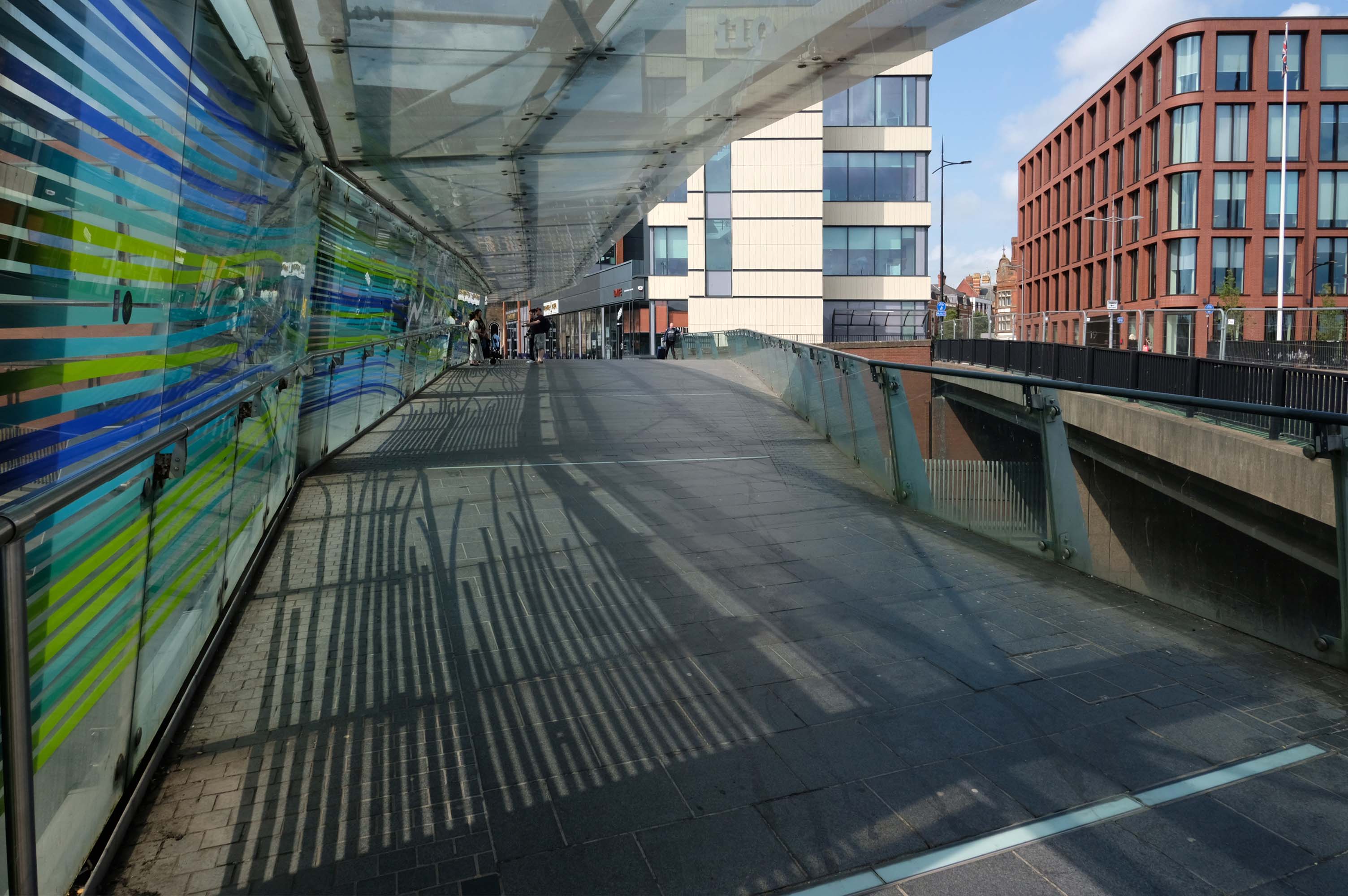
Walk across the brand new pedestrian footbridge over the ring road.

Architectural glass artist Kate Maestri was commissioned to produce the artwork design which features glass with blue and green strips of colour running through it.

BBC

Architects: Austin Smith Lord

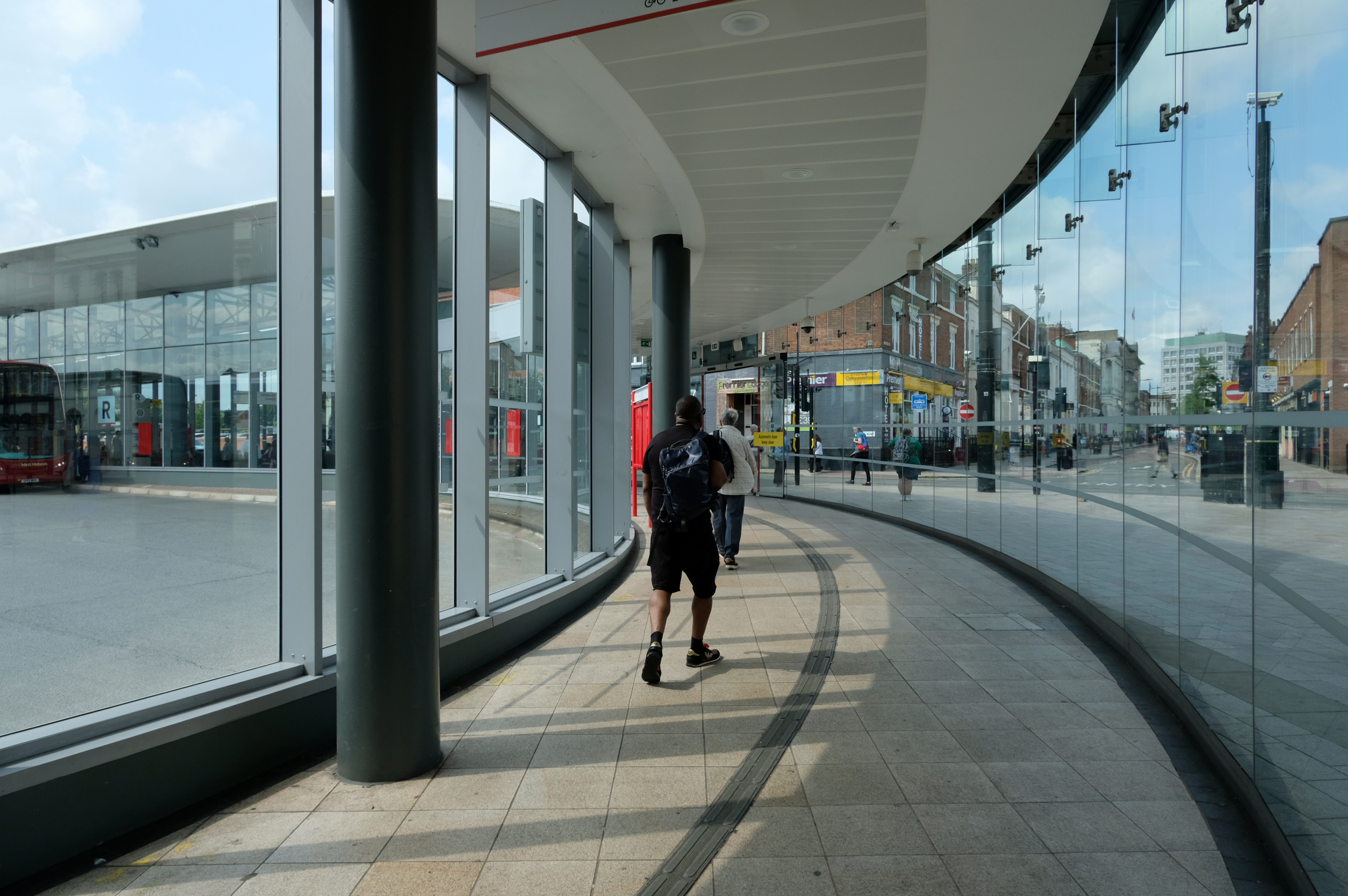
Linking the Rail Station with the brand new Bus Station.

The normal practice of the Wolverhampton Bus Service is to have dirty, smelly buses, that are cramped and extremely hot in the summer and freezing cold in winter. They offer no announcements apologizing for delays they know about and don’t appear to care how long passengers wait with no idea of how or when they’ll be getting a bus.

The best thing you can do is learn to drive as quickly as possible and get your own vehicle or car pool.

Sandra Anderson

Architects: Austin Smith Lord

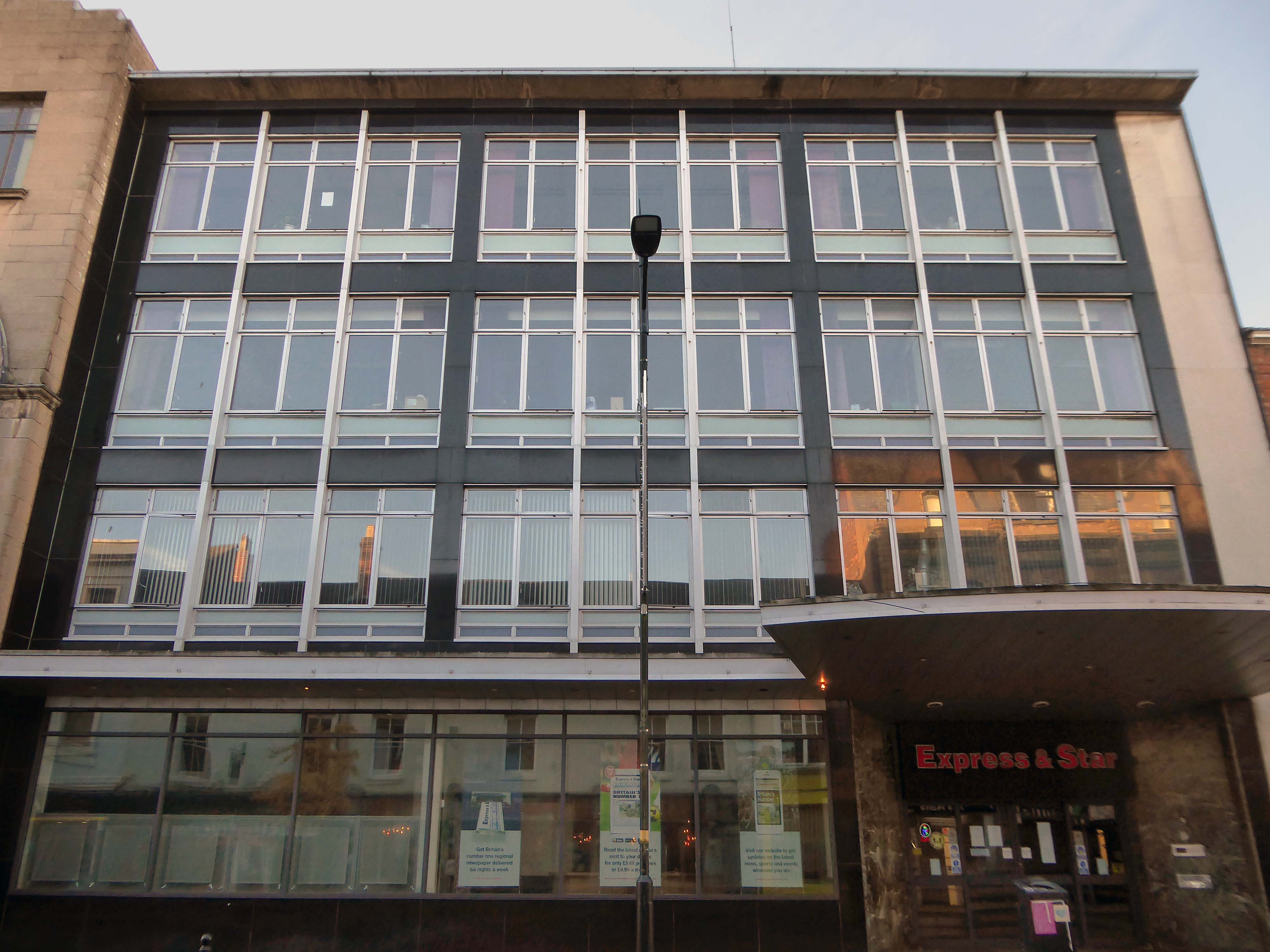
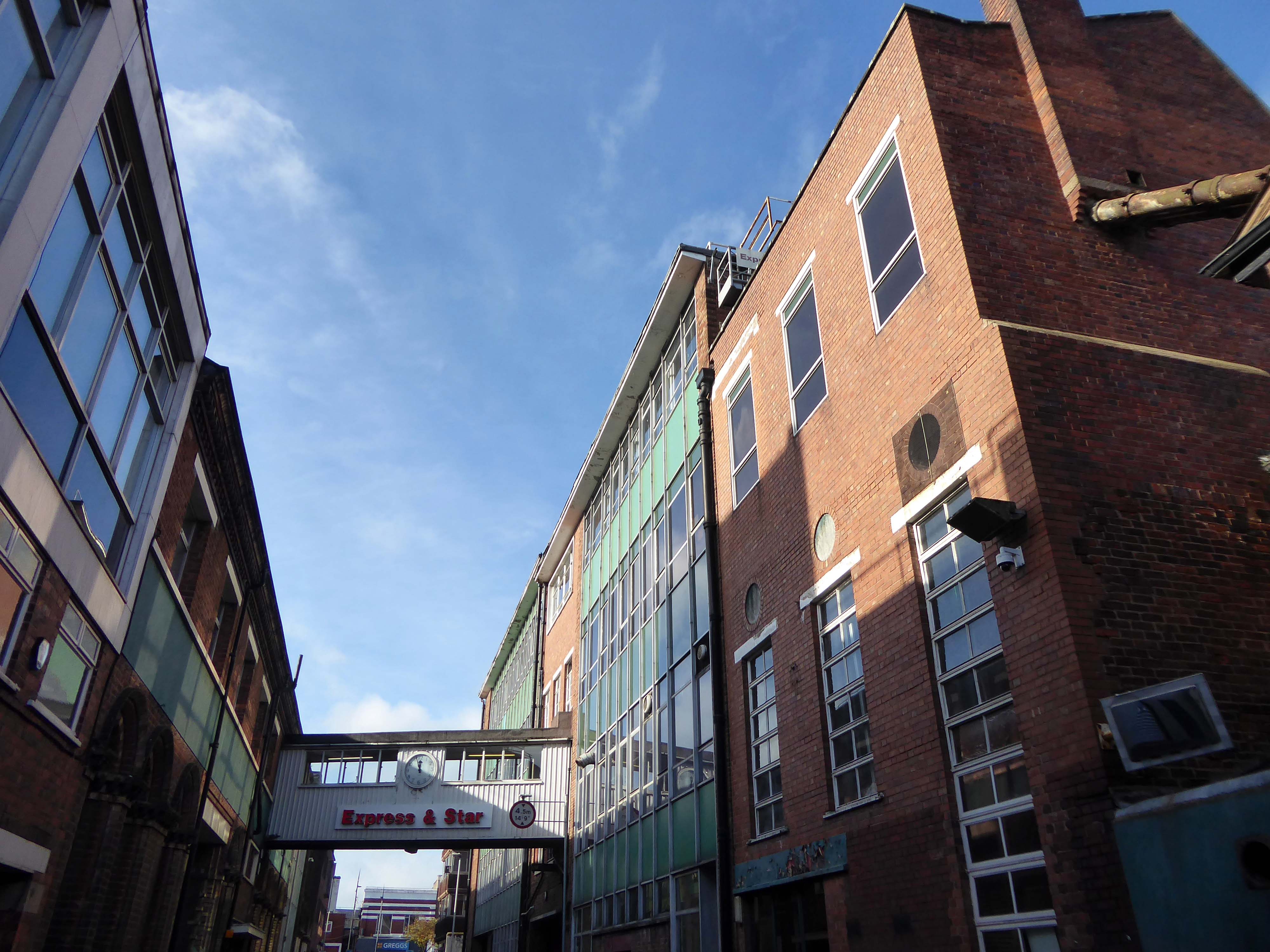
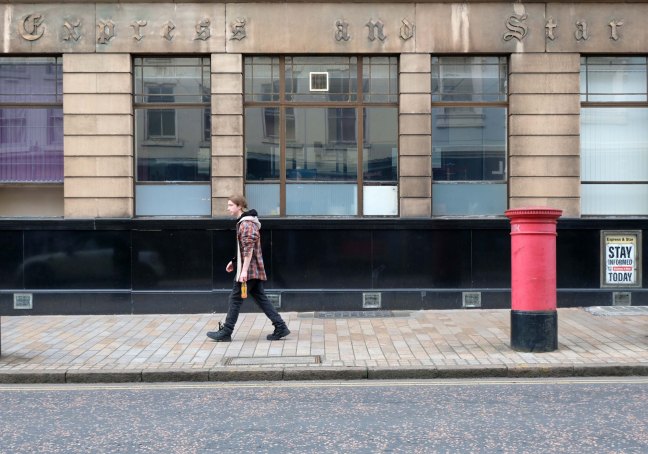
Onward now to the Express and Star Building – Grade II listed.

Architect: Marcus Brown 1934.

The building is faced in a reconstituted Hollington stone called Vinculum, produced by another local firm, Tarmac.

A plaque commemorates RJ Emerson, art teacher and sculptor who sculpted Mercury in 1932.

Wolverhampton History and Heritage Society

Midland News Association managing director Matt Ross confirmed the company is now looking at the building’s future.

For a number of years we have been exploring opportunities surrounding our historic Express & Star offices in the heart of Wolverhampton.

After removing the printing presses from the site and restructuring our departments we now have significant spare capacity available and so are looking at the various options available to us, be that redeveloping the current site or exiting the building altogether.

Hold the front page

Extension is by architects: H Marcus Brown & Lewis 1965

With further work at the rear.

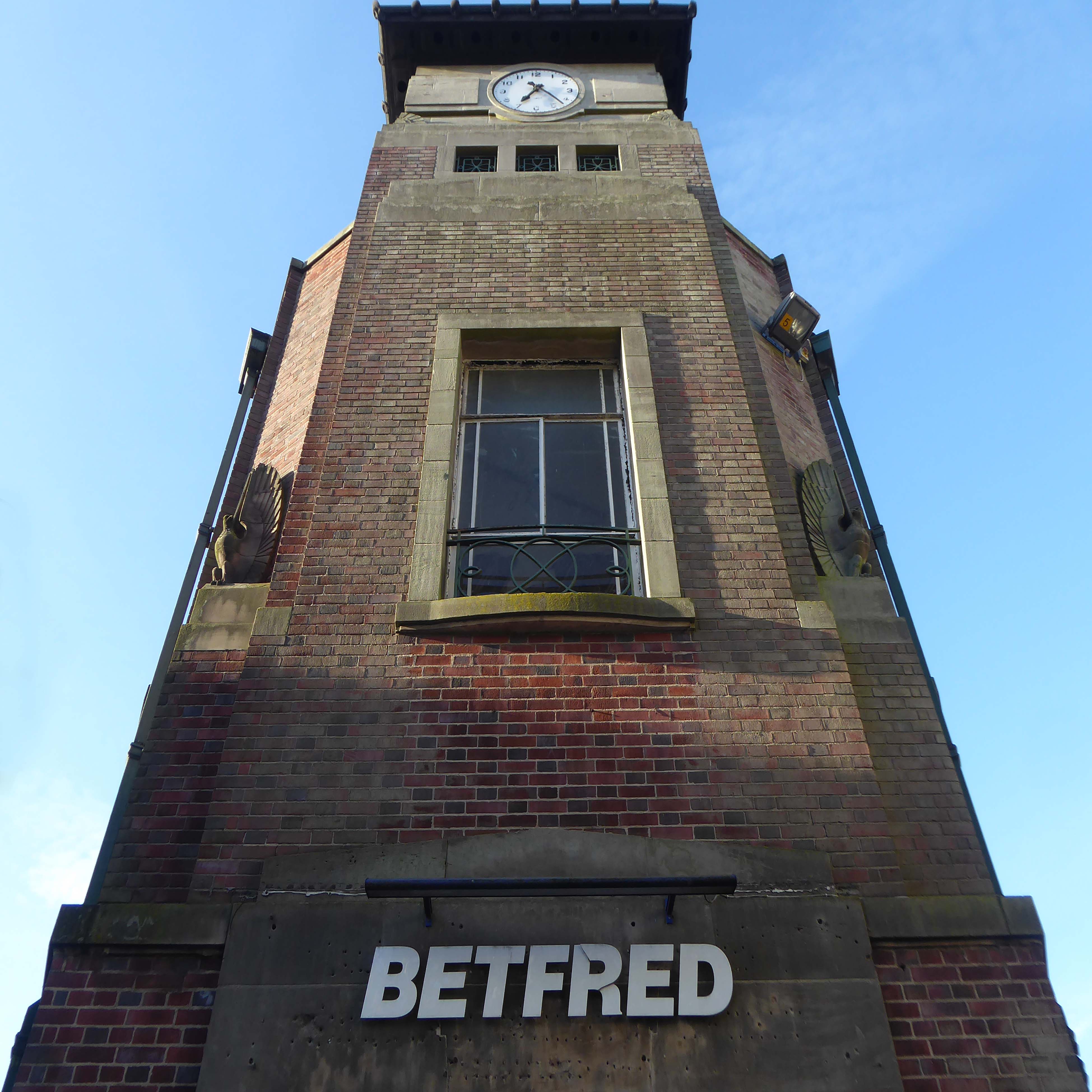
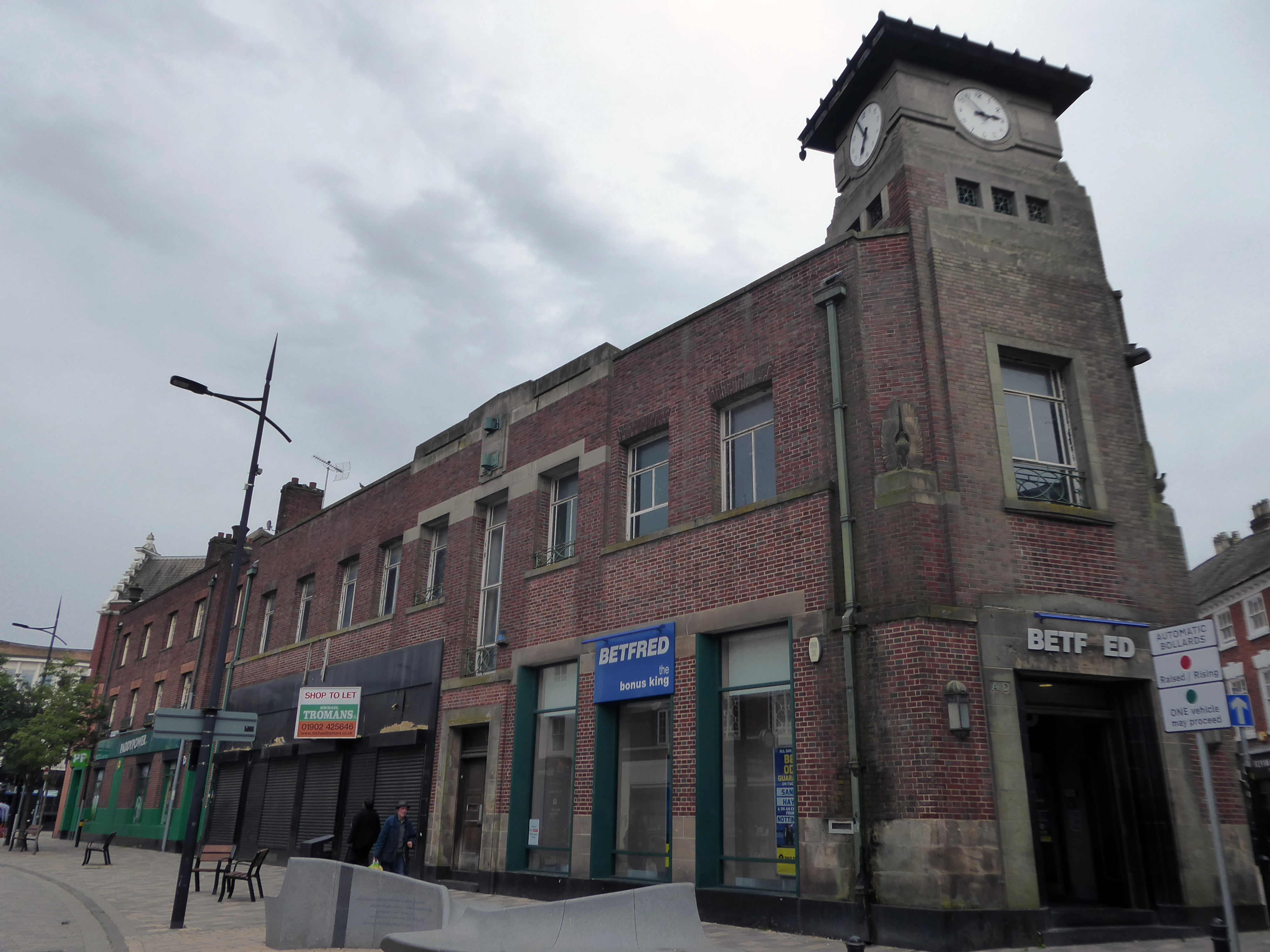
Along Princess Street this corner group, with an impressive clock tower – originally HQ for the South Staffordshire Building Society

Architects: George A Boswell of Glasgow 1932.

On to the Mander Centre – opened on 6th March 1968, refurbished 1987, 2003 and 2016-17.

The Mander Shopping Centre in the heart Wolverhampton is your one-stop shopping destination for all things fashion, home, beauty, food and technology.

Architects: James A Roberts principal architect Stanley Sellers.

Developed by Manders Holdings Plc, the paint, inks and property conglomerate, between 1968 and 1974. The site occupies four and a half acres comprising the old Georgian works and offices of the Mander family firm, founded in 1773, as well as the site of the former Queens Arcade.

Wikipedia

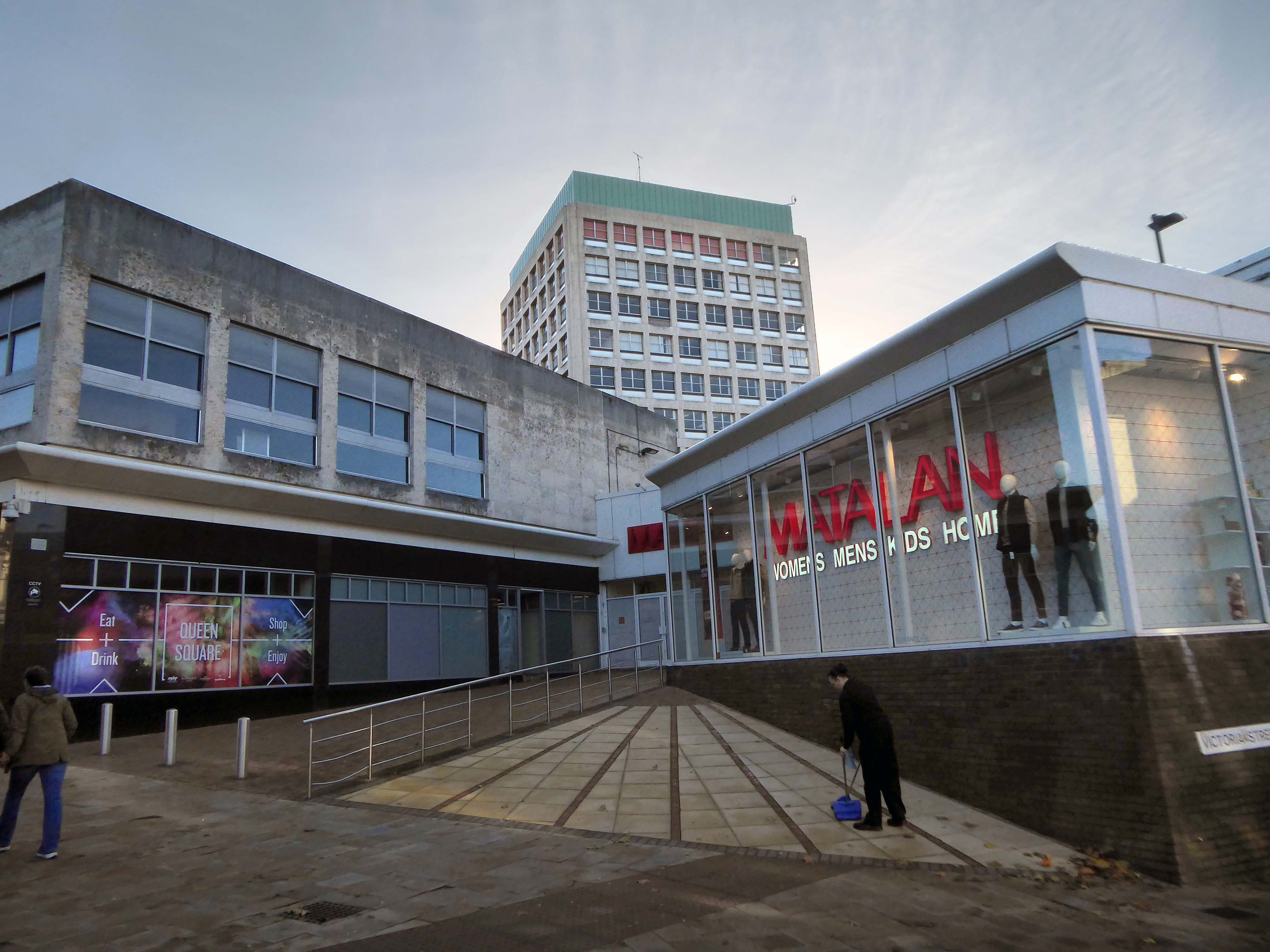
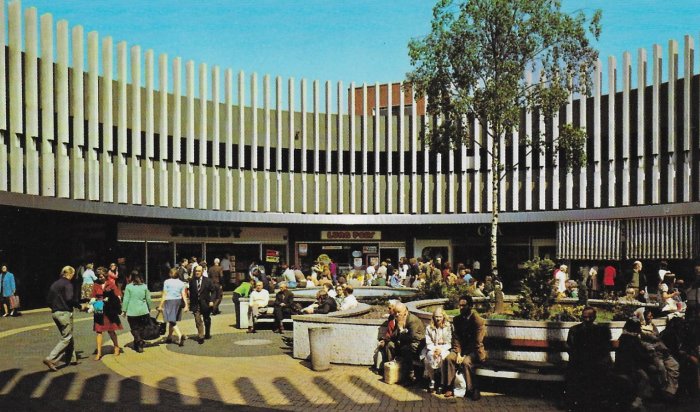
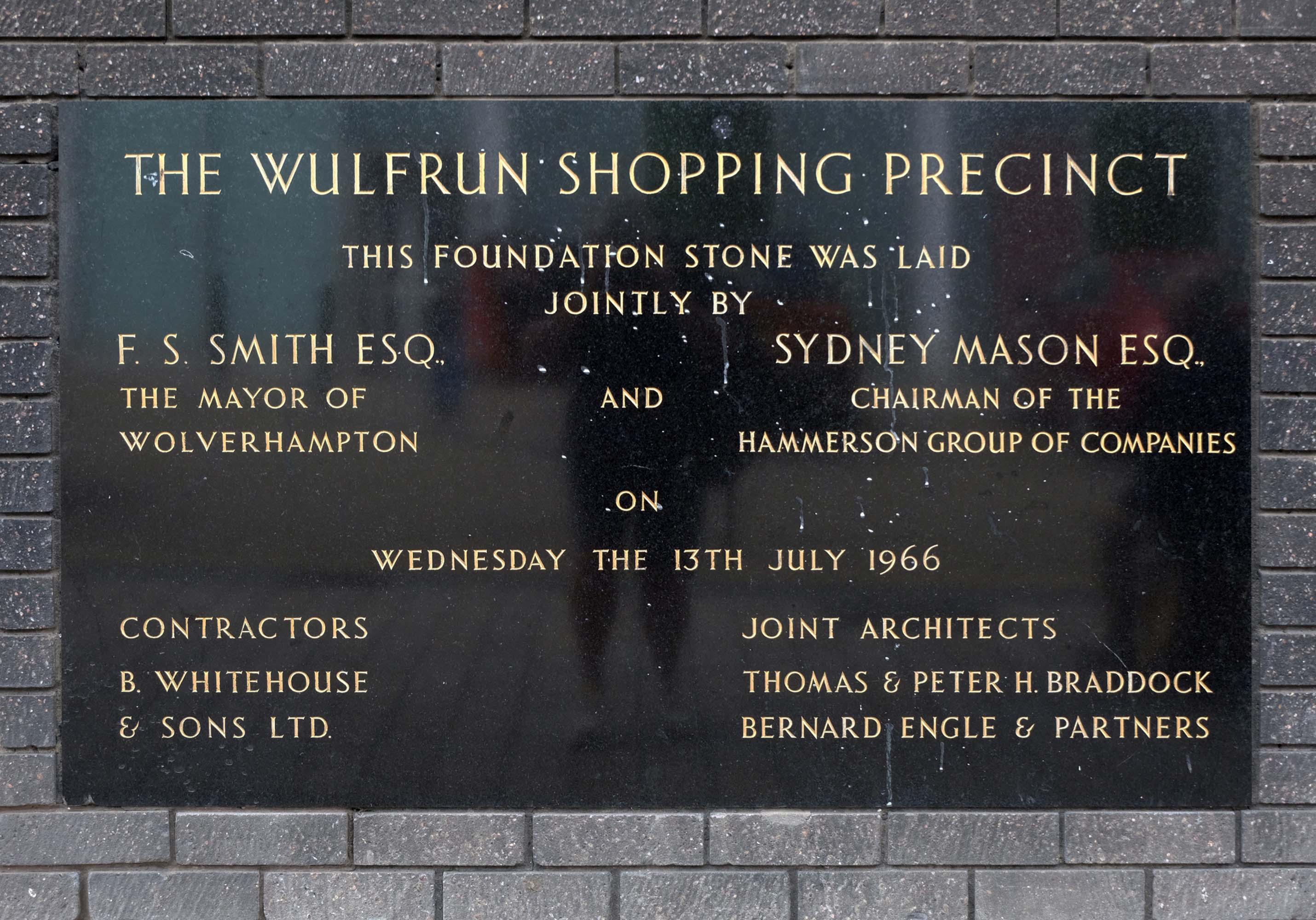
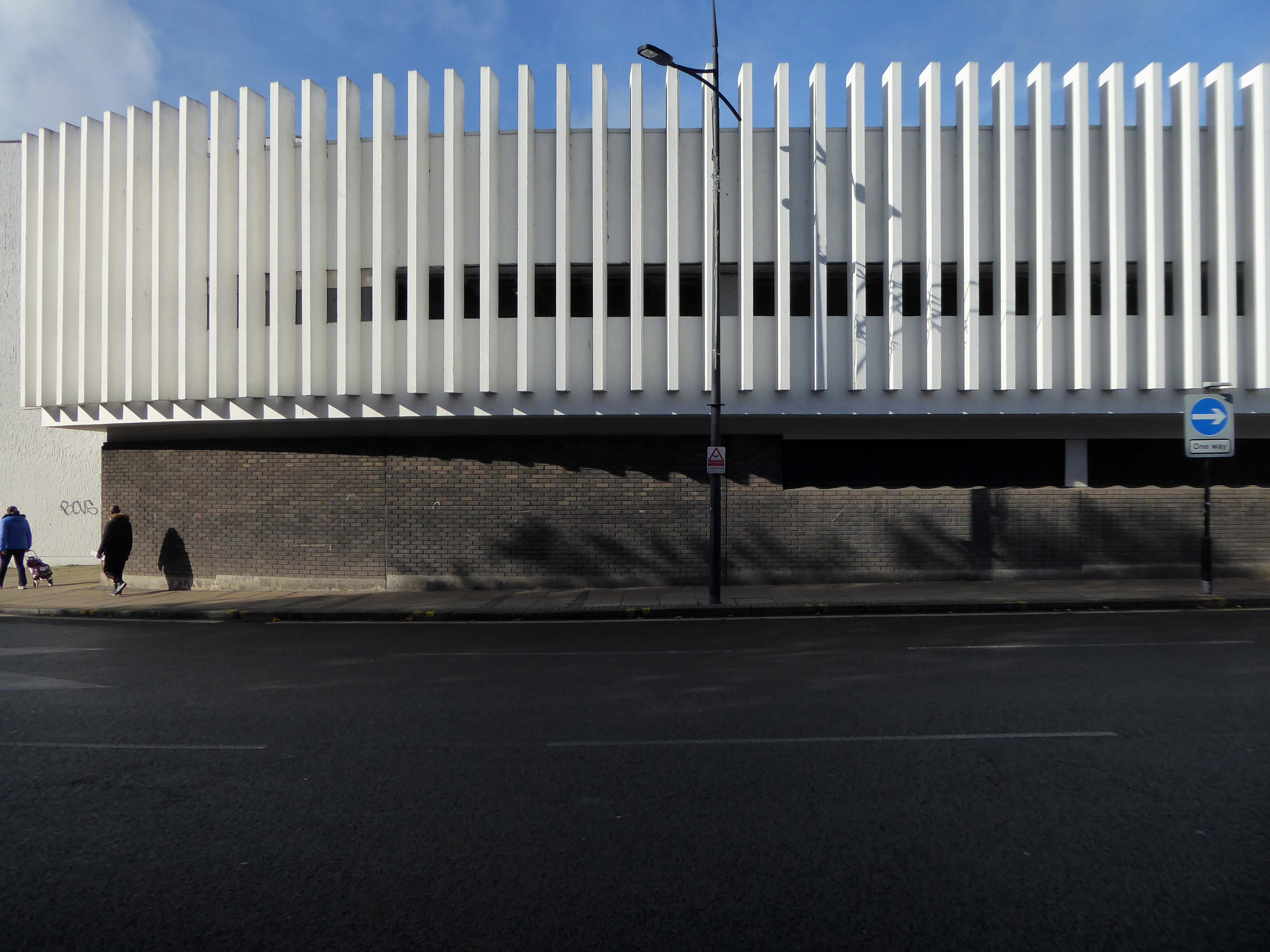
The Wulfrun Shopping Centre is an adjacent companion to the Manders development.

The Wulfrun Centre was built as a result of a joint project between Wolverhampton Council and the Hammerson Groupopen for business in October 1969.

History and Heritage Society

Piazza postcard 1970.

Architects: T & PH Braddock and also Bernard Engle & Partners.

Along St Georges Parade, an abandoned Sainsbury’s church combo – store designed by J Sainsbury’s Architects Department opened 1988.

The church was built between 1828 and 1830 – architect: James Morgan, at a cost of £10,268. It was consecrated on Thursday 2 September 1830 by the Bishop of Lichfield, it was made redundant in 1978.

Sainsbury Archive

The site is currently under lease to Sainsbury’s for a further three years and will come forward on a phased basis subject to their lease concluding. The council is in active dialogue with prospective development partners on the redevelopment of this site and in wider consultation with Homes England.

Express & Star

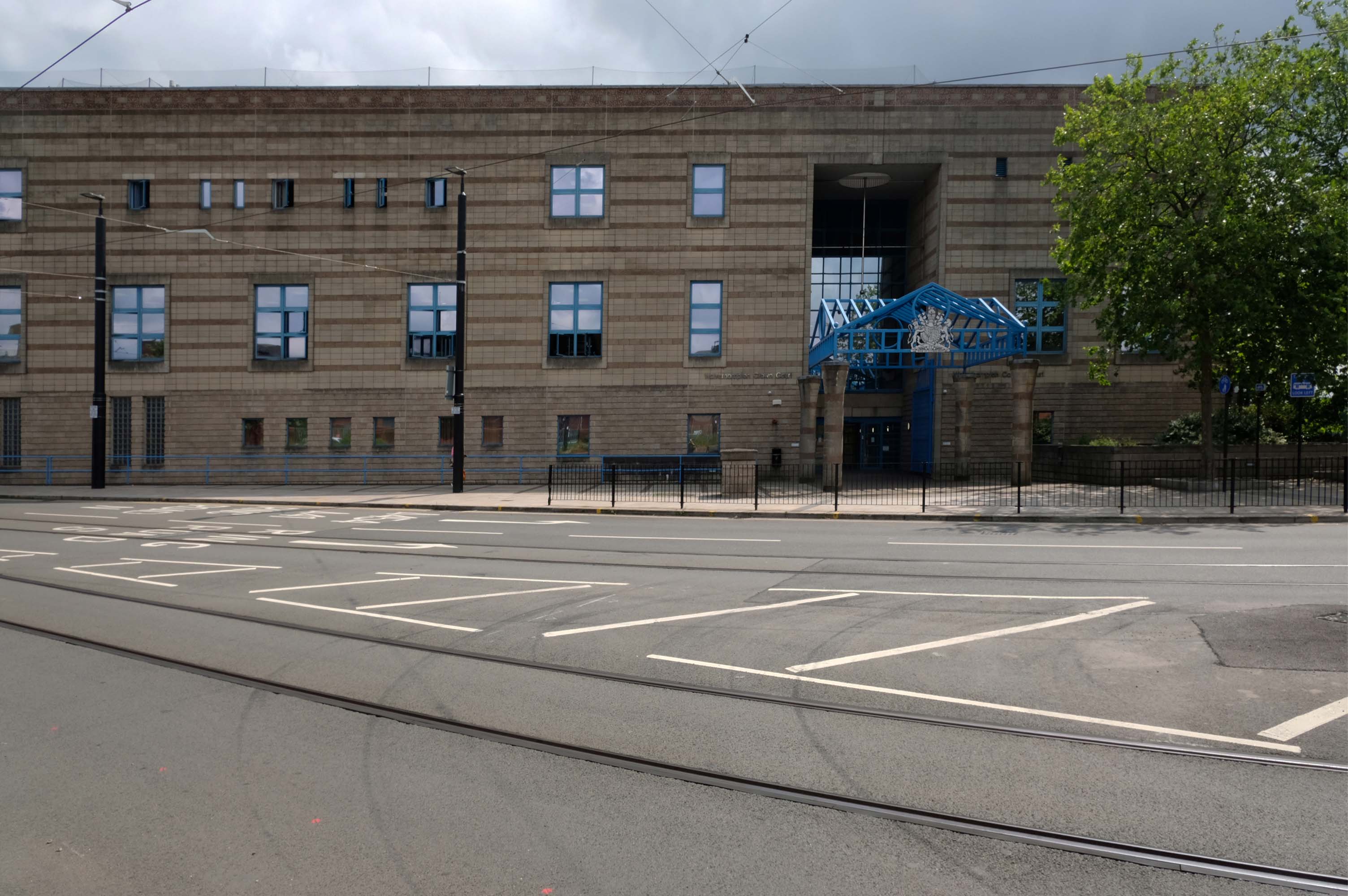
Back tracking to the Combined Court Centre.

Architects: Norman and Dawbarn 1990

Notable cases included trial and conviction of four members of The Stone Roses, in October 1990, for criminal damage to the offices of their former record company.

Wikipedia

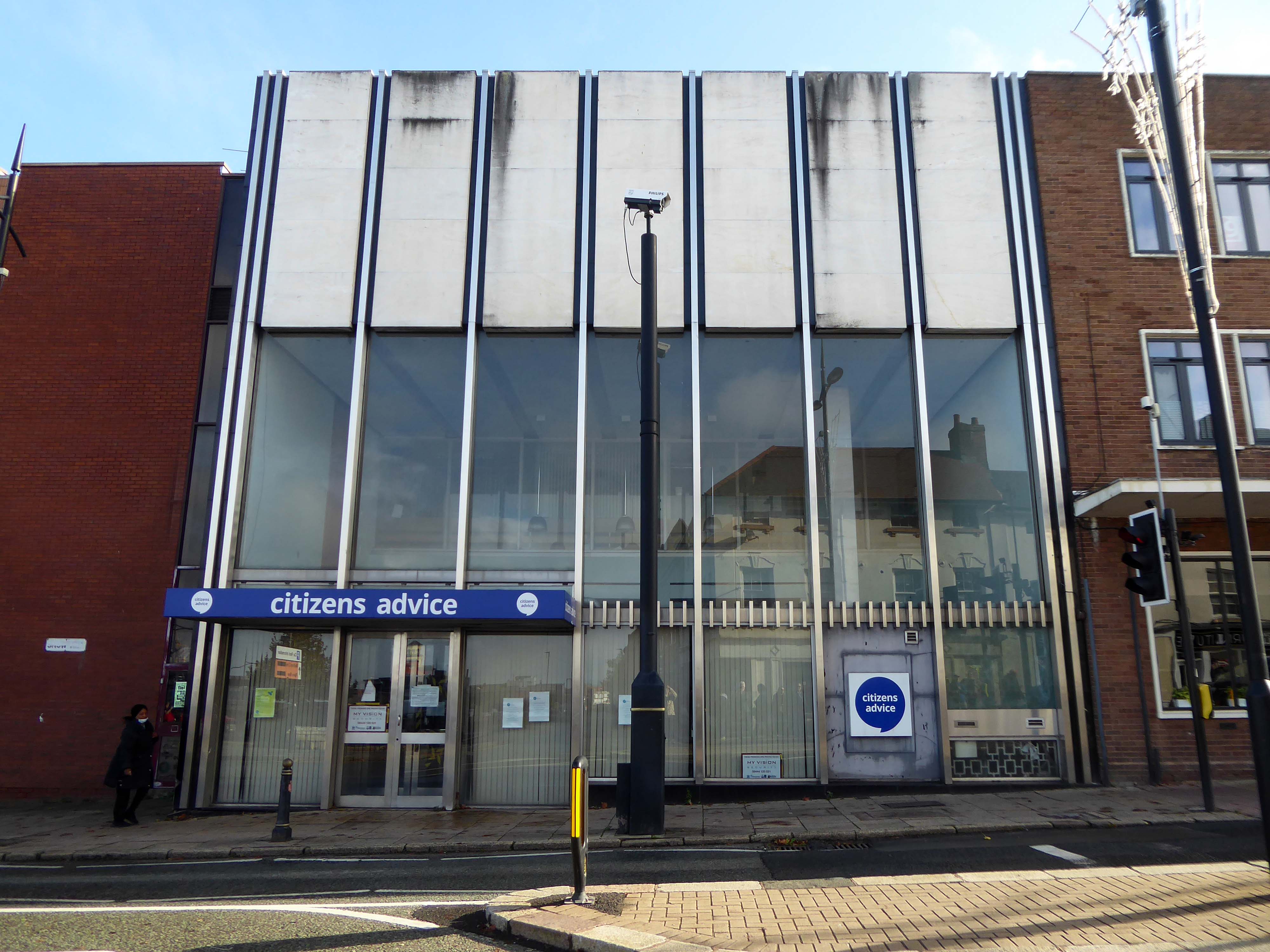
Thence up Snow Hill to the former Citizens Advice former Barclays Bank currently empty.

Architects: John HD Madin & Partners 1969

Take time to have a look around the back.

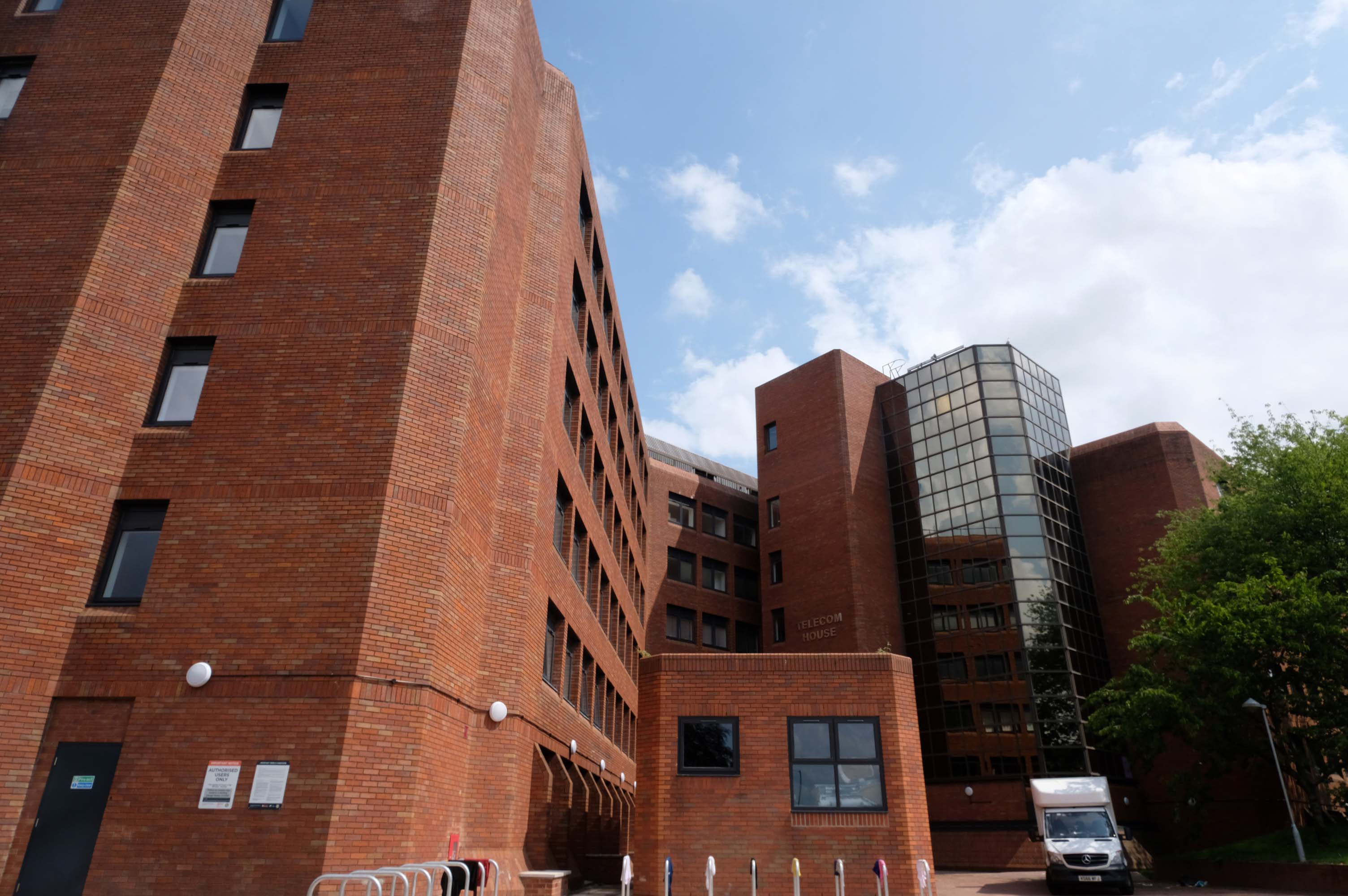
Off to Church Street and Telecom House

Sold for £4.25 million to Empire Property in 2022.

It had previously been sold for more than £3m in July 2018, also for use for apartments, to Inspired Asset Management which later went into receivership.

Express & Star

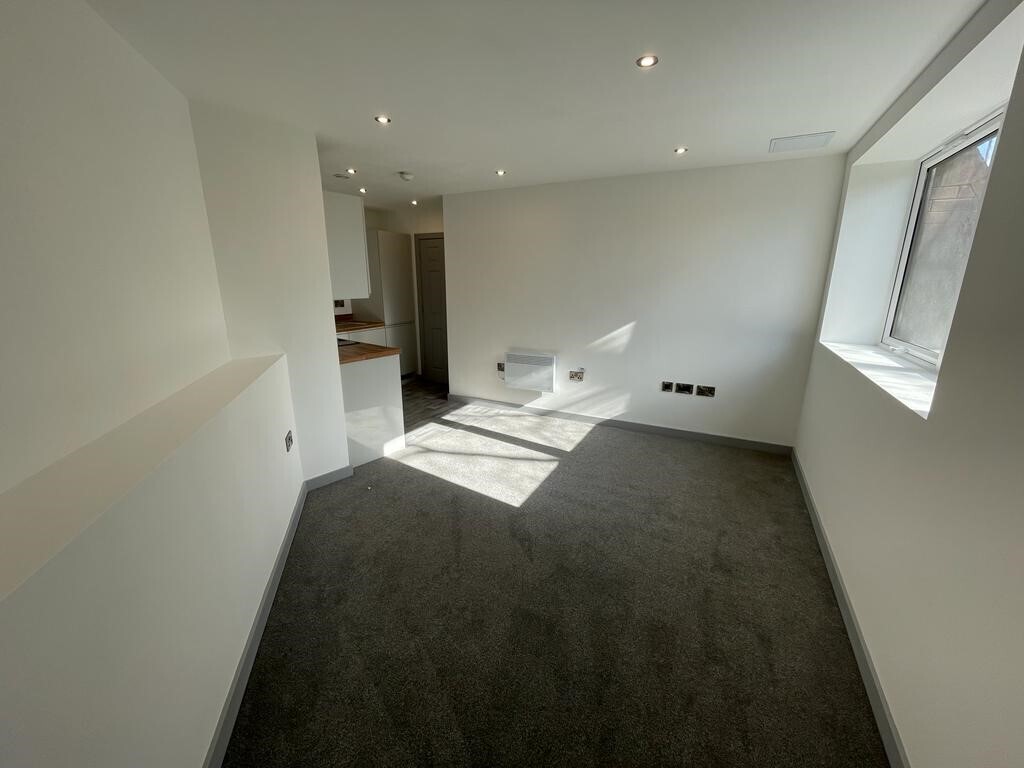
Located on a popular apartment block on Church street in the Wolverhampton centre, this 1 bedroom property has been newly renovated throughout and compromises an entrance hallway, open plan lounge/kitchen with in built appliances, shower room and double bedroom.

£650 PCM – Connells

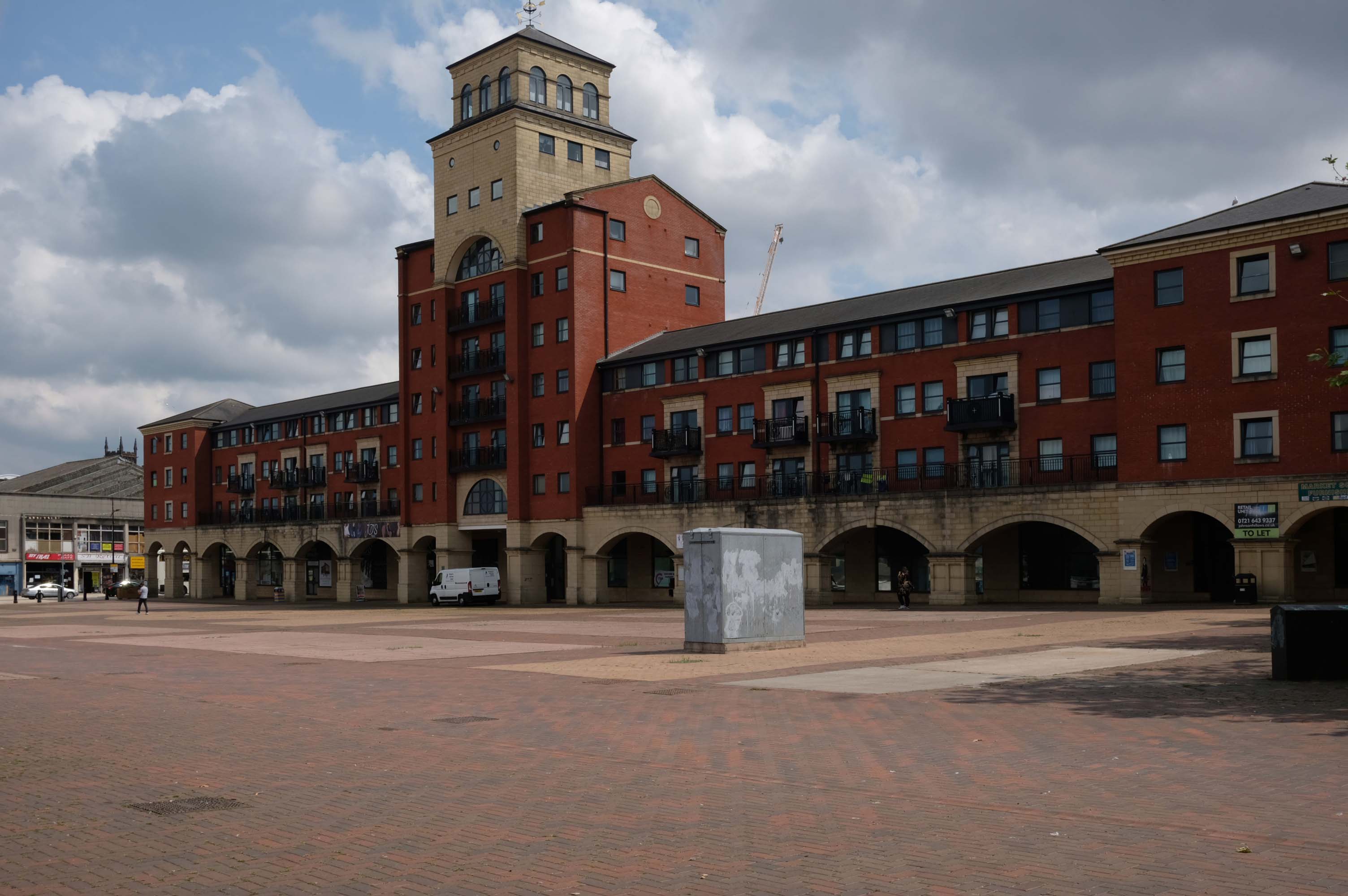
Next to this modern piazza New Market Square – Architects: Nicol Thomas from a concept by head of planning Costas Georghiou.

Formed from the former Market Square, a mix of flats and shops opened in 2004, in an Italianate version of the modish school of streaky bacon.

In 2021 the Coca-Cola Christmas Truck visit to the Midlands was cancelled.

It was meant to arrive at Market Square in Wolverhampton at 11am today but failed to show up.

One fan had waited since 7am this morning to see the Coca-Cola truck.

While schoolchildren were left gutted when the truck didn’t turn up – and one boy had been so excited his mother said he had been talking about the red truck all morning.

Birmingham Mail

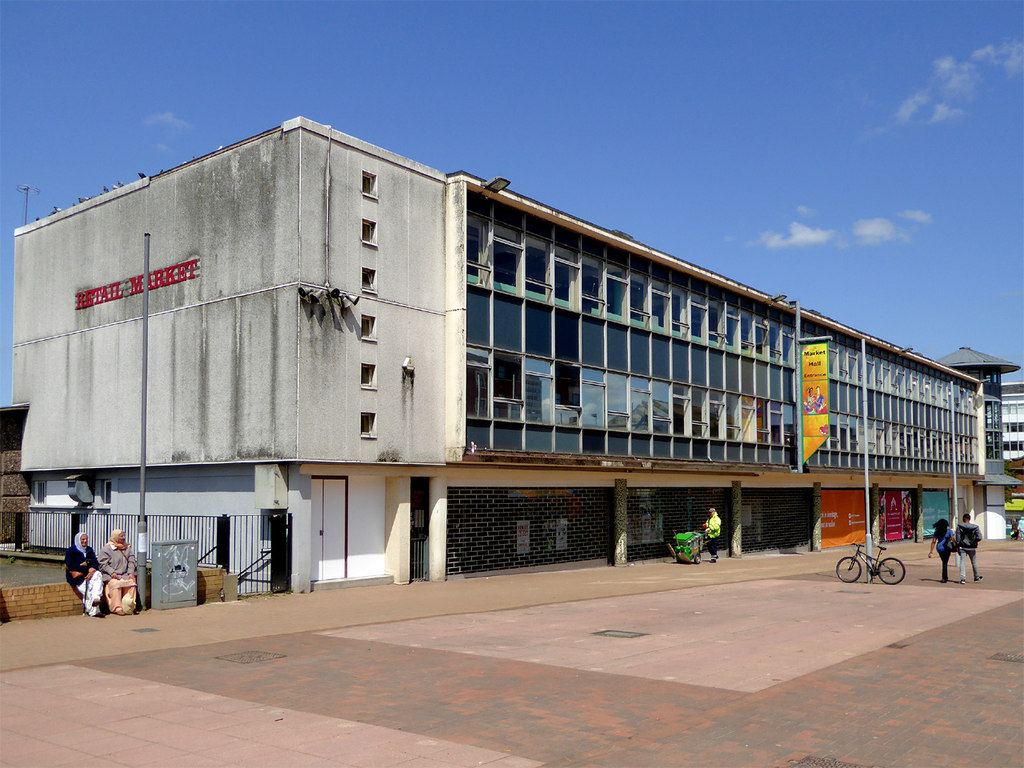
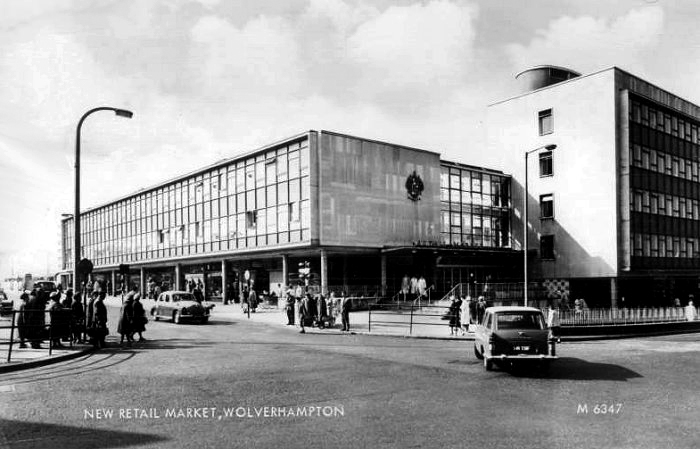
Retail Market – Late 1950s market hall and offices above. 

Architects: Borough Surveyor. 

Excellent example of the Festival of Britain style of architecture, won Civic Trust Award 1960.

Locally Listed March 2000.

demolished January 2017.

Photo: Roger Kidd

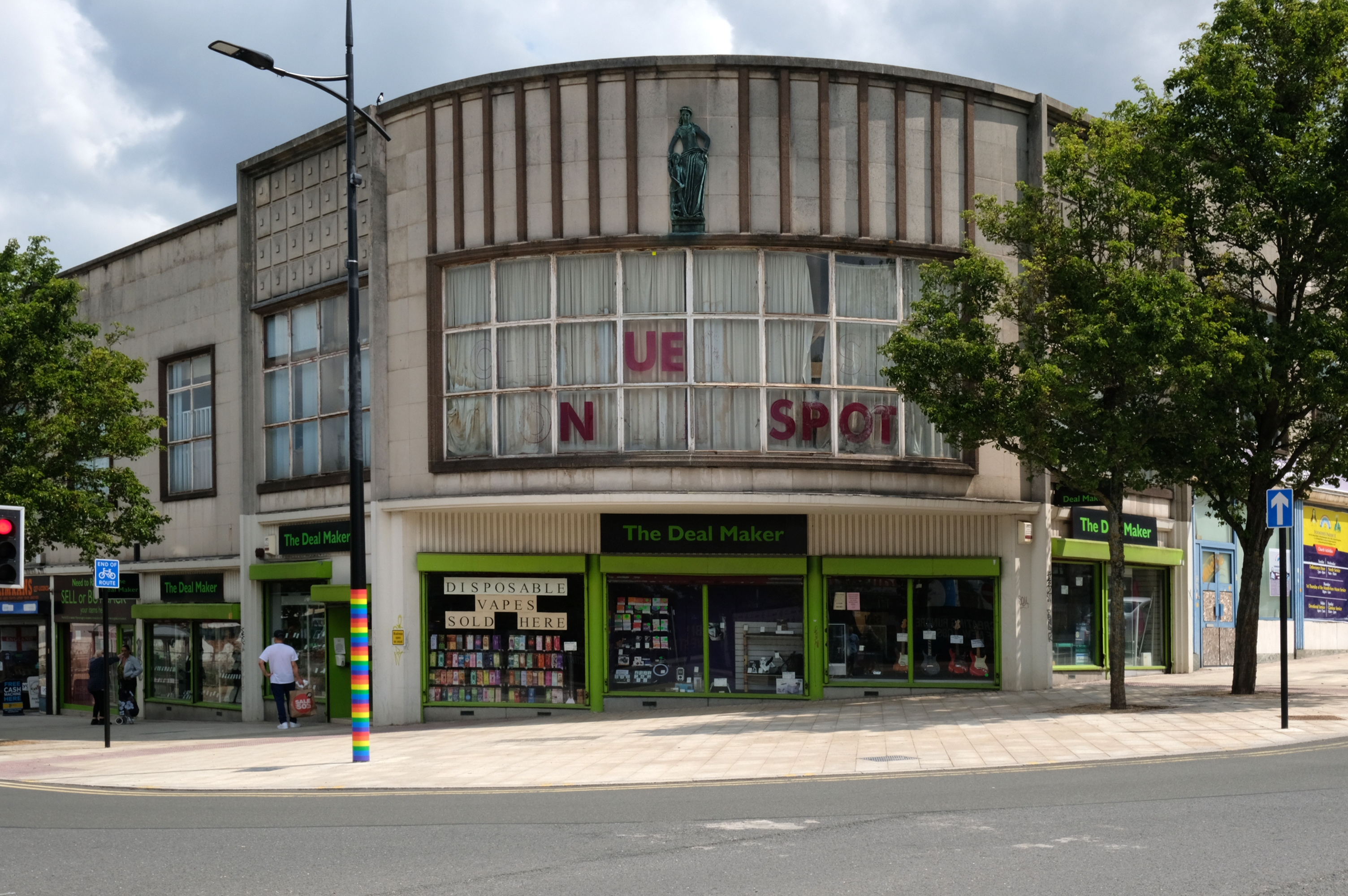
This development that wraps itself around Salop, Skinner and School Streets appears to be of a similar period to the Retail Market – and sports a Lady Wulfrun in relief.

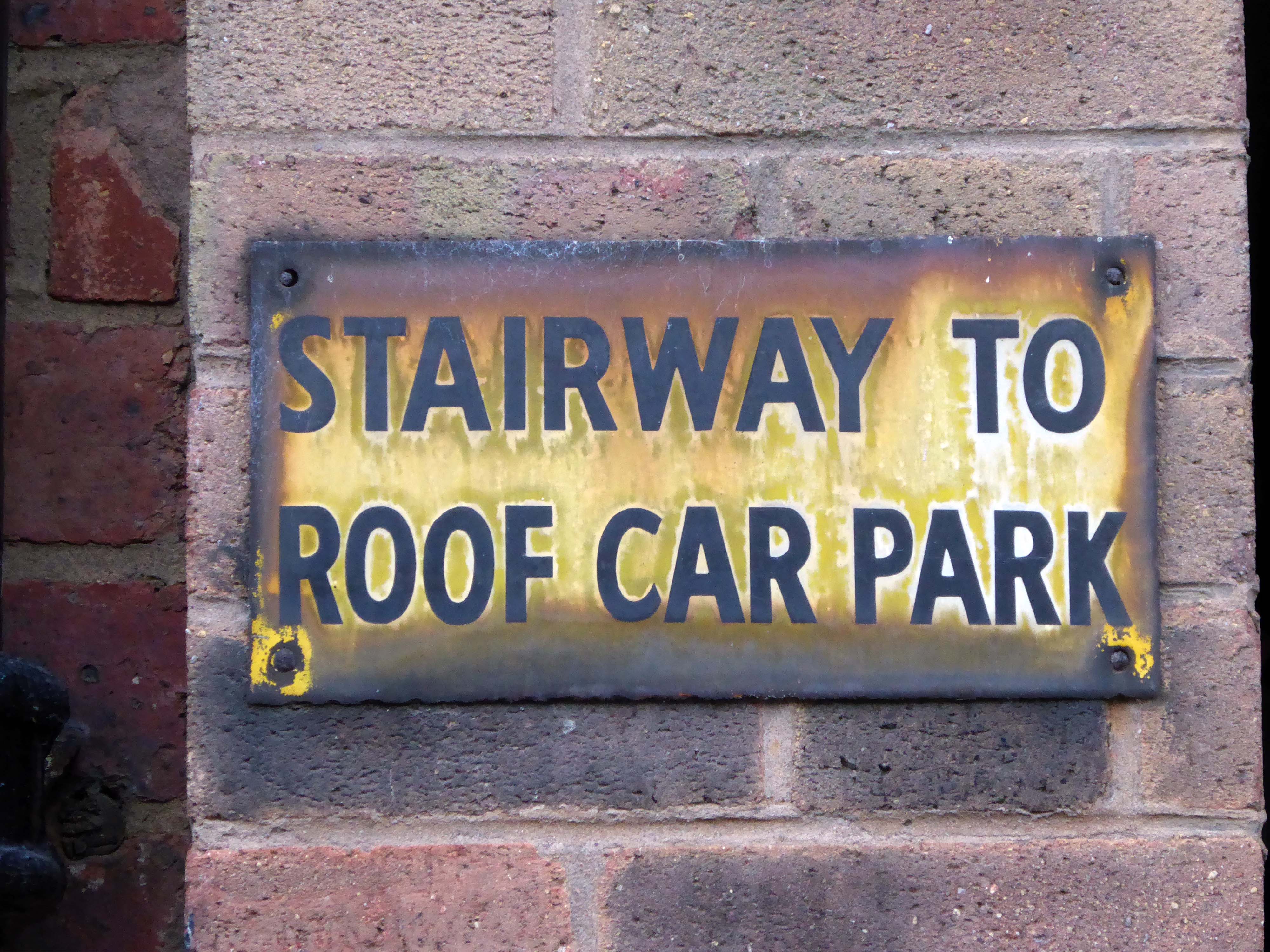
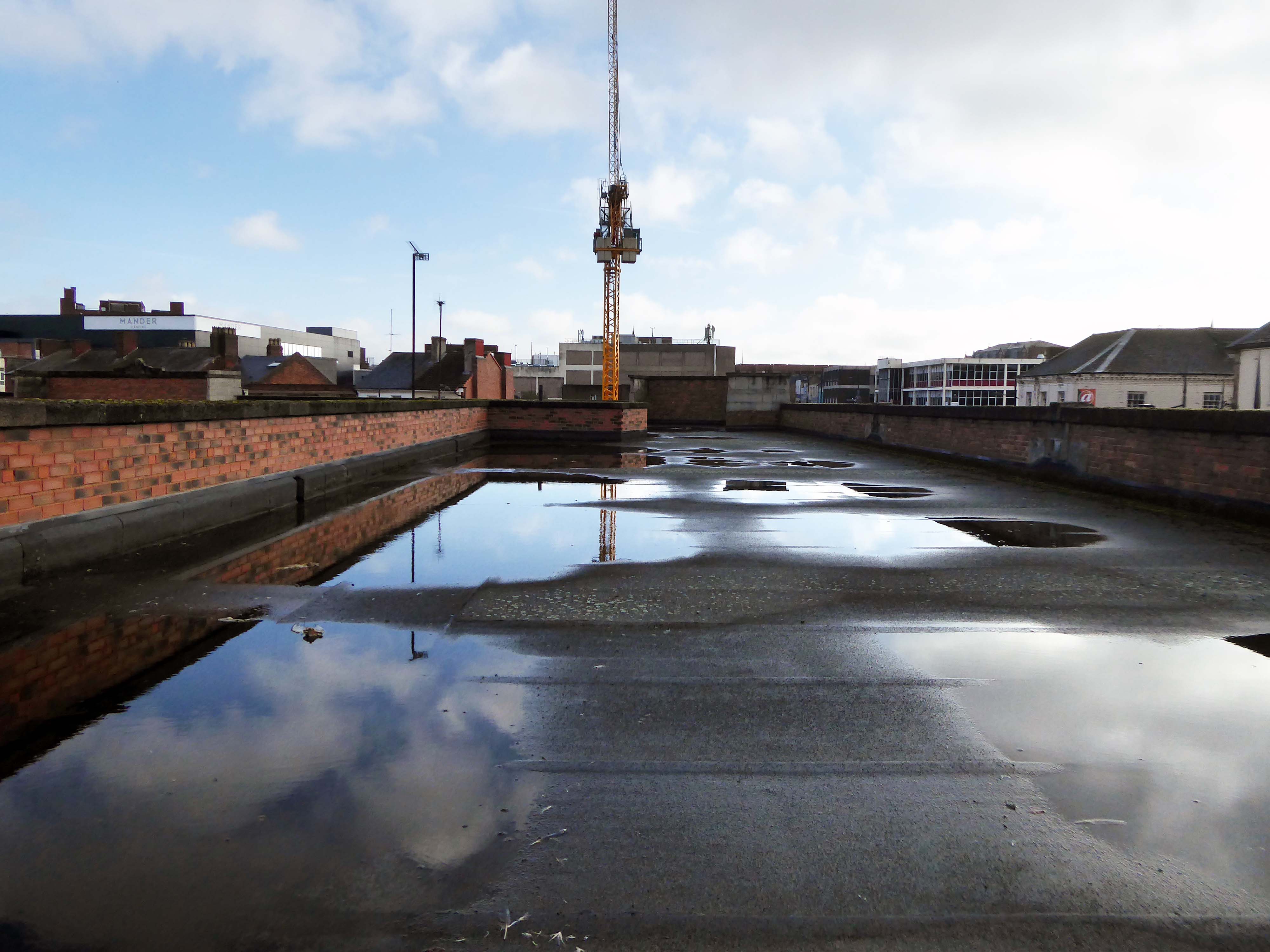
There is access to its roof top car park.

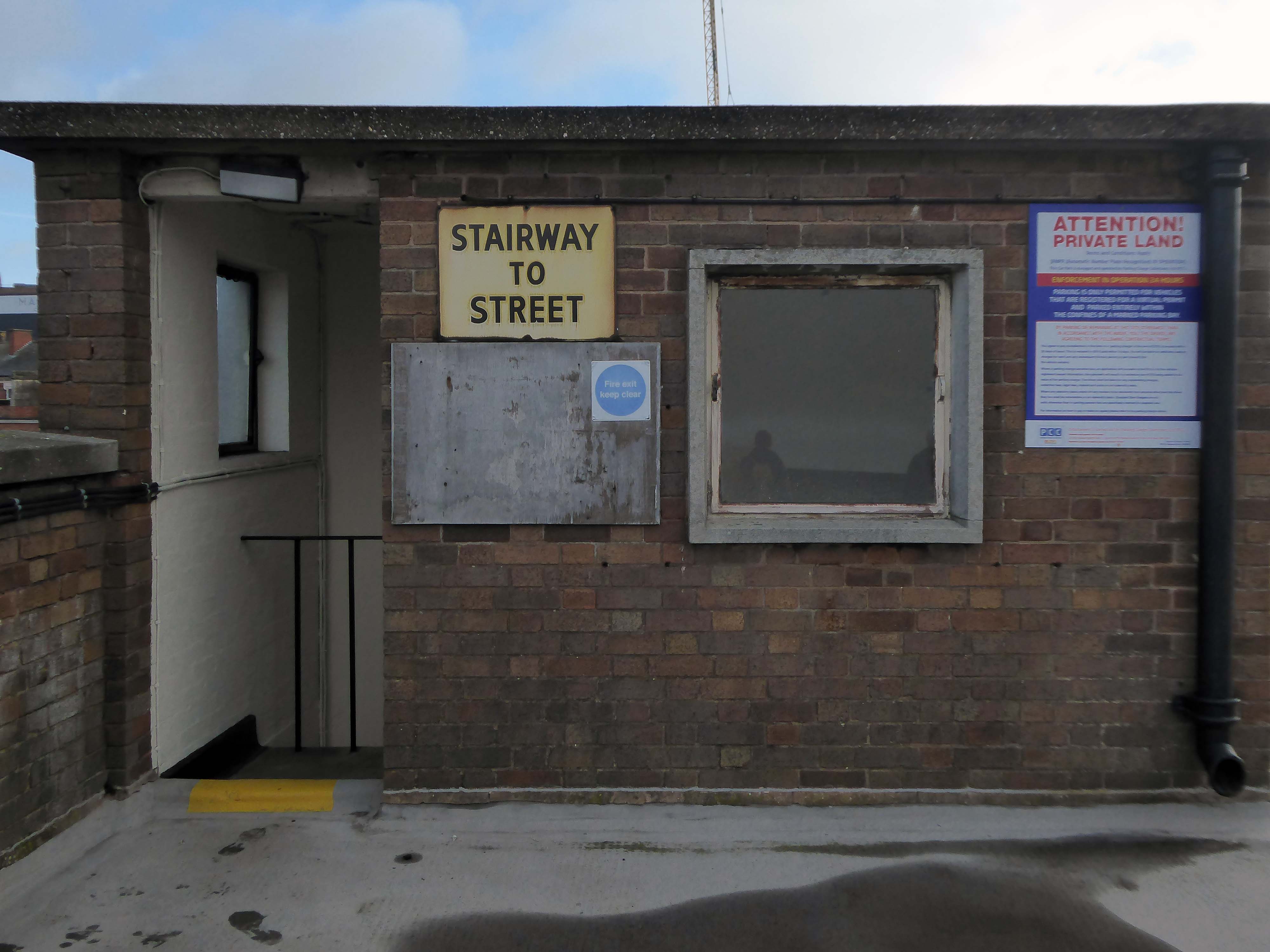
And also an exit back to street level.

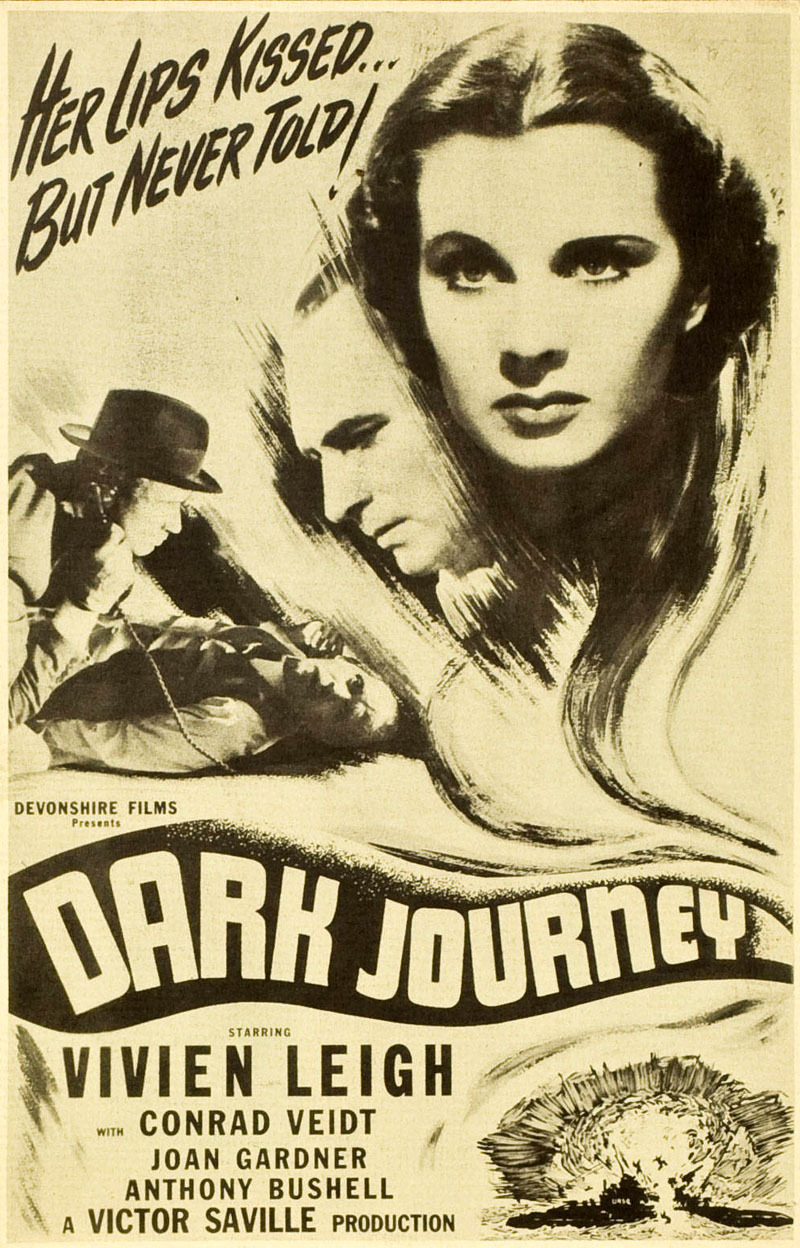
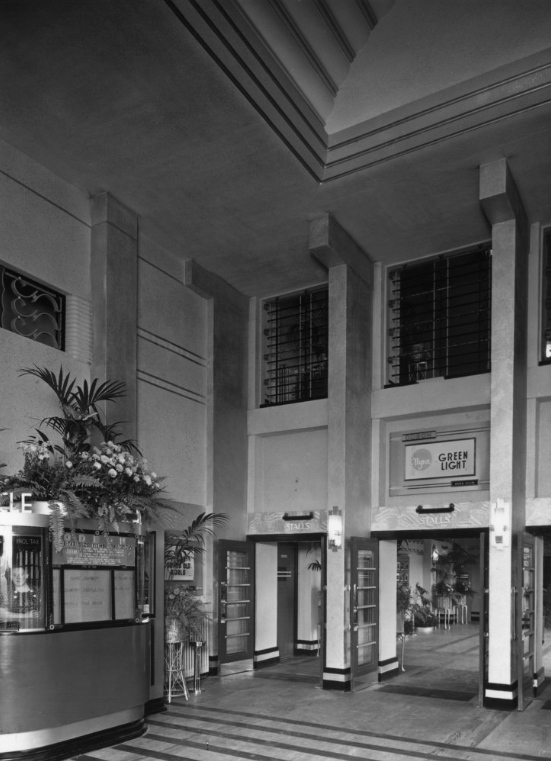
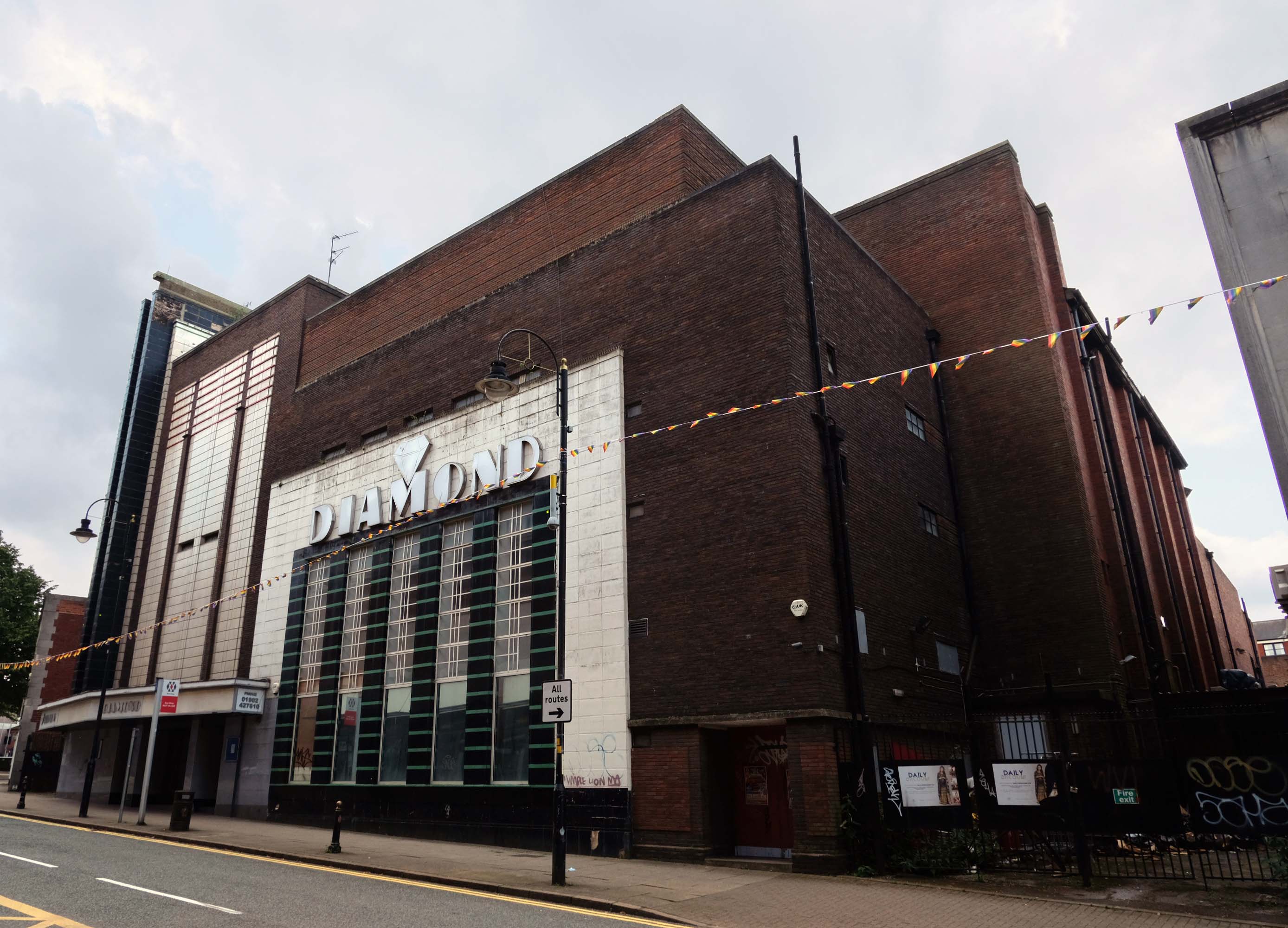
Where we find at street level the former Odeon Cinema, opened on 11th September 1937 with Conrad Veidt in Dark Journey.

Architects: PJ Price and Harry W Weedon.

In October 2000, the former Odeon was designated a Grade II Listed building by English Heritage.

RIBA pix

In recent years it was a Mecca Bingo Club, but this was closed in March 2007 In October 2009, it had been refurbished and re-opened as the Diamond Banqueting Suite. In April 2021 police raided the vacant building to discover an illegal cannabis farm operating in the building.

Four men were arrested.

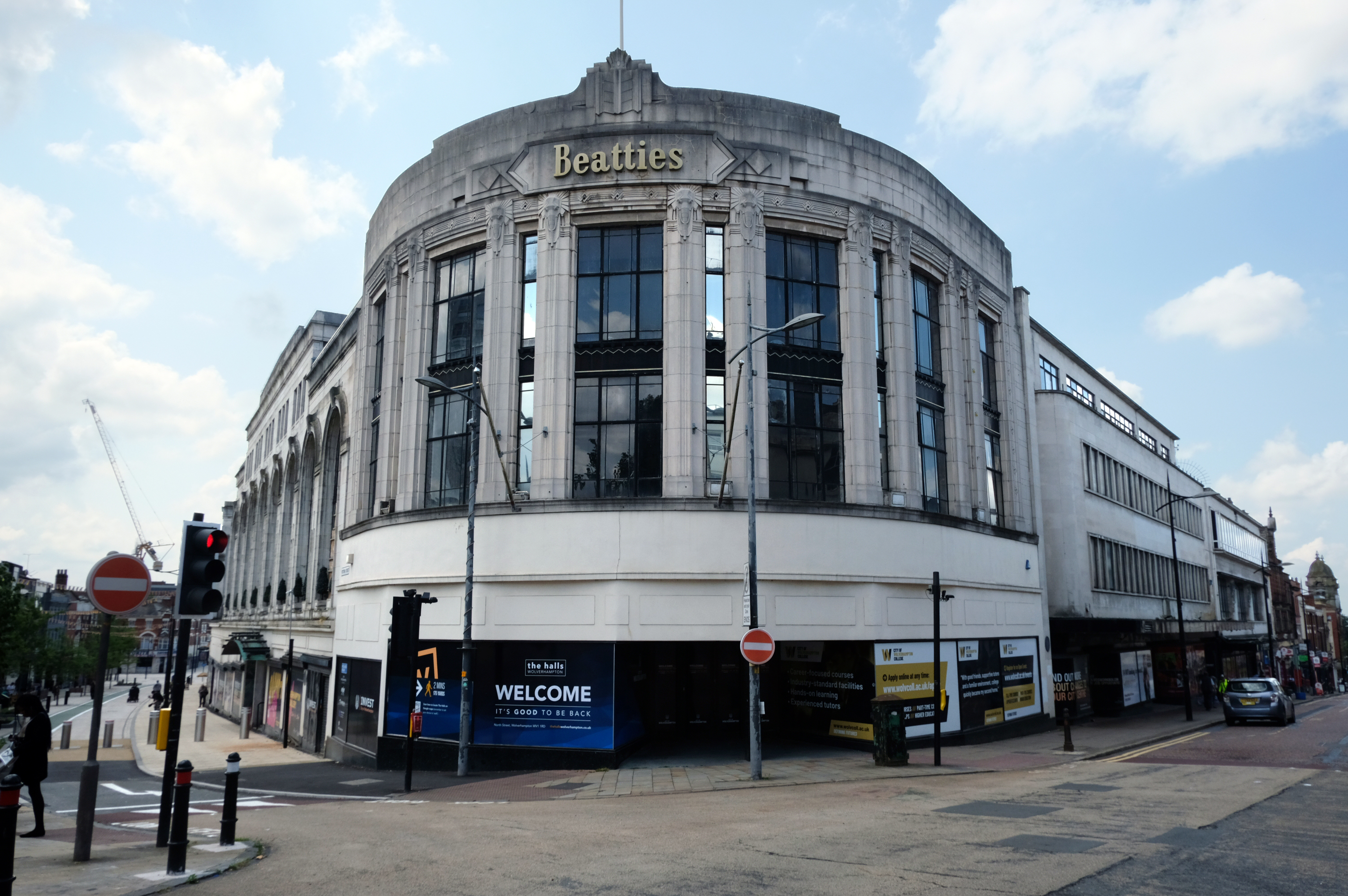
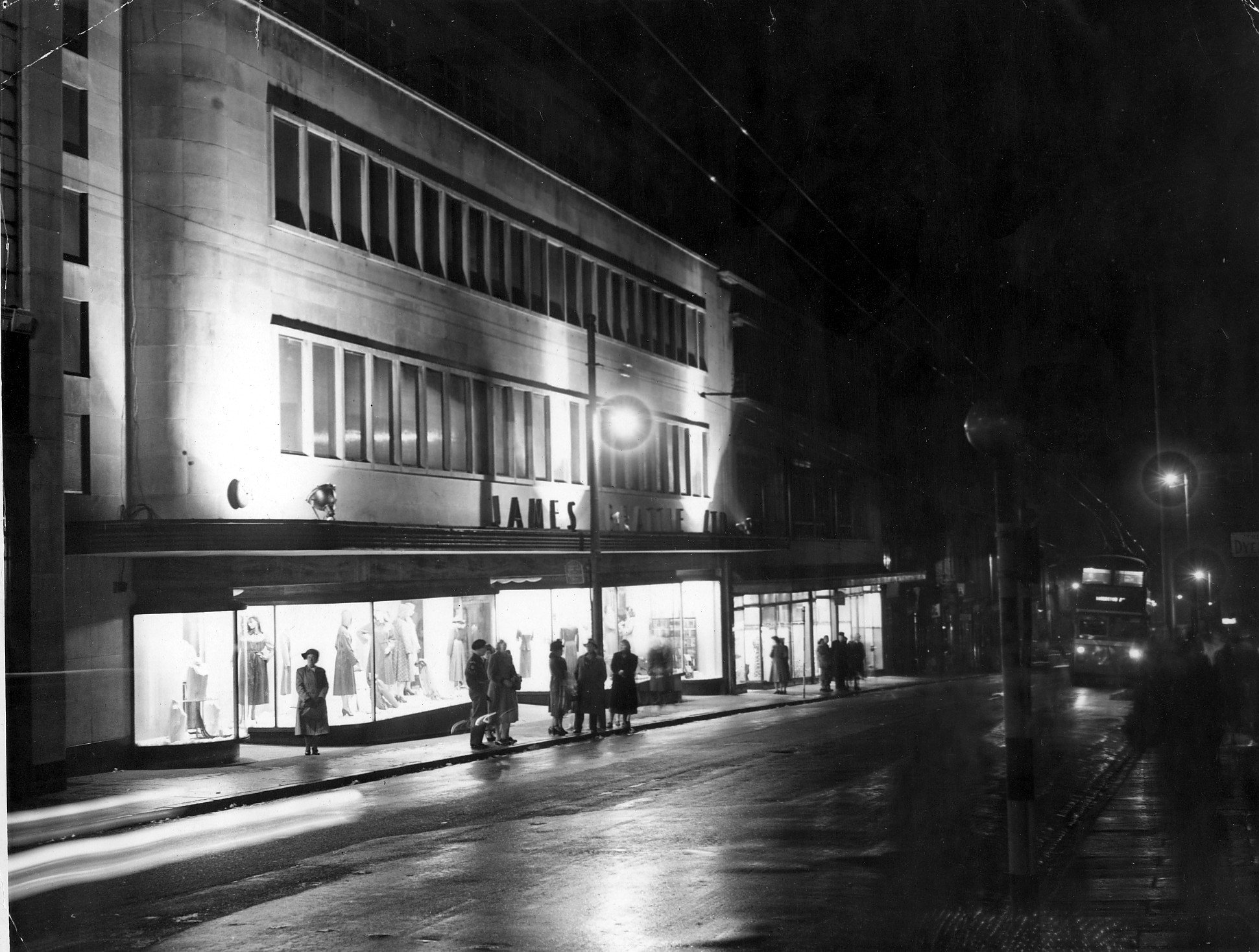
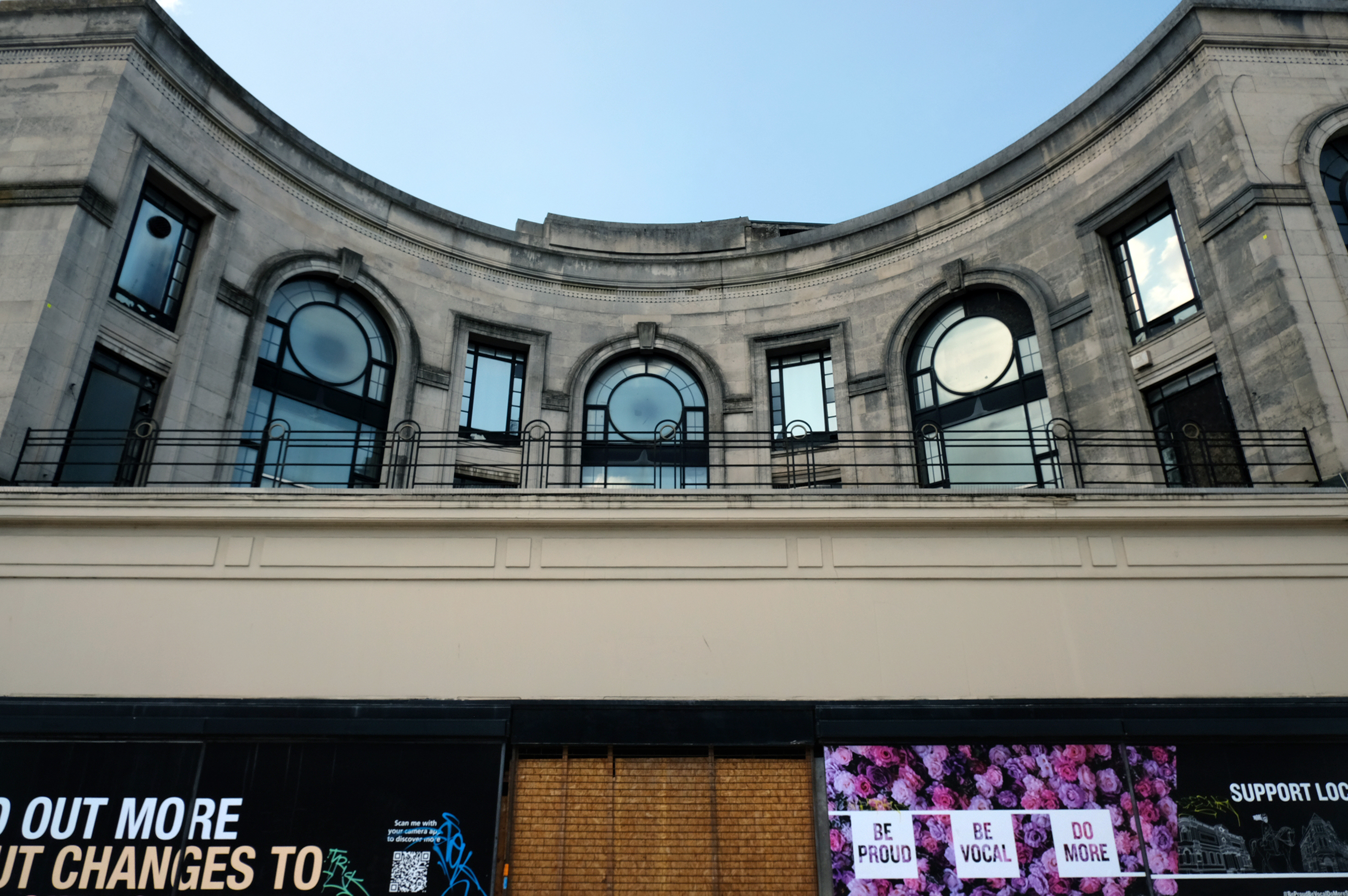
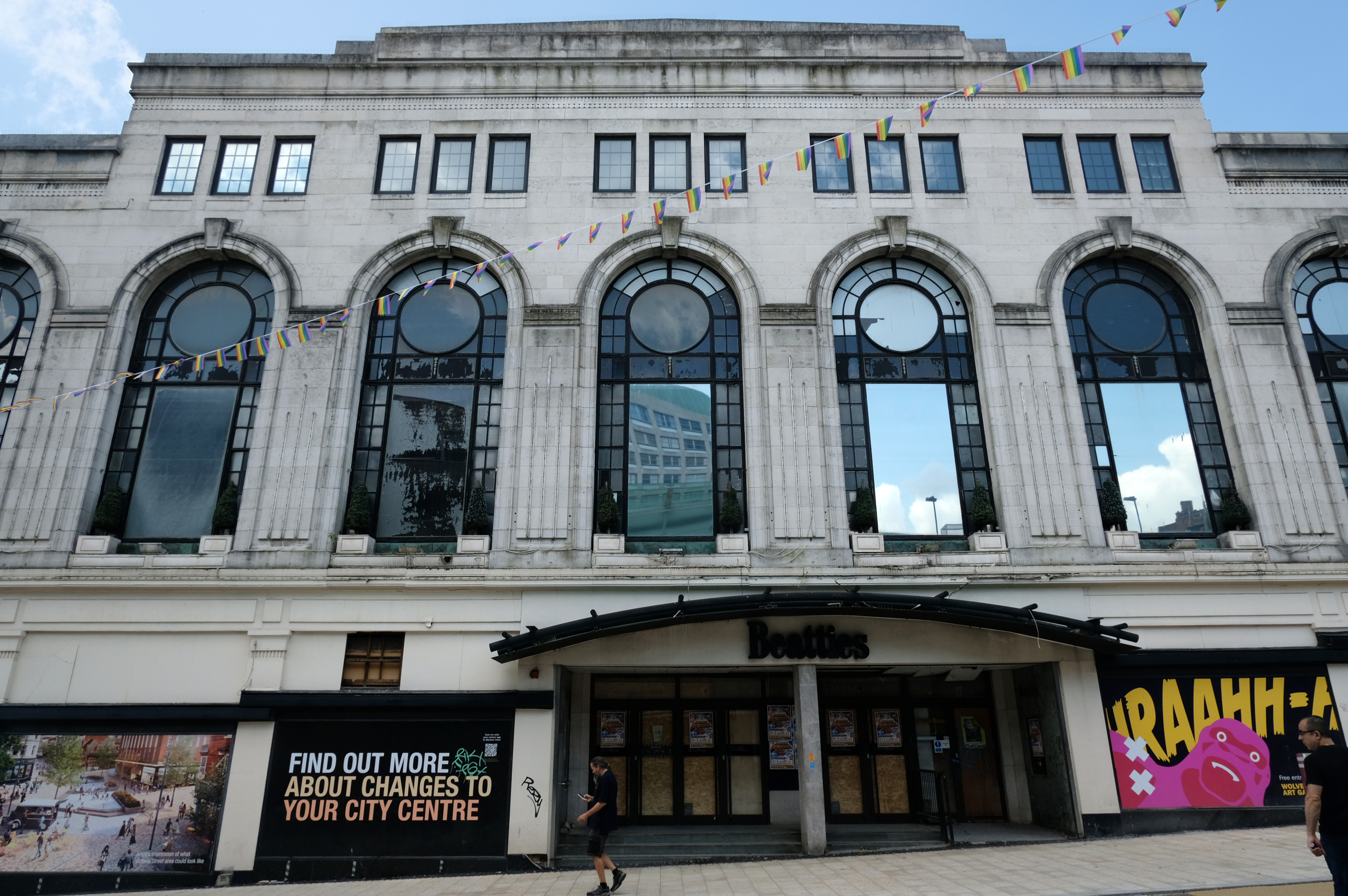
Let’s take a turn around the corner to Victoria Street where we find the complex of Beatties Buildings.

Architects: Lavender, Twentyman and Percy 1920’s – 30’s

The C20 Beatties store is a multi-period site developed first in the 1920s-30s. A Burton’s men’s clothes shop was built on a curved corner site at Victoria St/Darlington St and Beatties themselves replaced their existing Victoria St store in the 1930s with a building by local architects Lavender, Twentyman and Percy. Beatties later acquired and incorporated the Burton’s shop into their store. These two buildings form the locally listed building to which were added a mid-C20 extension along Darlington St and a late-C20 development to the rear at Skinner St.

c20 Society

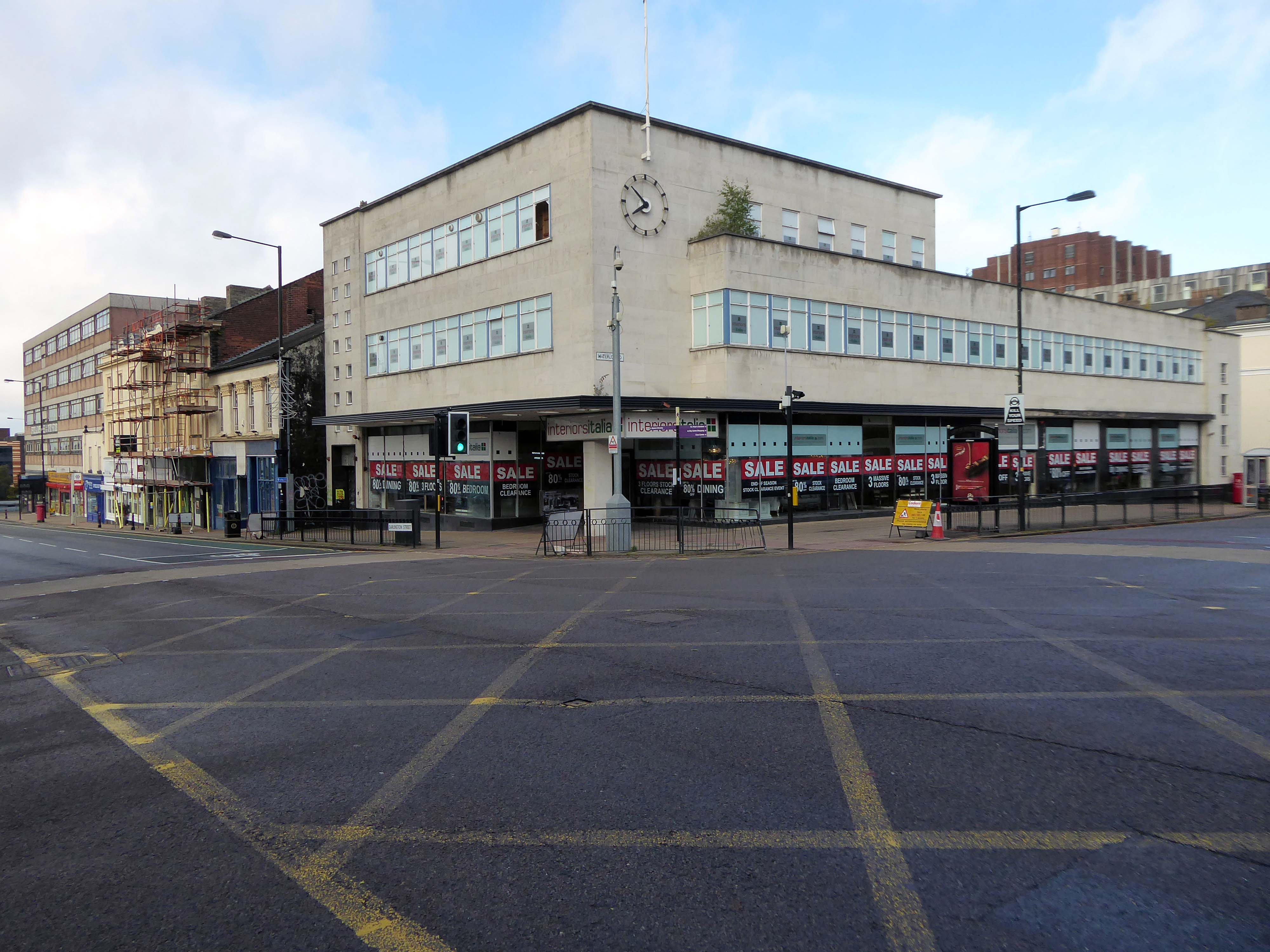
An imperious Portland stone clad mixed us block on Waterloo Road, with a delightful clock.

Formerly the Gas Showrooms then Sun Alliance & London Insurance offices – aka Clock Chambers

The showroom in Darlington Street was also the centre of a radio network that controlled a fleet of service vans. This enabled customers to receive service within minutes of making a telephone call. Demonstrations of cookery, washing and refrigeration were given by the Gas Board’s Home Service Advisers and a number of the company’s engineers, who specialised in designing gas equipment for industrial processes operated an advisory service for manufacturers. 

Architects: Richard Twentyman 1939.

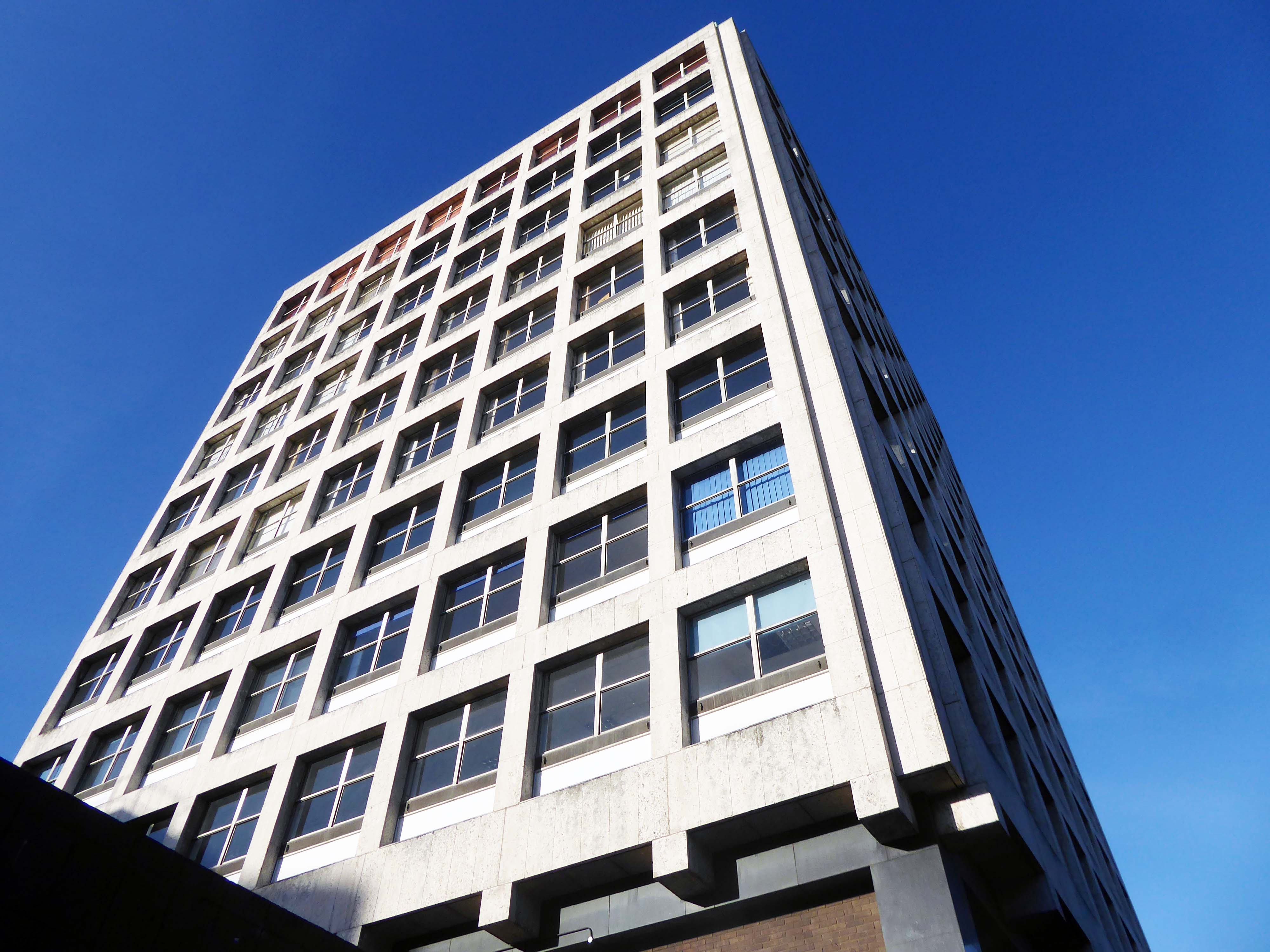
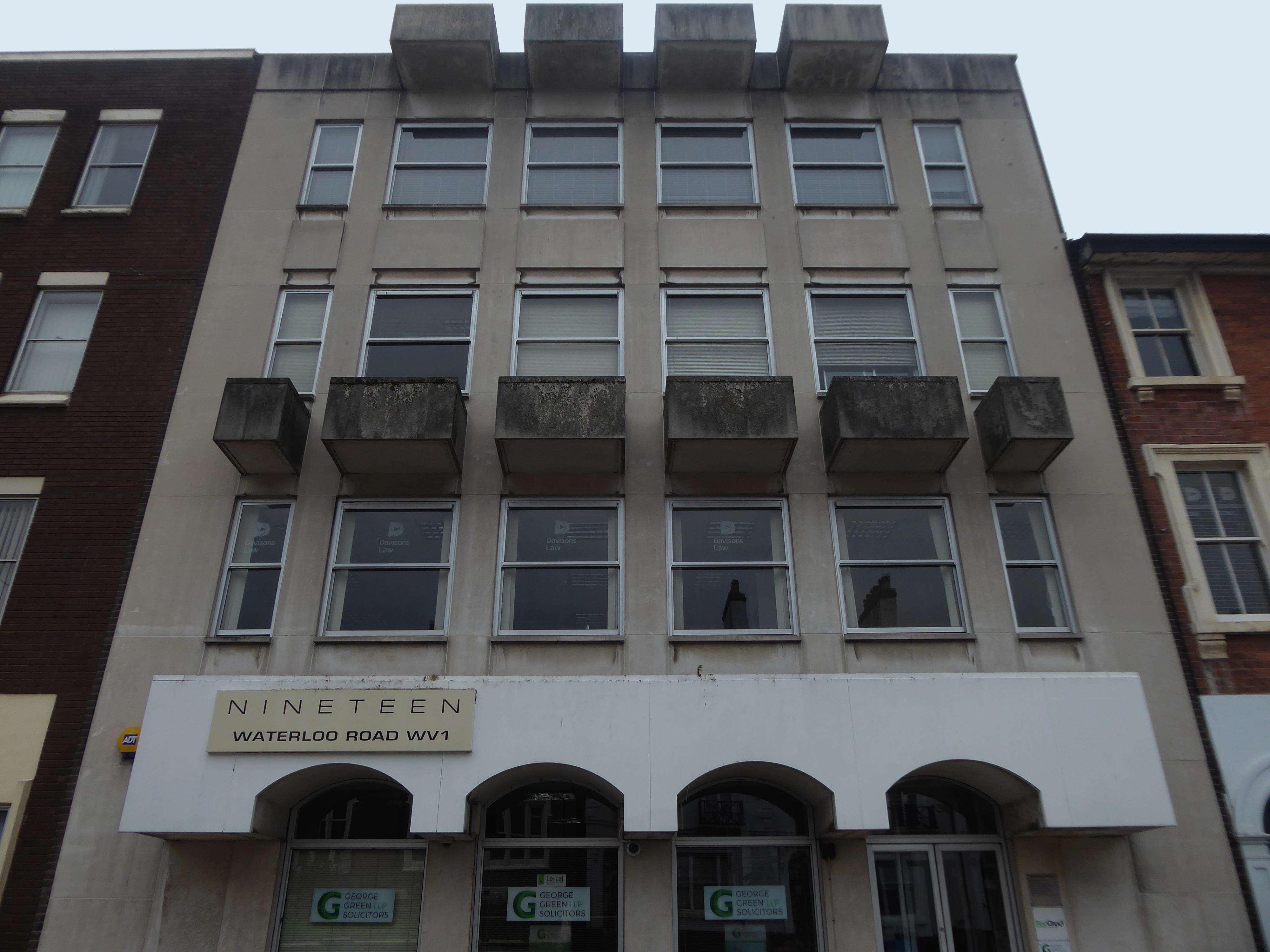
Nineteen Waterloo Road latterly First City House formerly home to Eagle Star Insurance 1970

8-10 Waterloo Road architects: Richard Twentyman 1959 extended 1966.

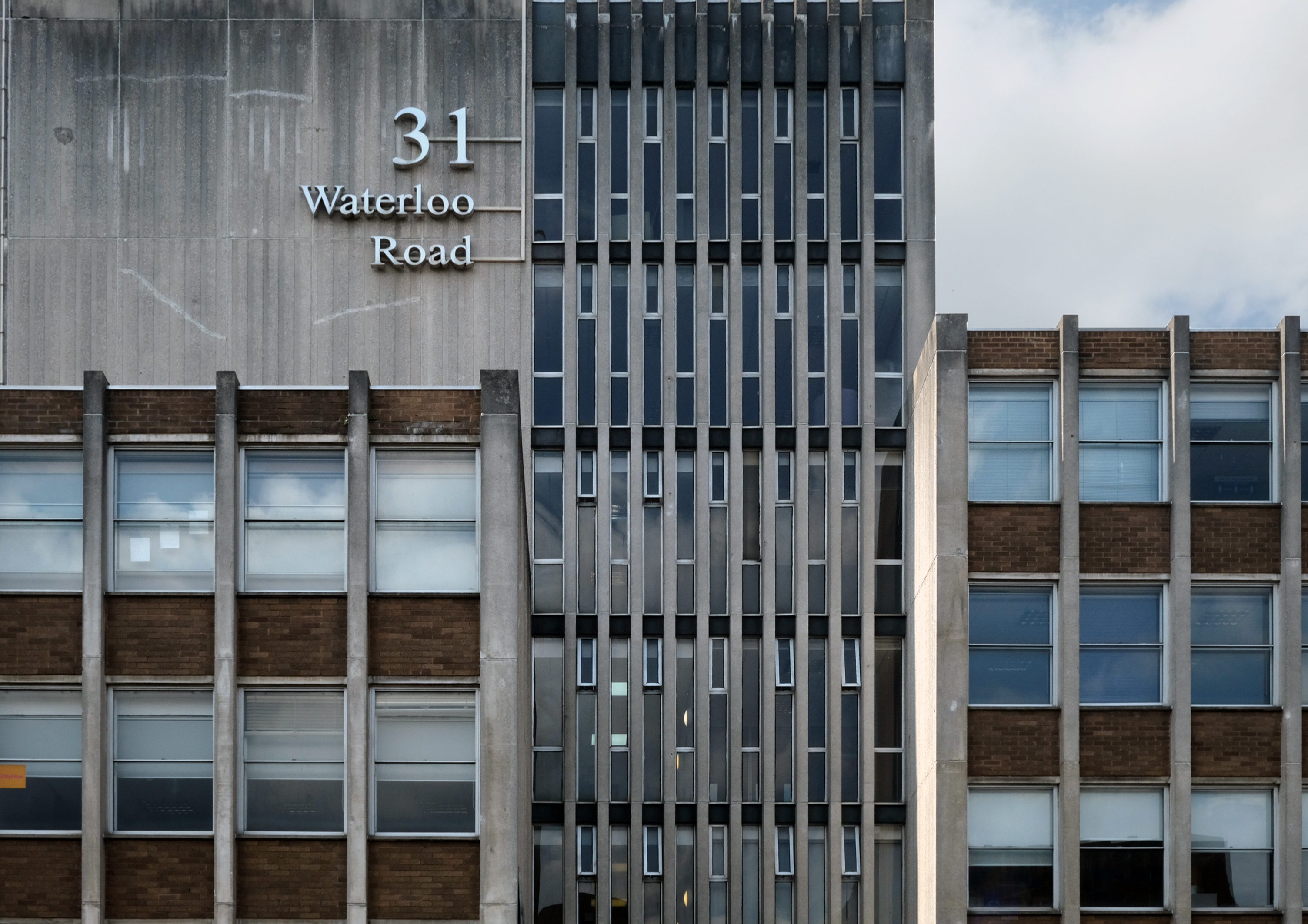
31 Waterloo Road – Waterloo Court architects: Kenneth Wakeford, Jerram & Harris 1972

Right turn to the Telephone Exchange

Architects: NHA Gallagher of the Ministry of Public Buildings and Works and Clifford Culpin & Partners job architect Leslie Parrett 1971.

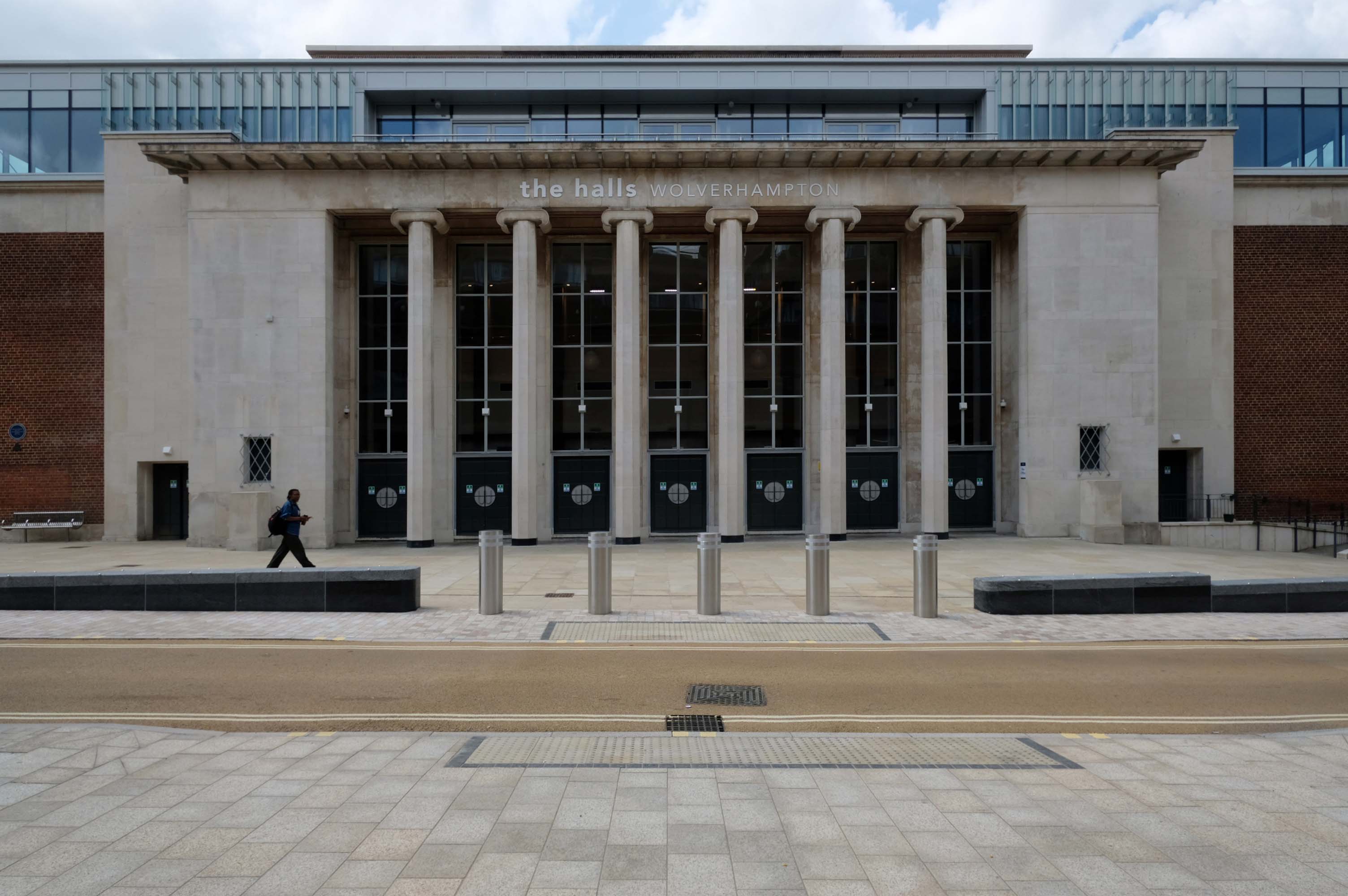
Around the bend to The Halls – once the Civic Halls.

Architects: Lyons and Israel 1936-38

Refurbished 2003 by Penoyre & Presad with more alterations in 2021 by Jacobs consulting engineers.

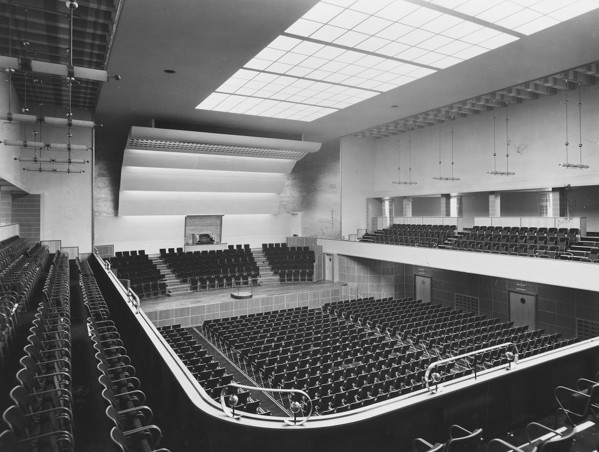
RIBA pix – 1939

Over the road to the Civic Centre.

Architects: Clifford Culpin & Partners 1974-79.

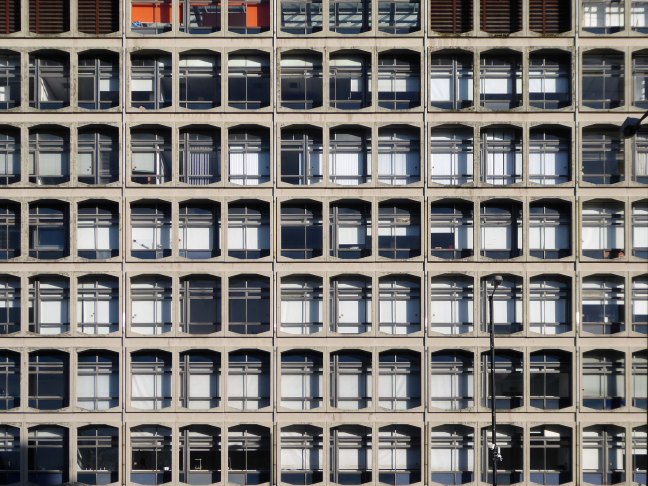
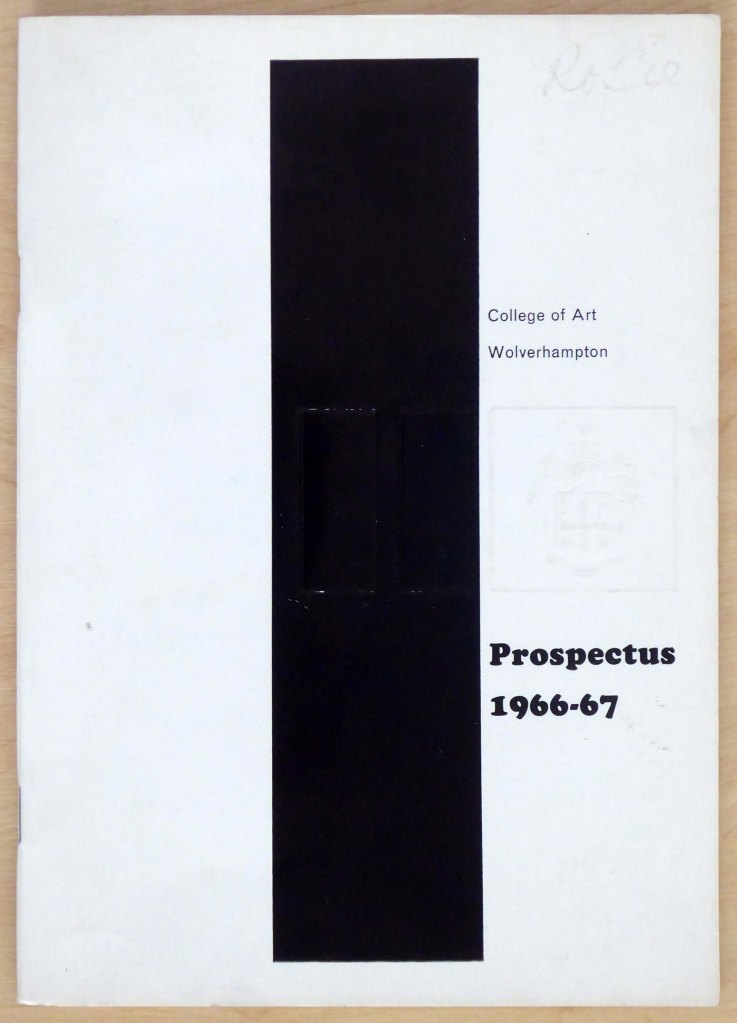
We end our Wolverhampton wander at the College of Art and Design

Architects: Diamond Redfern and Partners with A Chapman Borough Architect 1969

Huge thanks to Tom Hicks aka Black Country Type for his invaluable assistance.

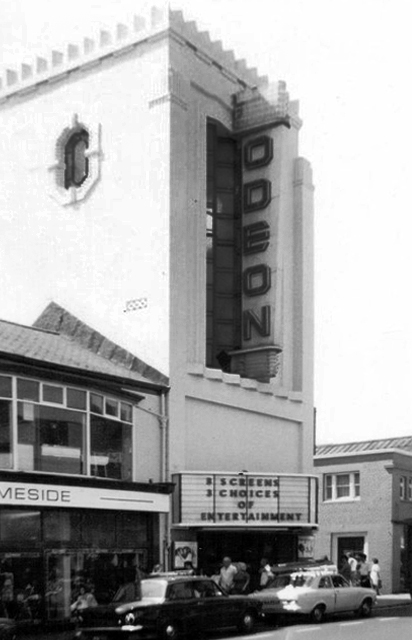
Odeon and Ritz Cinemas – Sunderland

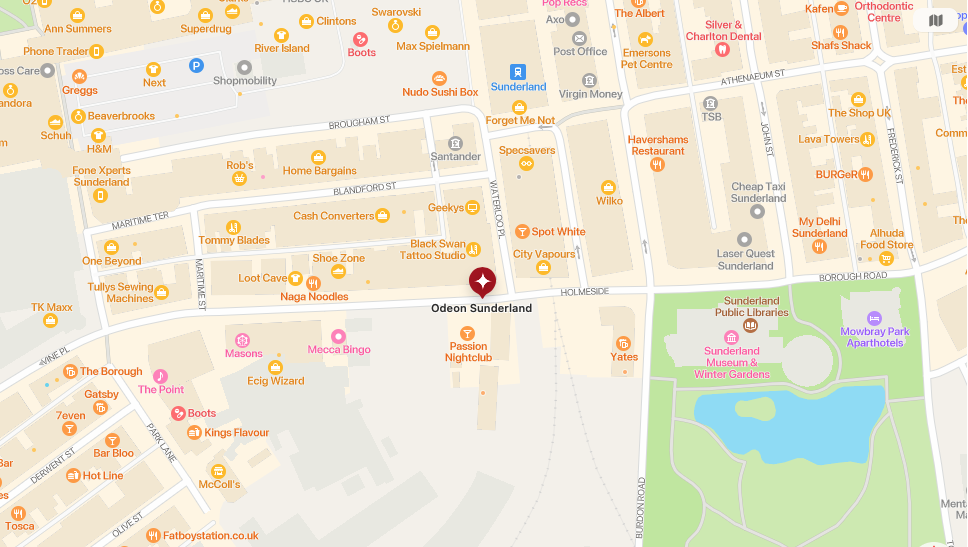
44 Holmeside  Sunderland  SR1 3JE

Architects: Frederick EvansEdwin Sheridan Gray

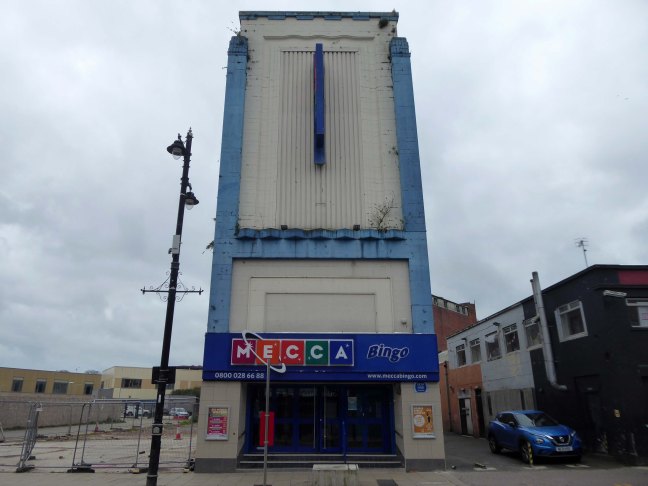
Black’s Regal Theatre was built on the site of the Olympia Exhibition Hall and Pleasuredrome 1897-1910 and it was built for the northern independent Black’s circuit. It opened on 28th March 1932 with Jessie Matthews in Out of the Blue.

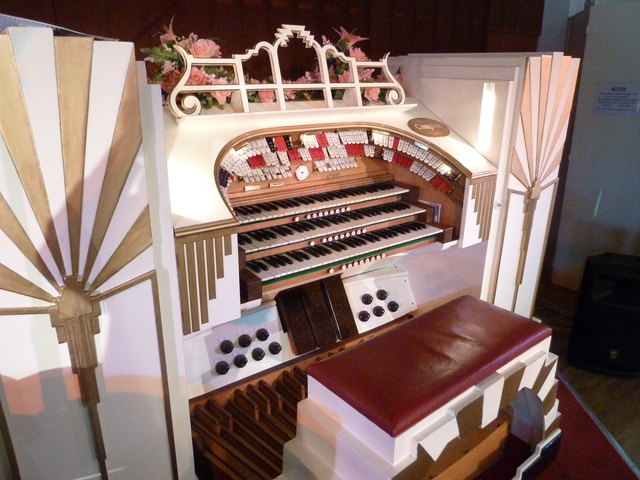
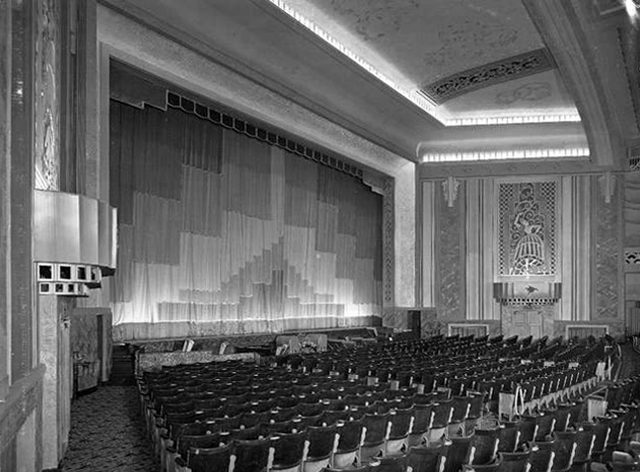
The theatre was equipped with a Compton three manual, nine ranks theatre organ which had an Art Deco style console on a lift.

This was opened by organist J Arnold Eagle. The policy of the theatre for many years was pictures and variety and it had a fifty seven feet wide proscenium, the stage was forty feet deep and there were ten dressing rooms. Other facilities included a cafe and roller rink.
Regal/Odeon, Holmeside, Sunderland, Co. Durham

In 1955 the Black’s circuit was taken over by the Rank Organisation and the Regal was re-named Odeon from 28th November 1955. It was divided into a three screen cinema in 1975 with 1,200 seats in the former circle and two 150 seat screens in the rear stalls.

On 28th March 1982 a special 50th Anniversary concert was given by Phil Kelsall on the Compton organ. Three months later, on 26th June 1982 the Odeon was closed with One Flew Over the Cuckoo’s Nest, Star Wars & The Empire Strikes Back, Mary Millington’s True Blue Confessions.

The building was boarded up and abandonded for a long period of time.
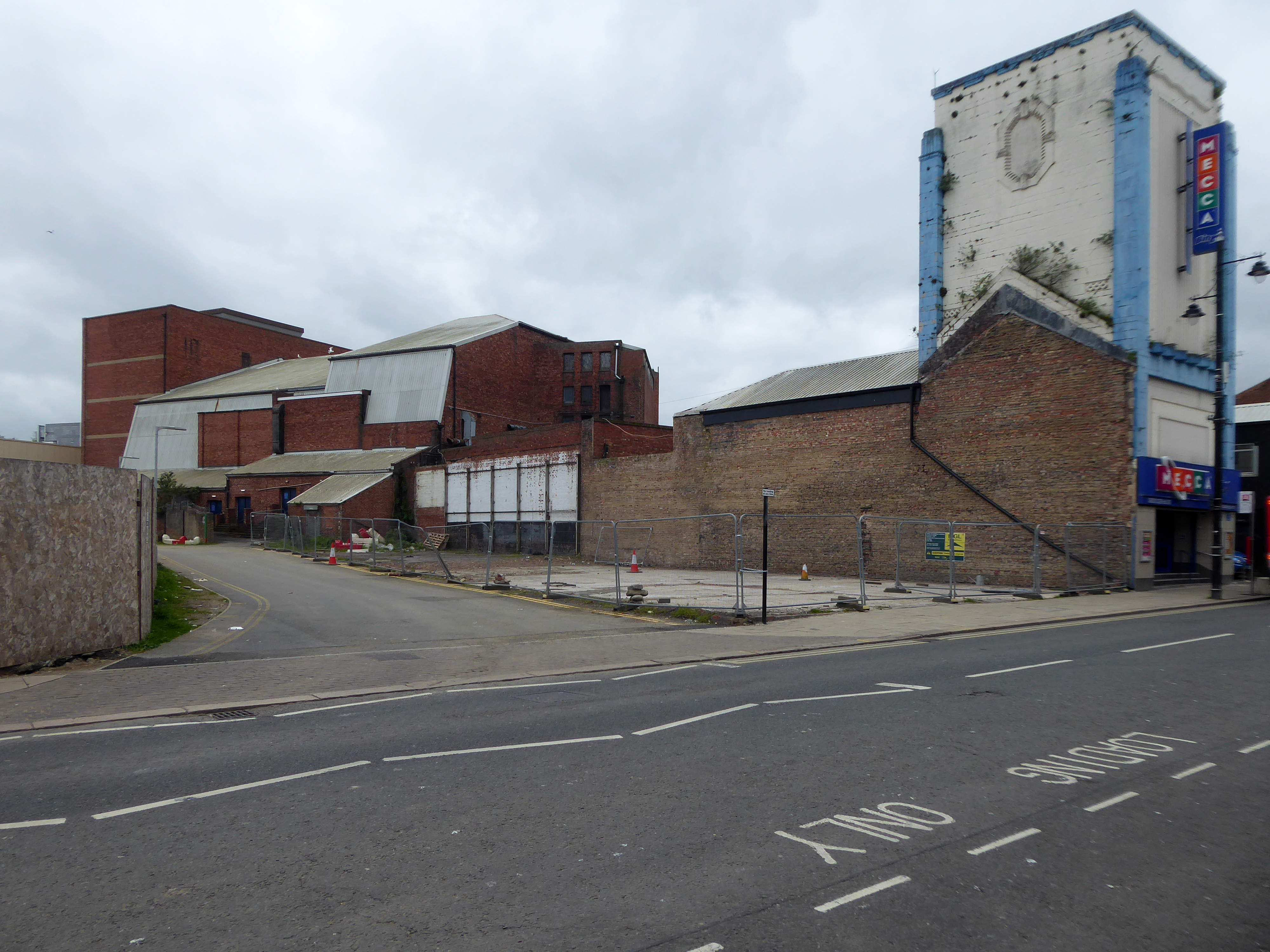
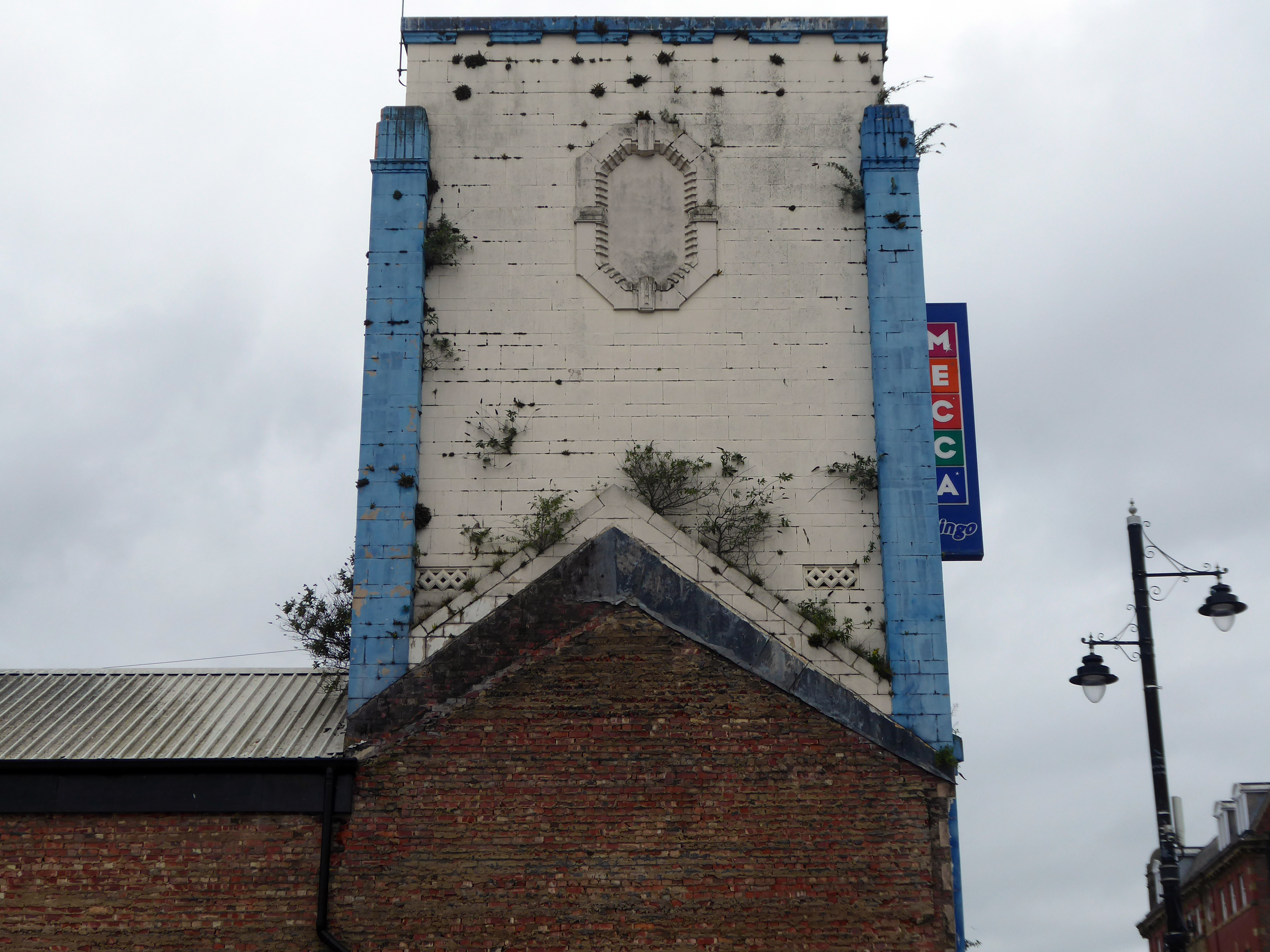
However it was to re-open as a Top Rank Bingo Club and remains in use today as a Mecca Bingo Club. The sub-division of the auditorium has been removed. In July 2009, it was announced that the building and the entire block had been the subject of a compulsory purchase order.
Cinema Treasures

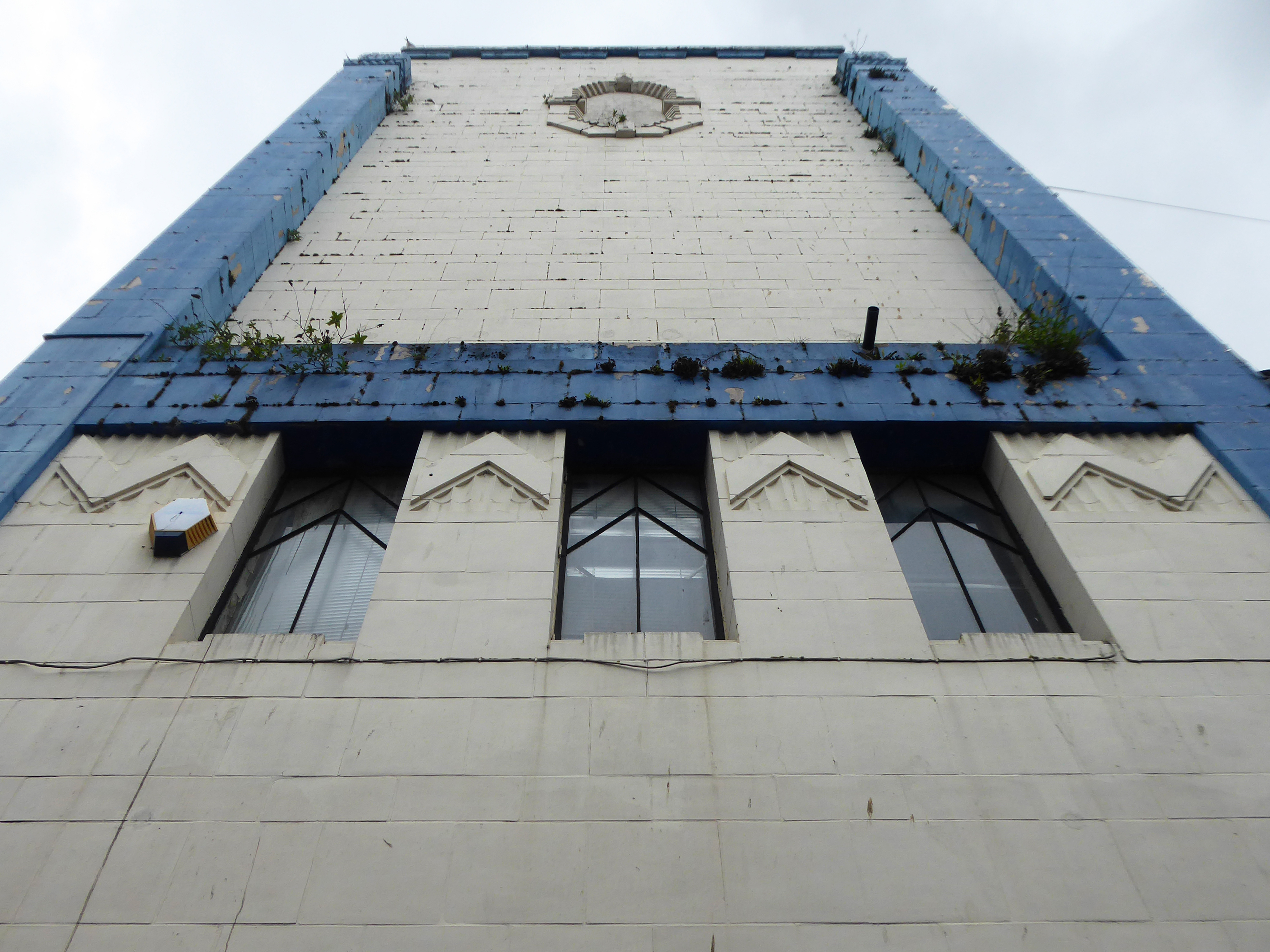
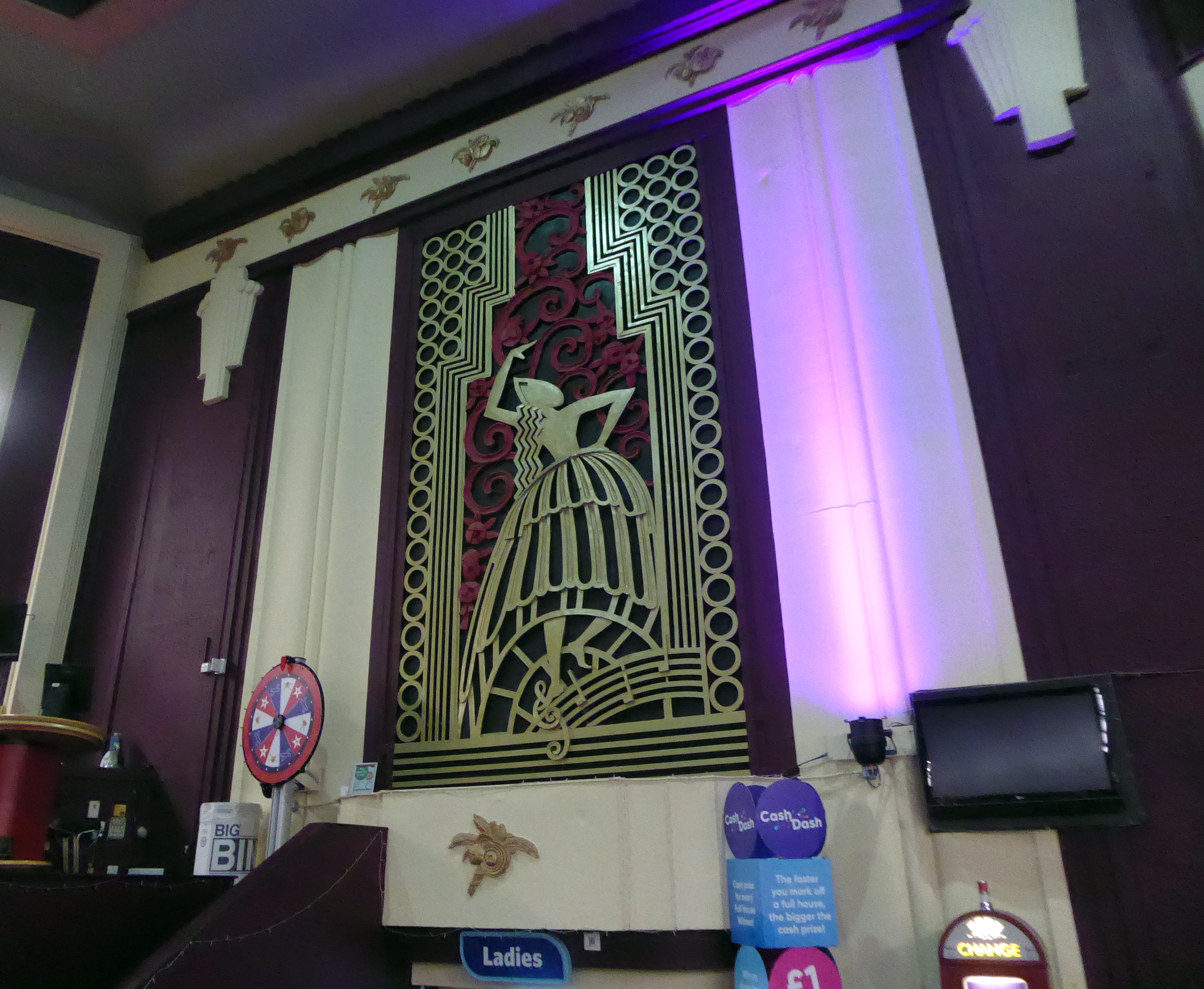
I happened by the other day – attracted by the distinctive Deco tower.

And the building’s amazing mass.

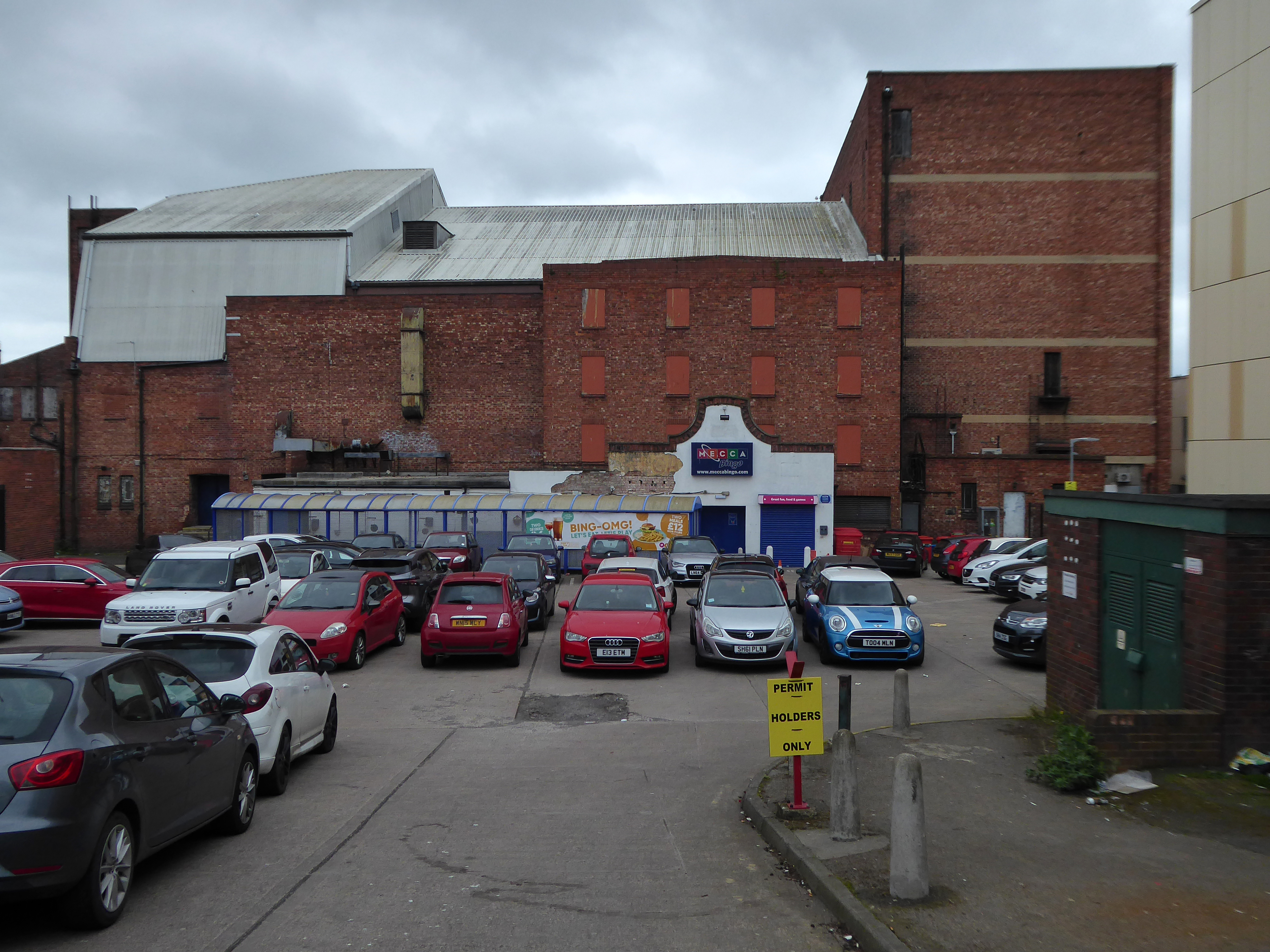
I walked around the corner to find the side entrance – as the original lobby is no longer in use.

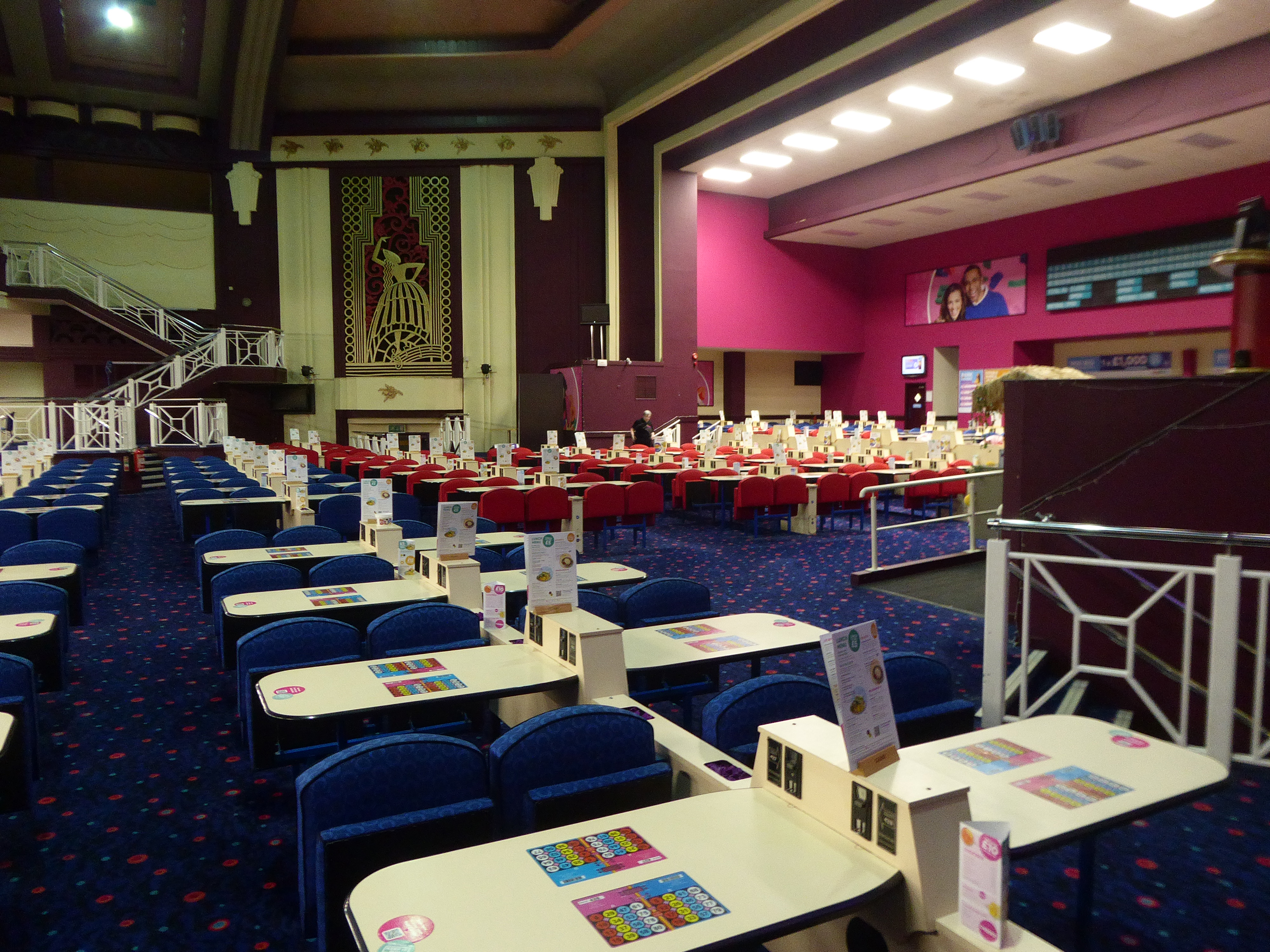
I was ever so fortunate to happen upon a convivial cleaner, who kindly invited me inside the auditorium.

Much of the interior detail is intact though the balcony was no longer in use.

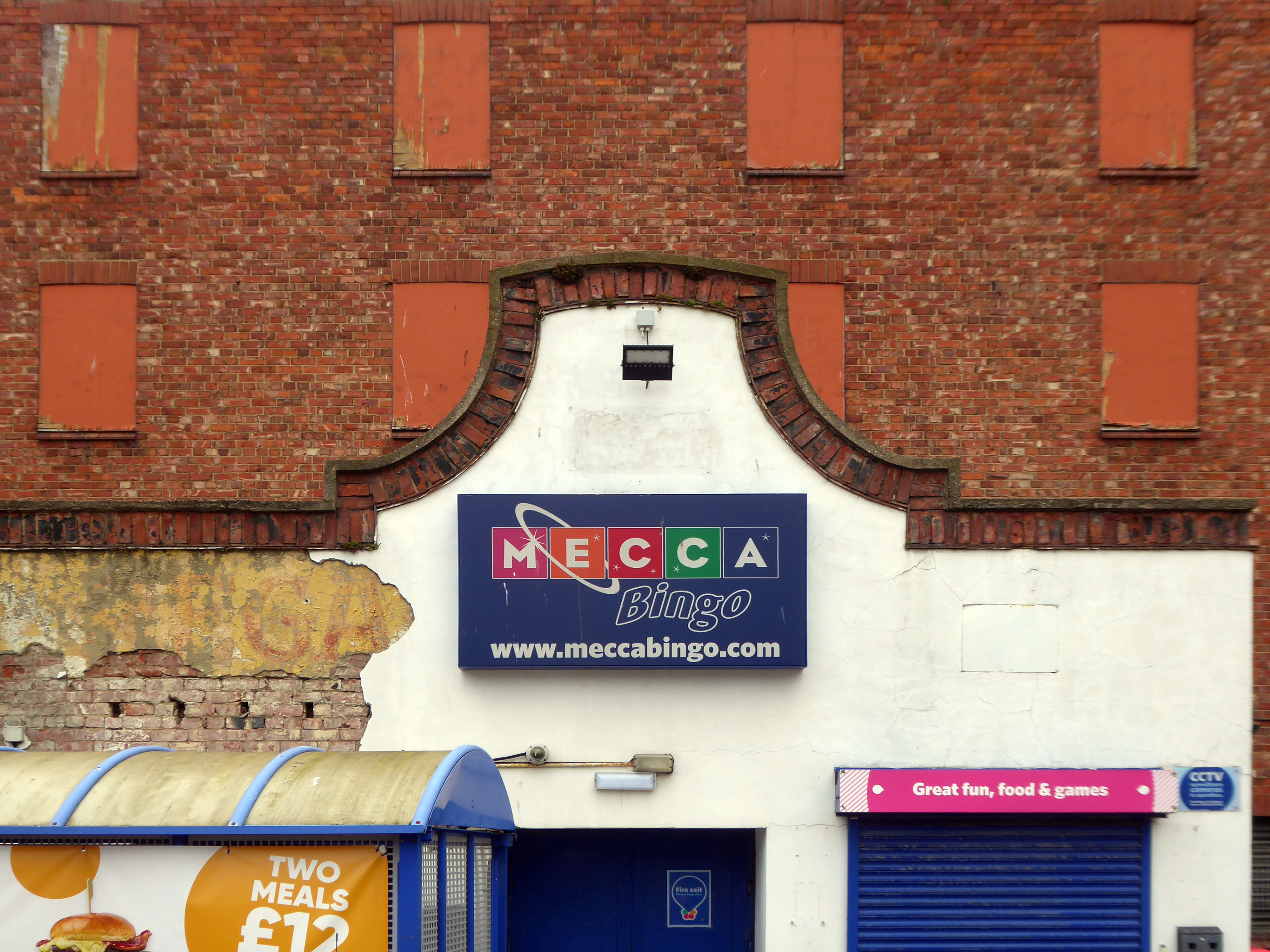
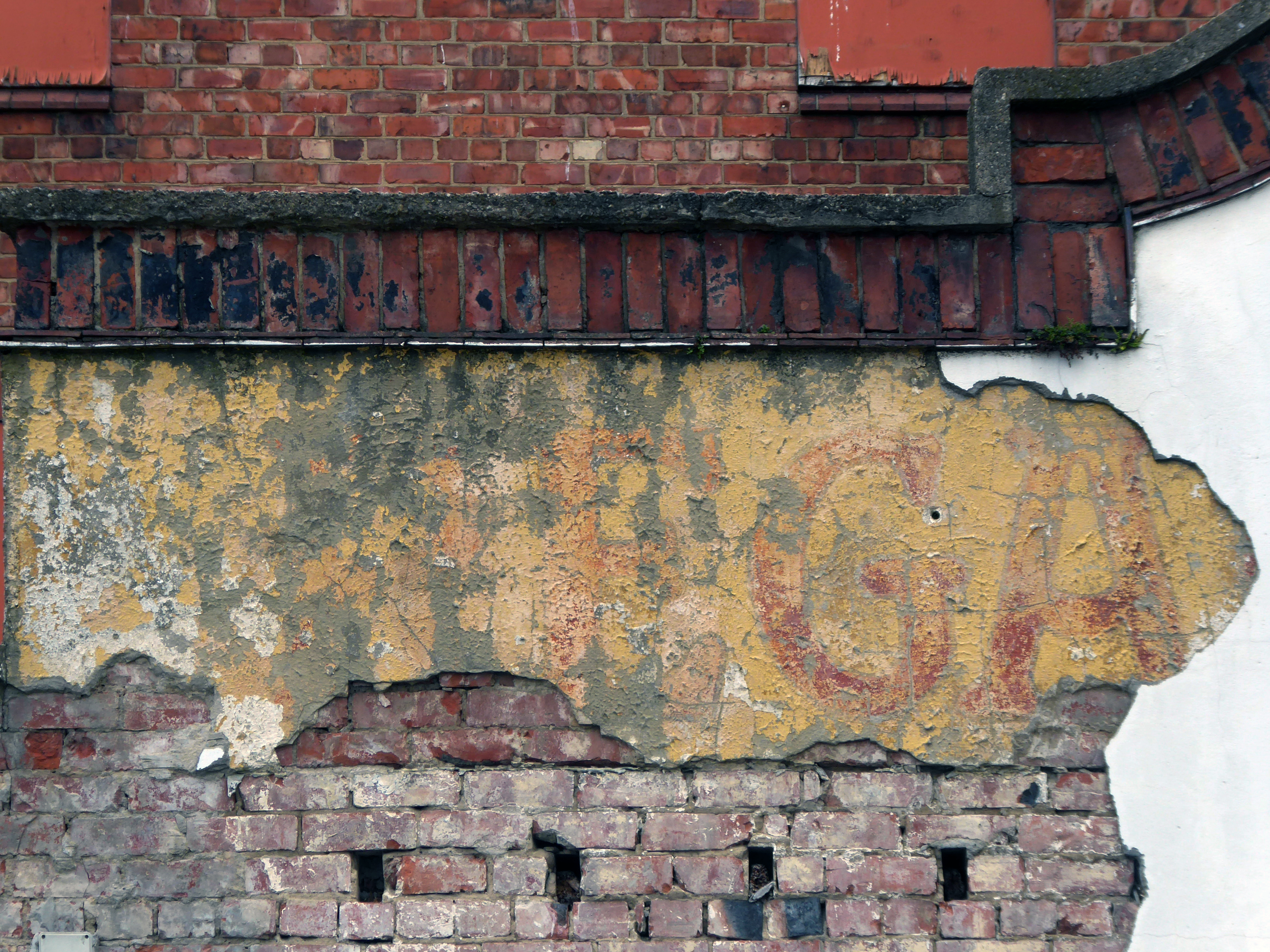
On exiting, I noticed the ghost of the Regal.

Though the exterior is a pale shadow of its former self, the building is still intact and in use.

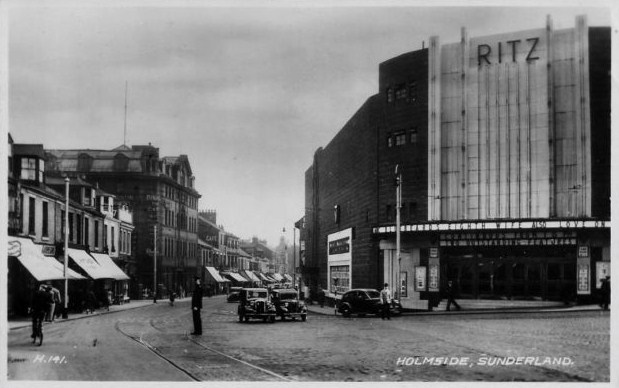
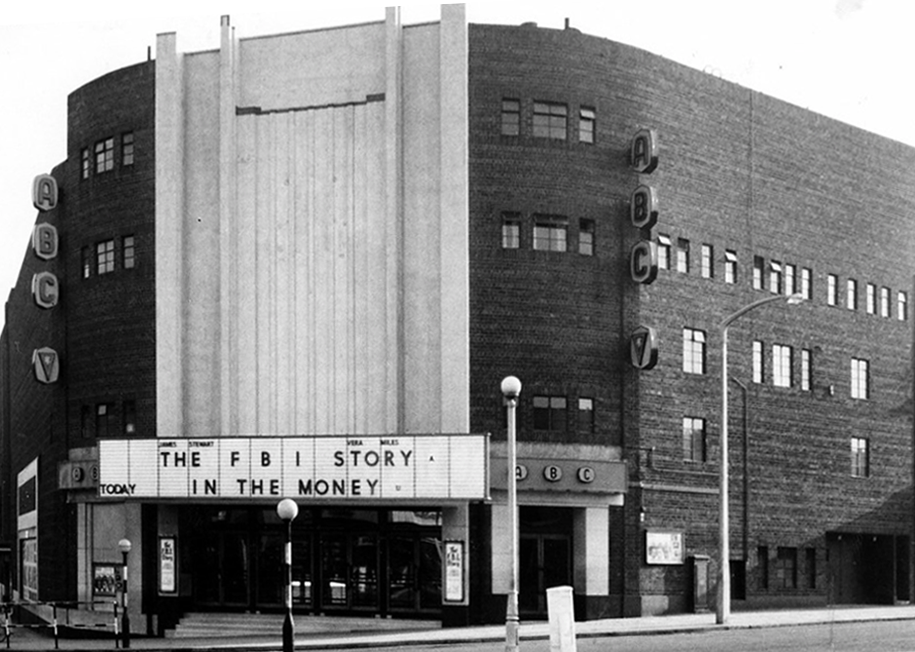
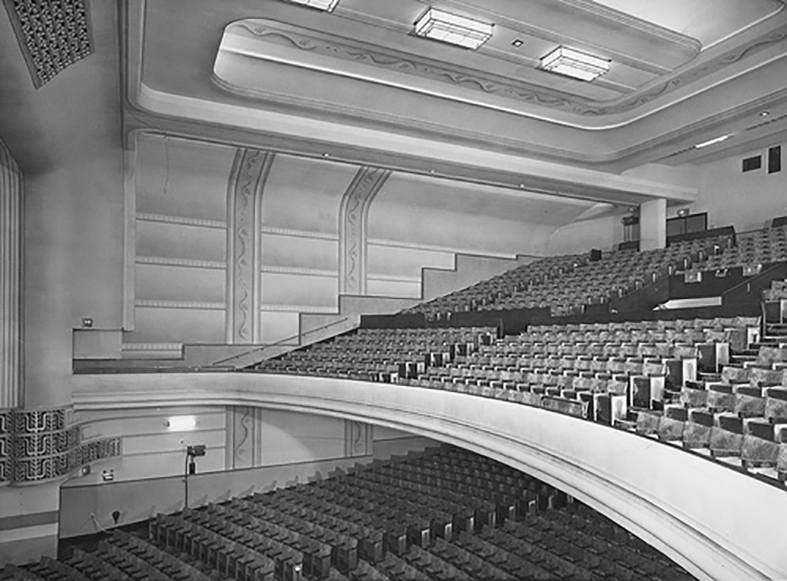
A close neighbour is the what was the Ritz latterly ABC Cinema.

Architects: William Riddell Glen

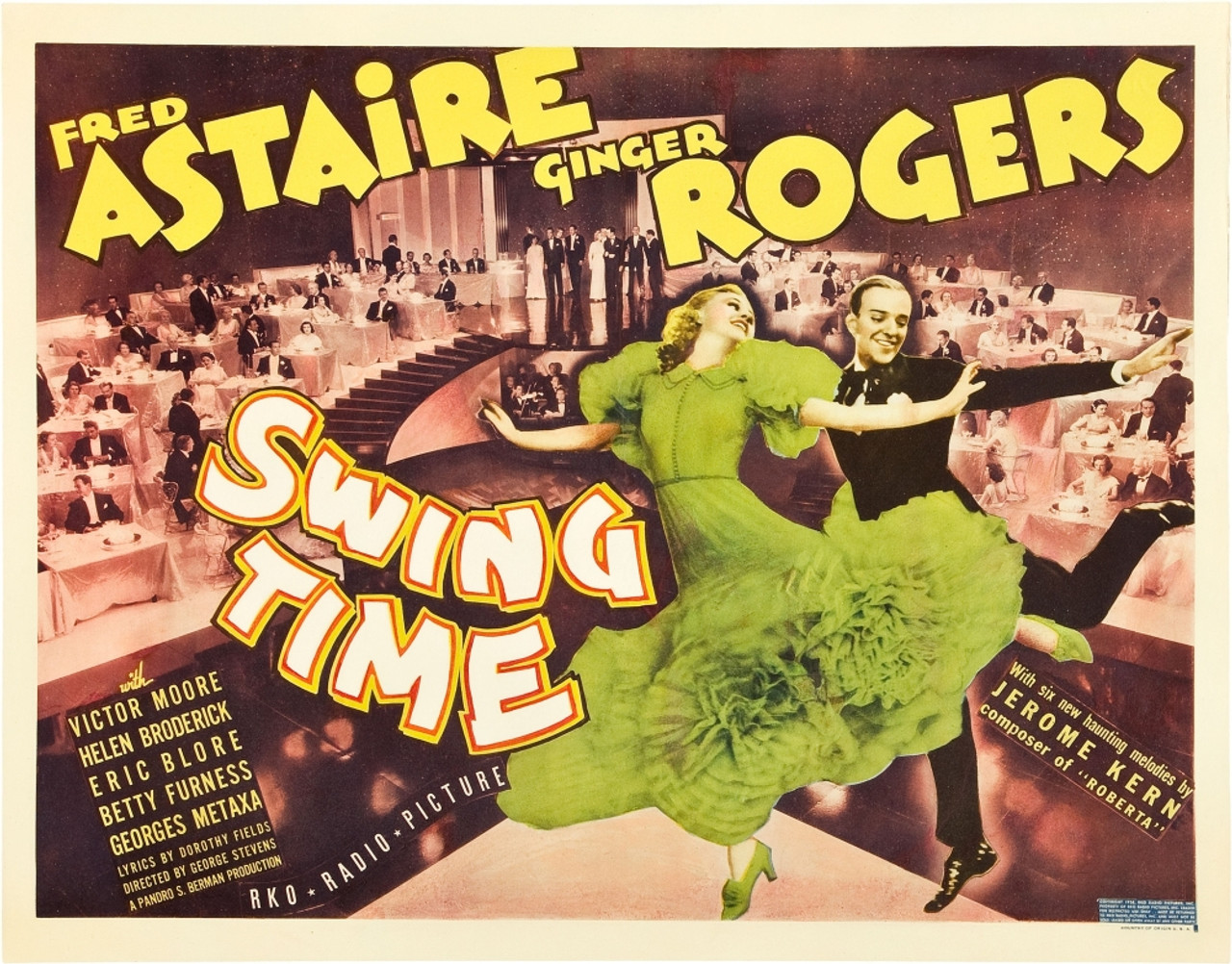
Opened on 1st March 1937 with Fred Astaire & Ginger Rogers in Swing Time, the Ritz Cinema was built by the Union Cinemas chain. They were soon taken over by Associated British Cinemas – ABC. It was lavishly fitted with deep pile carpets and chandeliers.

In 1961 it was re-named ABC. It was converted into a two screen cinema from July/August 1974 when the former circle became a 534 seat screen and the front stalls a second screen seating 212. The rear stalls area was converted into a Painted Wagon pub. Sadly the conversion destroyed much of the original interior of the auditorium. It was later taken over by the Cannon Cinemas group, but later went back to the ABC name.

Sadly it closed on 29th April 1999, the last of Sunderland’s major cinemas.

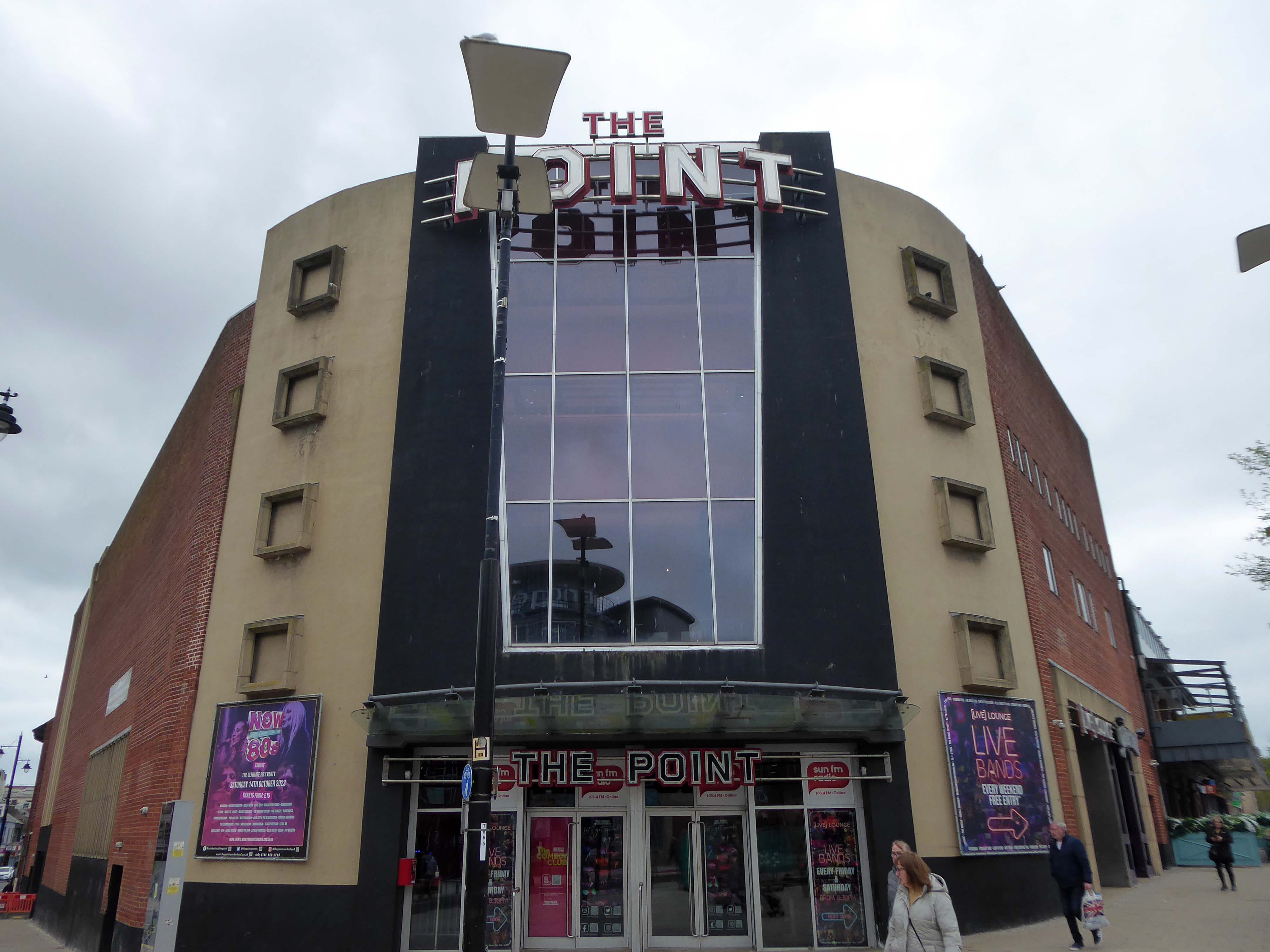
It has recently reopened as The Point a nightclub which has four dance floors and has now completely lost all features of its cinematic past.

Cinema Treasures

Get y’self pumped!

Weston super Mare

Although there is evidence in the local area of occupation since the Iron Age, it was still a small village until the 19th century when it became a seaside resort, and was connected with local towns and cities by a railway, and two piers were built. The growth continued until the second half of the 20th century, when tourism declined and some local industries closed. A regeneration programme is being undertaken with attractions including the Helicopter Museum, Weston Museum, and the Grand Pier. The Paddle Steamer Waverley and MV Balmoral offer day sea trips from Knightstone Island to various destinations along the Bristol Channel and Severn Estuary. Cultural venues include The Playhouse, the Winter Gardens and the Blakehay Theatre.

Wikipedia

I arrived mid-morning on Saturday 25th July 2015 – having travelled some two hundred miles or so from Stockport by train.

The Iron Age seemed to be over and regeneration slowly but surely under way.

This marked the start of another coastal tour, following last year’s epic which began in Hastings.

This time I was heading for Hastings – but that can wait until tomorrow, let’s have a look around town.

Directly opposite the station is a group of Seaside Moderne homes in various states of whiteness – standing in line along Neva Road.

Reasonably priced, cheaper than Frinton – check it out

I pushed my bike along the prom heading for my pre-booked digs in a stylish seafront hotel.

Past the Marine Causeway linking the shore to some kind of modern day Post Modern Shangri-La.

A mystical, harmonious valley, gently guided from a lamasery, enclosed in the western end of the Kunlun Mountains, possibly not.

You can stroll onto Knightstone Island, where you will find some cafes serving light snacks and refreshments, or to the other side which takes you along the causeway, accessible to walk across according to the tides. At the other side of the Causeway you will find a small rocky beach with tidal rockpools ideal for exploring.

Just along the prom stands one of my all time favourite seaside shelters.

Even further along – what’s all this here then?

The foundation stone of the Birch-designed Birnbeck Pier was laid in 1864. It opened on 5th June 1867 and consisted of a 1040 foot cantilever construction to Birnbeck Island and a short jetty extending westwards from the island.

National Piers Society

It seems to have changed hands several times in its relatively short life, including the stewardship of the infamous Urban Splash and the mysterious mystery owners, the current custodians it seems, have done little to secure a secure future.

It remains alone and untended, stretching aimlessly out to sea.

In April 2015, Friends Of The Old Pier Society created a novel fund raising scheme in which 1p and 2p coins would be lined up to stretch from the Grand Pier to Birnbeck Pier.

September 2019 Councillor Mr Crockford-Hawley said:

It’s this end of Weston which is the sore, it’s the carbuncle, it’s clearly well past its prime and it needs some serious attention. I mean it would be wonderful if somebody came along with an open ended bank account and said ‘yup, I’d love to restore it for the sake of restoring it’, but quite clearly there’s got to be an economic future for the pier, there’s got to be a purpose for the pier.

Possibly a wealthy Beatle could bail the ailing pier out of deep water?

Having made a bob or two since they appeared here in 1963.

Next thing I know I’m outside the imposing and impressive sounding Ocean Hotel. Sad to say on the day/night of my visit it wasn’t just this weary traveller that appeared to be over tired, happy to report the the New Ocean Hotel has been revamped and in tip-top condition by all accounts.

Any road up, let’s get out, take a walk up the road – have look at some local type.

Watney’s mythical Red Barrel.

Watney’s was the Evil Corporation which sought to crush plucky small brewers and impose its own terrible beer on the drinking public. It acquired and closed beloved local breweries, and it closed pubs, or ruined them with clumsy makeovers.

Its Red Barrel was particularly vile – a symbol of all that was wrong with industrial brewing and national brands pushed through cynical marketing campaigns.

A page-spread from Design Research Unit 1945-1972 – Koenig Books 2011 via A Practice for Everyday Life via Boak and Bailey – who examine the truth behind the myth.

A palimpsest ghost within a ghost.

A seaside outing for dear old Brush Script – a casual connecting script typeface designed in 1942 by Robert E. Smith for the American Type Founders.

The face exhibits an exuberant graphic stroke emulating the look of handwritten written letters with an ink brush.

It came third as a Least Favorite nomination in a 2007 designers’ survey.

It was rated fifth in The Eight Worst Fonts In The World list in Simon Garfield’s 2010 book Just My Type.

Why have just one identity when you can have two, welcome to the 21st Century schizoid Savoy – don’t it jus’ make you want to stomp?

First but surely not the last sighting of Profil aka Stymie Bold Italic – in a none inline variant.

Classical kerning down at the local estate agents, tasteful Gill Condensed Bold – from the hand and eye of the far from tasteful Eric.

Ay up it’s a launderette that almost thinks it’s a scooter!

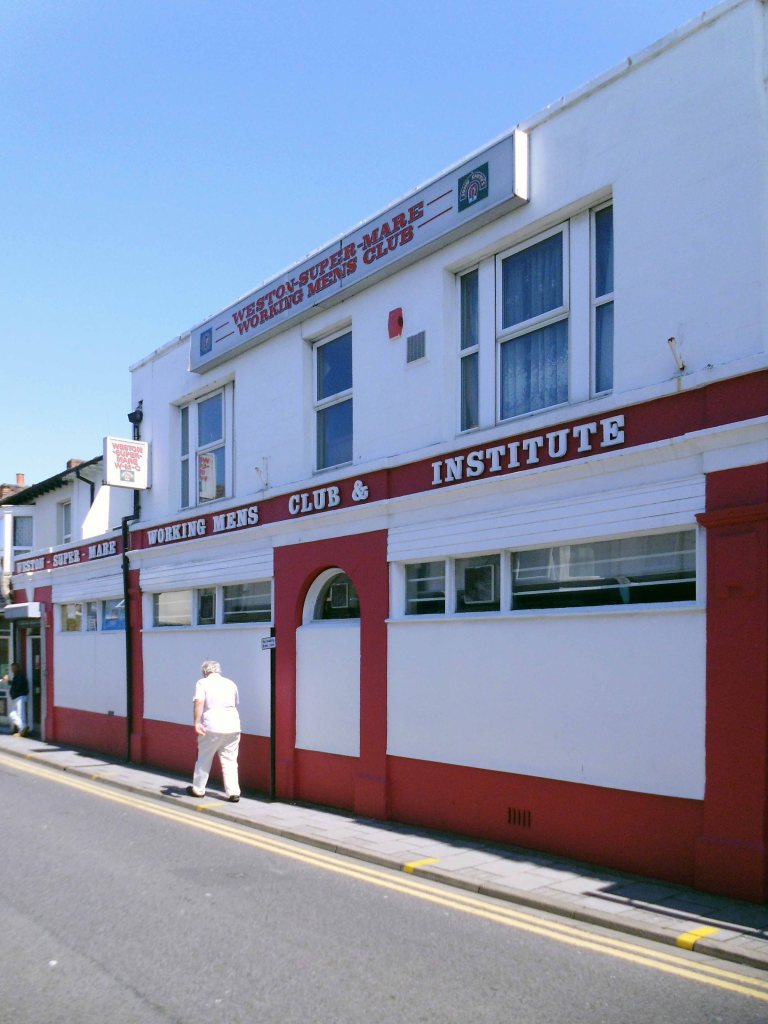
Cheap beer, raffle, singer and bingo on a Wednesday afternoon.

Amazing and great atmosphere with friendly service staff and atmosphere, love it, real nice people

Facebook

Russell Davies Flickr

Keeler Productions has taken over Locking Road Car Park, opposite Tesco, and The Regent Restaurant, in Regent Street, to film a BBC period series The Trial of Christine Keeler, based on the Profumo Affair in the 1960s.

Weston Mercury

Enough of all that period drama, let’s have a look at some period architecture.

Madeira Court – 67 flats built in 1988.

Weekly Social Activities include – coffee mornings, card evenings and occasional days out, organised by social club. New residents accepted from sixty years of age, both cats and dogs generally accepted.

I can find no reference for this dalle de verre stained glass window.

Boulevard United Reformed Church – Waterloo Street

Architects Gordon W. Jackson and Partners 1959

Constructed on part of the site of the former Electric Premier Cinema, the Odeon Theatre was opened on 25th May 1935 with Jack Buchanan in Brewster’s Millions. Built as one of the original Odeon Theatres in the then emerging Oscar Deutsch Odeon Theatres circuit, it was built on a prime corner street position in this sea-side town and was the first of several Odeon Theatre’s to be designed by architect Cecil T Howitt.

The Odeon was Grade II Listed on 21st August 1986.

Cinema Treasures

The Weston-super-Mare Odeon was built by C Bryant & Son Ltd of Birmingham on the site of the former Electric Premier Cinema. It opened on 25 May 1935, at which time it was described in the souvenir programme as ‘modernity at its best’, with seating accommodation that was ‘luxurious and spaced to give ample room for true comfort’.

A short walk along the prom snapping shelters and the sheltered – no two the same.

I then chanced to fall into a Beer Festival and bad company – the rest is a blur, see you all tomorrow there’s some cycling to be done.

Night night.

Odeon – Guide Bridge

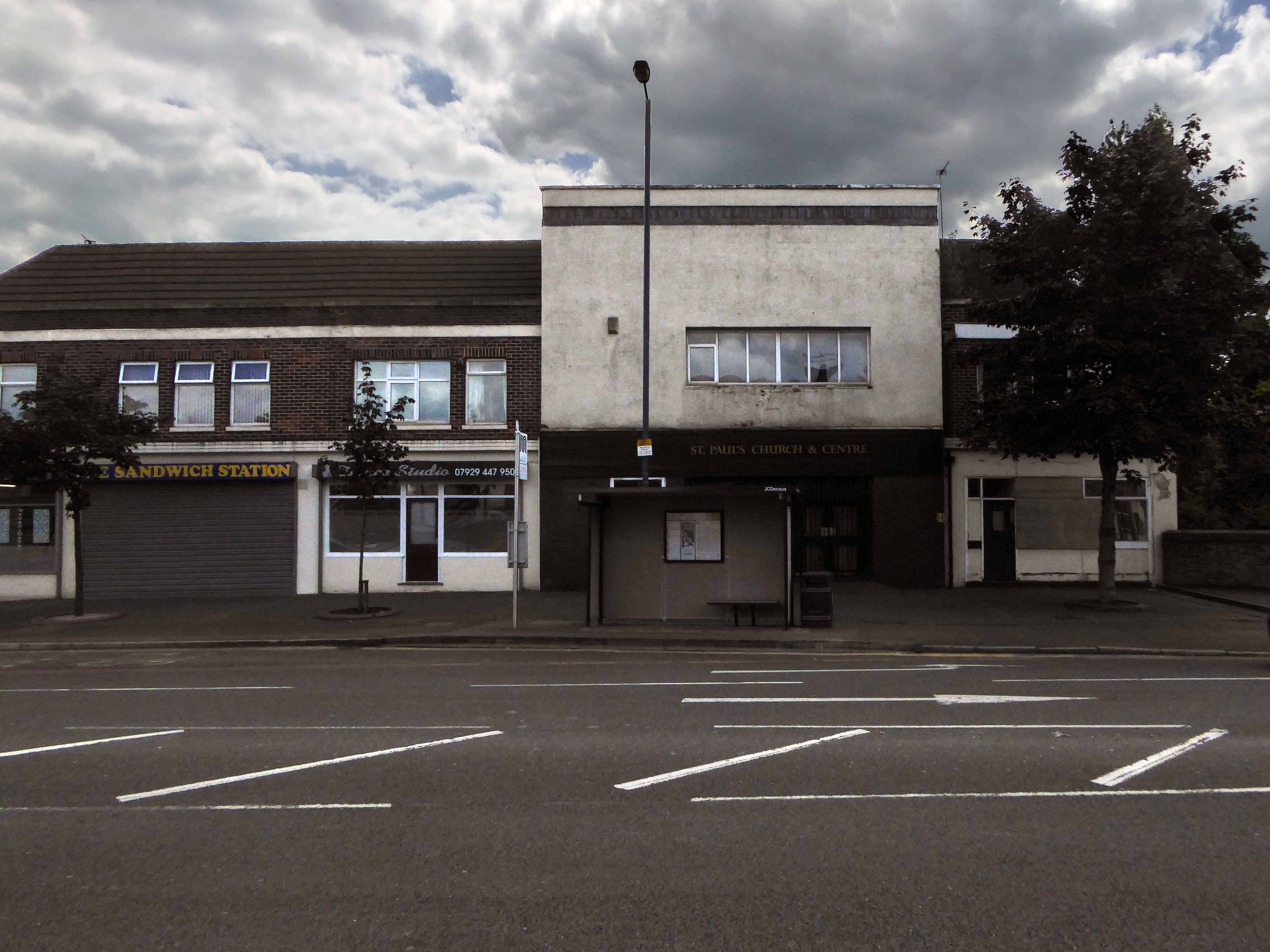
285 Stockport Road Guide Bridge Ashton-under-Lyne

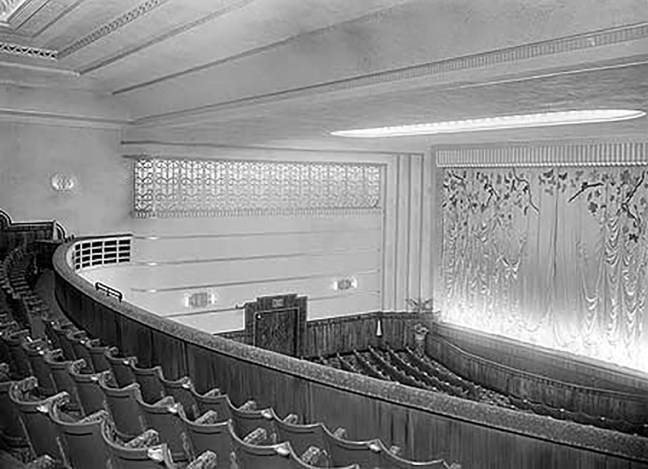
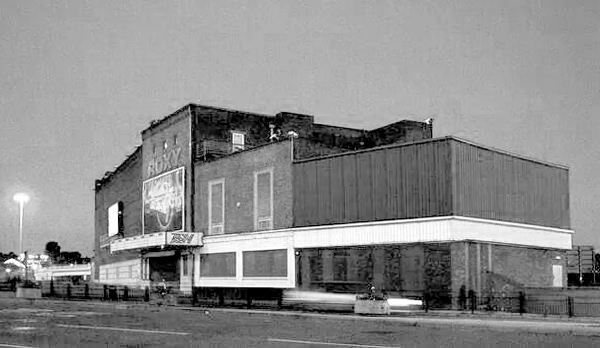
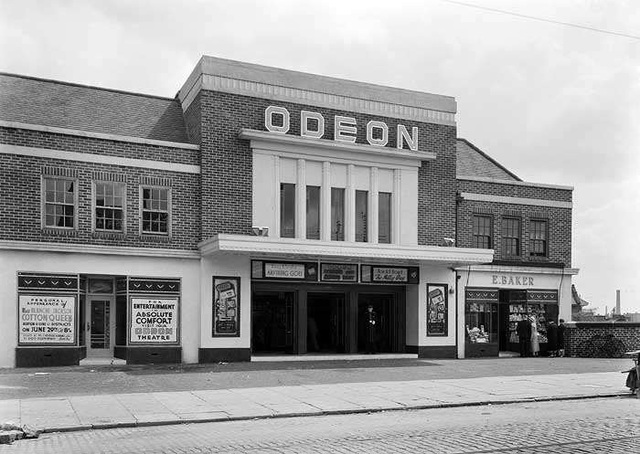
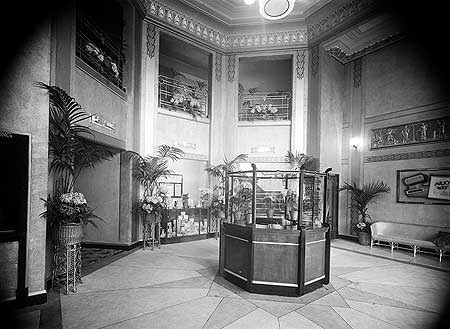
This was planned to be the Verona Cinema, a project of local builders – P Hamer Verona Cinema Ltd. The construction of the cinema was almost completed when Hamer sold the building to Oscar Deutsch and it opened as one of his Odeon theatres.

Hamer then used the proceeds of the sale to build the Roxy Cinema Holinwood, which was designed by Drury & Gomersall.

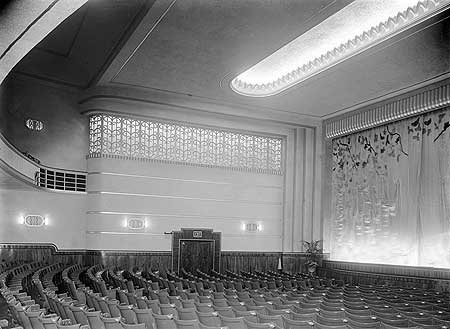
Opening date of the Odeon Theatre was 29th June 1936, when the first programme was Bing Crosby in “Anything Goes” and Harold Lloyd in “The Milky Way”. Designed by the noted cinema architectural firm of Drury & Gomersall, the frontage had a neat entrance in brick, with white stone facings on the window surrounds. There was a parade of shop units on each side of the entrance which had matching brickwork and a white stone trim.

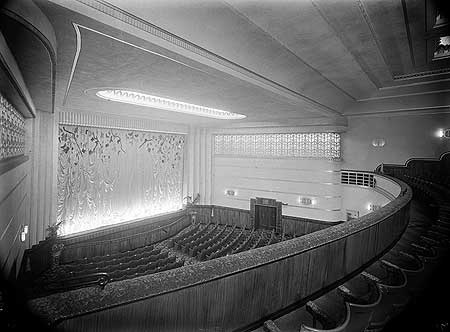
Inside the auditorium the seating was arranged for 834 in the stalls and 330 in the circle. The side splay walls on each side of the proscenium was decorated in wide horizontal bands, and topped with a backlit illuminated grille.

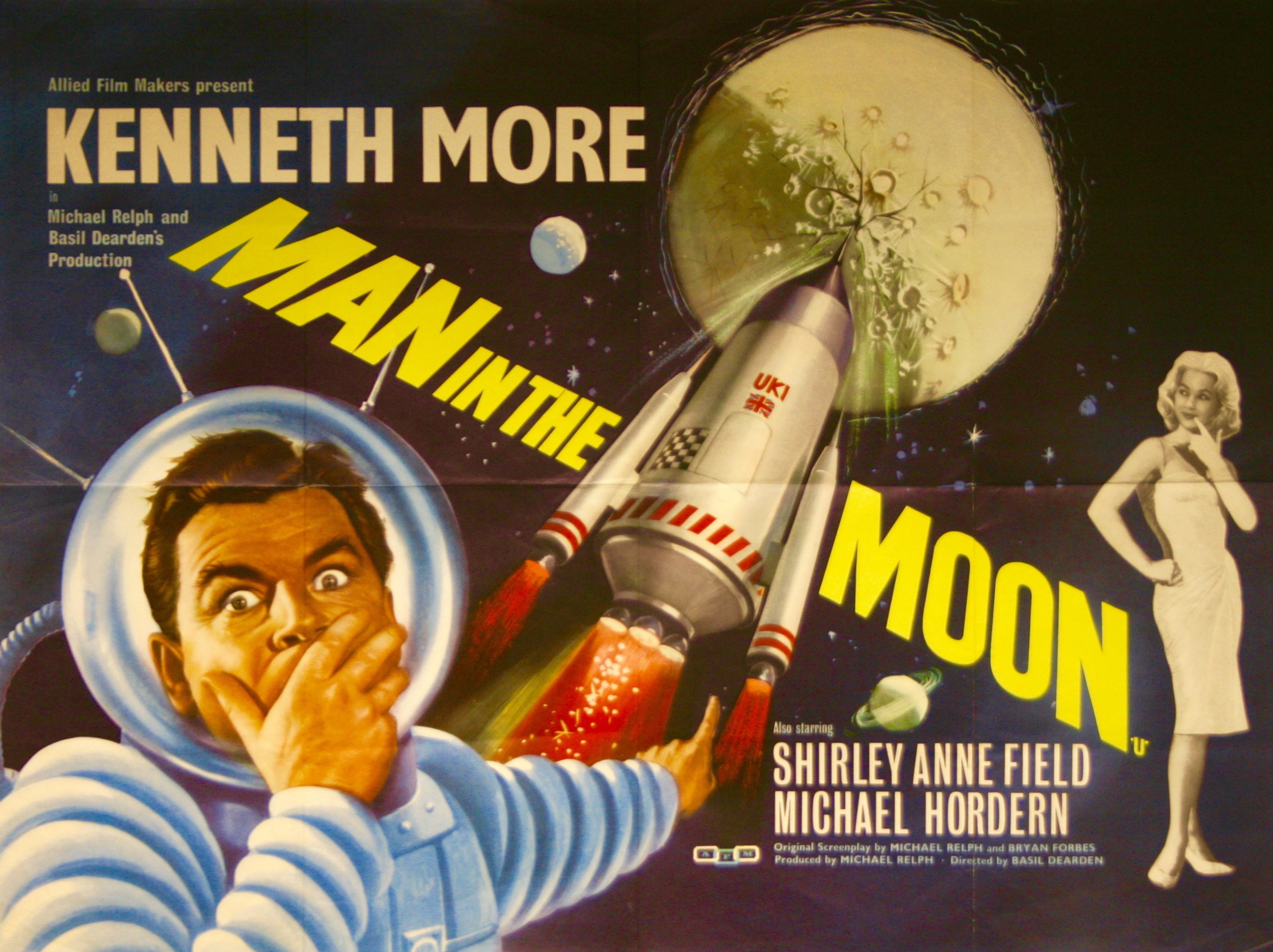
The Odeon was closed by the Rank Organisation on 11th March 1961 with Kenneth More in “Man in the Moon”.

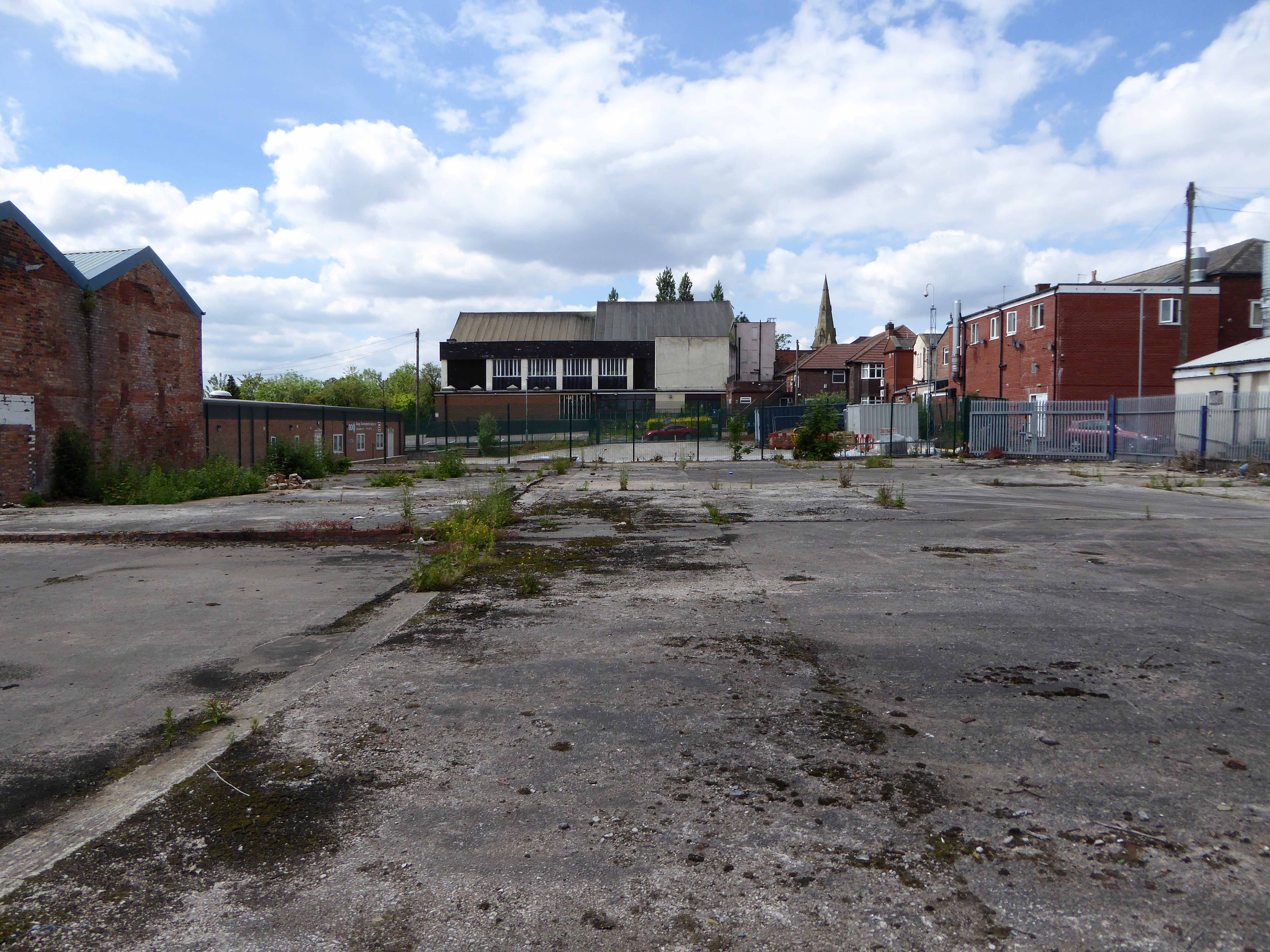
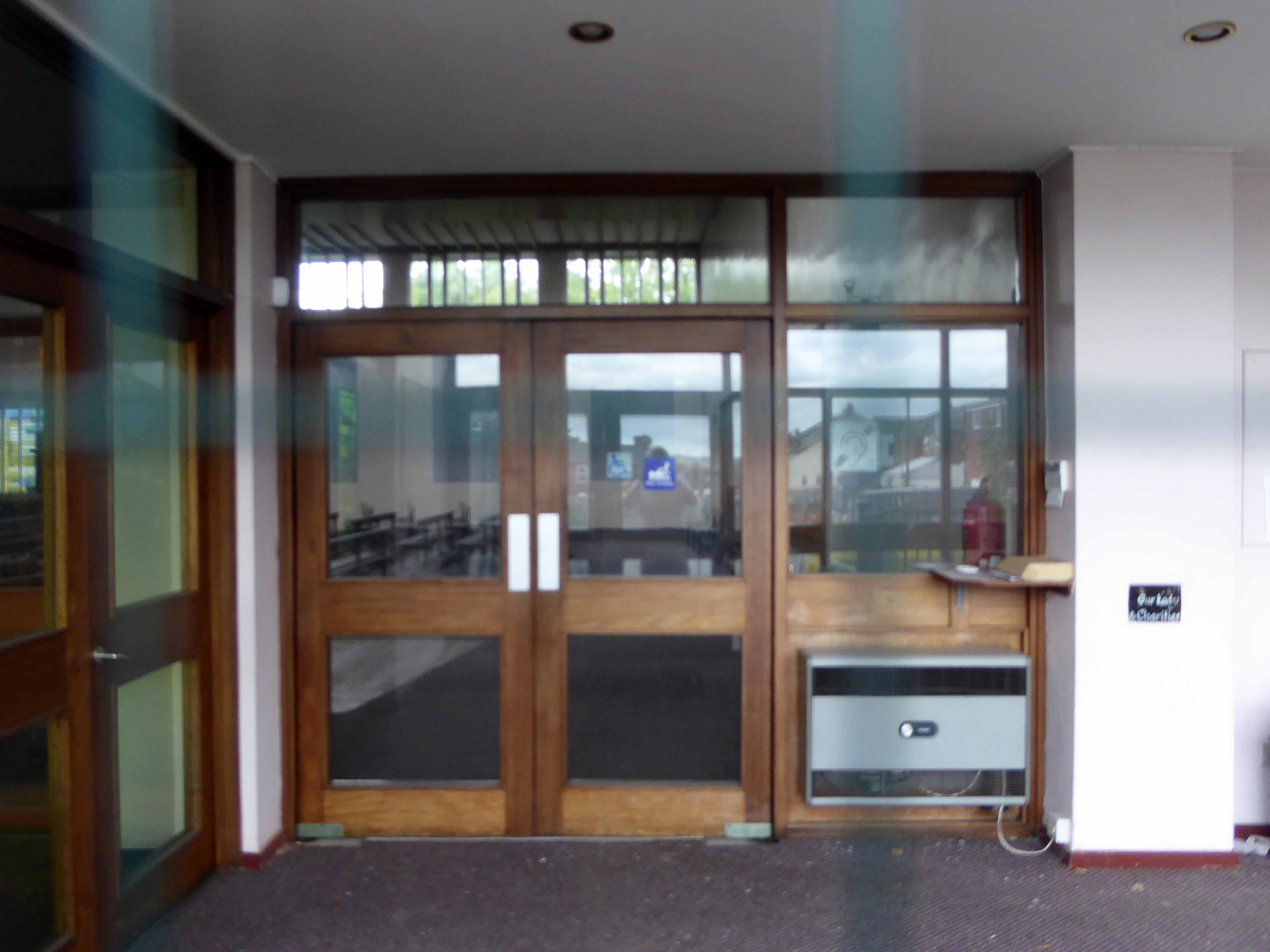
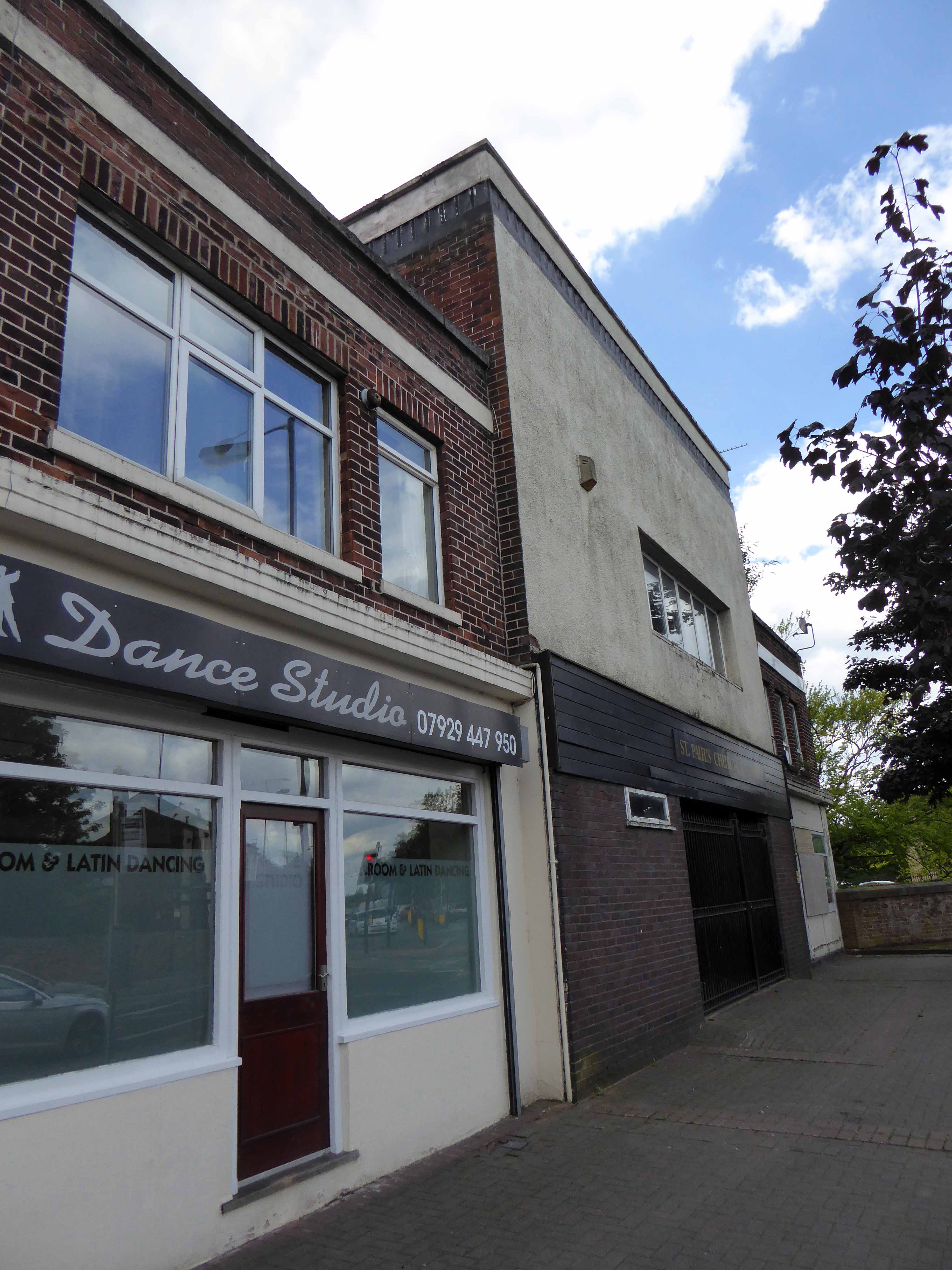
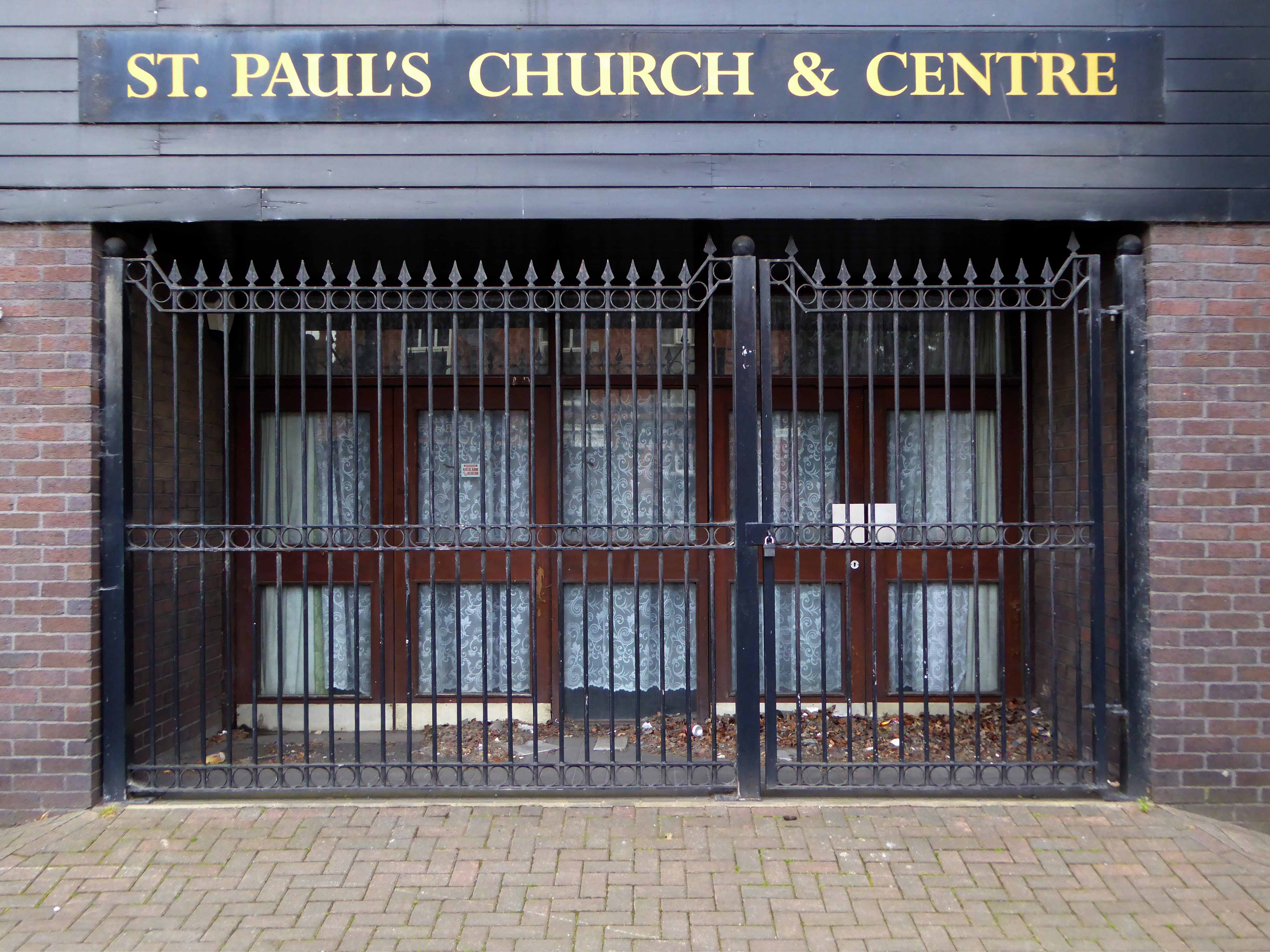
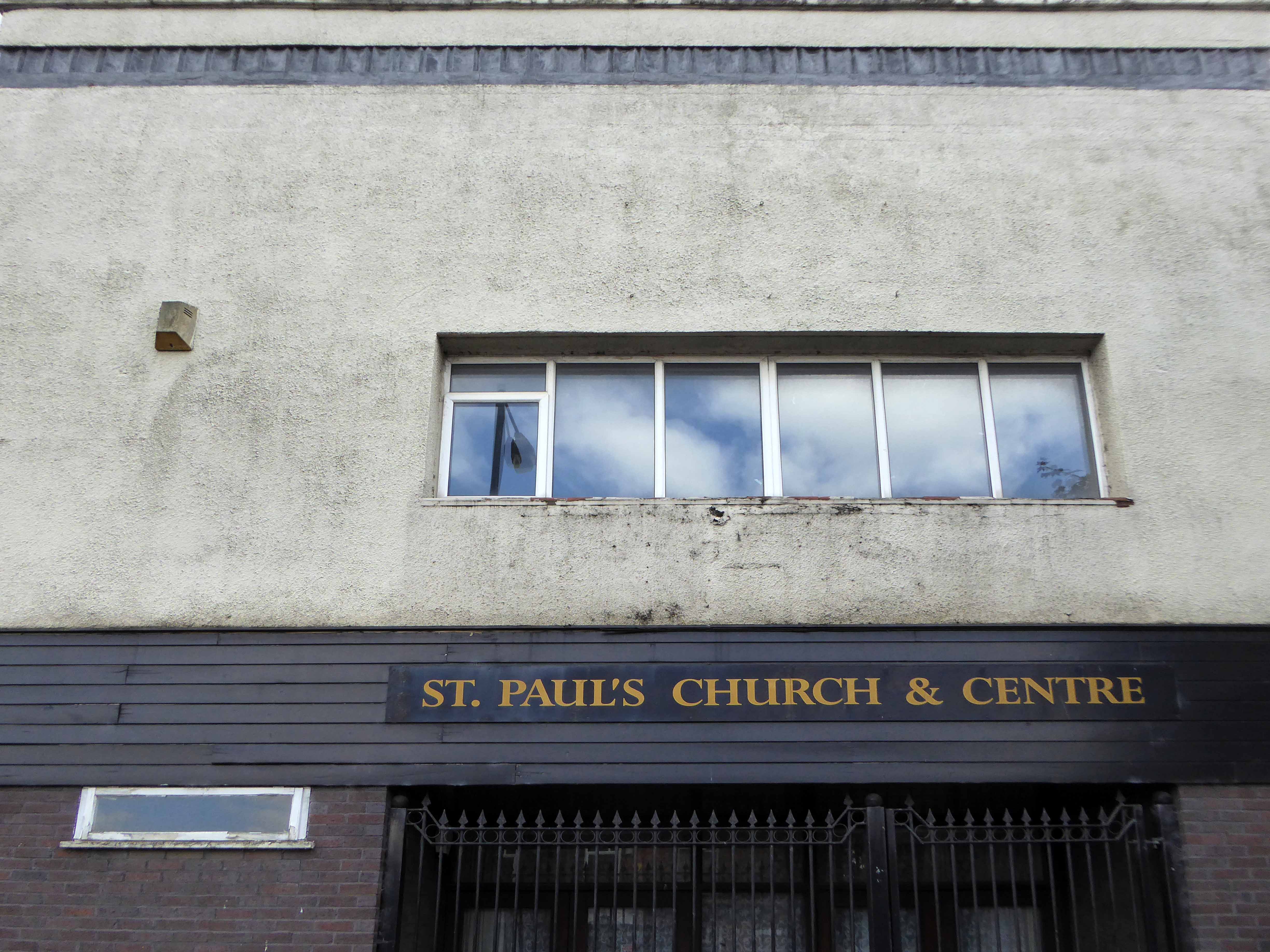
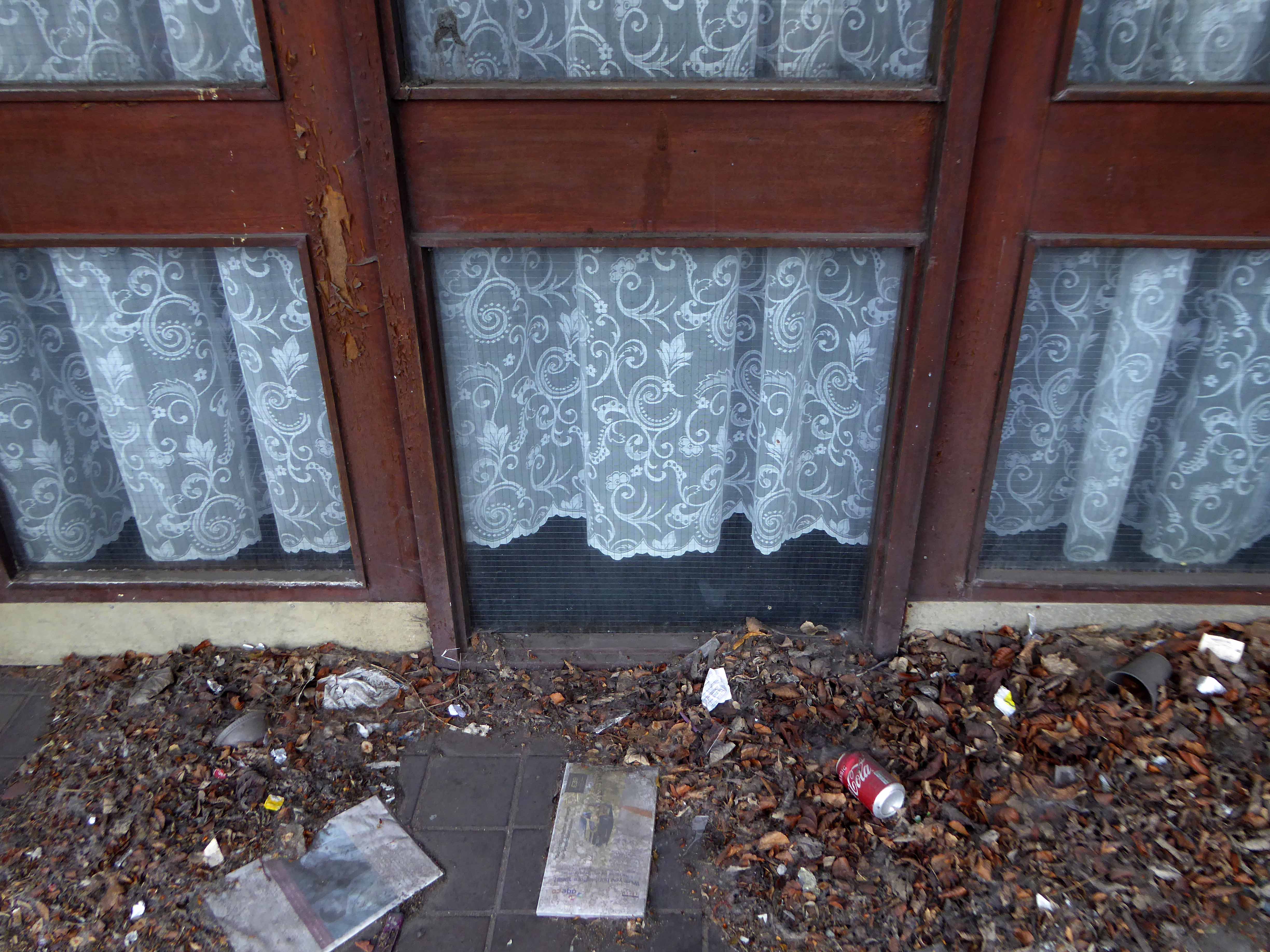
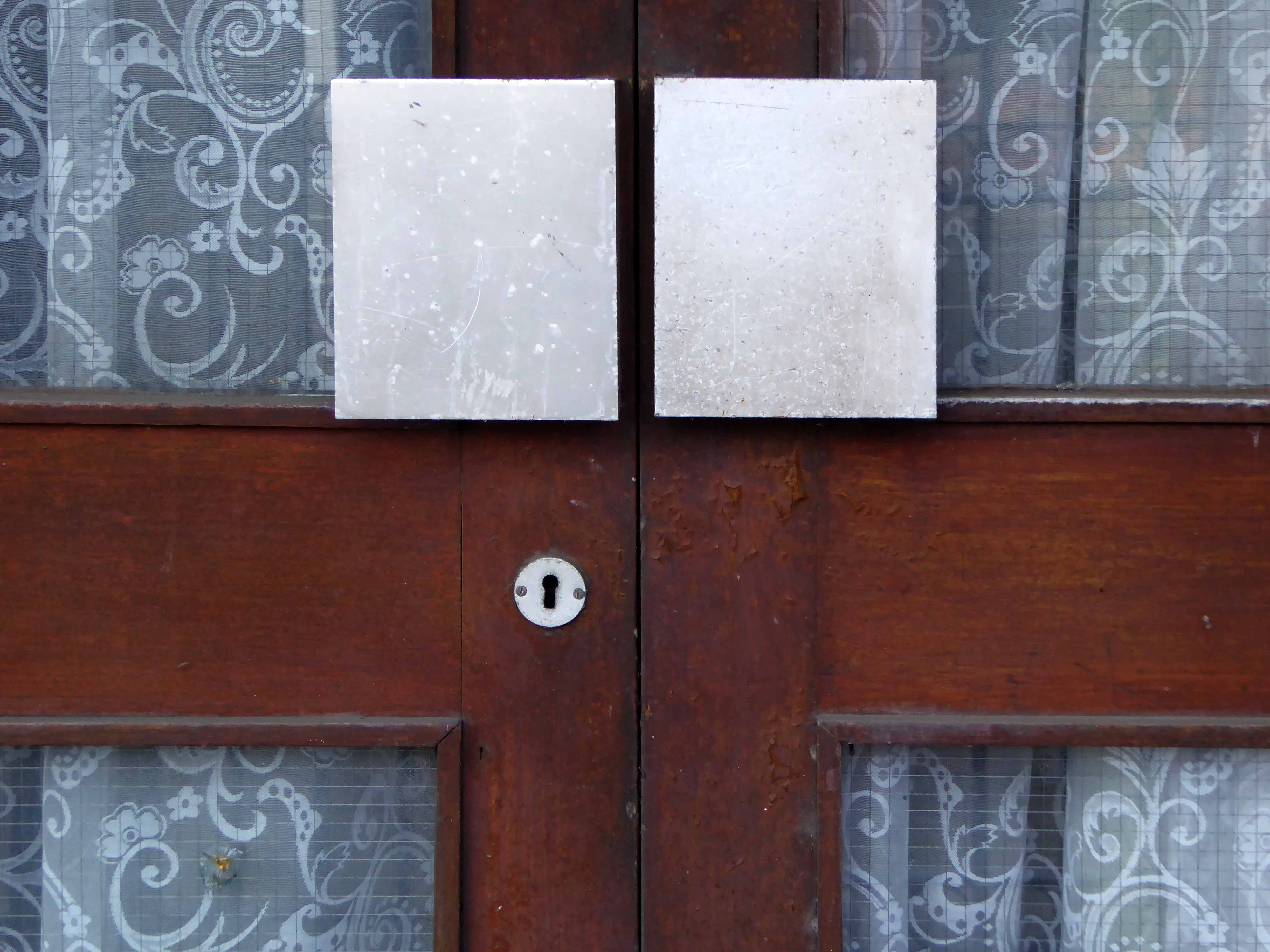
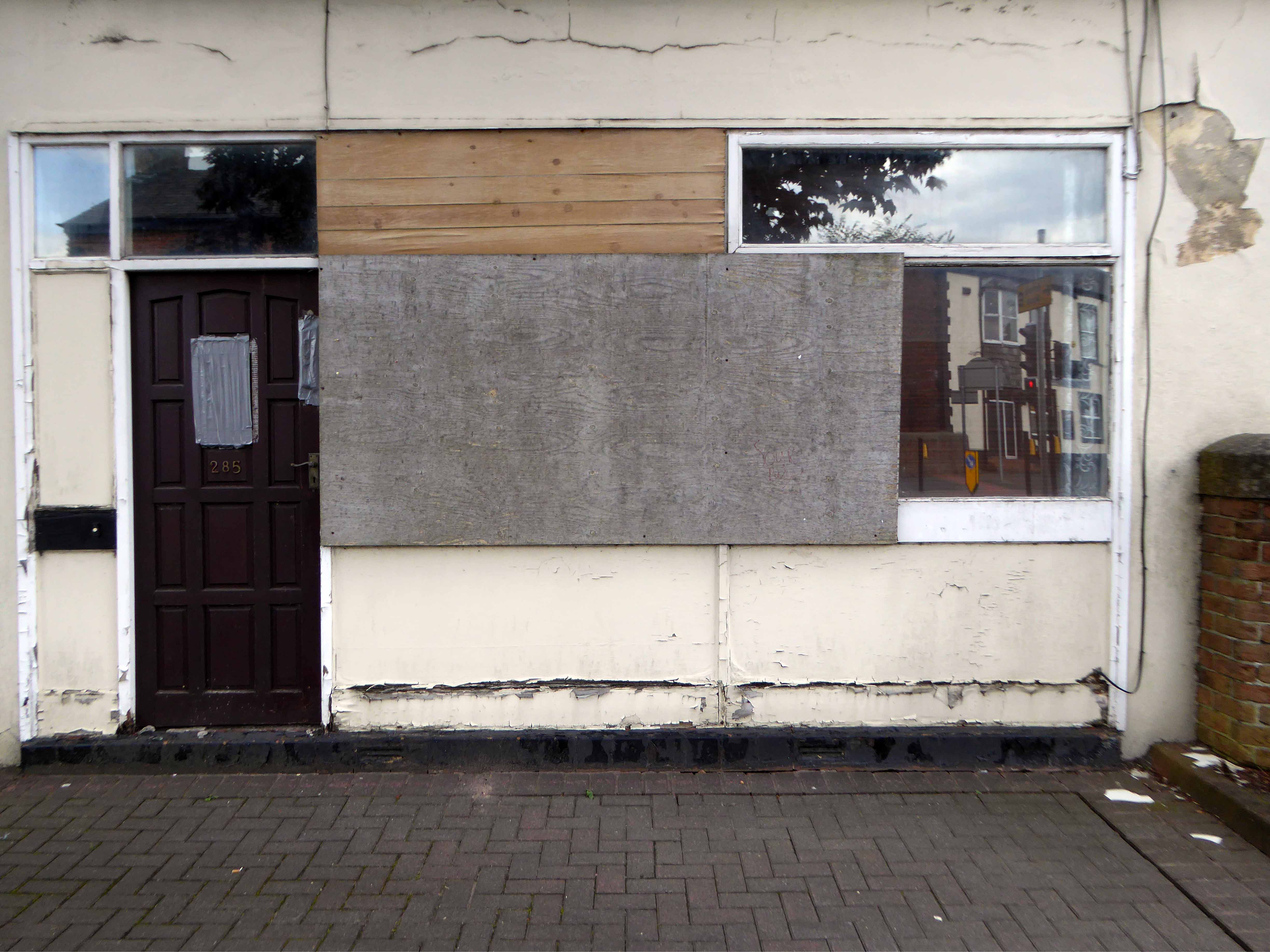
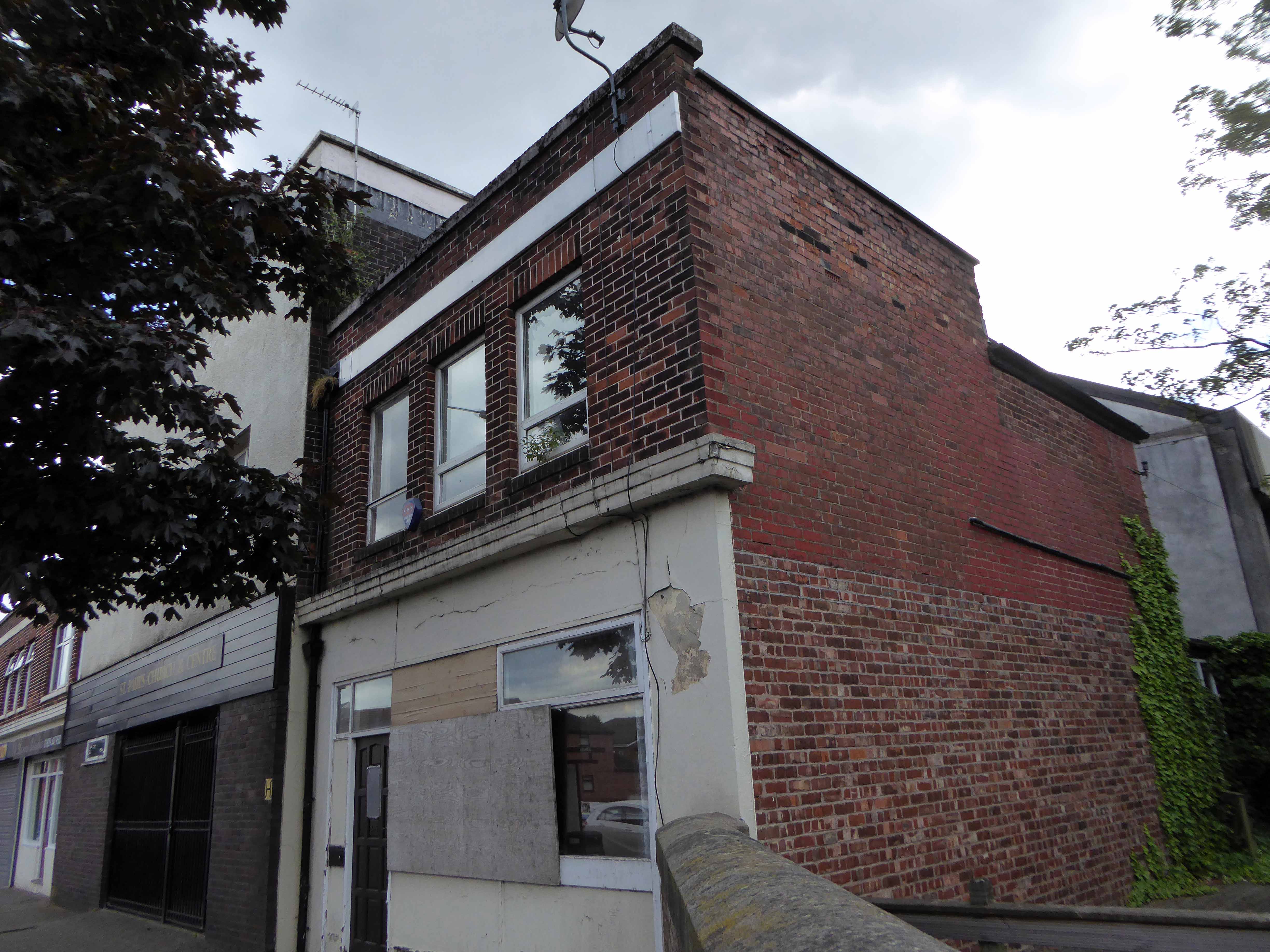
It was converted into St. Paul’s Roman Catholic Church. Former cinemas have made good conversions to churches and the fabric of the buildings are generally respected. In this case though, the sad story is that the front entrance has been rendered over and inside all details of it cinematic past have been erased. You would never know you were inside what had been been an Art Deco styled building.

Contributed by Ken Roe Cinema Treasures

I passed by nearly every day for years travelling to and from school, I played there at a wedding reception in the church social club. I sadly have no recollection of the building in use as a cinema.

It has been closed since 2010 – currently it has no purpose or seemingly any future use, there are no For Sale signs in evidence.

Fallen so quickly and absolutely from grace.

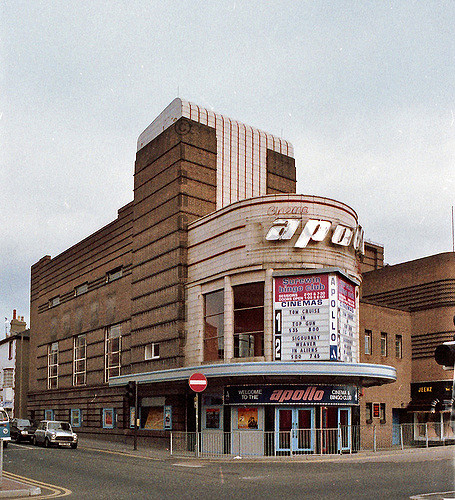
Odeon Cinema – Brighton Road Rhyl

Architects

Robert Andrew Bullivant 1910-2001
Harry William Weedon    1887-1970

Robert Bullivant joined the Harry Weedon practice in 1935 and was responsible for the design of the Odeons at Chester, York, Burnley, Exeter and Rhyl. Taken over by Hutchinson in 1969, this cinema was renamed Astra. It was made into a triple screen in 1972 and the stalls were later converted for bingo. It was designated Grade II listed status in 1989. The cinemas closed in 1995 and the building reverted to a single auditorium for bingo.

RIBA

So much of our picture house heritage no longer exists, where once a town or city could support several cinemas of varying scale, architectural merit or style, few now remain intact. Happily the Rhyl Odeon has survived from Astra, Apollo to Gala to the stars and beyond.

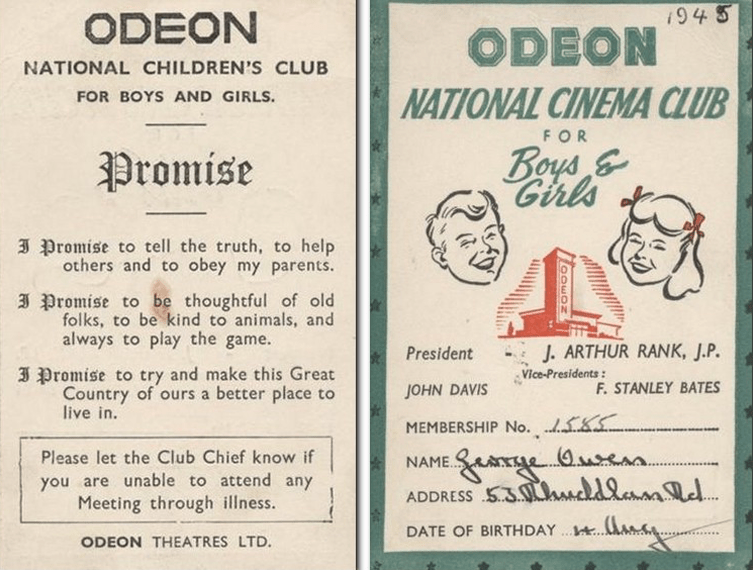
Playing to perennially packed houses, the people’s palaces accommodated old and young.

Saturday morning matinees  for the boys and girls – making this Great Country of ours a better place to live in.

Screen Shot 2018-04-25 at 10.27.01

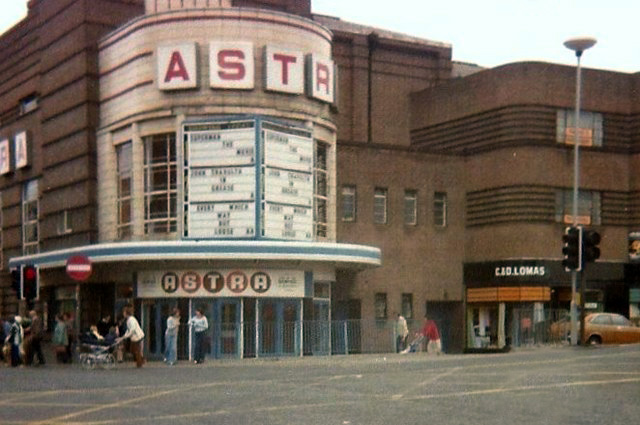
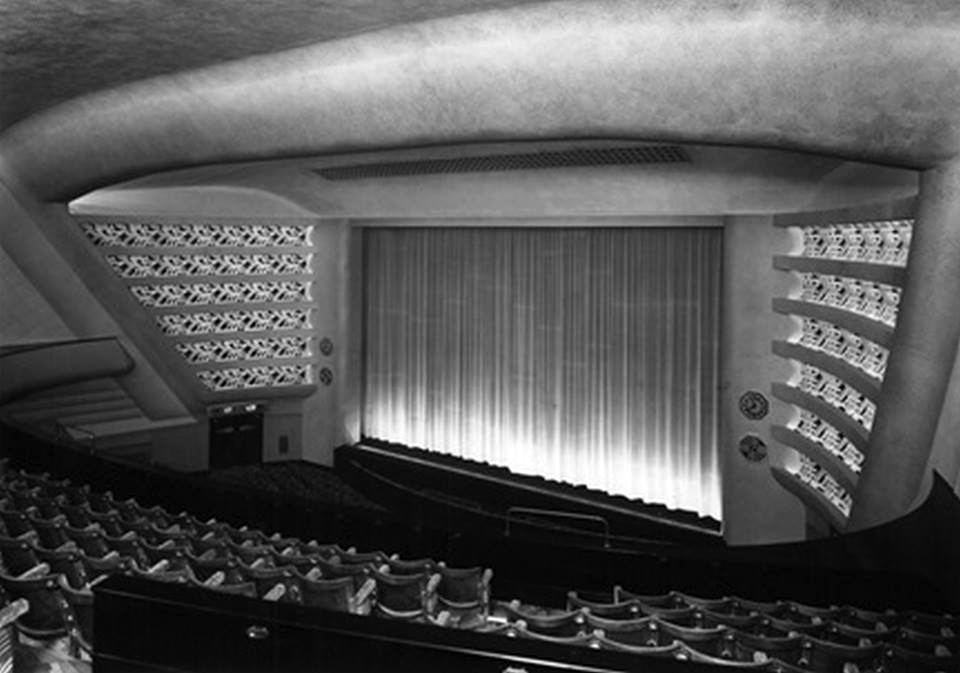
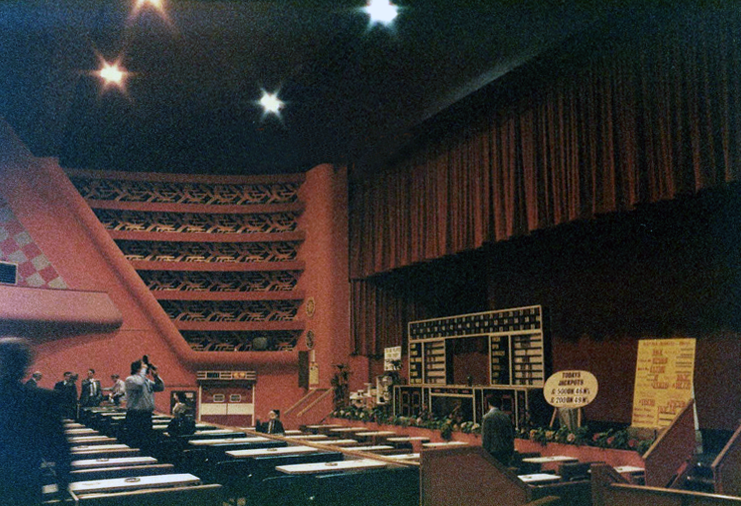
If memory serves, in the Odeon auditorium to the left of the screen there was a suitably stylish, numberless clock of six-sided shape. In 1972 the Odeon, by then taken over and renamed Astra Cinema, underwent alterations to become the first three-screen complex in Wales: Astra 1, 2 and 3. By the mid 1980s the Odeon/Astra had been taken over by Apollo and was running as two cinemas plus bingo at first – and bingo only since the present Apollo Cinema Complex opened on the prom.
blank.jpg

large

4299348687_1e8263119c_z

George Owen 1985

Colin Jones Rhyl Life

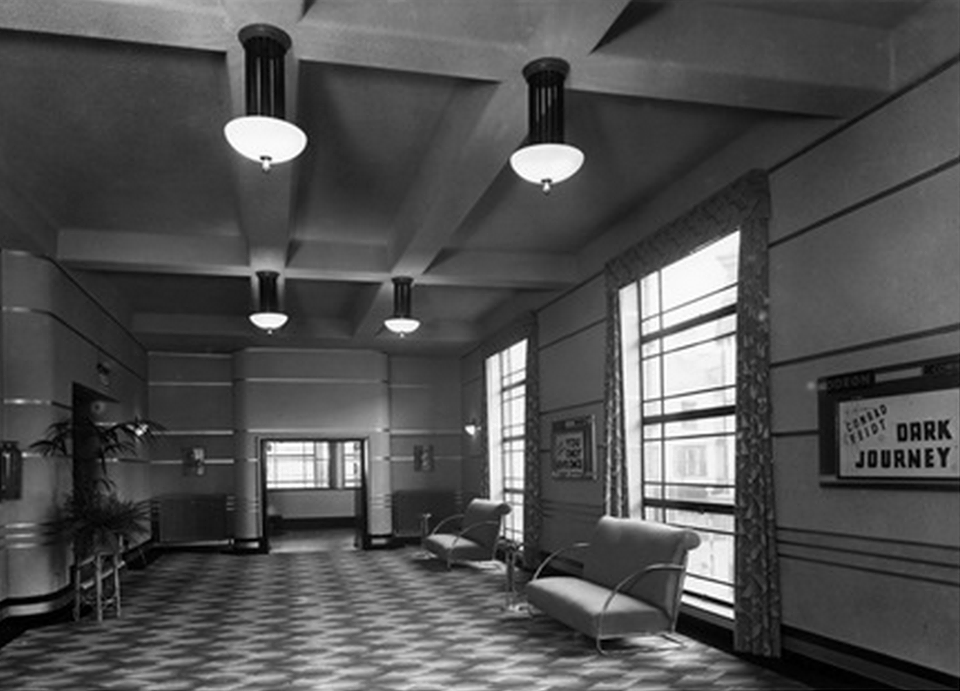
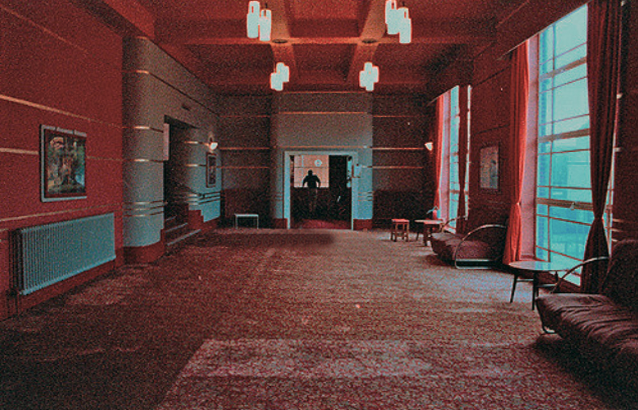
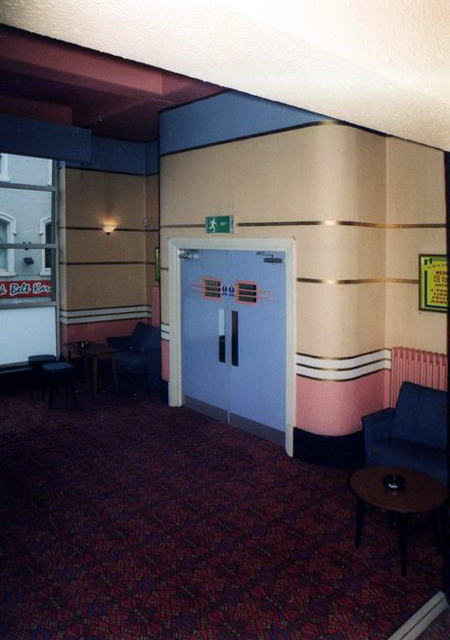
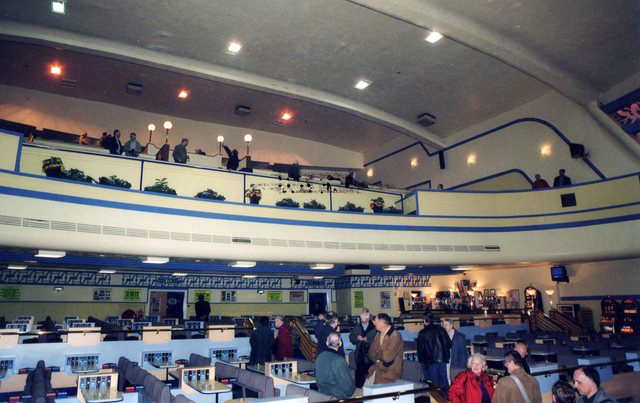
Foyer and auditorium

John Maltby 1937

23905275_1502310953209419_8012062427337007043_n

18119254_1303614579745725_4790859378321171907_n

Ian Grundy 2008

Screen Shot 2018-04-25 at 11.27.52

Screen Shot 2018-04-25 at 11.29.15

Graham Rumble 2016

large-1

large

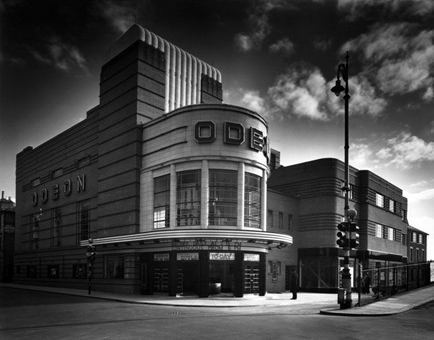
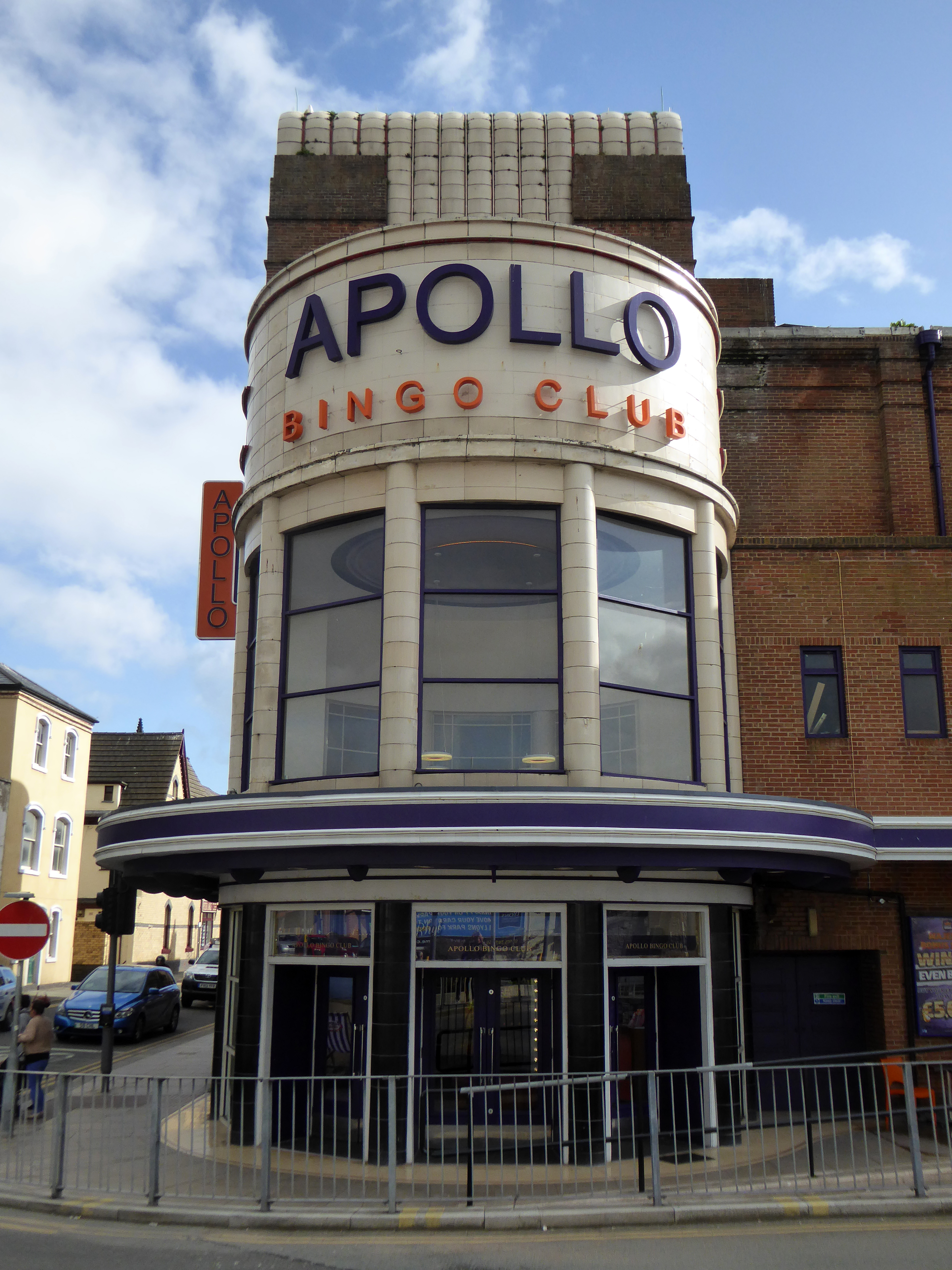
An original Odeon Theatre, built for the Oscar Deutsch Odeon Theatres Ltd. chain, opened on 30th October 1937 with Flora Robson in “Farewell Again”.

The corner entrance rotunda was lower than the rest of the building and was faced with cream faiance tiles, broken with windows. Behind this was a tower-like feature which contained the main foyer. Seating in the auditorium was provided for 862 in the stalls and 546 in the circle. On each side of the proscenium opening there were large panelled decorative grilles on the splay walls. Lighting in the auditorium was provided by concealed lighting in troughs across the ceiling.

From the 13th October 1969 it was taken over by the Hutchinson Leisure Group and re-named Astra Cinema. They triplexed the cinema from 24th April 1972 with seating for 750 in the former stalls and two mini screens seating 250 and 225 in the former circle. Later, the stalls screen was converted into a bingo club, whilst the two mini cinemas continued on film.

In the late-1980’s the building was taken over by Apollo Leisure UK Ltd. and it was re-named Apollo Cinema. The two mini cinemas were closed in October 1995 and the building was de-tripled into one space again, becoming the Apollo Bingo Club, which remains open today.

From 4th January 1989, the former Odeon Theatre was designated a Grade II Listed building.

Cinema Treasures

P1240812

P1240813

P1240817

P1240814

P1240815

P1240818

P1240819

P1240820