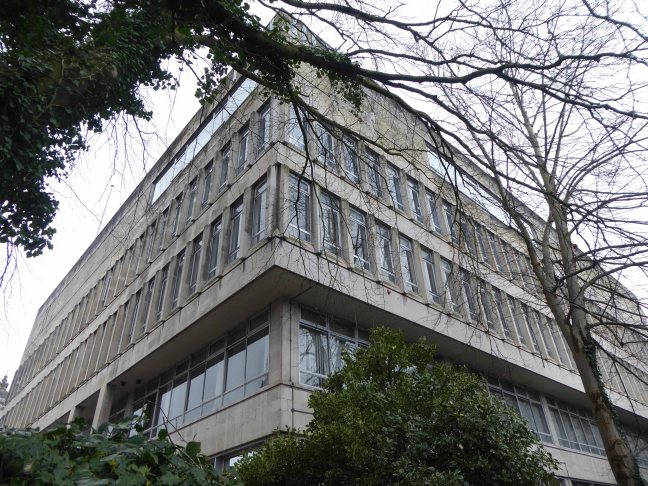
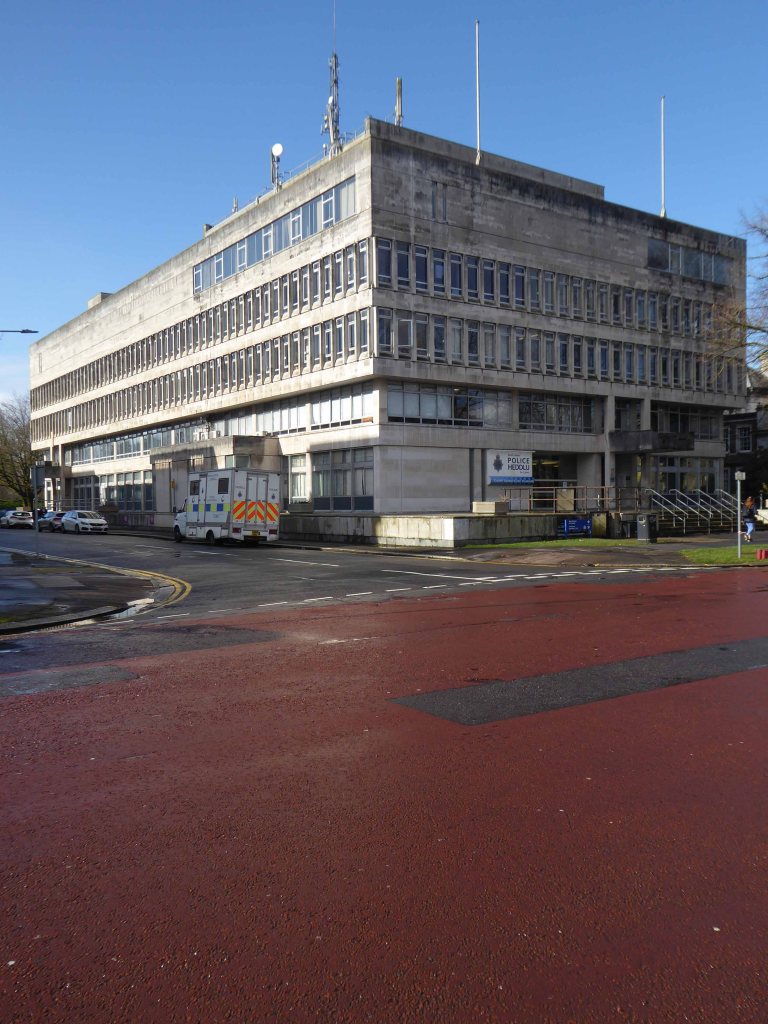
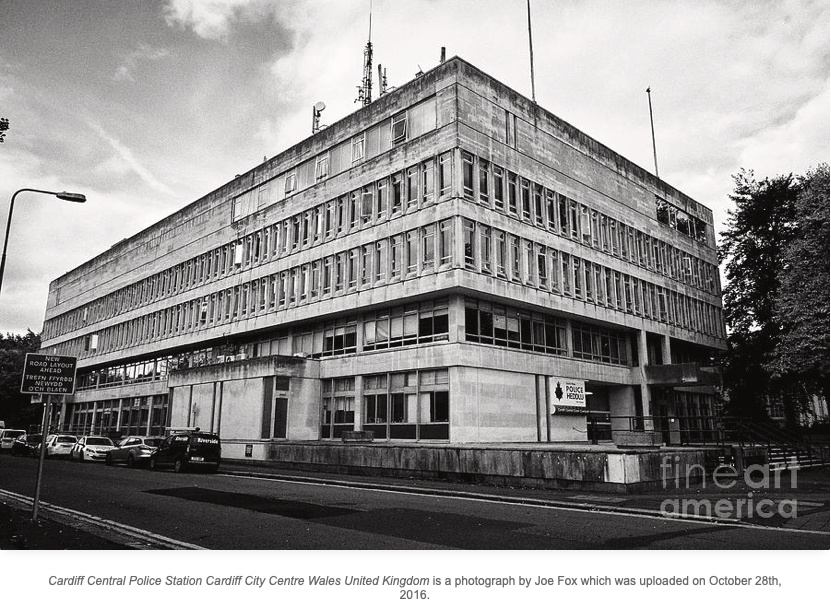
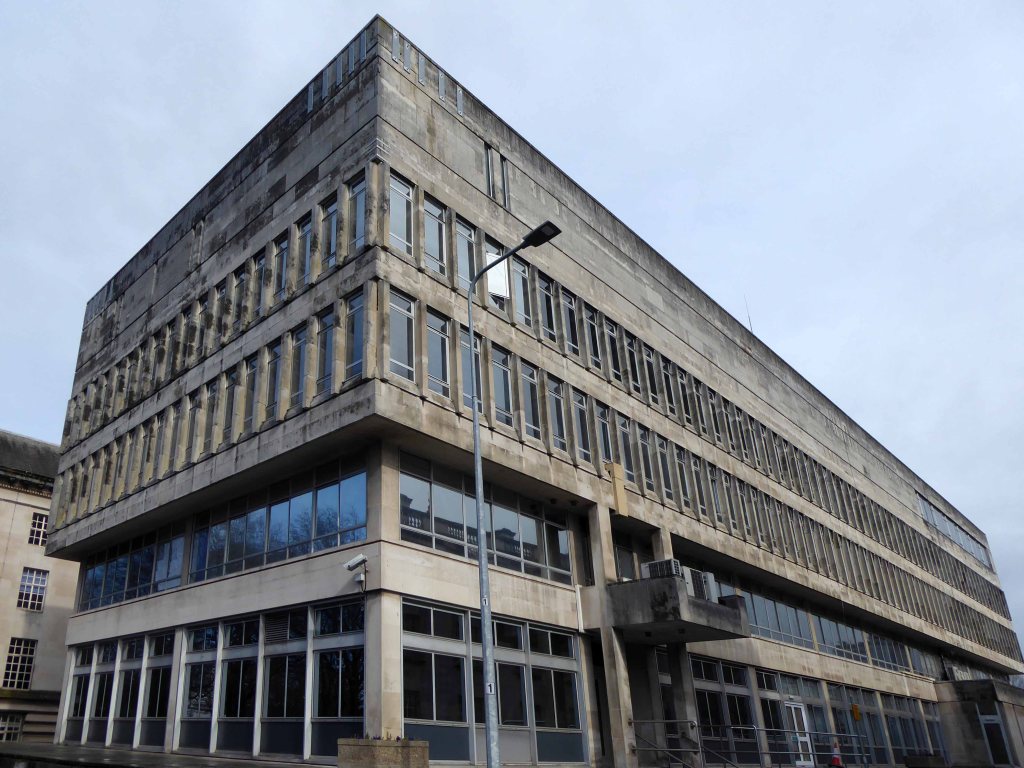
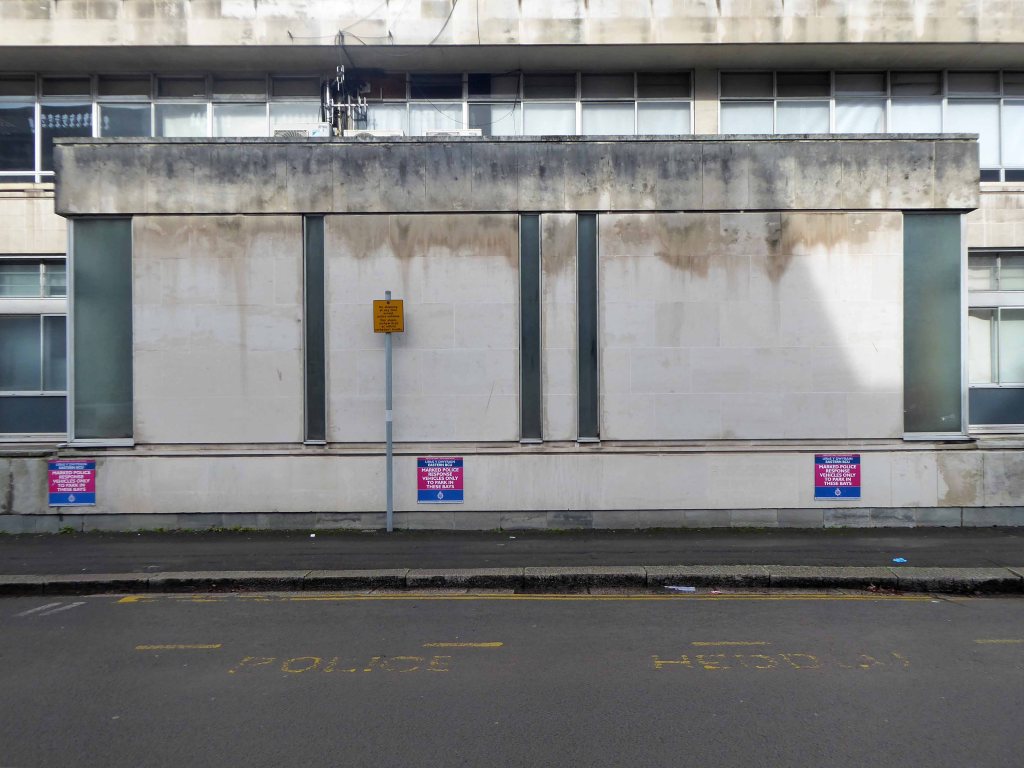
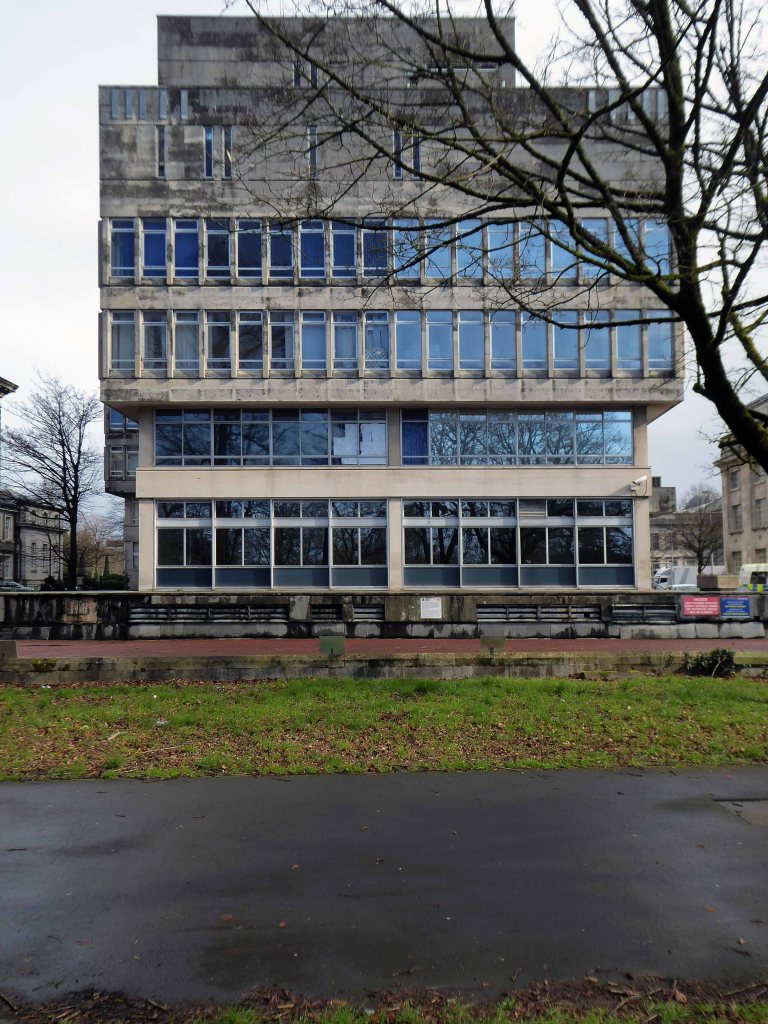
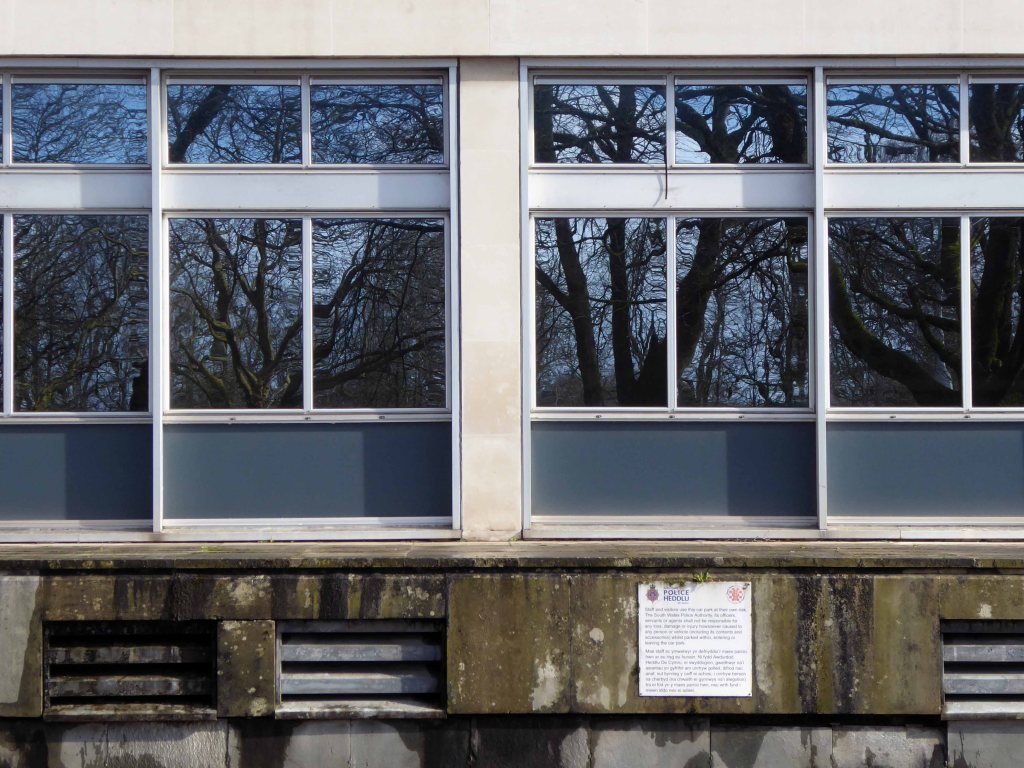
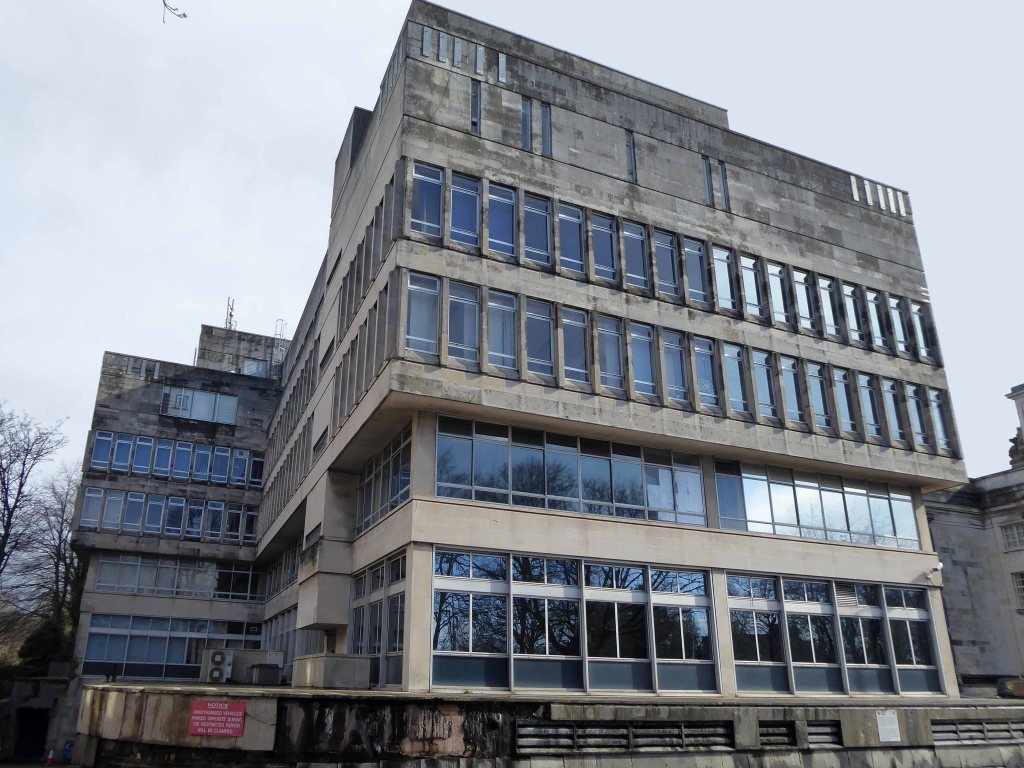
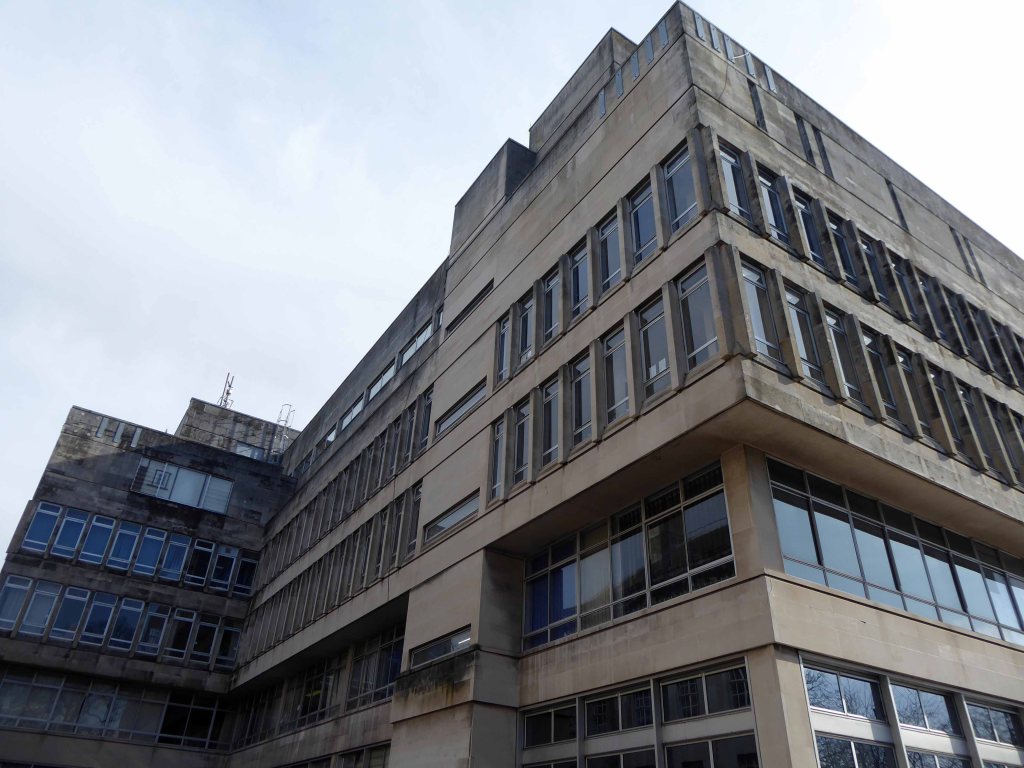
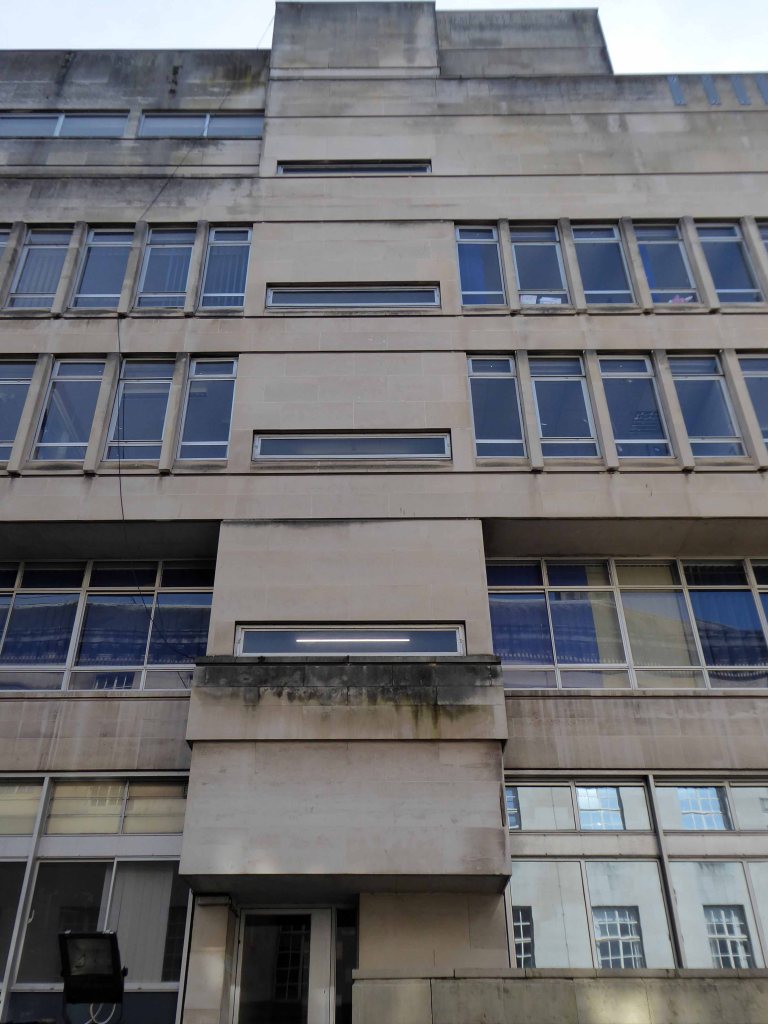
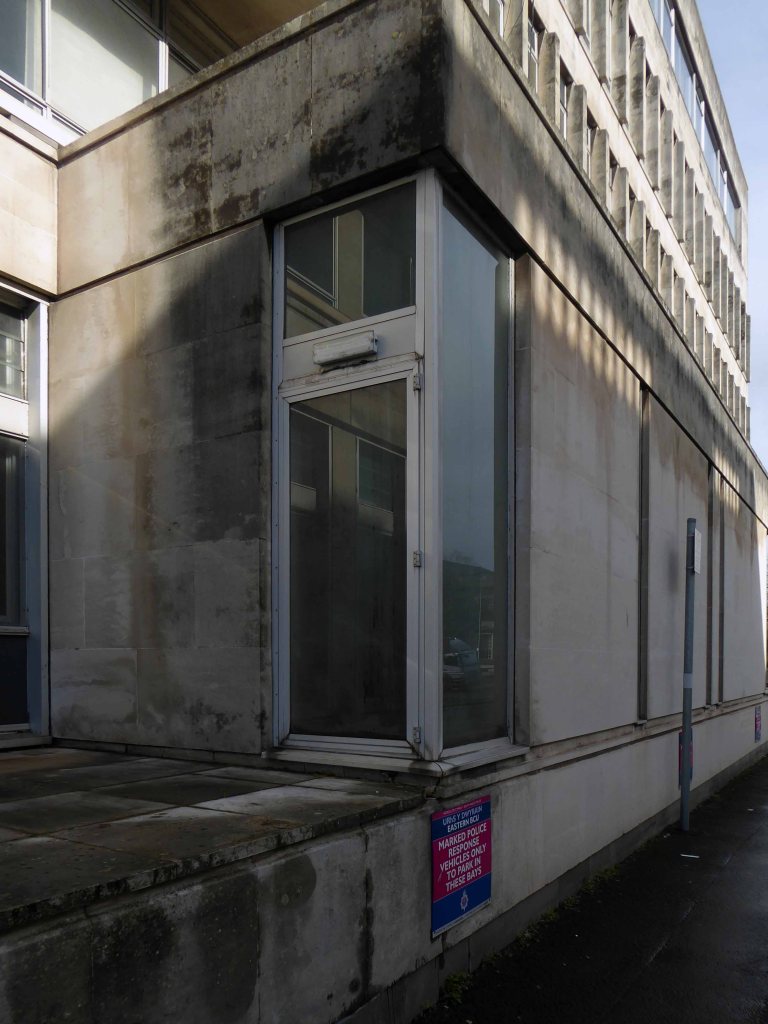
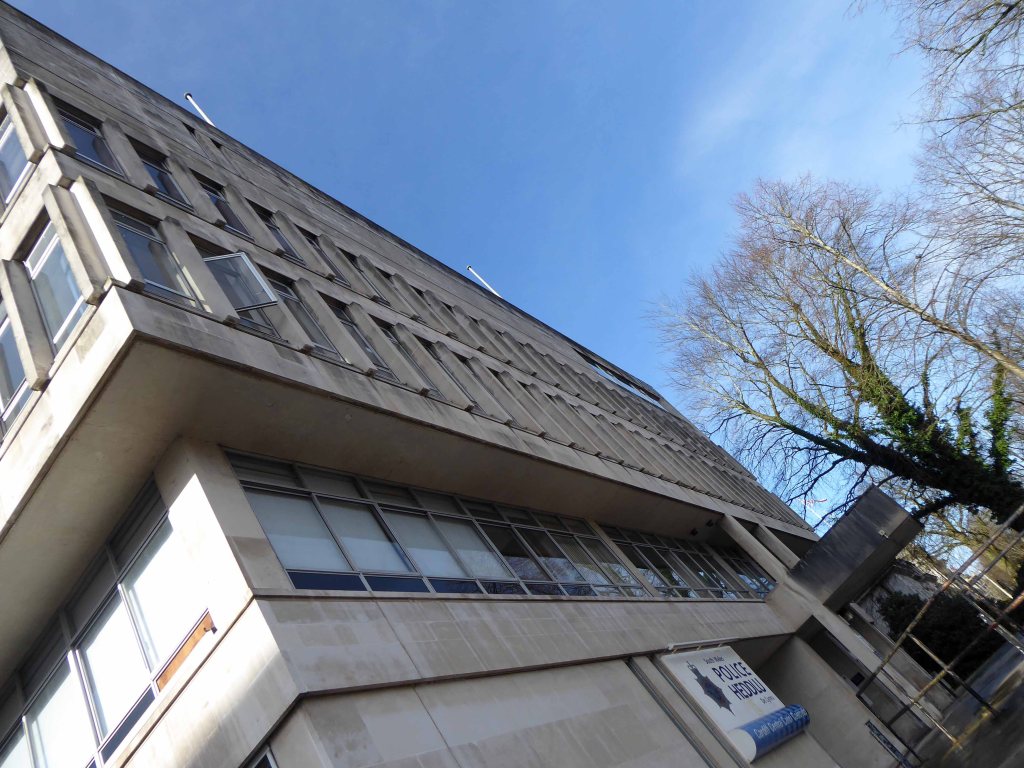
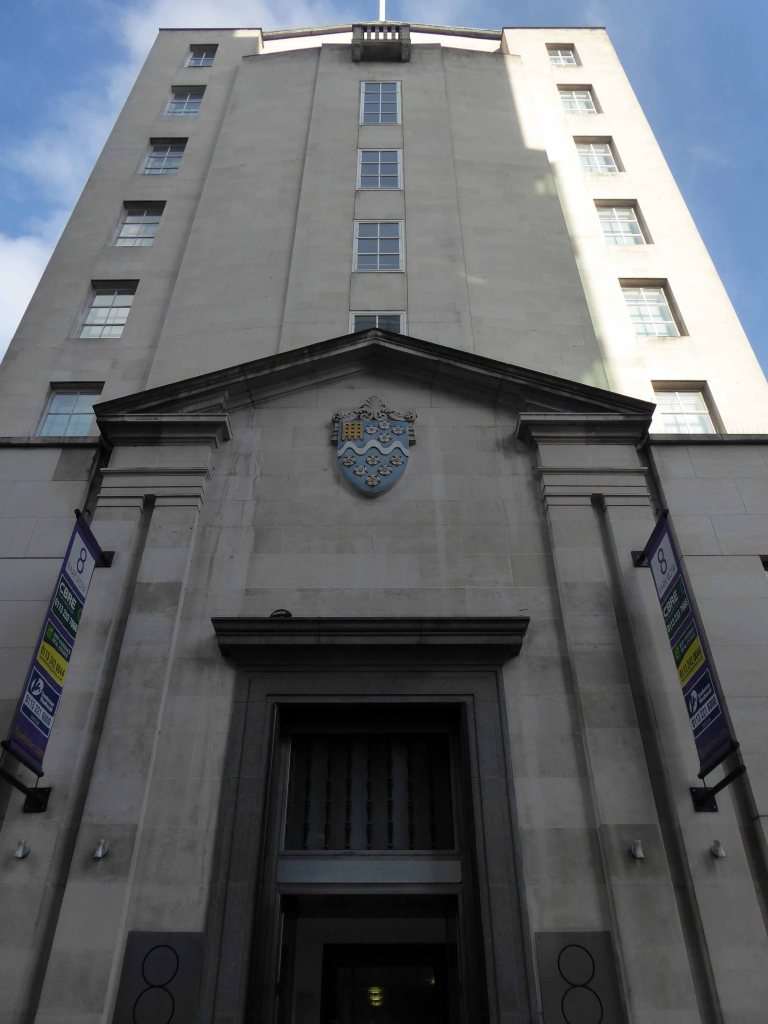
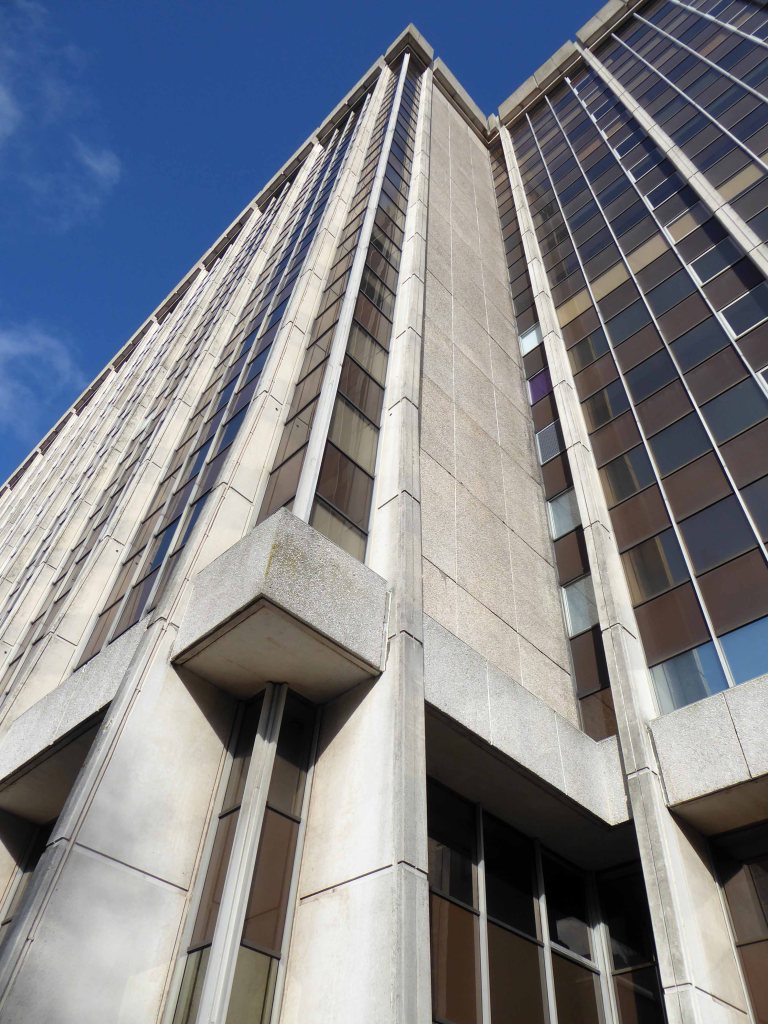
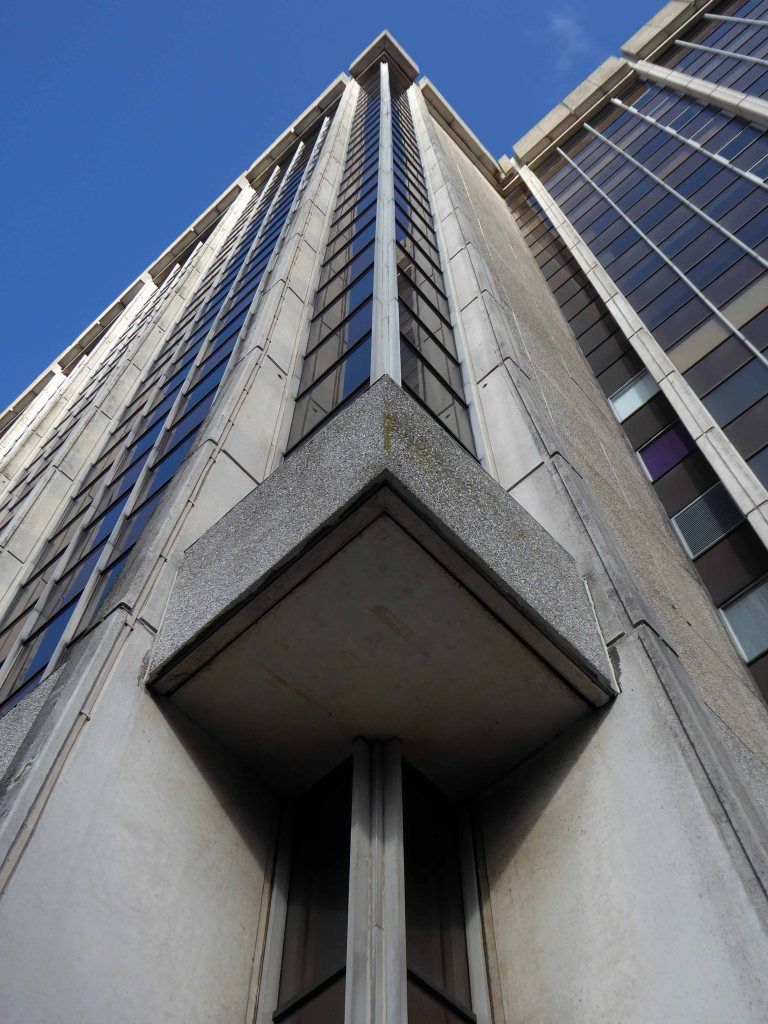
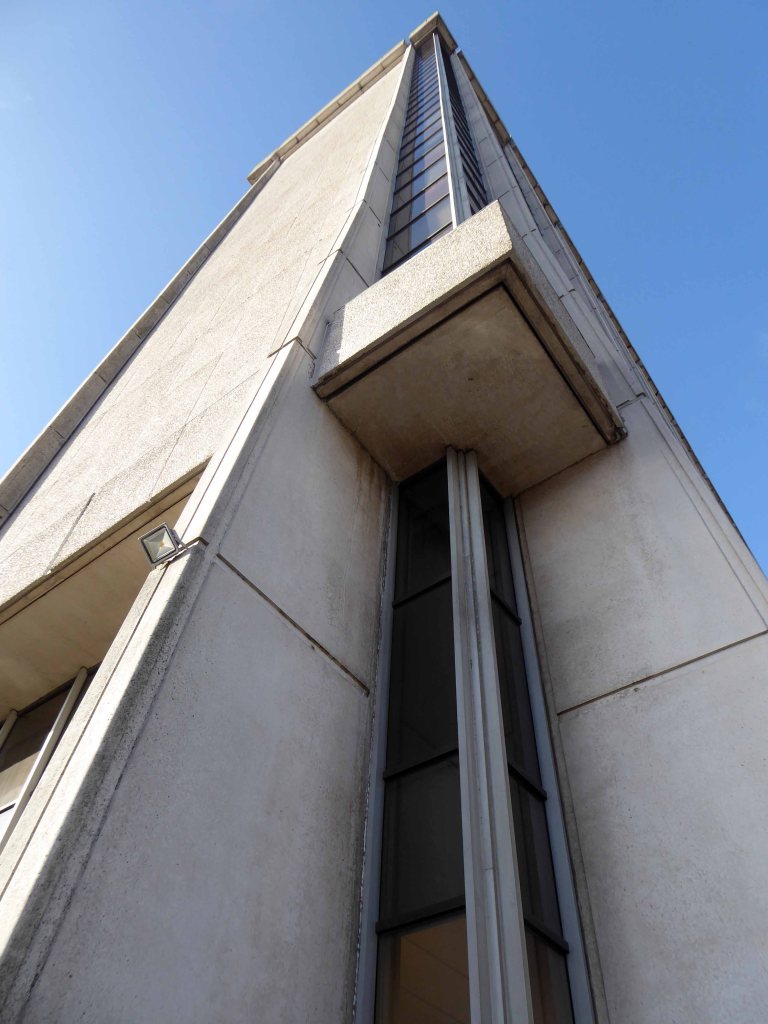
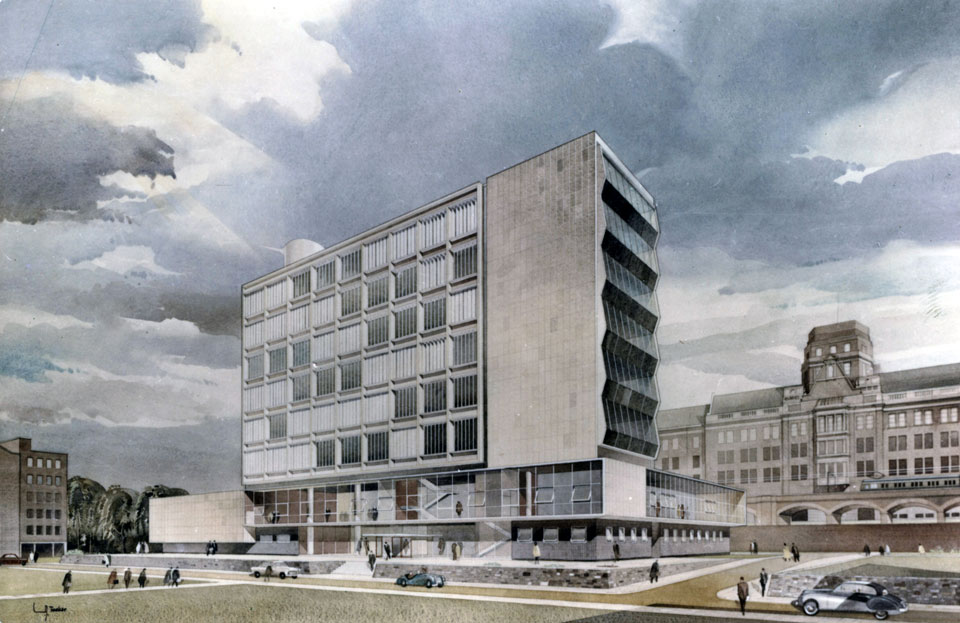
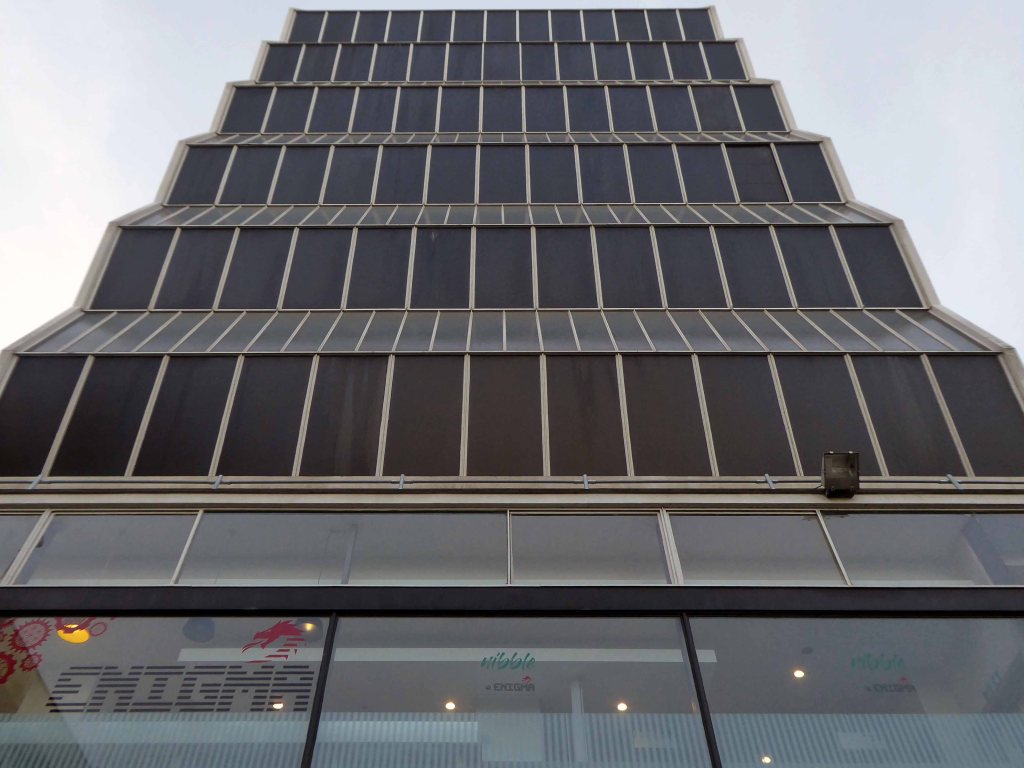
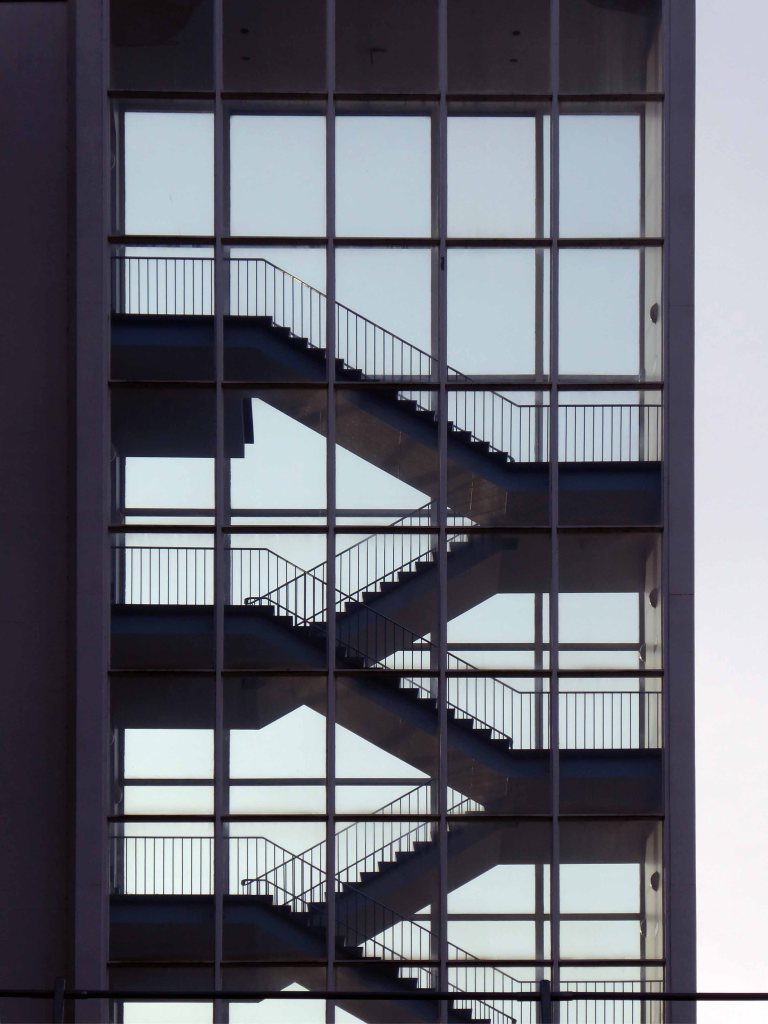
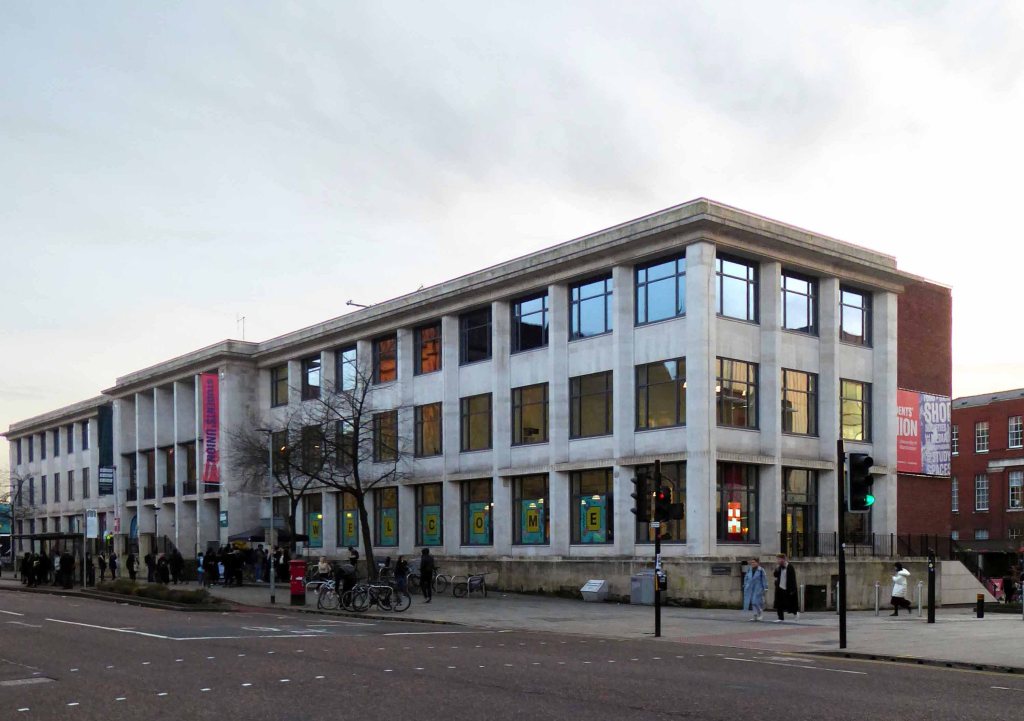
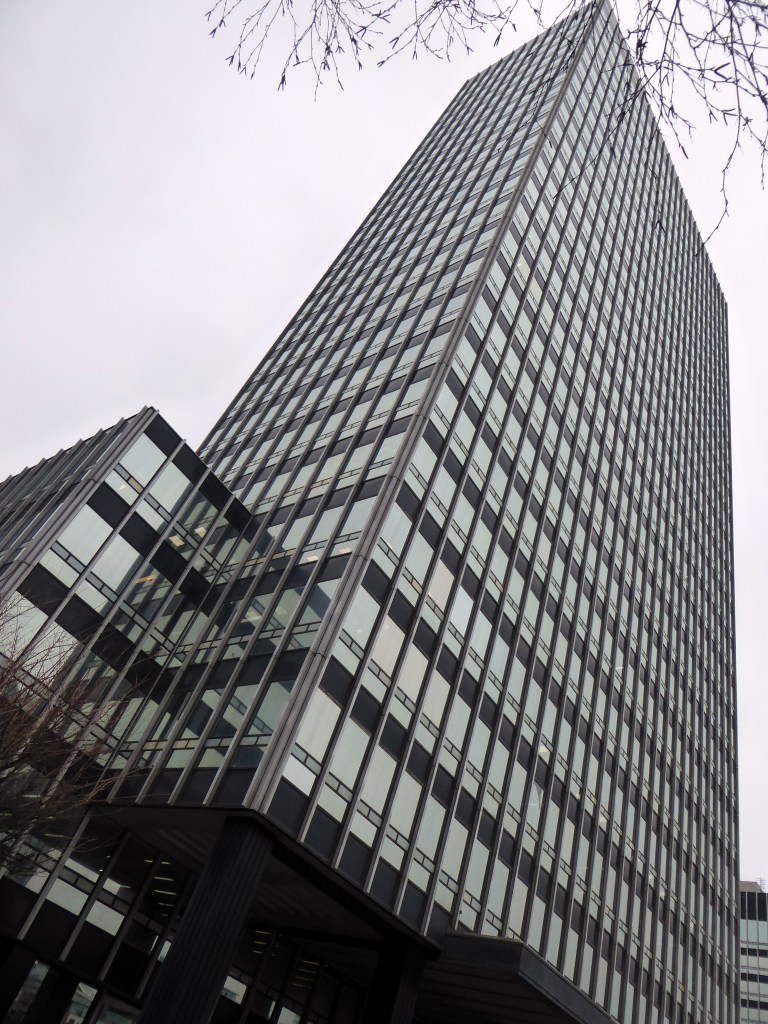
The current five storey Cardiff Central police station was designed by Cardiff’s city architect John Dryburgh and built on the southern corner of Cathays Park between 1966 and 1968. It is described as: The most successful post-war building in Cathays Park and the only post-war building in the area: To be both modern and majestic
The detention facilities at the station were inadequate with only four cells. These were replaced by sixty cells at the new Cardiff Bay police station, which opened in 2009.
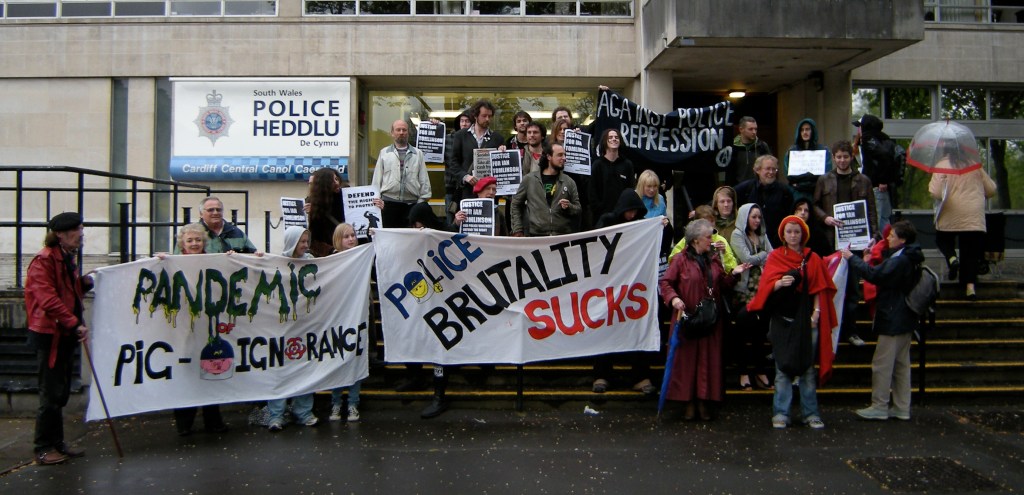
This year’s Mayday protests in Cardiff took place outside Cardiff Central Police Station to show the opposition to the increasing criminalisation of public protest.
No Borders South Wales activists were in attendance to show solidarity with fellow protesters and register our opposition to repressive police tactics at all forms of public demonstrations.
The protest was good natured and lively, with lots of music and singing.
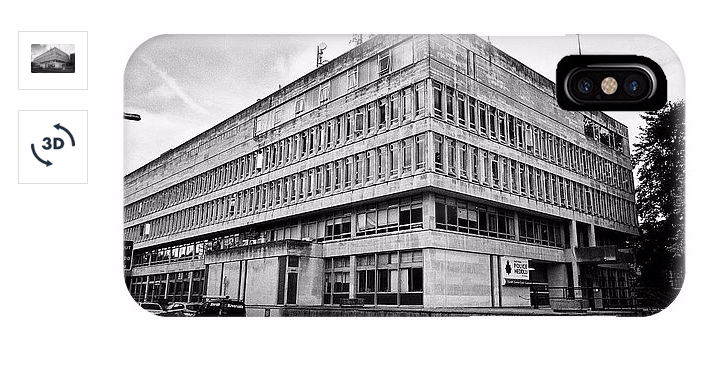
The building is celebrated by photographer Joe Fox via Fine Art America
Who are happy to reproduce the image in the form of this delightful phone case, for the princely sum of twenty two pounds.
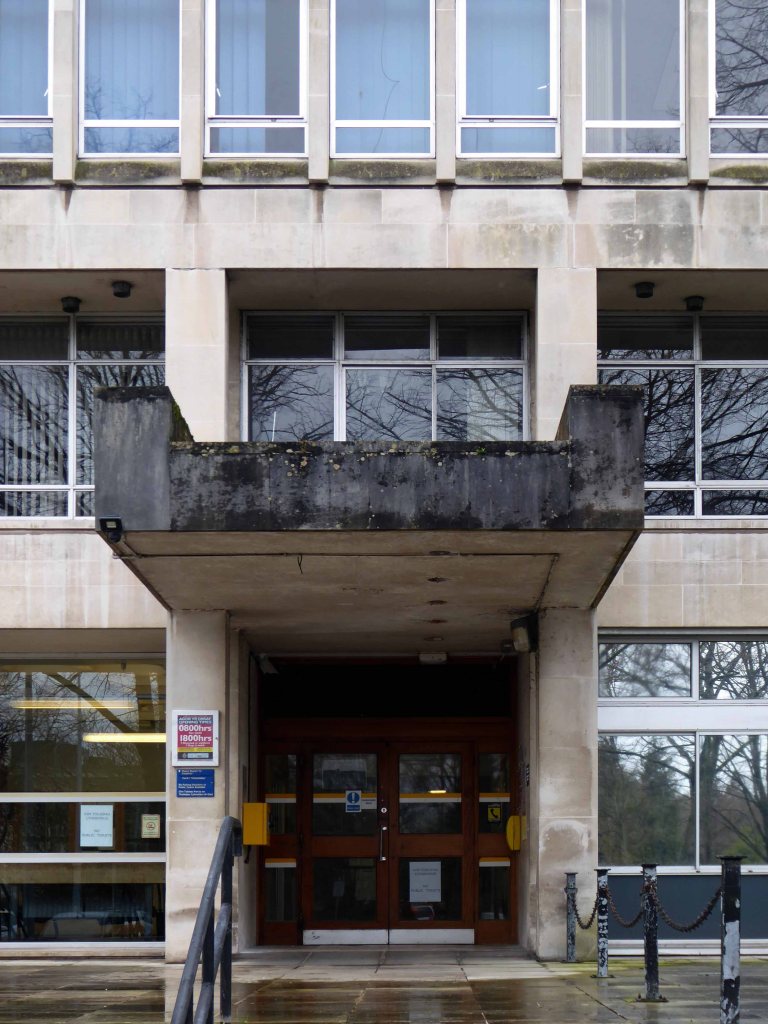
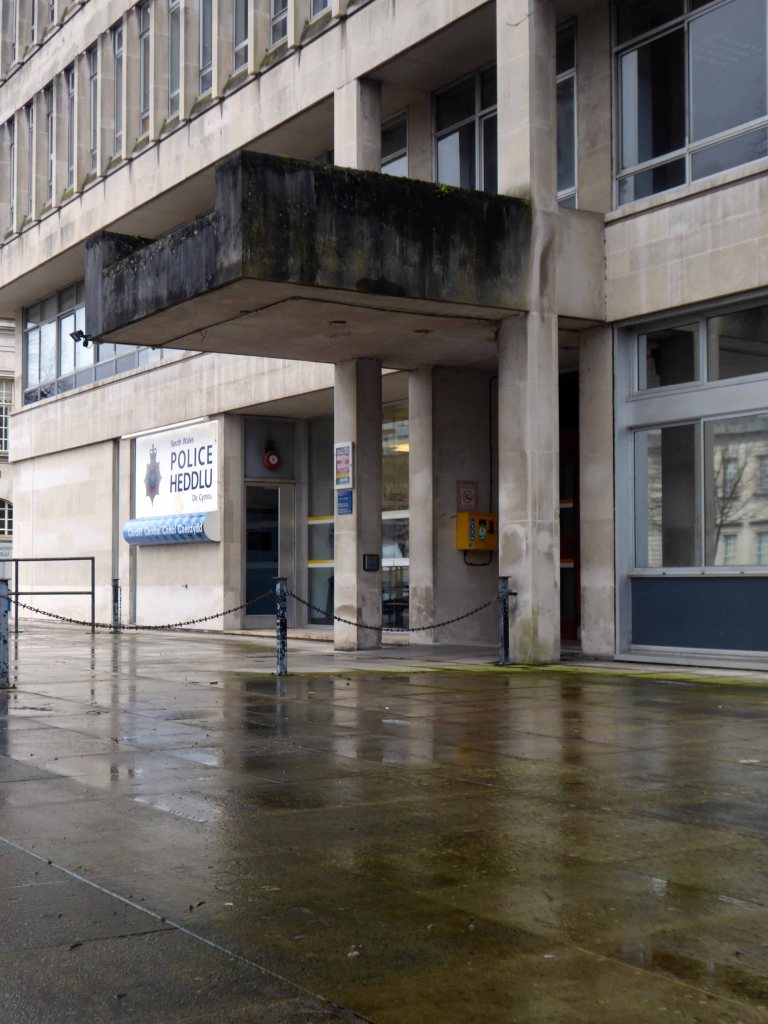
I myself was taken by its unapologetic system built panelling, all-round convivial confidence and cantilevered porch.
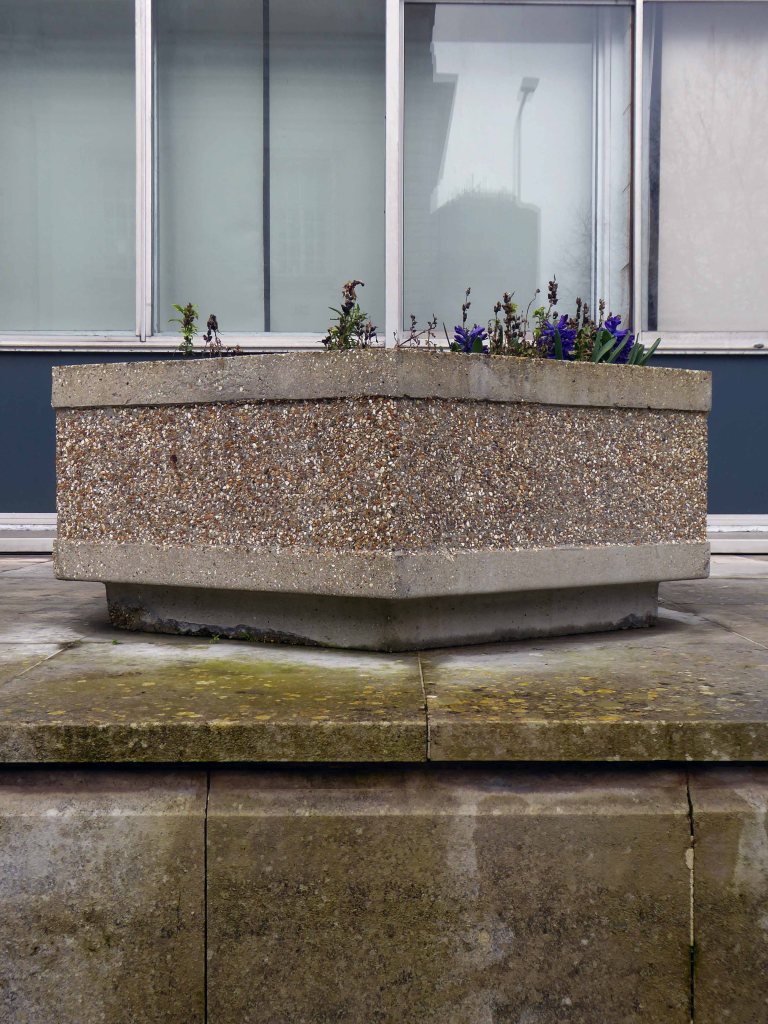
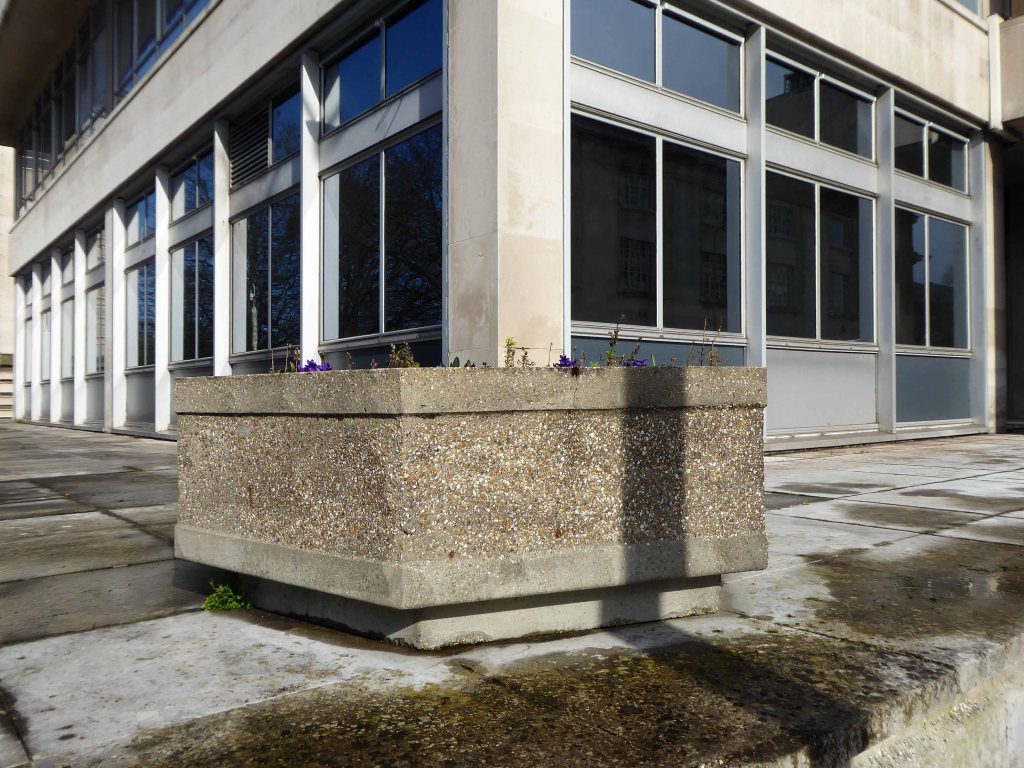
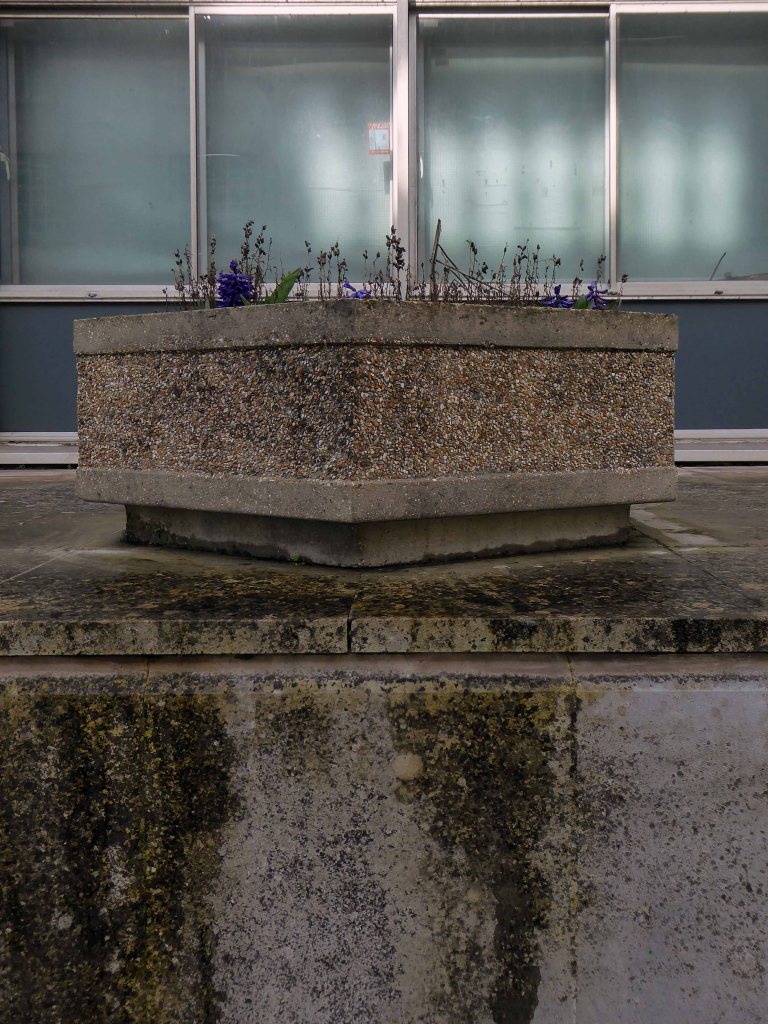
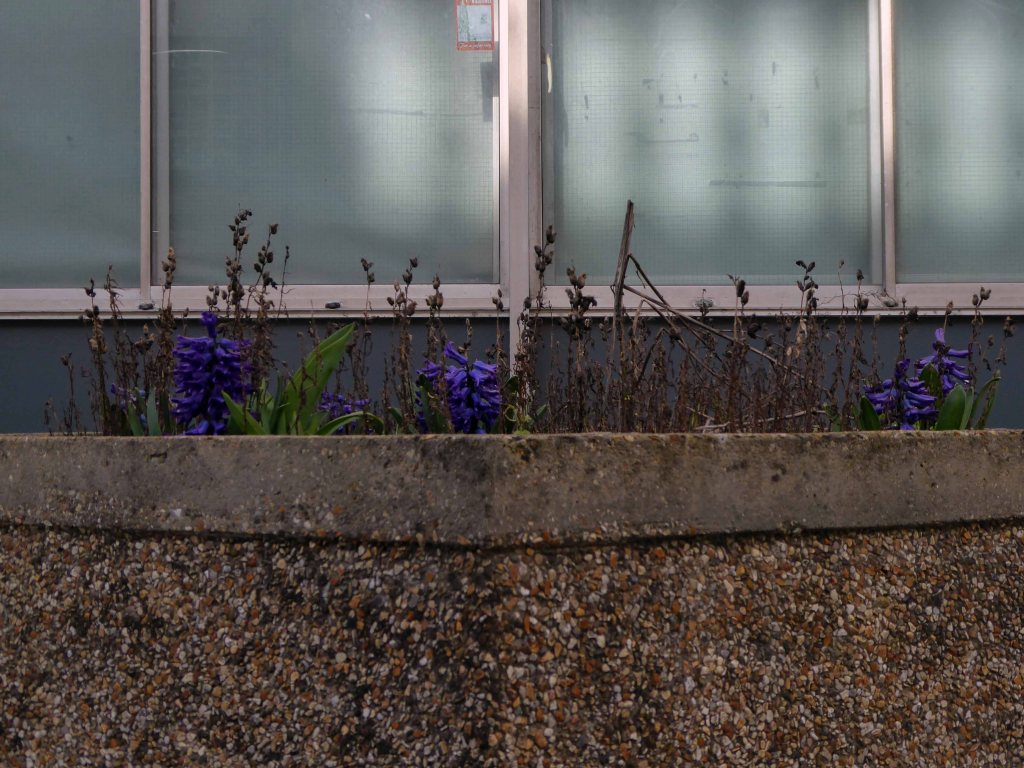
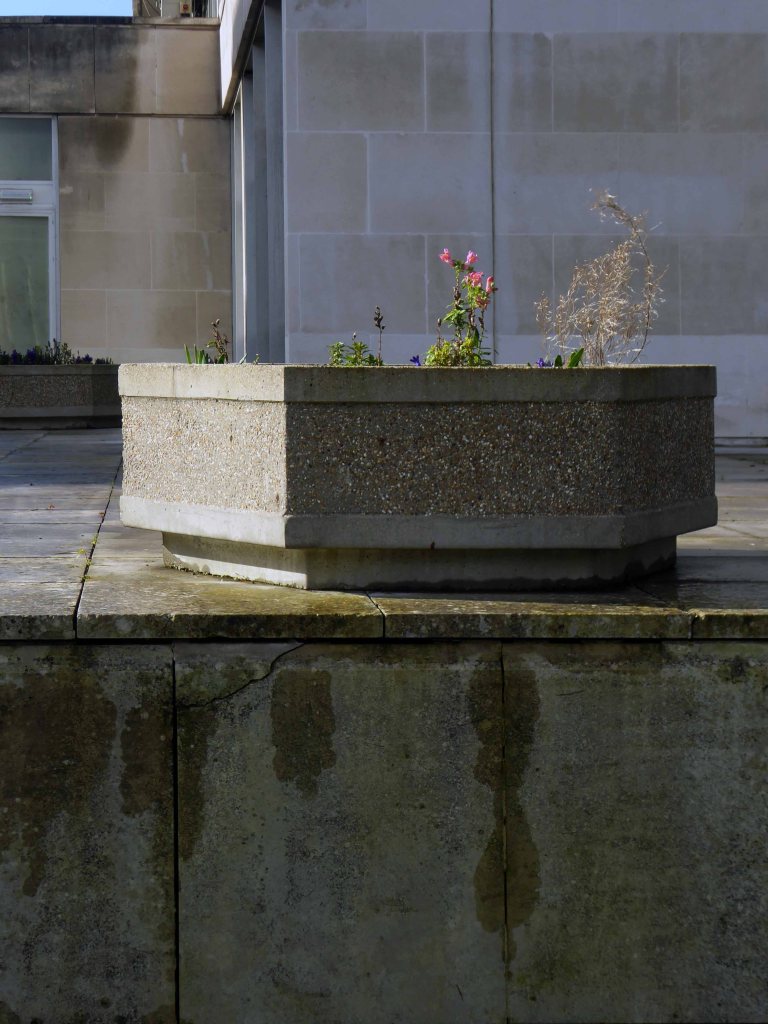
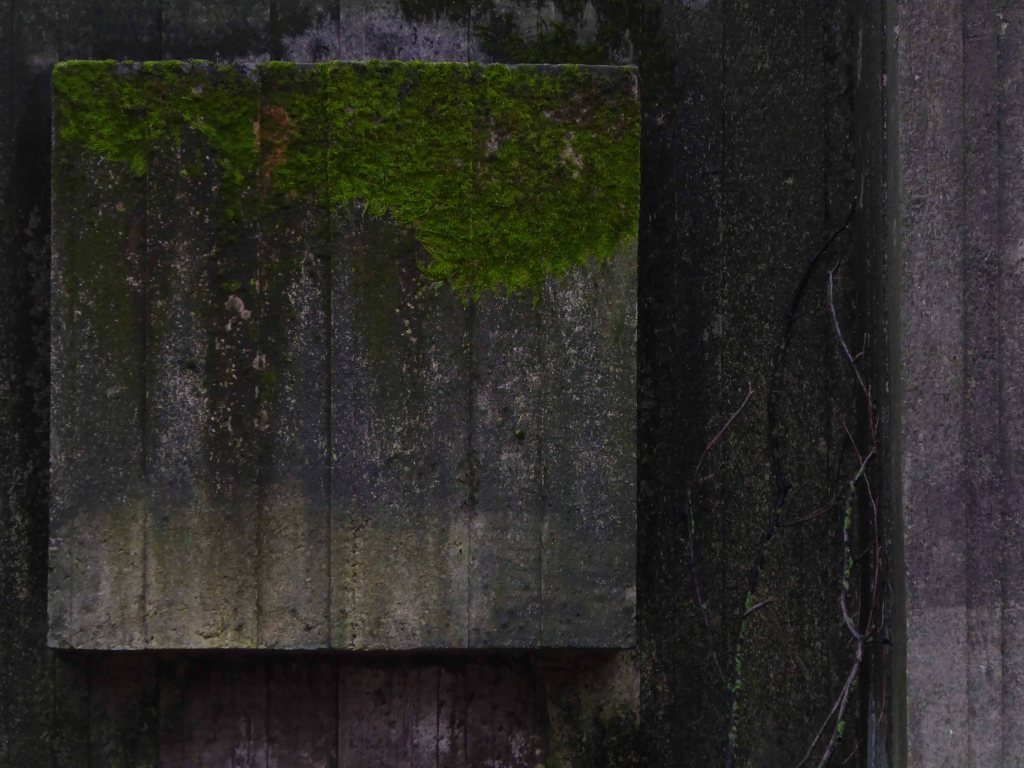
Plus an exciting array of concrete planters – exhibiting an exciting array of seasonal planting schemes.
Well with a wander around should you find y’self down that end of town.
I have even ventured as far afield as Huyton in search of other exemplars.
This is work of the highest order and importance.
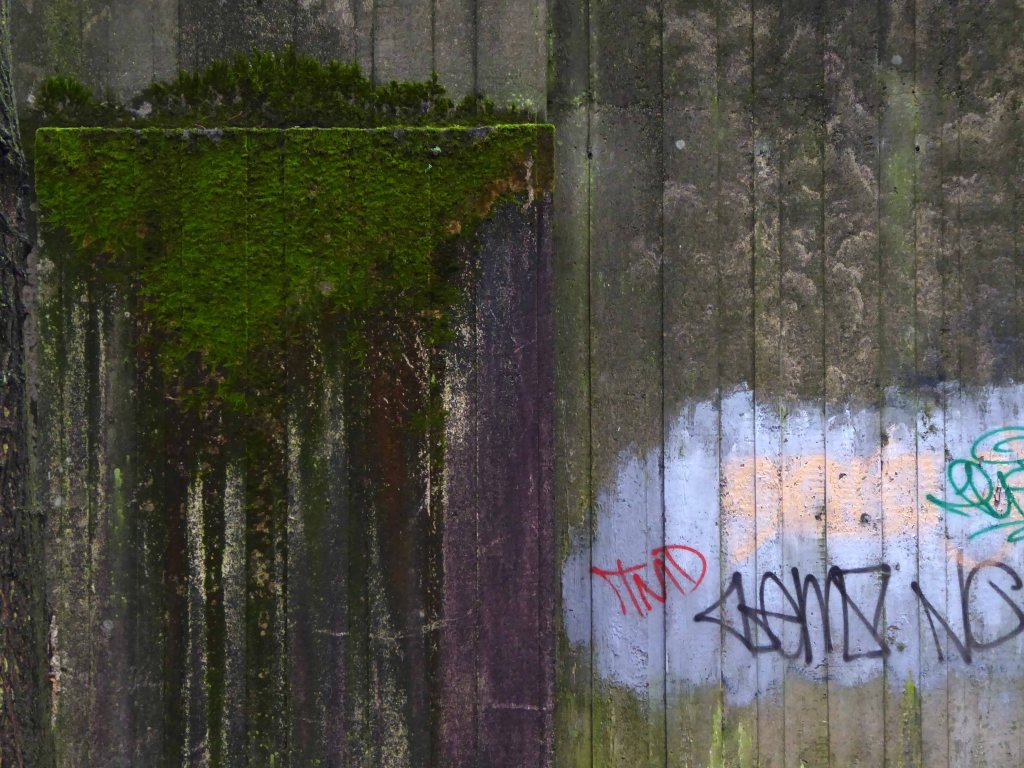
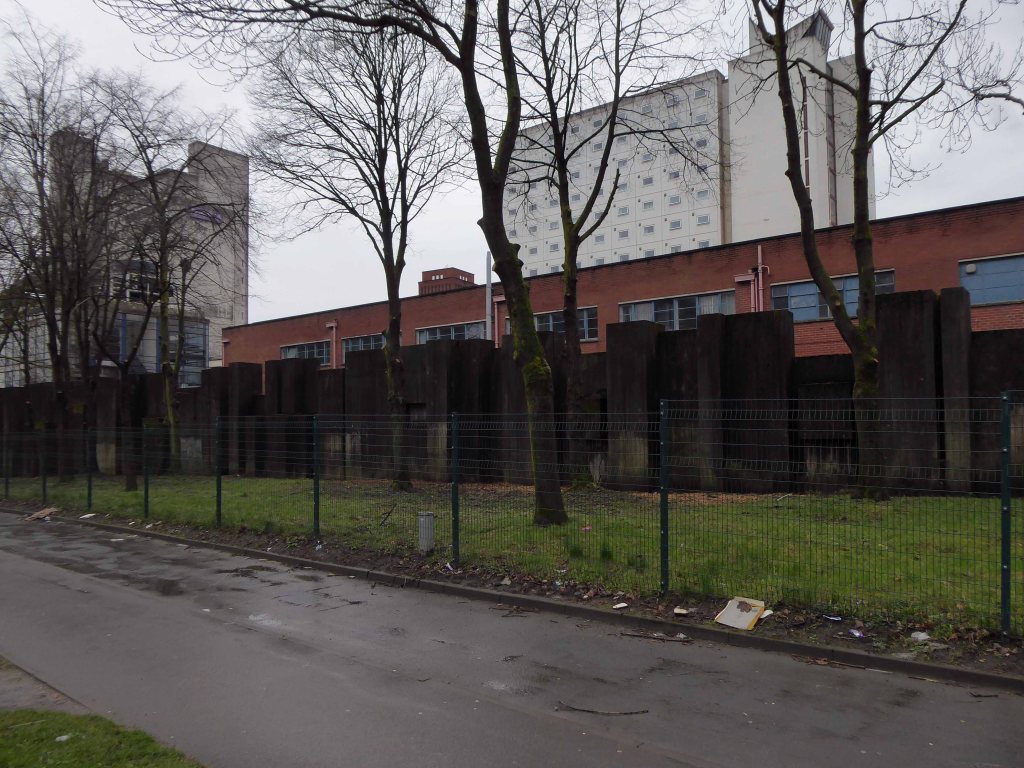
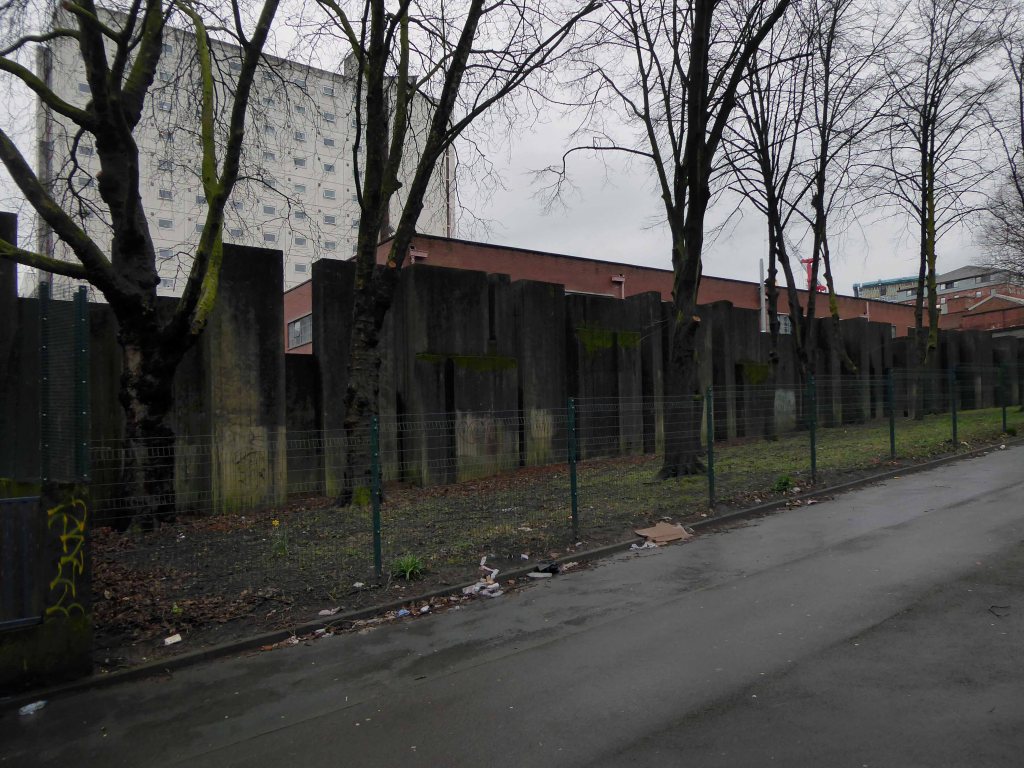
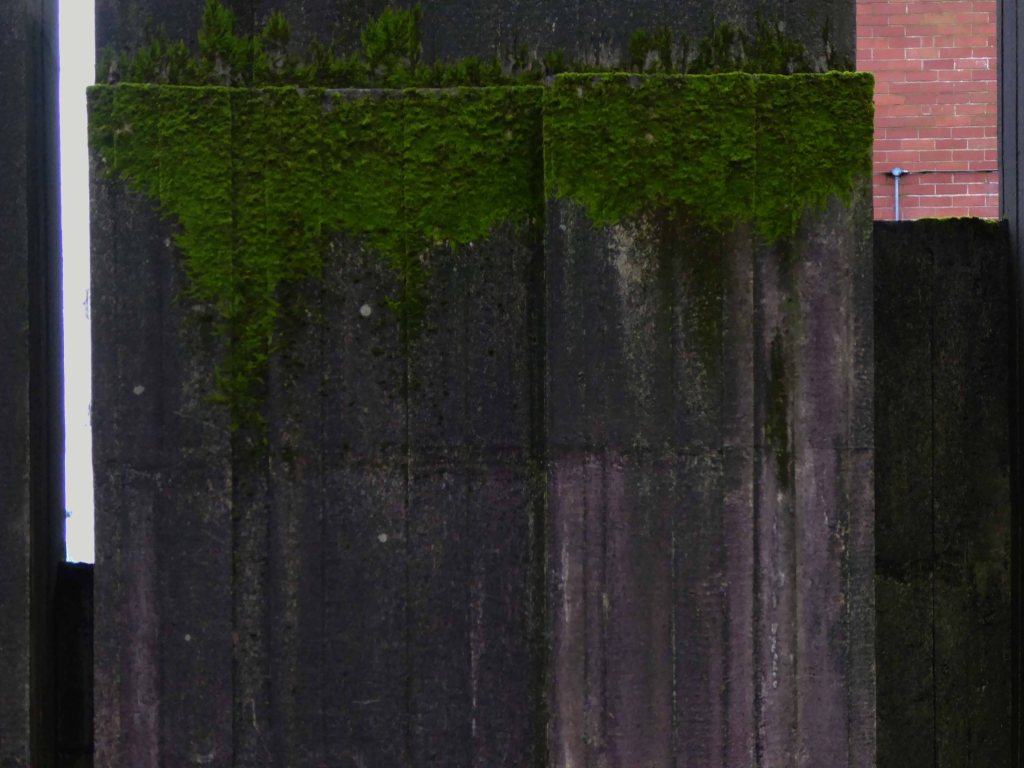
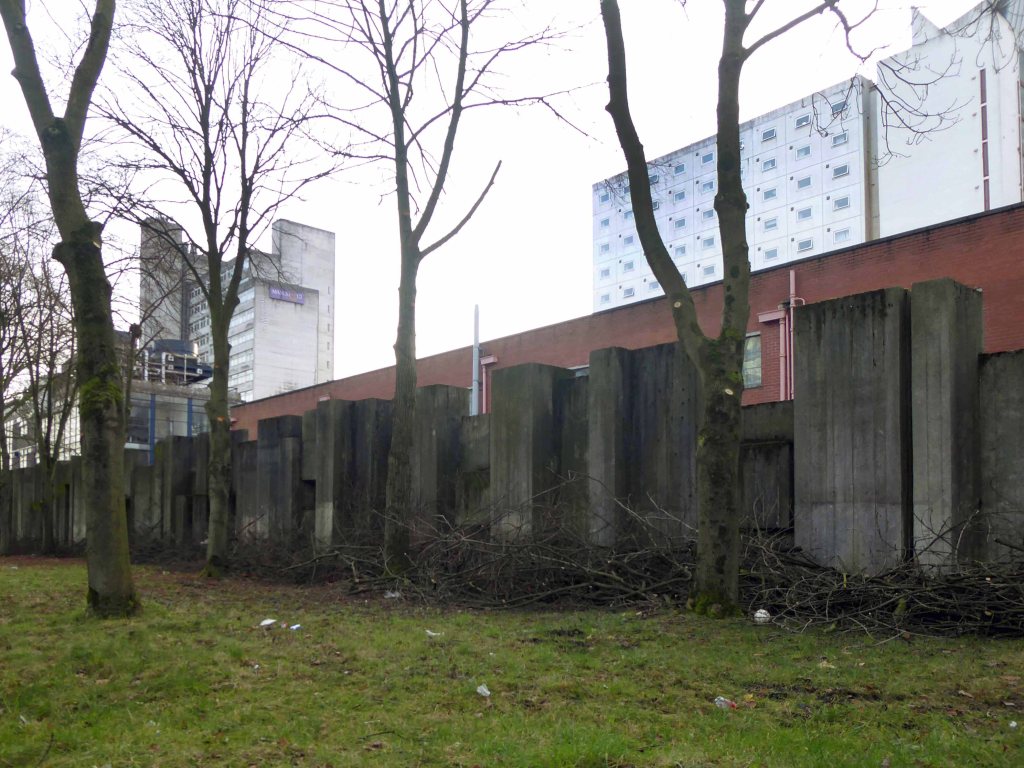
It sits by a busy London Road, behind an intrusive green steel fence, slowly acquiring a green patina – as moss and lichen attach themselves to the well weathered concrete.
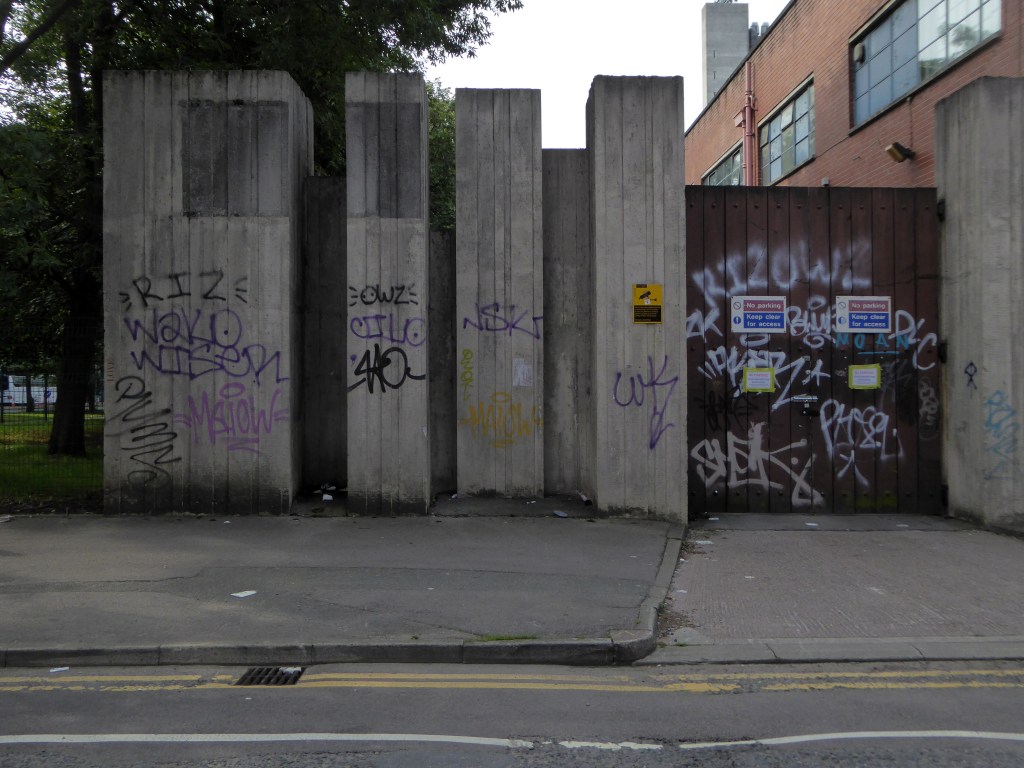
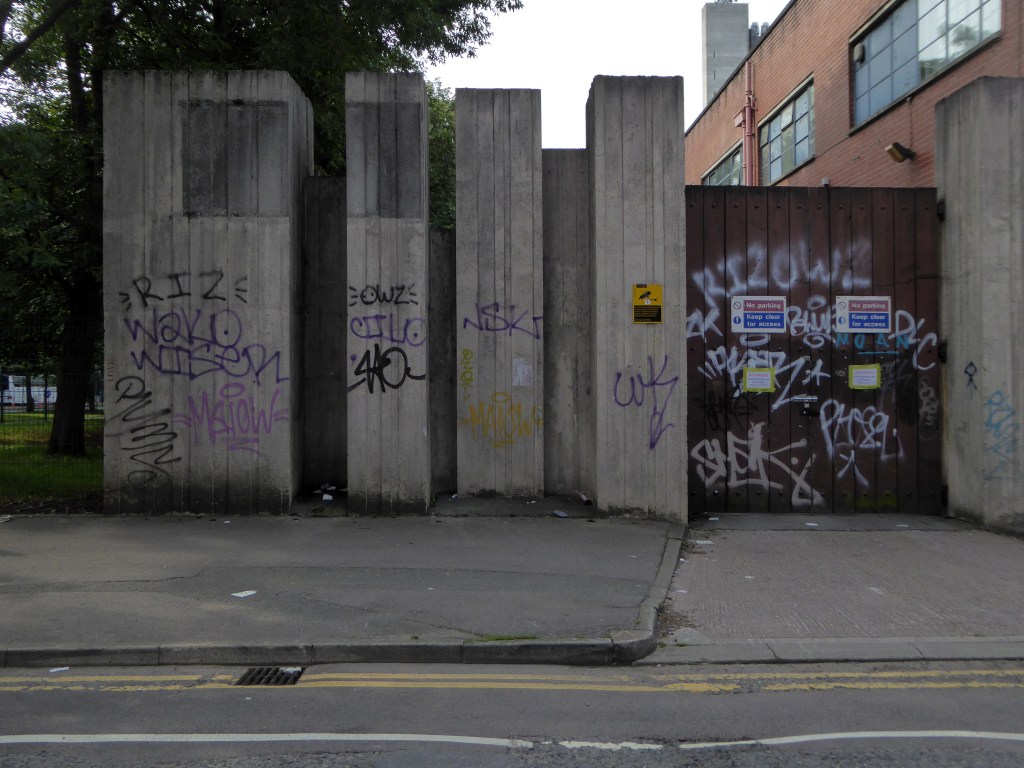
Receiving occasional visits from the errant urban tagger.
It deserves much better – a lush grassed apron, discrete public seating, regular tree maintenance – respect.
We do not suffer from a surfeit of significant mid-century public art – its guardians should straighten up and fly right.
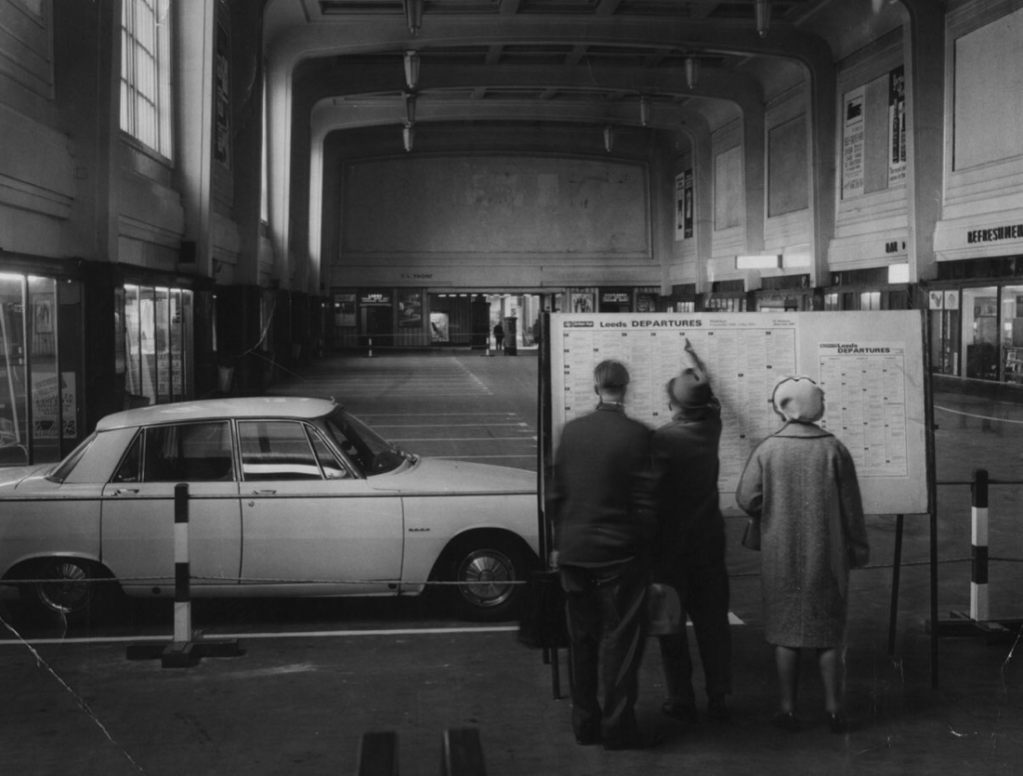
On arriving at the Leeds City Station pass through the ticket barriers and turn to your left.
Once a convenient car park.
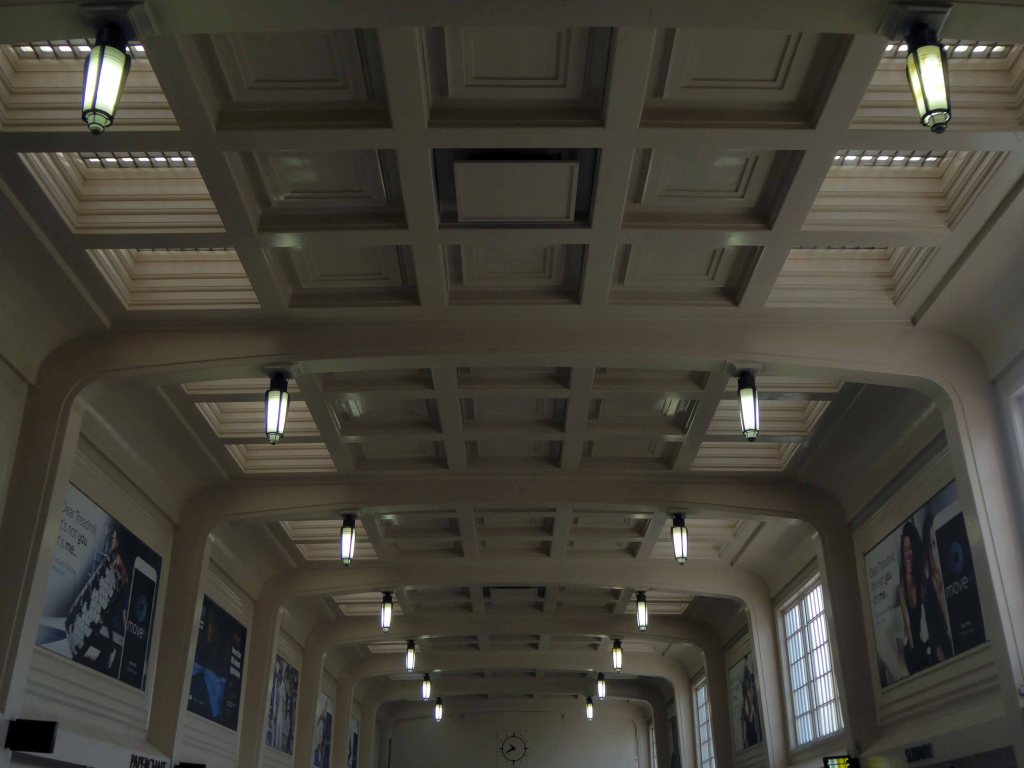
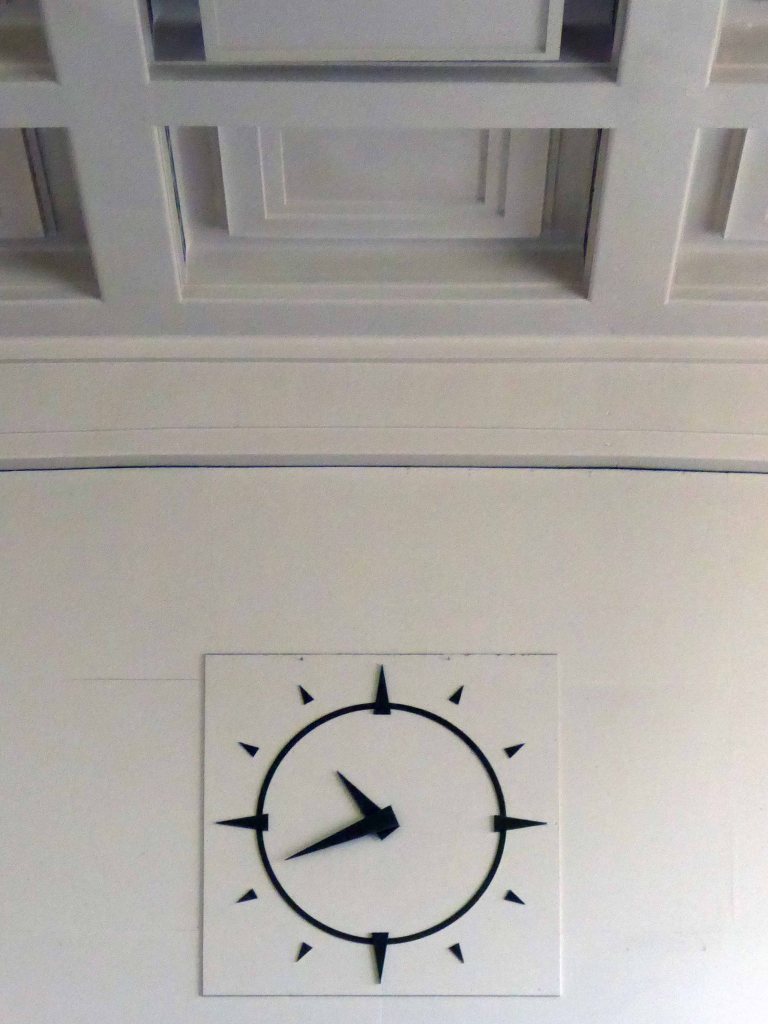
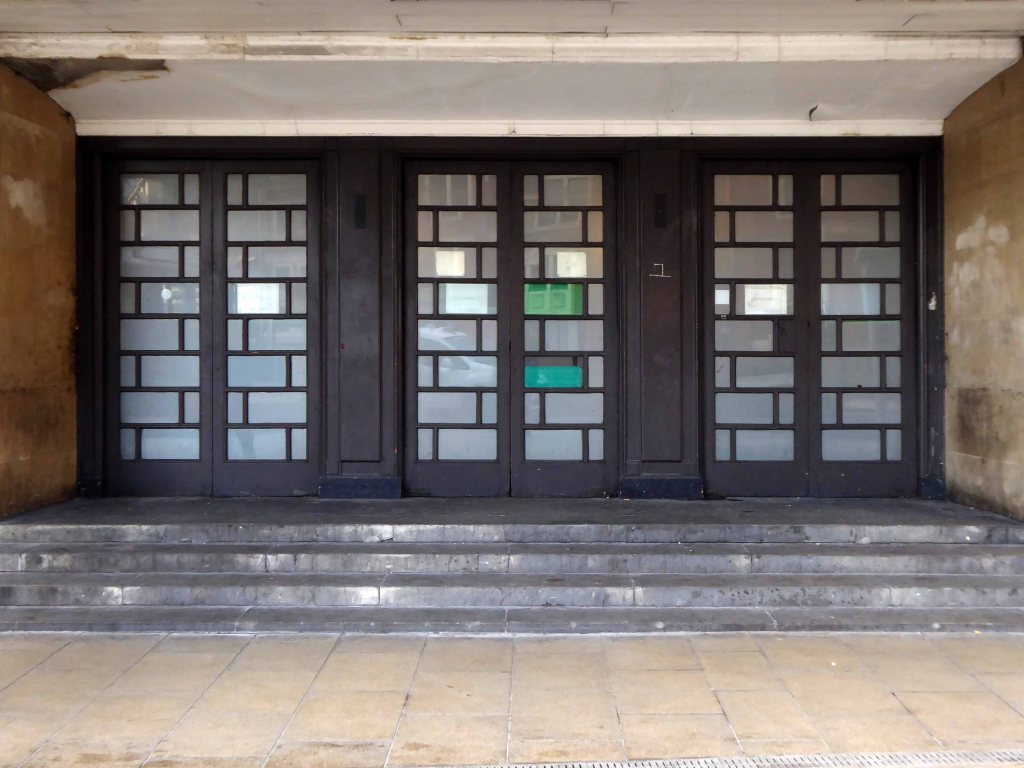
You are now inside the 1938 concourse interior designed by WH Hamlyn, restored in 1999 by Carey Jones Architects.
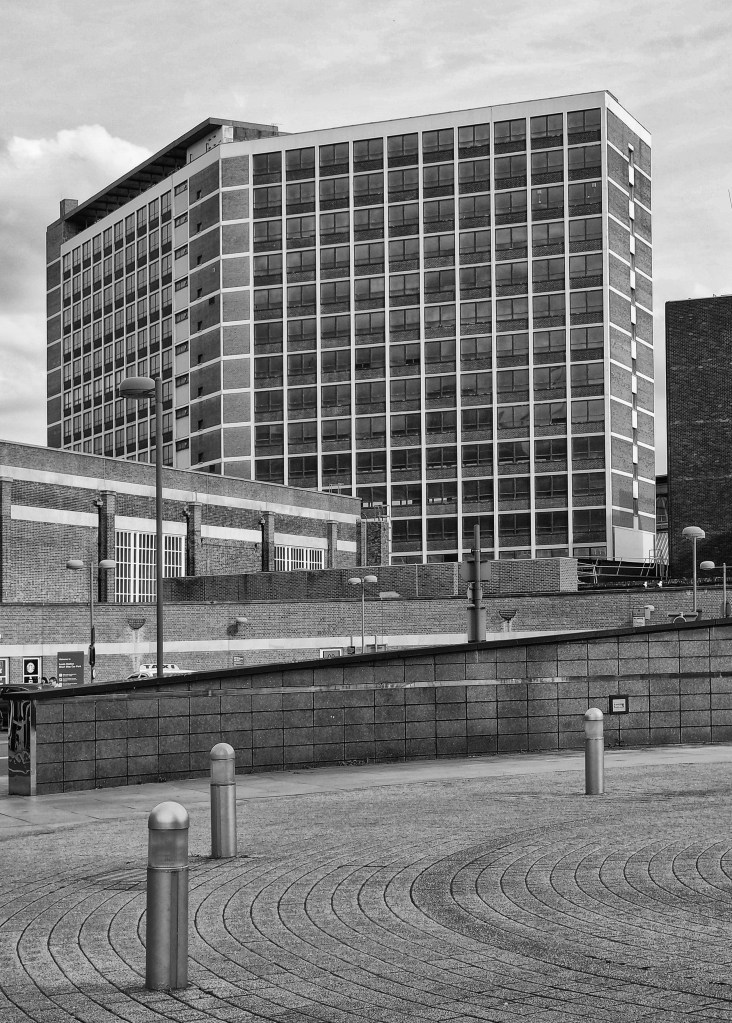
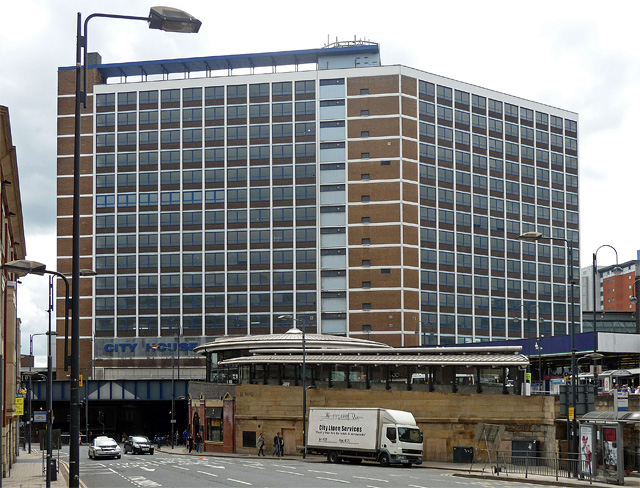
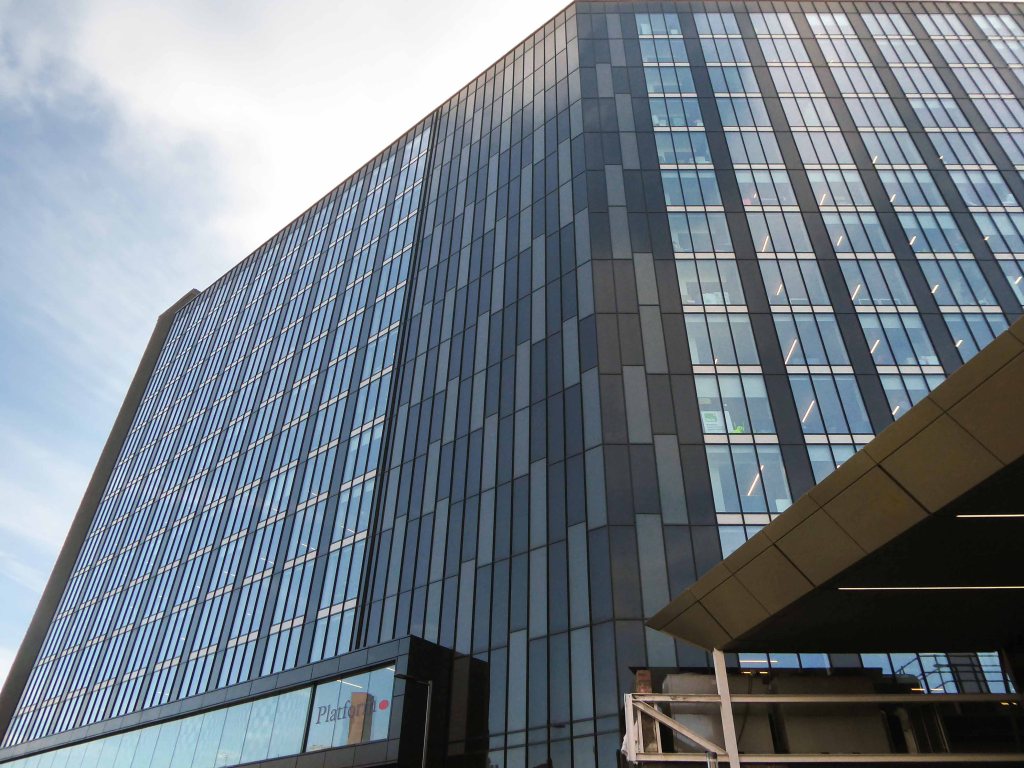
Atop the station John Poulson’s 1967 City House – now re-clad in the modern manner and badged as Bruntwood owned Platform One.
A reinvention of a Leeds landmark, offering office space for tech and digital businesses of all sizes right at the heart of the city.
The main body of the station was rebuilt 2001-03 by McKellar Architecture to a scheme by ESG Design Architects.
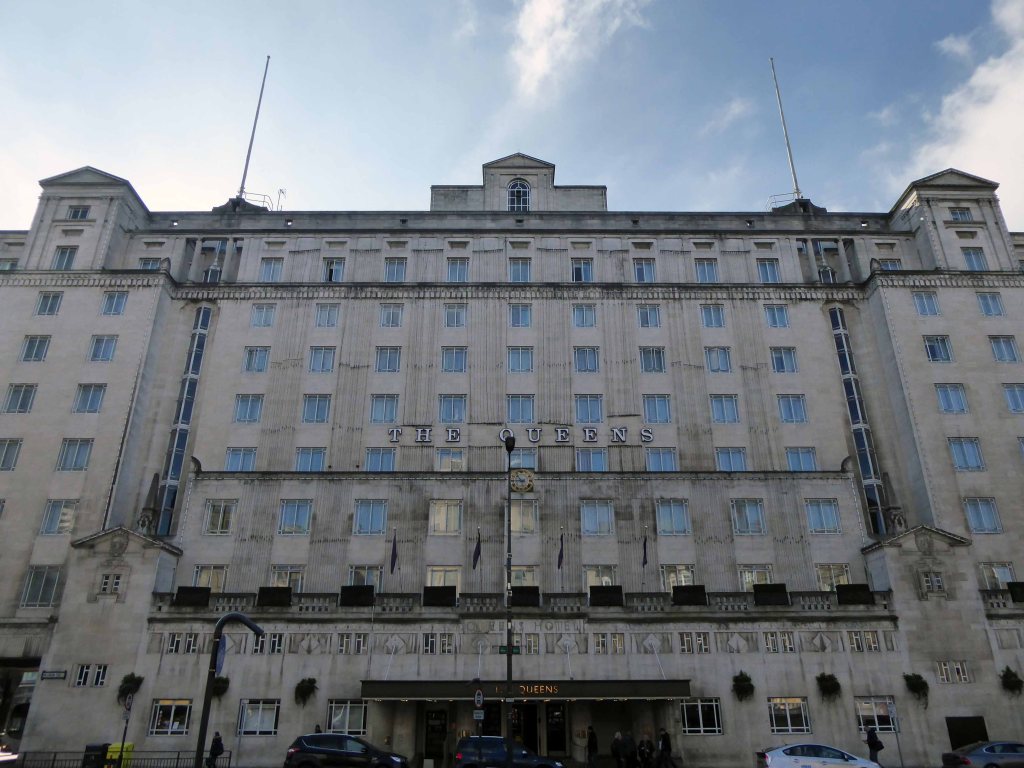
Exiting by the main exit, there is a gentle brick and concrete curve – leading to the side of the Queens Hotel also the work of WH Hamlyn 1938.
A monumental classical facade with discrete Deco detailing.
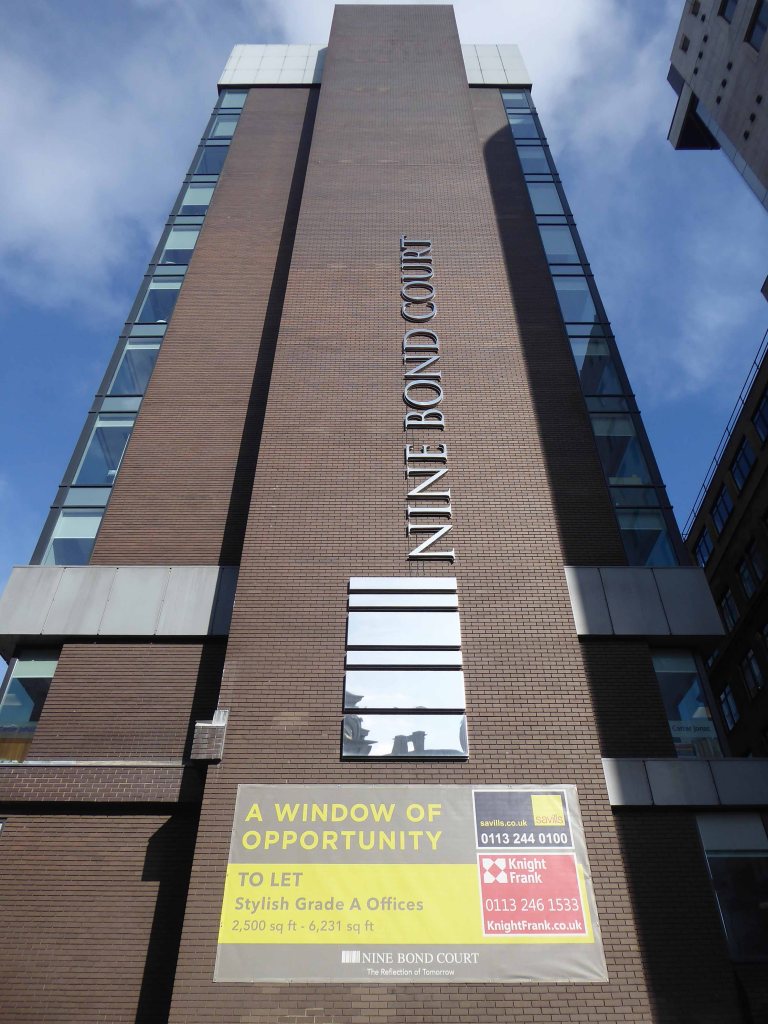
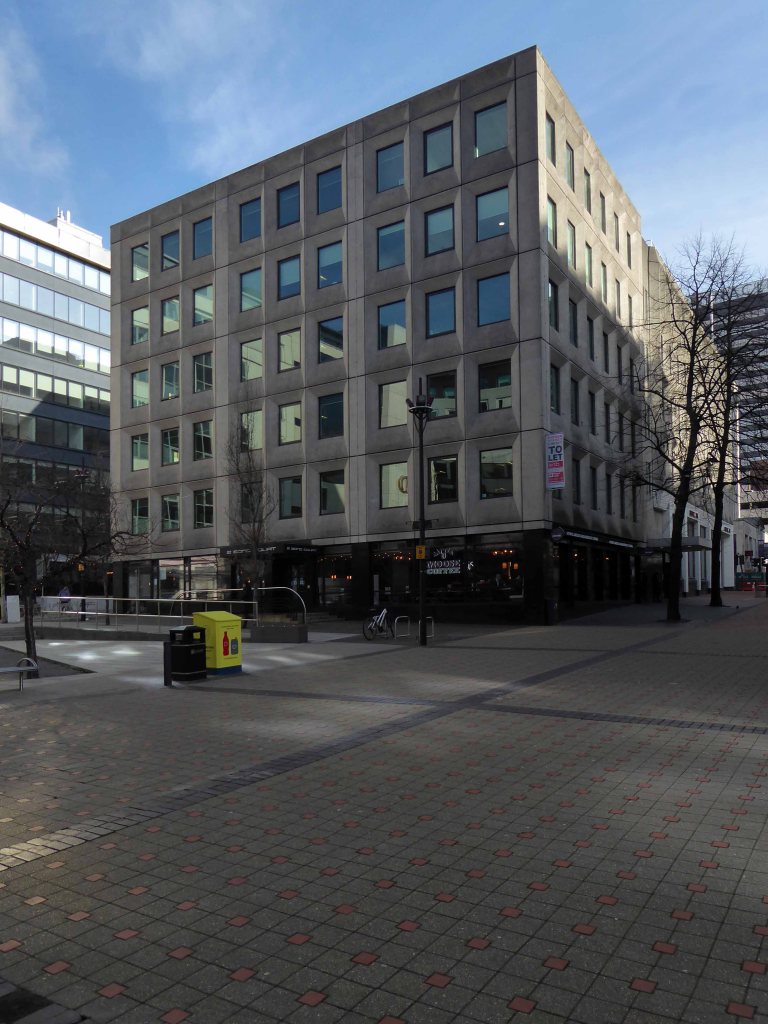
Nine Bond Court an almost anonymous tower block, leads us into Bond Court, where we find the HSBC by Whitney Son & Austen Hall 1966-69.
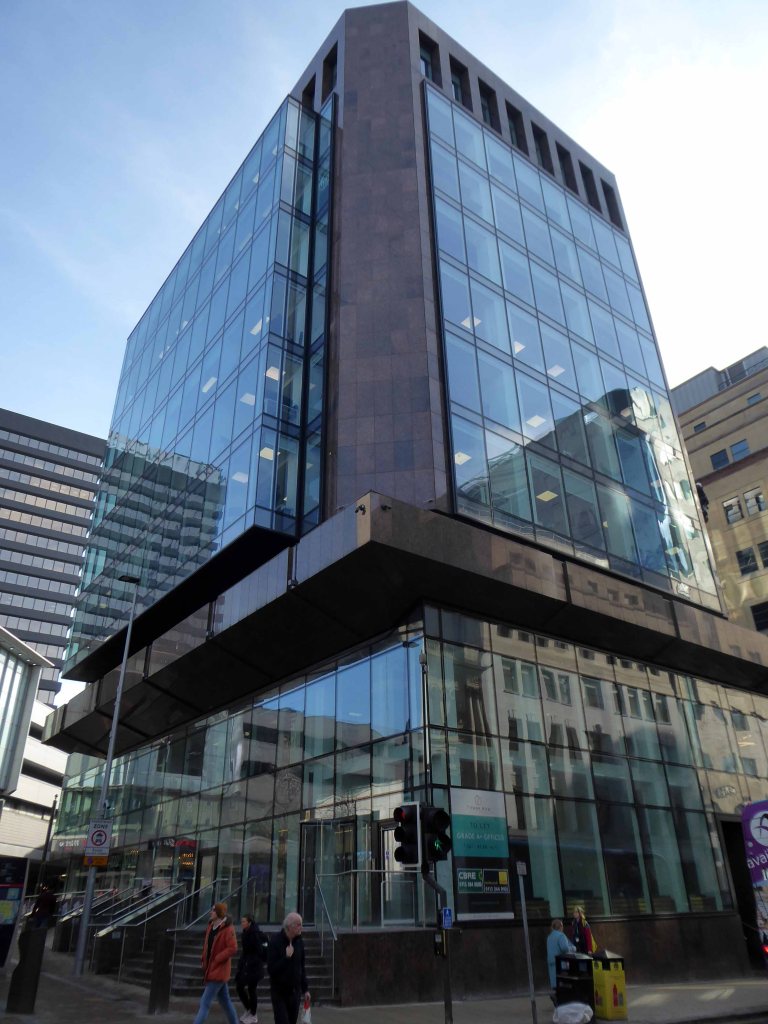
Onwards now to 7 Park Row reworked by Box Architects this former Lloyd’s Bank HQ by Abbey Hanson Rowe 1972-77
Park Row is the City’s most sought after business location, benefiting from being perfectly placed centrally between Leeds’ Central Business District and Retail Core. You and your staff will have all that you need to enjoy a work-life balance.
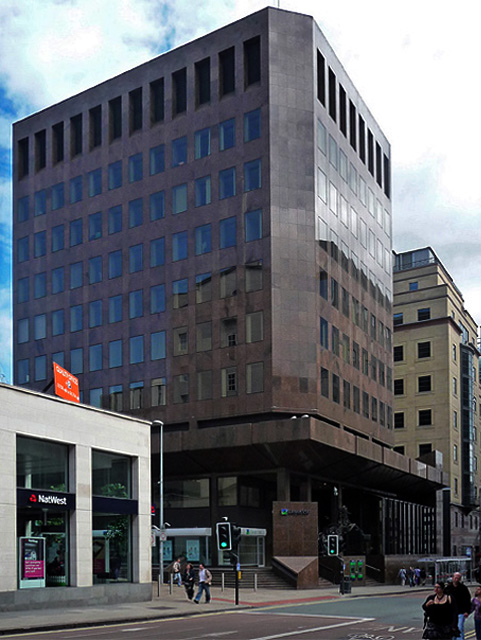
Next door the National Westminster Bank
Replacing George Gilbert Scott’s renowned Beckett’s Bank of 1863-67 demolished in 1965.
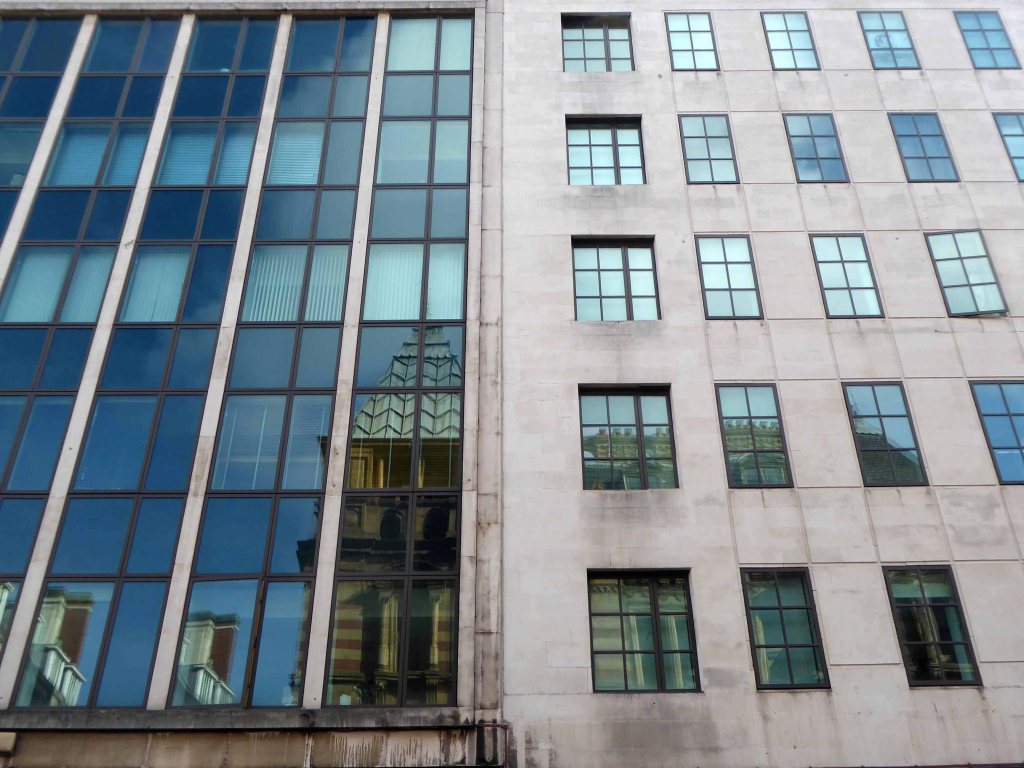
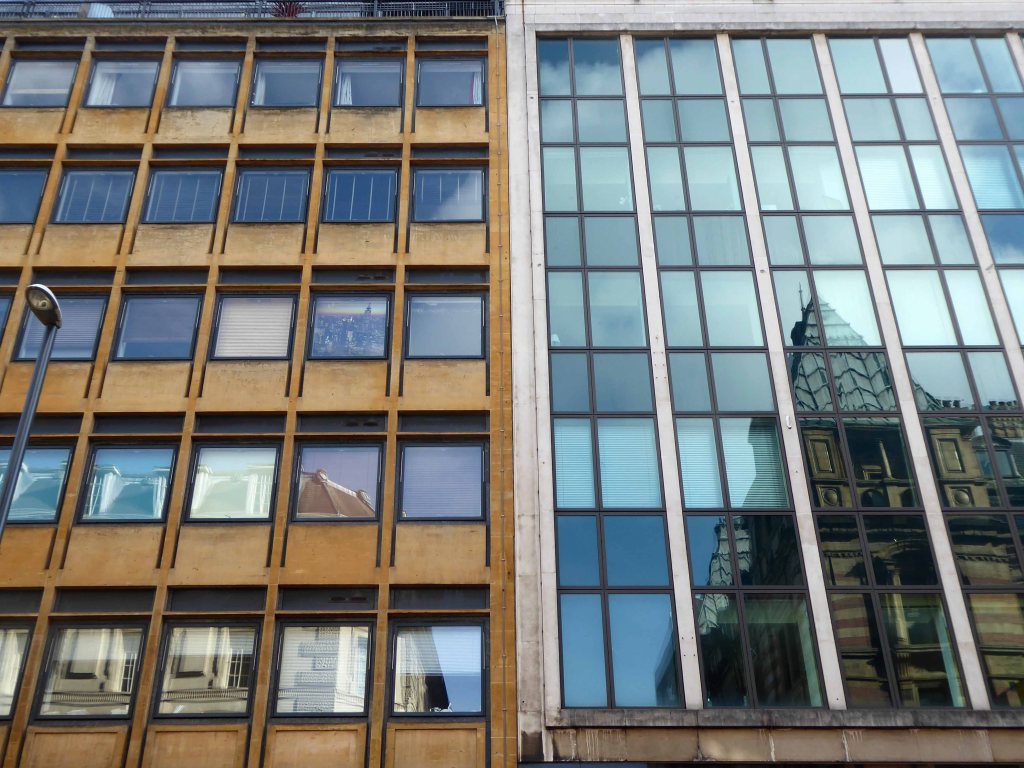
Intrigued by the transition of grid and material finish along Park Row.
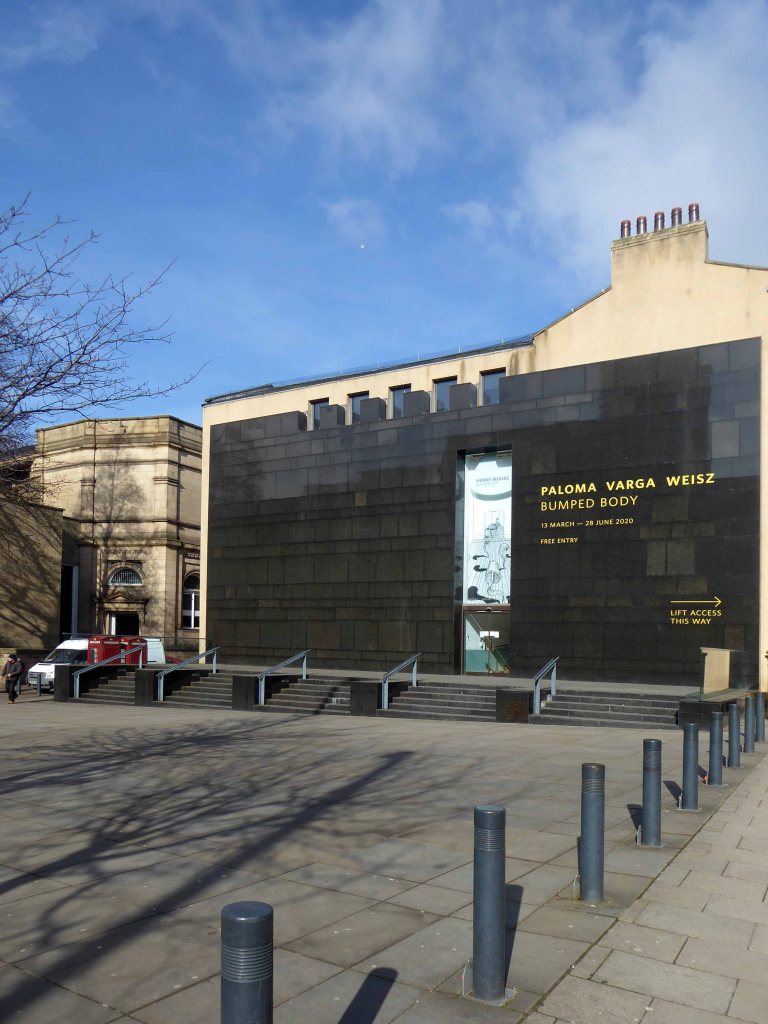
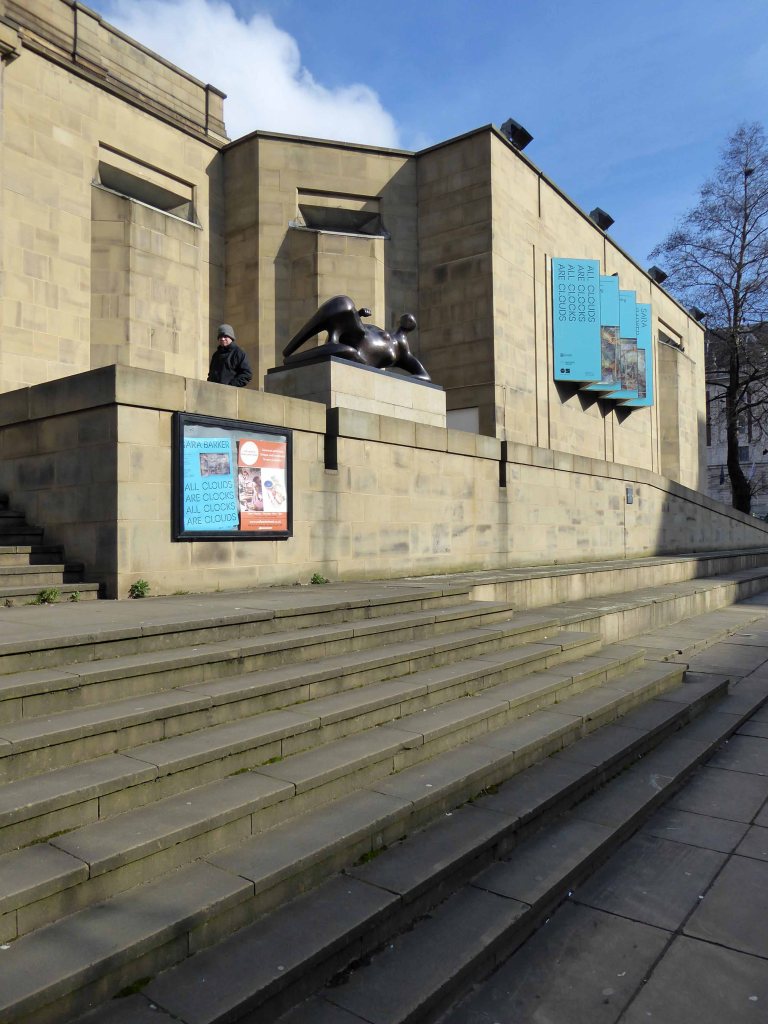
Up the rise of the Row toward the Henry Moore Institute and City Art Gallery with their modern extensions.
1993 Jeremy Dixon and Edward Jones with BDP
1980-82 John Thorp and Neville Conder complete with Moore’s Reclining Woman Elbow of 1980.
Honourable mention to The Light conversion DLG Architects 2002.
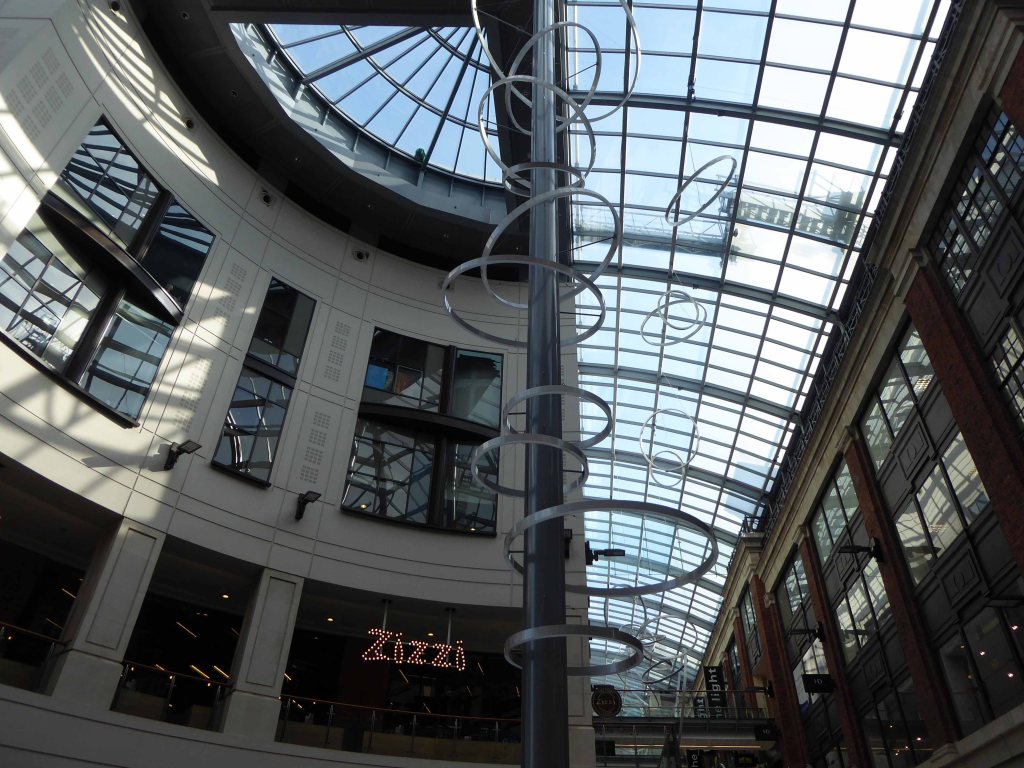
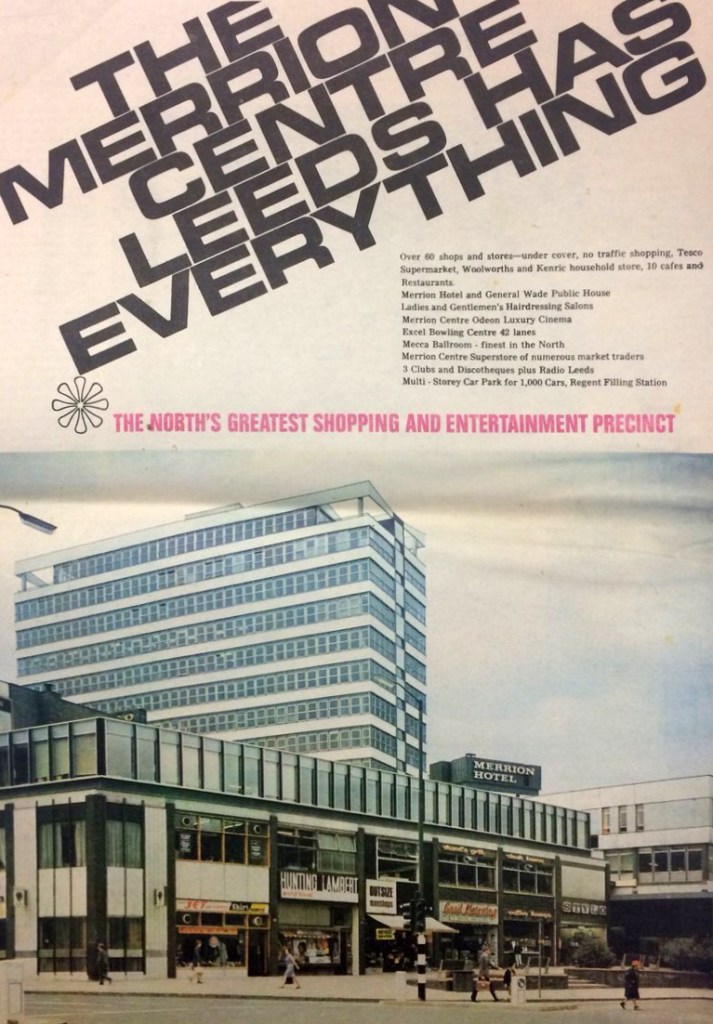
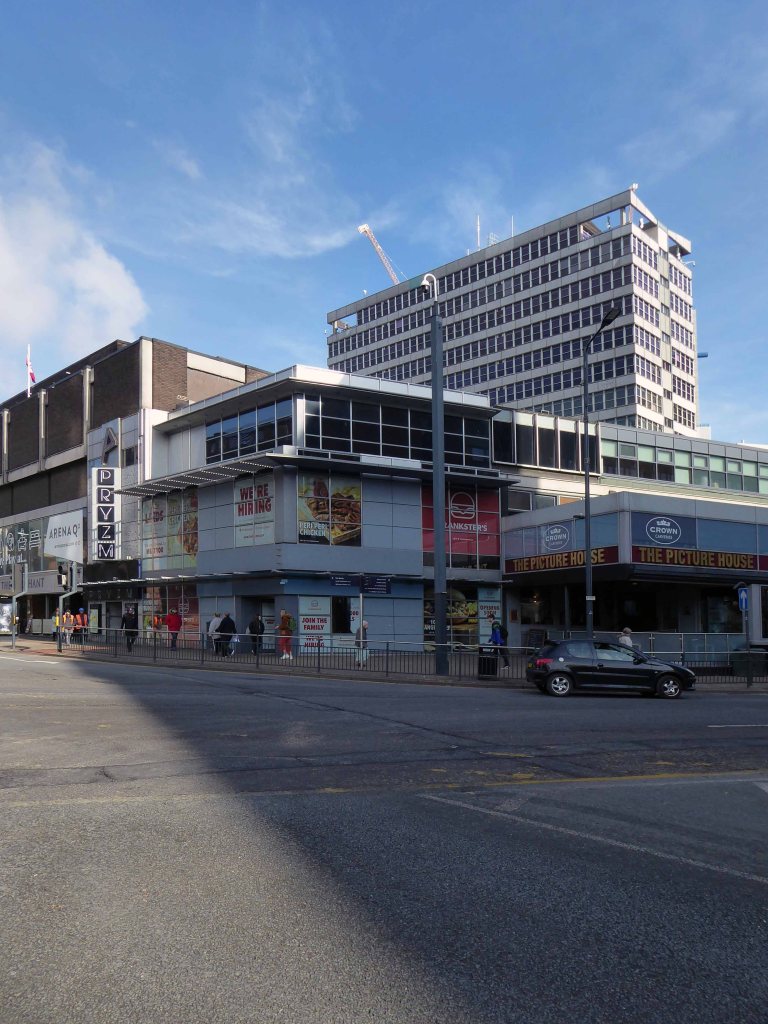
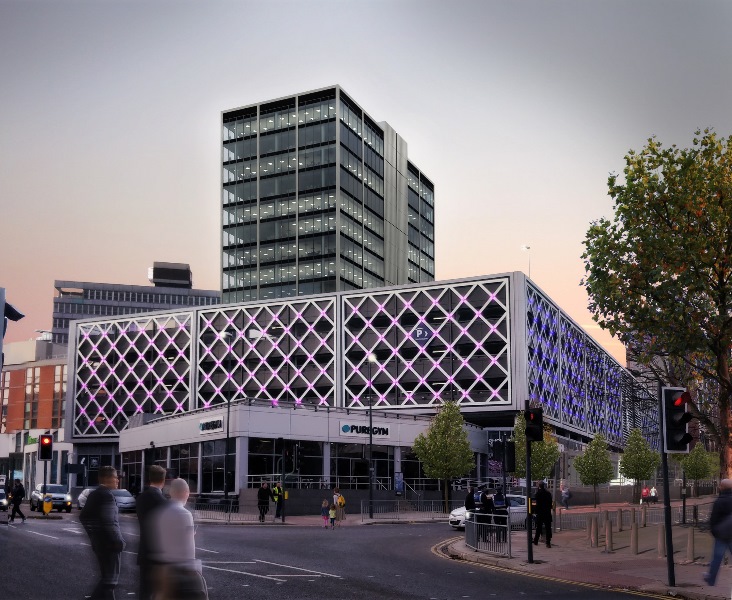
Awaiting yet another reimagining – Ian Purser, architect director at BDP said:
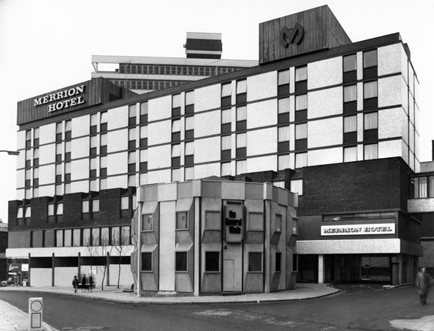
This scheme will create a new destination in an area of regeneration, effectively opening up a ‘new front’ to the Merrion Centre while utilising the existing structure and incorporating contemporary food and beverage facilities.
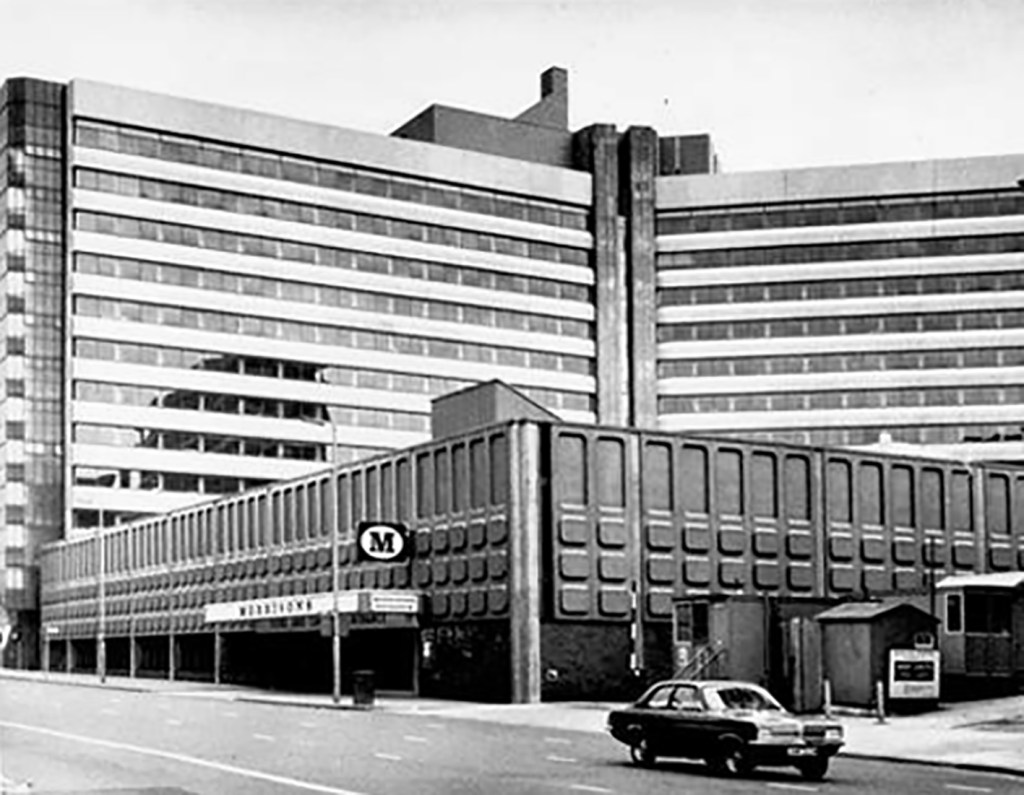
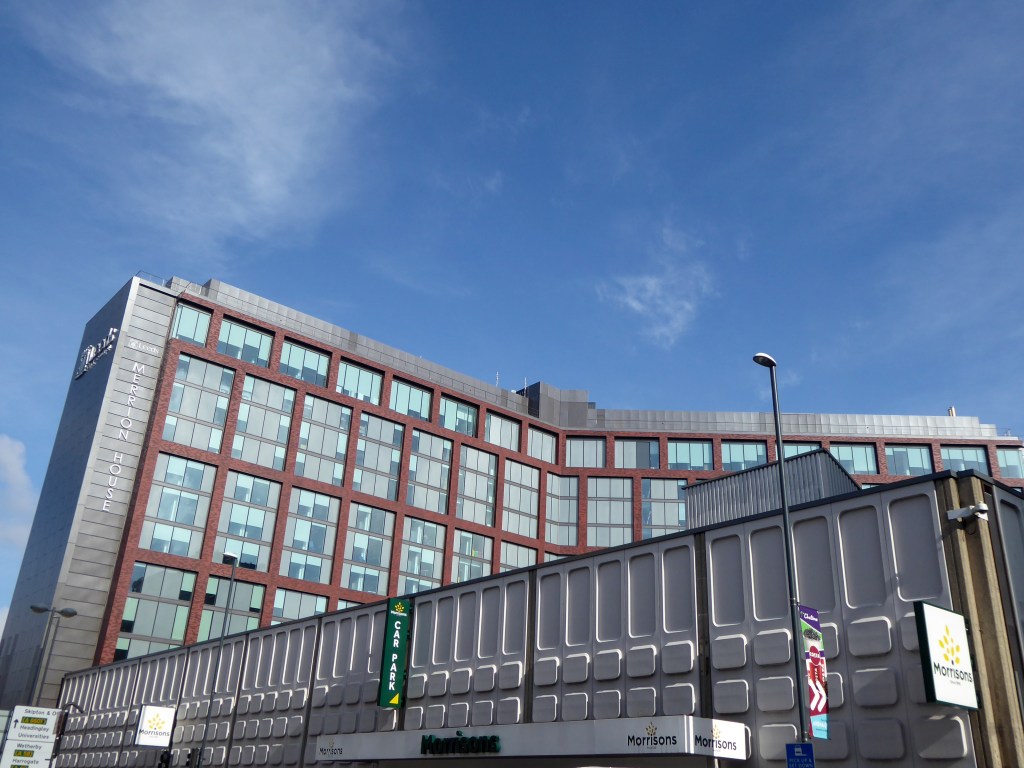
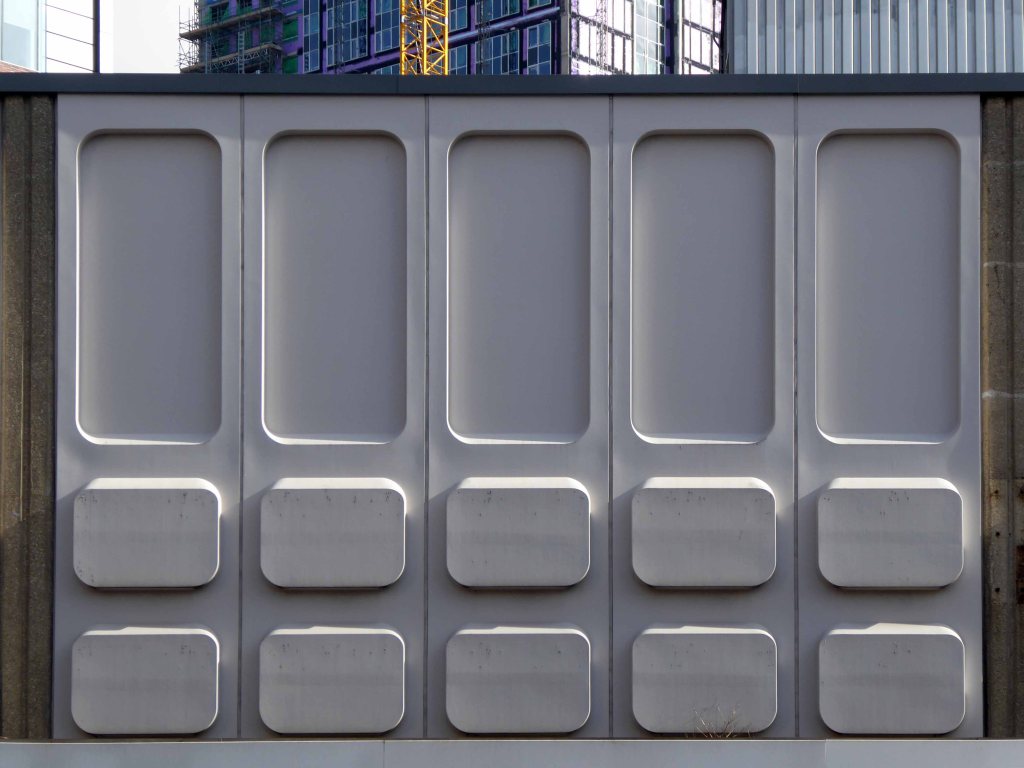
Just along the way Gerry Anderson meets Morrison’s.
Merrion House to the rear.
BDP’s remodelling and extension of Merrion House office block is an exemplar of sustainable refurbishment. Originally completed in 1974 the building was designed to accommodate Leeds City Council’s office based staff.
A “changing the workplace” initiative has been instigated by the council, adapting to changing working patterns. Flexible office environments, created in both the new and refurbished elements of the building, fully support this.
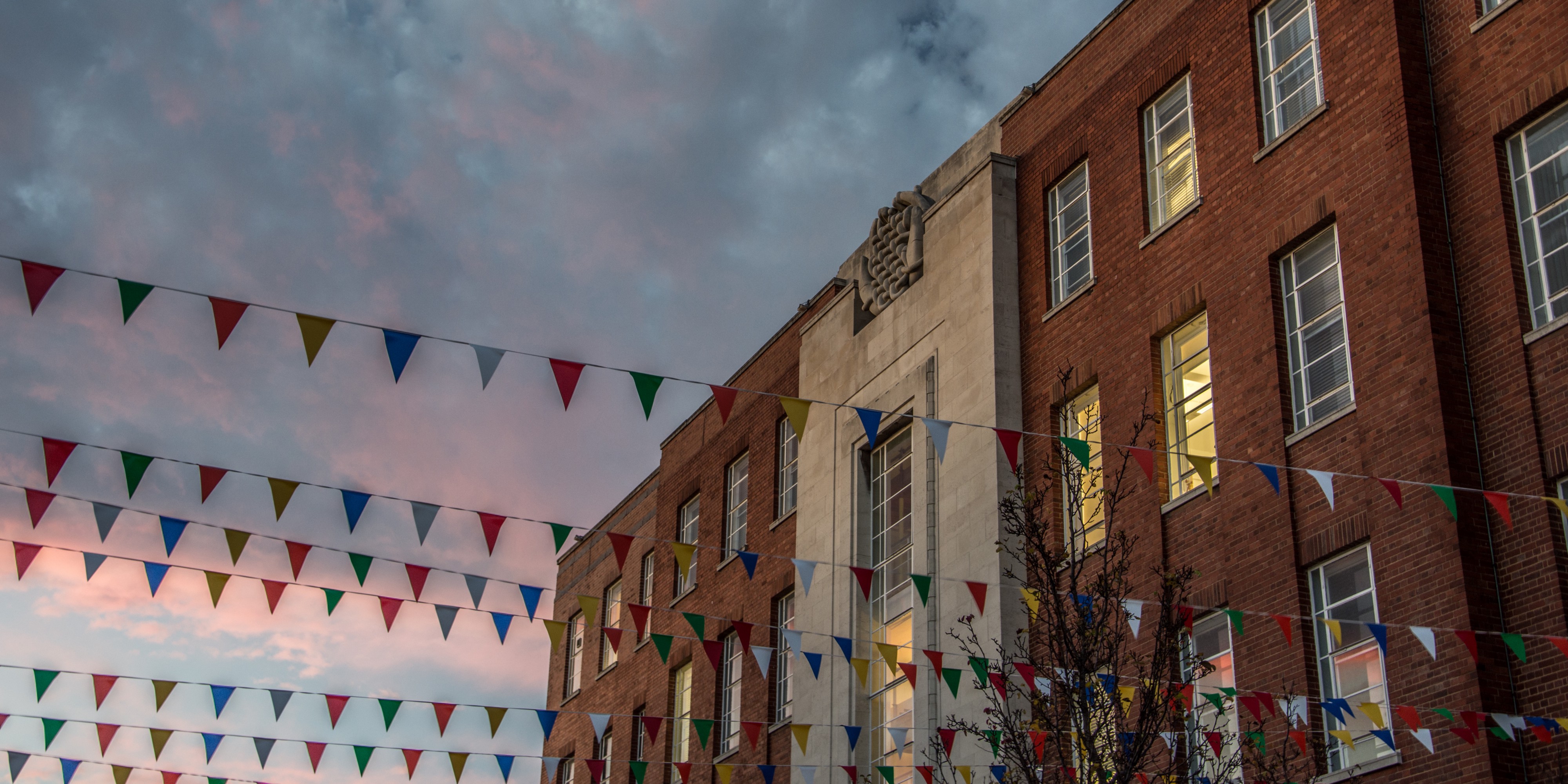
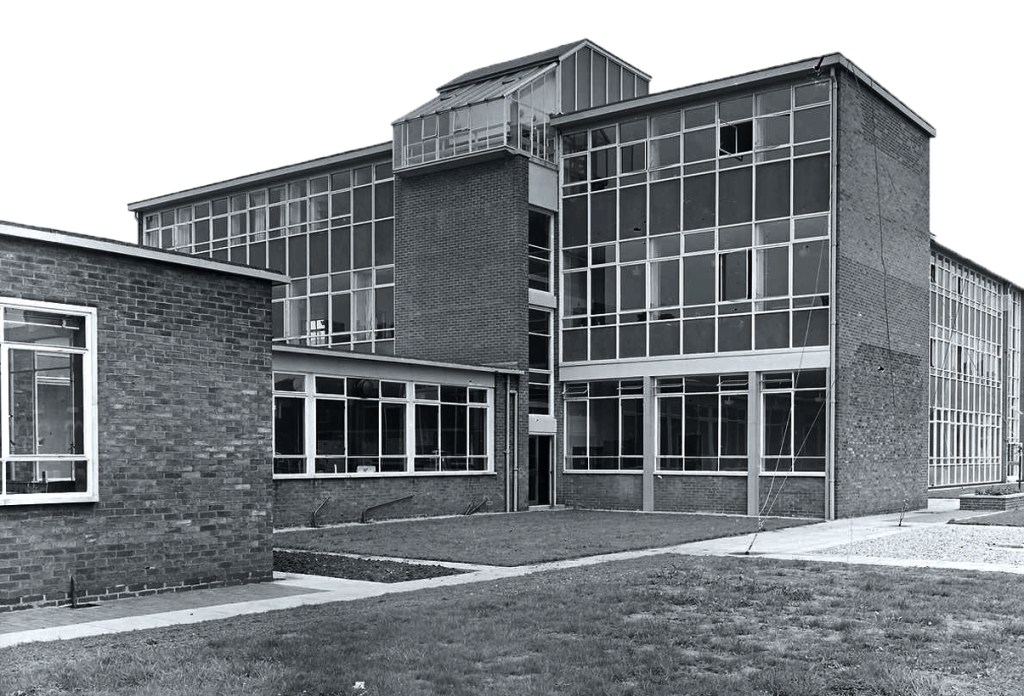
For me one of the City’s finest post-war buildings the Leeds City College – Technology Campus
The college was originally built as the Branch College of Engineering and Science during the late 1950s and 60s.
It was renamed Kitson College in 1967, and later Leeds College of Technology. In 2009 the college merged with Thomas Danby College and Park Lane College to form Leeds City College, becoming the third largest further education college in the UK.
The Technology Campus has played its part in rock history. The Who’s album Live at Leeds had two tracks recorded here and Pink Floyd’s song See Emily Play was written here after a gig in the building.
She’s often inclined to borrow somebody’s dreams ’til tomorrow.
Early plans to knock down one of Leeds city centre’s most recognisable buildings were supported by an influential panel of Leeds councillors today.
Developers’ blueprints to replace the former Leeds College of Technology building in Woodhouse Lane with 20-storeys of student accommodation went before a meeting of Leeds City Council’s city plans panel last week.
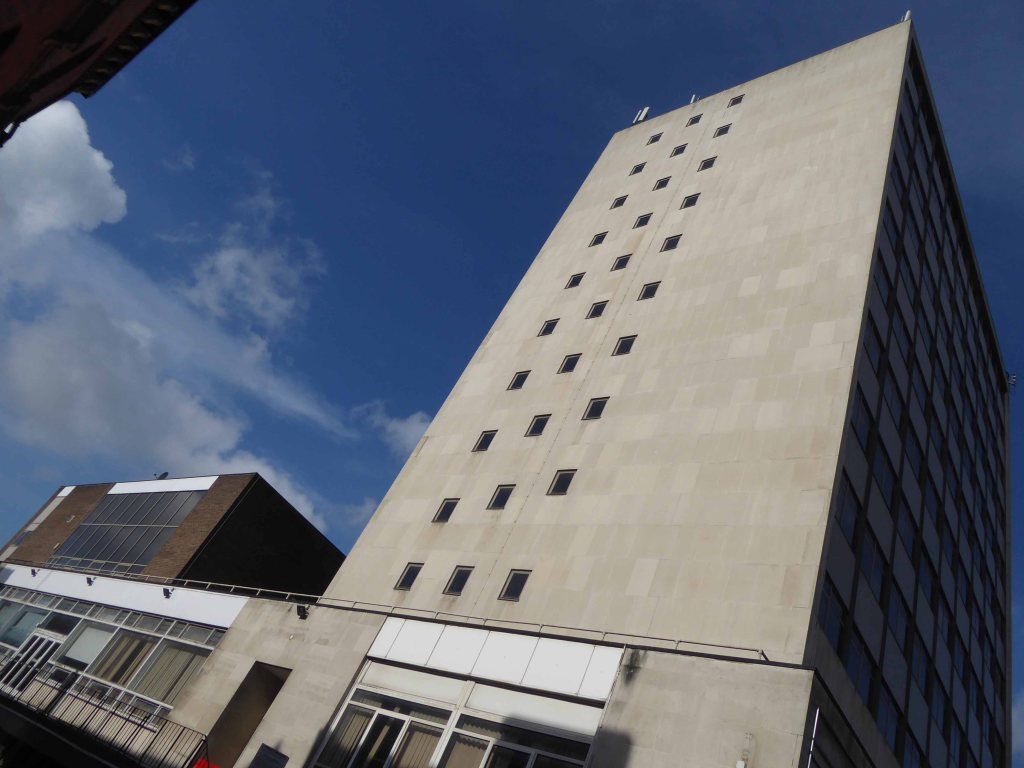
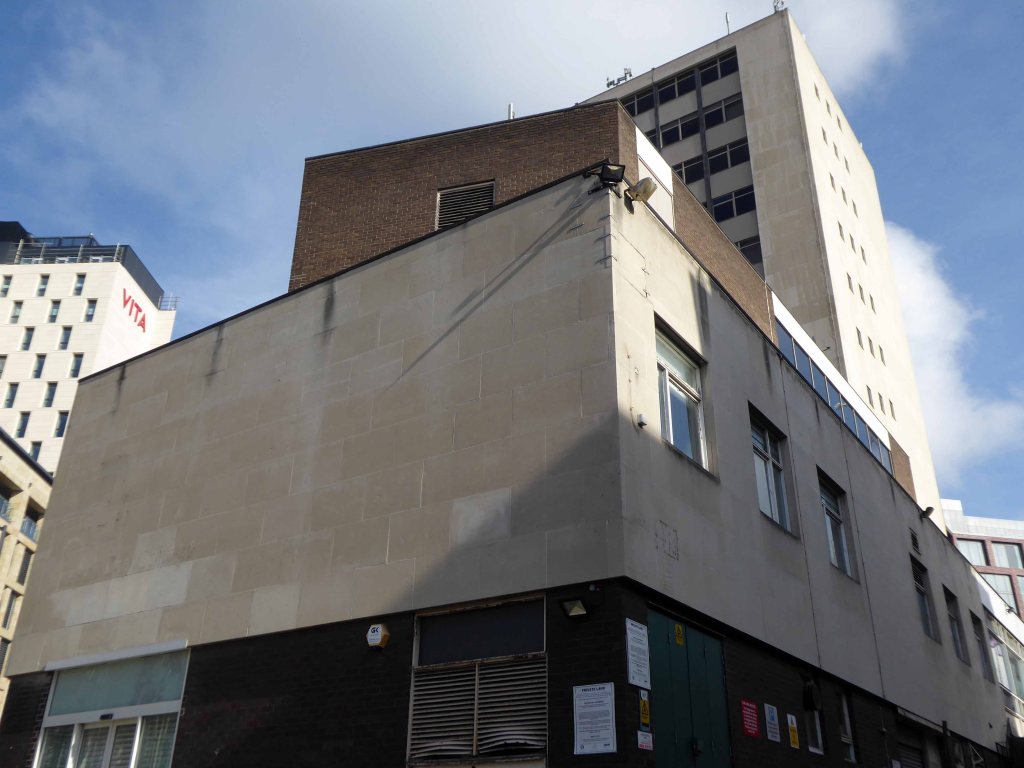
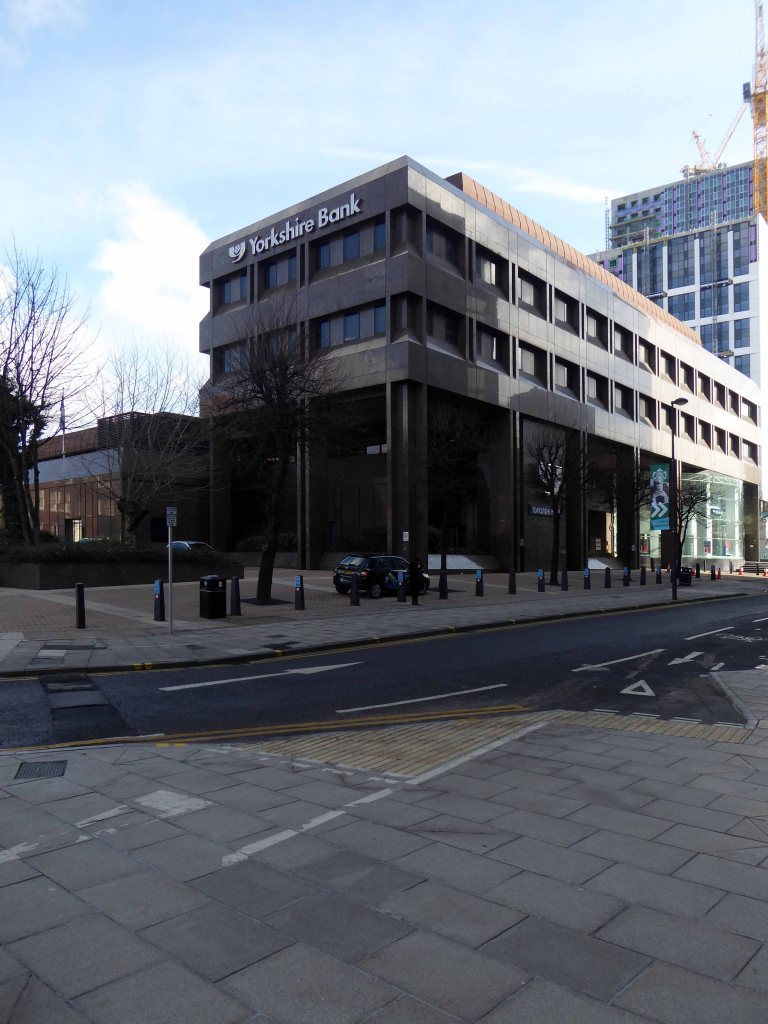
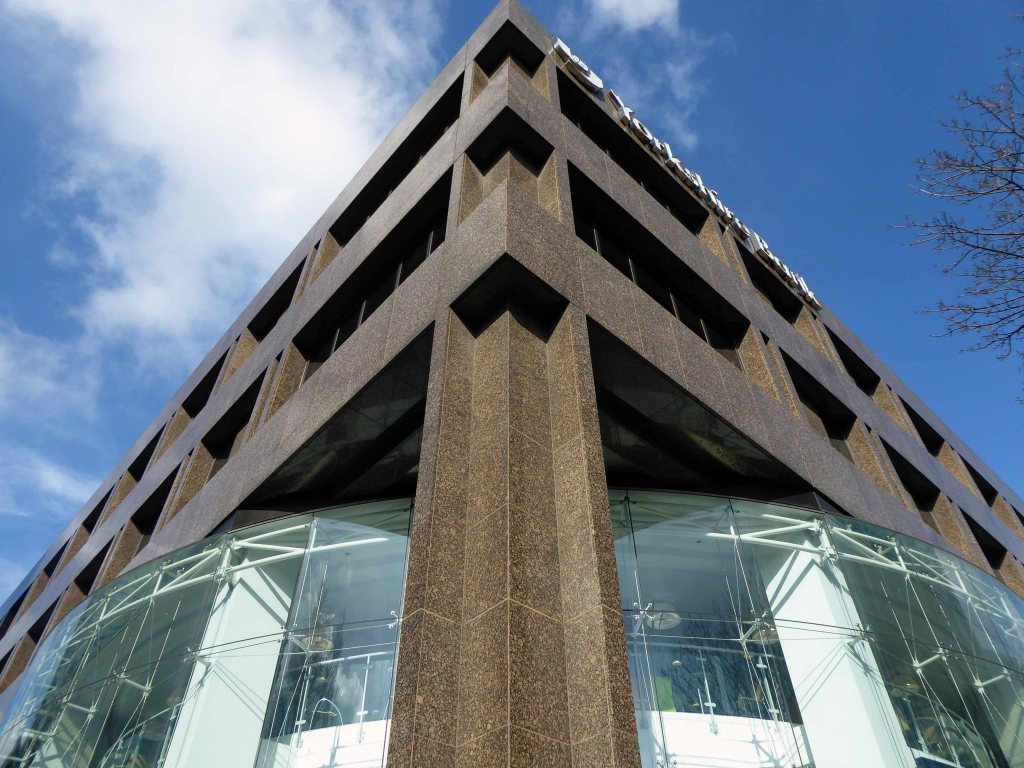
Head over the road to the Yorkshire Bank a big brown beat reminiscent of Halifax’s Building Society HQ
The bank expects to have vacated Merrion Way by September of 2021.
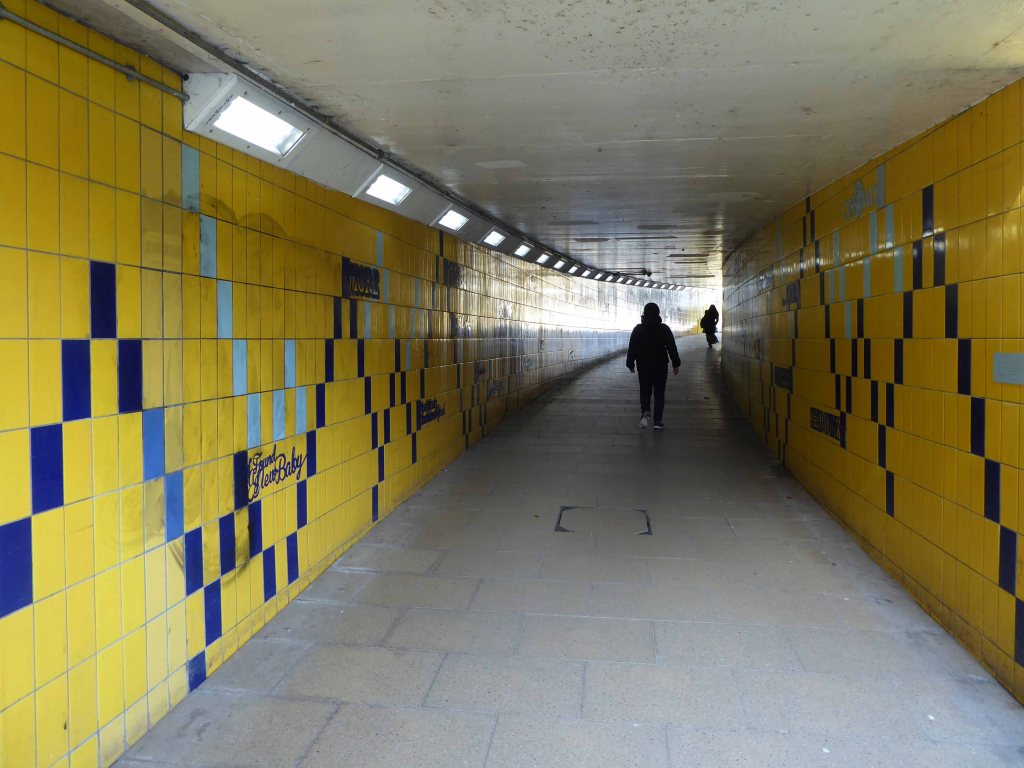
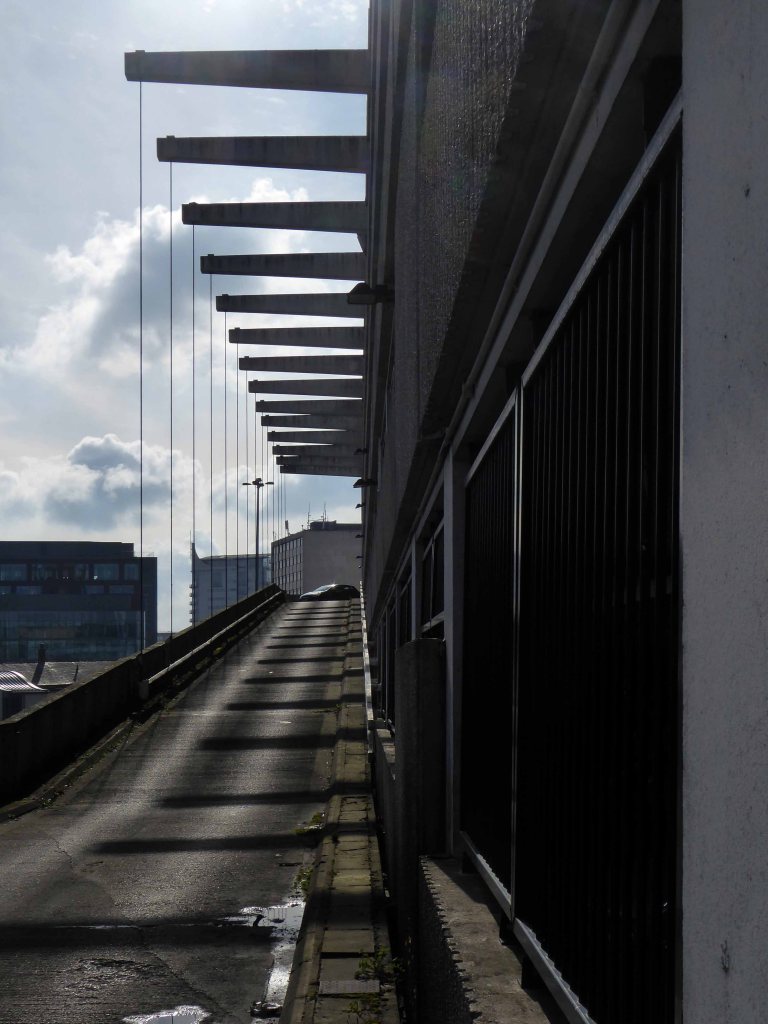
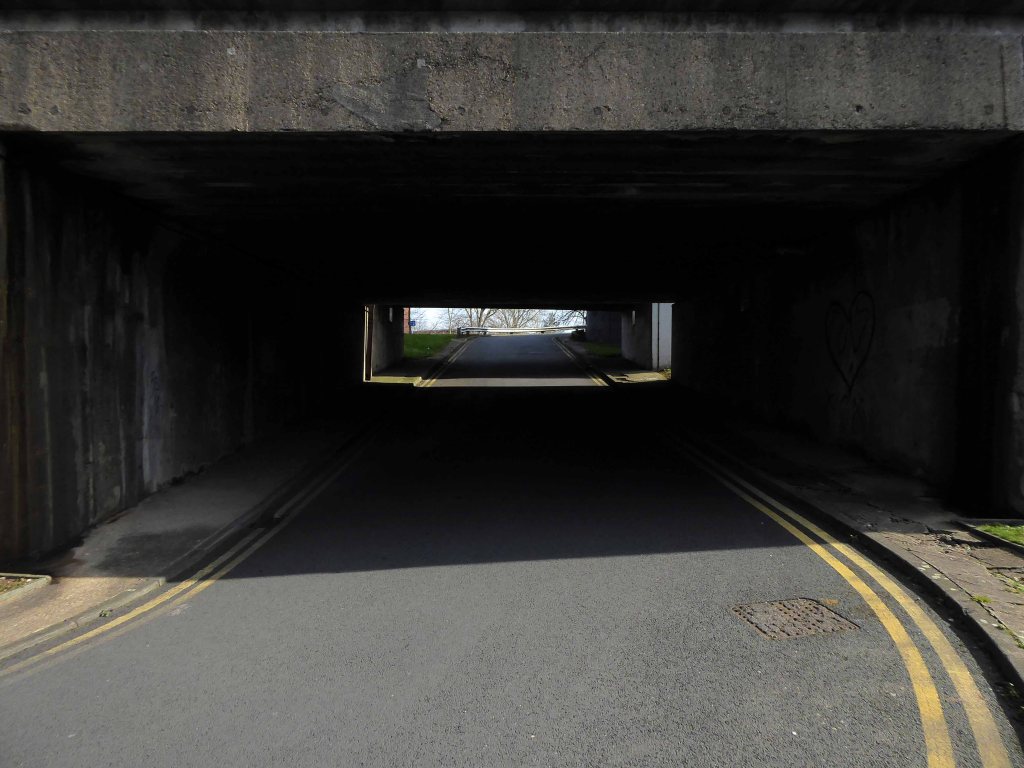
Under the underpass aka Leeds Song Tunnelto the Woodhouse Lane Car Park.
Commissioned by Leeds City Council as part of the Arena project the Leeds Song Tunnel is the creation of designer Adrian Riley, an alumnus of Leeds College of Art.
Take a peek at the world going on almost underground.
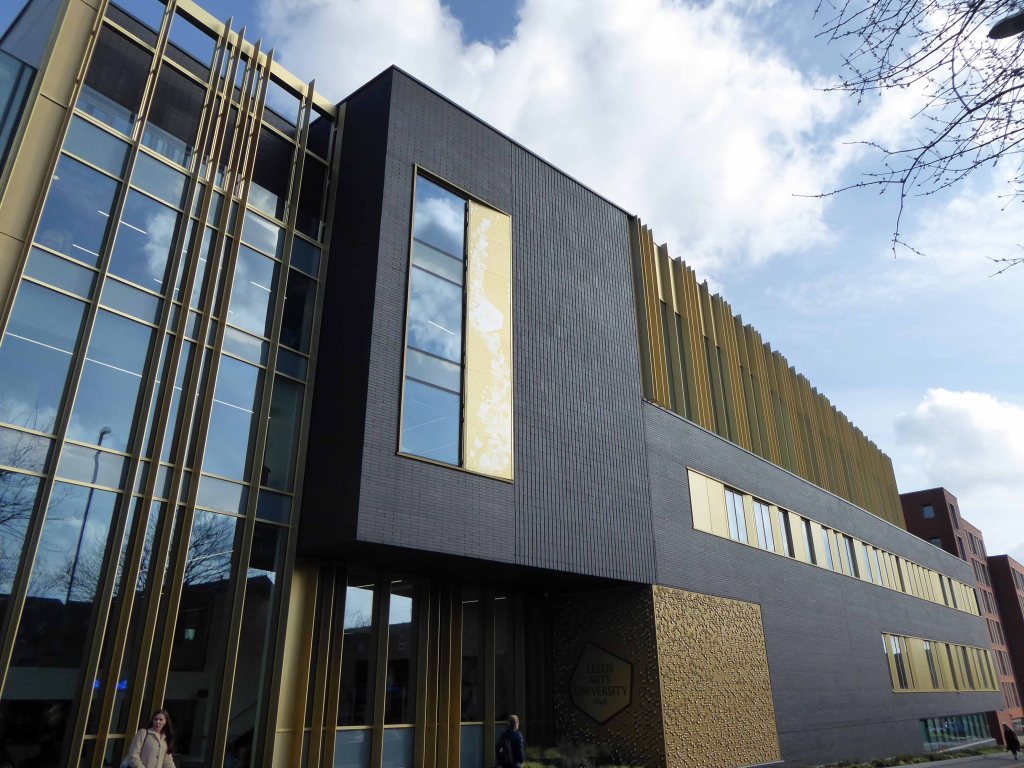
The up to the LeedsArtsUniversity – designed by local practice DLA, the scheme was built by ISG.
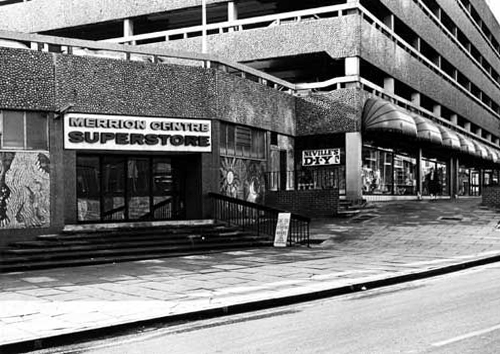
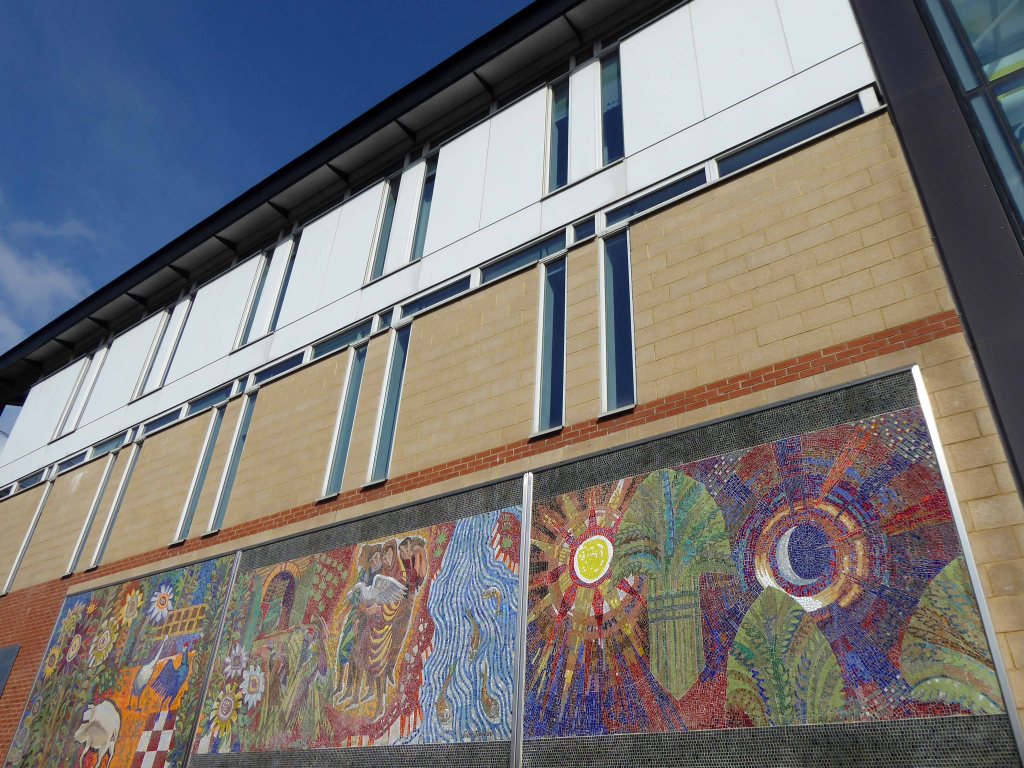
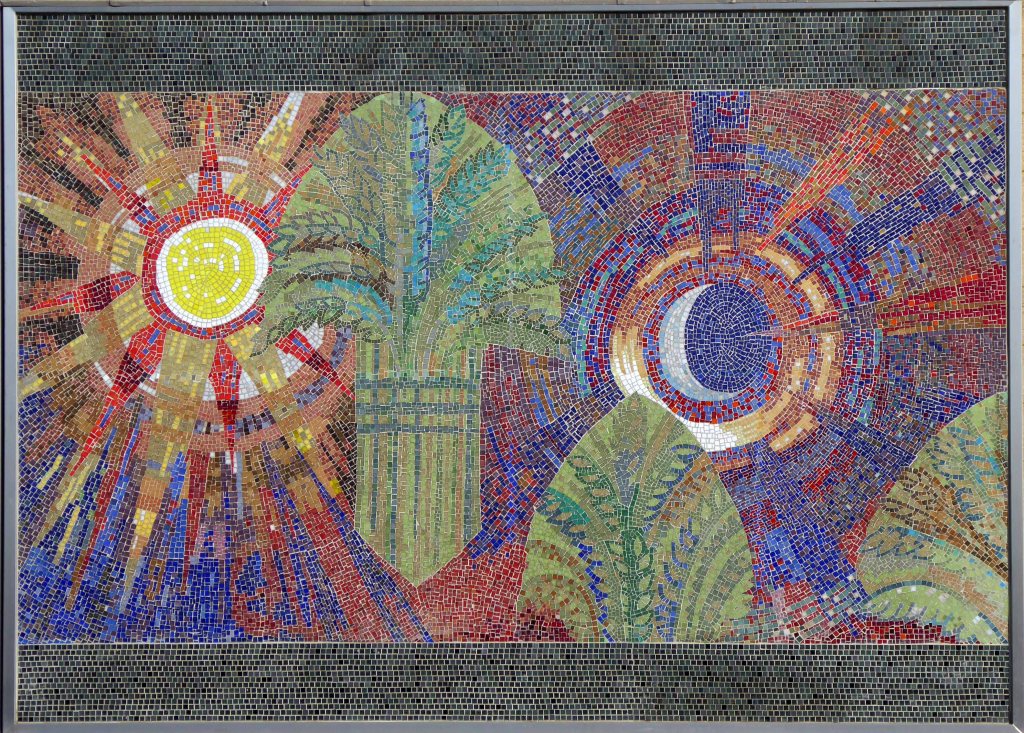
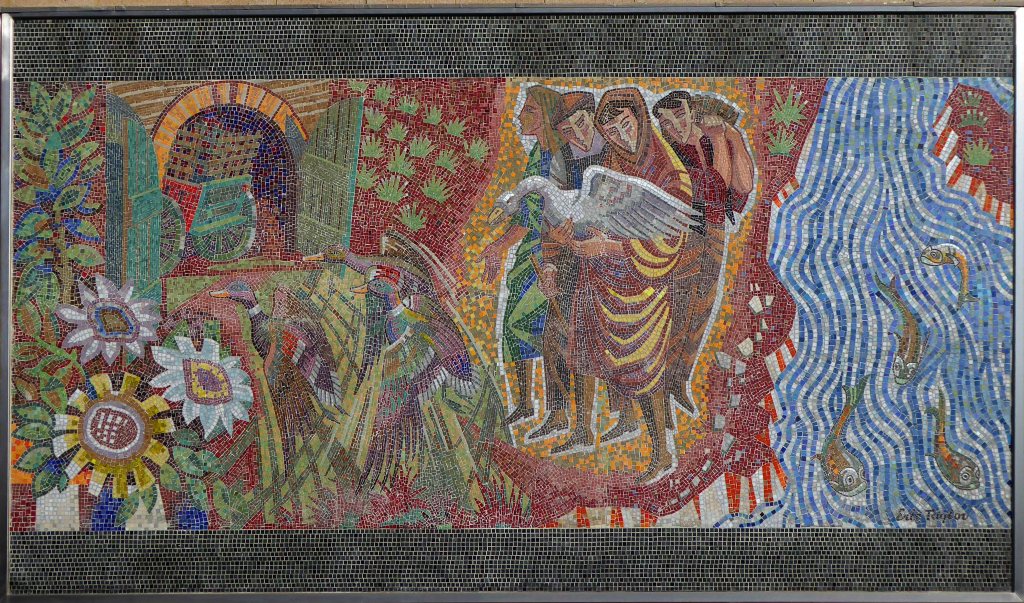
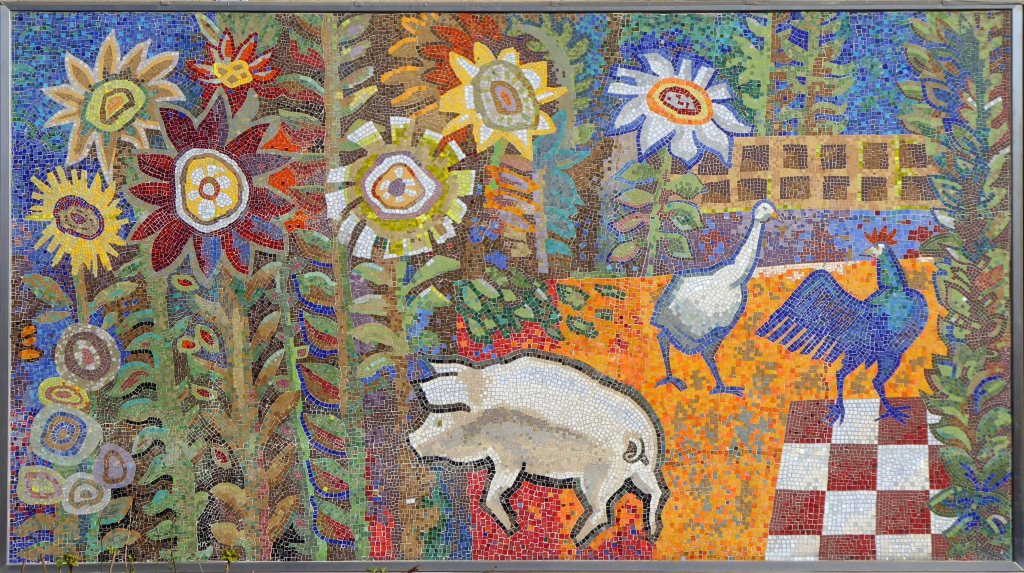
Adorned by mosaics re-sited from the Merrion Centre
The magnificent Merrion Centre mosaics created by Eric Taylor 1909-99, artist and former Principal of Leeds College of Art 1956-70, have been installed at Leeds College of Art’s Blenheim Walk building.
More public art in store at the former Polytechnic now University Engineering Buildings – Yorke, Rosenberg & Mardall 1955-69.
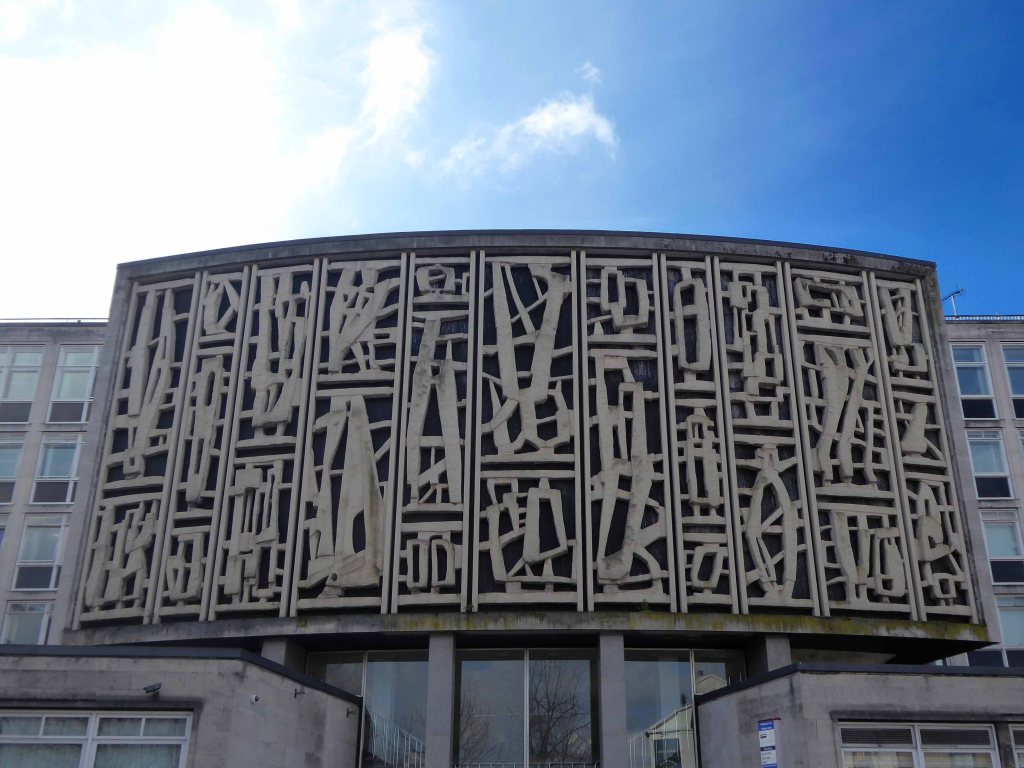
Curving above the entrance of the Mechanical Engineering building is this glass fibre sculpture. Cast from a clay mould it retains a malleable quality. This is the work of architect Allan Johnson former student of Leeds College of Art.
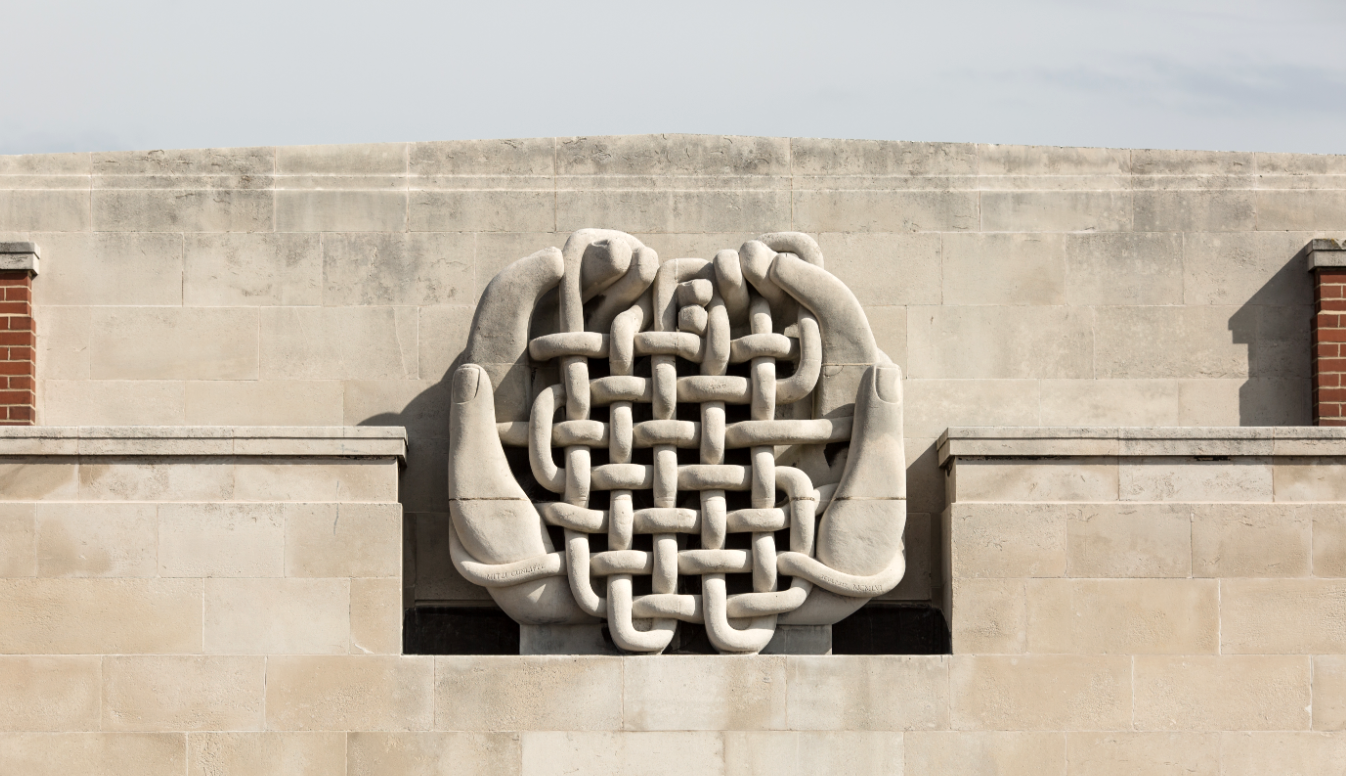
Around the corner this delightful sculptural window screen.
The American sculptor Mitzi Cunliffe (née Solomon) was born in New York and is renowned for having designed the famous theatrical mask for the BAFTA award. Cunliffe was active as a designer of jewellery, textiles and glass, as well as teaching in later life. She studied Fine Art at Columbia University from 1935-40. In 1949, she came to England when she married a British academic and moved to Manchester. Her first large-scale public piece was created for the Festival of Britain in 1951: ‘Root Bodied Forth’, which was an 8-foot concrete group. In 1955, the same year she designed the famous BAFTA award, she was commissioned to create a major piece for the new Man-Made Fibres building at the University of Leeds. Professor J B Speekman, Head of the Department of Textile Industries, required a piece which would reflect the exciting progress in the field of synthetic fibres. Cunliffe submitted drawings and a maquette for a vast pair of hands with textile fibres crossed between them, to be executed in Portland stone. ‘Man-Made Fibres’ was unveiled by the Duke of Edinburgh when the new building was opened in June 1956. Mitzi Cunliffe appropriately designed her own dress and jewellery for the event.
Cunliffe spent her entire working life bringing sculpture and architecture together. She wanted her work to be ‘used, rained on, leaned against, taken for granted’, declaring that her life-long dream ‘is a world where sculpture is produced by the yard in factories and used as casually as bricks’. In this case however, ‘Man-Made Fibres’ is positioned so high on the building, now called Clothworkers’ Building South, that it can easily be missed.
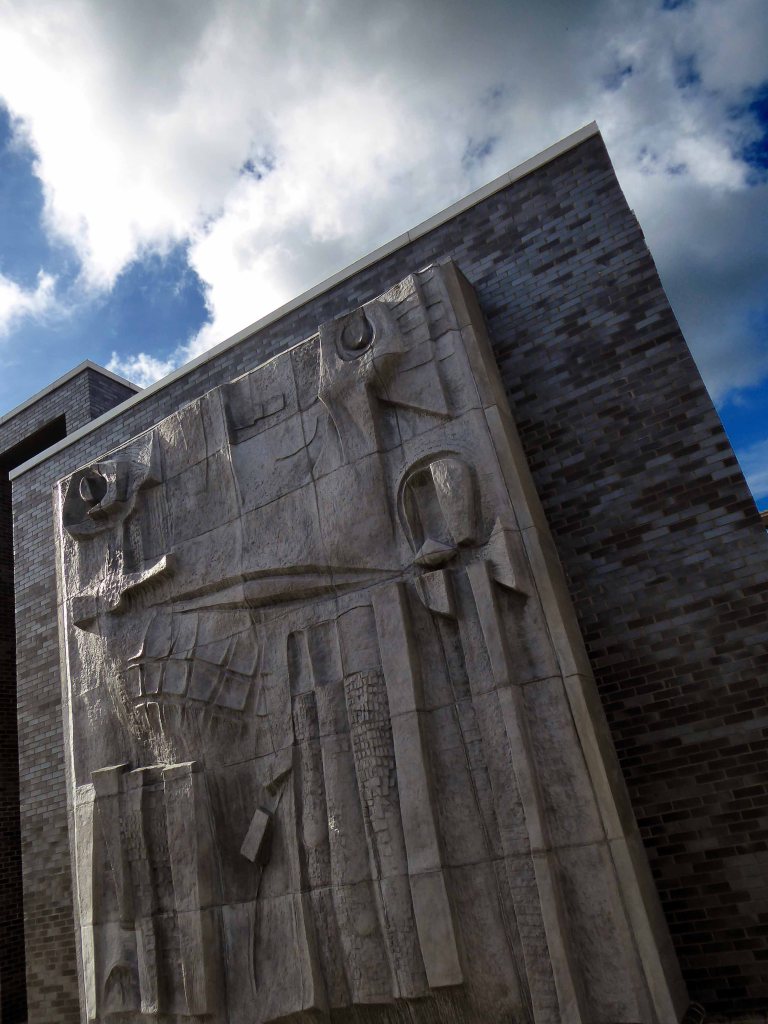
Let’s wend our way homewards via Hubert Dalwood’s 1961 Untitled Bas-Relief now see this on the theatre Stage@Leeds, it was originally up at the University’s Bodington Hall of residence.
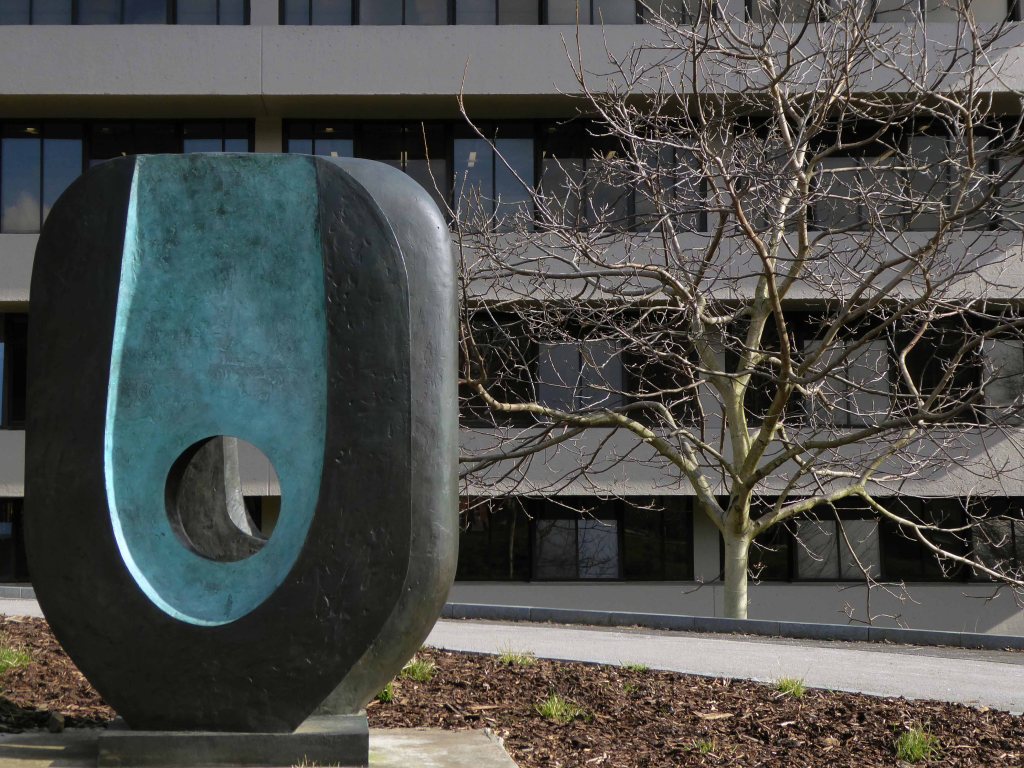
Seconds from this theatre Barbara Hepworth’s 1965 Dual Form.
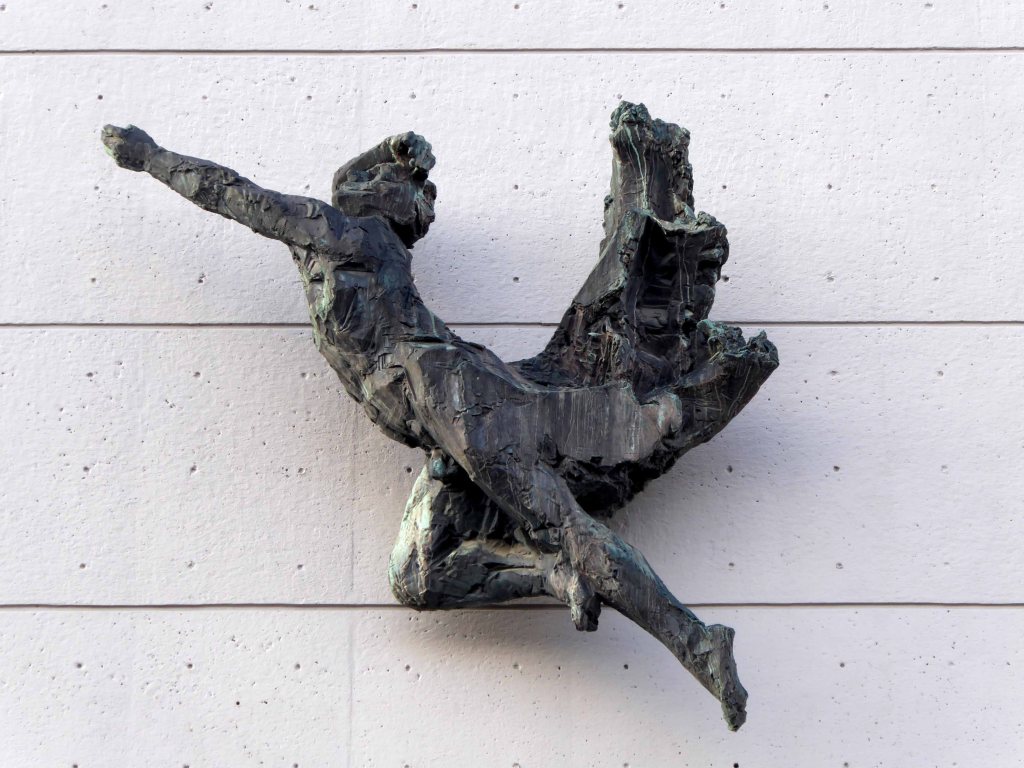
Finally casting our eyes skyward toward William Chattaway’s 1958 Spirit of Enterprise/Hermes.
Originally on the wall of the Midland Bank building in London before the building was was sold in the early eighties. It was saved from potentially being sold for scrap and the four and a half ton sculpture has been flying high on campus since 1983.
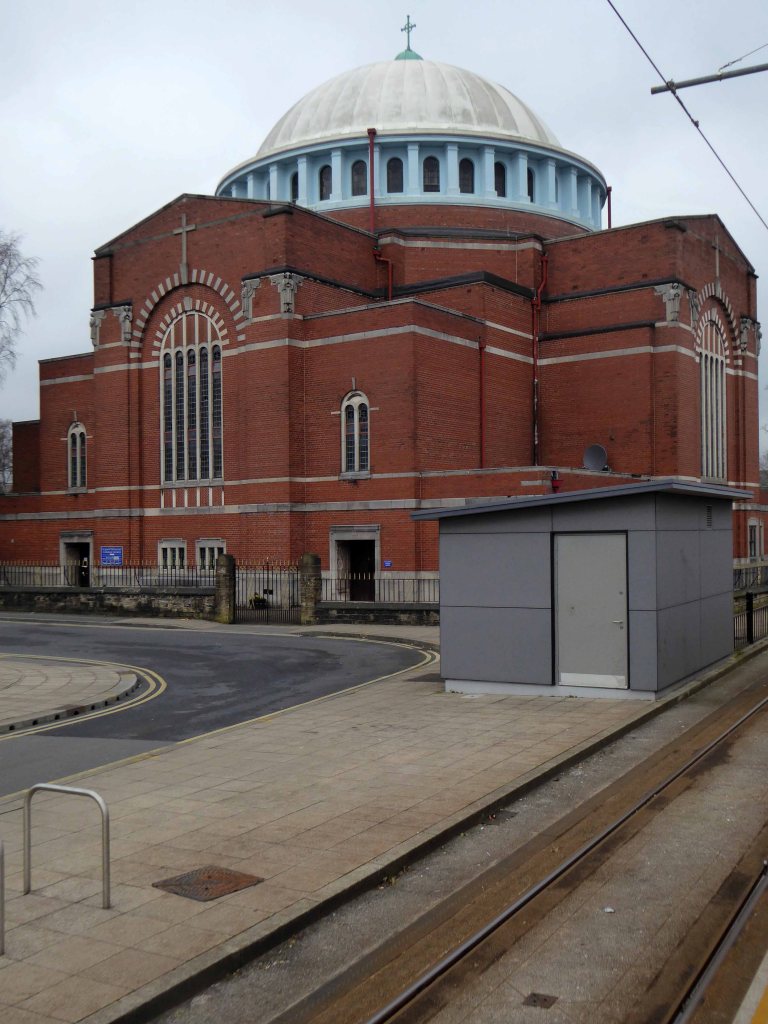
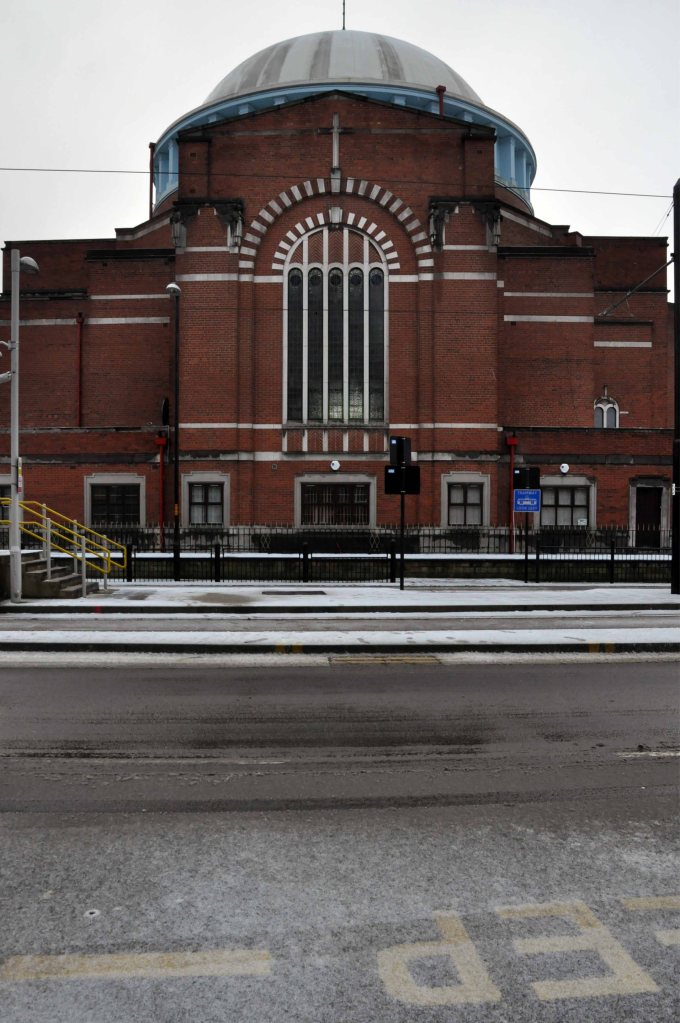
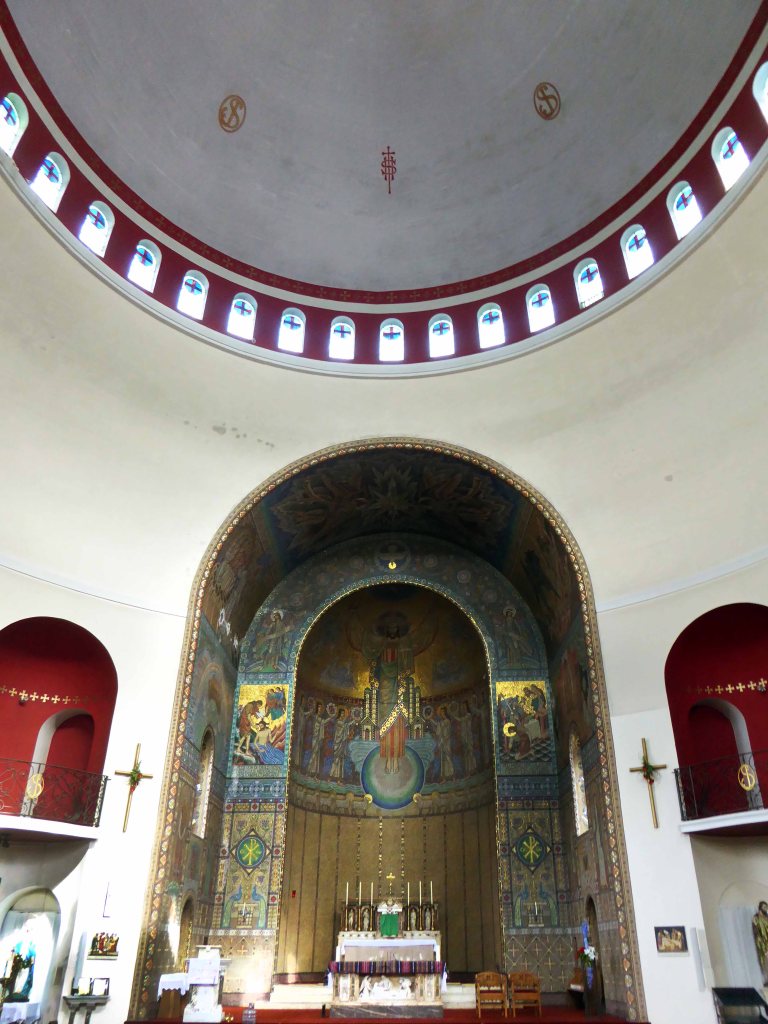
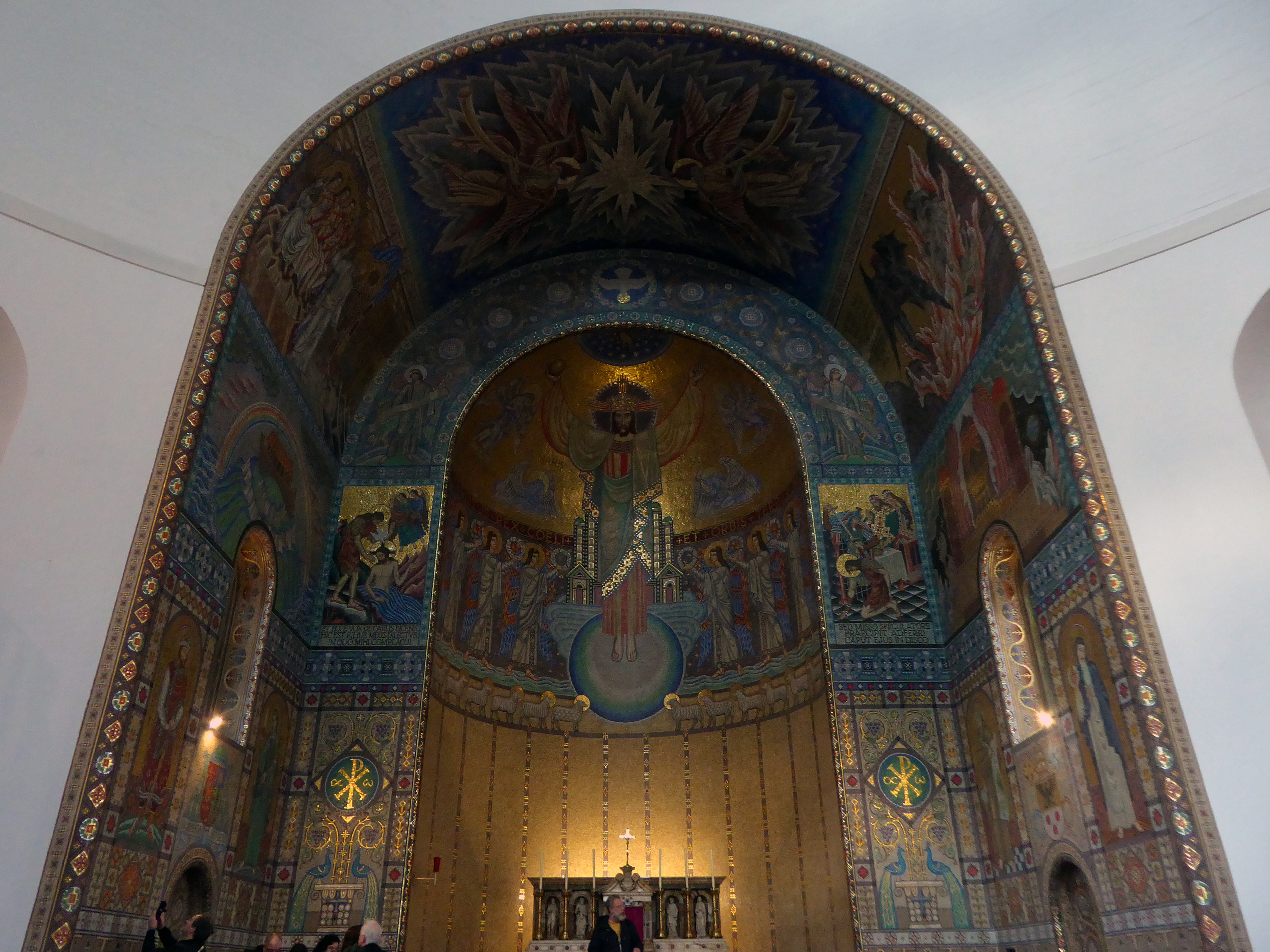
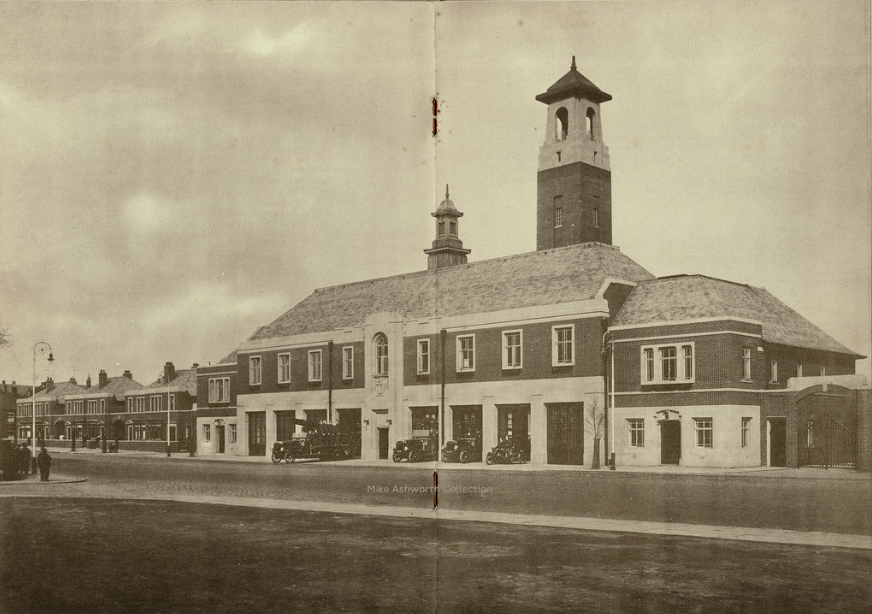
A feature of note is the hose drying tower – not a ladder practice tower – that rises to a height of 115ft and a reminder that in the day the canvas hoses used had to be dried out after use. There is a local story that the tower was deliberately of such a height to architecturally compliment the adjacent Catholic Church, completed some 10 years earlier and with an amazing dome but no tower!
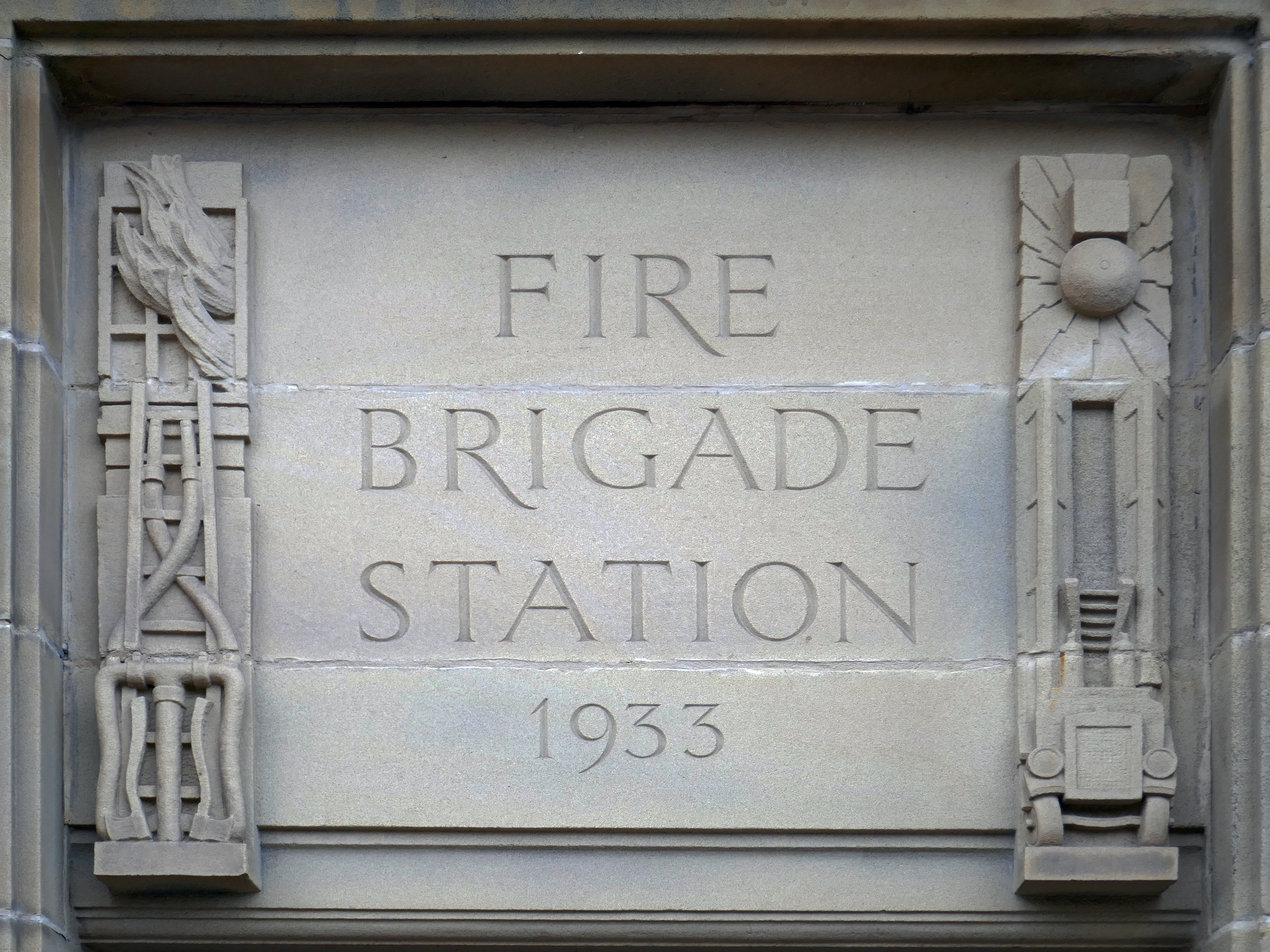
Designed by the Borough Surveyor S H Morgan and his Assistant S G Eldred the station was formally opened by Alderman J Rodley JP on 3 May 1933, with the Mayor, Councillor J W Dutton JP present.
The Station has been restored and is open as of 2020 as a Fire Service Museum.
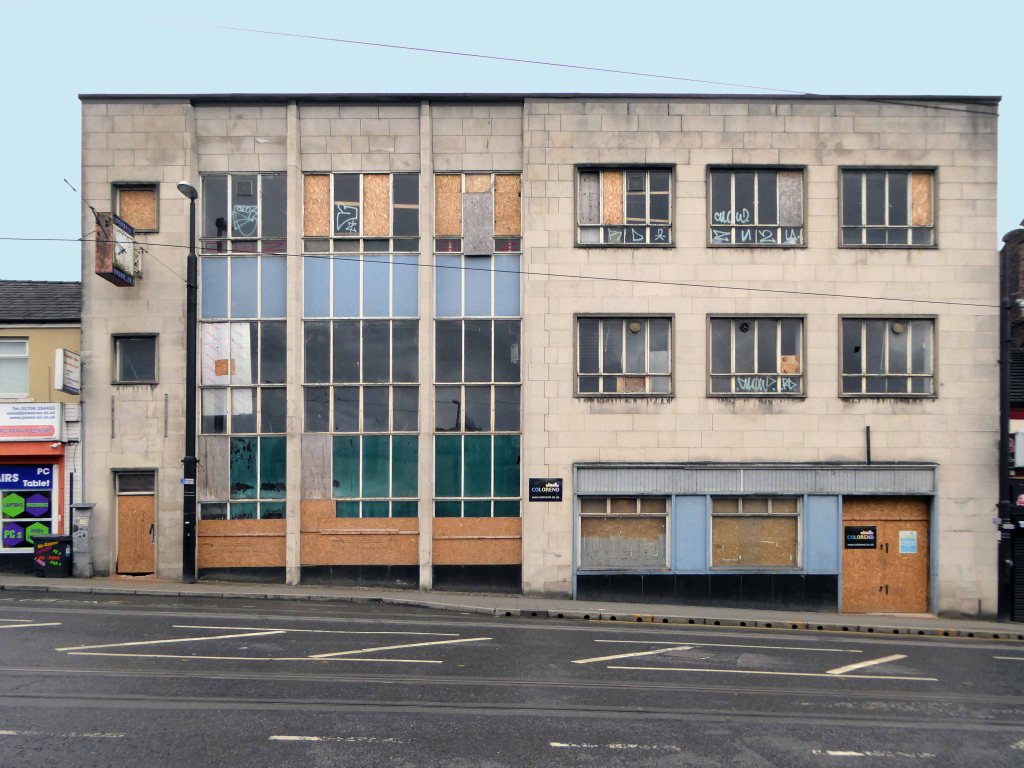
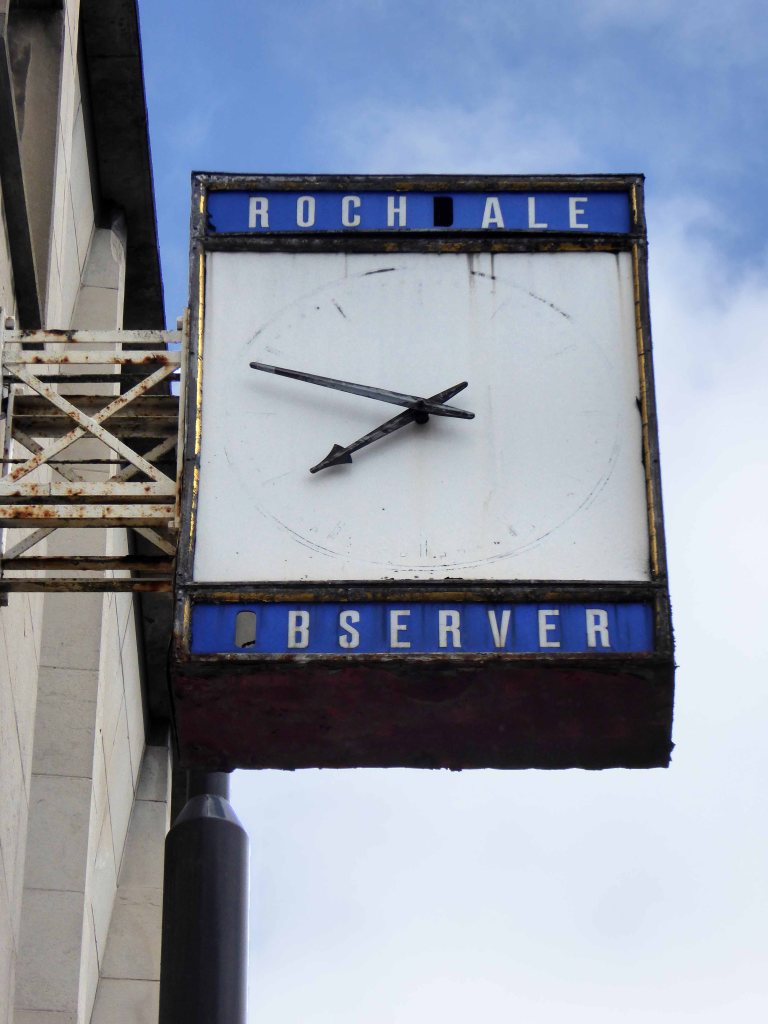
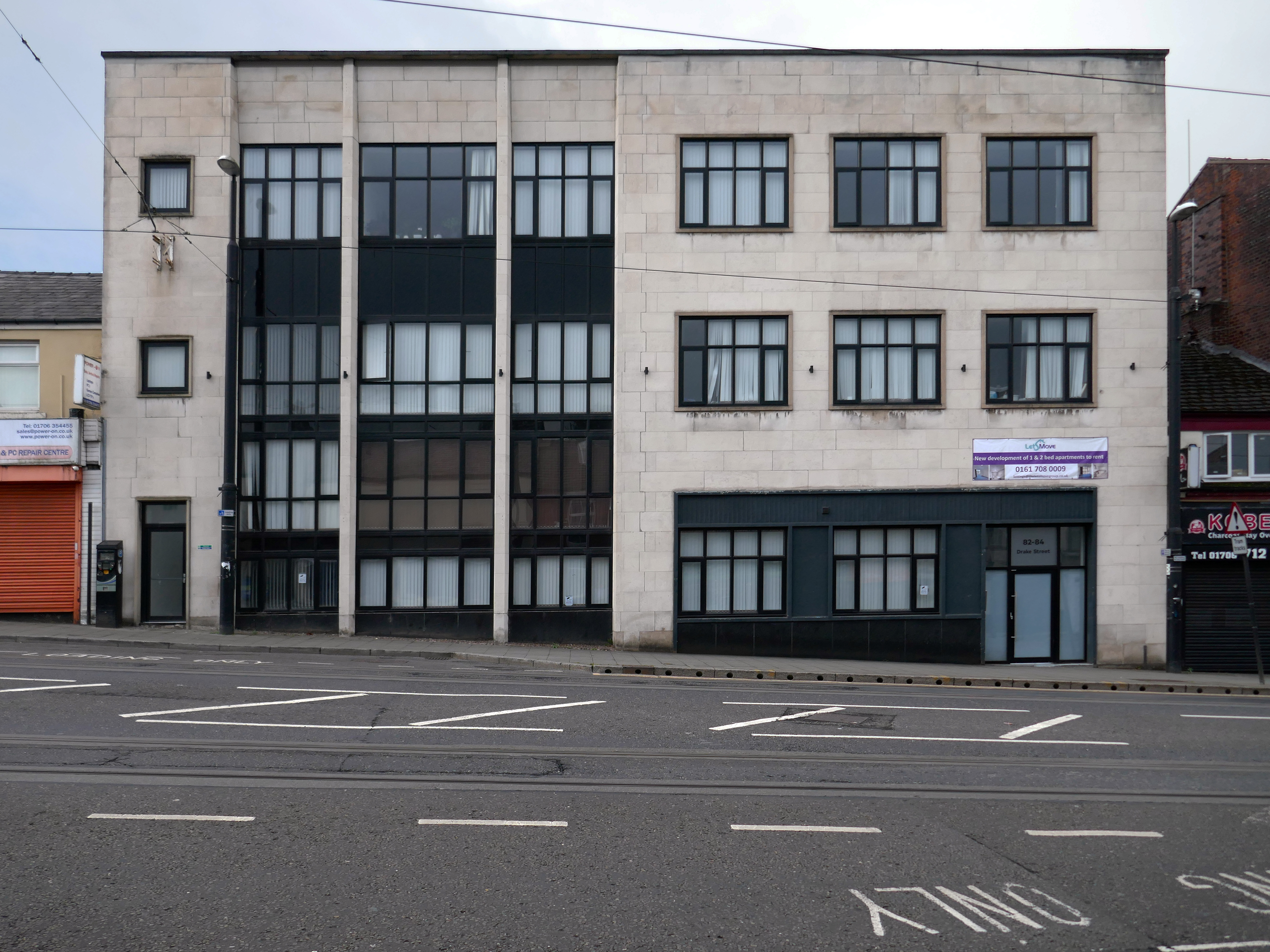
Let’s walk into town following the tram tracks past the former Rochdale Observer Offices.
Closed in 2009 as the Manchester Evening News Guardian Media Group consolidated its production base.
It has subsequently been redeveloped as apartments.
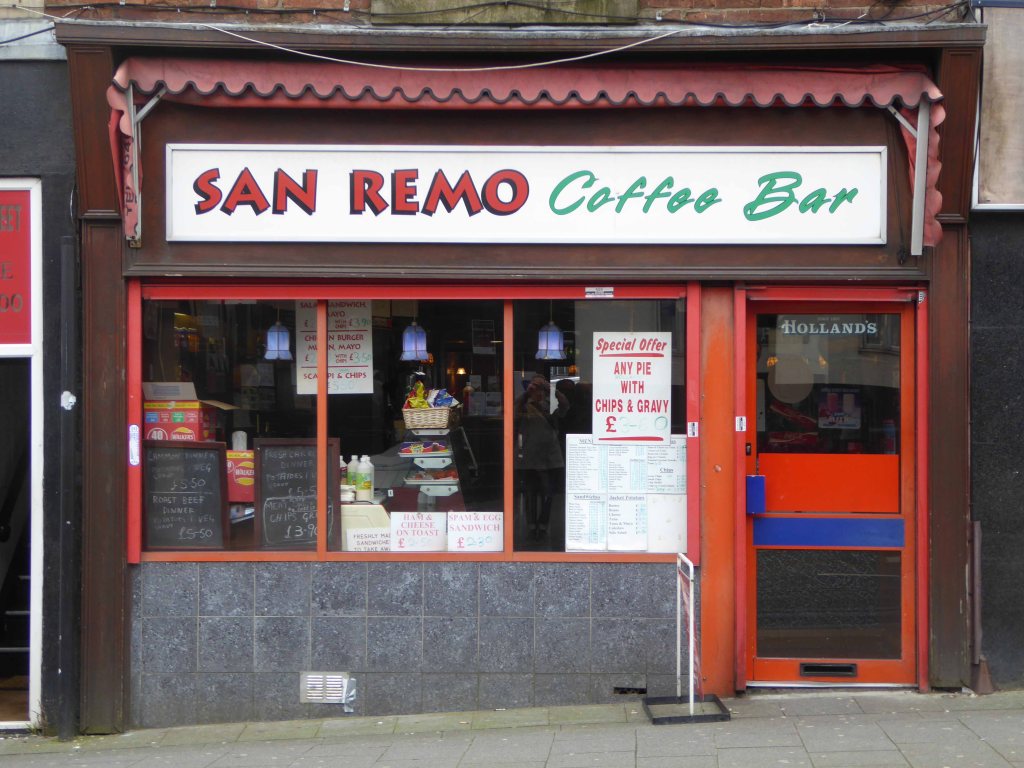
Down the hill and across the way the delightfully traditional Sixties Italian Coffee Bar the legendary San Remo.
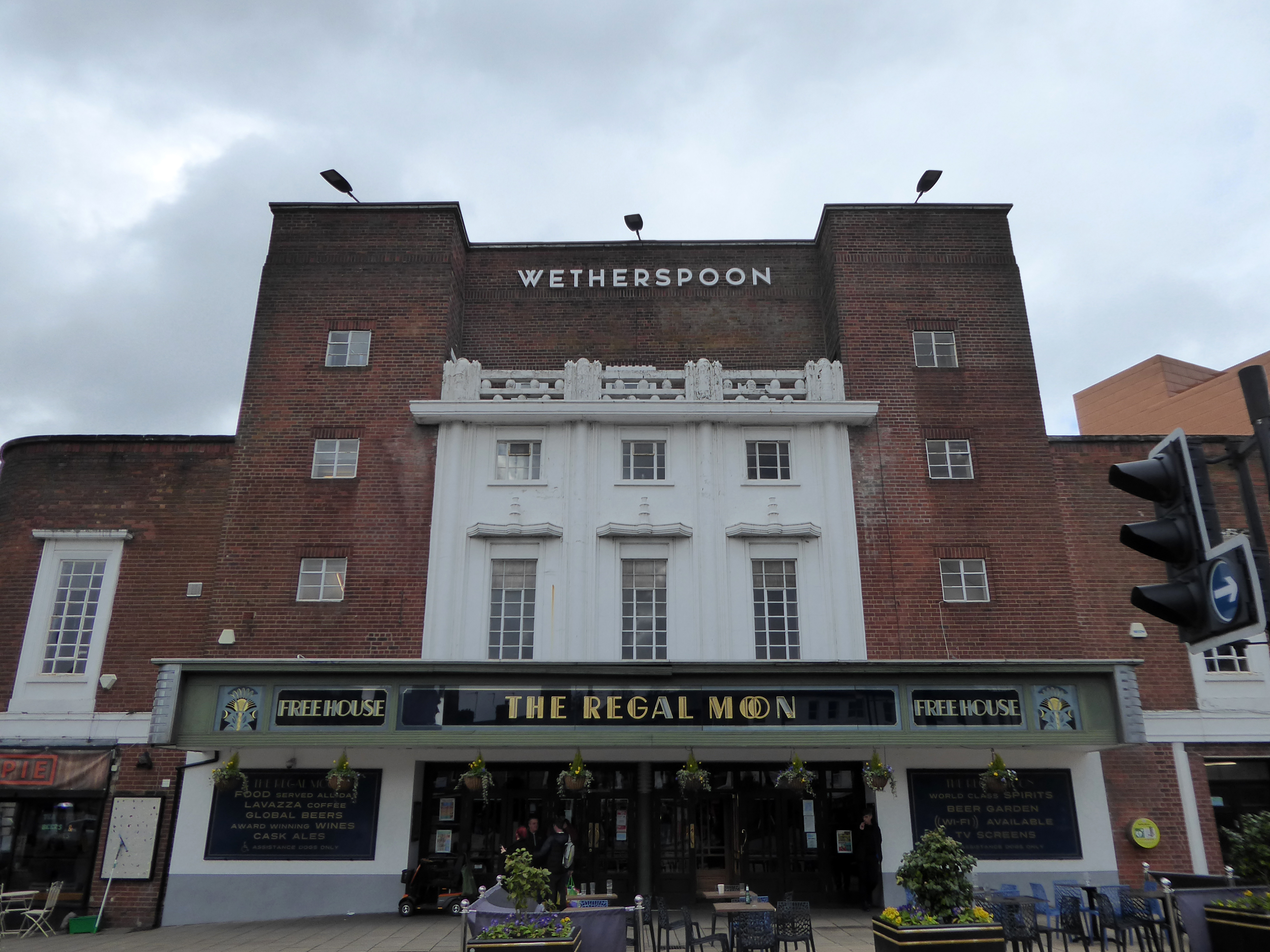
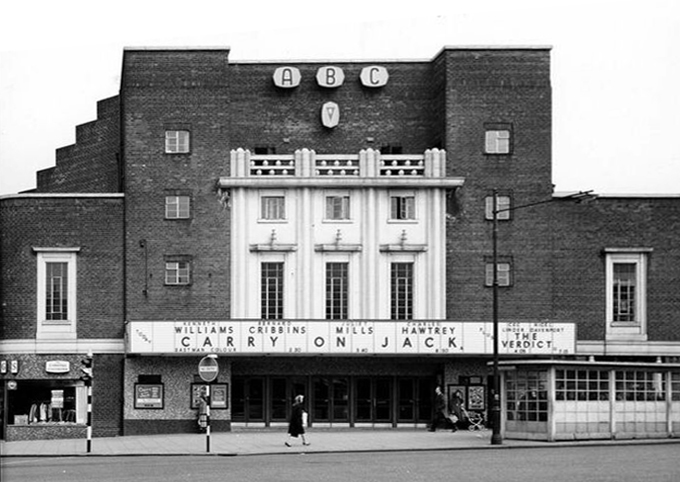
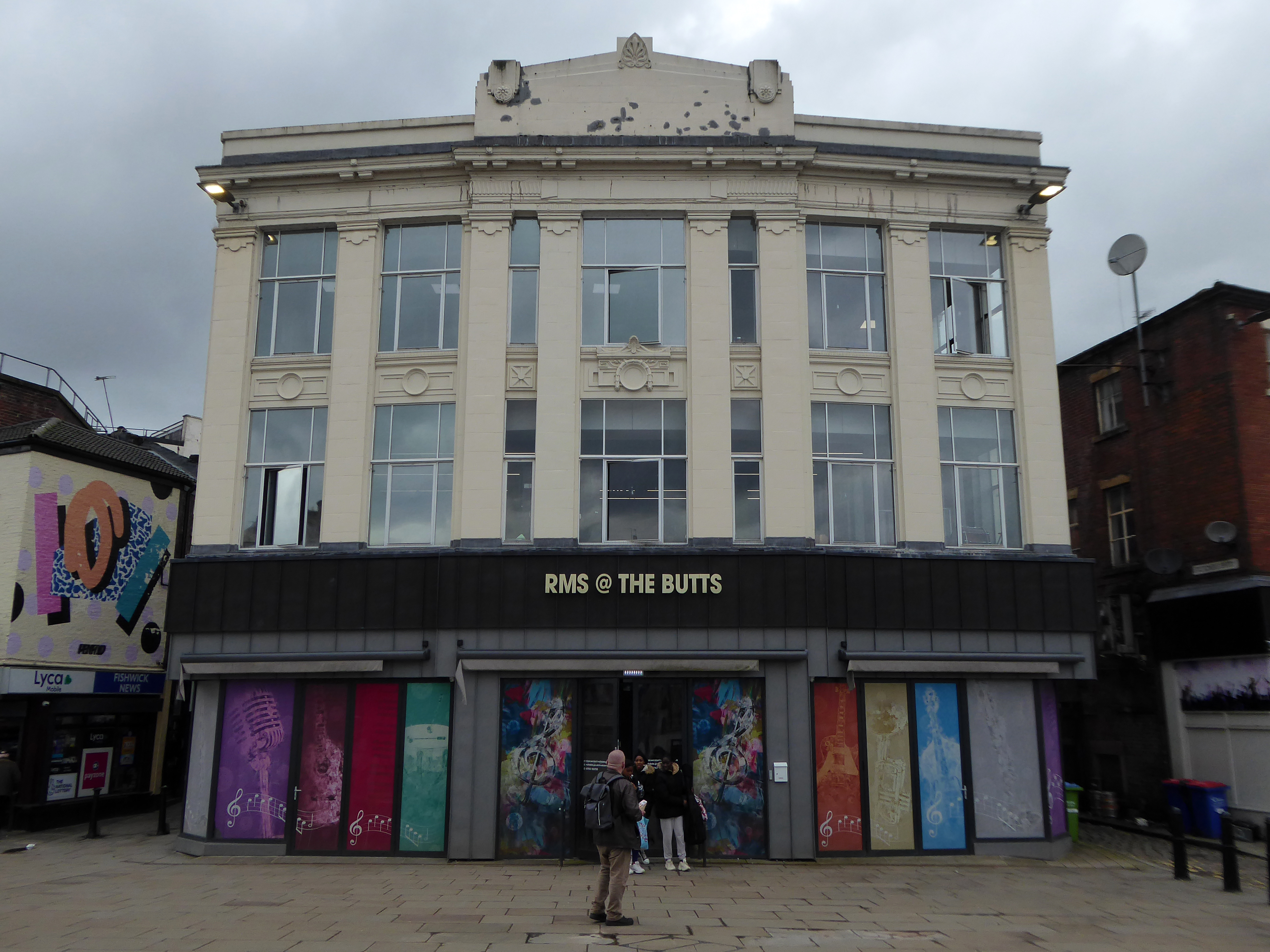
To the right of the town square the former Regal Cinema
The Regal Cinema welcomed its first patrons on 16th May 1938. It had been designed for Associated British Cinemas – ABC by architect Leslie C. Norton with ABC’s ‘in-house’ architect William R. Glen, and had a fine location in the northern town of Rochdale. With a total of 1,901 seats the Regal Cinema was re-named ABC in around 1962. It closed in January 1978 for tripling.
The new cinemas opened in March with screen 1 seating 538 and two rear stalls cinemas seating 281 & 199. The ABC was renamed Cannon in around 1986 but closed in October 1992.
It was then very expensively de-tripled and restored to its original appearance for bingo. This proved short lived however and the ground floor has now been turned into a pub by the J.D. Wetherspoon chain which opened on 20th November 1997, and is known as the Regal Moon.
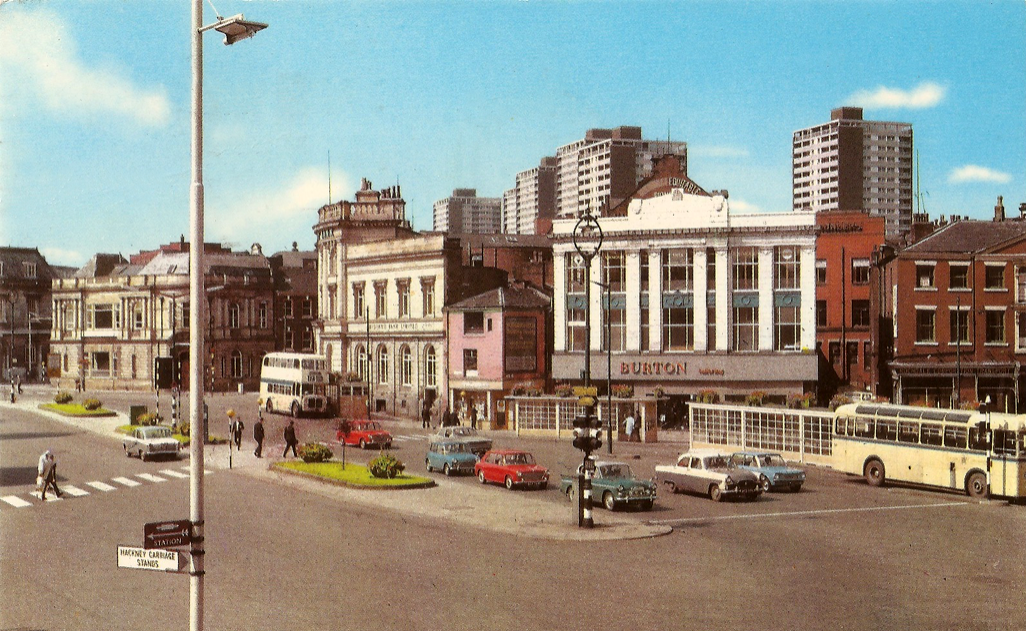
Across the way a branch of Burton’s – sadly lacking its commemorative foundation stone.
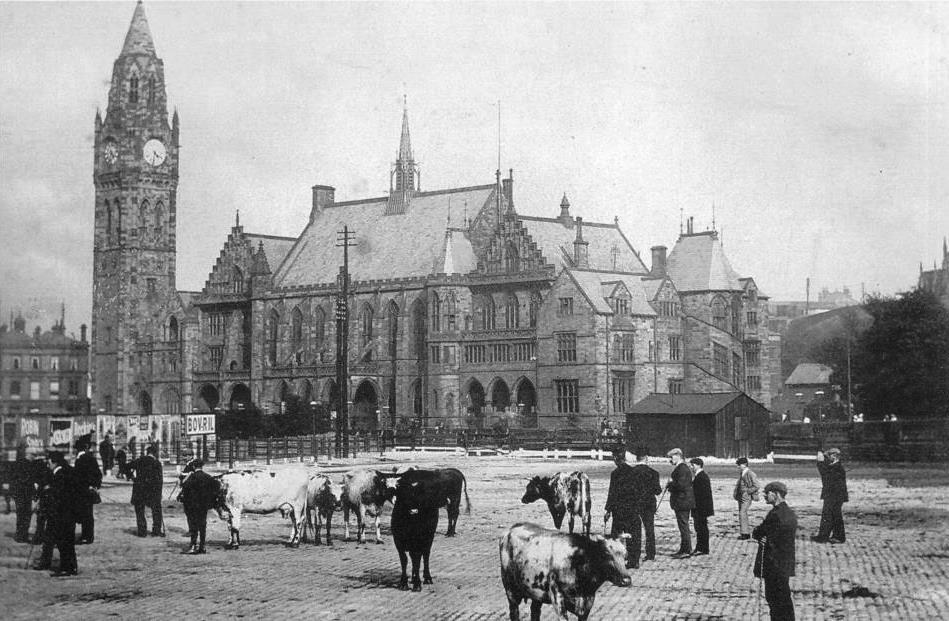
Though way out of our period – one cannot ignore the looming presence of Rochdale Town Hall.
Widely recognised as being one of the finest municipal buildings in the country – built in the Gothic Revival style at a cost of £160,000 in 1871. The architect, William Henry Crossland, was the winner of a competition held in 1864 to design a new Town Hall. It had a 240 foot clock tower topped by a wooden spire with a gilded statue of Saint George and the Dragon, both of which were destroyed by fire on 10 April 1883, leaving the building without a spire for four years. A new 190 foot stone clock tower and spire in the style of Manchester Town Hall was designed by Alfred Waterhouse, and erected in 1887.
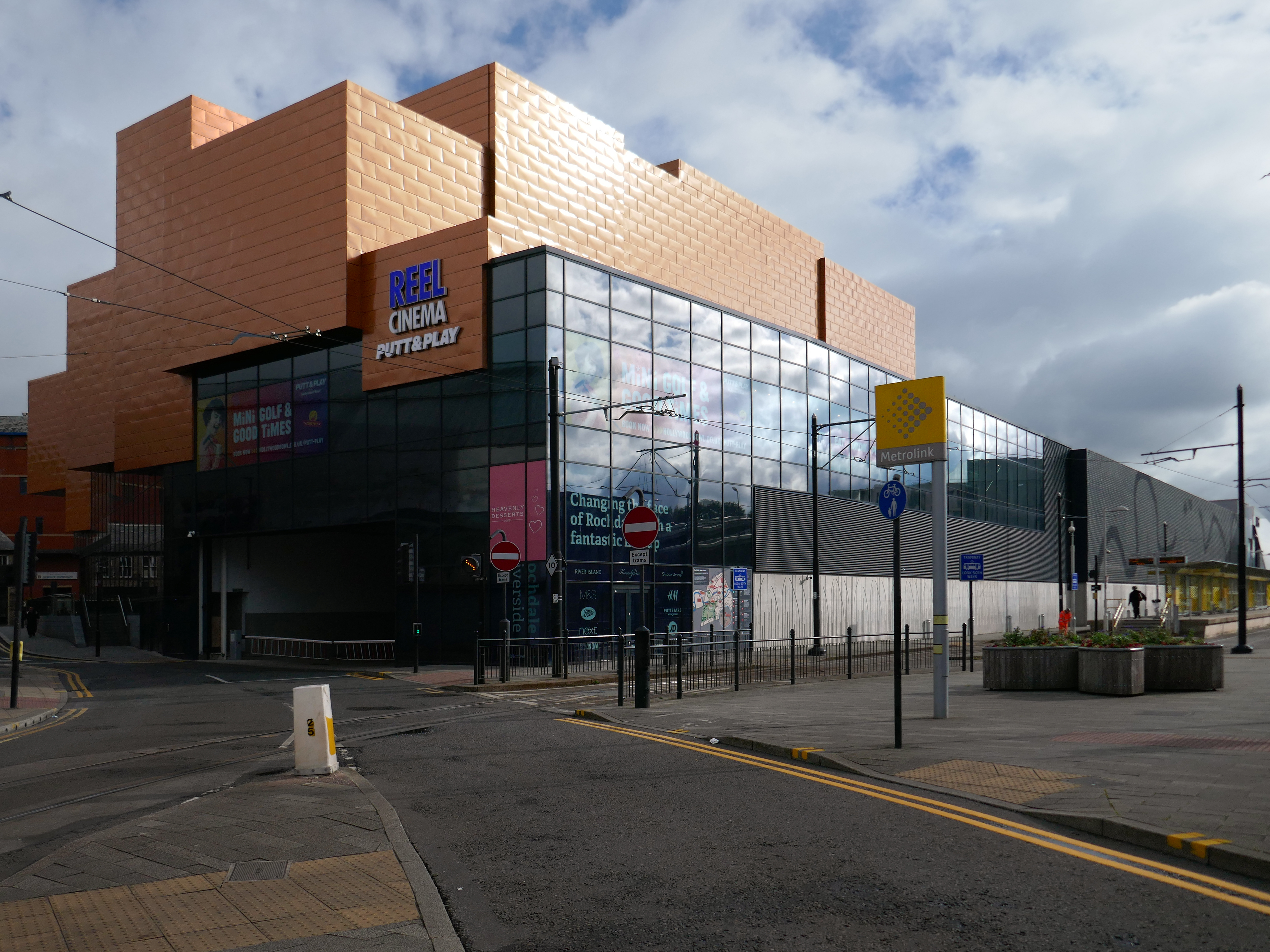
An eighty million pound retail-led scheme, part of a wider regeneration programme by TP Bennett.
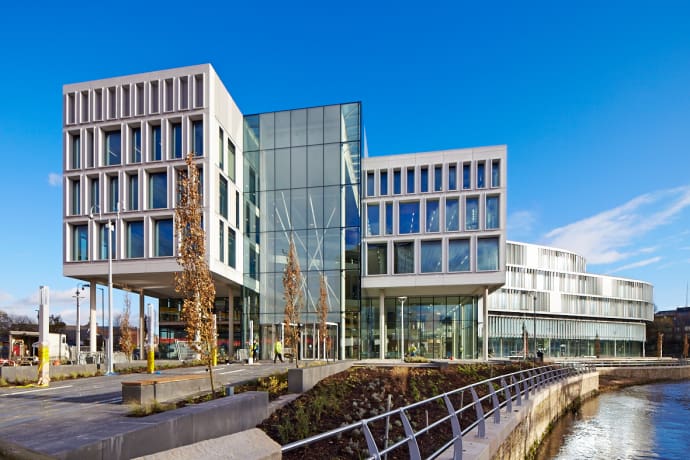
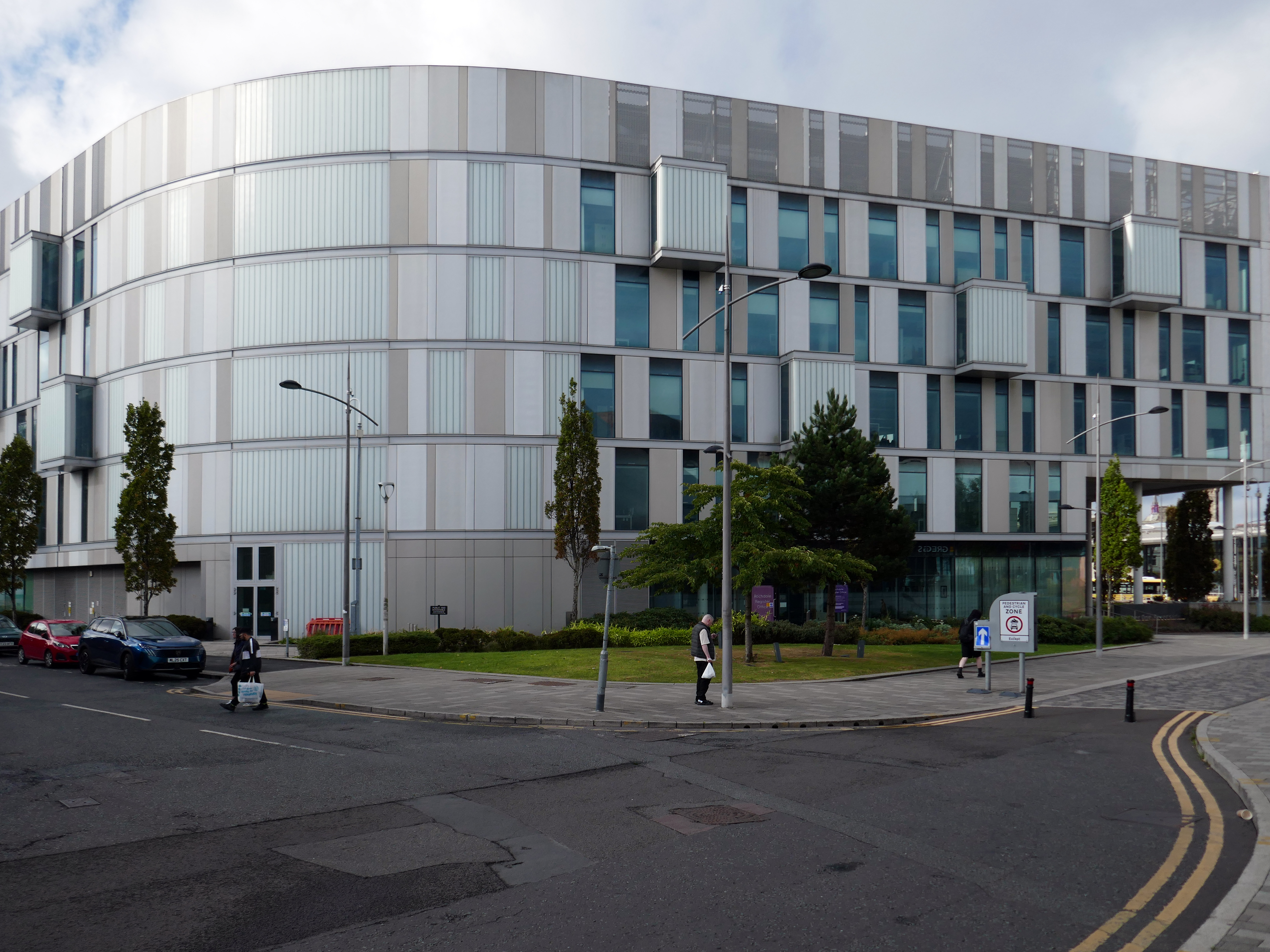
The centrepiece of the scheme, a striking, copper-clad cinema, is set against a background of a dramatic kinetic wall featuring a relief depicting the River Roch, which runs in a culvert underneath the centre. The council has taken the head lease, in a sign of its confidence in this major regeneration project. After the completion of the Metrolink connection and the new Council Offices, Rochdale Riverside will be the last piece of the puzzle in the transformation of the town centre into a modern, thriving urban destination, says Chris Wieszczycki, the principal director in charge of the project.
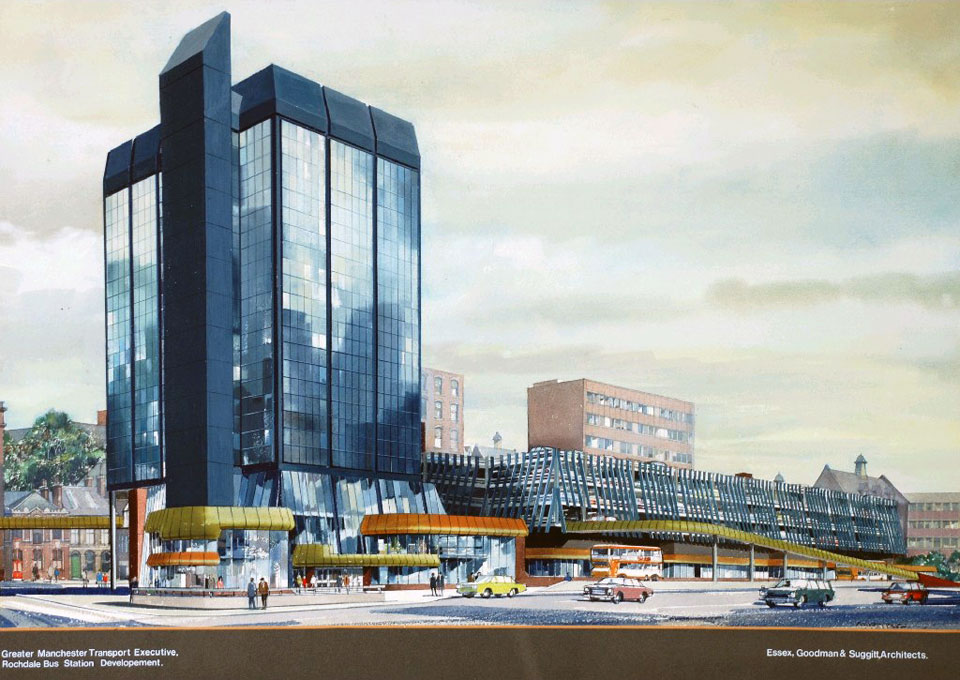
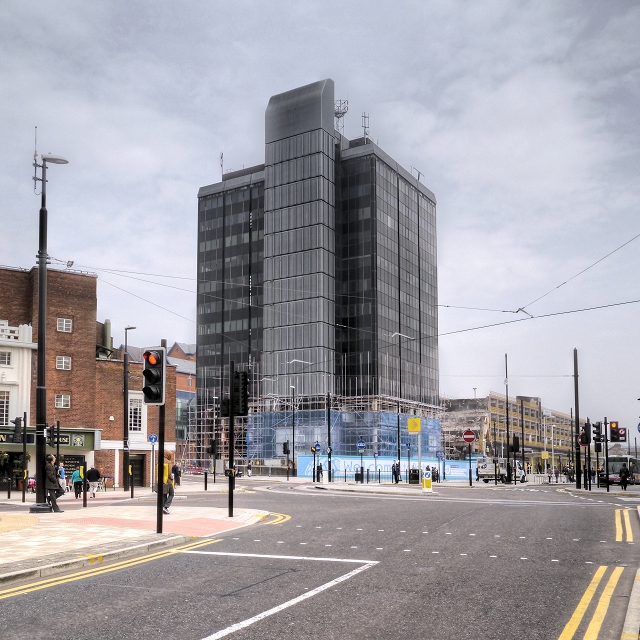
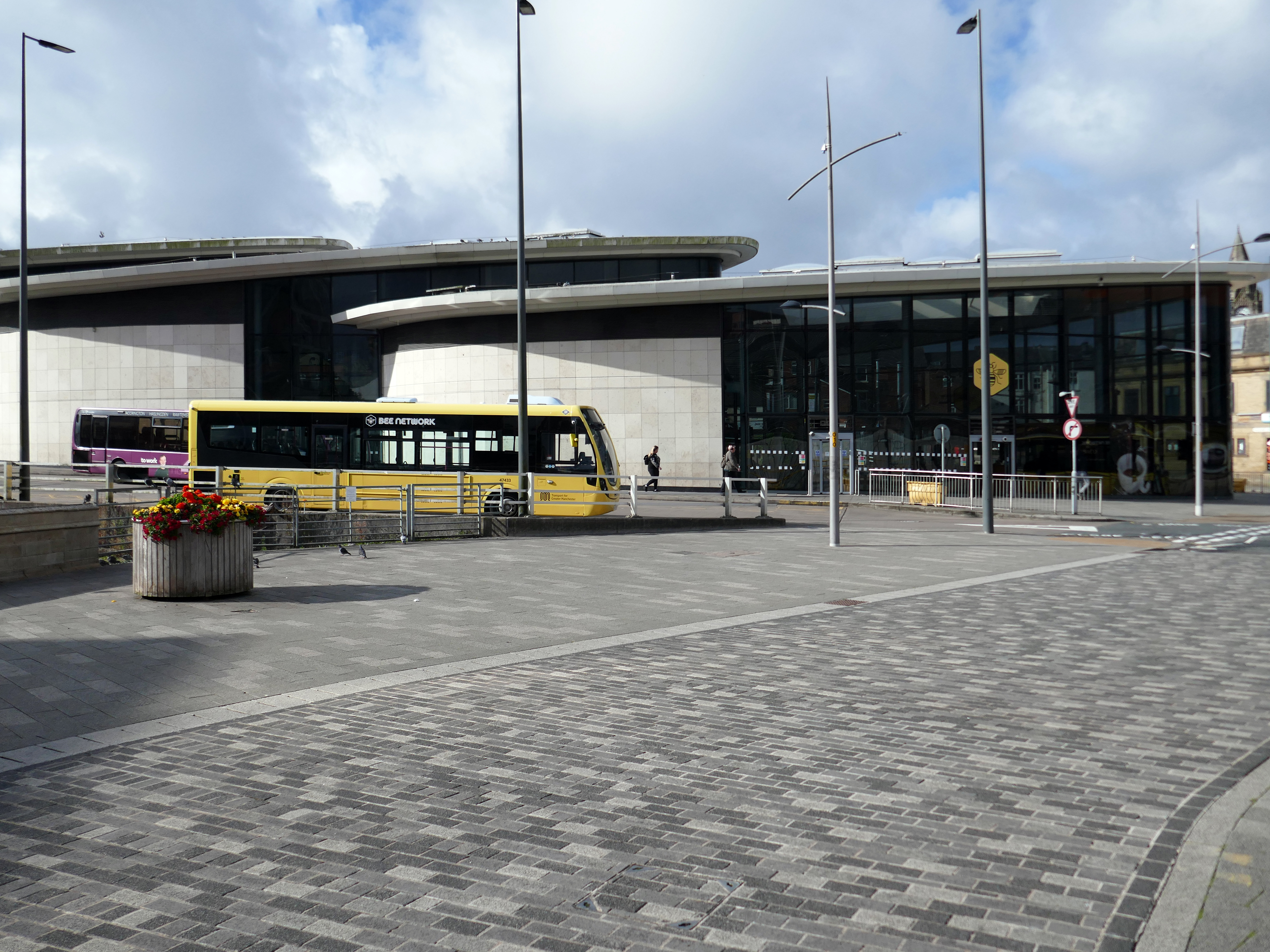
The area is complemented by the Interchange bus station, opened in November 2013.
Designed by AHR Architects and built by Kier Construction, the £11.5m Rochdale Interchange features a highly innovative, energy-efficient and specially-adapted glass and aluminium façade solution from Wicona.
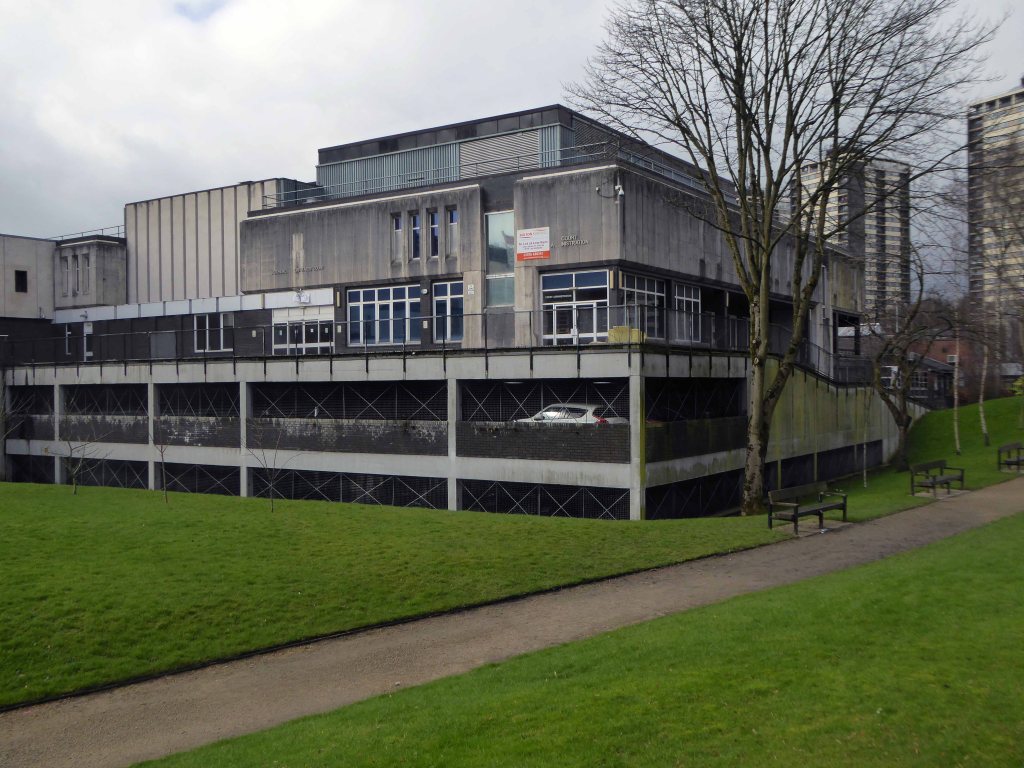
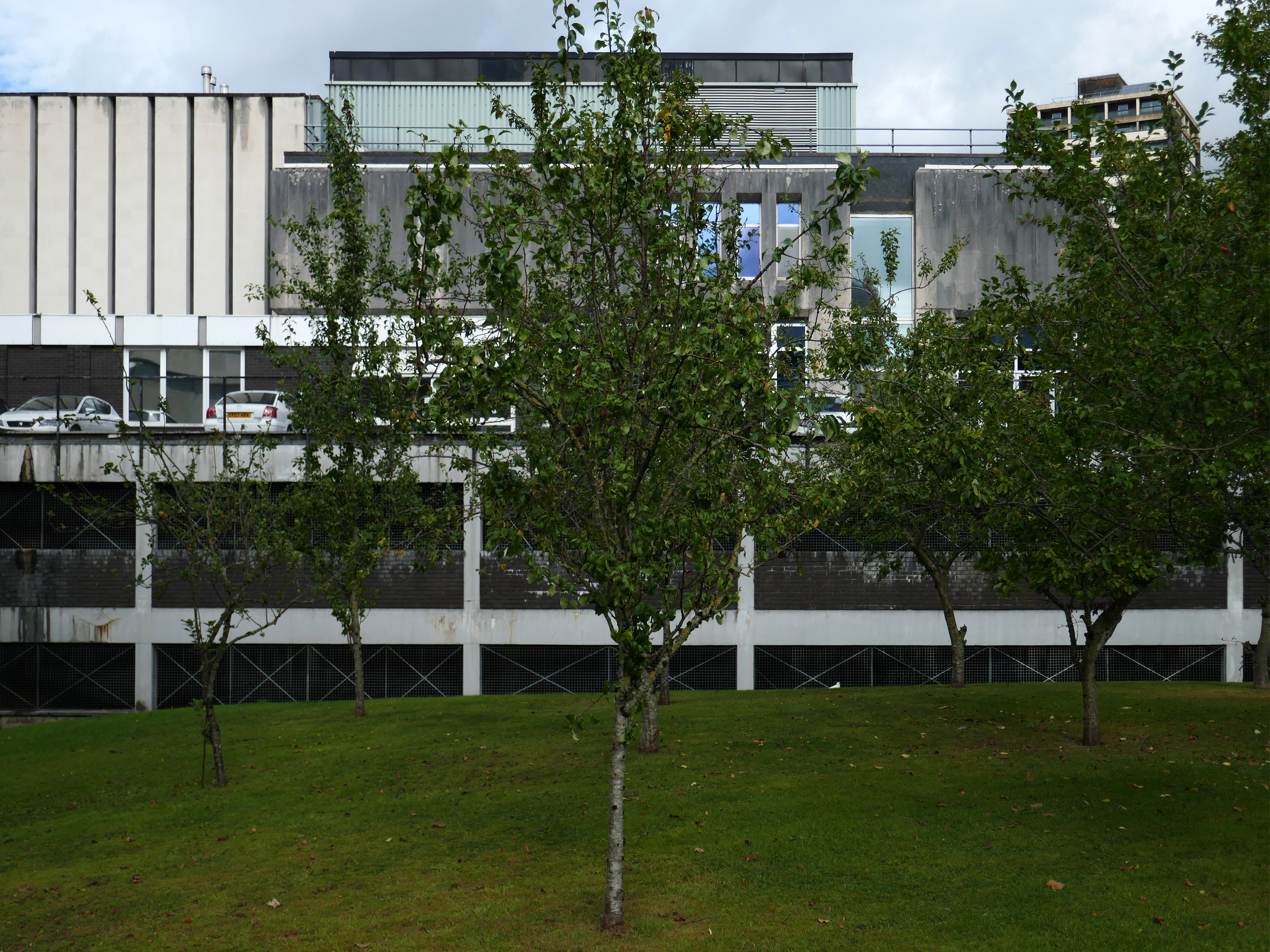
Onward to the Magistrates’ Courts now closed and auctioned for £6,316, currently home to local charities.
The adjoining Police Station – also by Booth, has recently undergone refurbishment.
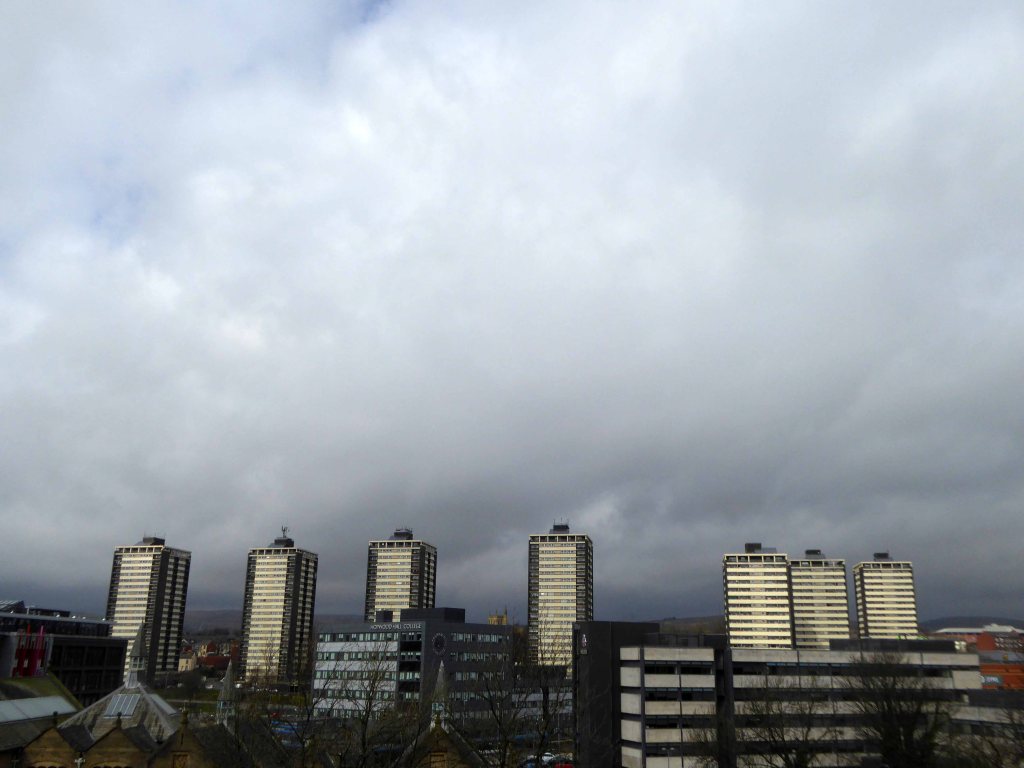
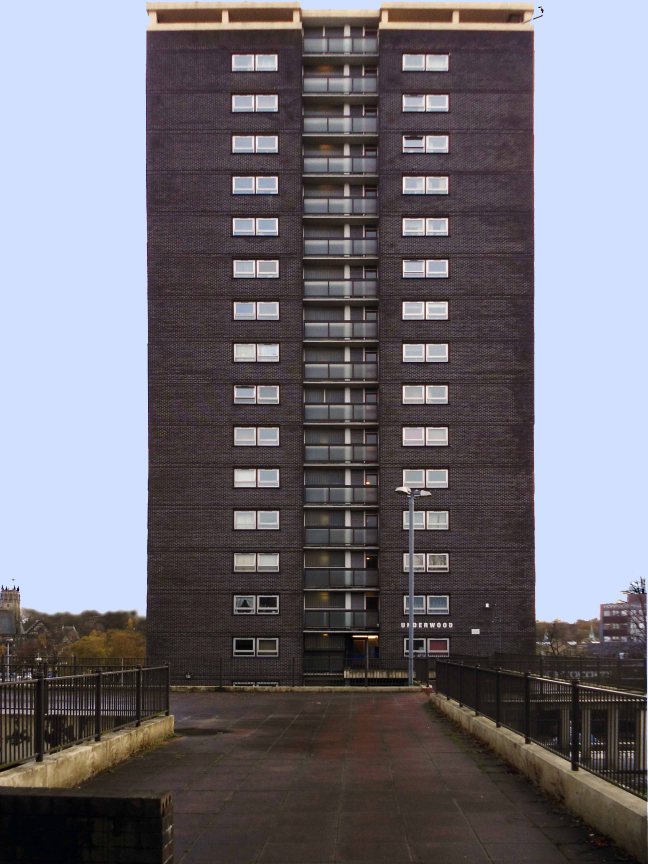
Let’s bob on to see the Seven Sisters – towering majestically above the town.
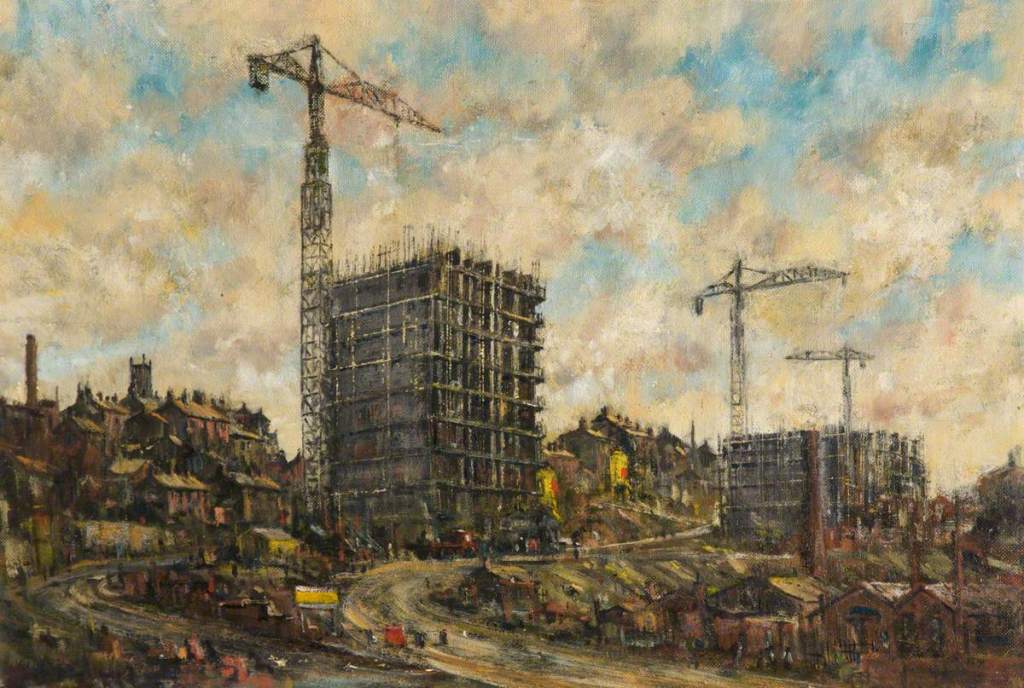
Building contractors were Wimpey and the flats were designed by Rochdale’s Borough Surveyor, Mr W H G Mercer and Mr E V Collins who worked with George Wimpey and Company’s chief architect D. Broadbent.
On Friday 1st October 1965 the Minister of Housing and Local Government, Richard Crossman, officially opened the first of the College Bank flats
Charles Donald Taylor – The Construction of College Bank Flats
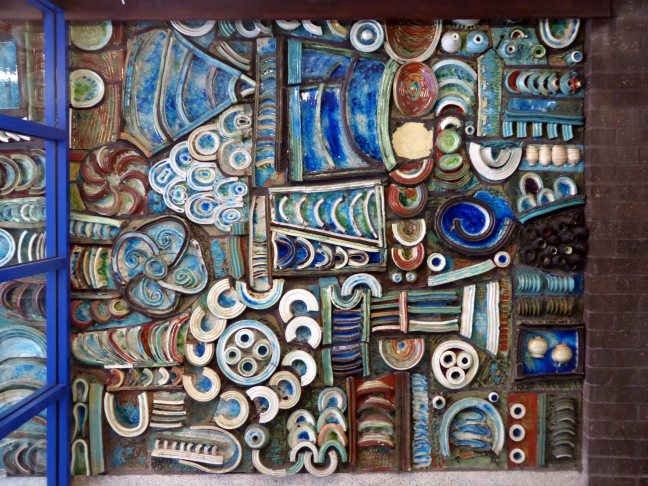
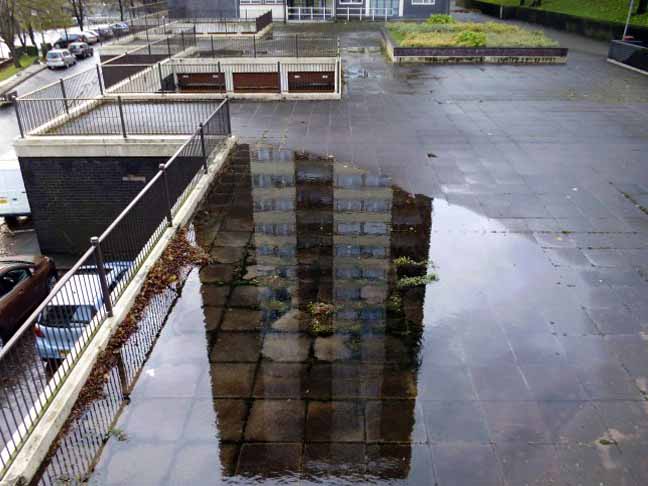
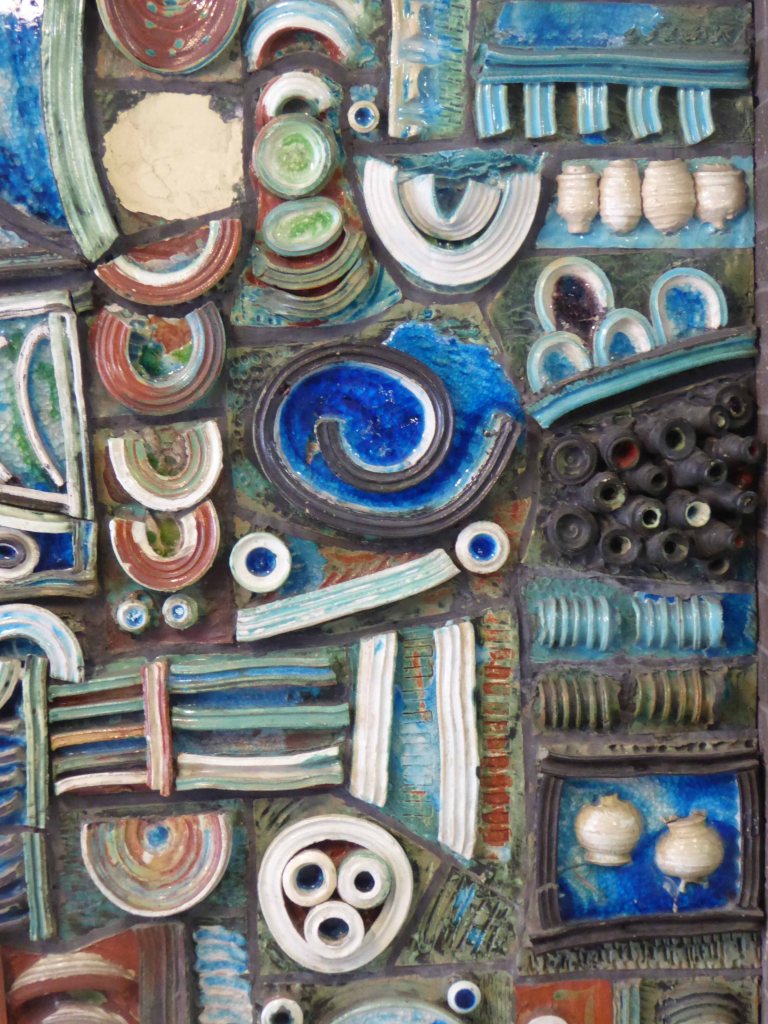
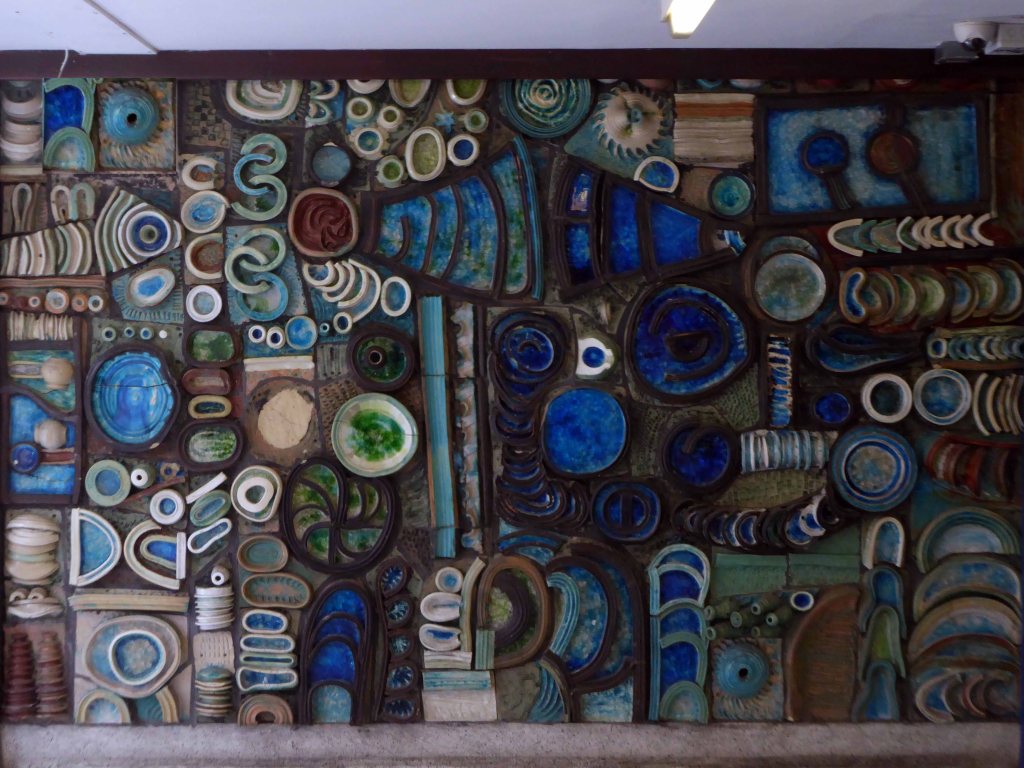
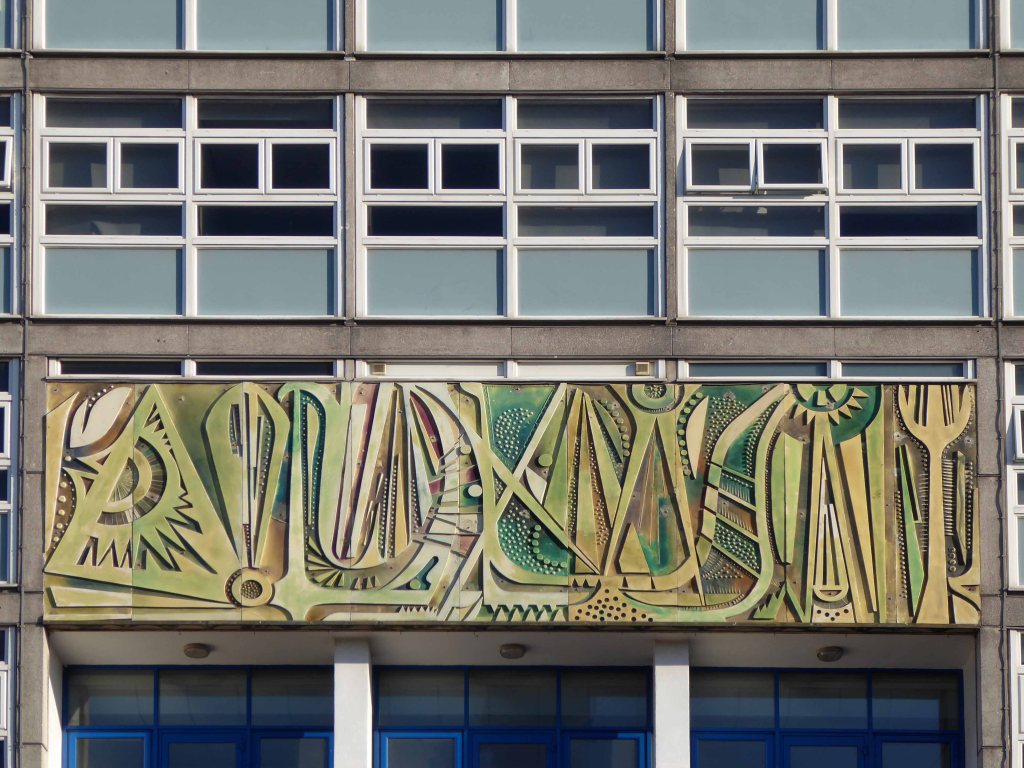
Of note is the one remaining example of ceramic entrance murals, the work of George and Joan Stephenson 1966 – lecturers at the Rochdale College of Art.
All six murals survived until around 1995, when the residents were asked to vote on whether or not to keep them, five out of six blocks voted to have them removed.
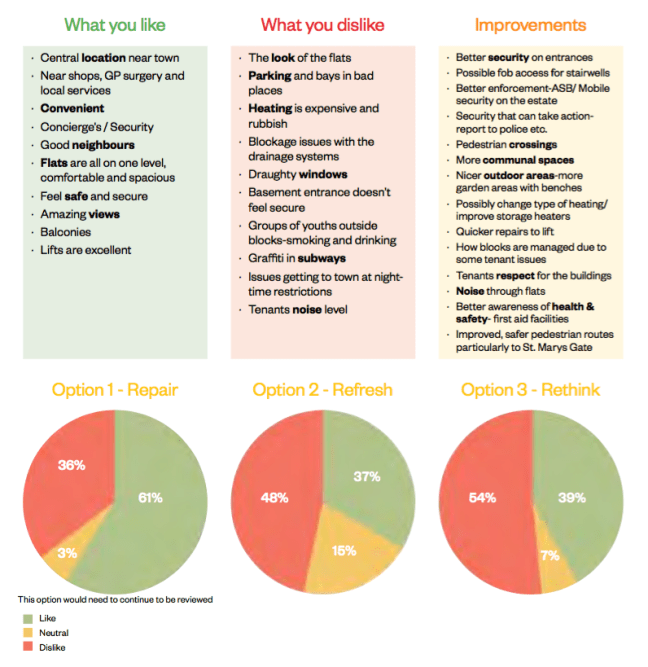
As of November 2109 – the College Bank Support Group is working with a group of architects to draw up alternative plans. RBH has said it will consider them if they are feasible and sustainable, as well as safe and genuinely affordable for tenants and residents.
It seemed the campaigners’ pleas had finally been met in March 2024 when RBH announced a deal with Legal & General that would fund renovation of the blocks. That deal collapsed in October 2024 and, as of now, the fate of the blocks remains uncertain. Residents’ lives, blighted by years of uncertainty, remain in limbo.
A striking and effective design from the early 1960s by Desmond Williams & Associates. The robust interior is well-lit and serves its purpose effectively, but the church does not contain furnishings and artworks of particular note.
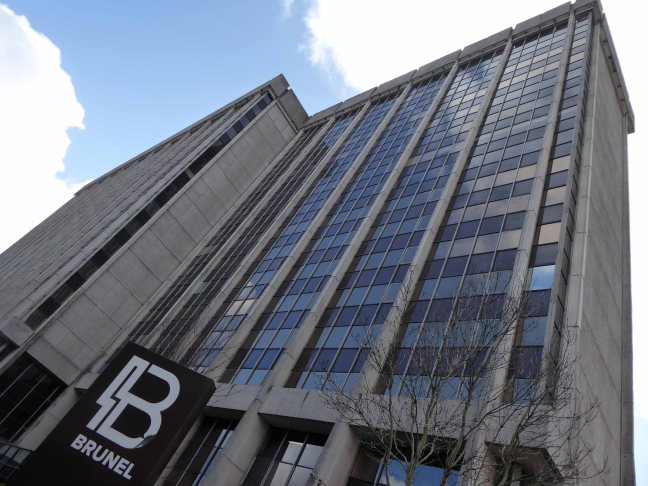
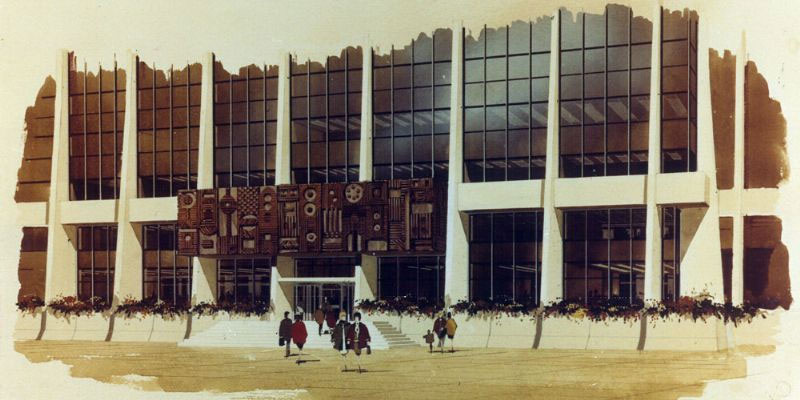
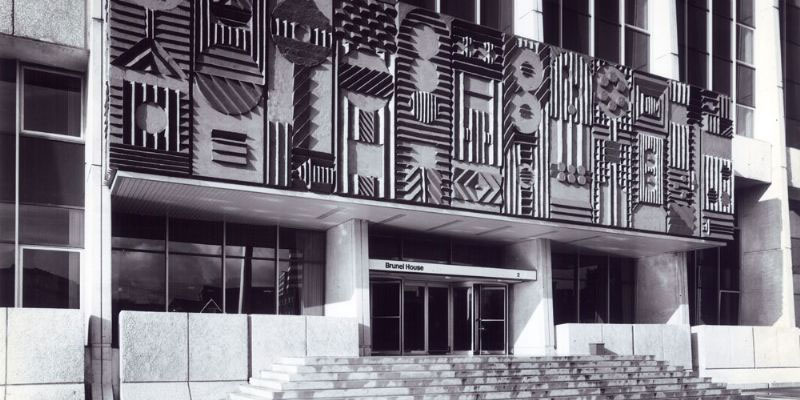
Originally built to house the regional British Rail offices – it seems that Great Western House has always been Brunel House.
Designed by Seymour Harris – who have also been responsible for the recent refurbishment.
The building is now in multiple occupancy, used for a wide range of services and uses, bringing new life to fine mid-century structure.
Sadly its entrance relief is now nowhere to be seen.
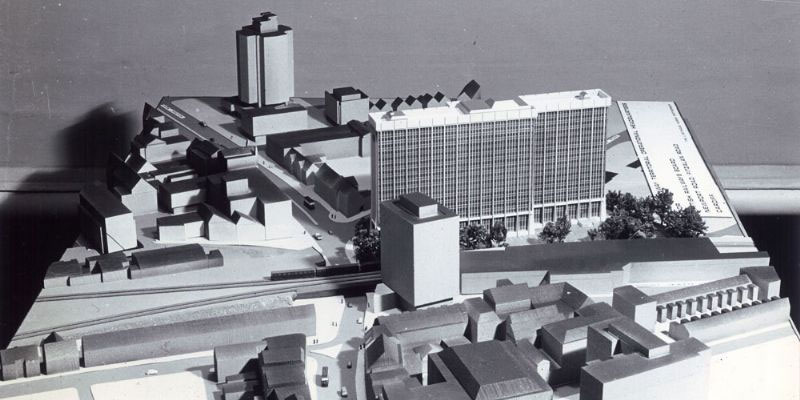
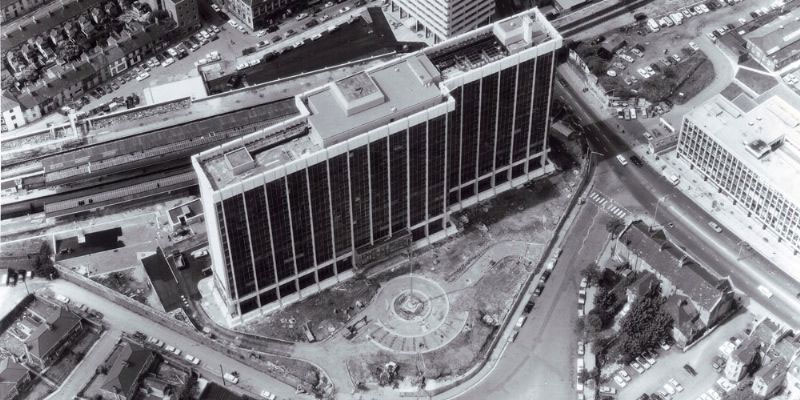
Archive photographsSeymour Harris Architects
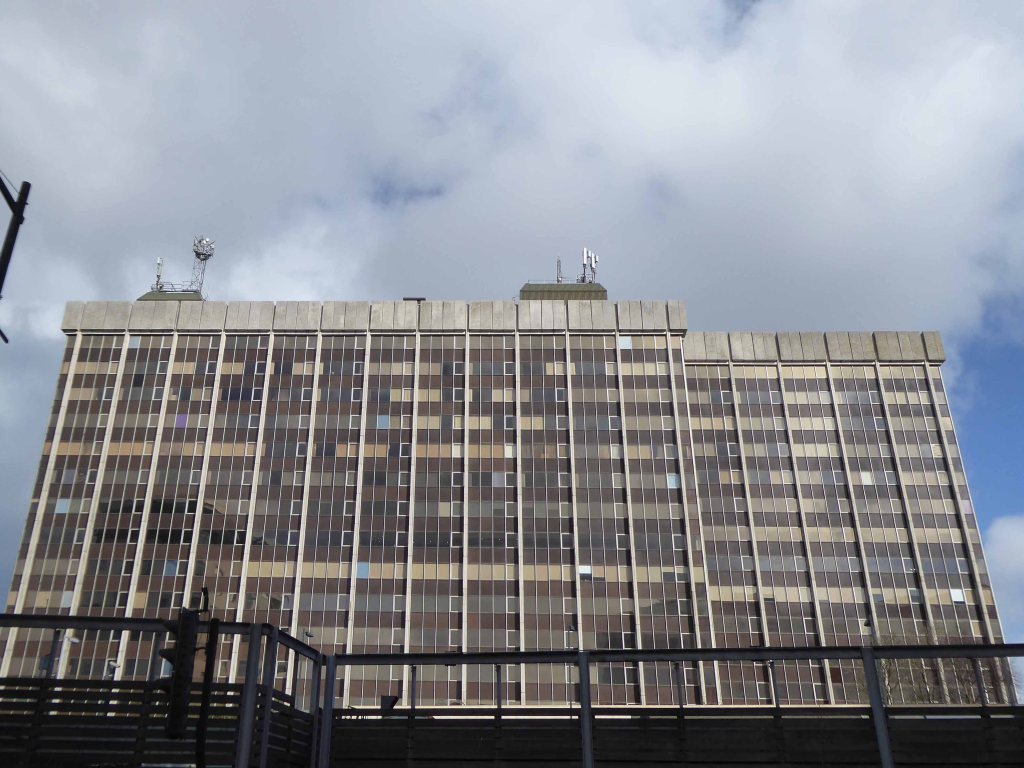
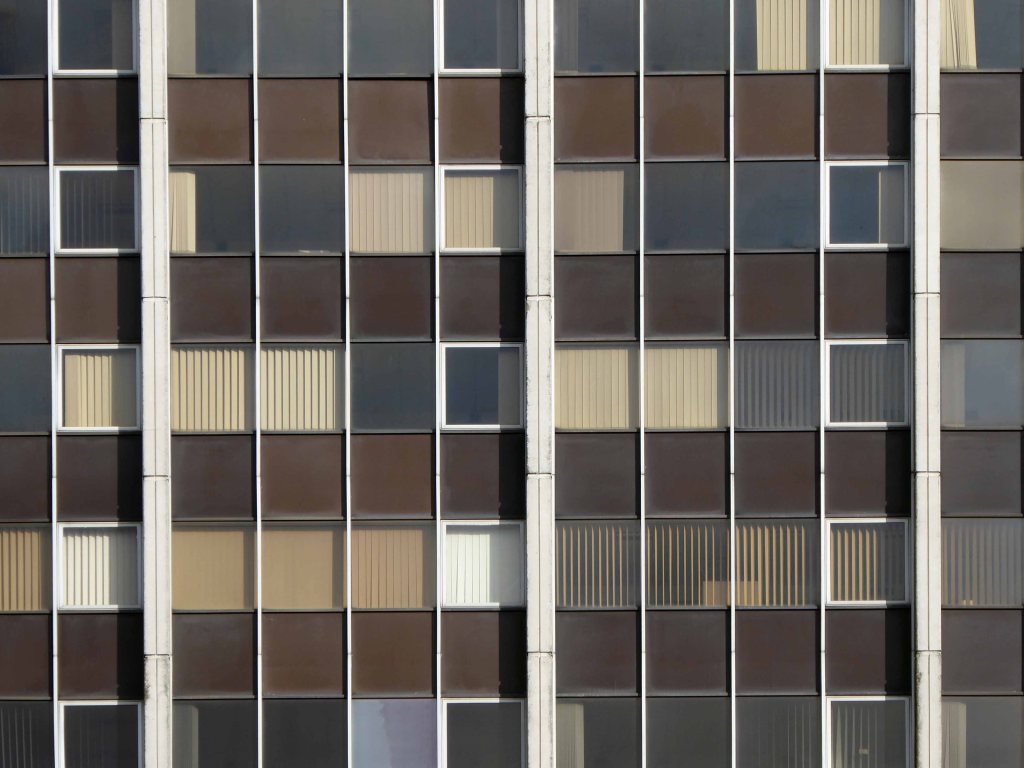
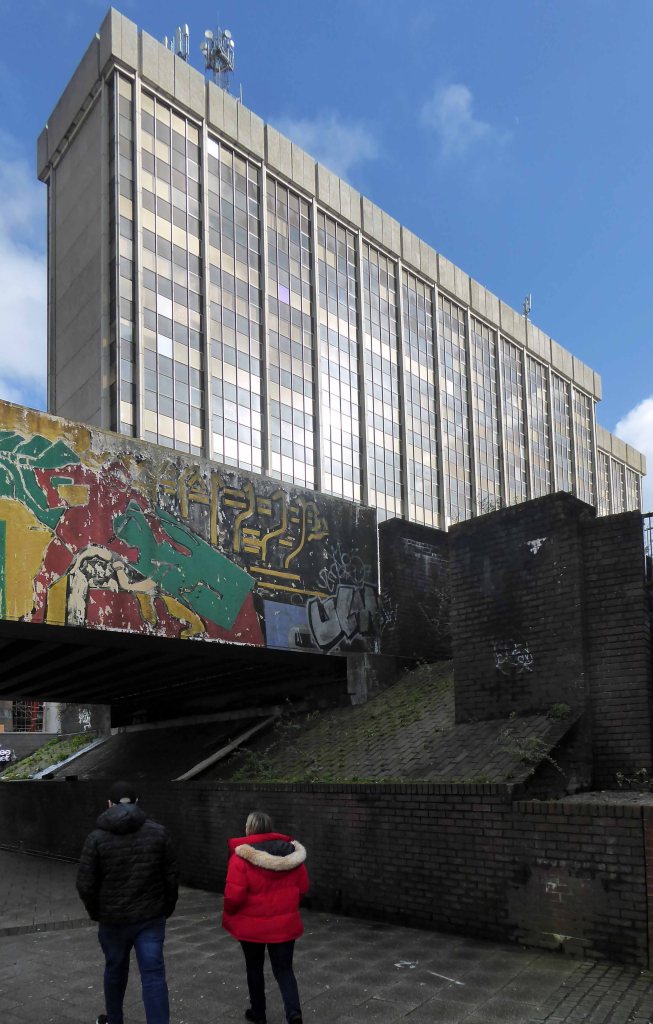
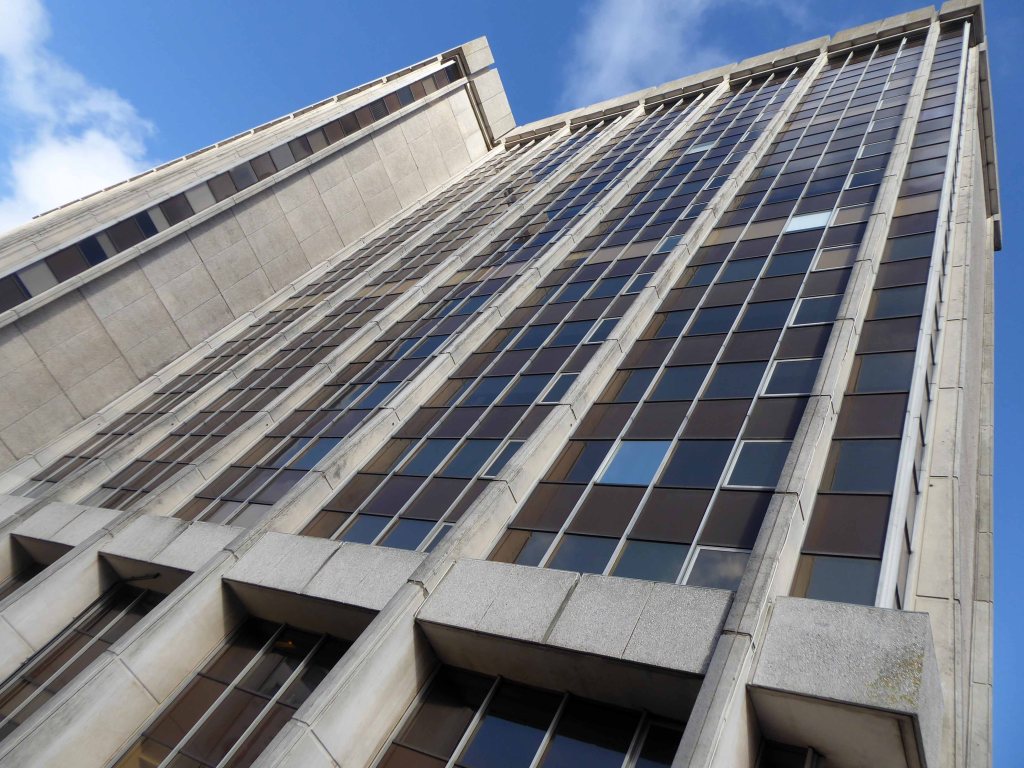
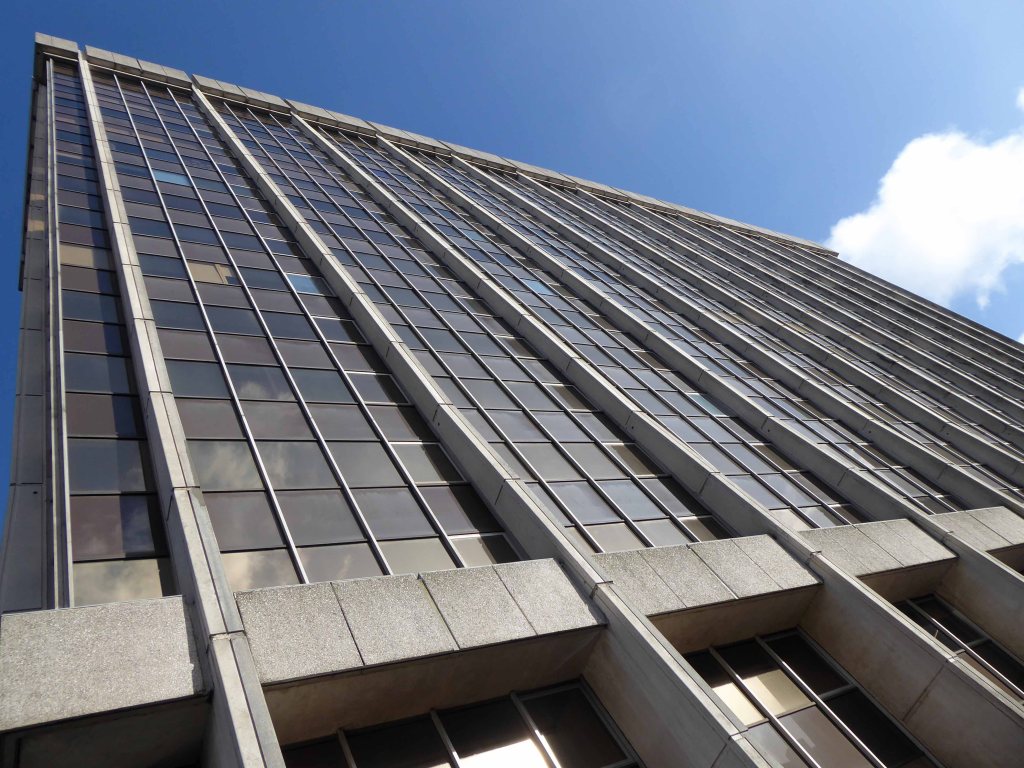
Sixteen floors standing at 190 feet, two enormous interlocking slabs – it is the largest commercial property in Wales.
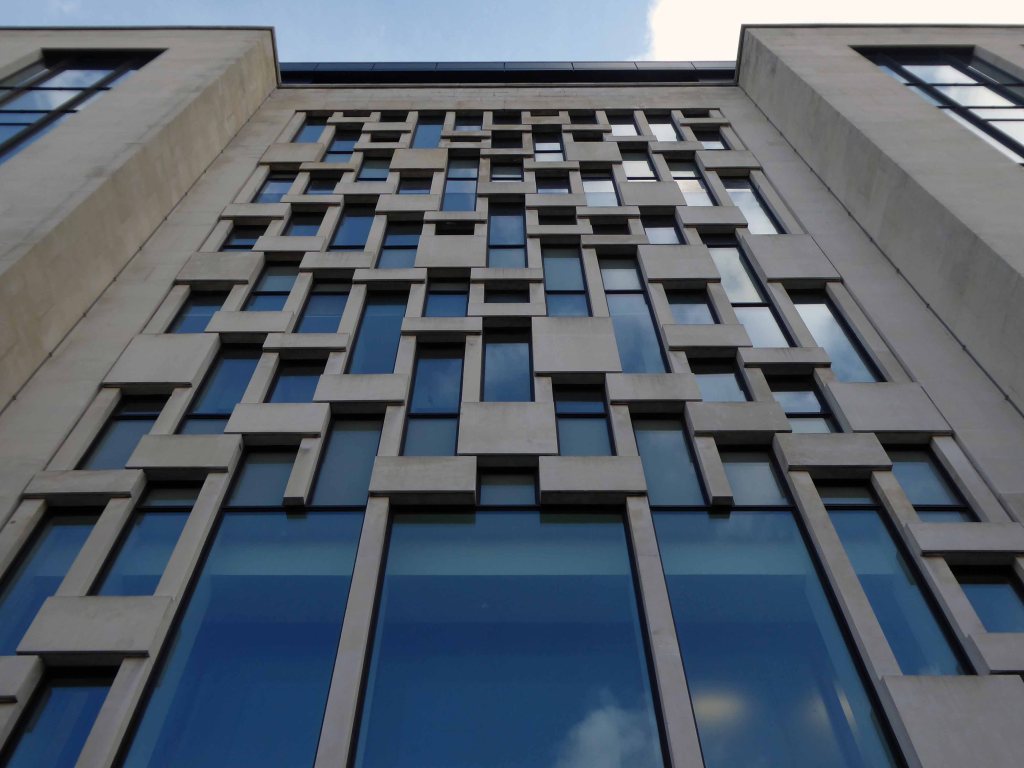
Seen from afar your are hit by its impressive rear elevation, with a distinctive grid defined by the slender window frames and a restrained yet earthy palette.
This is then broken up by strong vertical concrete columns.
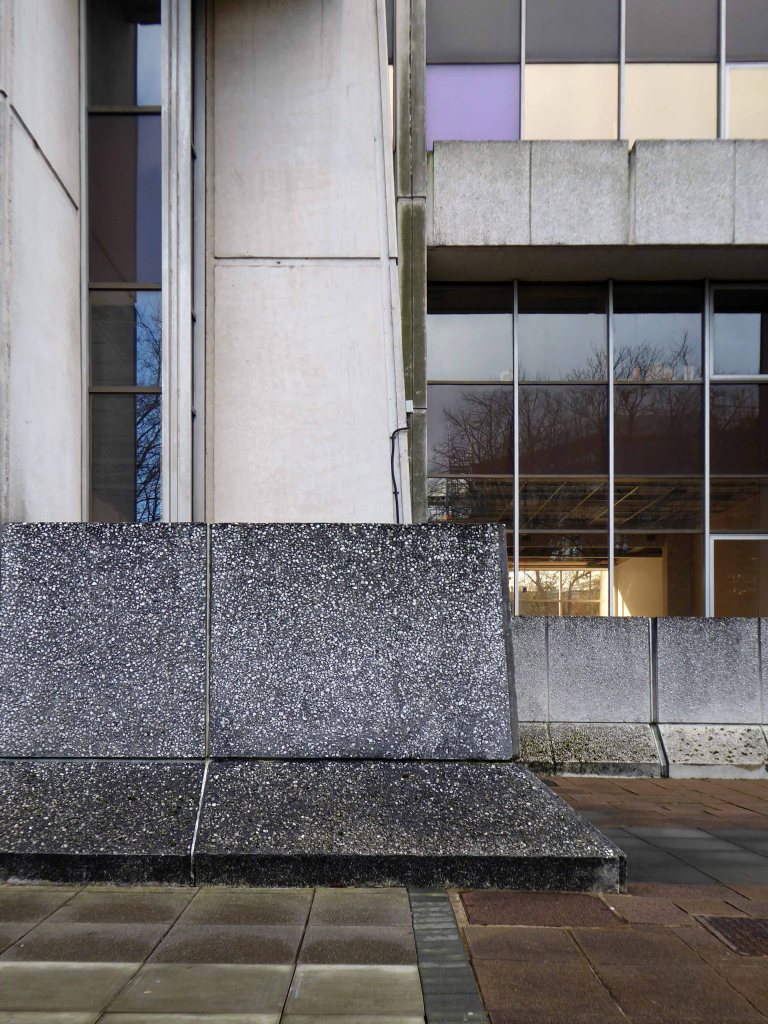
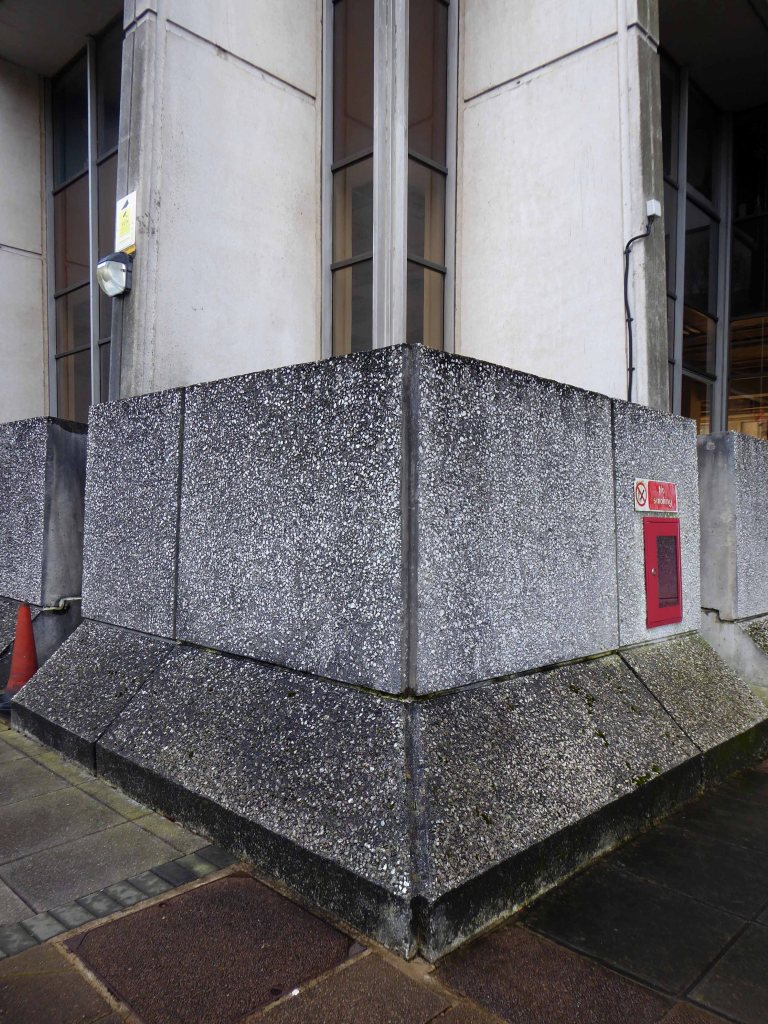
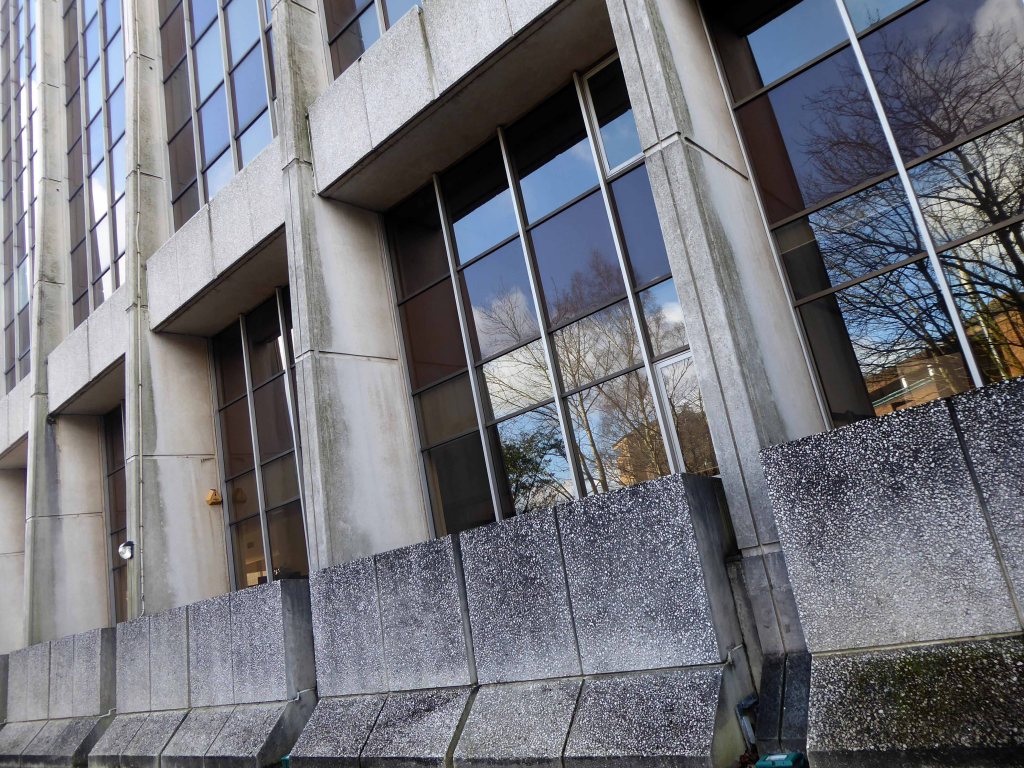
With bold structural detailing, using a variety of aggregates and finishes.
Side elevations are brut concrete, with limited window space.
Where surfaces and volume conjoin there is further interesting structural detail.
Service areas to the rear.
An exciting encounter with a building of substance and quality – go take a look for y’self.
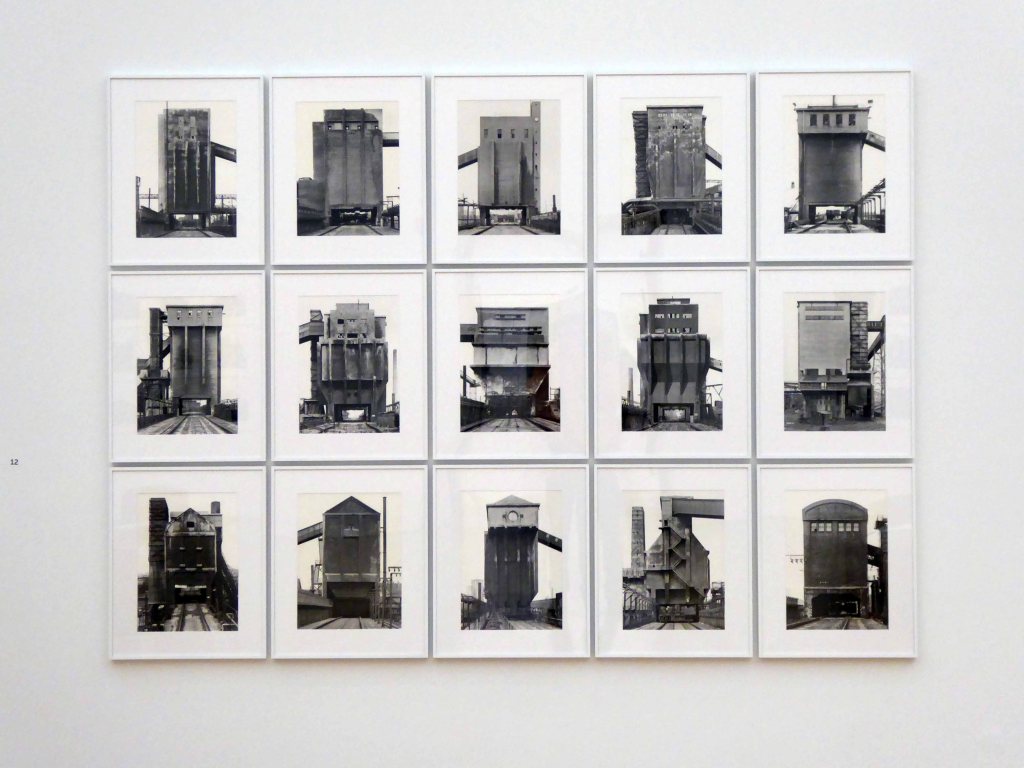
I have admired the work of Bernhard and Hilla Becher ever since seeing their photographs in the one and only Tate at the time, in old London town.
An early example, possibly twelve small black and white prints of pit head winding gear, assembled in a three by four grid.
I became intrigued by the notion of serial art and typology, later in the seventies working as a Systems printmaker.
Very much in the tradition of Max Bill and Richard Paul Lohse.
In more recent years I have worked as a documentary photographer, at time paying homage to Bernhard and Hilla.
By placing several cooling towers side by side something happened, something like tonal music; you don’t see what makes the objects different until you bring them together, so subtle are their differences.
So on hearing of their exhibition at the National Museum of Wales in Cardiff, I excitedly booked my train ticket from Manchester.
Saturday 29th February 2020 – an auspicious Leap Year – knowingly taking a leap into the known unknown.
Braving the imminent threat of Storm Jorge.
I was given the warmest of welcomes by the gallery staff, spending a good while chatting to James, a fellow enthusiast.
My first surprise was the Bechers’ drawings, painting and notebooks.
A revelation.
Then onwards into two large, light spaces, with the work – actual Becher archive prints, displayed with the reverence that they deserve.
Given space to breath, in a calm contemplative area.
With a quiet attentive audience.
So here that are in situ – worth the wait, worth the train ticket, worth the two way seven hour rail trip. Seeing the prints close up reading the exposure, the thrill of the dodge and burn, a lifetime’s ambition realised.
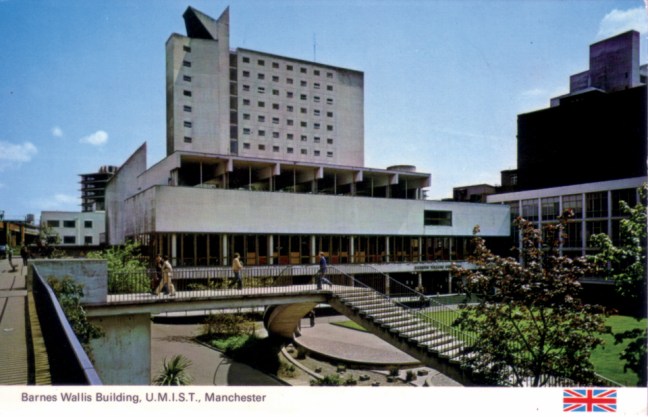
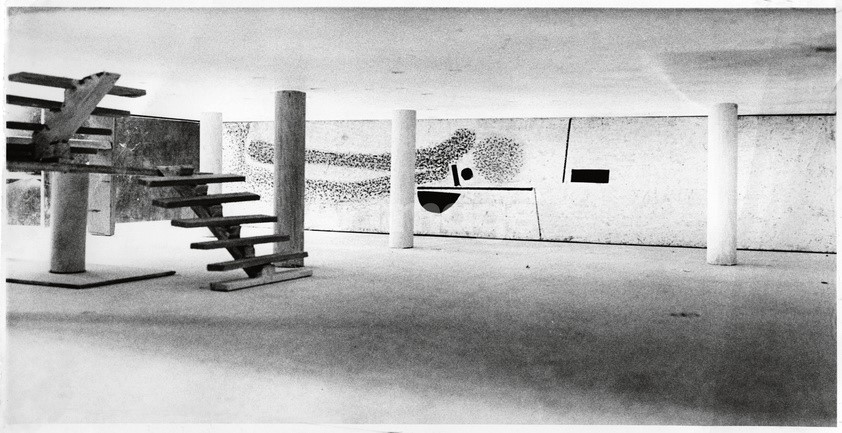
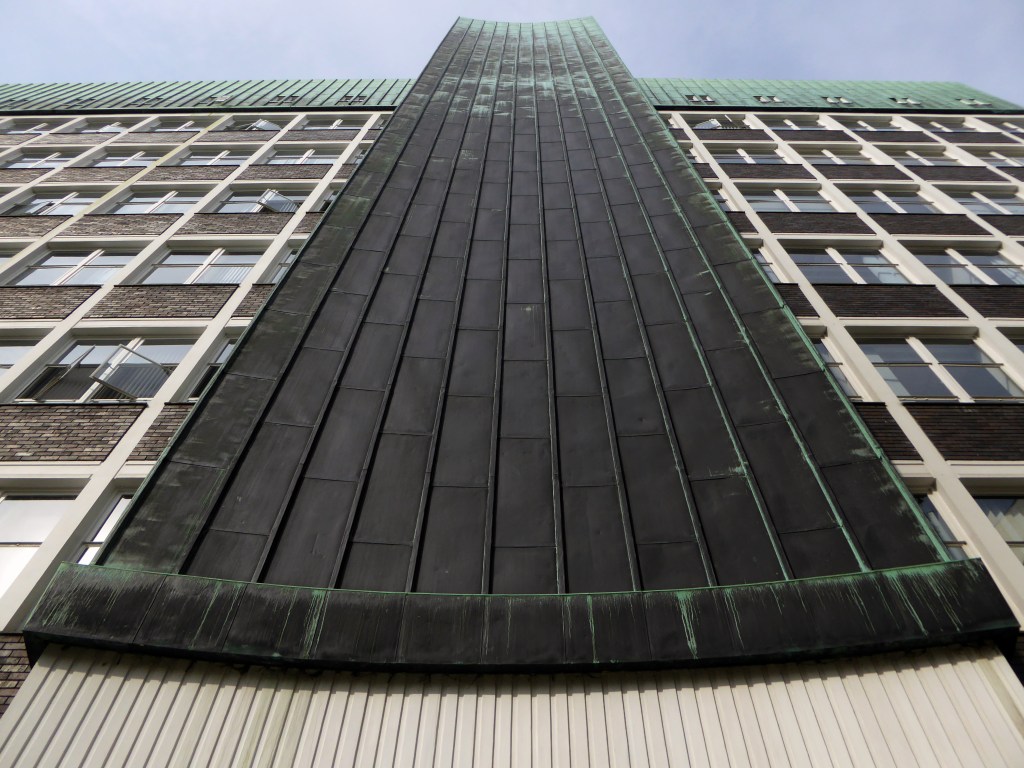
Renold Buildingdesigned by W. Arthur Gibbon of Cruickshank and Seward. It was one of a suite of white concrete structures on the UMIST campus in Manchester. It was the first of its type in the UK – an entire building to house lecture theatres and seminar rooms.
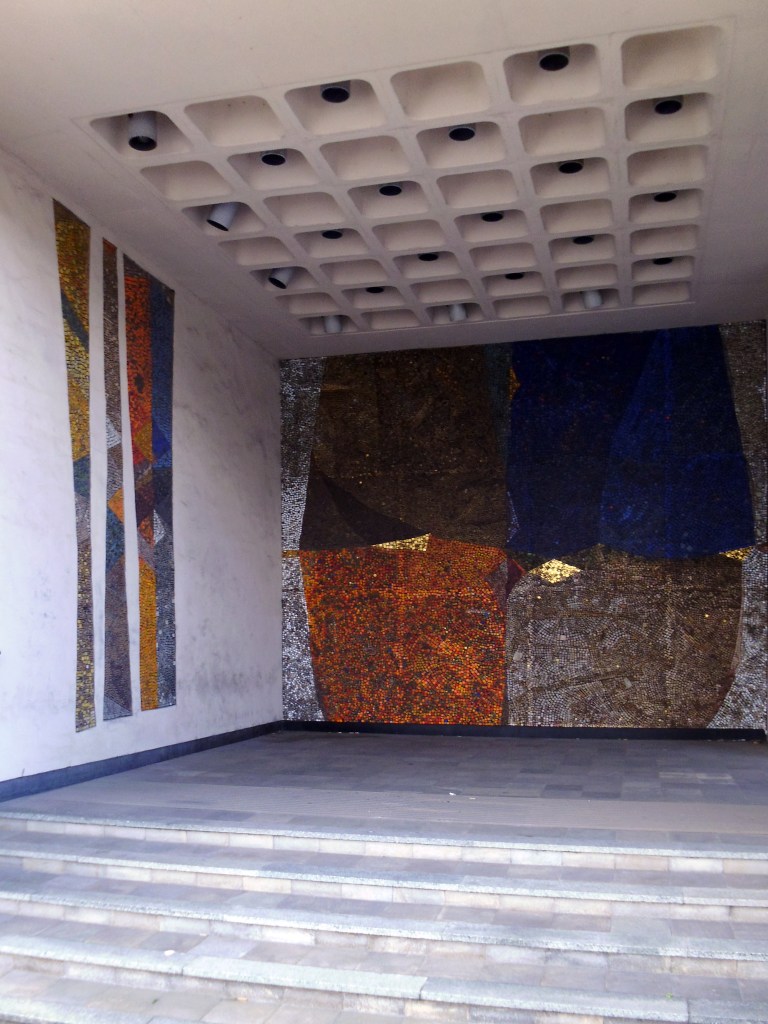
Gone is the low lying Chemistry Building – it’s mosaics now almost hidden in intemperate storage at the base of the Faraday Building.
Works continue with the preparation for the construction of the new £60 million Graphene Engineering Innovation Centre GEIC and the demolition of the Faraday Undergraduate Building and link bridge on the North Campus.
The mosaic, `The Alchemist’s Elements’, in the entrance colonnade, has now been safely removed from the building and are being stored securely on campus until the building works are complete.
On completion of the GEIC in late 2017, the 4.5m x 3m artworks will be permanently reinstated within the site for visitors to enjoy for years to come.
The mosaics were created by Hans Tisdall a German-born artist, illustrator and designer with a distinguished career in 20th century Britain. Following the Second World War, Tisdall became involved in the revival of public artworks within many educational and industrial buildings – one of which included the Faraday Building at UMIST.
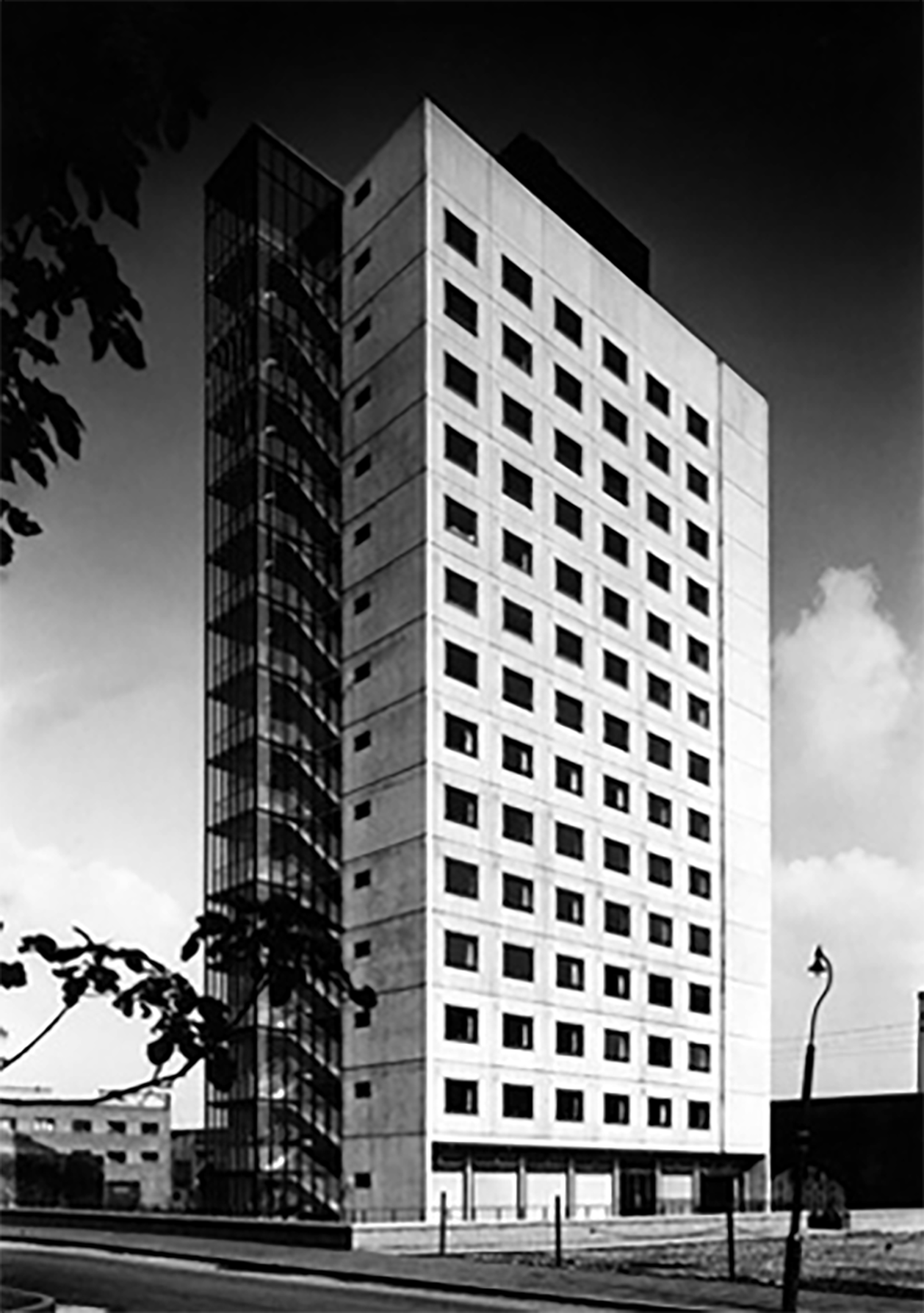
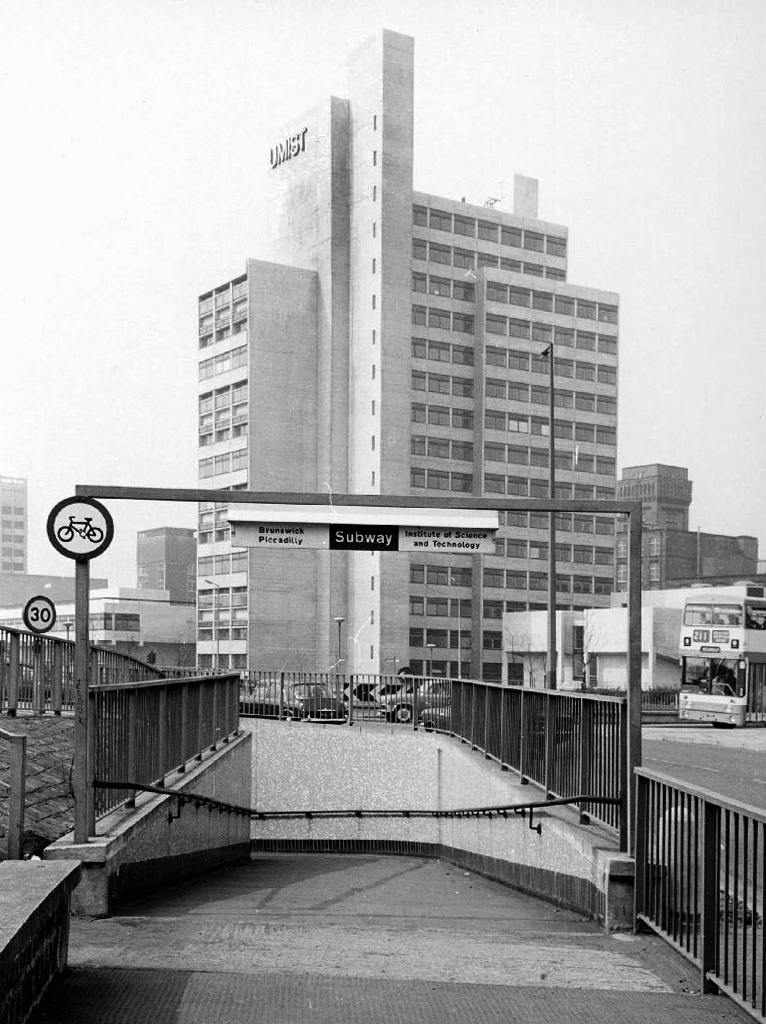
Faraday Tower was designed by H. M. Fairhurst and built in 1967. A bridge connected it to the Faraday Building. Originally a library occupied the bridge.
The cladding is also by Tony Holloway
Onward and upward and slightly backwards into the world of modern information technology the National Computing Centre 1974 Cruickshank and Seward.
Another great sadness is the closure of St Augustine Church 1967-8 by Desmond Williams & Associates at All Saints, without a priest for well over a year.
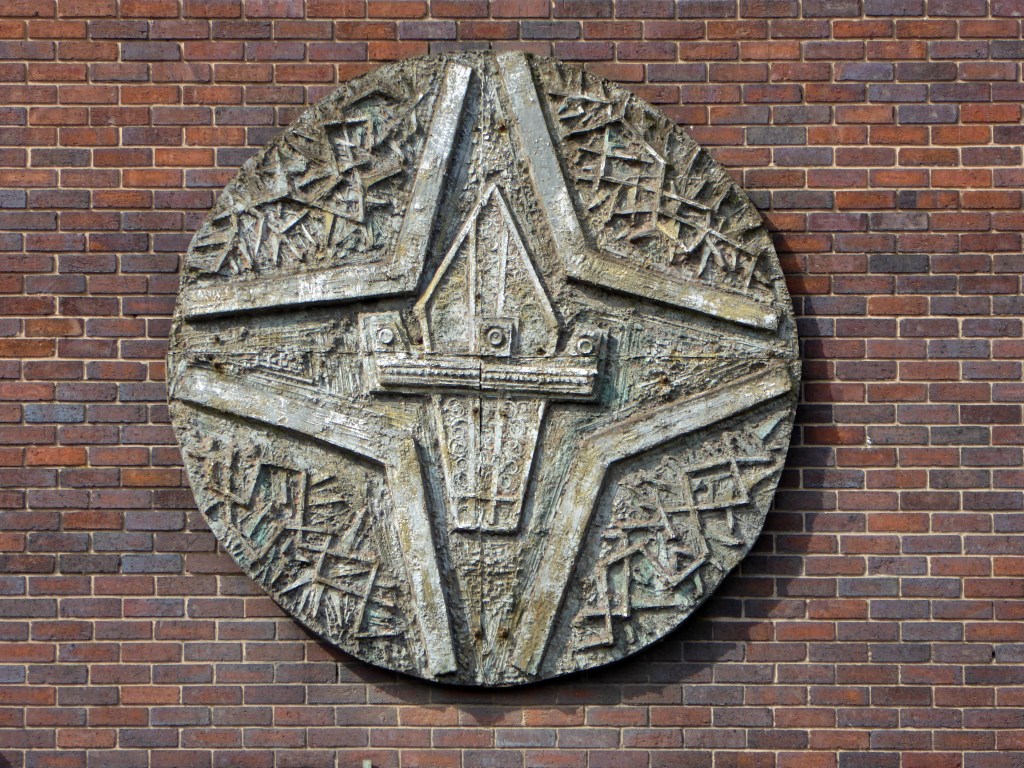
Though there are rumours of a change of use and this wall relief by Robert Brumby is still visible.
The church now has an incumbent priest and is generally open most days.
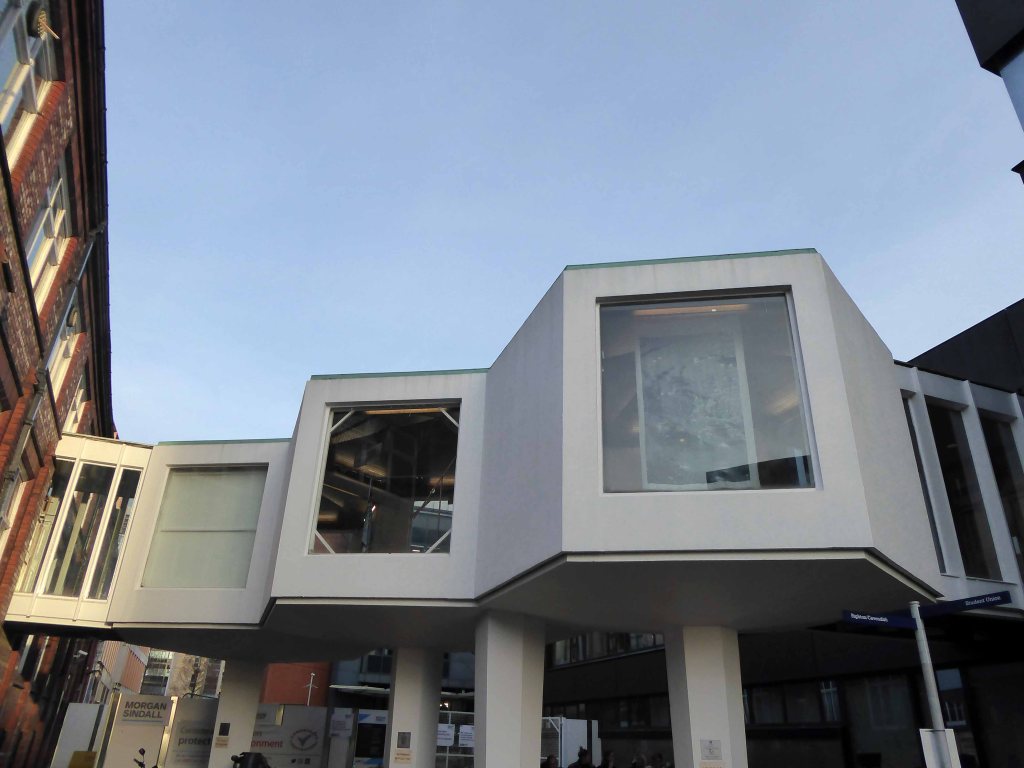
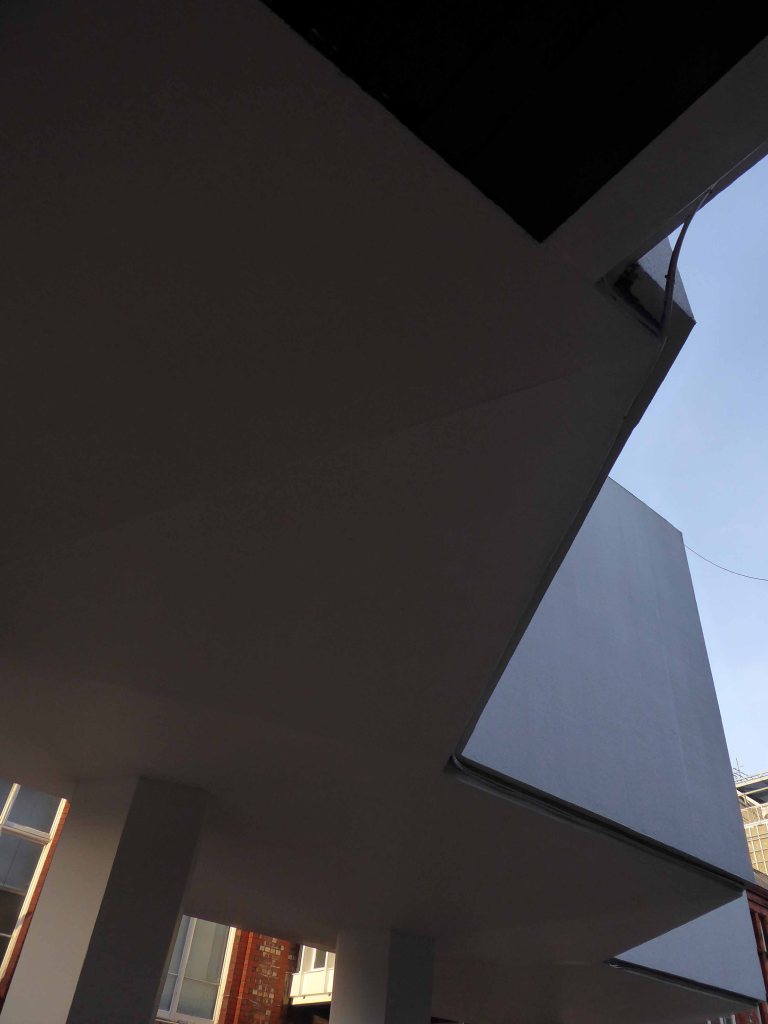
Twixt the old and not so old this zigzag connecting corridor.
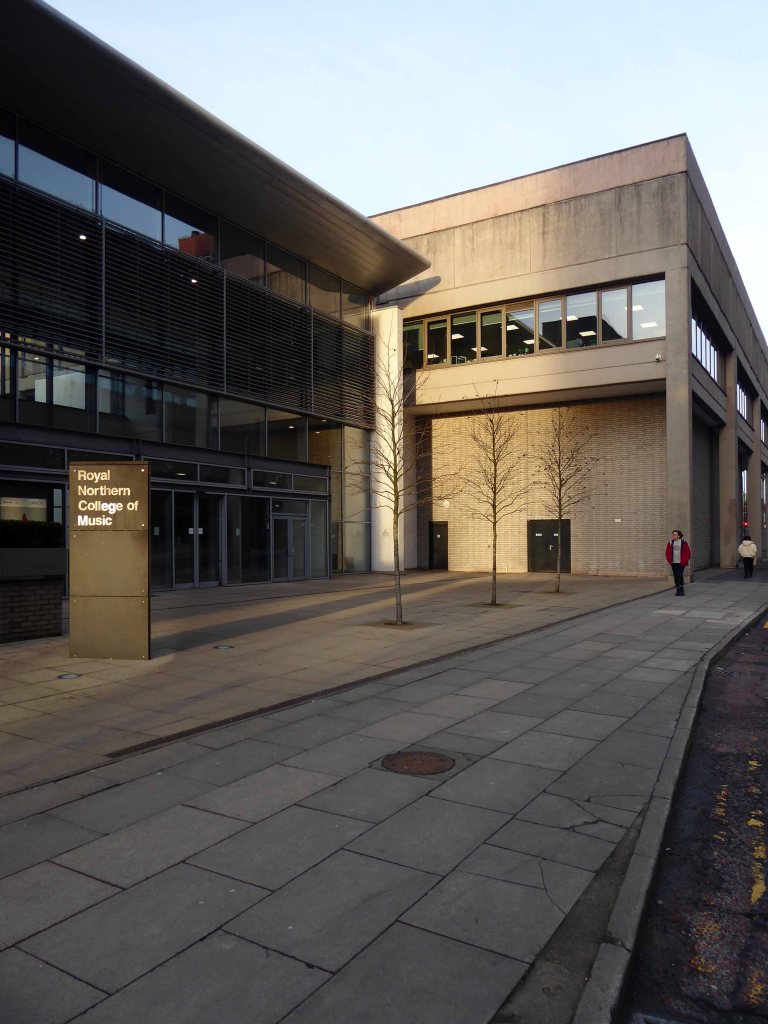
Off now to the RNCM 1968 Bickerdicke Allen Rich and Partners.
In the past fifteen years it has been slowly extended and modified by MBLA Architects, late MBLC. This has included a new library and teaching facility to the west and new practice suites to the eastern elevation as well as internal modifications to the kitchens, café and foyer spaces.
Further art in the environment almost in the environment Hans Tisdall’s Four Seasons – half in half out of the café.
Opposite we find the Schuster Building contains a mysterious mosaic.
The Schuster Building houses the Department of Physics and Astronomy and is named after Sir Franz Arthur Friedrich Schuster. The building was designed by Harry S. Fairhurst & Sonsand was completed in 1967. The roof of the largest Lecture Theatre in the building has an abstract sculpture by Michael Piper on it.
A Sixties photographer called John D Green was chosen by the architect – however it’s a mystery why he was commissioned.
It would seem John D Green was a man of many talents – he was also a regular racing driver at Brands Hatch, and author of the legendary book Birds of Britain, recently the subject of an exhibition at Snap Galleries in London.
The sculpted and moulded panels on the two-storey block and on the gable ends of the larger blocks were designed in collaboration with William Mitchell.
AQA HQ – Playne and Lacey1962.
Around the corner the student homes of Whitworth Park
The Whitworth Park Residence has earned the obvious nickname of The Toblerones. It offers accommodation to 1085 undergraduate and 153 postgraduate students. The complex was designed by the Building DesignPartnership and built in 1973-74.
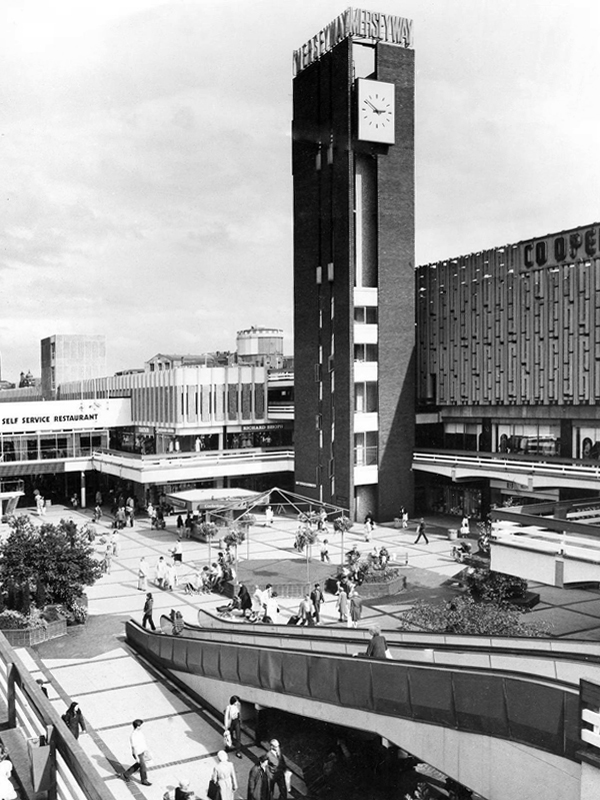
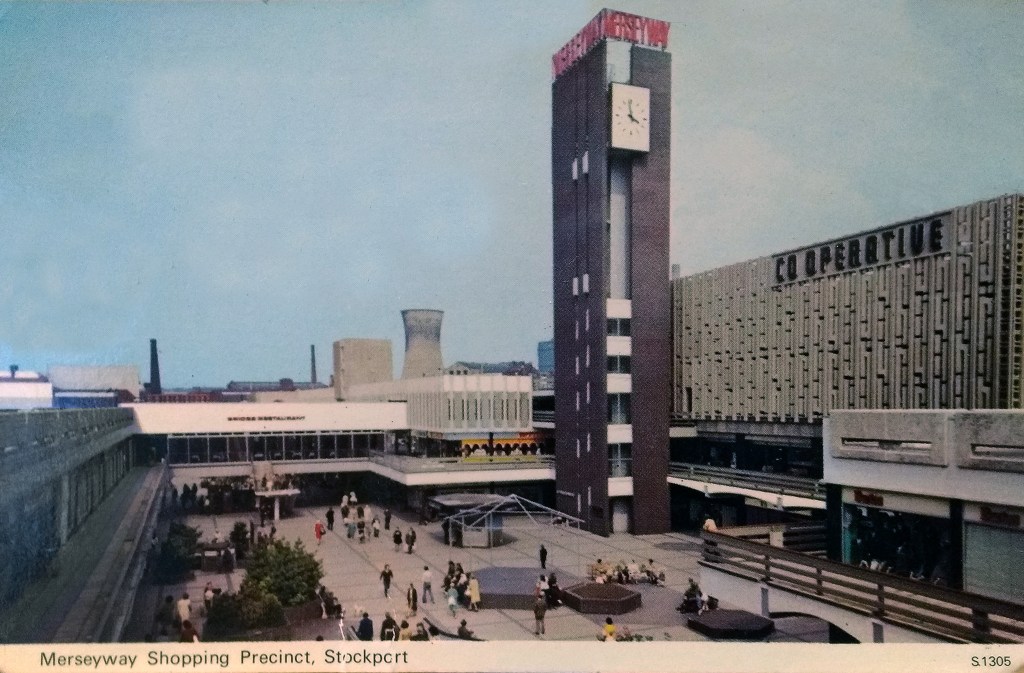
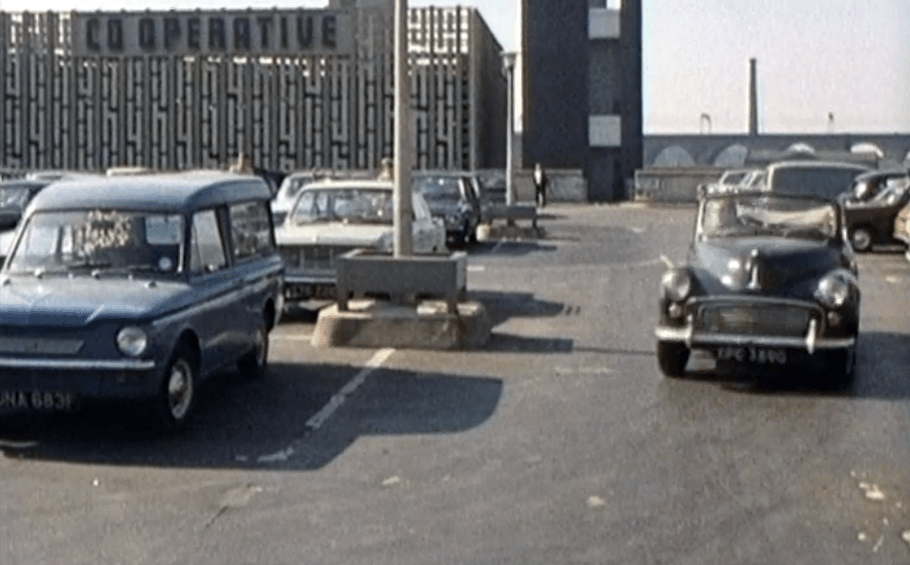
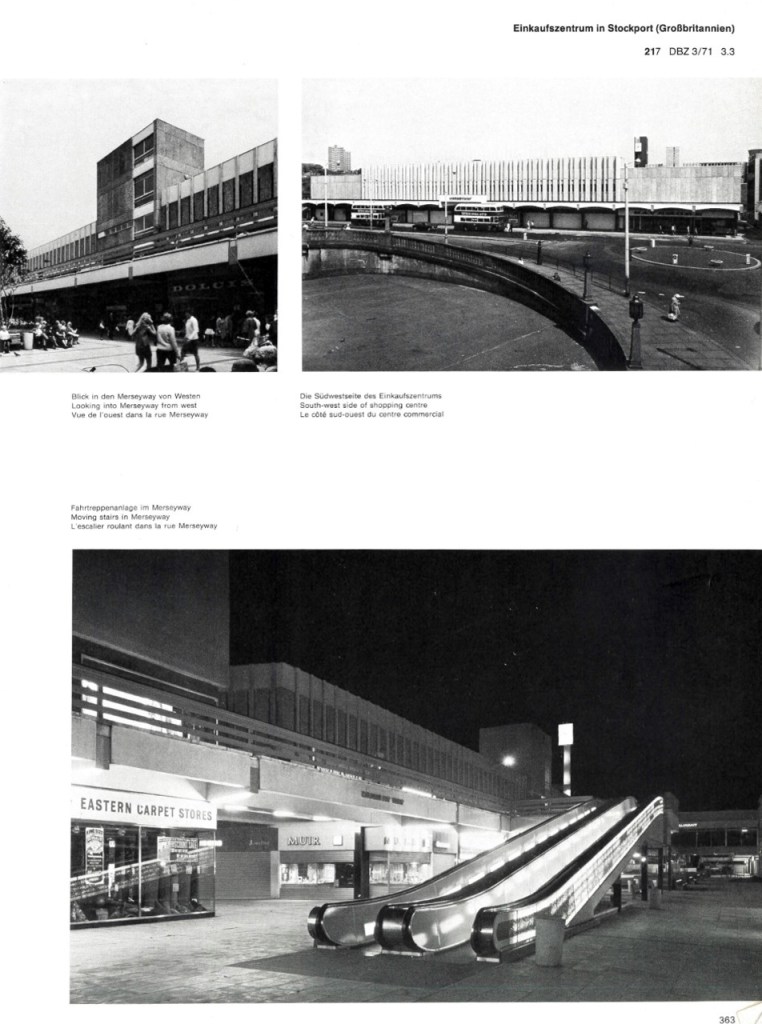
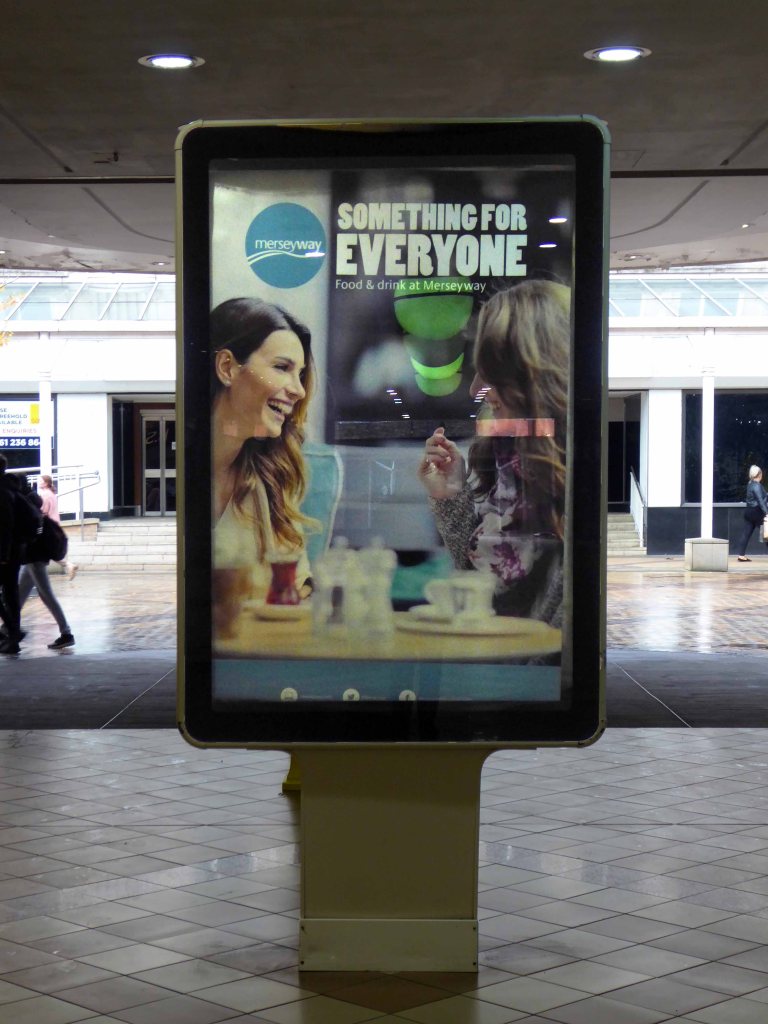
Once widely admired, Ian Nairn esteemed architectural writer, thought it an exemplary exposition of modern integrated shopping and parking, sitting perfectly in its particular topography – way back in 1972.
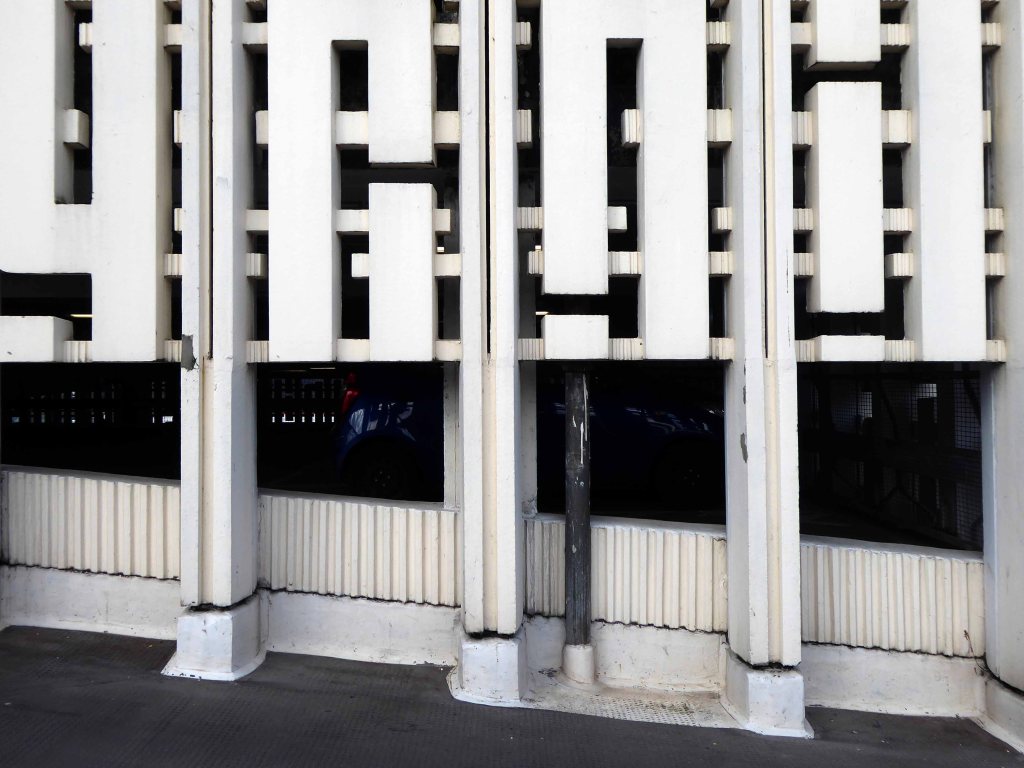
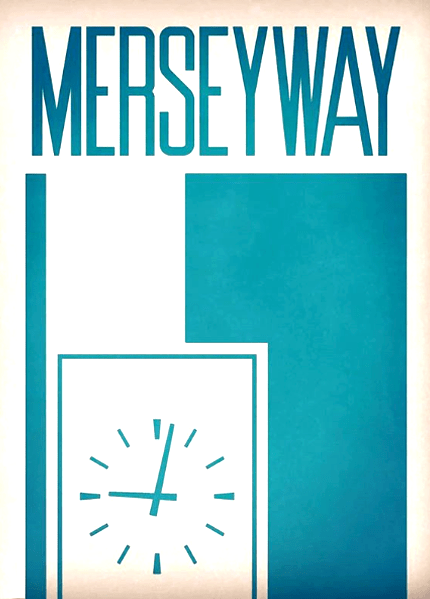
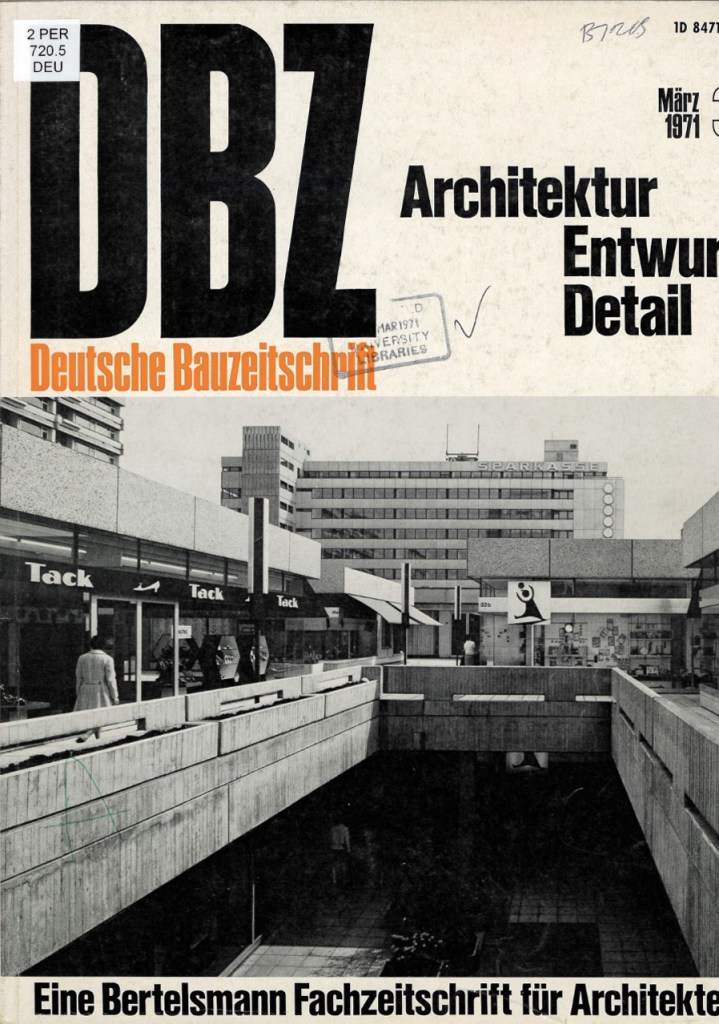
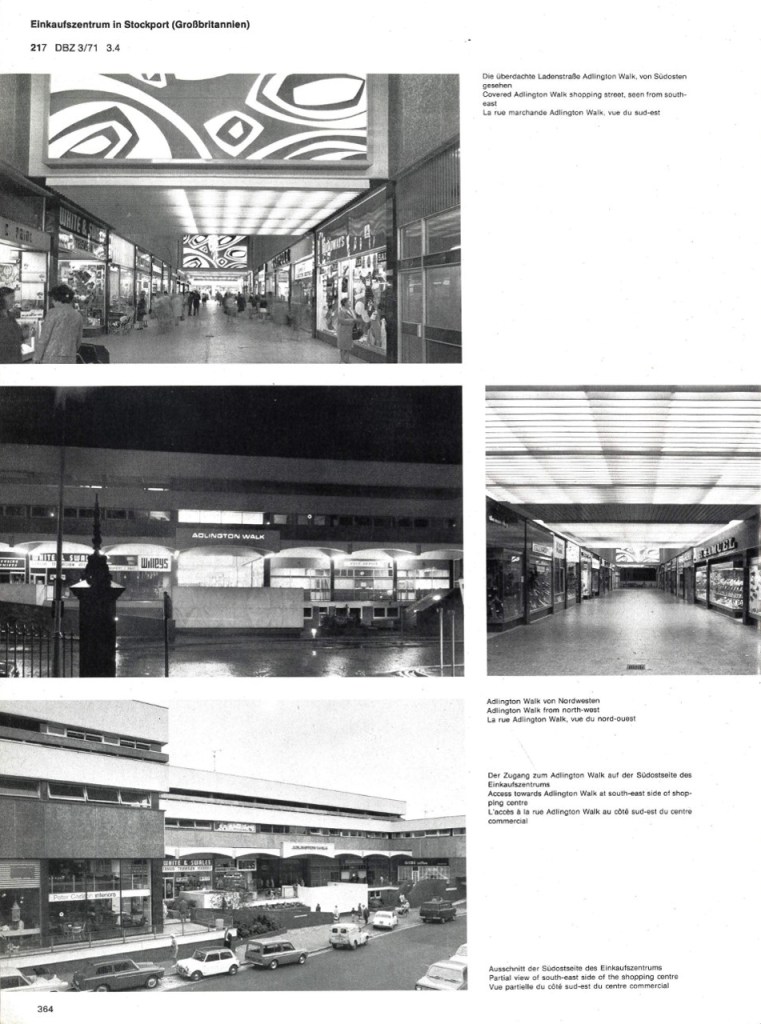
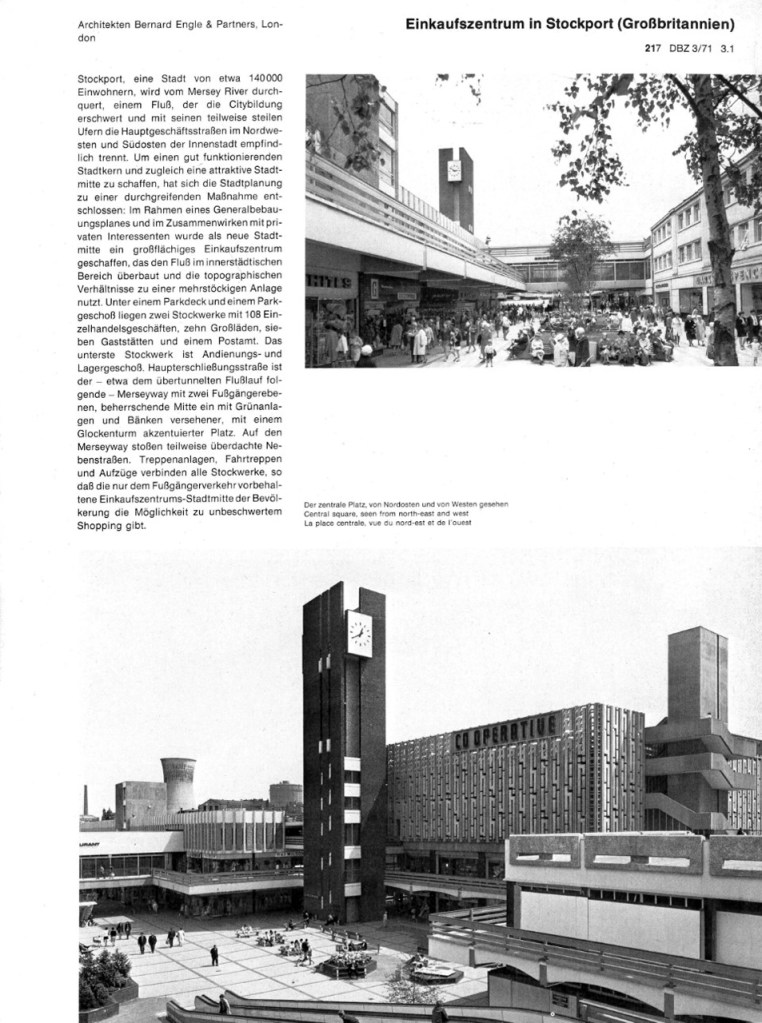
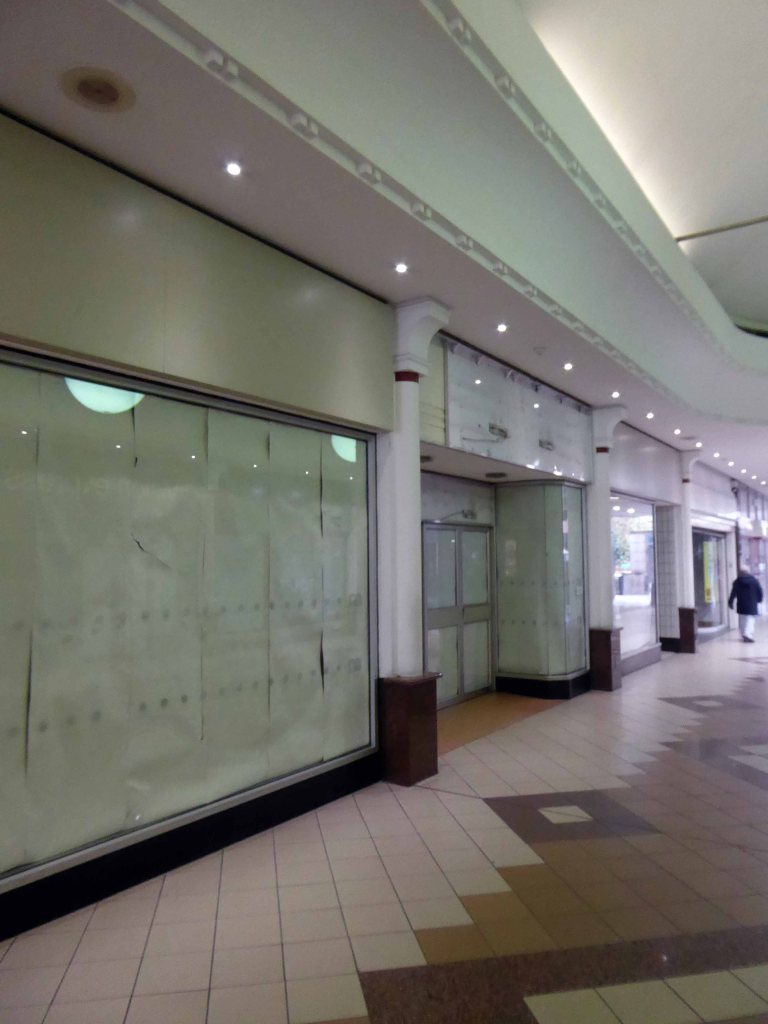
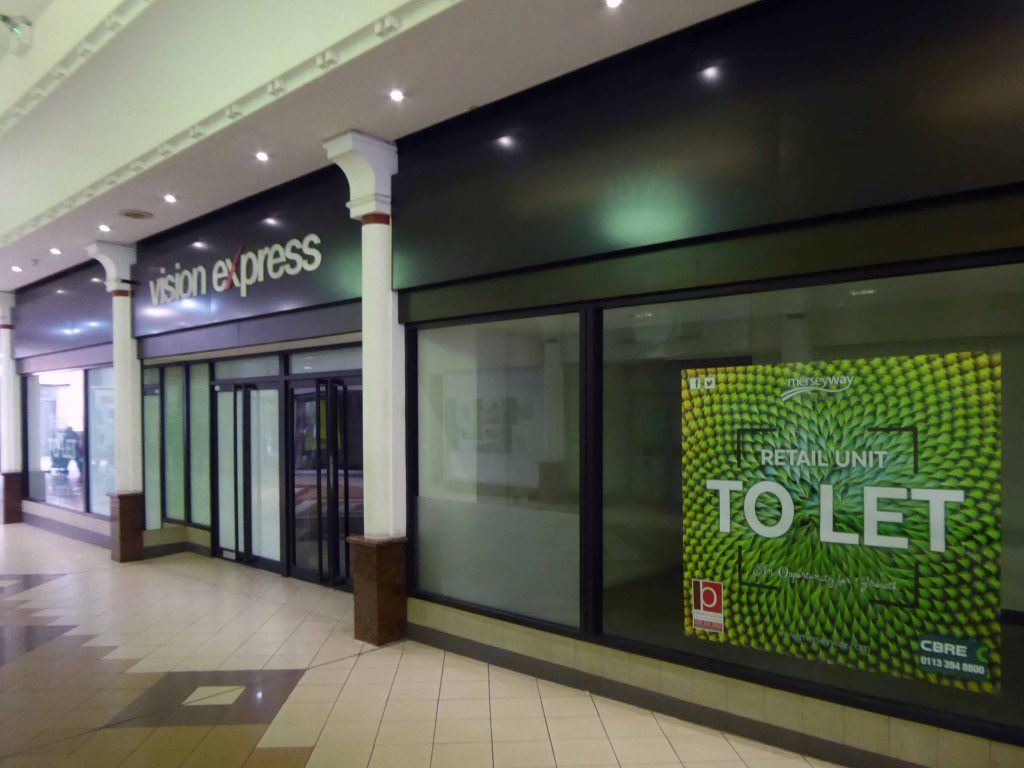
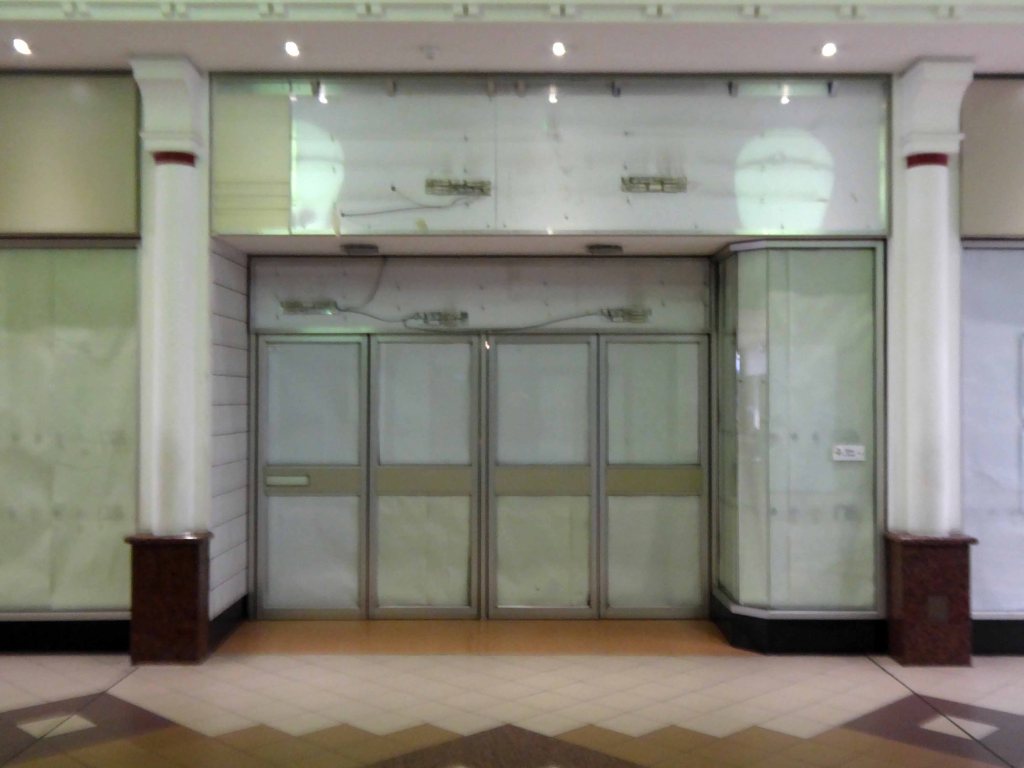
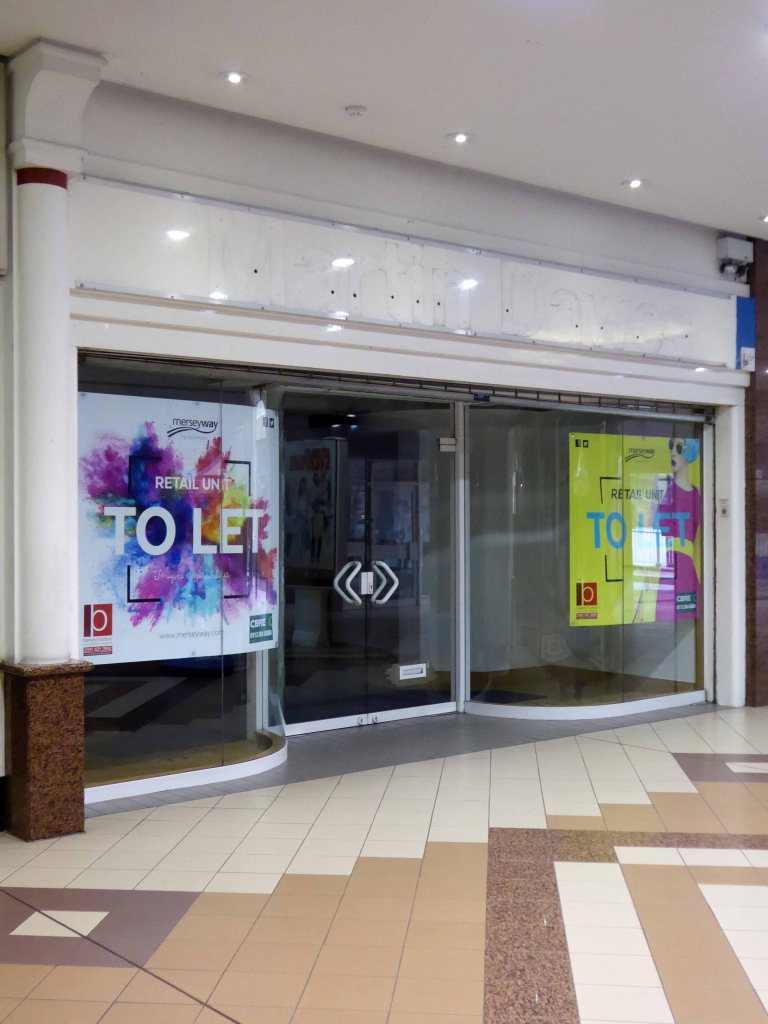
This German magazine dedicated several pages to coverage of Merseyway back in 1971.
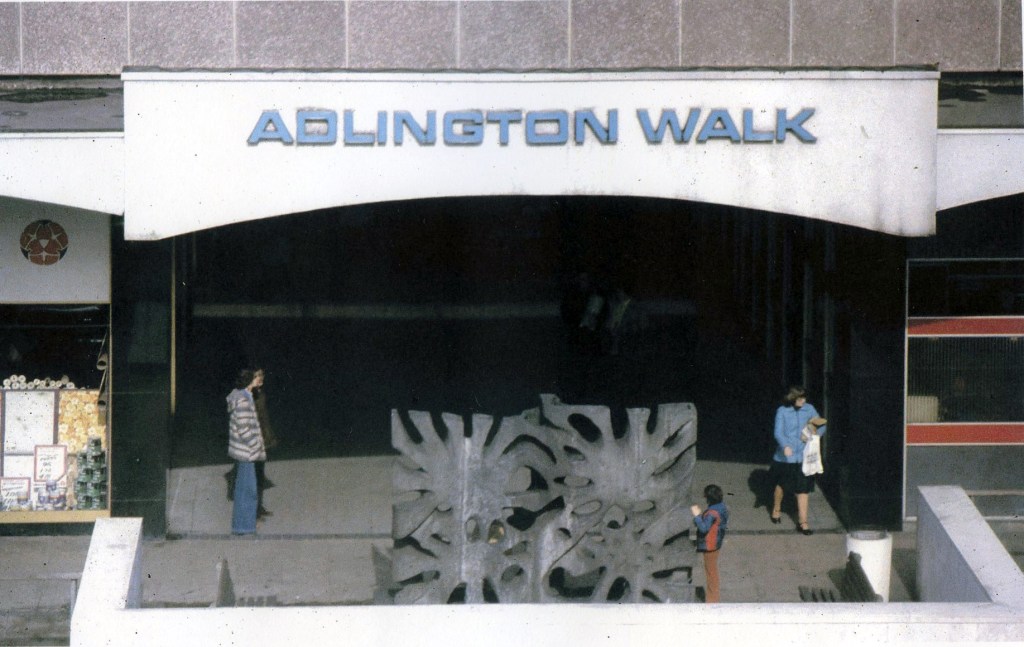
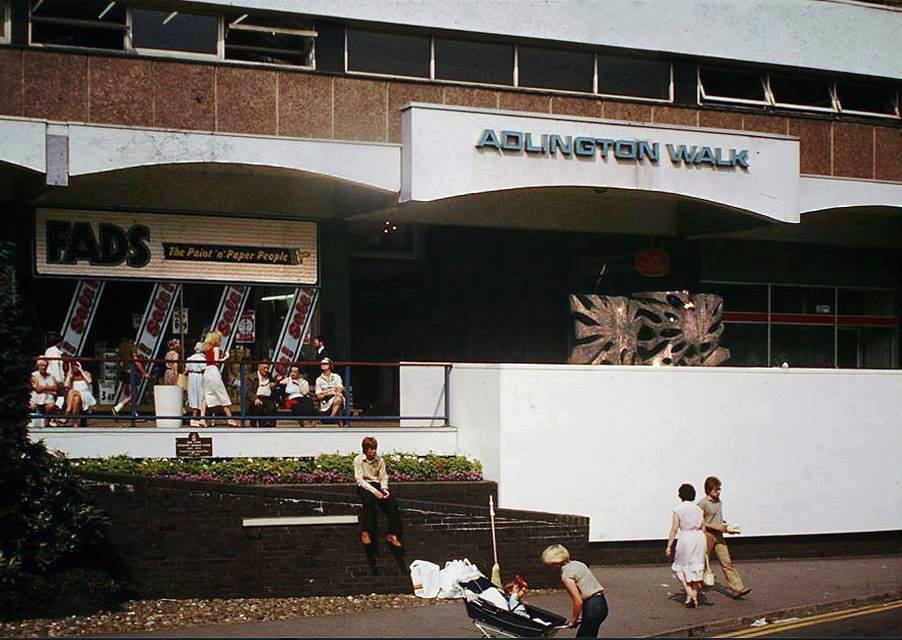
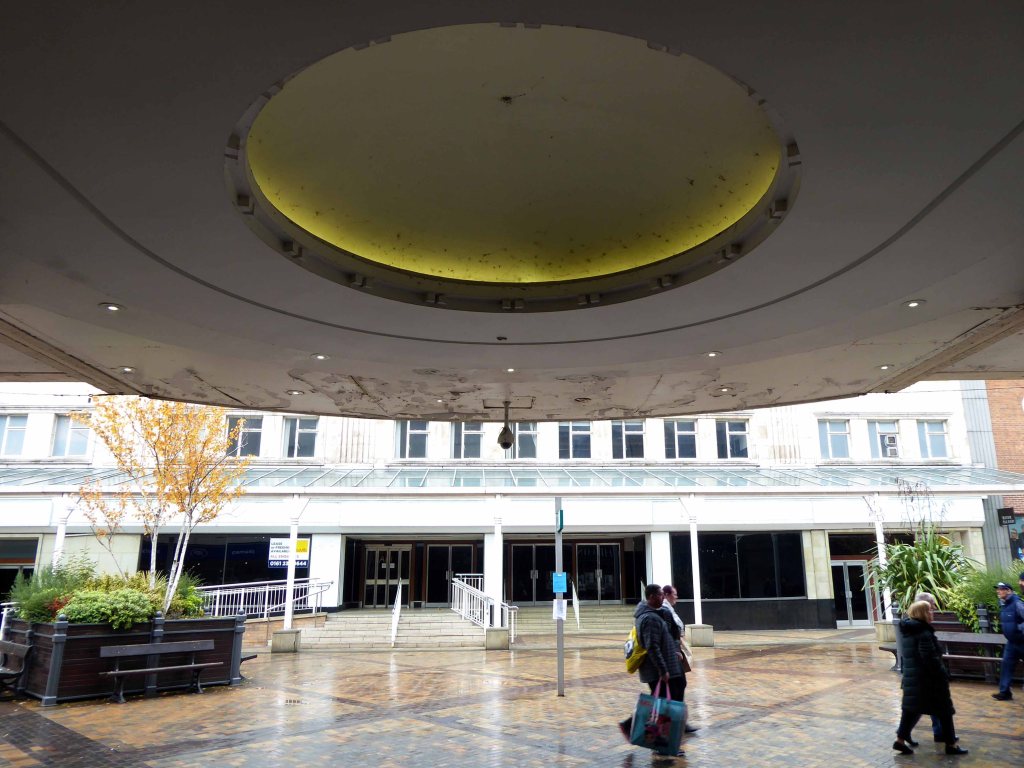
Note the long lost decorative panels of Adlington Walk.
Many thanks to Sean Madner for these archive images.
Mainstream Modern has recorded its conception and inception, as part of a wider appreciation of Greater Manchester’s architecture.
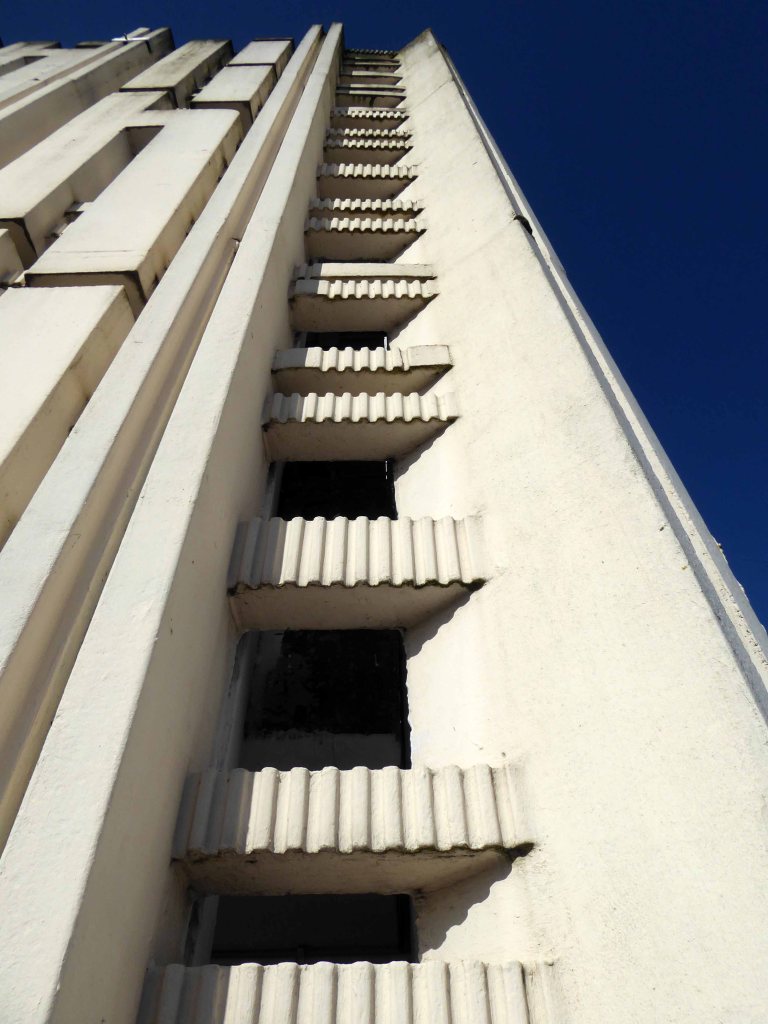
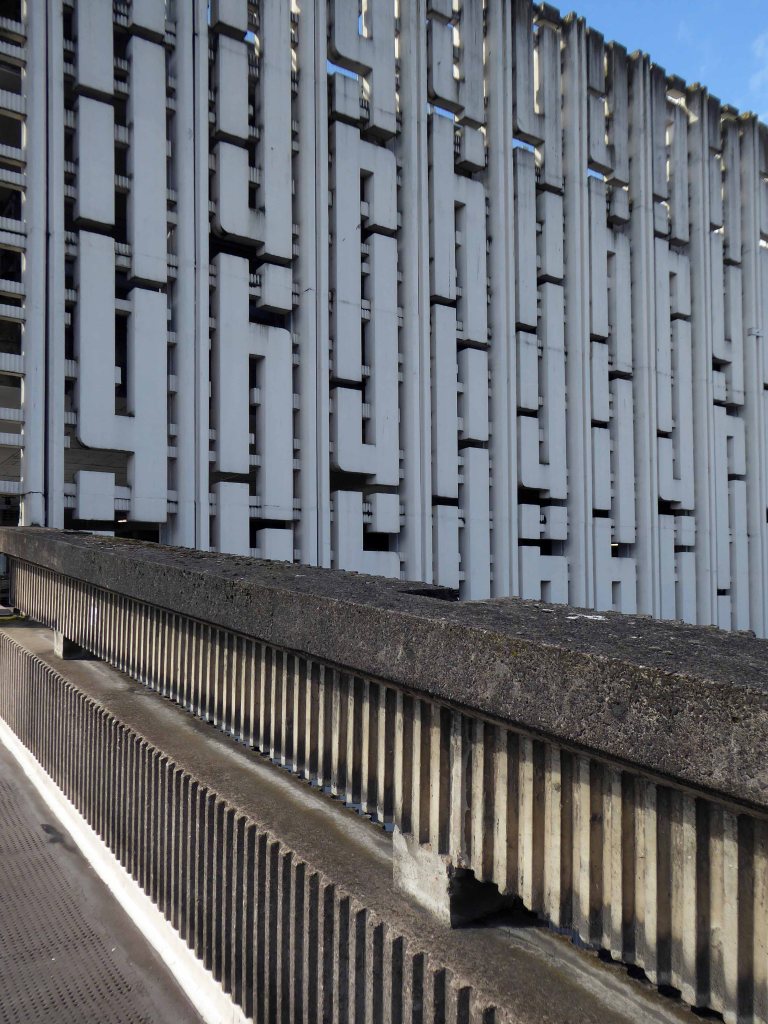
The architects were Bernard Engle and Partners in conjunction with officers of Stockport Corporation and the centre opened in 1965. The separation of pedestrians and cars, the service areas, the multi level street, the city block that negotiates difficult topography to its advantage, are all planning moves that are of the new, ordered and systemised, second wave modernism in the UK. The aggregate of the highways engineering, the urban planning and the shifting demands of retailers frequently arrived at a form and order such as this. In this way Merseyway is unremarkable, it’s like many other centres in many other towns – consider the rooftop landscape of Blackburn. It is, however, typical and has been typically added to and adjusted during its life and presents perhaps the face of the last retail metamorphosis before the out-of-town really made the grade.
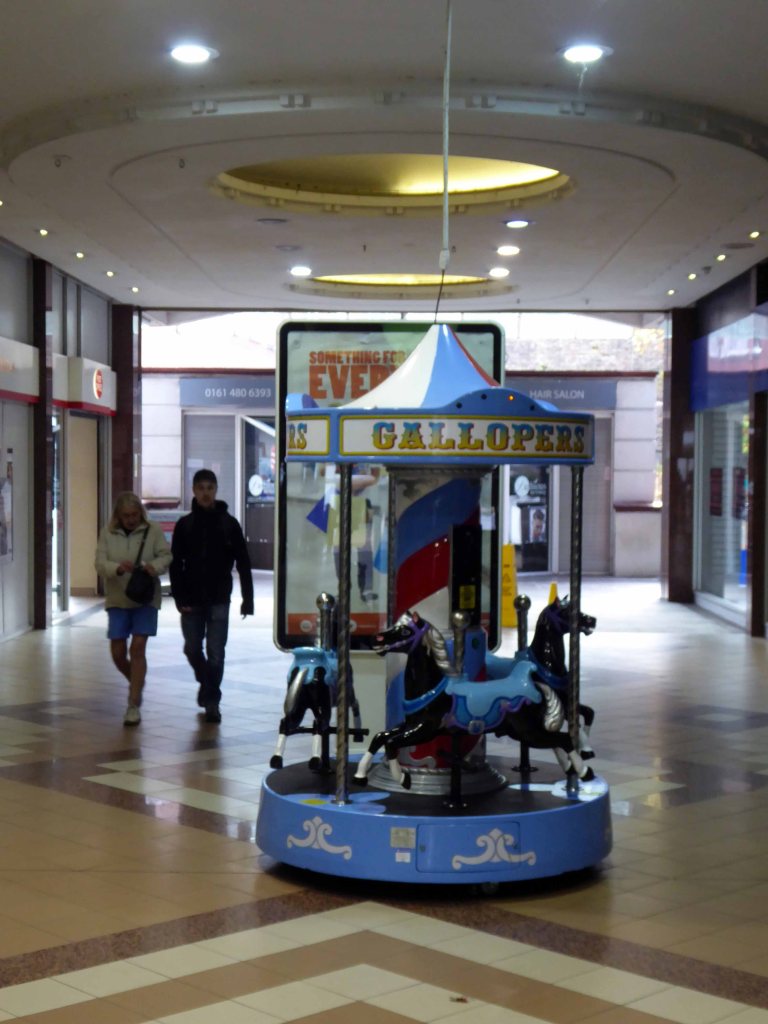
Each successive remaking and remodelling has seriously compromised the integrity of the development. We are left with dog’s dinner of poorly realised Post Modern and Hi-Tech additions, along with a failure to maintain the best of the original scheme.
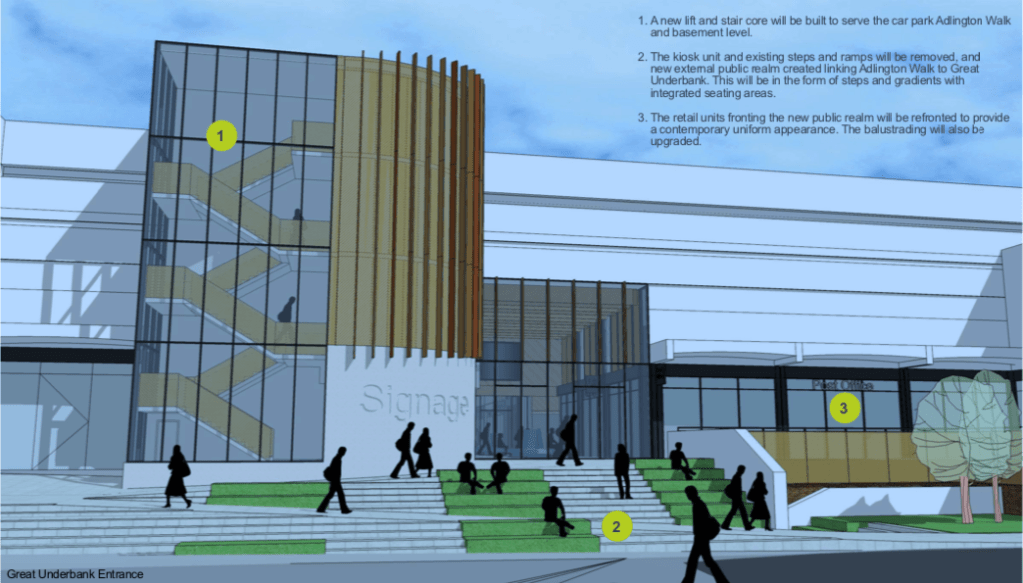
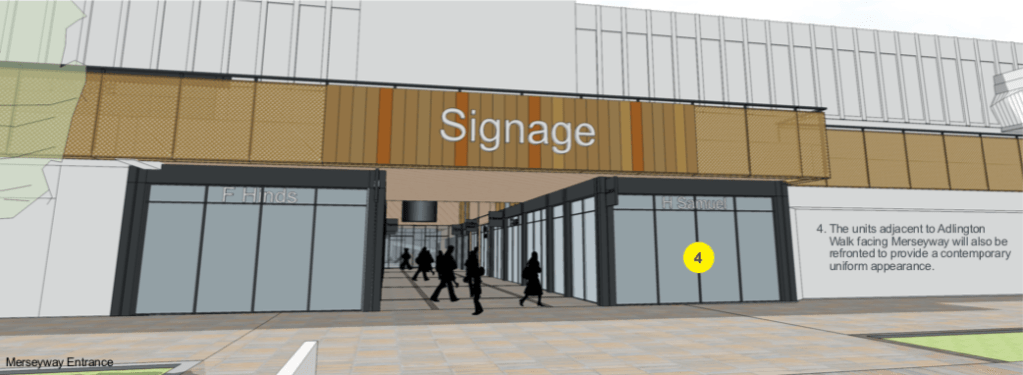
Plans are now afoot to revamp the precinct – starting with Adlington Walk.
Proposed facilities include a soft play space, new seating, buggy stores, high grade toilets, parent and child facilities and a multi faith prayer room.
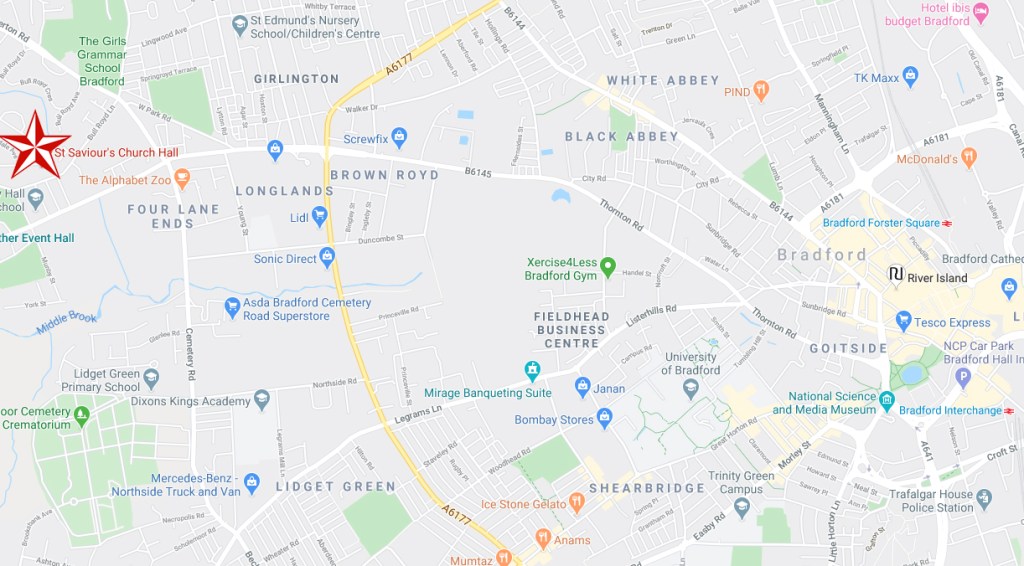
What a delight – the stunning surprise that awaits you, around one particular suburban corner of Bradford.
I had called ahead, to arrange the visit – the Reverend Dorothy Stewart had gracefully invited me to join members of the community and herself, one wild and windy Wednesday.
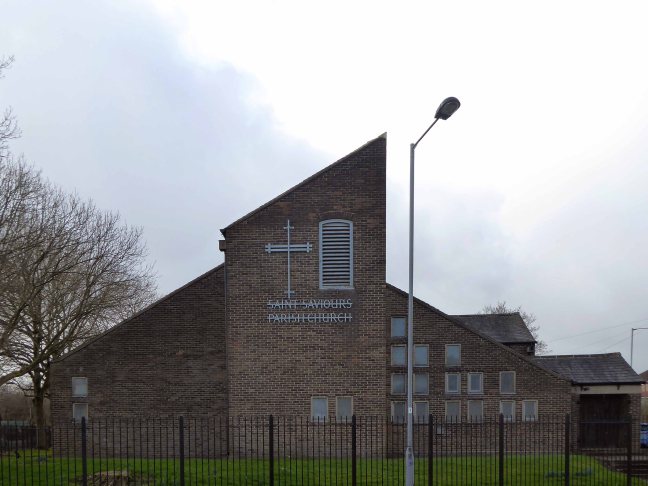
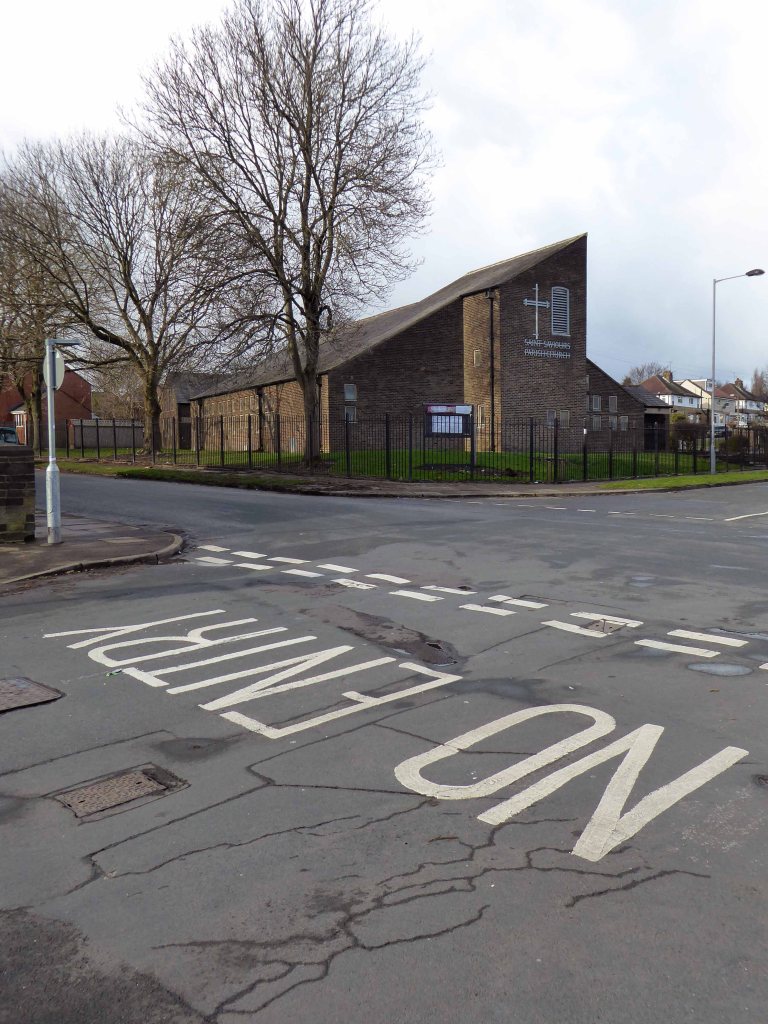
Steel frame and shuttered concrete with dark red brick walls in stretcher bond, and slate roofs.
Church of 1966 with attached hall of 1971, both designed by architect George Pace. Characterised by asymmetric arrangement of roofs, exposed structure and juxtaposition of materials, this is a complete and largely unaltered example of Pace’s work. The asphalt roof and windows are in very poor condition. Repair works to the roof were carried out in 2016 with funding from the National Lottery Heritage Fund’s former Grants for Places of Worship scheme.
The exterior is stark and angular, the body of the church is a broad rectangle with no division between nave and chancel, with a bell tower to the east, vestries to the north-west and a chapel to the west. At the western end is the church hall, added in 1971. Externally a single asymmetric roof covers the main body of the church, rising at the east end to form a mono-pitch section over the altar area and incorporating the bell tower. There is a porch at the east end of the north side, and a transept with a double pitch roof. To the west is a single storey, flat roof section with an entrance to the north, extending to the transept. West of the main body of the church on the south side is a separate roof, housing a chapel. To the west is the church hall, with a north-south asymmetric roof. All the windows are rectangular, of varying sizes, with plain glass in rectangular leaded lights. Lintels over the doors and the parapet of the flat roofed block are of shuttered concrete, as are the window surrounds.
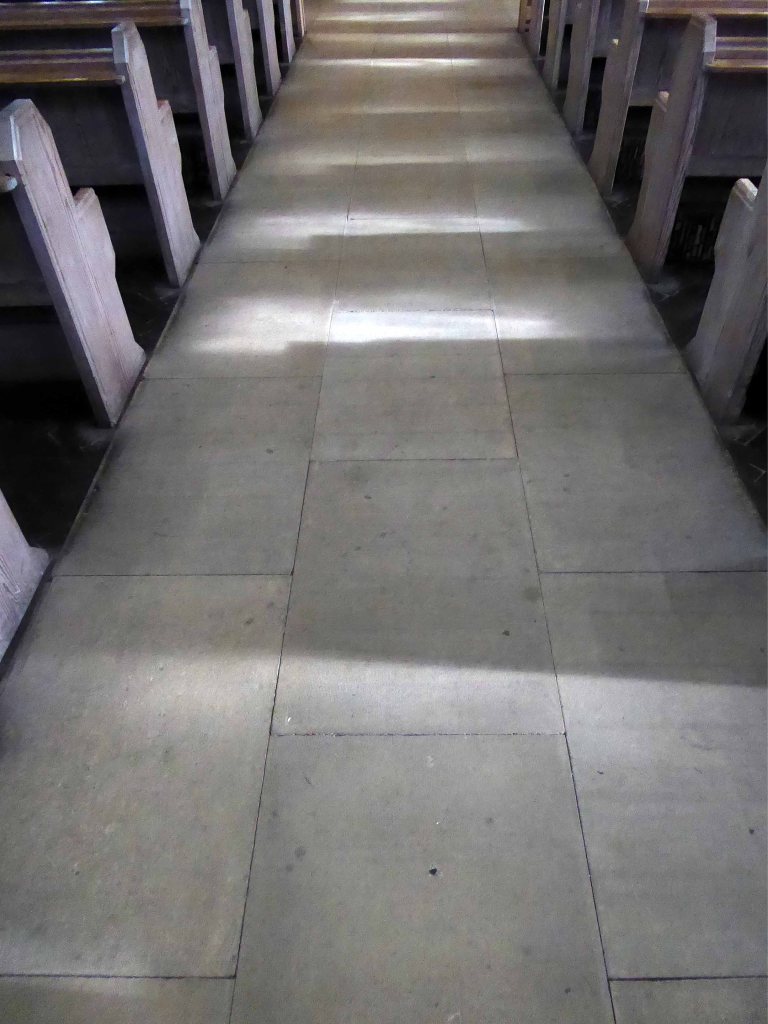
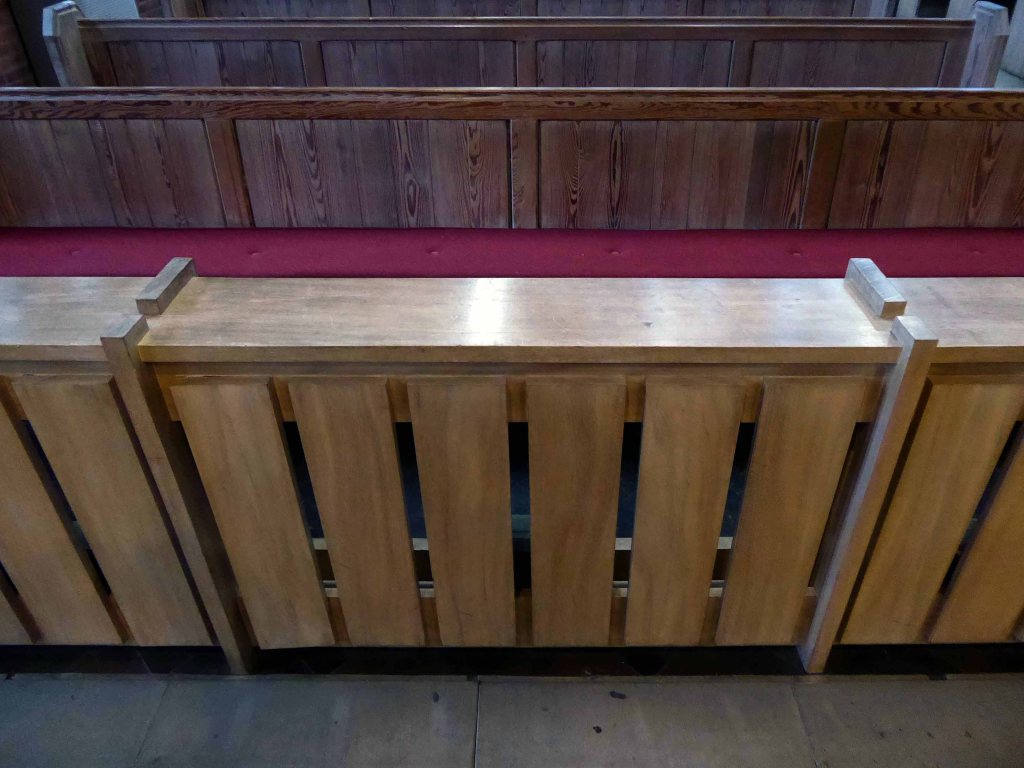
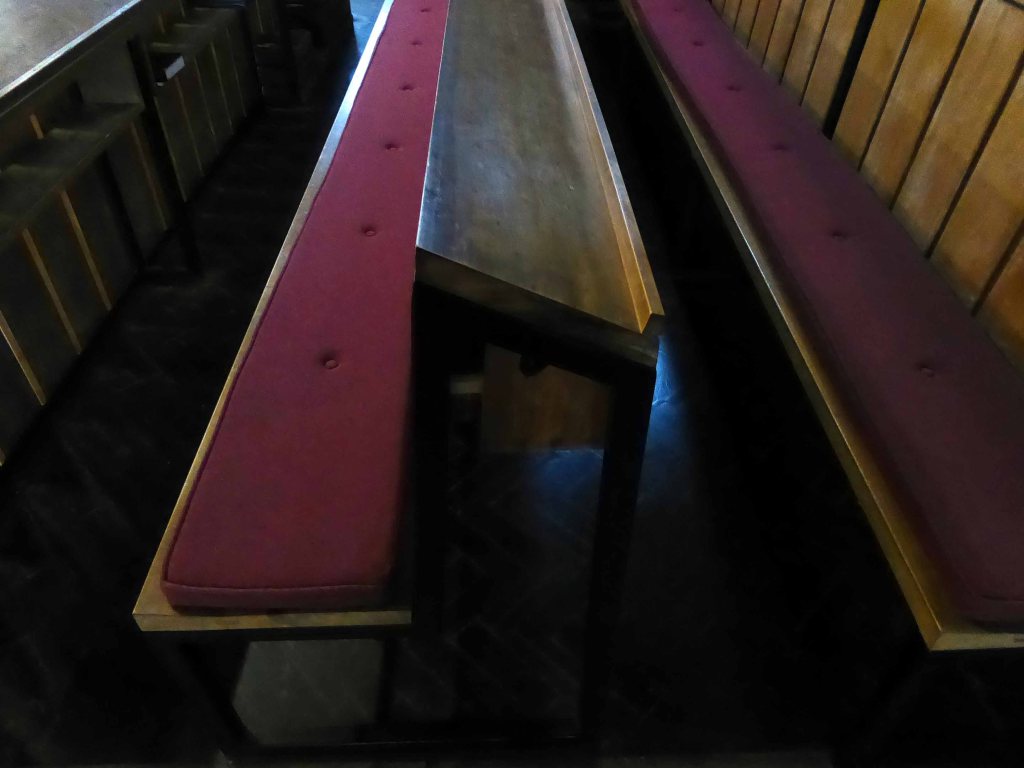
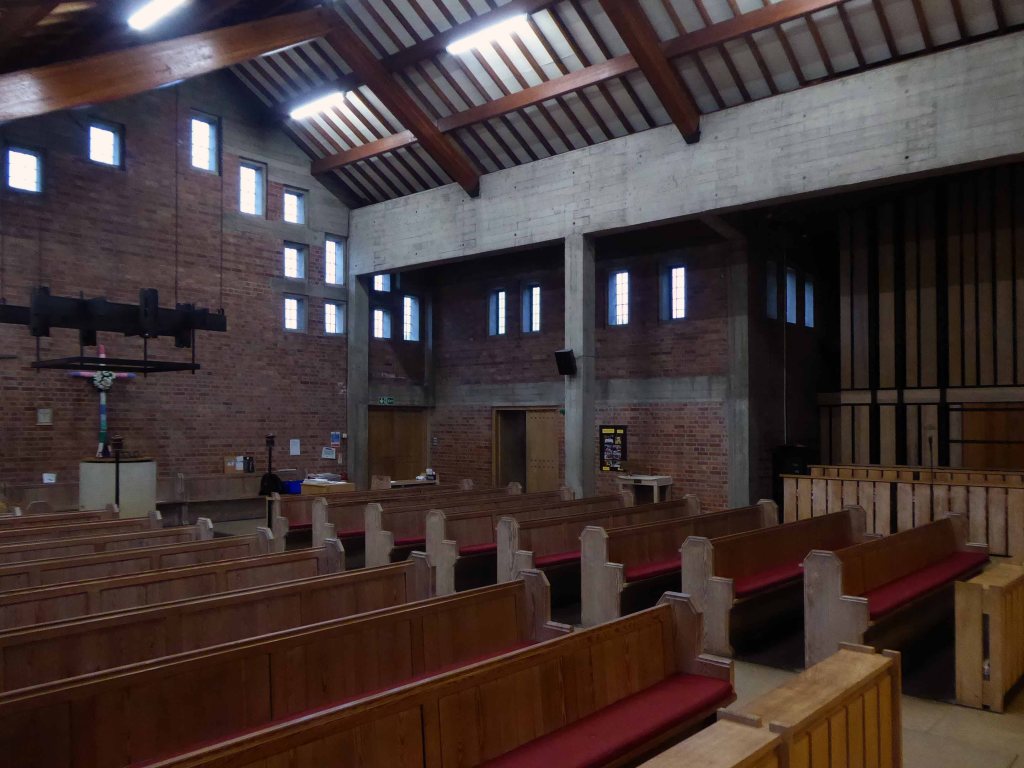
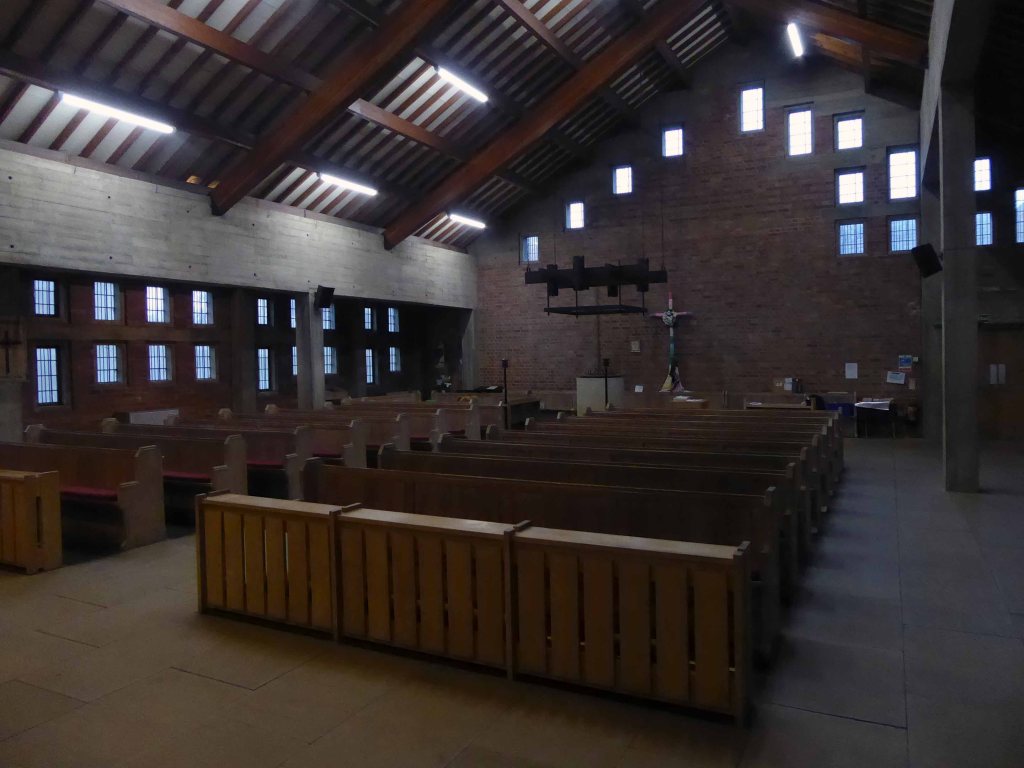
The body of the church contains Victorian stripped oak bench pews derived from St John’s church in Little Horton, arranged with a central aisle. To the north side is a range of contemporary pews in wood with vertical slatted fronts, in front of the organ, recovered from St. Chrysostom’s Bradford , by Driver and Haigh of Bradford, which is housed in the transept with a matching front of vertical wooden slats.
Let’s take a look.
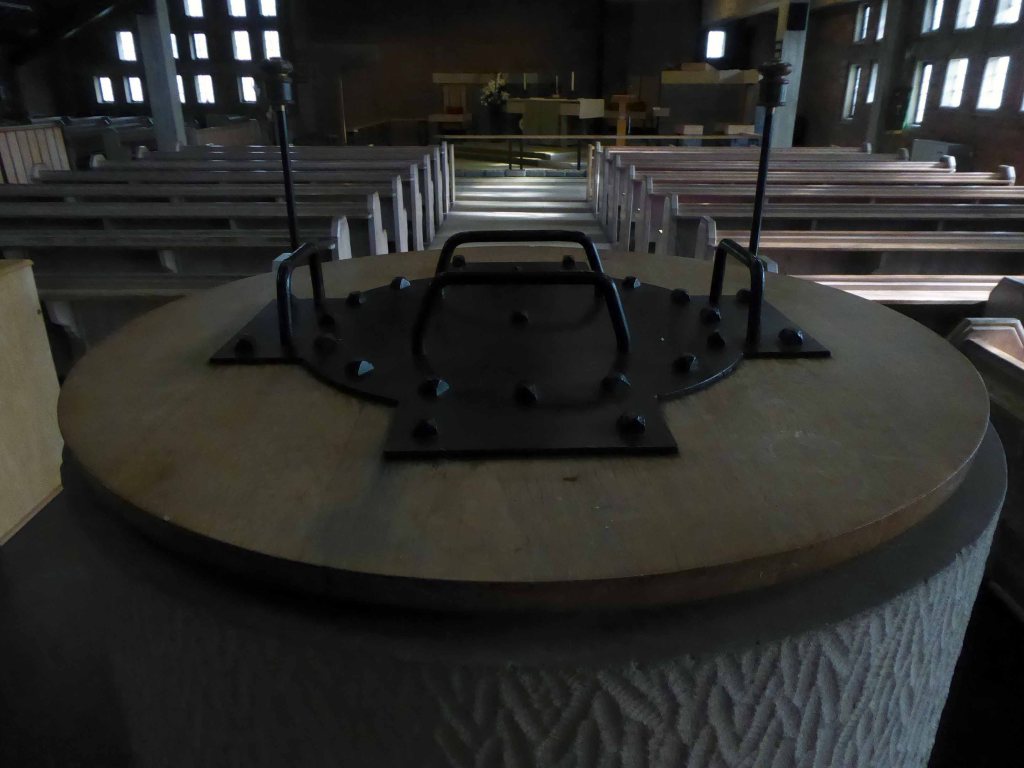
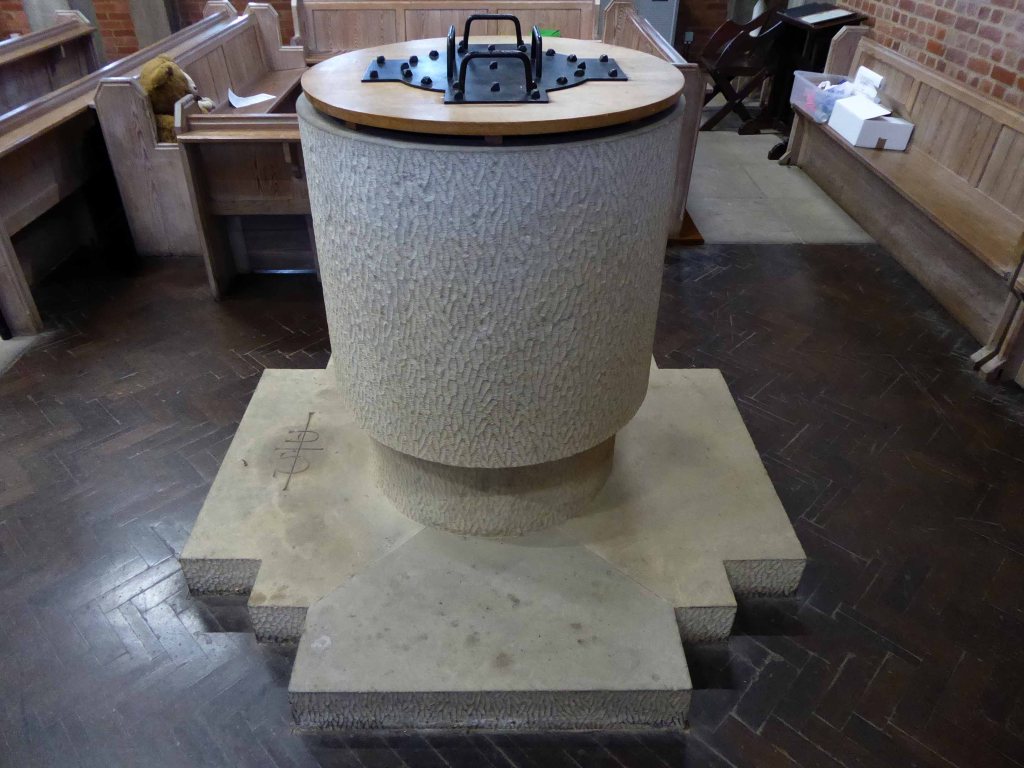
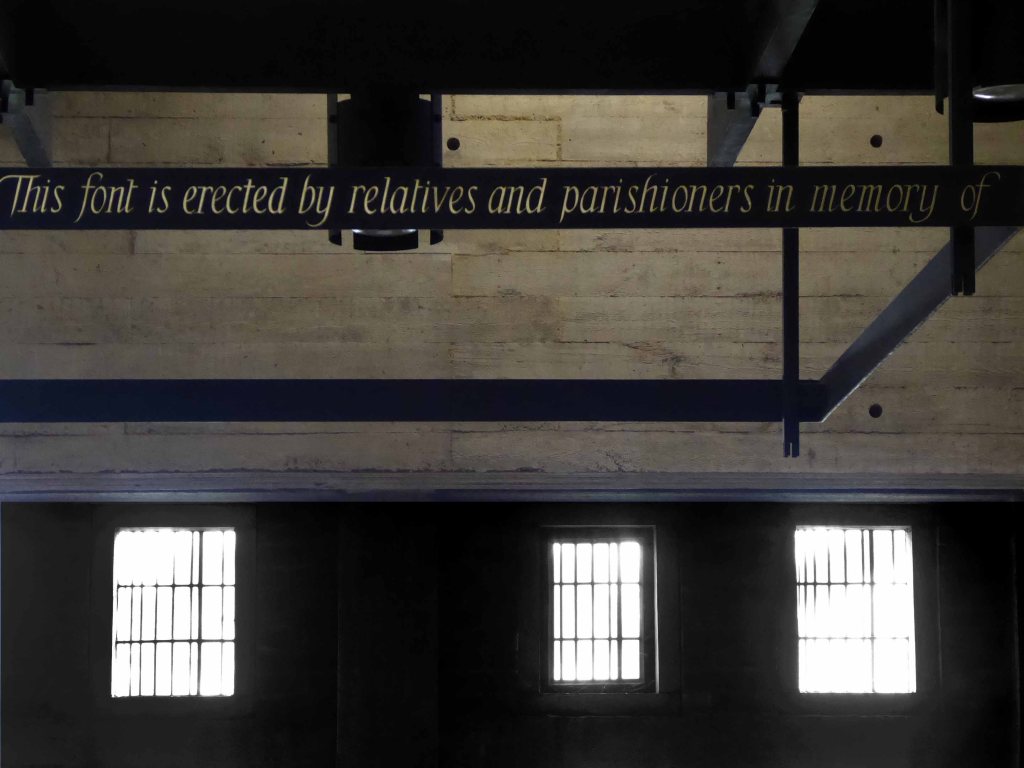
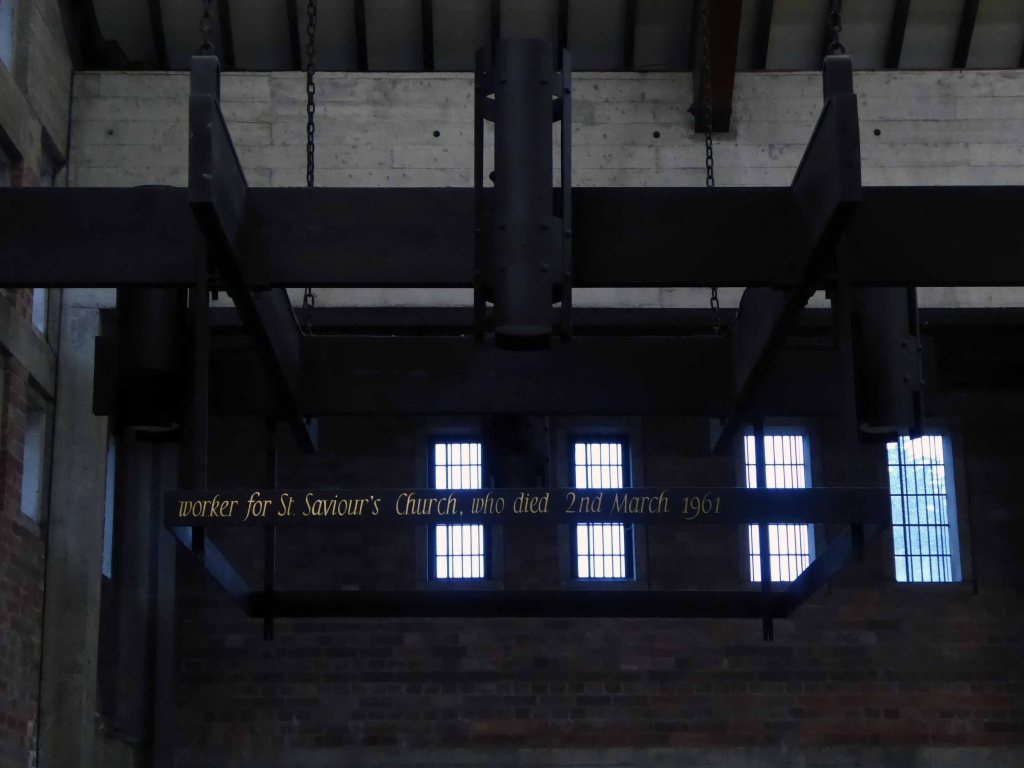
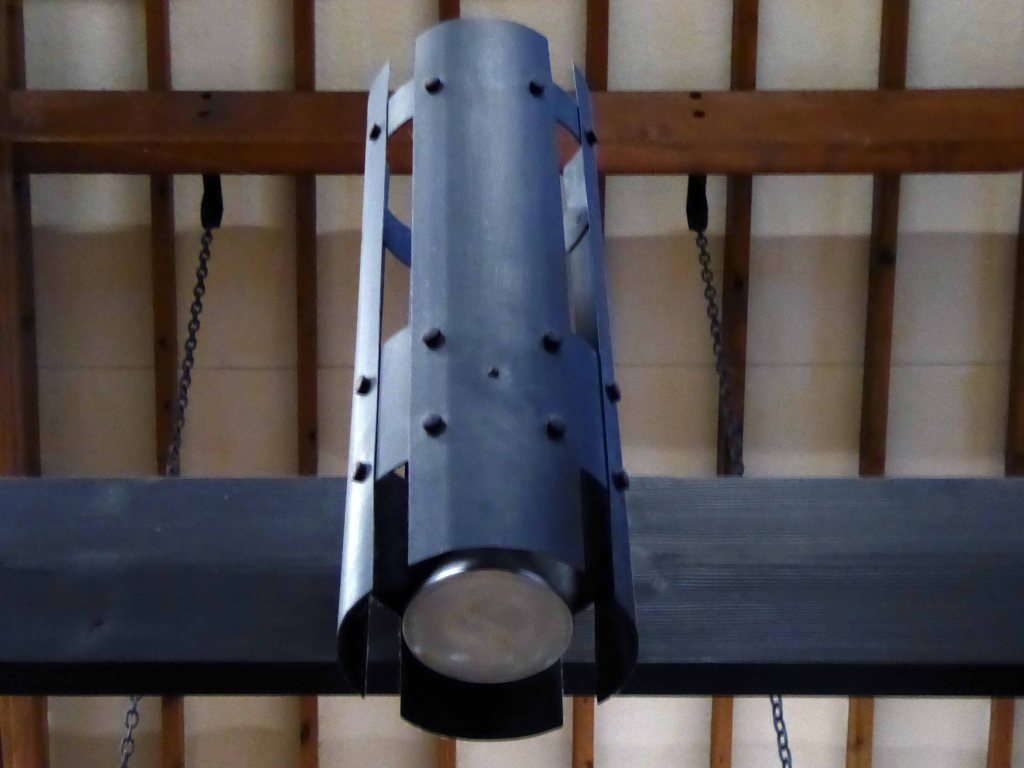
To the rear is the cylindrical font in white concrete with a wooden lid, set on a raised platform. Suspended above it is a large light fitting in black metal, inscribed around the edges with the words: “This font is erected by relatives and parishioners in memory of/ Beatrice May Parkin, for over forty years a Sunday School teacher and/ worker for St Saviour’s Church, who died 2nd March 1961”.
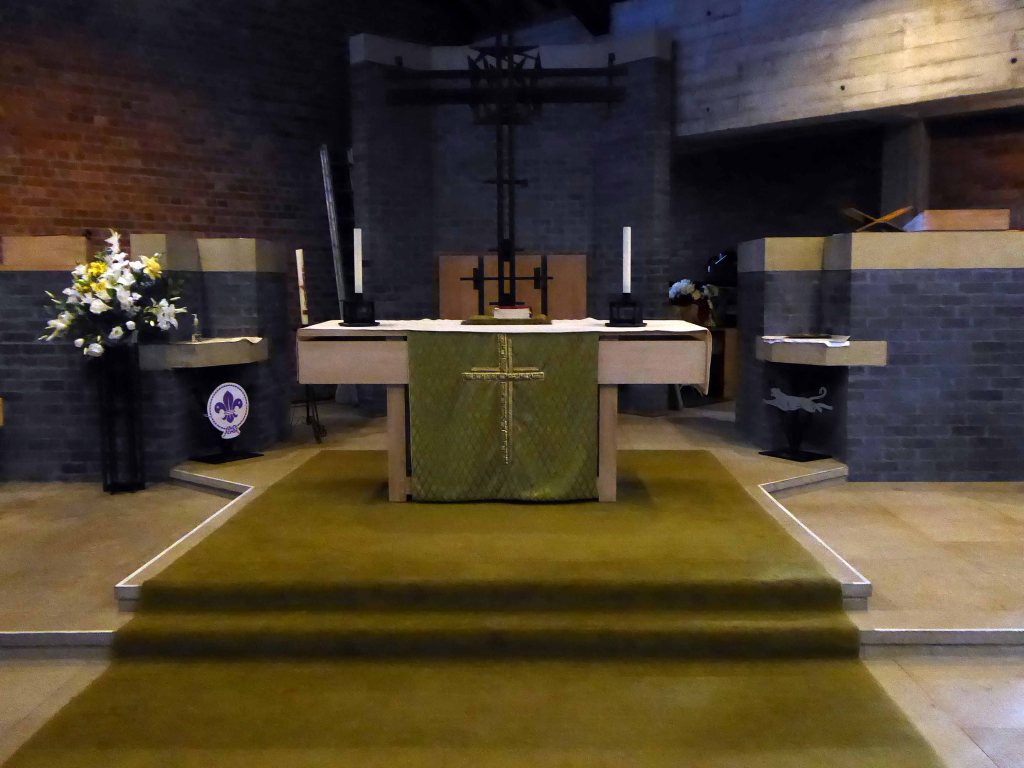
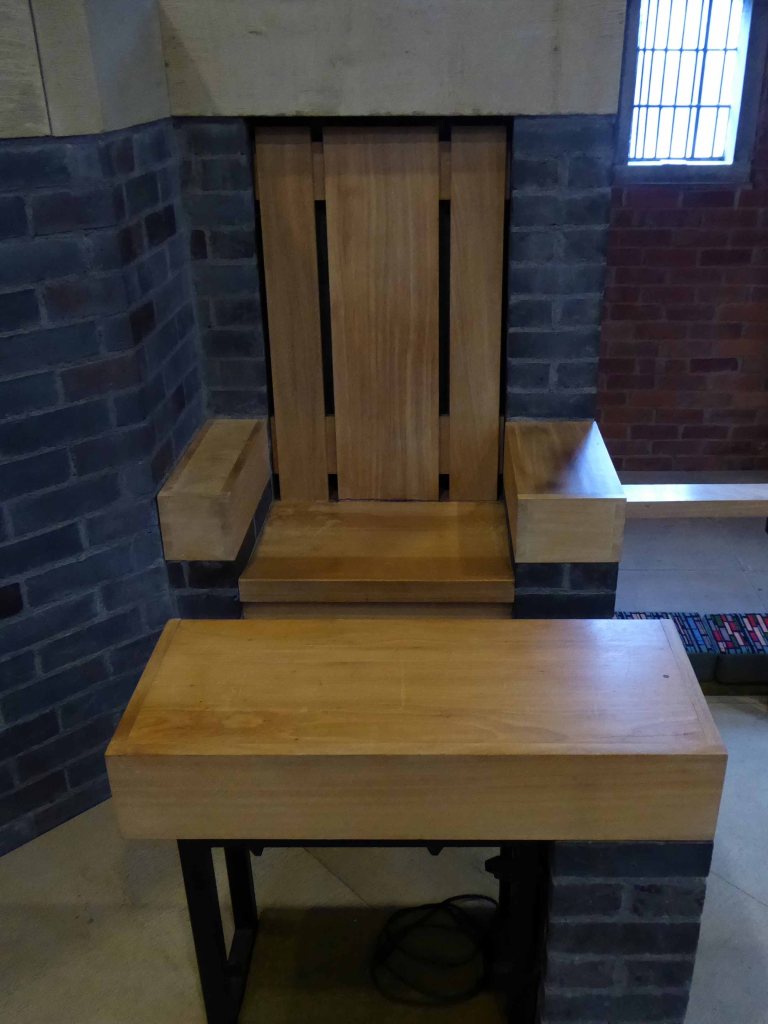
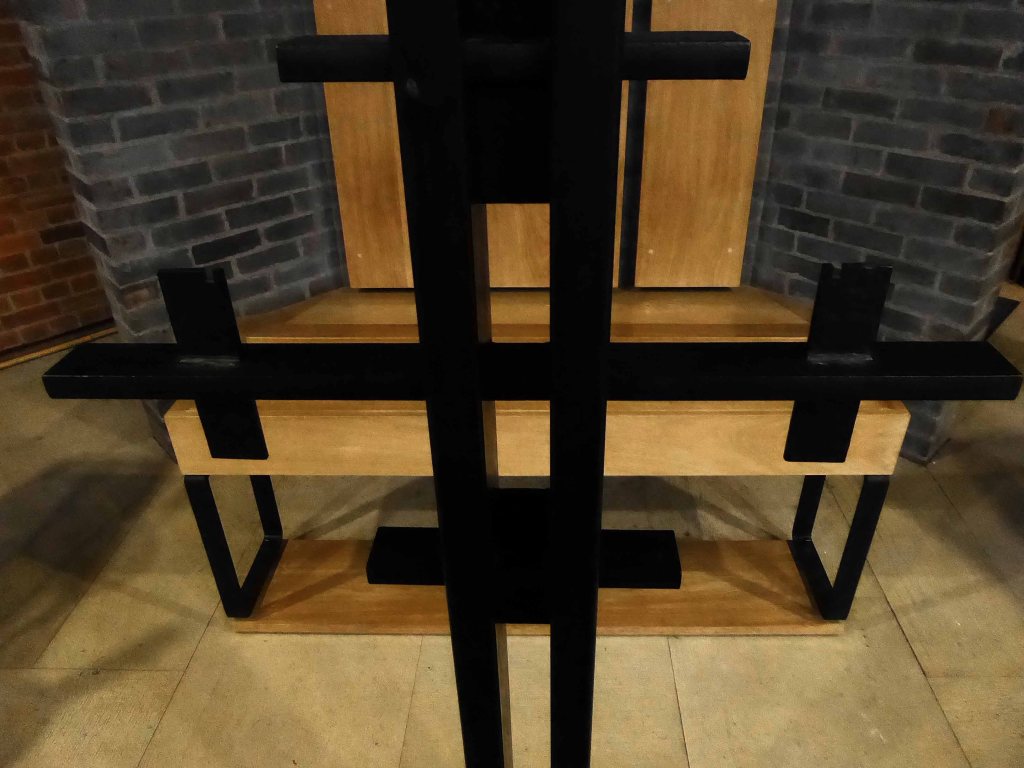
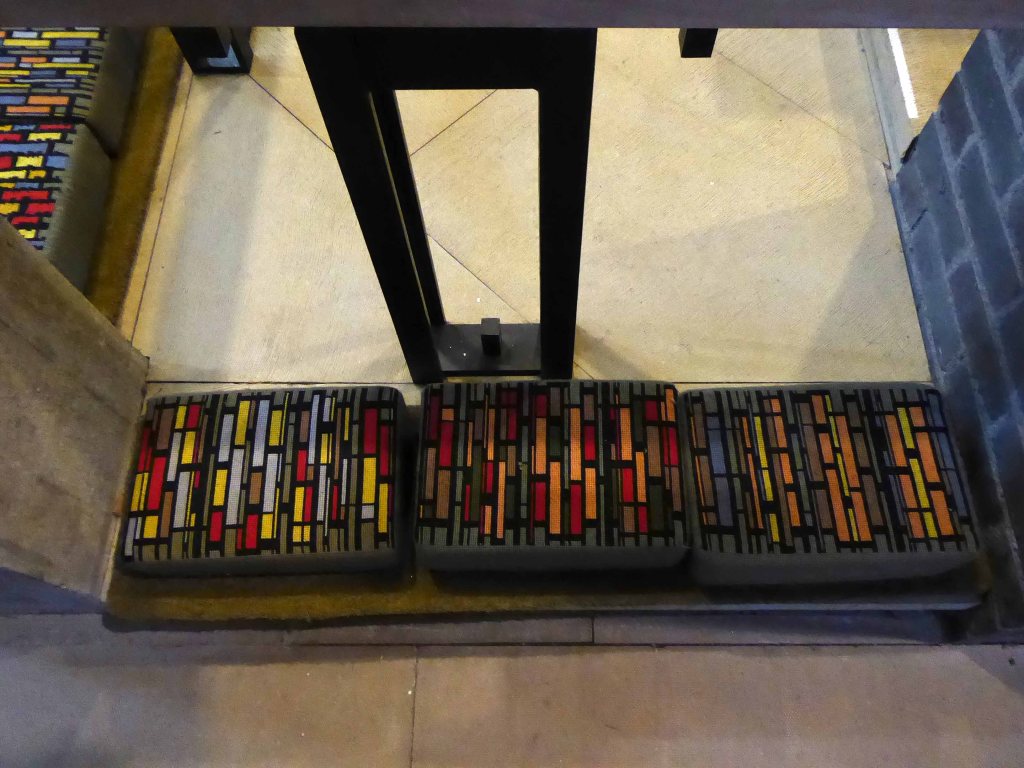
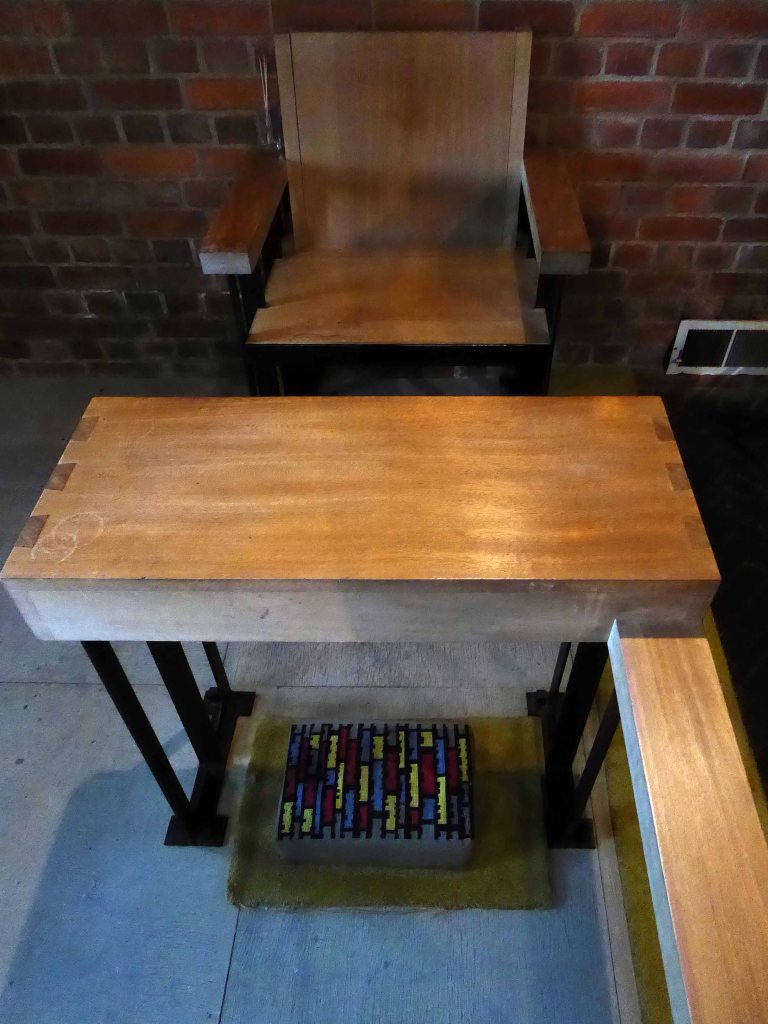
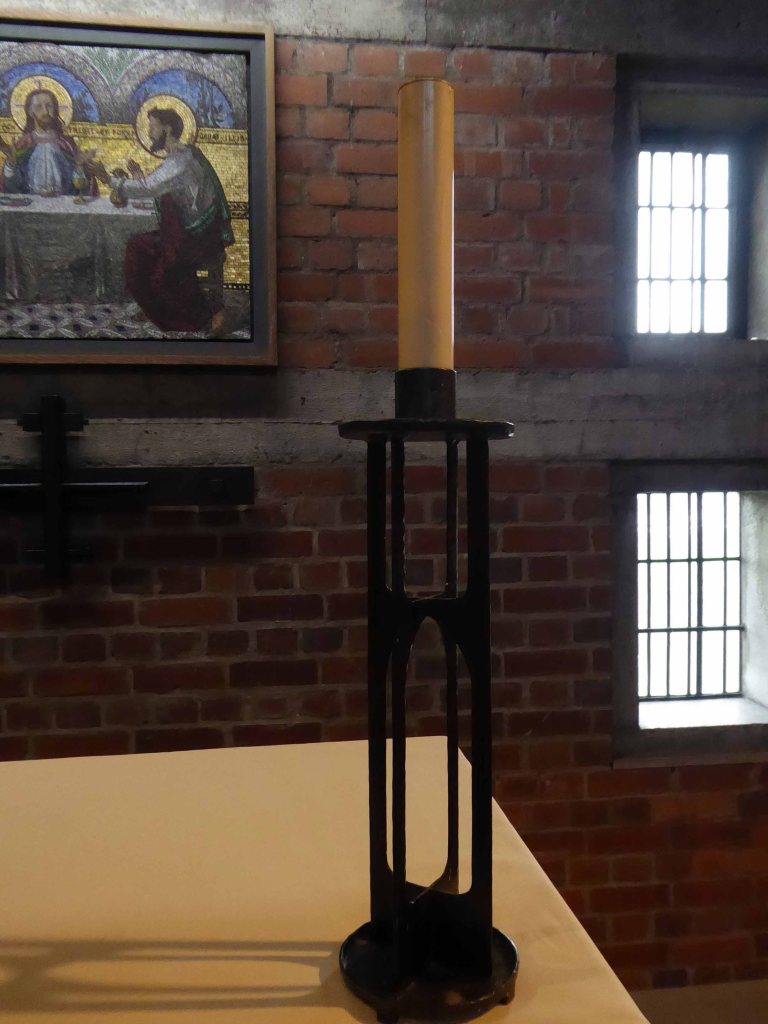
There is no separate chancel, and the finishes throughout are exposed brick, shuttered concrete and limed oak. The sanctuary area is in the south-east corner and consists of a tall angled purple brick reredos, topped with concrete, and a lower detached, angled purple brick pillar to each side each holding a shelf and incorporating a wooden seat. In front of the central reredos is an integral wooden bench with three backs, and a large black metal cross in the same style as those on the exterior but with more elaboration, fixed to the floor on a raised concrete block. To the fore is the altar table on a low raised platform. The whole is enclosed within an altar rail of iron and wood, open to the centre.
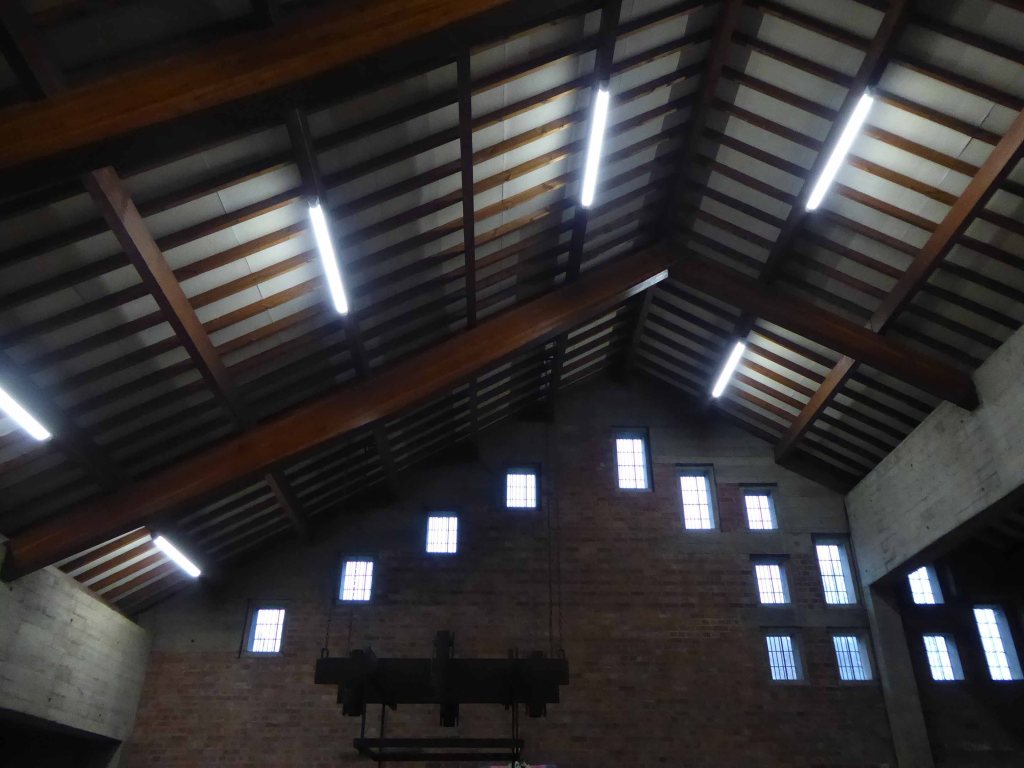
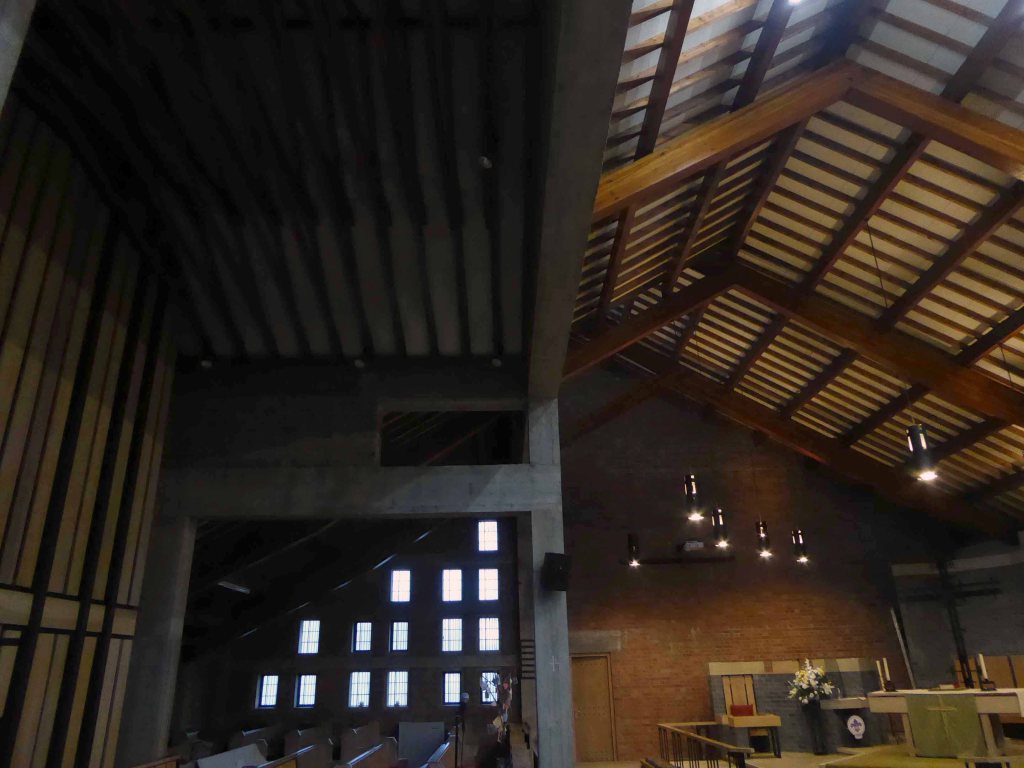
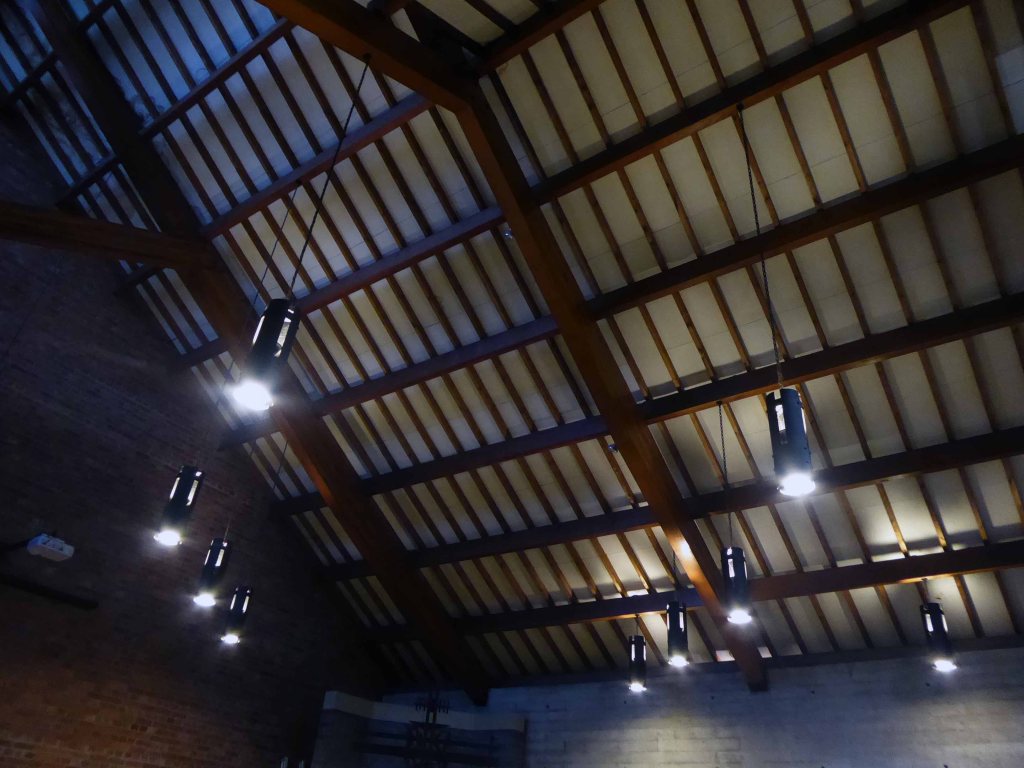
The main roof has exposed wooden trusses supported on concrete pillars and beams, with rafters and purlins also exposed creating a latticework pattern.
The whole interior order is orderly, calm and coherent, a simple consistency of materials and architectural intent.
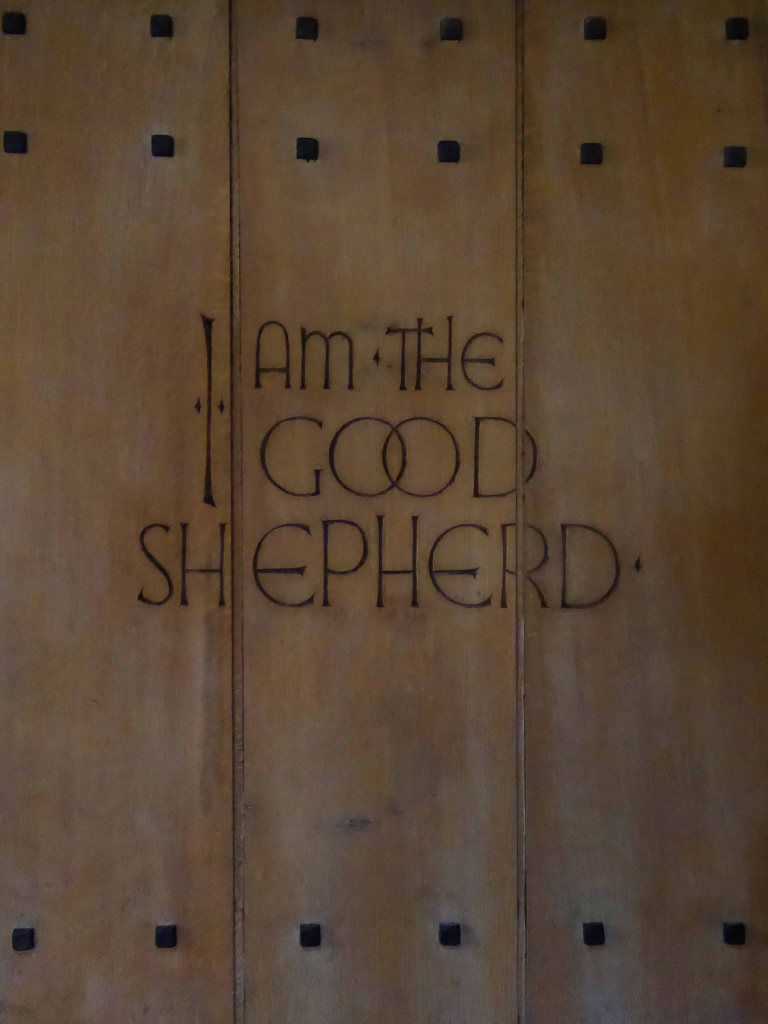
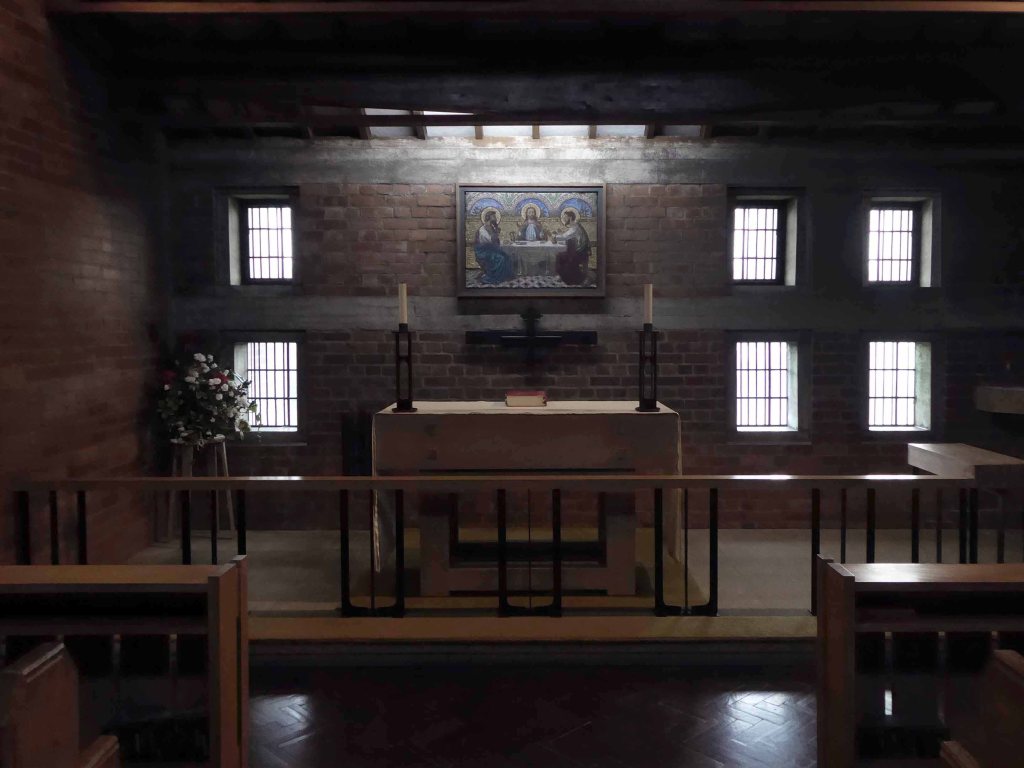
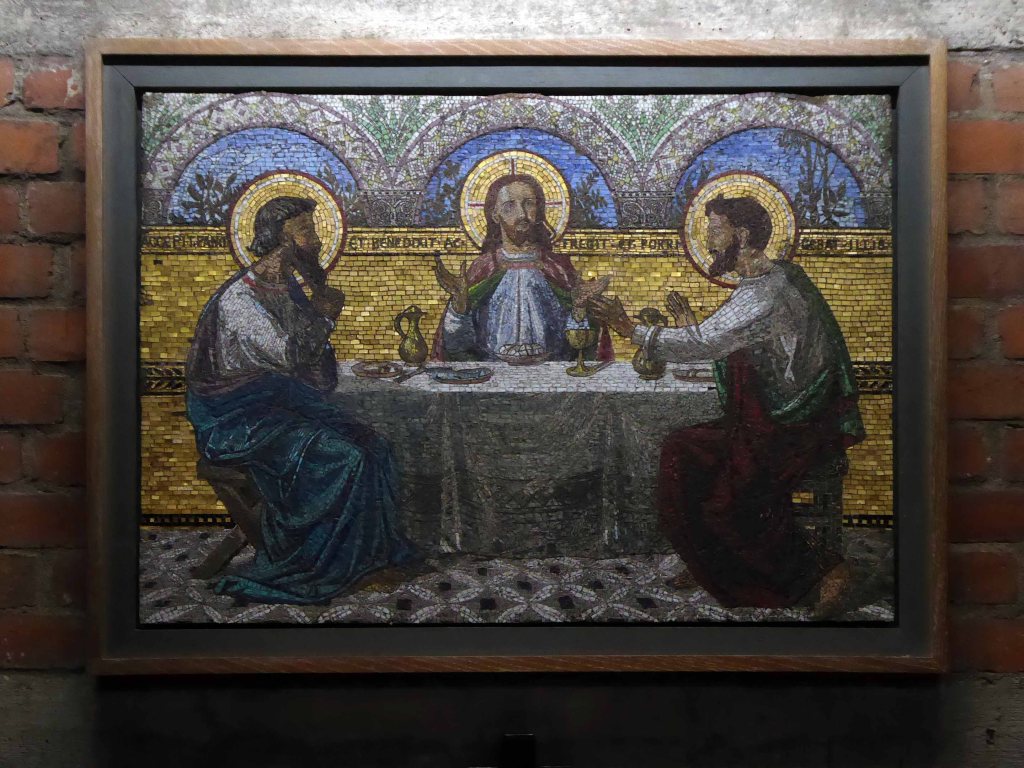
The solid wood, studded chapel door has the words “I am the Good Shepherd” engraved on it. The chapel has exposed beams and rafters, and an altar to the north with iron and wood altar rail in front. Pews are as in the church. There is a mosaic plaque behind the altar which came from St John’s church in Little Horton.
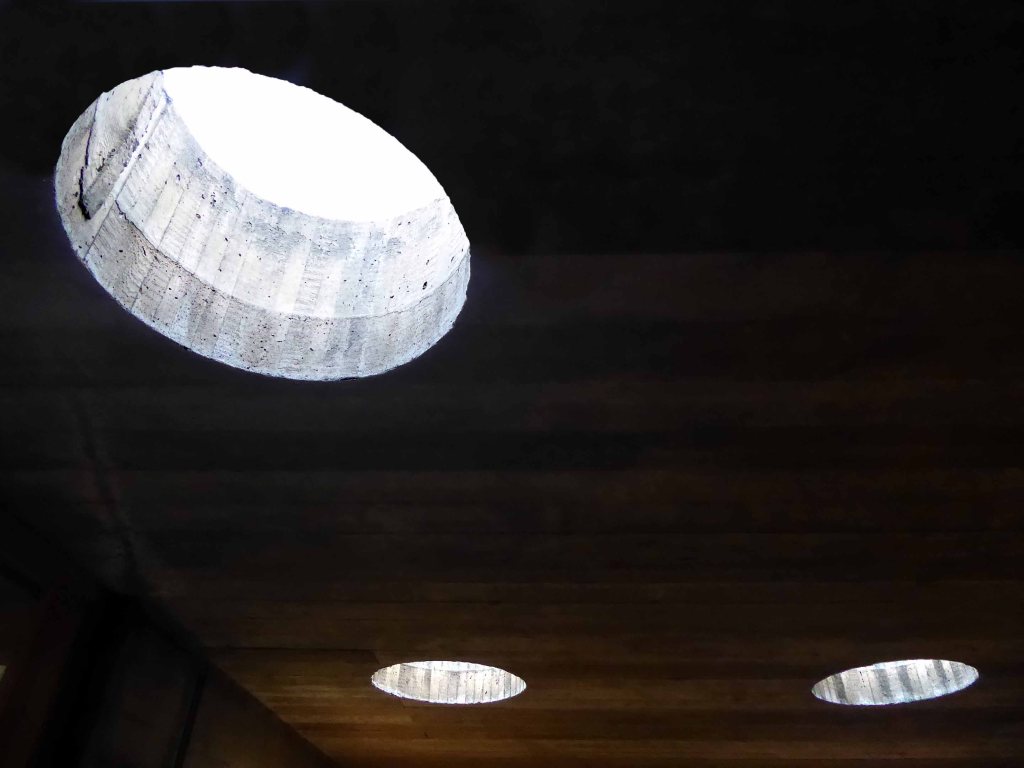
Beyond to the west is the narthex, with shuttered concrete ceilings pierced by circular skylights, exposed brick walls and doors to the chapel, service rooms and hall.
Such a pleasure to visit such an enchanting church – it was a precious privilege to be welcomed by the congregation, warden and Reverend Dorothy.
The Theatre De-Luxe was built in 1911 at the corner of Anlaby Road and Ferensway with its entrance in Anlaby Road and its auditorium along the side of the pavement in Ferensway. Kinematograph Year Book of 1914 lists 600 seats and the owners as National Electric Picture Theatres Ltd.
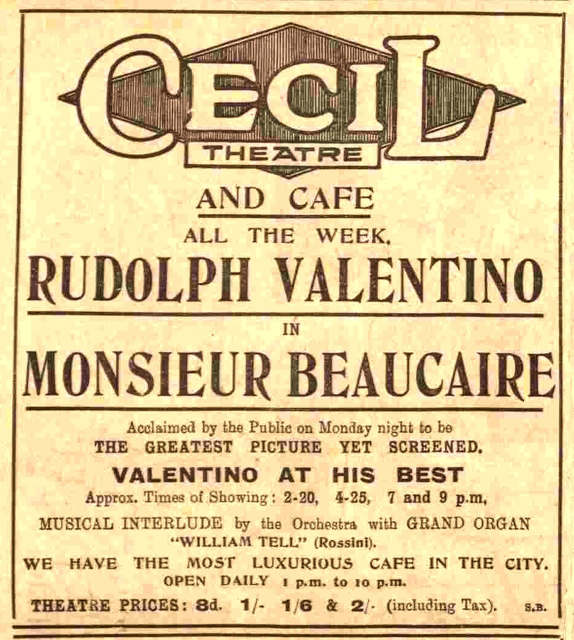
In 1925, the theatre was rebuilt to a radically altered ground-plan and renamed the Cecil Theatre. The opening night was Monday 28th September 1925. The entrance was in a curved façade at the Anlaby Road/Ferensway corner. The alignment of the new, larger, auditorium was at right angles to Ferensway, and parallel to Anlaby Road. Effectively, the length of the Theatre De-Luxe auditorium became the width of the Cecil Theatre’s. Seating was 1,700 with 700 of those in the balcony, according to the Hull Daily Mail. The Cecil Theatre was originally designed for silent movies with a full orchestra pit. KYB 1931 lists it having Western Electric sound installed; and a 1931 aerial view shows that a brick horn-chamber had been built onto the wall at the rear of the stage. It had a 35 feet wide proscenium. The cinema also had a café attached.
The Cecil Theatre’s demise came during bombing on the night of 7/8 May 1941 when German incendiary bombs reduced the building to a shell; and it remained like that until demolition in 1953.
Work on the new Cecil Theatre was begun in April 1955 and it was opened on 28th November 1955 with 1,374 seats in the stalls and 678 in the balcony.
Architects: Gelder & Kitchca
At the time of opening it had the largest CinemaScope screen in the country measuring 57 feet wide, and the first film shown was Marilyn Monroe The Seven Year Itch. The proscenium was 60 feet wide, and the cinema was equipped with a Marshall Sykes 3Manual/15Ranks organ, which was opened by organist Vivian Newall.
There was also a 100-seat restaurant & bar which in 1971 was converted into a second screen seating 137 (Cecil 2). The following year the main auditorium was spilt into 2 smaller cinemas in the balcony (Cecil 1 & 3 each seating 307) and an entertainment hall in the former stalls which became a Mecca Bingo Club, with Mecca also operating the cinemas.
In the 1980’s it was taken over by the Cannon Cinemas chain. The cinema operation was closed on 23rd March 1992 and the cinemas were ‘For Sale and/or Lease. It was taken over by Take Two Cinemas and renamed Take Two Cinema. It was closed on 27th February 1997 and the two screens in the former circle were stripped out and converted into a snooker club.
Whilst bingo continues in the former stalls area of this post war cinema, the former mini cinemas in the circle still contain the snooker tables, but the space is unused. The screen in the former restaurant/cafe area remains basically intact, but is unused.
I worked at the Cecil in the three years before it closed in the 90’s. MGM owned the place before the Virgin group bought it and closed it. It was a good place to work and an interesting building. Behind the scenes had remained unchanged since Anna Neagle first opened it. The organ had been removed however but the organ room was still in tact in the bingo section of the building. The fire exits led to long dark corridors that were always being infiltrated by kids sneeking in for a free shows. I understand that this was always the case. The resturant kitchen was fully intact and resembled something out of a Kubrick film – very spooky place!
Bilko2000
And so the projectors whirr no more, house is called at the Cecil – possibly the most oddly named cinema in the land.
Happily it remains an imposing presence in the centre of the city – a mammoth modern temple of entertainment – reflecting the ever changing tastes of the day and the morning after.
The Humber Ferry was a ferry service on the Humber between Kingston upon Hull and New Holland in Lincolnshire which operated until 1984, after the completion of the Humber Bridge in 1981.
I walked from Hull to Hessle – but you were always on my mind.
Glimpsed once or twice from a train, I’d never been up close and personal.
The Humber Bridge was opened by Her Majesty Queen Elizabeth II in 1981.
It is one of the marvels of modern engineering and was, until 1998, the longest single span suspension bridge in the world but there are now five other longer bridges of this type. However it is still the longest that can be used by pedestrians.
The bridge is 2,220 metres long and the towers, which are farther apart at the top than the bottom to compensate for the curvature of the earth, are 155 metres high. It was built at the narrowest point of the estuary known as the ‘Hessle Whelps’ and when completed it was admired for its design and elegance, but reviled by others as a bridge from nowhere to nowhere, the crossing comprises a dual carriageway with walkways for pedestrians and cyclists on both sides.
Although approval to build the bridge was granted in 1959 work did not begin until 1972 due to difficulties in financing the project. In 1966 Harold Wilson, the Prime Minister of the day, allowed Barbara Castle, the Minister for Transport, to give permission for the bridge to be built, hoping that the announcement would be a vote winner in the forthcoming Hull North by-election.
Construction Team
The consulting engineers for the project were Freeman Fox & Partners . Sir Ralph Freeman had produced the first ideas in 1927 and in the early 1930s the cost of the project was estimated at £1.725 million and that the bridge would be unlikely to recoup the construction or maintenance costs. In 1935 he had an idea for a 4,500-foot suspension bridge for the Humber Tunnel Executive Committee. Sir Gilbert Roberts produced more ideas in 1955 for a bridge with a 4,500-foot central span, costing £15 million, to be paid for by East Riding County Council and Lindsey County Council. Once it was likely that a bridge would be constructed, Bernard Wex produced the design in 1964 that was actually built. The bridge was built to last 120 years.
The architect was R. E. Slater ARIBA. The administration building for the tolls, was designed by Parker & Rosner. The landscaping was designed by Prof Arnold Weddle. Wind tunnel testing took place at the National Maritime Institute at Teddington and the road deck is designed for wind speeds up to 105 miles per hour (170 km/h).
Even on the calmest of days the power and sway, push and pull of wind and tide is an uplifting, hair-raising and visceral experience.
The elegantly engineered giant towers above as you gaze from the shore.
An elegy to human endeavour in concrete and steel.
The bridge is of necessity firmly anchored to the ground.
The walkway wide and high astride the estuary.
The tall towers towering above.
The whole structure tied down, anchored and suspended securely.
The mid brown waters of the Humber flowing gently below.
I walked back and to in the company of a handful of fellow travellers, on foot and bike, one of life’s best ever free rides, and reluctantly bade farewell as I headed home to Hull.
But just like just like General MacArthur I came through andI shall return.
My previous Hull walk was was linear, along the Humber Estuary open and expansive.
This was a very different kettle of fish – spiralling out of control, rising and falling, walking the ramp, a journey into one’s inner self.
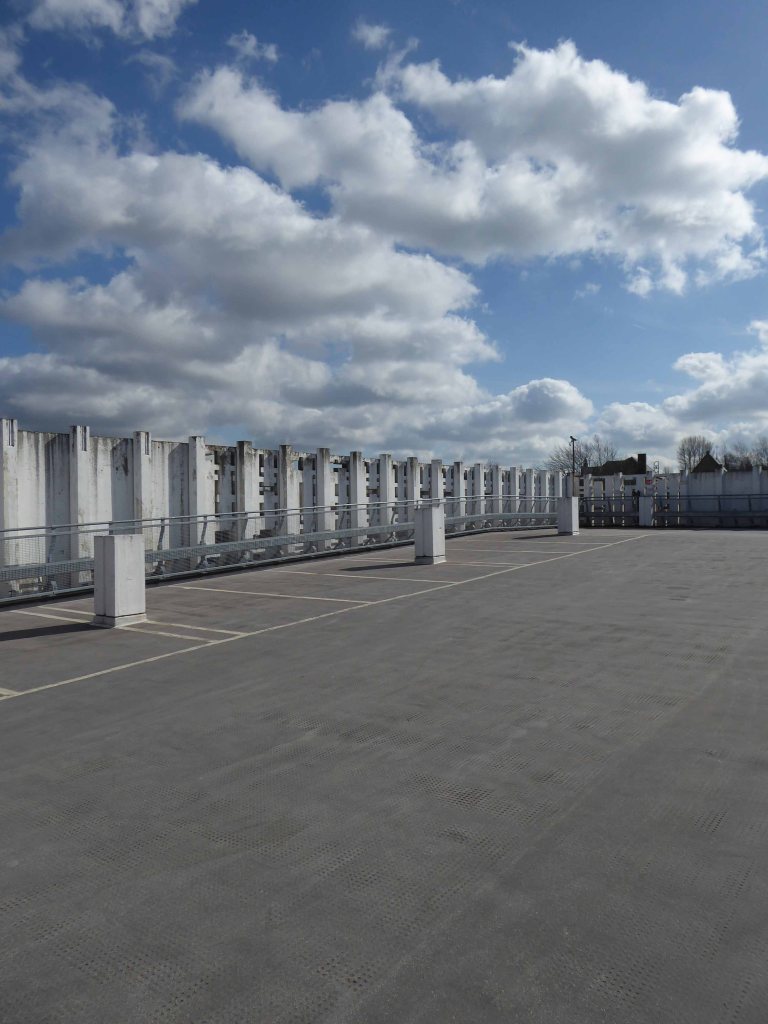
Possibly the worst multi storey I have been in for years.
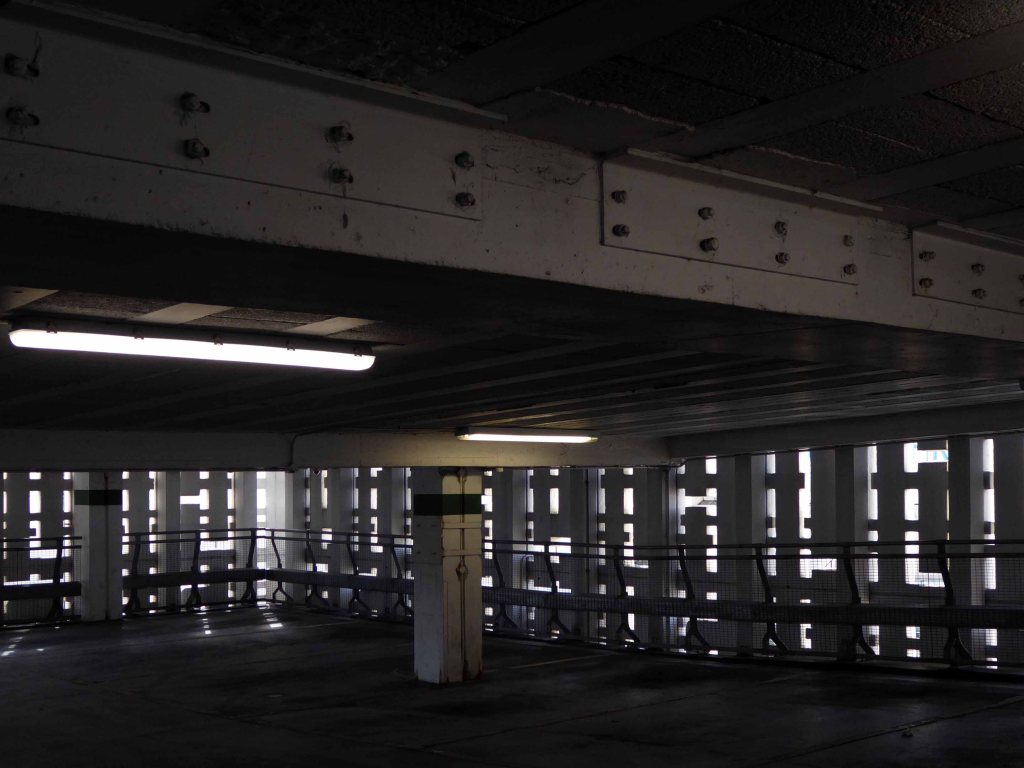
Spooky, filthy, bays too small, machines remote, access tortuous.
Avoid.
So says Nick Shields
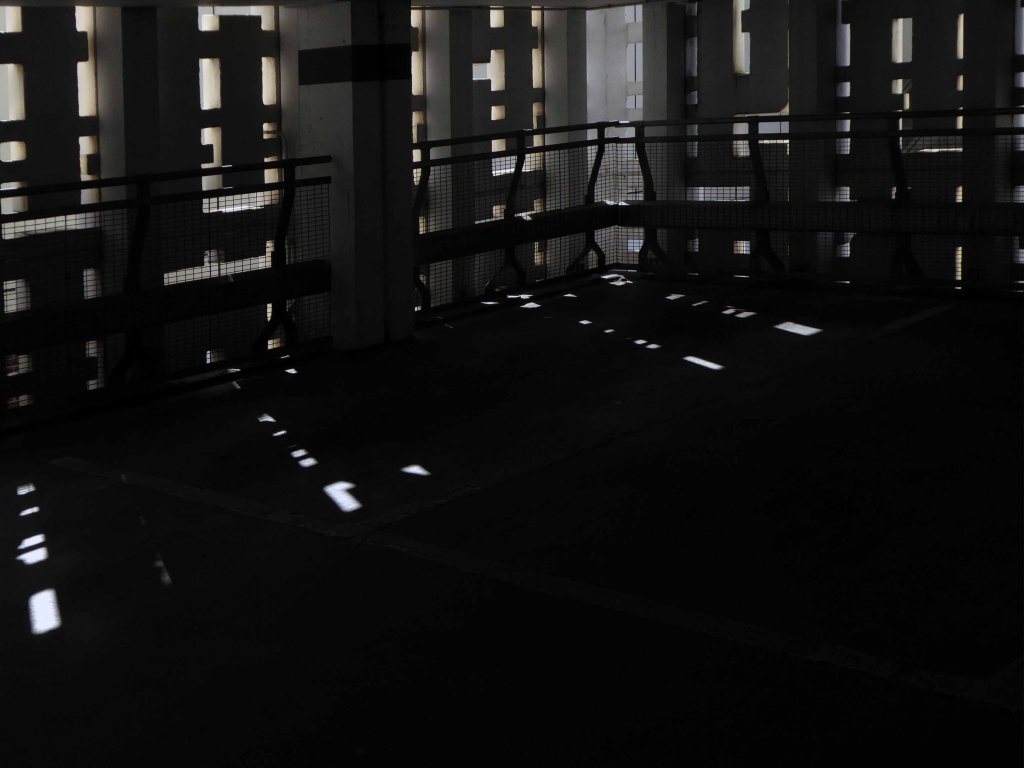
Dark, Gloomy and Rotting .
Looks a good candidate for a location for a crime watch reconstruction.
Quoth Peter Campbell
It’s a multi story multi Storey and no mistake
I couldn’t possibly pass comment, I walk can’t drive, won’t drive – though simply can’t resist exploring car parks.
Though the local paper has identified an issue of fitness to fit.
Heard the one about a city centre car park where you can’t easily park your car?It might sound like a joke but it’s no laughing matter for drivers trying to squeeze into vacant spaces at Hull City Council’s multi-storey car park in George Street.For motorists are finding it increasingly difficult to manoeuvre into its tight parking bays.
I myself navigated the bays with ease, though not without that unique sense of foreboding and unease, generated by an empty concrete carapace where car space, decay and ingress are issues.
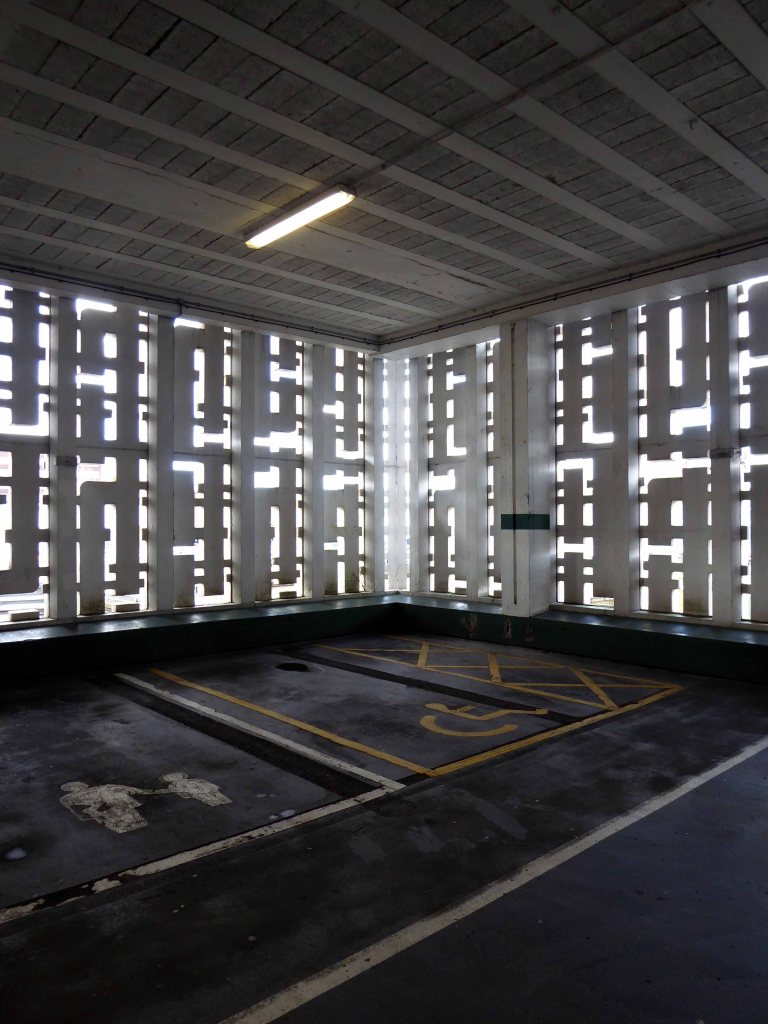
It was designed and developed by Maurice Weston in the 1960s. He had two companies, Multidek and Dekotel, and built circular continuous ramp car parks in Hull, Nottingham, Leicester, Bristol and Bournemouth, some of them also involving circular hotels on the upper floors. In its day, the bays were easily wide enough for most cars. When I used George Street myself, it felt great to use, because you could easily reverse into the pitches and there were no tight corners to negotiate. But car widths have probably got the better of it, these days, and you can’t widen the pitches because of the position of the pillars.
The plans were very complicated to get approved because the George pub was a listed building and the car park had to be built around it. Incidentally, Maurice Weston also had an option to develop the wasteland on Ferensway in the 60s, but his hotel and entertainment centre project didn’t get past the council.
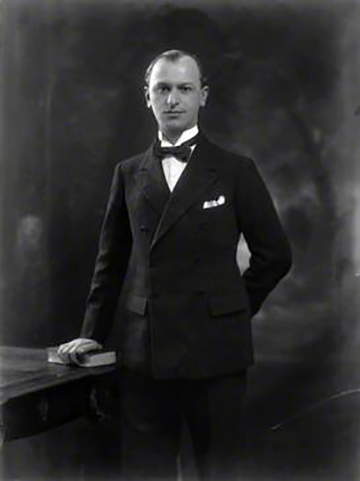
Born Novogrudok, Belarus, then part of Russia, his Jewish family were named Schimschlavitch, his father a cotton merchant. The family emigrated to England in 1890 to avoid conscription and settled in Manchester, probably choosing their new name from Port Sunlight.
Sunlight was apprenticed to an architect in Manchester in 1904 and by 1907 had his own practice in St Ann’s Square. Reputedly, by 1910, he had designed and built more than 1000 houses in Prestwich and claimed that by 1921 he had created more than one million pounds’ worth of property.
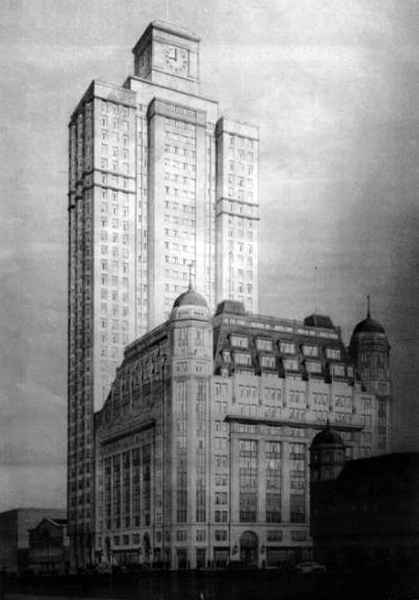
He also designed and built factories and warehouses, but his greatest memorial is Sunlight House – 1932. In 1949, he proposed a 40-storey extension, but it was rejected by the city council.
The Rochdale Society of Equitable Pioneers was a group of 28 that was formed in 1844. Around half were weavers in Rochdale. As the mechanisation of the Industrial Revolution was forcing more and more skilled workers into poverty, these tradesmen decided to band together to open their own store selling food items they could not otherwise afford. With lessons from prior failed attempts at co-operation in mind, they designed the now famous Rochdale Principles, and over a period of four months they struggled to pool one pound per person for a total of twenty eight pounds of capital. On 21 December 1844, they opened their store with a very meagre selection of butter, sugar, flour, oatmeal and a few candles. Within three months, they expanded their selection to include tea and tobacco, and they were soon known for providing high quality, unadulterated goods. By 1900, the British co-operative movement had grown to 1,439 co-operatives covering virtually every area of the UK.
The Cooperative Wholesale Society dominated a whole swathe across the east of the city and beyond, encompassing manufacturing, banking and insurance.
Fruit and veg distribution.
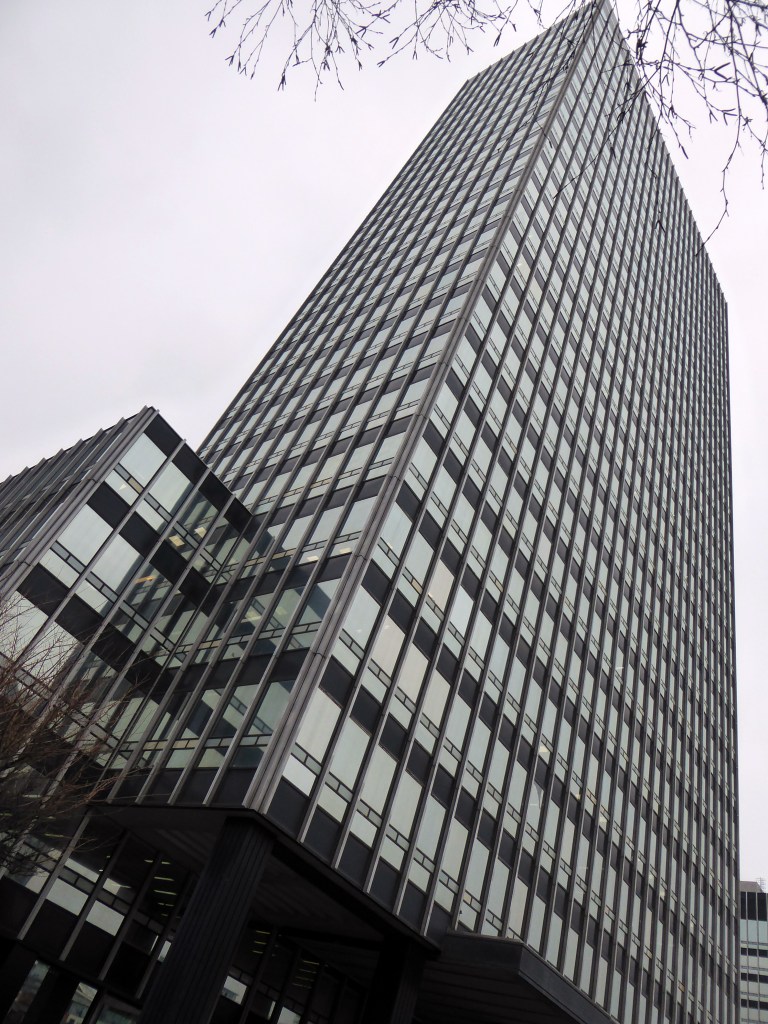
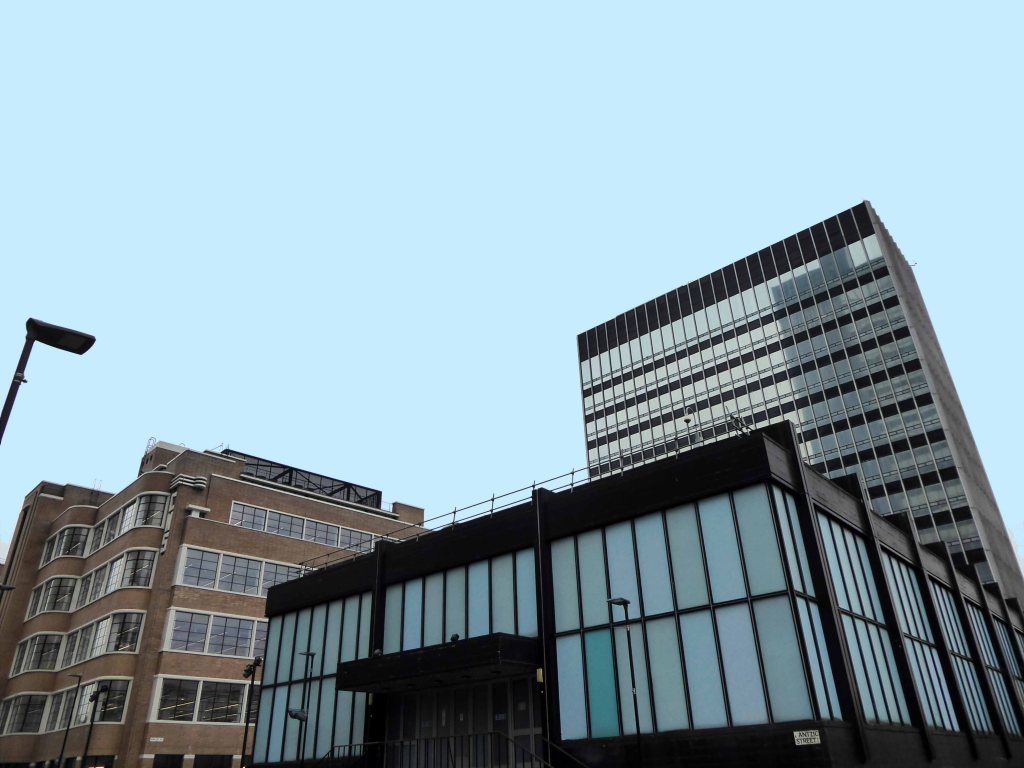
The icing on the empire’s cake being the 1960s CIS Tower.
The Co-Operative Insurance Society (CIS) Chief Office was built between 1959-62. Its aim was to provide the company with a headquarters in the north comparable to anything in London. Operating from ten different sites in Manchester following the war, the company wished to consolidate their activities within a landmark building, and took advantage of a bomb-cleared site on Miller Street. The architect was Gordon Tait, of Sir John Burnet, Tait and Partners, who was brought in to collaborate with the already appointed Chief Architect in Manchester, G S Hay.
CIS Tower was the largest office block to be built since the war, reaching 25 floors in height. The design was heavily influenced by a trip to the United States, which resulted in a taller, more centralised building that made use of curtain walling. The brief was for an open plan office building, to house 2,500 staff.
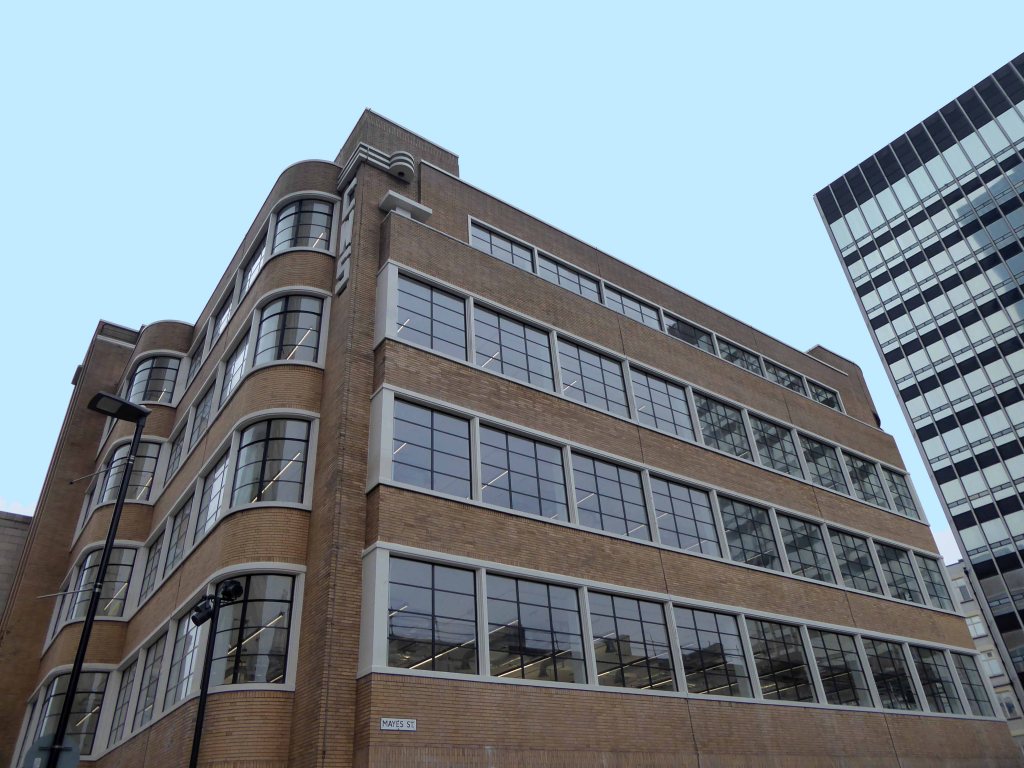
CWS Redfern Building 1928 WA Johnson & JW Cropper – a delightfully functionalist brick moderne building in the northern European manner.
I do how however have a personal preference for the tower’s relatively diminutive neighbour New Century House and Hall
Particularly note must be made John McCarthy’s concrete screen wall water feature.
New Century House was designed by G. S. Hay and Gordon Tait and constructed by John Laing & Son for the Co-operative Insurance Society in 1962. The attached New Century Hall has a capacity of 1,000 people. New Century House and Hall were listed in 1995 as Grade II as a good example of a high-quality post-war office building. It is considered one of the finest modernist towers in the United Kingdom alongside the sister building CIS Tower – It is described in its listing as:
A design of discipline and consistency which forms part of a group with the Co-operative Insurance Society.
I am told that the current work will see the building used as a music school and venue.
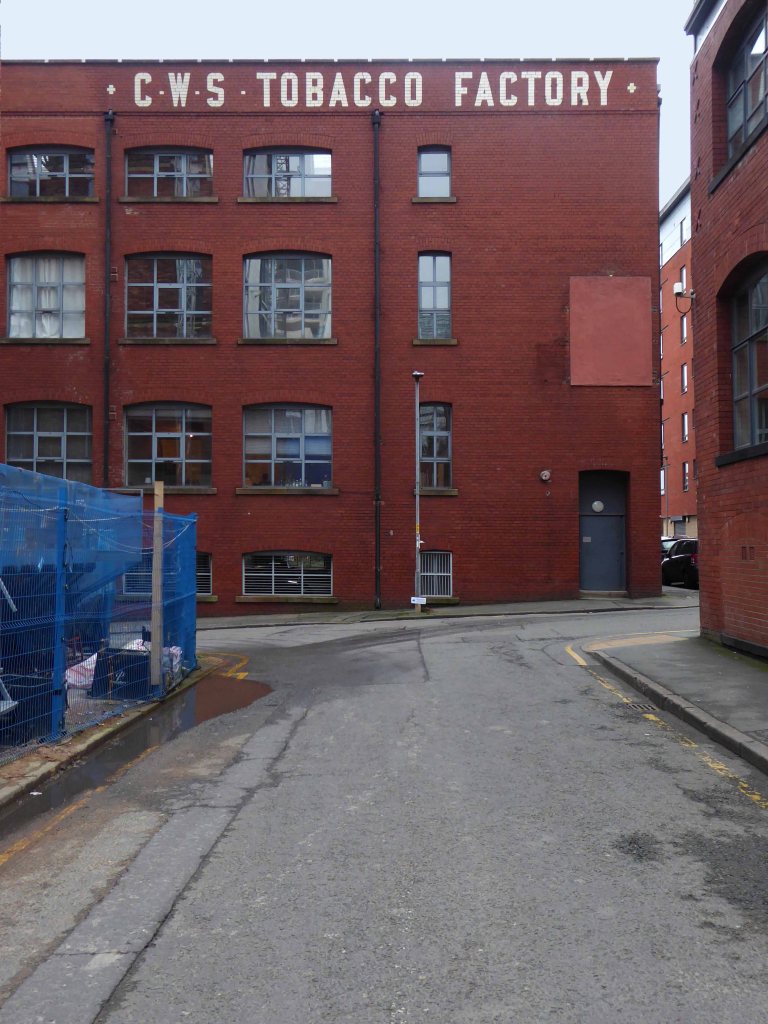
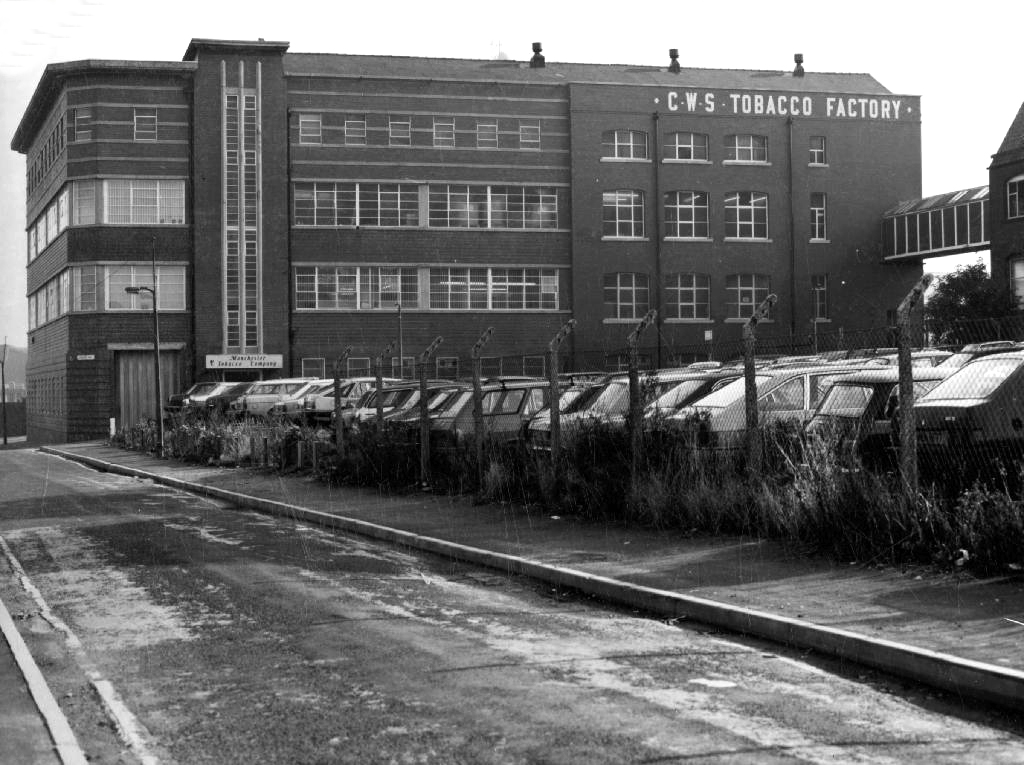
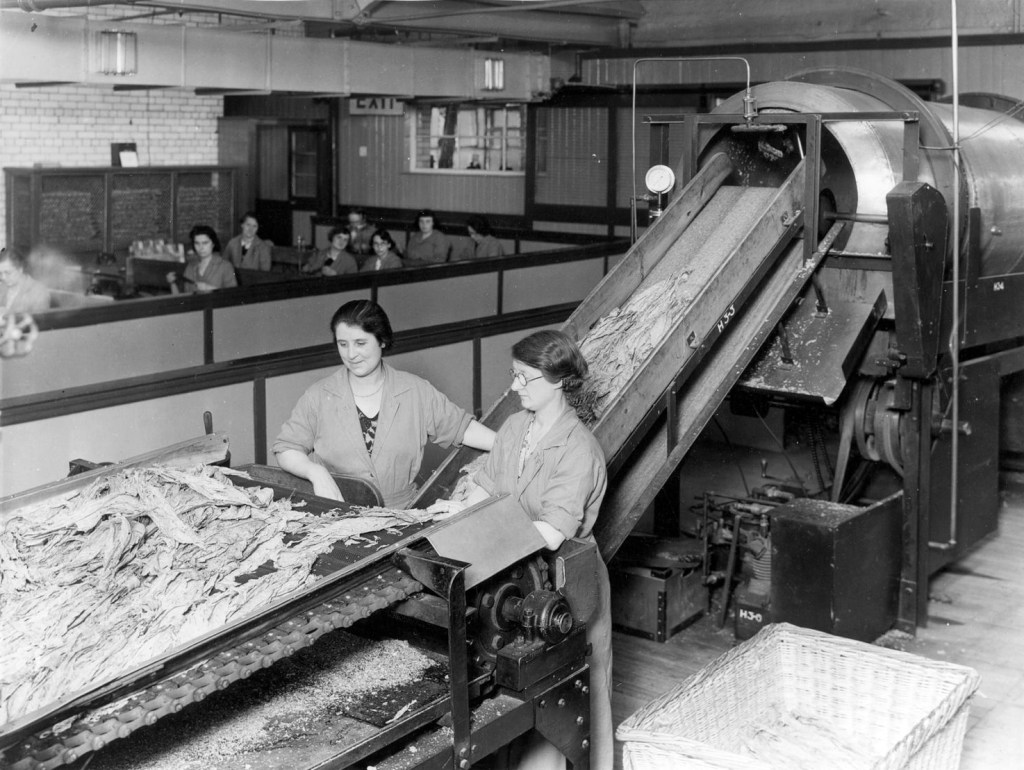
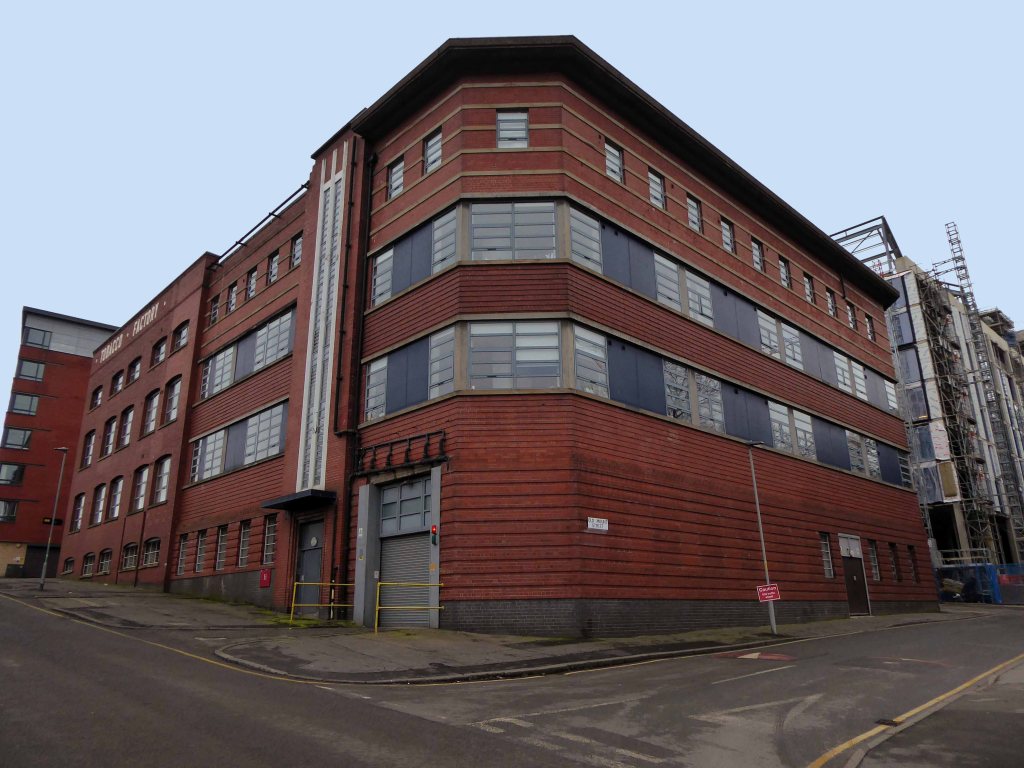
Over the road and we are in the heart of the former CWS realm – Cooperative cigs, matchless, currently home to new homes.
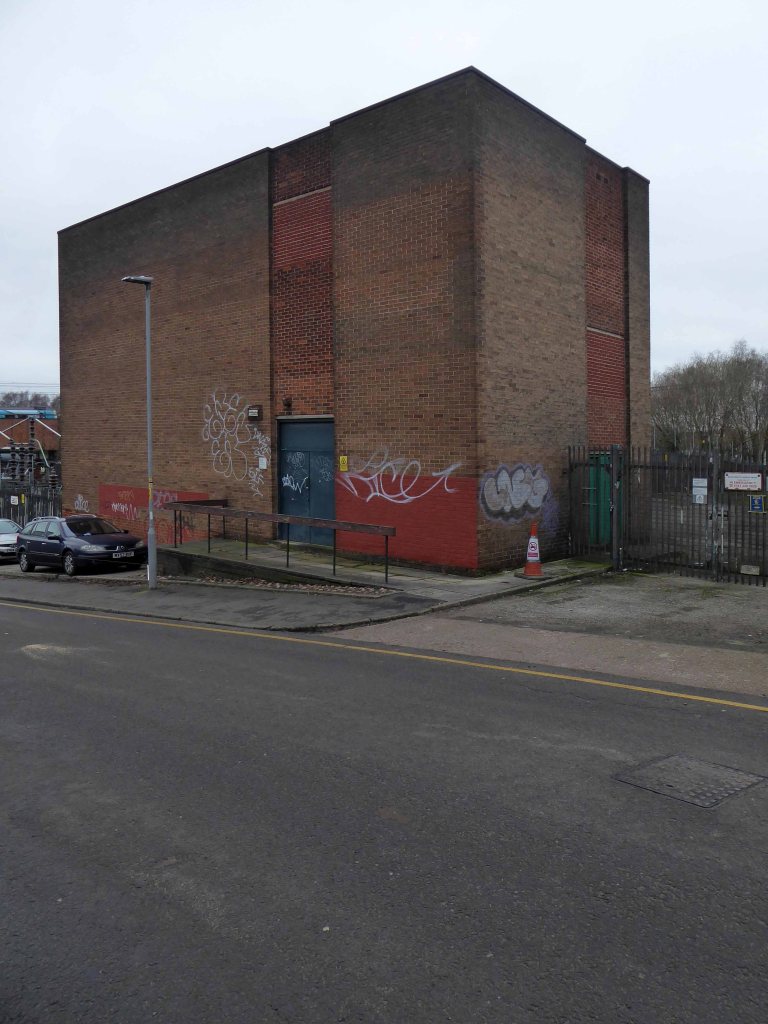
Crossing the Irk to our right this impressive utilitarian infrastructure.
The Strangeways family themselves are certainly recorded in antiquity at the site, although the name appears differently over time; Strongways in 1306, Strangewayes in 1349 and Strangwishe in 1473. In the late 1500s in records at Manchester Cathedral the surname is spelt Strangwaies.
In modern times home to the city’s Jewish community, followed by subsequent layers of immigrant groups from the Indian subcontinent and East Asia.
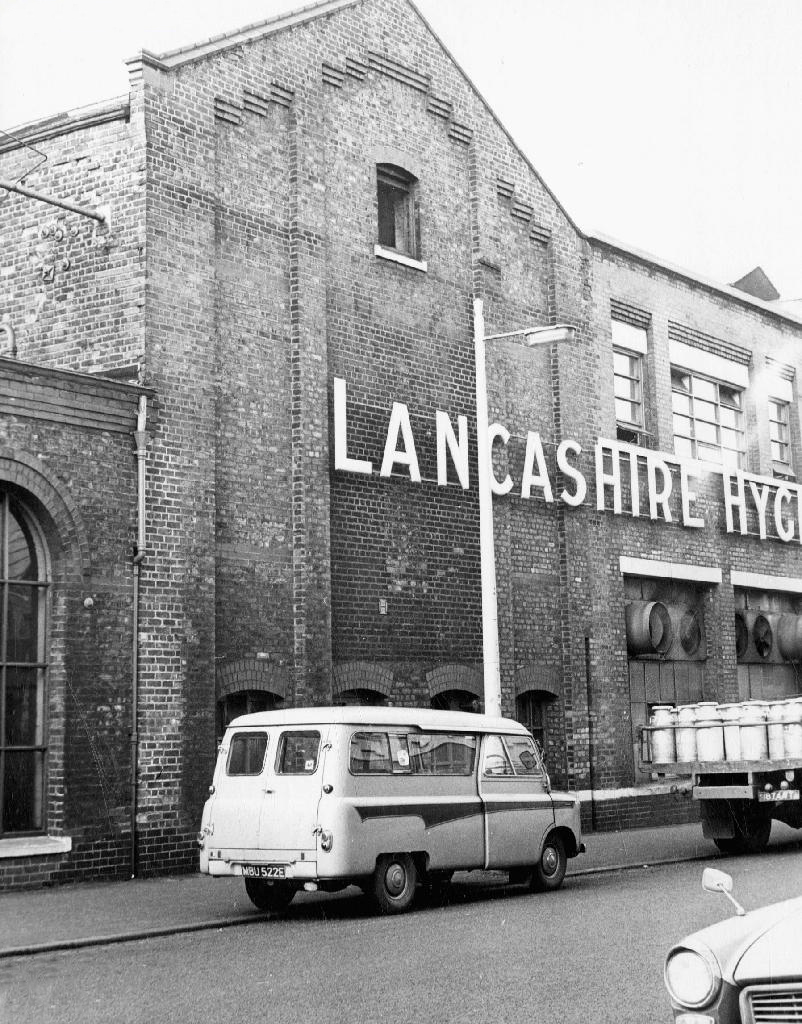
Amongst the Victorian development are Joe Sunlight’s industrial buildings.
Manufacture gives way to retail distribution, the post-war Cheetwood Estate, remade and remodelled as Miami Modes, or simply left to gently decay.
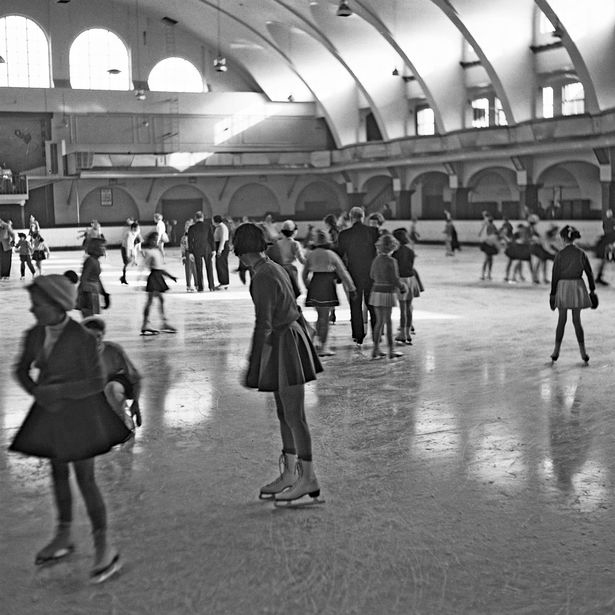
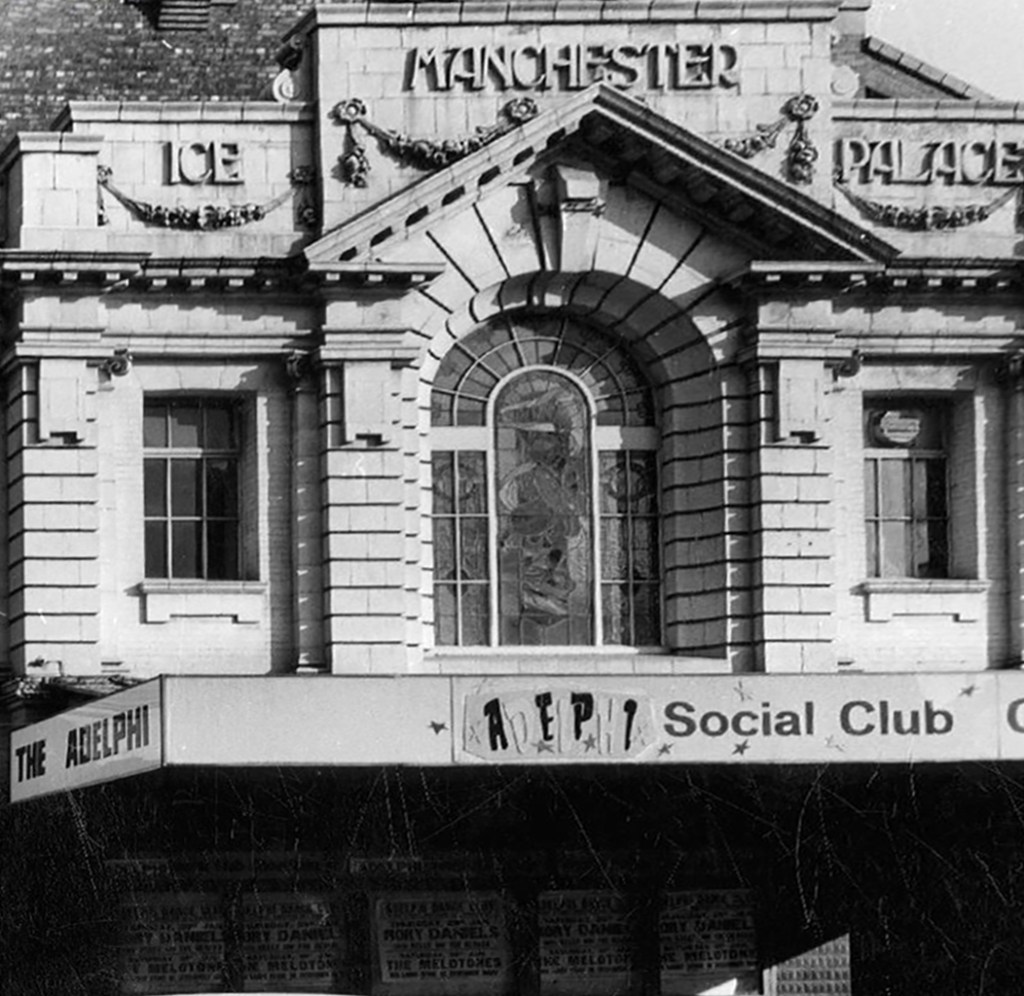
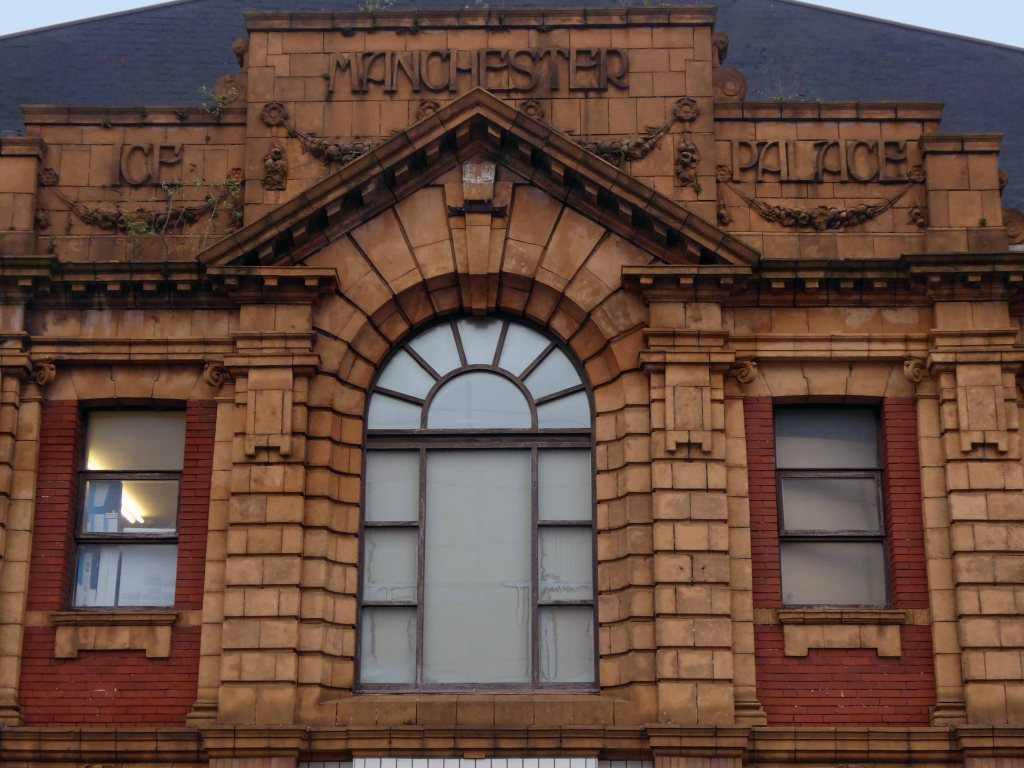
Tucked cosily in the middle is Manchester Ice Palace.
Opened by Lord Lytton on October 25 1910, clad in white marble, it hosted the National Ice Skating Championships a year later and the World Championships in 1922.
A plant across the road provided the ice. At the end of each day, the churned ice from the rink was pumped through an underground pipe to iceworks. Fresh iced water was then pumped back to refresh the rink’s surface overnight.
The Ice Palace was the only ice hockey rink in Britain during the early 1920s. A game between The Army and The Rest was played at the Ice Palace in November 1923 to select the British team for the 1924 Winter Olympics.
It was closed in 1915 and used to manufacture observation balloons for the war effort. It reopened on November 21, 1919. It was requisitioned by the Ministry of Aircraft Production in 1941 and later reopened as an ice rink on March 21, 1947.
Today on my way elsewhere, in search of something or other, I walked into the lobby of the CIS.
I asked permission from the Receptionist to take a few snaps, was referred to the Head of Security, who referred me to the Receptionist, who ‘phoned Paul, who turned out to be Steve, who thought that it would be OK.
So I did – here are those very snaps, my thanks to the cooperative staff of the Cooperative Insurance Society.
Whilst walking the length of Hessle Road, up and back – taking the air, snaps, the sights and sounds, I came upon a fine Faience tiled frontage.
I began photographing, wandering dangerously into the space between the slip road and the flyover. A shout rang out, emanating from the boozer, the landlord called me over.
“Do you want to take a look inside?”
“Yes”.
A listed interior the new landlord is working hard along with Historic England to restore the capacious rooms to their former glory, including the entrance mosaic and ceiling – images P Hampel
Inheriting a whole heap of issues and a grey parrot called Sparky.
But the boozer is now up and running serving cask ale to throngs of first class thirsty customers.
The Yorkshire Brewhouse 1904 ended mid week when we’re normally closed but we were asked to open for a group of very thirsty sailors. We moved on to Reet, another Yorkshire Brewhouse beer and thanks to the football that one has gone too. It’s back to the YBH Faithful Stout once again. I’d come quick and get it while you can.
Once two pubs the Hessle Road Inn was subsumed by the Alexandra. The area was once home to the city’s Jewish Community – the cemetery survives next door.
There are Star of David motifs incorporated into the windows, sympathetic to this local heritage.
Built around 1895, designed by Smith, Brodrick and Walker, with late C20 alterations – British Listed Buildings.
It’s a fabulous pub which deserves to thrive – pop in for a pint if you’re passing, just watch out for low flying parrots.
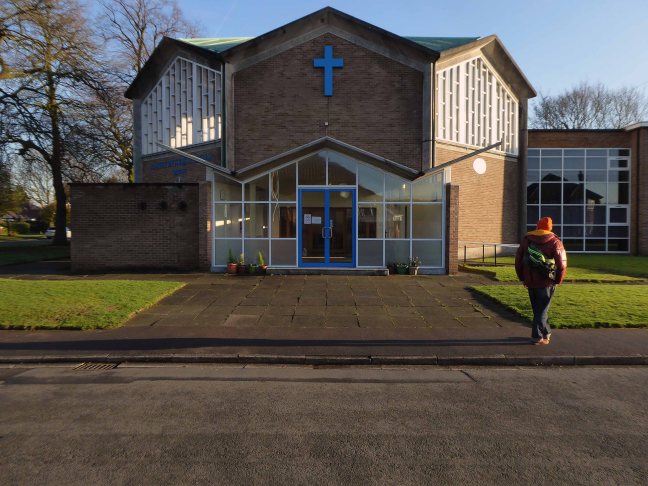
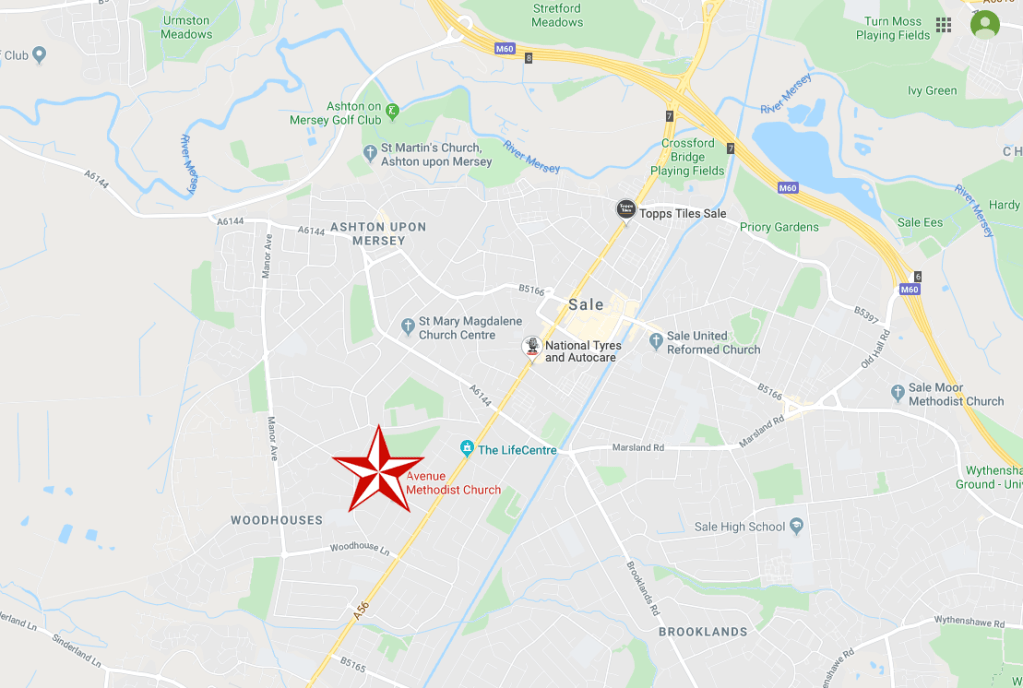
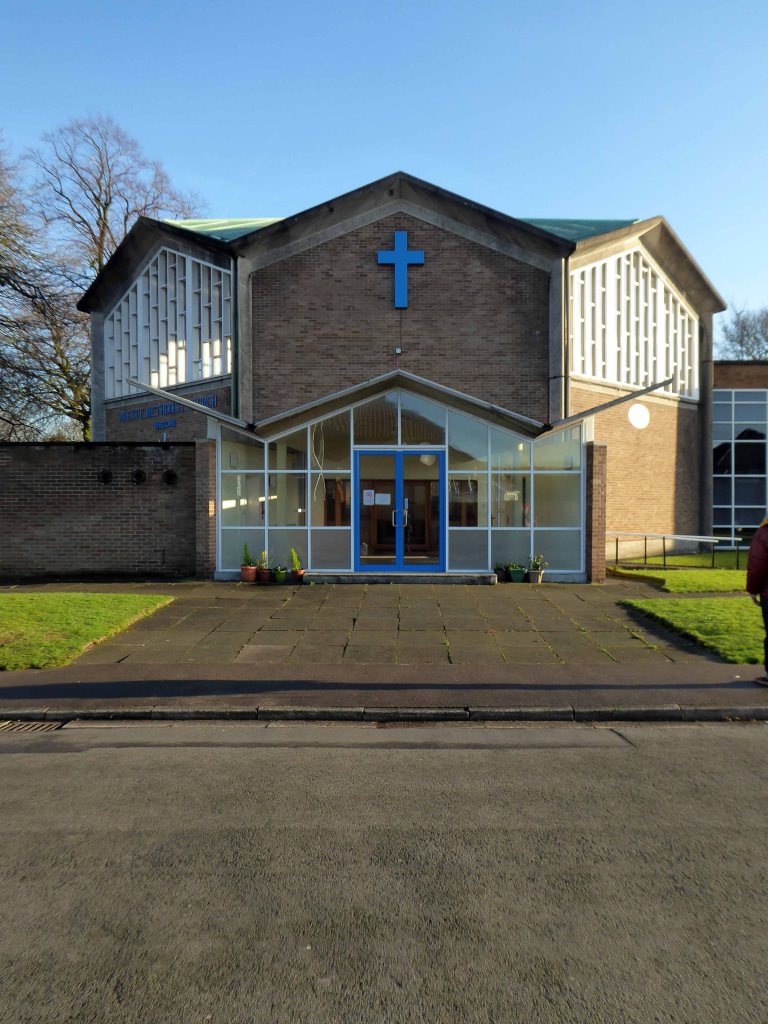
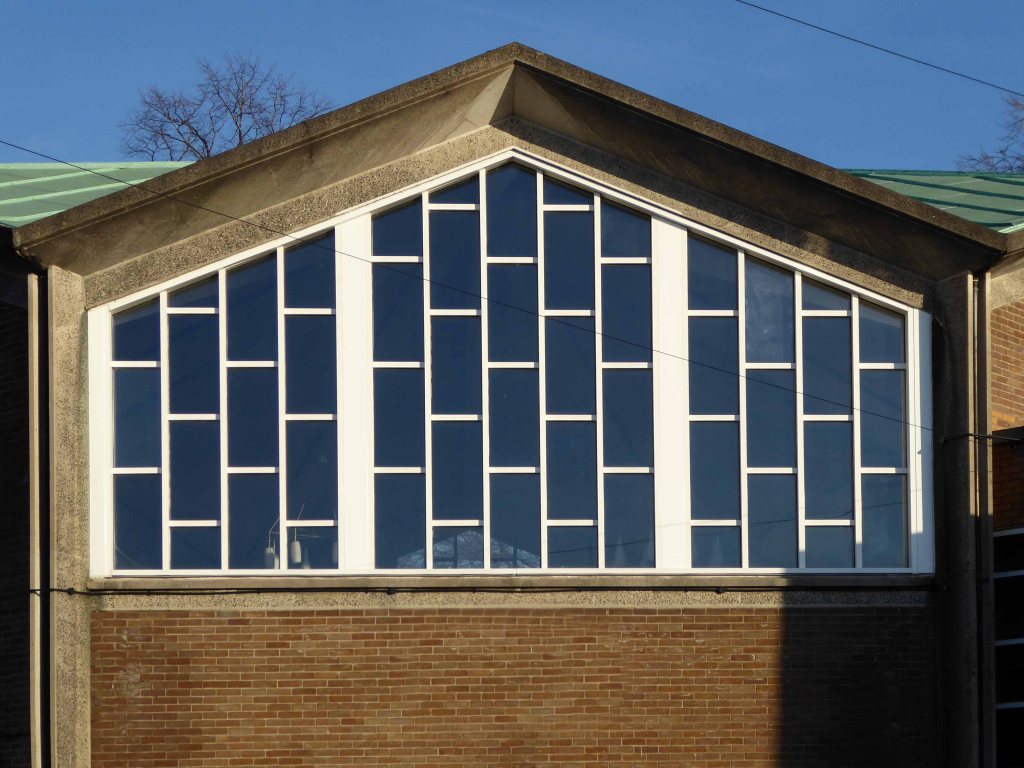
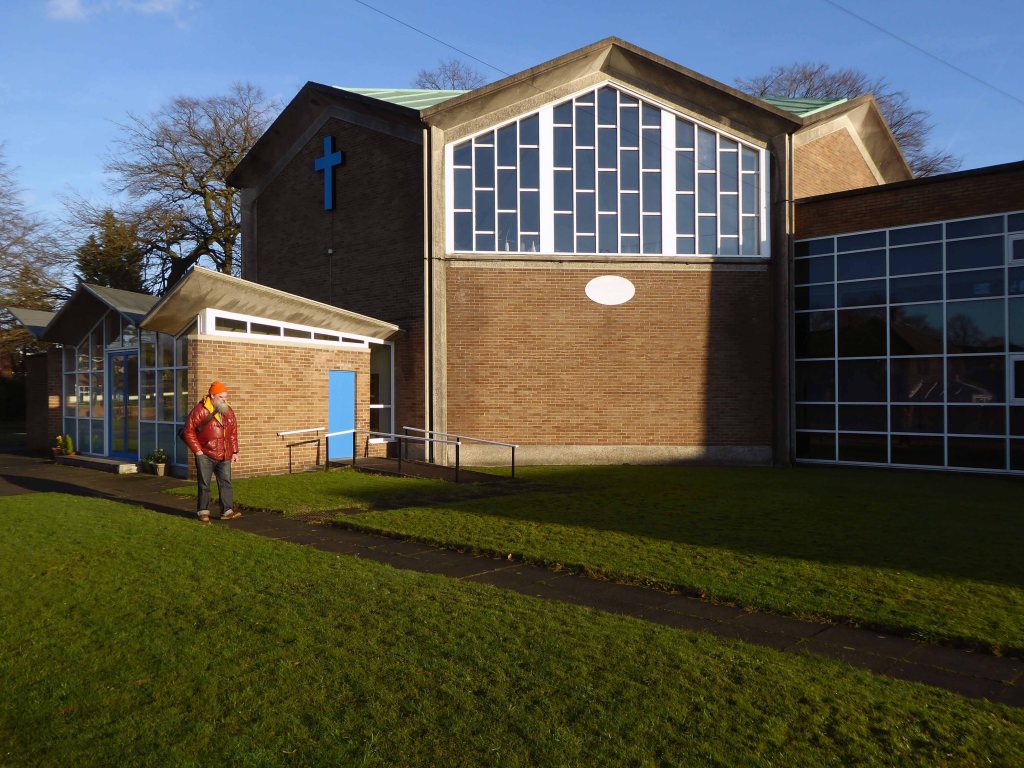
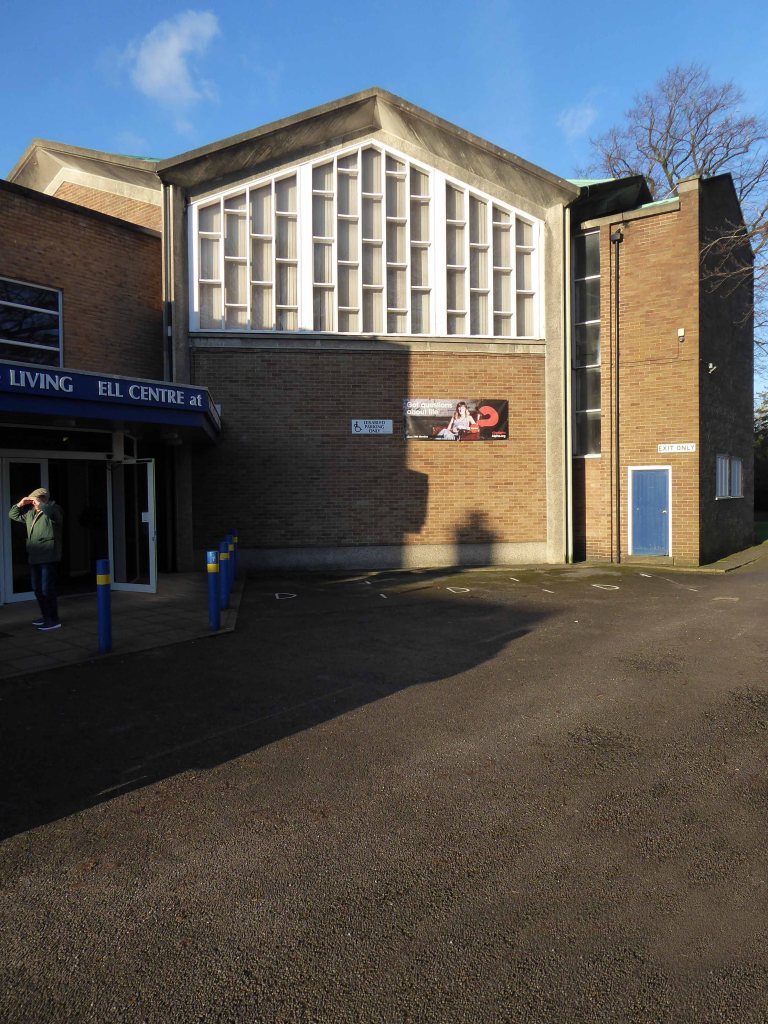
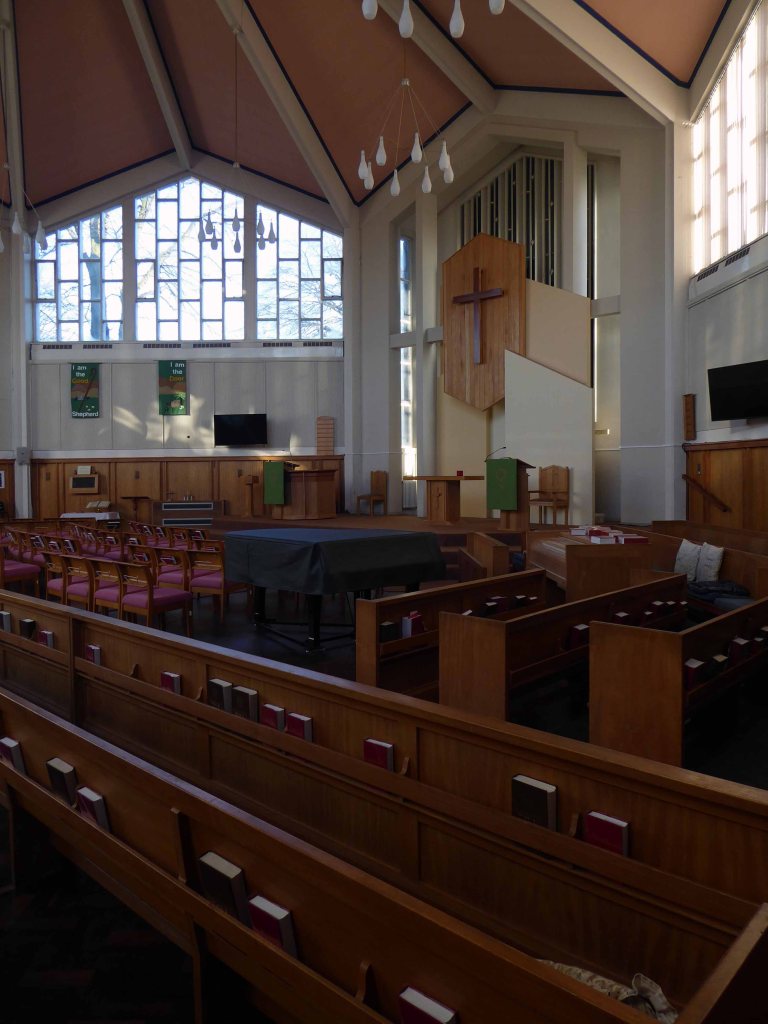
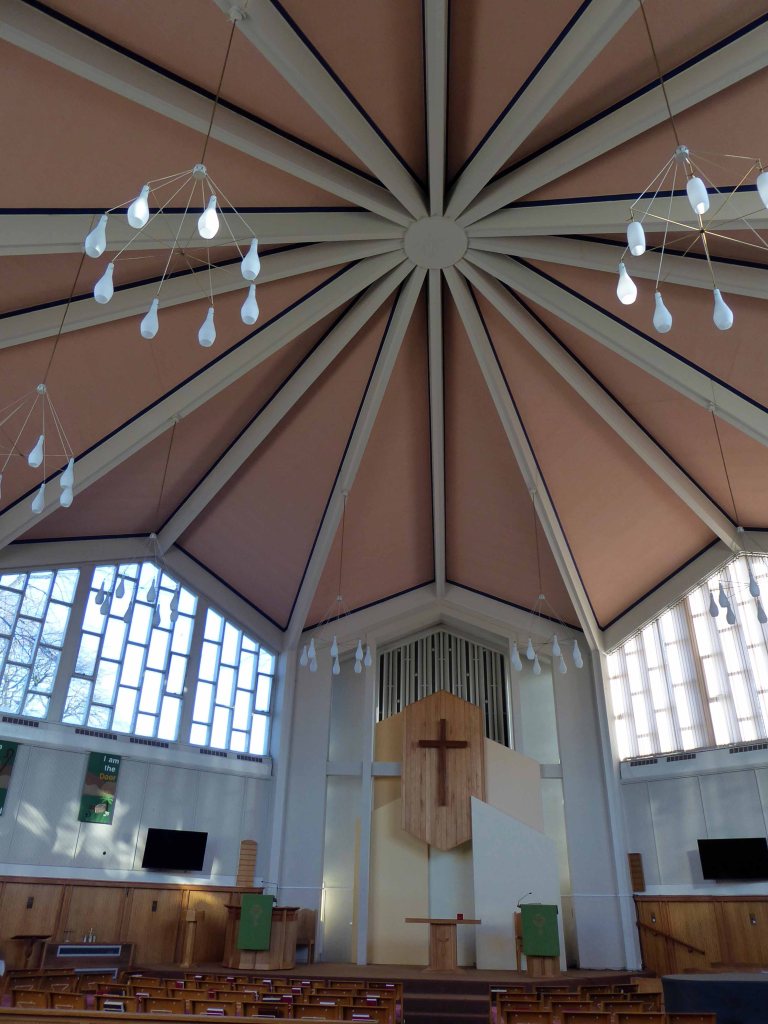
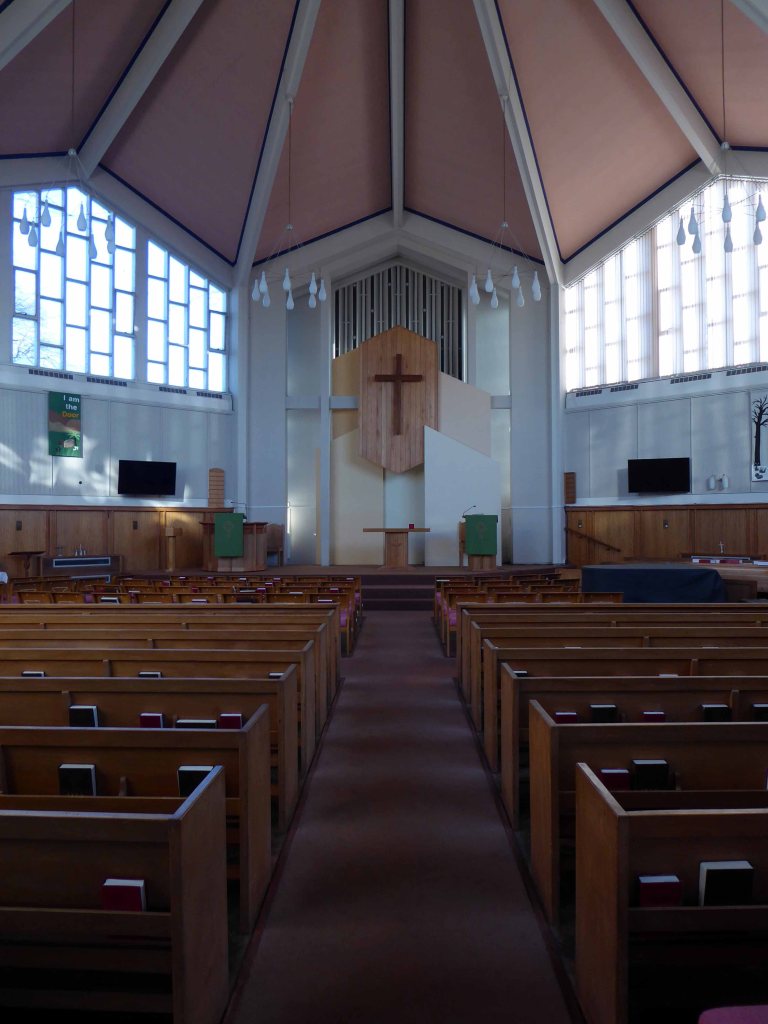
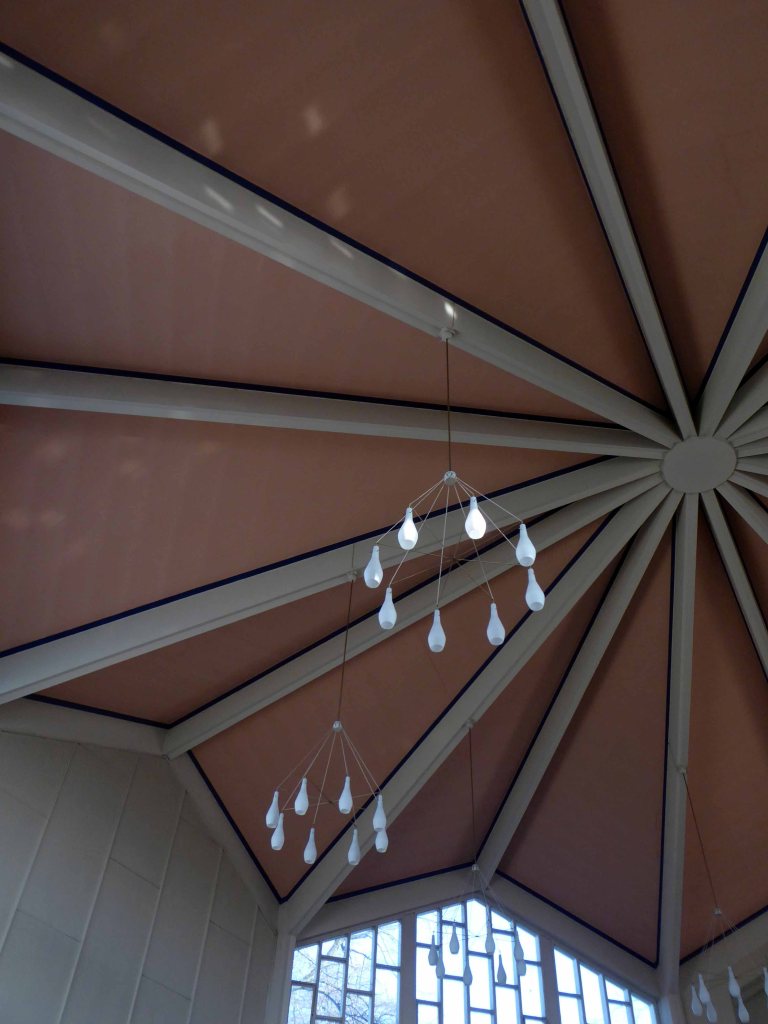
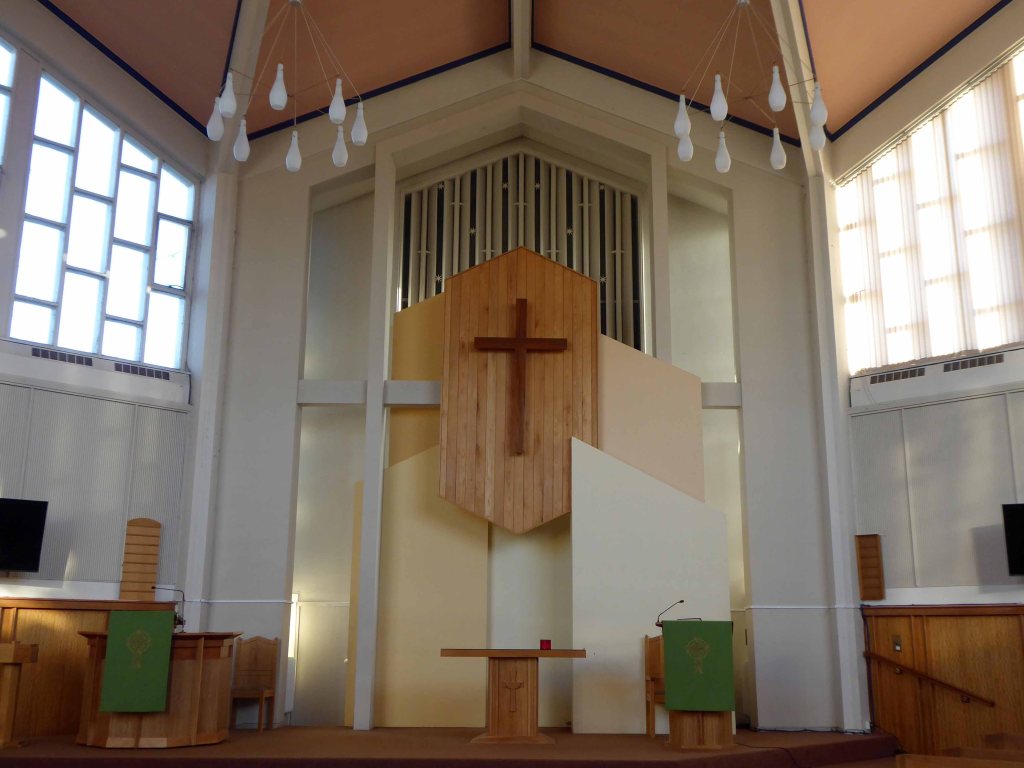
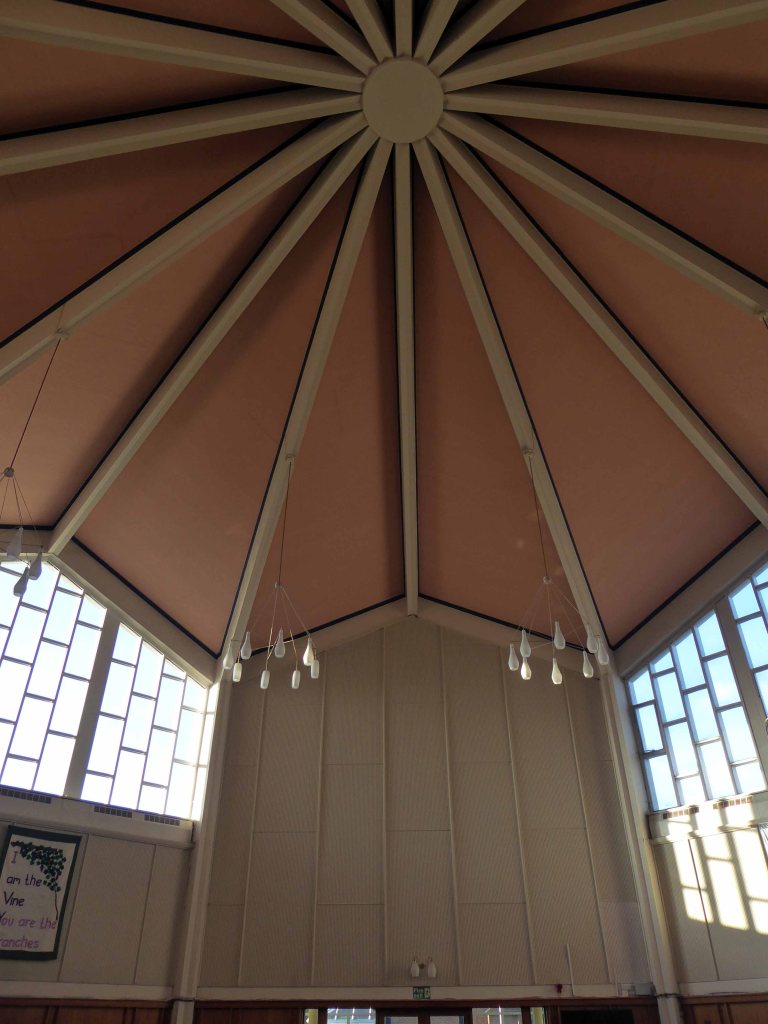
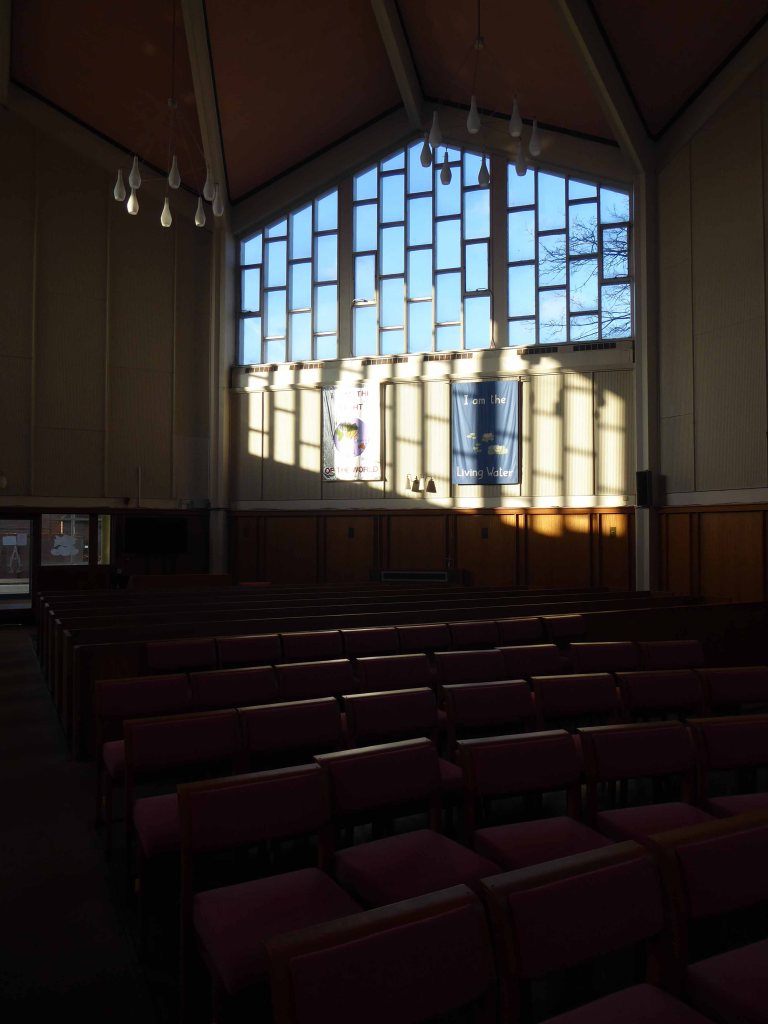
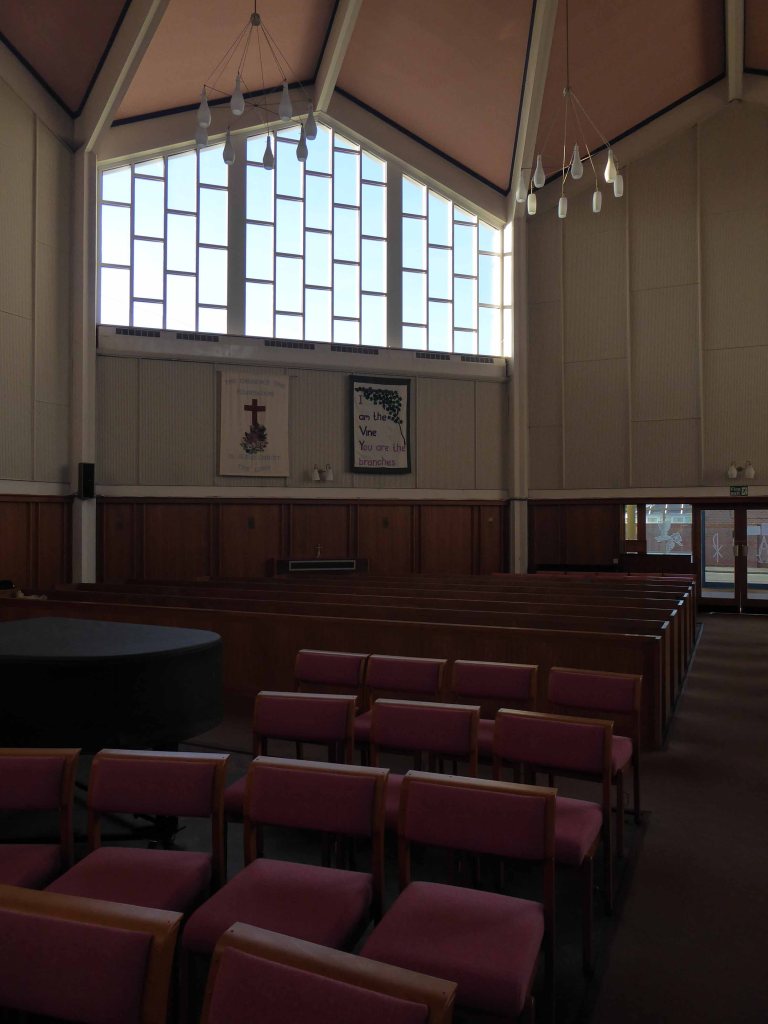
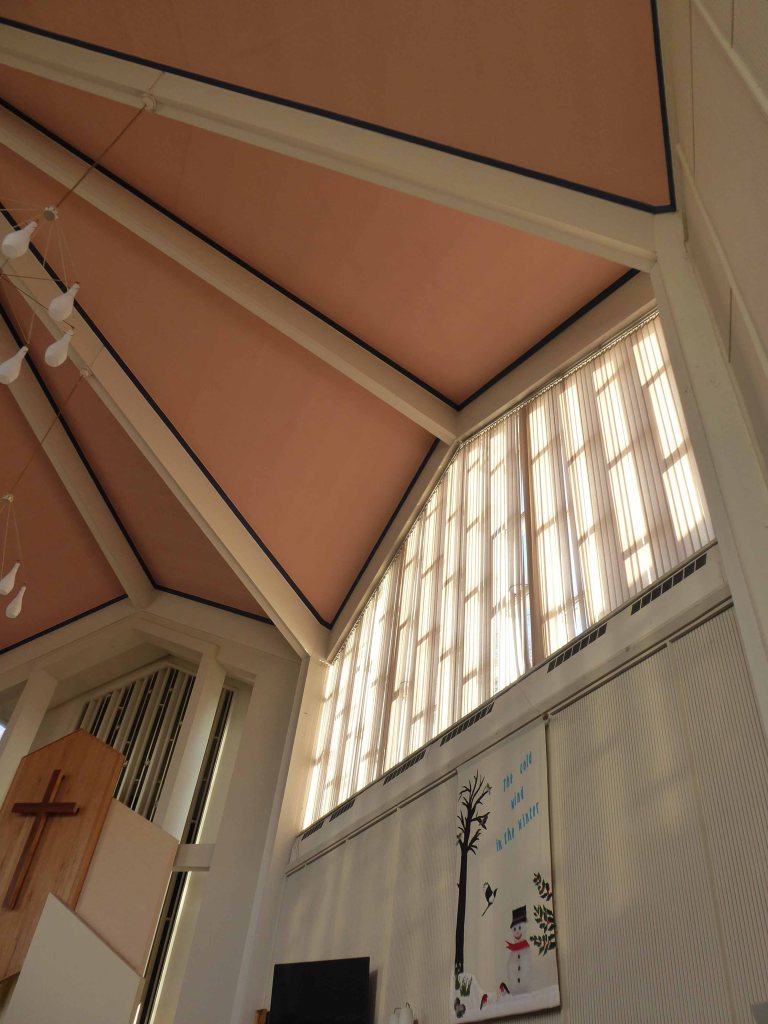
The Avenue Church is no less monumental – a steel, brick and glass octagon with attached single storey hall – set in a shimmering sea of grass and tarmacadam.
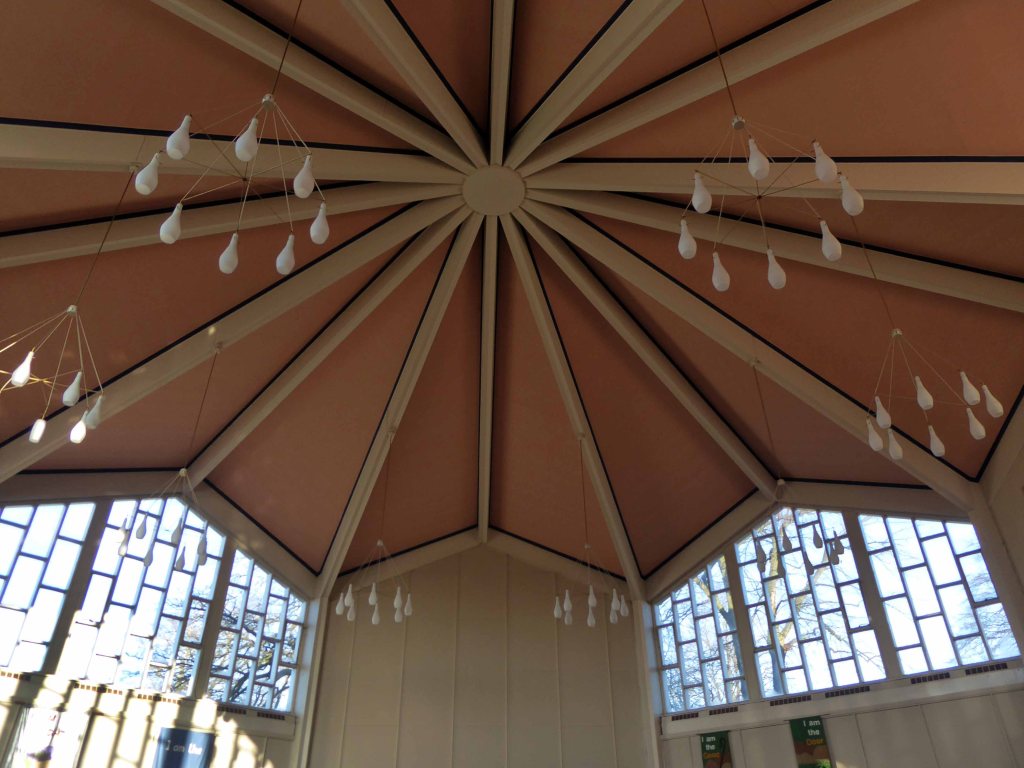
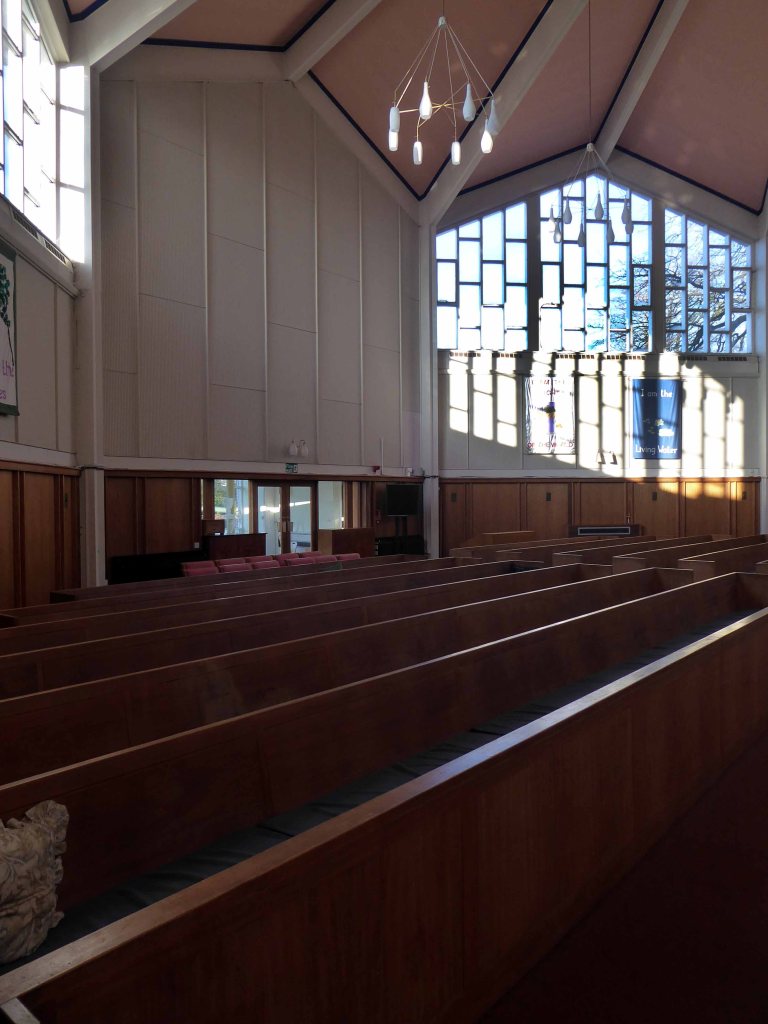
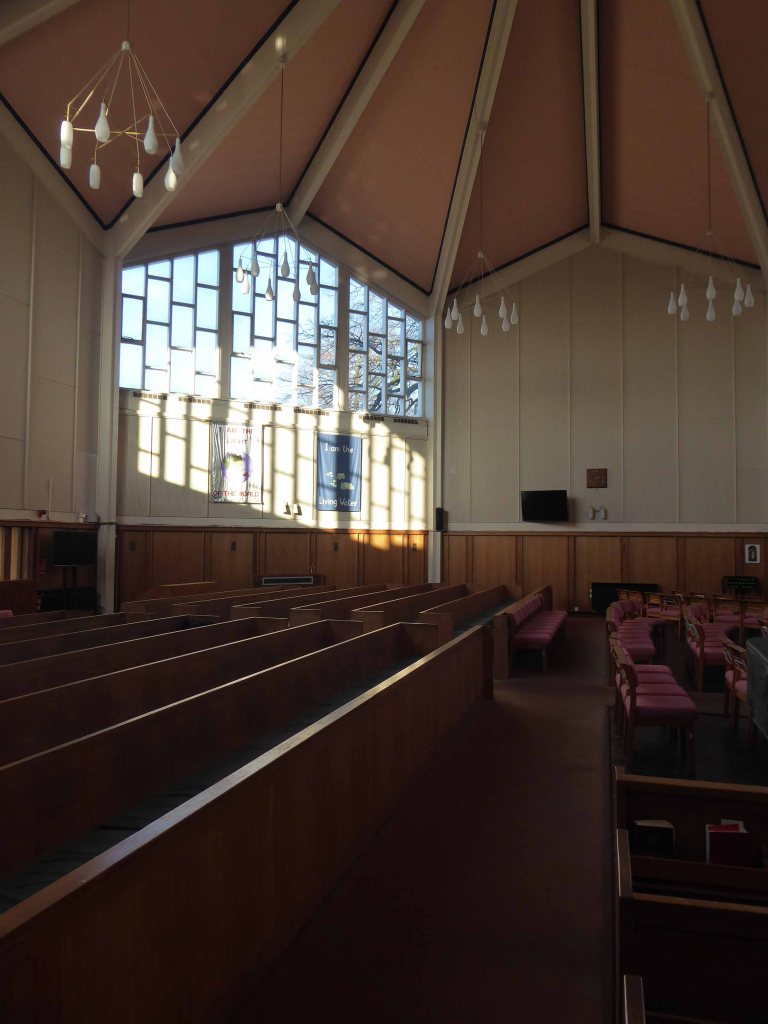
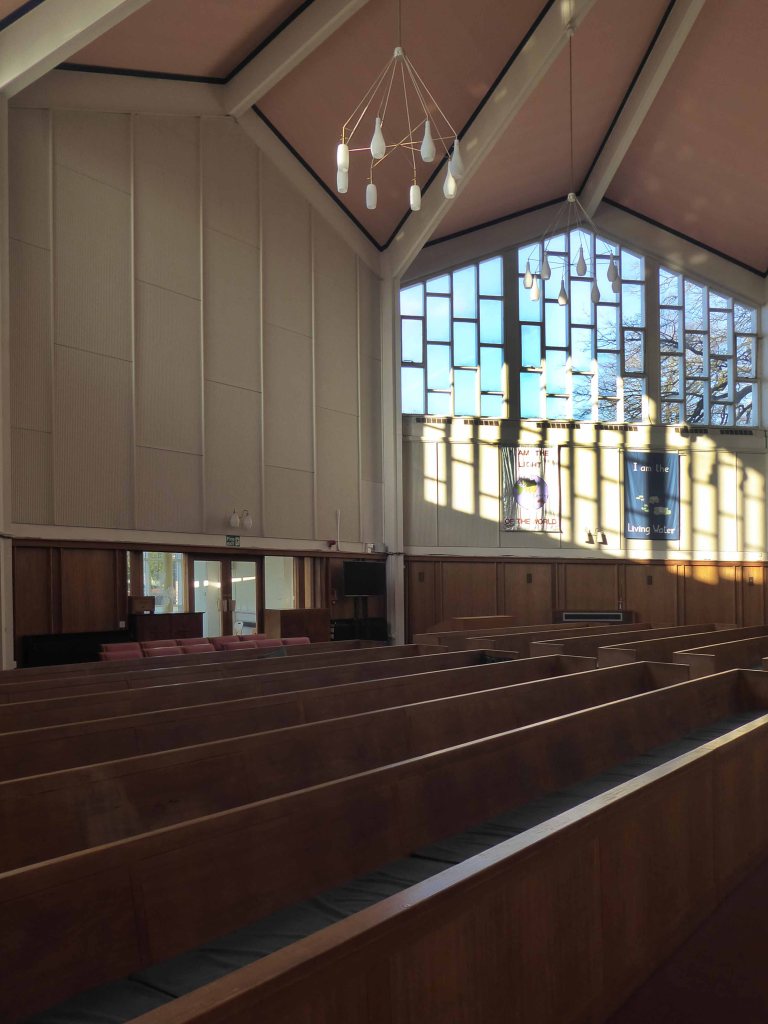
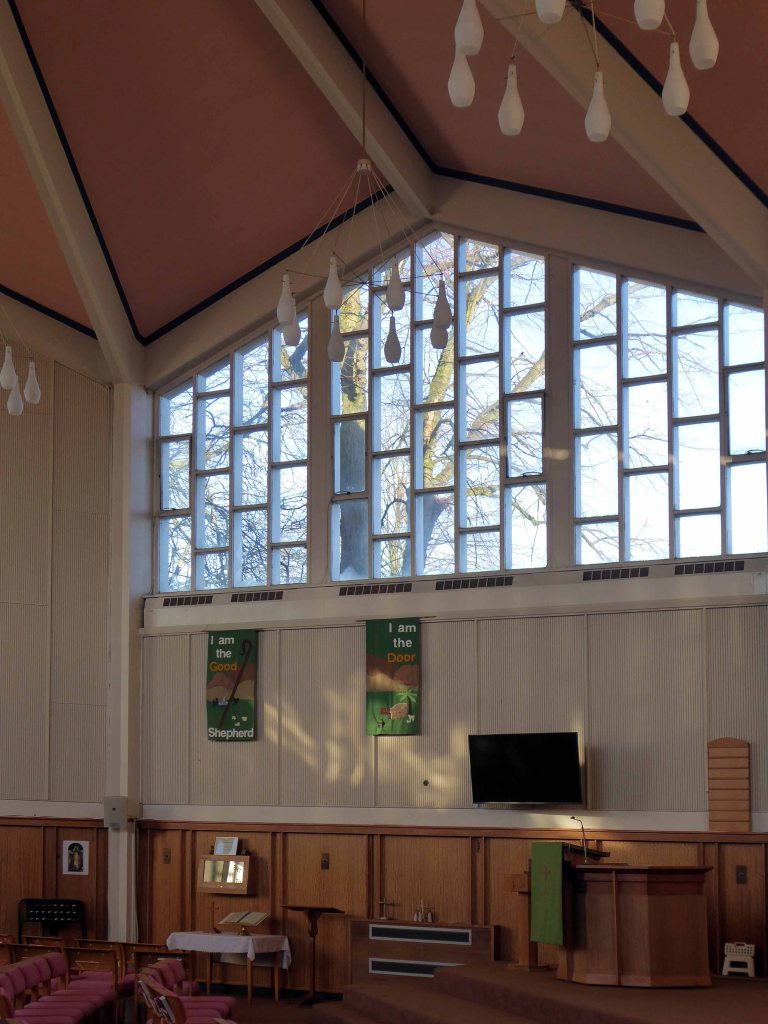
The interior is open and light illuminated on four sides by large plain glass windows, broken up by a vertically unchallenged grid.
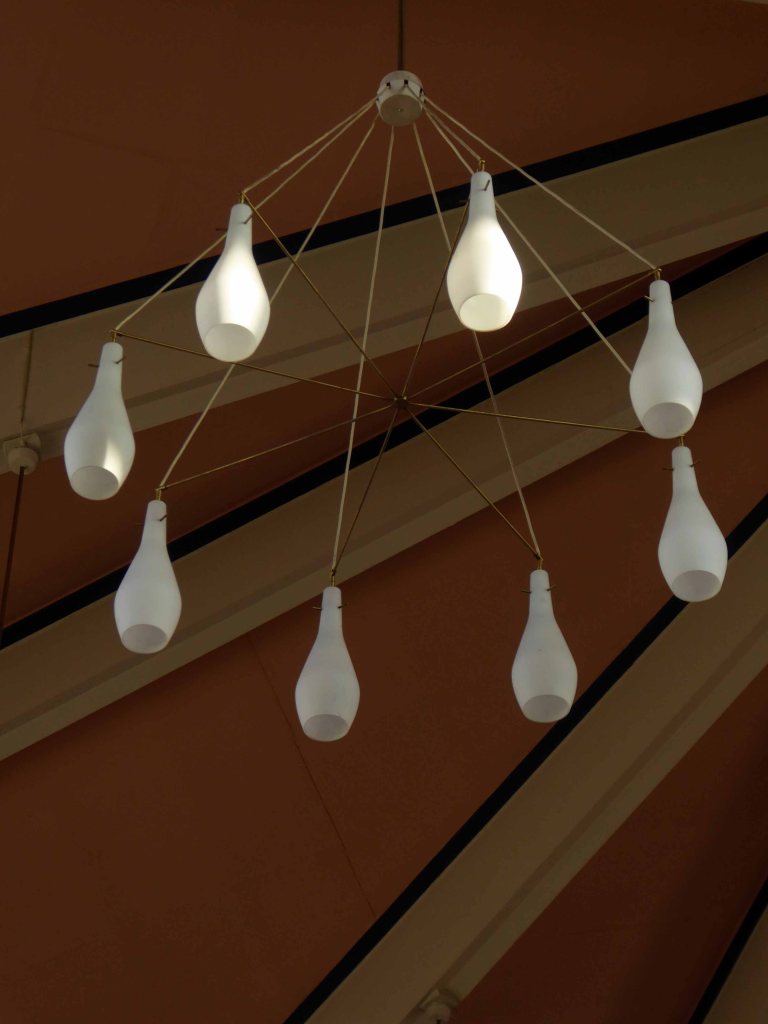
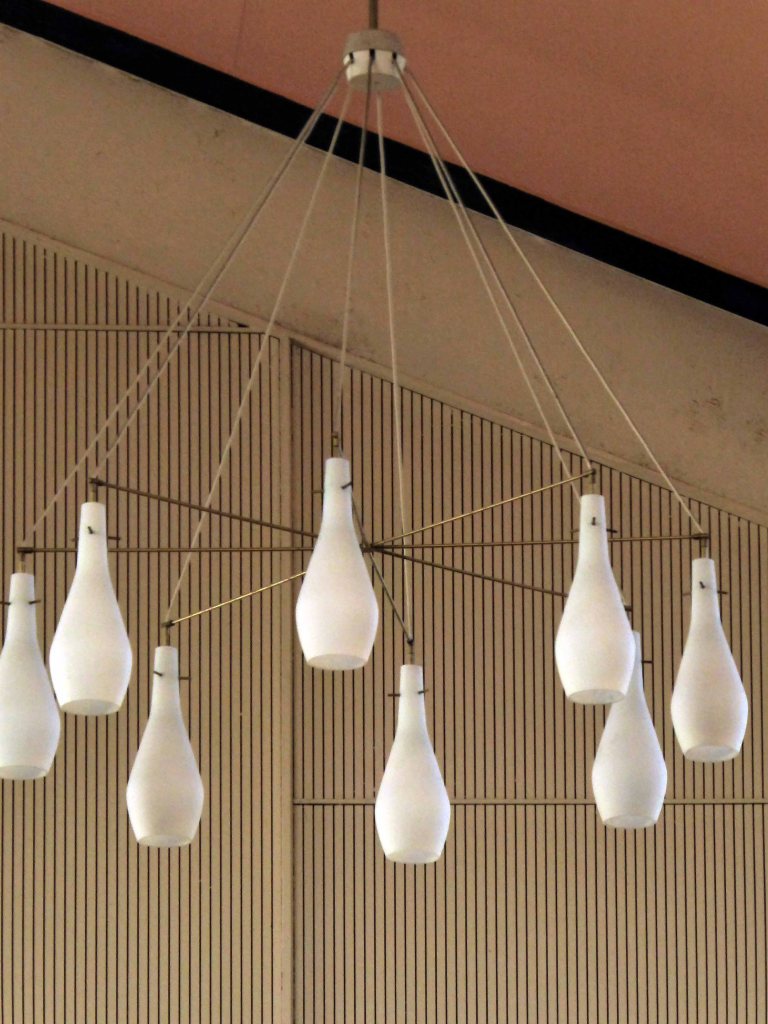
Artificial lighting is provided by suspended groups of lamps.
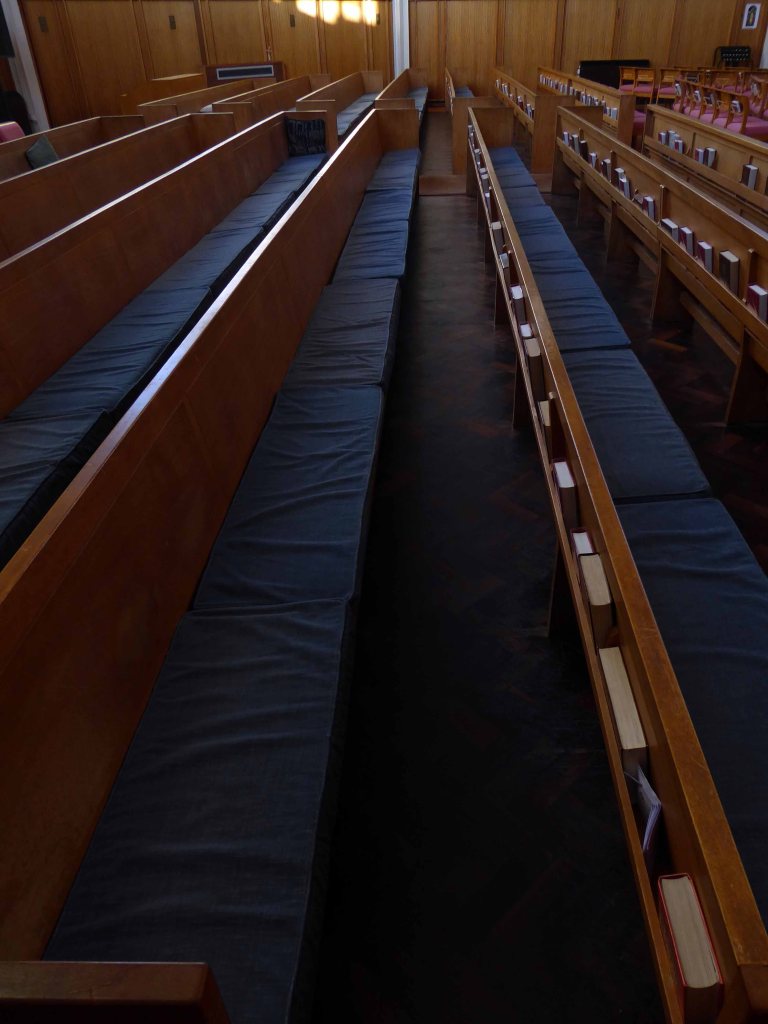
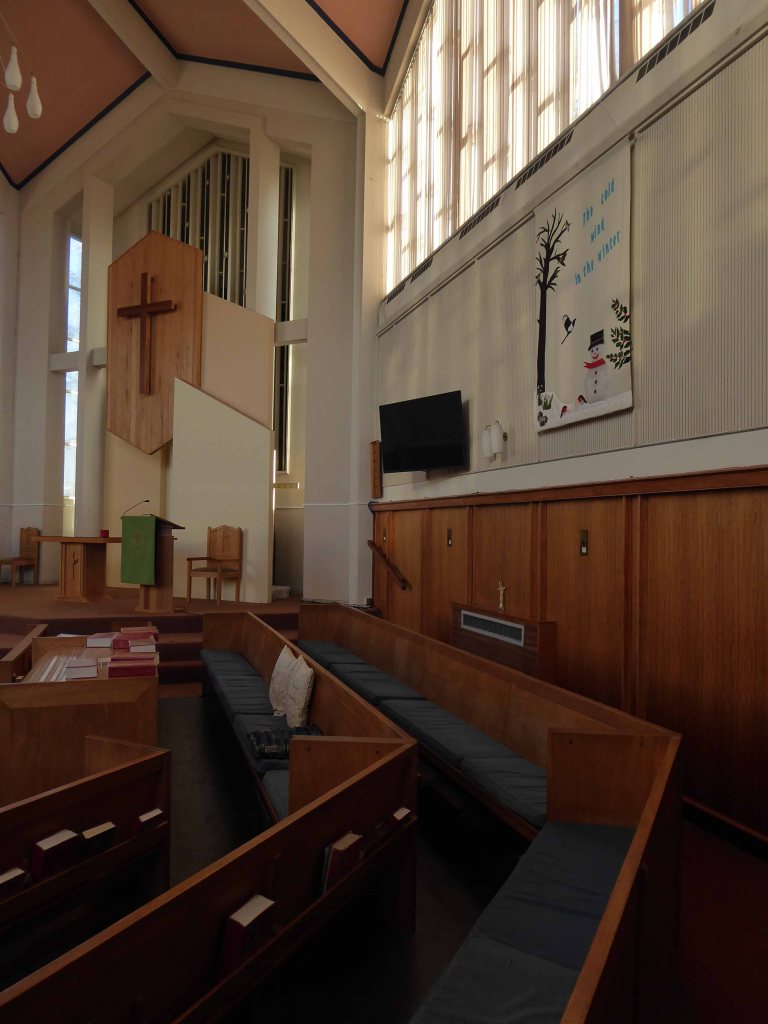
The seating a mix of plain wooden pews and portable chairs.
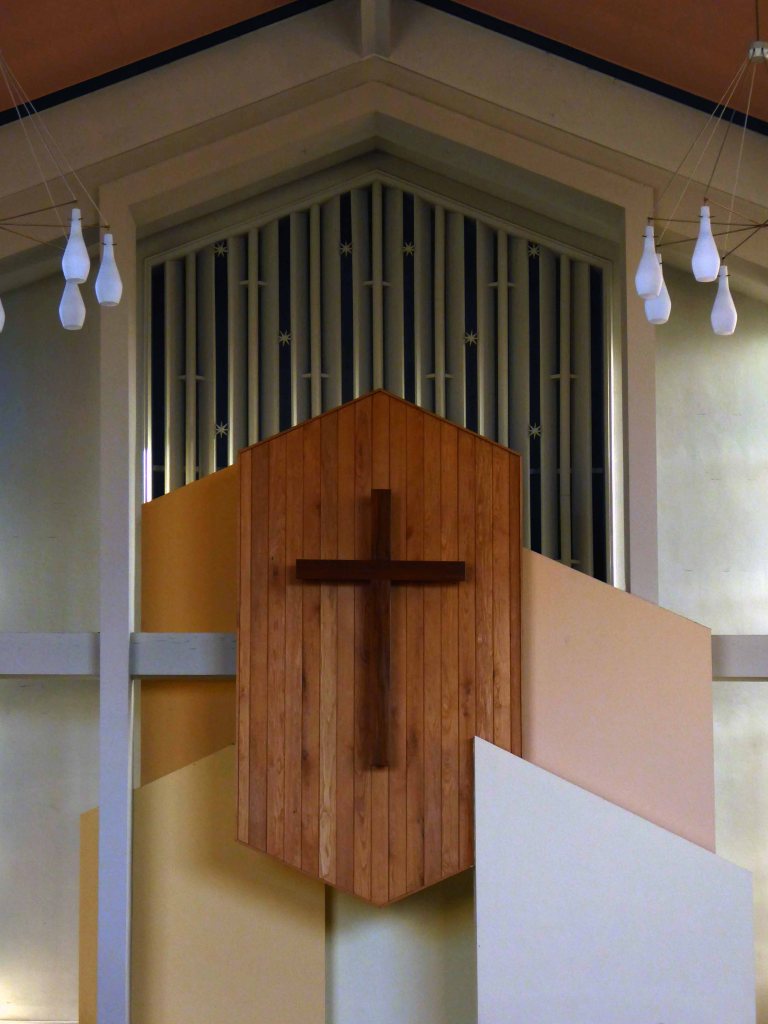
The altar a simple statement of panels and cross.
Treat yourself to a walk down the Avenue – take a look around.



































 Modern Mooch