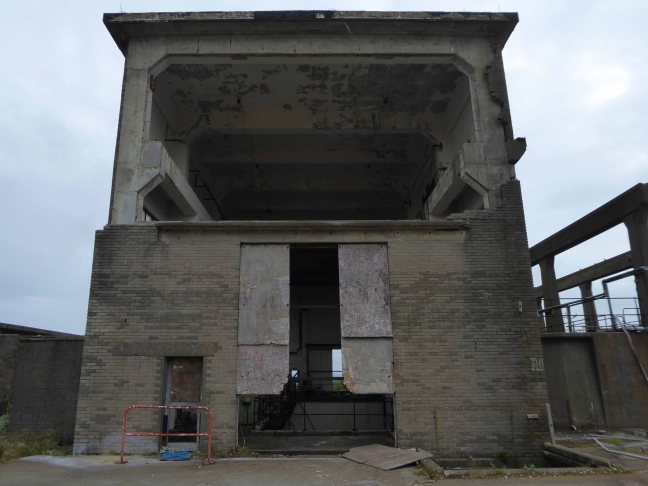
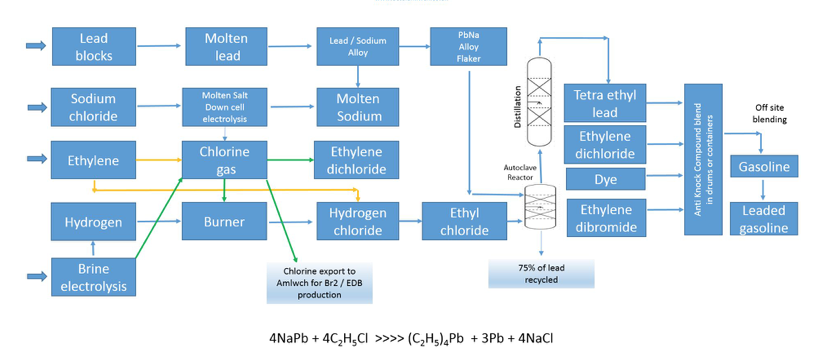
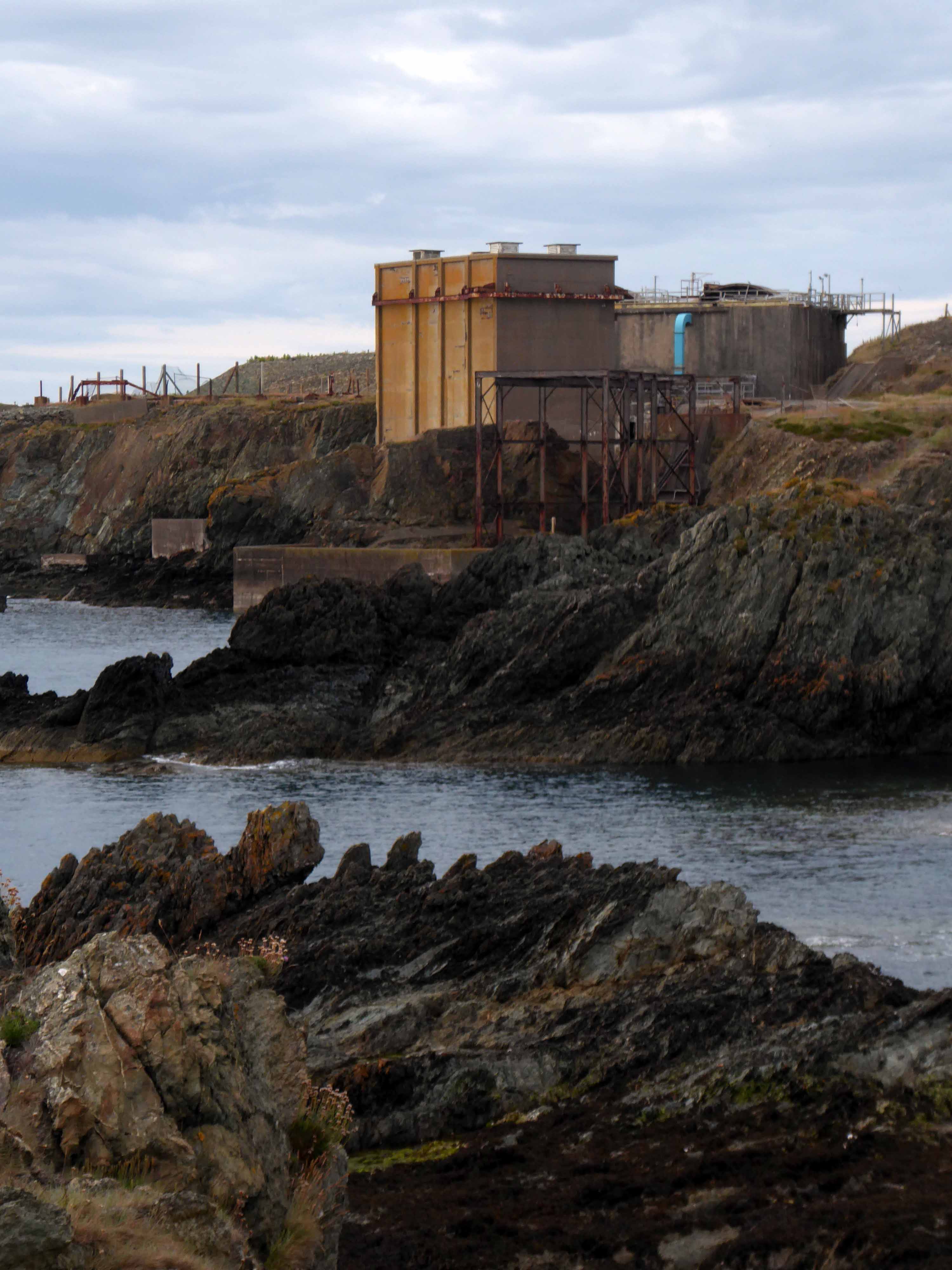
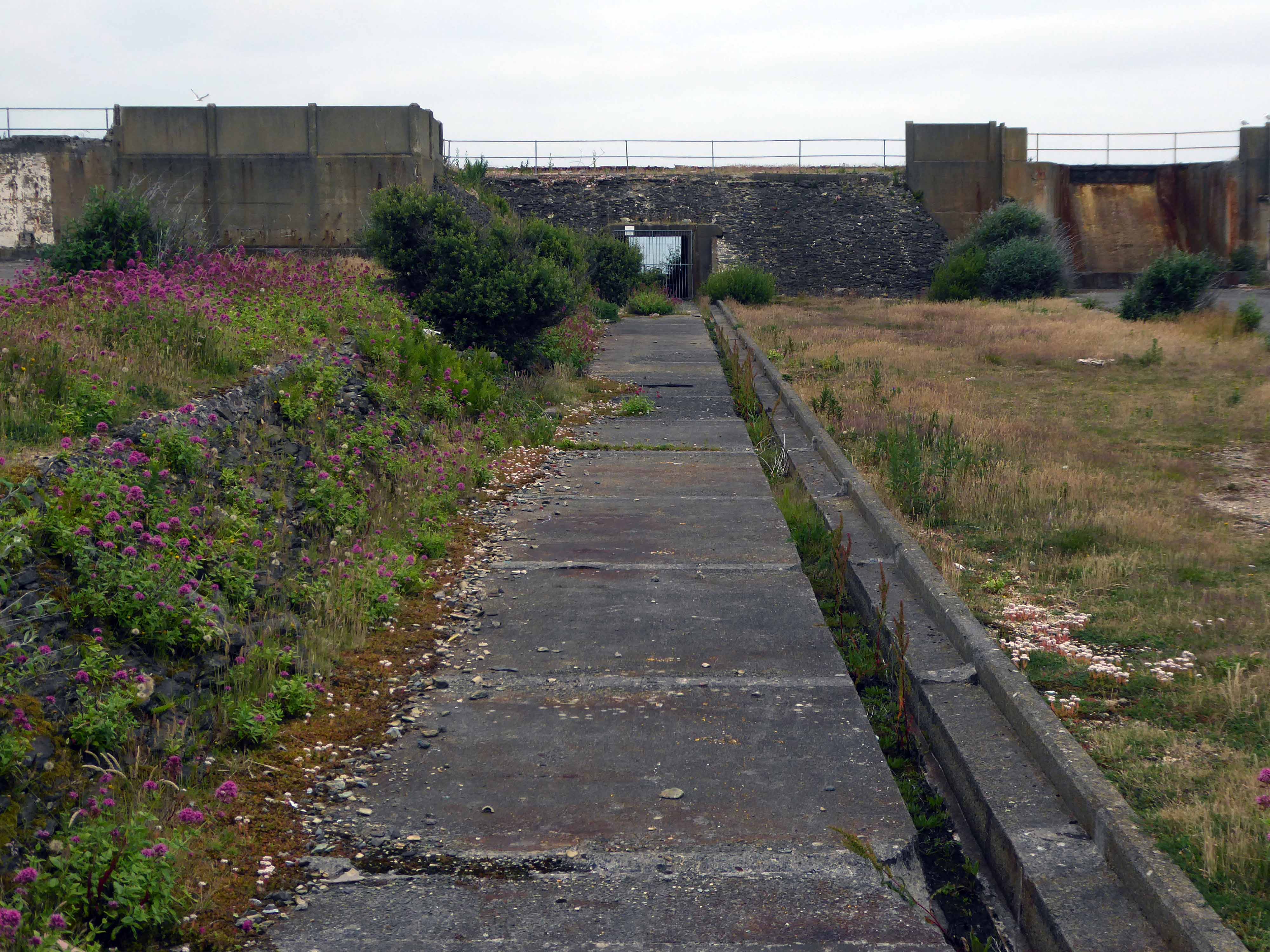
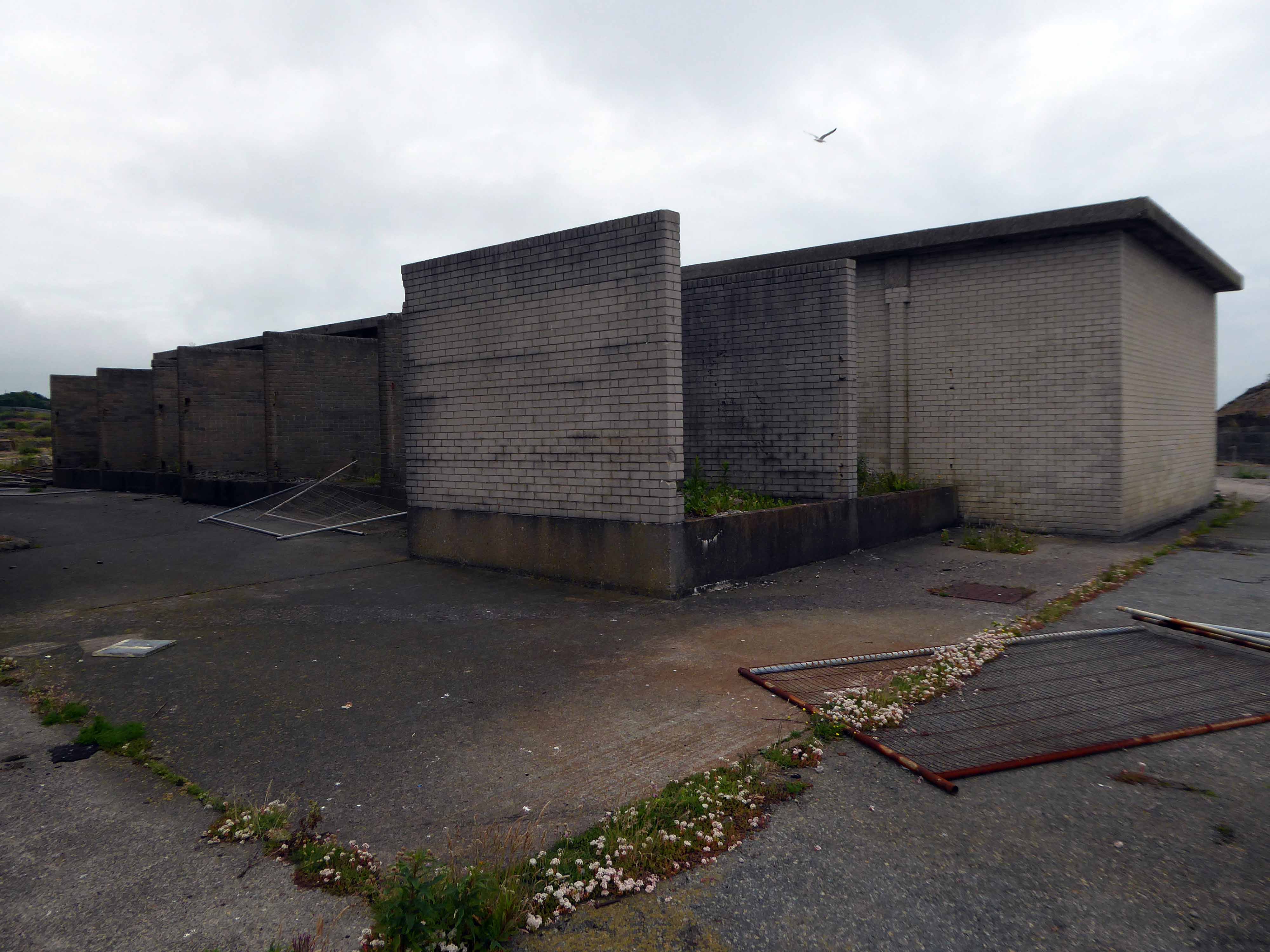
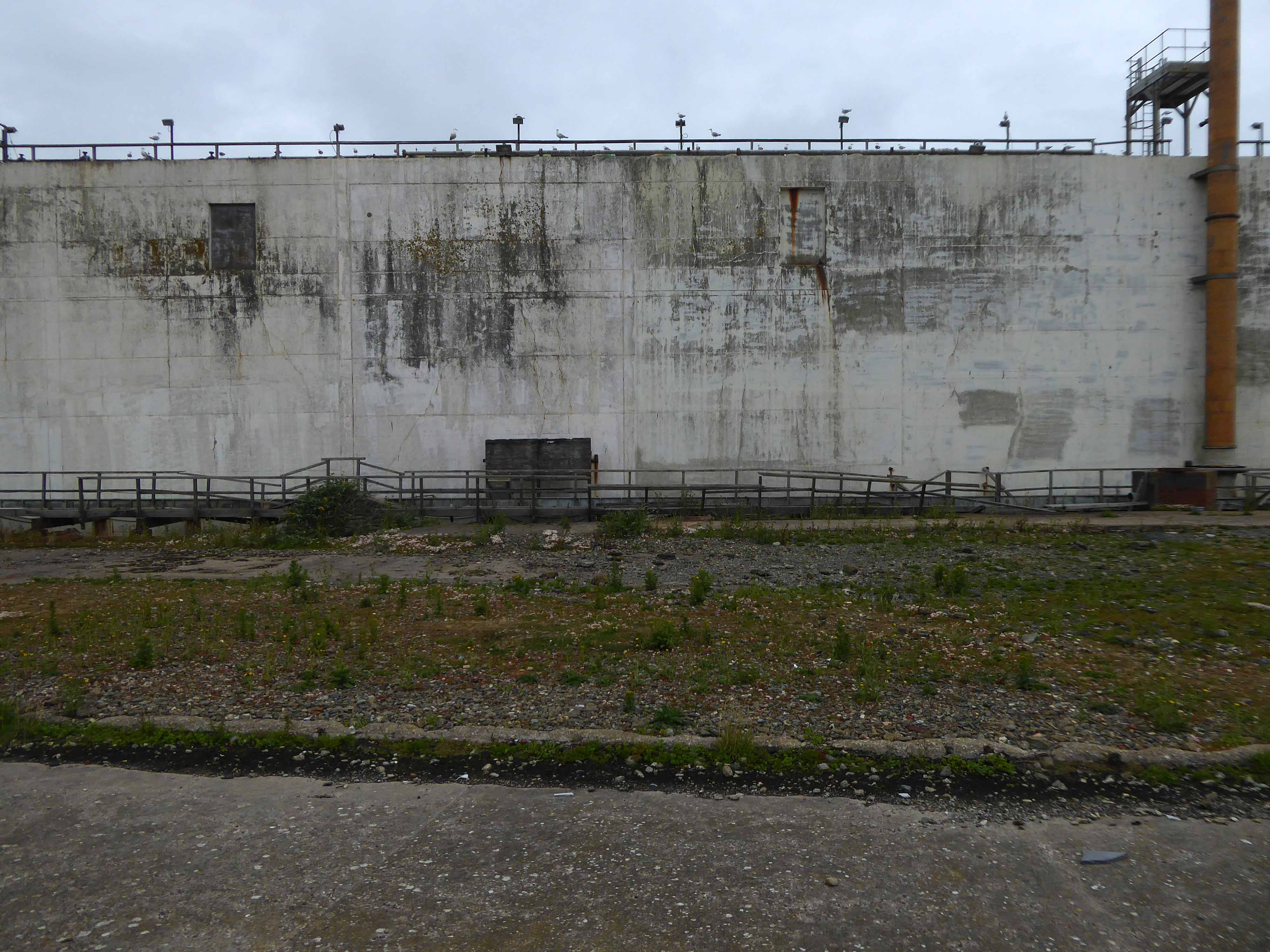
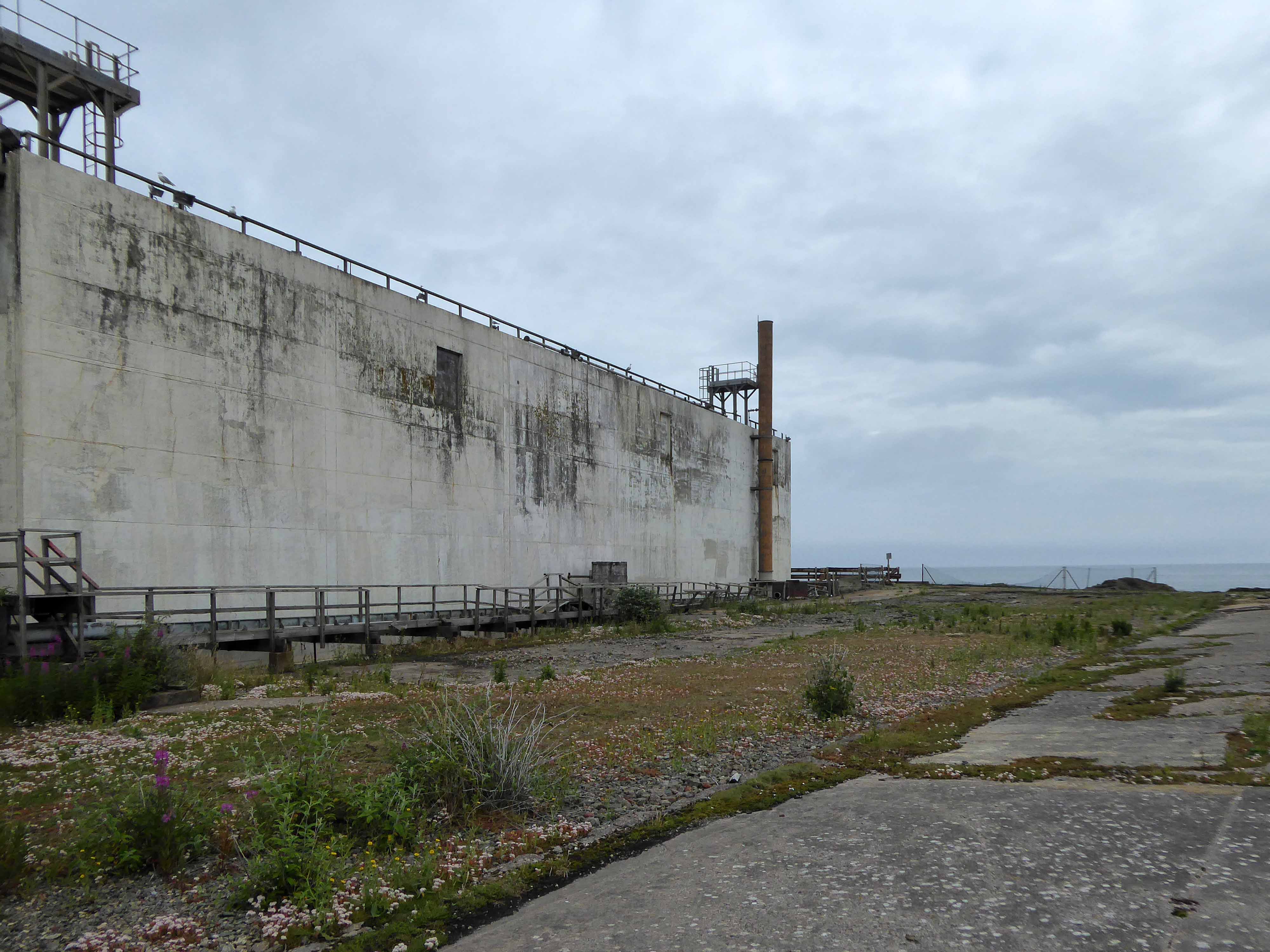
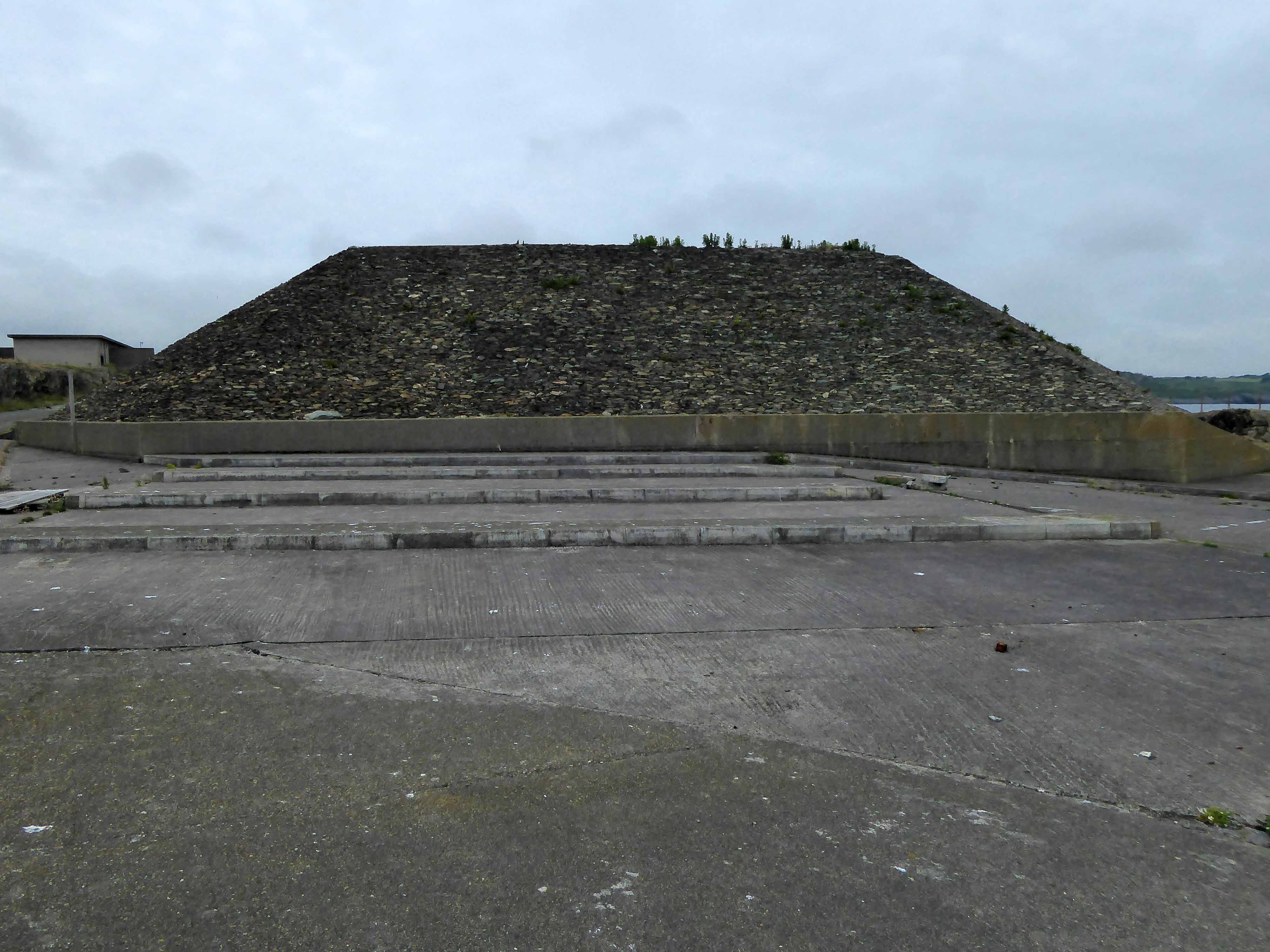
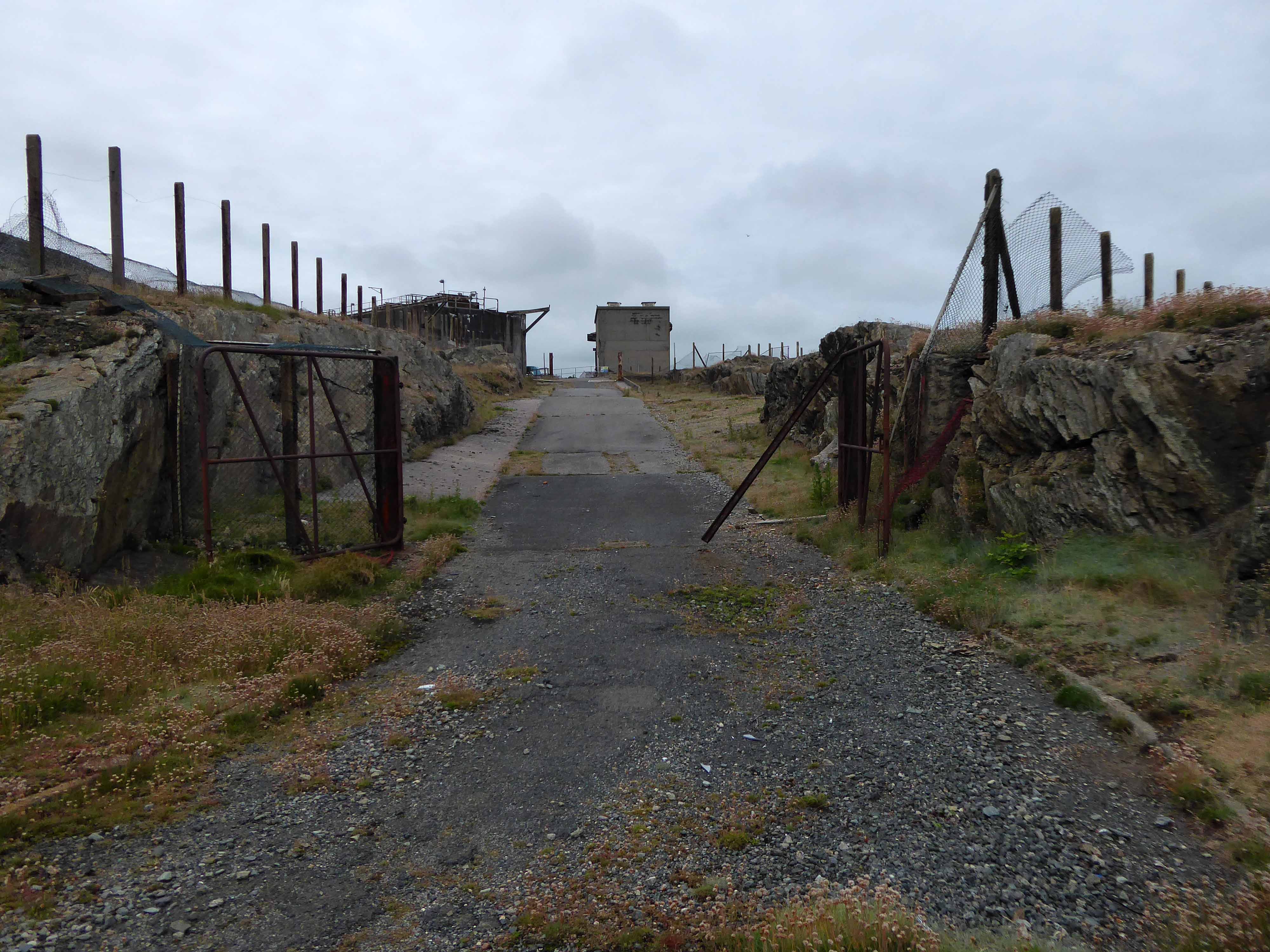
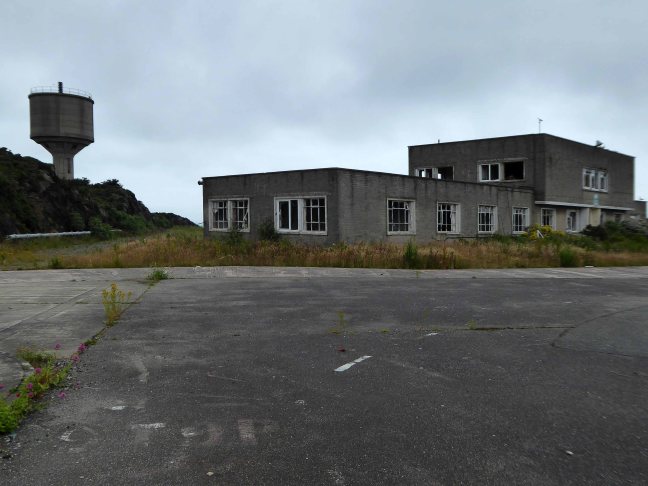
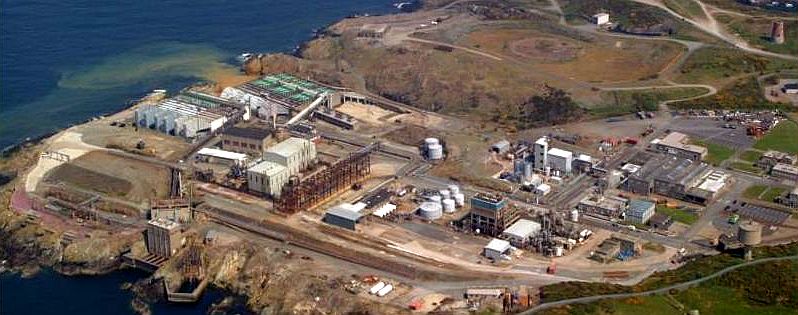
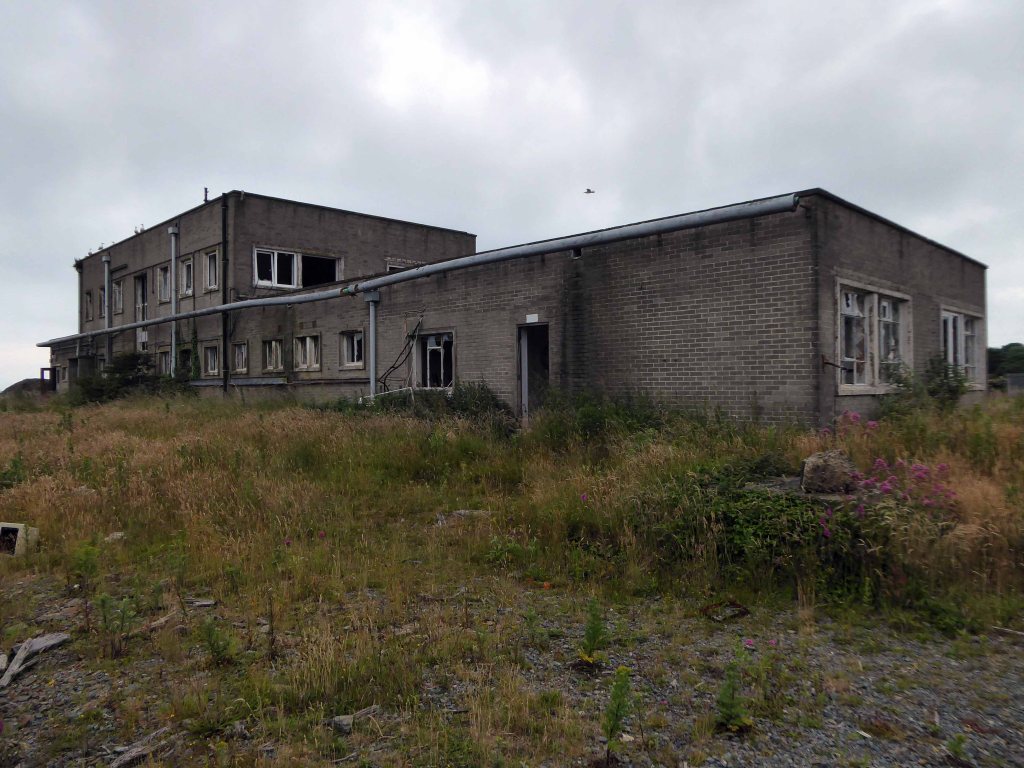
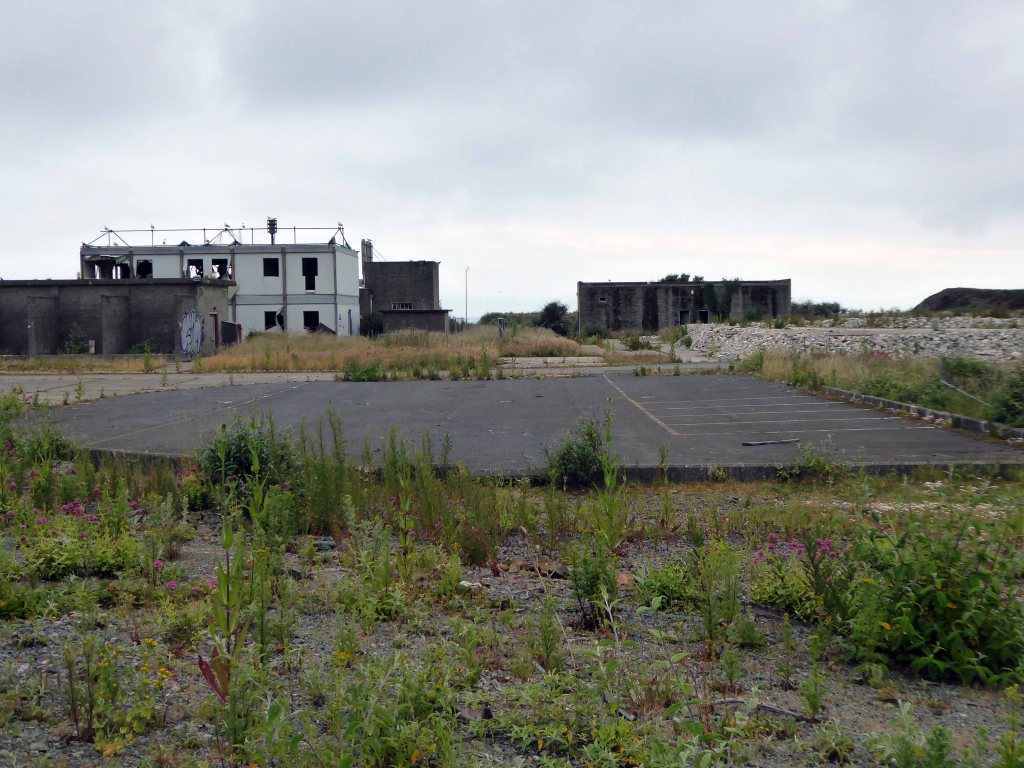
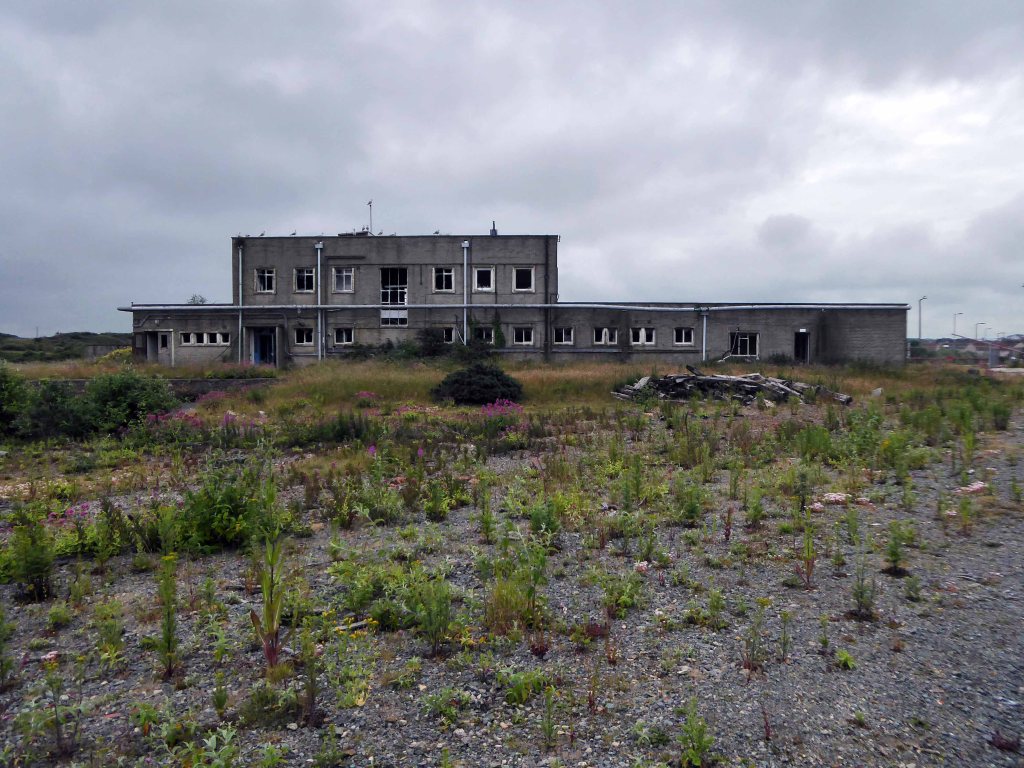
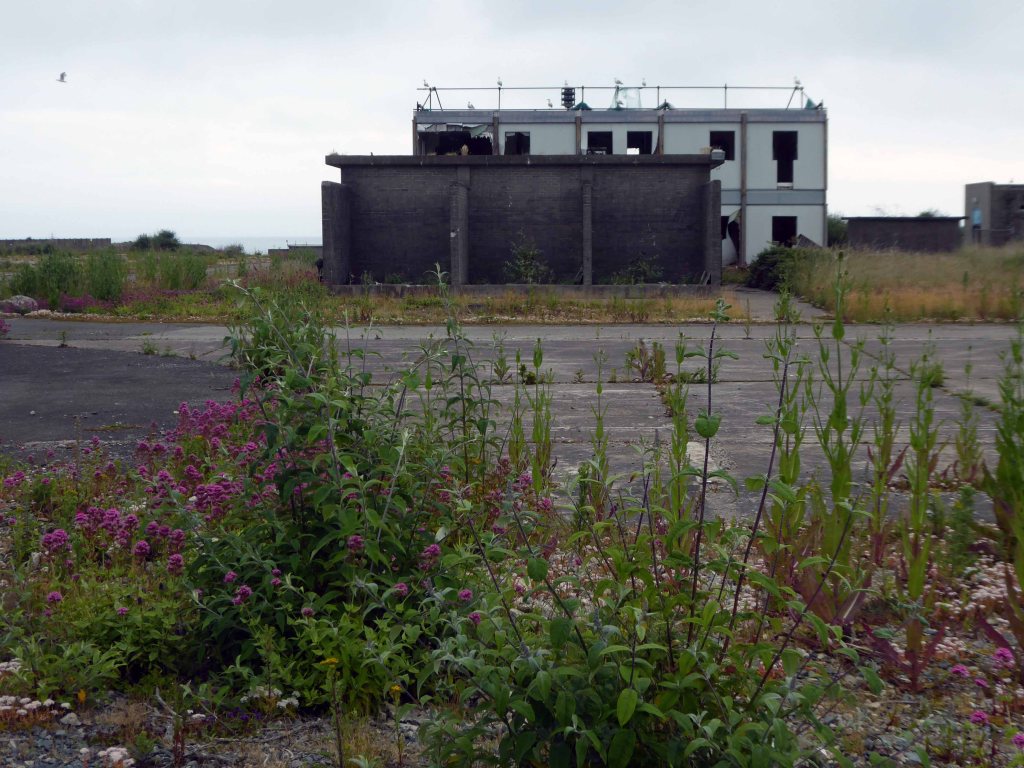
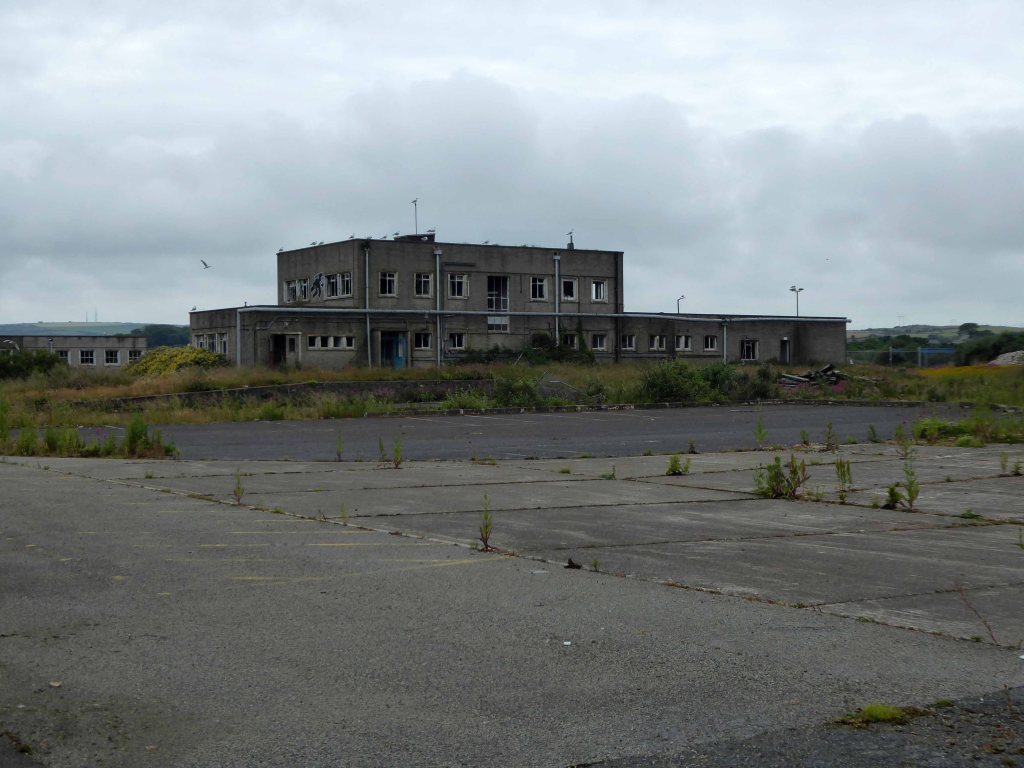
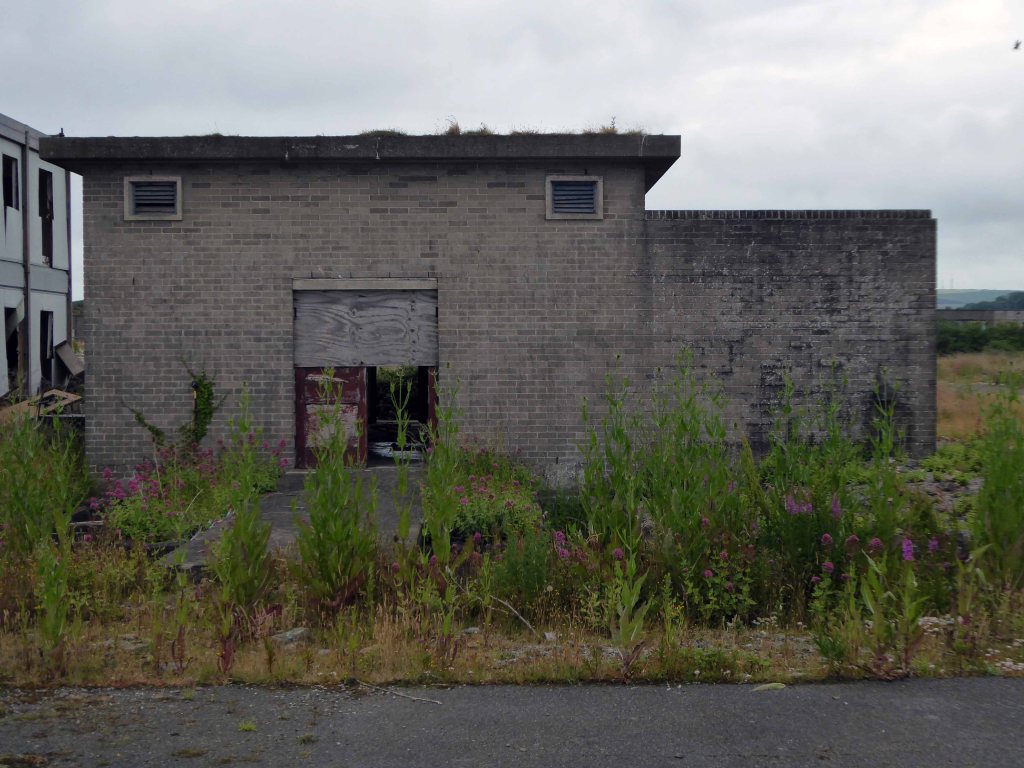
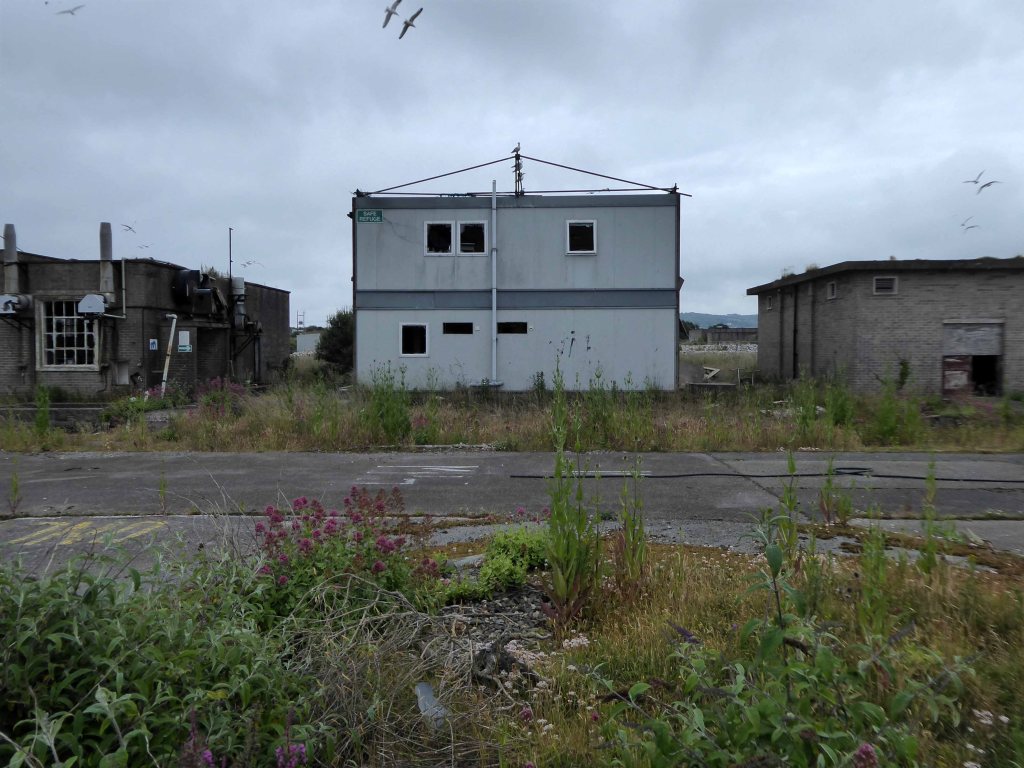
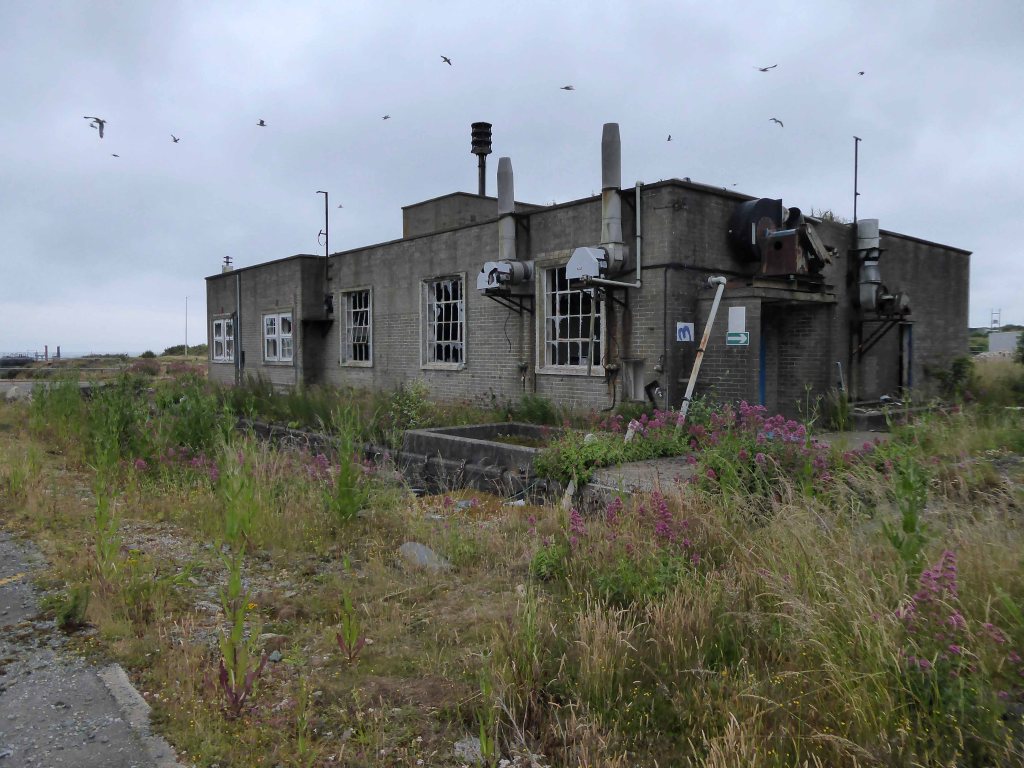
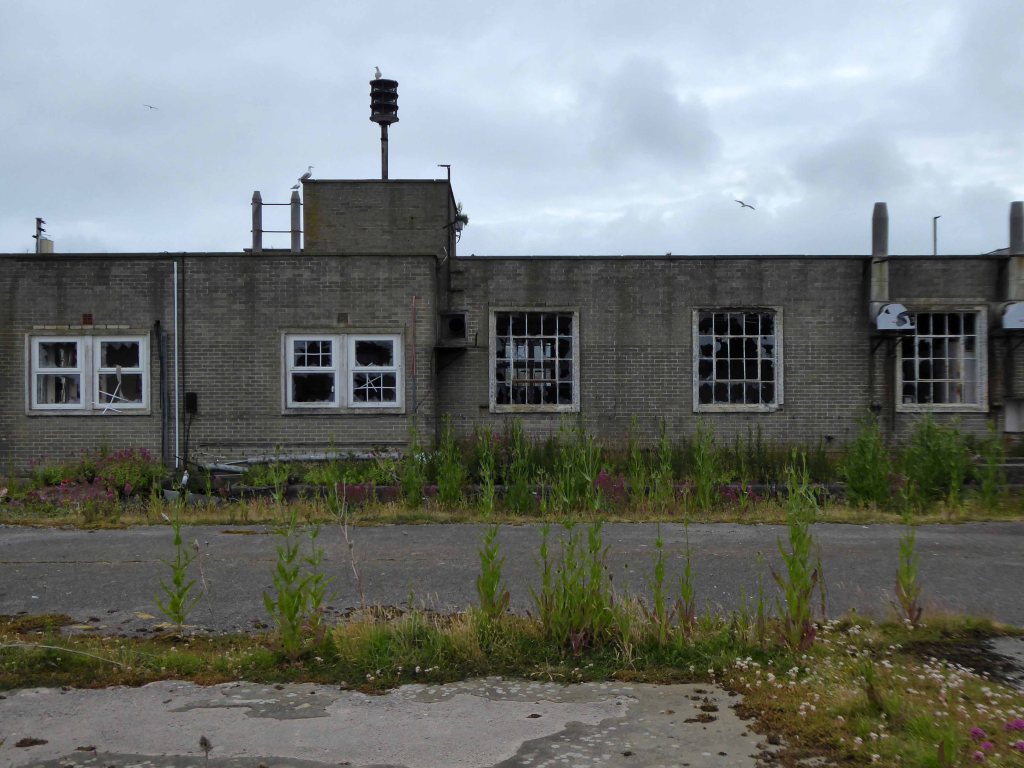
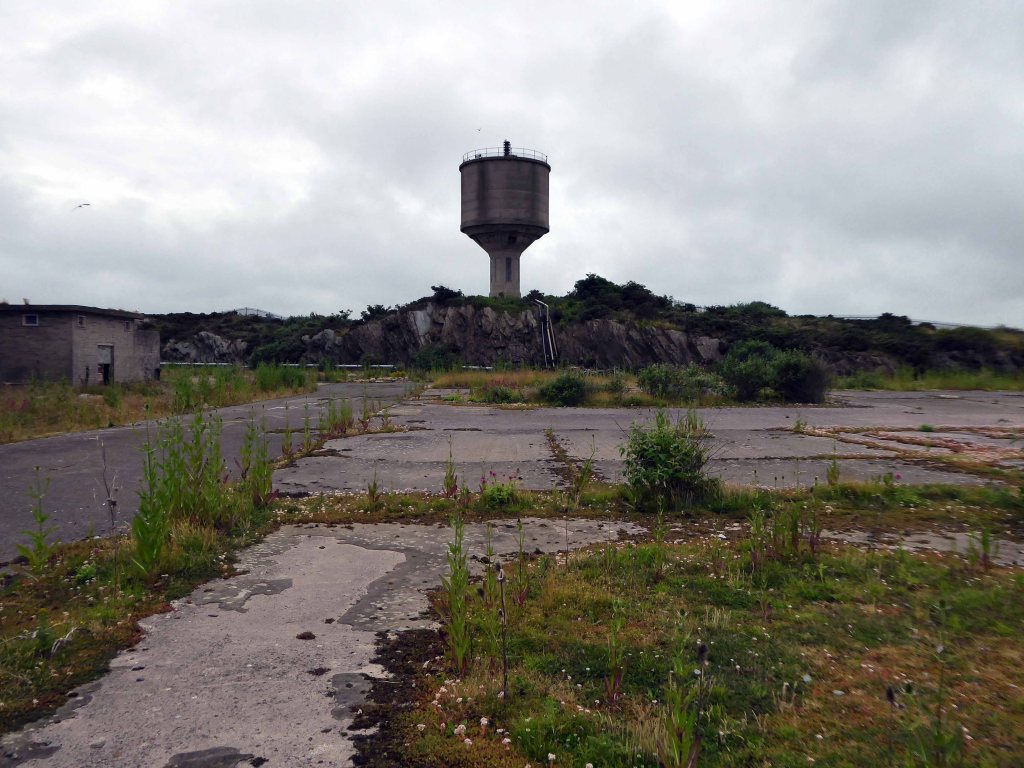
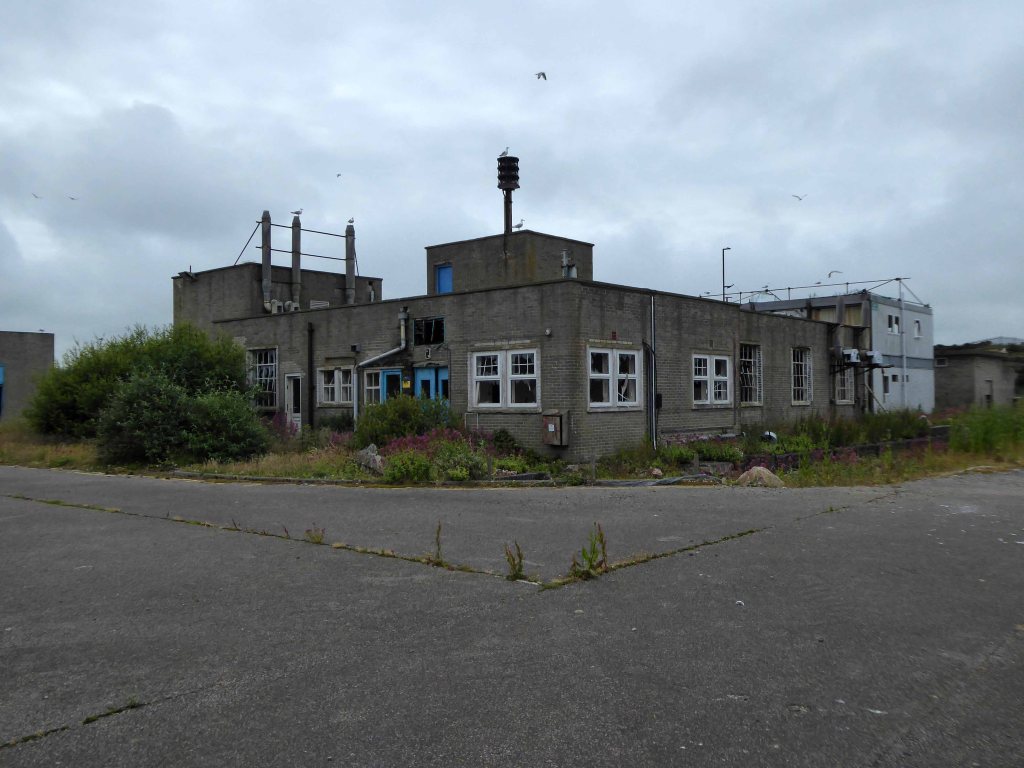
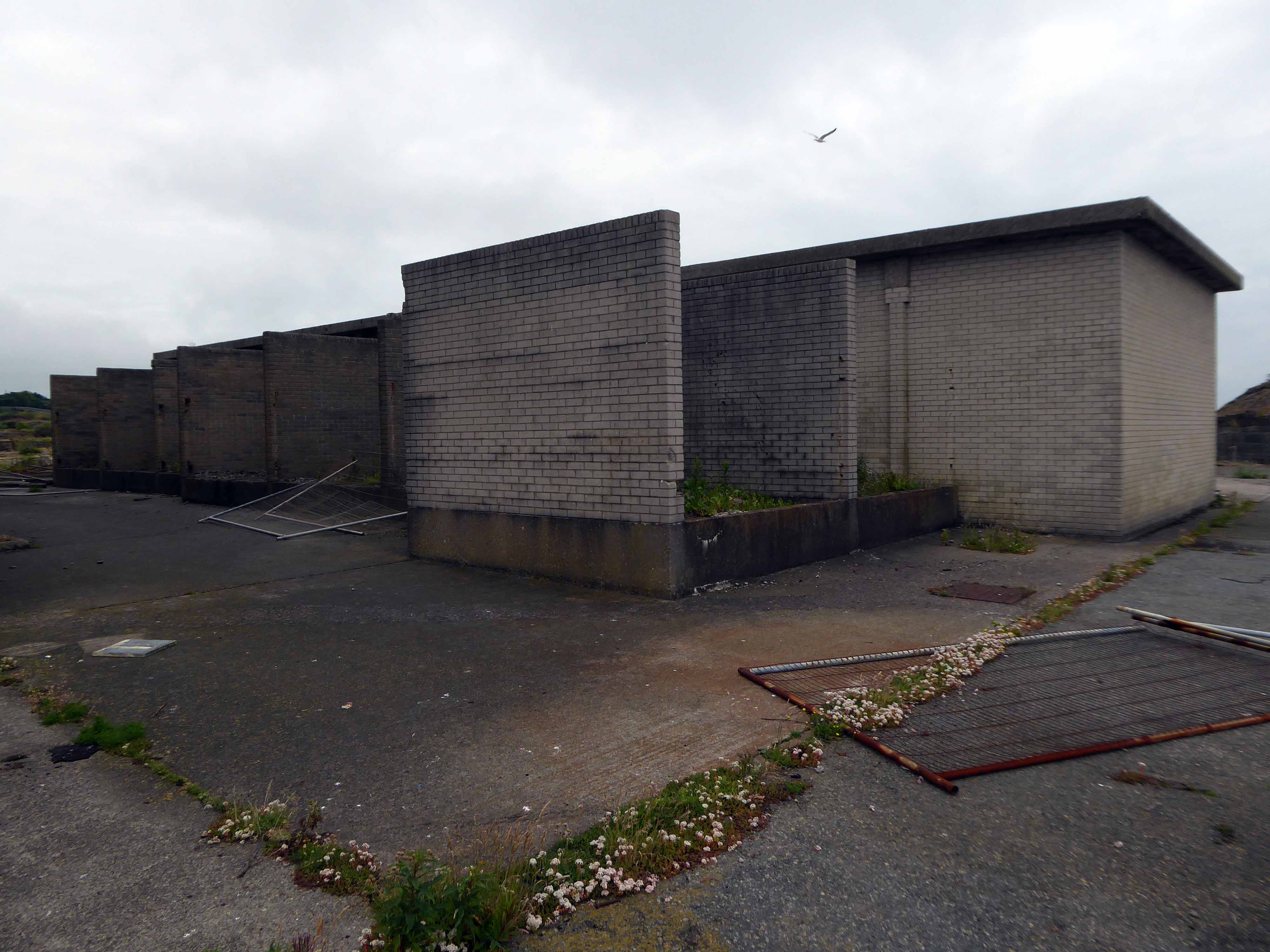
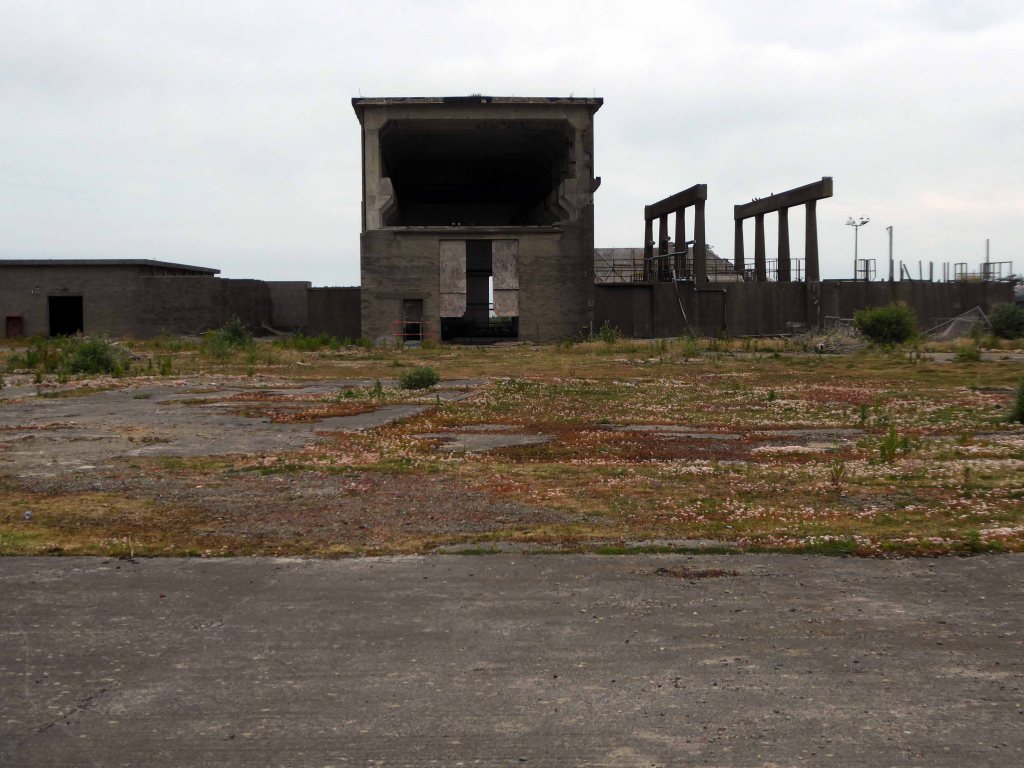
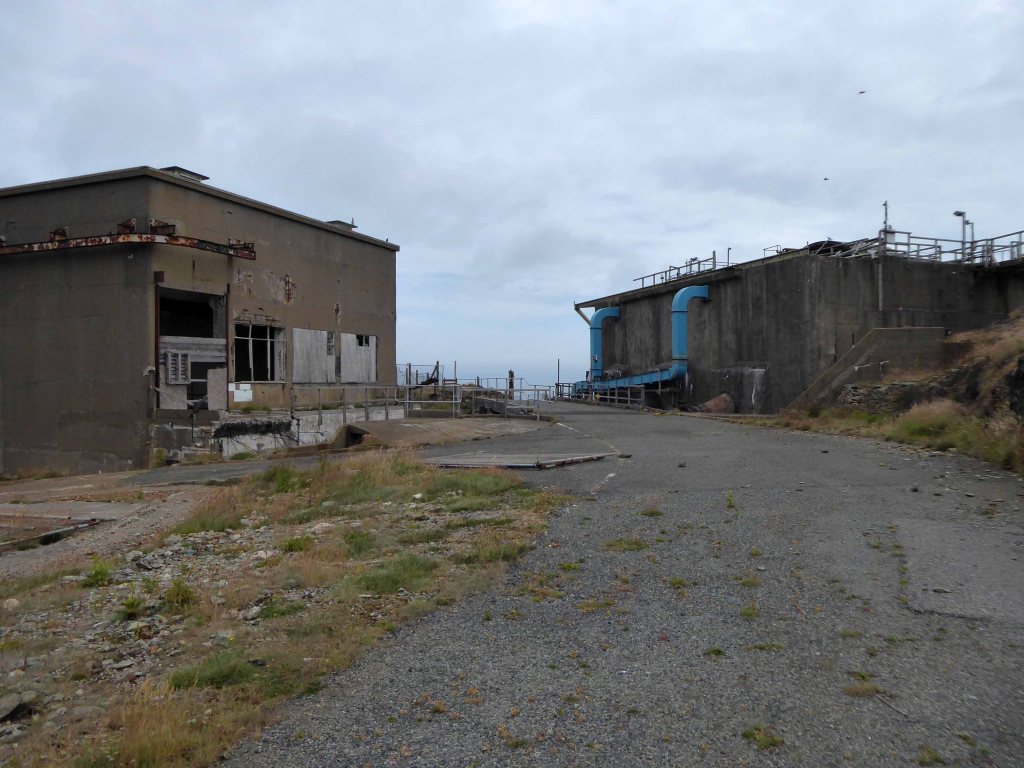
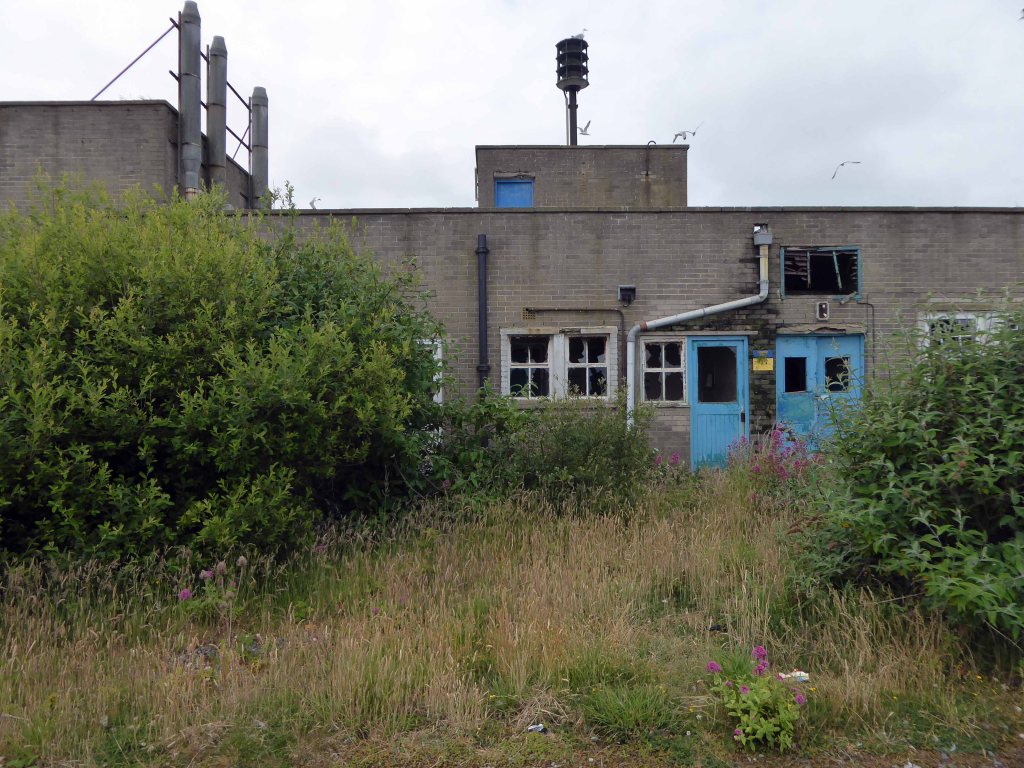
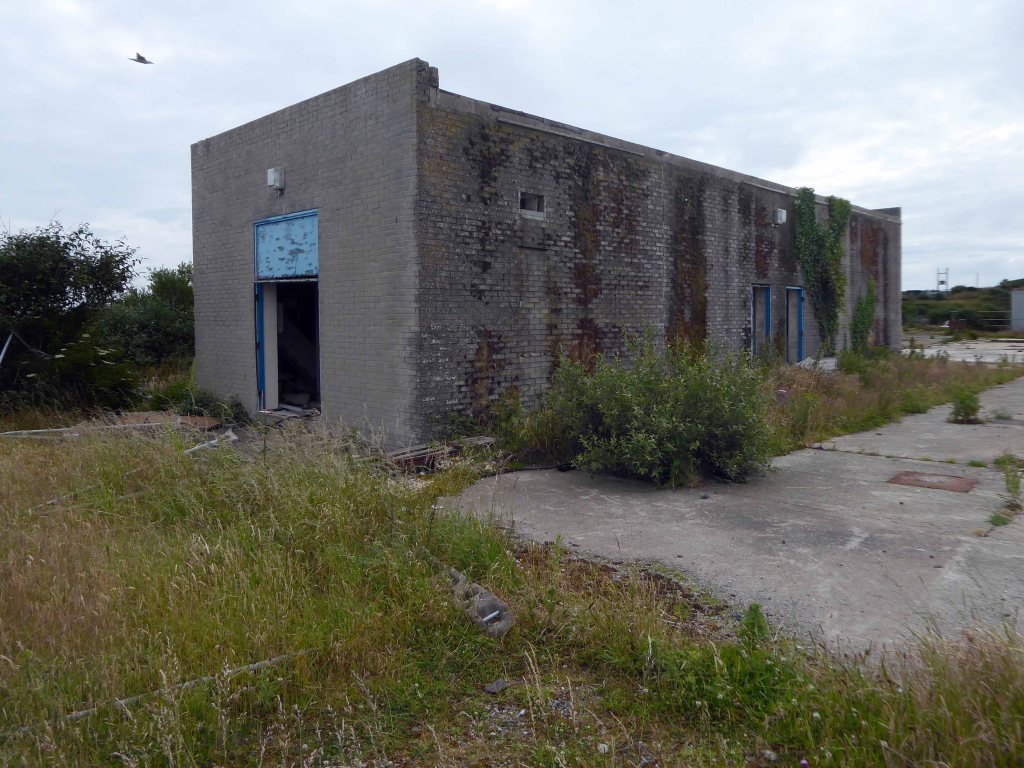
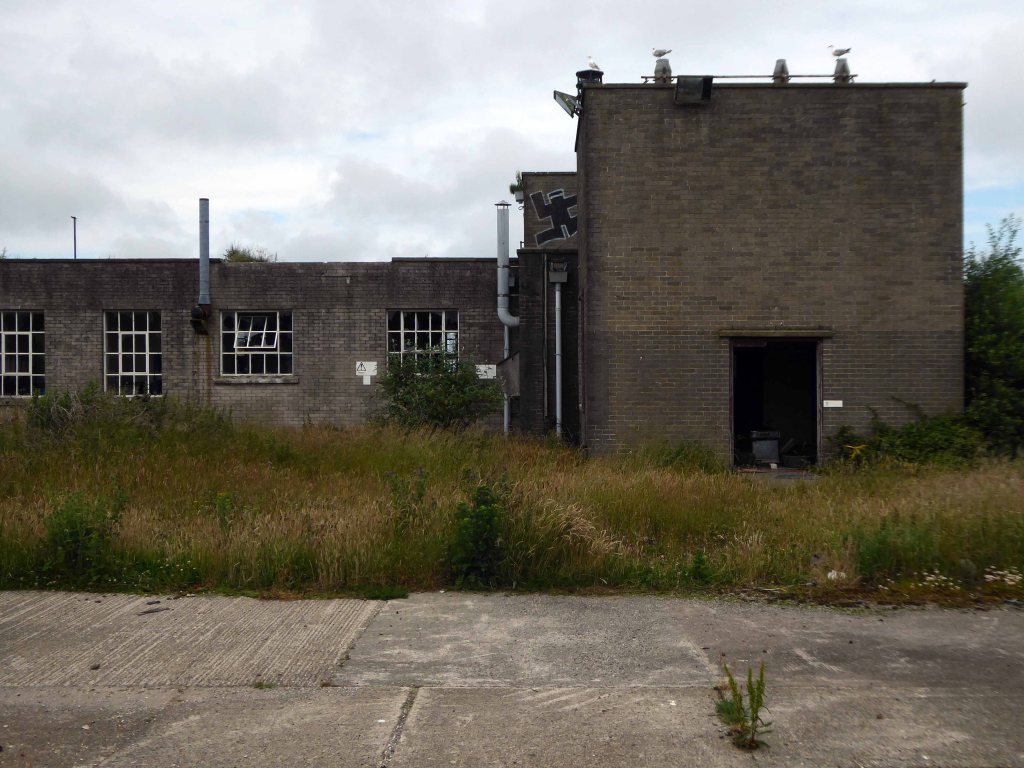
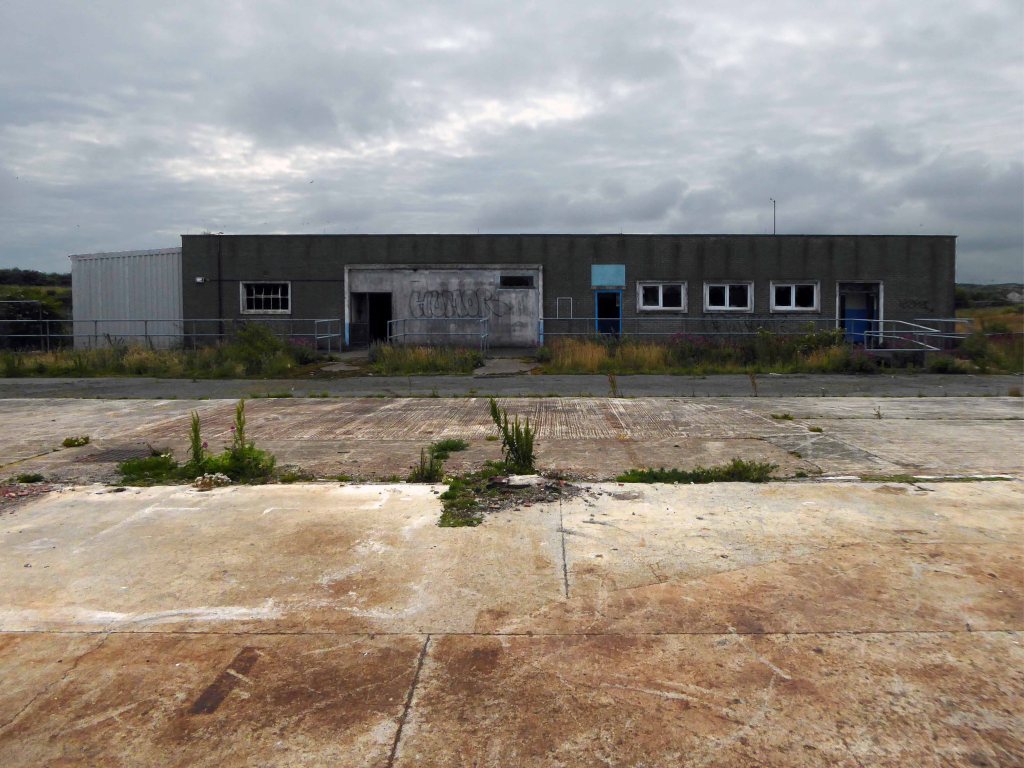
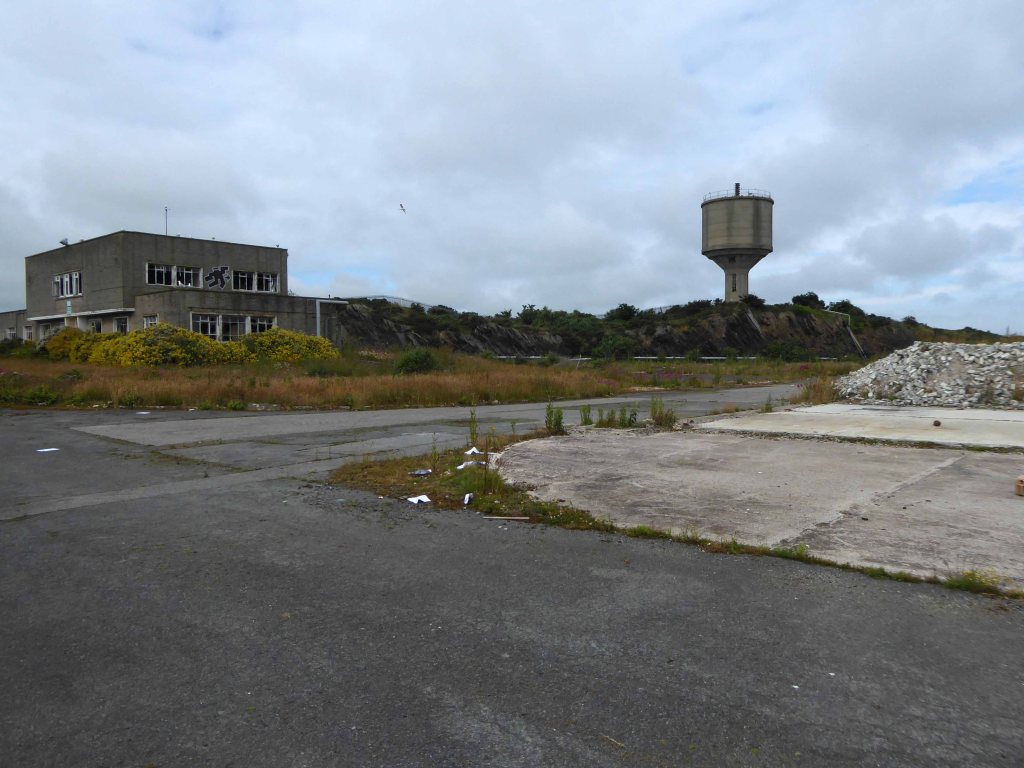
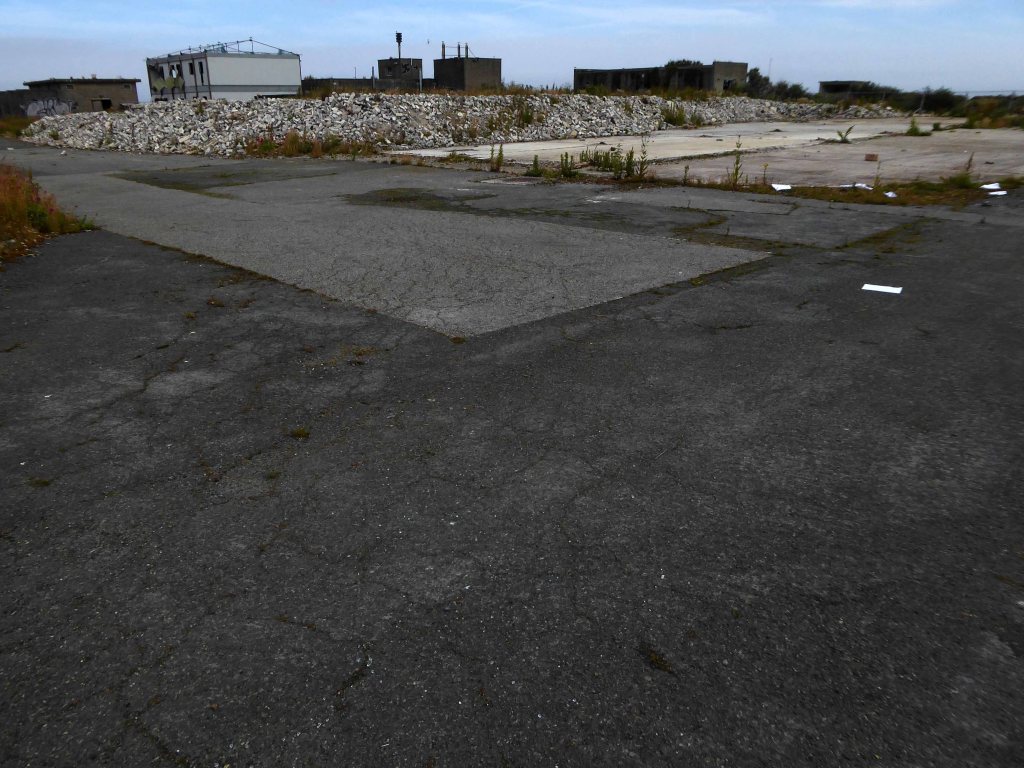
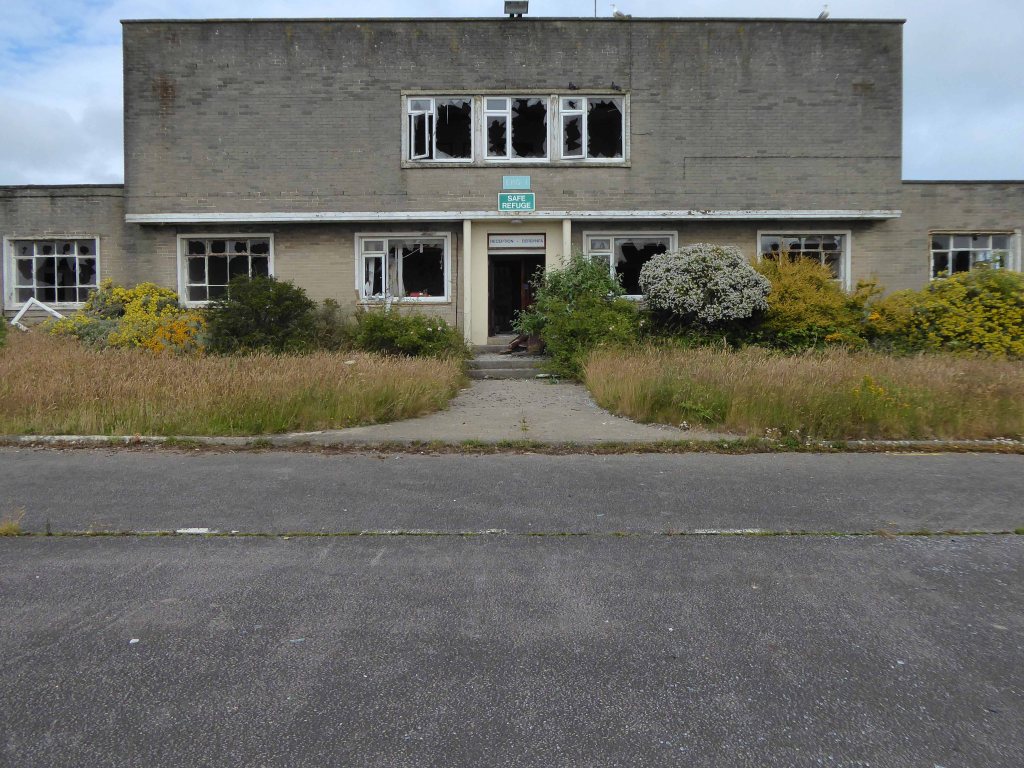
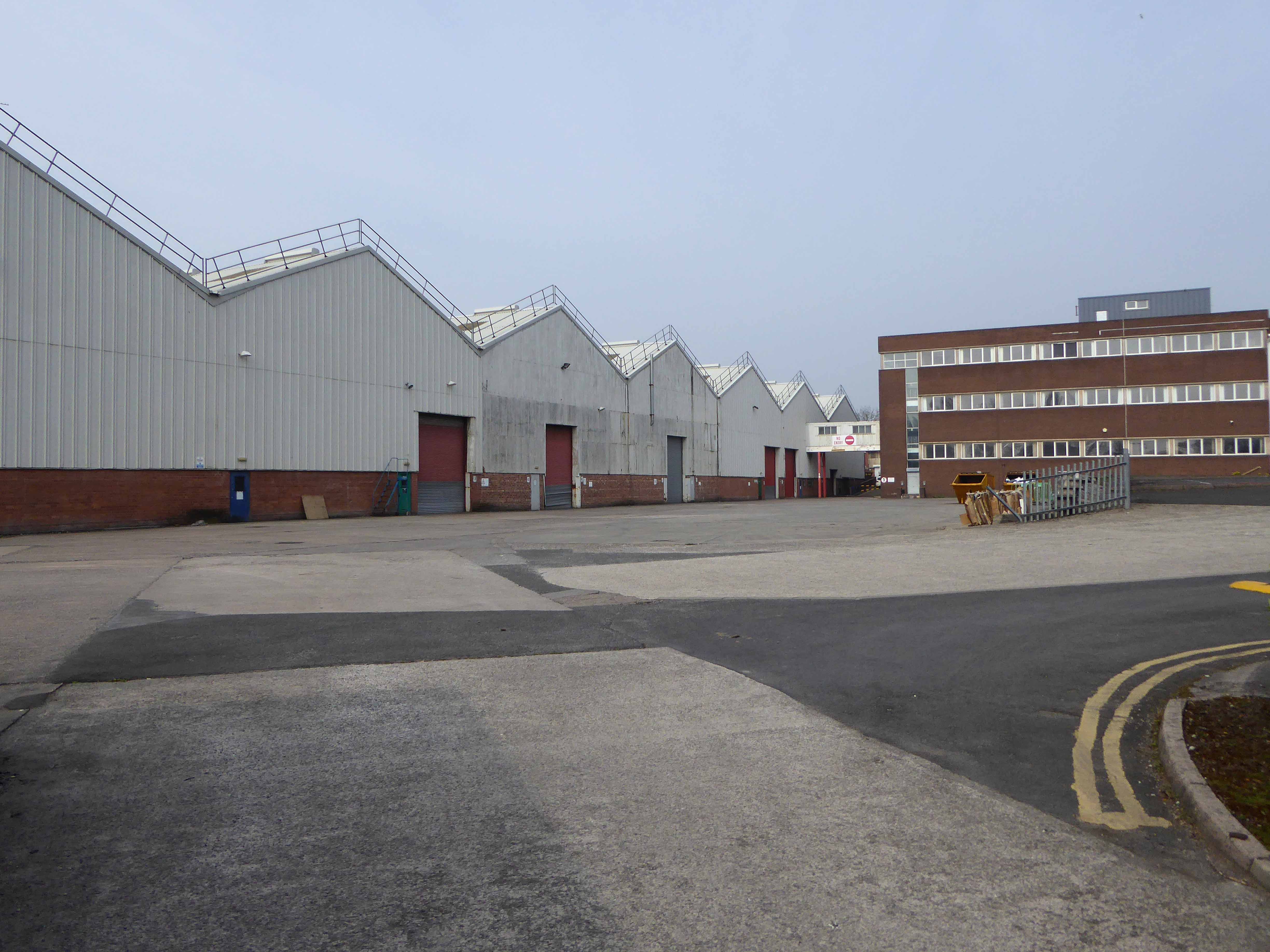
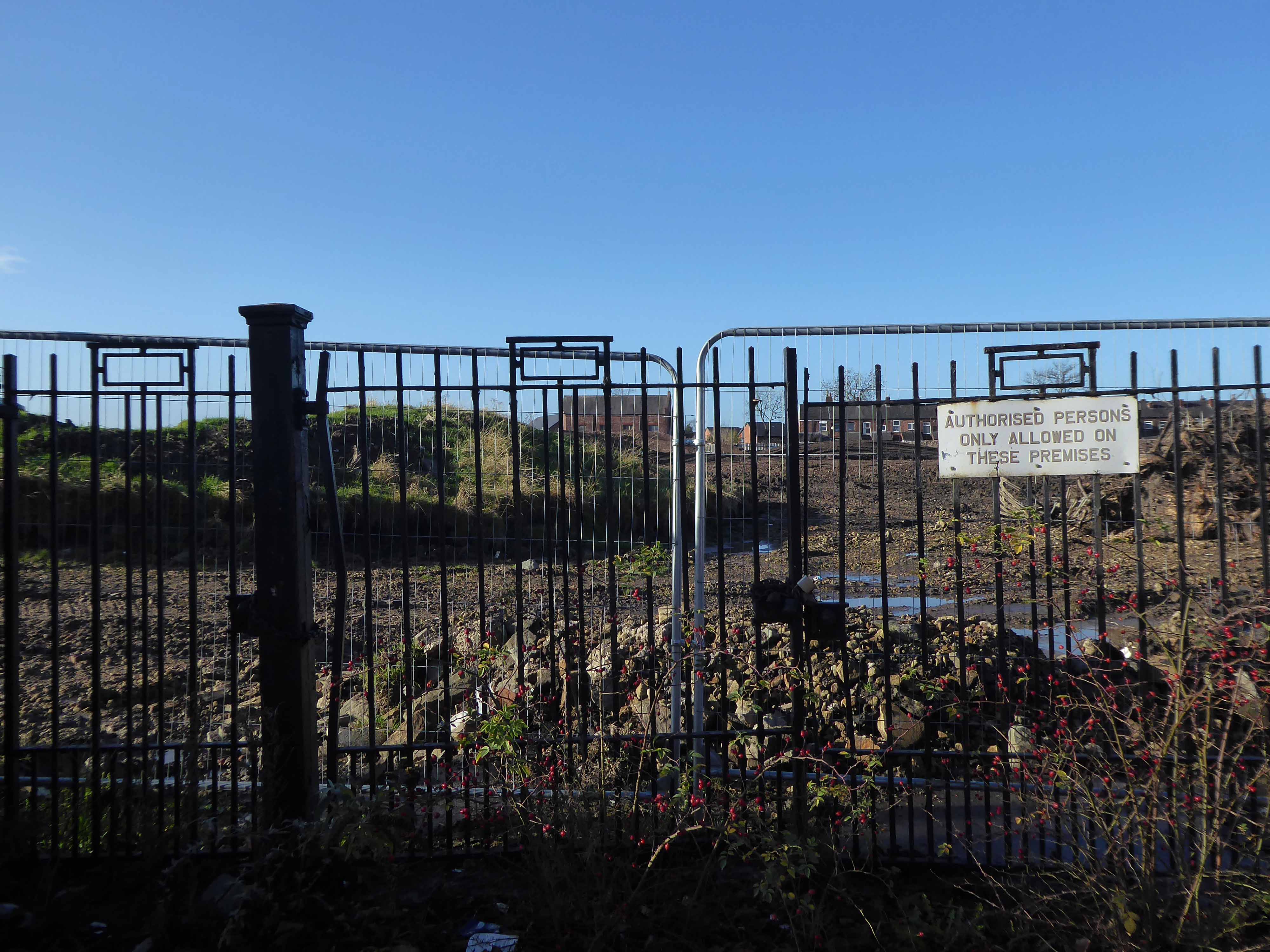
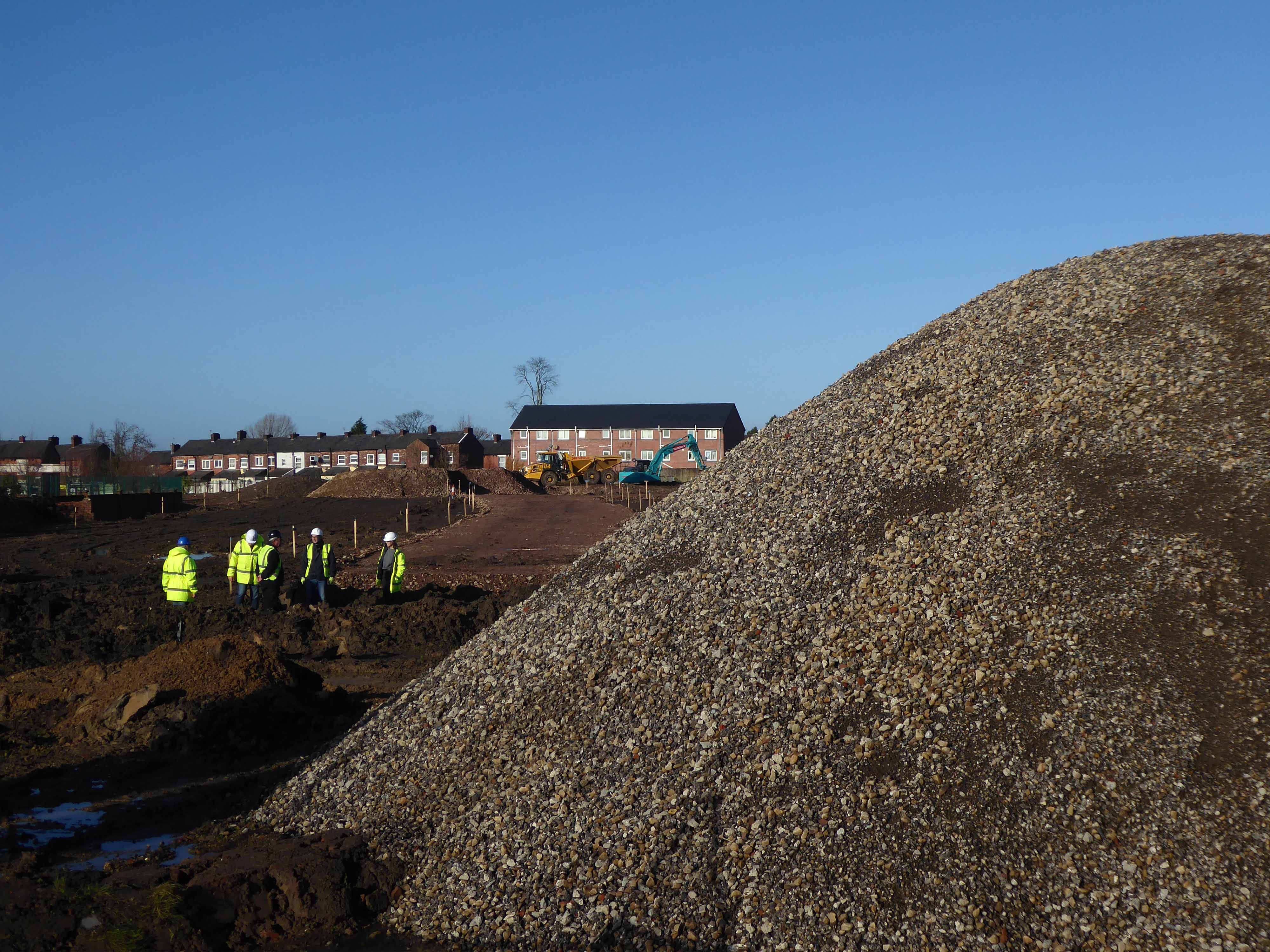
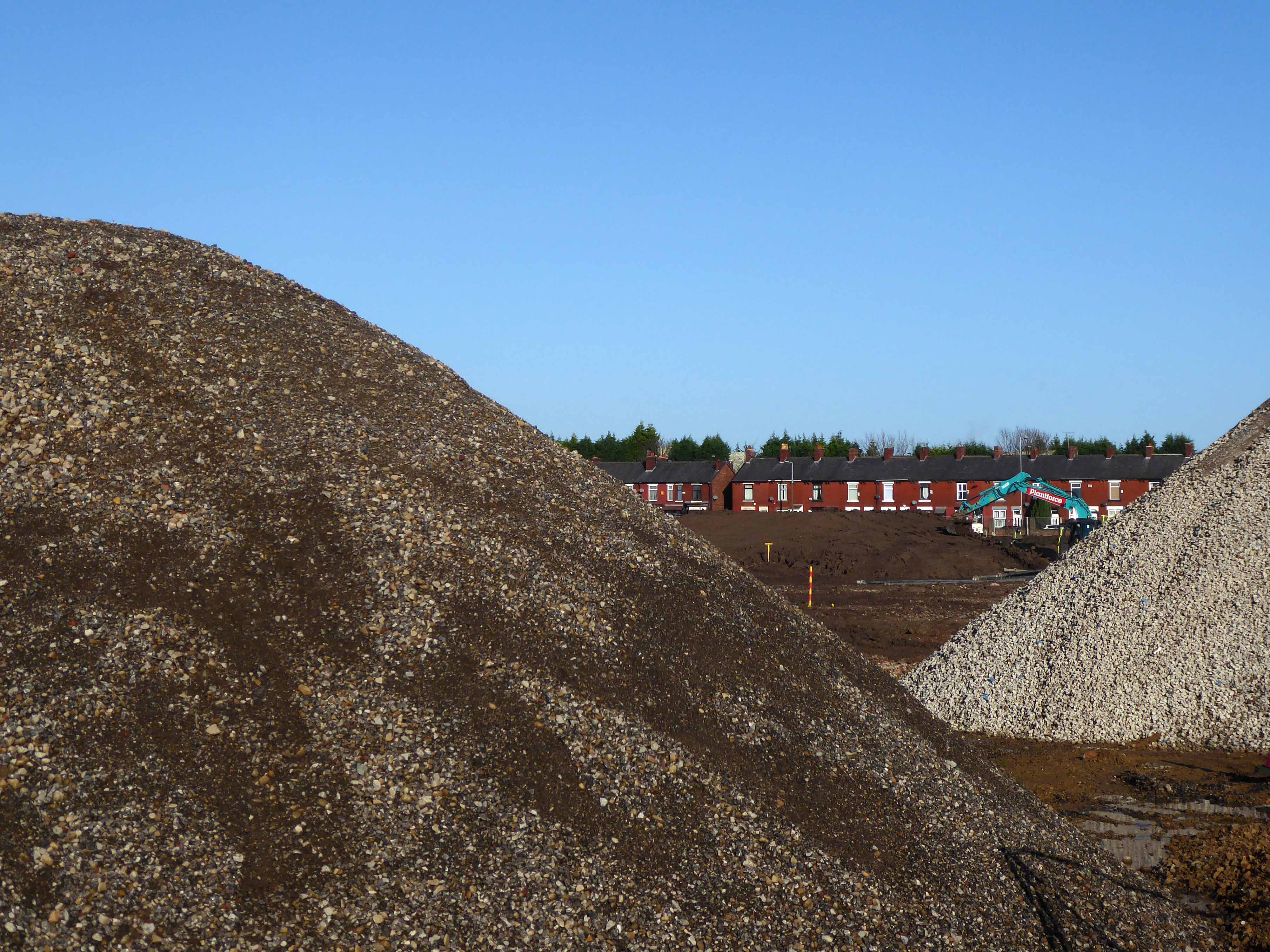
We have taken a trip around the extant exteriors of the processing plant.
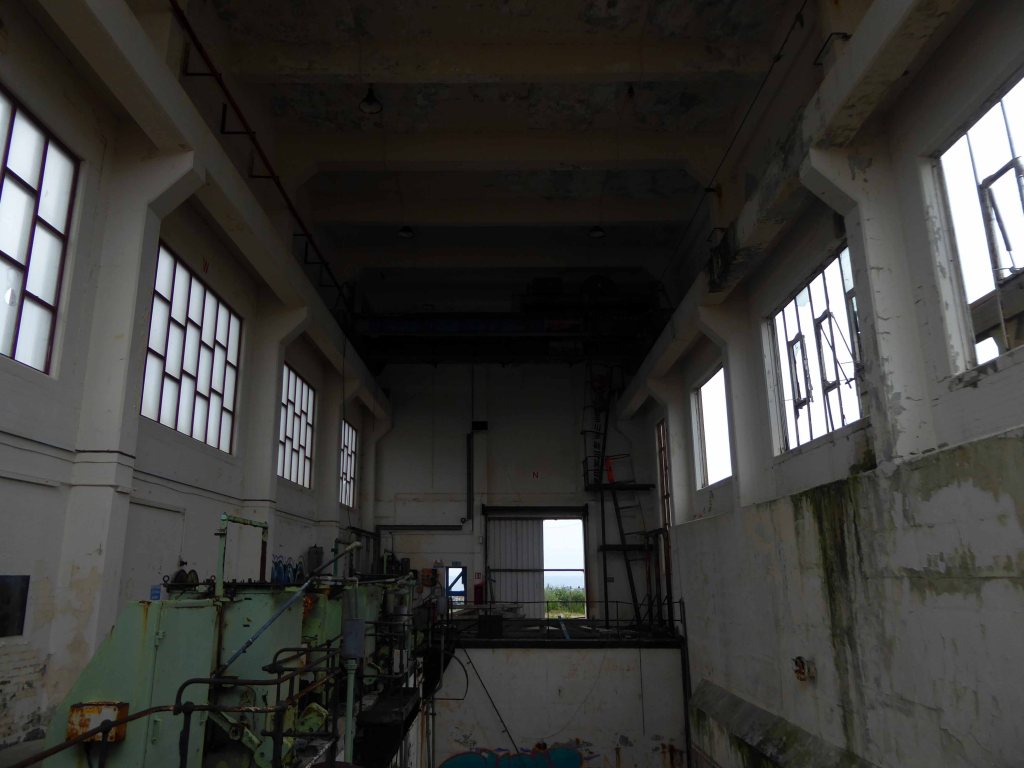
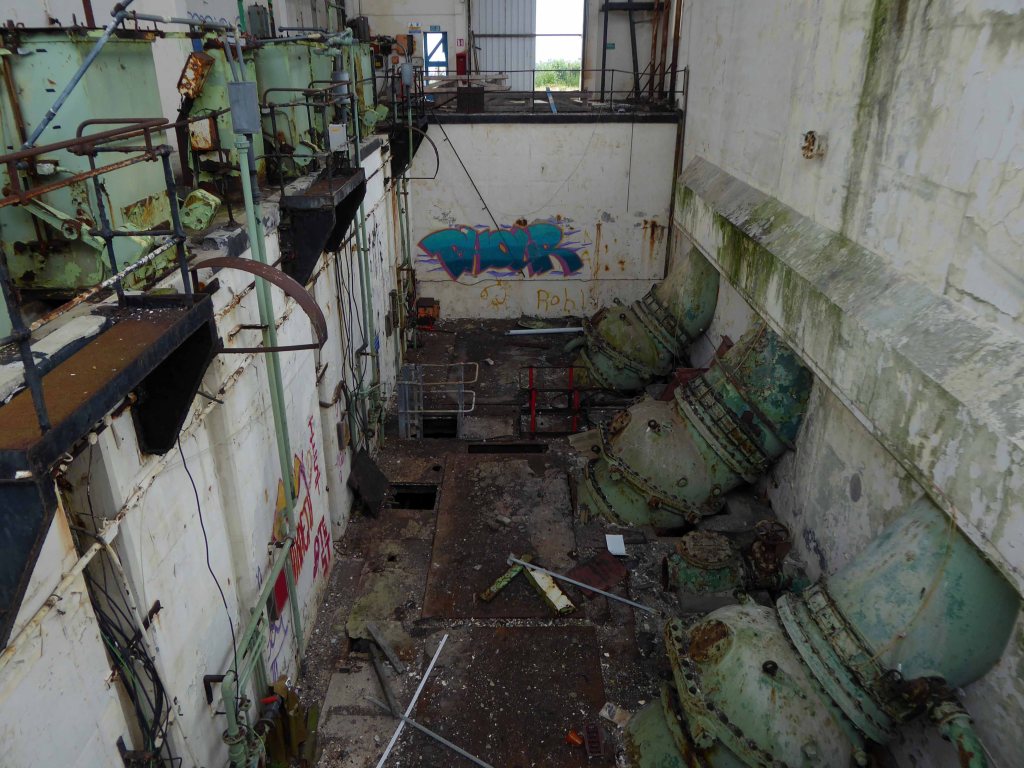
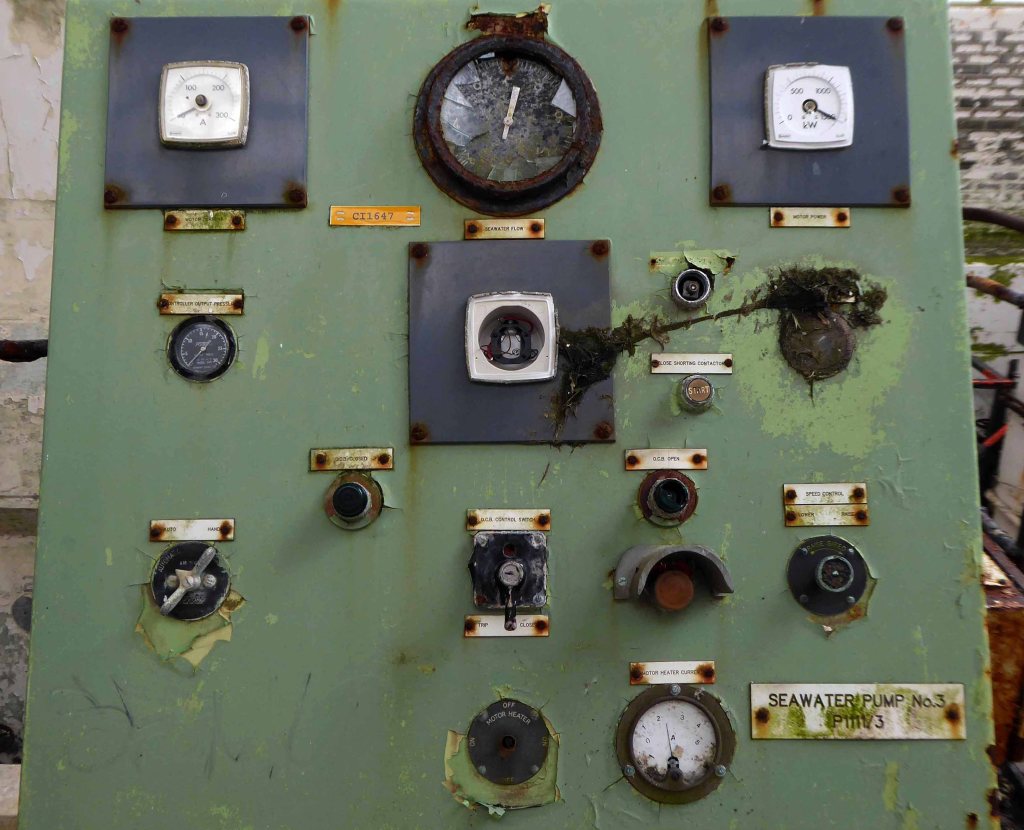
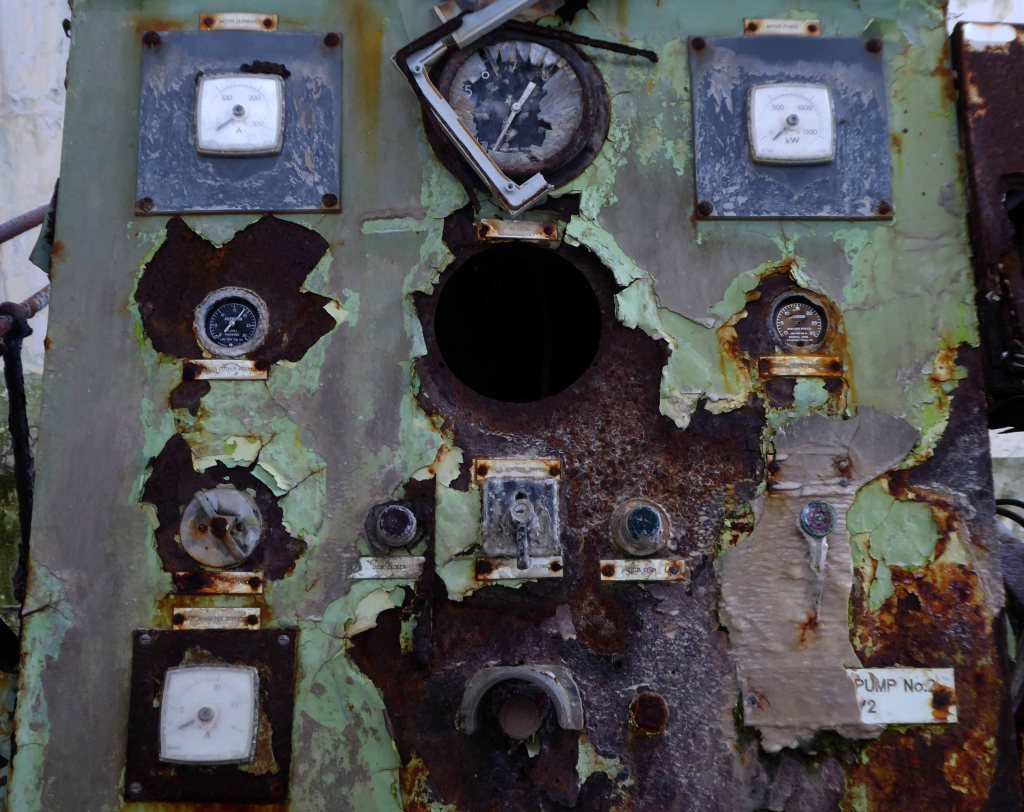
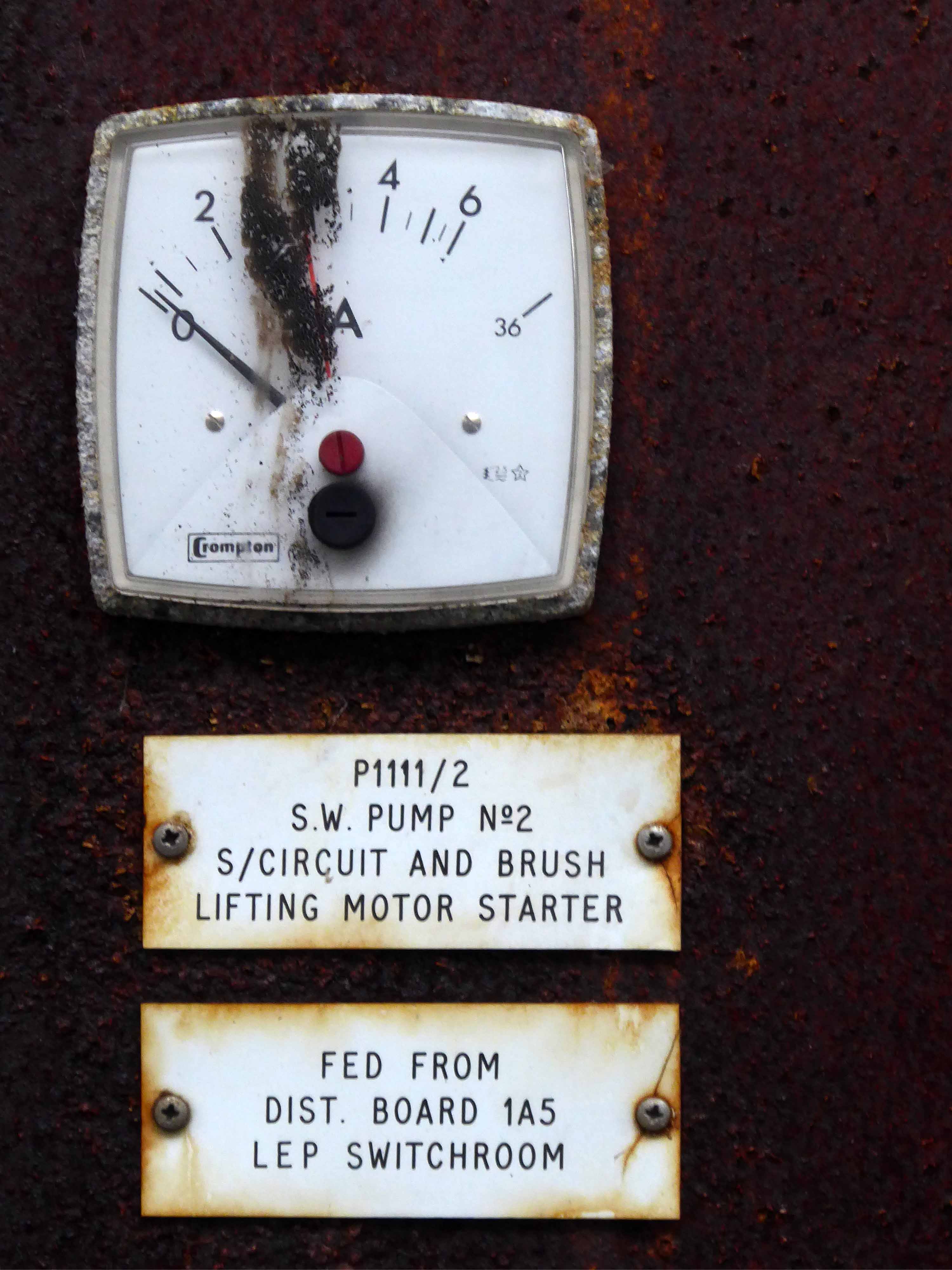
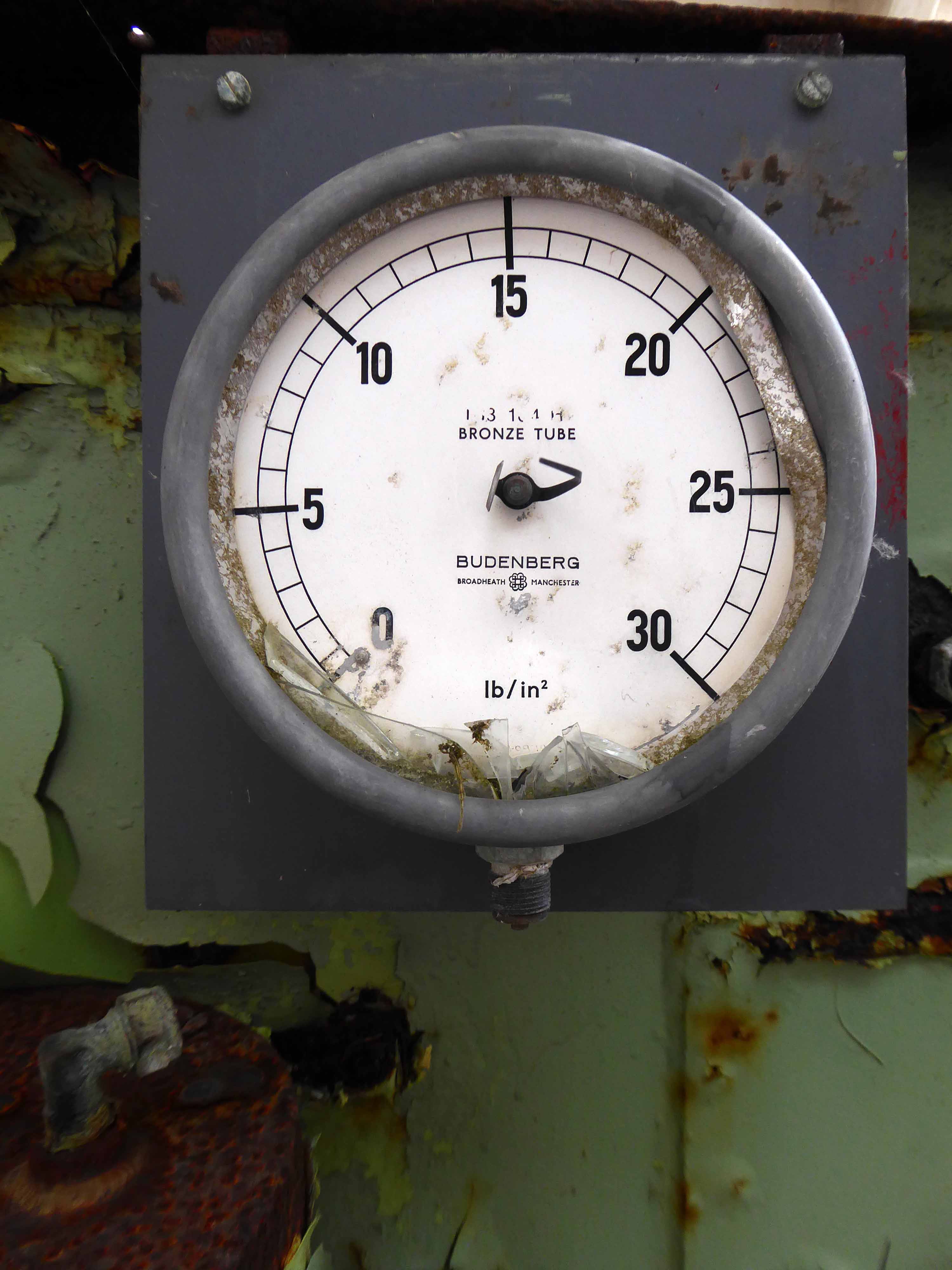
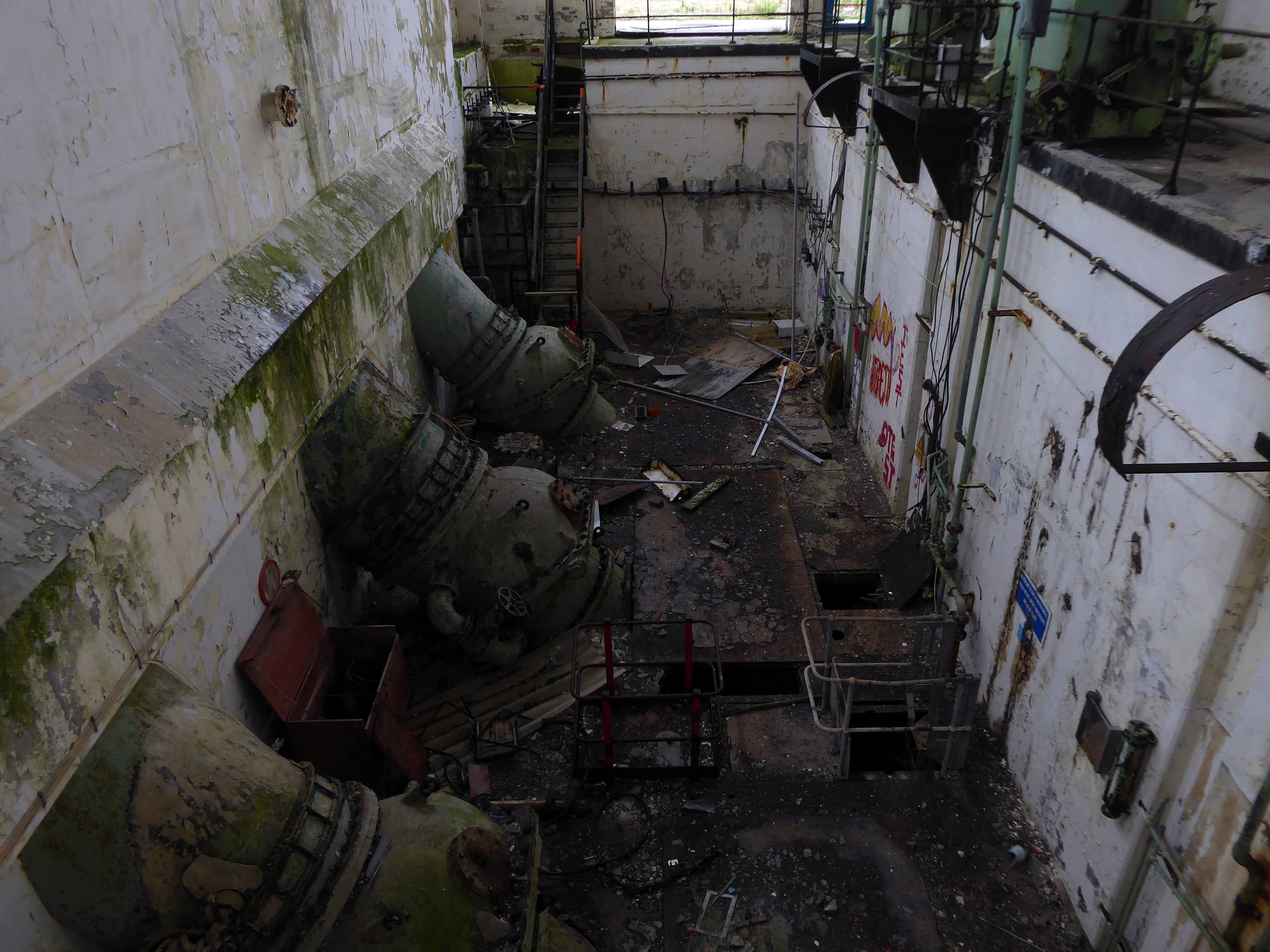
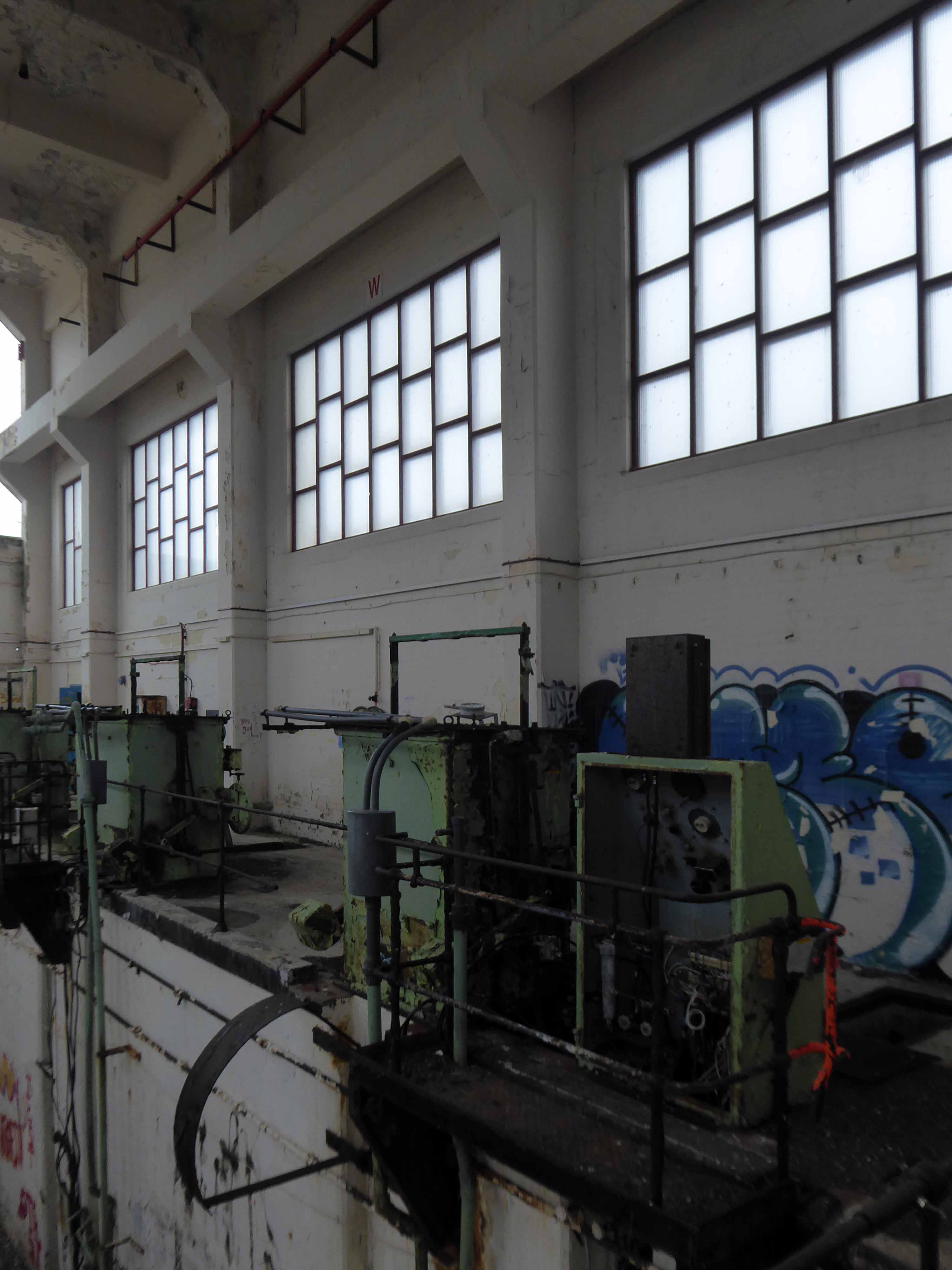
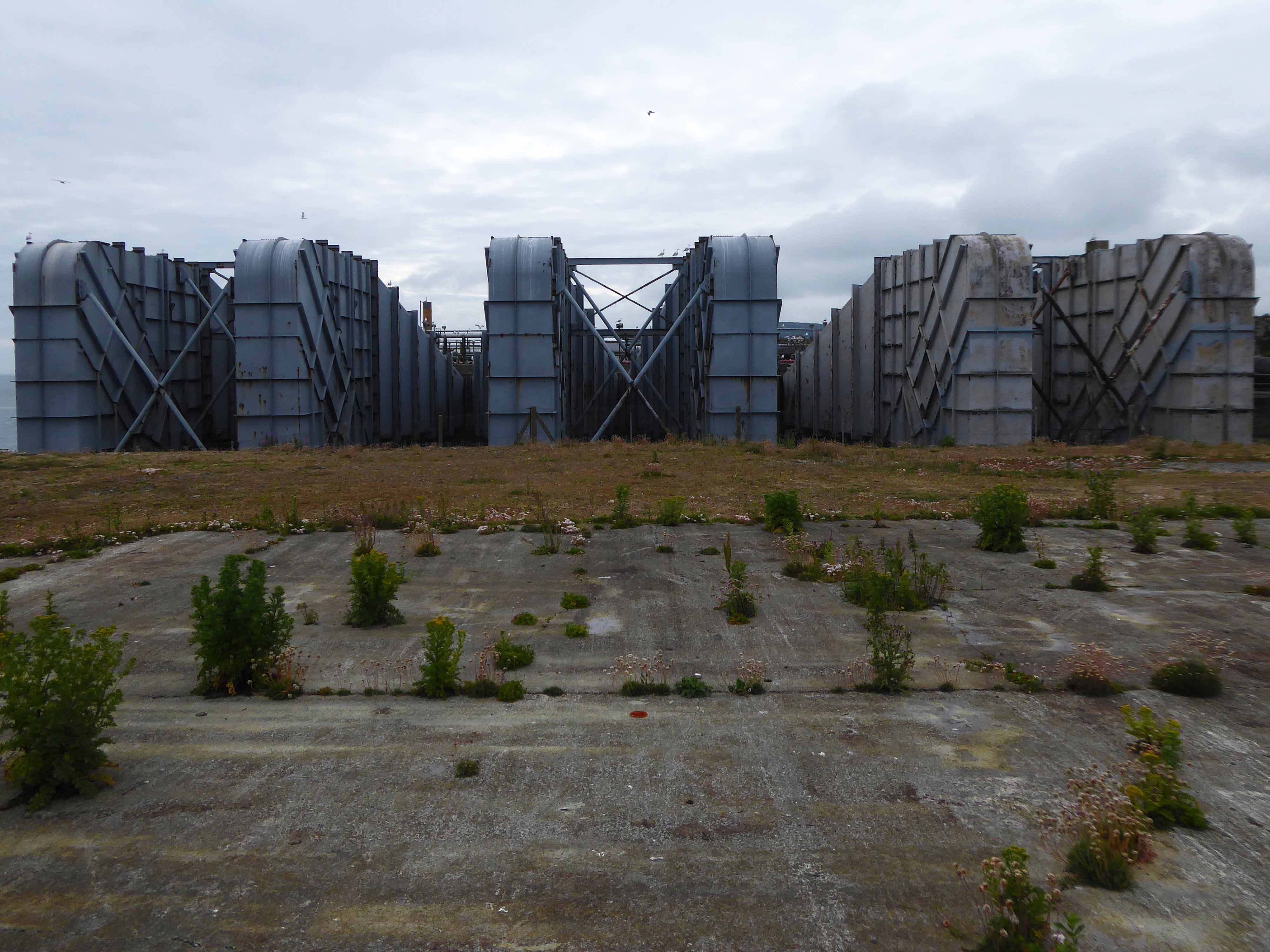
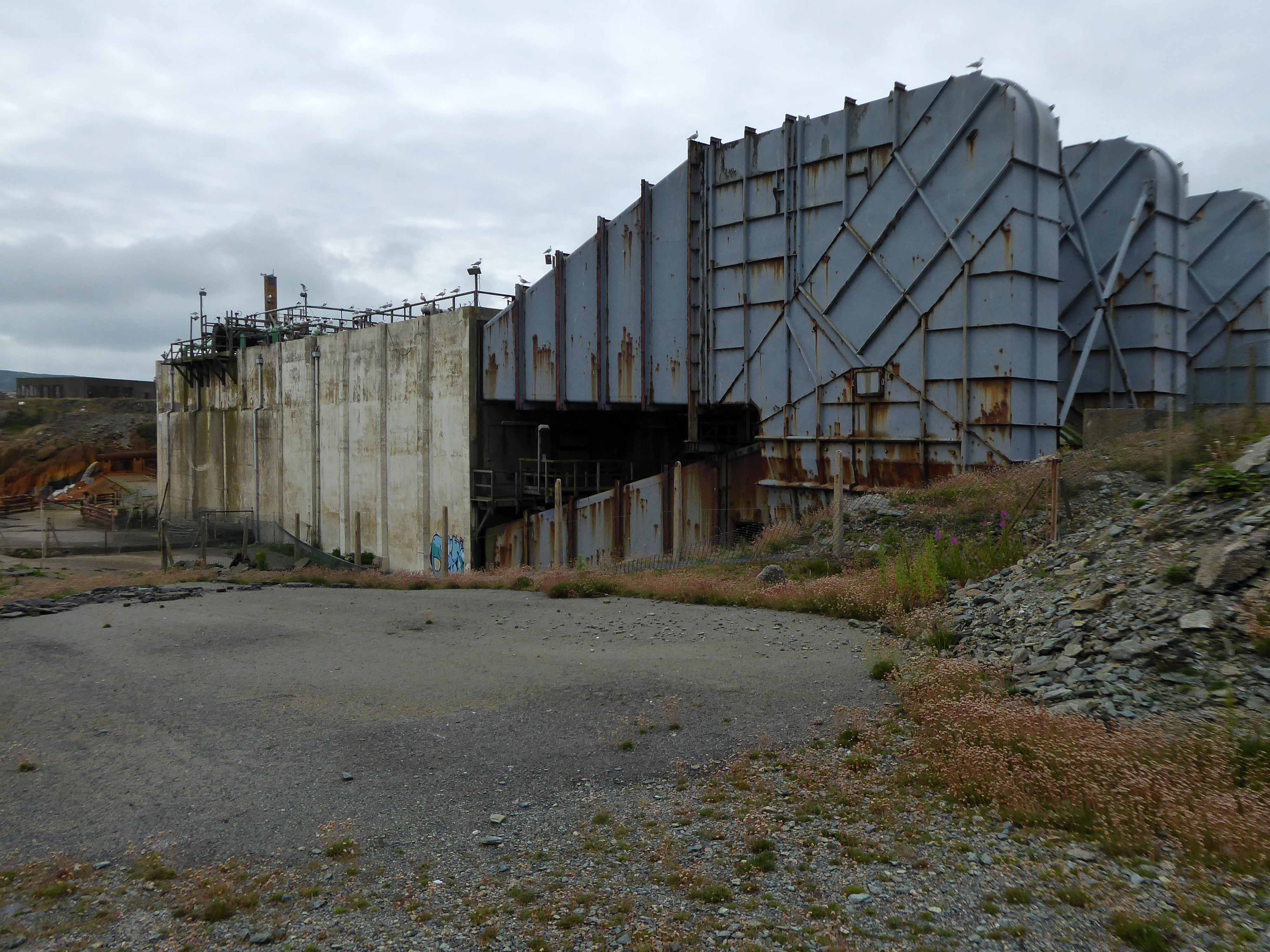
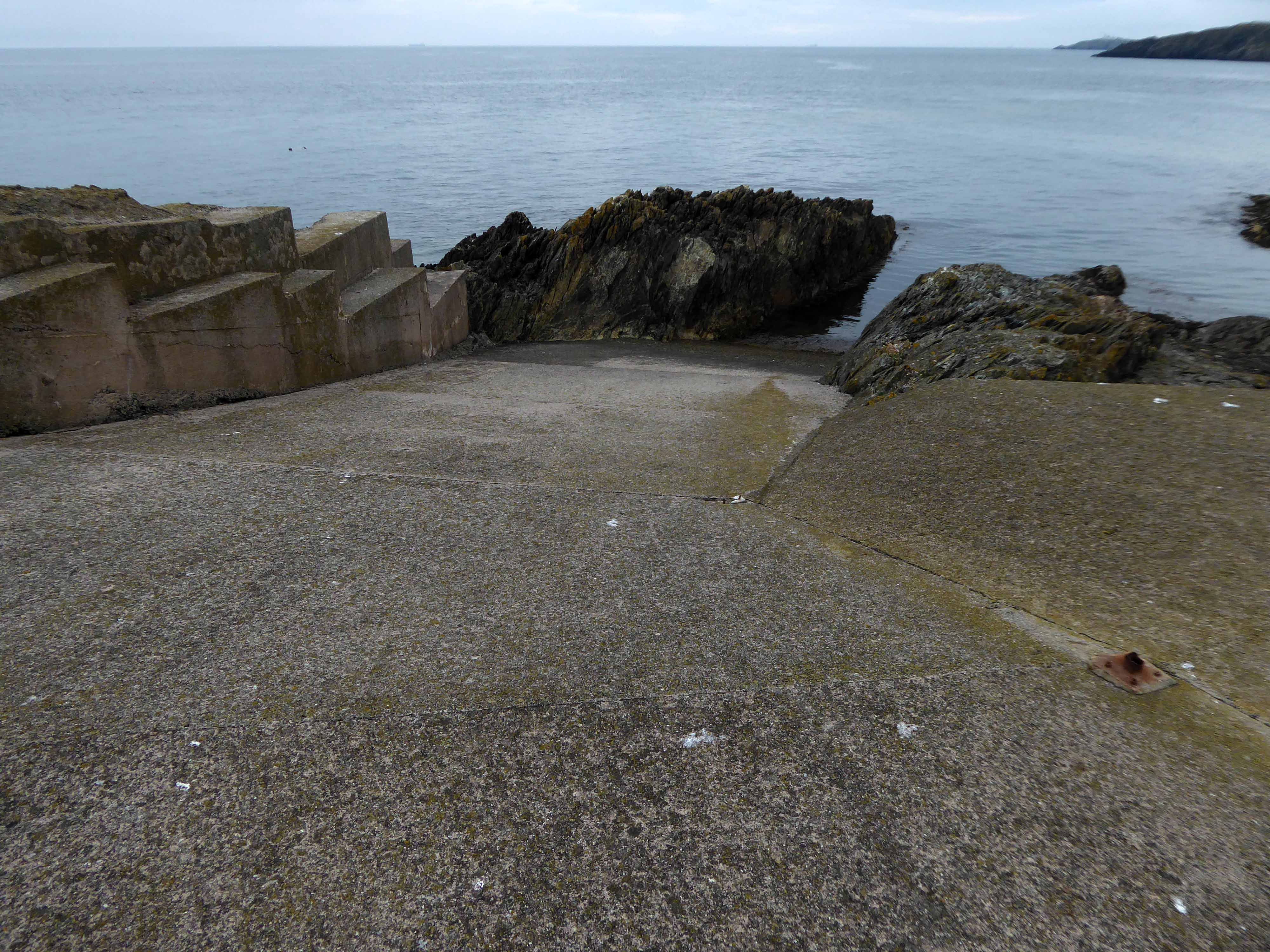
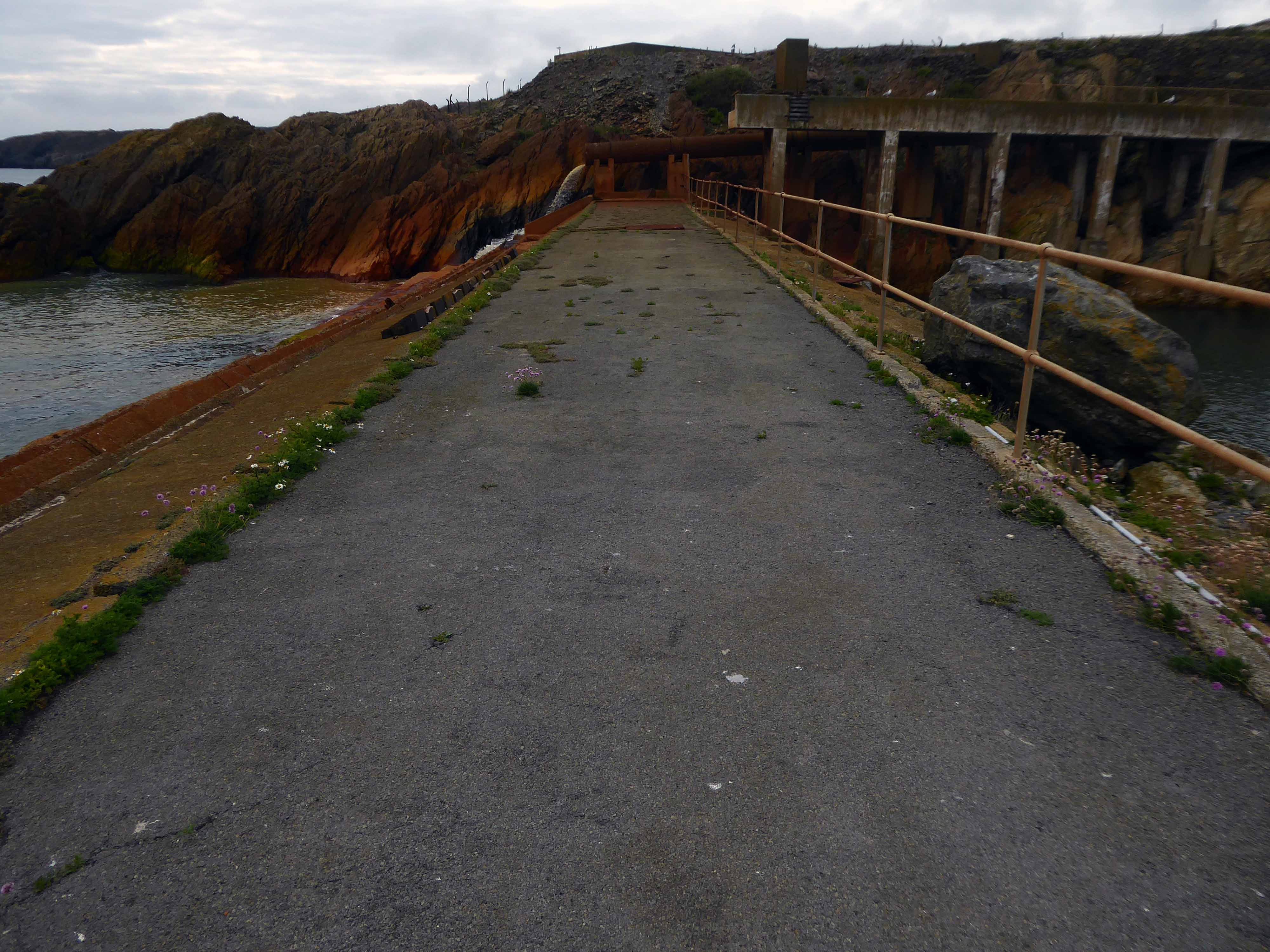
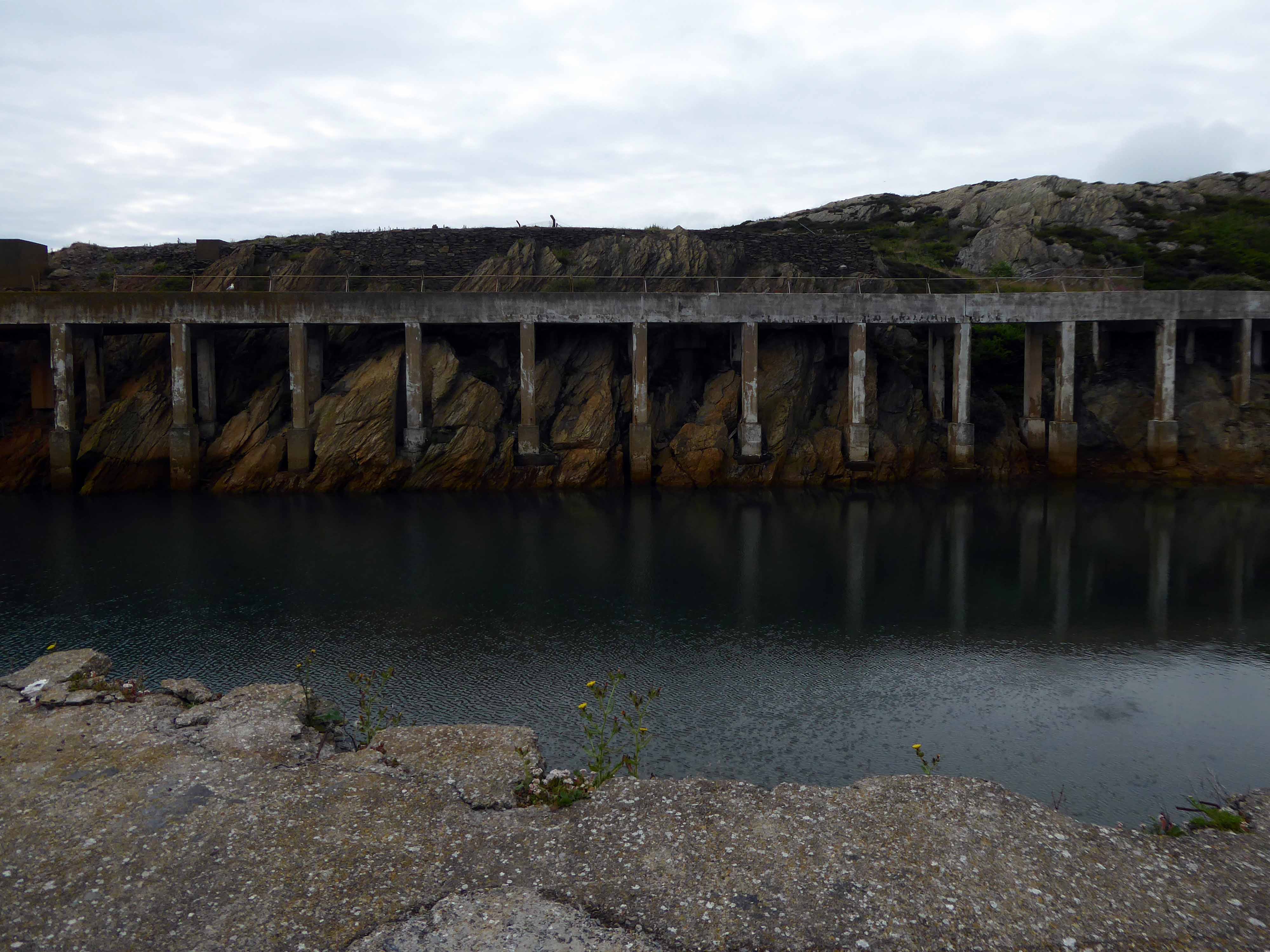
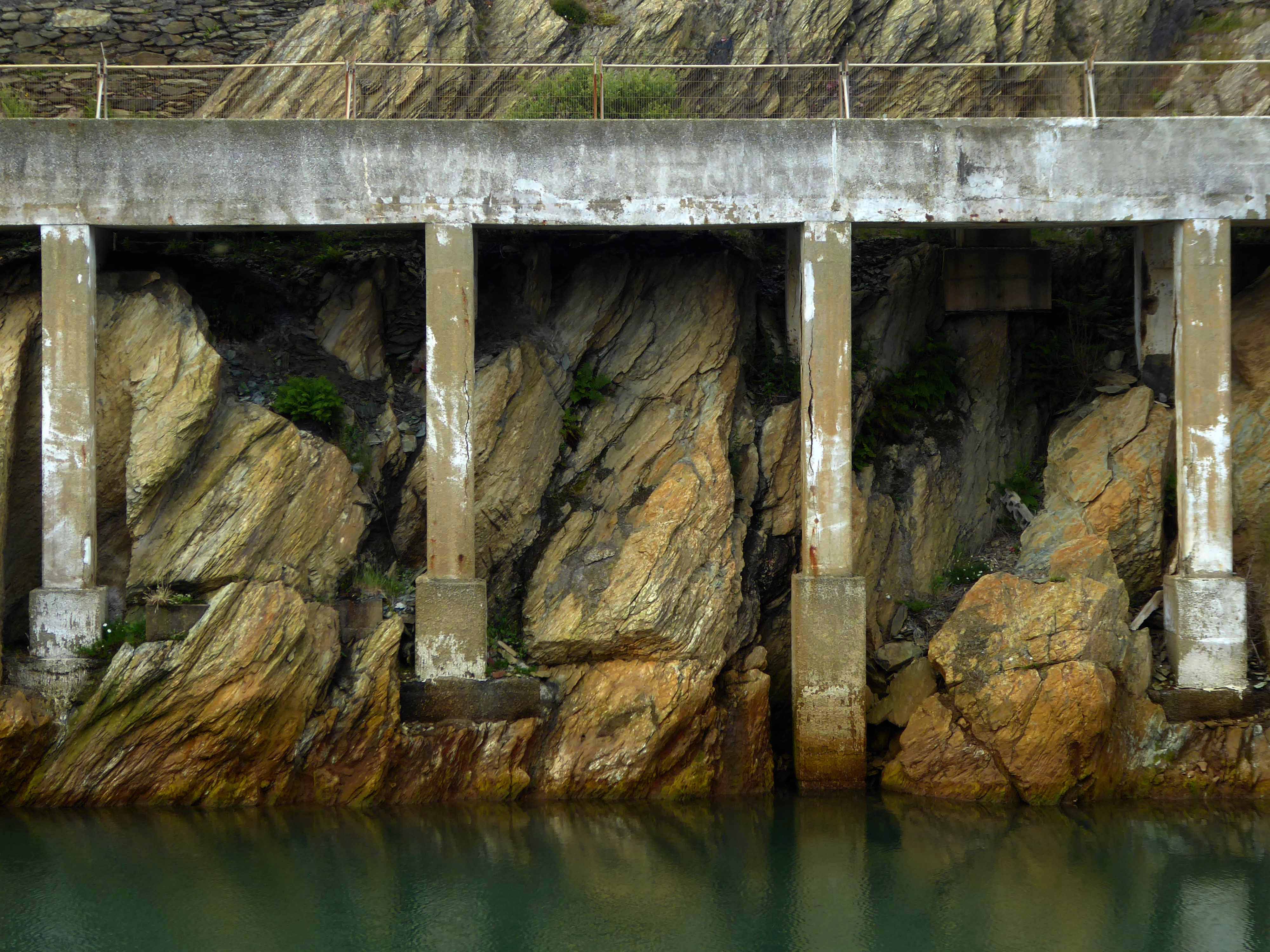
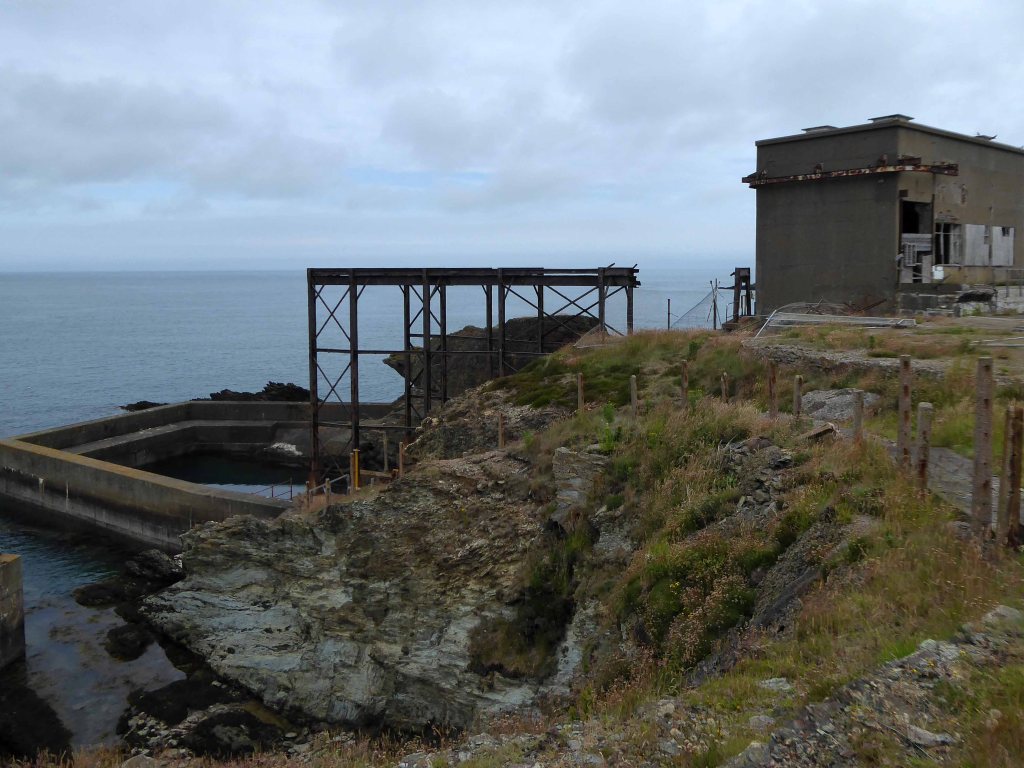
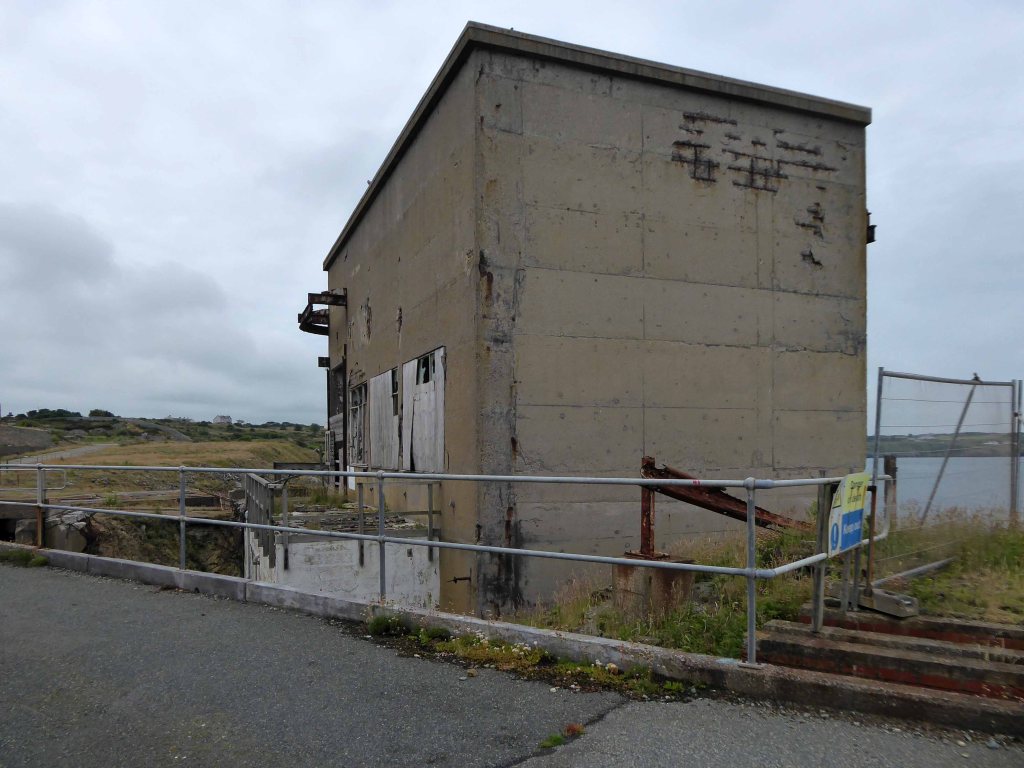
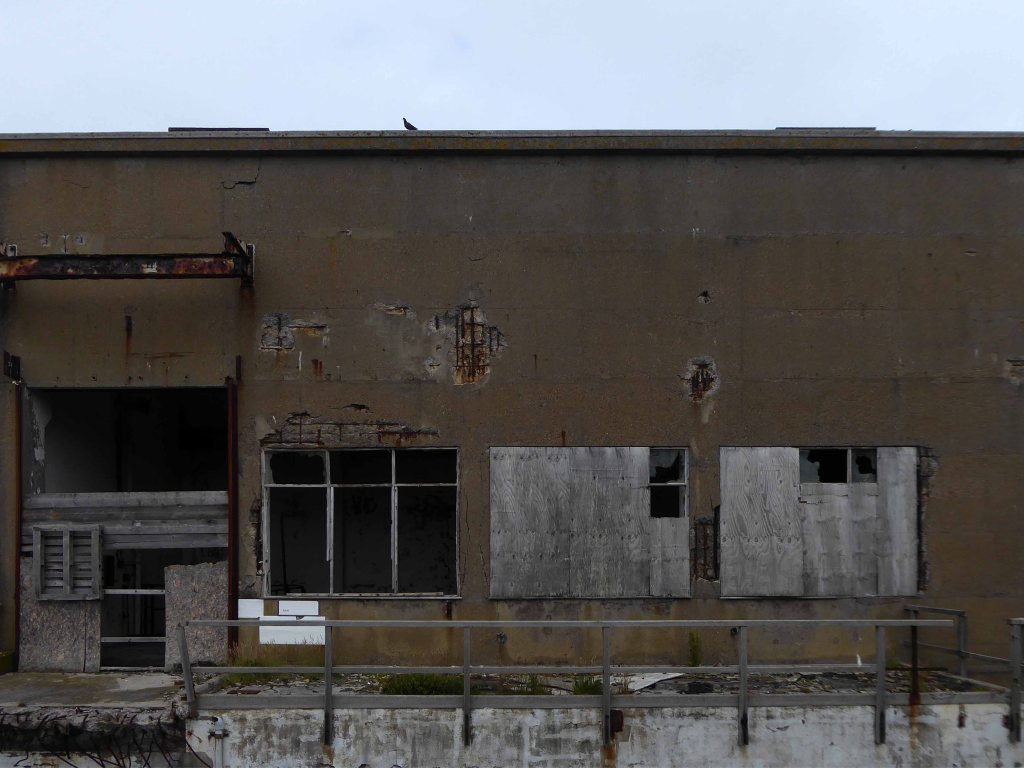
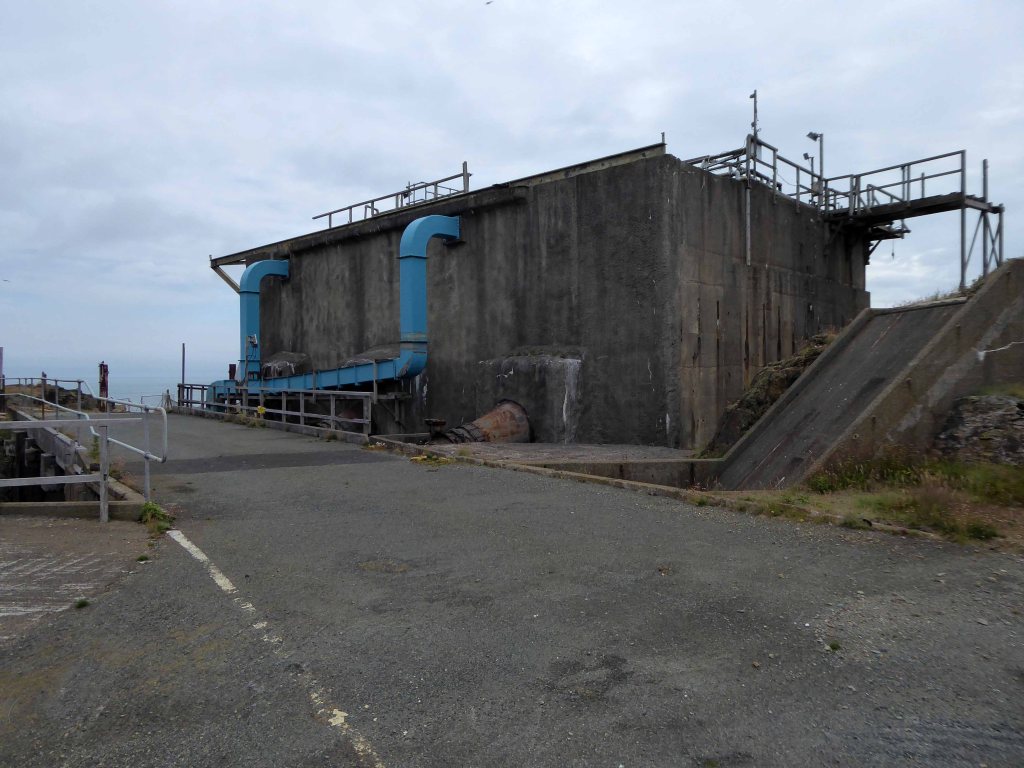
Now let’s turn our attention toward the epic infrastructure which extracted and pumped seawater.
Sea water is sucked in and then lifted 50ft into sea water ponds by huge pumps where any debris is removed. It is then passed to the seawater main where chlorine and dilute sulphuric acid are added which releases the bromine. It is literally blown out of the water. This water is passed into the top of a tower where it drops over 20ft through the packed section of the tower. There it is met by currents of air travelling upwards. Where it meets these air currents the bromine gets stripped out the water, which is returned to the sea. Whilst the wet bromine laden air passes from the top of the tower to be treated with sulphur dioxide and water. This produces mists of hydrobromic and sulphuric acids.
This mist passes into an absorber, and the acid coalesces. From here, it blows to a collecting tank. The bromine free air returns to the blowing out tower and the cycle begins again. The acidic product is referred to as primary acid liquor. This is now pumped to the steaming out tower. It enters the top and is treated with chlorine and steam, which releases the bromine as vapour. It is then condensed to a liquid. The bulk of bromine goes to dibromoethane, whilst the remainder is sold or used to make other intermediates.
It takes about 22,000 tonnes of seawater to produce 1 tonne of bromine. Every minute 300,000 gallons of seawater are drawn in.
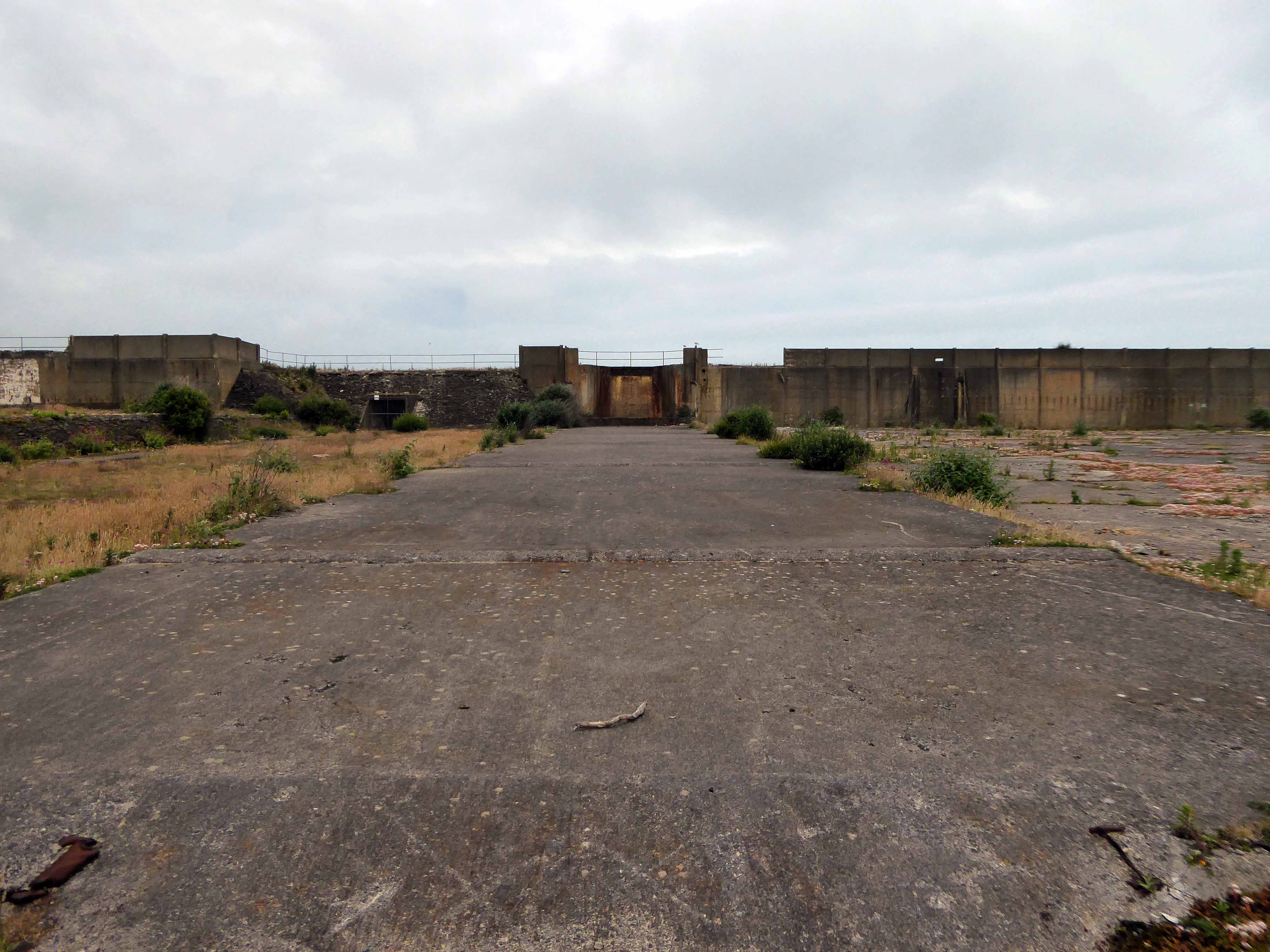
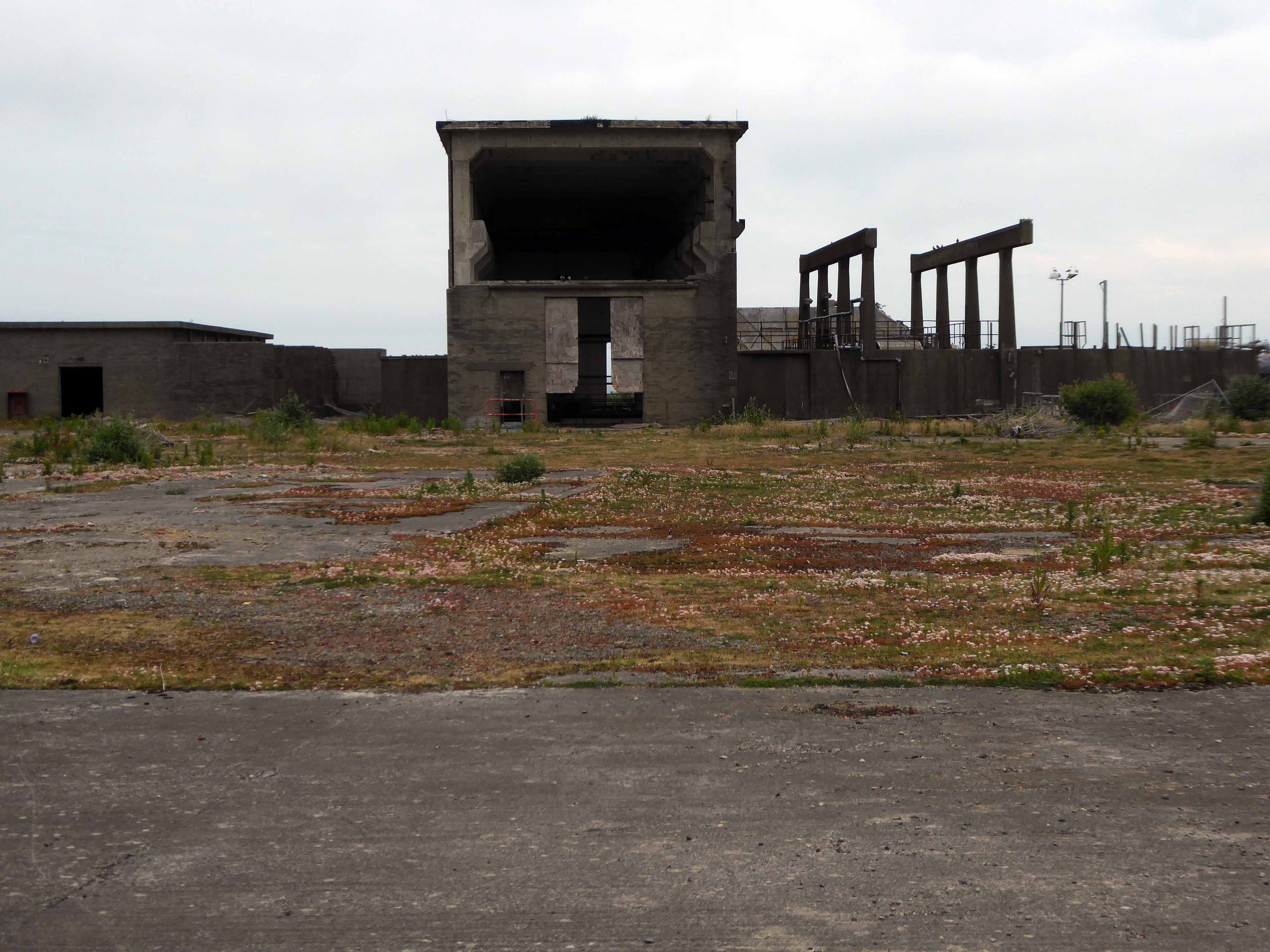
This now redundant technology has left a legacy of industrial dereliction amongst the ancient Pre-Cambrian rocks and sylvan seas of the Anglesey Coast.
This is a landscape which induces fear and fascination in equal measure.
Whatever is fitted in any sort to excite the ideas of pain, and danger, that is to say, whatever is in any sort terrible, or is conversant about terrible objects, or operates in a manner analogous to terror, is a source of the sublime; that is, it is productive of the strongest emotion which the mind is capable of feeling.
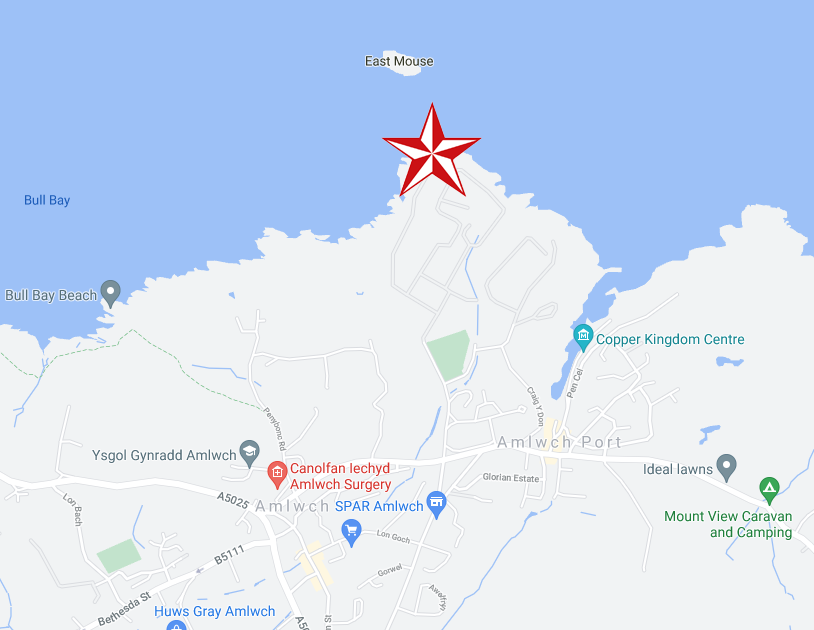
Amlwch has been the centre of the world’s copper industry, a coastal town on Anglesey with a long history of trade, the coming and going of goods.
Once the site of a processing plant extracting bromine from sea water.
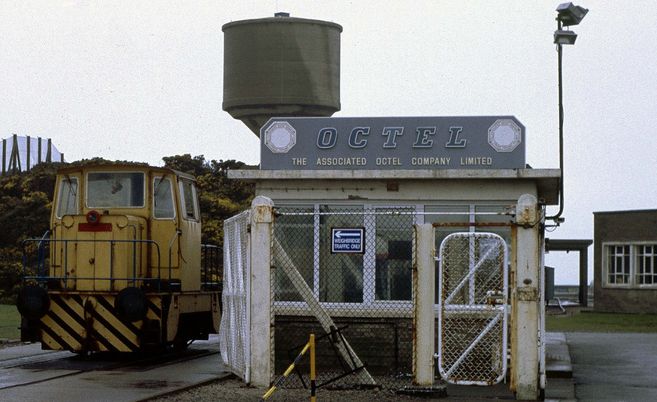
The Associated Octel factory was built to extract bromine from seawater and turn it into an additive for petrol engines. At the time, petrol used in road vehicles contained lead. Engine knocking was a common problem, when the mixture of air and fuel didn’t burn efficiently with each detonation. This could damage engine cylinders over time. The additive produced here reduced knocking and improved engine efficiency.
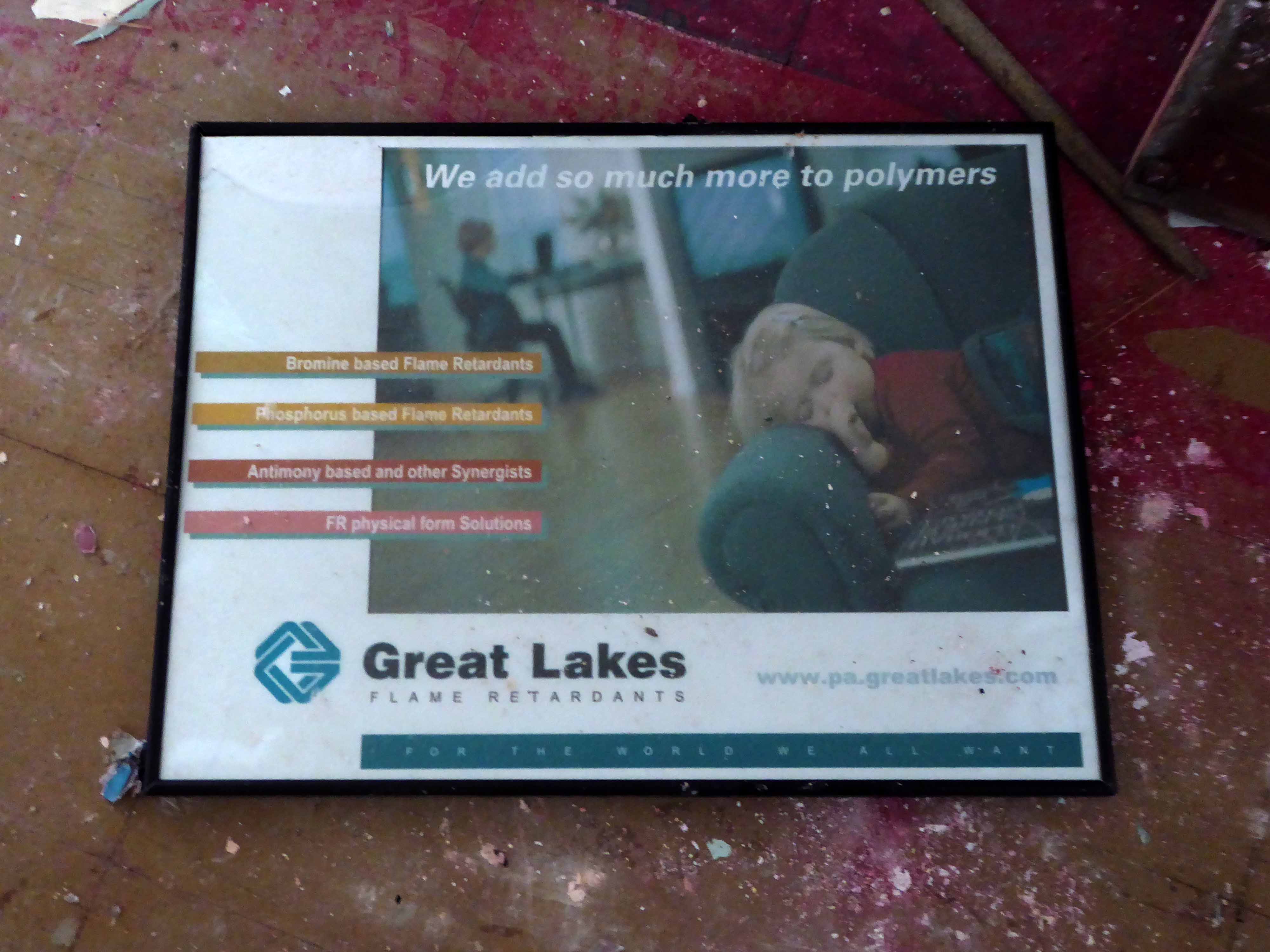
As the health effects of lead in vehicle exhaust gases became better understood, unleaded petrol was developed. It was introduced to UK filling stations in the 1980s, and leaded petrol was later phased out. As demand for anti-knock additive reduced, the Octel factory diversified into other bromine products and was taken over by Great Lakes Chemical Corporation. In 2003, the corporation decided to close the works with the loss of more than 100 jobs.
A detailed history of the site can be found here at Octel Amlwch.
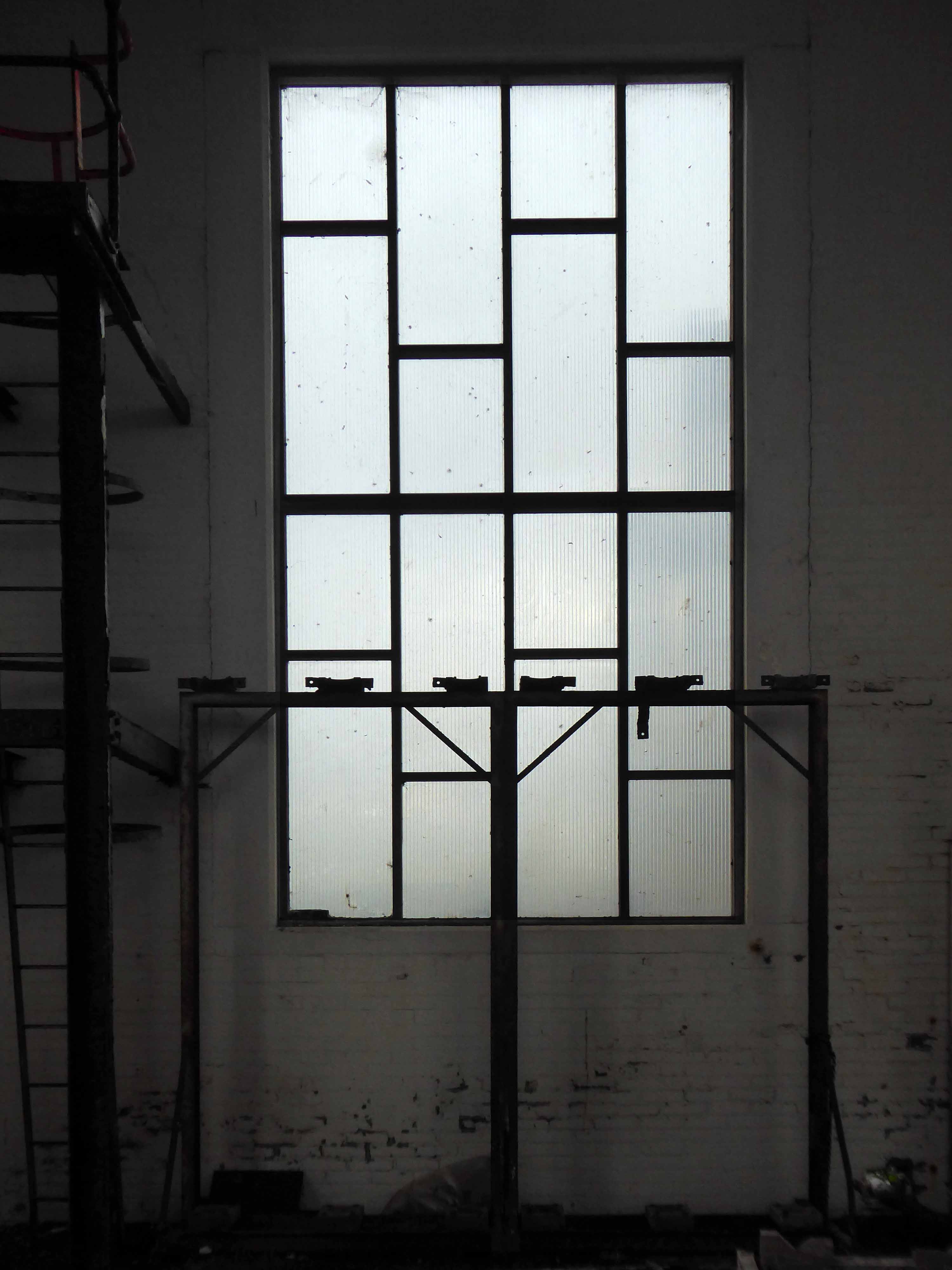
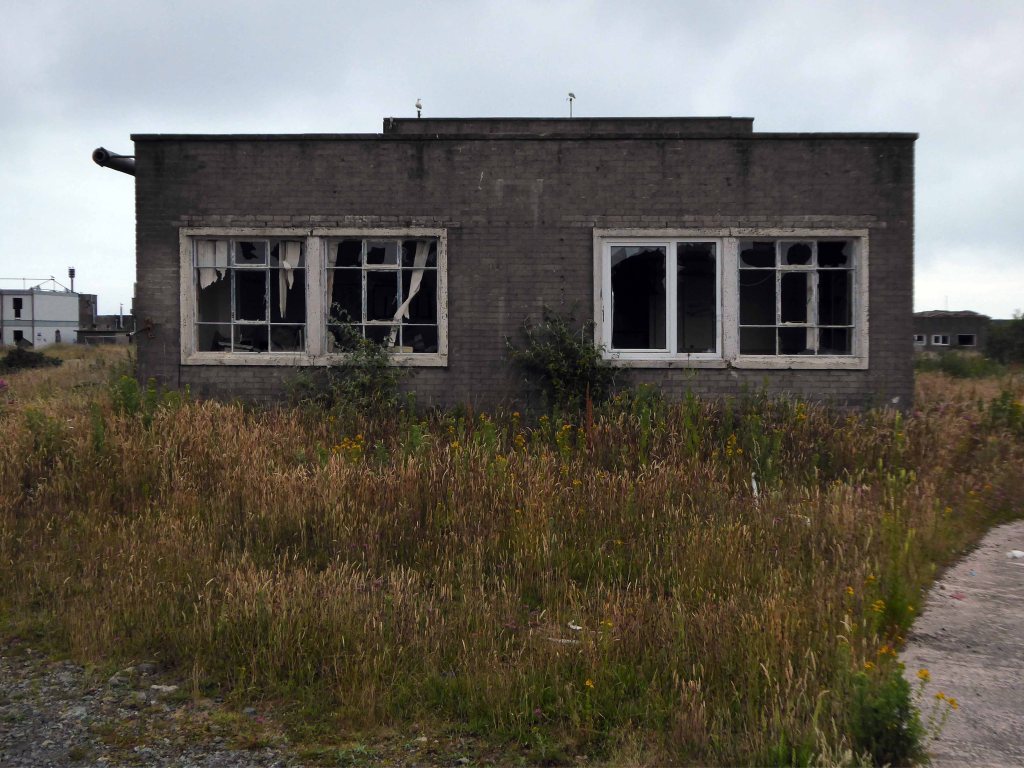
The site has been subject to arson attacks and partial demolition, the extant buildings tagged, tattered and torn.
Slowly but surely nature breaks through the tarmac and concrete.
The gate is open, the lights are out, there’s nobody home.
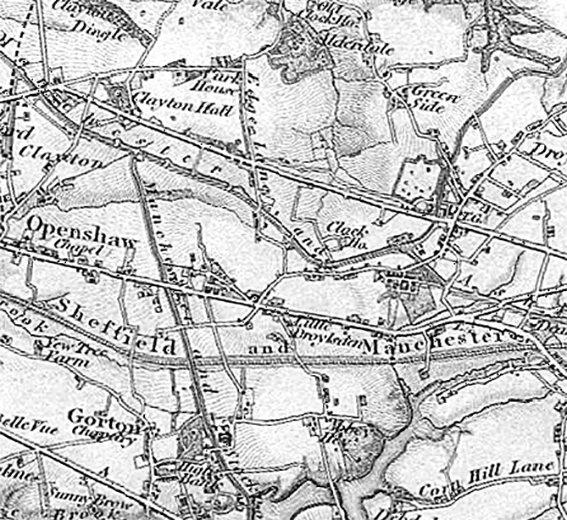
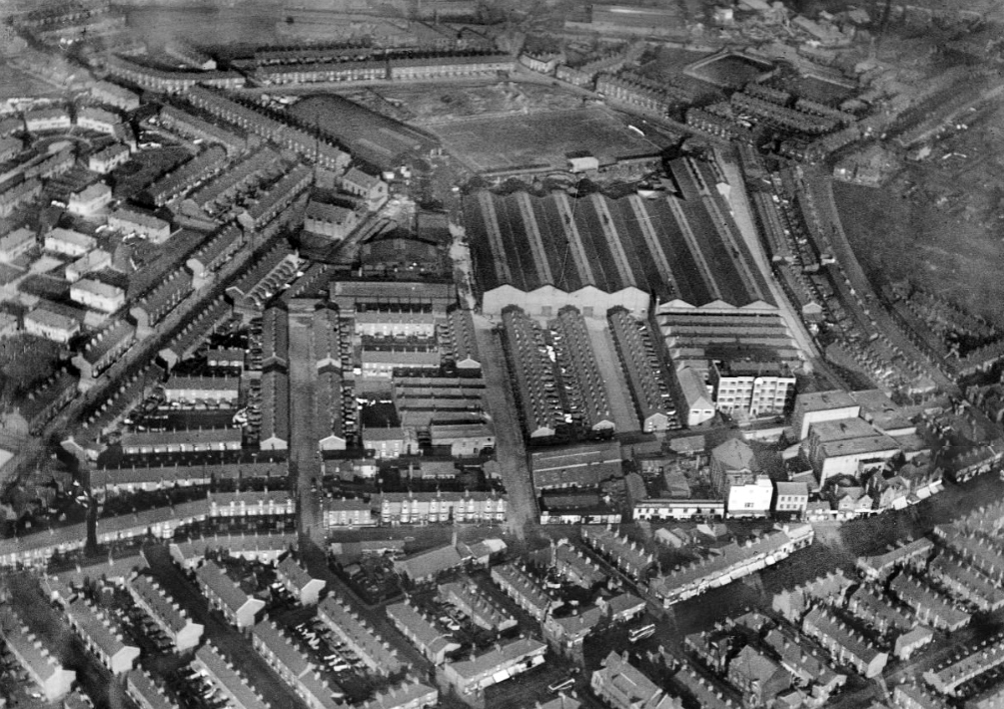
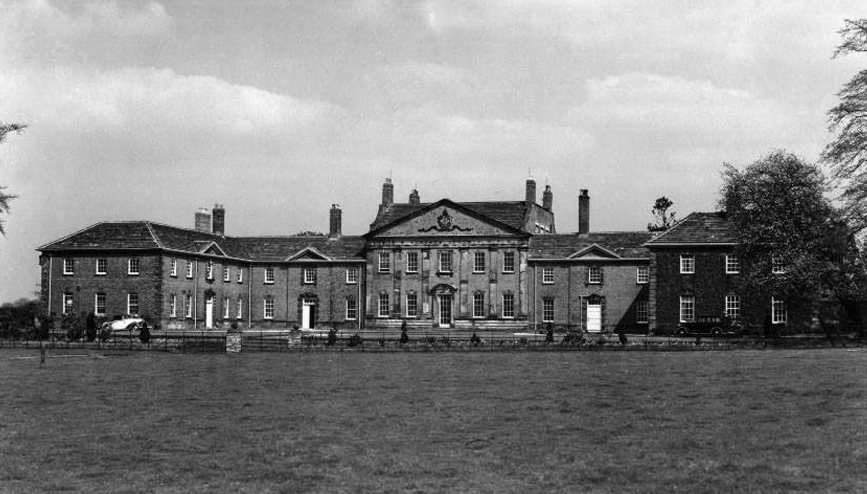
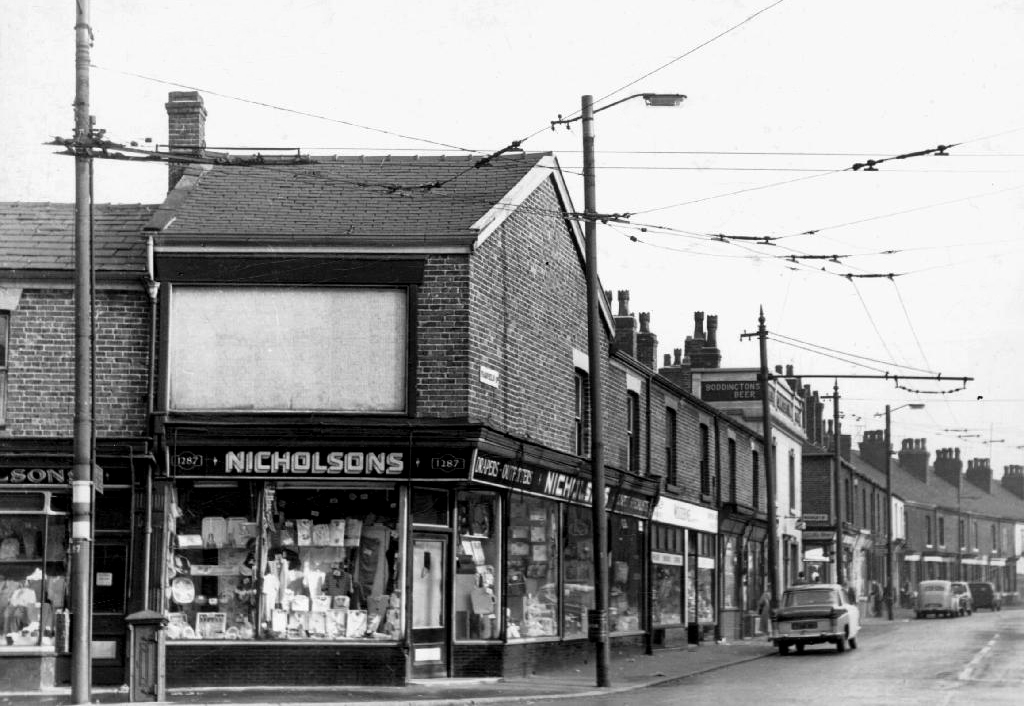
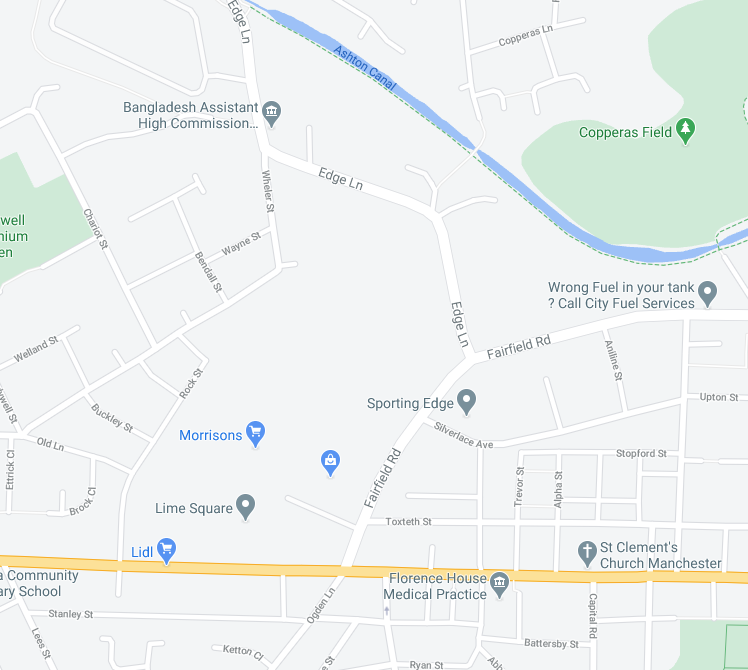
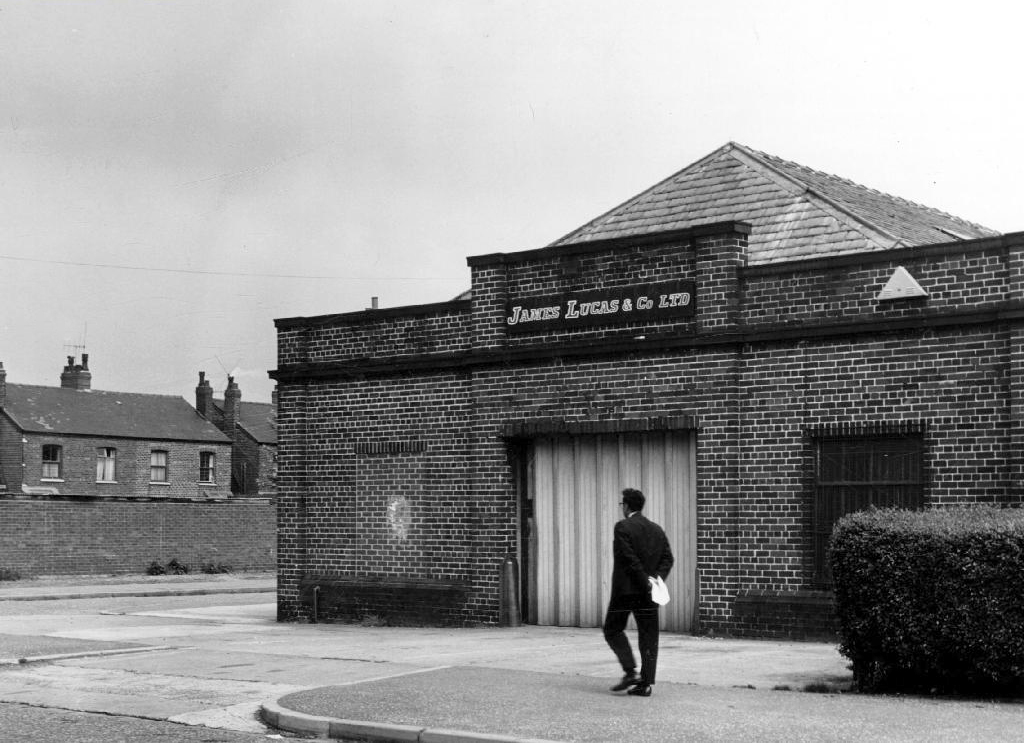
Ferguson Pailin Electrical Engineering are established in 1913 on Fairfield Road/Edge Lane.
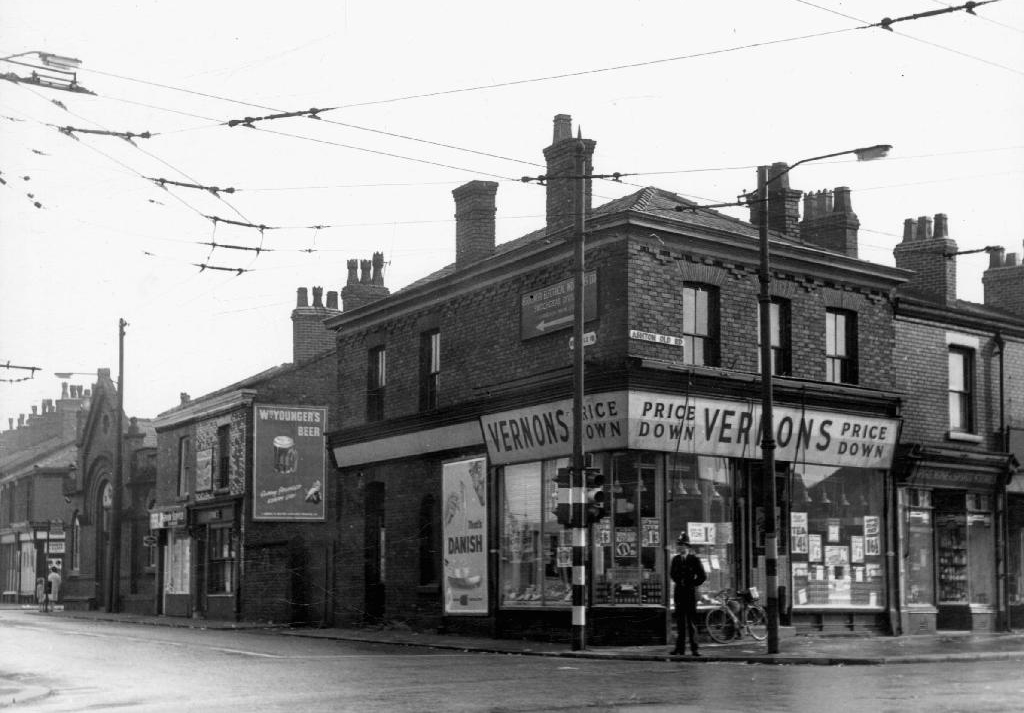
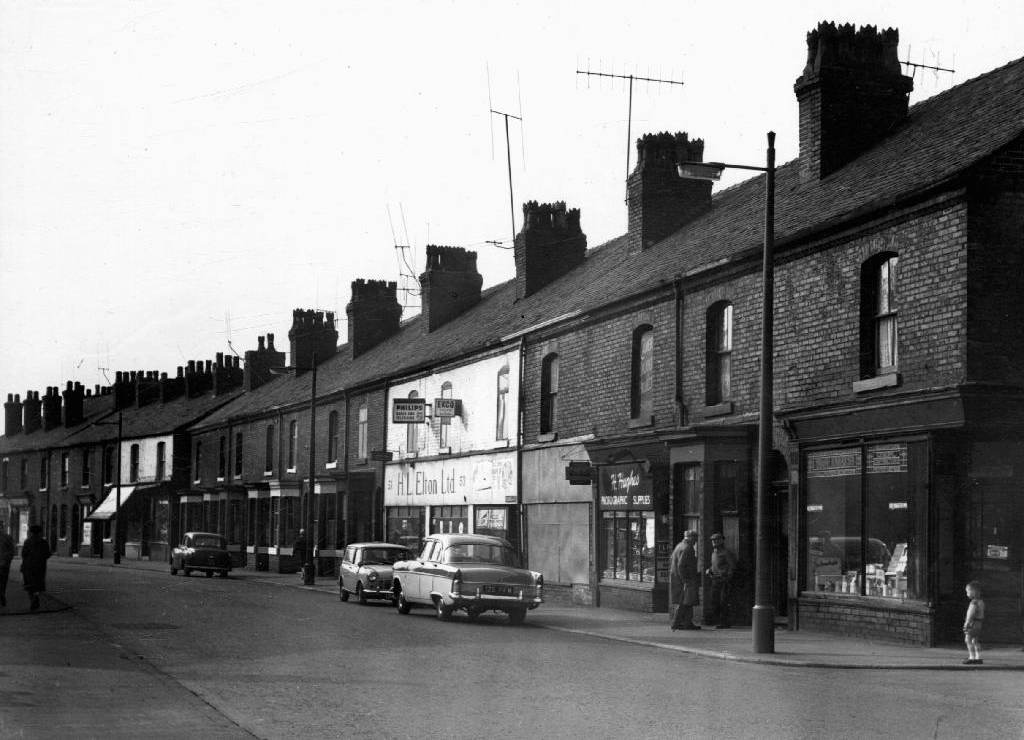
By 1939 the factory is fully formed and the area a dense warren of industry and terraced housing.
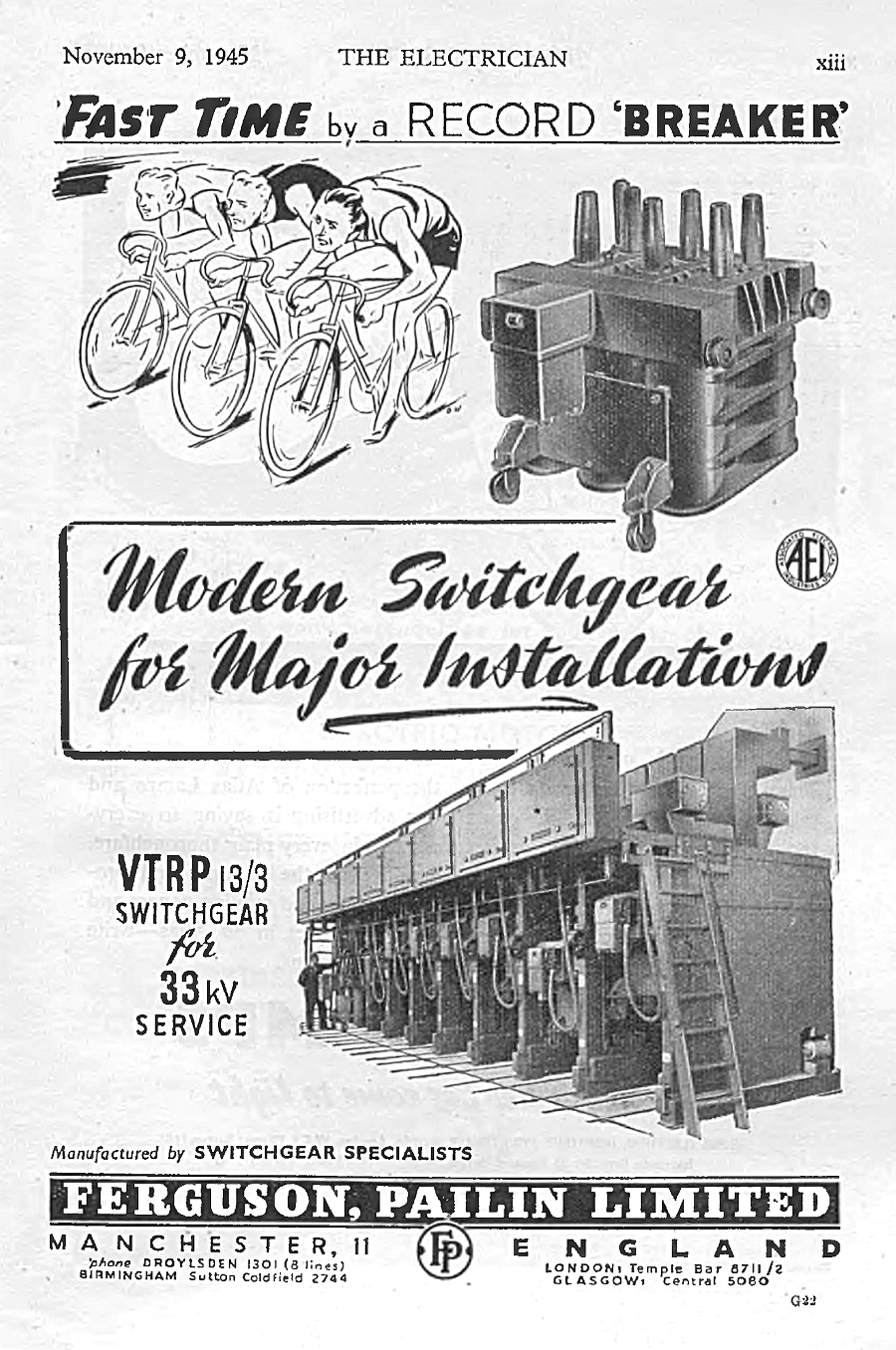
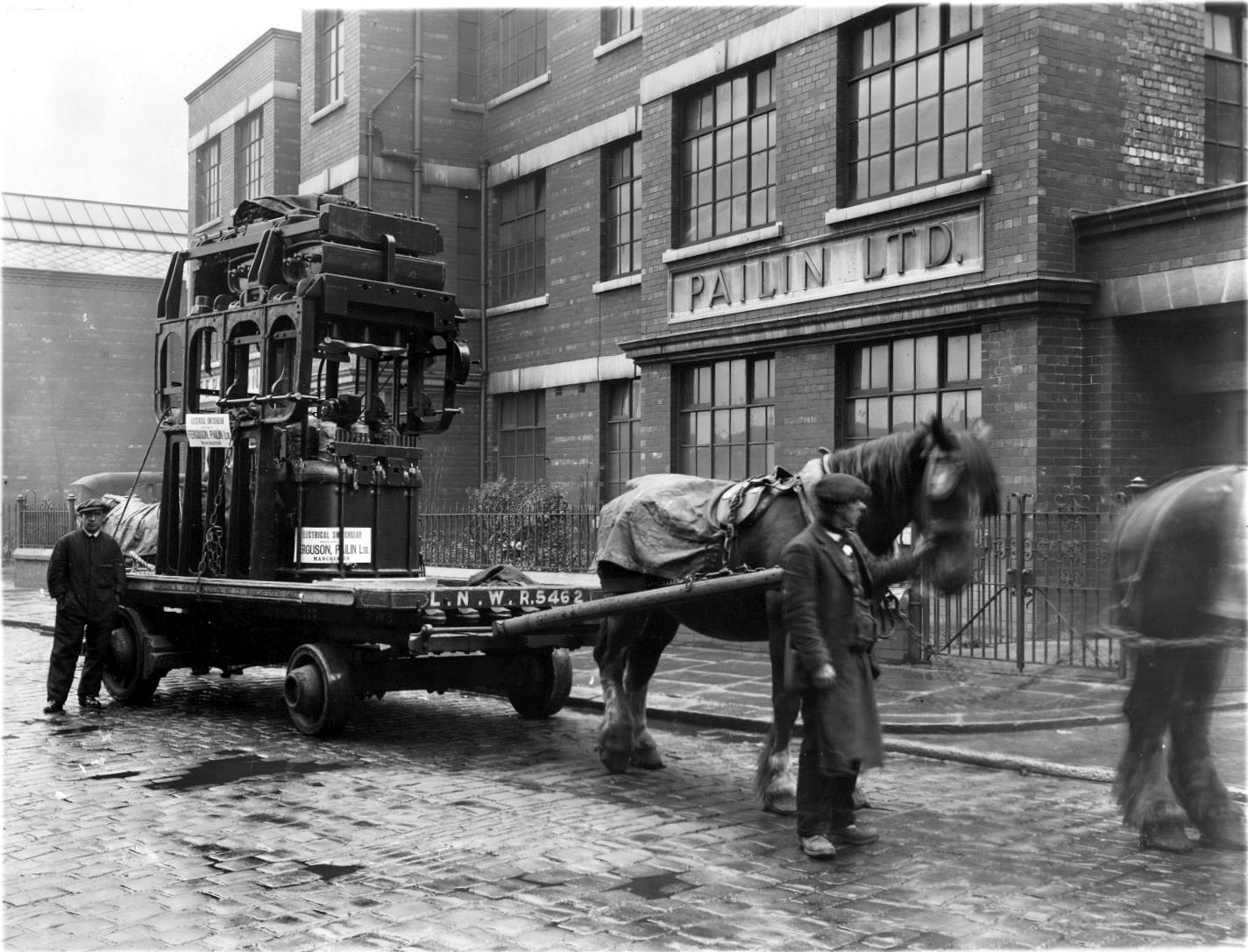
Makers of heavy duty electrical switchgear and general electrical engineers, of Higher Openshaw, Manchester.
1913 Ferranti Ltd sold its switchgear patents and stock to Ferguson, Pailin Ltd. Samuel Ferguson and George Pailin had worked for Ferranti as switchgear engineers. They left in 1913 to set up their own switchgear business at a factory in Higher Openshaw, Manchester.
The company was acquired by Associated Electrical Industries (AEI) in 1928. Following the restructuring of AEI in 1960, Ferguson, Pailin & Co ceased to be a separate subsidiary and was merged into AEI switchgear. Following the takeover of AEI by GEC in 1967, the Higher Openshaw works became part of GEC Switchgear. In 1989, GEC merged its electrical engineering interests with those of Alsthom to form GEC Alsthom. The factory was later closed by Alstom in 2003, with most of the employees finishing on 22 November 2002.
The company has a Facebook page which shares former employees memories – from which these archive photographs were taken.
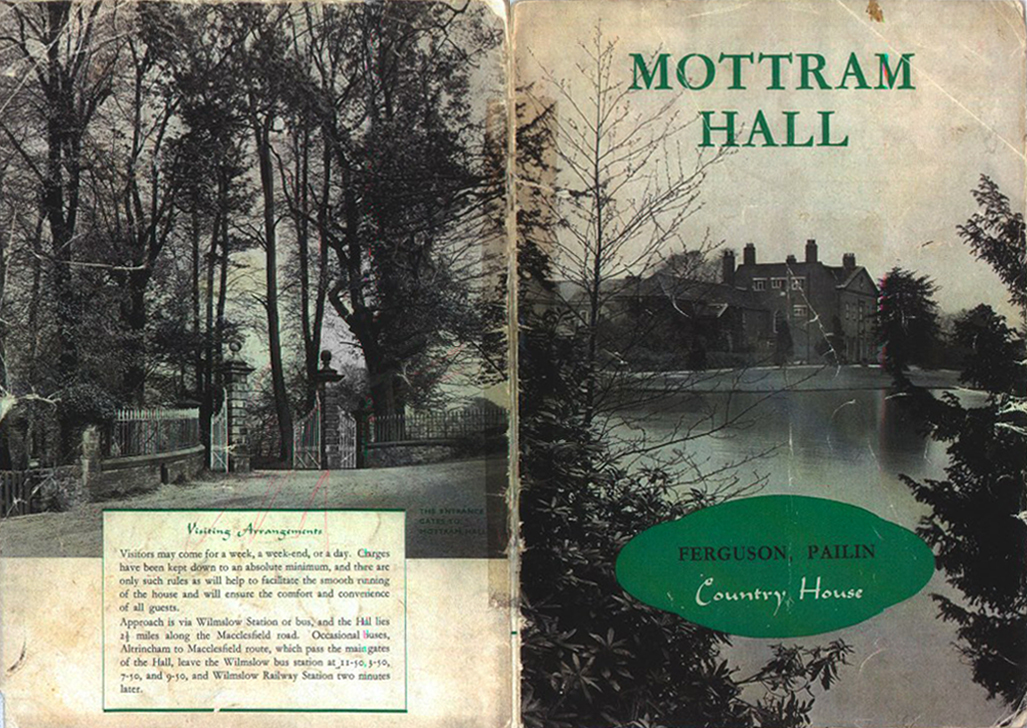
Notably the firm provided extensive leisure facilities for their employees.
The company acquired Mottram Hall to give employees an opportunity to go on affordable holidays during World War II. The company bought three properties in 1939/40 in order to provide holidays for staff and workers during the war. Mottram Hall was bought for the works, a small hotel in Llandudno for the middle level staff and a property in Criccieth for senior staff. Mottram Hall was sold as surplus to requirements by GEC in 1968 and is now a luxury country house hotel.
Sadly the days when benevolent employers thought to take care of their employees in such a manner, are largely a thing of the past.
For business guests, our sleek and sophisticated conference rooms feature the latest technology to get your agenda off to a prompt and professional start. Plus, catering facilities and a plush break out space for comfortable downtime between meetings.
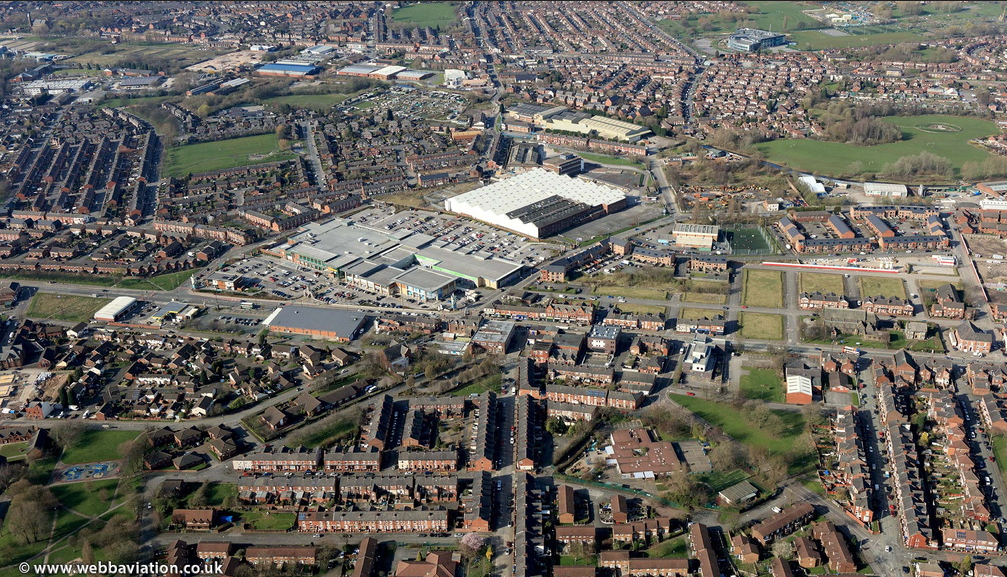
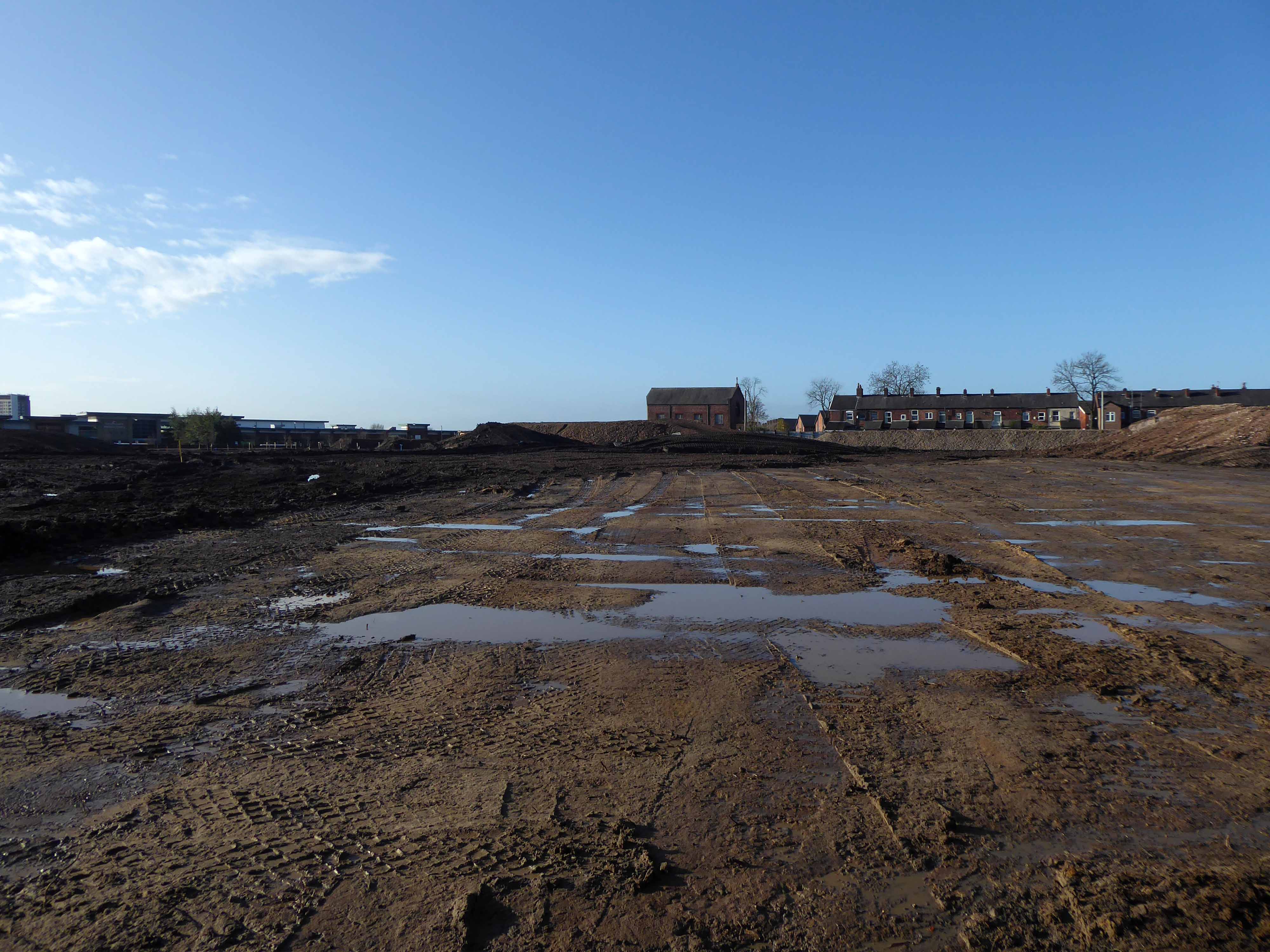
Last time I passed through many of the factory buildings were still extant though underused. A portion of the site lost to the development of the Lime Square Shopping Centre.
Lime Square is a shopping destination which is helping to put the heart back into Openshaw district centre here in east Manchester. Lime Square is home to the stunning Steamhammer sculpture and a host of great High Street names.
By and large replacing the plethora of busy local businesses which once thrived in the area.
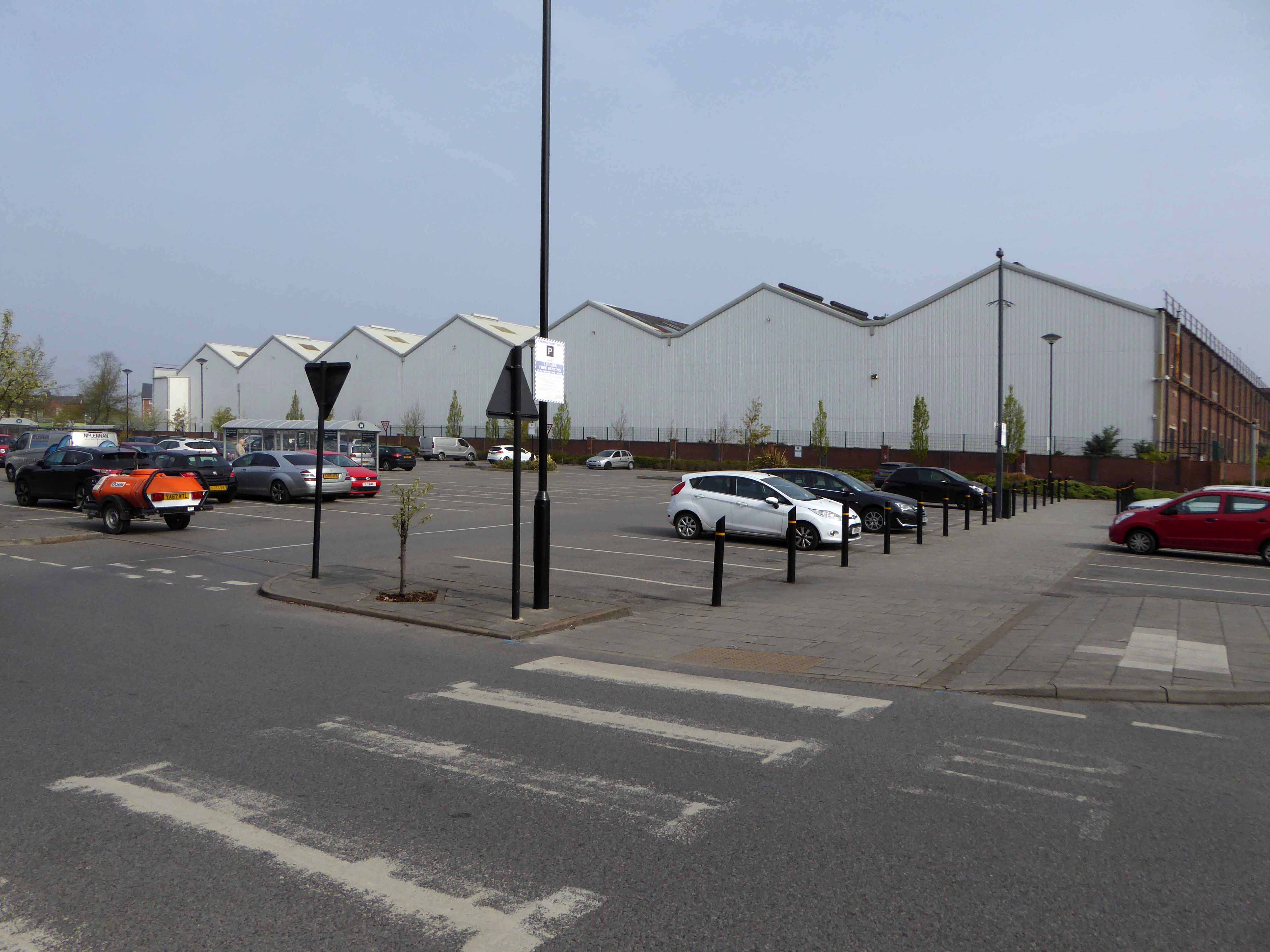
Part of the site became the site of a car park for B&M Bargains.
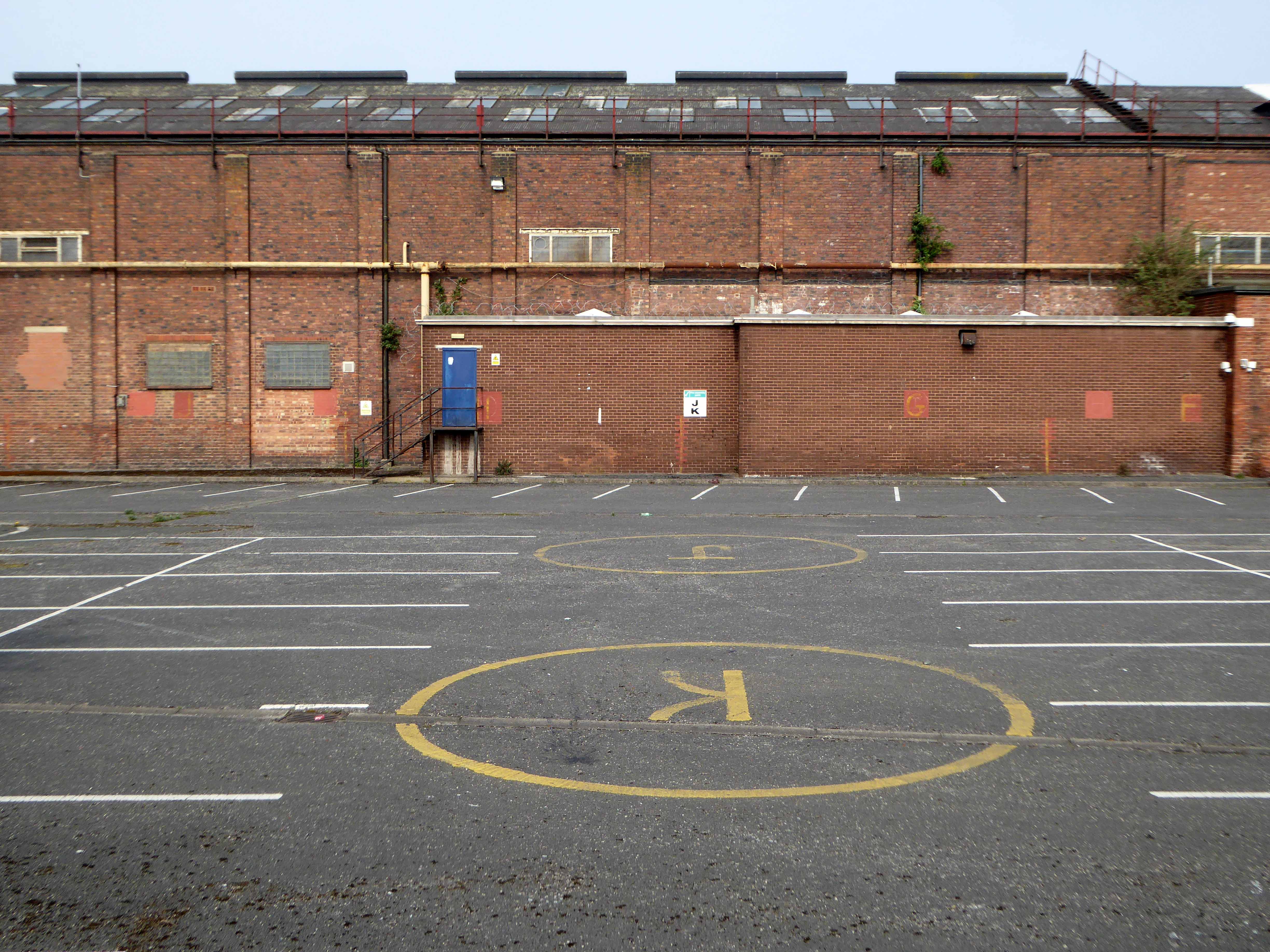
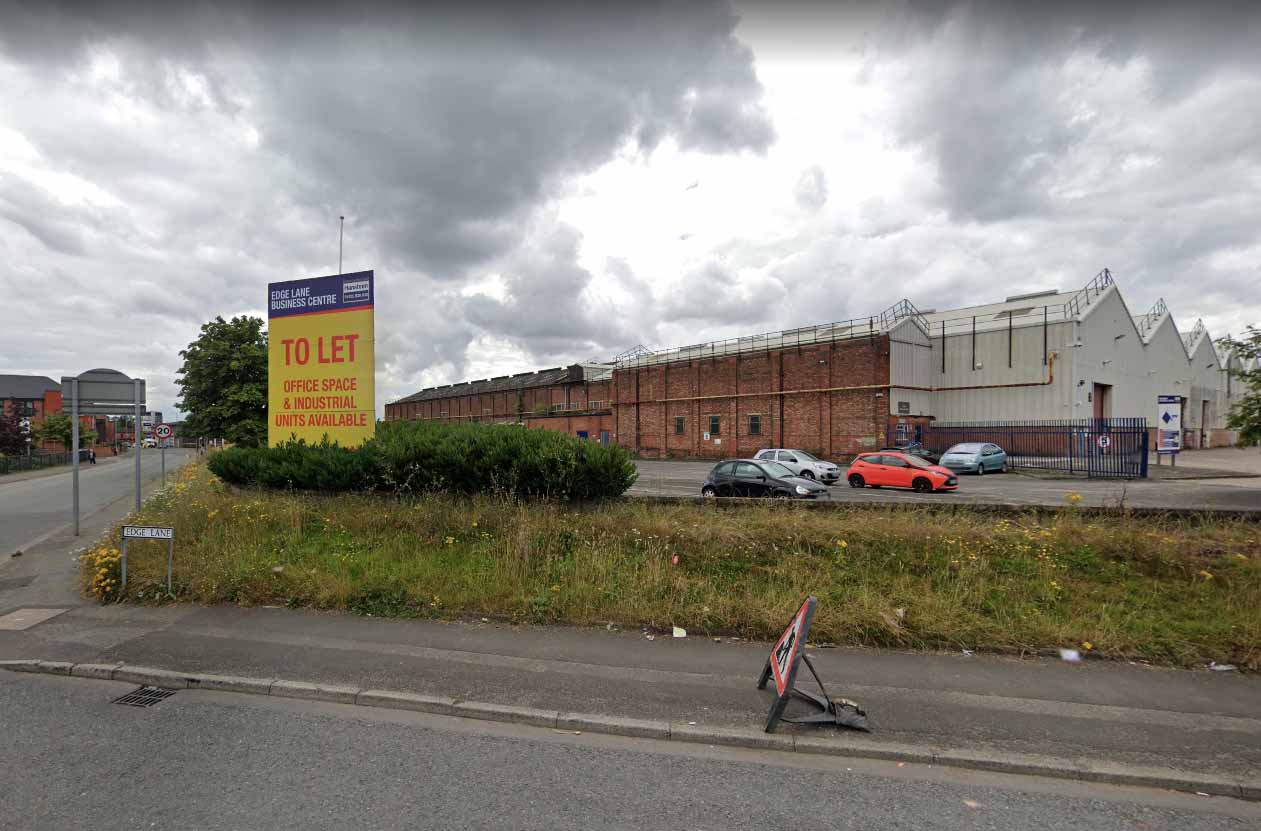
Empty car parking and to let signs in superabundance.
So there we are the end of an era – the decline in manufacturing, the structure ending life as an empty warehouse.
But wait, what’s all this?
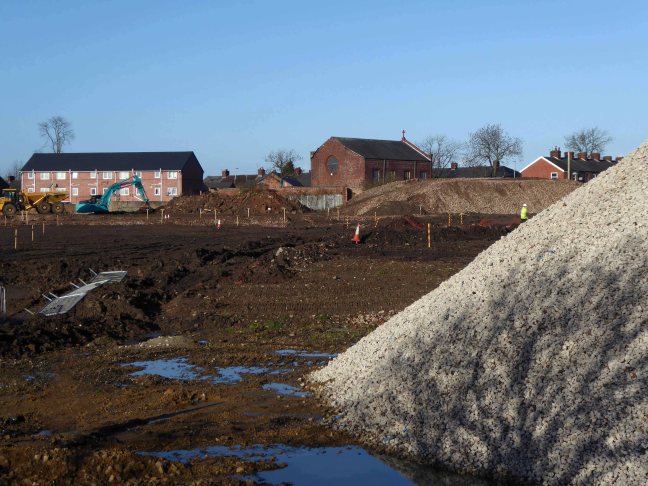
Your Housing Group, the Warrington-based affordable housing provider, wants to build a residential scheme on the site of a former warehouse on Edge Lane, with work starting this summer subject to consent.
The project in Openshaw comprises 216 homes available on a mix of tenures, according to a planning application submitted to Manchester City Council. A total of 72 will be for sale as shared ownership schemes, another 72 will be for private rent, and 72 will be for affordable rent.
So there we are another phase of development for one small area of Manchester, should you change to pass, just spare a moment to recall those thousands of souls that laboured their whole working lives – right here on Fairfield Road and Edge Lane.
Prompted by Gillian and Adam’s – A Different North project, my thoughts turned once again to notions of the North, similar notions have been considered in my previous posts:
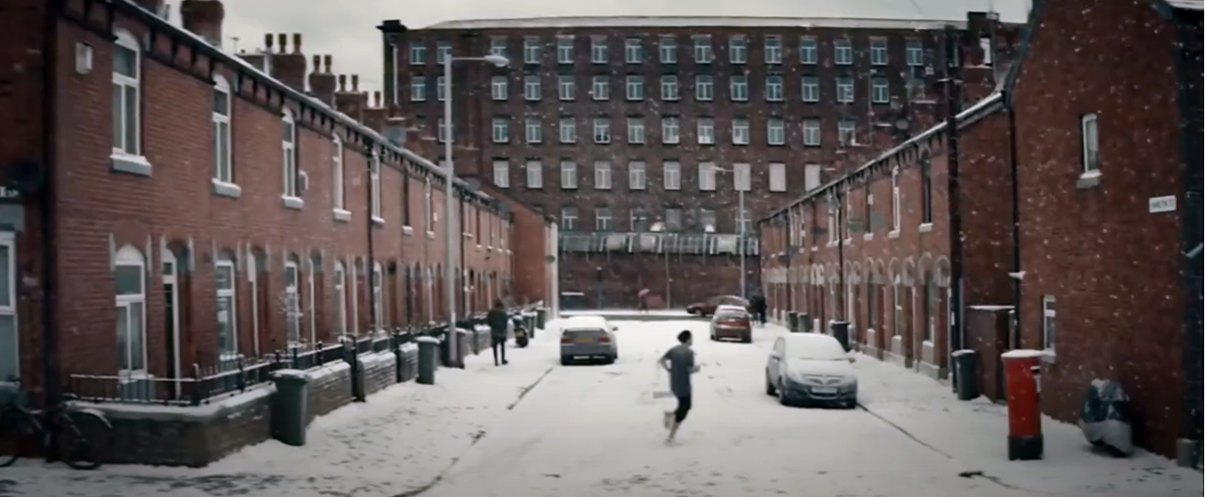
I recalled the 2016 season Sky Football promotional film, it had featured a street in Ashton under Lyne, it had featured Hamilton Street.
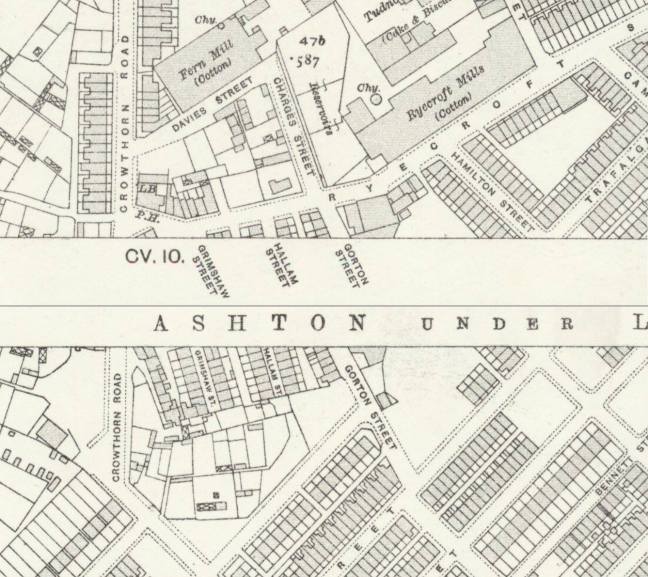
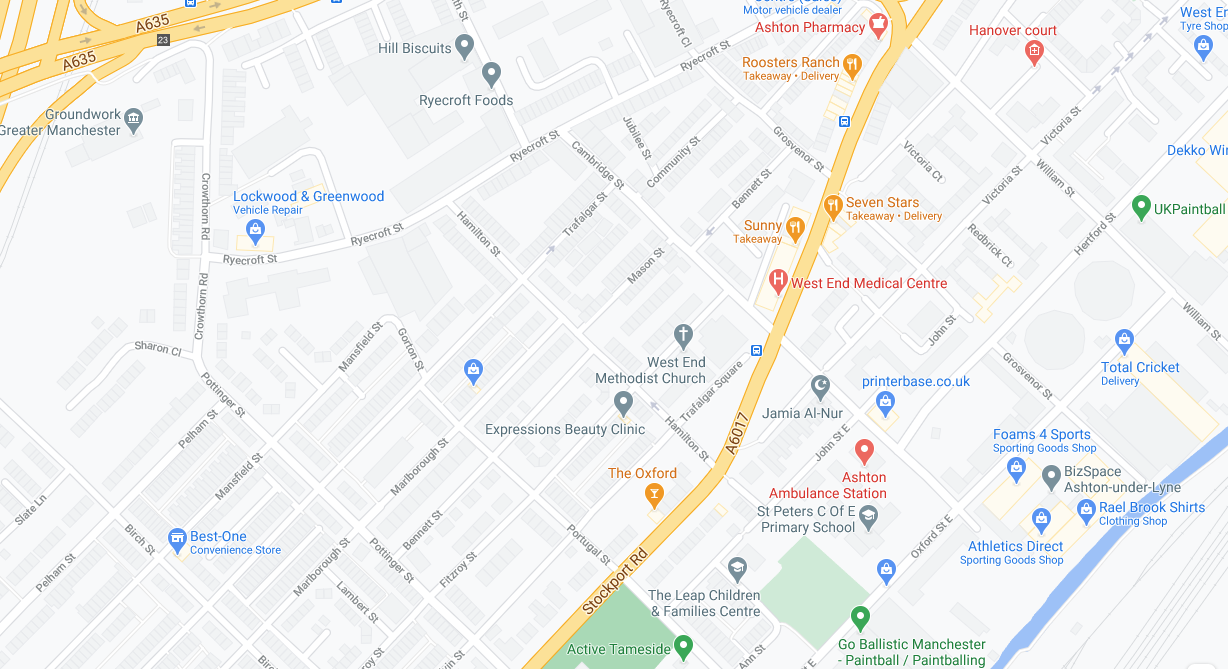
A street spanning the West End and the Ryecroft areas of the town, the town where I had lived for most of my teenage years. The town where my Mam was born and raised in nearby Hill Street, nearby West End Park where my Grandad I had worked, nearby Ashton Moss and Guide Bridge.
This is an area familiar to me, which became the convergent point of a variety of ideas and images, mediated in part by the mighty Murdoch Empire.
Here was the coming together of coal and cotton, an influx of population leaving the fields for pastures new.
In the film, Leytonstone London born David Beckham is seen running down the snow covered northern street.
A credit to our emergent mechanical snow generation industry.
According to snowmakers.com, it takes 74,600 gallons of water to cover a 200 by 200-foot plot with 6 inches of snow.Climate change is cutting snow seasons short, we make snow to compensate, more energy is spent making snow, more coal is burned, more CO2 is released.
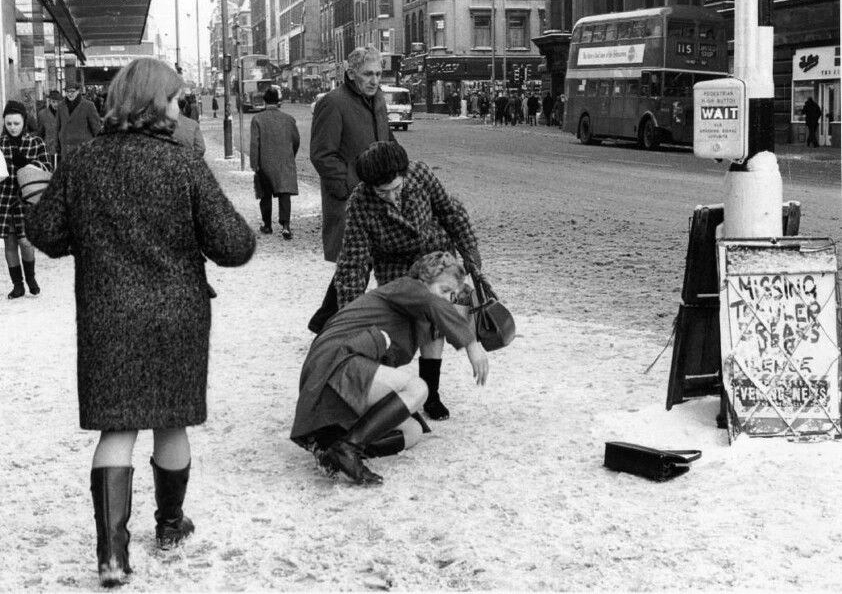
It is to be noted that locally there has been a marked decline in snowfall in recent years, the Frozen North possibly a thing of the past.
The temperatures around the UK and Europe have actually got warmer over the last few decades, although when you are out de-icing your car it may not actually feel as though it has. Whilst this can not be directly link to climate change, it is fair to assume that climate change is playing a part.
It is also to be noted that Sky Supremo Rupert Murdoch has described himself as a climate change “sceptic”.
Appearing arms raised outside of the home of a family clustered around the television, in their front room.
Filming the ad was great and the finished piece is a really clever way of showing that you never know what might happen in football, I always enjoy working with Sky Sports and I’m proud to be associated with their football coverage.
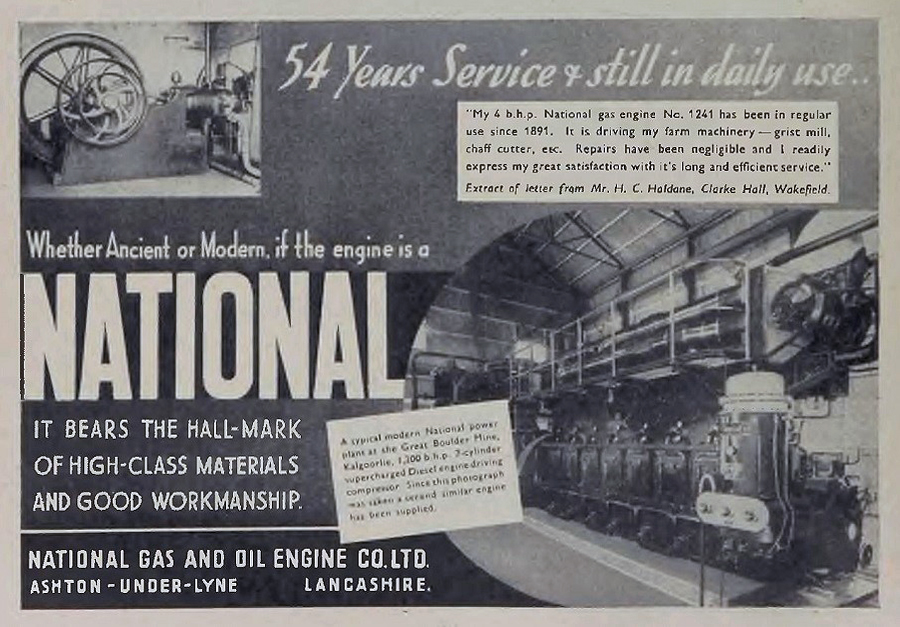
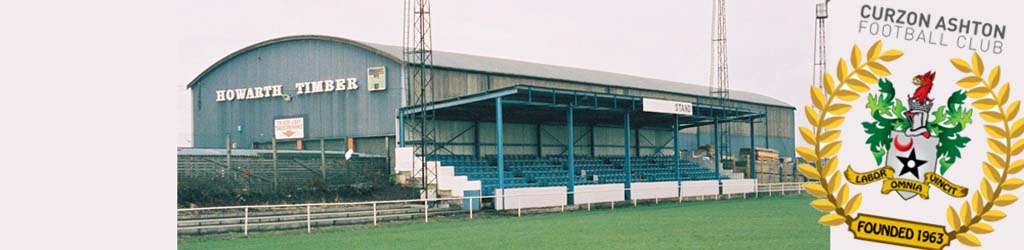
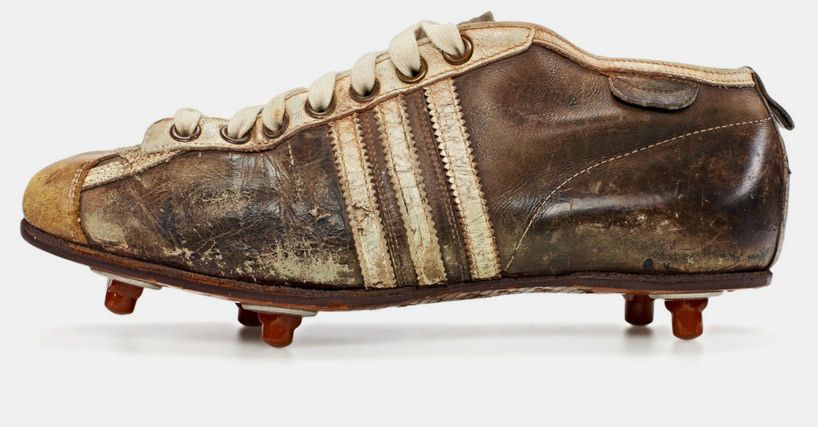
The area does have a football heritage, Ashton National Football Club played in the Cheshire County League in the 1920s and 1930s. They were sometimes also known as Ashton National Gas, due to their connections with the National Gas and Oil Engine Company based in the town.
Illustrative of a time when sport and local industry went hand in glove.
The National Ground was subsequently taken over by Curzon Ashton who have since moved to the Tameside Stadium.
Ashton & Hyde Village Hotels occupy the front of shirt sponsors spot on our new blue and white home shirt, while Seed of Speed, our official conditioning partners, feature on the arm, and Minuteman Press occupy the back of the shirt. Meanwhile, Regional Steels UK Ltd. are the front of shirt sponsors on our new pink and black away kit.
Illustrative of a time when sport and local industry continue to work hand in glove.
Local lad Gordon Alexander Taylor OBE is a former professional footballer. He has been chief executive of the English footballers’ trades union, the Professional Footballers’ Association, since 1981. He is reputed to be the highest paid union official in the world.
His mobile phone messages were allegedly hacked by a private investigator employed by the News of the World newspaper. The Guardian reported that News International paid Taylor £700,000 in legal costs and damages in exchange for a confidentiality agreement barring him from speaking about the case.
News International is owned by our old pal Rupert Murdoch, the News of the World no longer exists.
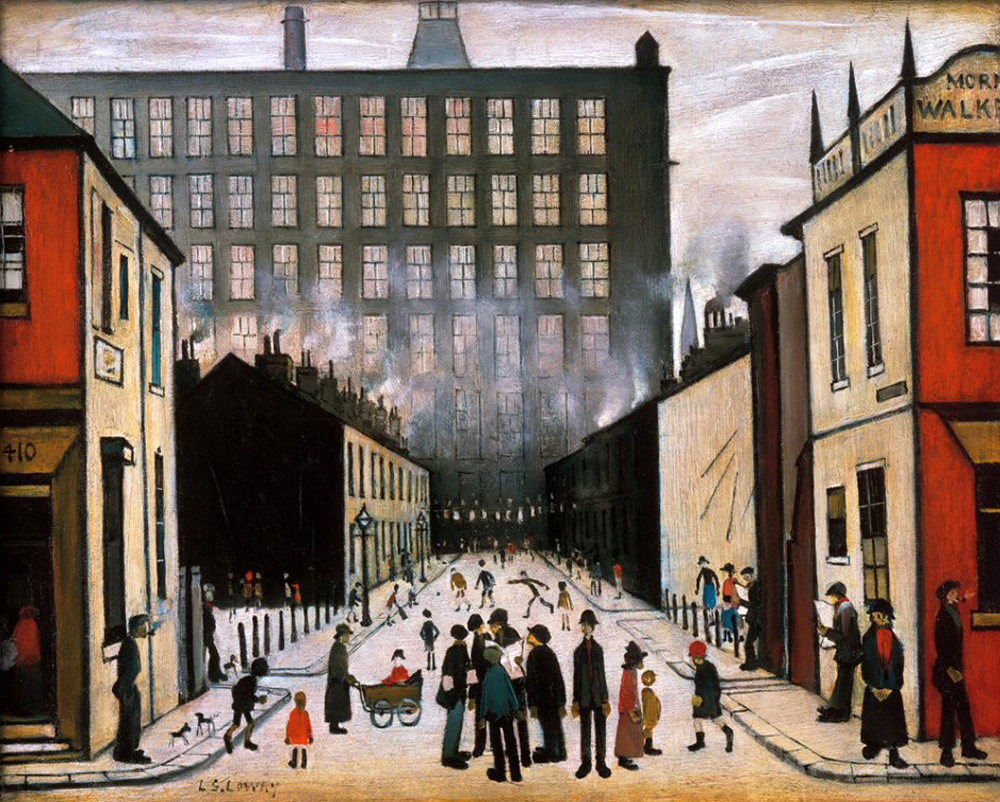
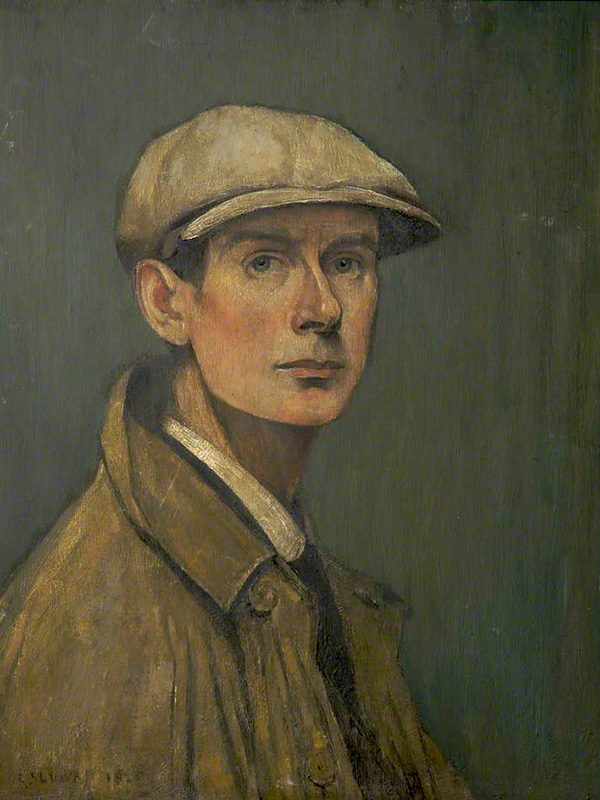
The view of Hamilton Street closely mirrors LS Lowry’sStreet Scene Pendlebury – the mill looming large over the fierce perspective of the roadway. The importance of Lowry’s role in constructing a popular image of the North cannot be overestimated.
He finds a grim beauty in his views of red facades, black smoke and figures in white, snowy emptiness. He is a modern primitive, an industrial Rousseau, whose way of seeing is perhaps the only one that could do justice to the way places like Salford looked in the factory age.
For many years cosmopolitan London turned its back on Lowry, finally relenting with a one man show at the Tate in 2013 – I noted on the day of my visit, that the attendant shop stocked flat caps, mufflers and bottled beer, they seemed to have drawn the line at inflatable whippets.
Drawing upon other artists’s work, in a continuous search for ways to depict the unlovely facts of the city’s edges and the landscape made by industrialisation.
But Murdoch’s Hamilton Street is as much a construct as Lowry’s – the snow an expensive technical coating, Mr Beckham a CGI apparition. Our contemporary visual culture is littered with digital detritus, saving time and money, conjuring up cars, kids and footballers at will.
An illusion within an illusion of an illusory North.
Green screen chroma keyed onto the grey tableau.
Mr Beckham himself can also be seen as a media construct, for many years representing that most Northern of institutions Manchester United – itself yet another product of image manipulation, its tragic post-Munich aura encircling the planet, with an expensive Empire Made, red and white scarf of cultural imperialism.
David’s parents were fanatical Manchester United supporters who frequently travelled 200 miles to Old Trafford from London to attend the team’s home matches, he inherited his parents’ love of Manchester United, and his main sporting passion was football.
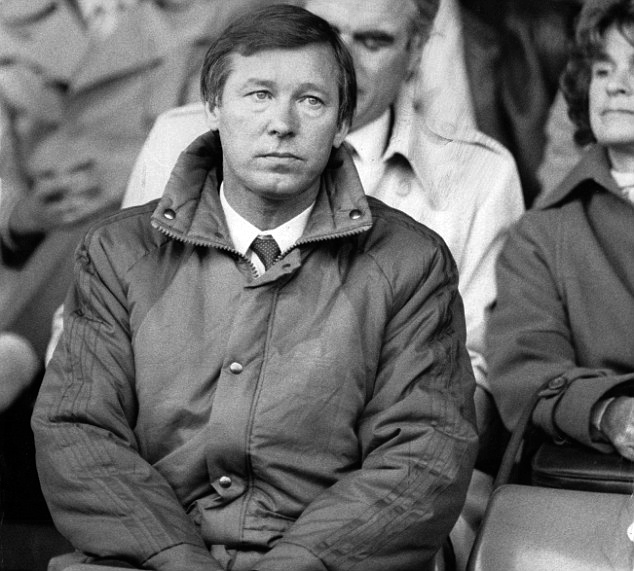
Mr B’s mentor was of course former Govan convener – Mr A Ferguson, who headed south to find his new Northern home, creating and then destroying the lad’s career, allegedly by means of boot and hairdryer.
Here we have the traditional Northern Alpha Male challenged by the emergent Metrosexual culture, celebrity fragrances, posh partner, tattooed torso, and skin conditioner endorsements.
It is to be noted that the wealth of the region, in part created by the shoemaking and electrical industries, have long since ceased to flourish, though still trading, PIFCO no longer has a local base.
The forces of free market monopoly capitalism have made football and its attendant personalities global commodities, and manufacturing by and large, merely a fanciful folk memory.
Hamilton Street would have provided substantial homes to workers at the Ryecroft Cotton Mills.
Ryecroft Mill, built in 1837,was the second of a series of four mills built on the site, the first was built in 1834. In 1843, over 10,000 people were employed in Ashton’s cotton mills – today there are none.
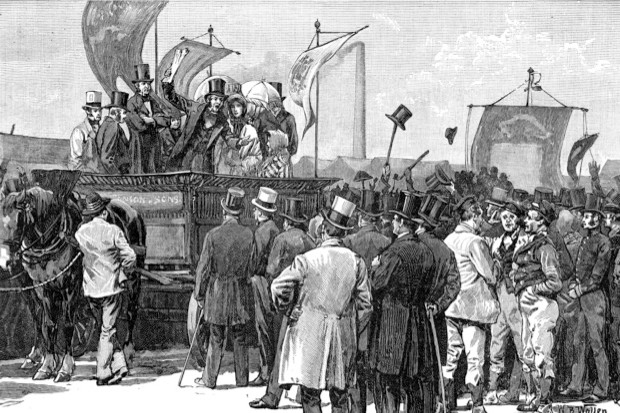
This industrial growth was far from painless and Ashton along with other Tameside towns, worked long and hard in order to build the Chartist Movement, fighting to establish better working conditions for all.
The tradition of political and religious non-conformity runs wide and deep here, the oft overlooked history of Northern character and culture.
Textile production ceased in the 1970s and the mill is now home to Ryecroft Foods, a subsidiary of Weetabix.
Ashton like many of Manchester’s satellite towns created enormous wealth during the Nineteenth and Twentieth centuries. The workers of Ashton saw little of that wealth, the social and economic void left by the rapid exodus of the cotton industry to the Far East, is still waiting to be filled, in these so called left behind towns.
Photo Ron Stubley
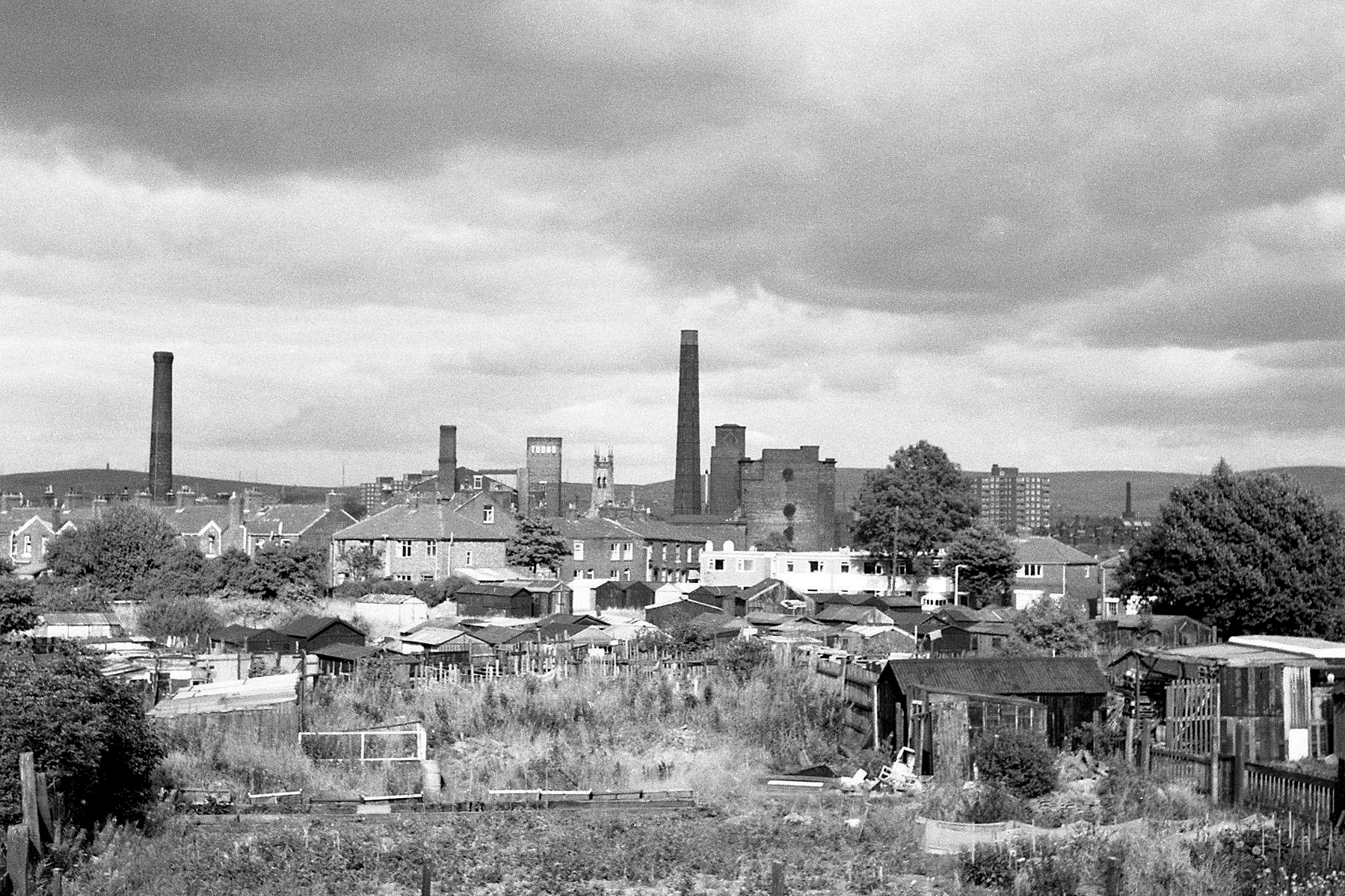
Here is a landscape nestled in the foot of the Pennines, struggling to escape its past and define a future.
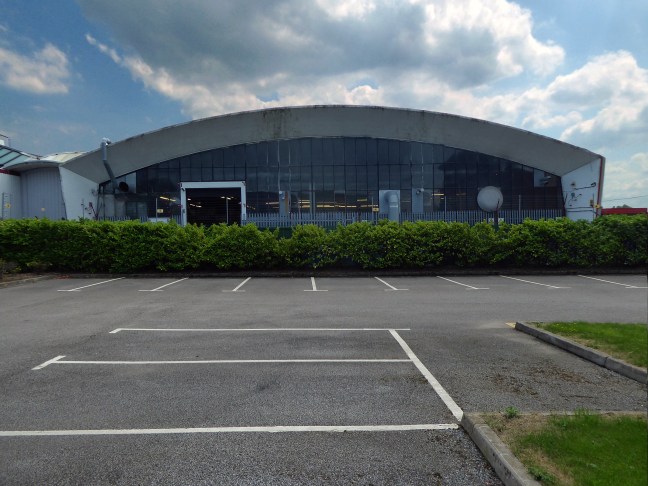
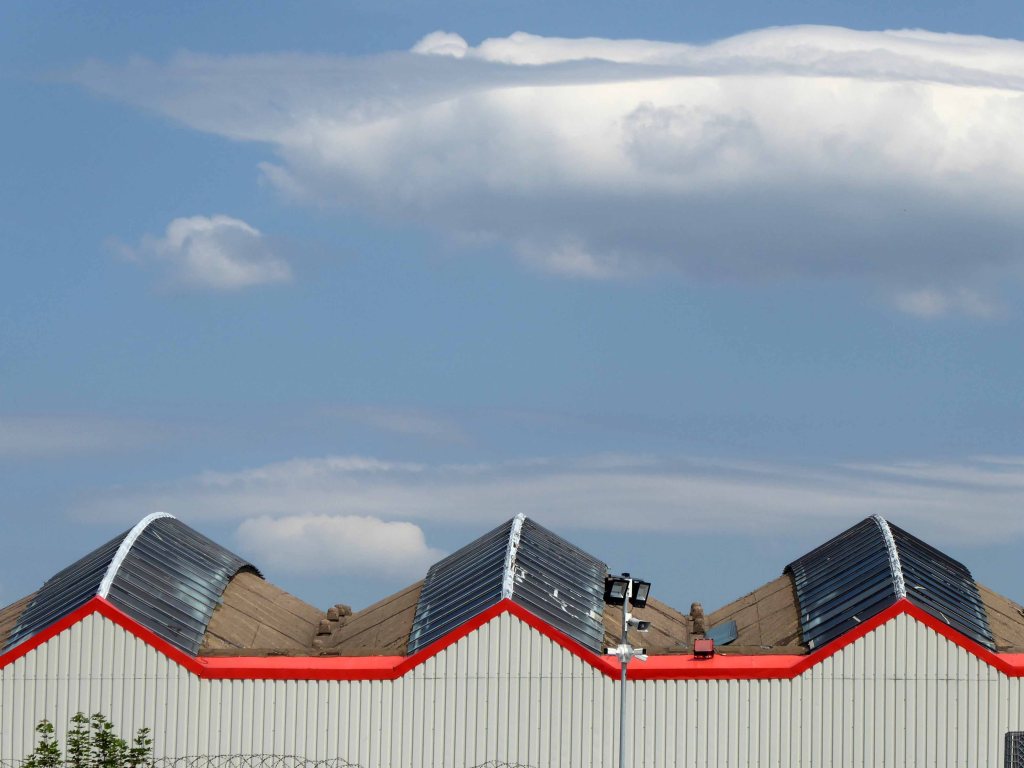
I’ve cycled by here for some fifty years or more – always admiring its serrated roof.
Way back when we would roam around on our bikes, exploring the waste ground adjacent to Jackson’s Brickworks.
Where we would scavenge tape from the Rotunda tip.
I remember it as a Remploy Centre.
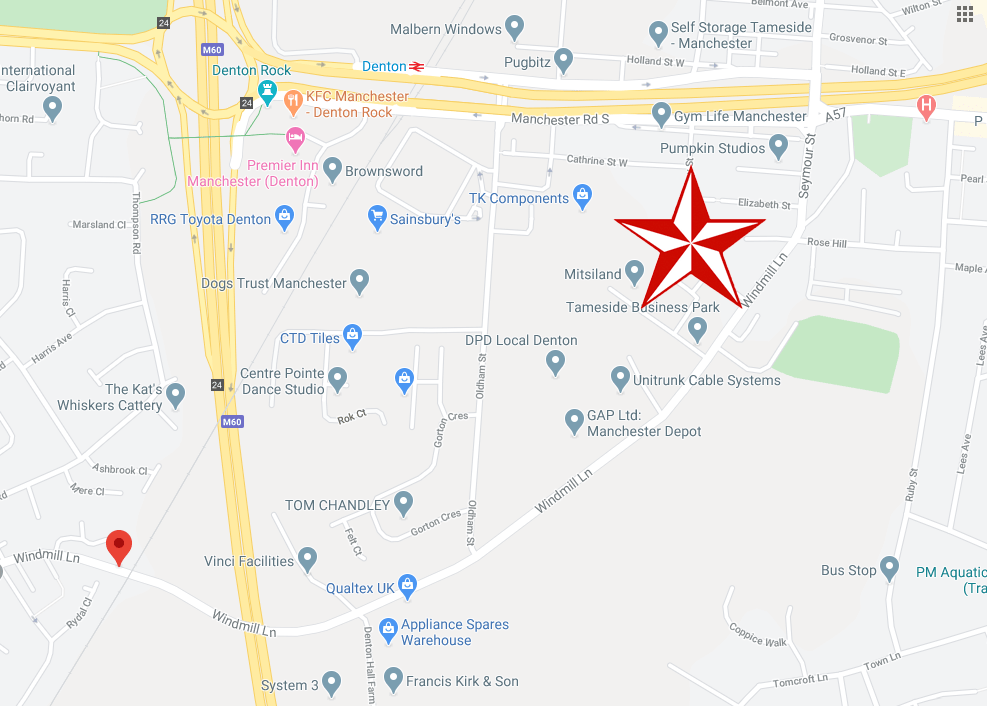
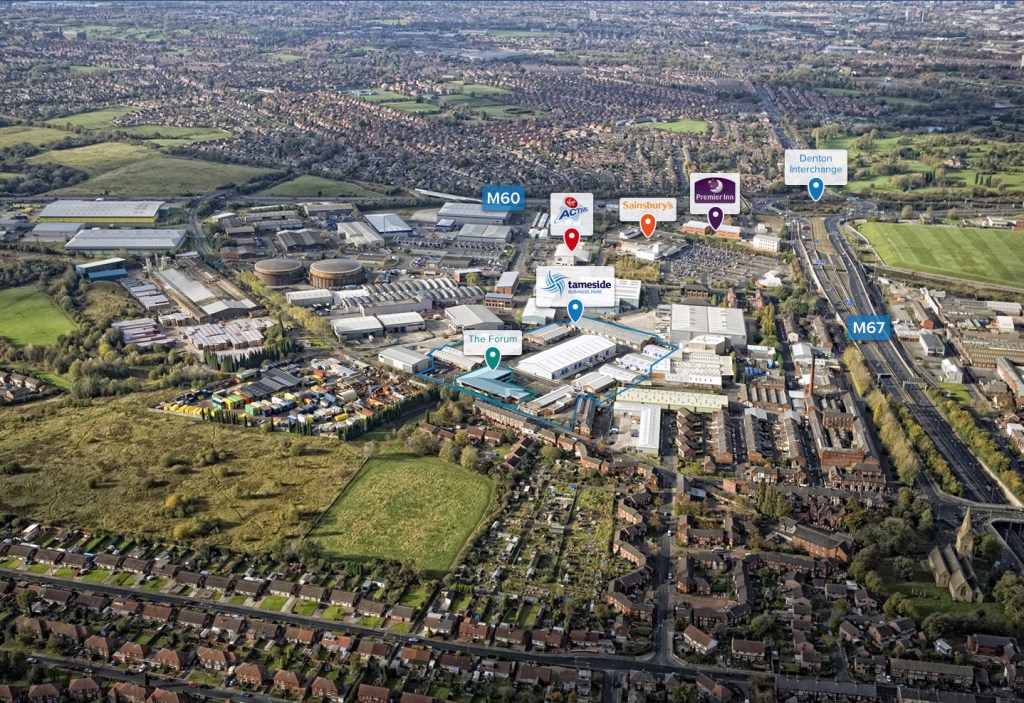
My last 13 years prior to retirement last May were spent at the centre, on Windmill Lane, Denton. Just before I left, a lot of demolition work was done, prior to redevelopment of much of the site.
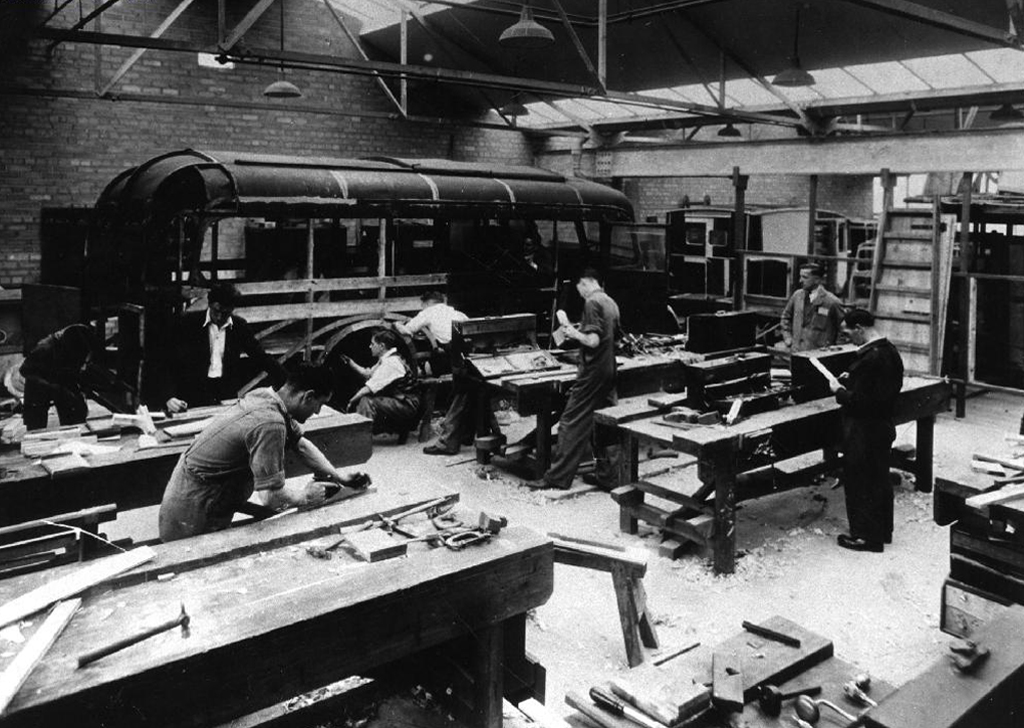
I seem to remember the place always being referred to locally as Th’ Rehab – the Rehabilitation Centre, a Government training centre, where skills were taught, such as joinery, bricklaying etc, and there was also a Remploy Unit housed there.
Local men could go for a free haircut, administered by a well supervised trainee.
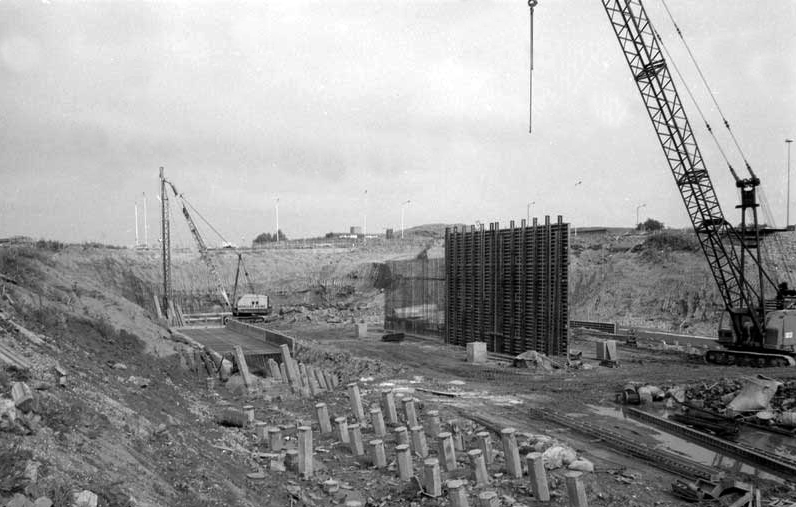
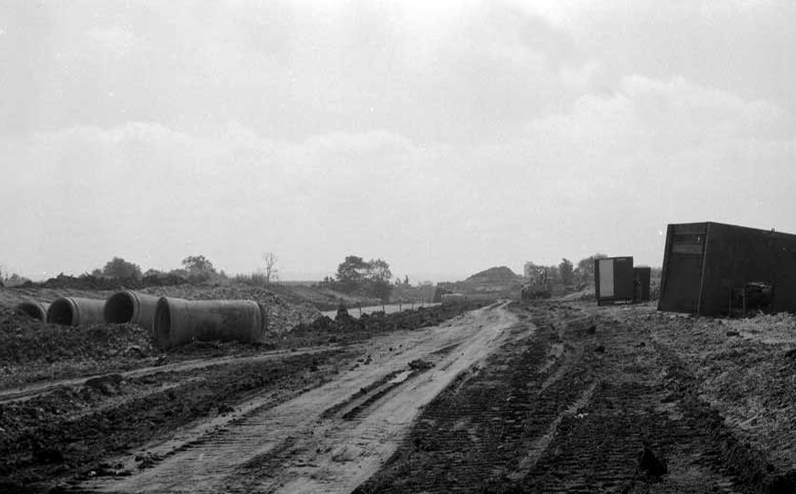
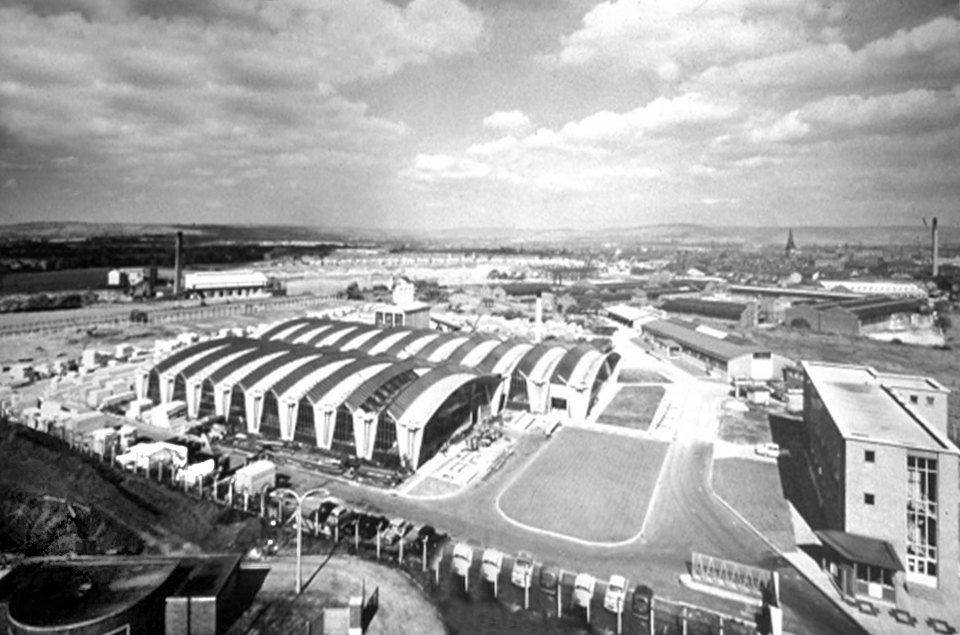
Proximity to the M60, seen here under construction is paramount to its future success.
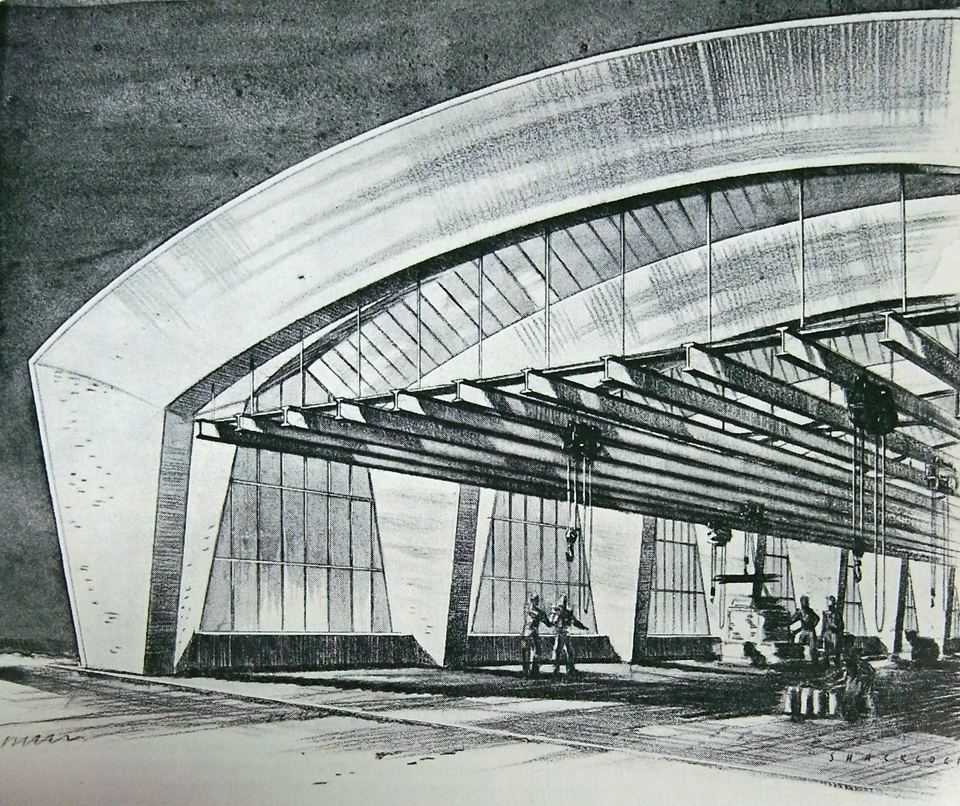
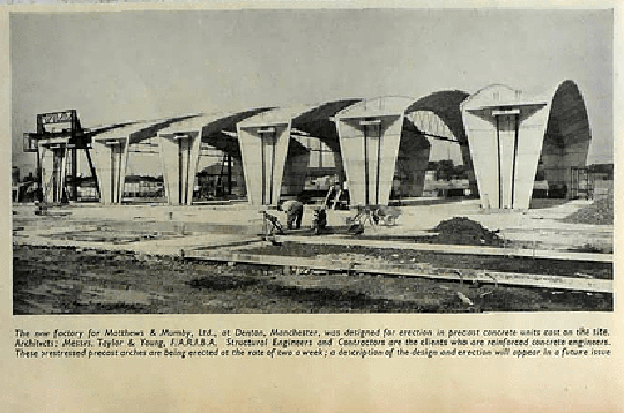
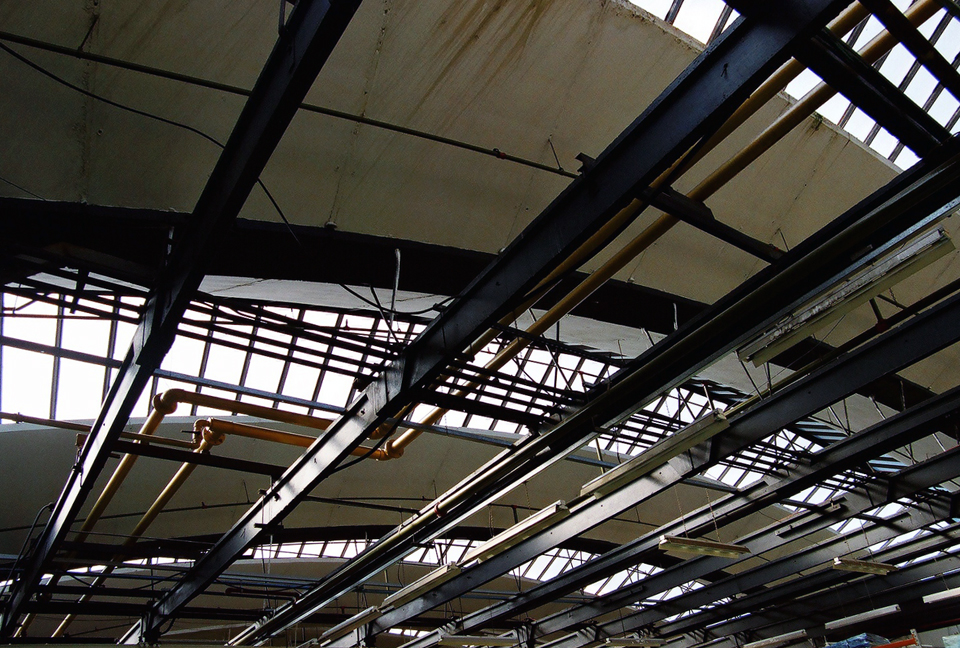
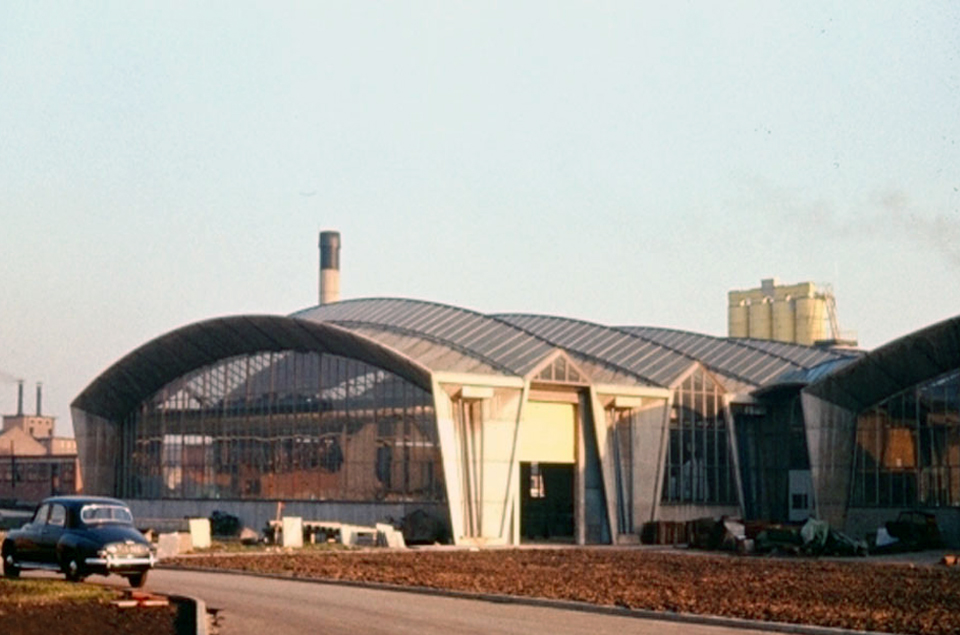
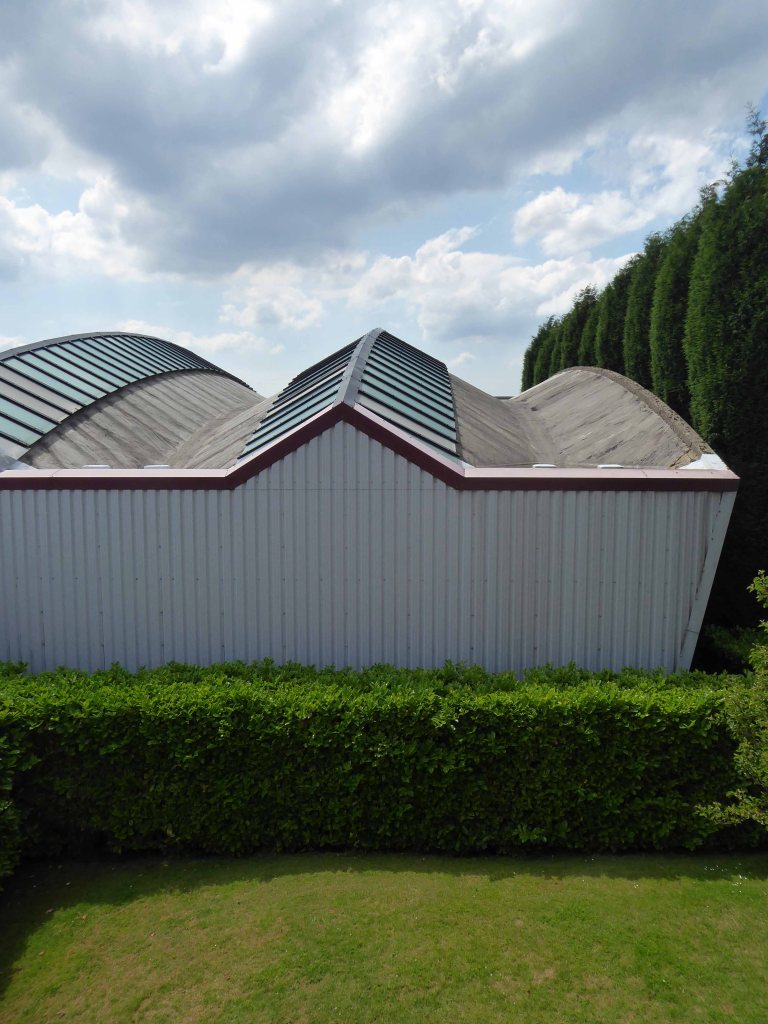
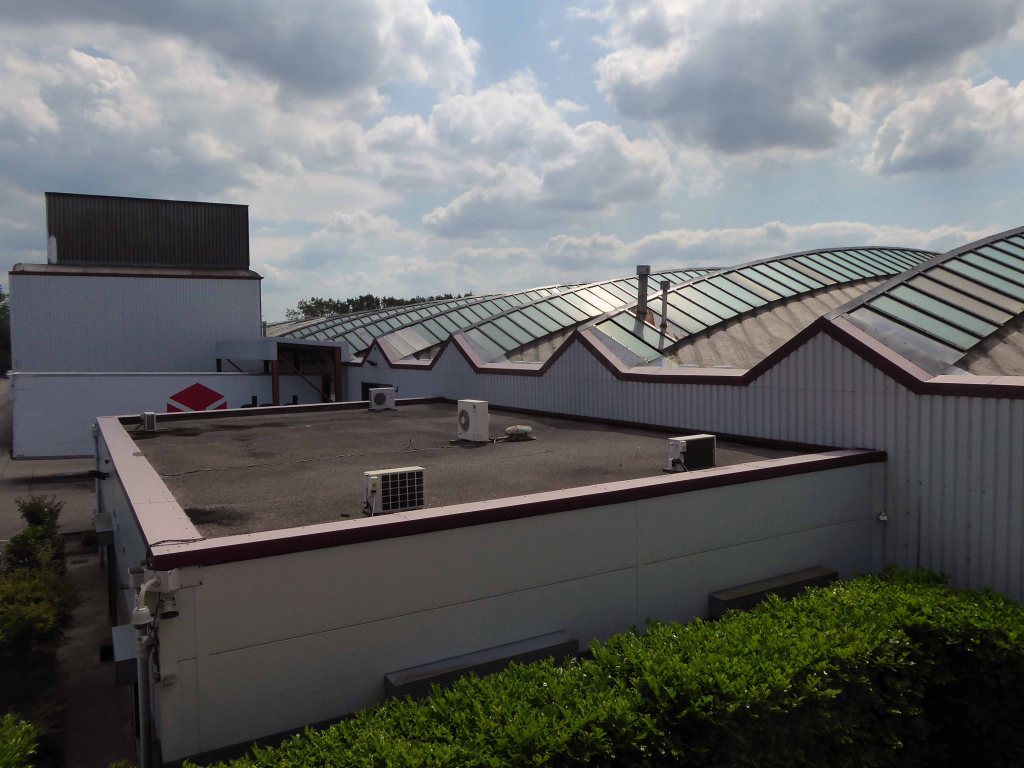
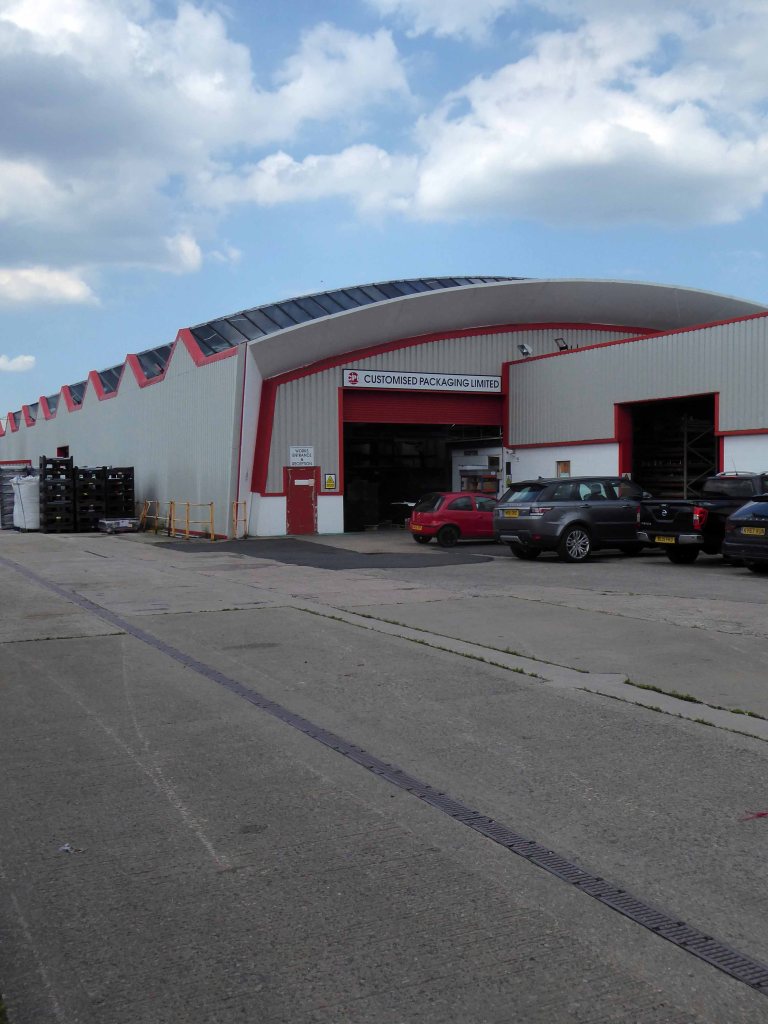
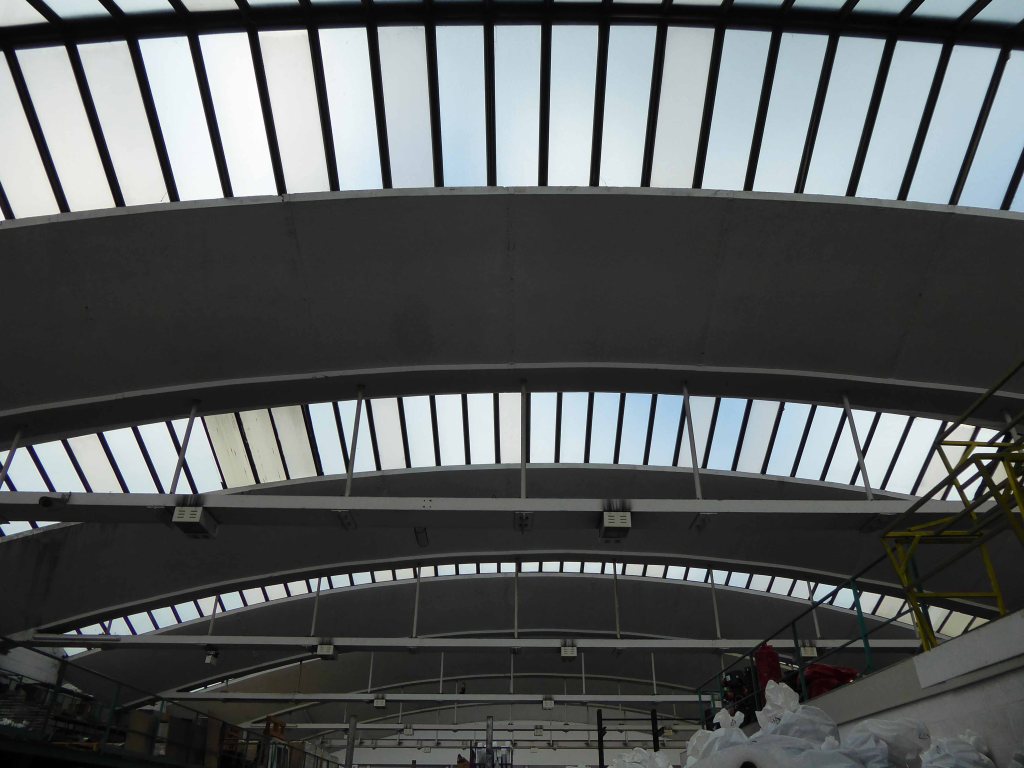
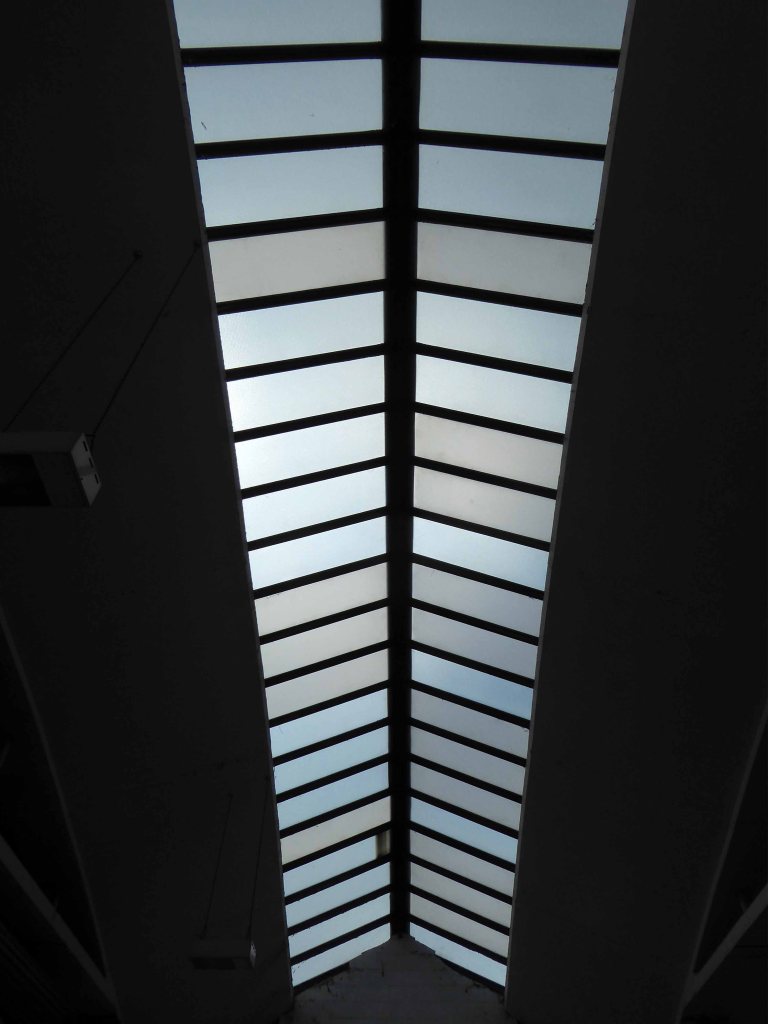
This former production plant for concrete components is now sadly partitioned and houses a number of businesses, only one of which still has a manufacturing base. The engineer for the project was also the client; reinforced concrete engineers, Matthews & Mumby. The intention was to create large floor areas, free from columns, to accommodate fourteen casting beds of about fifty metres in length. The structure of the two sheds was formed from arch units assembled on the ground, jacked into position and post-tensioned to form large tied span arches. Each arch spans approximately thirty metres and was designed to carry up to fourteen one tonne loads along the monorail hangers that ran the length of the factory, centred to each casting bed and suspended from the arches. Lantern section glazing hugs the curve of the arches that act as a reflective surface to provide an even light across the factory floor. The rails and hangers added a further louvered filter to the light, described at the time as ‘the ‘venetian blind’ effect. Originally the elevation between the V shaped columns was also glazed, this has now been filled and significantly reduces the aesthetic presence of the exposed structure and a distinctly ‘modern’ building of the time.
Mainstream Modern – my thanks to Richard Brook for the text and archive images.
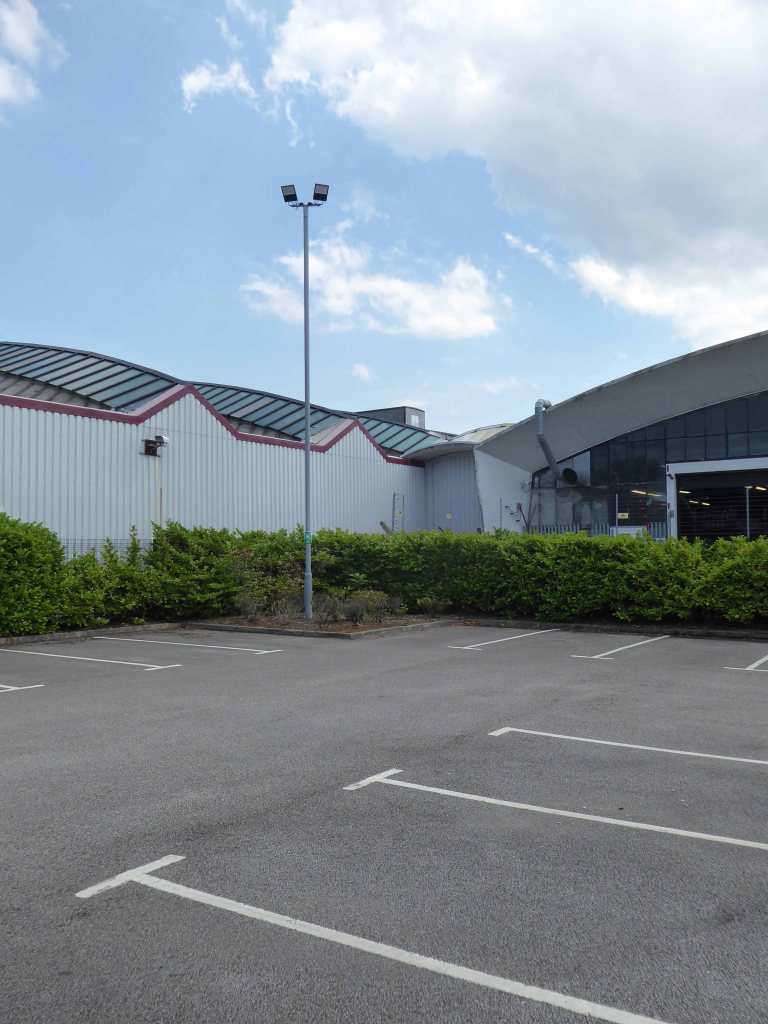
So one sunny day last week, on a lockdown walk I went to take a look around.
The addition of cladding is never an uplifting sight on any site – the integrity of the building is seriously challenged.
Sometimes a former Rehabilitation Centre can do without rehabilitation it seems.
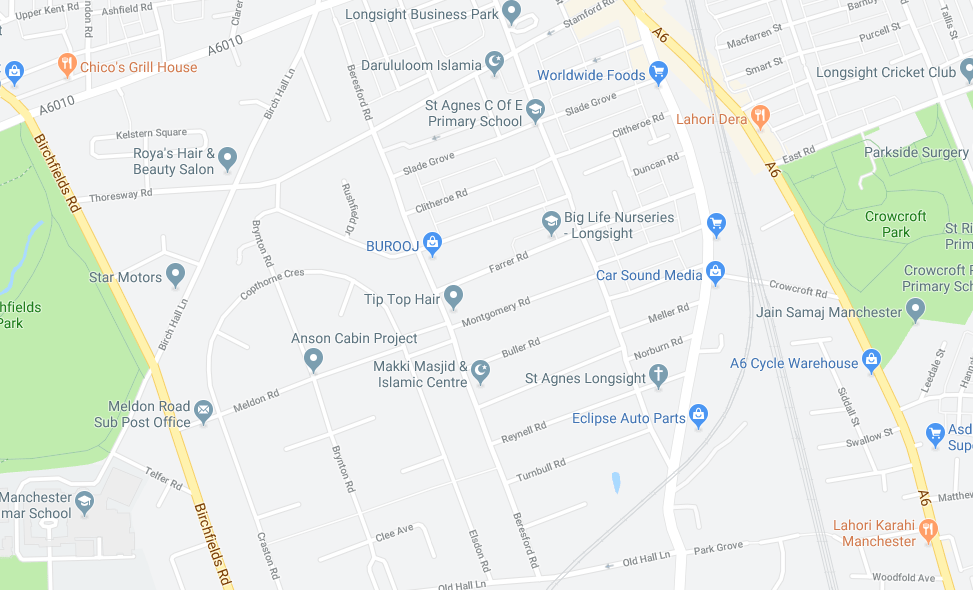
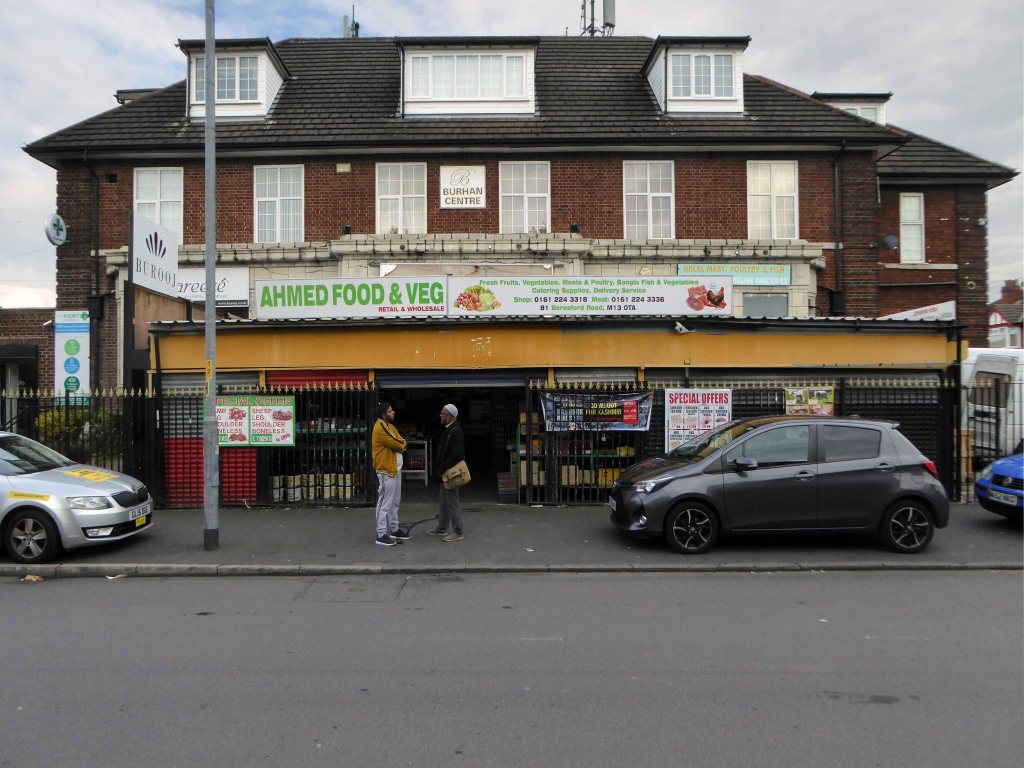
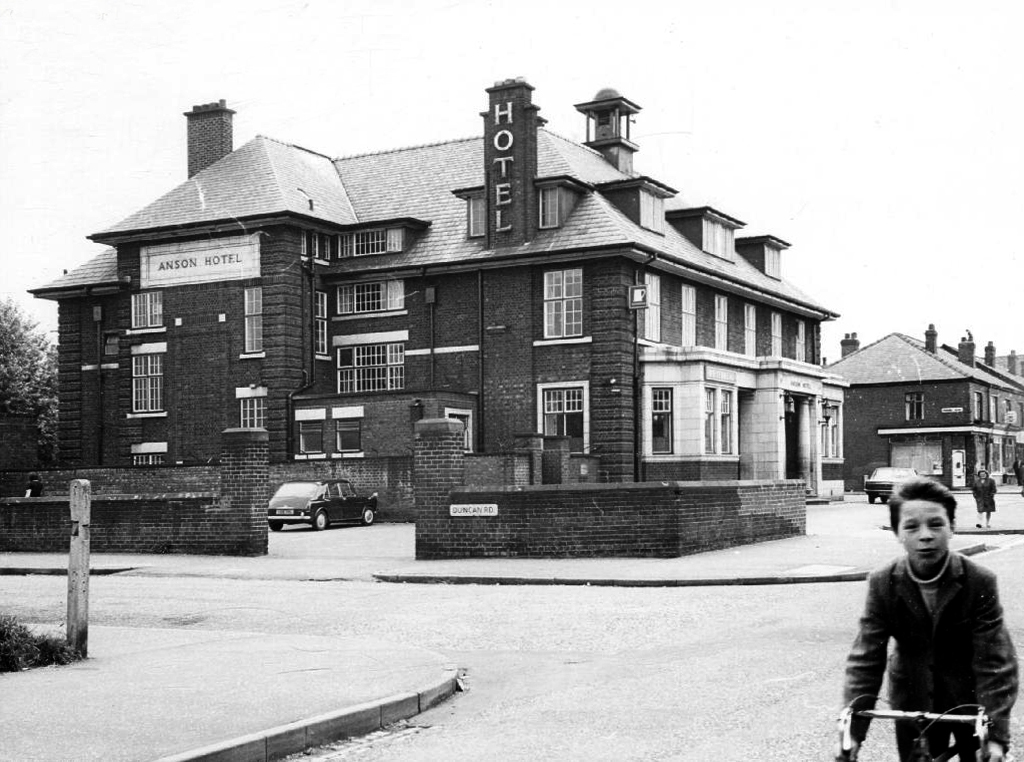
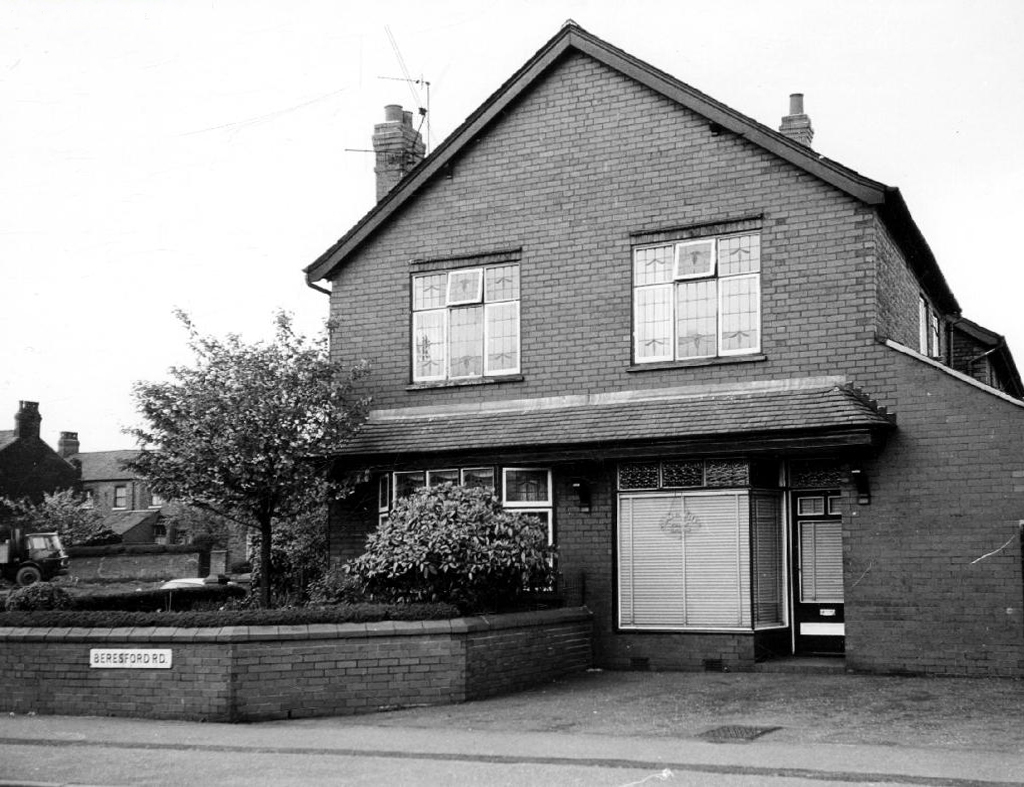
Cycling back from Town, zig zagging between the A6 and Birchfields Road, I headed down Beresford Road and bumped into a behemoth.
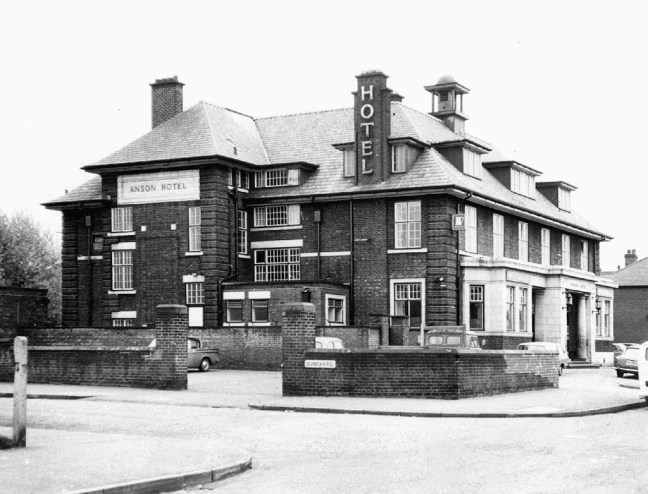
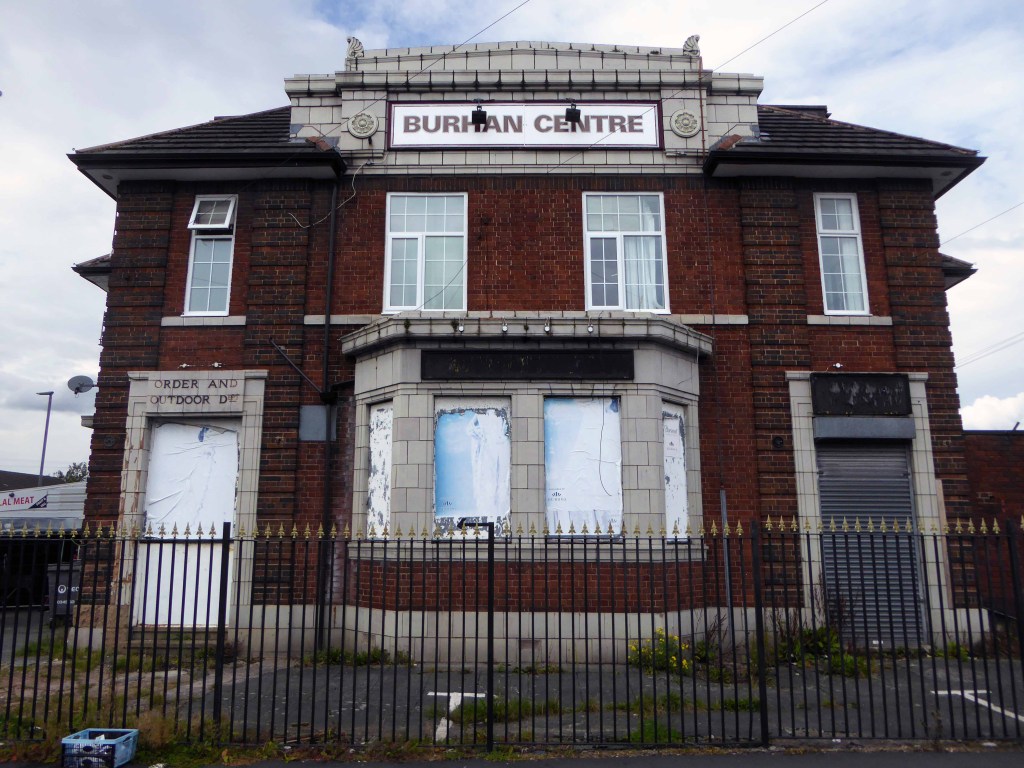
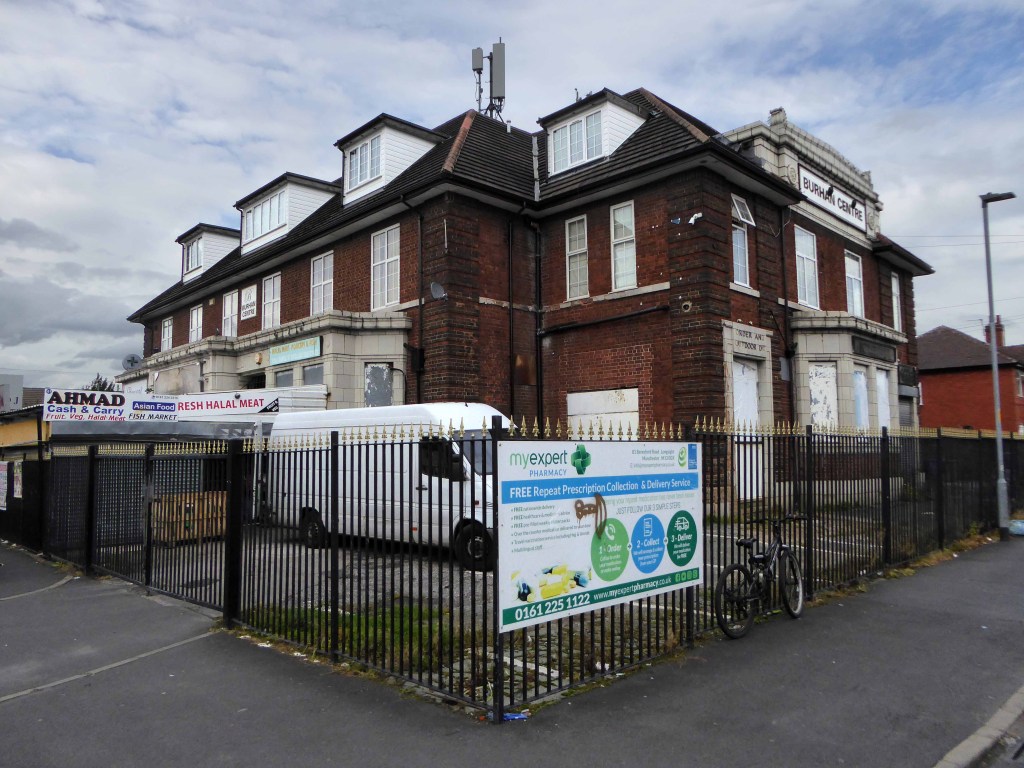
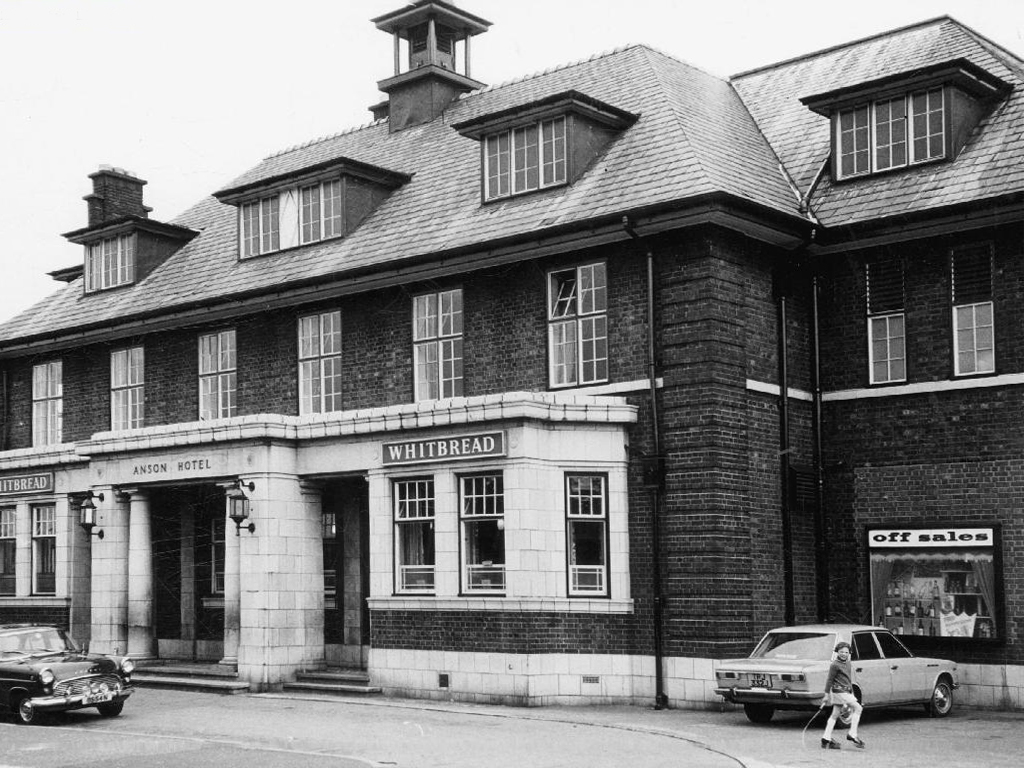
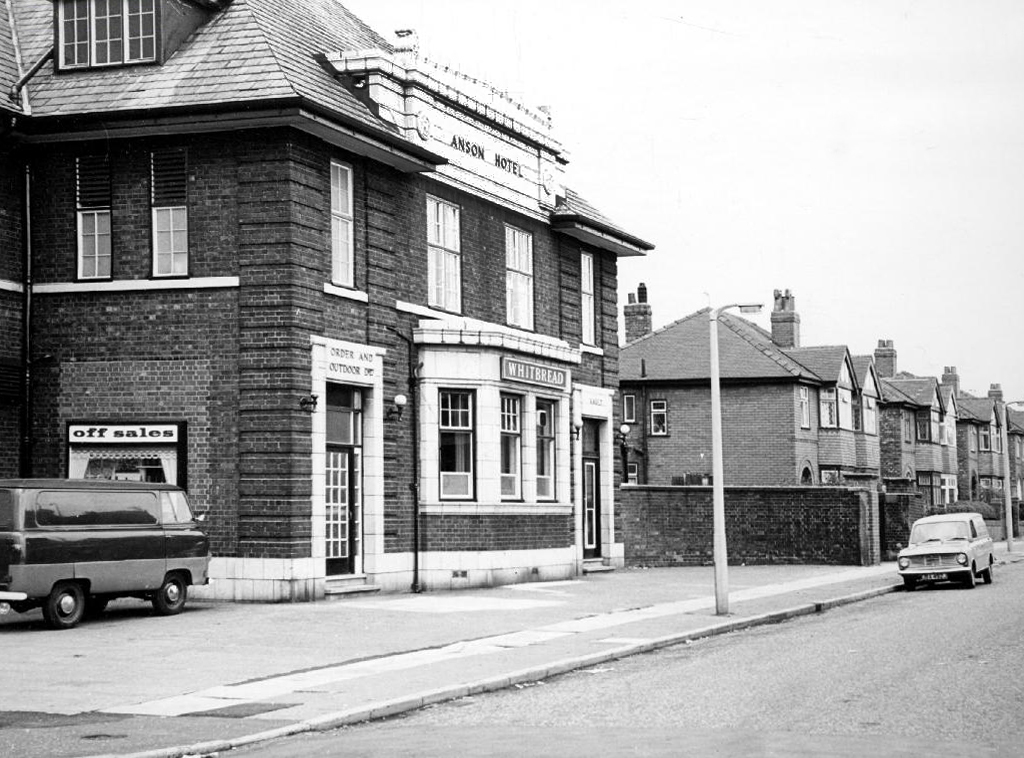
A huge inter-war Whitbread boozer long since closed, now a retail food outlet and badged as the Buhran Centre, also trading as Burooj.
This change of use is far from uncommon, the demographics, socio-economic conditions and drinking habits which shape this and countless other pubs, have since shifted away from the lost world of this immense, roadhouse-style palace of fun.
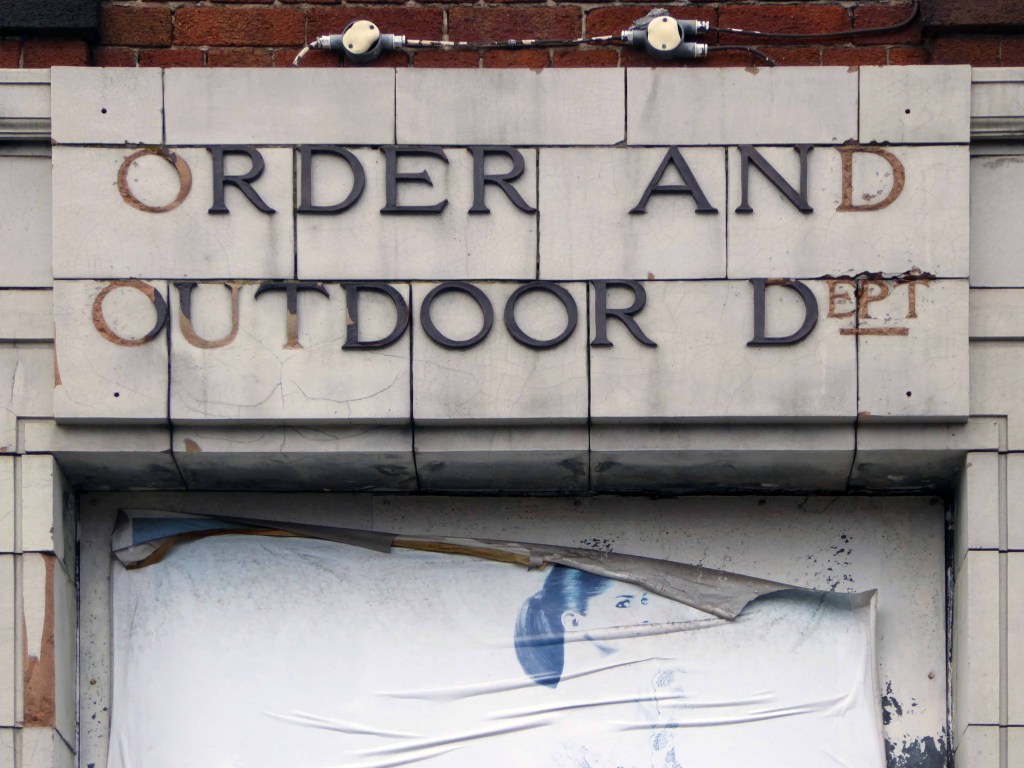
No more outdoor or orders here – the supermarket now supplies the supplies for the self satisfied home drinker.
The sheer scale of the building guaranteed its demise, a three storey house with no more stories to tell.
Searching online for some clues as to its history there is but one mention, on the Pubs of Manchester:
This is my attempt, in some small way, to redress the balance, snapping what remains of this once top pub.
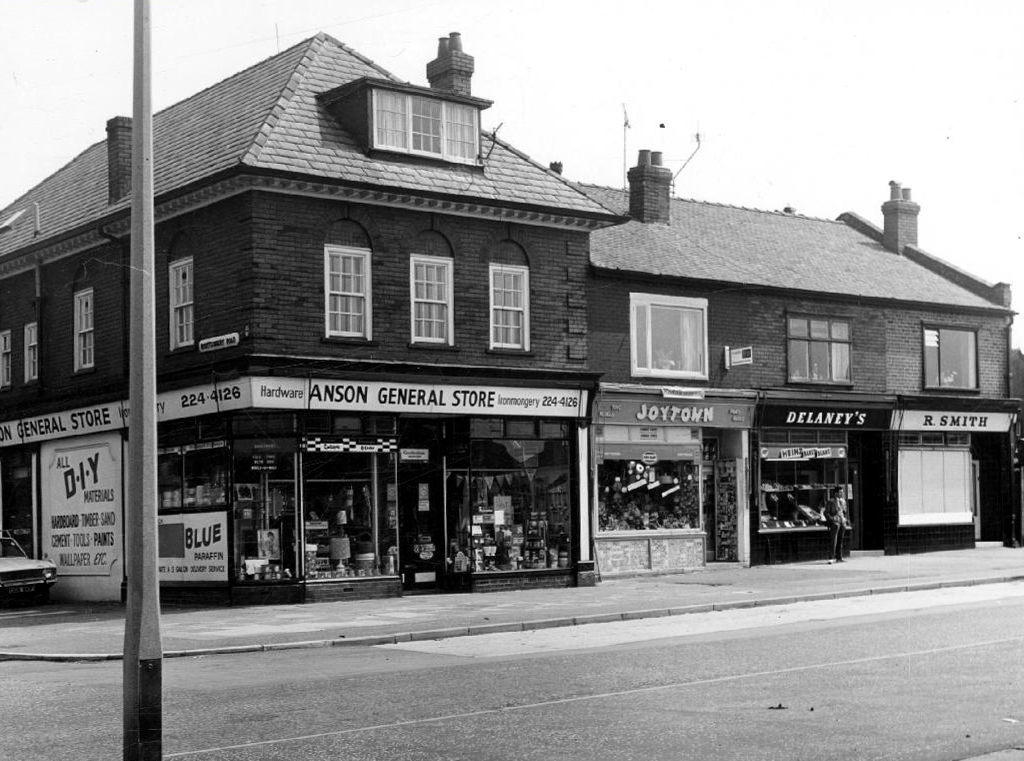
Safe home I searched the Manchester Local Image Collection, hoping to find some clues and/or images elucidating Beresford Road and the Anson in times gone by.
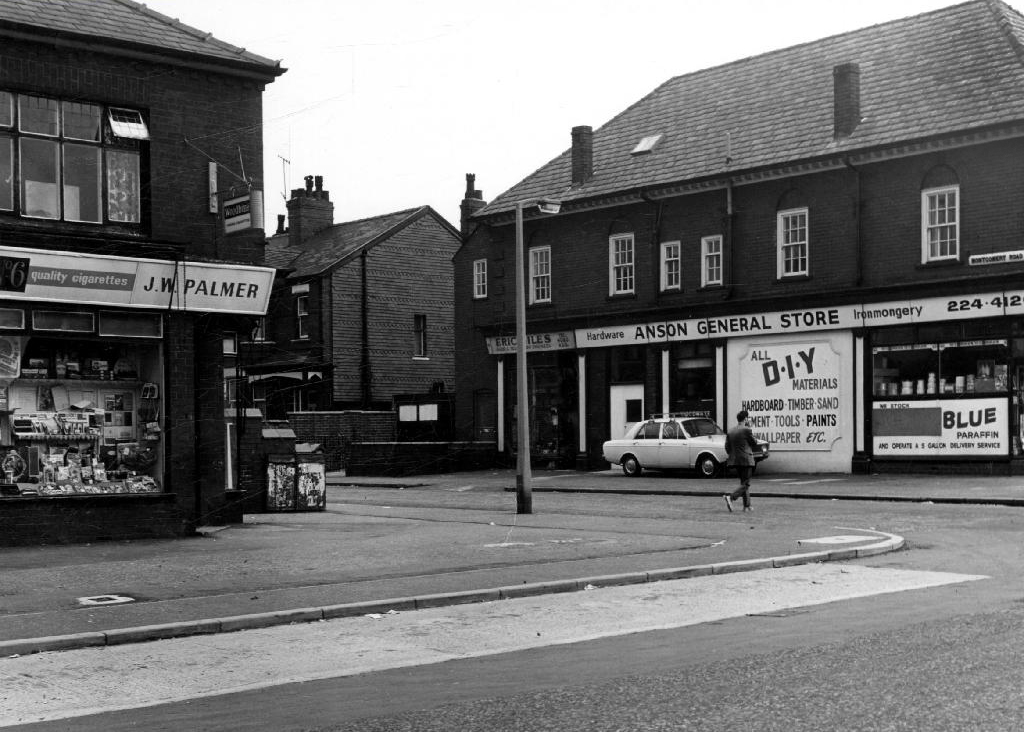
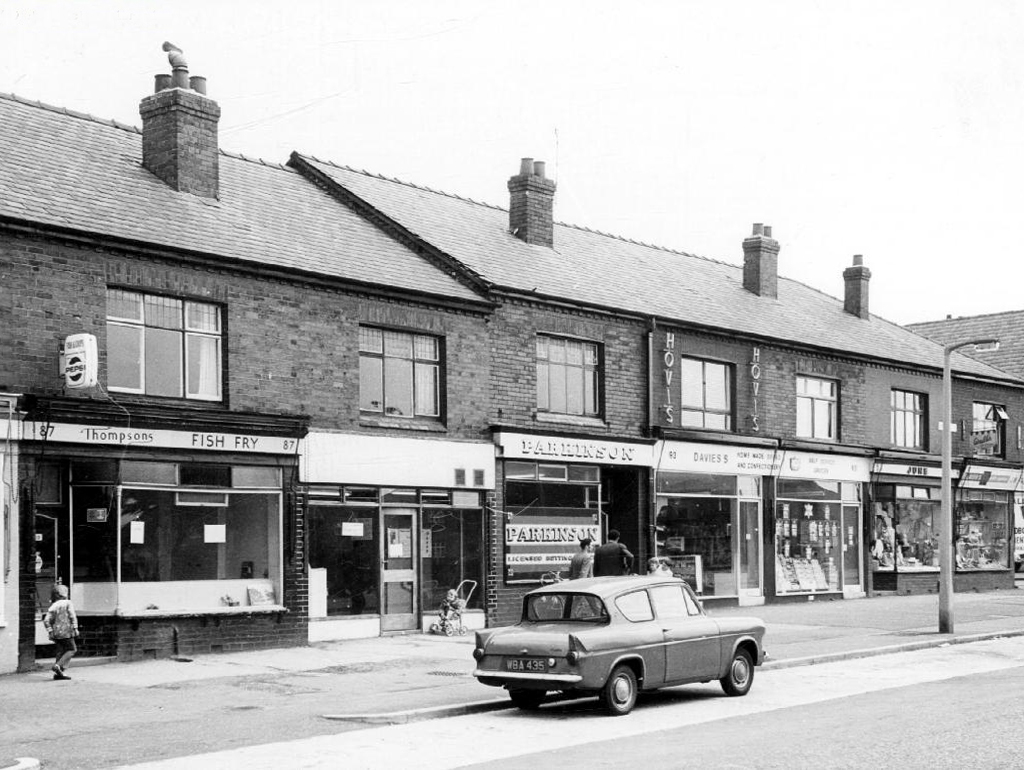
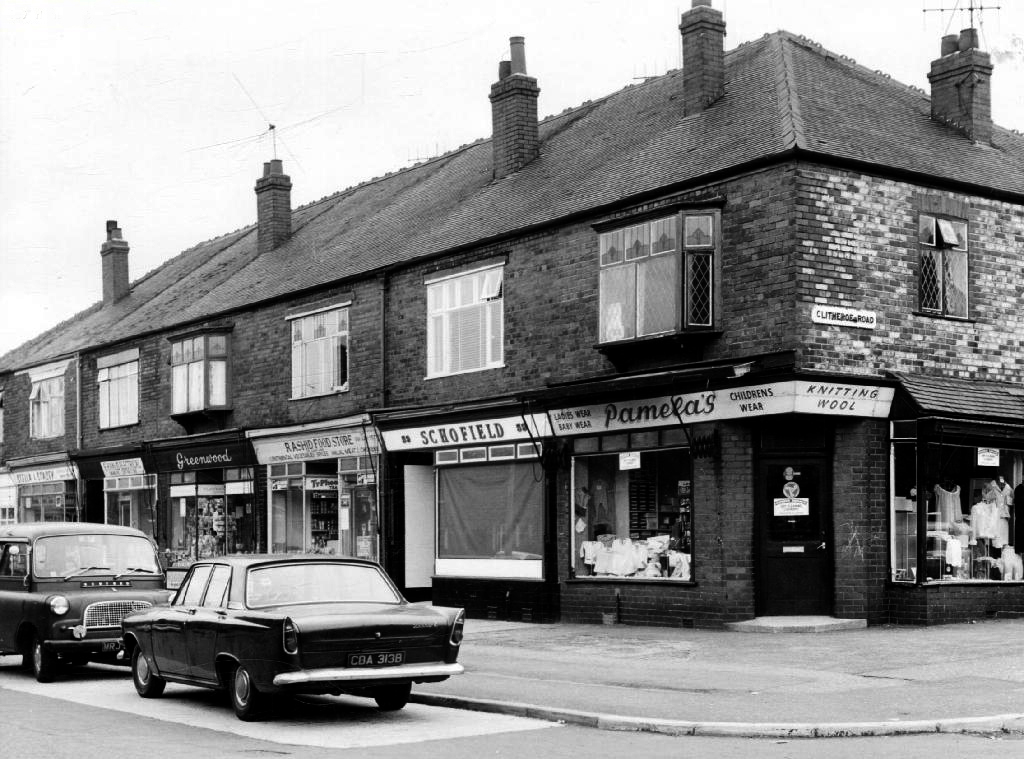
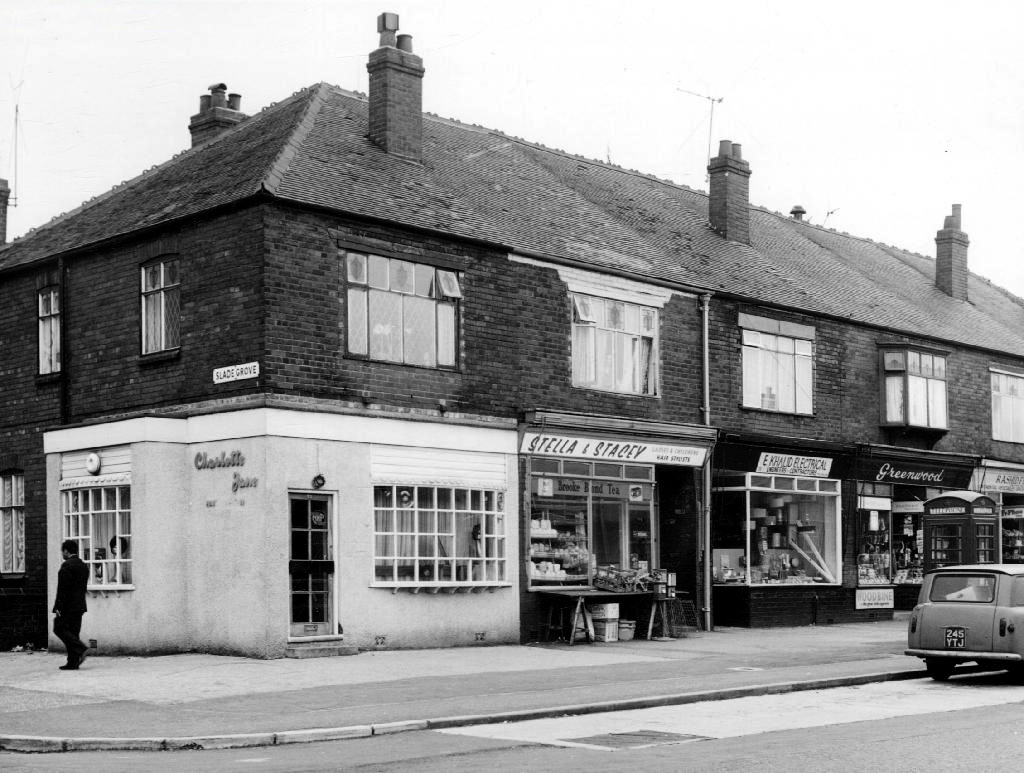
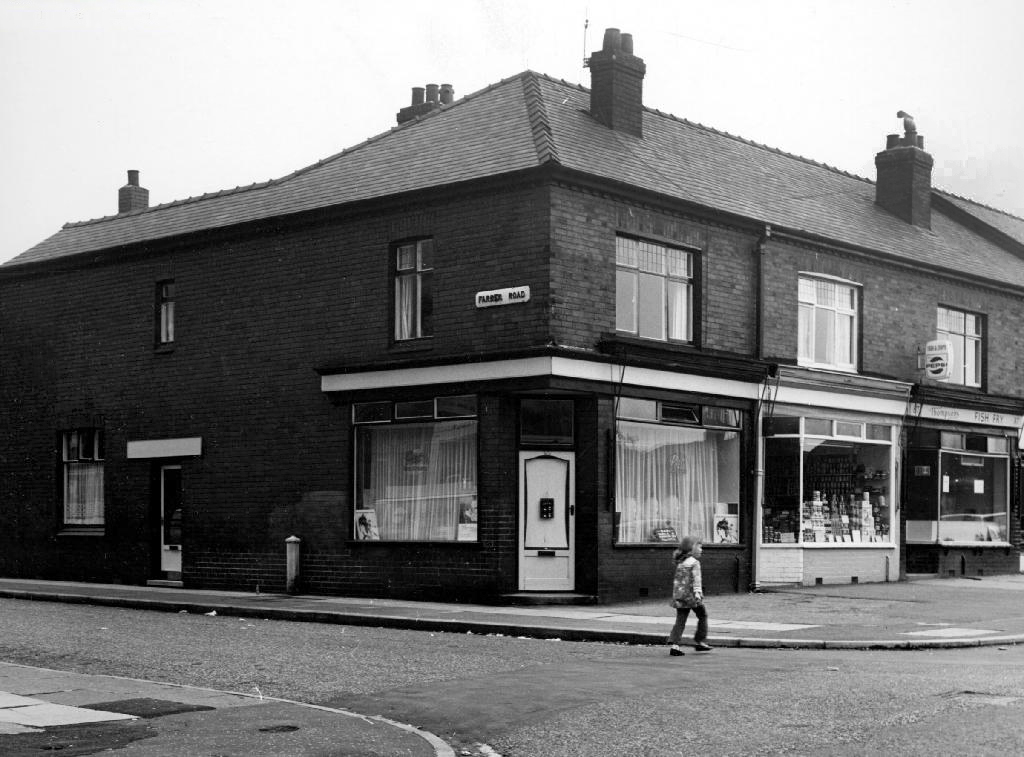
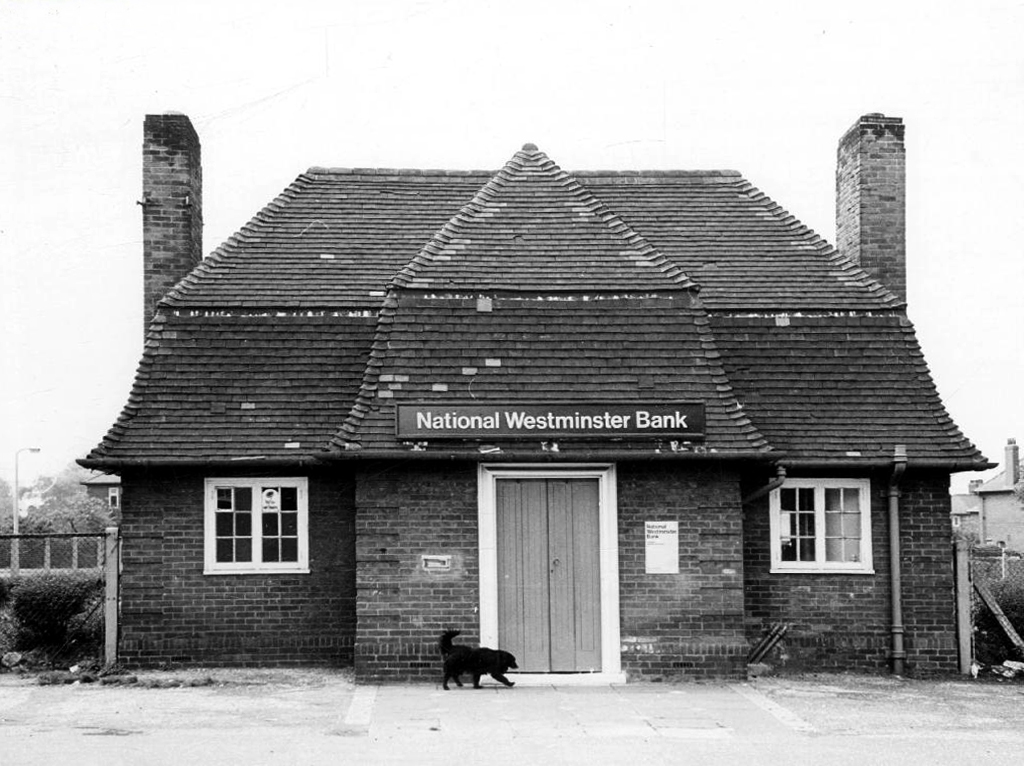
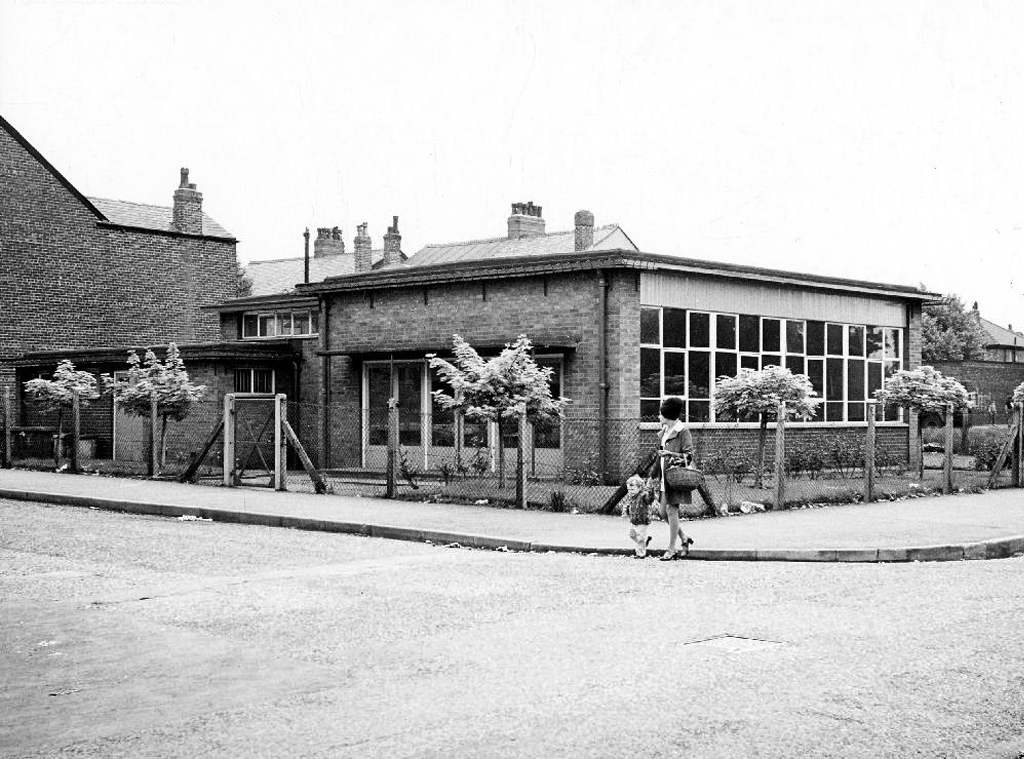
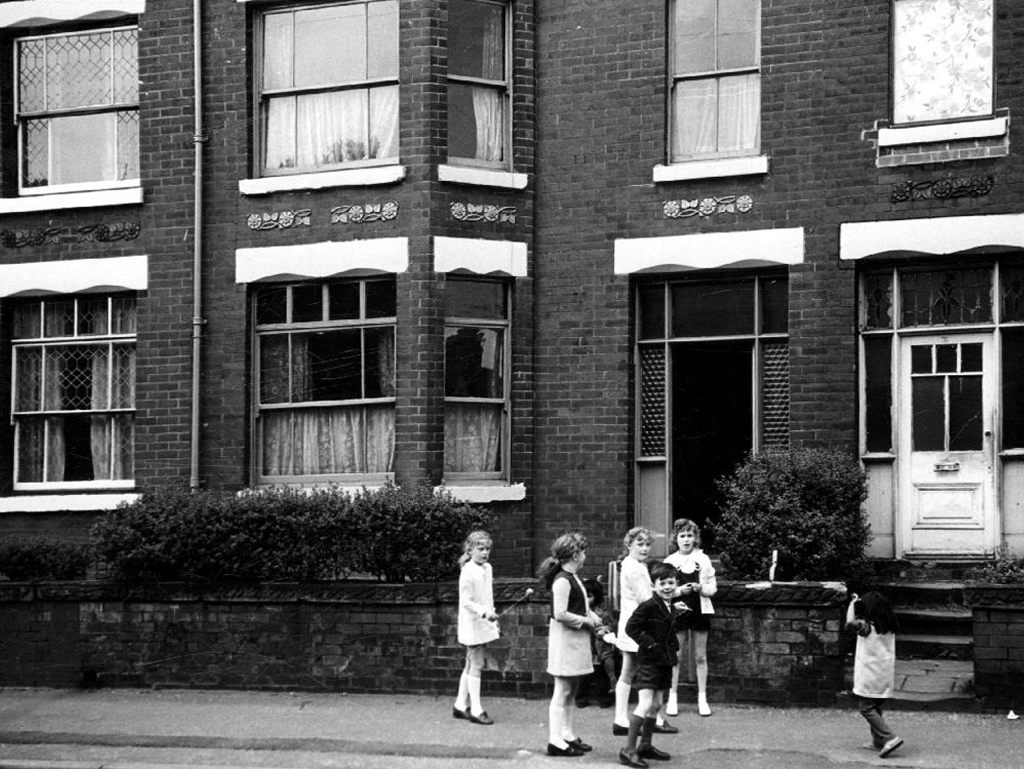
I found a typical inner Manchester suburban thoroughfare, a healthy mix of homes socially and privately owned, industry, independents shops, schools and such. Kids at play, passers-by passing by, captured in 1971 by the Council’s housing department photographers.
This was not a Golden Age – wasn’t the past much better, brighter, cheerier and cleaner reminiscence – simply a series of observations.
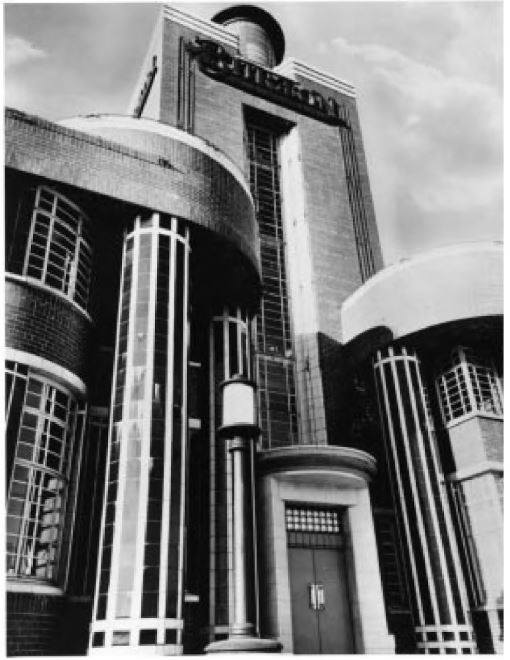
In almost every town or city worth its salt stood a modern white tiled tailor’s shop, almost every man or boy wore a Burton’s suit.
Harry Wilson had become the company architect by the early 1920s, and was responsible for developing Burton’s house style. Montague Burton, however, maintained a close personal interest. The company’s in-house Architects Department was set up around 1932 under Wilson. He was followed as chief architect around 1937 by Nathaniel Martin, who was still in post in the early 1950s. The architects worked hand-in-hand with Burton’s Shopfitting and Building Departments, who coordinated the work of selected contractors. Throughout the late 1920s and 1930s they were kept phenomenally busy: by 1939 many of Burton’s 595 stores were purpose-built.
The very first made to measure gear I owned came from Burton’s in Ashton under Lyne – mini-mod aged fourteen in a three button, waisted, light woollen dark brown jacket, four slanted and flapped side pockets and an eighteen inch centre vent.
The story of the stores begins in the province of Kovno in modern Lithuania – Meshe David Osinsky (1885-1952), came to England where he initially took the name Maurice Burton.
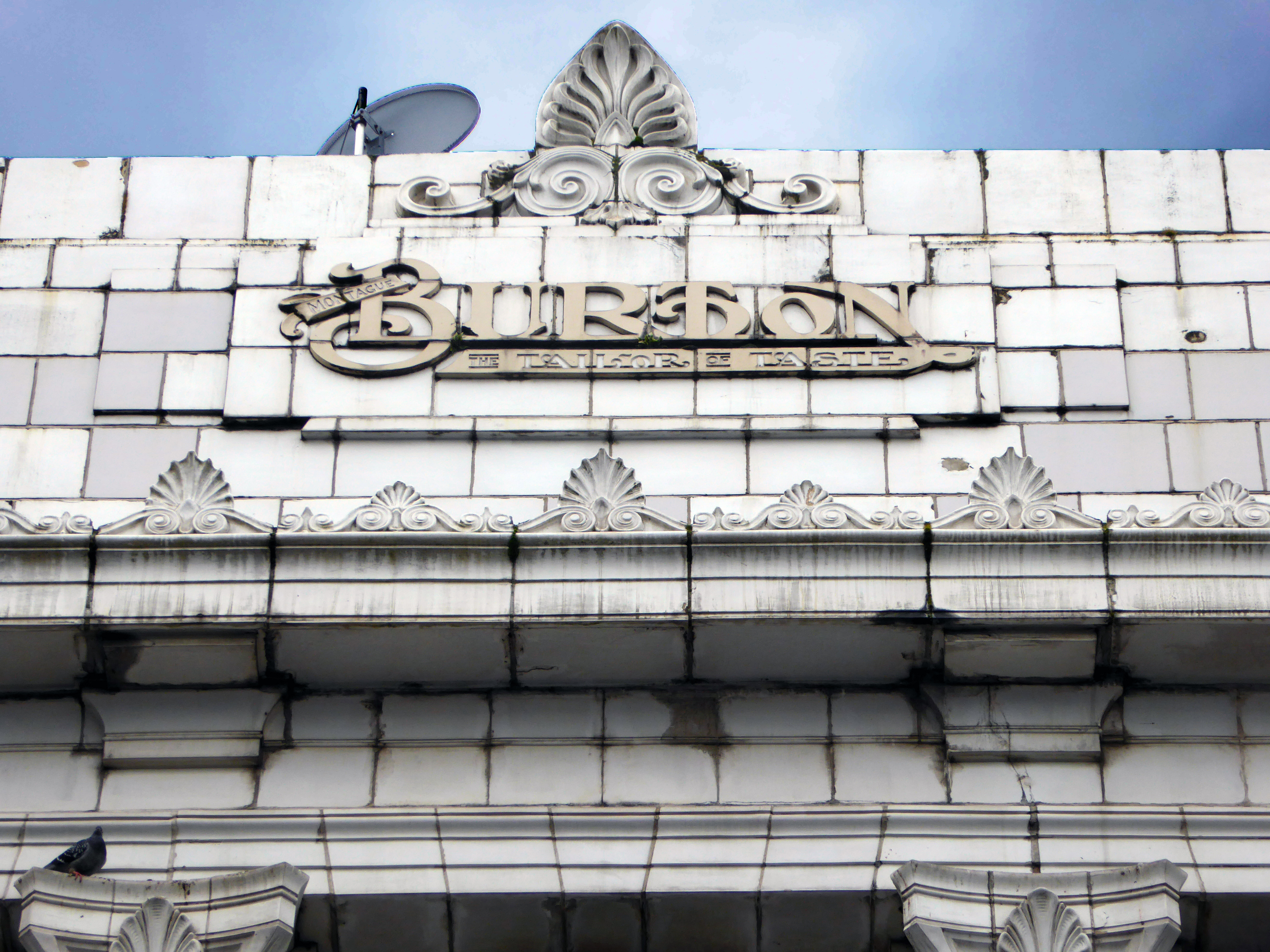
Topped off with the company’s distinctive logotype.
This example in Doncaster is one of the few remaining examples many having been removed – as the stores have changed ownership and usage.
This Neo-Classical Burnley branch is a rare example of a Burton’s which hasn’t gone for a Burton.
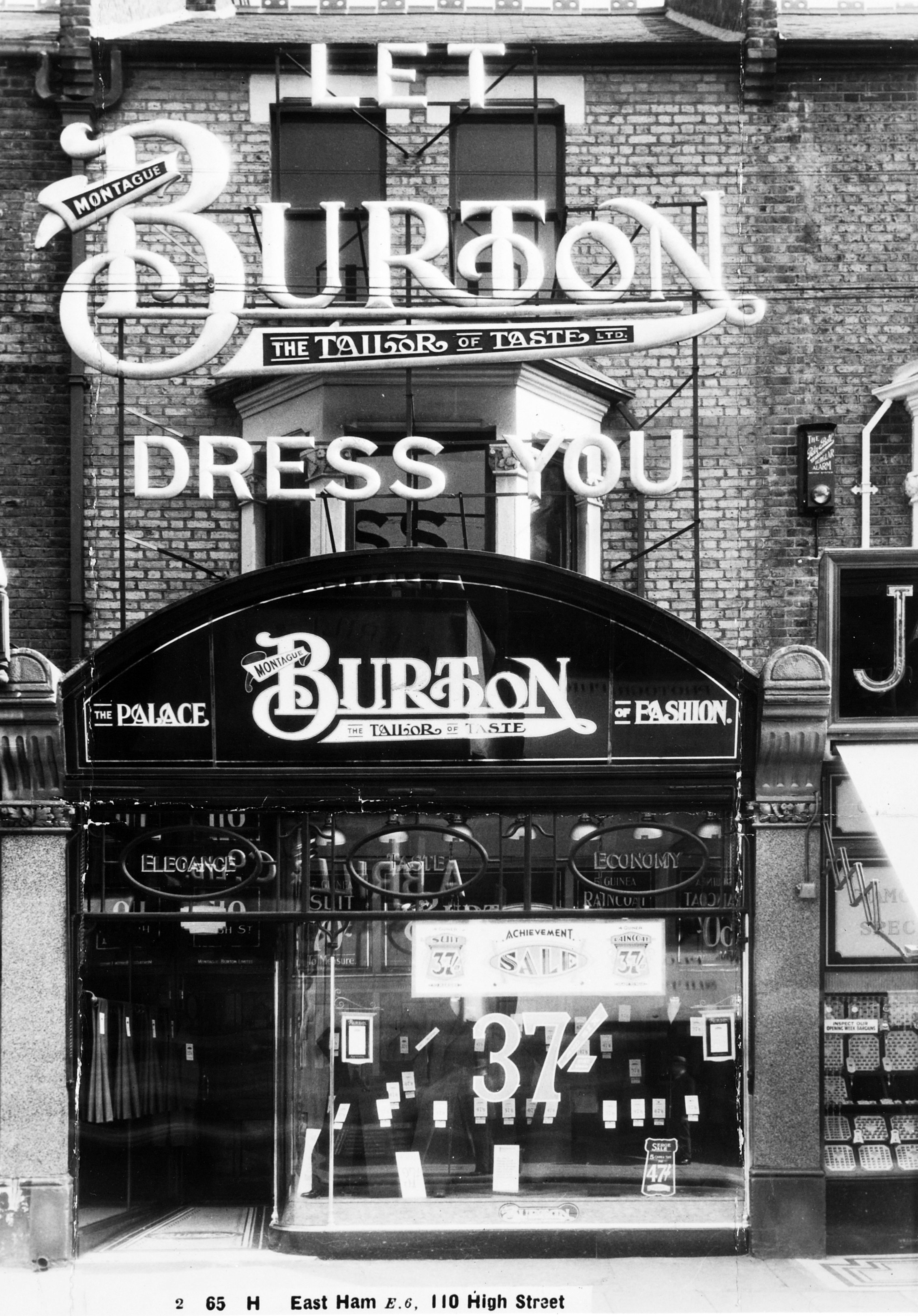
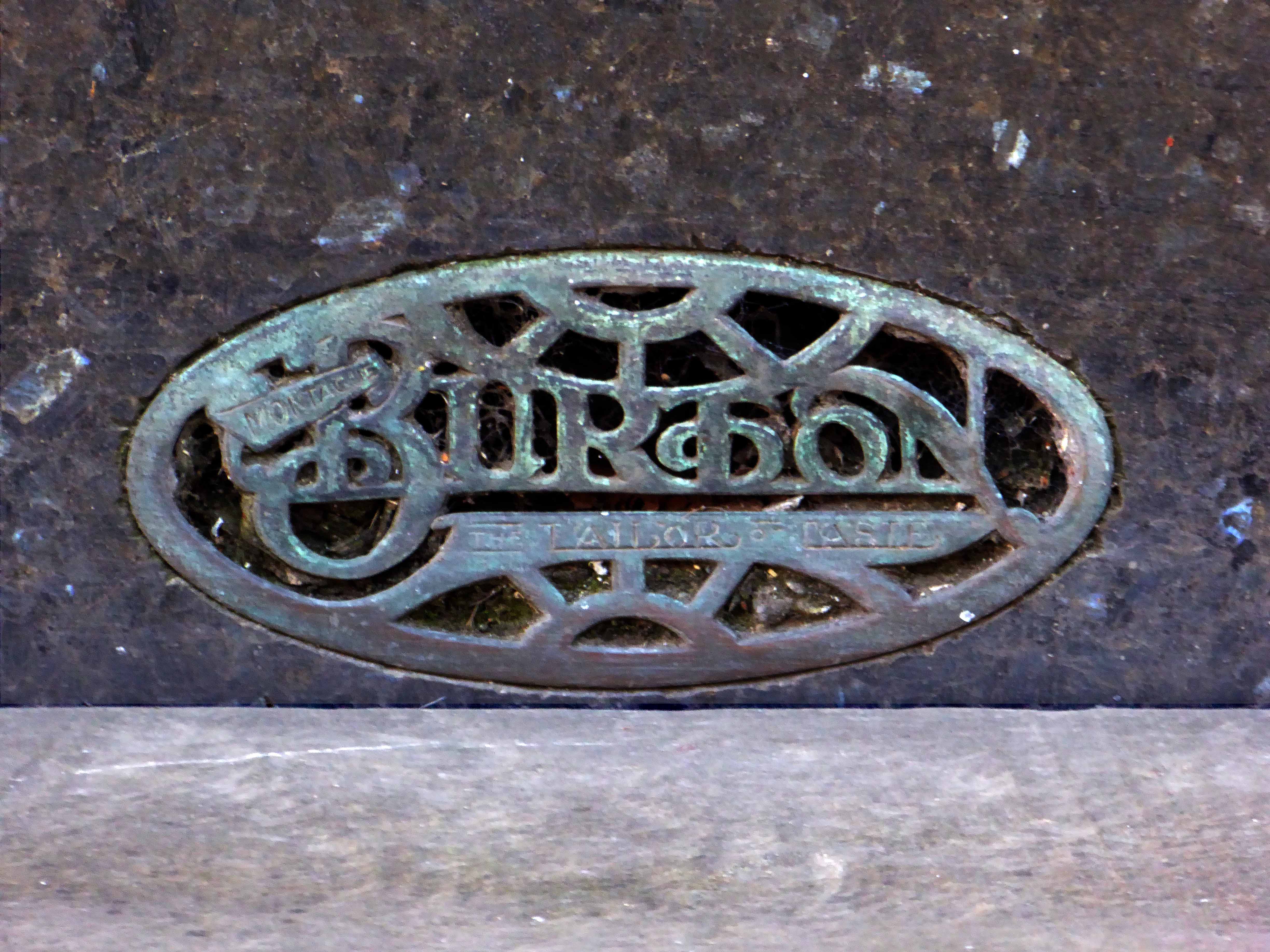
The group maintained a distinctive graphic style in labelling signage and advertisements.
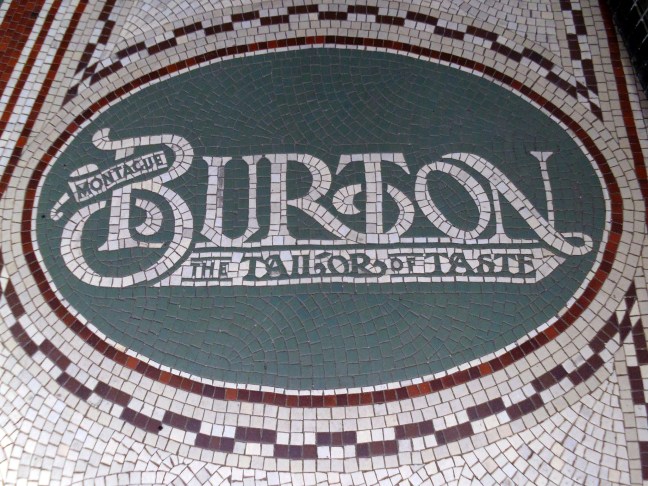
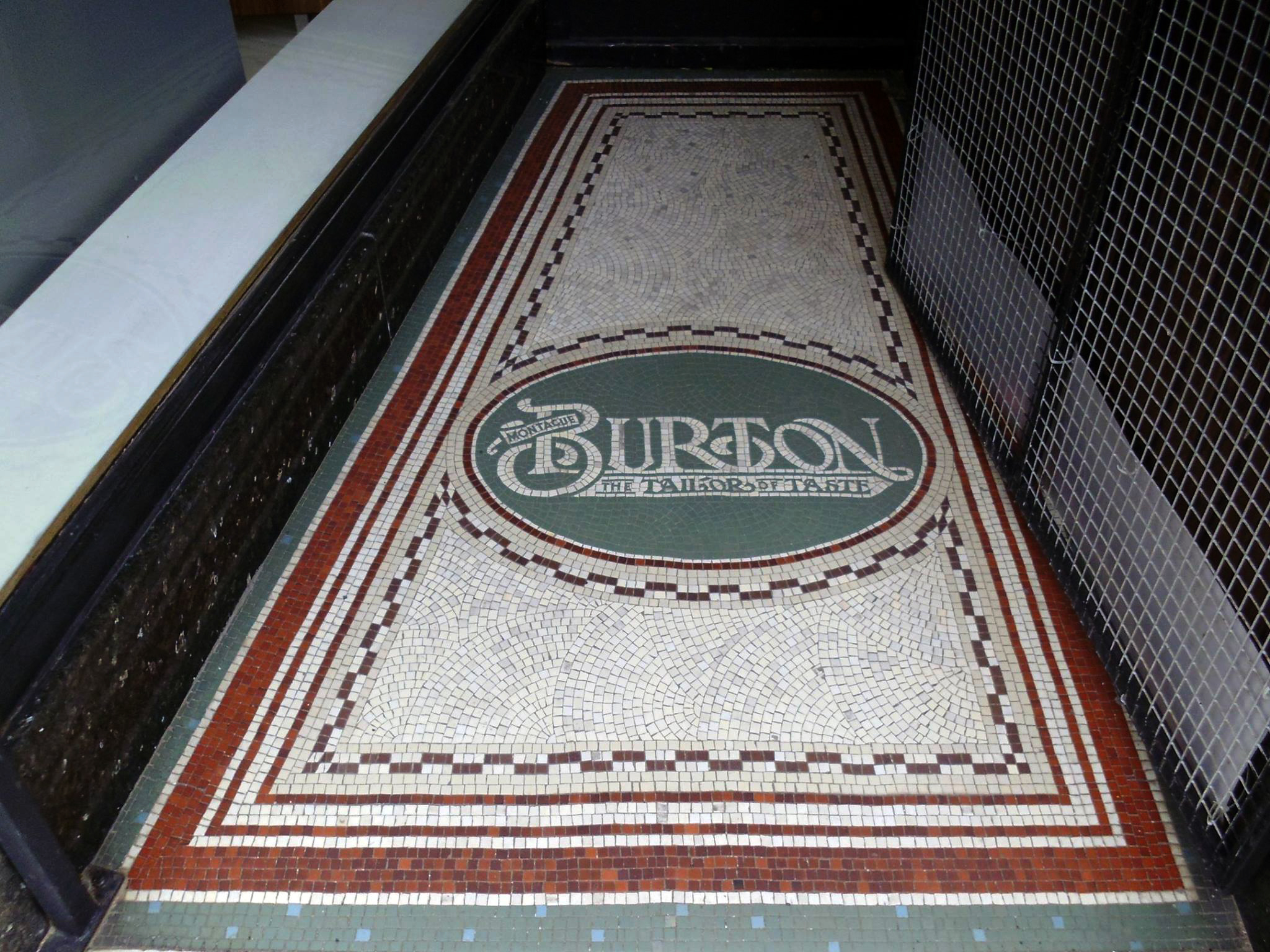
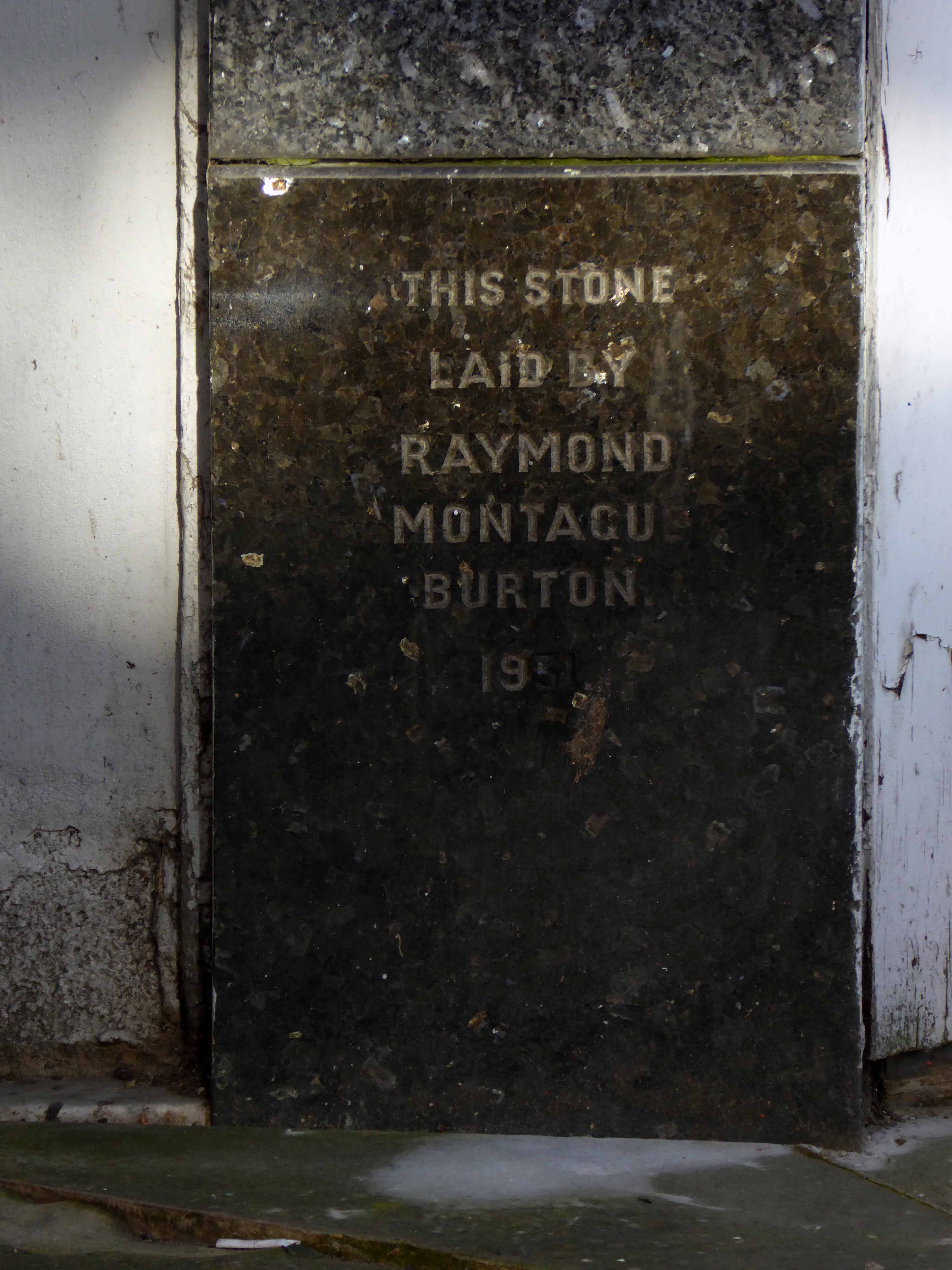
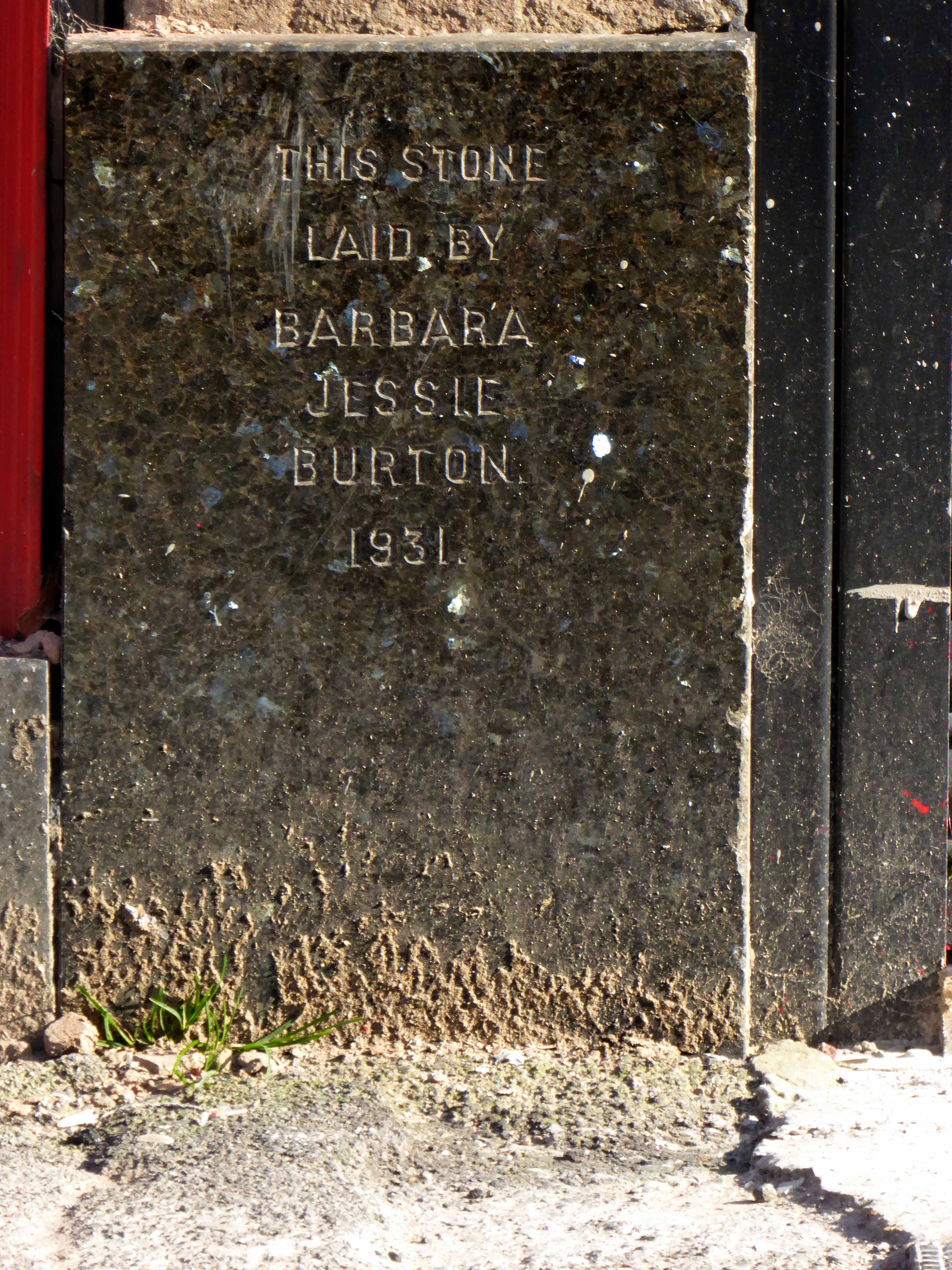
Often including ornate mosaic entrances, ventilation covers and obligatory dated foundation stones – as seen in this Ashton under Lyne branch.
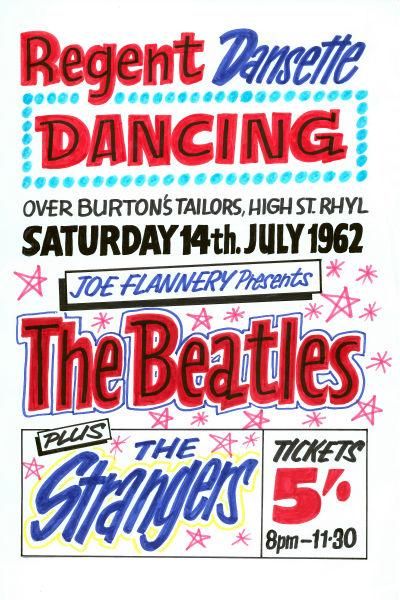
Stores often housed dance halls or other social spaces.
In 1937 Burton’s architect, Nathaniel Martin, collaborated with the architects Wallis Gilbert & Partners on a subsidiary clothing works on the Great Lancashire Road at Worsley, near Manchester. Conceived as a Garden Factory and built in a modern style, this was dubbed ‘Burtonville Clothing Works’. It opened in October 1938 .
Where machinists worked on Ashton built Jones equipment.
Time changes everything and the inception of off the wall unisex disco clothing saw the made to measure suit fall into a chasm of loon pants and skinny rib grandad vests.
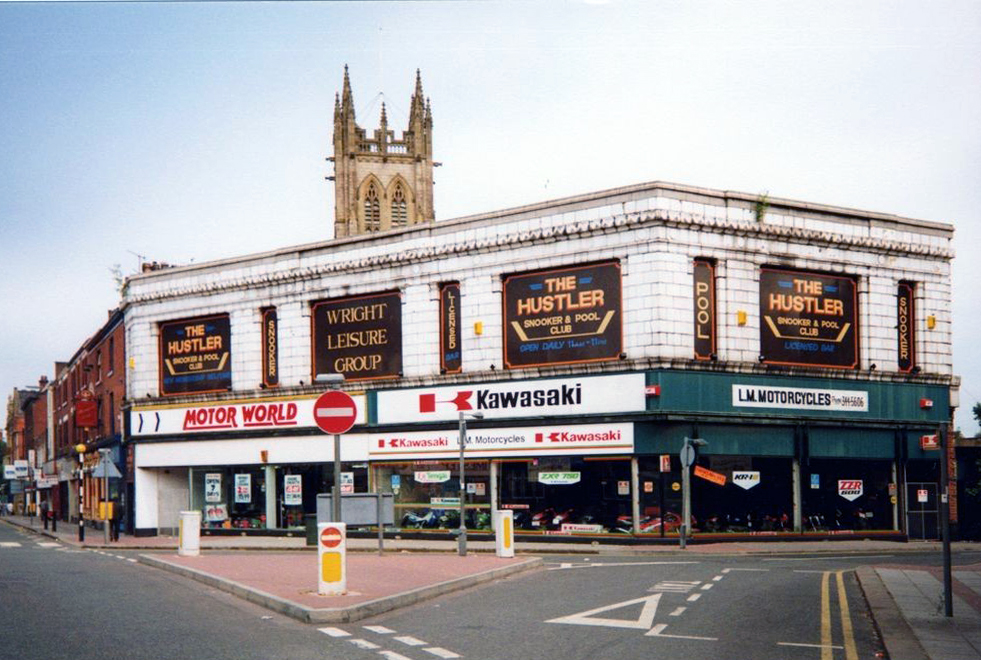
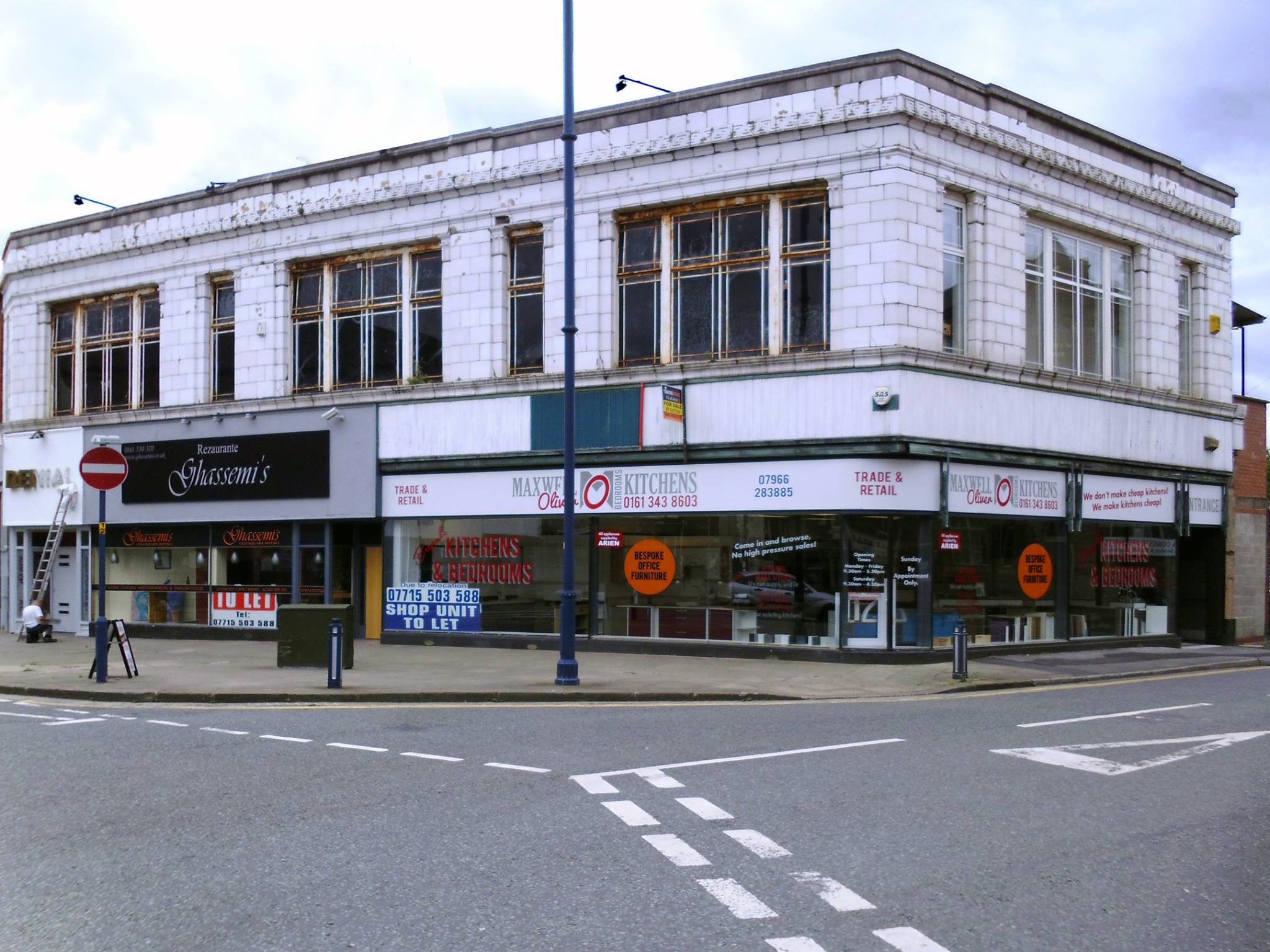
The Ashton branch becomes a motorcycle then fitted kitchen showroom, topped off with a succession of clubs and various other modern day leisure facilities.
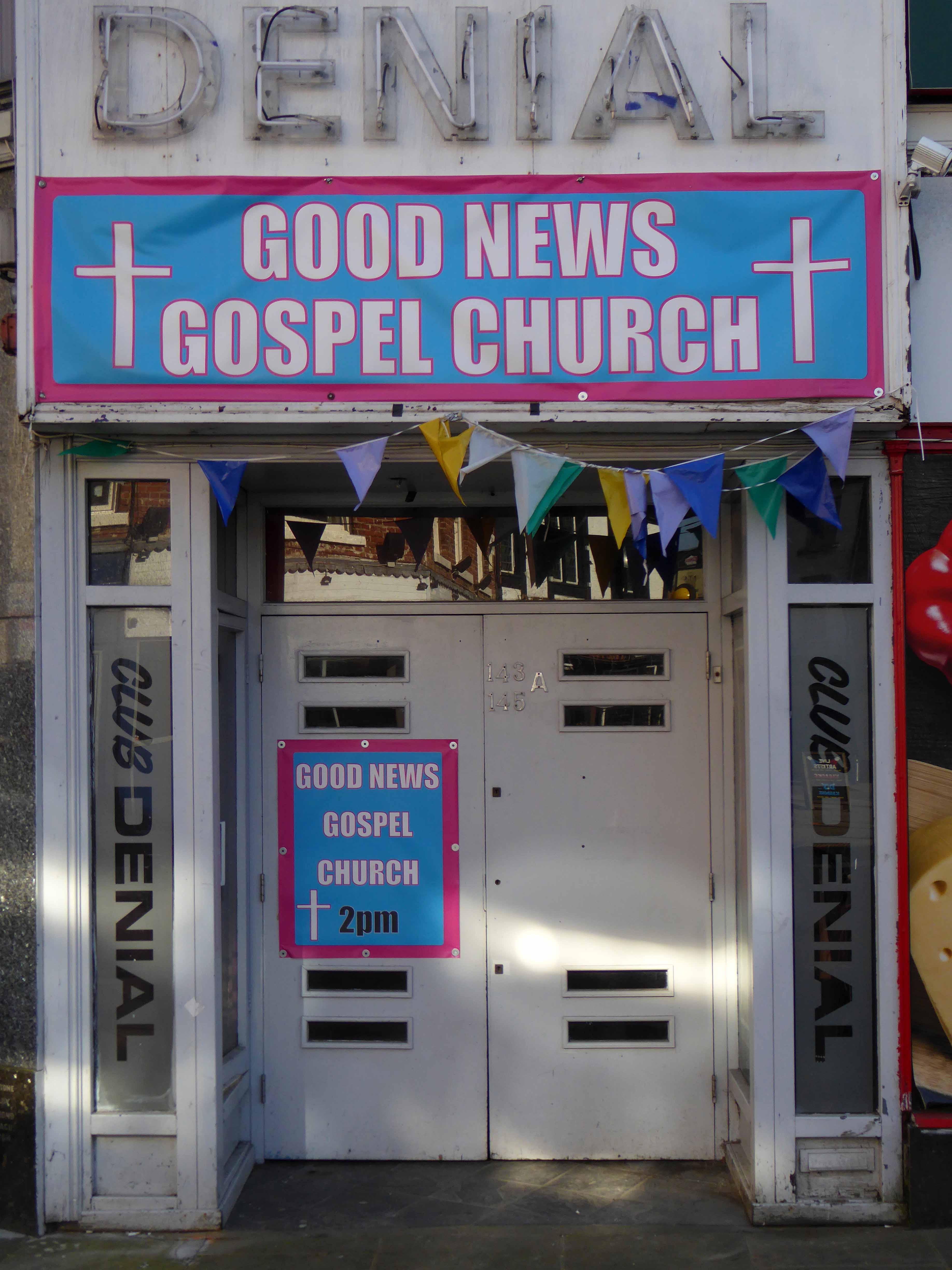
Currently home to the Warsaw Delicatessen and Good News Gospel Church
Formerly Club Denial.
This is the tale of the modern high street grand ideas, architectural grandeur, entrepreneurialimmigrants, style and fashion – disappearing in a cloud of vinyl signage and fly by night operations. Though if you look carefully the pale white shadows of Burton’s are still there in one form or another, however ghostly.
I had time to kill – in search of early Sunday morning visual thrills.
I took to the mean streets of Steeltown UK.
Down these mean streets a man must go who is not himself mean, who is neither tarnished nor afraid. He is the hero; he is everything. He must be a complete man and a common man and yet an unusual man. He must be, to use a rather weathered phrase, a man of honor—by instinct, by inevitability, without thought of it, and certainly without saying it. He must be the best man in his world and a good enough man for any world.
He will take no man’s money dishonestly and no man’s insolence without a due and dispassionate revenge. He is a lonely man and his pride is that you will treat him as a proud man or be very sorry you ever saw him.
The story is this man’s adventure in search of a hidden truth, and it would be no adventure if it did not happen to a man fit for adventure. If there were enough like him, the world would be a very safe place to live in, without becoming too dull to be worth living in.
Raymond Chandler
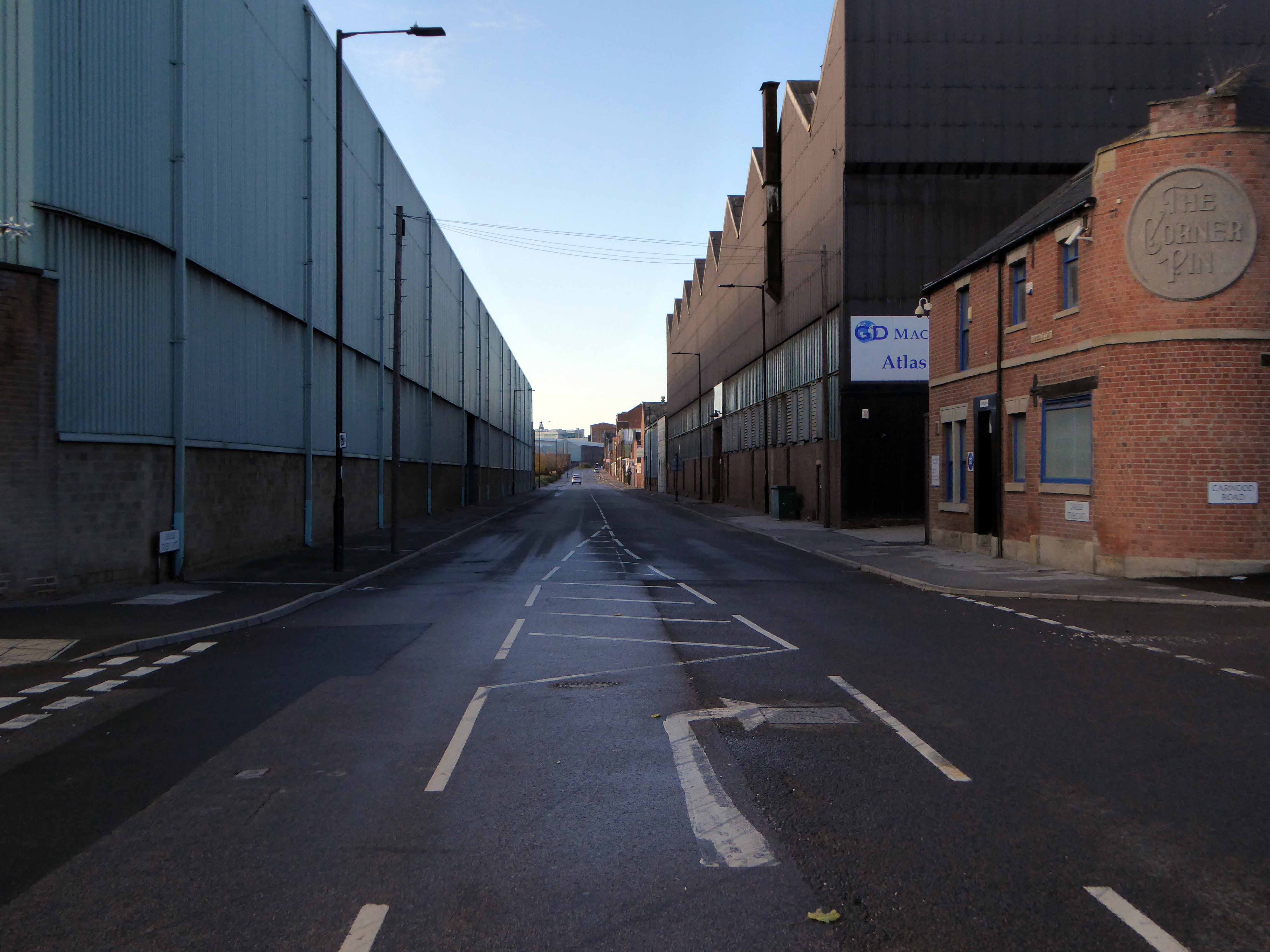
It was 8am – low bright sun pierced the achingly empty space between the long high industrial buildings.
There was nobody to share the morning – yet the clearly audible kling and klang of work pervaded the air, along with the lingering aroma of engine oil and decay.
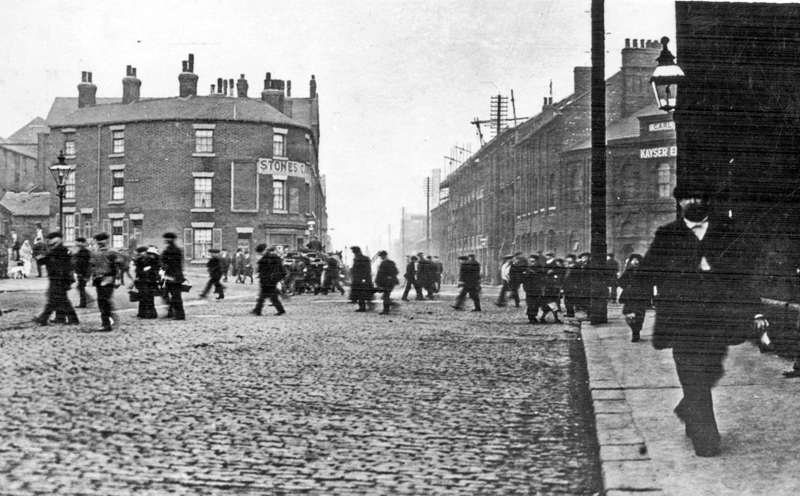
A city once awash with industry and ale – a myriad of pubs slaking the thirst of the thirsty steel workers.
A liquid equilibrium flowing and flowering for over a century.
The Lower Don Valley once home to a wealth of boozers, tells a different tale today.
A fall in production produced a proportionate reduction in consumption.
The clatter of clogs on cobbles, metal on metal is but a distant memory, along with the sound of pints pulled and hastily glugged.
The architecture of ale still prevails – now purveying pleasures and delights of a different stripe, whatever takes your fancy, as long as it’s not too fancy.
And doesn’t involve taking a drink.
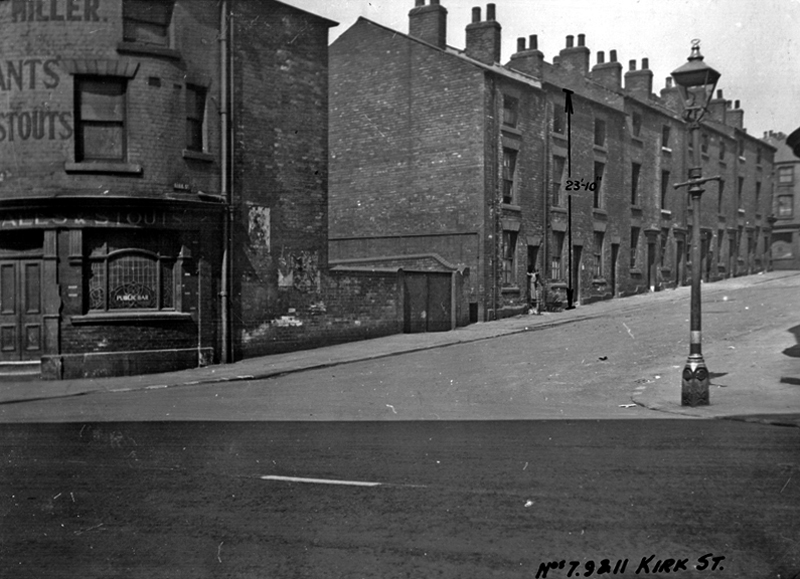
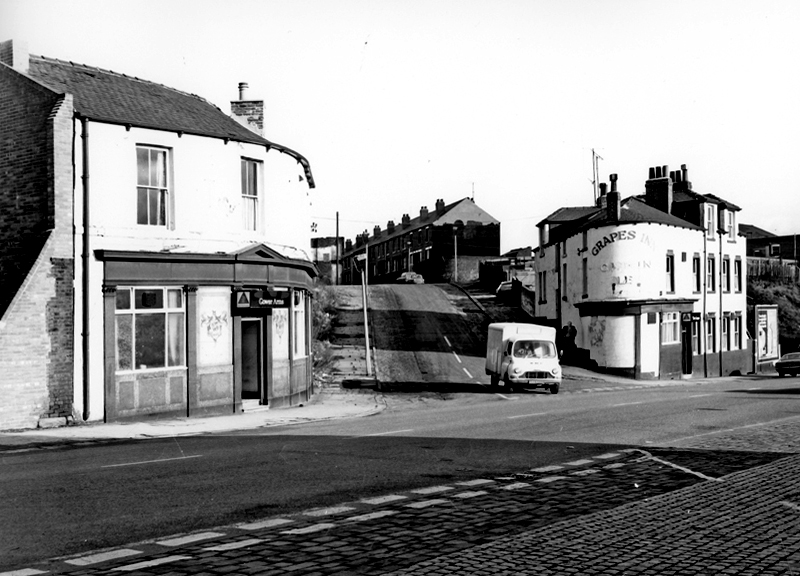
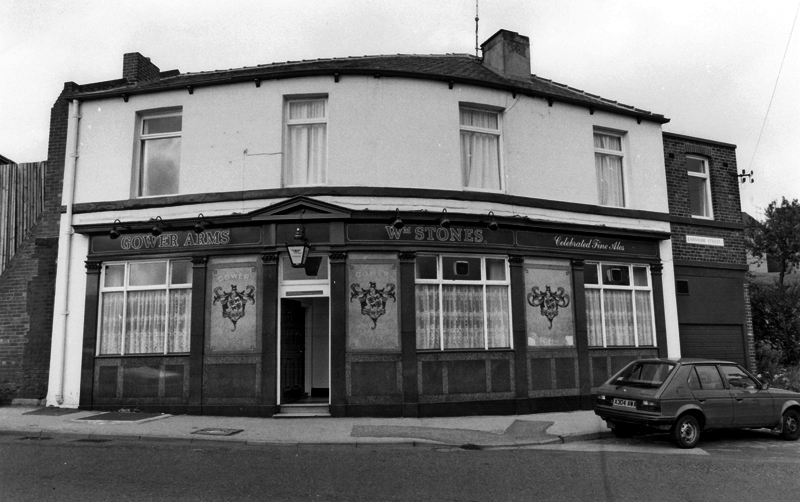
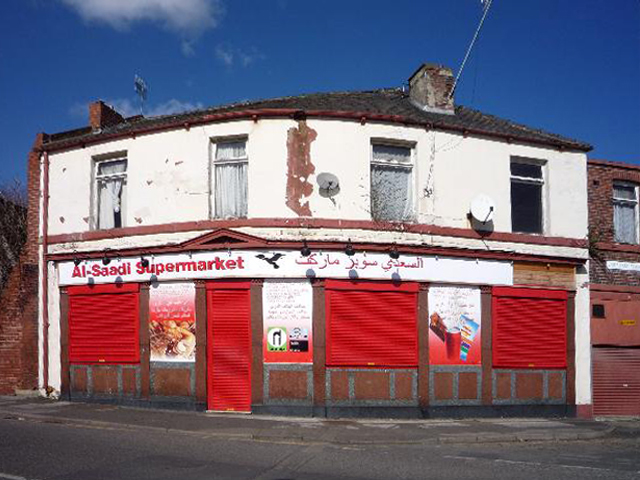
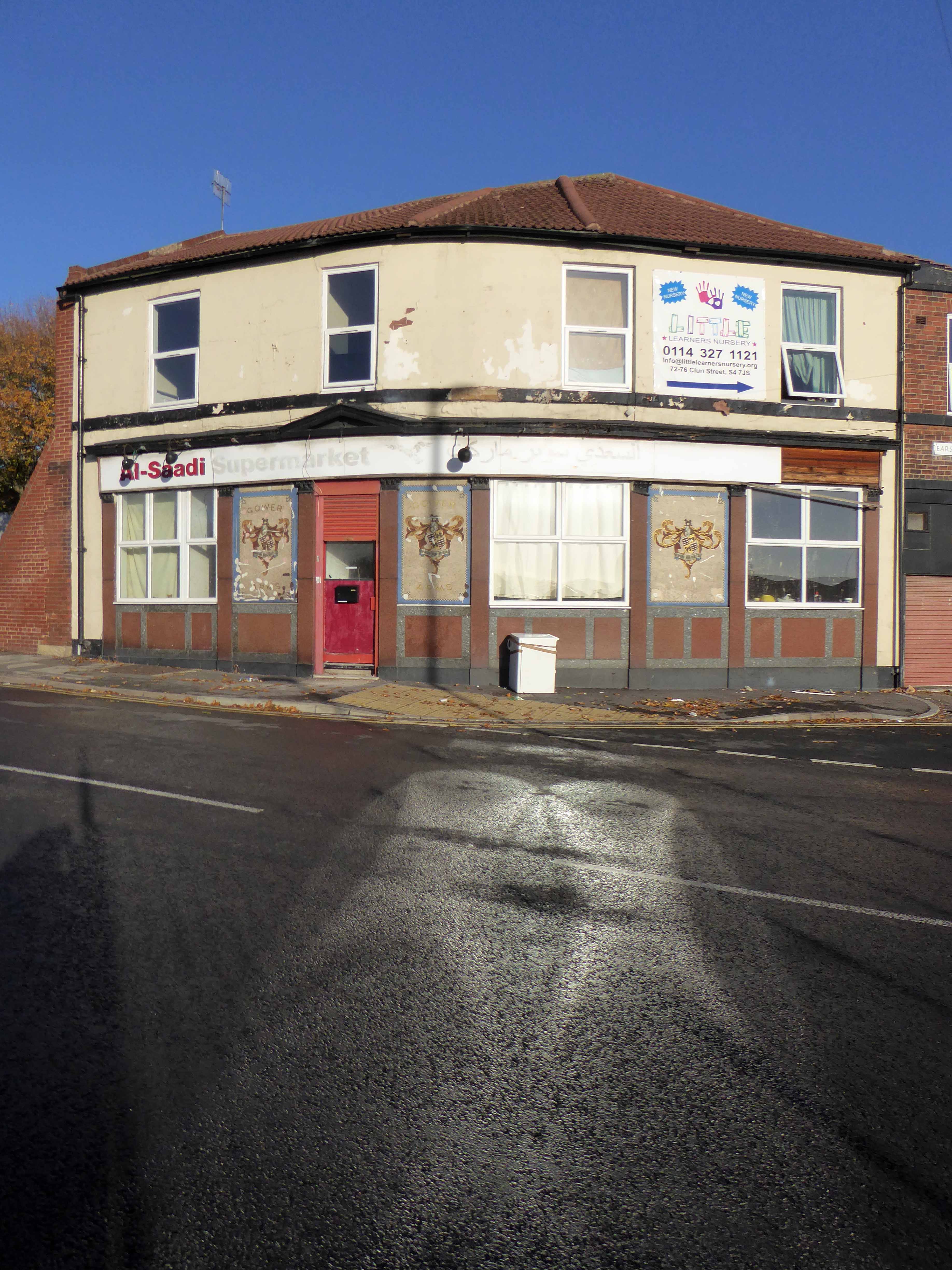
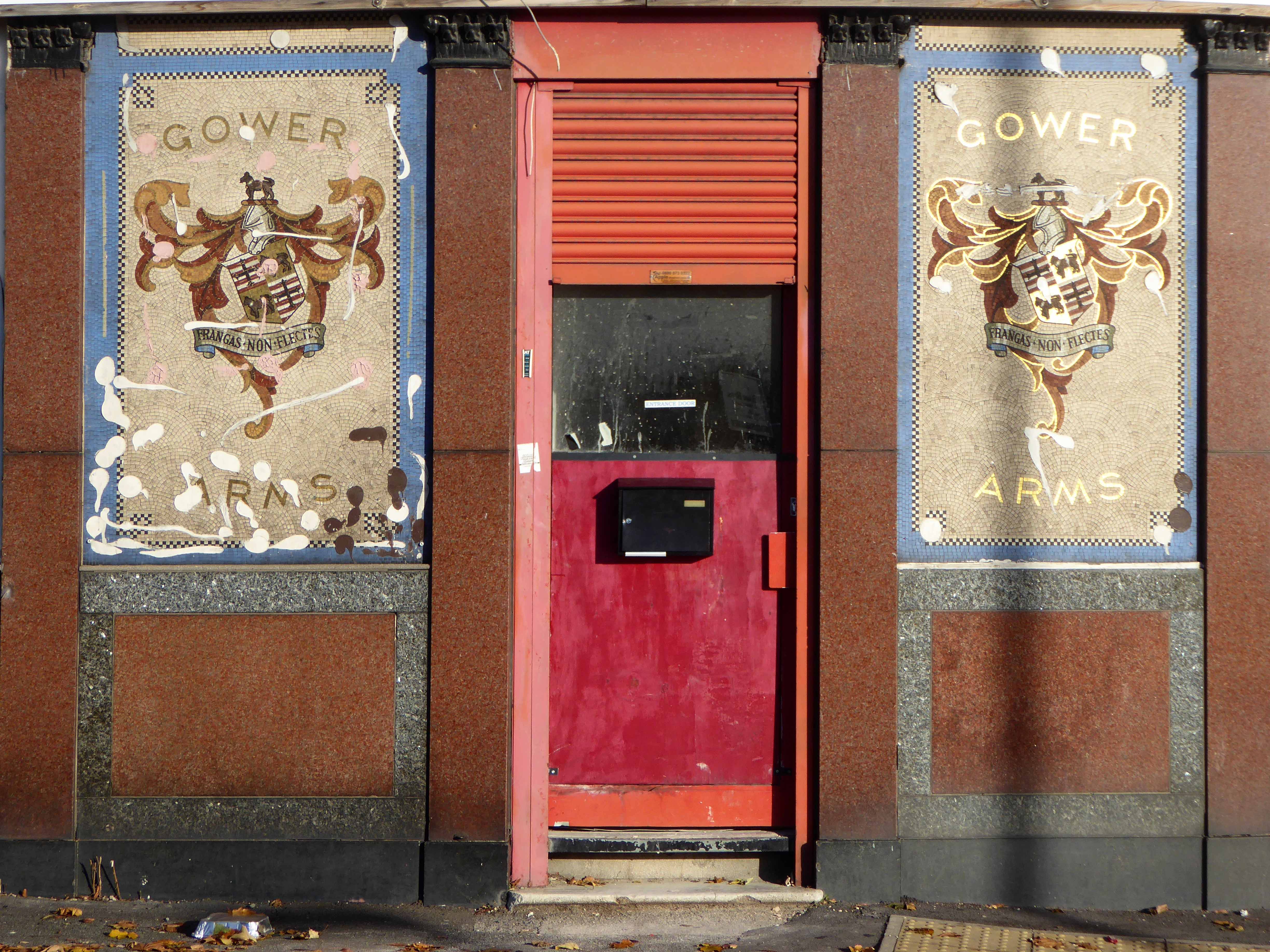
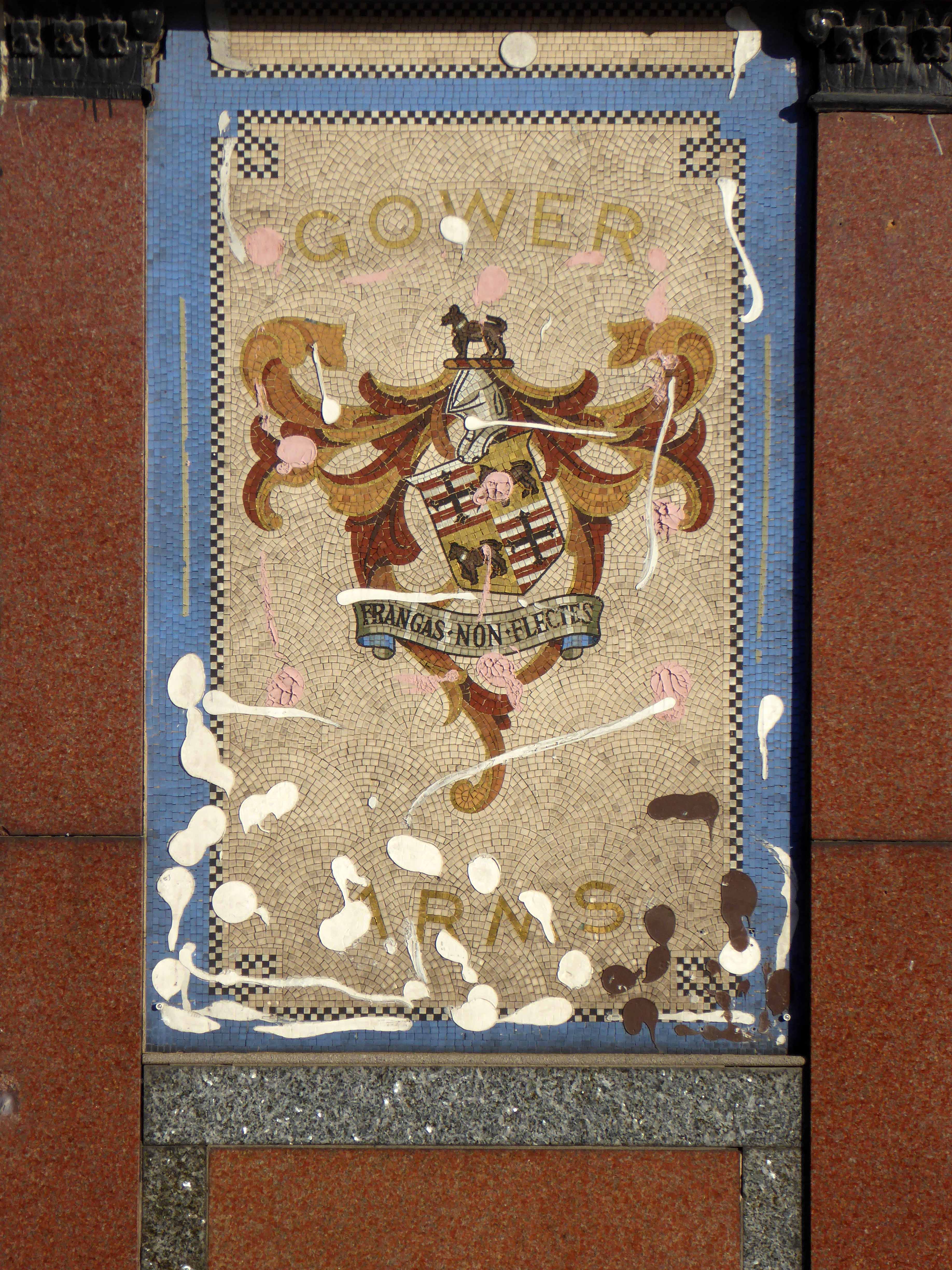
The Gower Arms – 47 Gower Street Burngreave Sheffield S4 7JW
I drink down there – top pubs methinks. They are old fashioned pubs with some real characters. Will be there Friday night in the Staff first, Royal Oak, Gower, Grapes and back to the Staff till I drop.
Blade Bloke 2007
From top pub to closed corner supermarket in two shakes of a monkey’s tale.
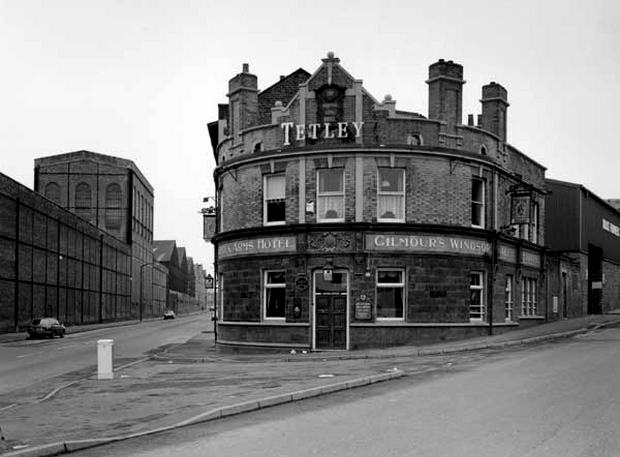
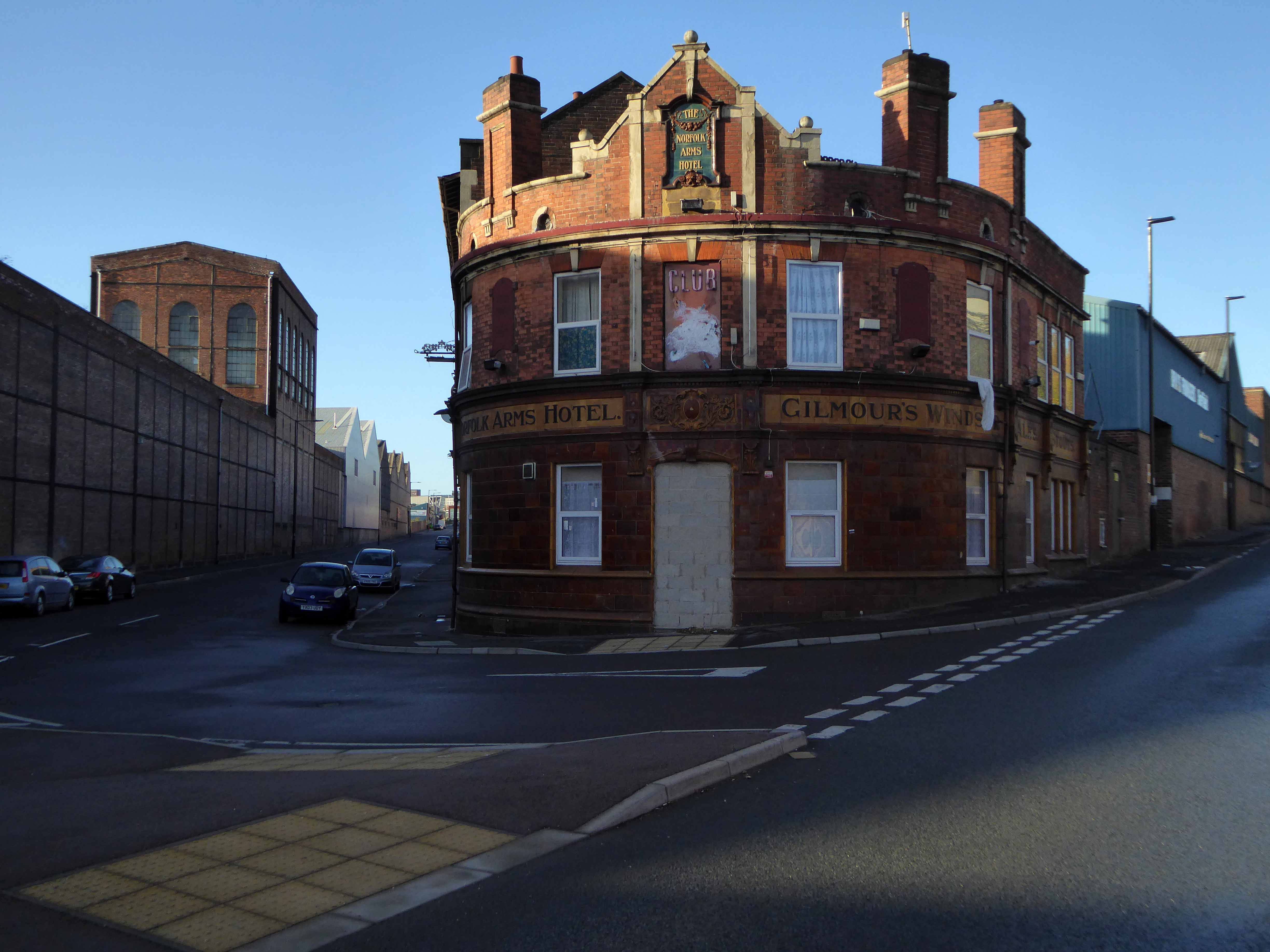
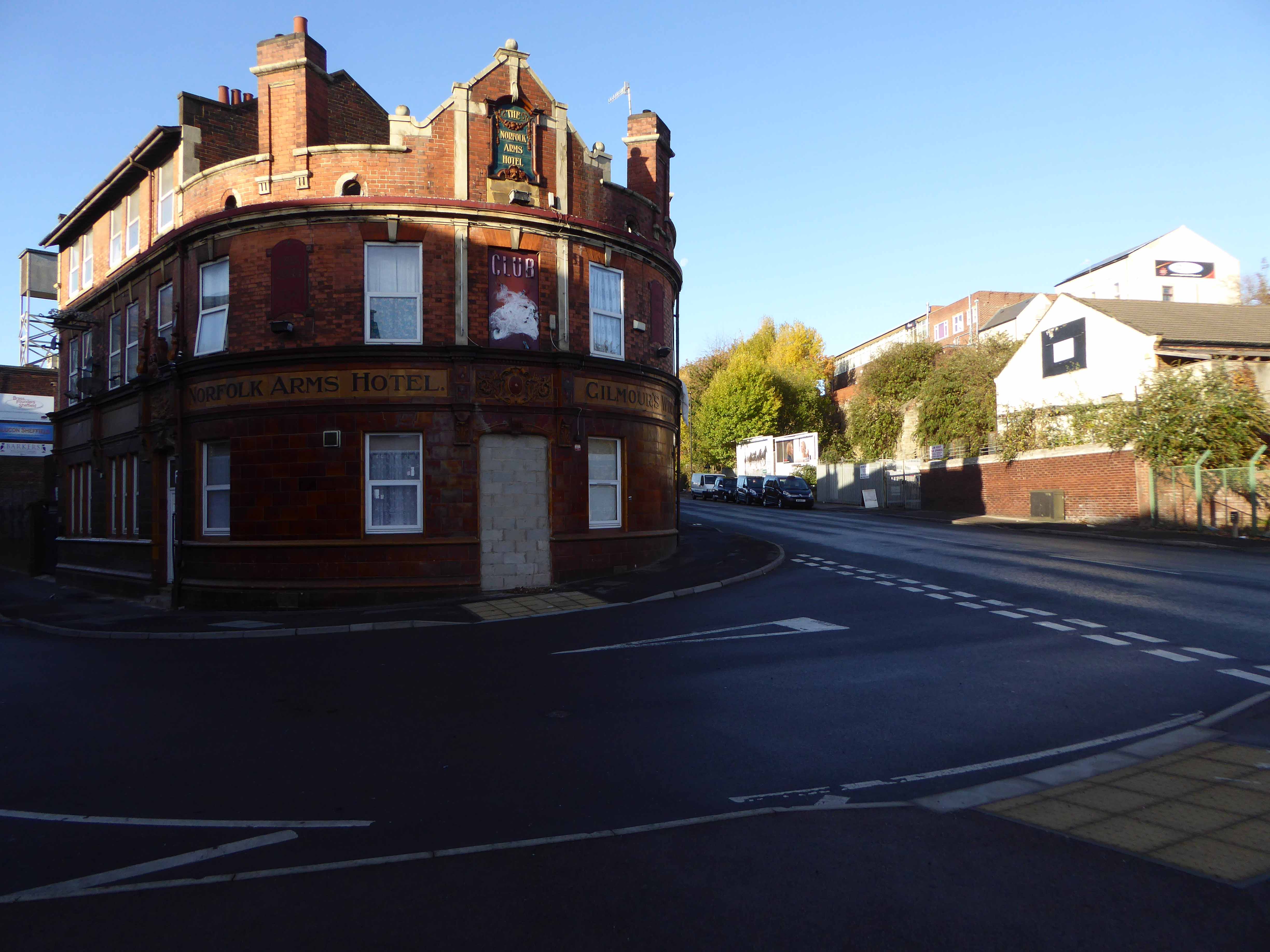
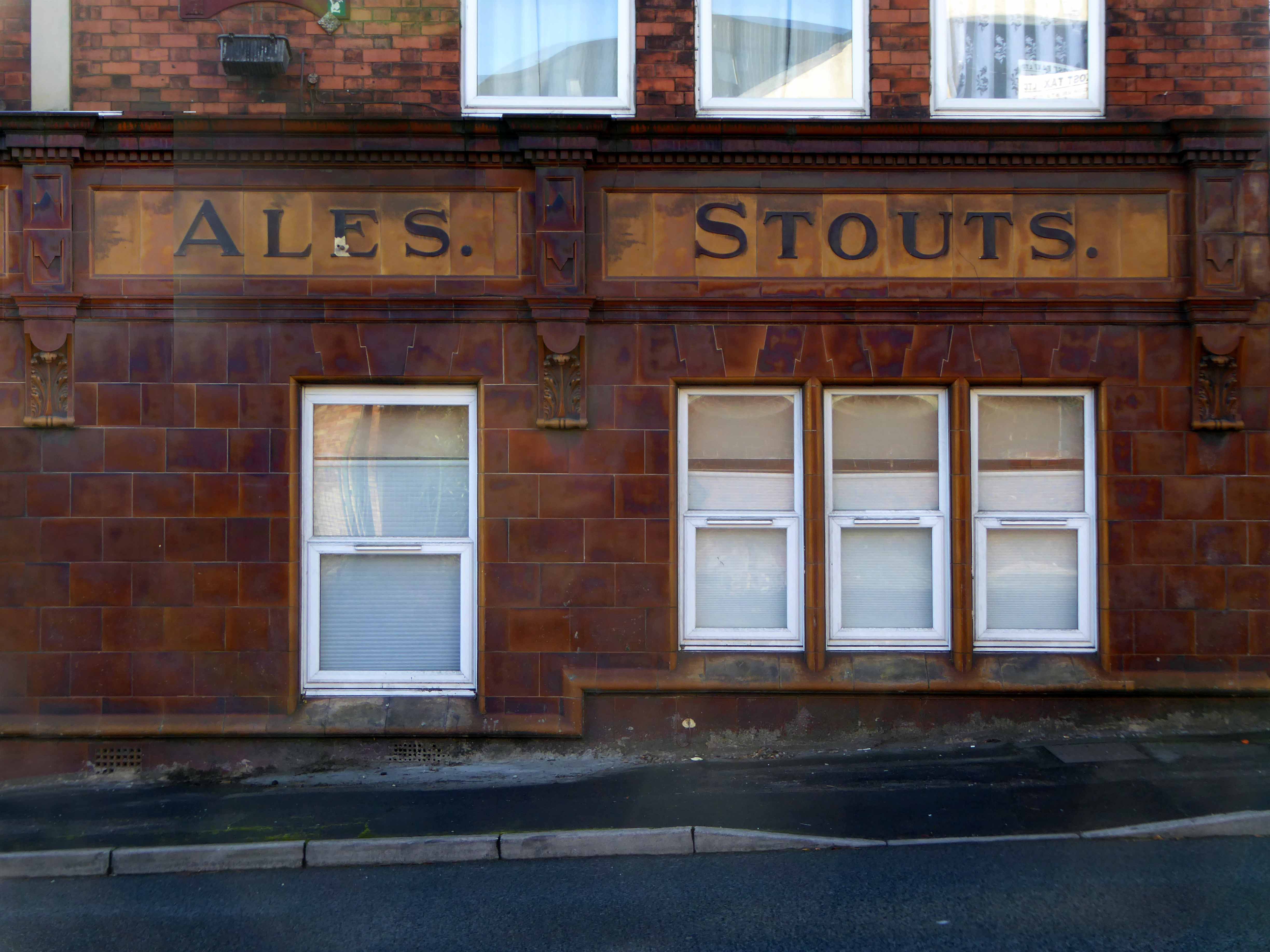
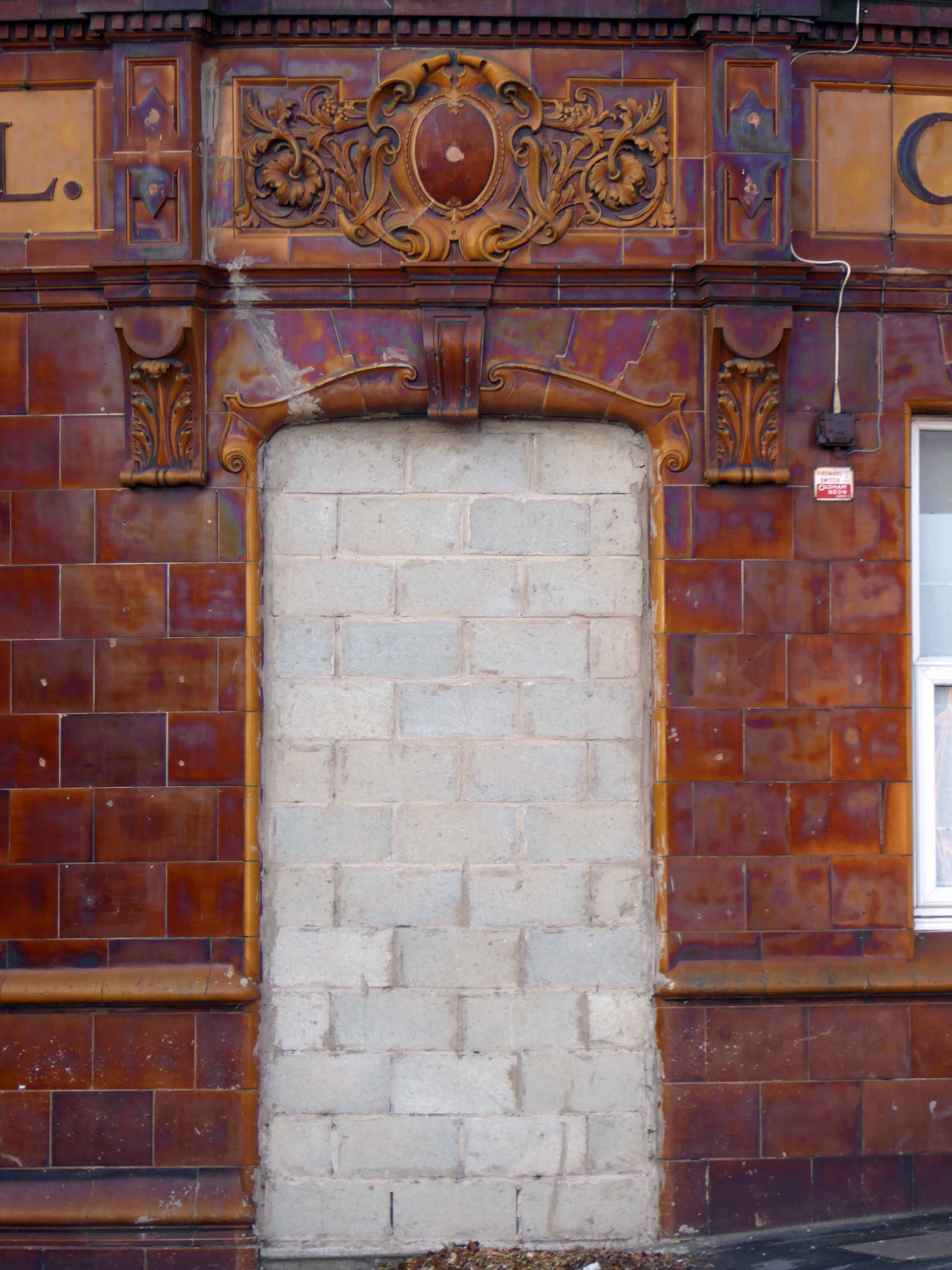
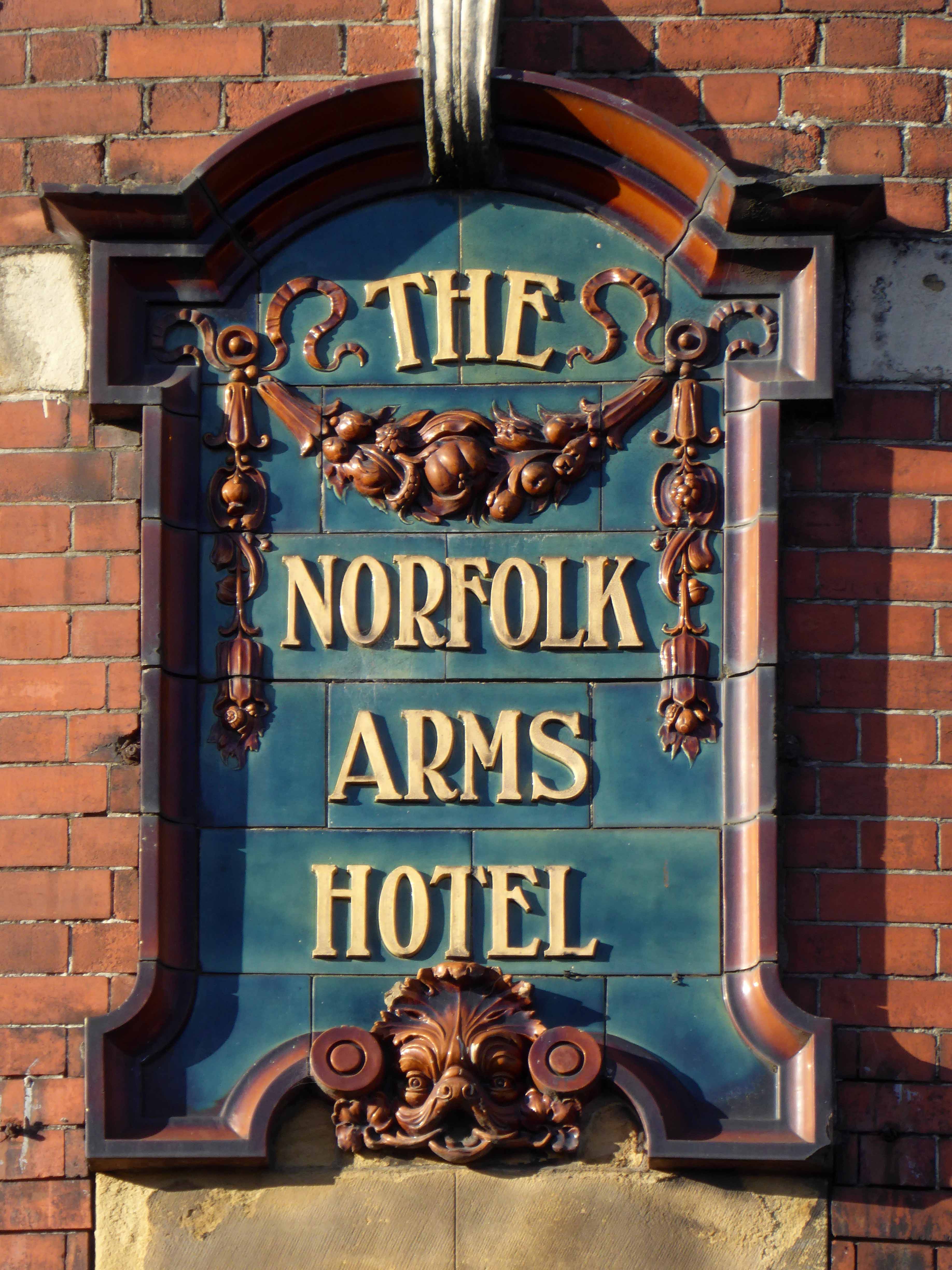
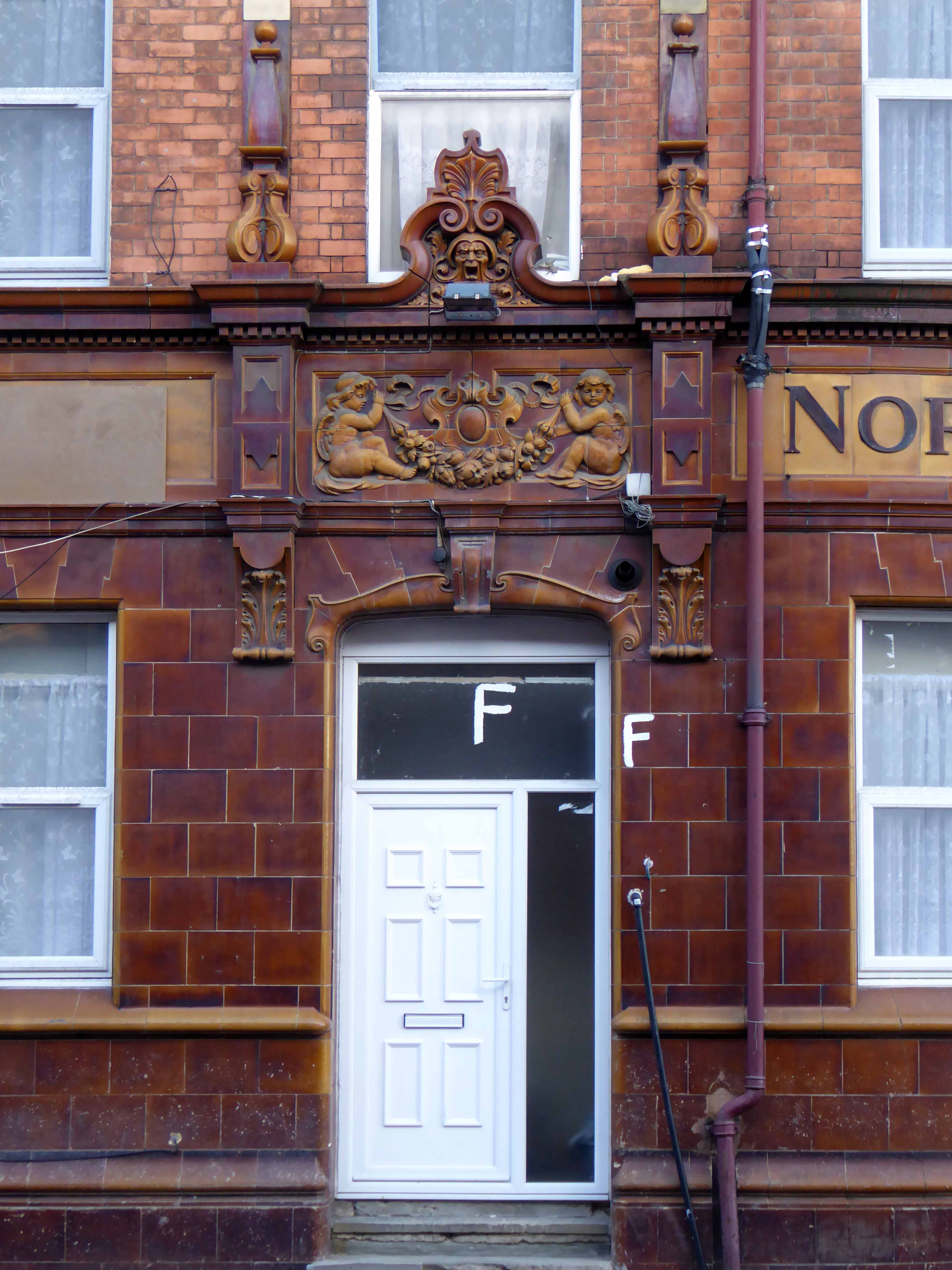
The Norfolk Arms Hotel – 195/199 Carlisle Street Sheffield S4 7LJ
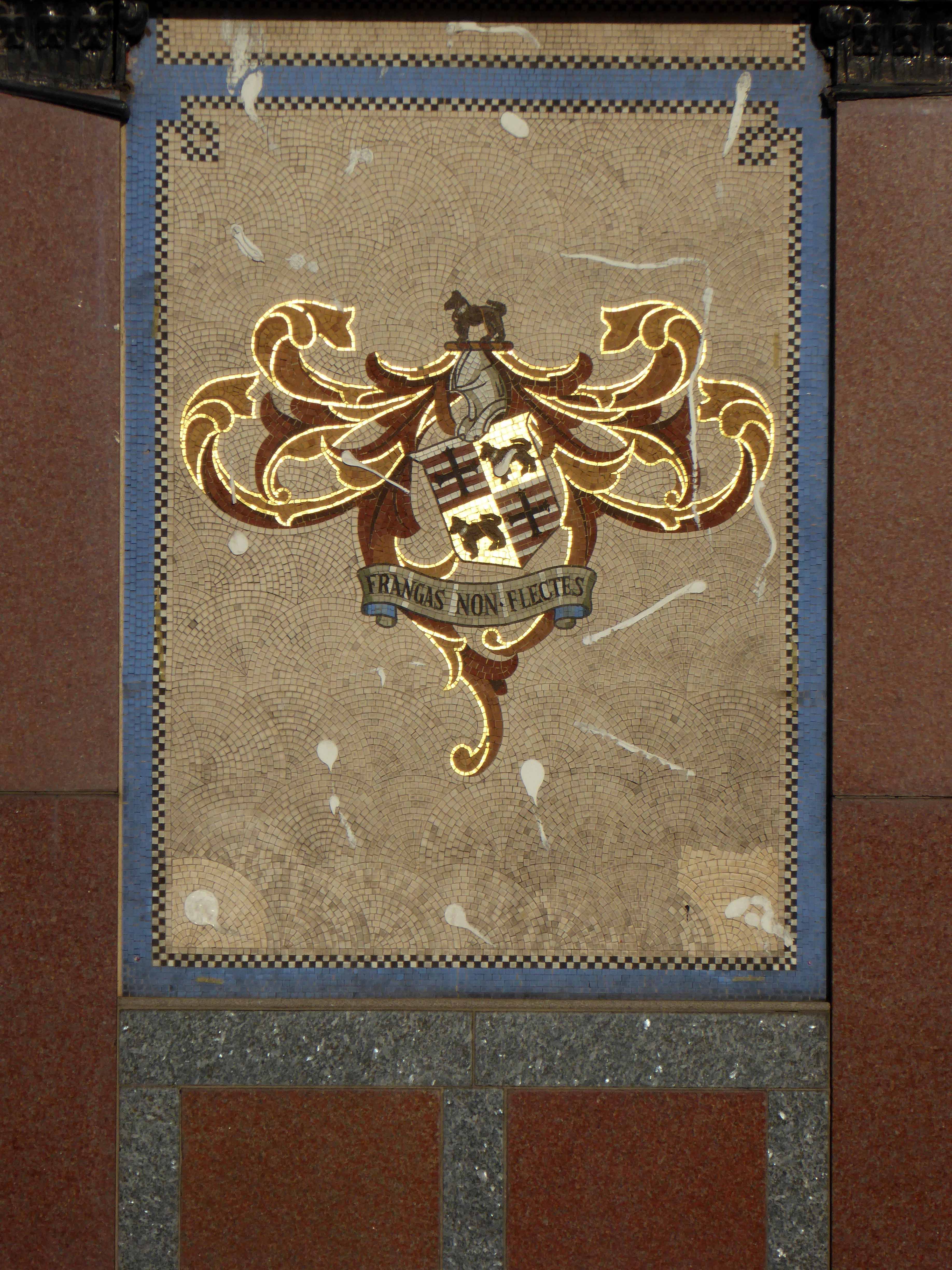
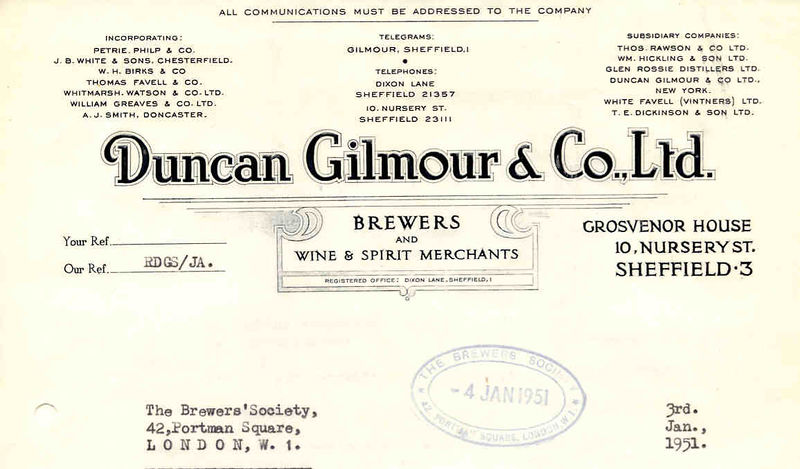
From a Gilmour’s tap, Tetley tavern to a temple of trendy funk.
Club Xes is a nightclub in Sheffield described as a vibrant and thrilling, and full of Sheffield’s young and trendy crowd. The DJs are renowned for providing the newest funkiest records.
Premises Type – This place does not serve real ale.
Premises Description – Gay nightclub.
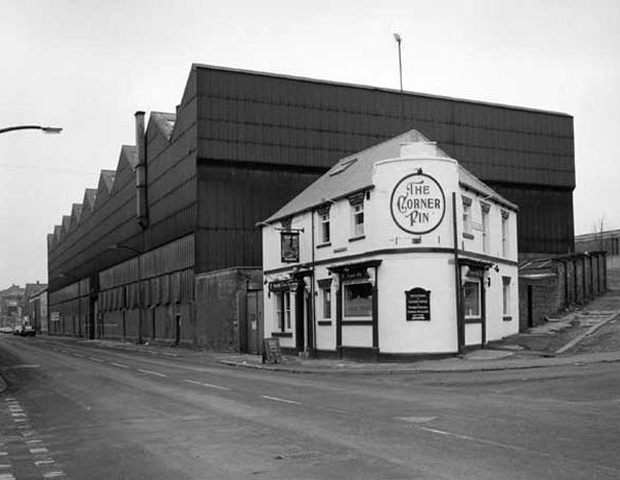
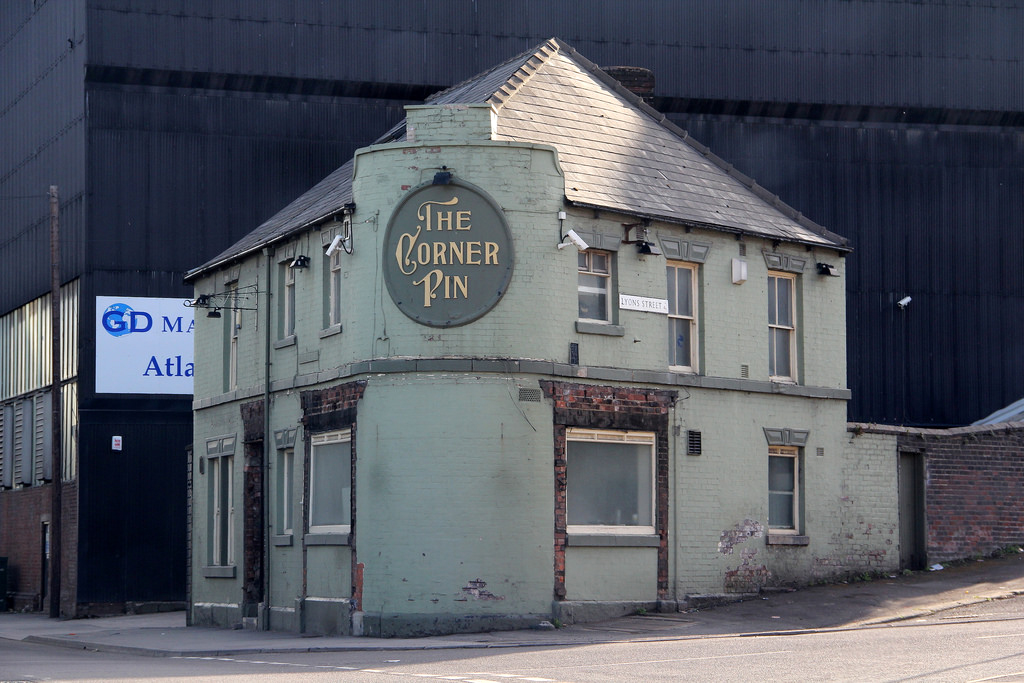
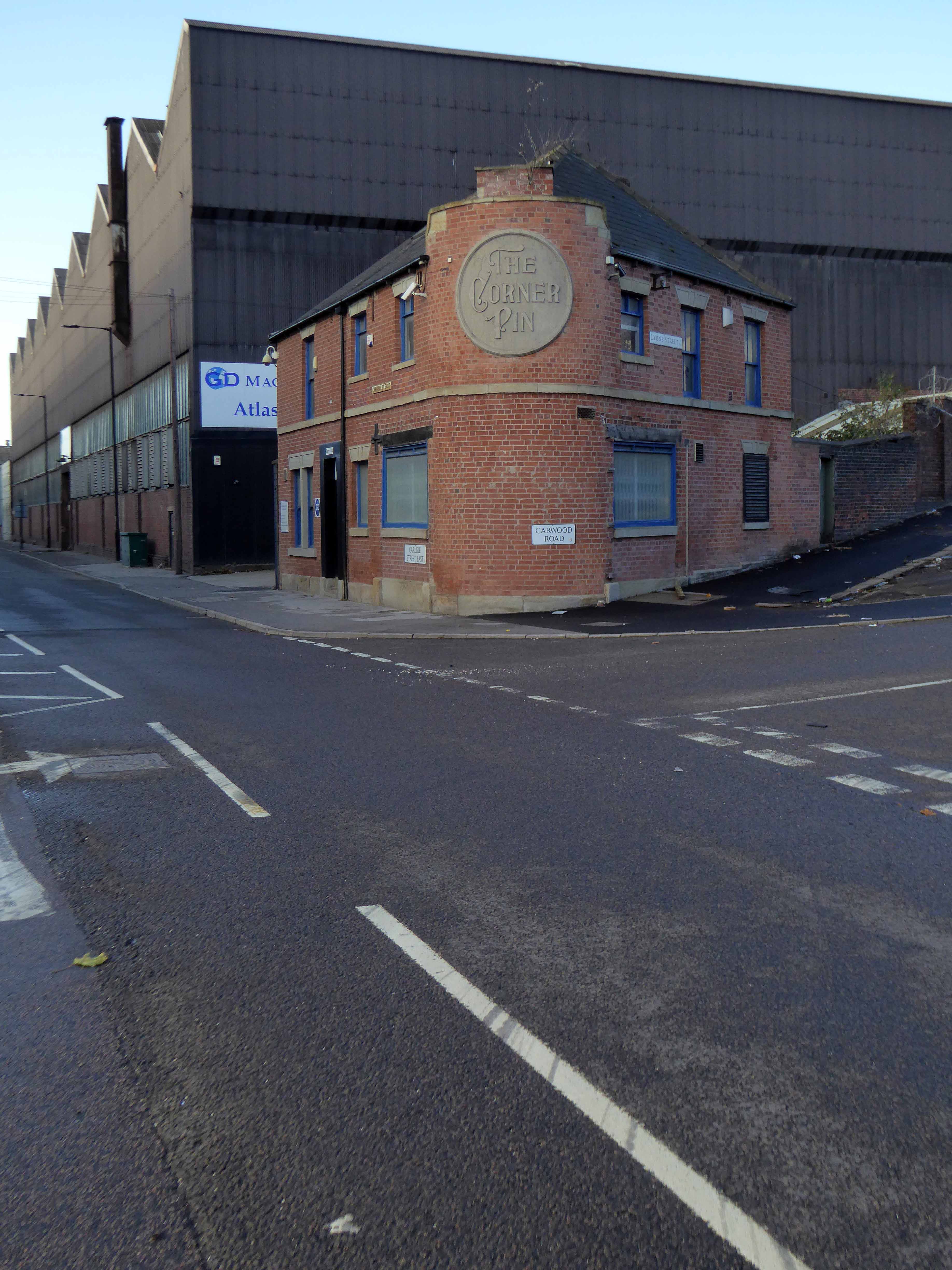
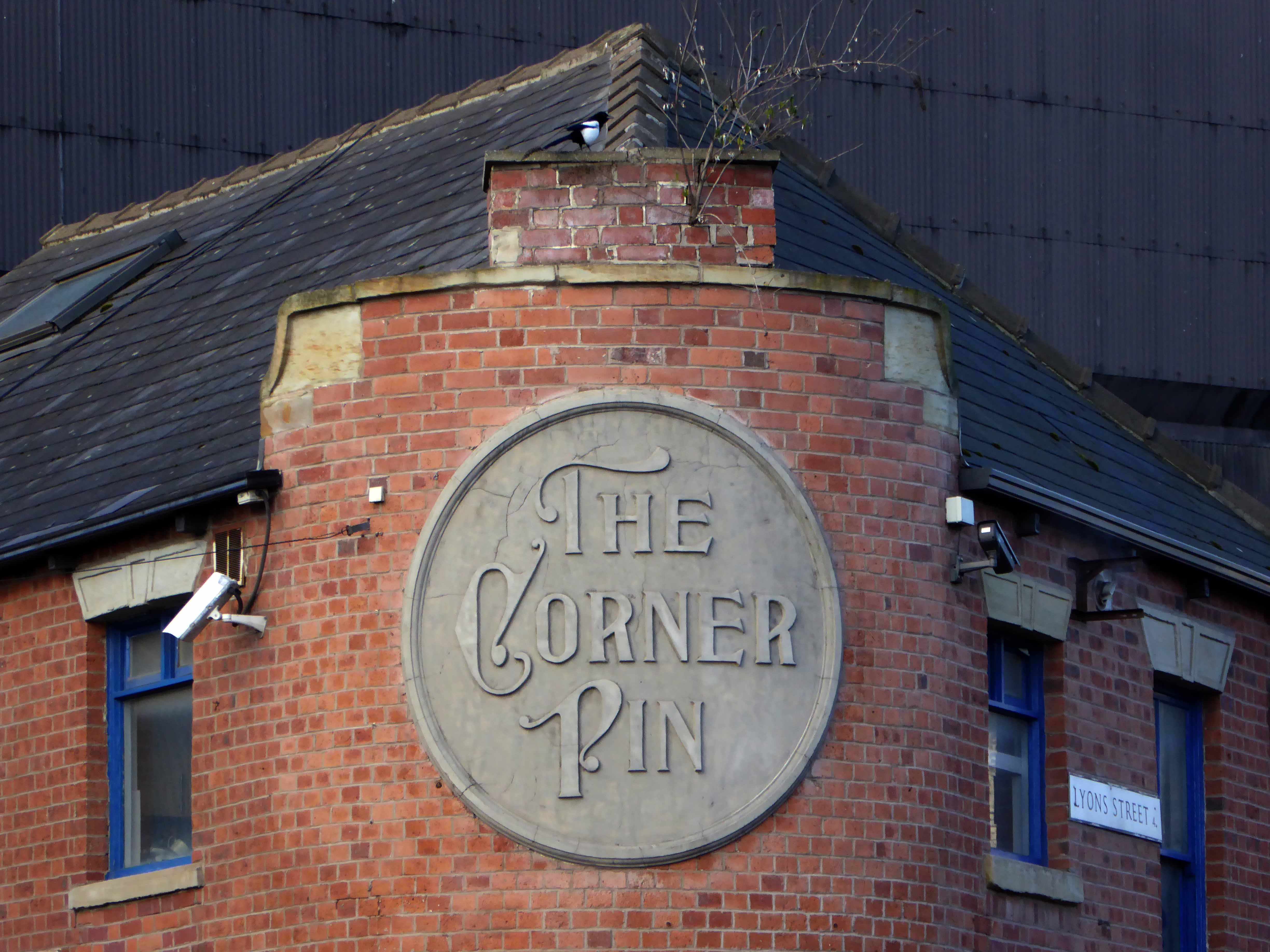
The Corner Pin – 231-233 Carlisle Street East Sheffield S4 7QN
First licensed to sell beer in 1840. One of 26 public houses serving the steel industry along a three- quarter mile stretch of Carlisle Street. It is said to have a ghost who likes to turn the lights on in the middle of the night and footfalls can be heard.
The Corner Pin was the last of the Steelmakers pubs in Sheffield and was one of my favourite places to visit for a real good pint! I would come over from Melbourne once or twice a year, still do, and meet up with Chris Payling and many others still left over from the days of Sheffield Steel, but now all gone.
They even took away your window frames, along with your dignity once a pale green shadow of yourself, stripped back to brick.
Stop dreaming of a foaming pint right now – you’re an office.
Obviously, stating the obvious in Comic Sans on a shocking pink ground may ease the pain of industrial decline and its attendant social and economic ills.
Sheffield along with the majority of British manufacturing towns and cities, has seen the wealth created by over a century of hard labour spirited elsewhere, and the means by which that wealth was created shipped overseas or overwritten by new technologies.
This has not been an accident or unfortunate consequence of global trends, it has been government policy.
It has not been government policy to regenerate these towns and cities.
So Sheffield has taken the initiative to become – The fastest growing British city outside London.
Though that may do little to redress the structural economic divides within the city.
So I walked the avenues and alleyways of the Lower Don Valley, early on an October Sunday morning, mourning the passing of the clang and clamour that once fuelled the city and the nation.
An aroma of engine oil and the sound of metal on metal still permeates the area, and the low autumnal sun warms the long straight streets.
Eva Brothers of Crabtree Forge, Crabtree Lane, Clayton, Manchester.
1909 The partnership of James Eva, Archibald William Eva, Victor Eva, Arthur Eva, and Frank Eva, carrying on business as Forge-masters, at Crabtree-lane, Clayton, Manchester, under the style or firm of Eva Bothers was ended. All debts due would be settled by Archibald William Eva, Victor Eva, Arthur Eva, and Frank Eva, who continued the business under the same style.
By 1953 The EVA group of companies was the largest edge tool makers in the world, exporting most of their products. The associated companies included: Chillington Tool Co, Edward Elwell Limited of Wednesbury, A. W. Wills and Son Limited of Birmingham, John Yates and Co Limited of Birmingham, and the Phoenix Shovel Co Limited of Cradley Heath.
1958 Acquired T. Williams Drop forgings and Tools of Small Heath, Birmingham
1959 Planned to convert into a holding company; depressed demand for heavy engineering but continued group prosperity were anticipated.
1960 Eva Brothers paid dividends and made scrip issue; changed the name to Eva Industries as the holding company.
1976: Eva Brothers continued to be a part of Eva Industries.
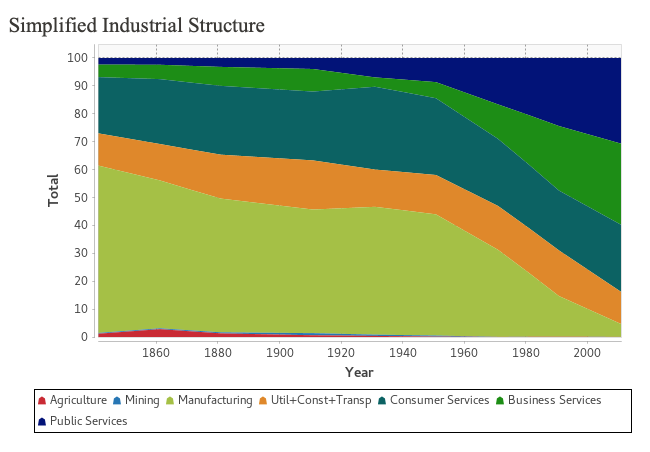
This is where Manchester’s prosperity was created, engineering along with King Cotton, formed the financial foundations of the city. These industries are now all but vanished, along with the communities and skills that created them, work and wealth are elsewhere.
Years of free-market economics, acquisition, asset stripping, amalgamation and monopoly have bequeathed a legacy of loss.
Once bustling and business like sheds and yards, are now forests of buddleia and bramble. The sound of metal on metal, but a dull memory, amidst the wilder side of wildlife and the gentle whisper of peeling paint.