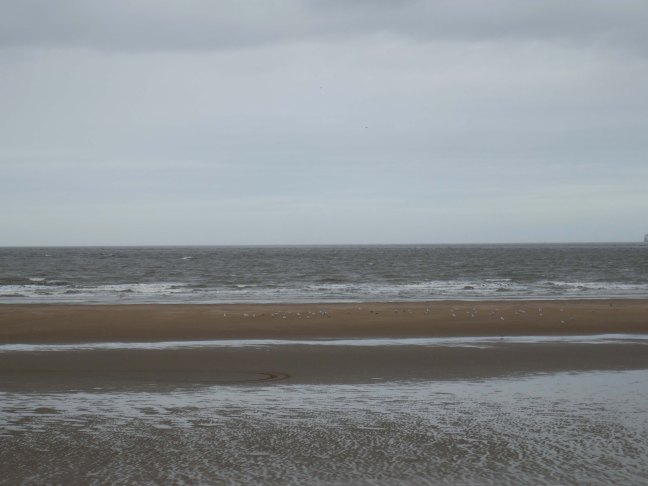
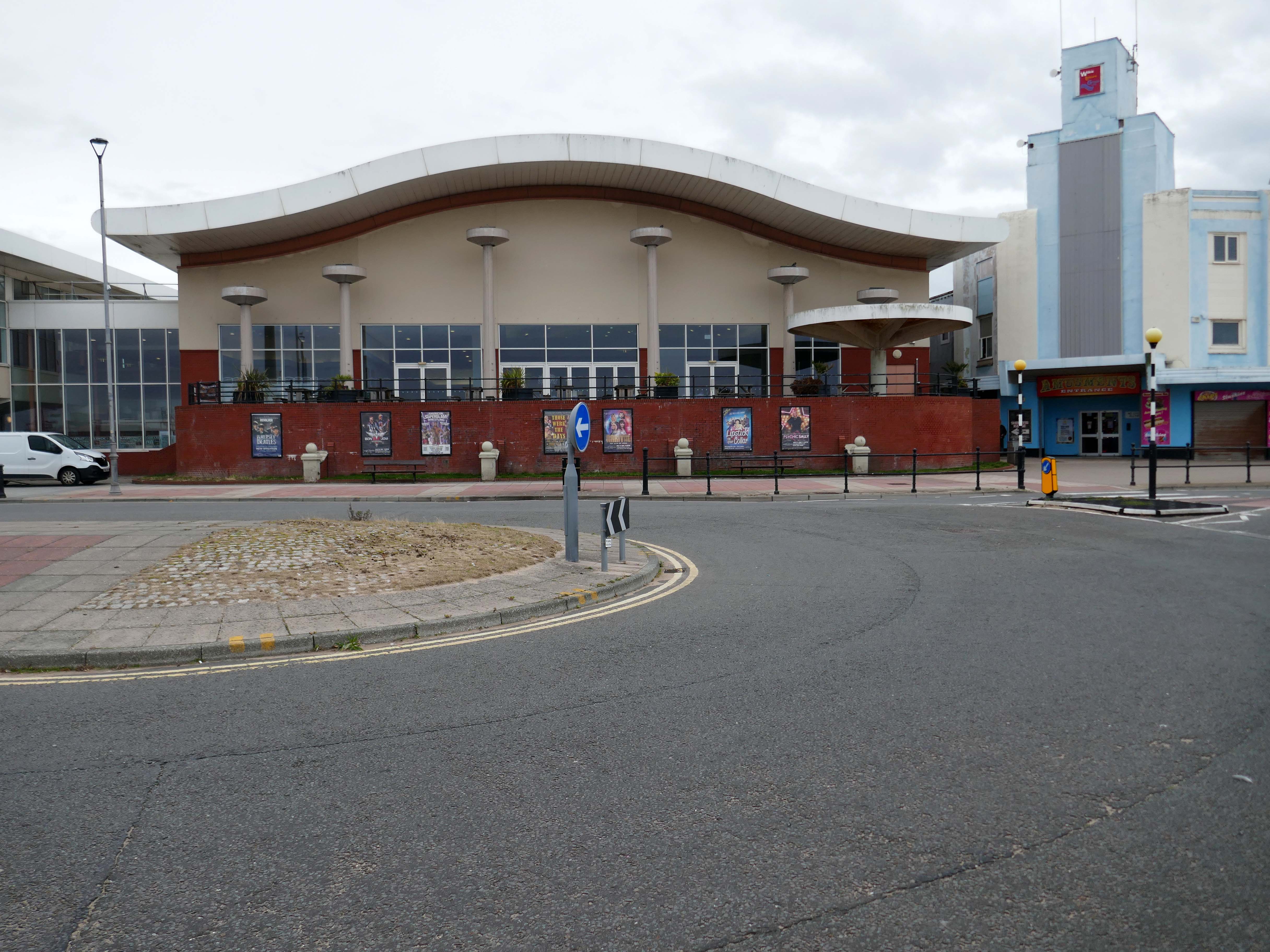
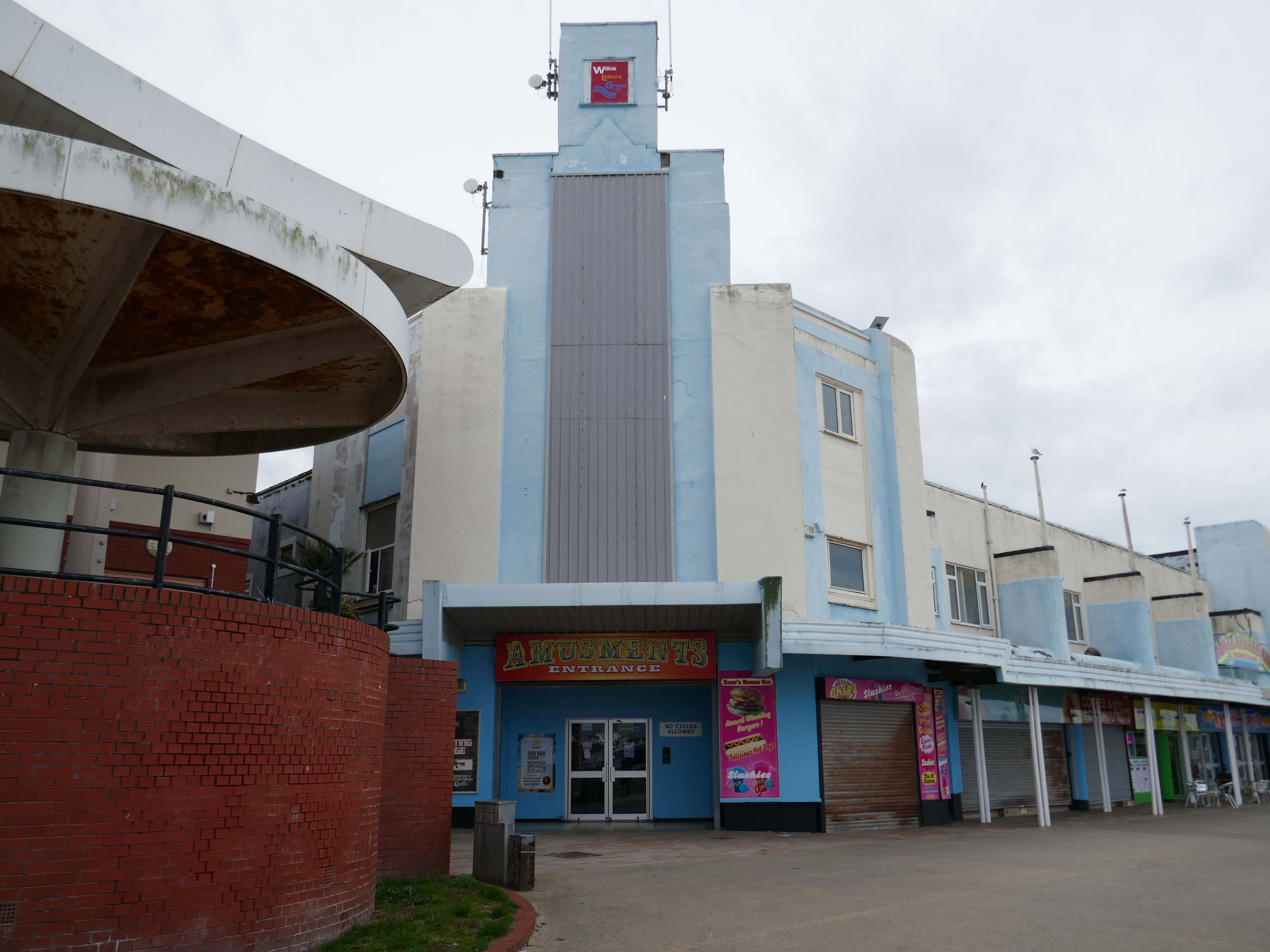
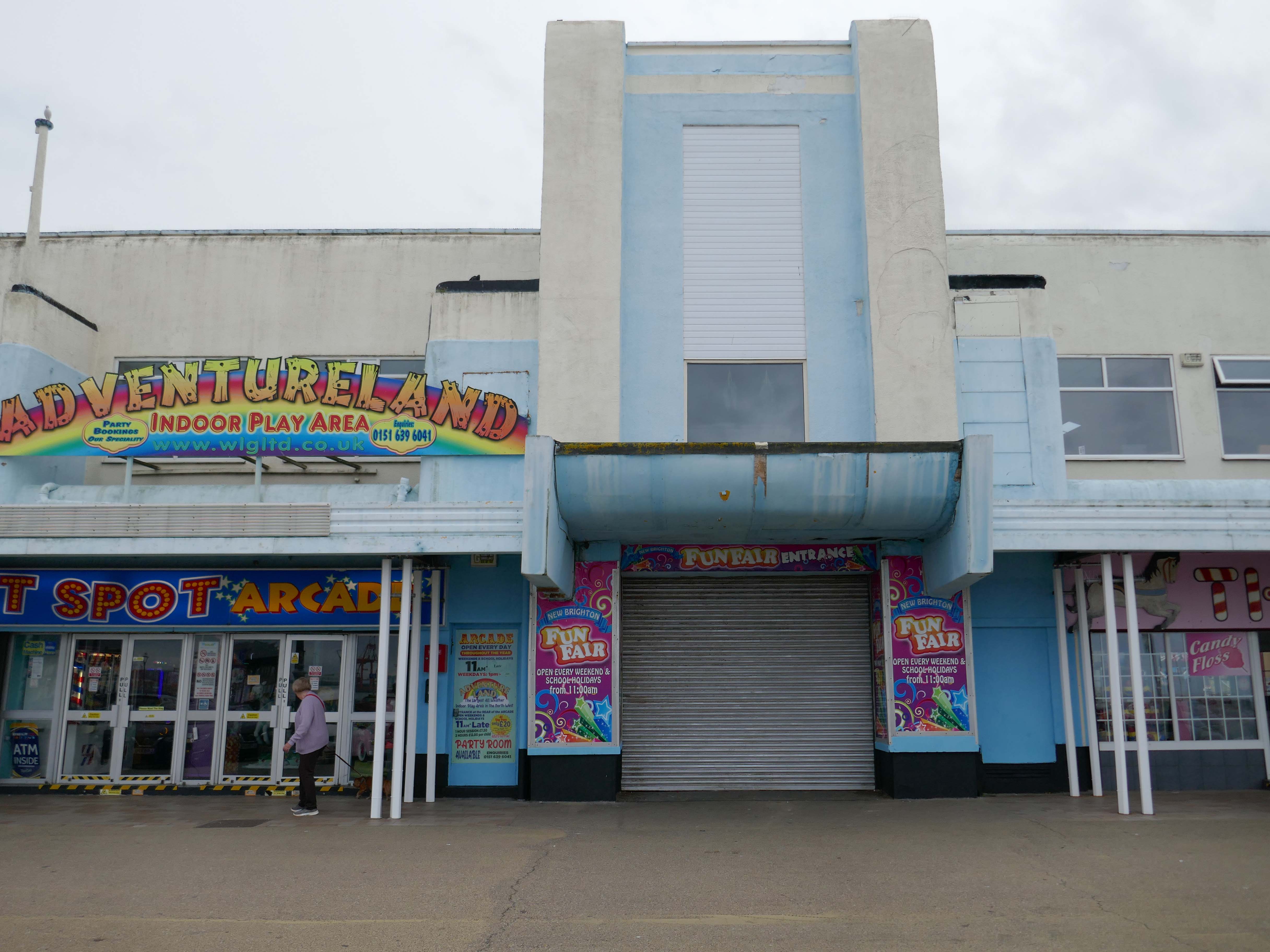
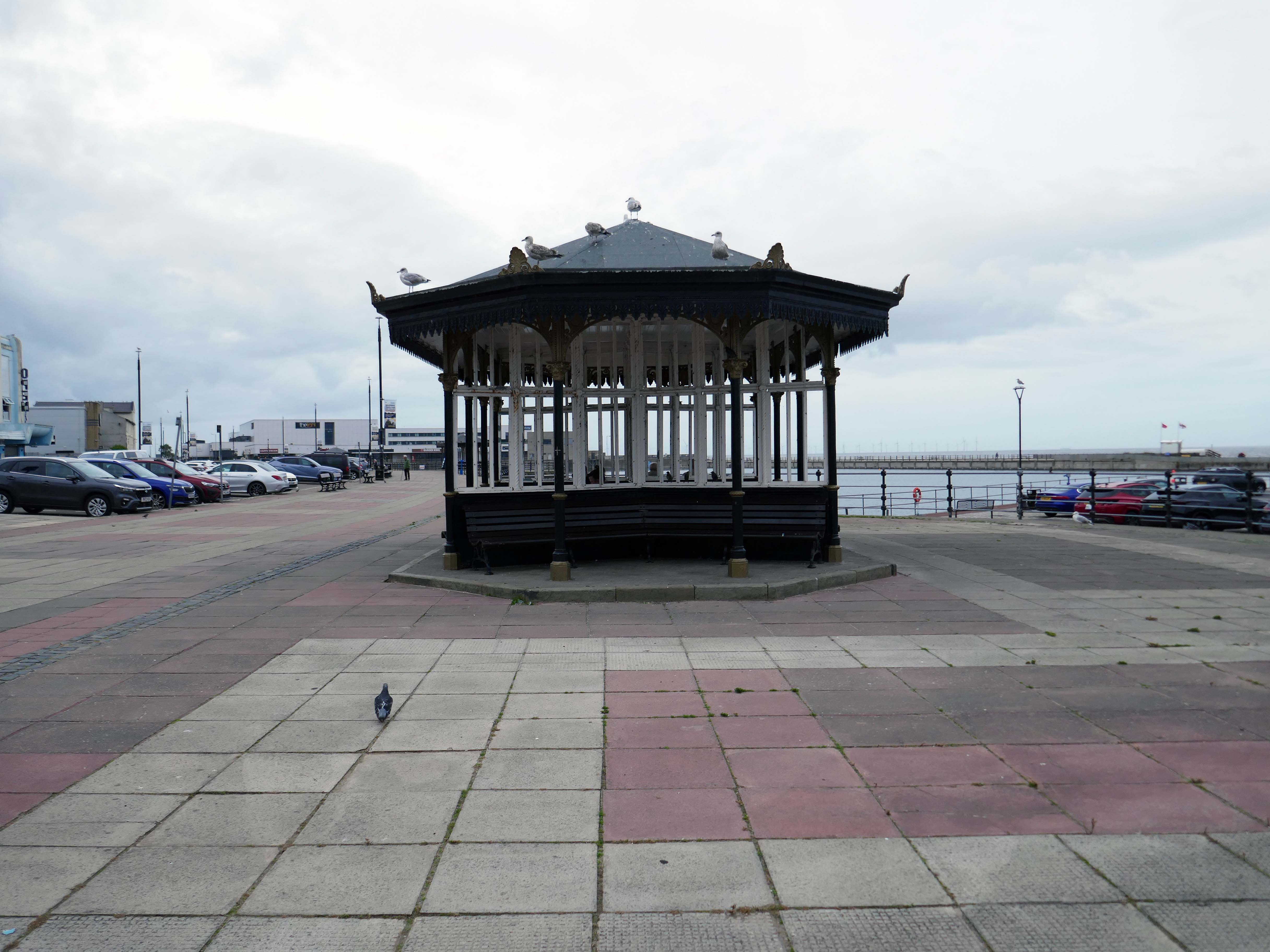
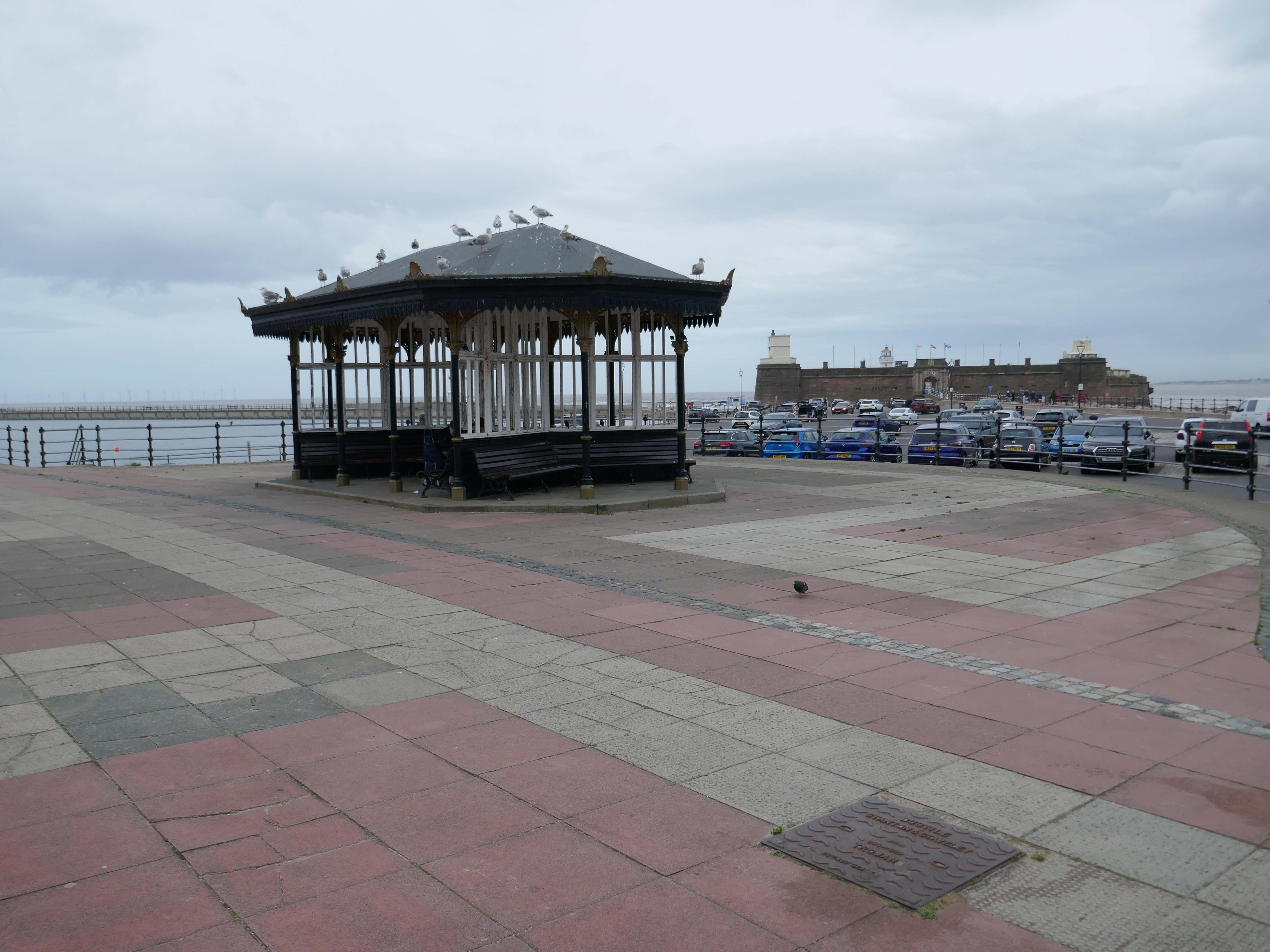
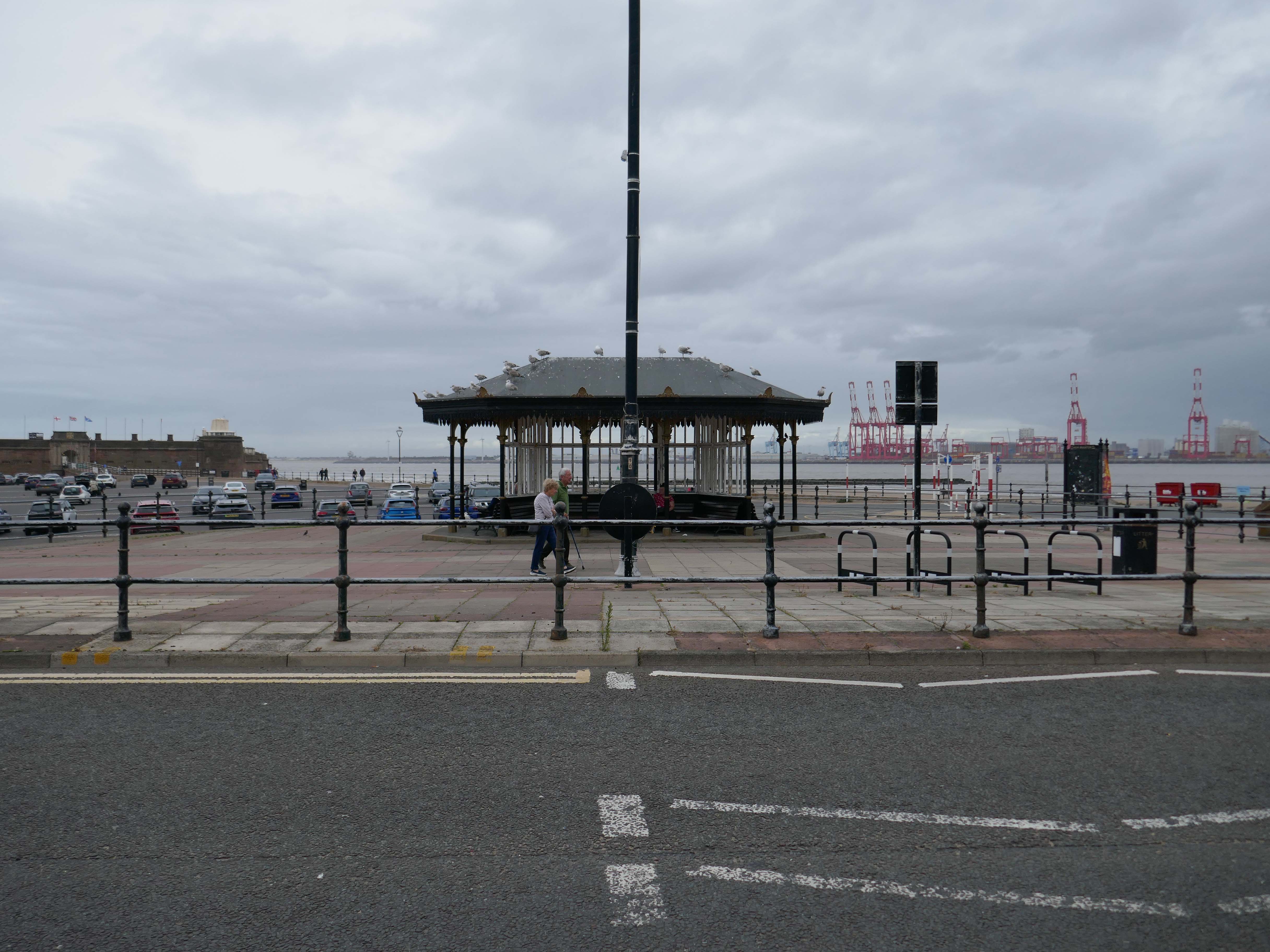
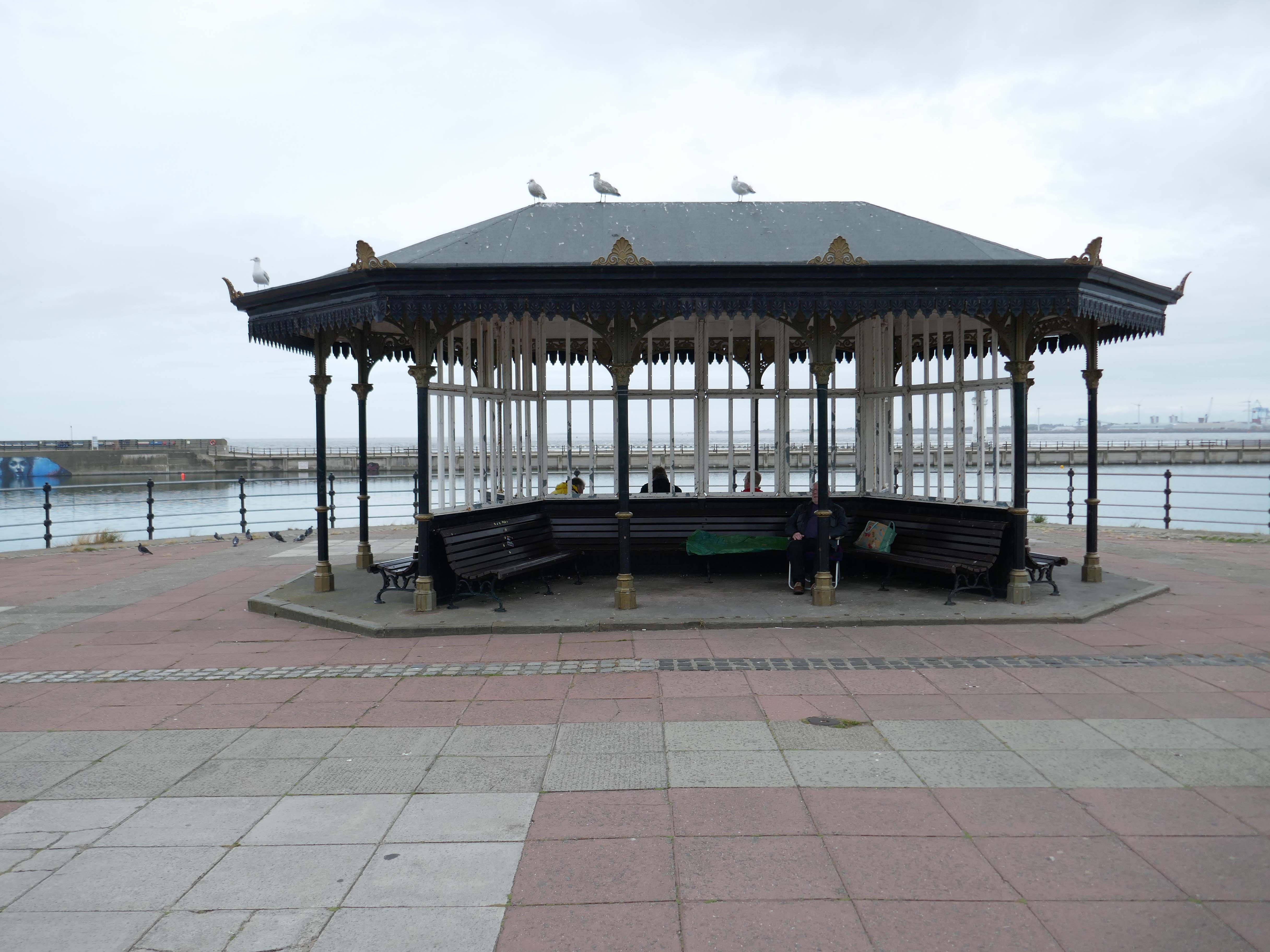
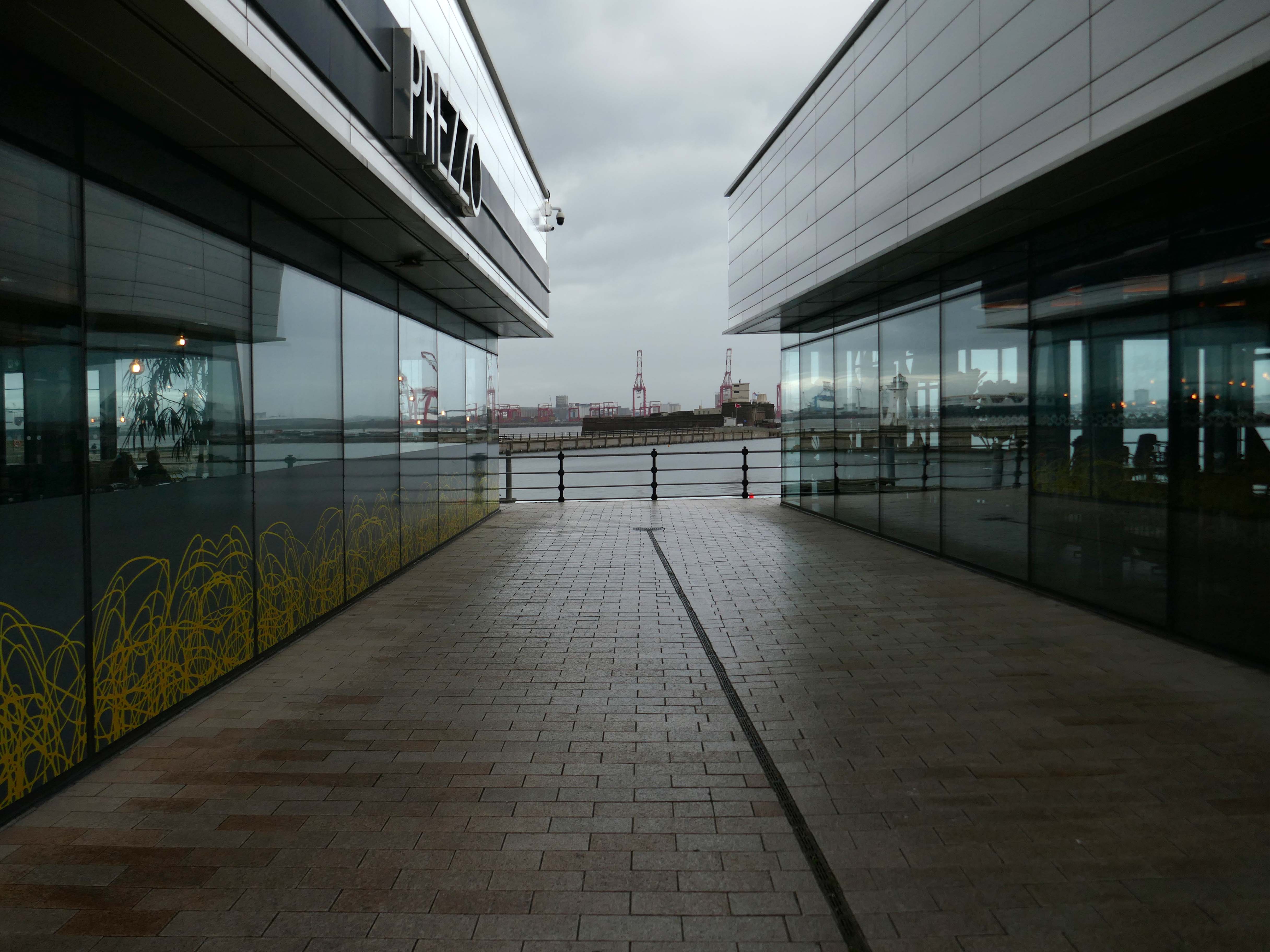
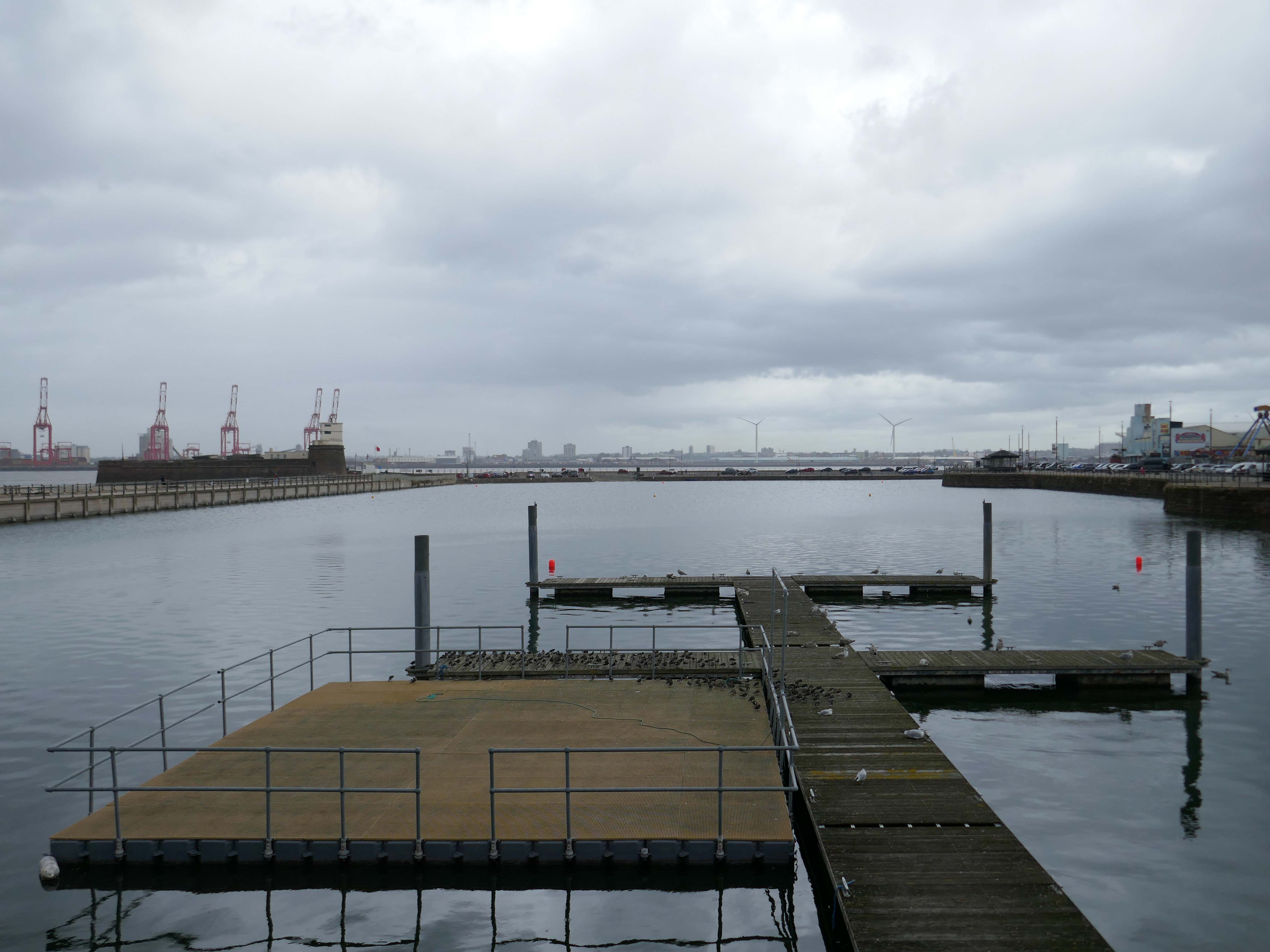
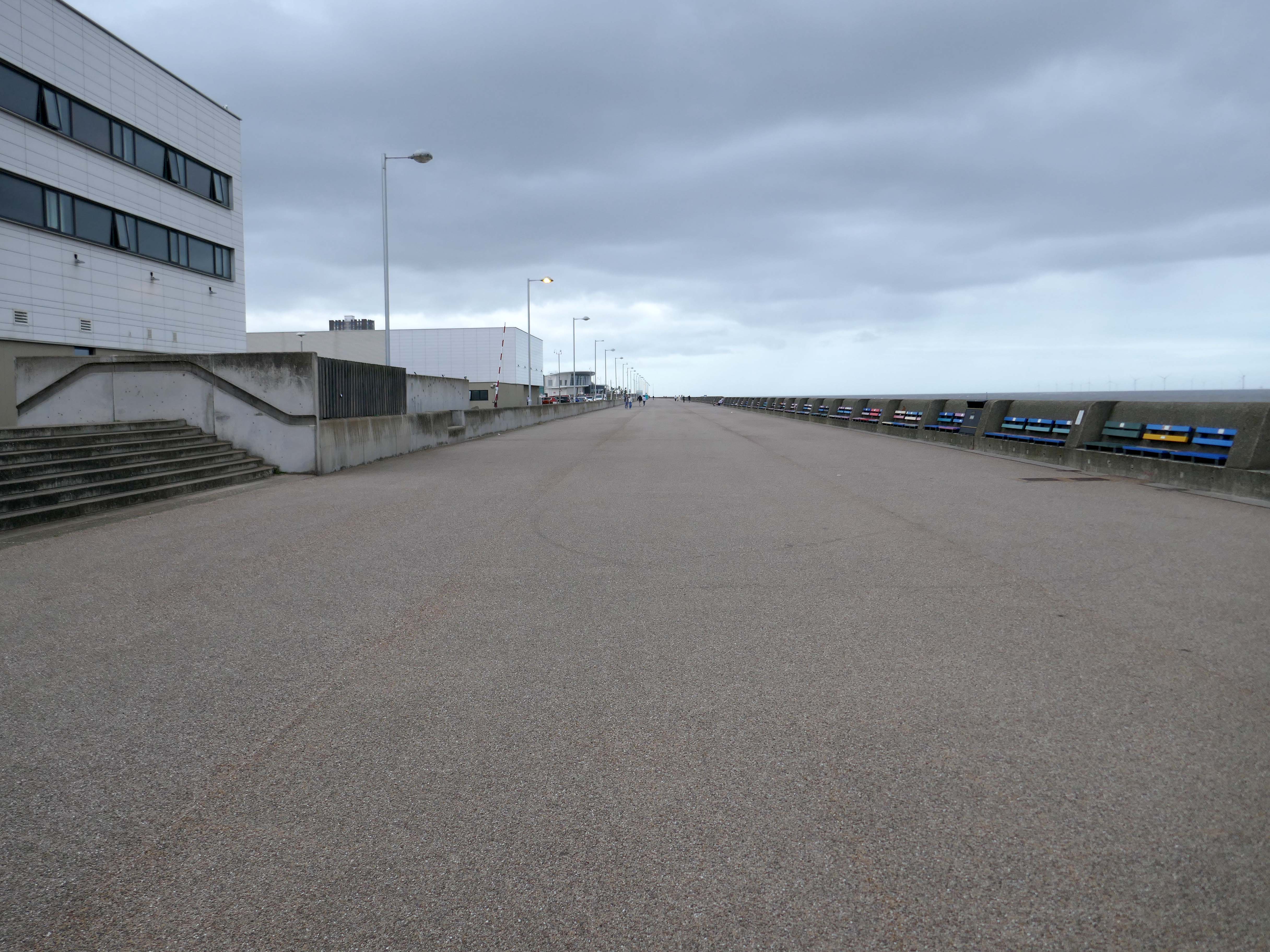
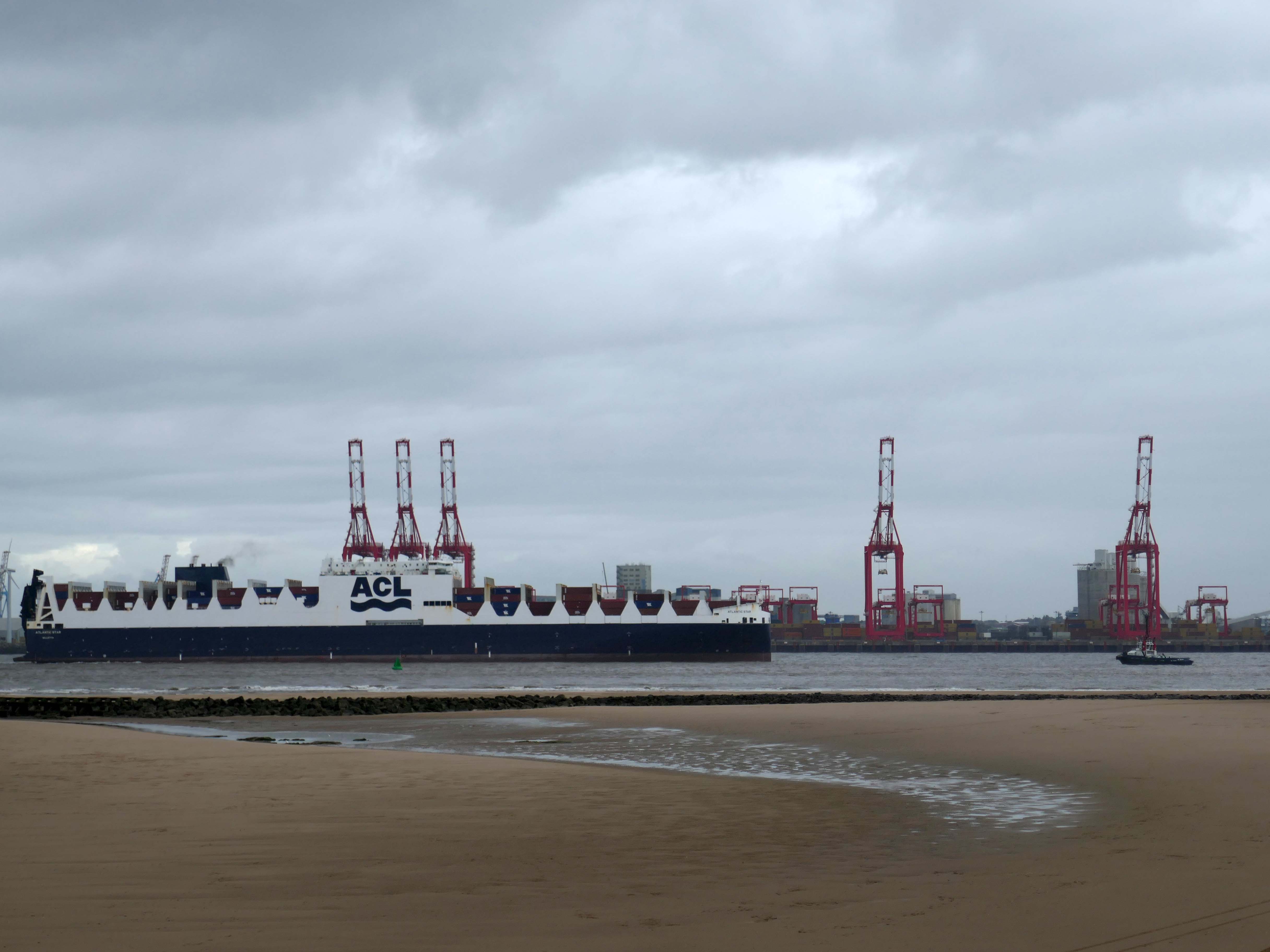
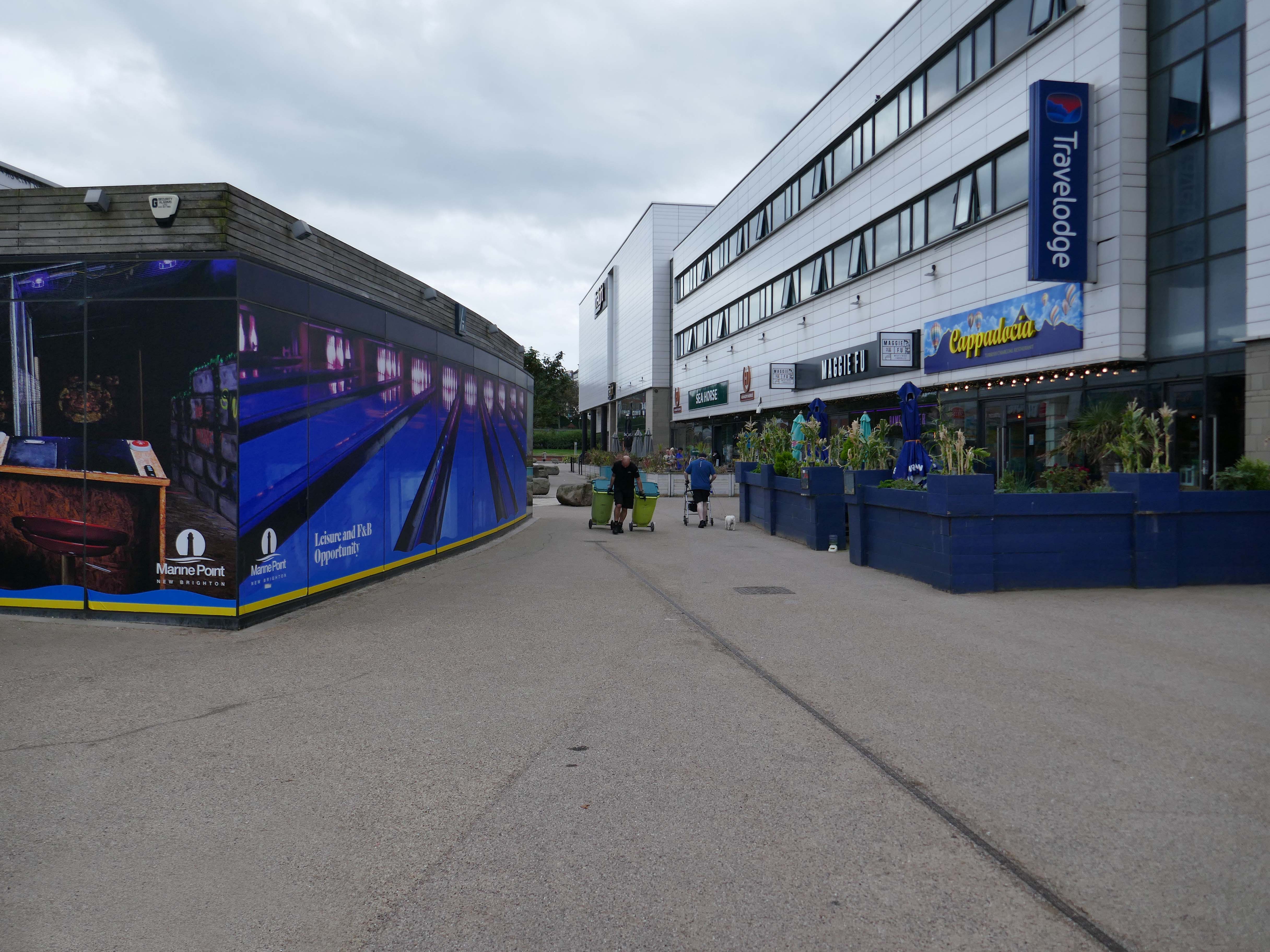
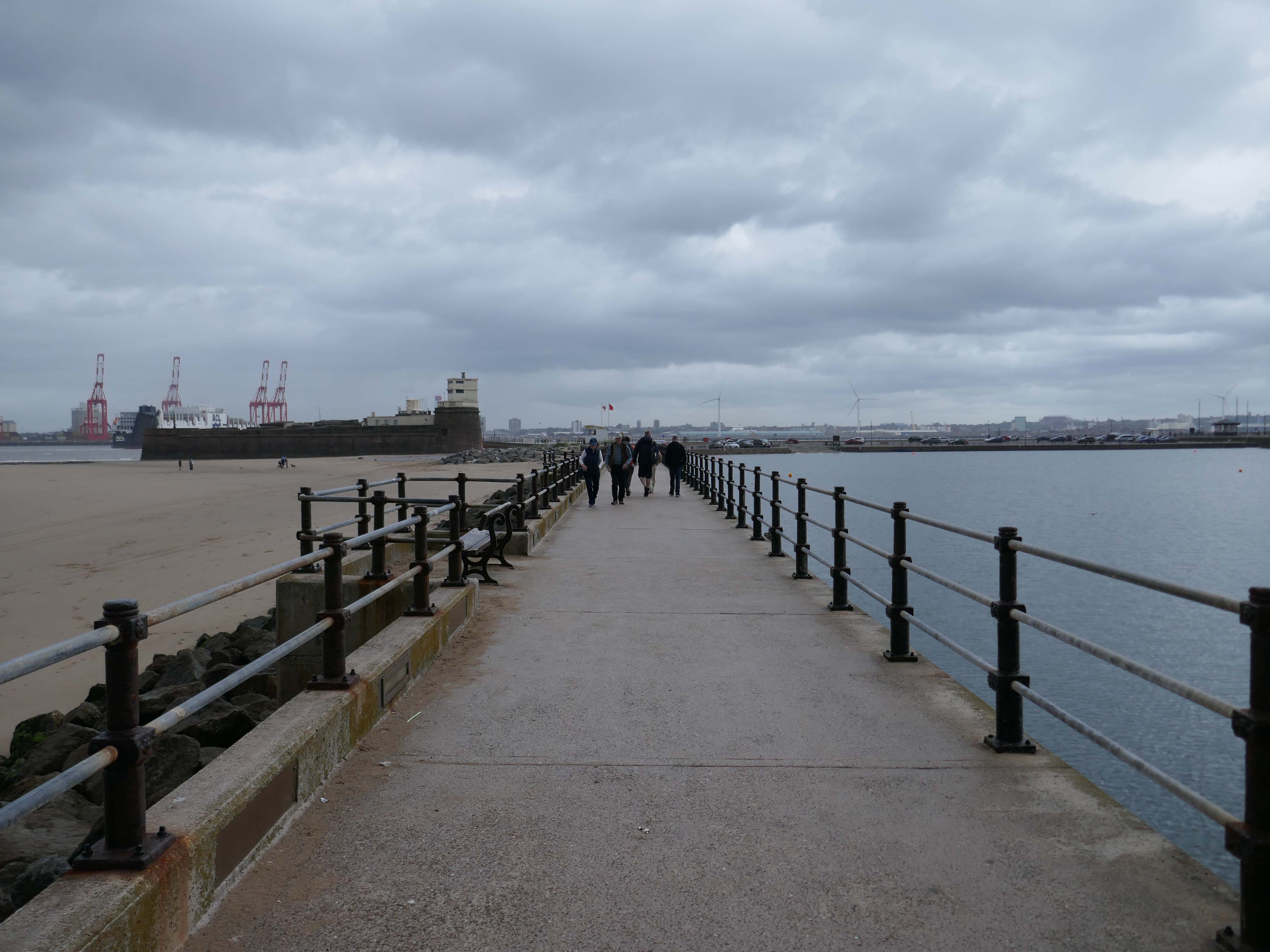
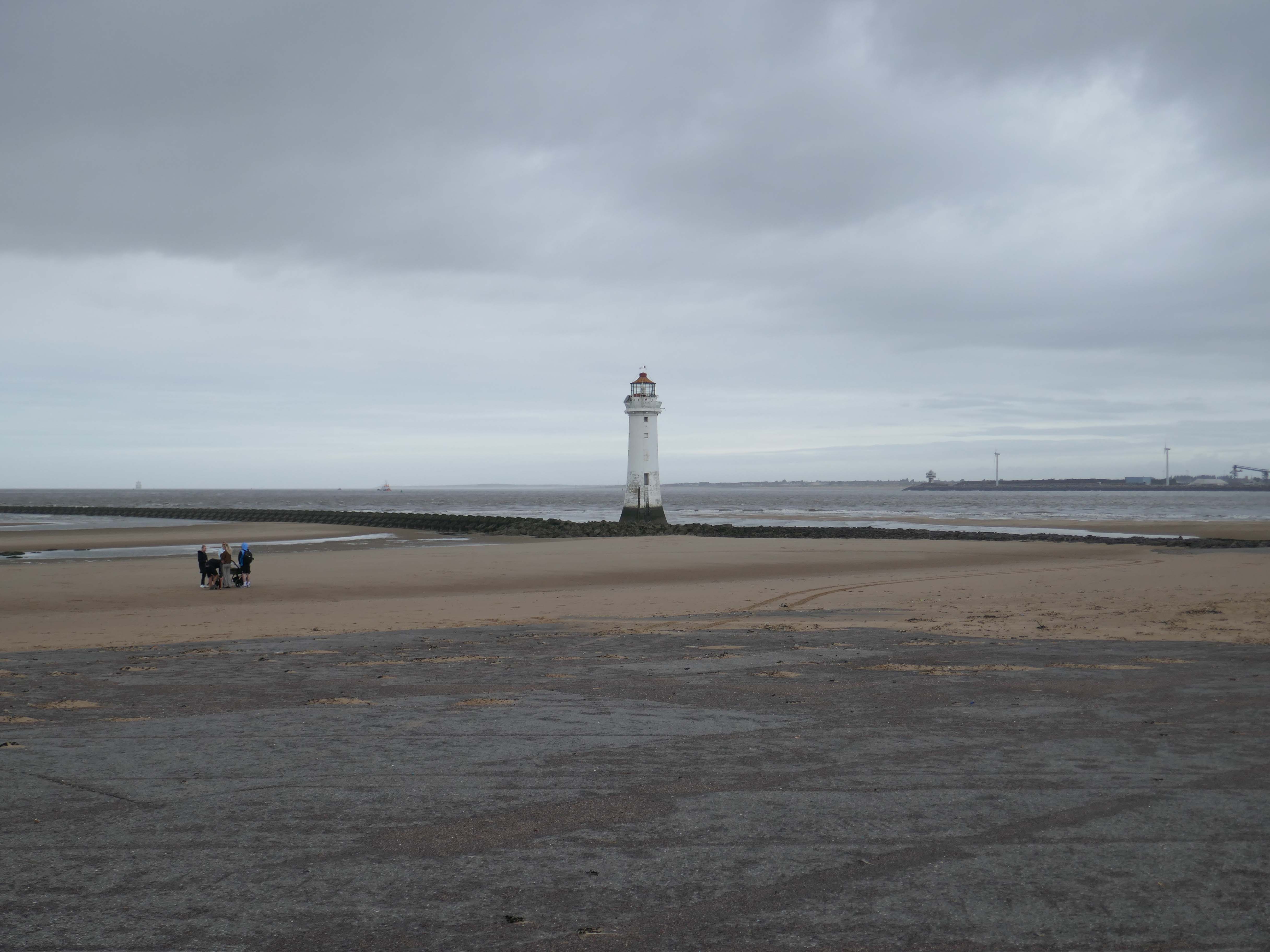
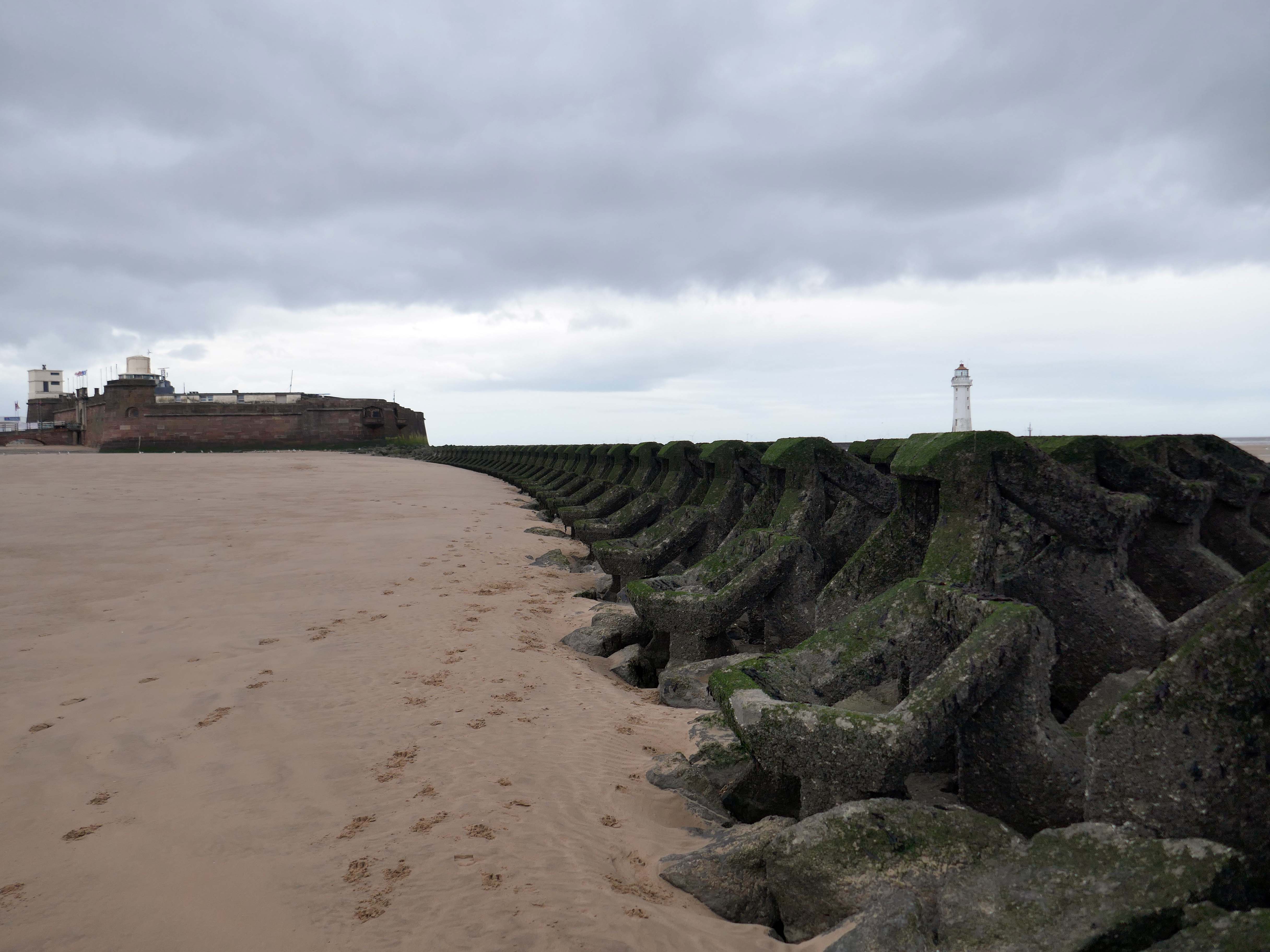
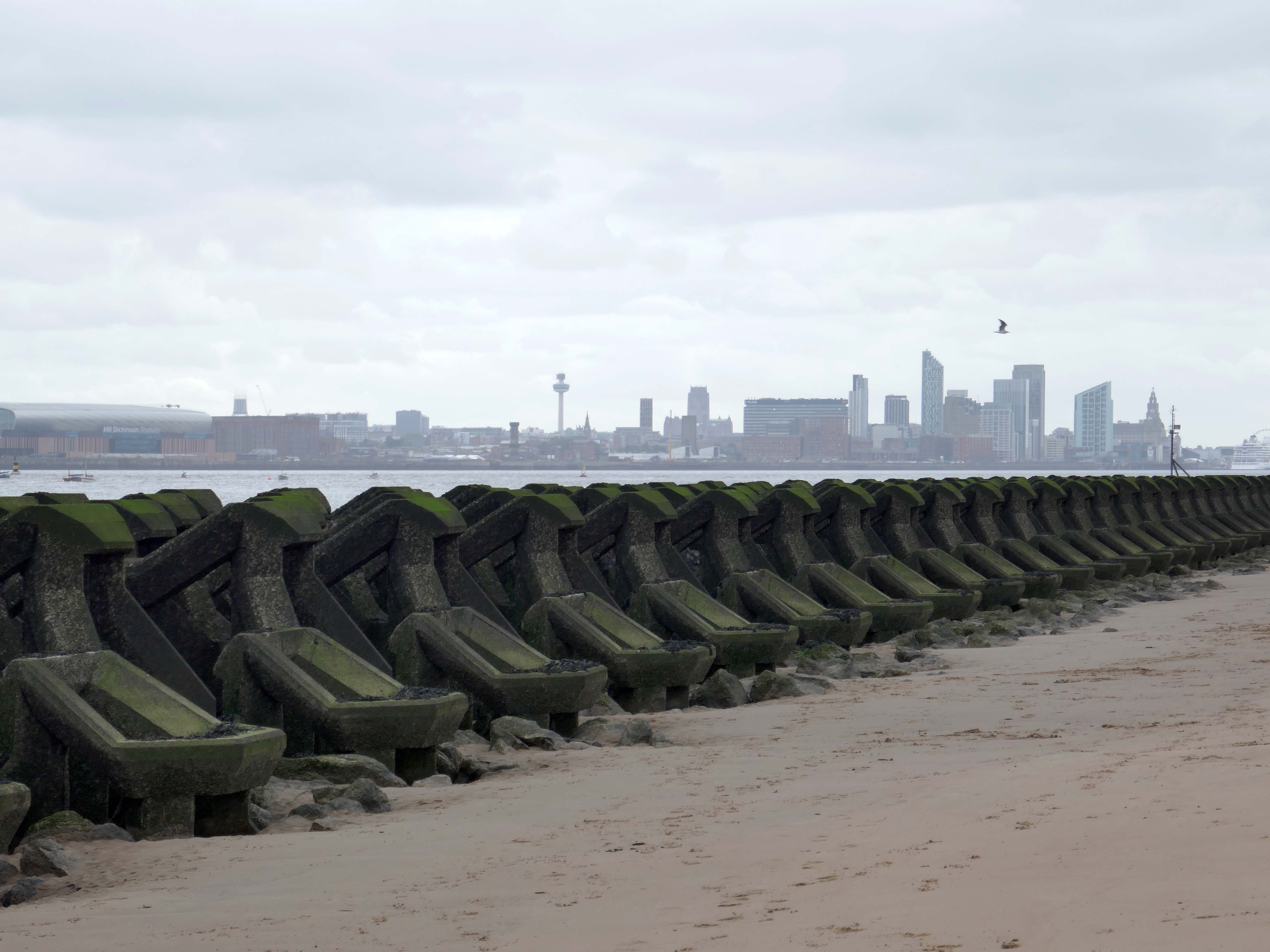
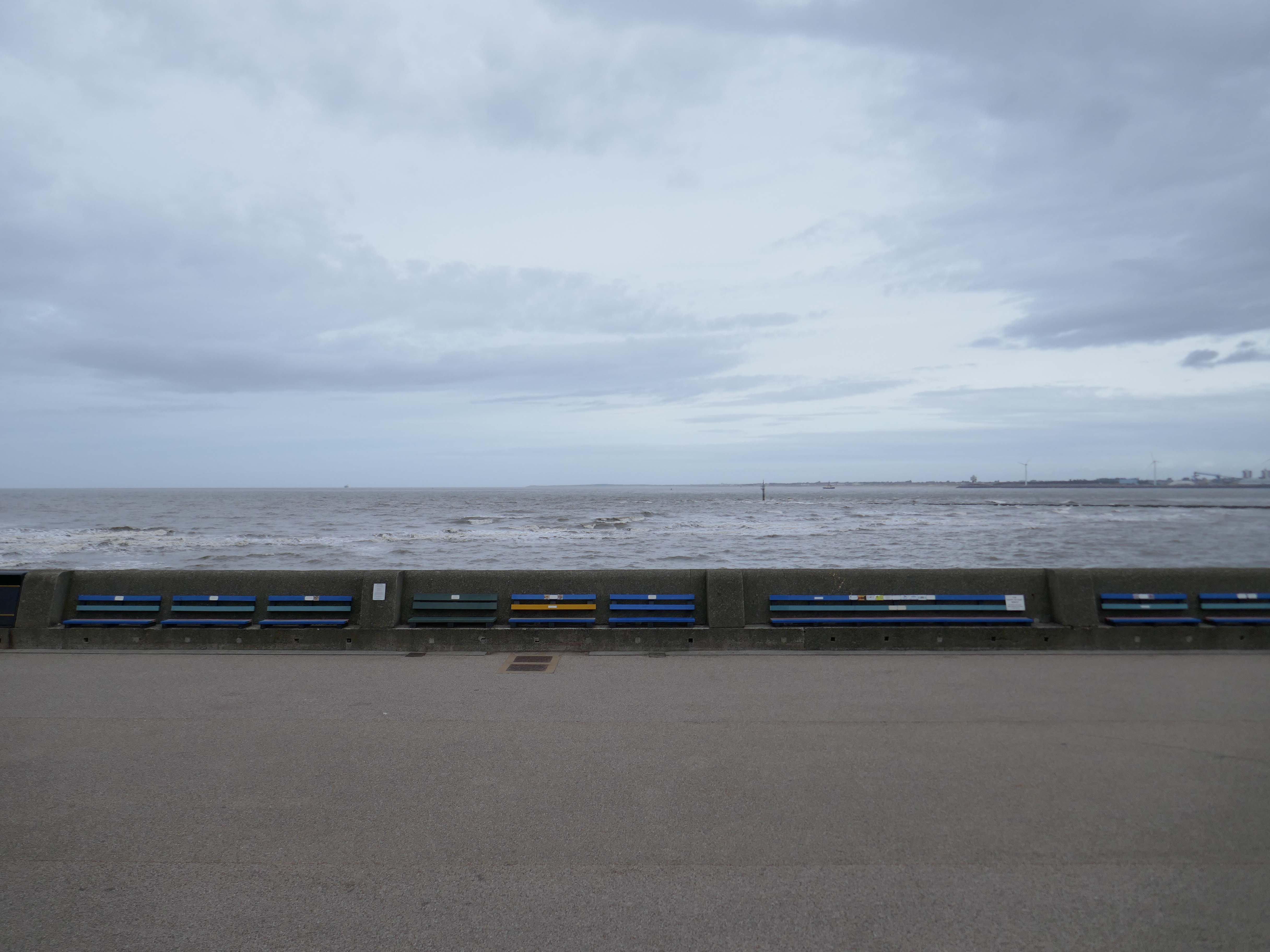
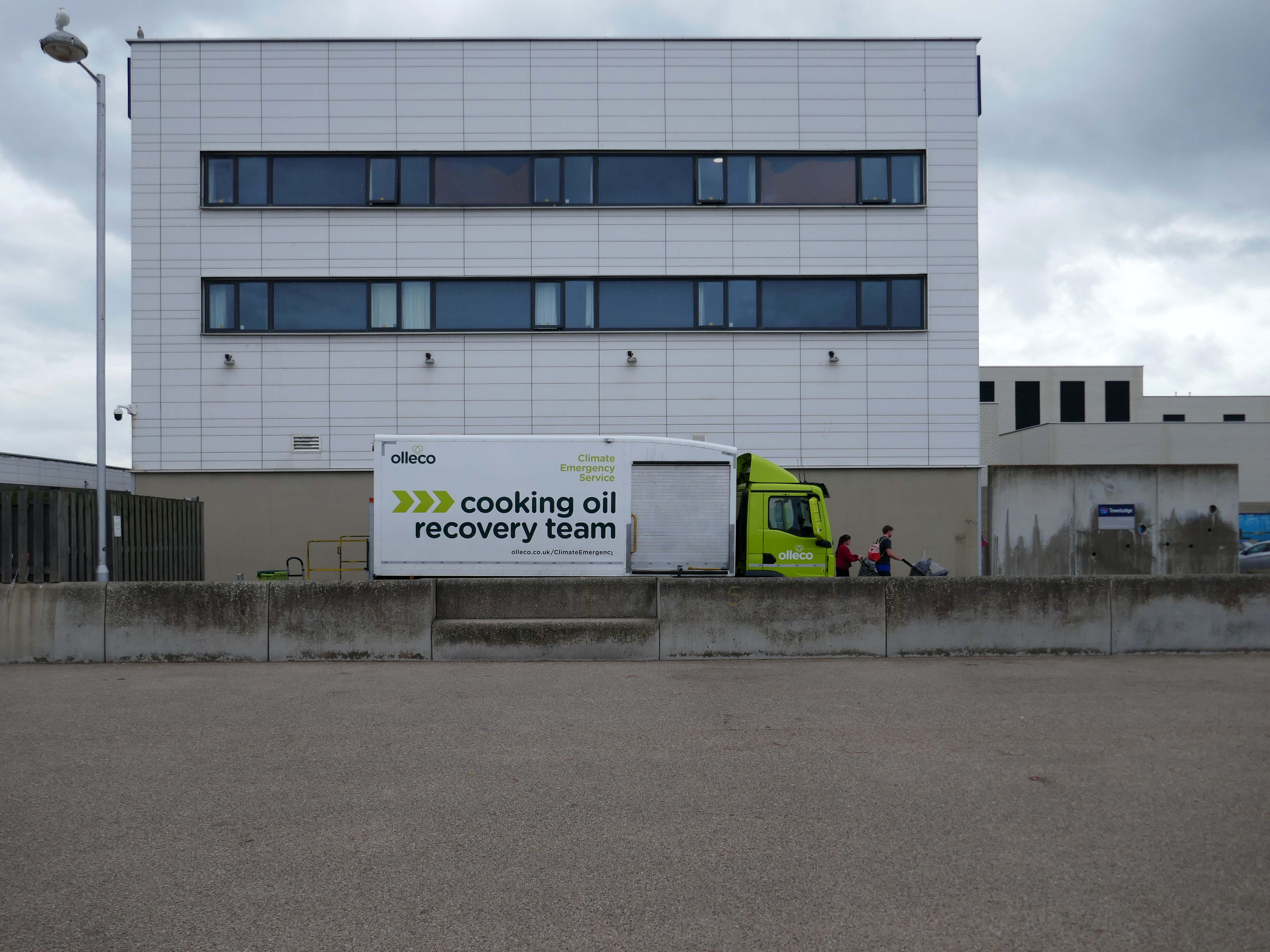
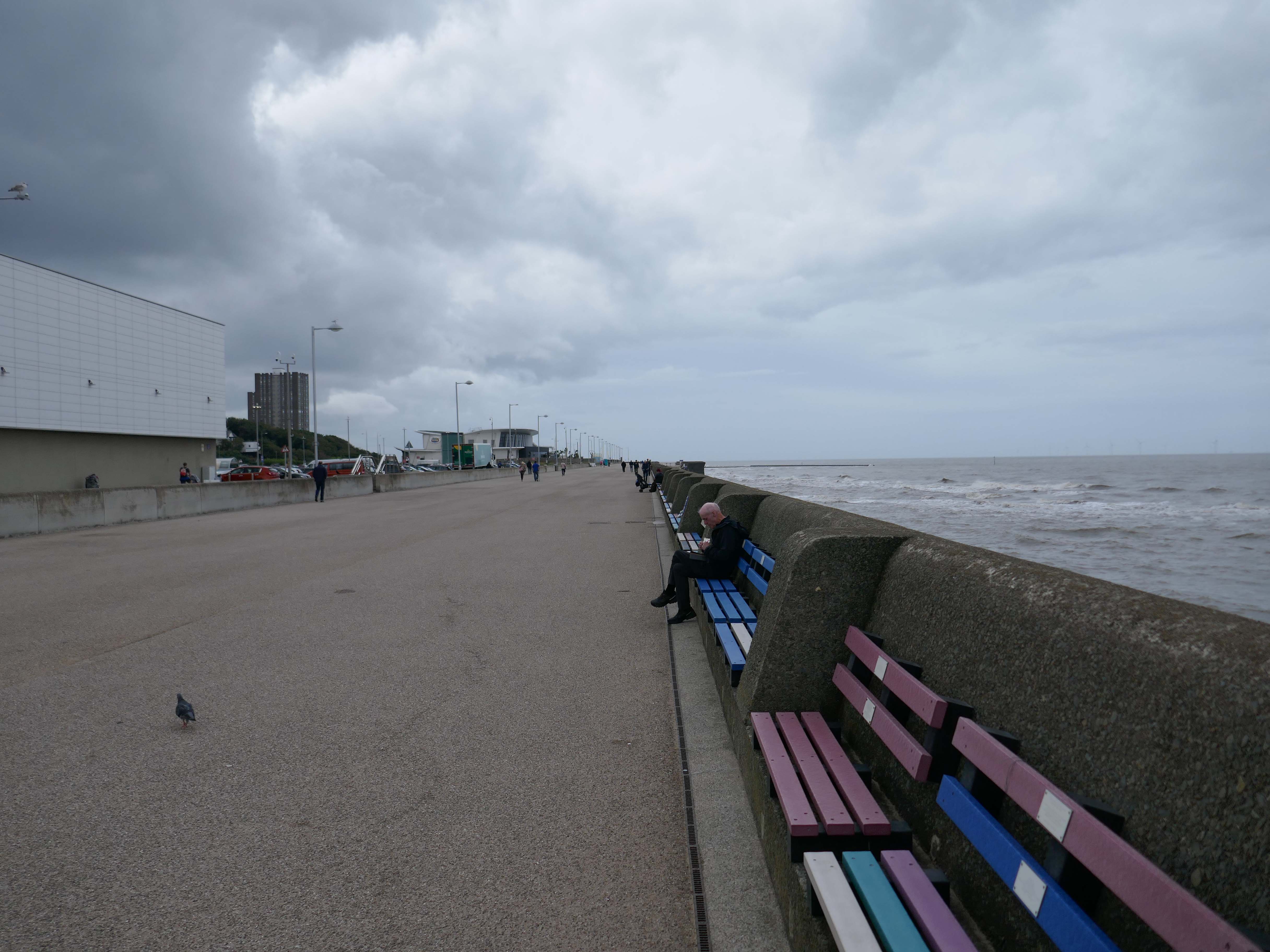
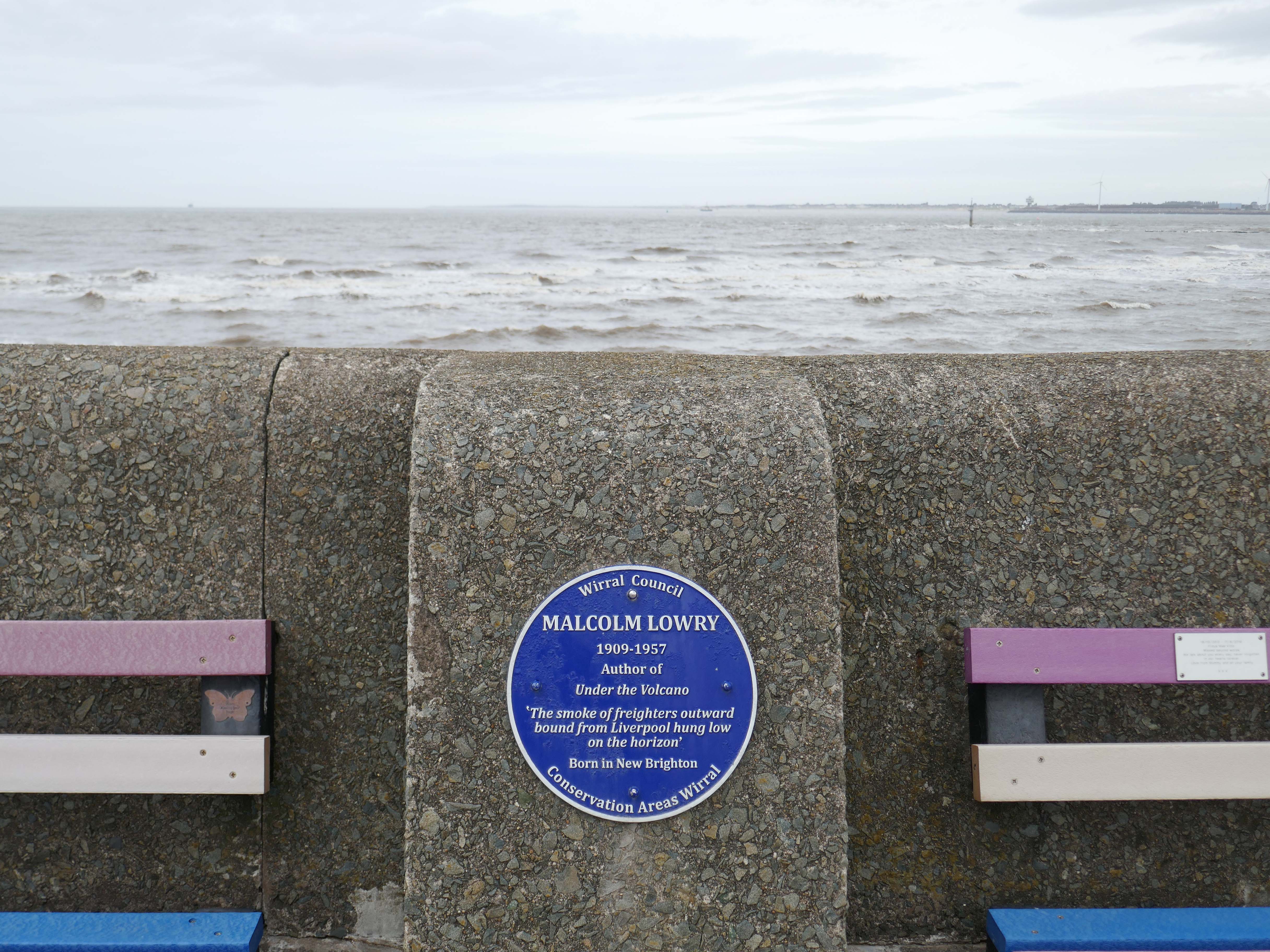
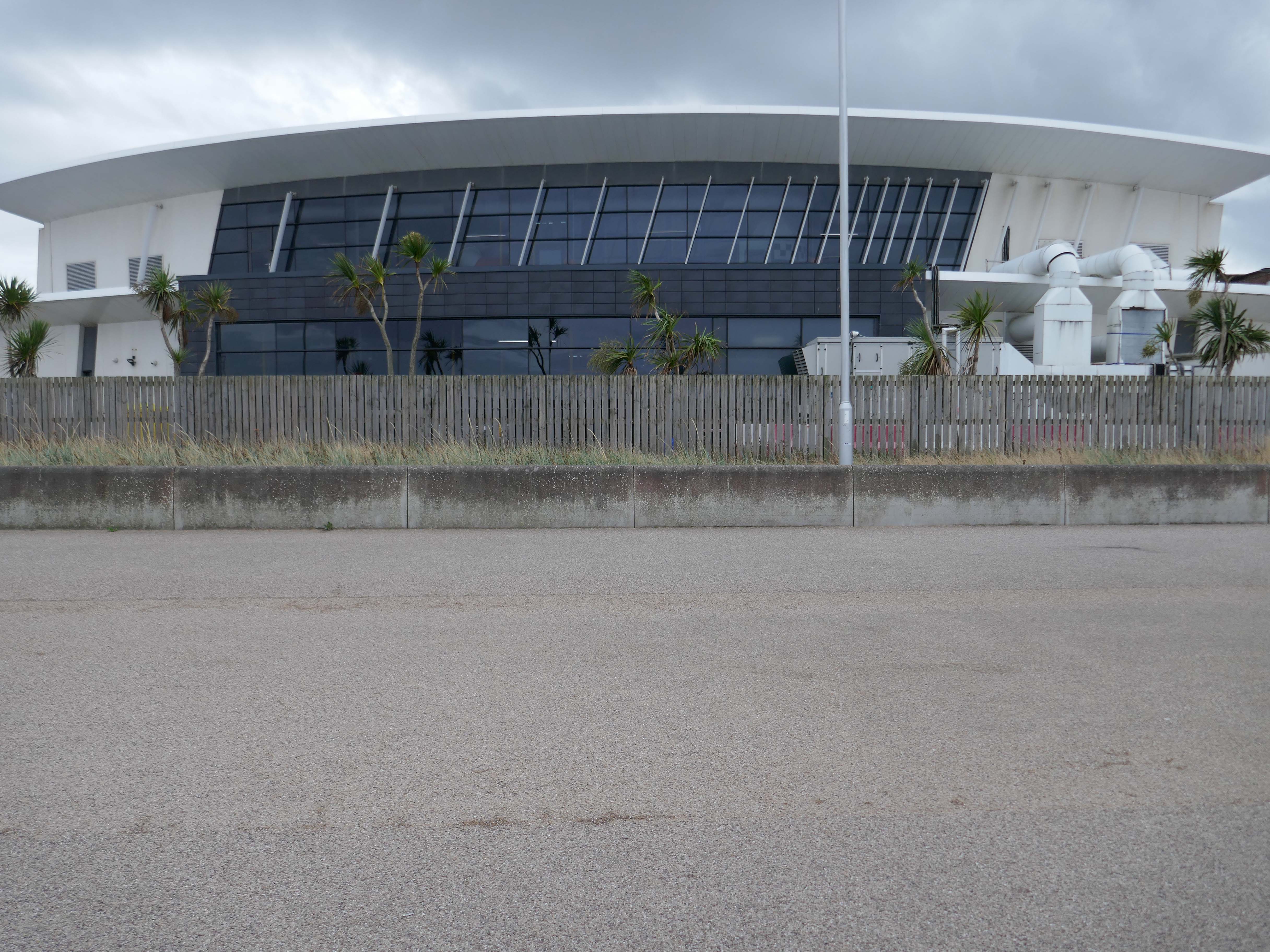
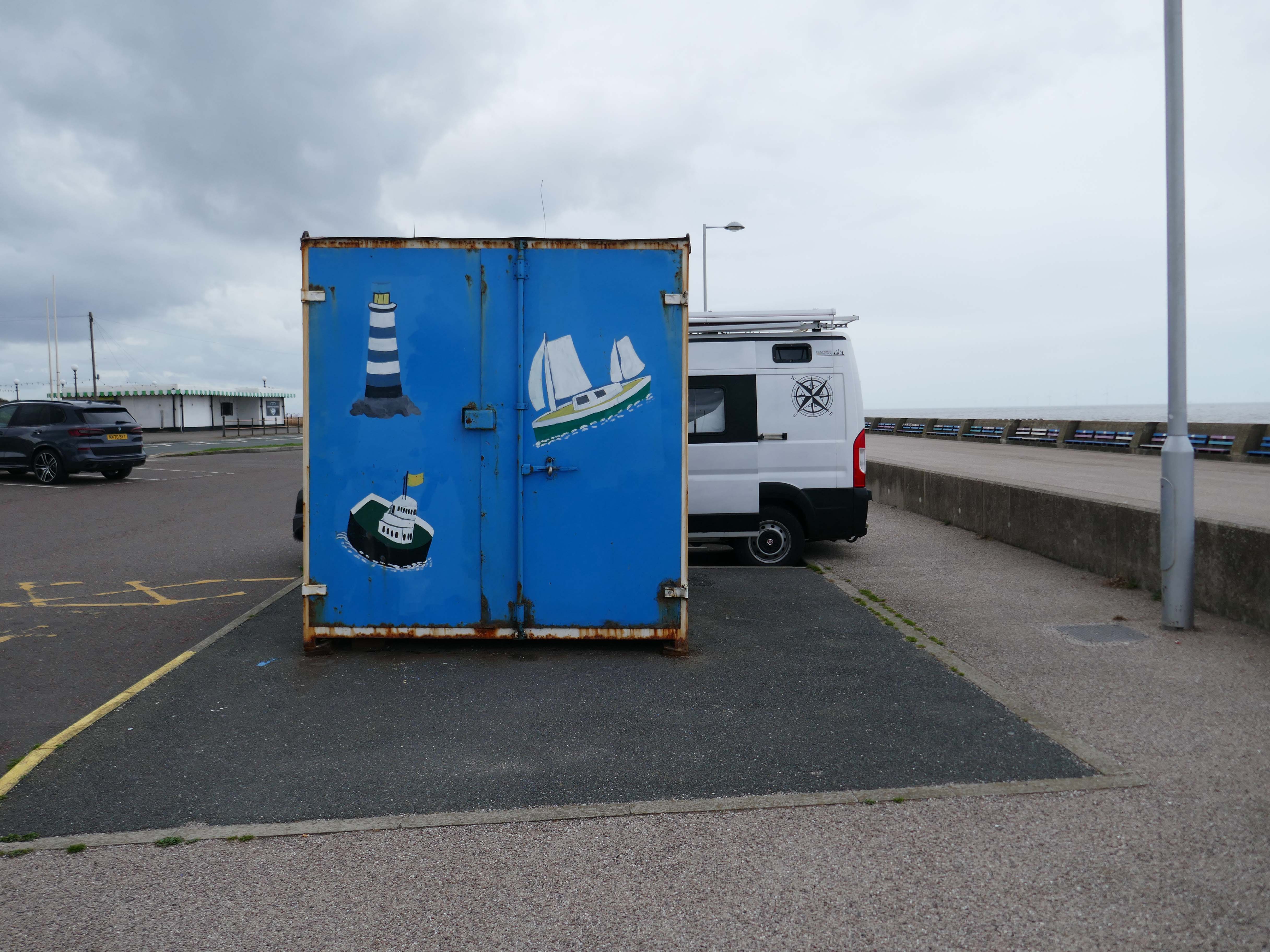
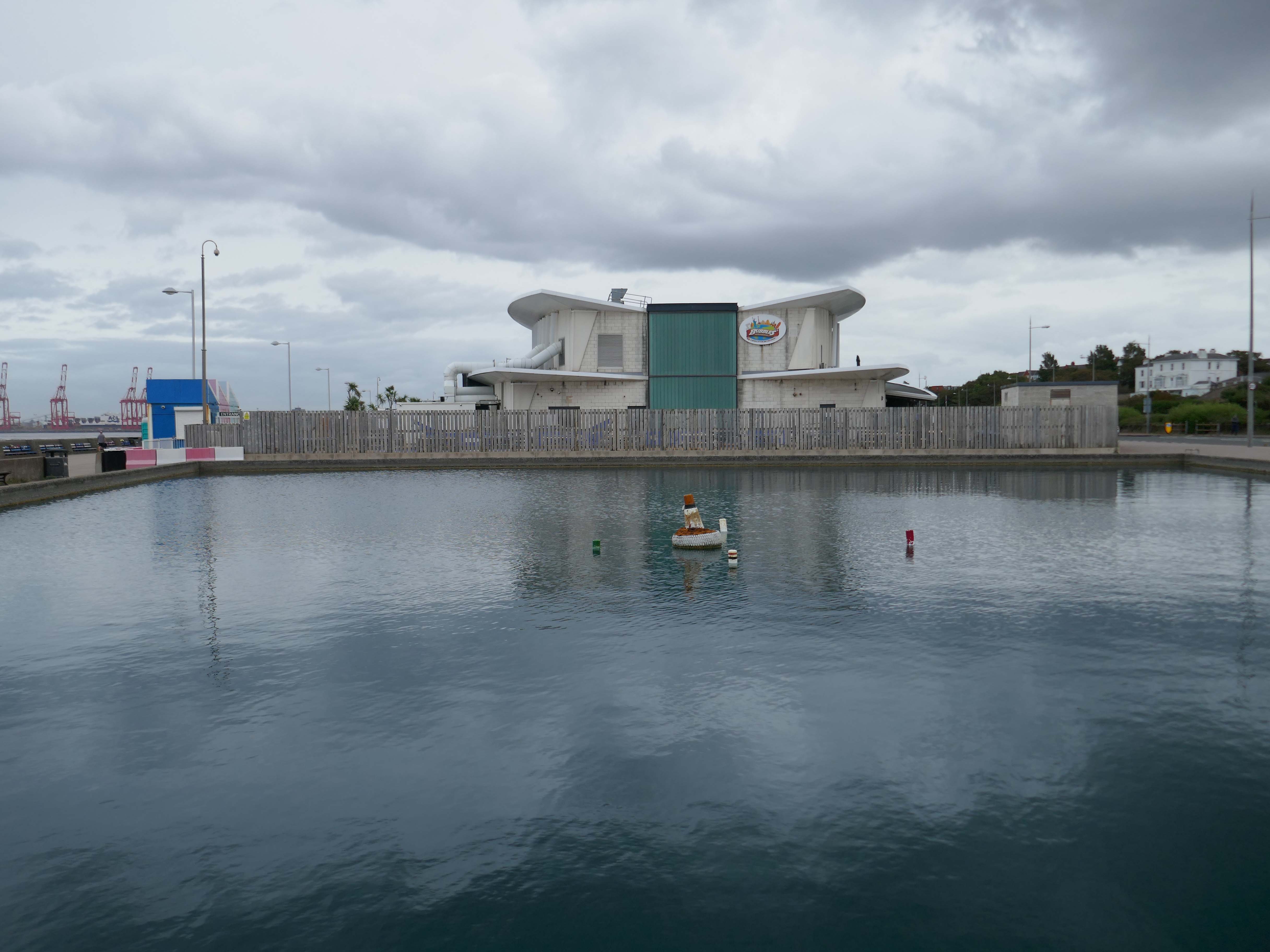
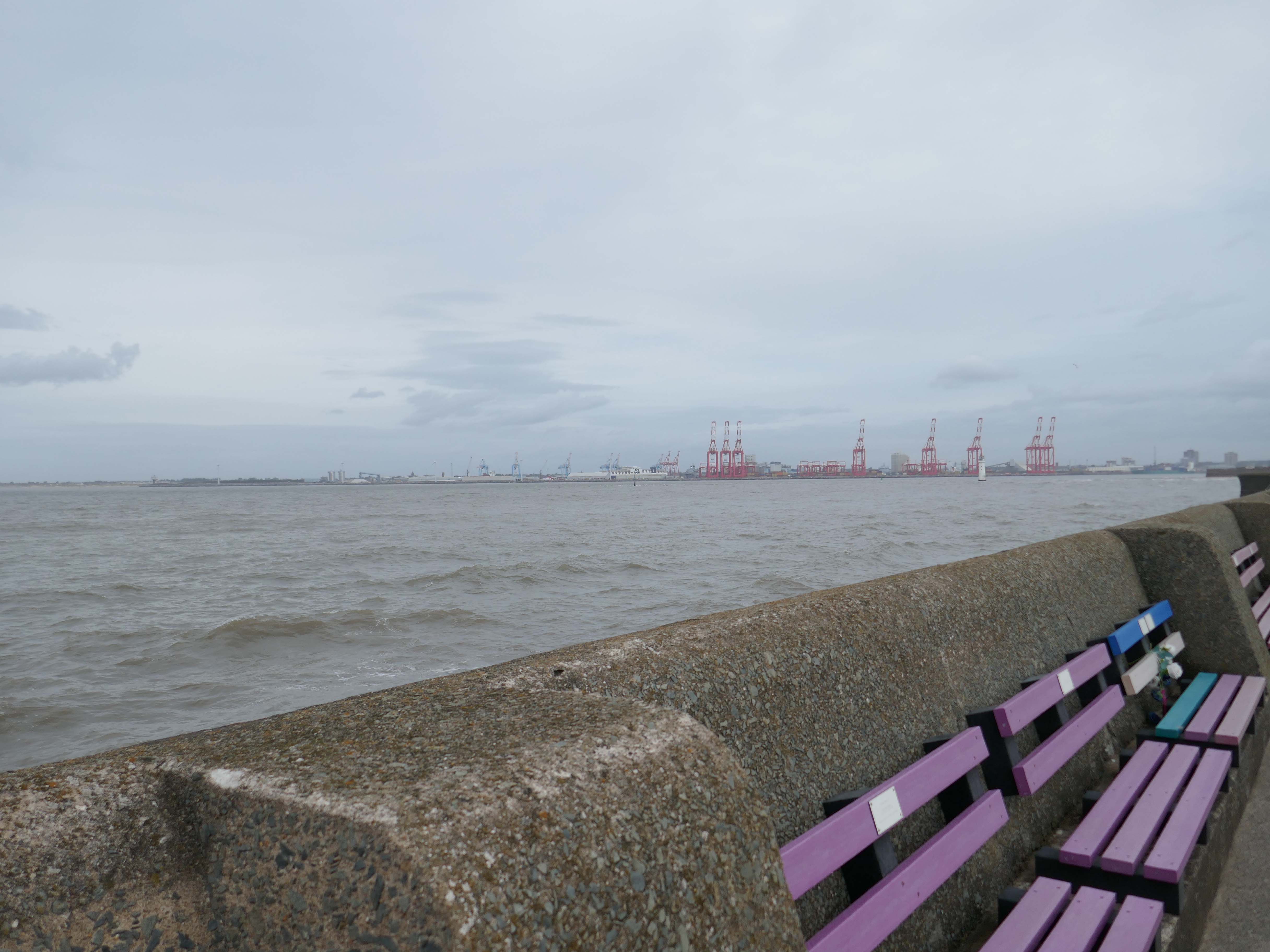
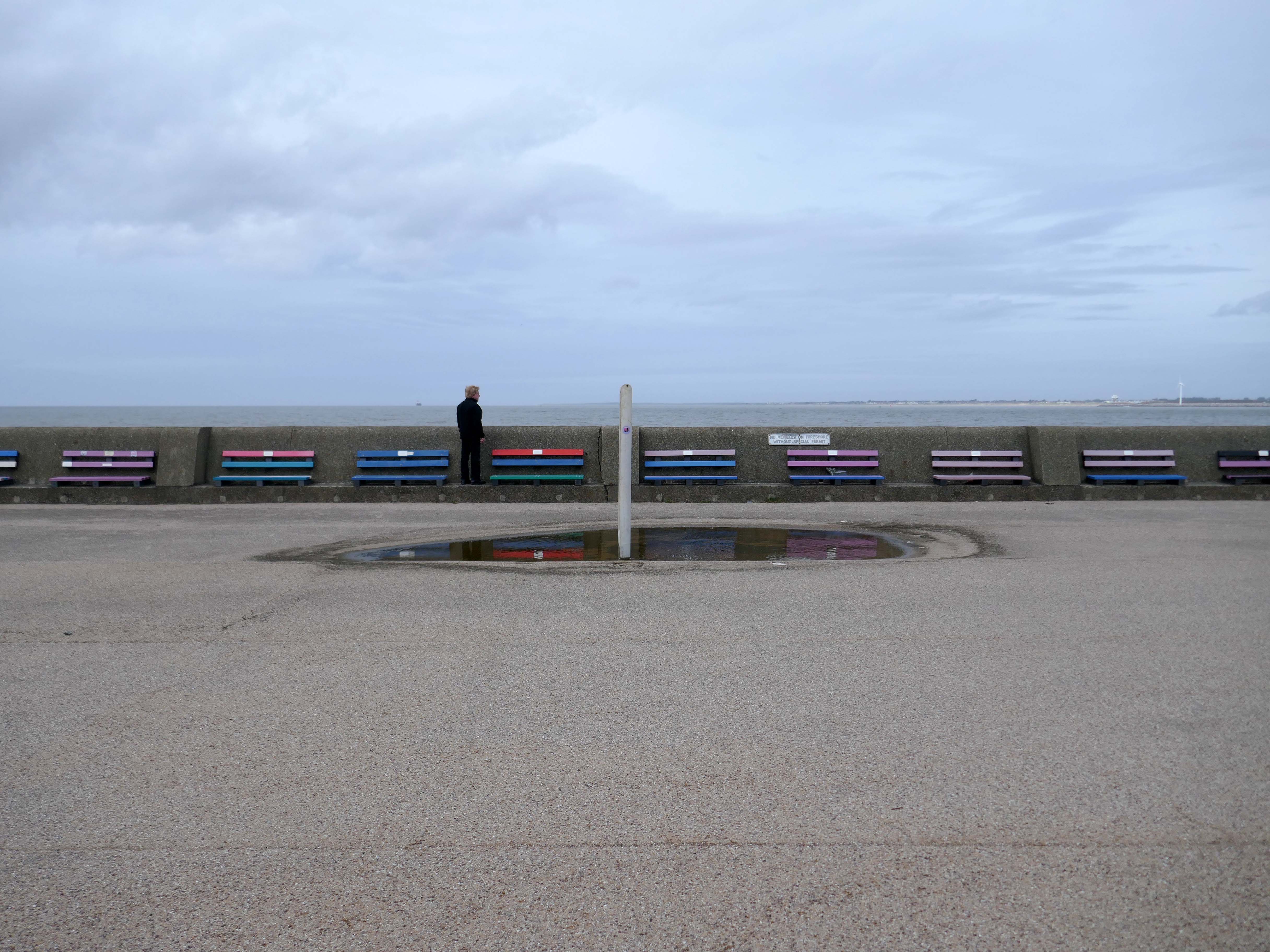
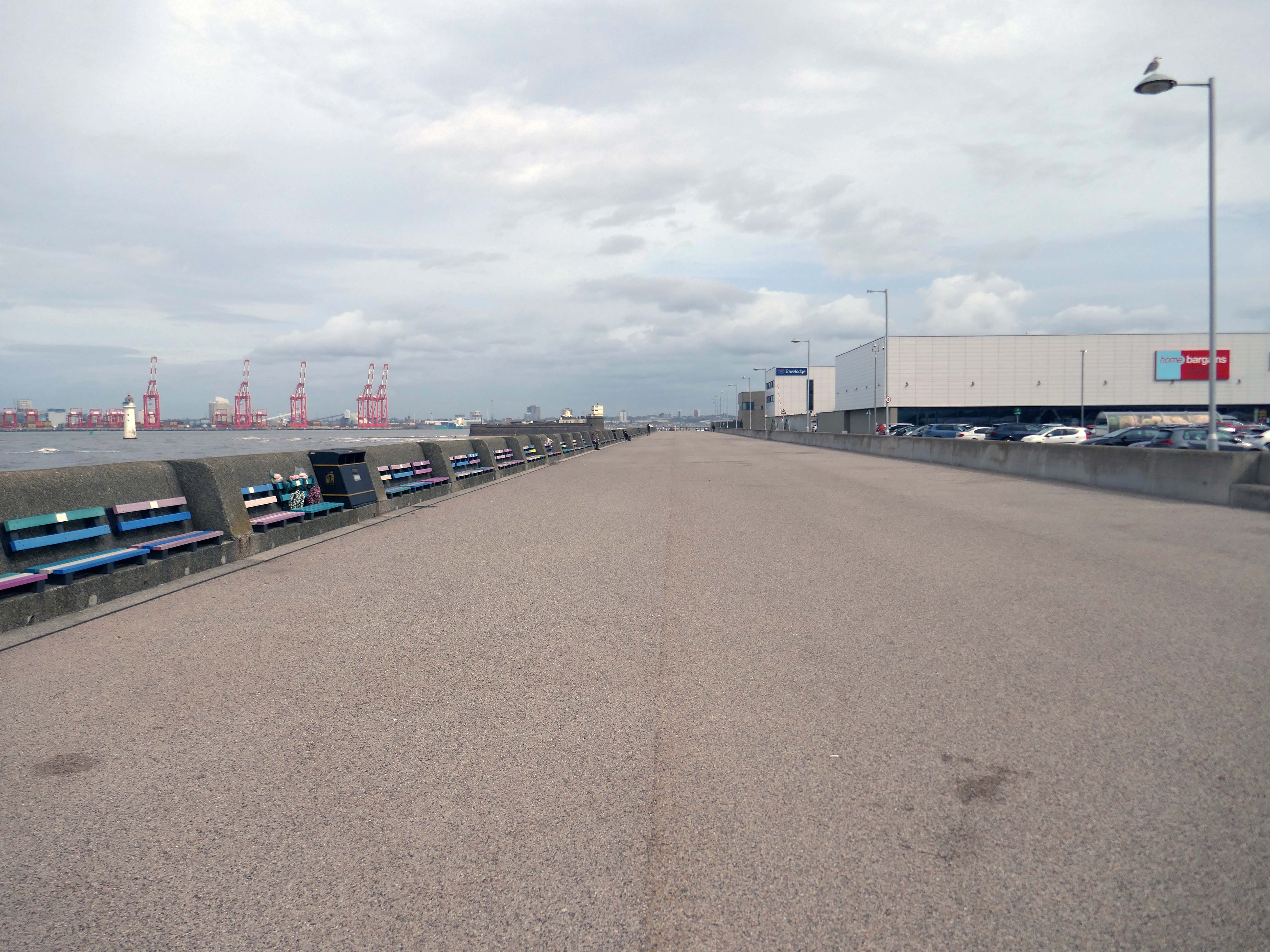
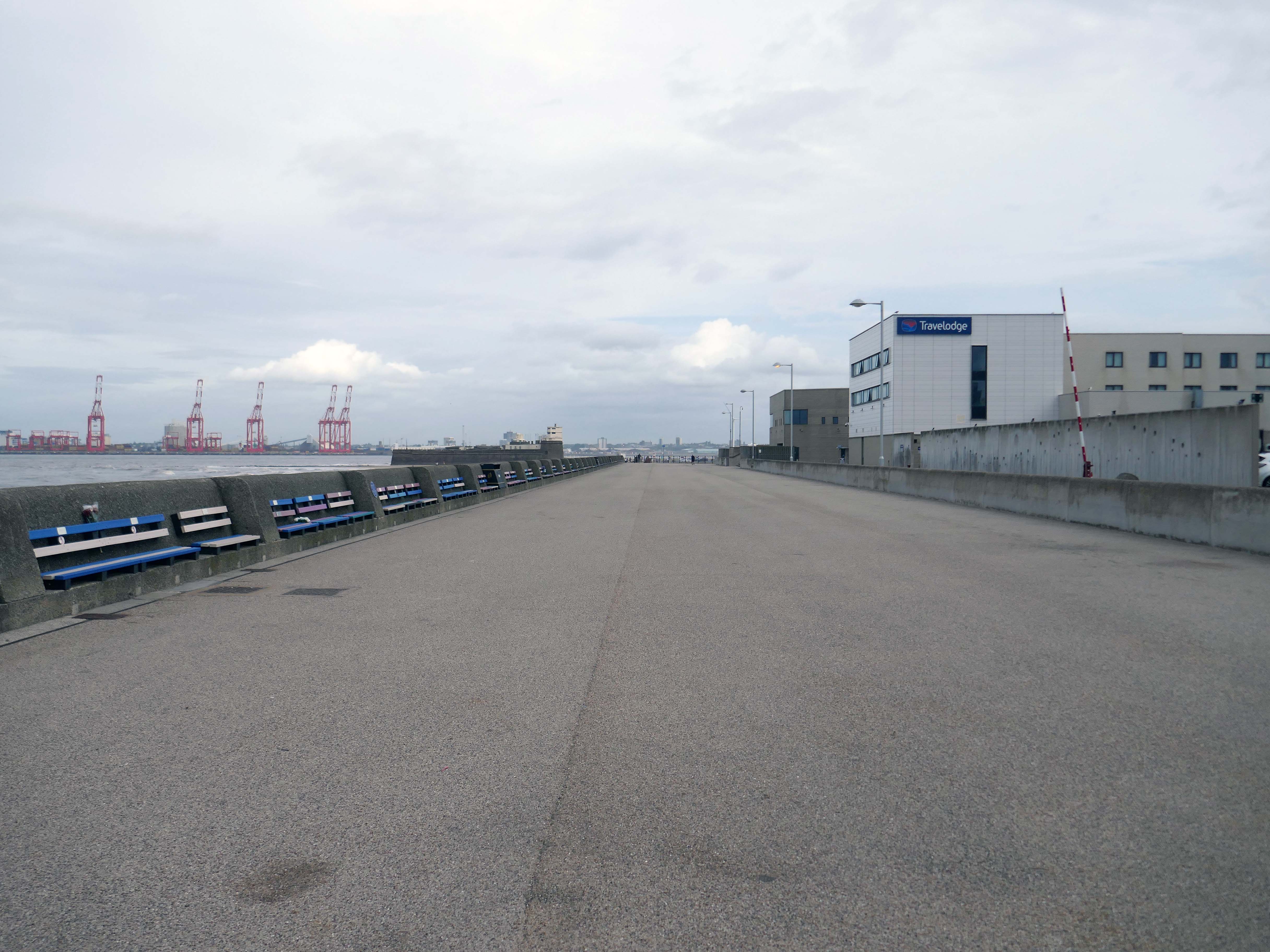
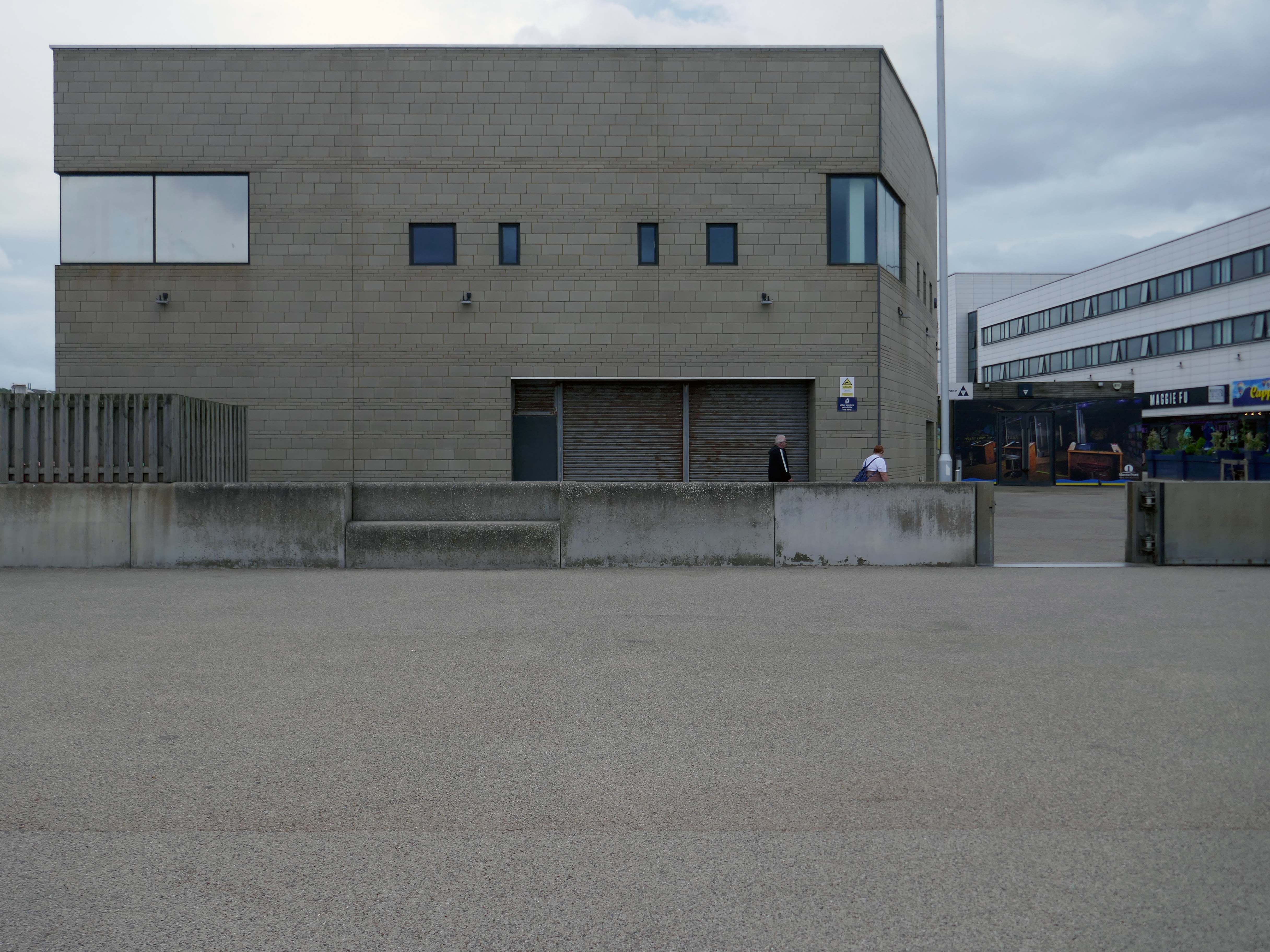
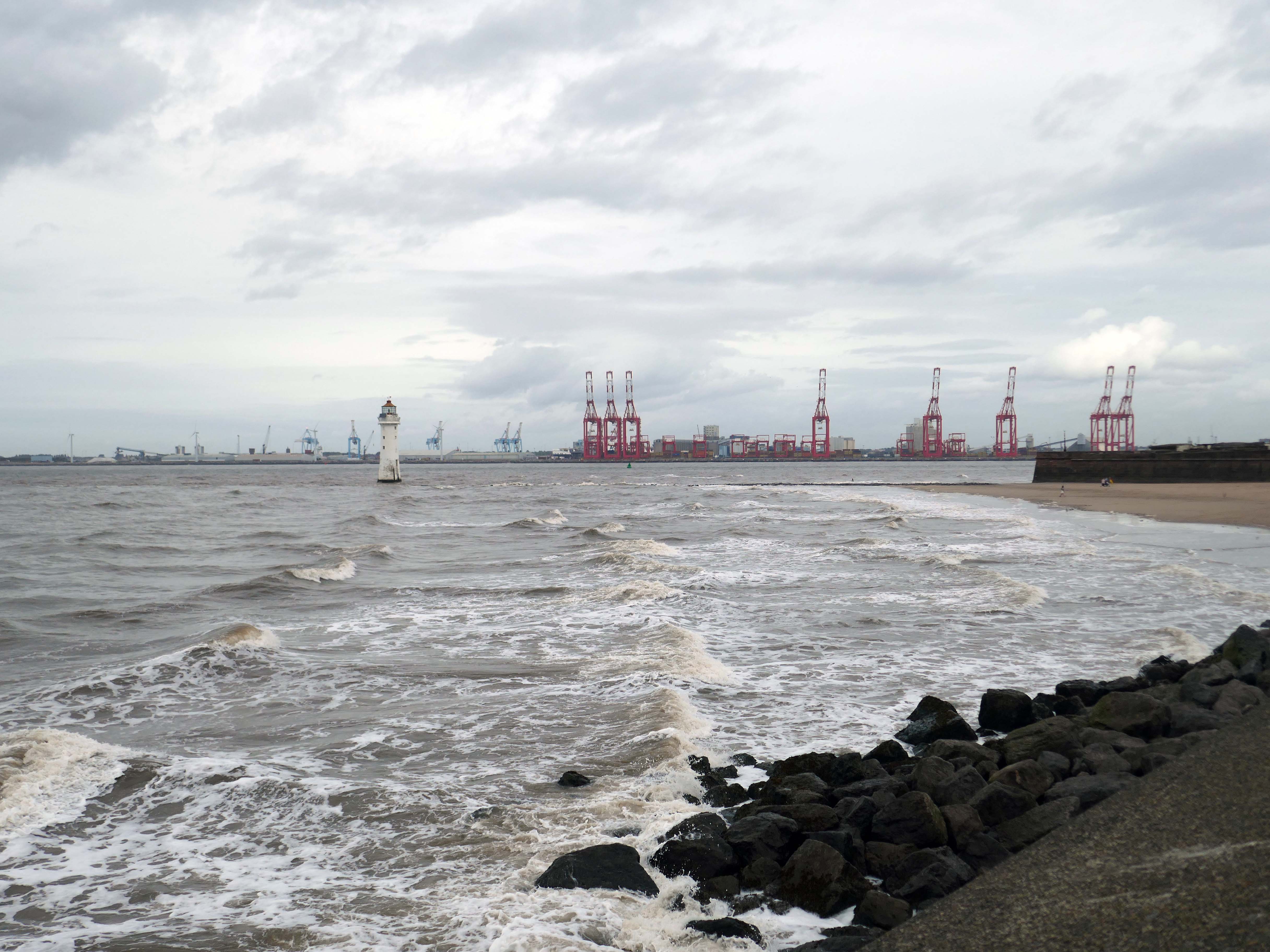
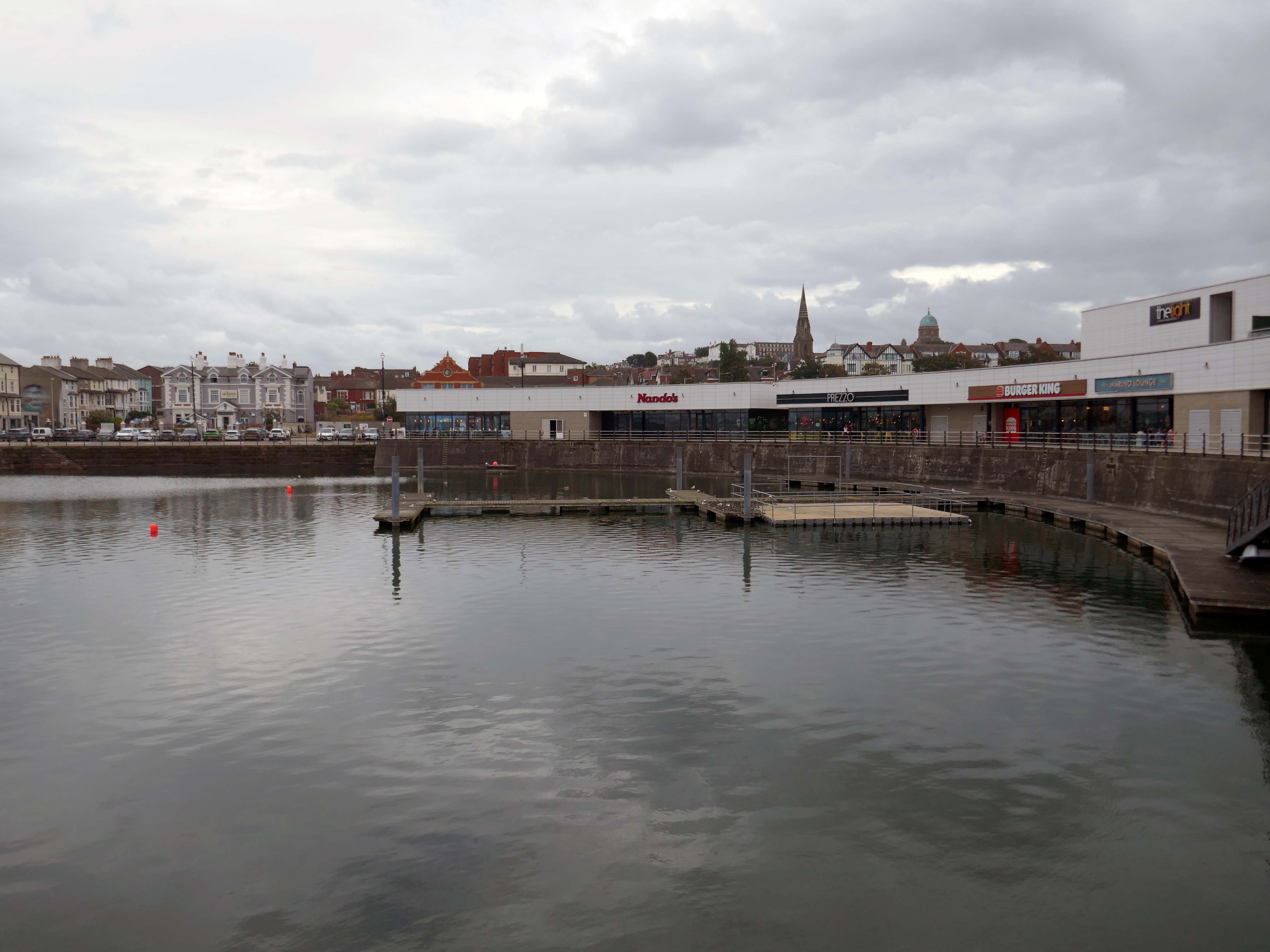
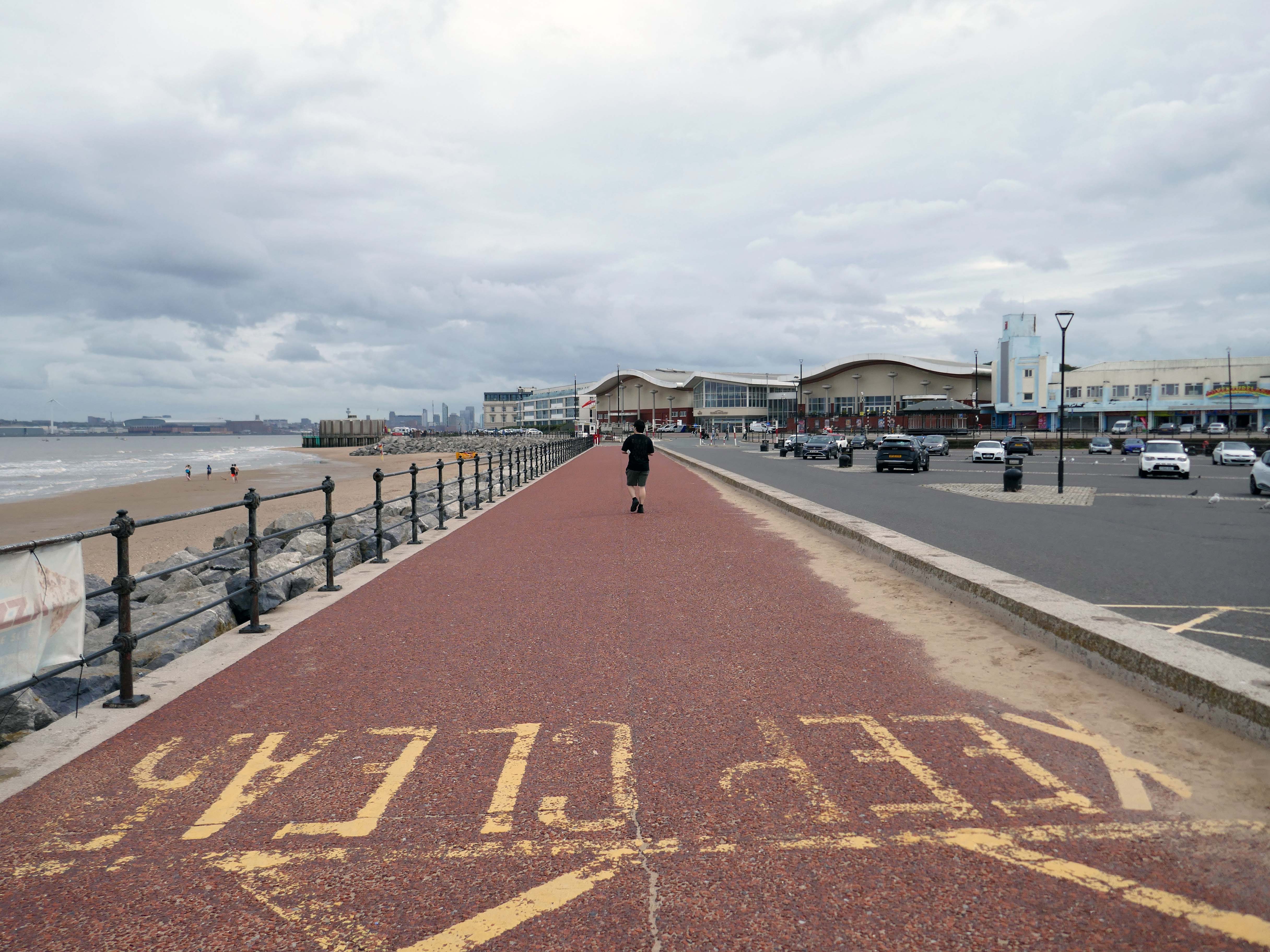
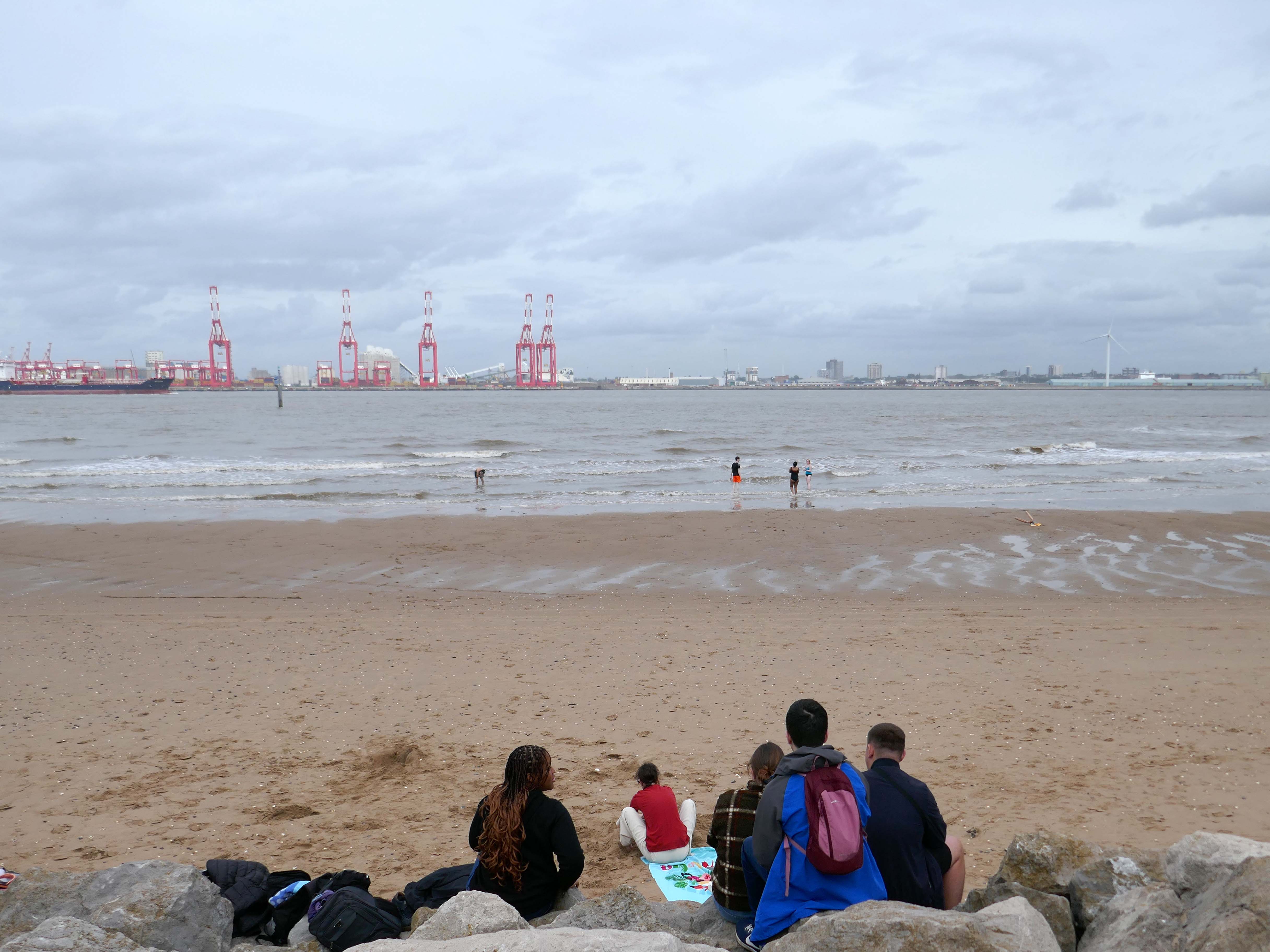
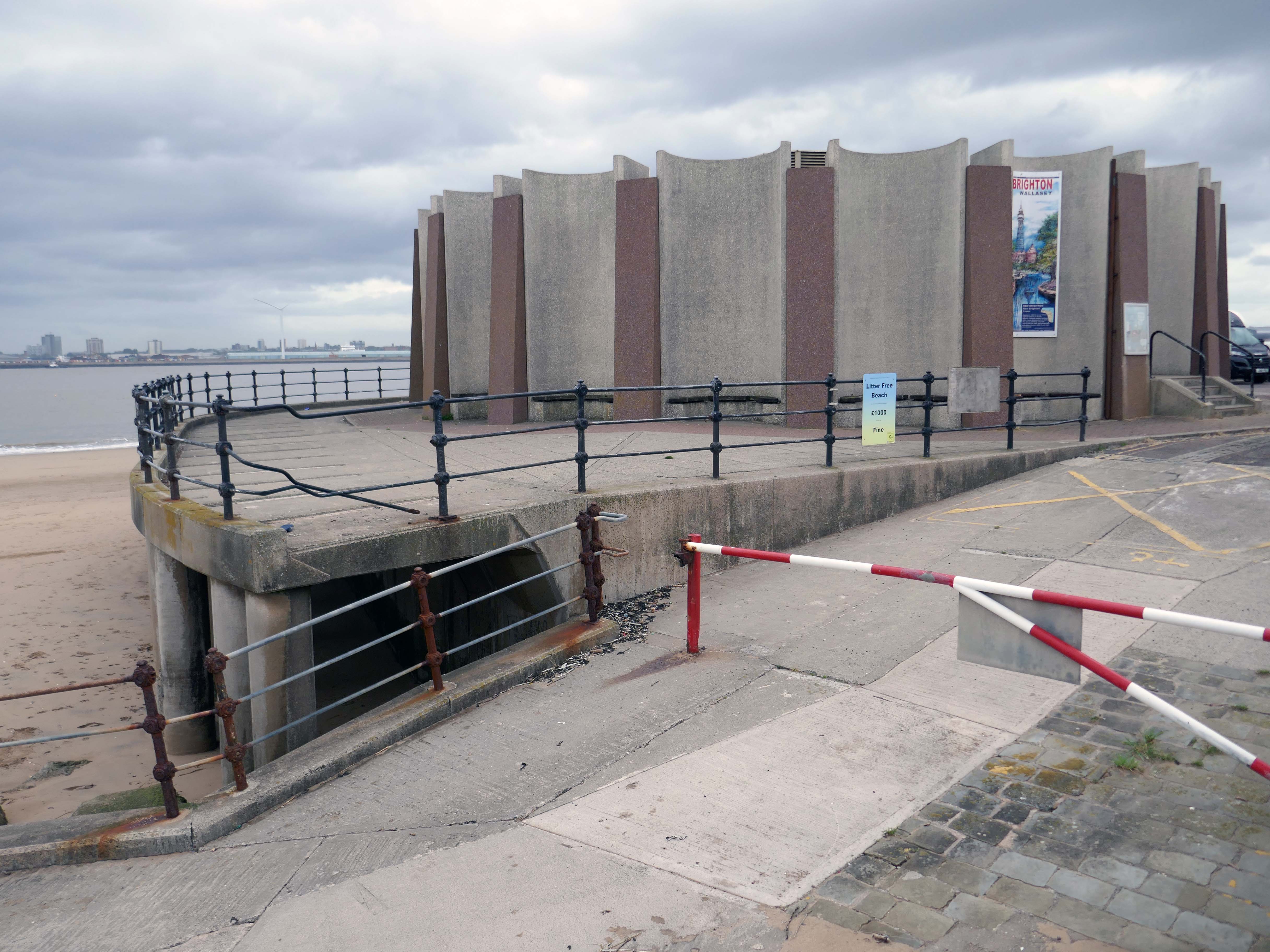
New Brighton in late summer – a little sun, a handful of visitors, and offshore breeze.
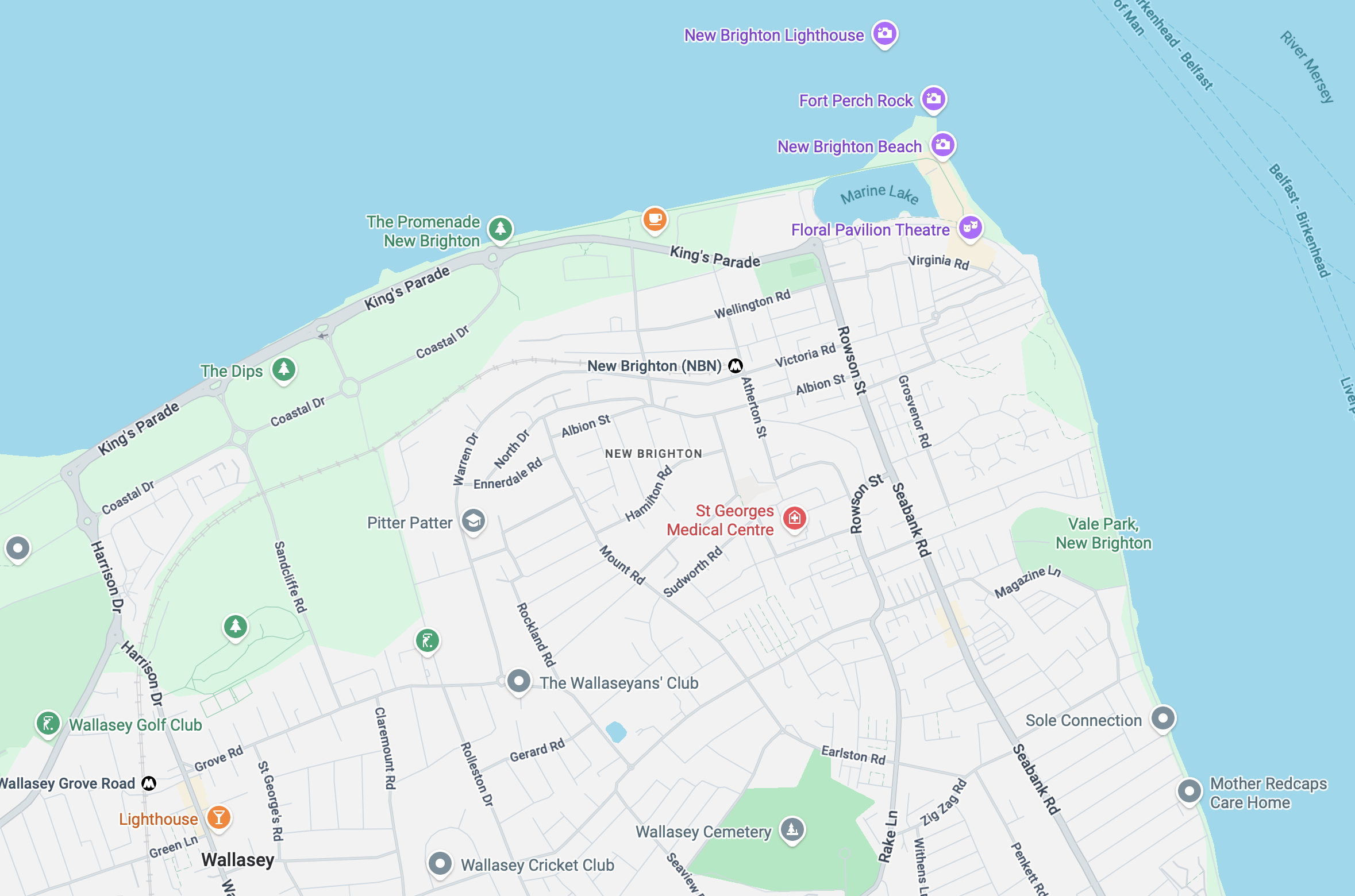
In 1830, a Liverpool merchant, James Atherton, purchased 170 acres of land at Rock Point, which enjoyed views out to sea and across the Mersey and had a good beach. His aim was to develop it as a desirable residential area and watering place for the gentry, similar to Brighton, one of the most elegant seaside resorts of that Regency period, hence the name “New Brighton”. Substantial development began soon afterwards, and housing began to spread up the hillside overlooking the estuary.
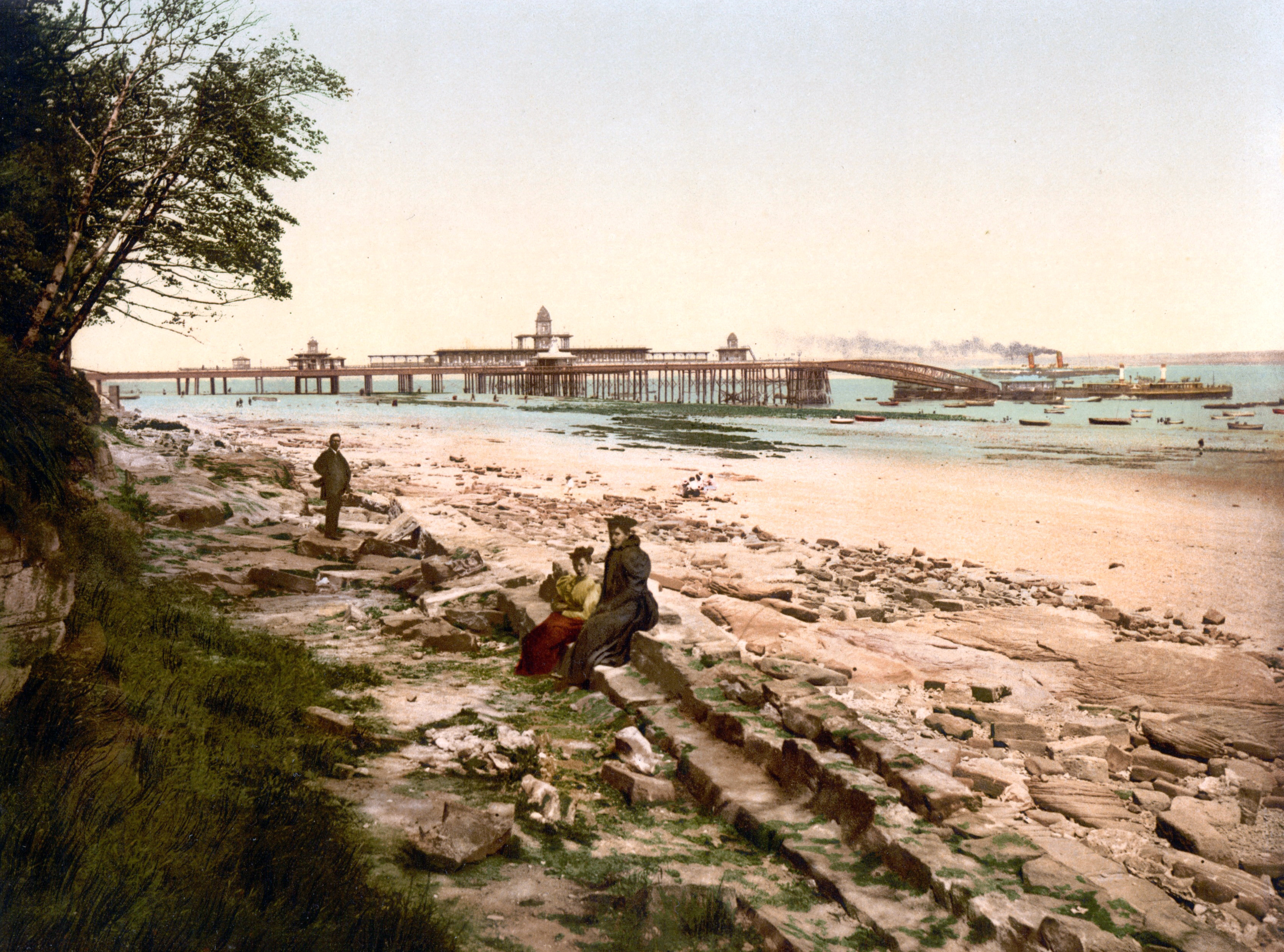
During the latter half of the nineteenth century, New Brighton developed as a very popular seaside resort serving Liverpool and the Lancashire industrial towns, and many of the large houses were converted to inexpensive hotels. Designed by the noted architect of seaside structures Eugenius Birch, the New Brighton Pier opened in 1867.
The promenade from Seacombe to New Brighton was completed by 1901.
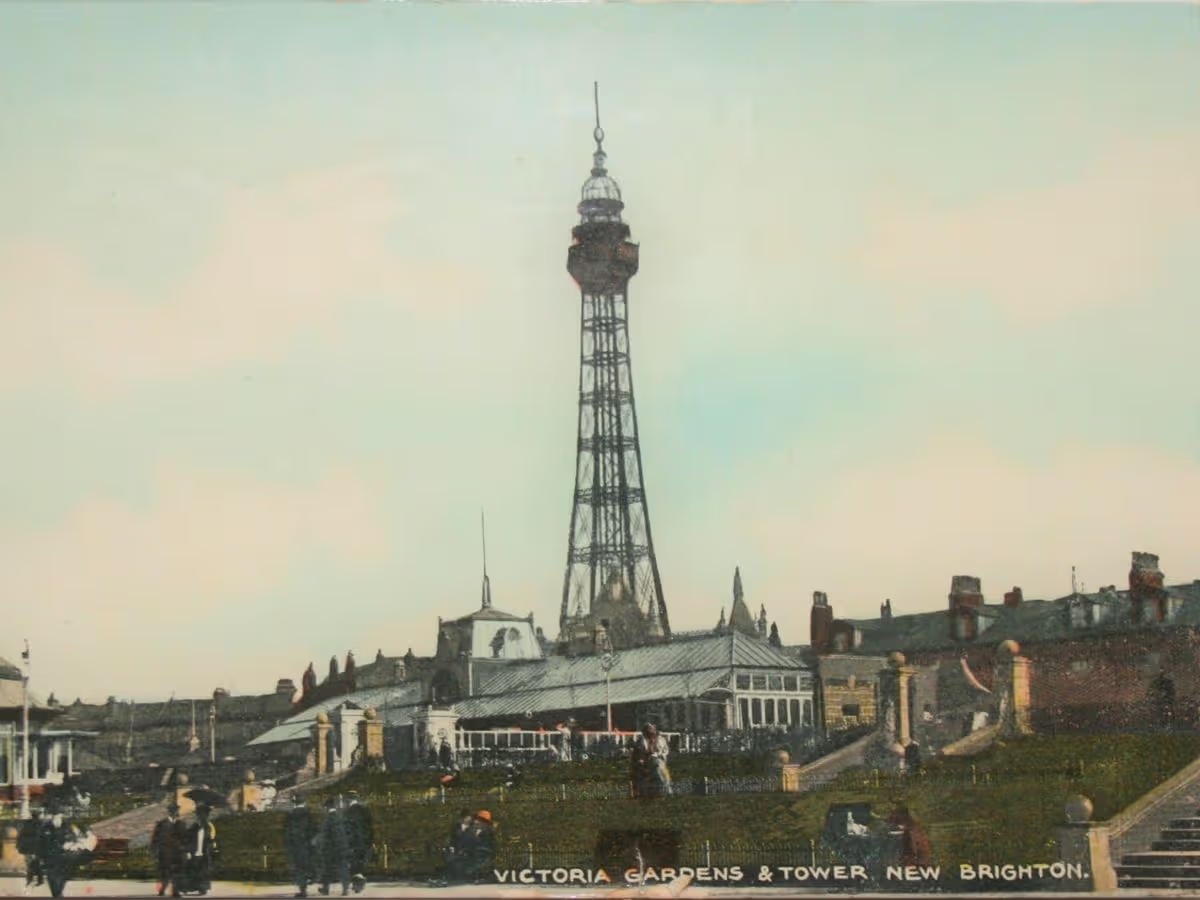
The New Brighton Tower, the tallest in the country, was opened in 1900 but closed in 1919, largely due to lack of maintenance during World War I, and had been dismantled by 1921.
After the Second World War, the popularity of New Brighton as a seaside resort declined dramatically. However, the Tower Ballroom continued as a major venue, hosting numerous concerts in the 1950s and 1960s by local Liverpool groups such as The Beatles, and international stars.
The Tower Ballroom continued in use until it was destroyed by a fire in 1969.
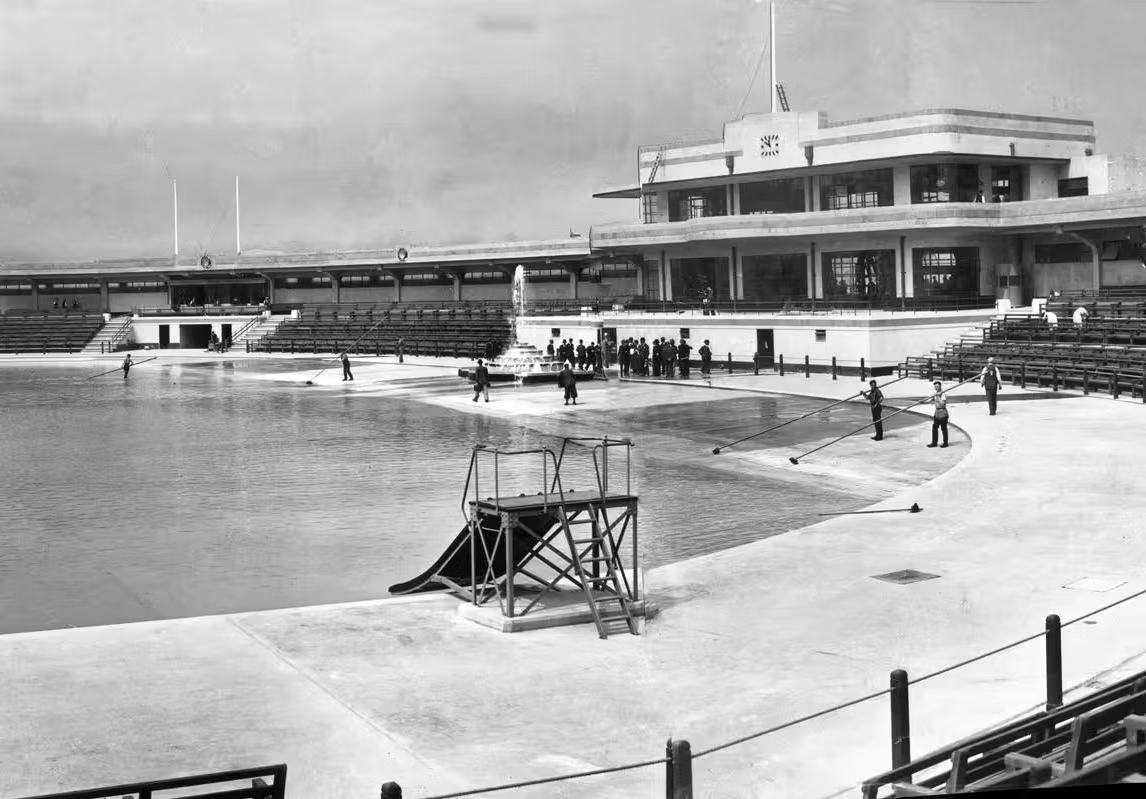
New Brighton’s Art Deco Lido, was opened on 13 June 1934 by Viscount Leverhulme. When it was built, it was the largest lido in Britain, at a cost of £90,000, designed byWallasey County-Borough Engineer L St. G Wilkinson
The saltwater pool survived until 1990, when it was damaged during a storm and later demolished
The New Palace and Adventureland on the famous Promenade at New Brighton, Wirral, offers a tremendous range of family fun-filled entertainment and activities.
The traditional family amusement arcade, The Bright Spot, has something for everyone including state of the art video driving, adventure and shooting simulators, dance games, plus the always popular slots and ‘pushers’, as well as mini-bowling and toy-grabbers.
Special mention must go to long time New Brighton resident Photie ManTom Wood.
Opened in 1971, the site consists of about five hundred acres
Technological changes, such as containerisation, caused the loss of numerous jobs on the docks. In the 21st century, the dock handles mainly containers, oils, timber, fruit and vegetables, grain and animal feed.
Designed by John Foster Jr, construction of the present tower began in 1827 by Tomkinson & Company using blocks of interlocking Anglesey granite using dovetail joints and marble dowels.
The lighthouse was in continuous use until it was decommissioned in October 1973, having been superseded by modern navigational technology.
In 1803 Liverpool merchants concerned about a possible invasion by the French during the Napoleonic wars put forward the idea of a fort at New Brighton. Naturally there weredisputes about how it was to be financed and consequently construction didn’t get under way until 1826.
It was completed three years later. It was built out of red sandstone blocks on a base of sandstone rocks, confusingly known as the Black Rocks.
Designed by a Captain John Sikes Kitson of the Royal Engineers, it had room for 100 men plus officers with adequate provisions and armaments. It had eighteen guns, sixteen of which were thirty two-pounders and they faced the Rock Channel that was the main entrance for shipping to the Mersey at that time. The ships passed nine hundred yards from the guns and the fort soon became known as the “Little Gibraltar of the Mersey”.
The fort was decommissioned by the War Office 1956 and passed through various hands until it was sold to the Darroch family who are the current custodians.
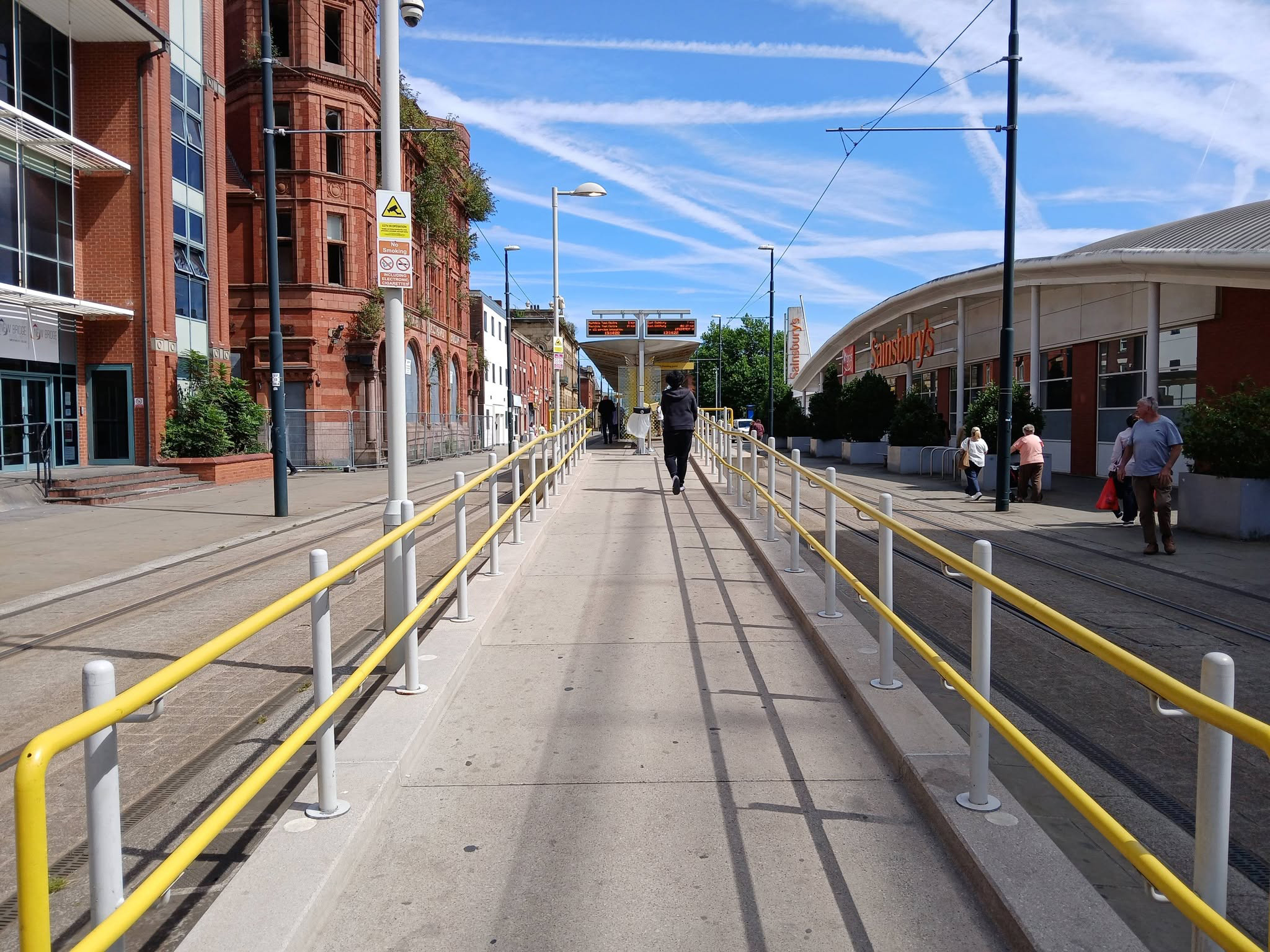
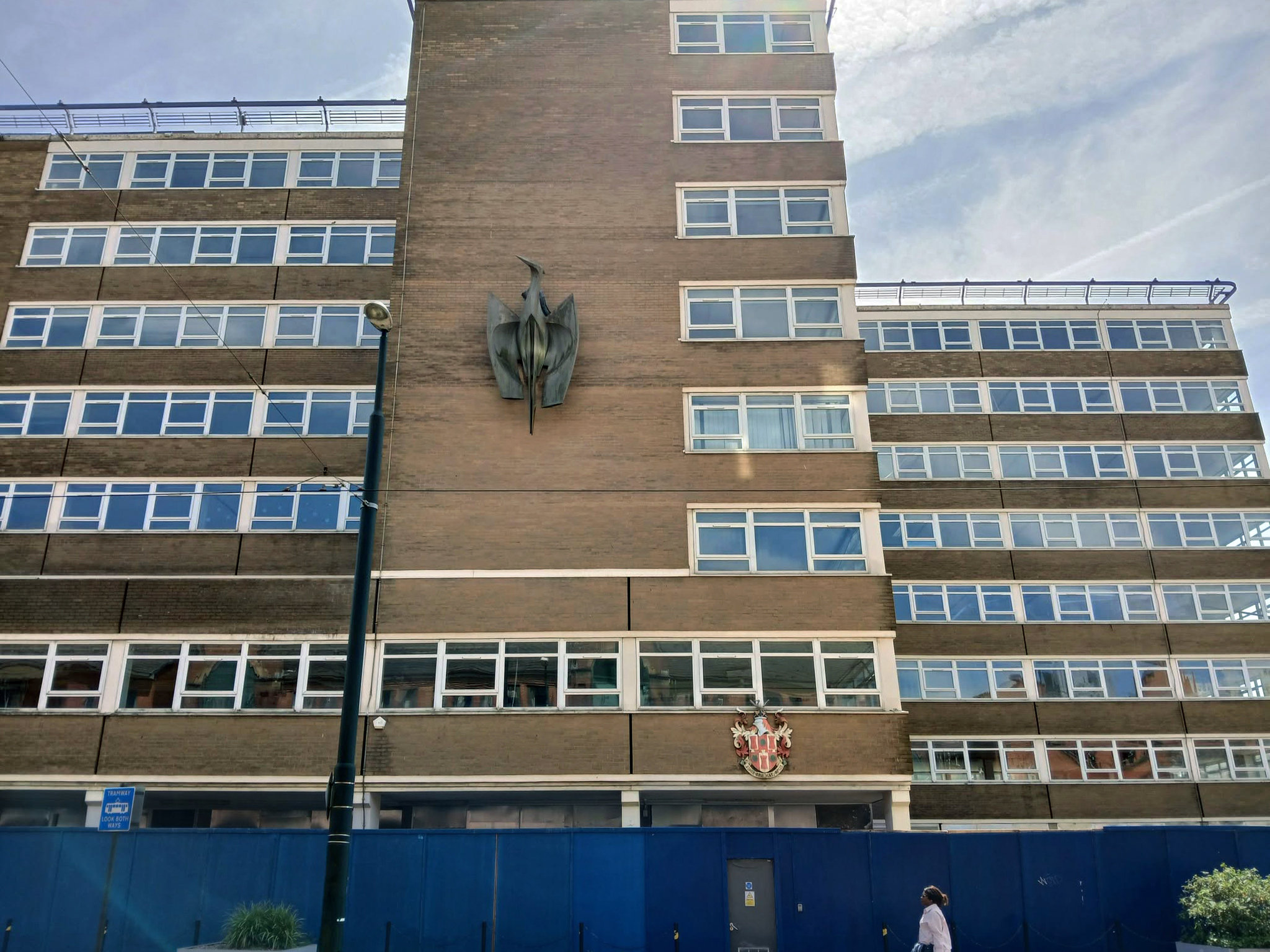
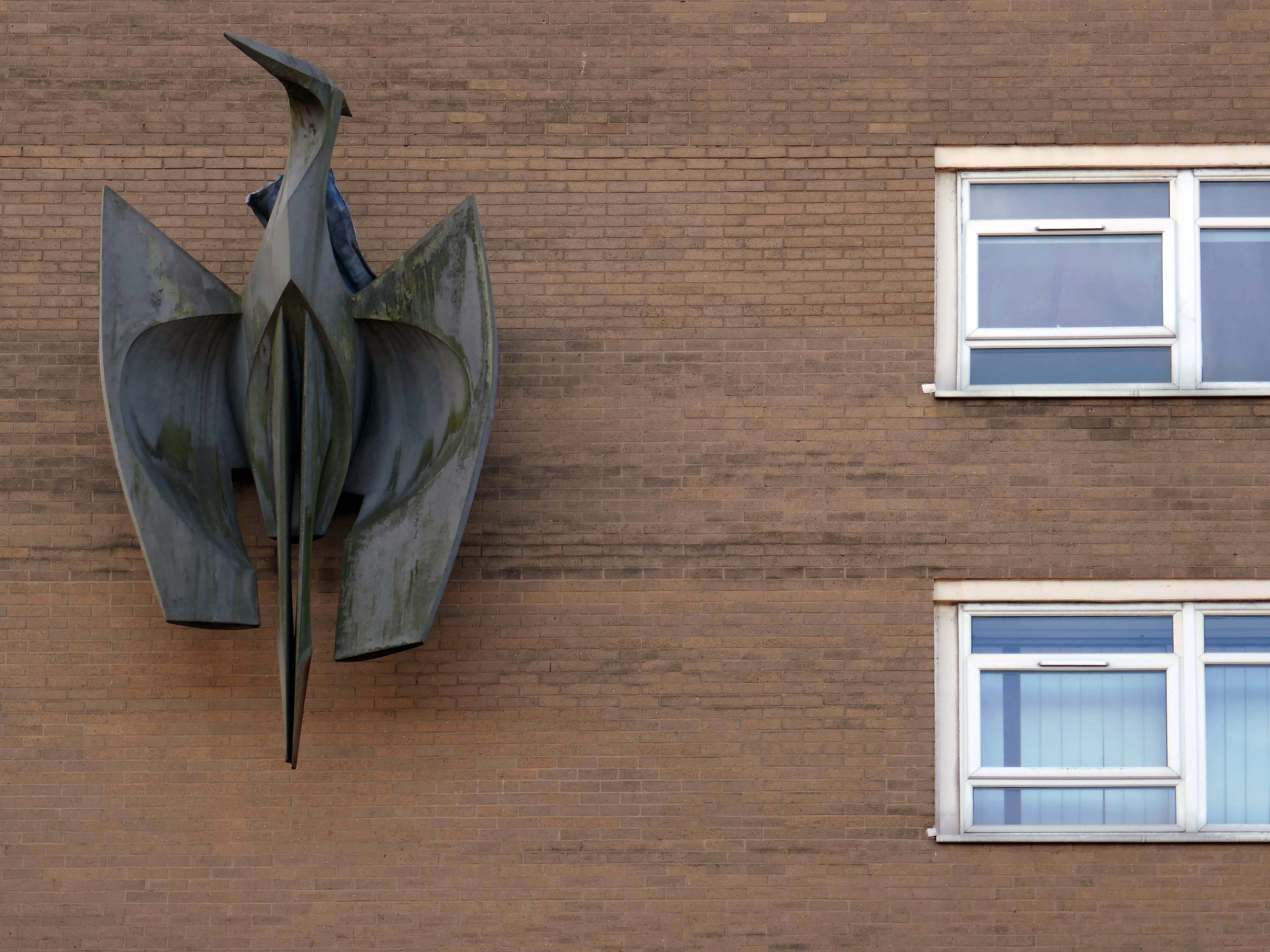
Back tracking toward Phoenix House – with its implausible heron.
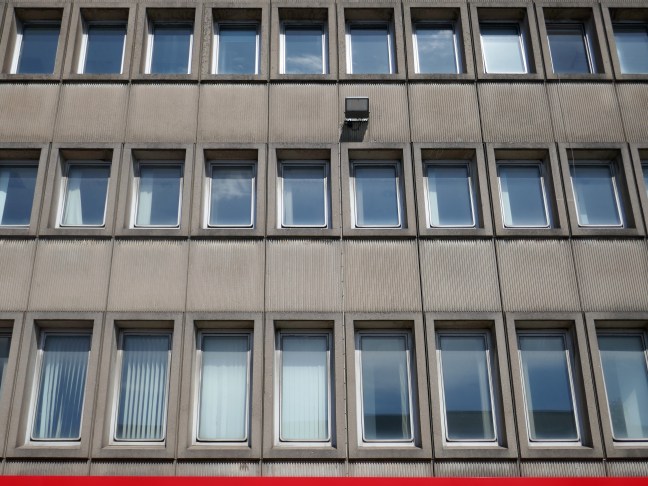
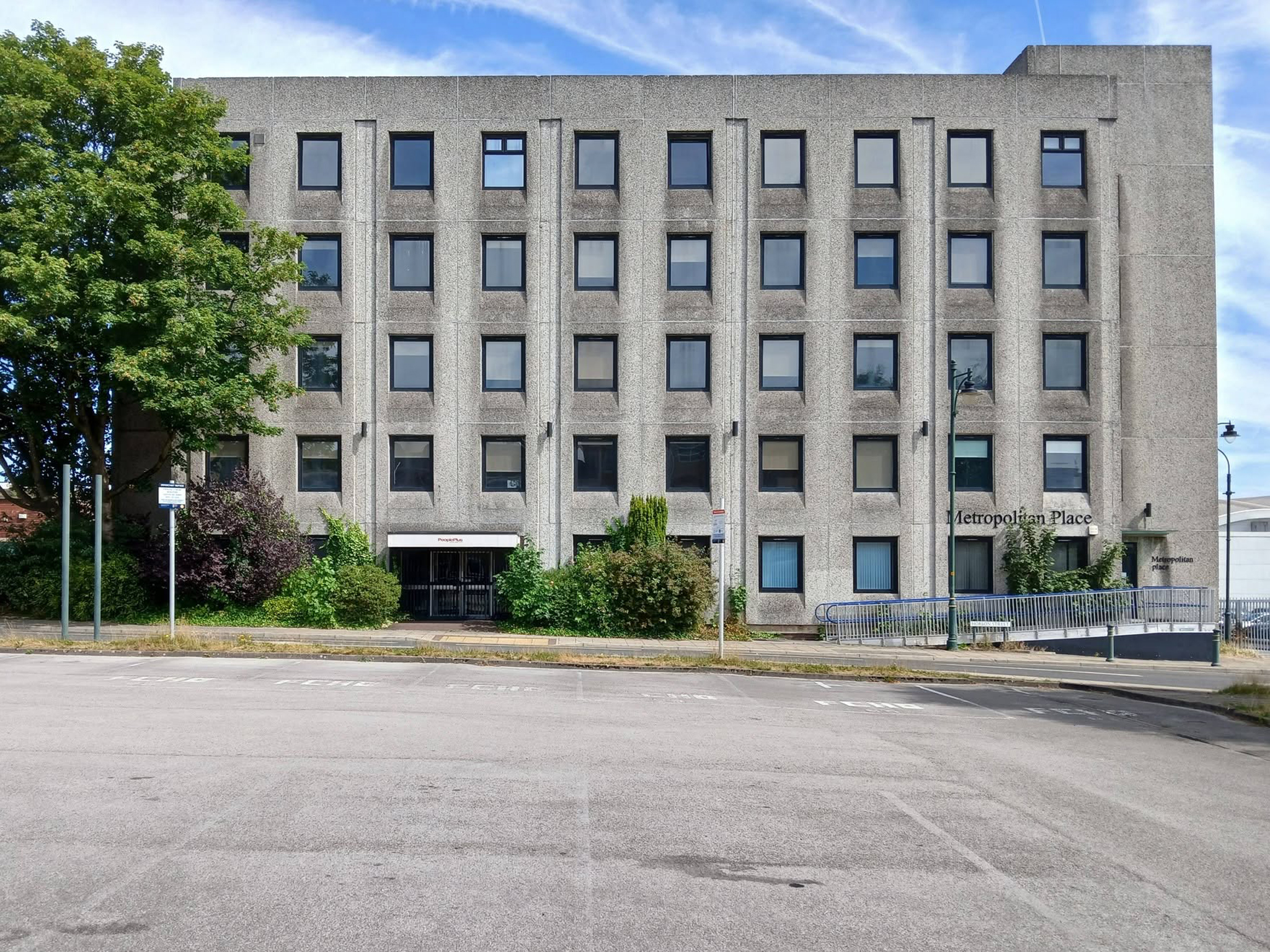
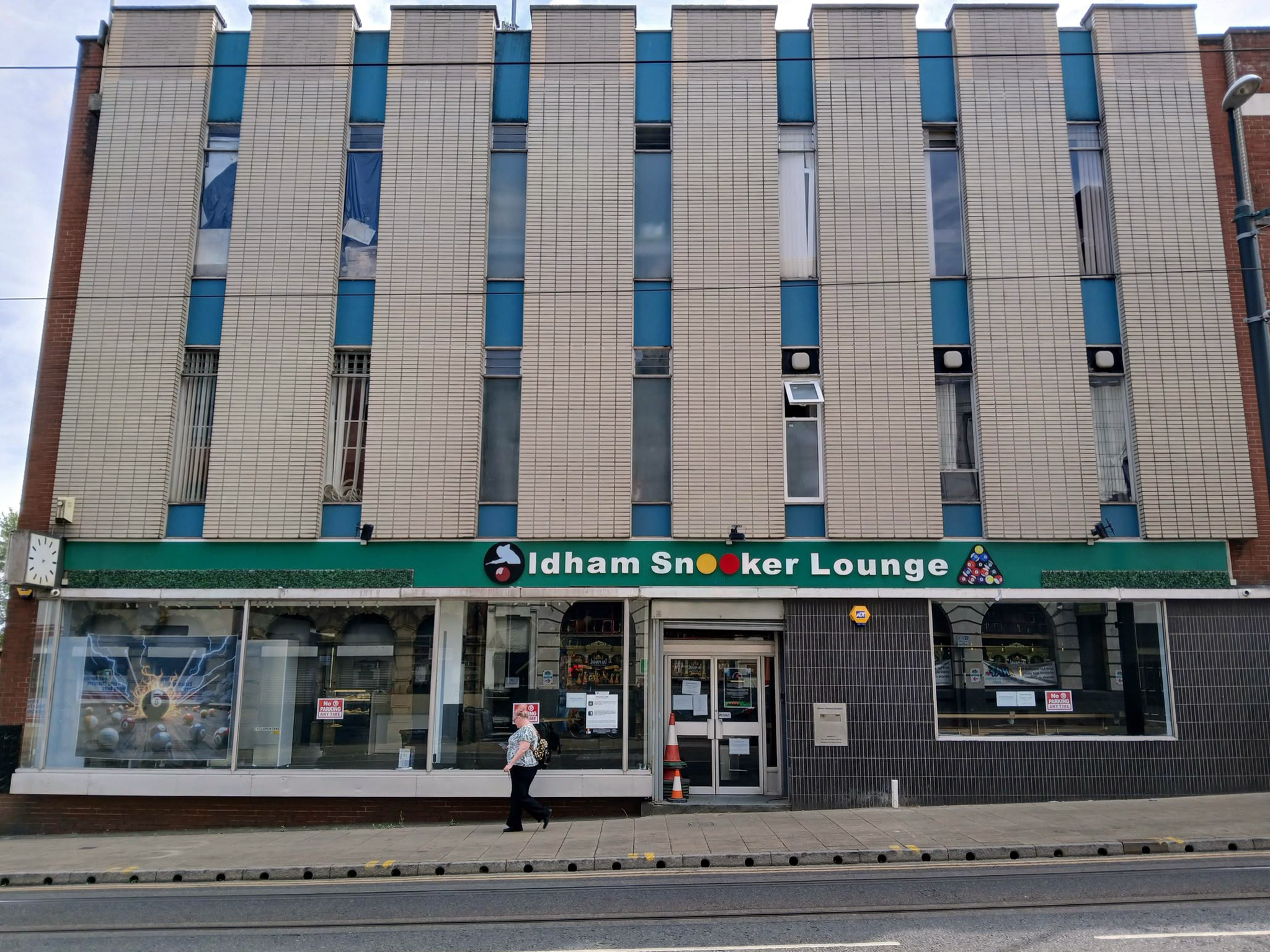
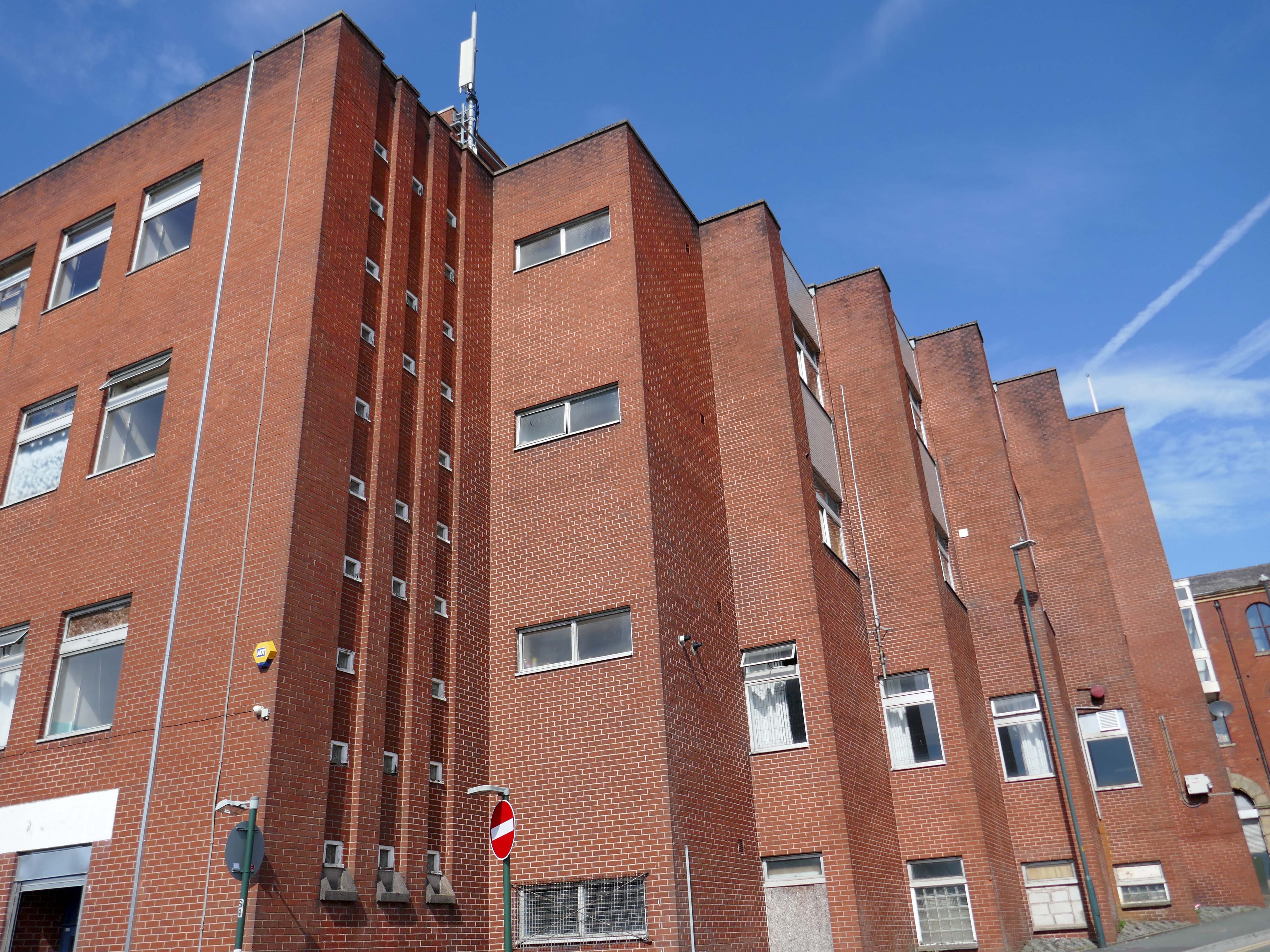
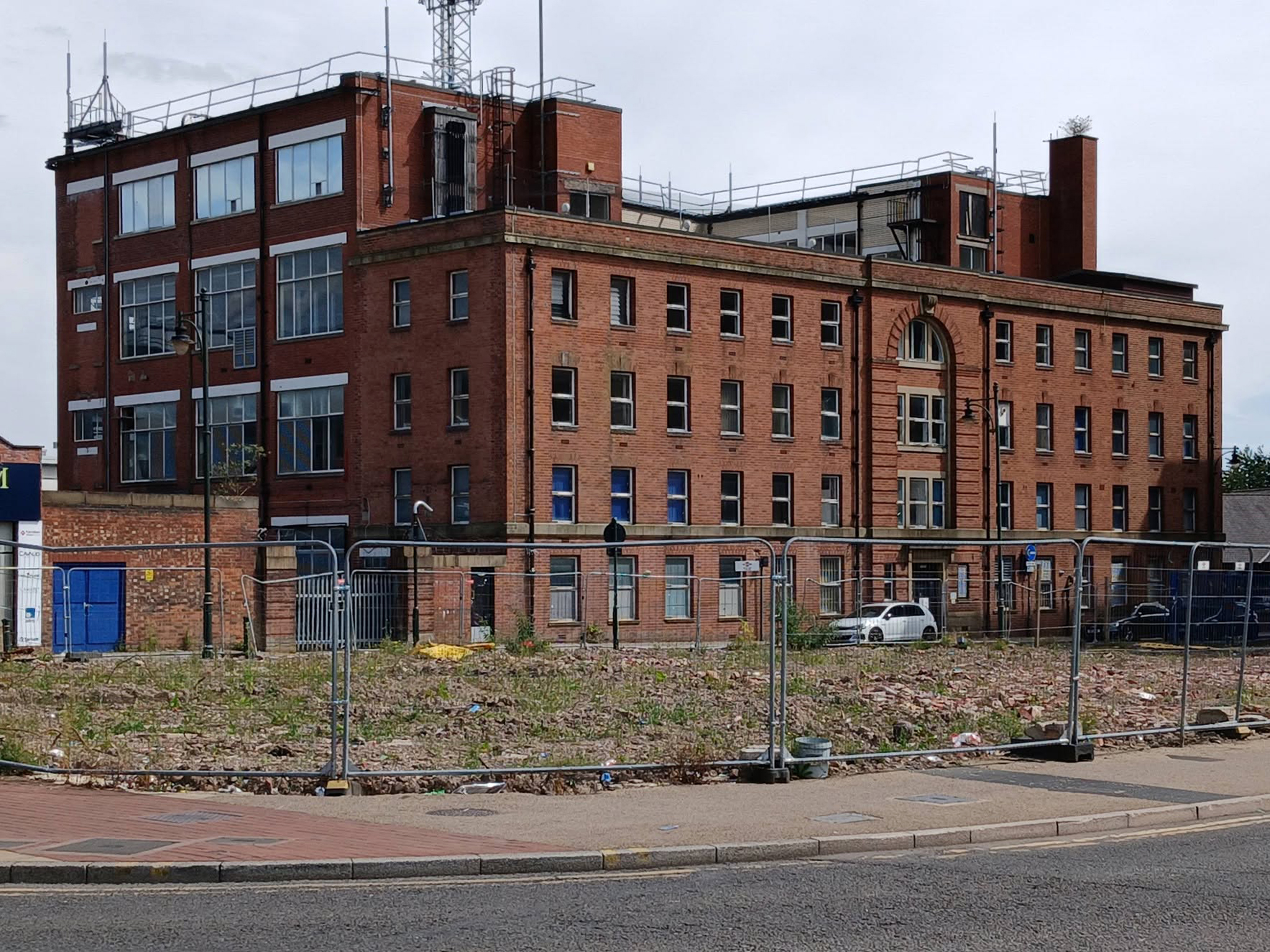
It’s been four years since the Department of Work and Pensions left their Union Street office and eighteen months since plans were submitted to turn it into eighty two flats.
However, apart from hoardings being installed around the building, there doesn’t appear to have been much movement at the site – at least not legally.
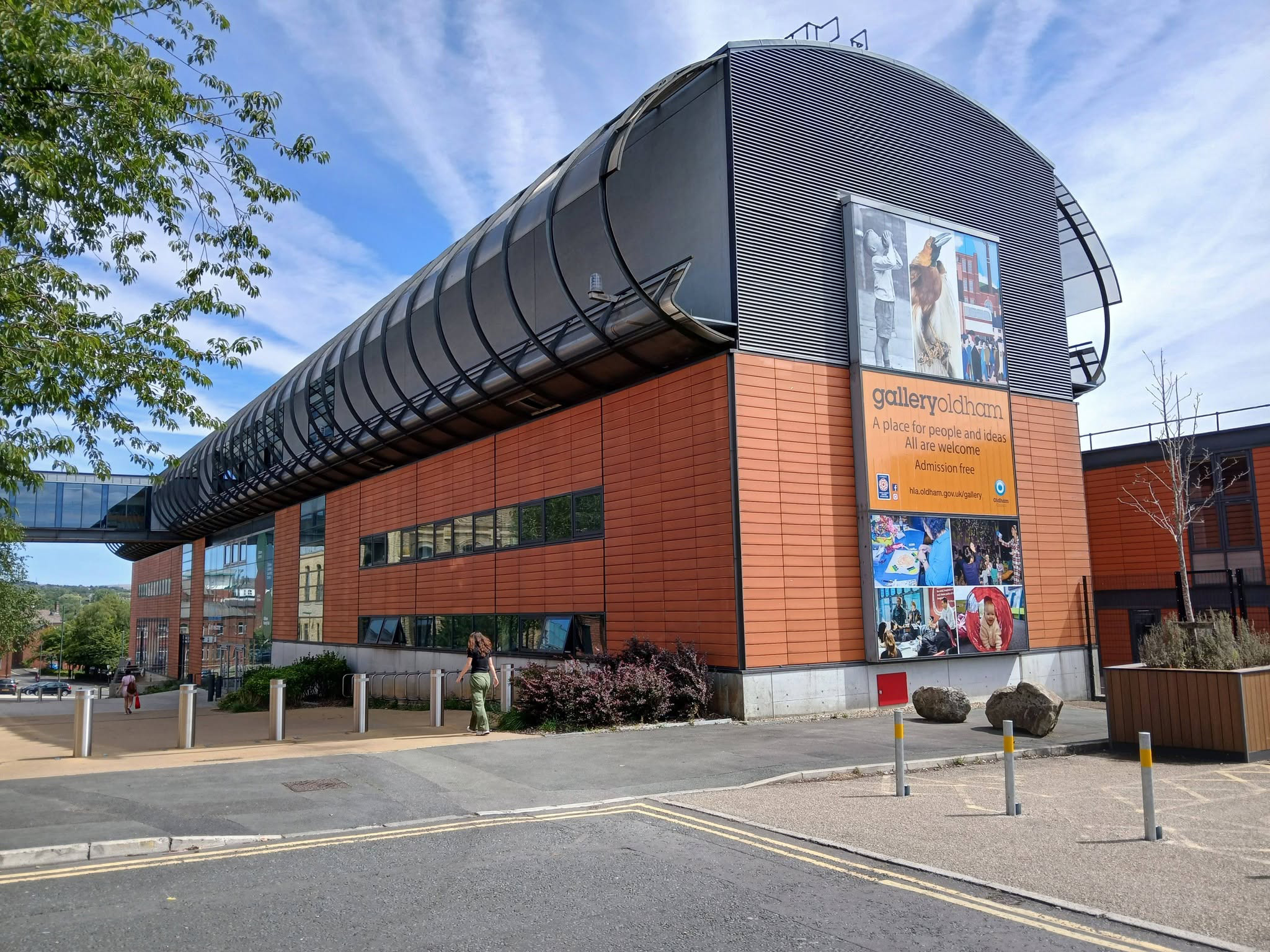
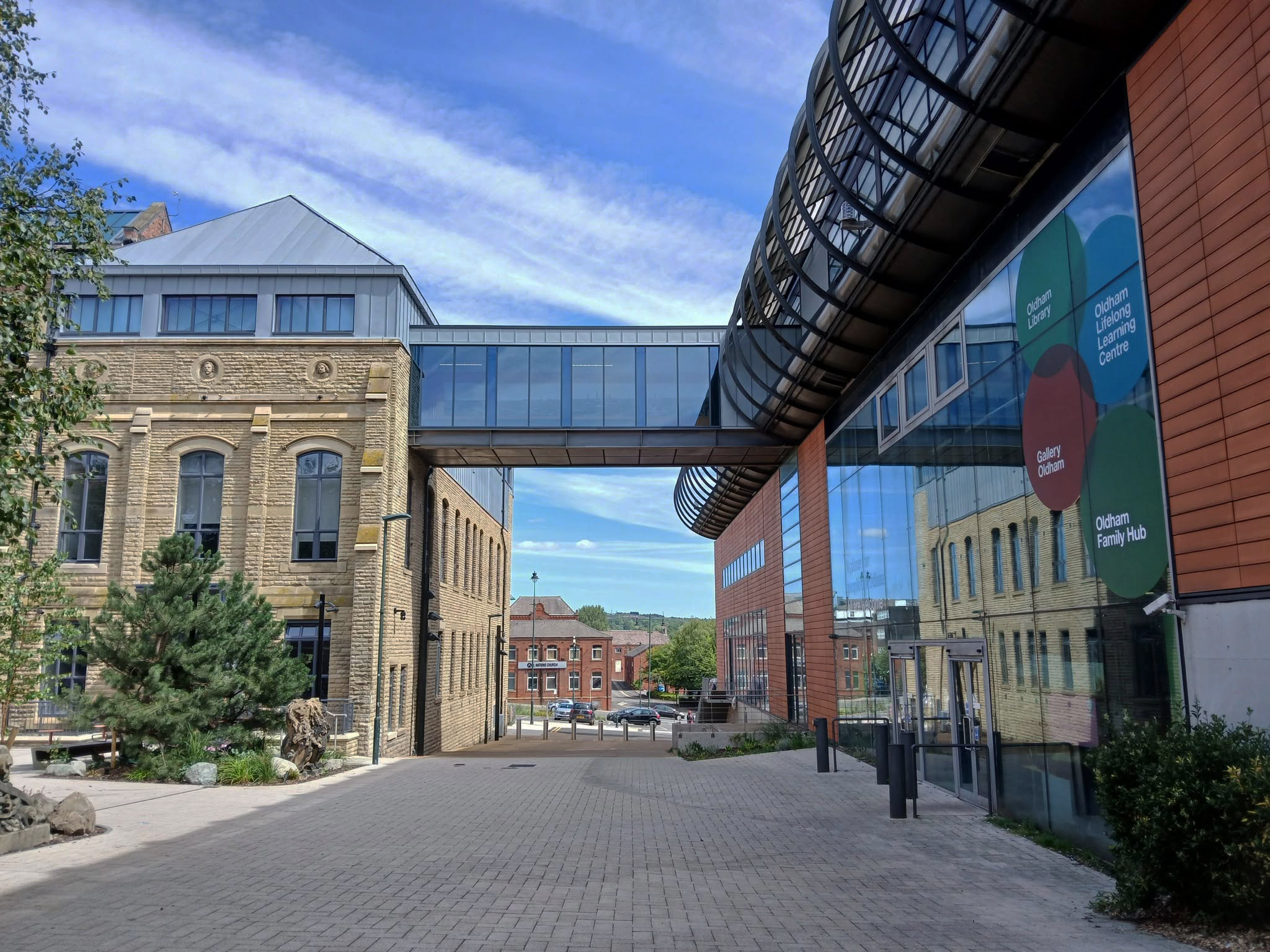
Linking to the older Library and Art Gallery 1883 T Mitchell with sculpture by JJ Milson.
Today the building has been restored to include the Council Chamber and Mayor’s Dining Room, public exhibition spaces and a new home for Oldham Theatre Workshop.
The Old Library is one of the earliest examples of an ashlar faced, in-situ formed concrete multi story building.
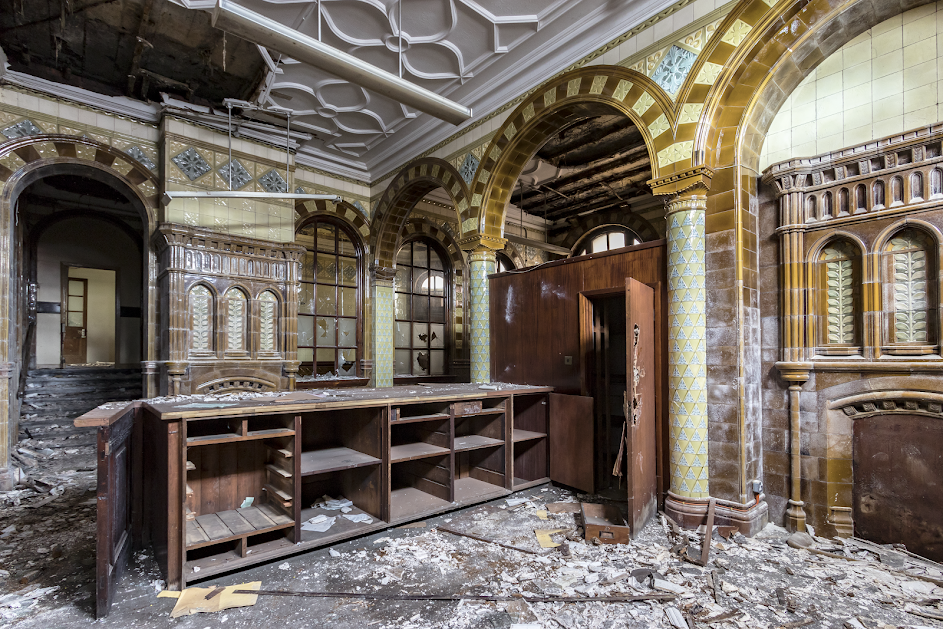
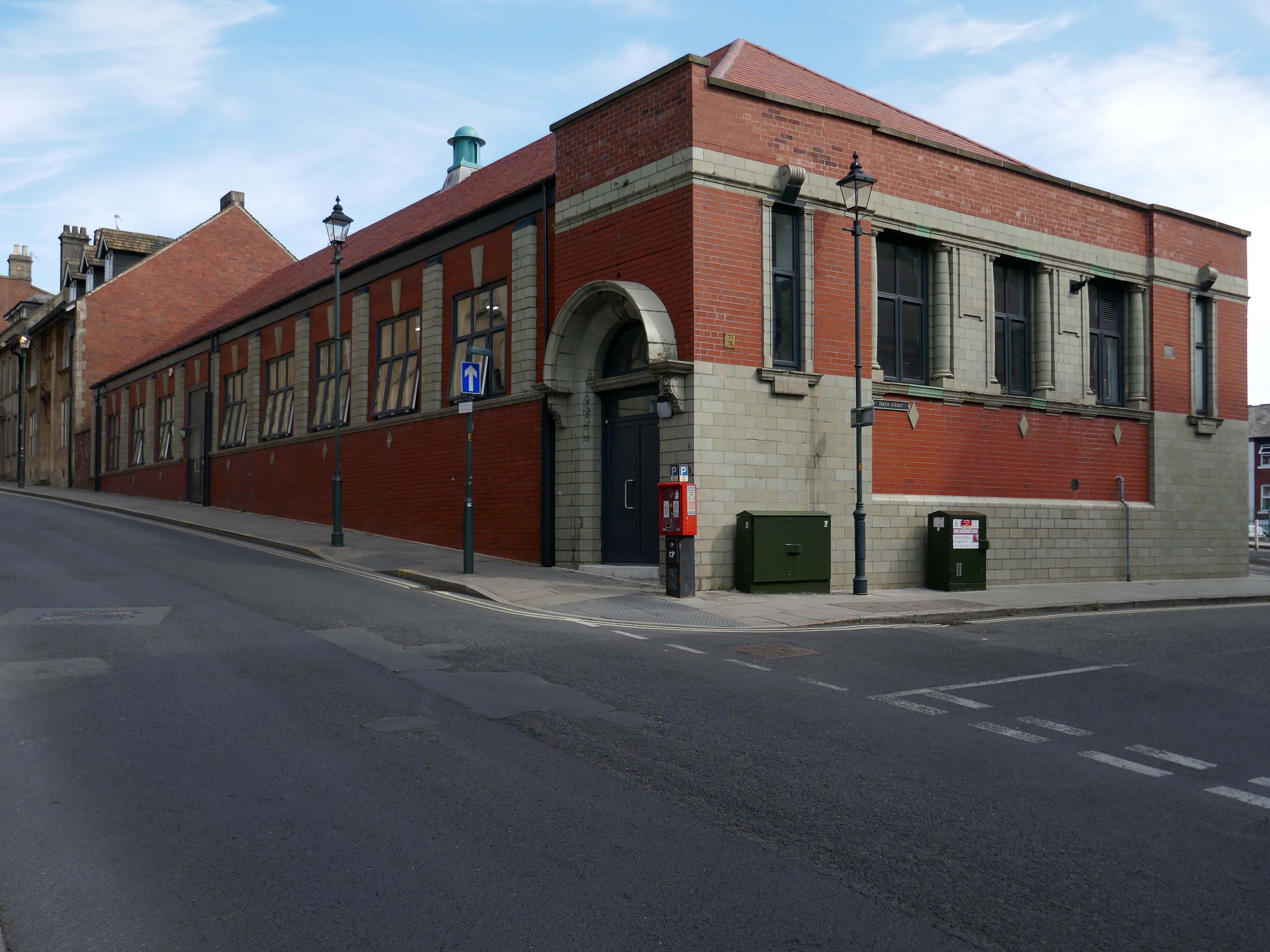
Take a turn up Greaves Street and here’s a faience clad Victoria Housea former Billiard Club 1912 Winder & Taylor – subsequently the hall was used as council housing offices and a college before becoming vacant.
Oldham Boxing moved into the building in 2011.
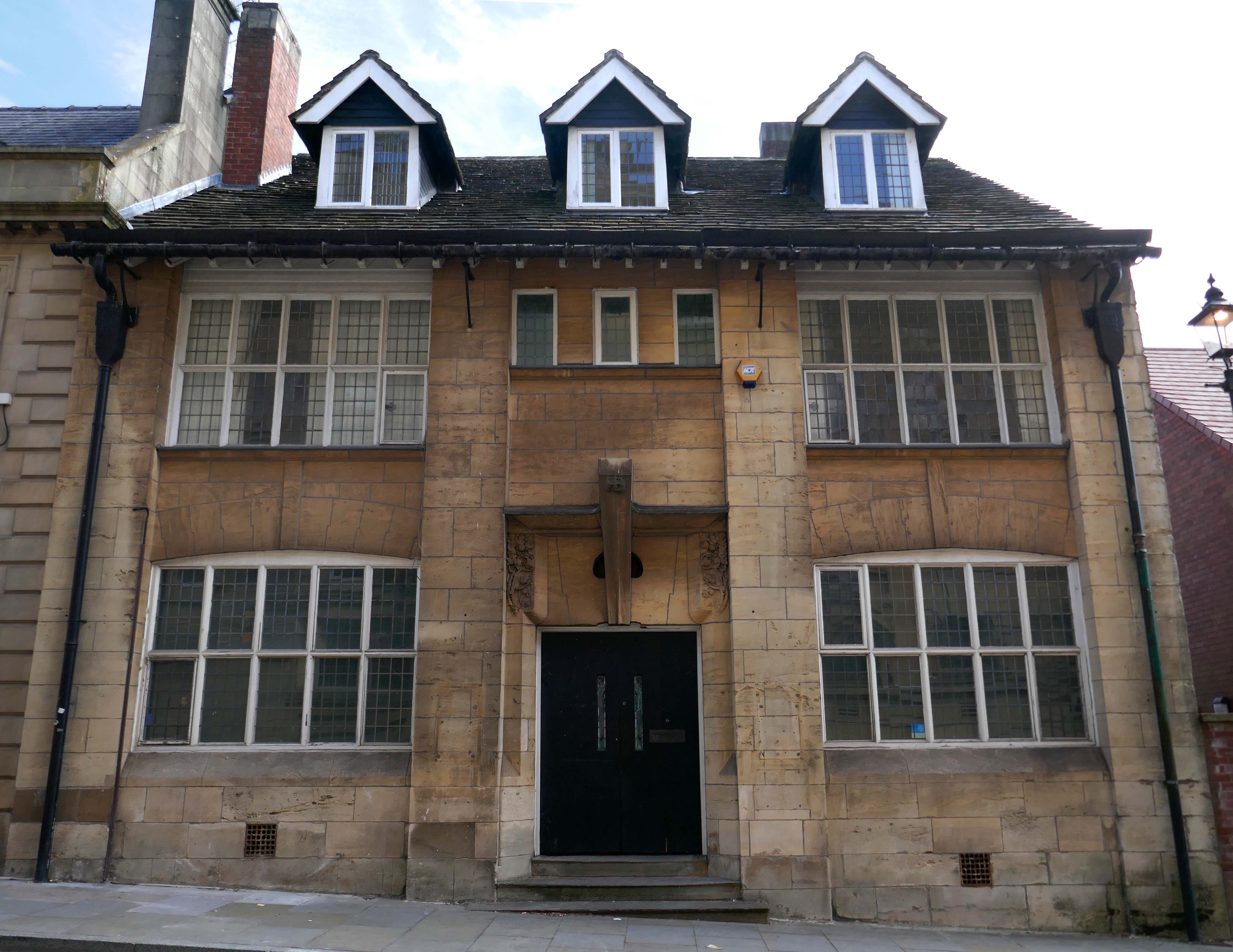
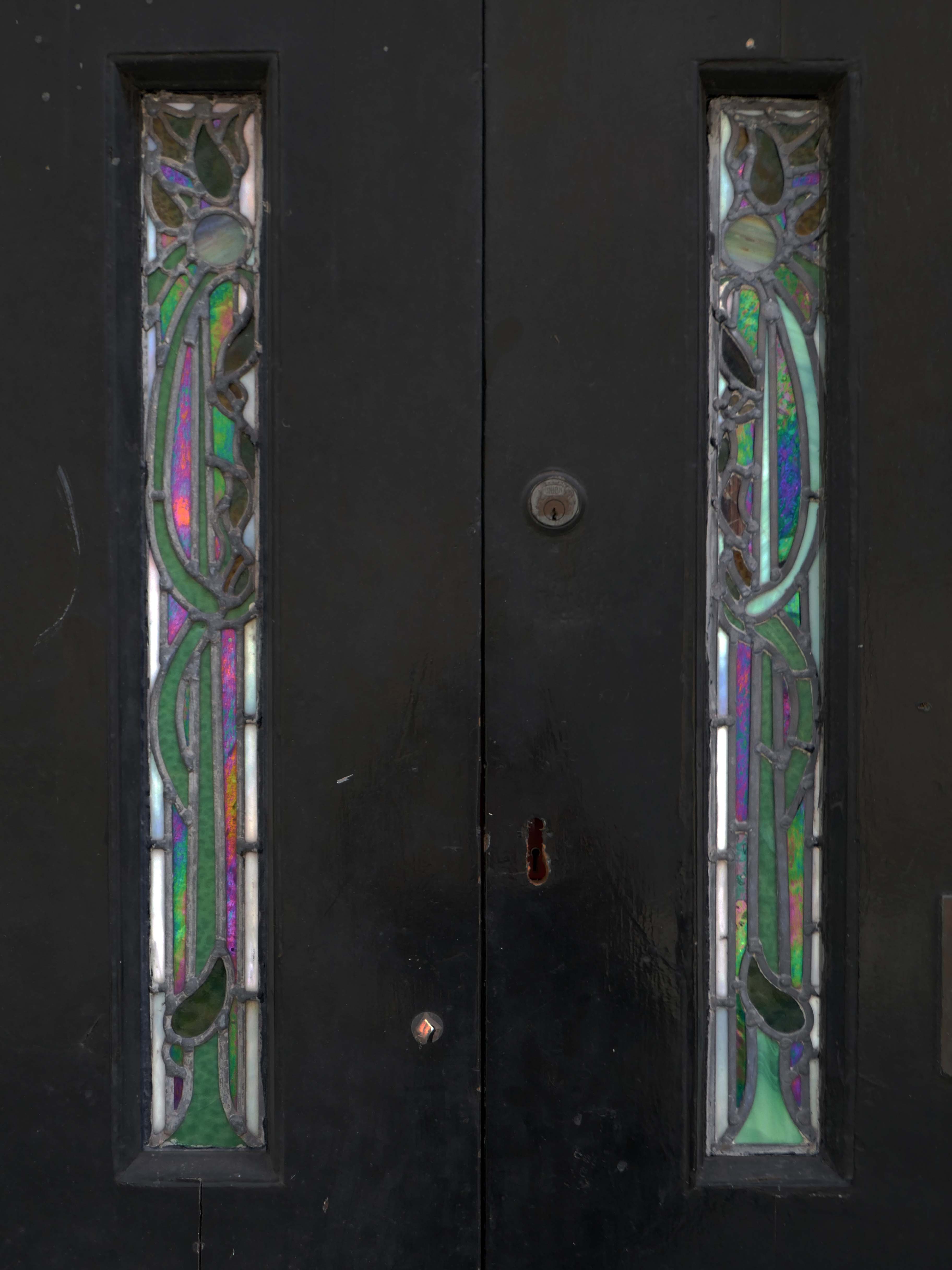
Next door a Ponsonby And Carlile Solicitors Office 1902 Edgar Wood – Grade II Listed.
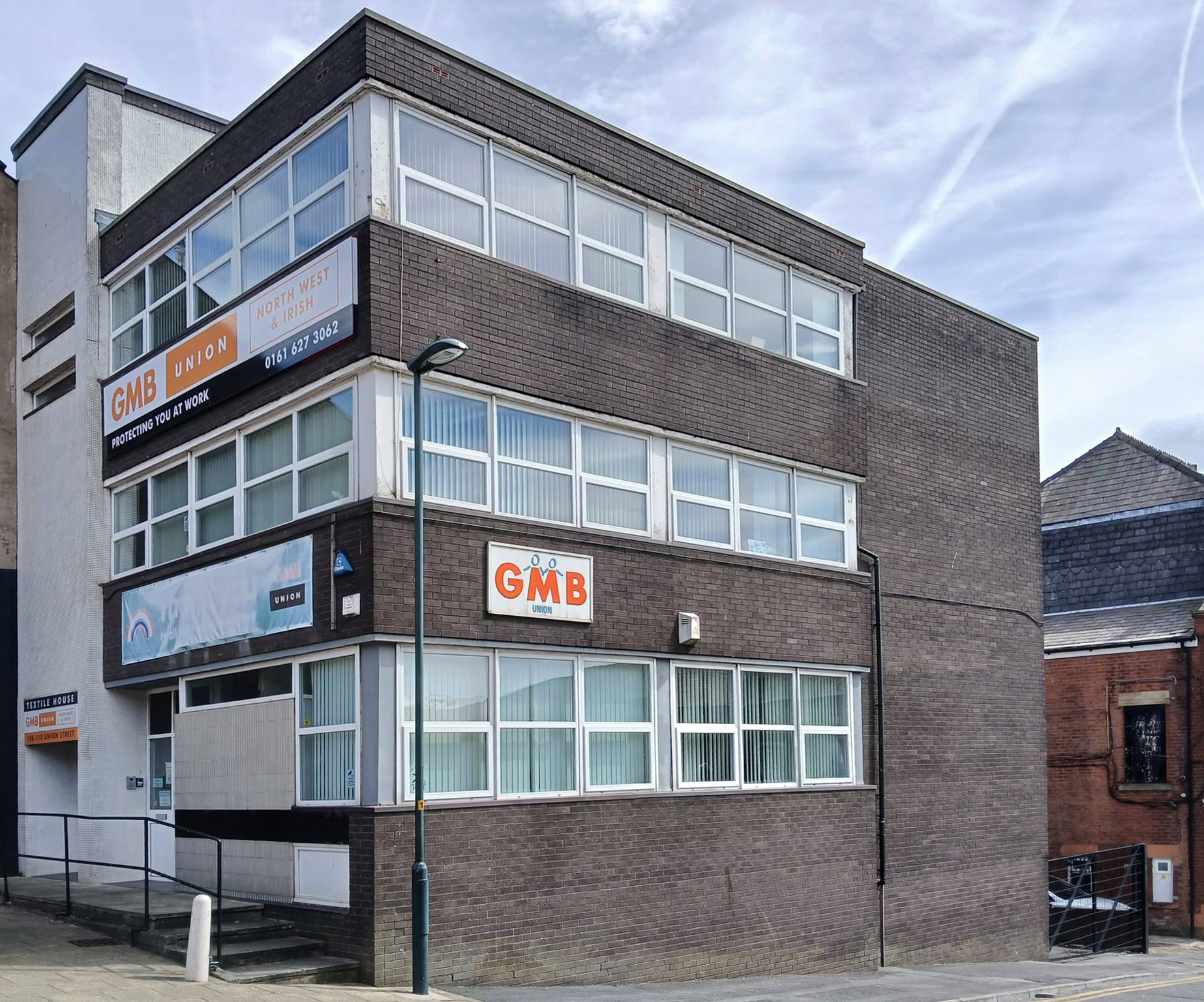
Back now onto Union Street and the GMB Offices.
Onwards to the former Oldham Evening Chronicle
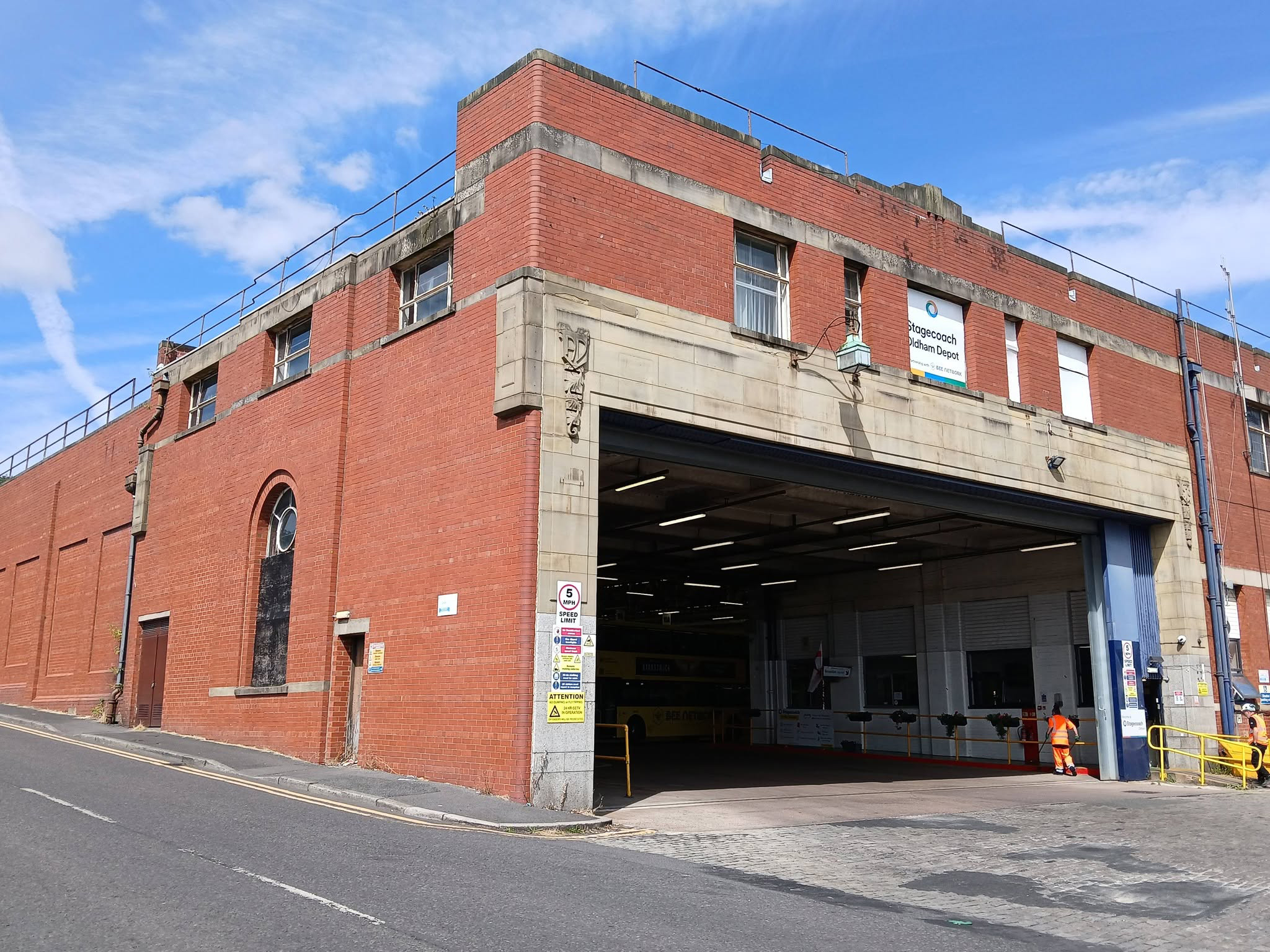
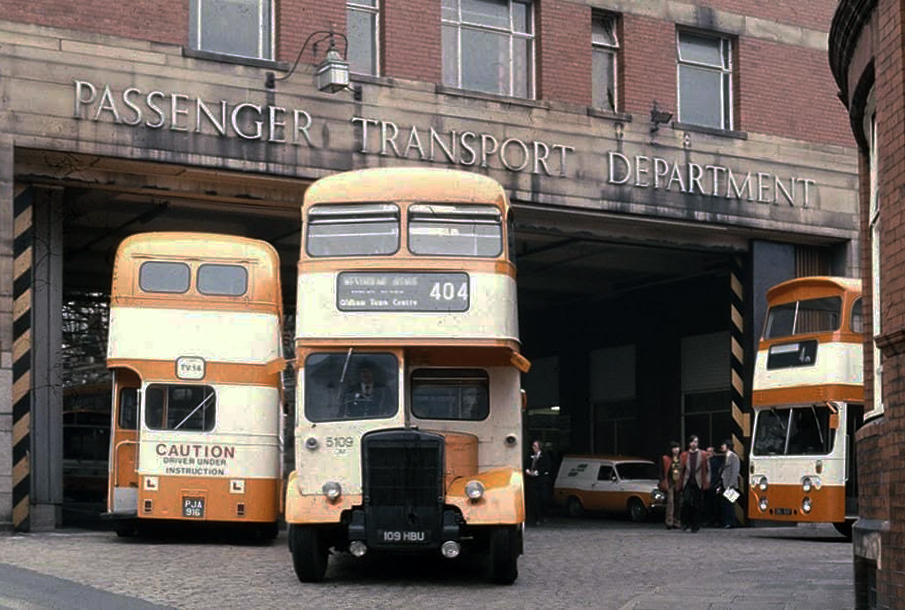
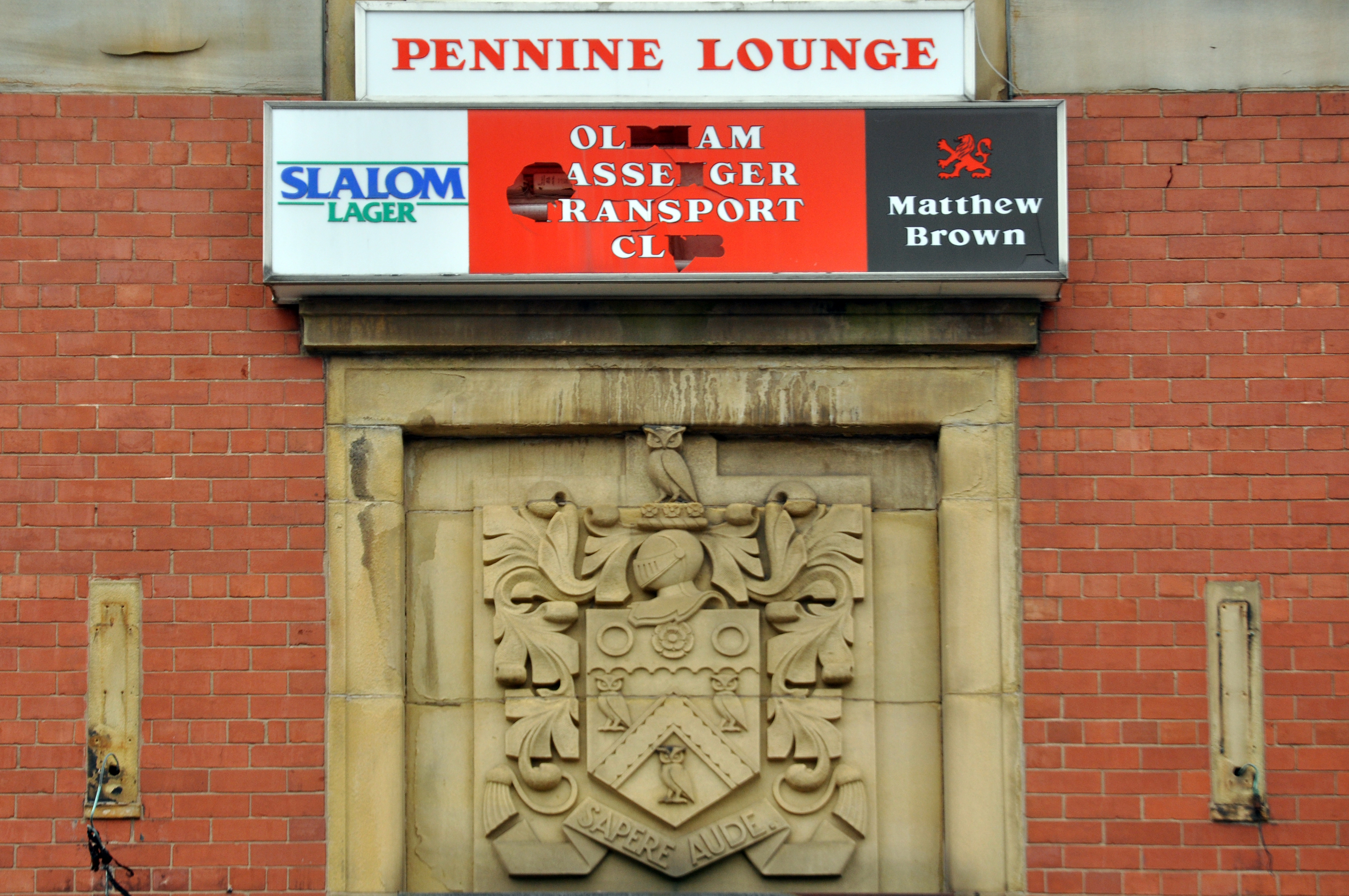
Down the hill and left to the Walshaw Street Bus Depot 1936
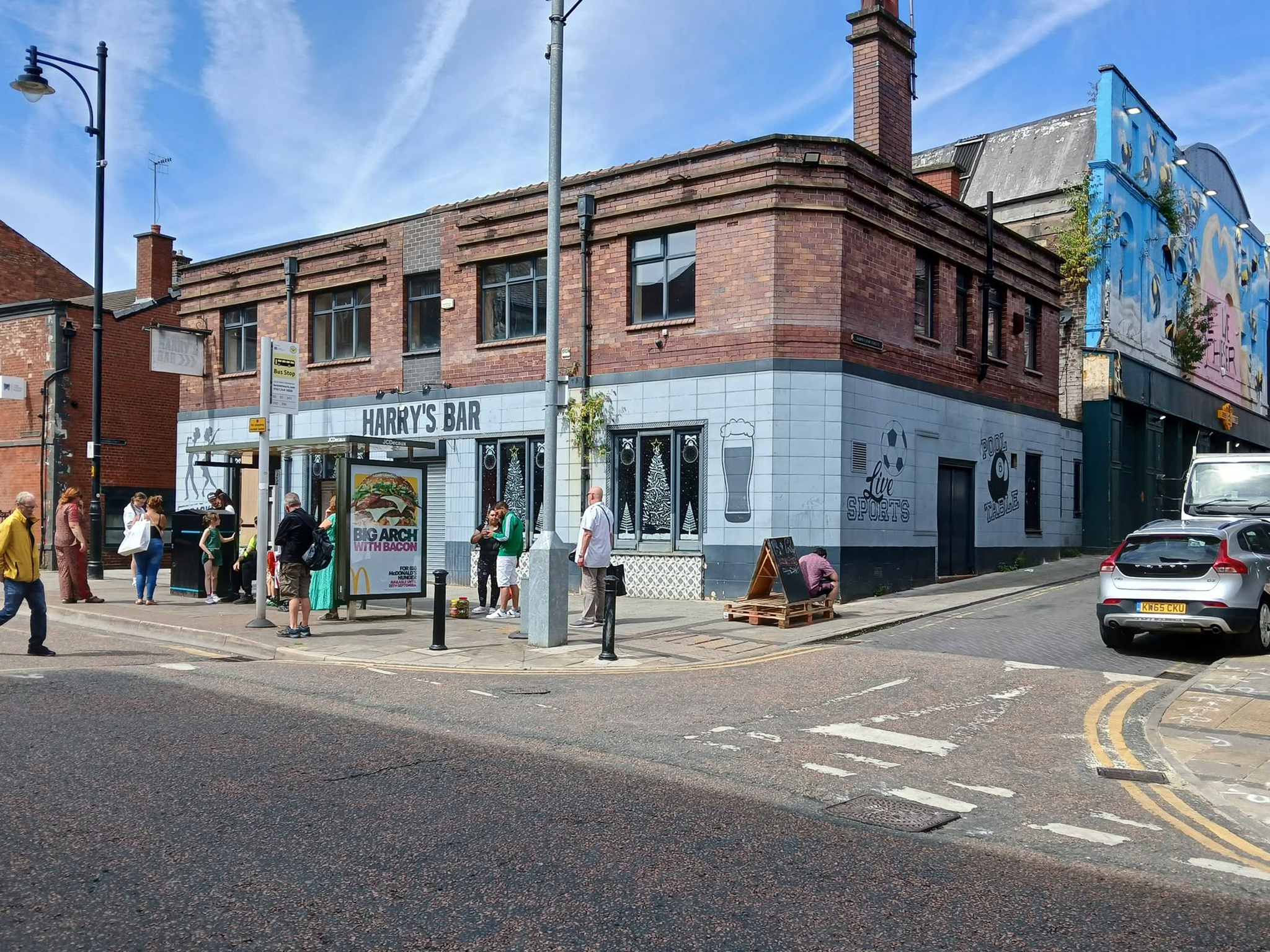
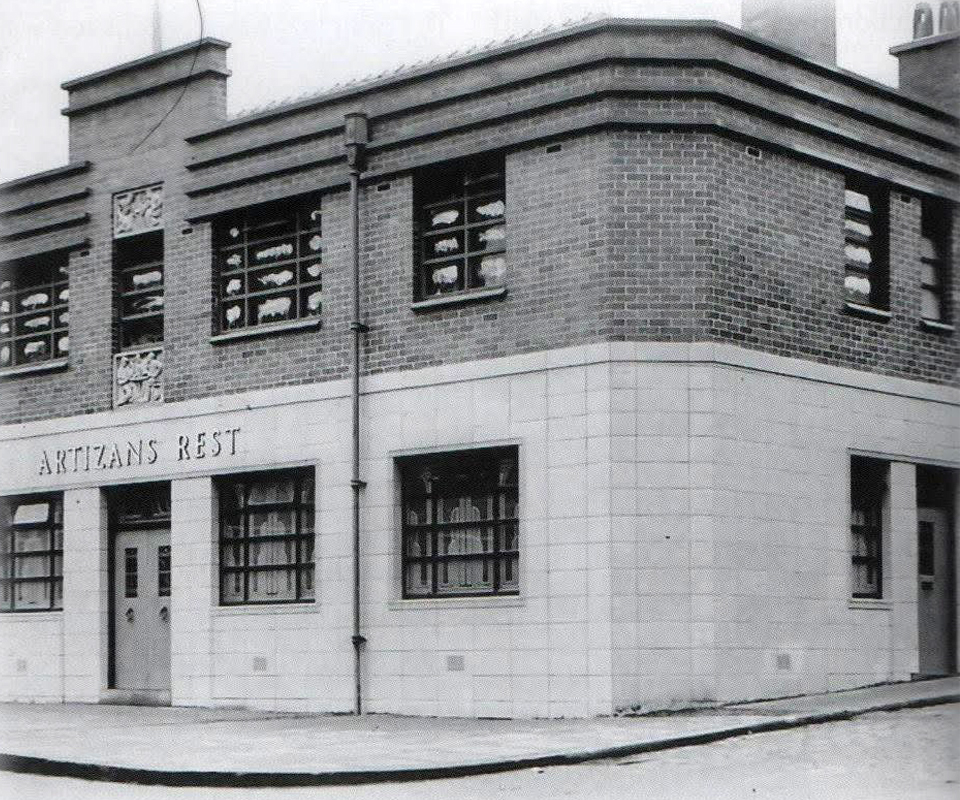
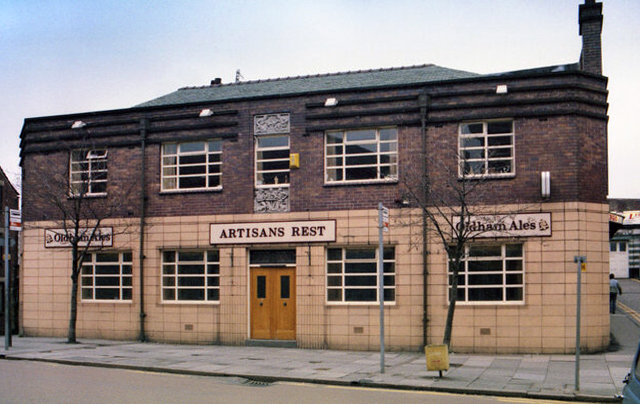
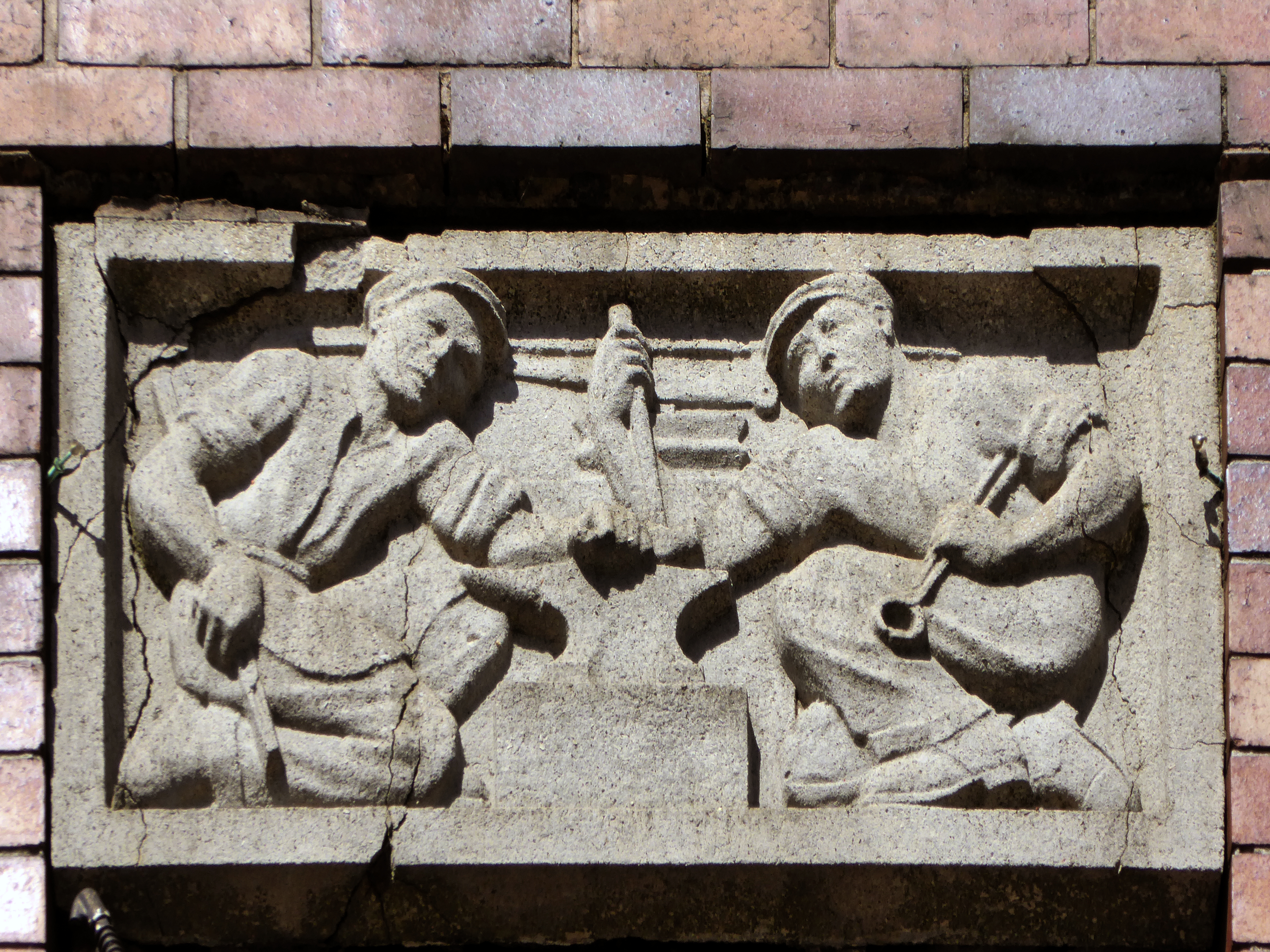
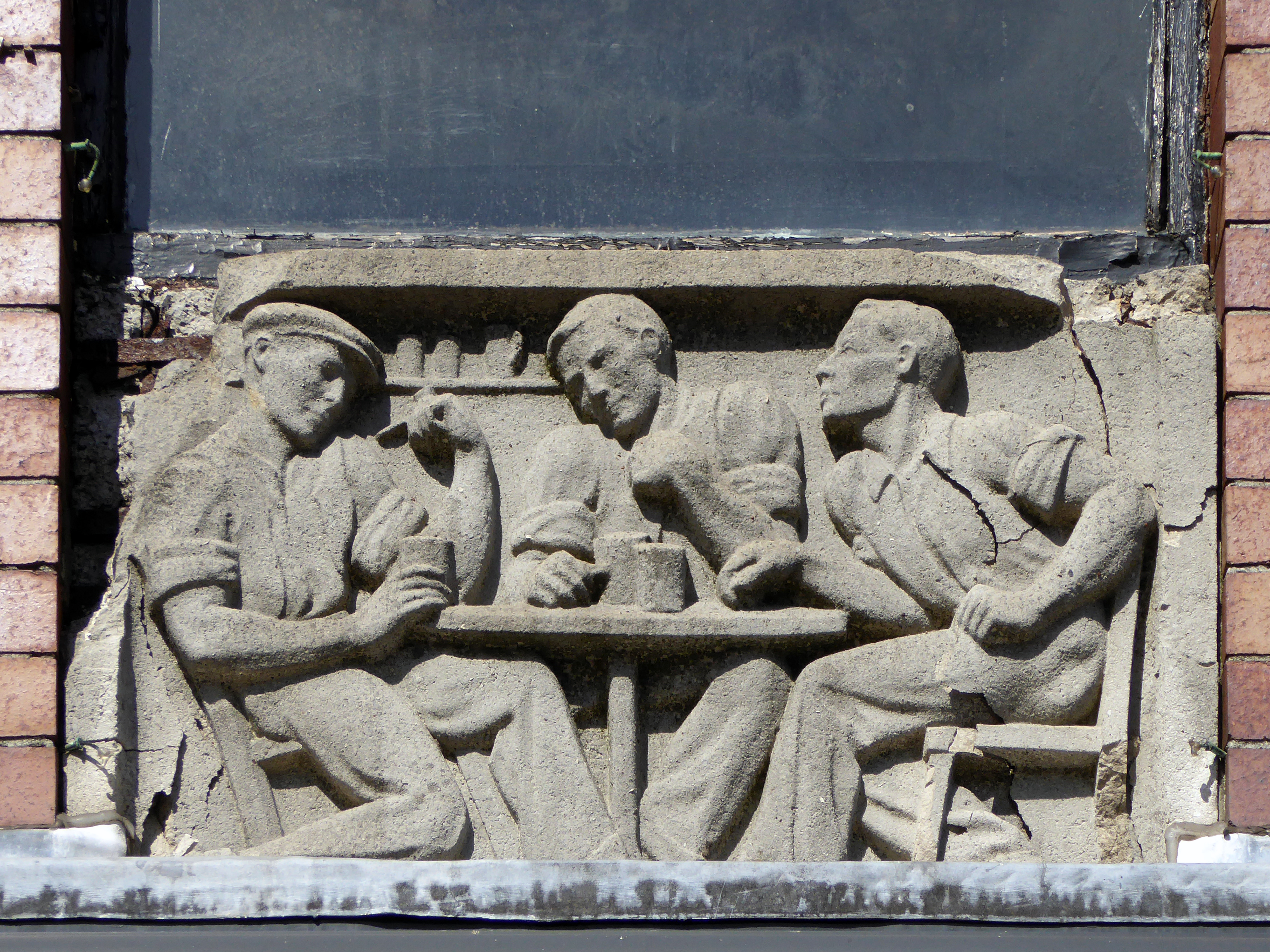
Next we head up Yorkshire Street to Harry’s Bar – formerly The Artizans Rest 1937.
Architects: CT Taylor – Roberts & Bowman.
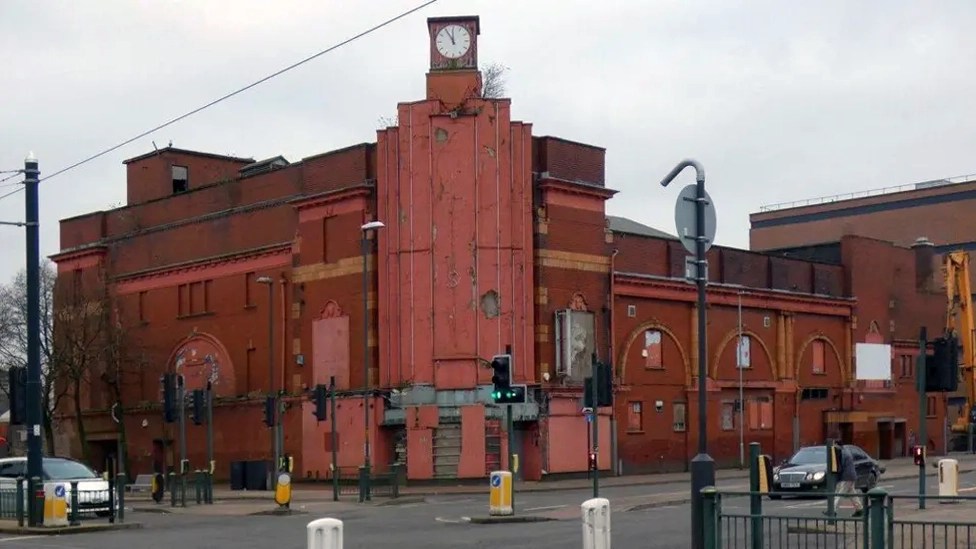
In 2025, it was revealed by the Manchester Evening News that Oldham council planned to buy the building and demolish it with the price tag for the project reported to be £1m. The money comes from a £2.5m pot of regeneration finding given to the local authority by the government.
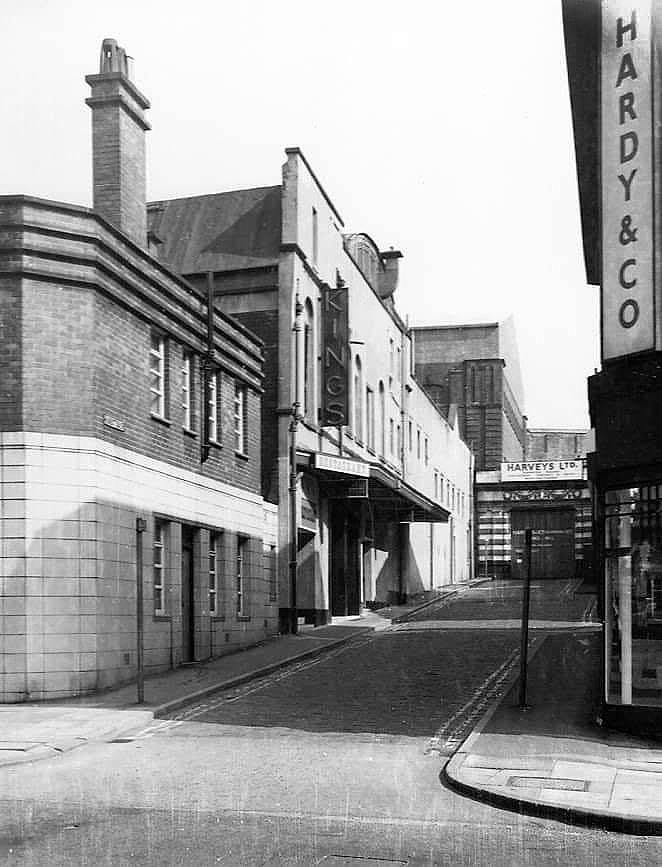
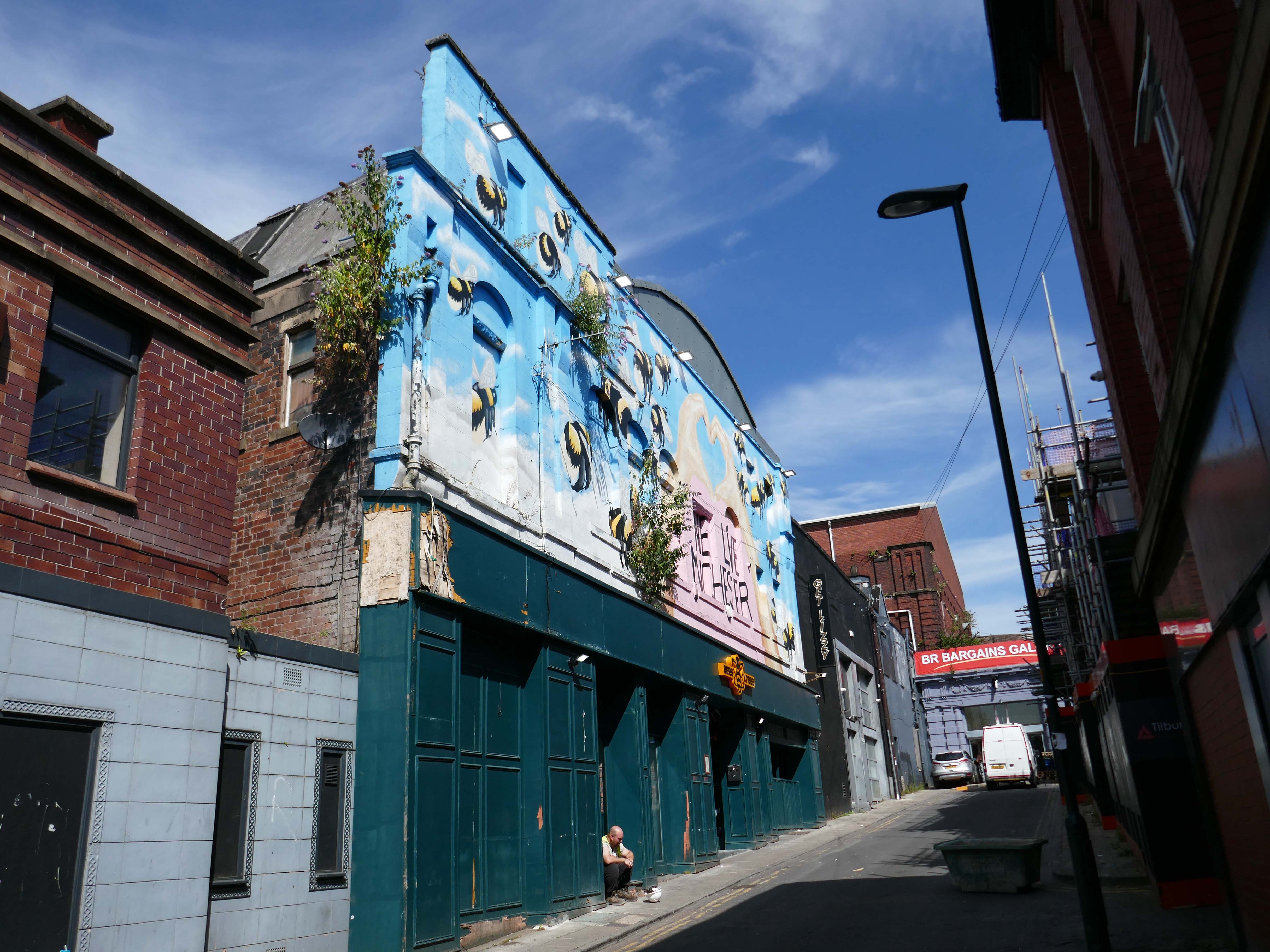
Just around the corner is the former Kings Picture Hall – currently Bees Knees.
Located in the town centre, directly opposite the Coliseum Theatre. The King’s Picture Hall was opened 18th September 1911. In October 1912 a café was opened in the building adding a further amenity to the cinema. In 1929 it was equipped with a British Thomson Houston sound system.
The King’s Picture Hall was closed on 25th June 1966 with Ryo Ikebe in Battle in Outer Space and Randolph Scott in Comanche Territory.
On 2nd July 1966 it was converted into a bingo club.
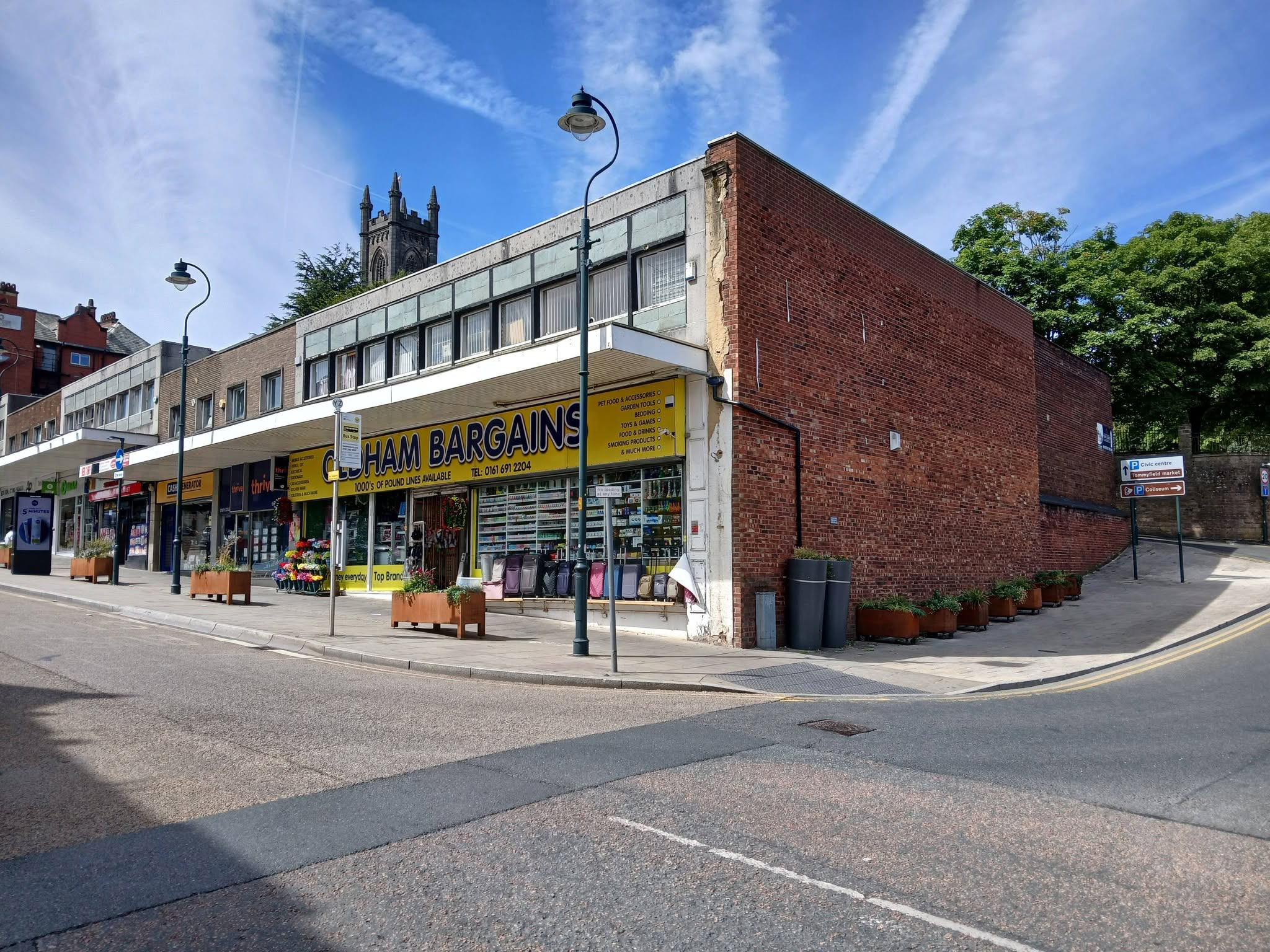
A stand of shops – stepped the accommodate the incline, partially clad in Westmorland Slate.
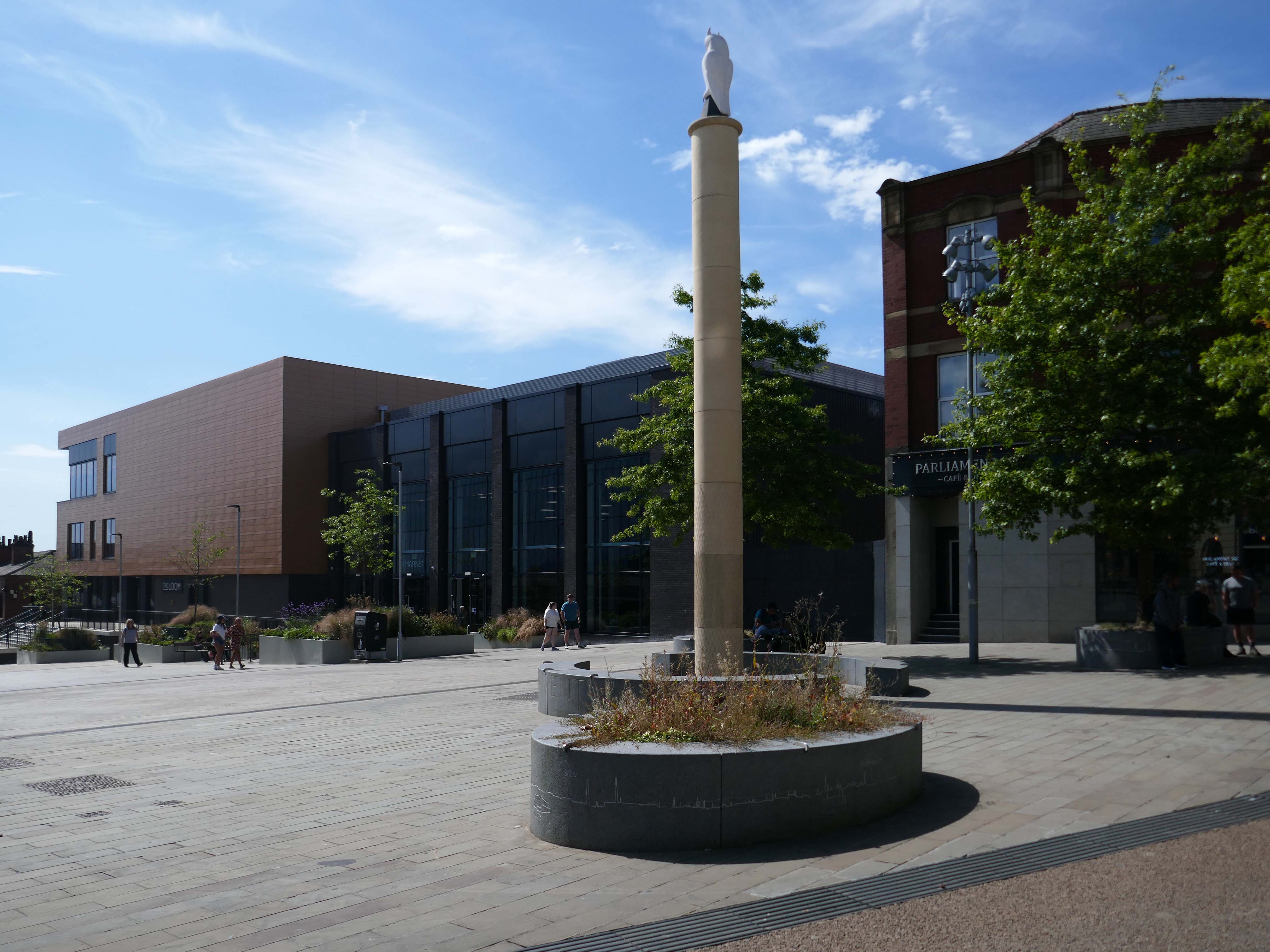
Oldham Town Centre now has a new high-quality public space – Parliament Square
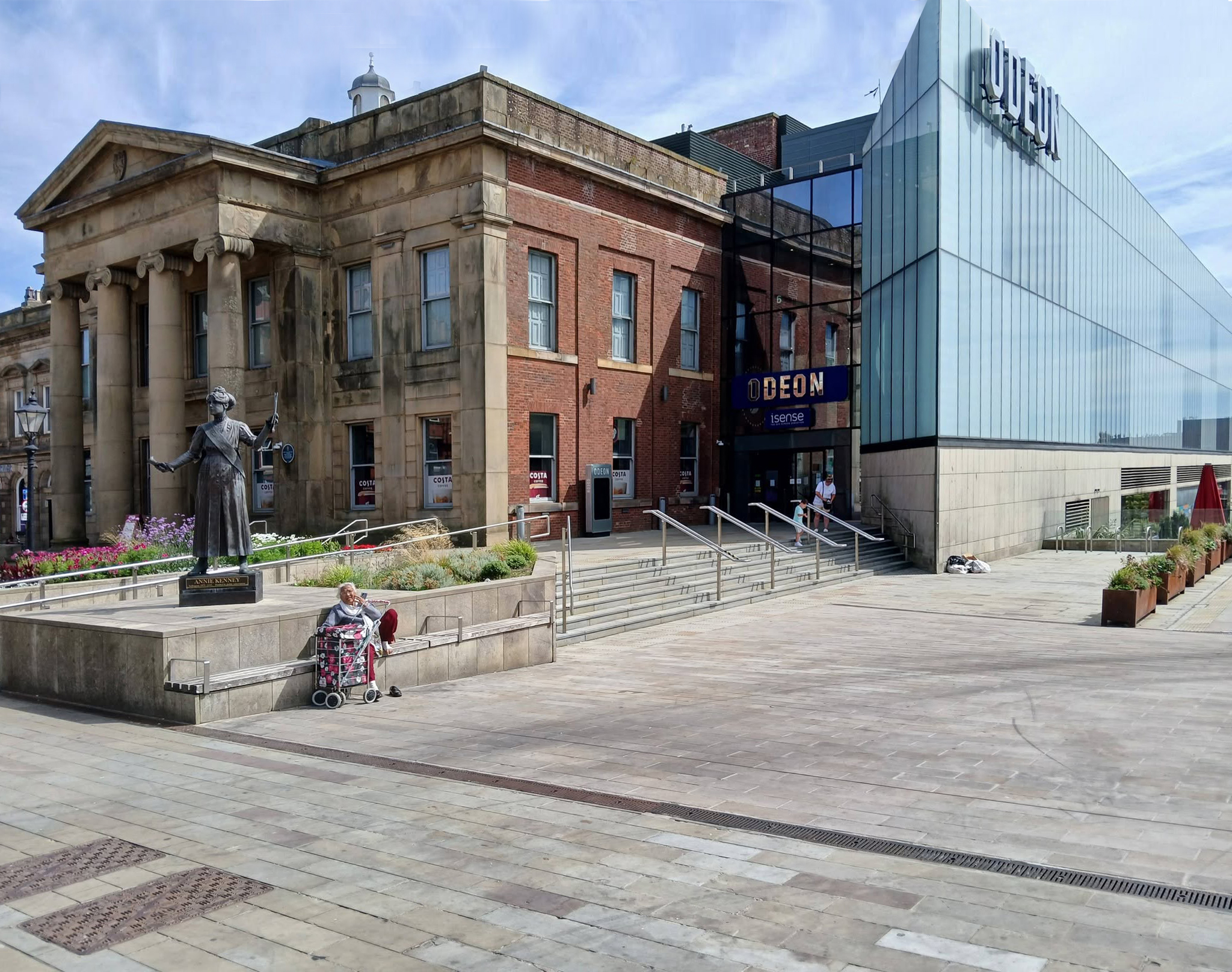
Six new restaurant units will be located within the Old Town Hallalongside a brand new 800-seat, seven screen ODEON cinema.
BDP 2017
A stunning glass extension to the side of the Grade II-listedbuilding provides access to the various levels of the cinema and is also the frontage to the new restaurants.
George Woodhouse of Bolton 1841, extended by Edward Potts of Oldham 1879-80.
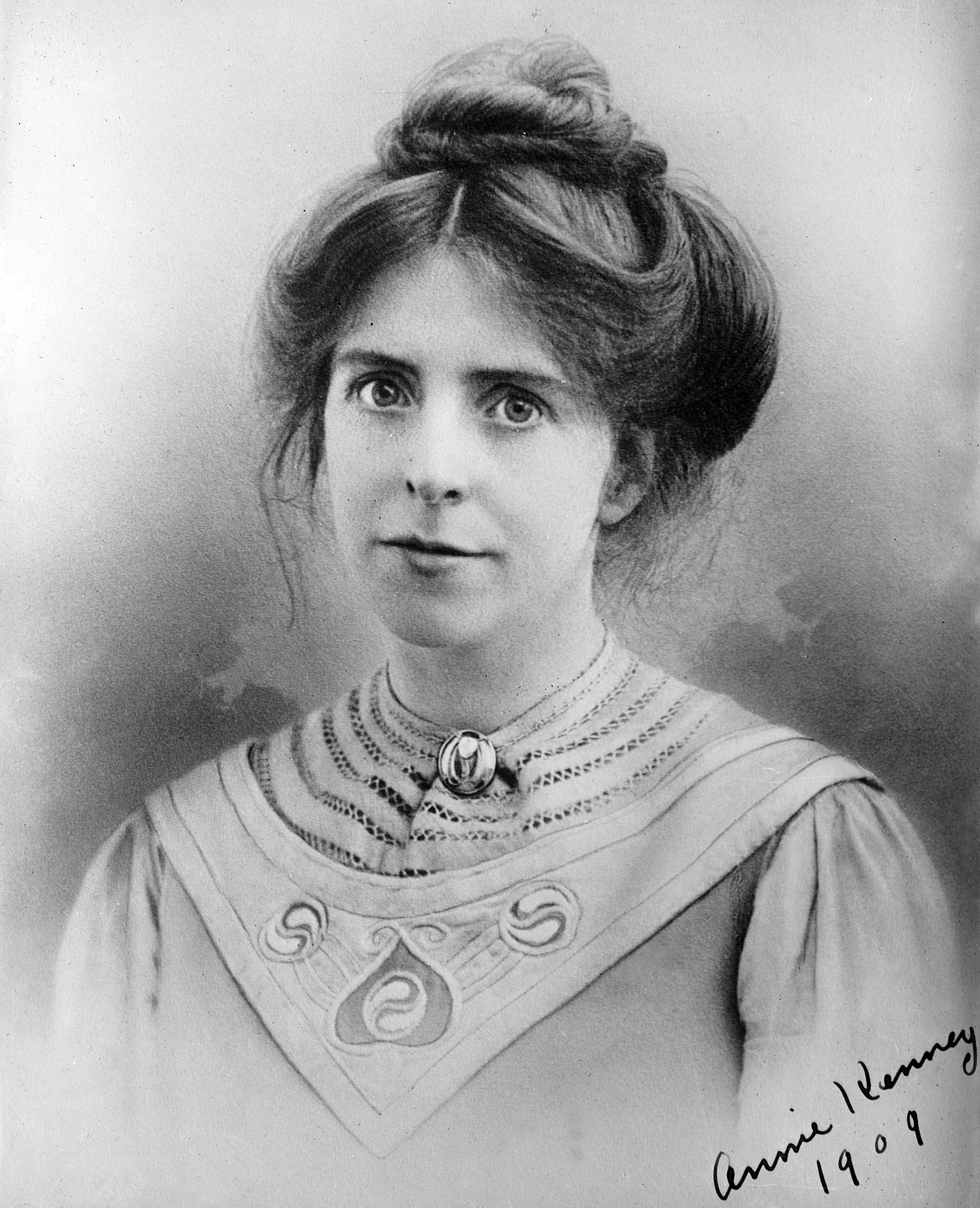
To the left is a statue of Springhead born Annie Kenney – political activist, socialist feminist and suffragette, modelled by Denise Dutton, unveiled 14 December 2018.
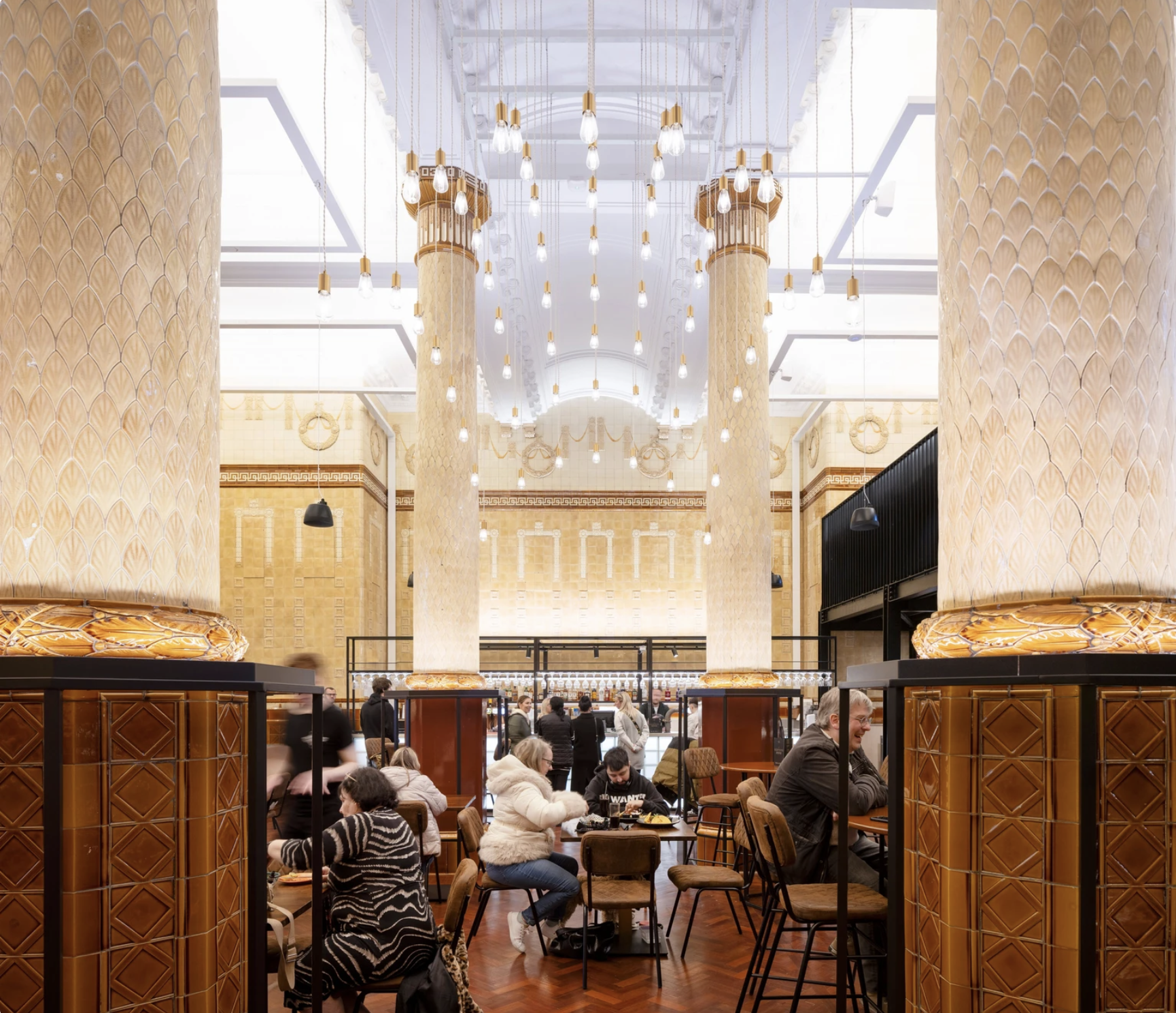
The Egyptian Room Food Hall project extends BDP’s partnership with Oldham Council and the rejuvenated Grade II listed Old Town Hall building in Oldham town centre, the main transformation of which was also designed and delivered by BDP.
The Loom is a brand new events space next to Oldham’s new indoor market on Parliament Square in the town centre. The gala-sized event space can fit up to one thousand standing guests, seven hundred seated, or five hundred dining, or can be split-off into smaller rooms for exhibitions, gigs, or theatre performances.
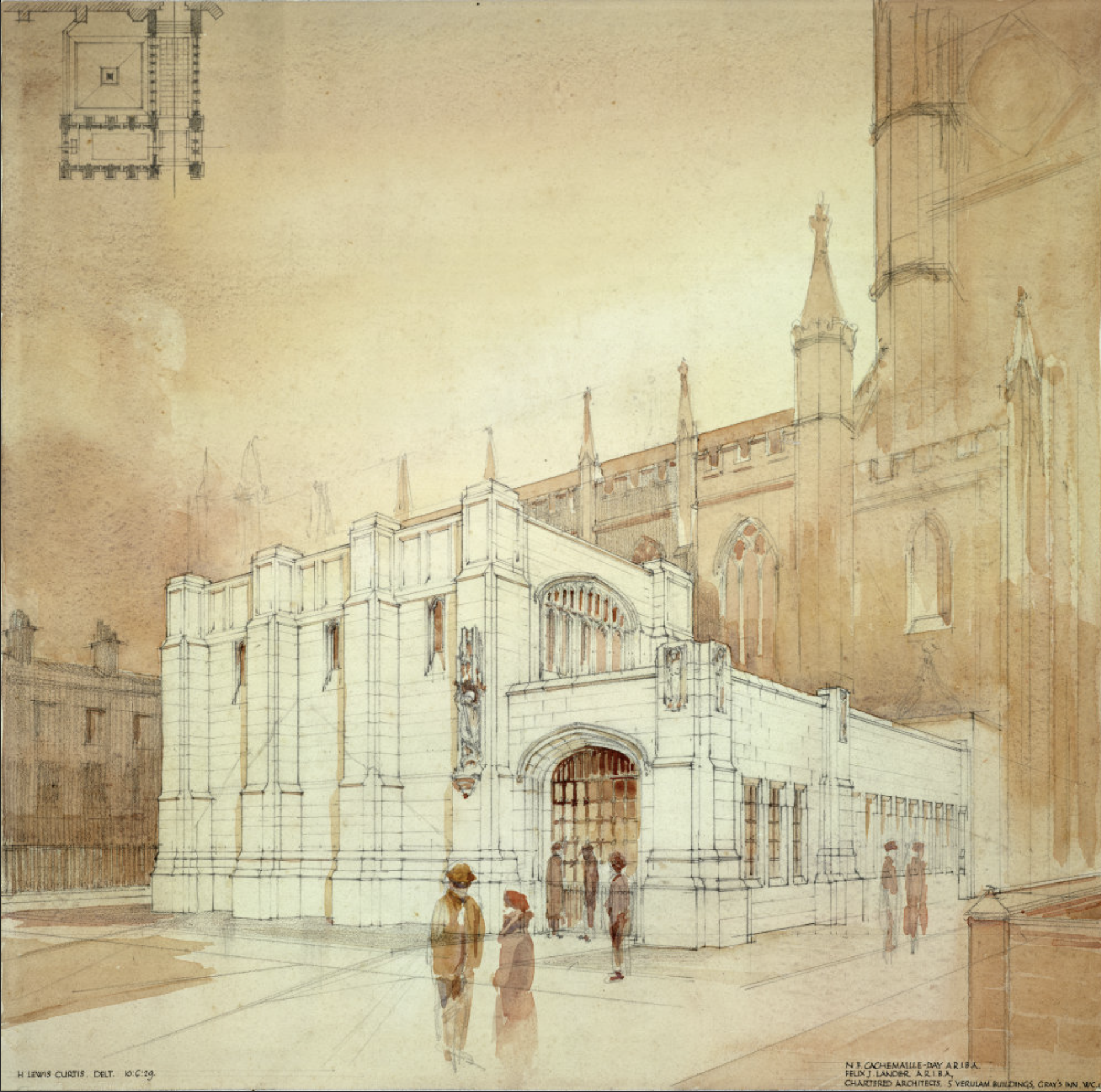
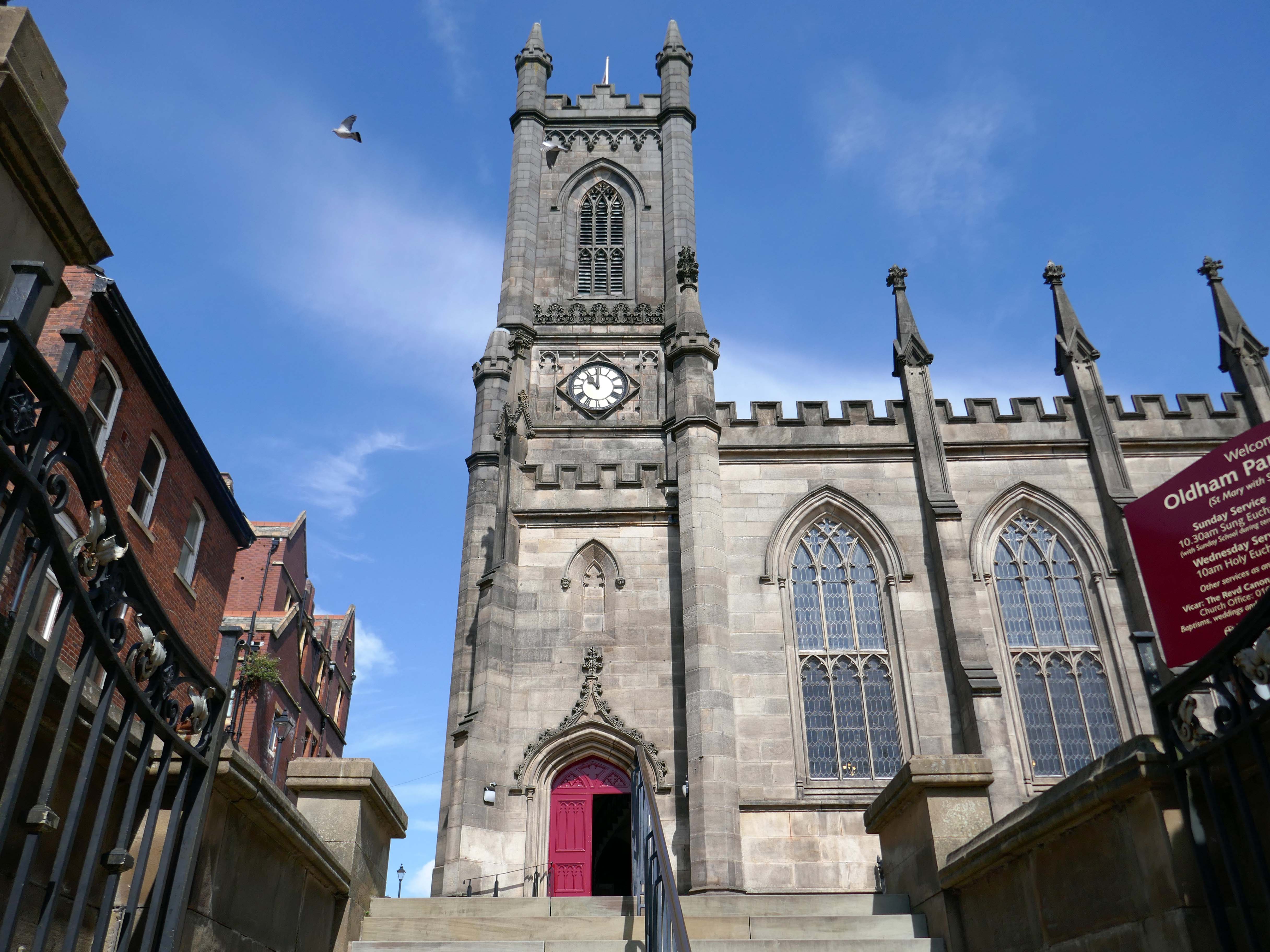
Design for a war memorial chapel, St Mary’s Church 1920.
Architect: Nugent Francis Cachemaille-Day.
Artist: H Lewis Curtis.
Image: RIBA pix
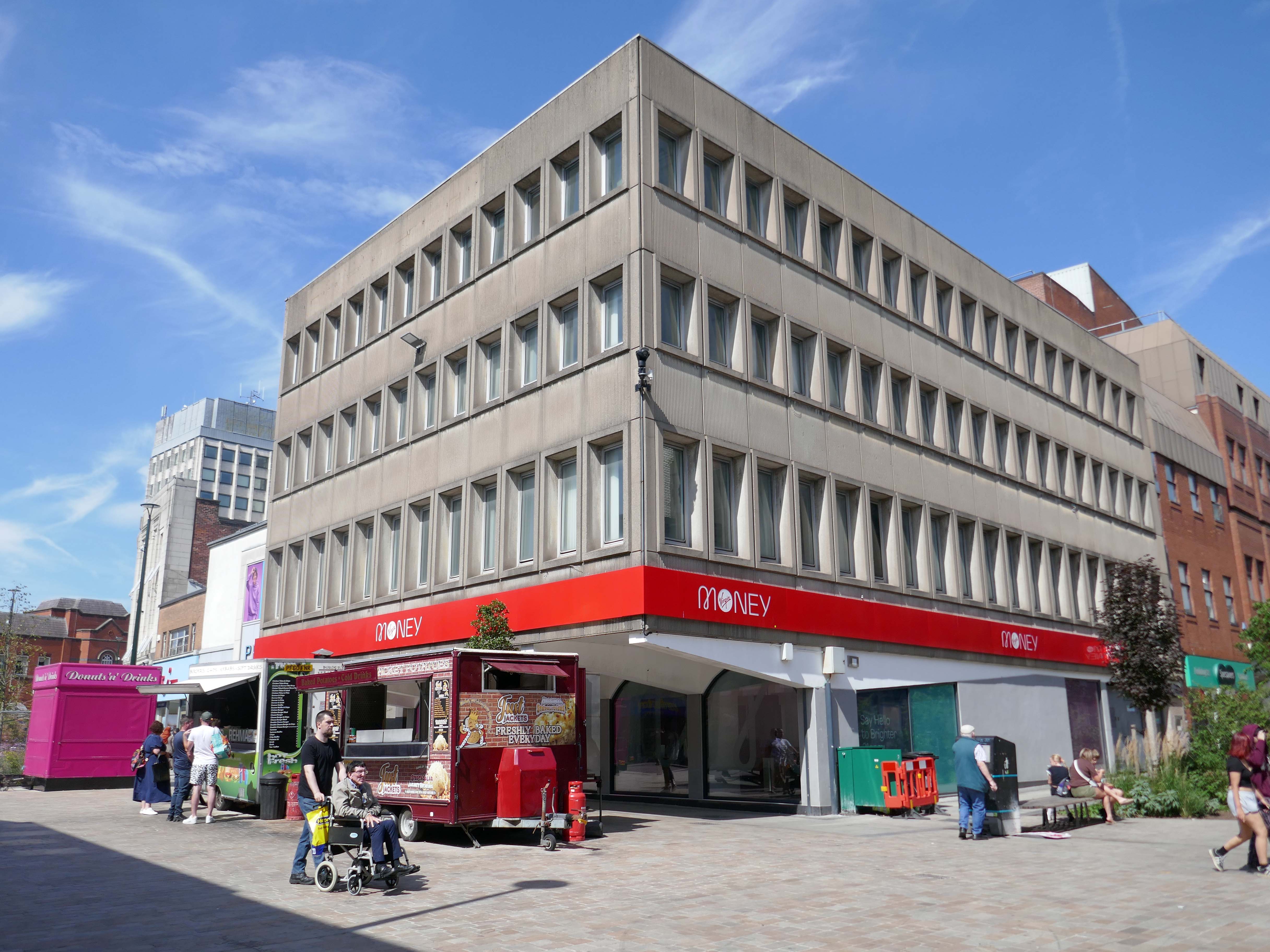
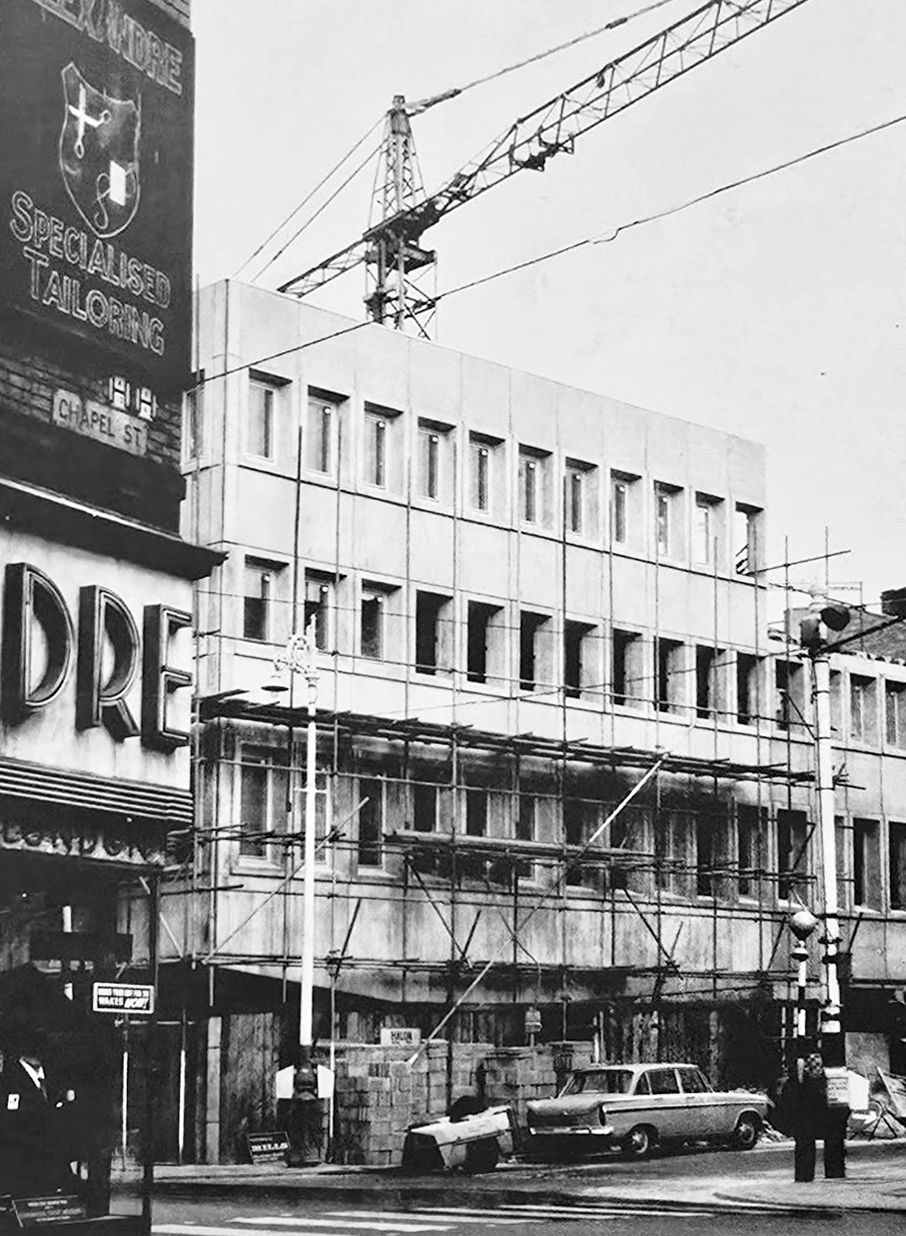
Next to the former Yorkshire Bank 1970 John Brunton& Partners.
Under construction 1970
Image: Kayla Chadwick
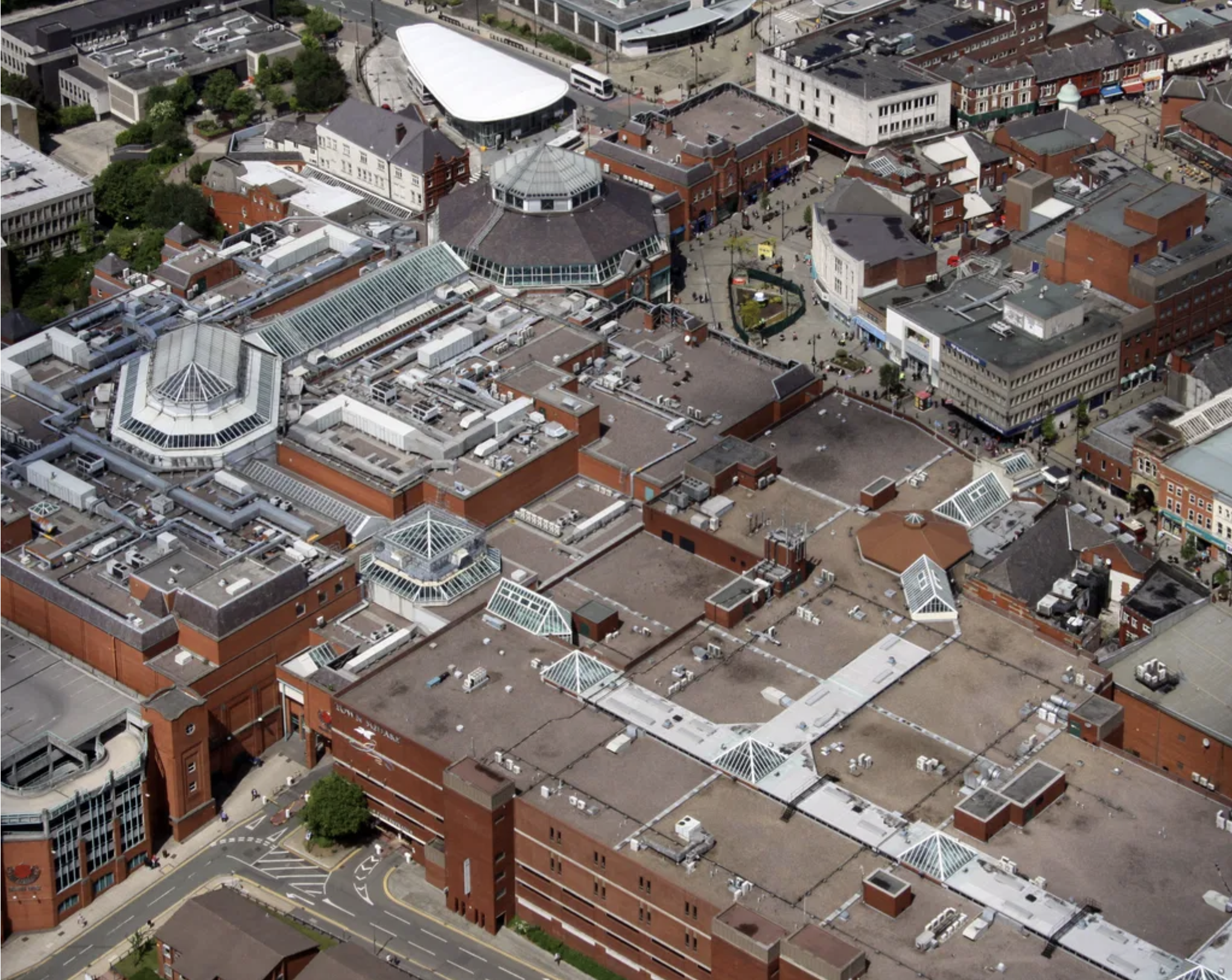
Down to the Spindles Shopping Centre 1991
Originally the site of St Peter’s Shopping Centre architect Richard Seifert
St Peter’s House – housed Oldham Area Health Authority Administrative Offices
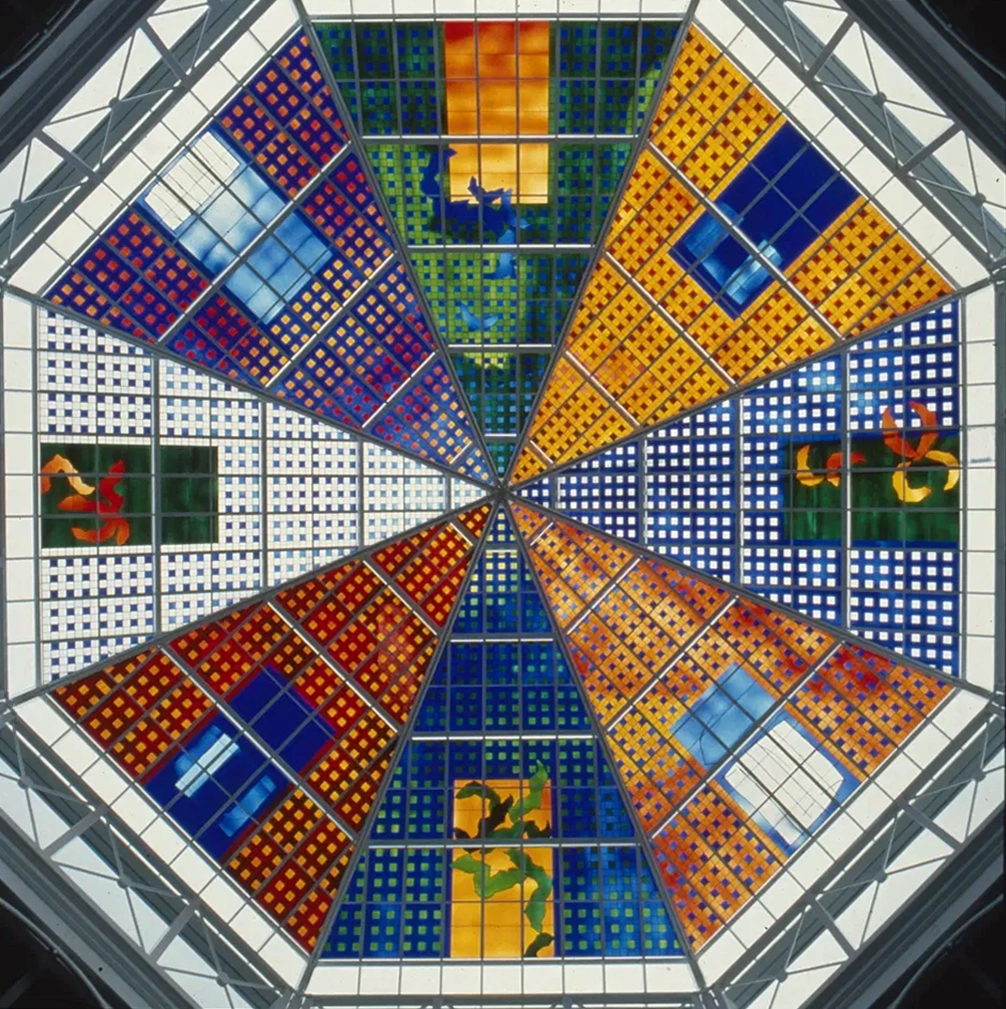
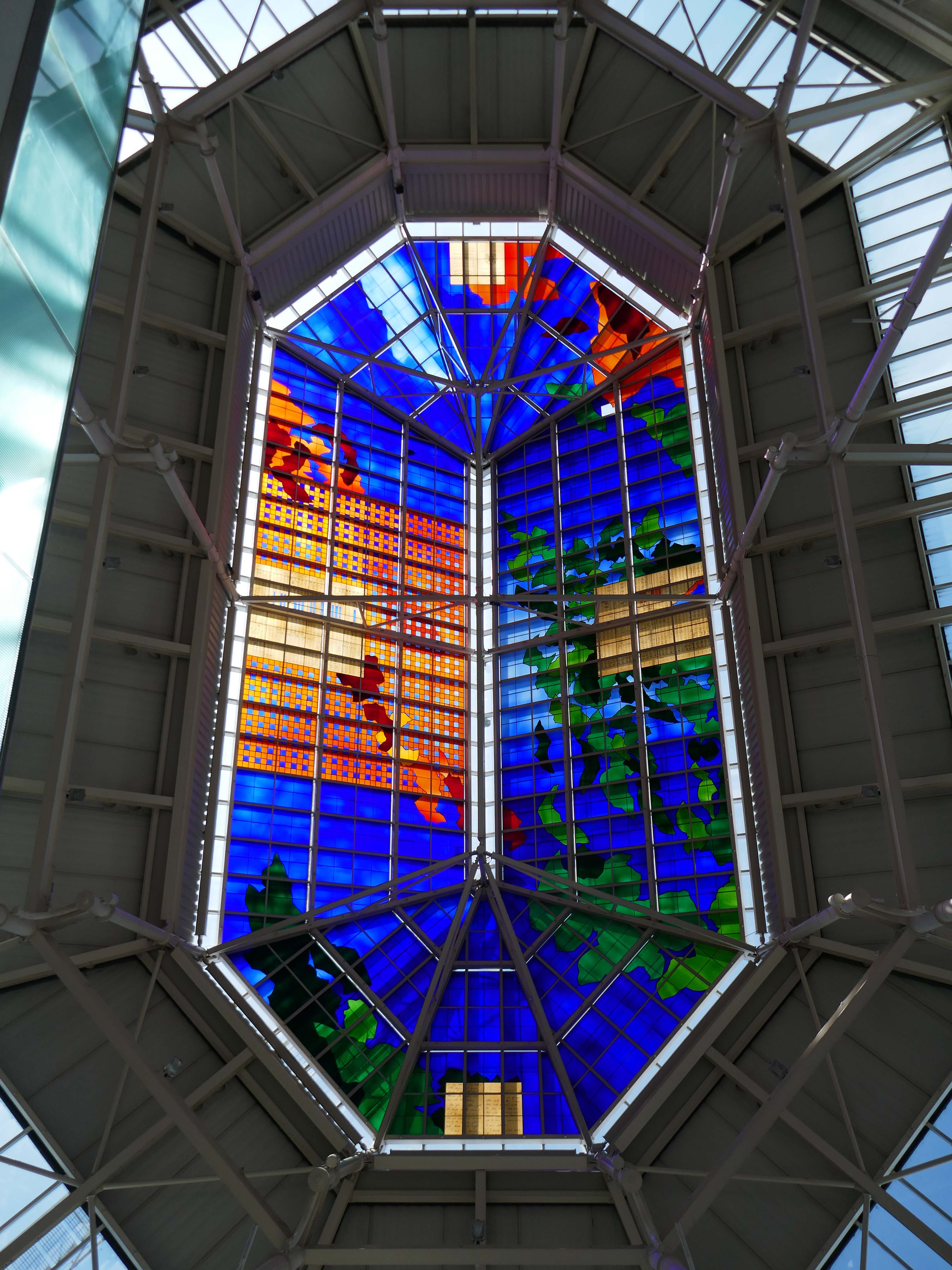
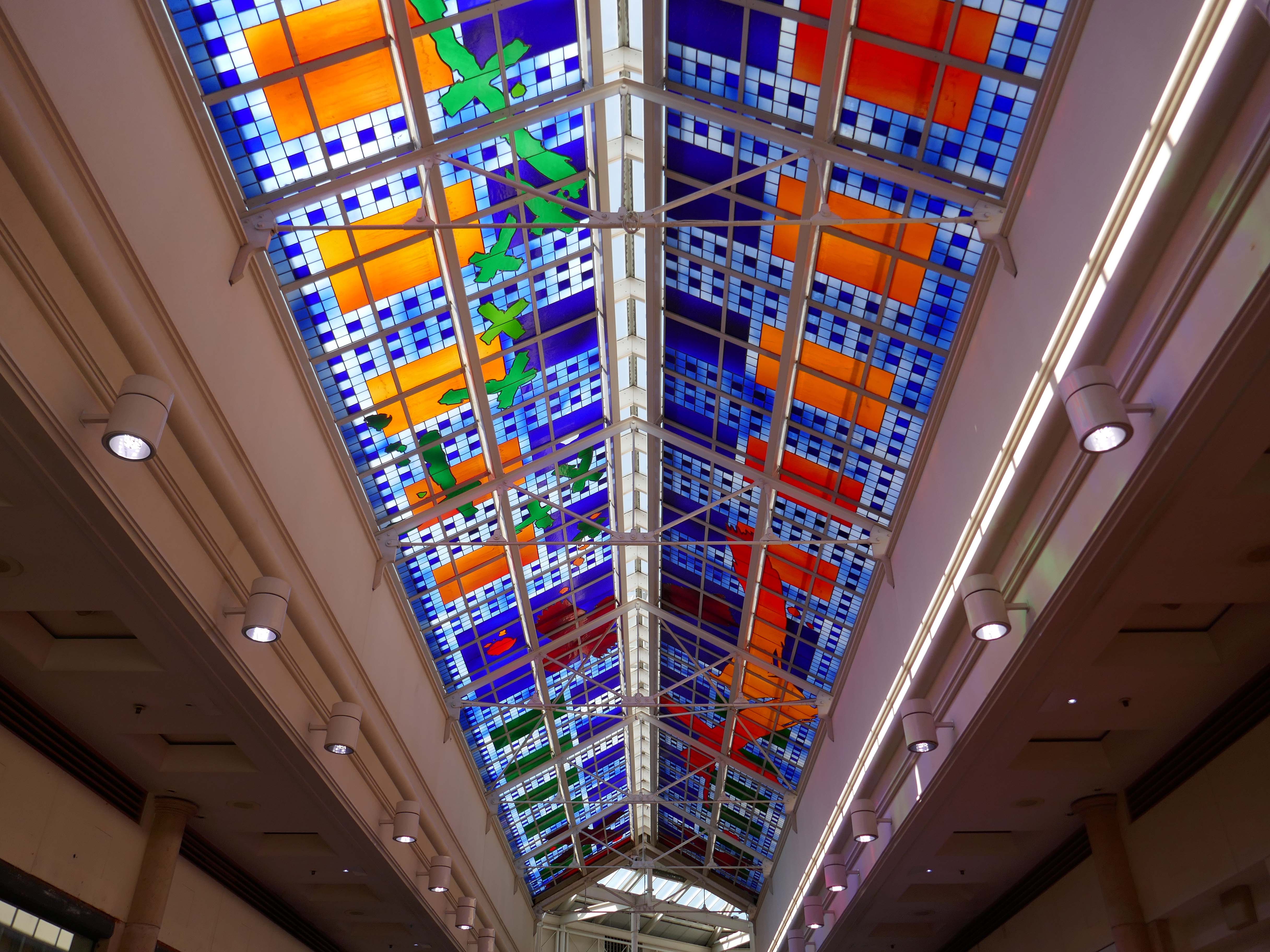
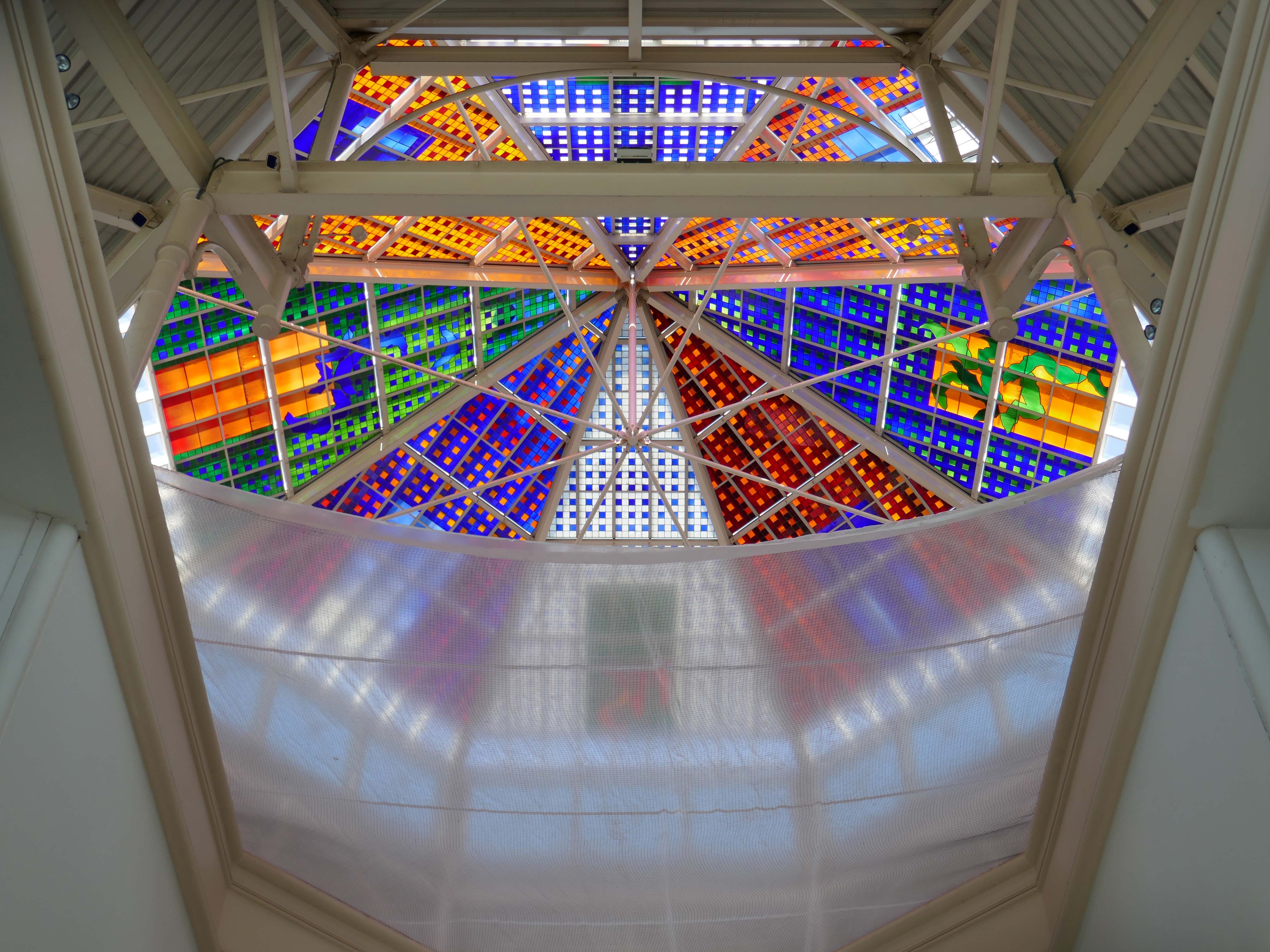
Between 1990 and 1993, Brian Clarke designed a series of three interrelated roof lights in stained glass for the Spindles Shopping Centre in his hometown of Oldham, Lancashire. Among the largest stained glass windows in Europe, and some of the largest public artworks in the UK, these panels connect the main public areas of the principal shopping centre in the town.
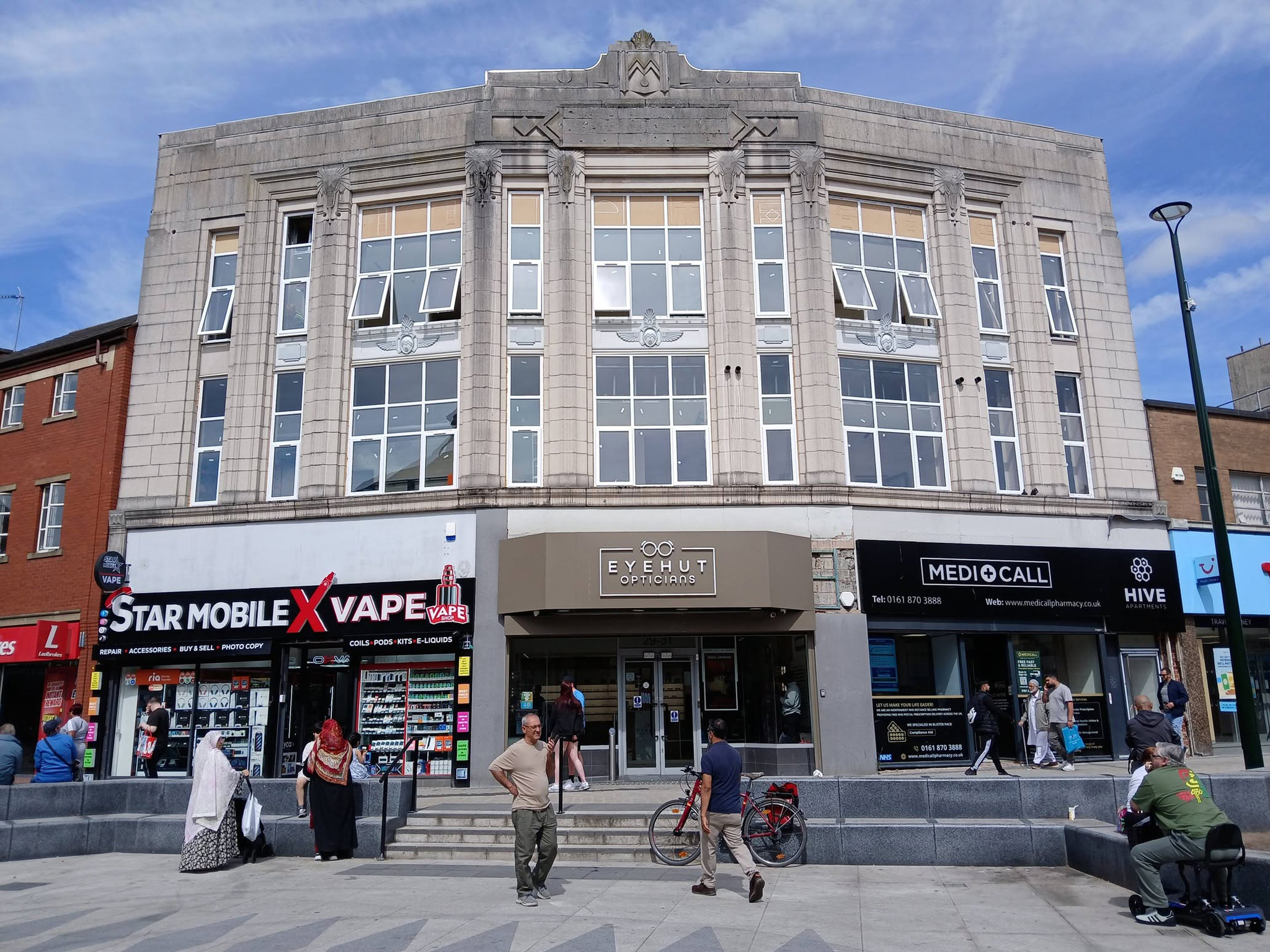
No town walk would be complete without a former Burton’s.
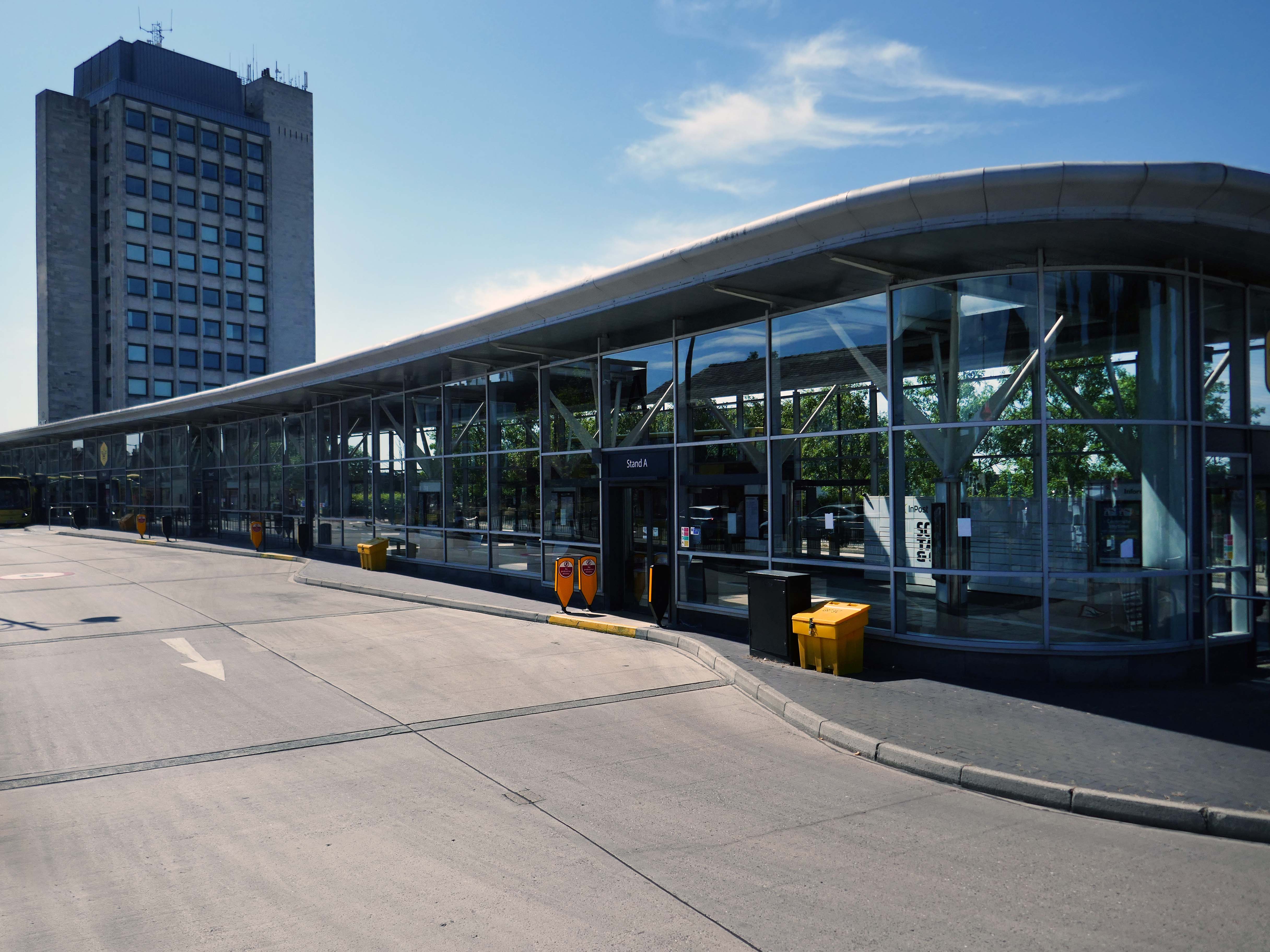
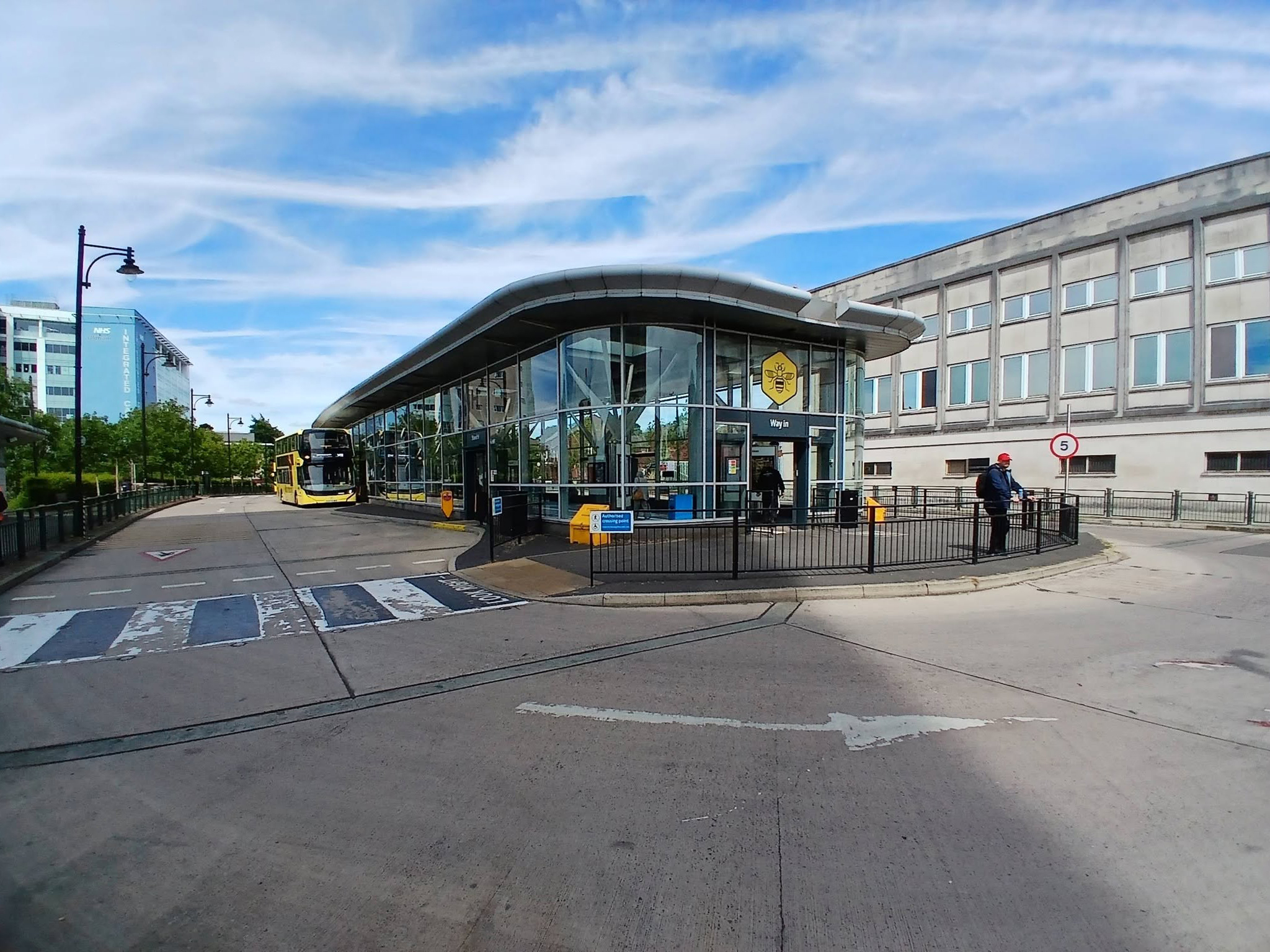
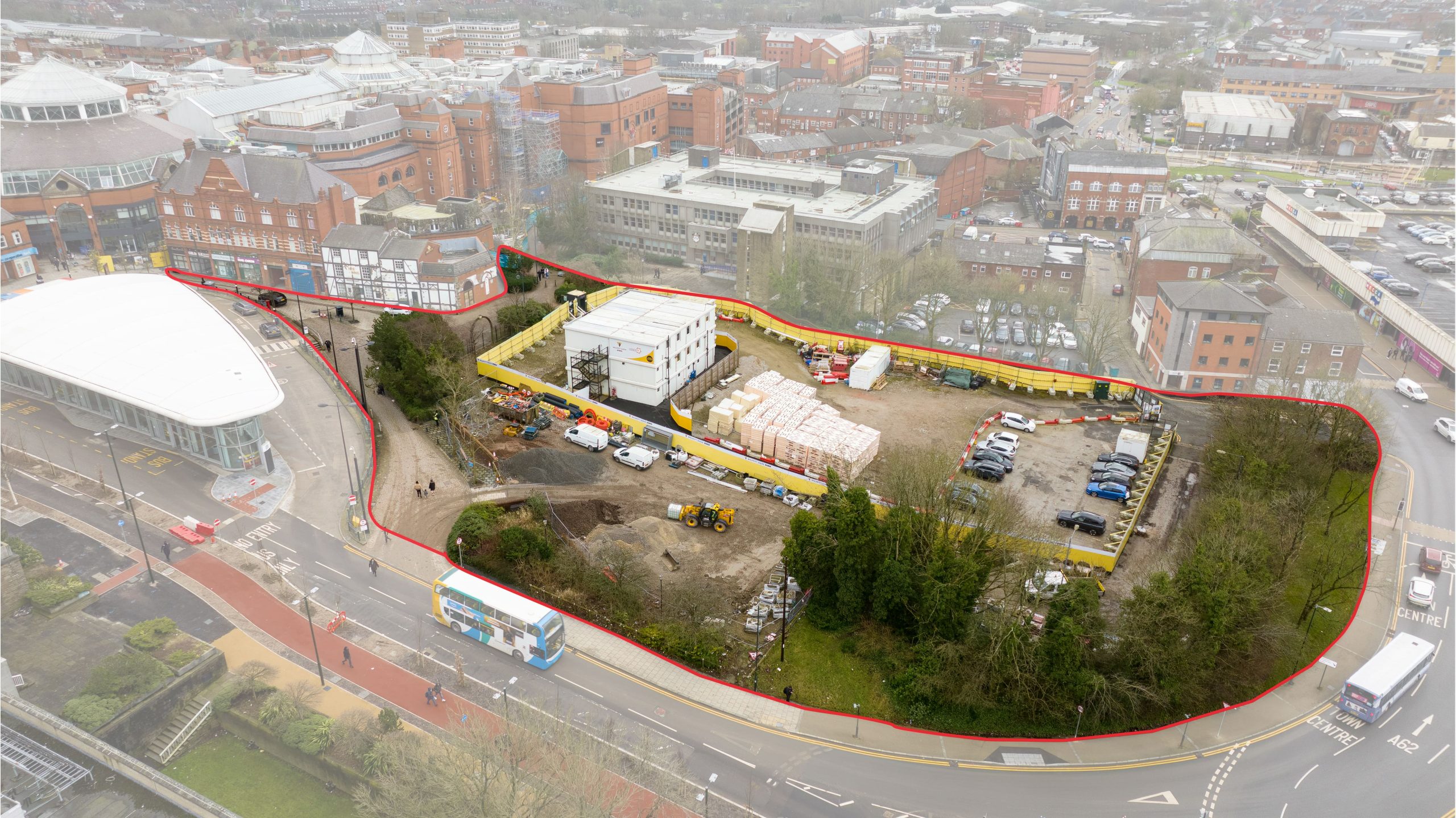
Next to the Bus Stations 2008 Austin-Smith Lord situated either side of the Civic Centre.
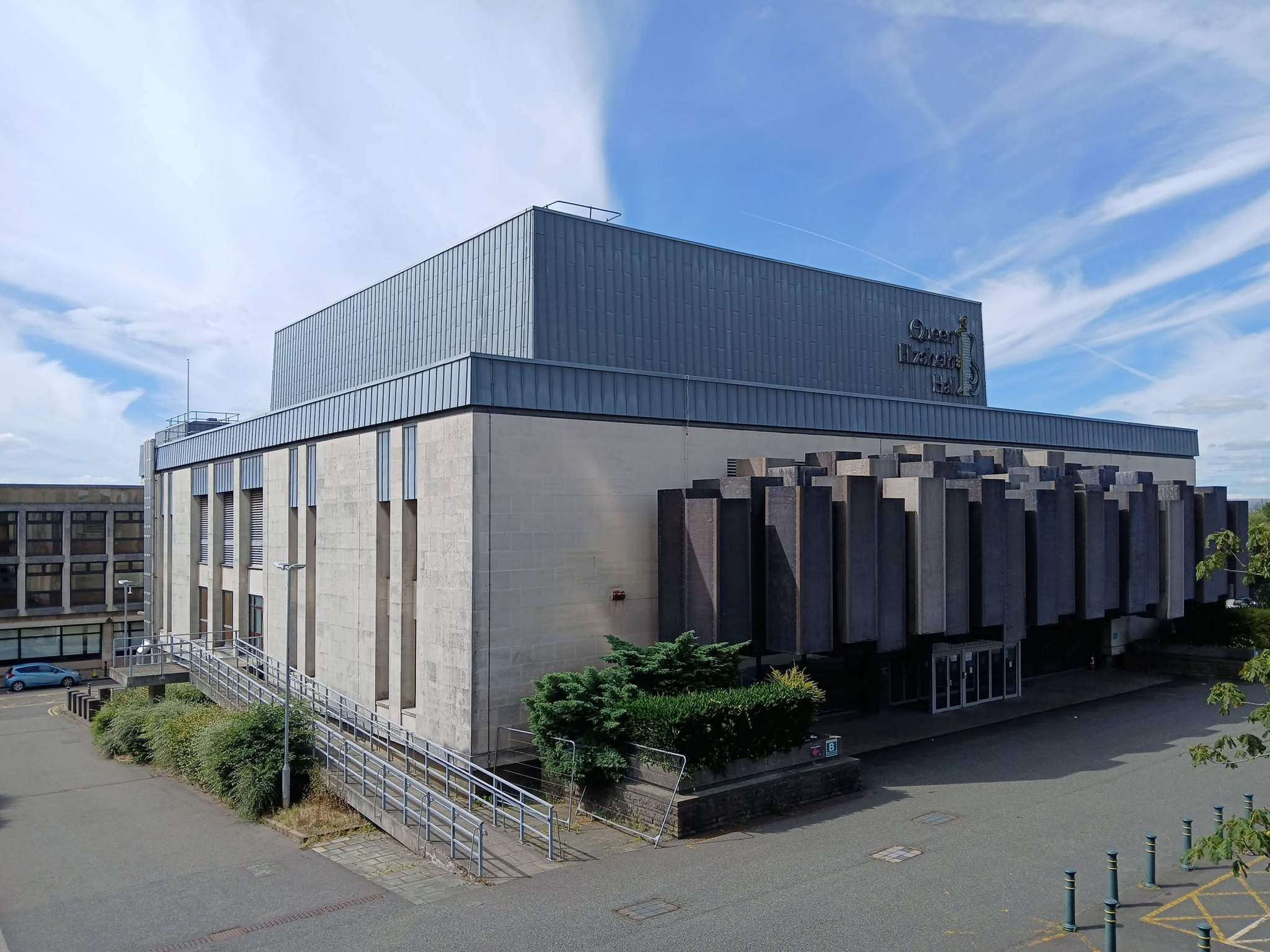
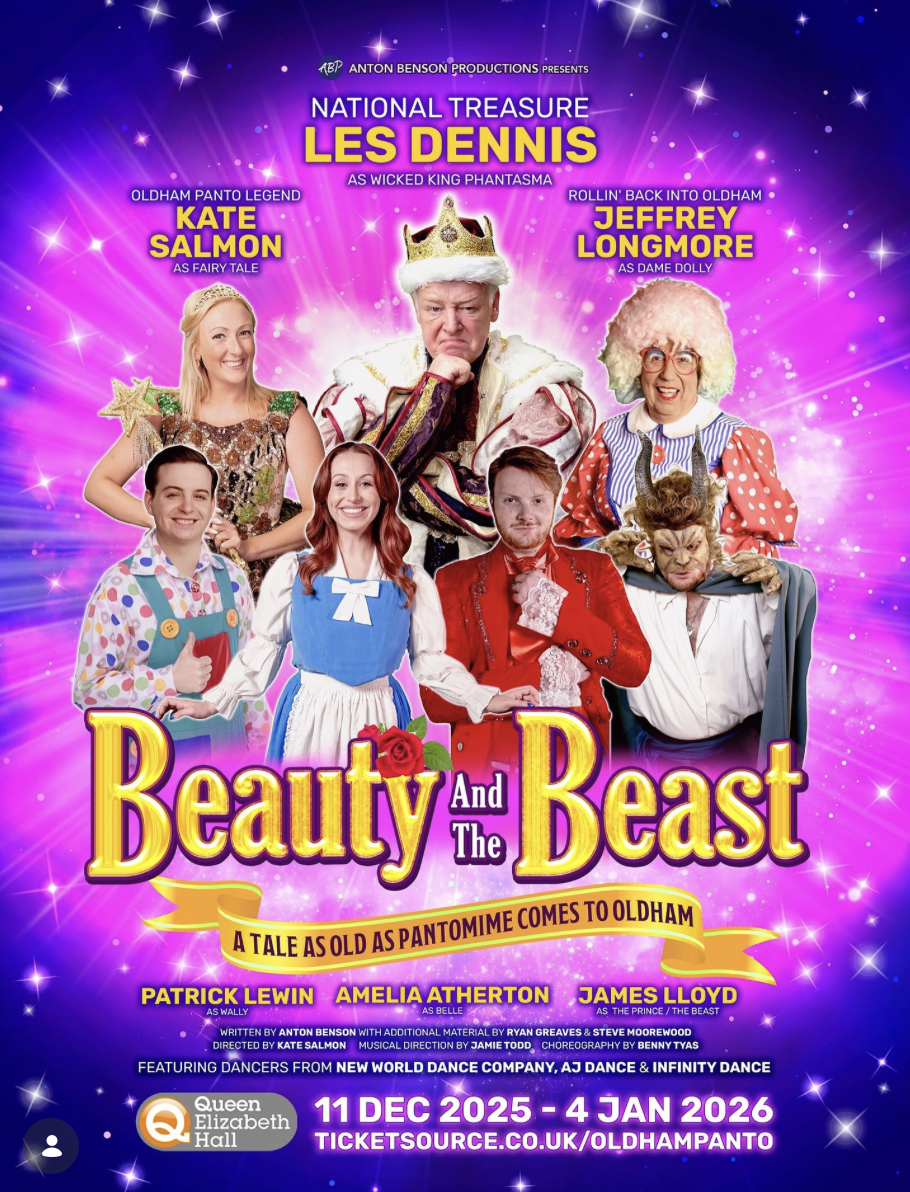
The Queen Elizabeth Hall in Oldham will soon open its doors for the last time before it permanently closes to the public and is prepared for demolition.Since being condemned for containing Reinforced Autoclaved Aerated Concrete – RAAC in 2023, its days have been numbered.
Now the old theatre is part of plans to bring 2,000 new homes into the town centre in a partnership between Oldham Council and the developers Muse.
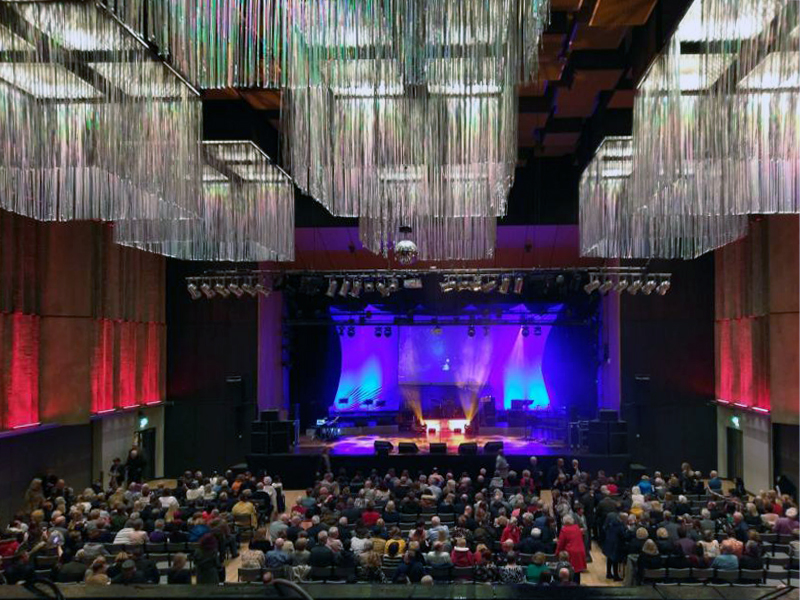
Chris Connor as Elvis at the Oldham Queen Elizabeth Hall.
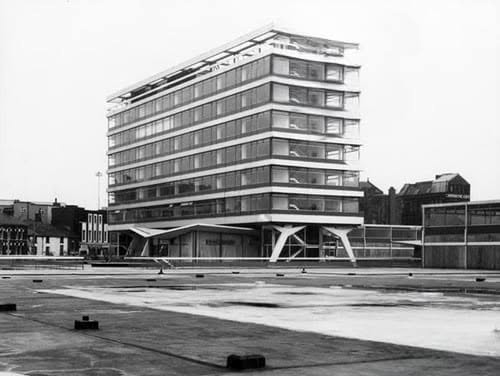
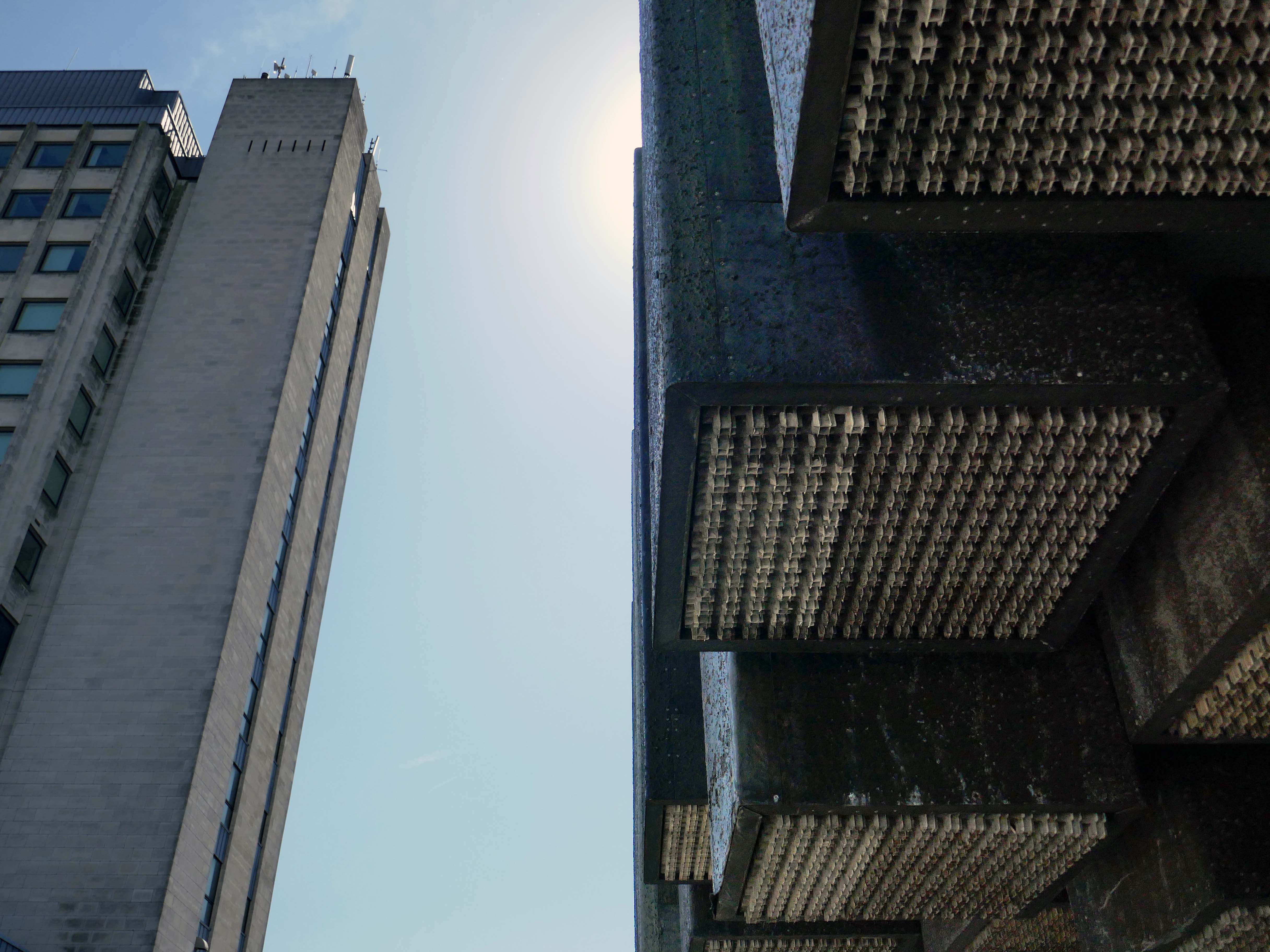
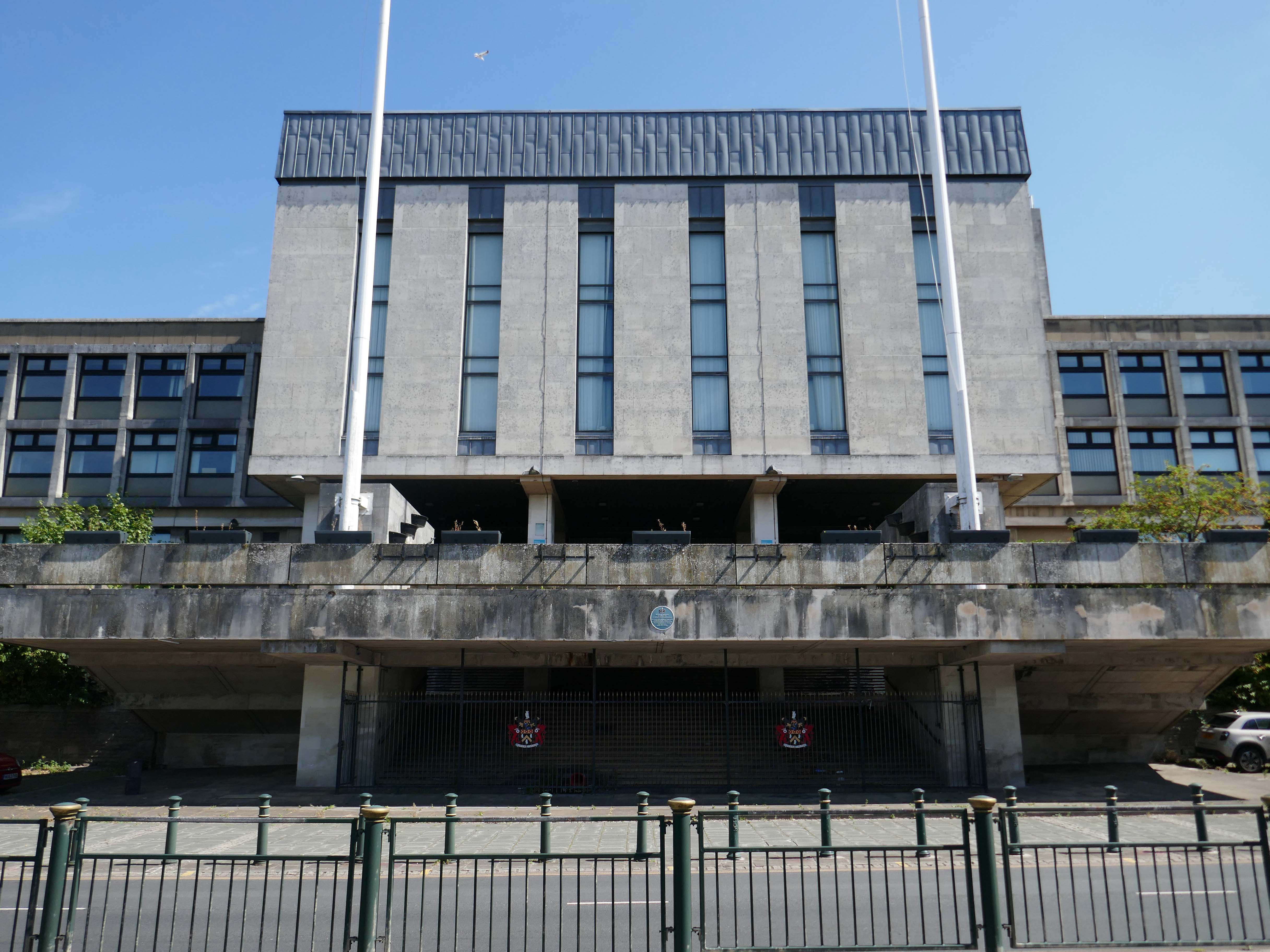
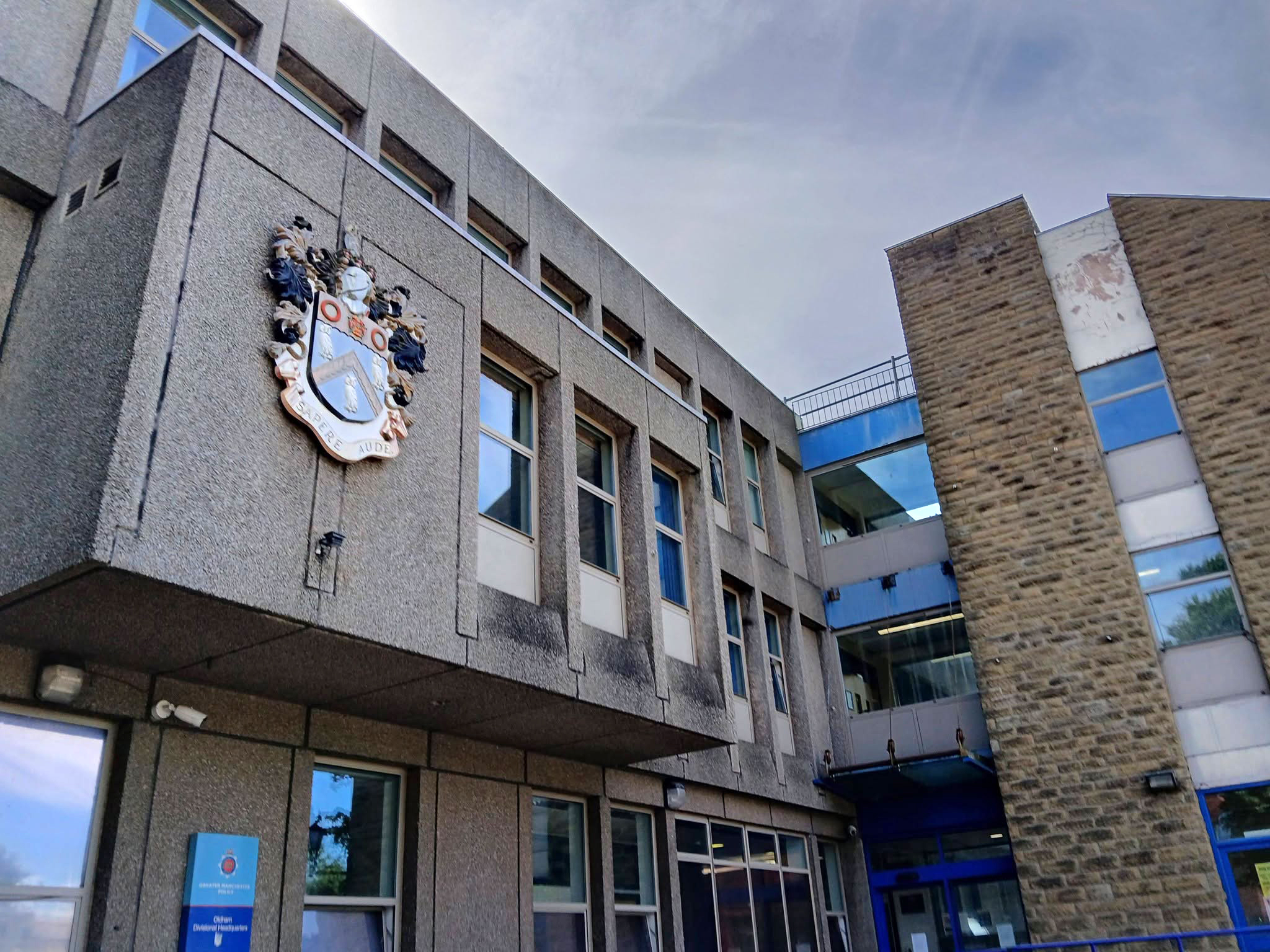
Surrounded on two sides by the Civic Centre – the lower parts are by Richard Seifert & Partners 1962, the fourteen storey Tower and Hall 1974-78 are by Cecil Howitt & Partners.
Plans are underway at the civic centre, the largest site in the regeneration project, to create a vibrant community providing eight hundred and thirty eight homes rising up to fifteen-storeys with mixed-use commercial spaces on the ground floor. This development will integrate seamlessly with the surrounding neighbourhood, particularly the nearby Former Magistrates’ Court site. The Civic Tower at the edge of the site will be retained and redeveloped as a hotel in a later phase.
Where have the Magistrates’ Courts gone?
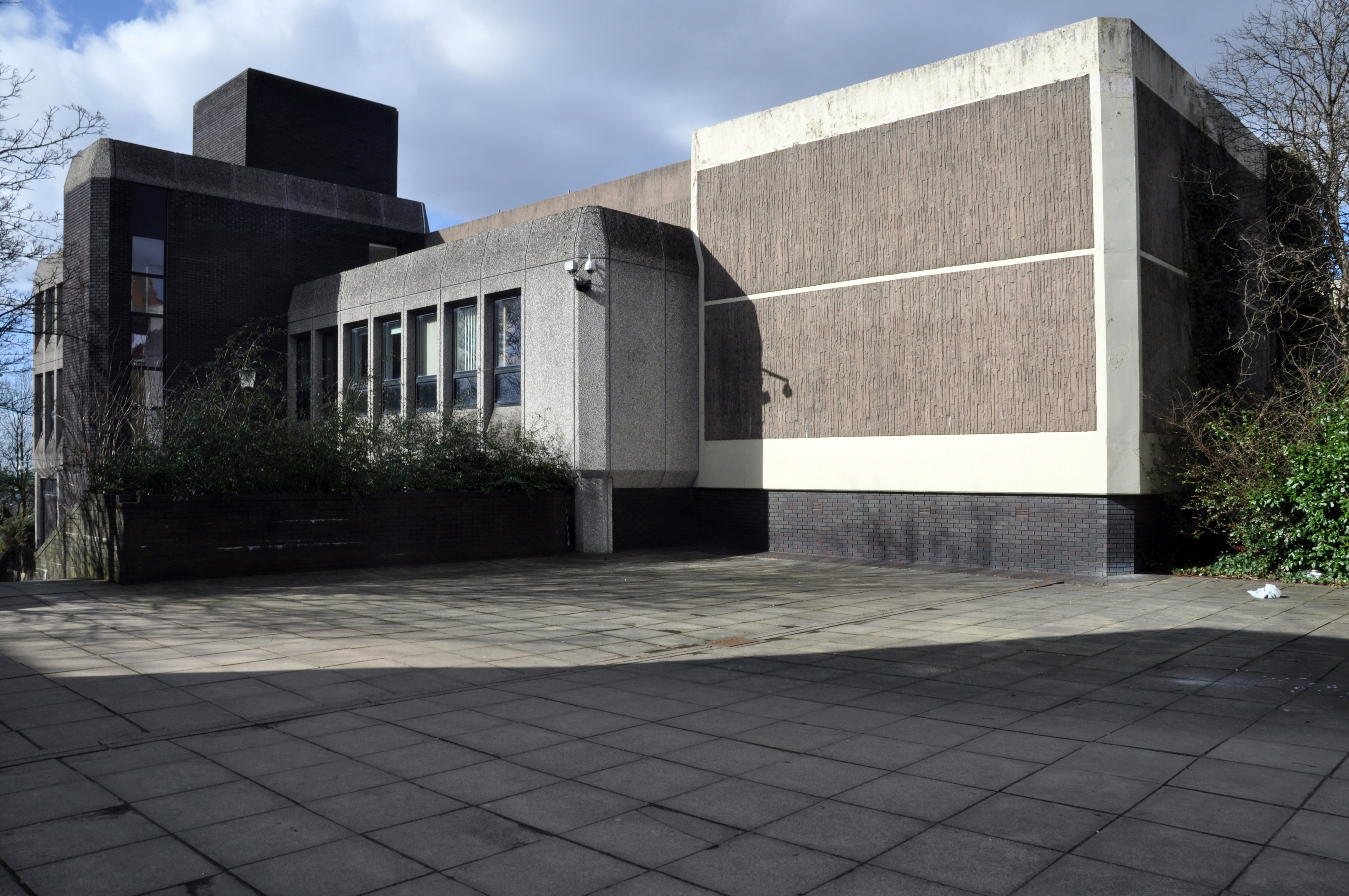
Architects: Leach Rhodes Walker 1977.
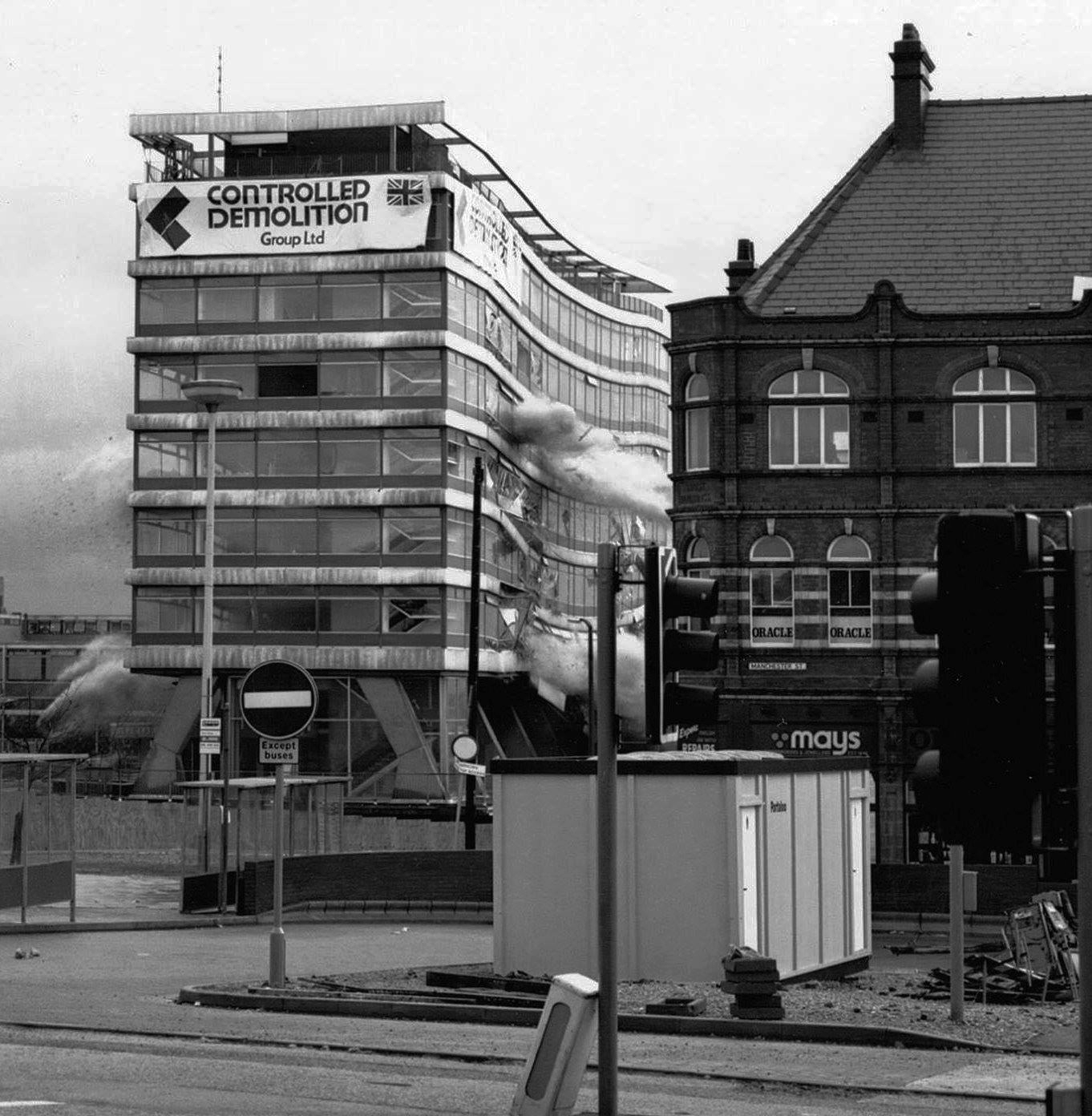
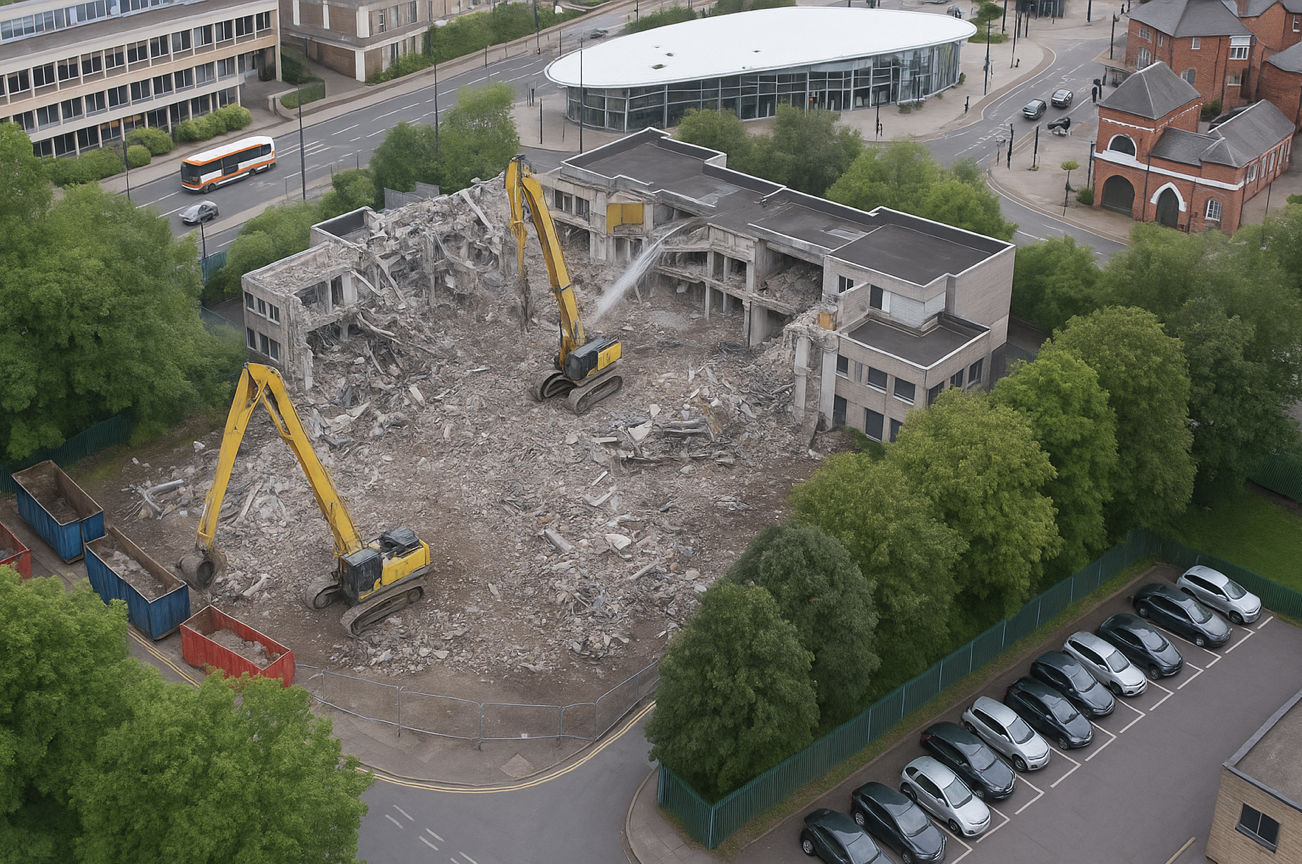
Demolished in 2019 to make way for further redevelopment.
The proposals for the Former Magistrates Court site include two hundred and nineteen new homes with the tallest block ten-storeys and a green route connecting Manchester Chambers with King Street. The designs have been developed to ensure a unified neighbourhood with a common design language and seamless movement between other sites.
Oldham Council and Muse intend to work in partnership over the next 15 years to develop the sextet of council-owned brownfield sites across the town centre.
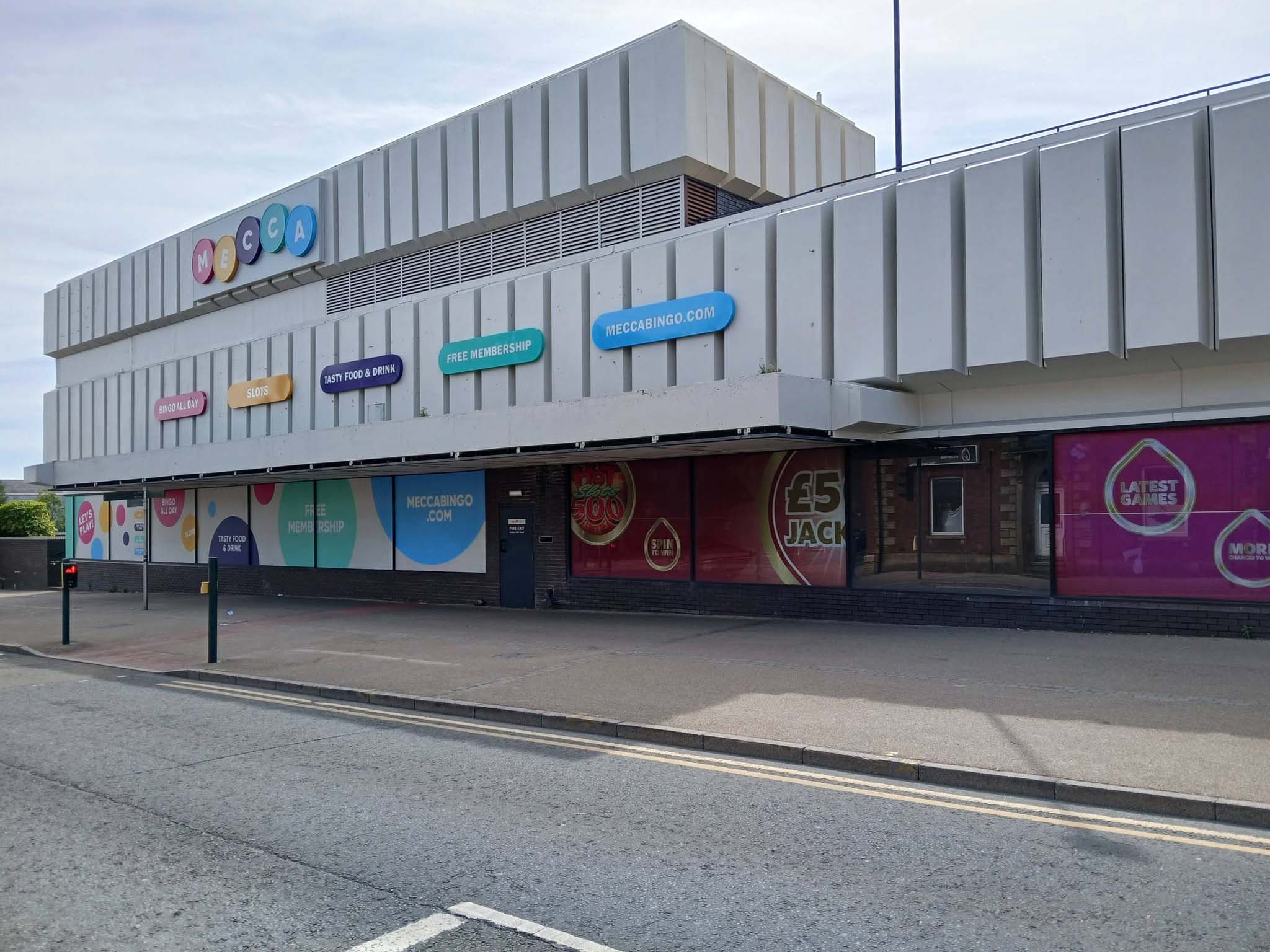
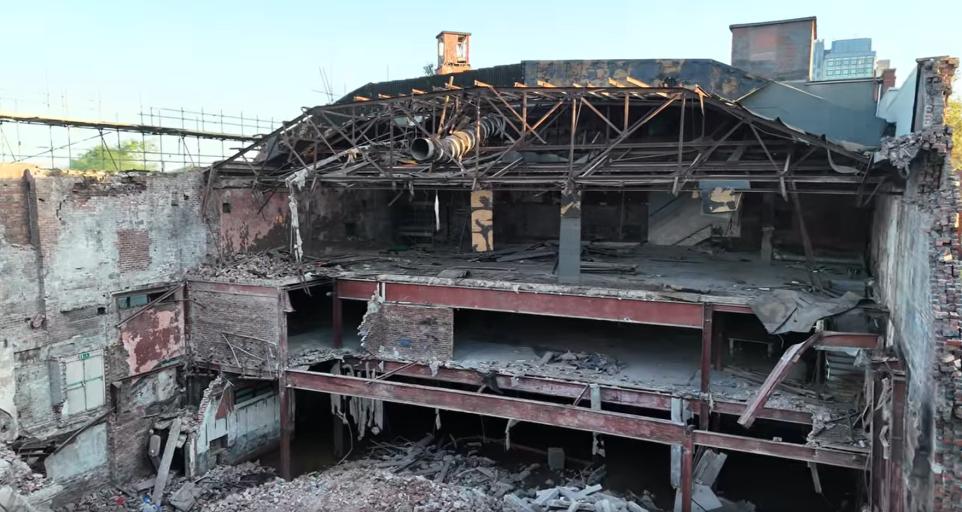
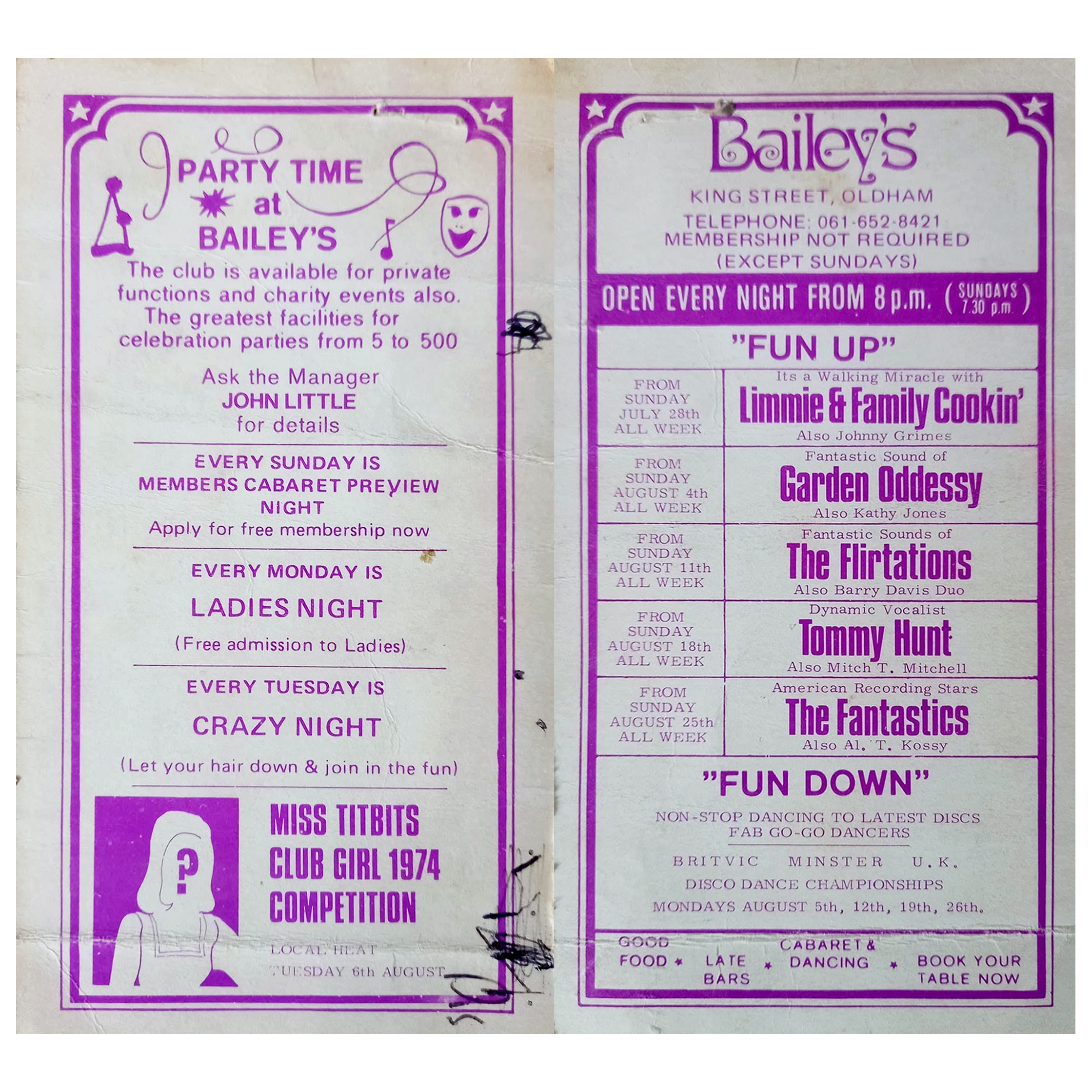
Viewed across the site where Bailey’s used to be – aka Romeo & Juliet’s, Butterflies, Astoria ballroom and Bowling Alley, Froggies and Riley’s.
The site originally started out as the Grand Theatre, a performance space designed by London architects Thomas Taylor and Ernest Simister who also designed Chadderton Town Hall.
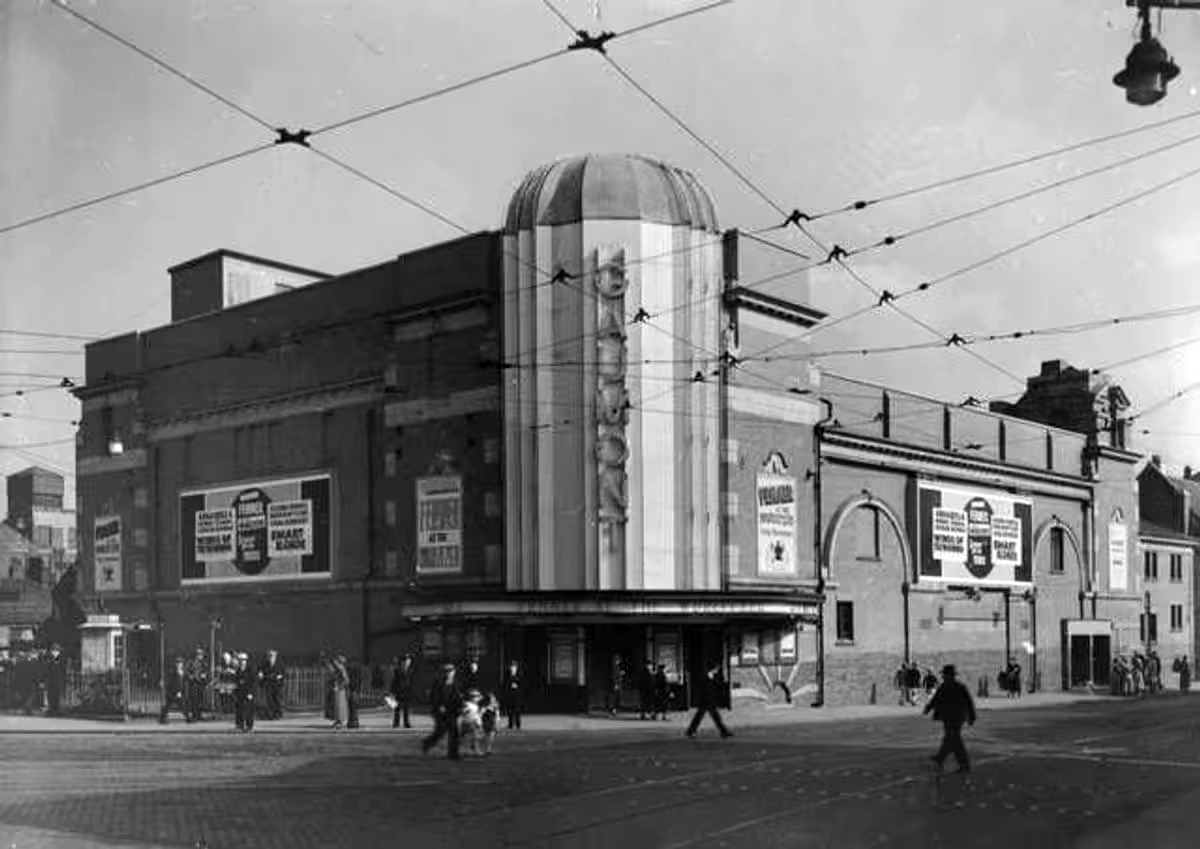
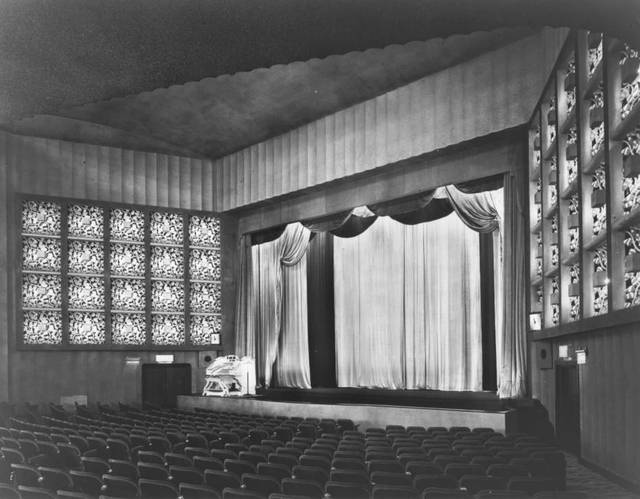
In 1937, Gaumont Super Cinemastook over the building, gutted the auditorium and transformed it into stalls and one circle seating totalling 1,842 to open their 1930s cinema.
In 1991, the Chronicle reported on a mysterious haunting which was thought to have taken place in Butterfly’s nightclub in Oldham.
Before Butterfly’s had been a nightclub the building had been used for many purposes, and in 1939 was known as the ‘Grand Theatre.’ The building was undergoing renovations when Mr Lloyd was killed. ‘Witnesses said that Mr Lloyd was crushed underneath the beam which he was trying to guide down with a rope.’
However, Derek Lloyd’s theory of the origin of the ghost was not accepted by everyone at the time. Due to the fact the ghost appeared to be wearing a white T-shirt, people believed it was unlikely to be the spirit of a 1930s man. In response, Derek argued that ‘my father always had his sleeves rolled up at work because he suffered from a skin complaint.’
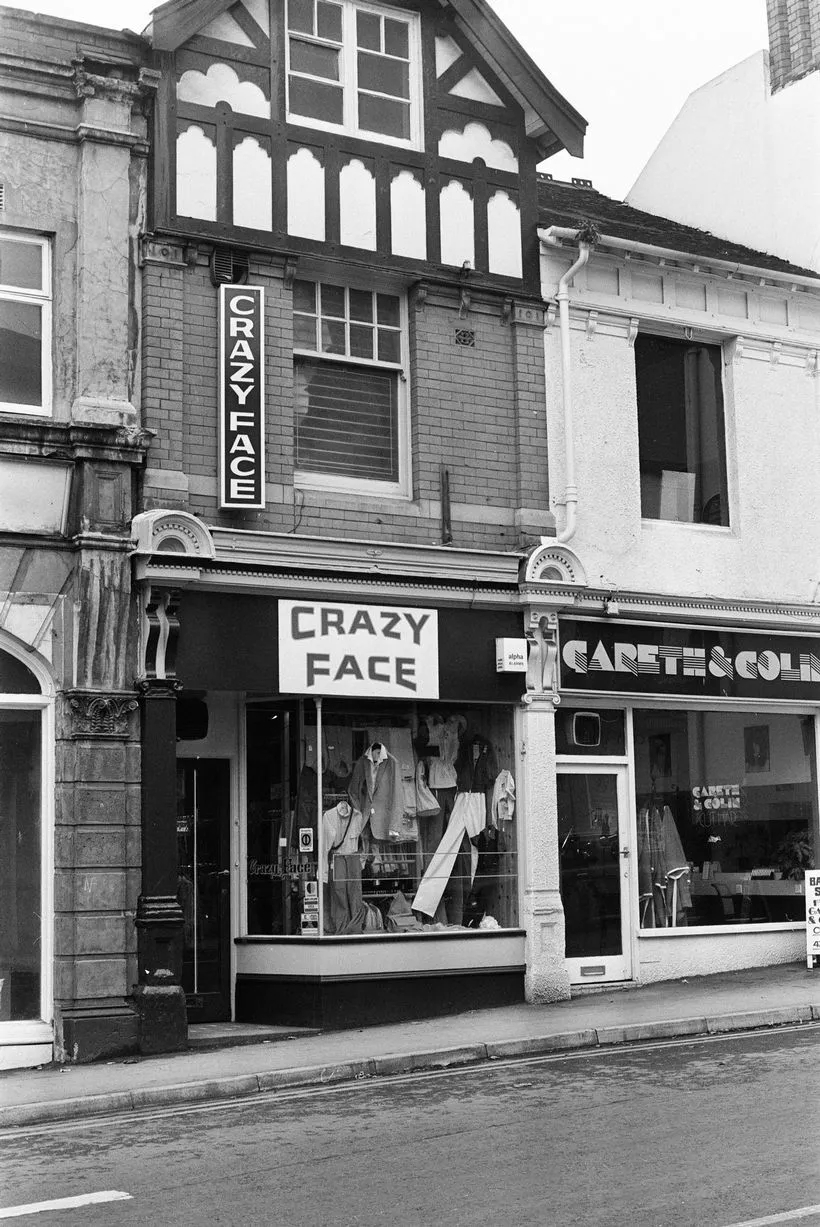
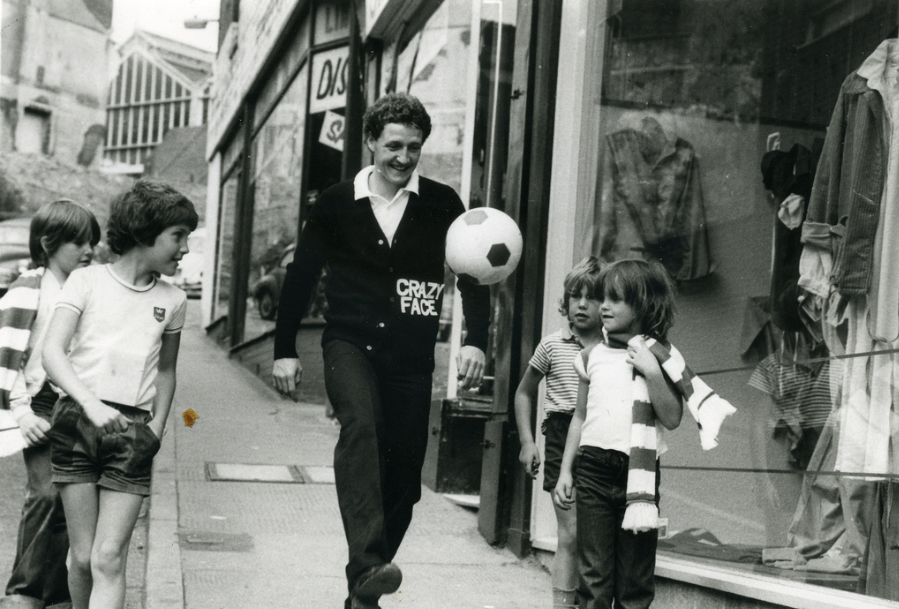
The Crazy Face shop at Tiviot Dale, Stockport, next door to Gareth and Colin’s Hairdressers, part owned by Gareth Evans who managed the Stone Roses. Two shops owned by legendary Manchester band managers side by side!
You see, the thing is, the Crazy Face factory is my story, my history, my childhood memoirs, the location of my earliest adventures. Crazy Face clothing was my Dad’s workplace, his shops, his factory, his vision and it was a real place, it was places, there were several factories and the ‘factory’ was the whole circus of creativity that surrounded him.
Of course Joe Moss was also the manager of The Smiths and latterly was managing Johnny too, in some capacity, in later years, but the Crazy Face story is a whole in which The Smiths are a chapter, so it feels strange to see the Crazy Face name associated with Johnny Marr in this way, as part of his marketing.
David Moss
This a tale of times long long ago – in the land that Levi Strauss forgot.
Of British boys and girls with – denim set on destruction.
Born in 1955 I was hurled into the turmoil of the Swinging Sixties, with little or no idea concerning style or fashion. Clothes were hand me down, home made accessories to a guileless life of pre-teen, jean-less hi-jinx.
The Beat Boom, that raging torrent that swamped the North West of England in a swirling vortex of raw R’n’B and indigo trousers changed all that forever.
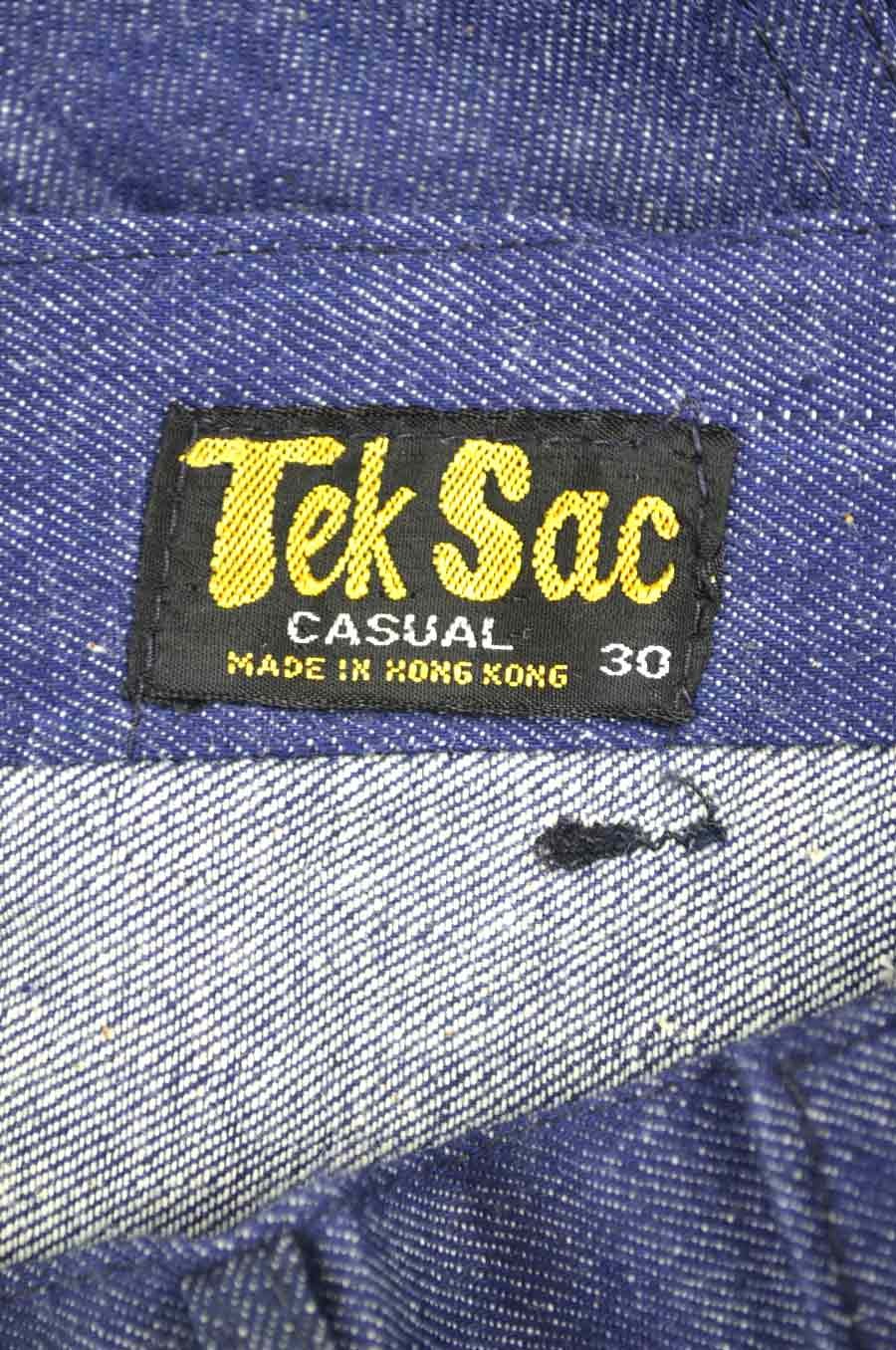
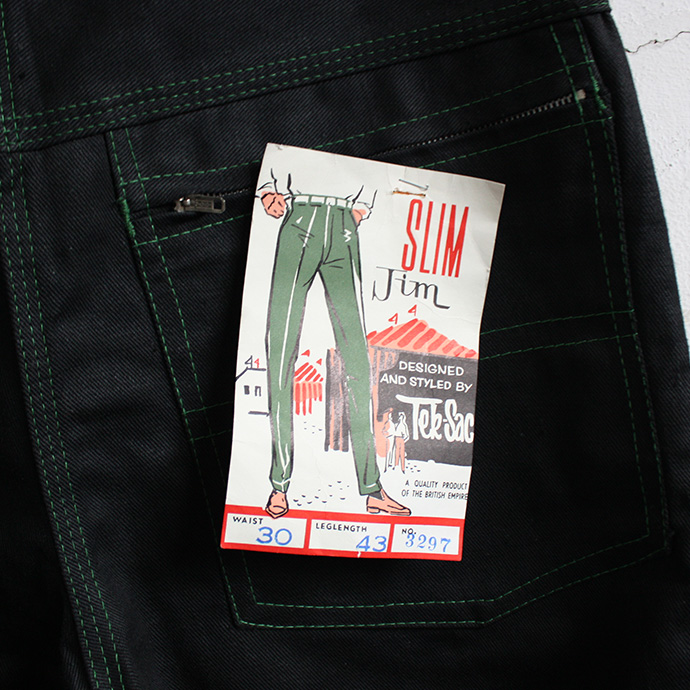
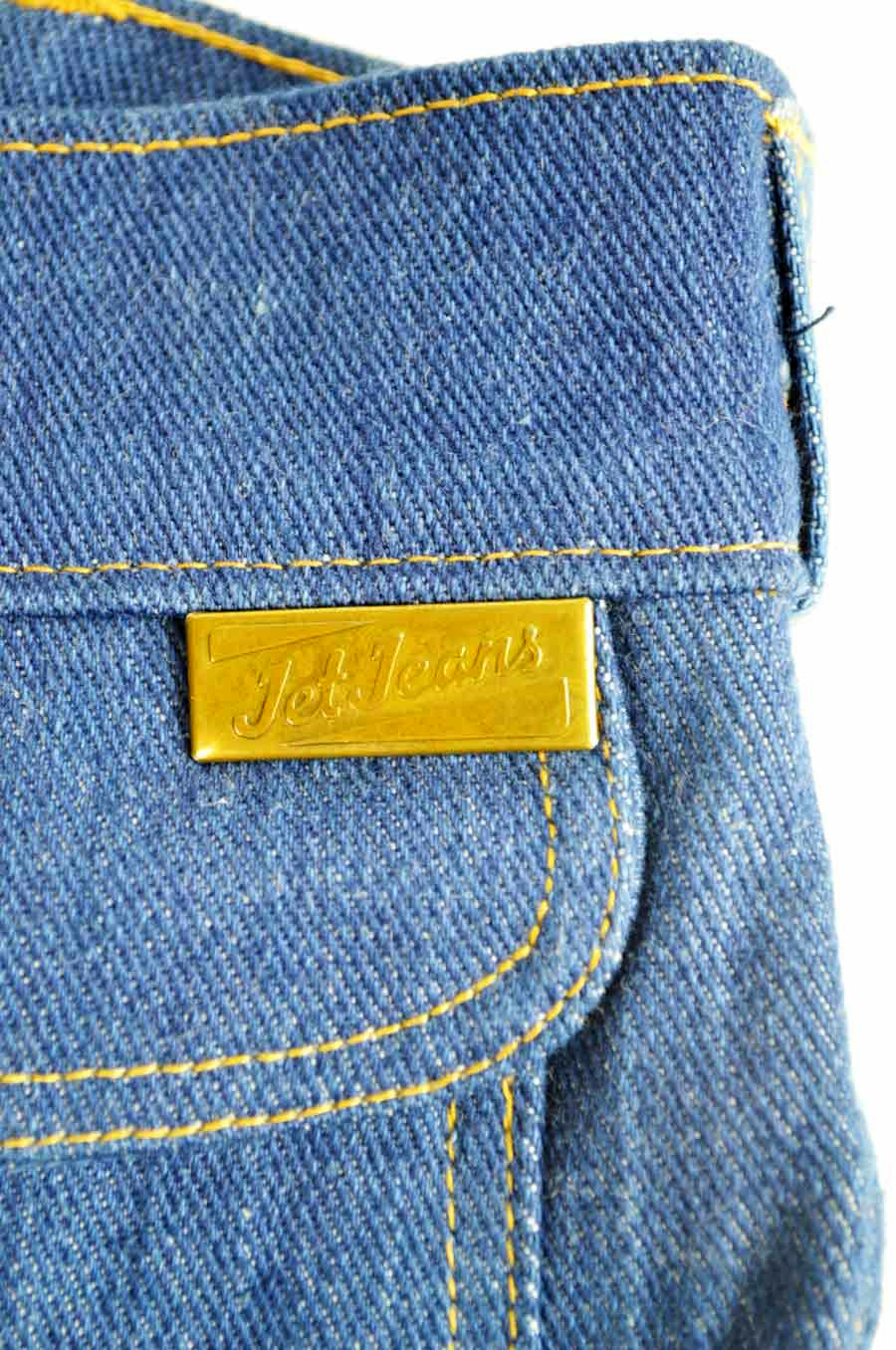
I have no idea just here they came from, or any idea or where they eventually went, but my first pairs of jeans were Tek Sac and/or Jet.
A thin copy of their American cousins, cut and stitched with a casual carelessness from the pale blue gossamer that was Empire Brand cotton, they were pre-worn out, threadbare before you had actually worn them out. Designed to induce a distressed look in the wearer, years before the coming of the distressed look.
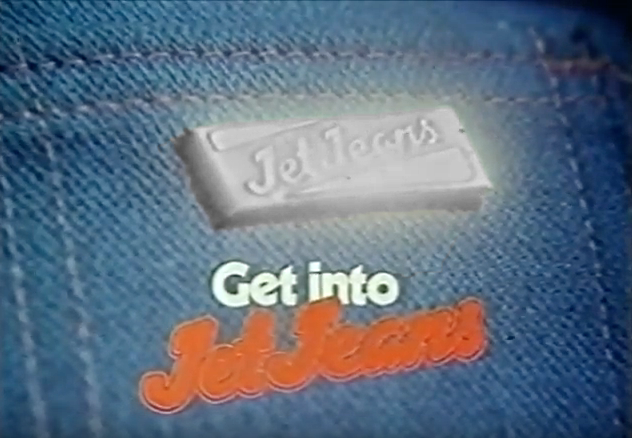
Jet seemed to have survived into the 70s – rich in Disco Chic, even warranting their own TV ad – get into Jet Jeans get into Jet.
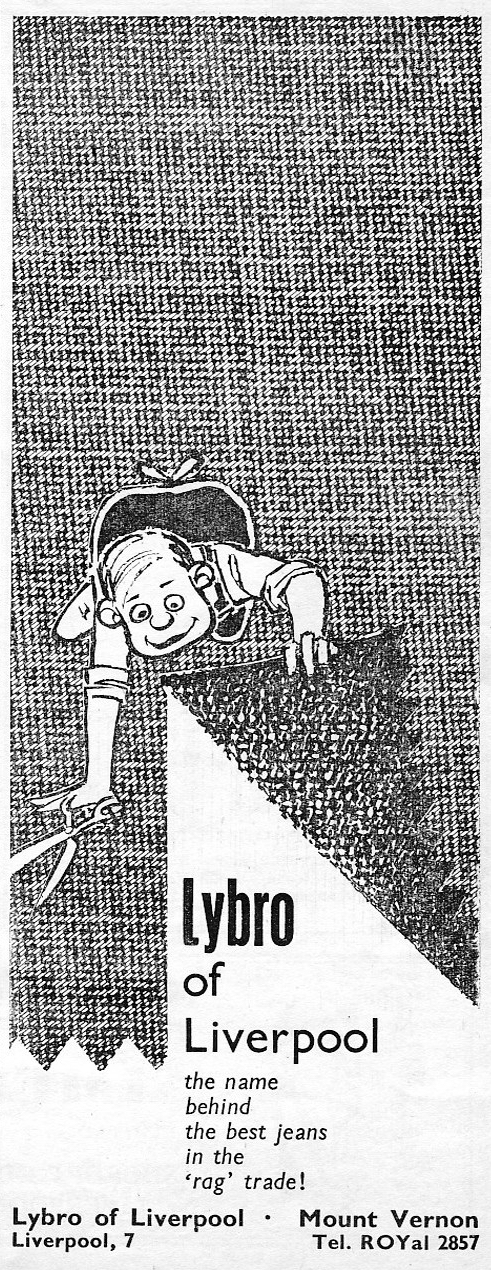
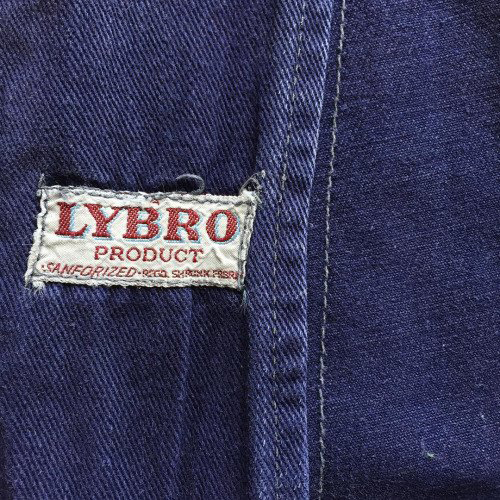
As I remember the first pair of serious branded jeans were local – for famous local people – they were Liverpool made Lybro of Mount Vernon. A slightly heavier denim, styled to suit and fit the lower half of the upwardly-mobile, mobile teenage tearaway.
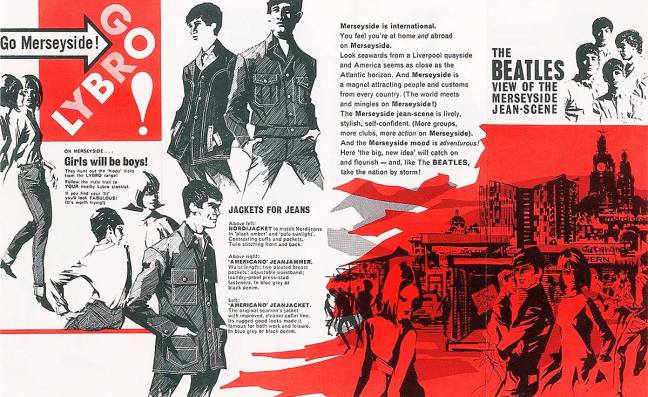
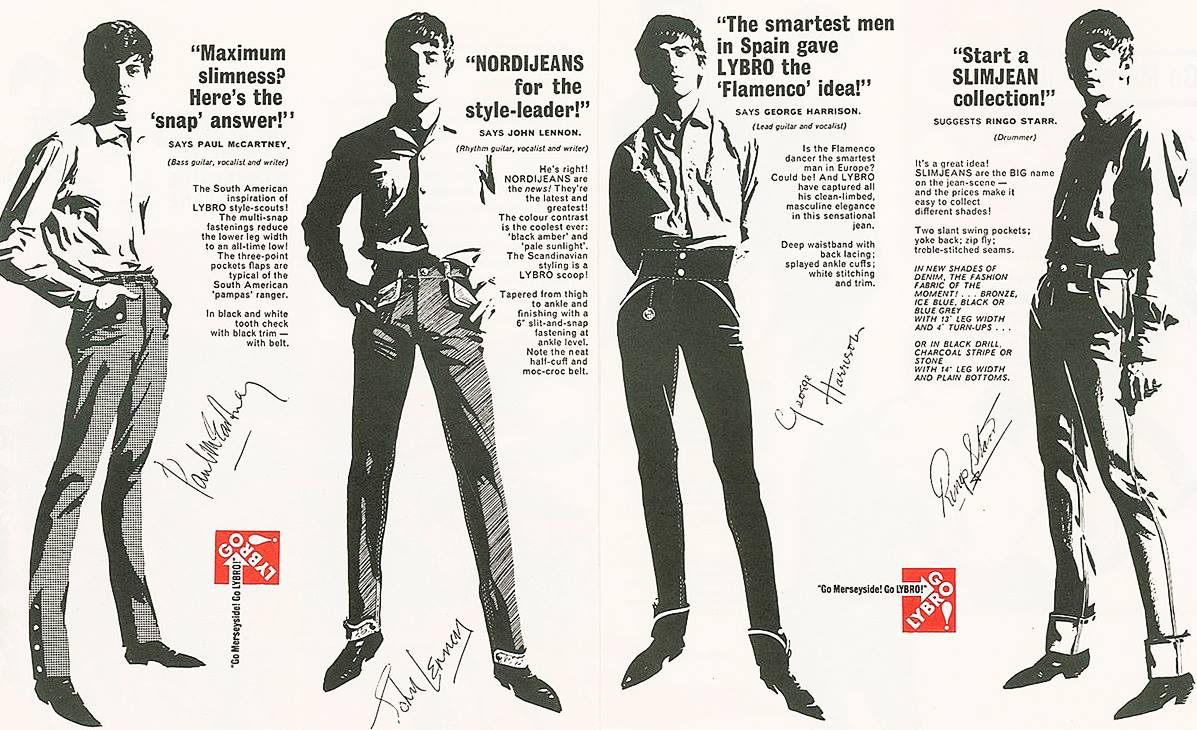
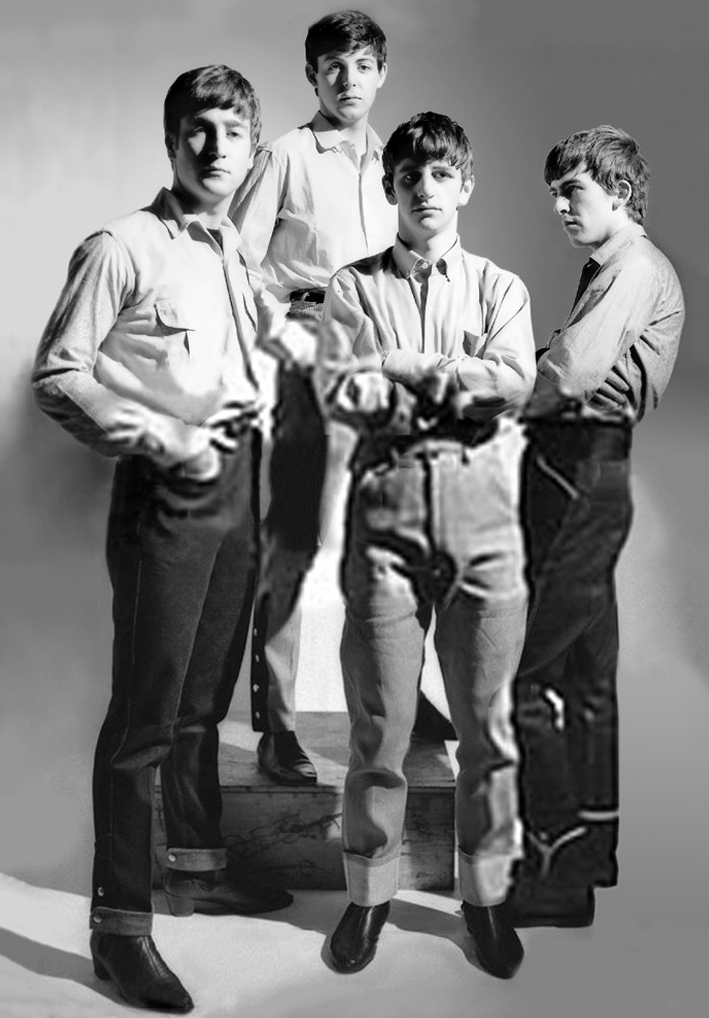
In 1963, a Liverpool jeans company, Lybro Limited, asked if The Beatles would advertise their jeans. The request may either have come through the group’s manager, Brian Epstein – or through their friend at the Cavern Club, DJ Bob Wooler. The advertising agency behind the campaign was Millican Advertising Limited, operating from Liverpool 3.
The original photos came to light in 2004, when photographer Richard Cooper unearthed the pictures in an old file and remembered the shoot on which he worked as a young 20-year-old apprentice at a photo studio in Liverpool’s African Chambers.
The photos formed the basis of drawings used on the final advertisements.
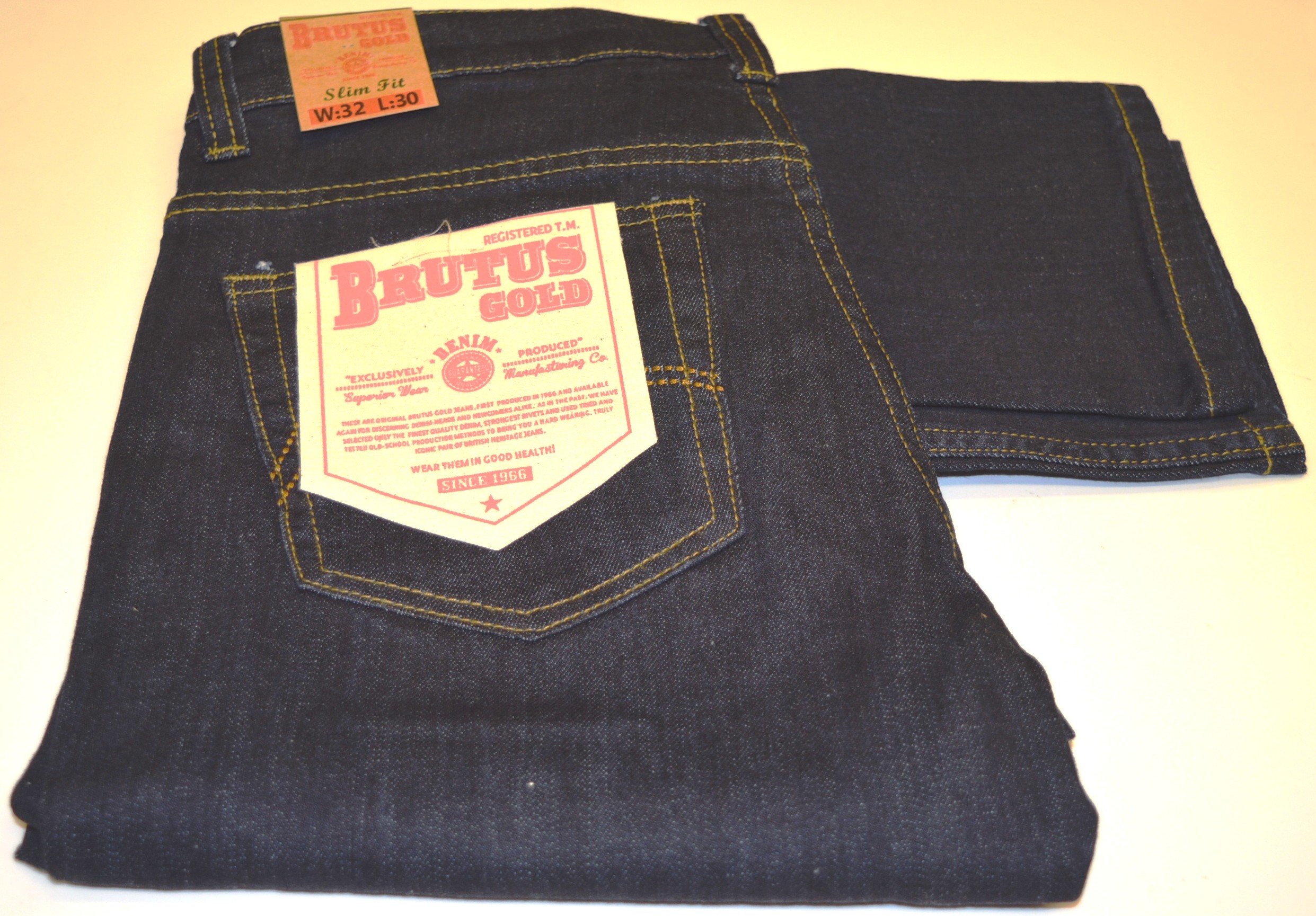
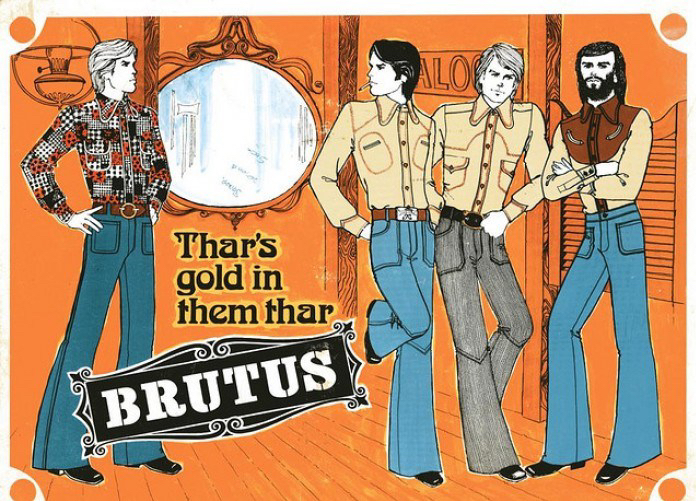
Then along came came Brutus – possibly the first homegrown denim to challenge the American imports for distinctive style and quality.
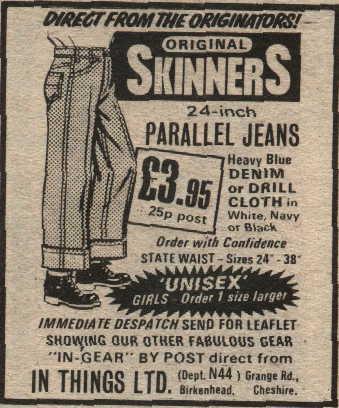
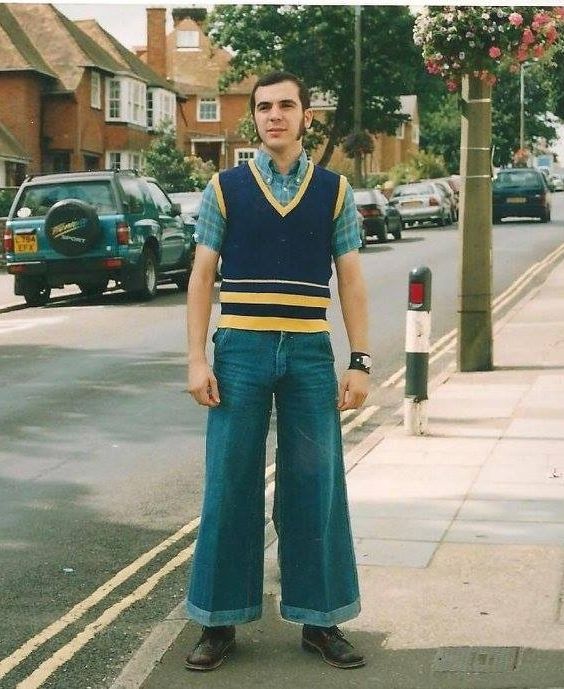
By now flares had flared up like an unwanted rash on the face of the mid-seventies, whilst I remained in a parallel omniverse – constant and true to the parallel cut.
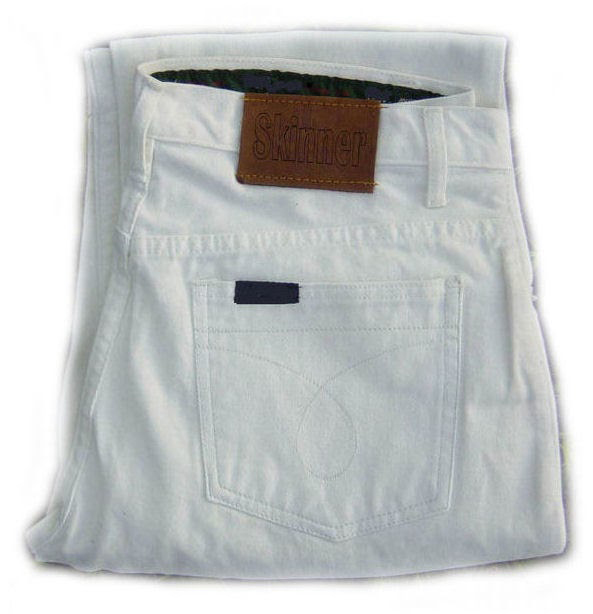
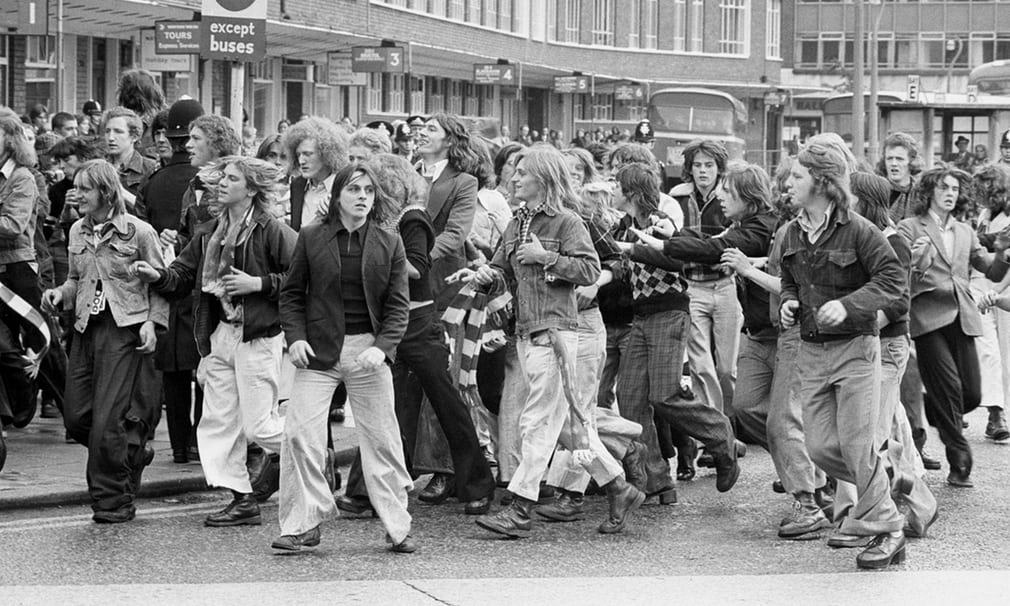
Beloved of the boot-boy and rampaging teenage togger hooligan alike, Skinners ran counter to the ever widening gulf between toe cap and jean hem. I had several pairs in the Seventies, indigo, white and corduroy – we were out, straight and proud.
Less enlightened times produced a rash of Skinner clad misdemeanours on the streets and terraces of this fair Isle.
Manchester United fans in Cardiff 1974
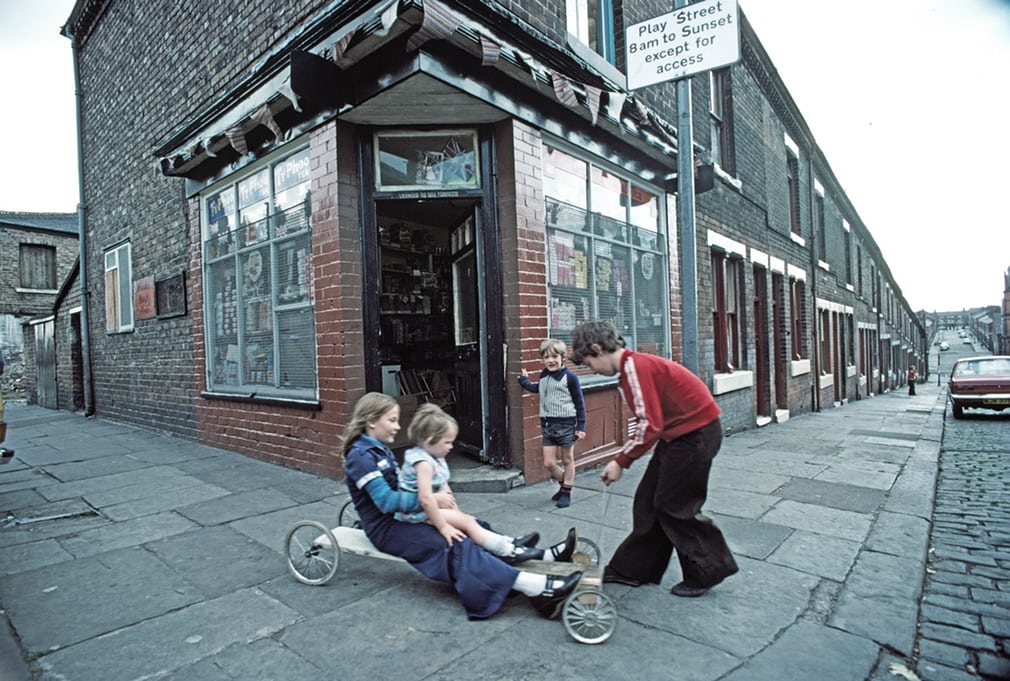
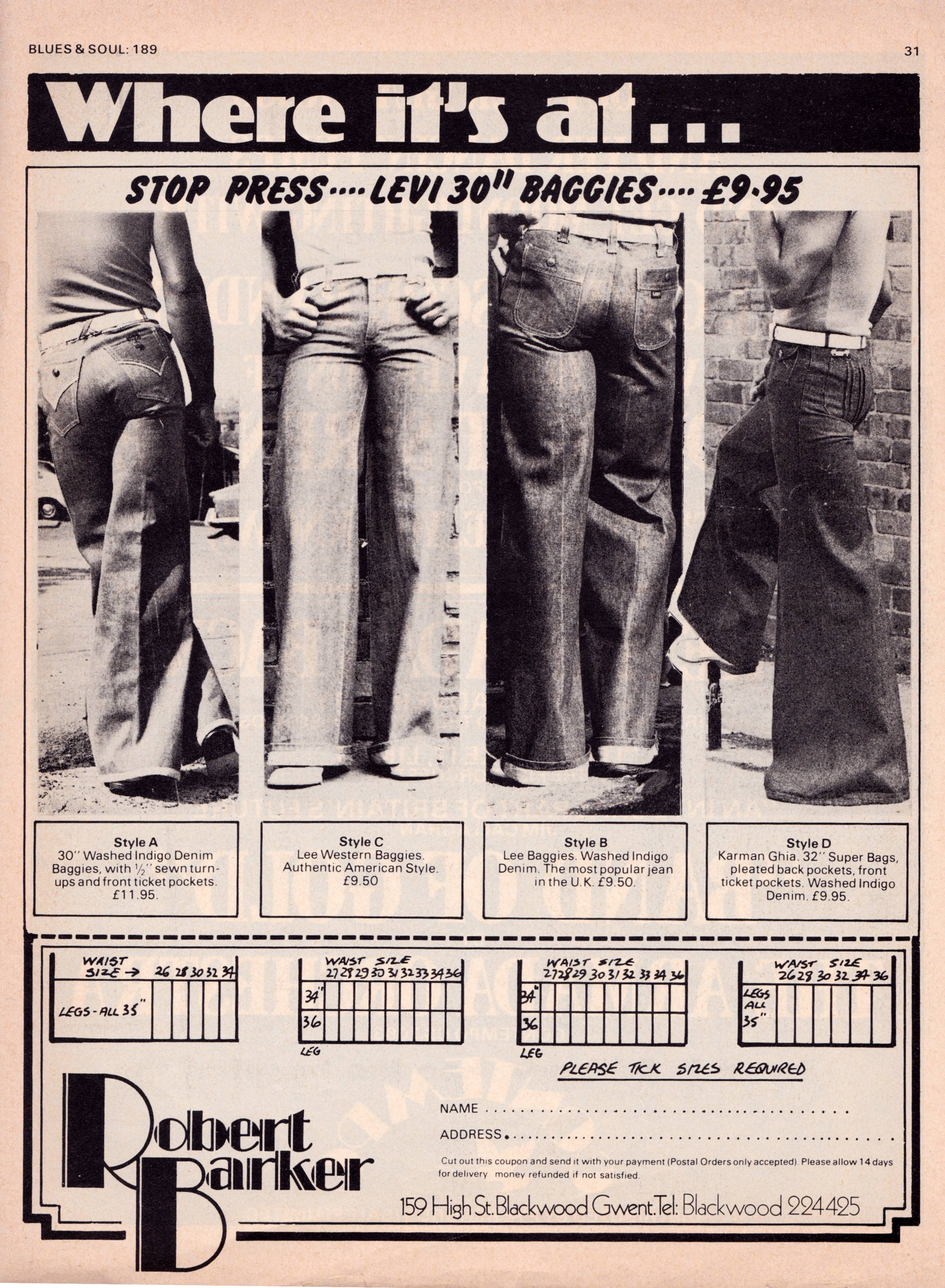
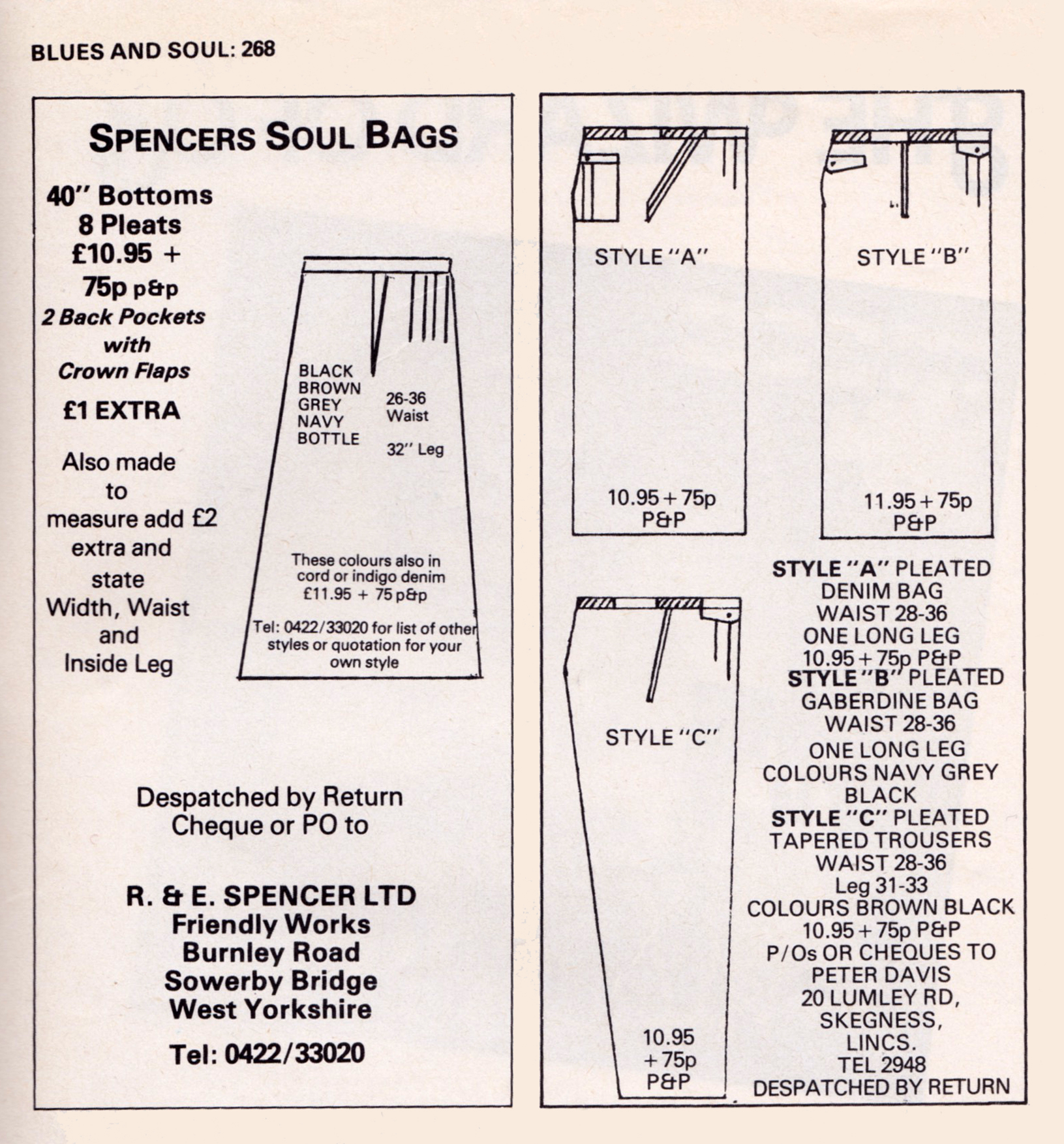
As the Seventies began to collide with the Eighties the upper half of the UK embraced the widest and wildest styles they could find, the northern soul danced to Northern Soul, as jeans, skirts and trousers wrapped and embraced their flailing all-night limbs.
John Bulmer – Manchester 1974
Blues & Soul August 1976
Blues & Soul January 1979
It couldn’t last, we had to take a narrower view in our strides.
The onset of Punk Rock heralded the inception of the skinnier jean – despatching the Hippy flare and Soul Boy bag, indigo to the bargain bins of history.
I then began to buy mine from Crazy Face – brainchild of Joe Moss, he had series of Stockport shops on Mealhouse Brow, Lower Hillgate and Tiviot Dale along with Chapel Walks in Manchester – Joe would later find fame managing Manchester pop sensations The Smiths.
Stuart Lee of Stockport County at Mealhose Brow
For years I would wear a wide variety of wide and not so narrow Crazy Face denim – served by fresh-faced, soon to be superstar DJ Jason Boardman.
Nothing last forever and my love affair with home grown denim eventually came to an end, Joe Bloggs, Hooch and Bench largely passed me by.
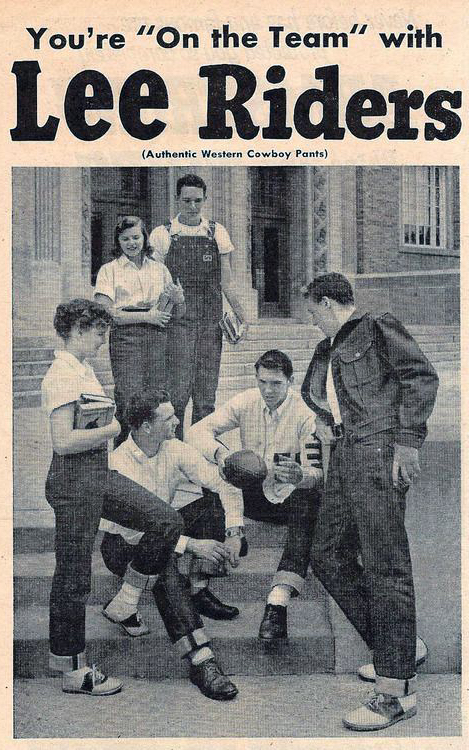
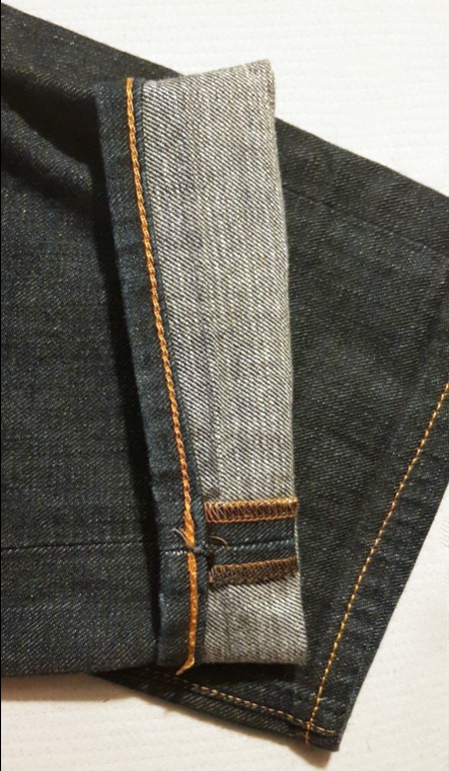
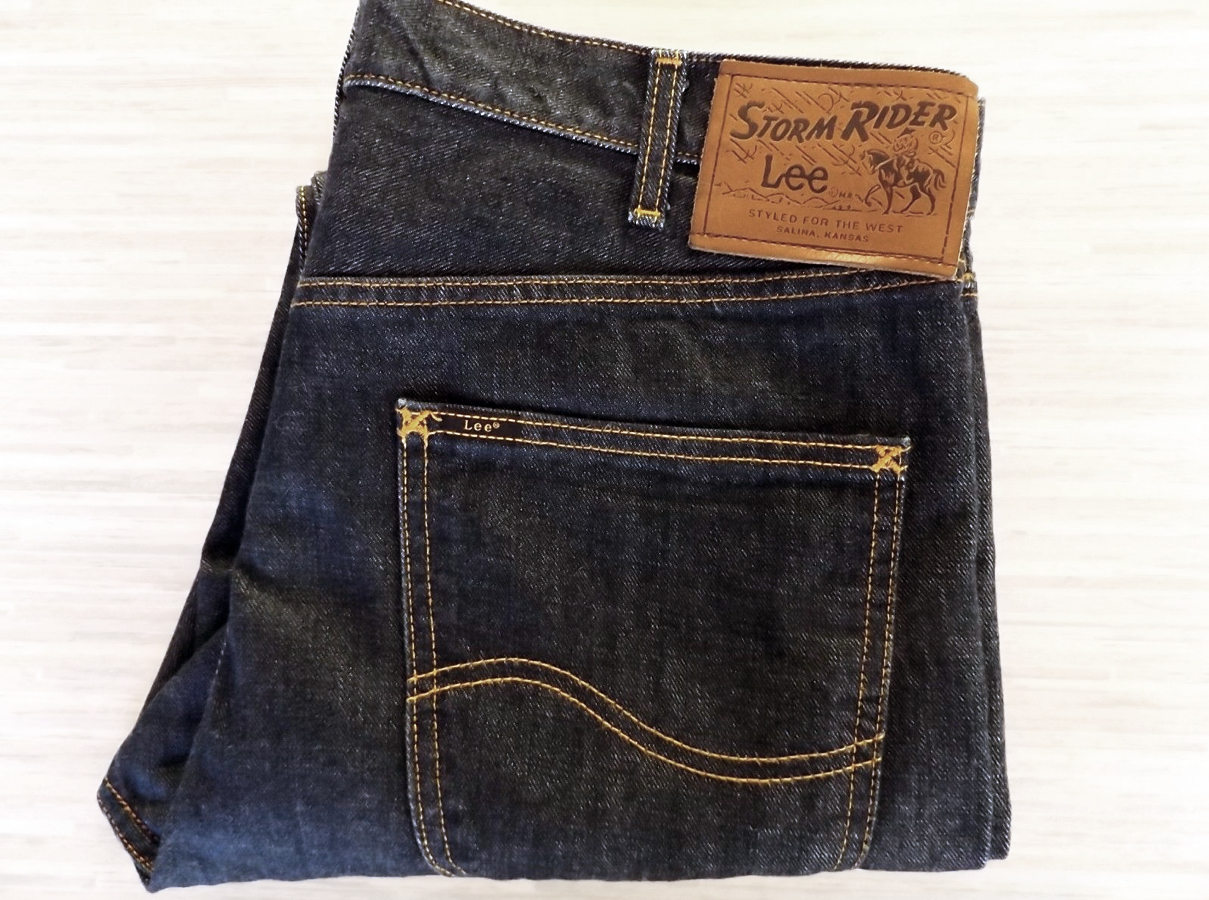
And so our story ends – a Storm Rider in a turn up, I began wearing Lee Jeans and I’ve never looked back, owning several pairs in various states of wash and wear loved, they are now no longer made.
So some ways down the line I’ll have to take a look at what’s shaking – shake down a pair of eBay Tek Sacs and start all over again.