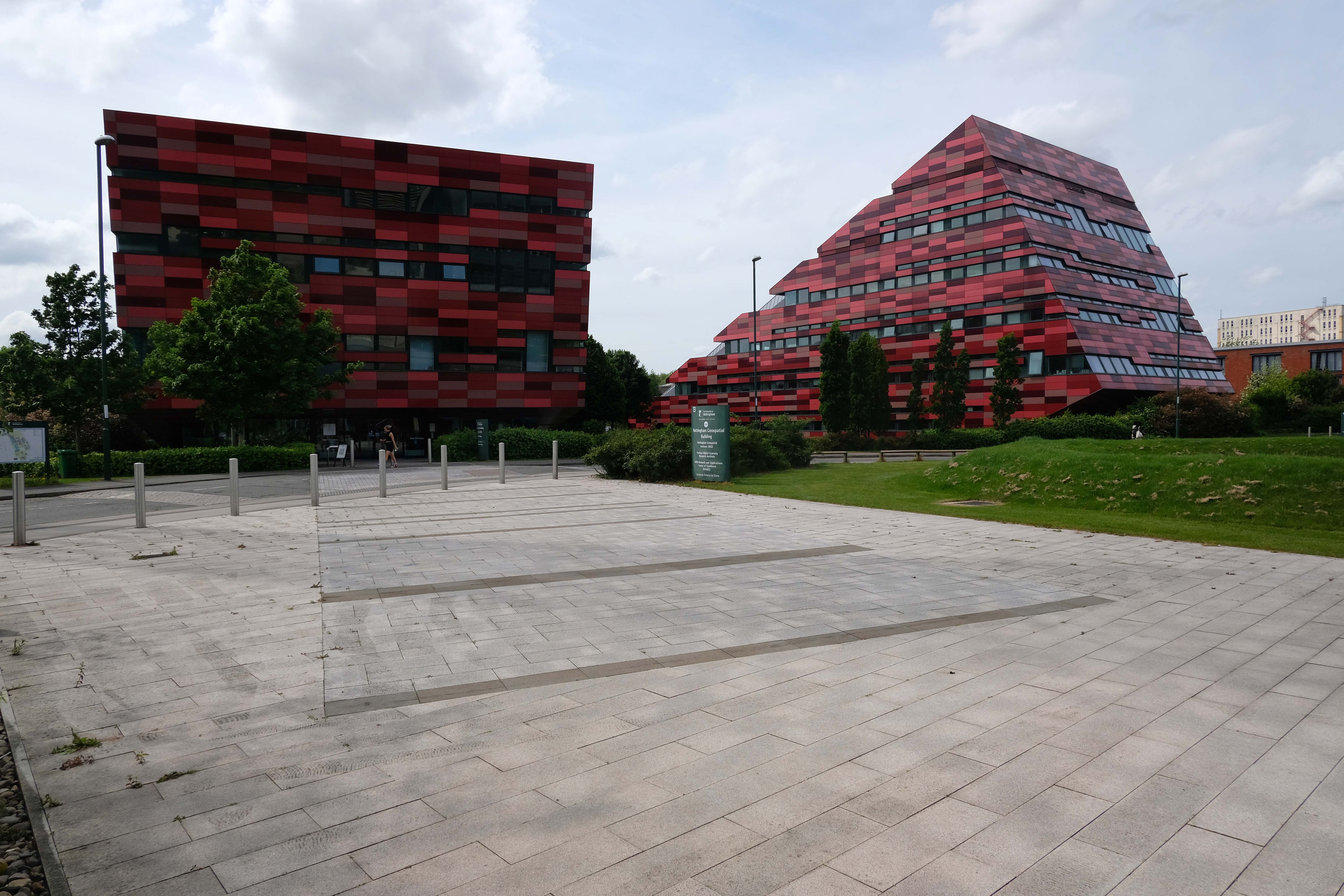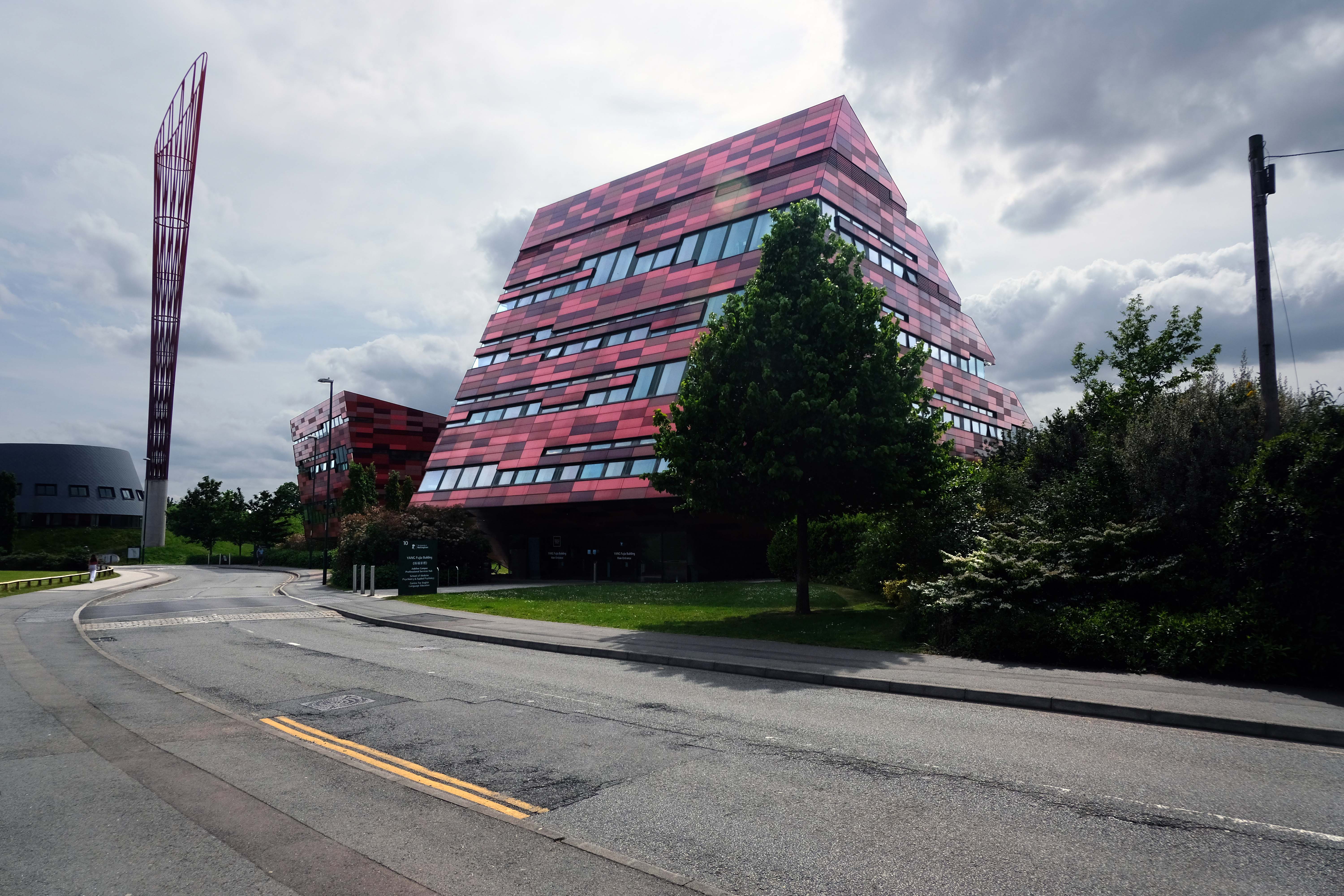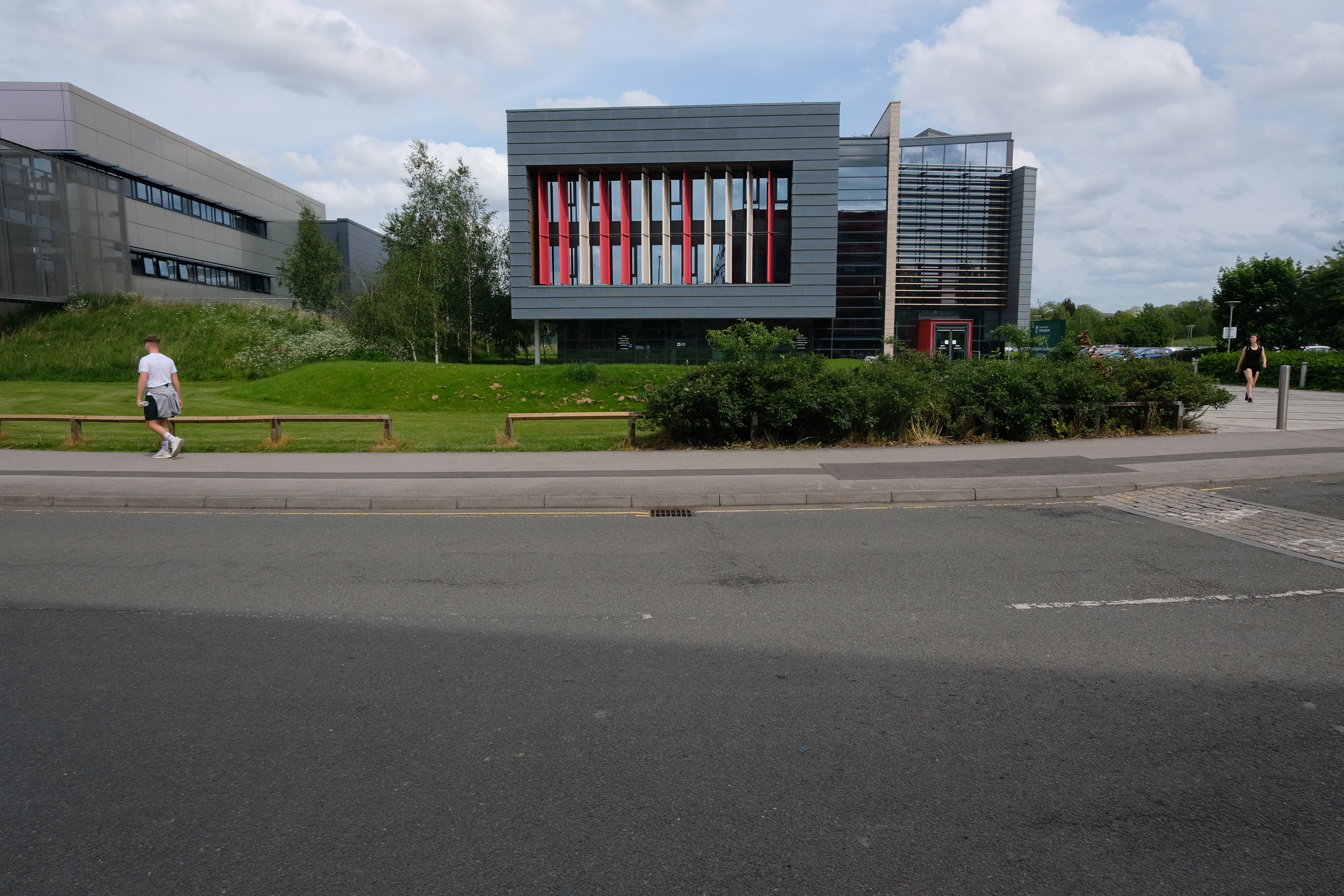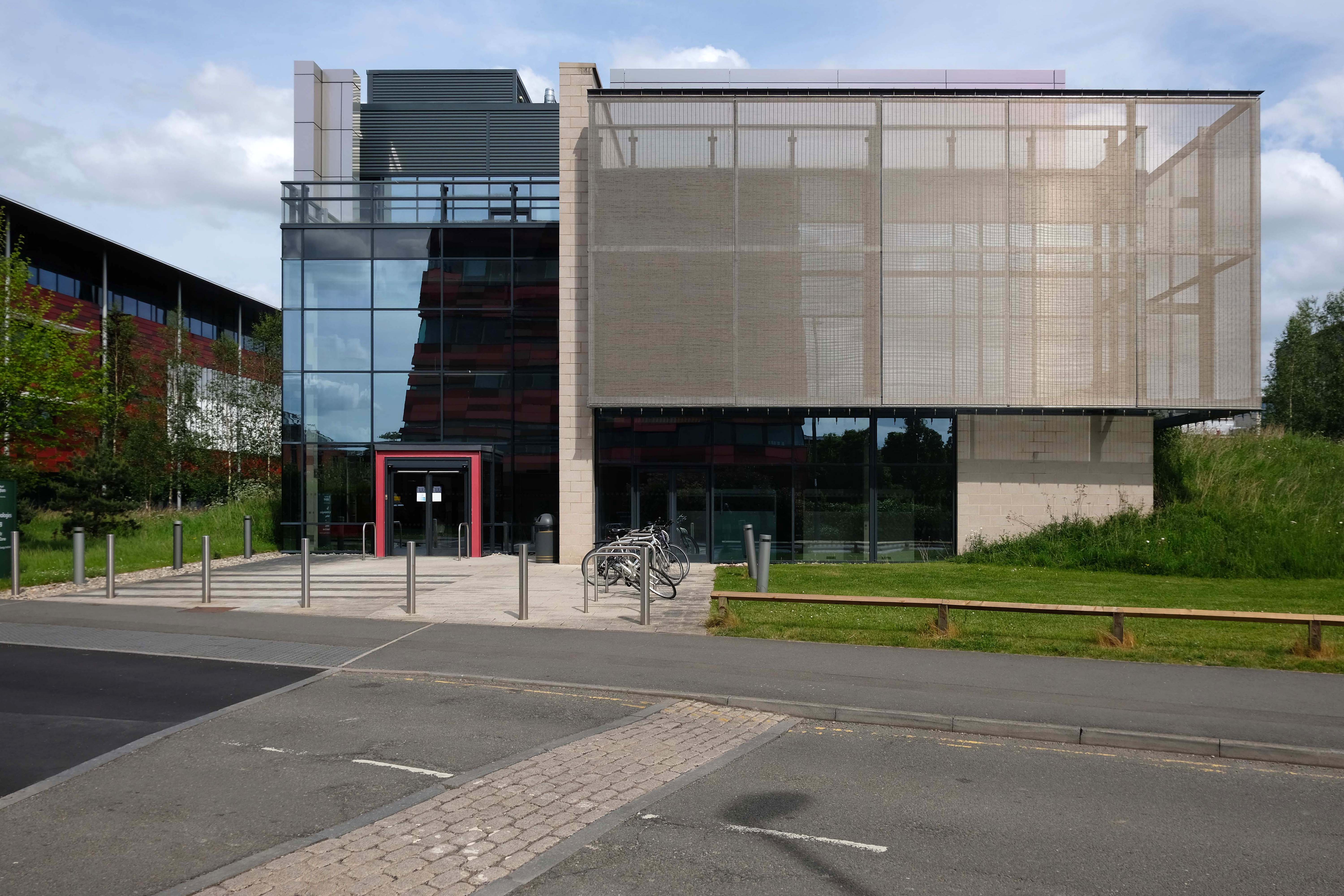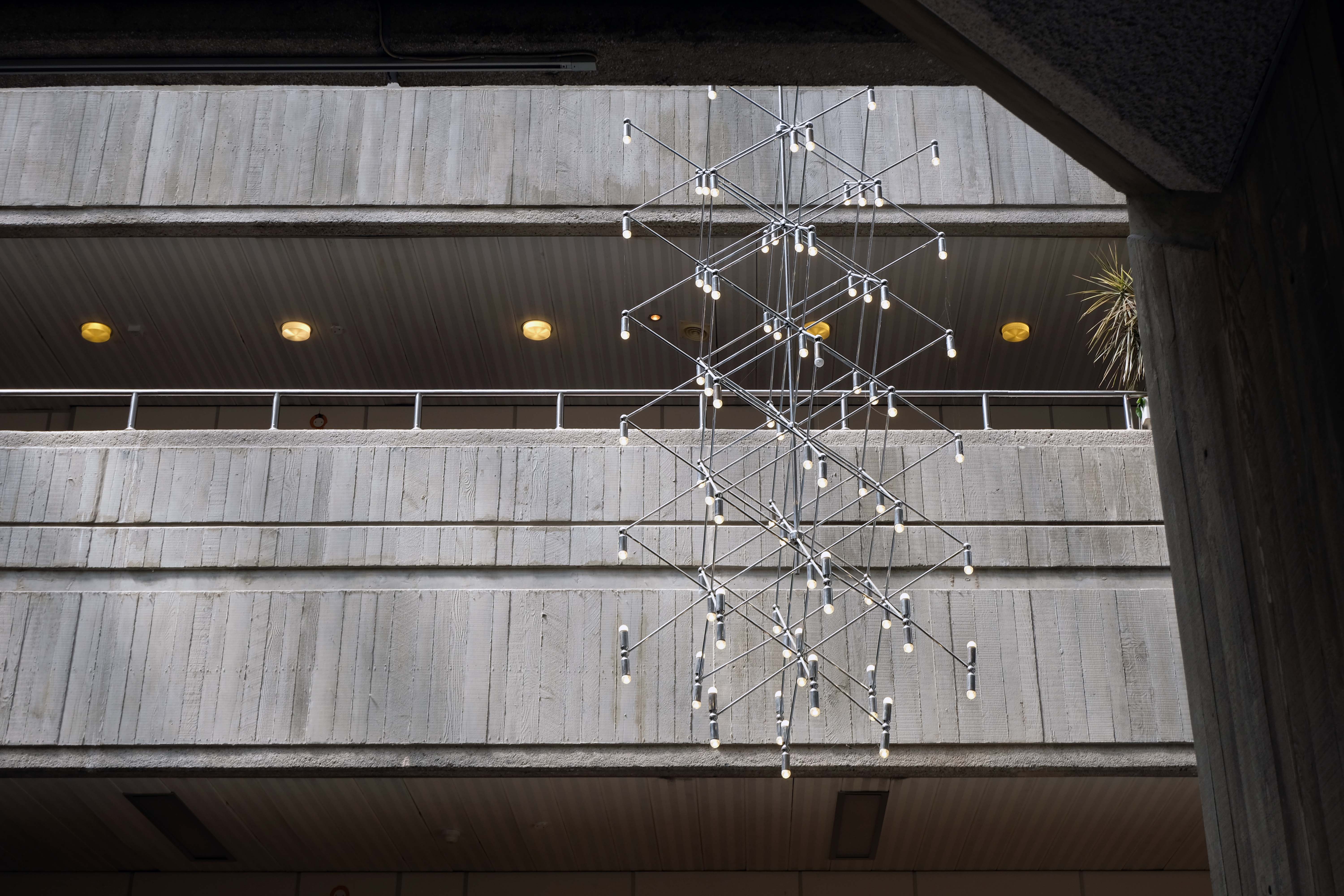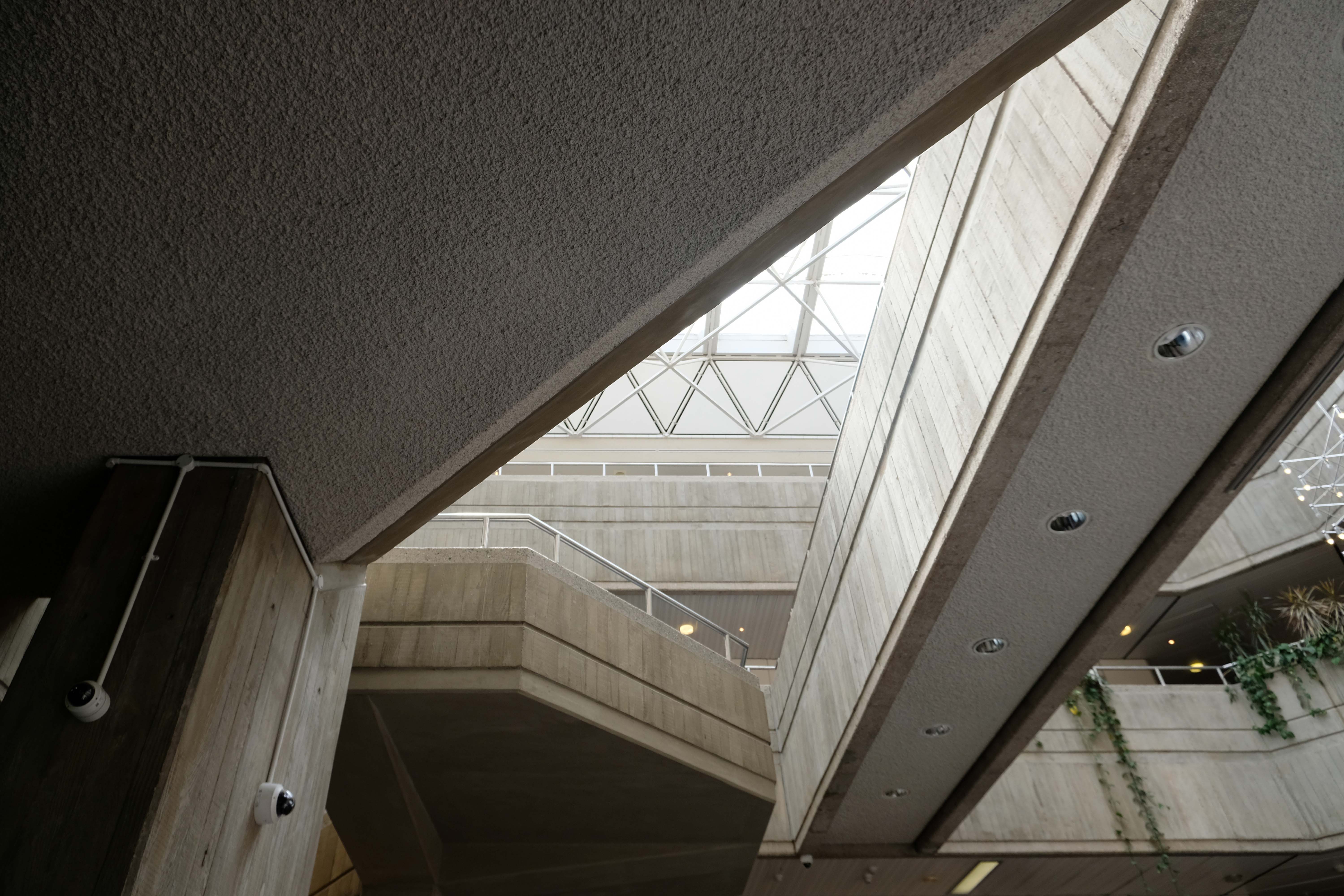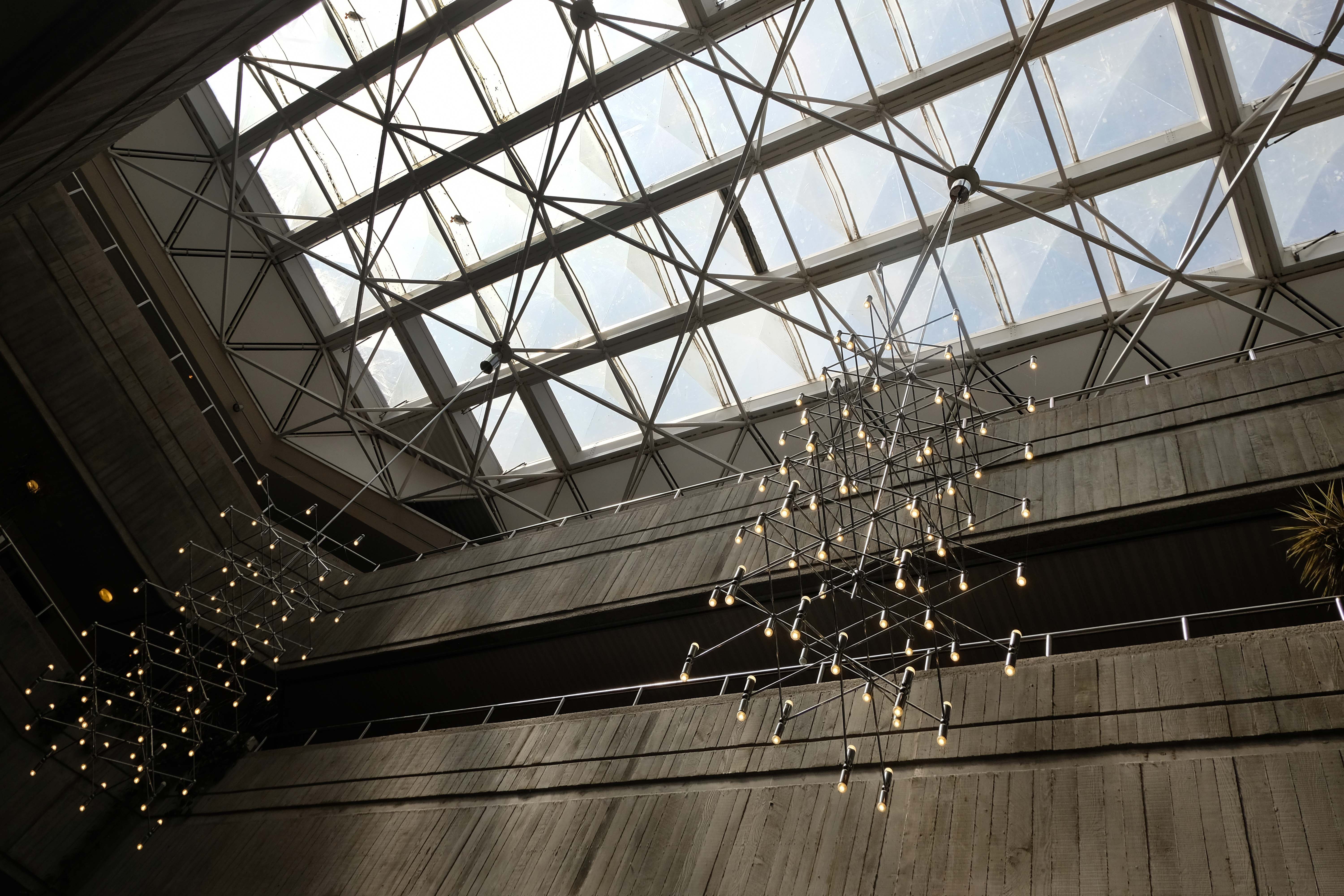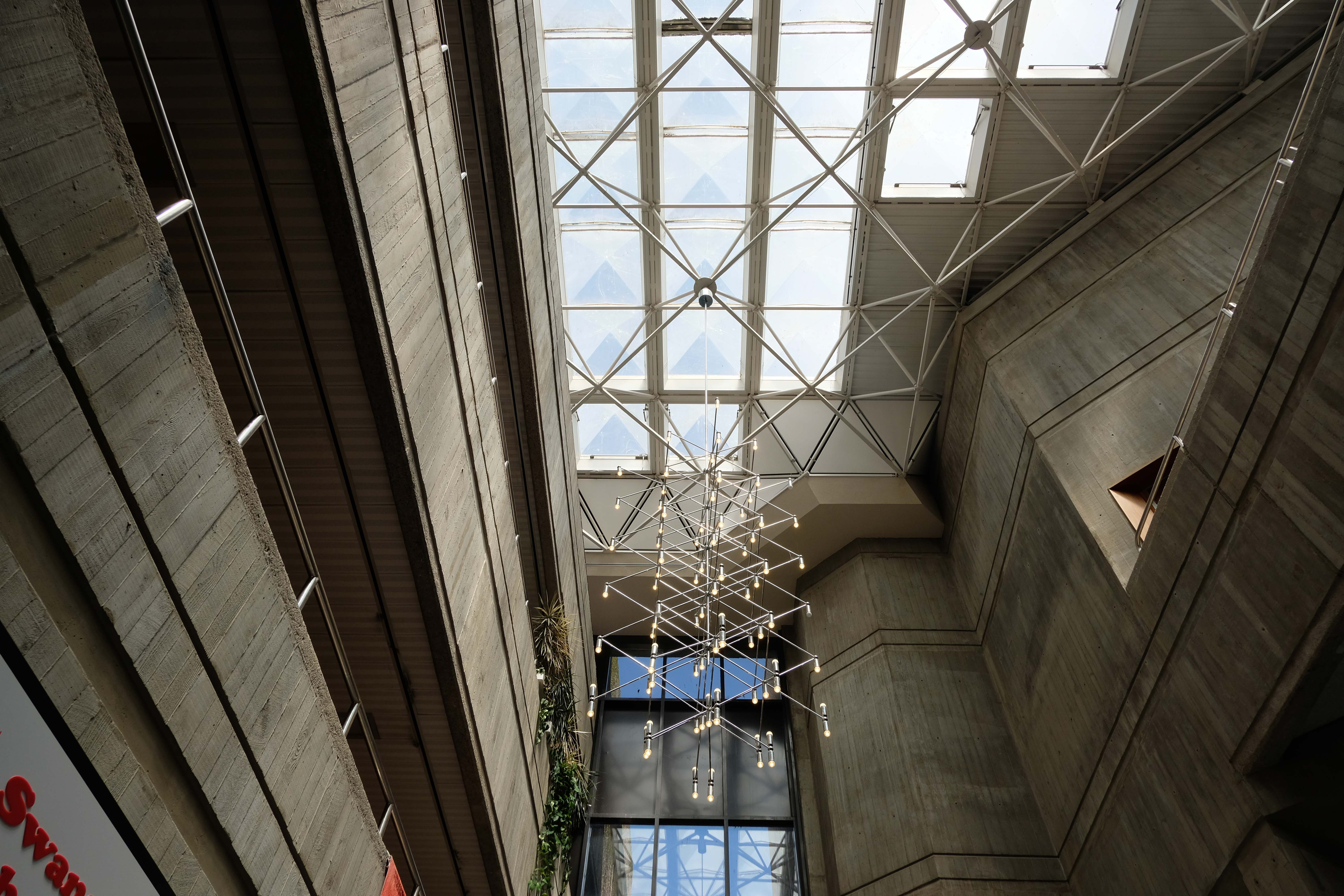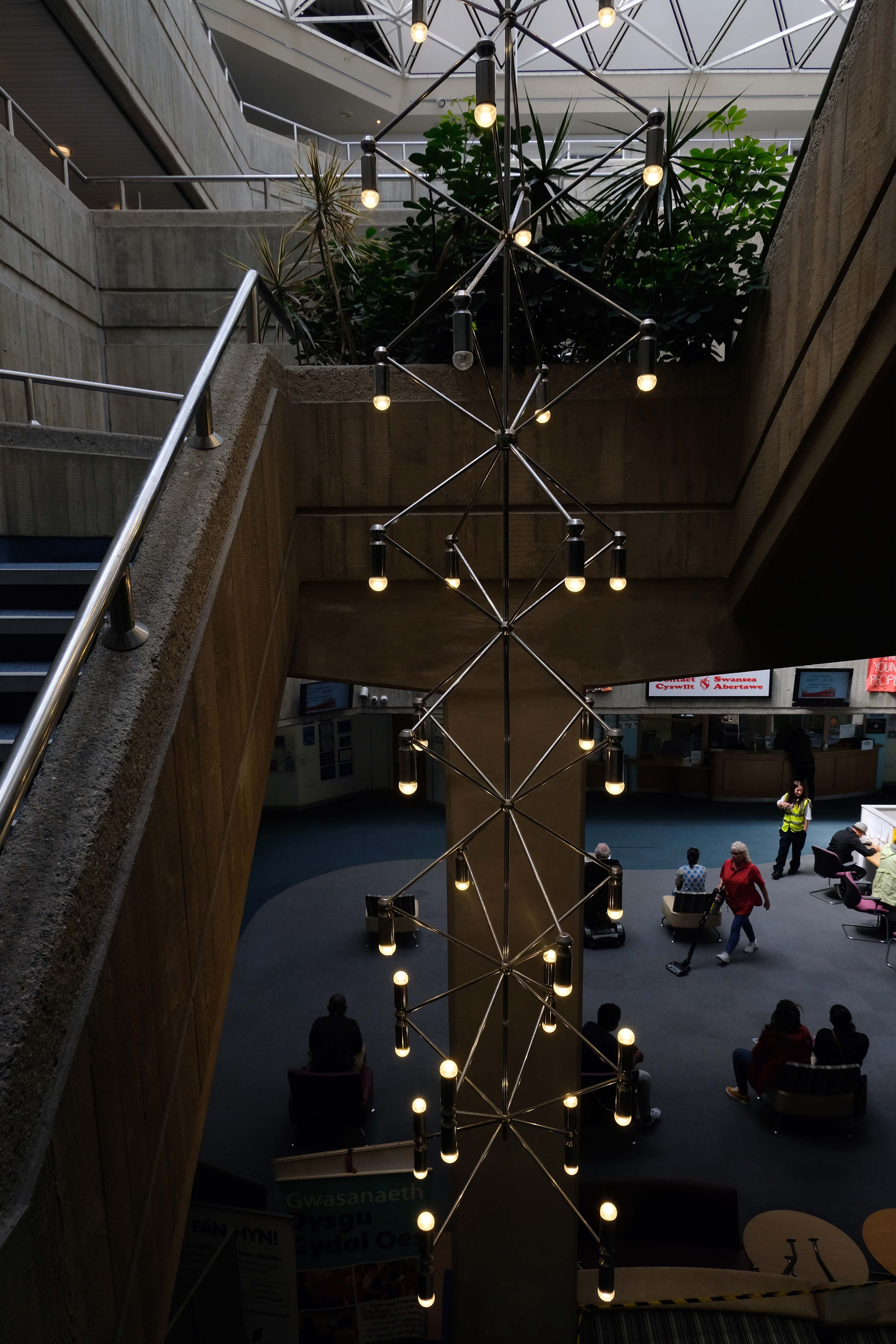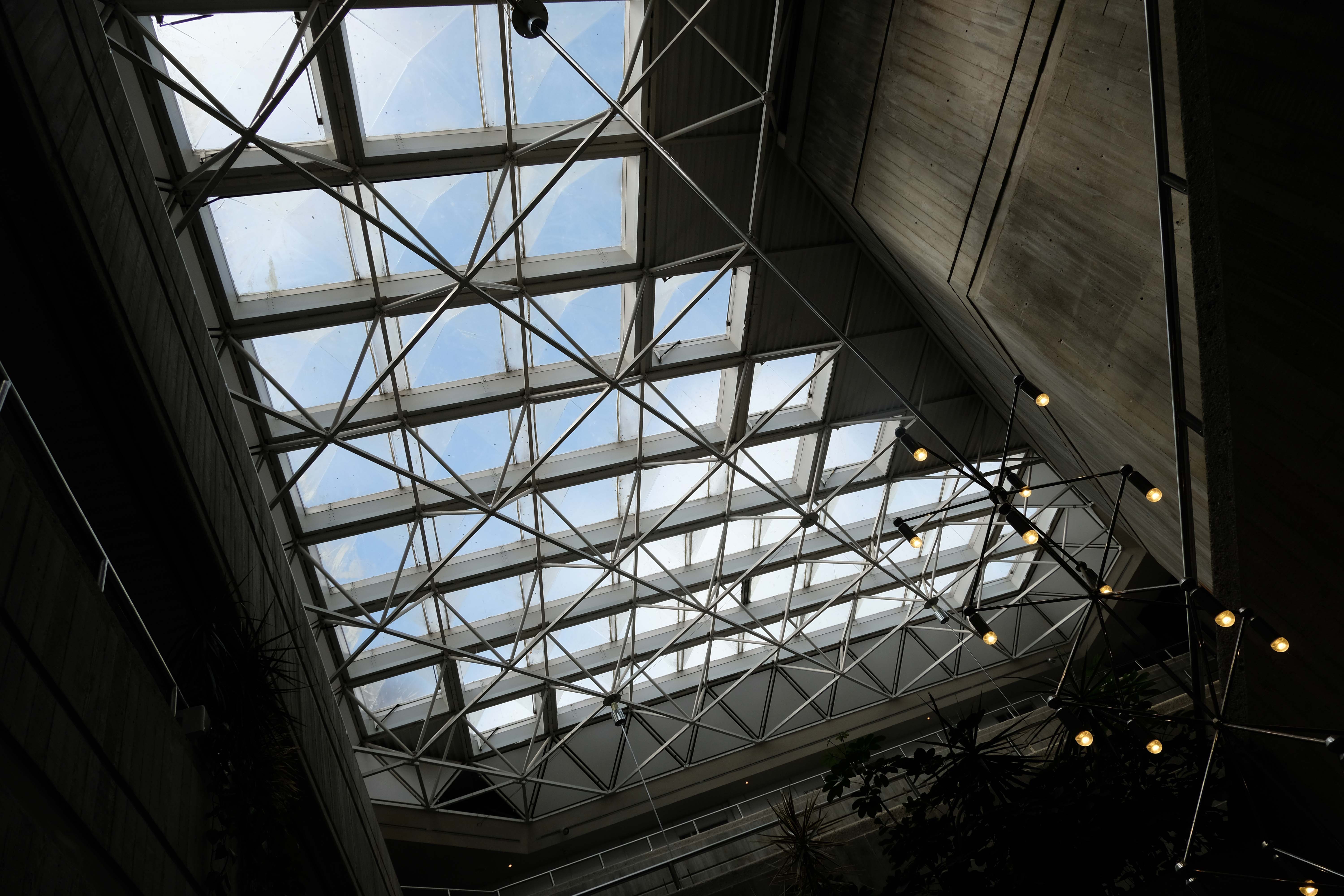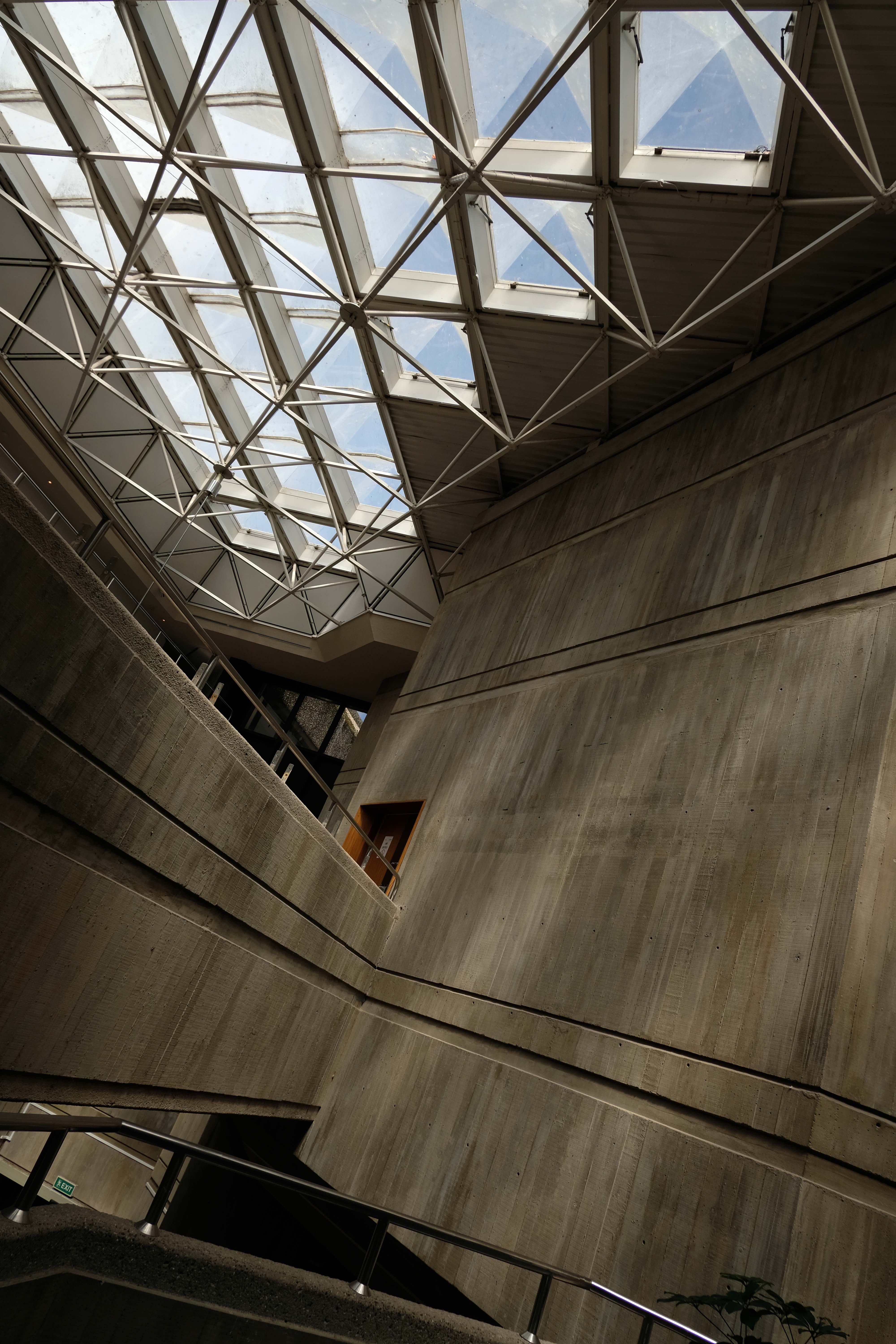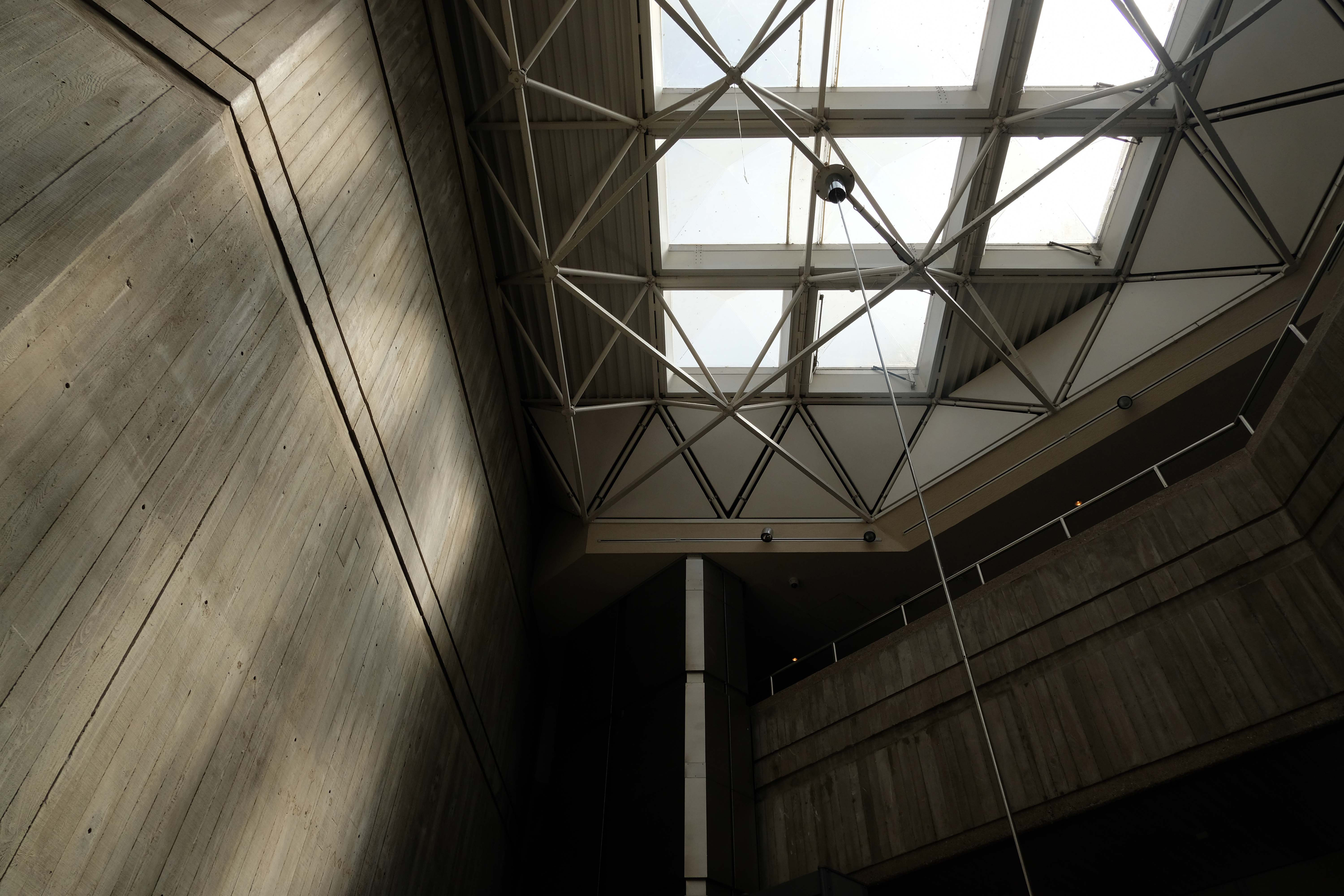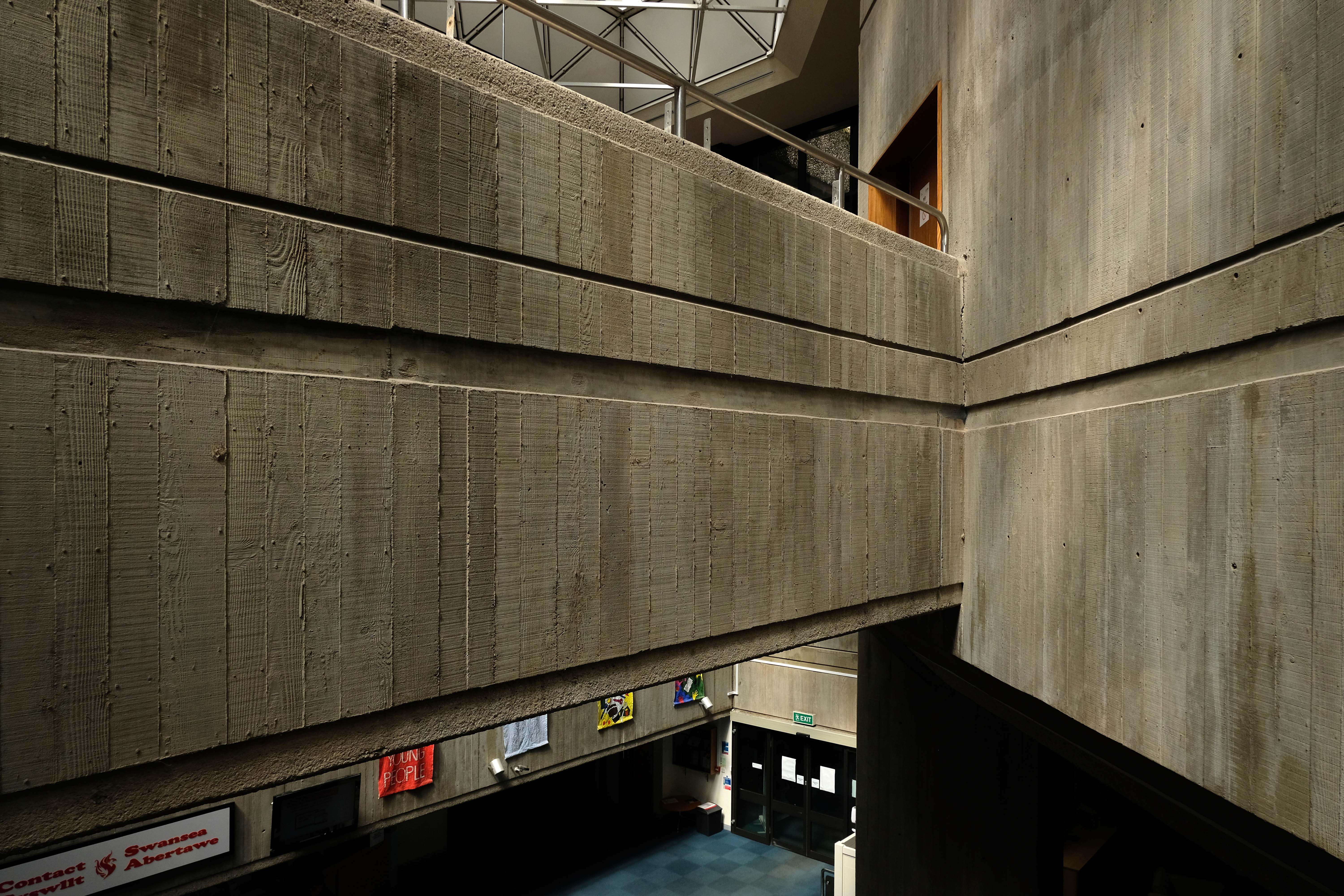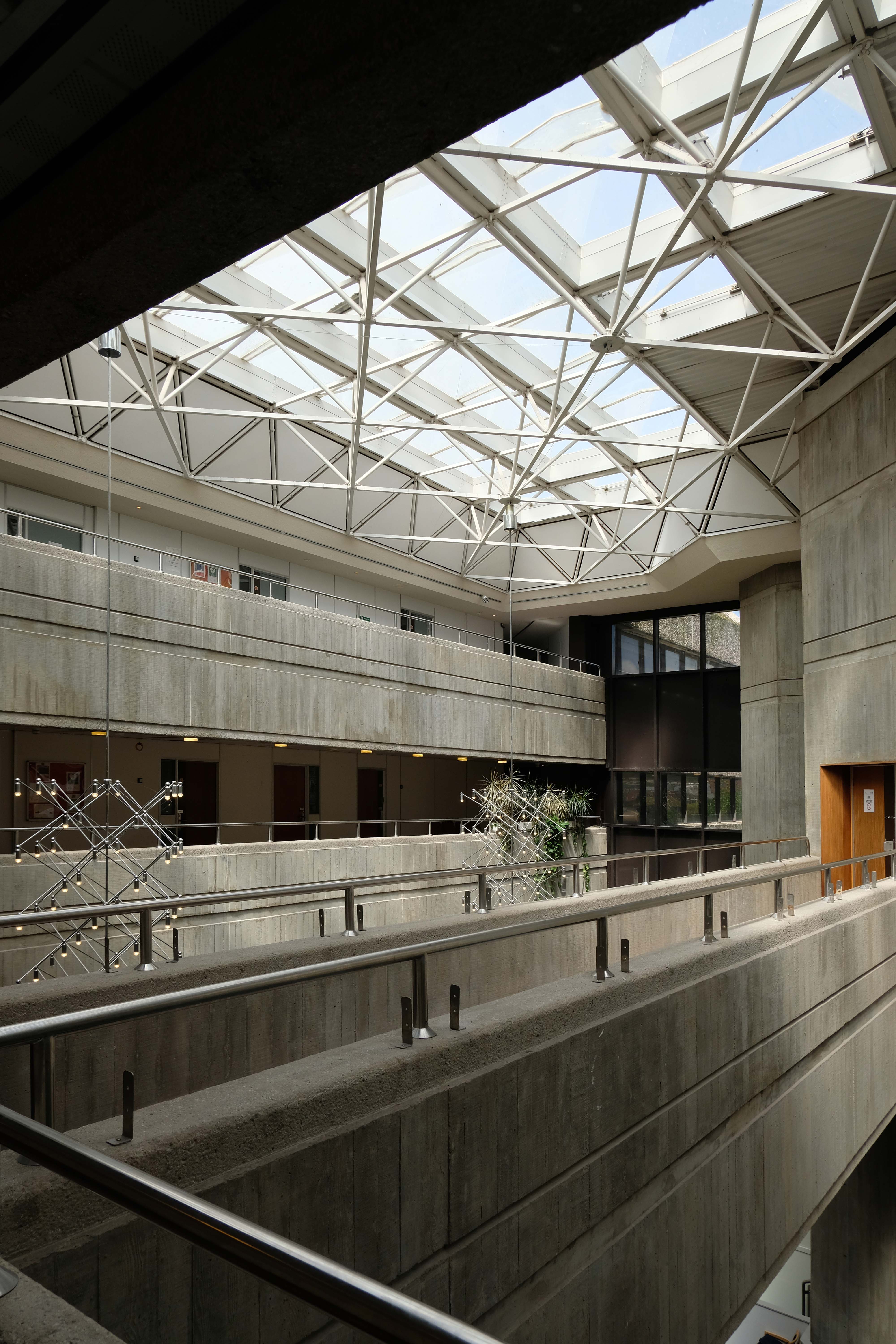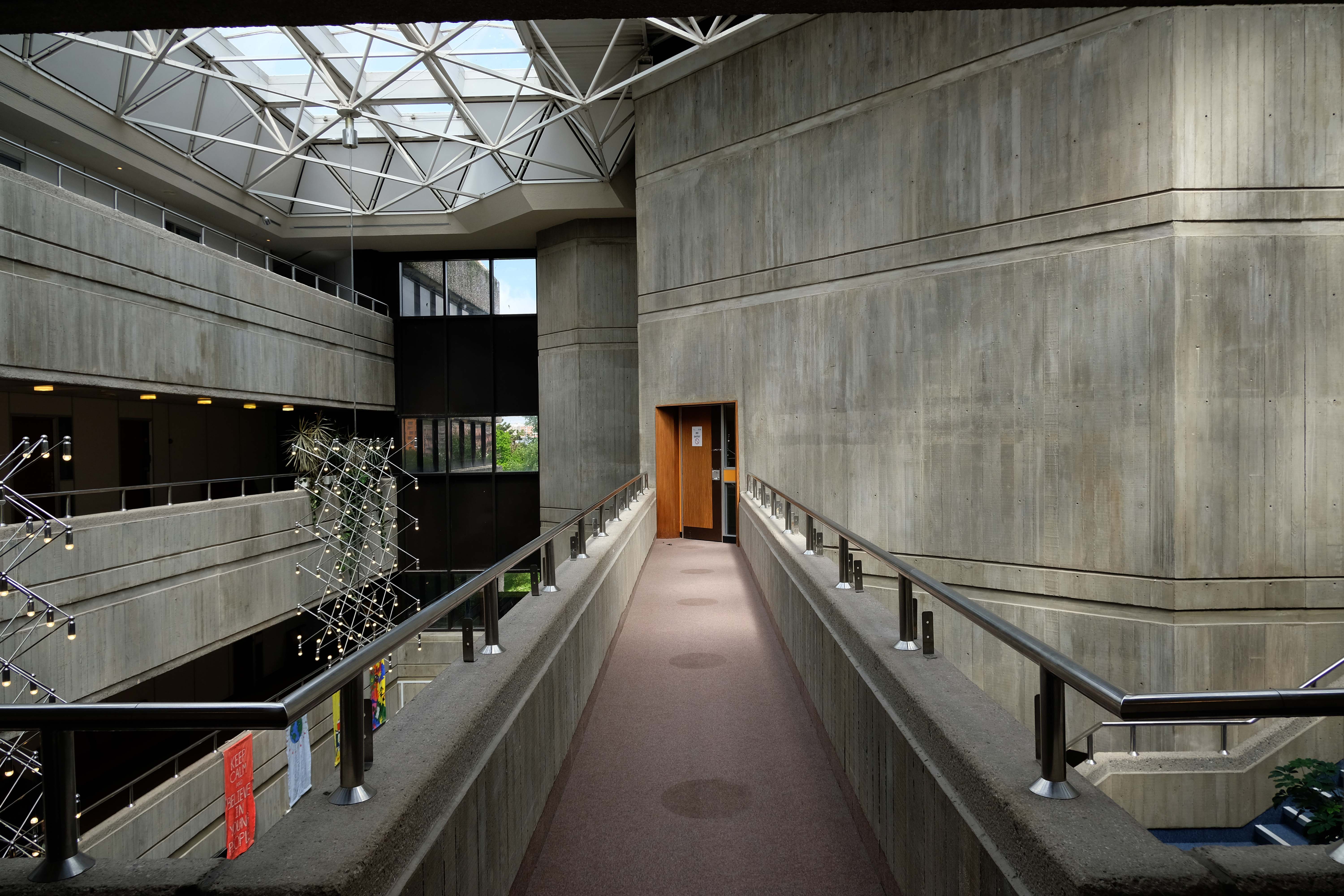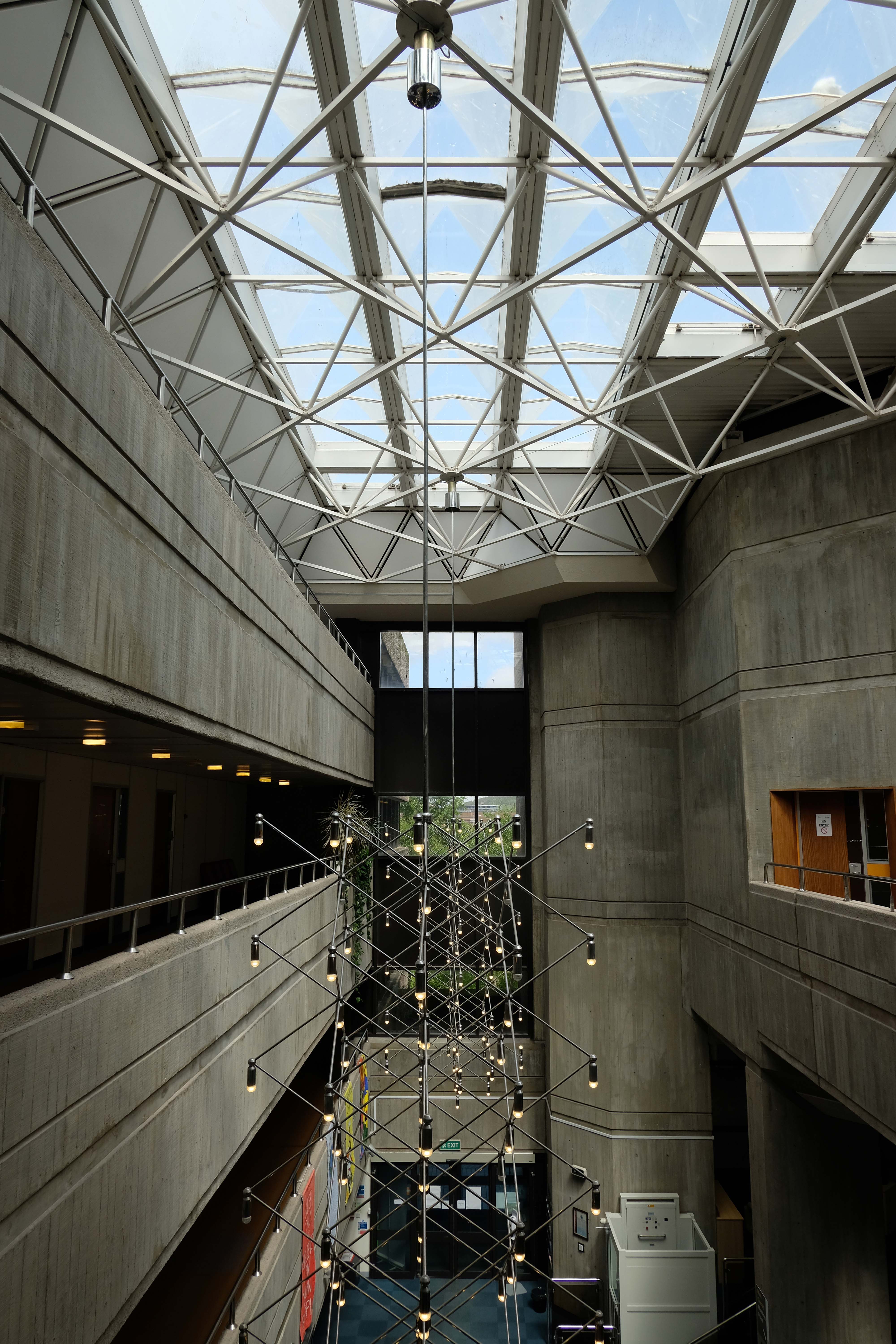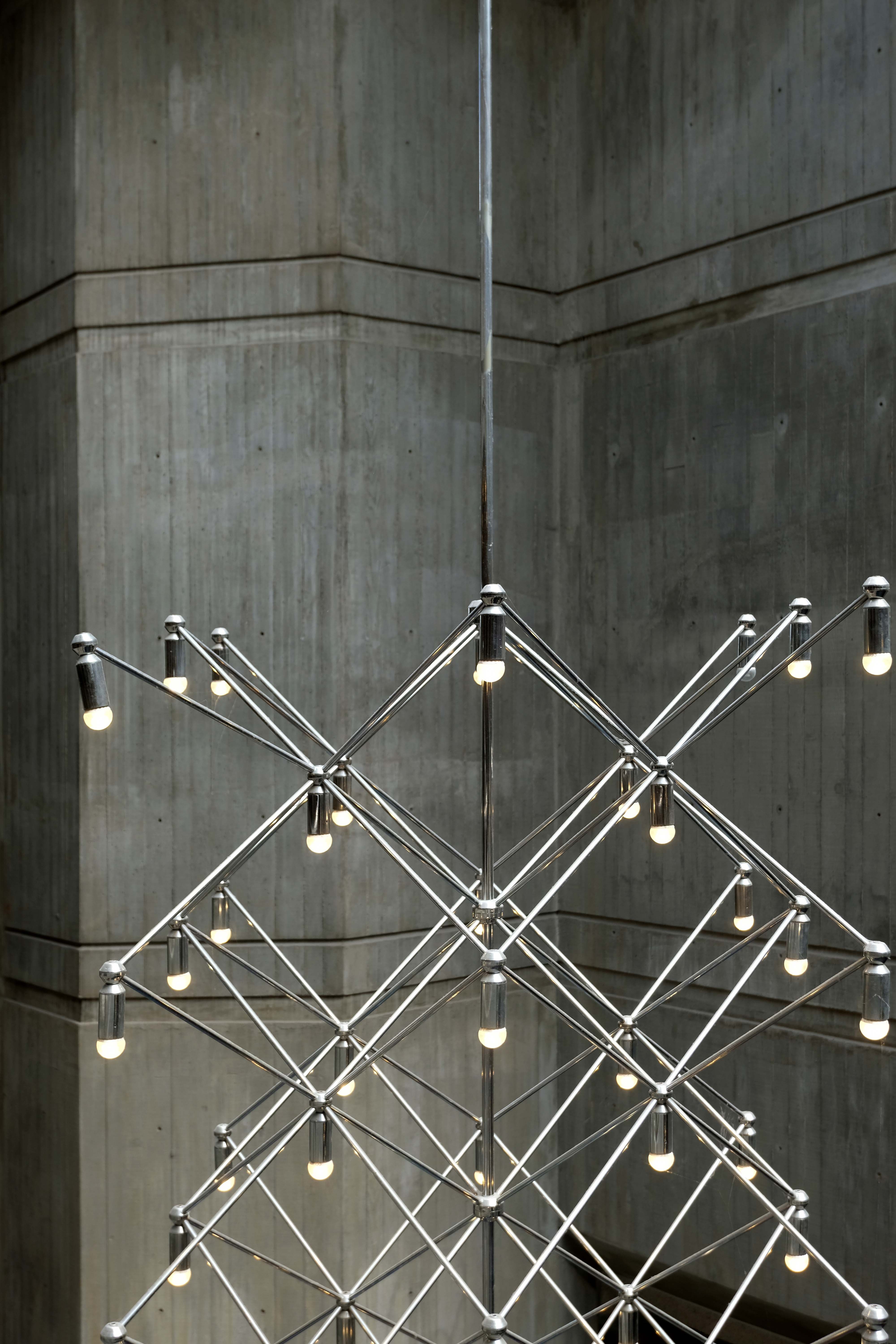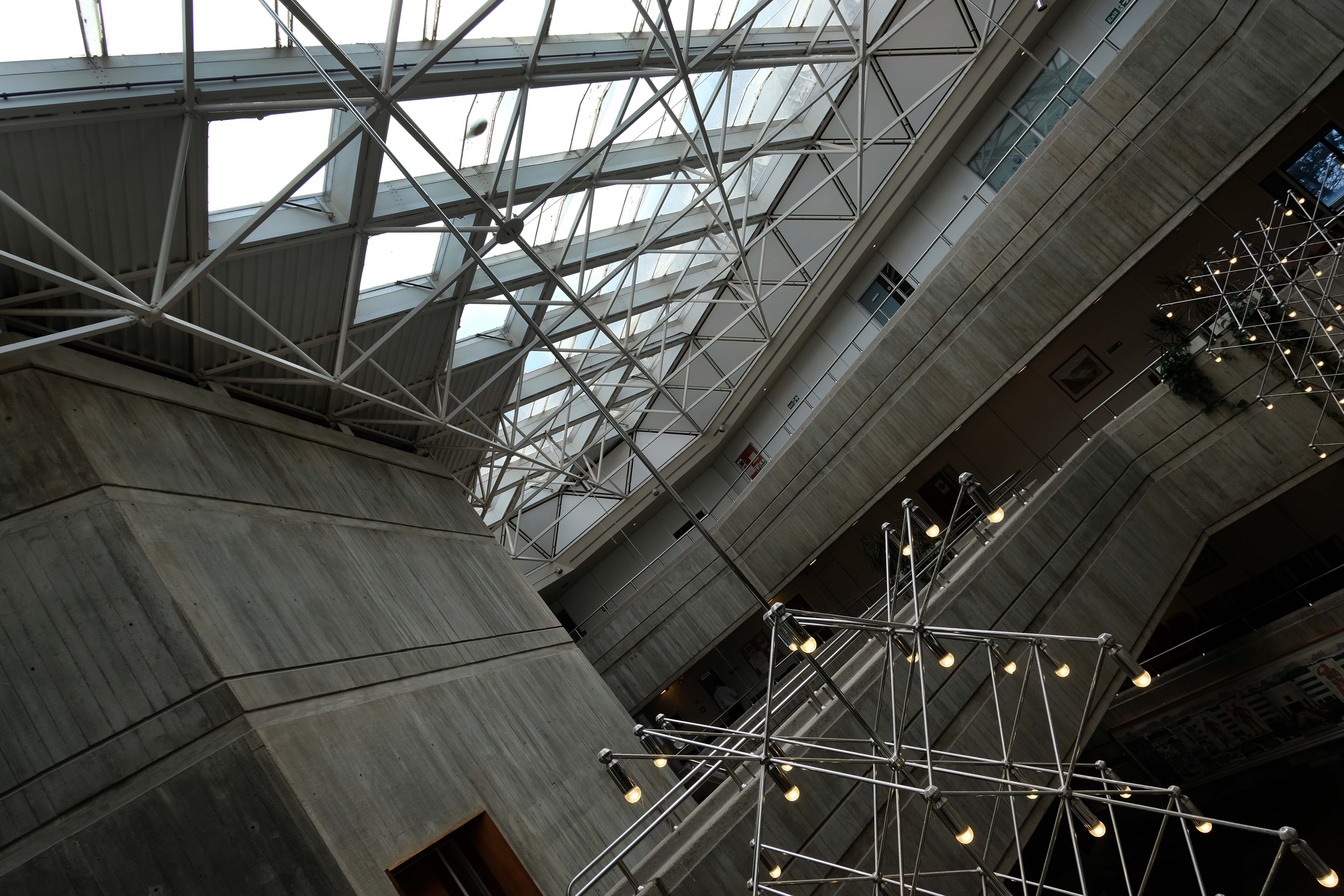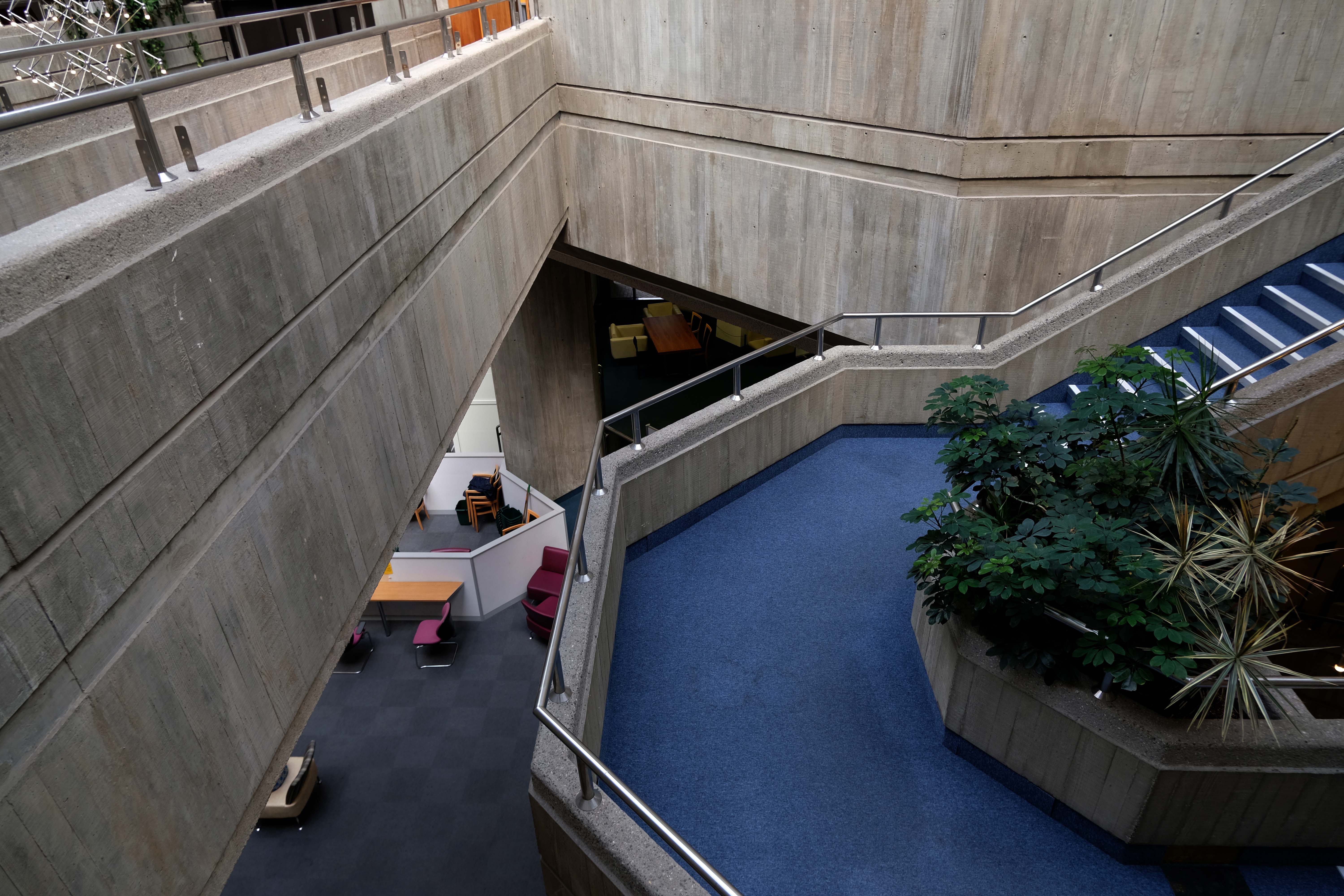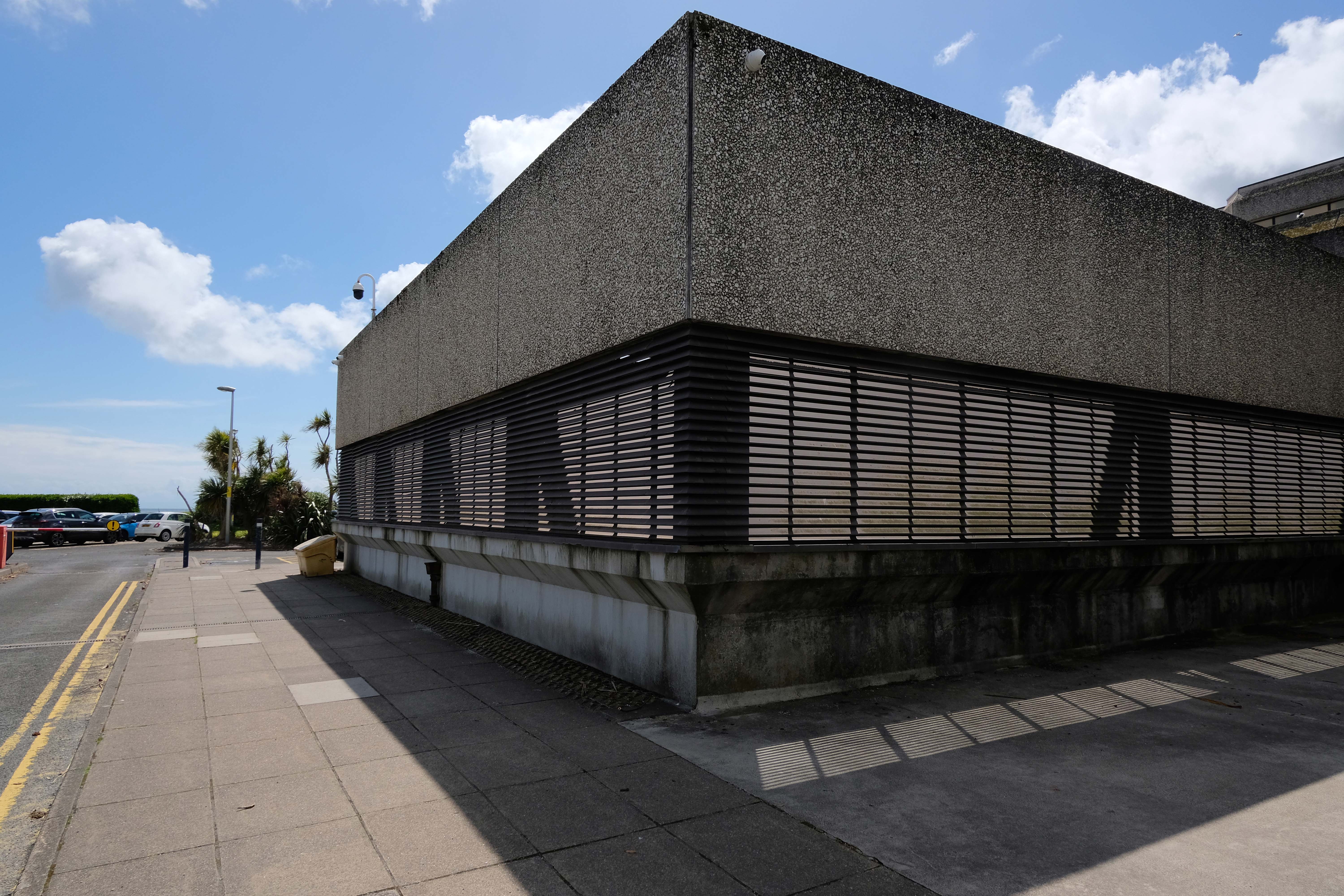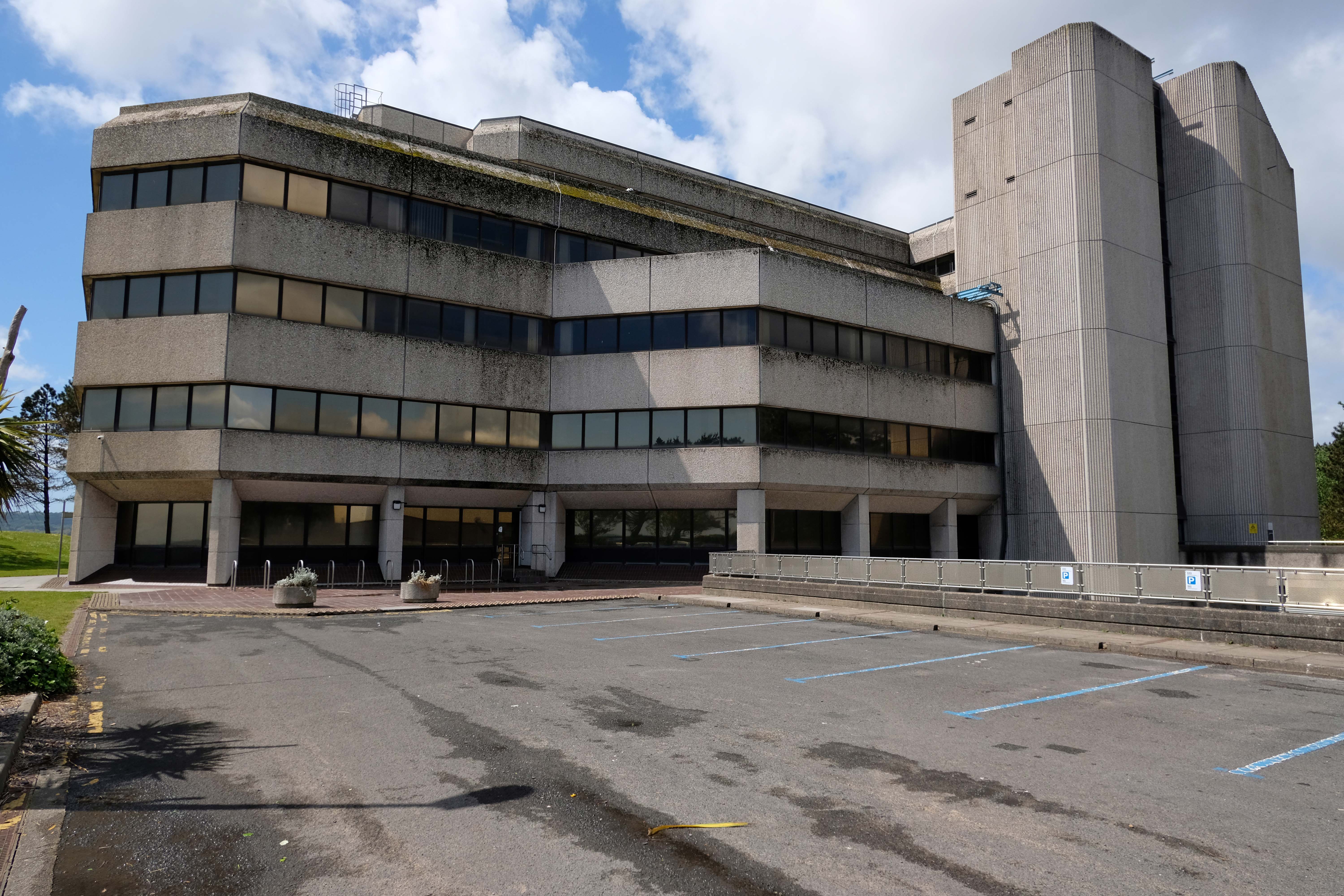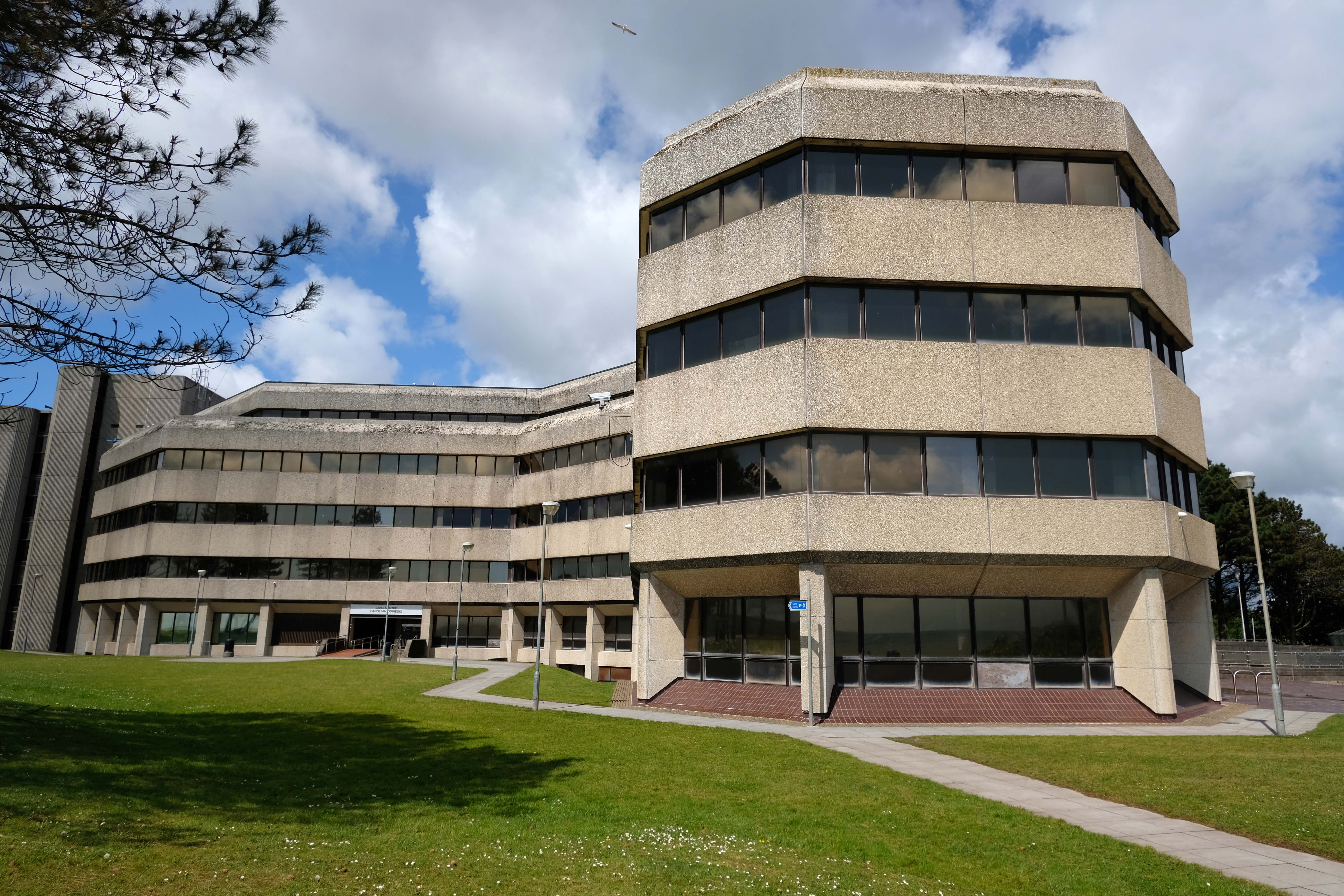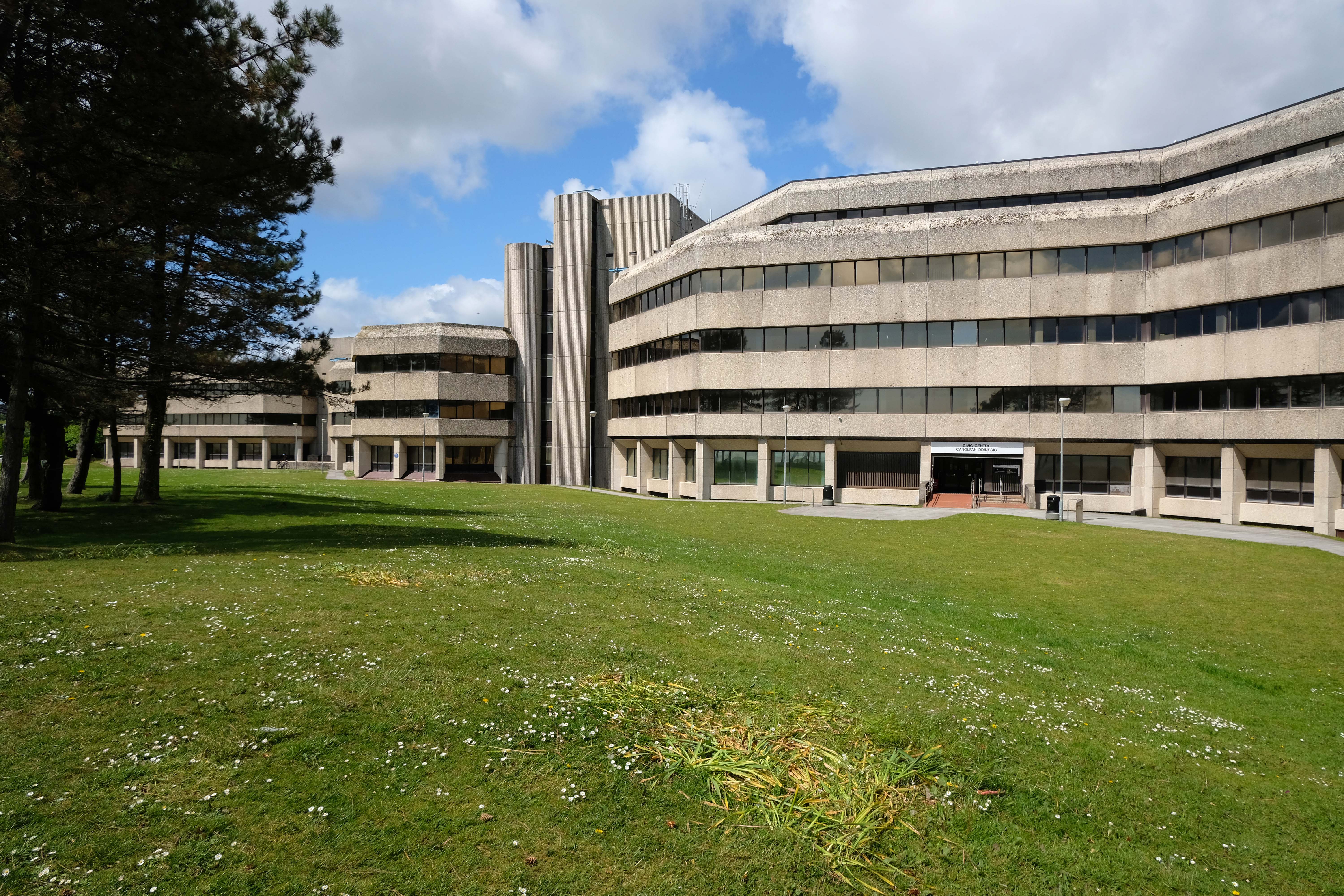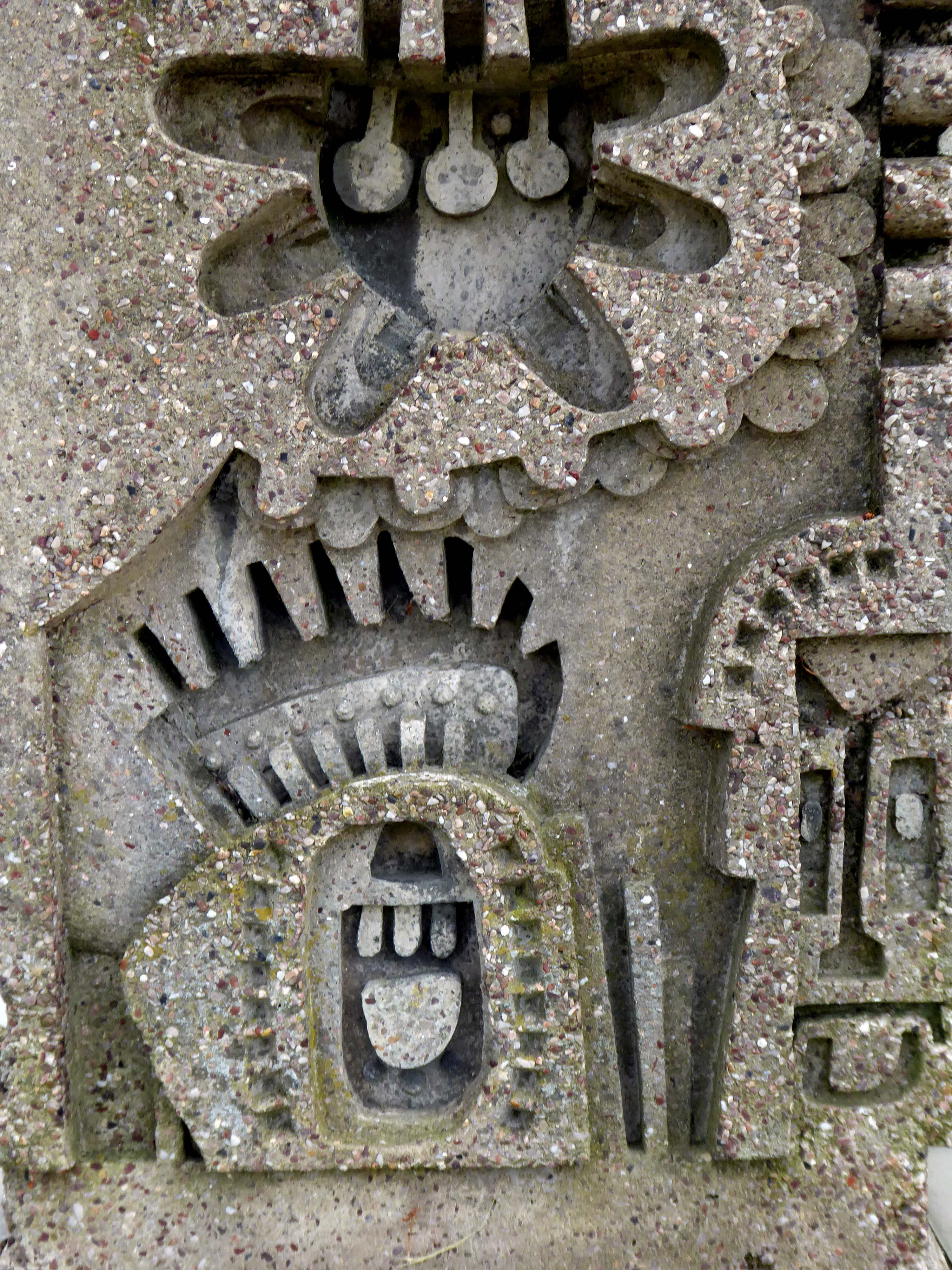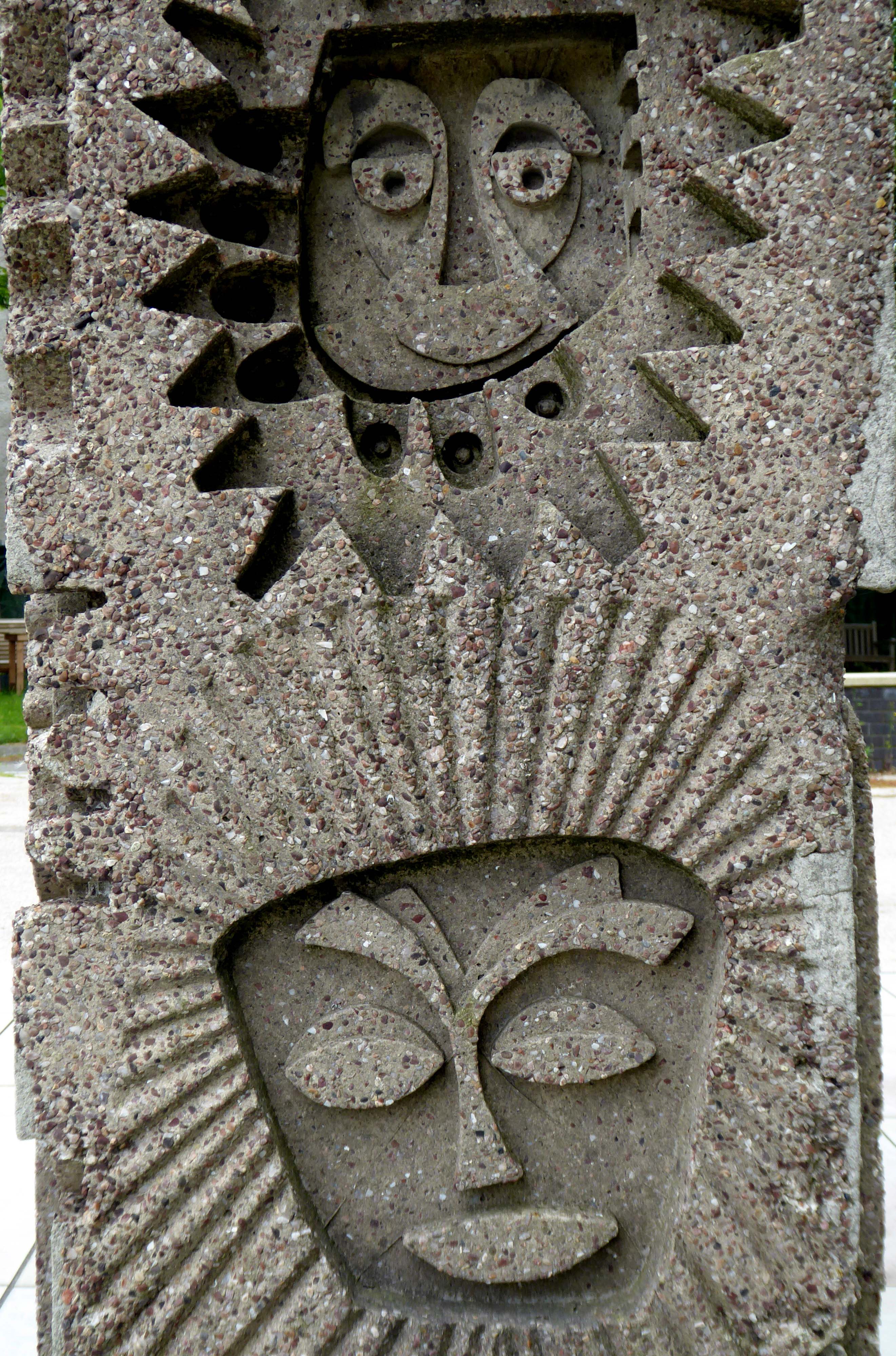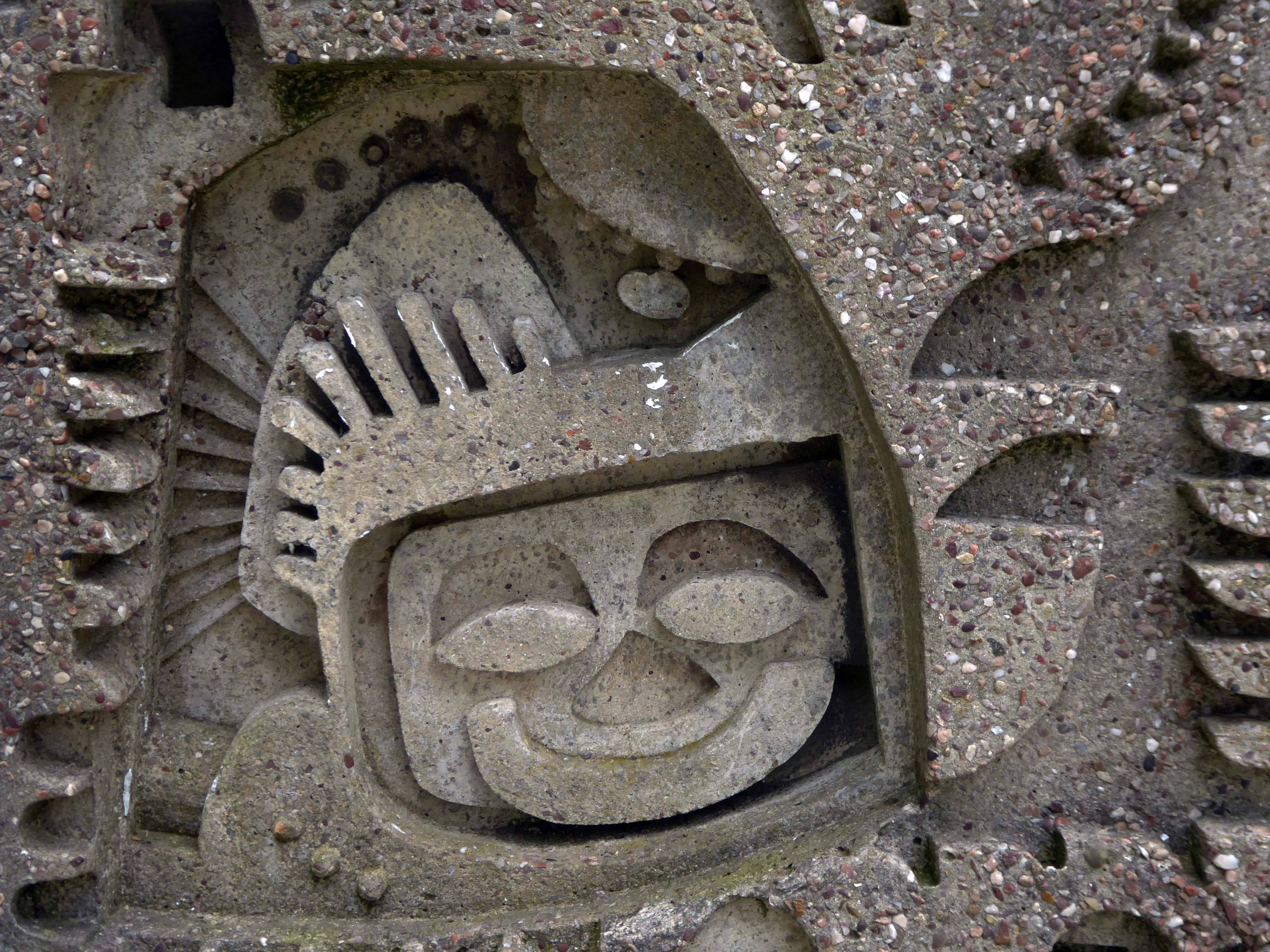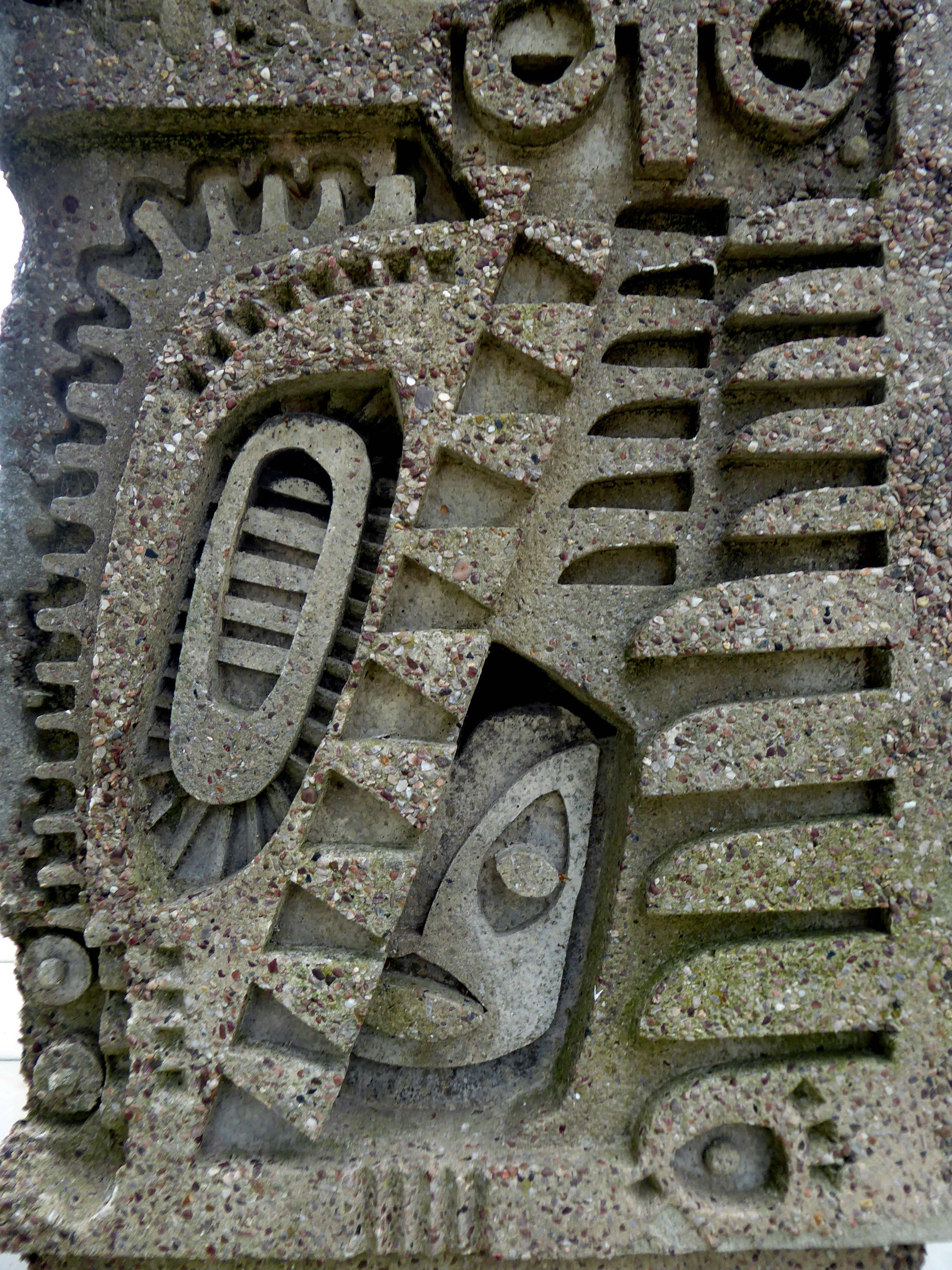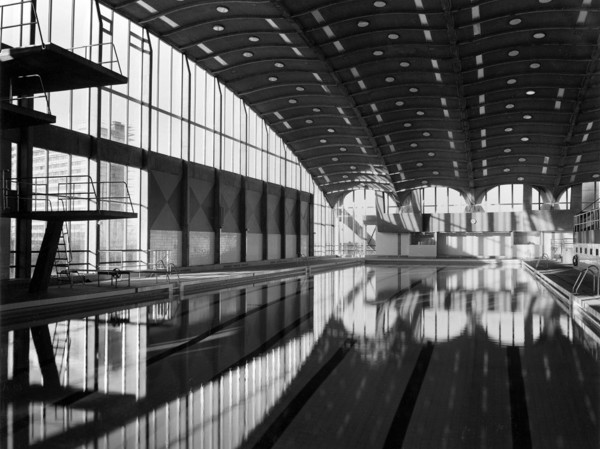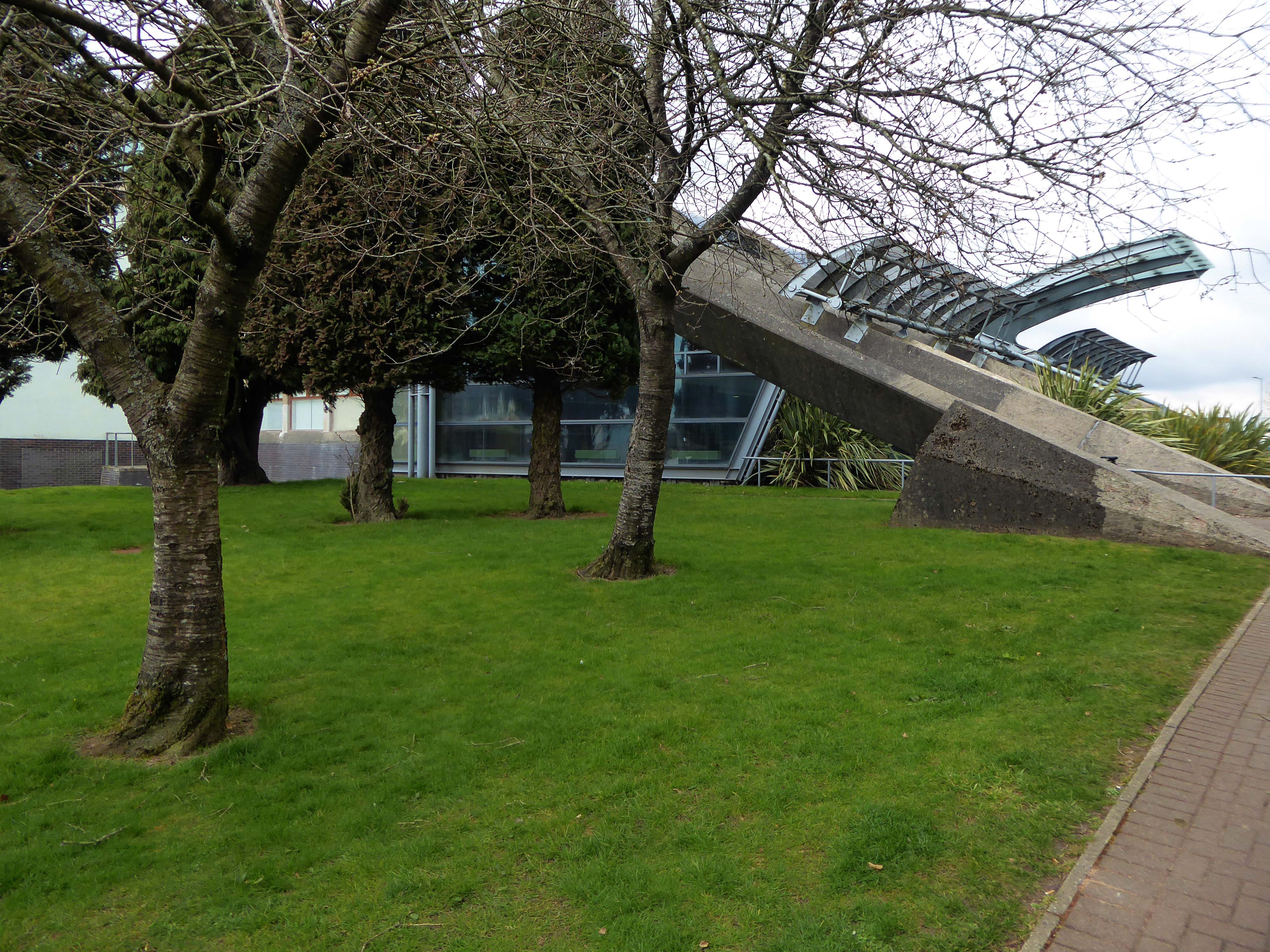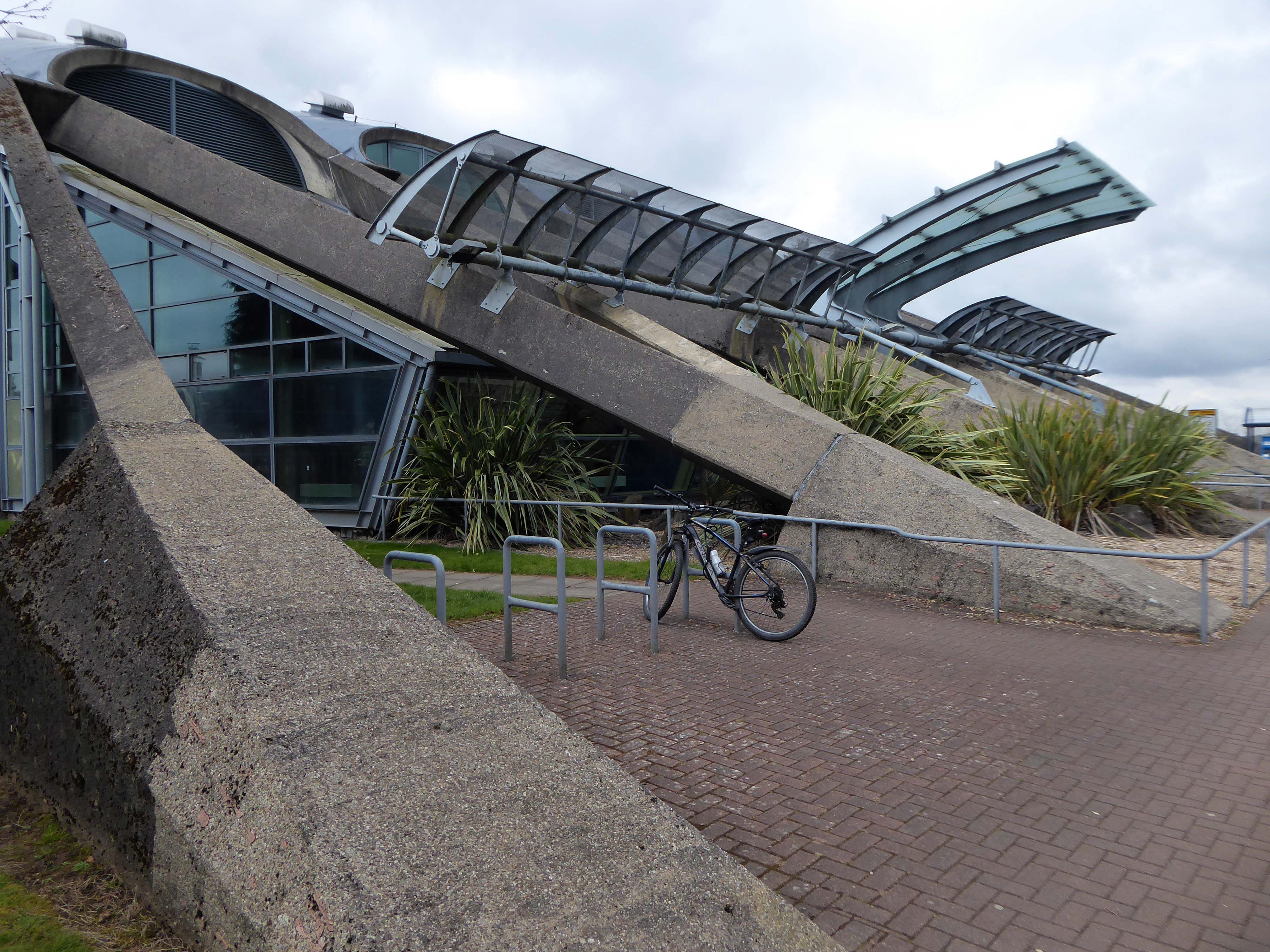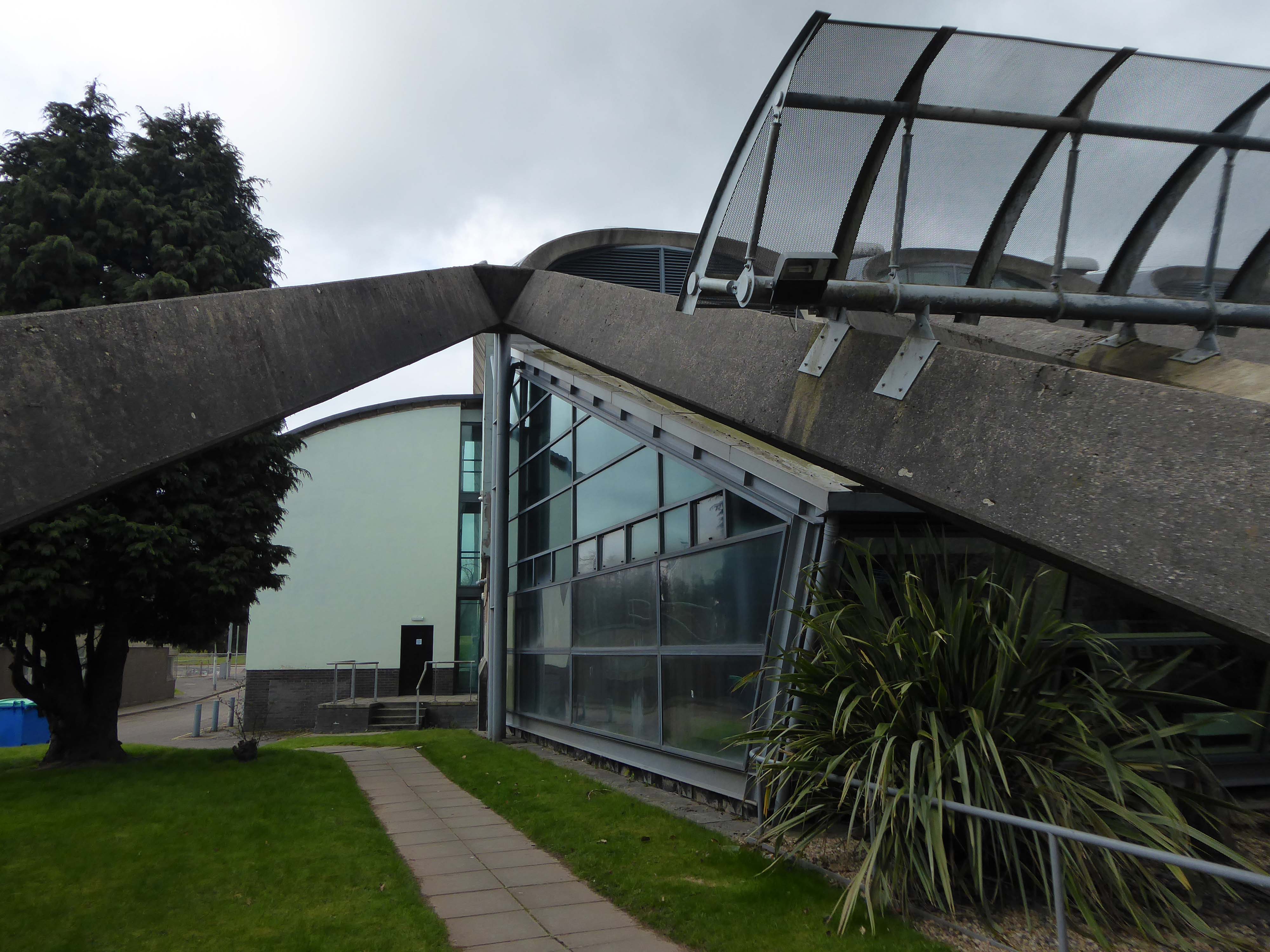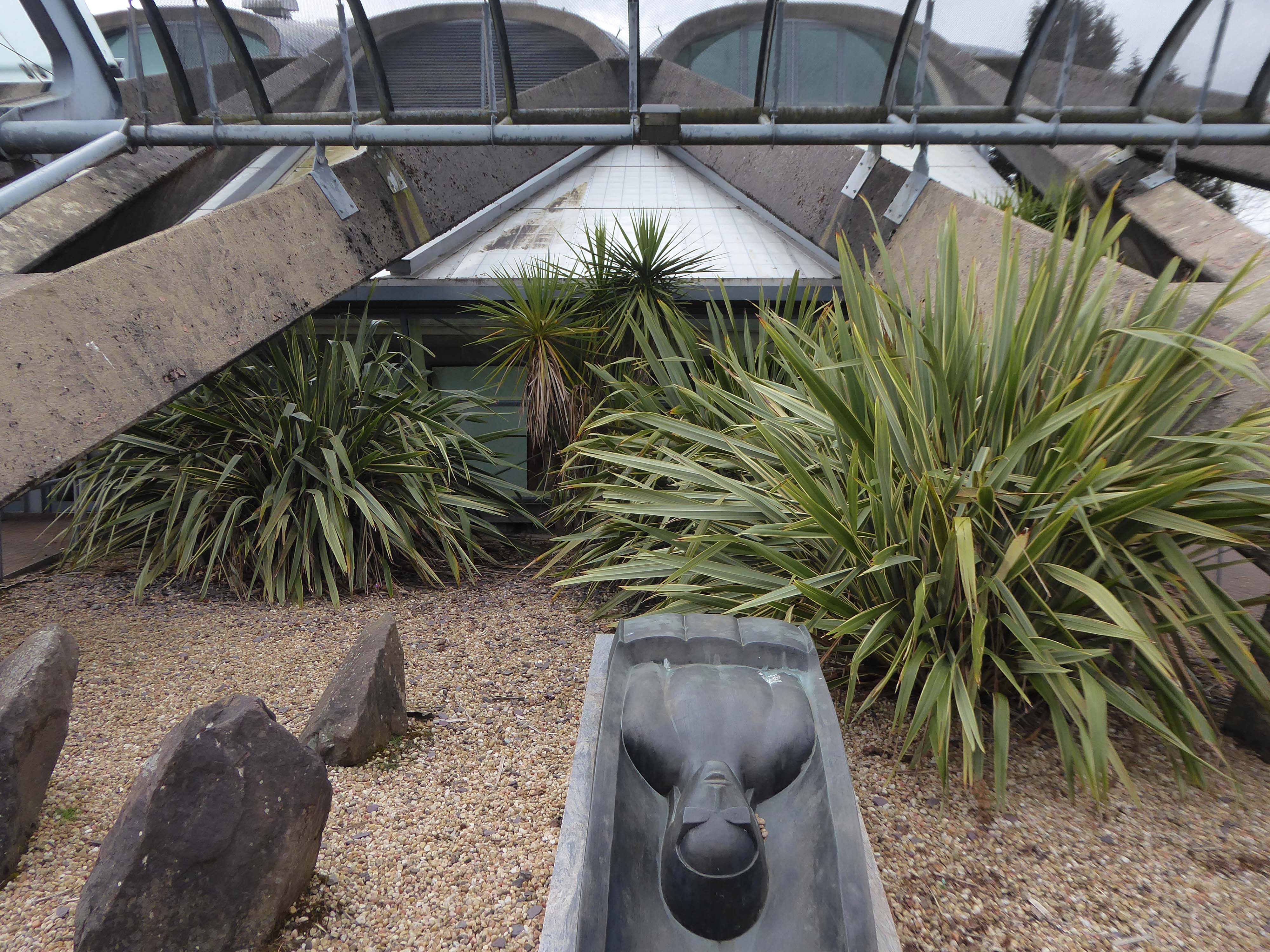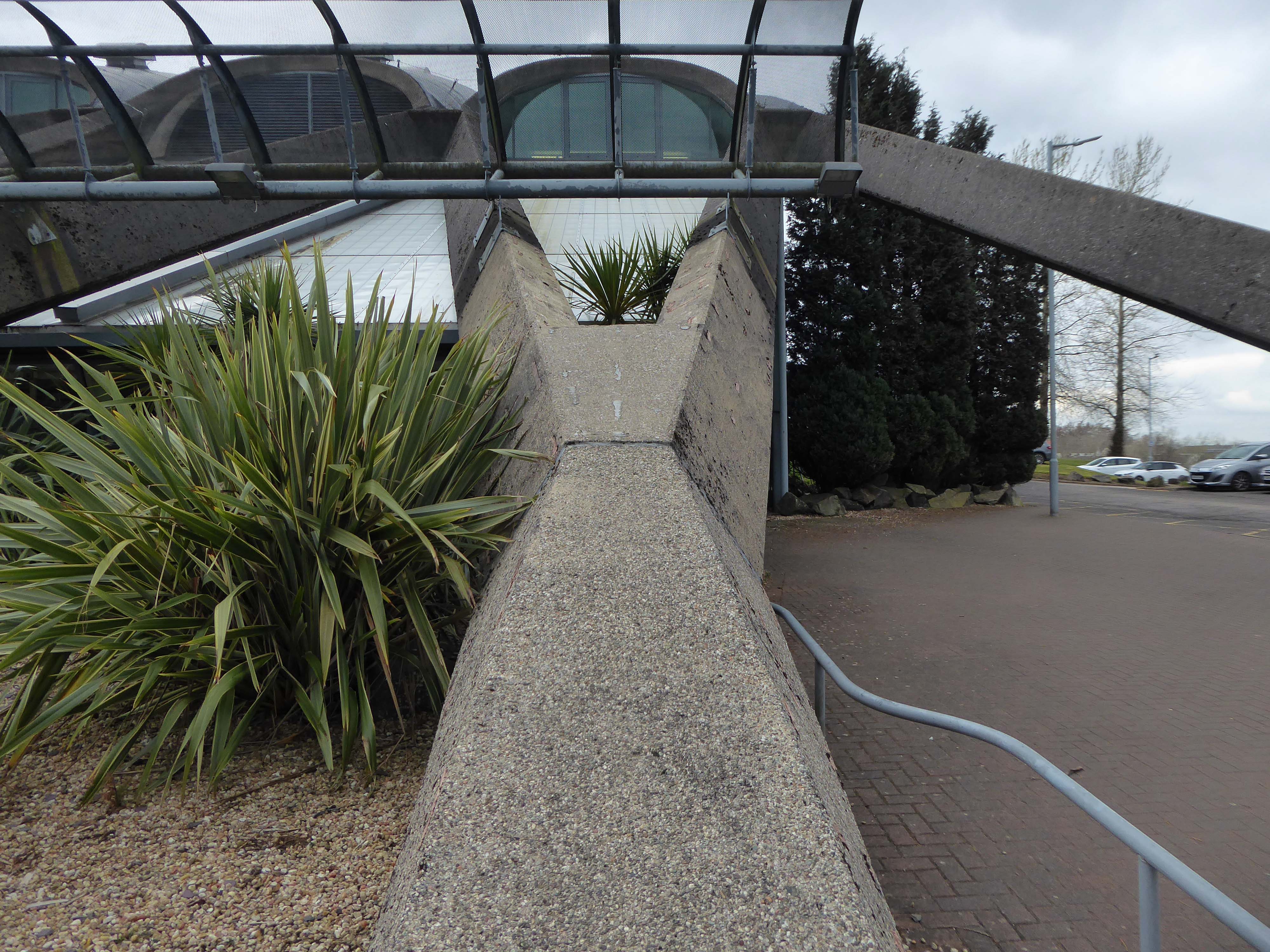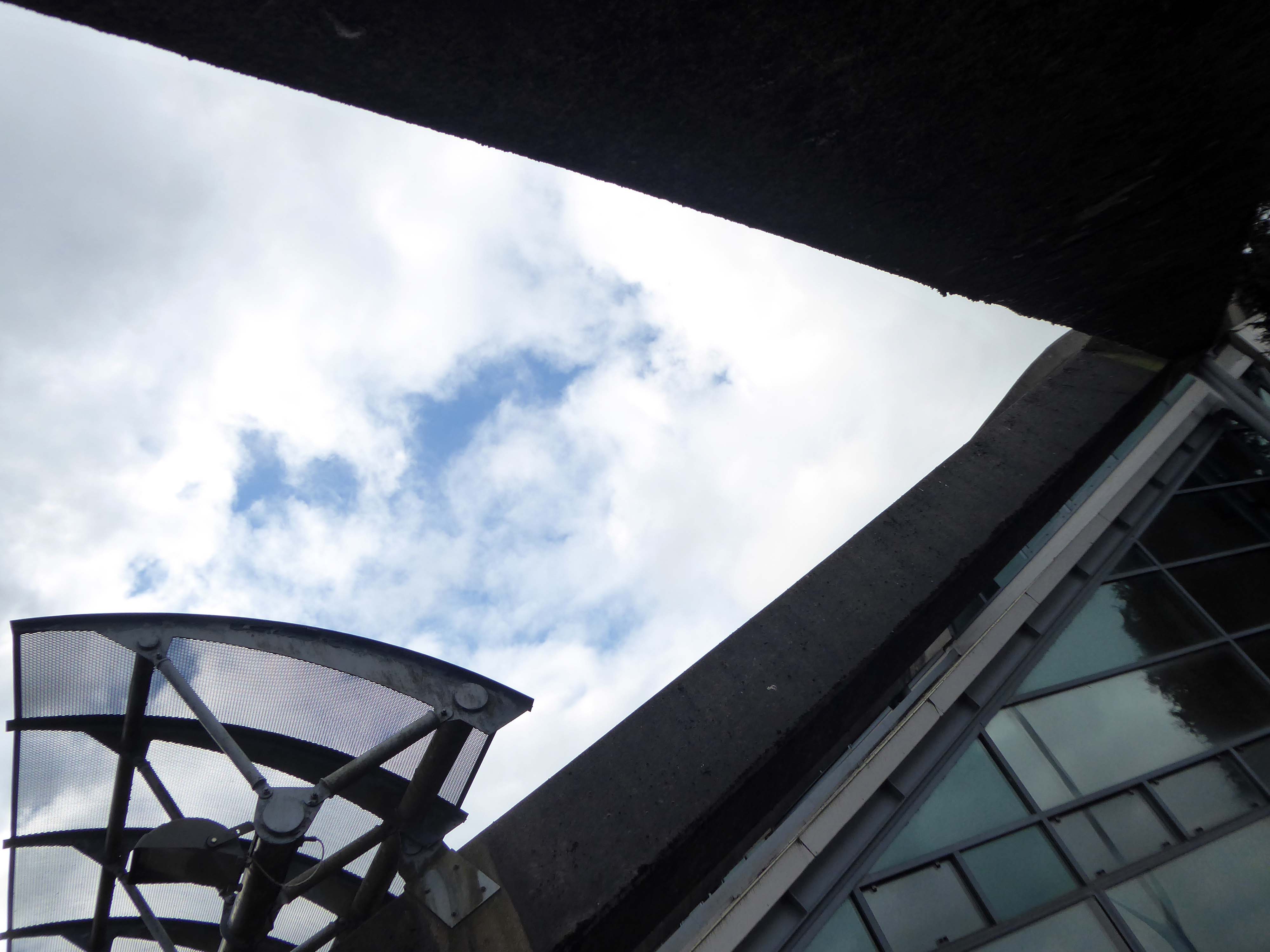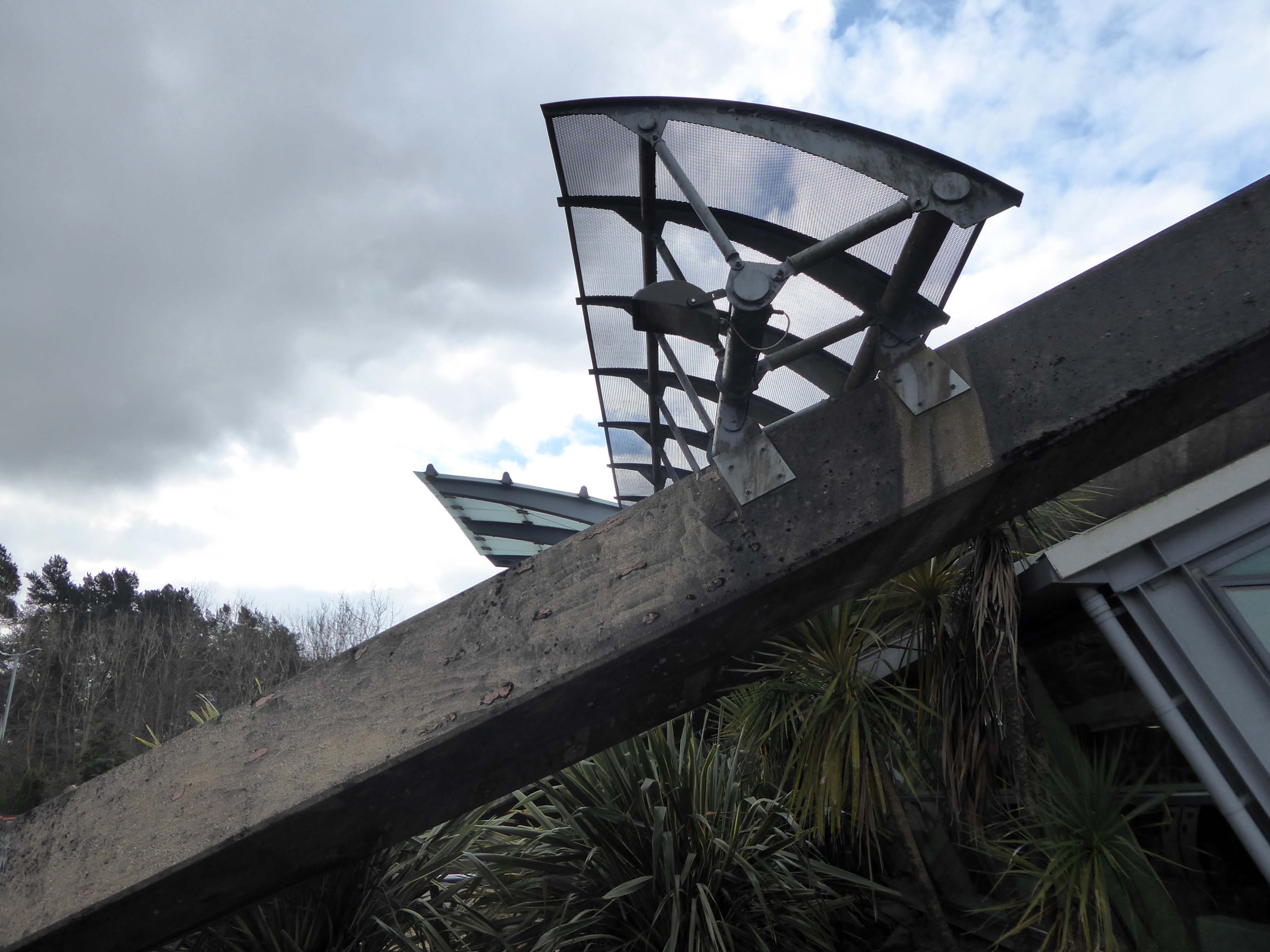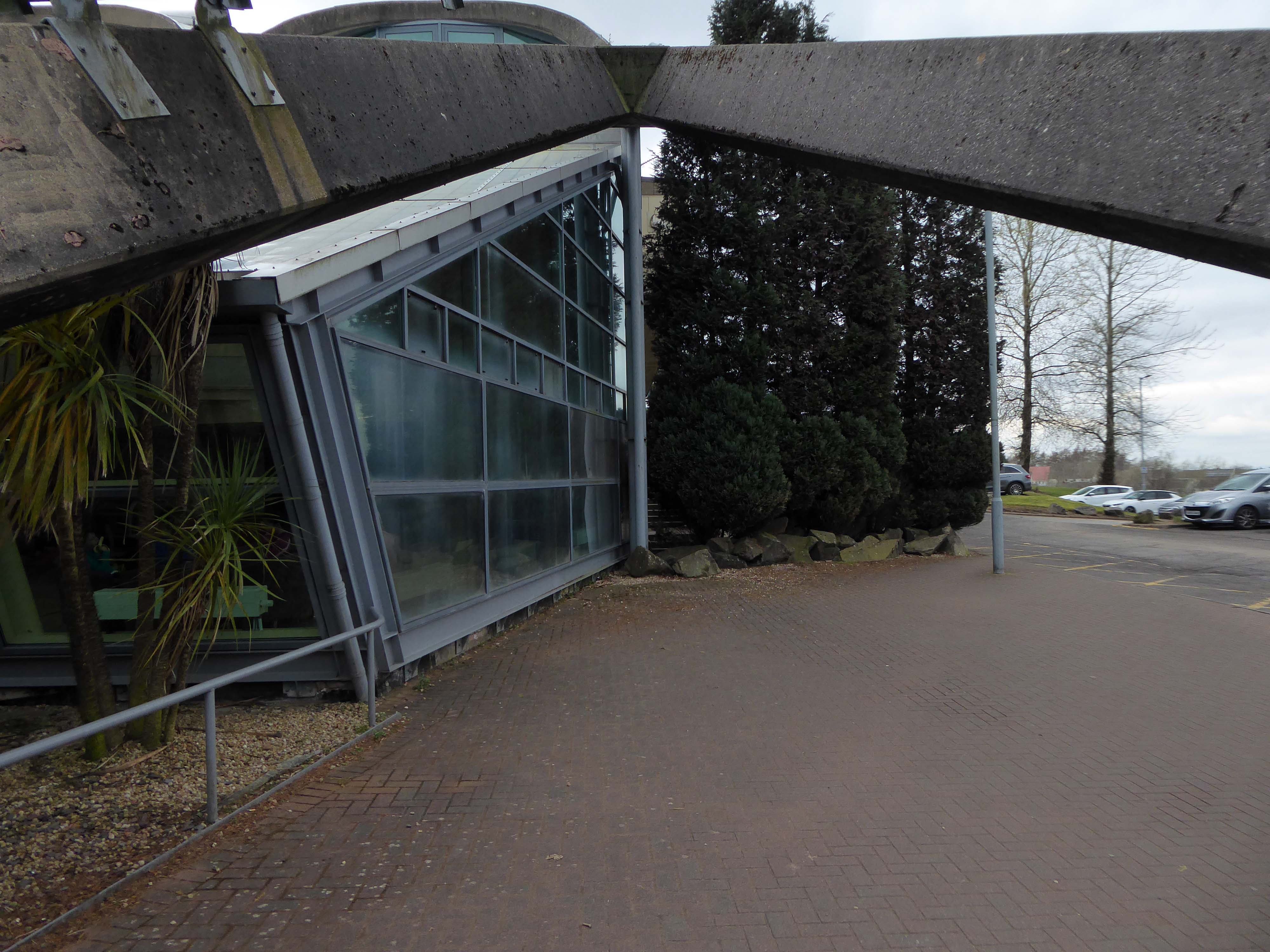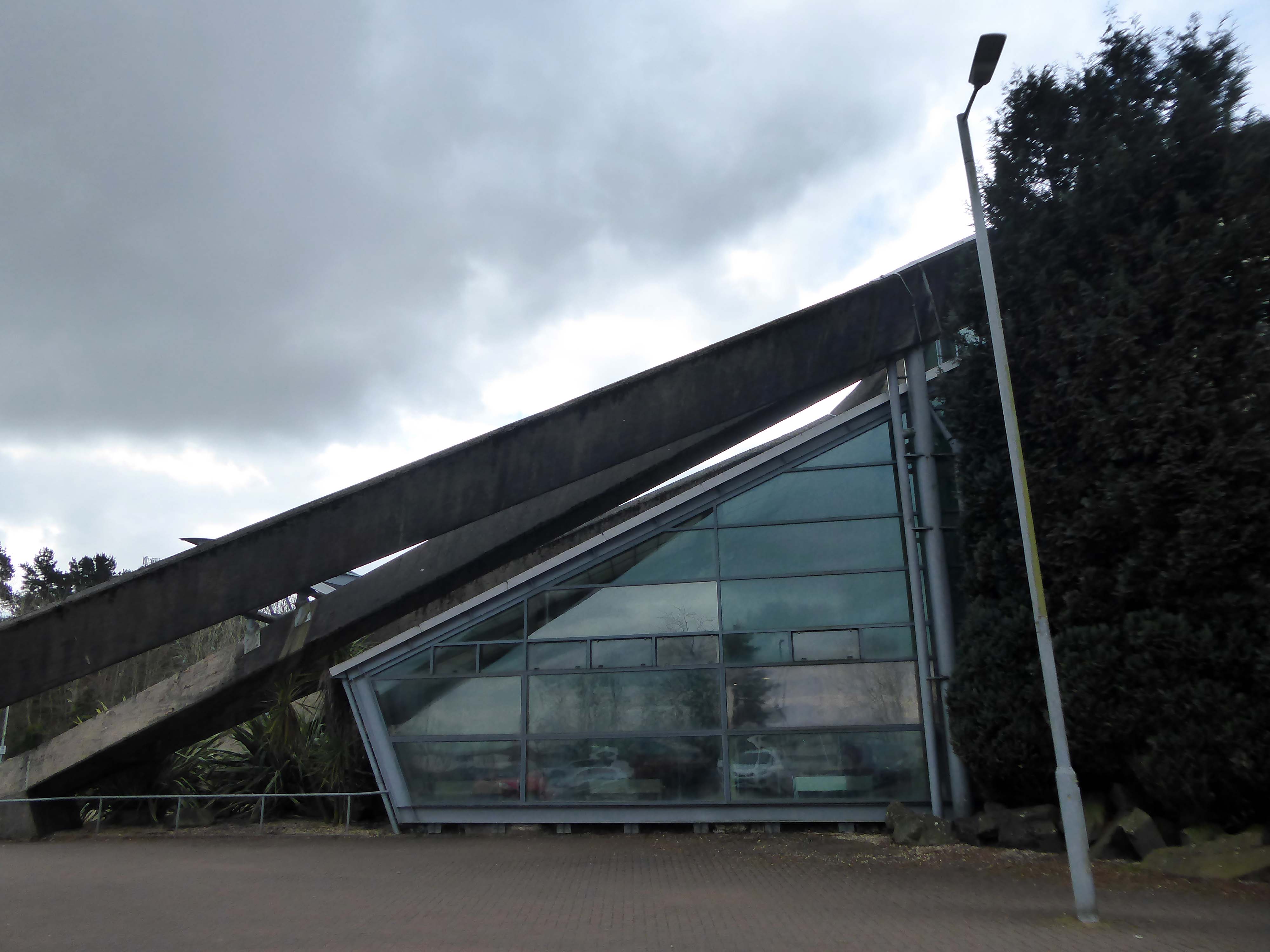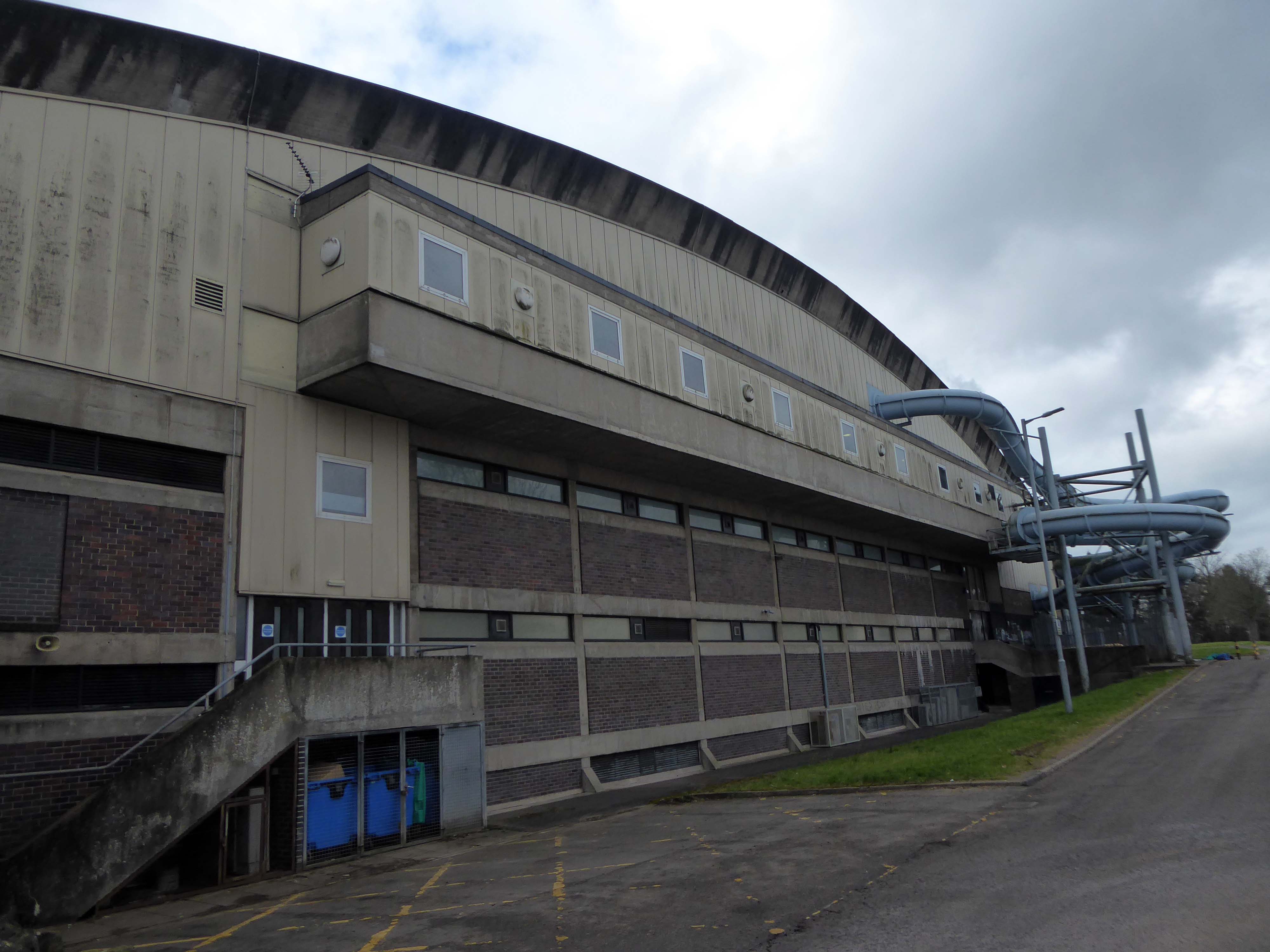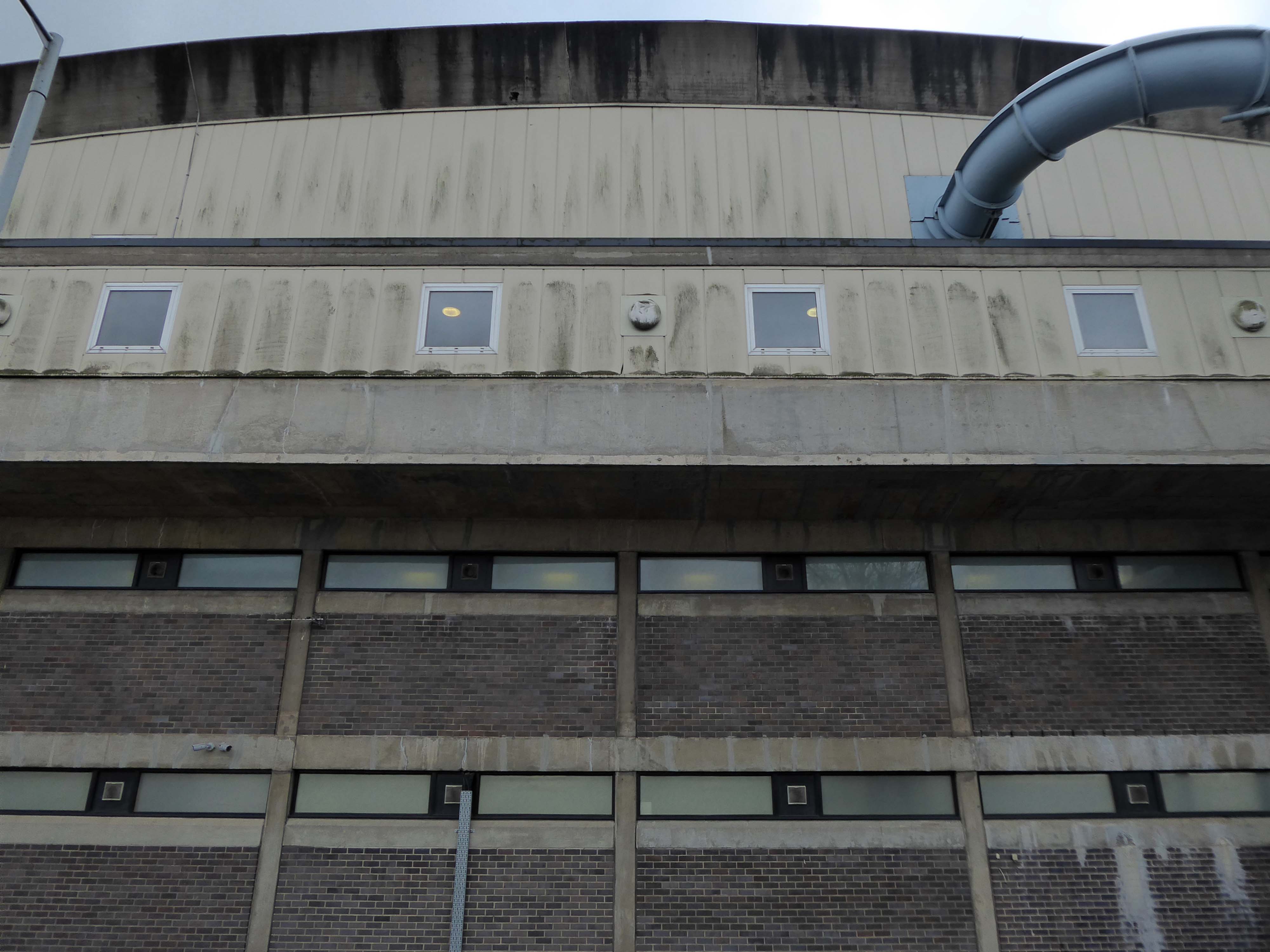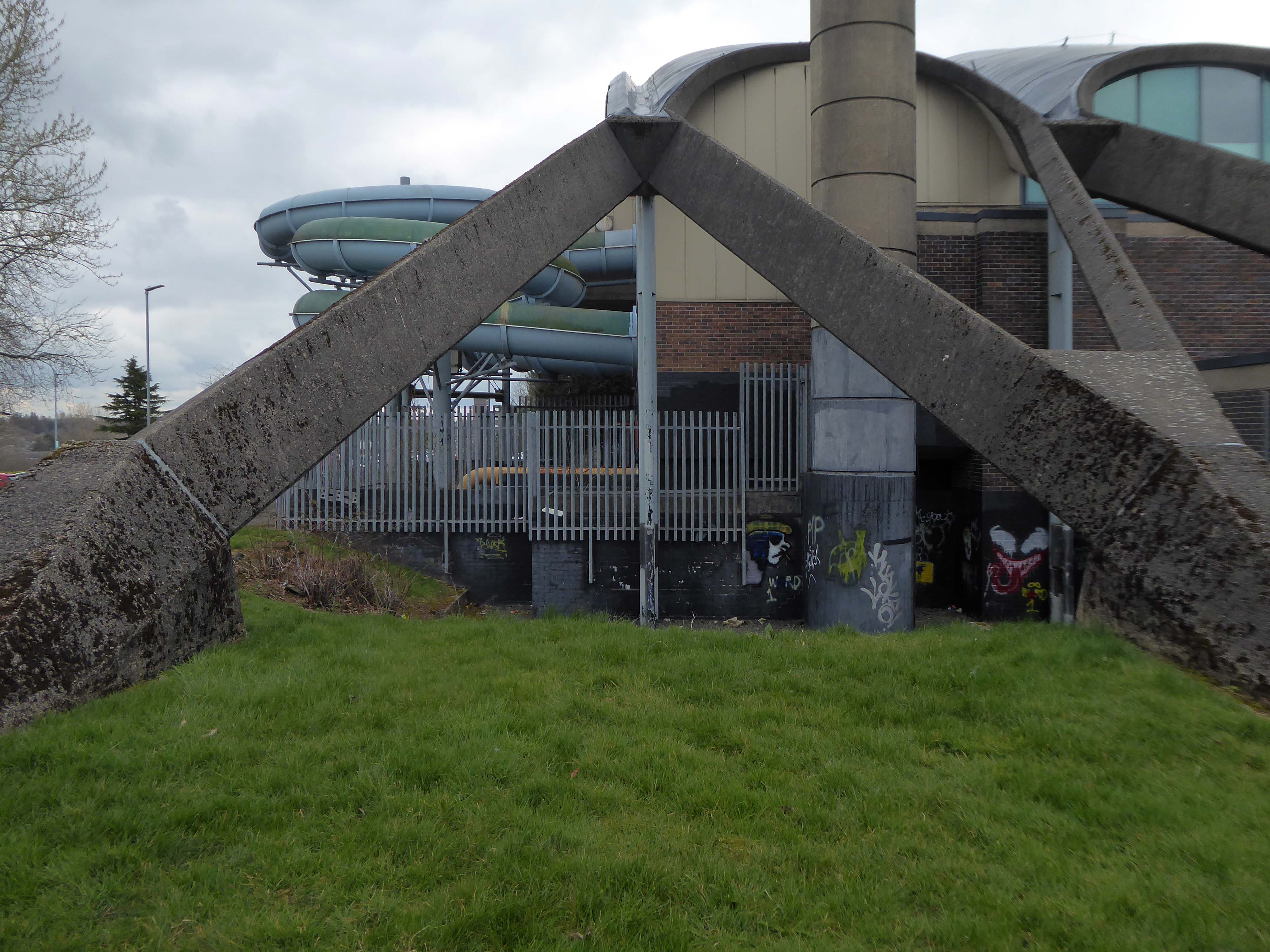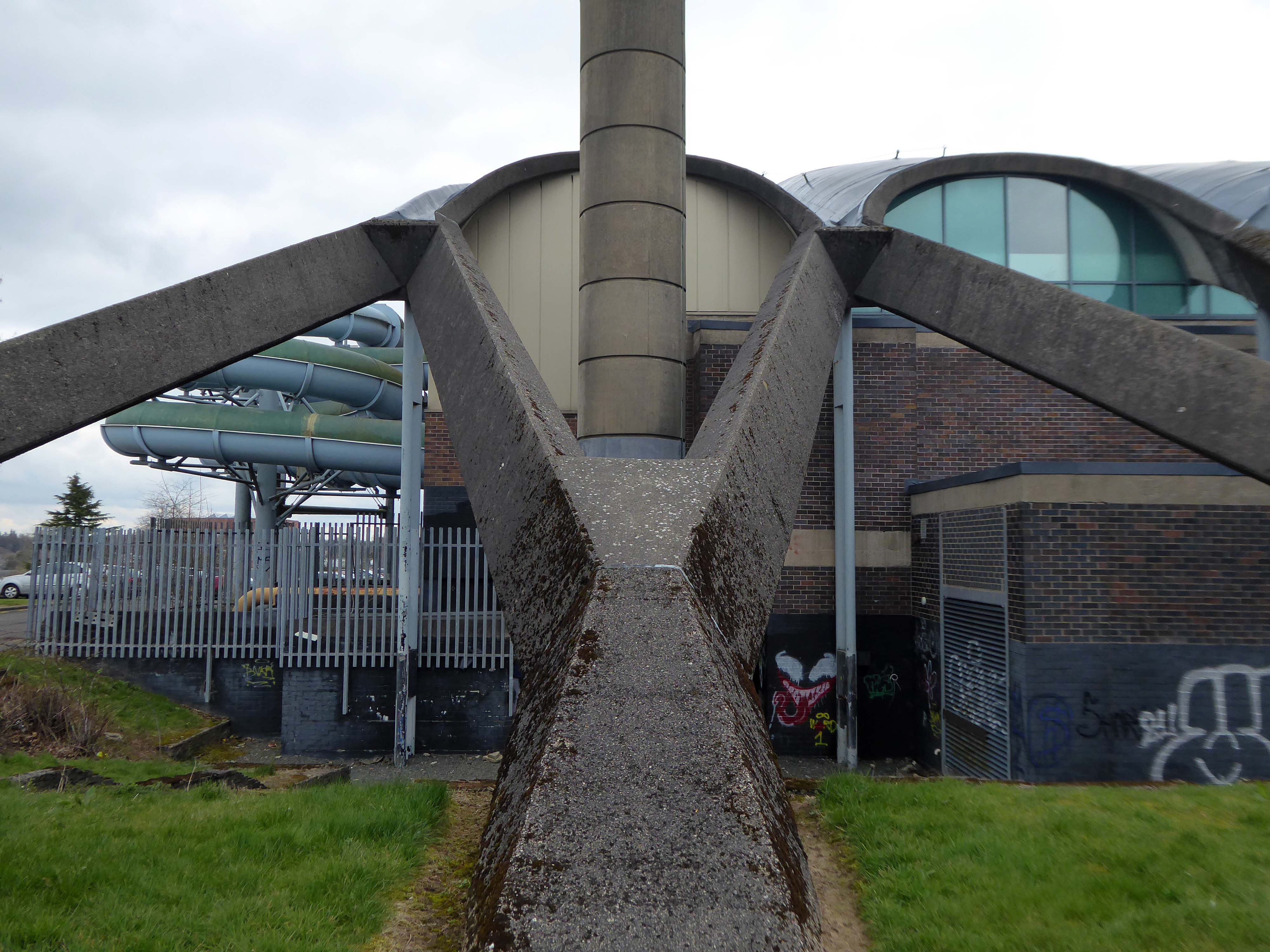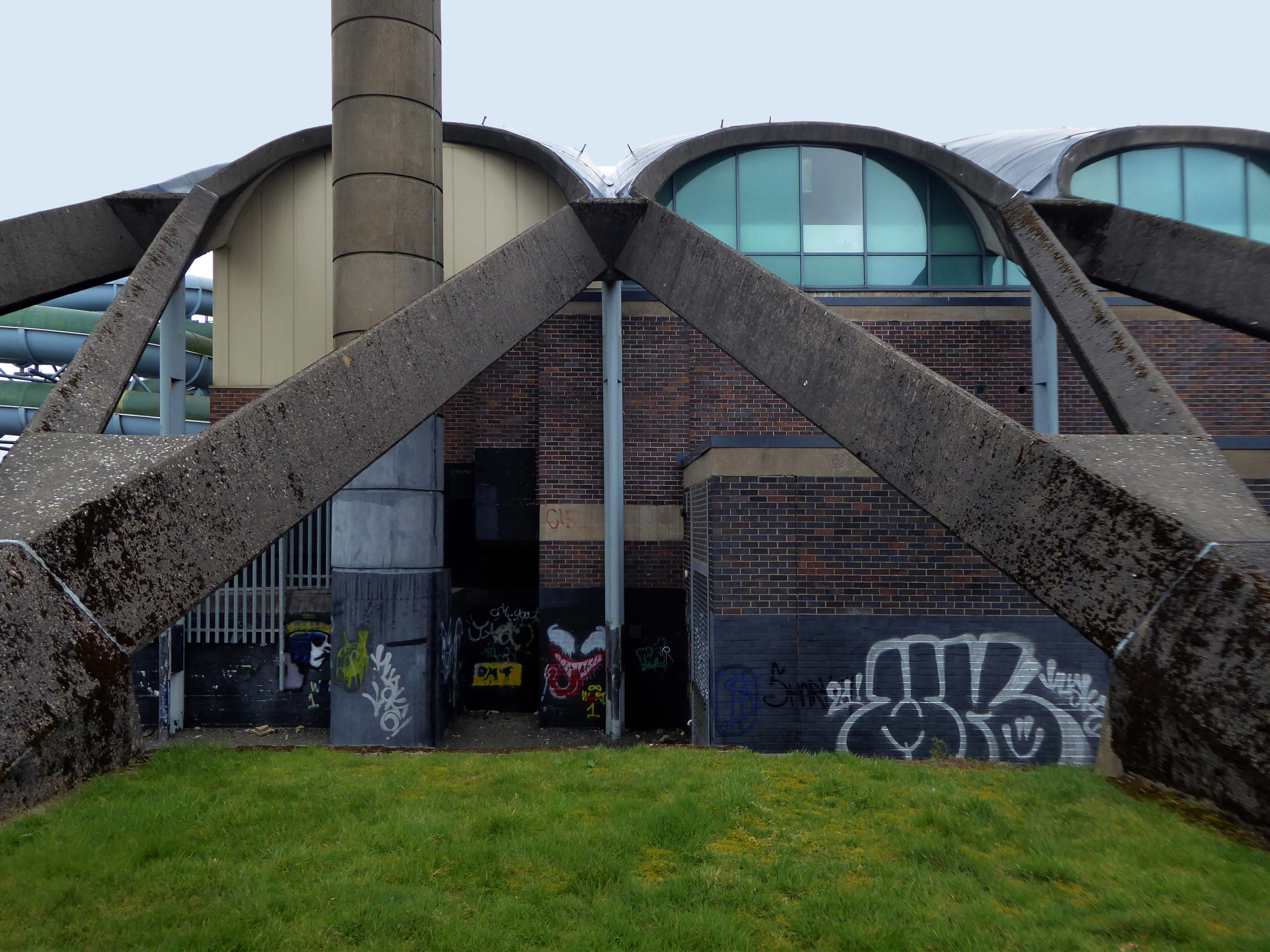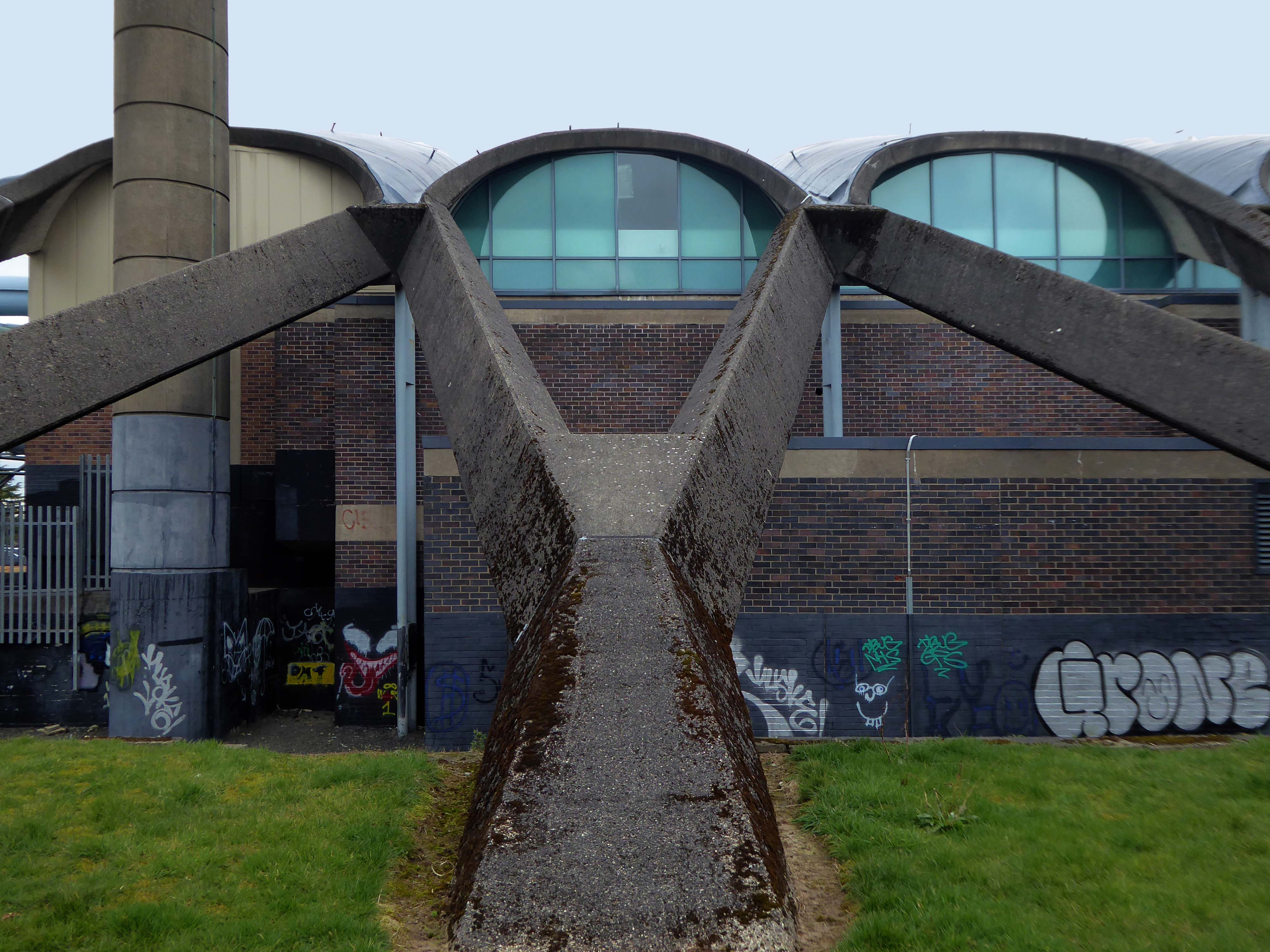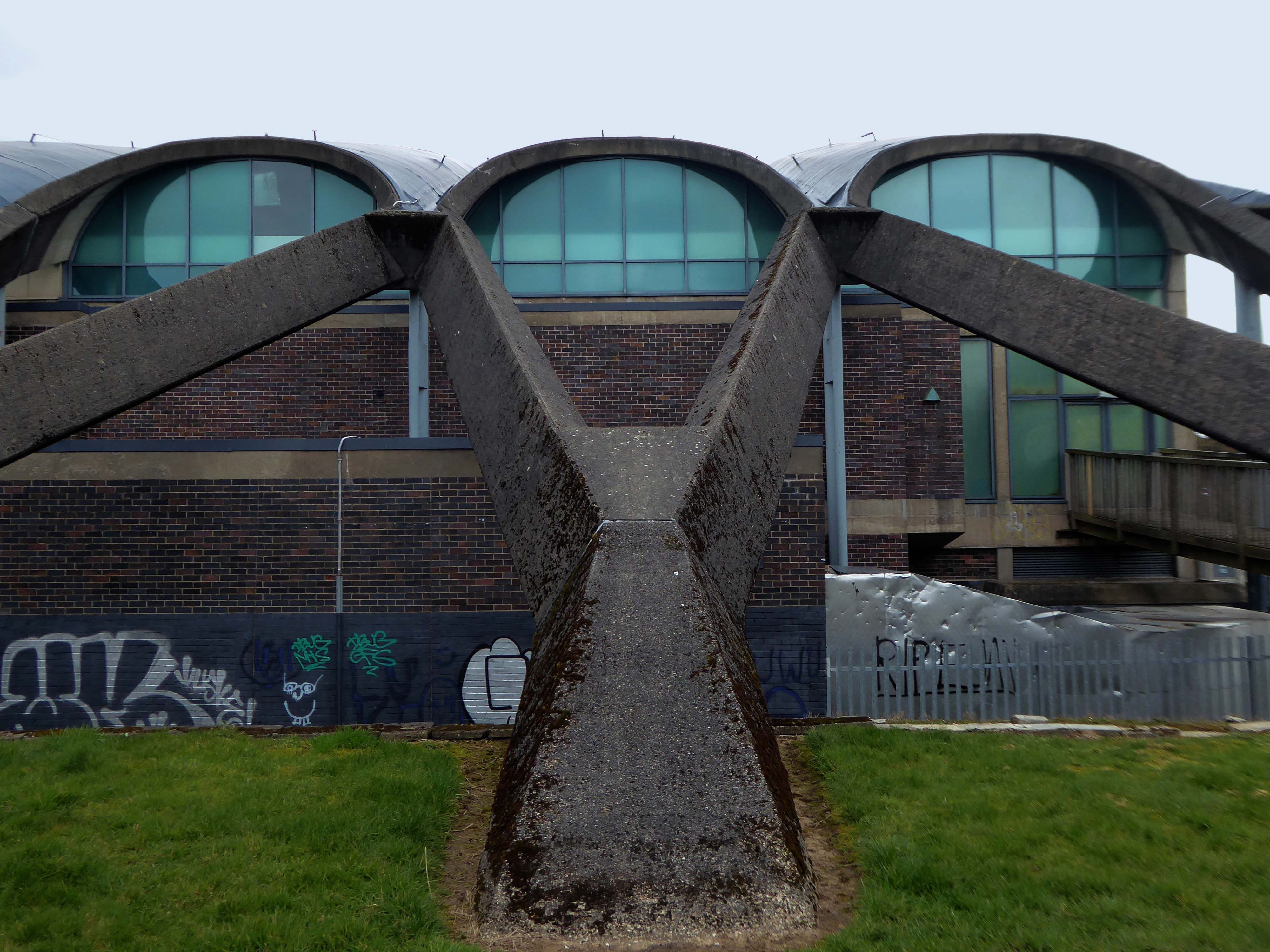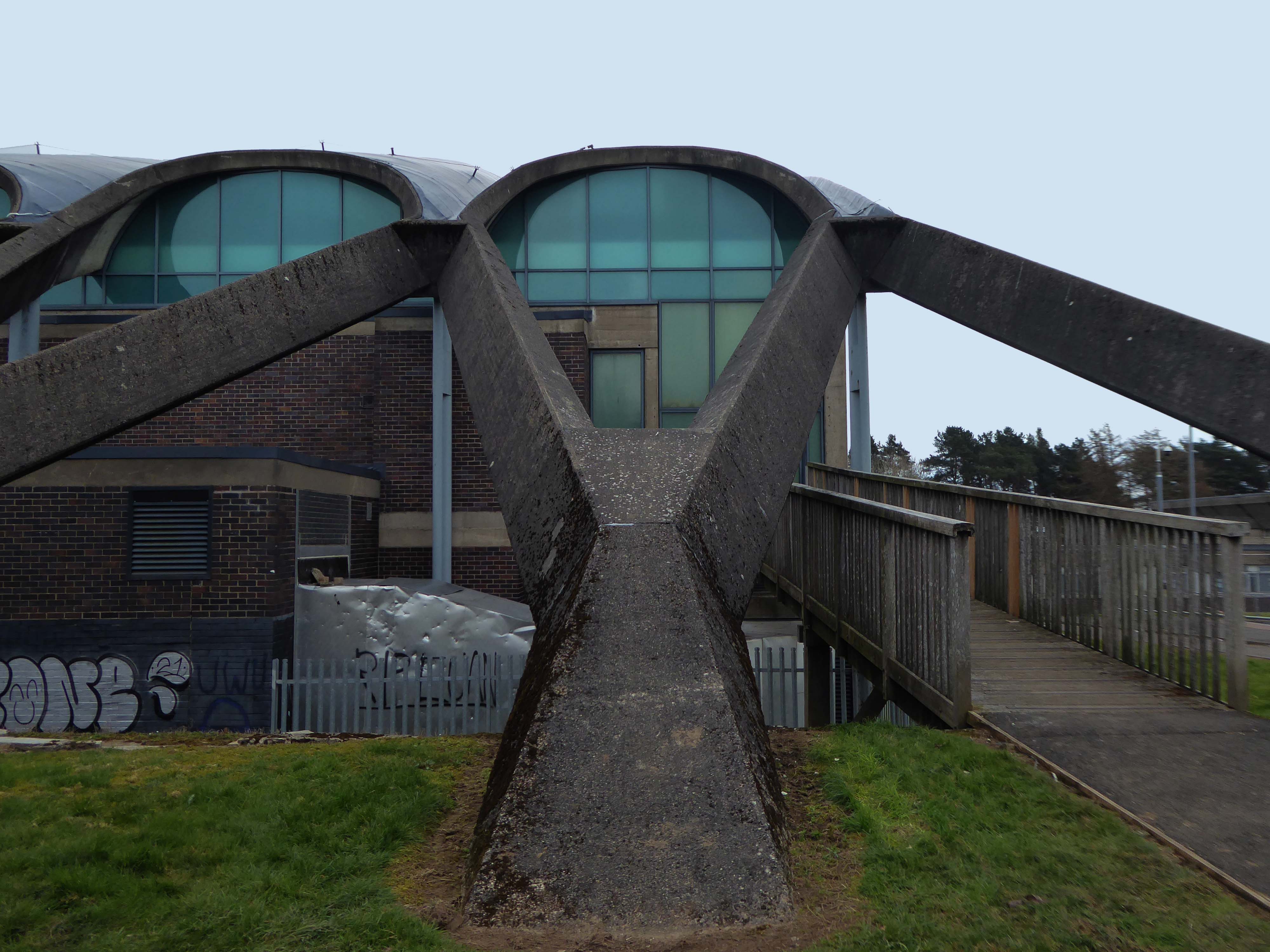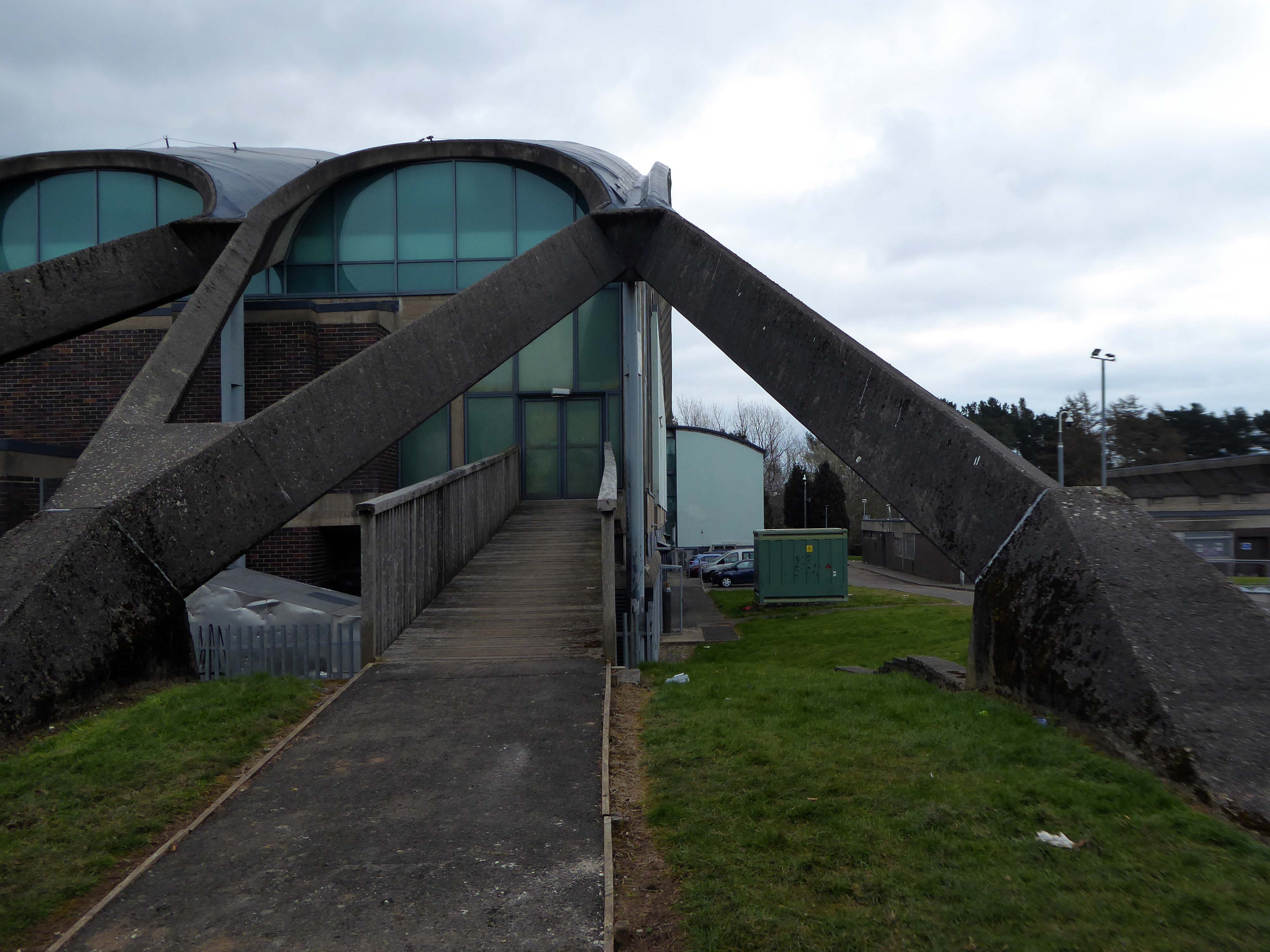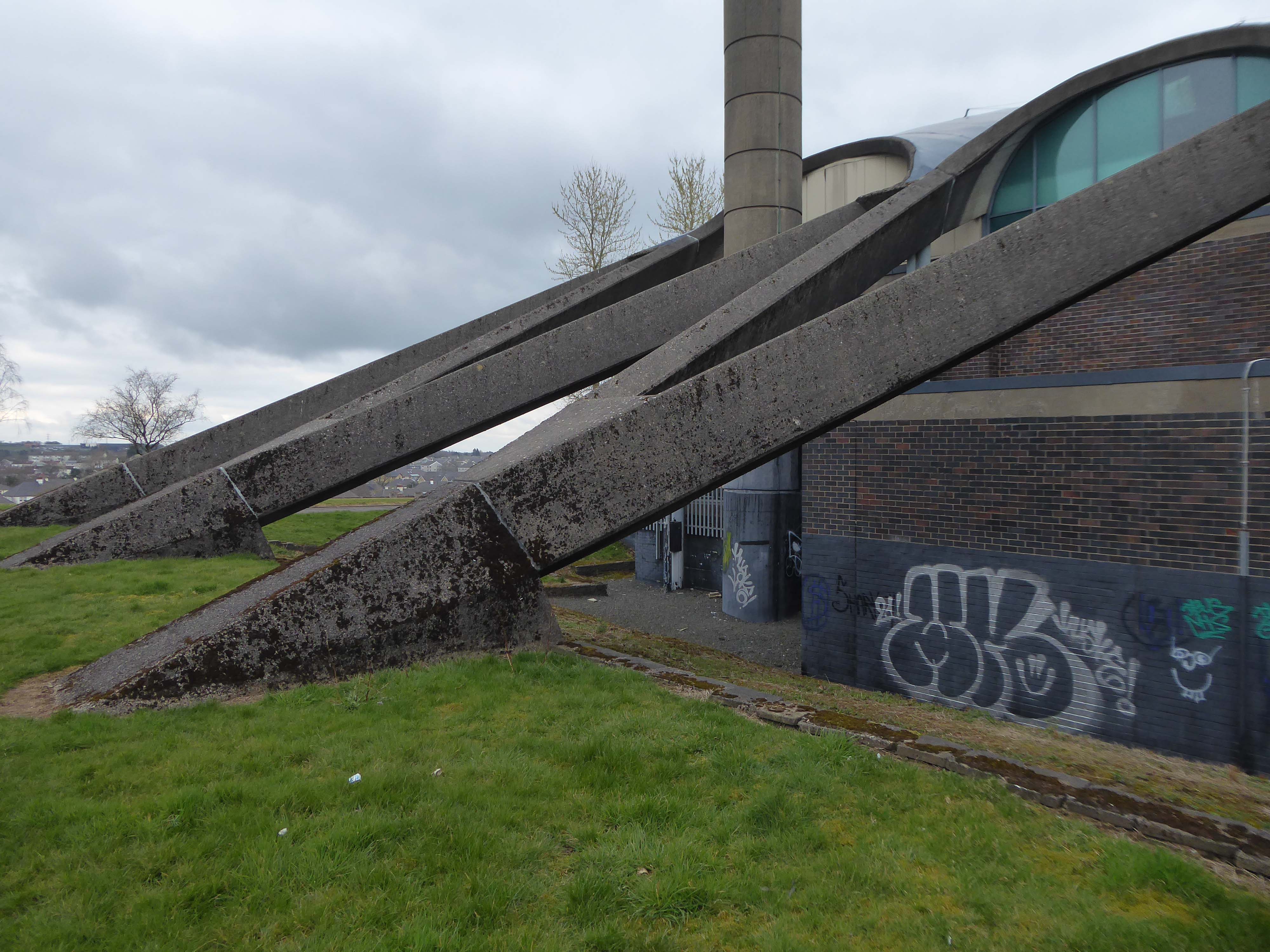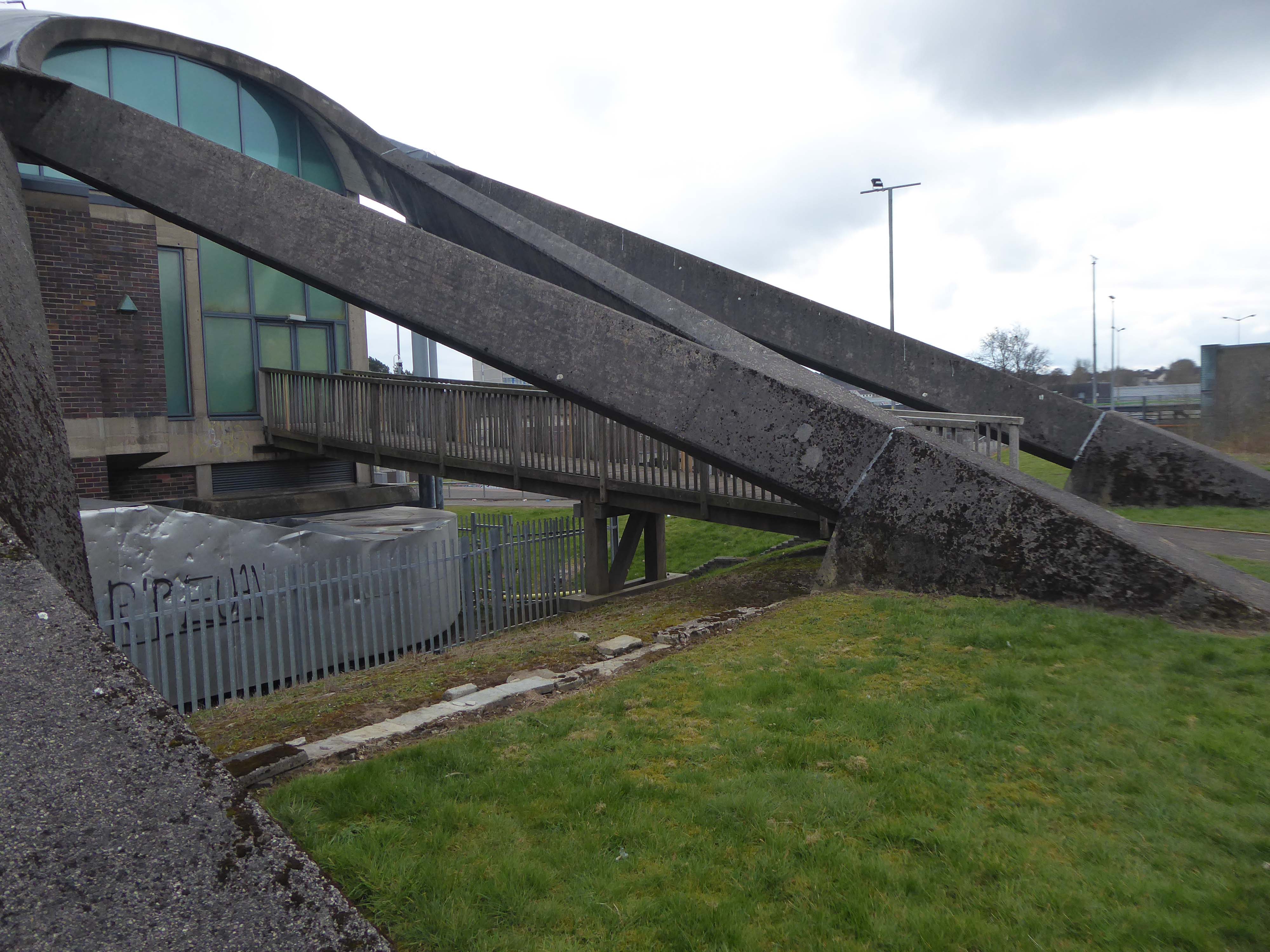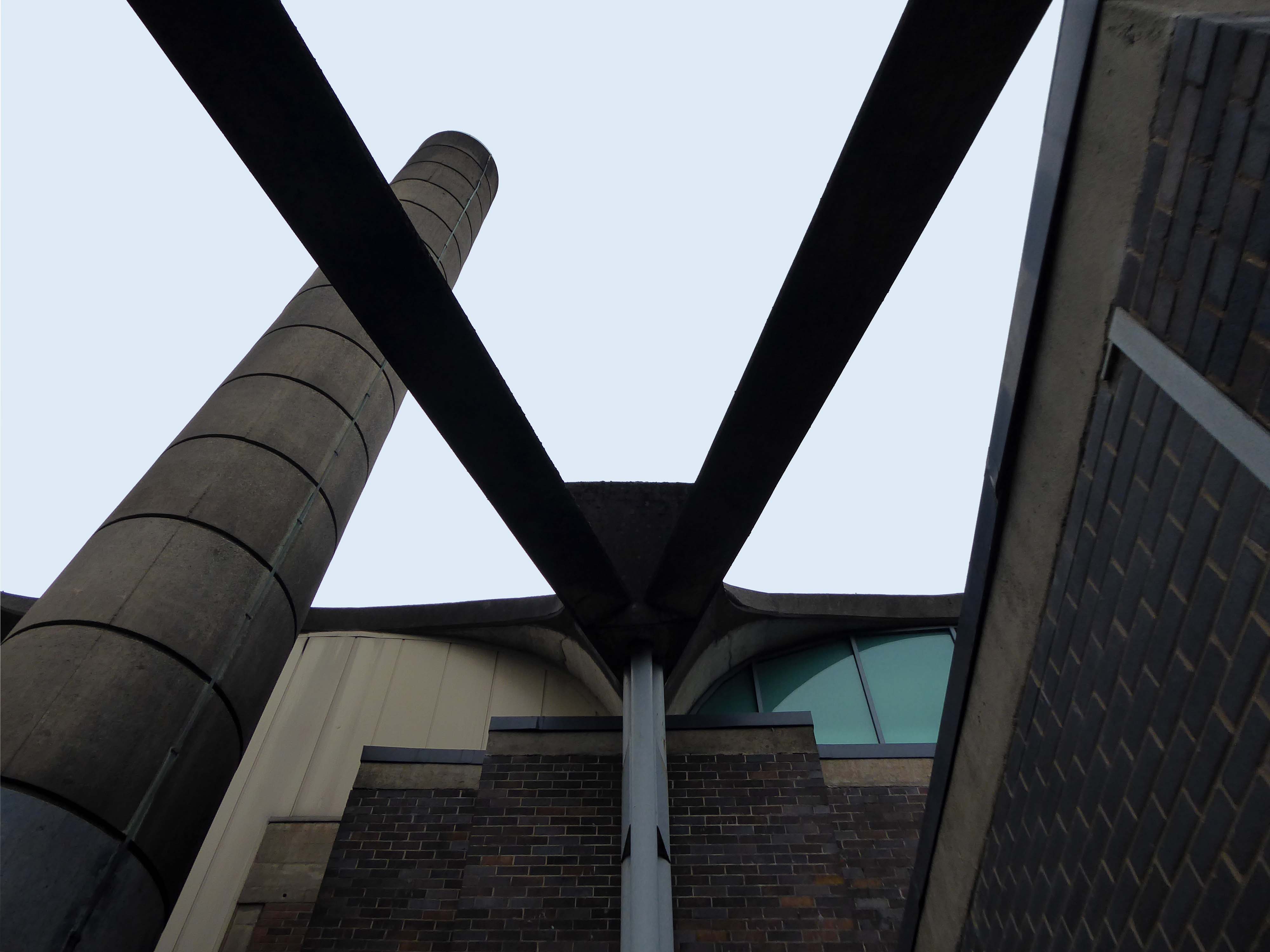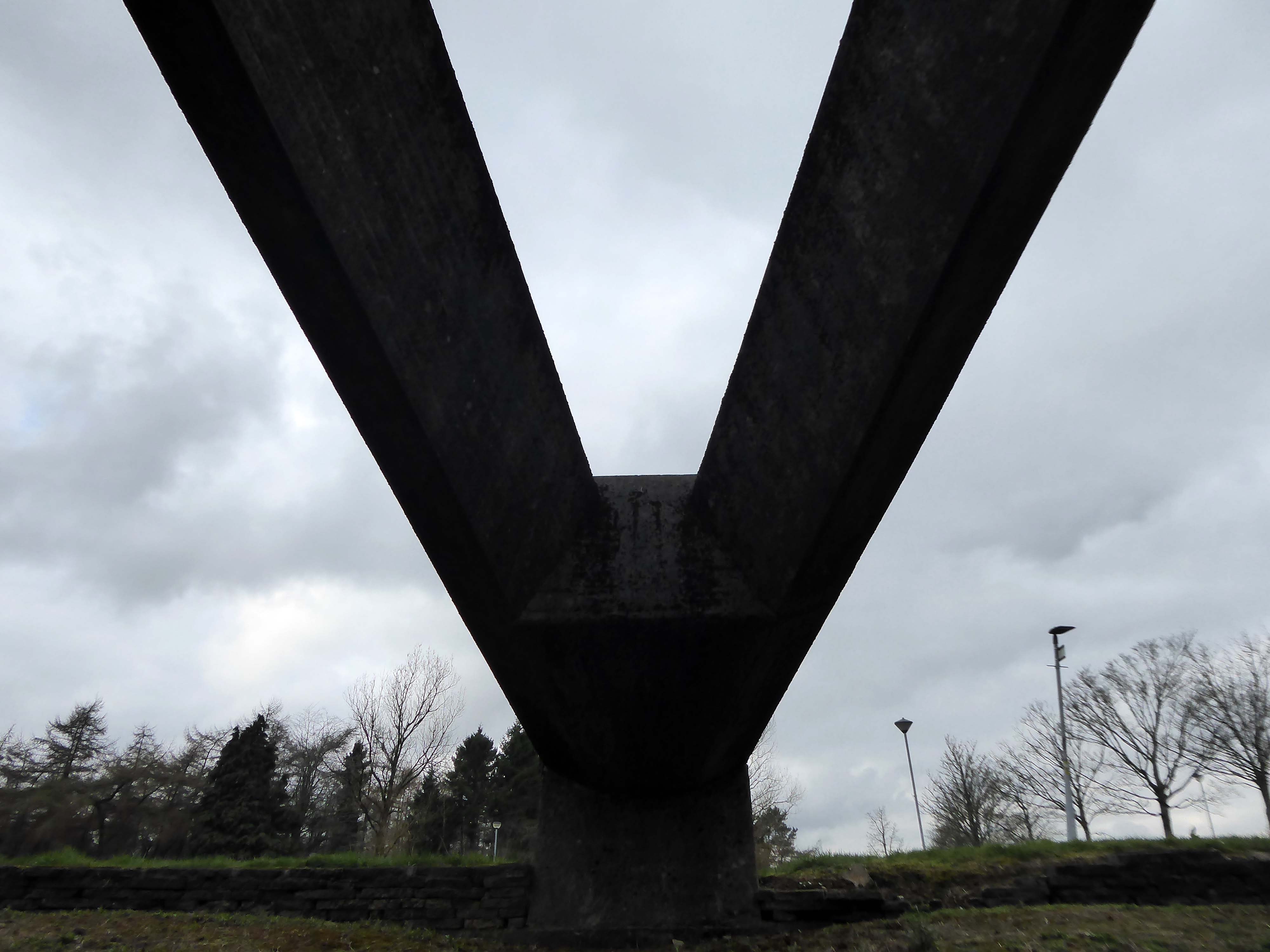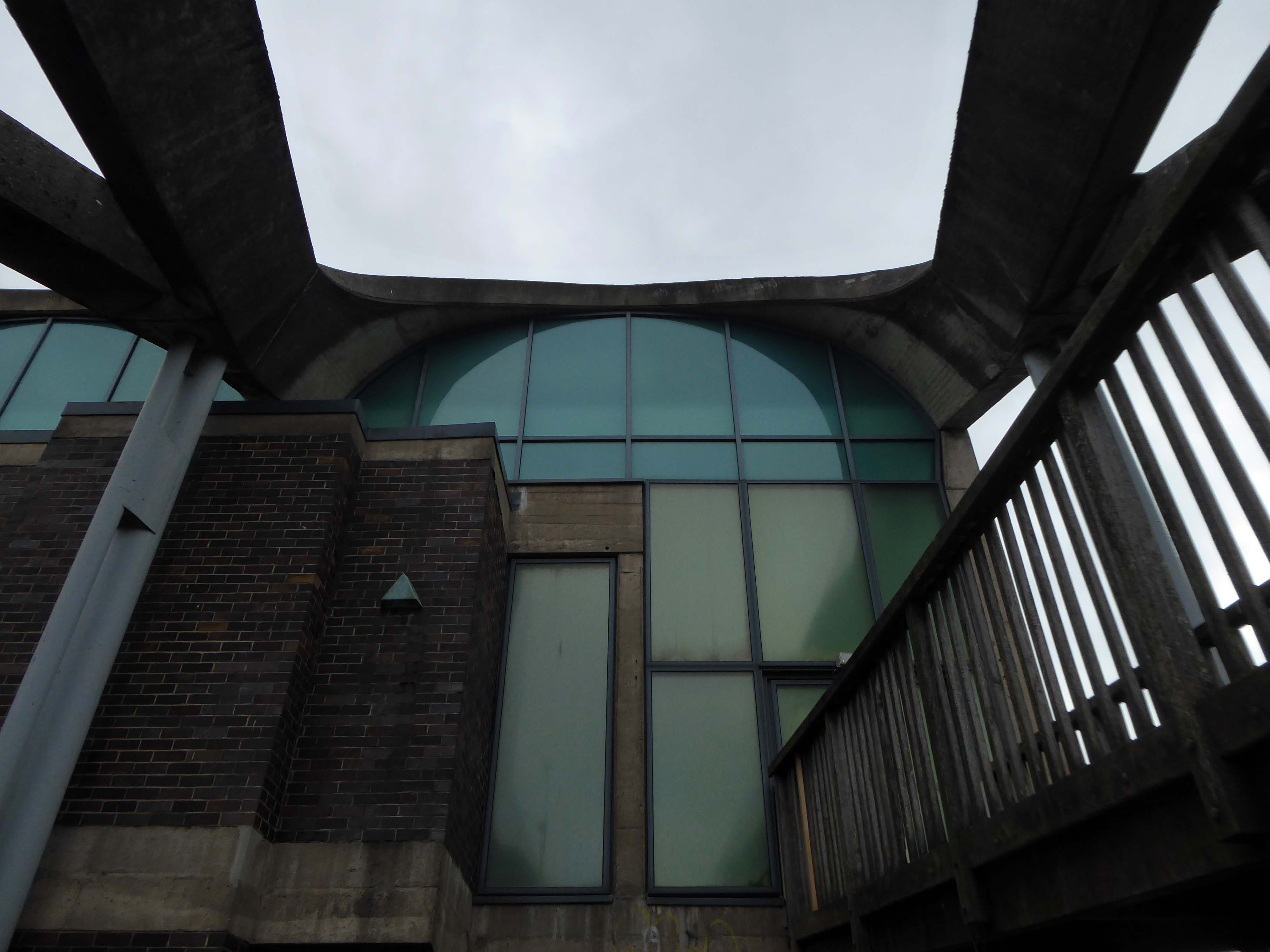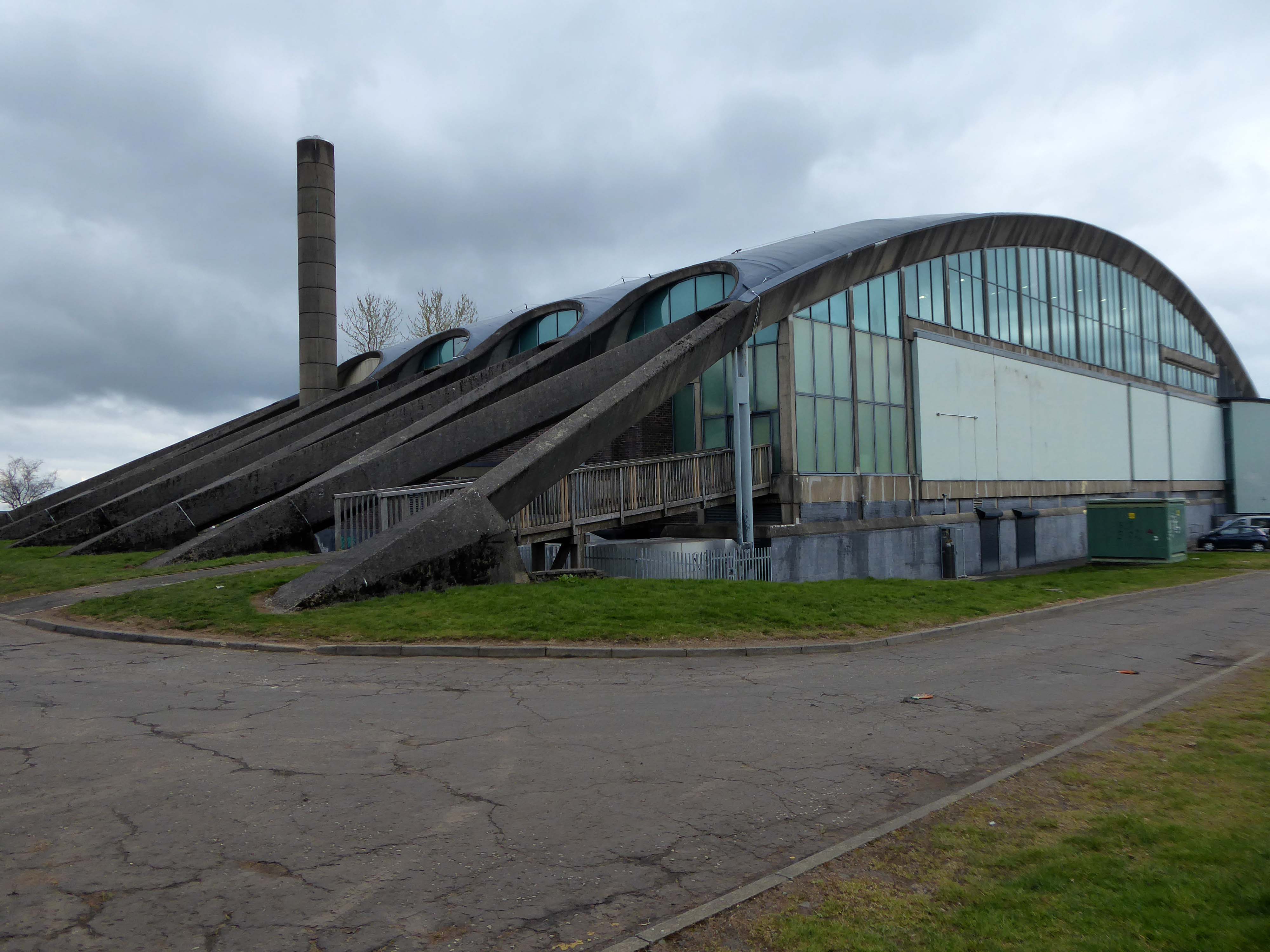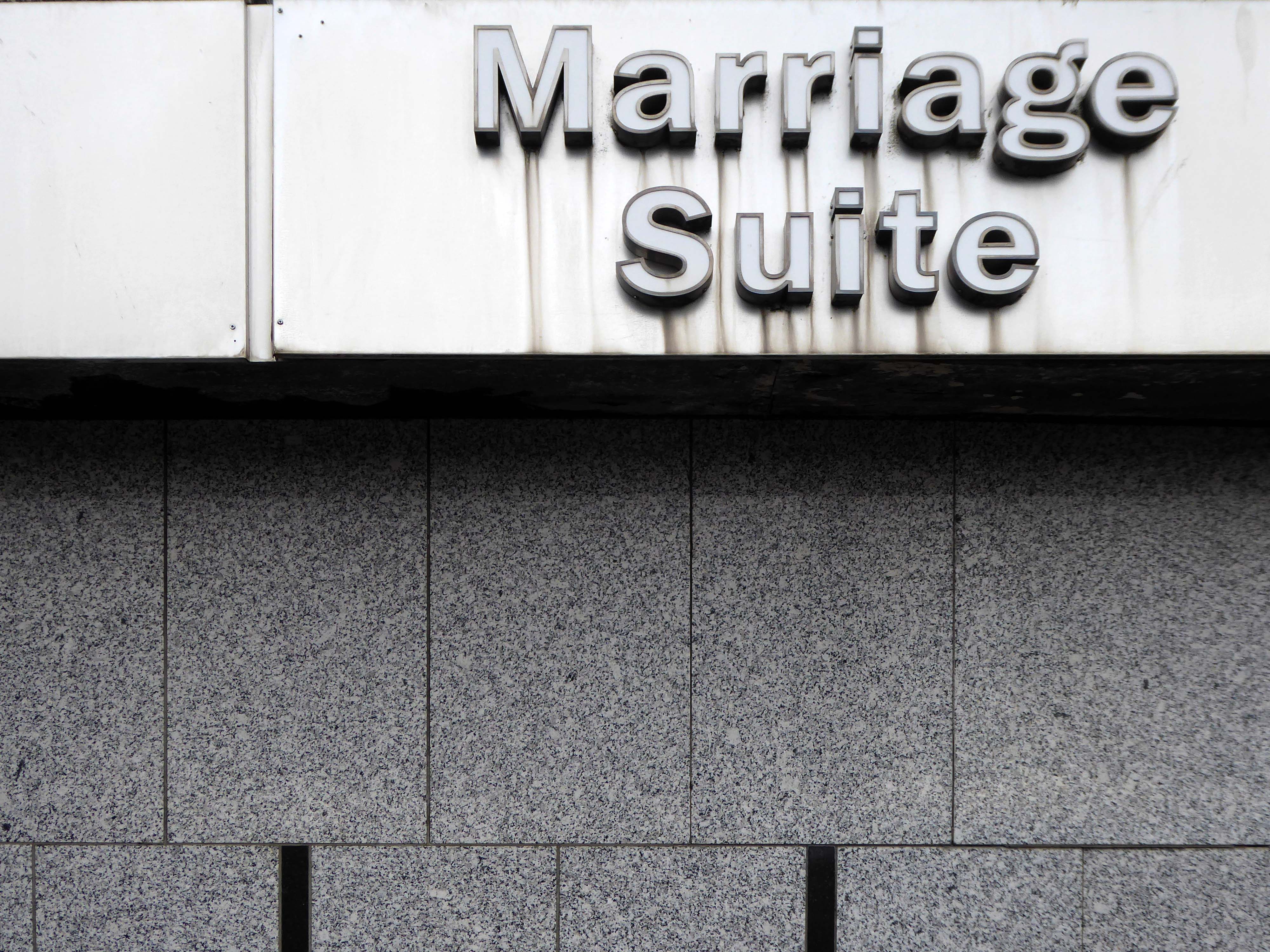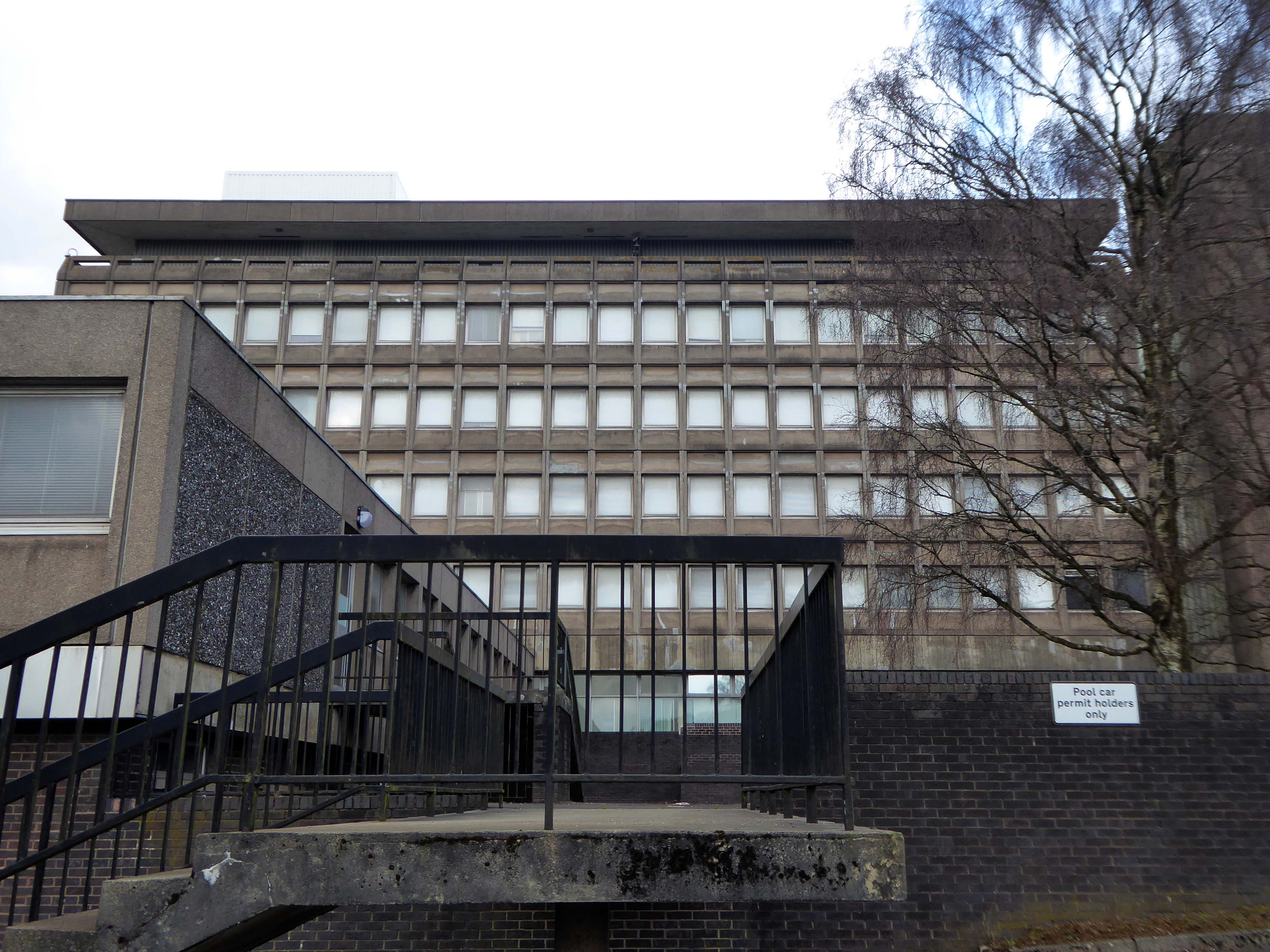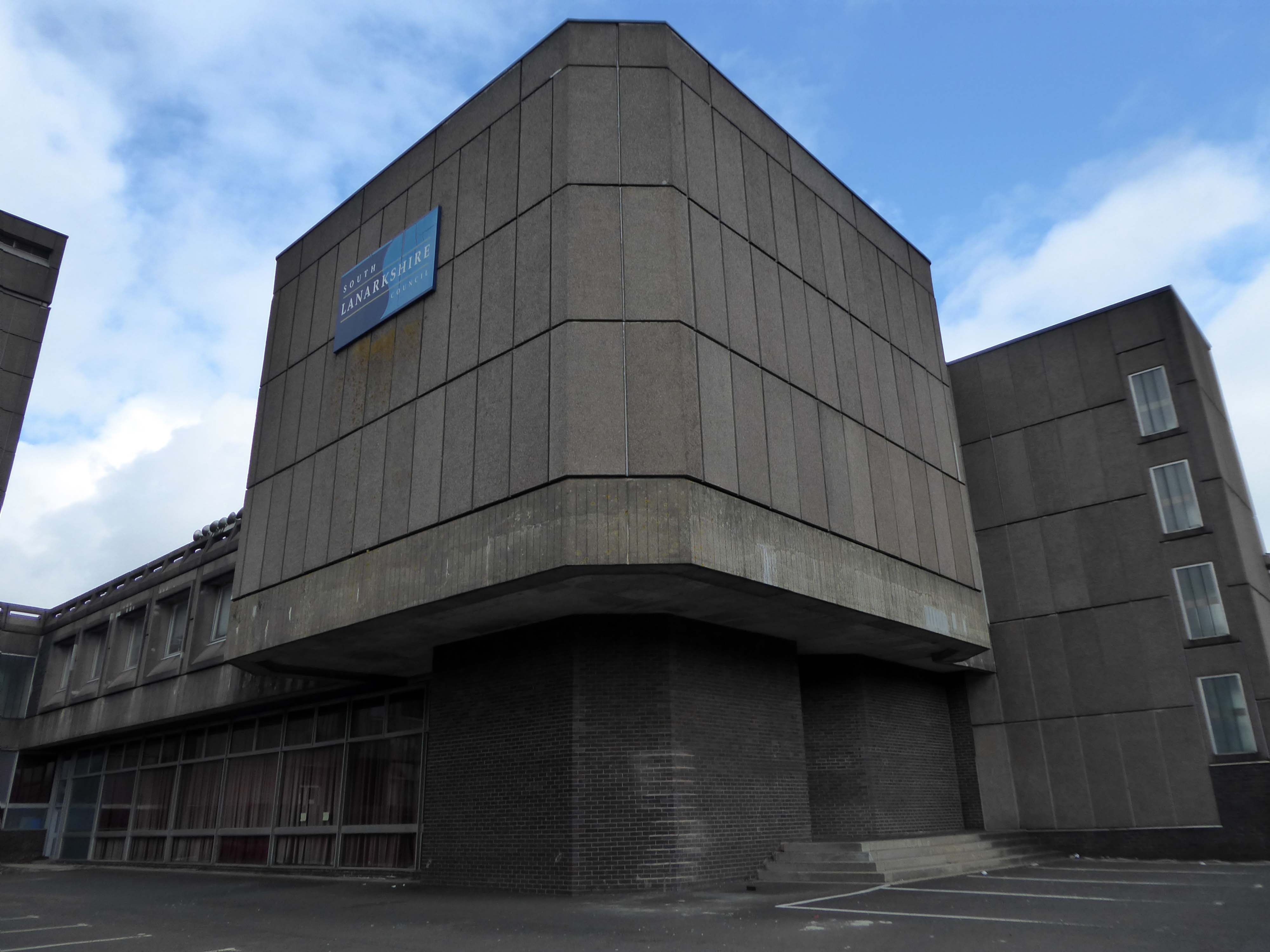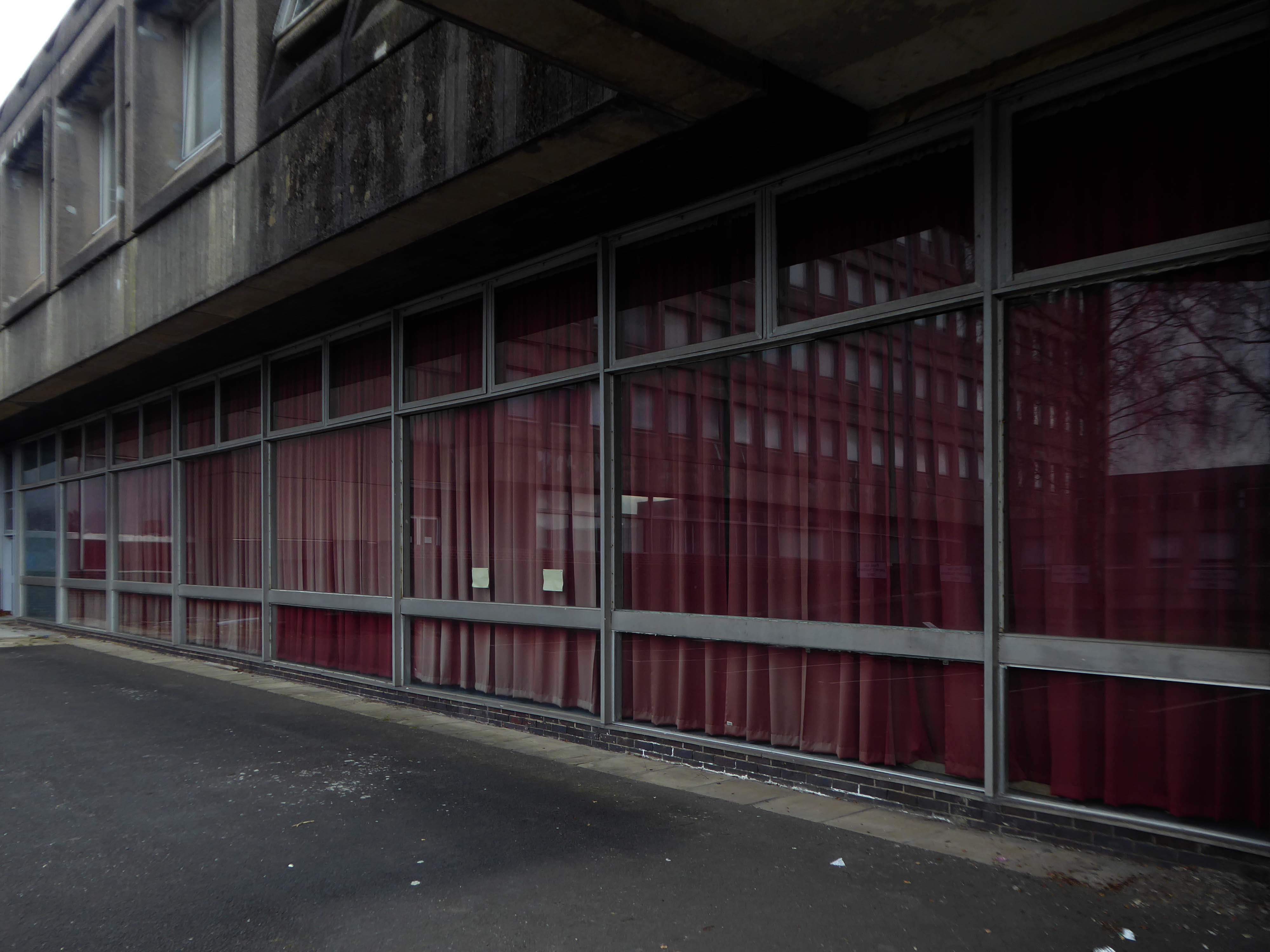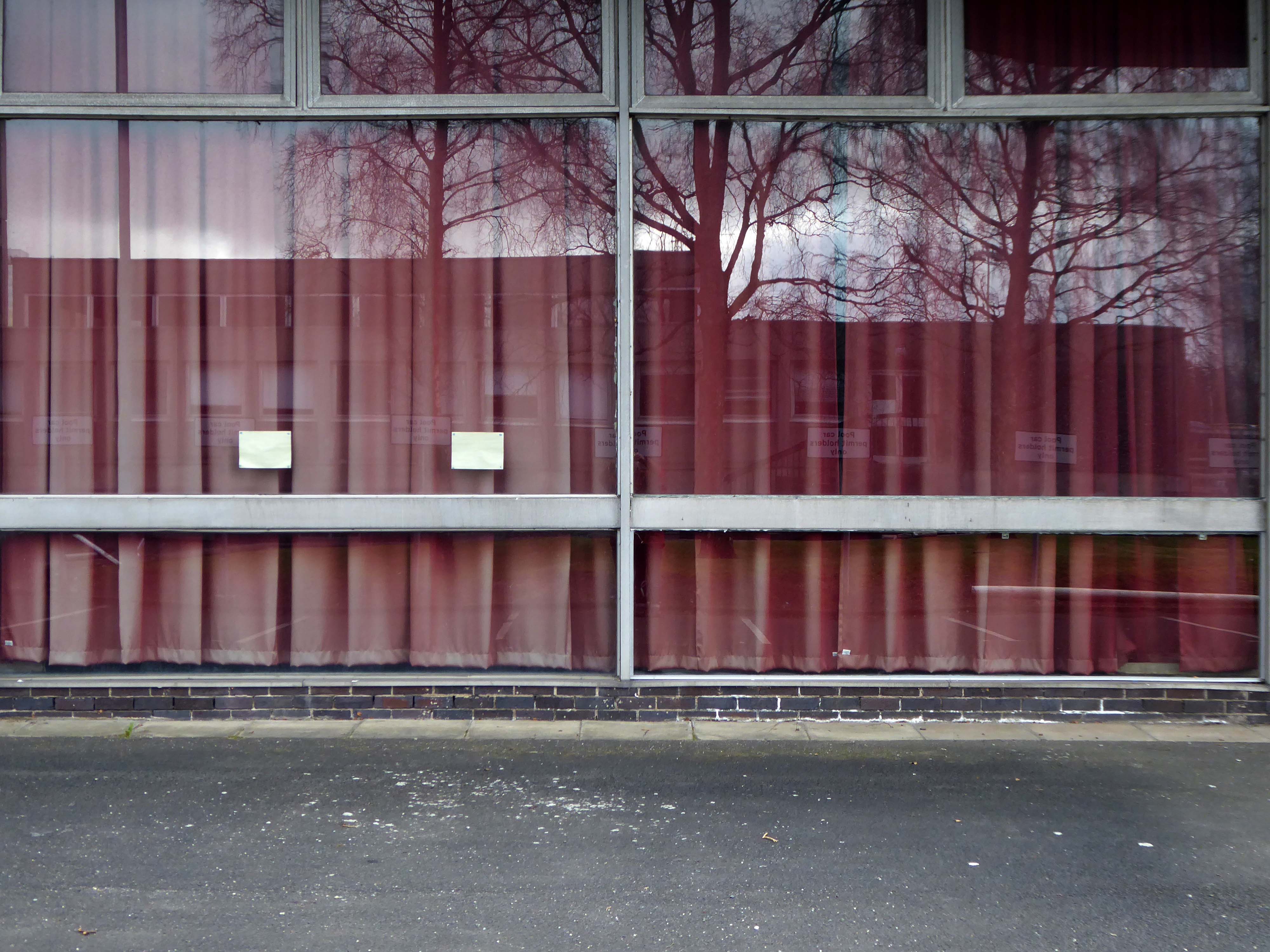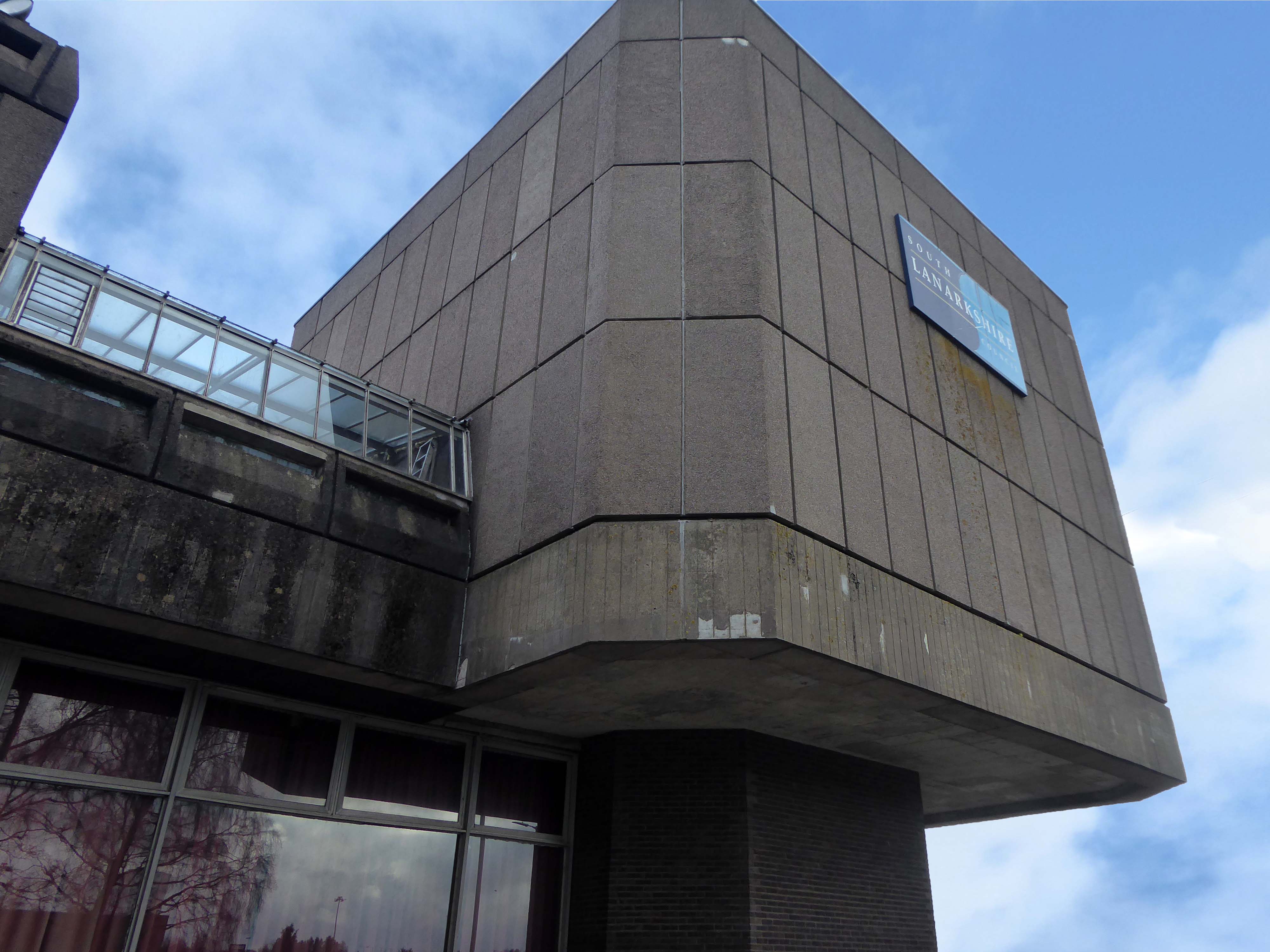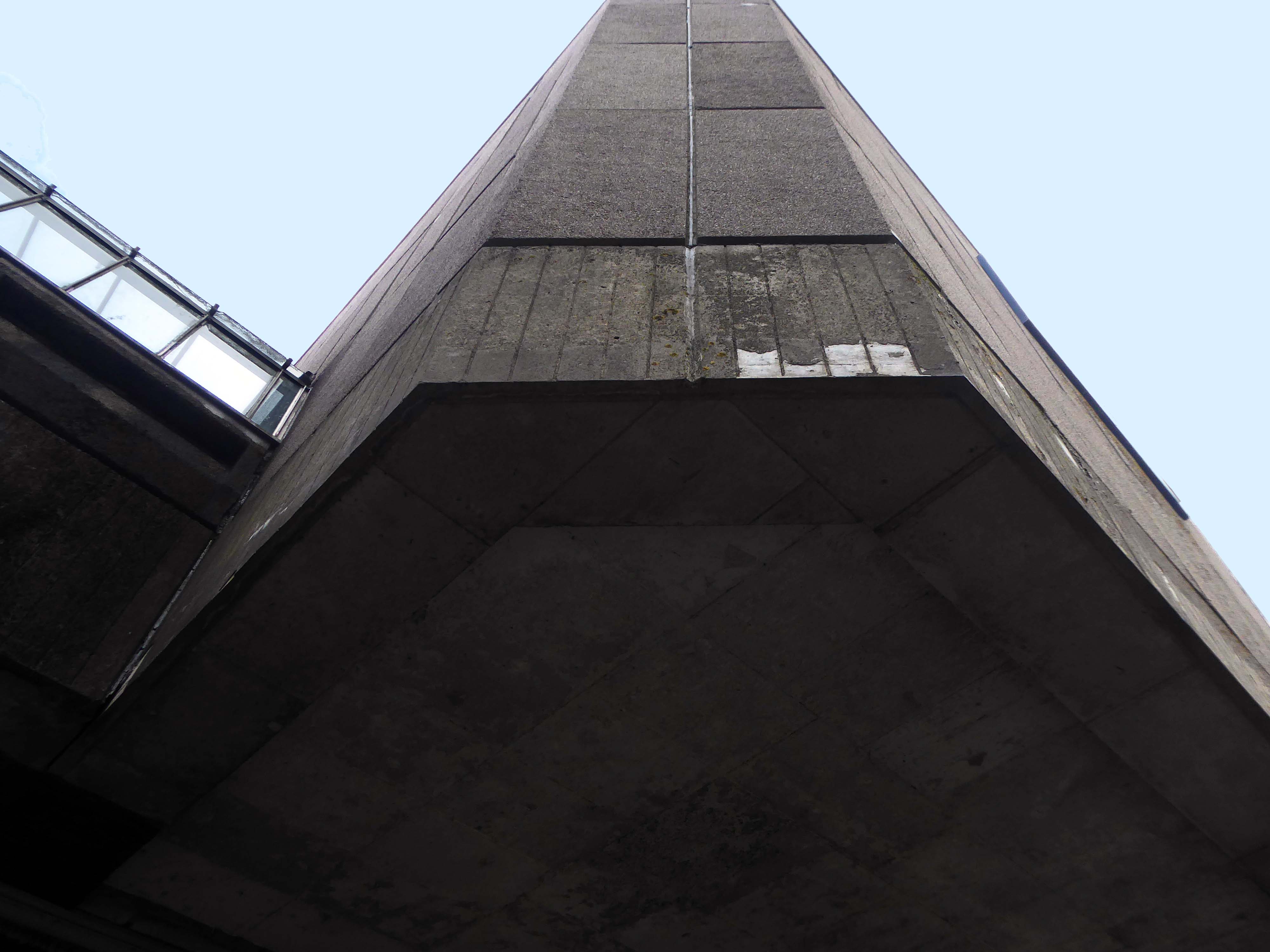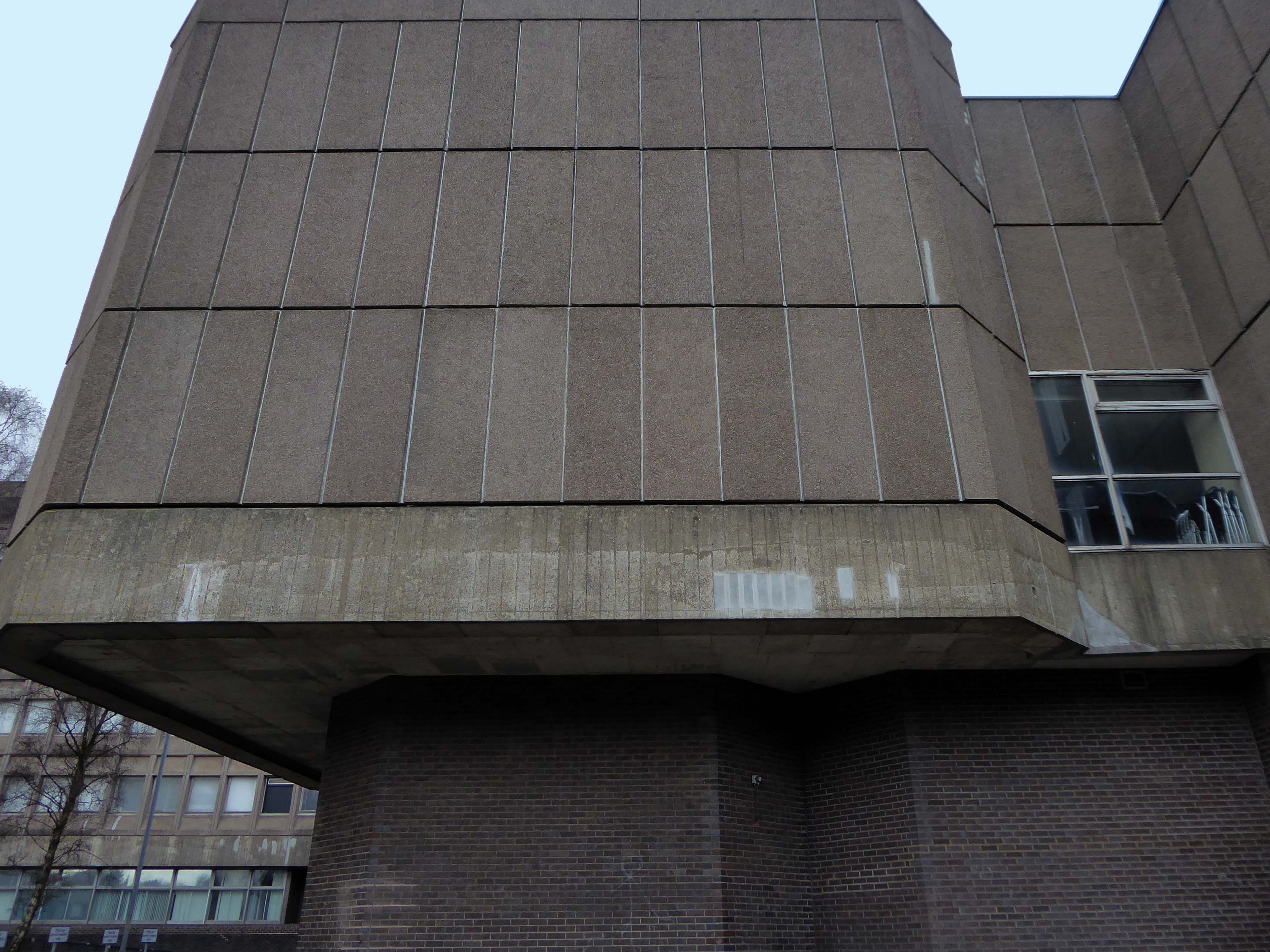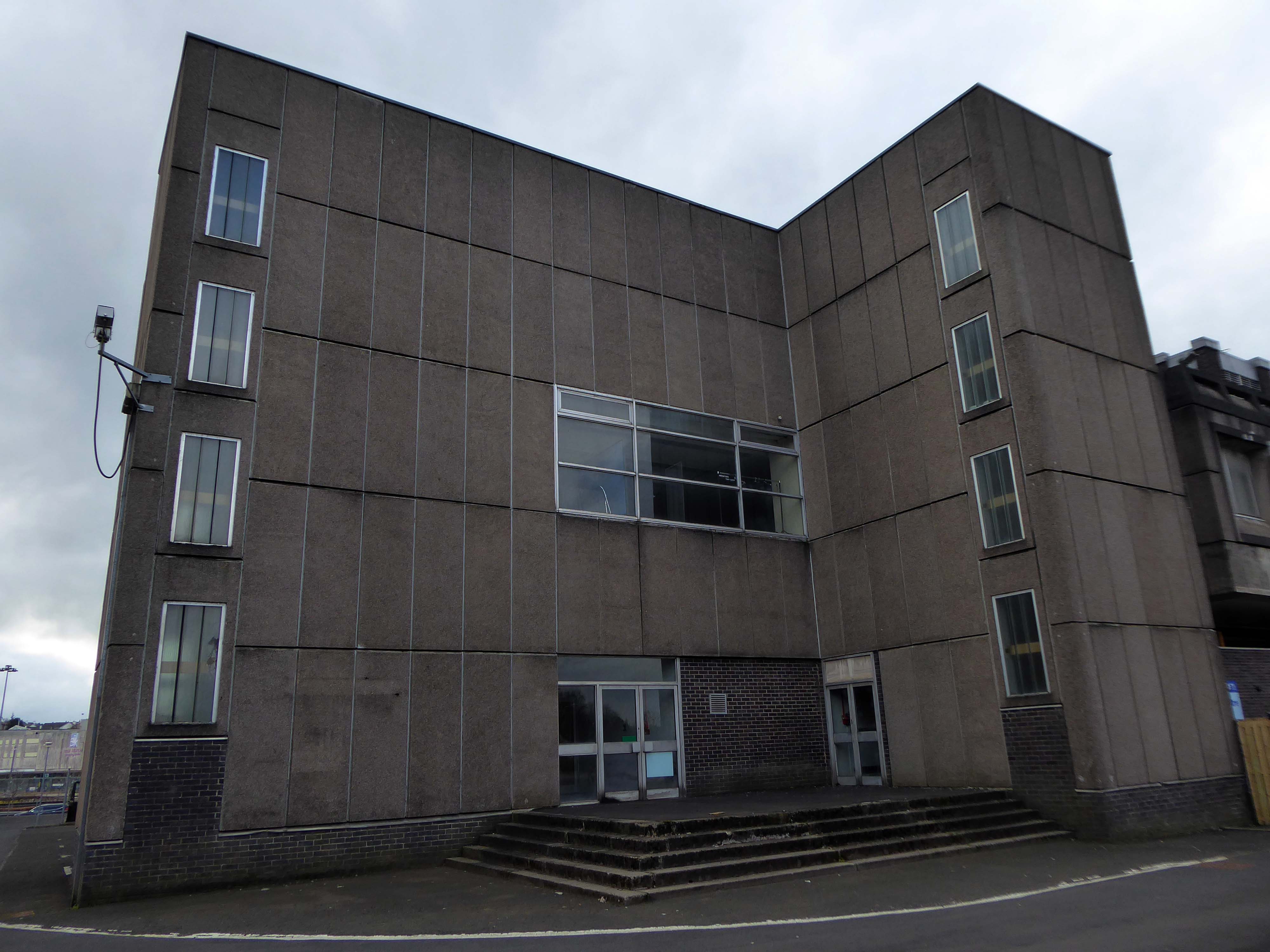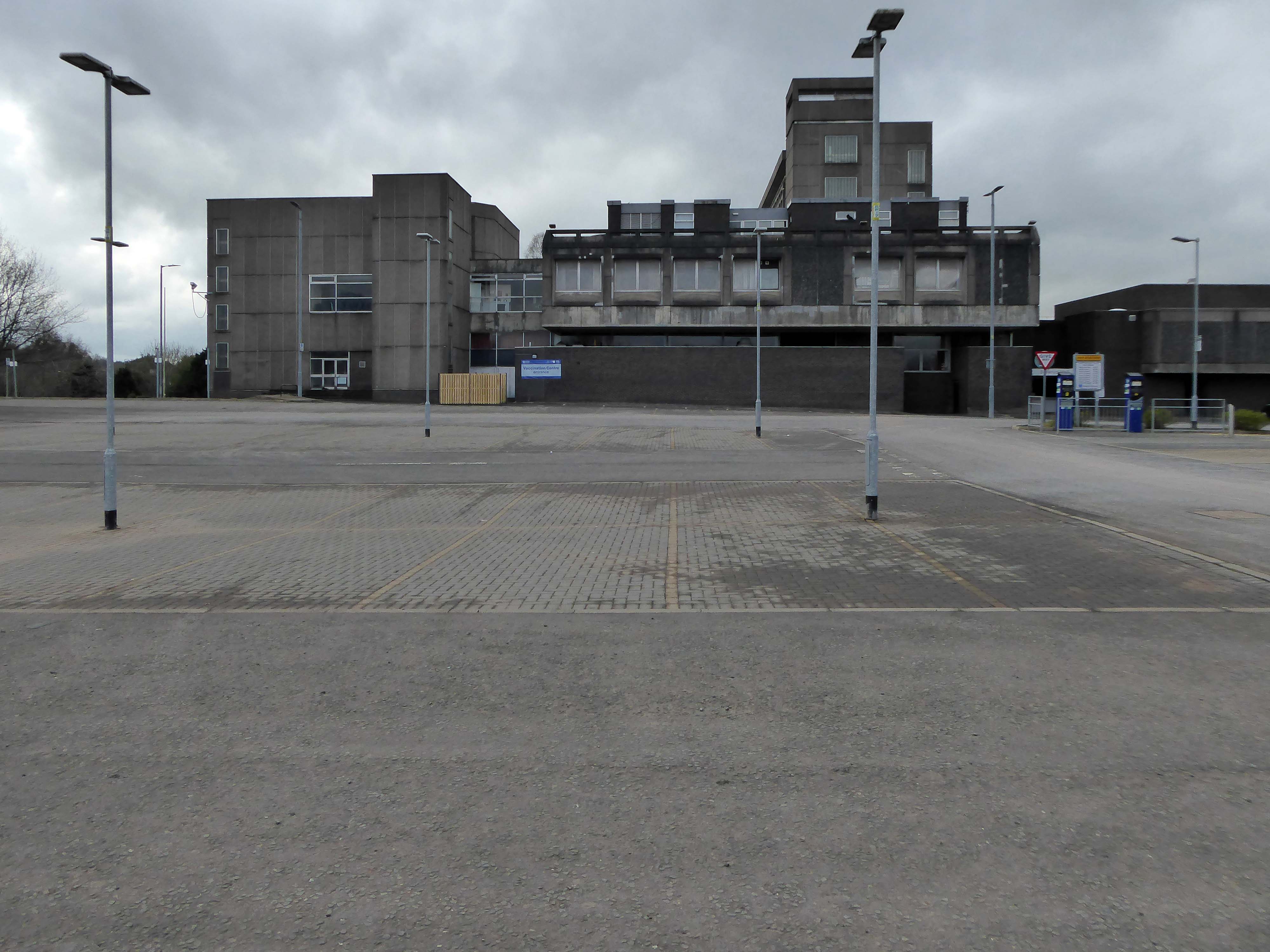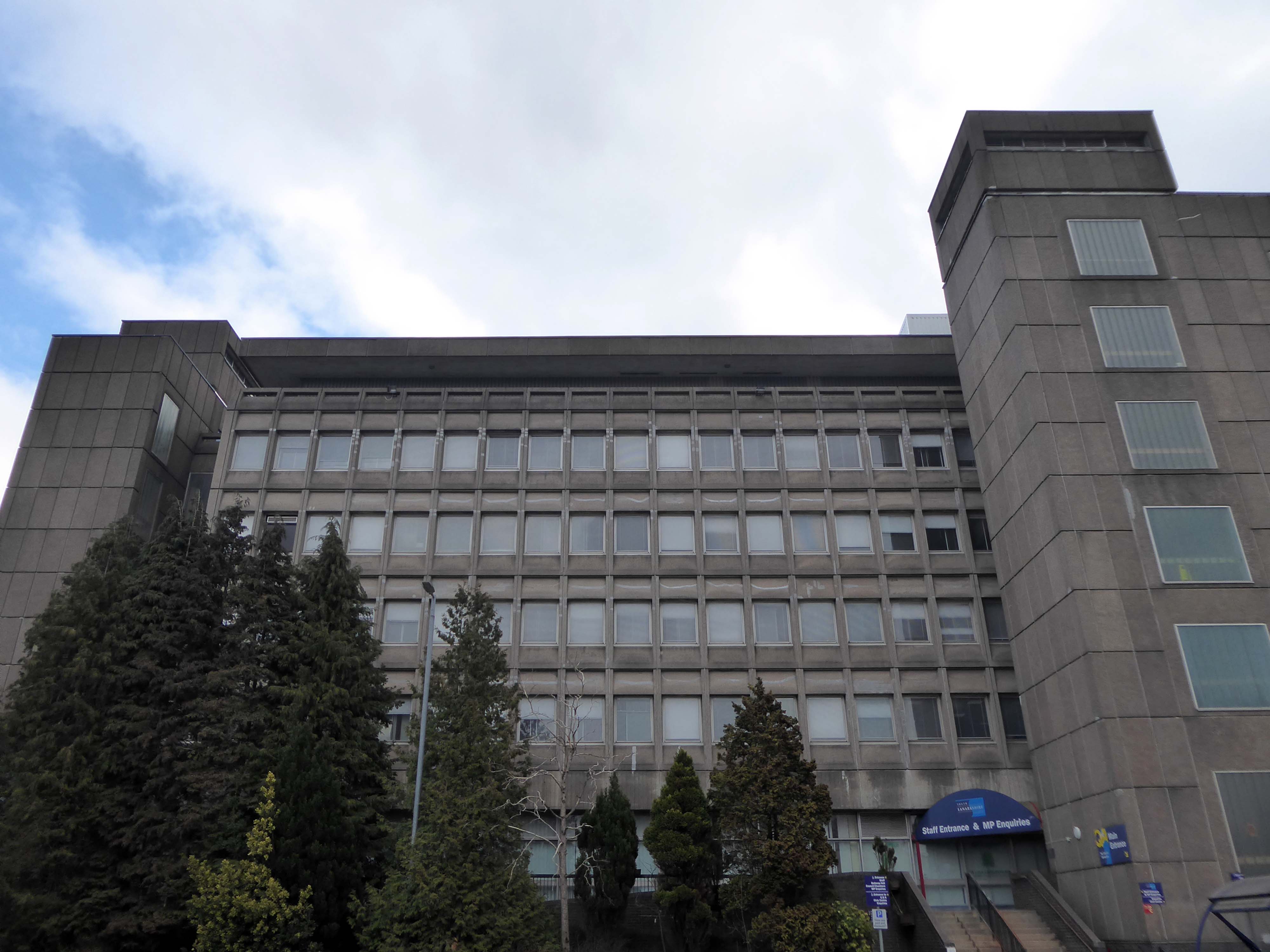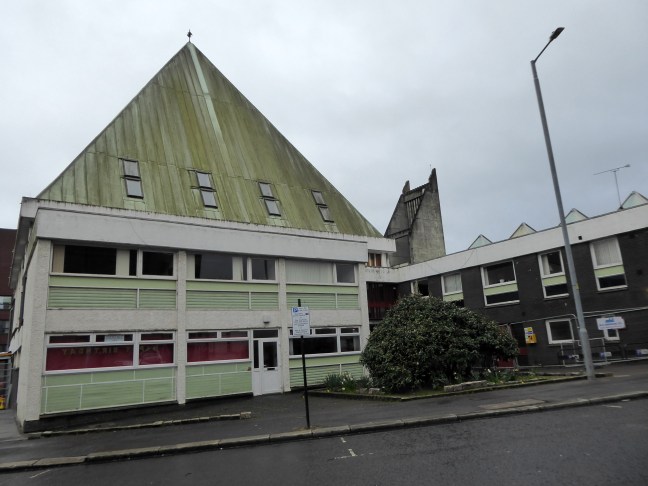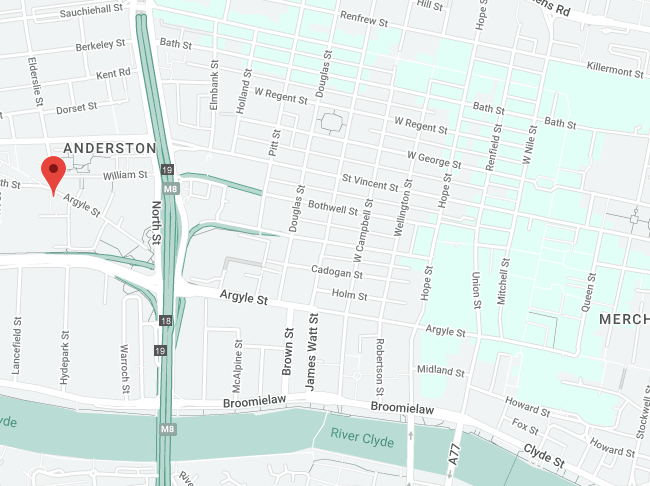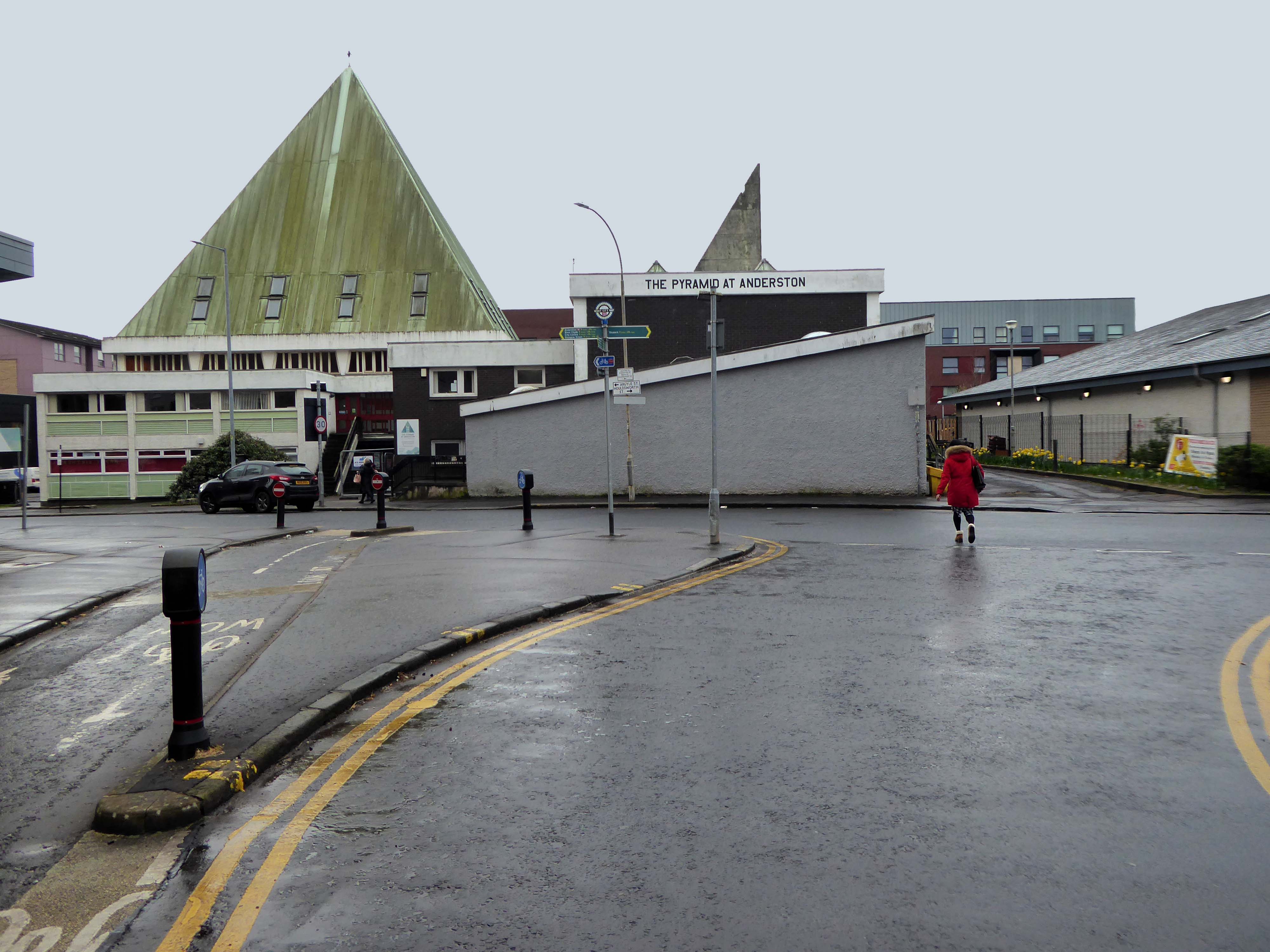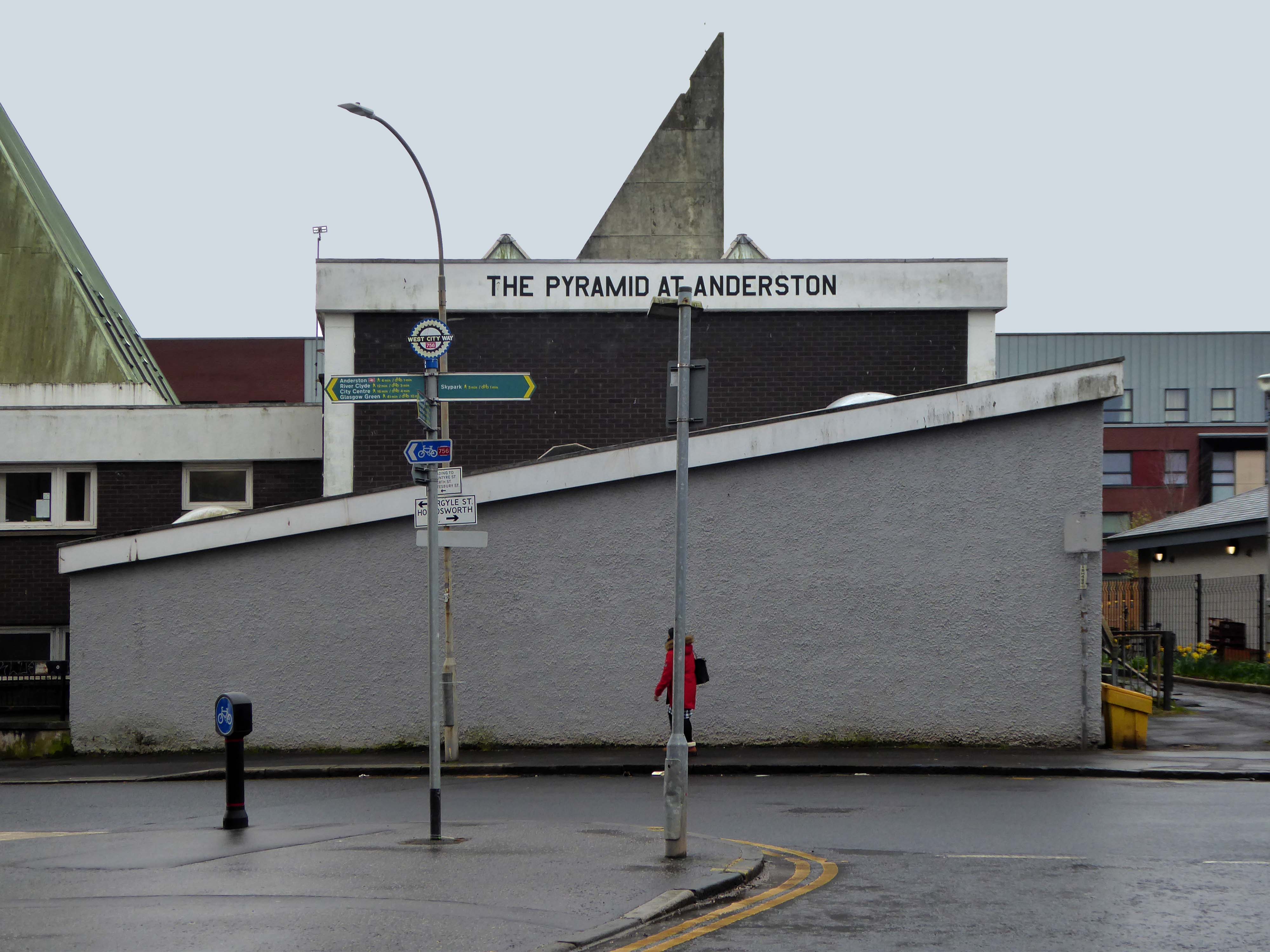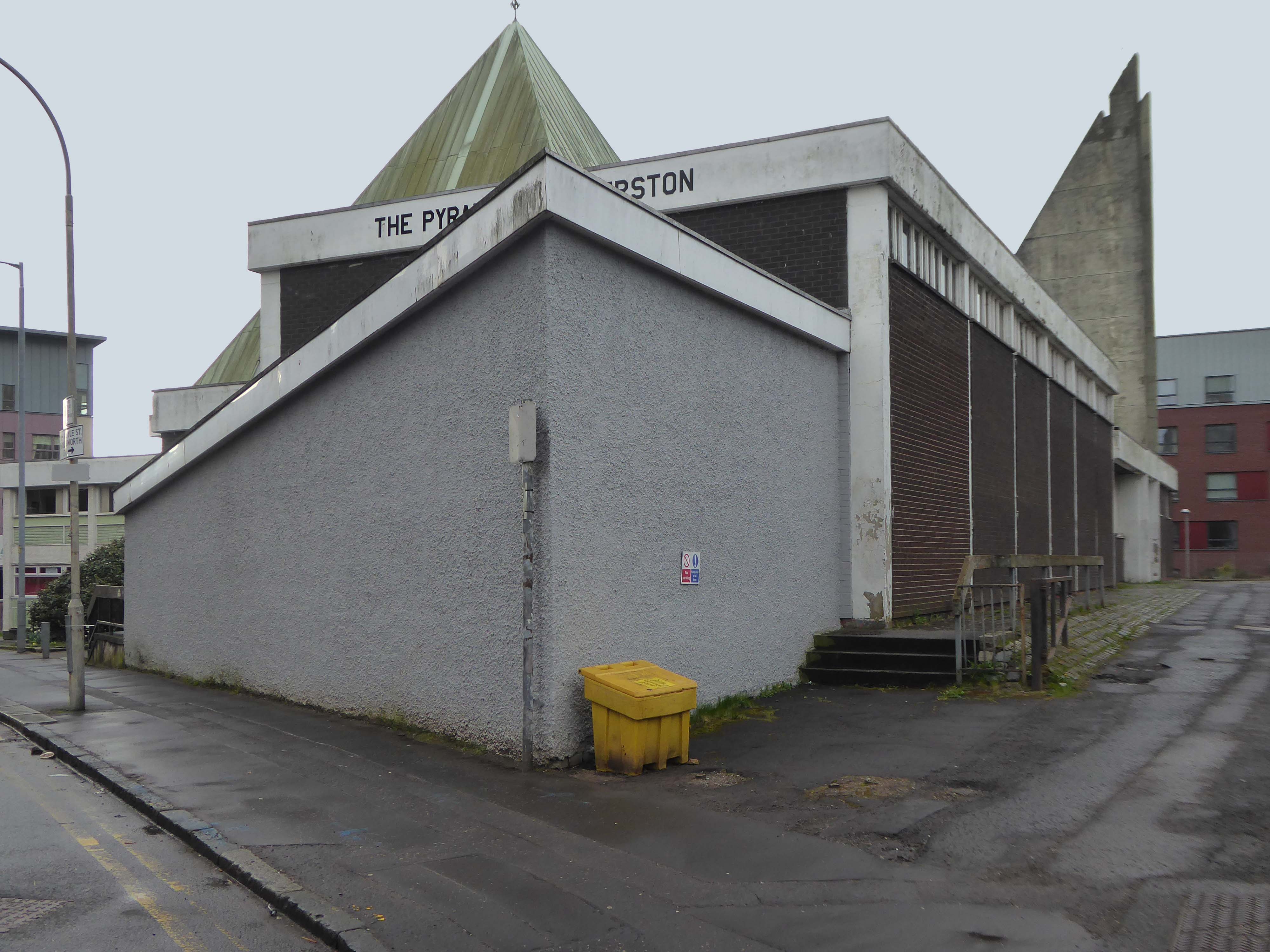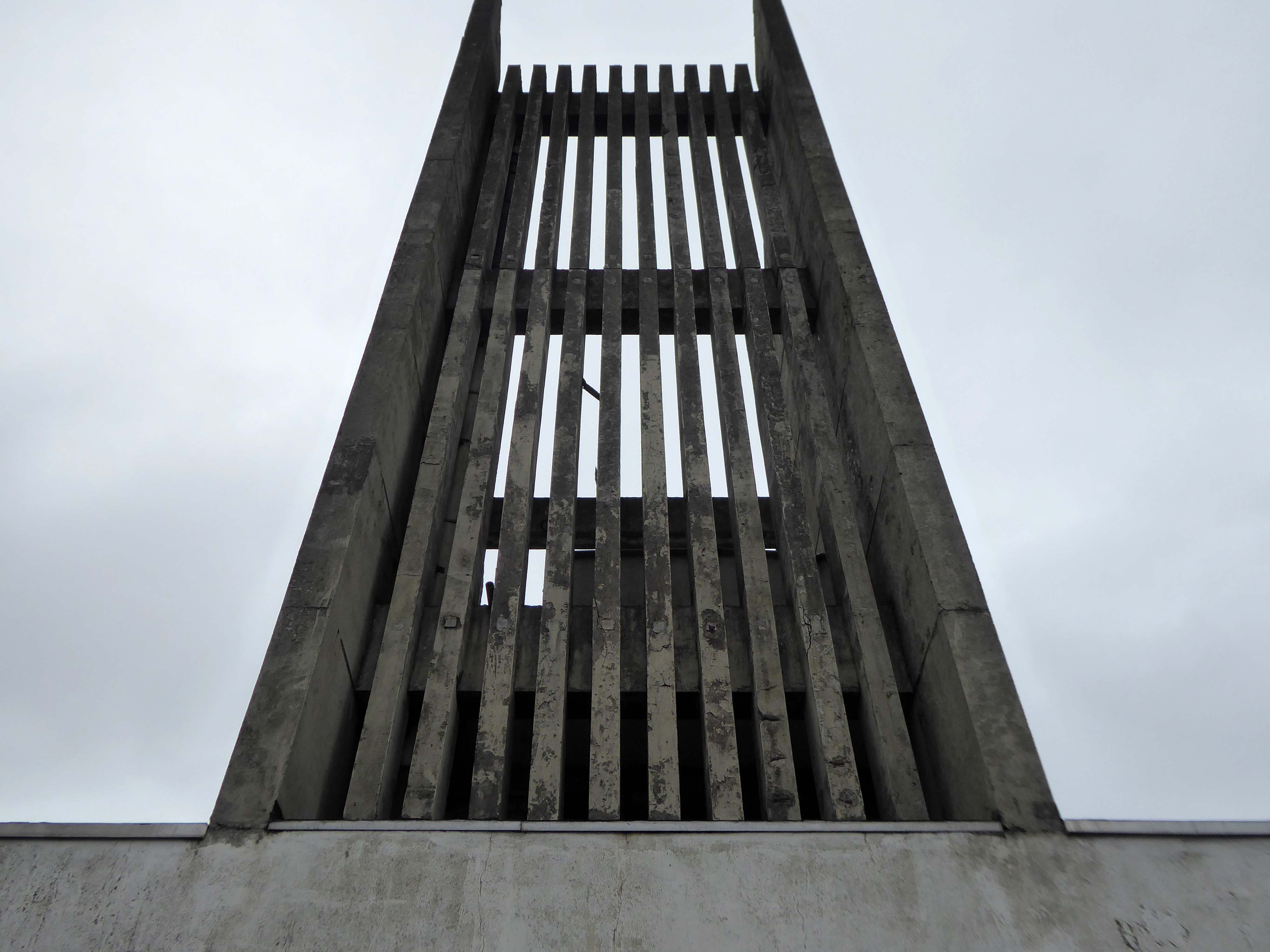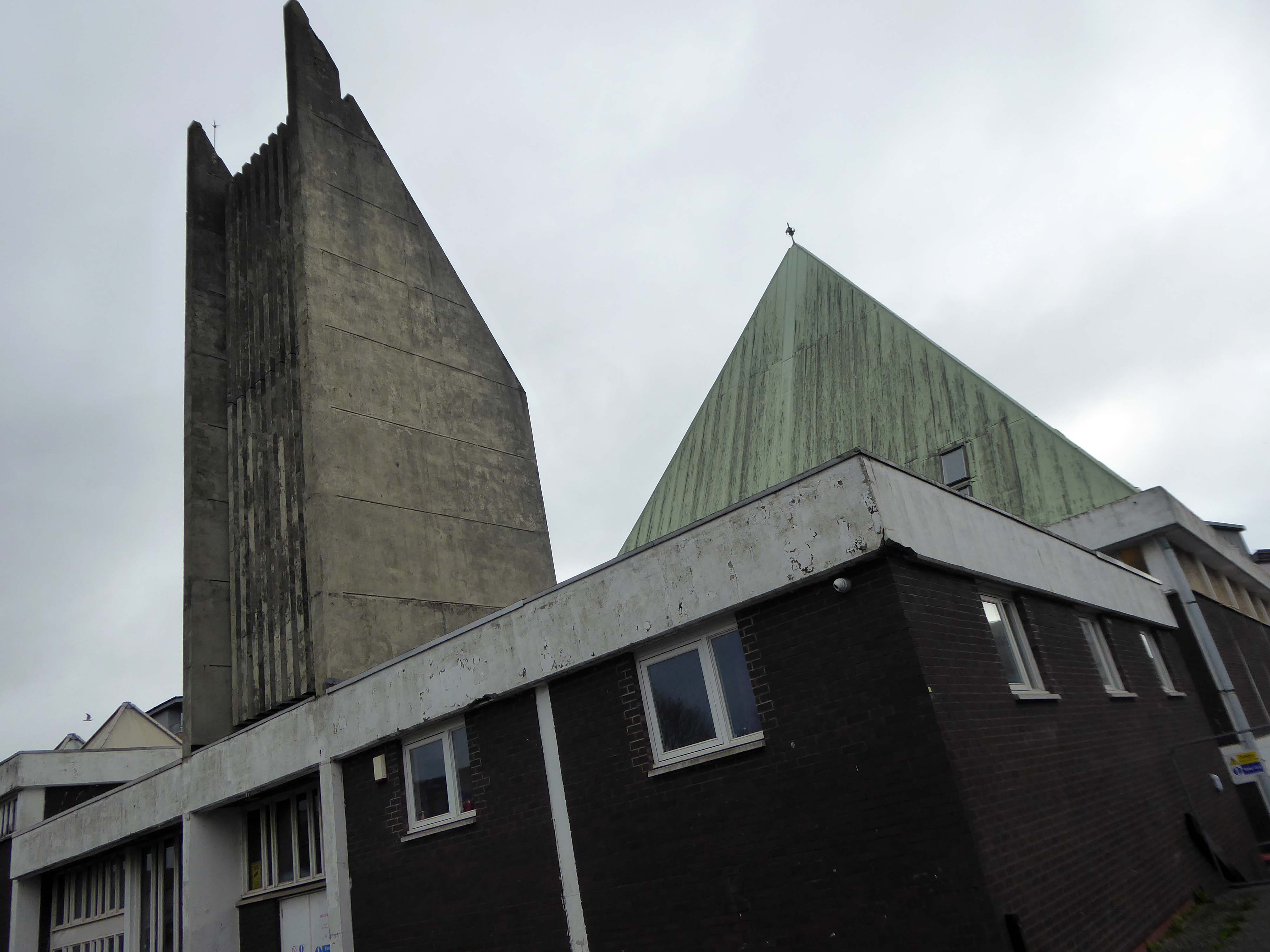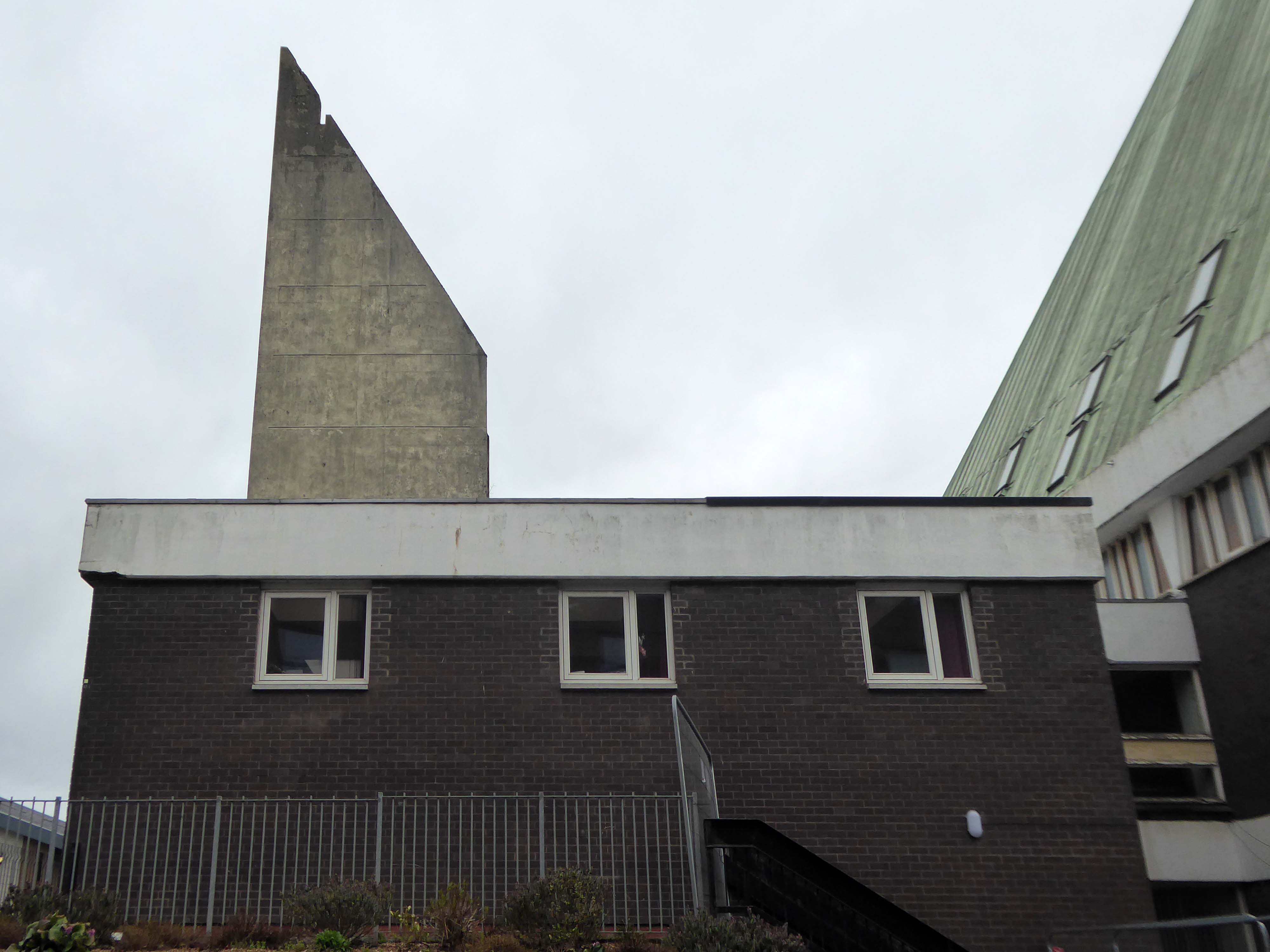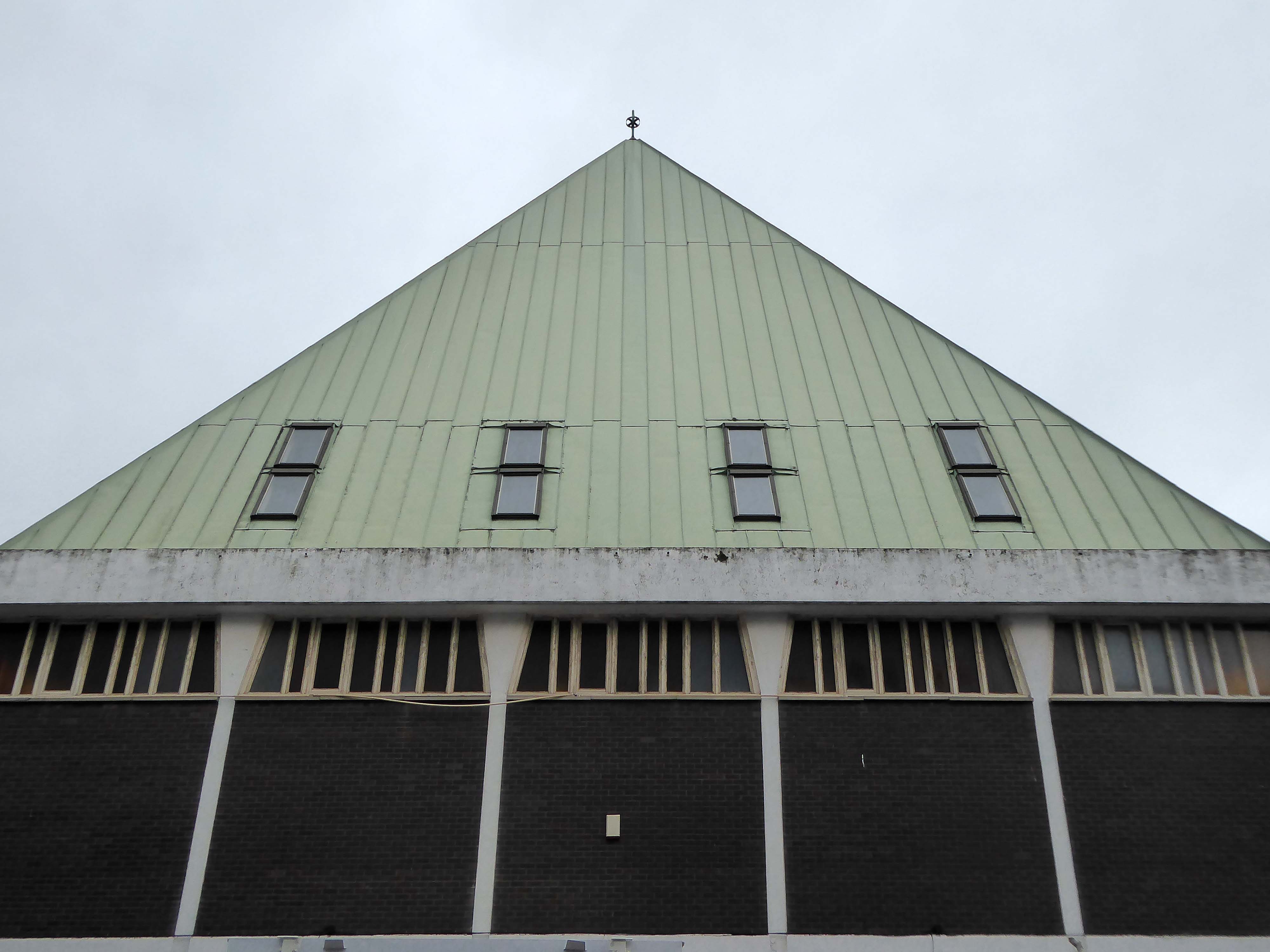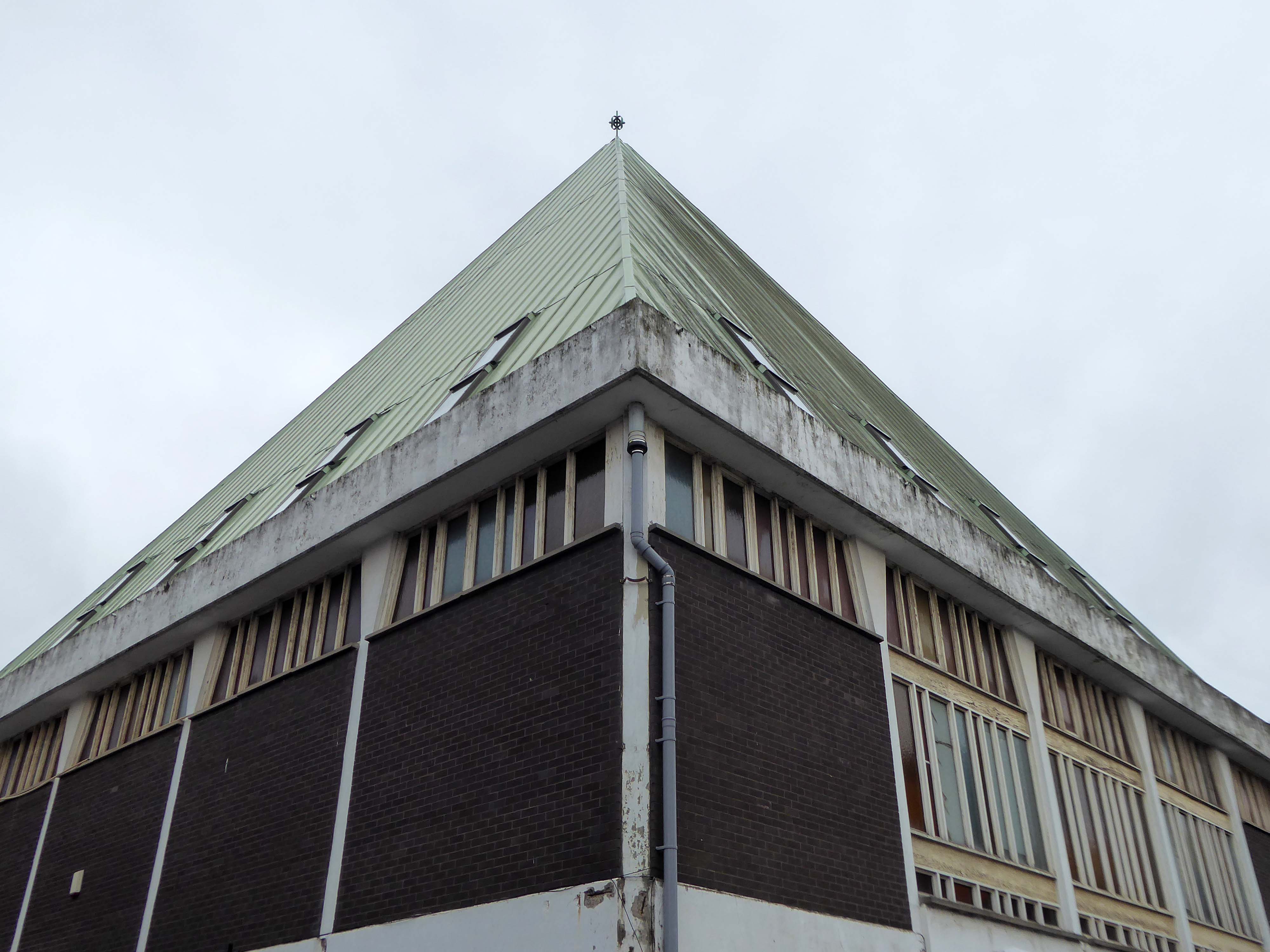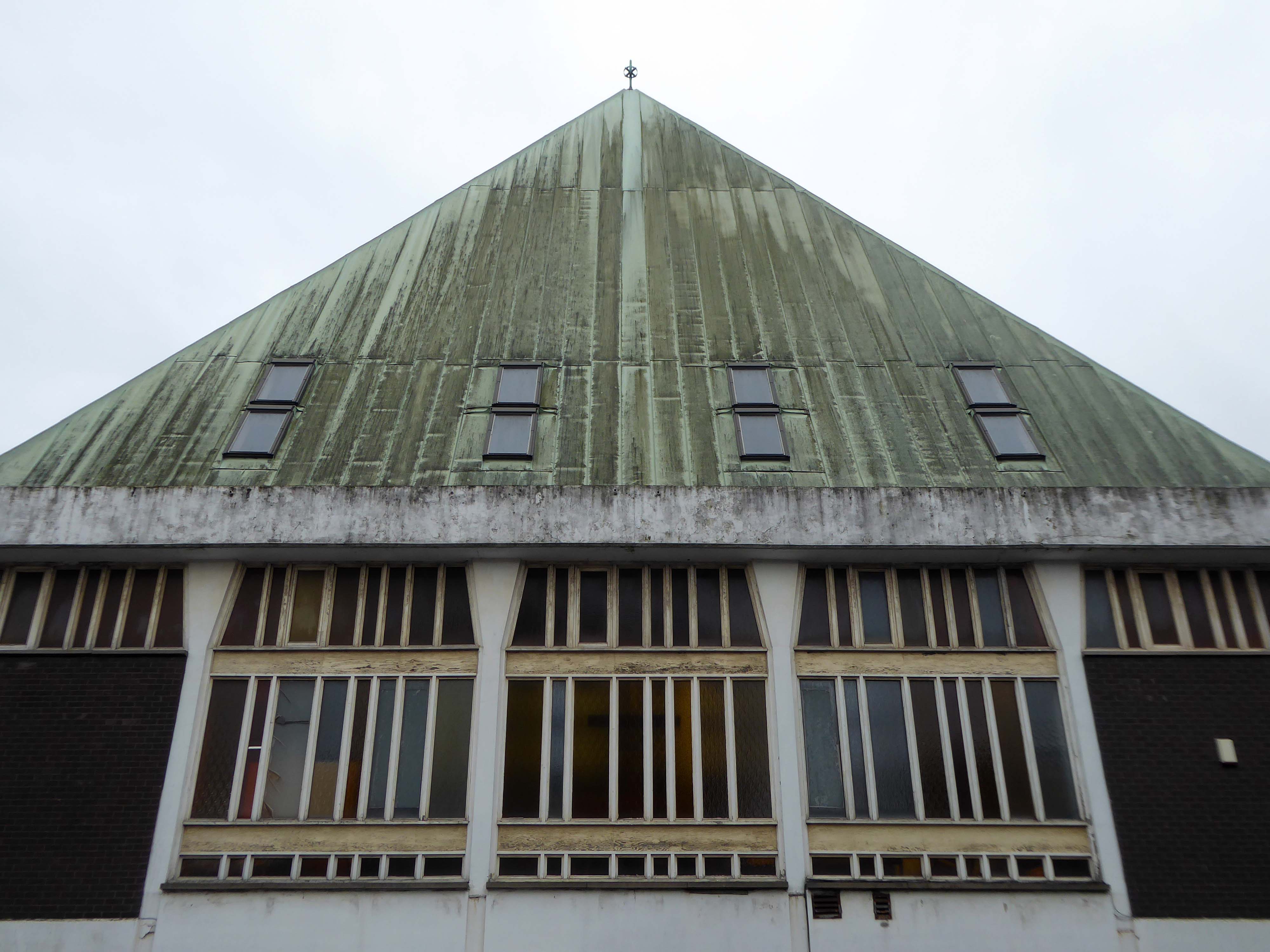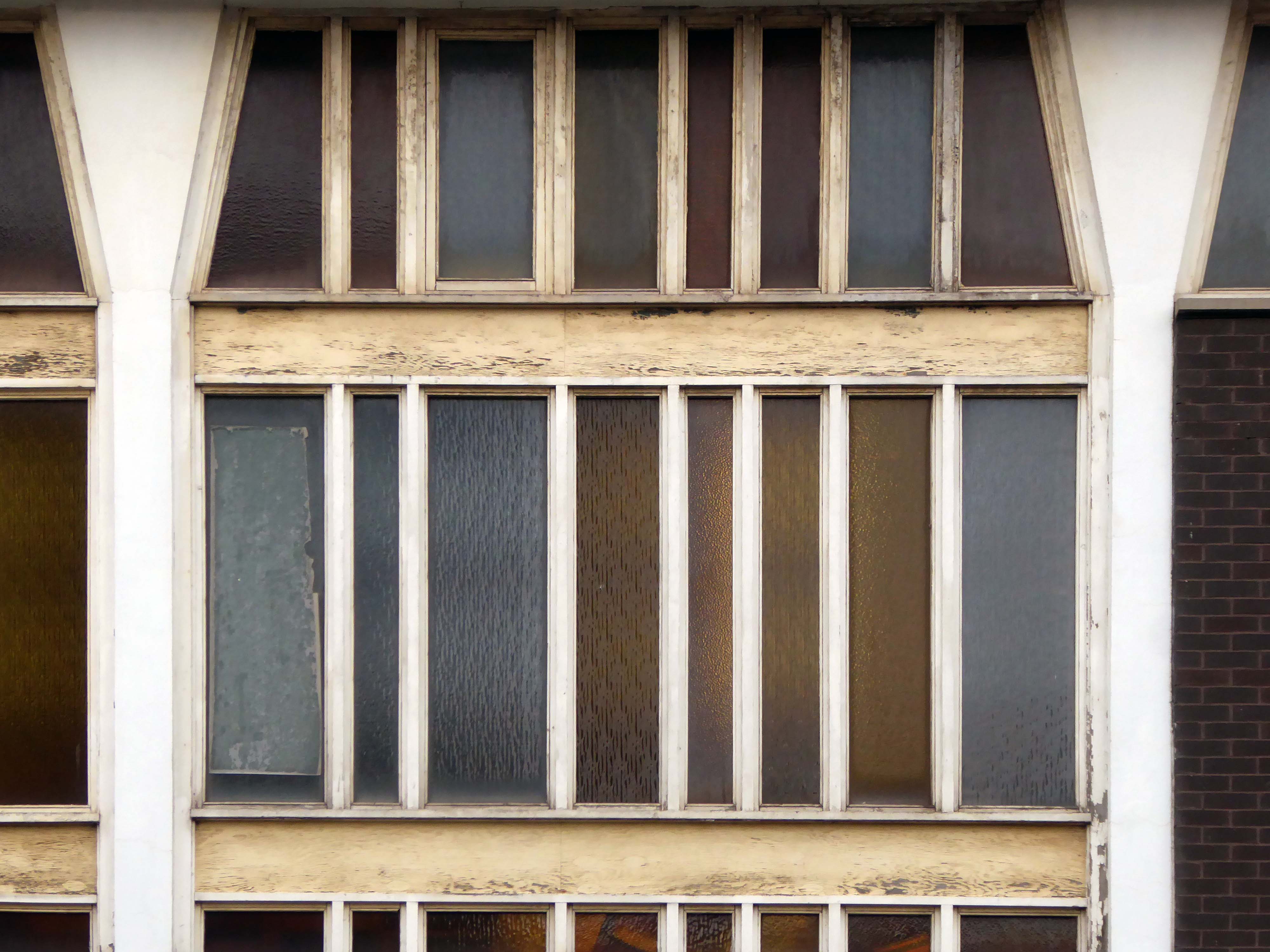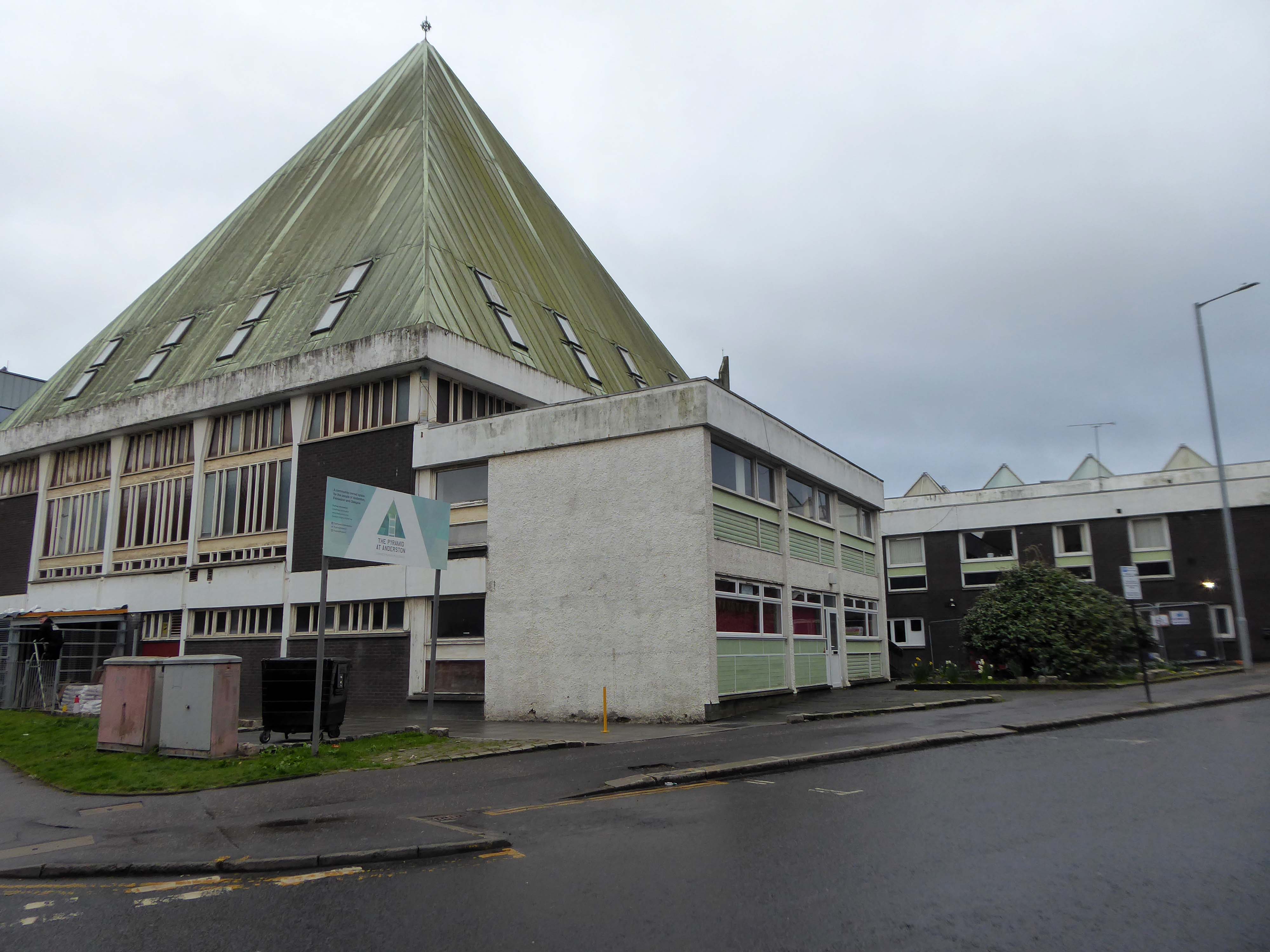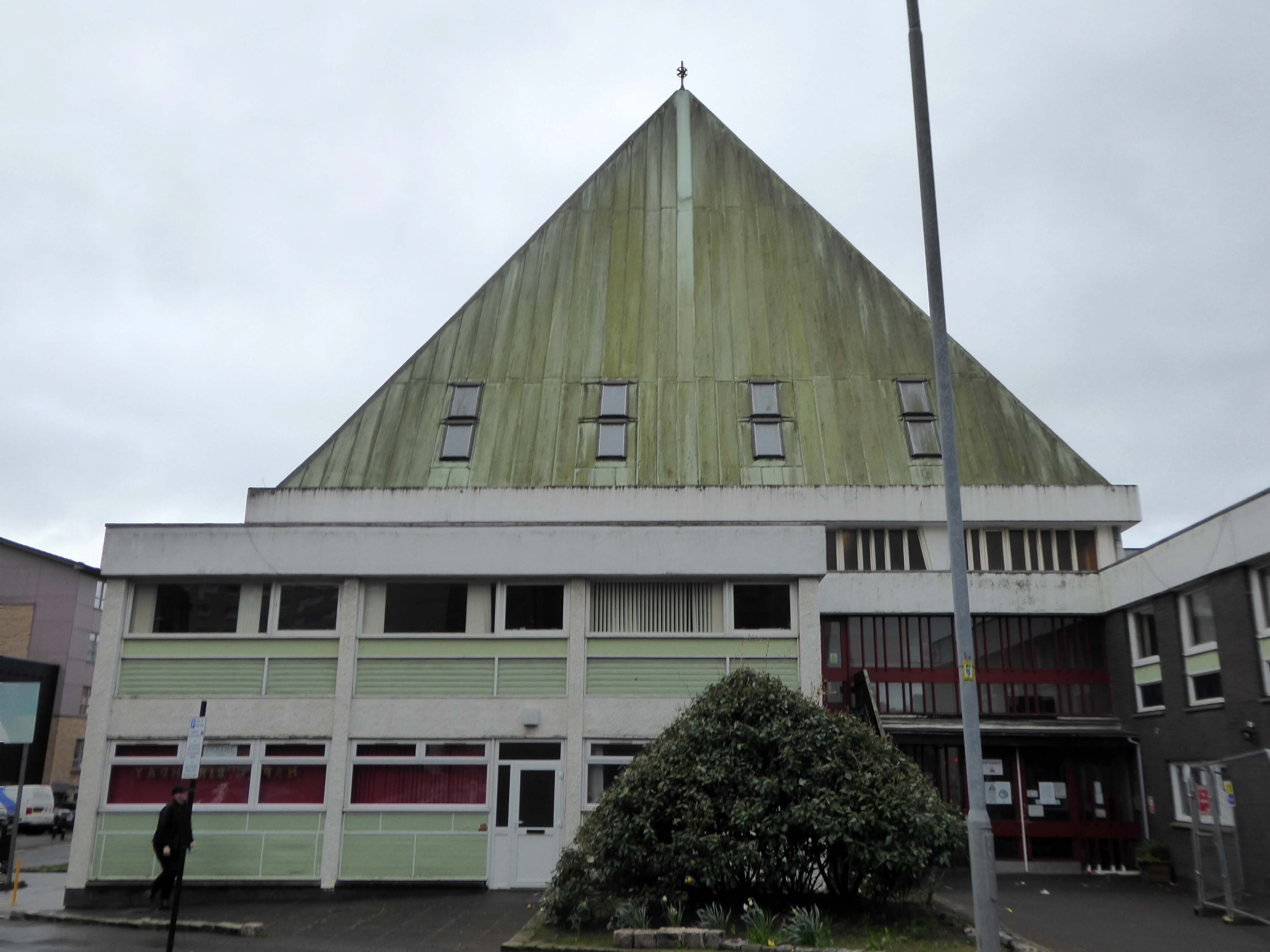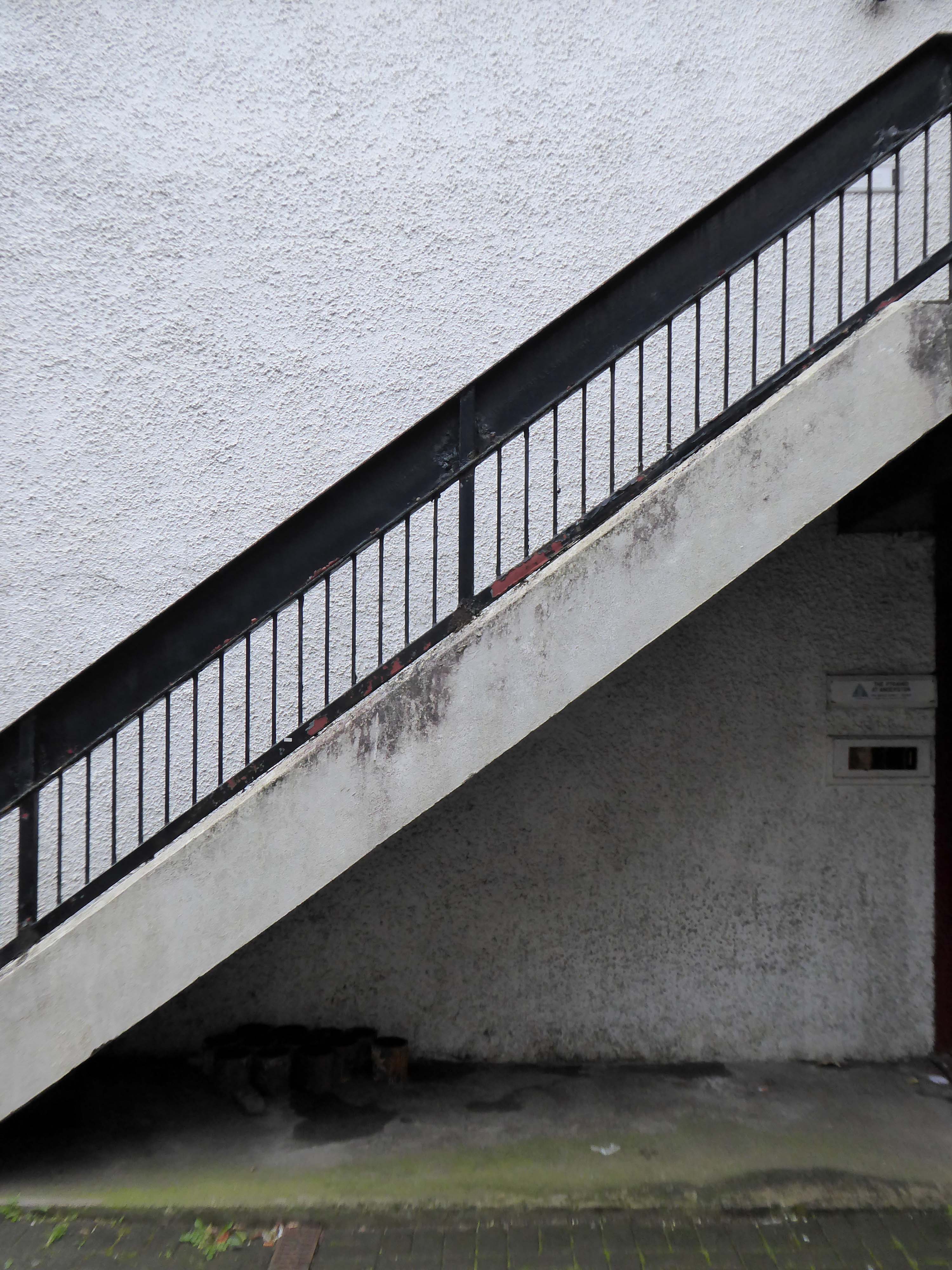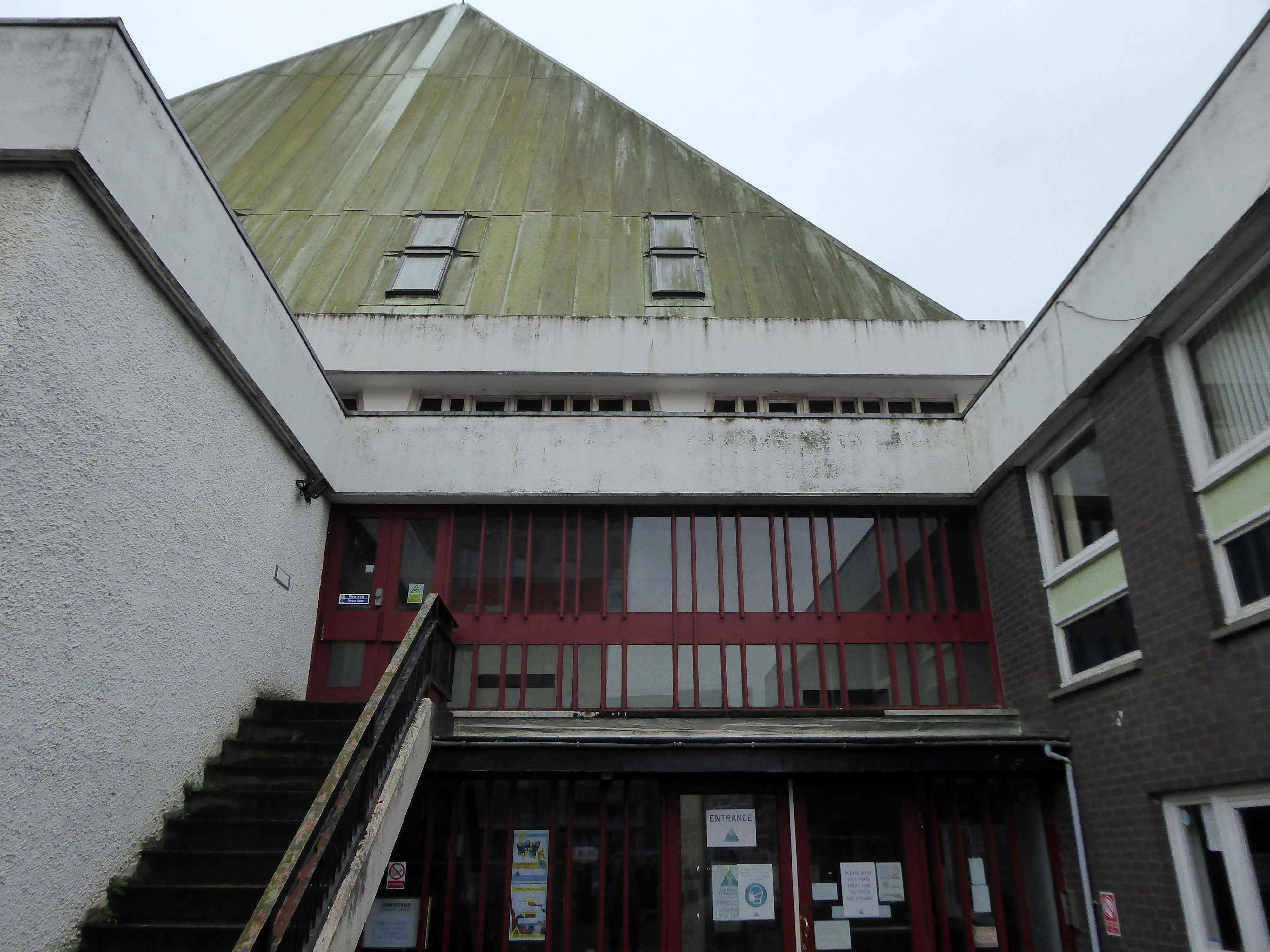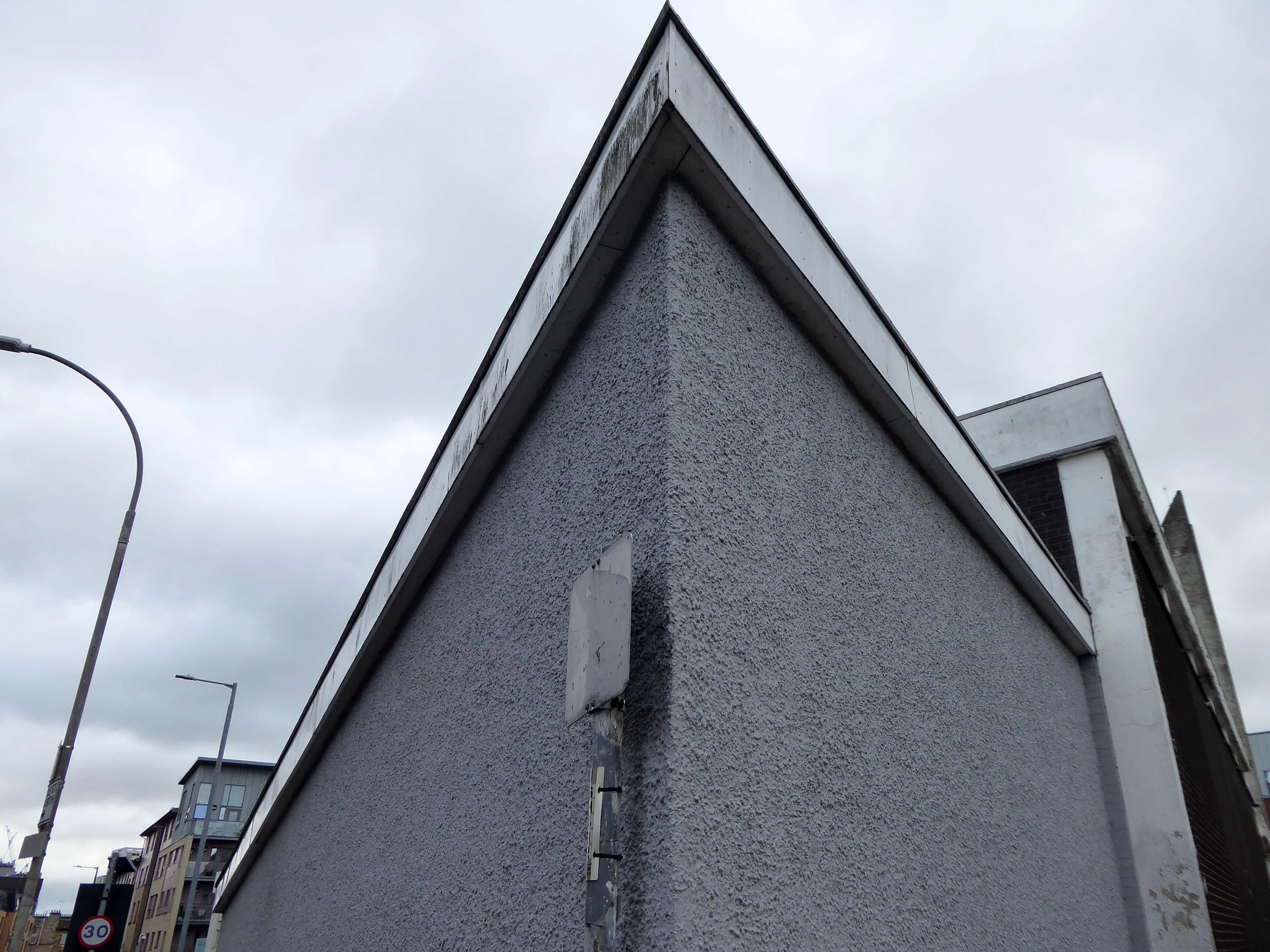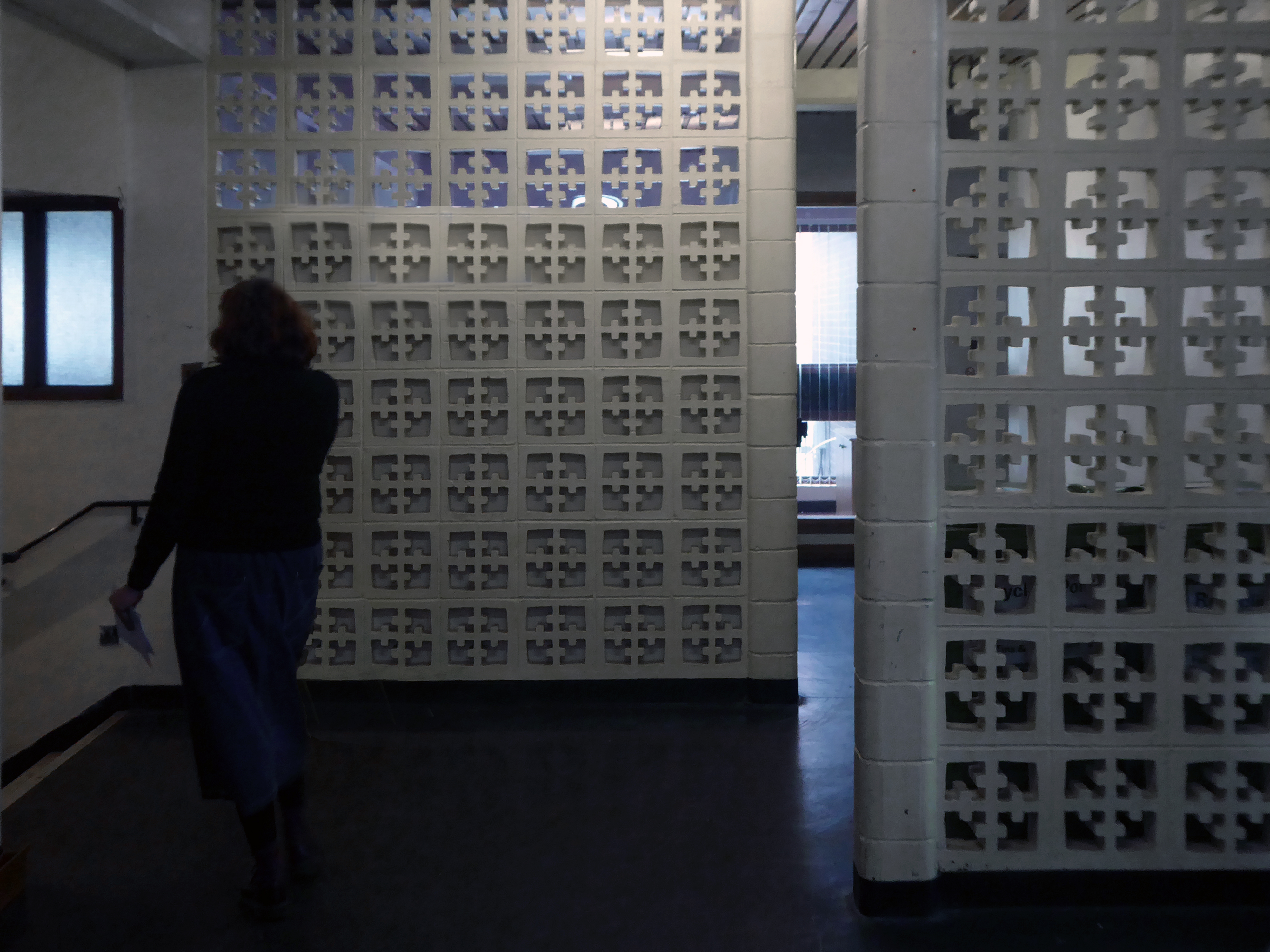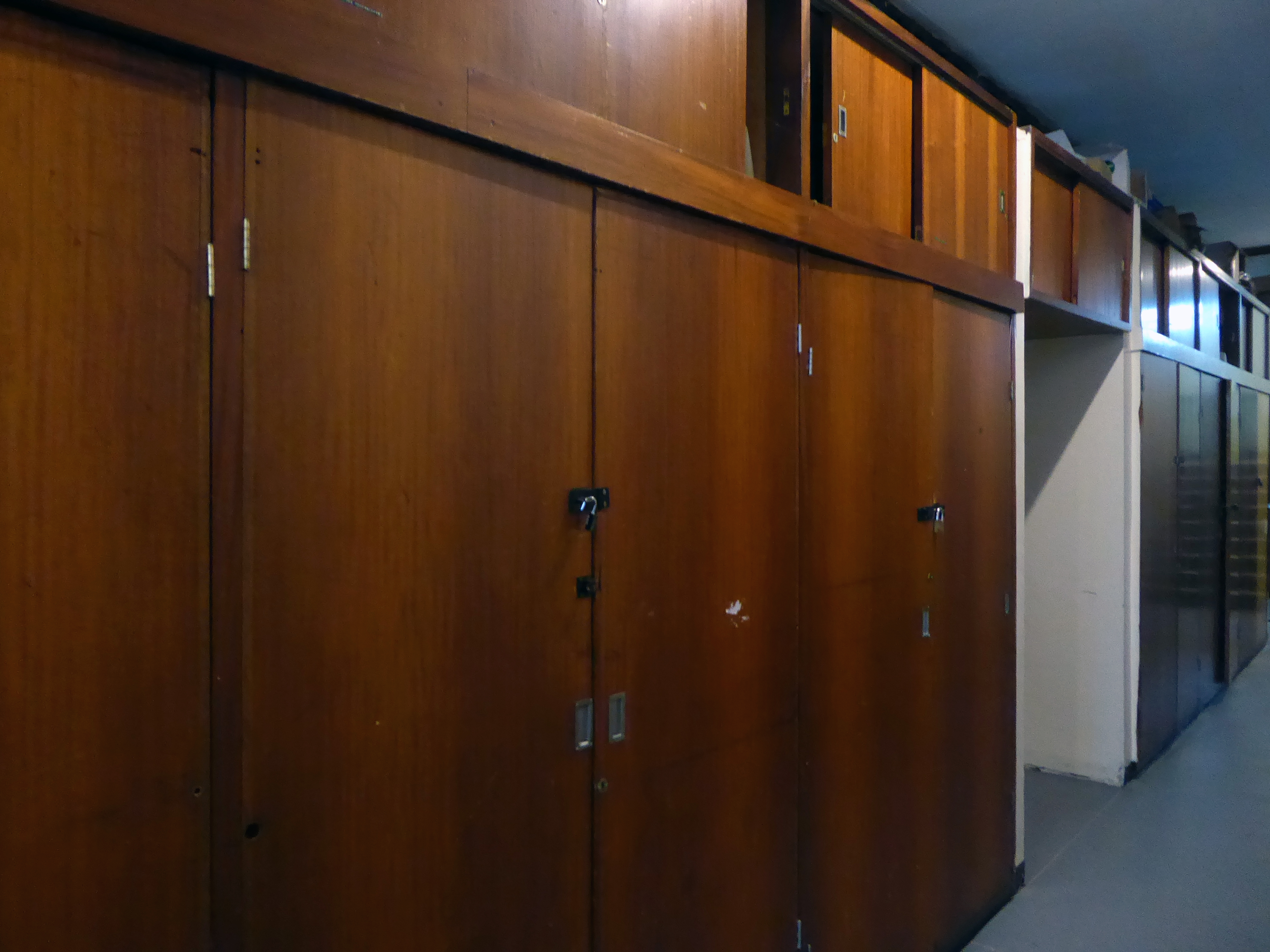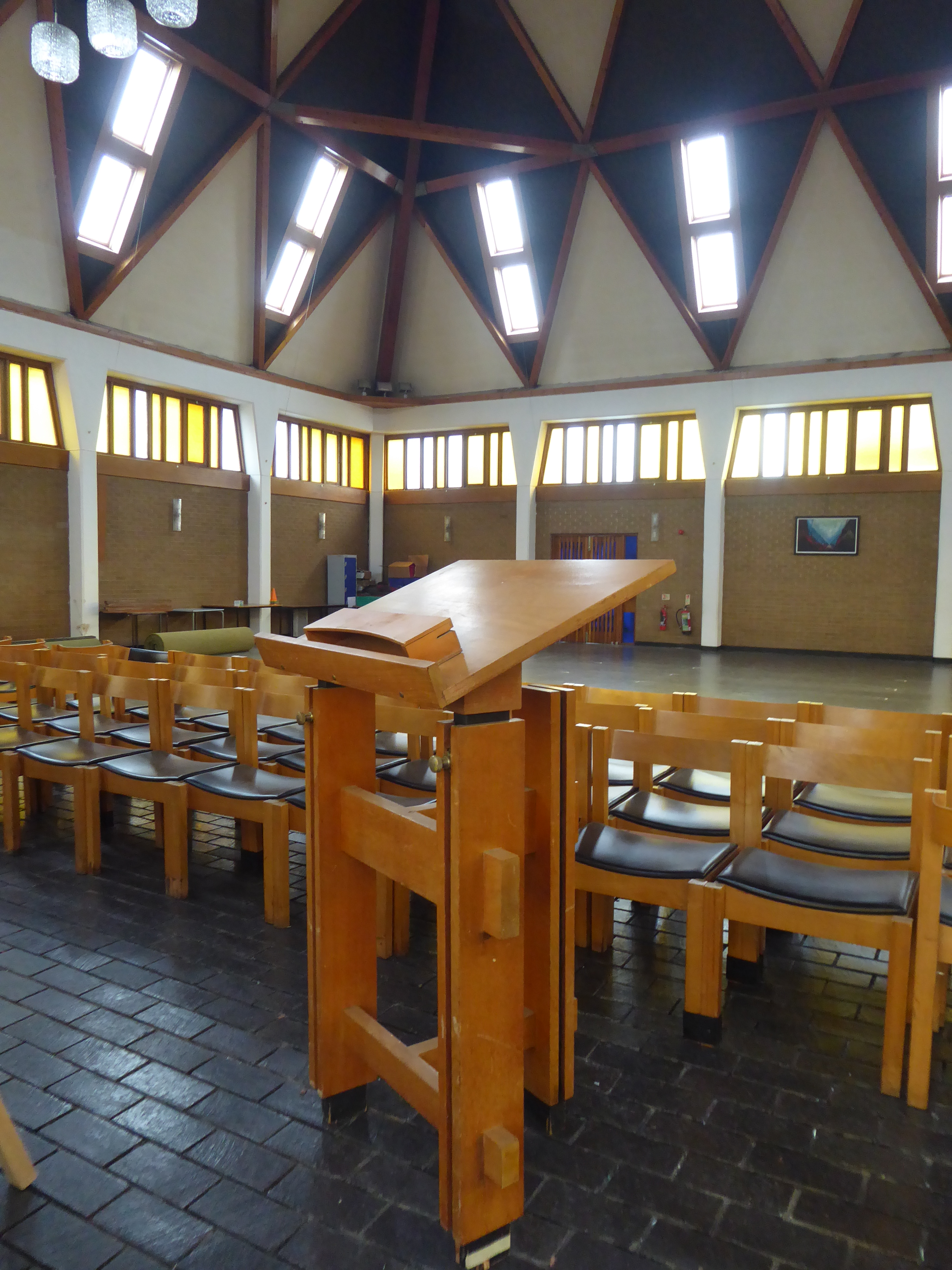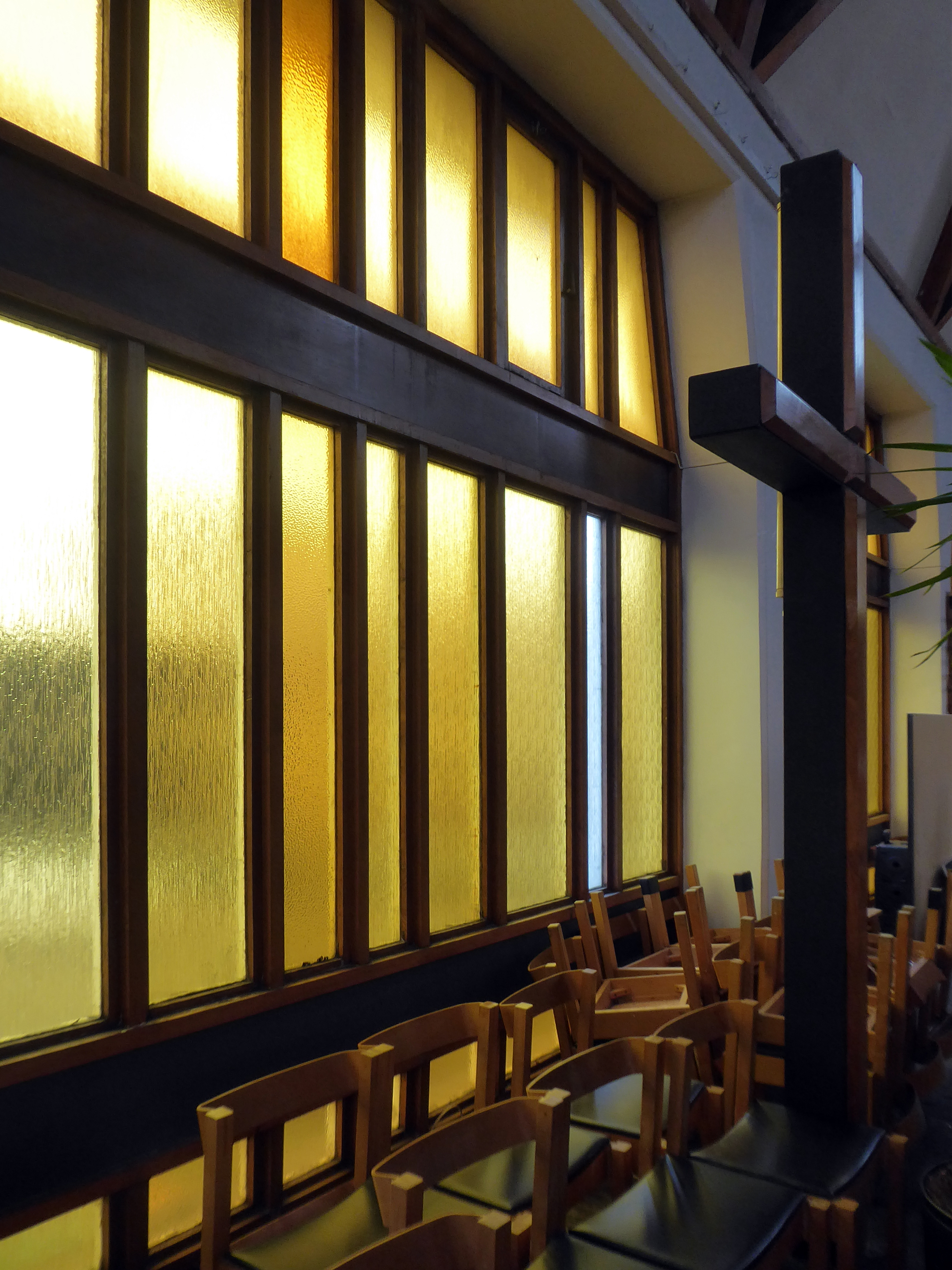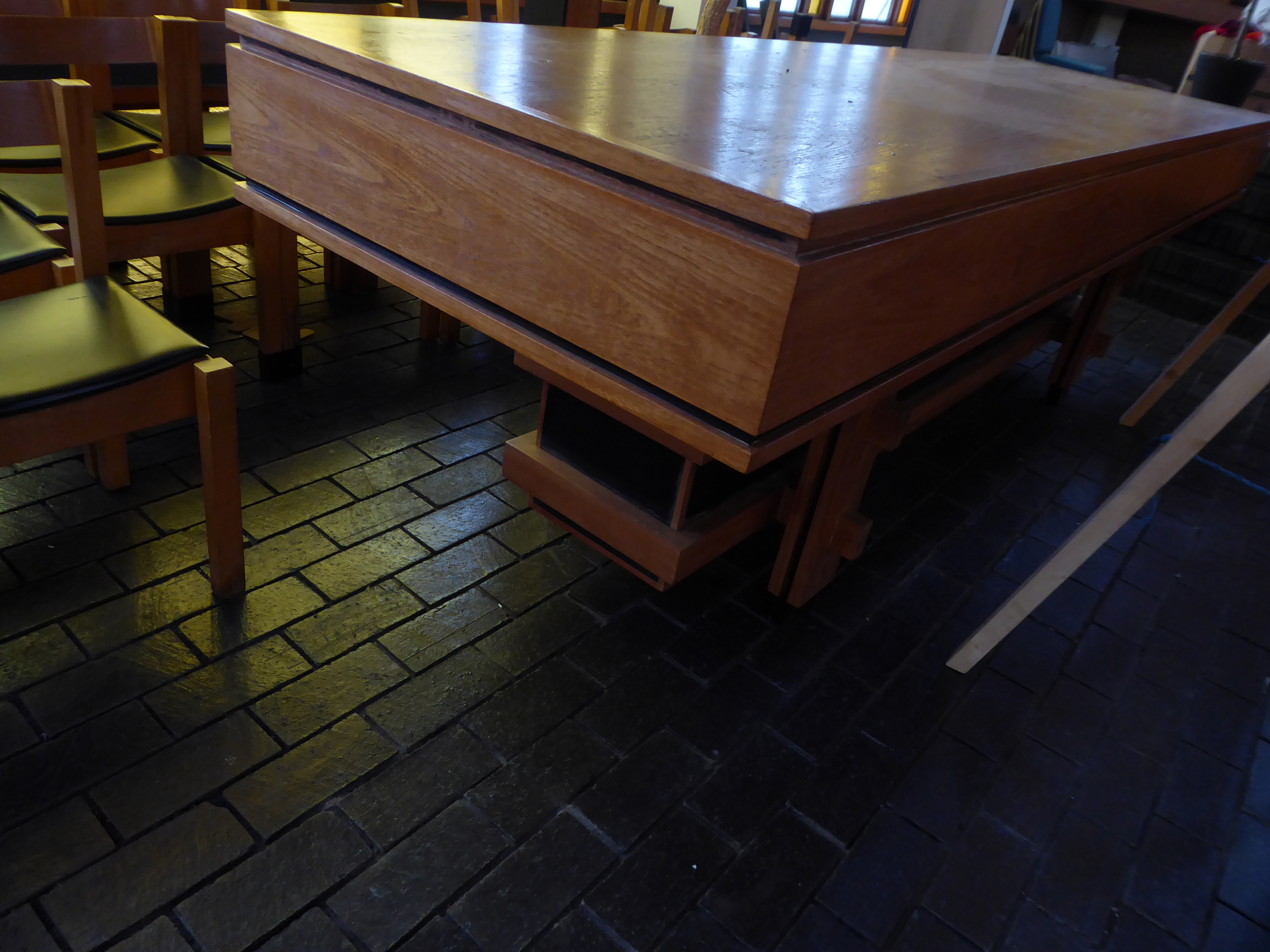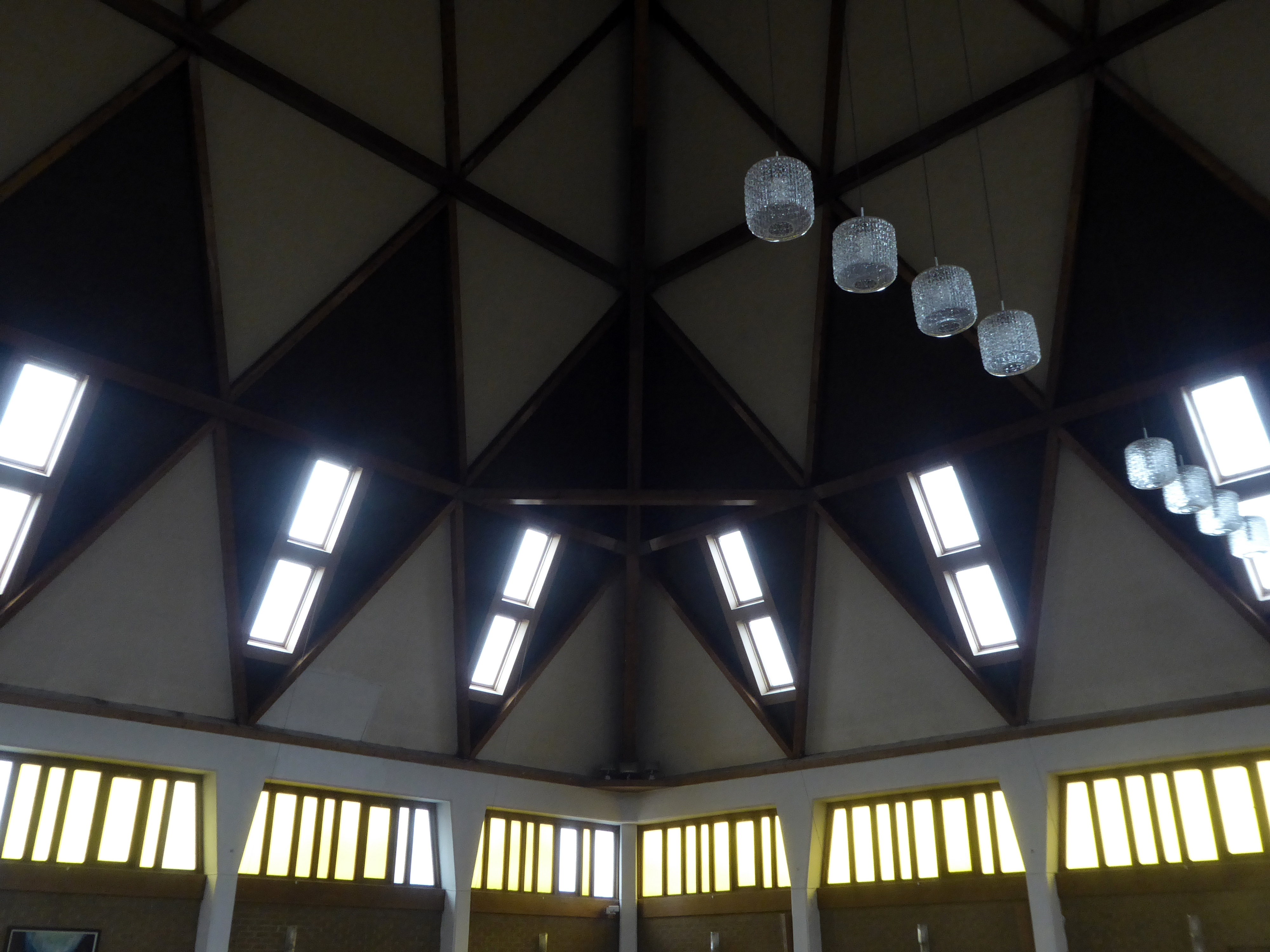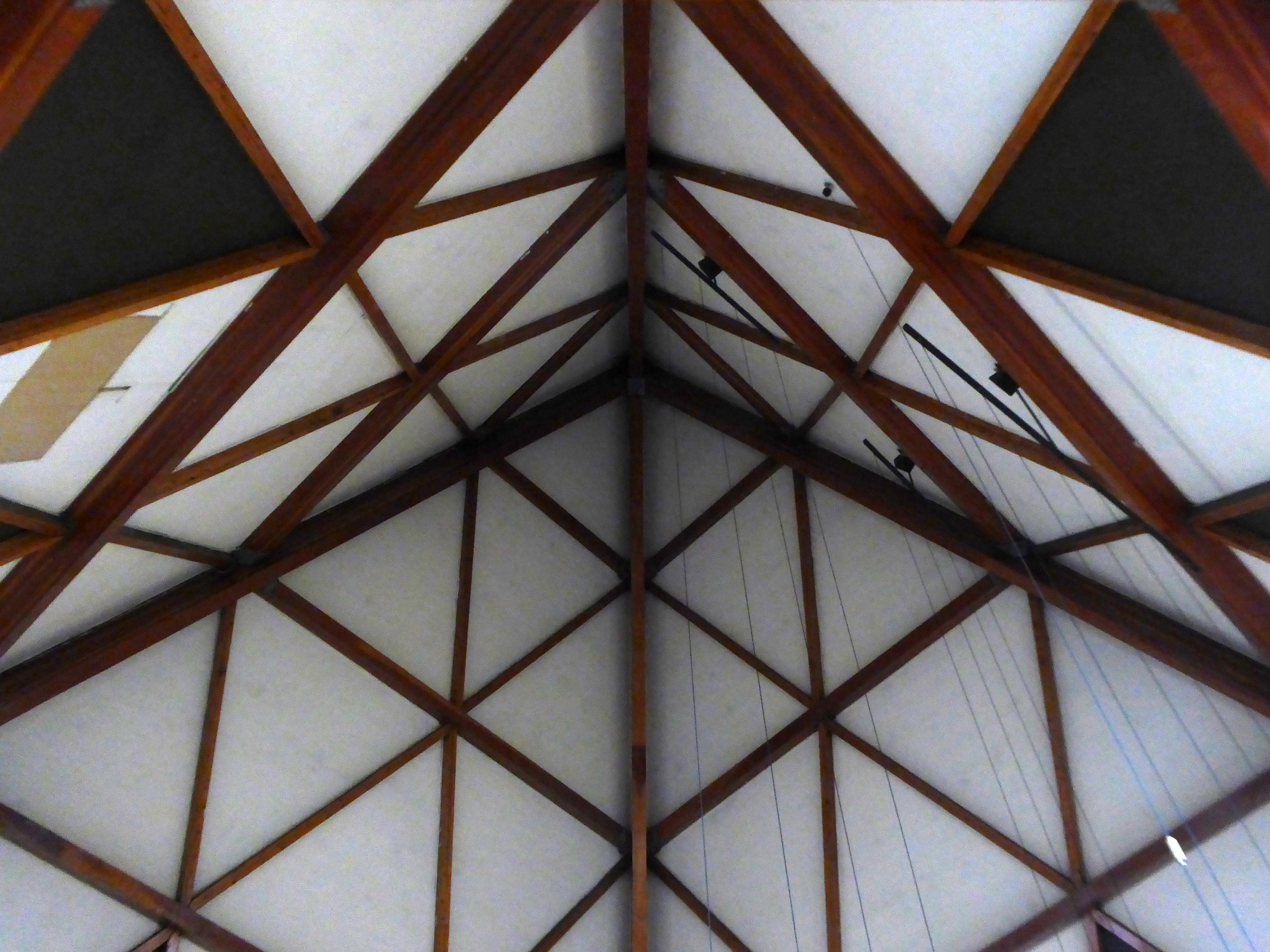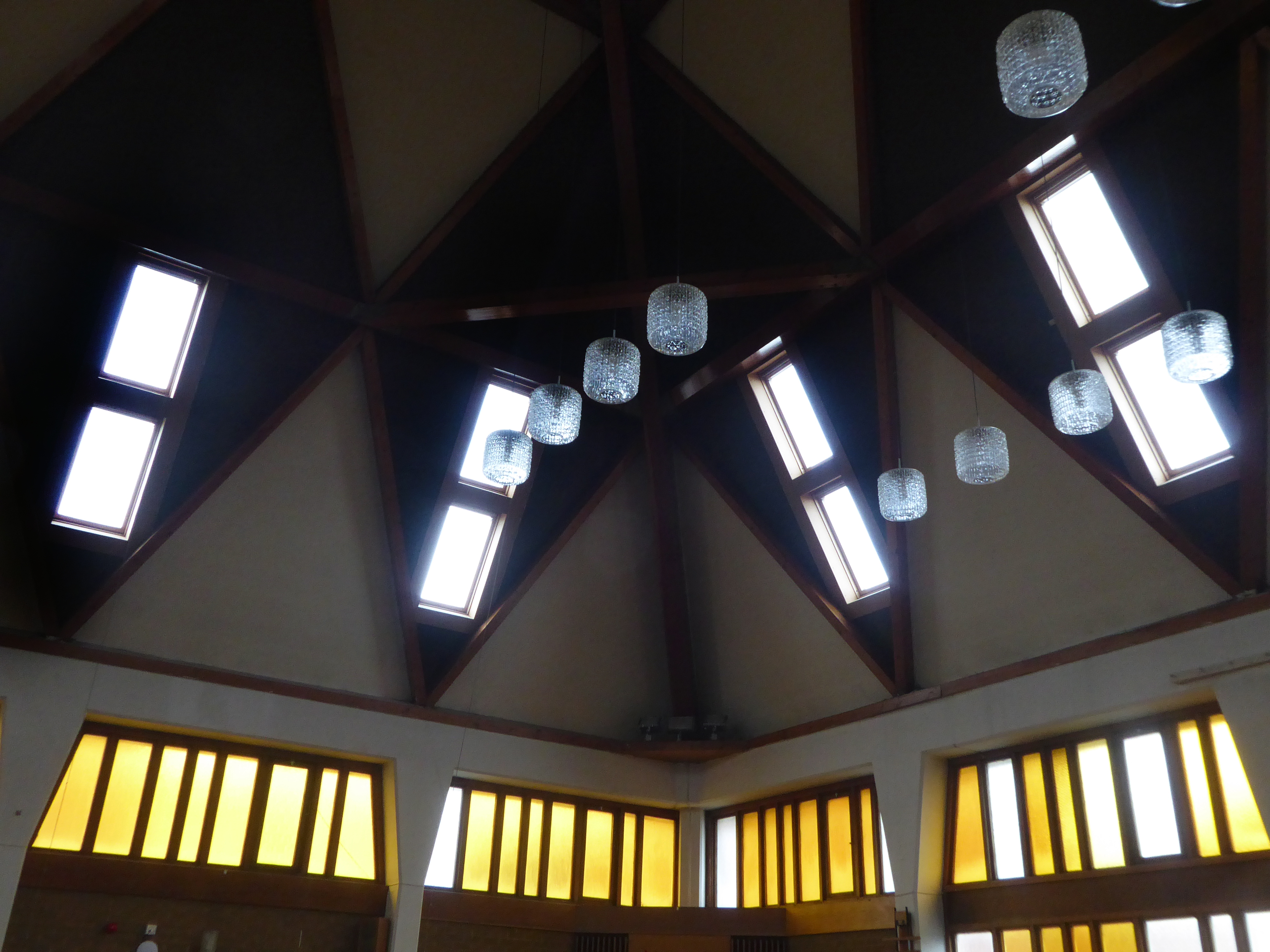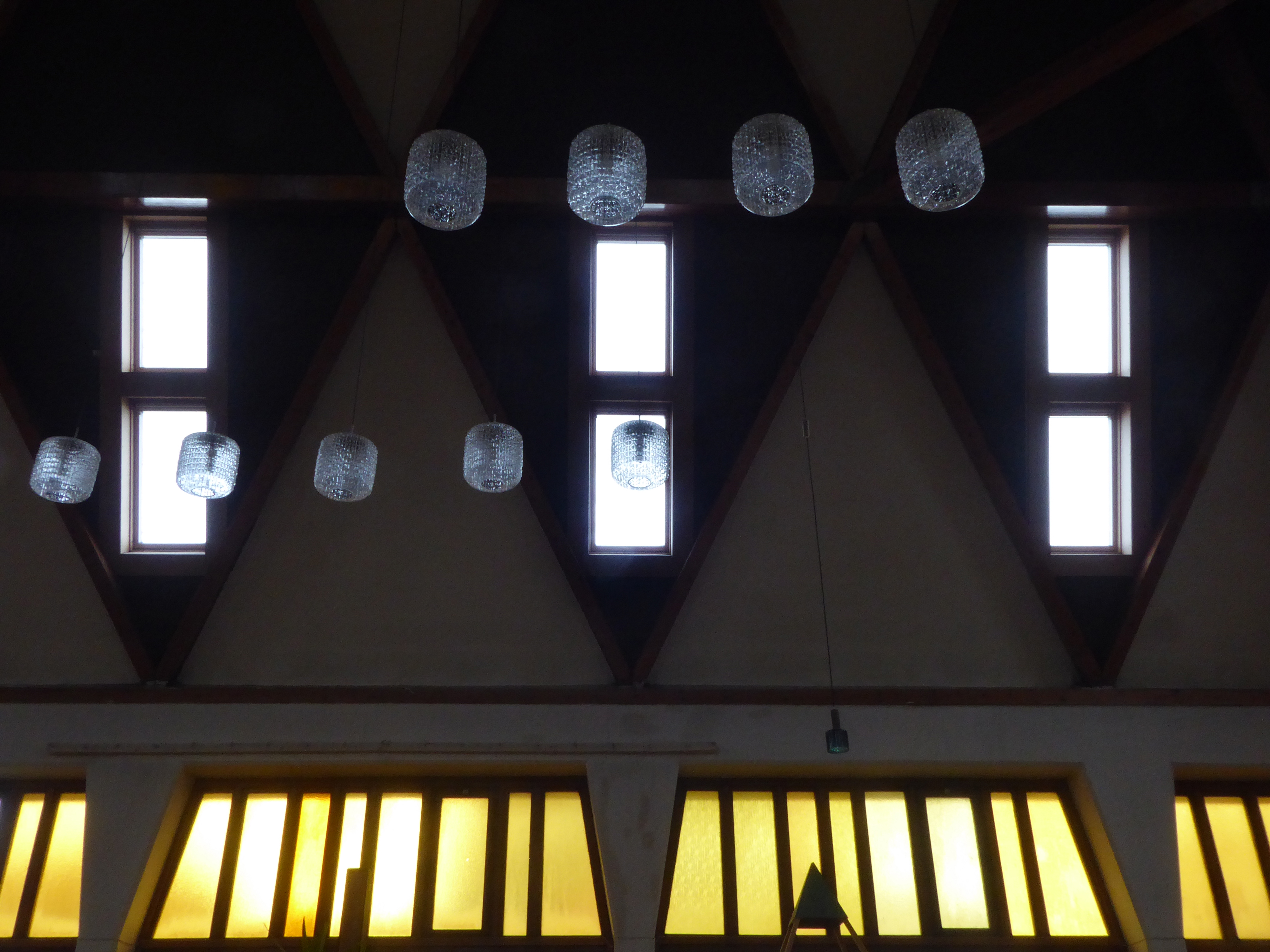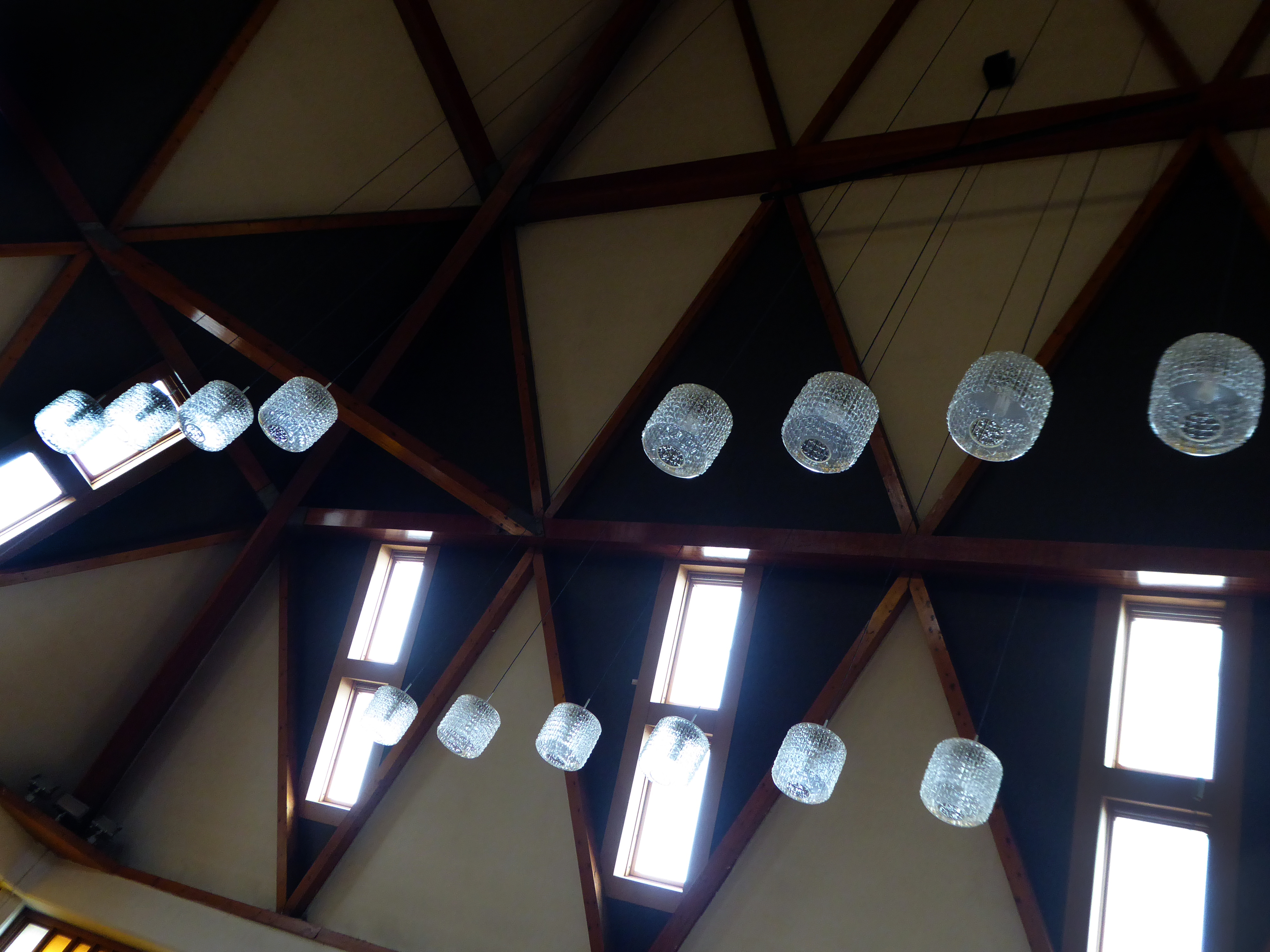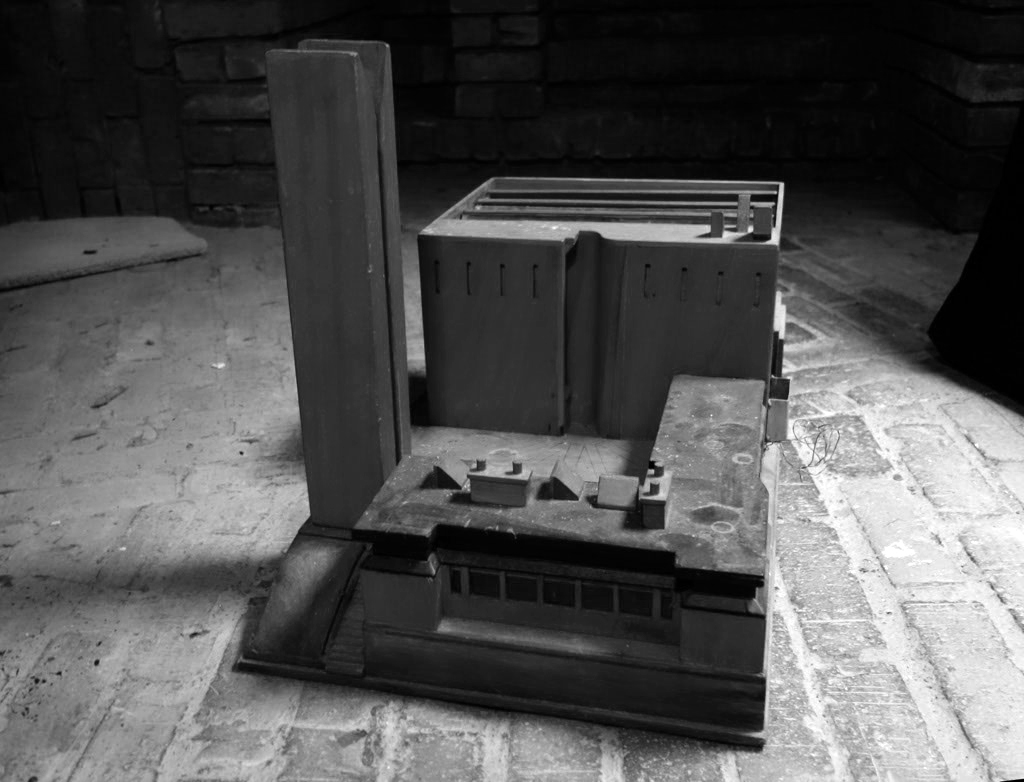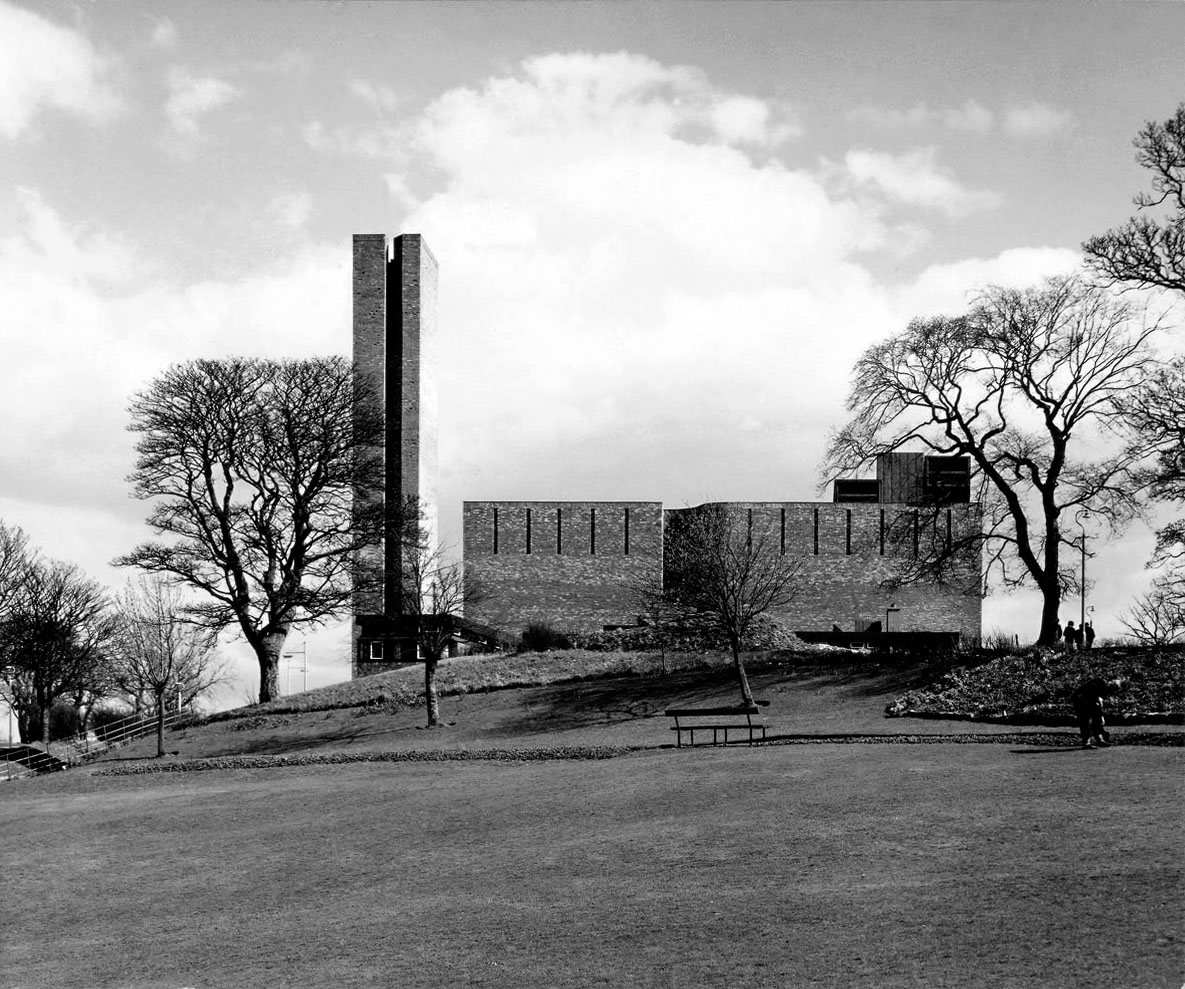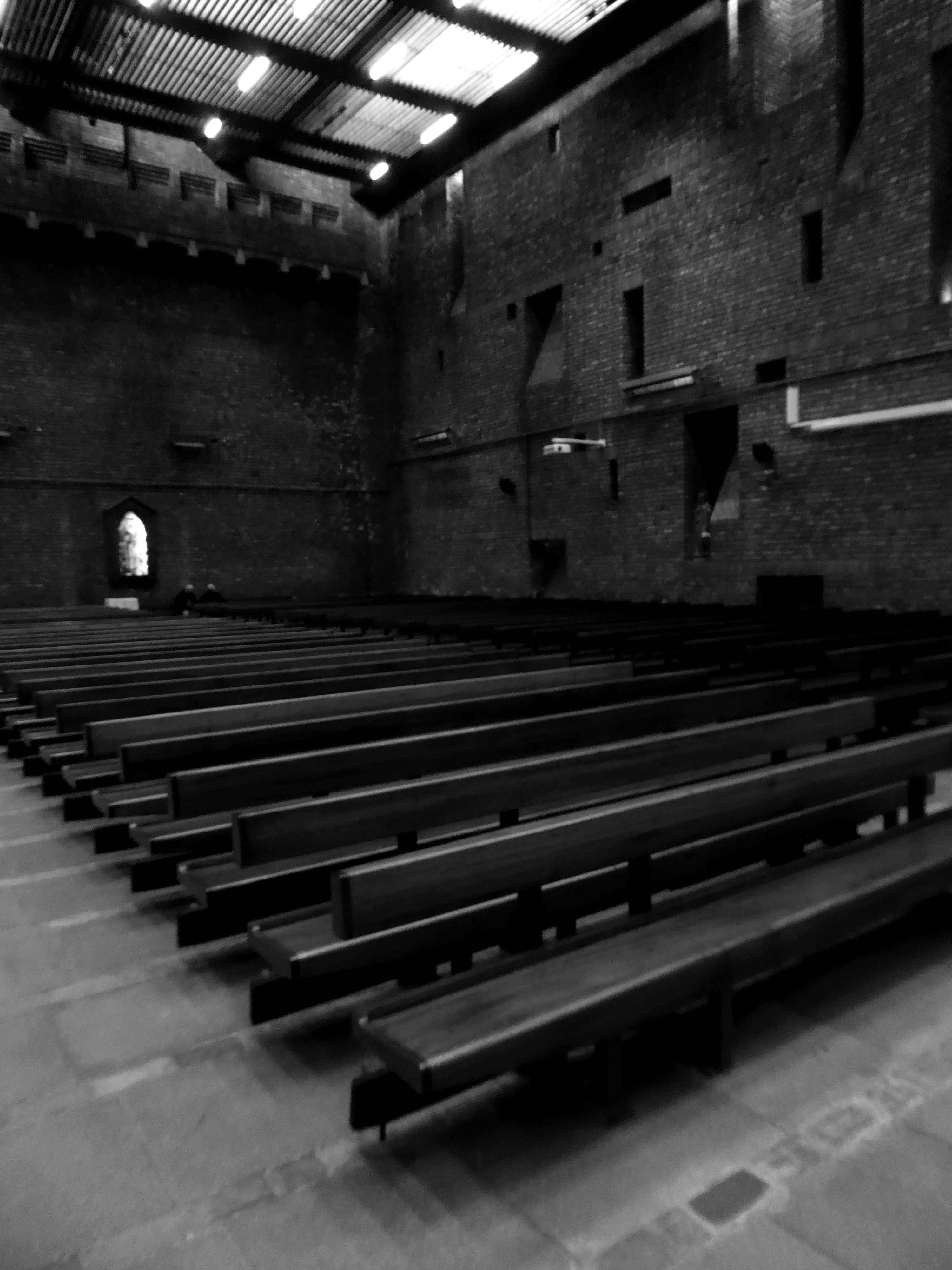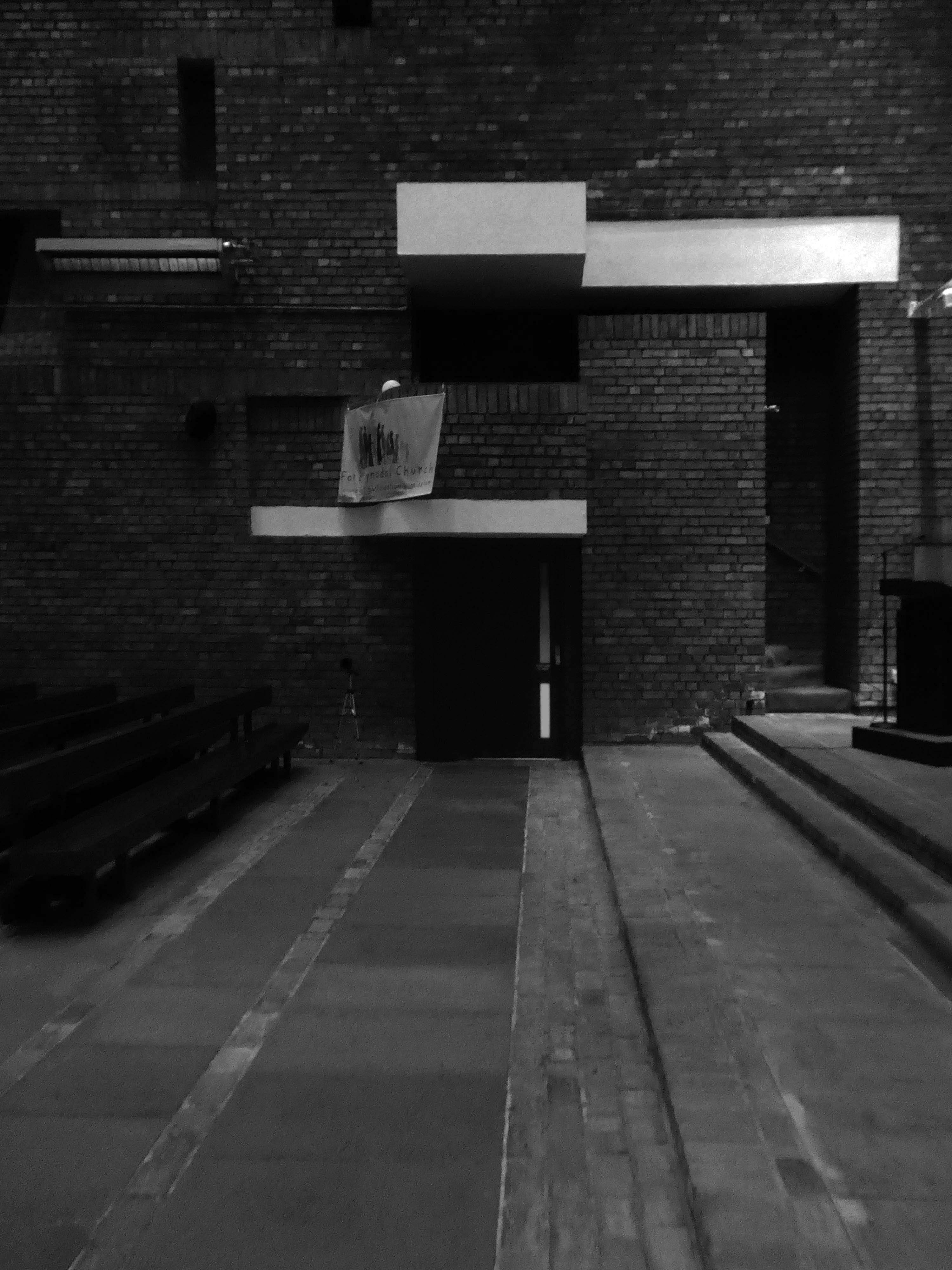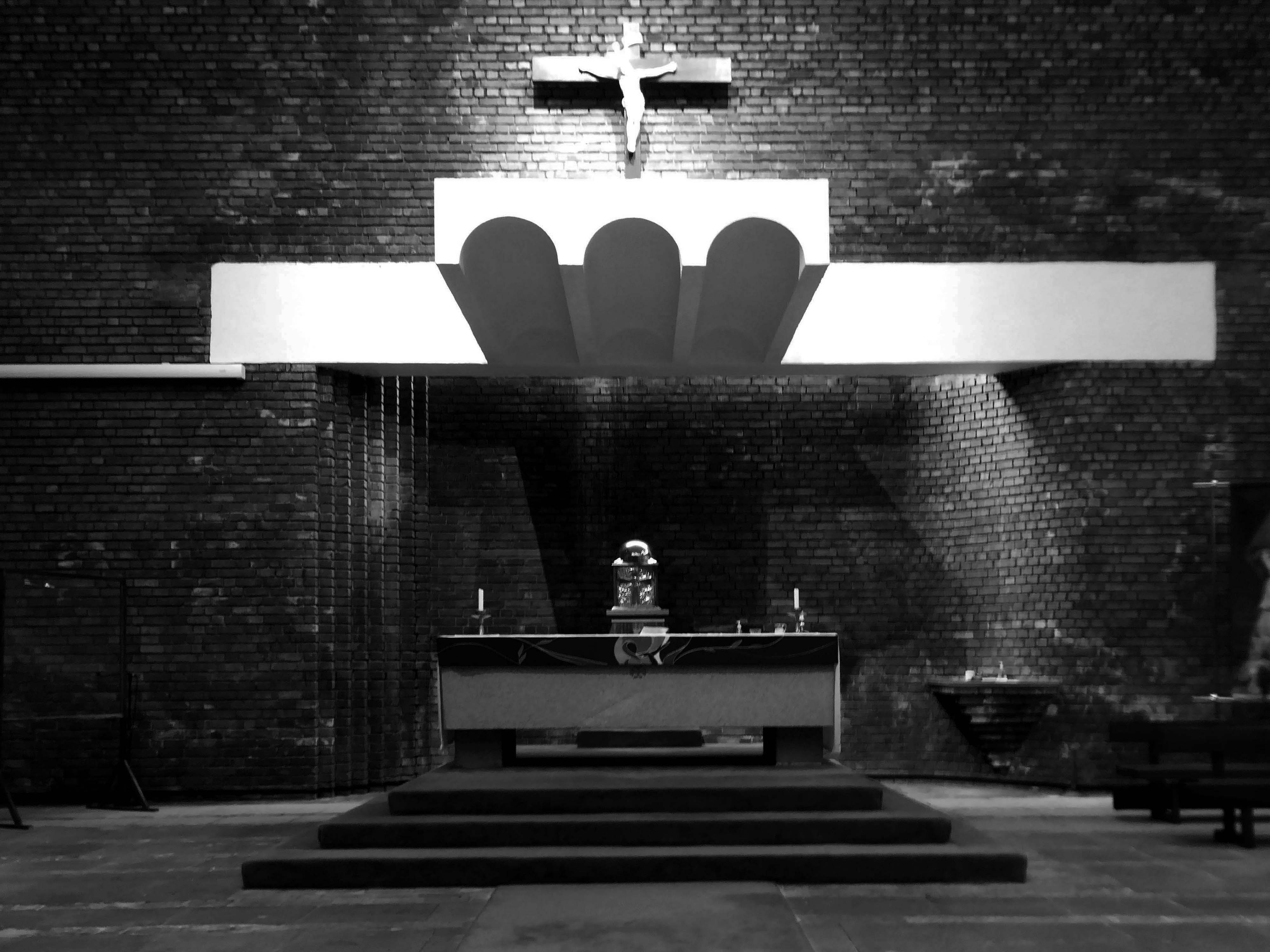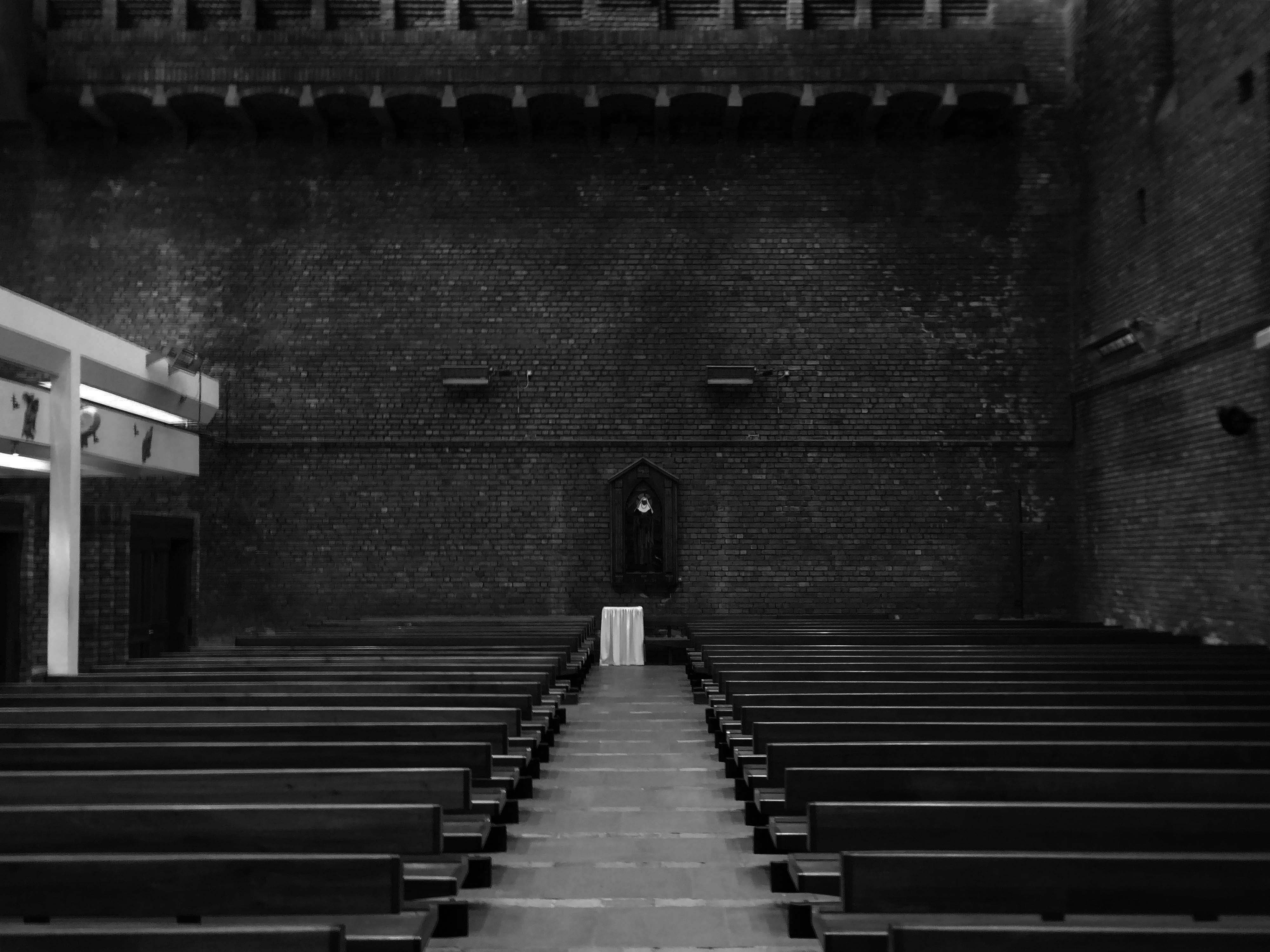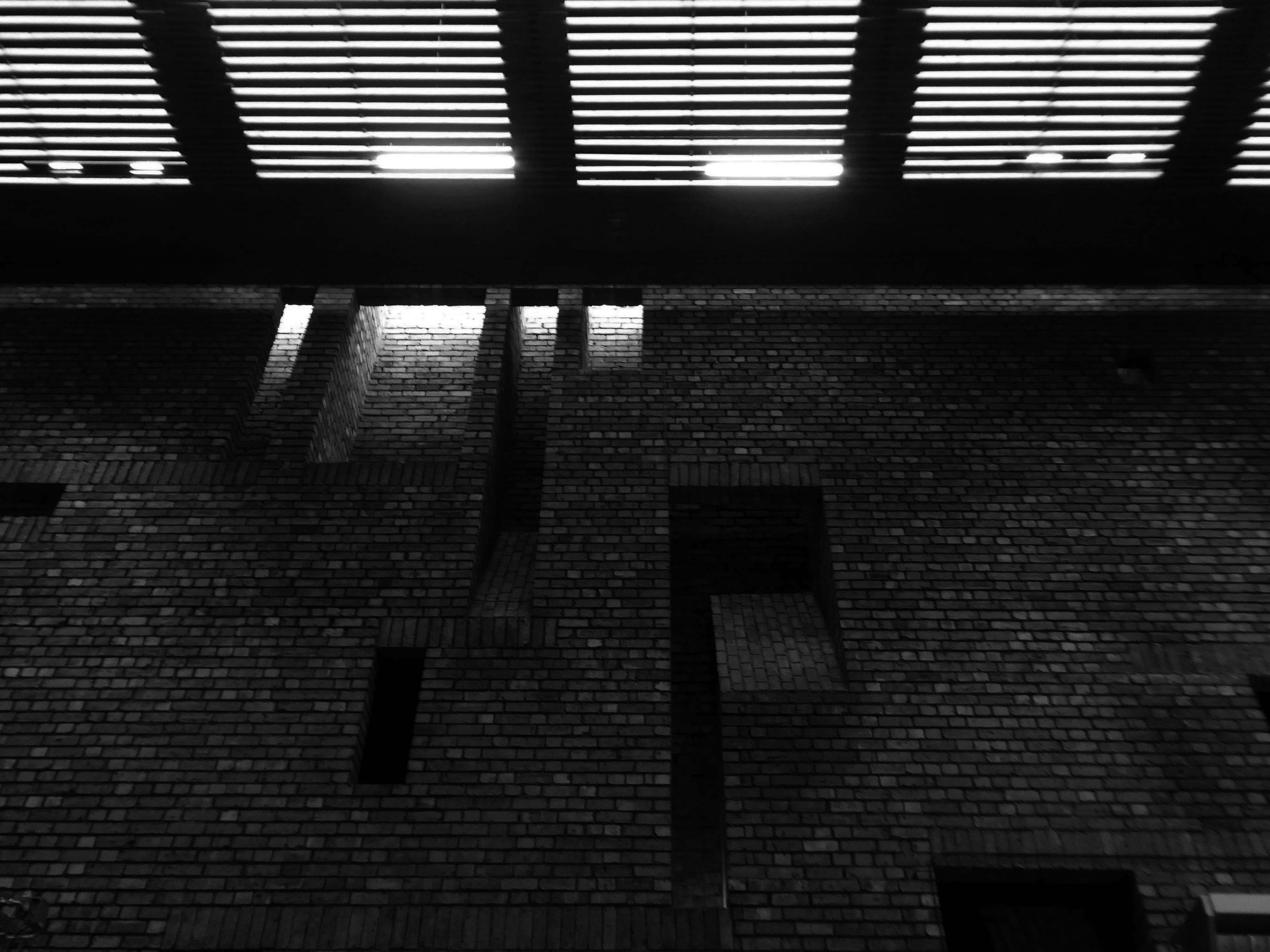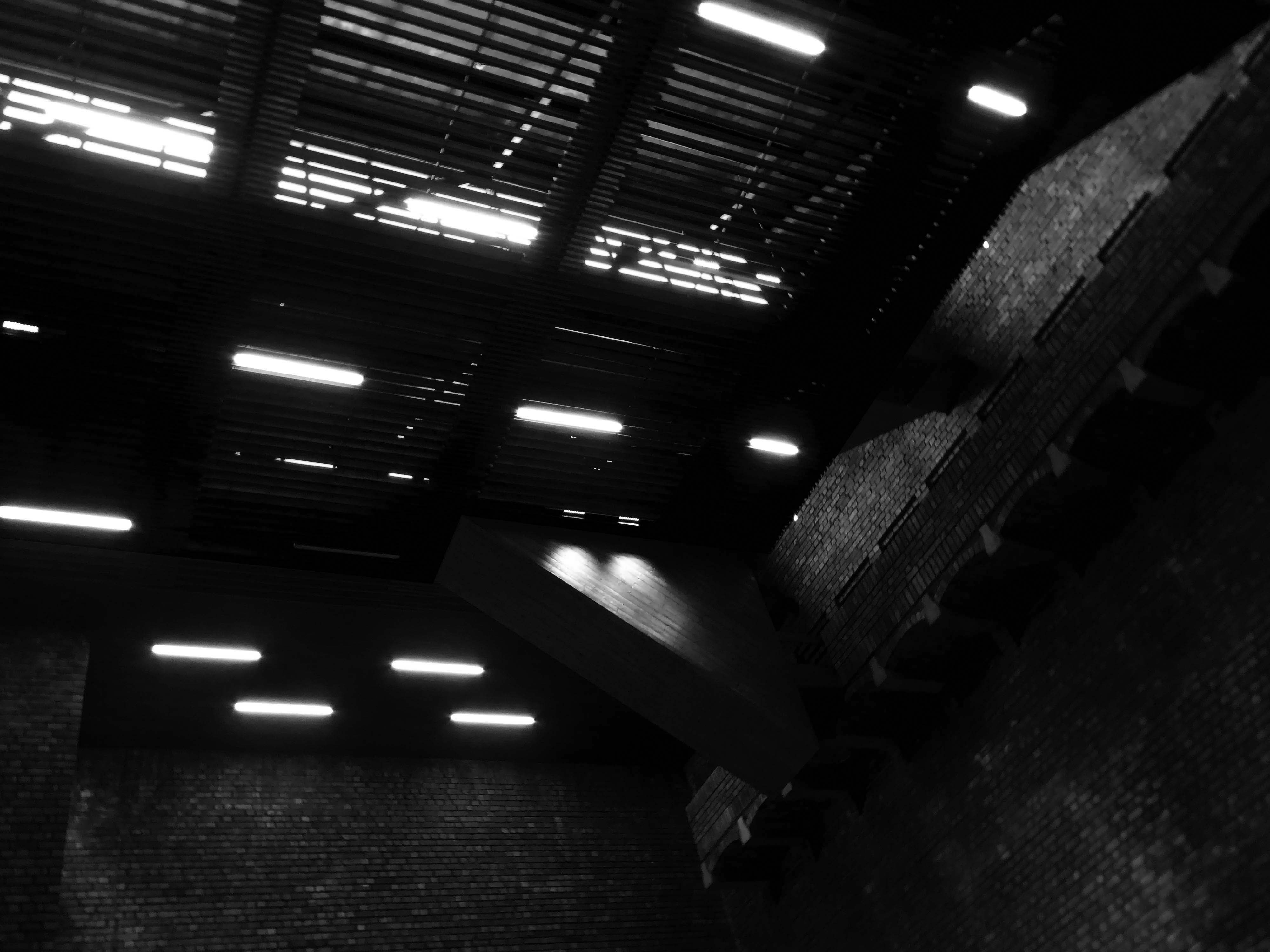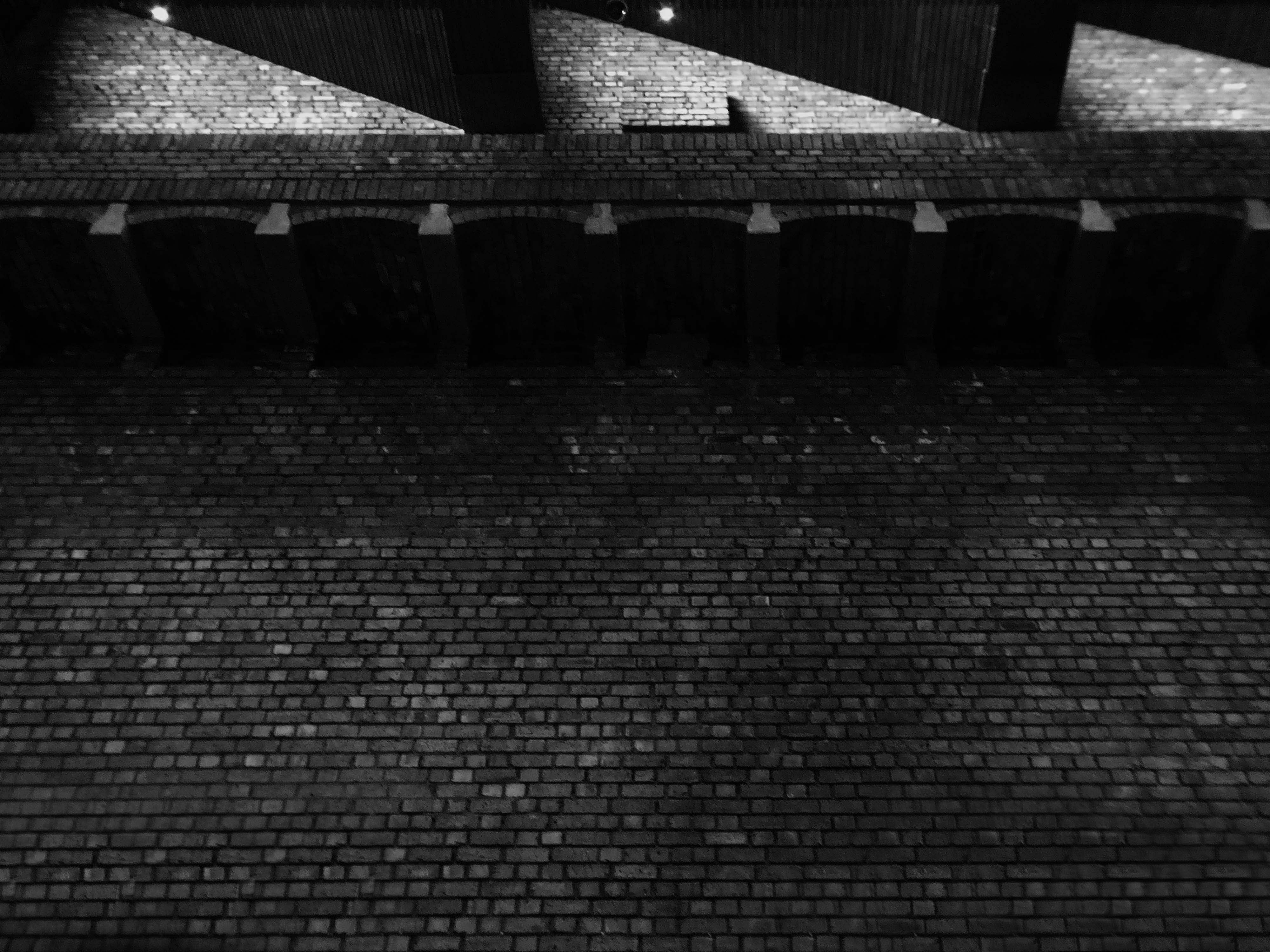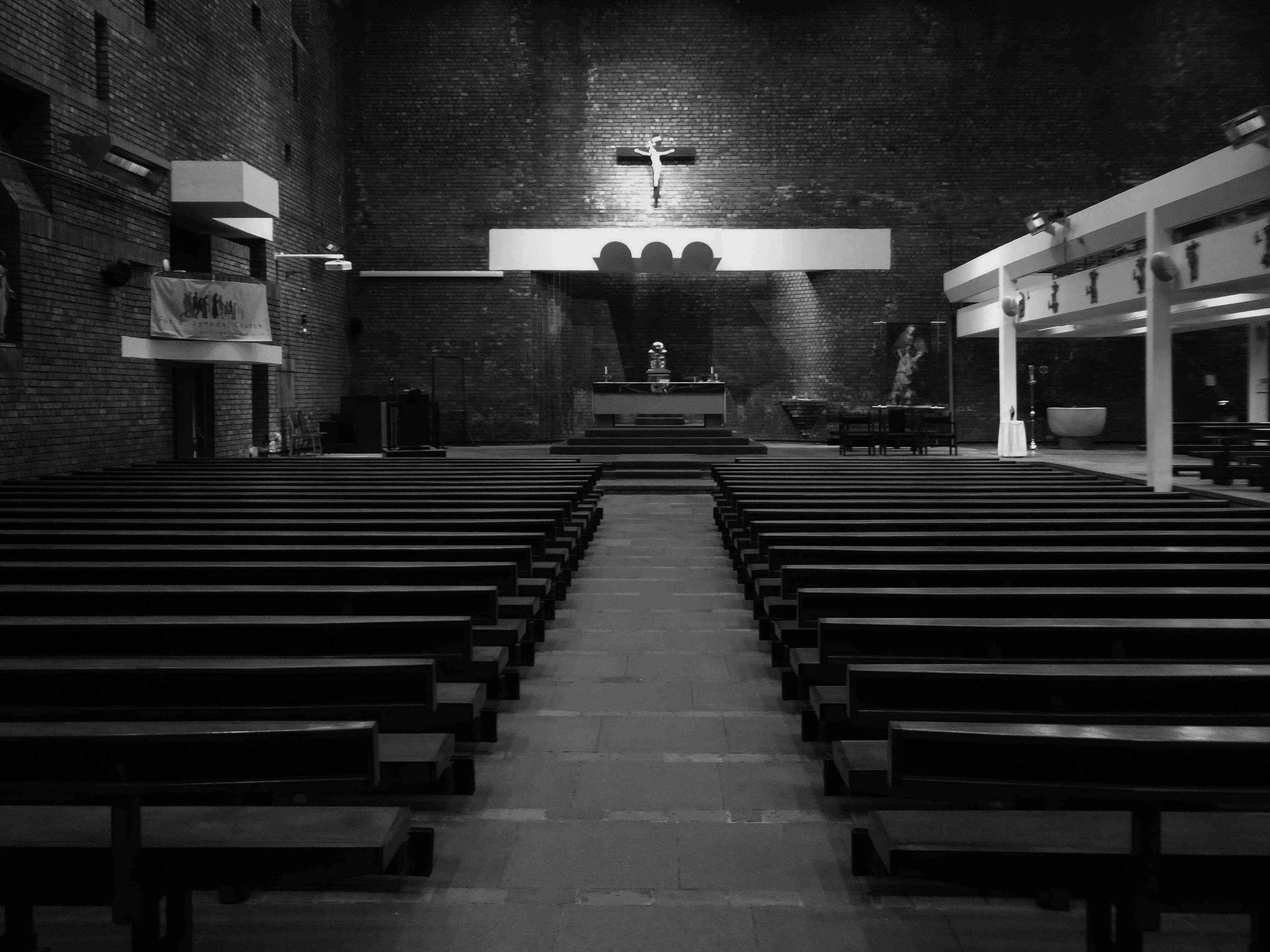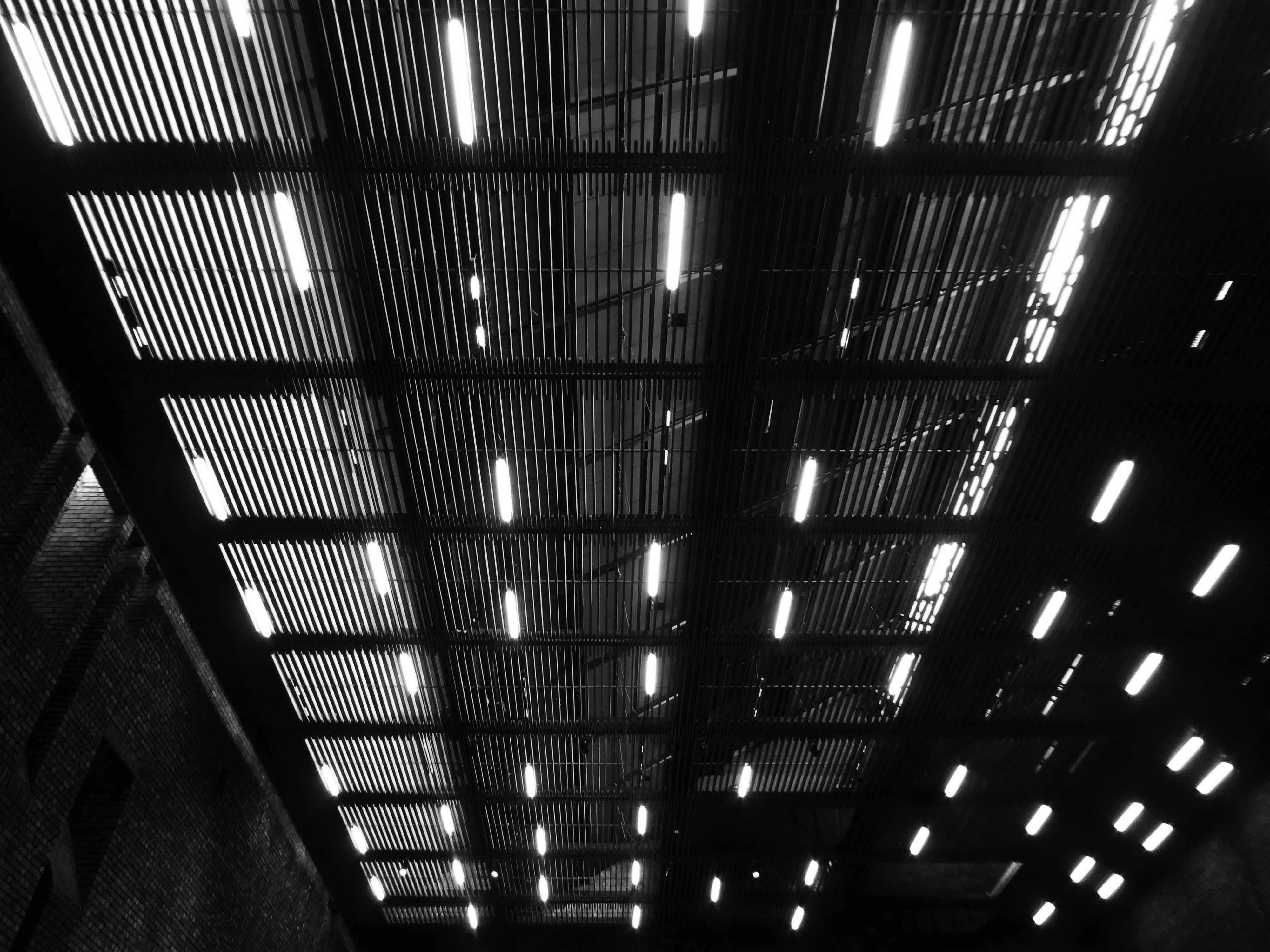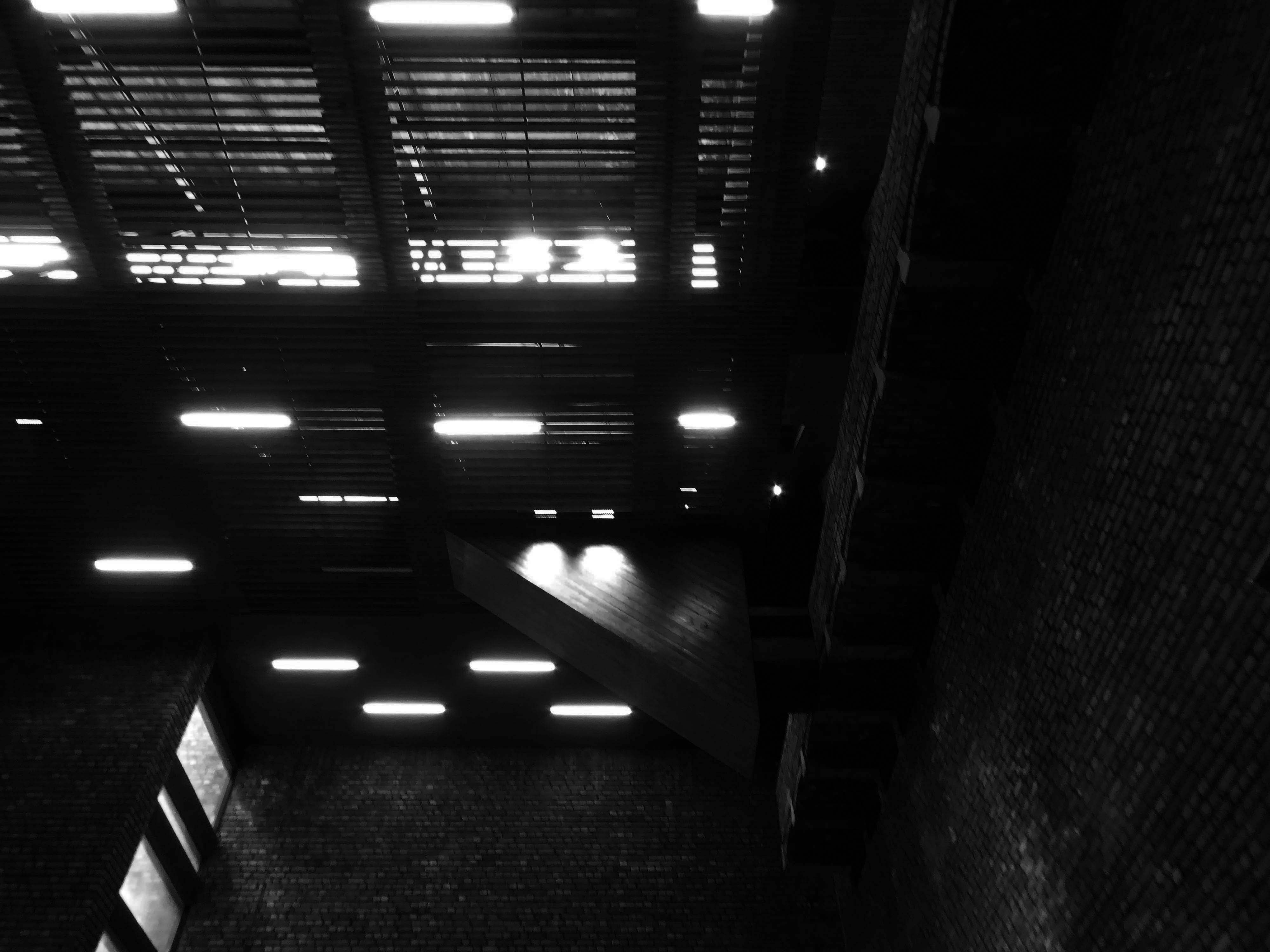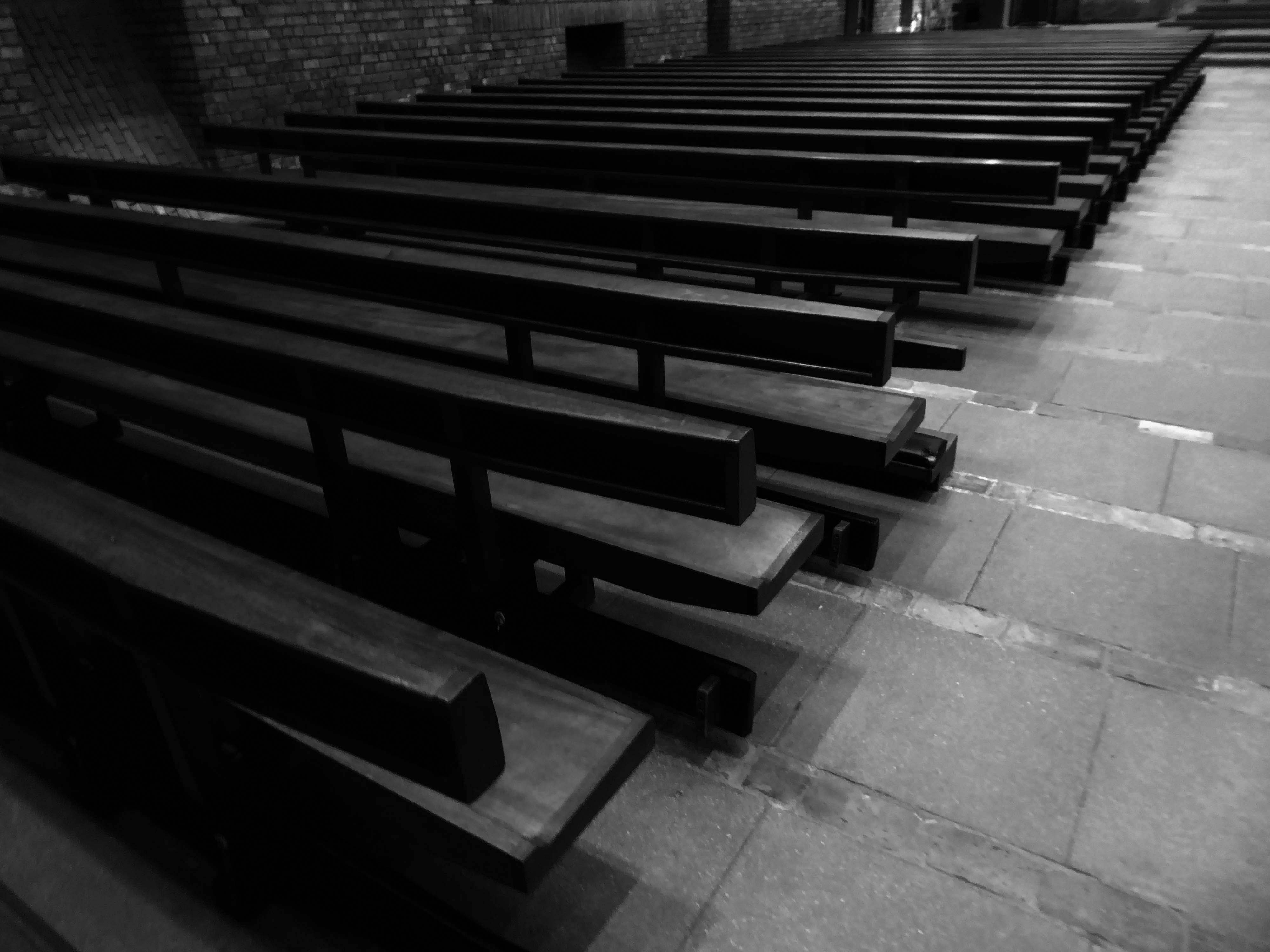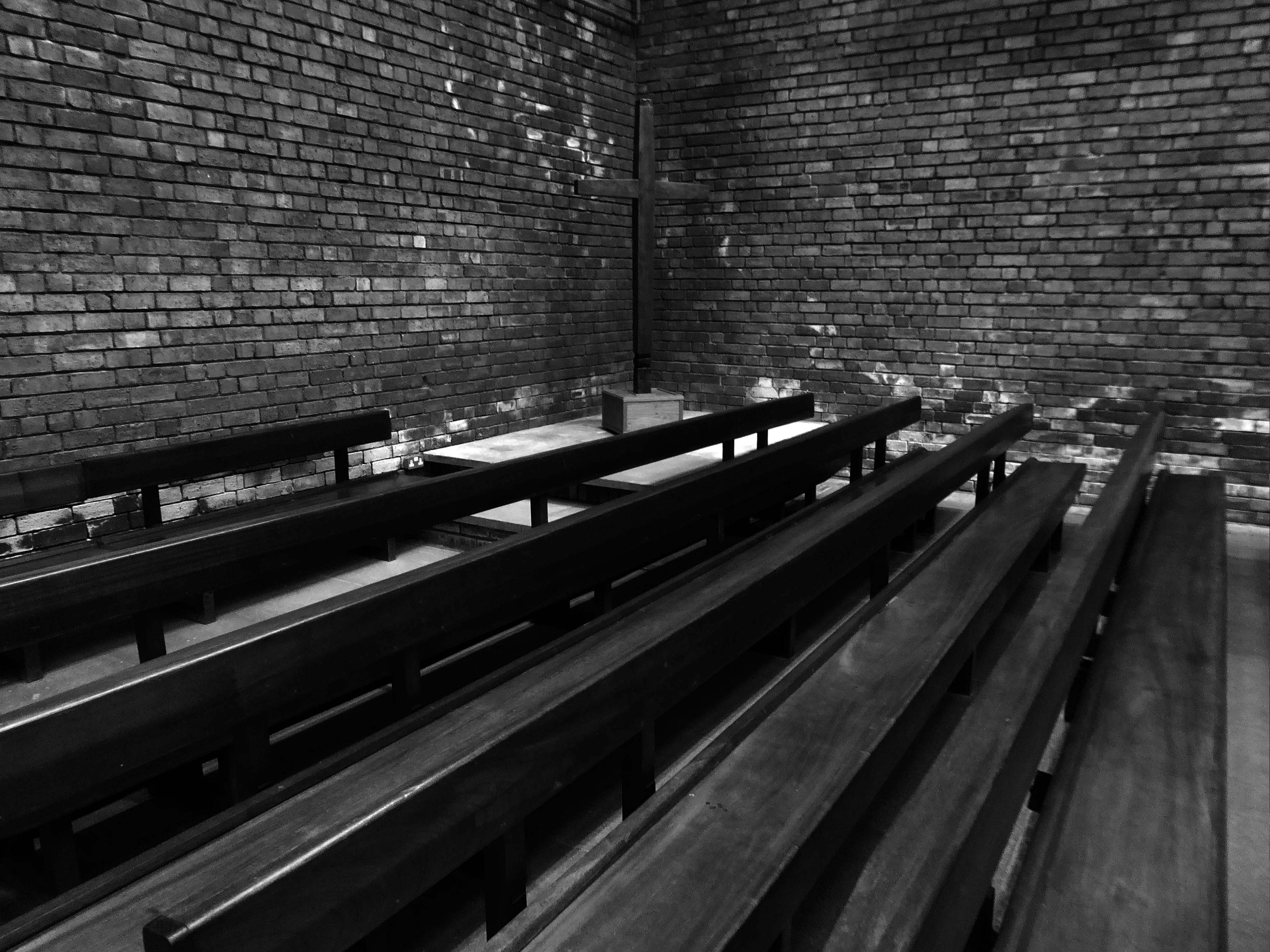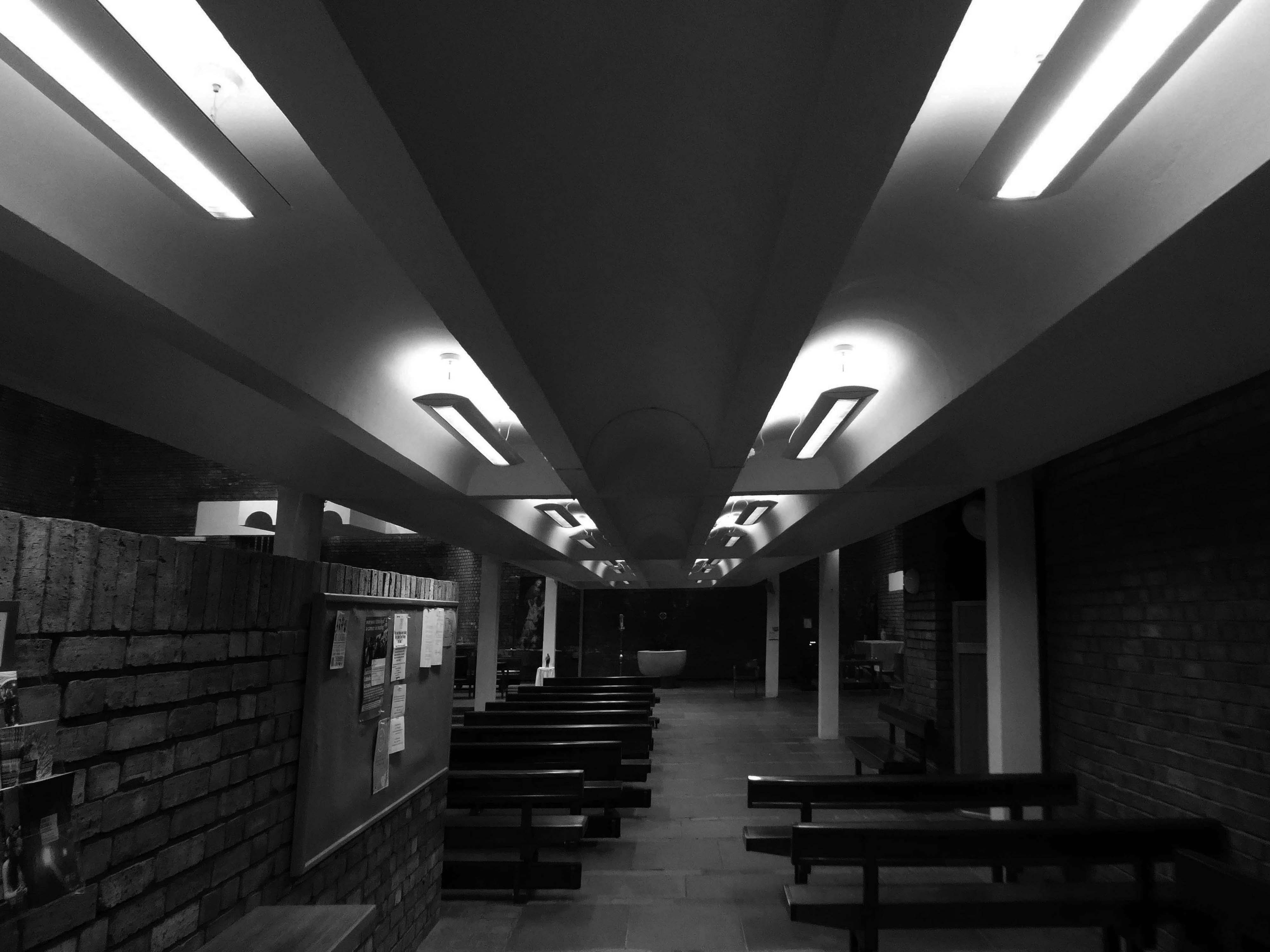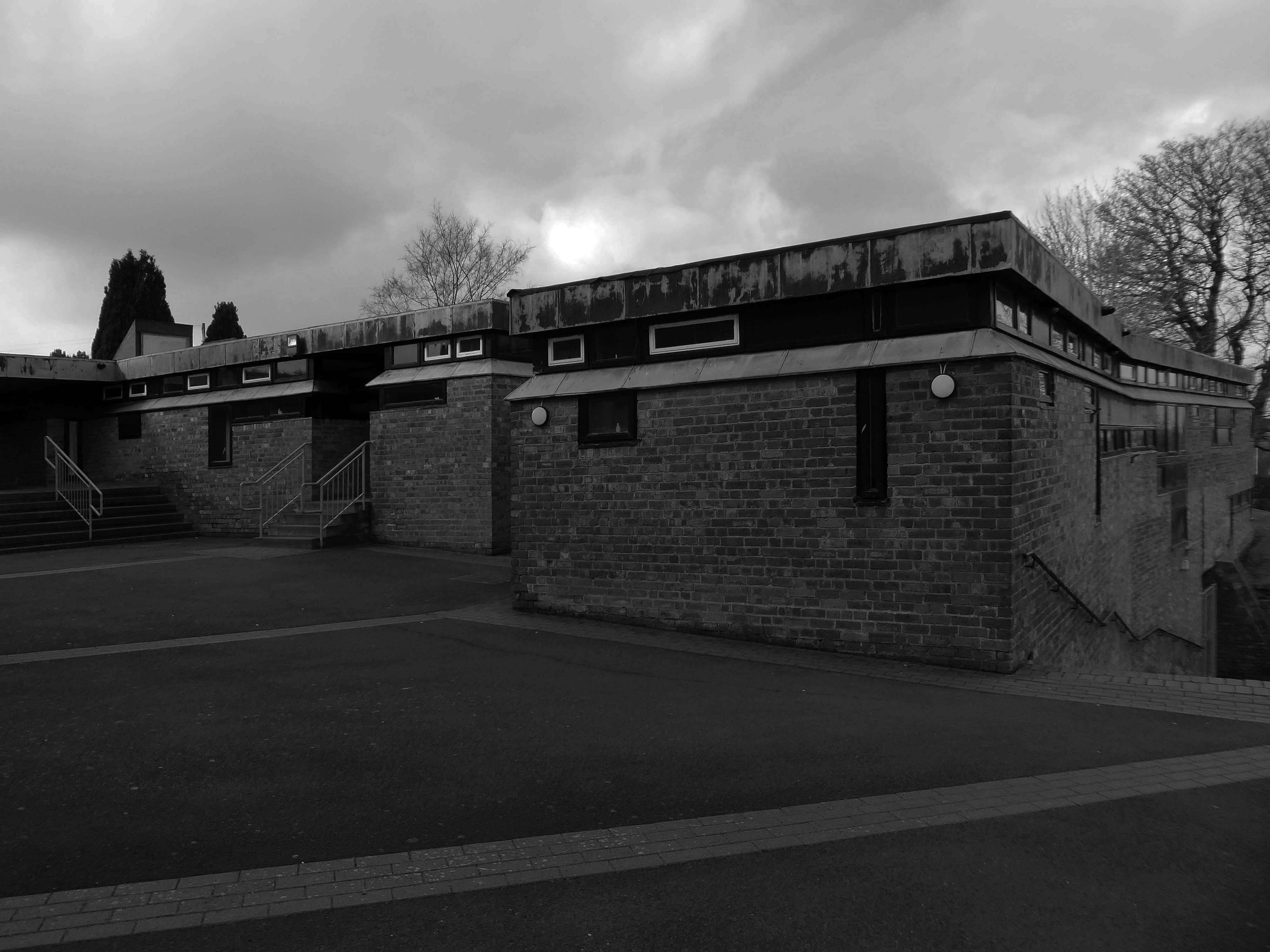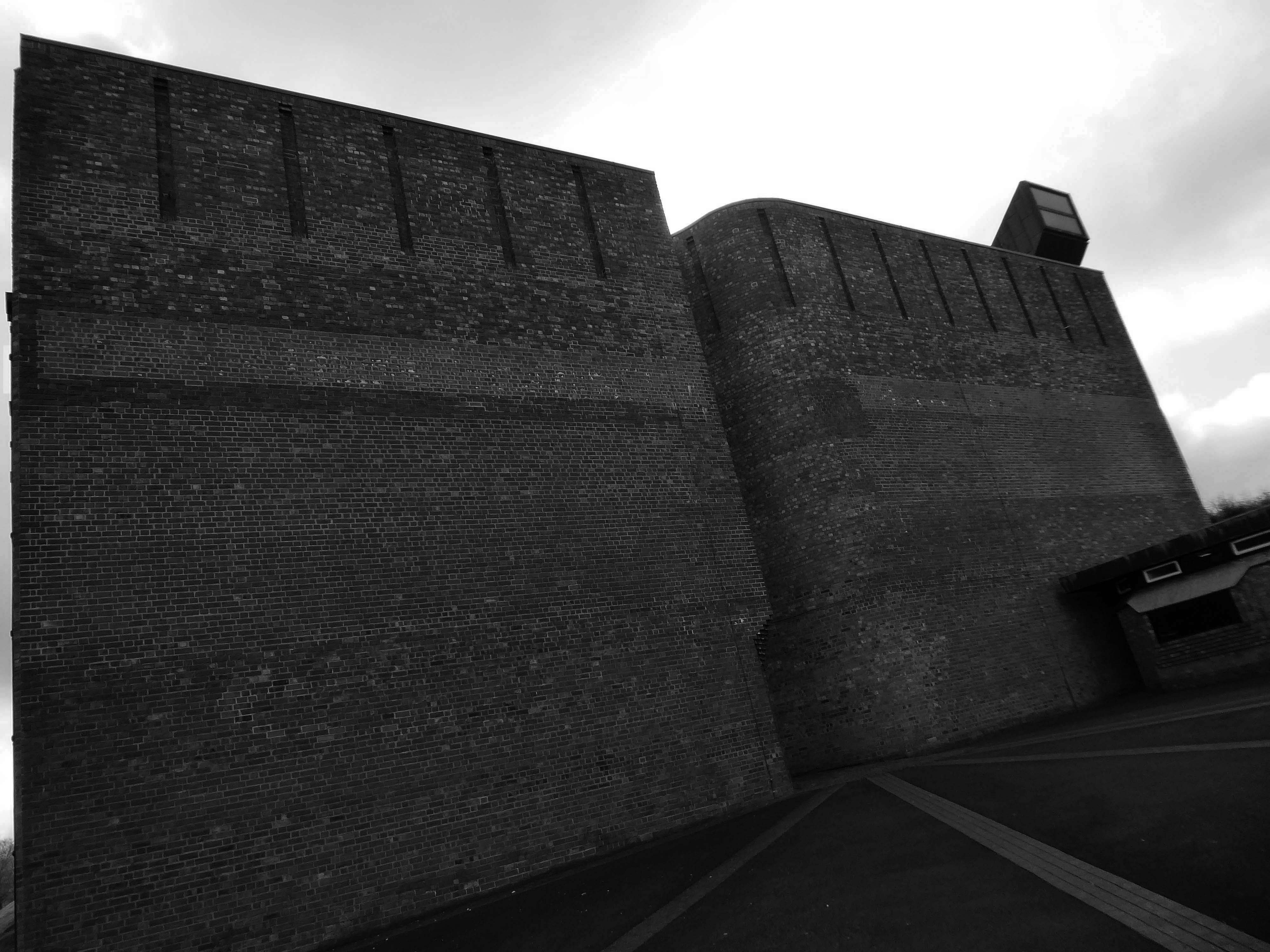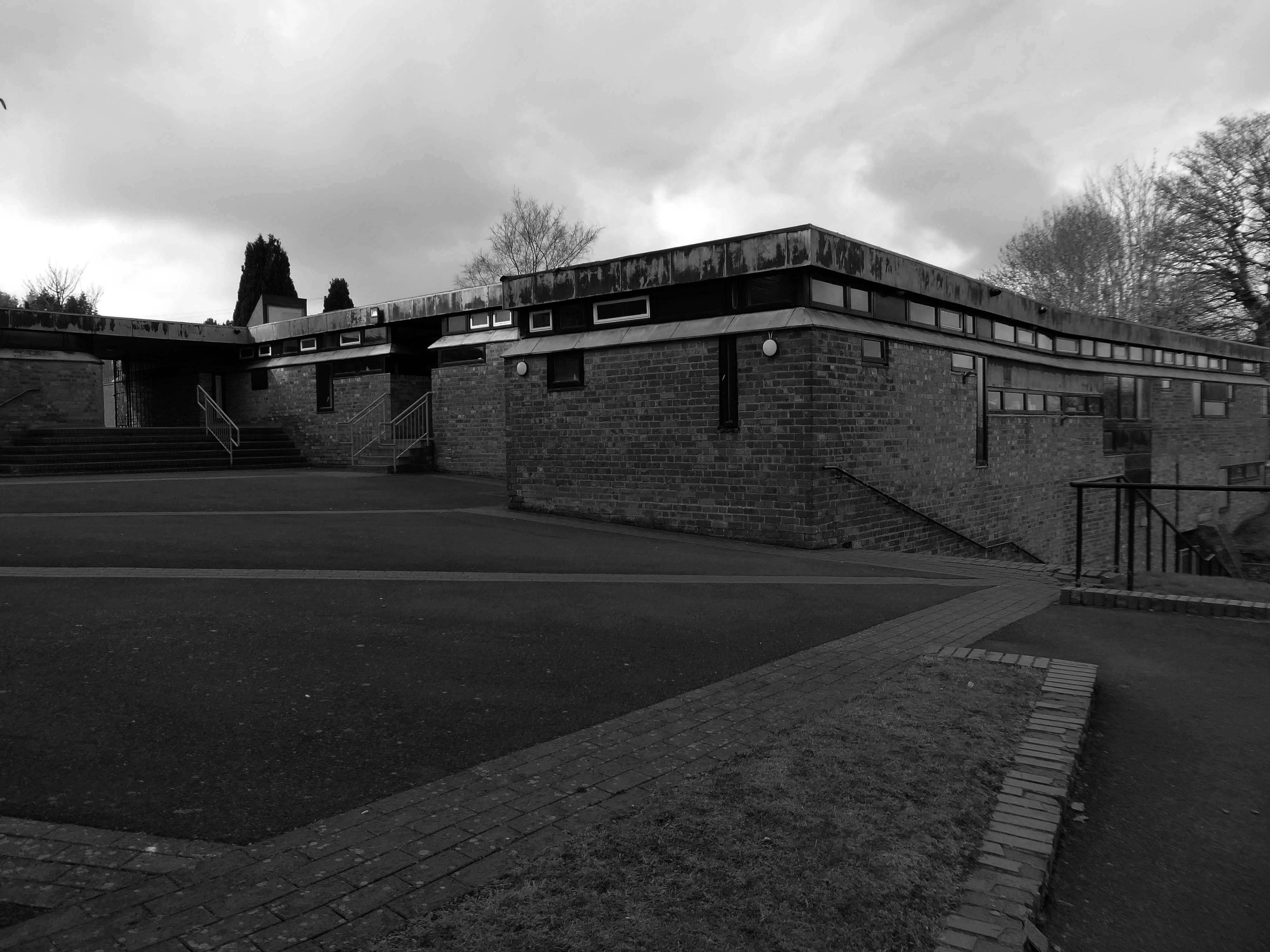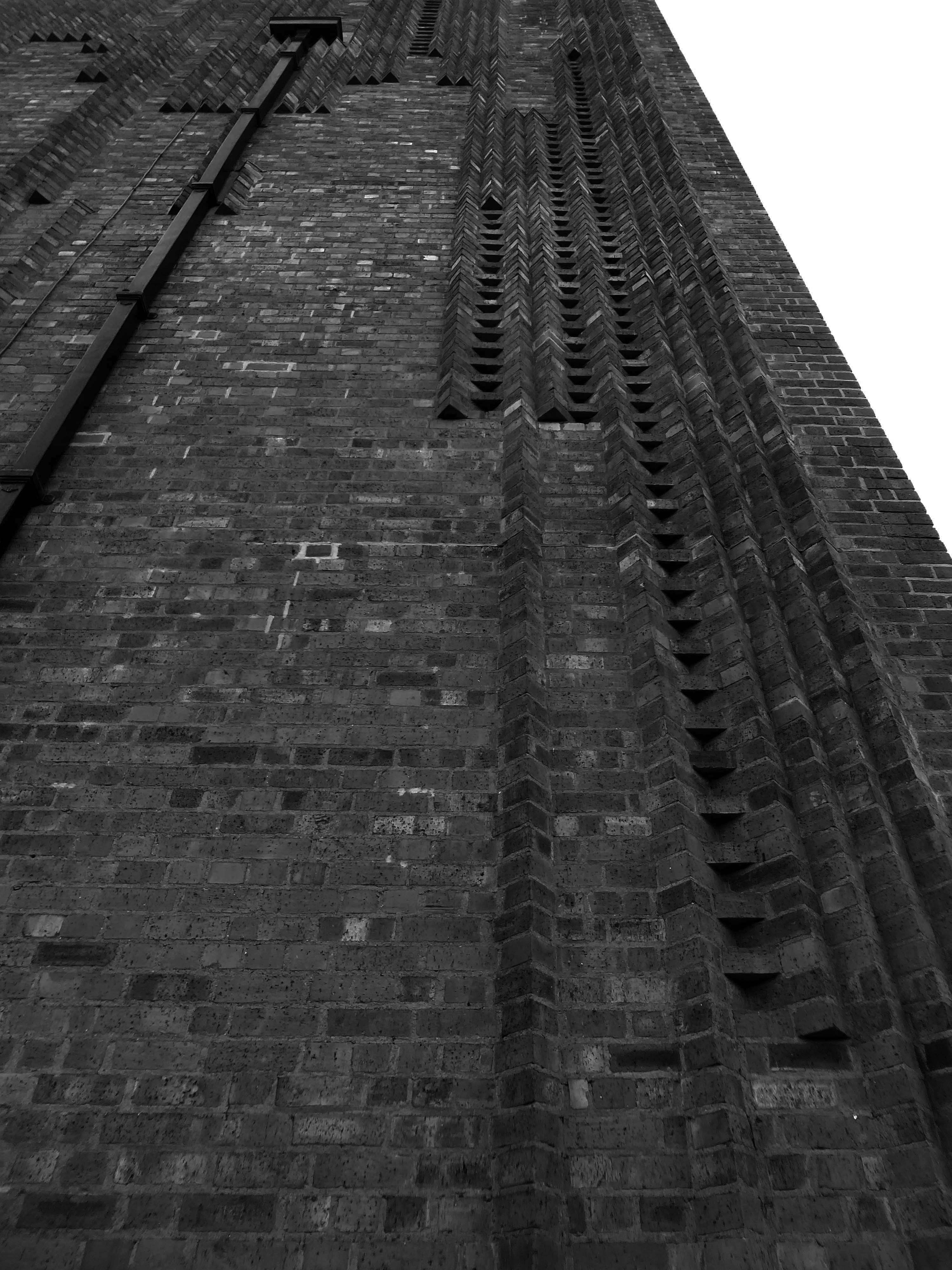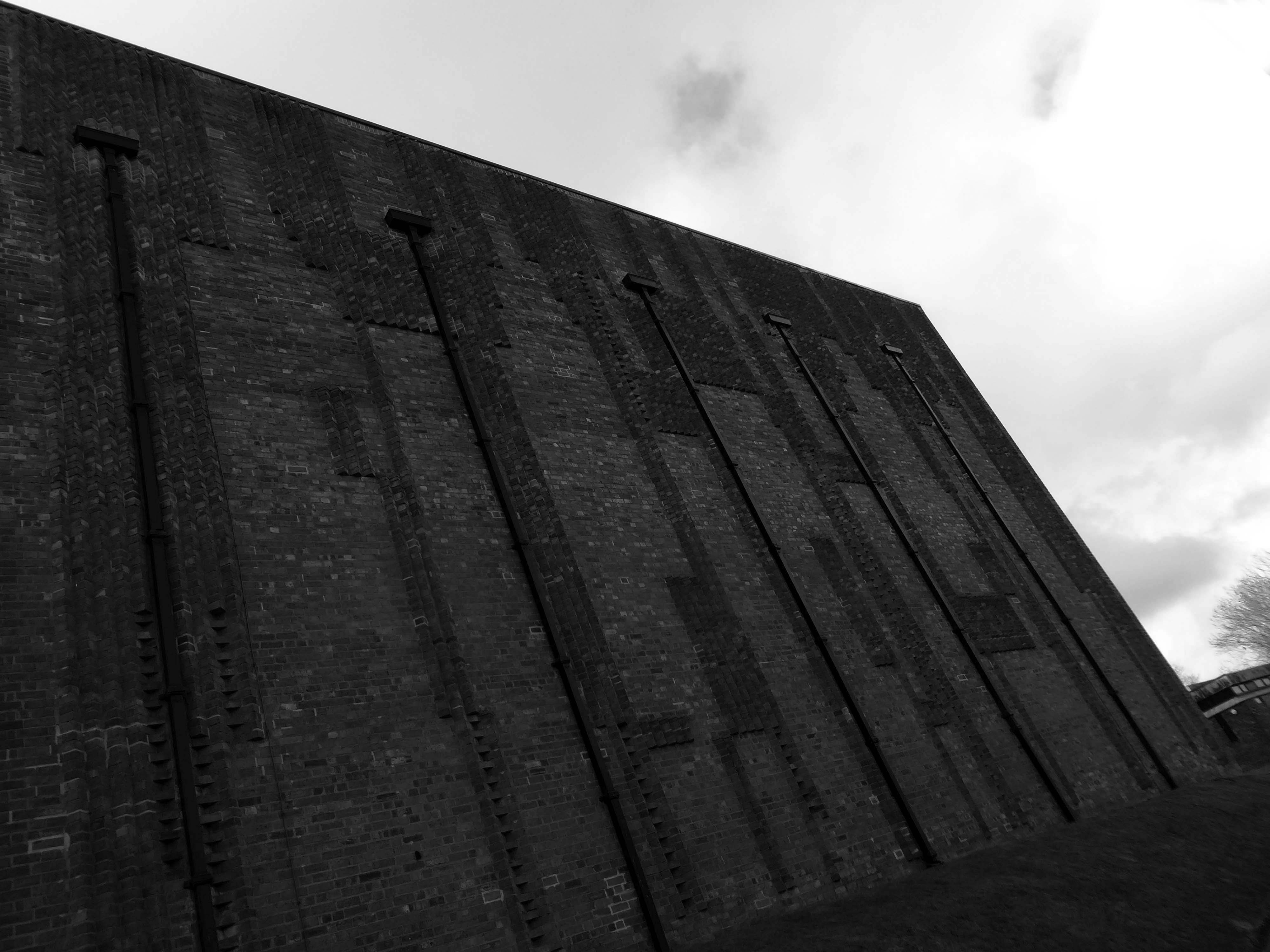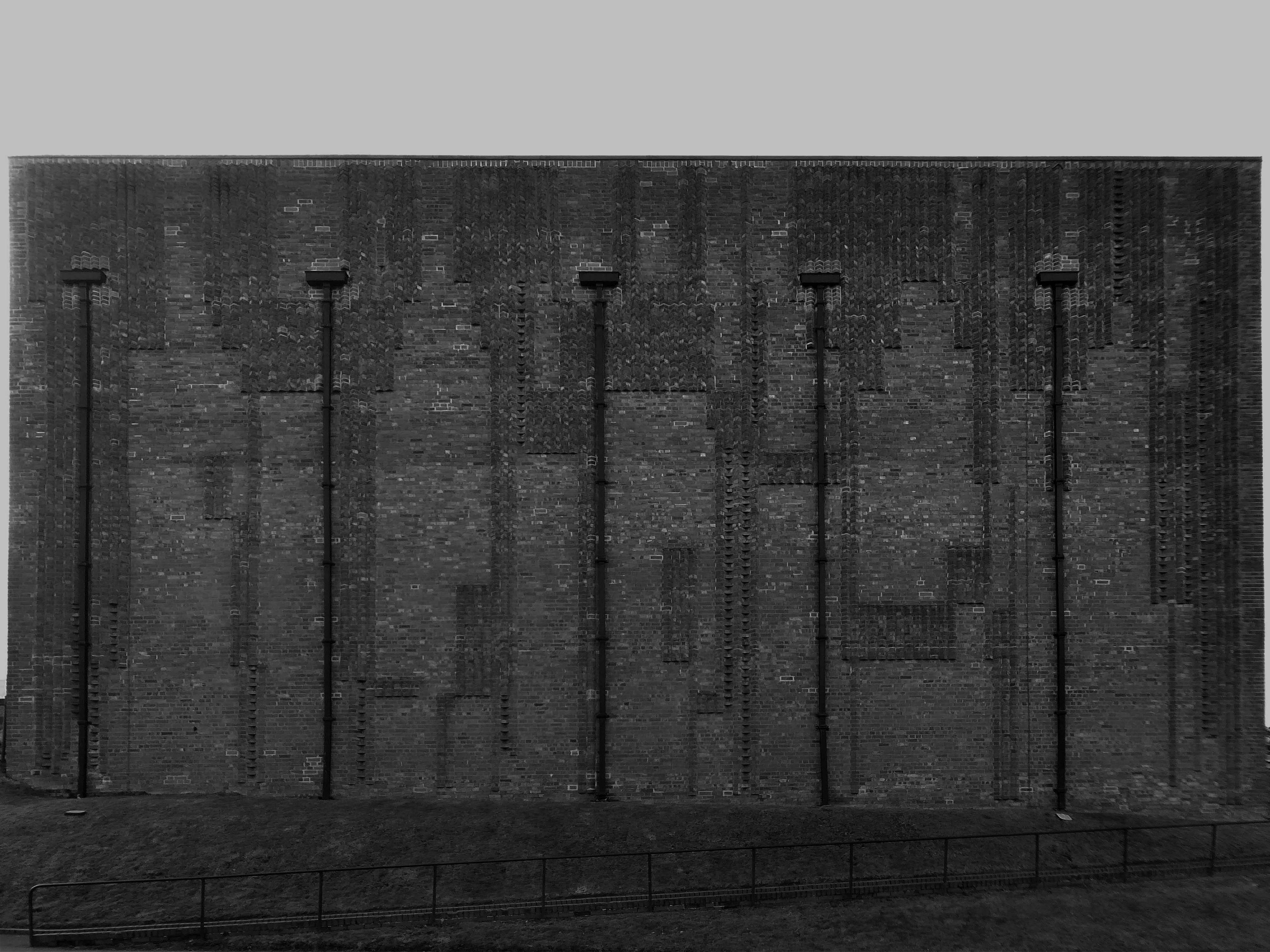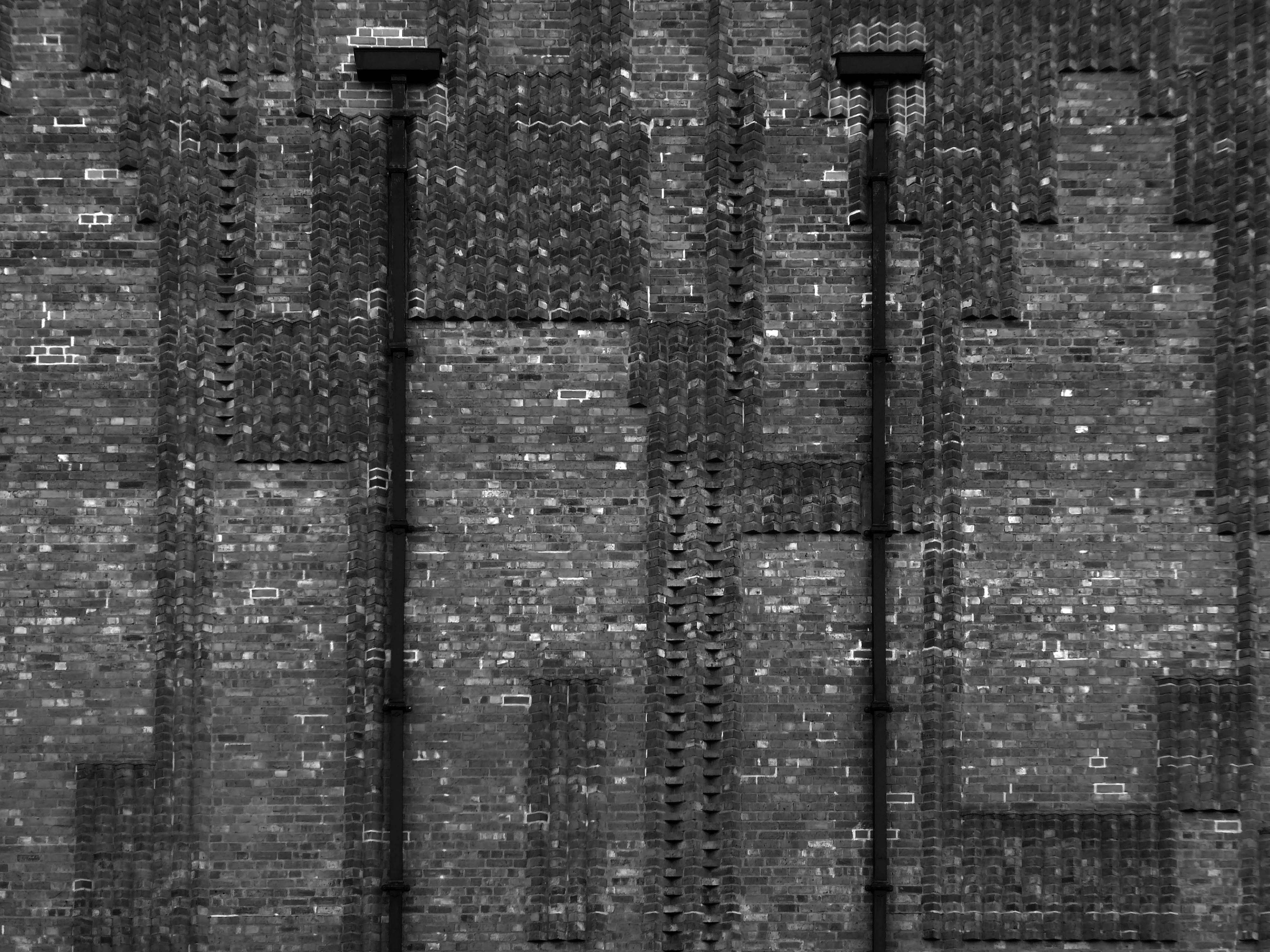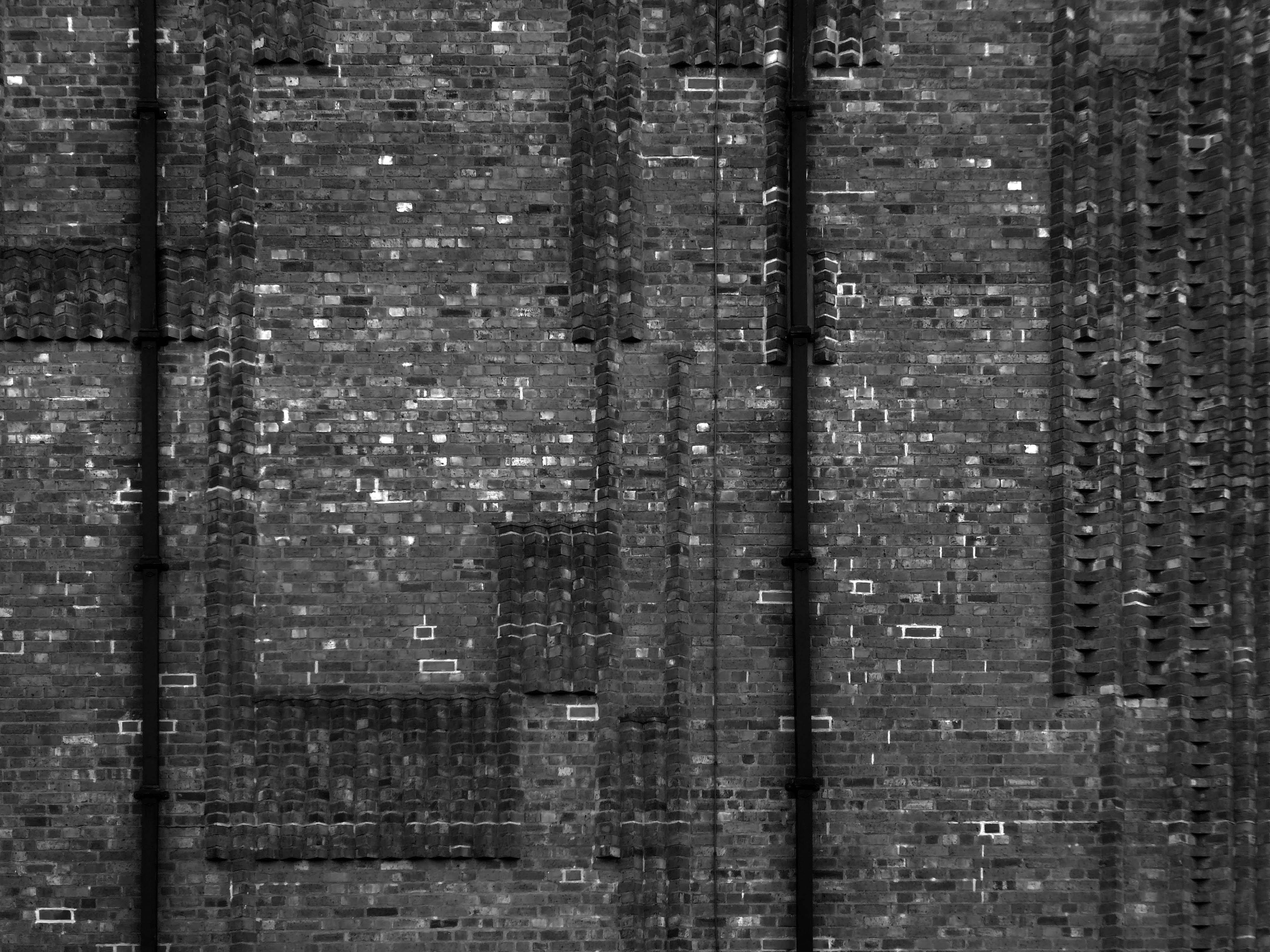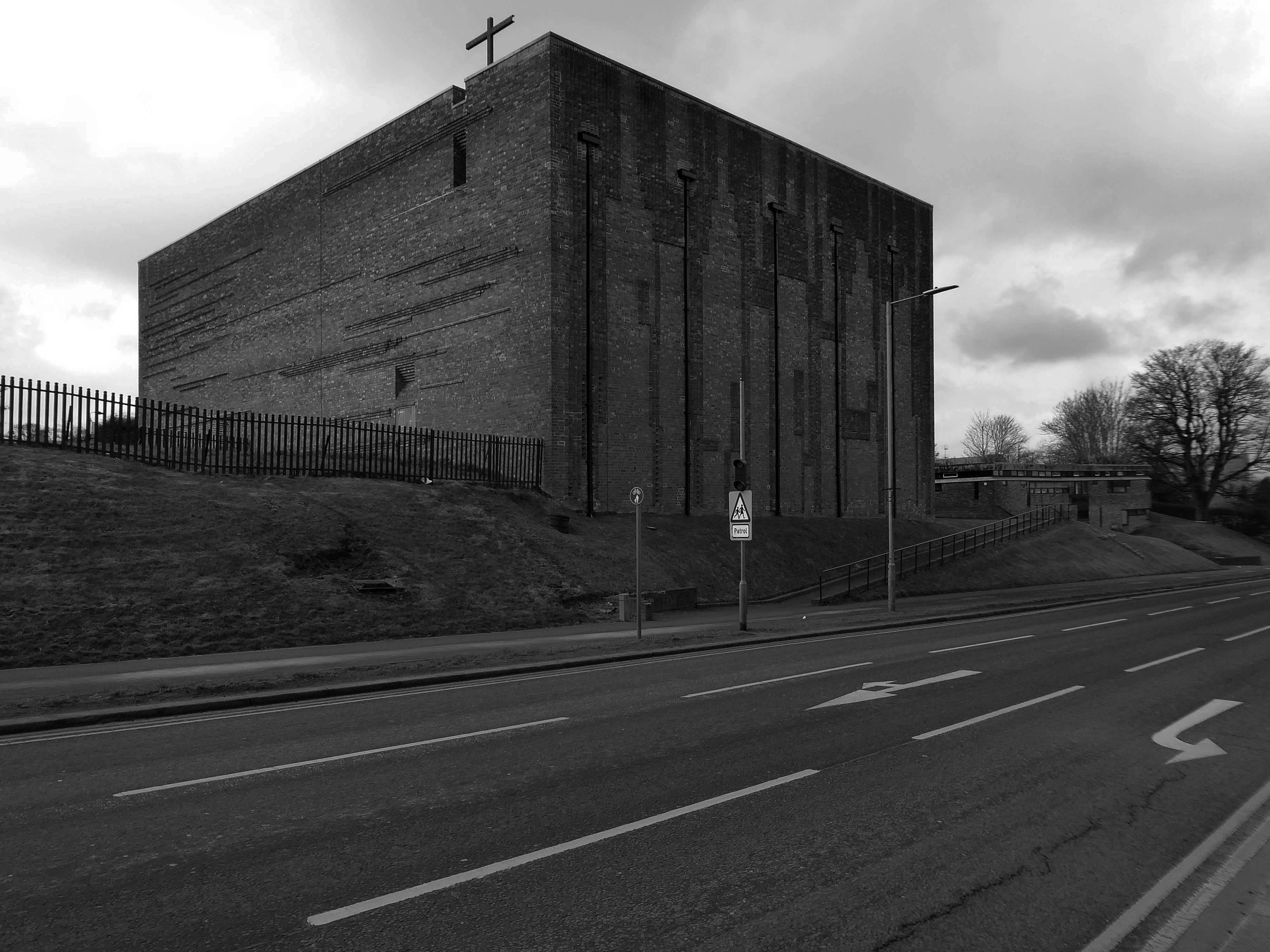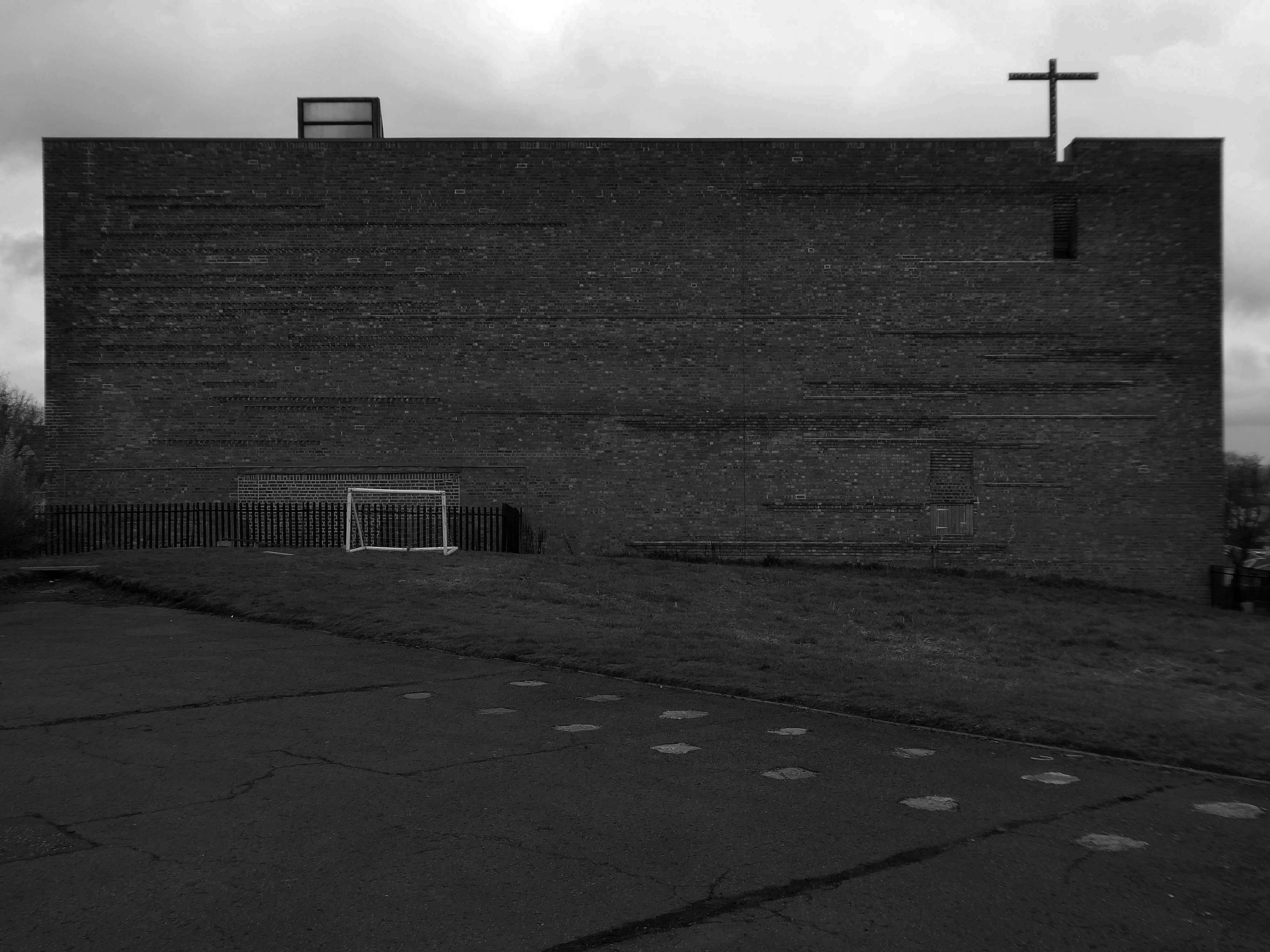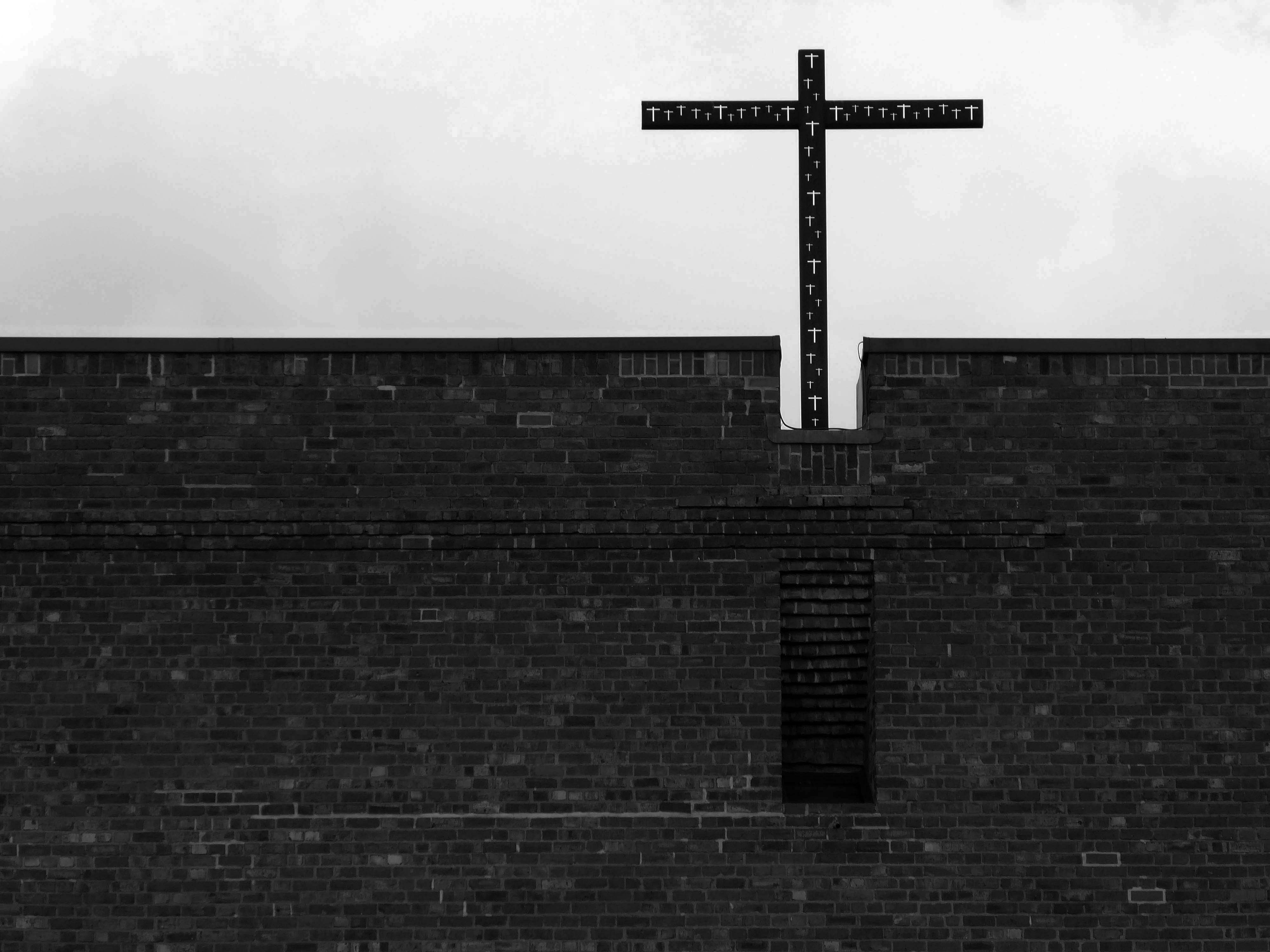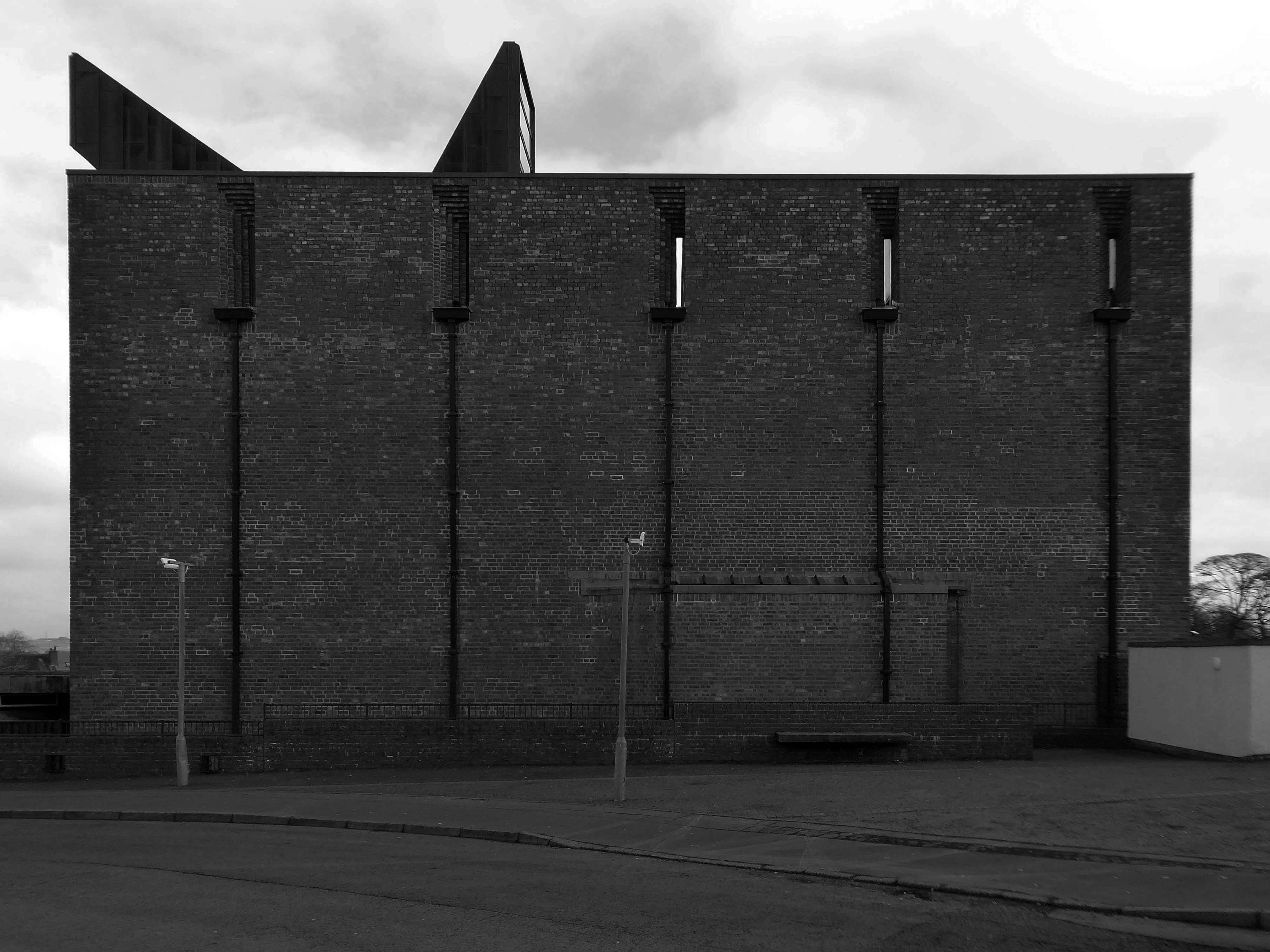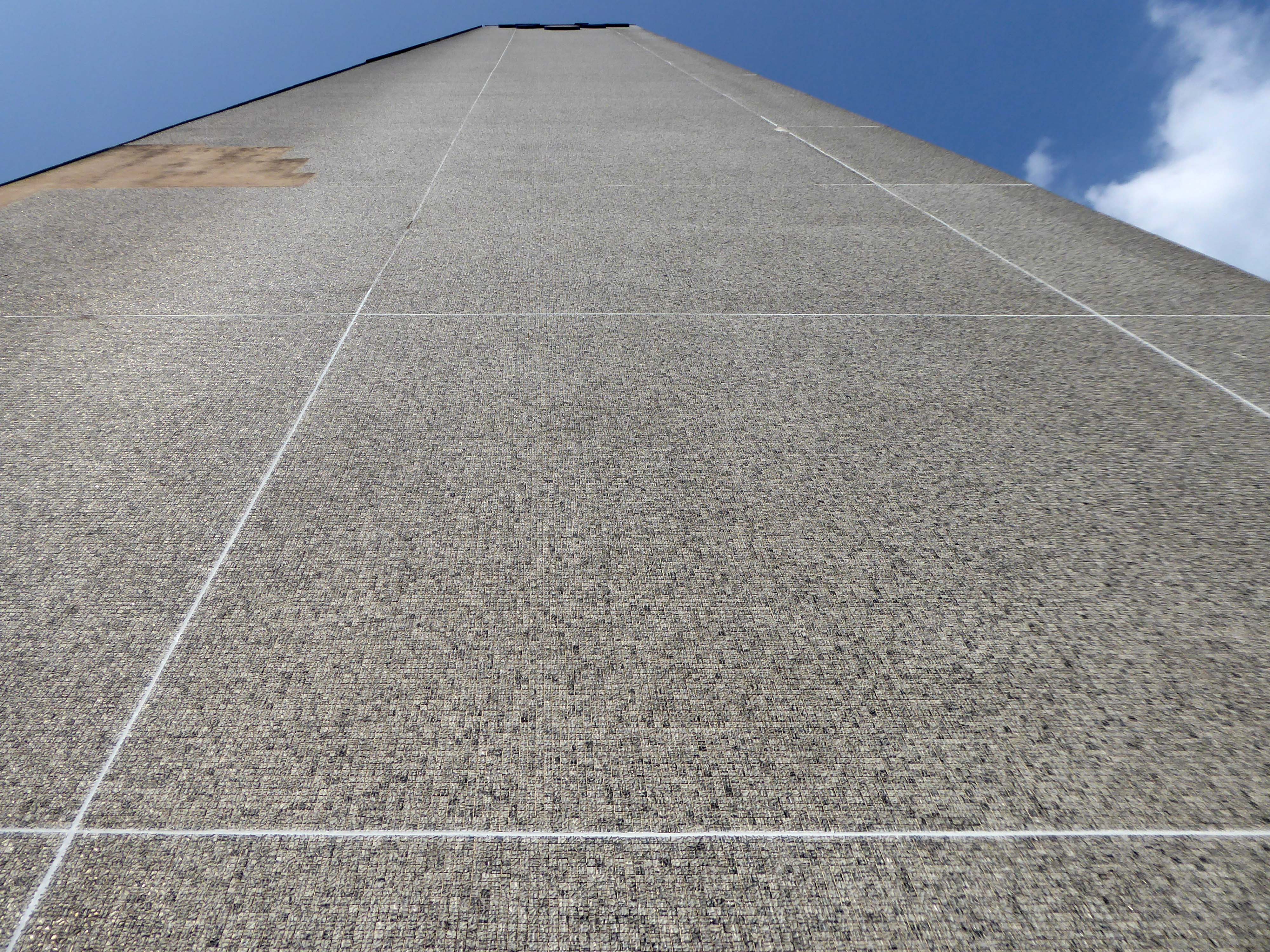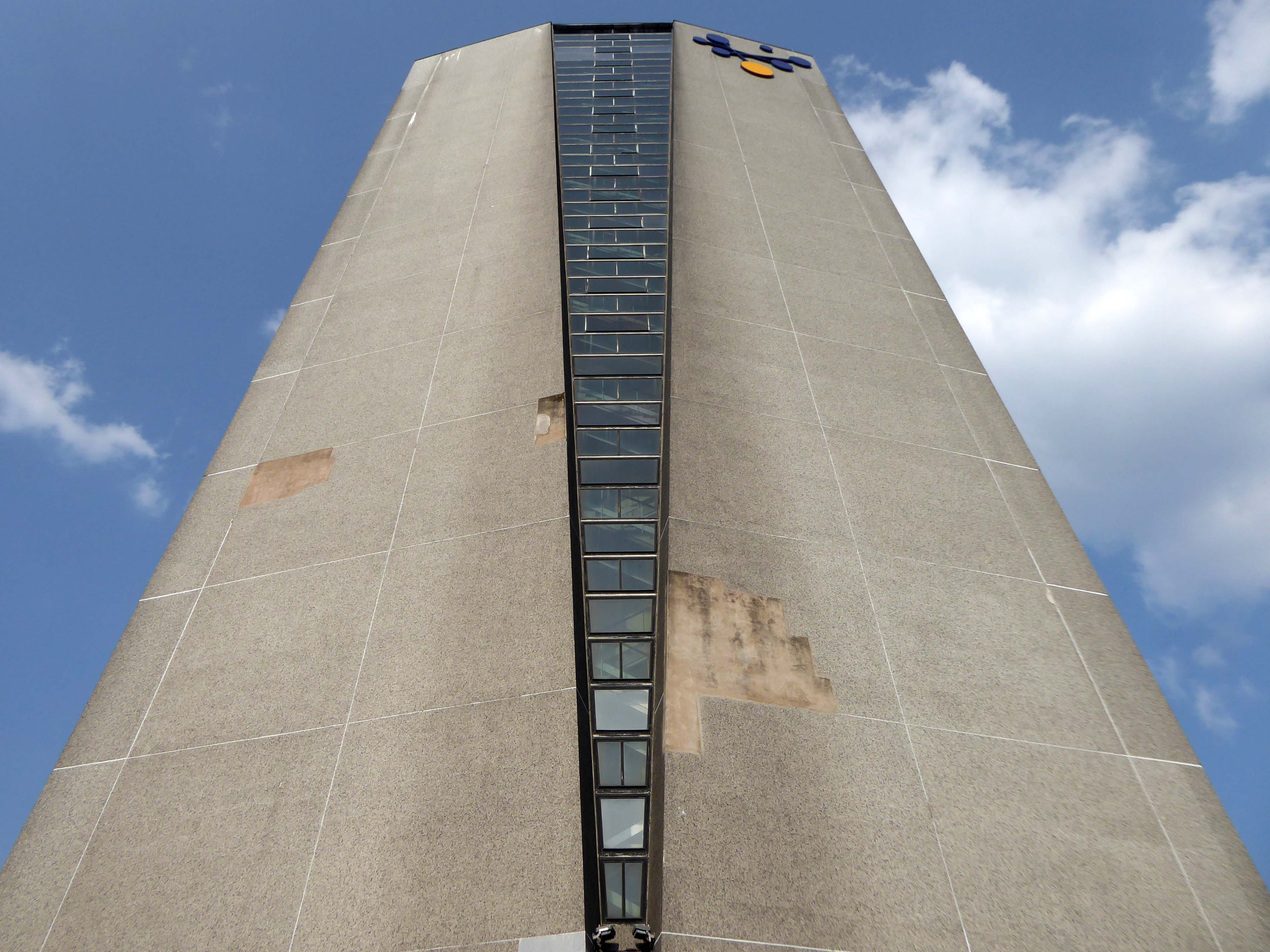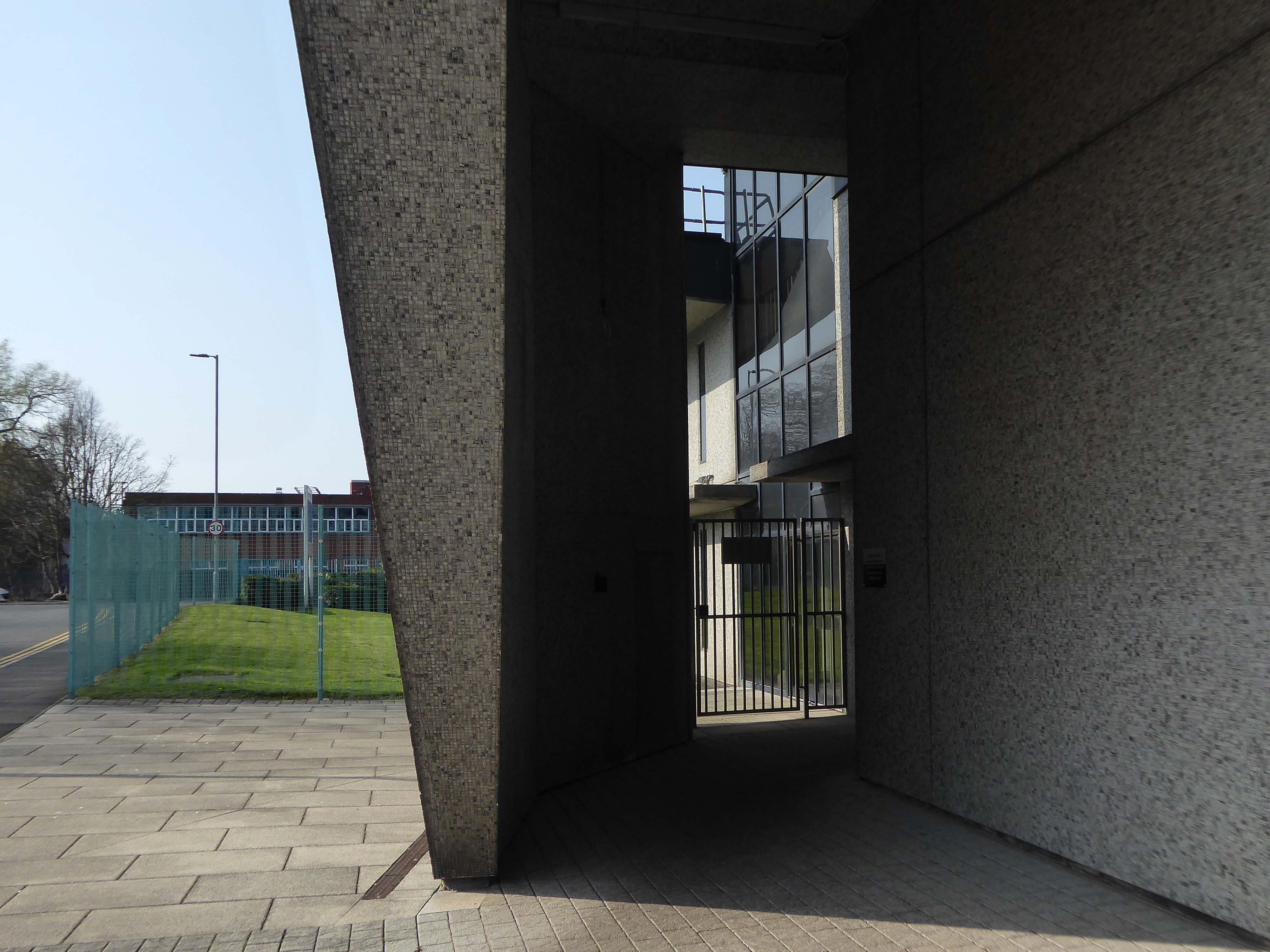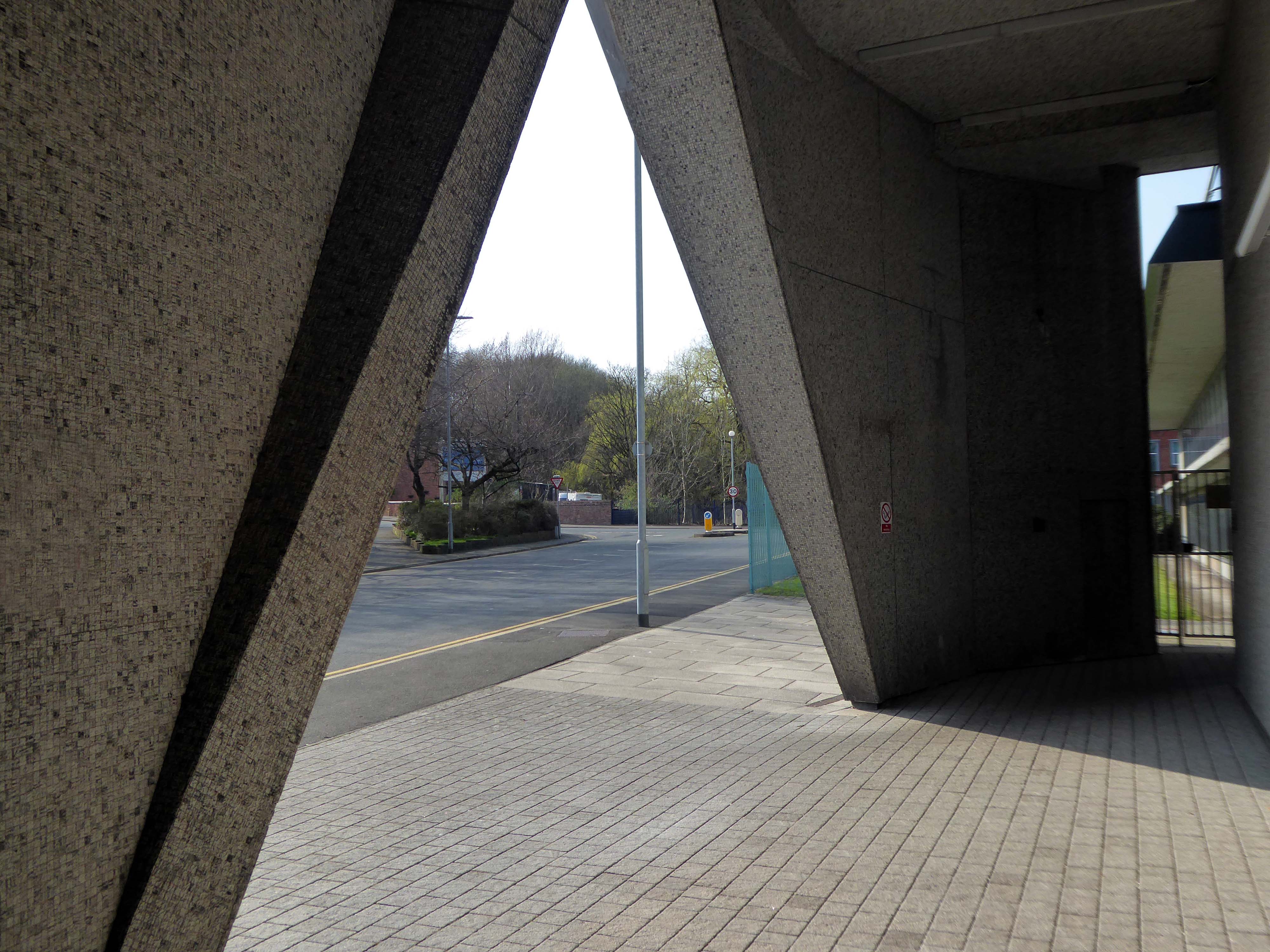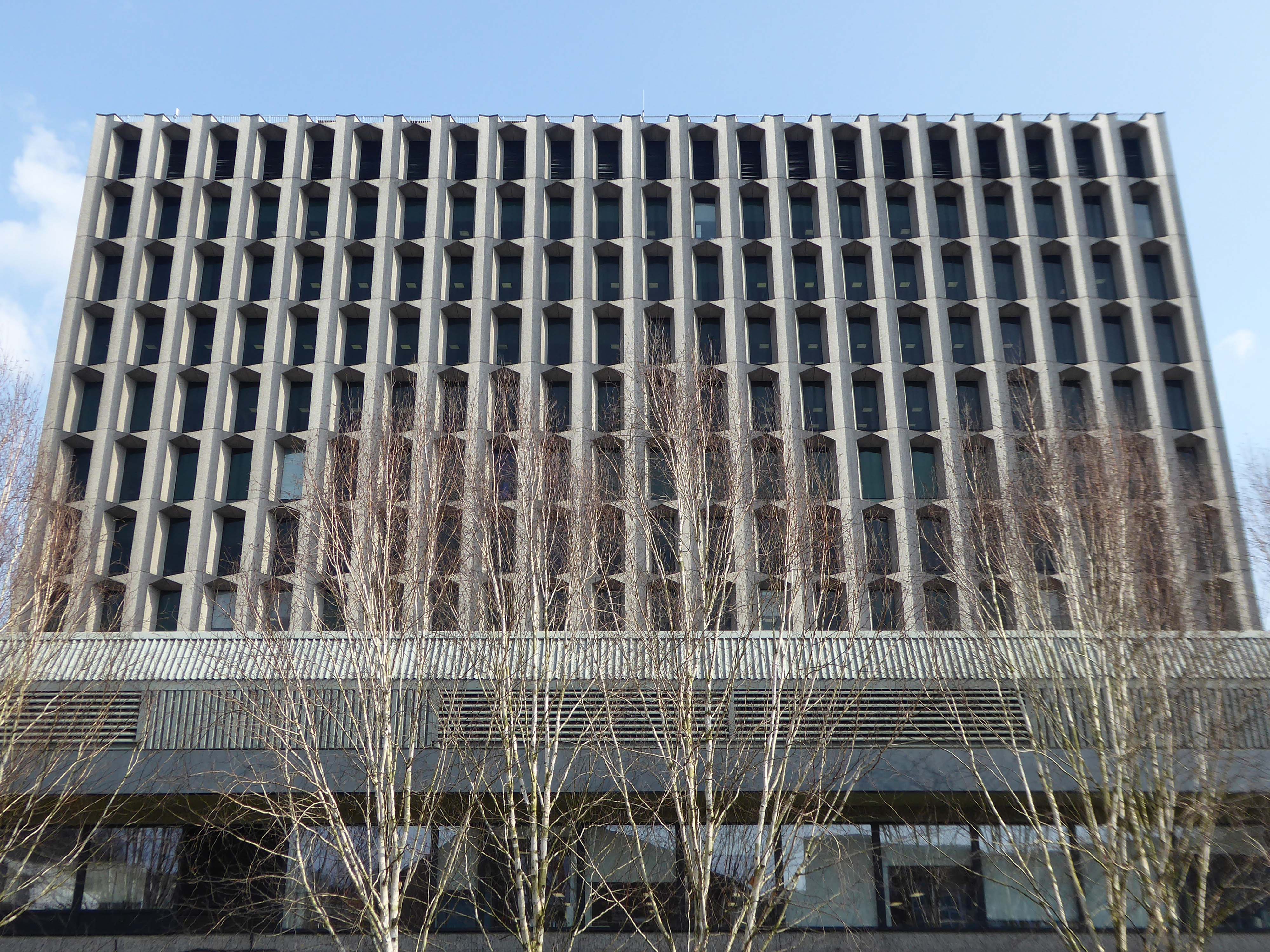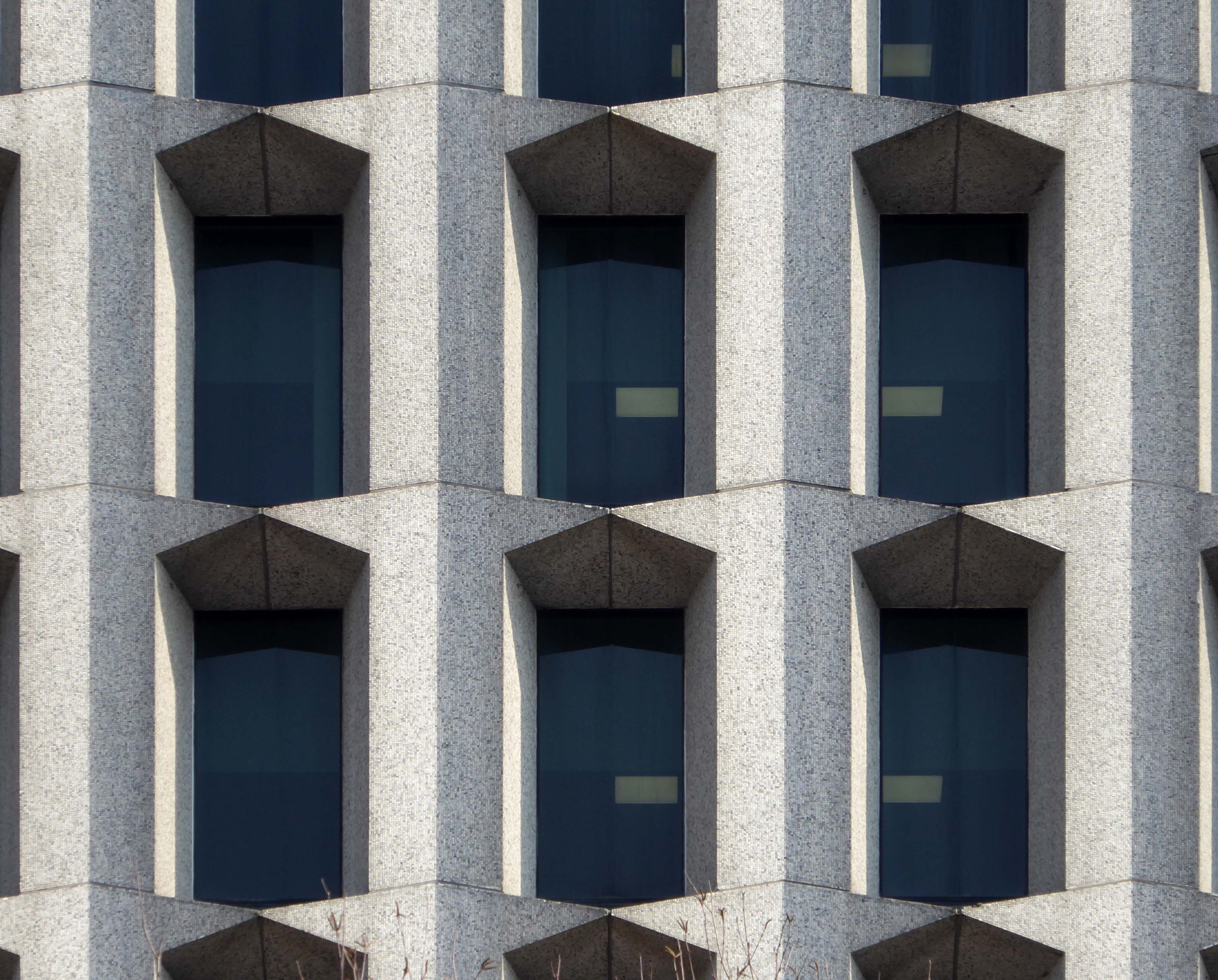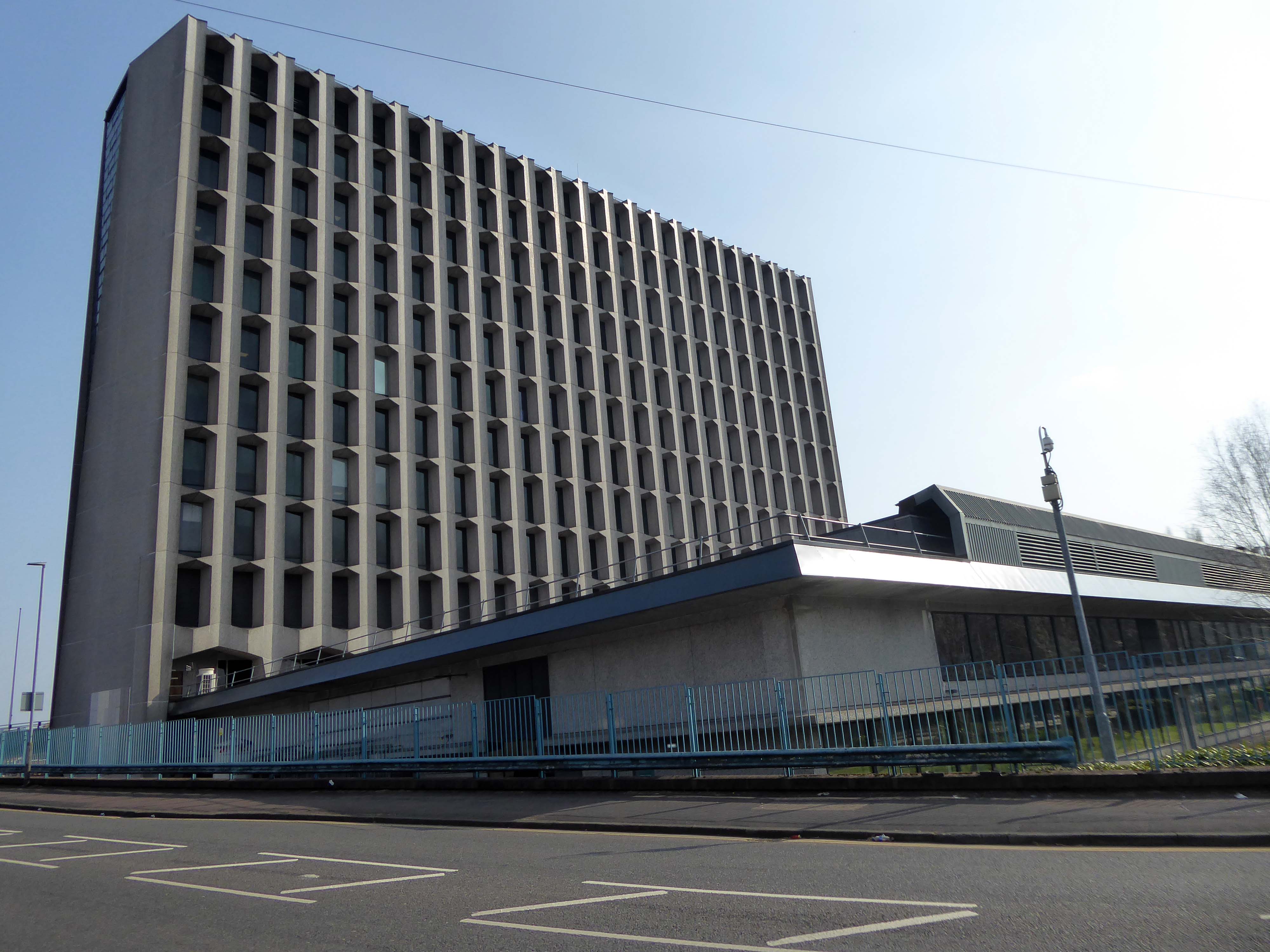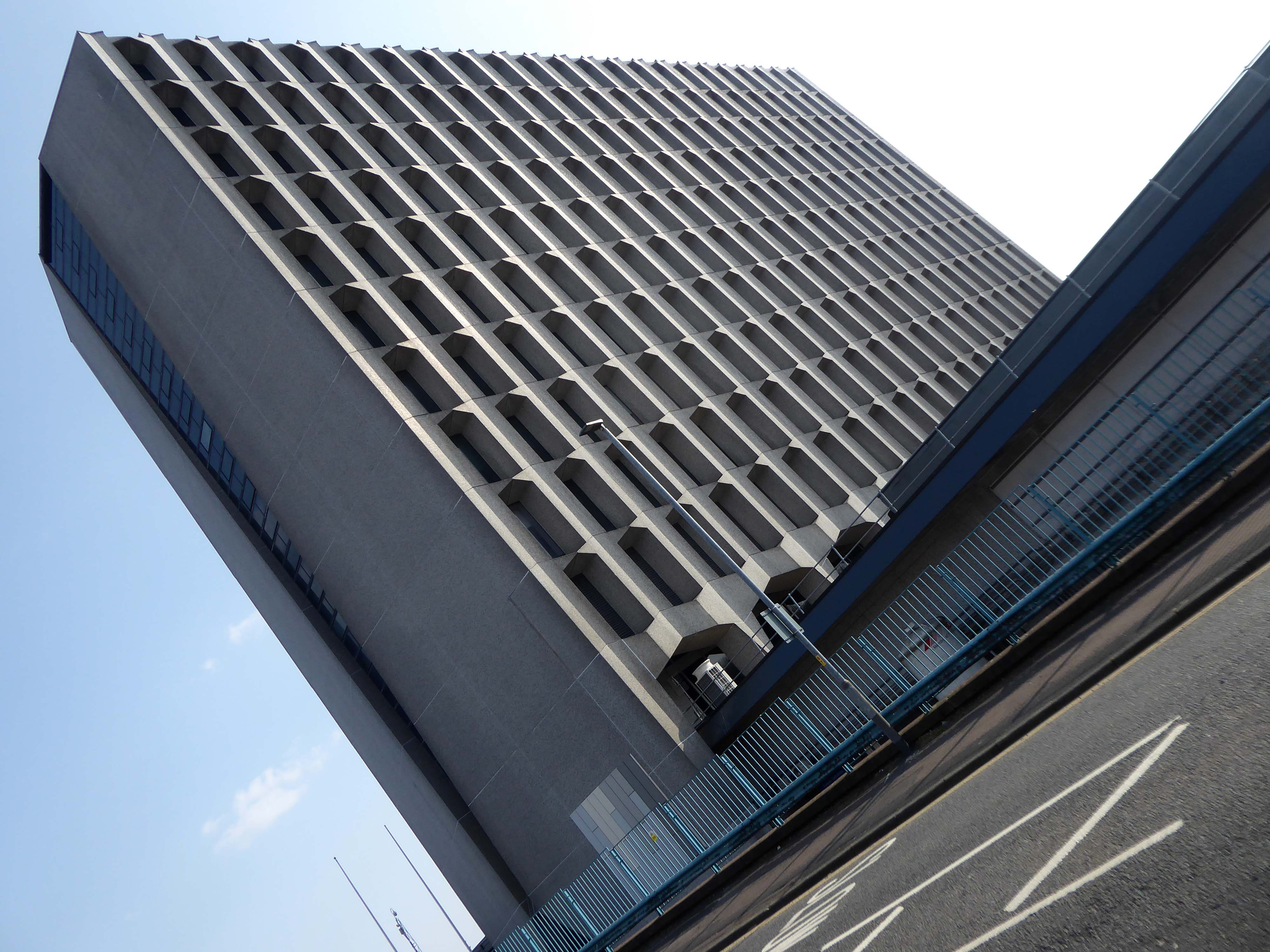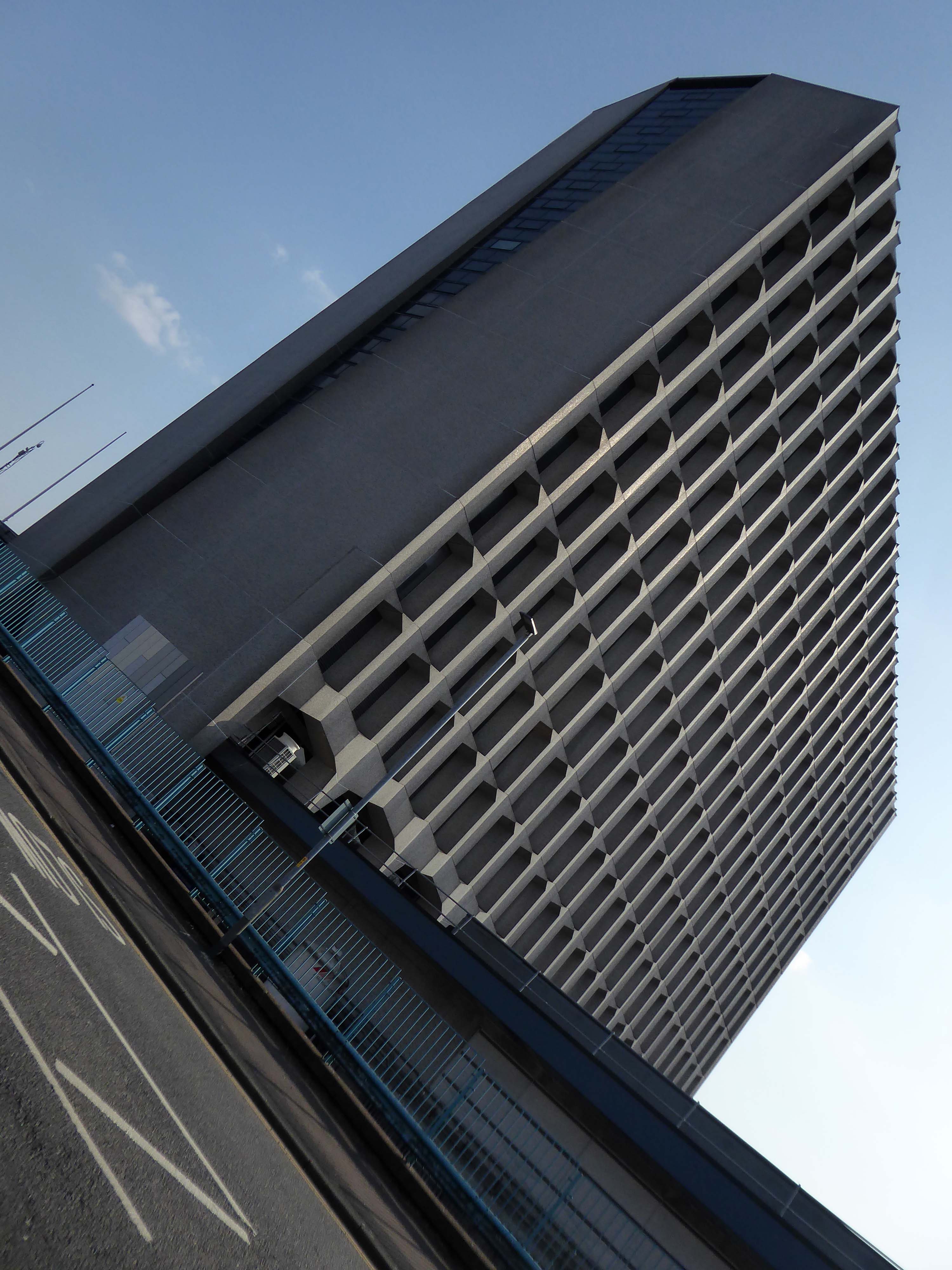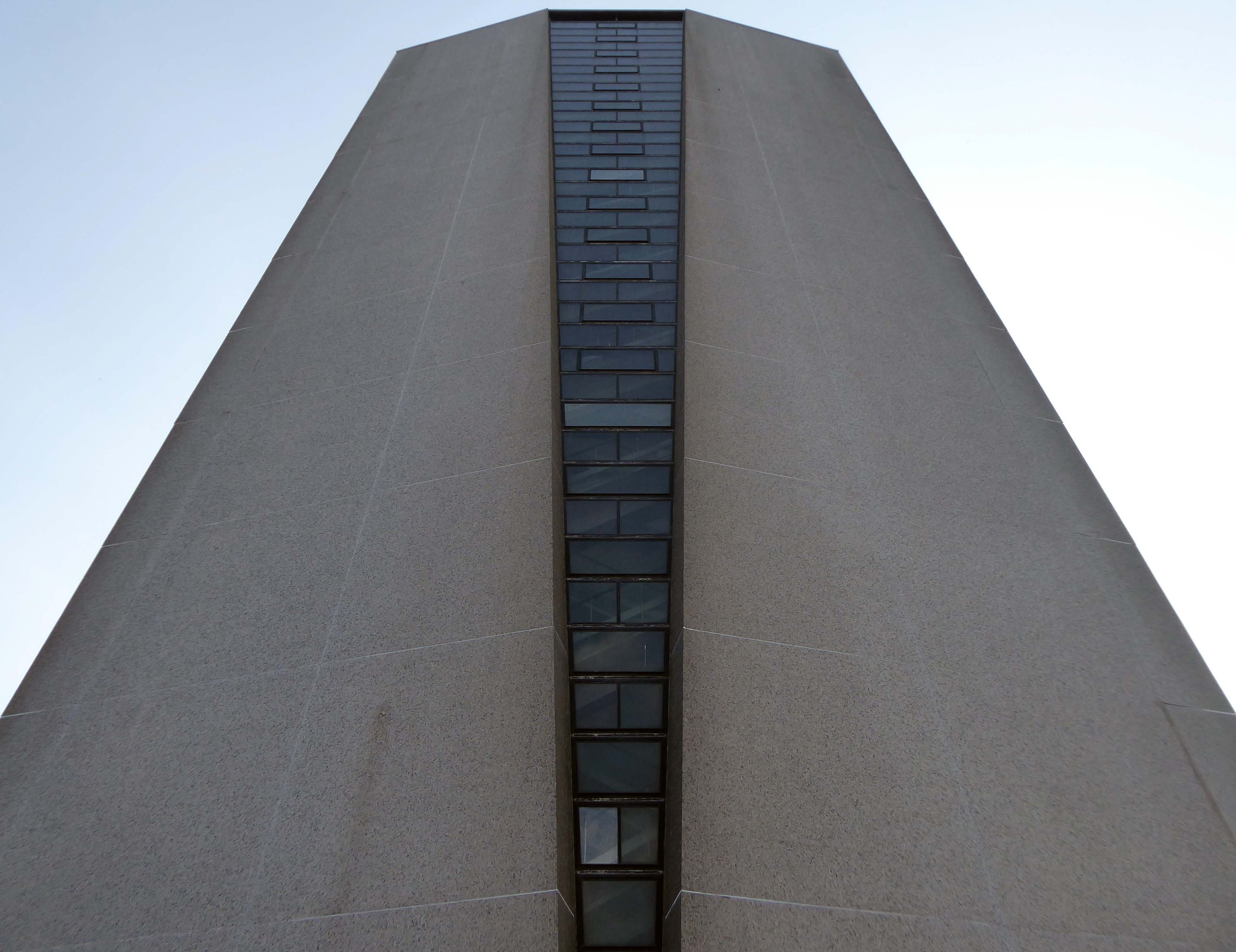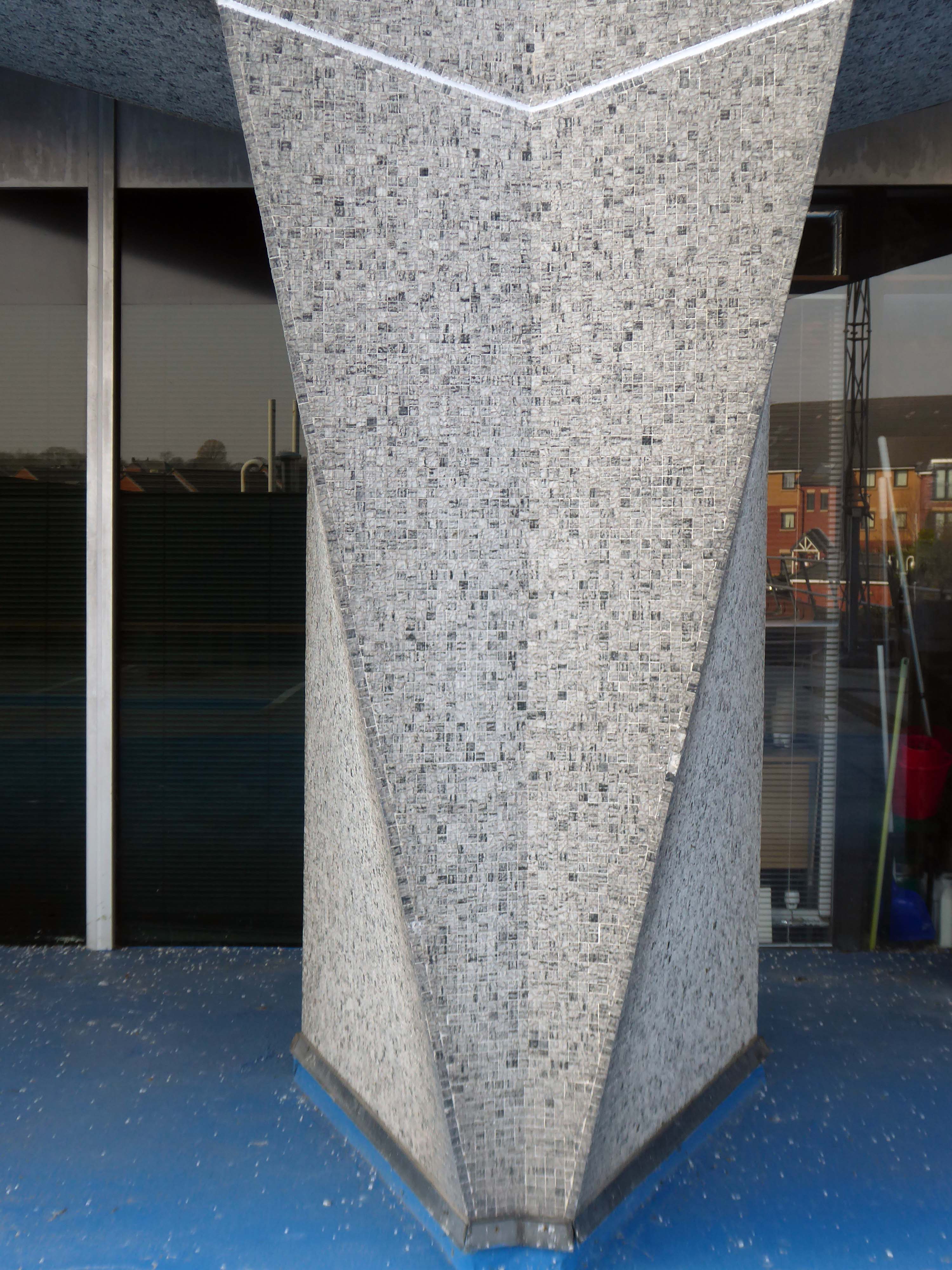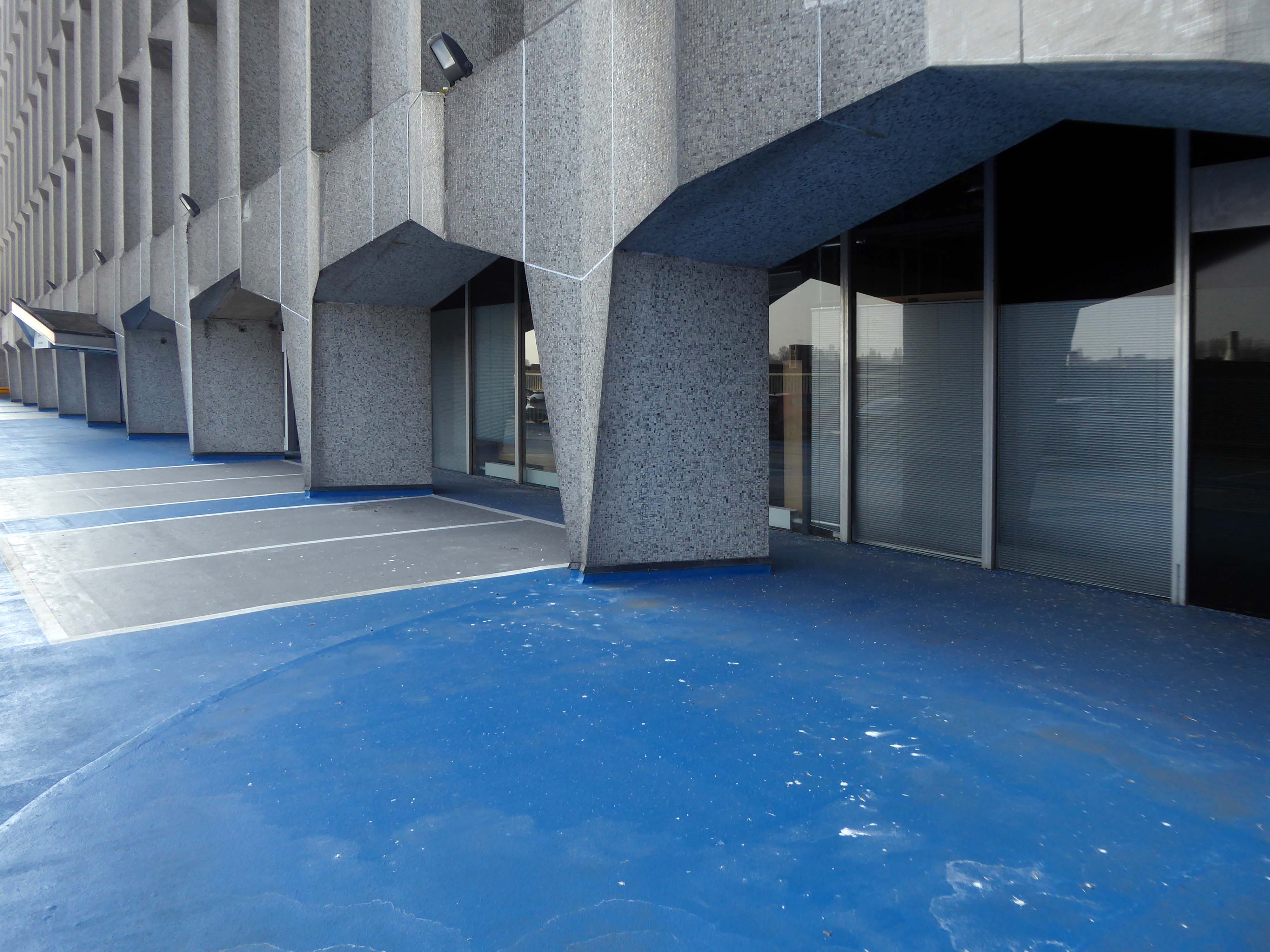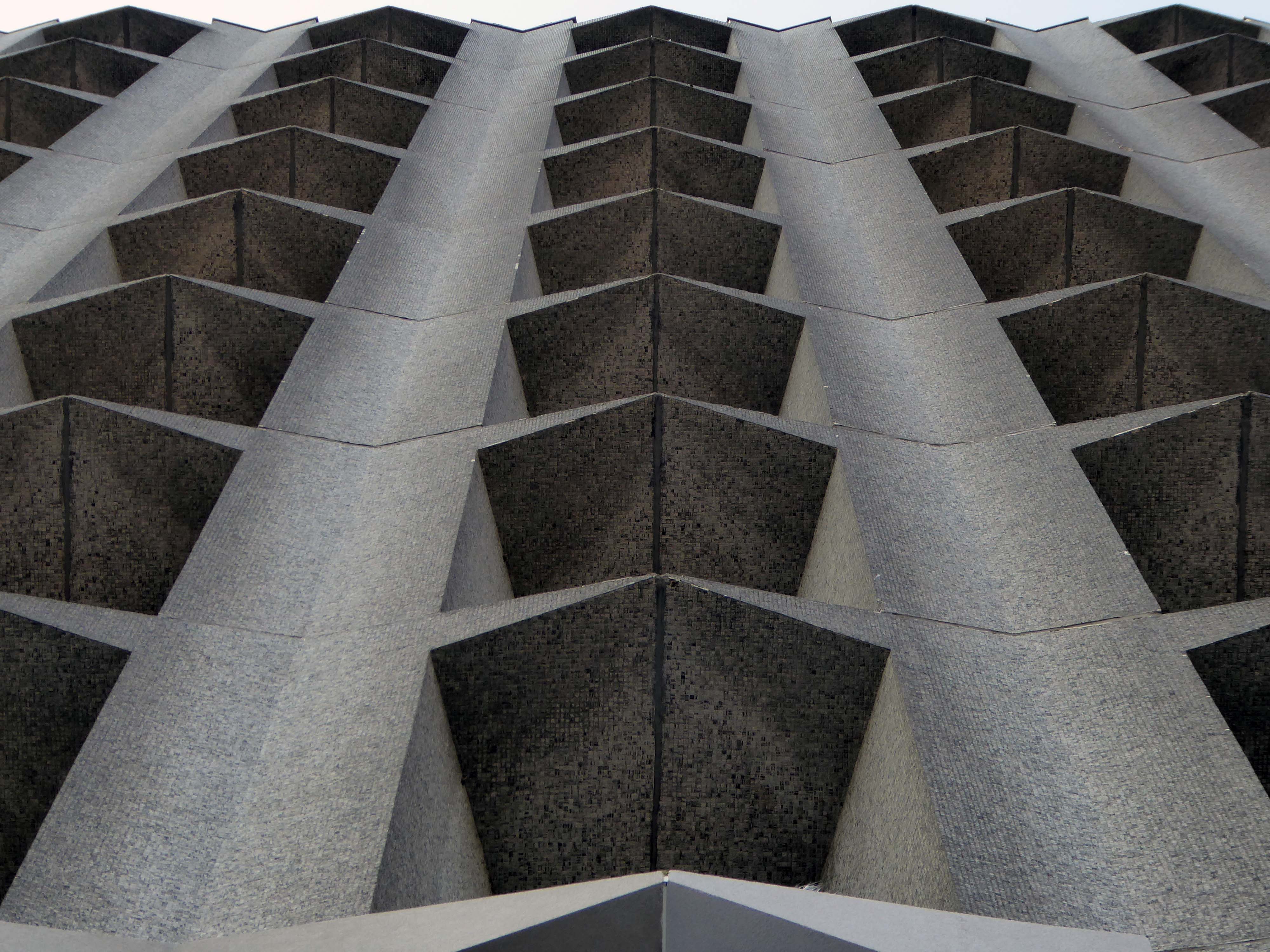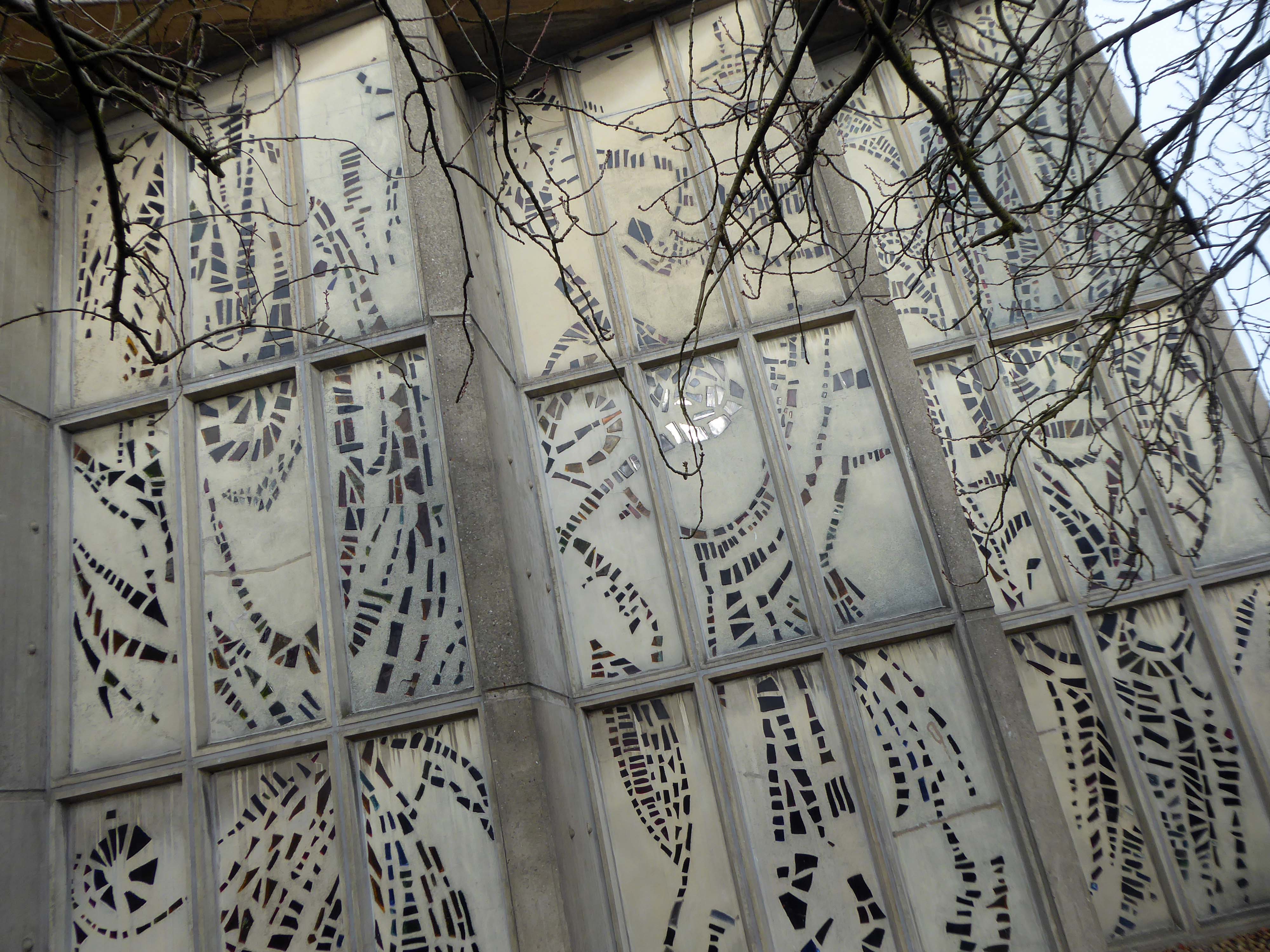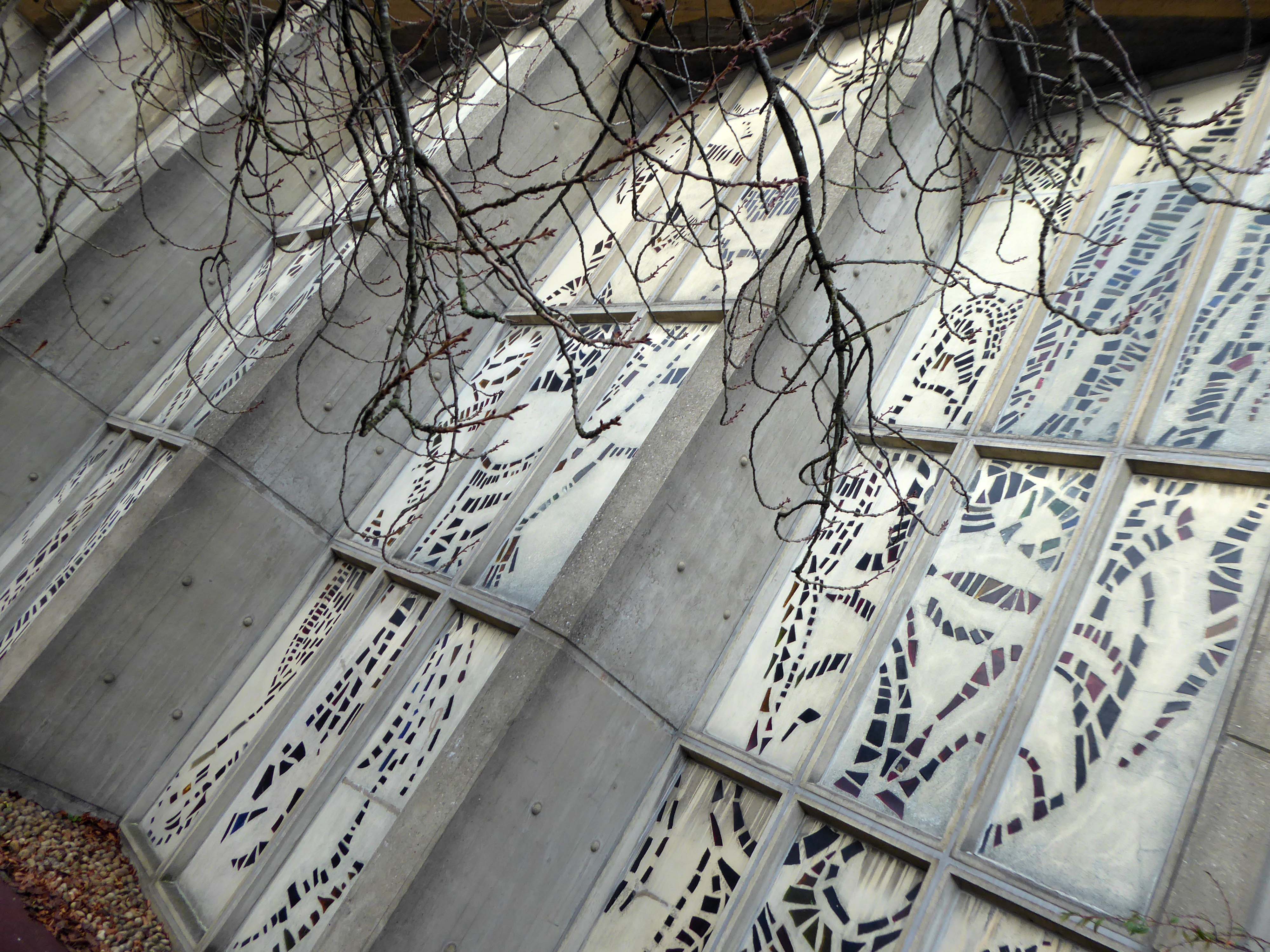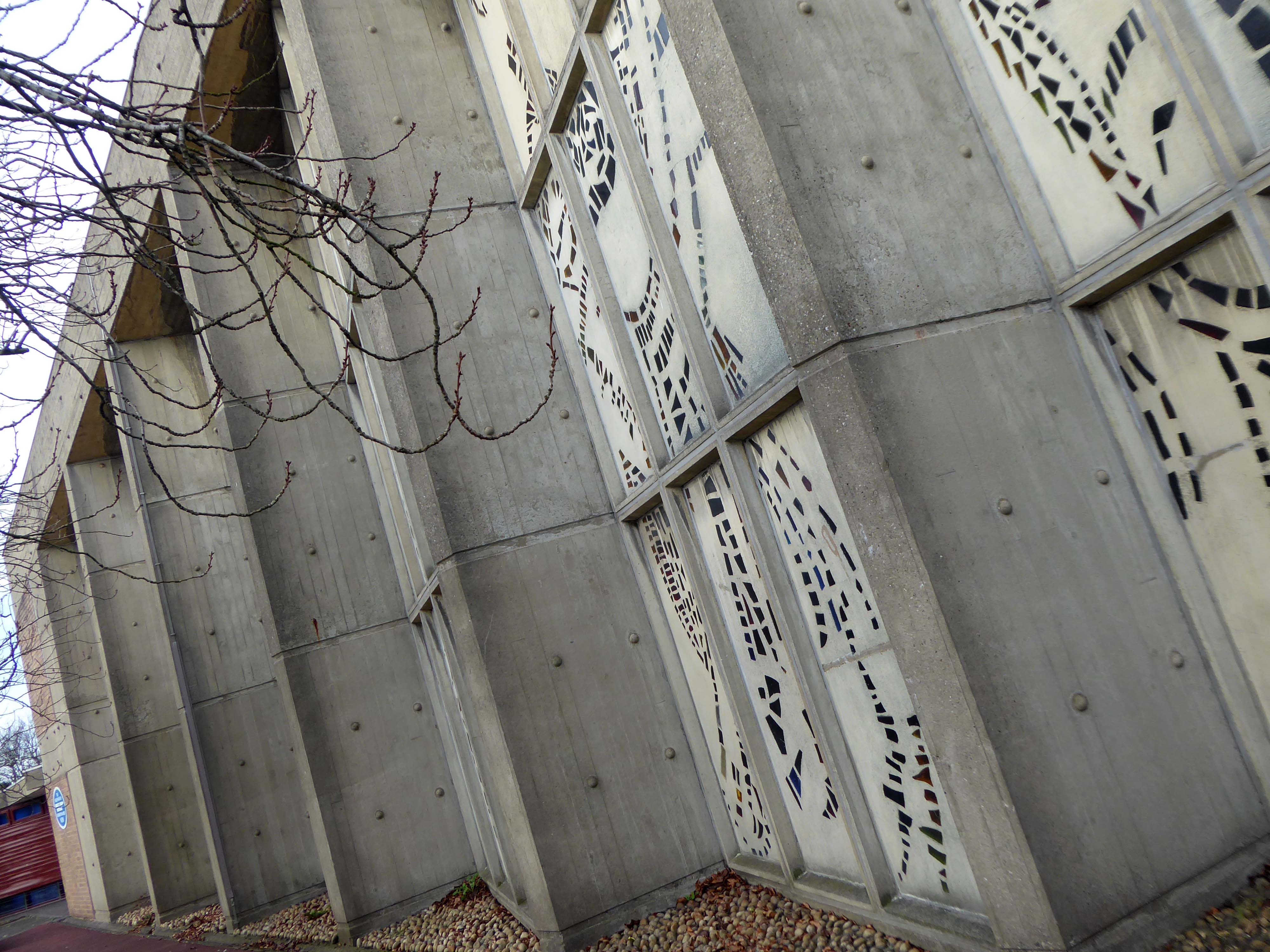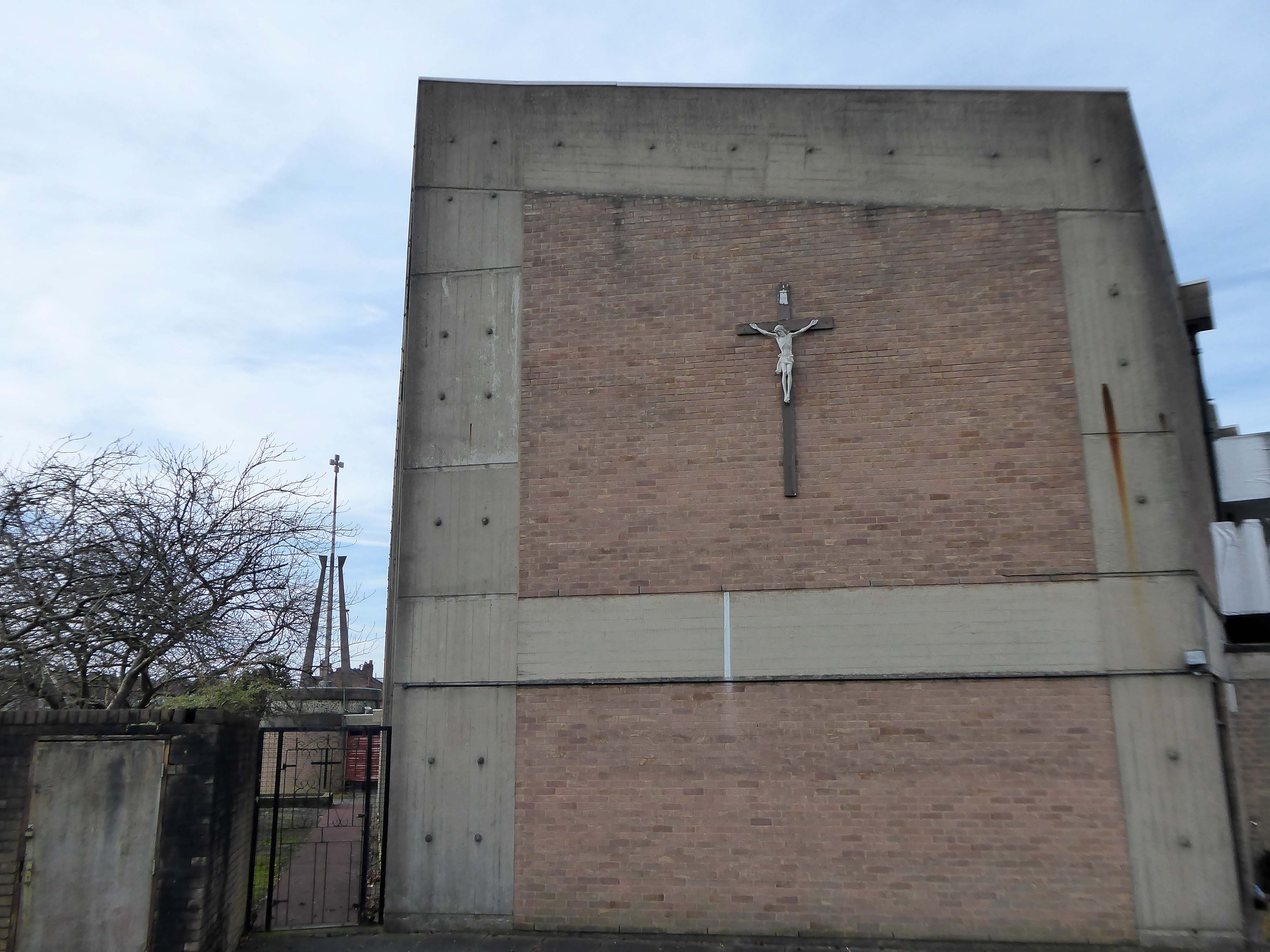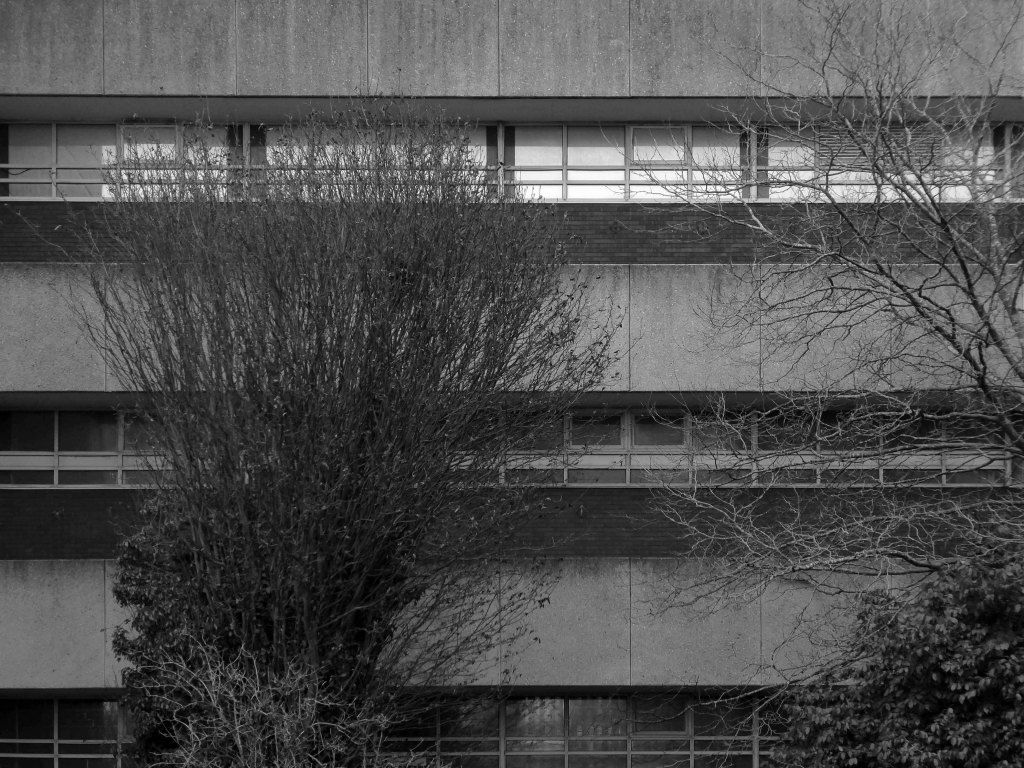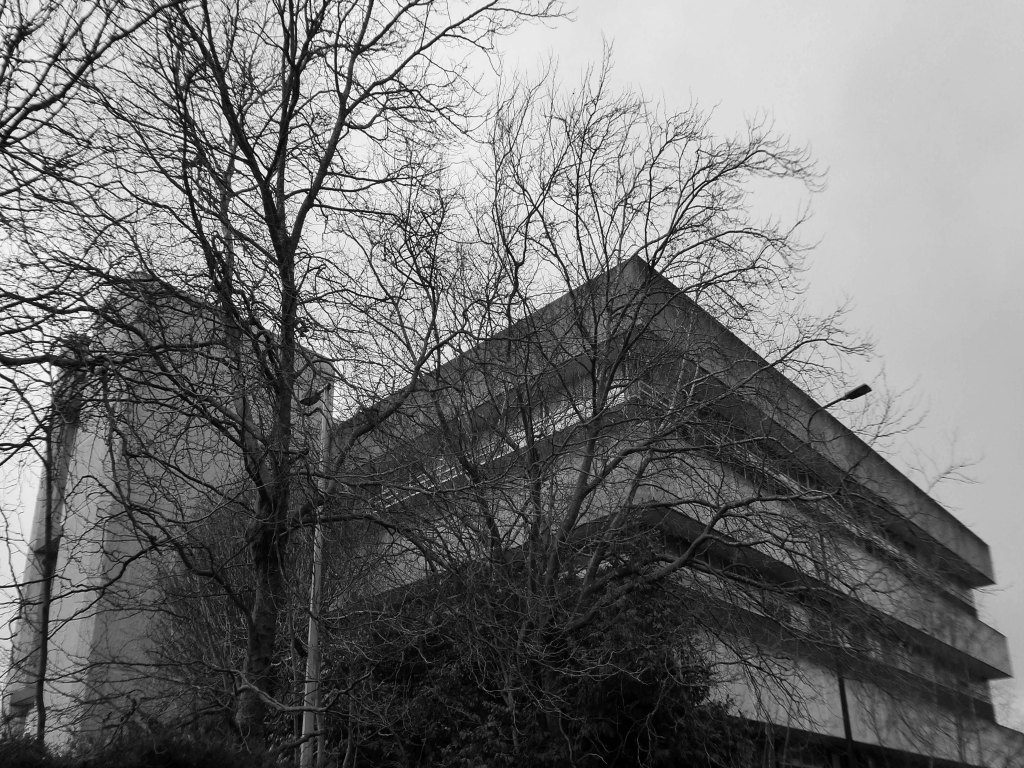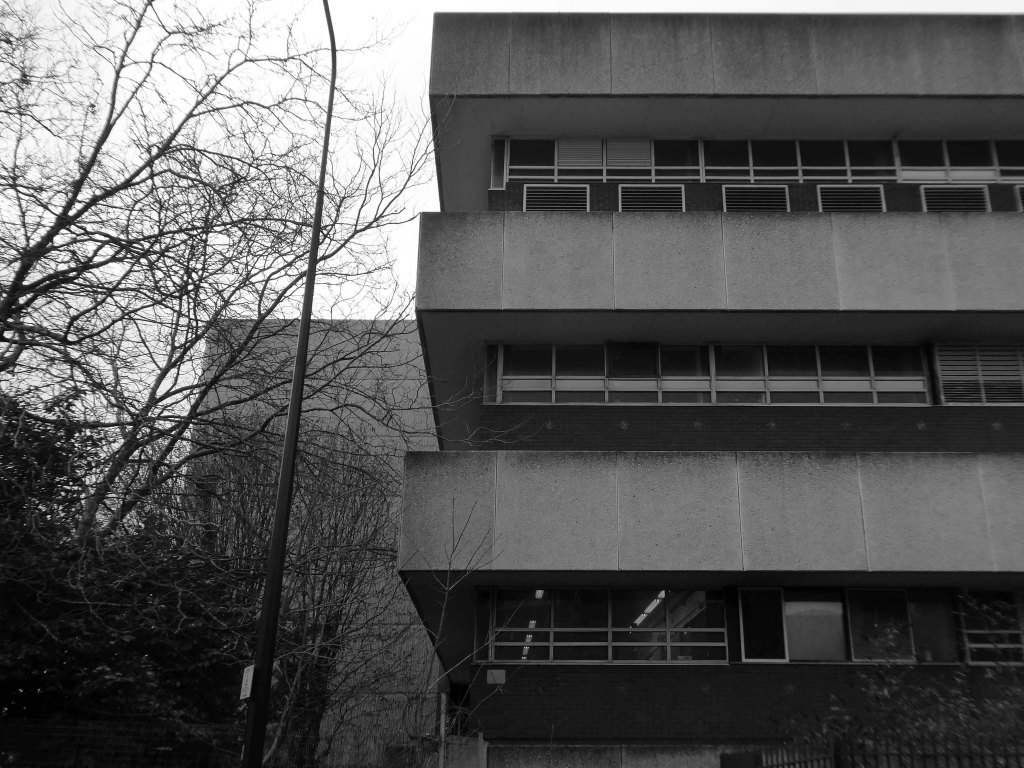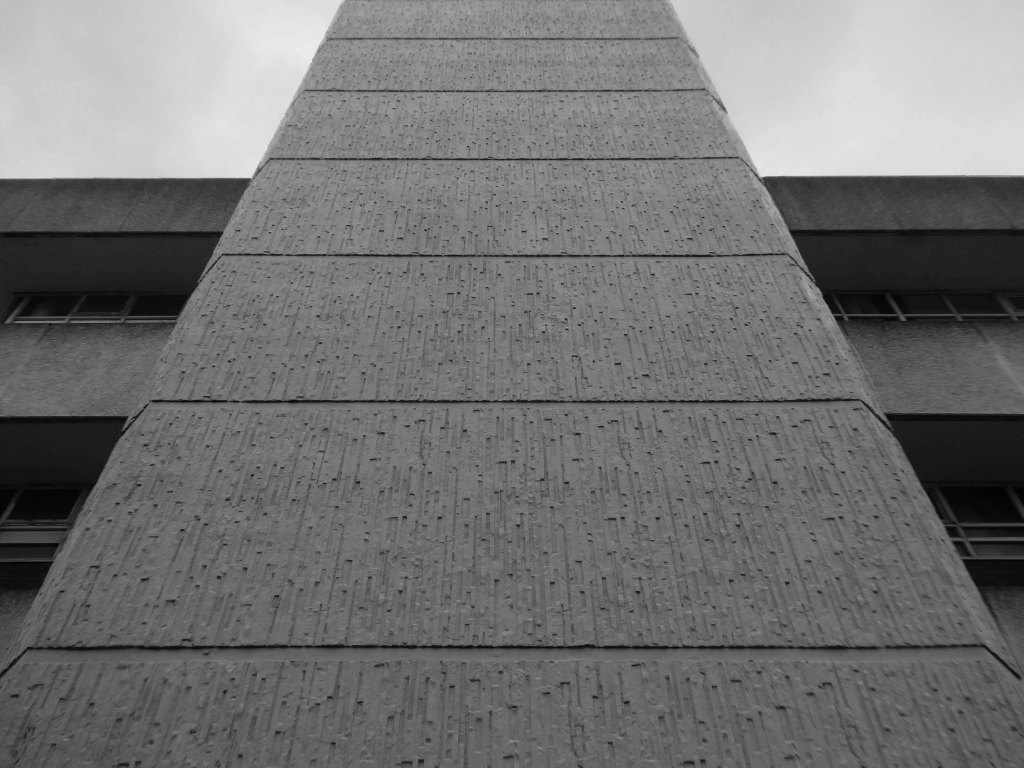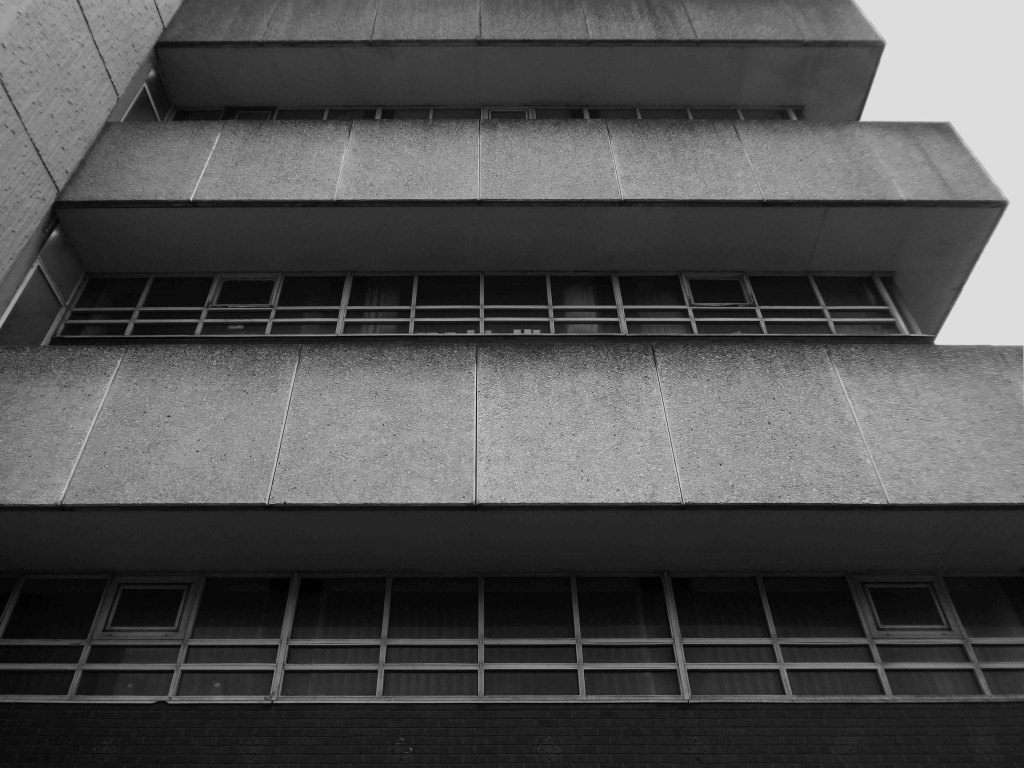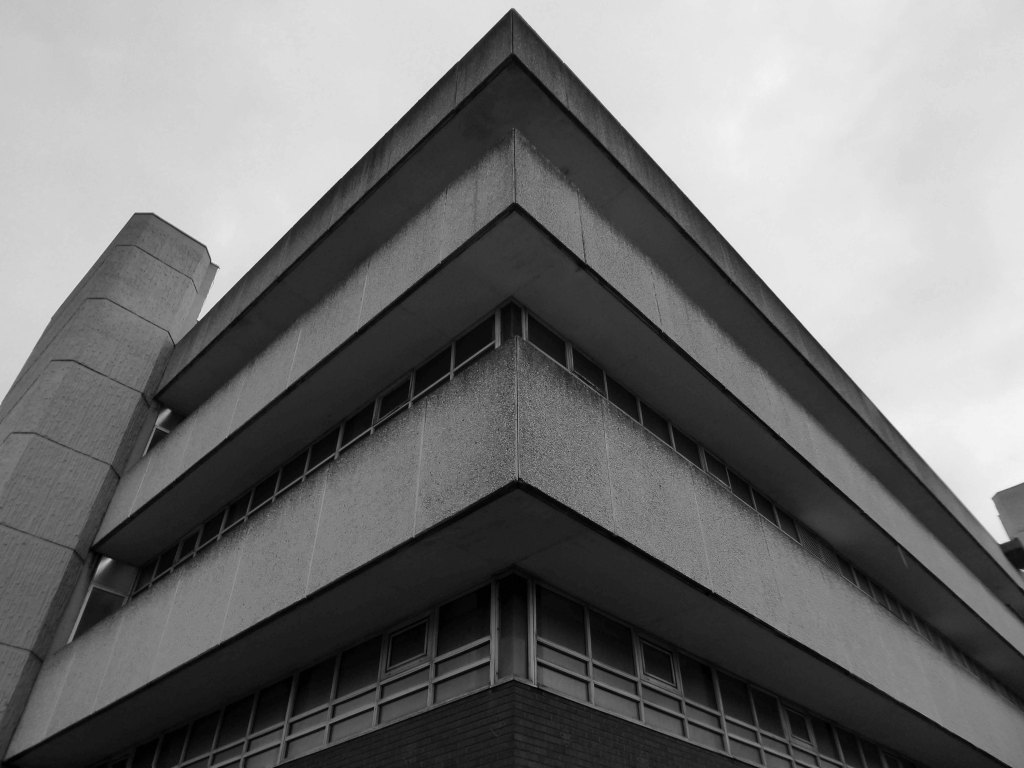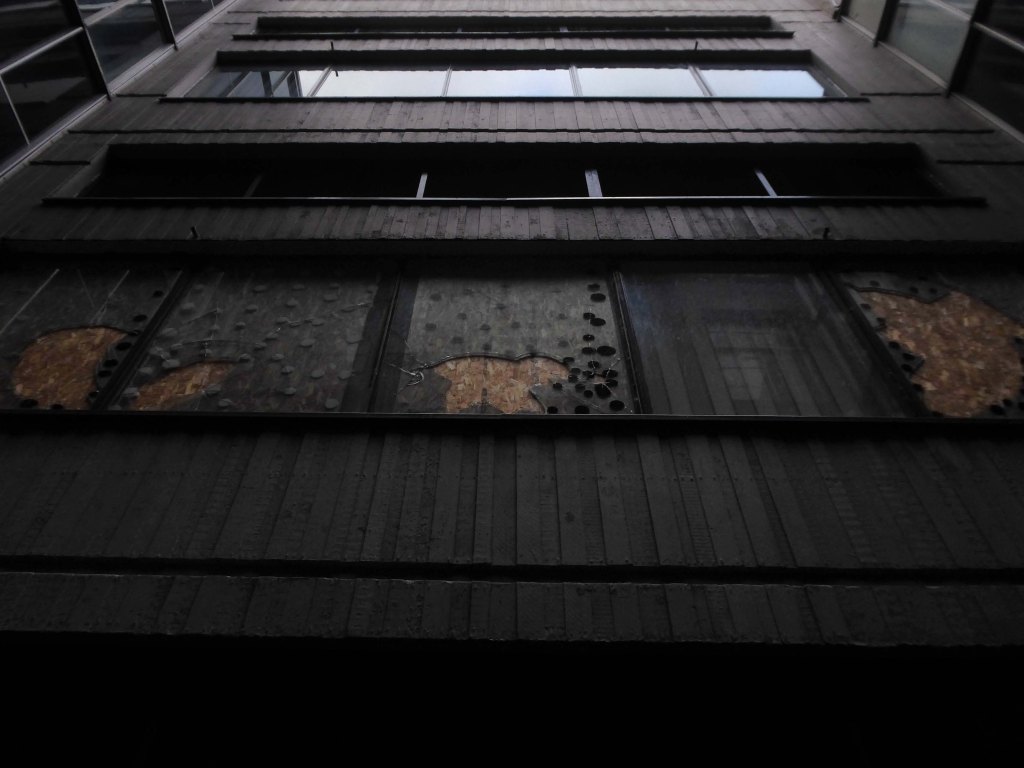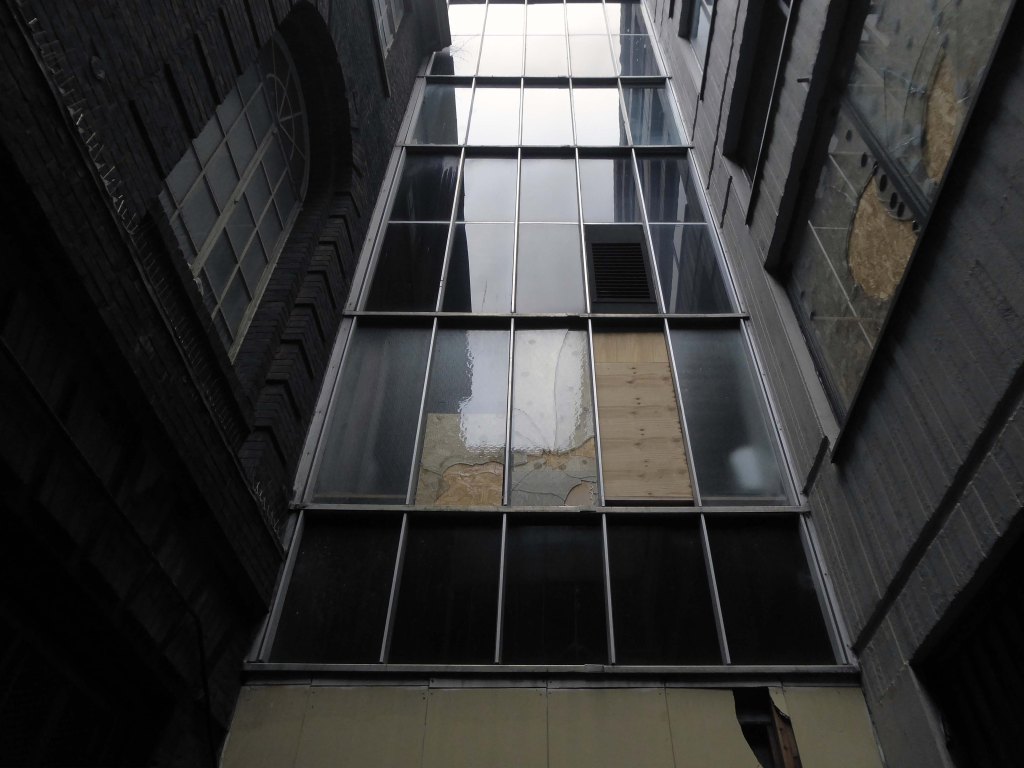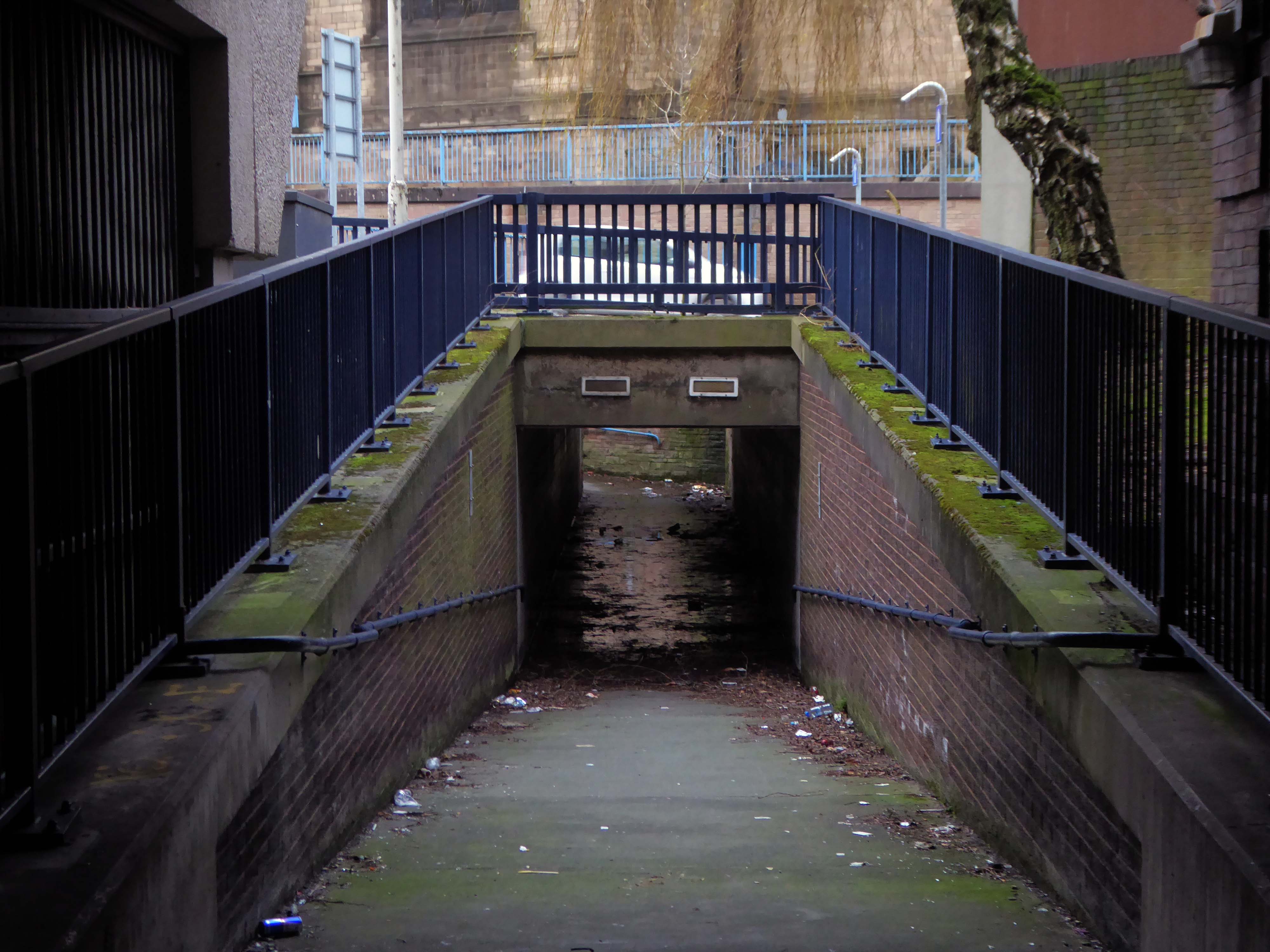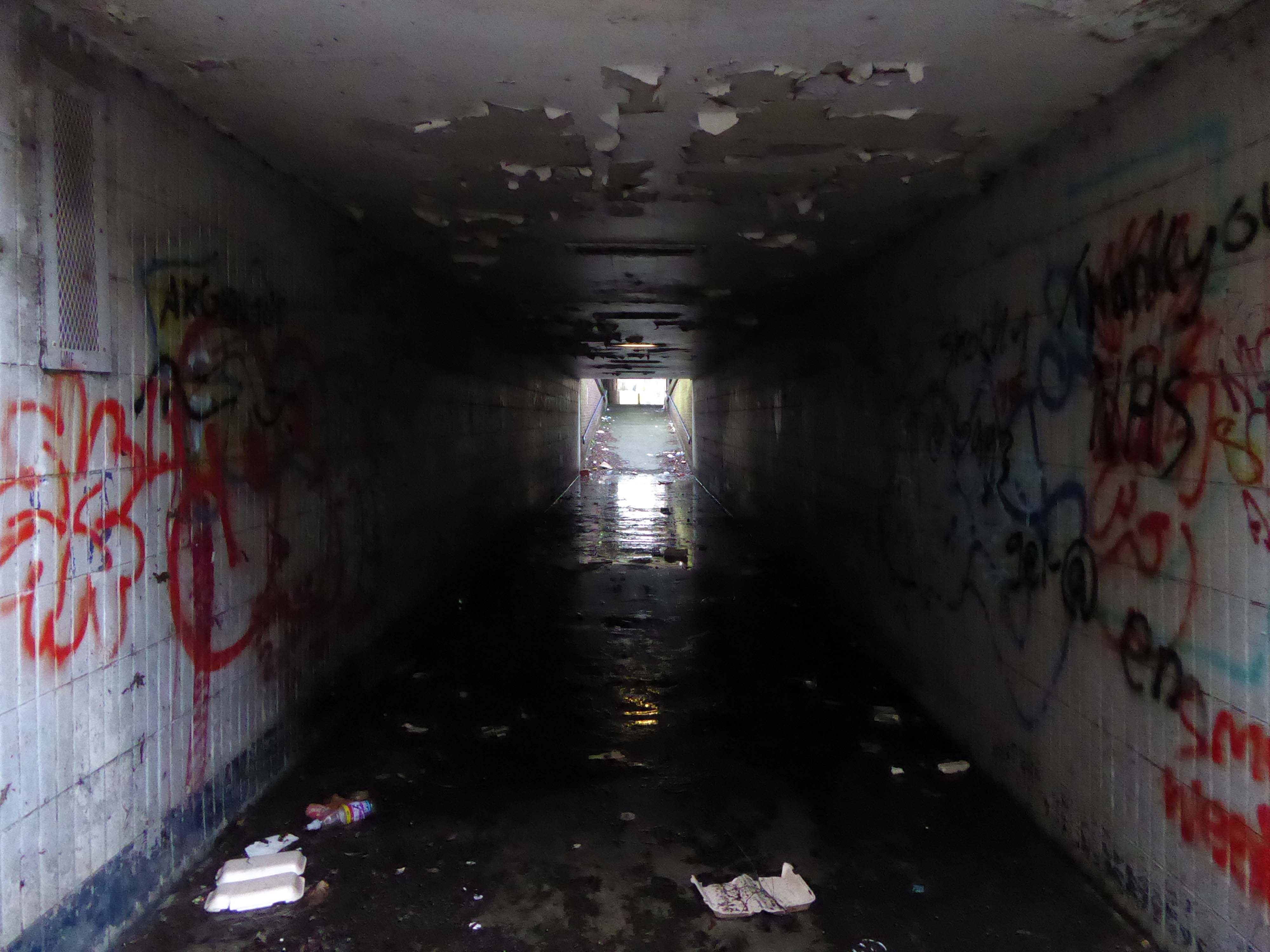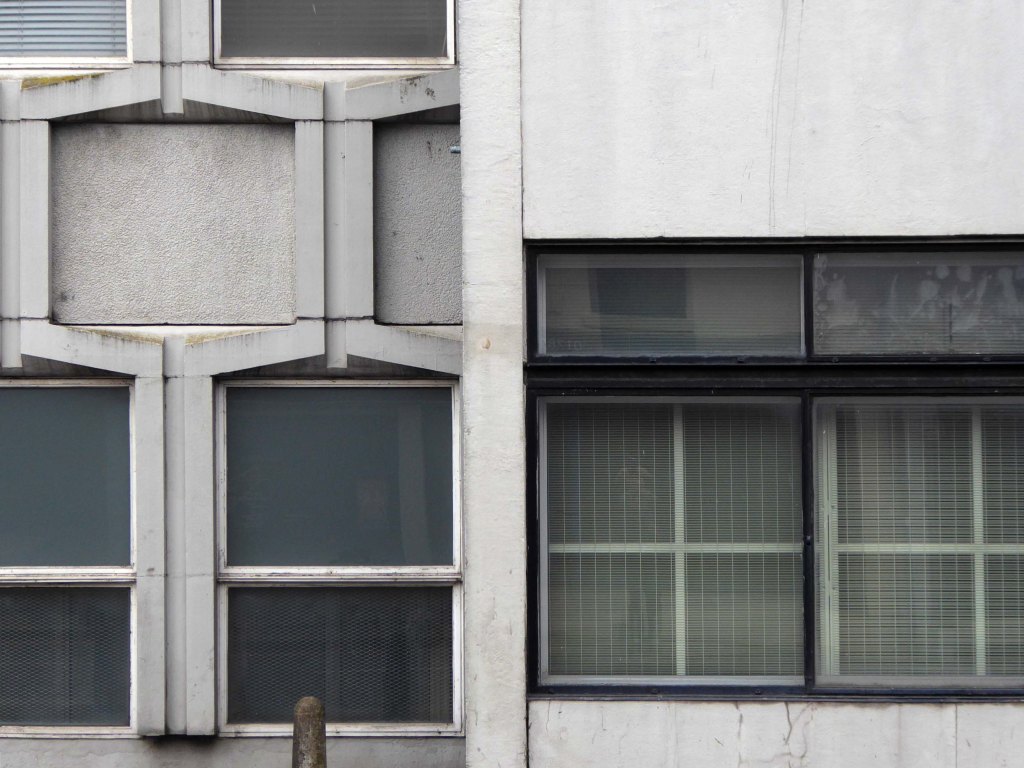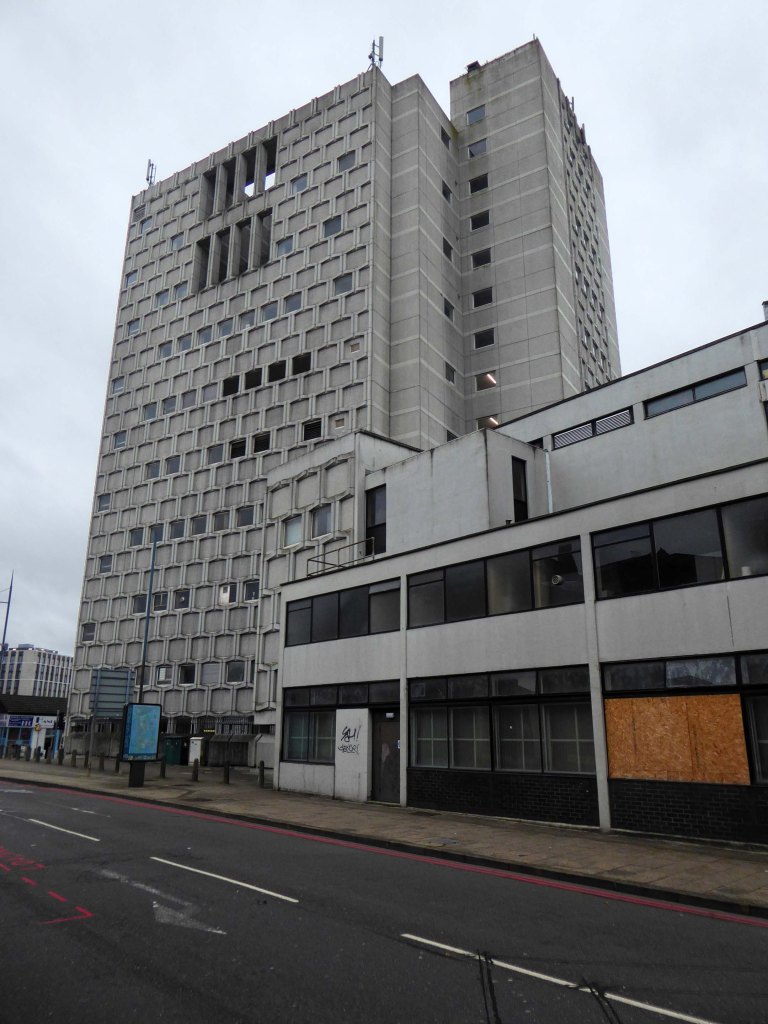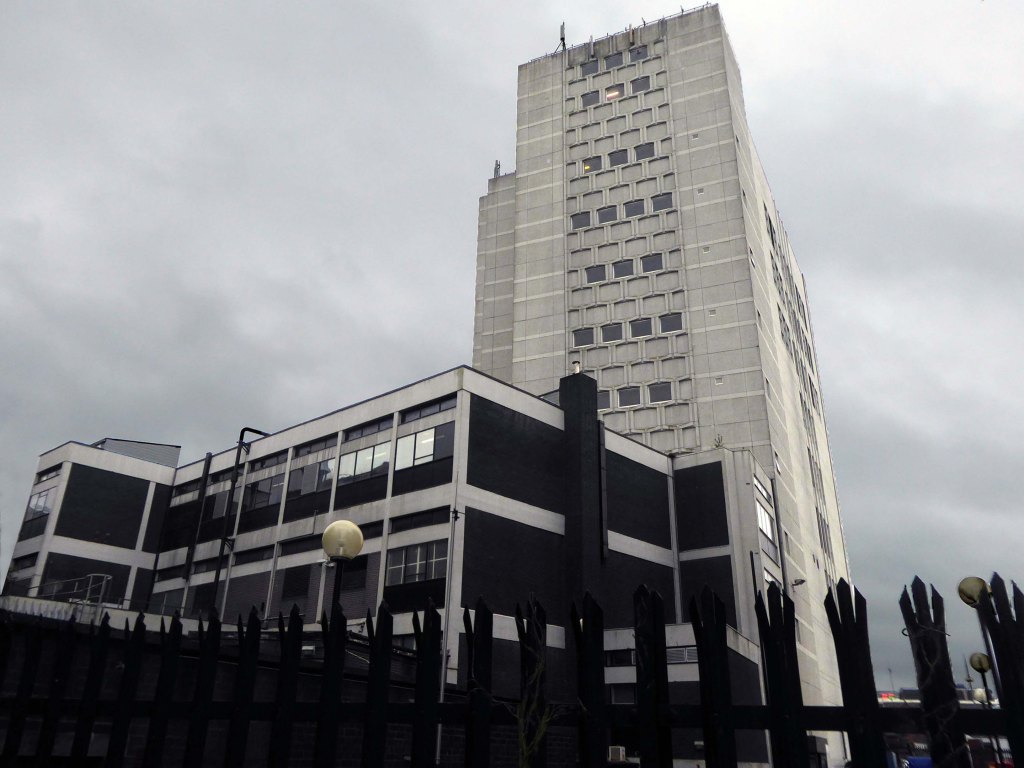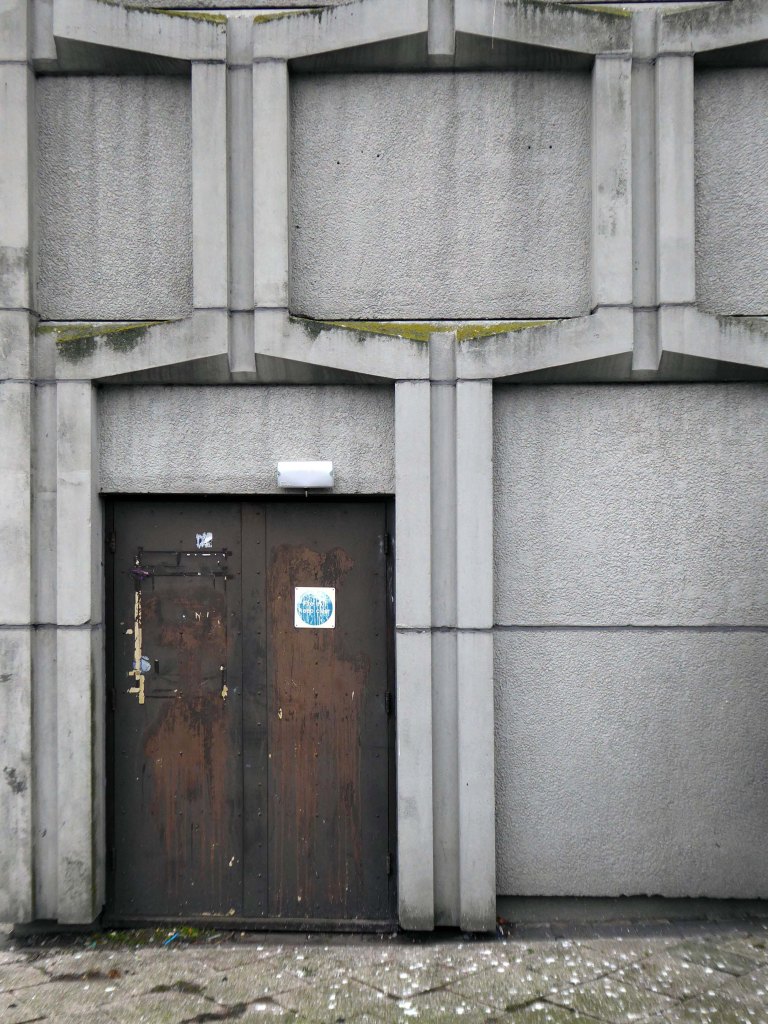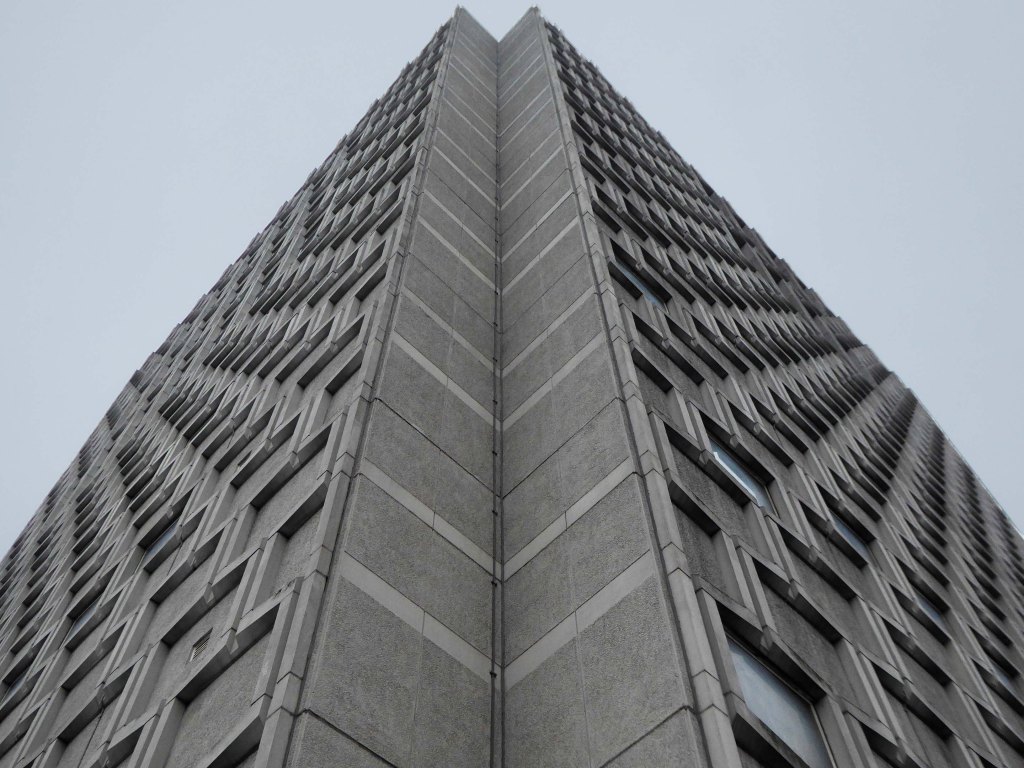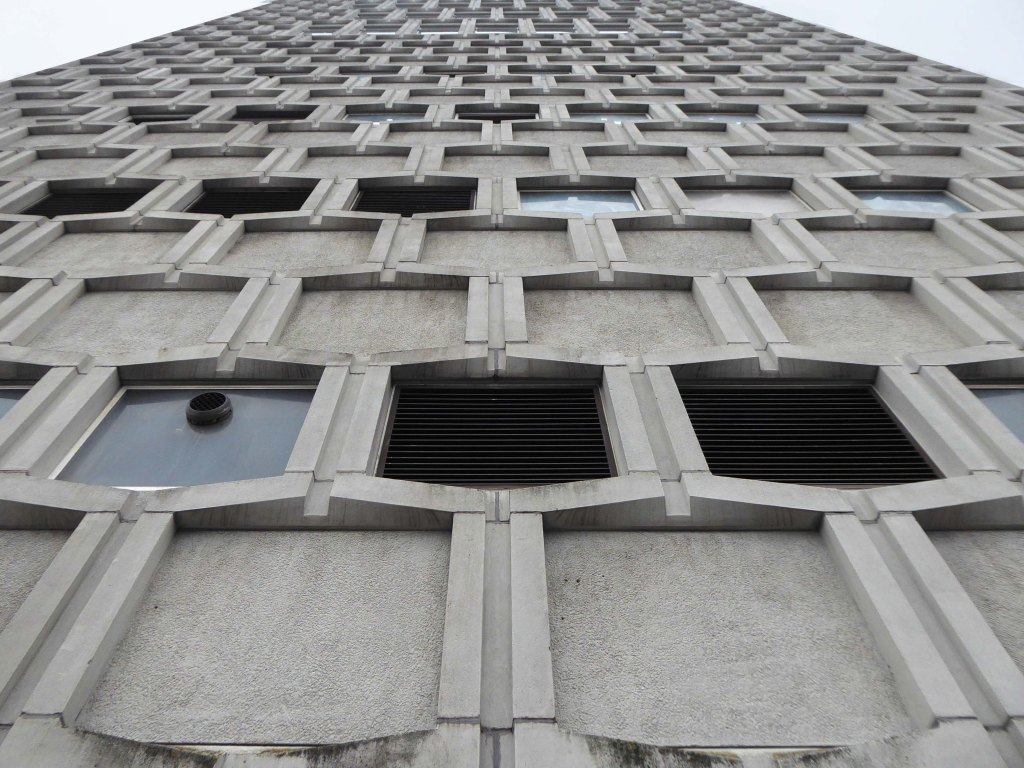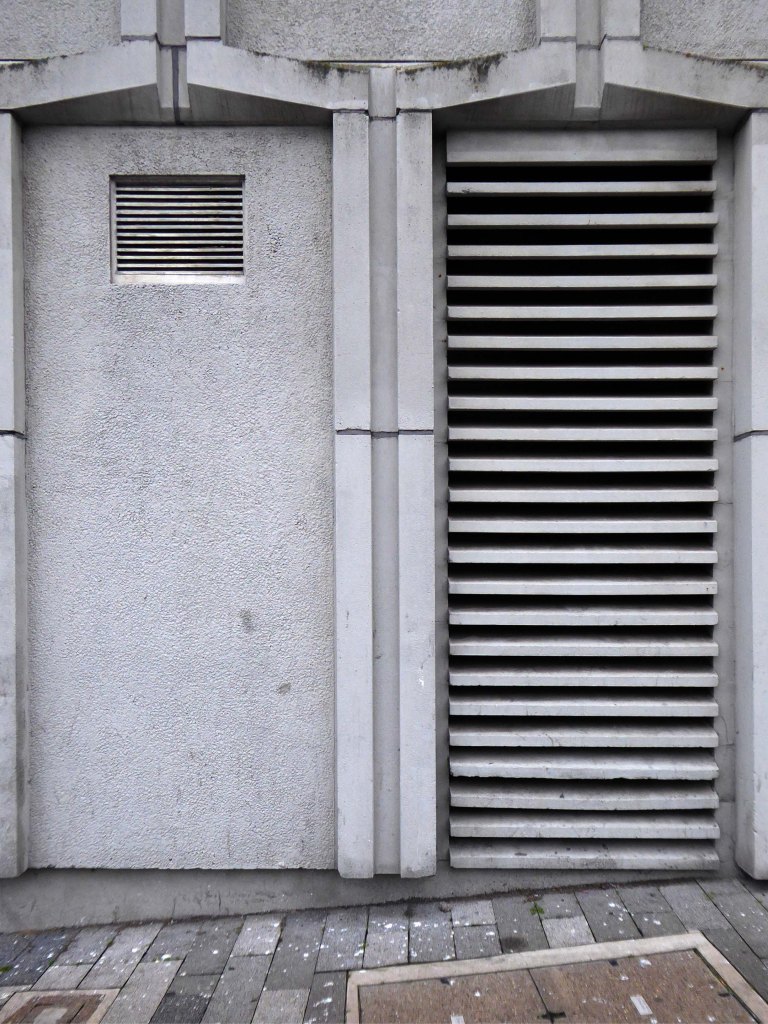
The Pyramid at Anderston – Glasgow

759 Argyle Street Glasgow G3 8DS

Architects: Honeyman, Jack & Robertson

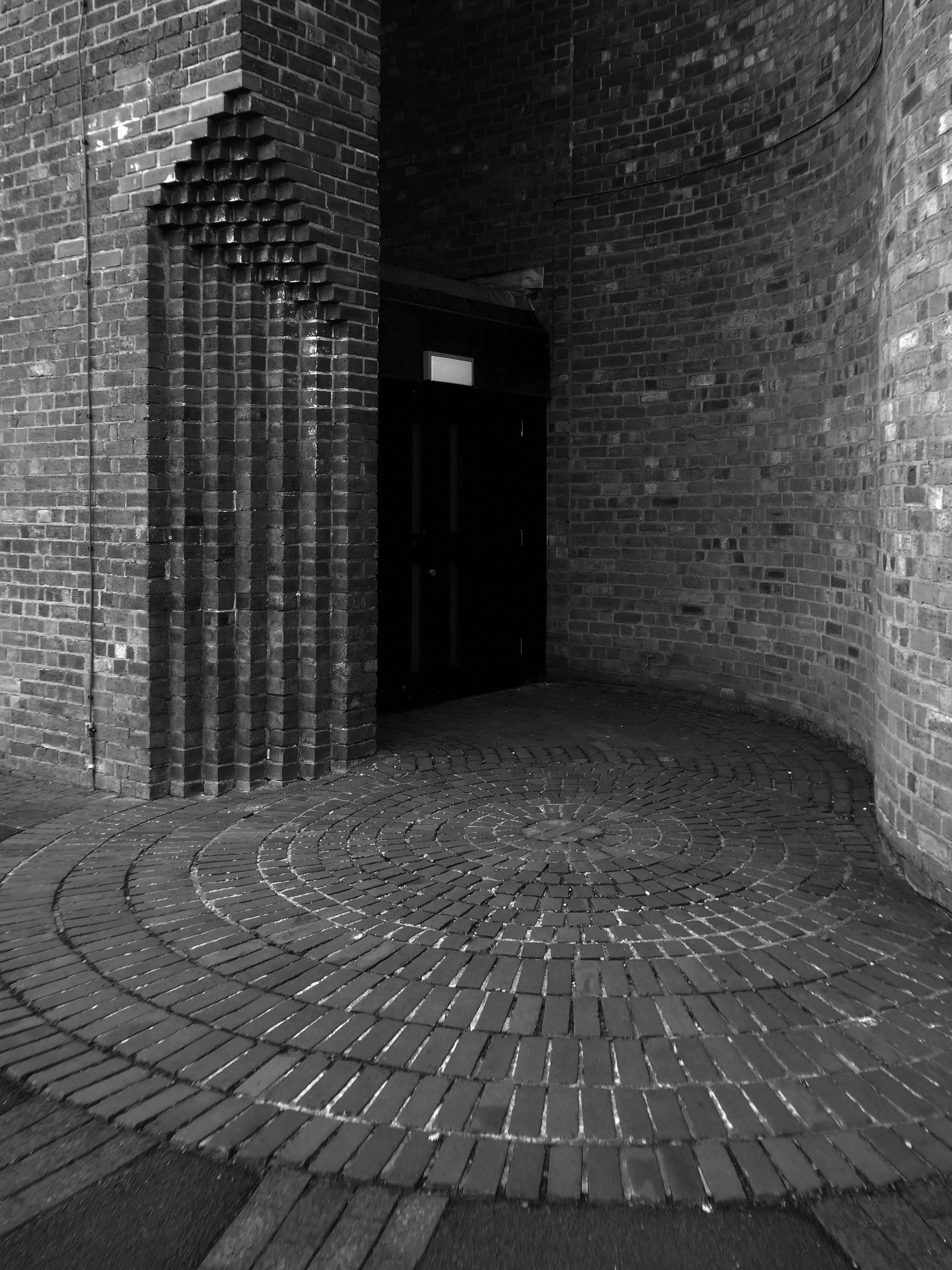
I was walking along St Vincent Street one rainy day.

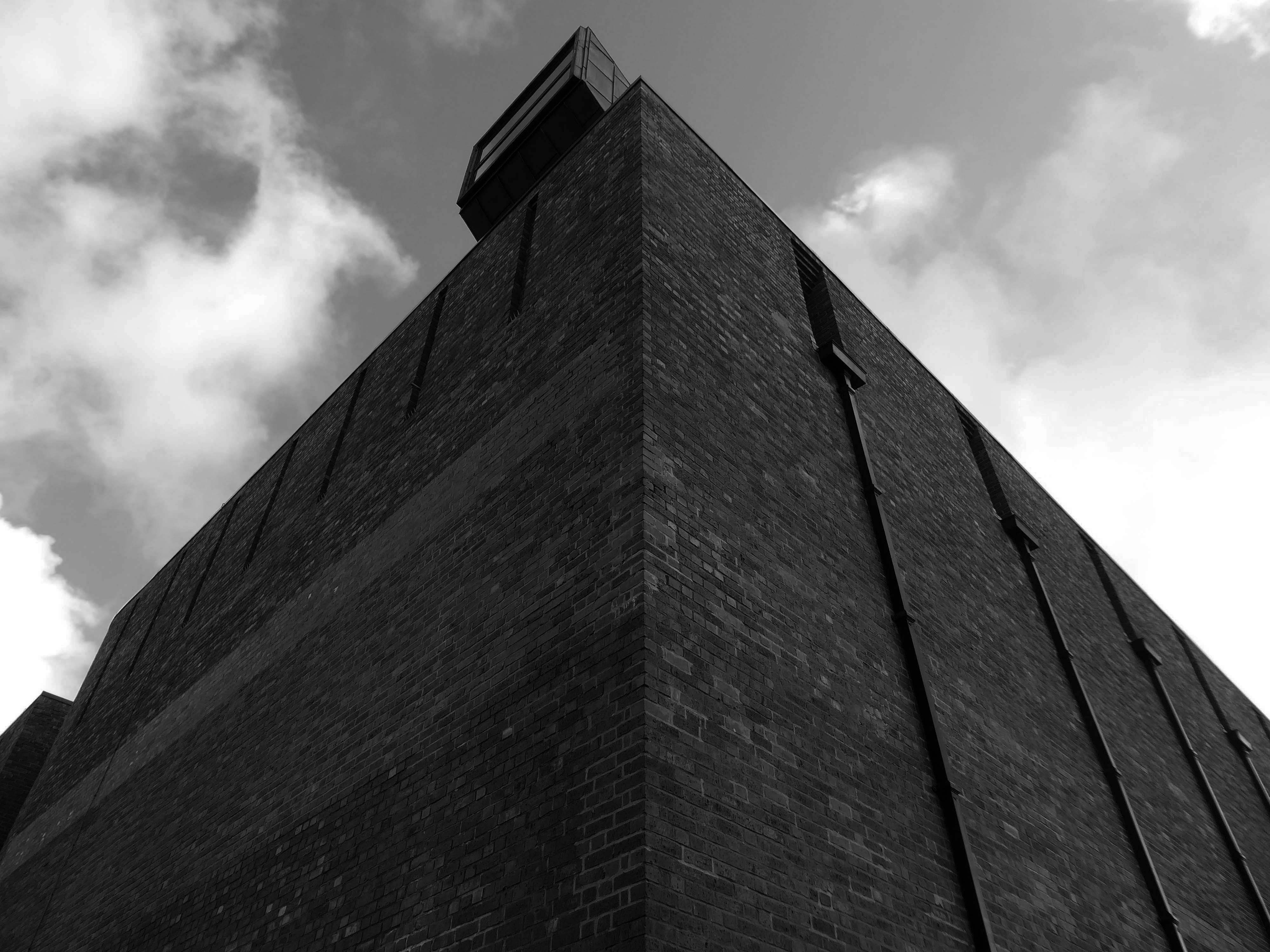
From the corner of my left eye, I espied a pyramid.

Curious, I took a turn, neither funny nor for the worse, the better to take a closer look.

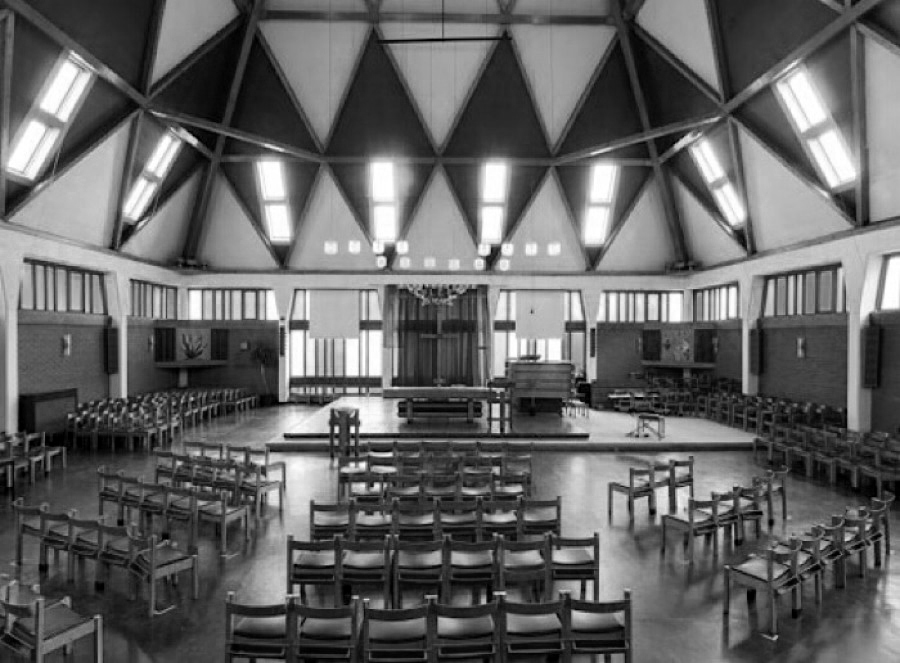
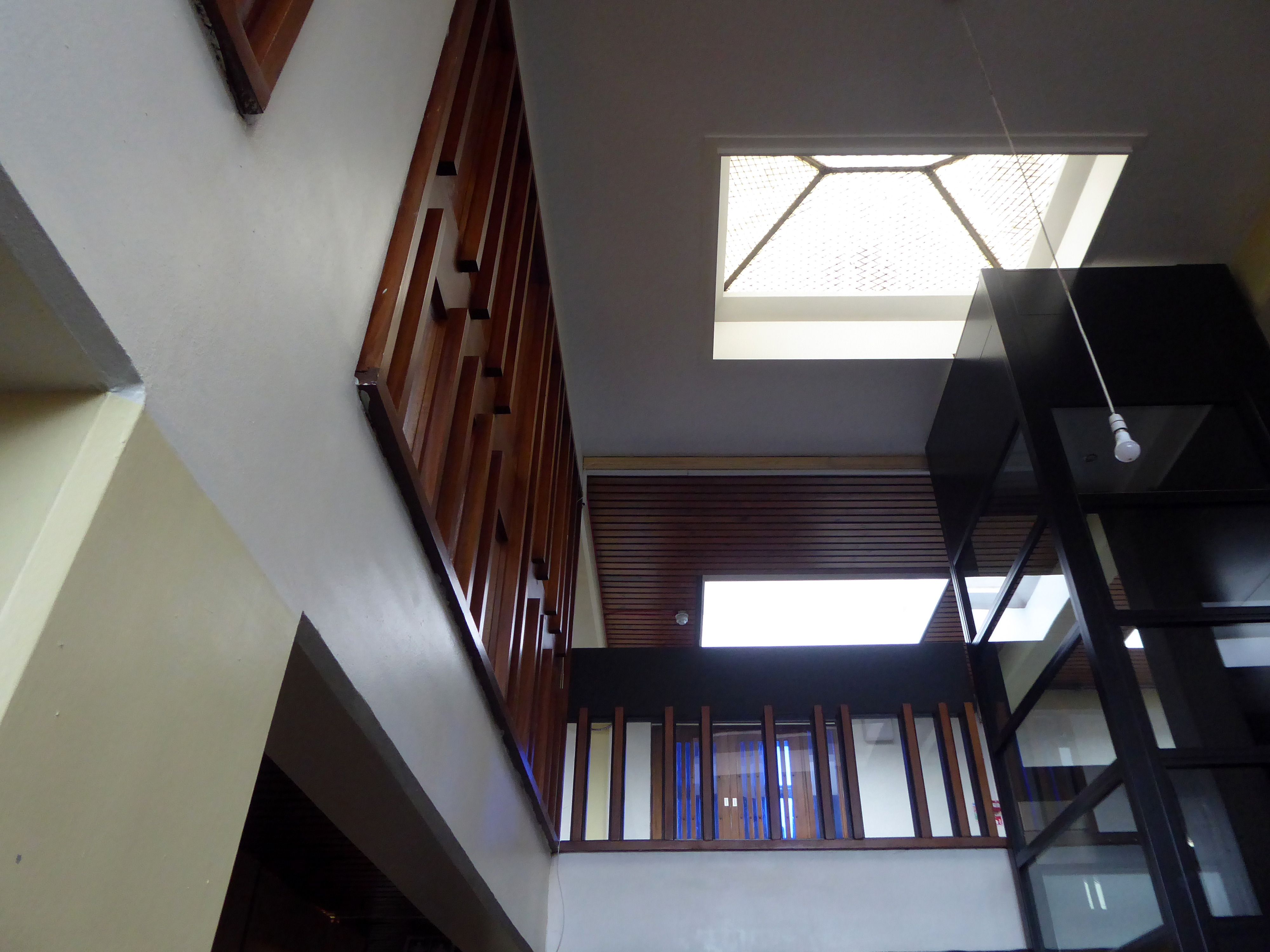
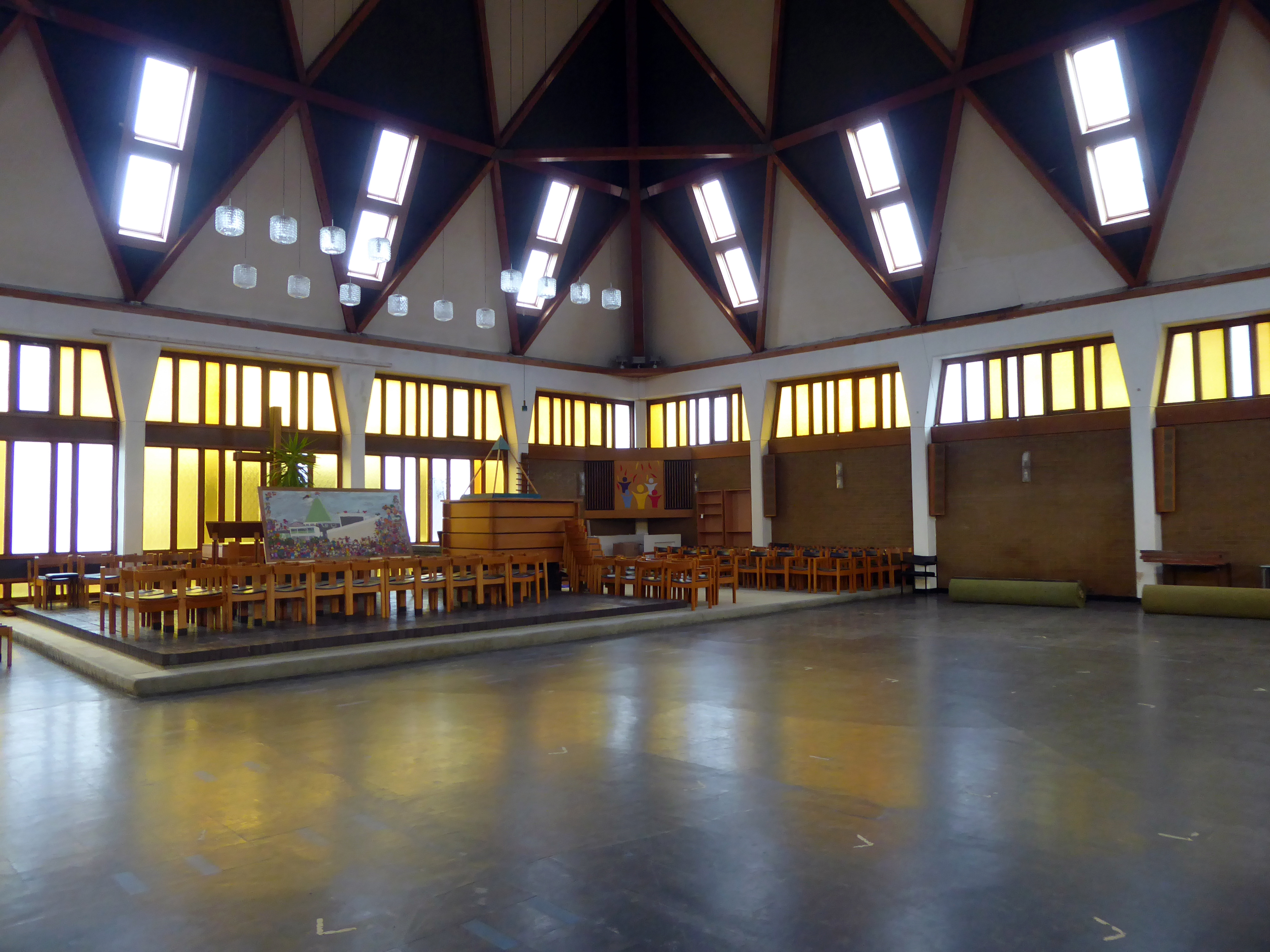
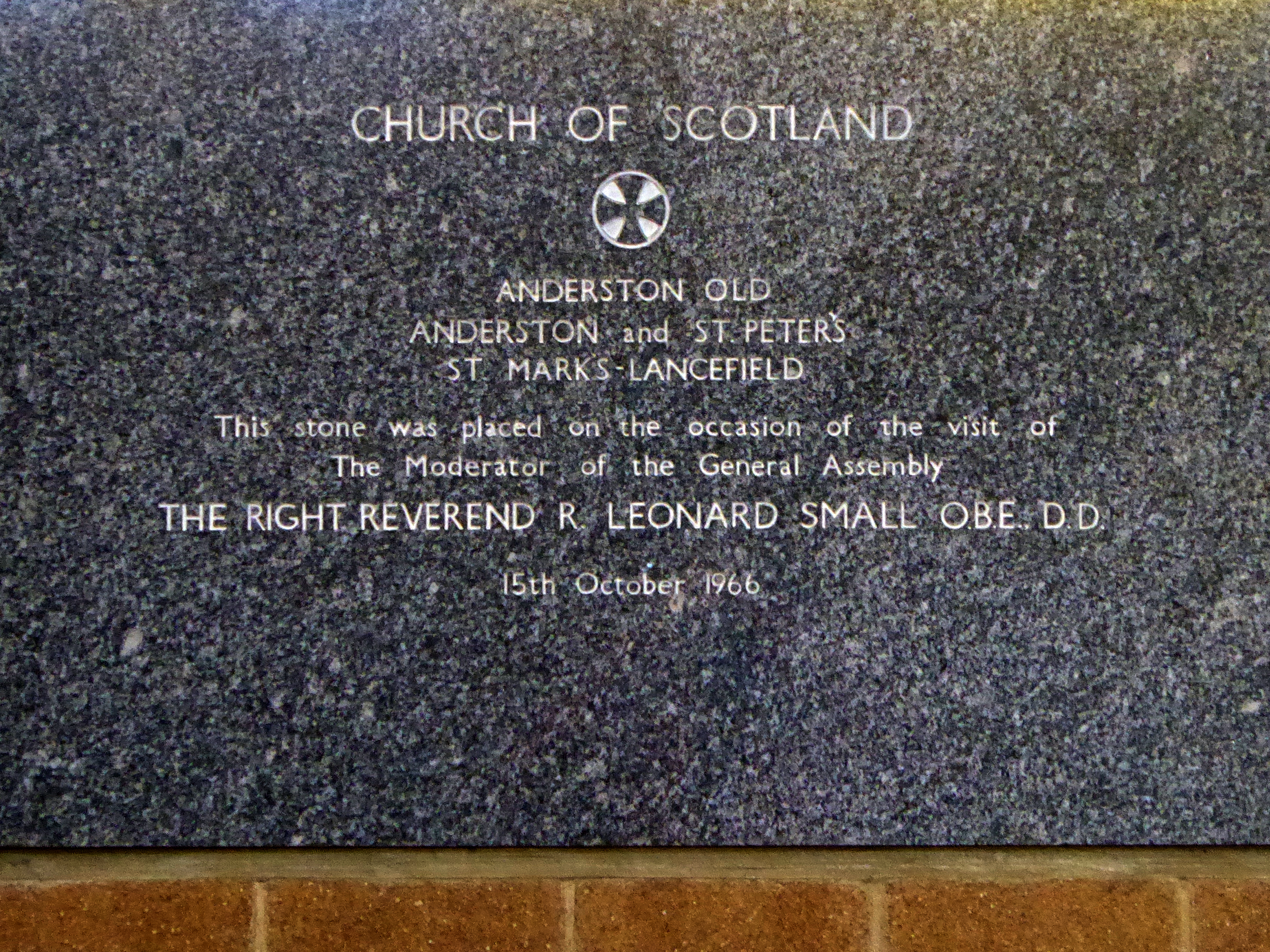
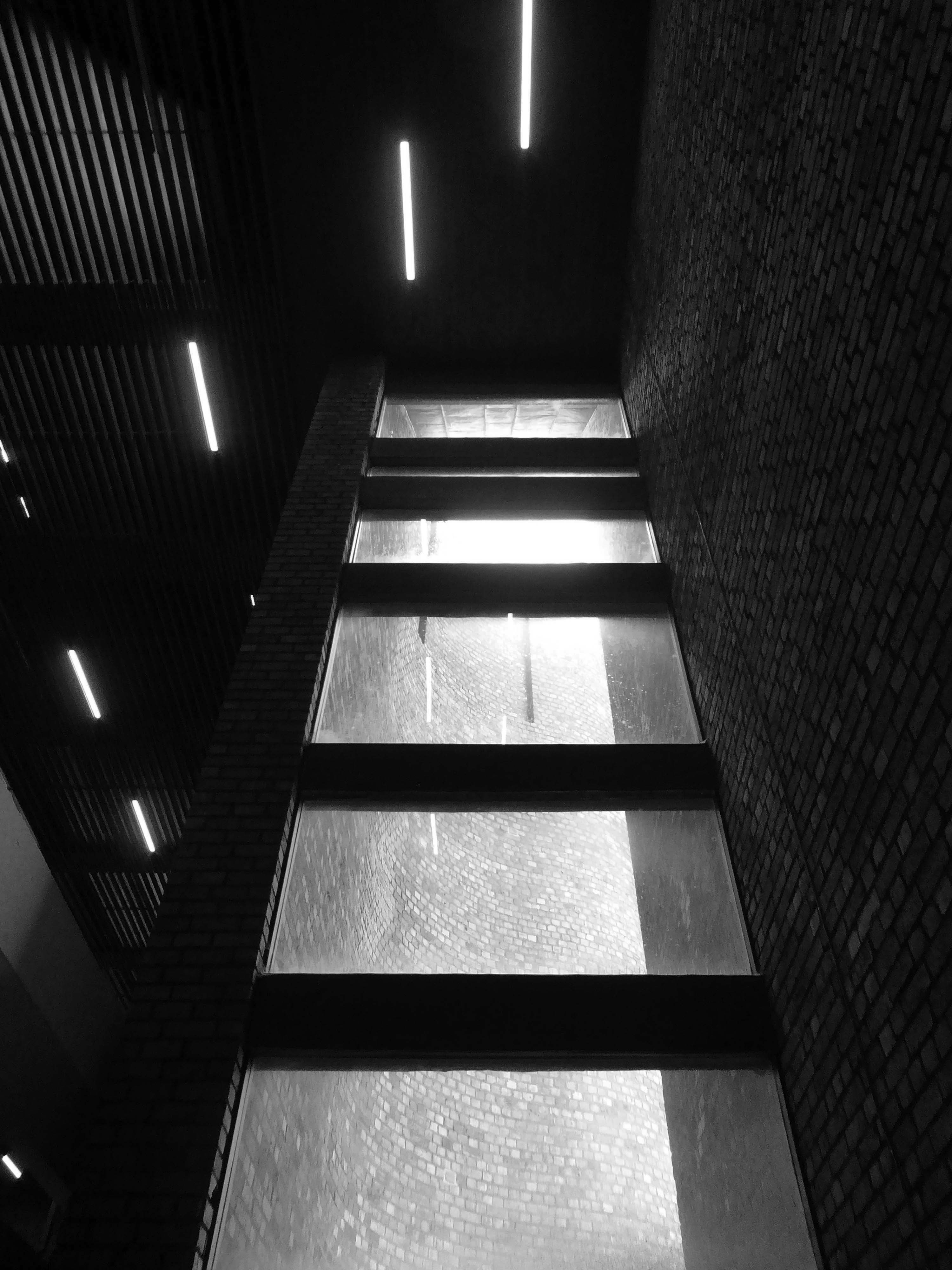
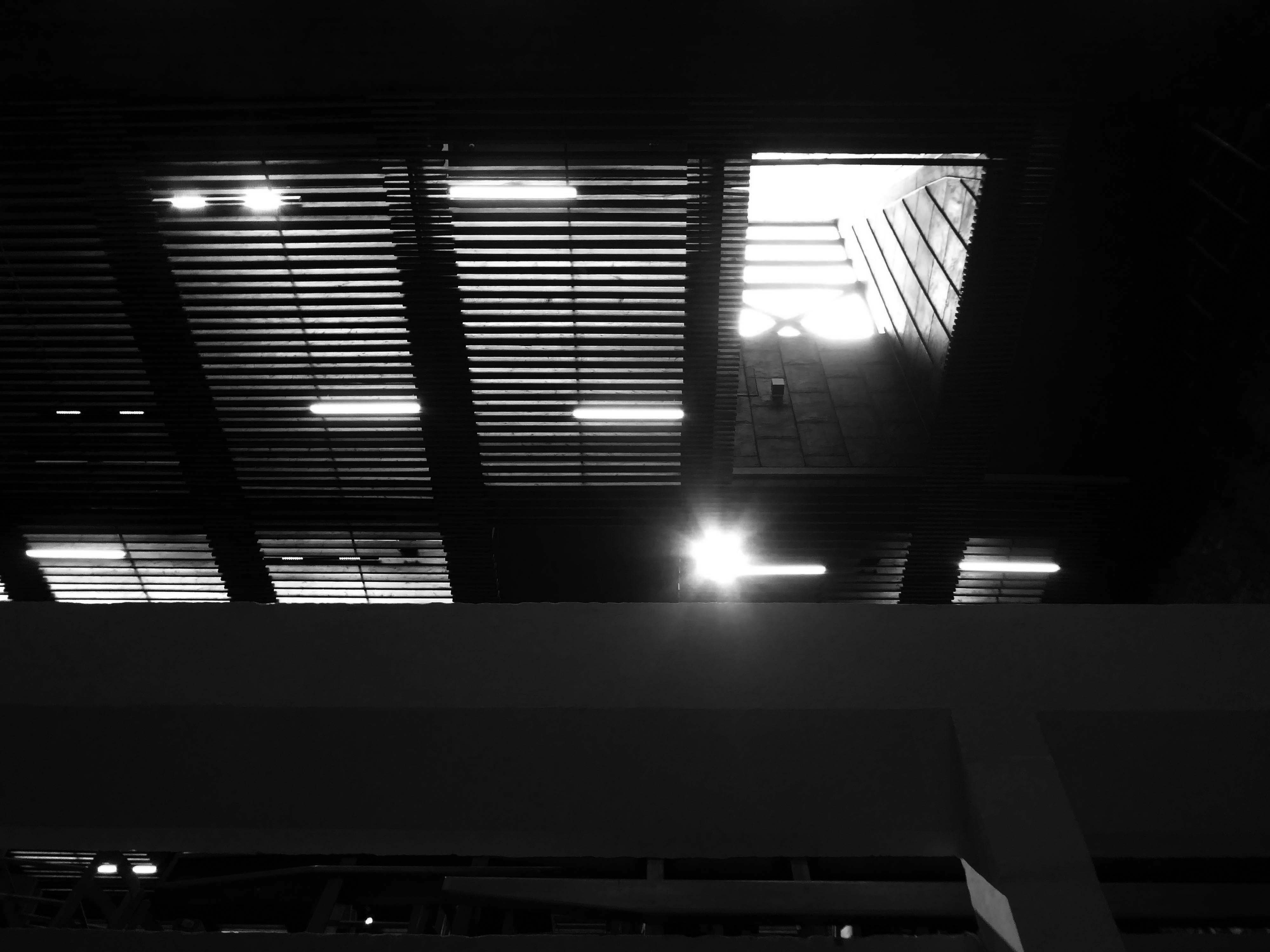
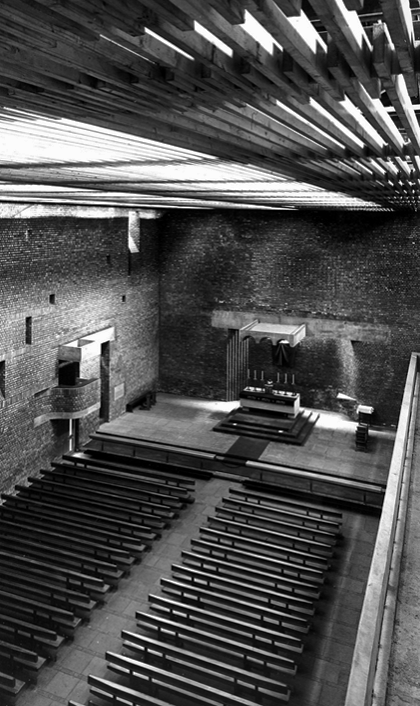
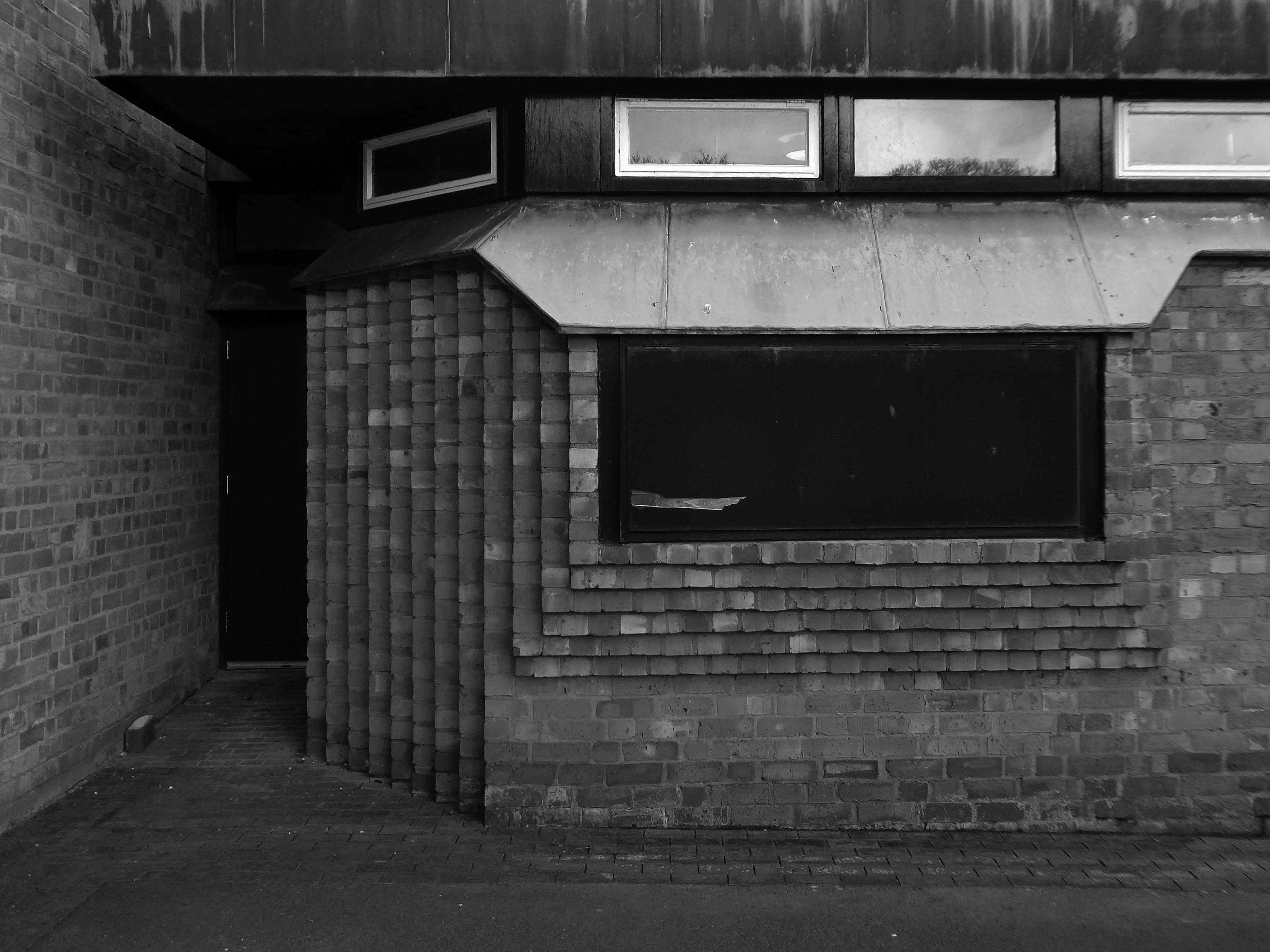
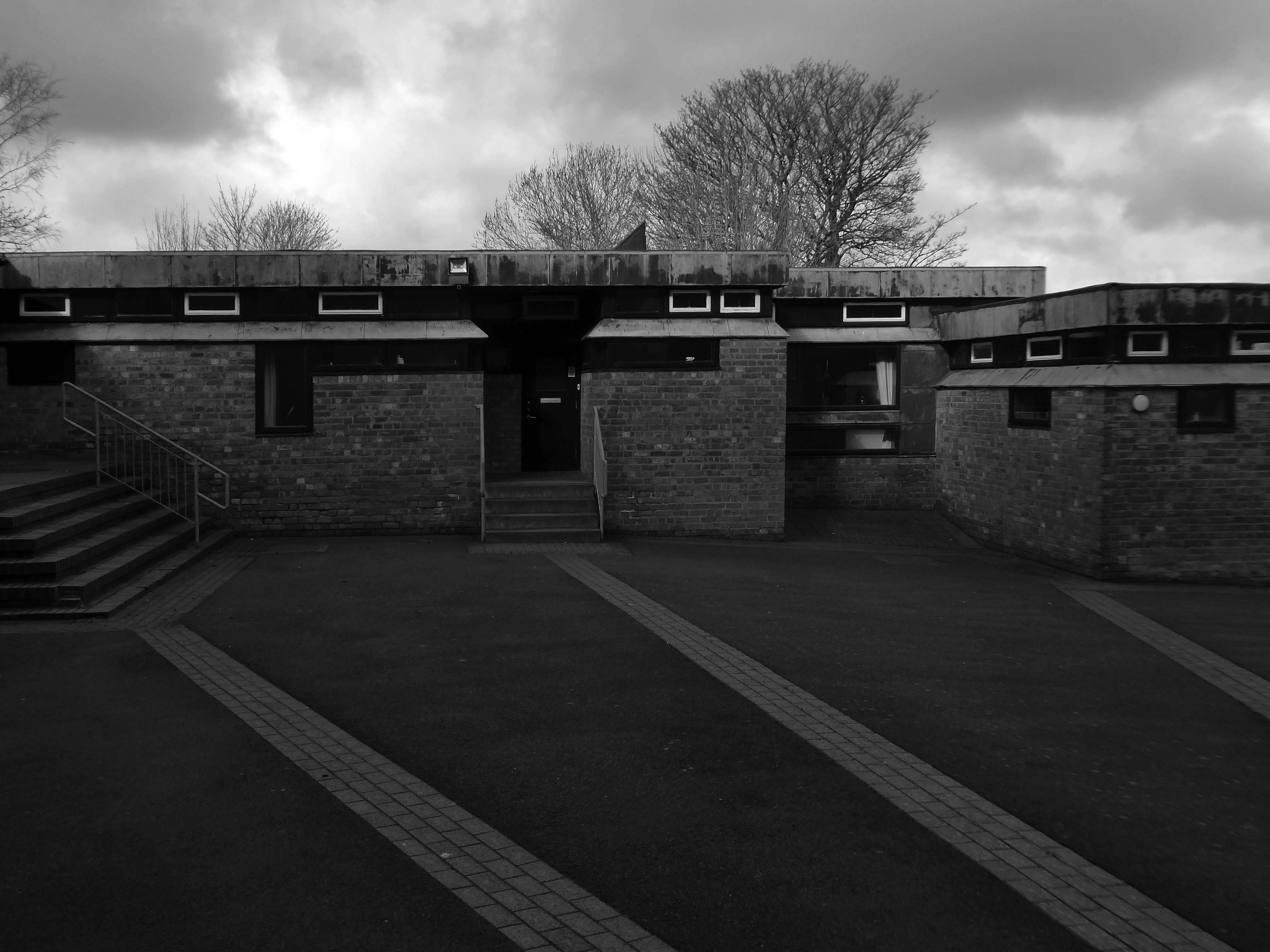
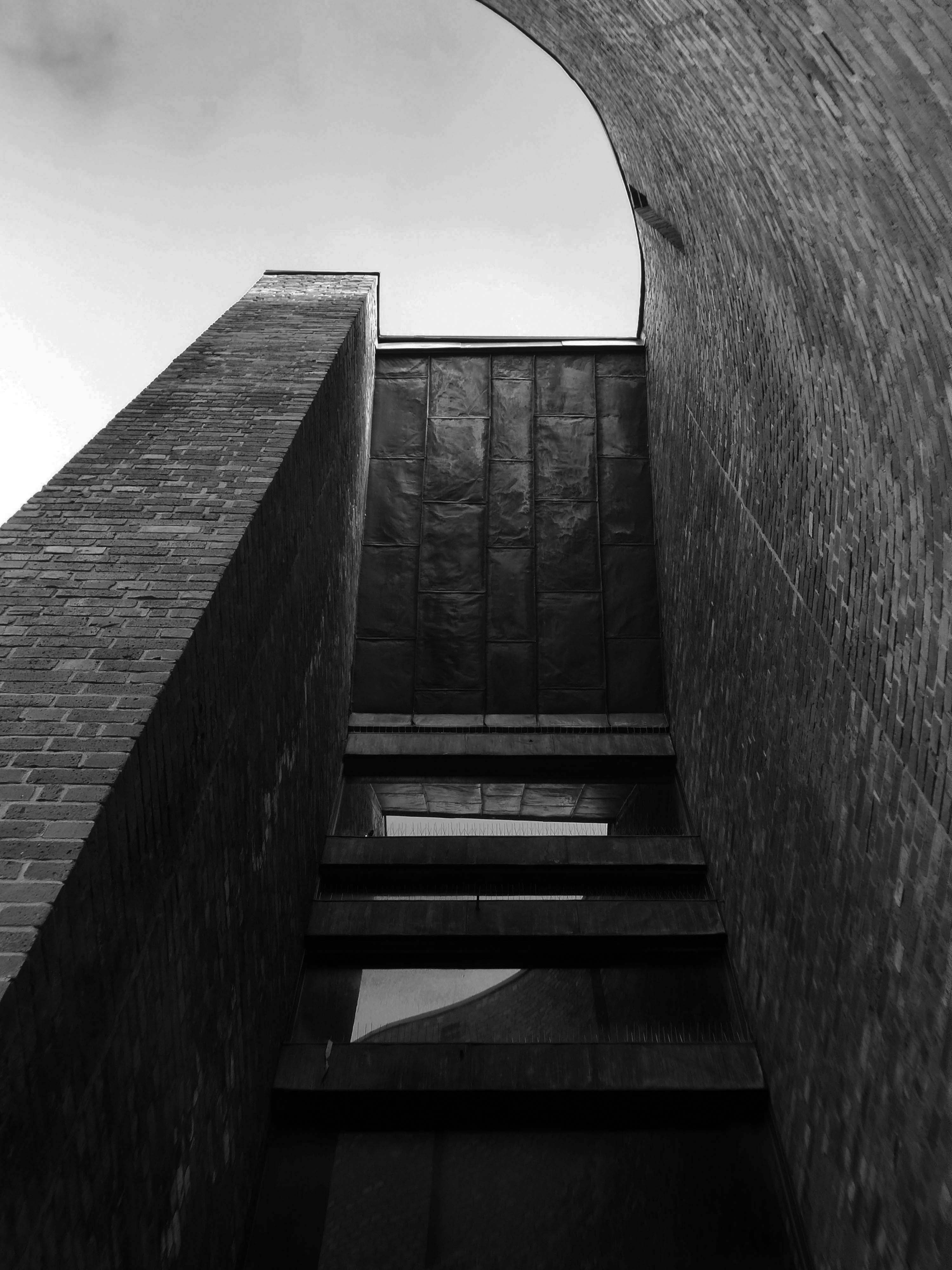
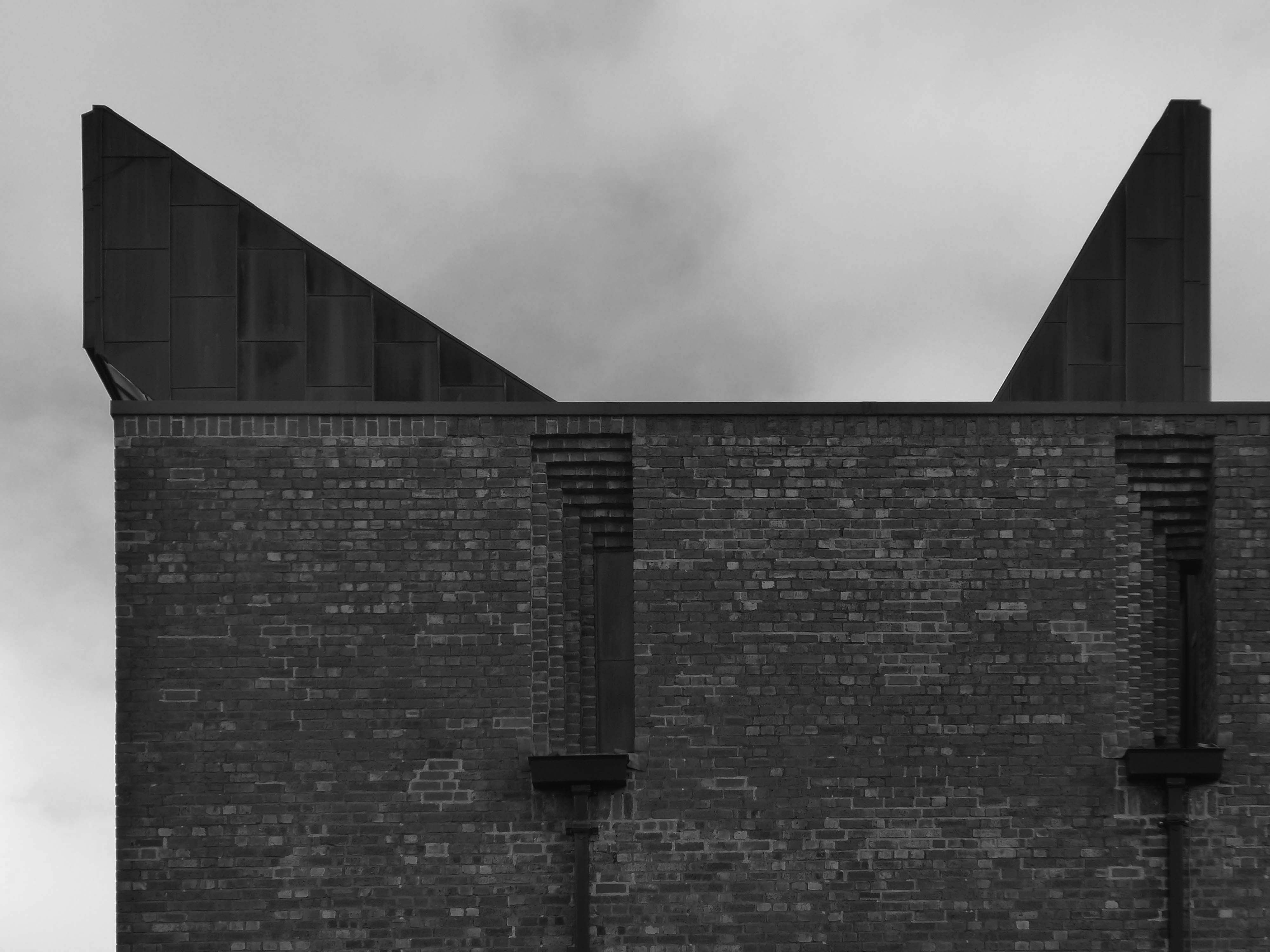
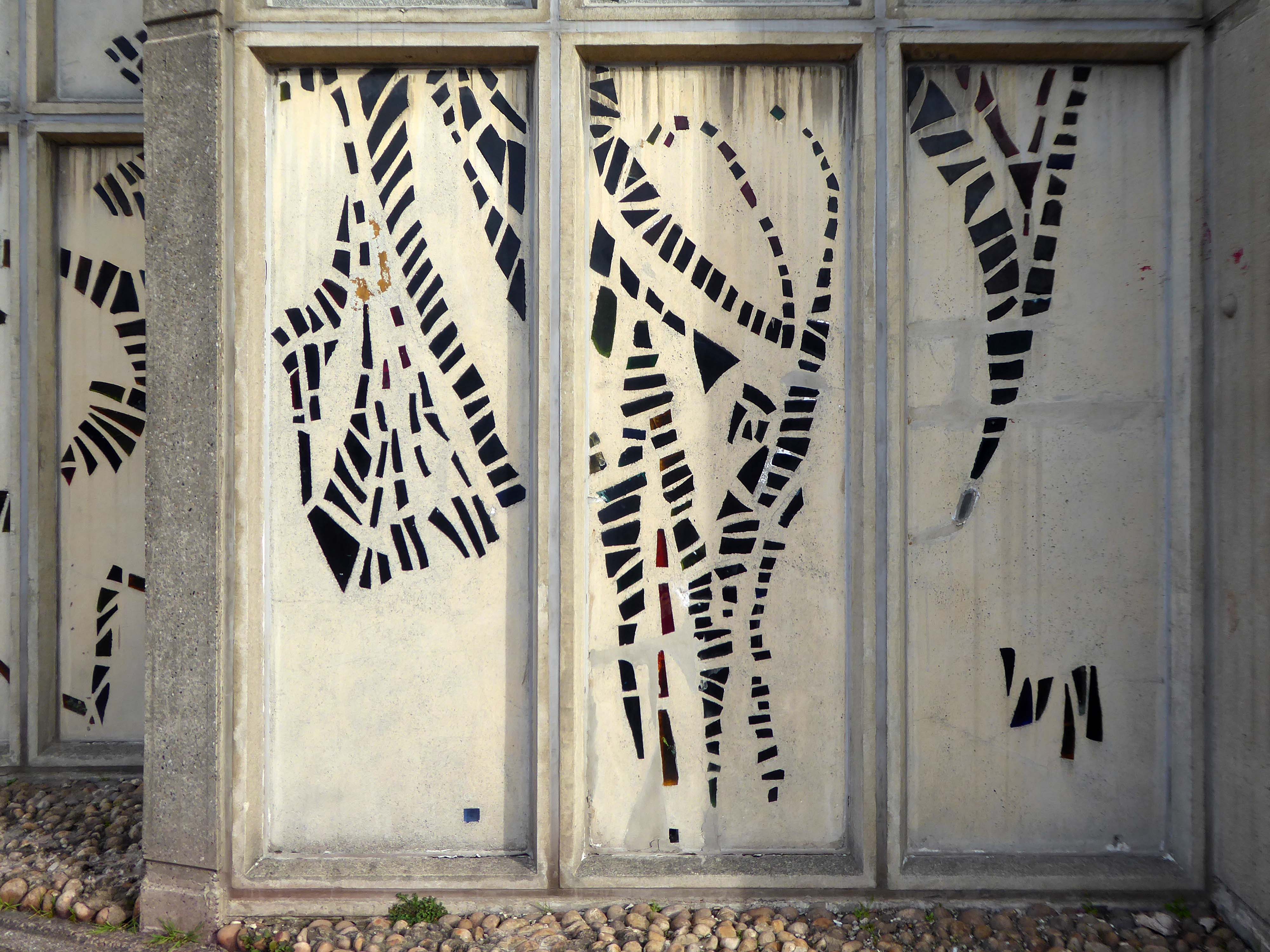
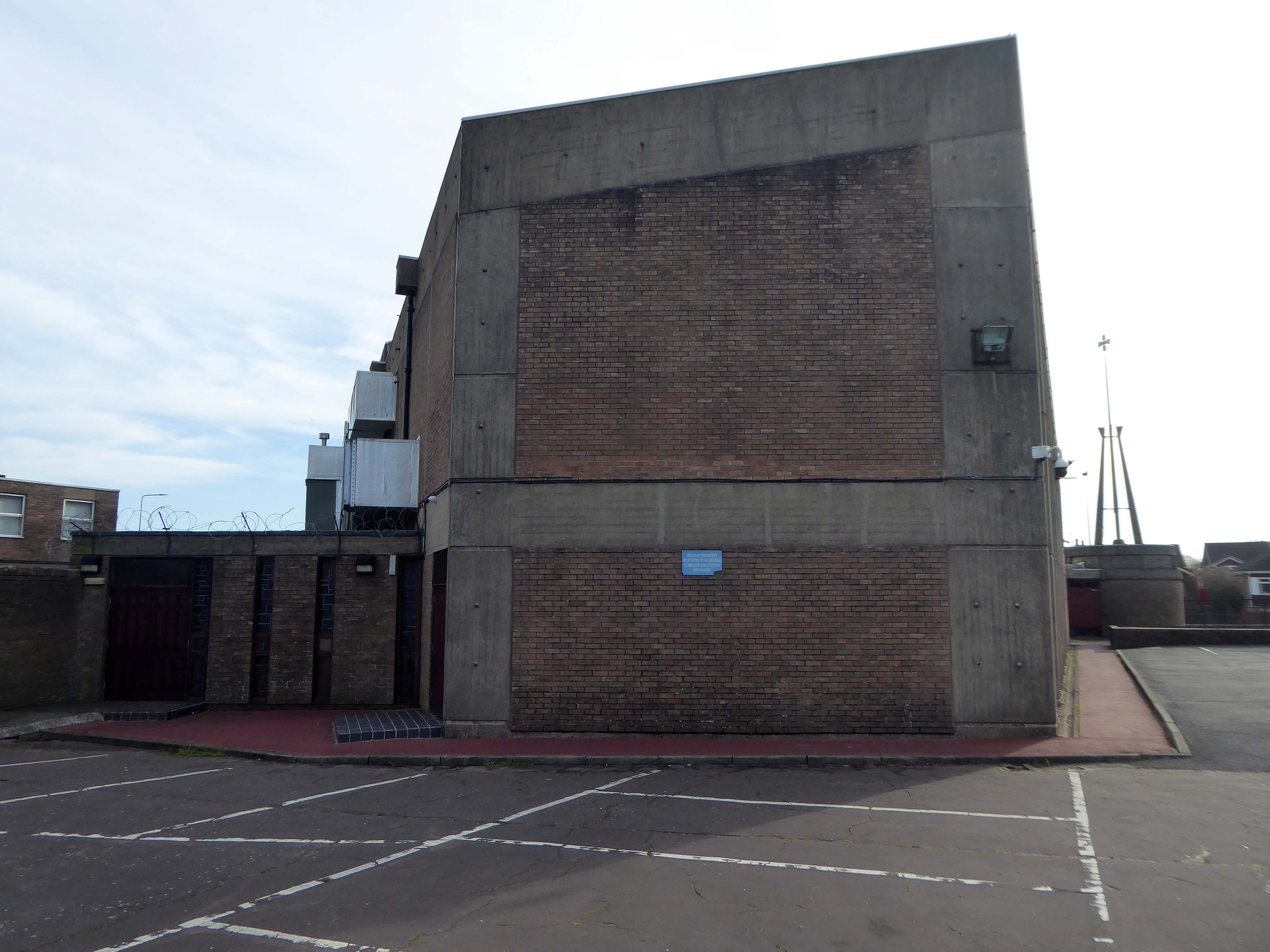
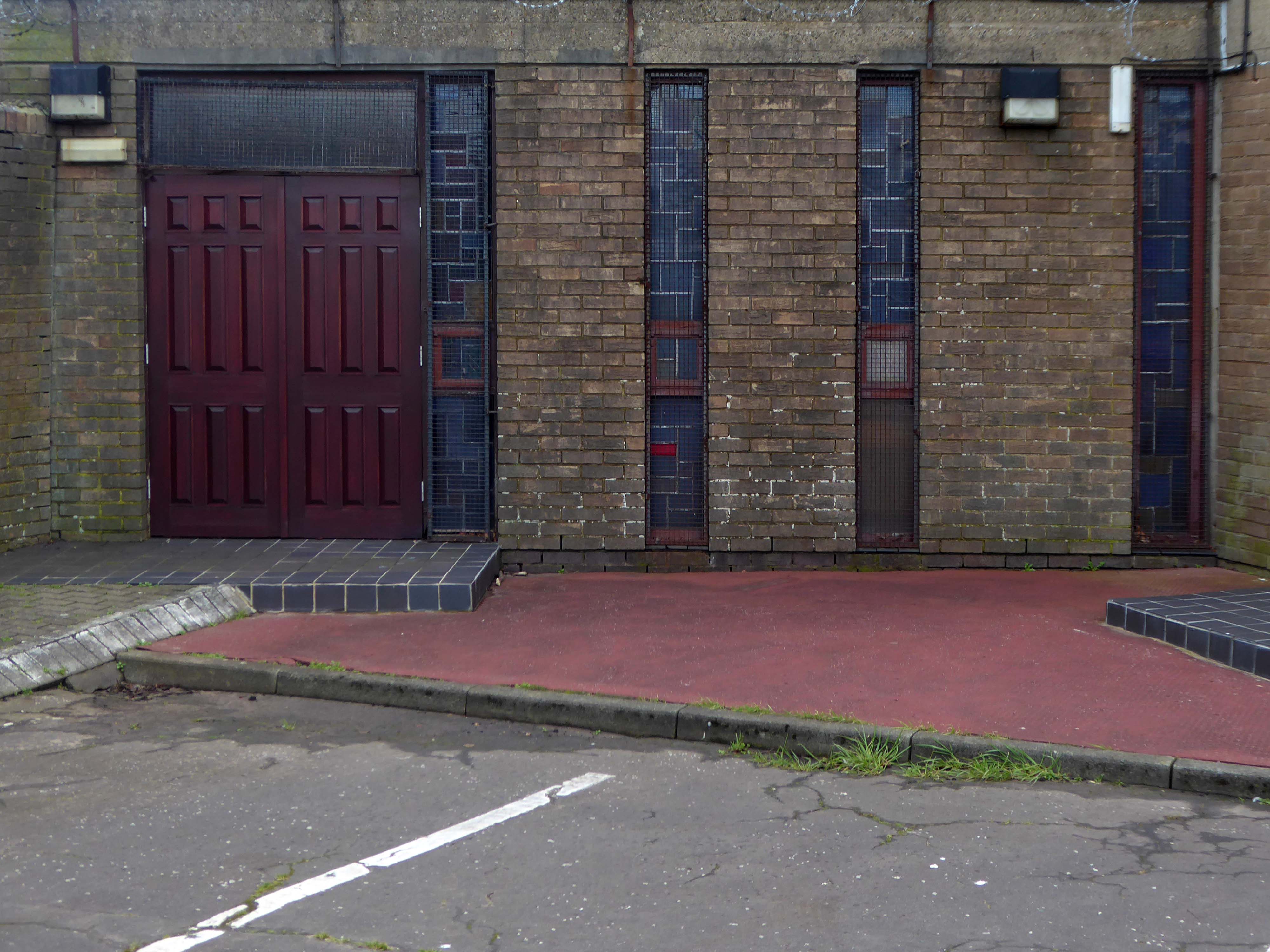
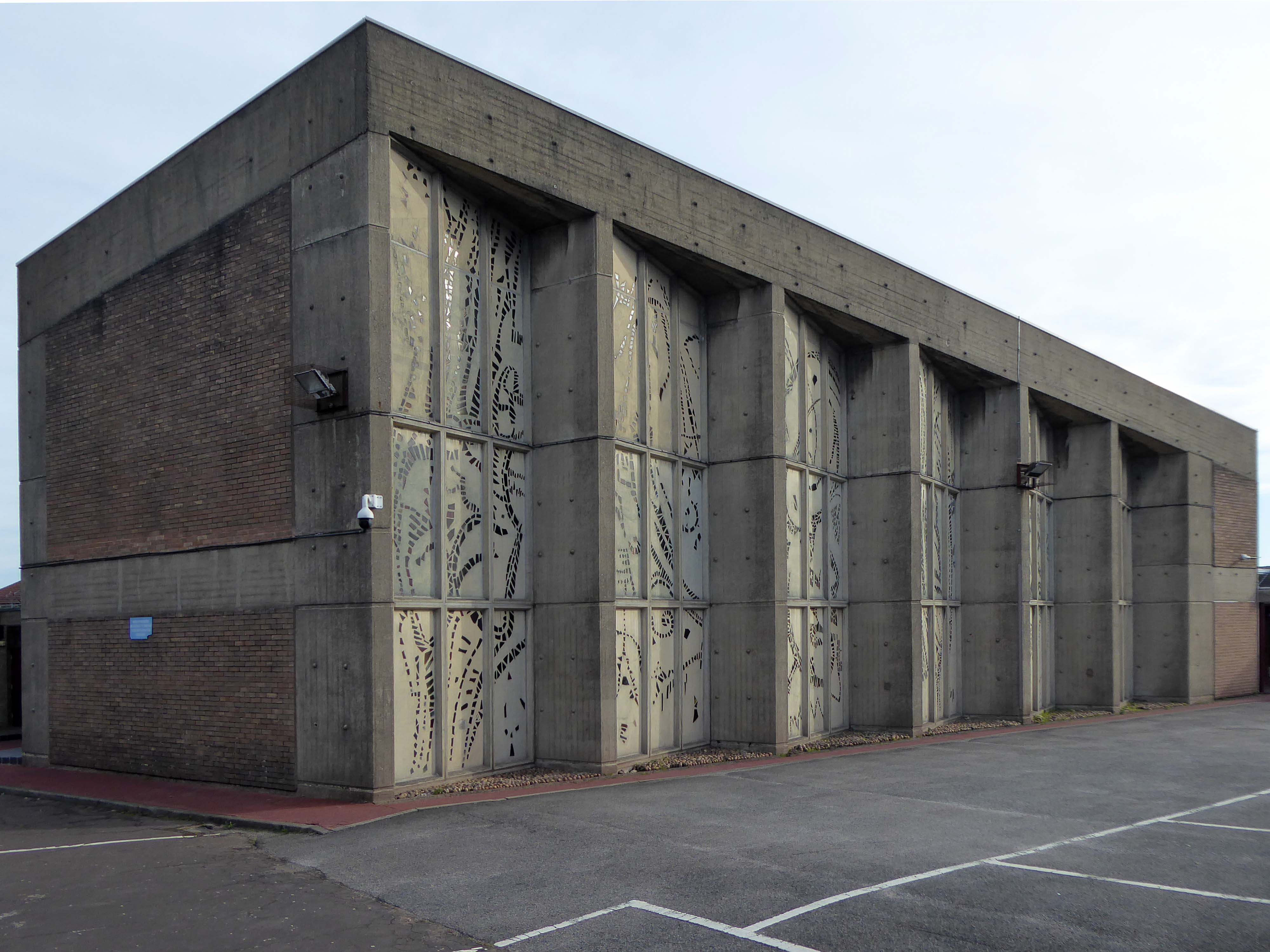
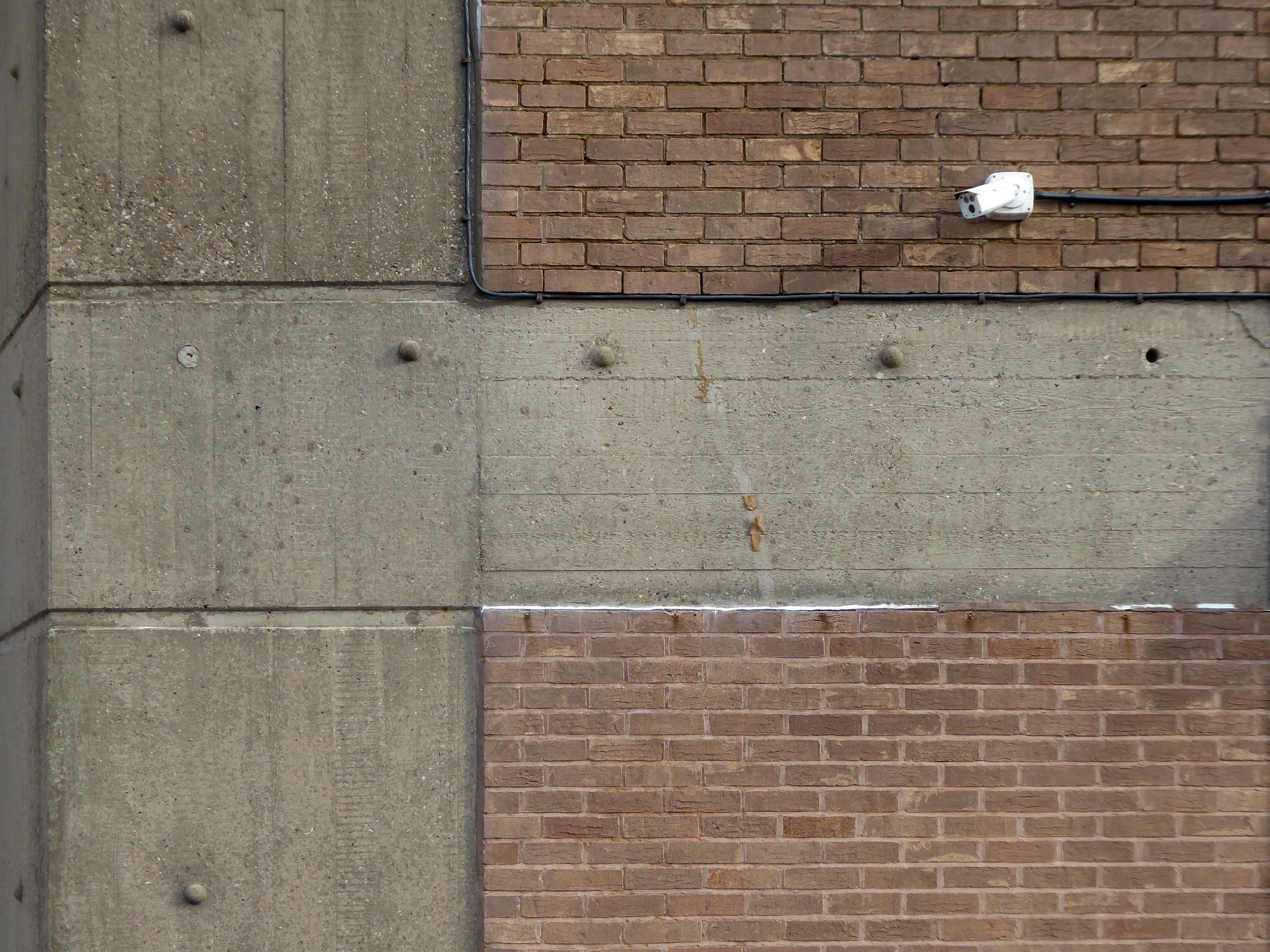
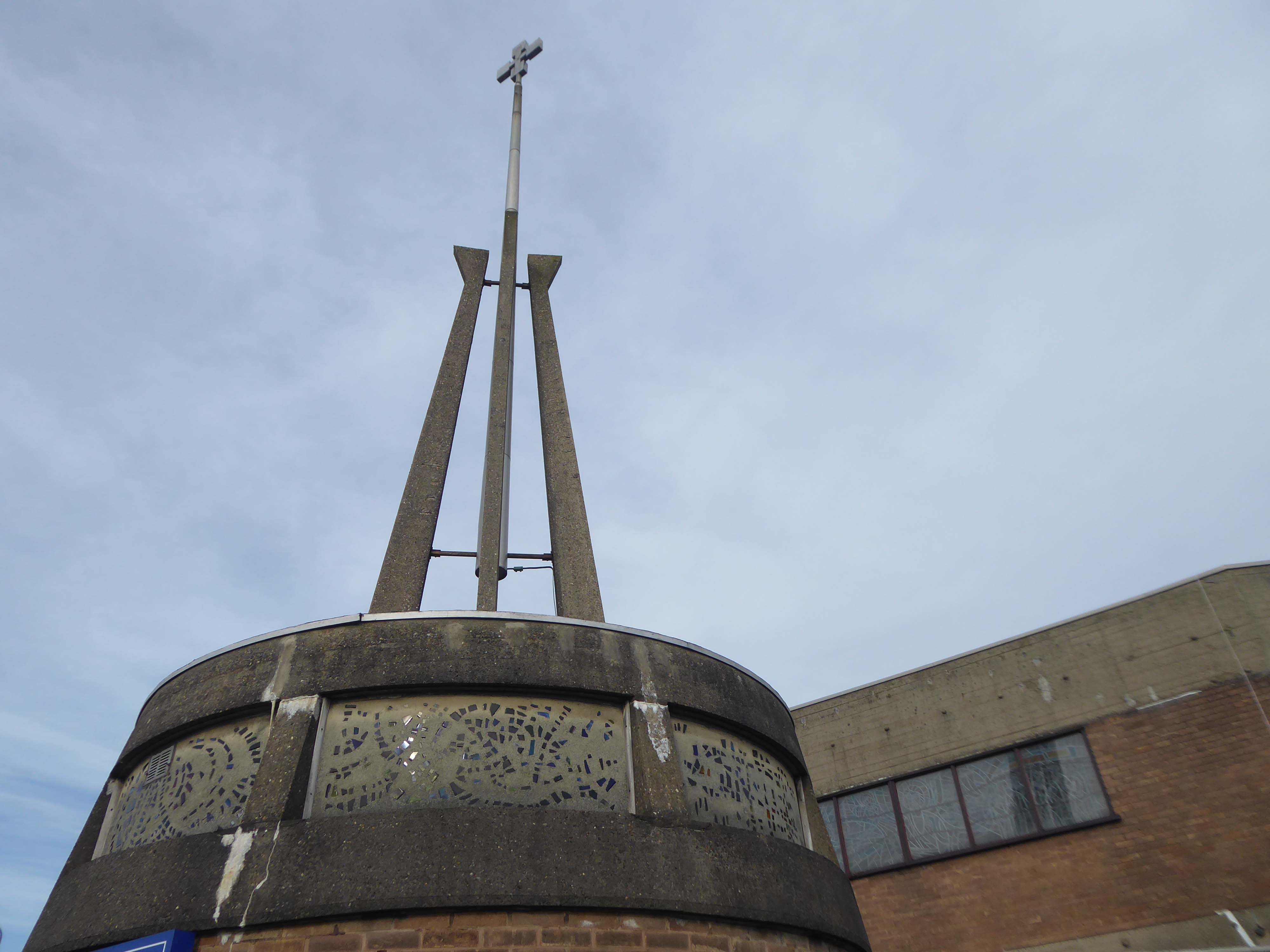
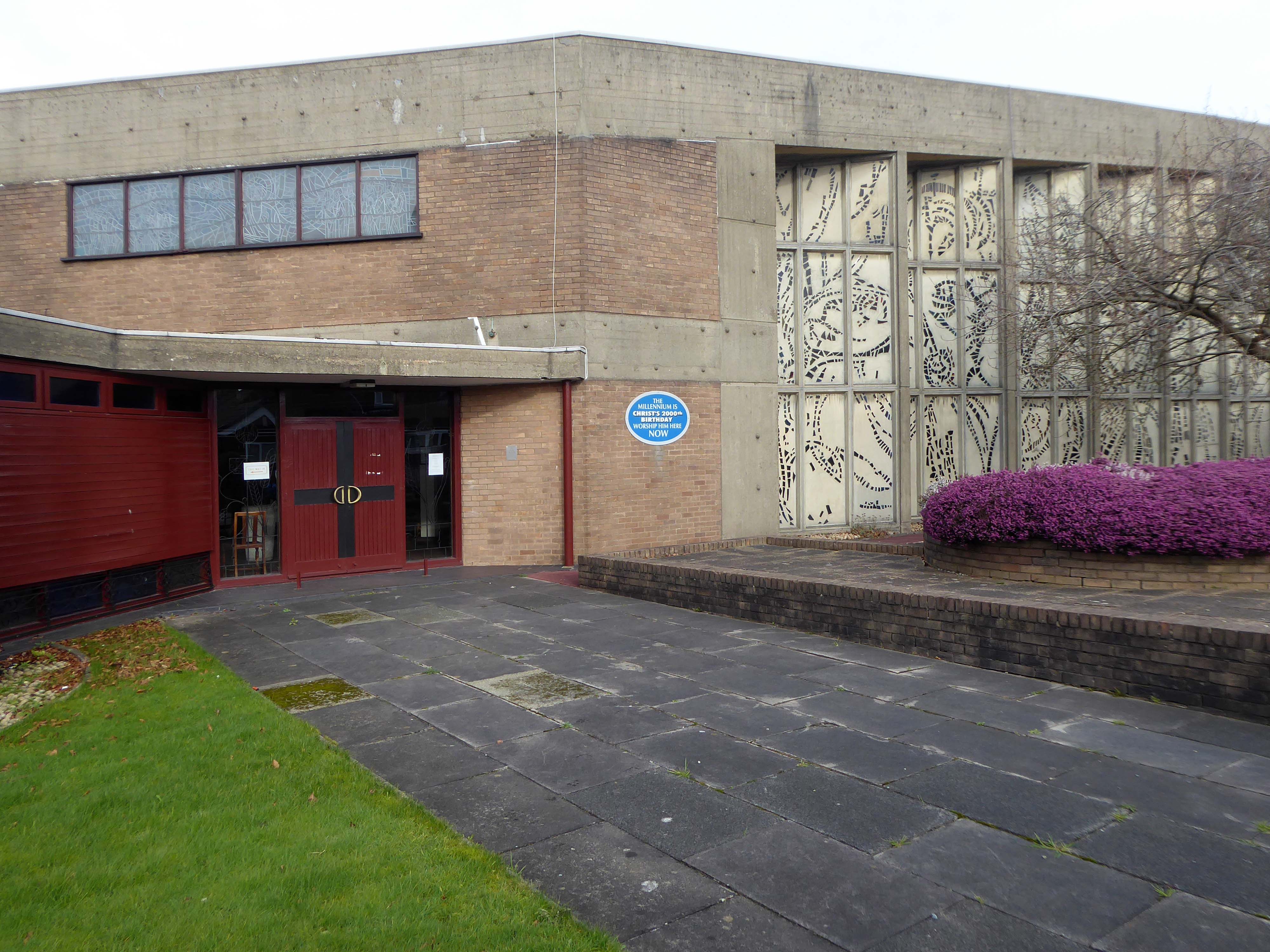
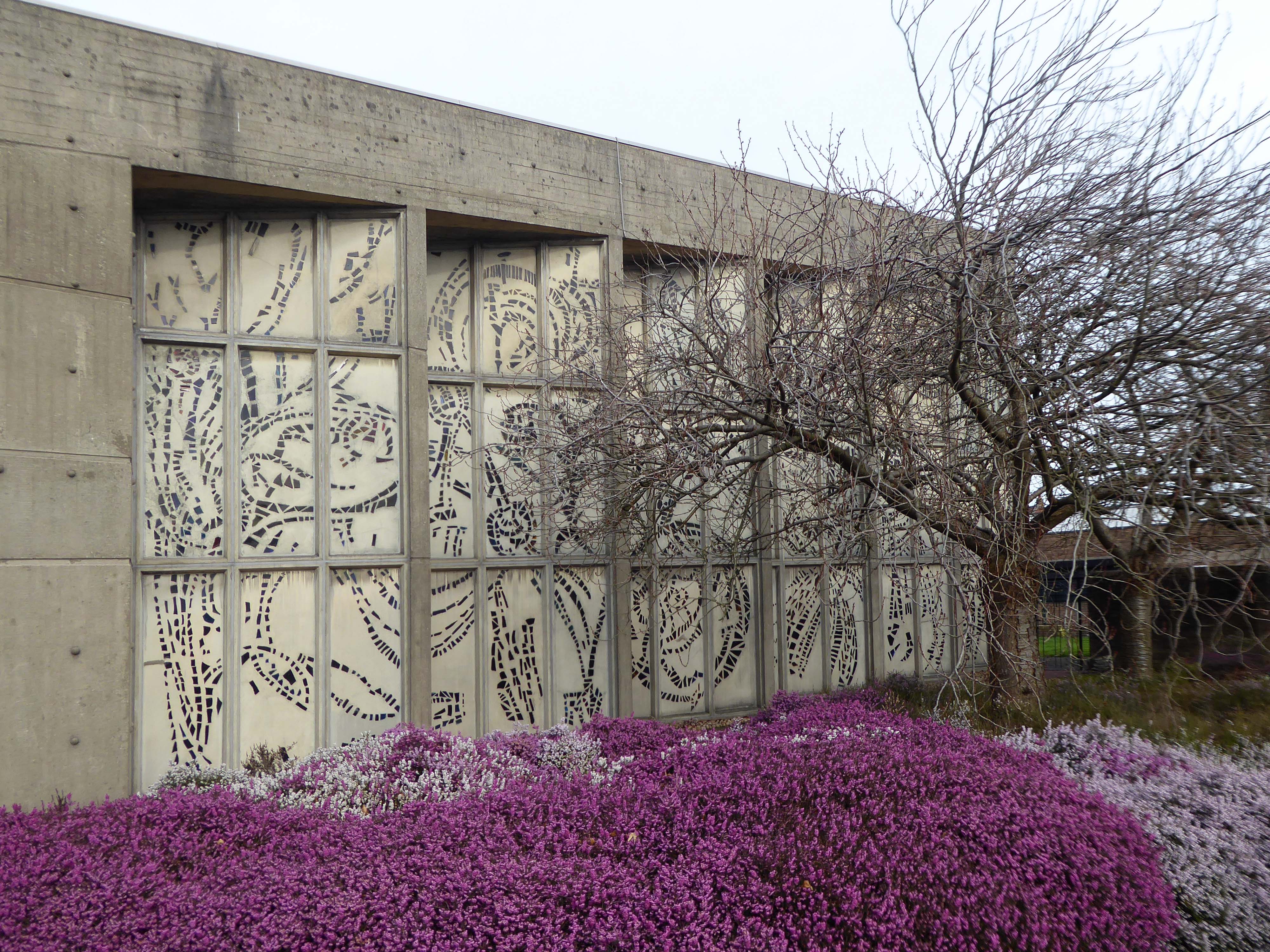
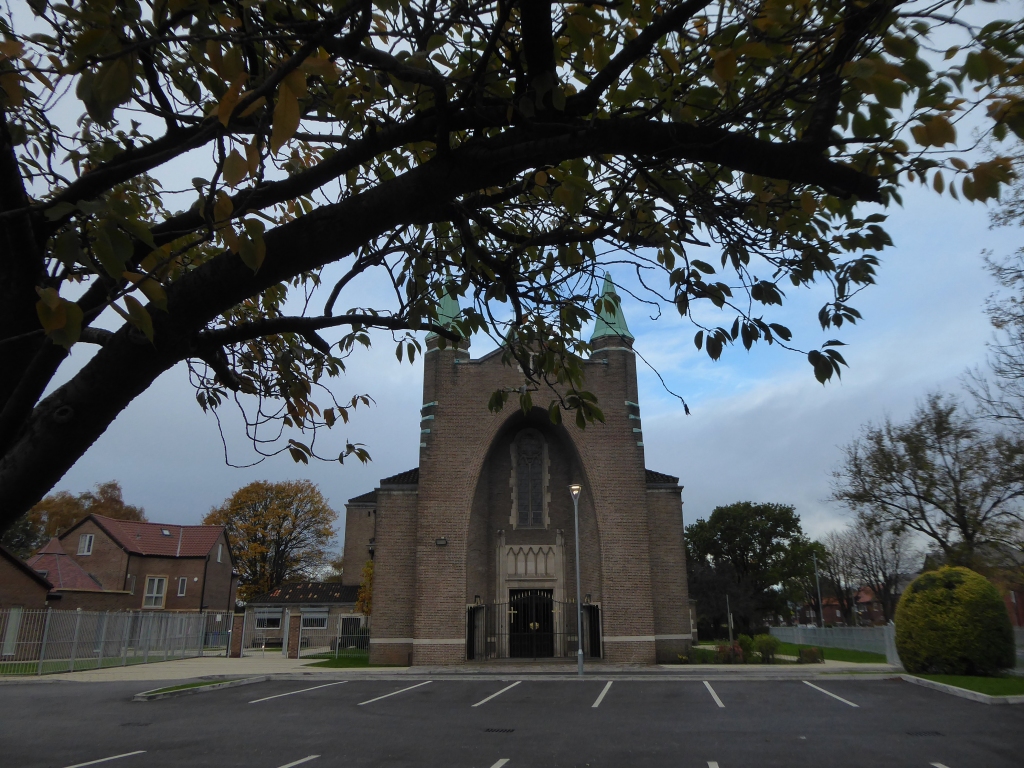
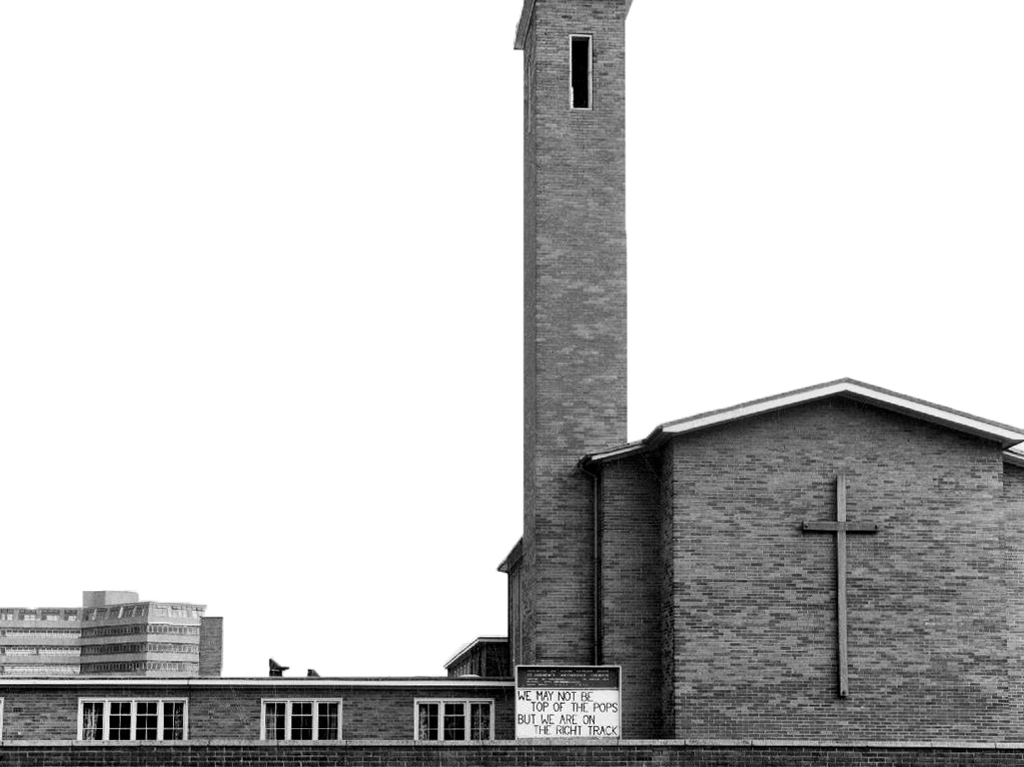
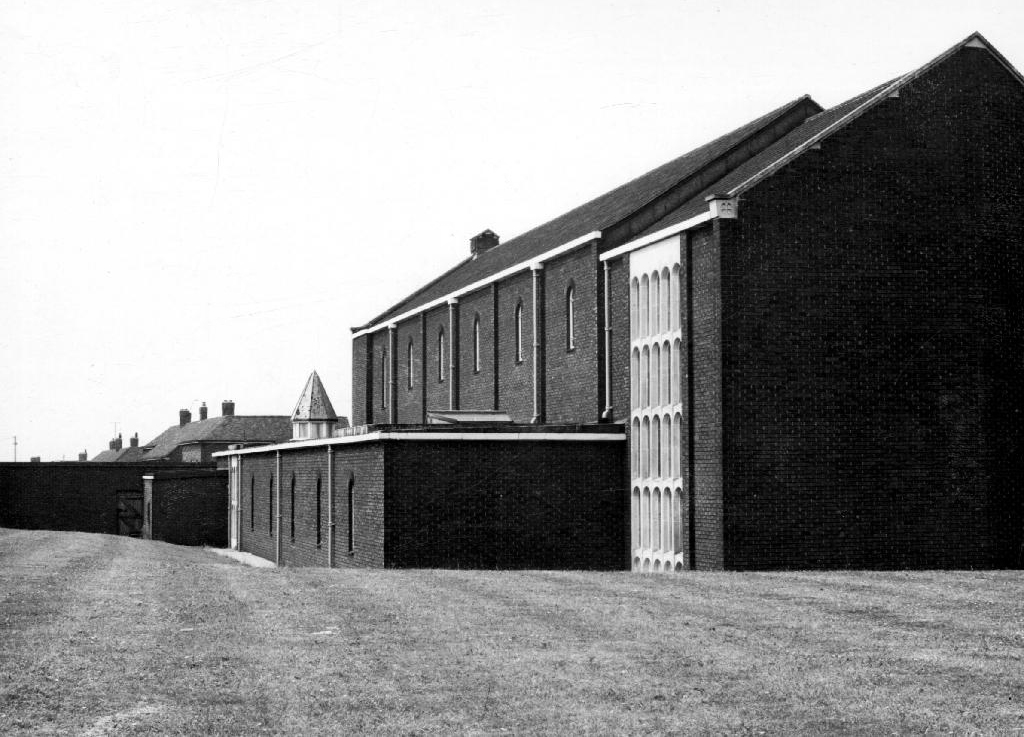
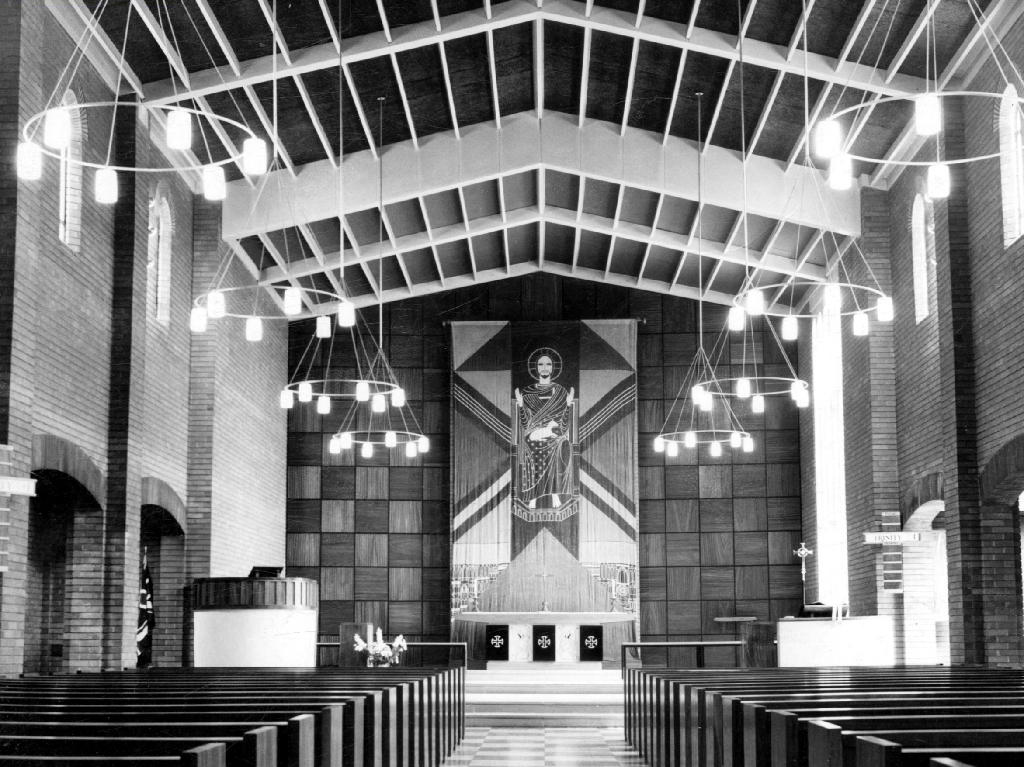
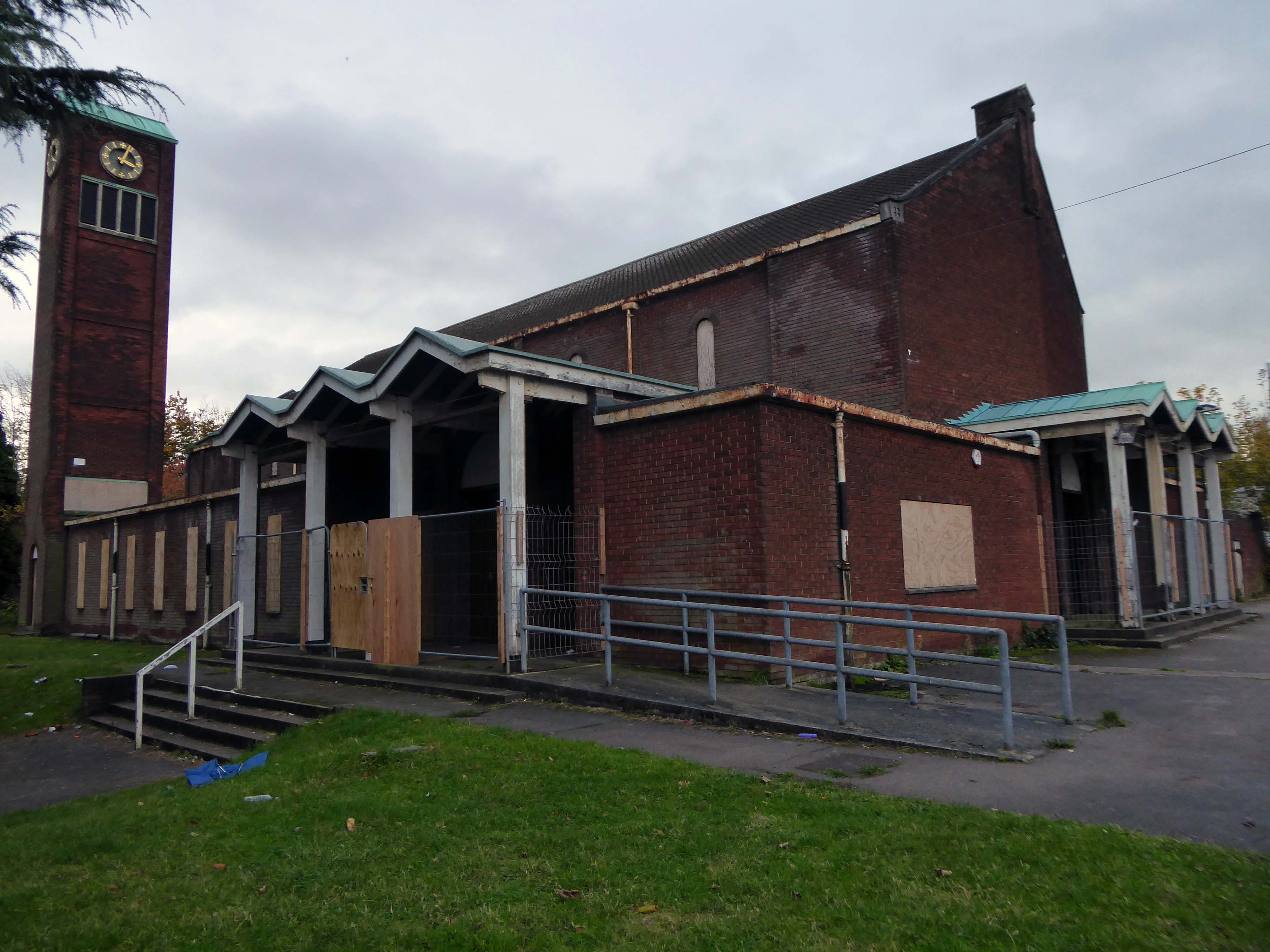
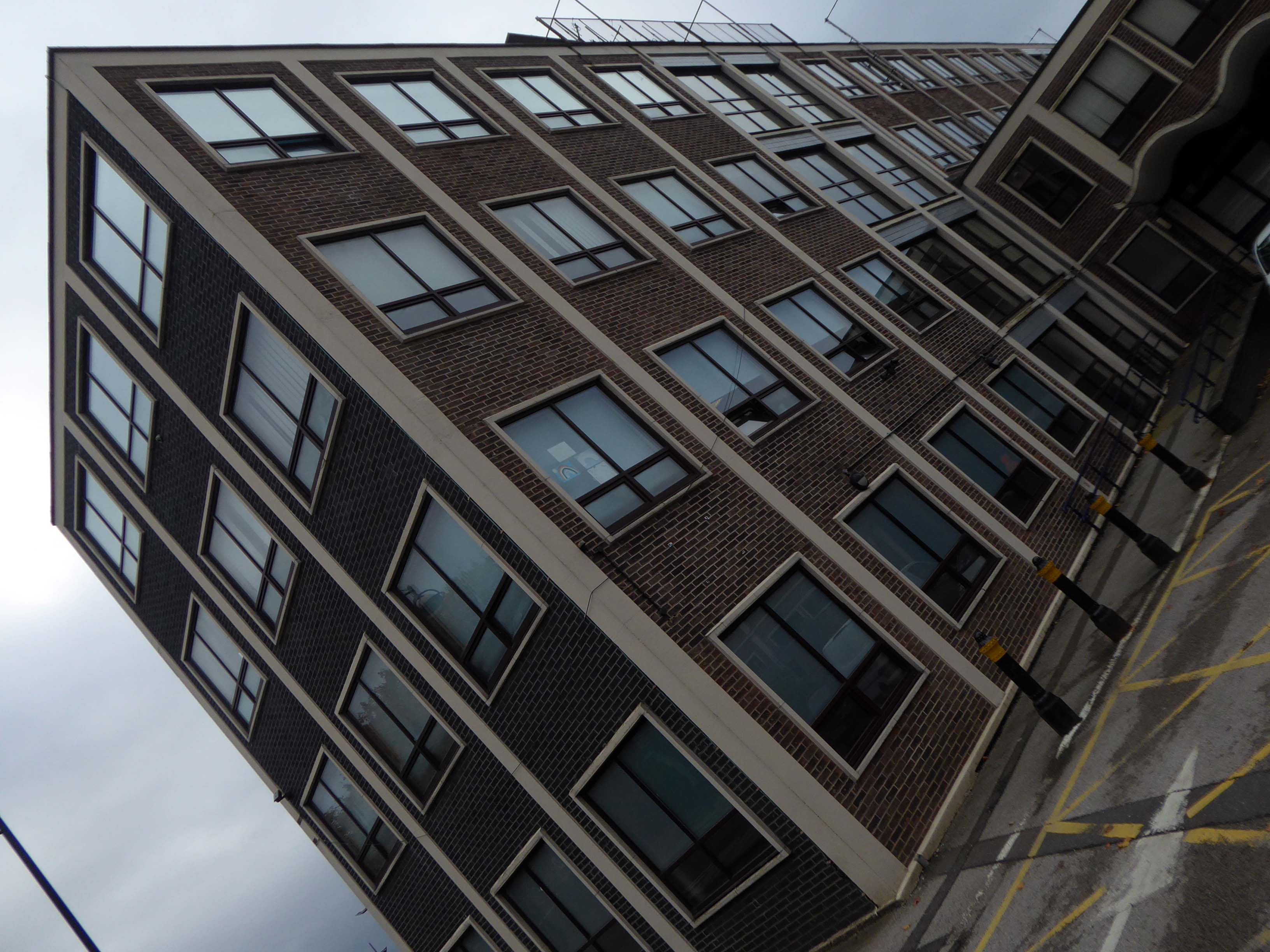
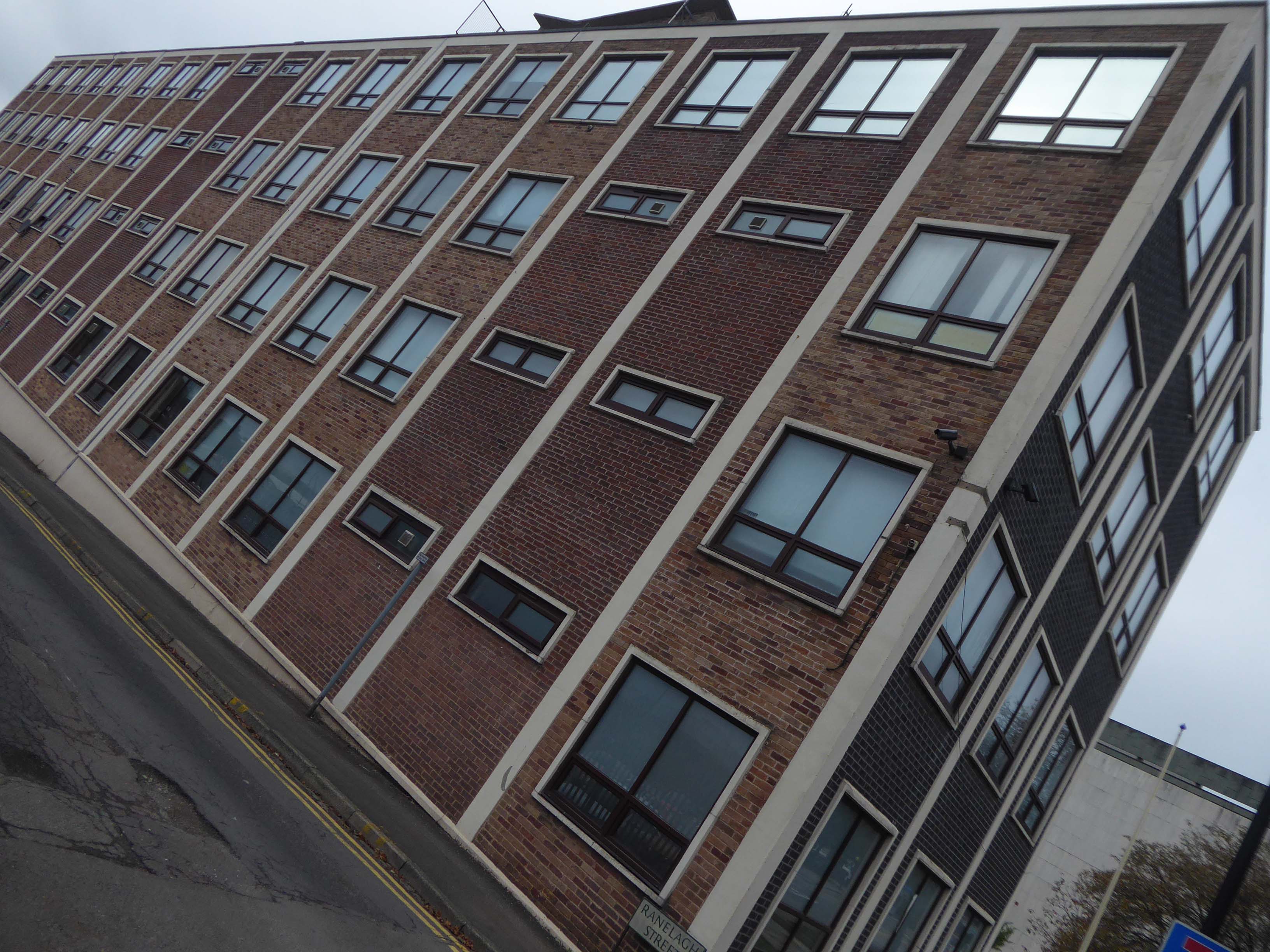
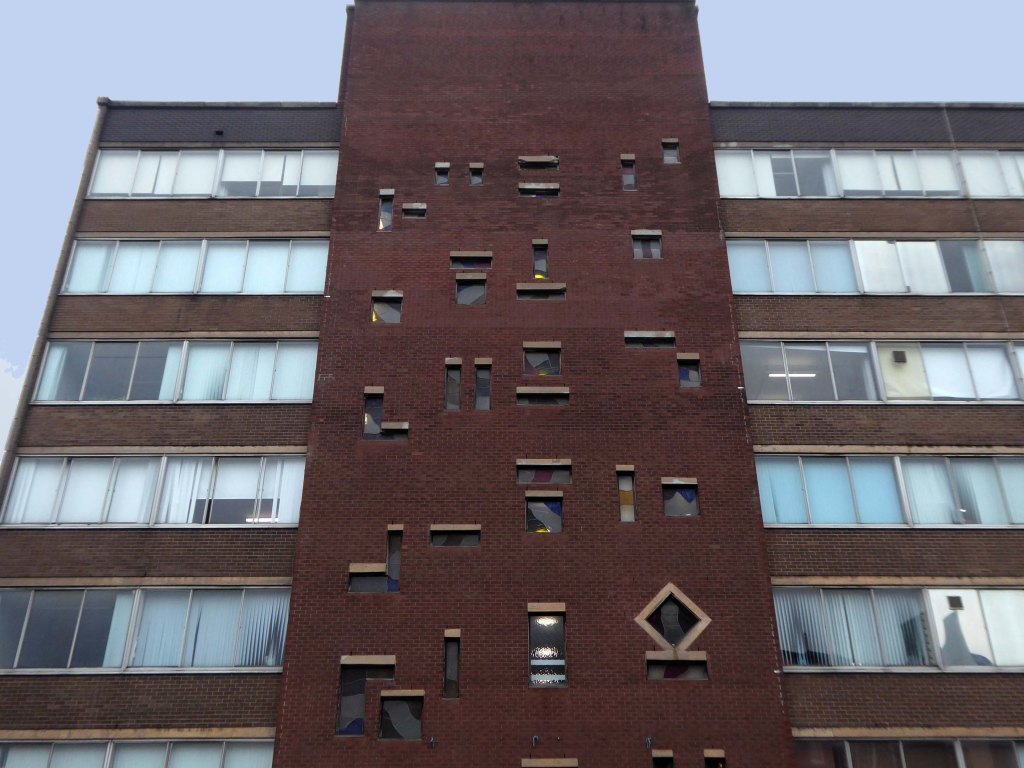
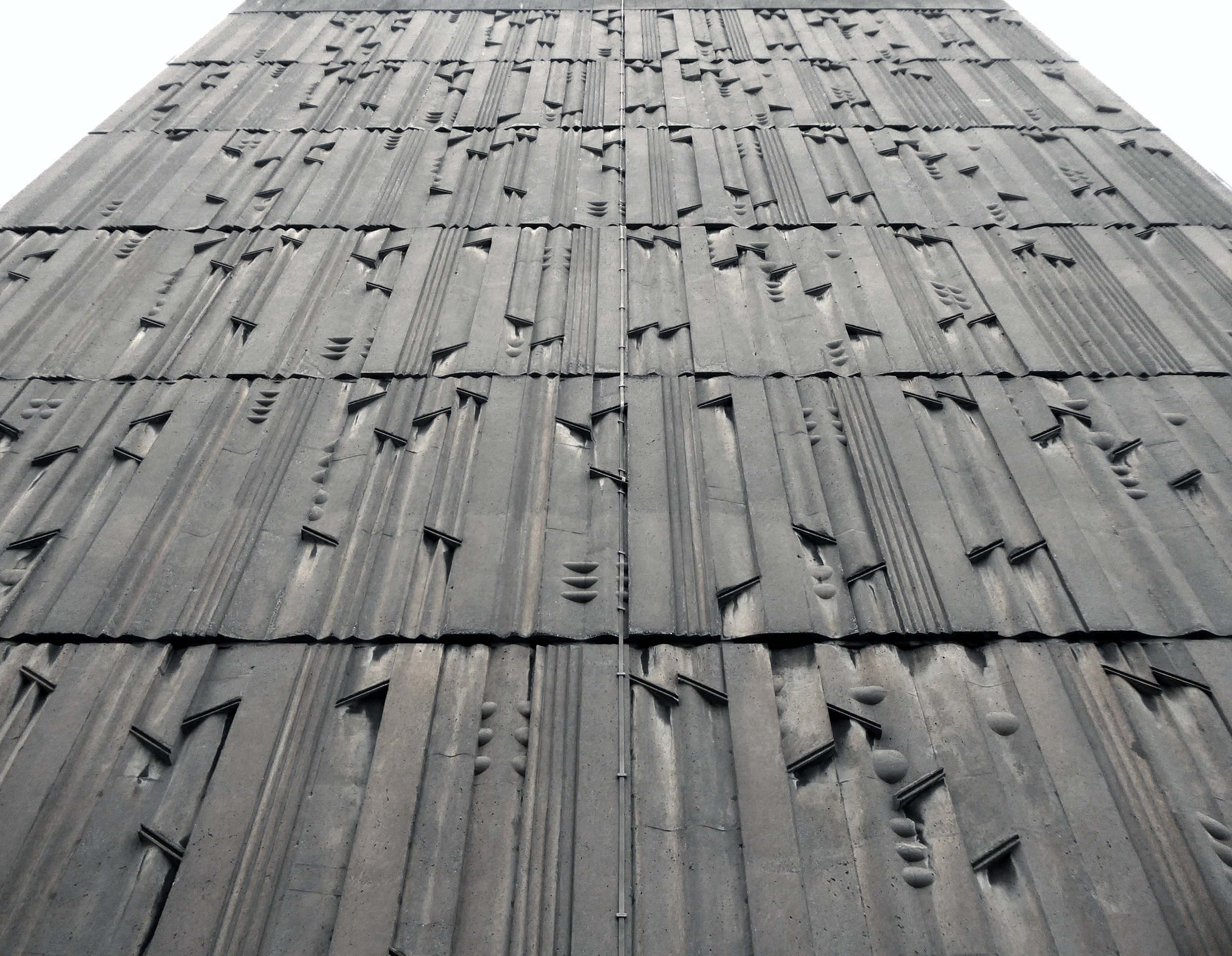
Following a promotion within the Church of Scotland to construct less hierarchical church buildings in the 1950s, an open-plan Modern design with Brutalist traits, was adapted for the new Anderson Parish Church. The building consists of a 2-storey square-plan church with prominent pyramidal roof, with over 20 rooms. The foundation stone was laid in 1966, with a service of commemoration in the now demolished St Mark’s-Lancefield Church. The building was completed in 1968.

Let’s take a look around outside.

Later that same day, I got a message from my friend Kate to visit her at the centre.

She is charged with co-ordinating a variety of activities at The Pyramid.

In 2019 the Church of Scotland sold the building and it became a community centre for people to:

Connect, create and celebrate.

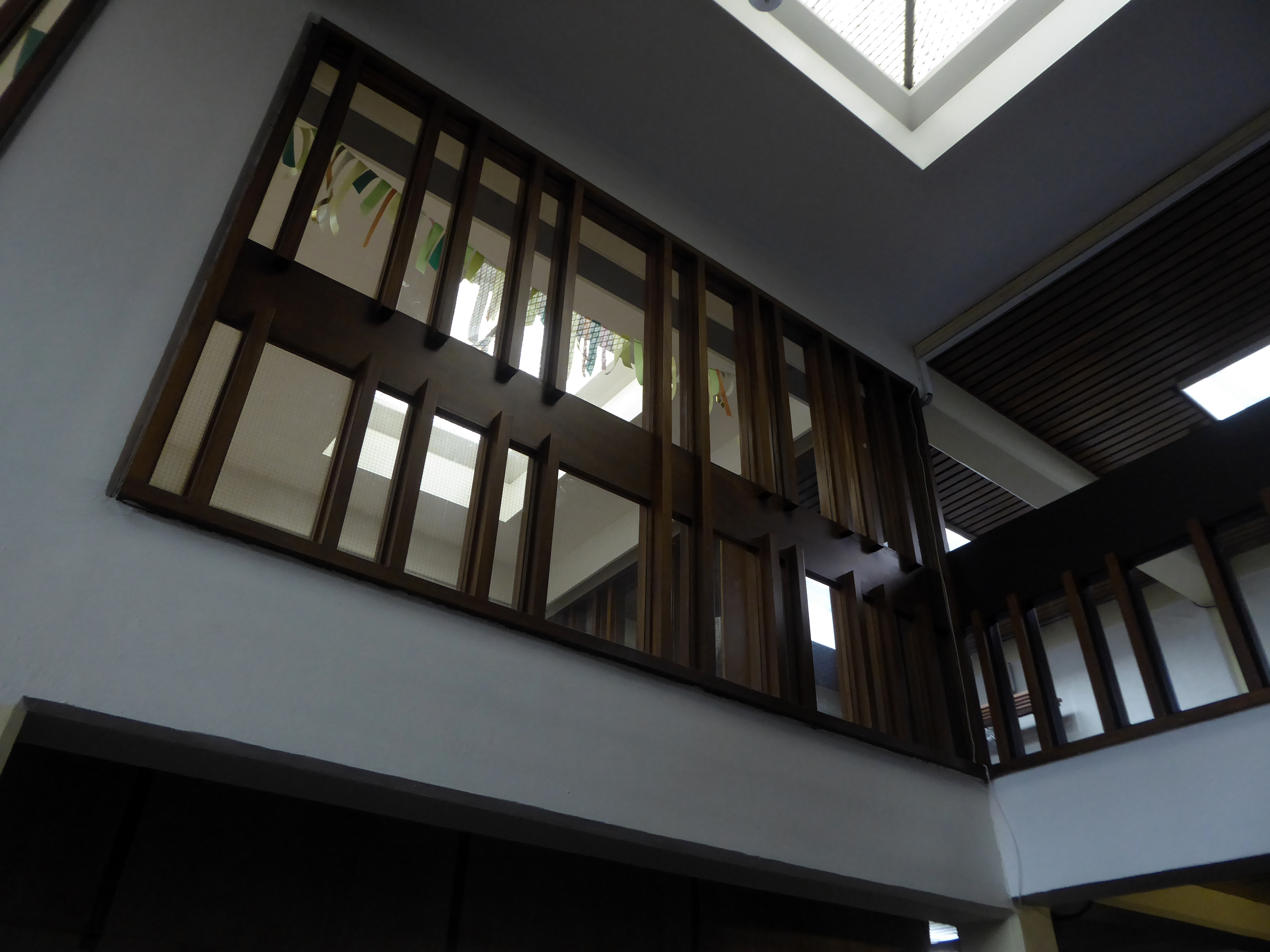
It also serves as an inspirational space for music, performances, conferences and events.

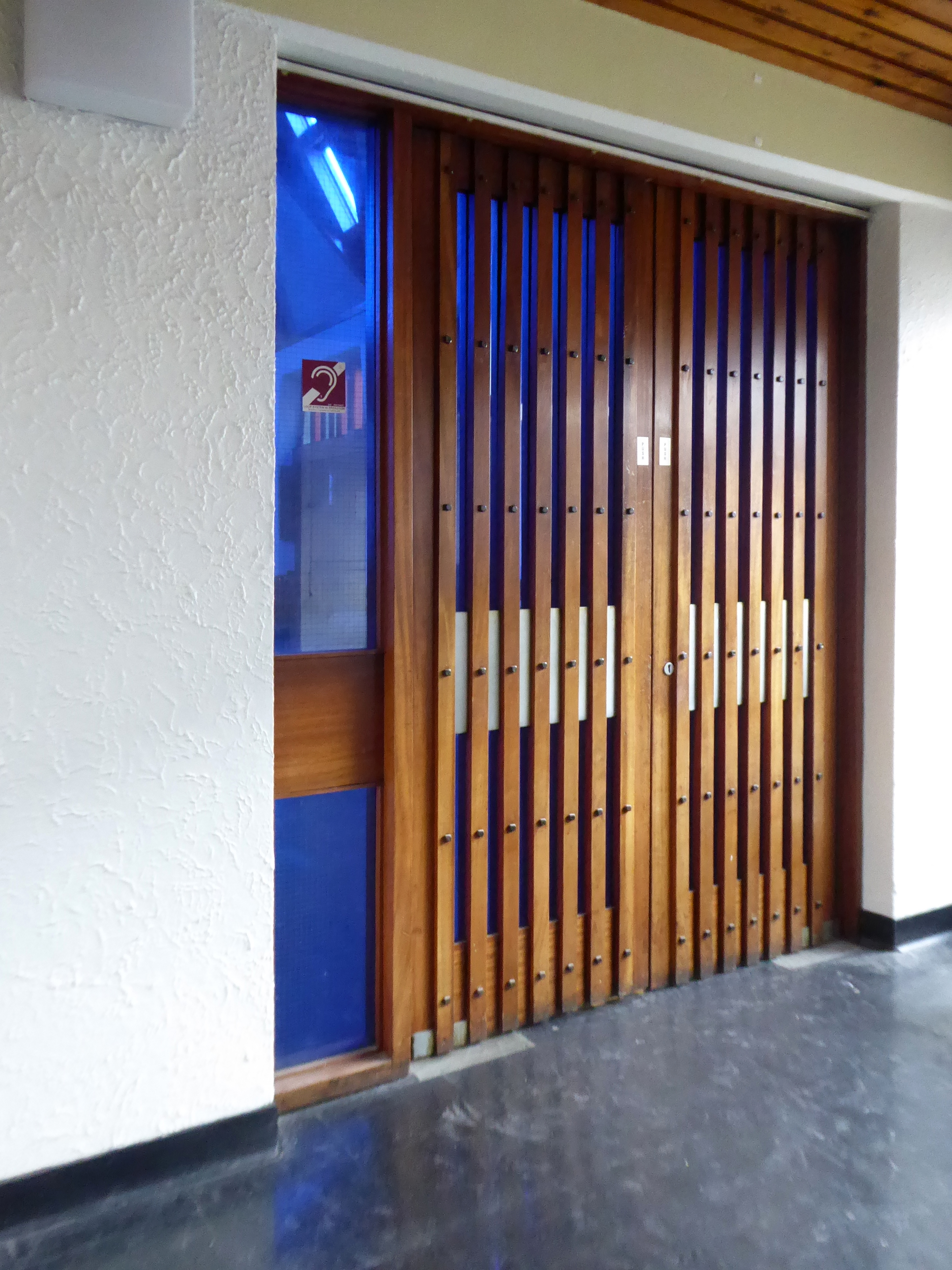
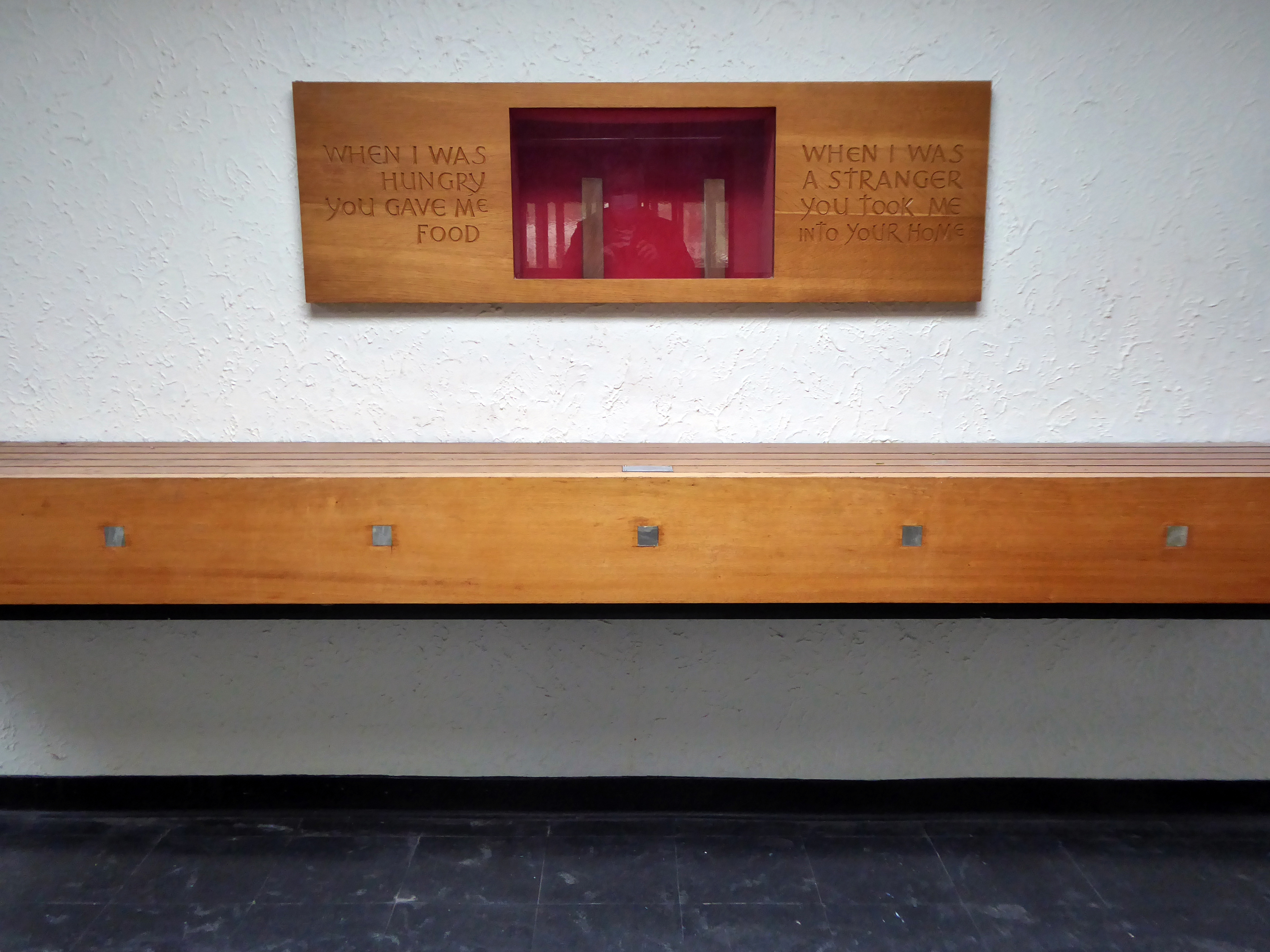
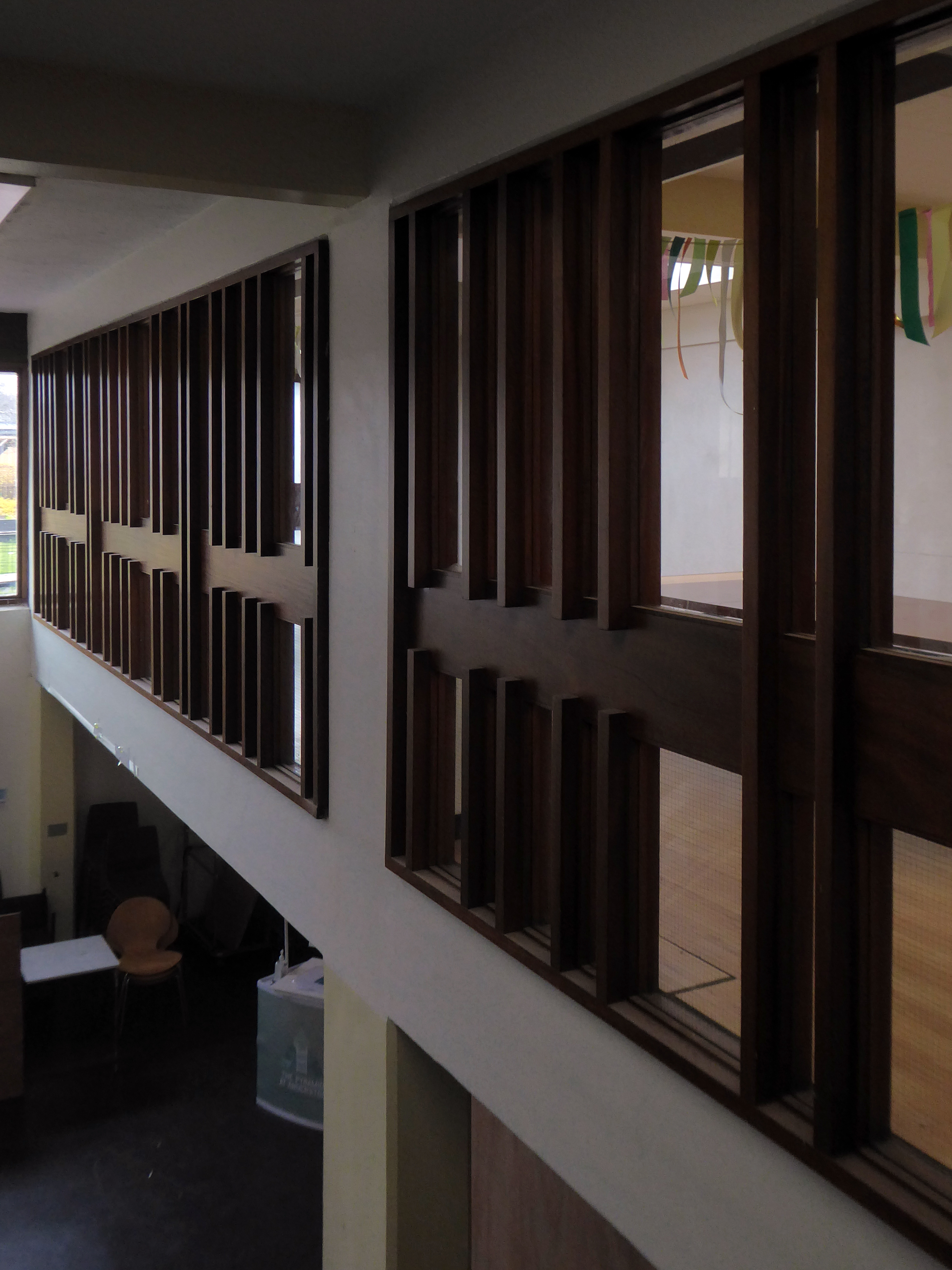
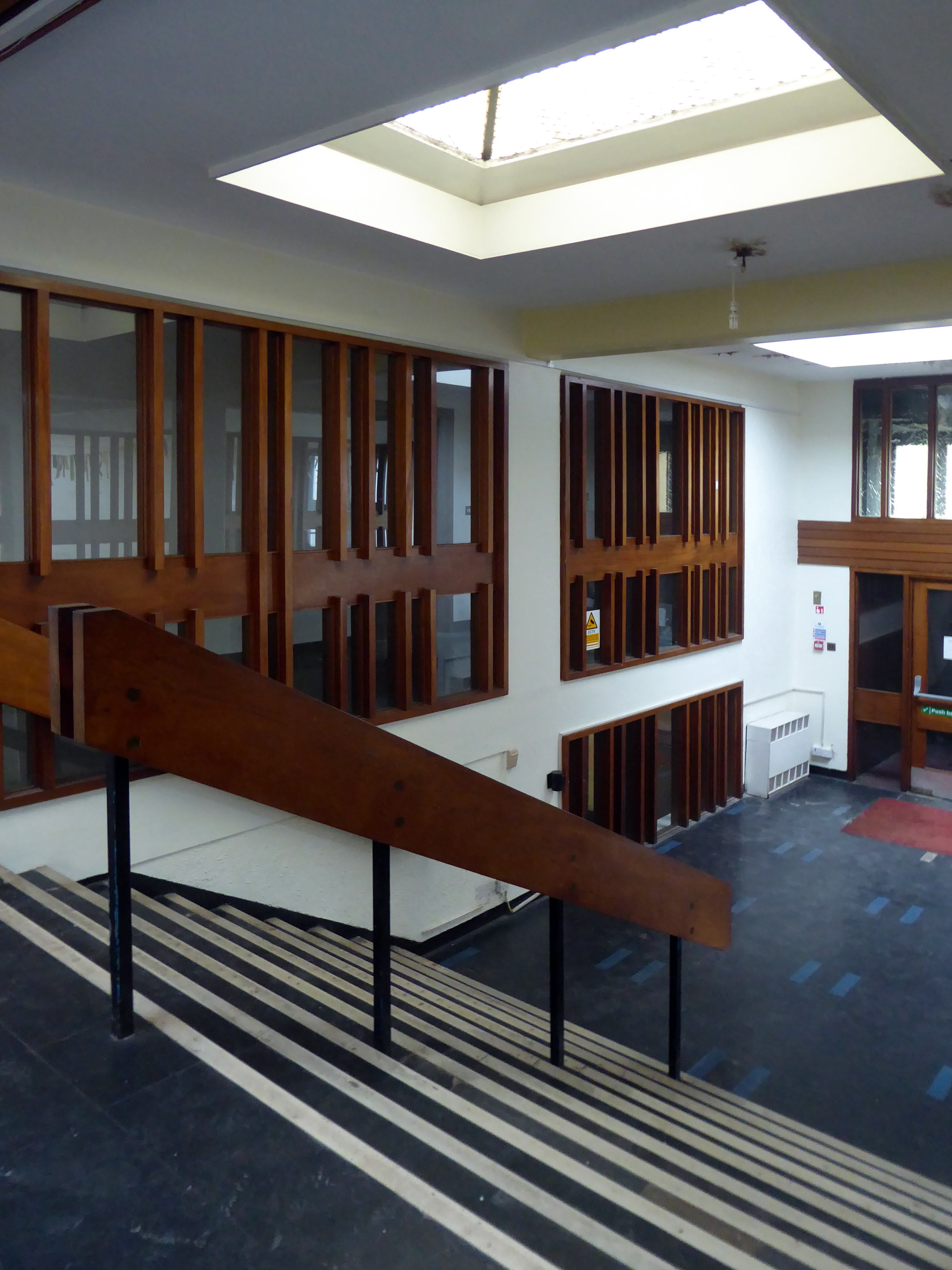
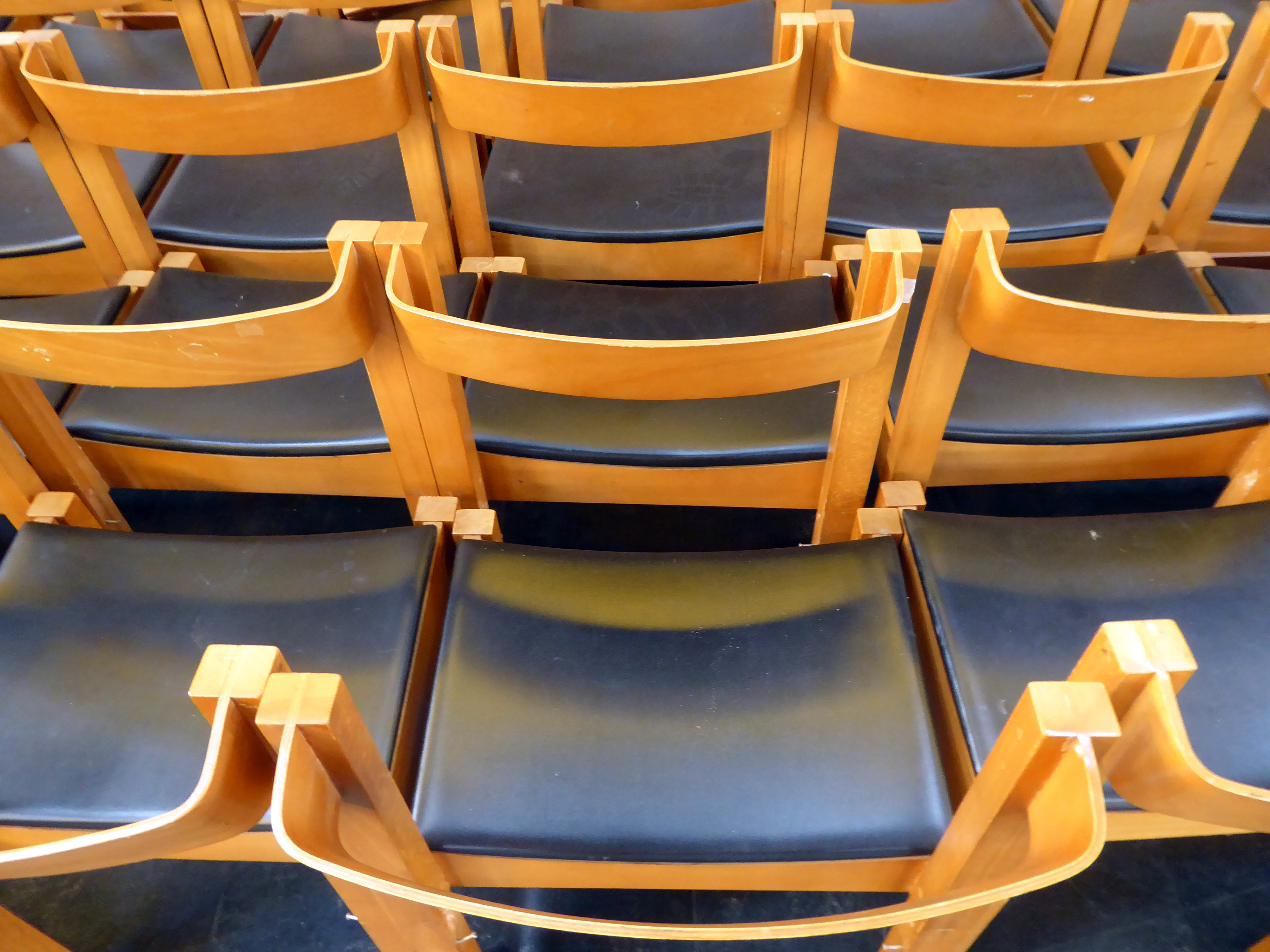
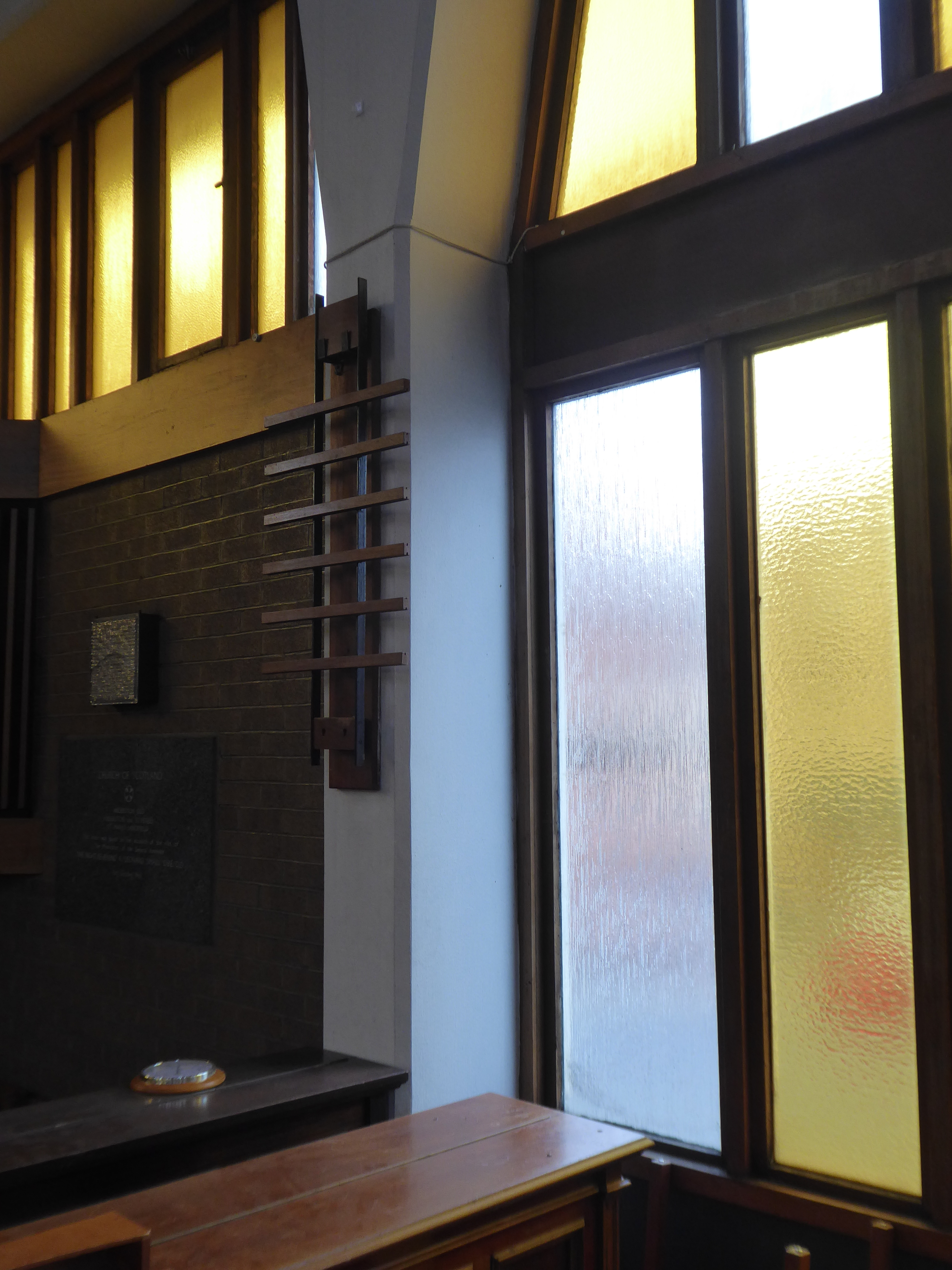
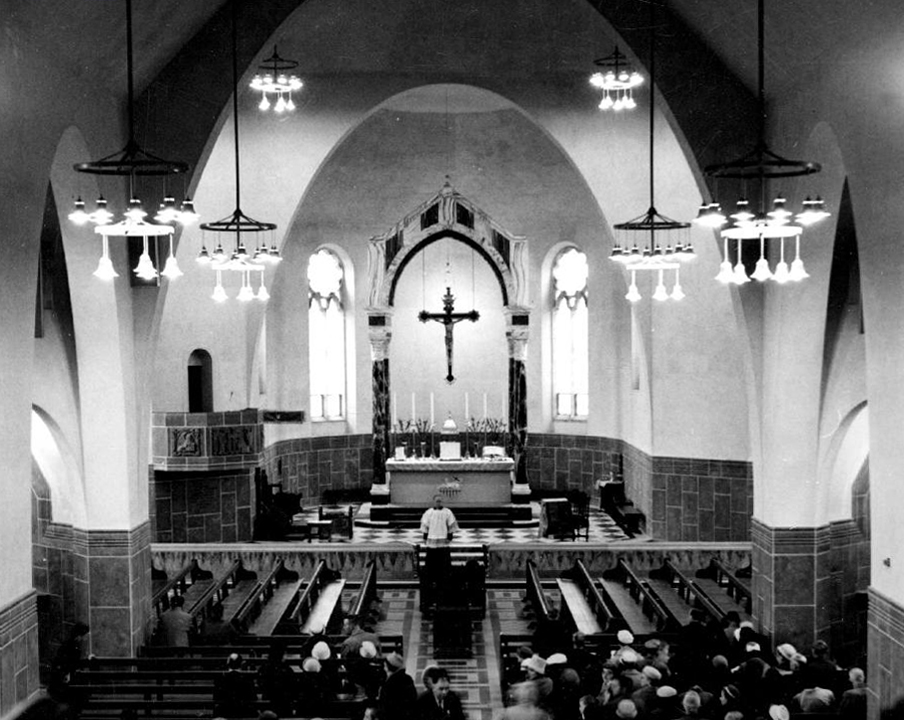
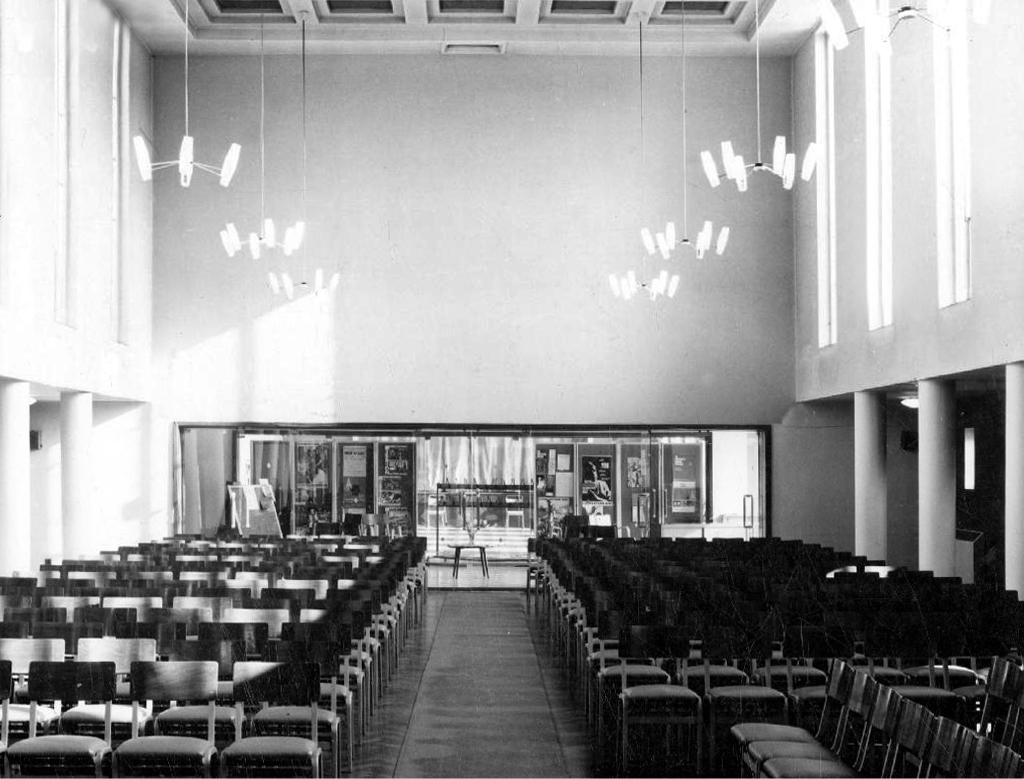
Let’s take a look around inside.

As a footnote the recent STV Studios produced series SCREW was filmed here!

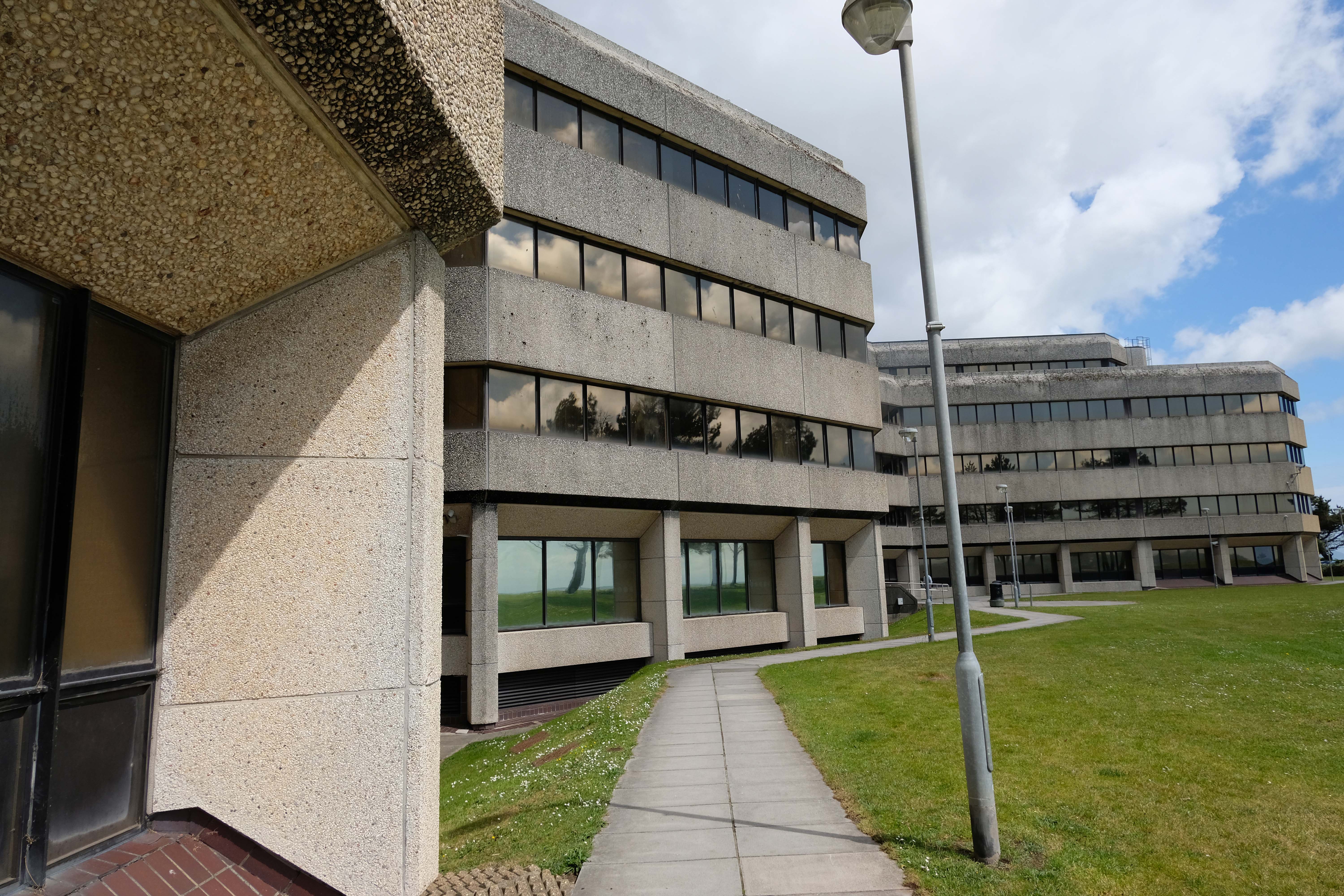
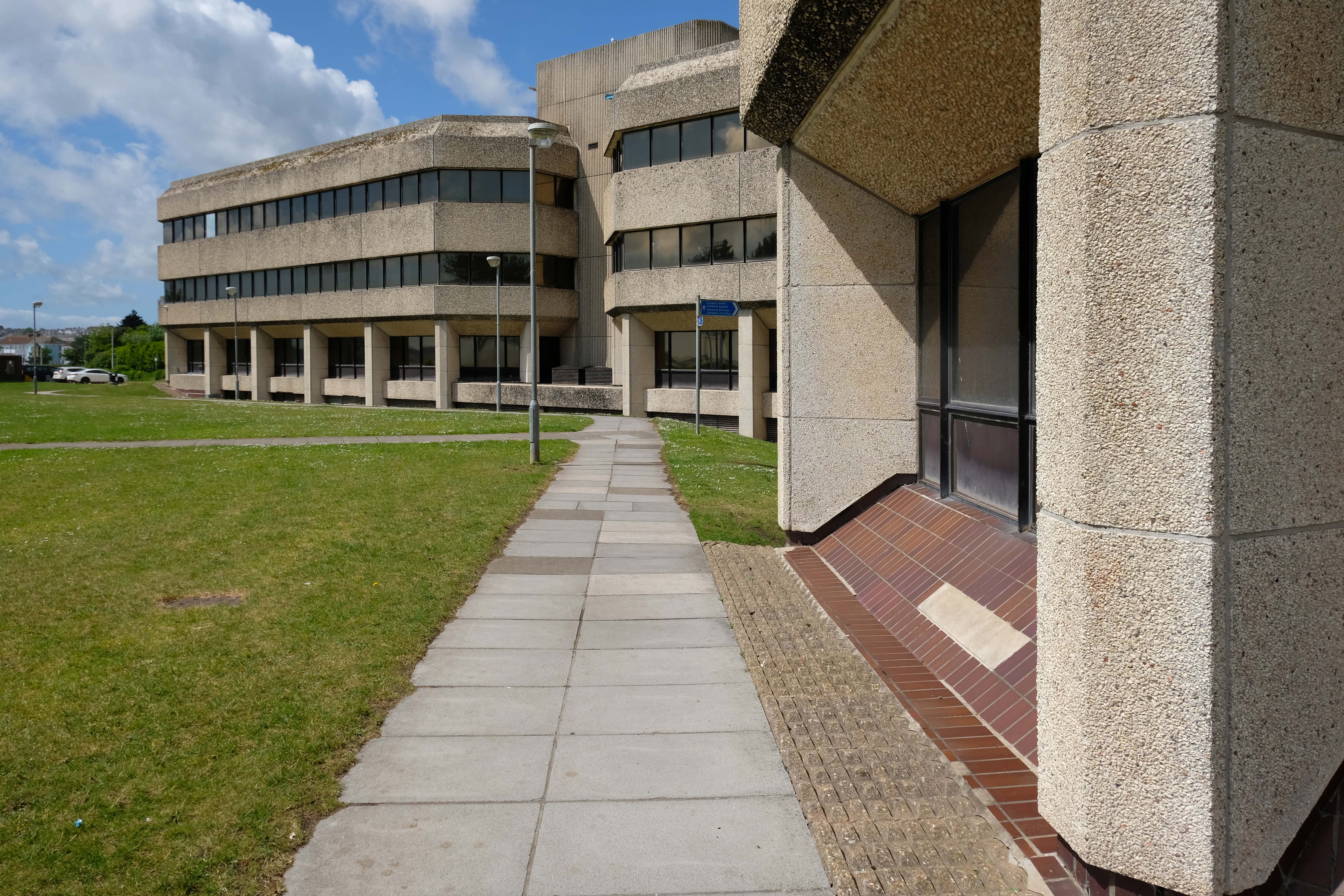
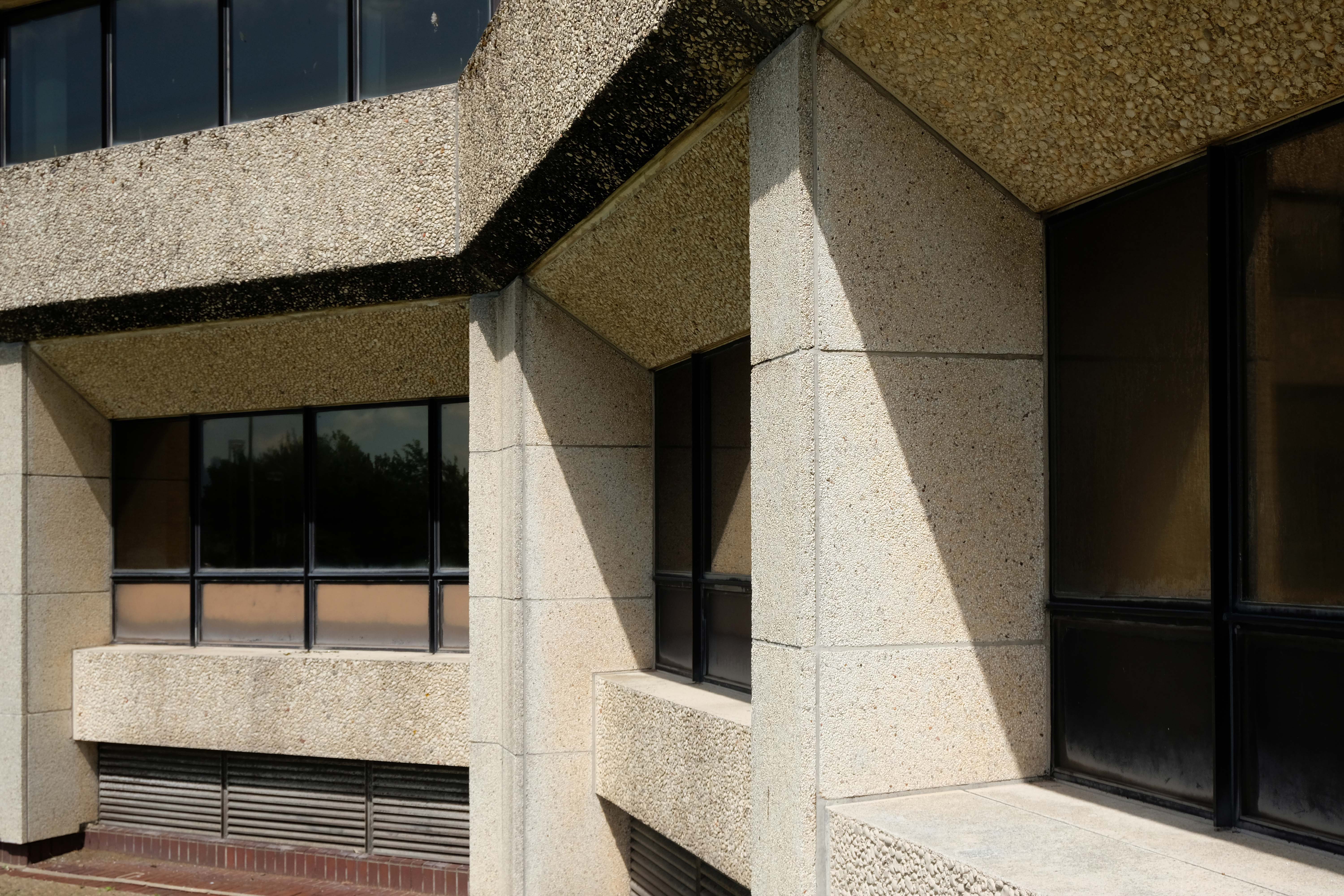
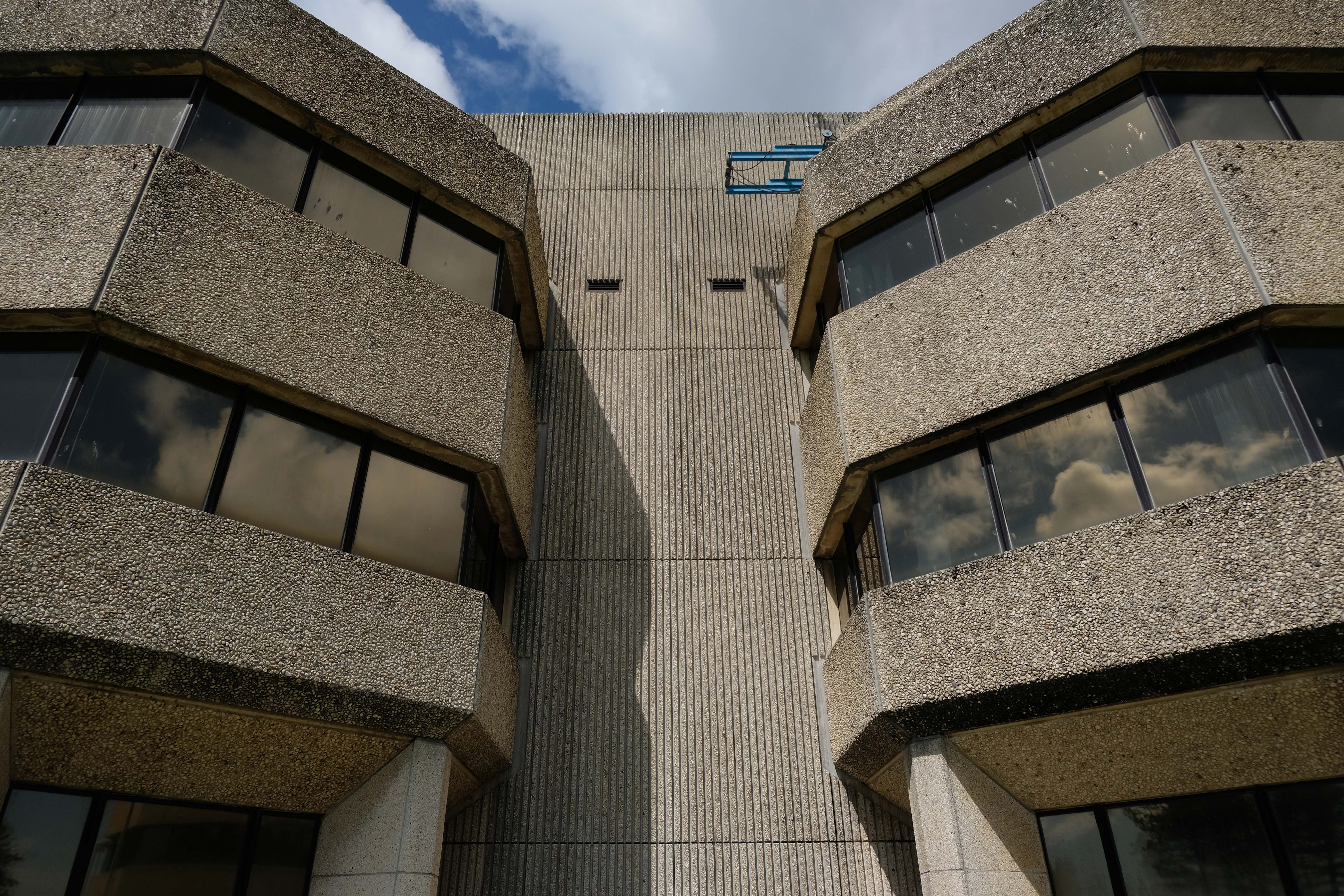
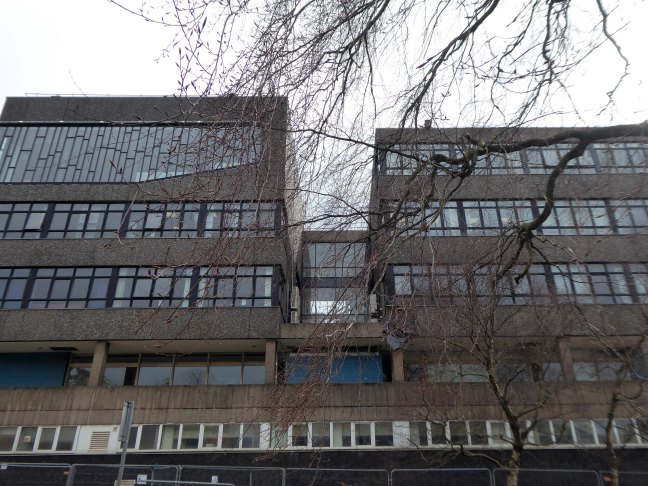
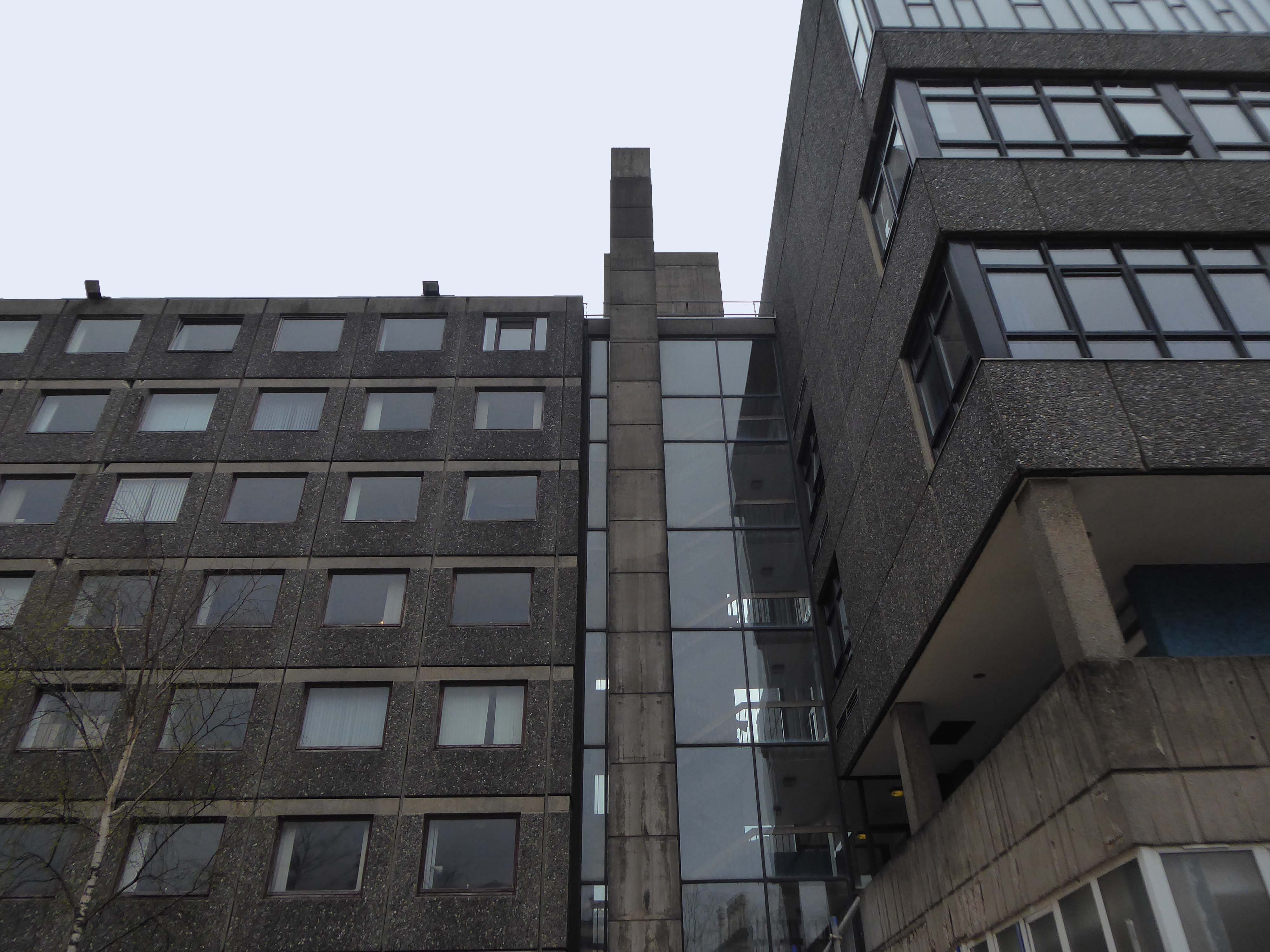
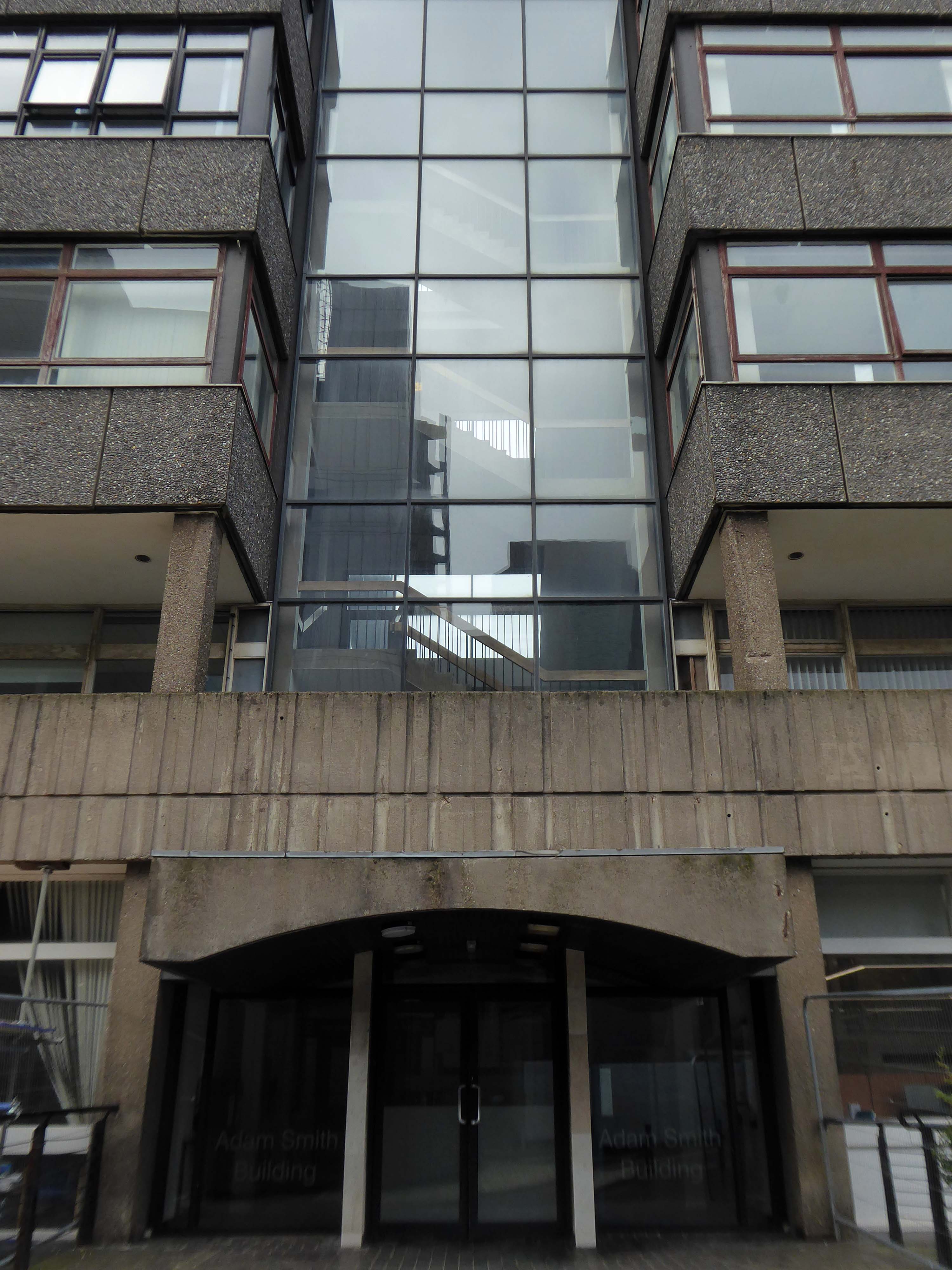
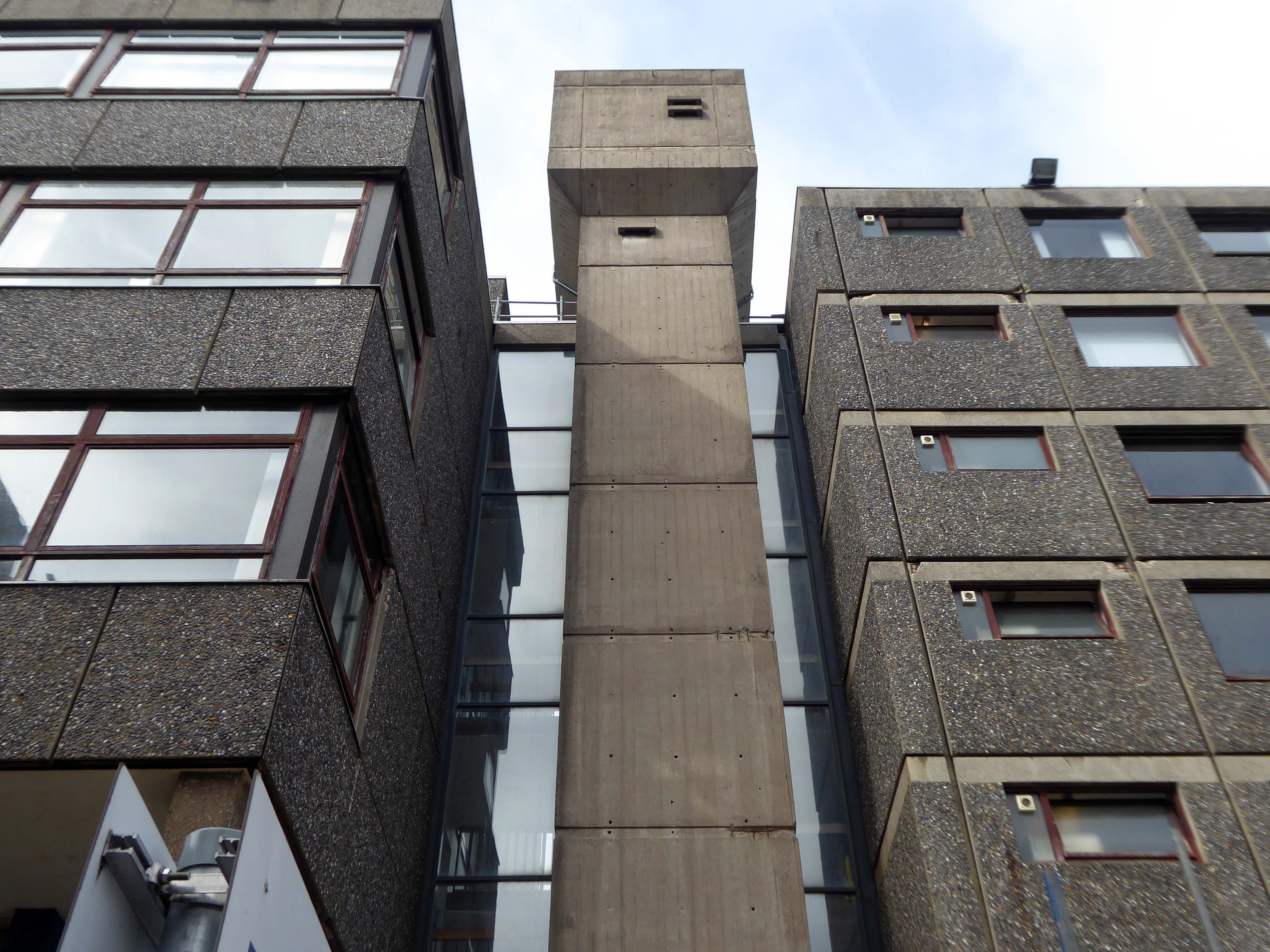
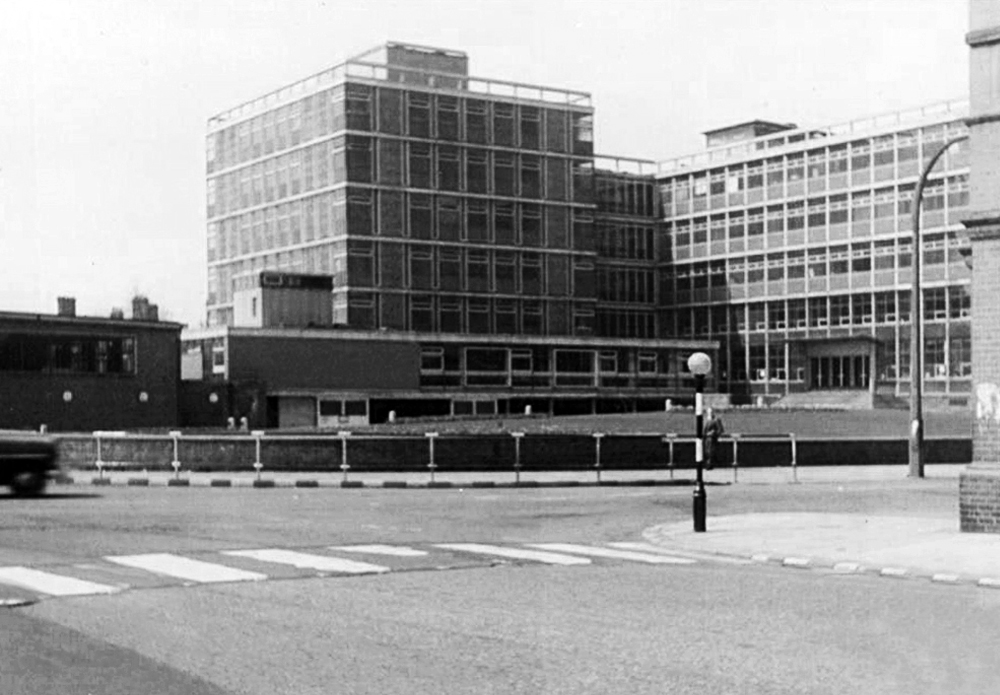
Adam Smith Building – Glasgow

Architects: David Harvey, Alex Scott & Associates – 1967

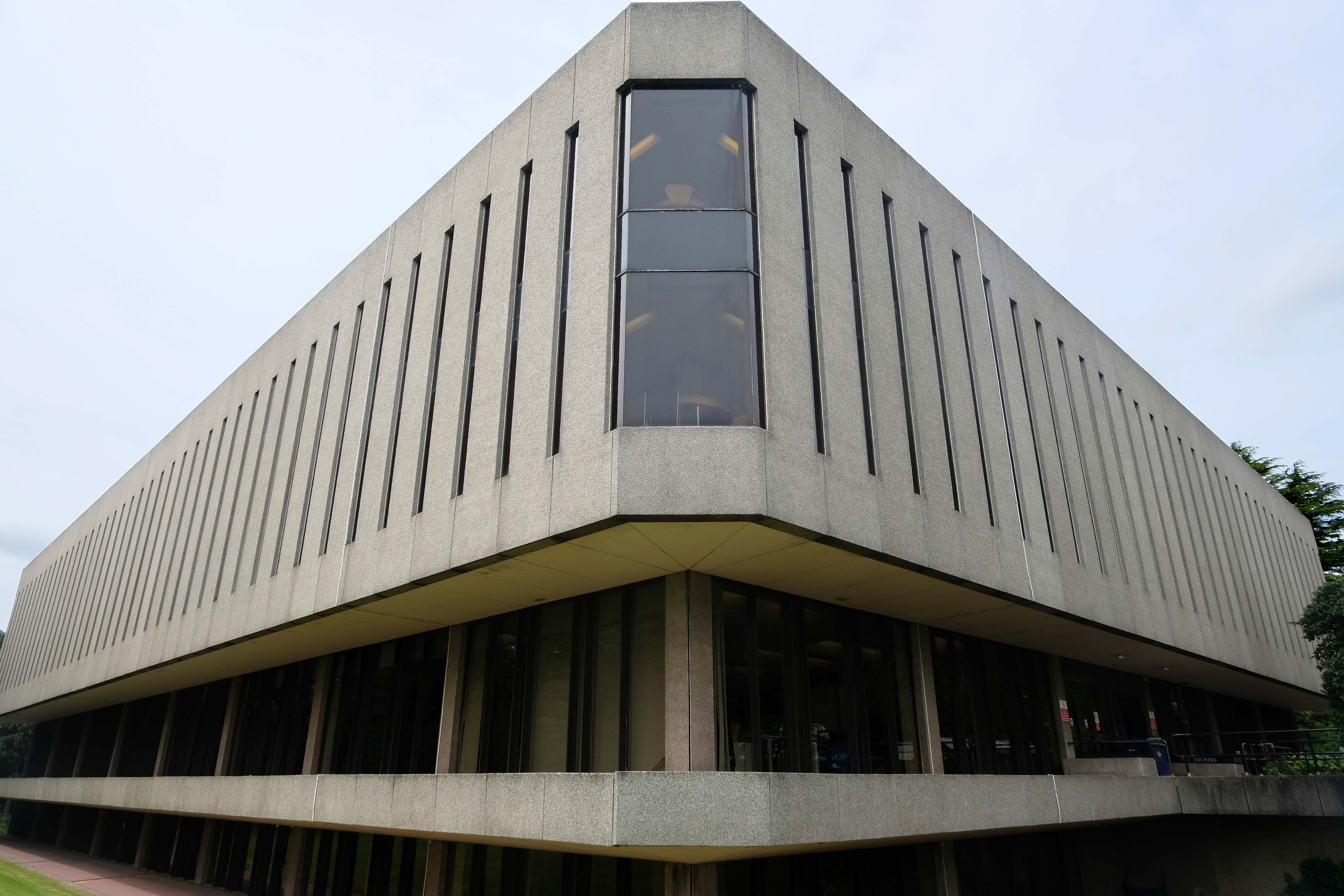
The Adam Smith Building, named in honour of the moral philosopher and political economist, Adam Smith, was formally opened on 2 November 1967 by Sydney George Checkland, Professor of Economic History from 1957 to 1982. The building was the first of the University’s multipurpose blocks housing a large number of departments, and a library for Political Economy, Social and Economic Research, Economic History, Political and Social Theory and Institutions, Management Studies, Psychology, Social Psychology, Accountancy, Citizenship, Anthropology, Criminology, Industrial Relations, and the School of Social Study. A records store was provided beneath the Library for the Economic History department to house their rapidly growing collection of business records from the vanishing Clyde shipyards and heavy engineering workshops, which now form part of the Scottish Business Archive held at University of Glasgow Archive Services.

Archives Hub

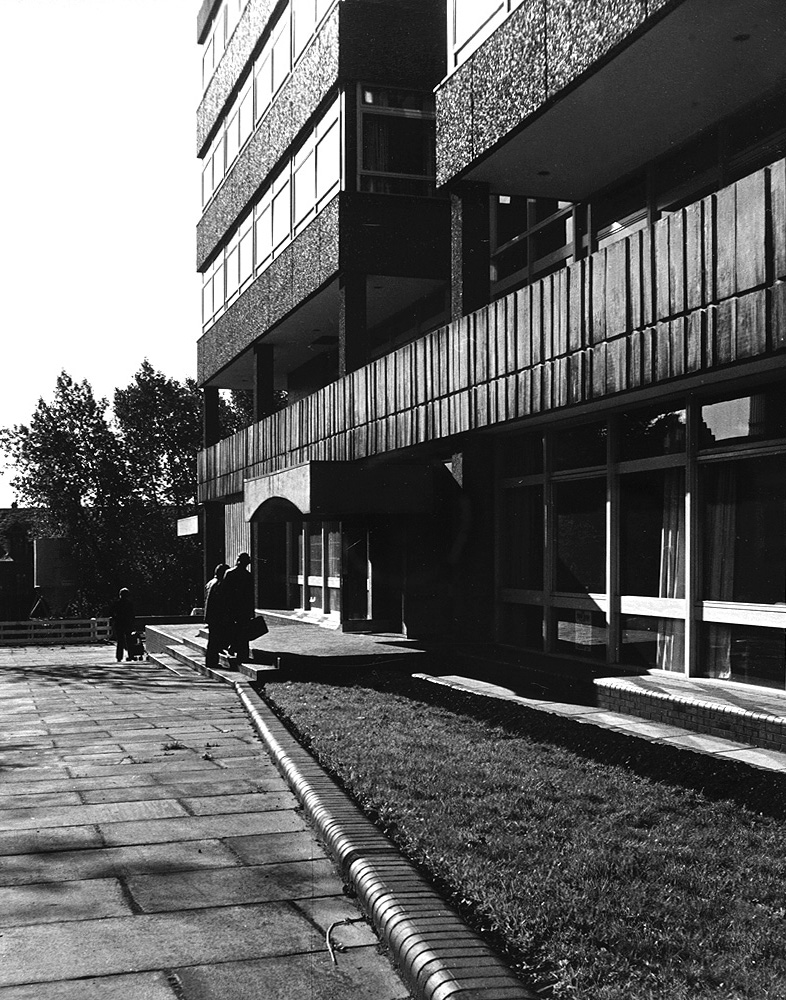
Eastern Elevation 1973
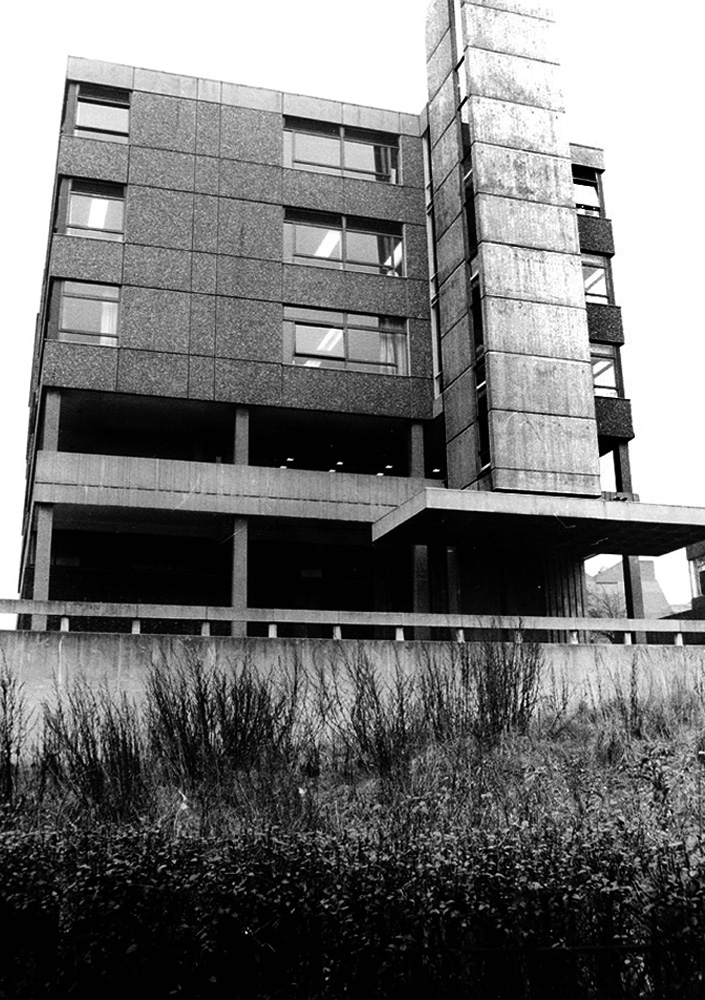
Southern Elevation 1978

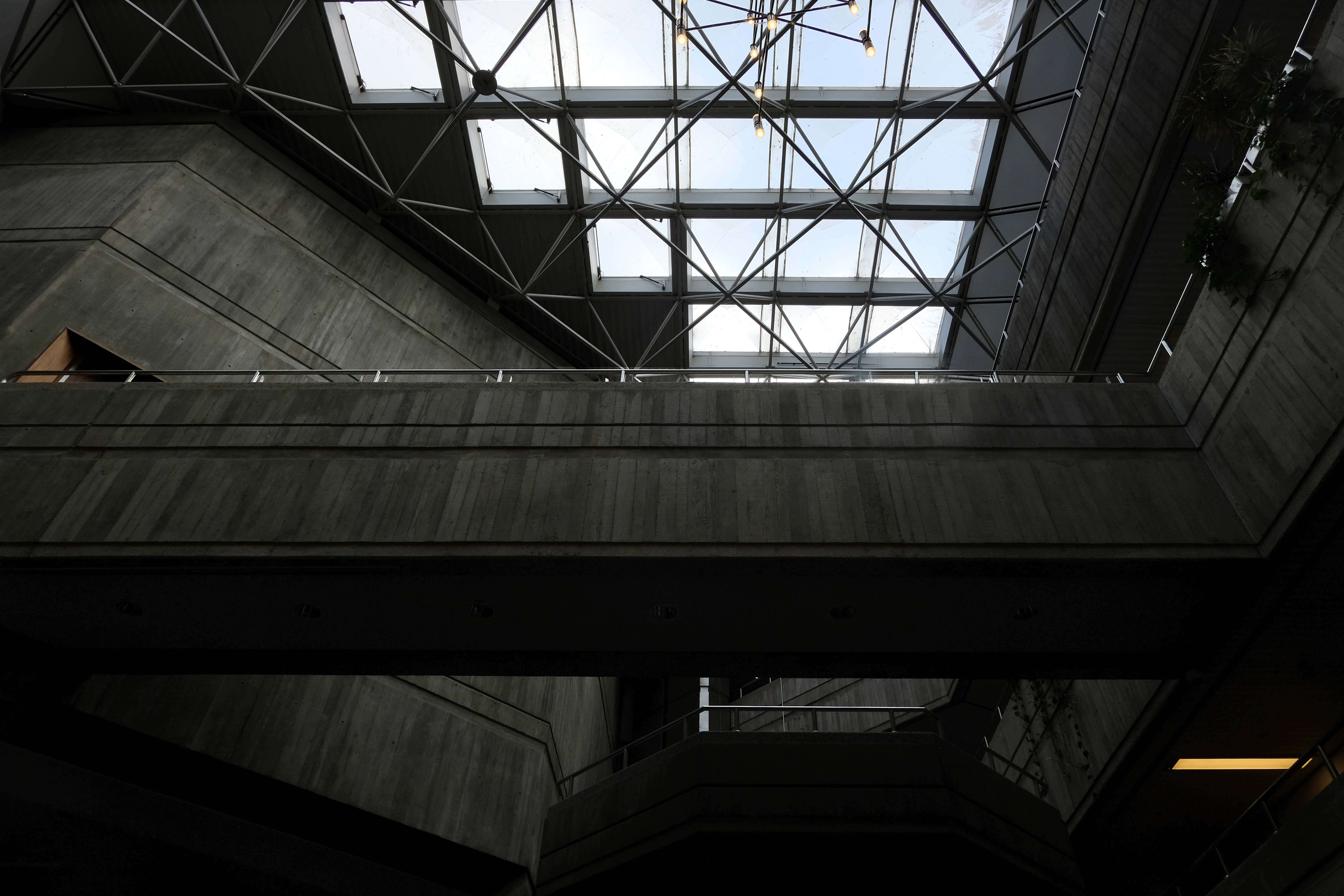
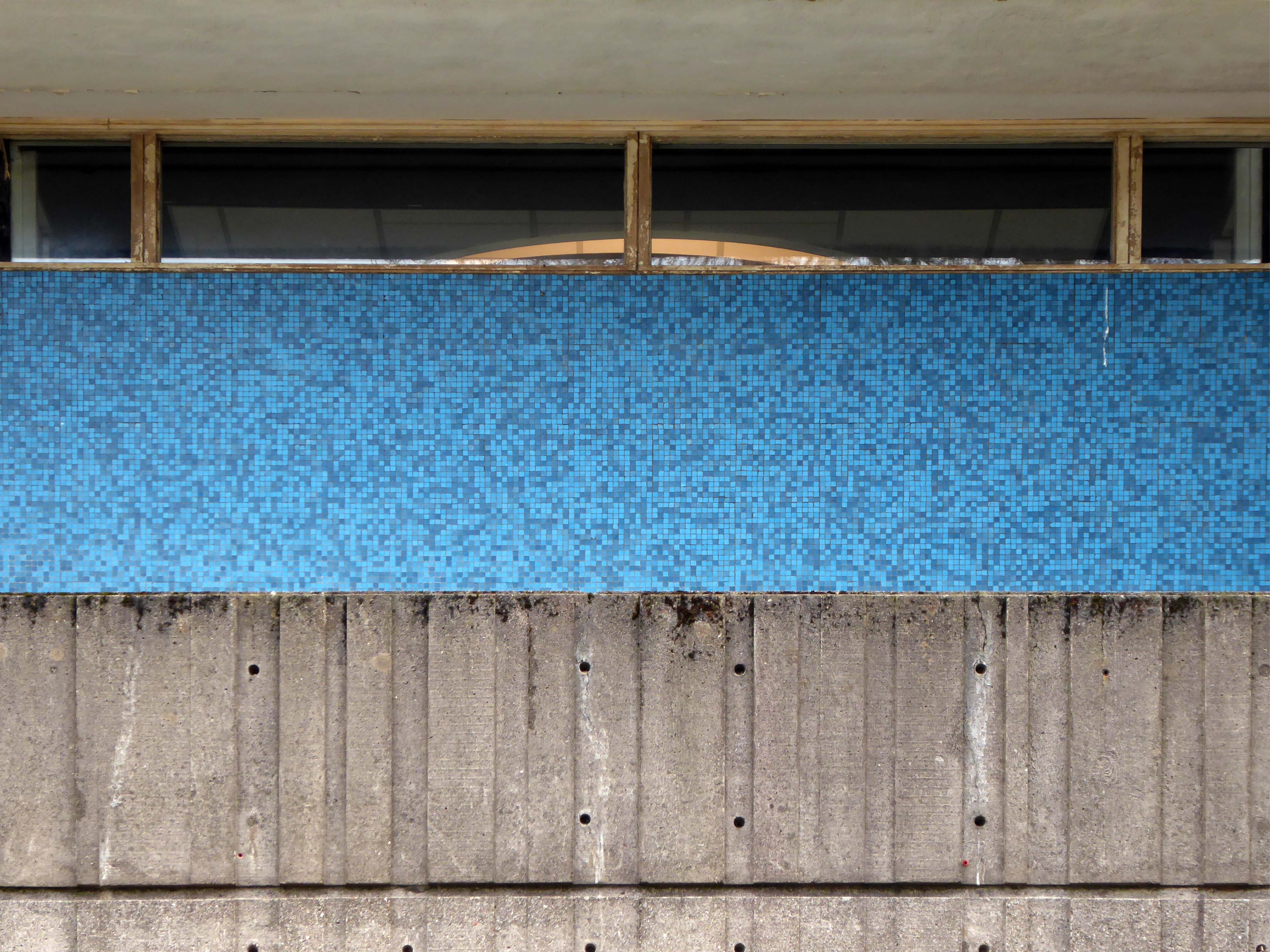
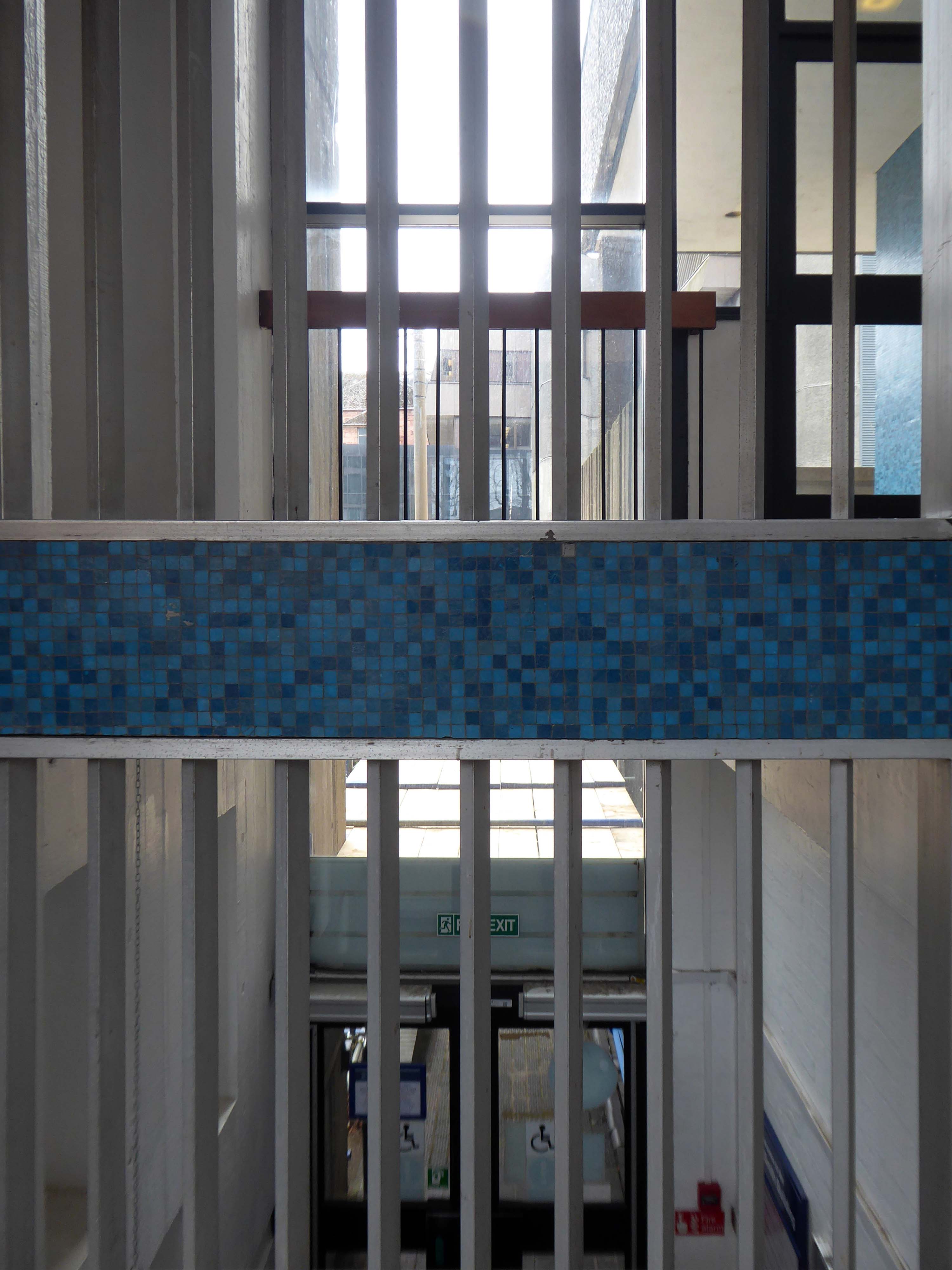
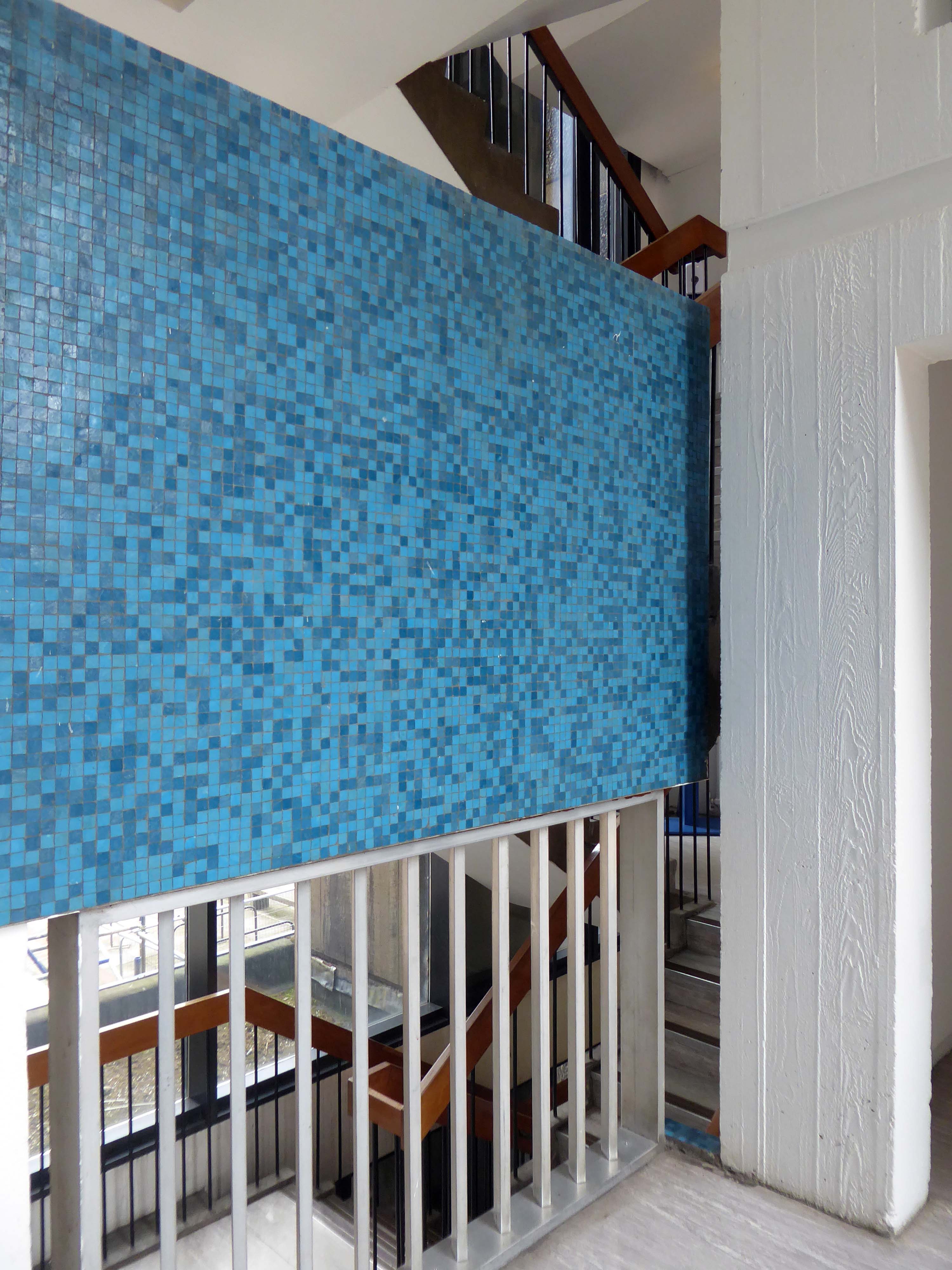
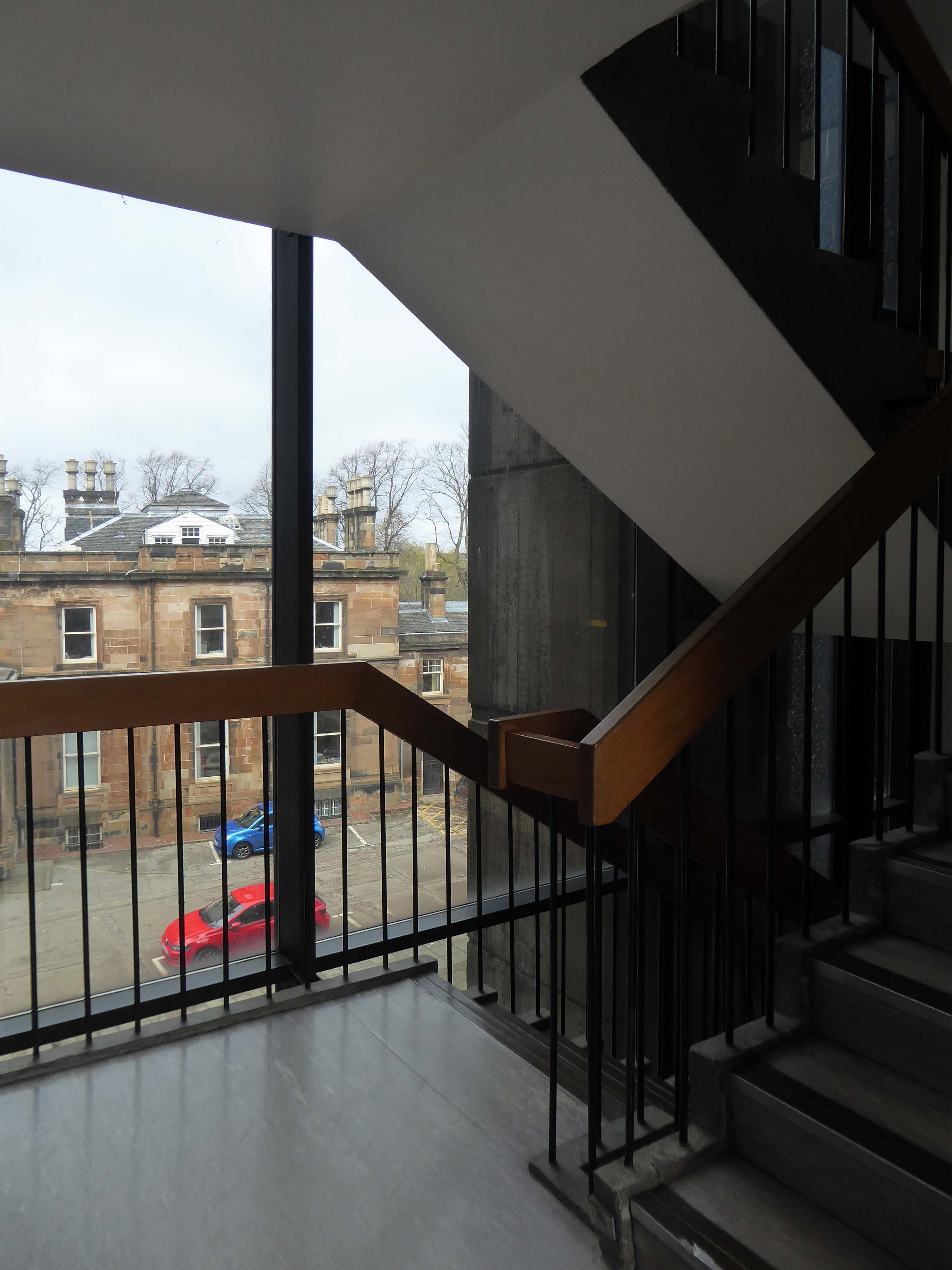
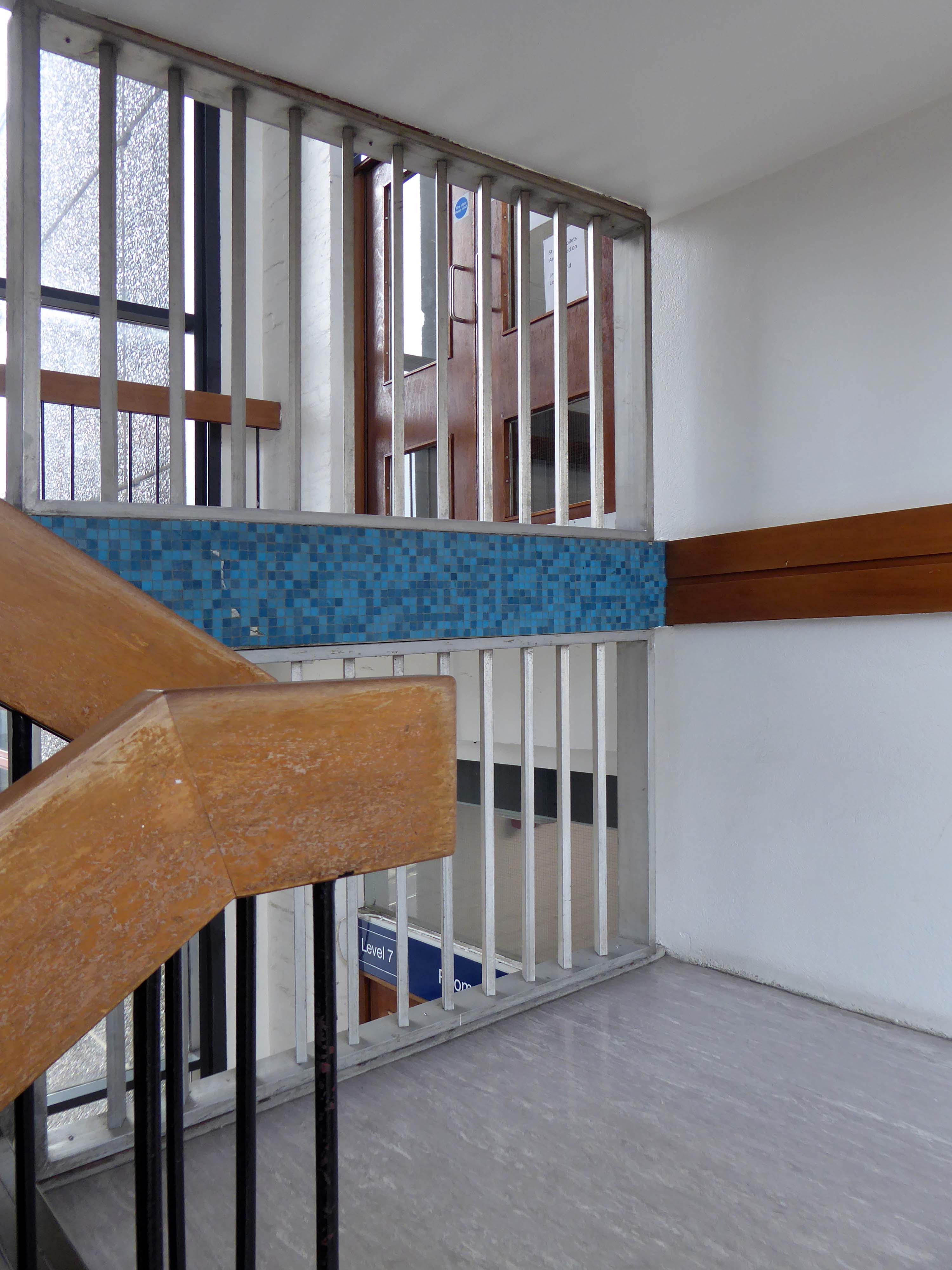
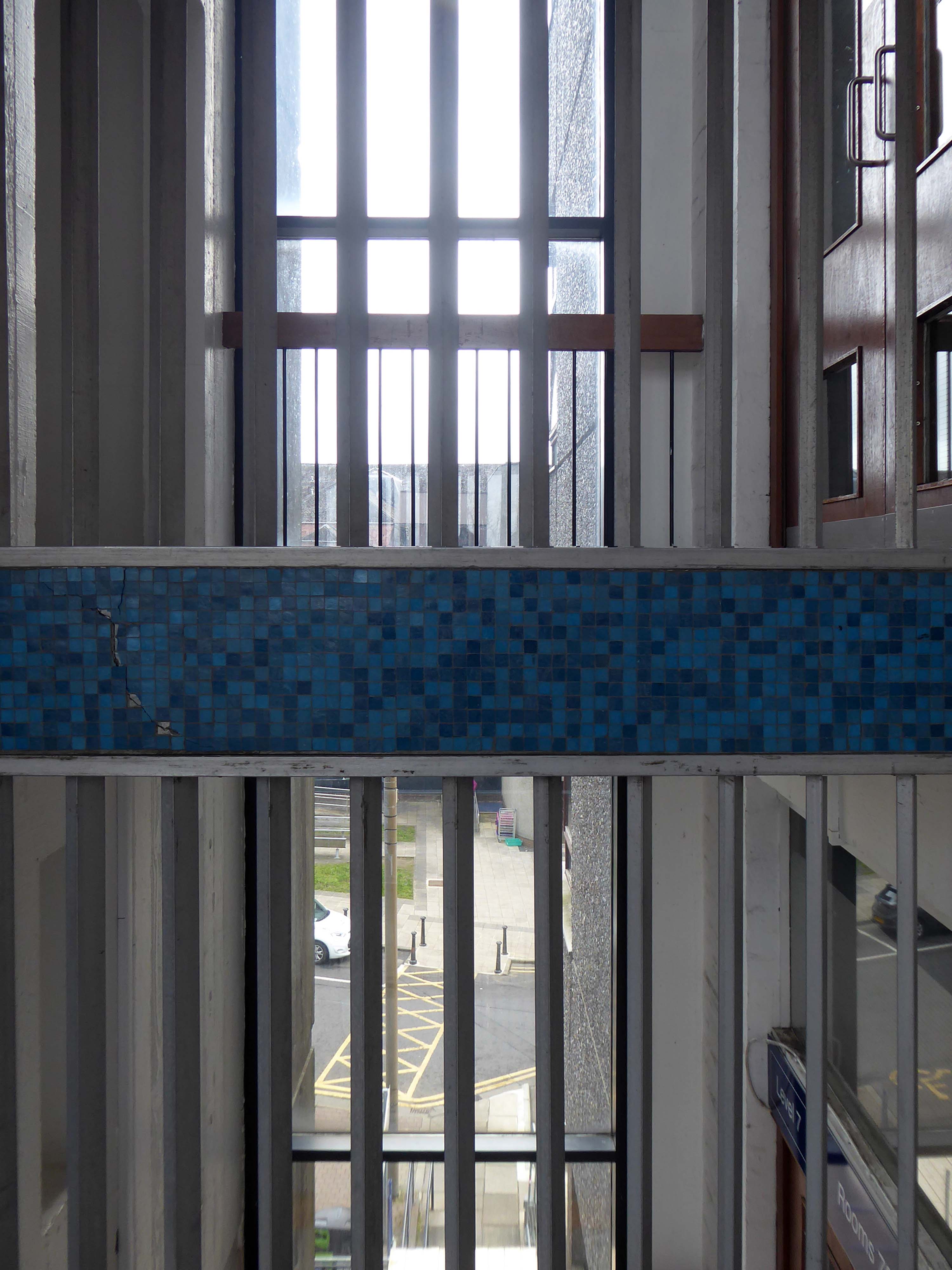
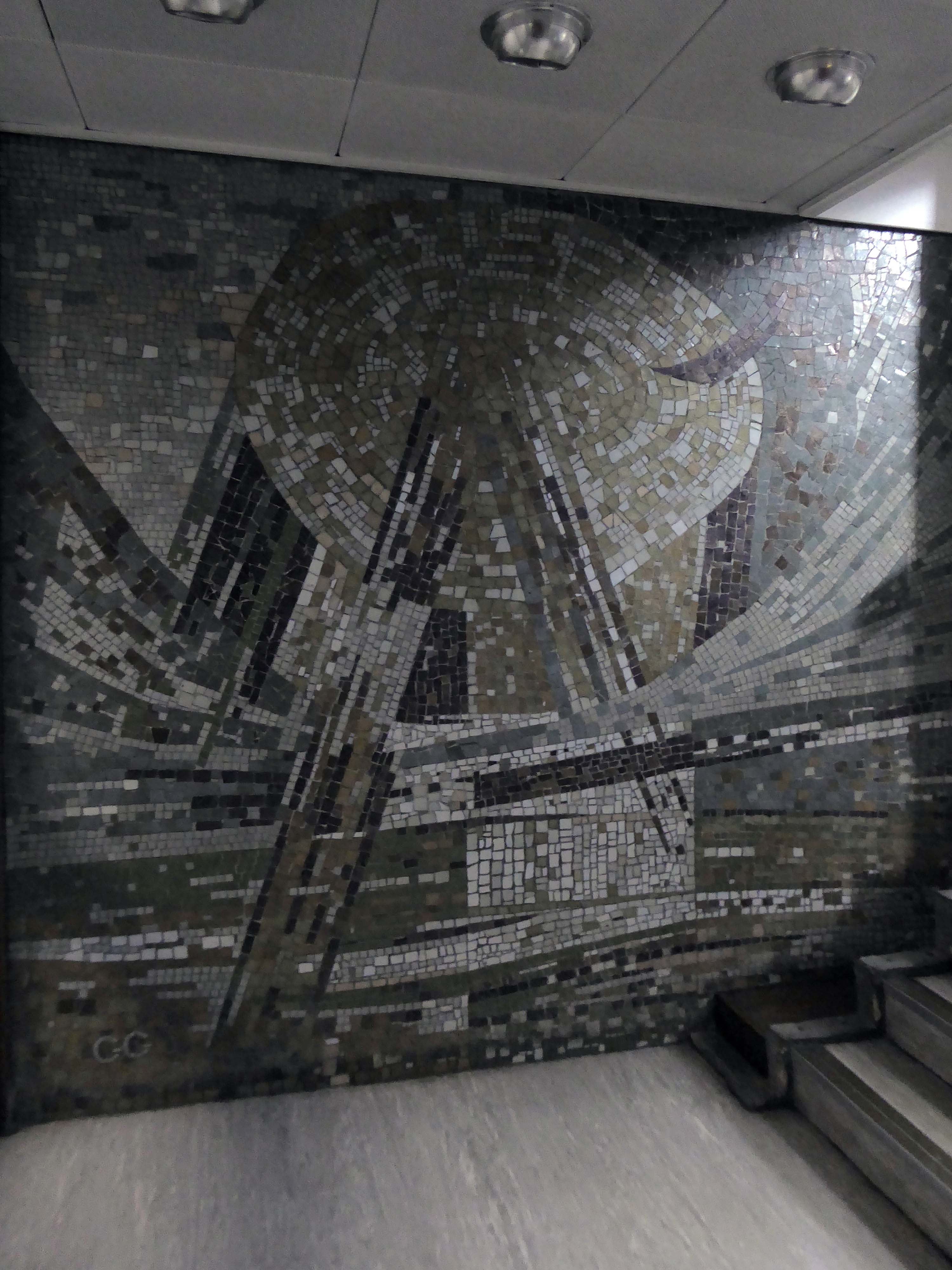
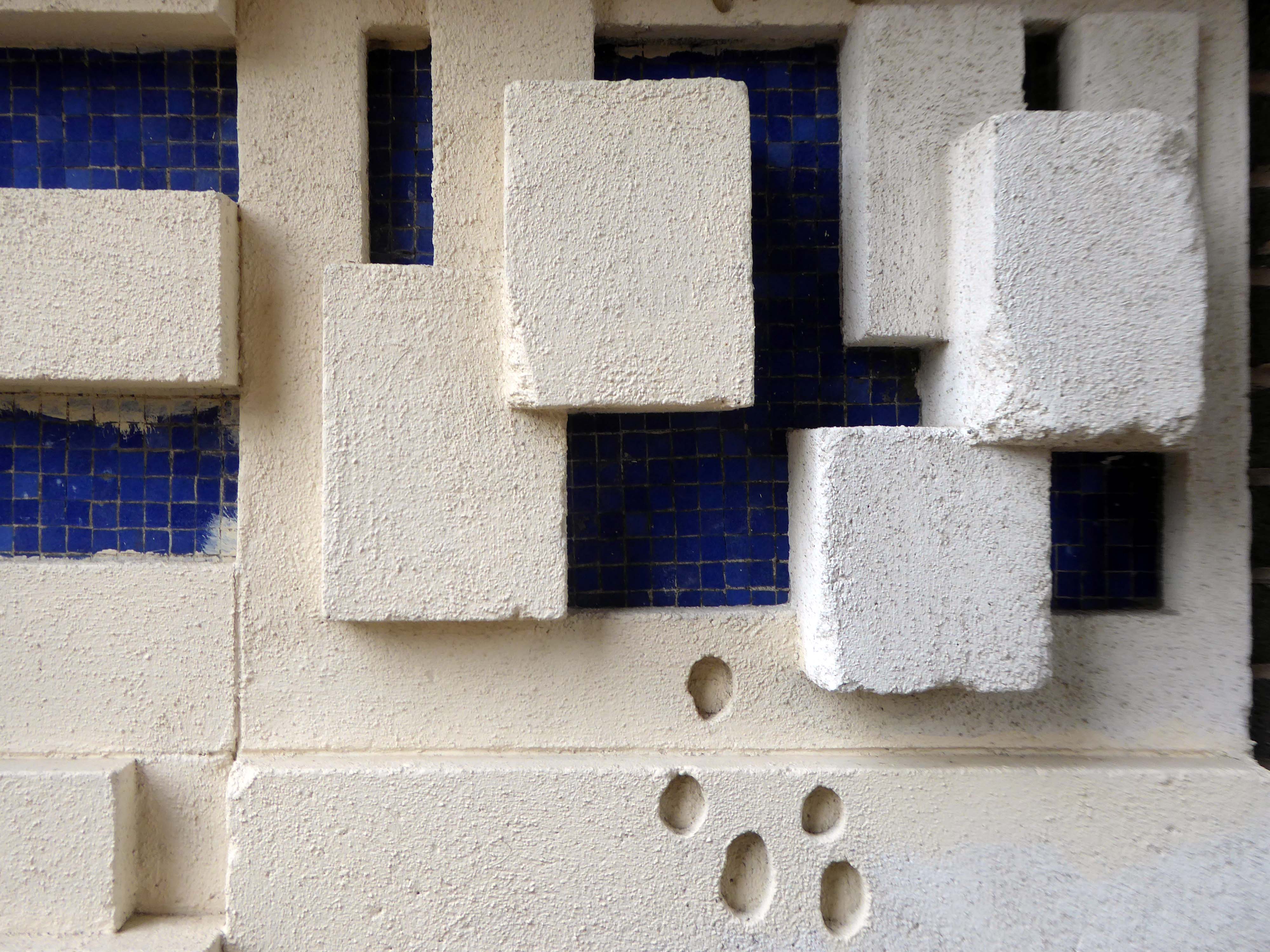
Wandering almost aimlessly around the campus, when the blue mosaic caught my eye.

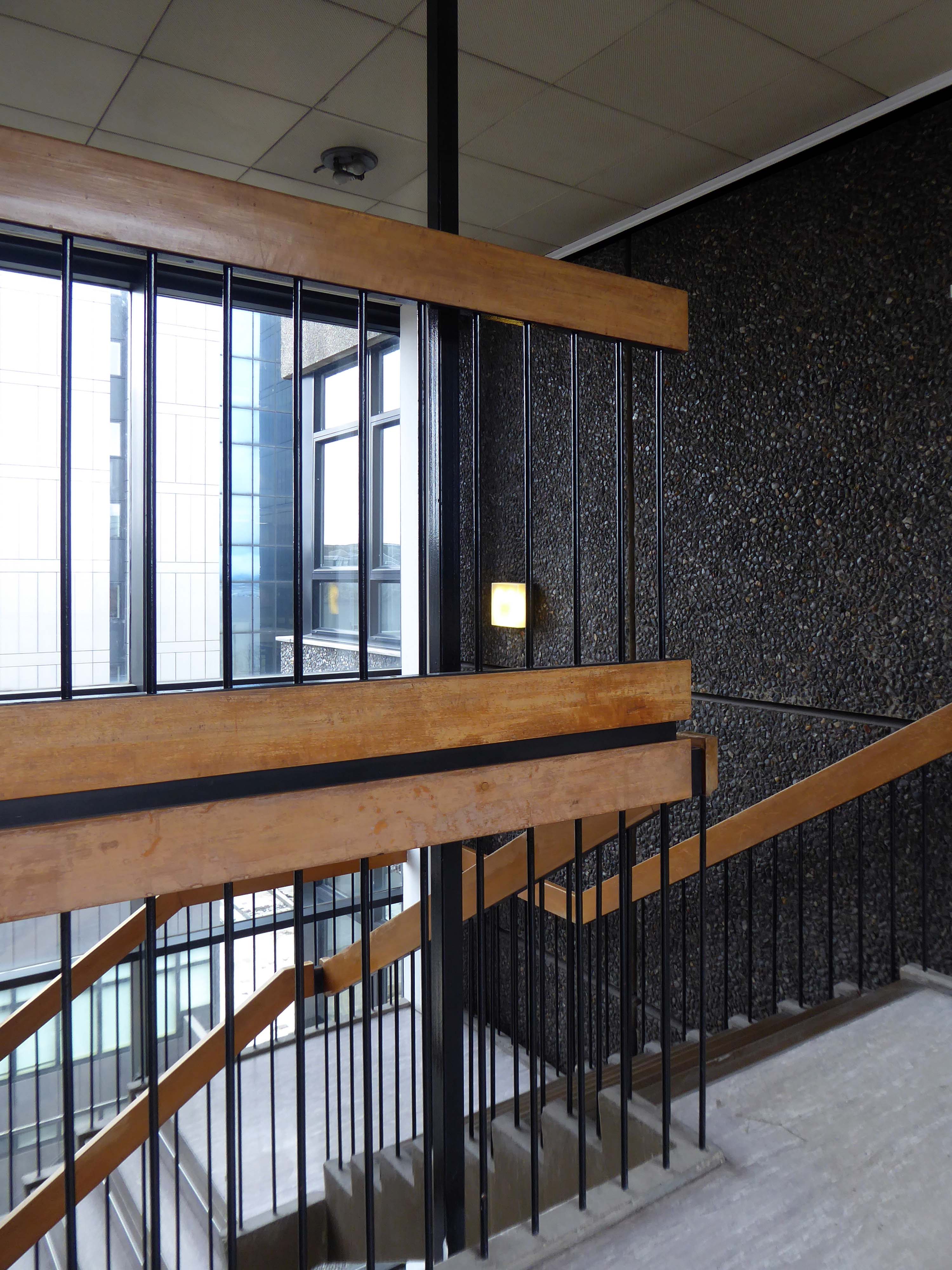
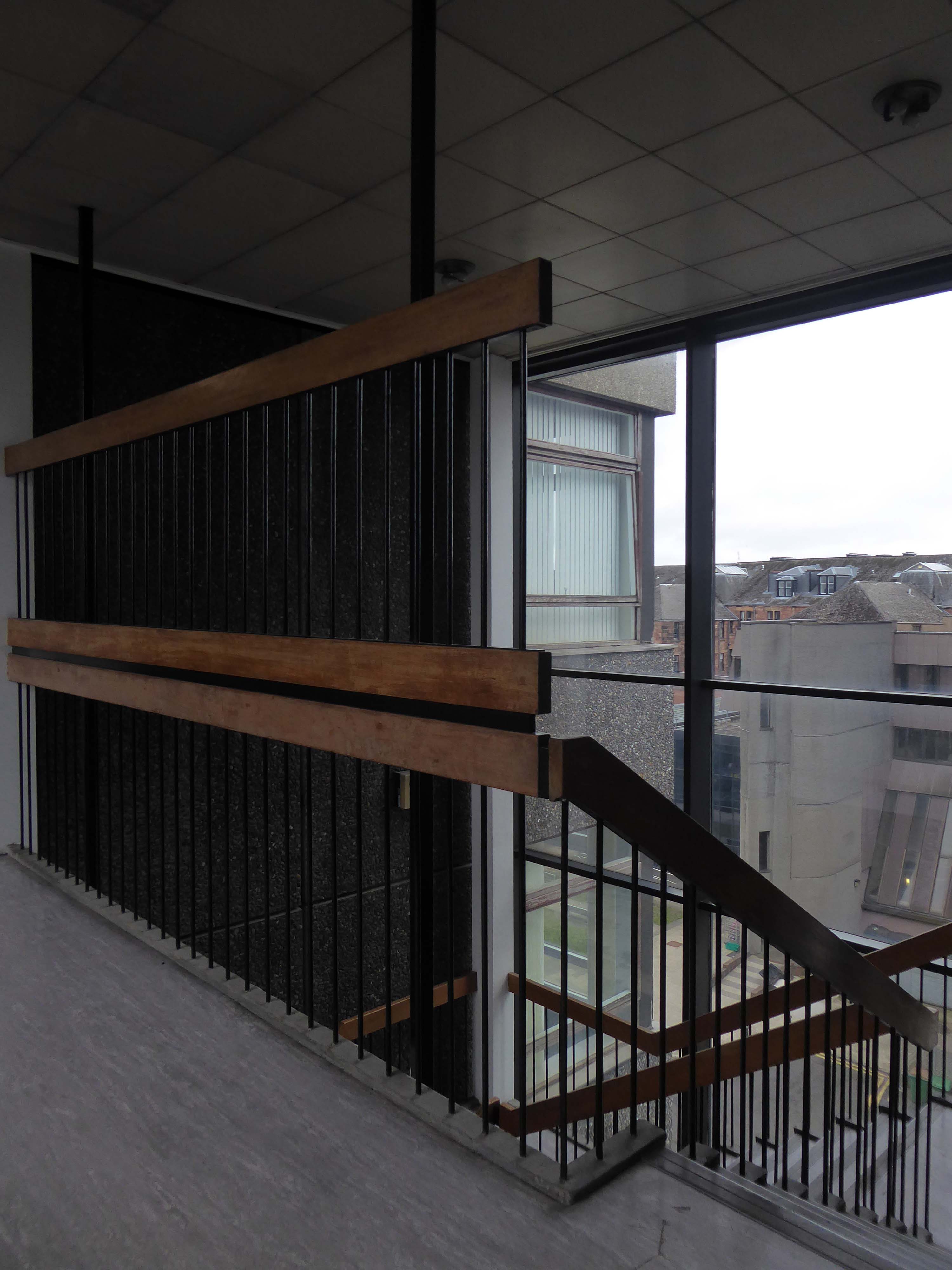
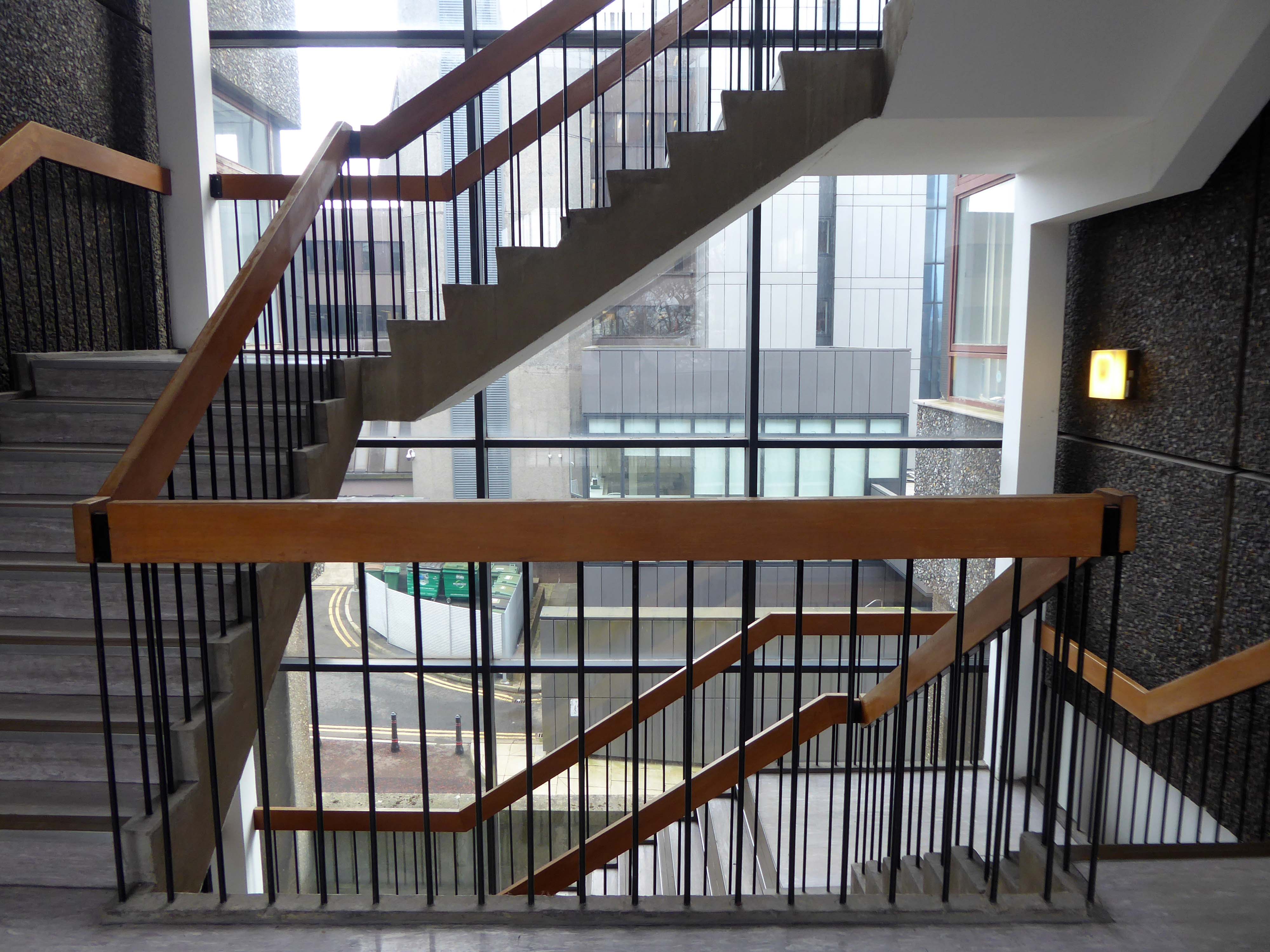
The glass stairwell drew me in further.

Entering the building I explained myself to the passing janitor:

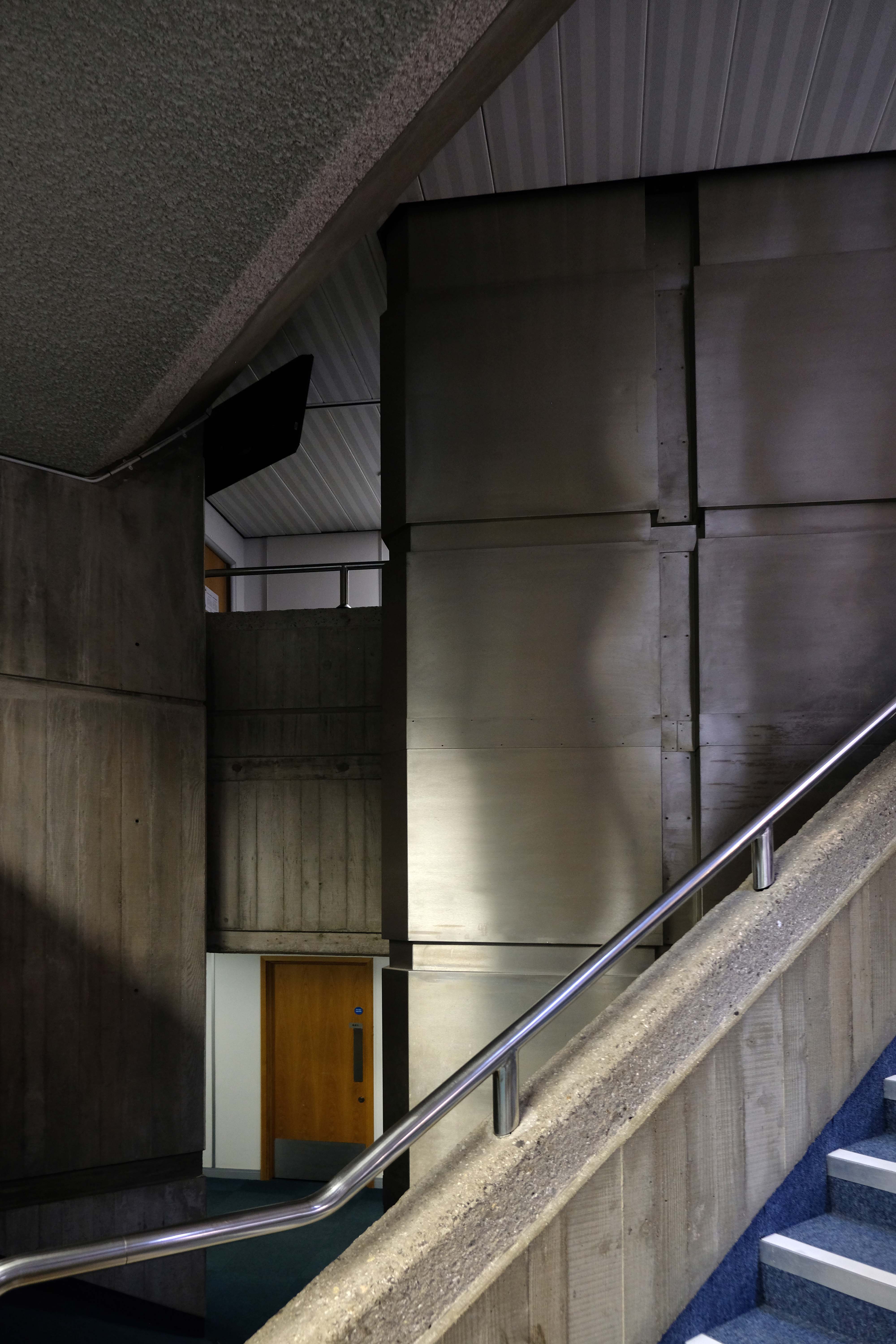
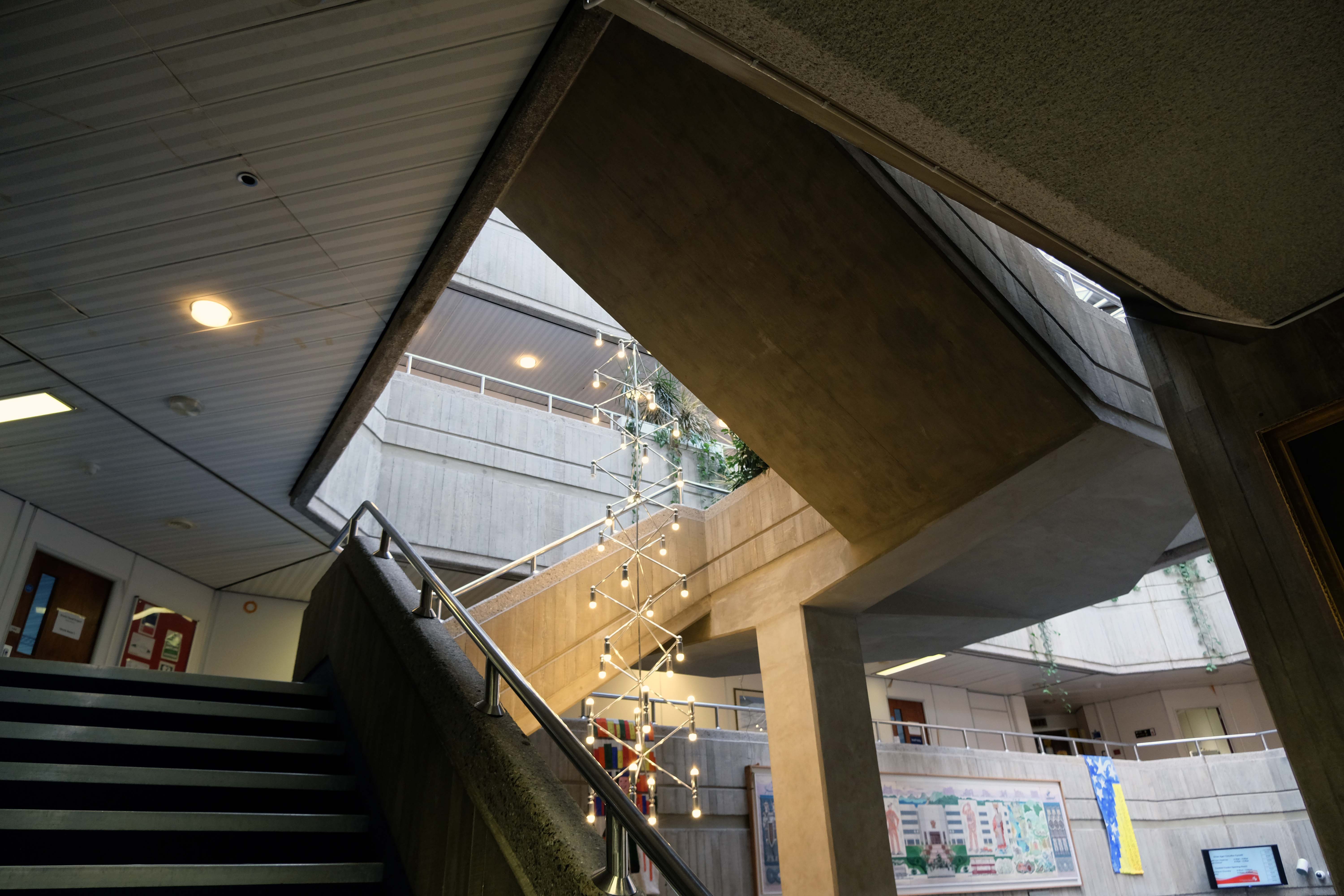
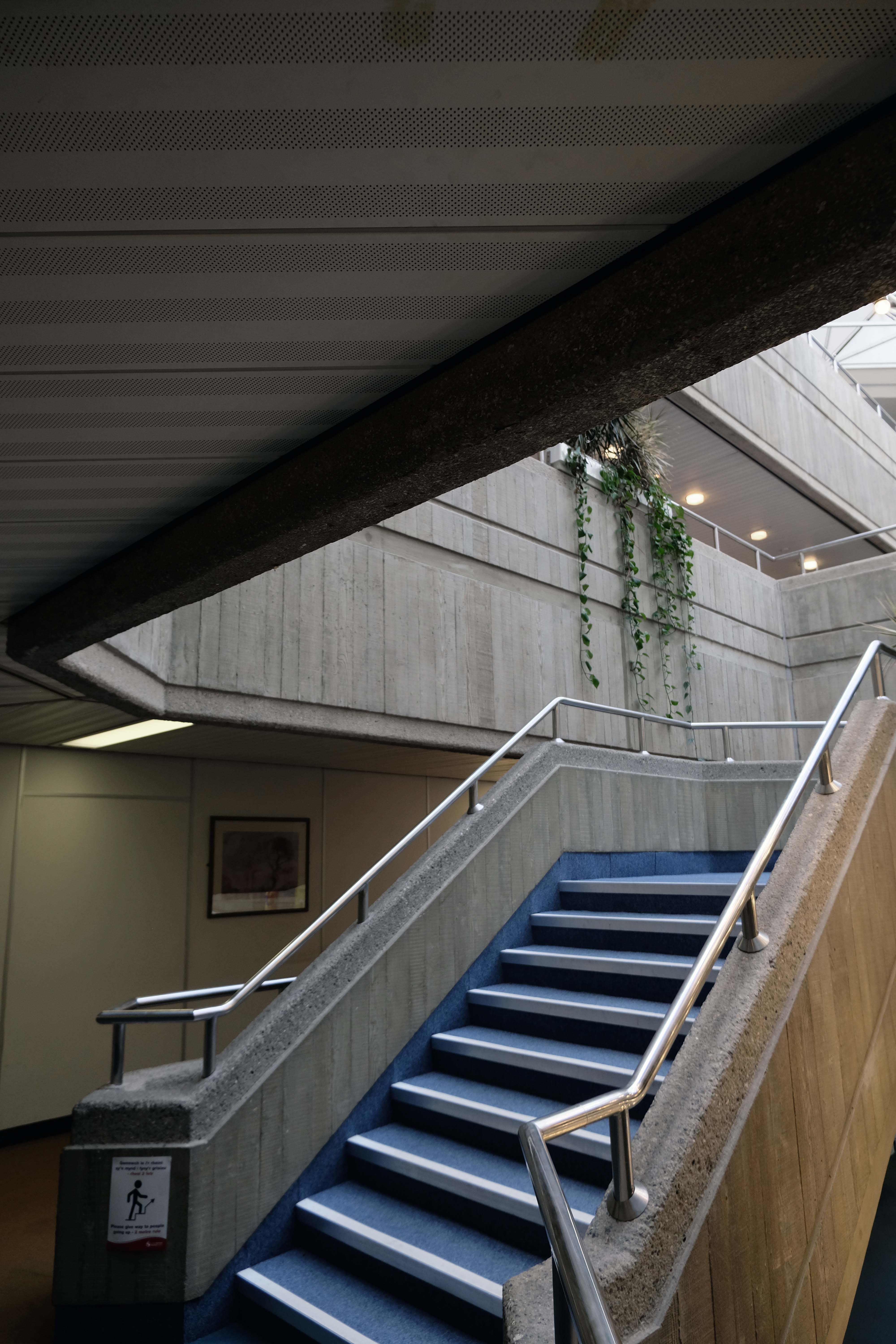
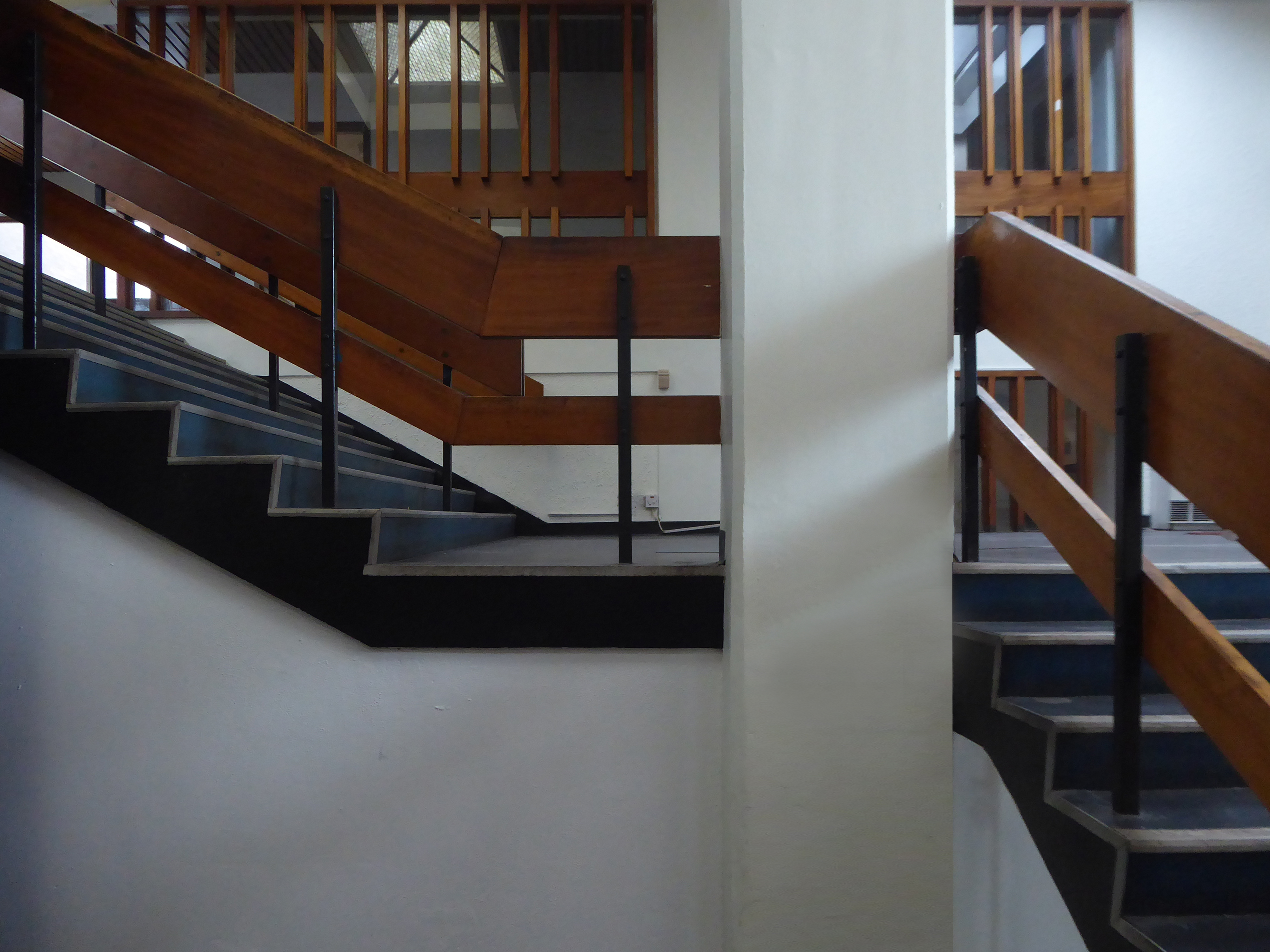
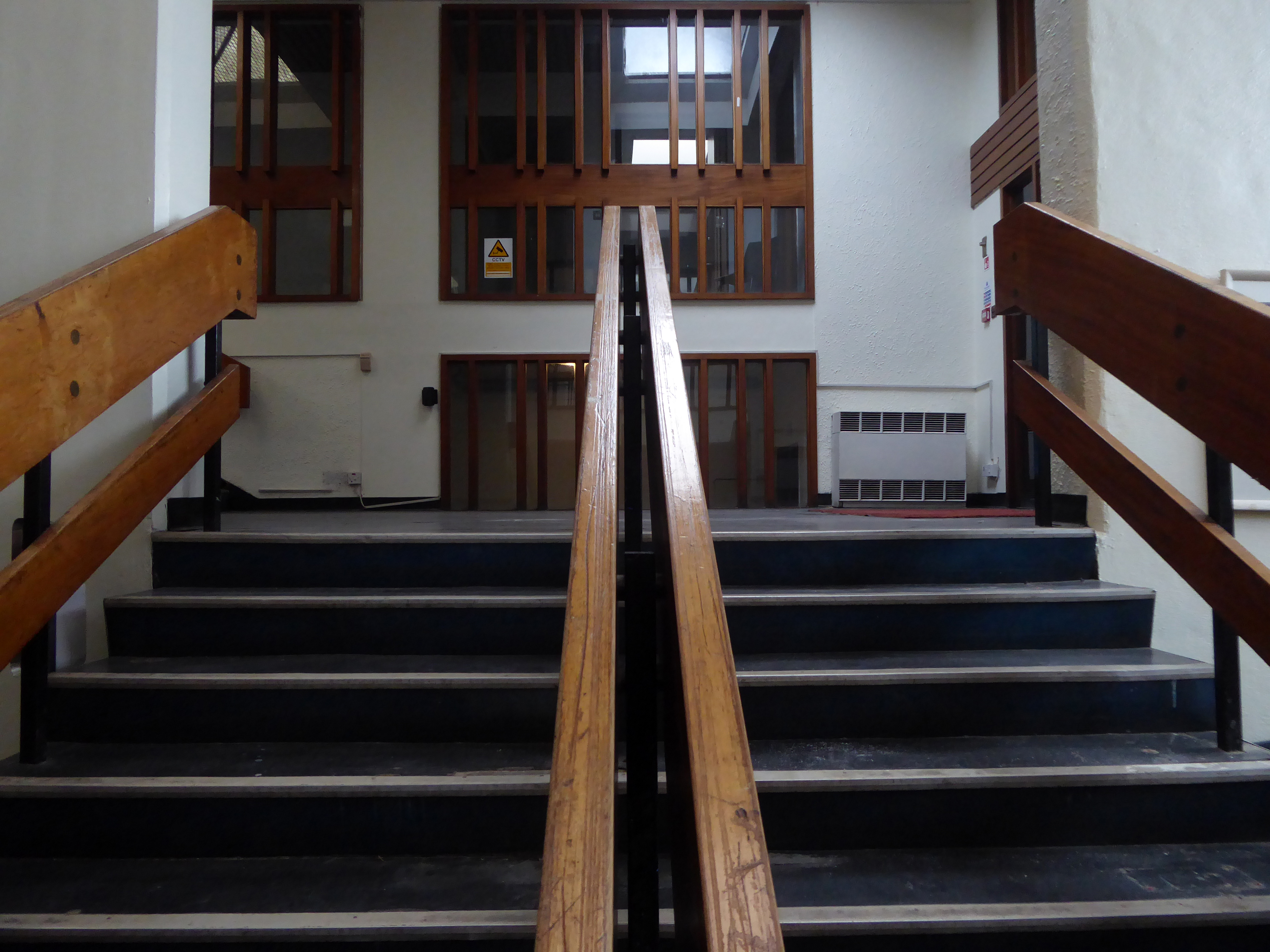
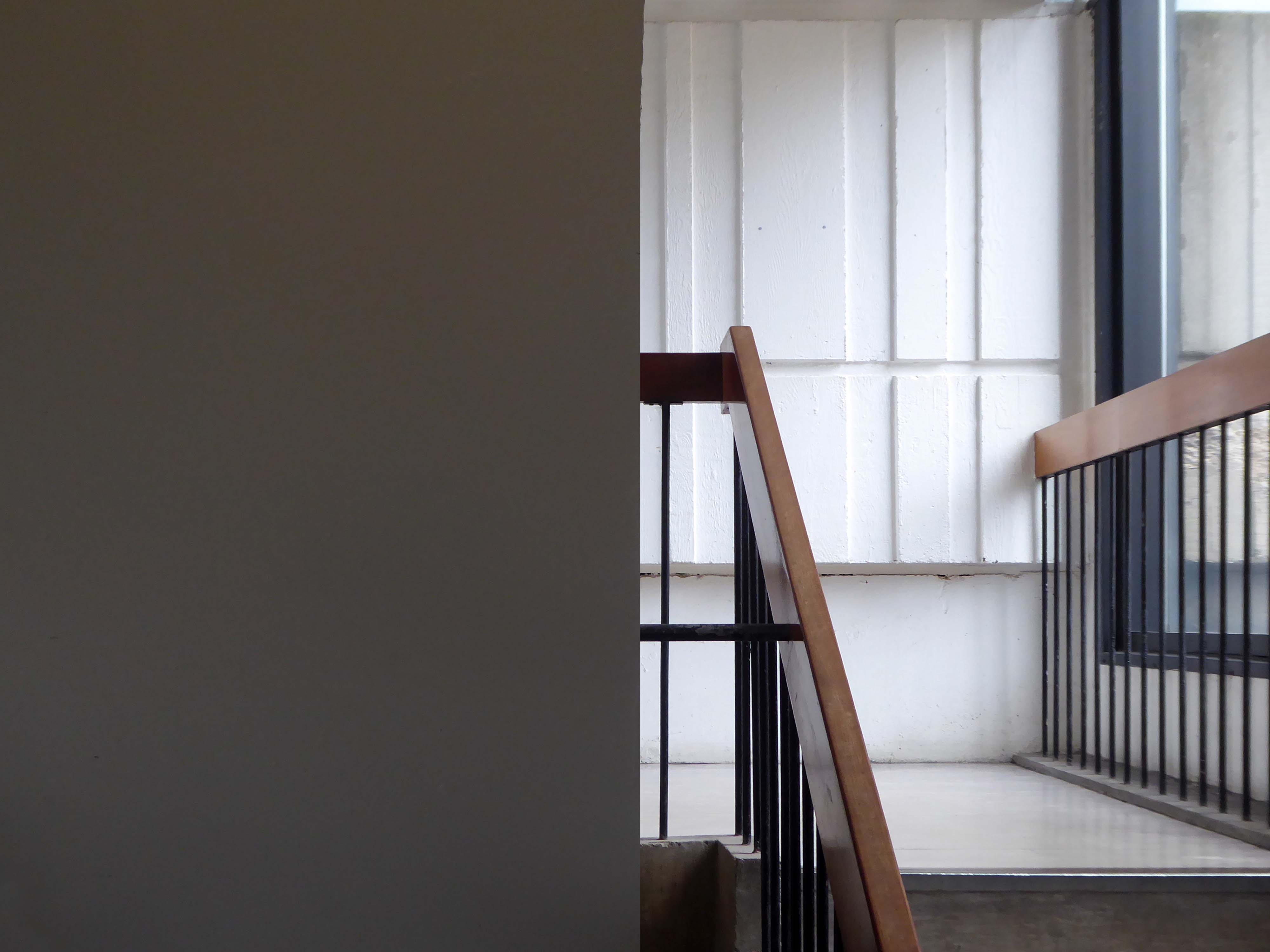
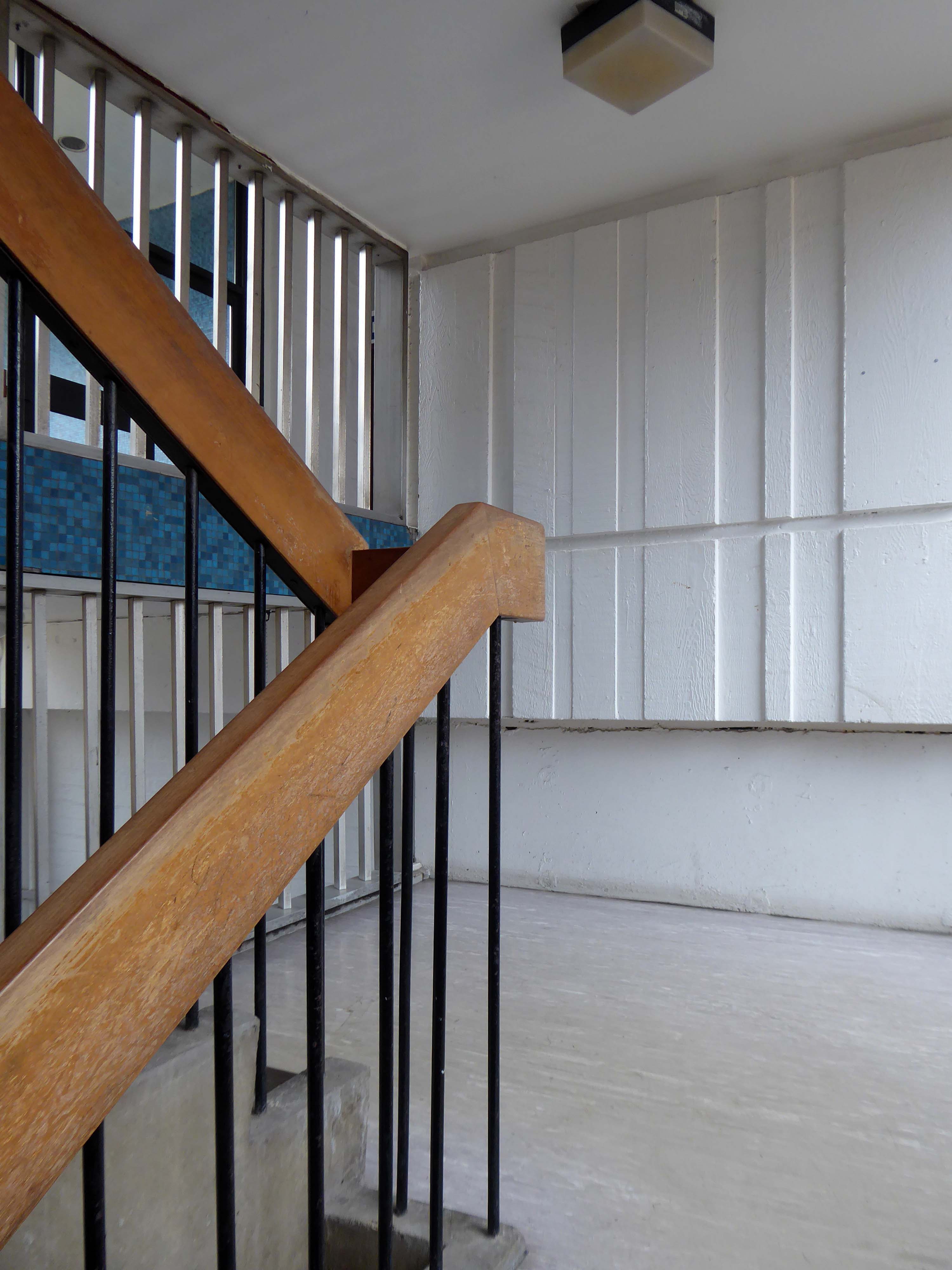
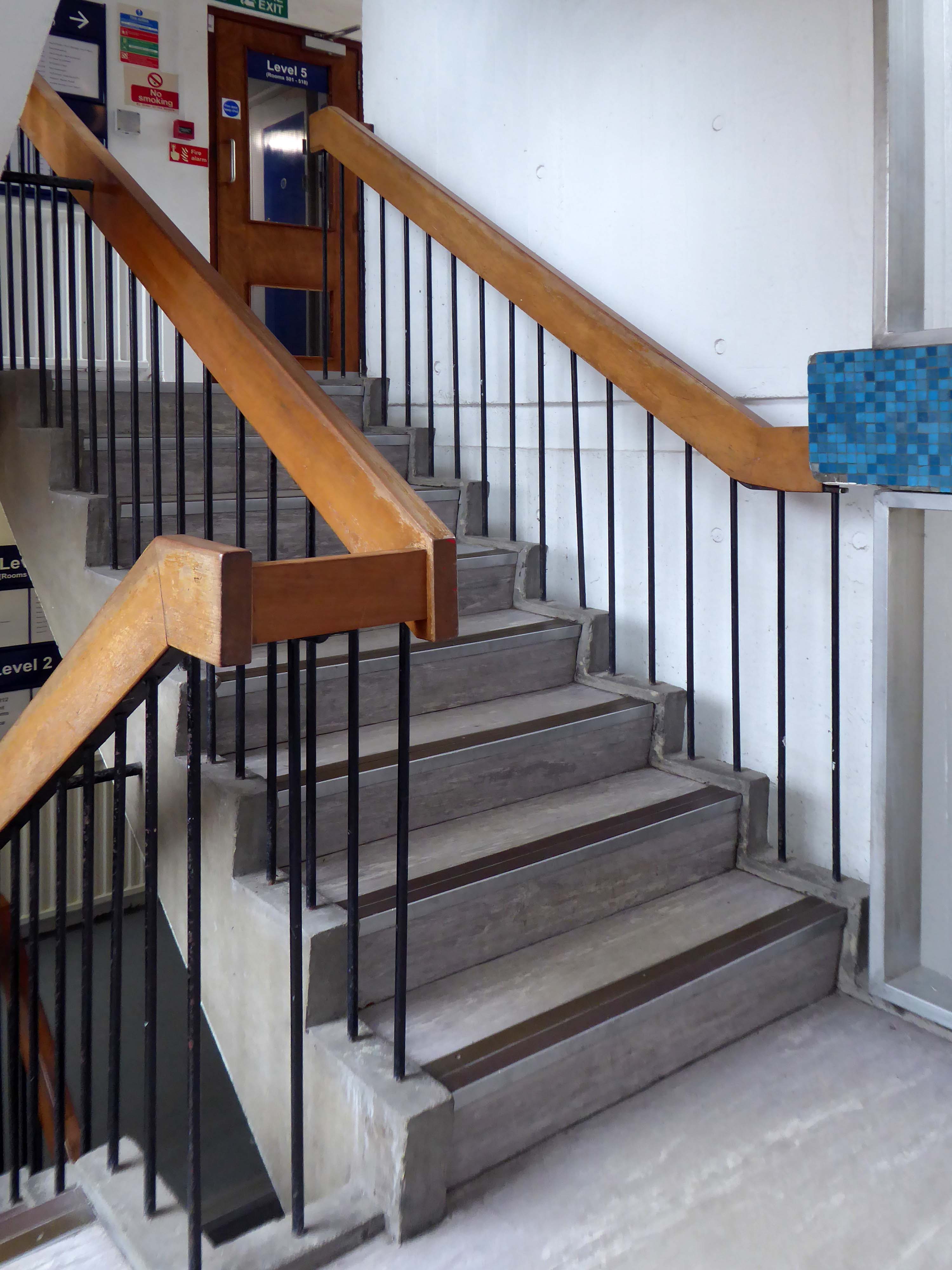
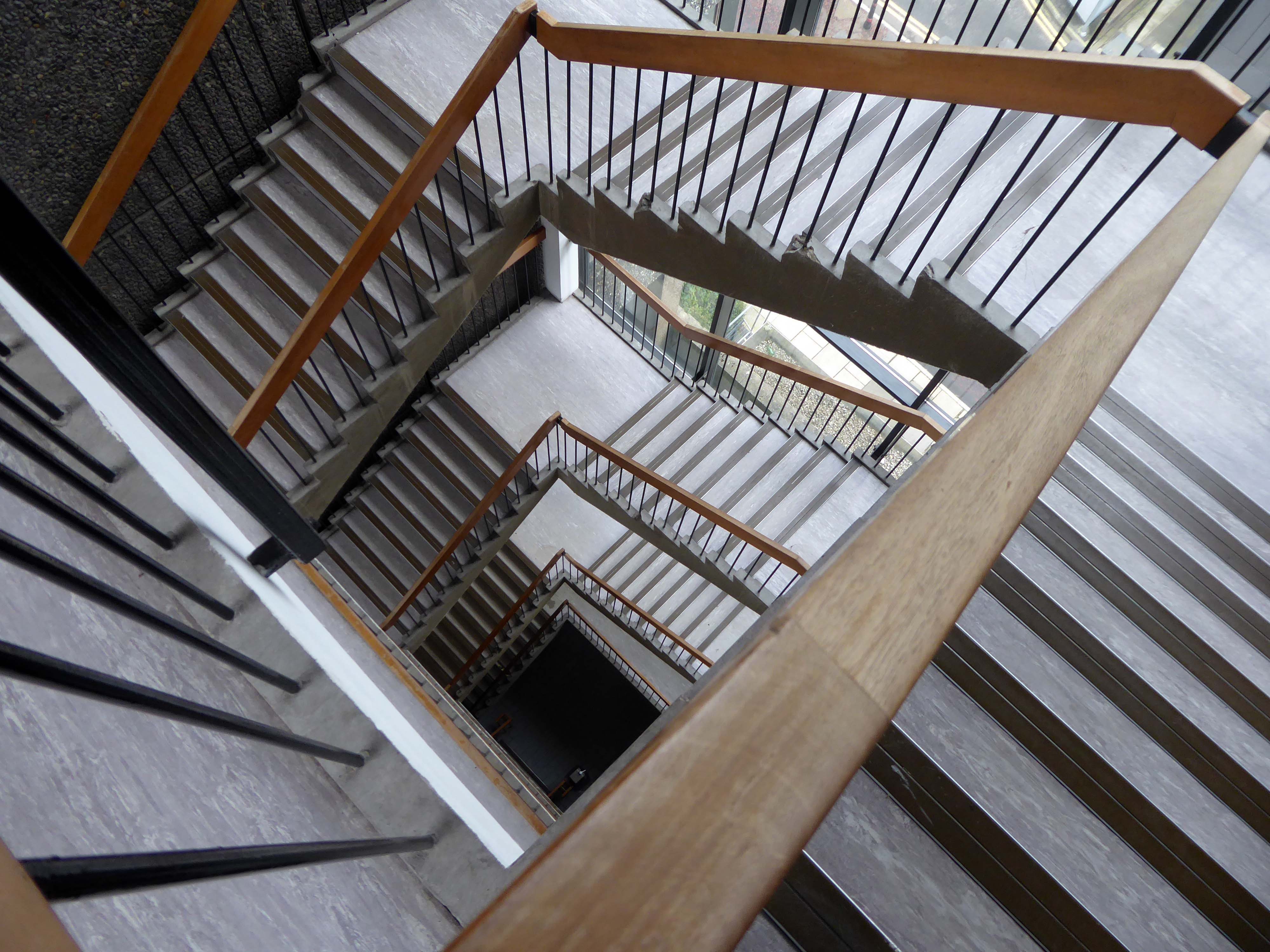
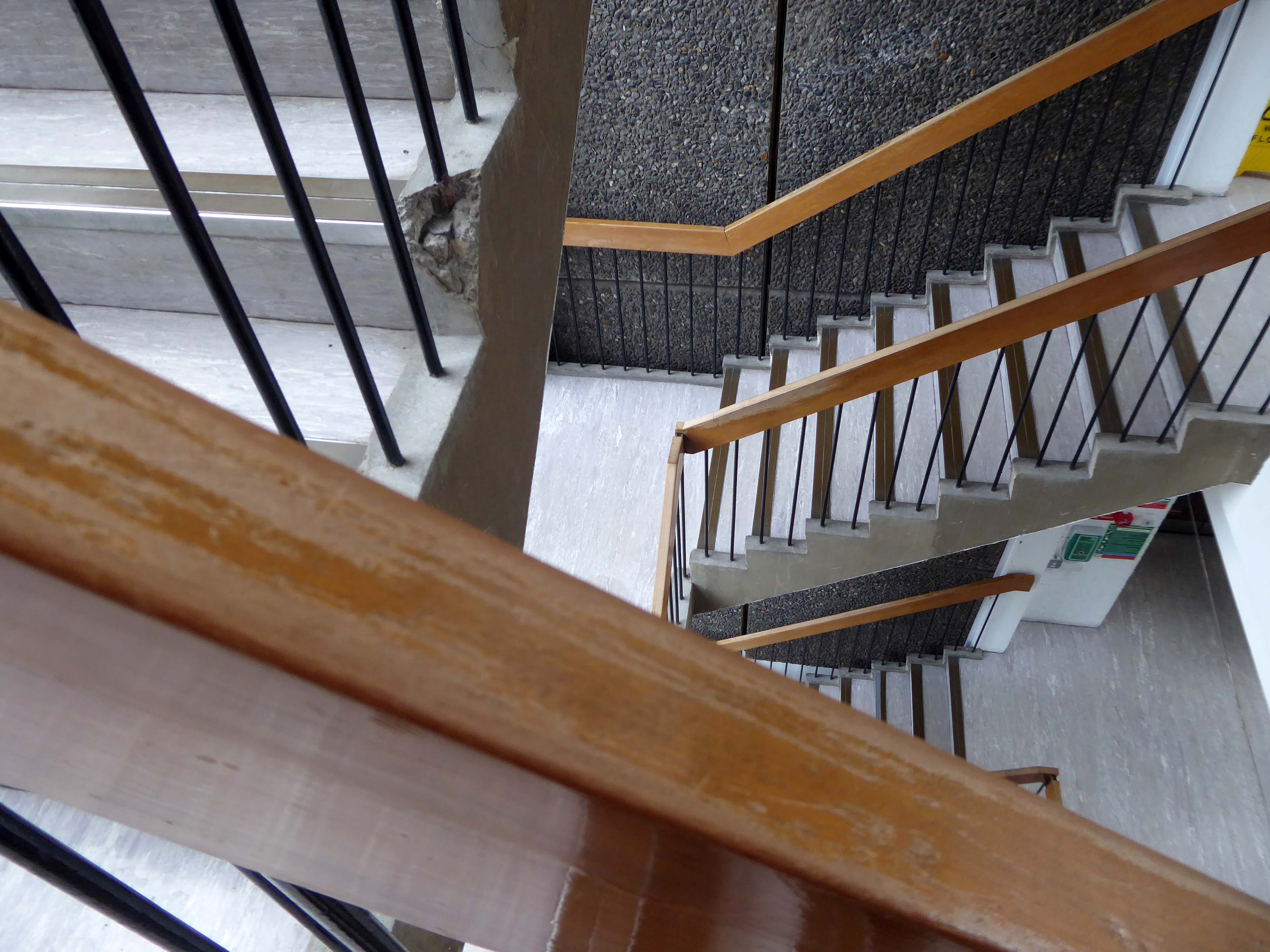
I’m intrigued by the stairways of 1960s civic buildings.

There are two – he helpfully replied.

Further intrigued I took a good look around – first up one.

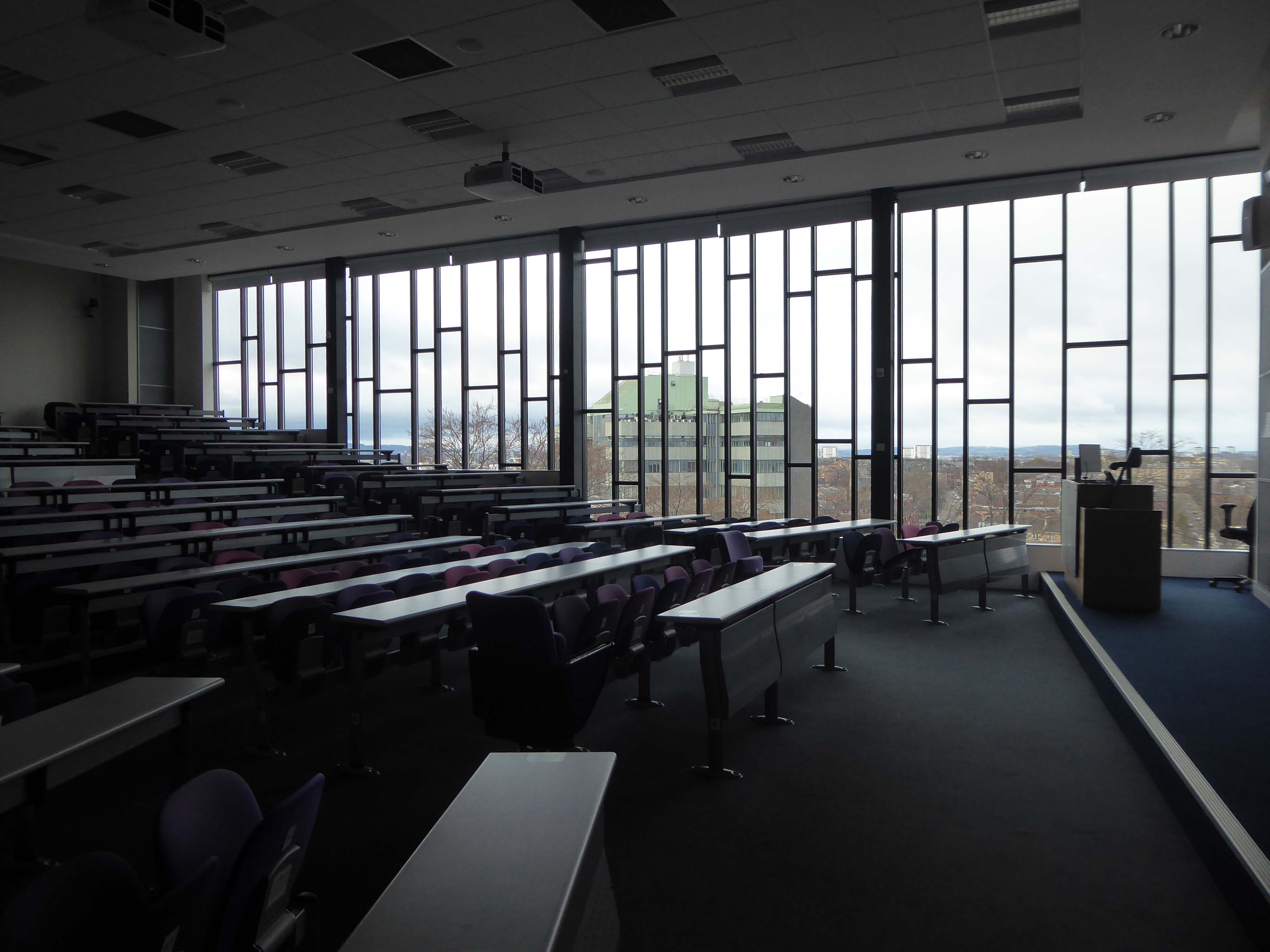
Reaching the top and discovering the Lecture Theatre.

Then down the other.

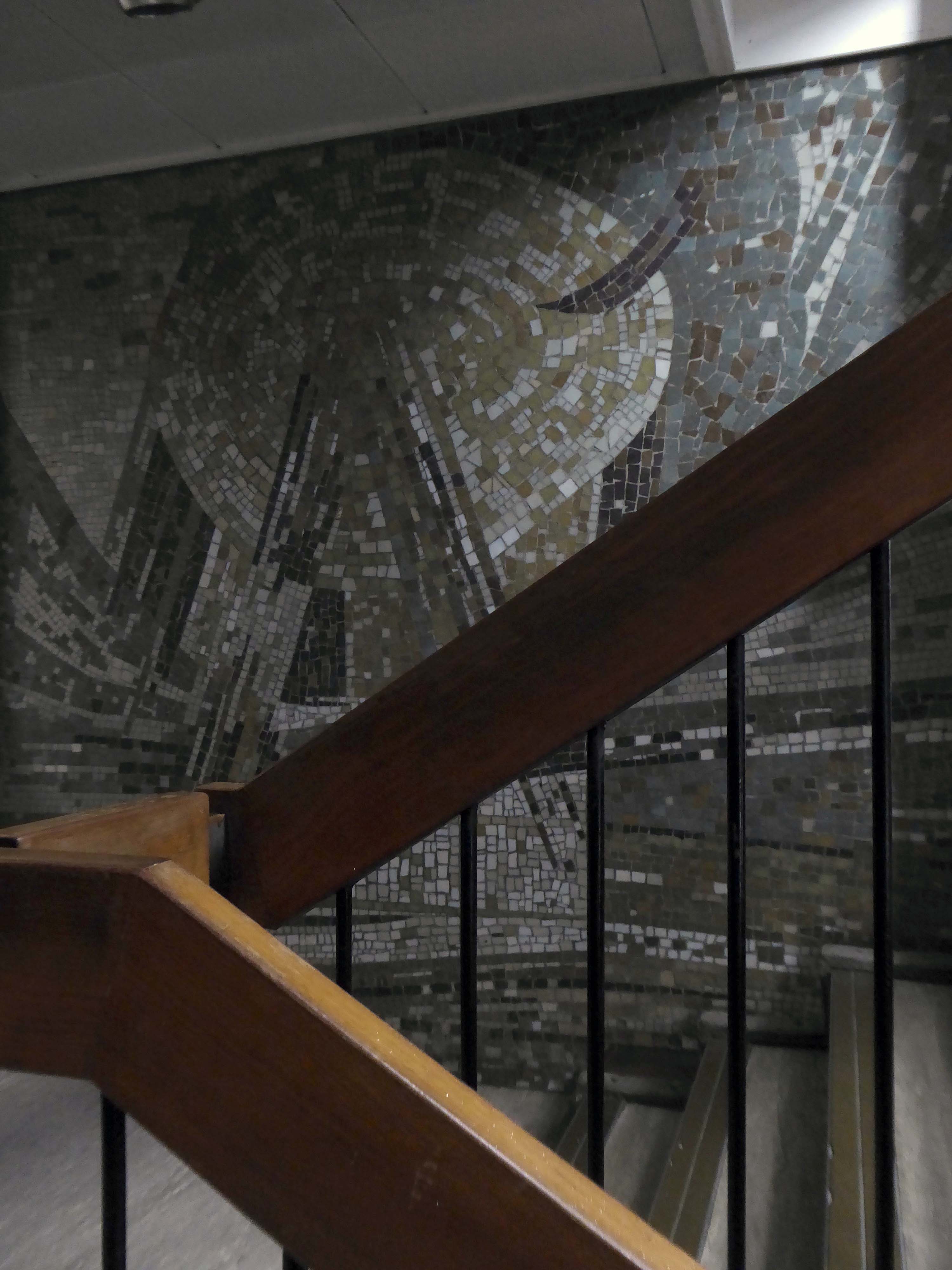
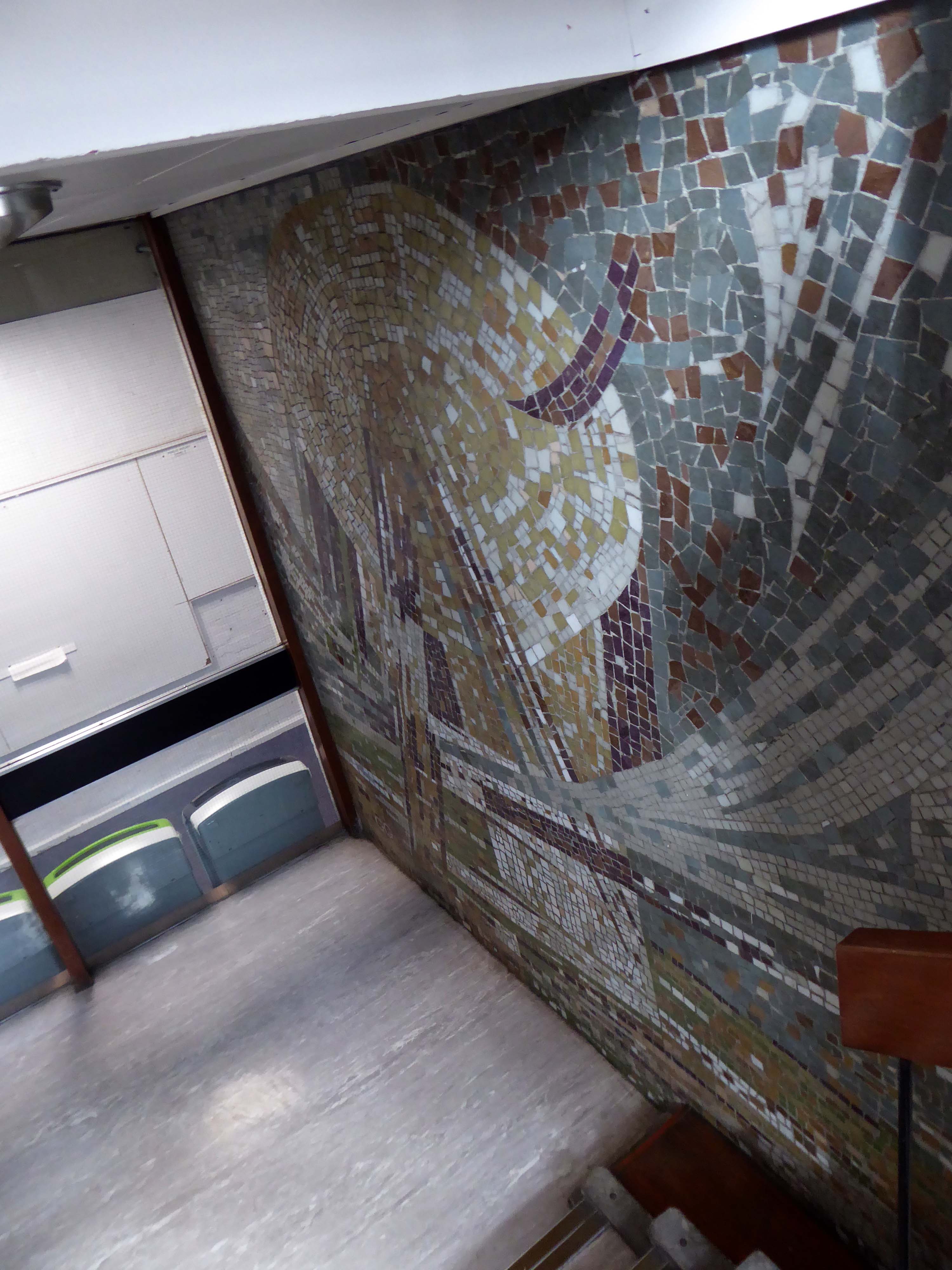
The mosaic mural at the foot of the main staircase was the work of George Garson, the head of the Mural Design and Stained Glass department at the Glasgow School of Art.

A quick look around the outside and then on my way.

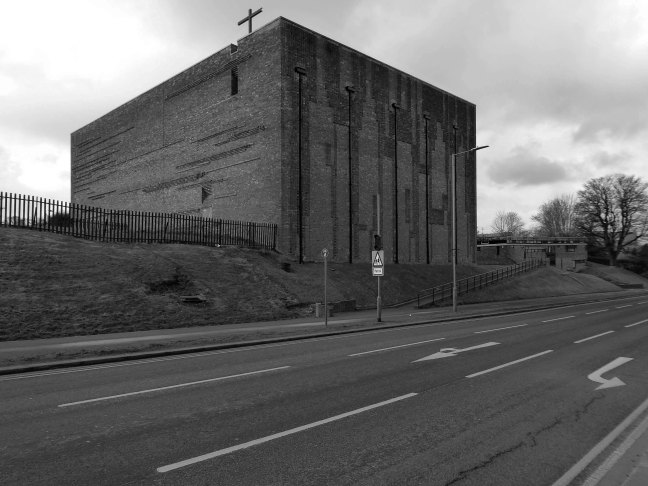
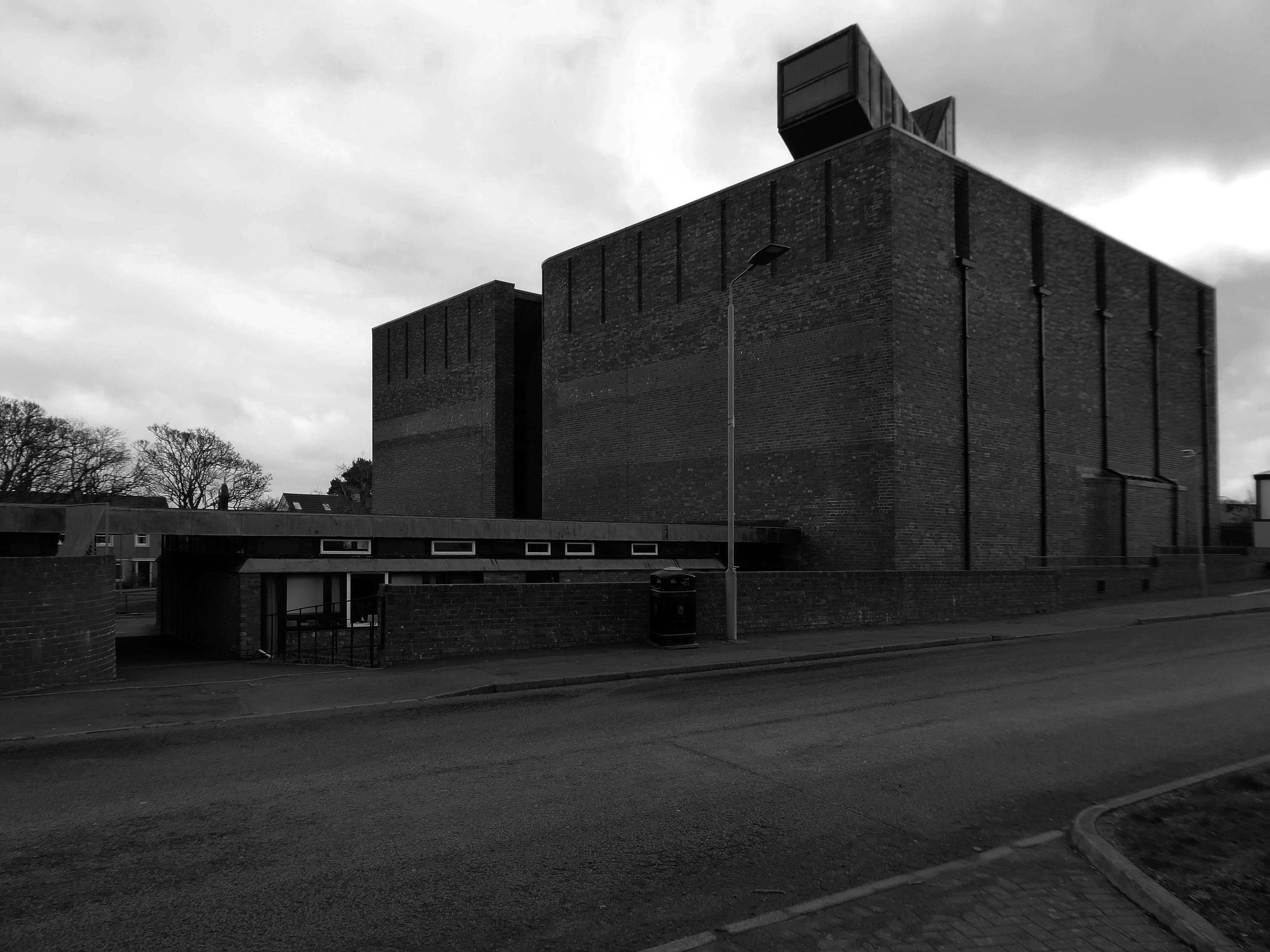
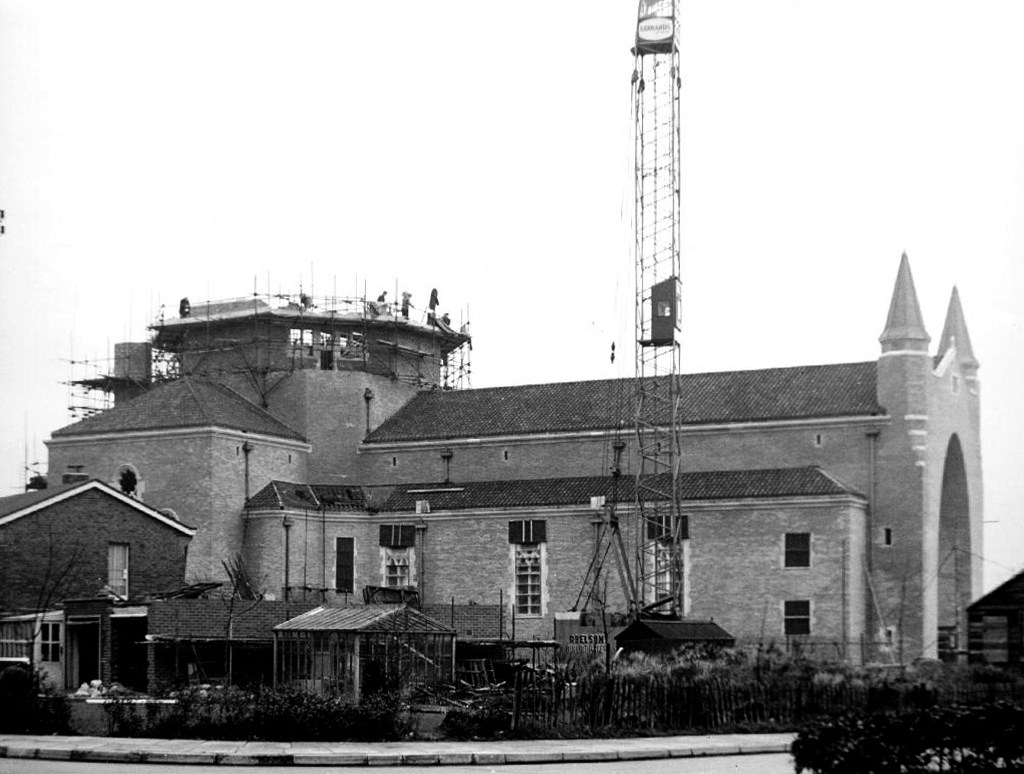
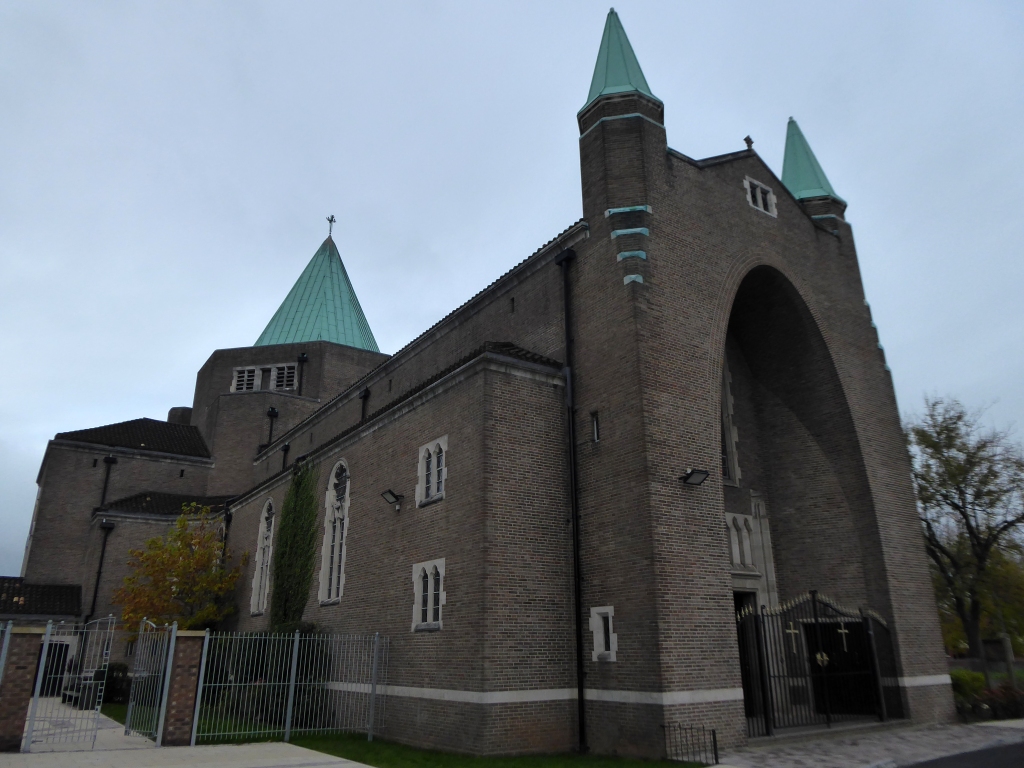
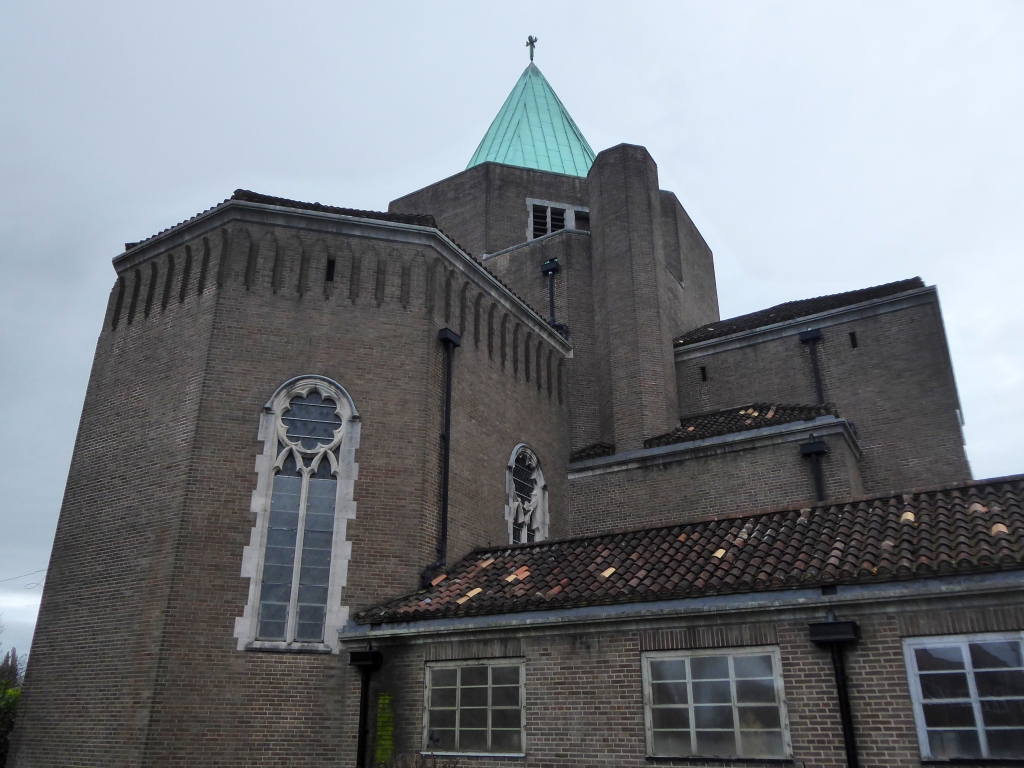
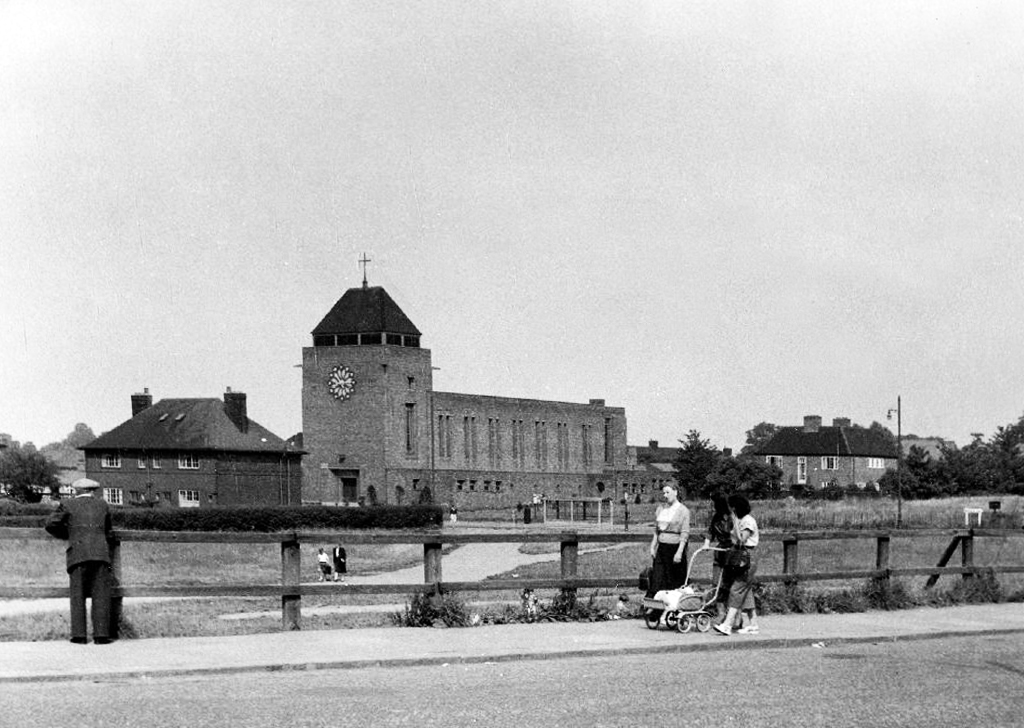
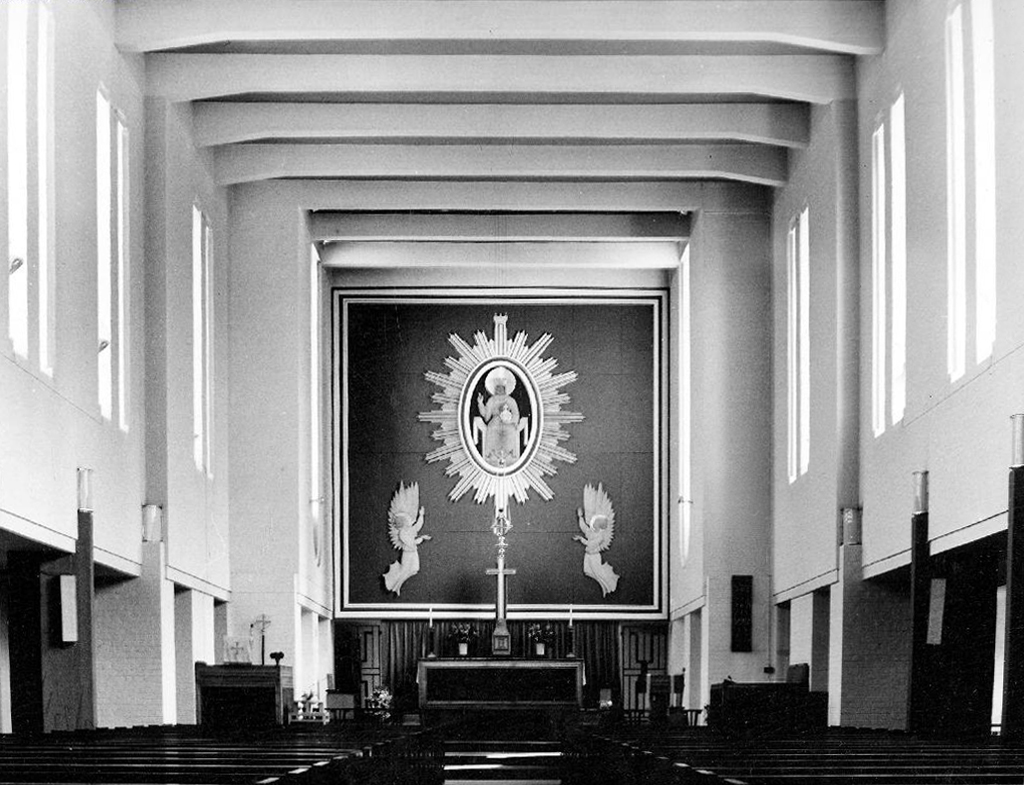
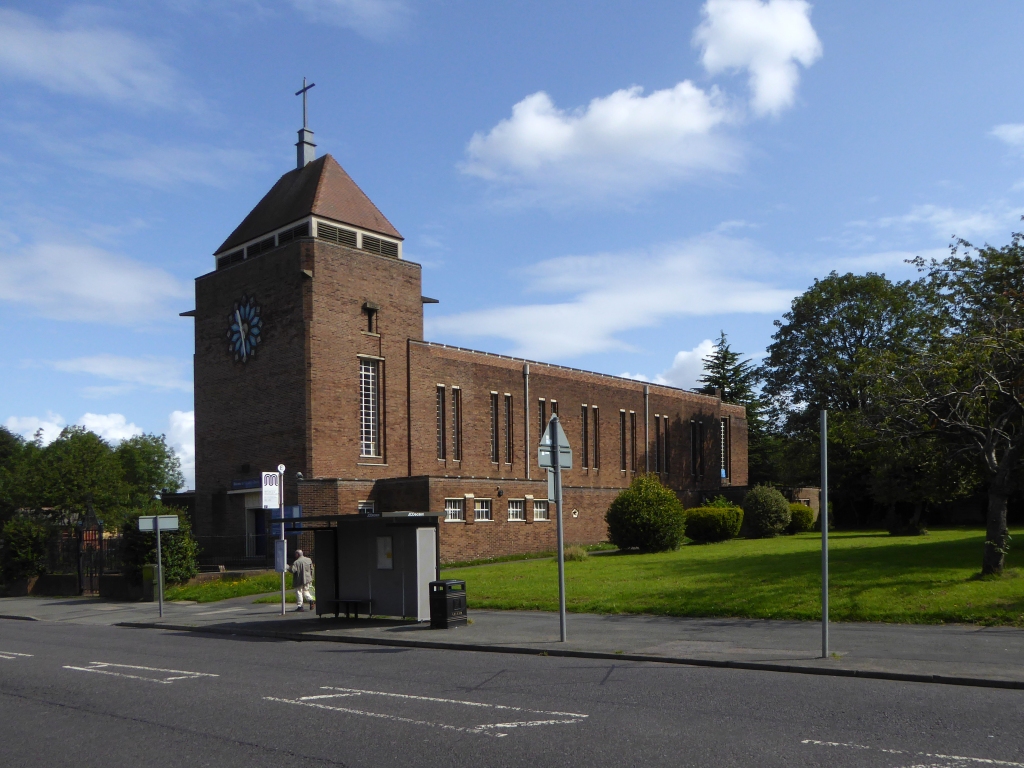
St Bride’s RC Church – East Kilbride

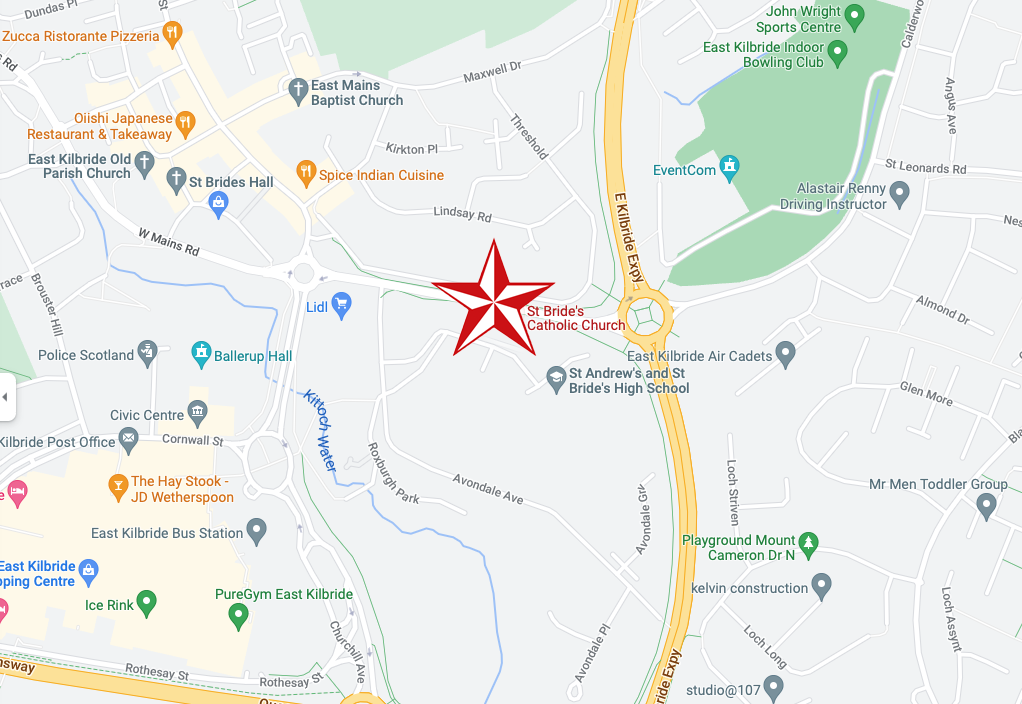
Whitemoss Ave East Kilbride Glasgow G74 1NN

Architects: Gillespie Kidd & Coia 1957-1964

Designed by Professors Andy MacMillan and Isi Metzstein.

Grade A listed 1994 RIBA Bronze Medal

Should you so wish – jump the train from Glasgow Central, unless you’re already here/there.

Walk up West Mains Road, alone on a hill standing perfectly still sits St Bride’s, you can’t miss it.

The biggest extant example of Bricktalism, the most Bricktalist building in the world, possibly.

Stallan-Brand design director Paul Stallan commented:

St Bride’s for me is the most important modernist buildings of the period. The church made from Victorian sewer bricks and concrete is both simple and complex. The architecture continues to be a key reference for students of architecture from across the world interested in modernism and the contemporary vernacular in context. Andy and Isi’s work is as important to Scotland as Alvar Aalto’s work is to the Finnish.

Urban Realm

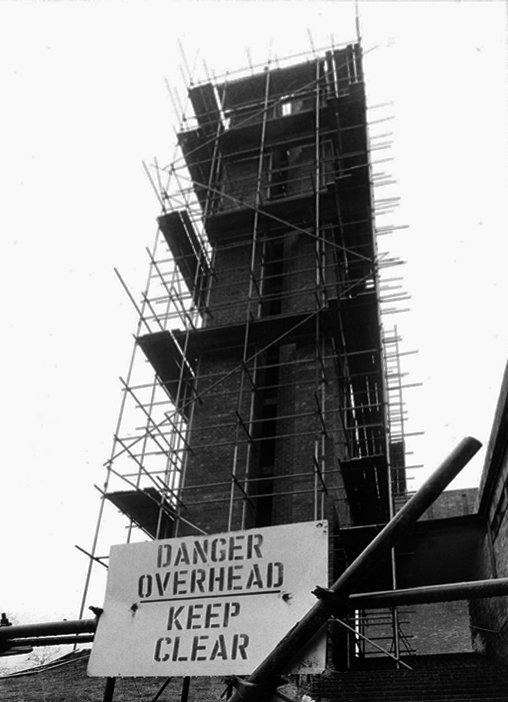
The bell tower was removed in 1983 due to extensive damage to the brickwork.

Image: Postwar Concrete

Image: Gillespie Kidd & Coia Archive at the The Glasgow School of Art.

It’s a traditional Scottish stone detail I saw for myself as a boy growing up in the Highlands, on every castle and fortified house, and on the flanks of the tower at Muckrach, ancient seat of the Grants of Rothiemurchus, built in 1598. This was my local castle just a mile from home.

The entrance to St Bride’s, I like to imagine, comes from a friendship that included travel in the Scottish Highlands, admiring the Scottish vernacular close-up, of a fevered conversation about a simple concept – the massive blind box, and how the application of simple, semi-traditional material detailing can make it all the richer.
St Bride’s is simply one of the finest buildings in Scotland.

Chris Boyce design director at CJCT Studios

Get your skates on it’s almost ten o’clock, Saturday Mass is about to start, take a seat.

Many thanks to Fr. Rafal Sobieszuk and the congregation for their warm welcome.

Sadly I was unable to reach these dizzy heights.

Happily the exterior is open and easily accessible, though care should be taken when zig zagging carelessly across West Mains Road.

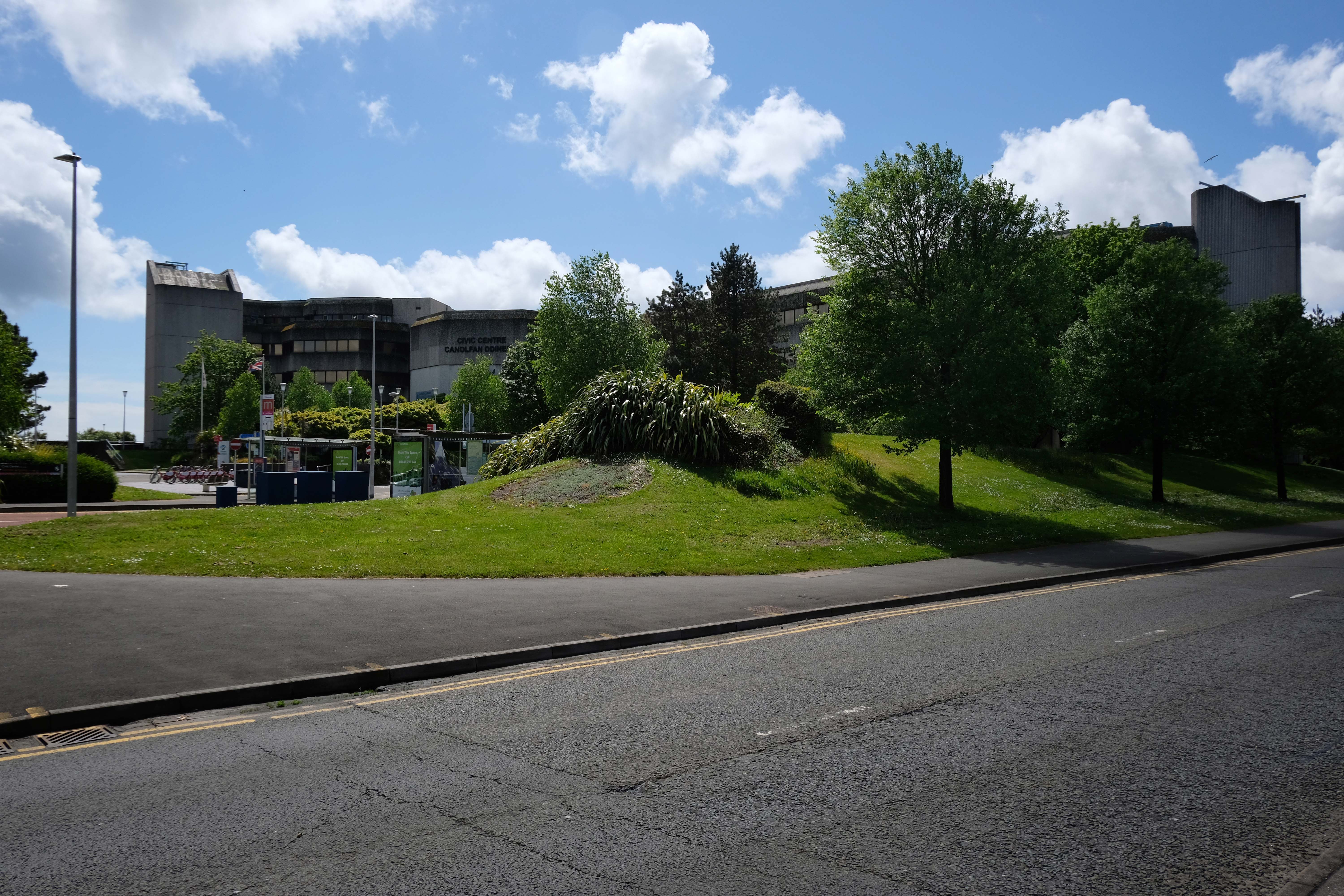
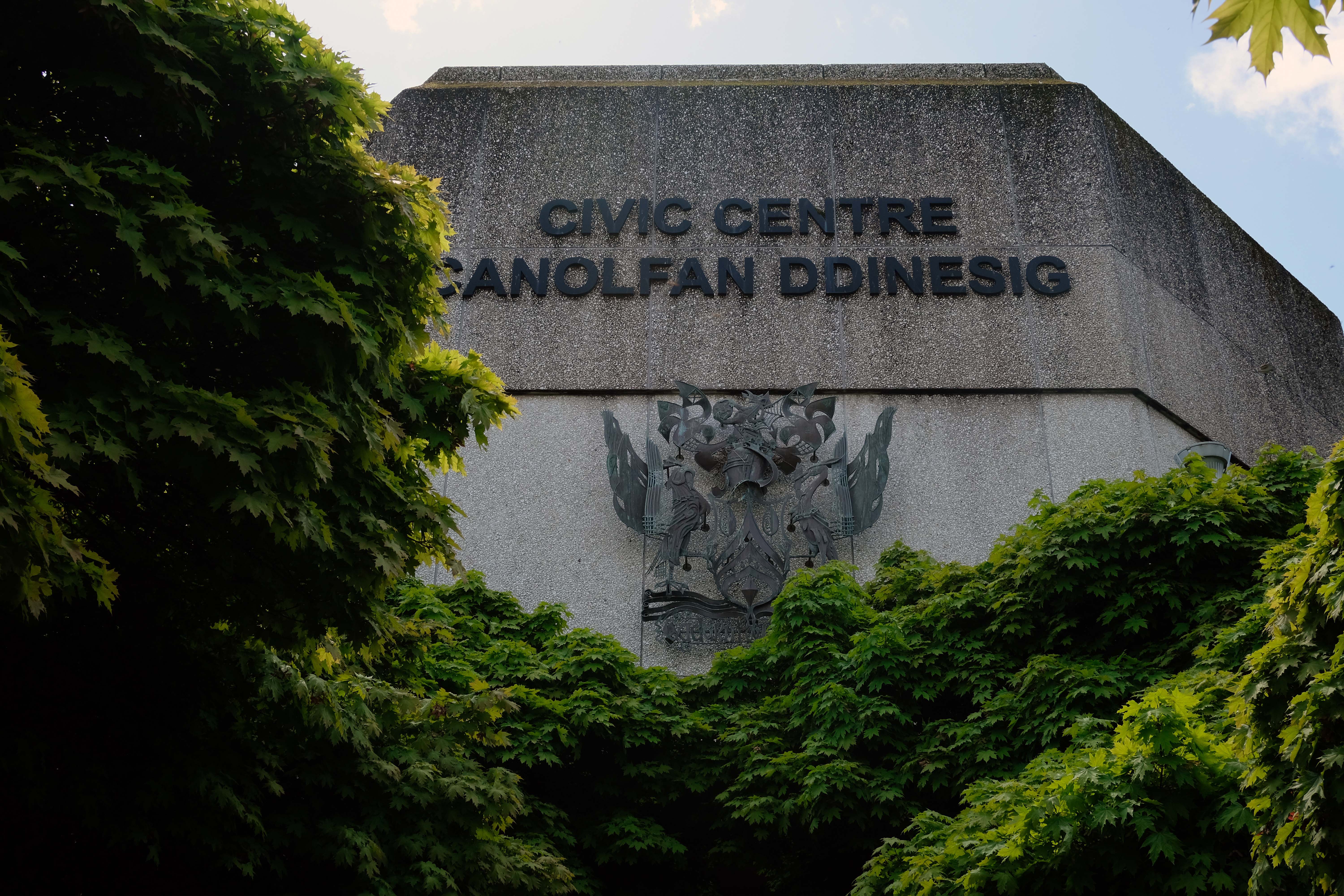
Historically this is my very first Scot’s post, more to follow, I’m away to the Civic Centre.

Tower Blocks – Blackley

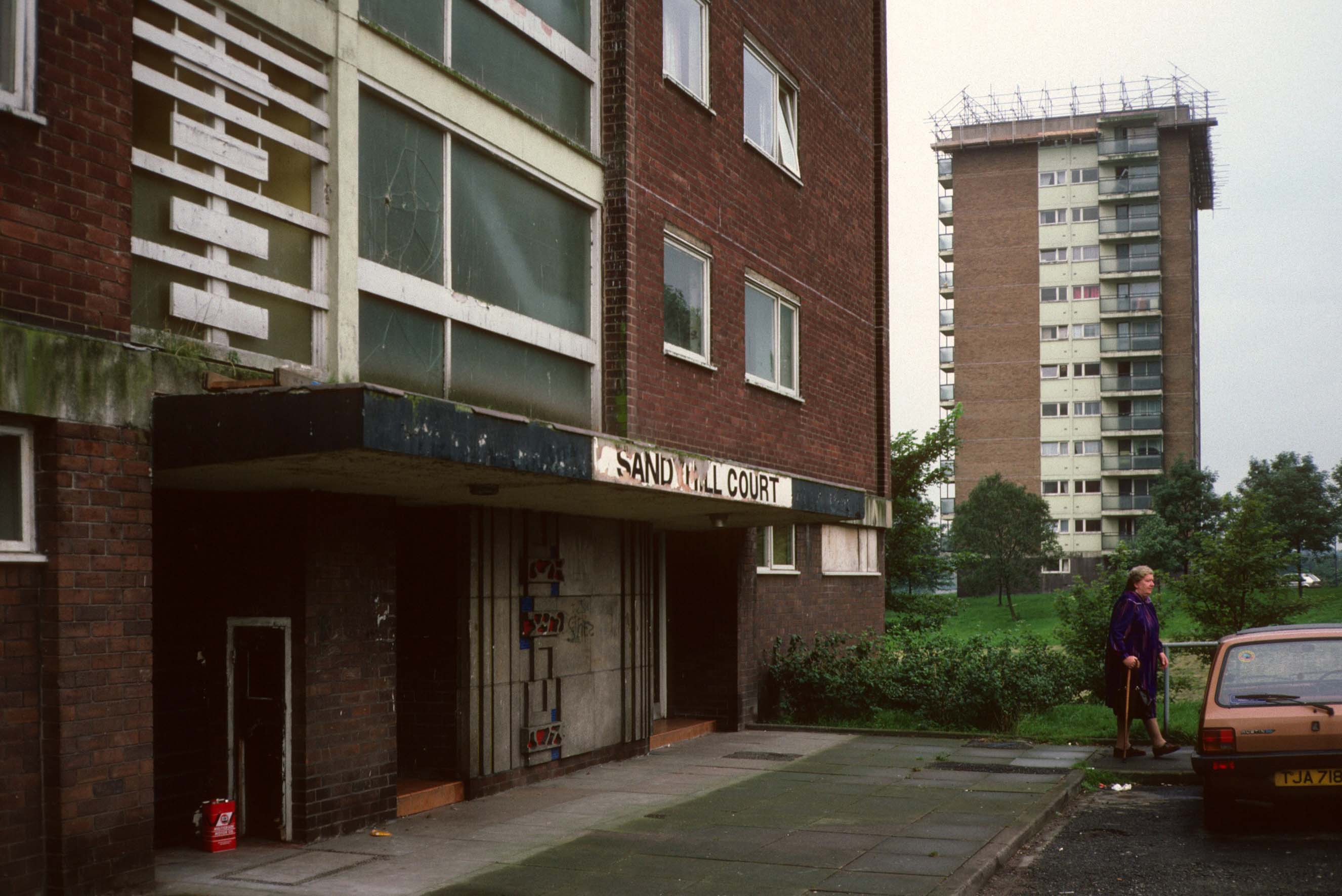
Sandyhill Court Sandyhill Rd Manchester M9 8JS

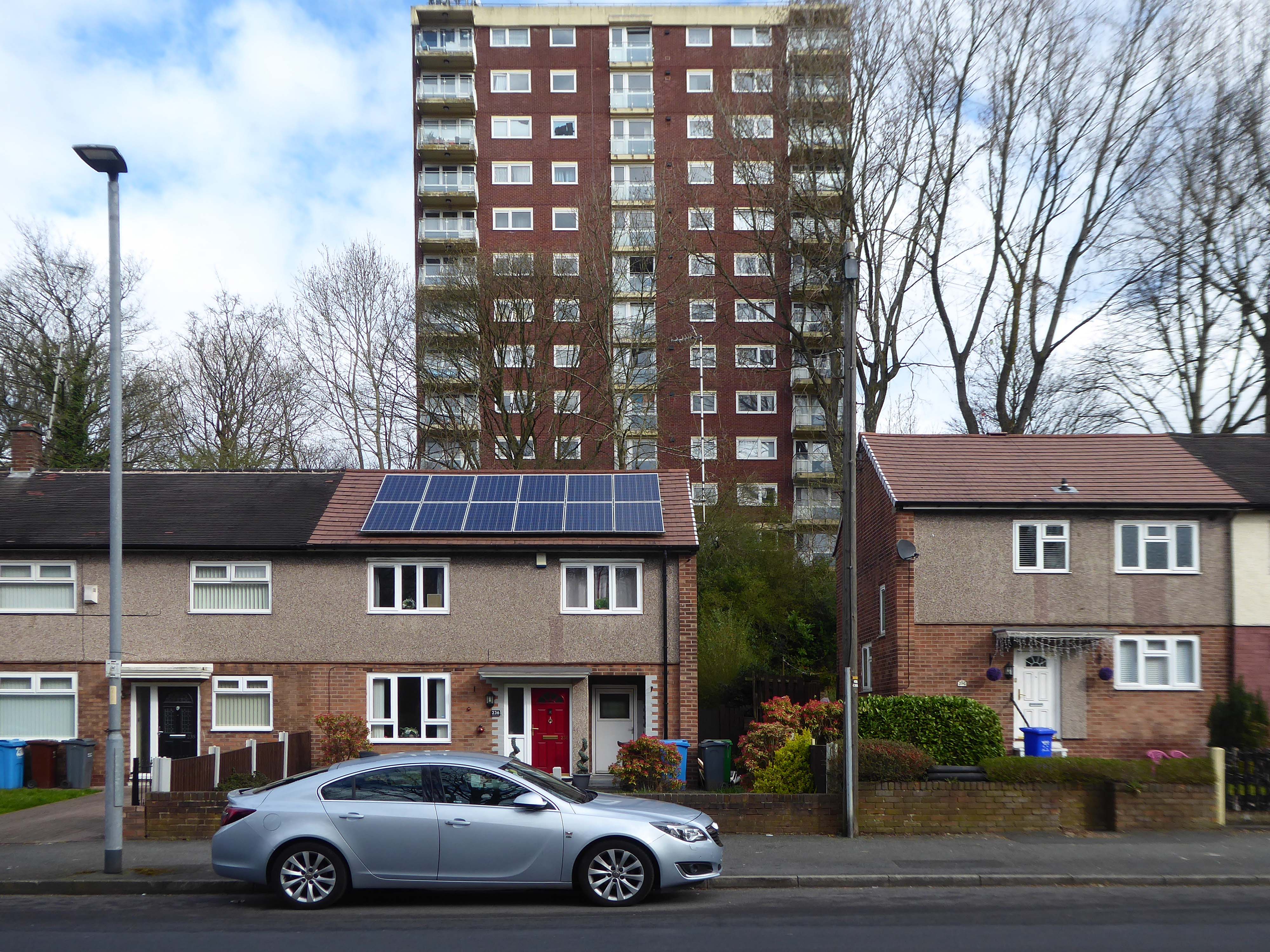
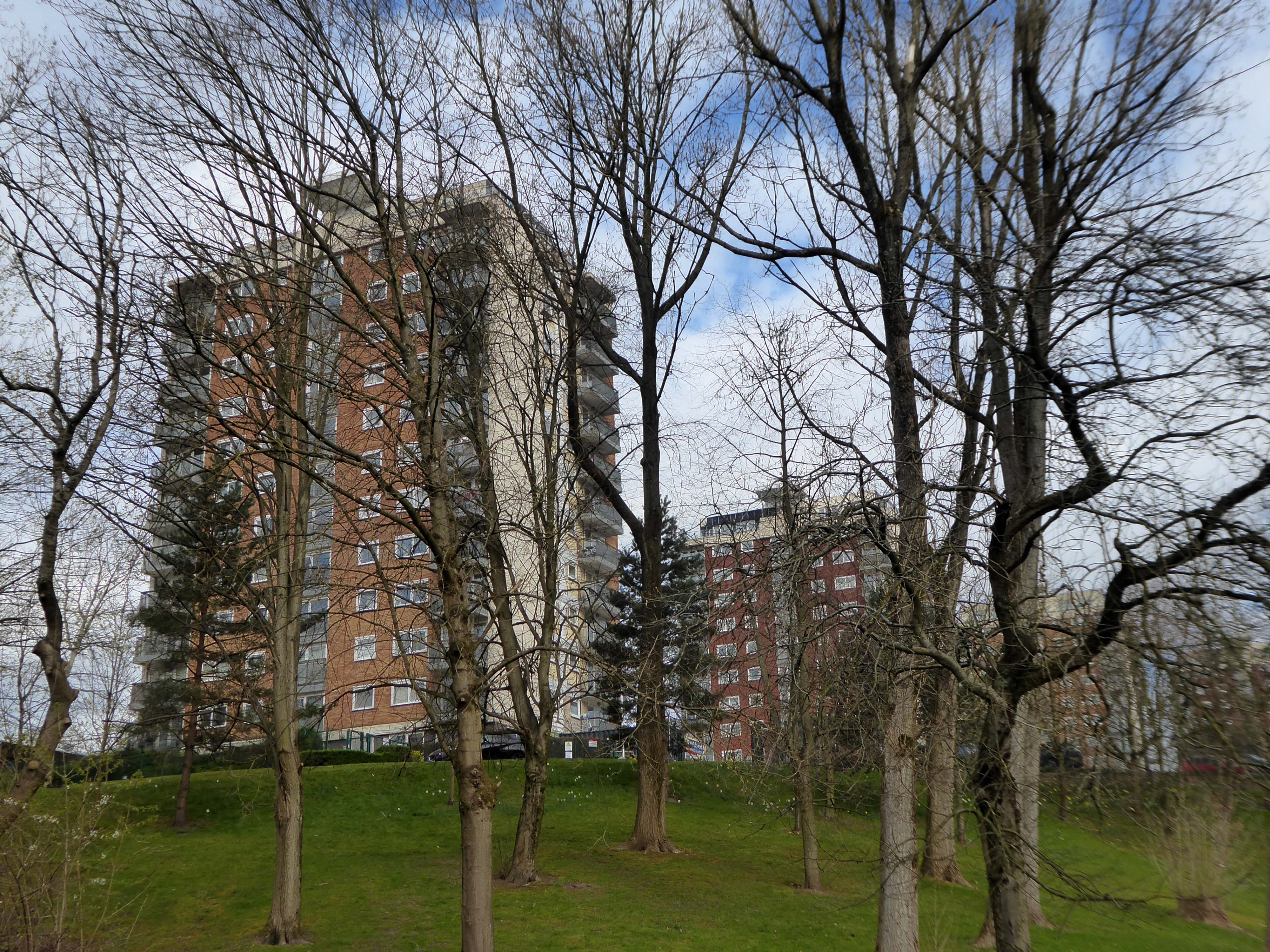
Almost high on a hill stands a lonely tower block.

Seen here in 1987.

Tower Block

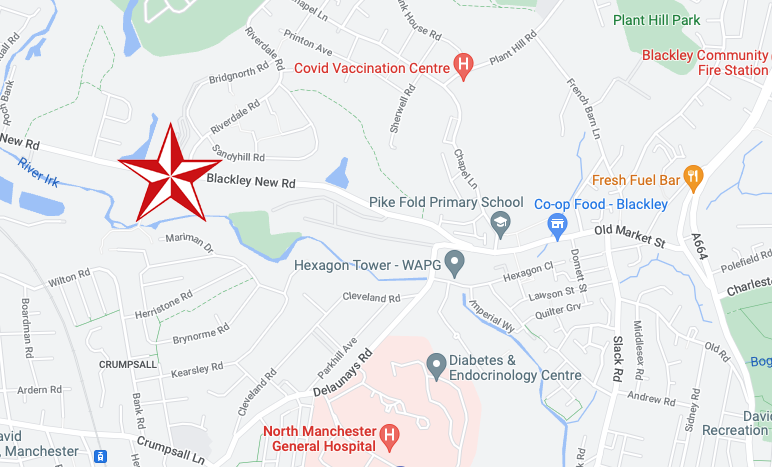
Sandyhill Court – Stands on the corner of Riverdale Road and Sandyhill Road and is still a local authority block.

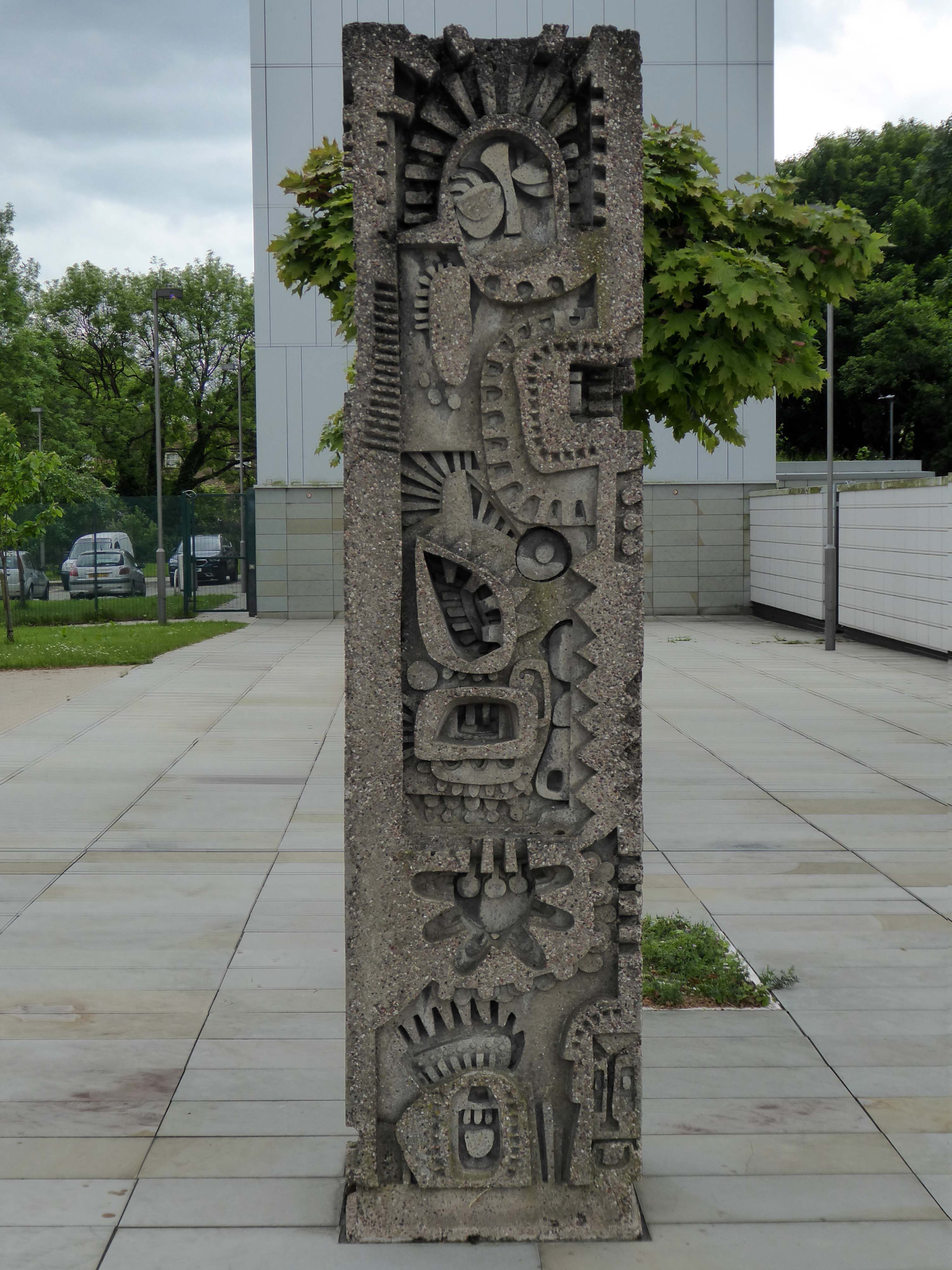
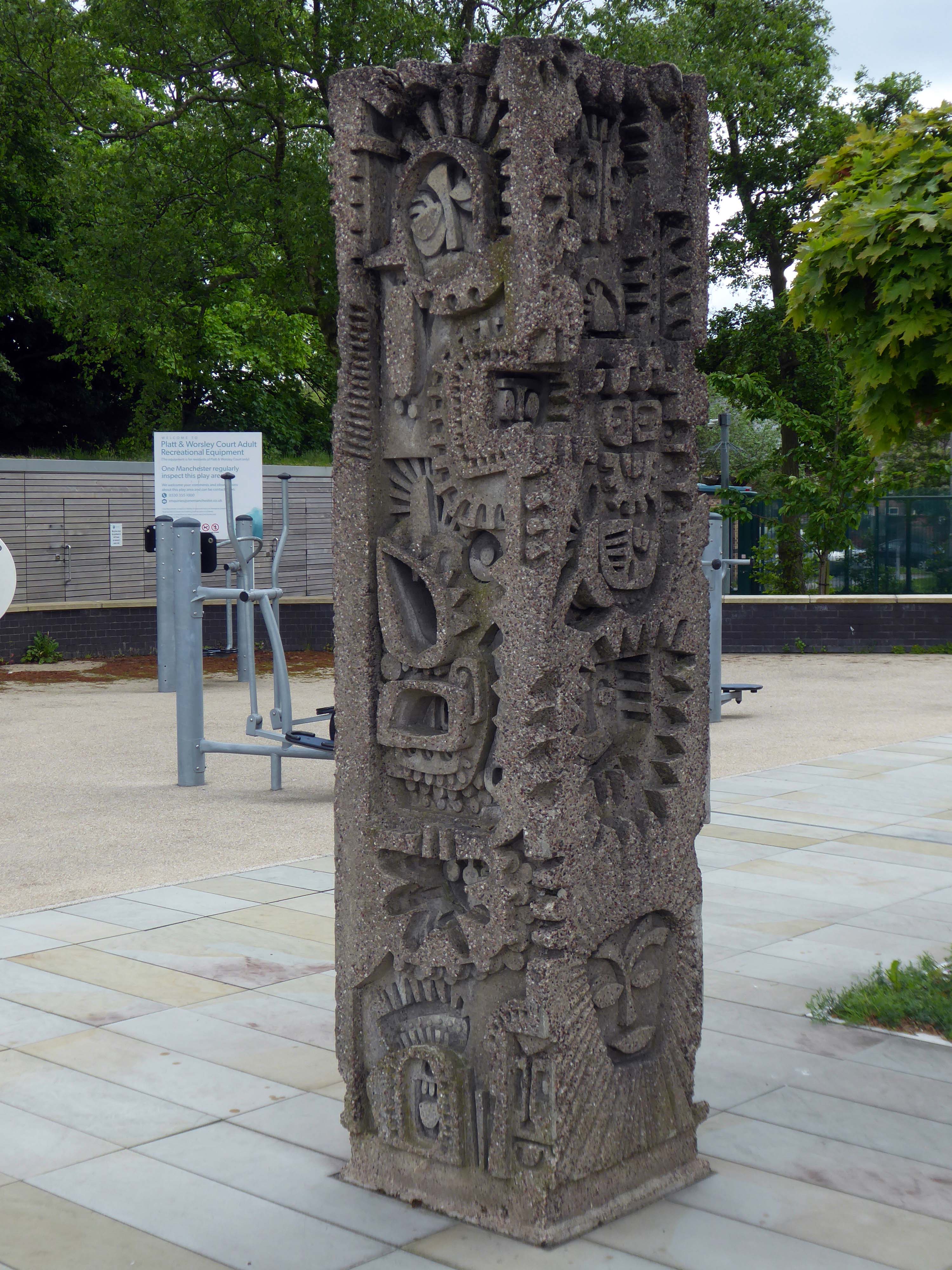
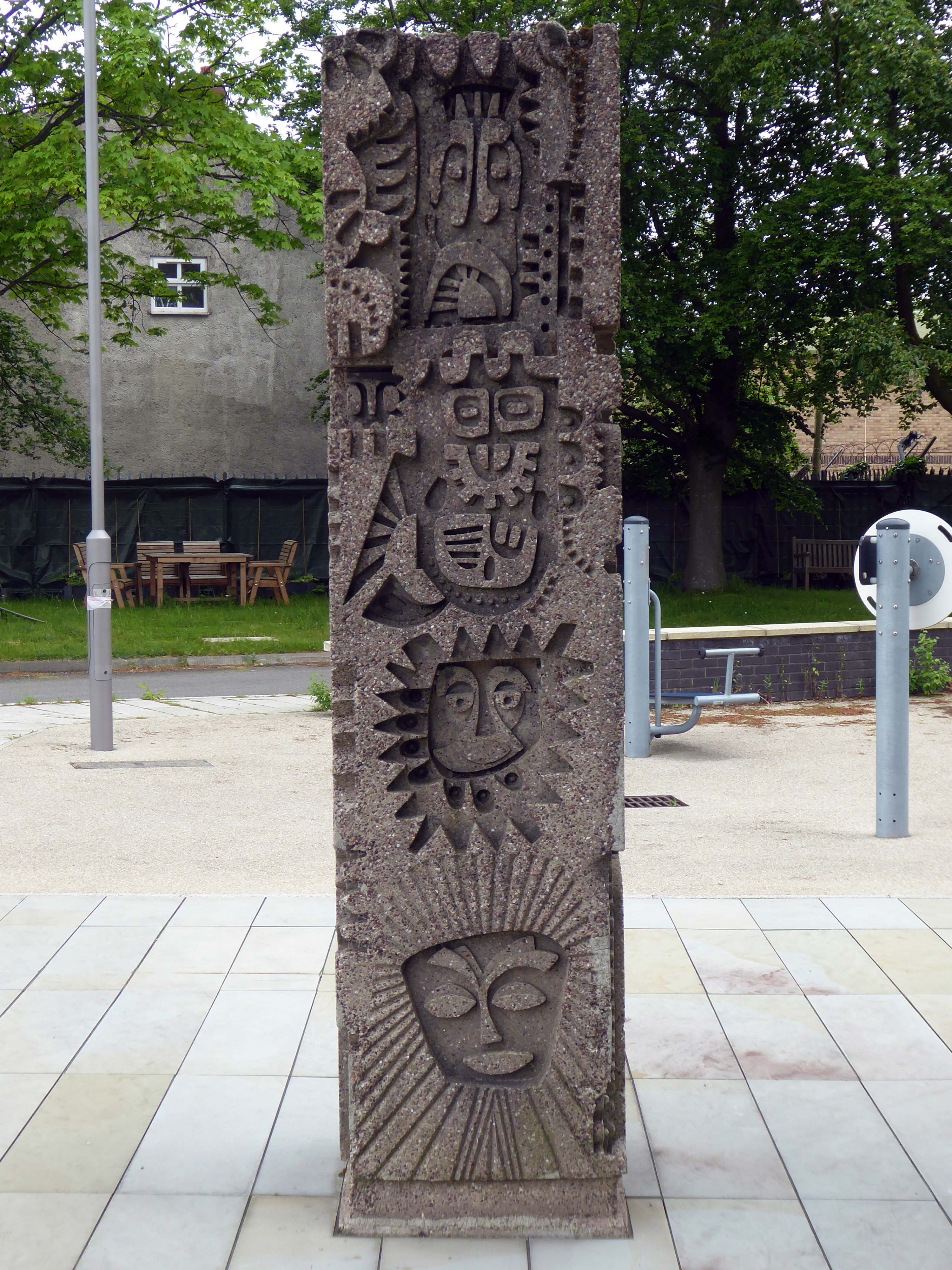
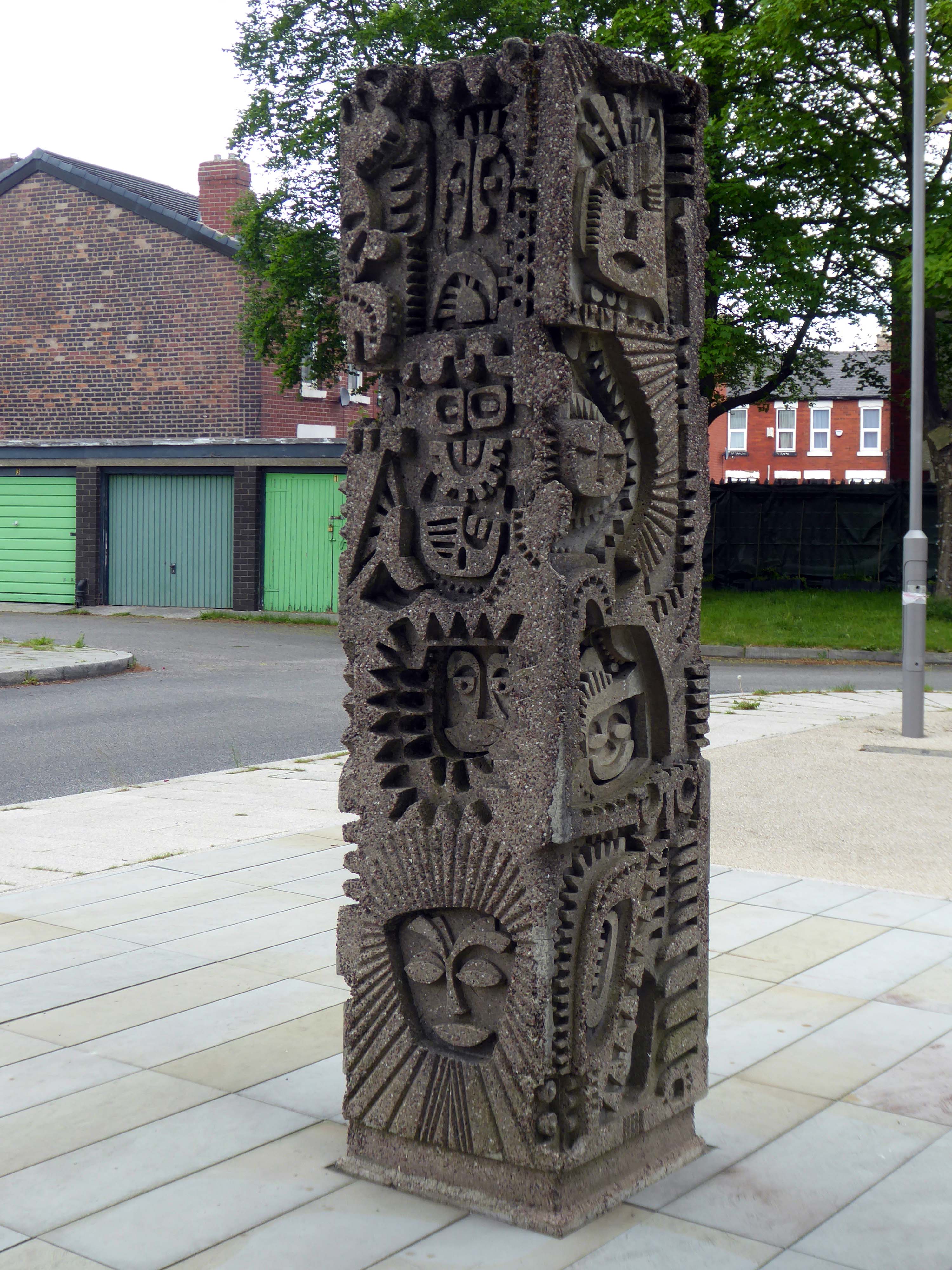
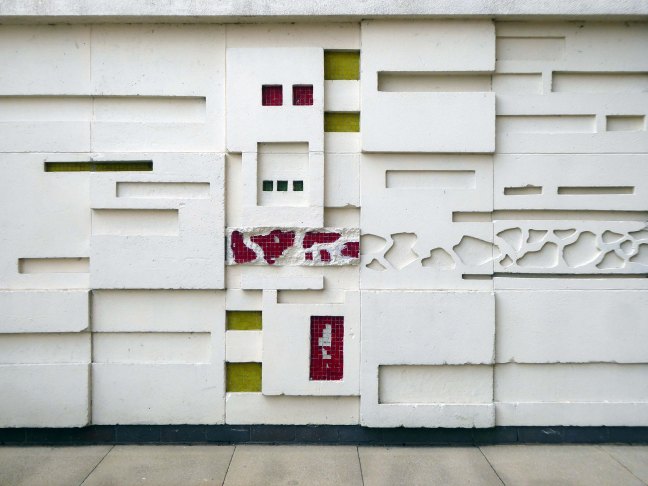
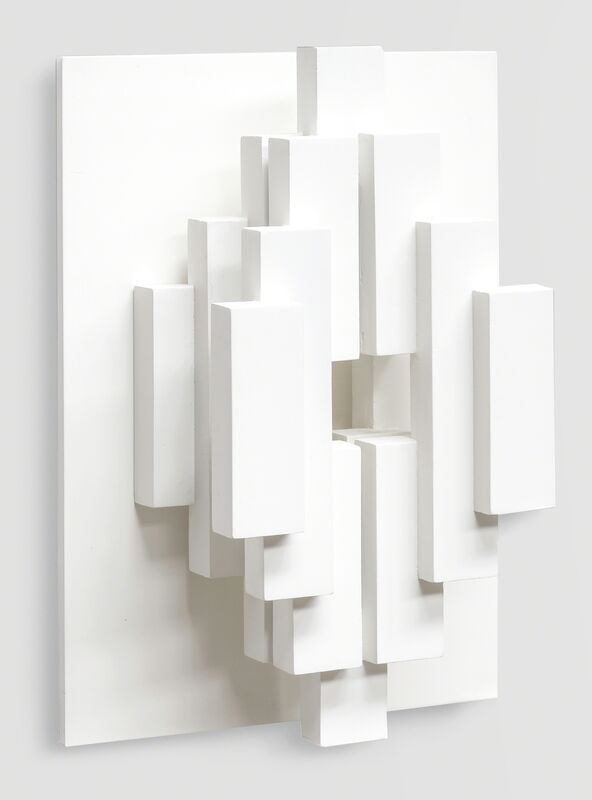
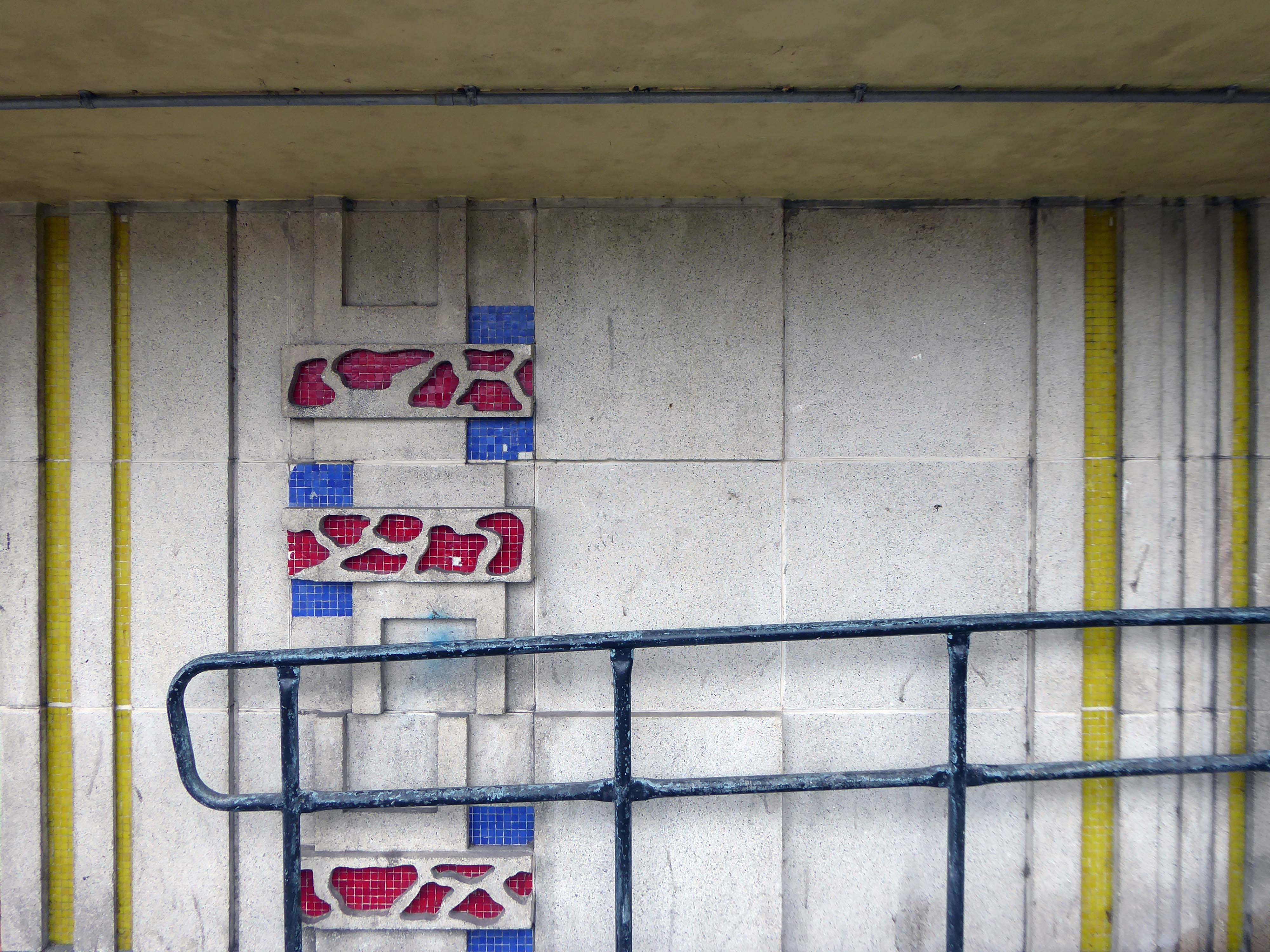
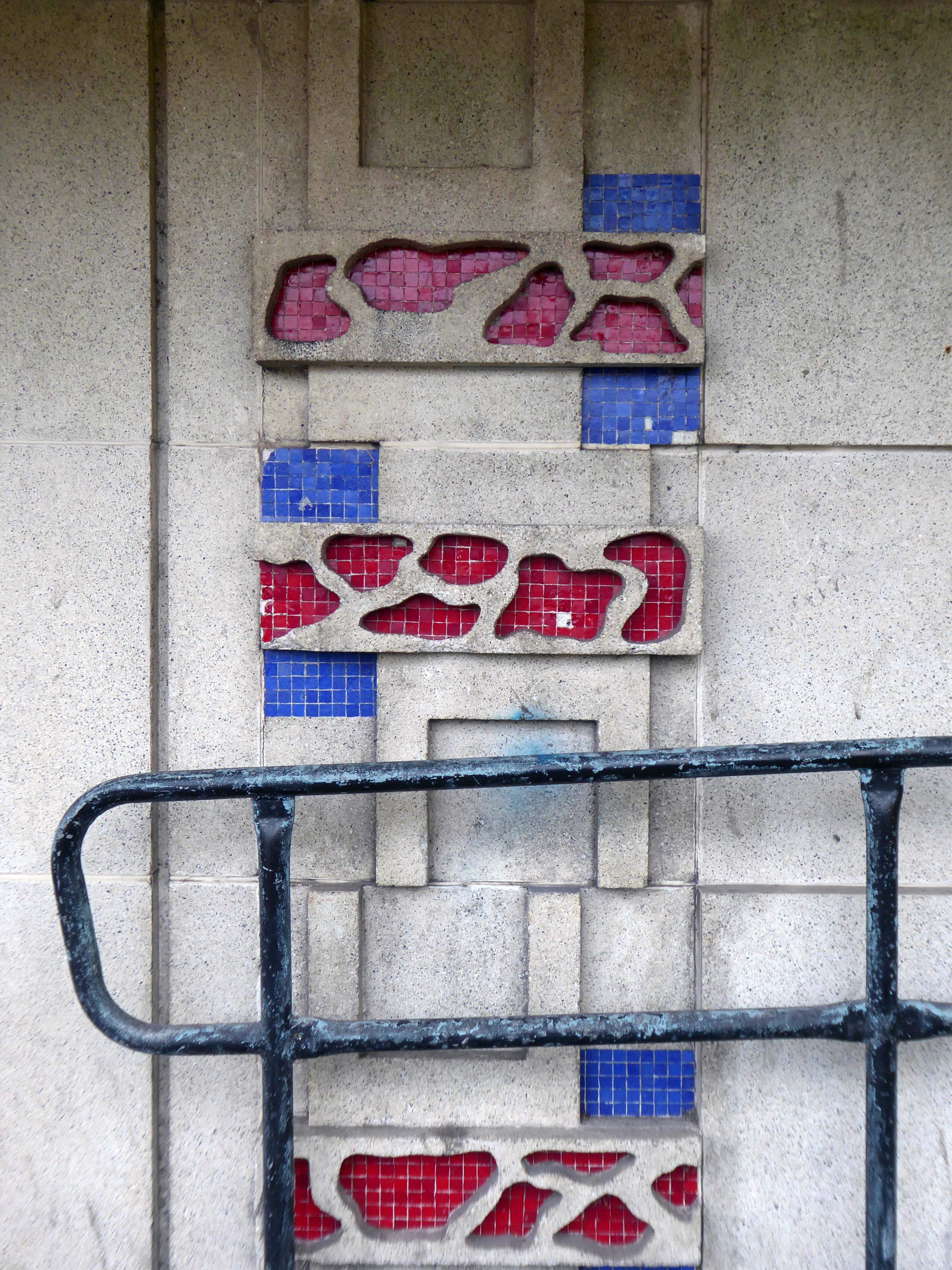
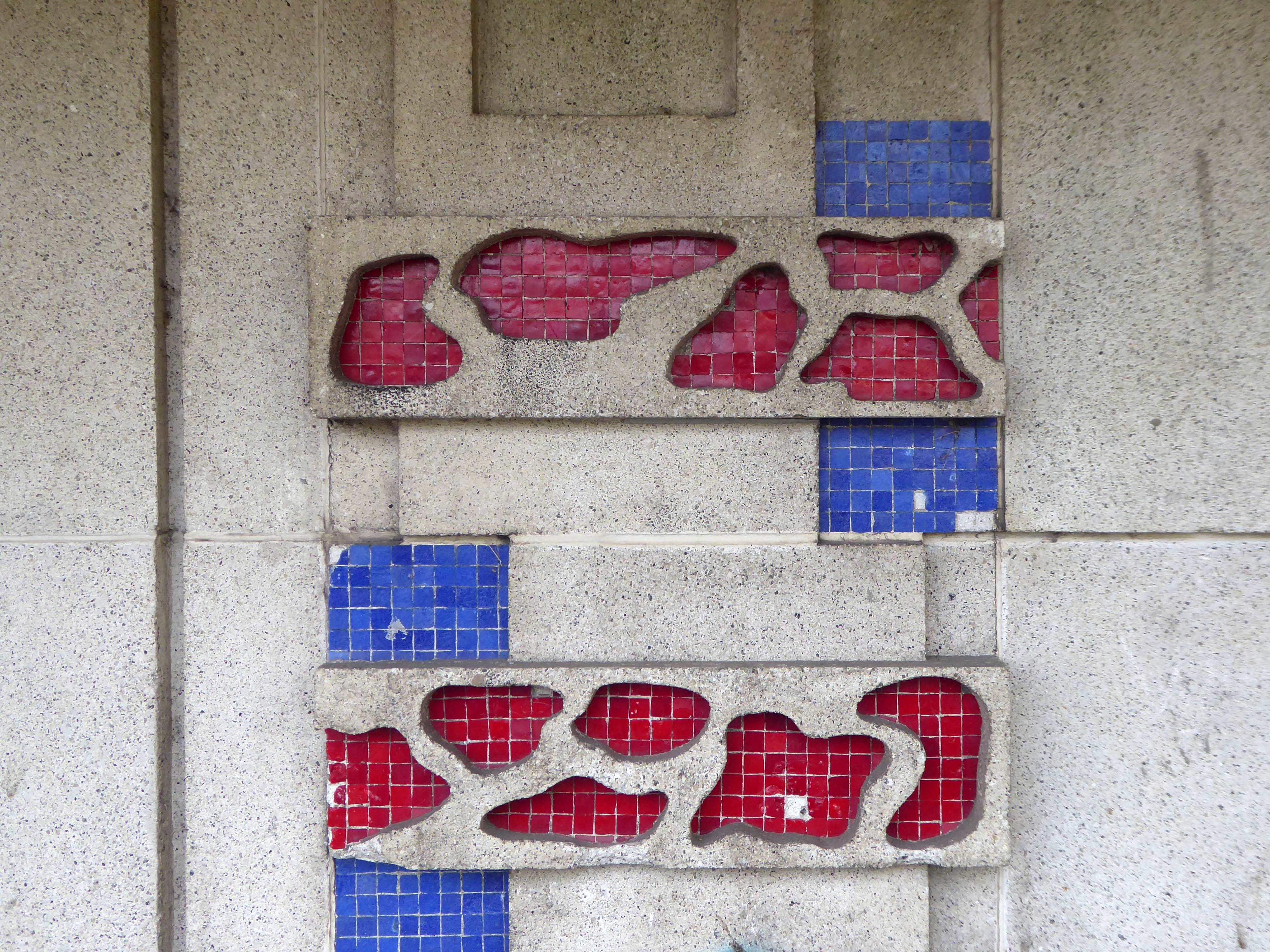
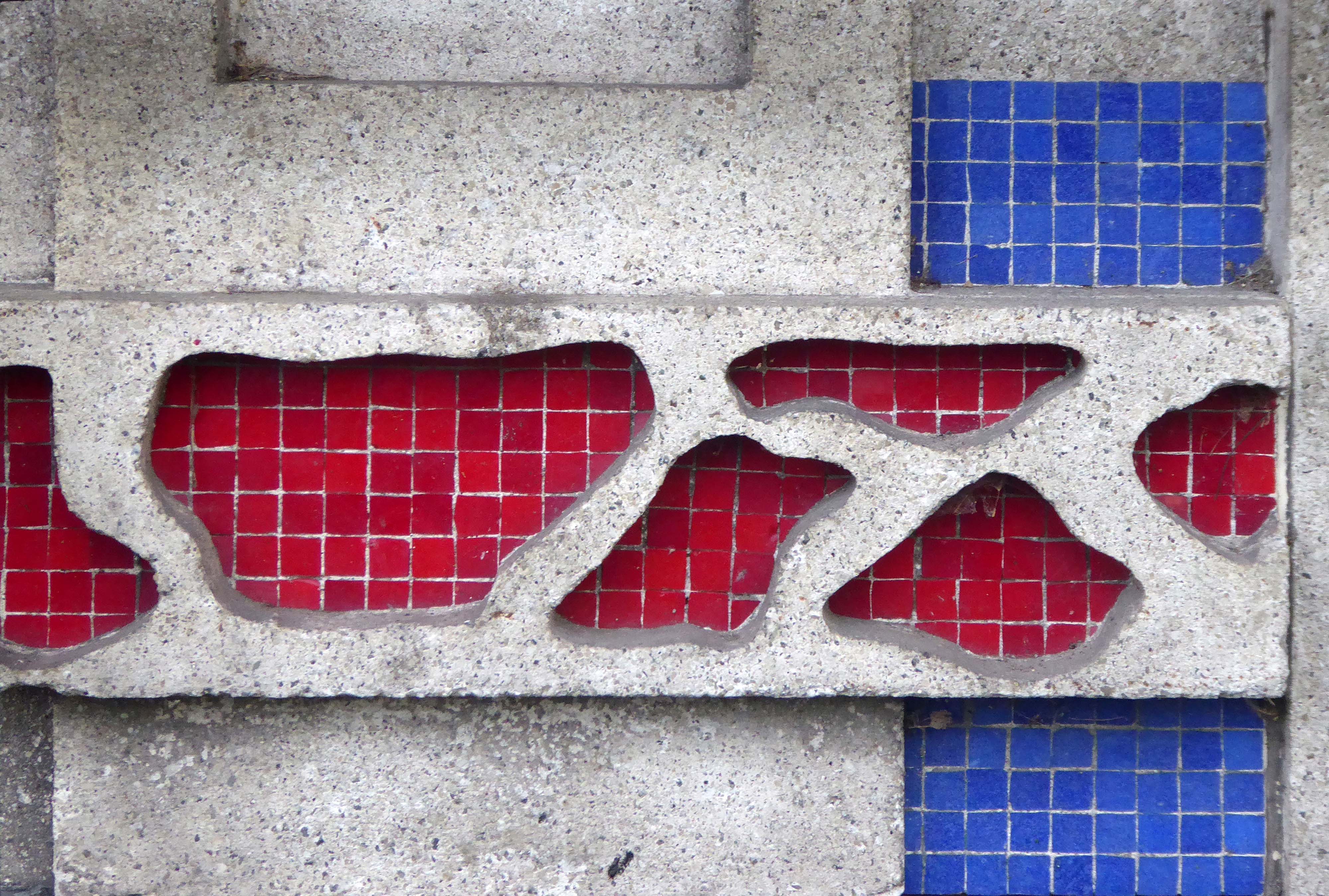
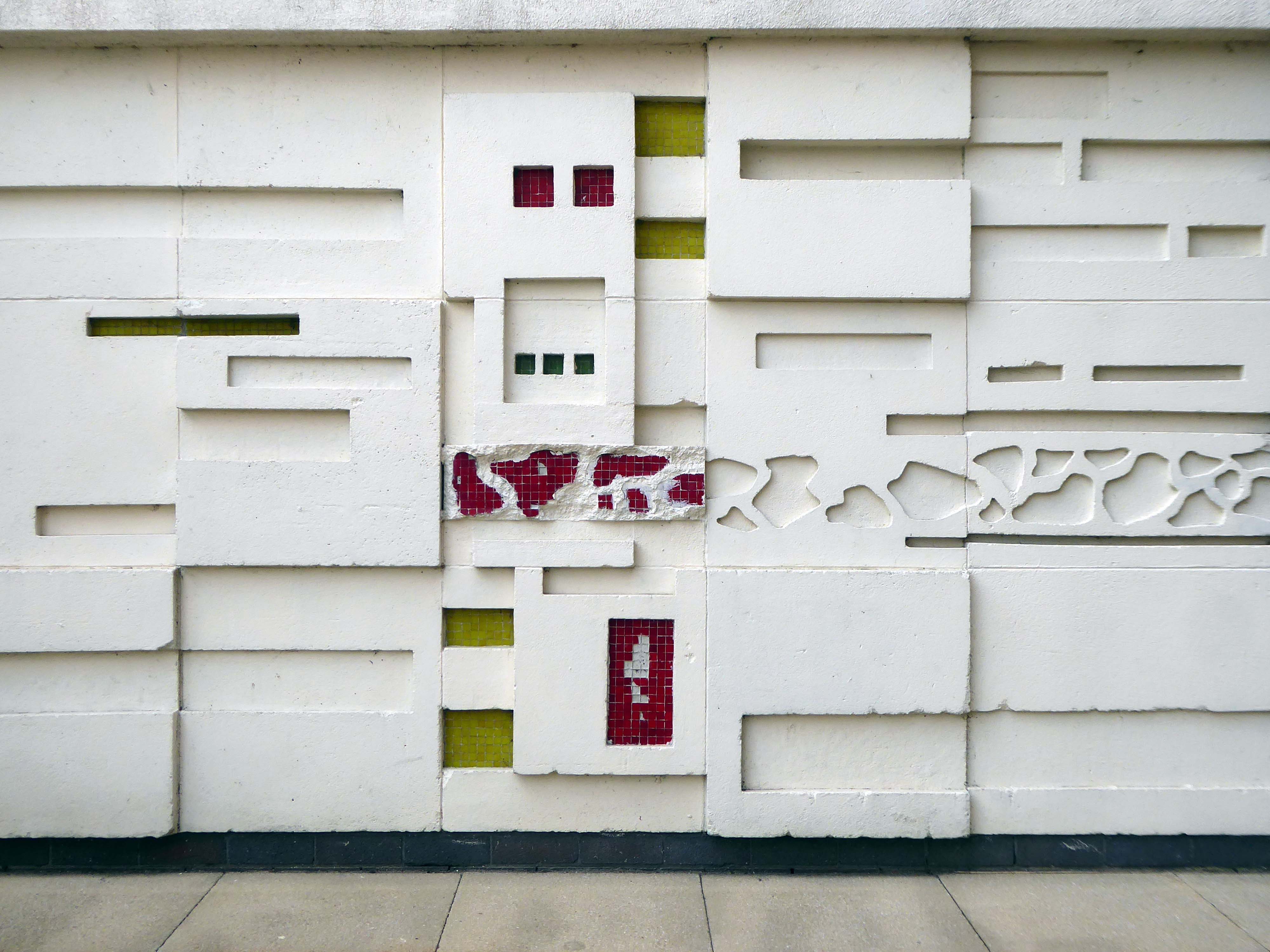
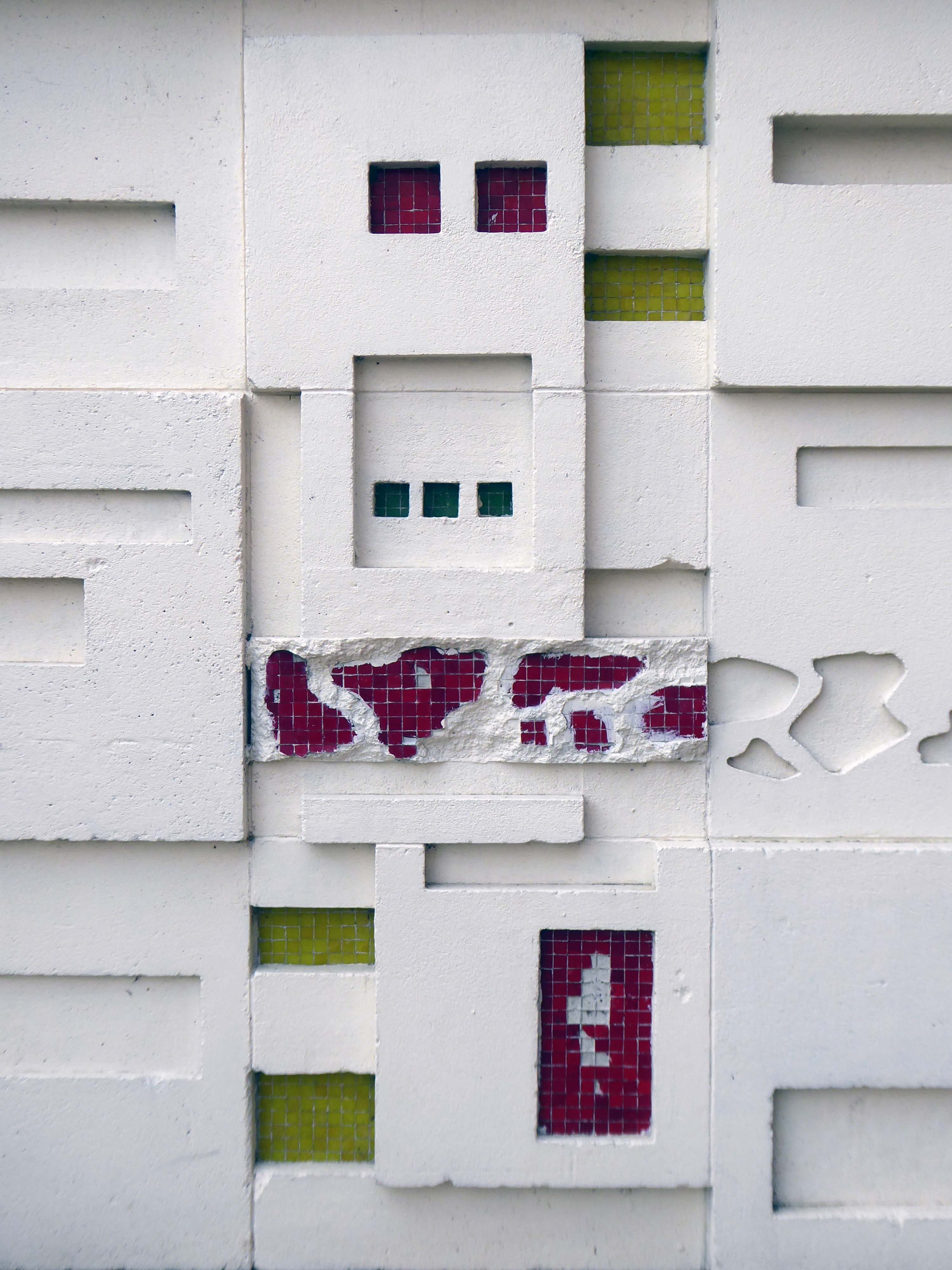
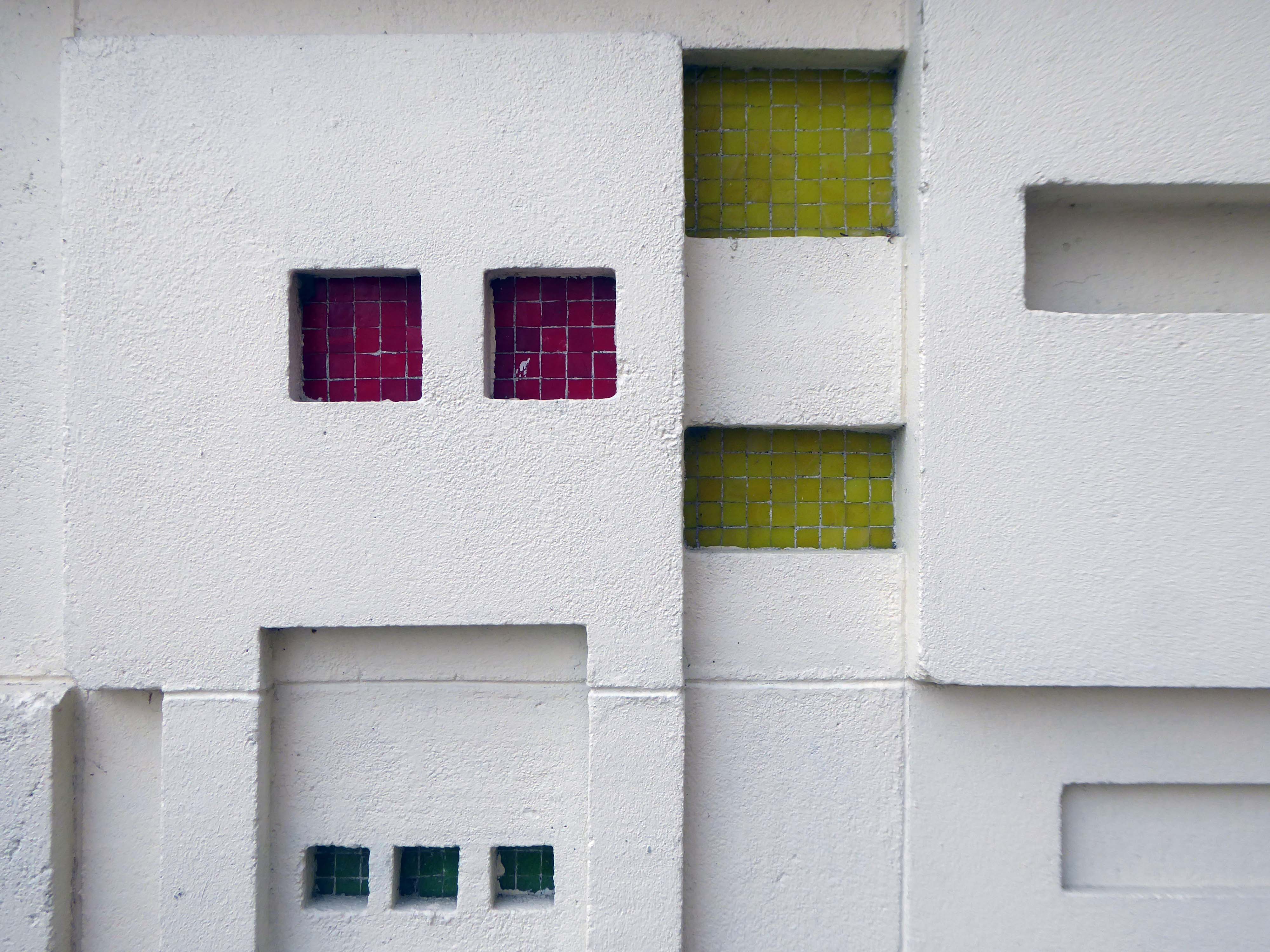
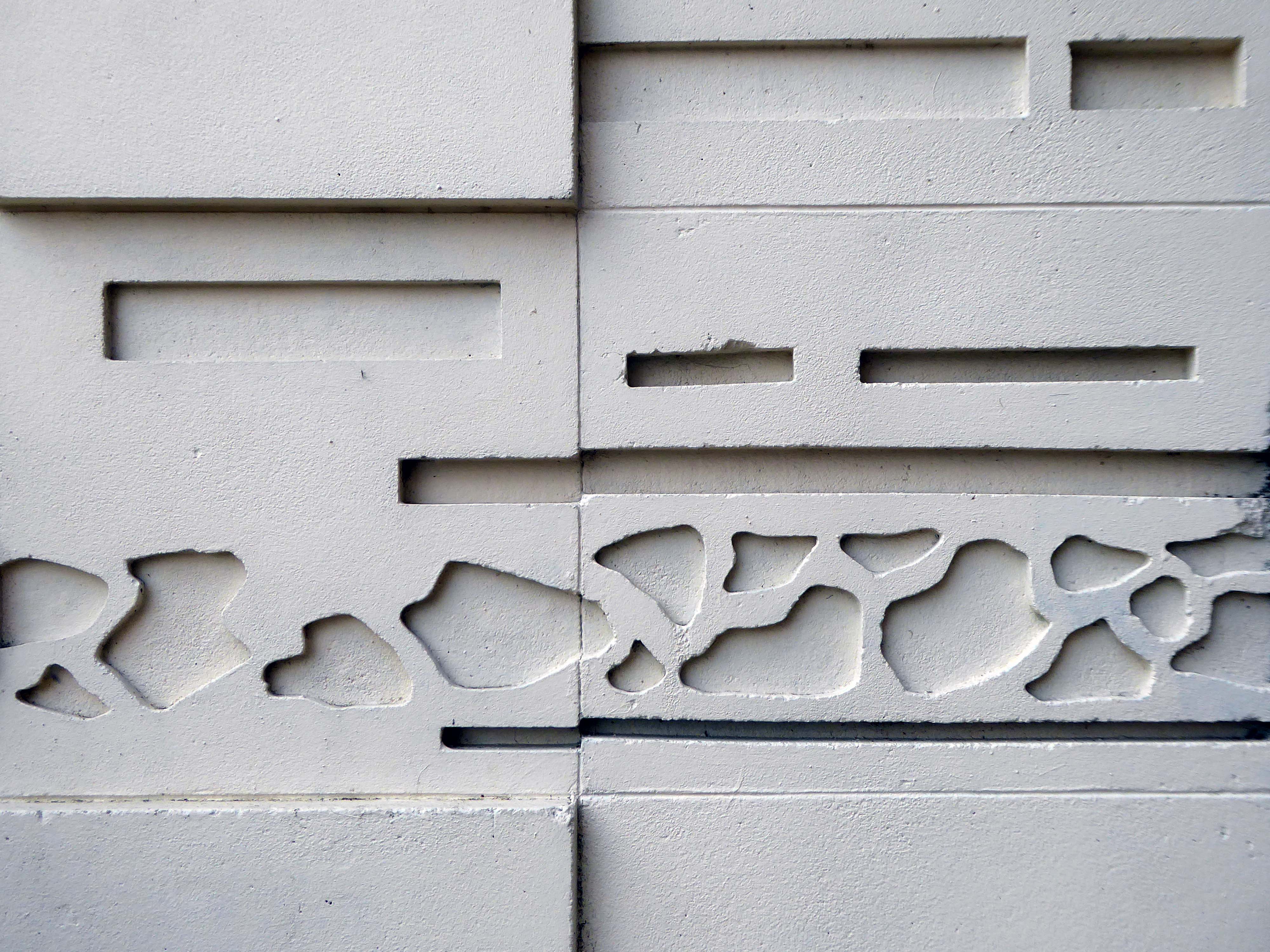
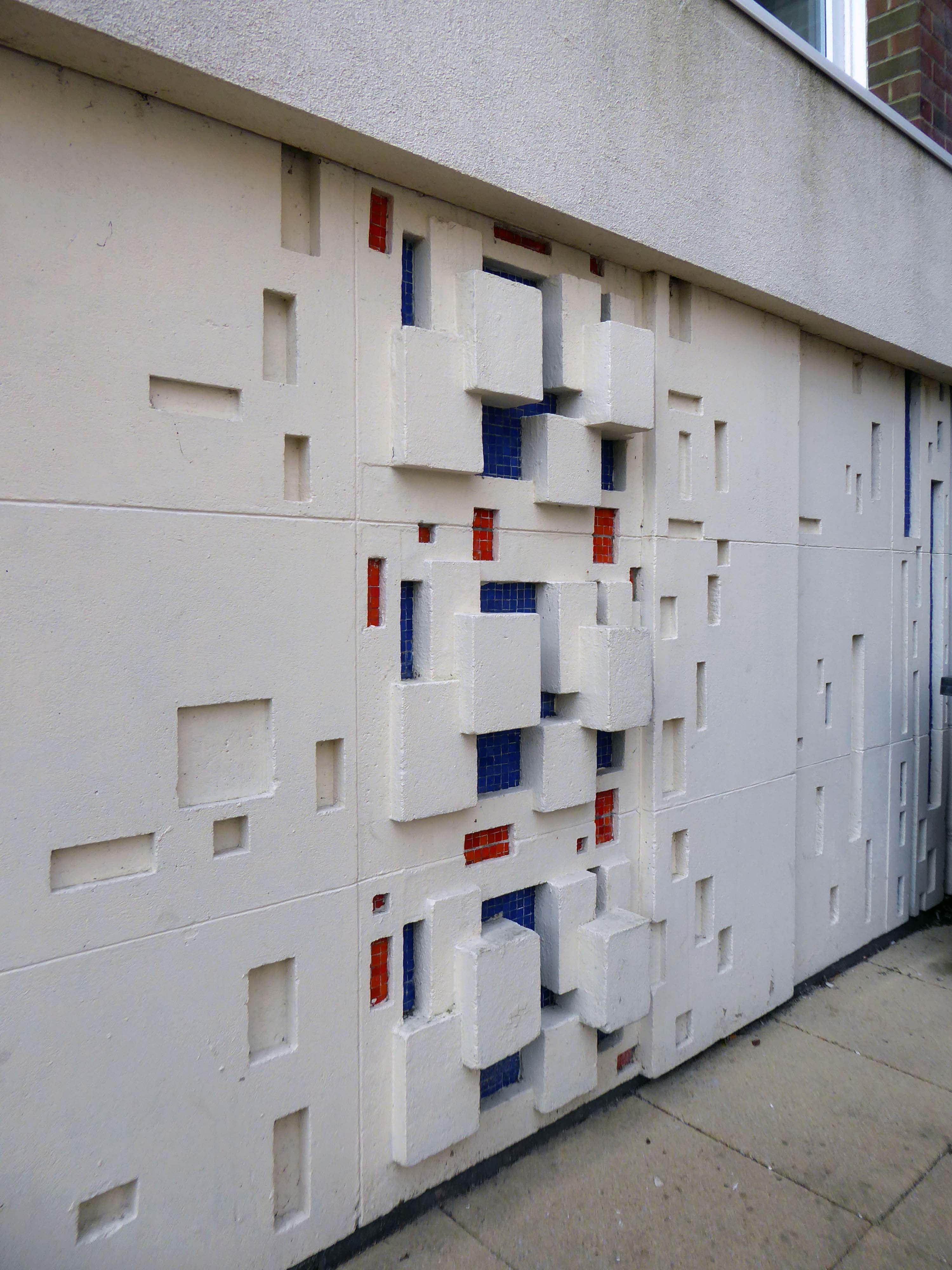
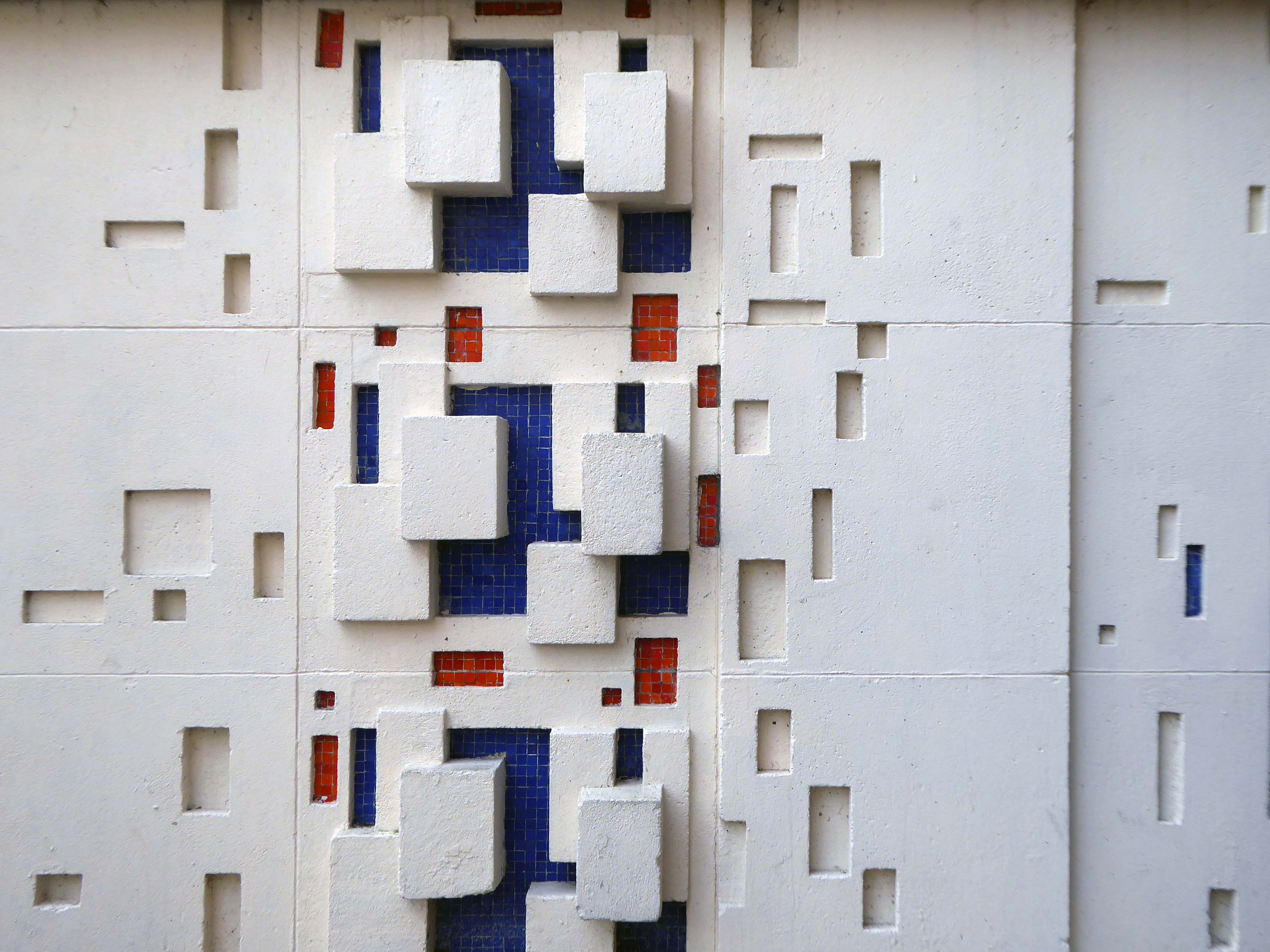
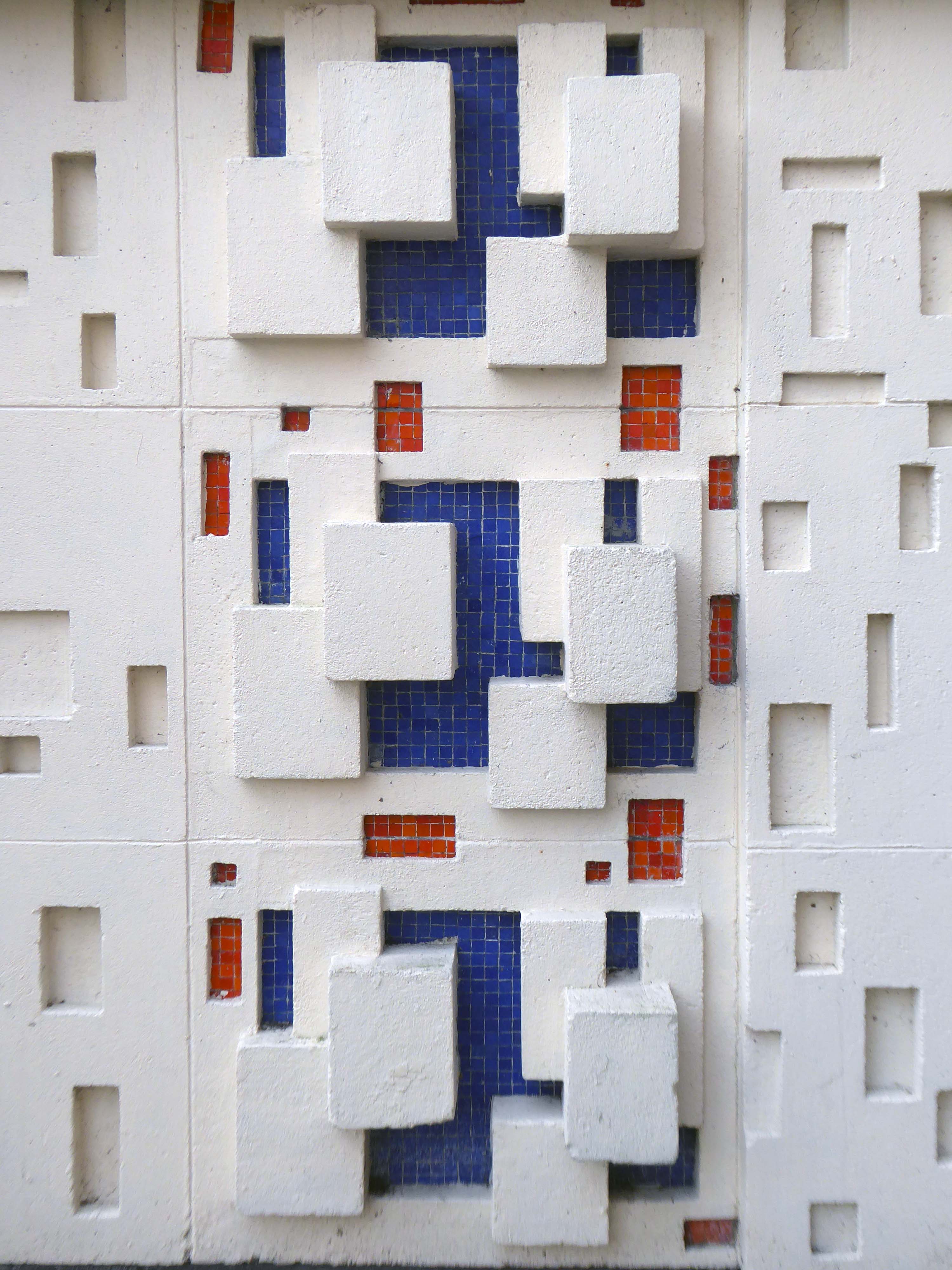
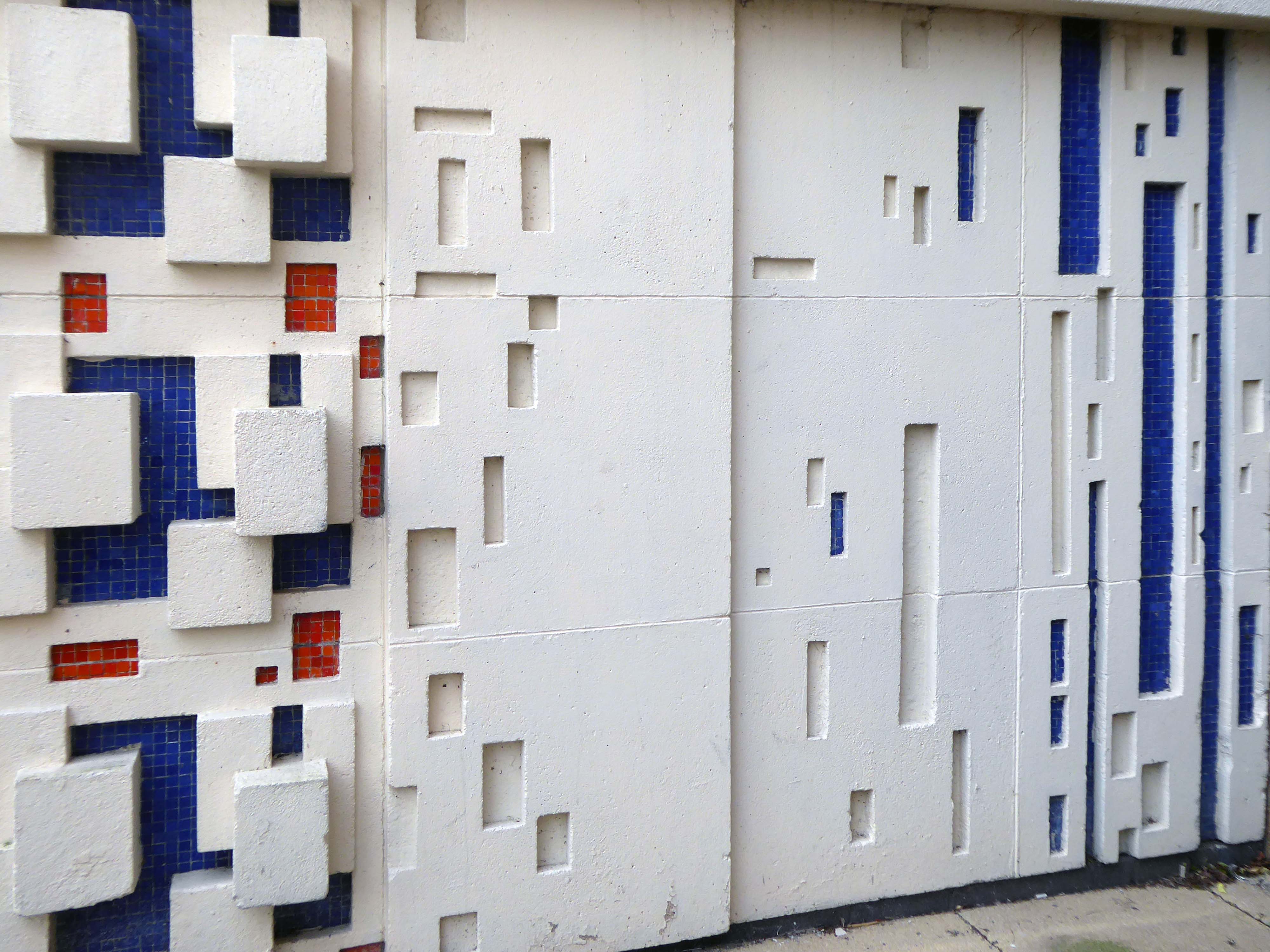
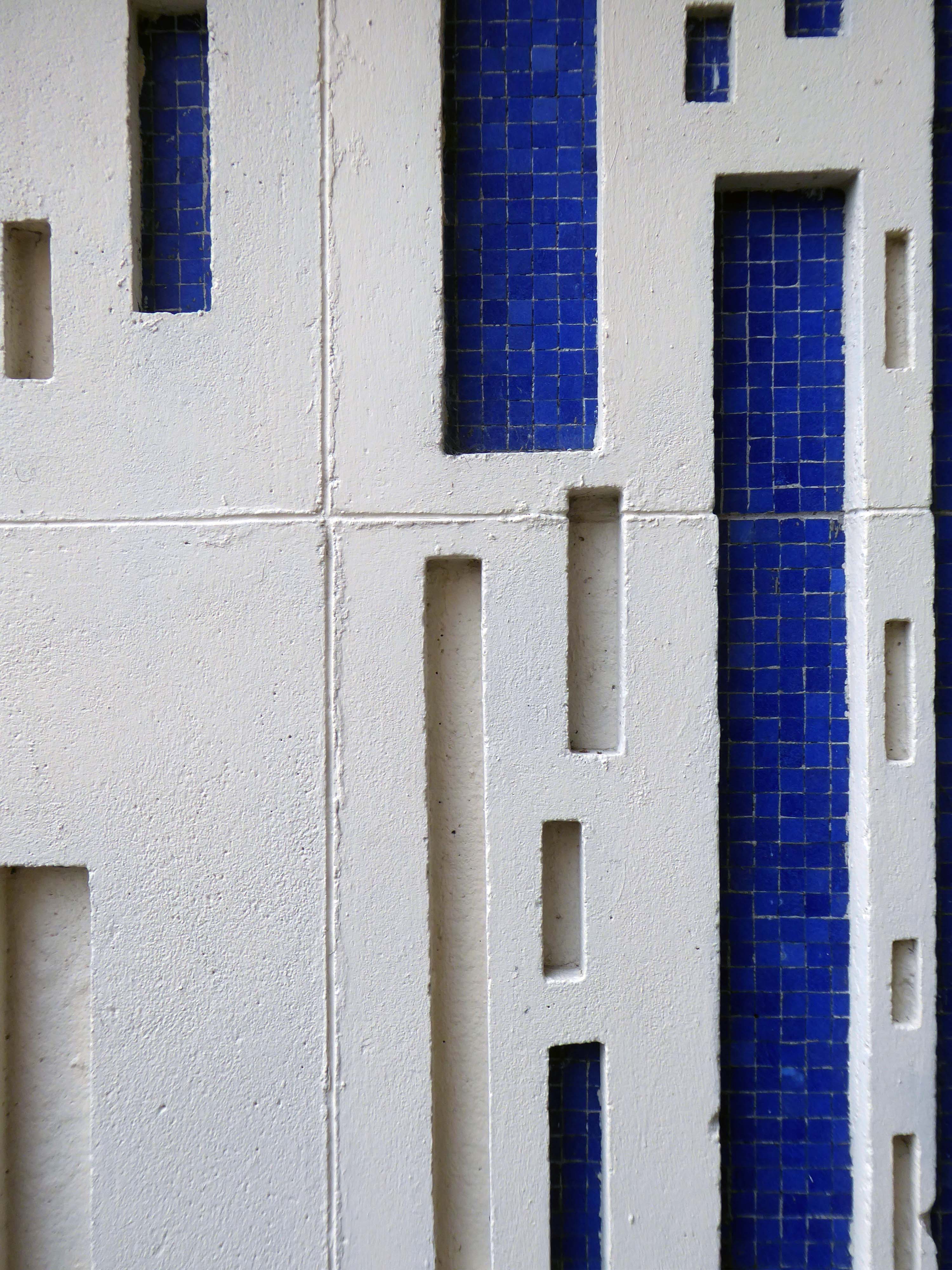
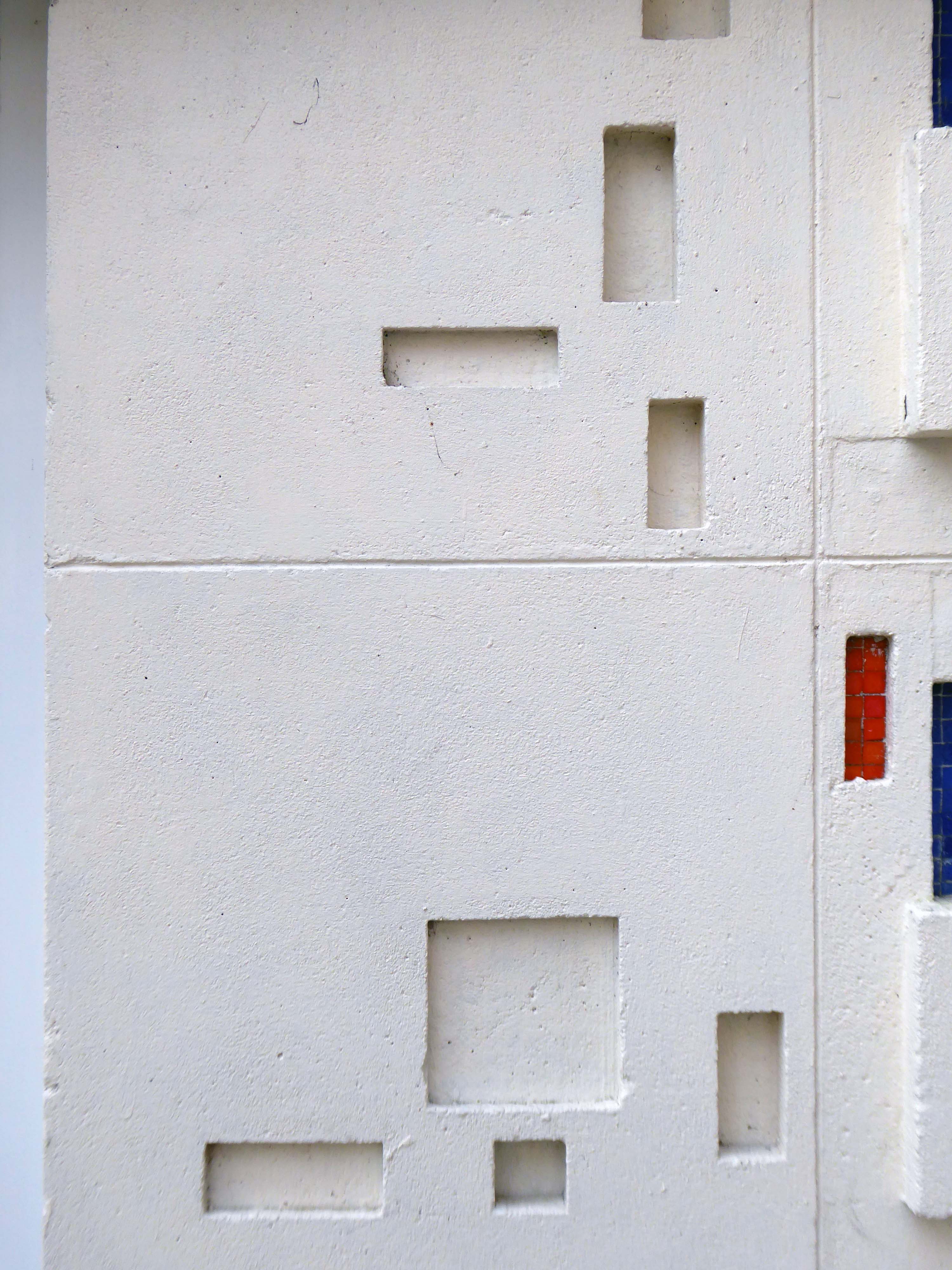
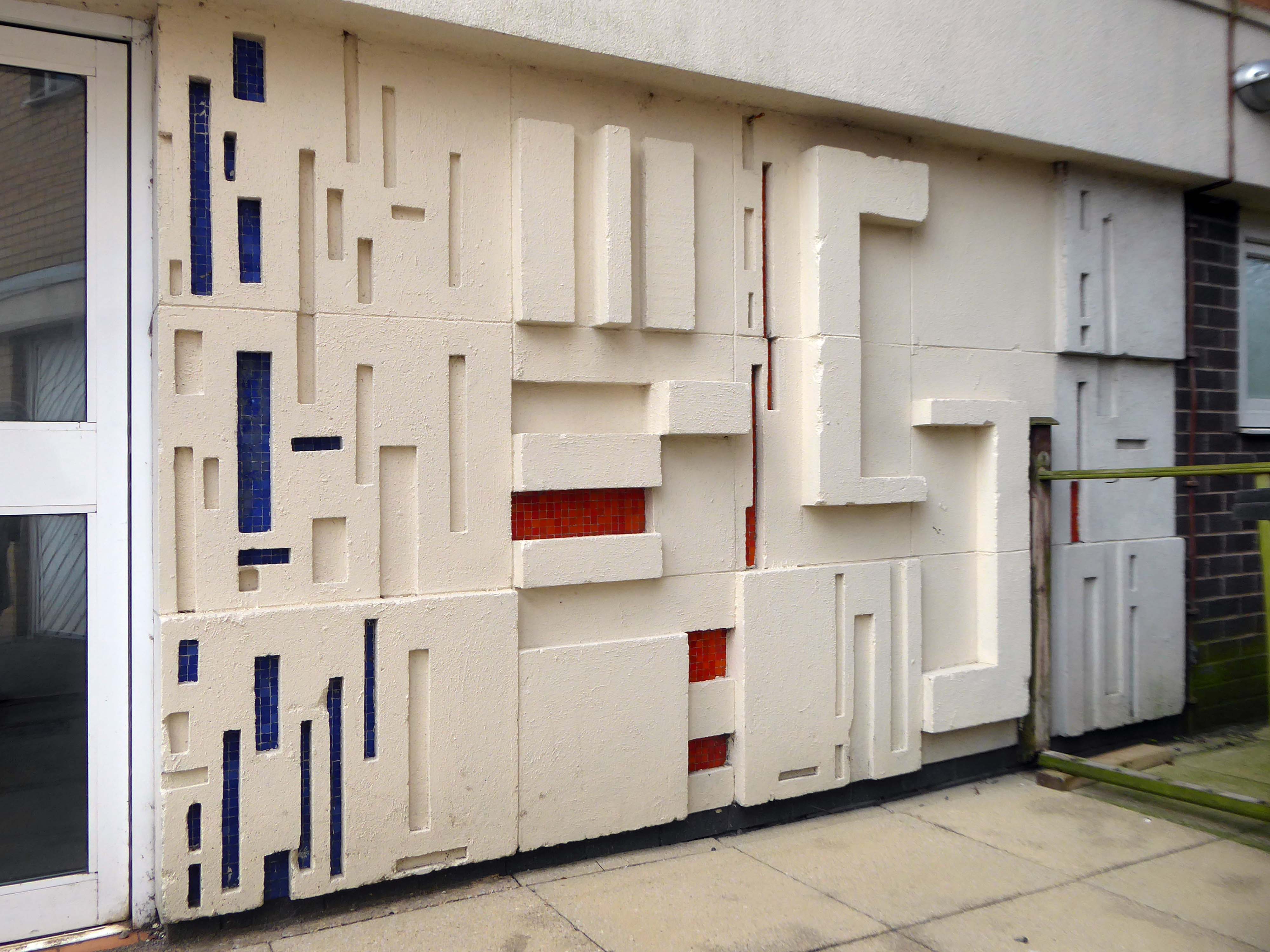
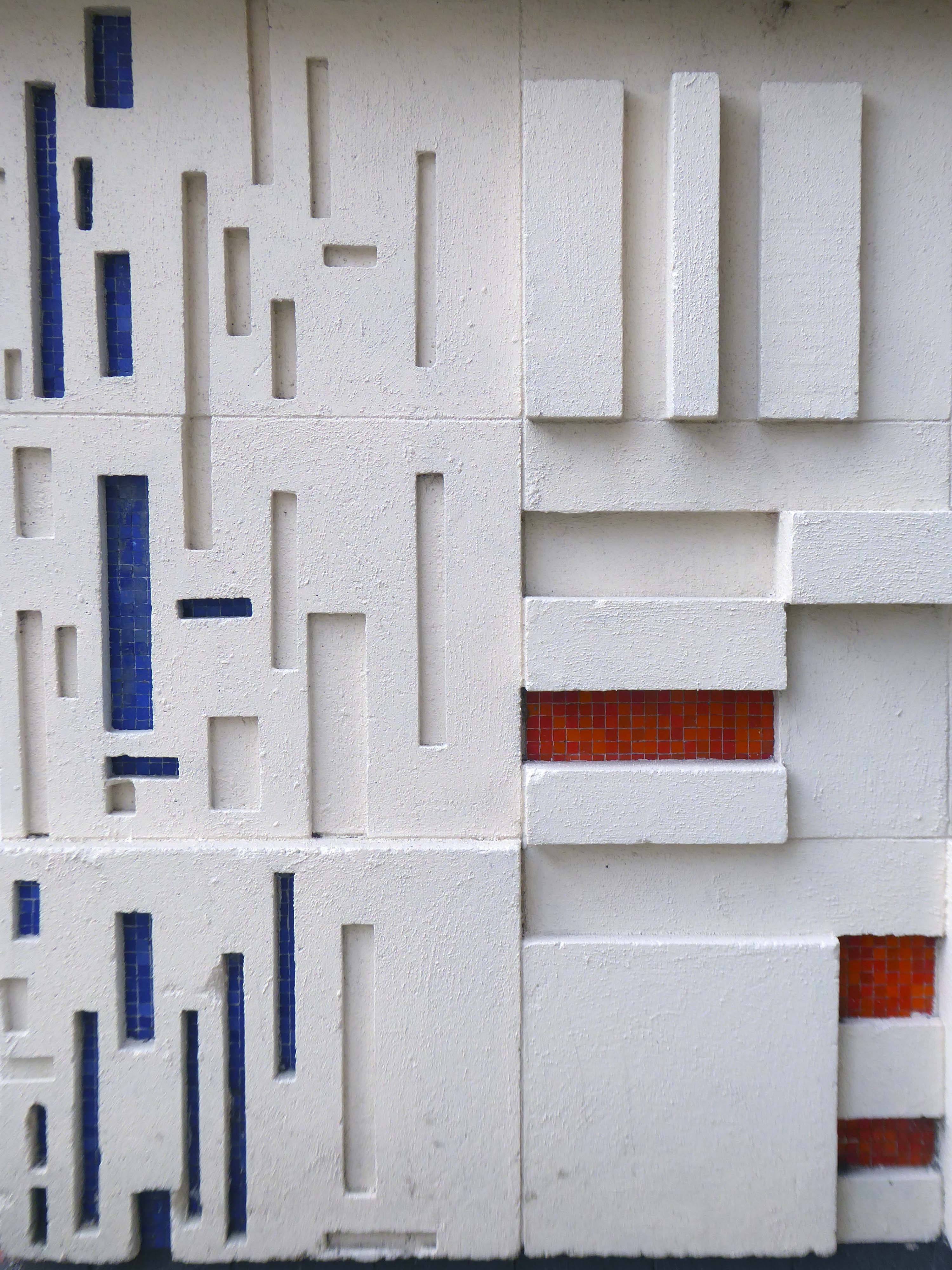
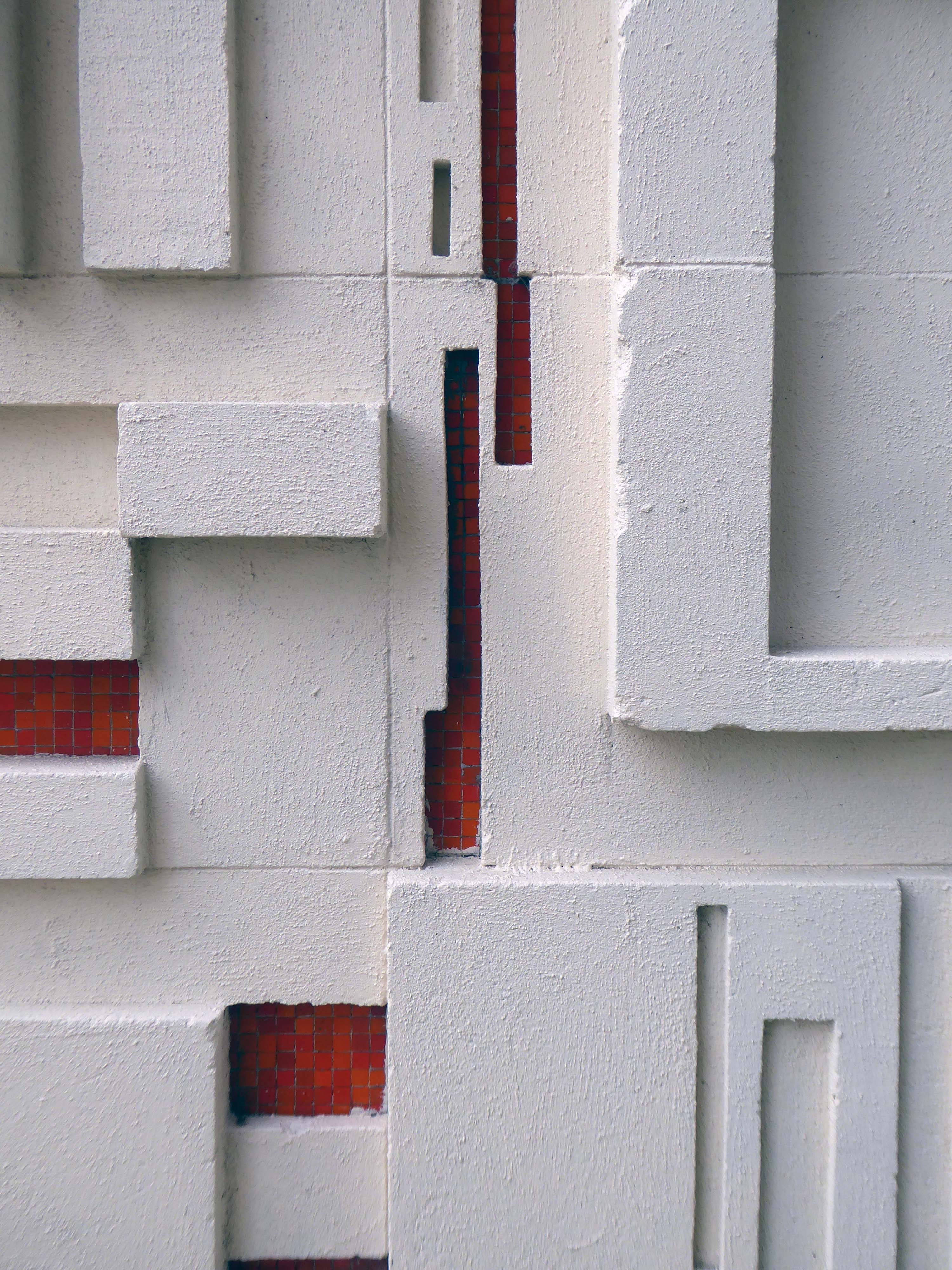
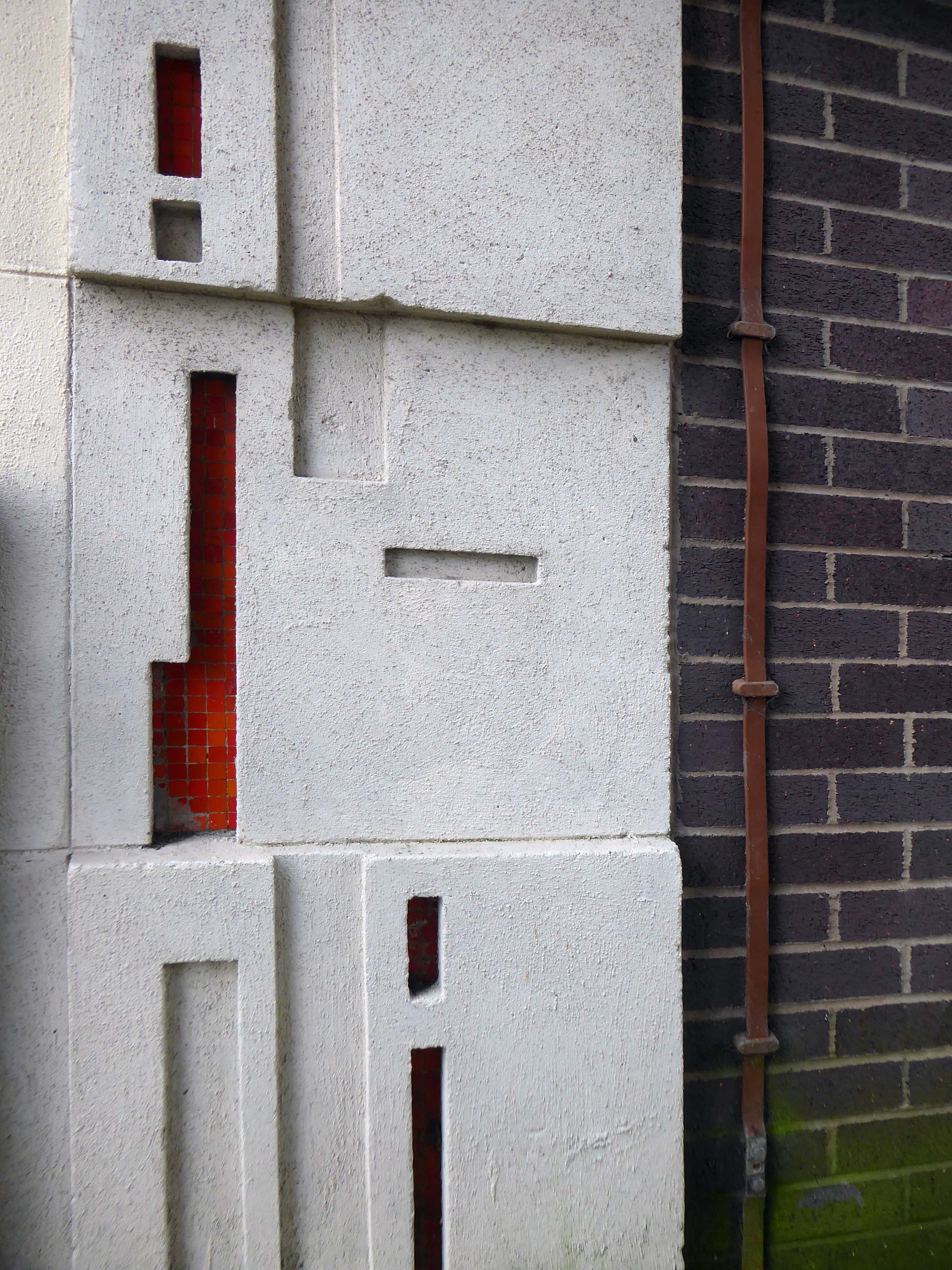
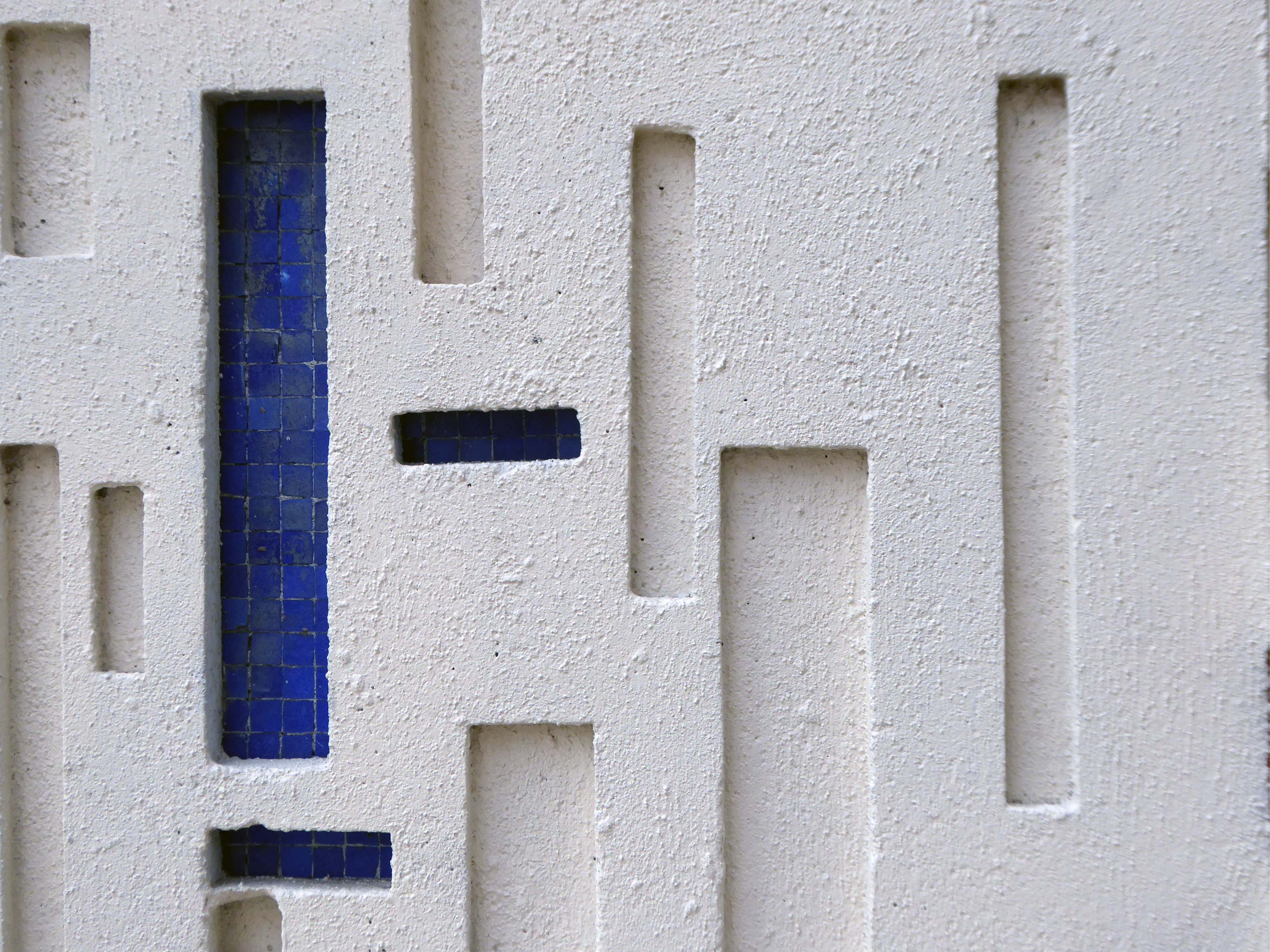
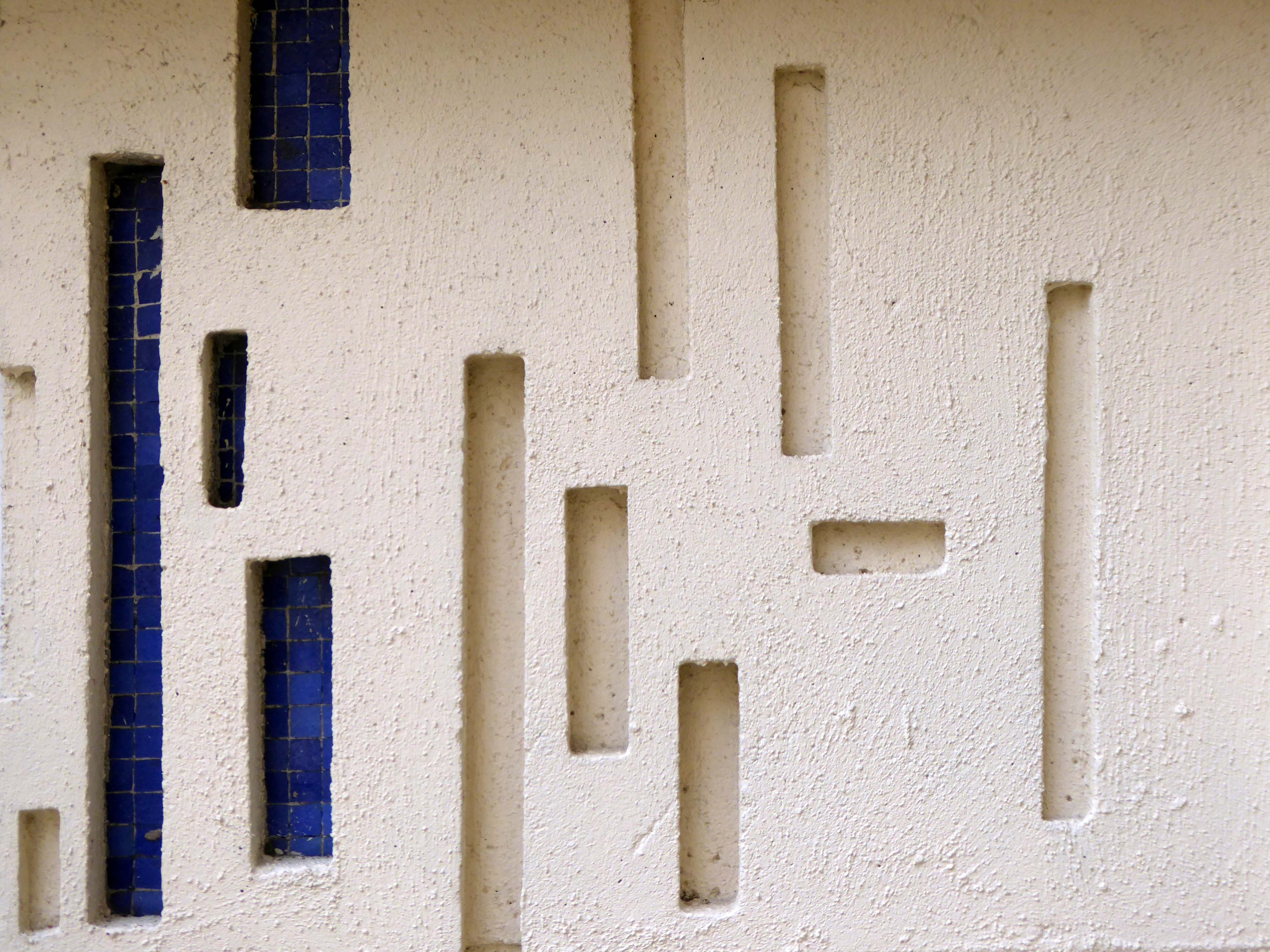
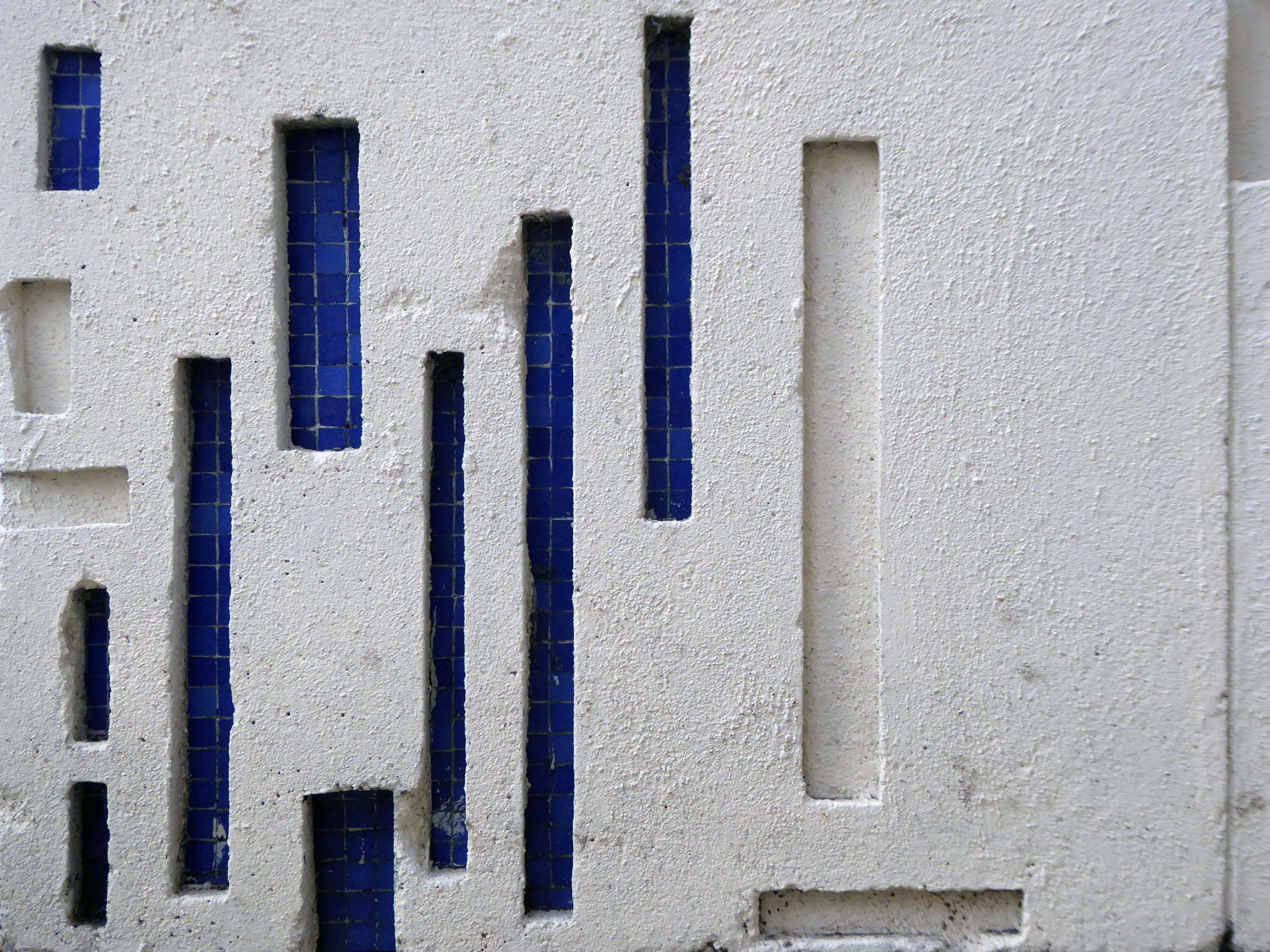
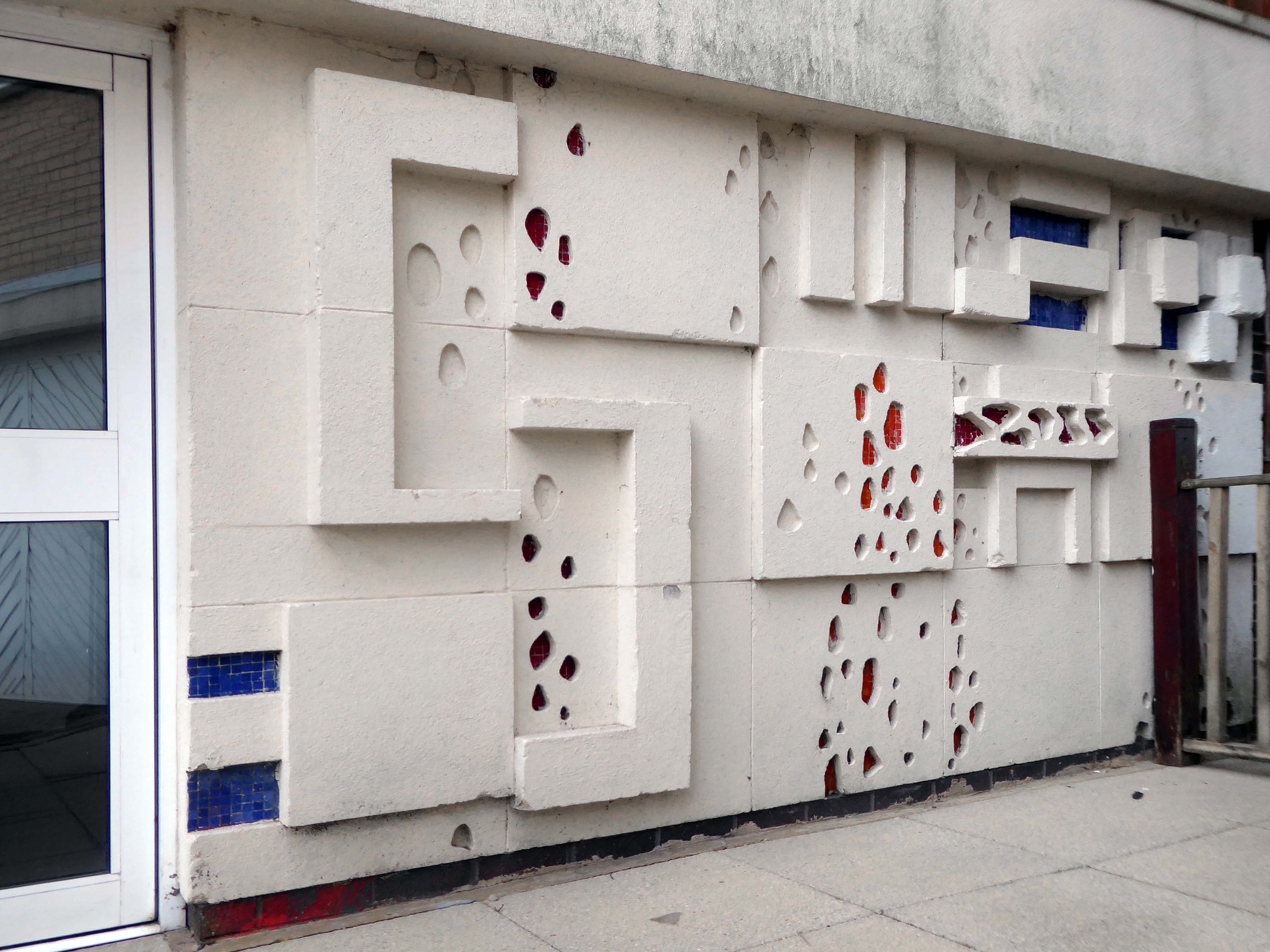
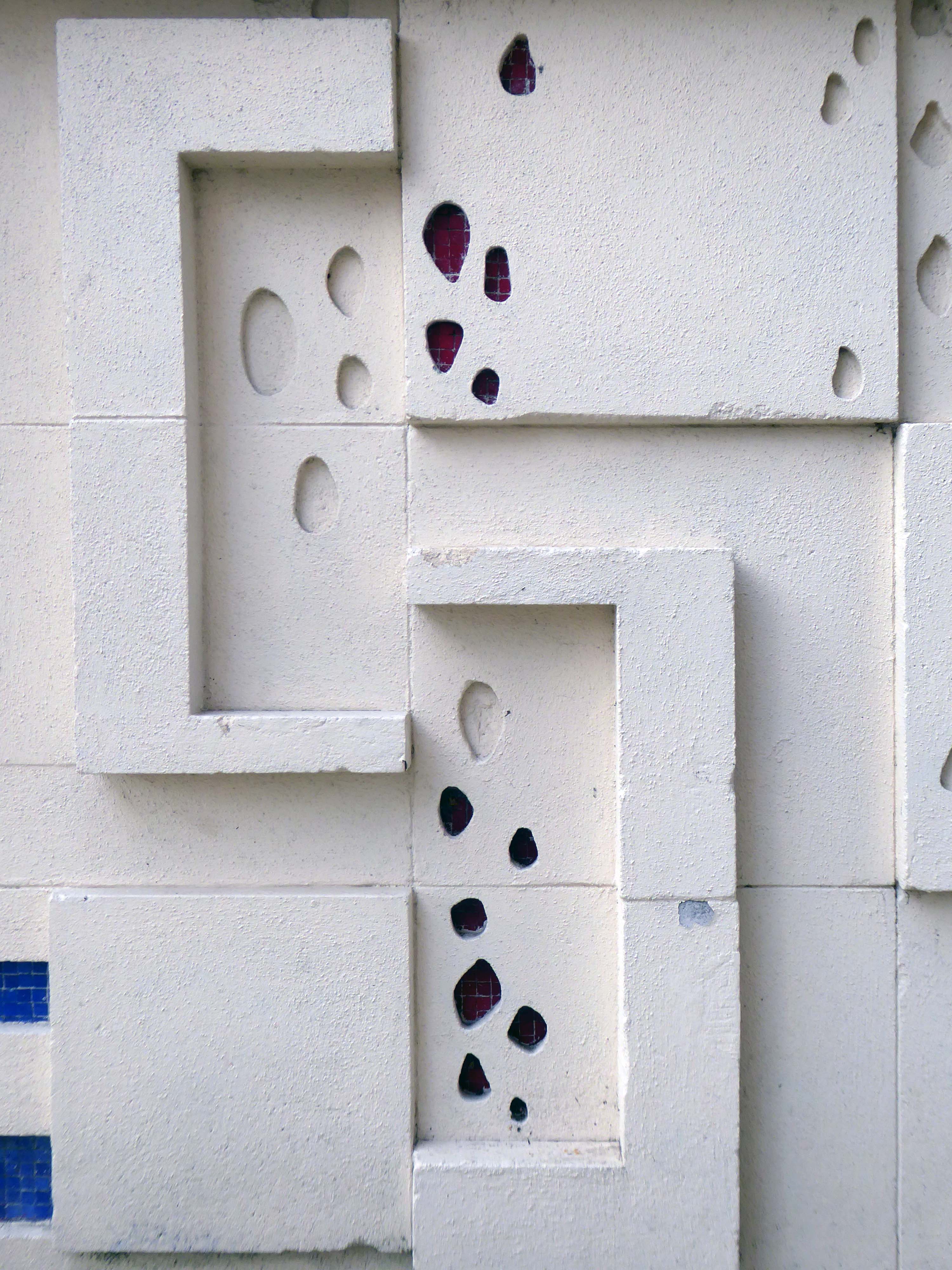
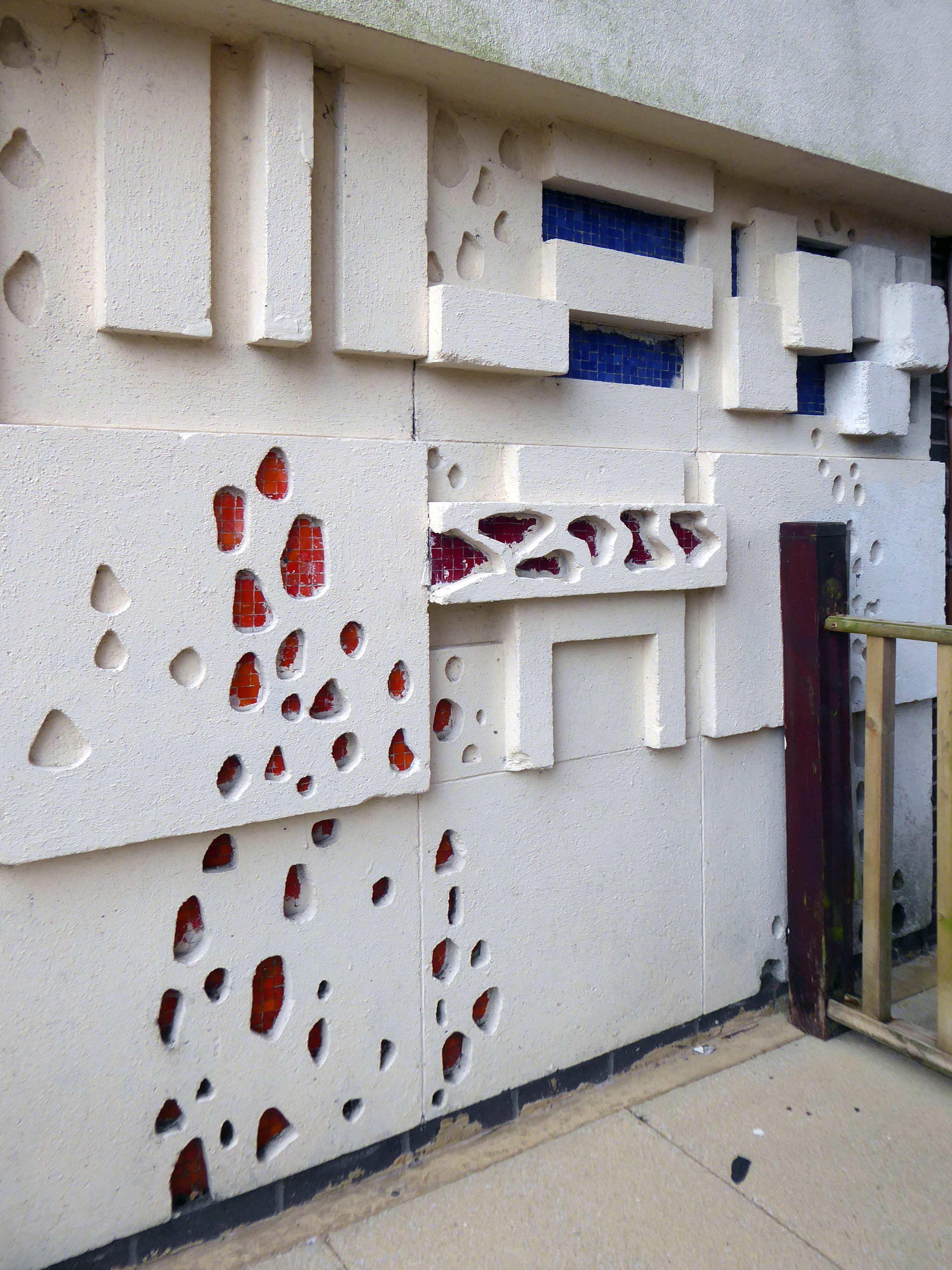
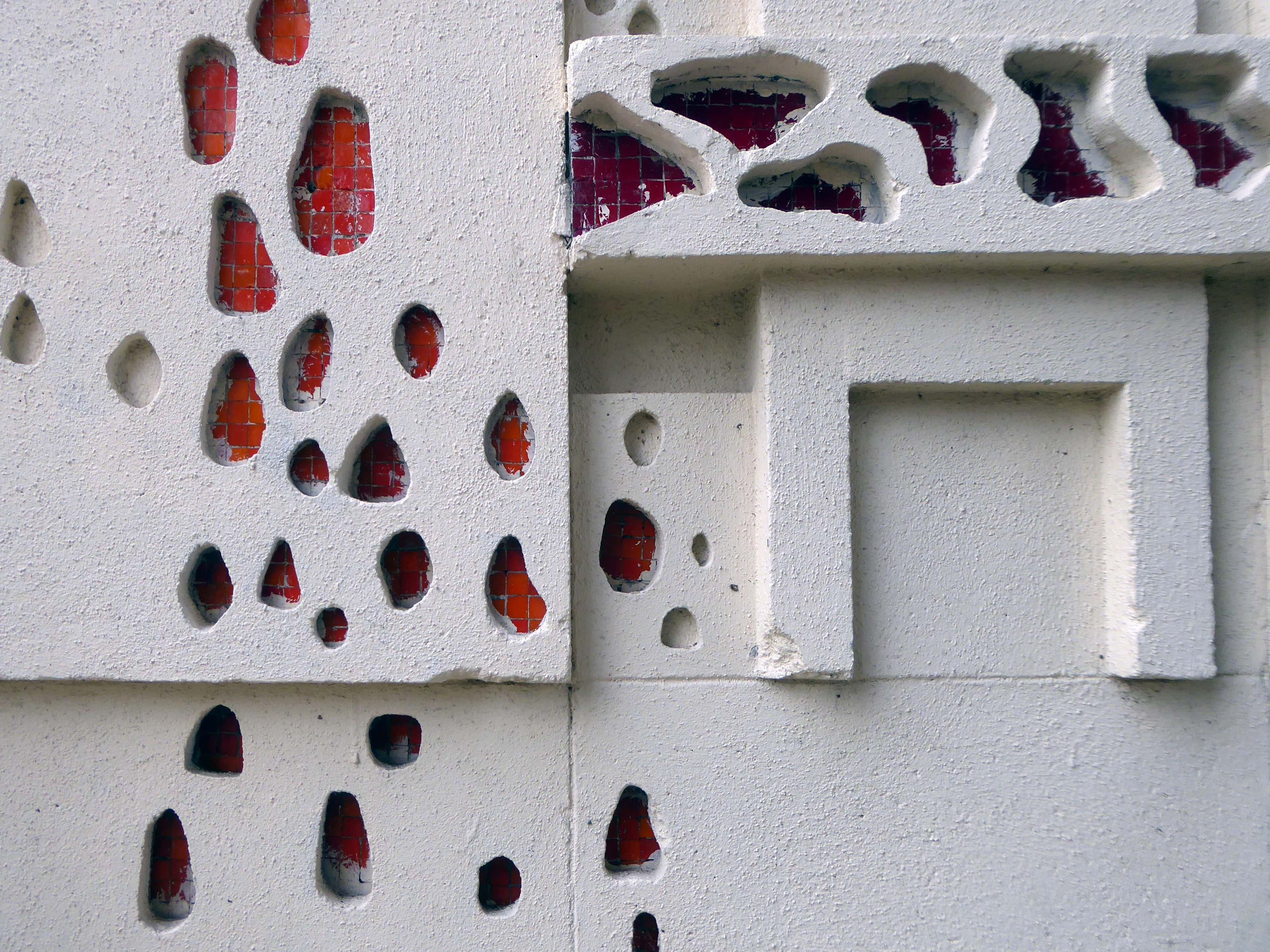
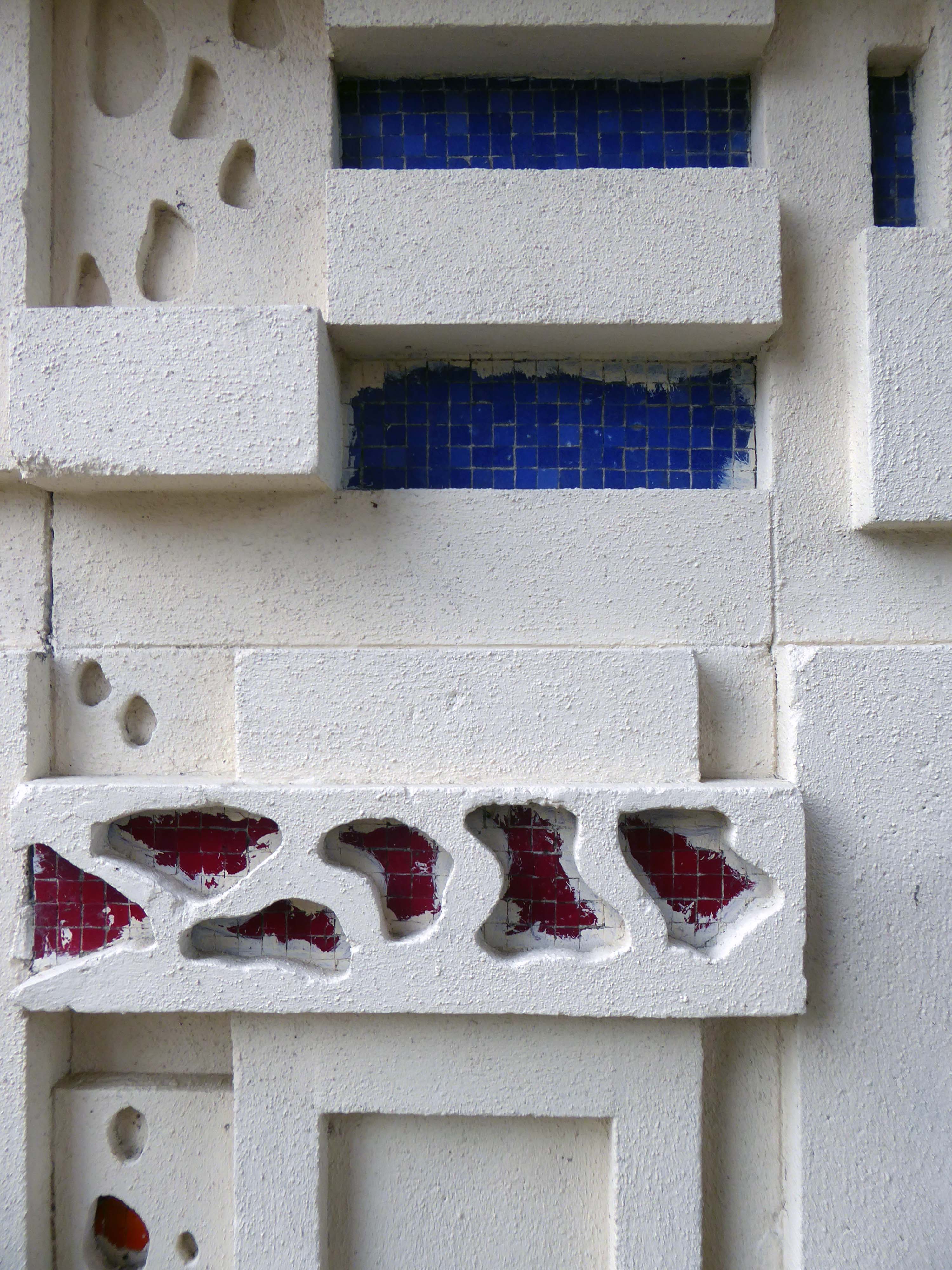
The front entrance has a mosaic and concrete relief, recalling De Stijl particularly Joost Baljeu.

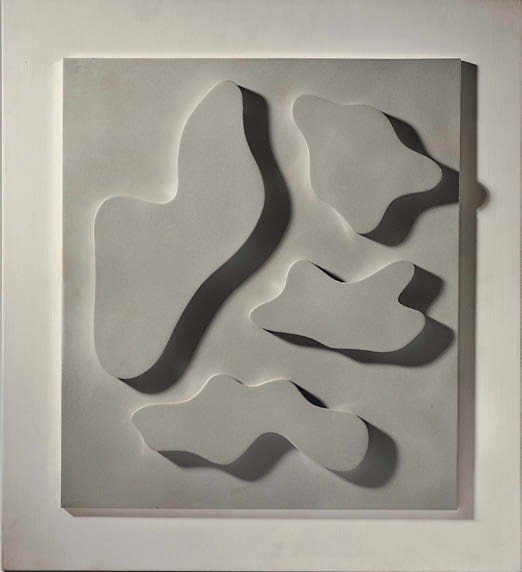
Along with echoes of Jean Arp.

The flats had acquired a stereotypical bad reputation.
Blight flats will soon be high-rise des-res.

Residents on a blighted Blackley estate have been told of plans to deal with the mostly unoccupied high-rise flats that are seen as the cause of the problem.
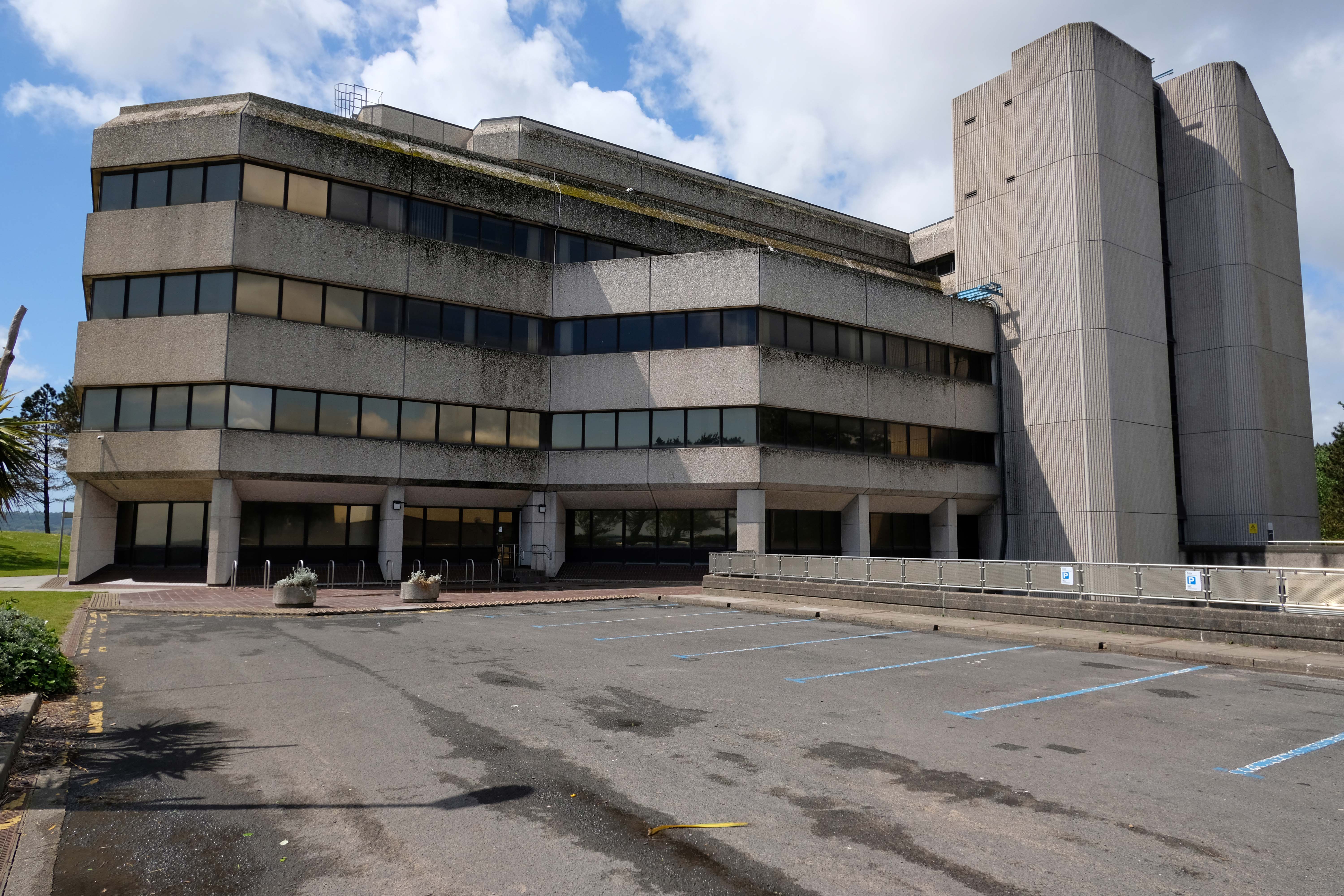
Manchester Evening News

I entered via the vehicular access – in order to view the four remaining reliefs.
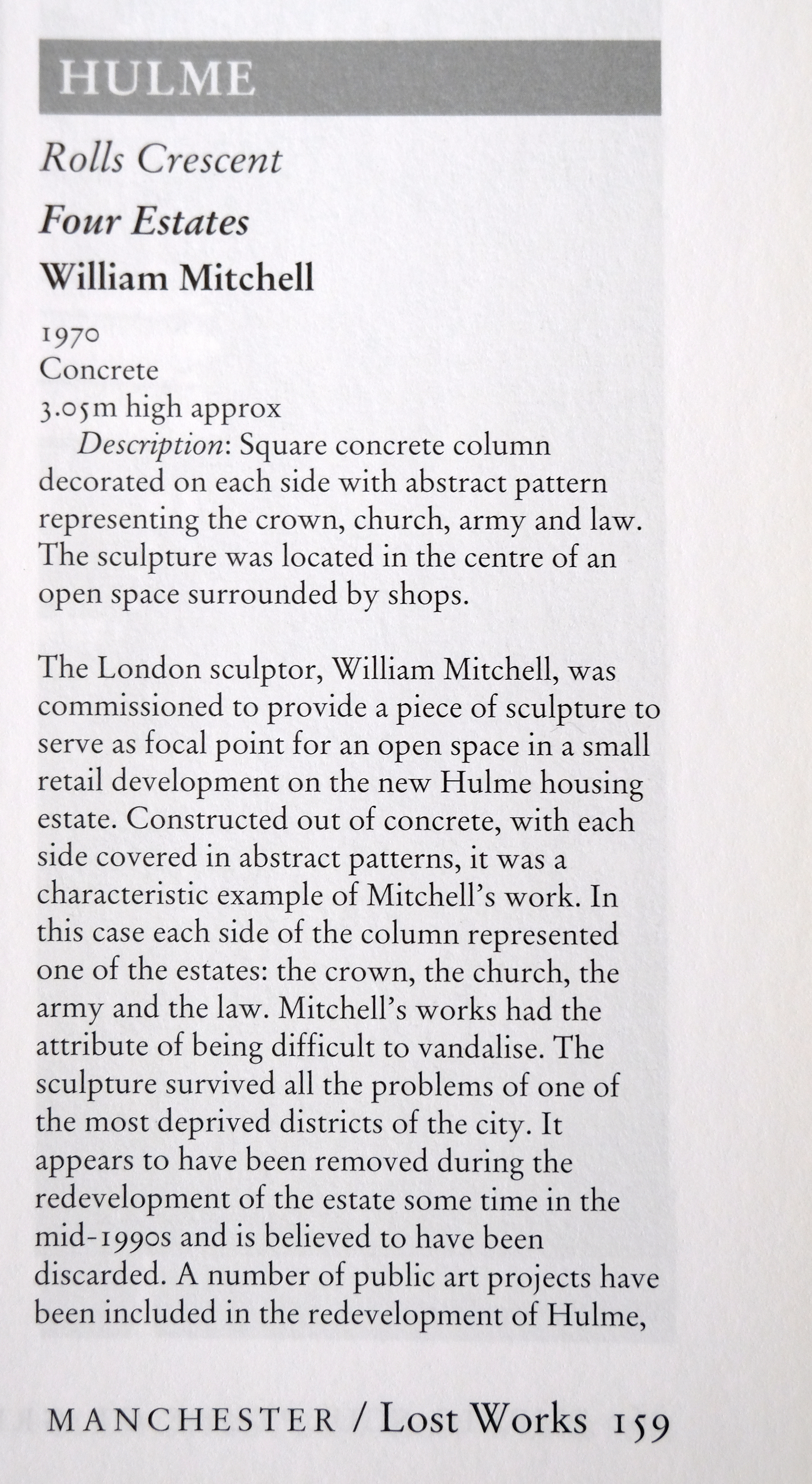
The Lakeside Rise blocks now form part of a private gated community and are accessed from Blackley New Road.

The original blocks and their locations are as follows:

Ashenhurst Court Now Lakeside 1
Heaton Court Now Lakeside 2
Wilton Court Now Lakeside 3
Blackley Court Now Lakeside 4

Bracknell Court demolished – was on the corner of Riverdale Road and Bridgenorth Road adjacent to Heaton Court
Riverdale Court demolished – was on Riverdale Road opposite Bantry Avenue.

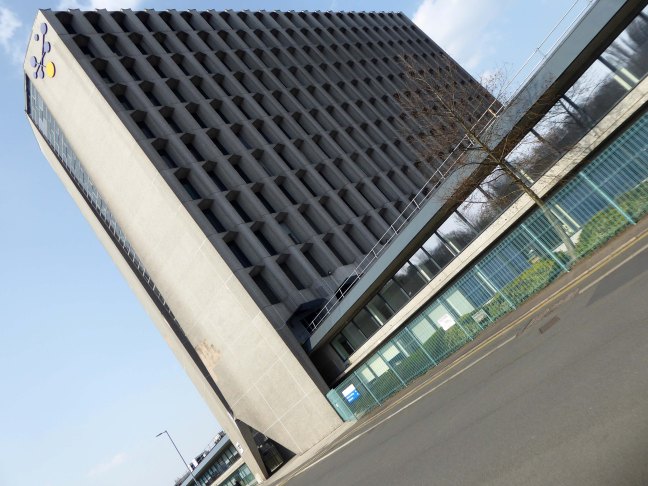
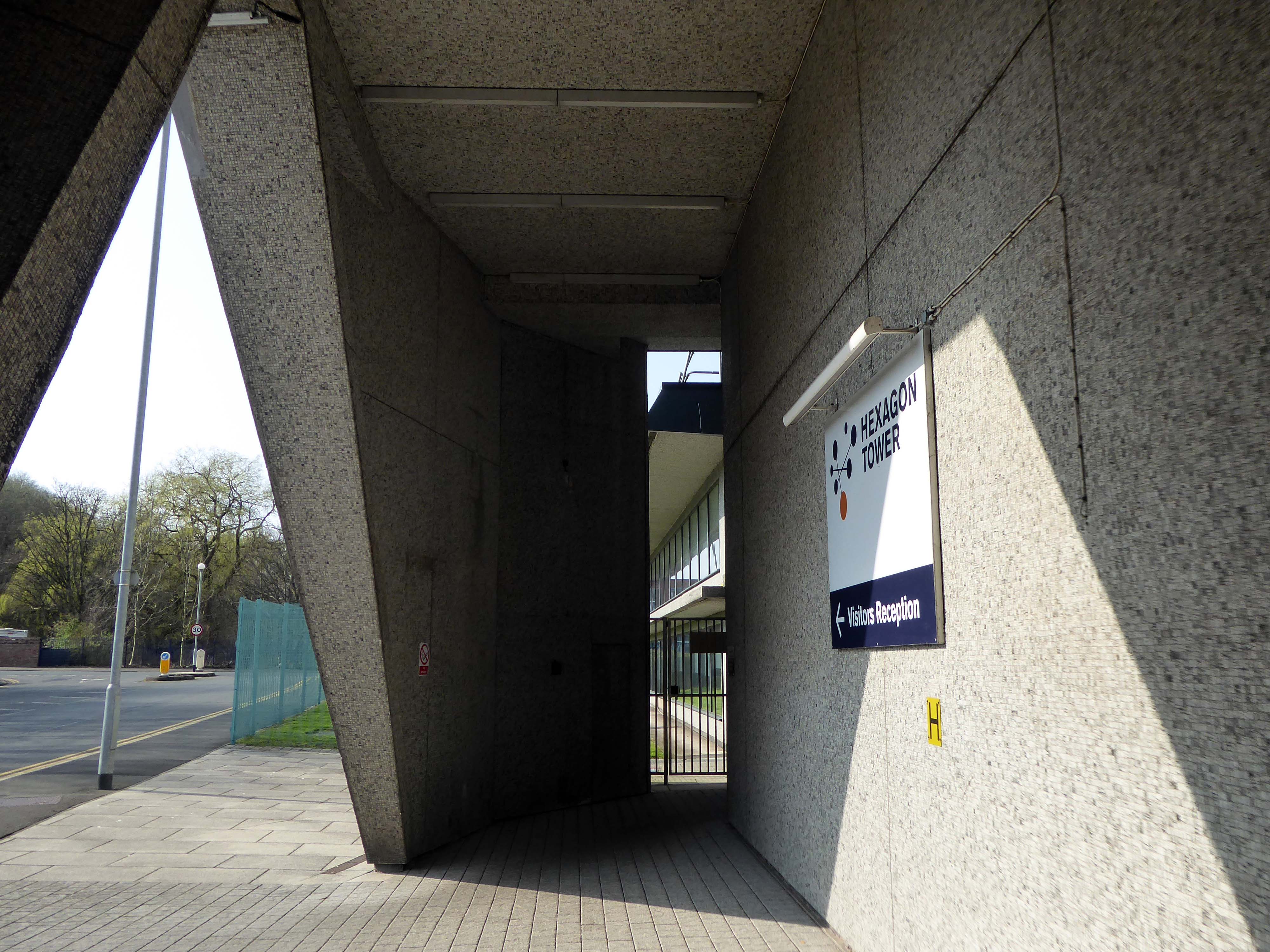
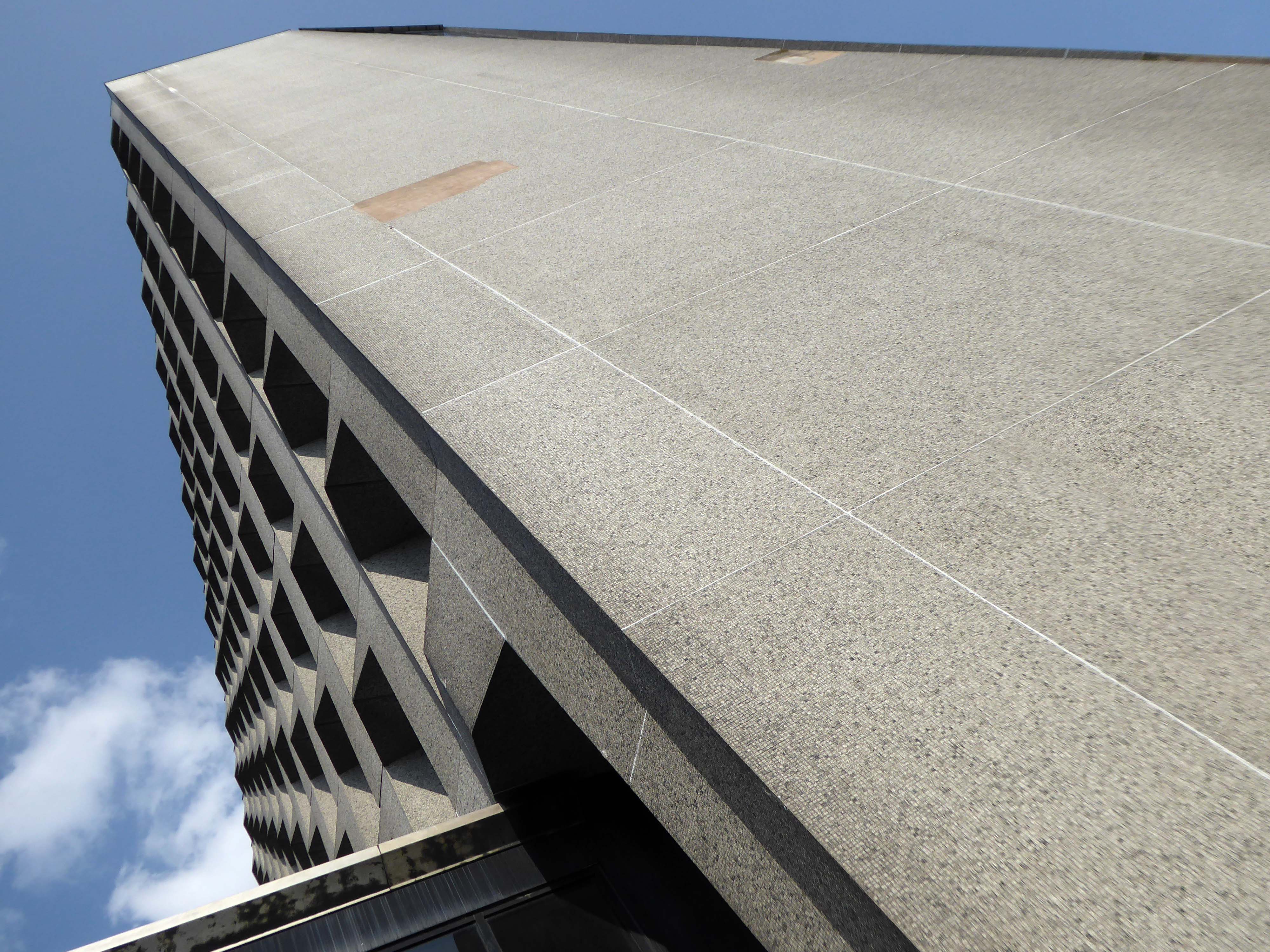
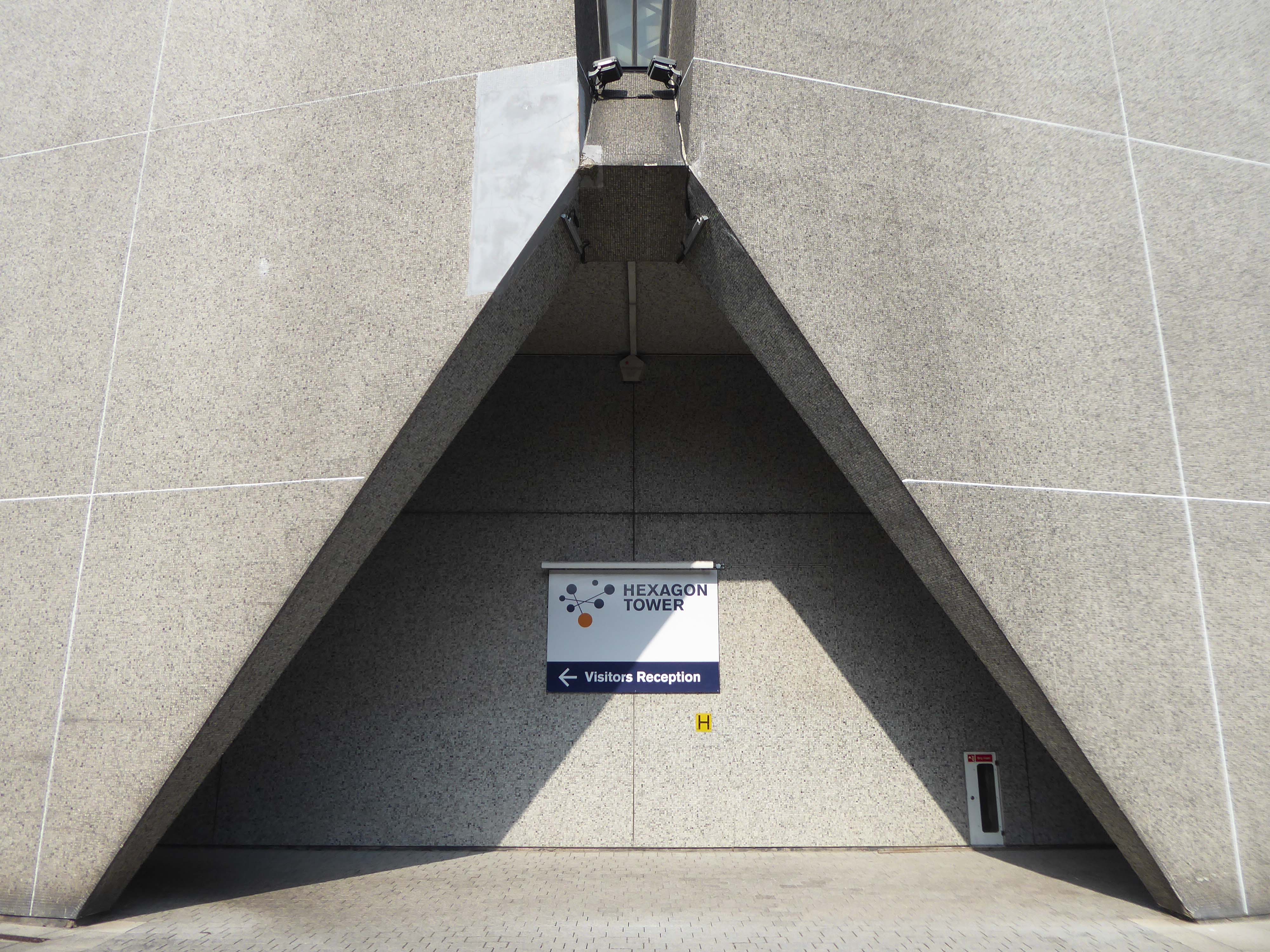
Hexagon Tower – Blackley Manchester

Crumpsall Vale Blackley Manchester M9 8GQ

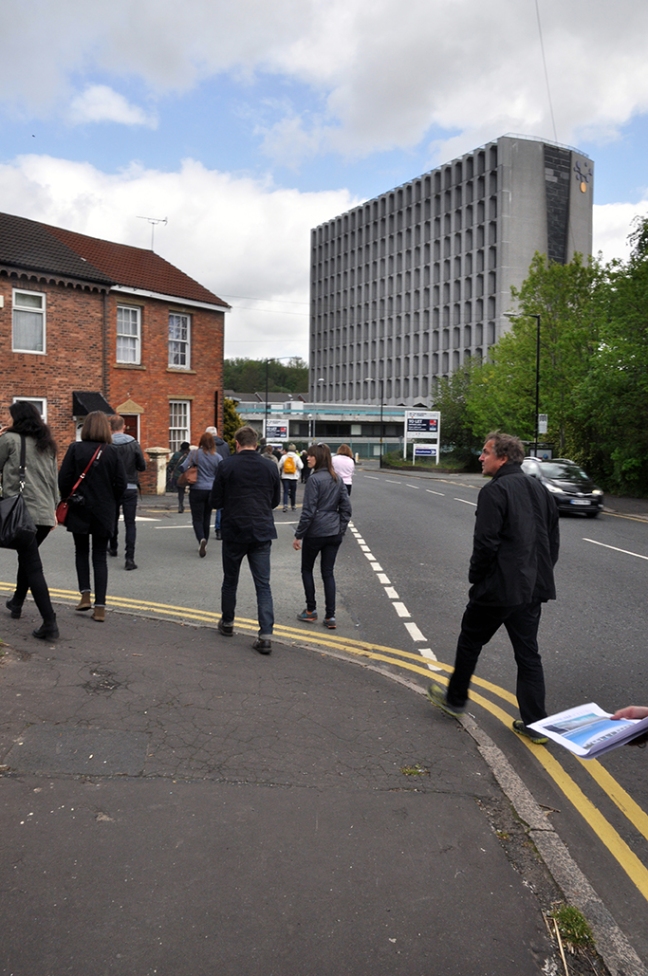
I was last here at the Hexagon Tower in 2015 – on a Manchester Modernist Society magical Orbital Bus Tour.

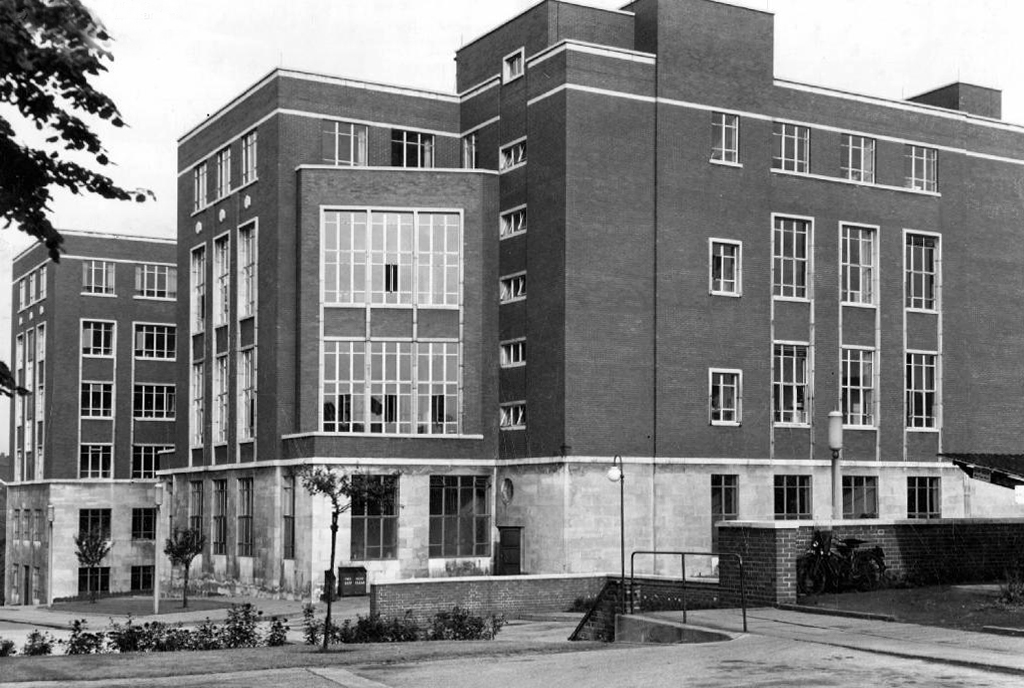
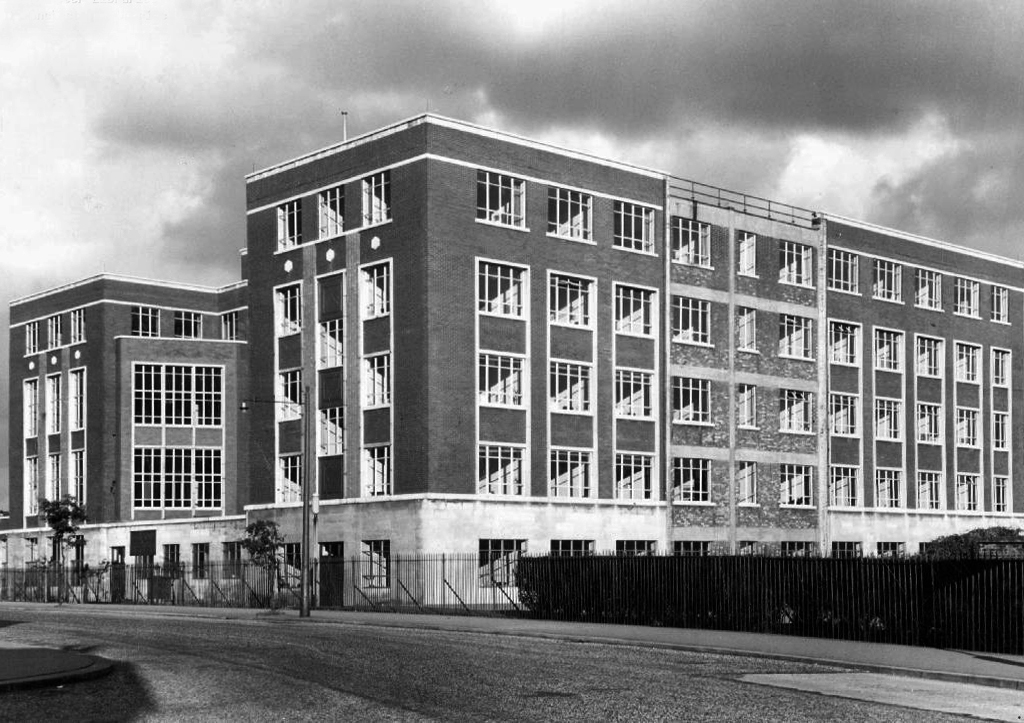
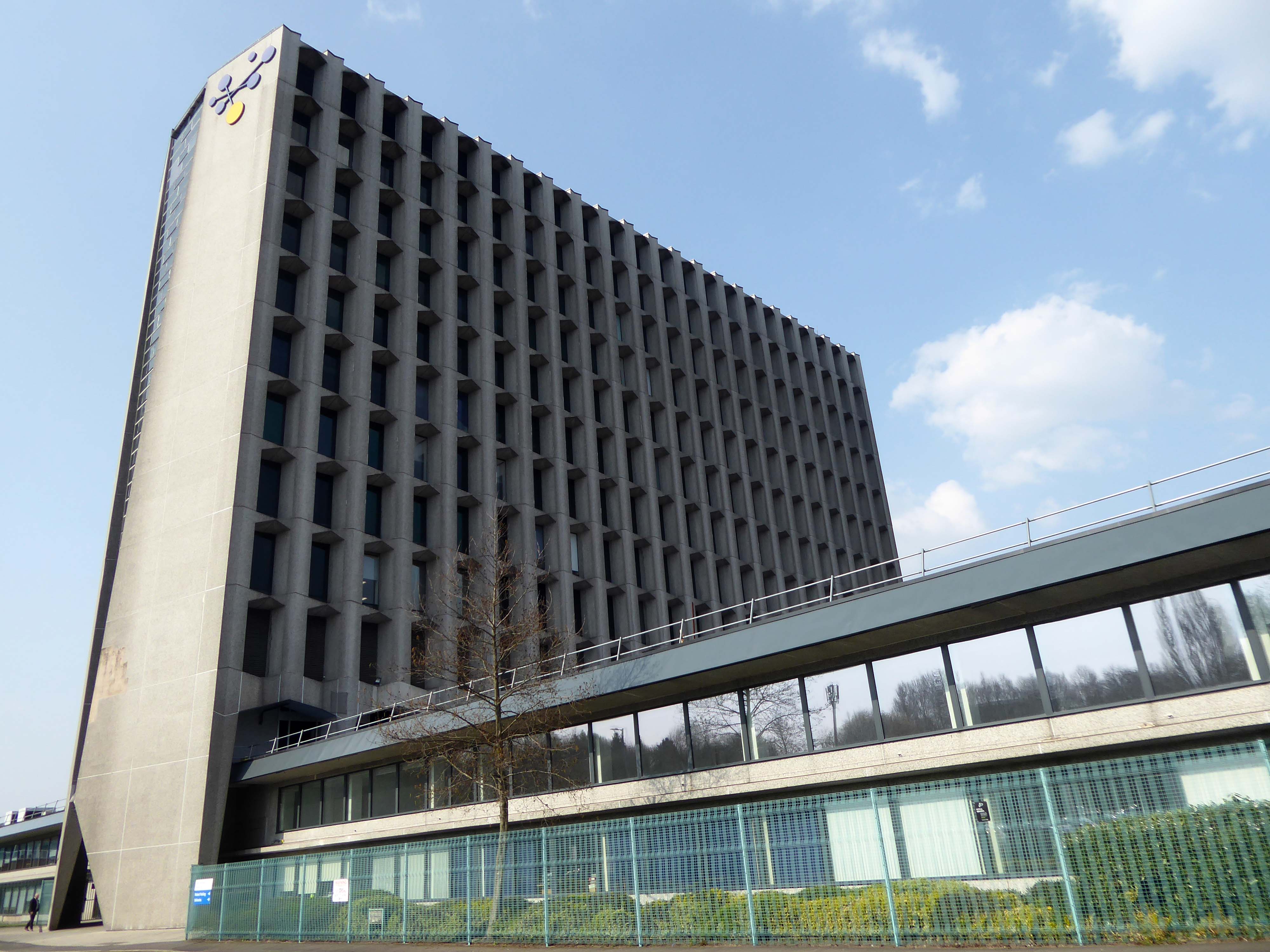
ICI commissioned the building from Richard Seifert in September 1969, as a research, development and production centre.

I returned in 2022 whilst cycling/walking the River Irk.

Since my previous visit the tower has been made good – after a fashion.

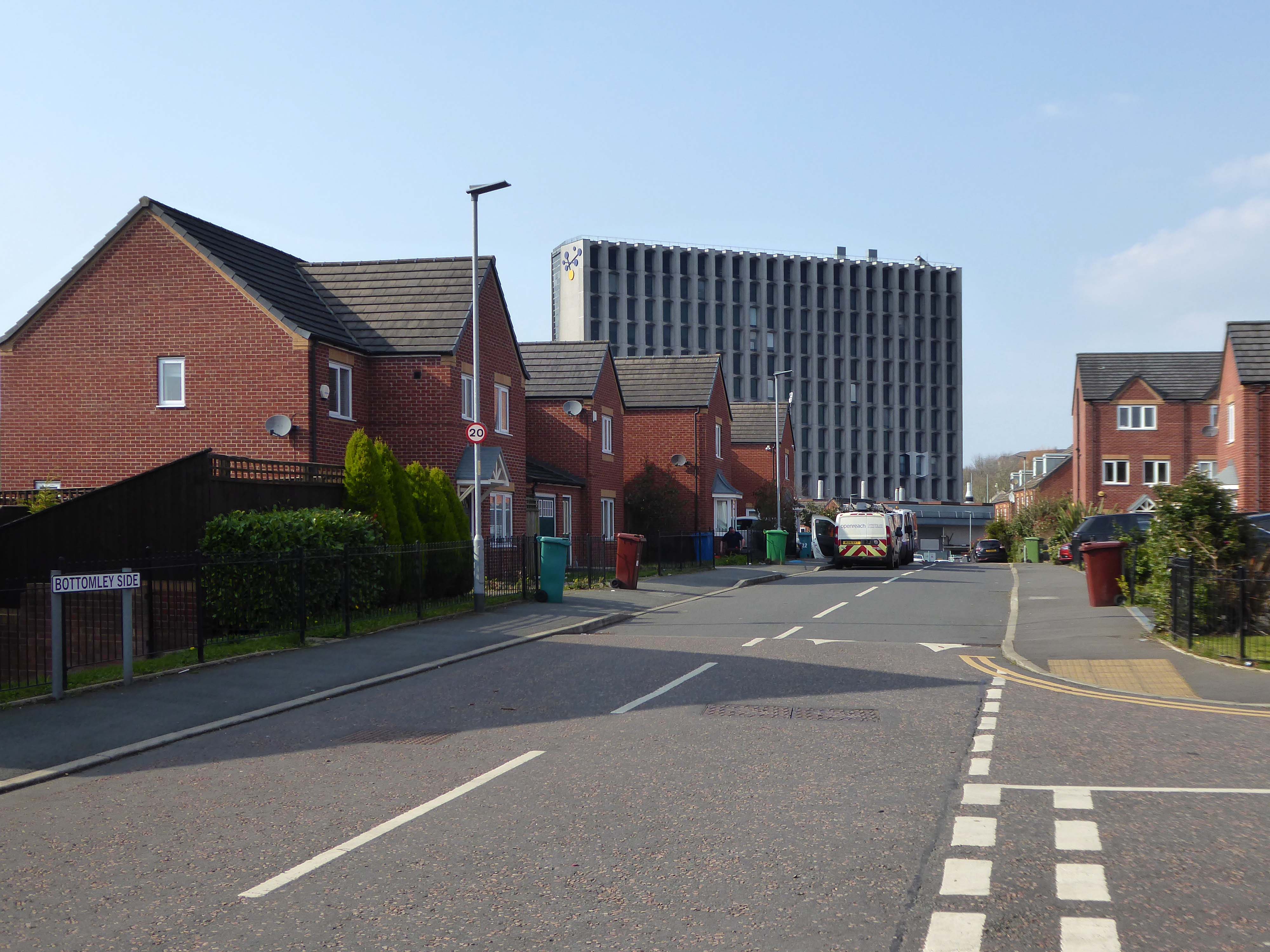
It looked splendid in the late March sun, as I approached along Imperial Way.

Imperial Way named for its progenitor ICI – the Imperial Chemical Industries.

ICI’s Dyestuffs Division had its headquarters at Blackley in north Manchester, in a complex known as the Hexagon, which included its main R & D labs, and an experimental manufacturing plant.

John Rylands Library

New Hexagon House 1958 architect: Harry Fairhurst

Manchester Local Image Collection.

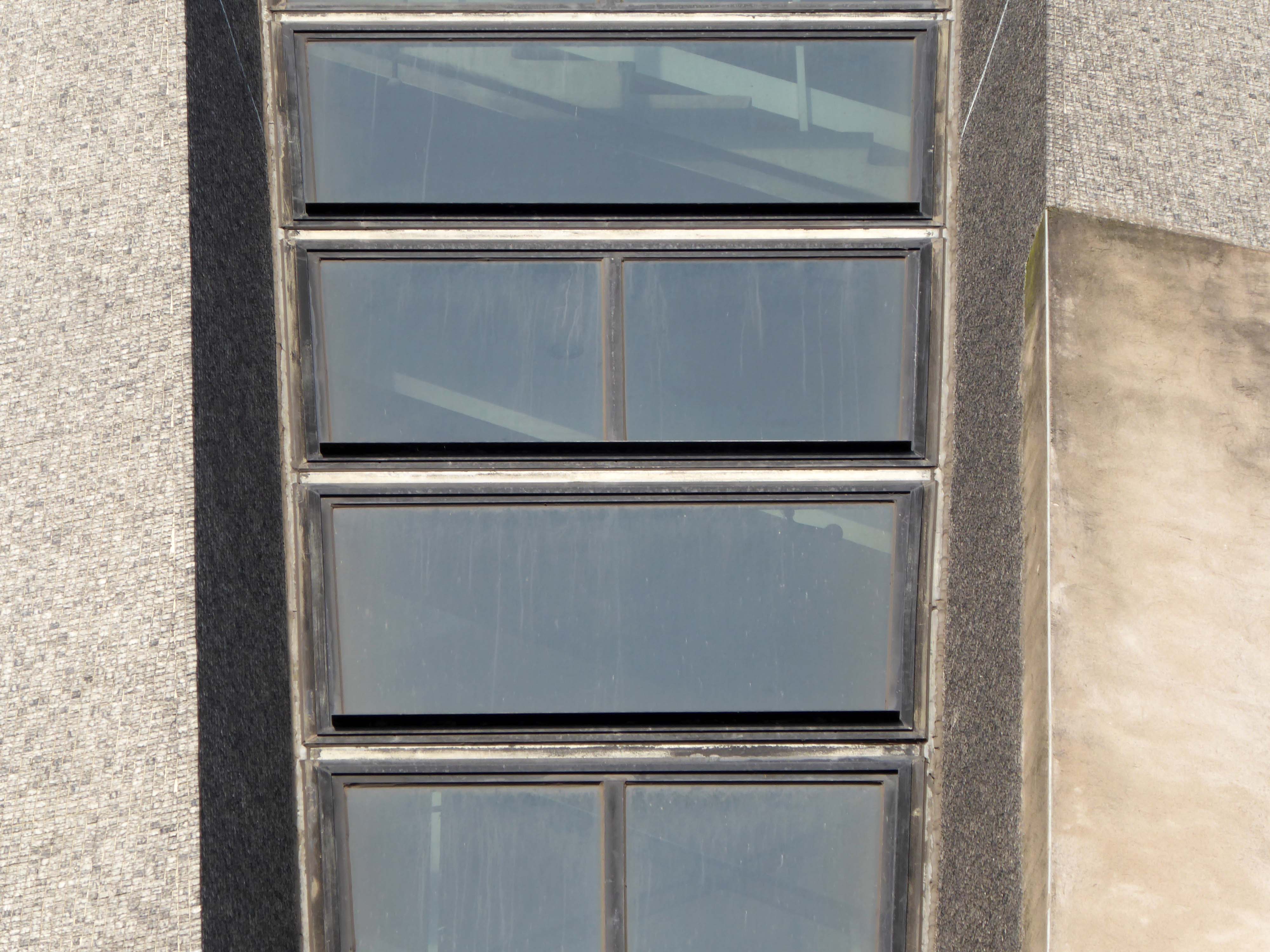
Now I find myself outside the new Hexagon Tower 2022.

Now home to multiple chemical users under the auspices of WAPG.

St Jude’s RC – Wigan

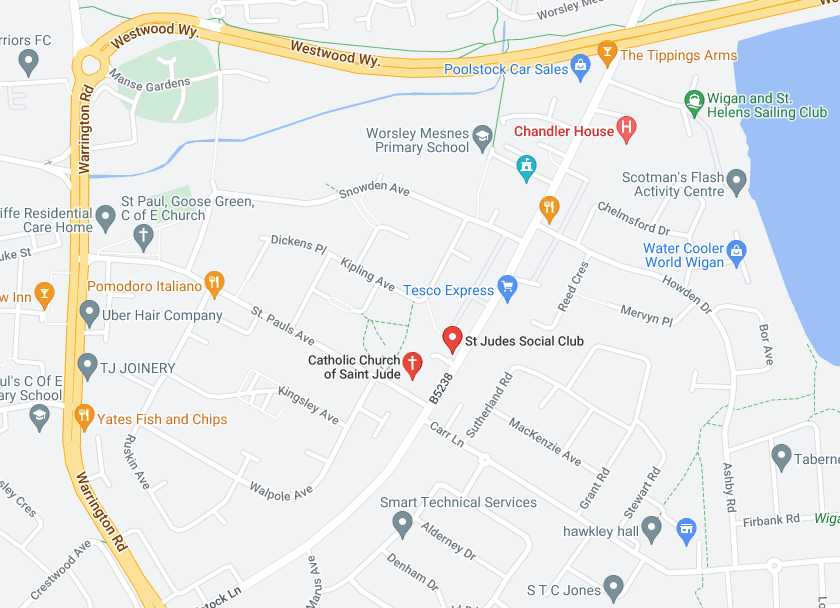
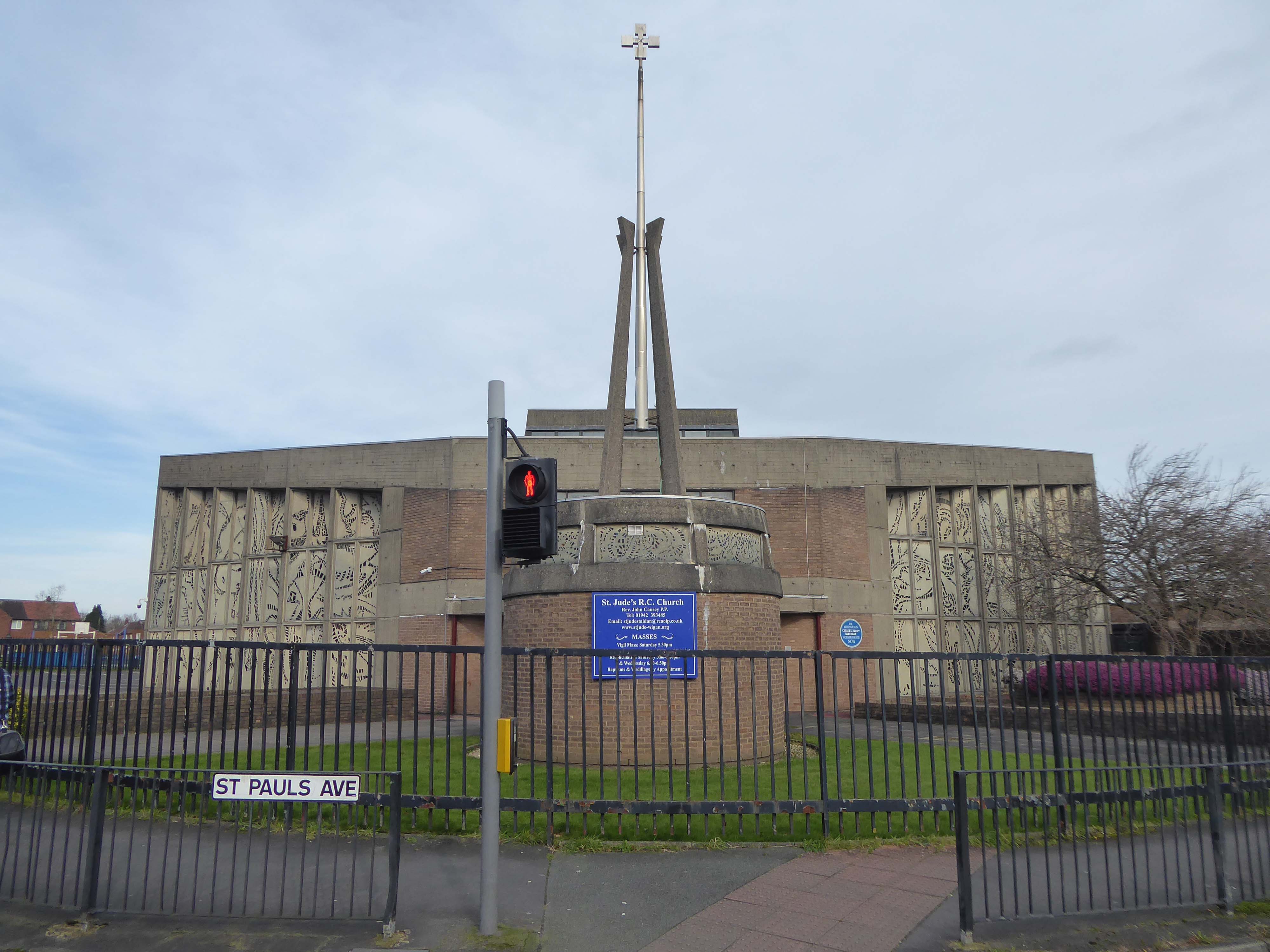
St. Jude’s Church Poolstock Lane/St Paul’s Avenue Wigan WN3 5JE

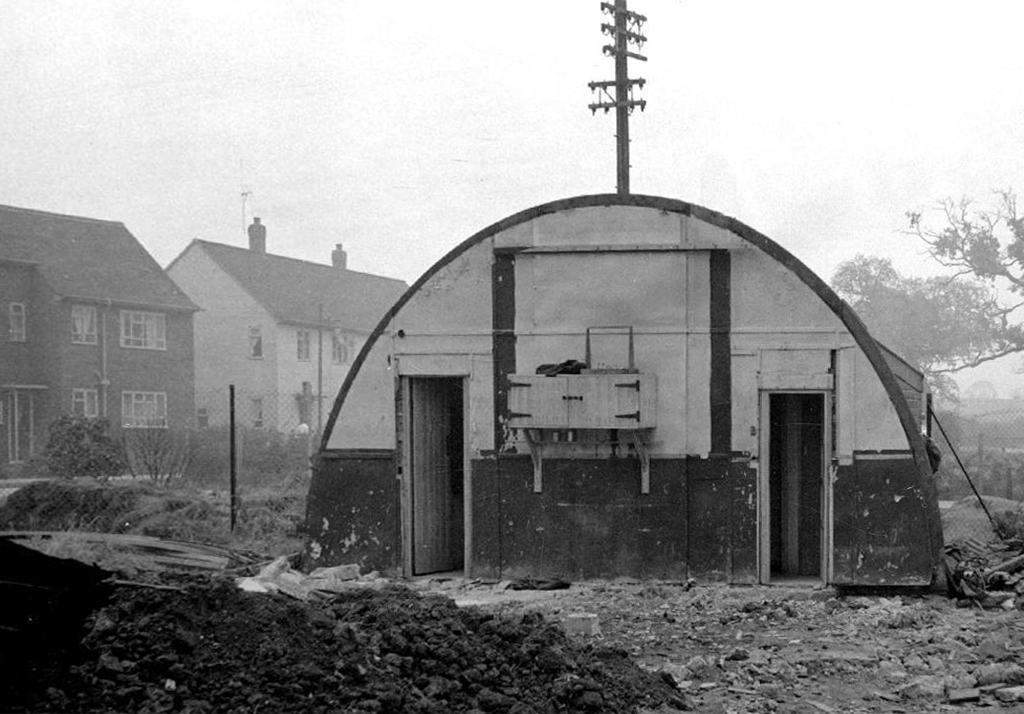
Following the demolition of many working class homes in central Wigan in the early-to-mid 20th century there was a migration to new council estates on the outskirts of the town including new developments in the Poolstock and Worsley Mesnes localities. In order to cater to the Catholic inhabitants of the new estates Father Richard Tobin of St Joseph’s parish in Wigan, established a chapel of ease – described as a wooden hut, on St Paul’s Avenue in 1959.

In 1962 Tobin wrote to the Archbishop of Liverpool George Andrew Beck with his proposals for a new, permanent church, suggesting that the church should be dedicated either to St Jude or Our Lady of the Assumption.

Beck replied on 15 March:

My dear Father Tobin, Many thanks for your letter. I like your suggestion of St. Jude as a patron of the new church. We already have a parish in honour of The Assumption but none, so far as I know, to St. Jude. I assume that you do not intend to suggest by this title that Wigan is a hopeless case!

The Liverpool architects L A G Prichard & Sons were engaged and work began in the summer of 1963. Subsidence caused by coal mining in the area necessitated reinforced foundations and the final cost was over £100,000. The foundation stone was laid by Archbishop Beck in December 1964 and the church was opened for worship in July 1965.

Wikipedia

The church was Grade II listed on 26th April 2013

The most remarkable feature of the church is the dalle de verre stained glass on the walls of the nave, designed by Robin Riley, made by Verriers de St Jobain in France and fitted by glaziers J O’Neill and Sons. 

Sadly Robin Riley died this year, aged 90, my thanks to his former student Keith Hamlett for the information.

Wigan Walk

Arriving at Wigan Wallgate turn left and left and right.

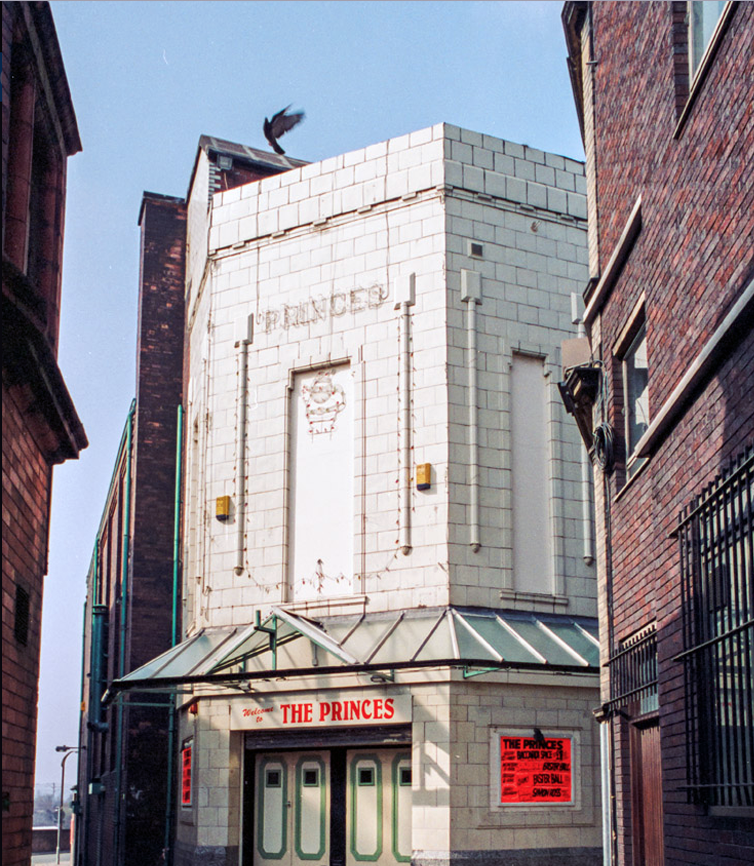
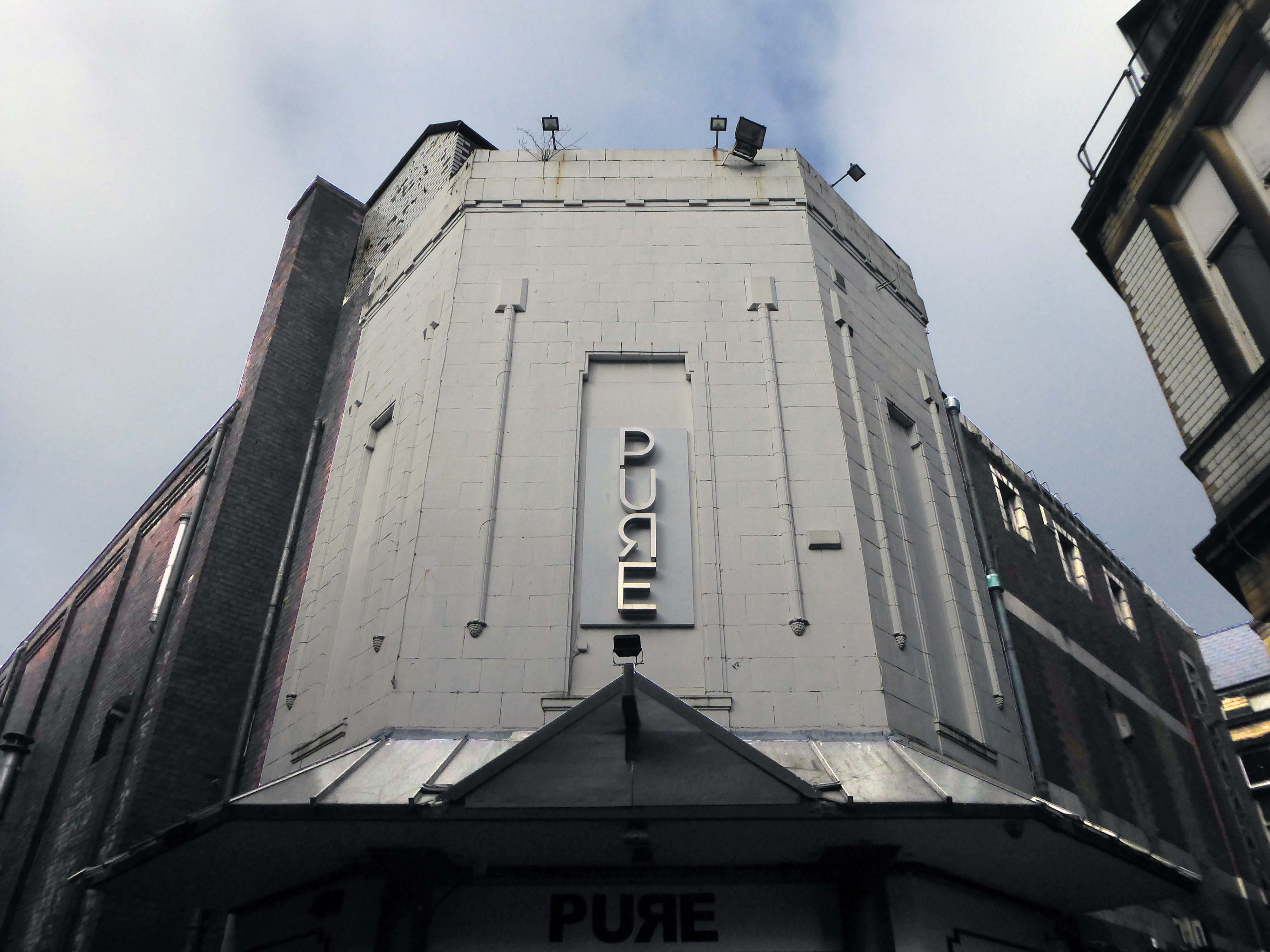
Tucked away along Clarence Yard is the former Princes Cinema.

Photo: Ian Grundy

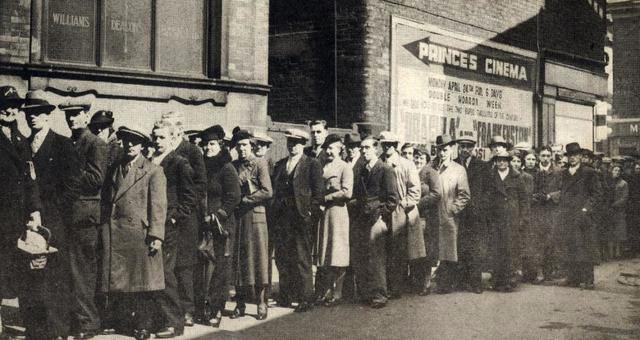
Where once upon a time the flat capped and hatted audience queued at length, for a glimpse of Dracula and Frankenstein.

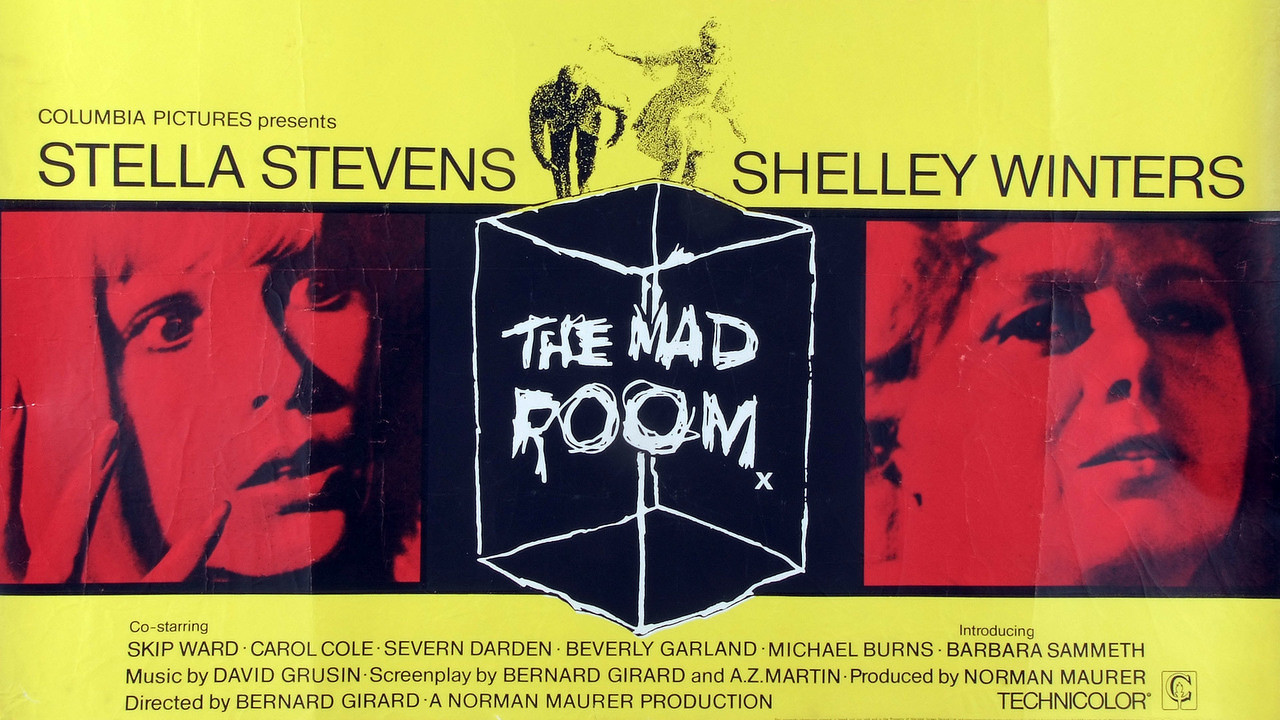
Opened in 1934 and closed on 10th January 1970 with a screening of The Mad Room.

Cinema Treasures

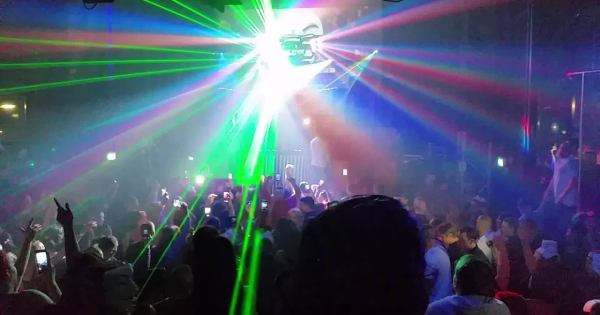
It has subsequently been in use as a nightclub.

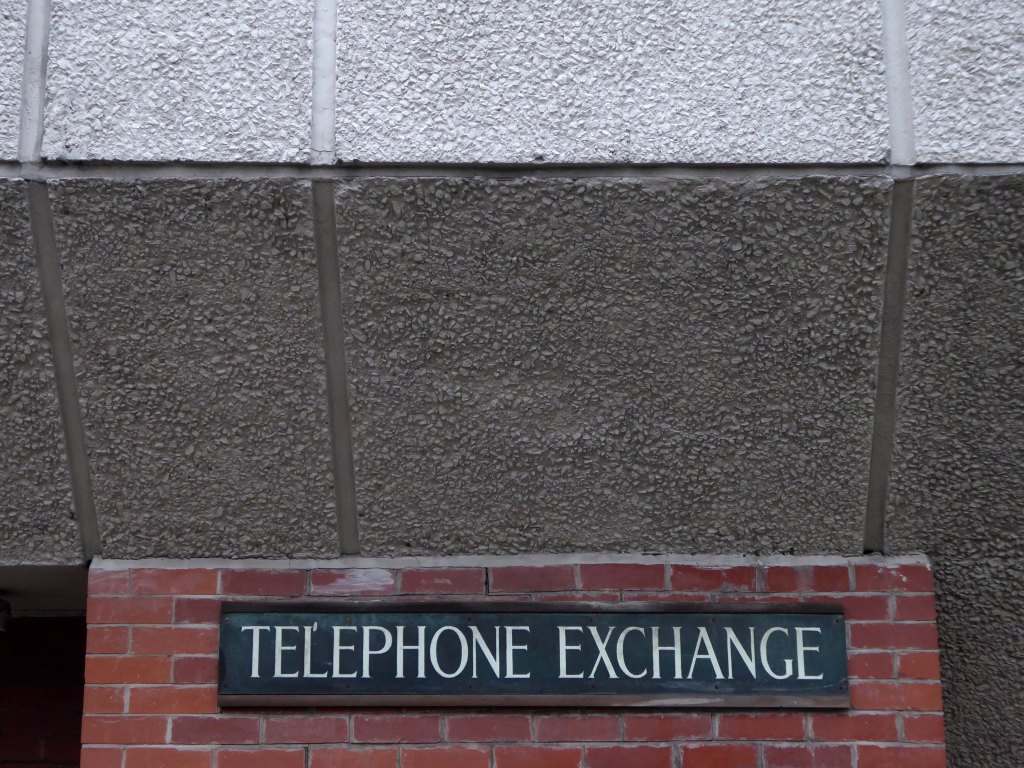
Back out onto Dorning Street in search of telephone exchanges, three telephone exchanges.

Inter-war

Sixties.

Seventies.

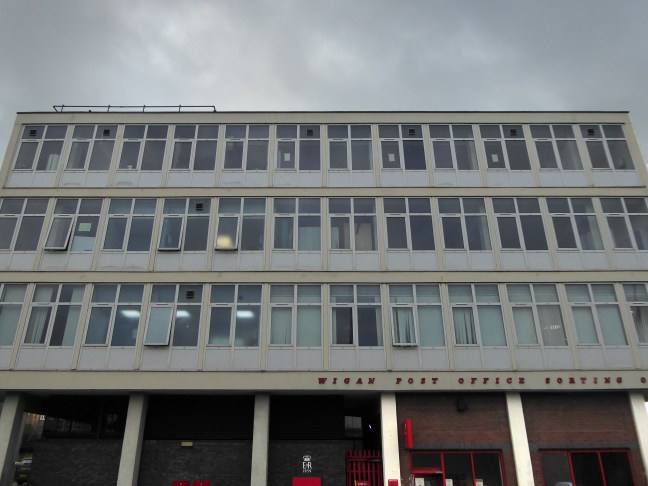
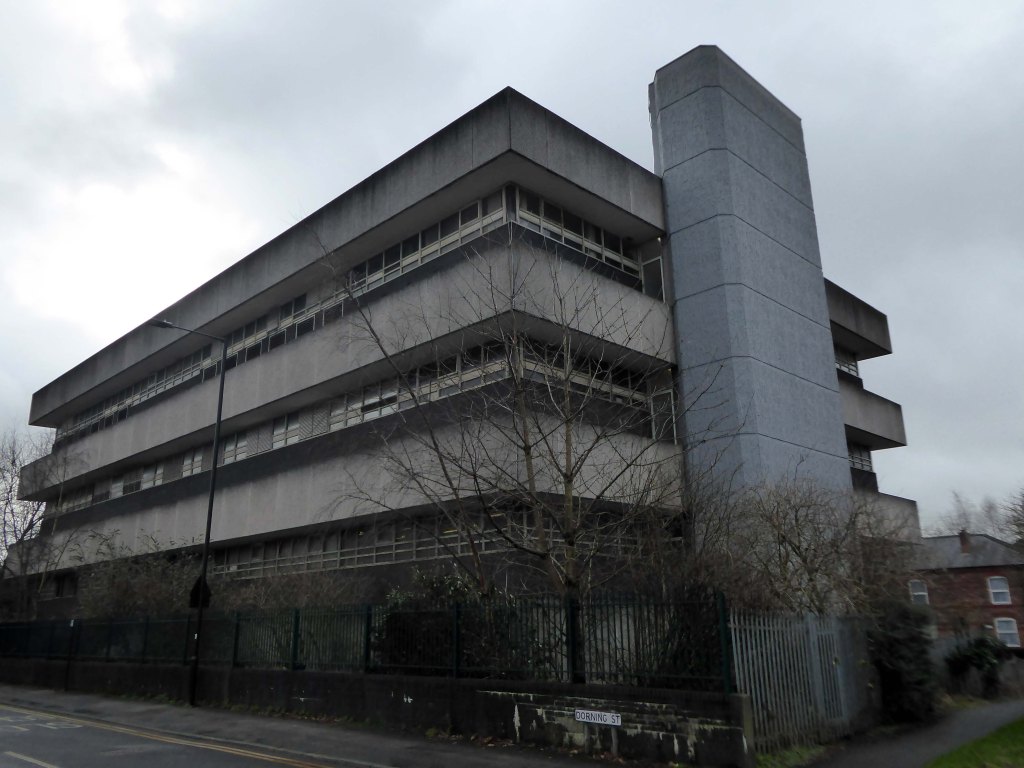
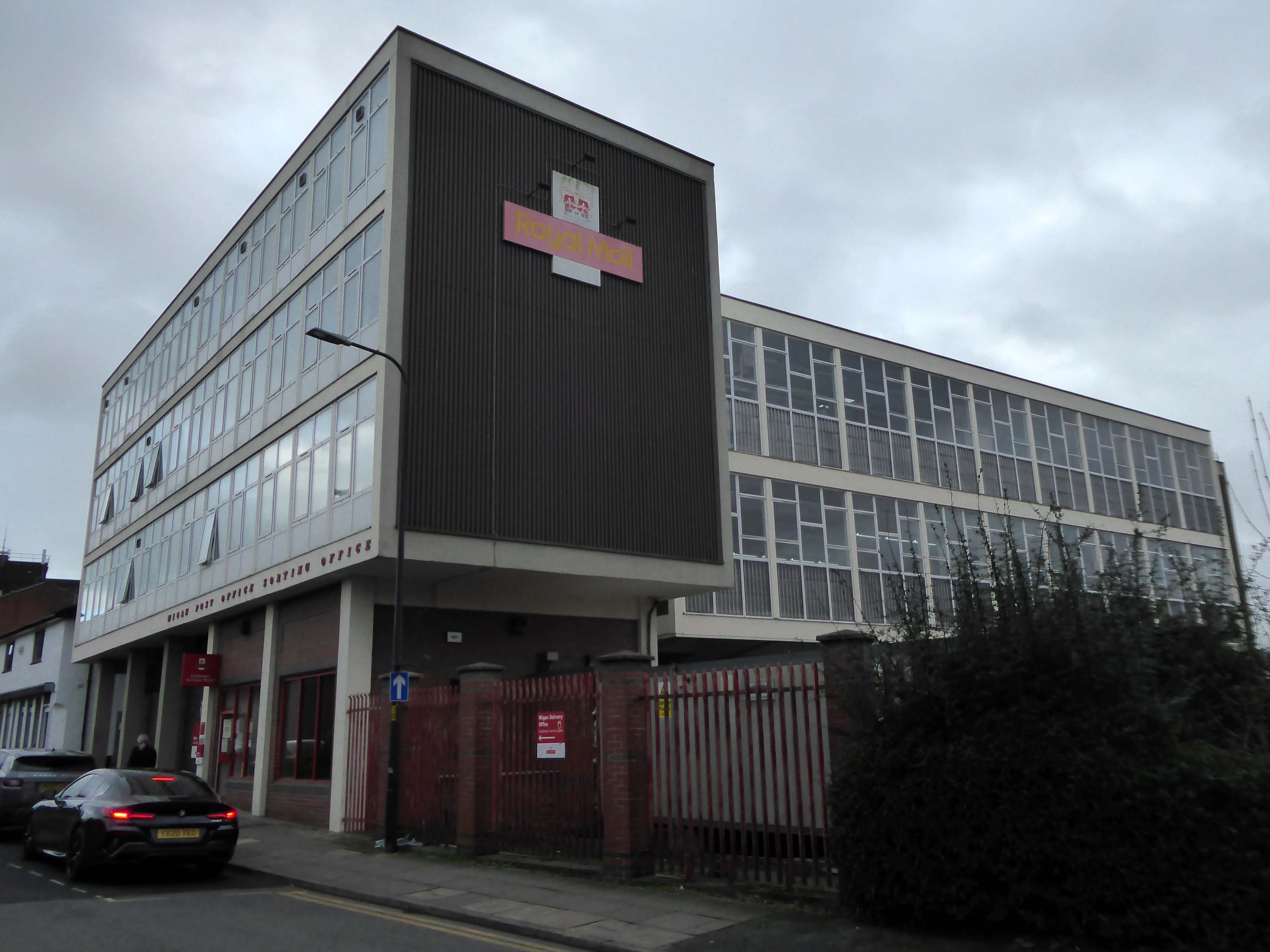
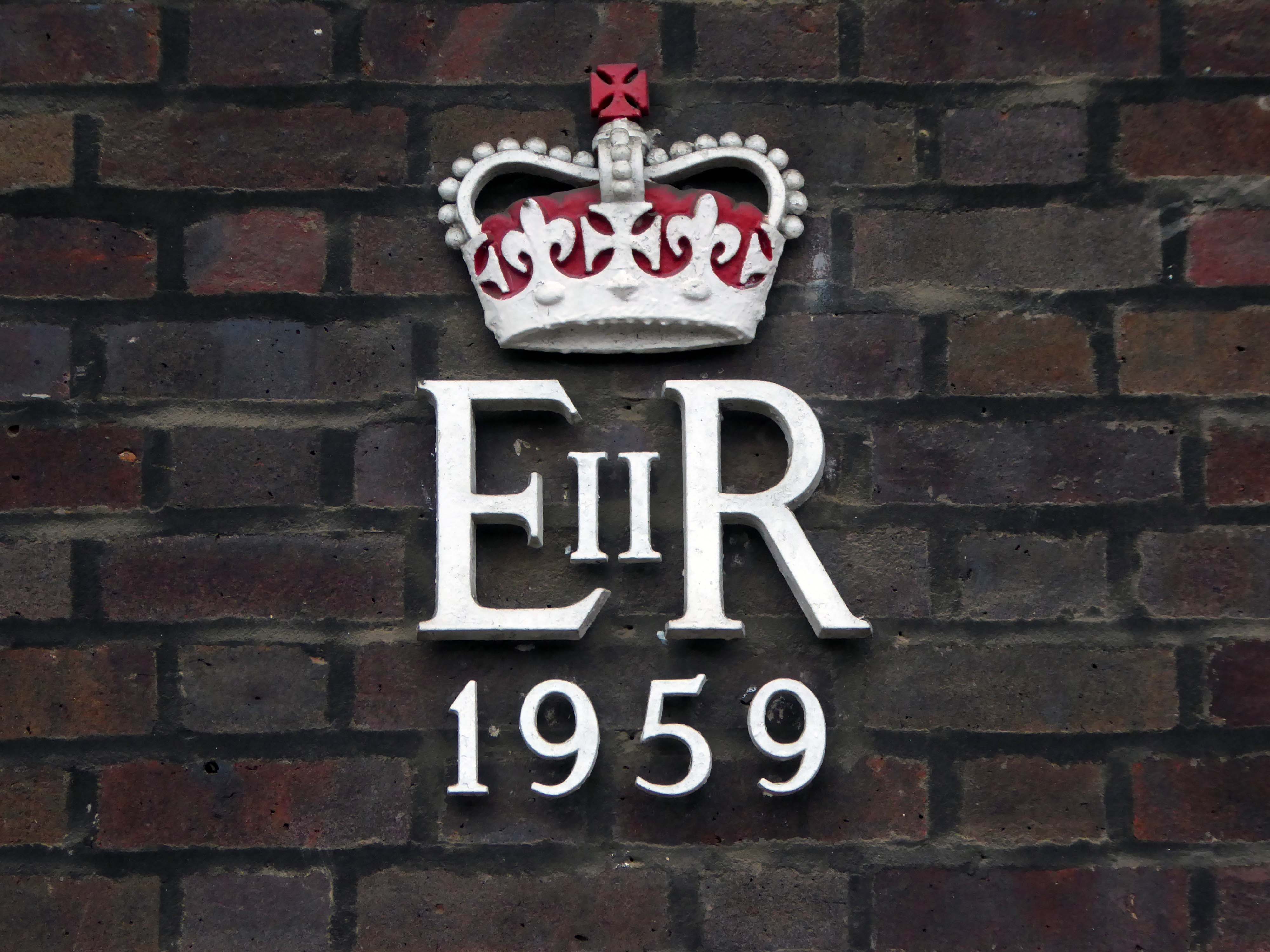
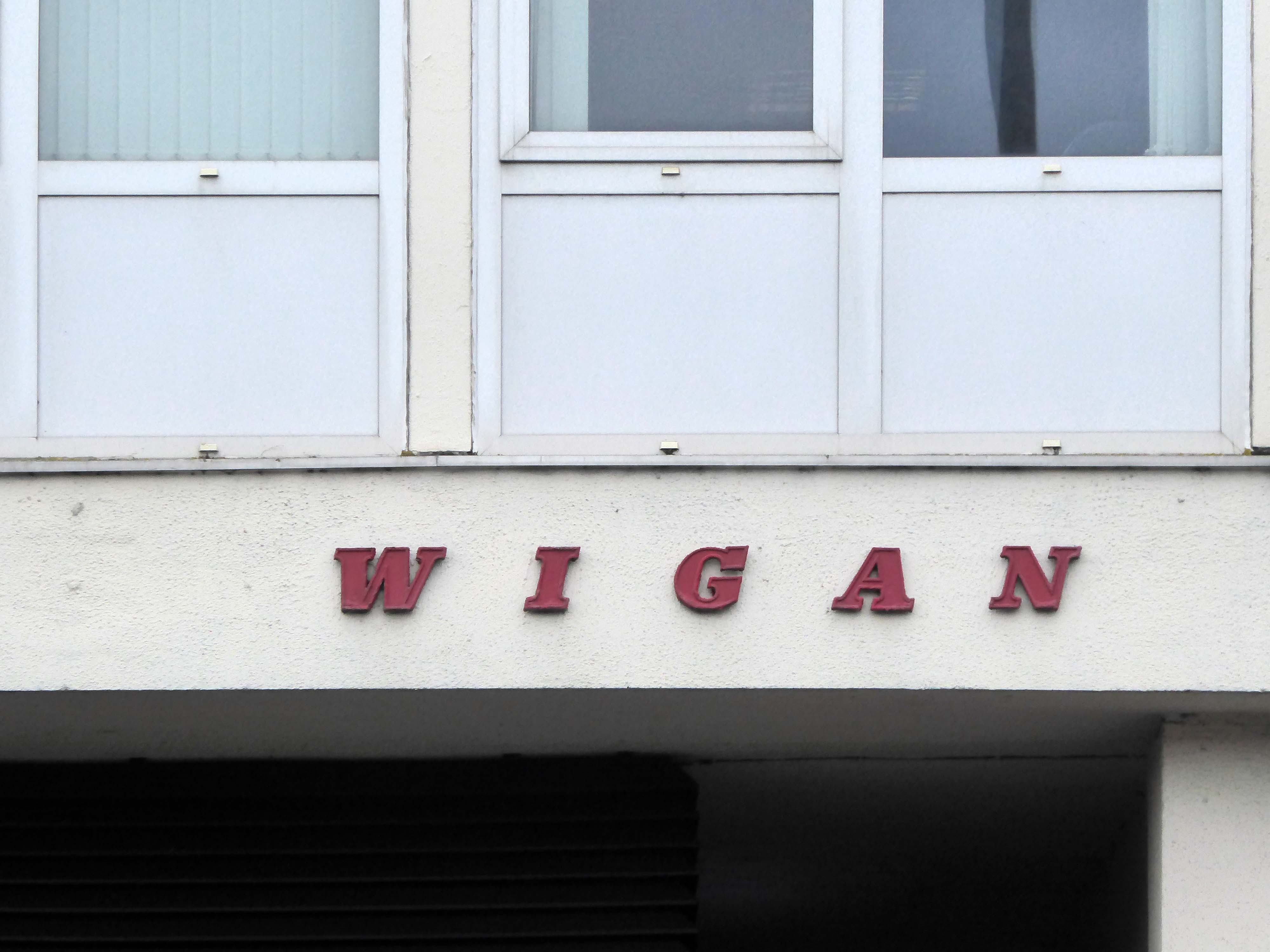
Just around the corner is an expansive GPO Sorting Office of 1959.

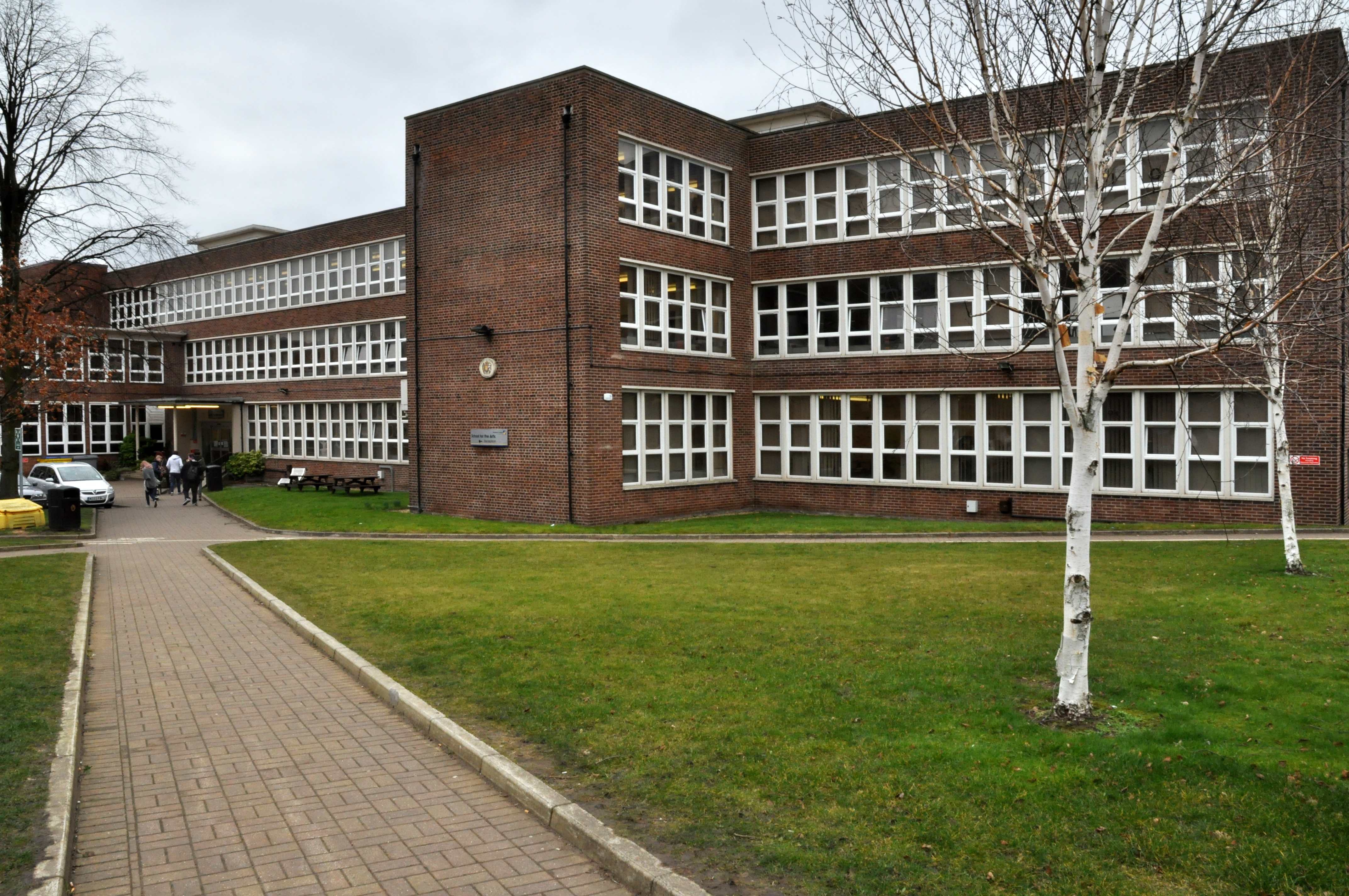
Across the way is the Technical College.

The foundations of Wigan & Leigh College date back to 1857, and the current institution was formed in April 1992 through the merger of Wigan College of Technology and Leigh College.

Partly formed from the Thomas Linacre Technical School.

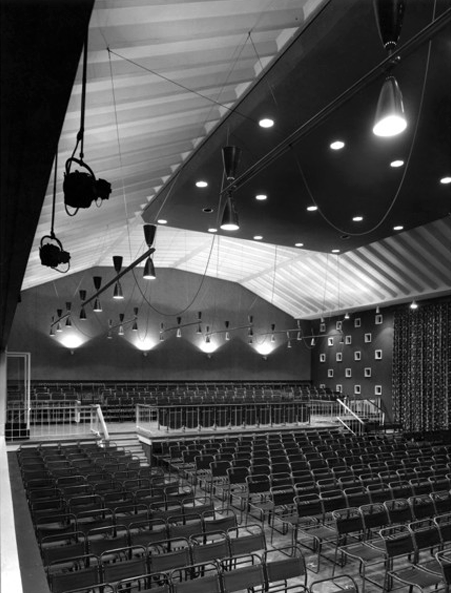
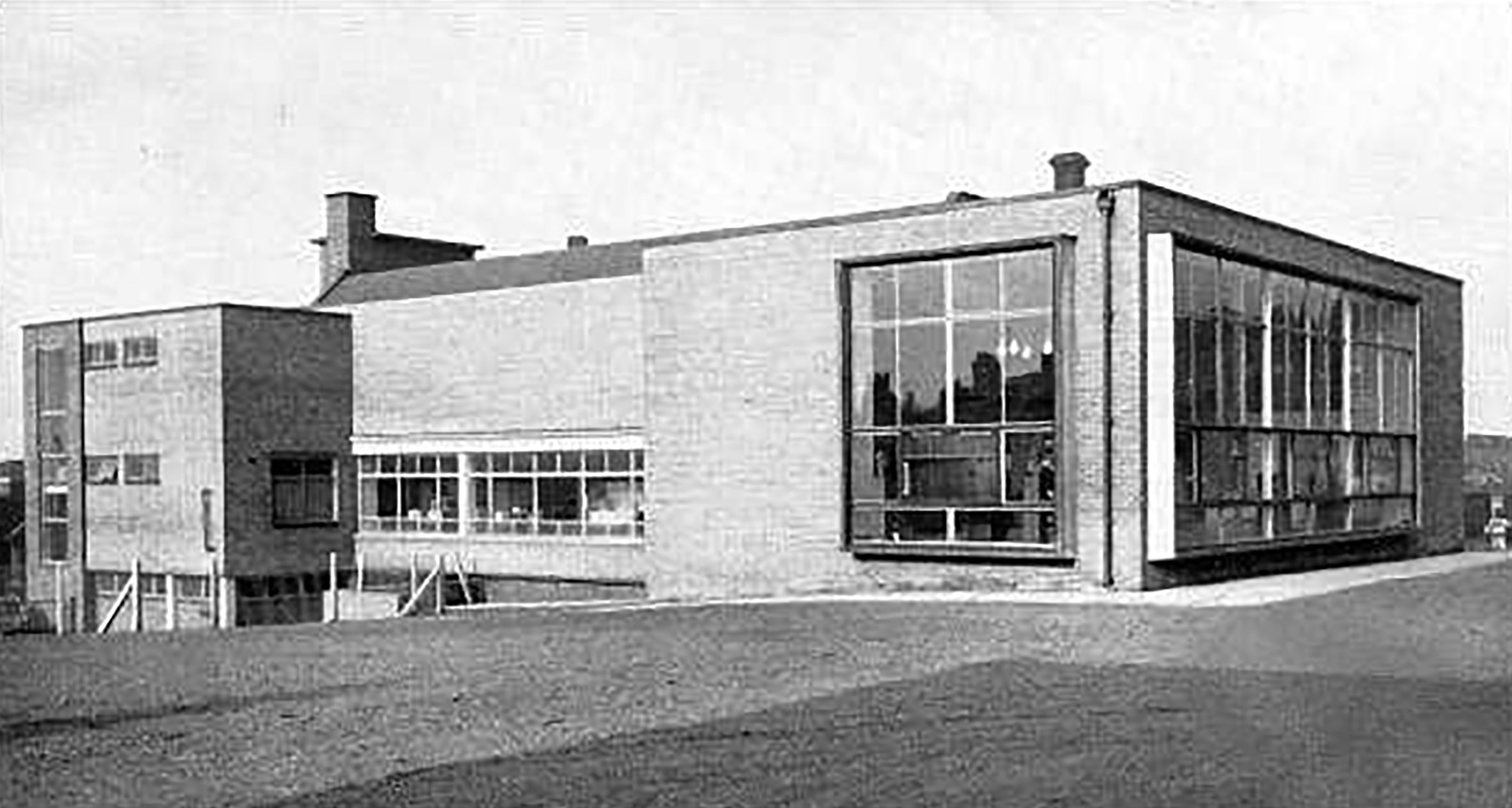
Architects: Howard V Lobb G Grenfell Bains & Hargreaves 1954

School Hall – RIBA Pix

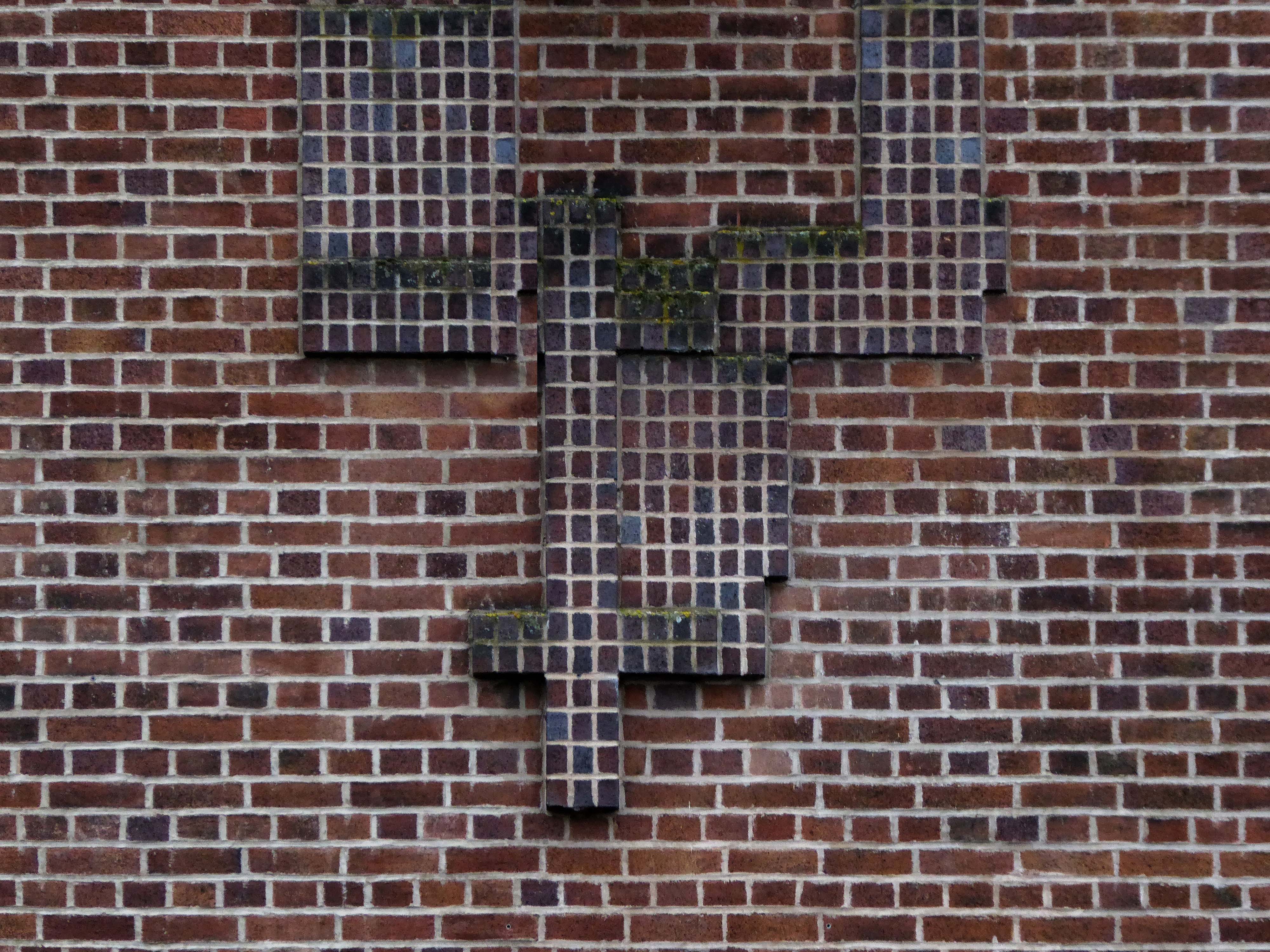
Curious decorative brick motif – a floor plan of the building.

My thanks to Mark Watson for his erudition and insight.

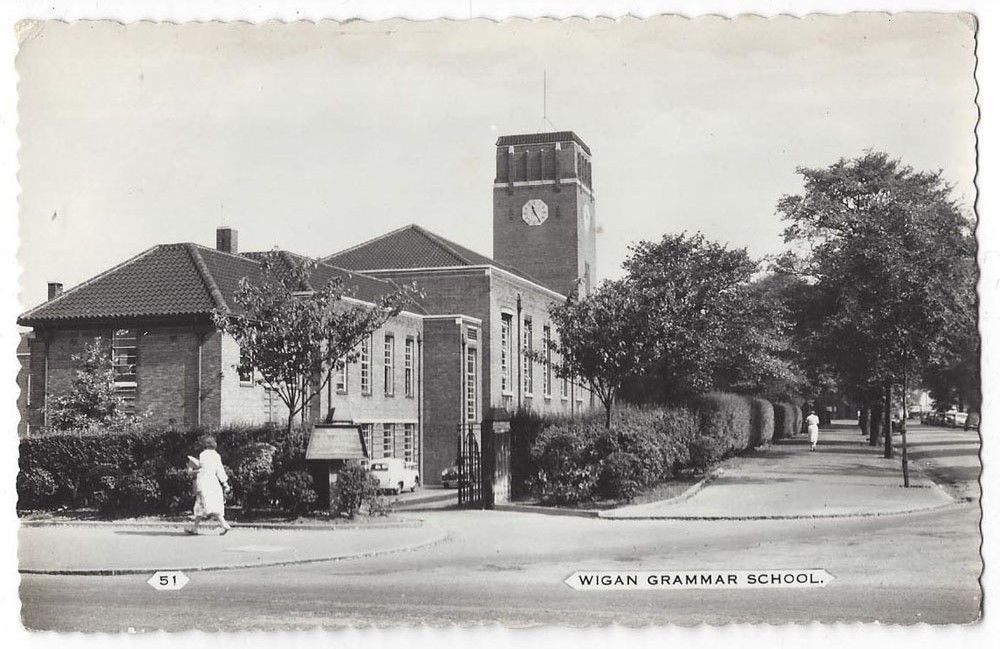
Across the road the former Grammar School now an NHS Centre.

Wigan Grammar School was founded in 1597 and closed in 1972 as part of the comprehensive education movement. it became Mesnes High School until 1989, and then the Mesnes Building of Wigan College.

It was designated a Grade II listed building in 1997.

Architect: A E Munby

Since 2003, it has been known as the Thomas Linacre Centre and is an out-patient department for the Wrightington Wigan and Leigh NHS Trust.

Let’s head back into town and along Standishgate.

Former Burton Tailors – possibly.

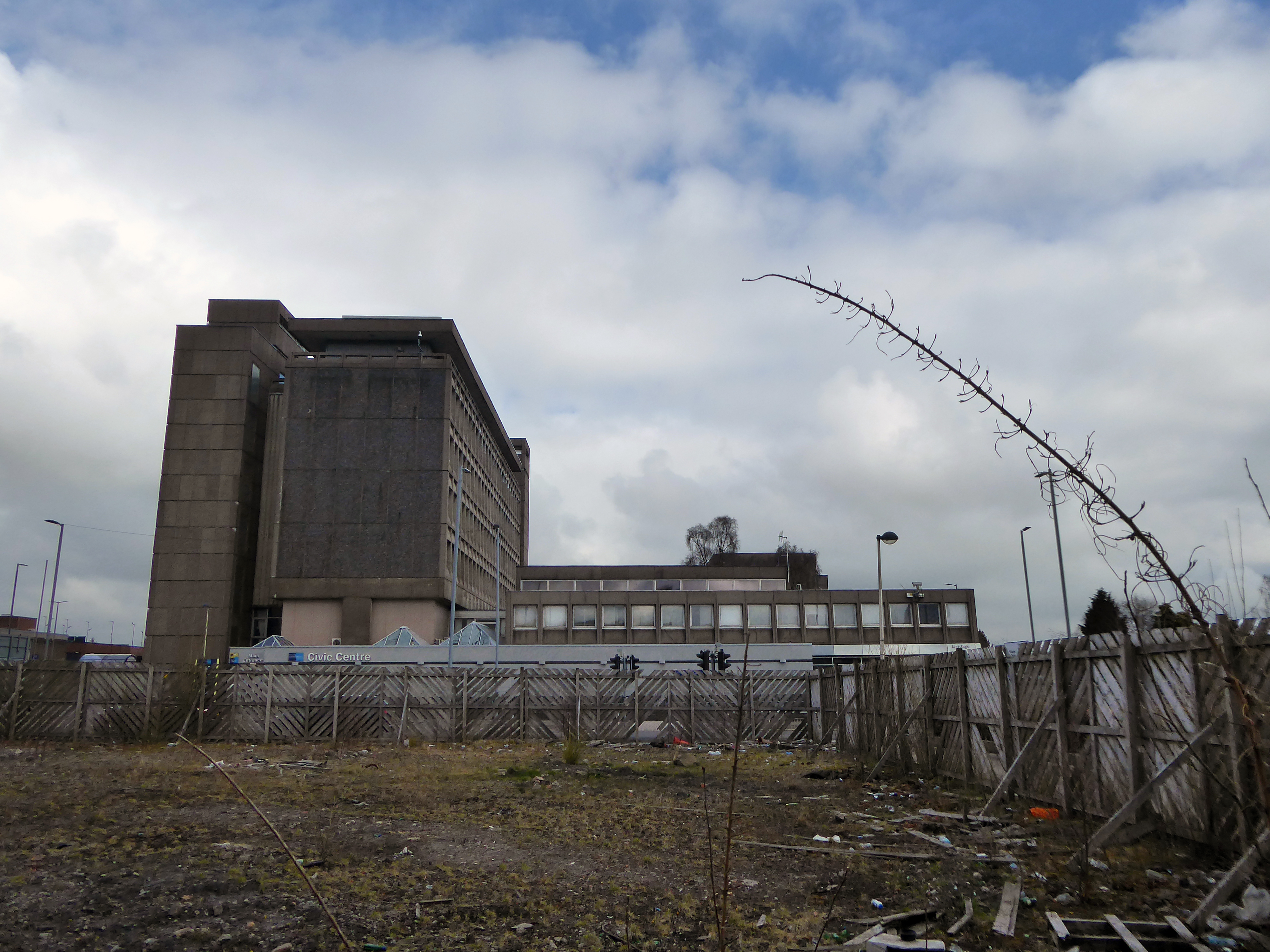
Turn left into Millgate to see the boarded up Civic Centre.

Formerly not boarded up Civic Centre.

Across the way the new Library and Life Centre by Astudio and LCE Architects

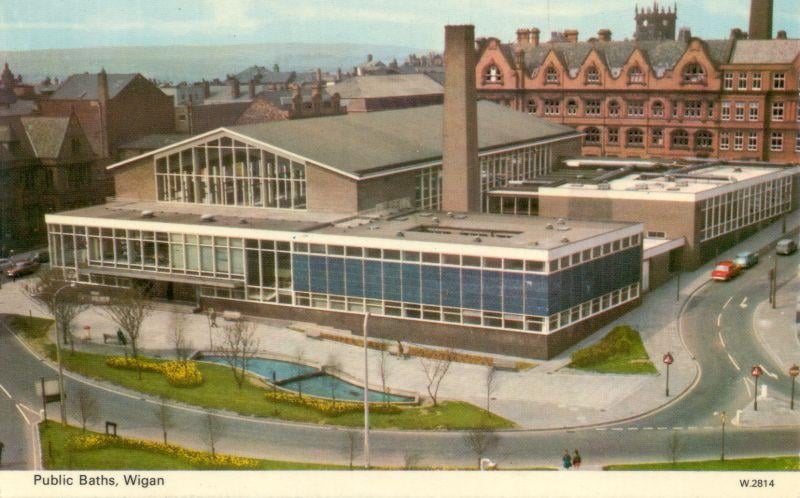
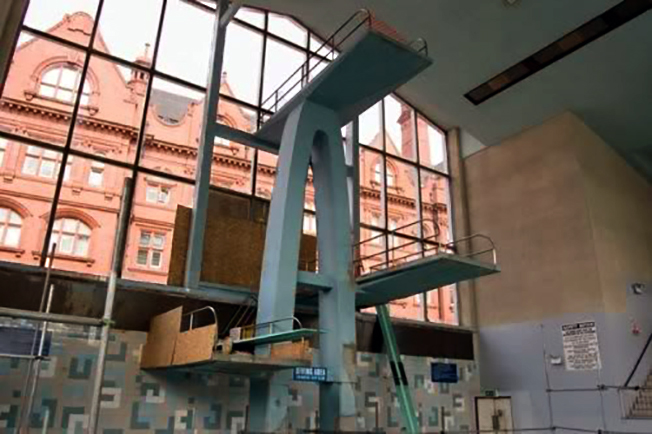
Down the road to where the International Swimming Pool was – opened 1968.

Demolished 2010

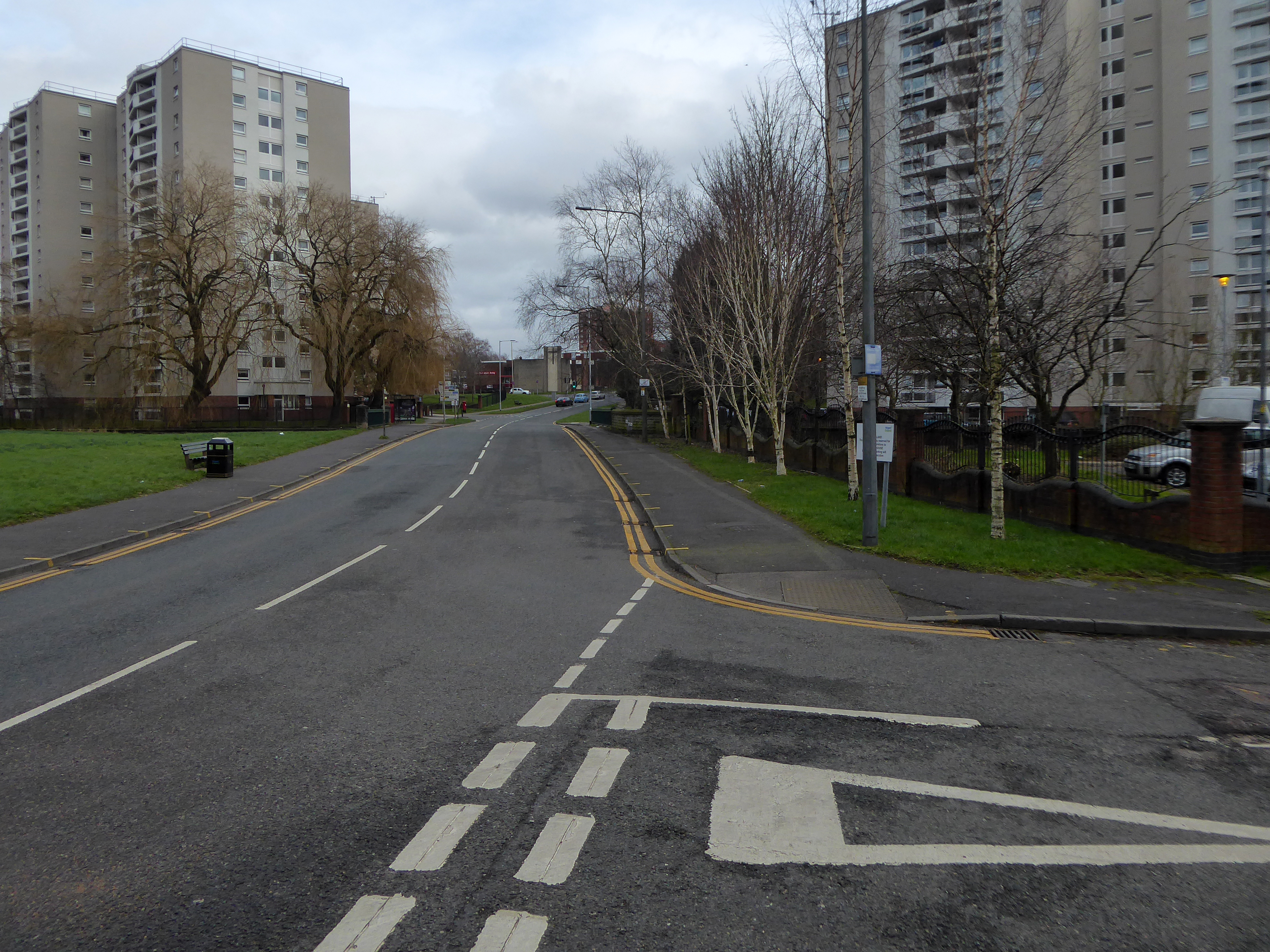
Scholes Comprehensive Development 1964 – five thirteen storey blocks.

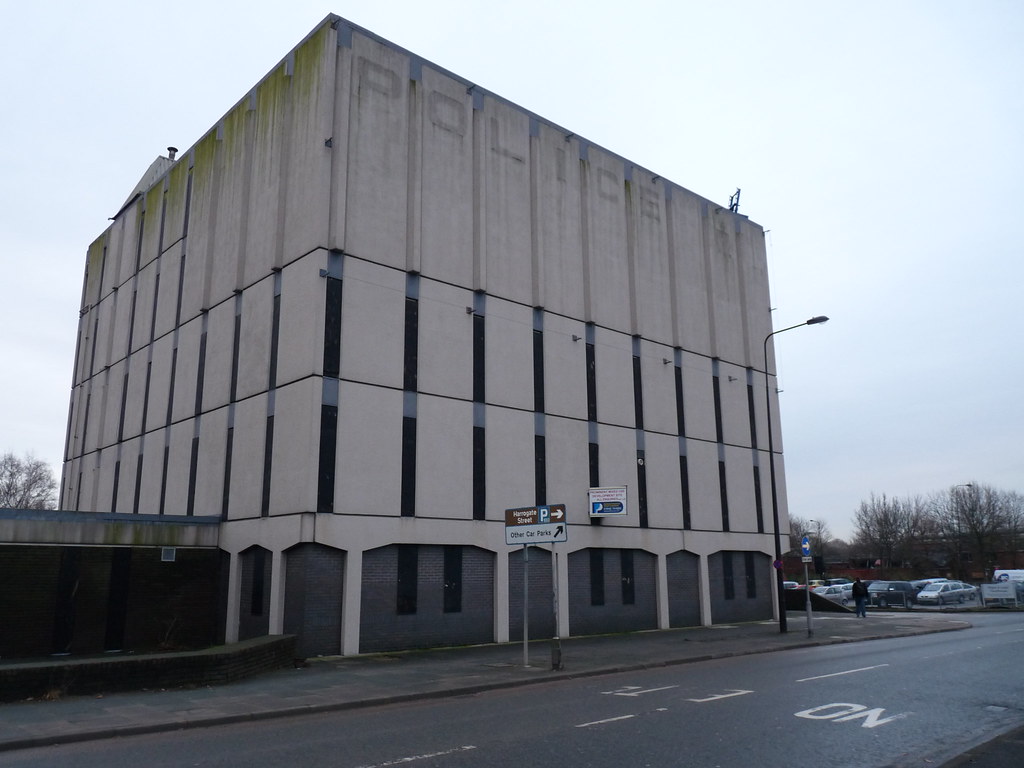
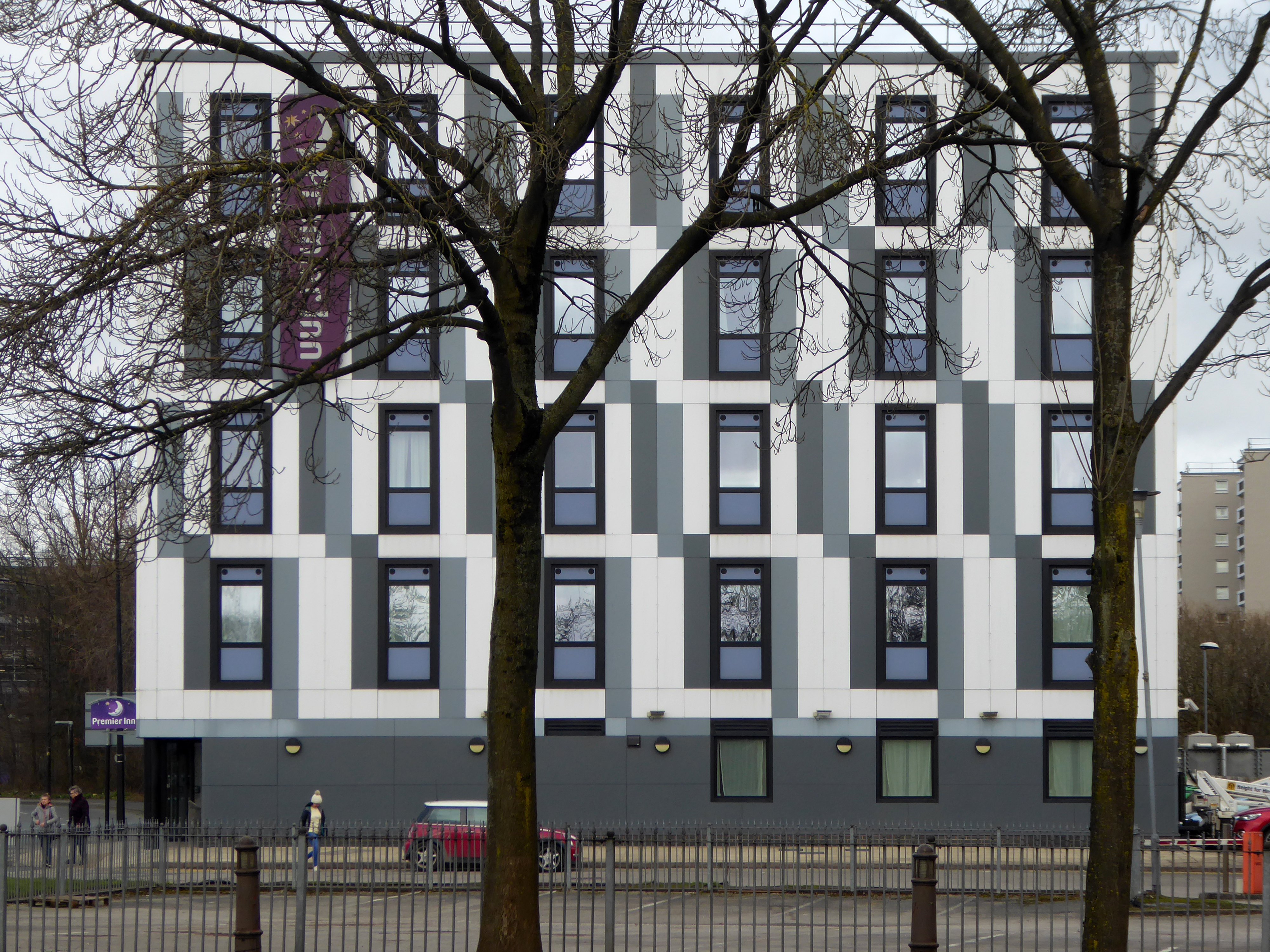
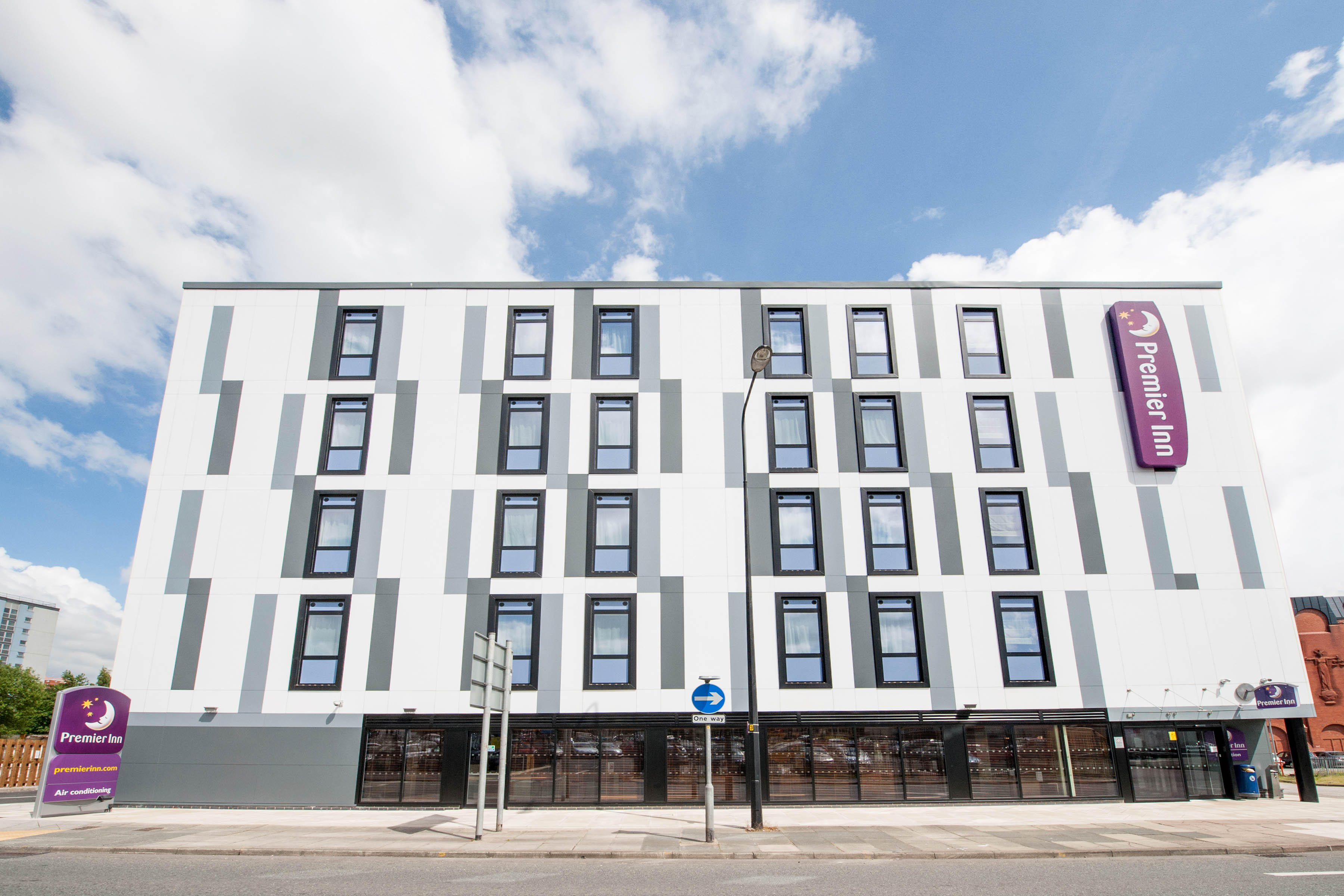
Moving down the street to the former Police Station now Premier Inn on Harrogate Street.

Lancashire County Architect: Roger Booth

Flickr

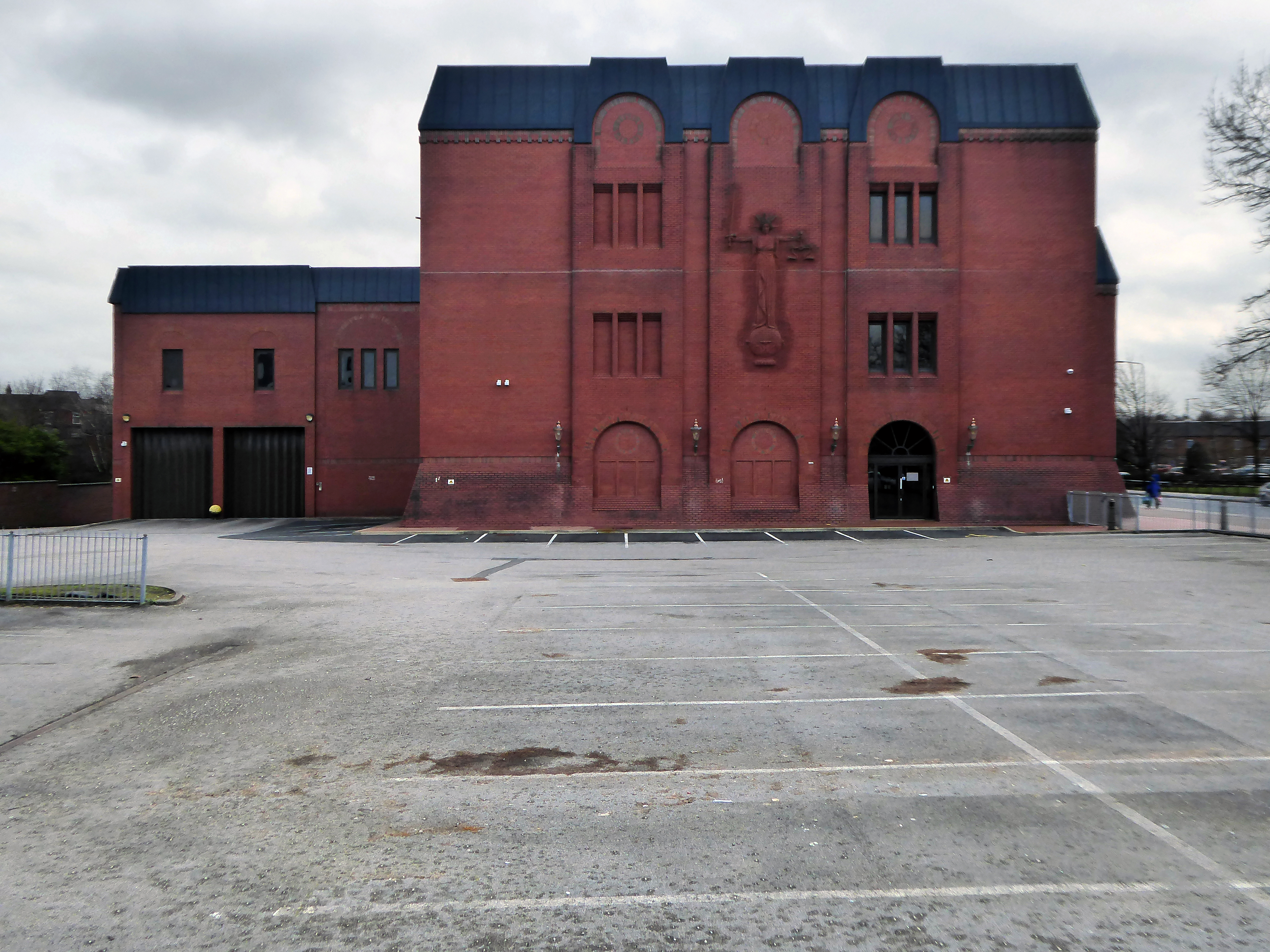
Next door the Post Modern brick monolith of the Wigan and Leigh Courthouse 1990.

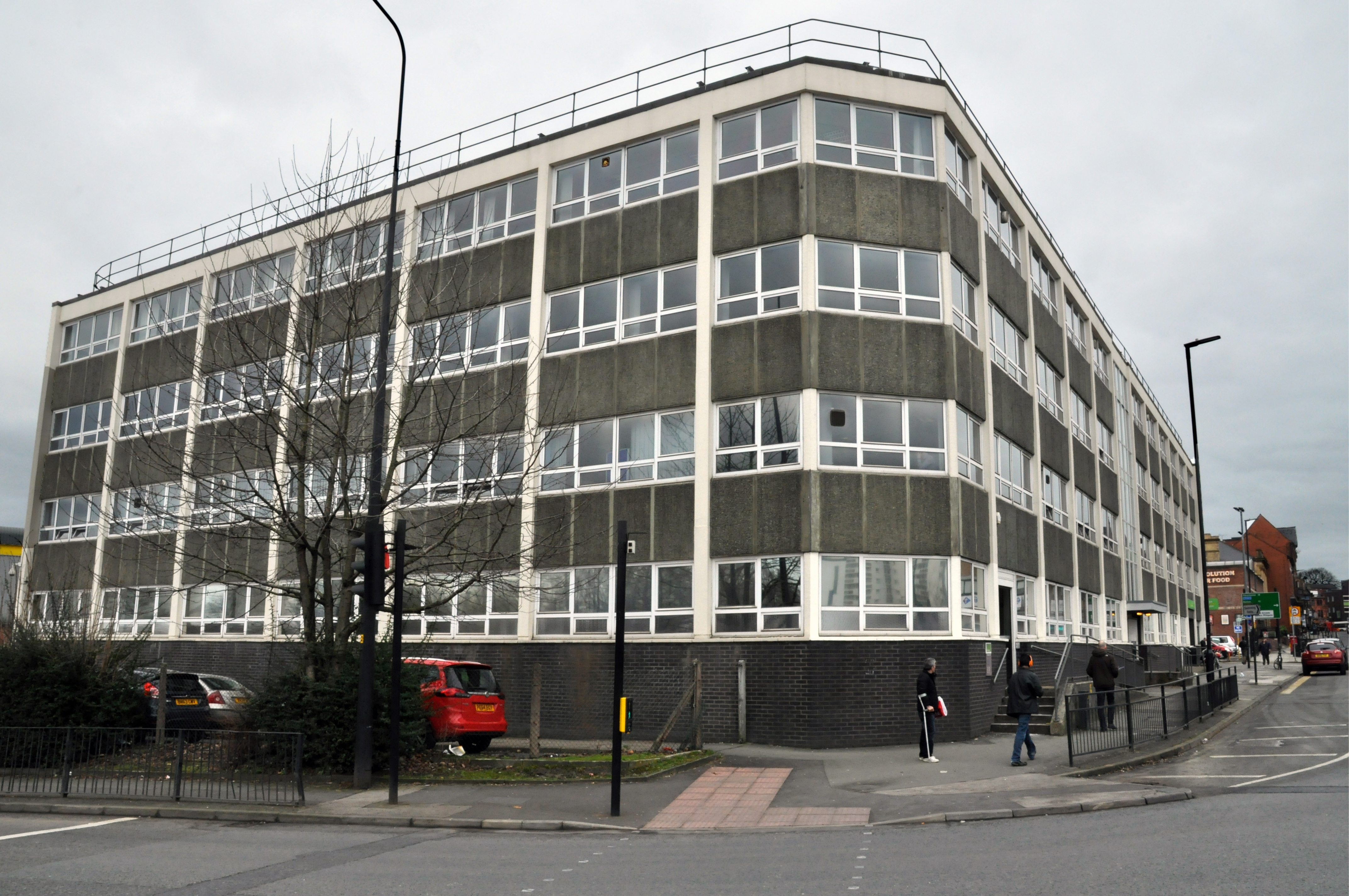
Then back up along King Street to visit the Job Centre.

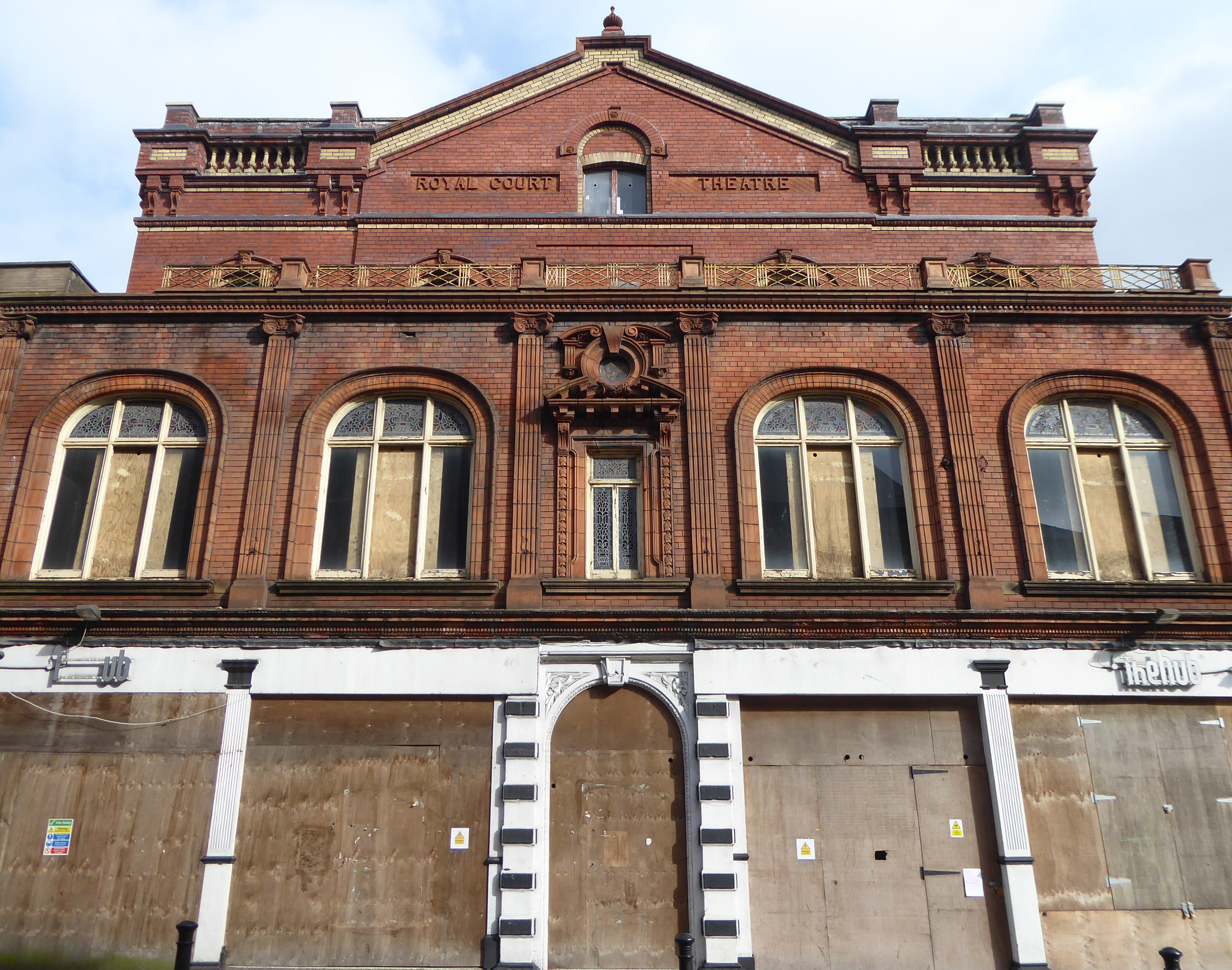
Take a look up at the Royal Court Theatre – 1886 Richard T Johnson

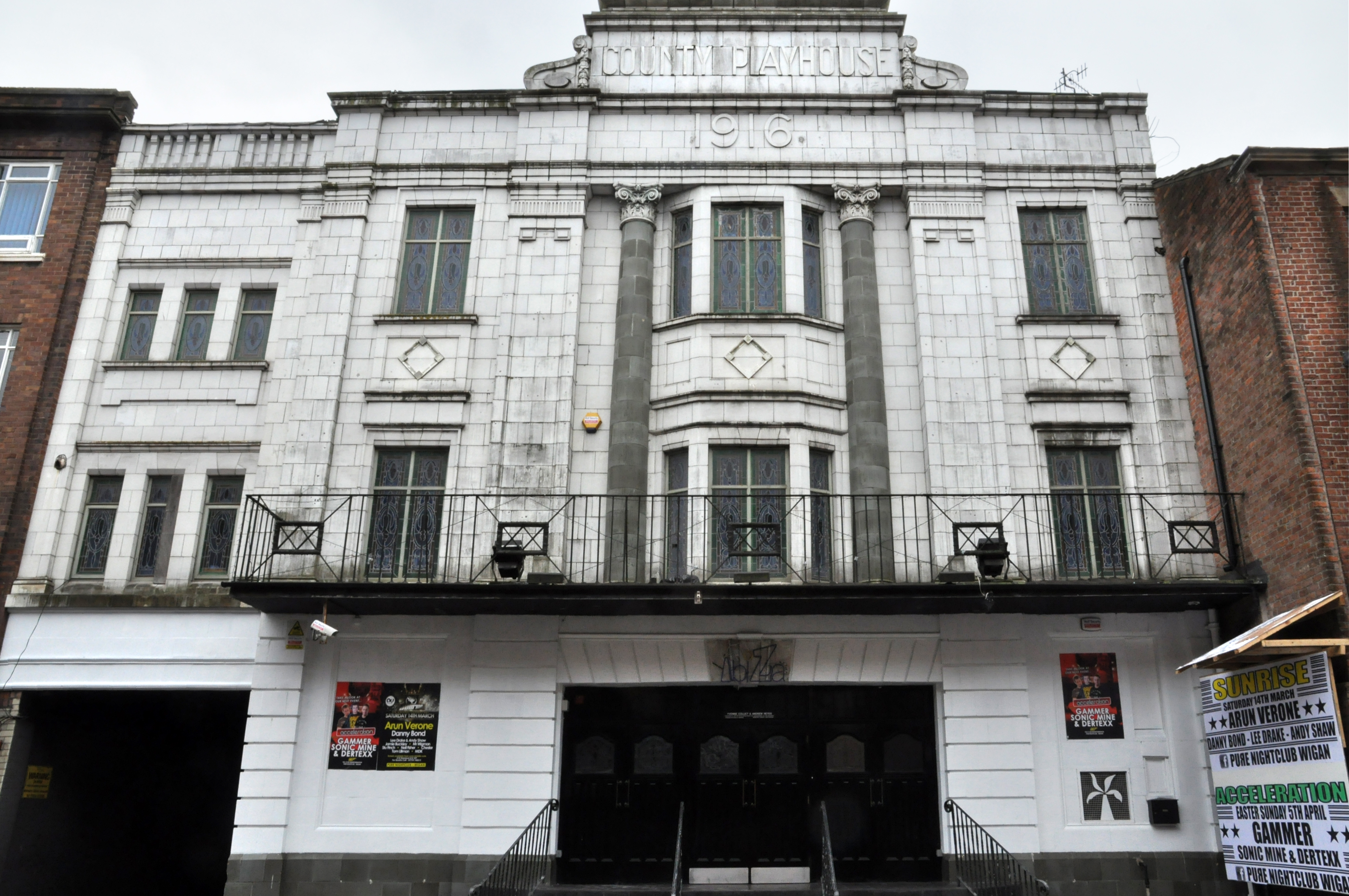
Then back up toward the centre to the County Playhouse.

Construction began on the County Playhouse in 1916. However, due to a shortage of materials and labour during World War I, it was not completed until 1919.

Finally opened on 22nd December 1919 with The Peril Within – starring Dorothy Gish.

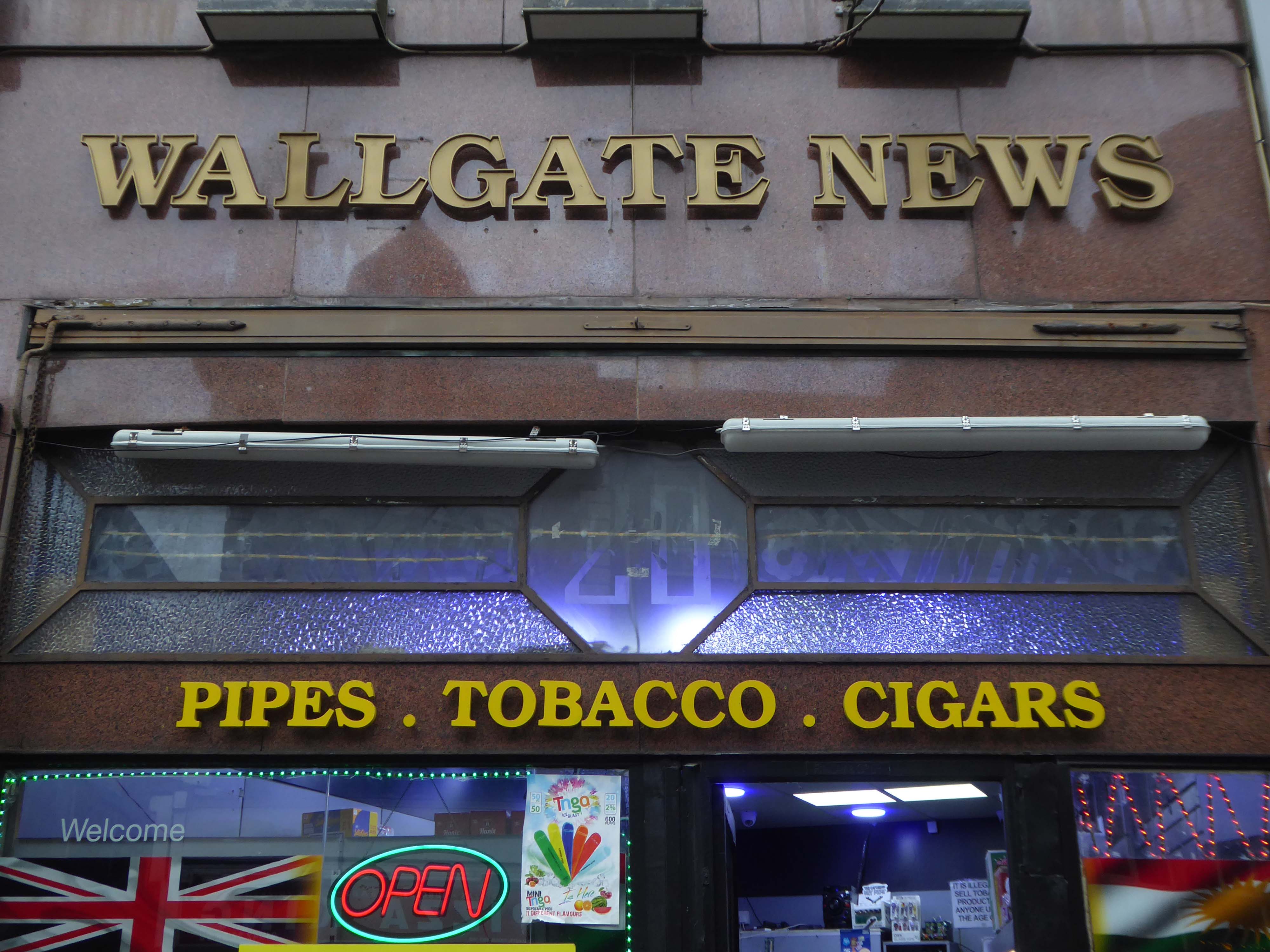
Onwards to the Wallgate News.

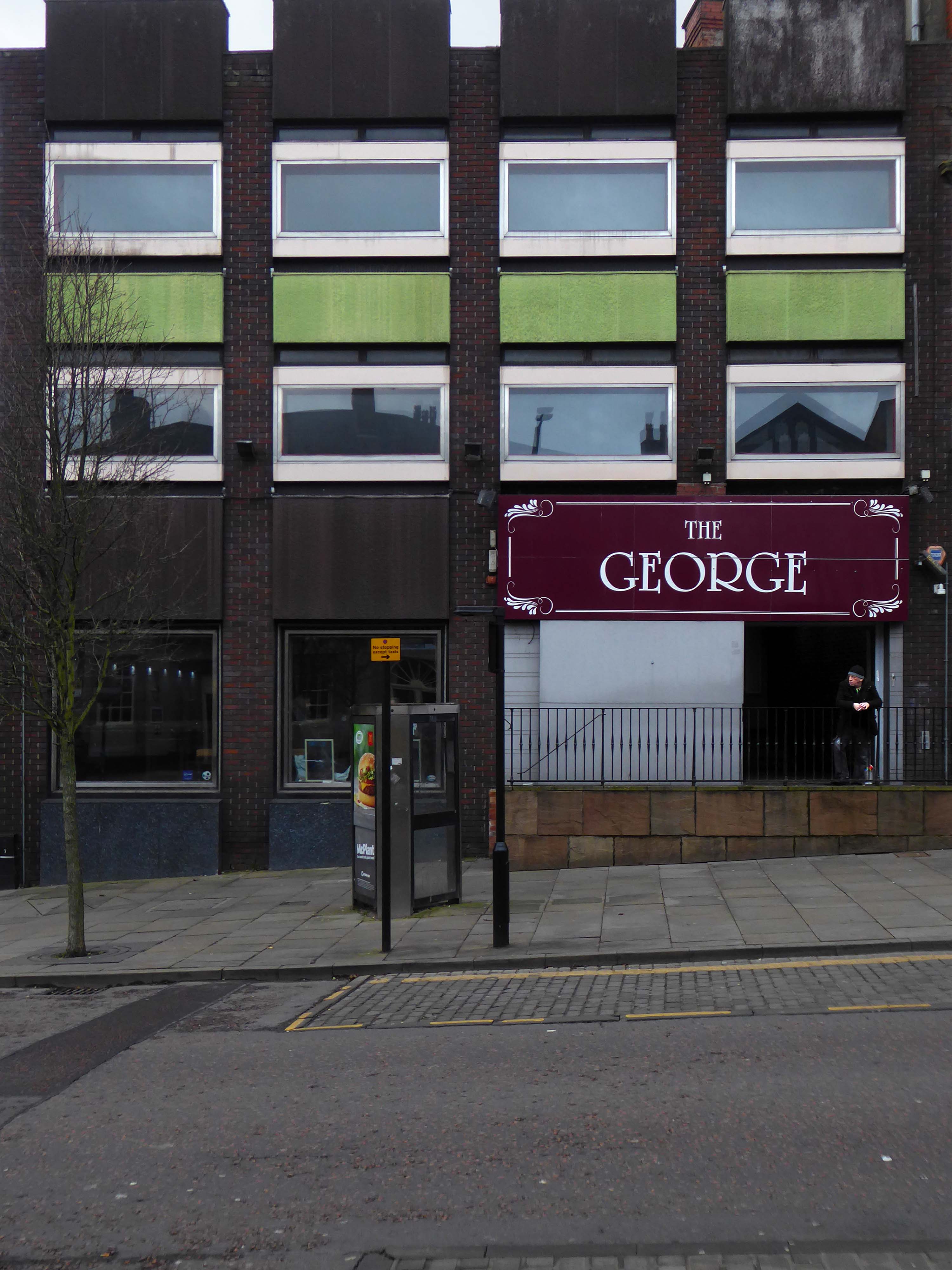
Finally to The George public house.

All ages, all different, all characters all like a bevvy.

The George is all you need.

Telephone Exchanges – Wigan

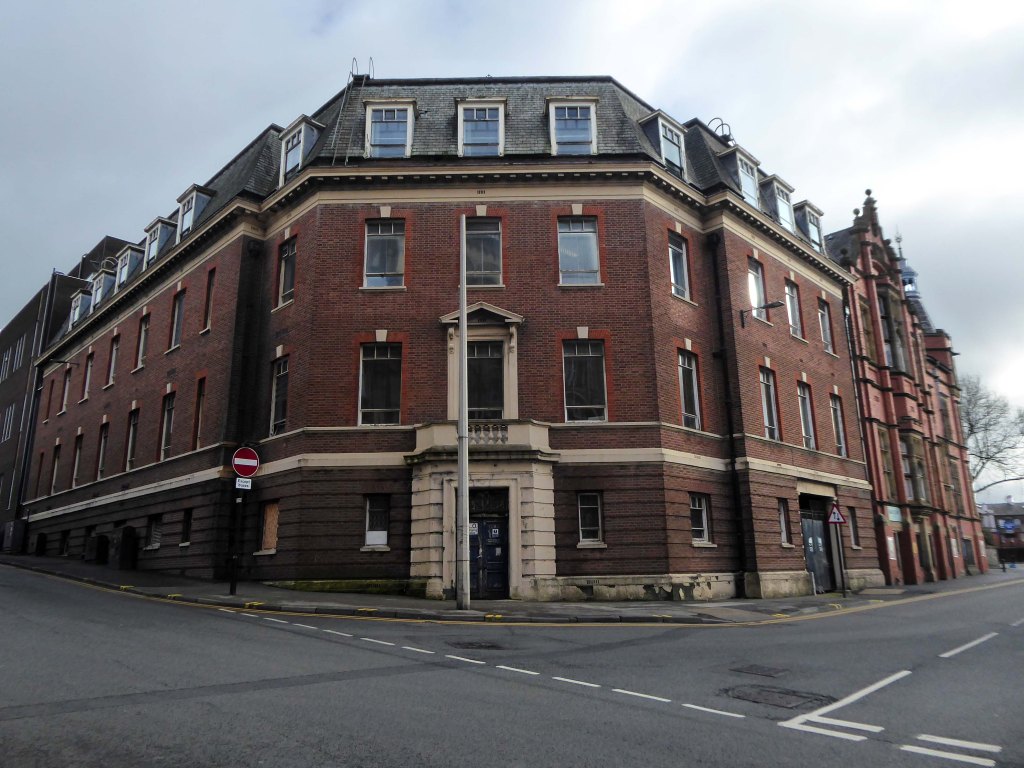
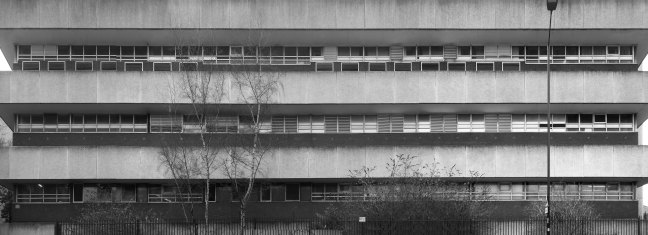
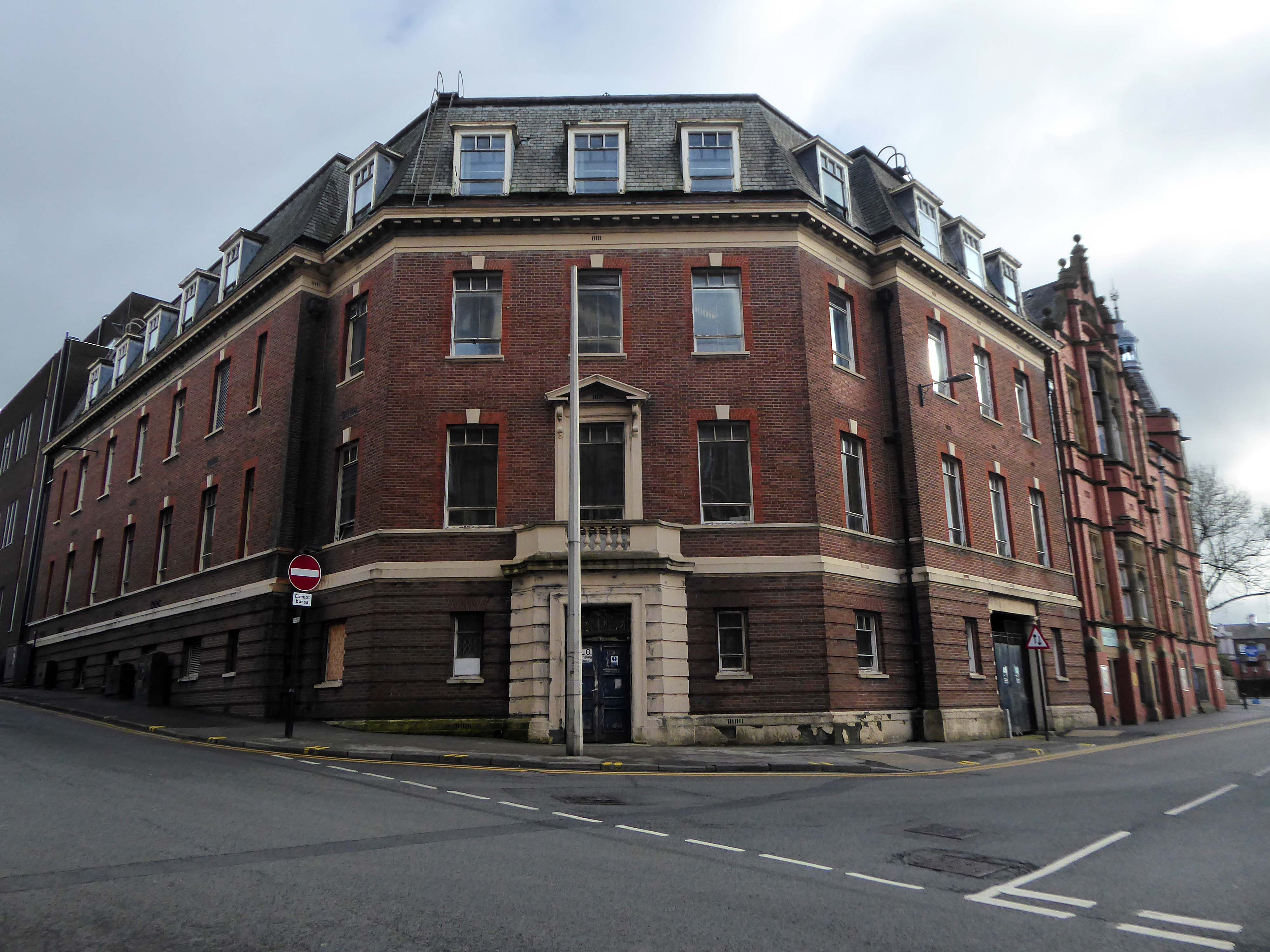
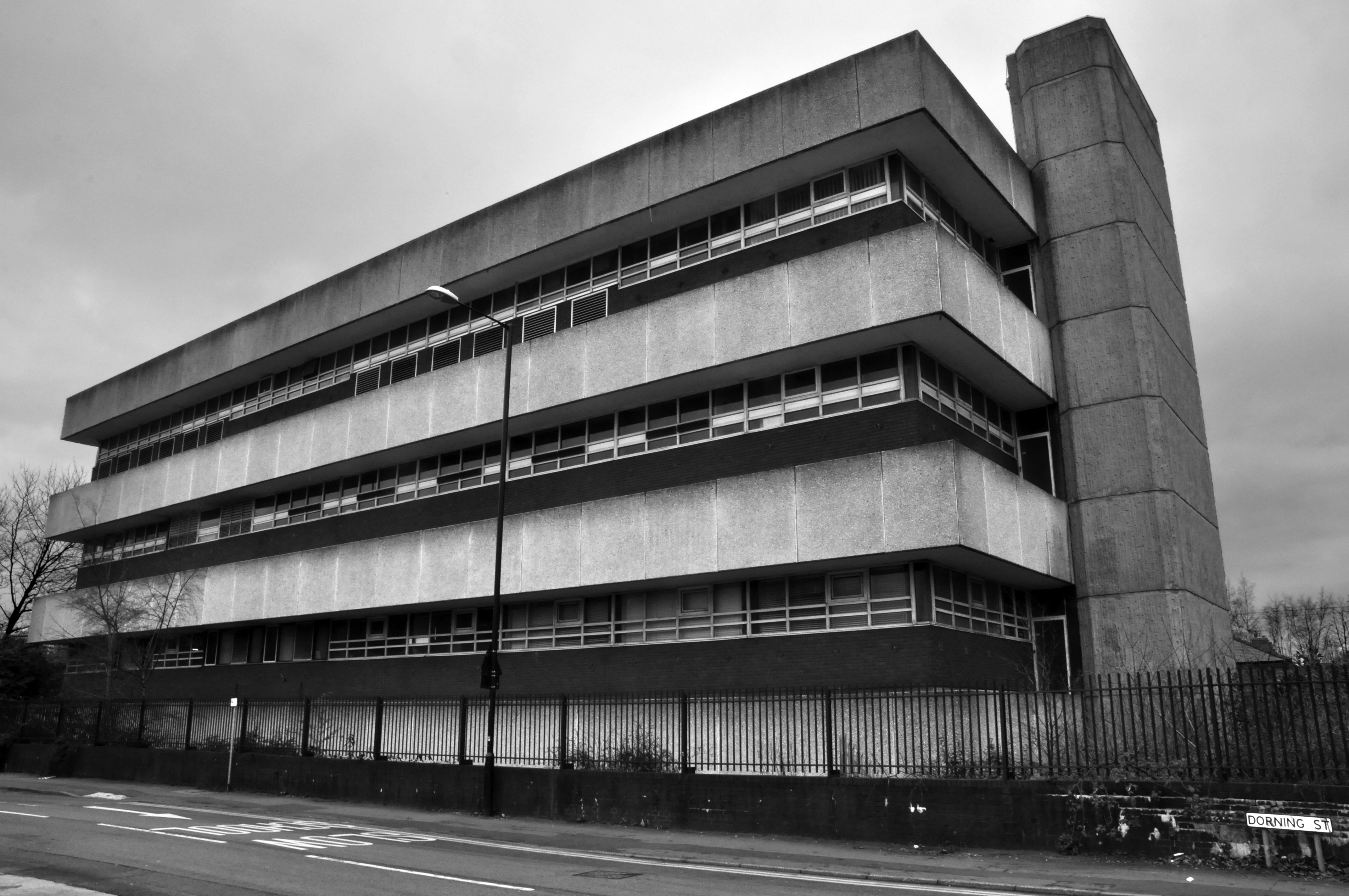
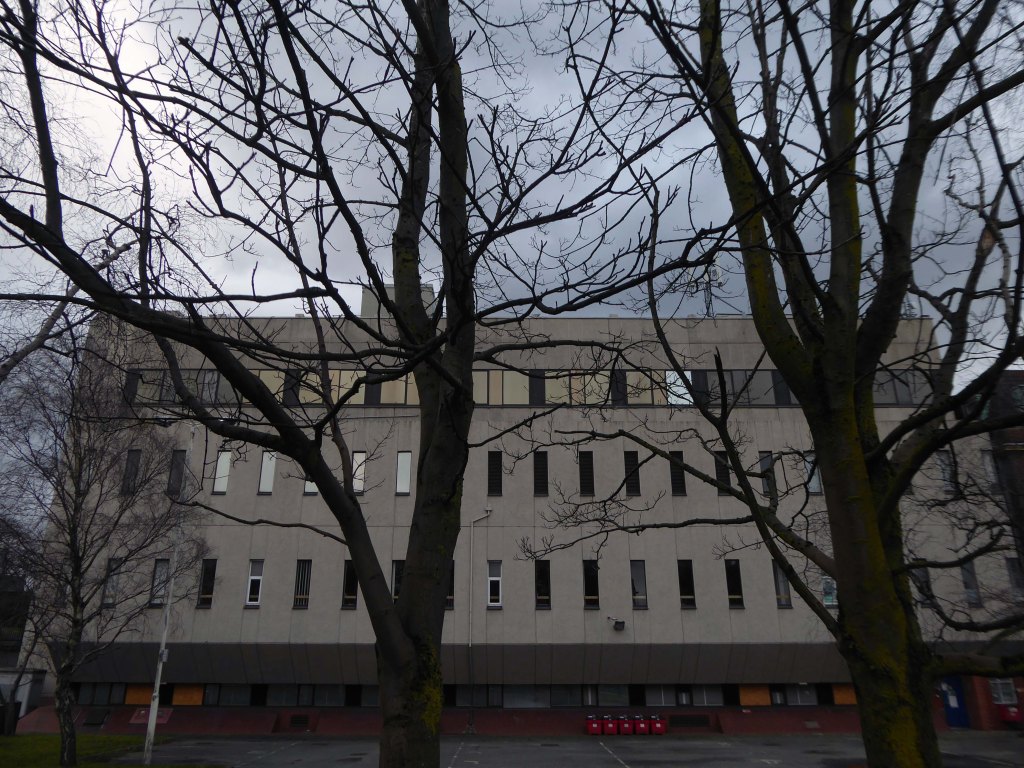
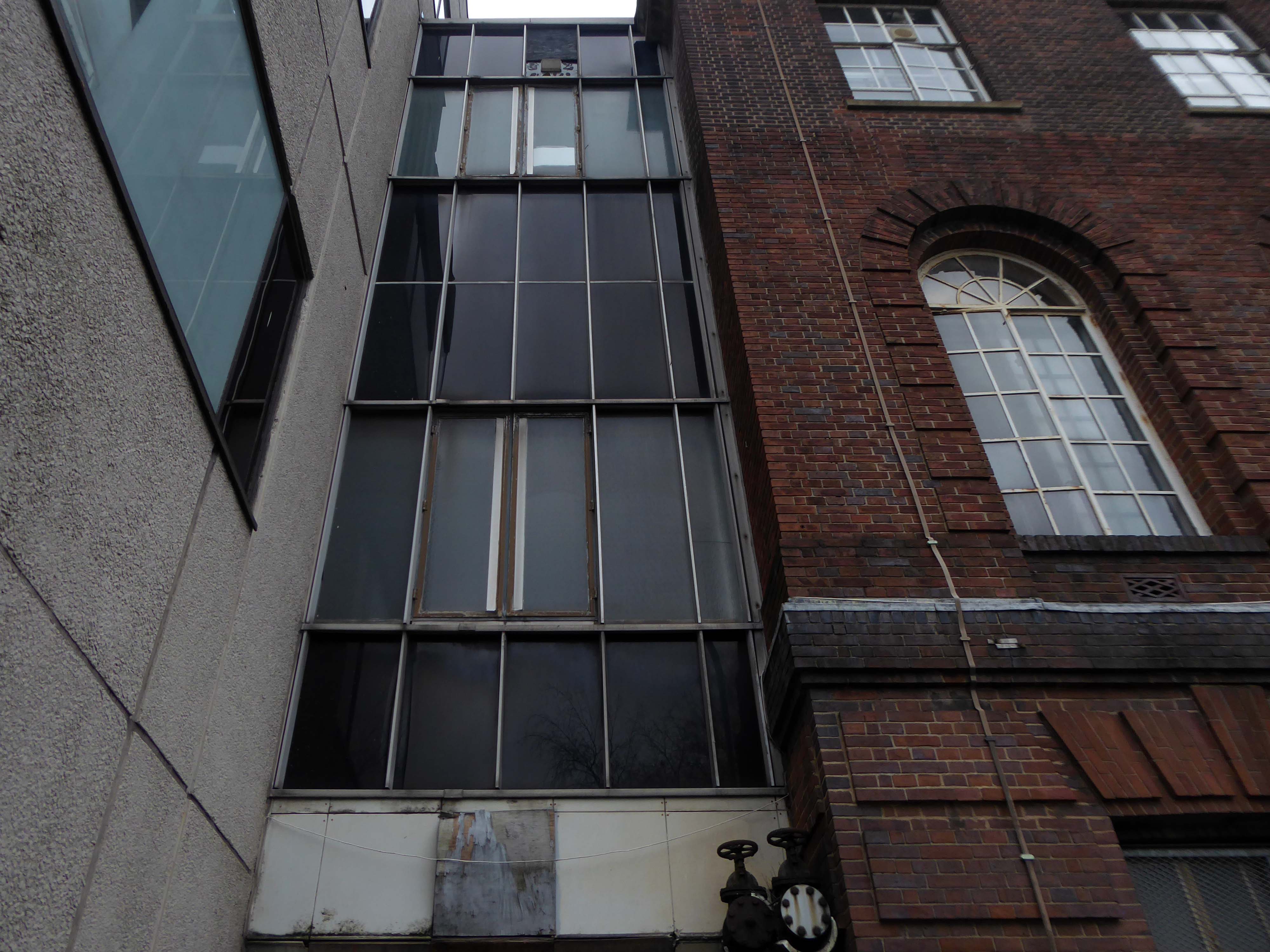
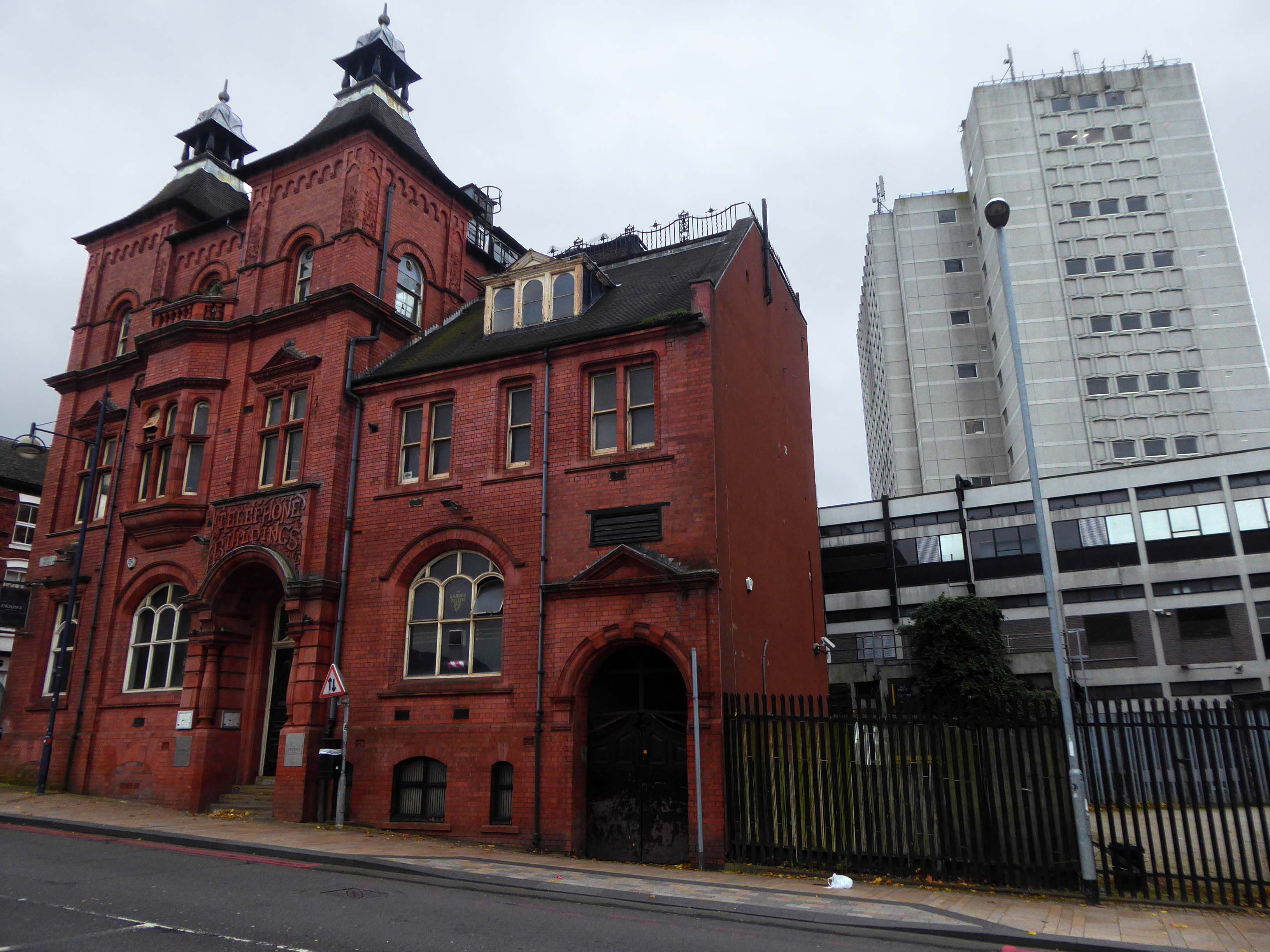
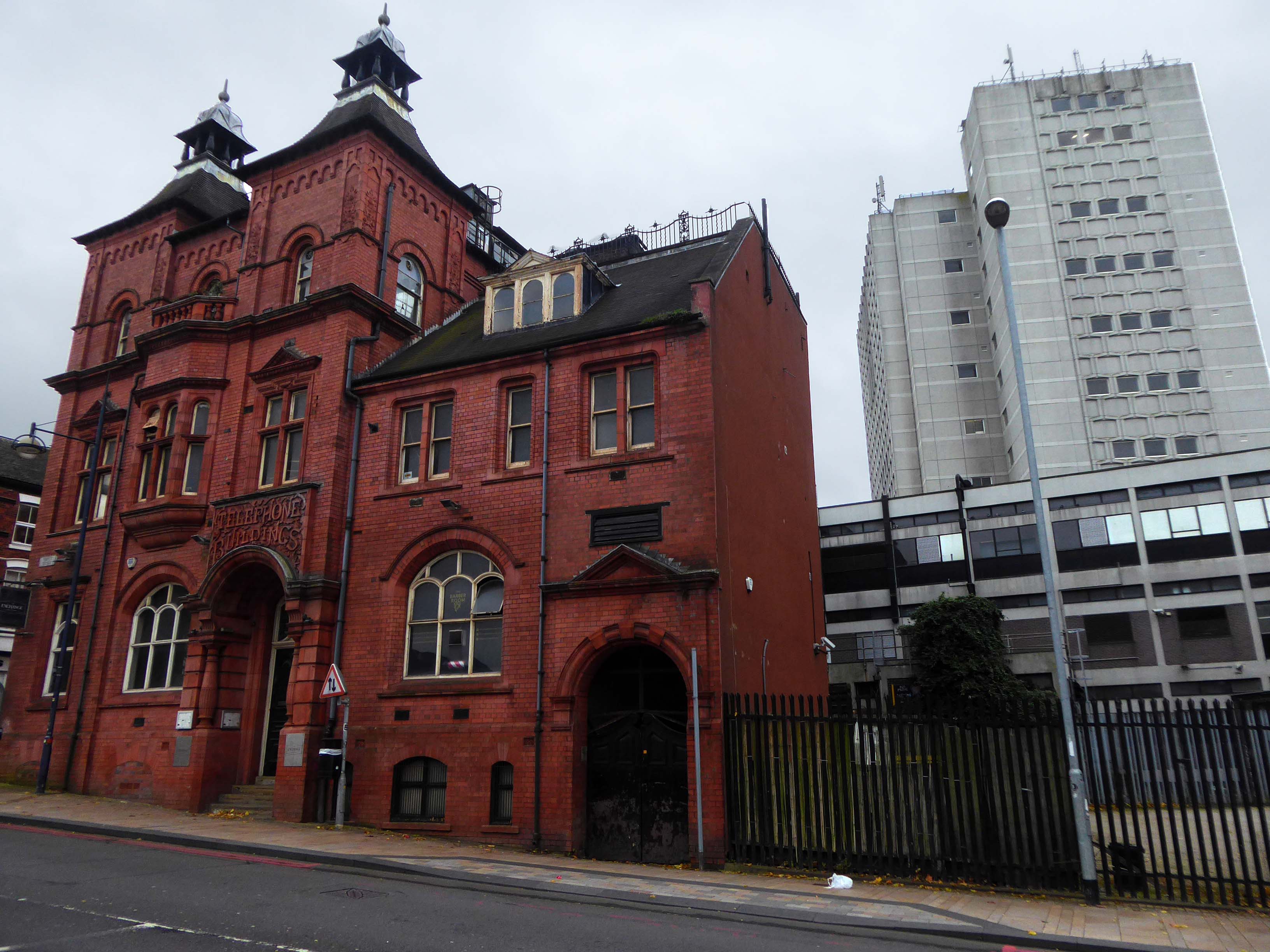
Wandering around Wigan left and then left out of Wigan Wallgate ending up on the corner of Dorning Street, there’s a big red brick building.
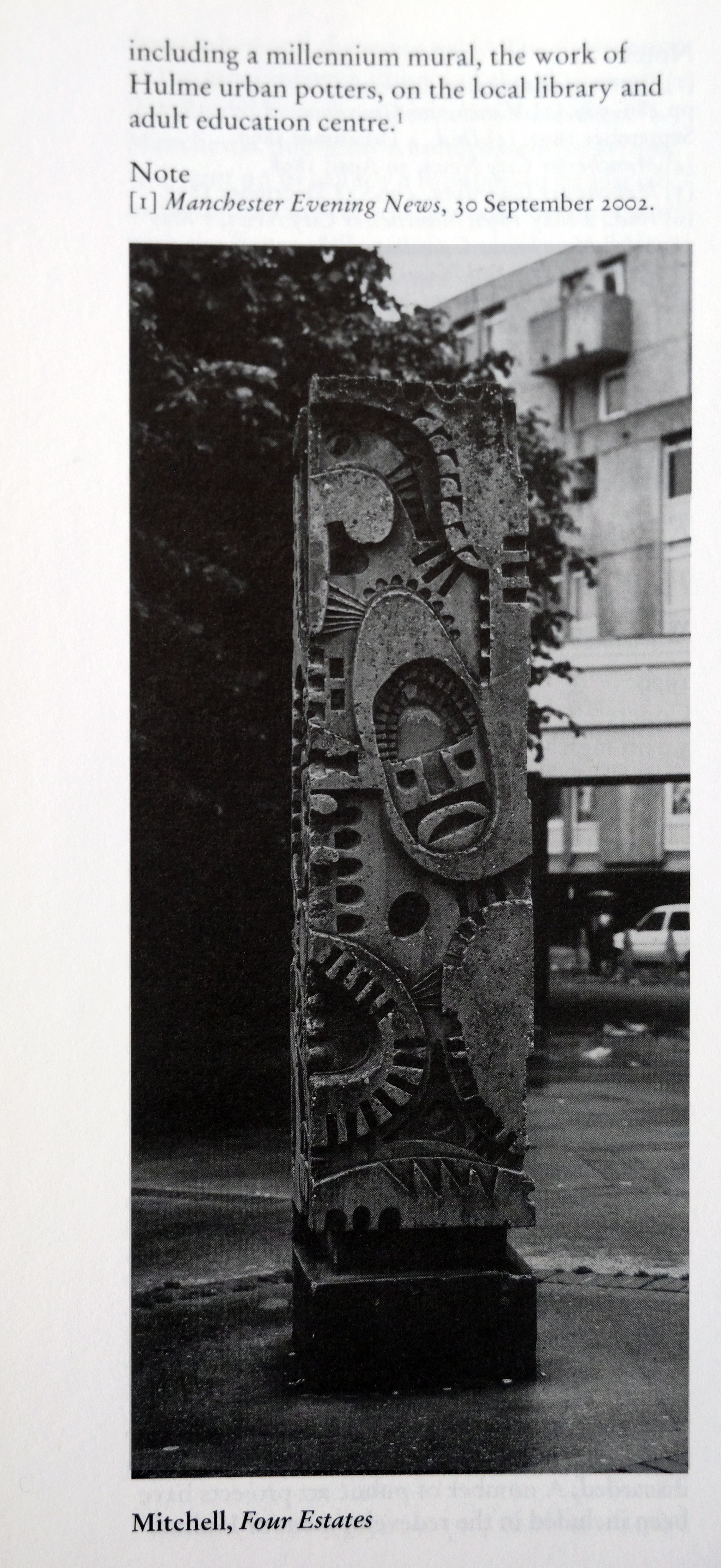
1882

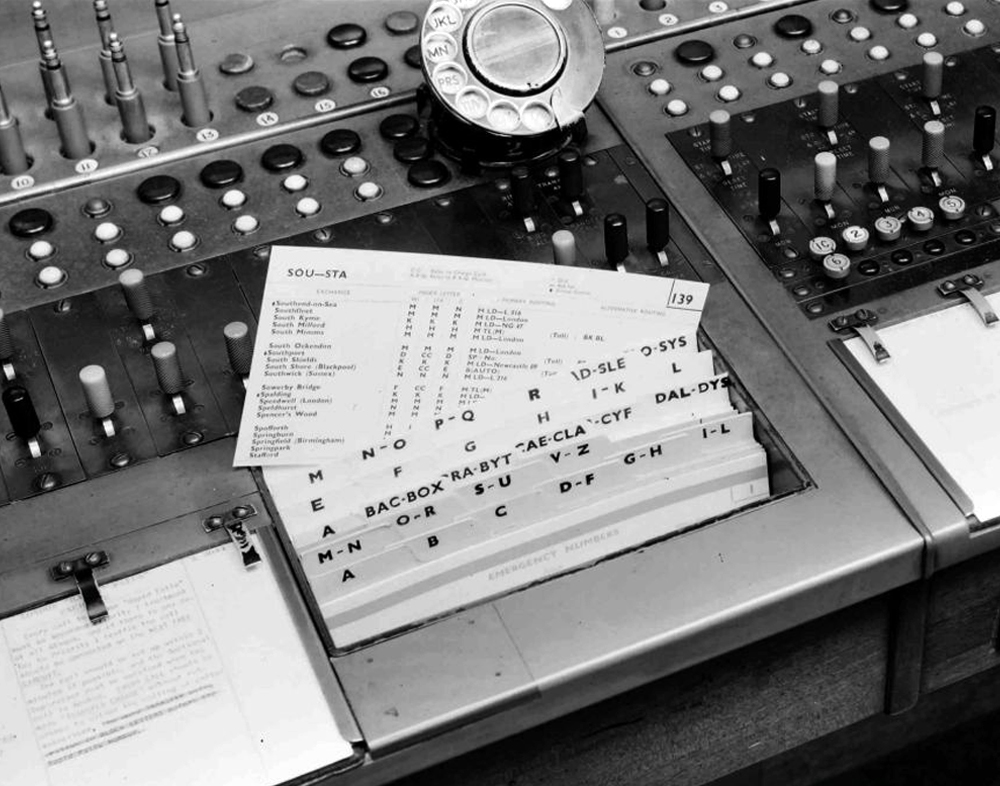
Where all this went on in 1946.

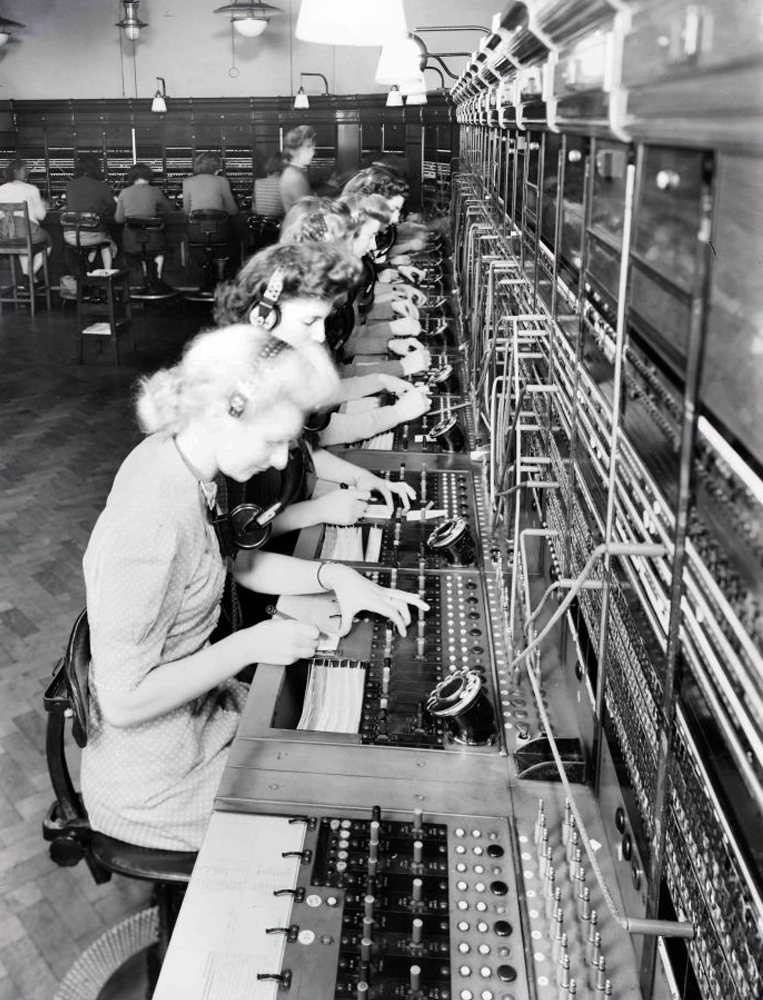
BT Archives

And all this went on too!

I only worked there very briefly in 1965, to do my Test Desk Training. It was a pleasant, if too hot, place to work: I remember being taken out for lunch at the Grand on my first day – very nice!
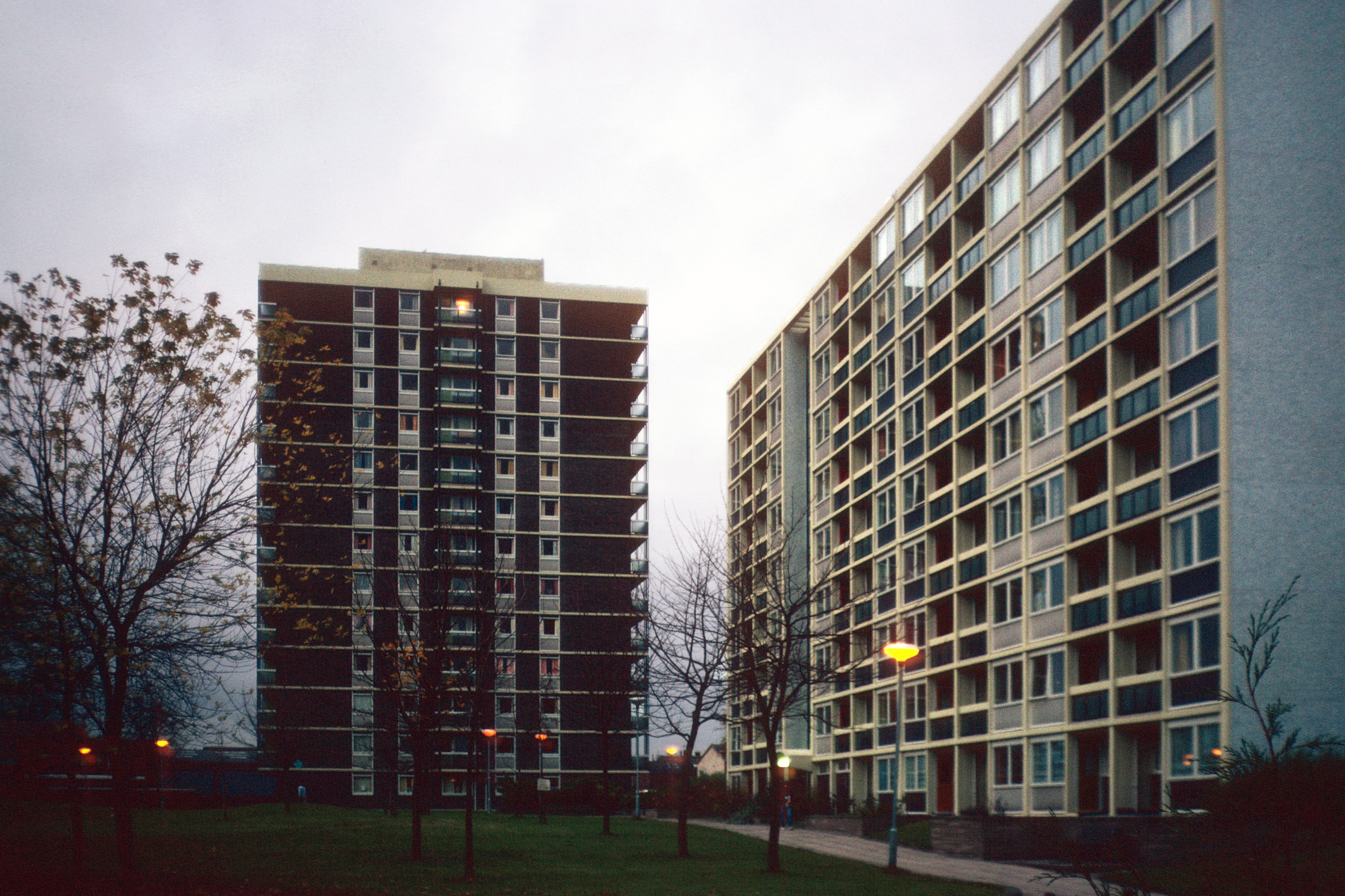
One peculiarity, which always stuck in my mind, was the canteen, upstairs, where the men all clung to one side, and the women to the other, never saw that anywhere else.

I was a telephonist 1961 -1968, I married a telephone engineer, you are right about the canteen or kitchen upstairs. When I first started after I’d finished my training I was sent down to the test desk for a long stand. Being a naive little thing I did as I was told, then sent out for some sky hooks and hen party hens, the girls I worked with were a great bunch we had ball best working years of my life, still friends with some of the telephonists I worked with – happy days.

Walking down Dorning Street one day going back to work and on the pavement outside the Grand there was a half crown. Tried to pick it up to howls of laughter. The lads in the telephone exchange opposite had welded a nail to it and pushed it in the ground between the paving flags. Very funny, and no I didn’t get it out.

Wigan World

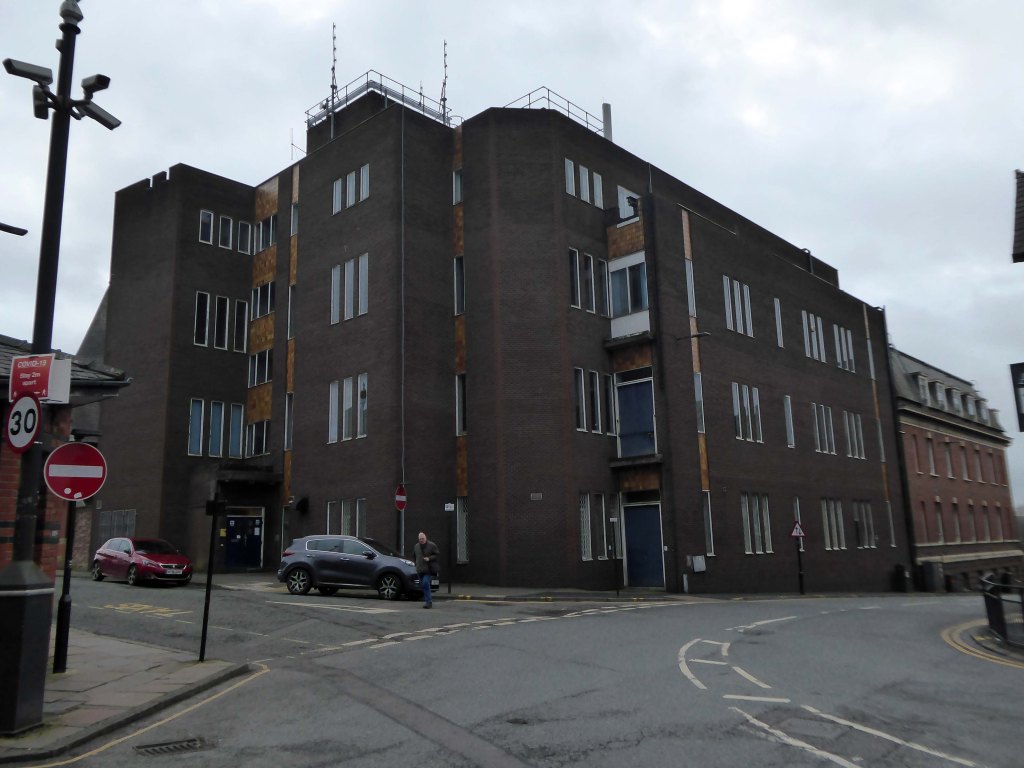
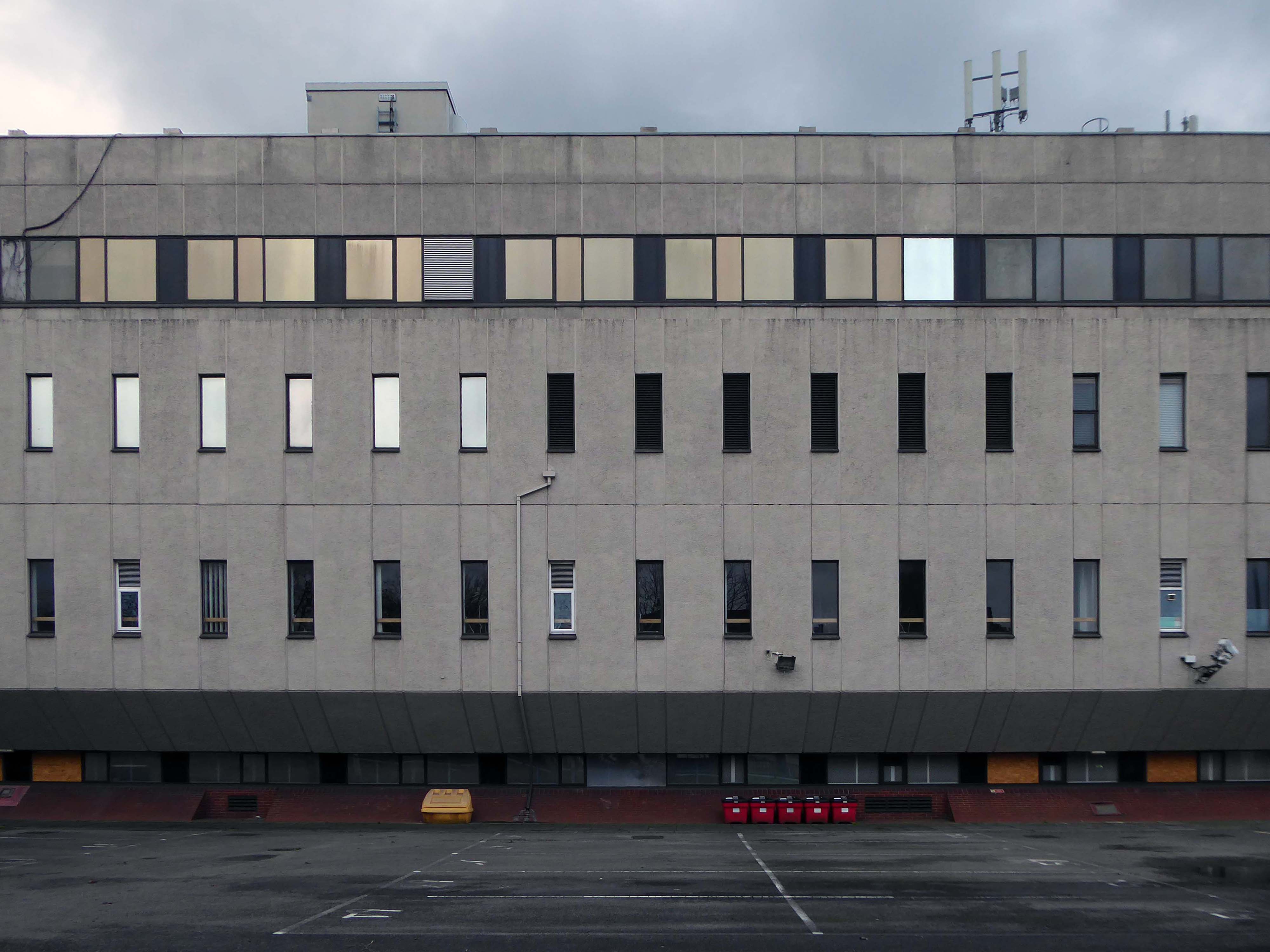
hen you notice that there’s a Sixties’ neighbour.

With narrow windows and inset light and dark tan tiles.

Prior to the exchange of telecommunications’ messages, the site was preoccupied by the exchange of partisan residents with a predilection for particular political persuasions.

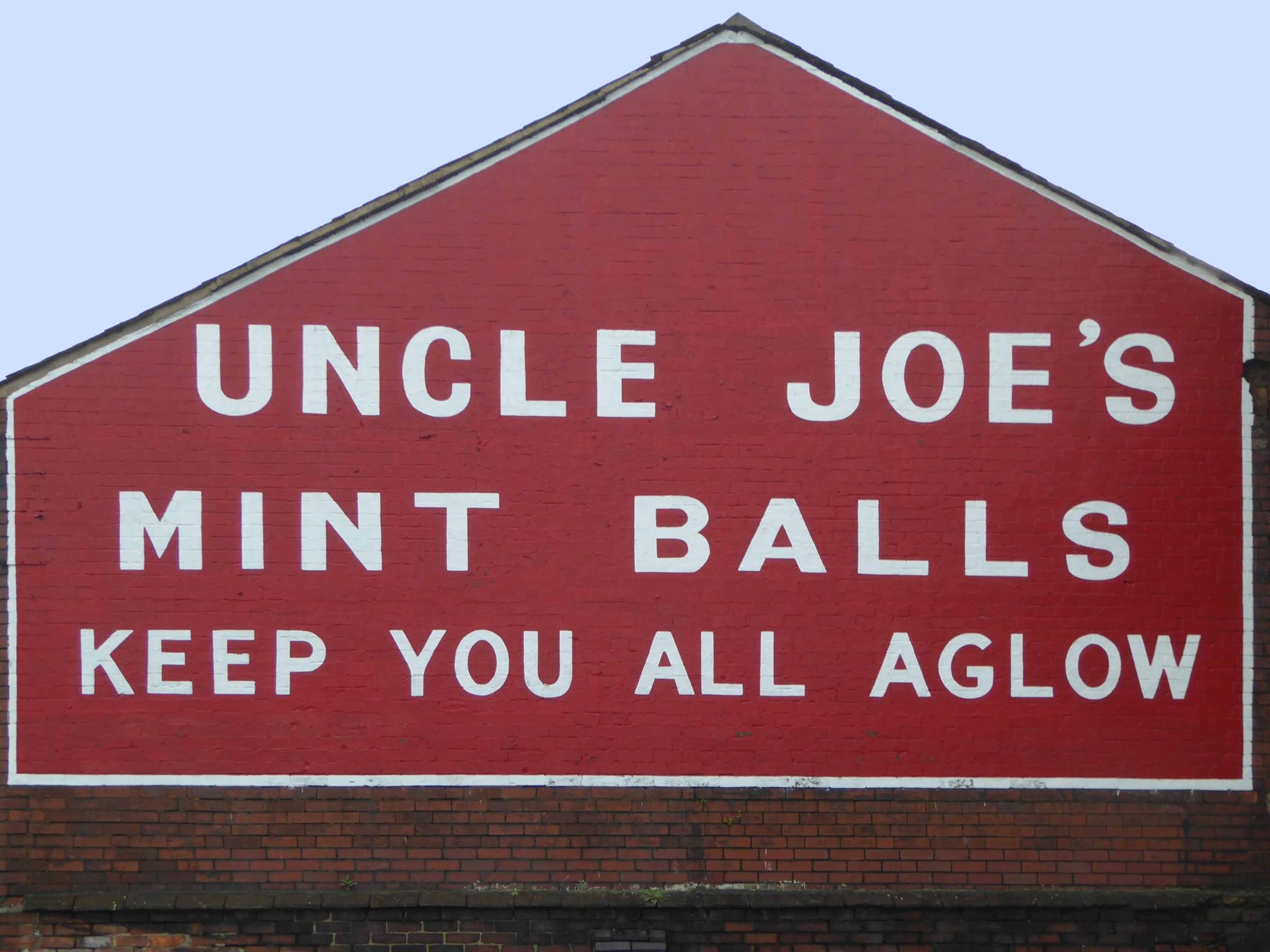
Let’s back track along Dorning Street and follow the aroma of Uncle Joe’s Mint Balls – to the Santus Works and beyond.

There stands a concrete behemoth.

Which has of late been beset with particular problems of its own.

Minefield of lager cans near Wigan school sparks worry Wigan councillors.

They are on a mission to stop the grounds of a derelict building, which lies just yards away from a school, being used as a drinking den.

Wigan Today

Though in fairness I was witness to neither a minefield or drinking den – just a telephone exchange.

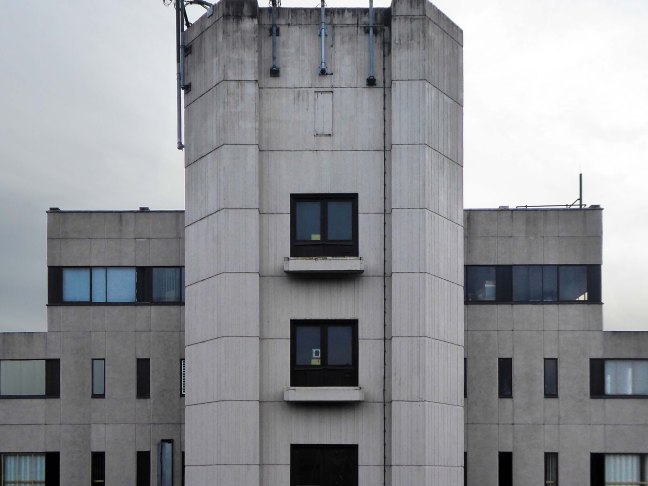
BT Telephone Exchange – Ashton under Lyne

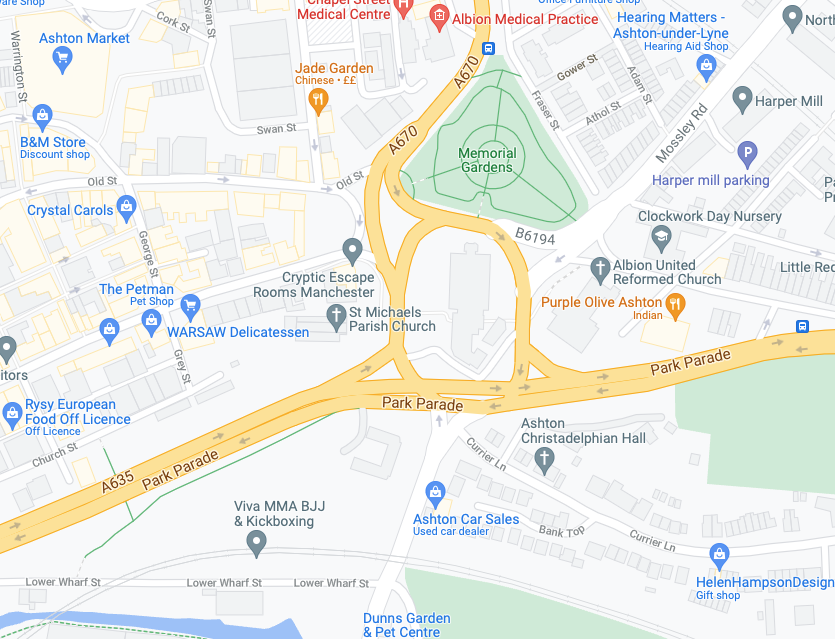
BT Roundabout OL6 6QQ

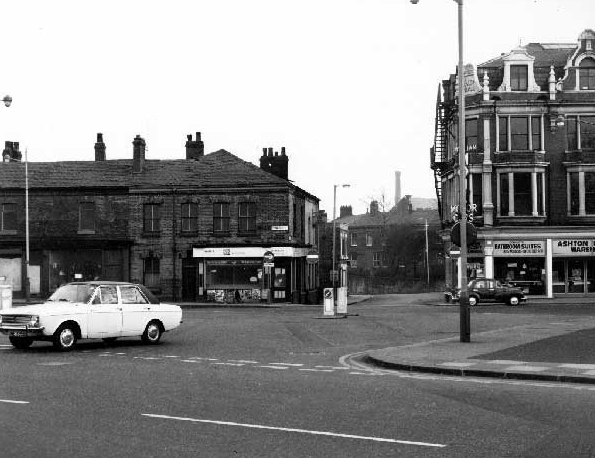
In 1913 Ashton is already a crowded town, a cotton town.

The first telephone exchange arrives and sweeps away property at the junction of Scotland and Bedford Streets.

The second arrives along with the bypass and establishes a roundabout, an island of telecommunication.

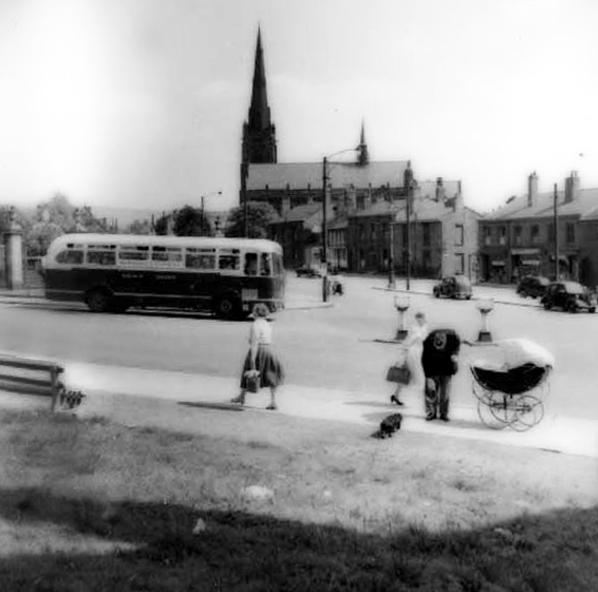
Tameside Image Archive

There they sit betwixt St Michael’s Parish Church and Albion Congregational.

A marriage of inter-war brick Revivalism and post-war concrete Brutalism.

Ninety nine point nine percent of the passing parade pass by onto the bypass by car, I took time to circumnavigate the site on foot.

This is what I saw.

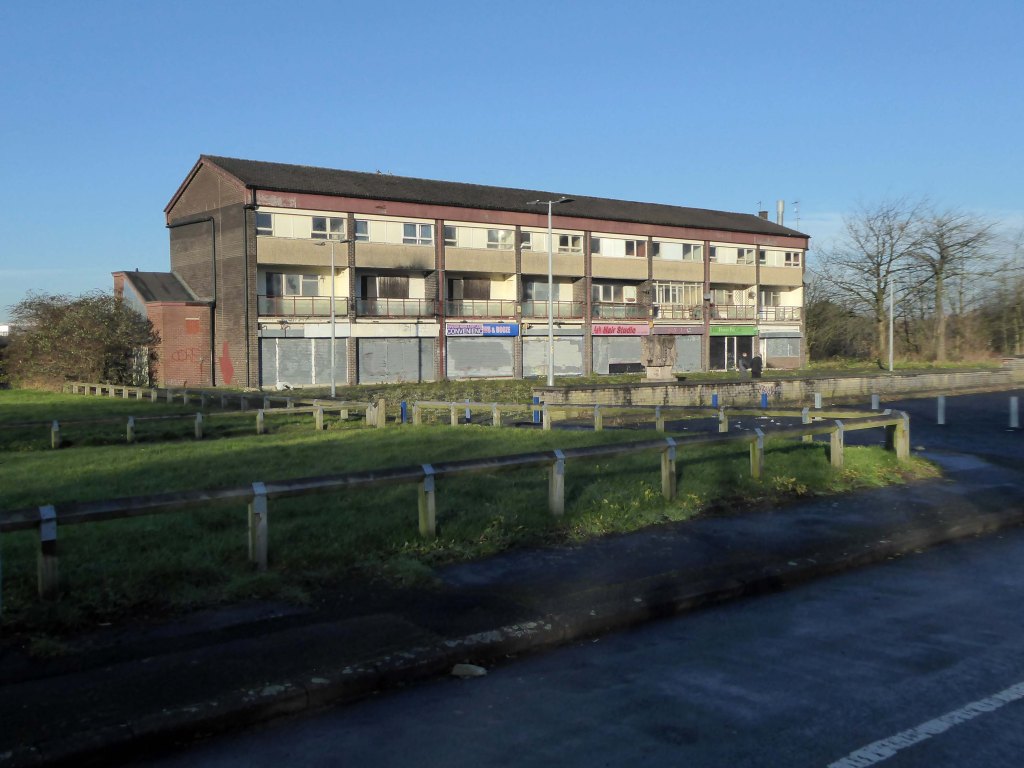
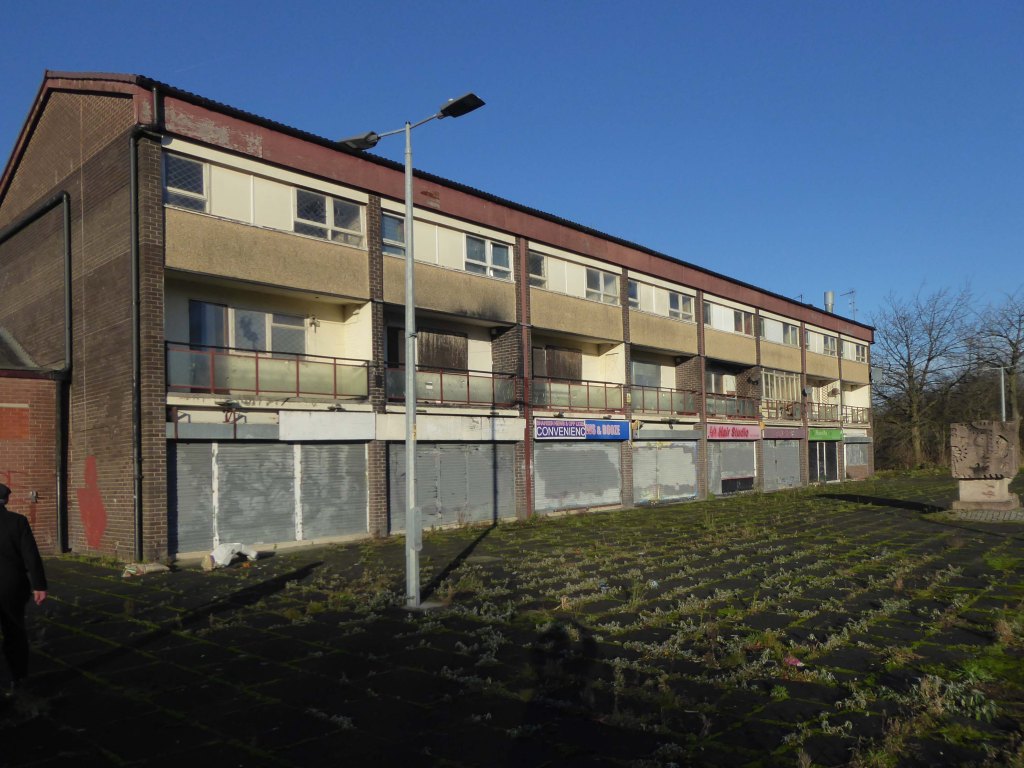
Eastford Square – 12/21

Here we are again and again and again, a curious passer-by, curious as to what may or may not have taken pass.

Local Image Collection 1970

There is a report of 2020

The report argues that the Northern Gateway should offer mixed, affordable and age appropriate housing and amenities. An equitable development plan should be developed, through community-led engagement, to ensure that the benefits of regeneration are shared amongst new and existing residents.

As of 2021 there is inaction and stasis

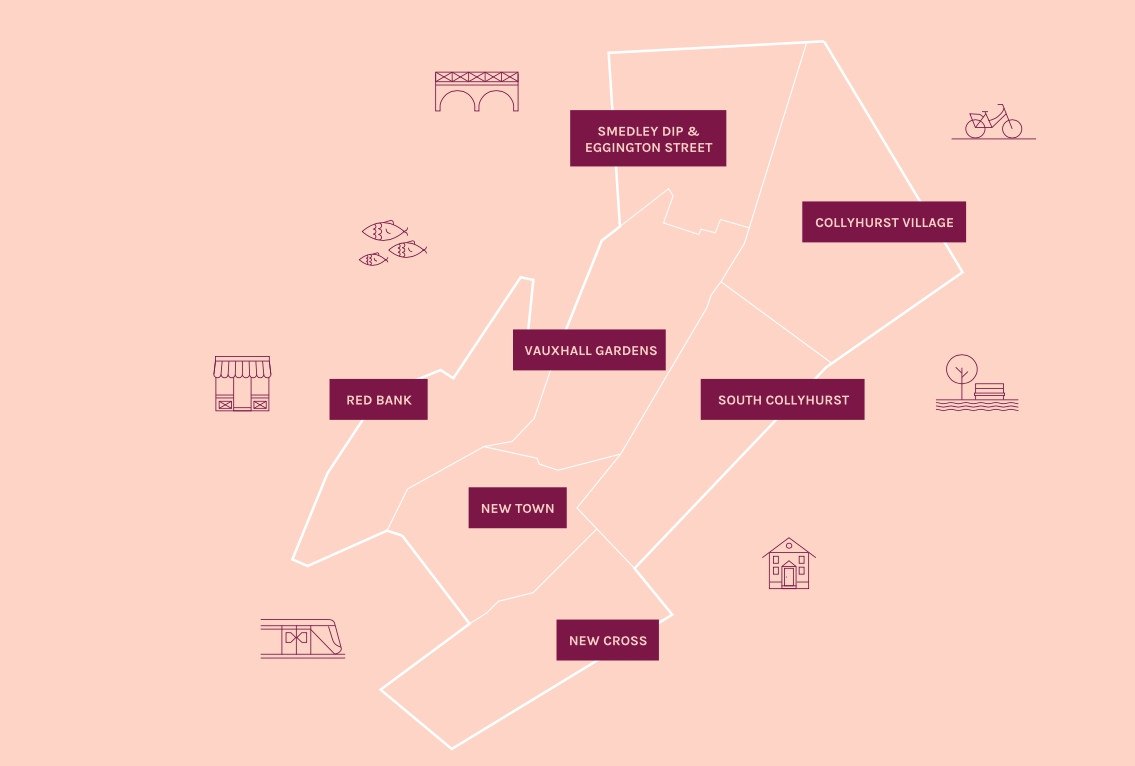
Collyhurst was described as a ‘forgotten place’ by some residents who felt that there had been insufficient investment in local housing and amenities.

The Northern Gateway remains a hidden portal to who knows where.

Northern Gateway 2018

Detailed proposals for a second scheme to be delivered within neighbouring South Collyhurst, one of the seven neighbourhoods to be developed as part of the overall Framework, are expected later this year.

Construction Enquirer 2021

Northern Gateway rebrands as Victoria North

Far East Consortium and Manchester City Council’s 390-acre masterplan will now be known as Victoria North, a move that aims to “create a sense of place”, according to Gavin Taylor, regional general manager at FEC in Manchester.

The Northern Gateway has served us well as a name as we shaped plans for the area’s regeneration. But as we begin to bring forward development this year, it’s the right time to start creating a sense of place for what will be a significant new district in Manchester, as well as an identity that people can engage with.

Sir Richard Leese, leader of Manchester City Council, said:

We are at the beginning of an incredibly exciting phase of history for this part of Manchester and with some eagerness to see how this potential unfolds.

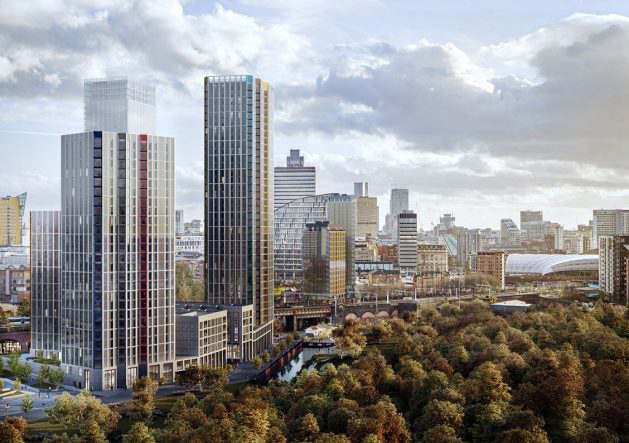
Victoria Riverside, a 634- home development marks the first stage of the regeneration project with the first apartments hitting the market. 

The three towers – Park View, City View and Crown View, are based within the Red Bank neighbourhood. 

Red Bank has been described as:

A unique landscape and river setting making the neighbourhood perfect for a residential-led, high-density development – all set in a green valley.

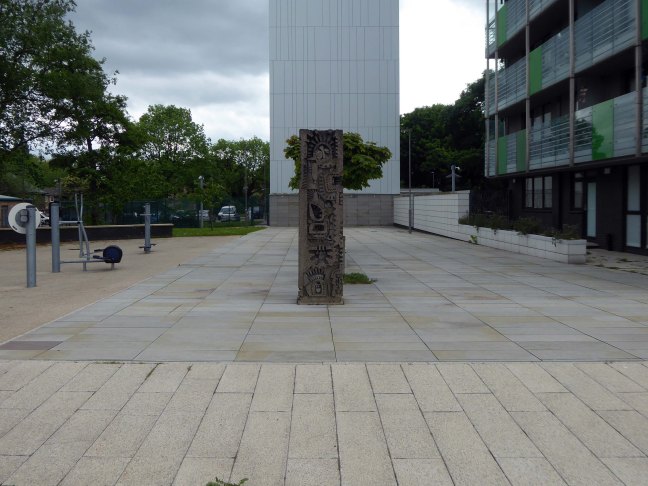
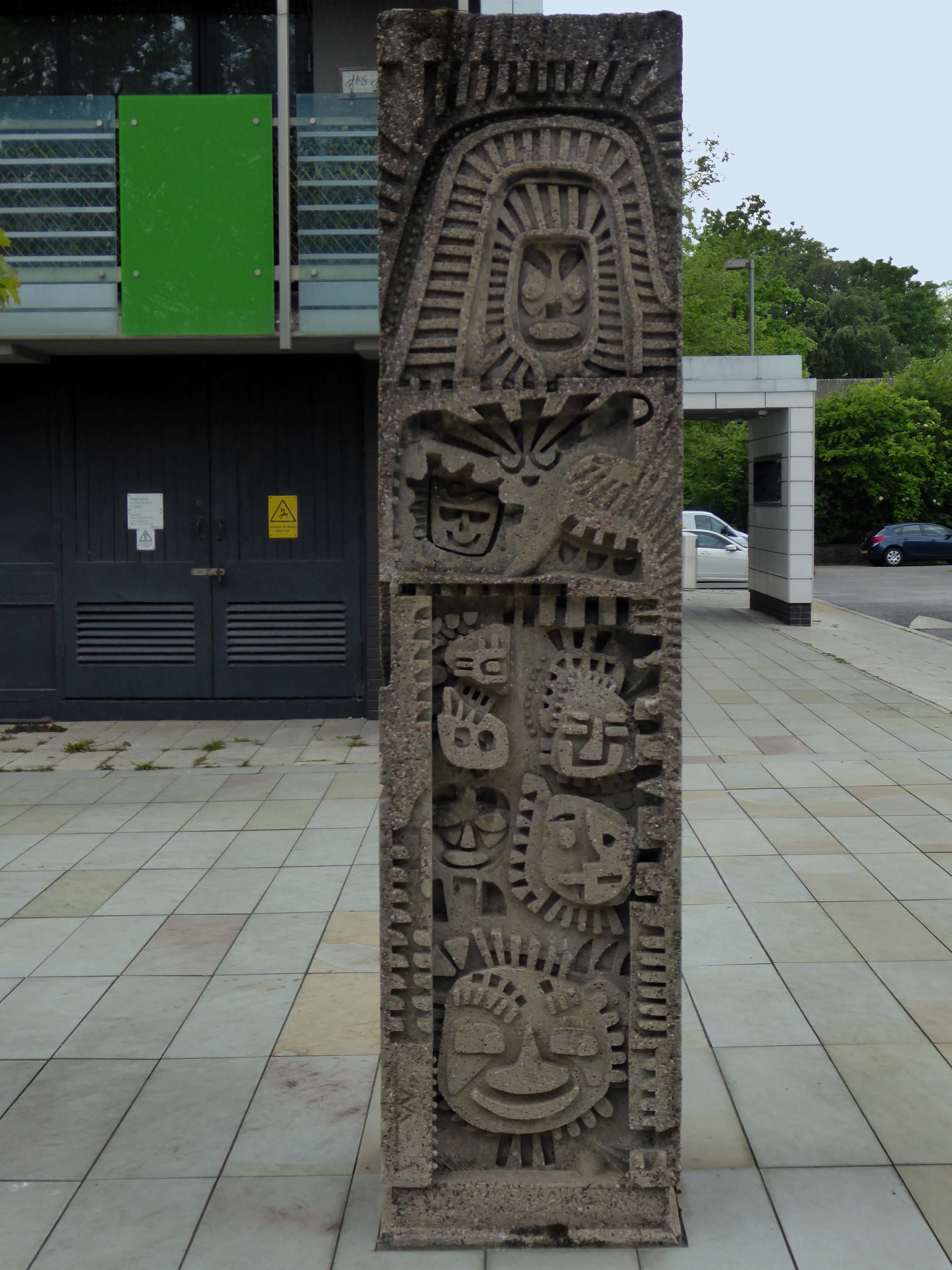
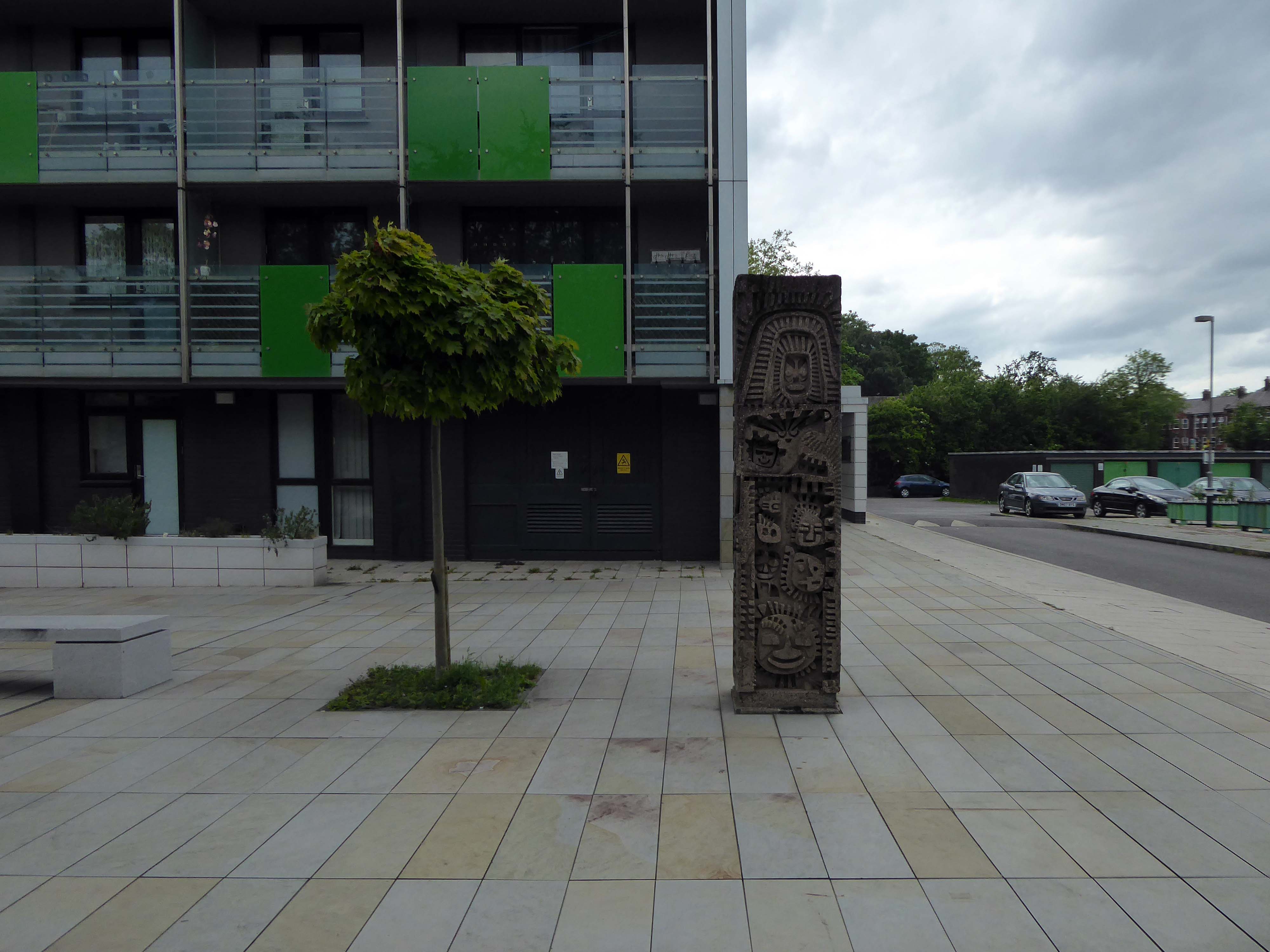
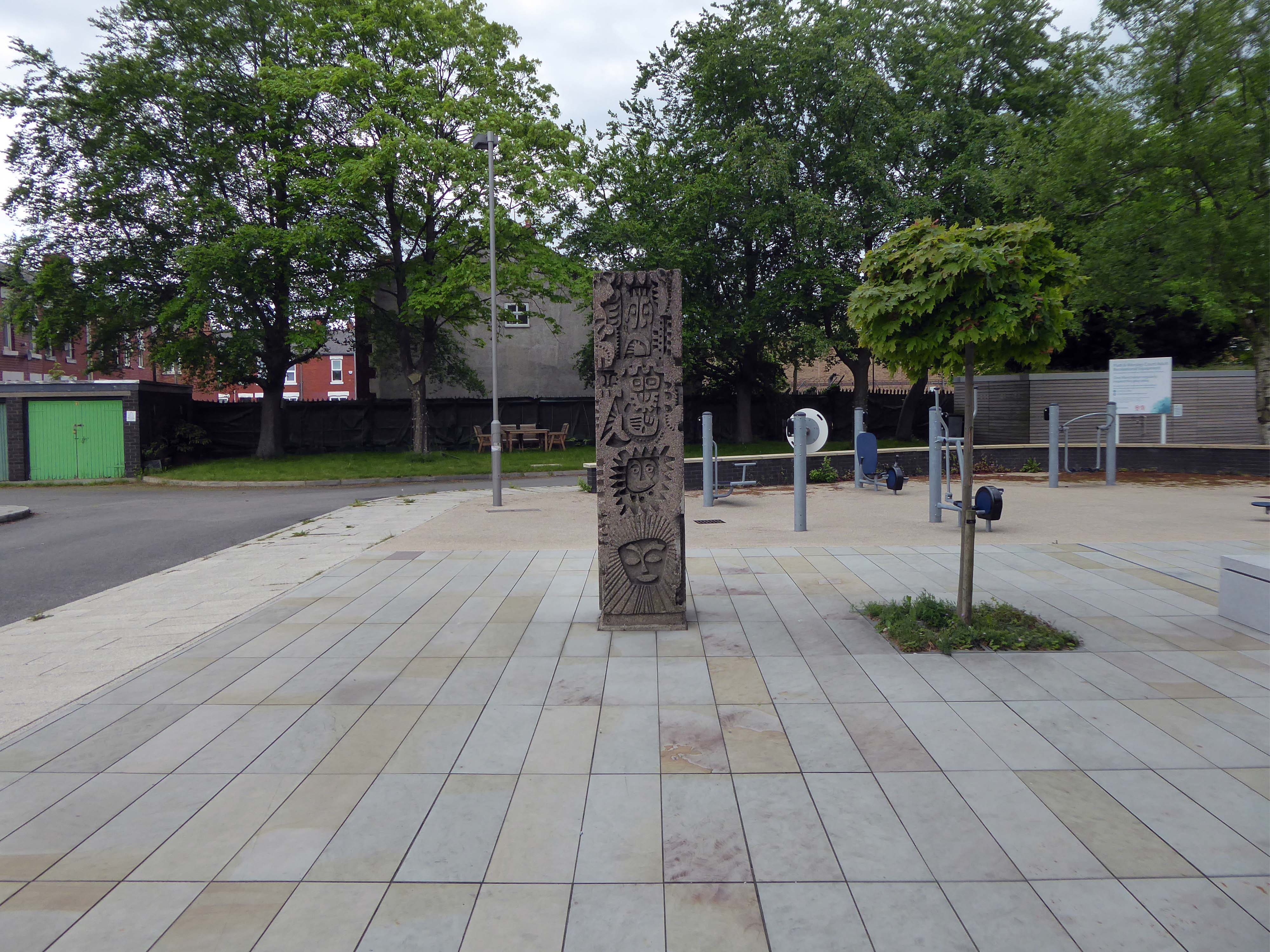
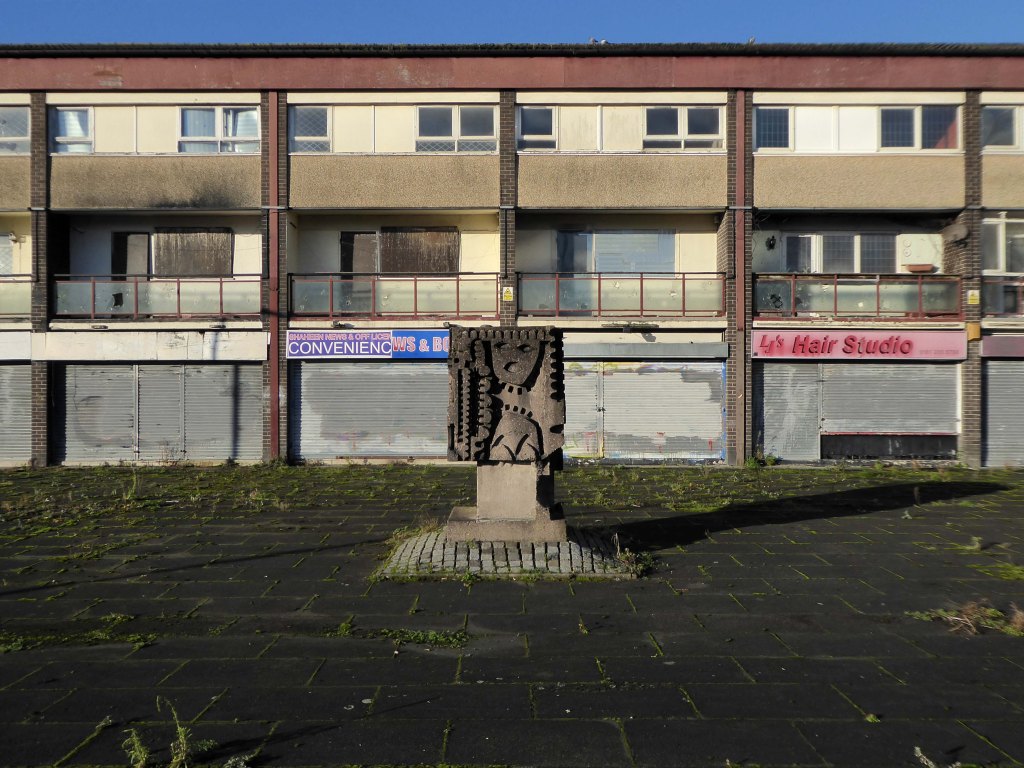
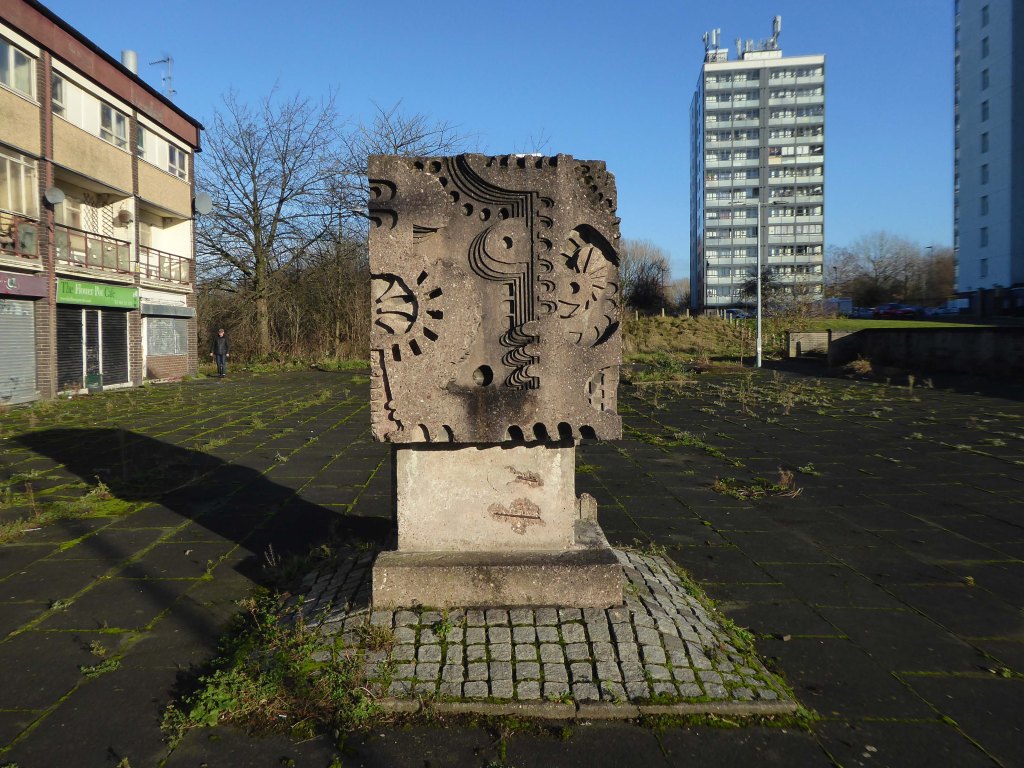
The putative William Mitchell totem continues to keep silent watch over the Square.

Wythenshawe Walk

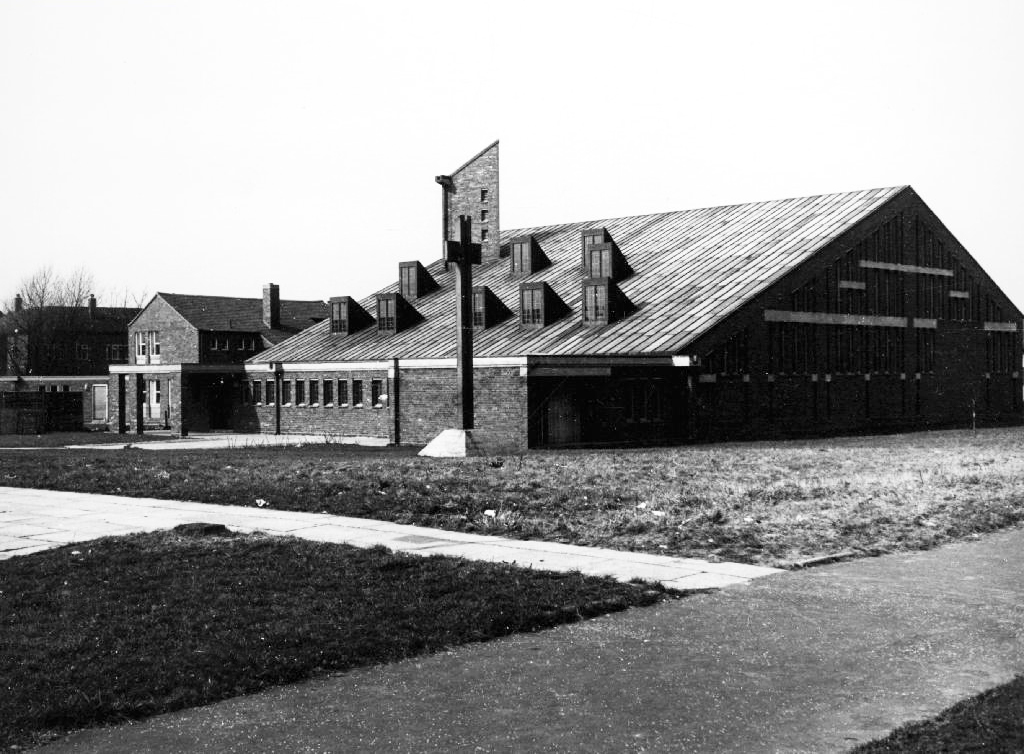
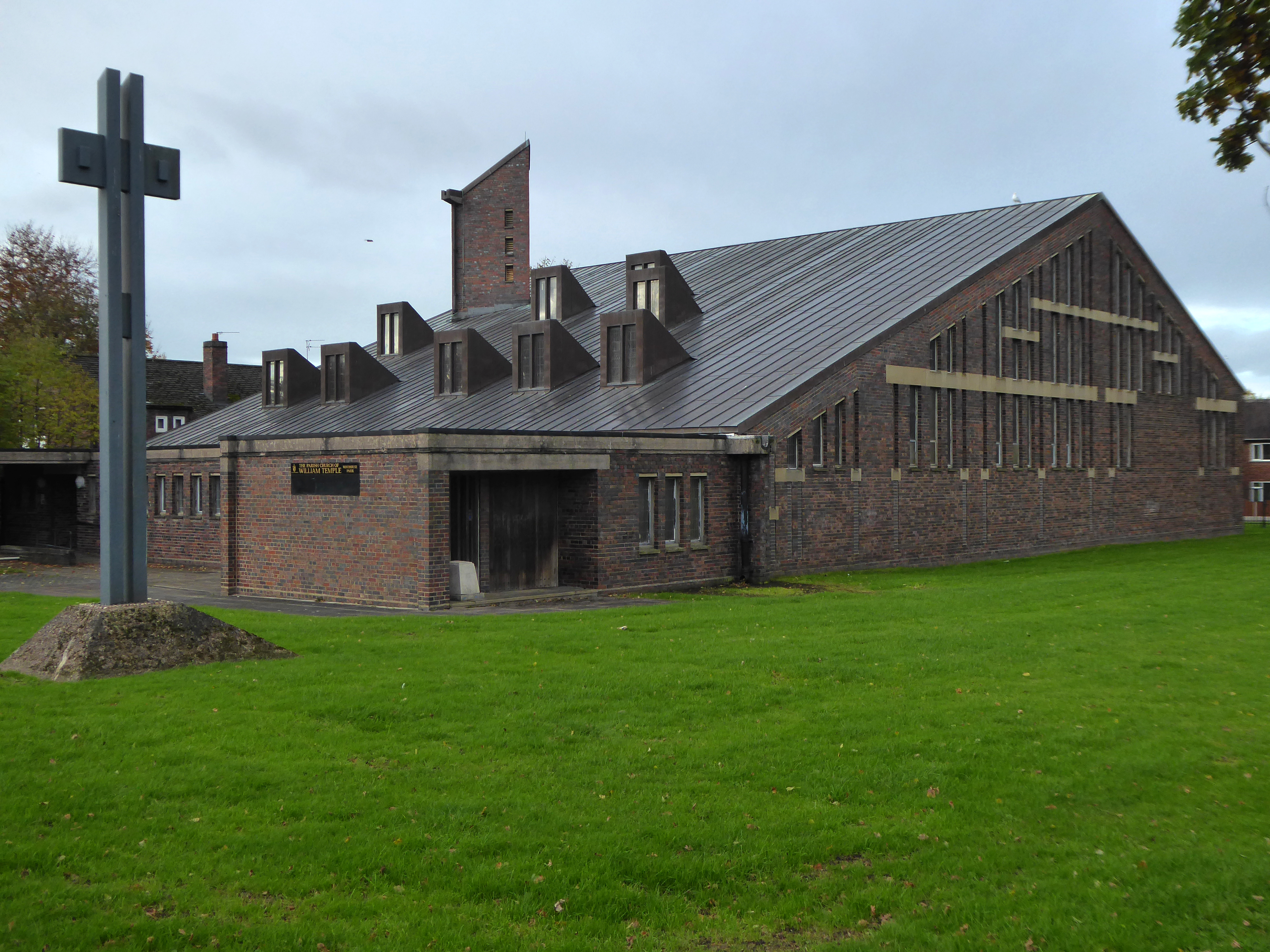
We begin at the William Temple Church

1970

The Anglican Church of William Temple was opened in 1965 on the corner of Robinswood Road and Simonsway as the church of the Civic Centre. The mission was already well-established, having begun many years previously in Shadow Moss School Room, latterly operating in a dual-purpose building on Simonsway. The architect, George Pace, agreed with the proviso that he should not design a ‘pseudo’ building, but that it should be modern in concept. This he did and particular attention was paid to the acoustics with a view to music and drama being performed there. One of Pace’s stipulations was that, as with all the churches he designed, there must be no plaques attached to the walls commemorating the dedication of the church or in memory of anyone, for he said he built his churches to the Glory of God. The only lettered stone is on the back wall of the church and it has on it the date of the consecration and a symbol, which is Pace’s original sign for William Temple Church.

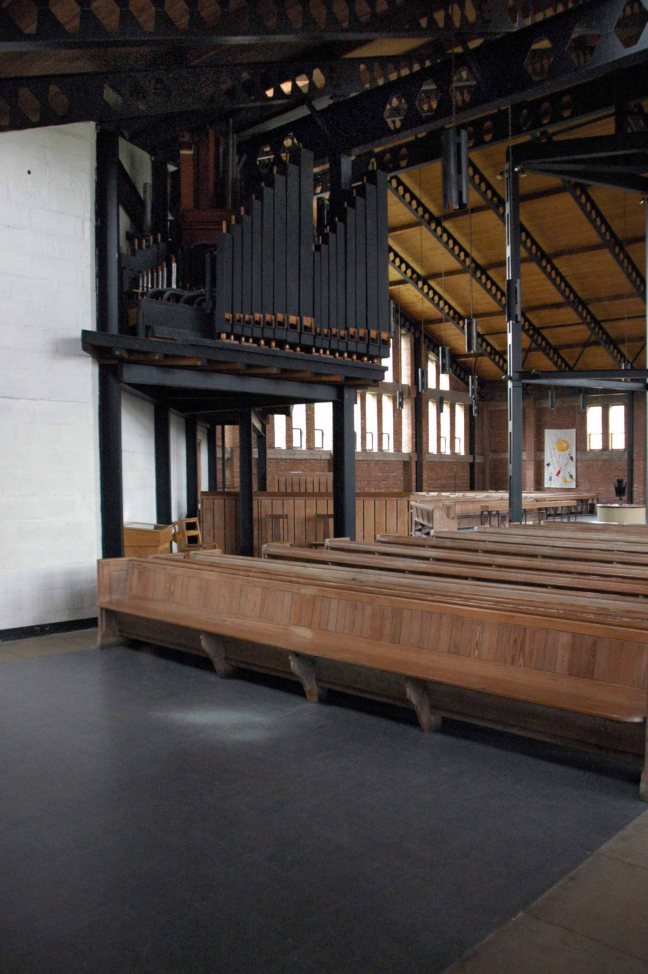
The internal supports of the church are black-painted steel girders, not romantically symbolising the industry of the area, as it is sometimes said, but because when it was discovered that the church had been built on swampy ground an extra £2,000 was needed for foundations; the wooden beams of the original design had to be changed for cheaper steel ones. There is symbolism, however, in the placing of the font between and beneath the three main weight-bearing supports of the church.

The pews have an interesting history, having been brought from derelict churches in and around Manchester. 

The present lady churchwarden said:

“whenever we heard of a church being demolished we borrowed Mr. Owen’s coal cart and went off to see if we could buy any of the pews. Many times I’ve sat on the back of the wagon, in the pouring rain, with the pews, bringing them back to Wythenshawe to be stored until our church building was completed!”

Some time after the building was opened, a fire damaged some of the pews. With the insurance money all the pews were stripped and bleached, giving an element of uniformity and a bright welcoming atmosphere in the church generally. An interesting thought was voiced that as many people living in Wythenshawe now had their origins near to the centre of Manchester they may be sitting in the same pews in which their ancestors once sat.

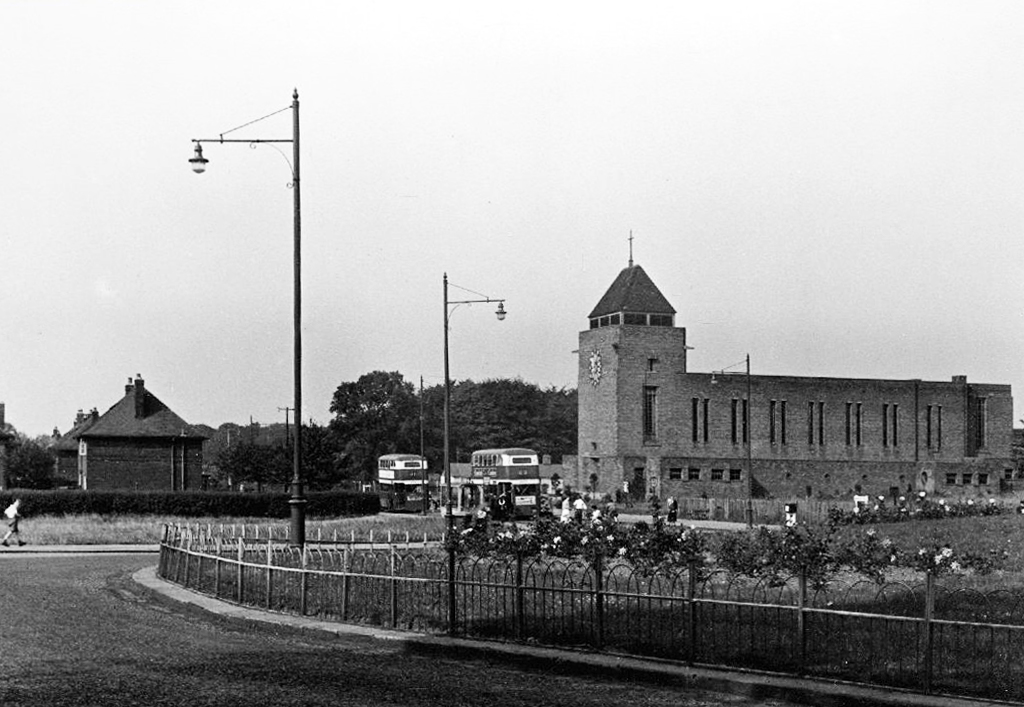
Onwards to St Anthony’s RC – seen here under construction.

An imposing and monumental building by Adrian Gilbert Scott.

The church has a rich, little-altered interior with strong architectural qualities and notable furnishings. The church is described as ‘one of the few real landmarks of Wythenshawe’ and ‘beautifully built’, by Hartwell, Hyde and Pevsner 2004

The church was listed Grade II in 2014.

Taking Stock

It replaced the Green Hut.

Backtrack to St Andrews Architects JCG Prestwich and Son 1960 – as seen by Comrade Yuri Gagarin 12th July 1961 – detailed here.

We now take a secular route around the back of the Civic Centre to look at Centron and Delta House.

Built in 1972 to encourage white collar jobs into the area, formerly occupied by Shell and the TSB, currently partially unoccupied.

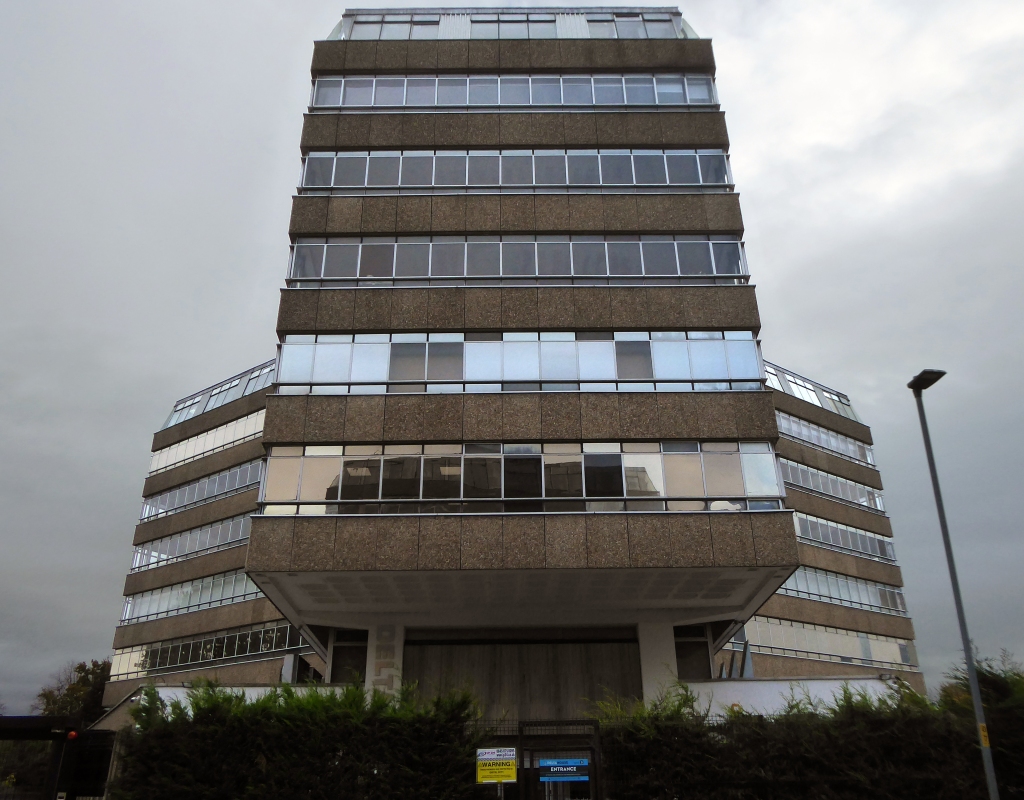
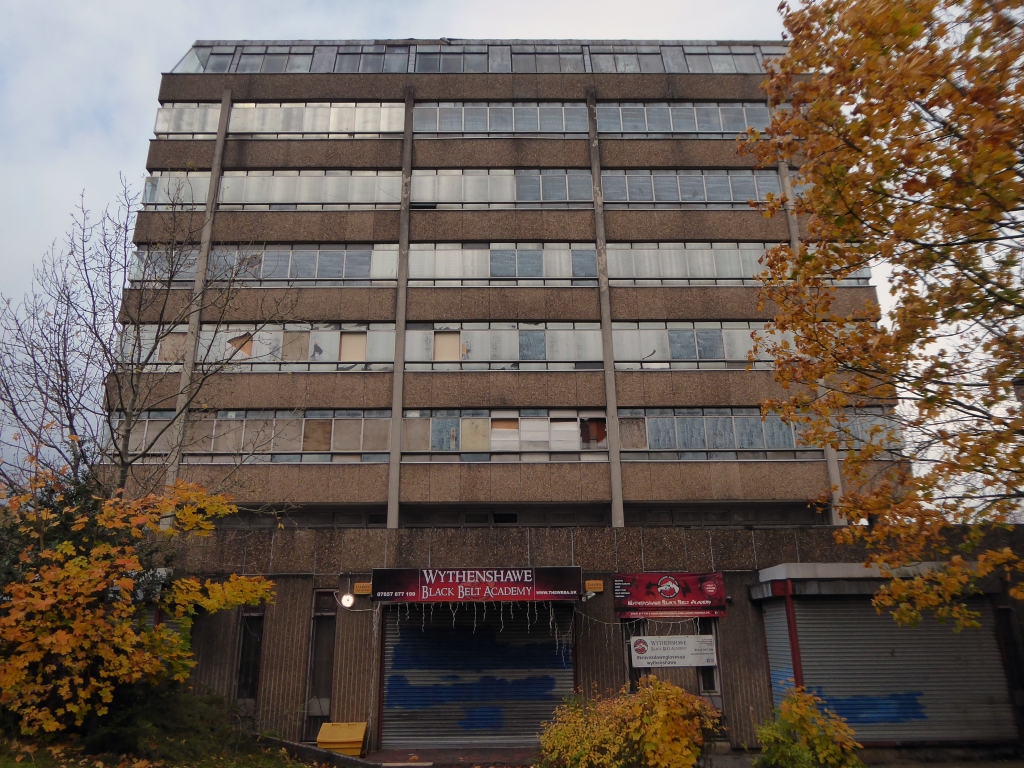
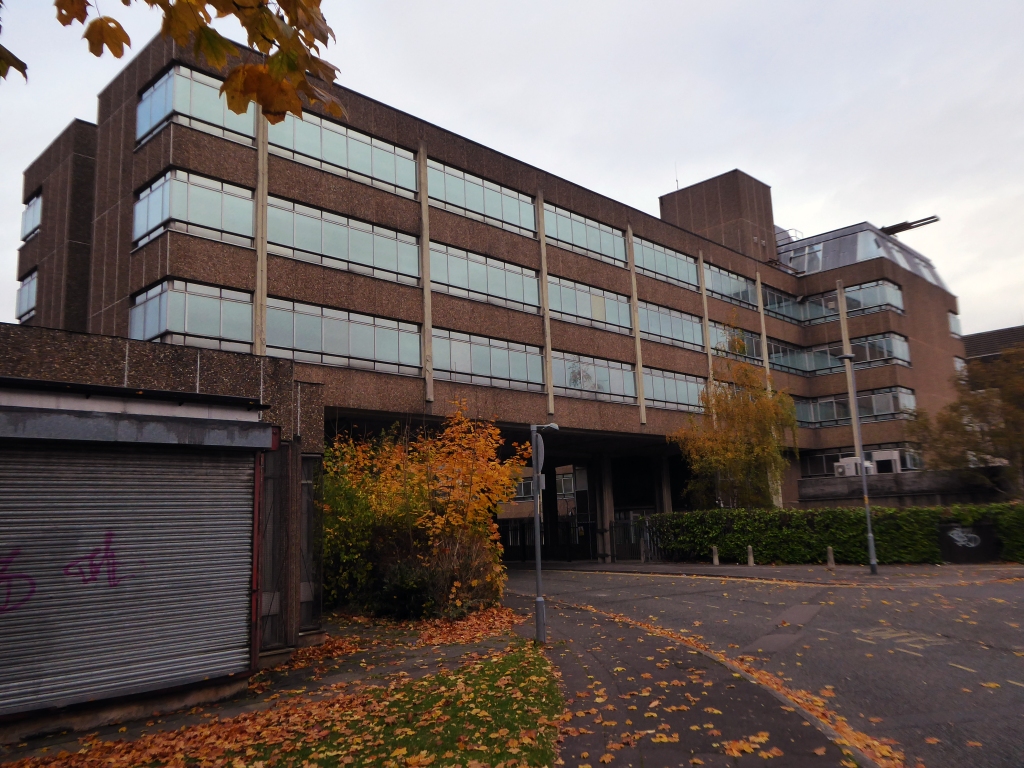
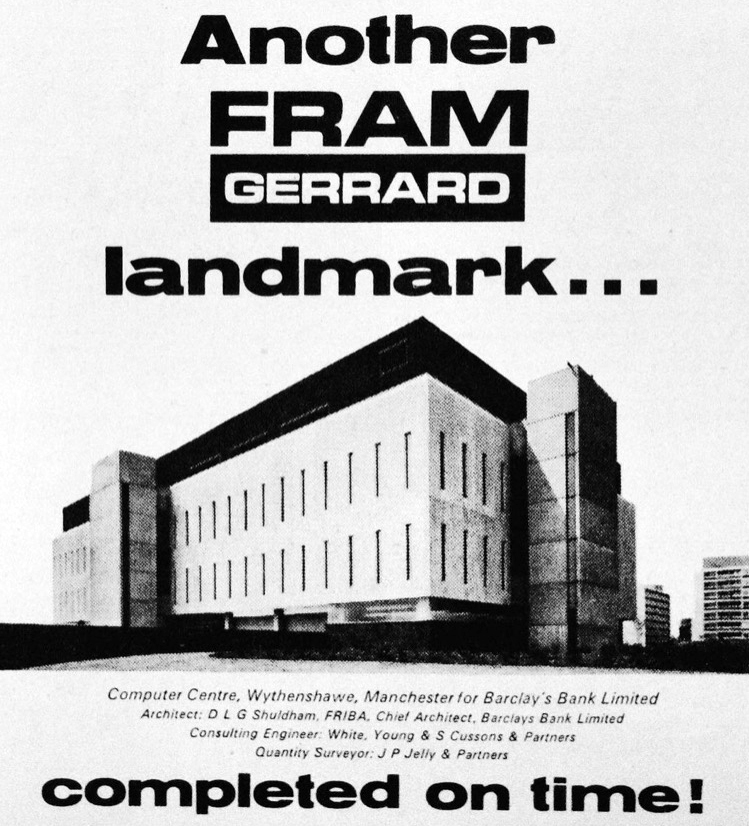
Across the way the former Barclay’s Bank IT HQ by DLG Shuldham the bank’s chief architect.

Just around the corner.

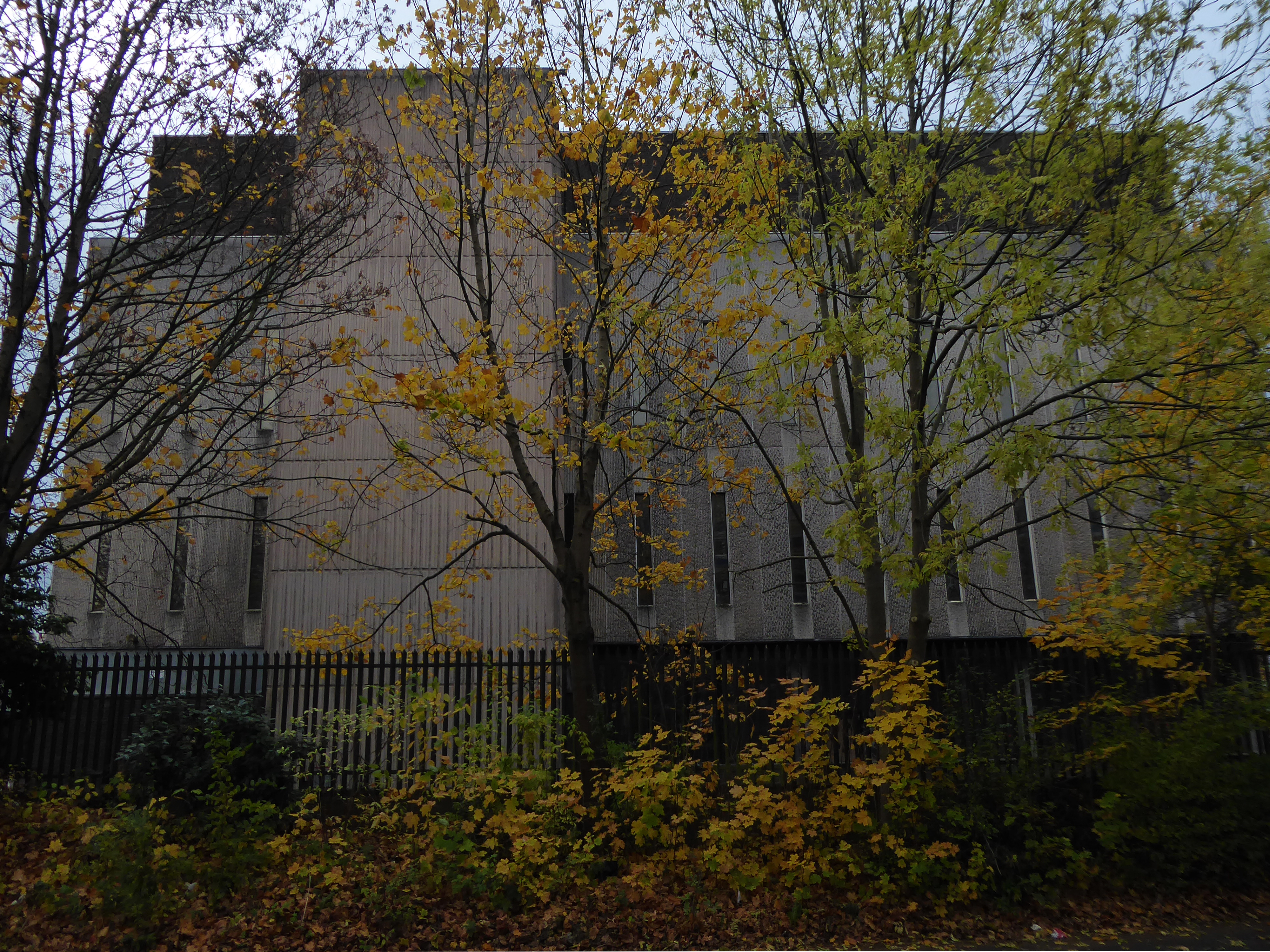
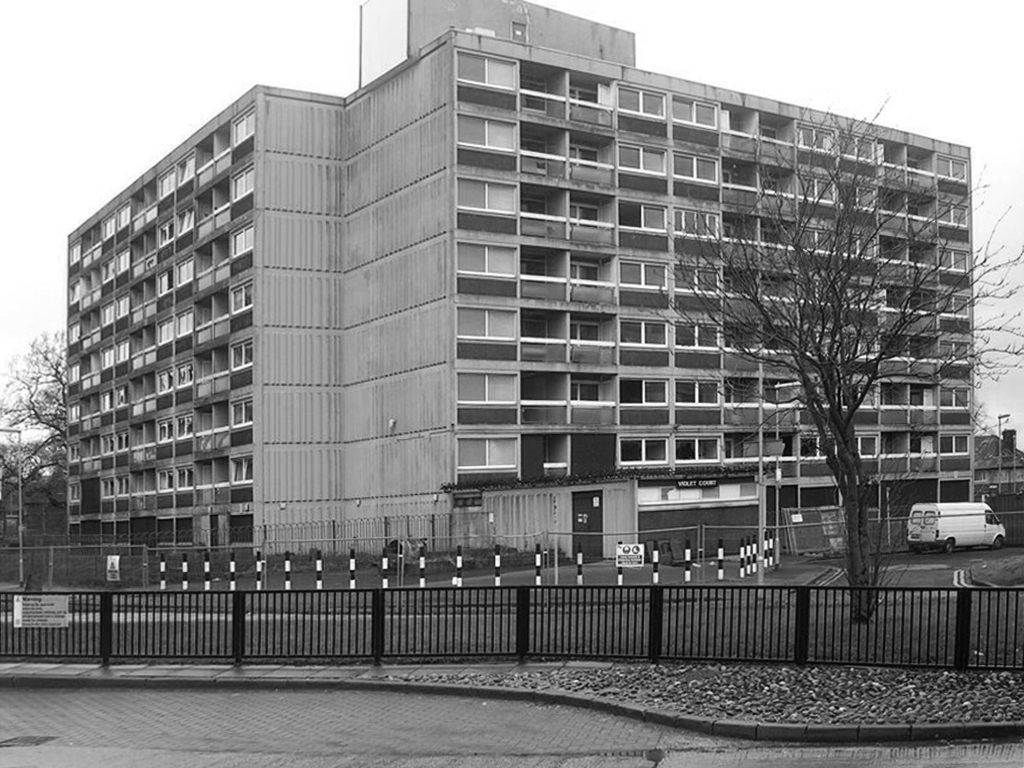
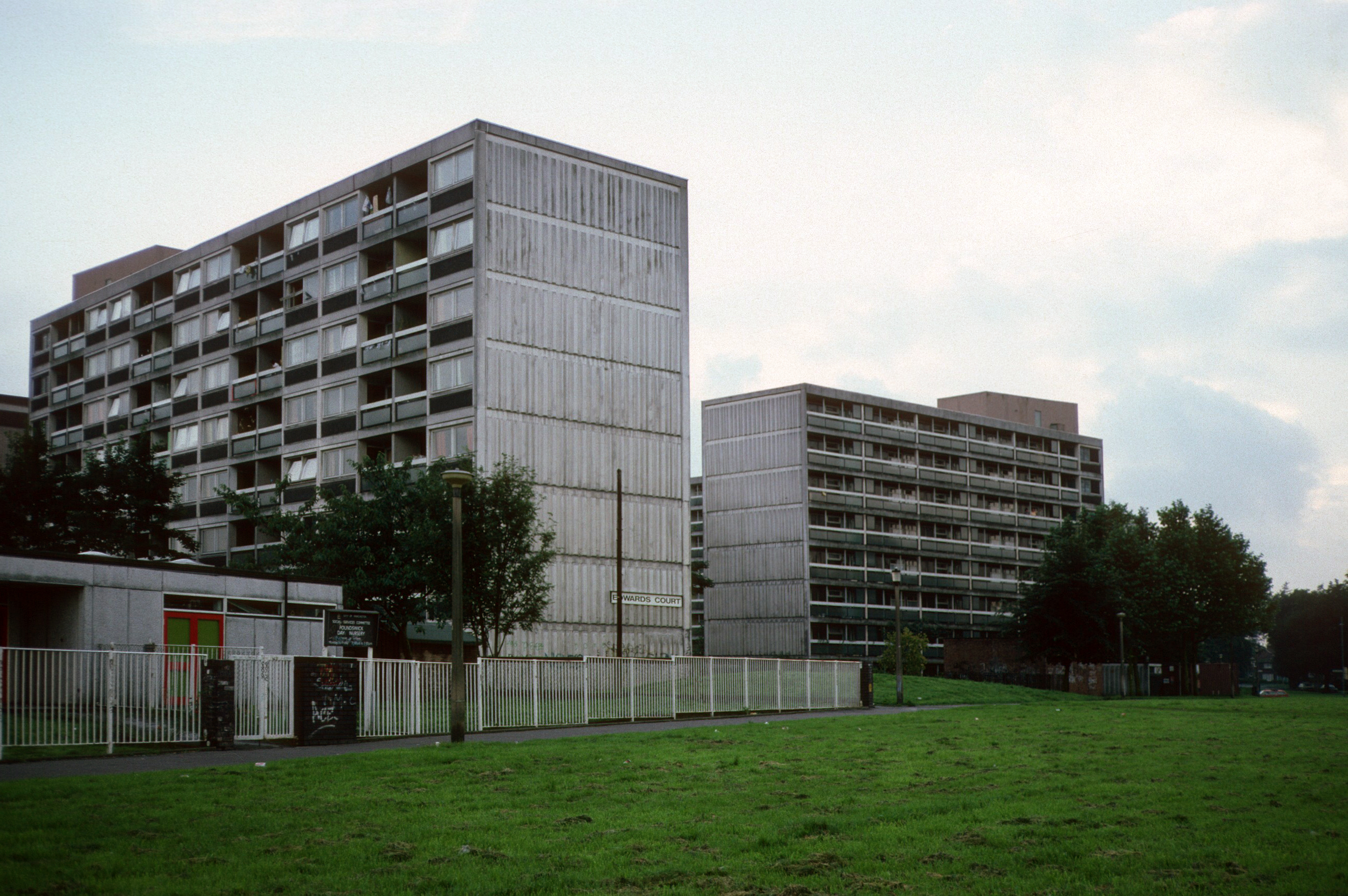
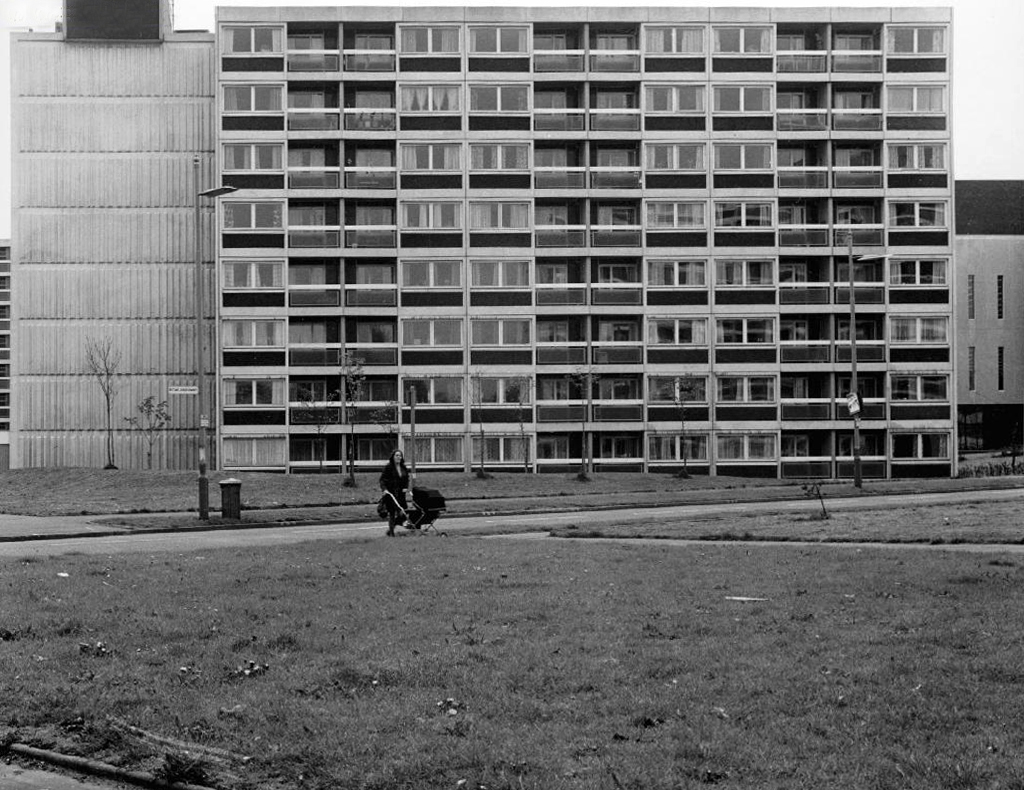
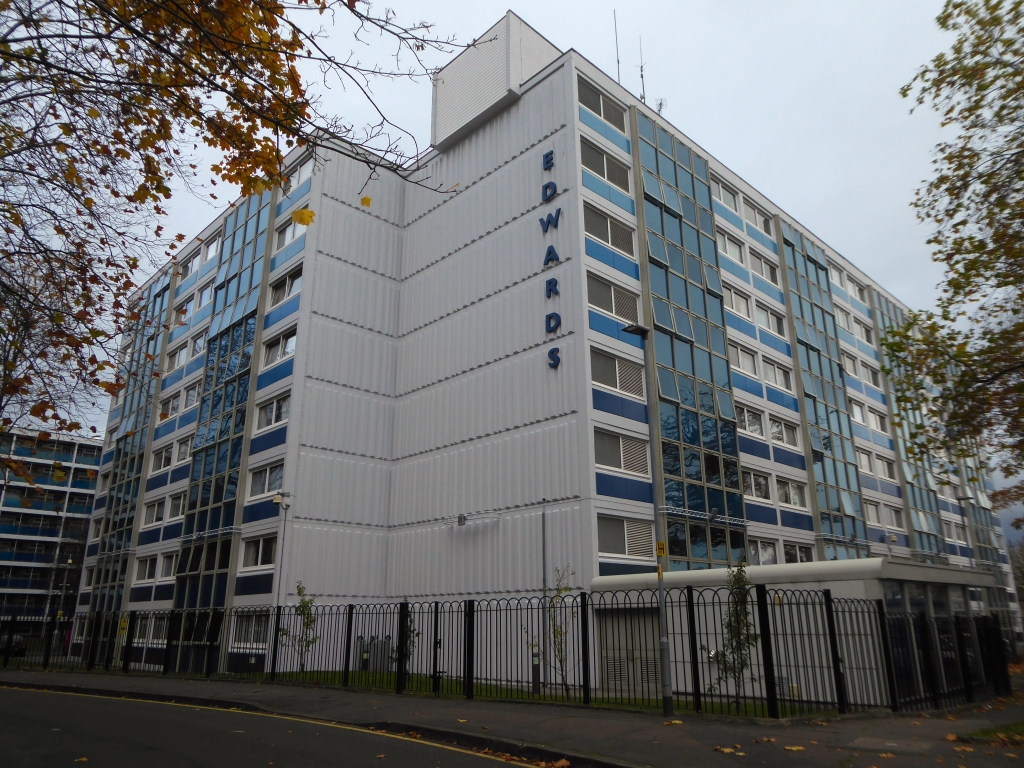
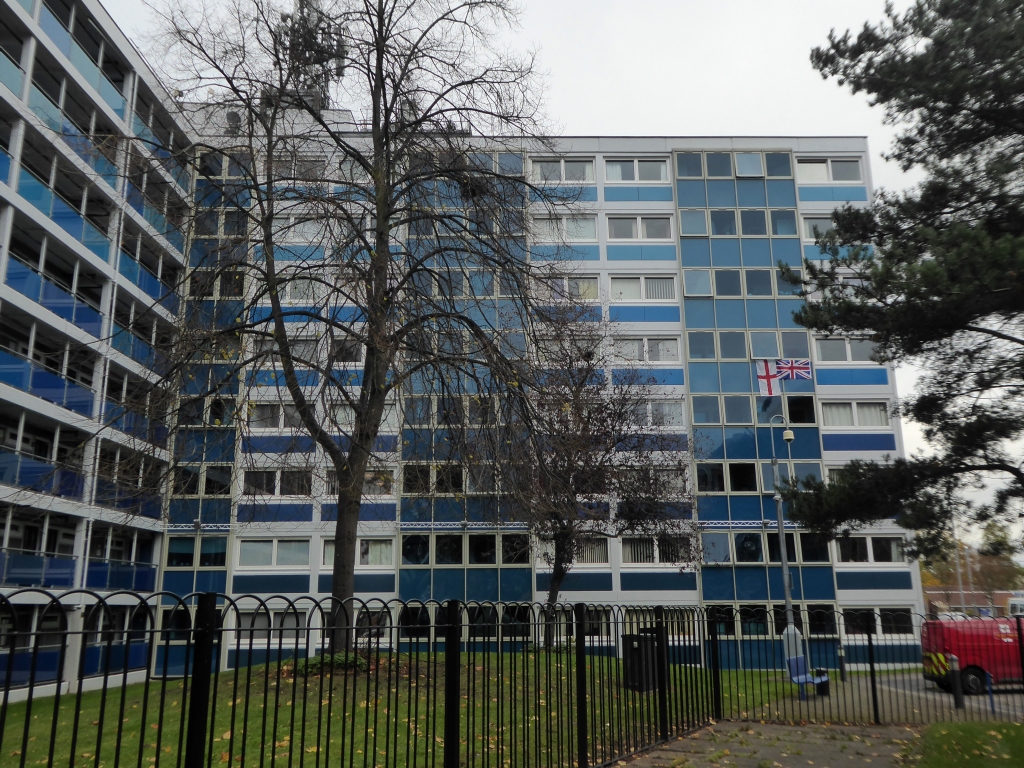
There were four eight-storey blocks of ‘Sectra’ flats that Laing built in Wythenshawe for Manchester County Borough Council, completed in 1967. The blocks were described by Laing in their monthly newsletter ‘Team Spirit’ in January 1968 as four blocks of specially designed eight-storey flats for elderly people.

Showing skeleton cladding, patterned end wall units and access balcony.

They were named Park Court, Violet Court, Birch Tree Court and Edwards Court.

Park Court and Violet Court have since been demolished to make way for retail space.

Violet Court

Tower Block 1987

Architect J Austen Bent

Local Image Collection 1972

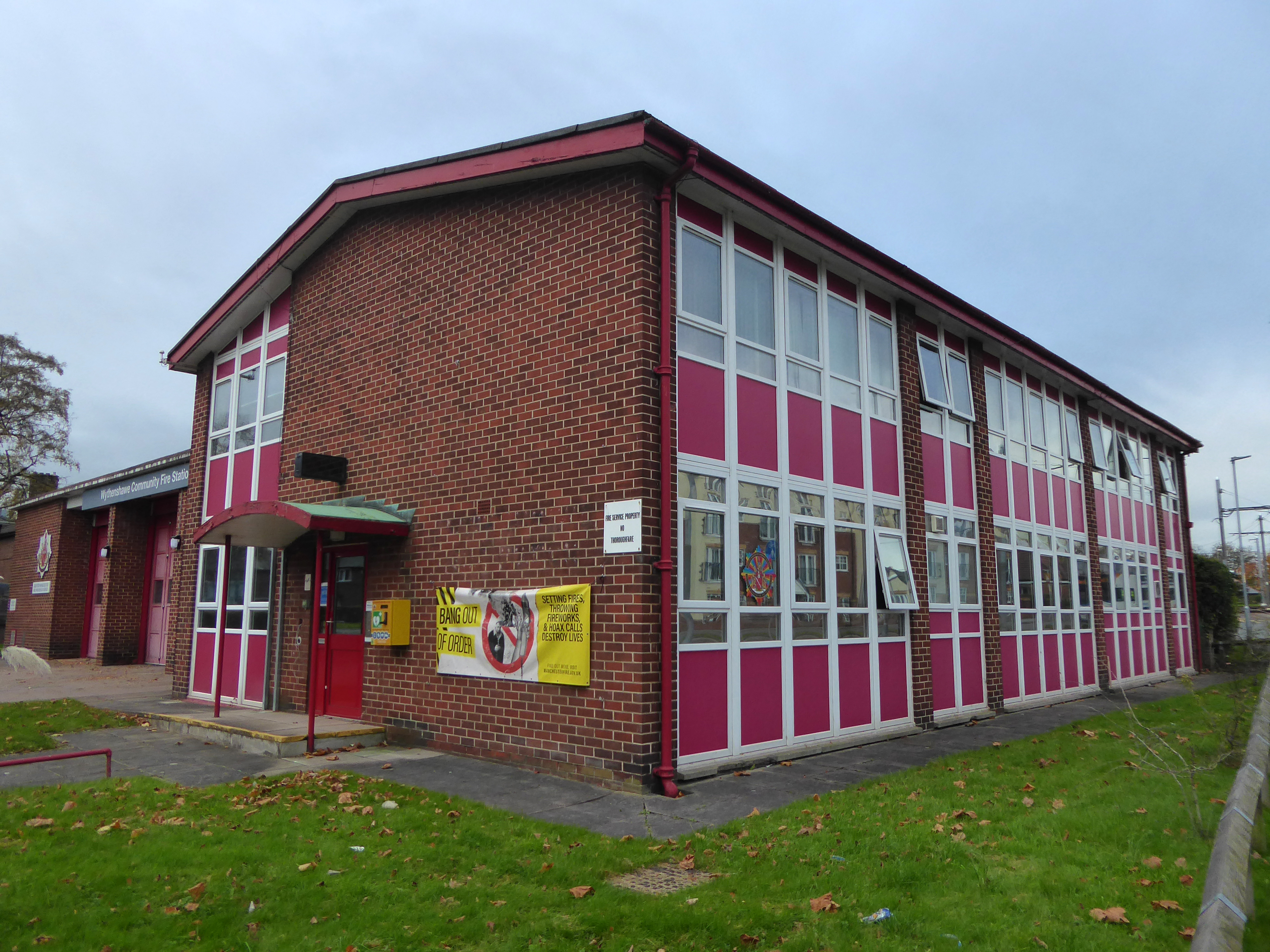
Onwards to the most exotic magenta fire station.

Then down the road to St Luke’s 1939 by W Cecil Young of Taylor and Young.

No striving after sensational effect is strived at – Pevsner.

Down the road we go to St Martin’s.

The church is the the work of Harry Fairhurst Architects 1958.

Opened 21st March 1959.

Across the road to Tin Town.

A mini-estate of impeccably kept, neat steel-framed prefabs, designed in 1946 by Frederick Gibberd. We got a tour around one, home to former Durutti Column drummer Bruce Mitchell. The space standards and architectural quality are, as Phil Griffin points out, way above those of contemporary central Manchester luxury loft living. 

Owen Hatherley – The Guardian

New residents were given the choice of an apple or pear tree.

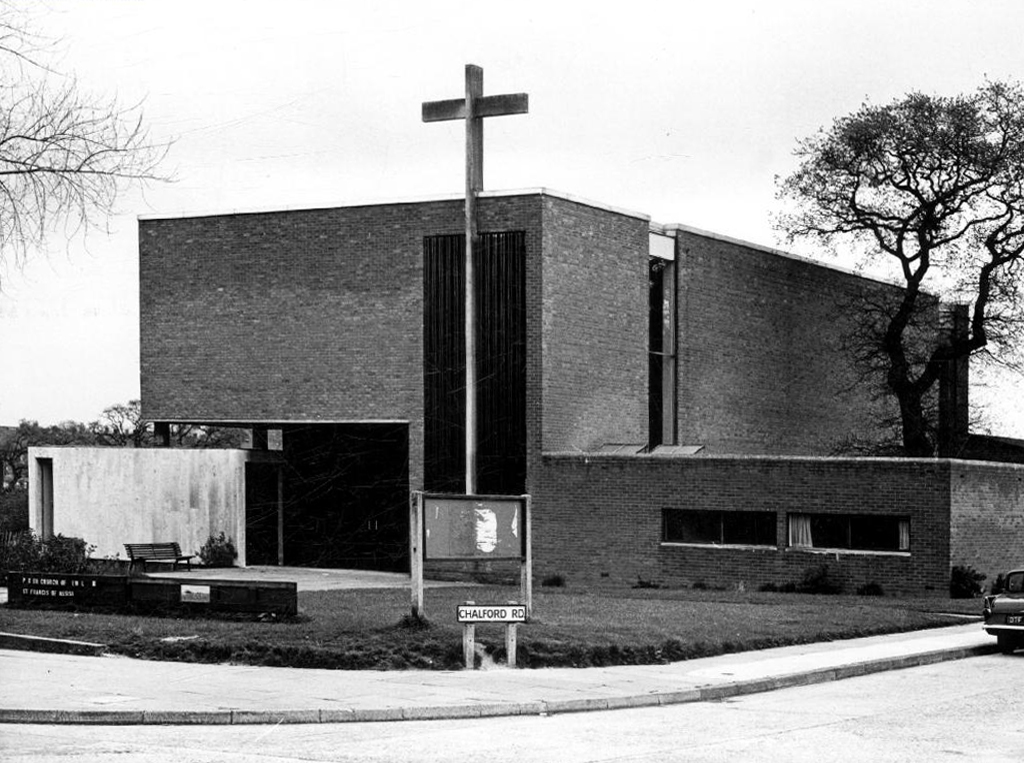
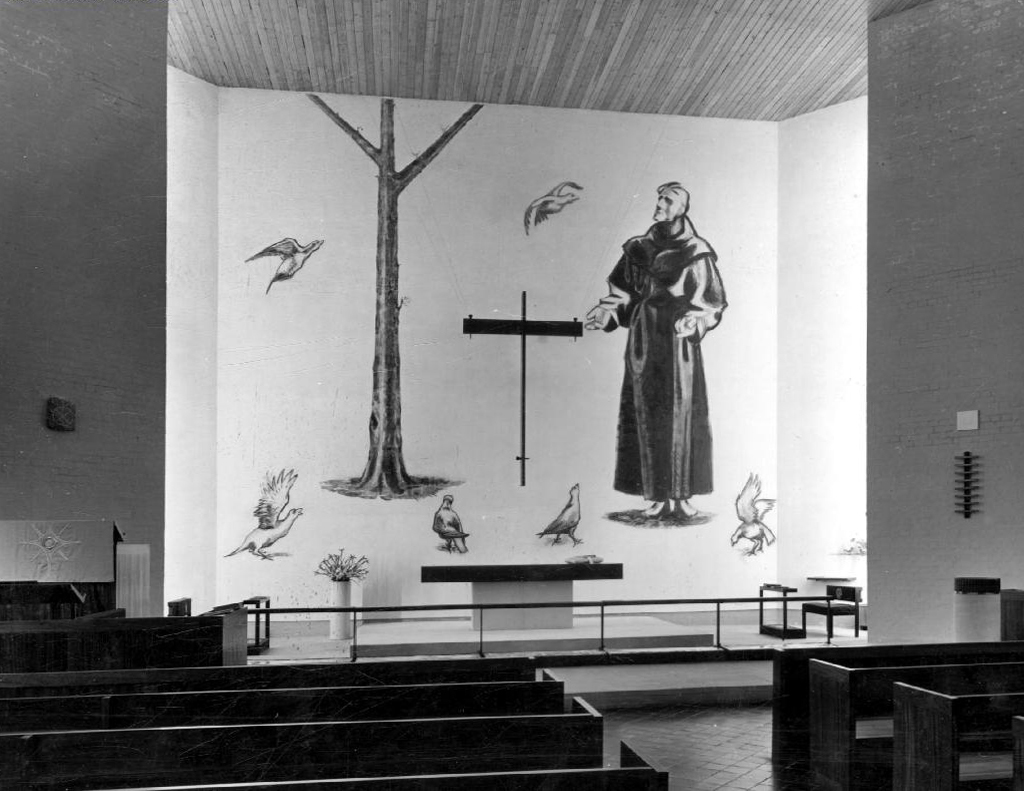
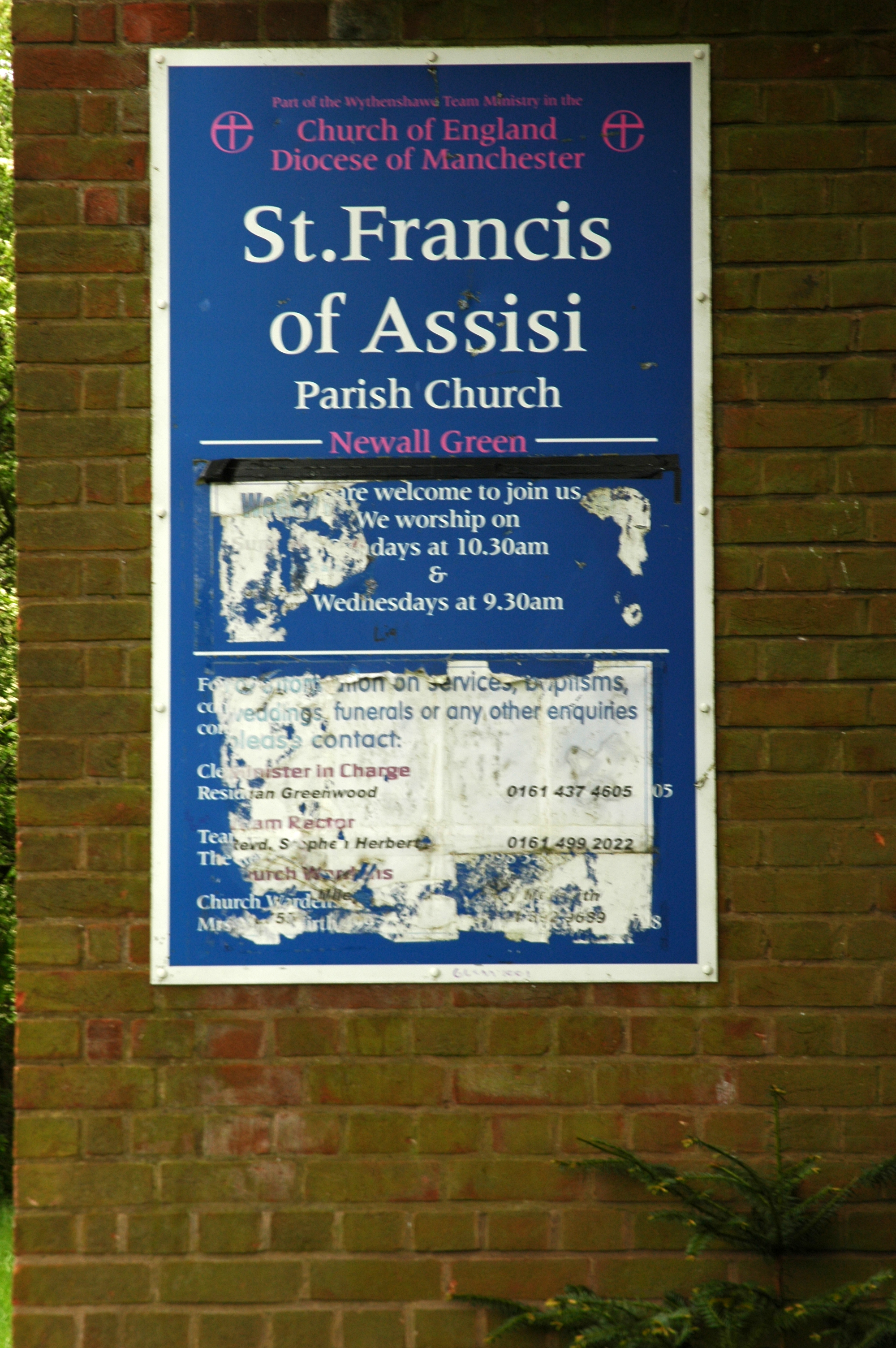
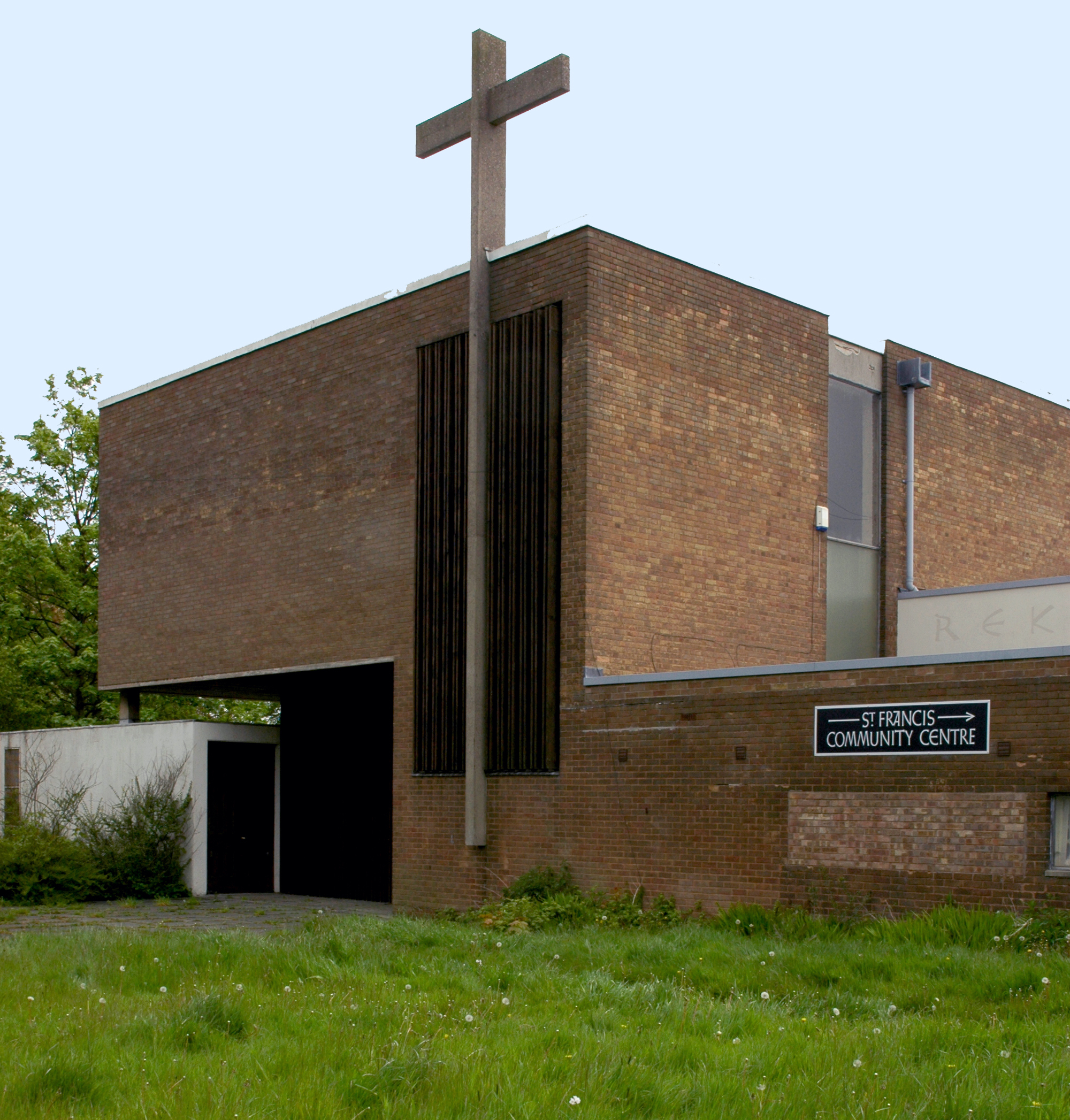
Finally arriving at Sir Basil Spence’s St Francis of Assisi.

2012

In December 1956 Basil Spence and Partners were commissioned to design St Francis Church in Wythenshawe, Greater Manchester. The project was part of a large building programme by the Manchester Diocese and was to service the new post-war housing estate at Newall Green. The site housed an existing hall that had been serving a dual-purpose as church and church hall but which reverted to use as a church hall once the new church was opened. The foundation stone was laid by Colin Skinner CBE on 23 April 1960 and the church was consecrated on 25 March 1961 by the Bishop of Manchester, W D L Greer.

The main building is predominantly brick; it is set back from the road by a landscaped courtyard that includes a brick tower and 73ft concrete cross. Another large cross rises from the front wall of the church itself making it highly visible from the surrounding neighbourhood.

The church can hold a congregation of 250. A small chapel is separated from the main church by a sliding screen and can be used independently for private prayer and mid week-services. On busy days the screen can be retracted to provide additional seating to the main church. A gallery over the entrance porch houses two organs and the choir.

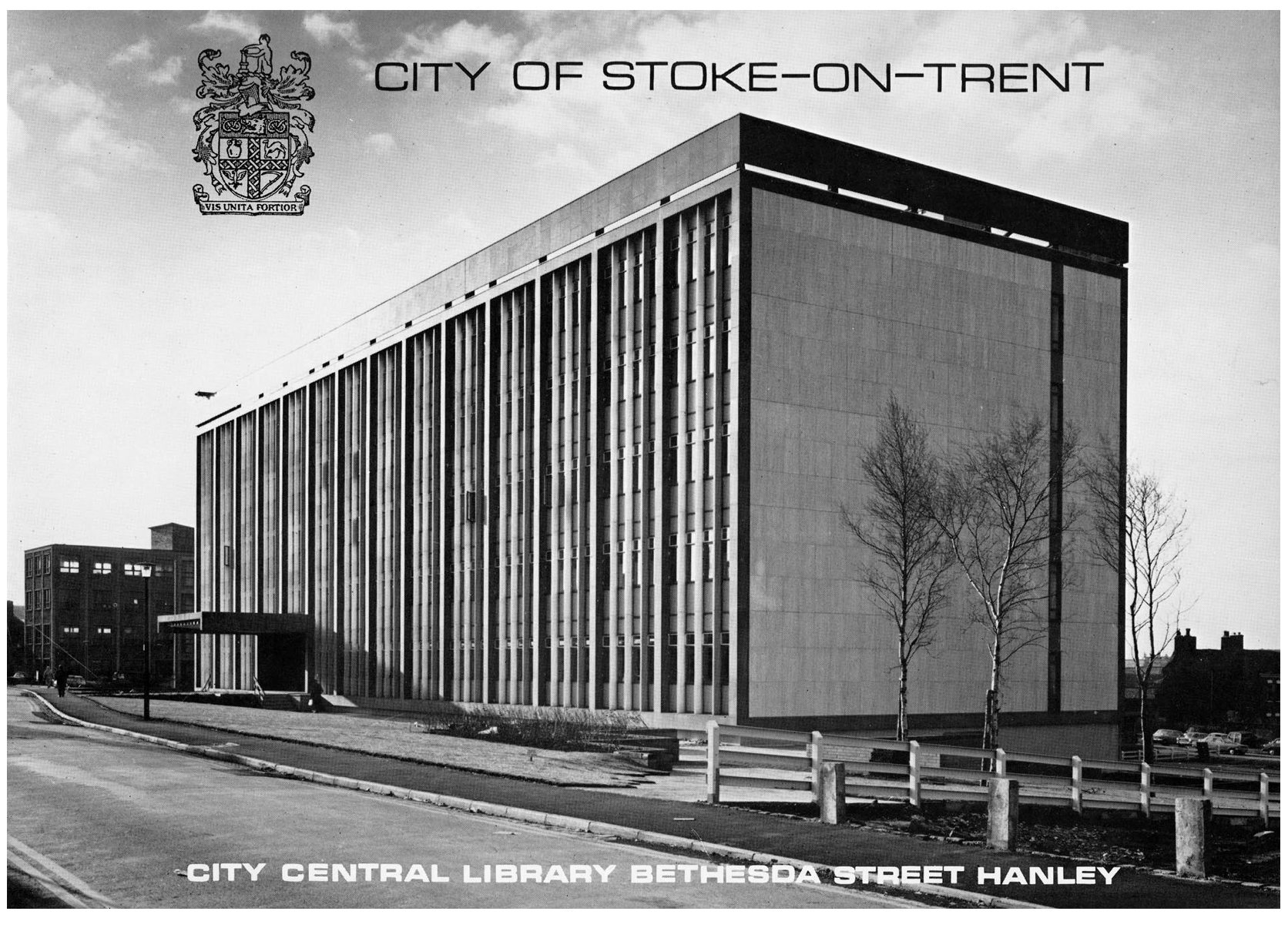
Stoke Walk

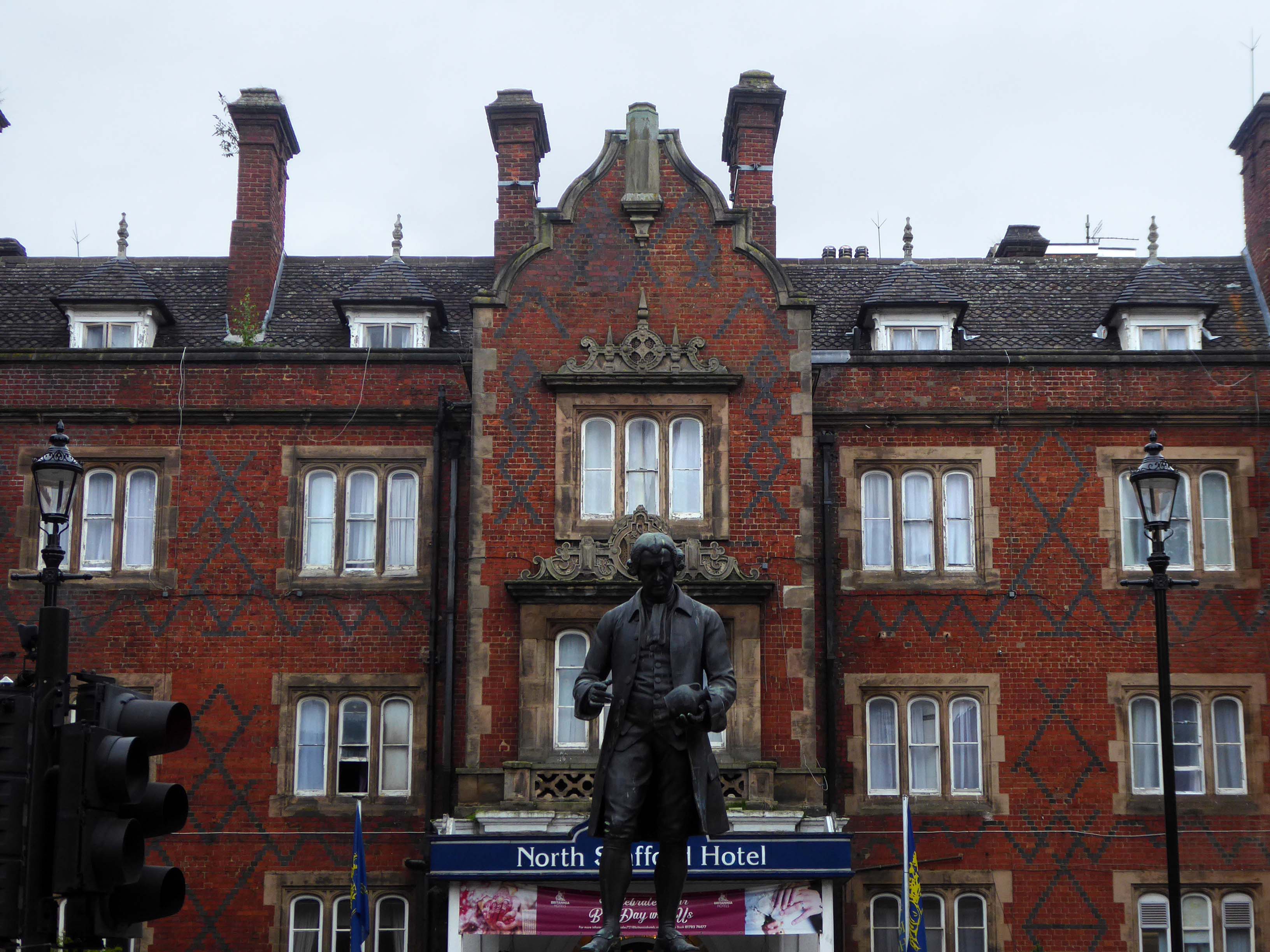
We begin by doffing our caps to Josiah Wedgwood – who along with countless other unsung heroes defined Stoke on Trent as the heart of the pottery industry.

Stoke is polycentric, having been formed by the federation of six towns in 1910.

It took its name from Stoke-upon-Trent where the main centre of government and the principal railway station in the district were located. 

Hanley is the primary commercial centre.

The other four towns are Burslem, Tunstall, Longton, and Fenton.

Wikipedia

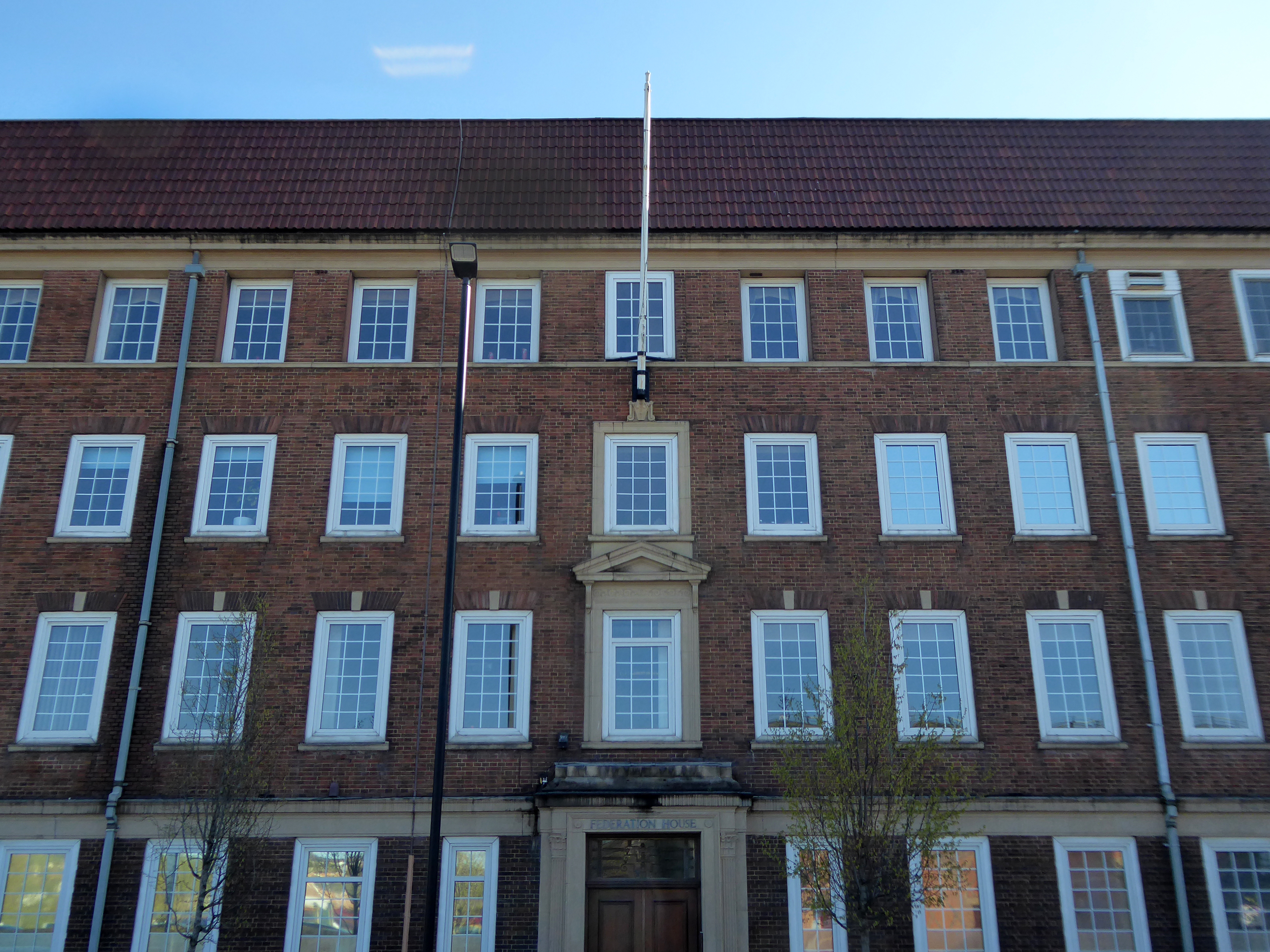
First up Federation House architects: Wood Goldstraw Yorath 1930 – described as Art Deco.

Built to house the British Pottery Manufacturers’ Federation now multiple occupancy.

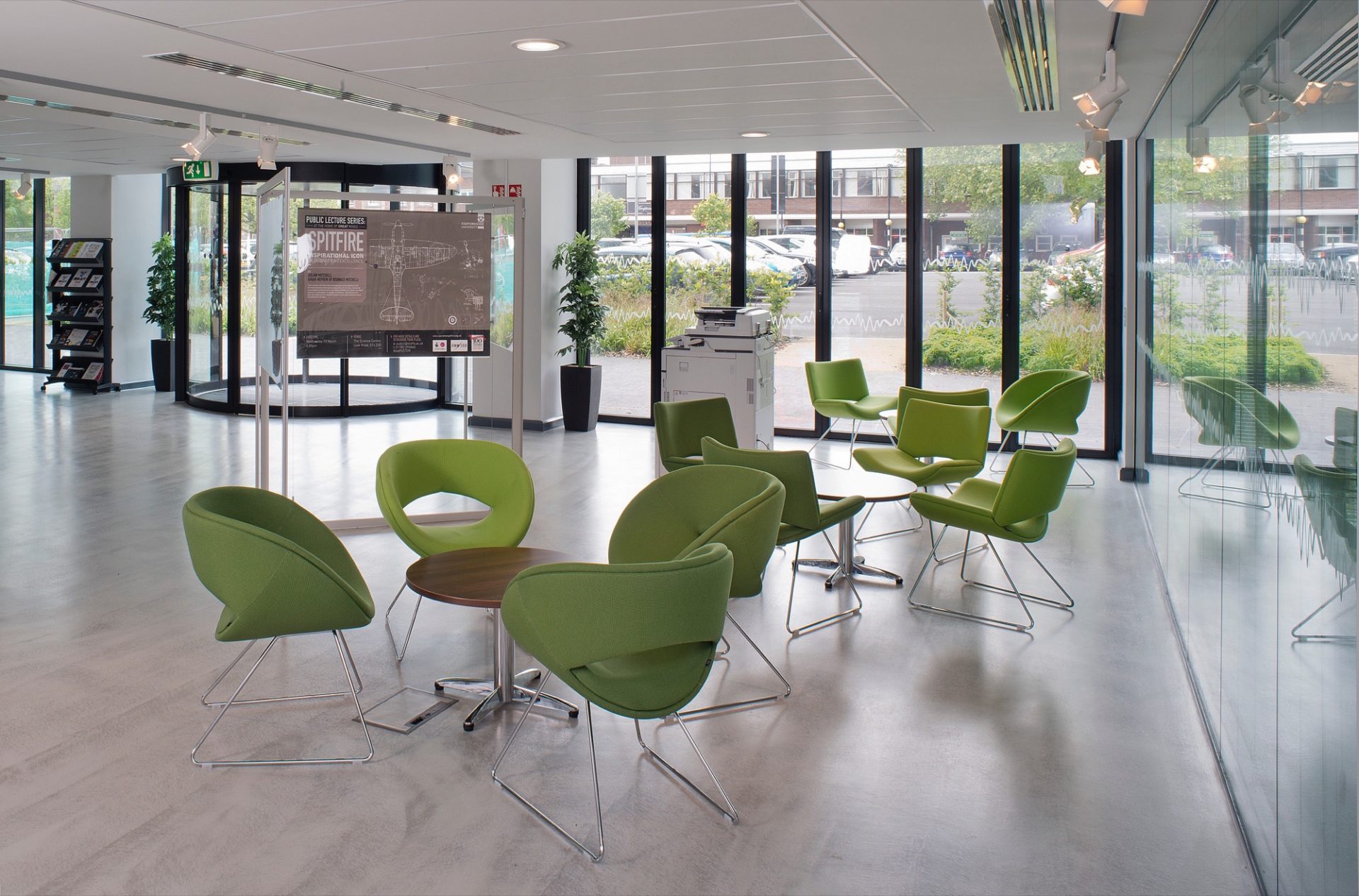
Around the corner to the Staffordshire University.

Staffordshire University was founded in 1914 as a polytechnic intistution, and was officially given University Status on 16 June 1992. Our University is famous for its forward-thinking approach, and has become a figurehead for its vocational and academic teaching, innovative grasp of industry, and student employability.

Although our campus continues to expand to create dynamic opportunities, we are proud of our heritage in the great city of Stoke-on-Trent. Steeped in the history of ceramic manufacture and production, industry in Stoke-on-Trent has been fuelled by Staffordshire University for over 100 years.

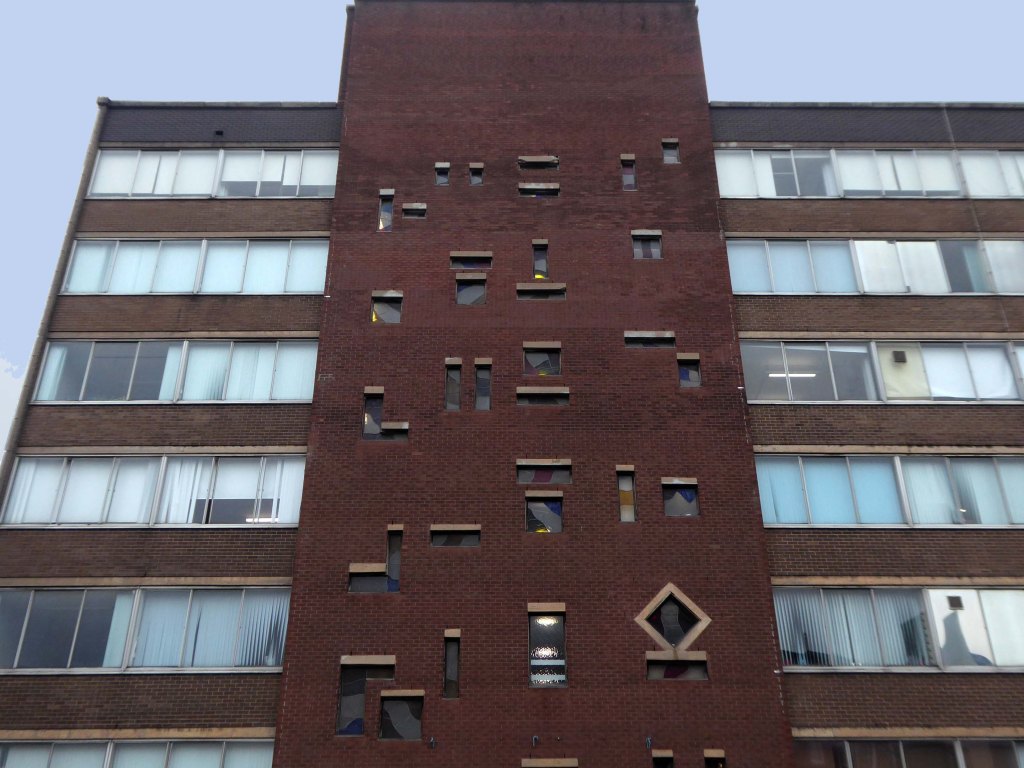
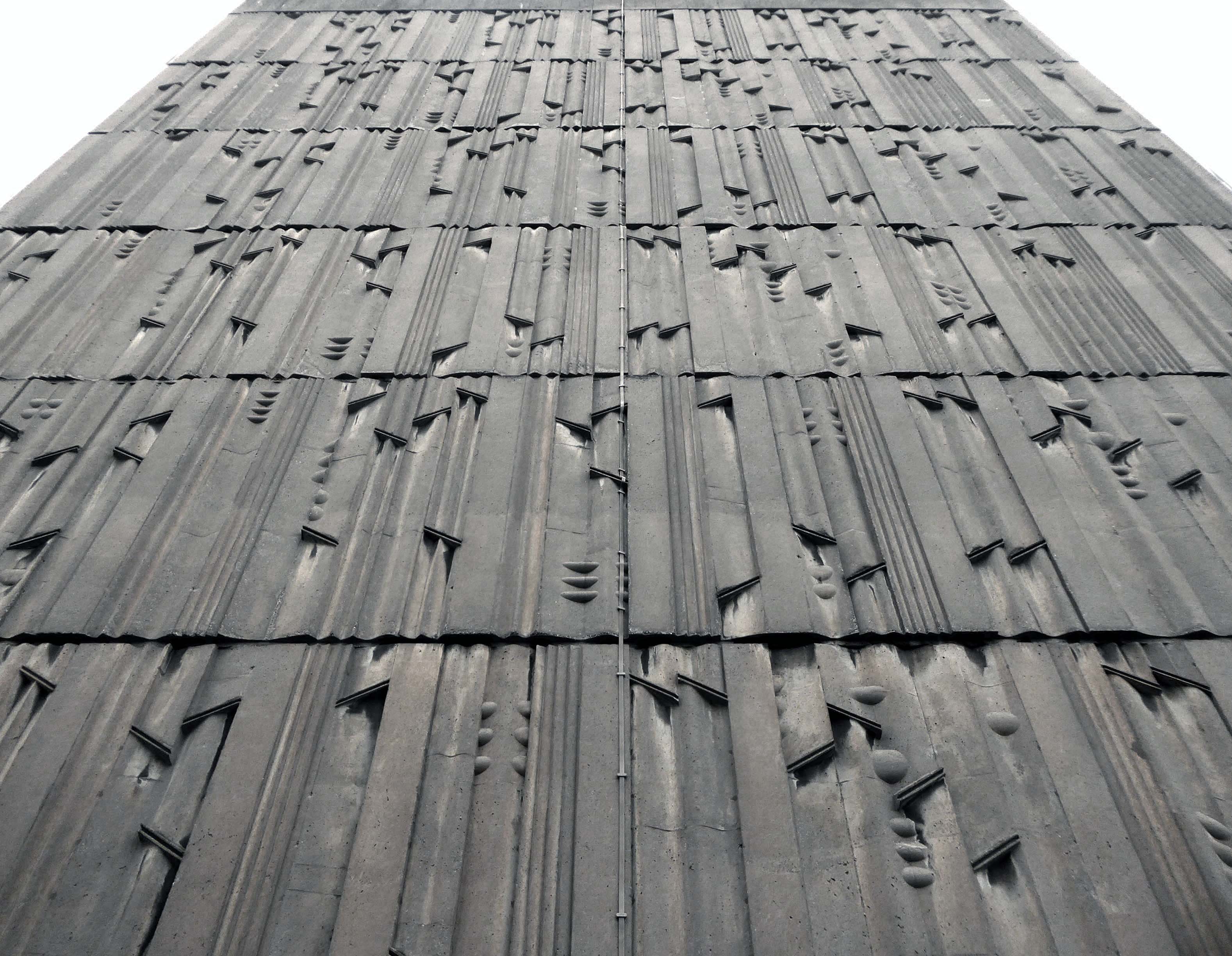
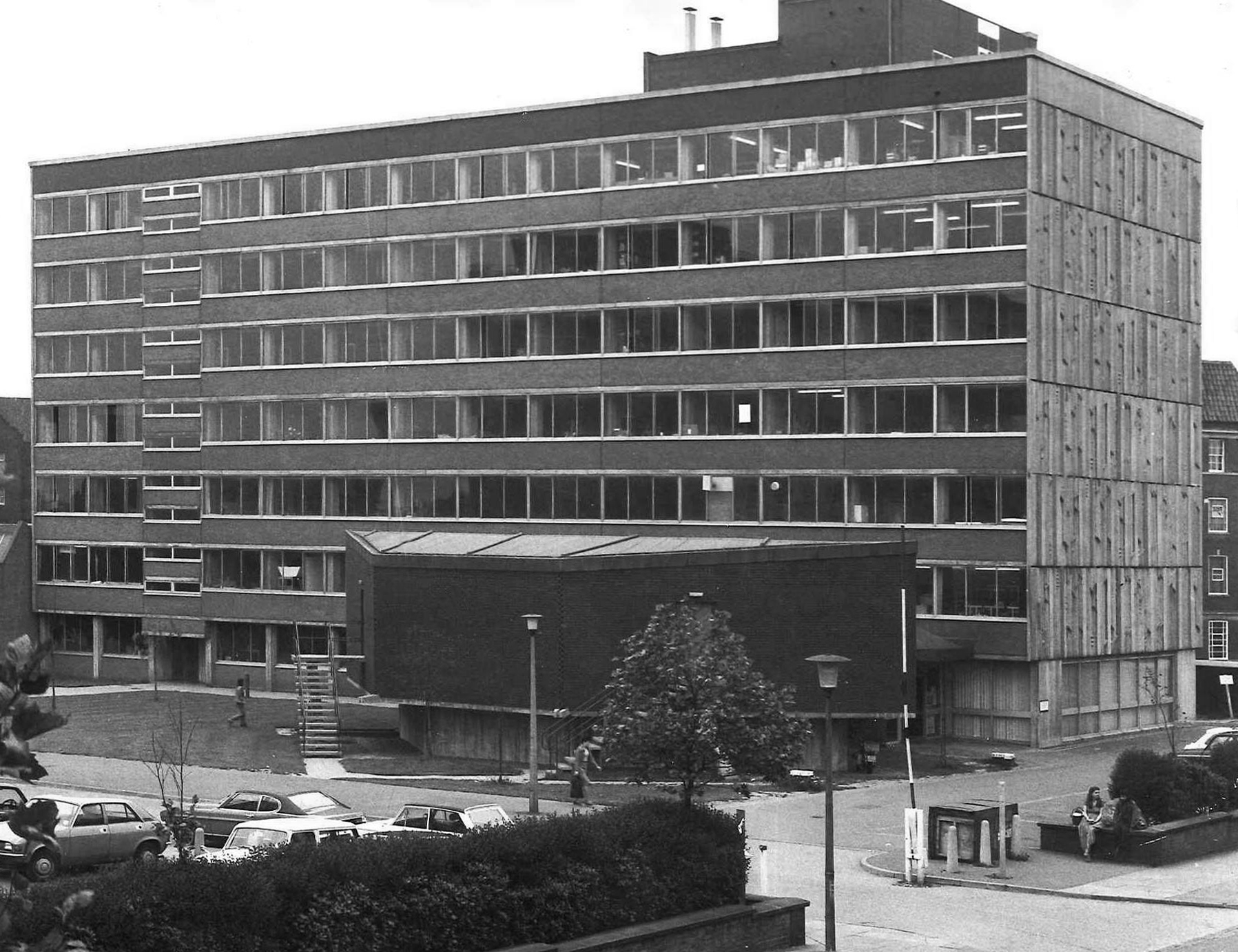
The Flaxman Building 1970 was designed by City Architect Thomas Lovatt and built by the City Works Department – the last public works assignment before competitive tendering opened up public restrictions to private enterprise.

Named for to Wedgwood’s famous modeller the classical artist, John Flaxman RA 1755-1826. 

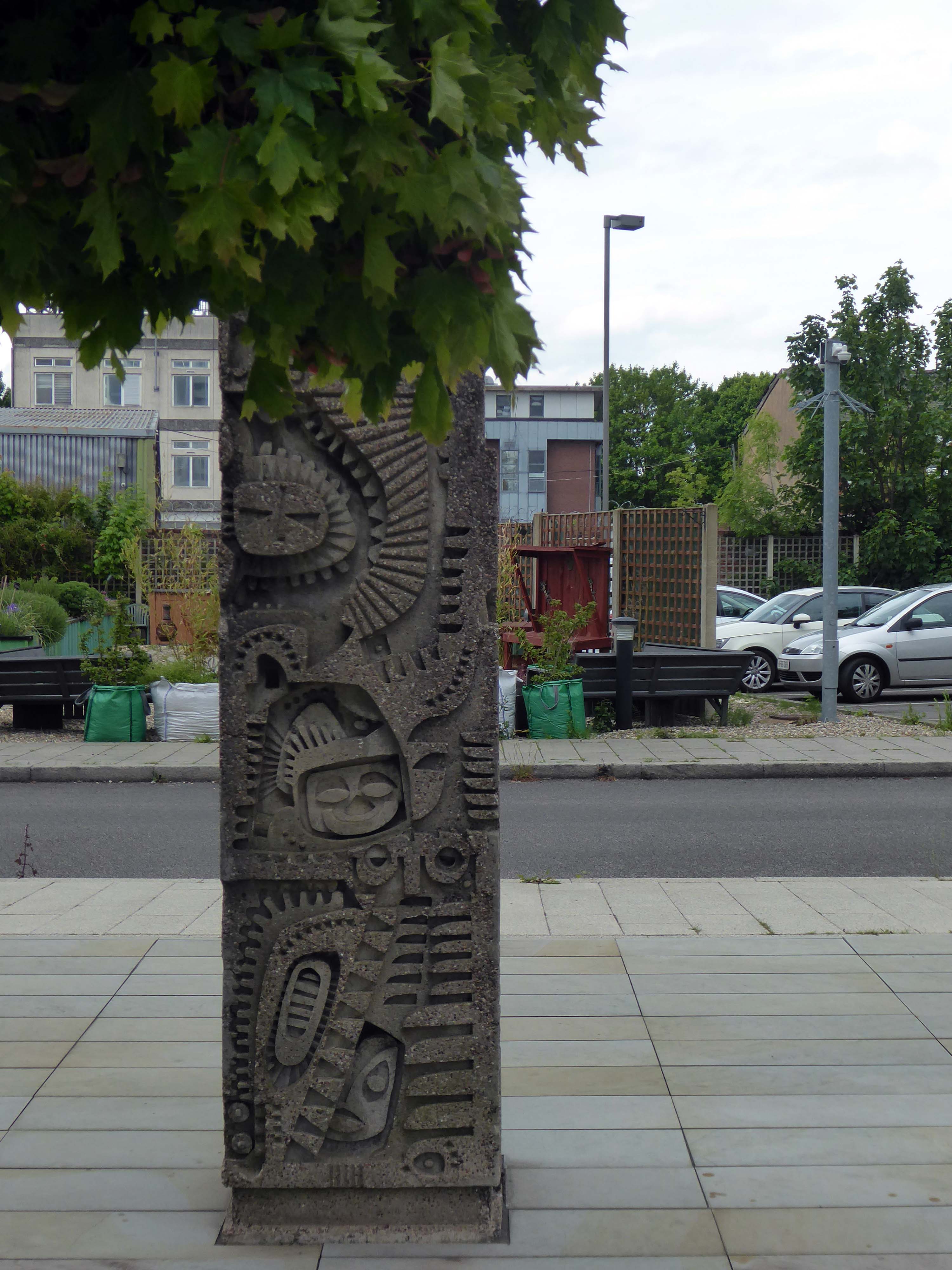
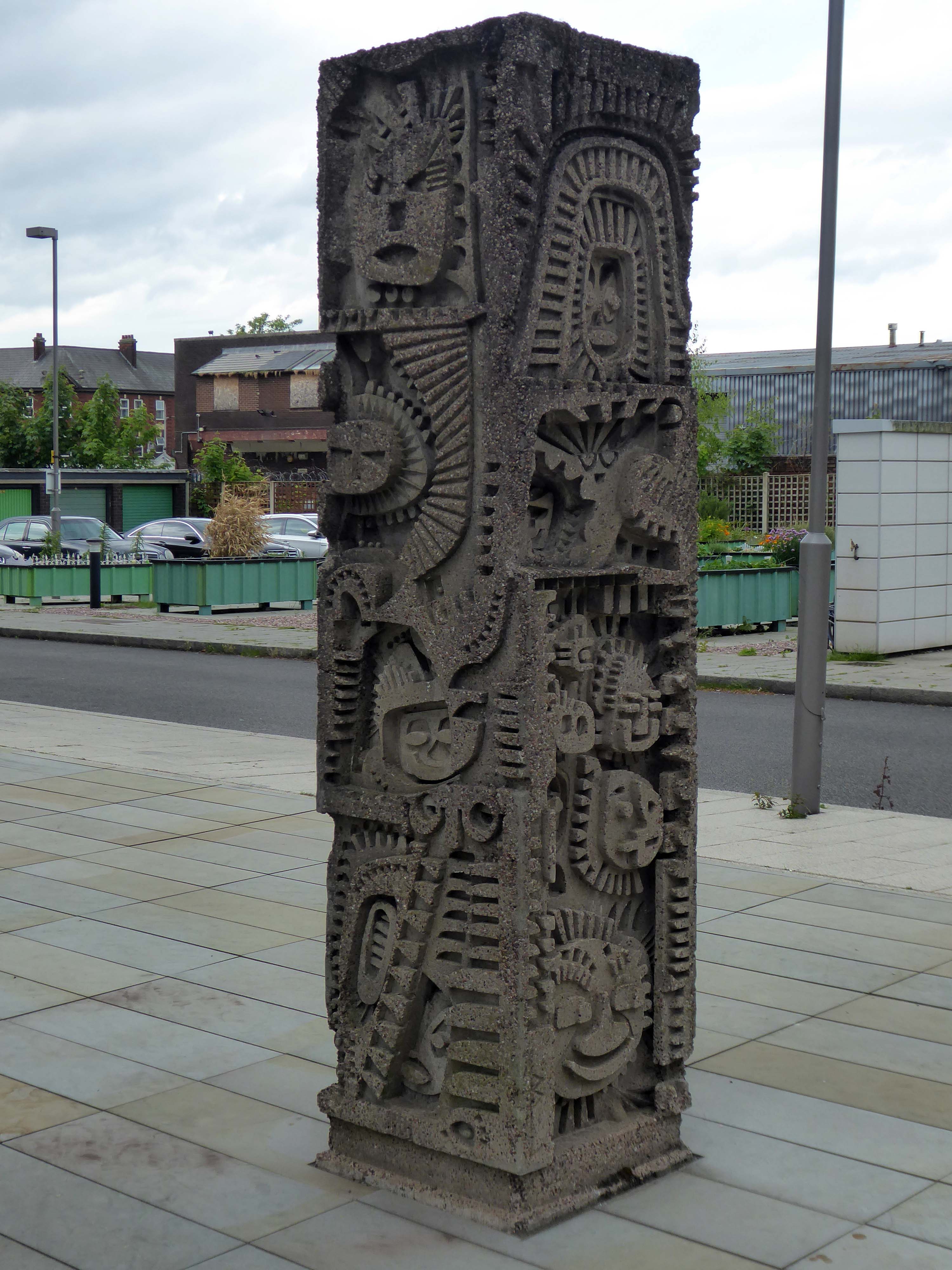
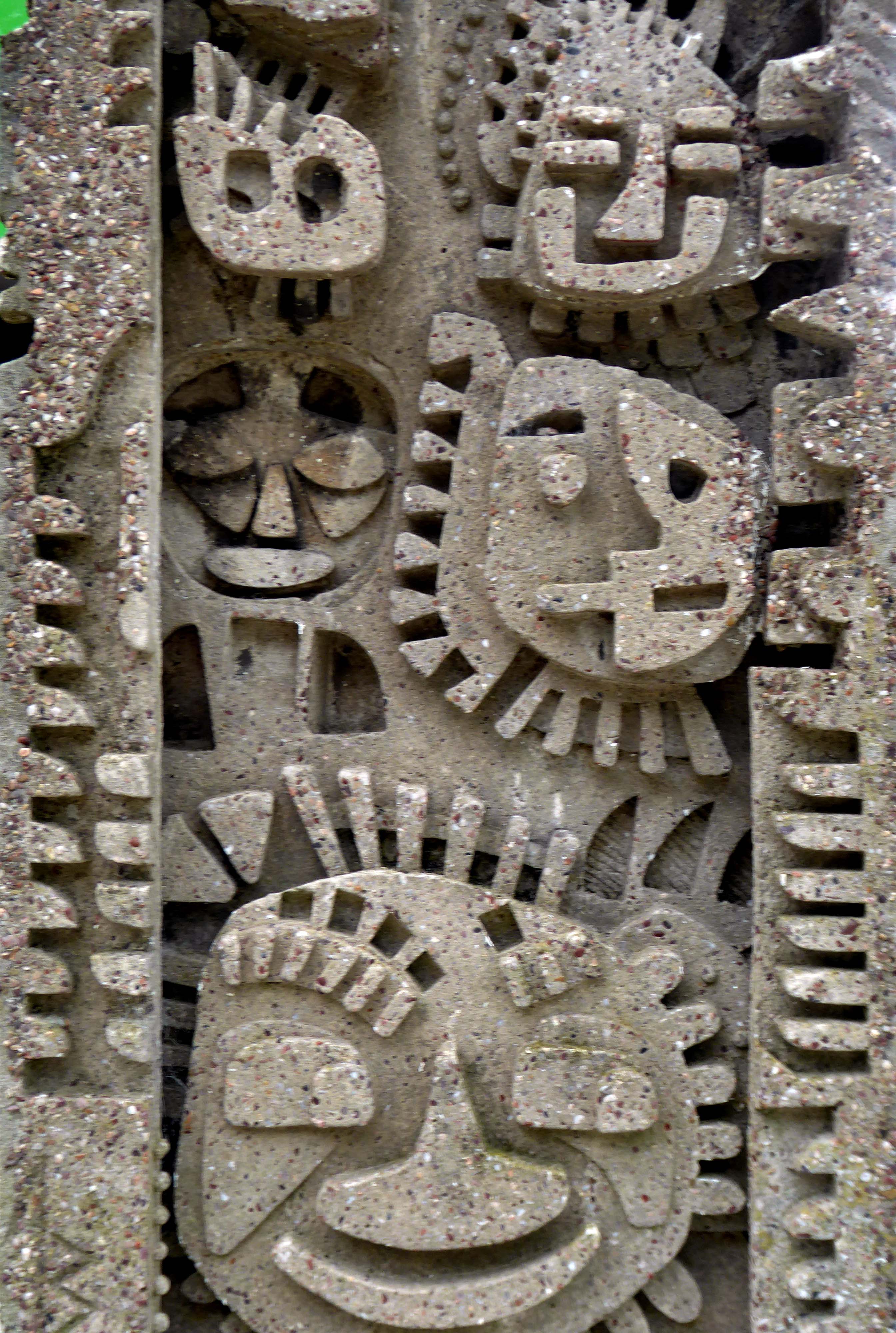
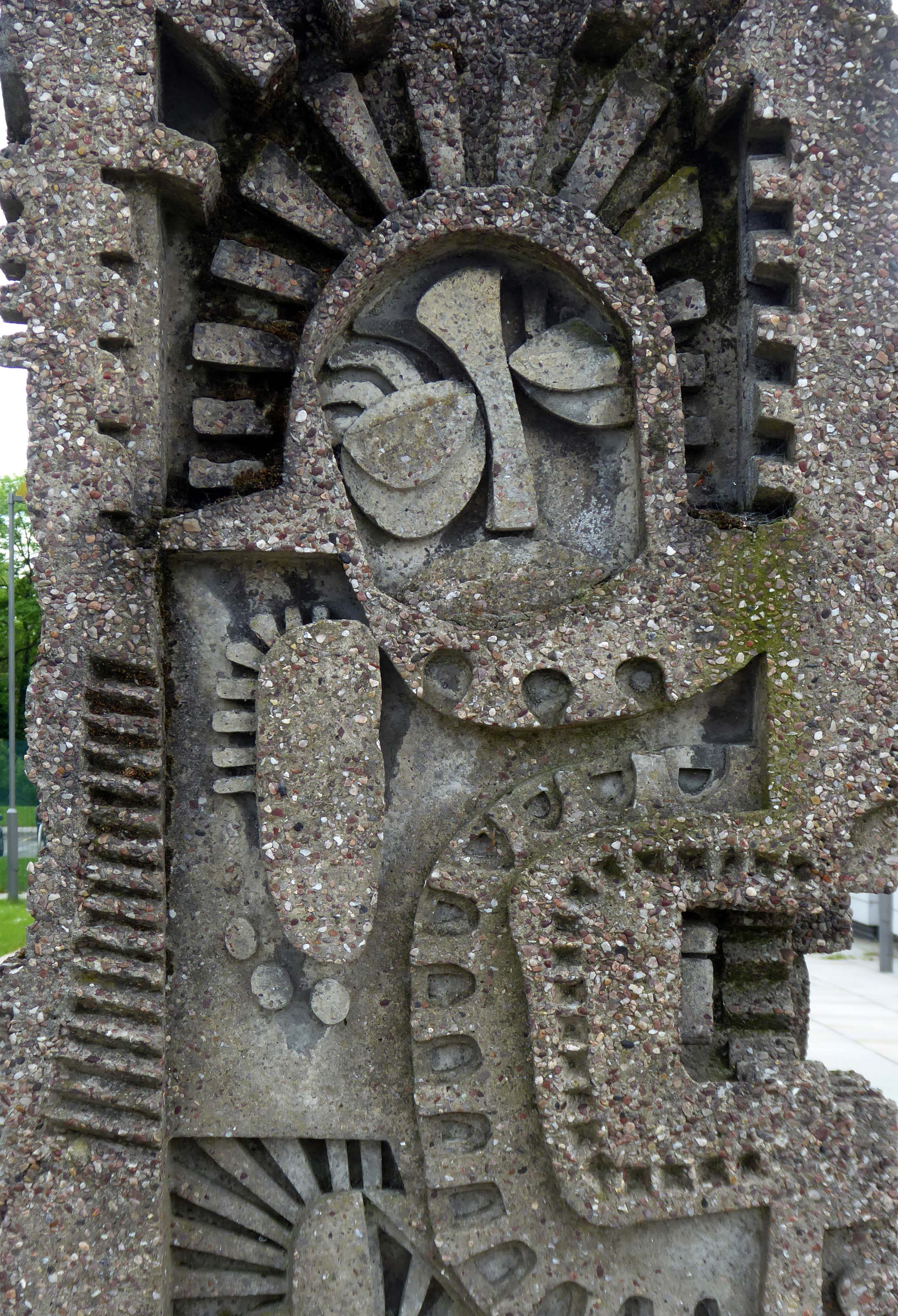
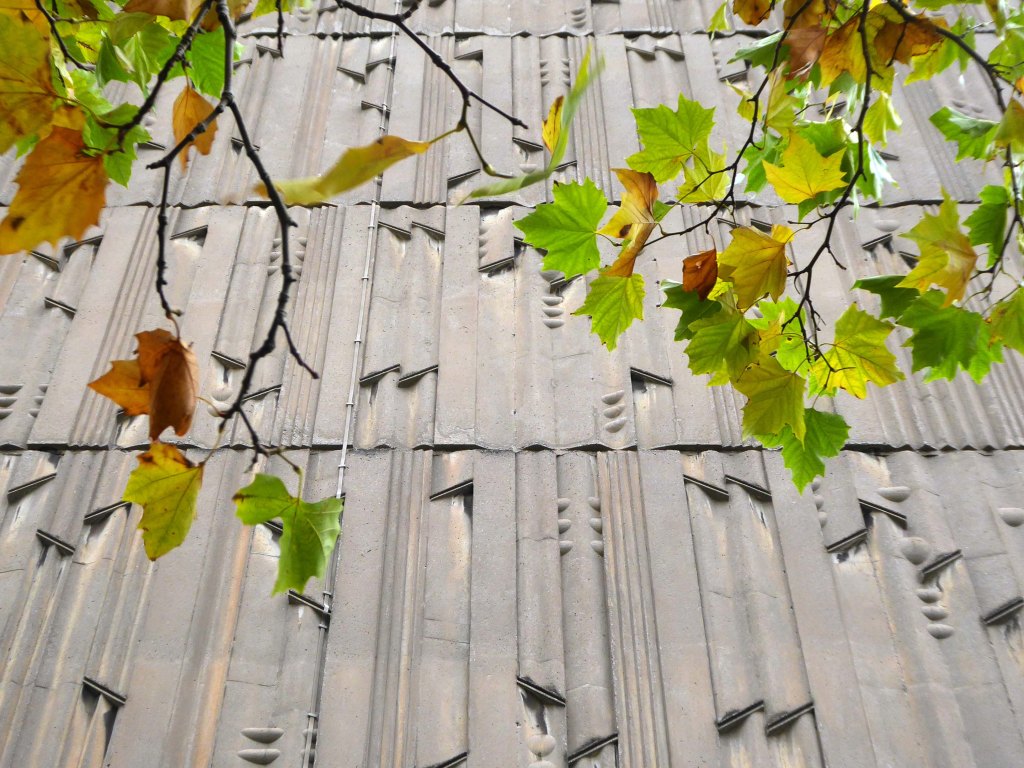
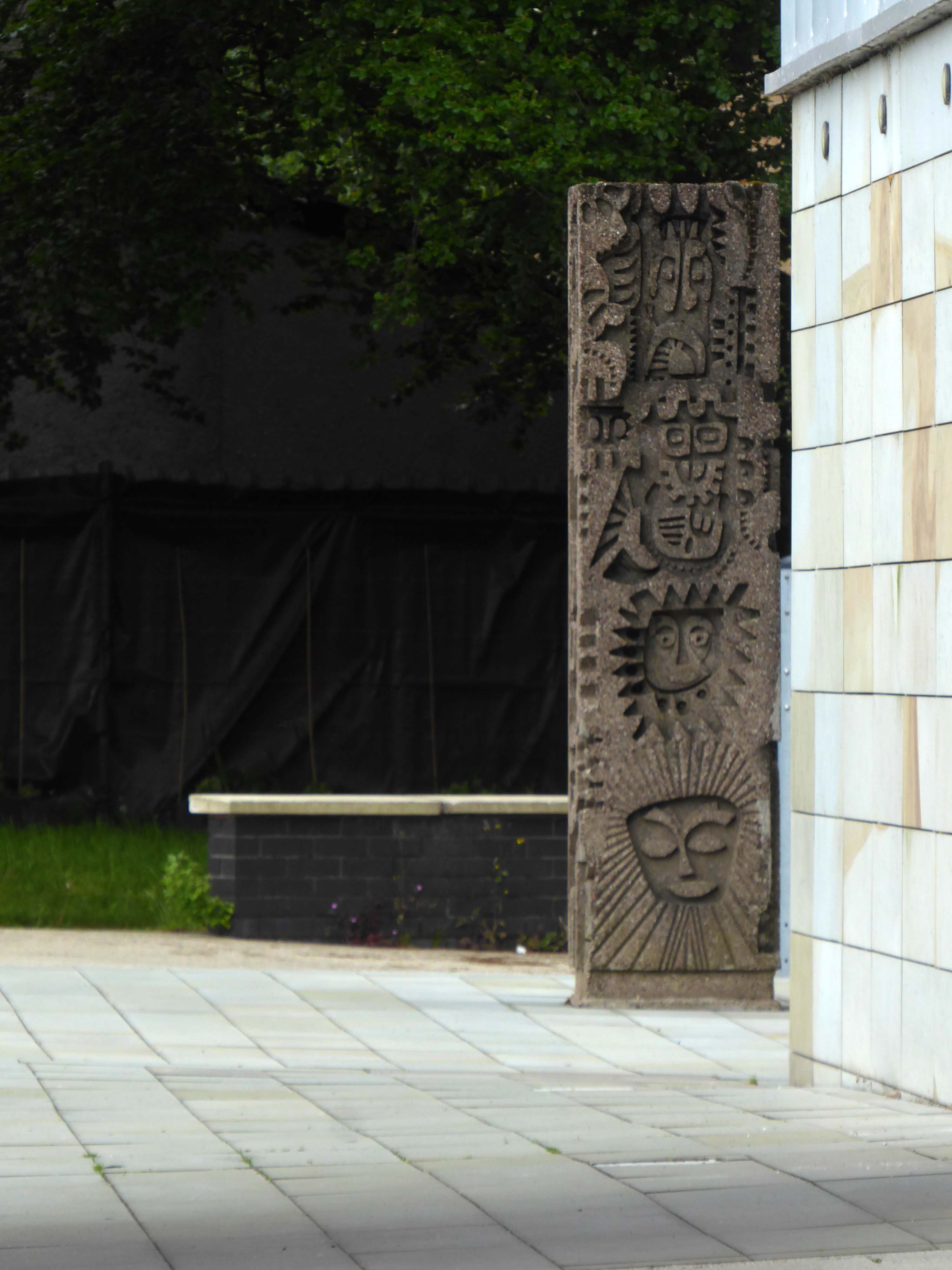
This concrete is very much in the style of William Mitchell – though there is no record of attribution.

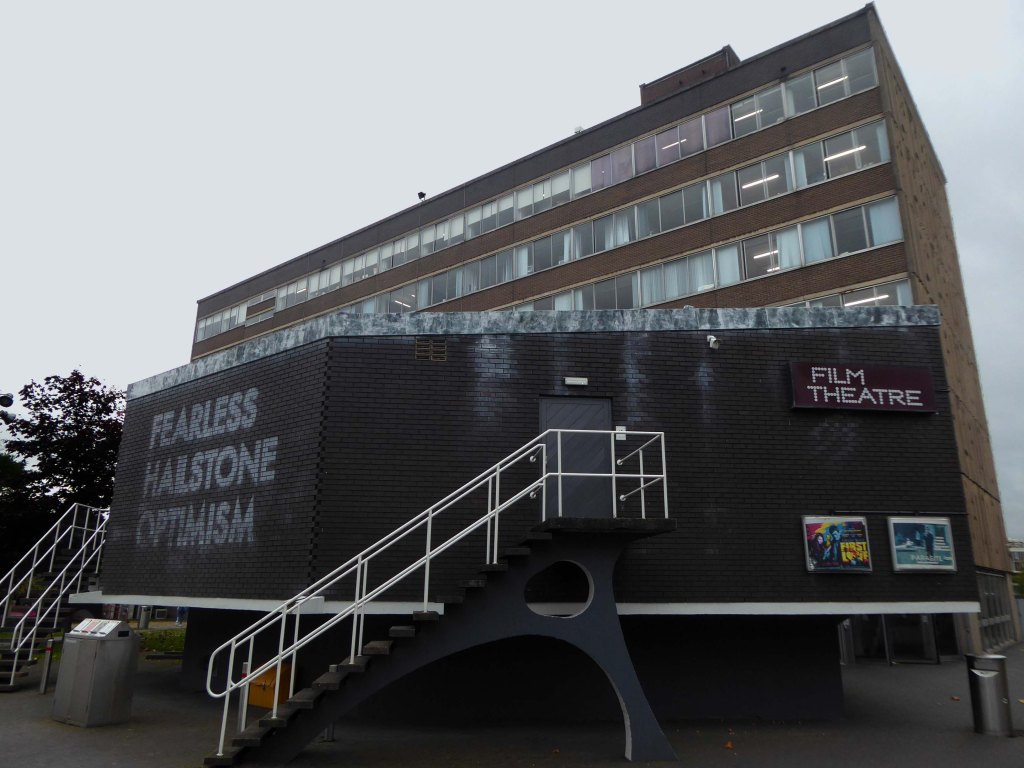
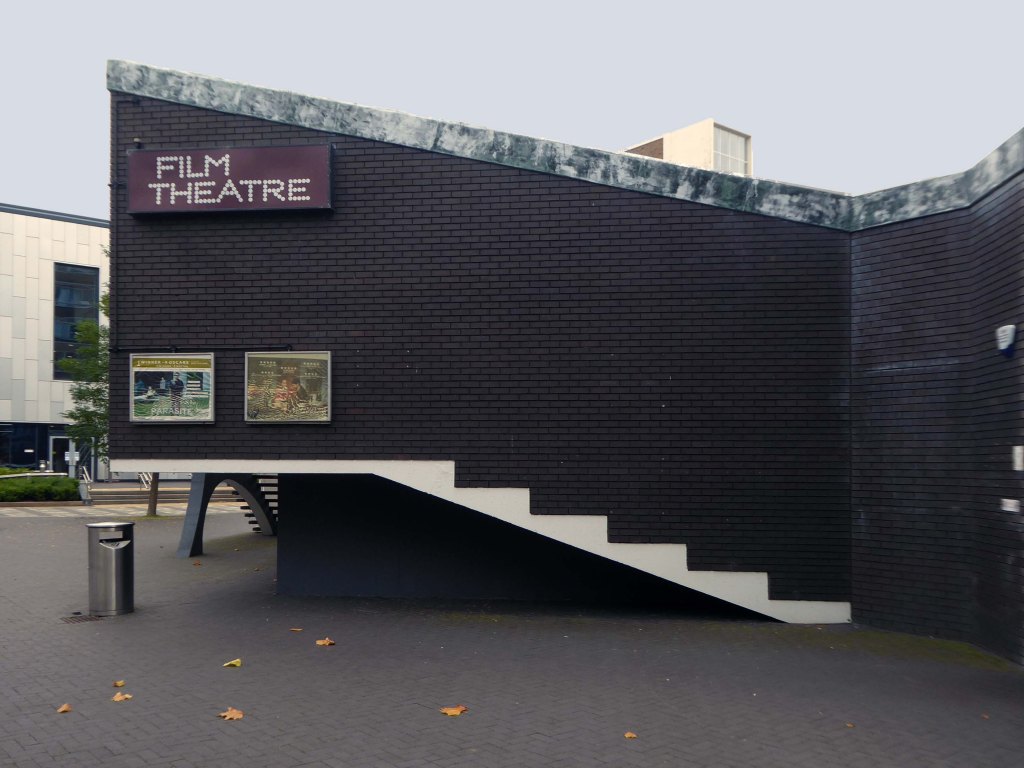
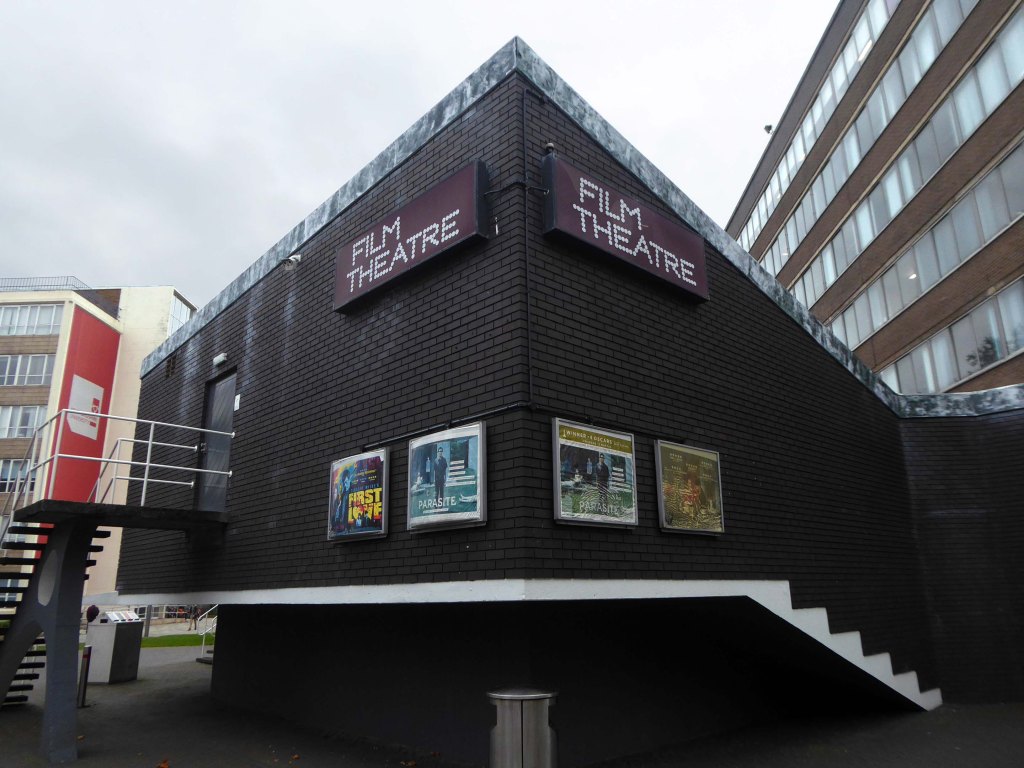
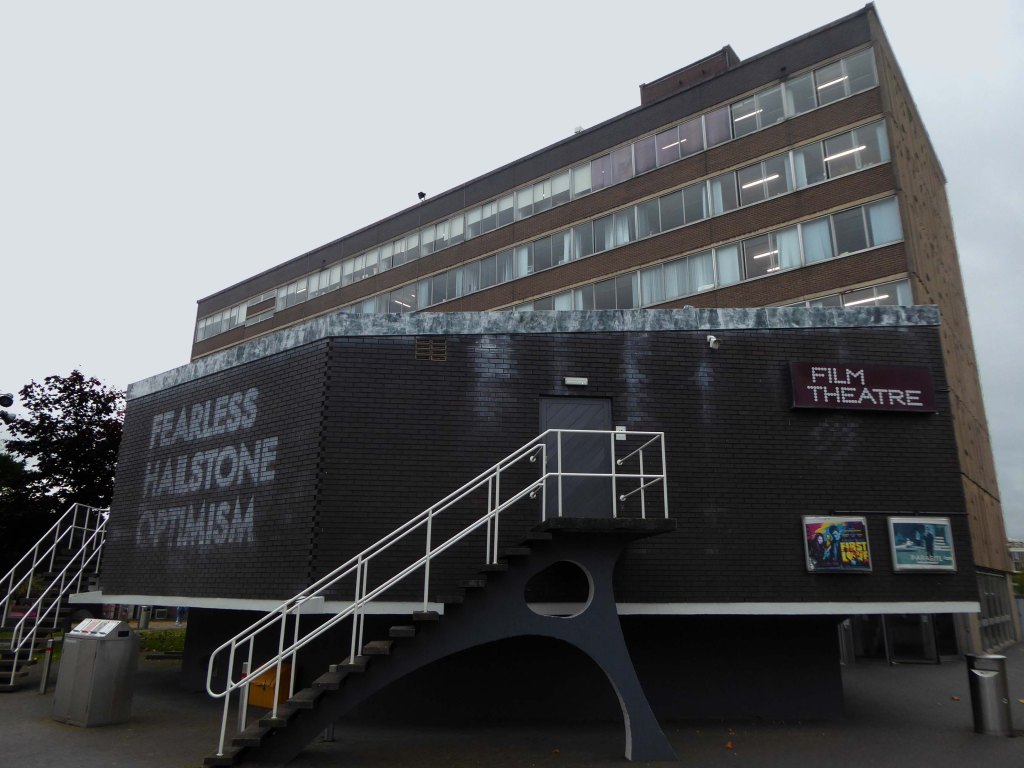
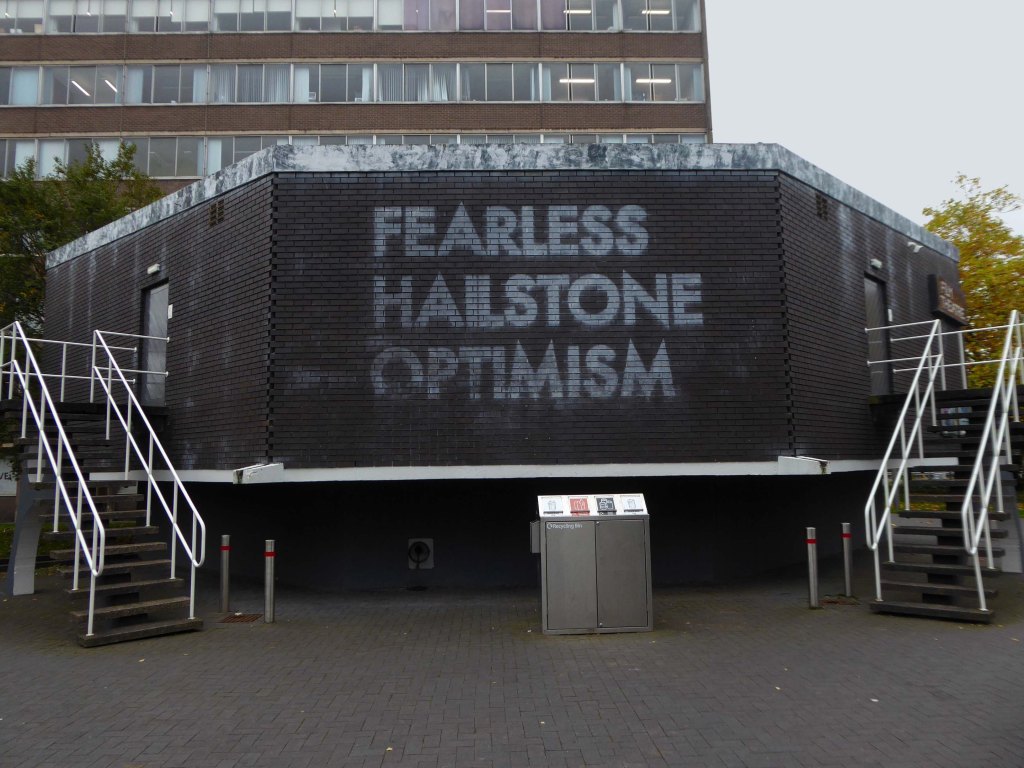
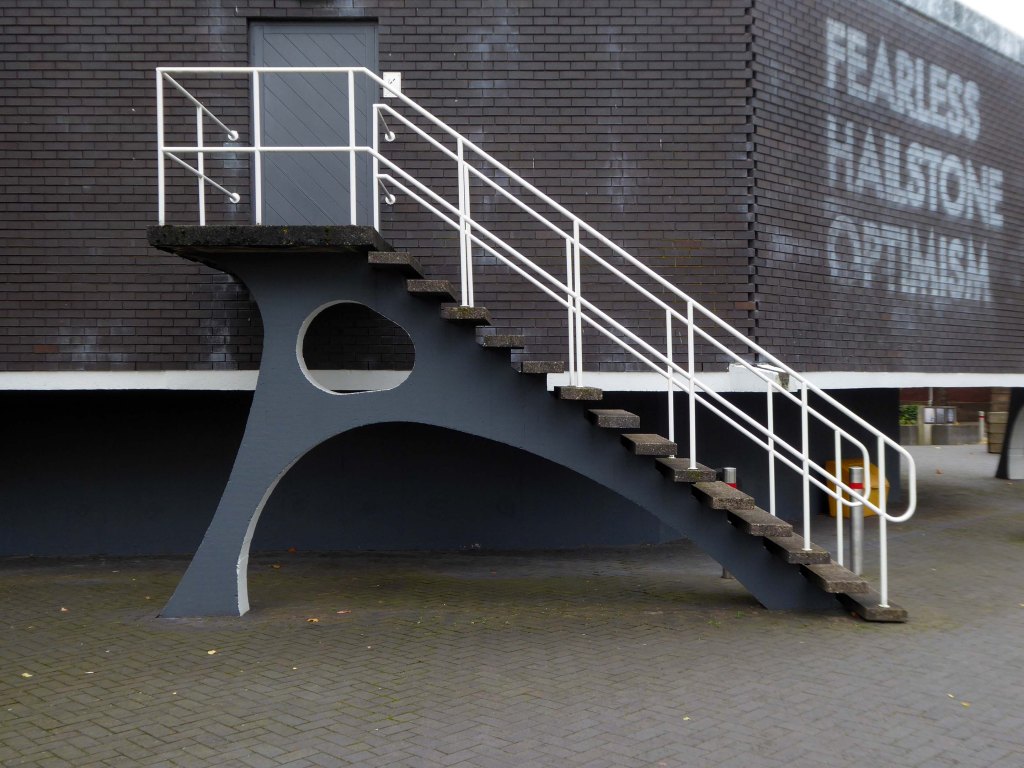
The Regional Film Theatre opened in College Road, on the premises of North Staffordshire Polytechnic now Staffordshire University in 1974.

The North Staffordshire Film Society moved there to screen films one evening a week, while the Film Theatre operated on three nights a week. 

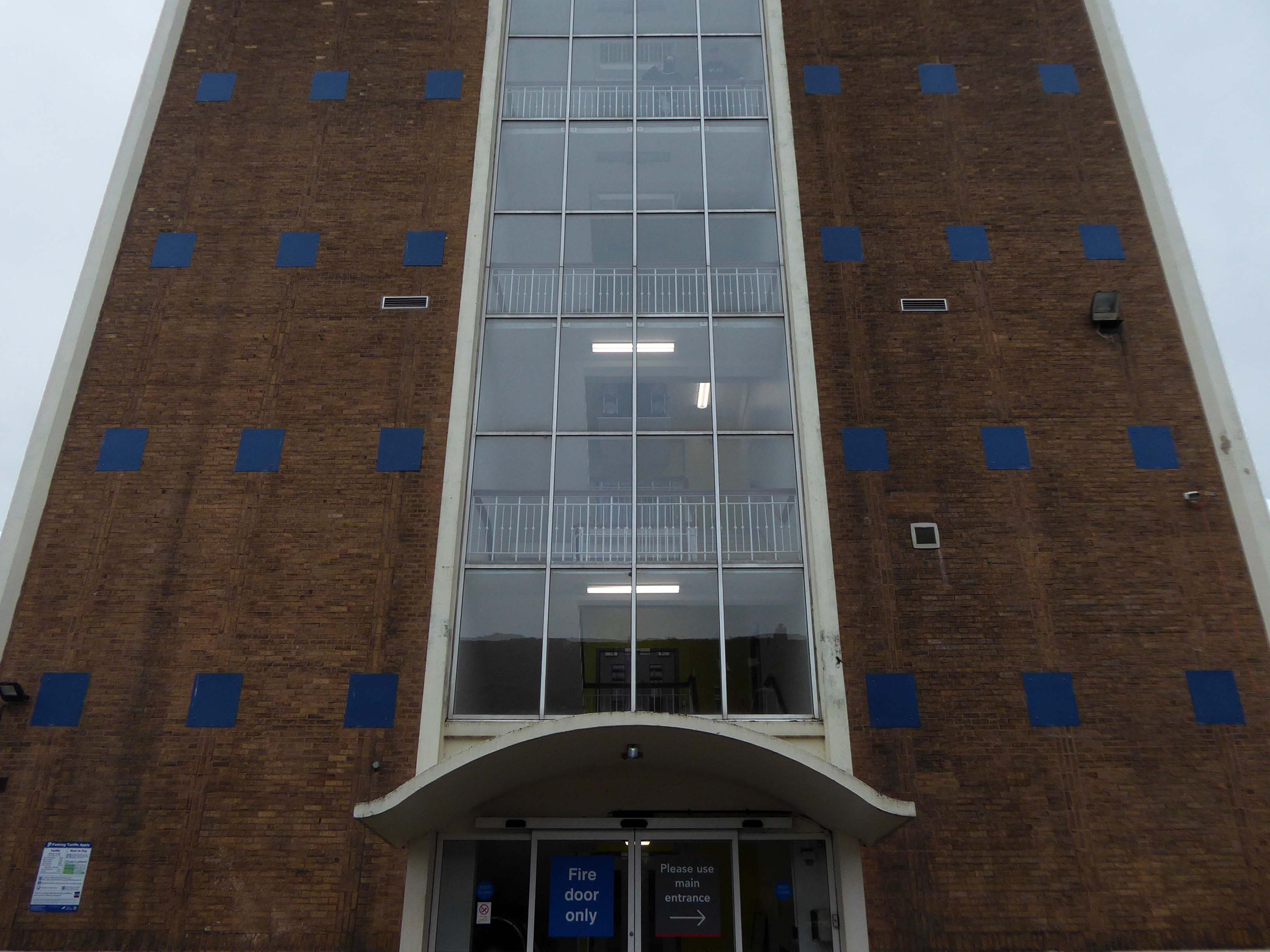
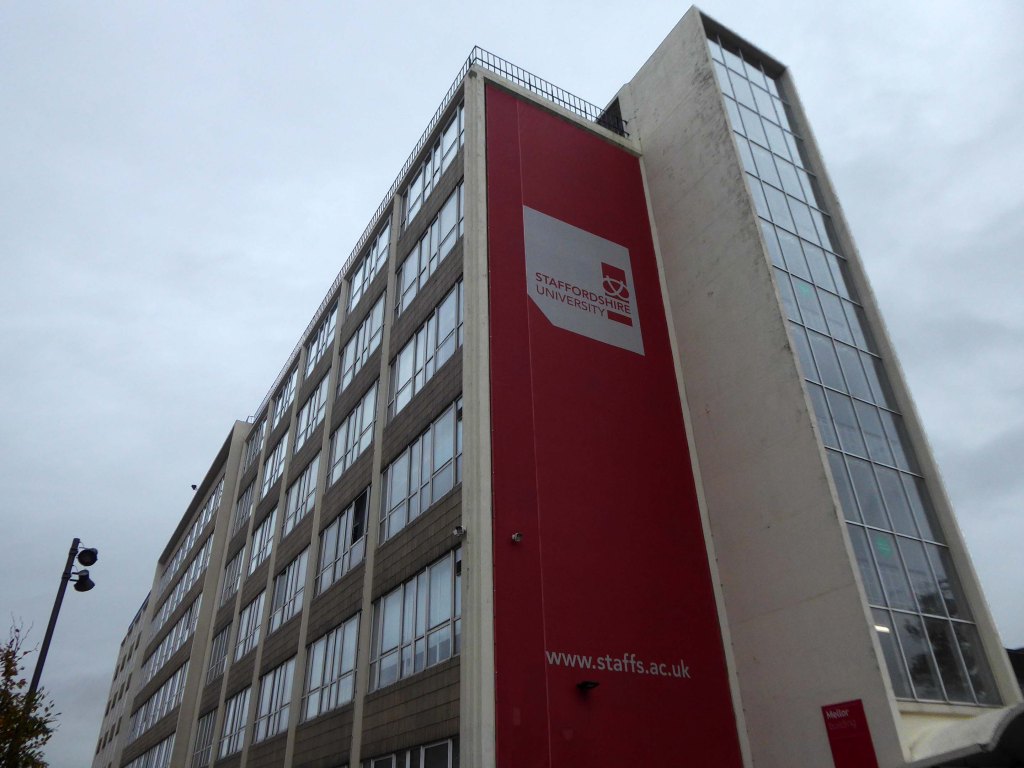
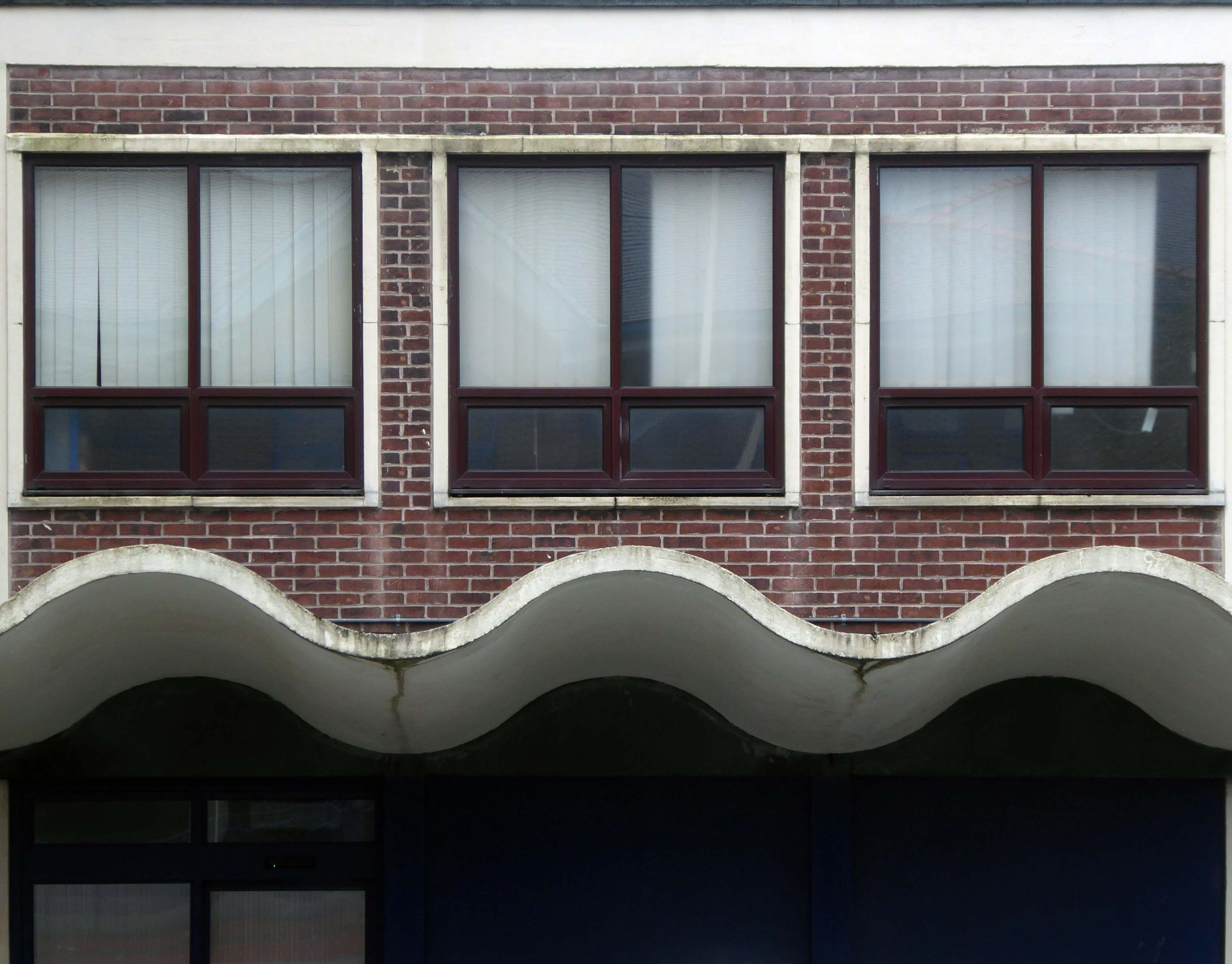
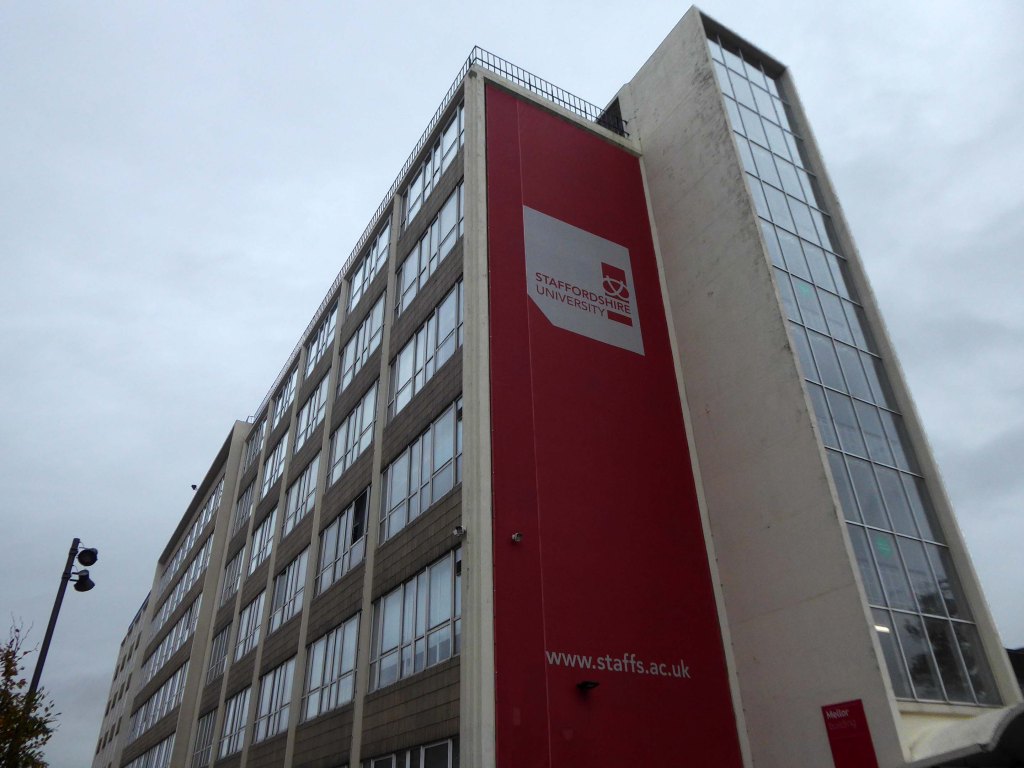
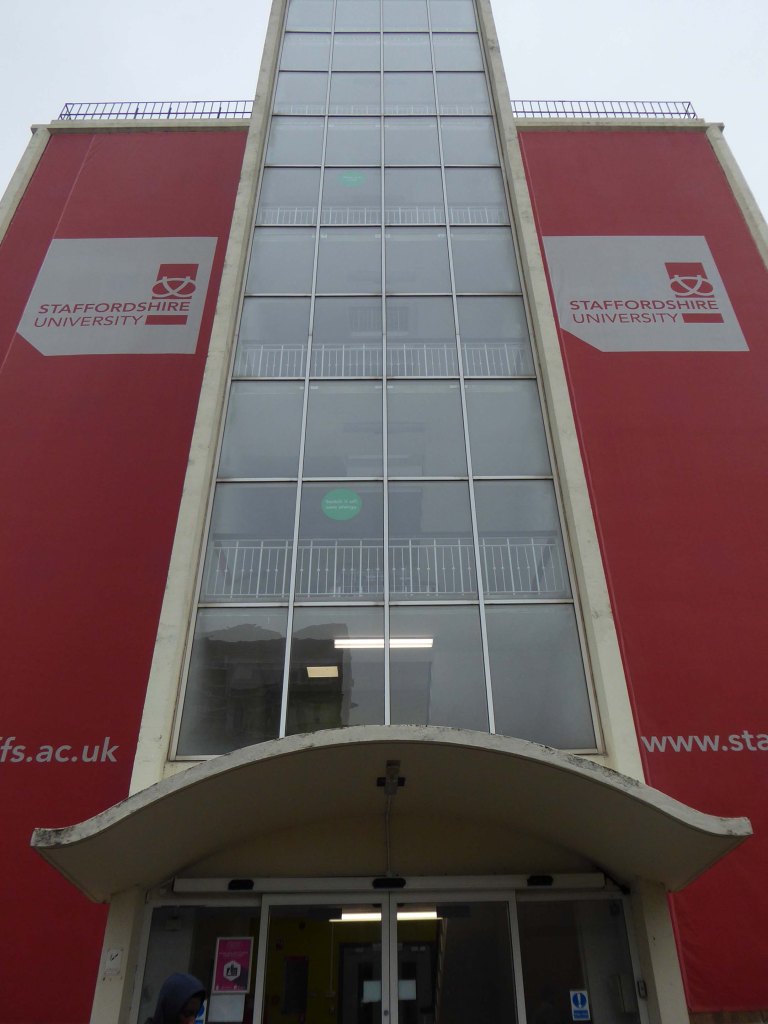
Across the way is the assertive slab tower of the 1950’s Mellor Building with its curvy cantilevered porch cover.

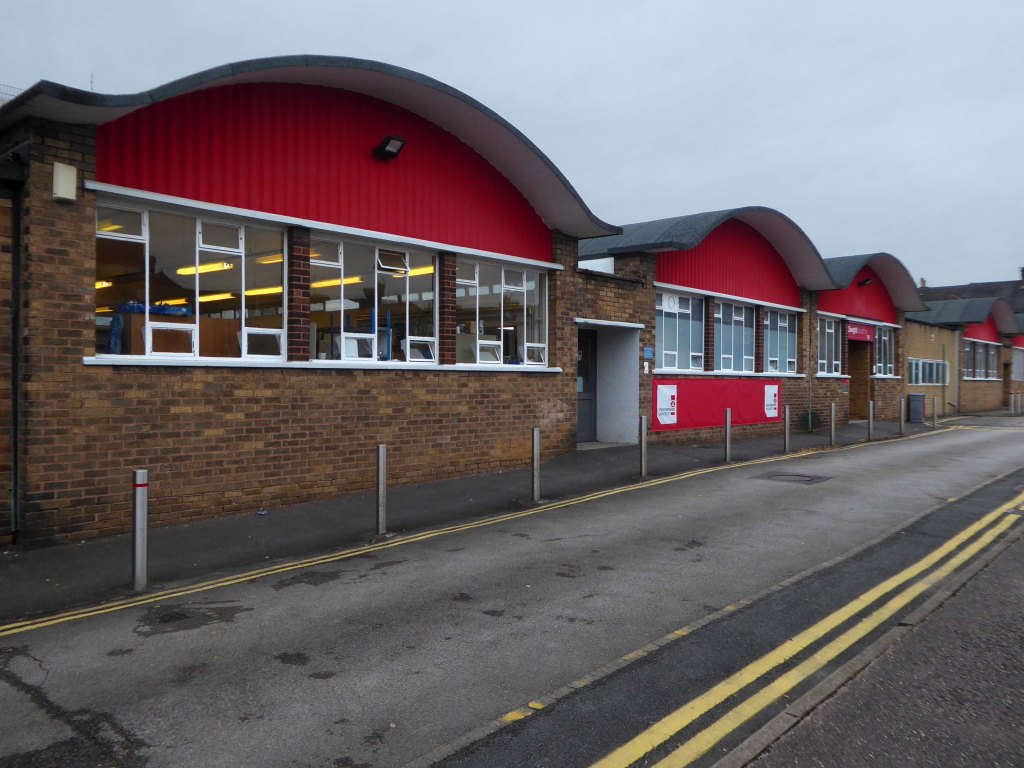
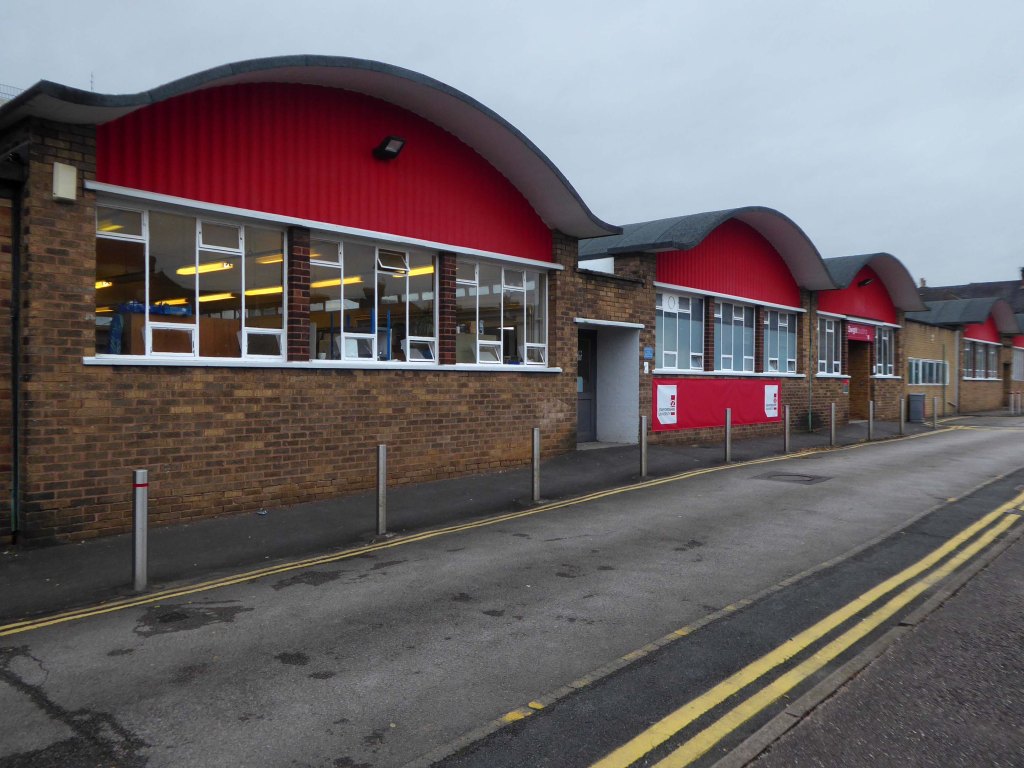
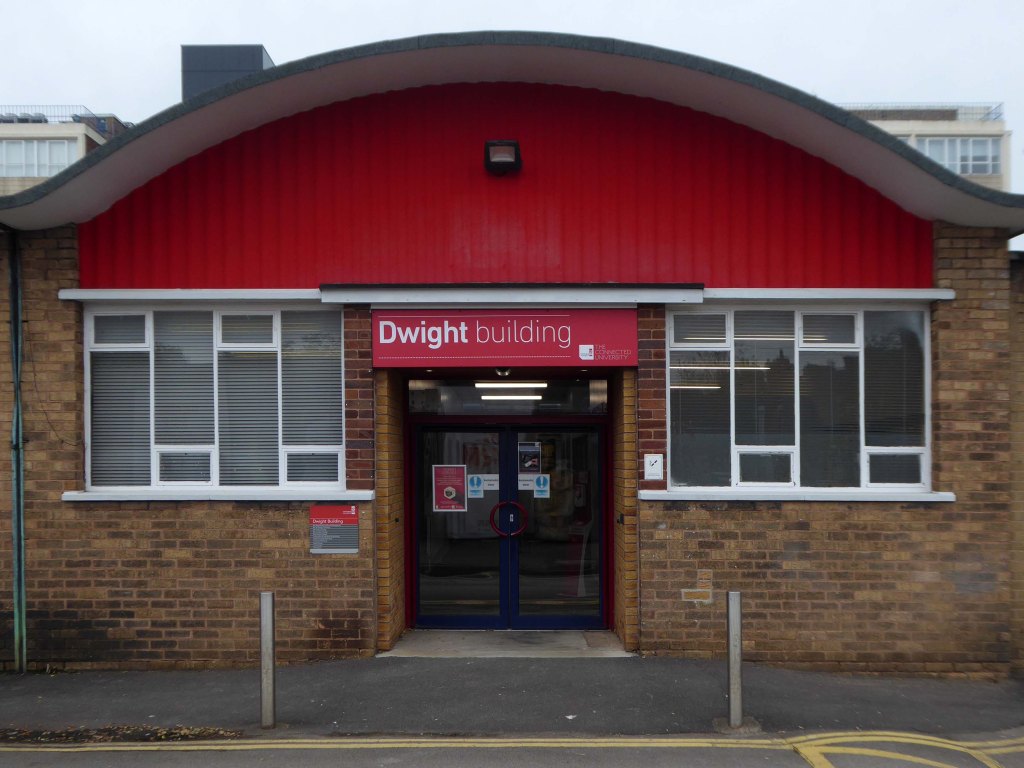
Out back is the wavy roofed Dwight Building.

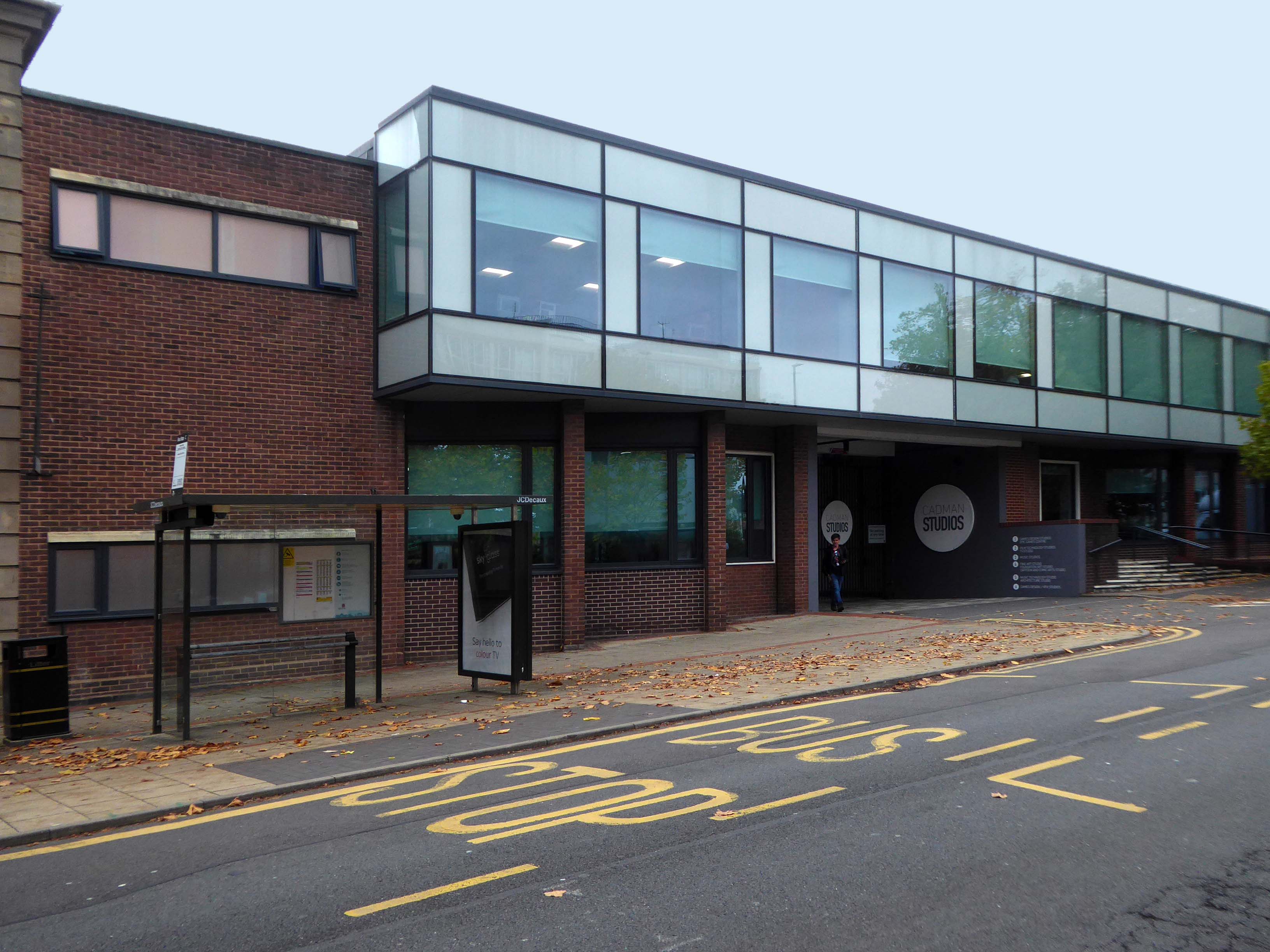
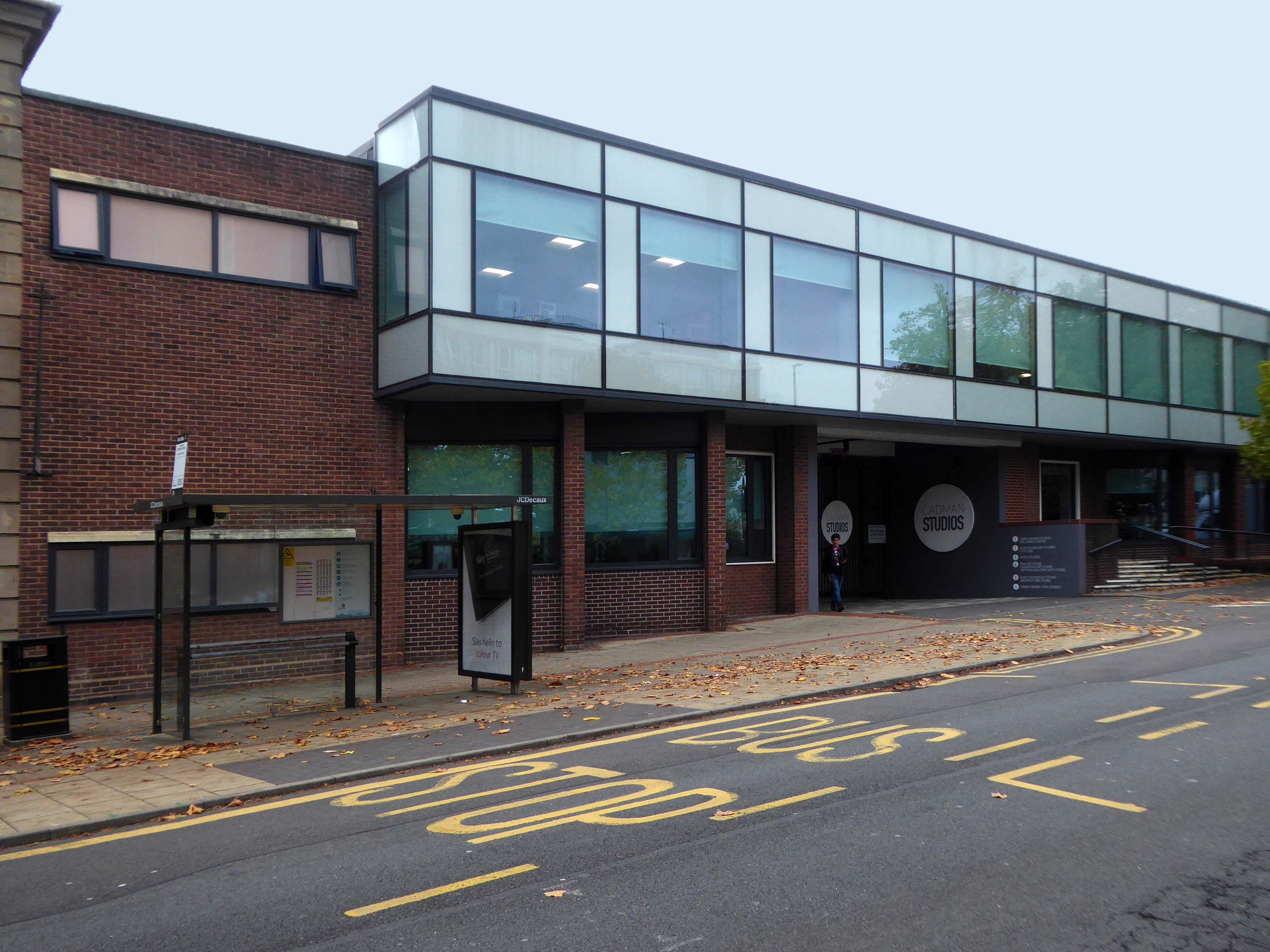
Over the road the new build of the Cadman Studios 2016 ABW Architects.

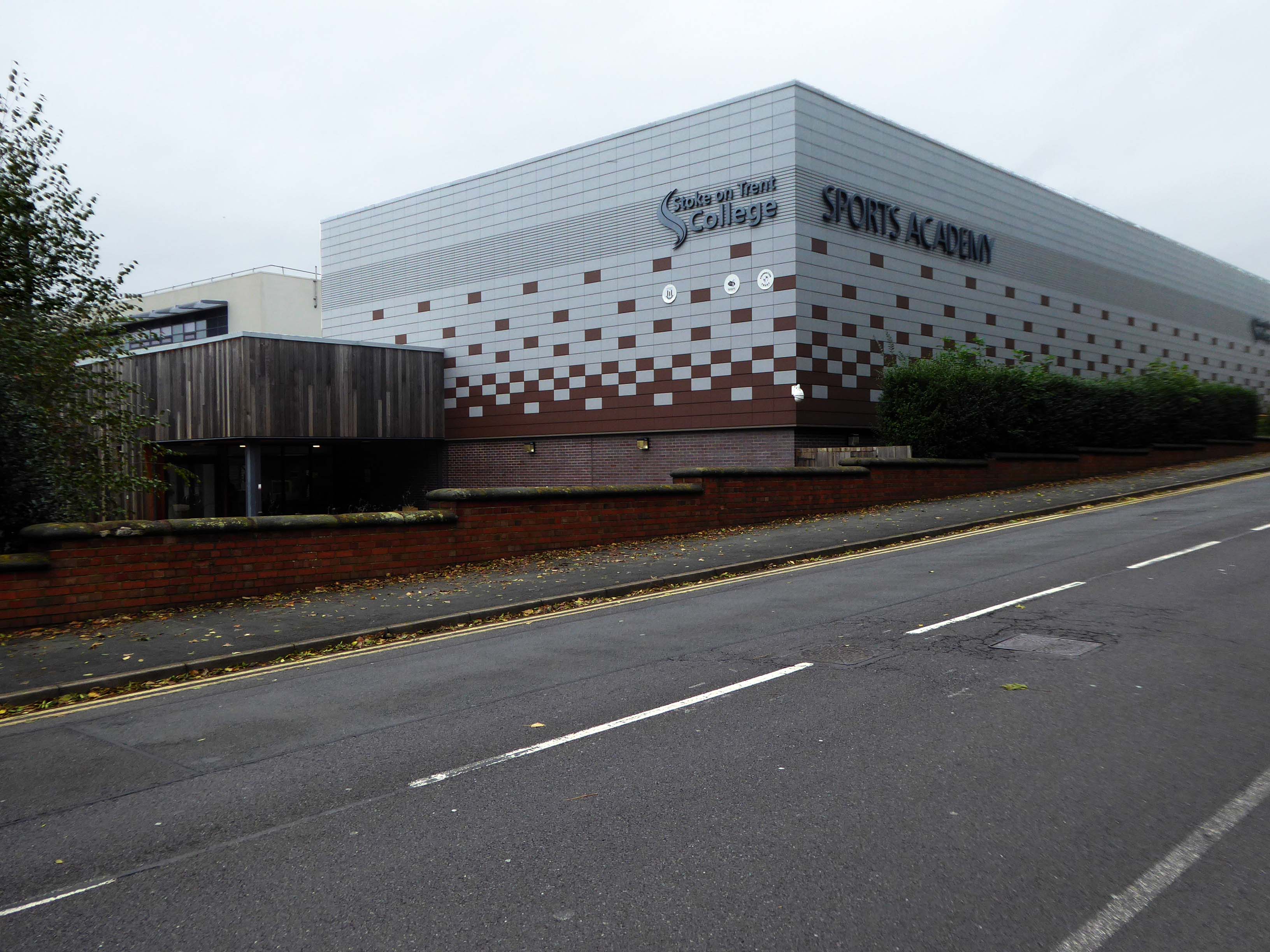
Walking towards Hanley we come upon the newly built Stoke on Trent College and Sports Academy.

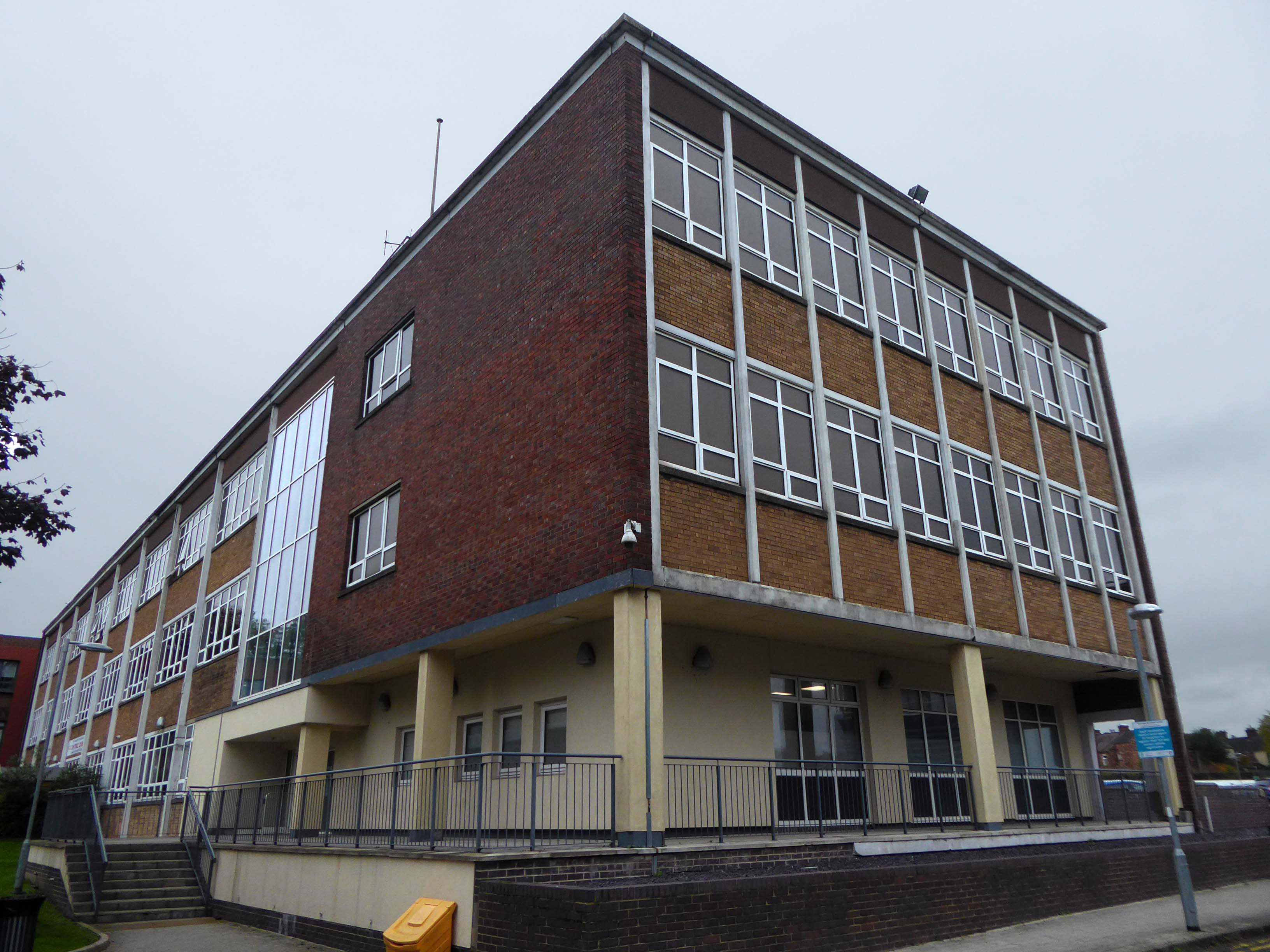
Only one block of the original build remains.

Photograph – 28 Days Later

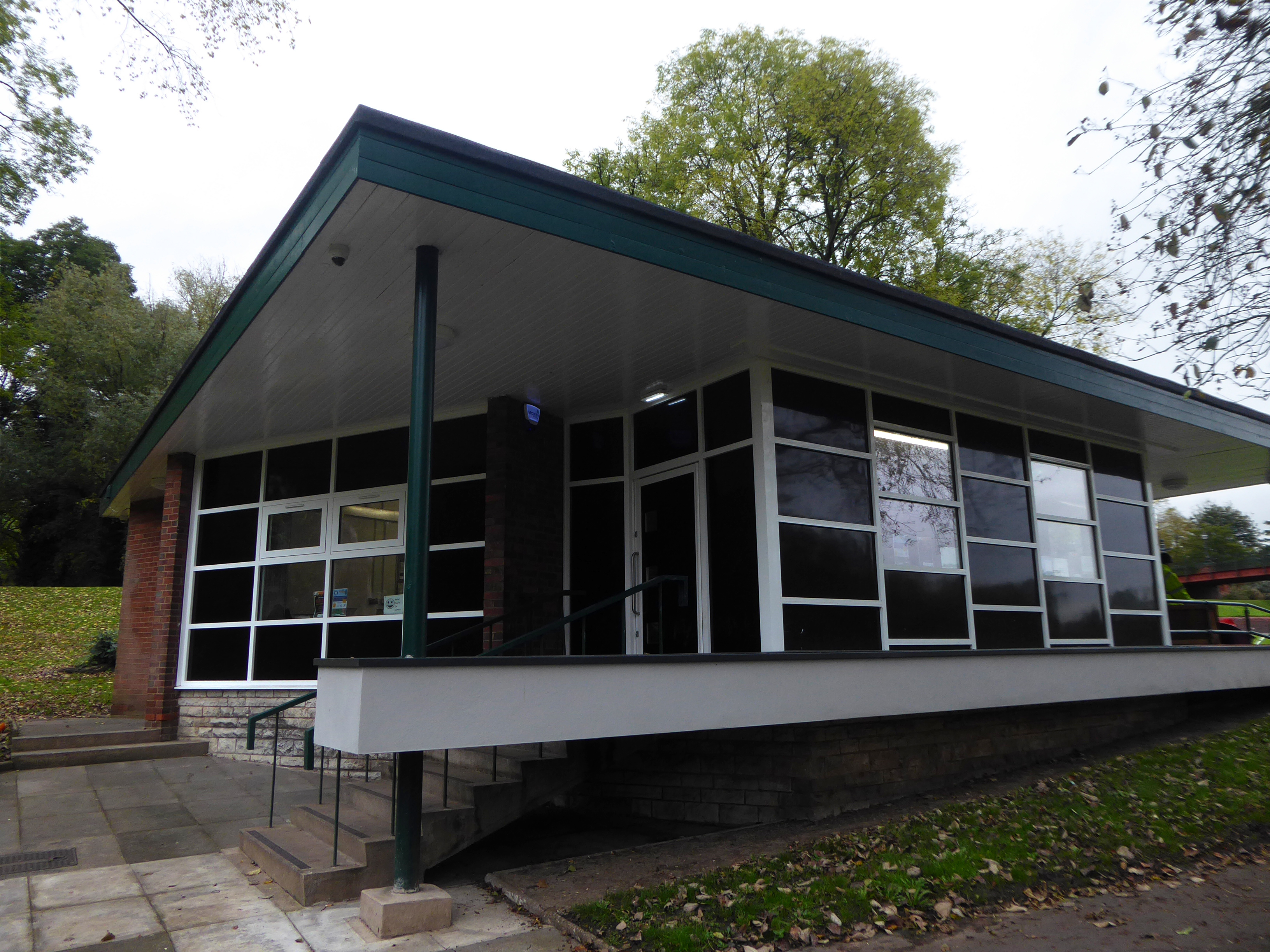
Tucked away in Hanley Park is this period building.

It has been refurbished and the walkway enclosed since my previous visit.

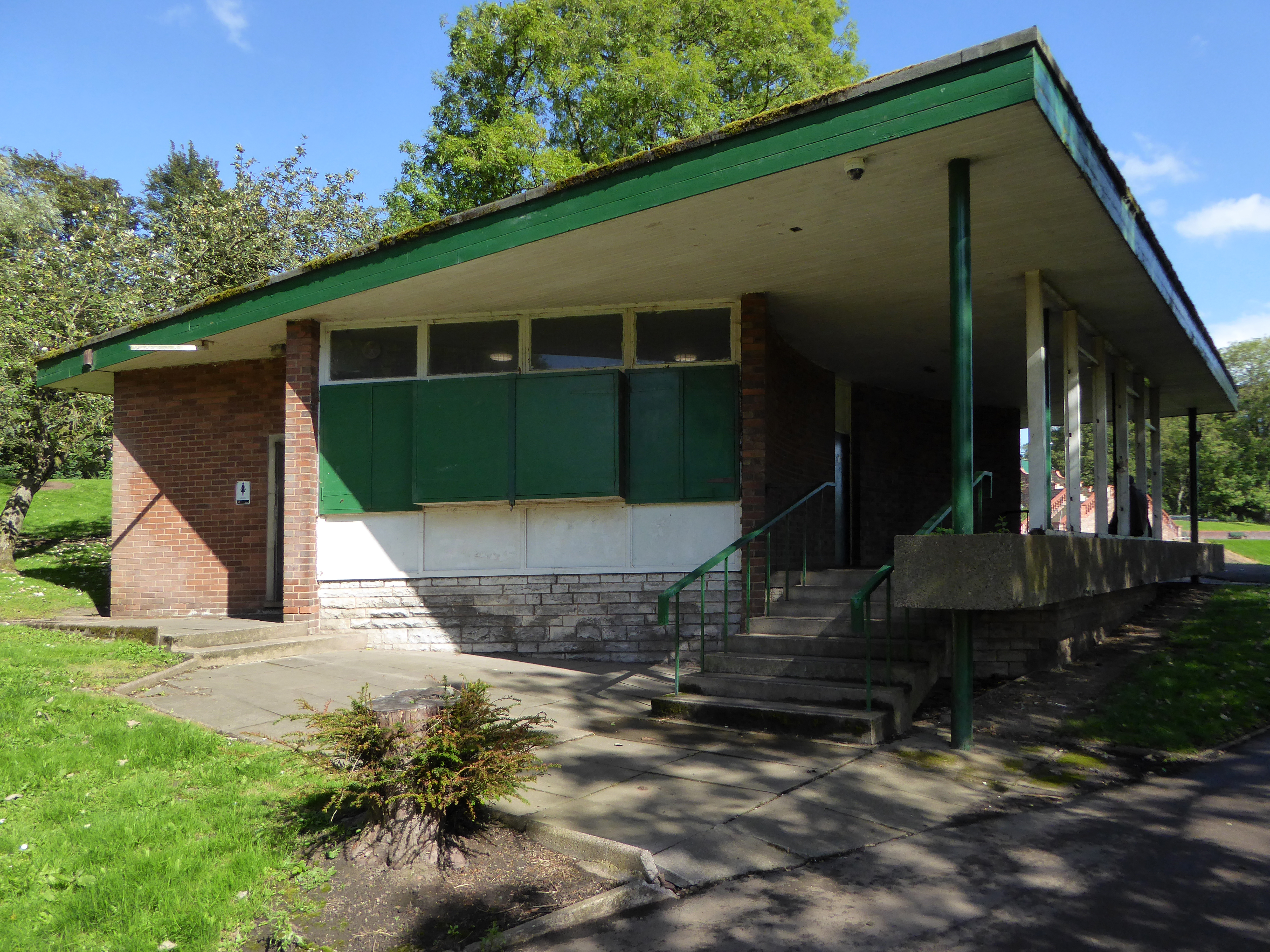
hanley park was laid out in the 1890s by Thomas Hayton Mawson the pavilion of 1896 is by his associate Dan Gibson.

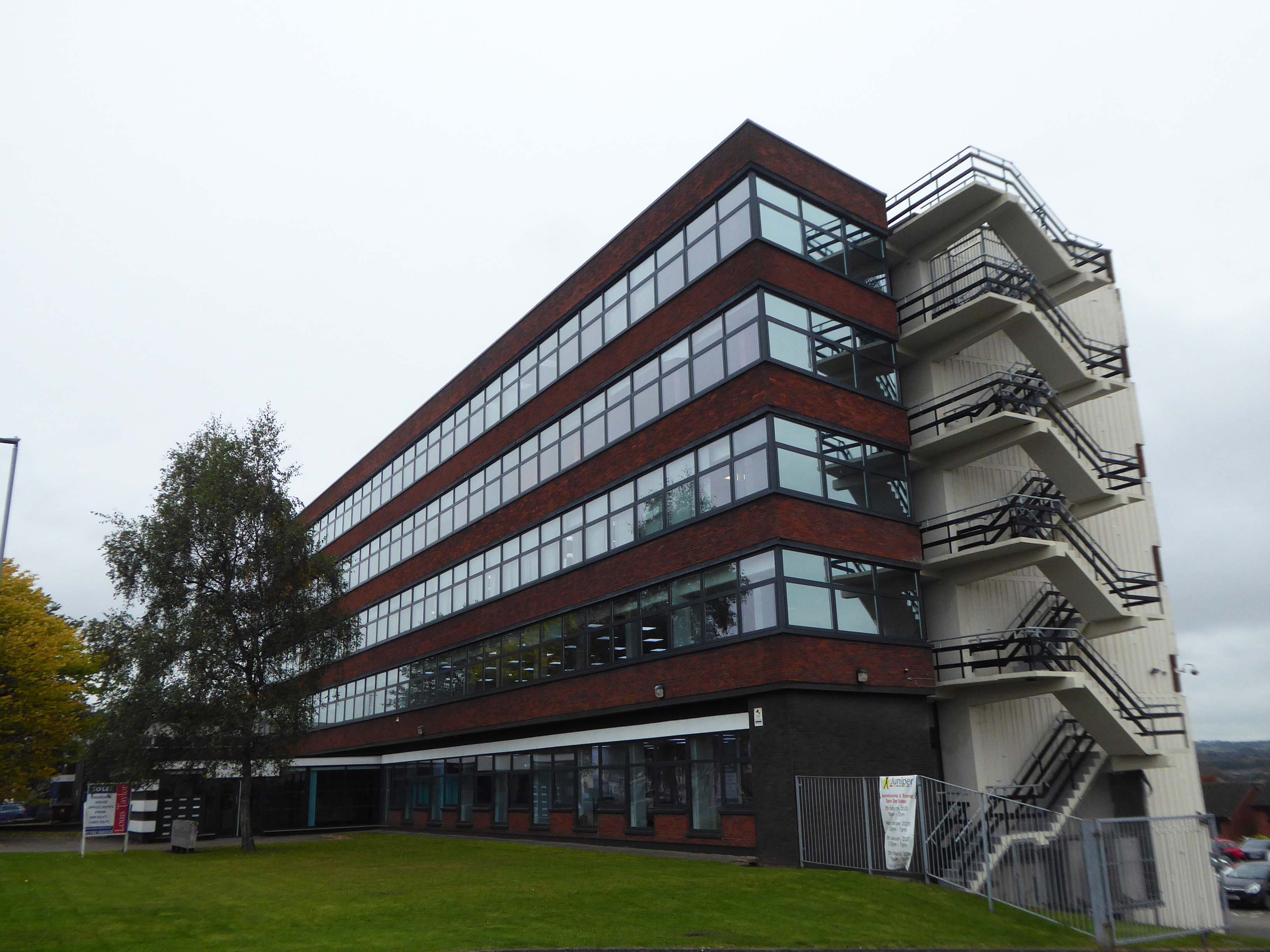
Further along the way we come upon Churchill House with its distinctive fire escape.

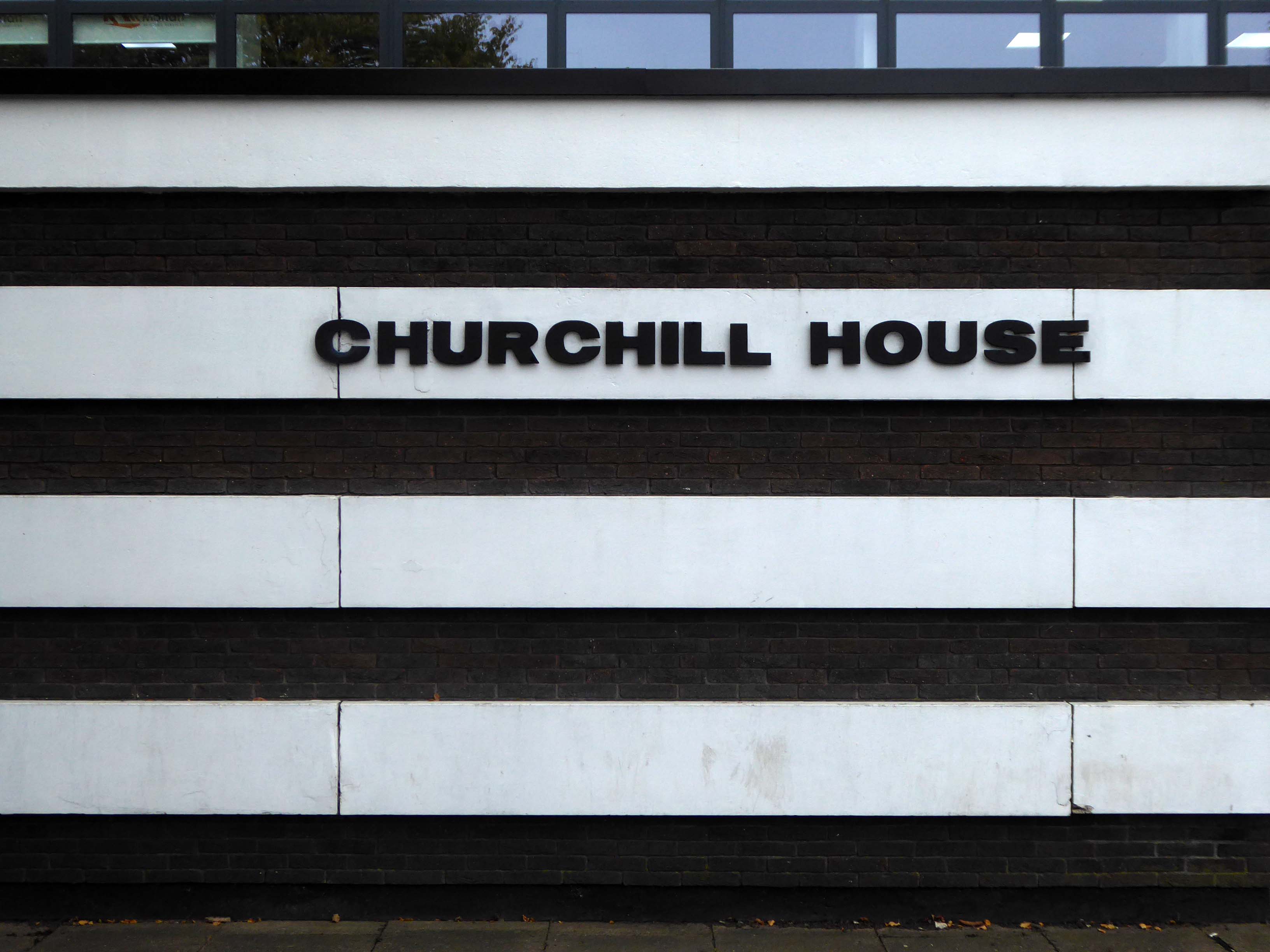
And original architectural signage.

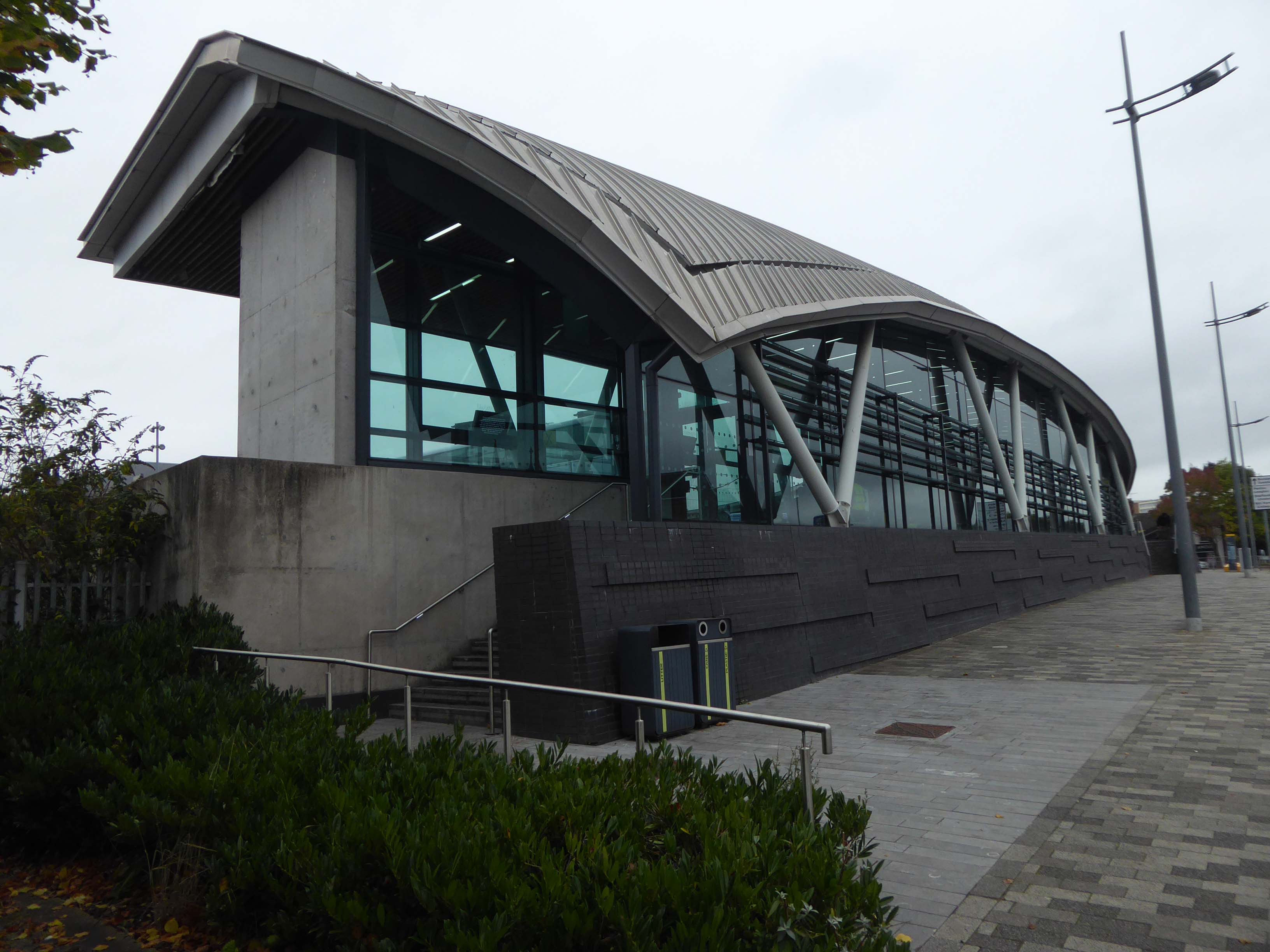
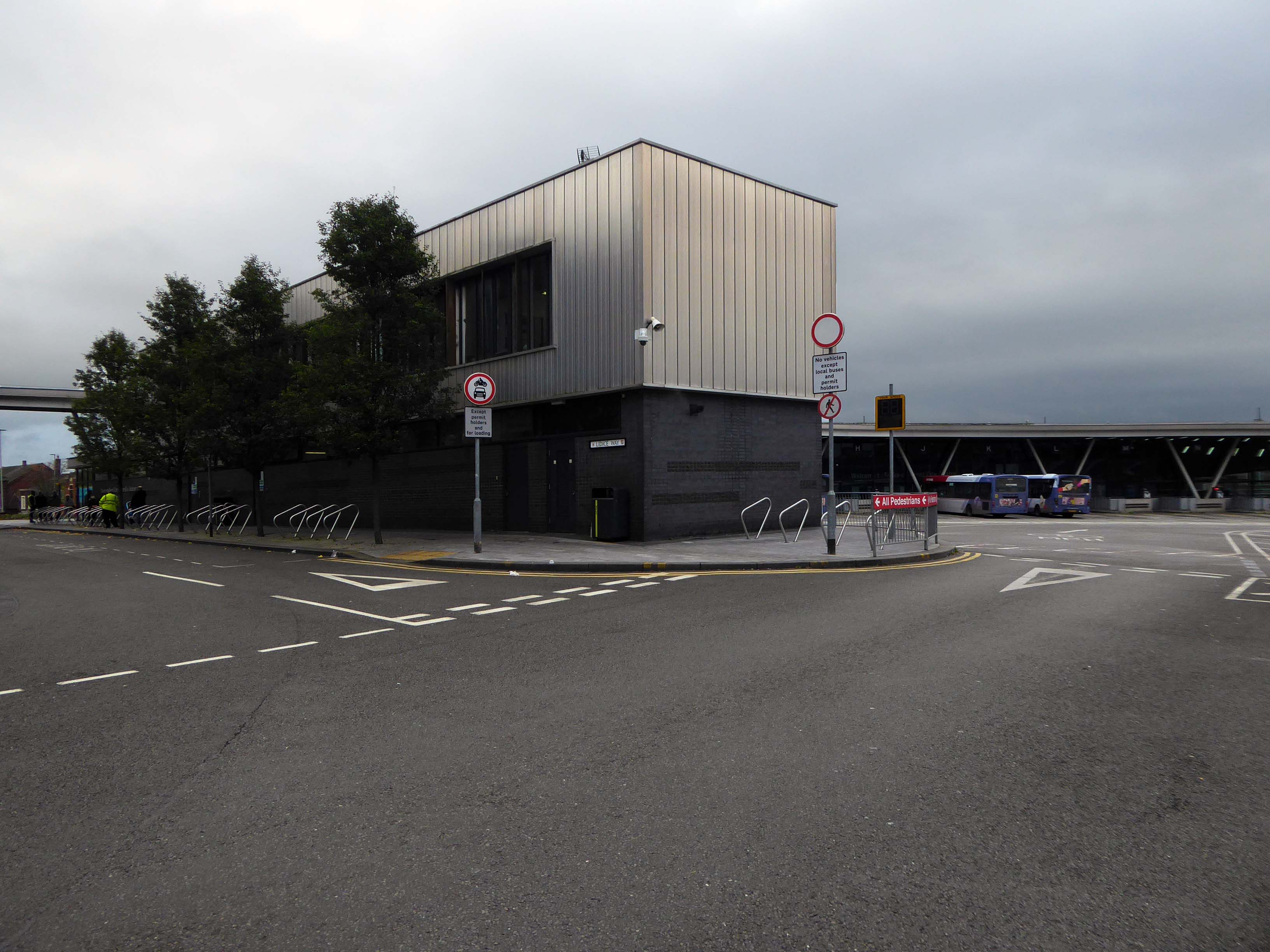
Crossing the inner ring road to the sweeping canopy of the Hanley Bus Station Architects Grimshaw engineers Arup.

Wrapping a corner site, the canopy rises and falls to create a mutable form: appearing as a shimmering, contemporary shield to the south, and a welcoming timbered environment to the north with sweeping views to Victorian Hanley.

Tapered down at the ends to shelter waiting passengers from the prevailing wind, the roof extends beyond the station edge to connect with the neighbouring public plaza.

Sitting atop a Staffordshire blue brick plinth with a Carlow blue limestone concourse, the station adopts materials that are resonant in this area. Its gracefully sweeping canopy belies the challenging site constraints, which were carefully resolved to accommodate the difficult routing of buses, the creation of a safe, sheltered environment for passengers and drivers, and a sloping site underpinned by clay and coal.

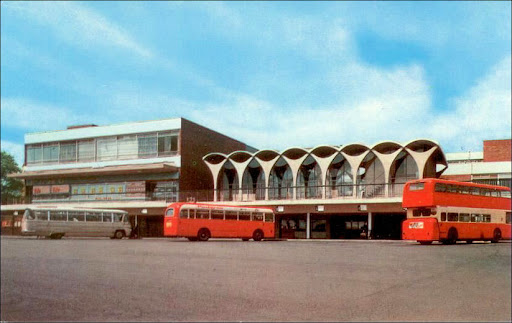
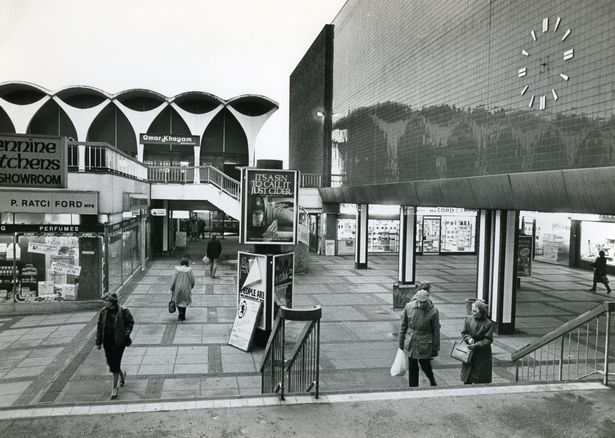
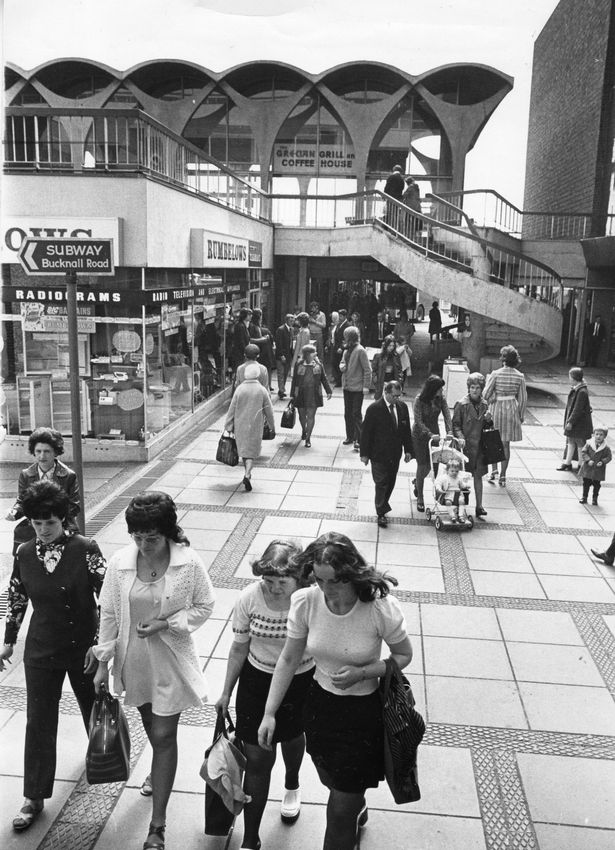
The former bus station and precinct long gone.

Above the former bus station looms Blackburn House home to HMRC, an imposing brown brick behemoth.

Photo James Morgan

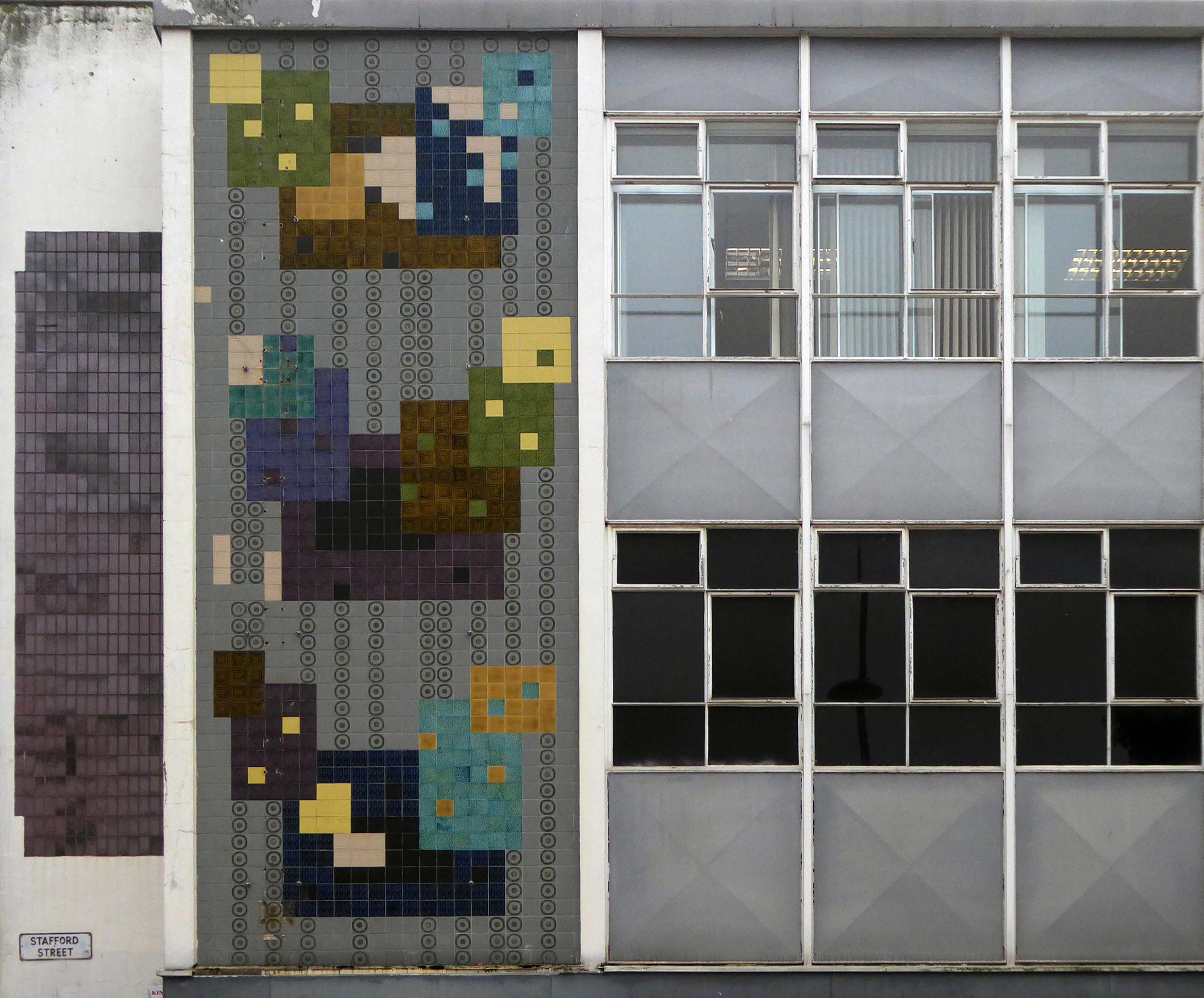
Previously C&A currently Wilko – adorned with these enchanting Tiles.

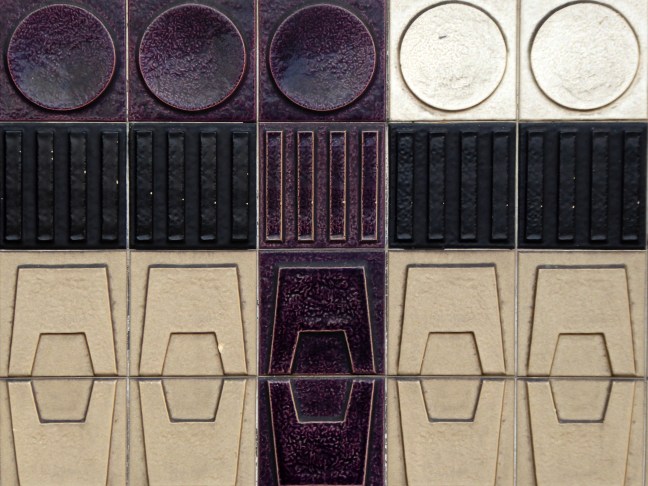
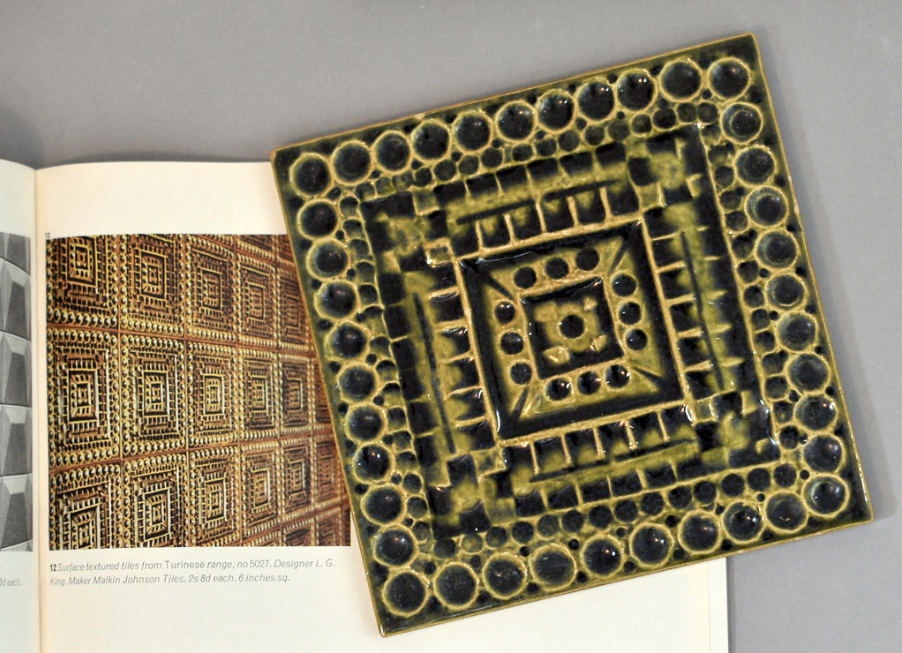
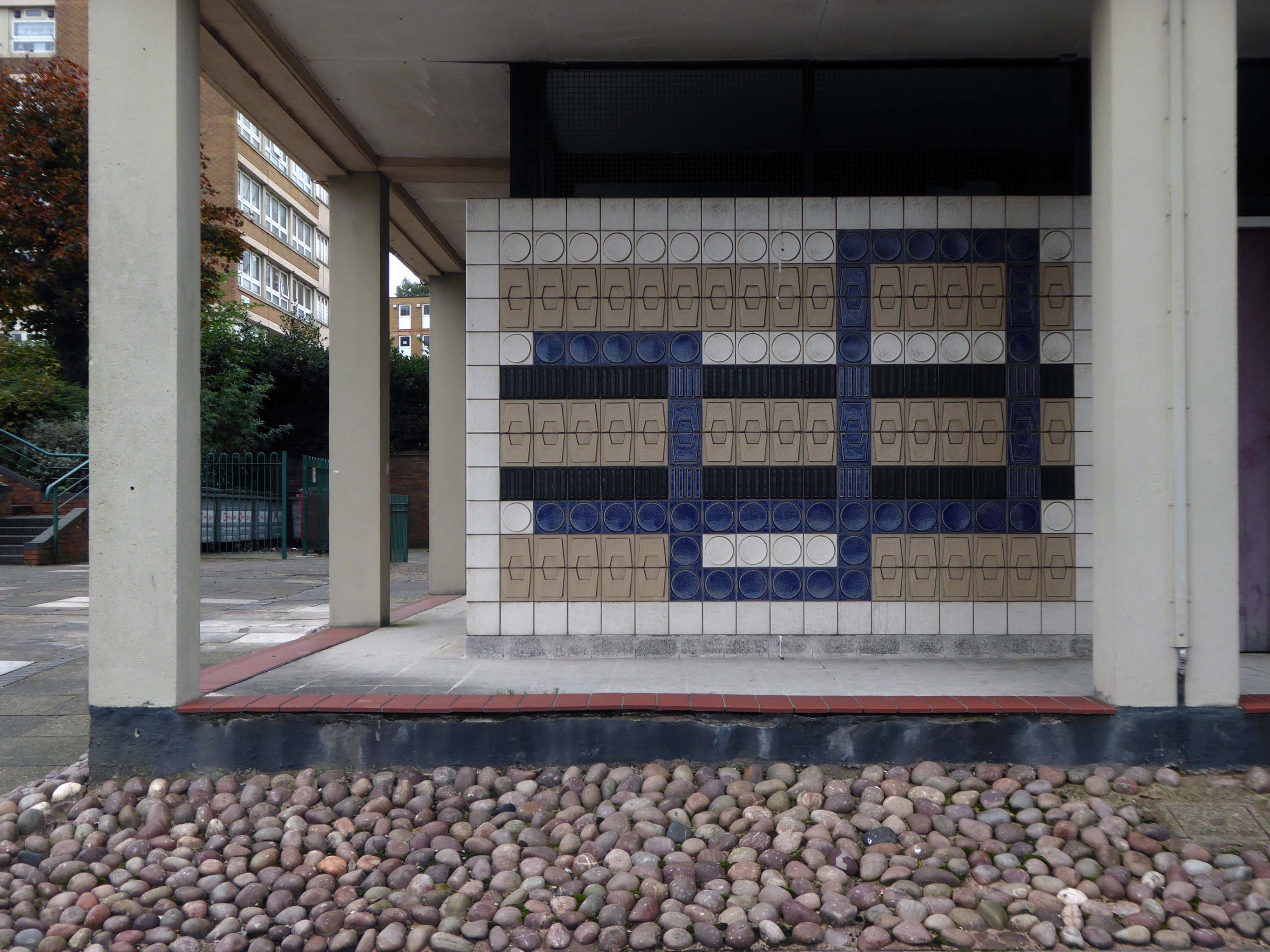
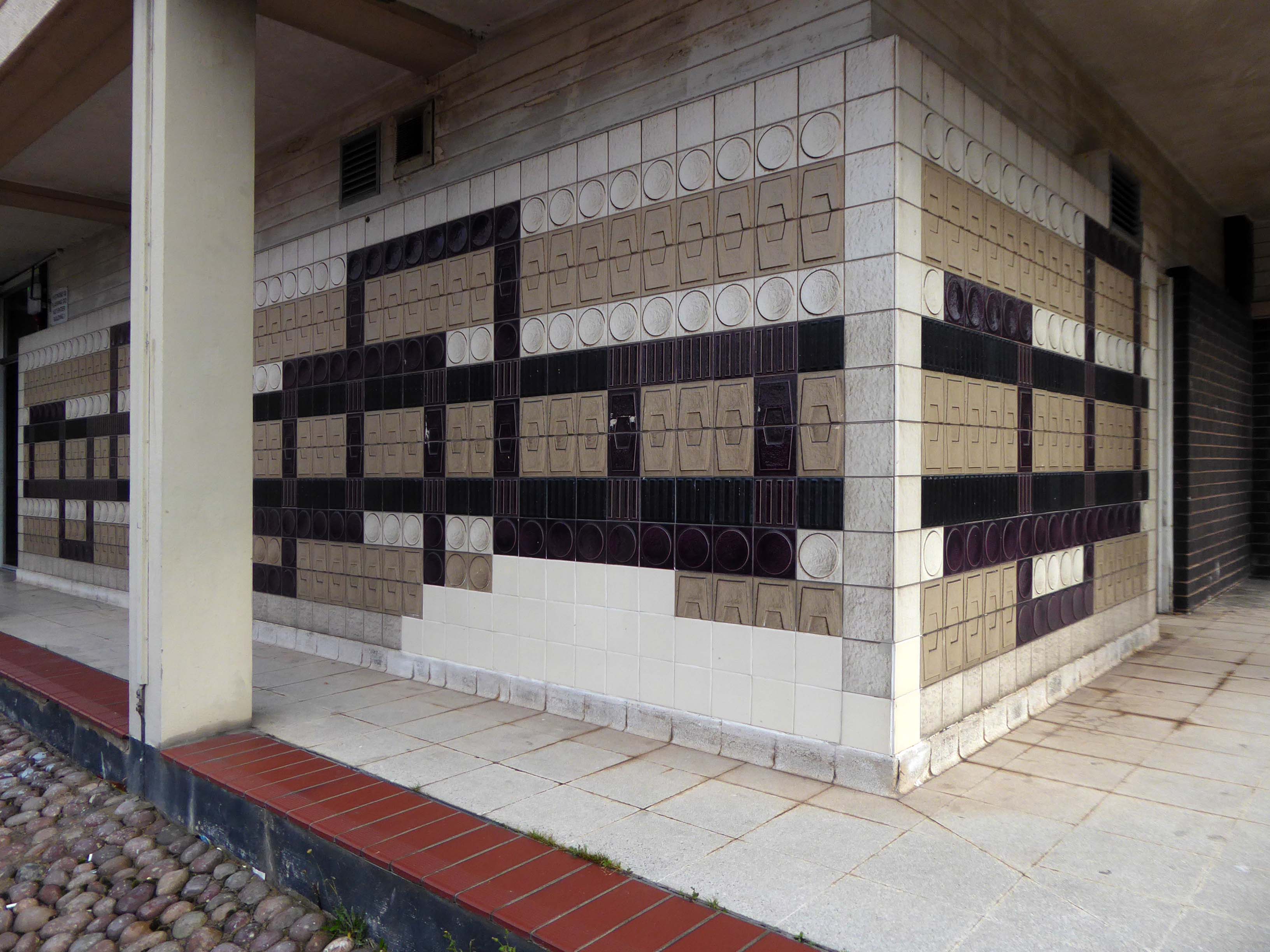
This little-noticed panel is composed of six inch surface-textured tiles in a variety of muted tones, mainly greens, purples and blues, some with geometric reliefs. The mural is unusual because it is one of the few surviving installations produced by Malkin Tiles; at least one of the motifs is from their ‘Turinese’ range marketed during 1961-8 and designed by Leonard Gladstone King, Malkin’s art director.

Tile Gazetteer

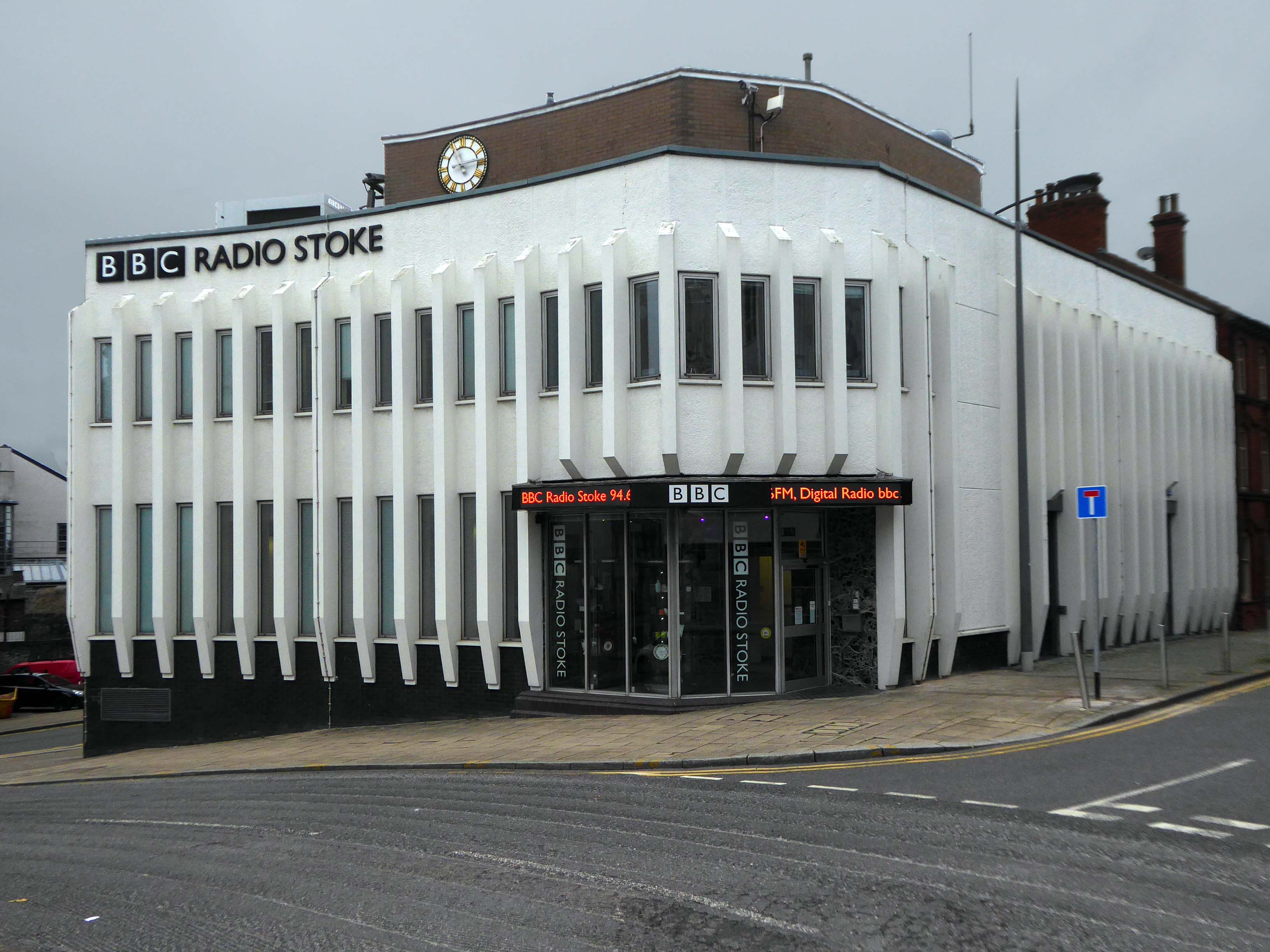
Over the road Radio Stoke HQ 1968 – formerly home to Hanley Economic Building Society.

Crossing back through town and over the ring road to look at some tiles.

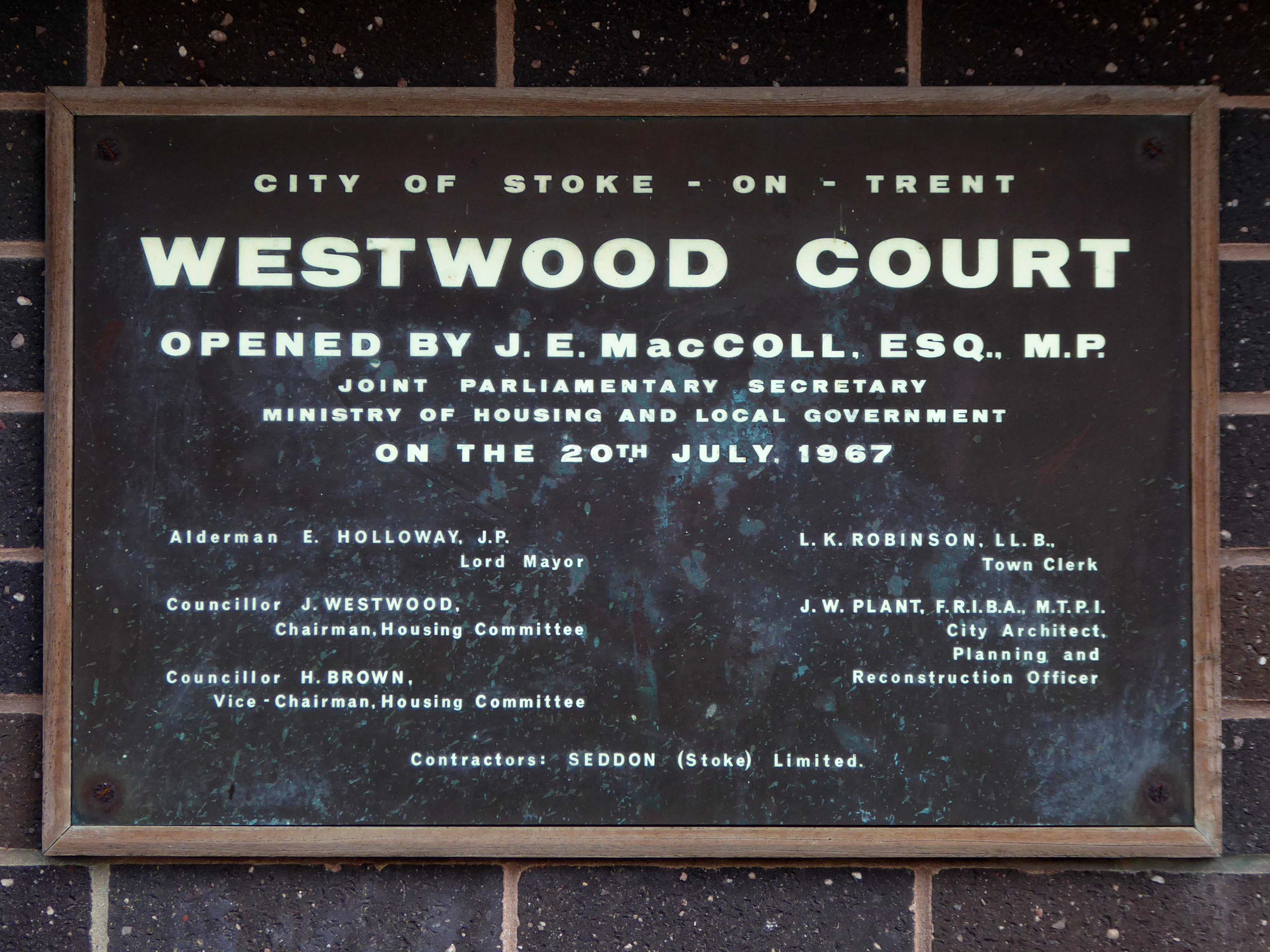
Malkin Tiles of Burslem

Attached to some towers.

Surrounded by housing.

But missing this bridge – which was demolished in 2020.

Back into town again to look at the Burton’s.

Photo: Stoke Sentinel

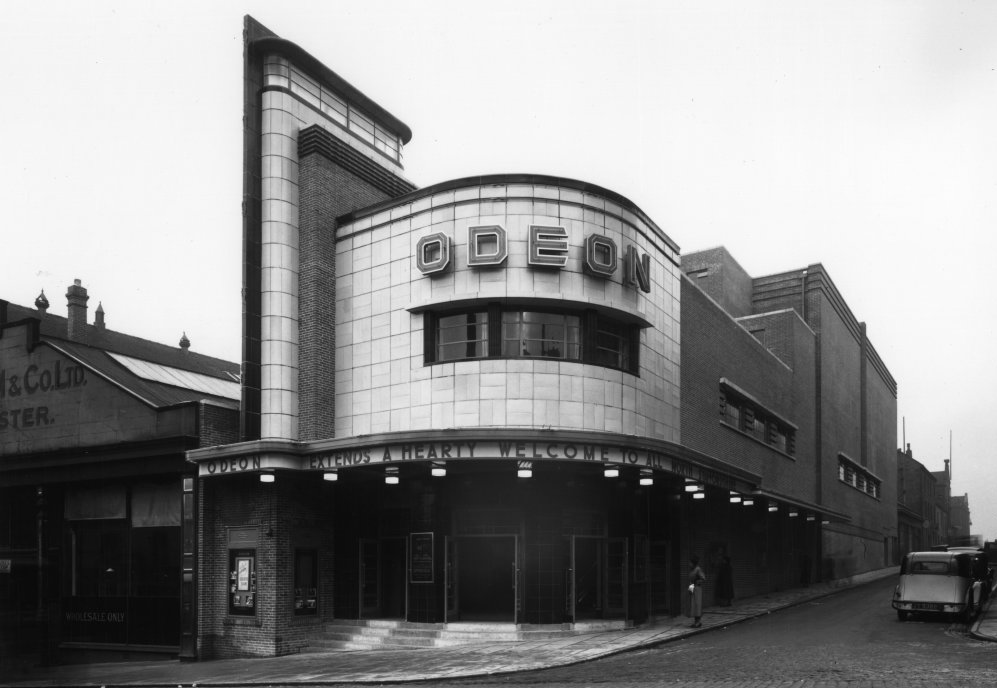
Odeon Cinema – architects: Arthur J Price and Harry Weedon 1938

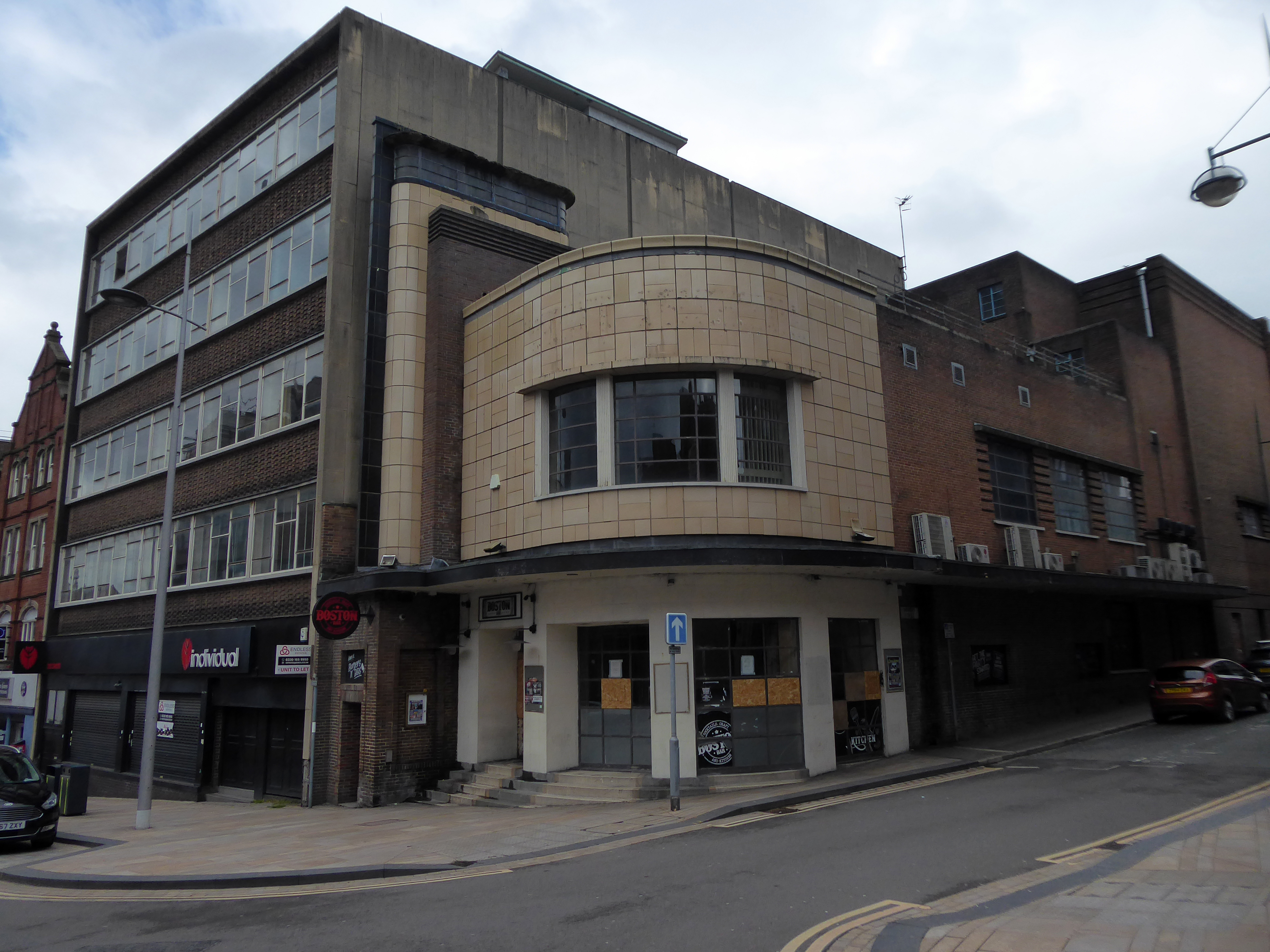
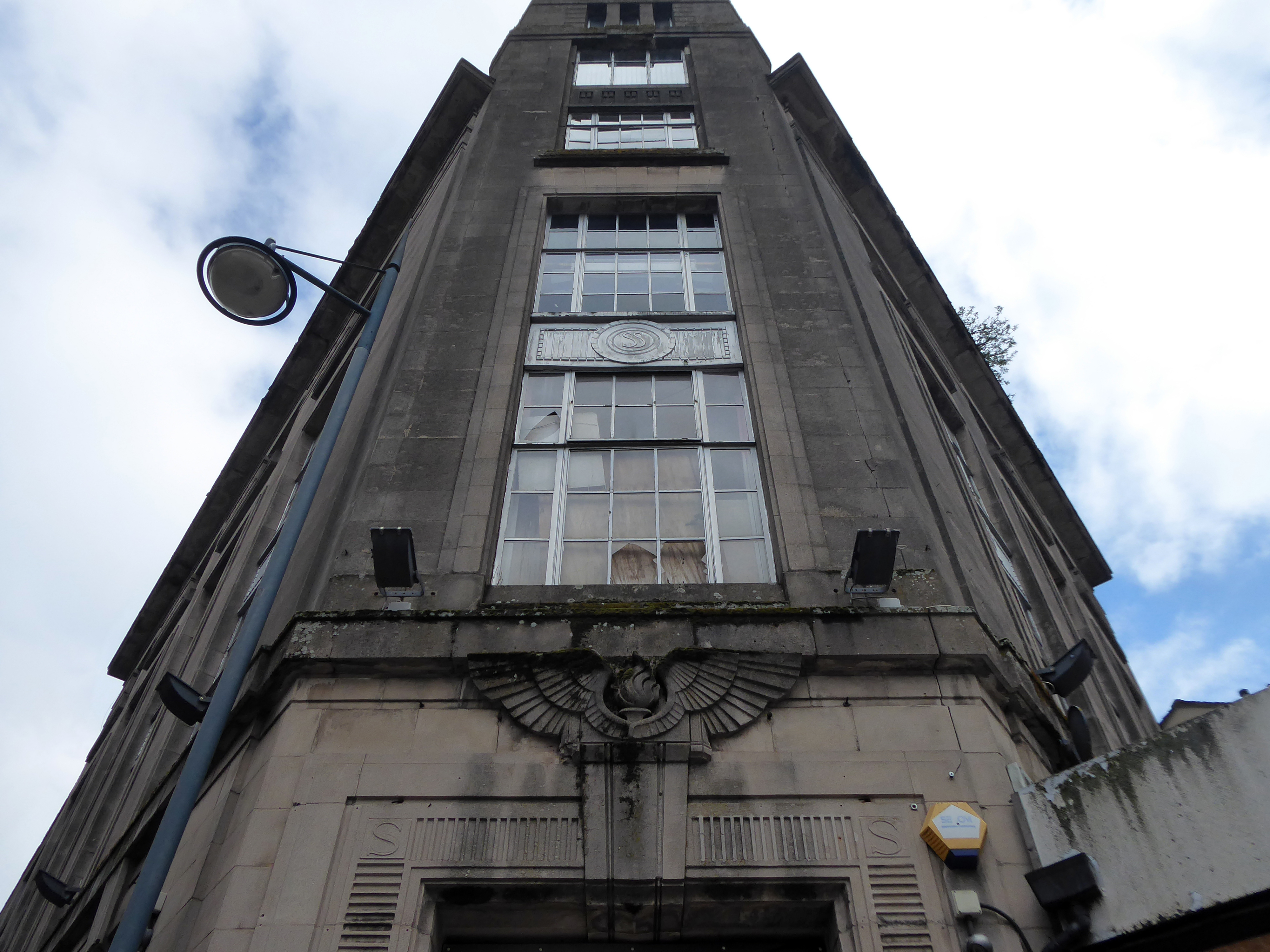
The Odeon was one of the original cinemas in the Oscar Deutsch chain of Odeon Theatres Ltd. It was opened on 13th February 1938 with Max Miller in “Educated Evans”. It had a very small entrance at the corner of Trinity Street and Foundry Street, with a slender fin tower on the left side, and clad in cream faience tiles. The bulk of the auditorium was along Foundry Street, and seating was provided for 1,036 in the stalls and 544 in the circle. Decoration was in a typical Odeon style, with several troughs across the ceiling containing concealed lighting.

The Odeon was closed by the Rank Organisation on 15th November 1975 with Roger Daltrey in Tommy. The auditorium decoration was stripped out in the early-1980’s, and by 1982 it was used for storage, when on 4th August 1982, it was partially damaged in a fire, although the main shell of the building was not damaged. By 1991, the building was standing derelict.

By 1999, a bar was operating in the former foyer area. By 2003, the former auditorium had been brought back to use as a Chicago Rock Café. In 2008, the building had become a bar & nightclub named Revolution, with the former foyer in use as a bar named The Base.

In December 2021 plans were announced to demolish part of the former Odeon Theatre to build flats.

Cinema Treasures

Photo: RIBA Pix 1937

Next door the former Stoke Sentinel newspaper offices.

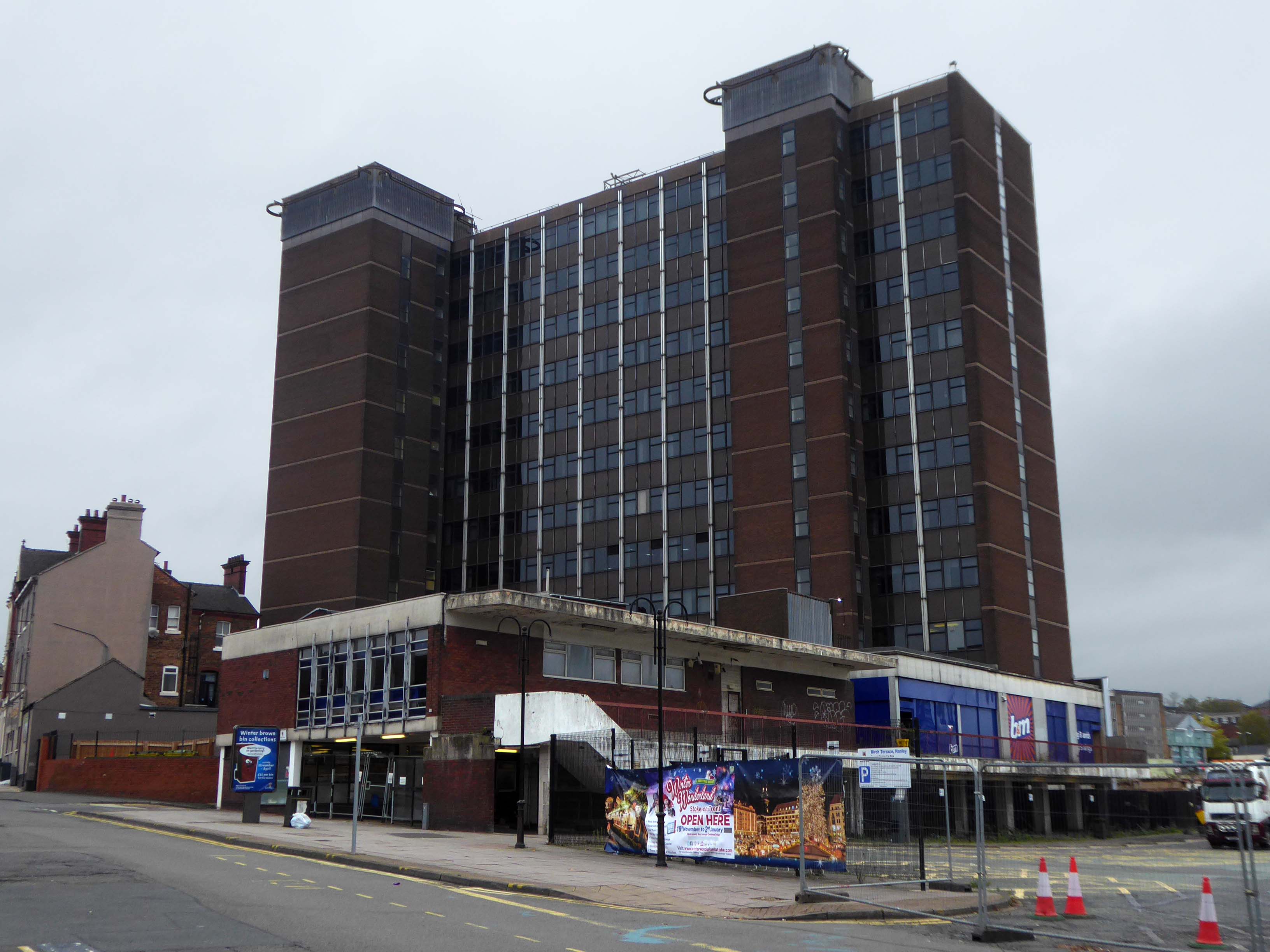
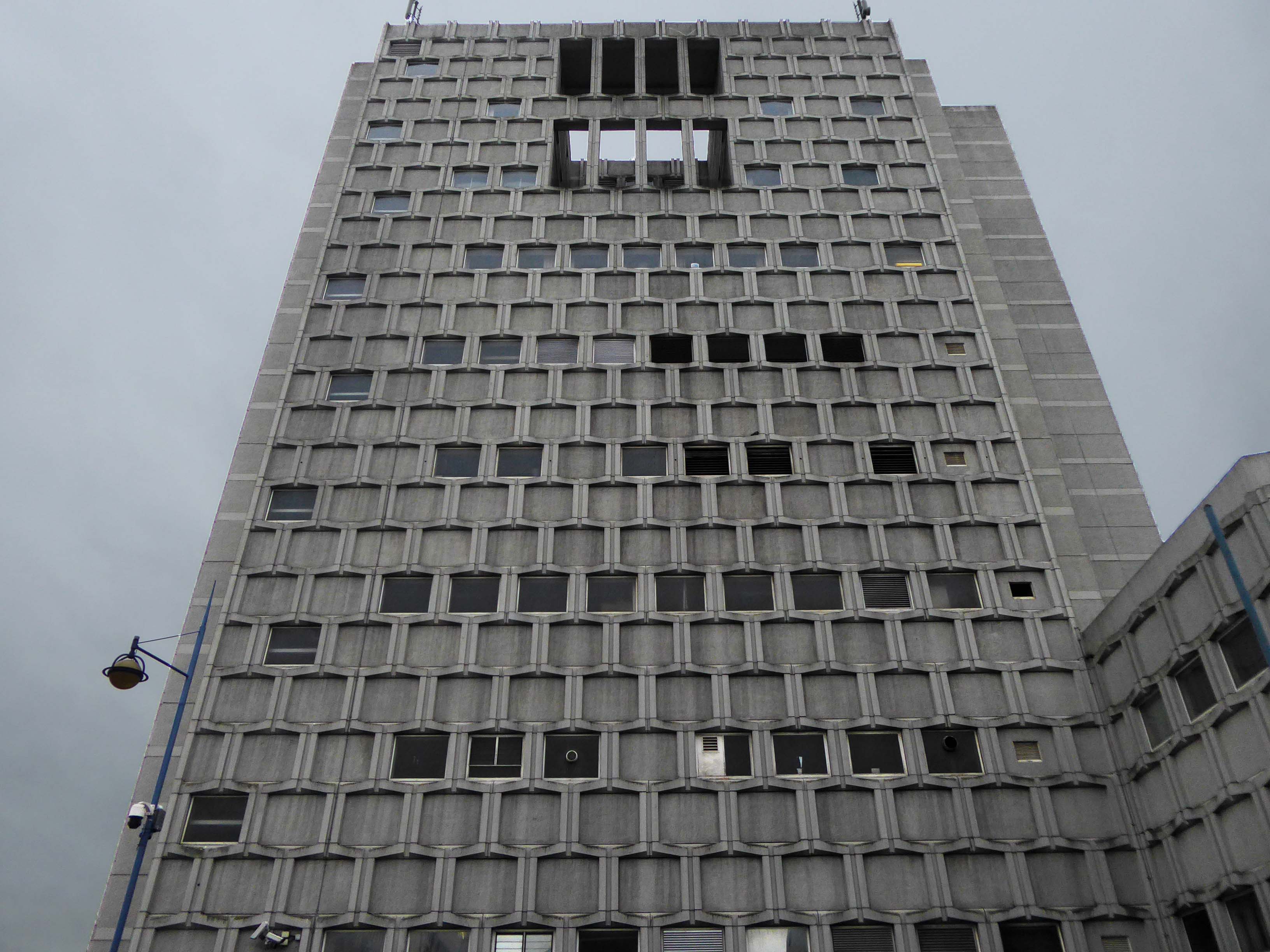
You simply cannot miss the BT Hanley Tower.

And its elderly listed relation of 1900.

Up toward the Potteries MuseumJR Piggott City Architect 1956.

It has undergone extensive exterior reworking by Wood Goldstraw Yorath

Including the brick mural Industries of the Potteries 1981 Sculptor: G H Downing Designer: Frank Murrier

And recent extension of 2021.

Designed by Glancy Nicholls Architects, the team worked collaboratively through the SCAPE framework to design a 3,800 square foot extension. The facility includes bespoke structural glazing, which enables the Spitfire to be viewed from outside of the museum.

Morgan Sindall Construction

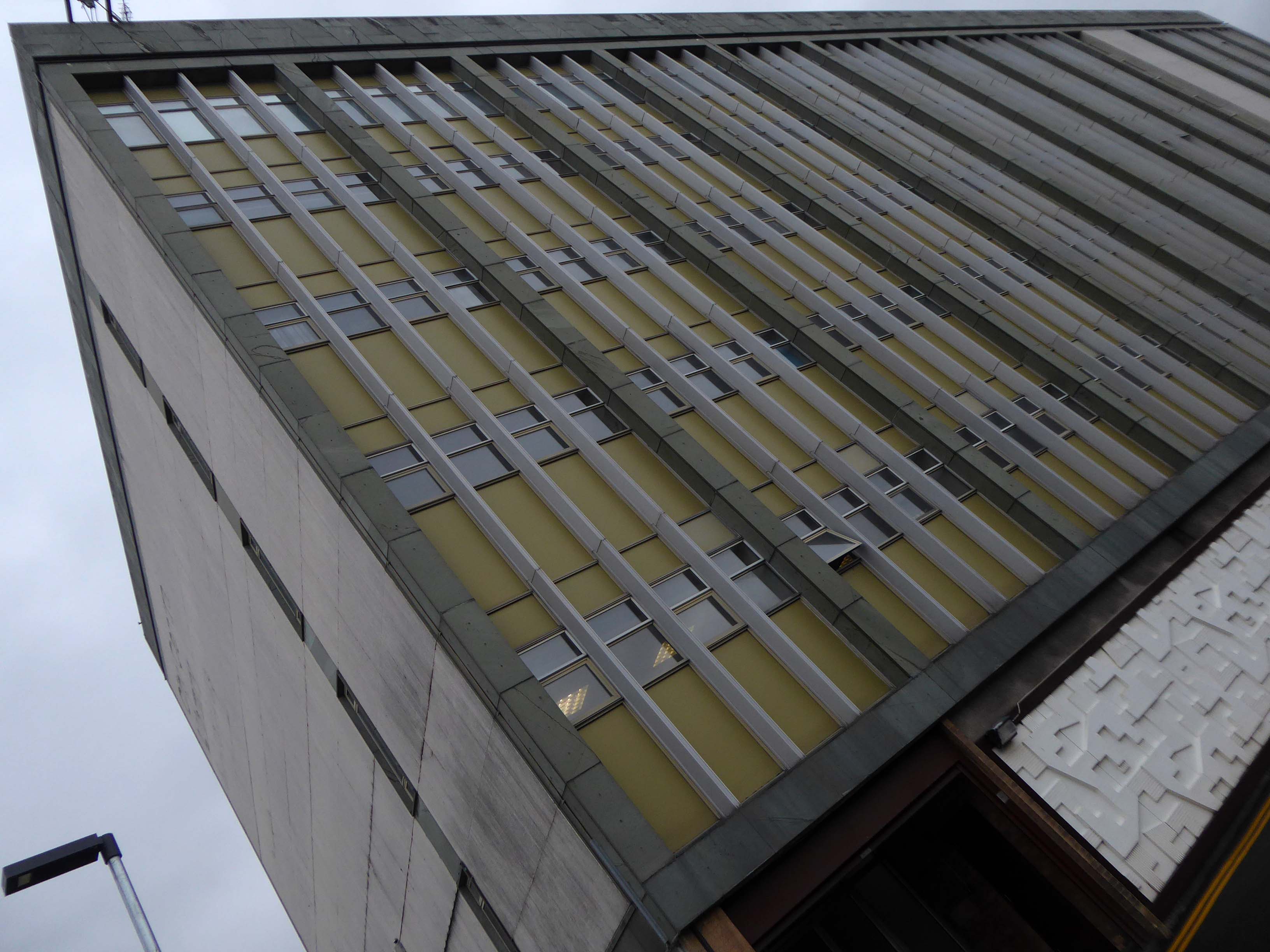
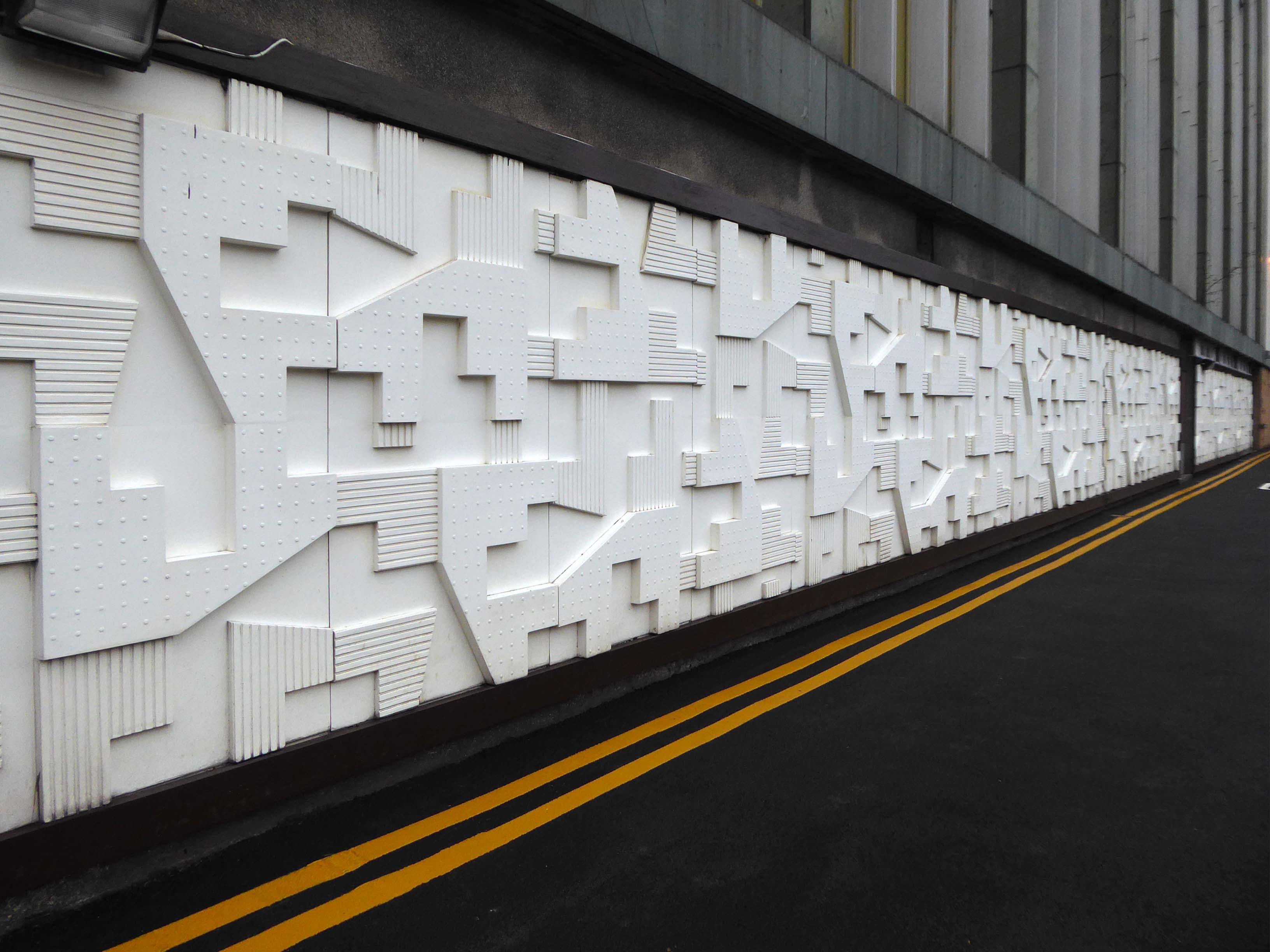
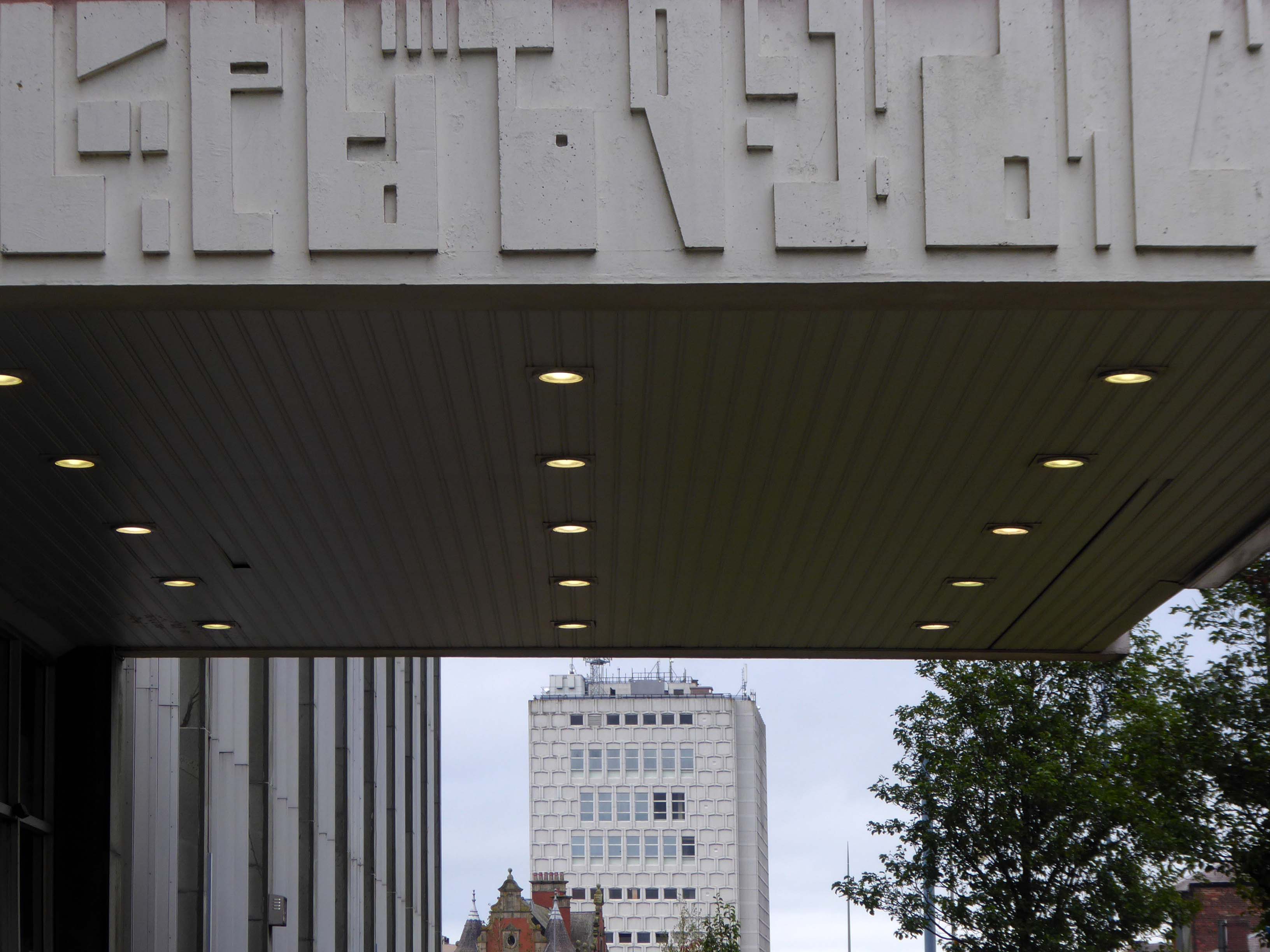
Next door the City Library and Archive 1968-70 by JW Plant City Architect.

The Archive is moving next door to the Museum.

With its its ultra smart relief out back and around the front cantilevered canopy.

Next door the former Cop Shop with the final wavy feature of the day – all yours for a cool £1,500,000

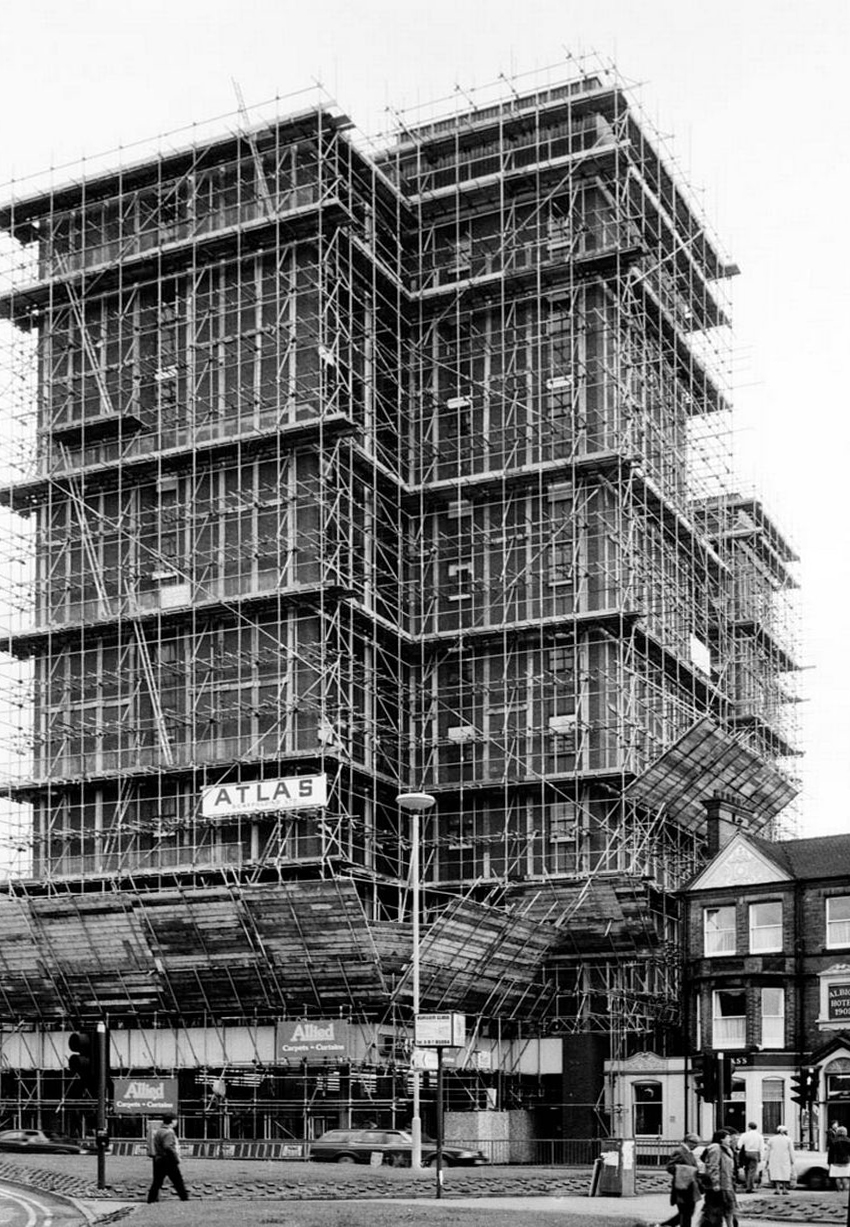
BT Hanley Tower

You’re nobody ’til somebody loves you,
You’re nobody ’til somebody cares.
You may be king, you may possess the world and it’s gold,
But gold won’t bring you happiness when you’re growing old.

Hanley GSC represents a major telecommunication facility for BT and is positioned within the City boundaries of Stoke-on-Trent, on a very congested site.

The building fabric was starting to degrade and in need of structural refurbishment.

Works comprised of cleaning down the externals by high pressure water jetting, carrying out concrete repairs, applying an anti-carbonation coating, anti-corrosion treatments, painting the windows and applying sealants to windows and various joints around the structure.

All work was carried out whilst the exchange was fully manned and operational.

Works were carried outover a 26 week period, utilising mast climbers around the structure, with a limited amount of scaffolding on the low level structures.

Contract value £580,000

Makers.

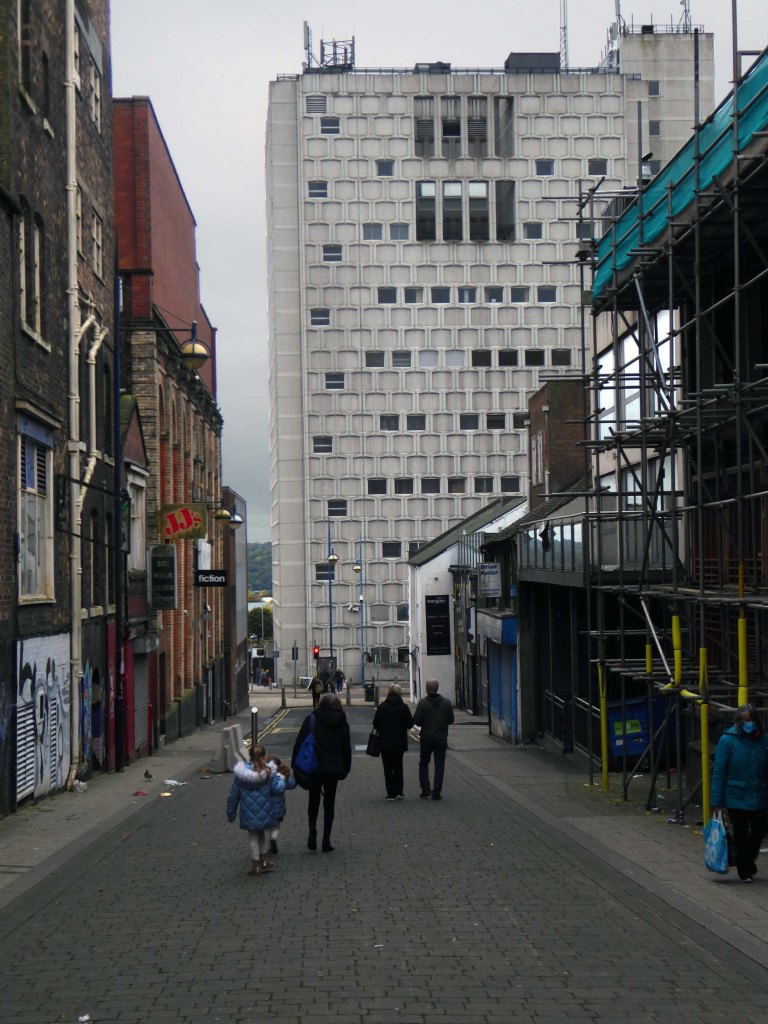
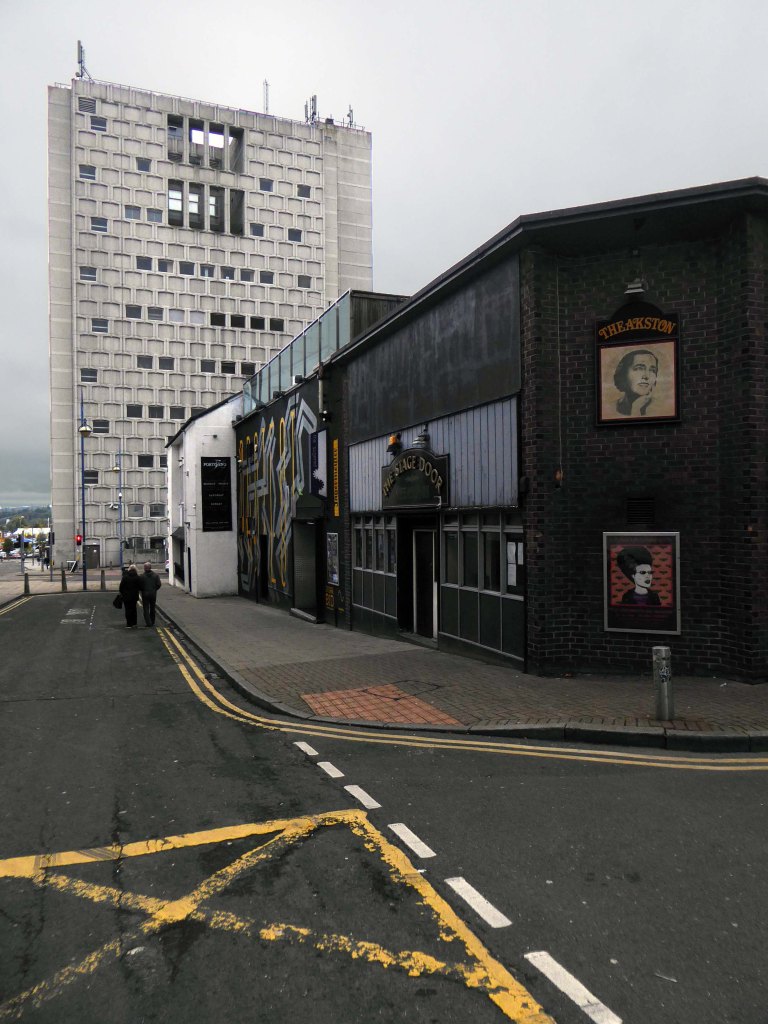
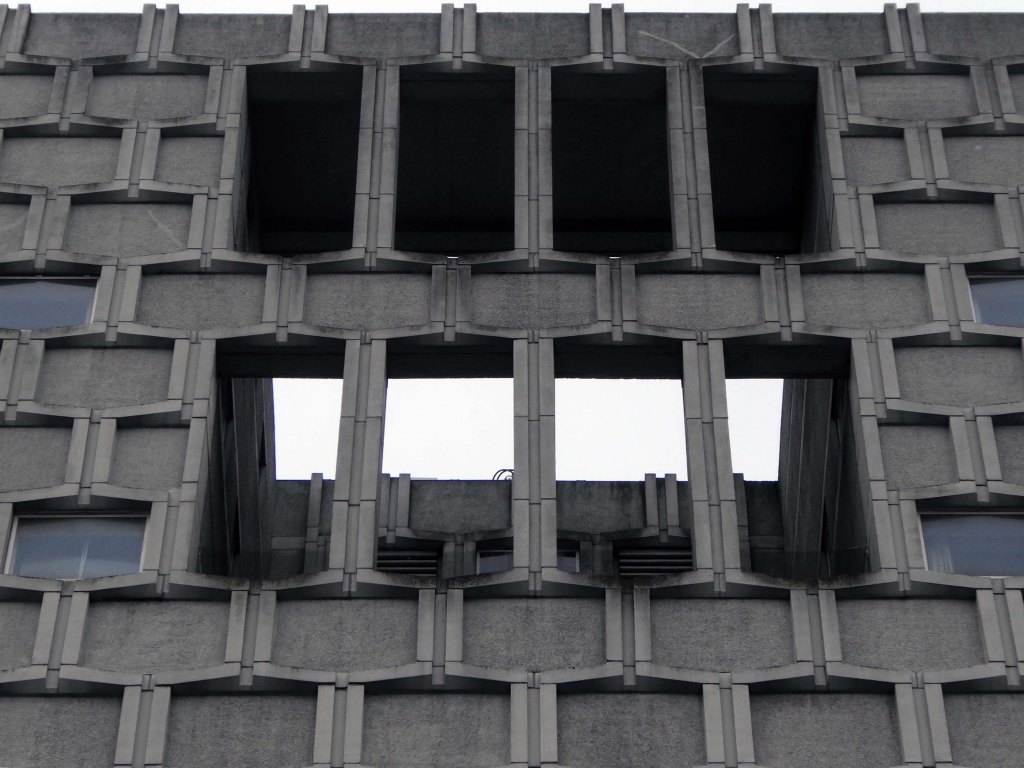
Derided locally as an eyesore, currently the tallest building in town following the demolition of Unity House.

It has an antecedent as an immediate neighbour.

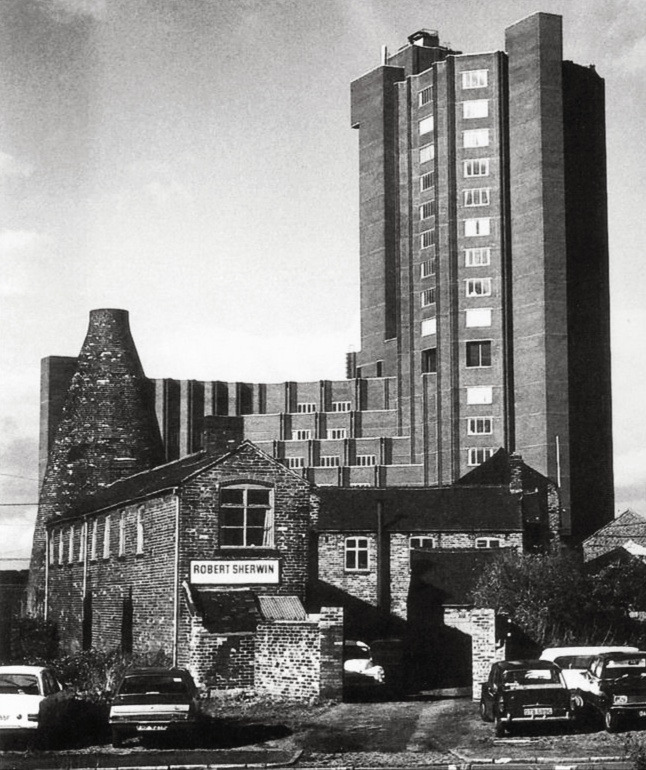
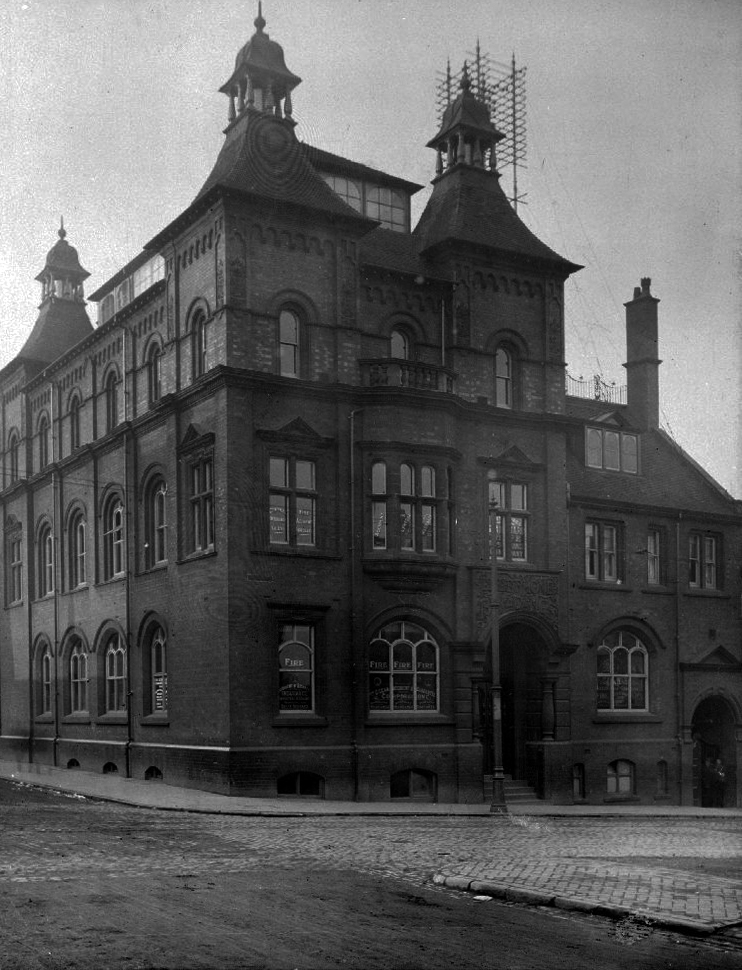
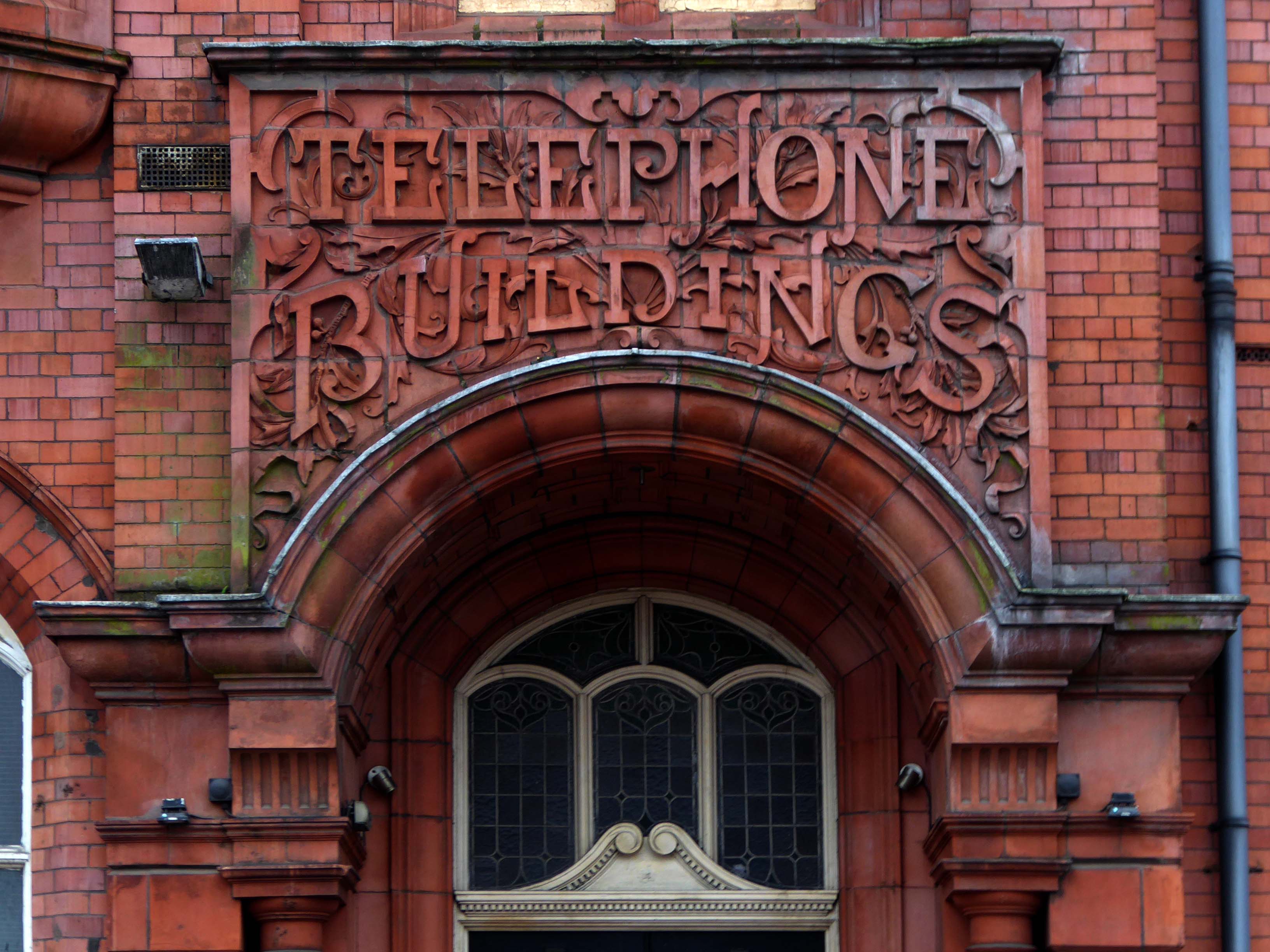
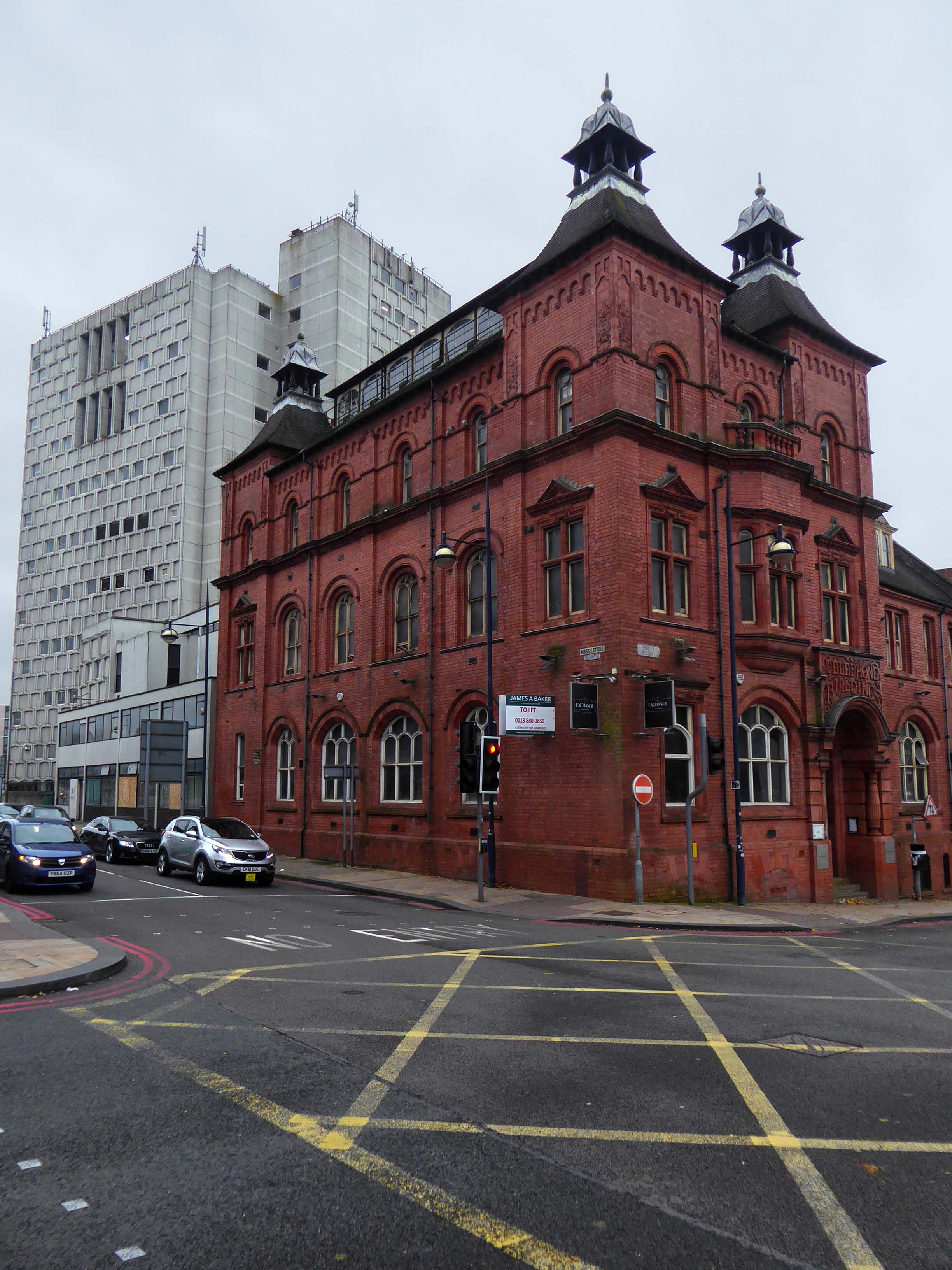
Former telephone exchange and offices – circa 1900.

Brick and terracotta with plain tiled roof. Eclectic style, with main block of three storeys, and three 3 narrow bays with flanking towers, all vertical spaces elongated.

The Potteries

Let’s take a look at the young upstart.

Staffordshire University

Moments from Stoke Station lies the central campus.

Staffordshire University was founded in 1914 as a polytechnic intistution, and was officially given University Status on 16 June 1992. Our University is famous for its forward-thinking approach, and has become a figurehead for its vocational and academic teaching, innovative grasp of industry, and student employability.

Although our campus continues to expand to create dynamic opportunities, we are proud of our heritage in the great city of Stoke-on-Trent. Steeped in the history of ceramic manufacture and production, industry in Stoke-on-Trent has been fuelled by Staffordshire University for over 100 years.

The Flaxman Building 1970 was designed by City Architect Thomas Lovatt and built by the City Works Department – the last public works assignment before competitive tendering opened up public restrictions to private enterprise.

Named for to Wedgwood’s famous modeller the classical artist, John Flaxman RA 1755-1826. 

Fred Hughes

The Regional Film Theatre opened in College Road, on the premises of North Staffordshire Polytechnic now Staffordshire University in 1974.

The North Staffordshire Film Society moved there to screen films one evening a week, while the Film Theatre operated on three nights a week. 


Across the way is the assertive slab tower of the 1950’s Mellor Building with its curvy cantilevered porch cover.

Currently Pozzoni are undertaking posed refurbishment.

Out back is the wavy roofed Dwight Building.

Over the road the new build of the Cadman Studios 2016 ABW Architects.

Telephone Exchange Gateshead

Having formerly posted a post about the Hadrian TSC in Newcastle, it seemed only right to record it’s not too distant cousin across the Tyne.

Here we are at the confluence of main roads.

I wandered around circuitously, circumnavigating this fine building.

The attendant BT workers are as ever kind and helpful, many thanks.

Underpasses – Newcastle upon Tyne

I’m often to be found underground – in Scarborough, Rotherham, Stockport, and Milton Keynes.

Here I am in this instance on Tyneside exploring the labyrinthine netherworlds.

Apollo Pavilion – Peterlee

An architecture and sculpture of purely abstract form through which to walk, in which to linger and on which to play, a free and anonymous monument which, because of it’s independence, can lift the activity and psychology of an urban housing community on to a universal plane.

The idea for the Apollo Pavilion was the culmination of Victor Pasmore’s involvement with the planning and design of the new town of Peterlee in County Durham which began in 1954 with his appointment by A.V. Williams, the General Manager, as a consultant architectural designer to the Corporation. The brief was to inject a new initiative into the new town’s design, which had been limited by practical and financial constraints. The early departure of Berthold Lubetkin from the original design team, and the limitations imposed by building on land subject to underground mining, had led to a deterioration in the quality of the architecture being produced at Peterlee.

At Peterlee Pasmore worked initially alongside architects Peter Daniel and Franc Dixon to develop the Sunny Blunts estate in the south-west area of the town, though by the time the Pavilion was built Dixon had left and the team included the more experienced Harry Durell, Colin Gardham and landscape architect David Thirkettle. Pasmore continued to be involved with Peterlee until 1978 and designed the Pavilion as a gift to the town.

It was restored in 2009 with the help of a Heritage Lottery Grant of £336,000. The restoration restored the south side stairway – the other had not been part of the original design, reset the cobbles in the surrounding area and reinstated the two murals on the north and south walls.

A metal gate restricting access at night time to the upper level has been introduced, and the original lighting scheme, out of action since the mid 1970s, has been reinstated.

Peterlee Gov

Victor and me do have previous – a visit to the then Civic Centre Rates Office

Along with the Renold’s building mural at UMIST.

I jumped the X9 bus and headed for Peterlee – walked the wide open streets in search of signs.

There were no signs.

I found it instead by chance and instinct.

Here it is.

Peterlee was to be the miners’ capital of the world and was named after the well-known miner and councillor Peter Lee. 

Architect Berthold Lubetkin’s plans included everything from football pitches and tennis courts, to a rock-climbing centre and a zoo. However, to Berthold Lubetkin’s frustration, the National Coal Board opposed his plan and, after numerous failed attempts to agree on the siting of housing, Lubetkin quit the project in 1950. He later gave up architecture altogether and took up pig farming.

It remains a grand place to live it seems, tidy housing set in rolling greenery.

There are no longer coal mines or miners.

Manors Car Park – Newcastle upon Tyne

Brims and Co. Limited

Manors Car Park’s distinctive form derives from the constraints of the train line to east which collided with the new Central East Motorway A167 M which dips beneath, shaping the car park between these constraints. The curvature of the concrete decks sweeps uniformally across the site, interrupted only by the circulation ramp. The car park was the first multi-story car park in Newcastle and marked the beginnings of Wilfred Burns car-centric plans for the modernisation of the city through the Central East Motorway Plan – 1963.

Burns plan aimed to increase the economic growth of the city through greater convenience for an emerging car owning populace and even went as far as to incentivised cars travel by offering limited free parking in the city centre.

Manors car park connected and accompanied by an equally dramatic and elongated pedestrian footbridge from Manors Train Station – today Manors Metro, touching the car park for access before swooping under Swan House on Pilgrim Street Roundabout. The bridge takes what feels like the longest imaginable route over the motorway, allowing pedestrians to bypass Northumberland high street and take in the theatrics of the swooping concrete forms and motorway traffic.

Something Concrete +Modern

Newcastle Libraries

In the early 1960s, under the leadership of T Dan Smith and his chief planning officer Wilf Burns, Newcastle city council undertook a comprehensive re-planning of the city centre that, had it been carried out to its full extent, would have led to the construction of underground motorways and a series of raised pedestrian decks running along Northumberland Street in the main shopping zone. The plan was that the new city would encircle the historical core, which would be preserved; meanwhile vast swathes of Georgian housing to the east would be razed. There were also plans for high-rise towers in the centre, only one of which was built.

The Guardian

This tendency in town planning was due in part to the publication of H. Alker Tripp’s book of 1942.

Along with Traffic in Towns an influential report and popular book on urban and transport planning policy published 25 November 1963 for the UK Ministry of Transport by a team headed by the architect, civil engineer and planner Colin Buchanan. The report warned of the potential damage caused by the motor car, while offering ways to mitigate it. It gave planners a set of policy blueprints to deal with its effects on the urban environment, including traffic containment and segregation, which could be balanced against urban redevelopment, new corridor and distribution roads and precincts.

These policies shaped the development of the urban landscape in the UK and some other countries for two or three decades. Unusually for a technical policy report, it was so much in demand that Penguin abridged it and republished it as a book in 1964.

Wikipedia

In a one man war against the segregation of traffic and pedestrian I often walk car parks, ramps and all.

Stockport Asda, Piccadilly Manchester, Merseyway, Heaton Lane, Hull, Red Rock, Grimsby, and Margate.

As a non-driving militant pedestrian I assert my right to go wherever I wish to – within reason.

Okay let’s go.

Salford Walk

We begin on the Crescent – taking in the former AUEW Building.

B&W images copyright USIR Archives

It became part of Salford University’s estate, renamed the Faraday Building.

It is currently unoccupied.

The University’s Masterplan is shifting emphasis to the Peel Park and Media City sites.

Also leaving Crescent House in limbo.

The original master plan would have swept away the Victorian Technical Institute and Salford Art Gallery.

Across the road are the Maxwell Buildings.

They were built between 1959 and 1960 to a design by the architect C H Simmons of the Lancashire County Architects Department.

The interior decorative order of Sixties’ institutions was integral to the architectural design, sadly this is no longer so.

The hall has a great musical heritage.

Featuring the Fast Cars who we have previously encountered in Swinton at the Lancastrian Hall.

Which may be the subject of ambitious redevelopment.

Take a turn around the corner to the Cockcroft Building.

The east facing mural painted out and obscured by retrofitted infrastructure.

These incised stone panels obscured by plants.

To the left is the Clifford Whitworth Library – this is the original architectural impression – signed Peter Sainsbury.

The original fascia was tile clad.

Subsequently replaced by uPVC boards.

Yet again the original interior was integral too the architectural scheme and period.

Across the way the Chapman Building.

It was designed by WF Johnson and Partners of Leamington Spa, as a lecture theatre block and gallery. It sits with its long axis running parallel to the railway behind. The series of grey volumes, occasionally punctuated by colourful floods of red and green trailing ivy, hang together in a less than convincing composition. The orientation and access to the building seem confused and detached from any cohesive relationship to the rest of the campus, but there is something perversely attractive about the right essay in the wrong language. The reinforced concrete building contained five lecture theatres, communal spaces, an art gallery, AV support areas and basement plant rooms. Following a major refurbishment in 2012, several additions were made to the exterior and its total concrete presence somewhat diminished. It still houses lecture theatres and a number of other learning and social spaces.

Mainstream Modern

To the rear of the building there are some of the original details, now painted a series of funny colours.

A ways down the road the former Salford Technical College.

Now the part of the University of Salford, this grouping is probably the most significant work by Halliday Meecham during this period. The blocks wrap to almost enclose a courtyard and they step up in height towards the rear of the site. To the front is a lecture theatre block in dark brick. The multi-storey elements are straightforward in their construction and appearance and have had their glazing replaced. Perhaps the richest elements here are the three totemic structures by artist William Mitchell, which were listed at Grade II in 2011. Mitchell was actively engaged with the experiments of the Cement and Concrete Associations during the 1960s and produced a wide variety of works for public and private clients; other works regionally include the majority of the external art and friezes at Liverpool Metropolitan Cathedral and the Humanities Building at Manchester University. These textured concrete monoliths appear to have an abstract representation of Mayan patterns and carry applied mosaic. They were made on site using polyurethane moulds. There is another Mitchell work hidden behind plasterboard in the inside of the building.

Mainstream Modern

Subsequently assimilated into the University.

Across the A6 the former estate pub the Flemish Weaver is currently shrouded in particle board and in use as a base for construction workers.

Just down the way The Woolpack is no more.

April 1965 saw the Salford City Reporter proudly boast in an article that

The Ellor Street dream begins to come true – complete with interviews with residents of the newly constructed Walter Greenwood, Eddie Colman and John Lester Courts all which towered some 120 feet above the Hanky Park skyline.

These particular blocks of flats were of special significance because their completion was the end of the first stage of the Ellor Street redevelopment scheme which was to provide 3,000 new homes, the £10 million pound Salford Shopping Precinct and a new civic centre – which never got built – making this A Salford of the Space Age.

Salford Online

The tower blocks are now clad and the site a construction base for cladders.

Full details of Salford’s complex and extensive redevelopment can be found here at Tower Block.

Walter Greenwood Court was demolished in 2000/2001, whilst Eddie Colman and John Lester Court are now student accomodation for the nearby Salford University.

Onwards and underwards towards Salford Shopping City.

The construction of the shopping centre and surrounding areas continued and on 21 May 1970 the new Salford Market officially opened. From 1971 onwards new shops inside the precinct itself began to open.

However, due to a lack of funds and a political scandal which saw chairman Albert Jones jailed for eight months construction of Salford Precinct was halted. The site had only 95 shop units compared to the proposed 260, the hotel and two storey car park were never built.

The architectural core of the site has been retained, including the 23 storey Briar Court residential tower.

Tucked in behind is Mother of God and St James RC Church.

Clearances took place from the middle of the twentieth century and new high-rise housing blocks were built, as well as a shopping centre.

There was a Catholic presence in the area from 1854, when schools were built. What was described in The Tablet as a beautiful church, an Early English Gothic design by M. Tijou – presumably Herbert Tijou, architect of the chapel to Loreto College, Manchester, was opened by Cardinal Manning, Archbishop of Westminster in 1875.

One hundred years later this church was demolished and replaced by the present building.

The architects were Desmond Williams & Associates, the design bearing some similarity to their St Sebastian, Salford. In 2010 the church of All Souls, Weaste, was closed, and the marble sanctuary furnishings brought to the church.

Description

All orientations given are liturgical. The church is steel framed with brick walls and a monopitch roof (originally covered with copper, now with felt).  Bold brick forms create a presence, and the design is somewhat defensive, with few windows. The building is entered from a lower porch which forms a narthex. The slope of the roof and the stepped clerestory lighting create a striking impression inside, and full-height windows towards the east end incorporate stained glass figures said to have originated in the previous church. Marble sanctuary furnishings are presumably those from the church in Weaste and appear to be of later twentieth century date, while the font is of traditional type with a clustered stem and may have come from the earlier church.

Taking Stock

Returning to The Crescent the High Street Estate is all but demolished, save for one resident and their row.

This is an area which has seen a succession of clearances, redevelopment and shifts in demographics during a relatively short and intense period of change.

That process of change continues to hastily unfold.

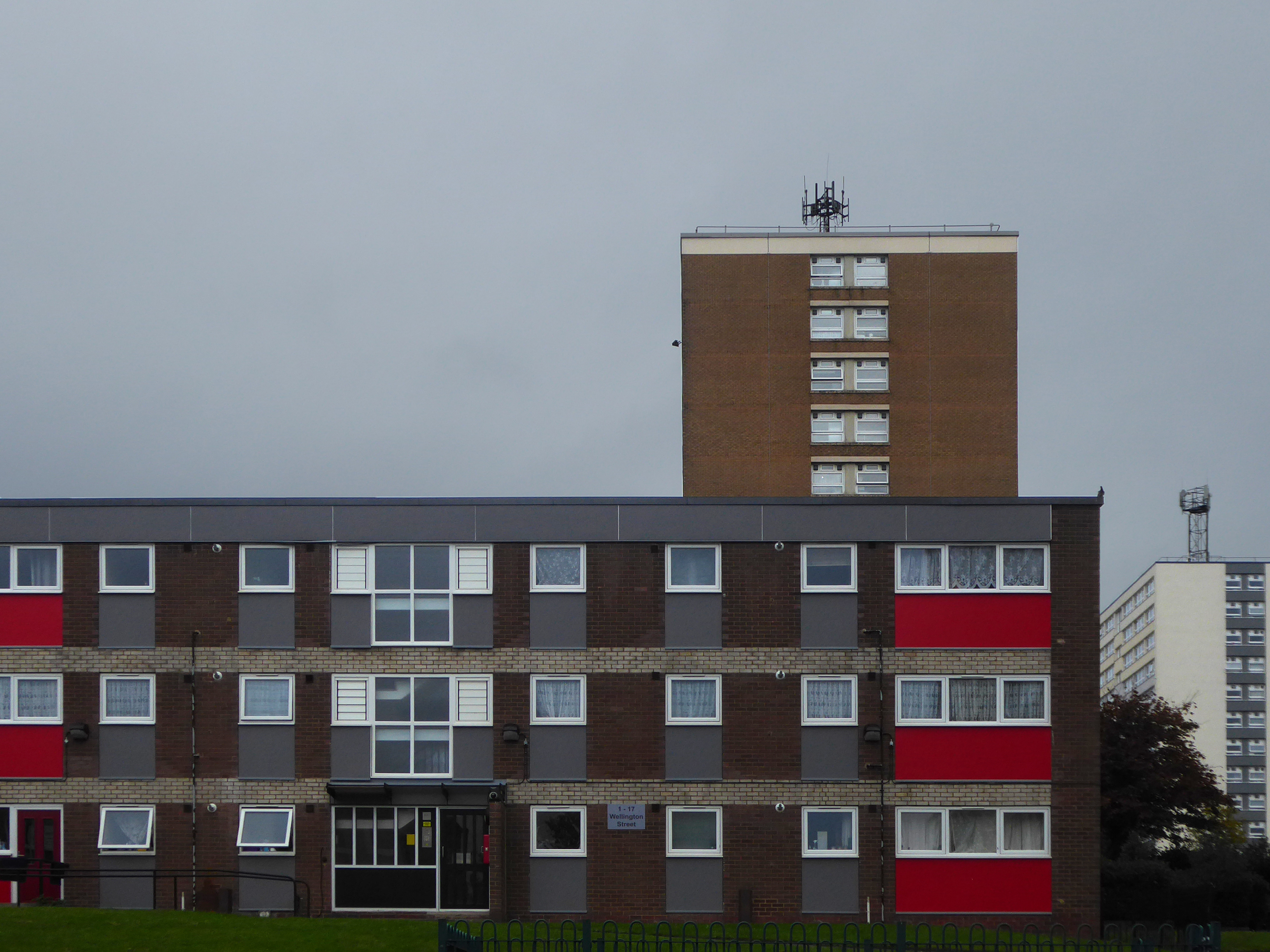
Haley Hill Flats – Halifax

The New Bank Development – aka Range Lane or Haley Hill.

Built in 1964 – Architects Leonard Vincent and Ray Gorbing.

Tower Block 1987

Forming part of my Halifax Walk.

Having seen Mandy Payne’s pictures over on Instagram – I hastened to Halifax.

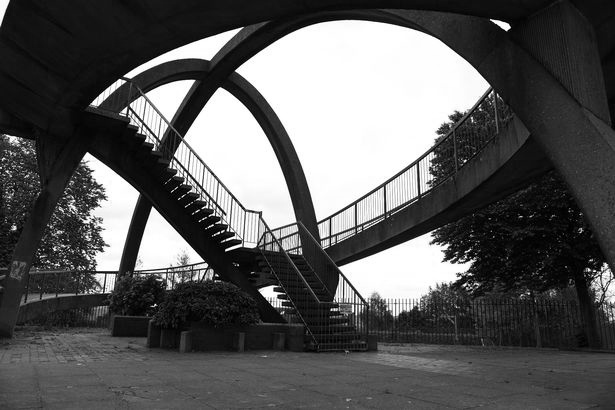
Intrigued by the Oscar Niemeyer style stairs.

Here are my pictures.