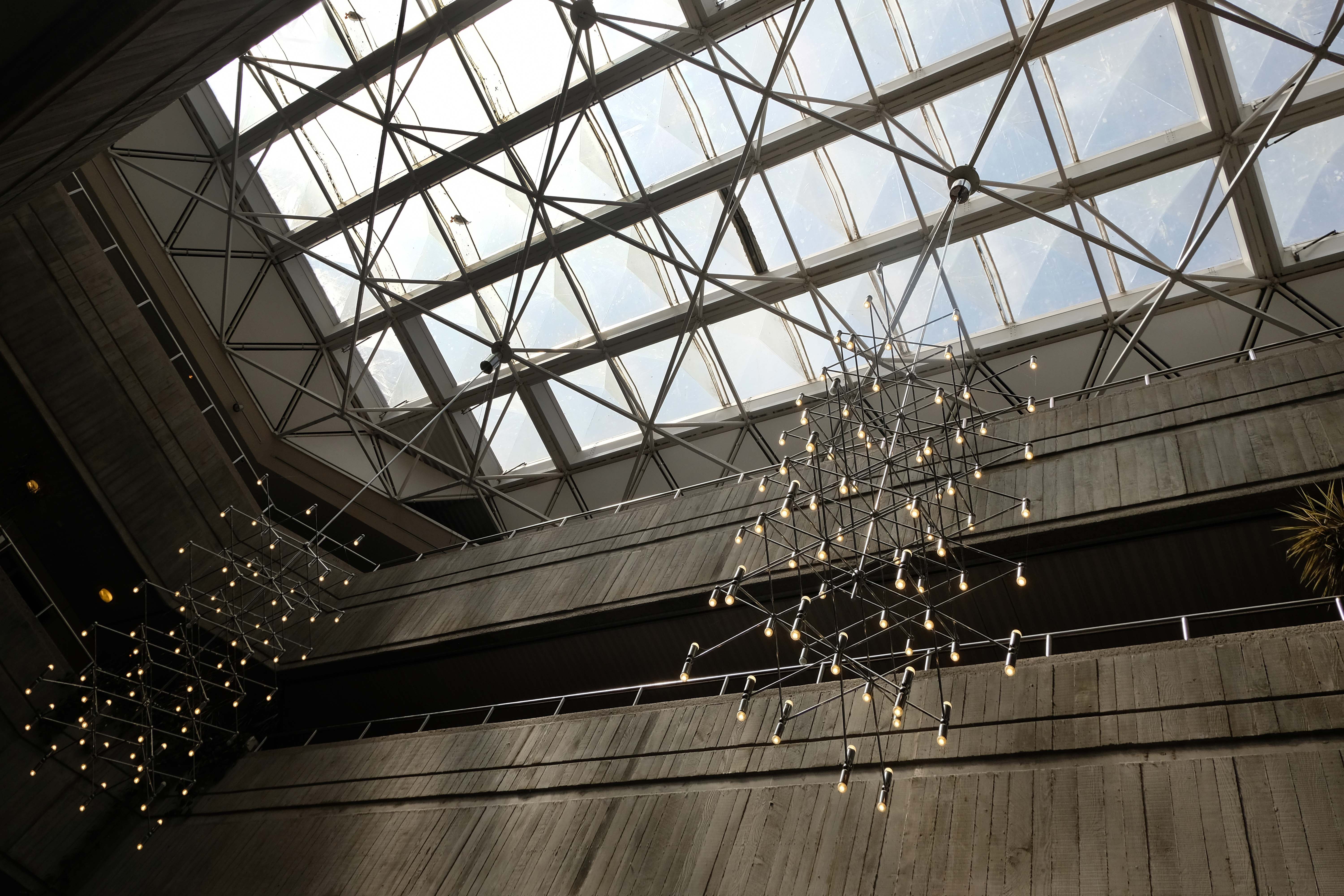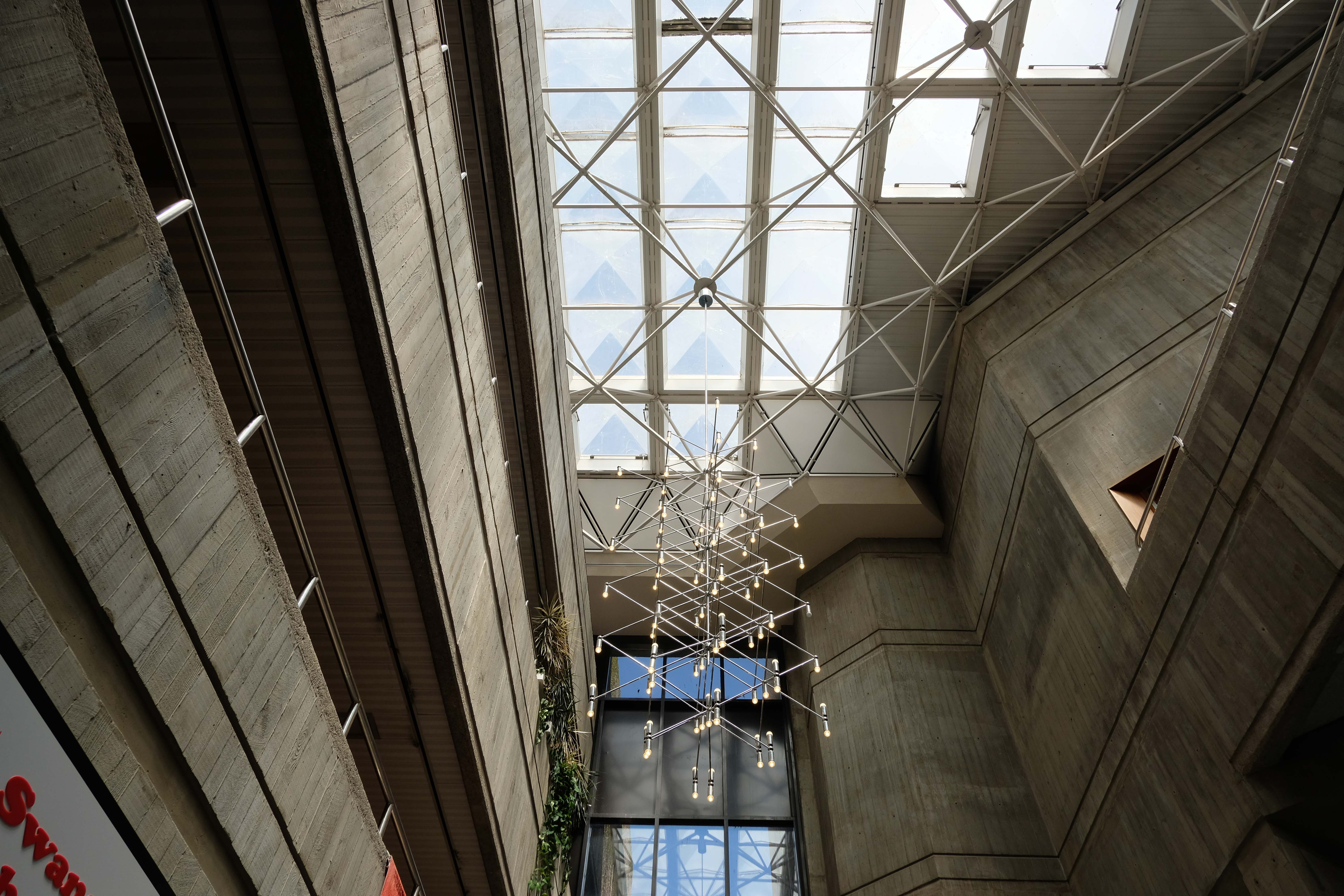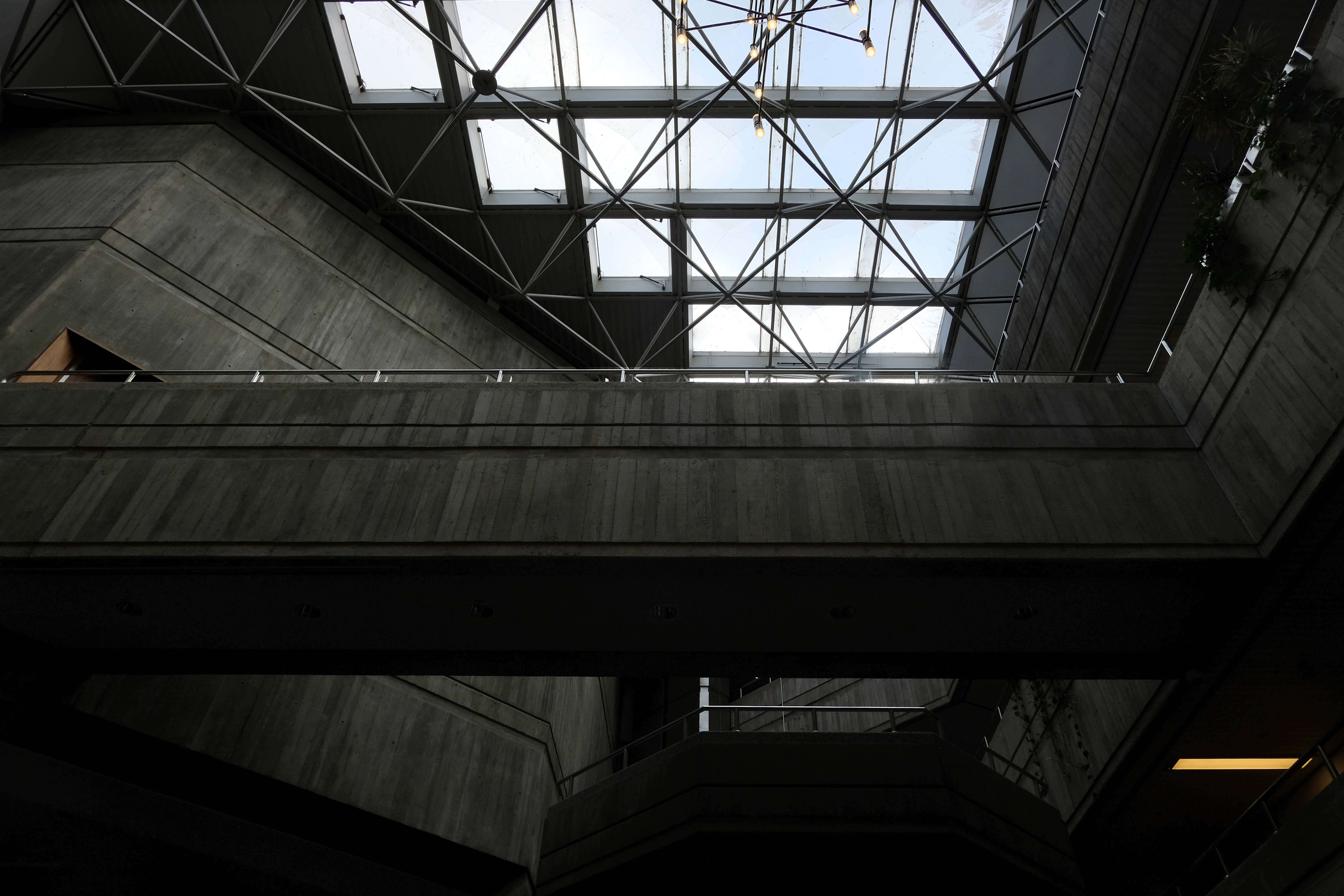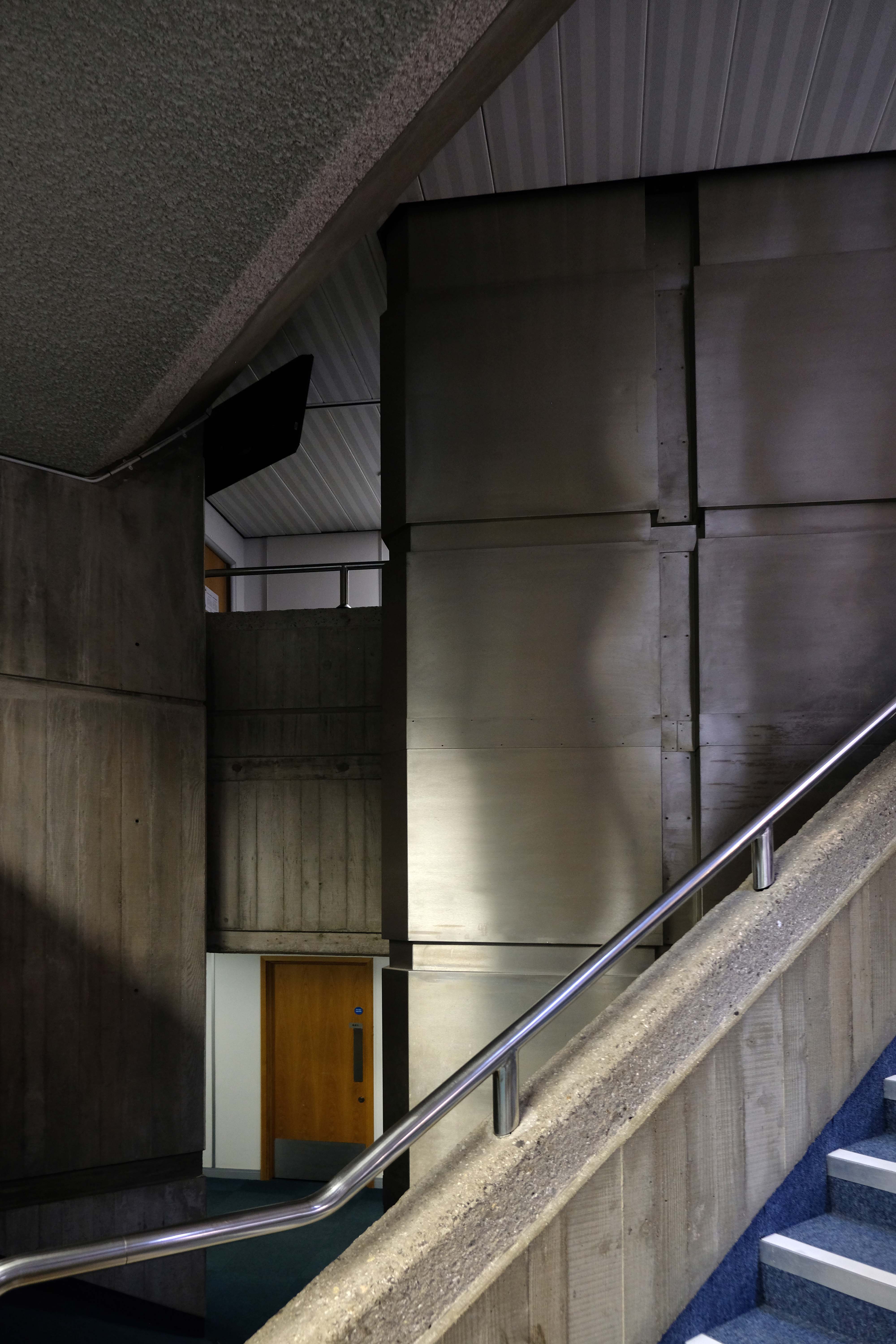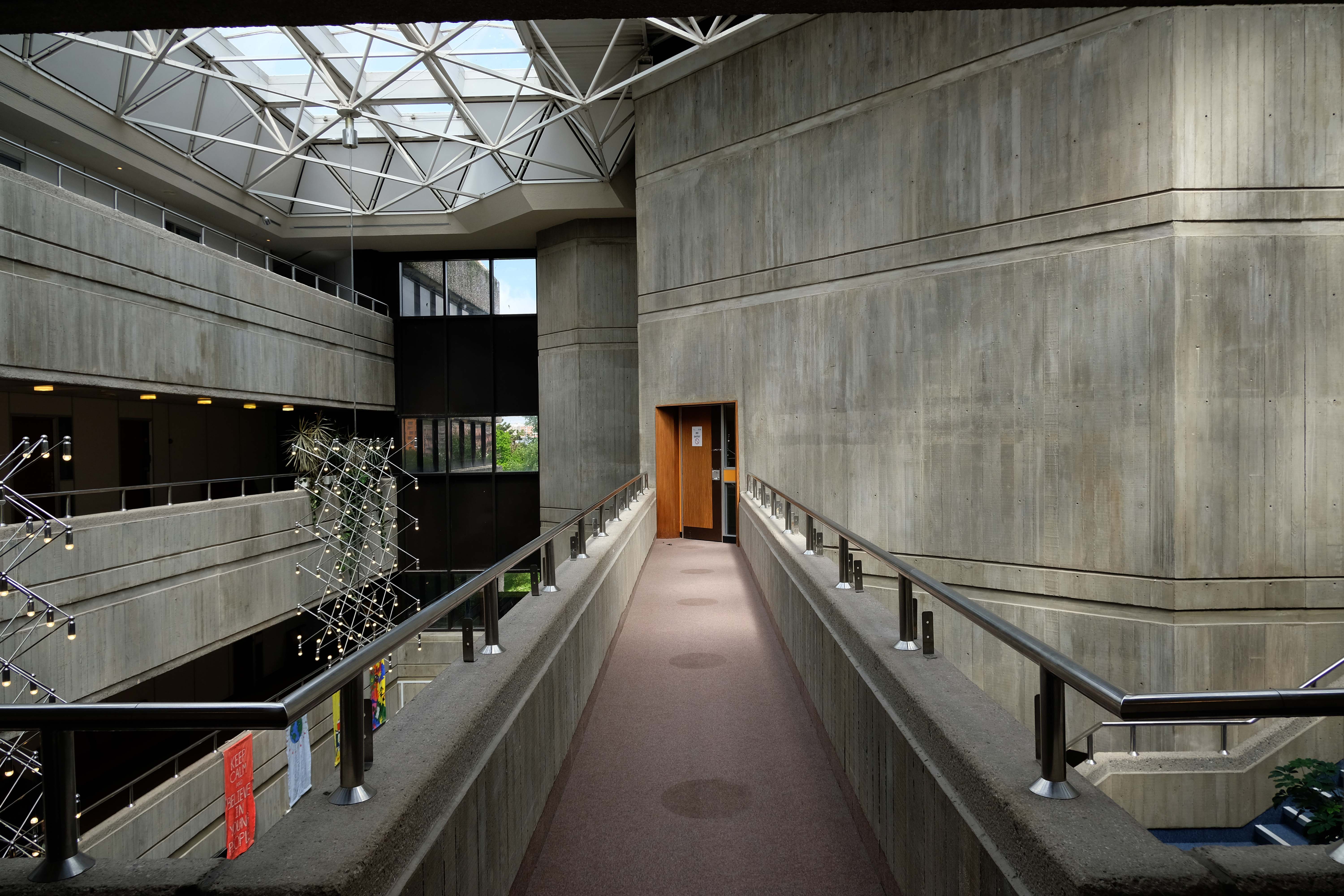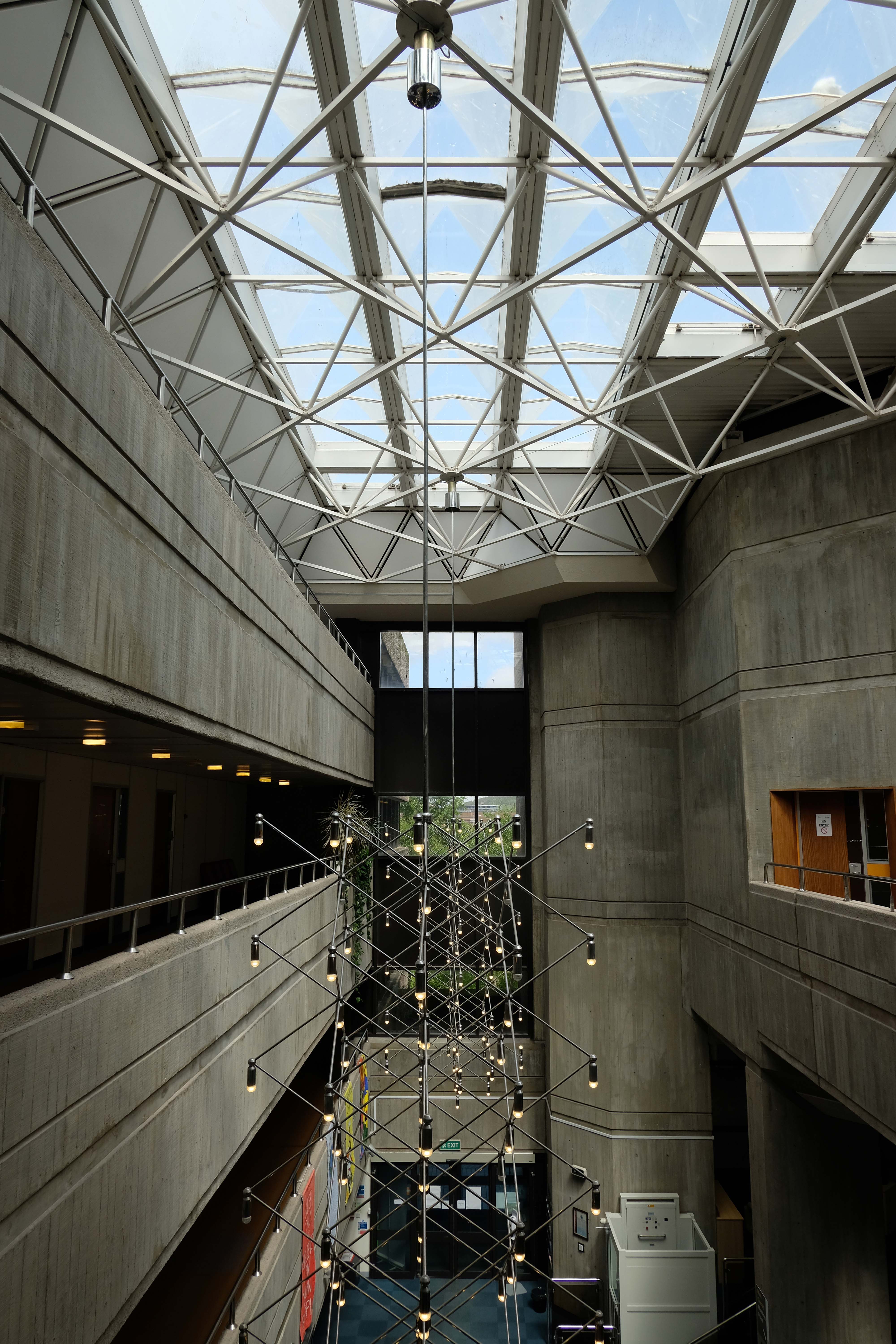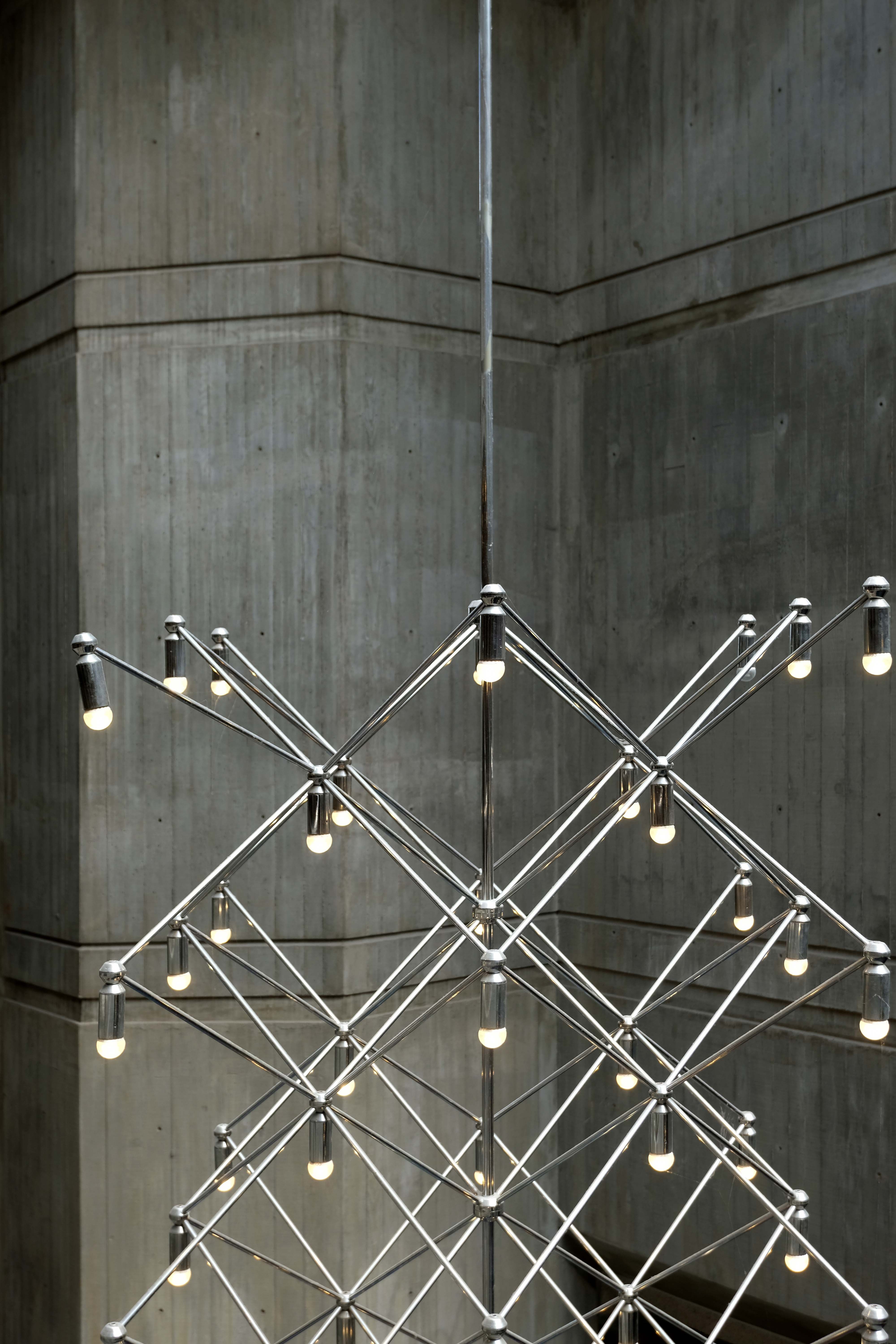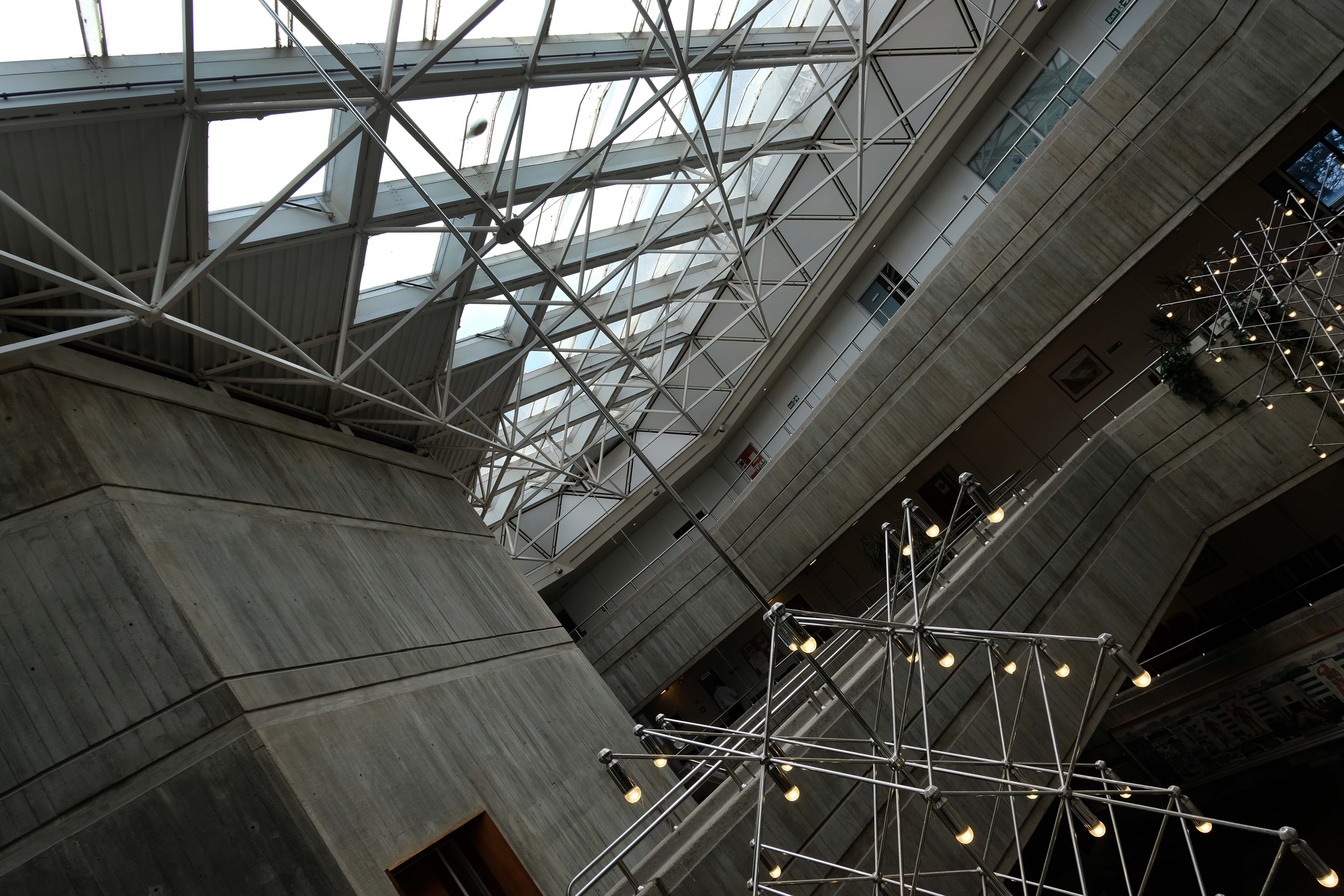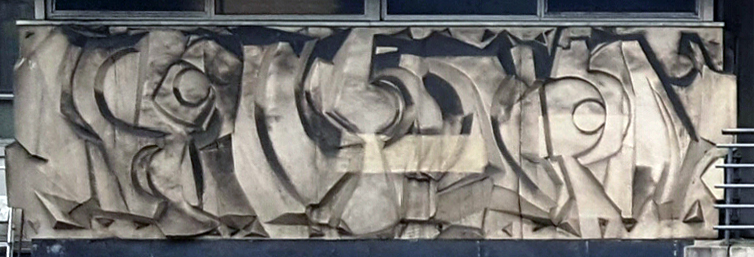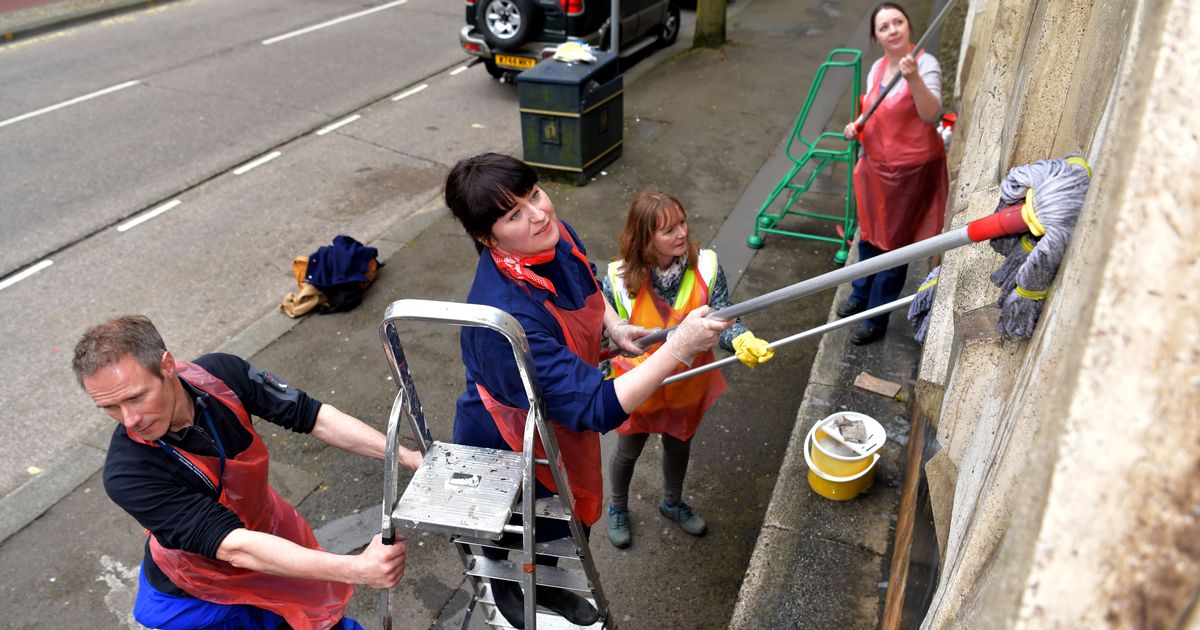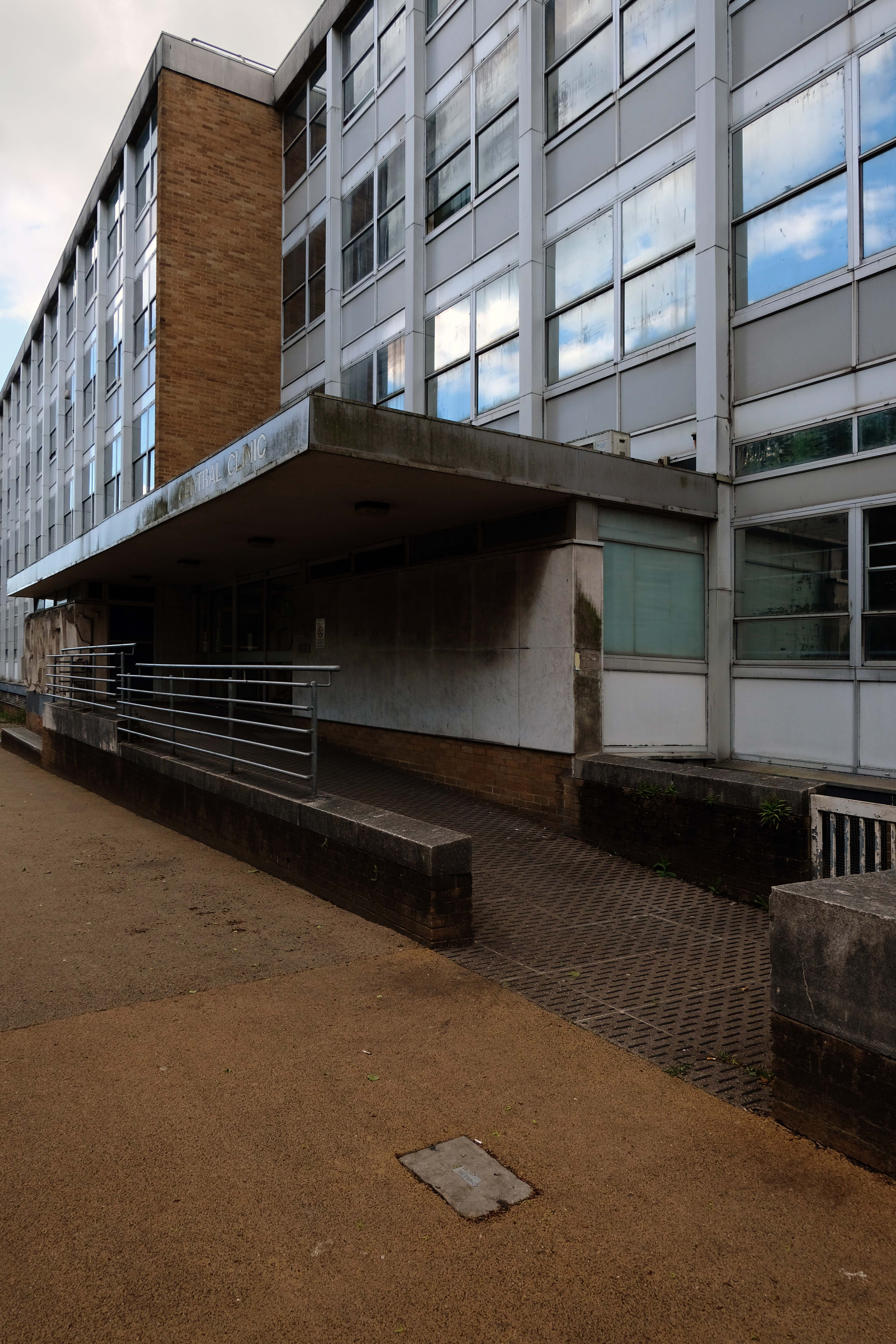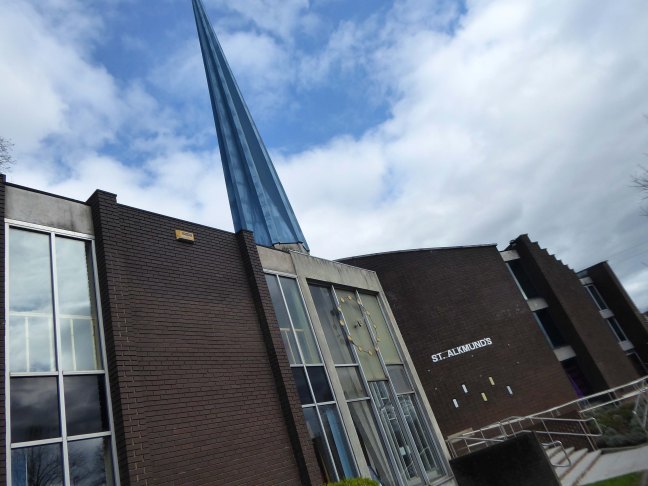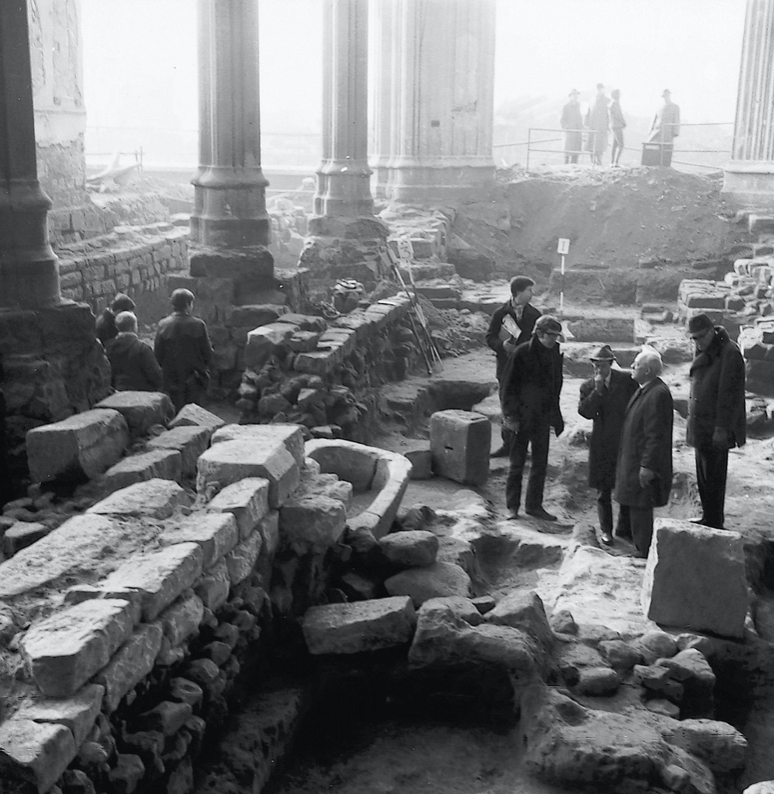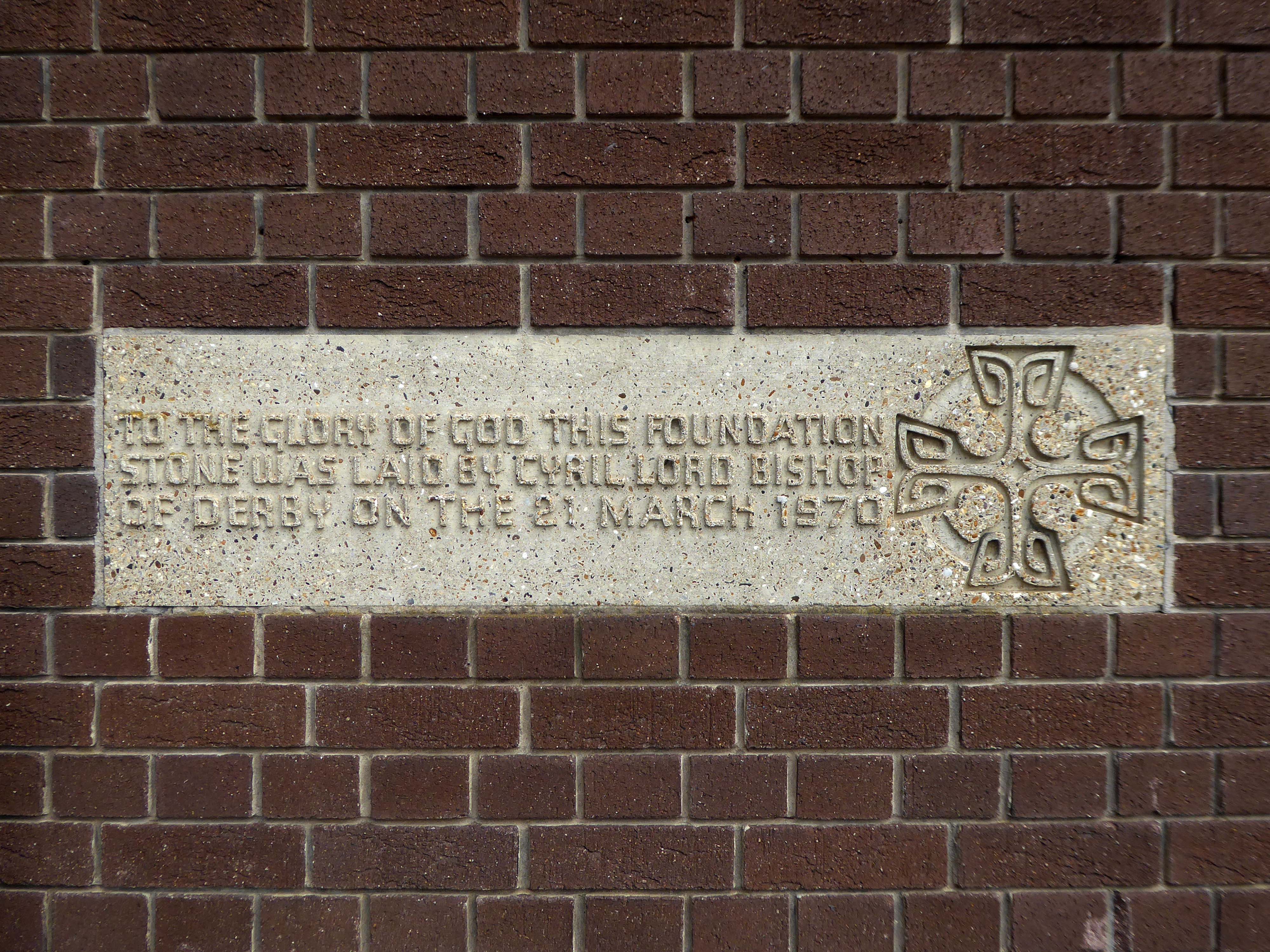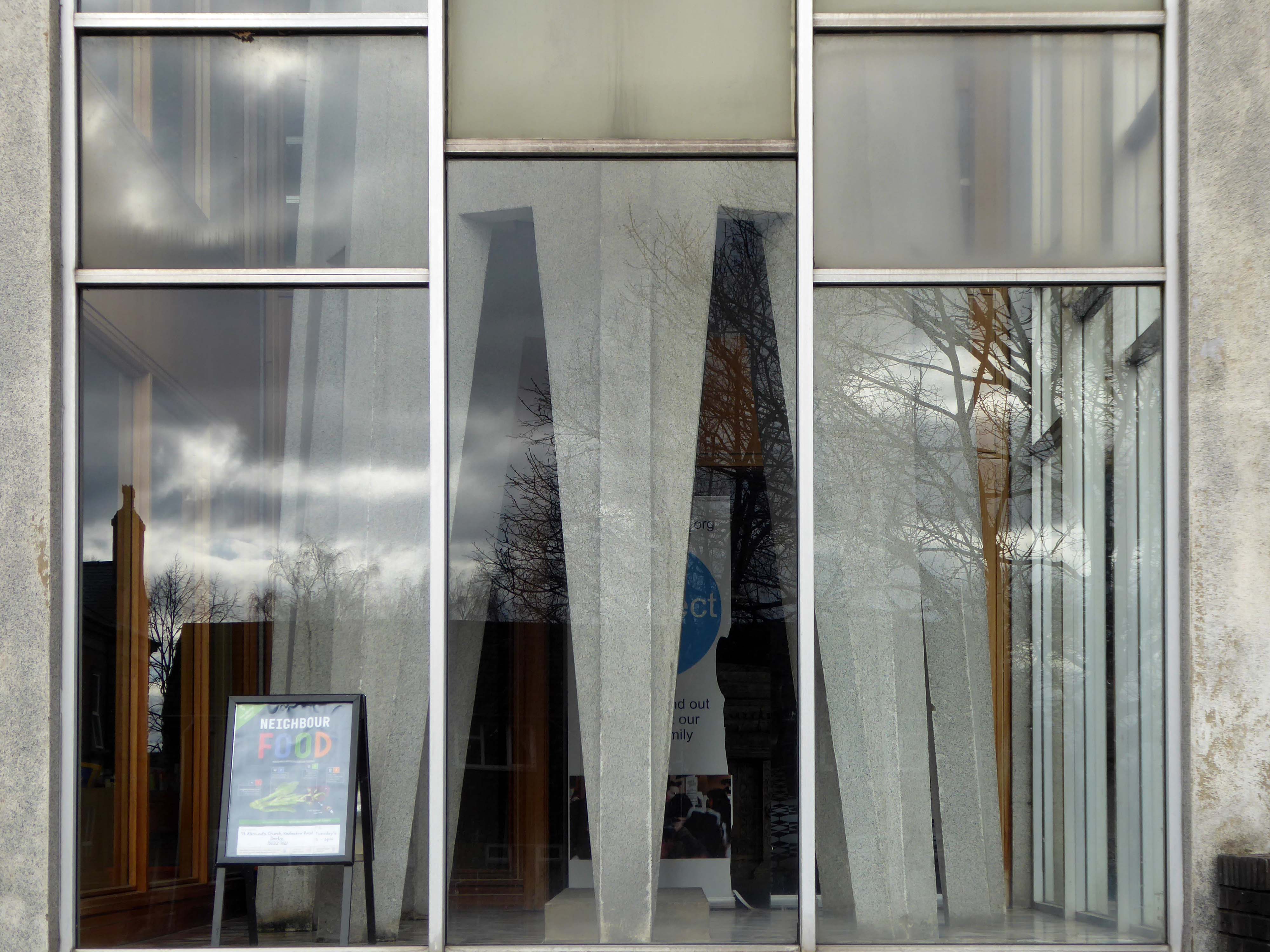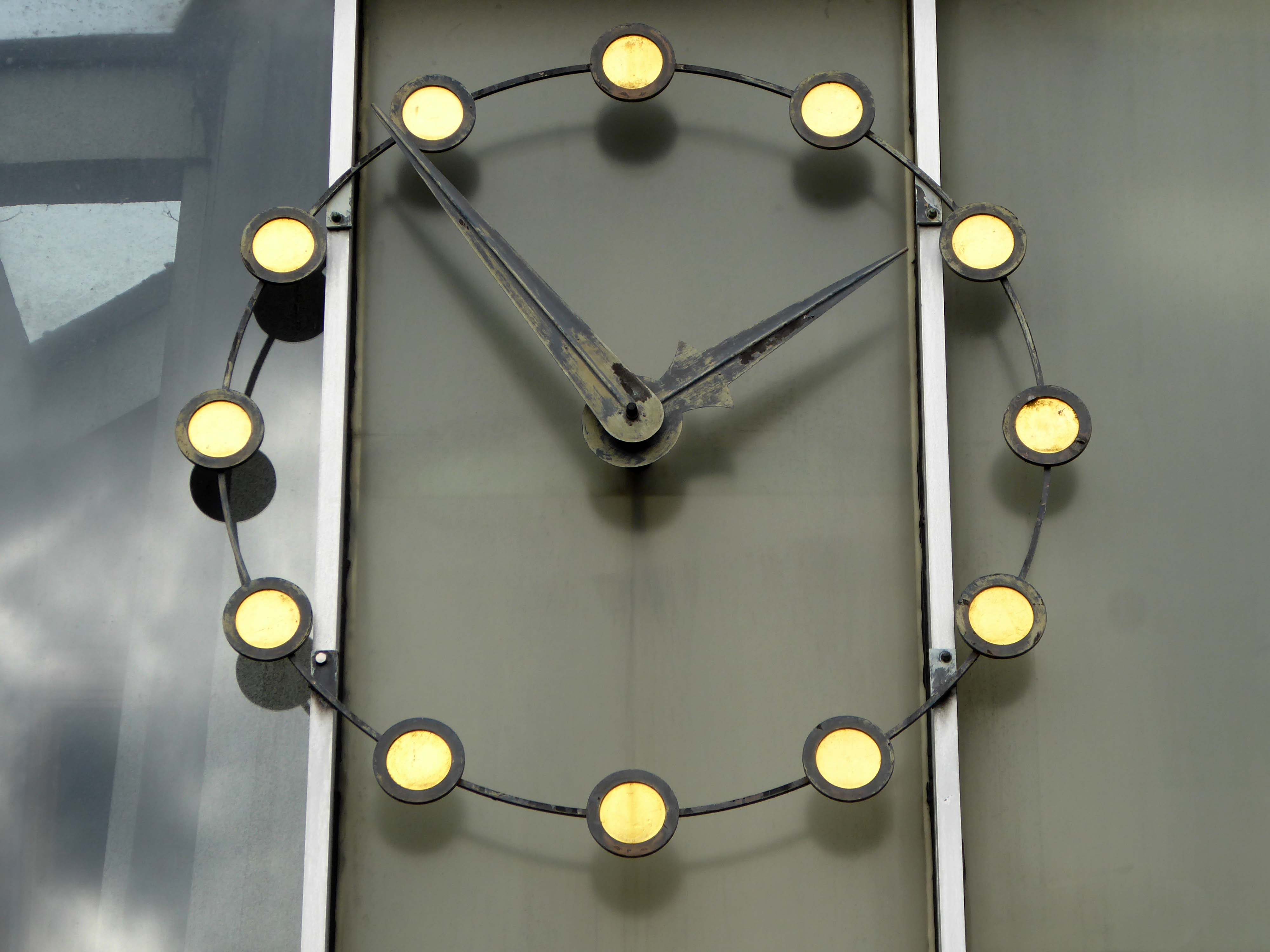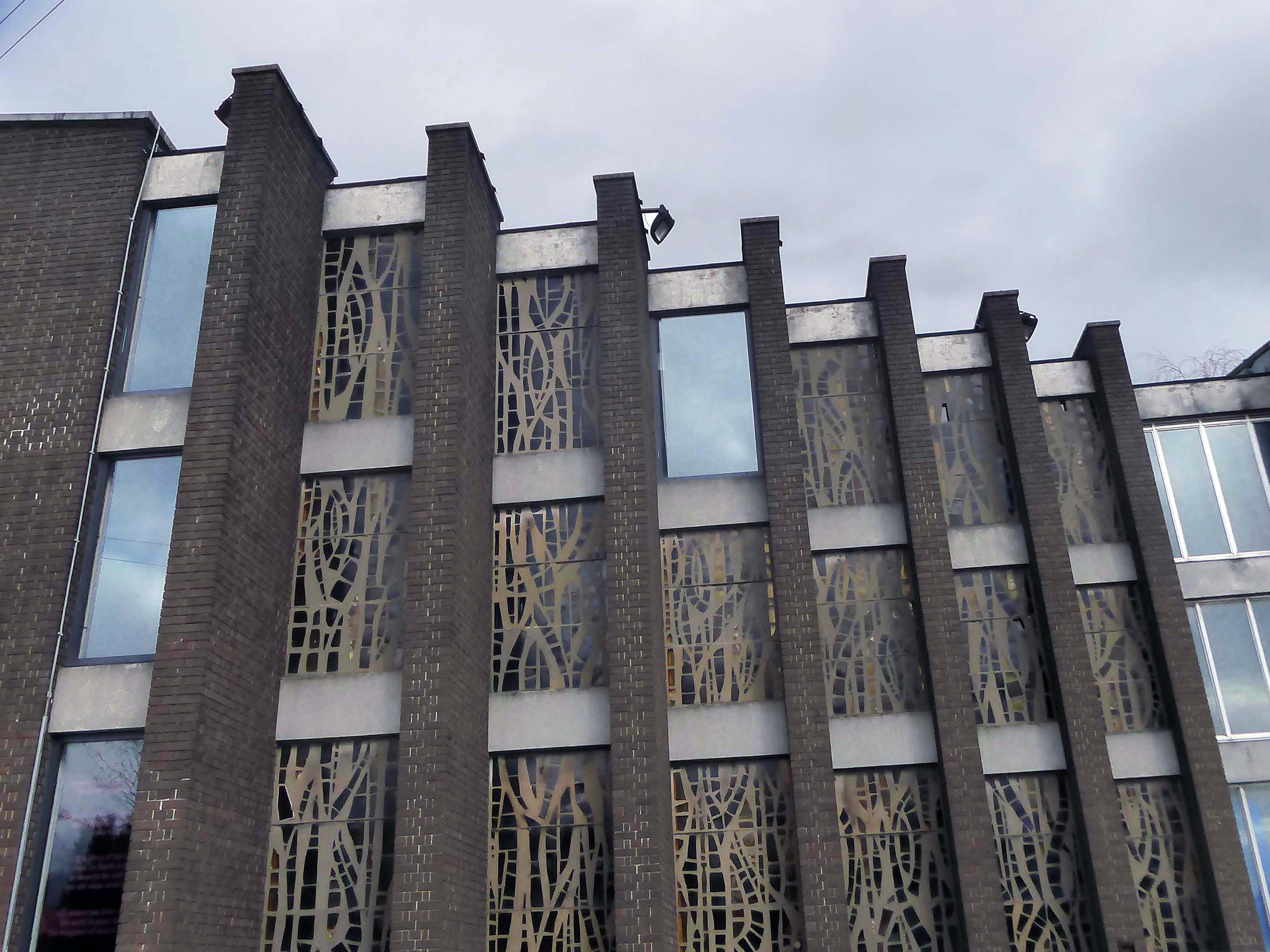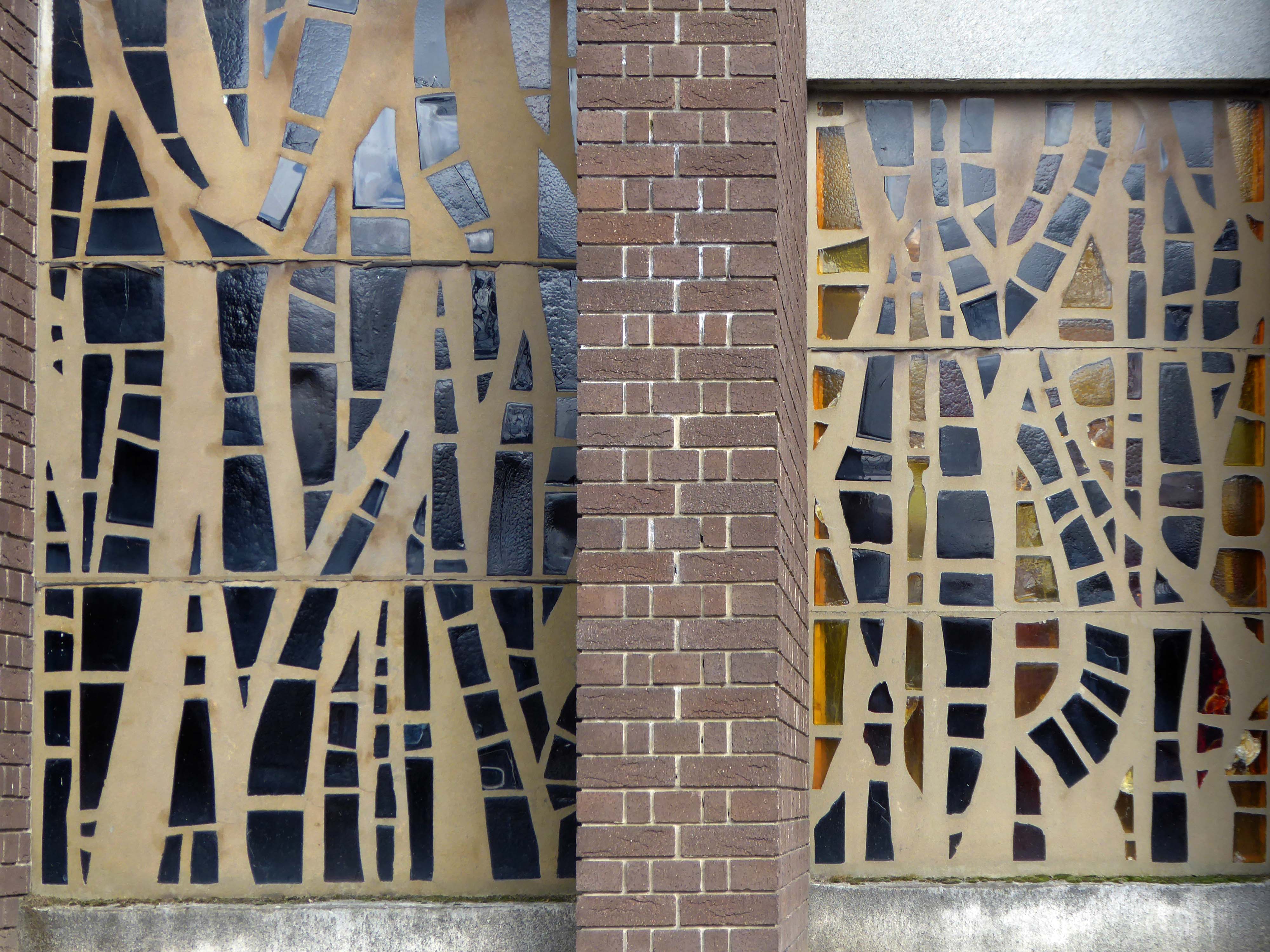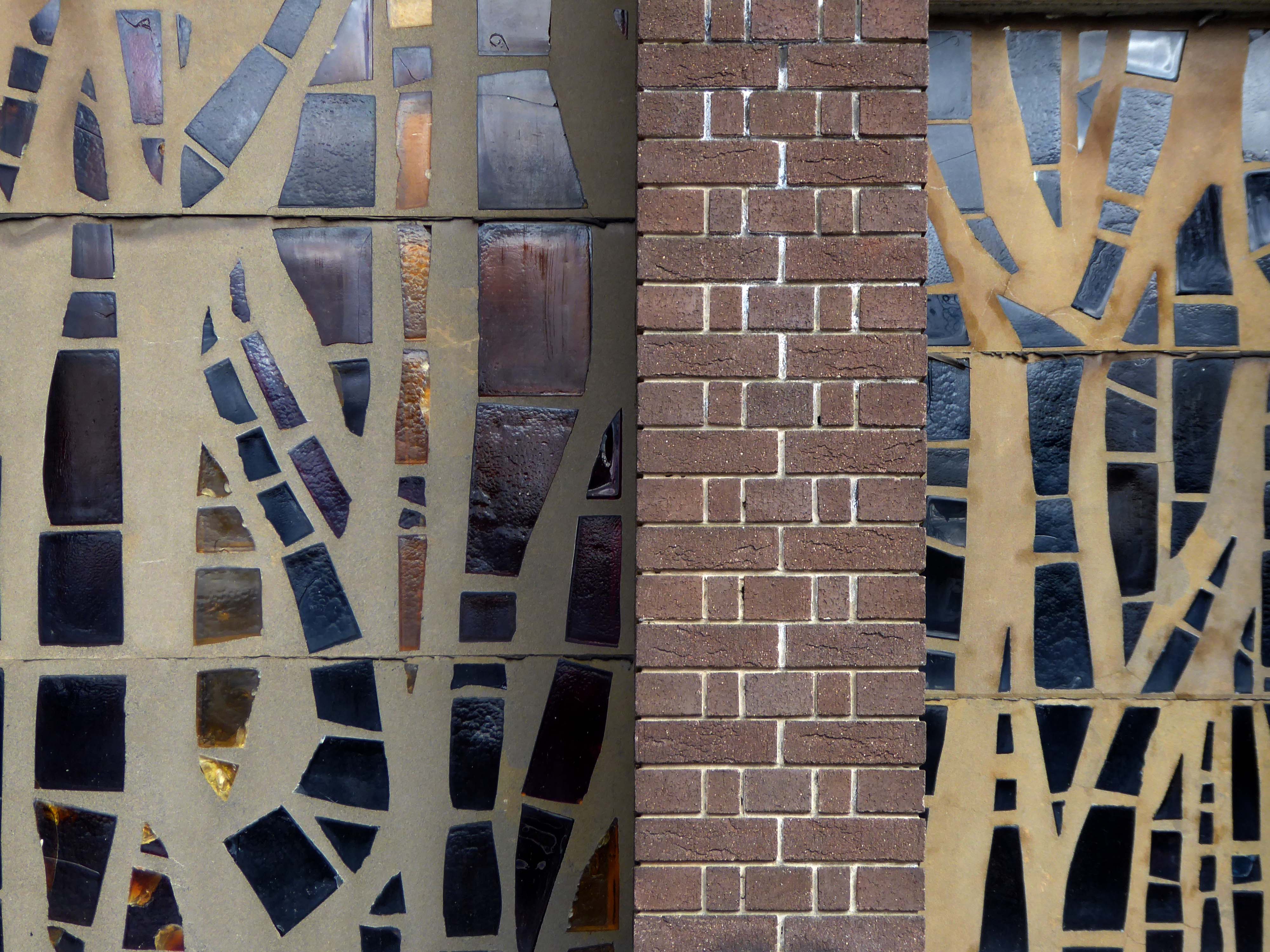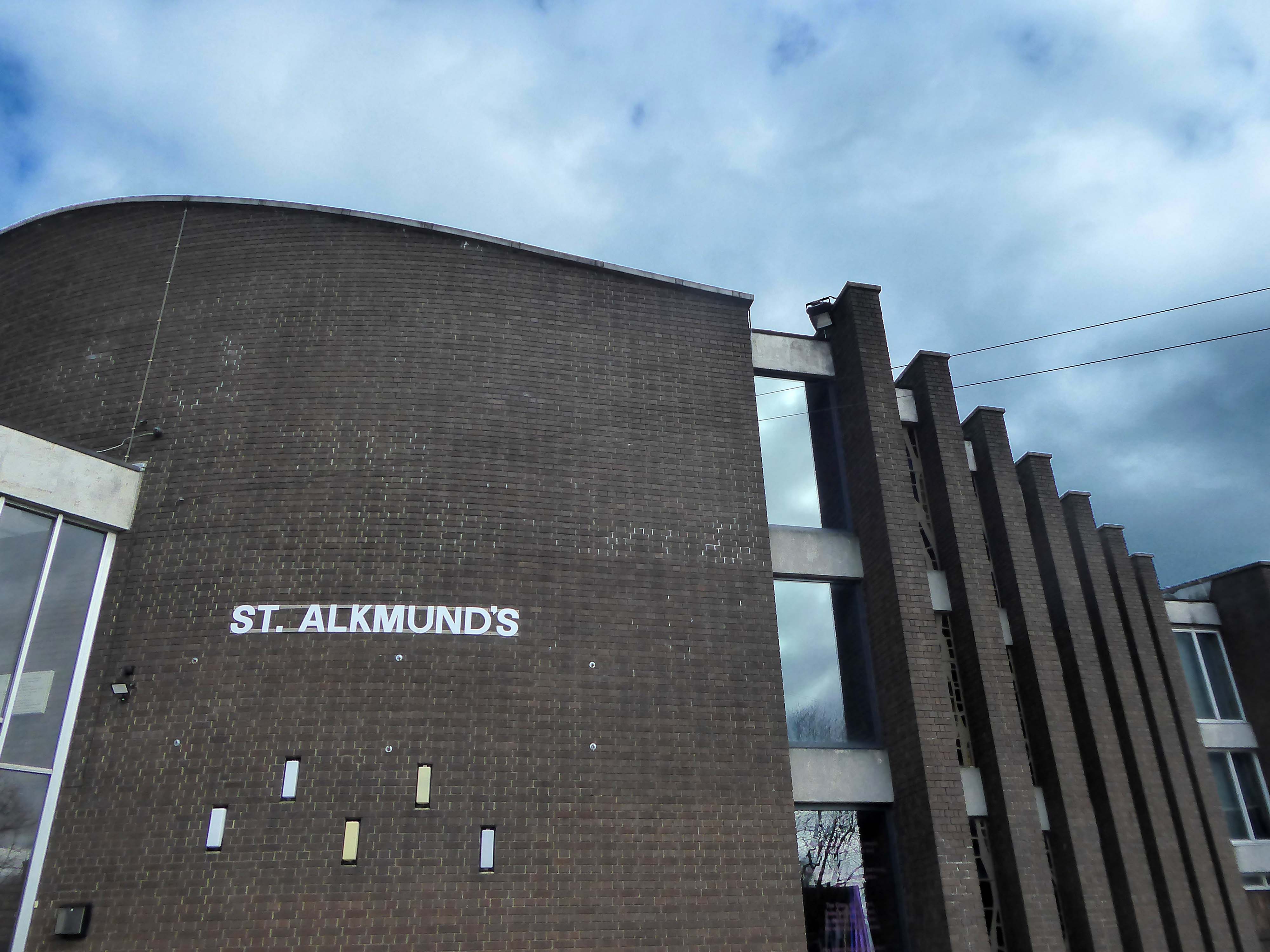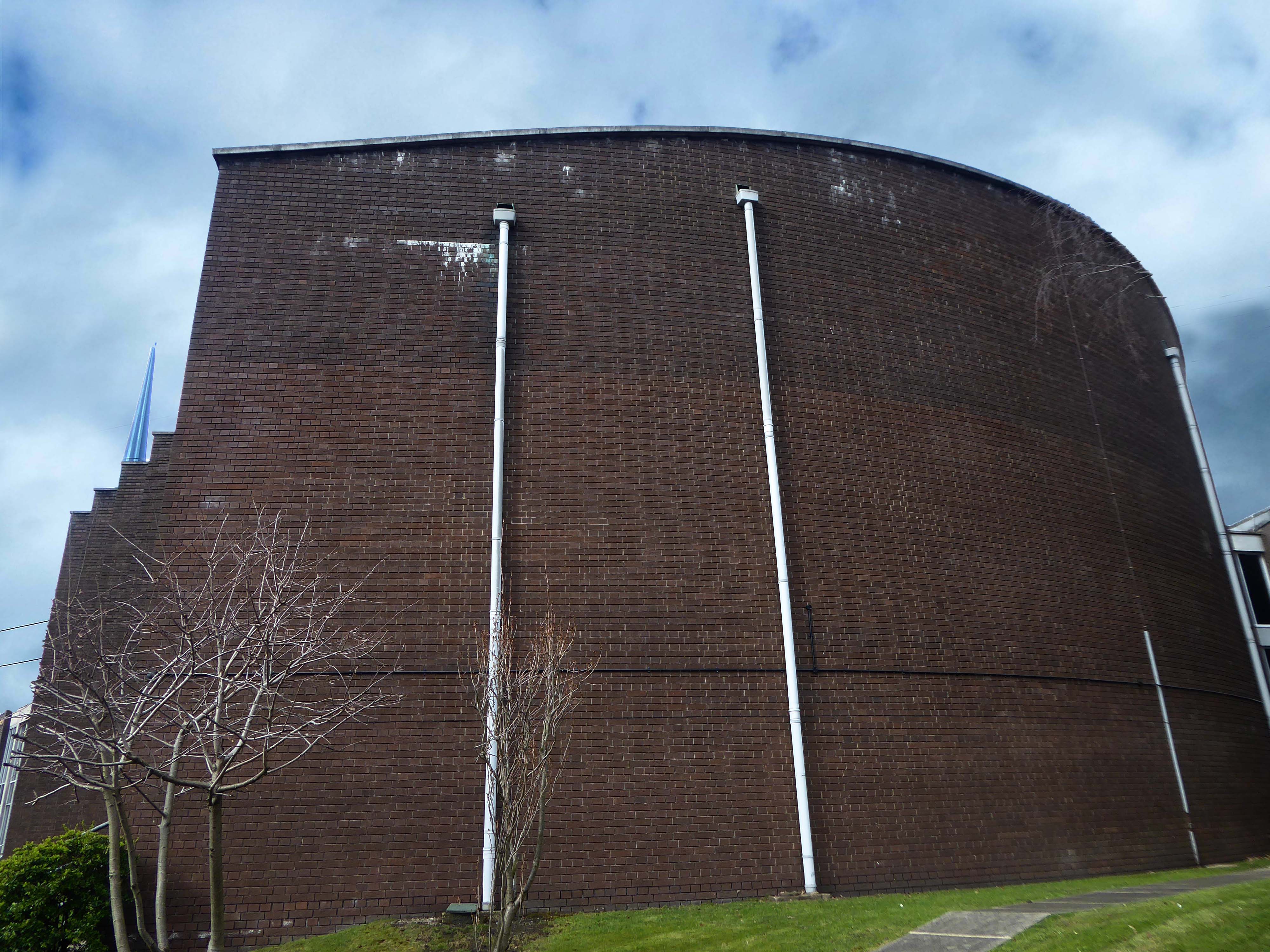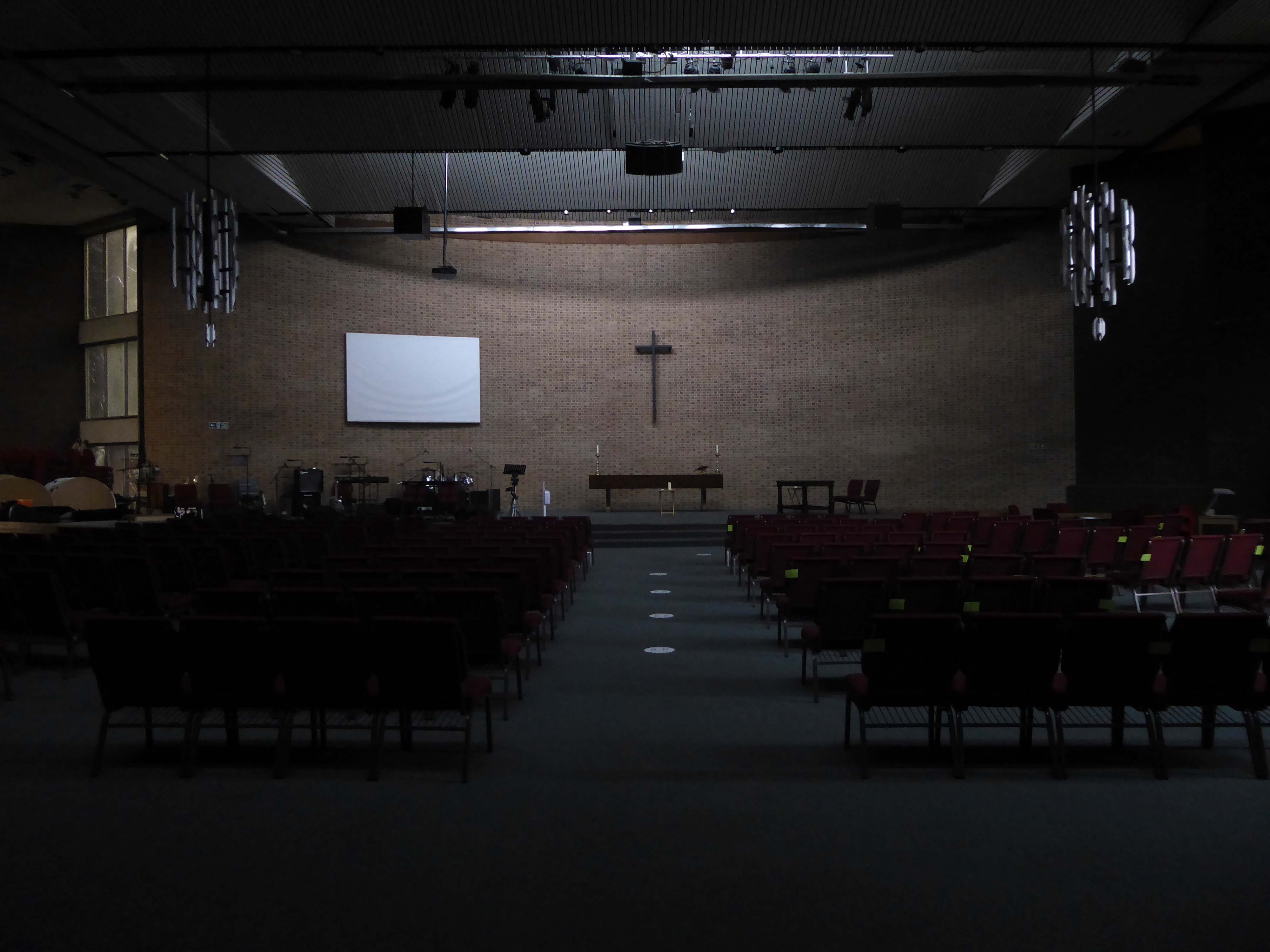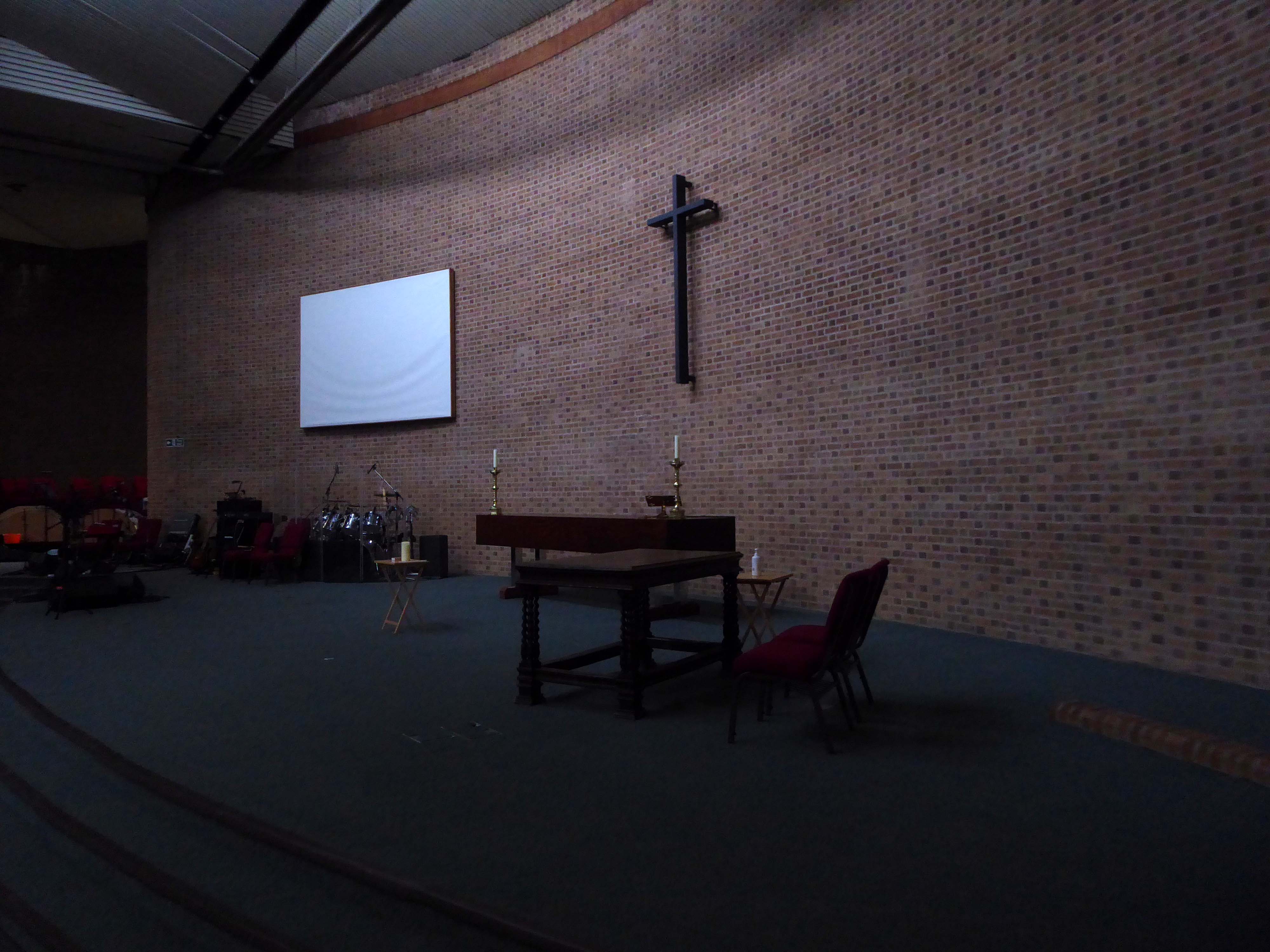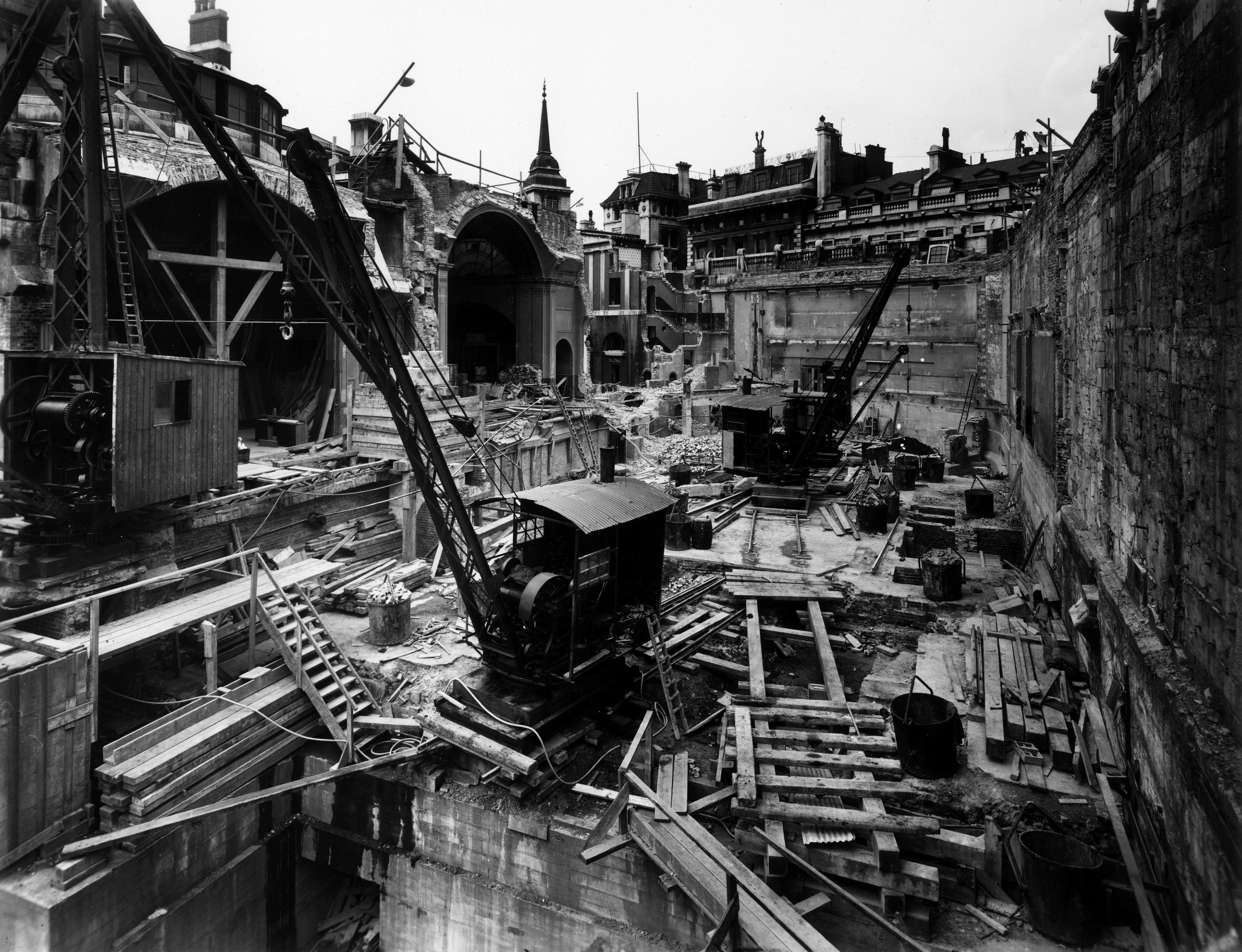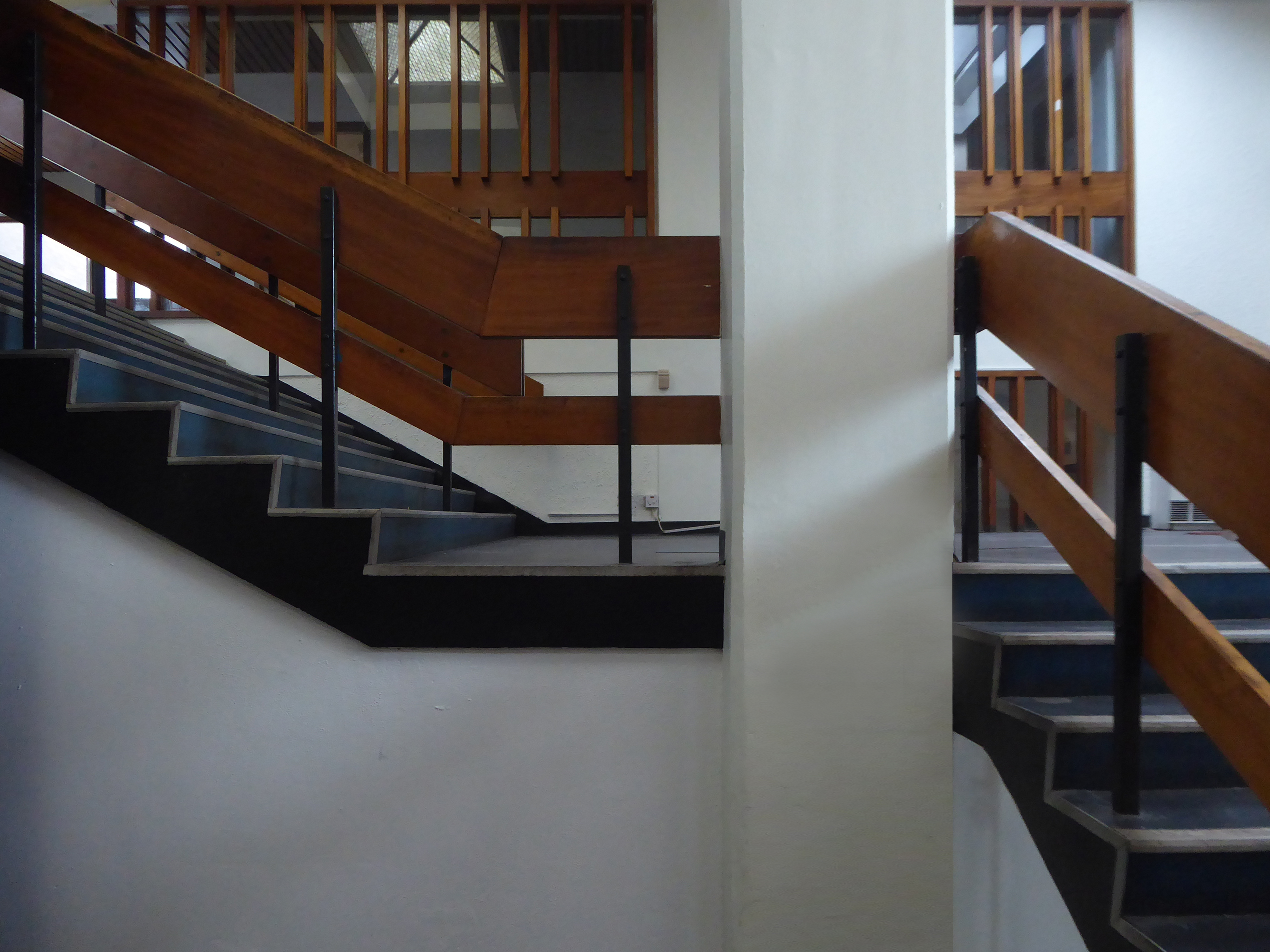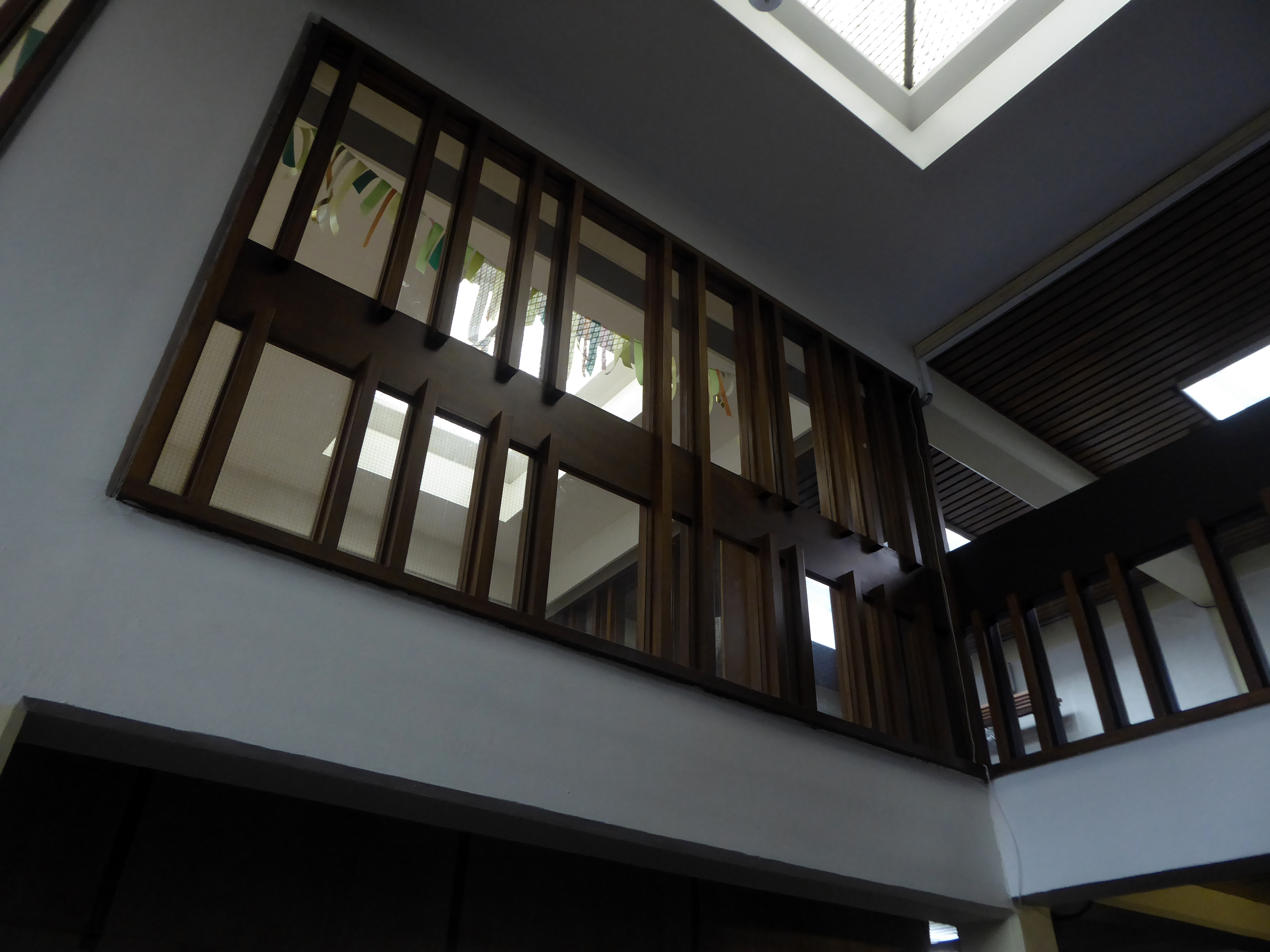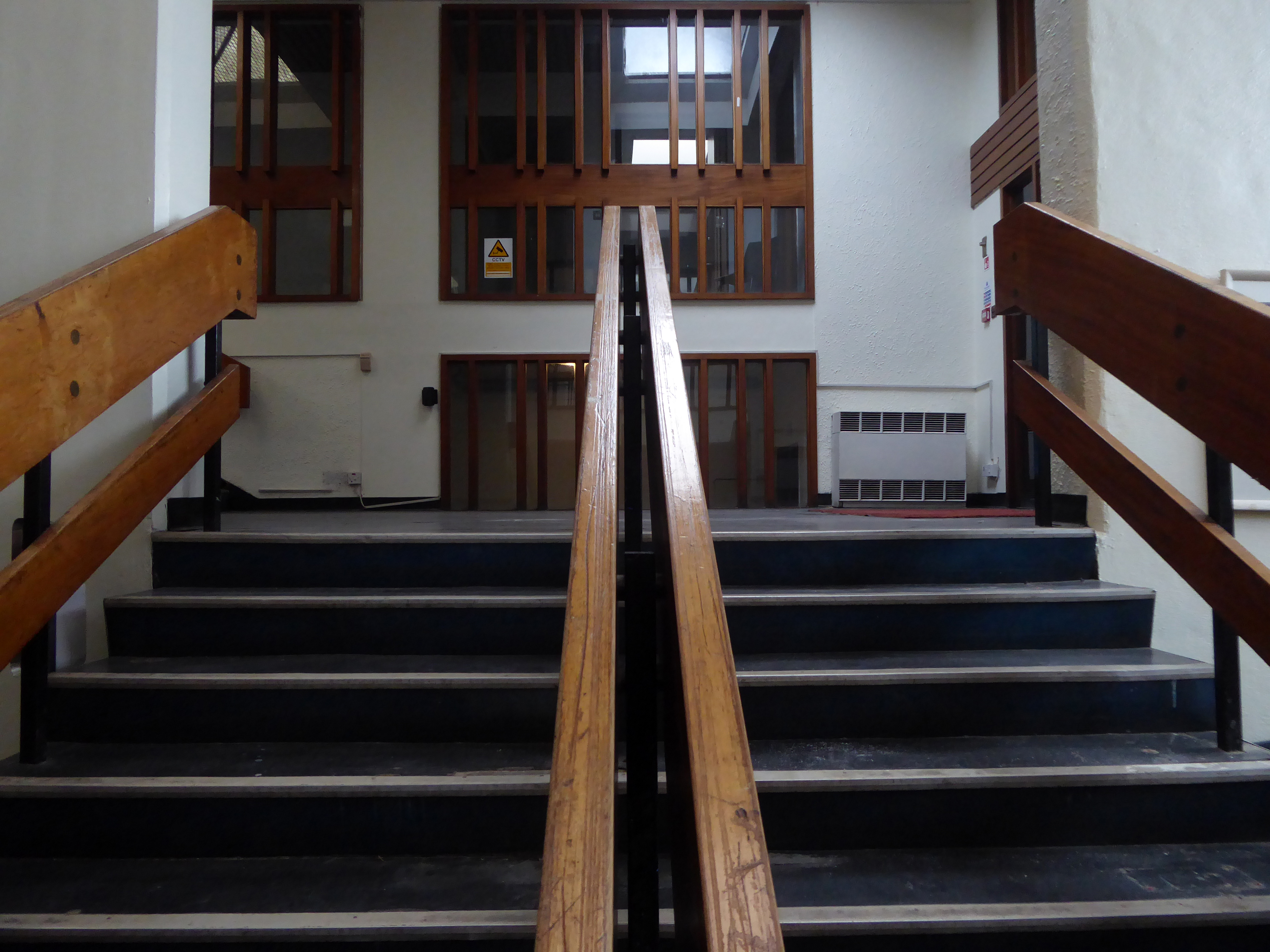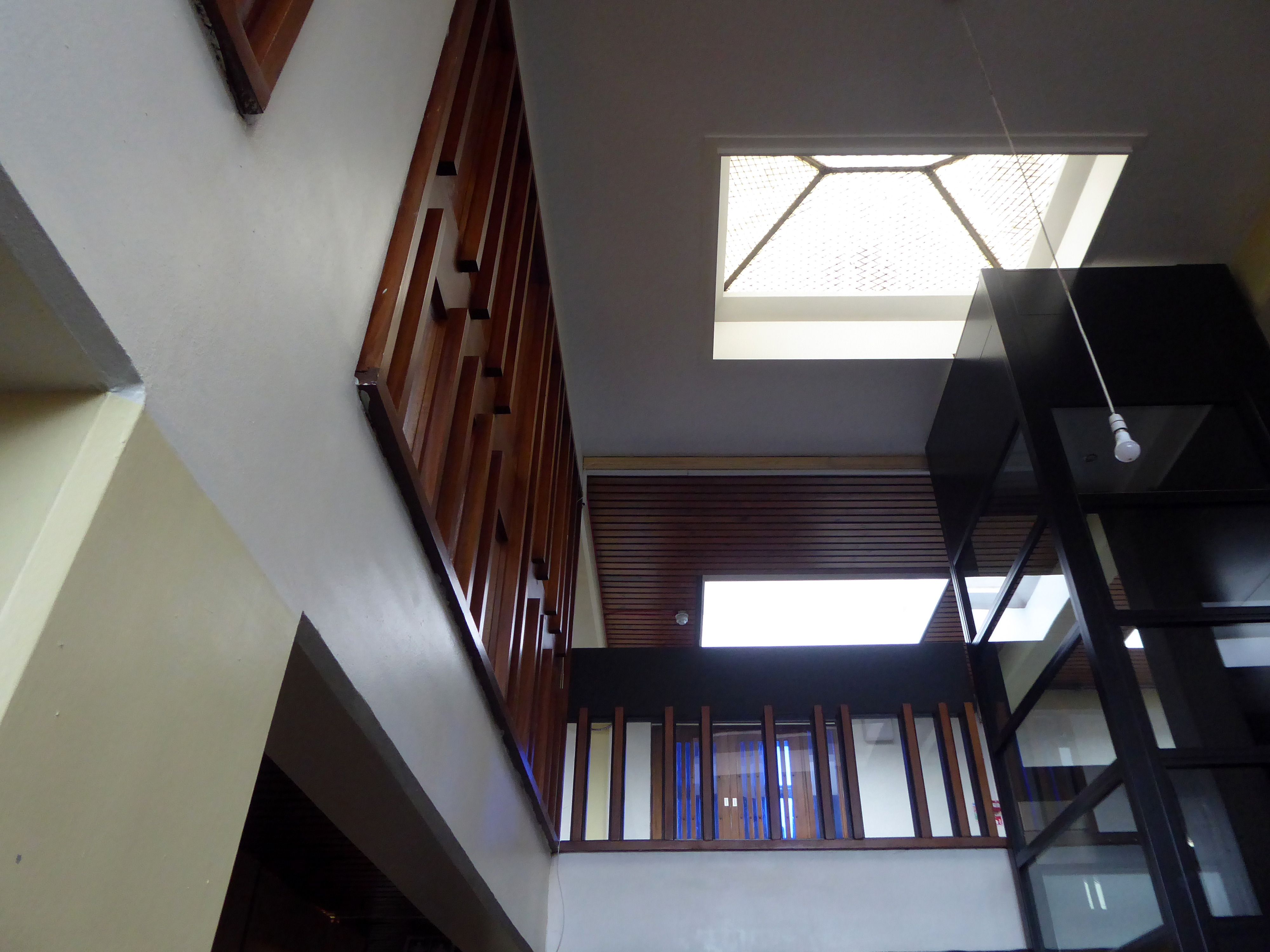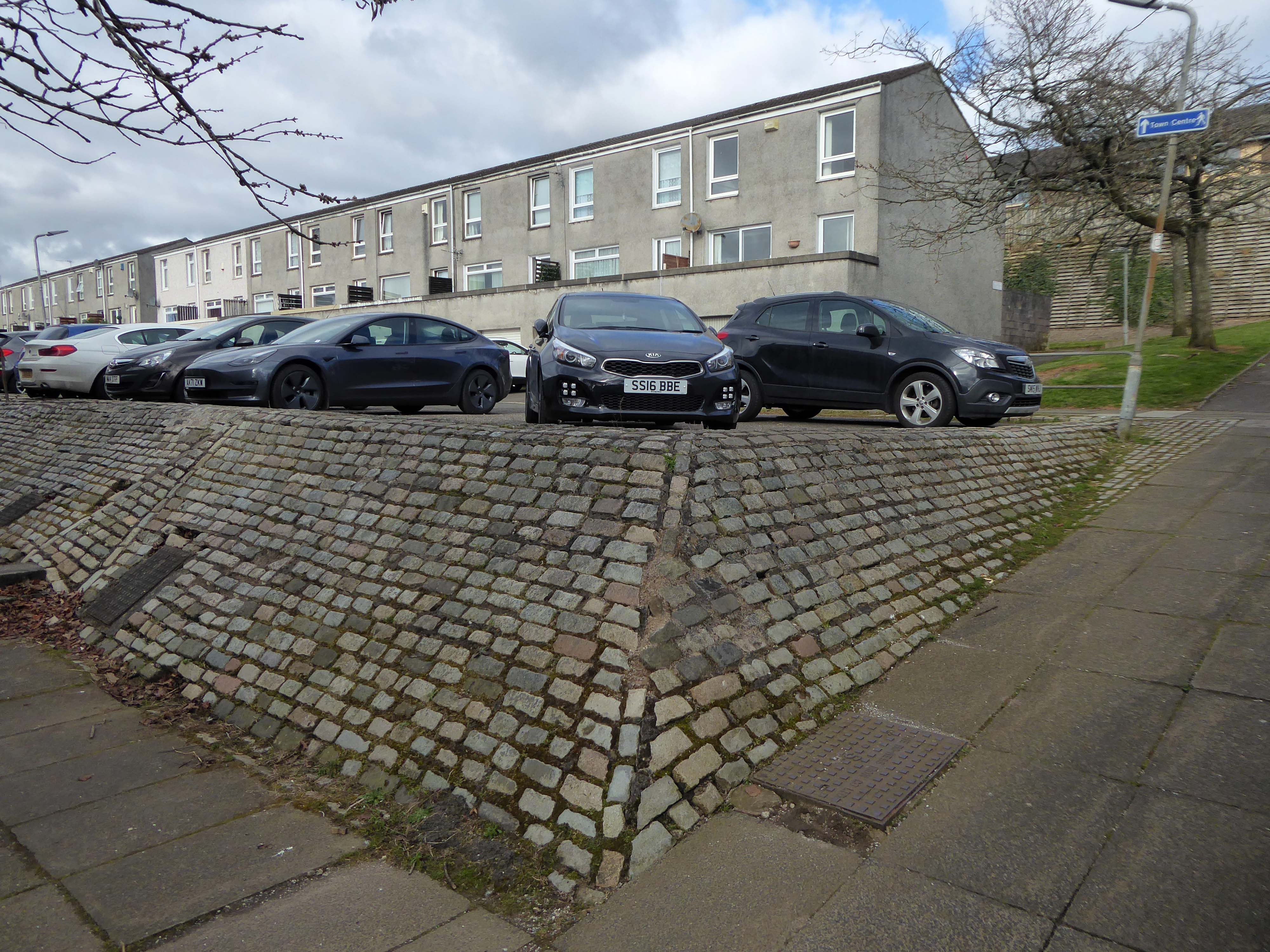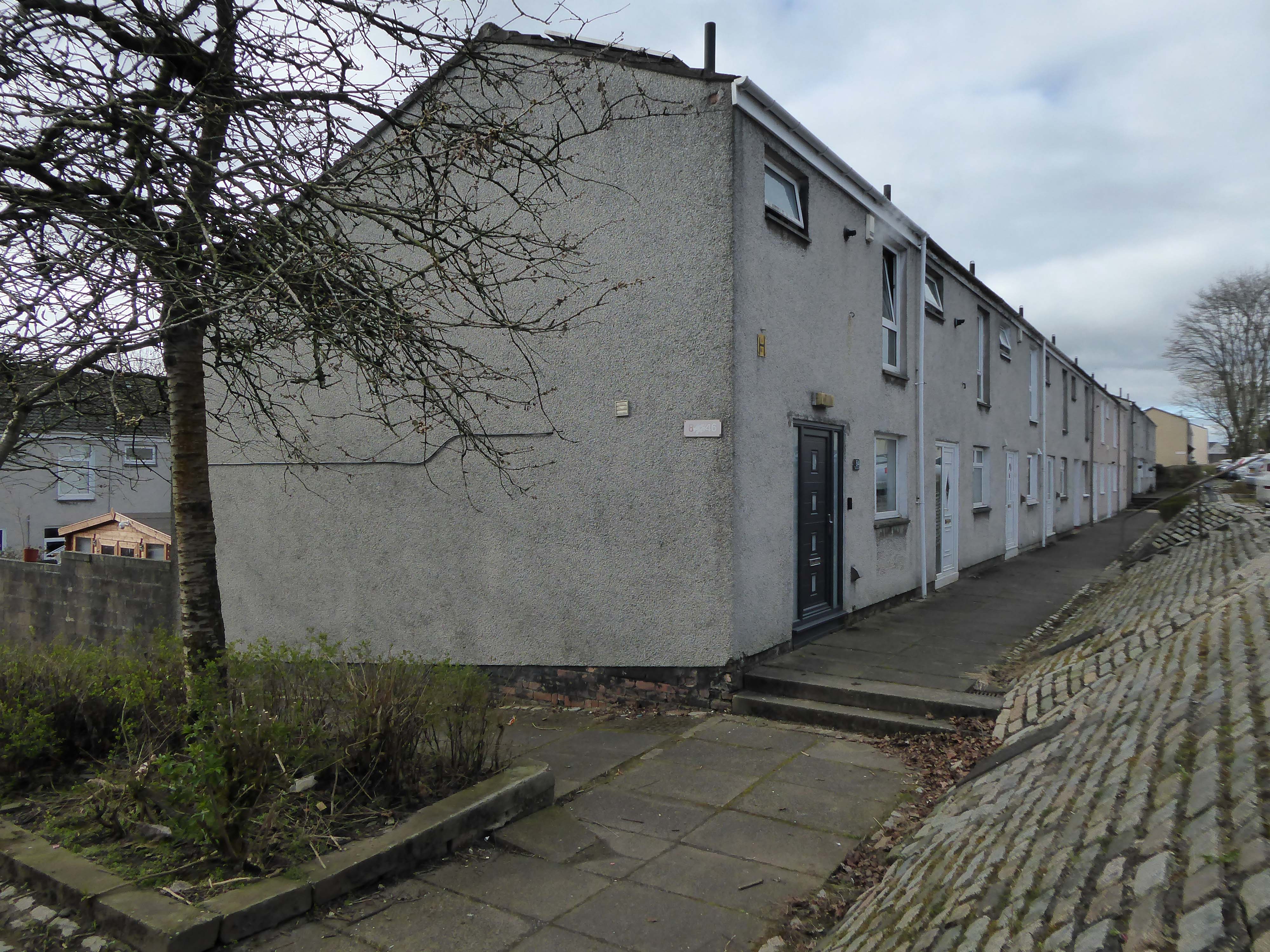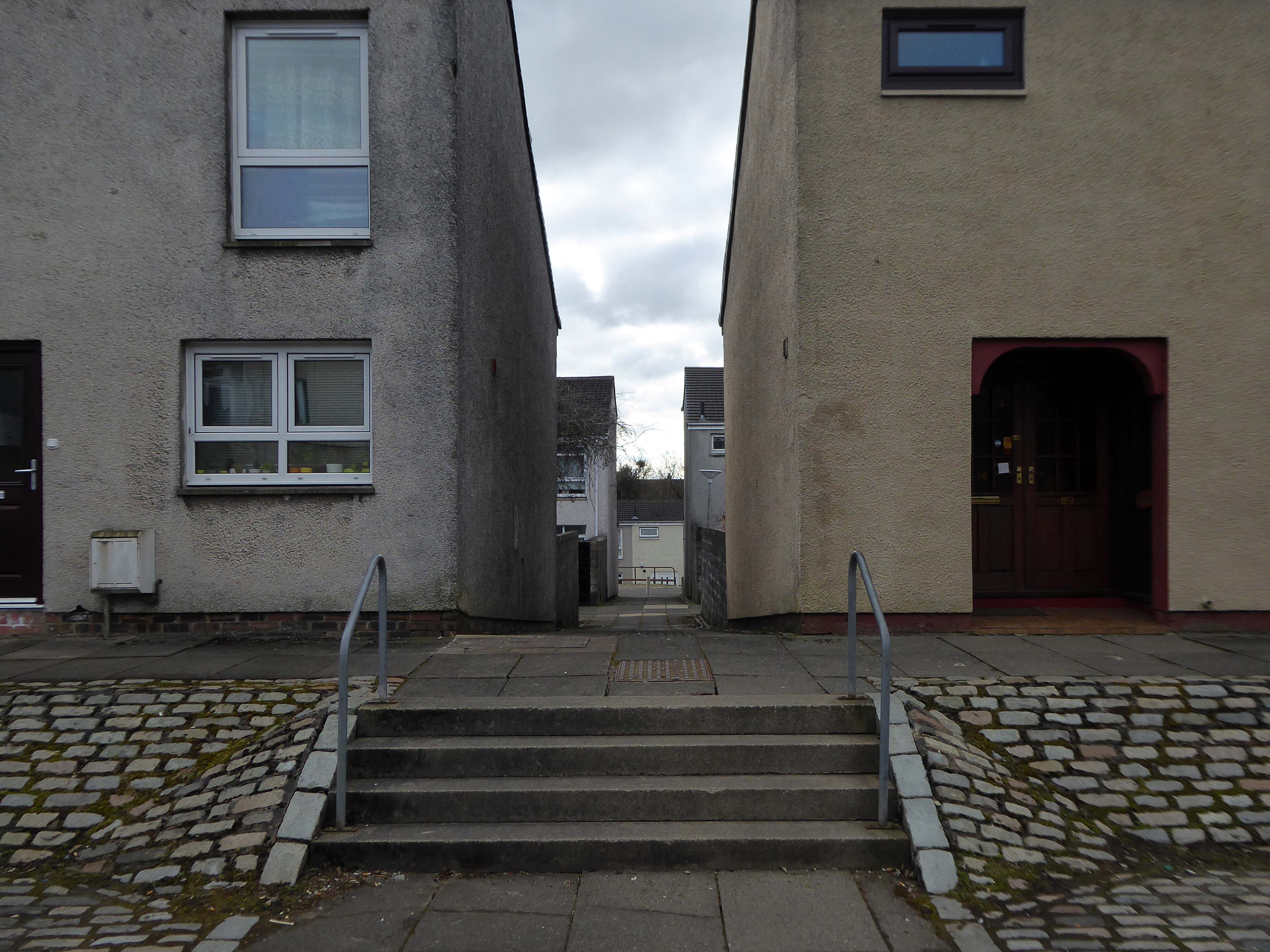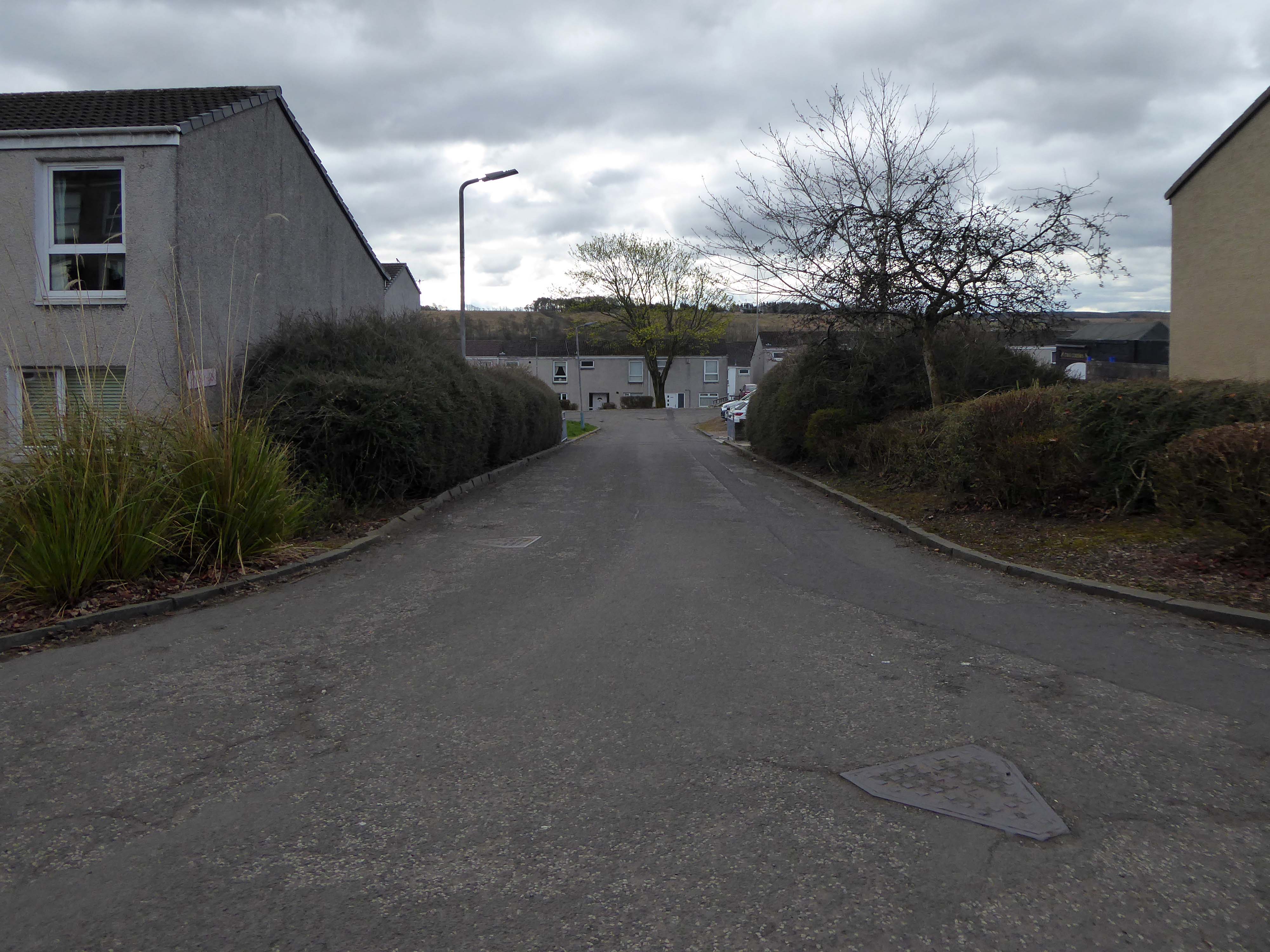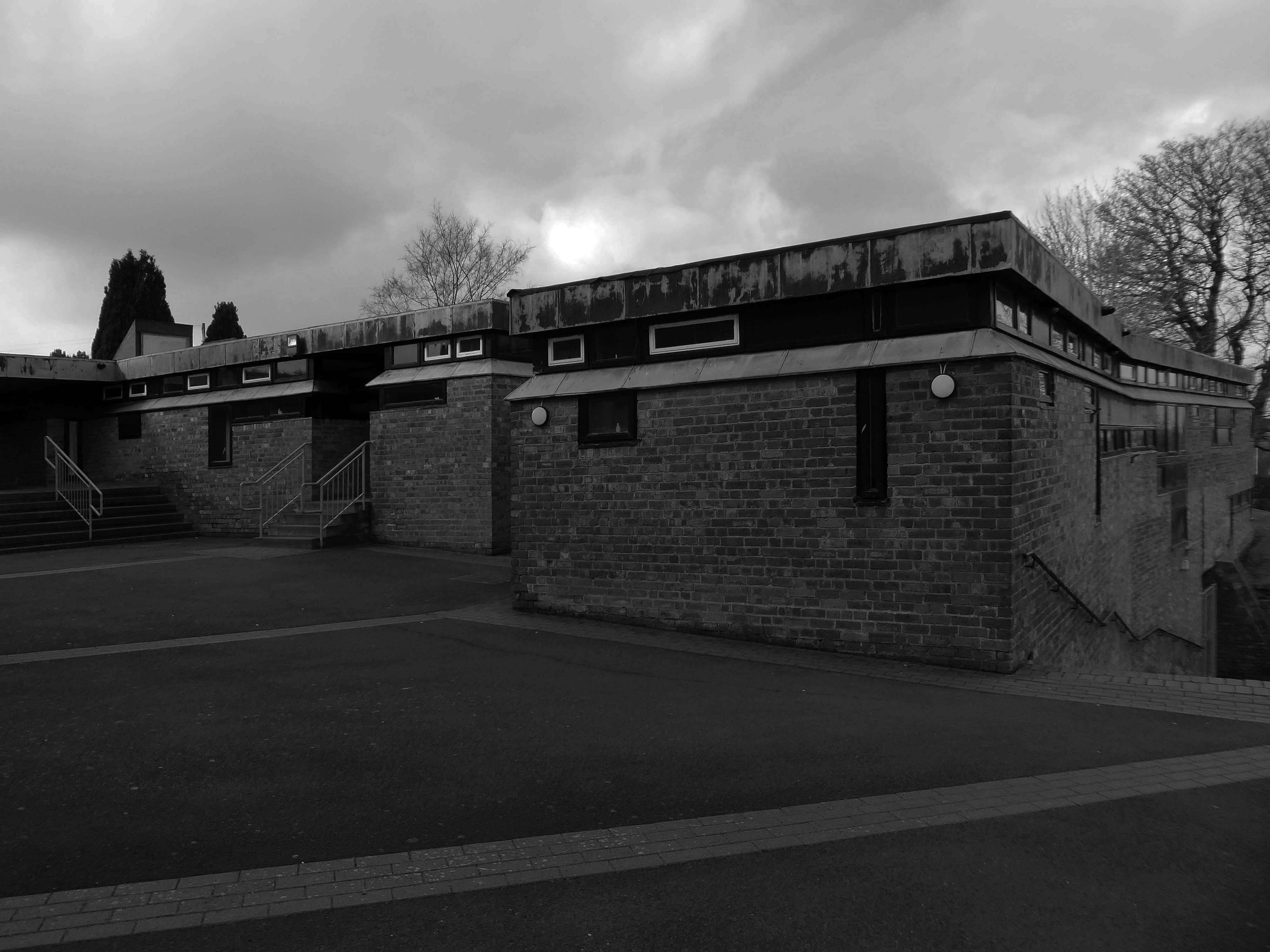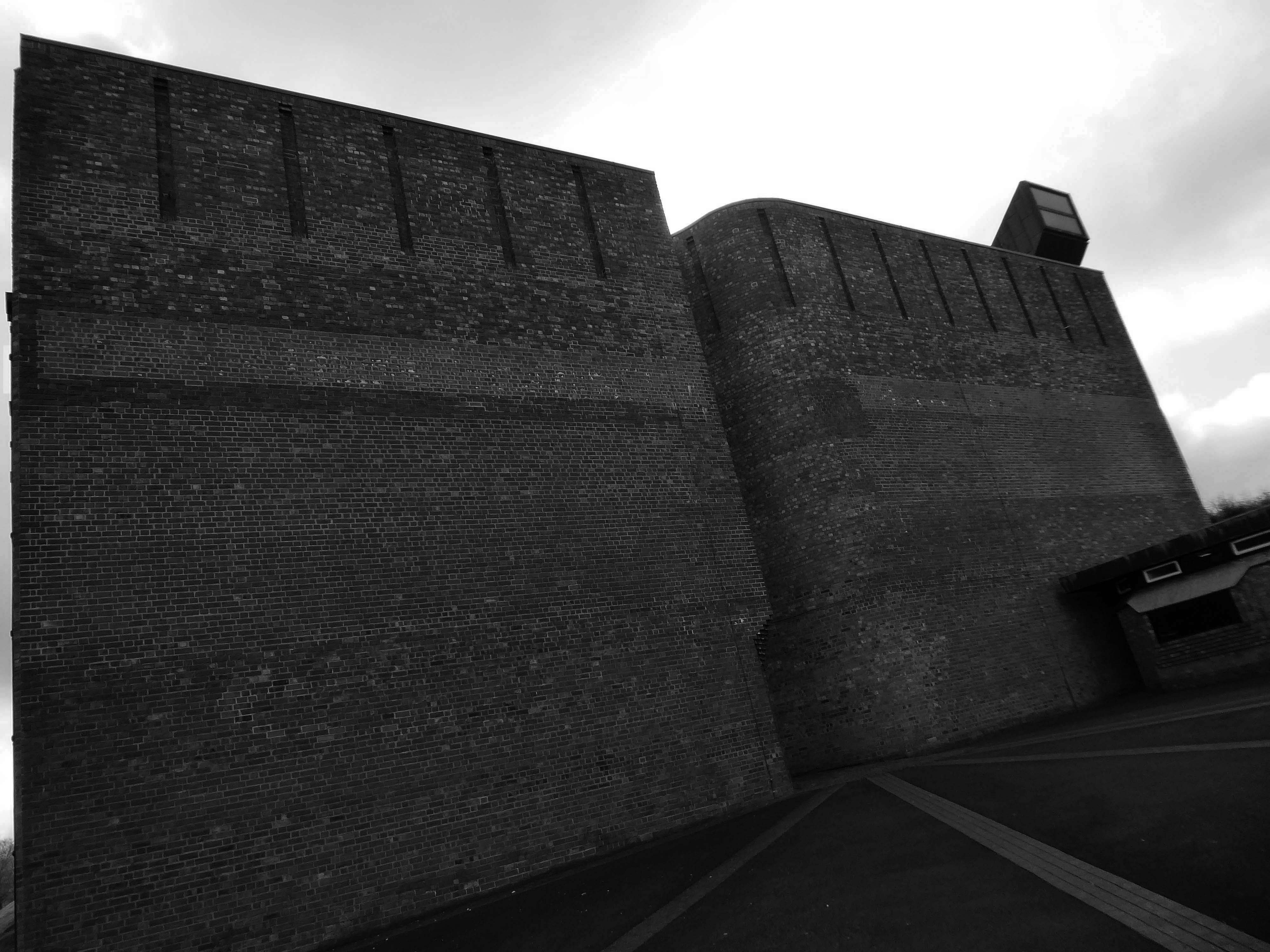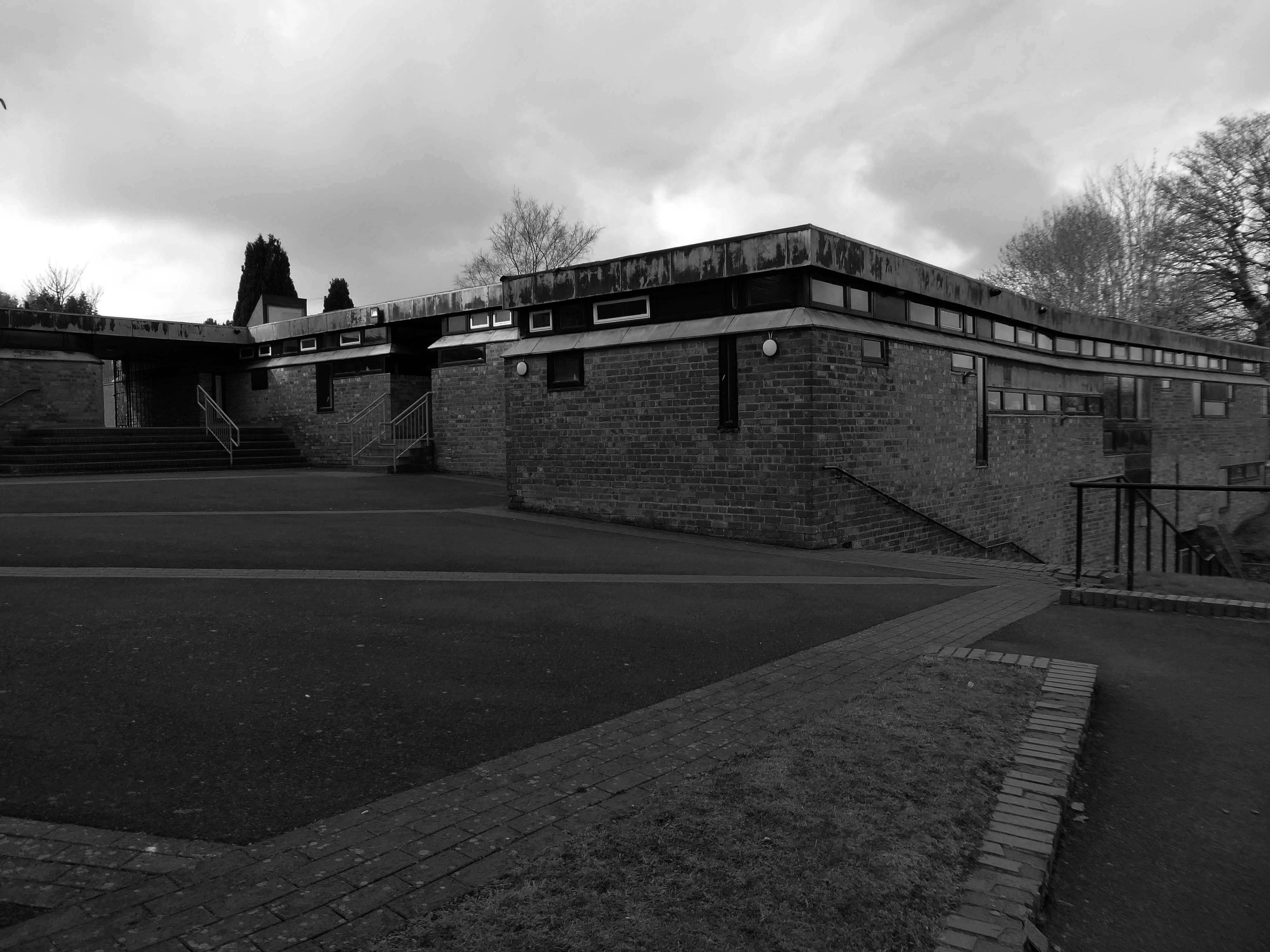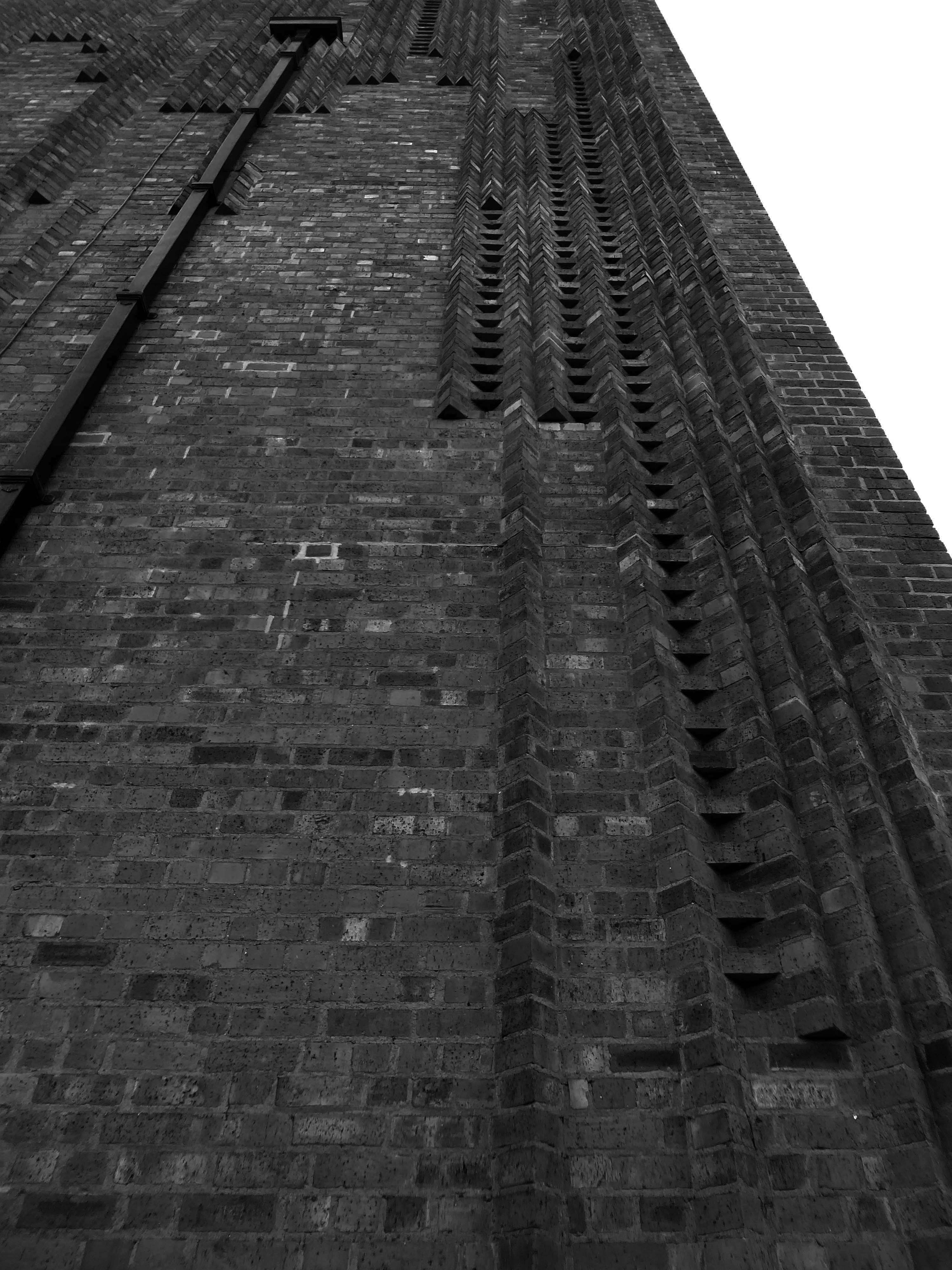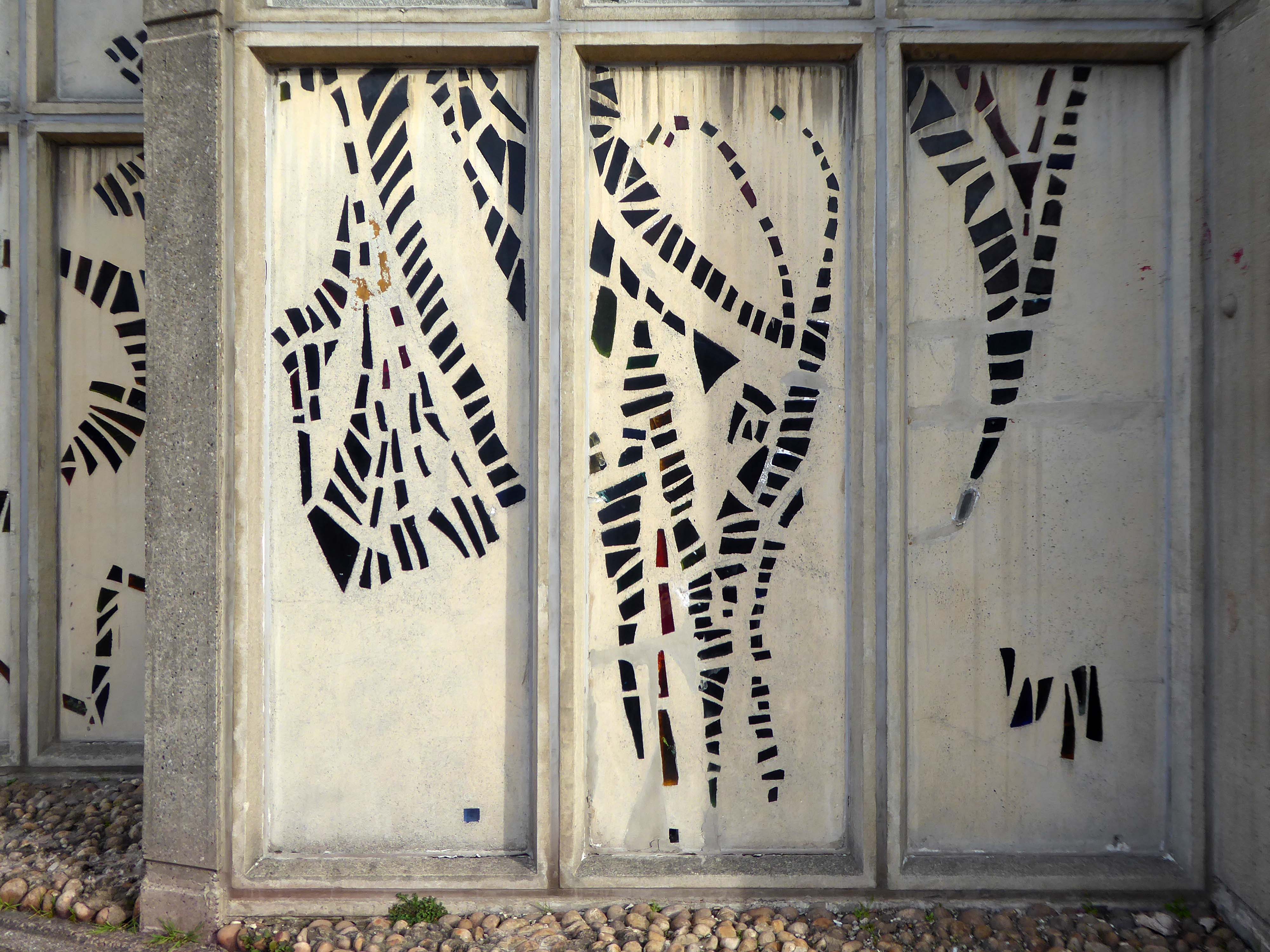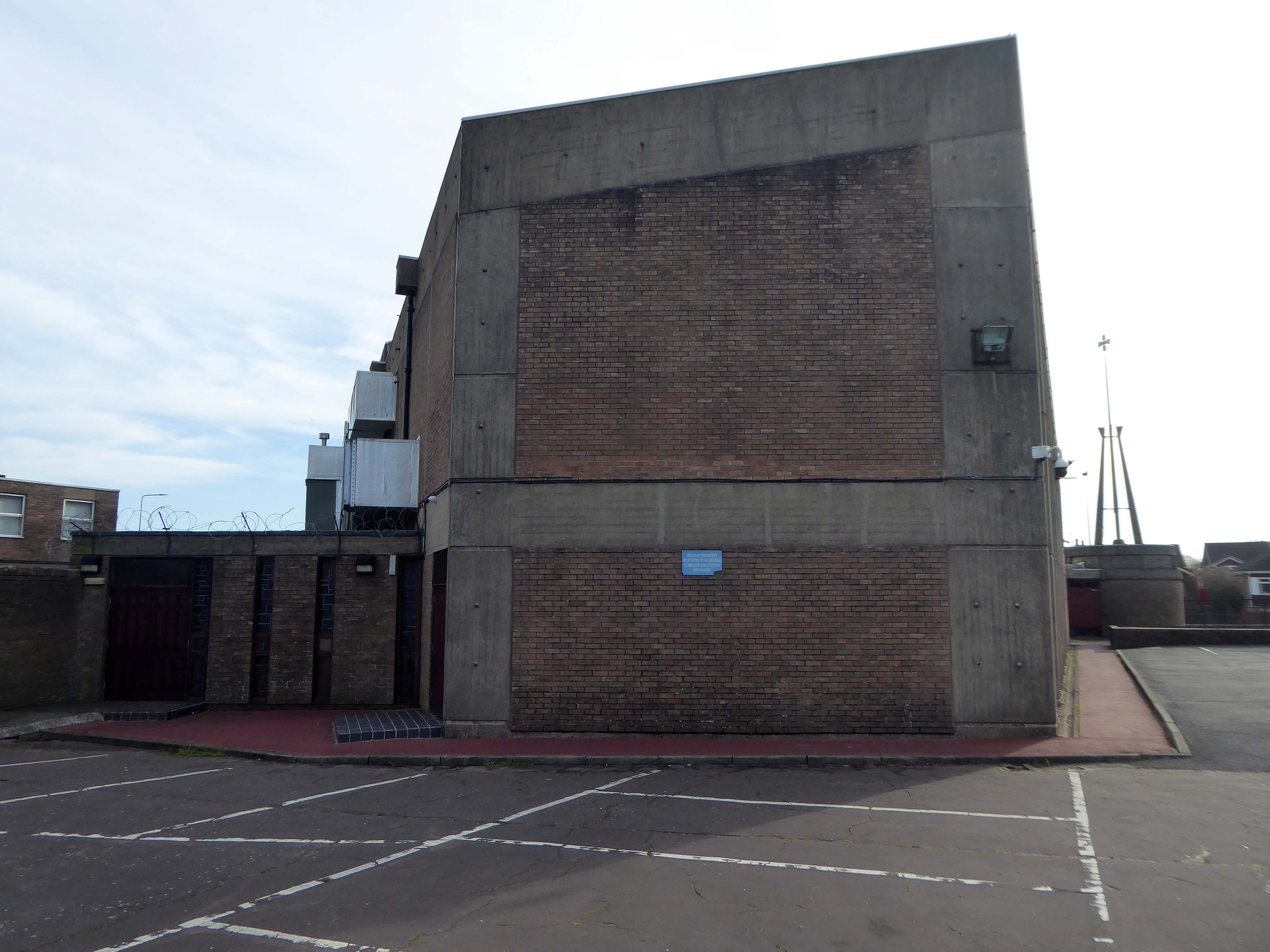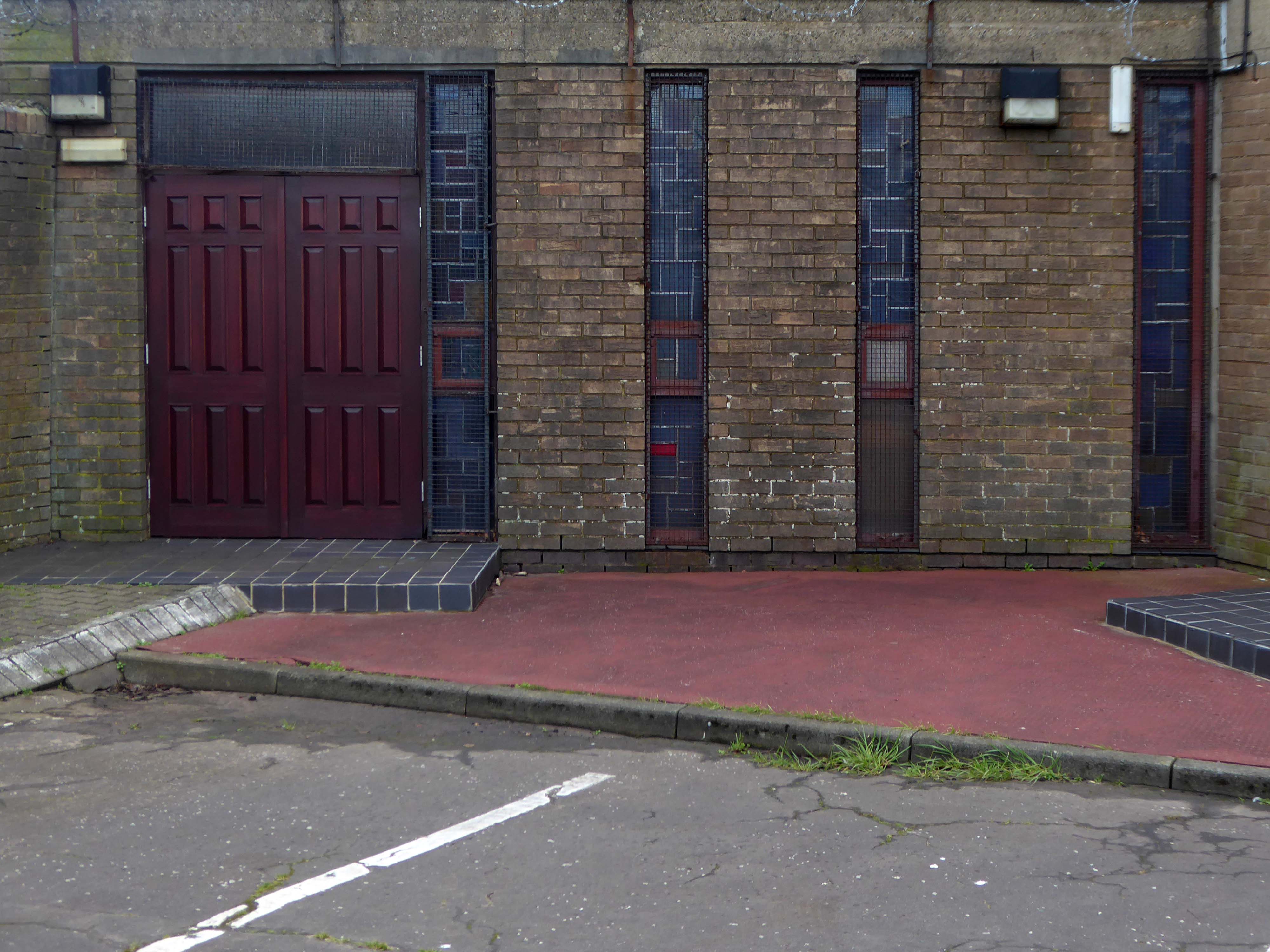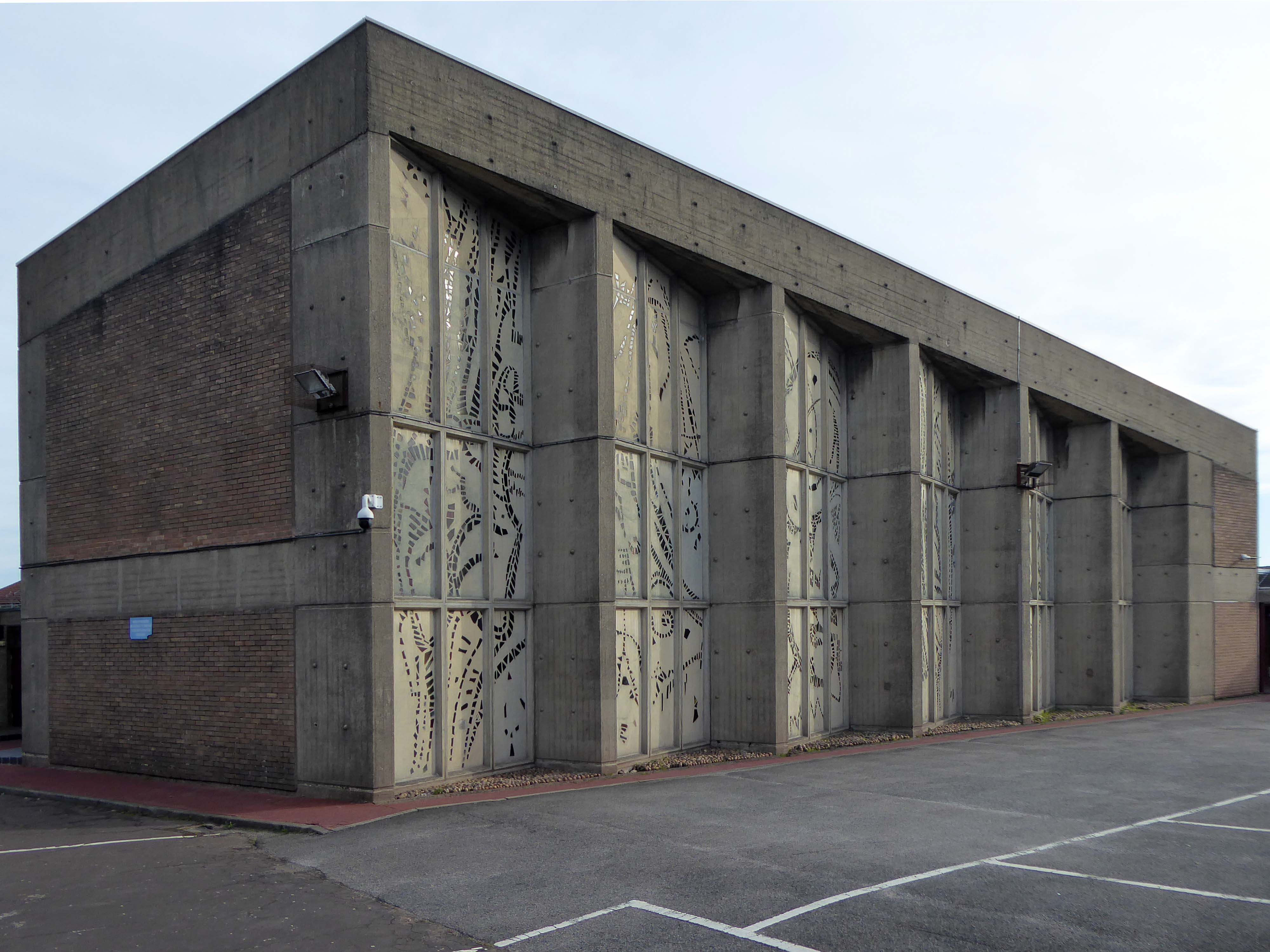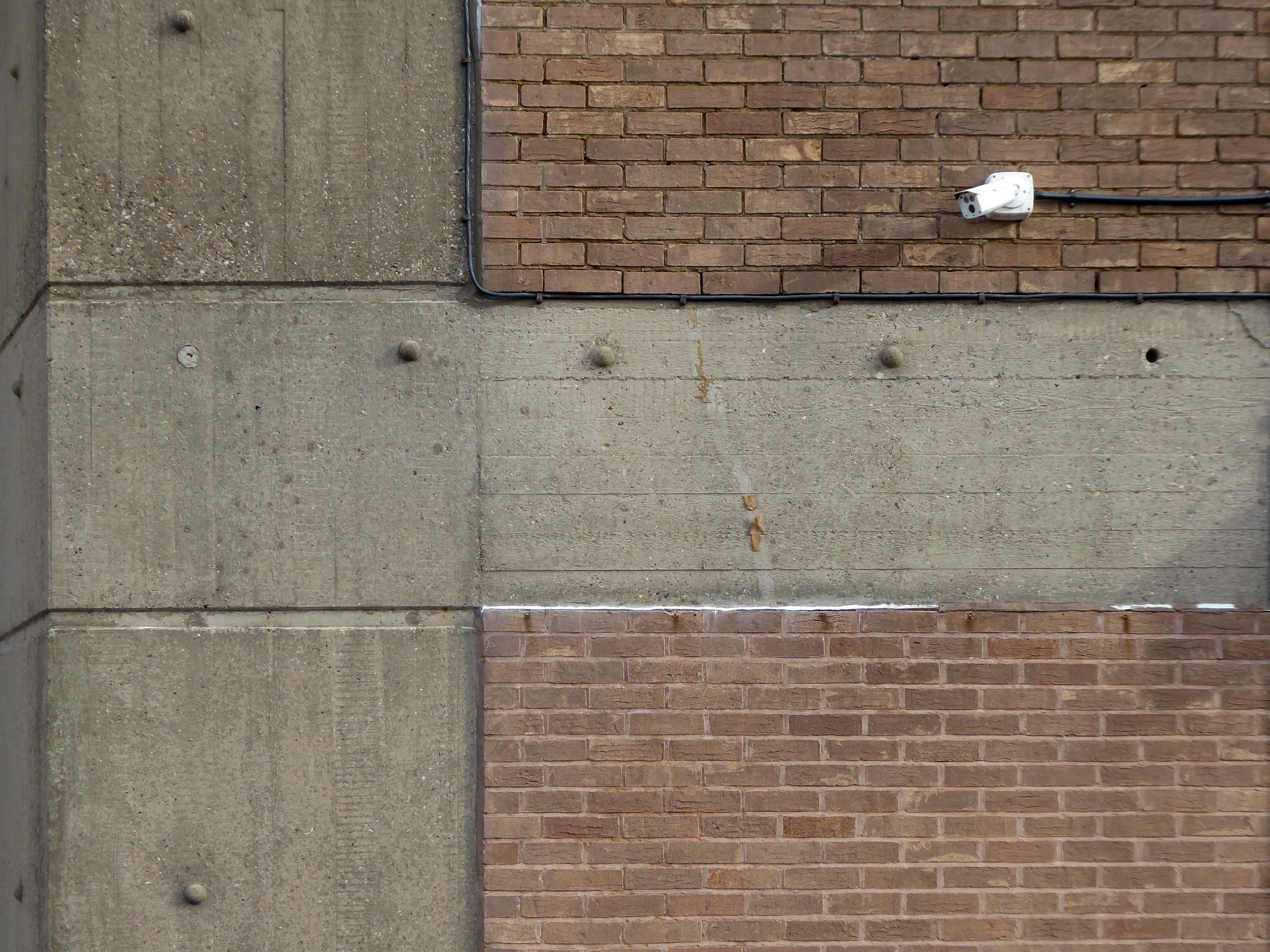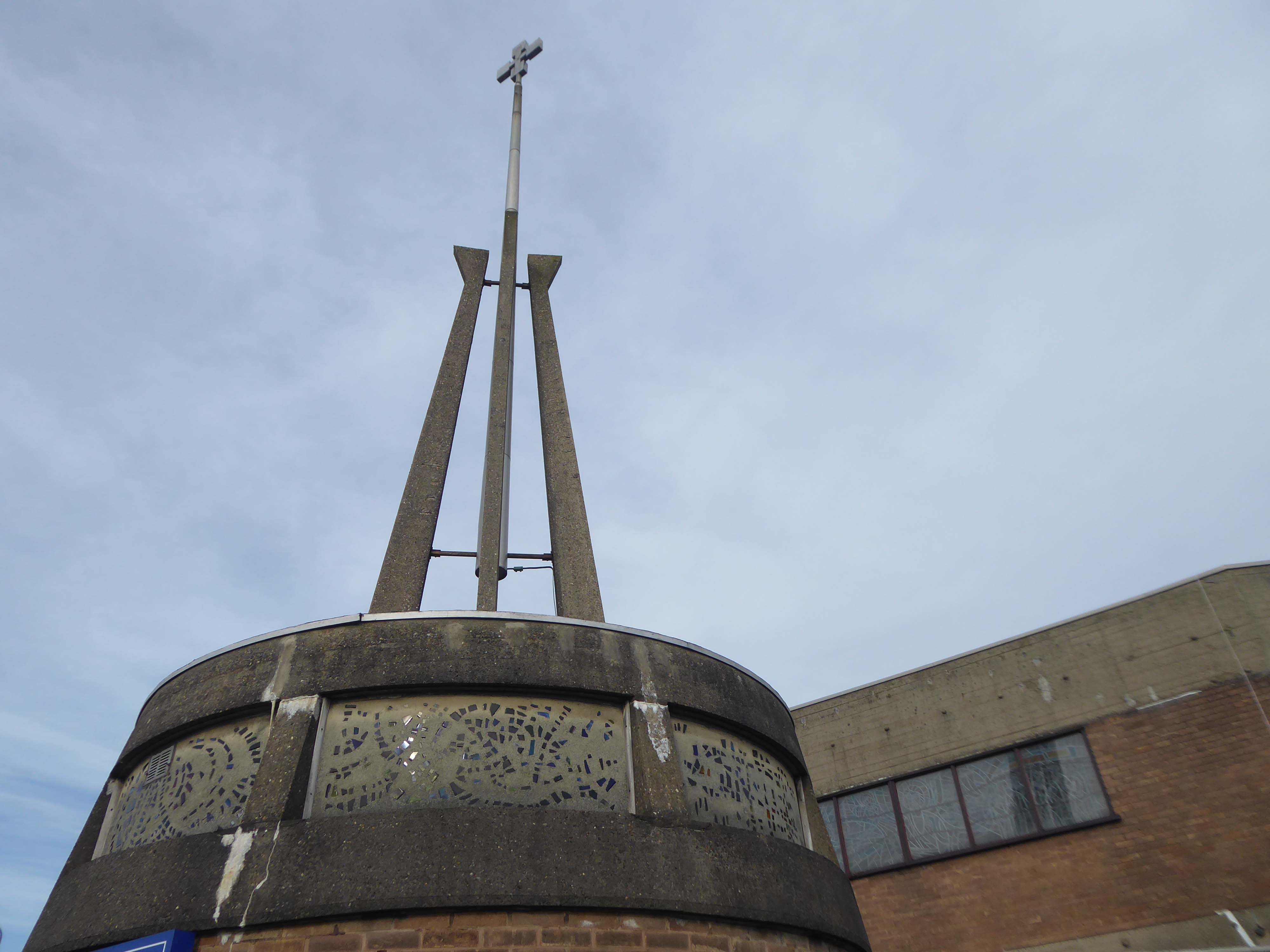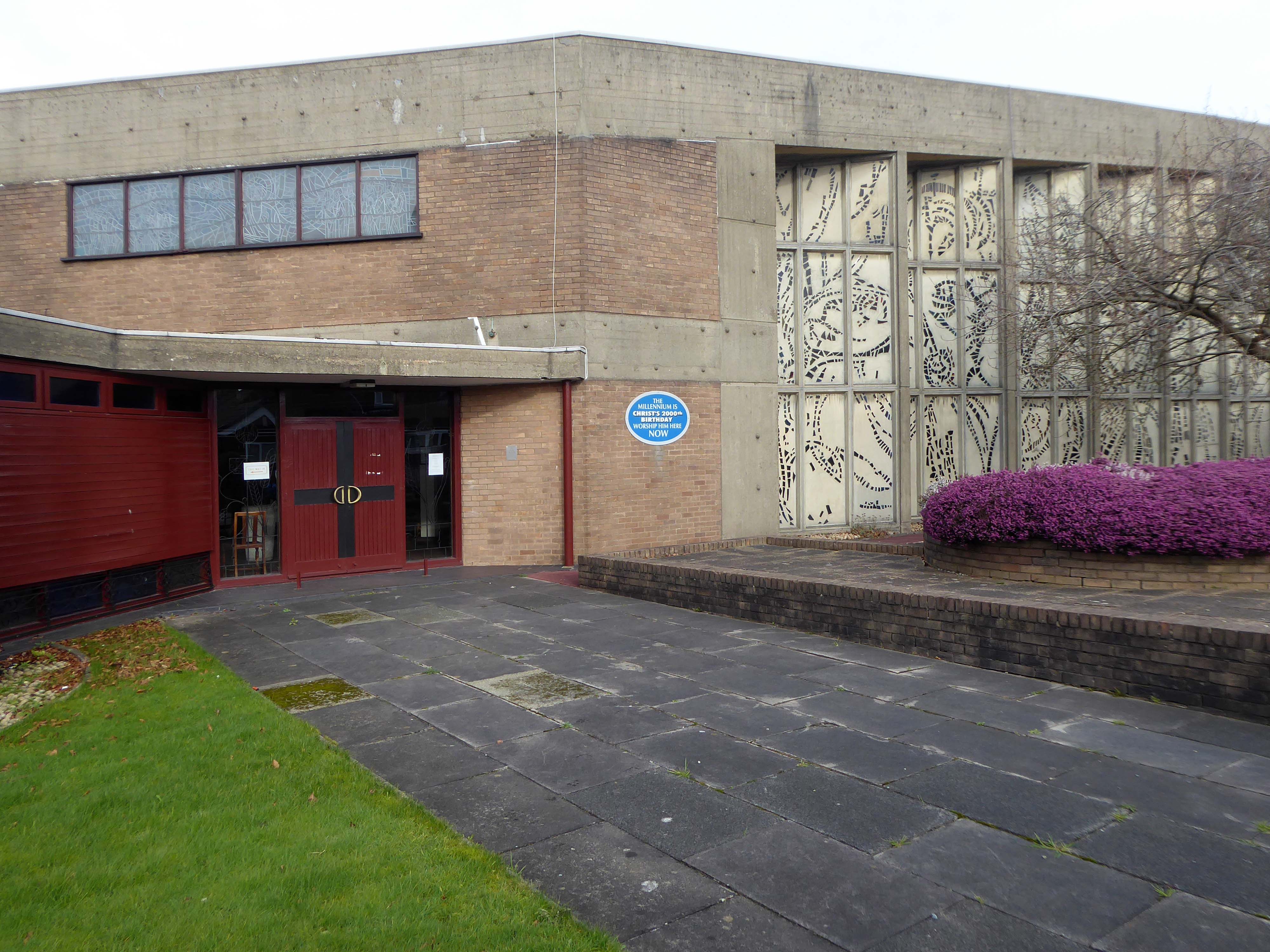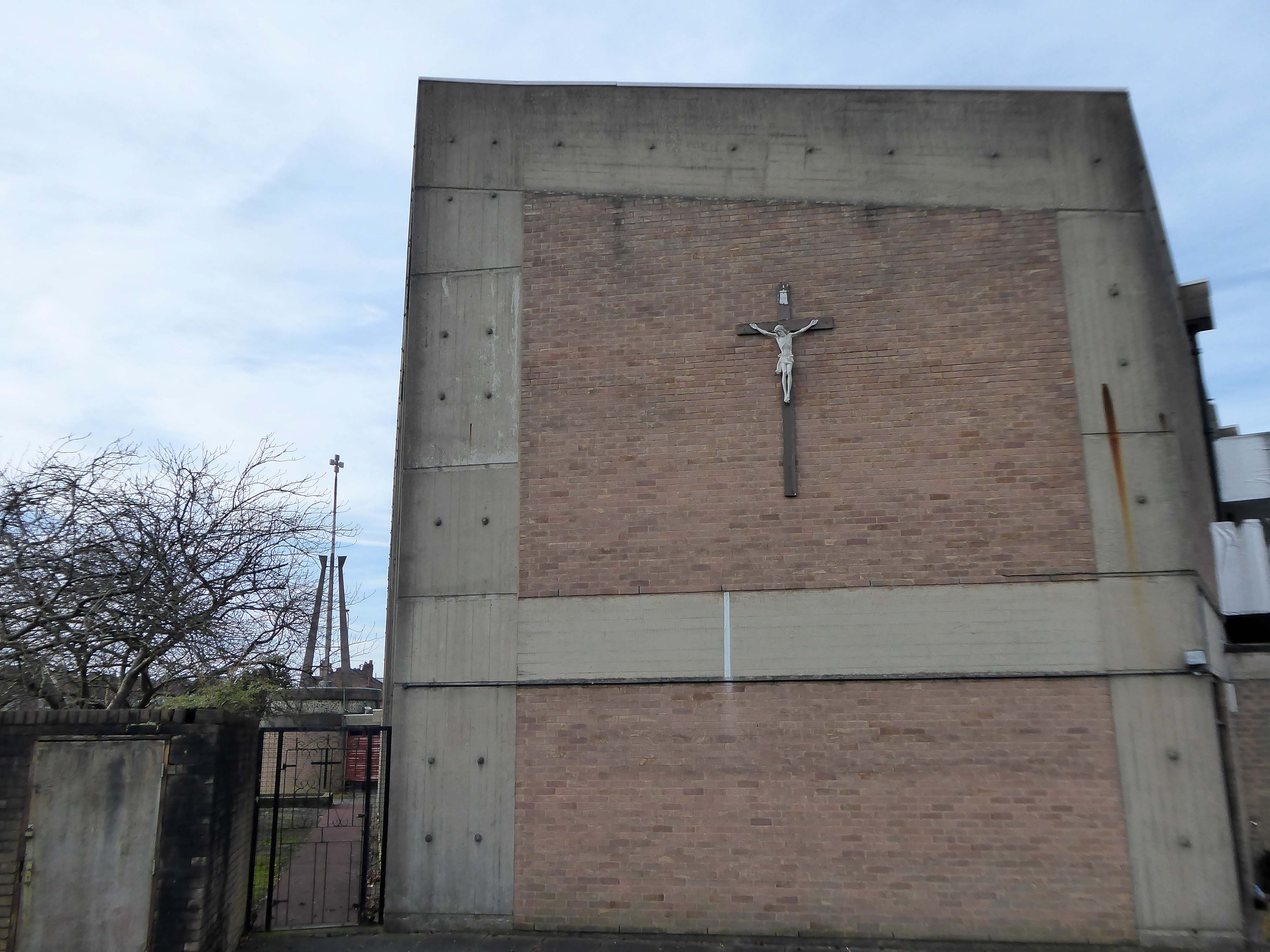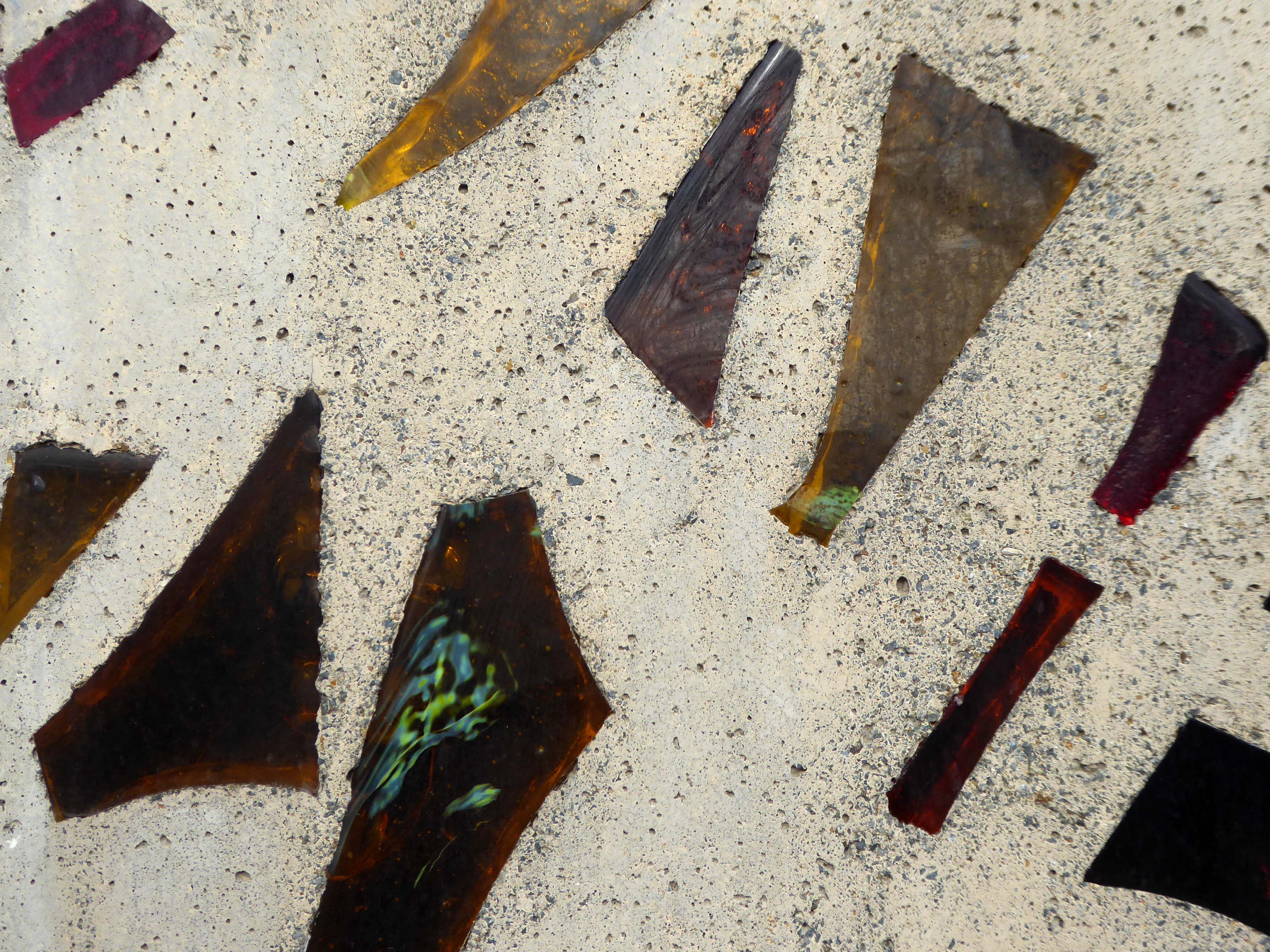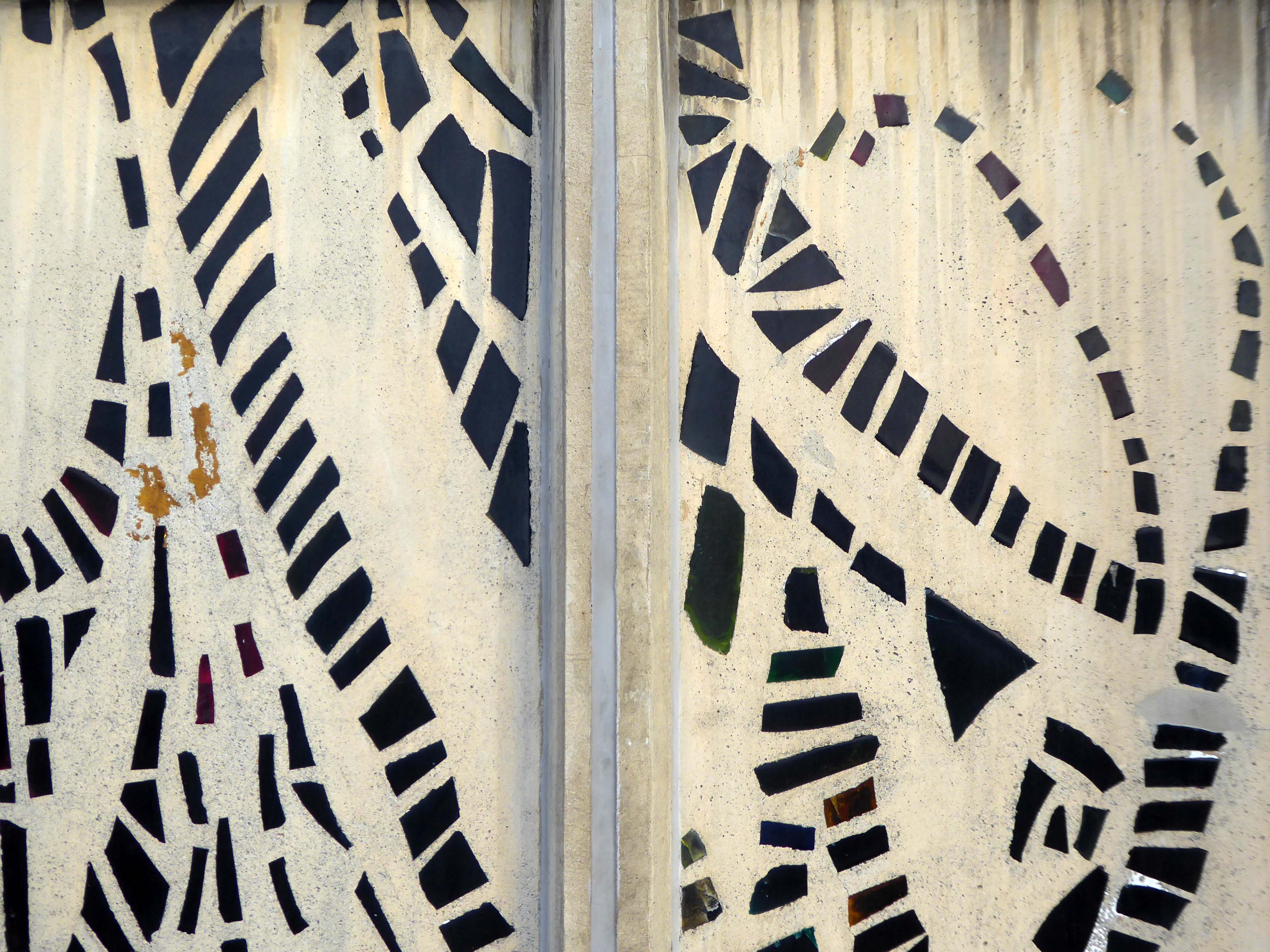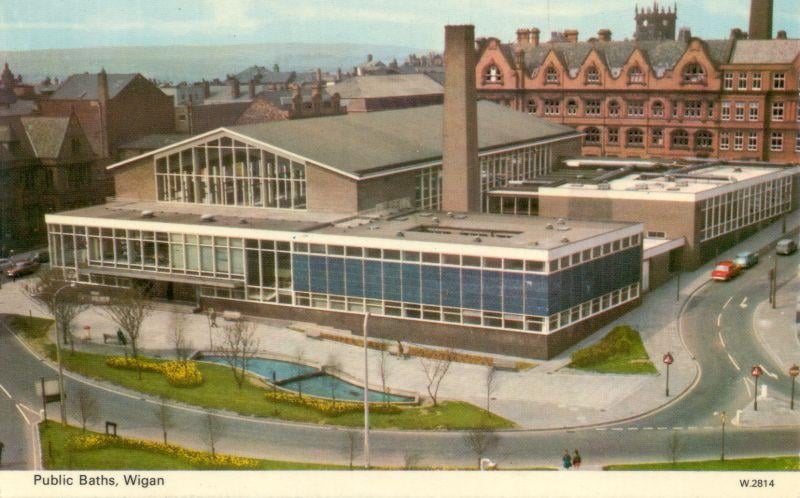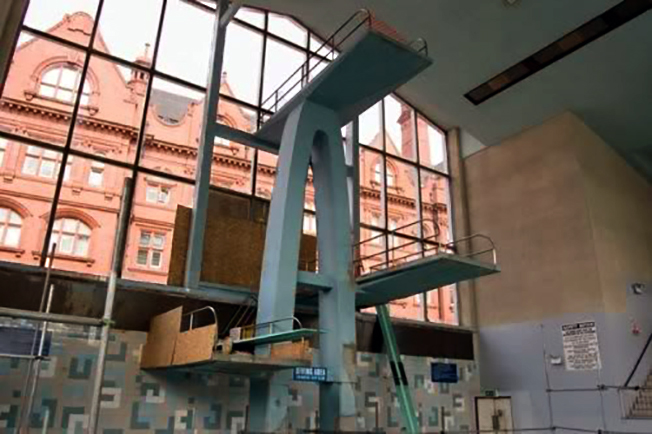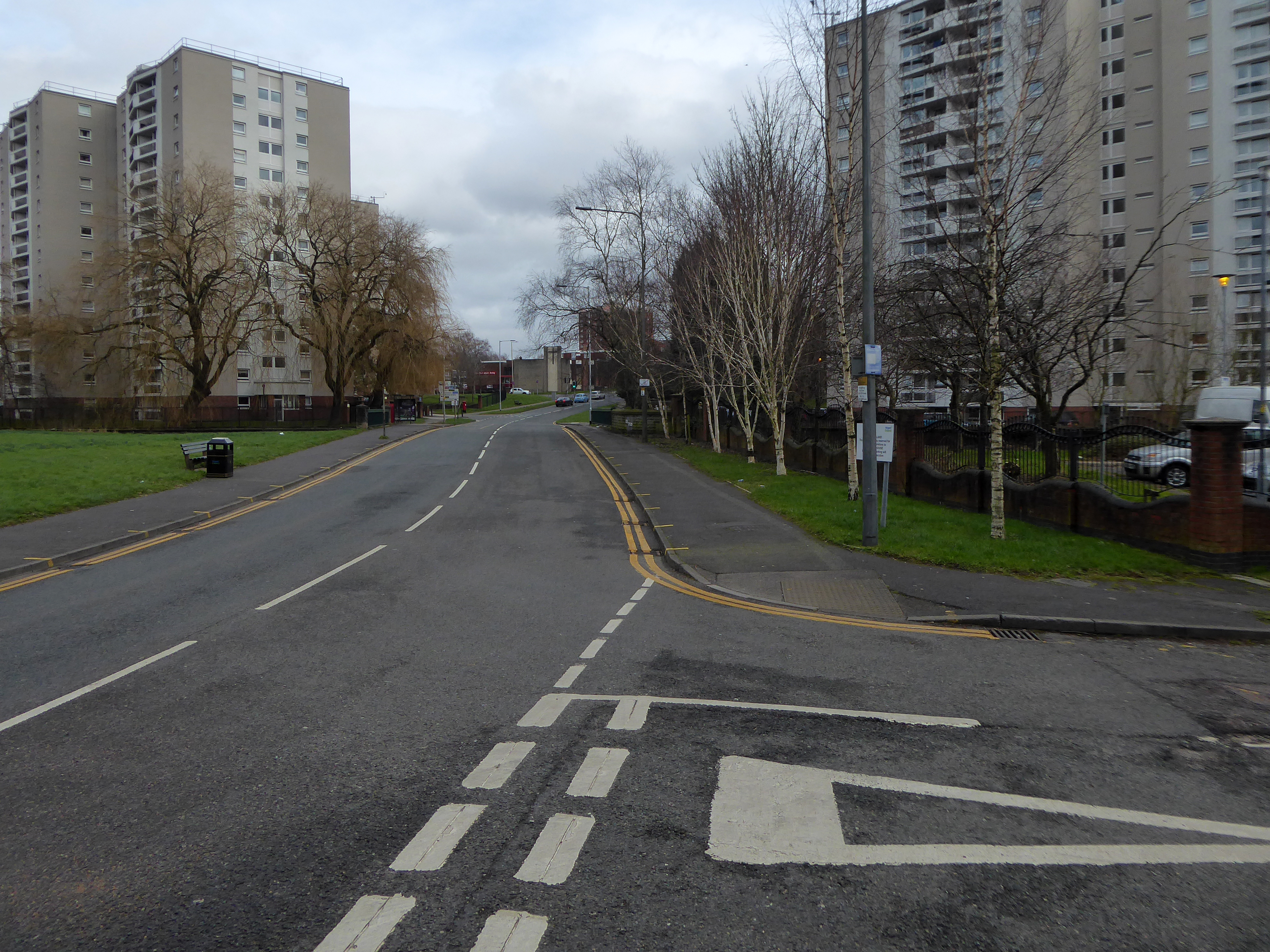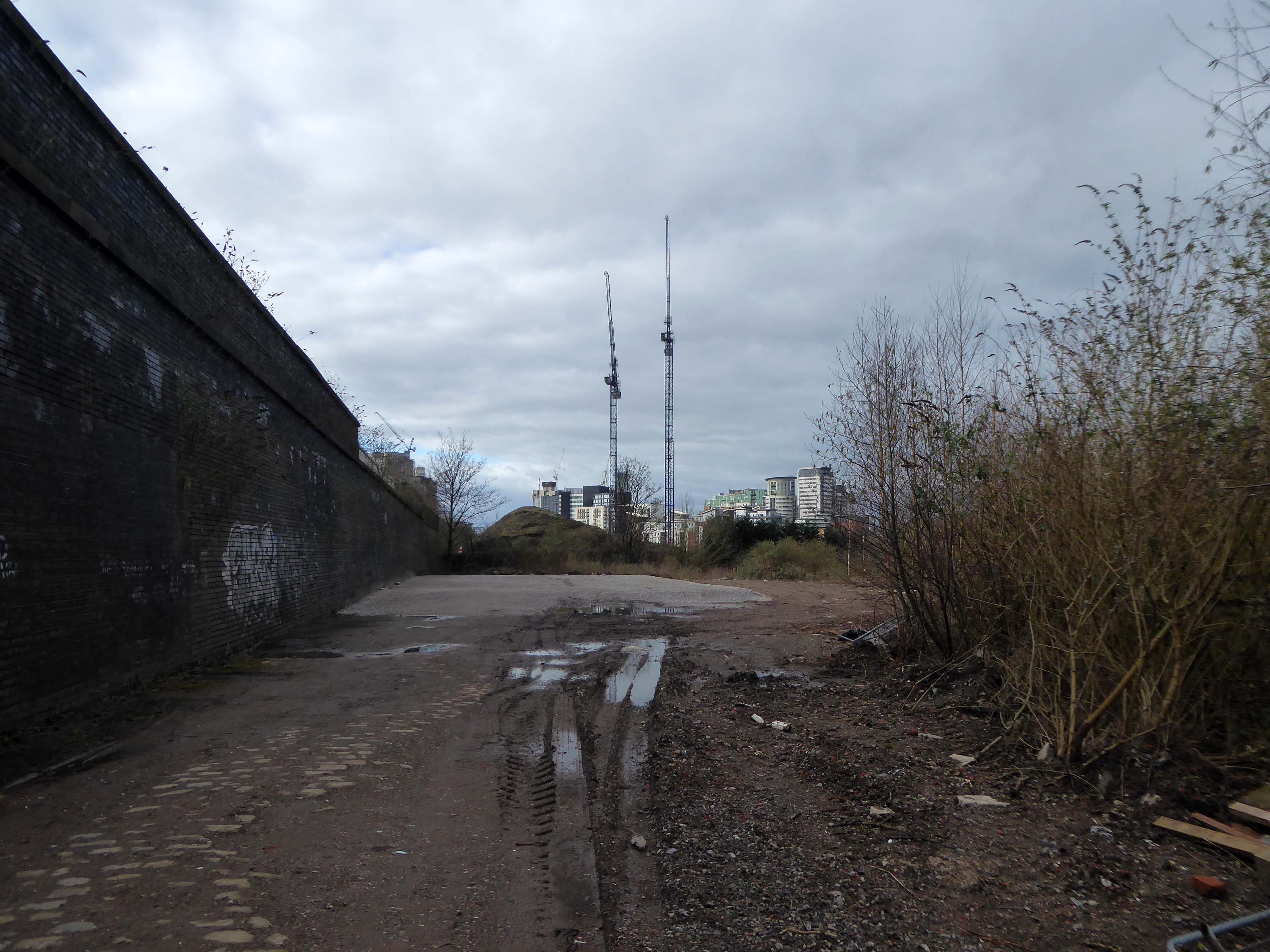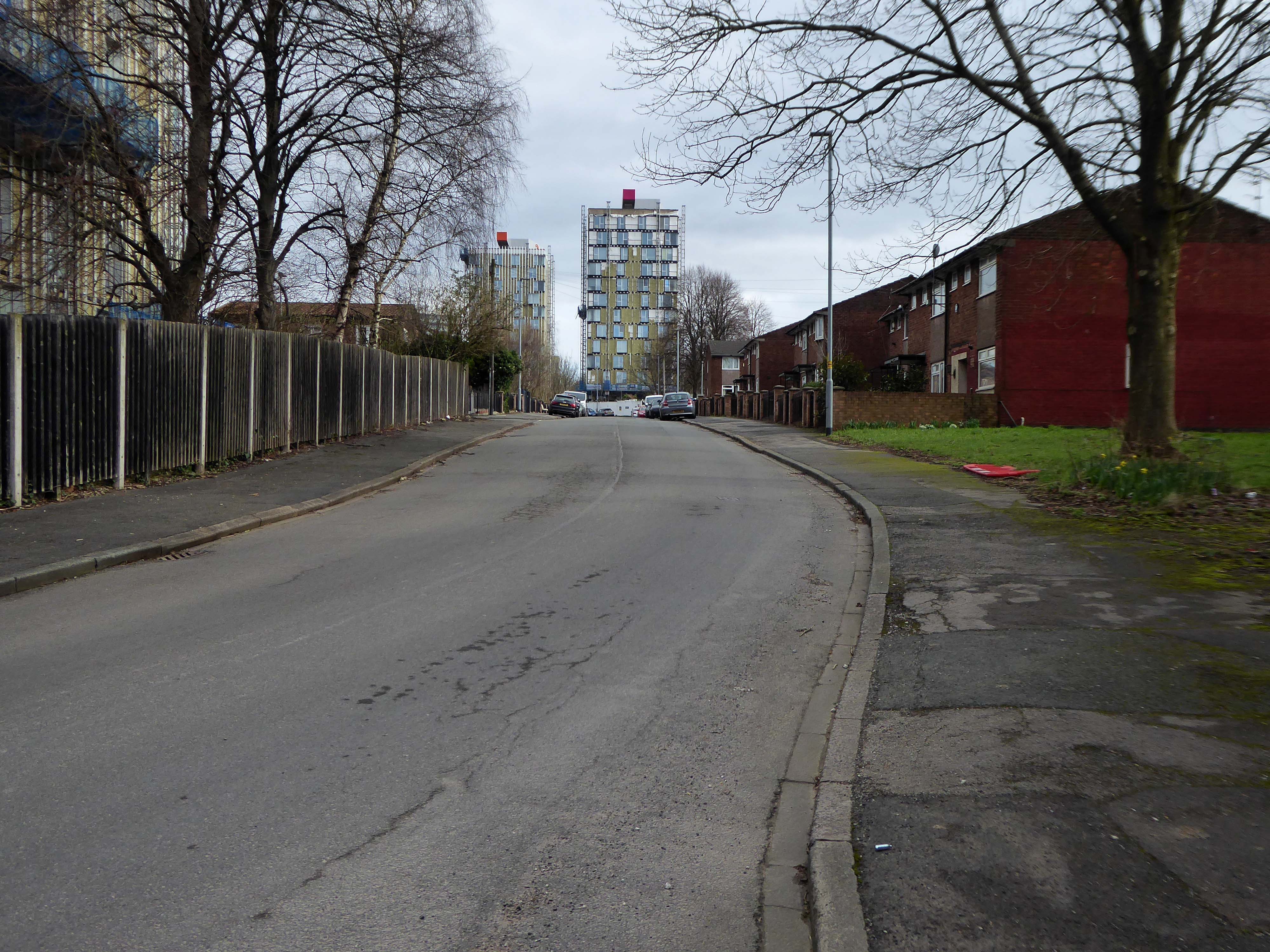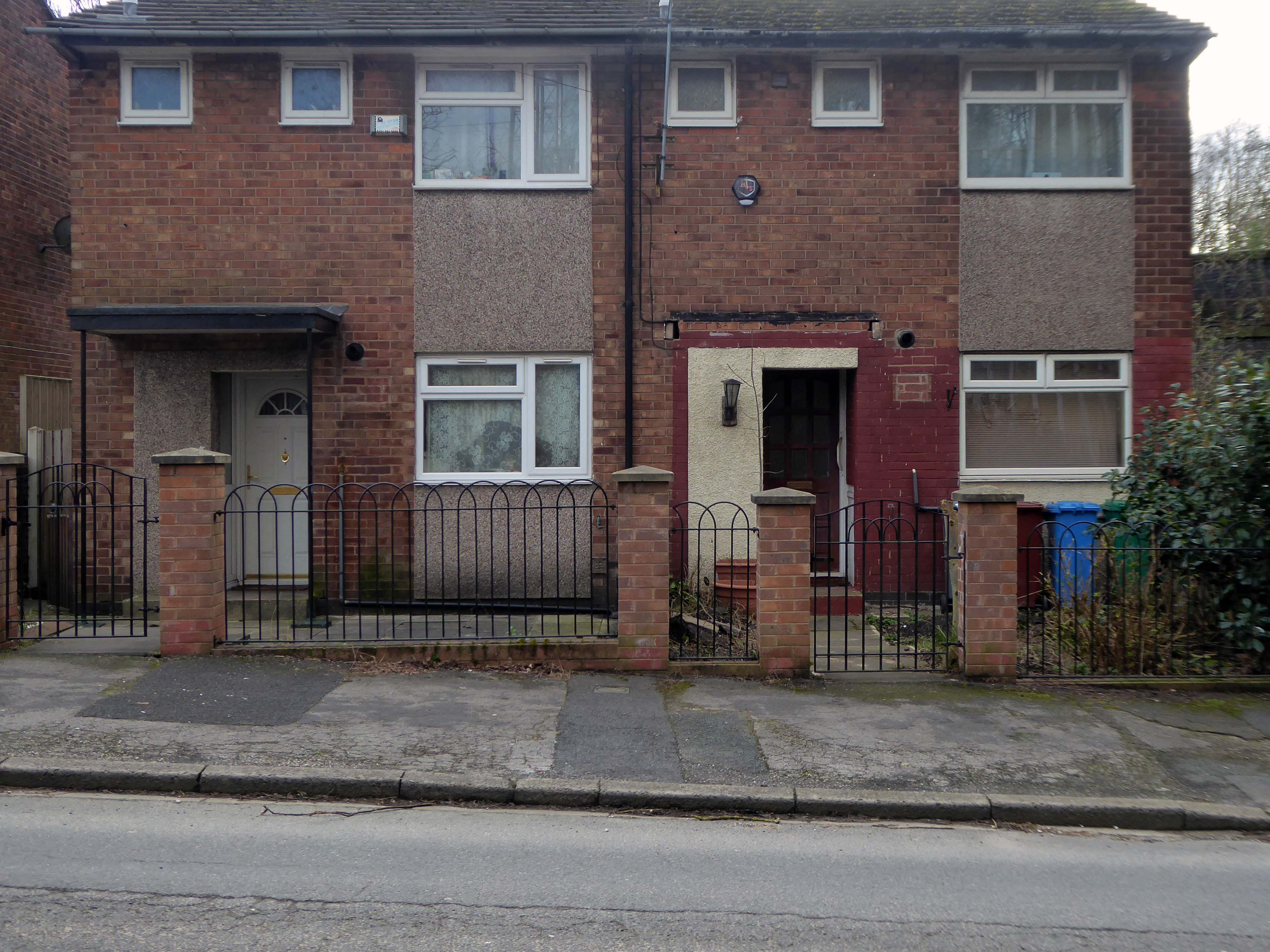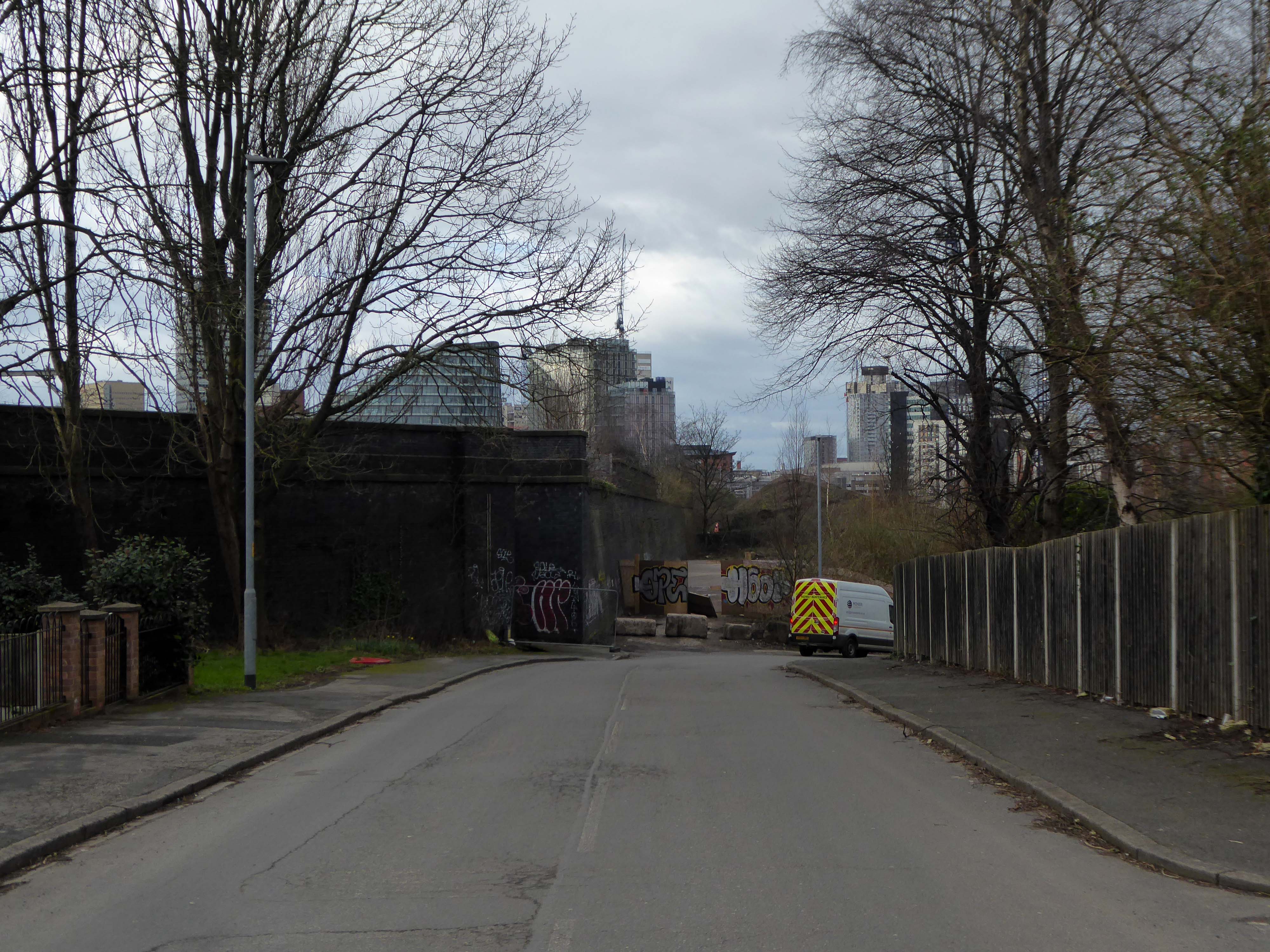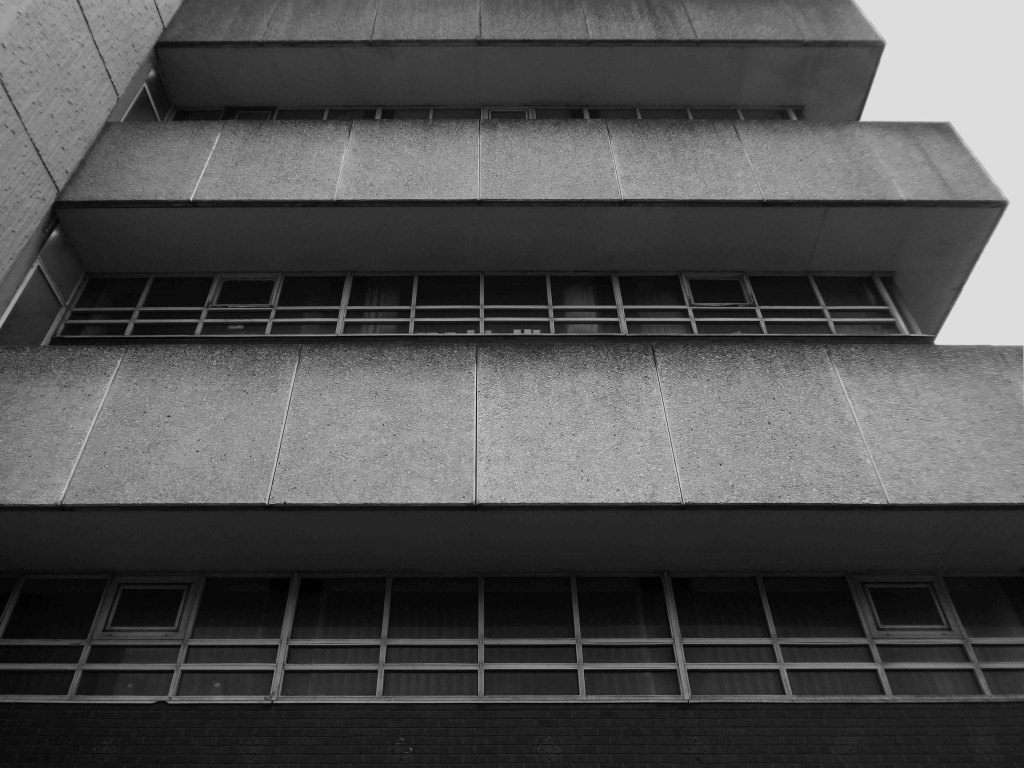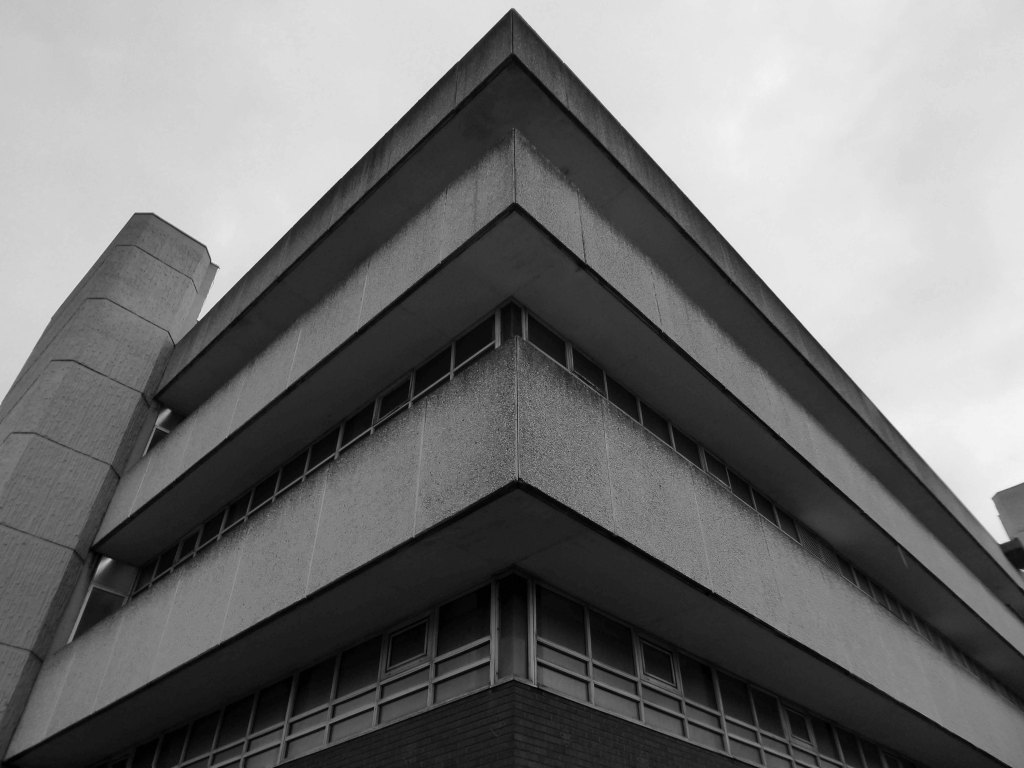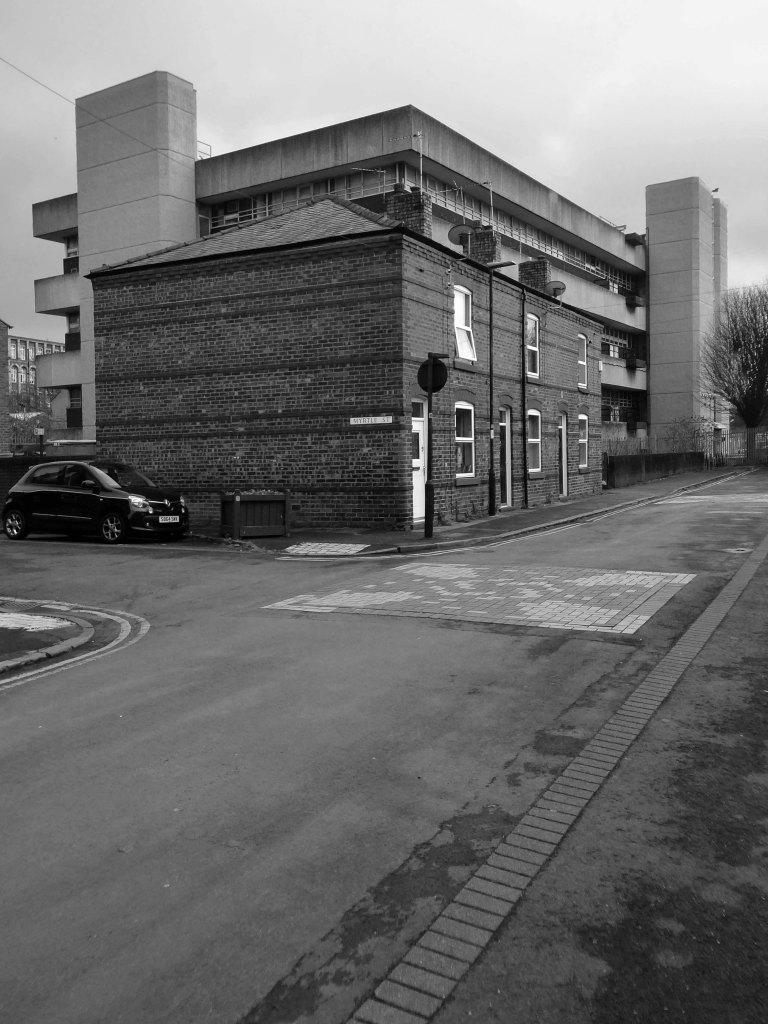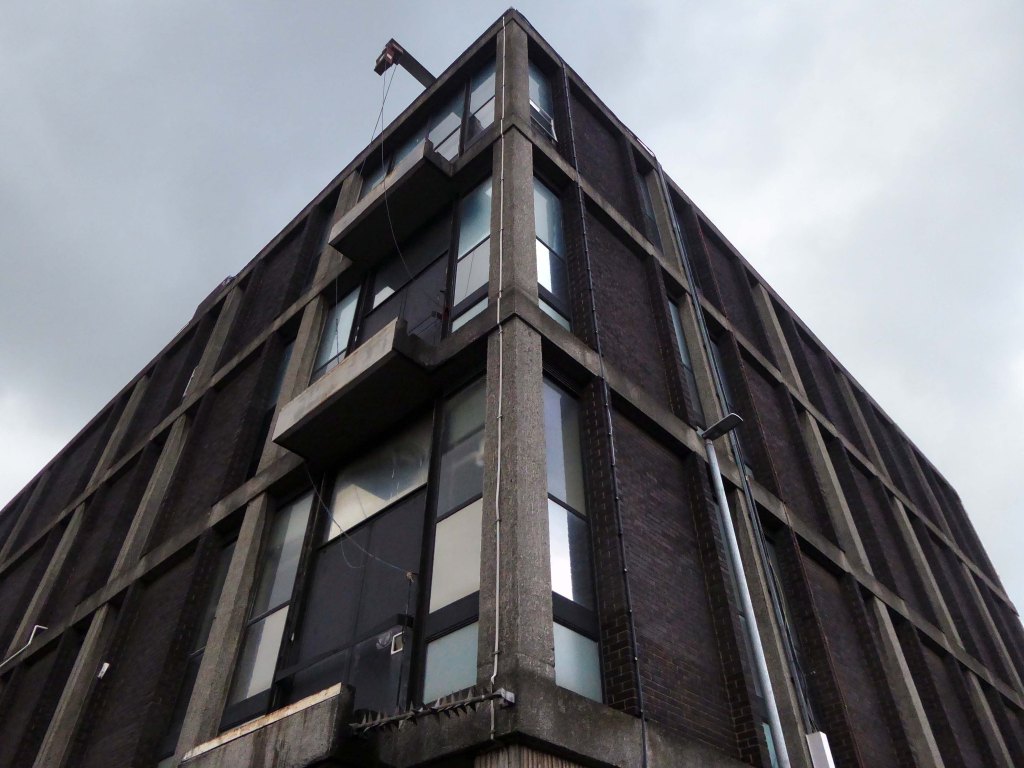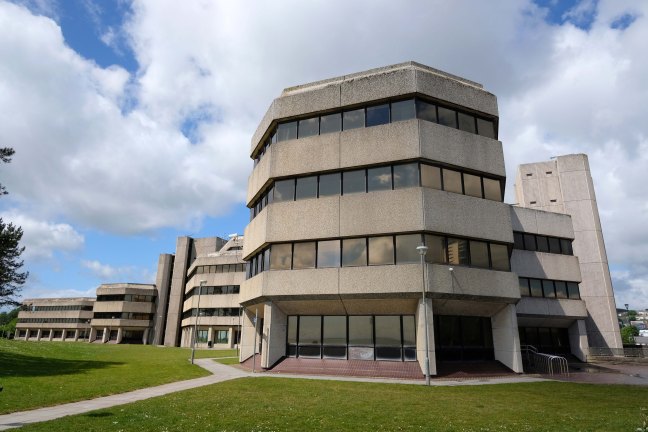
When the Victorian church was demolished, traces of several earlier churches were revealed, stretching back to the 9th century. Artefacts found included the stone sarcophagus of Alkmund of Derby, now in Derby Museum and Art Gallery.
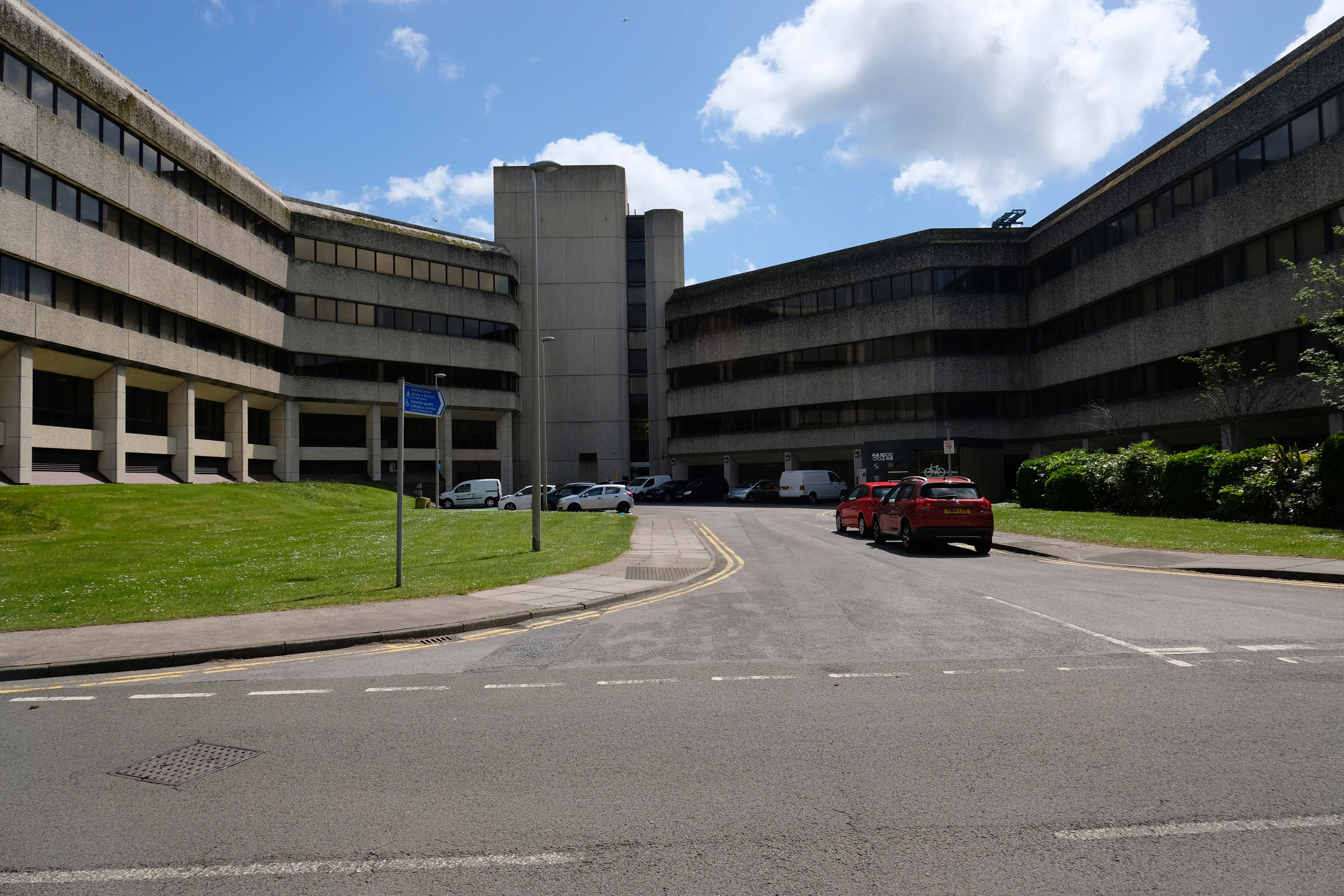
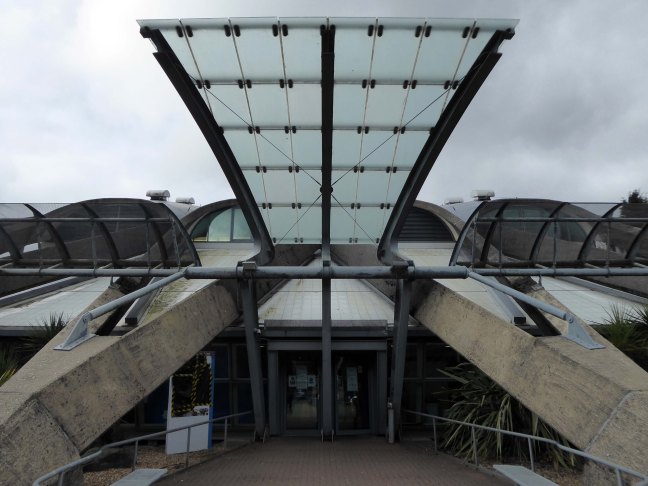
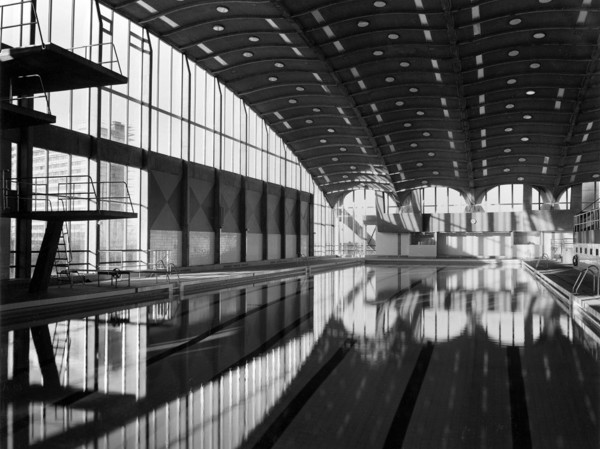
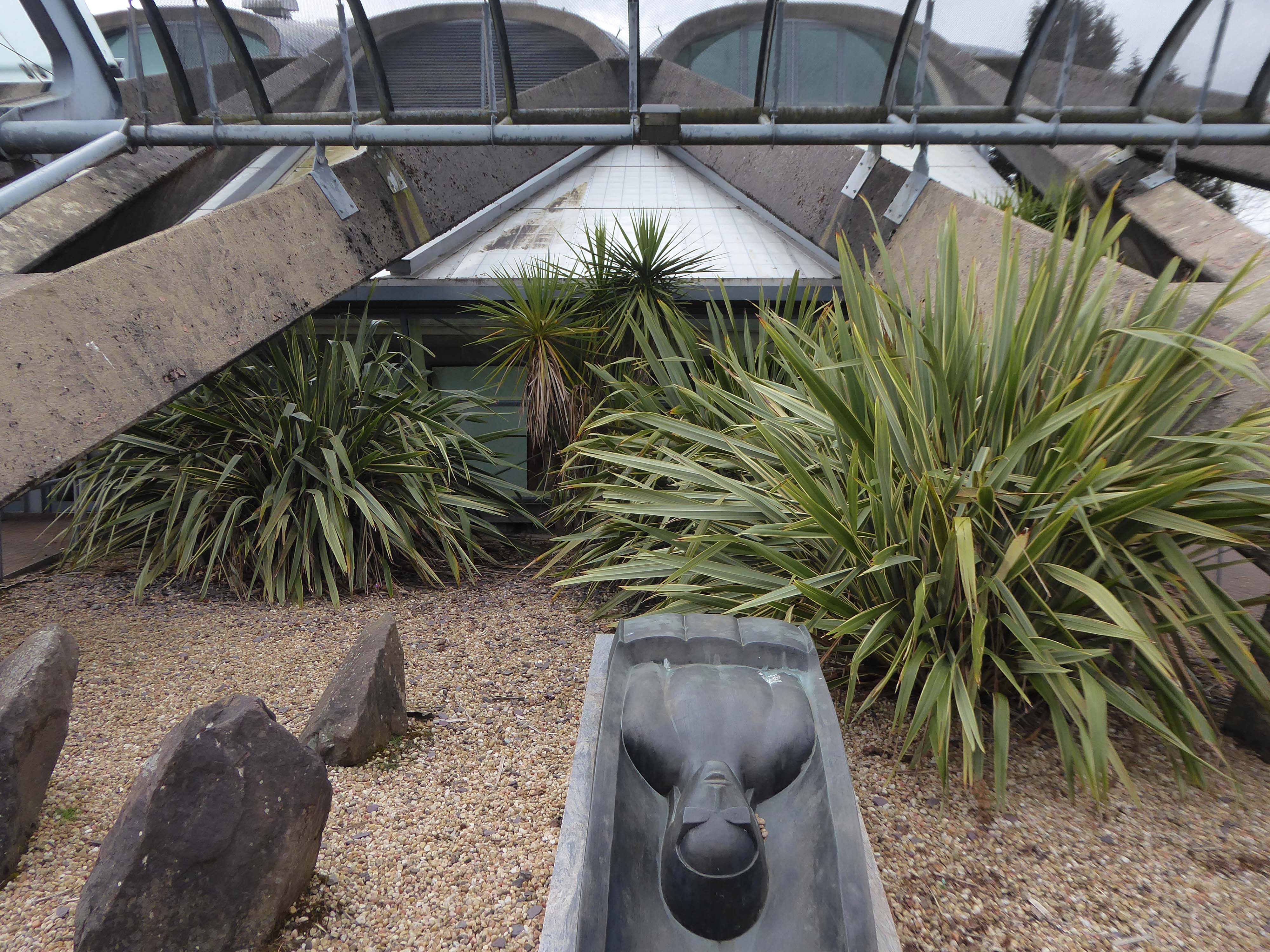
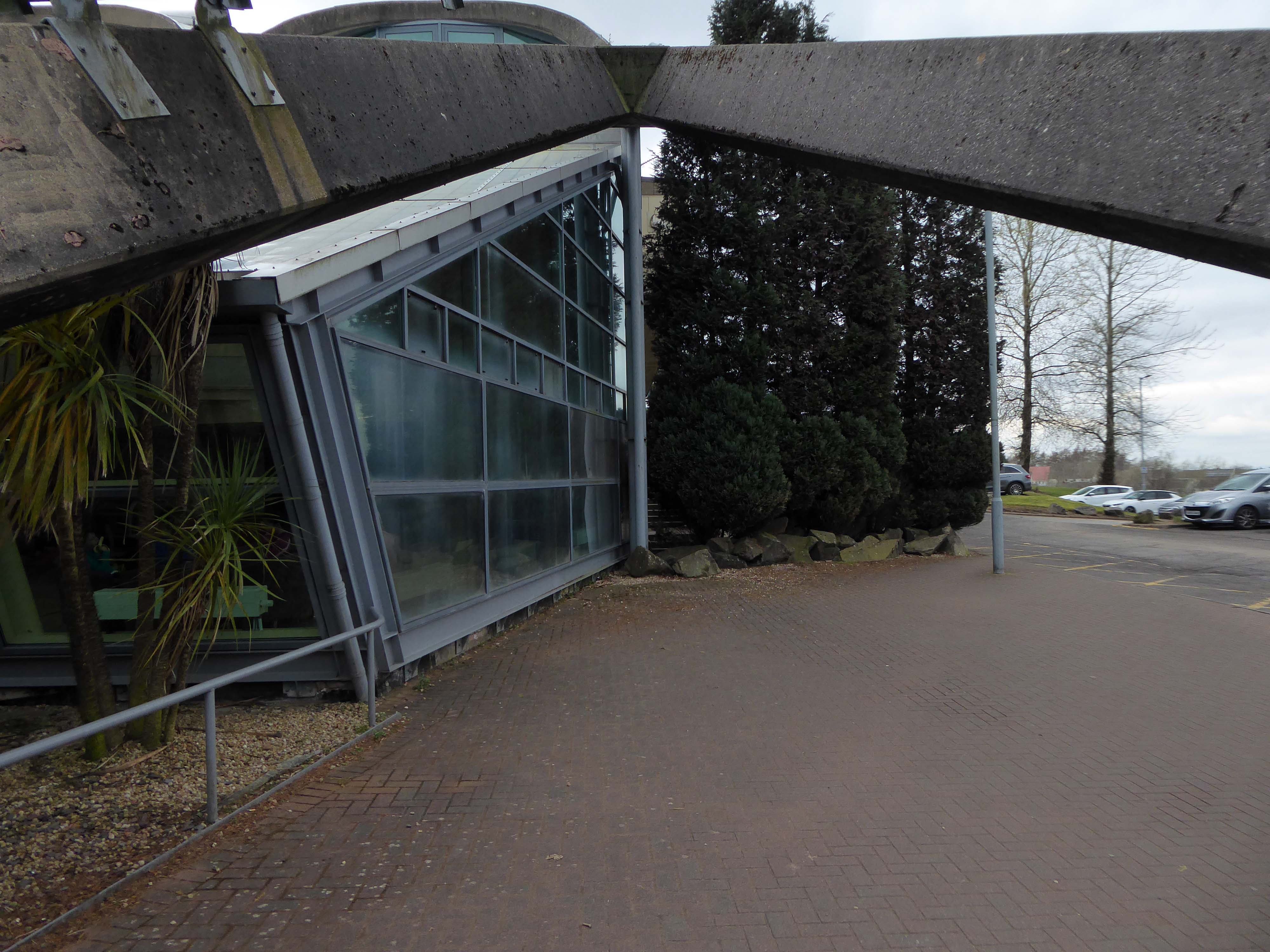
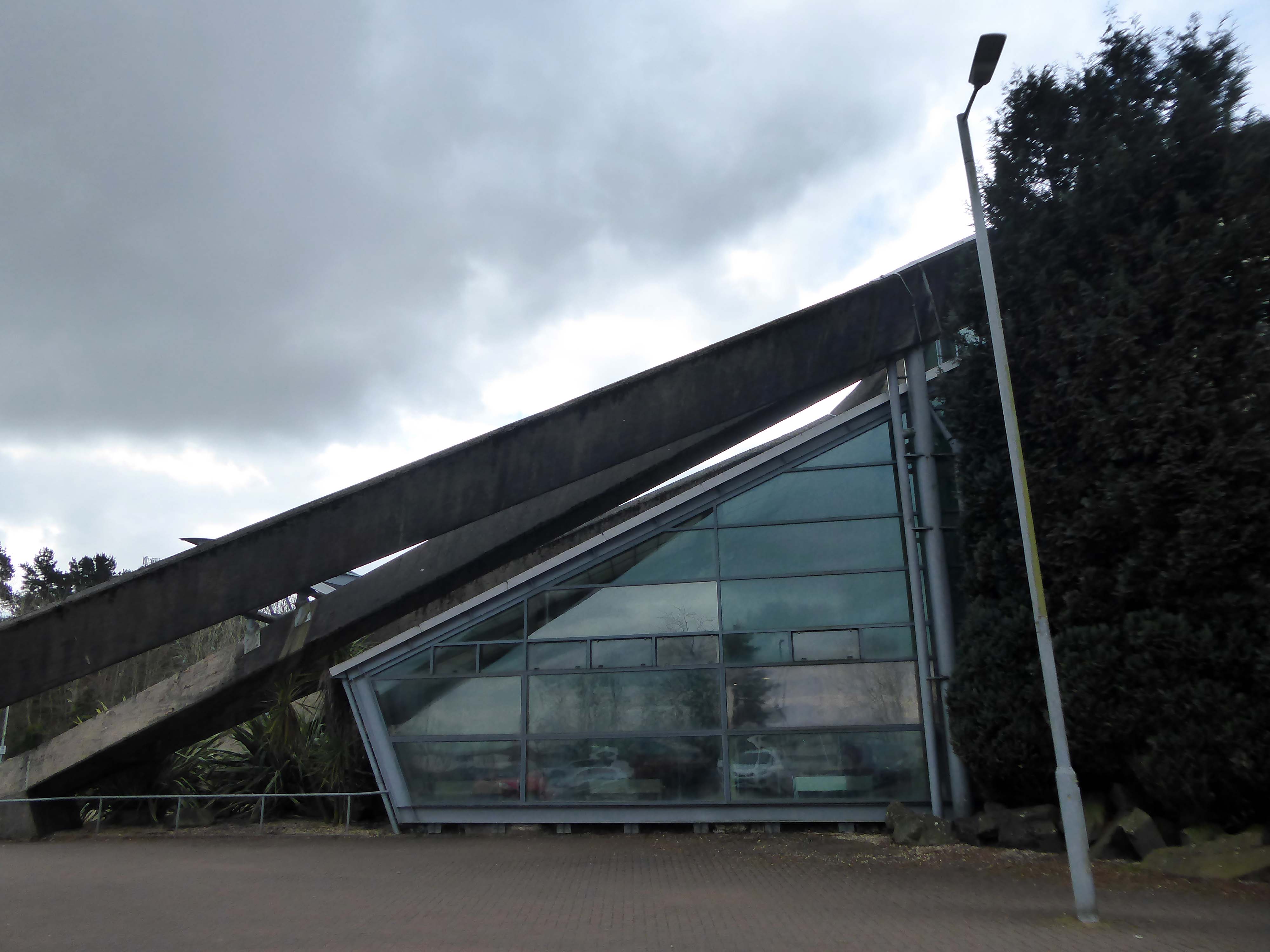
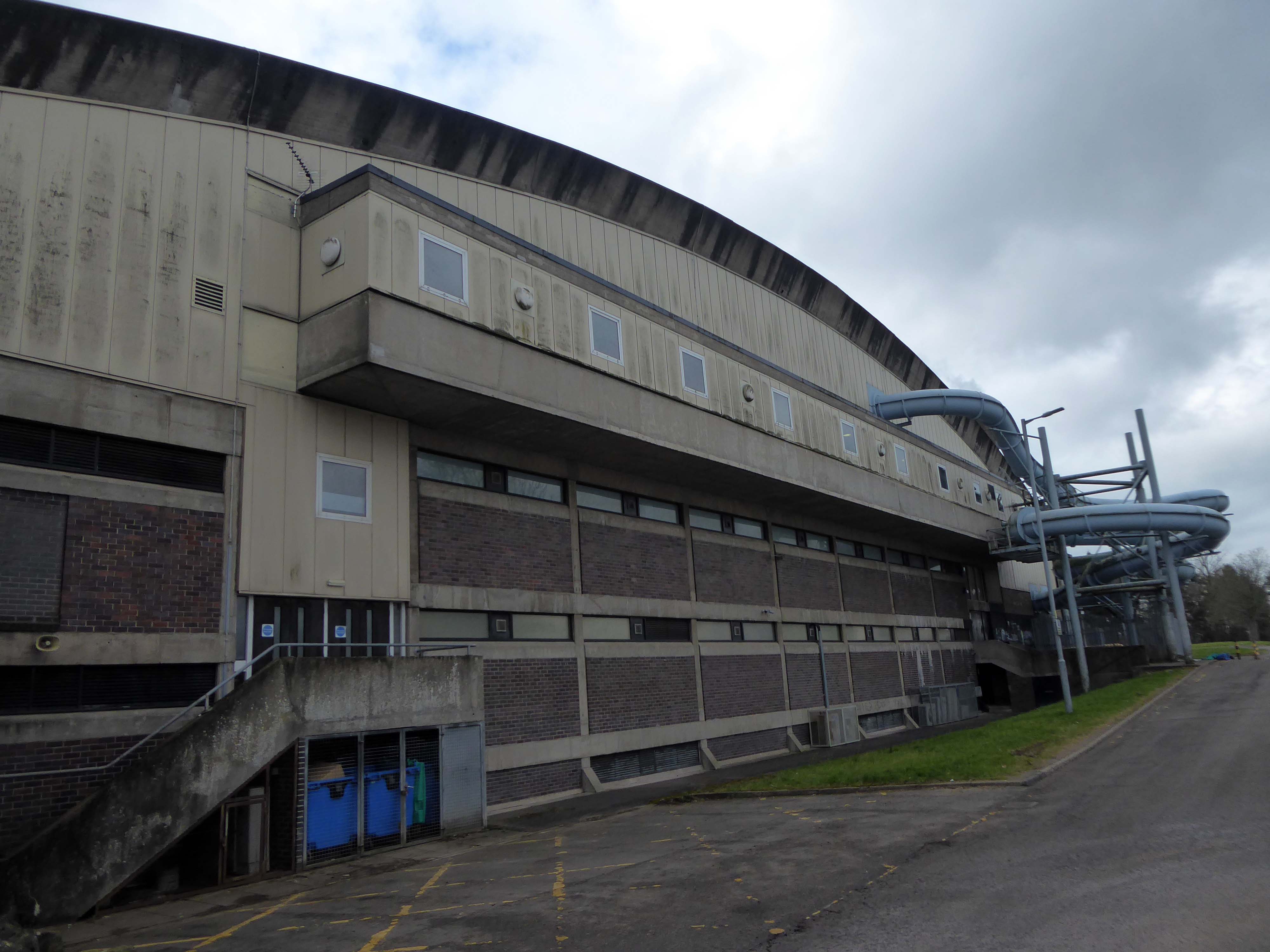
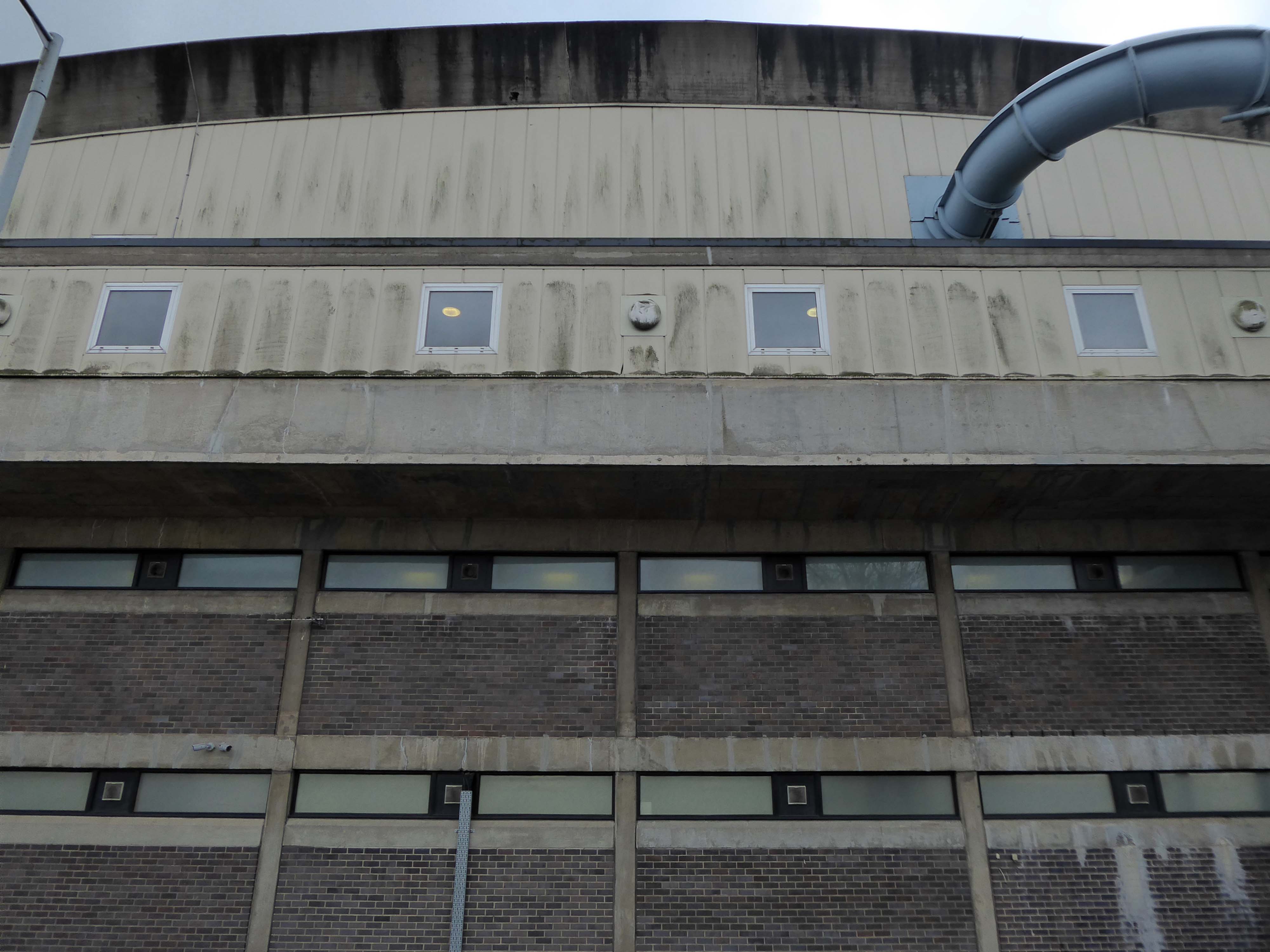
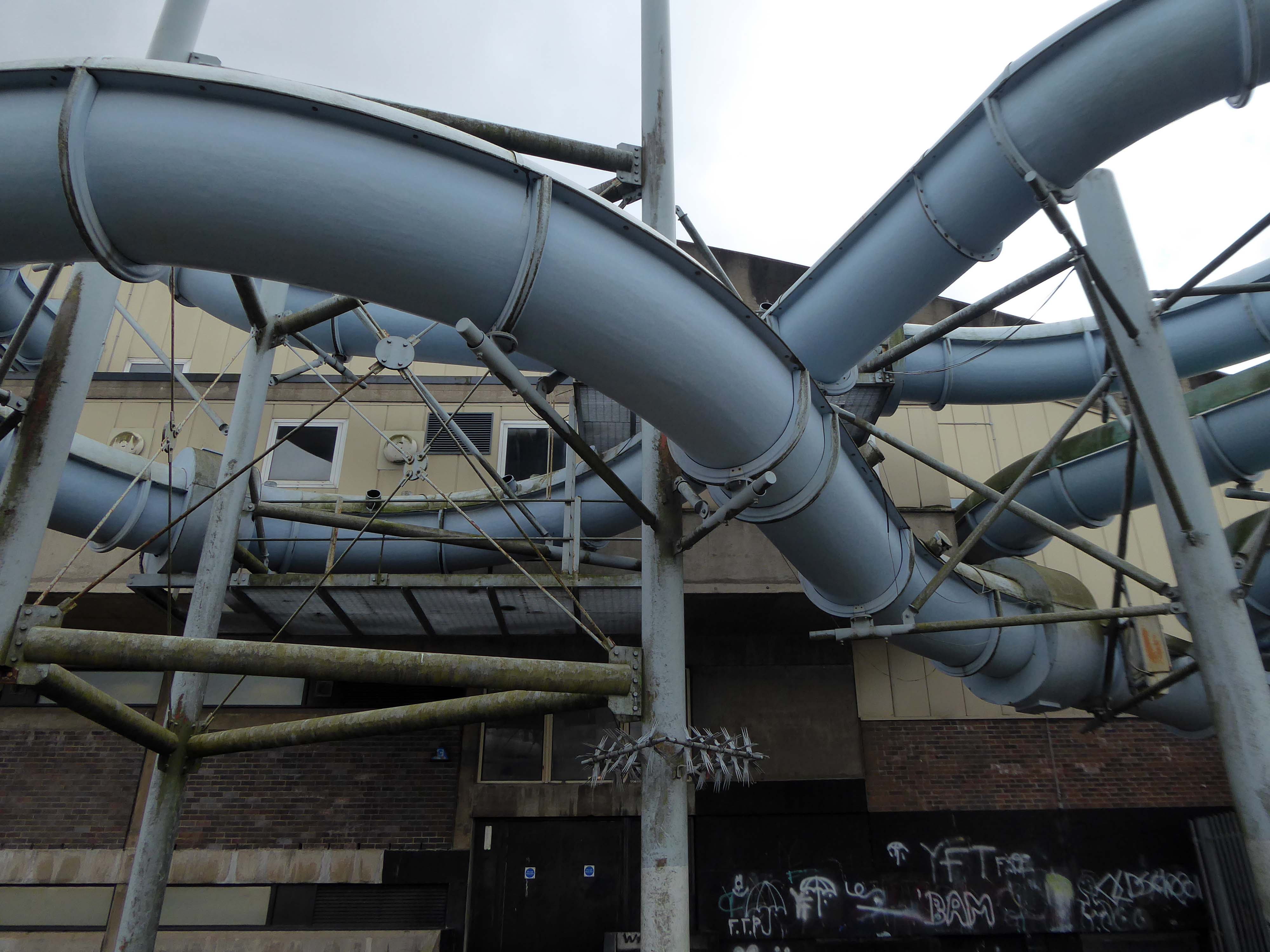
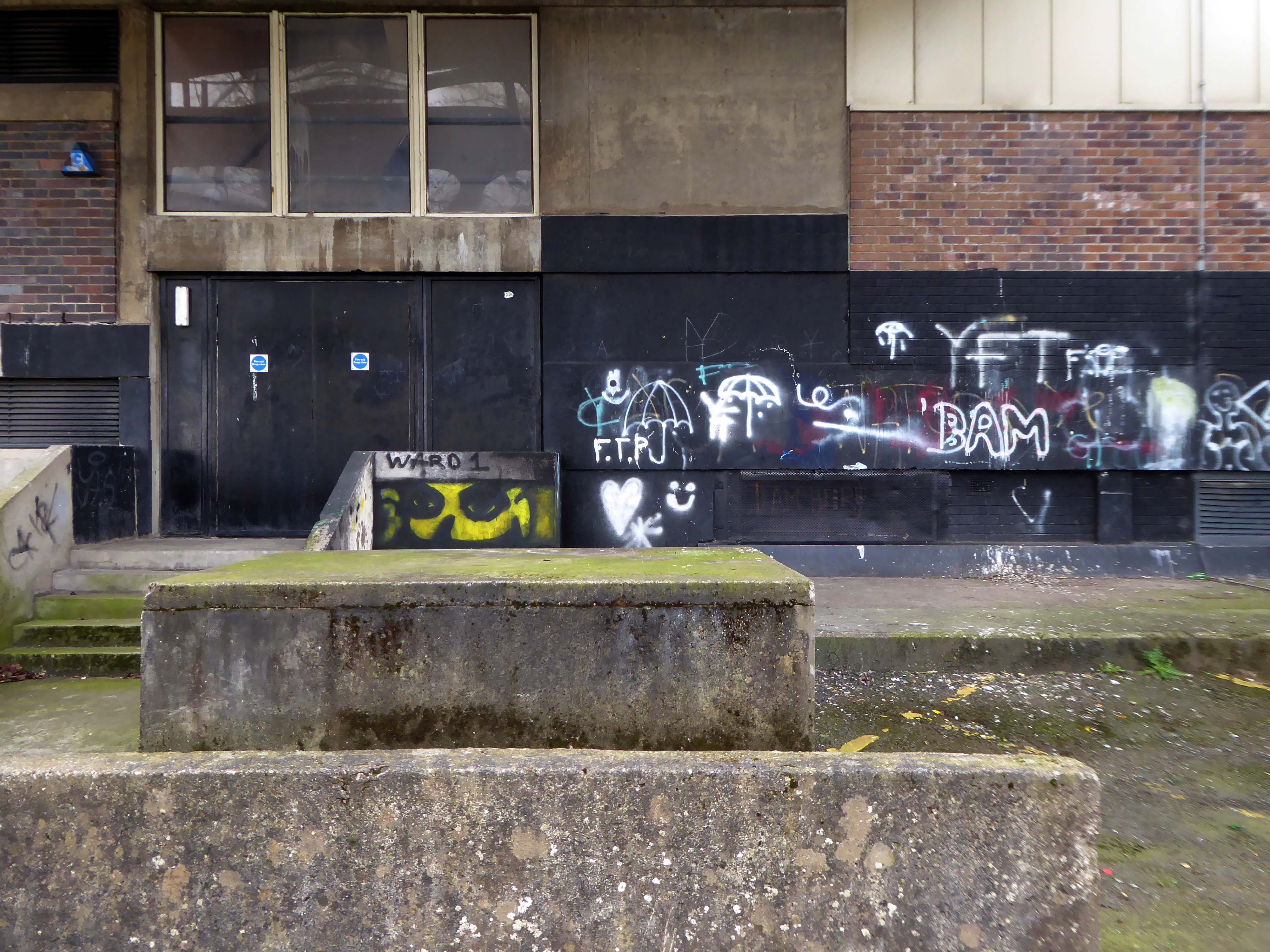
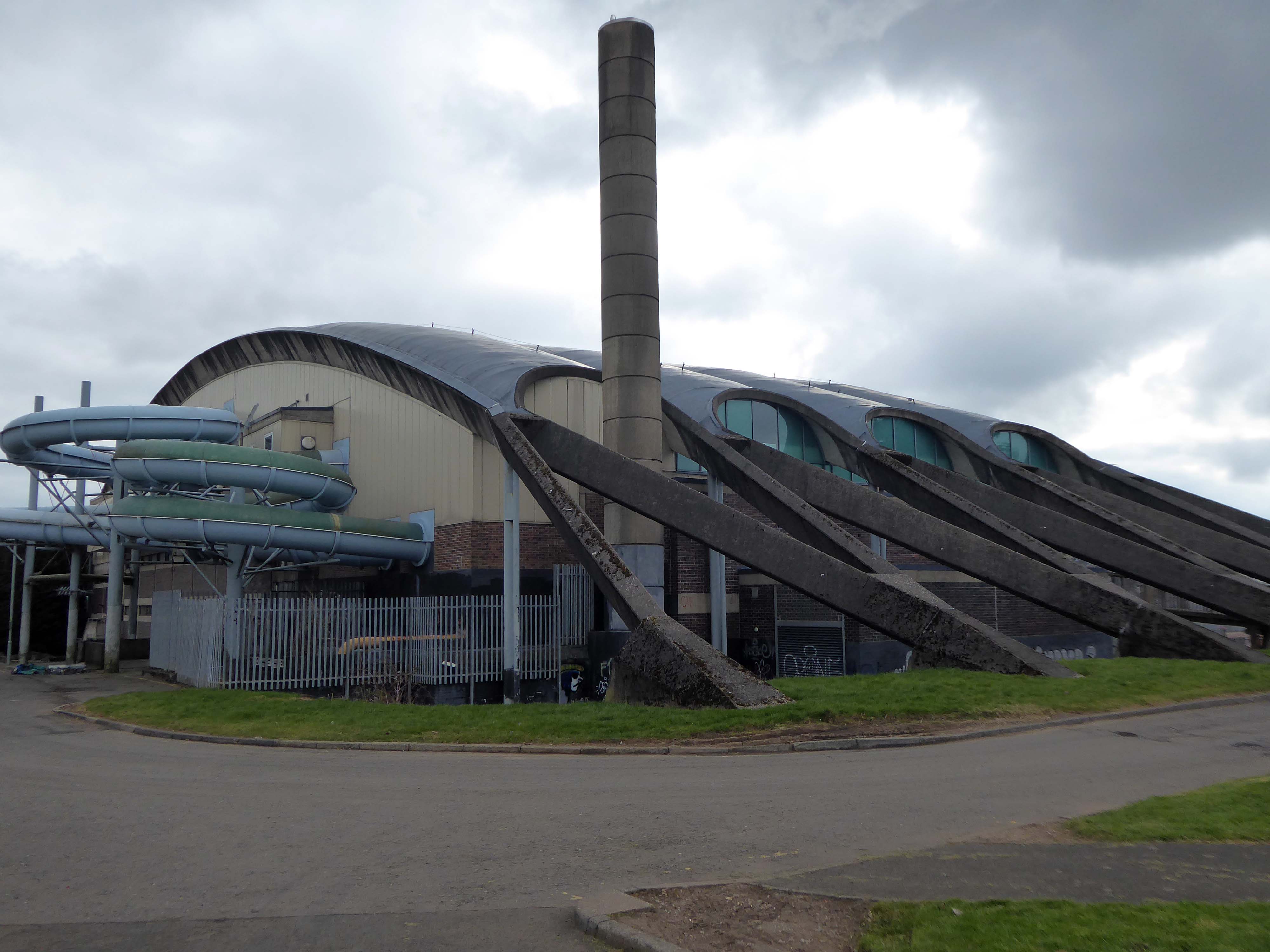
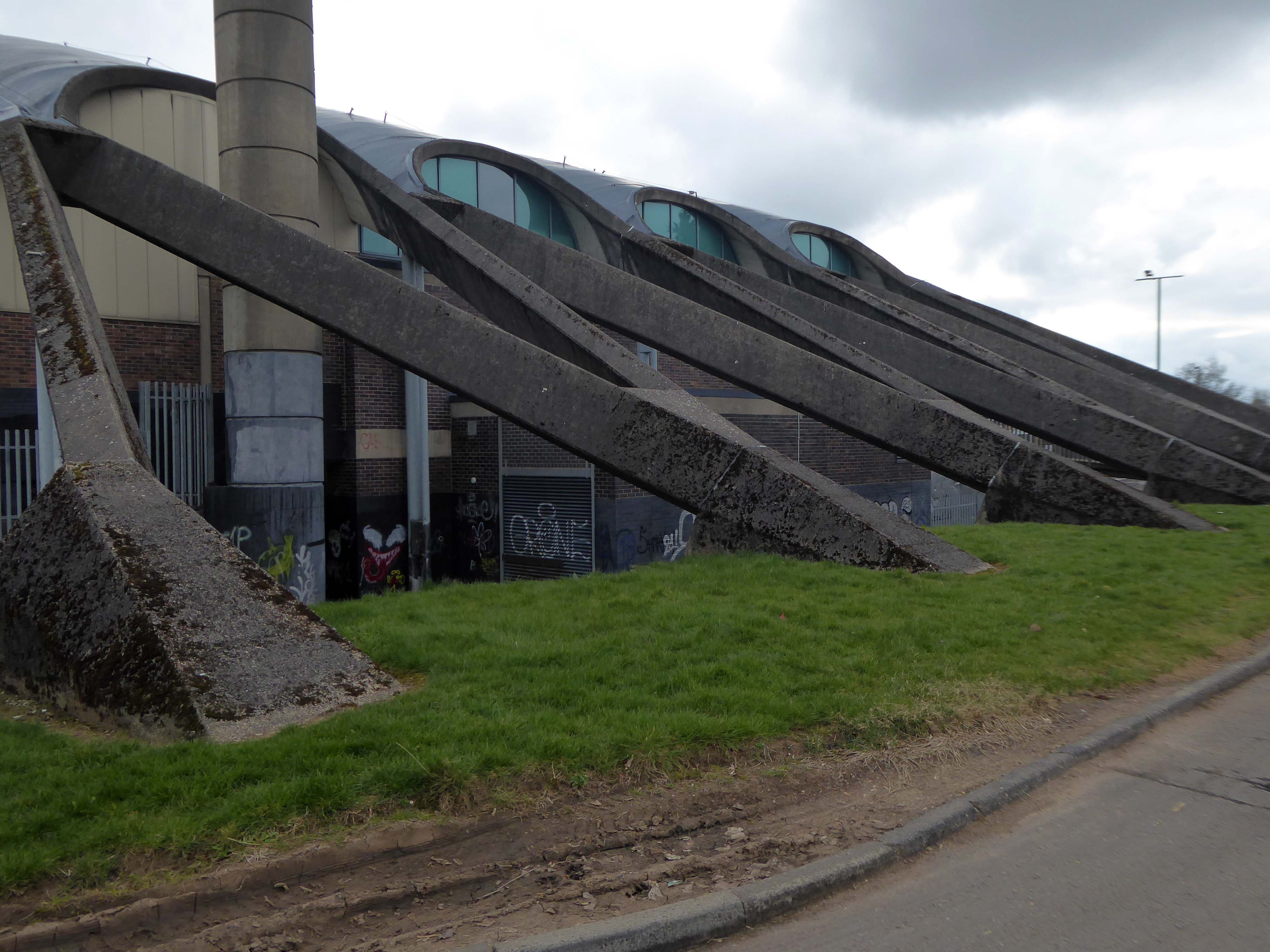
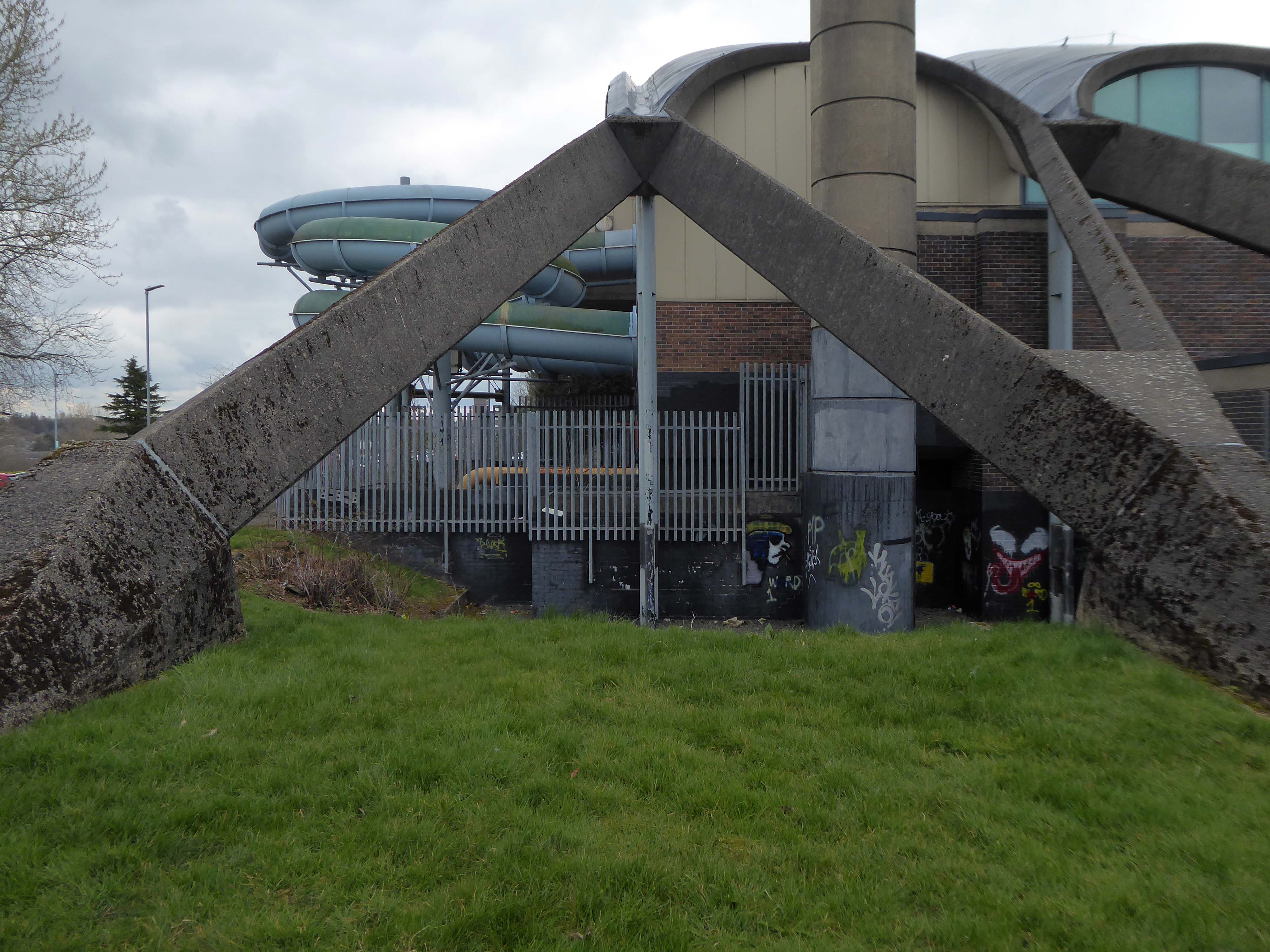
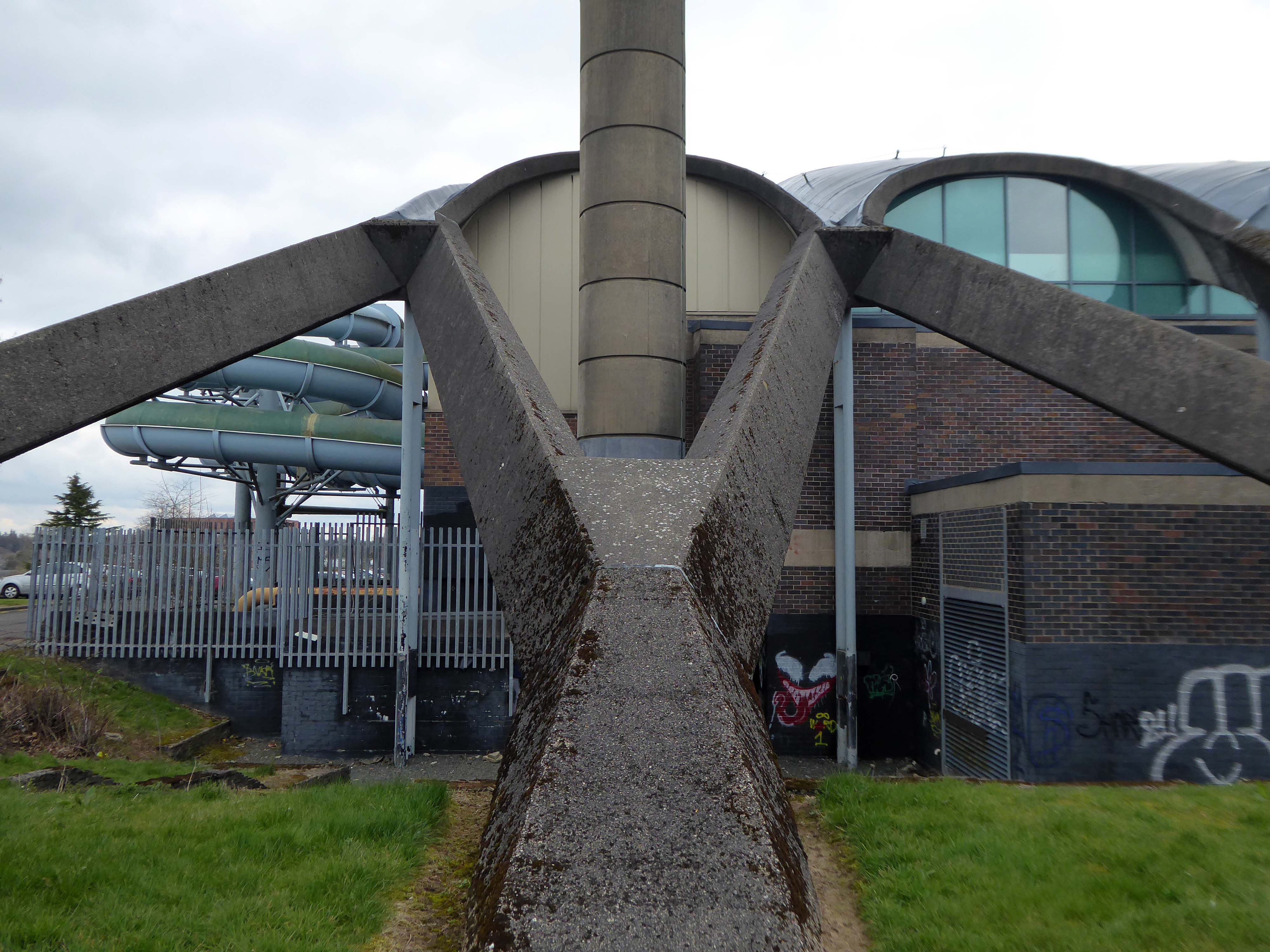
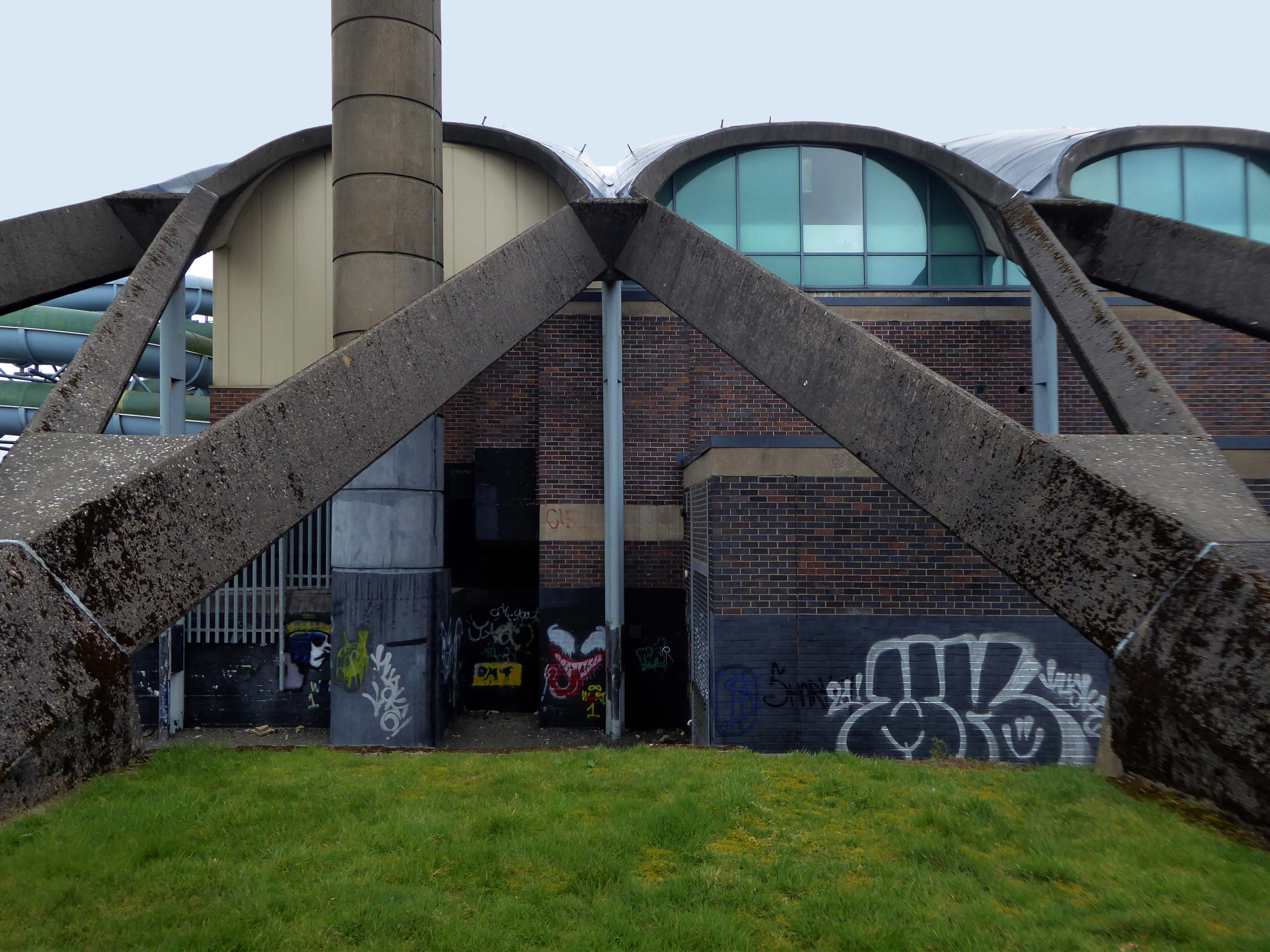
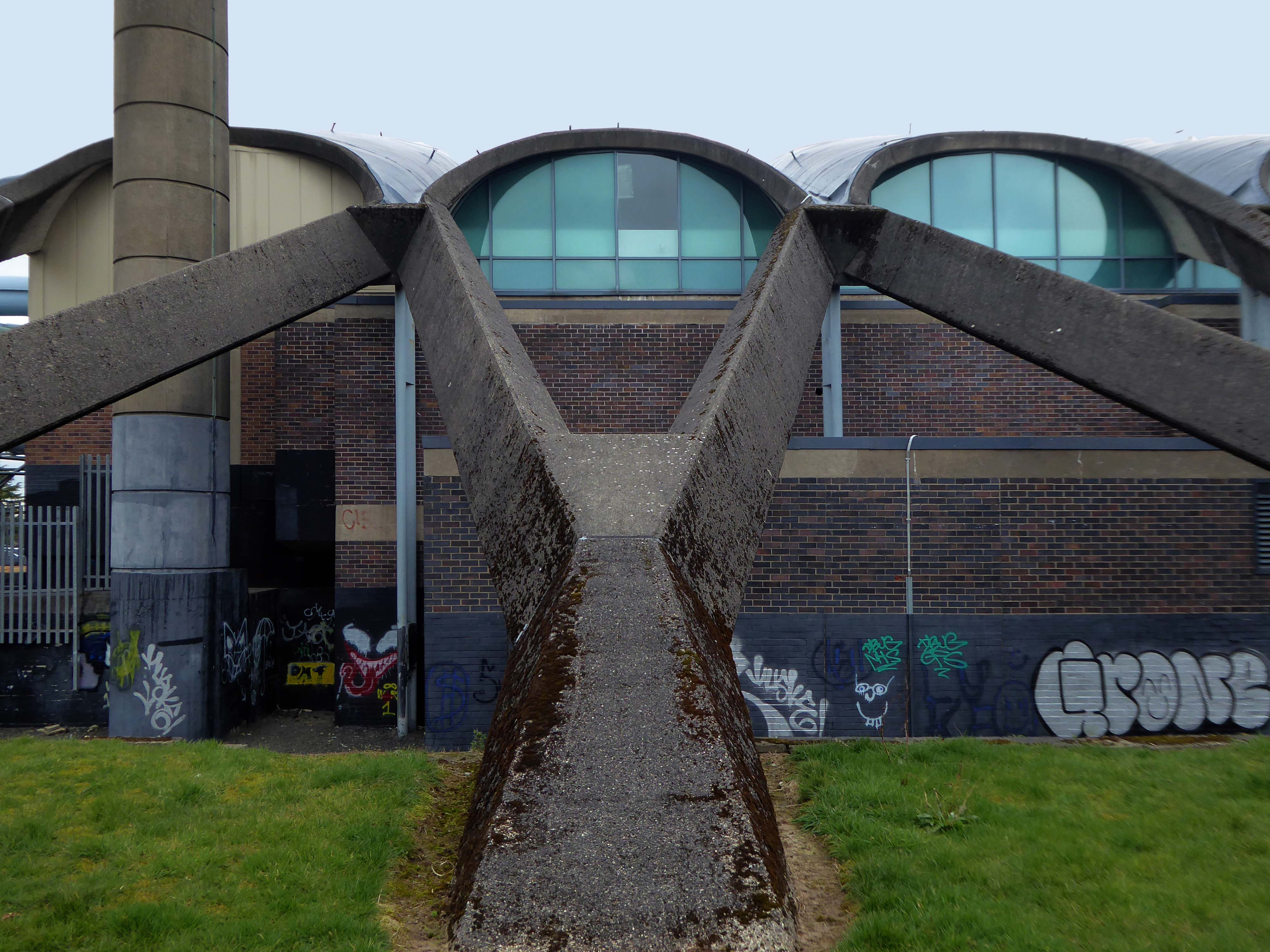
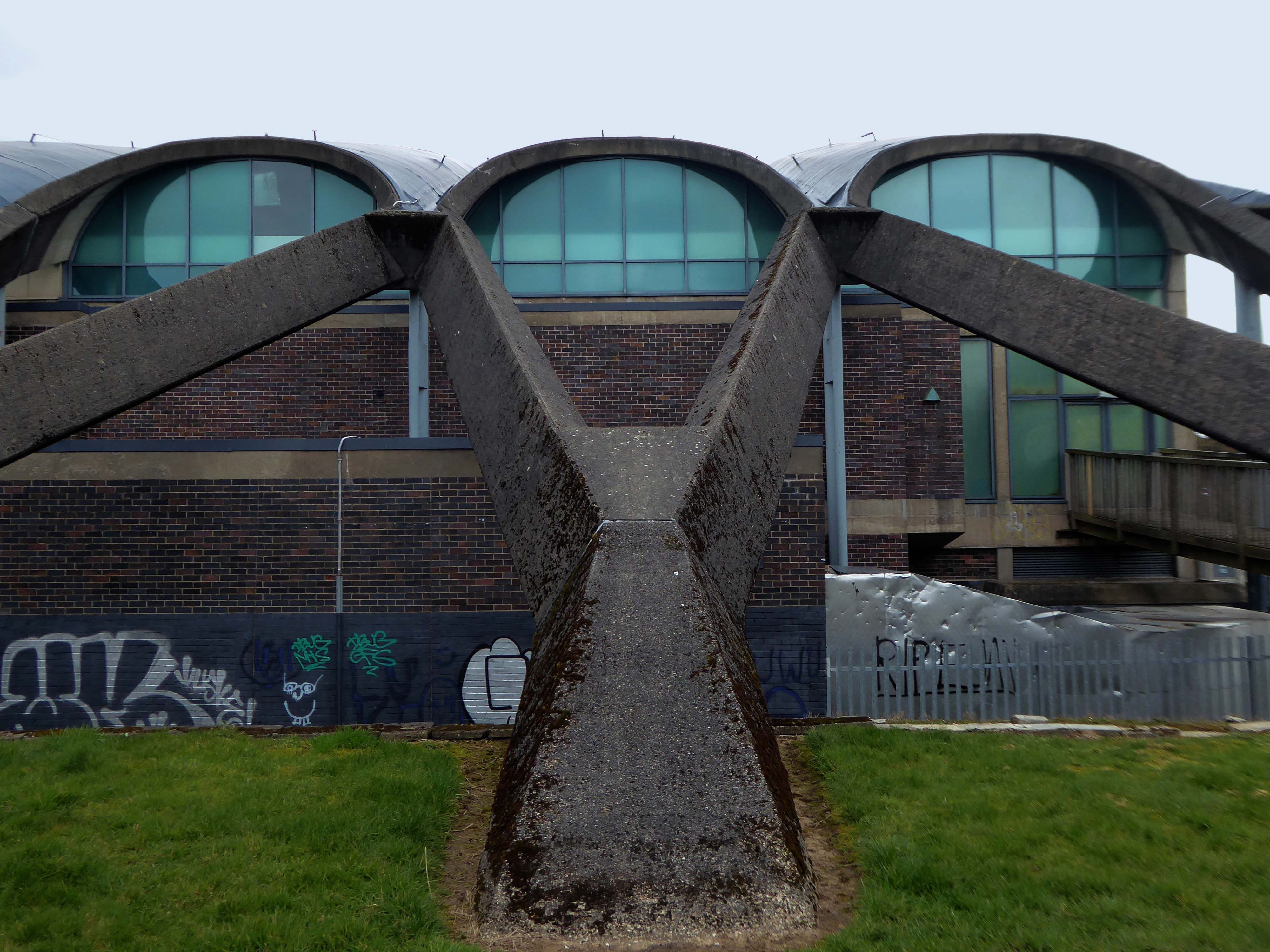
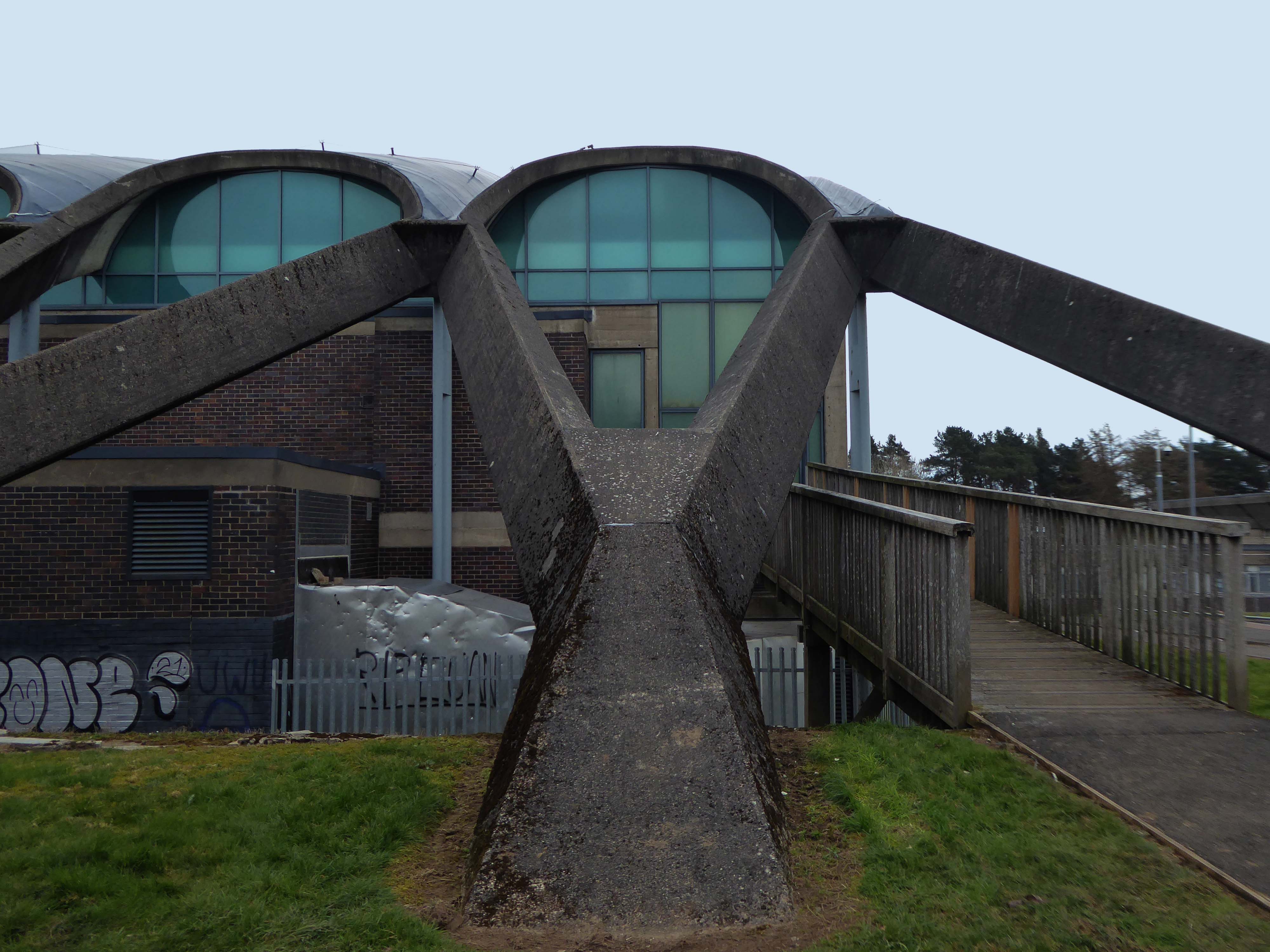
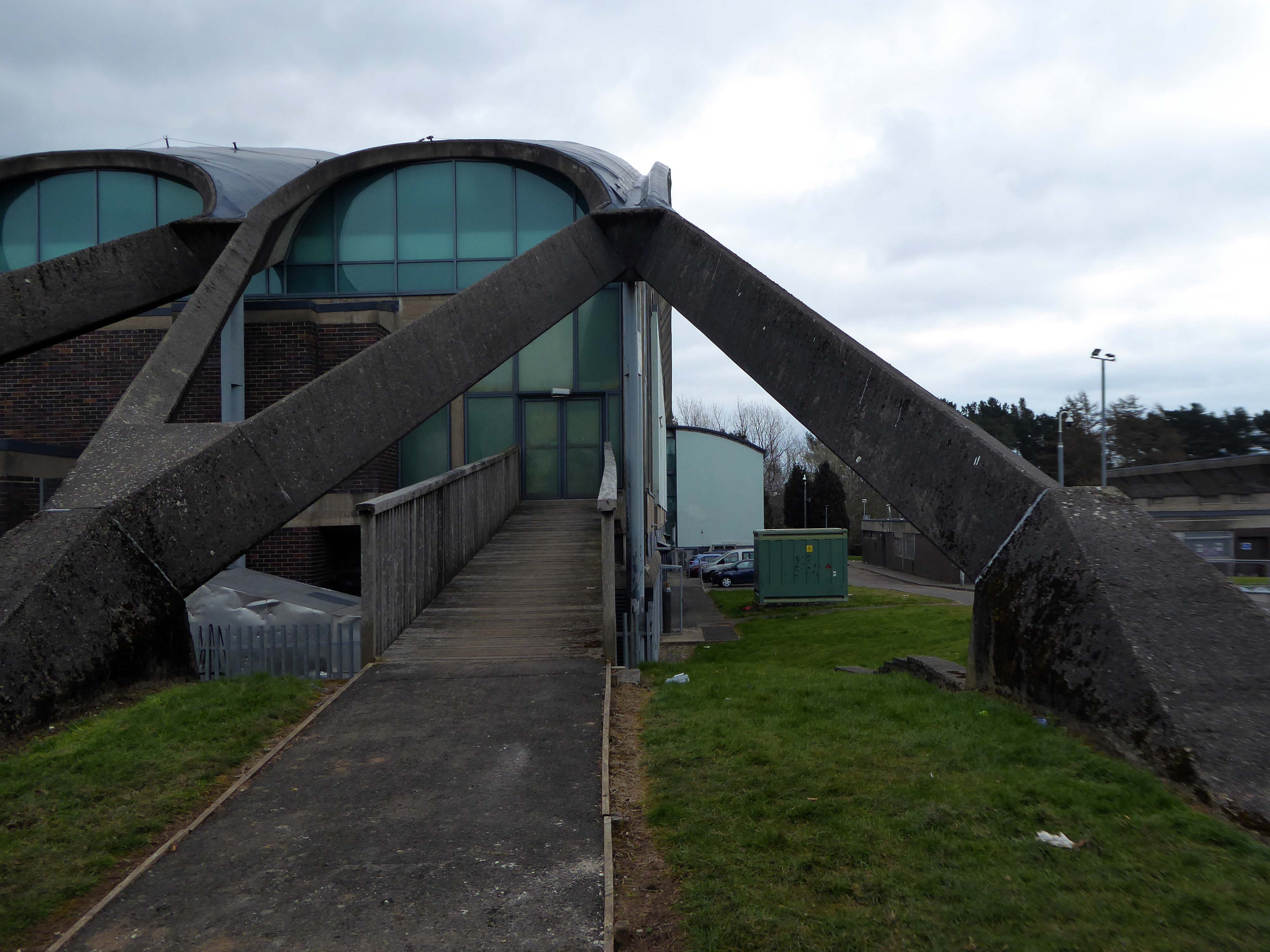
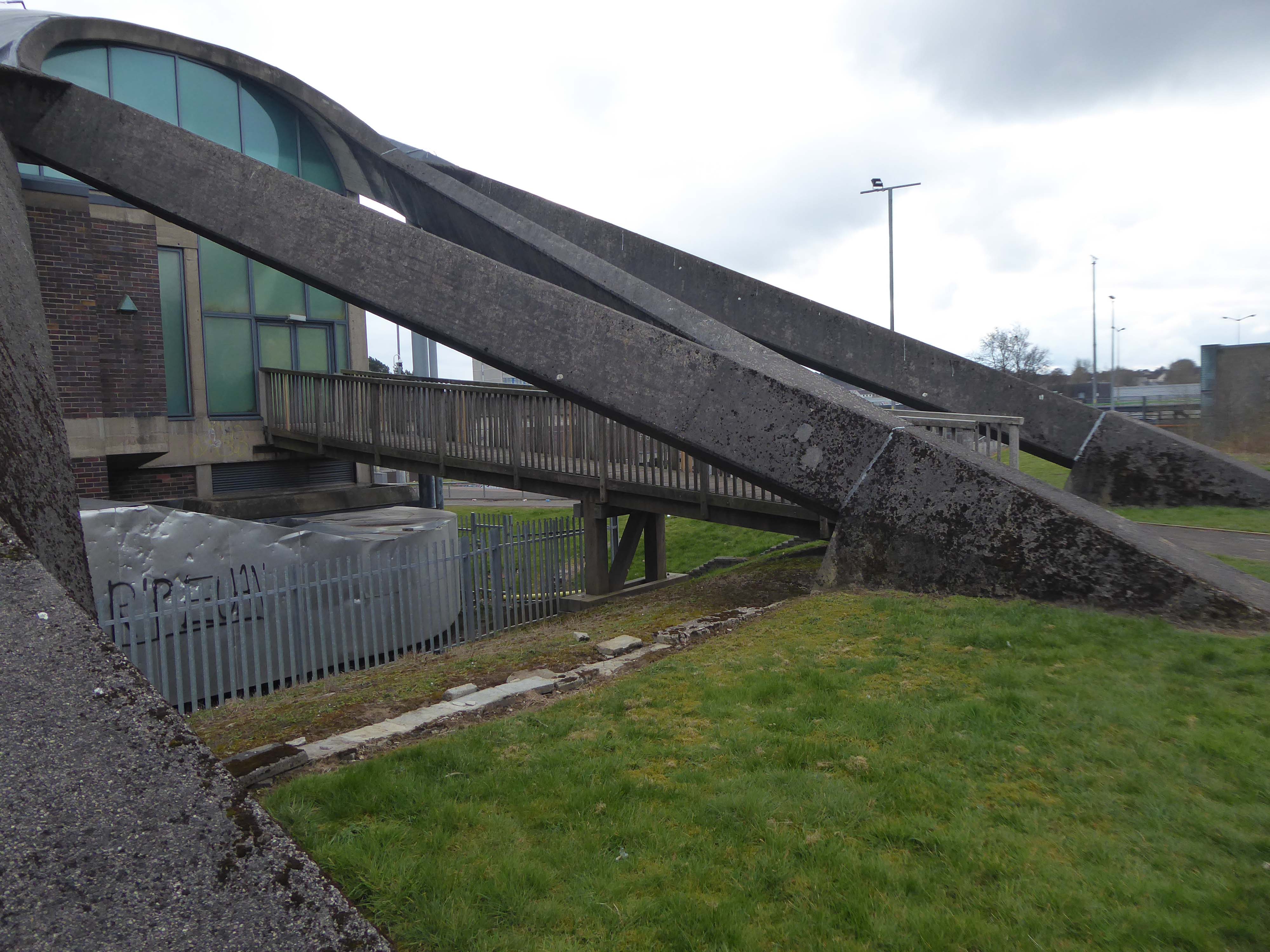
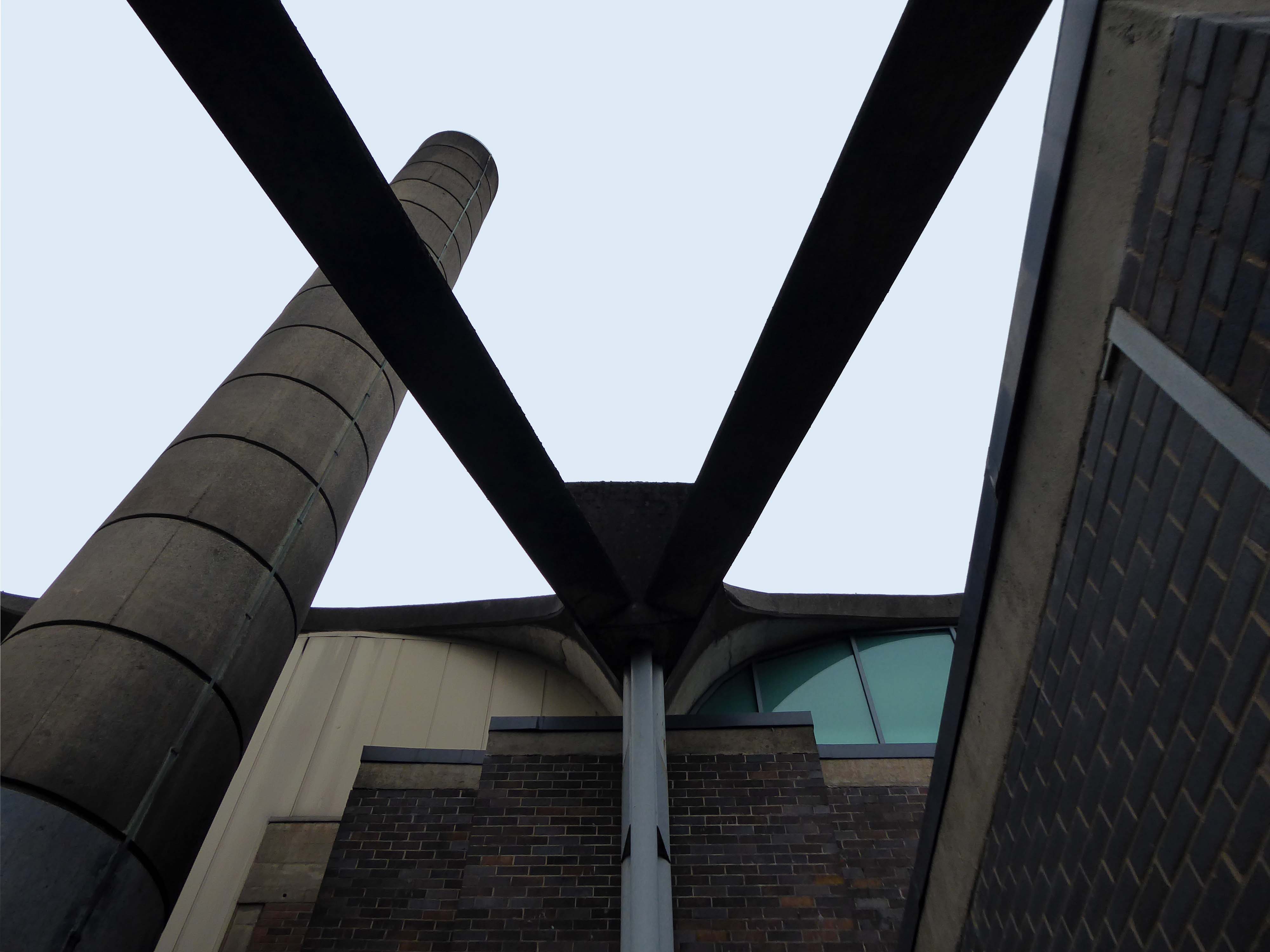
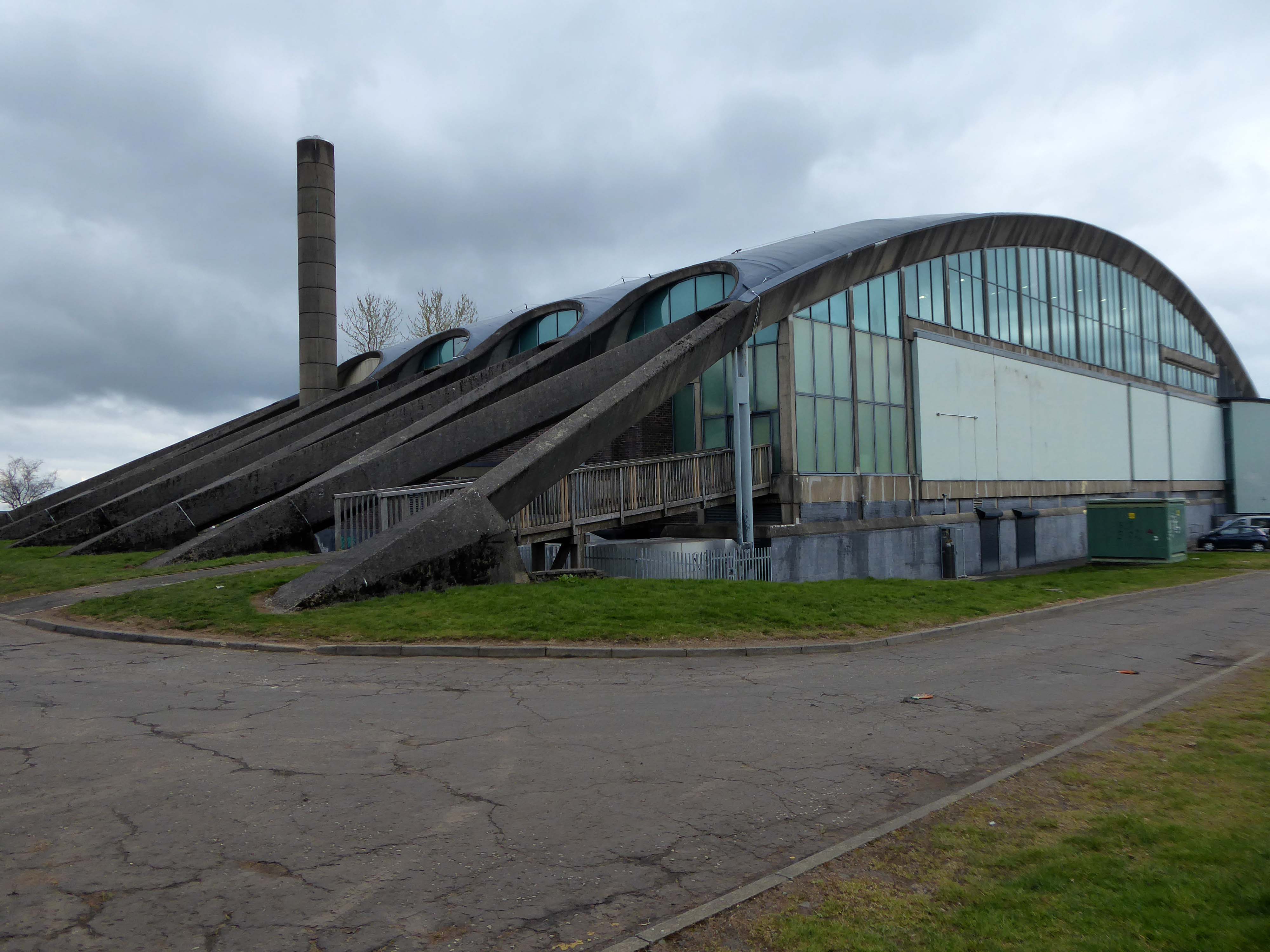
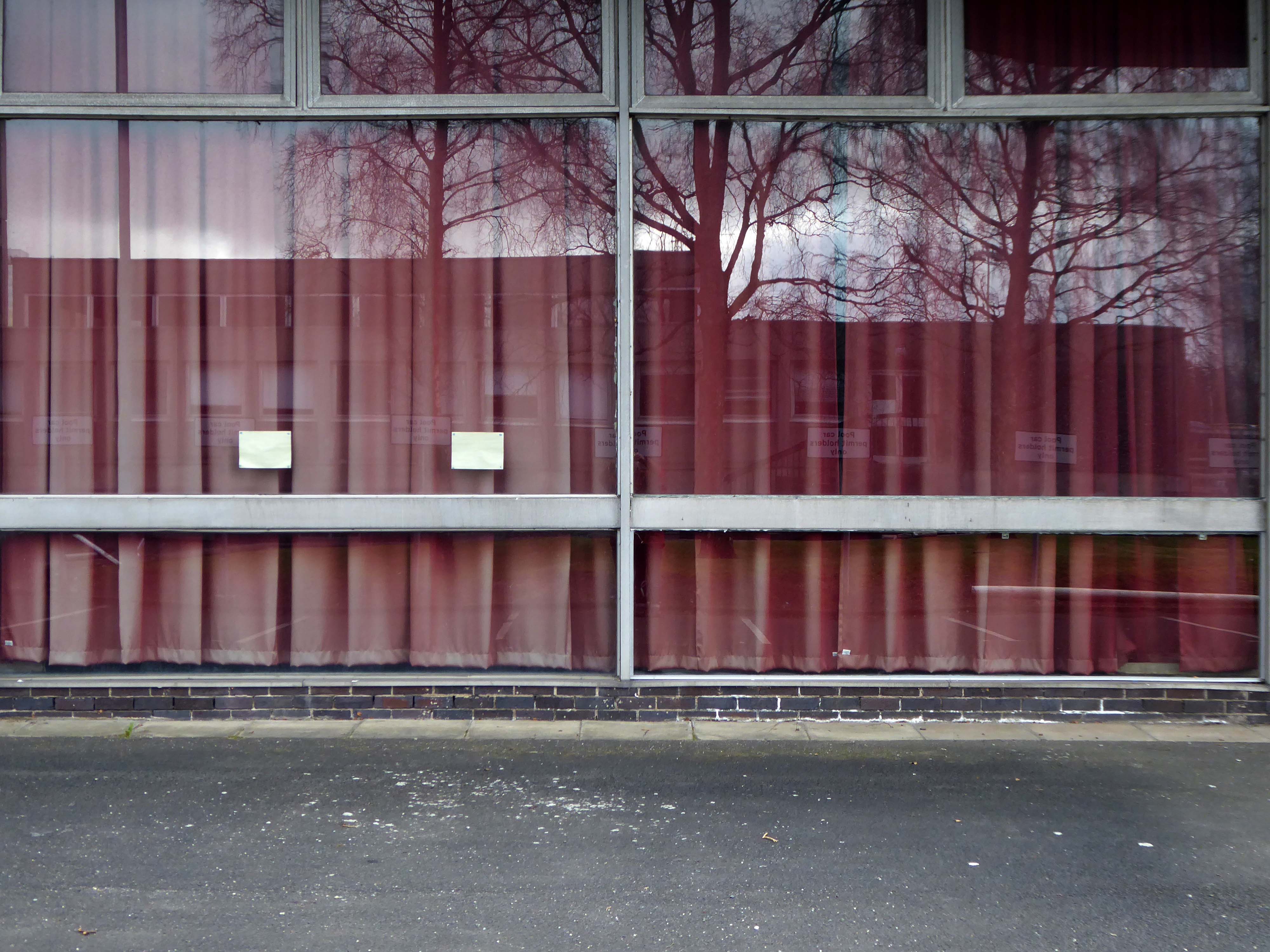
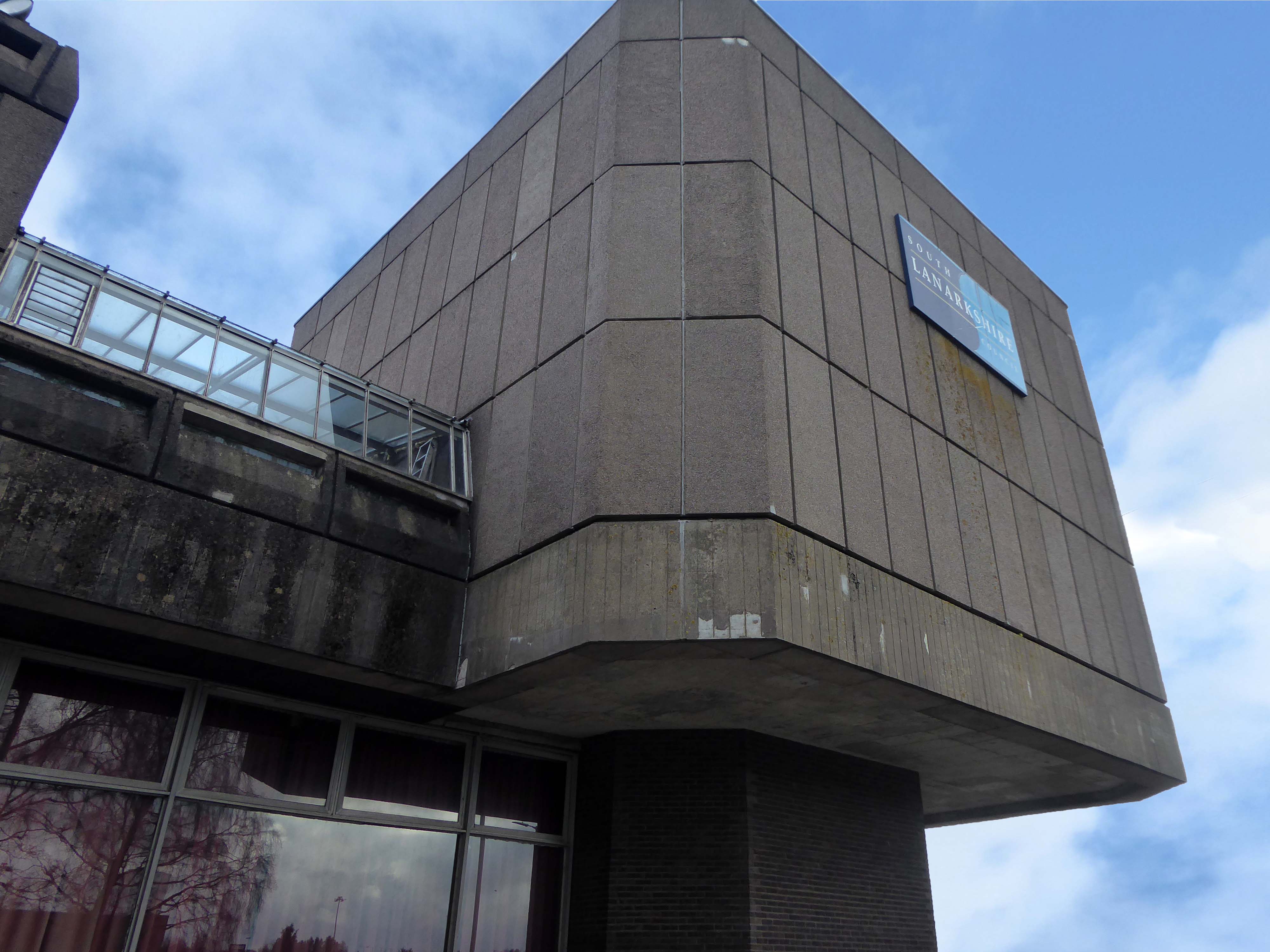
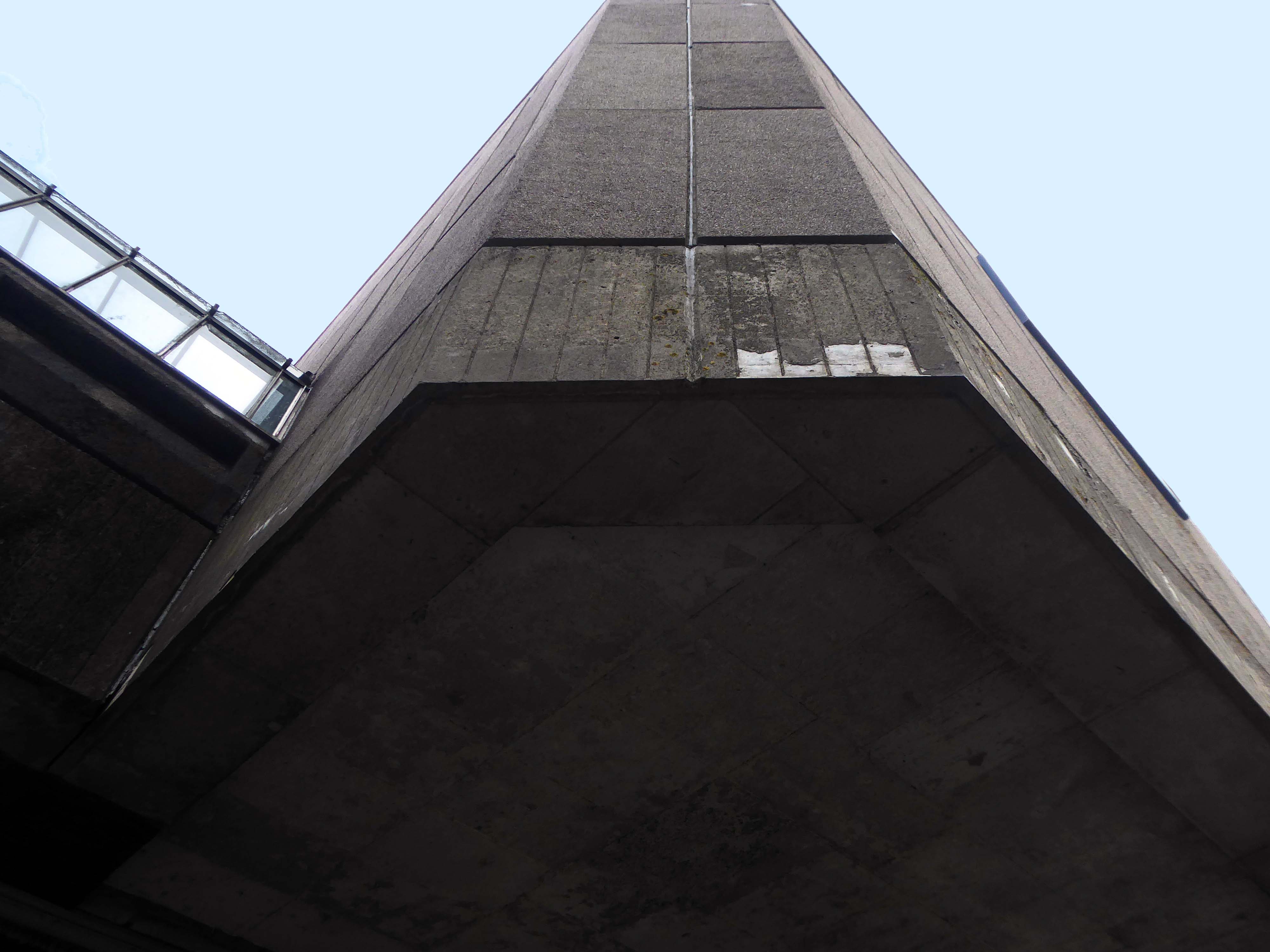
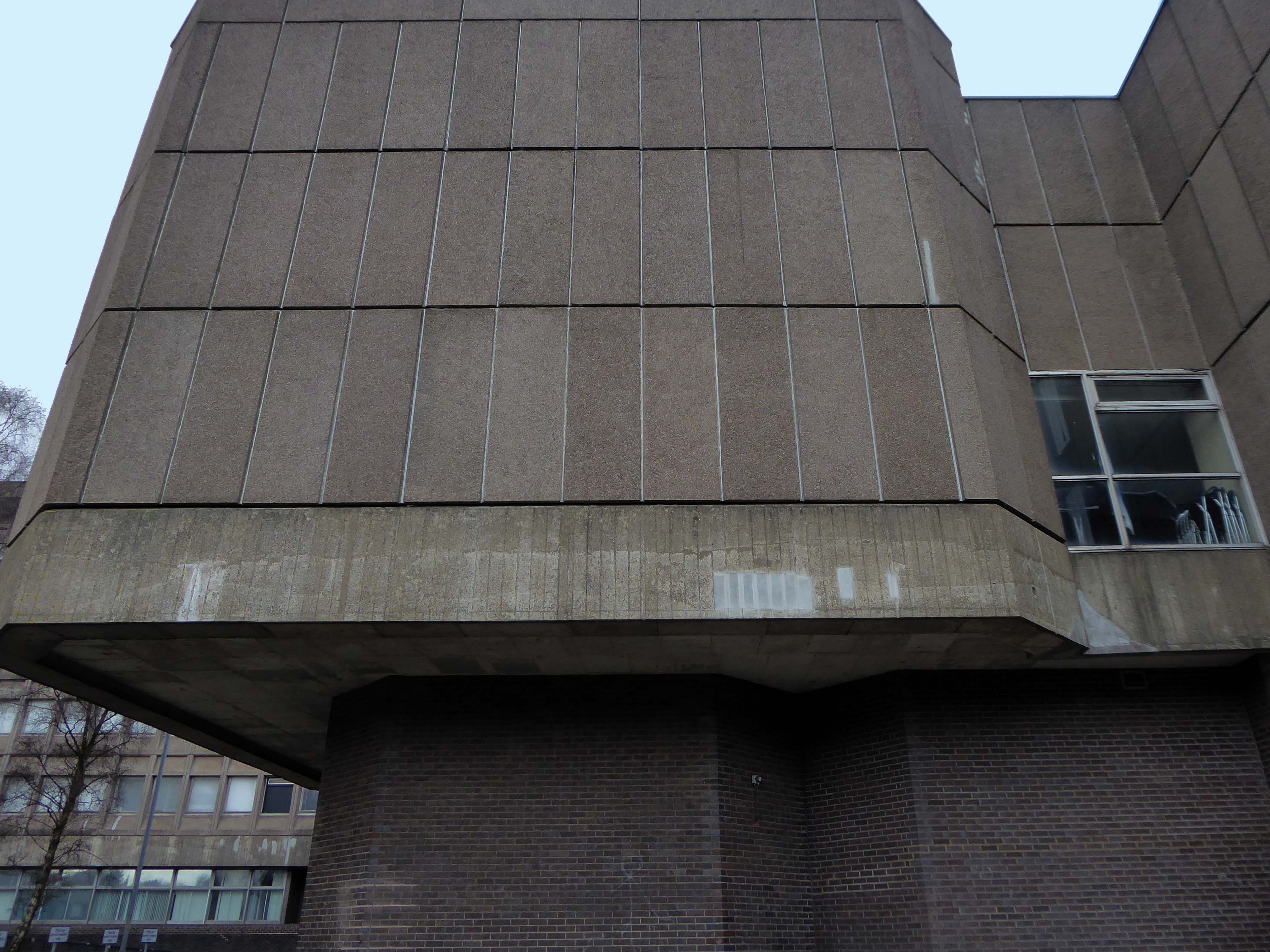
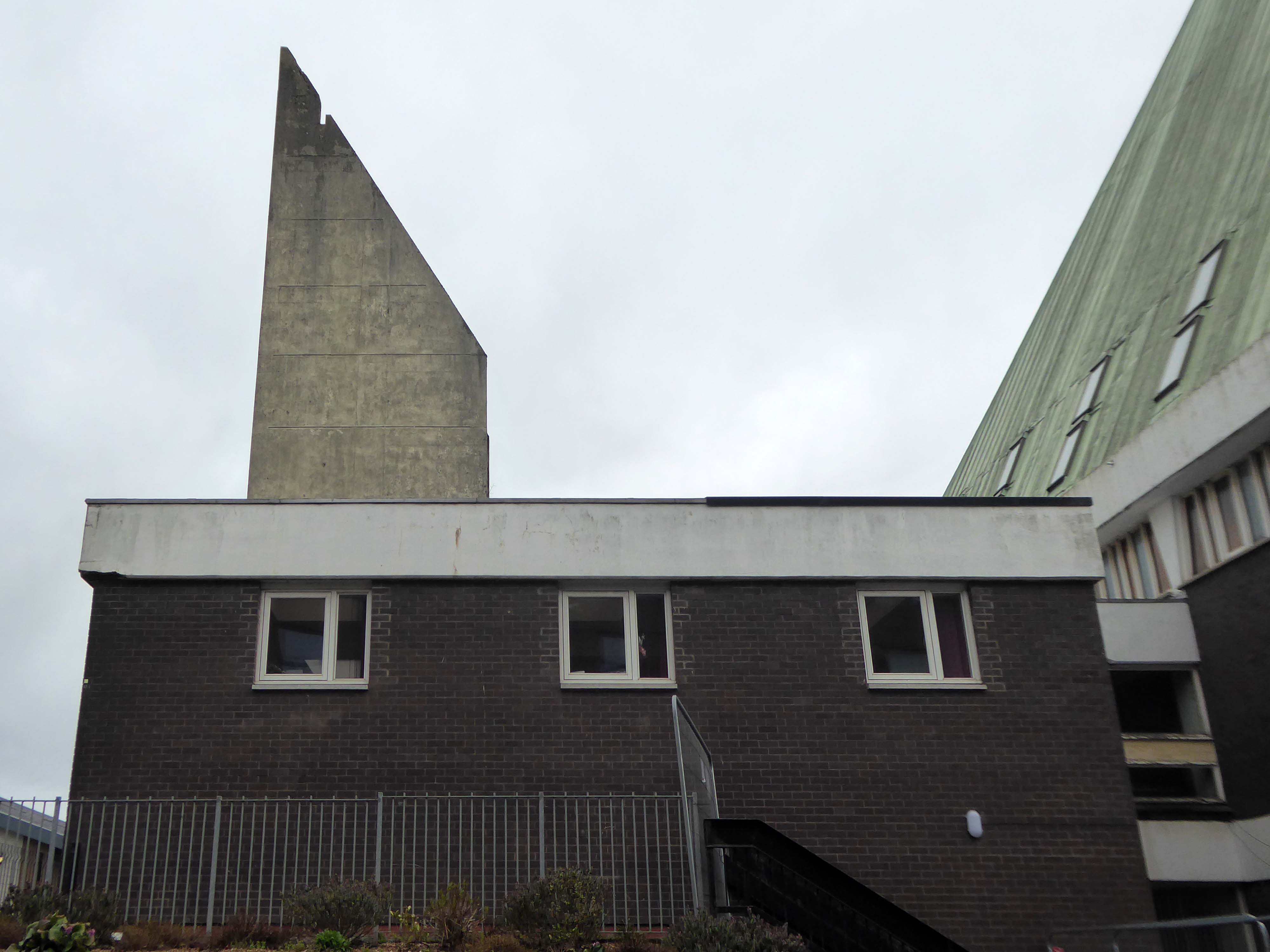
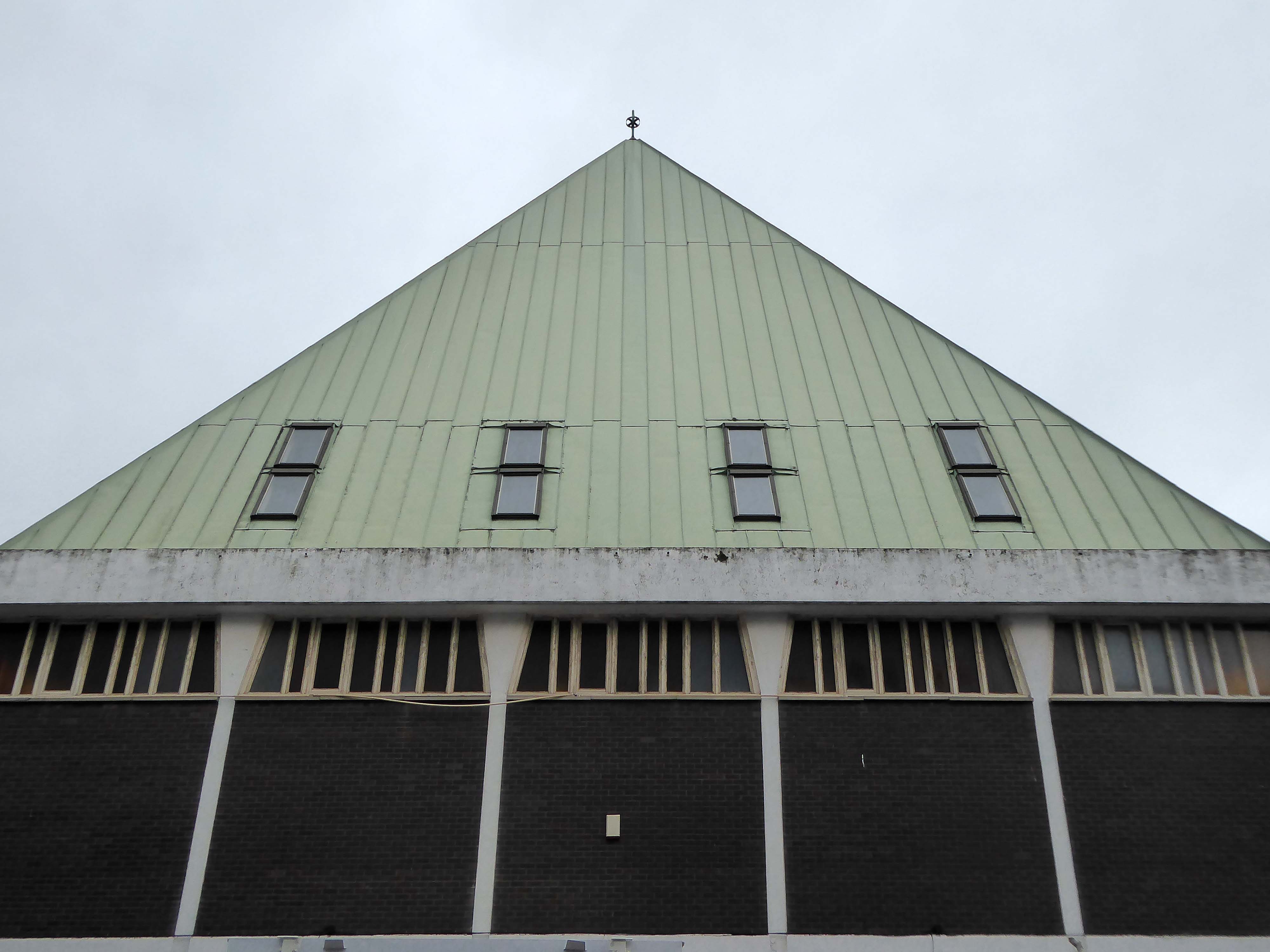
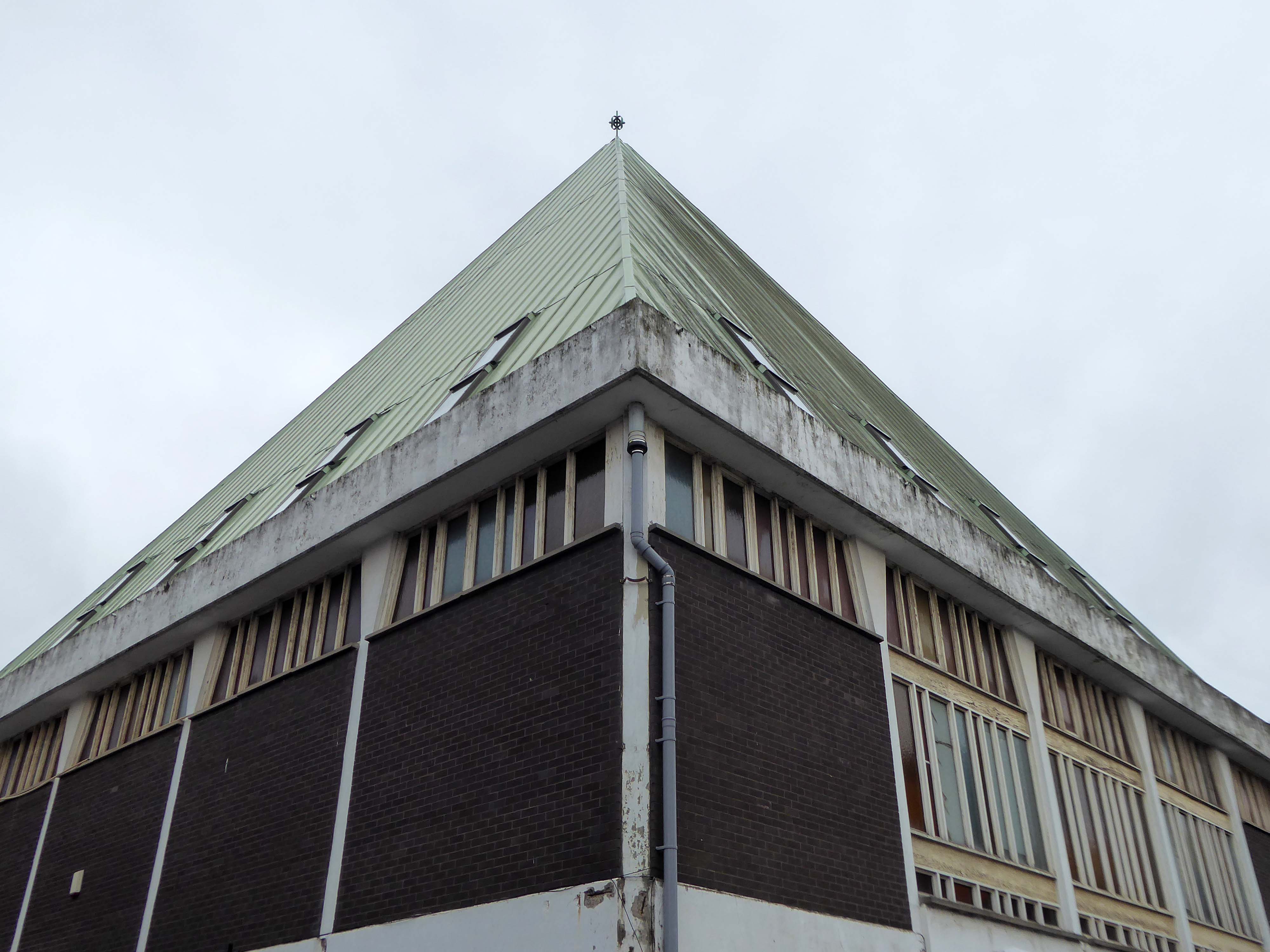
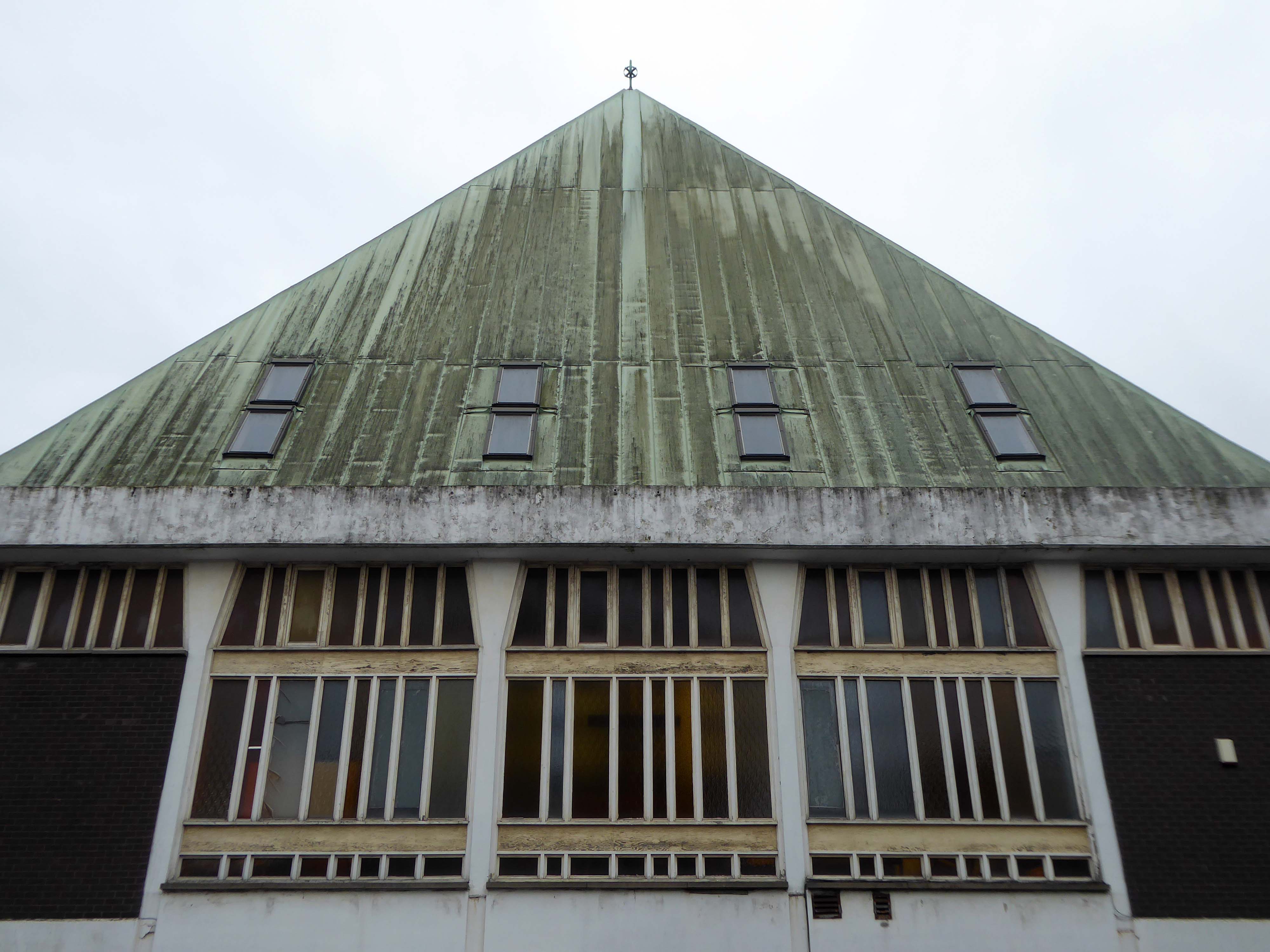
Designed by Alexander Buchanan Campbell and named after former Lord Provost Sir Patrick Dollan, it was opened in 1968 as Scotland’s first 50 metre swimming pool.
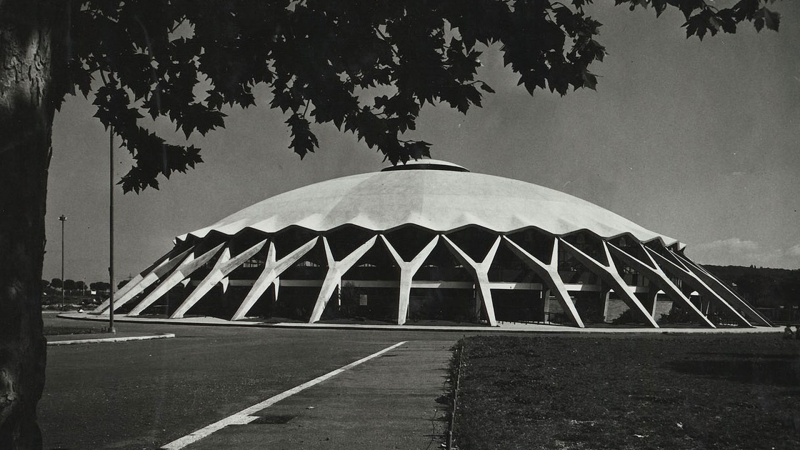
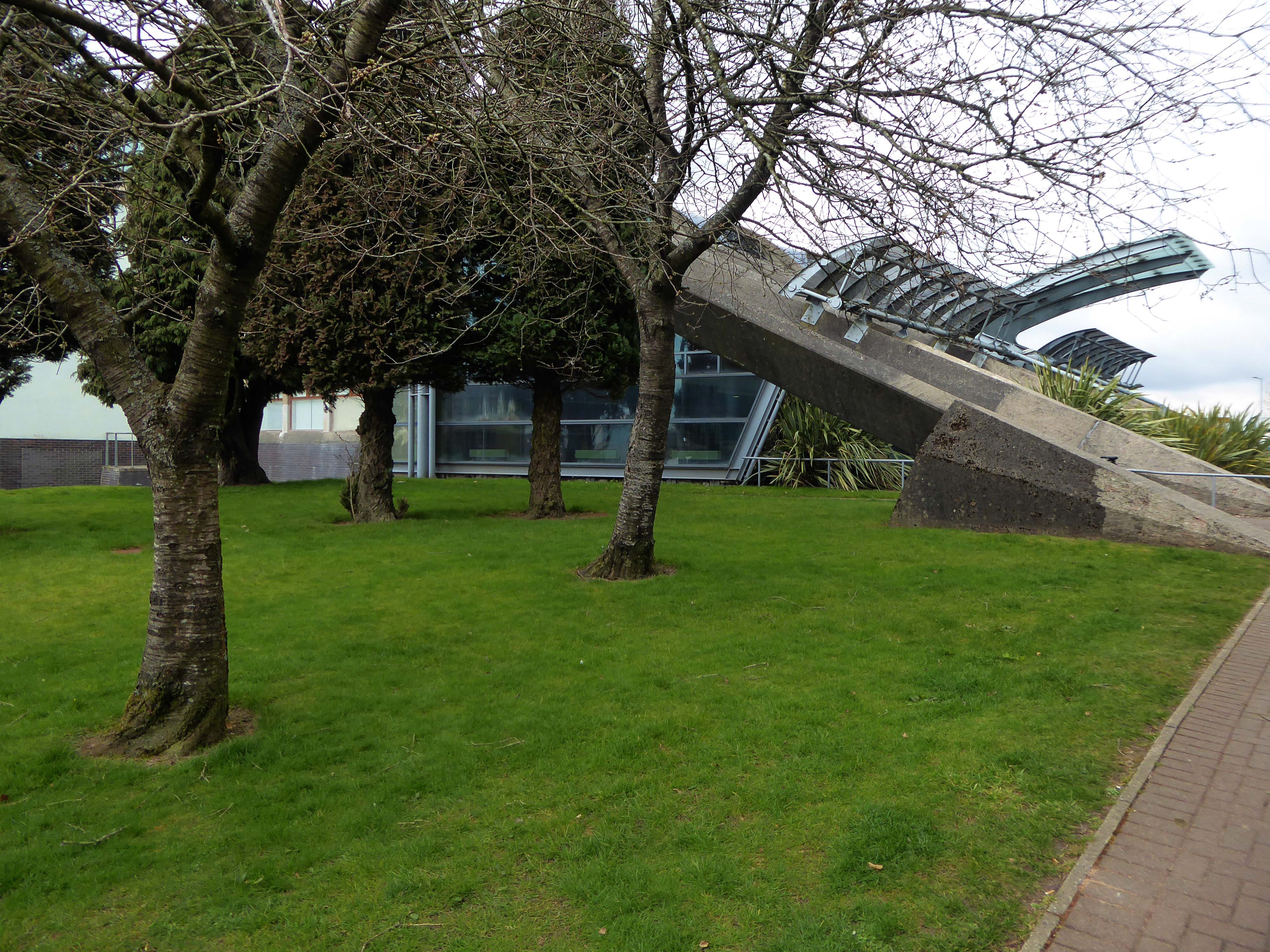
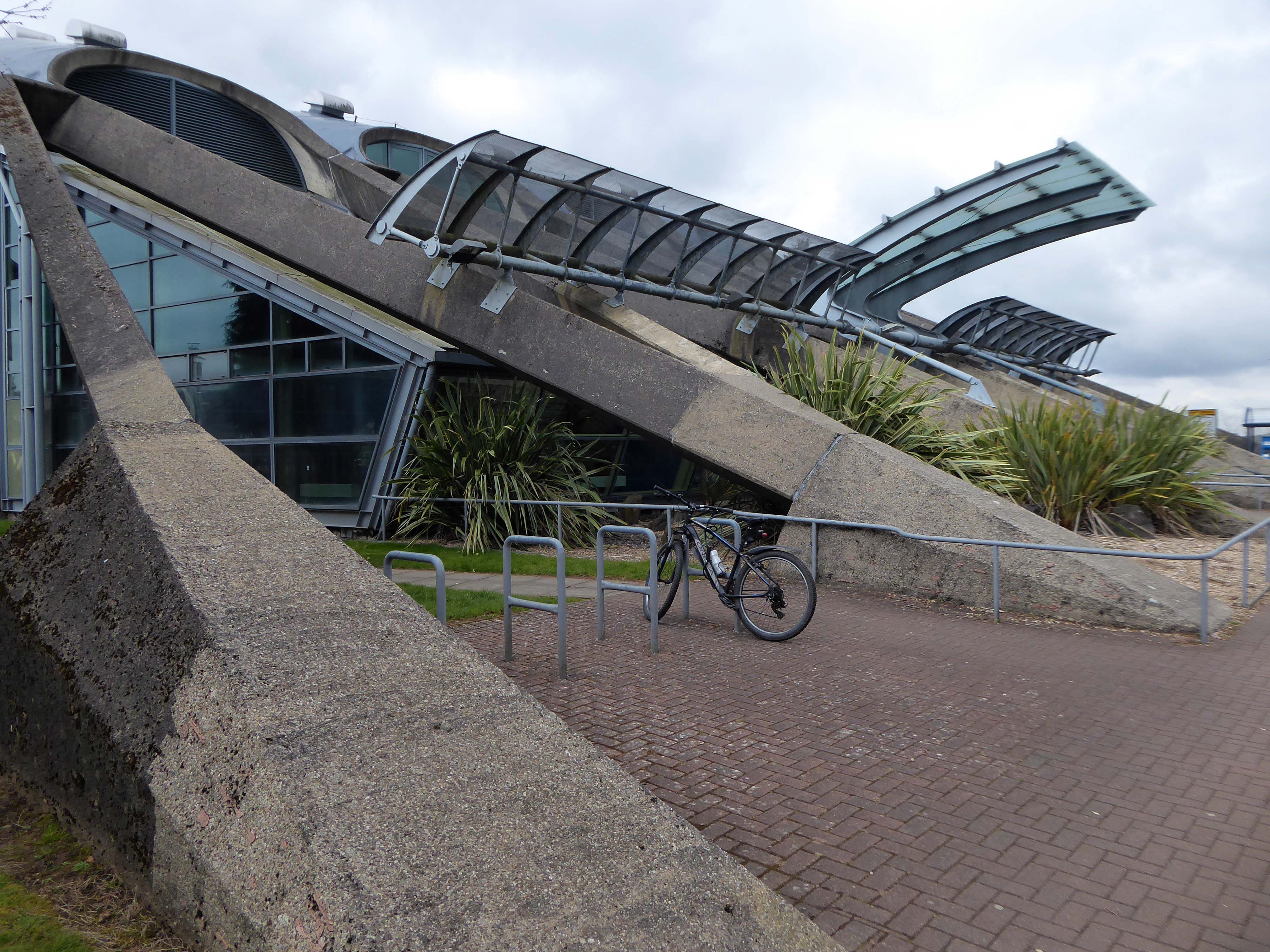
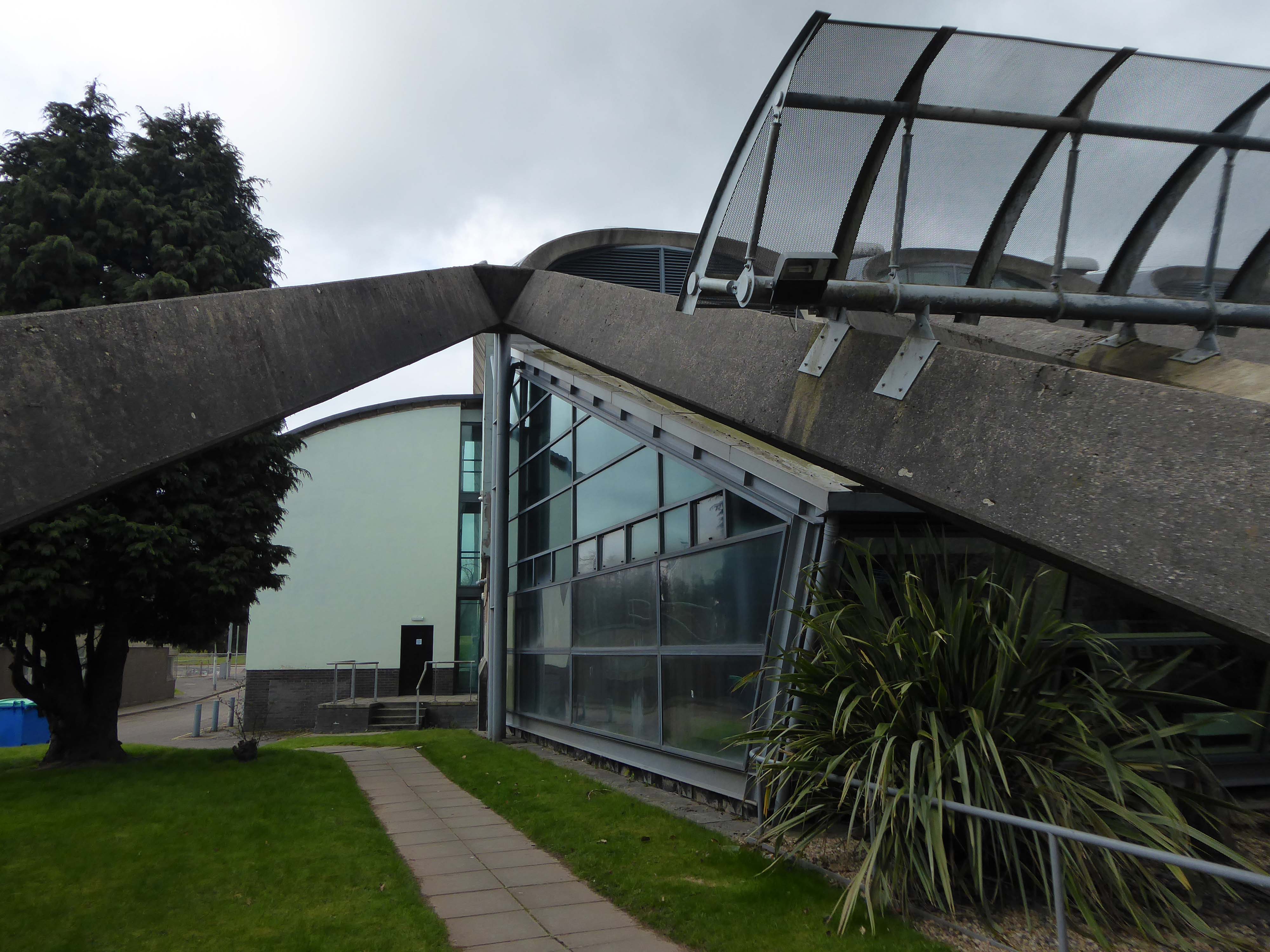
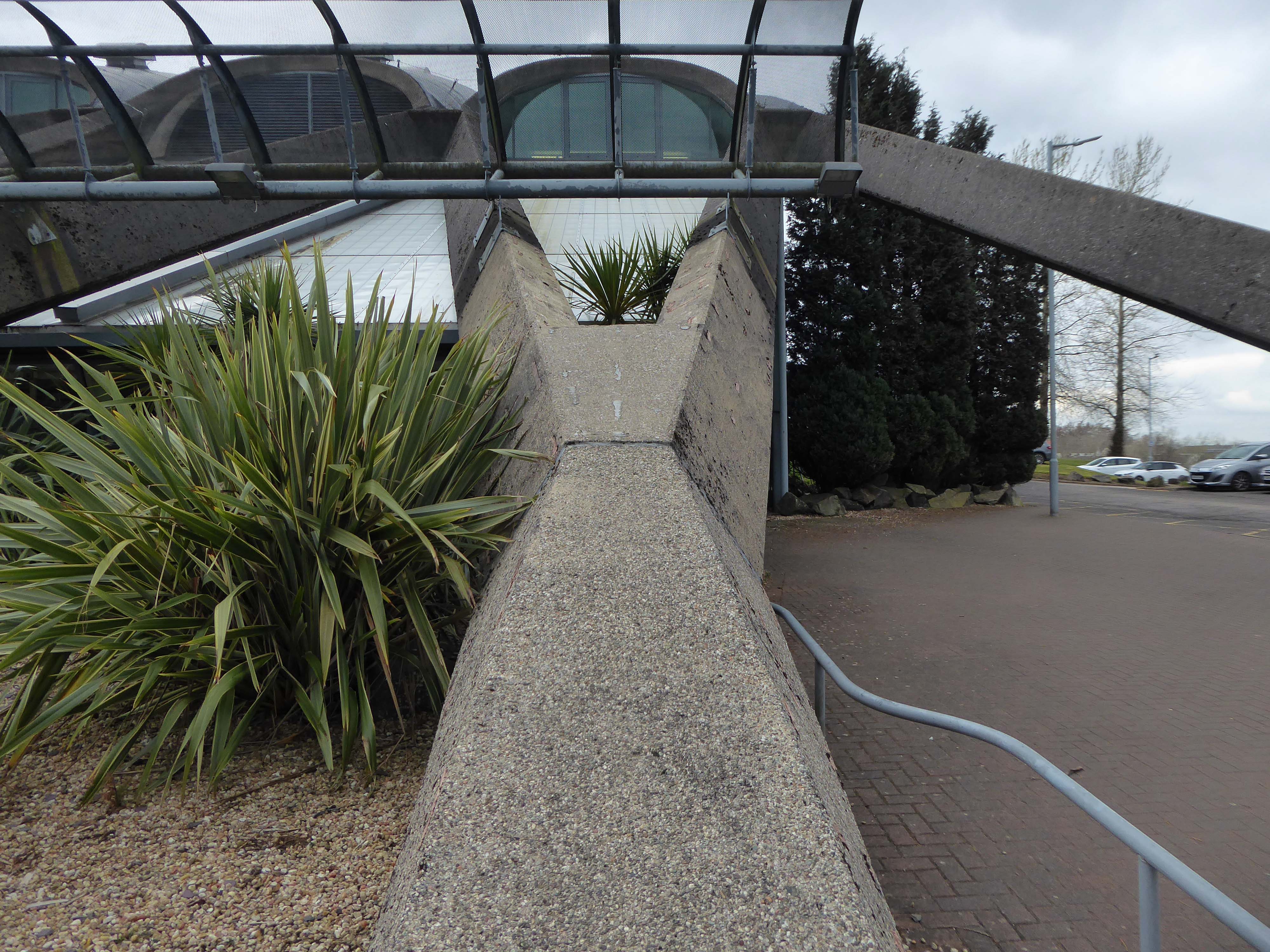
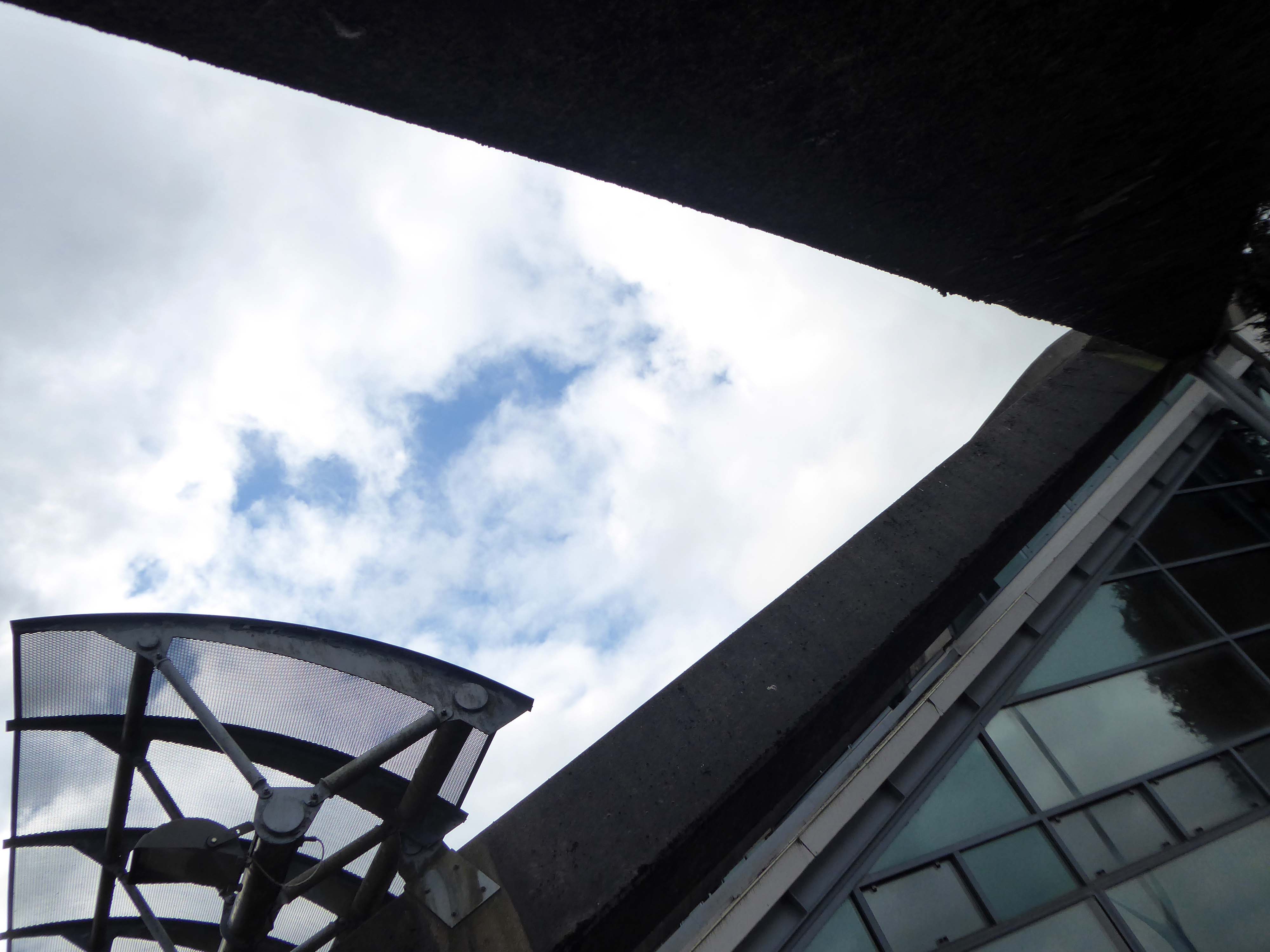
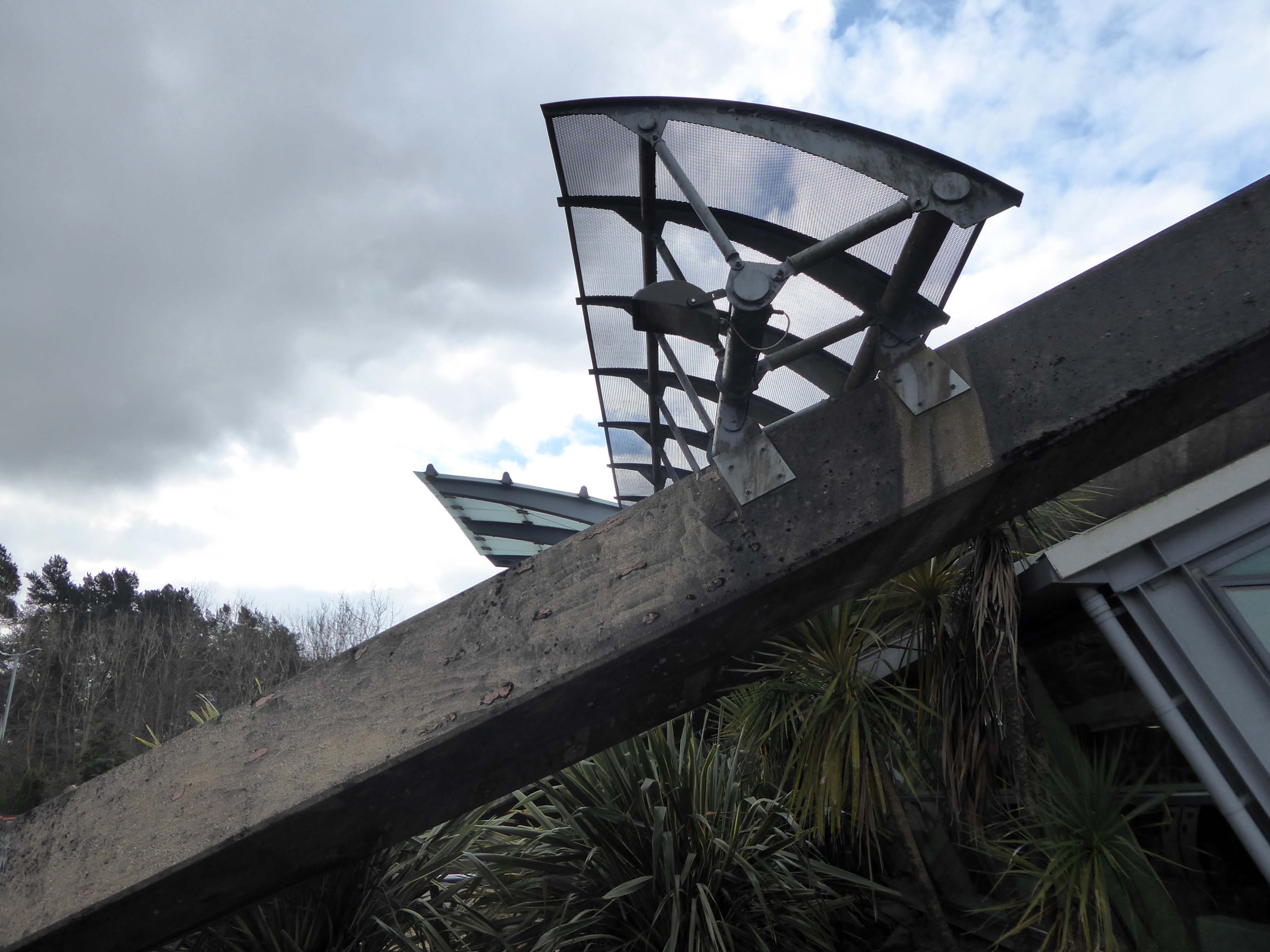
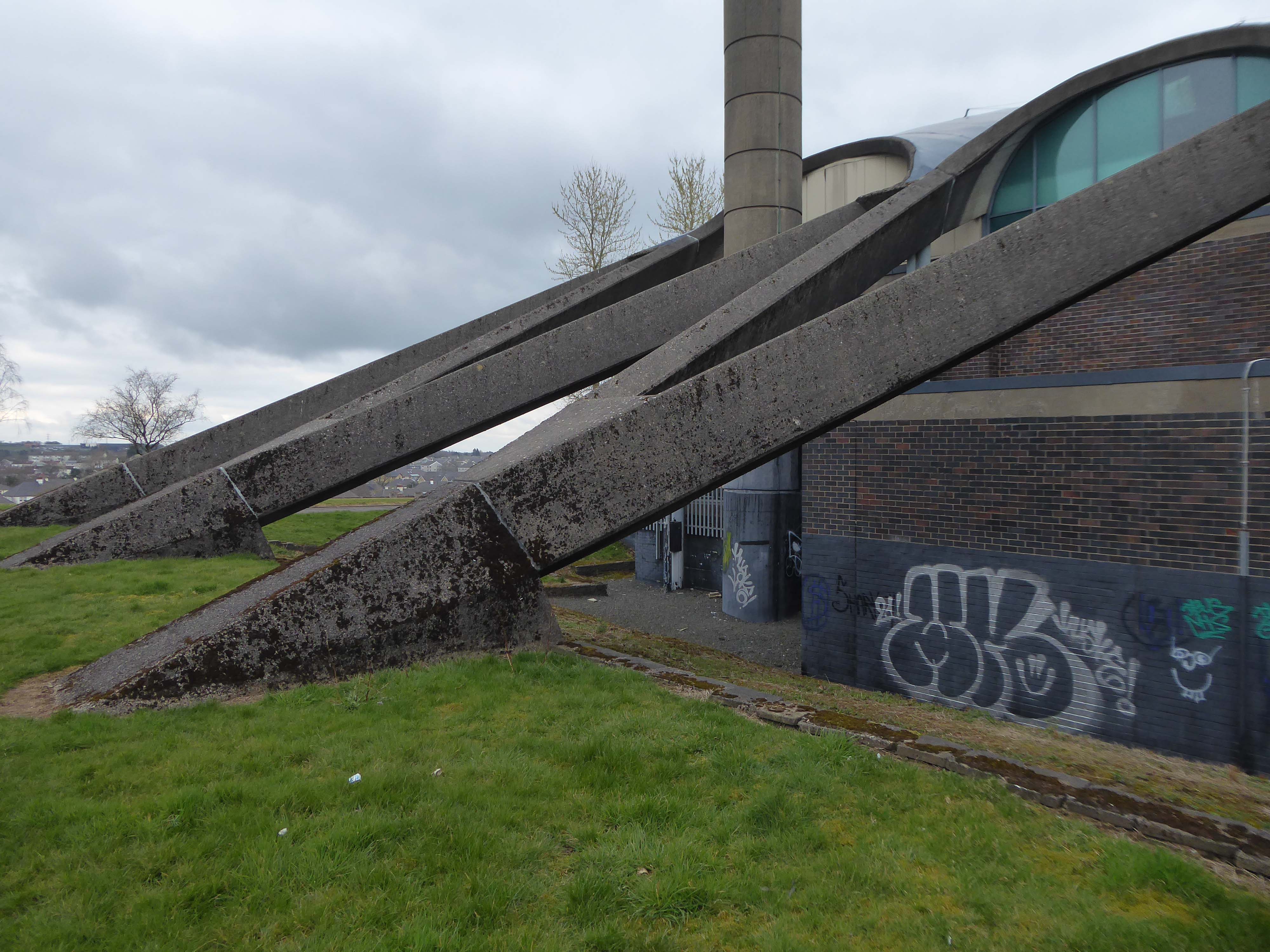
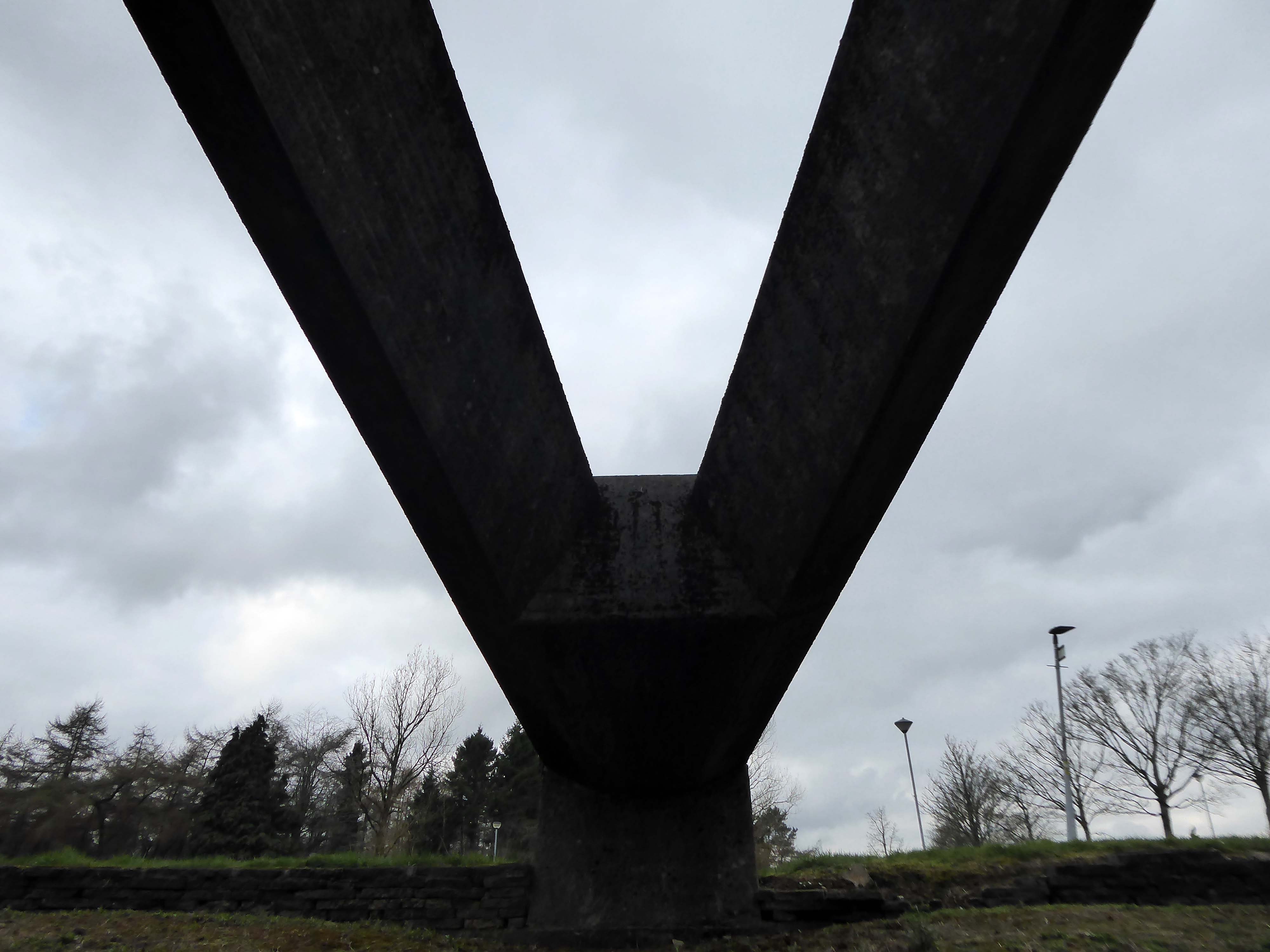
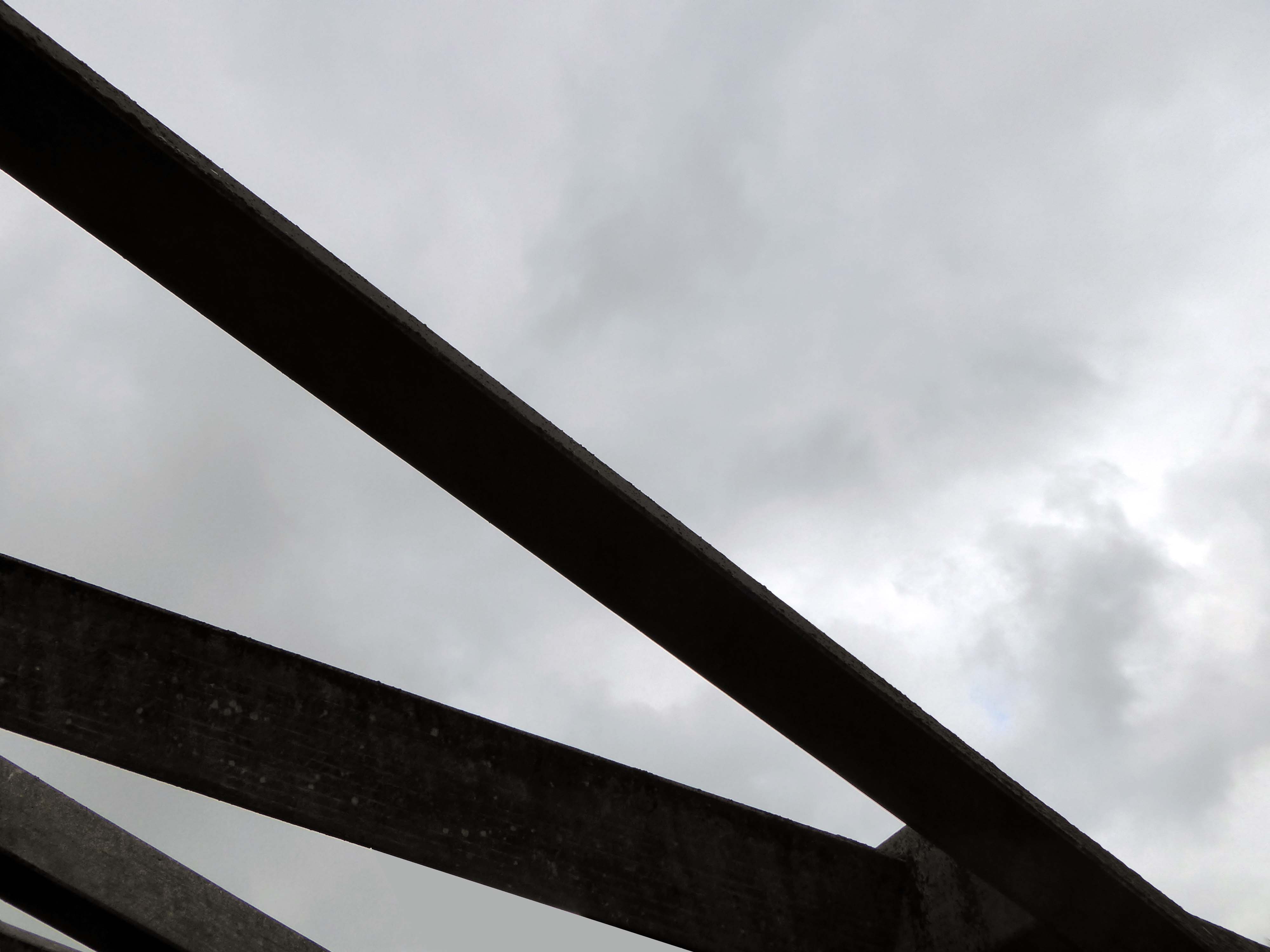
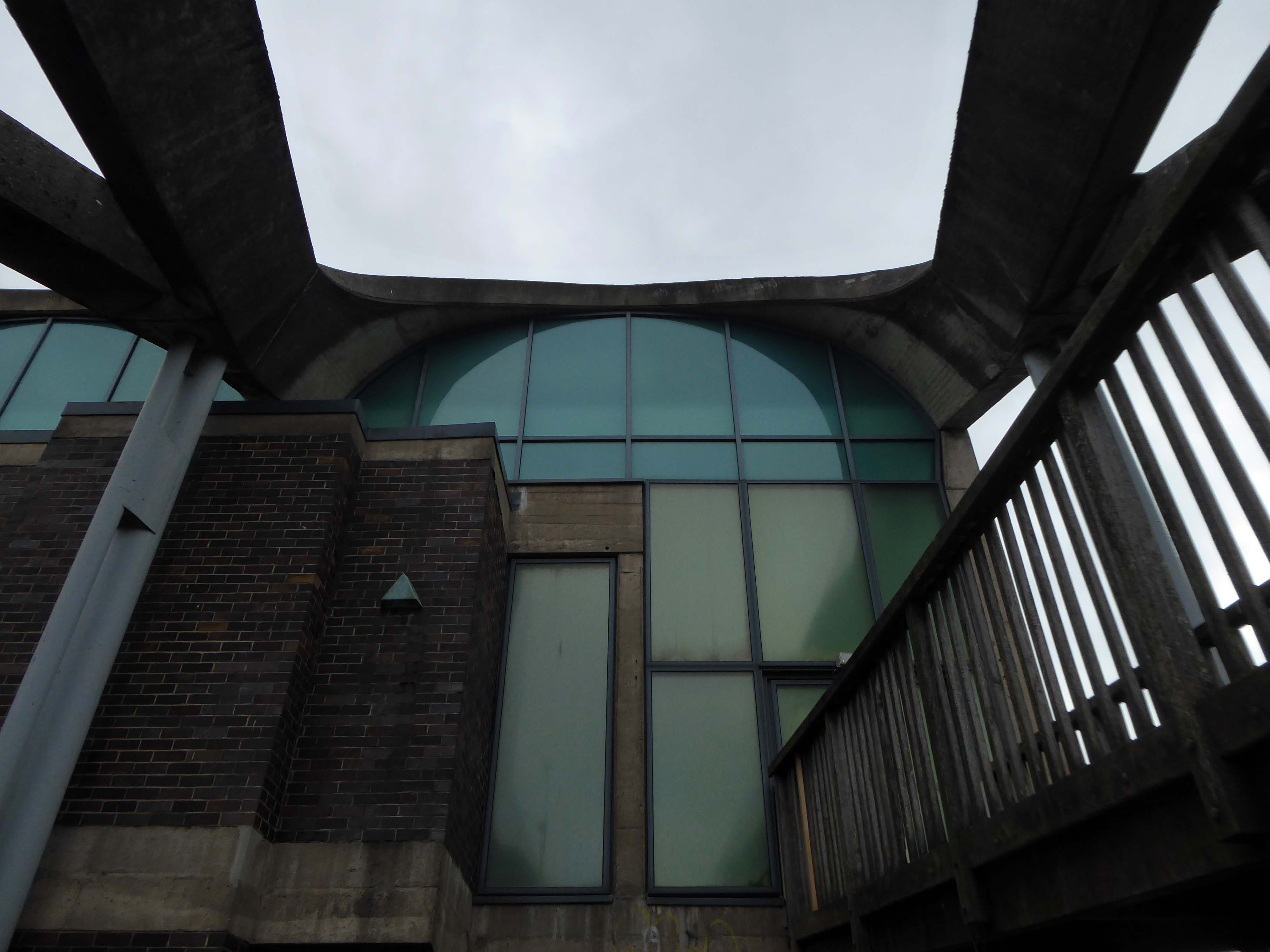
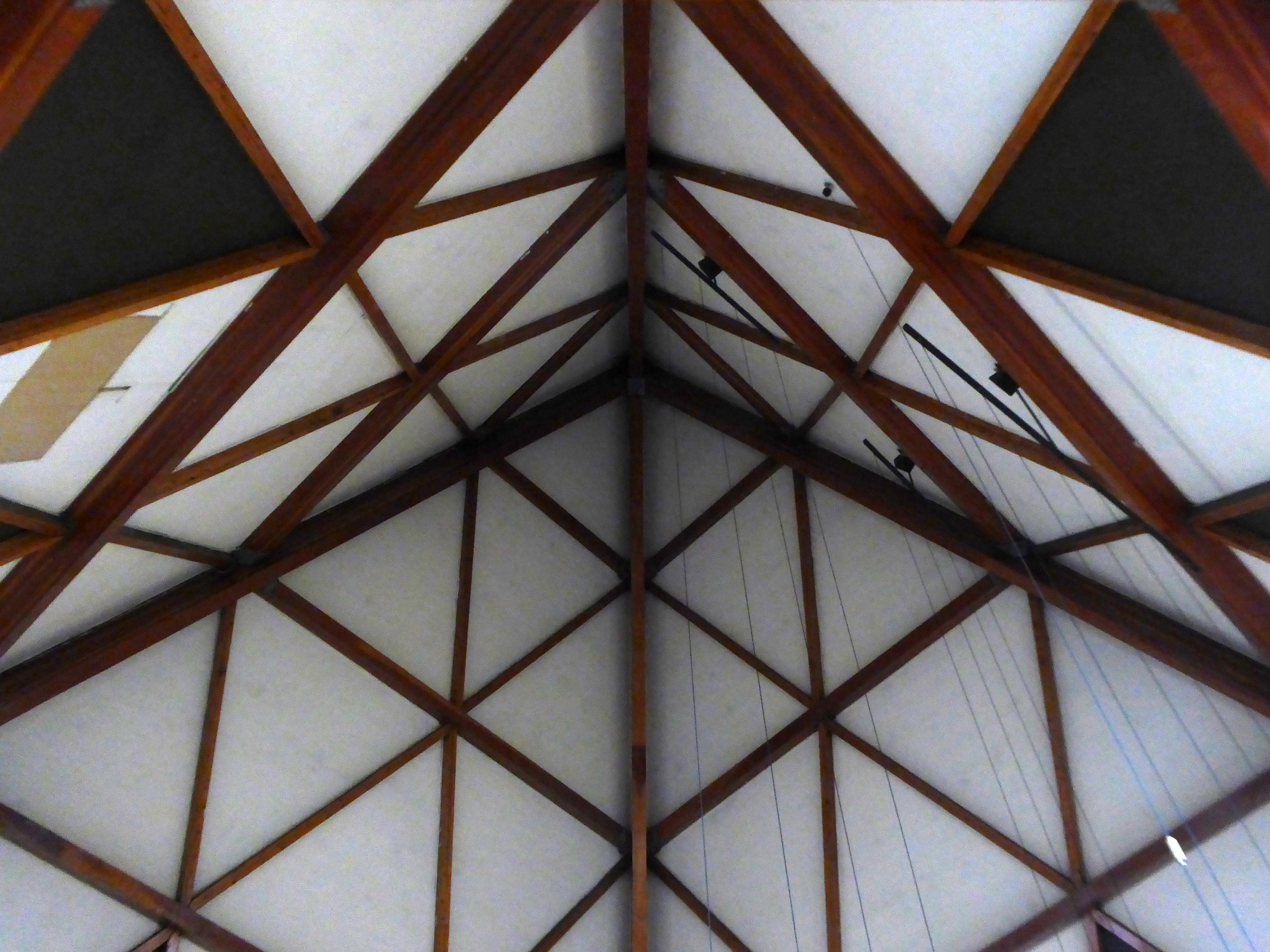
It consists principally of pre-stressed concrete and imitates a colossal marquee – the vaulted 324 ft parabolic arched roof appears to be held down by pairs of v-shaped struts that meet the ground at a thirty degree angle.
Buchanan Campbell admitted that he had been influenced by the architecture of the 1964 Summer Olympics in Tokyo, Japan and the designs by Kenzo Tange for the gymnasium there.
In 1993, the international conservation organisation Docomomo International listed Dollan Baths as one of sixty key monuments in Scottish post-war architecture.
The Dollan’s wet recreation facilities include South Lanarkshire’s only 50m swimming pool and SLLC’s most exclusive health suite facility which features a sauna, steam room, sanarium, spa pool and relaxation area.
If you prefer dry recreation facilities then look no further as the Dollan features two gyms. The first is a traditional gym with the latest Life Fitness cardio and HUR compressed-air resistance equipment.
To complement these fantastic facilities there are two fitness studios that play host to a diverse range of fitness and mind, body and soul classes as well as a morning creche.
Sadly, I am neither a water babe nor gym bunny – body, soul and mindfulness are maintained in perfect harmony solely by means of modern mooching.
I walked around, I took a look.
Structural engineering surveys showed that parts of the pool surround and pool tank were in a state of near collapse and emergency work had to be carried out to install temporary structural supports. The centre was closed in October 2008 for major refurbishment, consisting of structural repairs and replacements and the installation of new structural supports. This required a significant amount of structural engineering design input. The structure of the unique roof was not affected.
Substantial redesign and replacement of heating and ventilation and pool water treatment engineering services was carried out. This included new high-efficiency gas-fired boilers, a ventilation system for the swimming pool hall, a combined heat and power system, new water filters, and high-efficiency pumps as part of an upgraded pool water treatment system.
Electrical engineering and lighting systems were almost entirely replaced throughout the building. The external roof covering was replaced and an additional layer of thermal insulation was added to reduce heat loss from the roof and to provide extra protection for the roof structure. New lockers were provided for the changing rooms and the health suite. New tiles were placed for the pool and health suite. The repair work began in July 2009 and the Aqua Centre re-opened on 28 May 2011. The completion of the major repair and refurbishment contract cost over £9 million.
Would that more buildings were saved from the demolition derby.
The wrecking ball has always been the great symbol of urban progress, going hand in hand with dynamite and dust clouds as the politicians’ favourite way of showing they are getting things done. But what if we stopping knocking things down? What if every existing building had to be preserved, adapted and reused, and new buildings could only use what materials were already available? Could we continue to make and remake our cities out of what is already there?
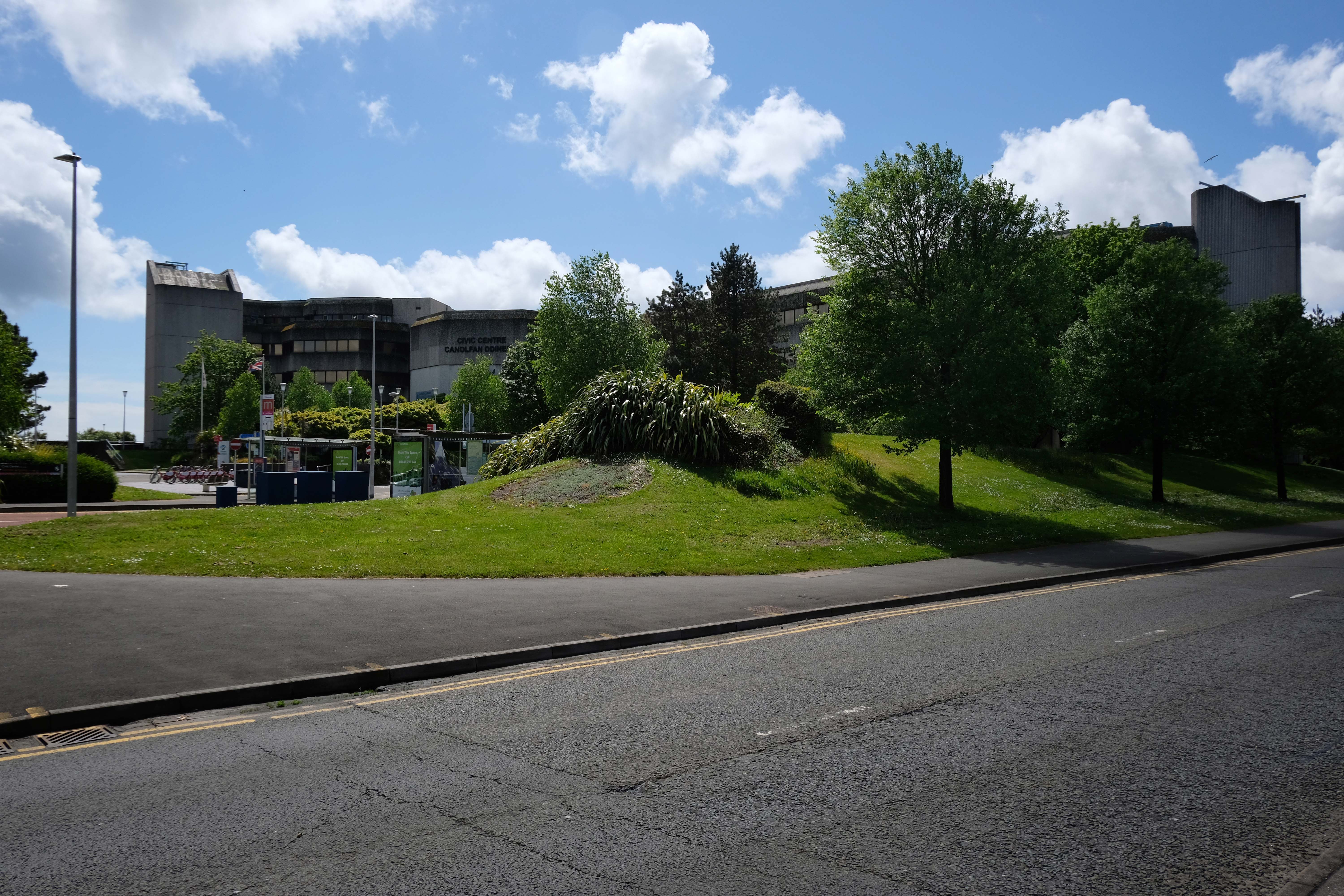
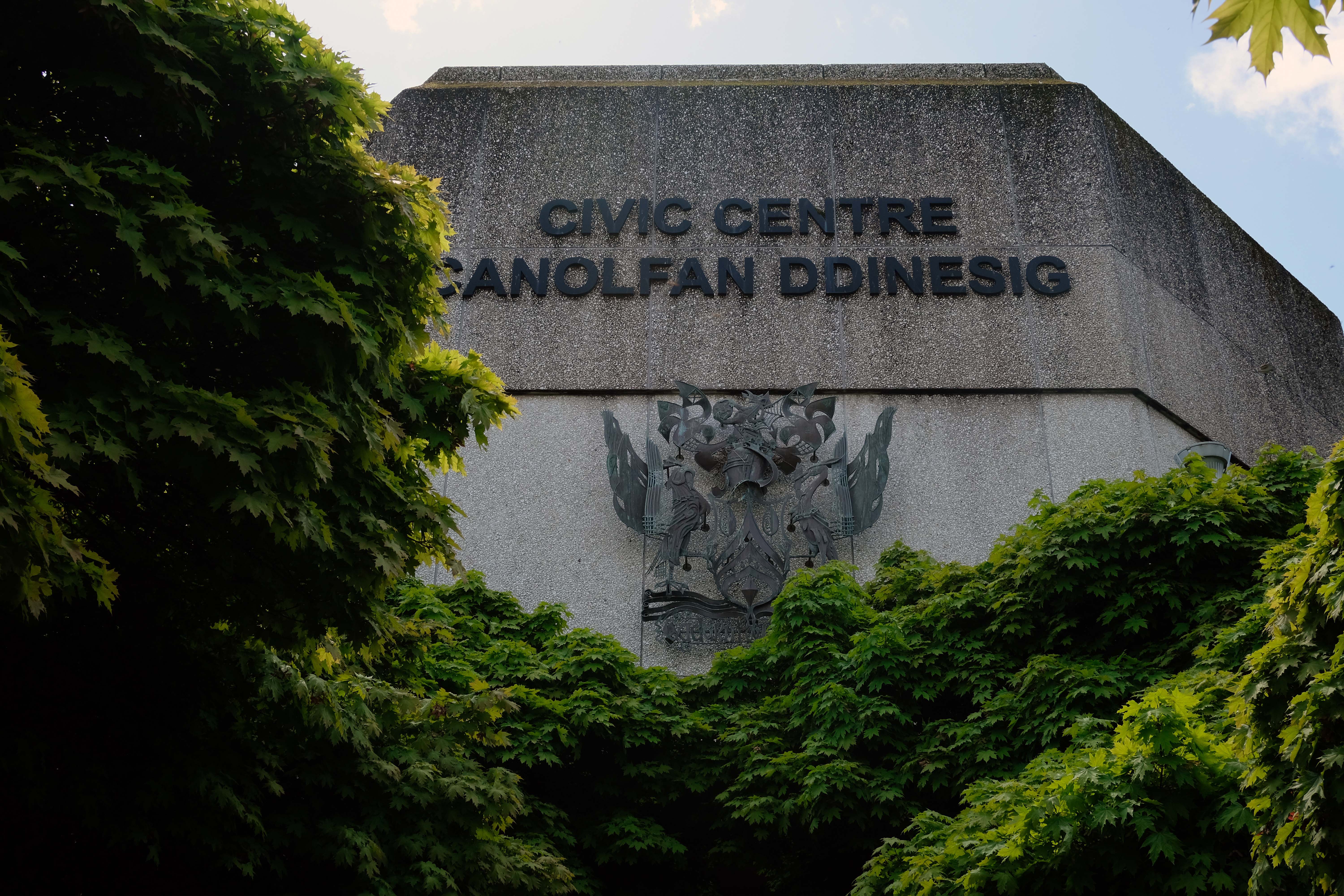
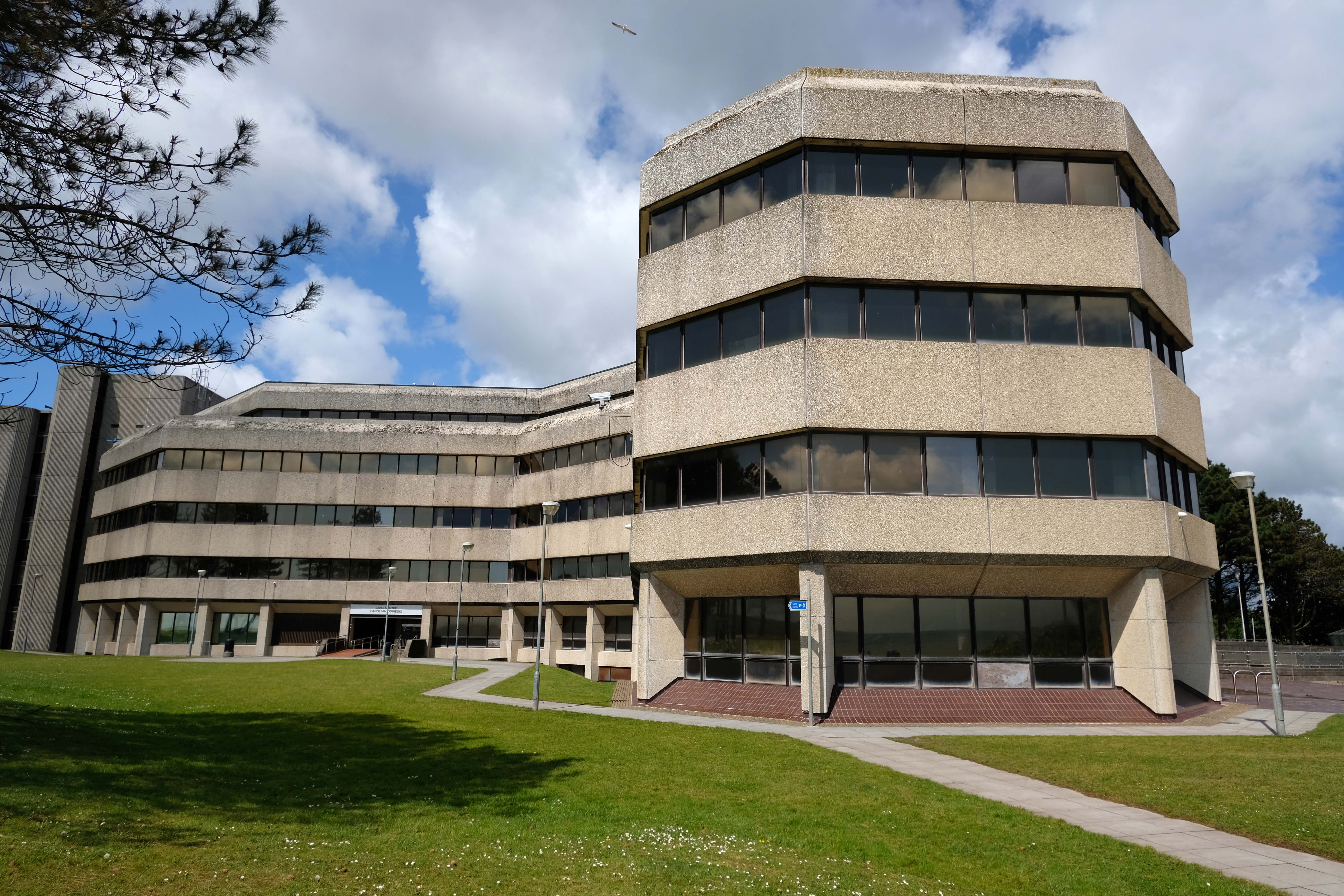
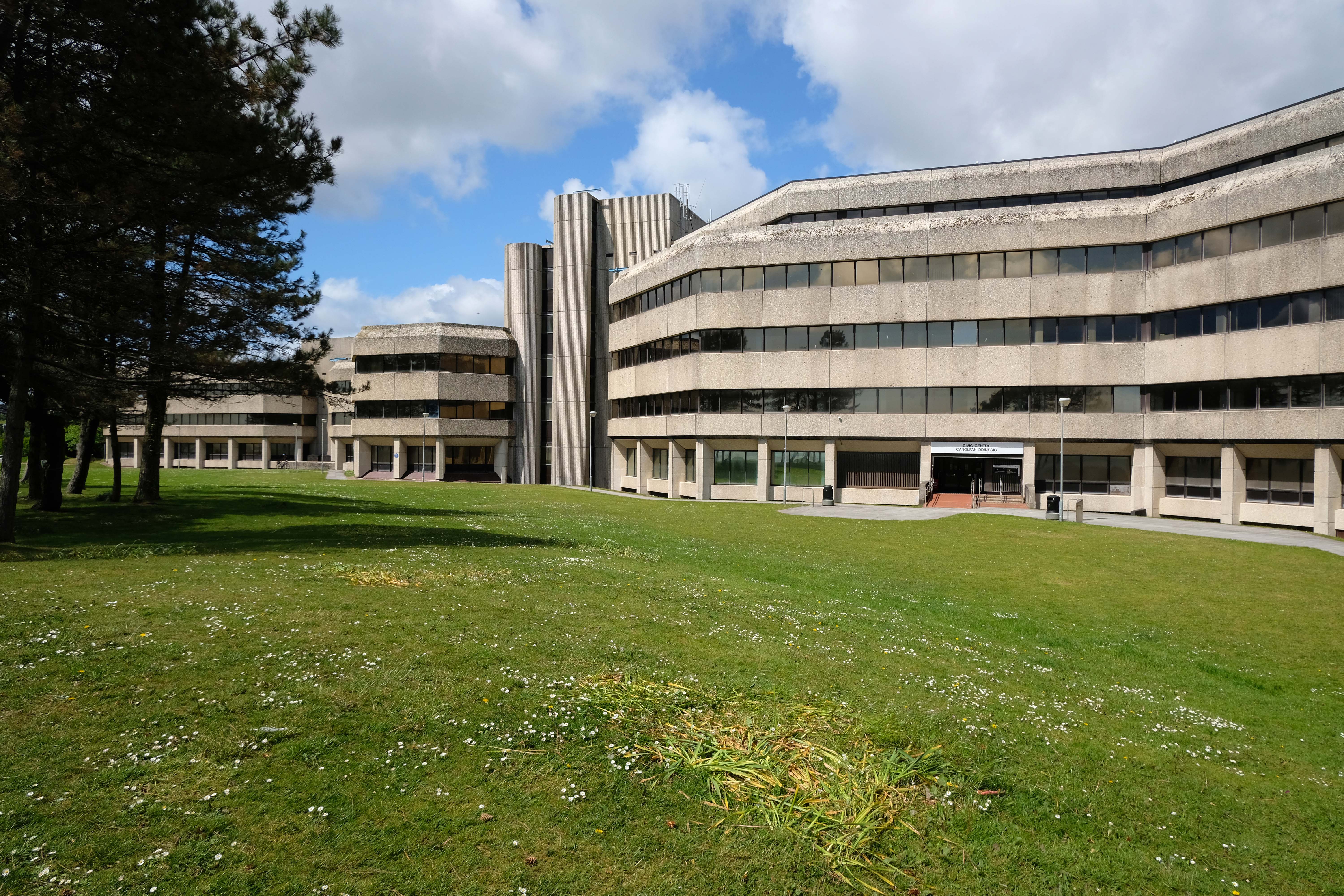
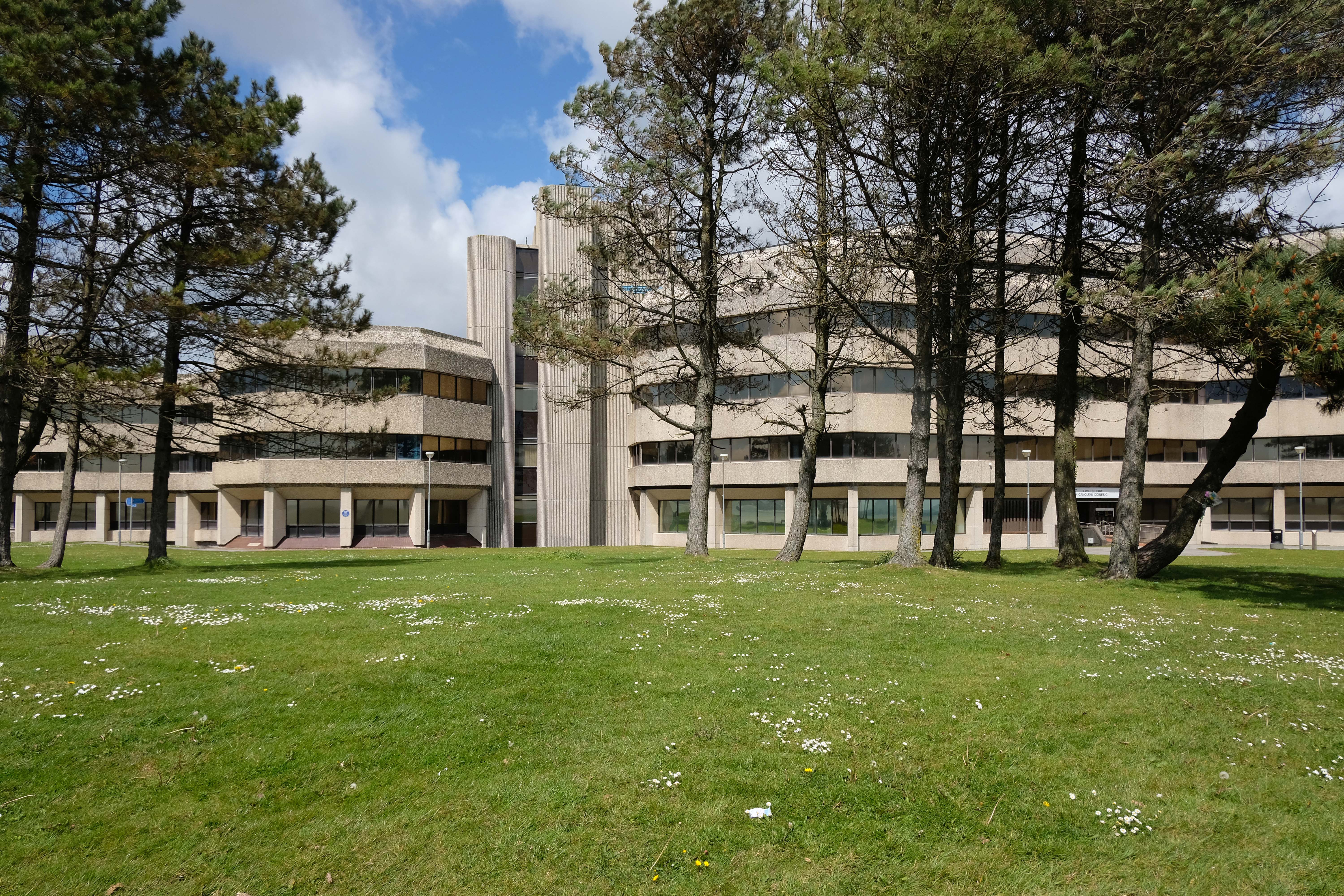
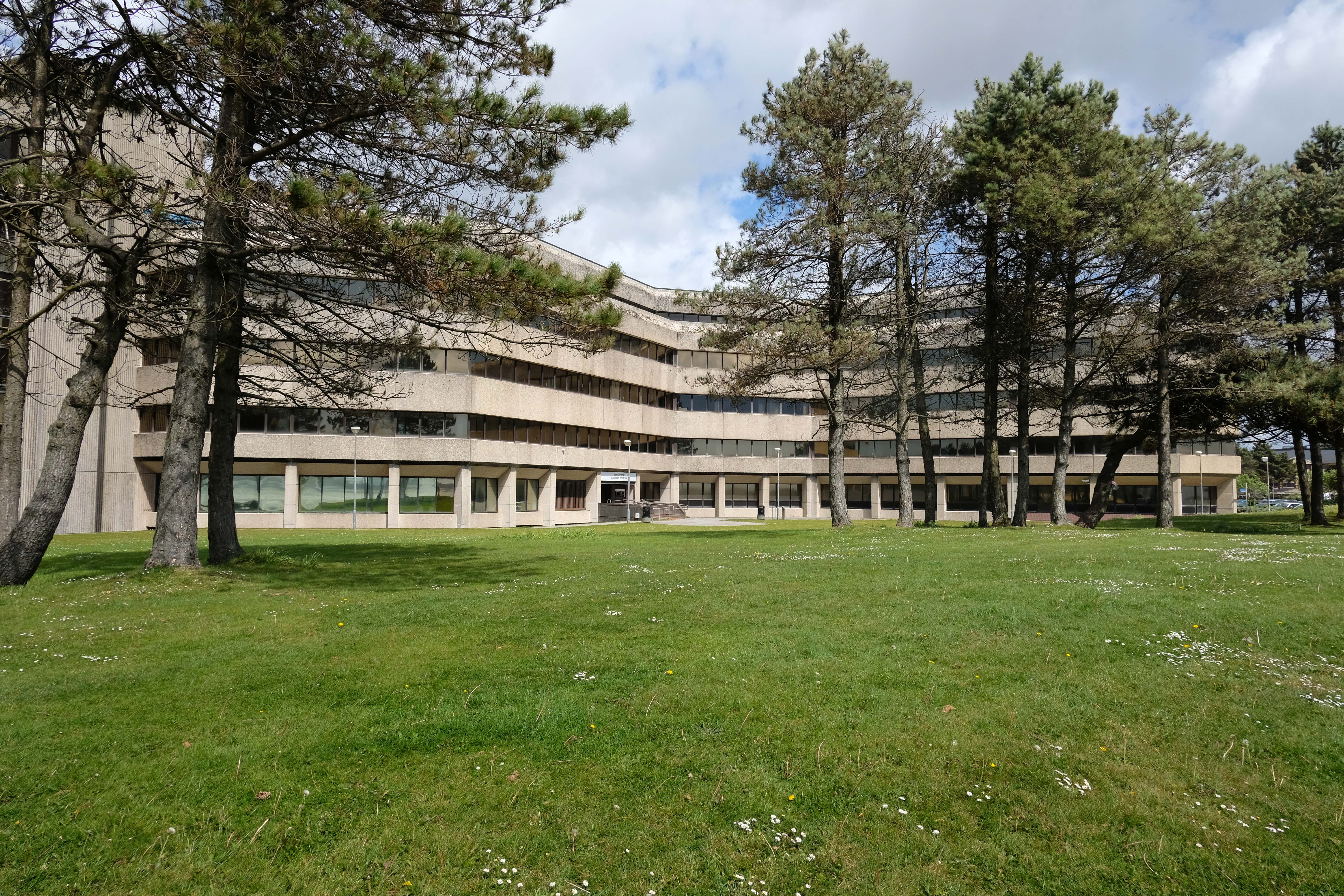
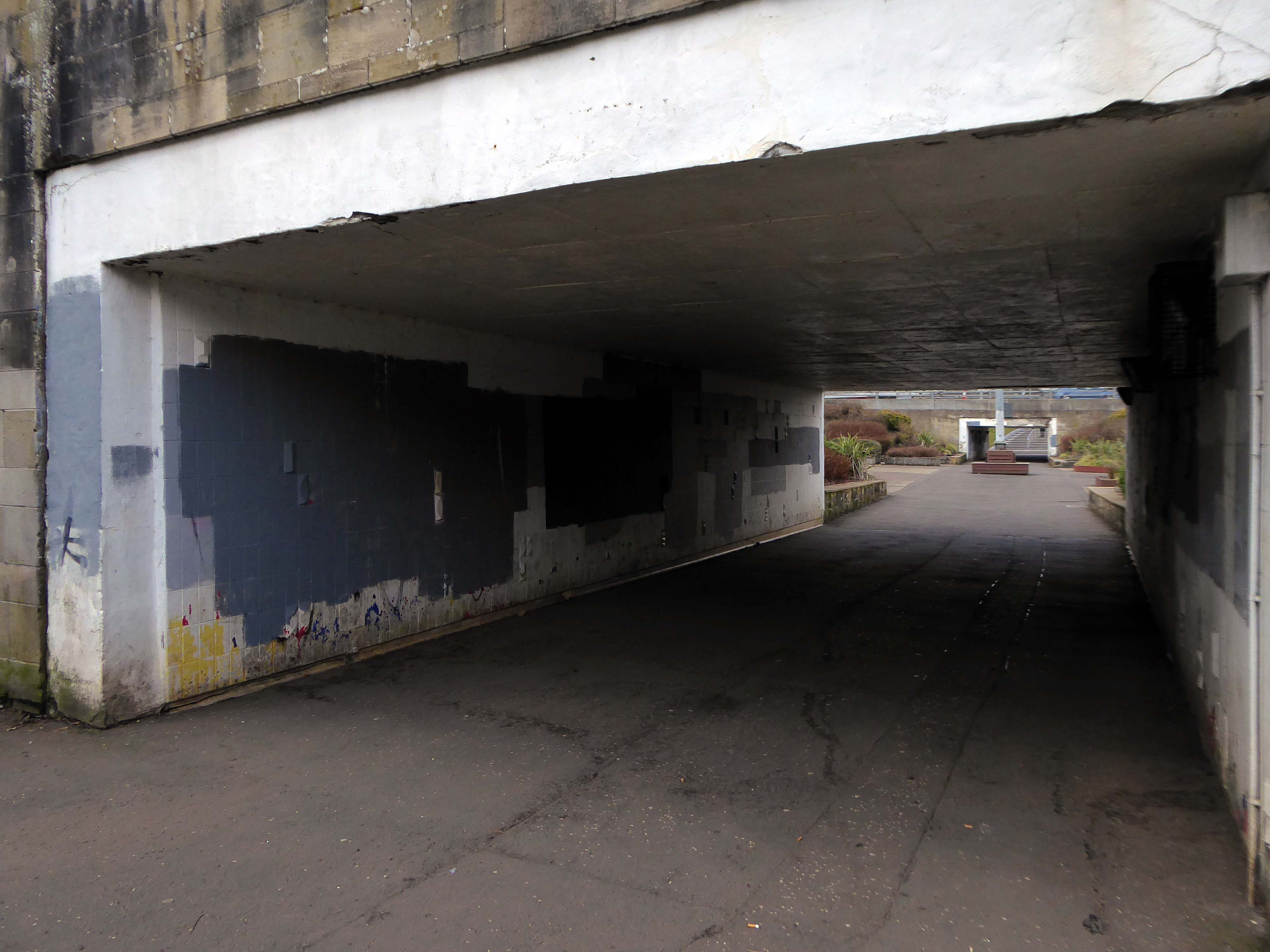
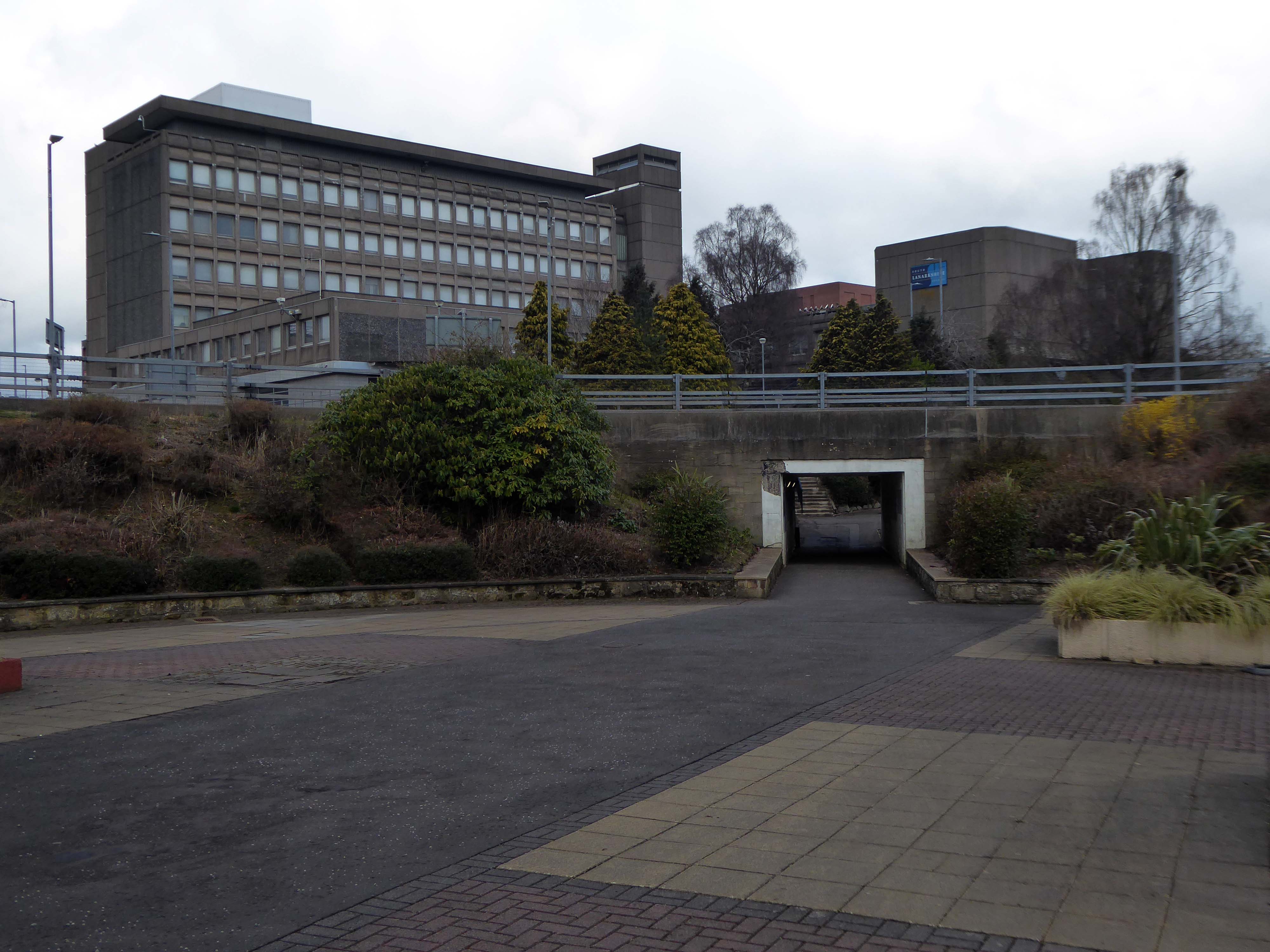
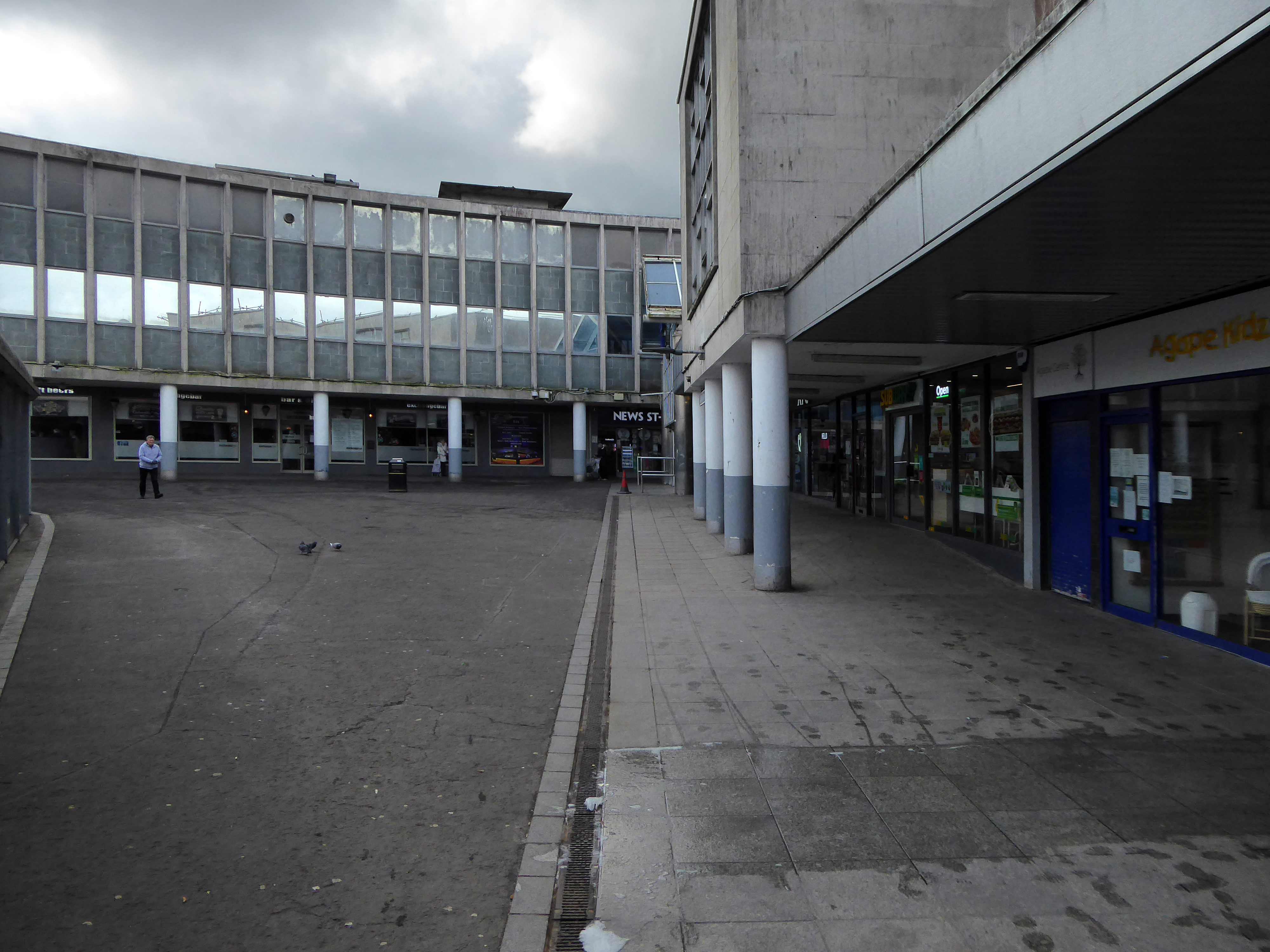
I walked from St Bride’s Church, through a valley to East Kilbride Civic Centre
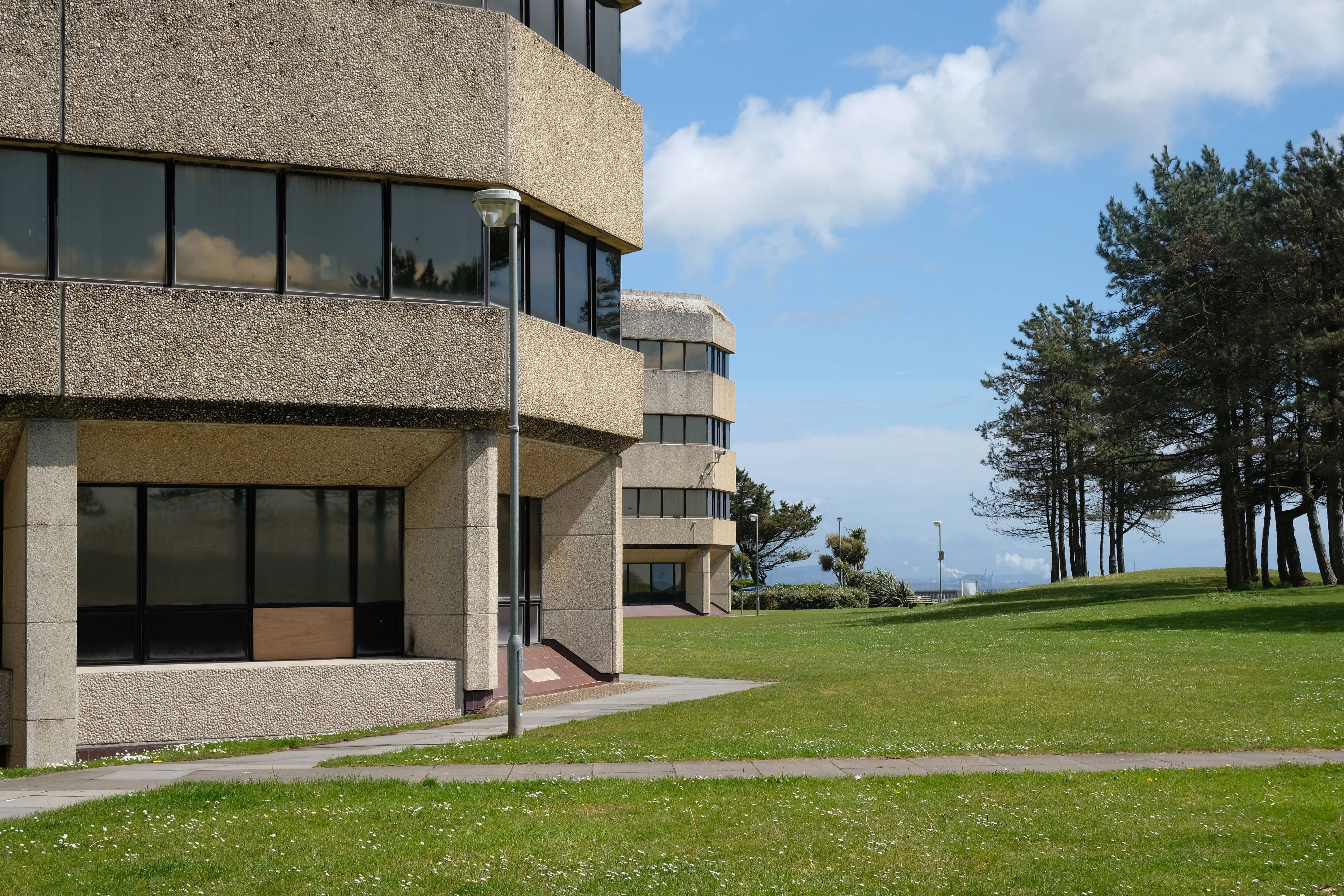
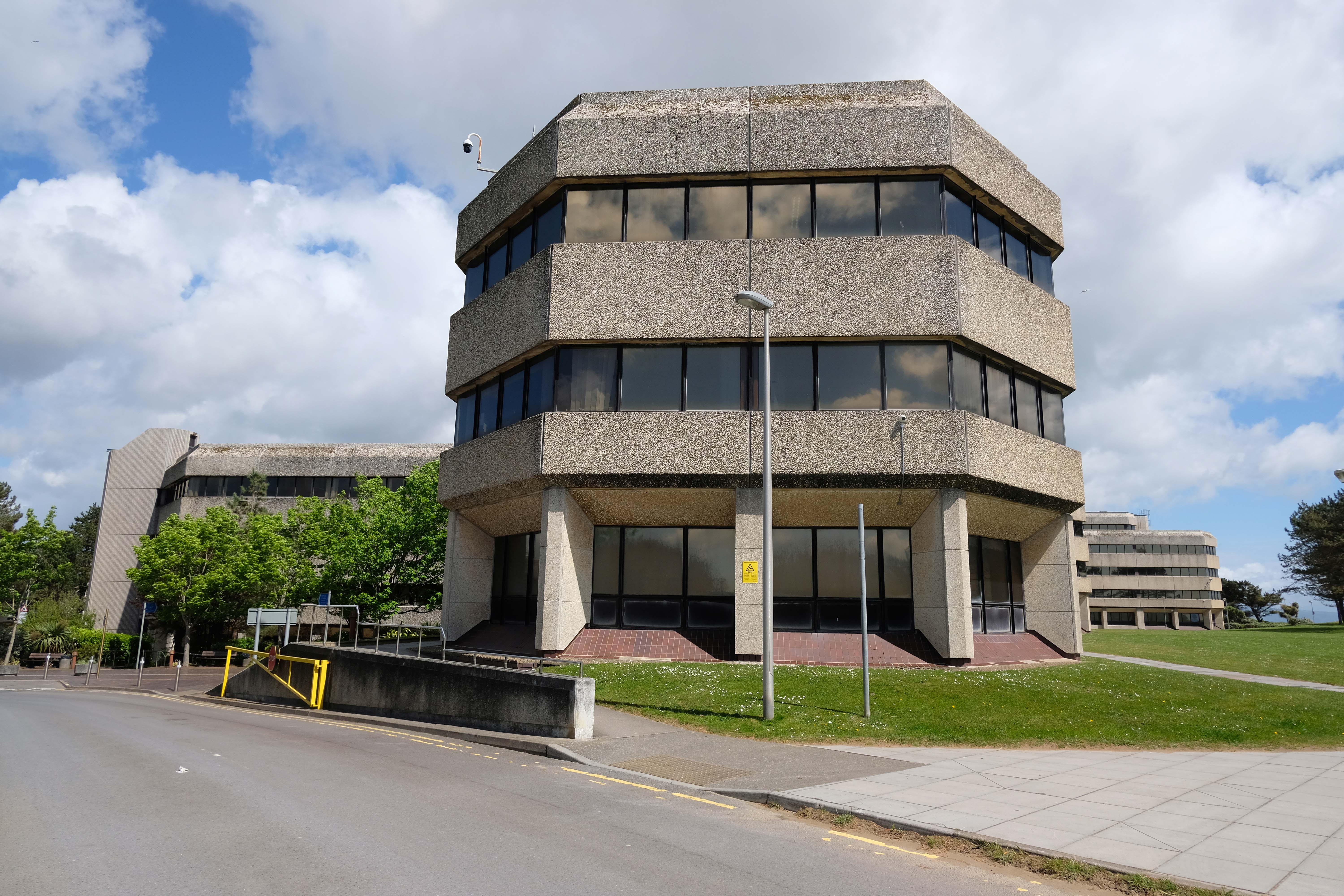
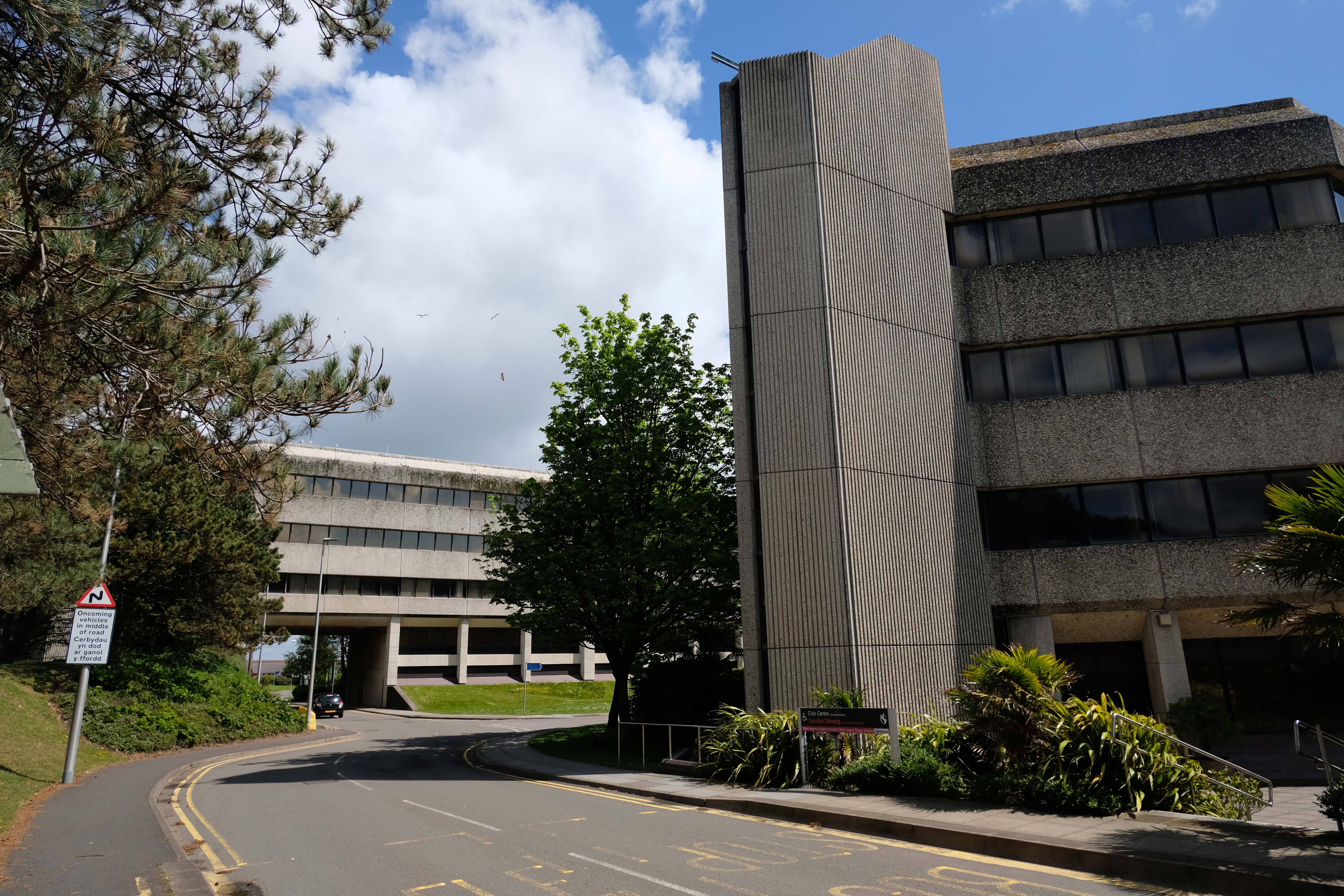
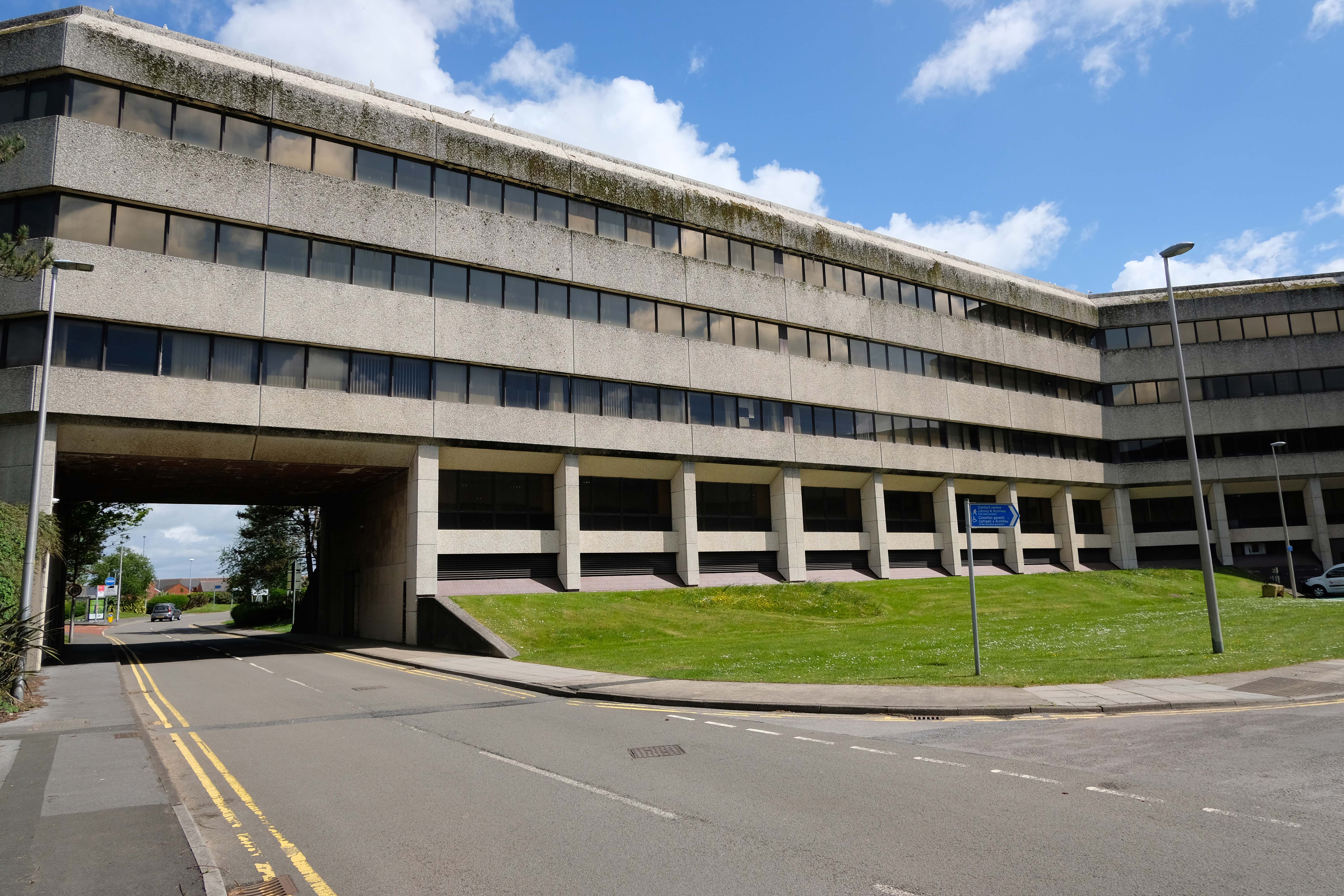
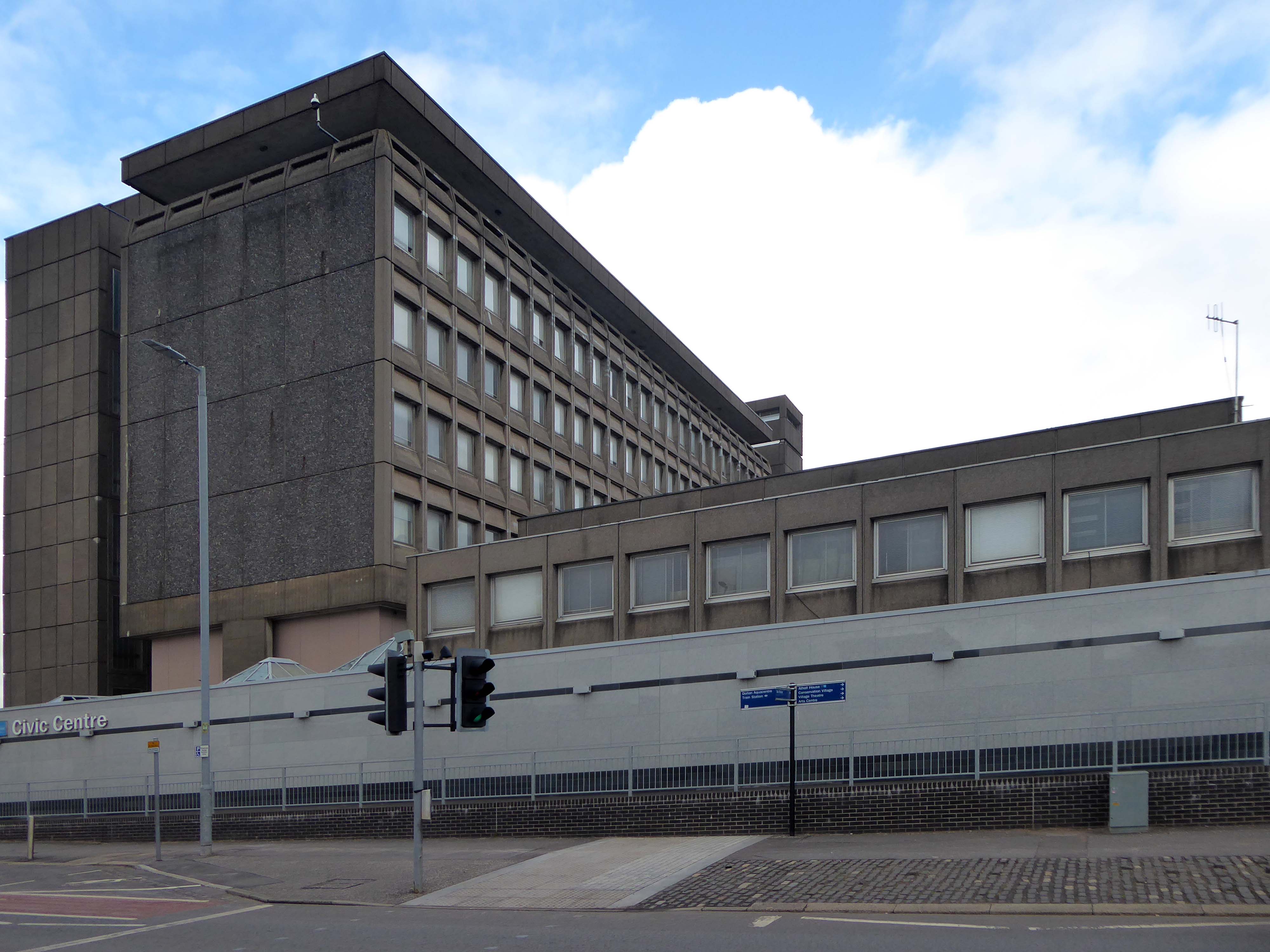
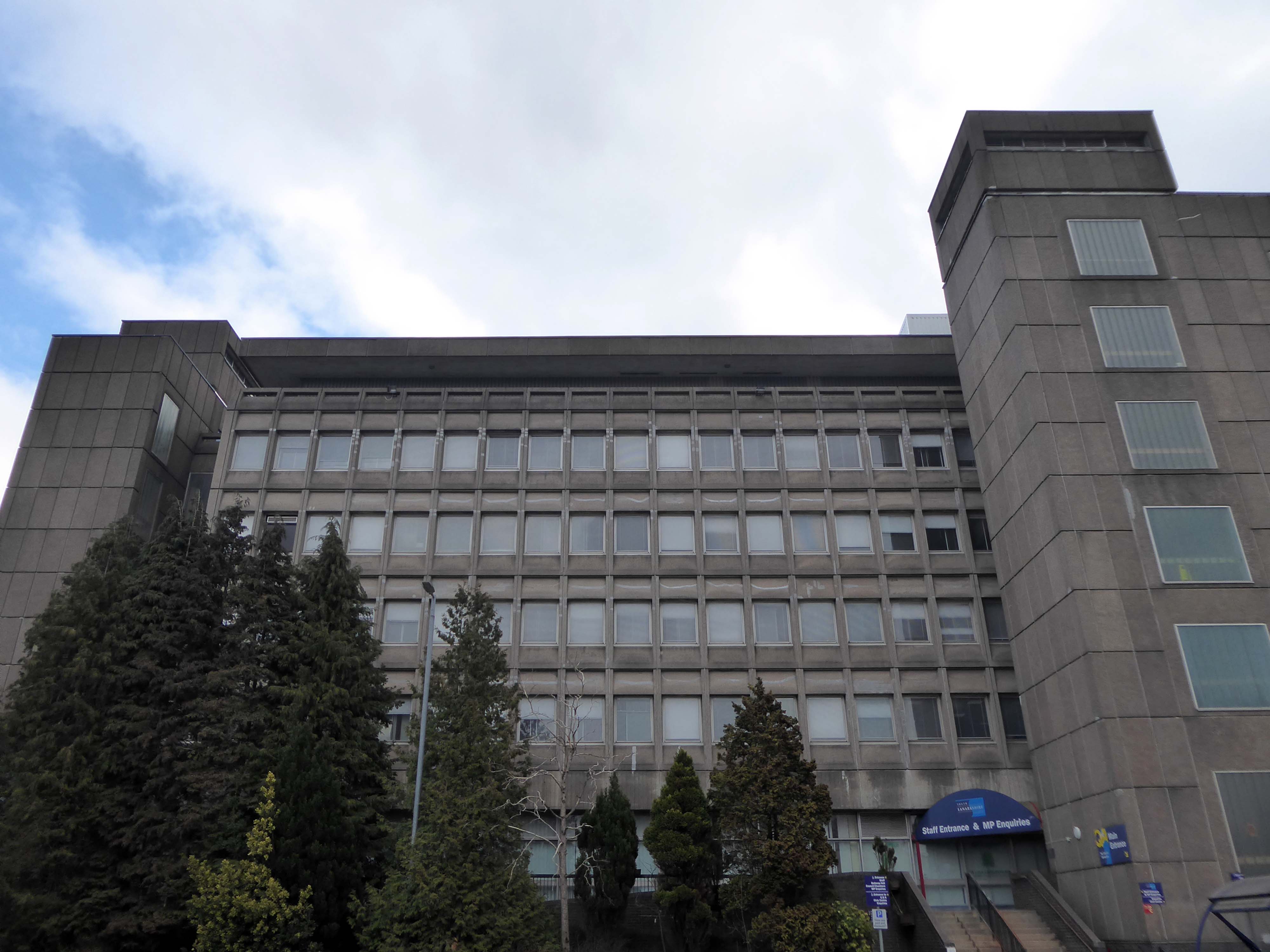
Commissioned by the burgh of East Kilbride, was designed by Scott Fraser & Browning, built by Holland, Hannen & Cubitts and completed in 1966.
Accommodating Ballerup Hall.
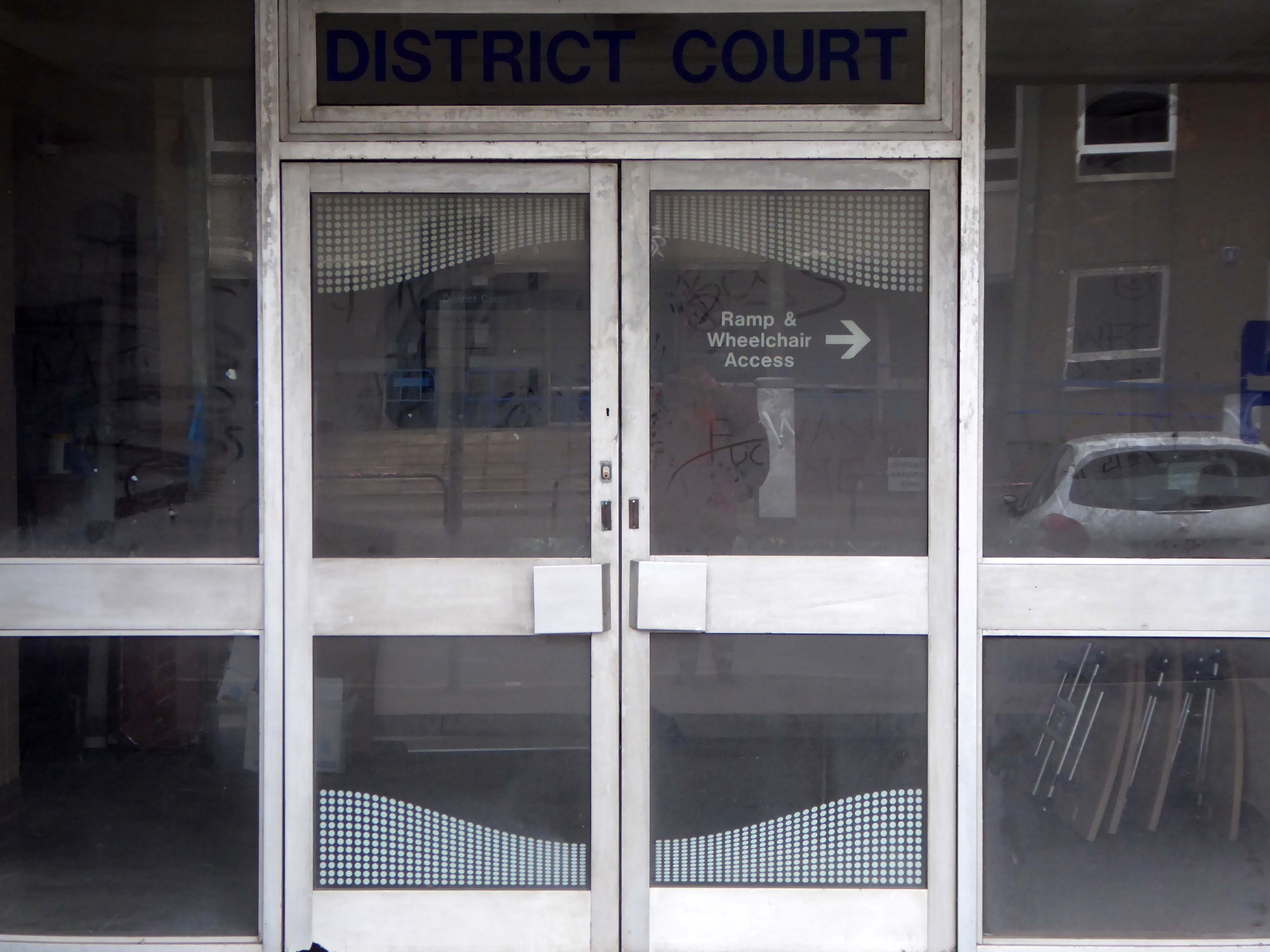
Ballerup Hall is located within East Kilbride Civic Centre and takes its name from its twin town Ballerup, which is near Copenhagen in Denmark. The hall comprises a main hall with stage, kitchen facilities and a bar servery. The adjoining district court room is available after office hours for a limited range of activities.
The stars of British Championship Wrestling return to East Kilbride with a star-studded line up including The Cowboy James Storm and all your favourite BCW Superstars!
I missed the missing link twixt Roddy Frame and the Civic Centre.
If you were lucky enough to catch the 2013 concerts in which Frame marked the 30th anniversary of High Land Hard Rain by playing Aztec Camera’s seminal debut album live, you’ll already have seen Anne’s pictures. Before getting to High Land Hard Rain itself in those shows, Frame treated audiences to a rare set drawn from what he termed his East Kilbride period – the songs he was writing as a teenager that would appear on Aztec Camera’s two Postcard singles, and form the basis of the band’s legendarily unreleased Postcard album, Green Jacket Grey.
While he played those tunes, huge, striking black and white images of his old hometown appeared as a backdrop behind him, setting exactly the right fragile, retro-future new town mood of post-industrial Fahrenheit 451 urban development.
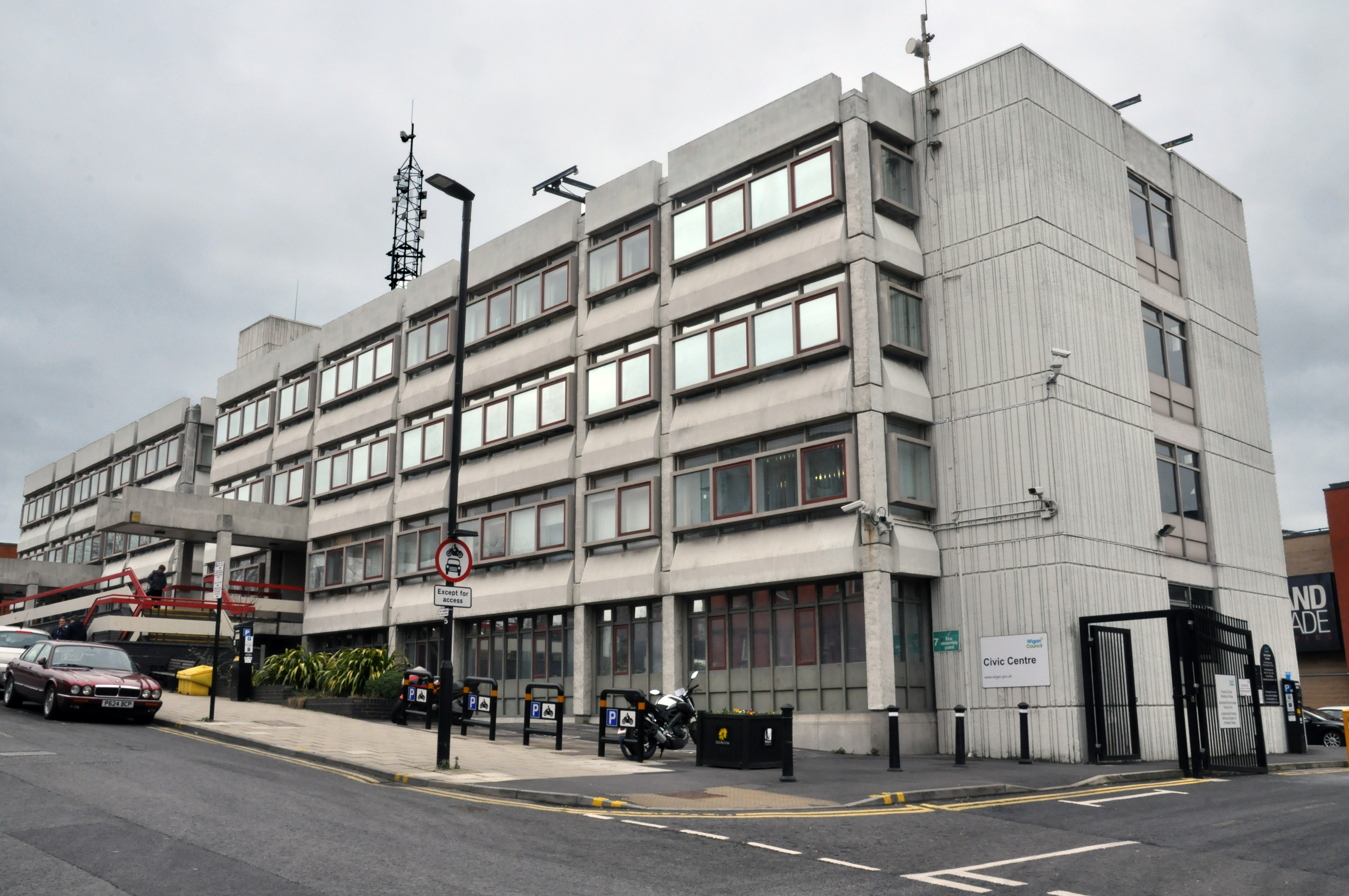
A strategic masterplan for East Kilbride town centre which could see a new purpose-built civic facility is to be put before the council next month.
Last March we told how radical new plans could see the crumbling Civic Centre replaced with – a new front door to East Kilbride.
Despite there being no specific proposals agreed at this stage, South Lanarkshire Council has confirmed that agents of the owners are set to present their strategic masterplan to elected members in February.
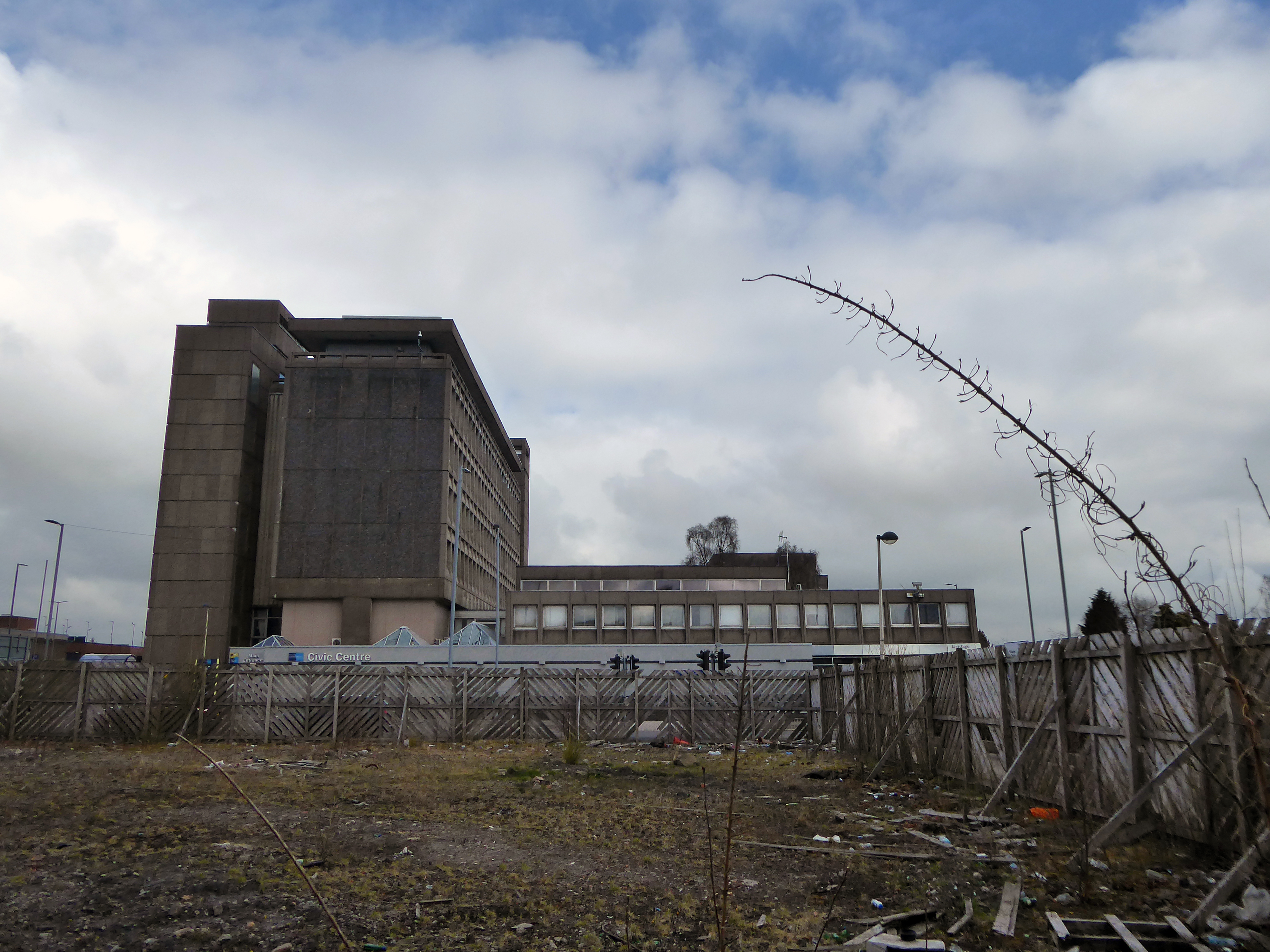
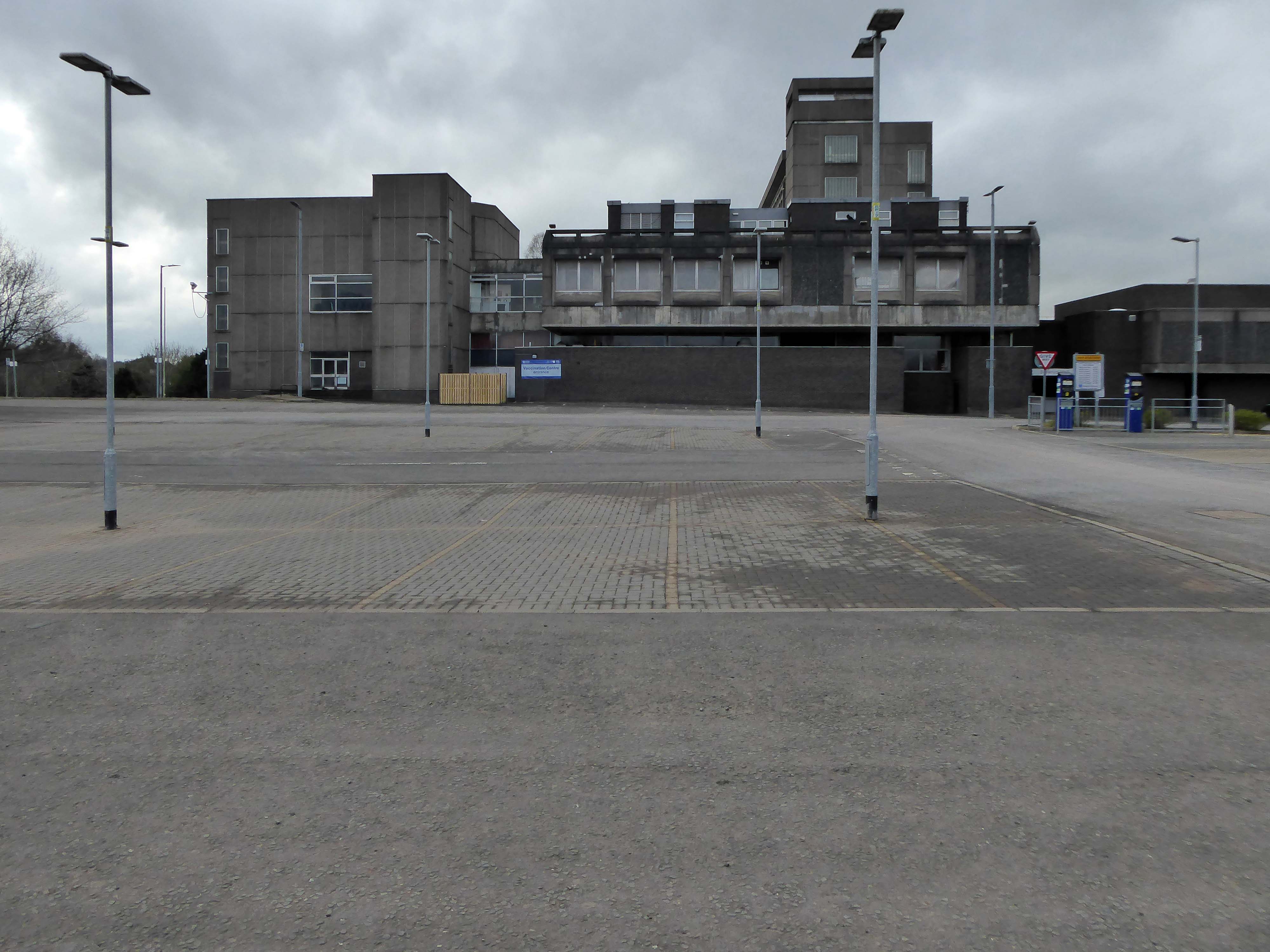
It currently sits by the shopping centre and a patch of empty ground.
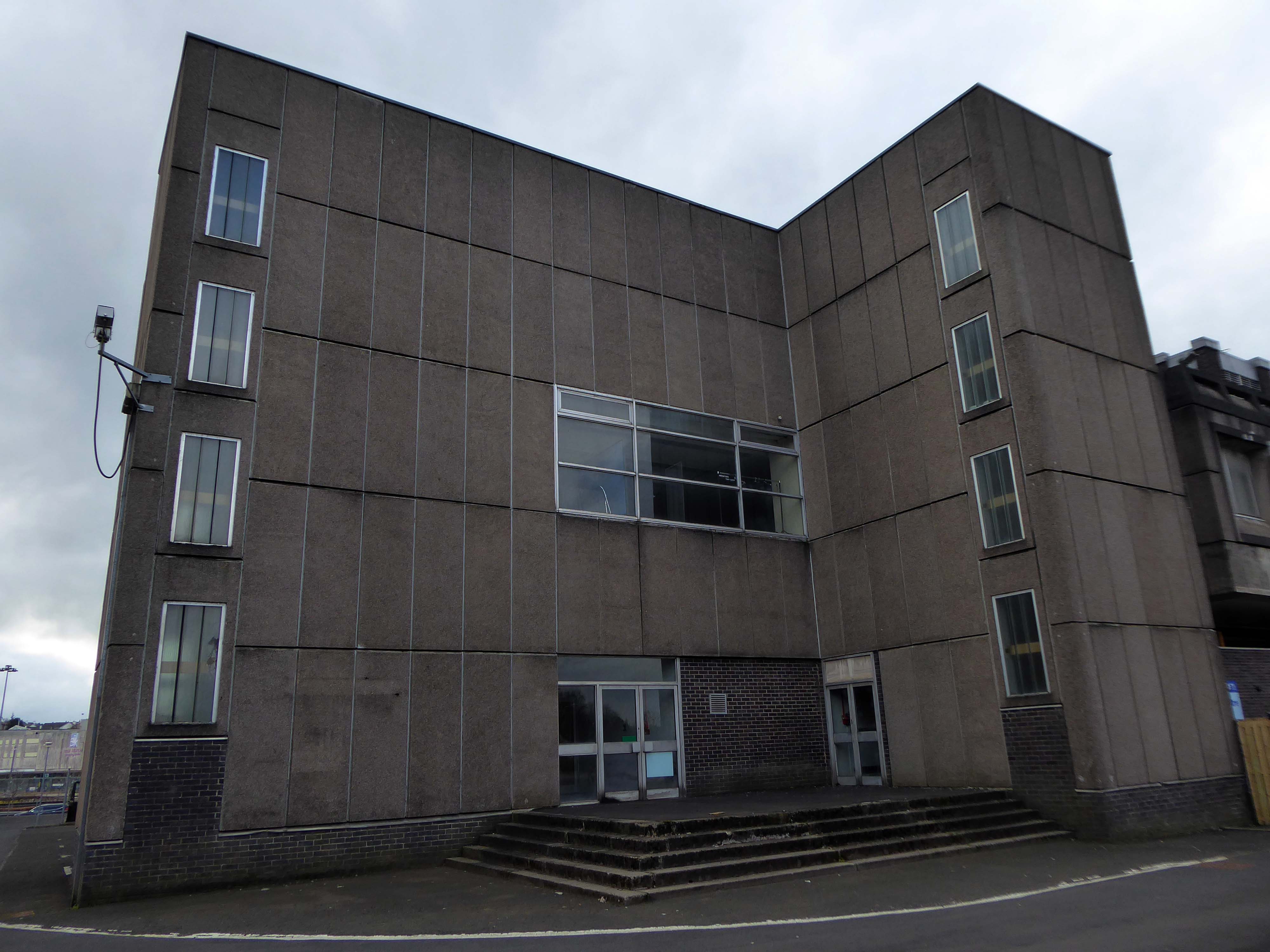
Several imposing interlocking volumes, formed by pre-cast concrete panels.
East Kilbride was the first new town built in Scotland in 1947. New Town designation was a pragmatic attempt to soak up some of the population from an overcrowded and war ravaged Glasgow. Its design was indeed an anathema to the chaotic and sprawling Glasgow: clean straight lines, modern accessible public spaces; and footways, bridges and underpasses built with the pedestrian in mind. It was designed as a self contained community — with industry, shops, recreation facilities and accommodation all within a planned geographic area.
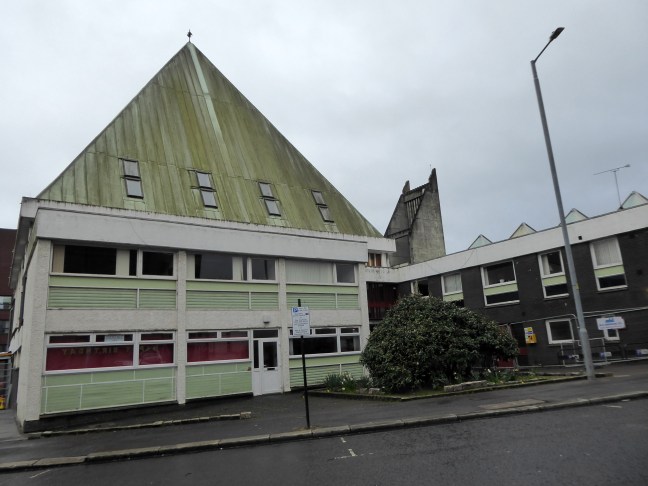
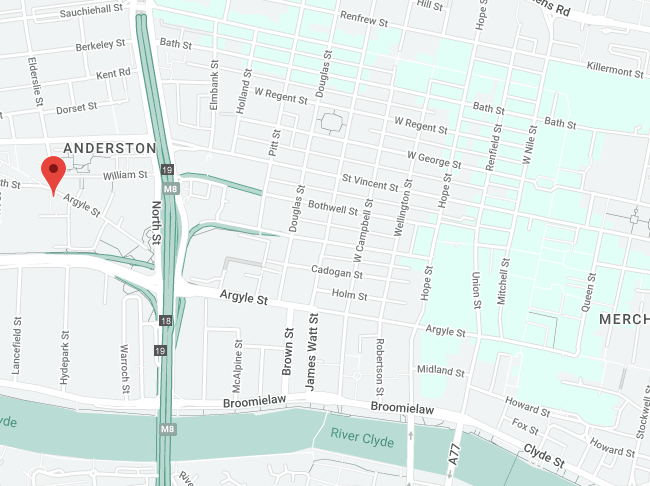
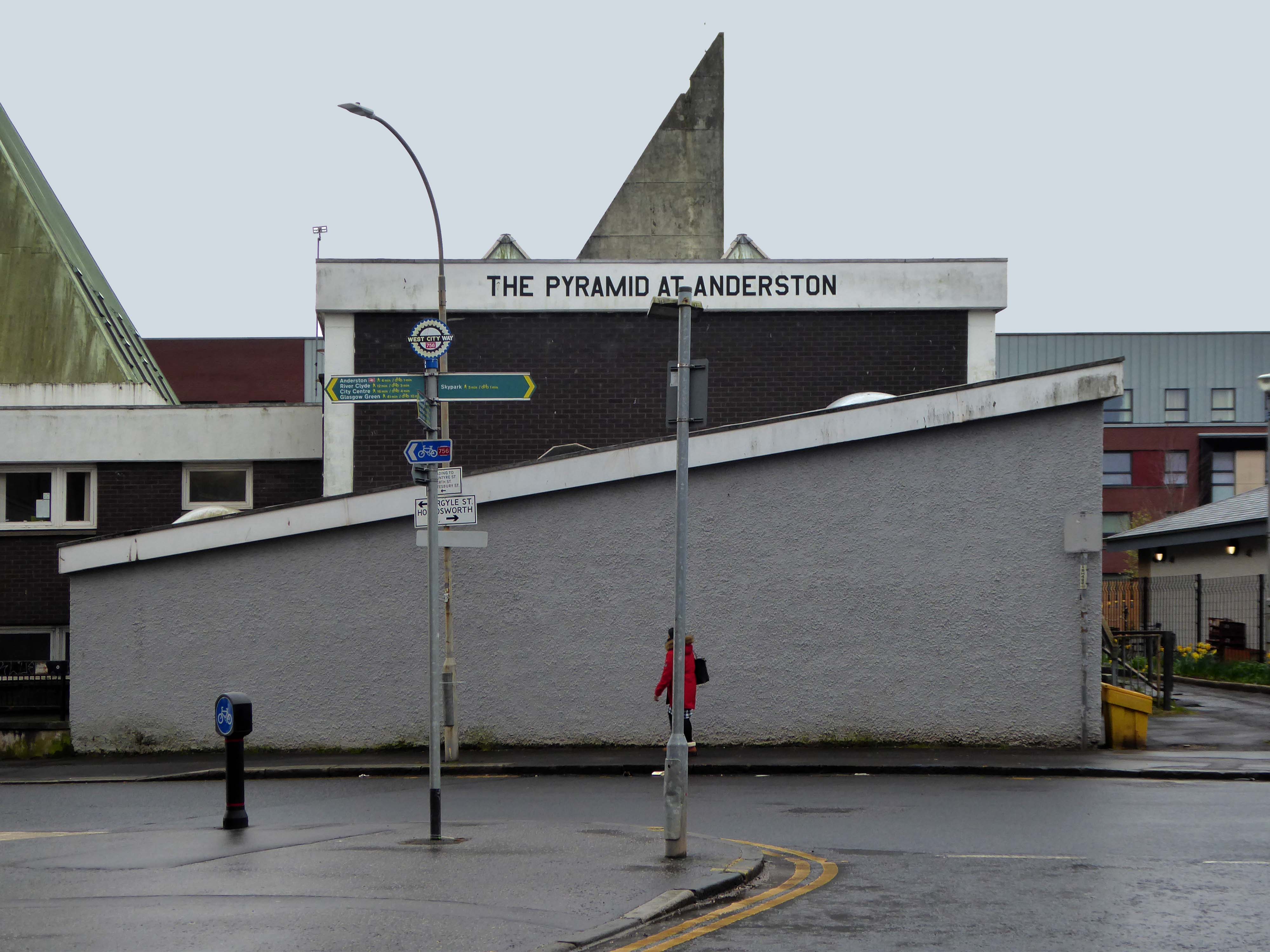
I was walking along St Vincent Street one rainy day.
From the corner of my left eye, I espied a pyramid.
Curious, I took a turn, neither funny nor for the worse, the better to take a closer look.
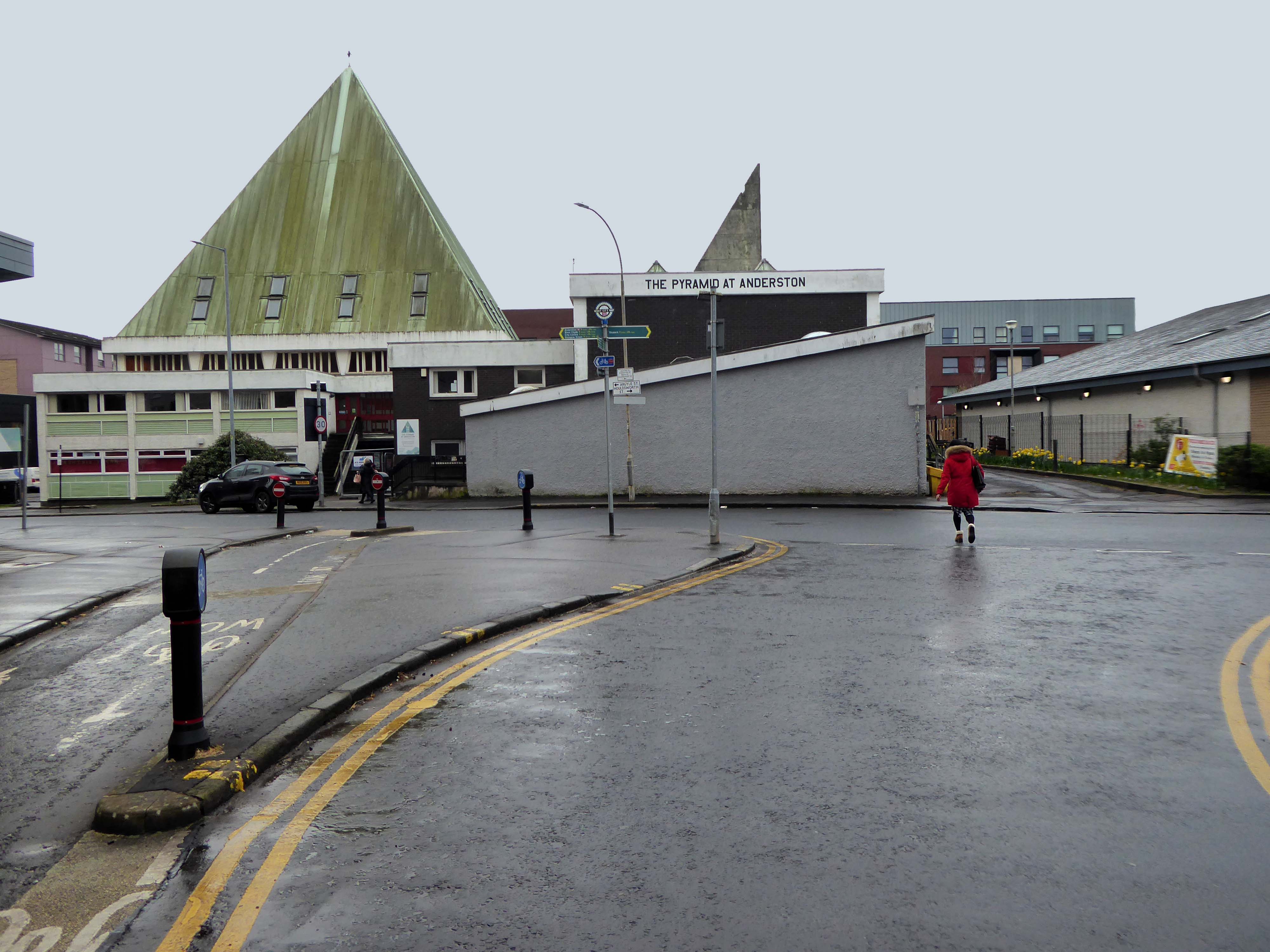
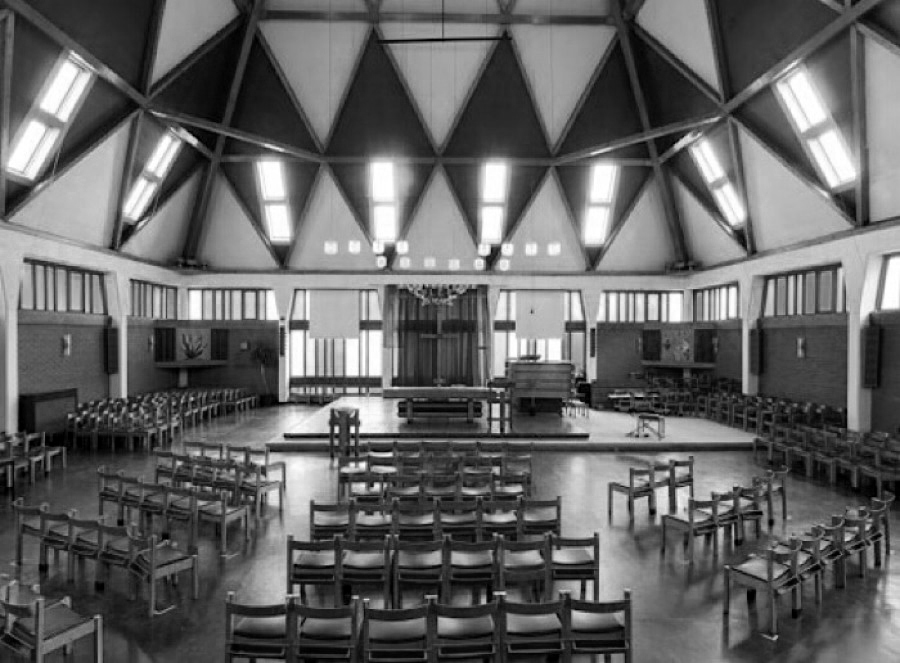
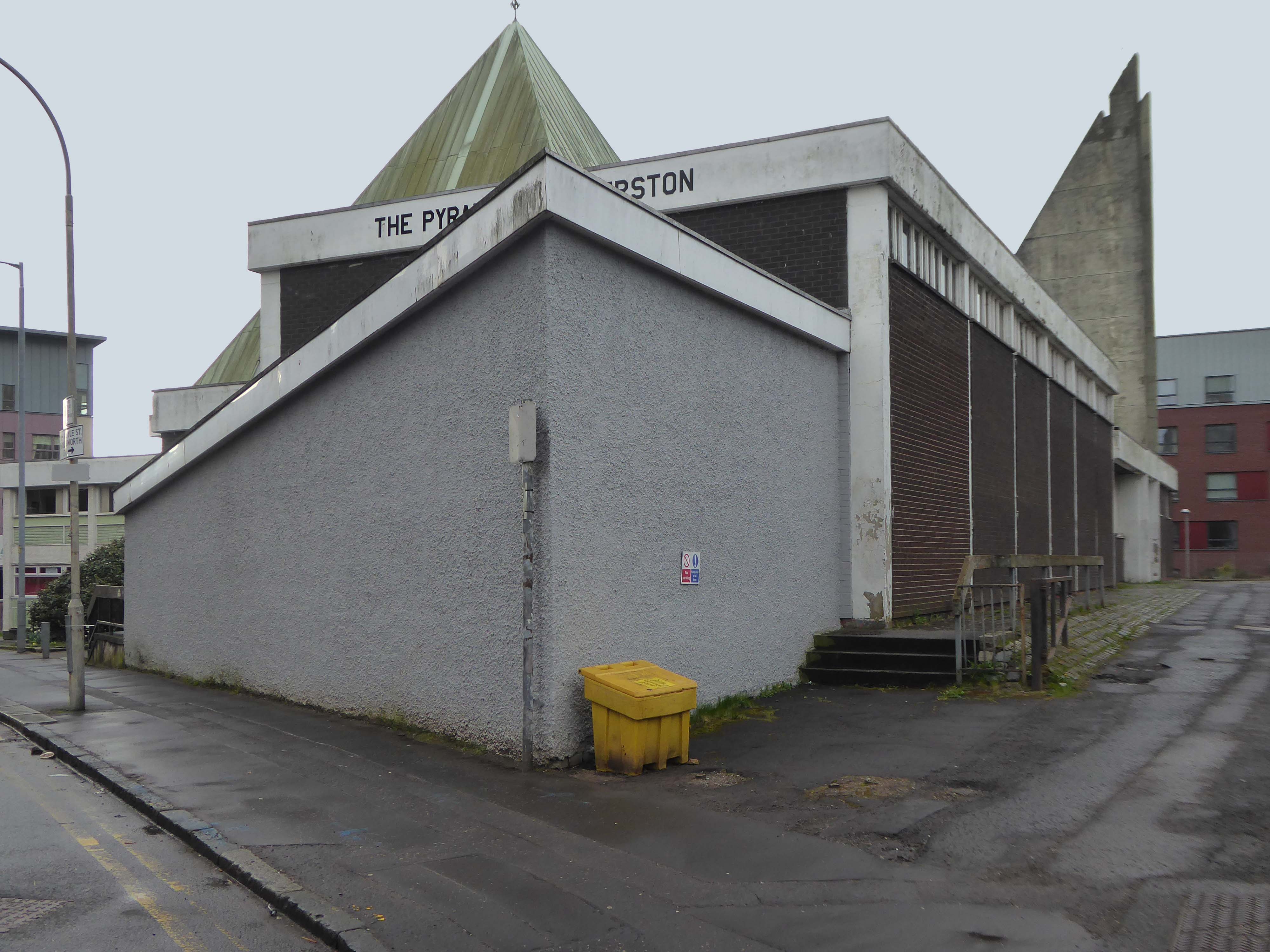
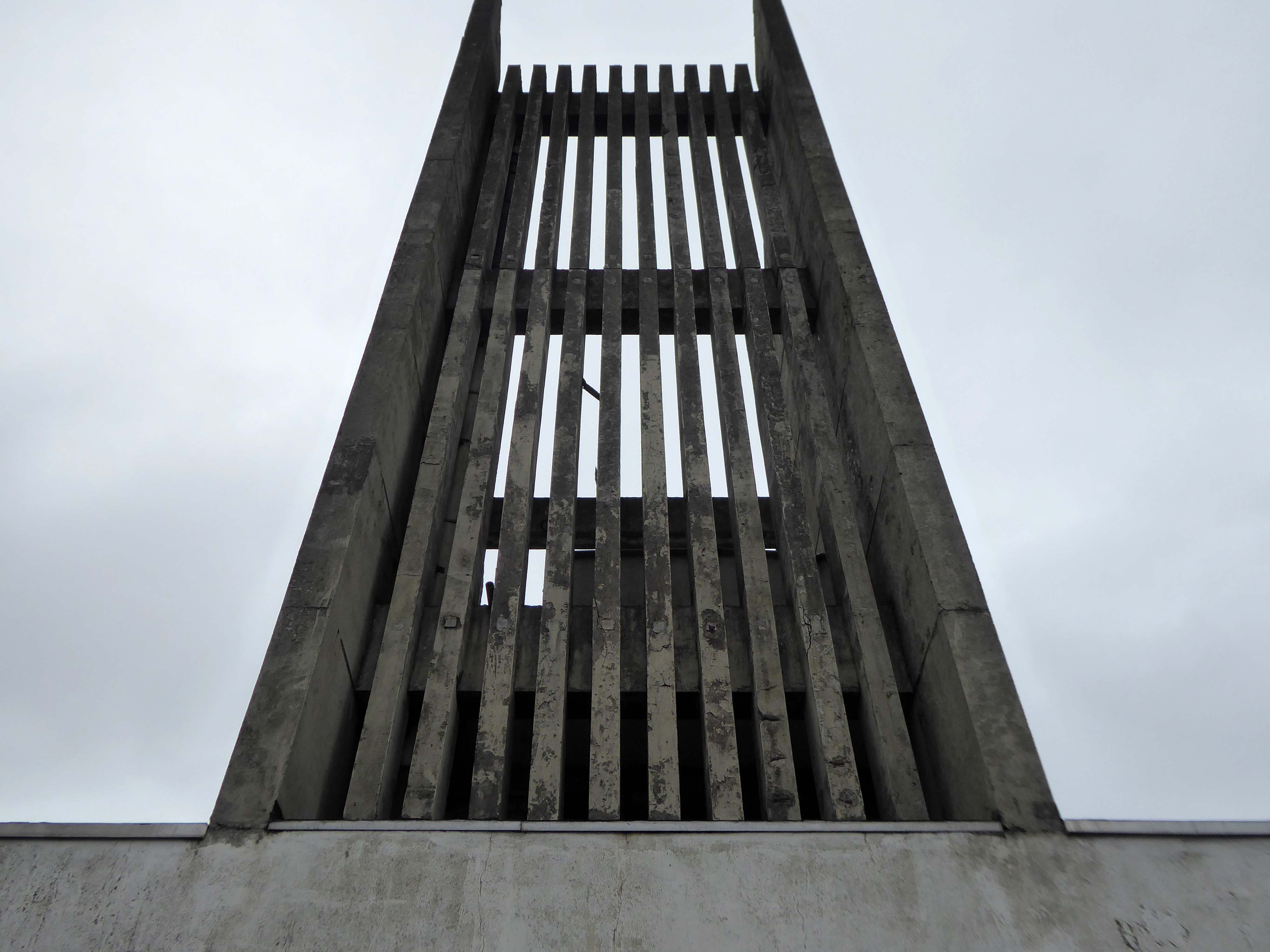
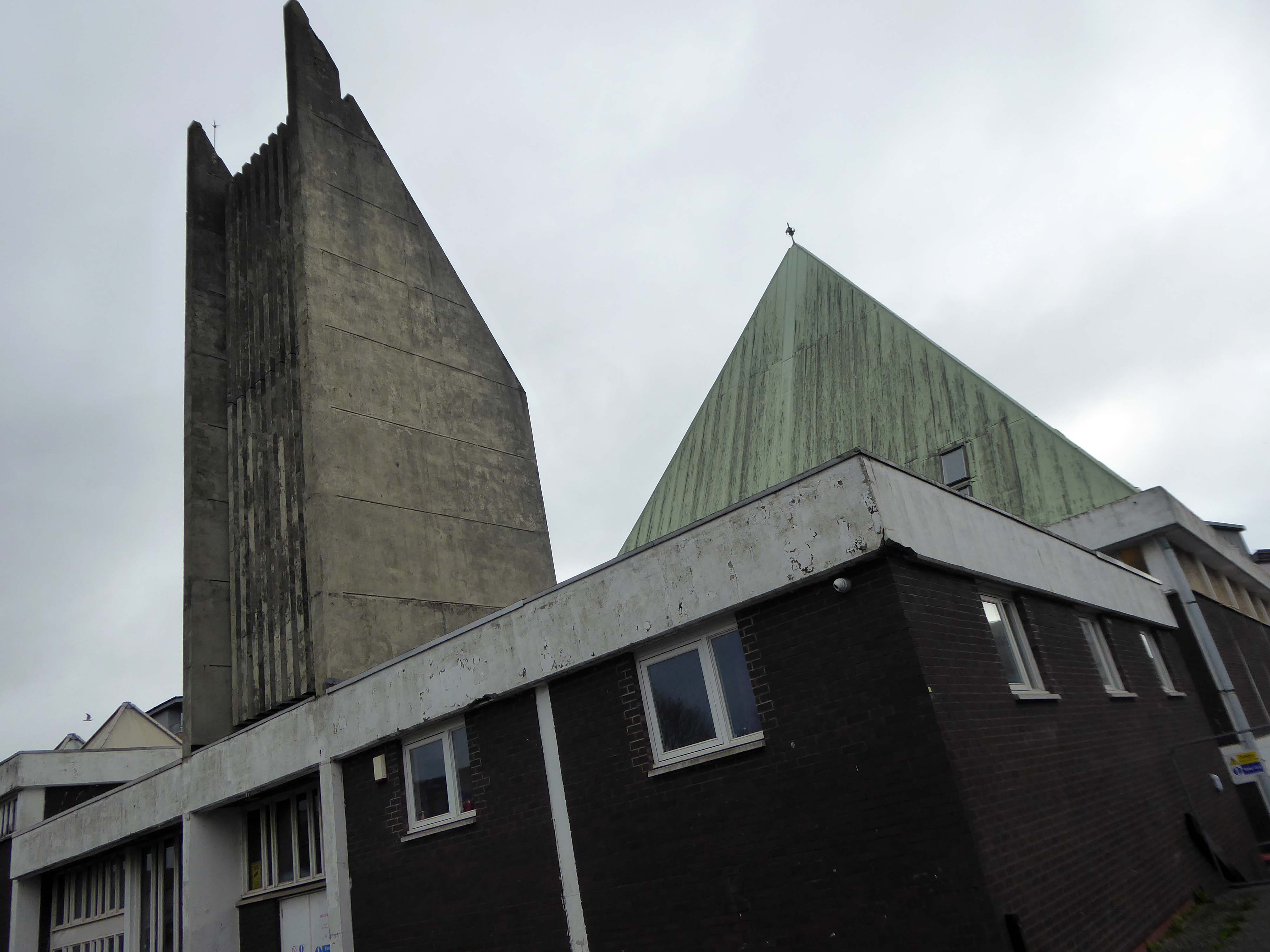
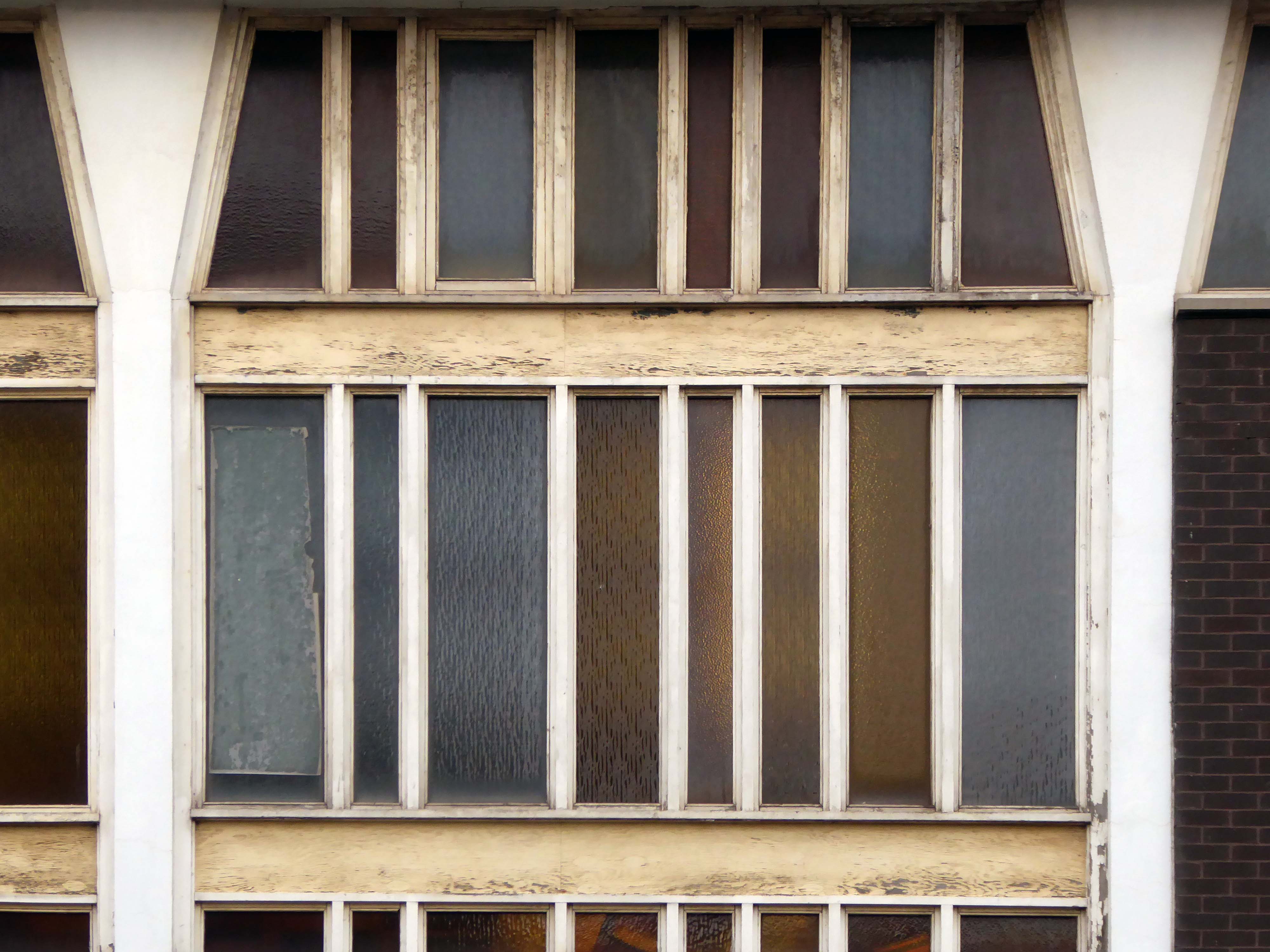
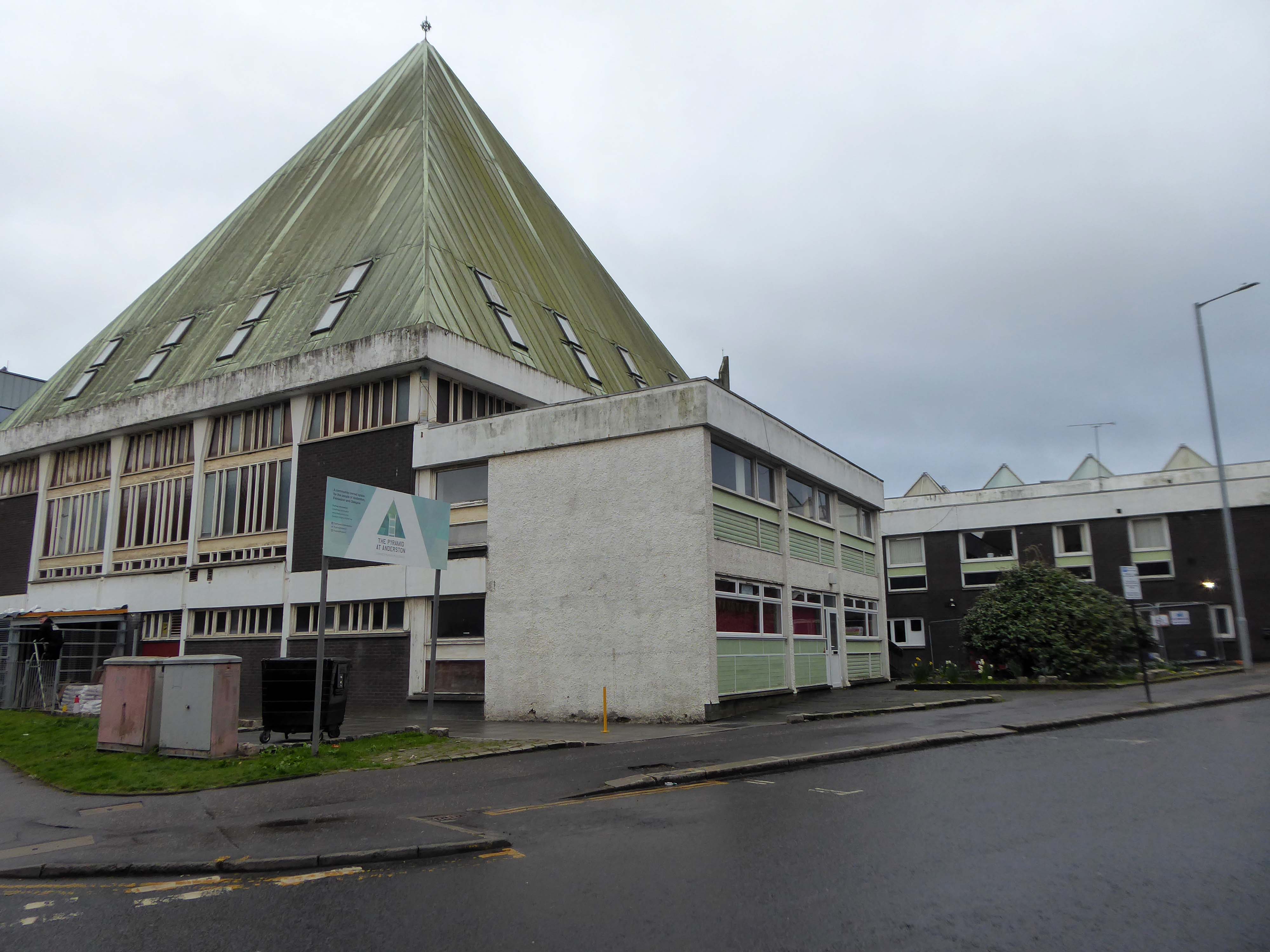
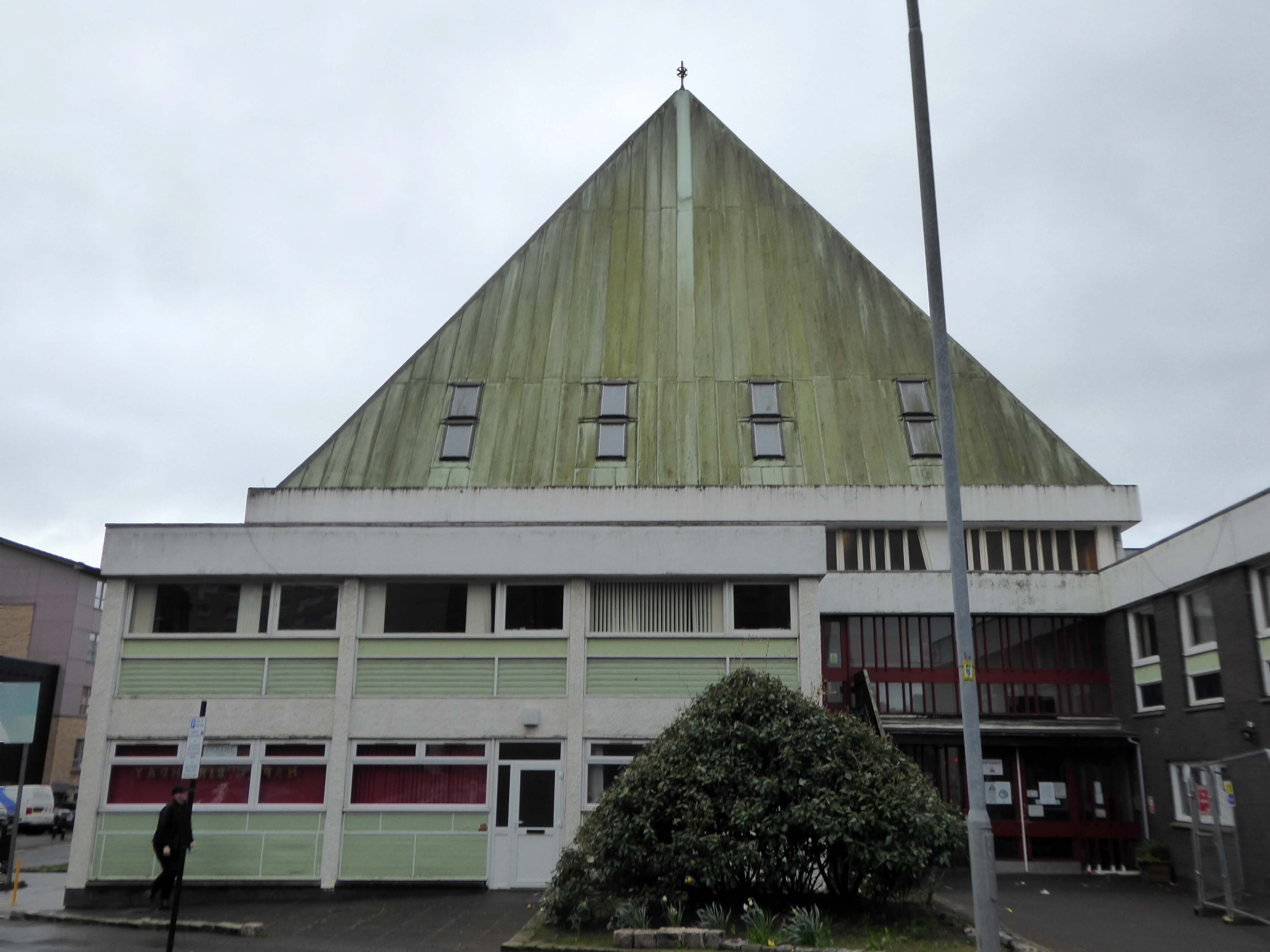
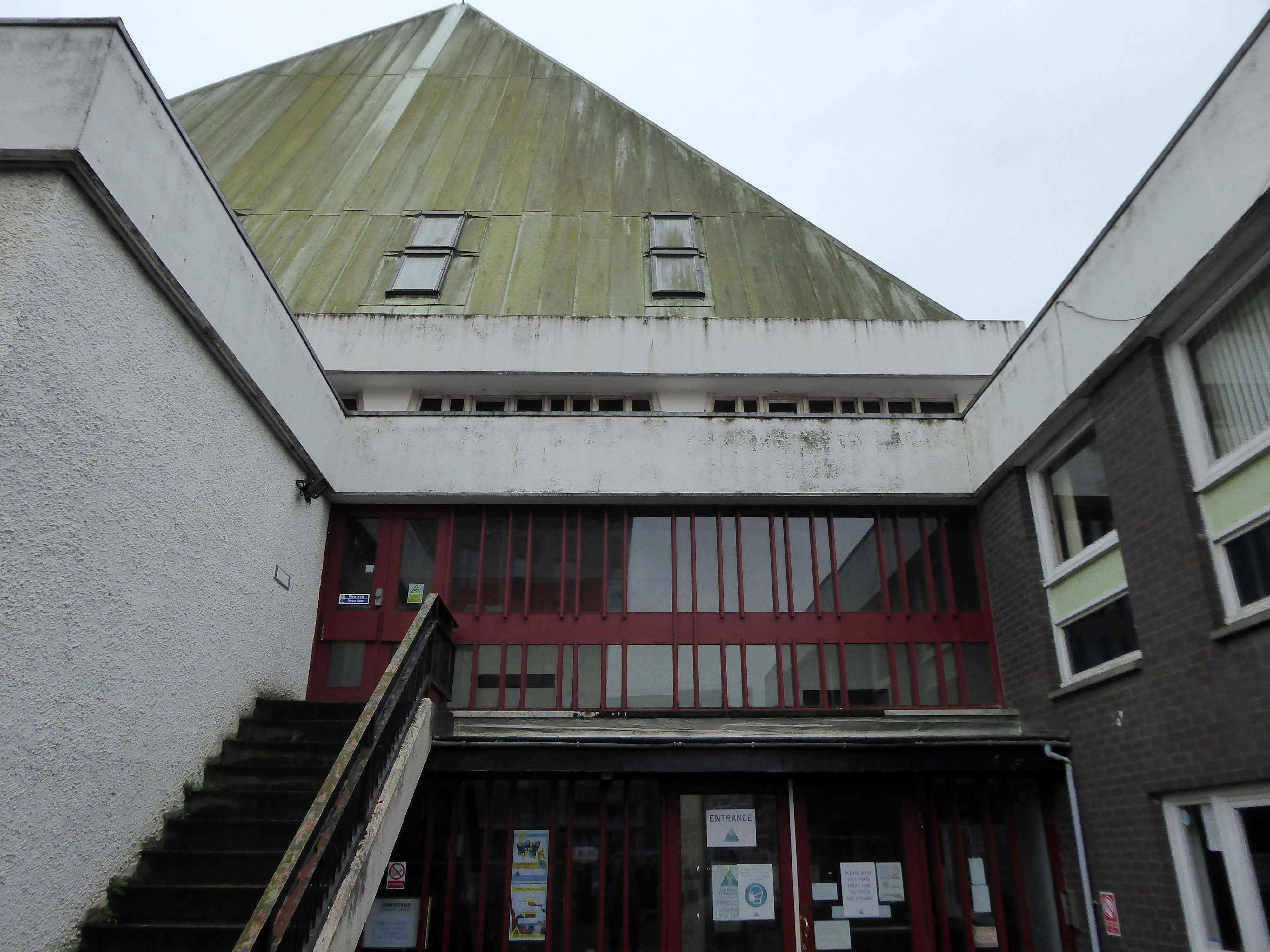
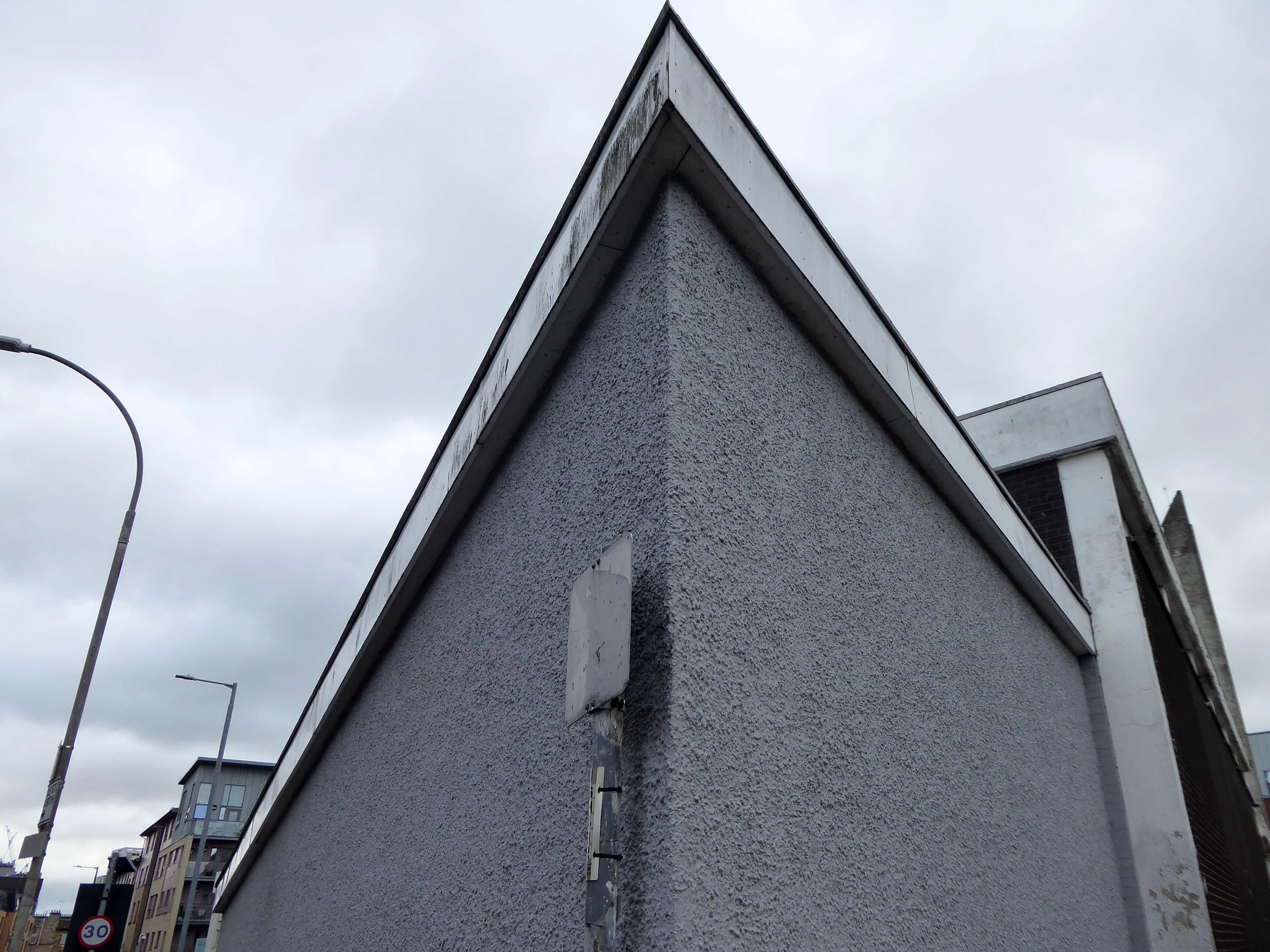
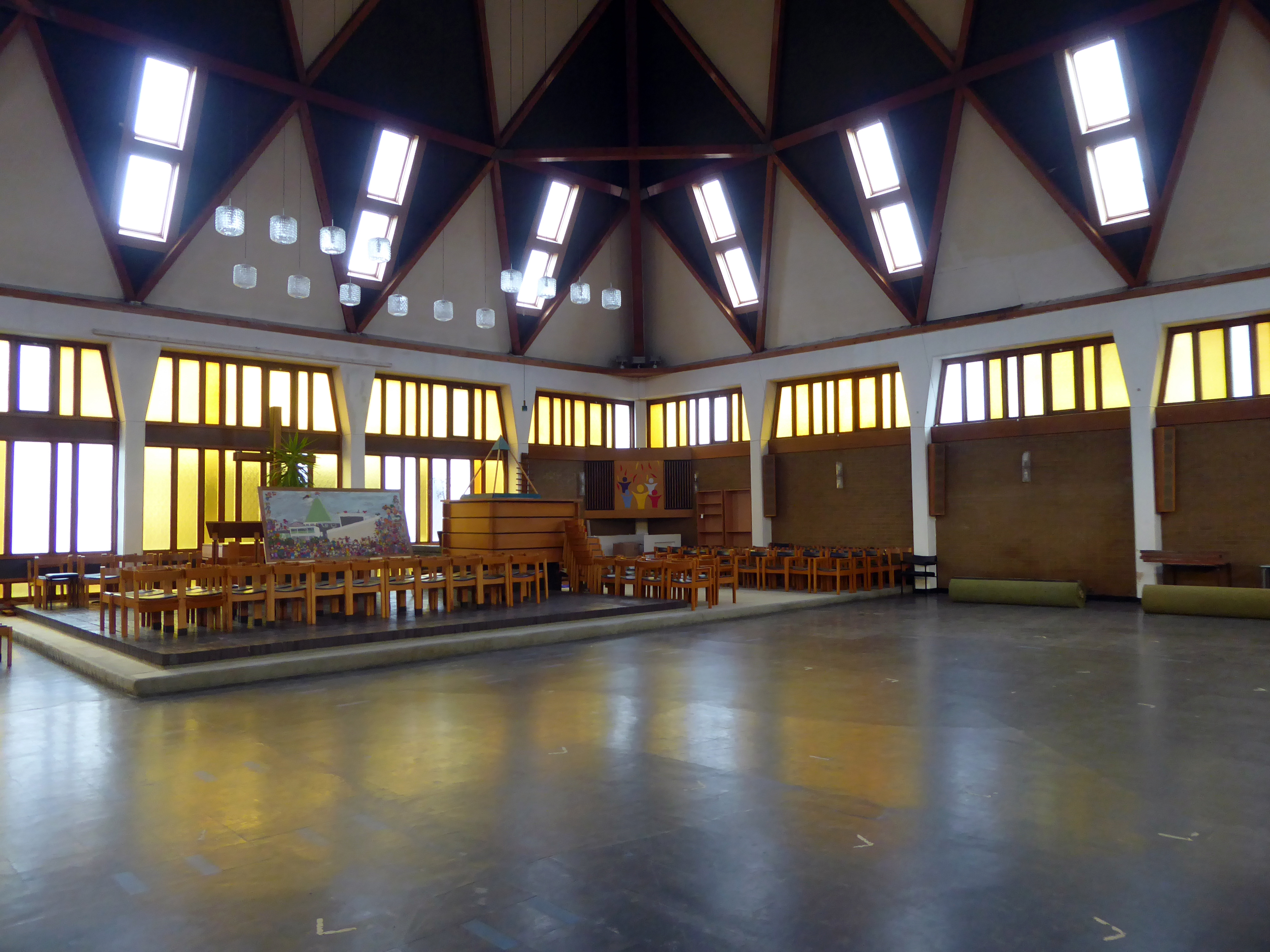
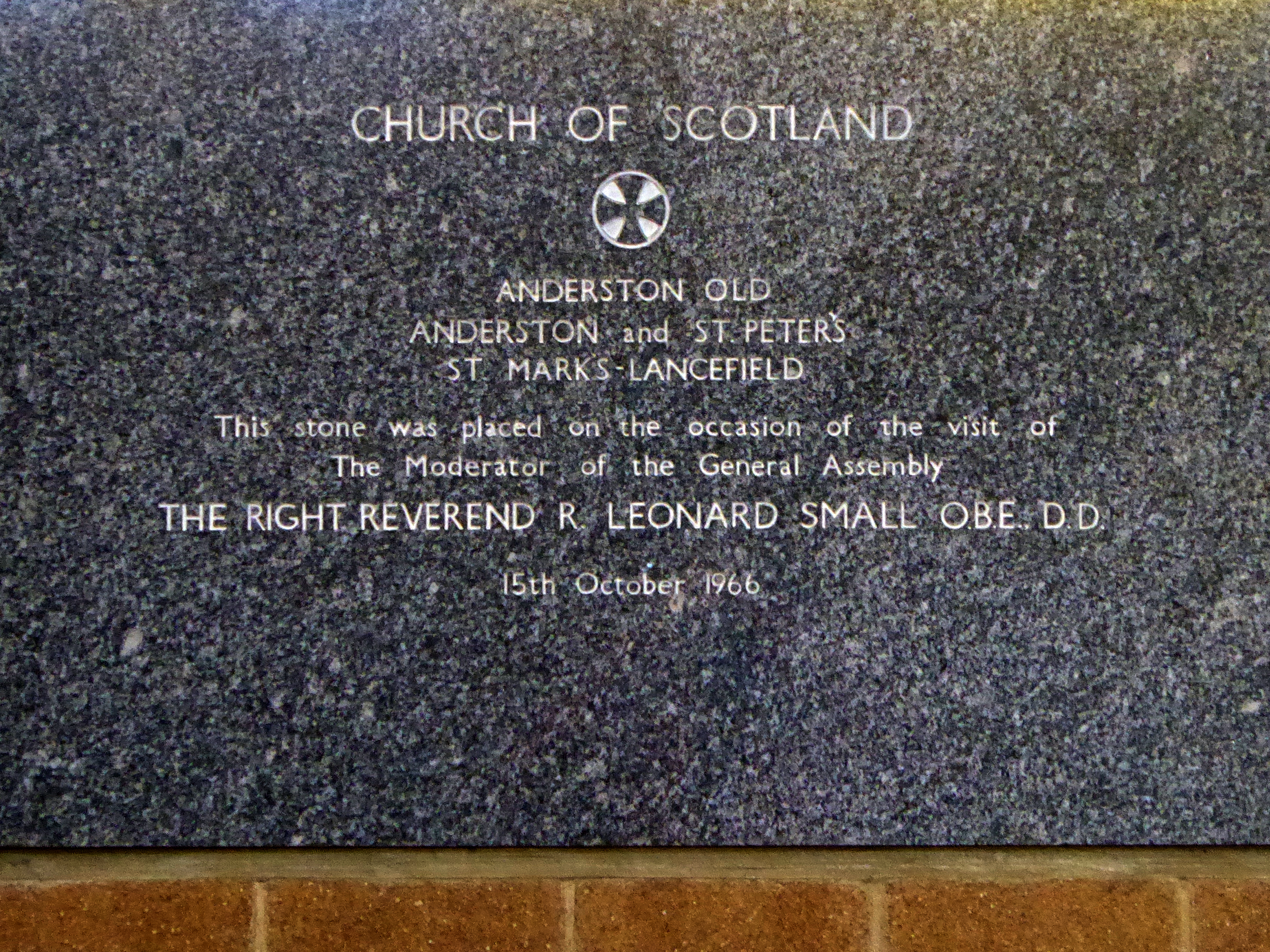
Following a promotion within the Church of Scotland to construct less hierarchical church buildings in the 1950s, an open-plan Modern design with Brutalist traits, was adapted for the new Anderson Parish Church. The building consists of a 2-storey square-plan church with prominent pyramidal roof, with over 20 rooms. The foundation stone was laid in 1966, with a service of commemoration in the now demolished St Mark’s-Lancefield Church. The building was completed in 1968.
Let’s take a look around outside.
Later that same day, I got a message from my friend Kate to visit her at the centre.
She is charged with co-ordinating a variety of activities at The Pyramid.
In 2019 the Church of Scotland sold the building and it became a community centre for people to:
Connect, create and celebrate.
It also serves as an inspirational space for music, performances, conferences and events.
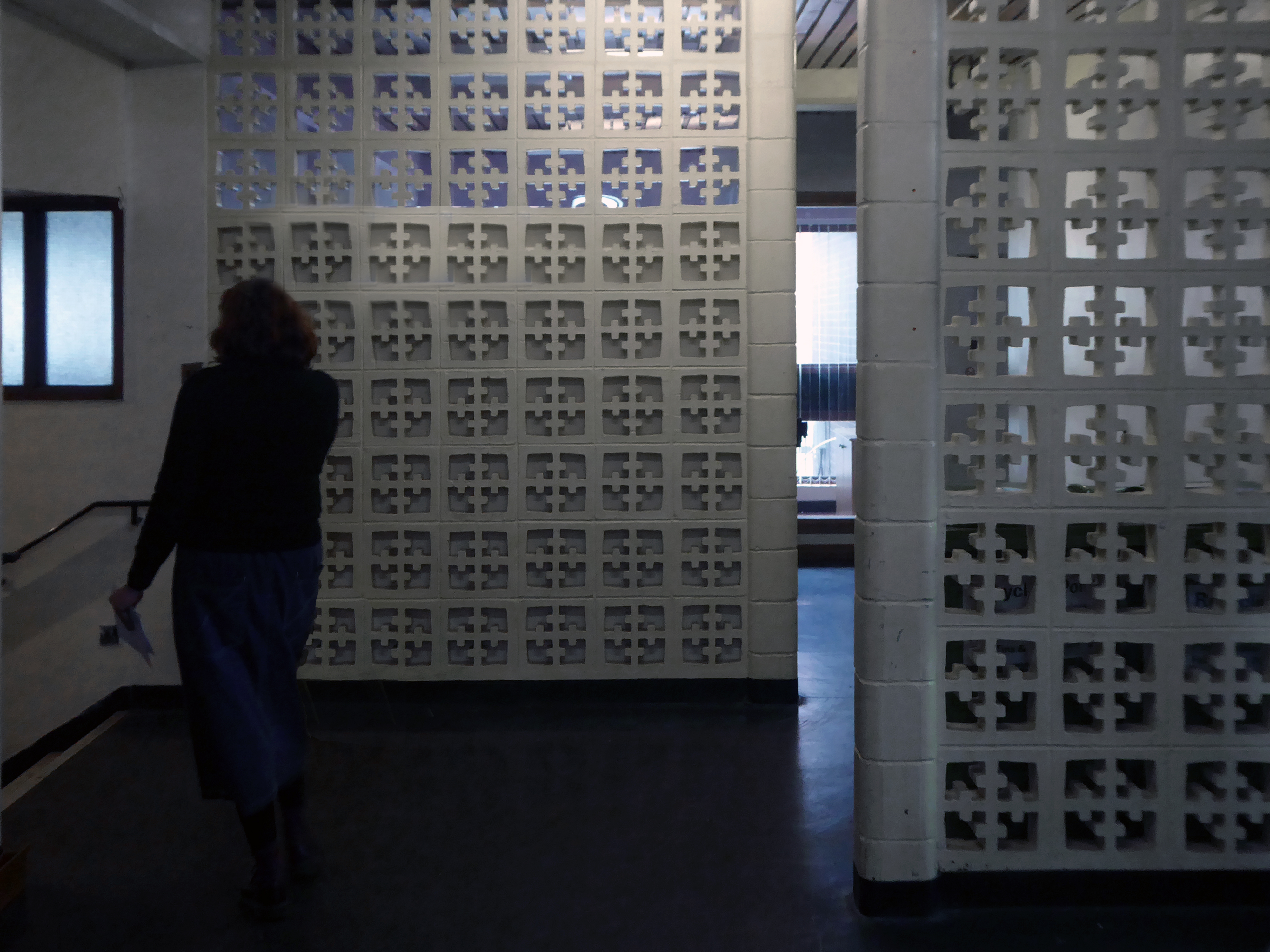
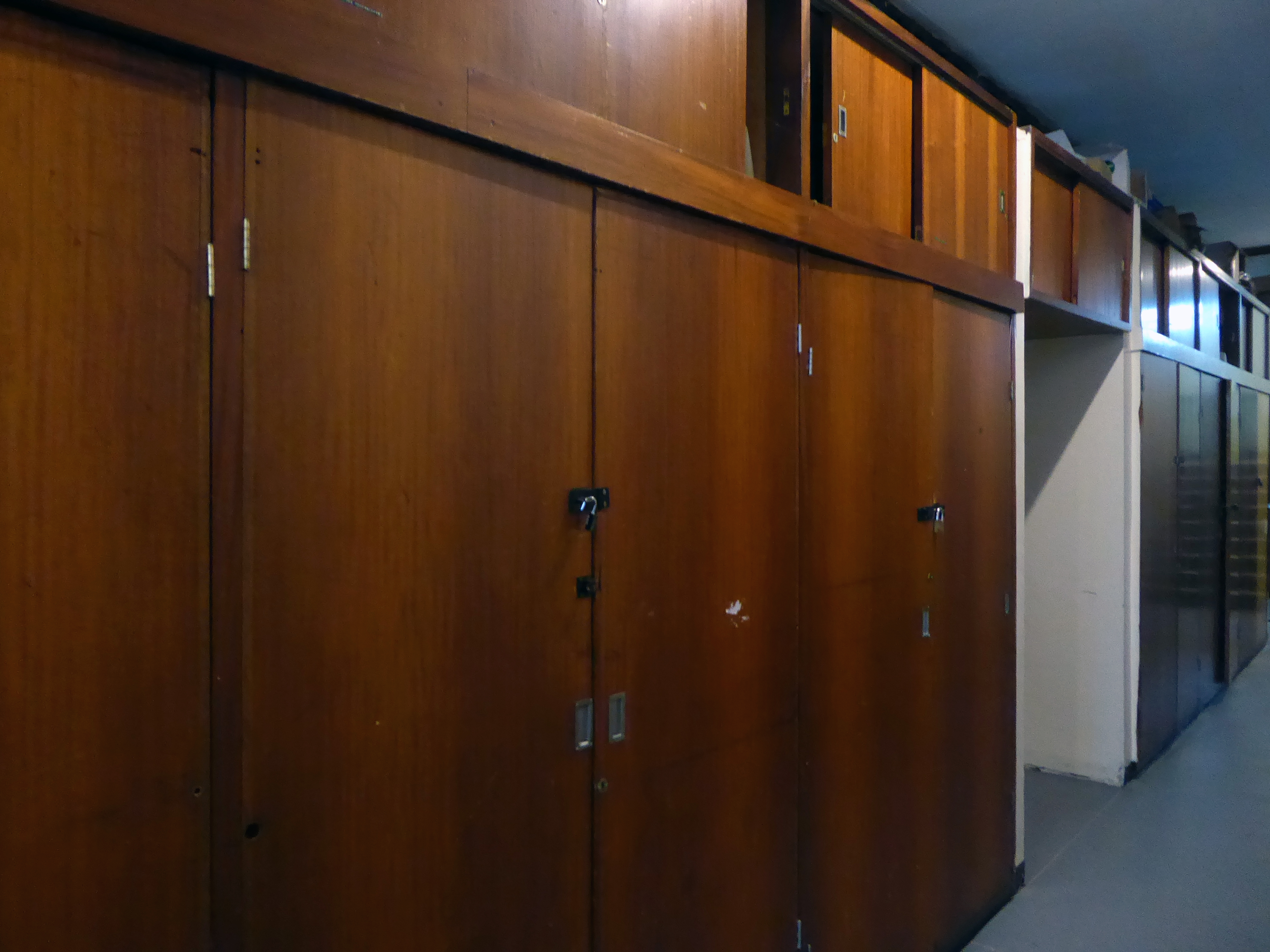
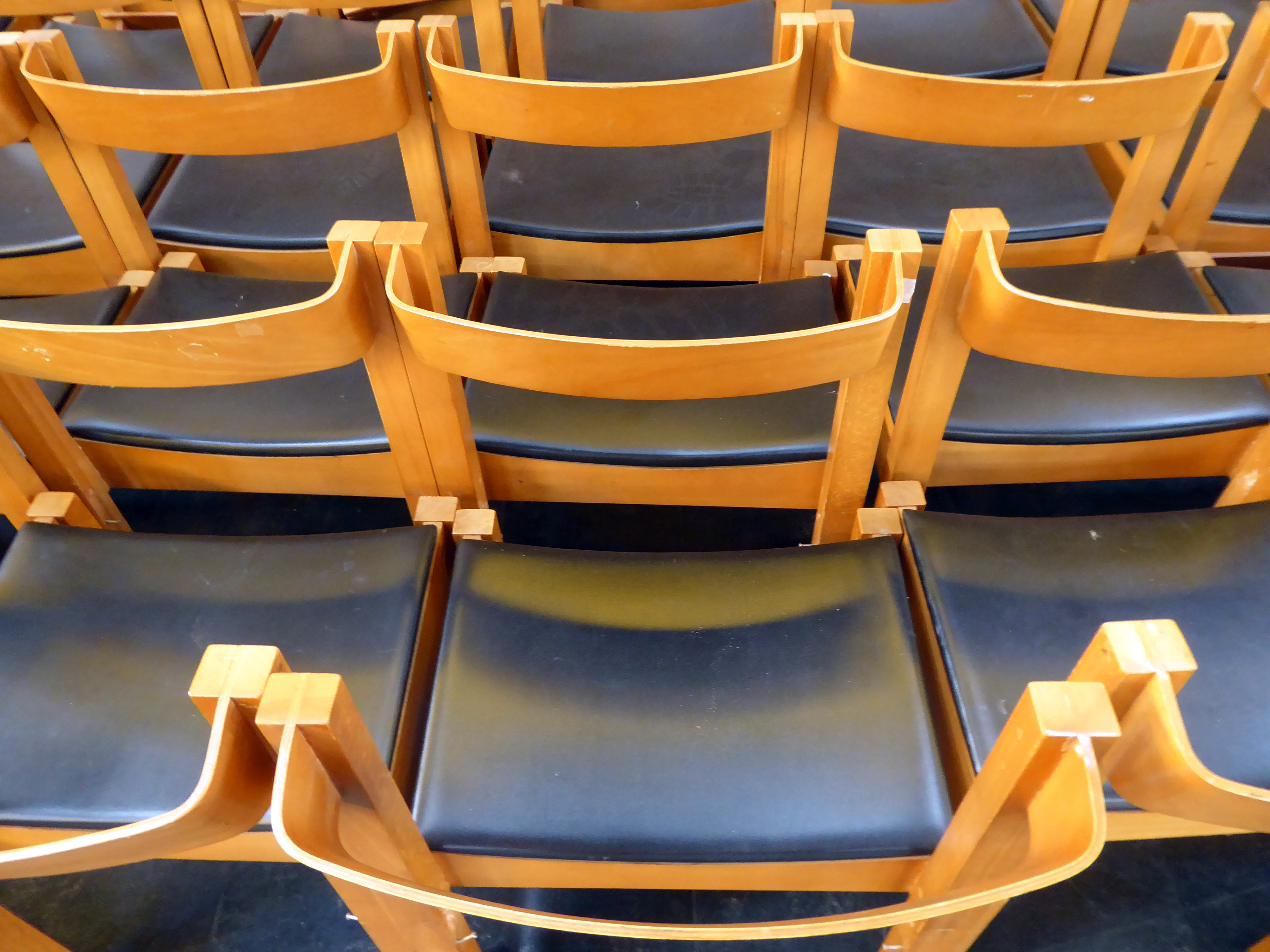
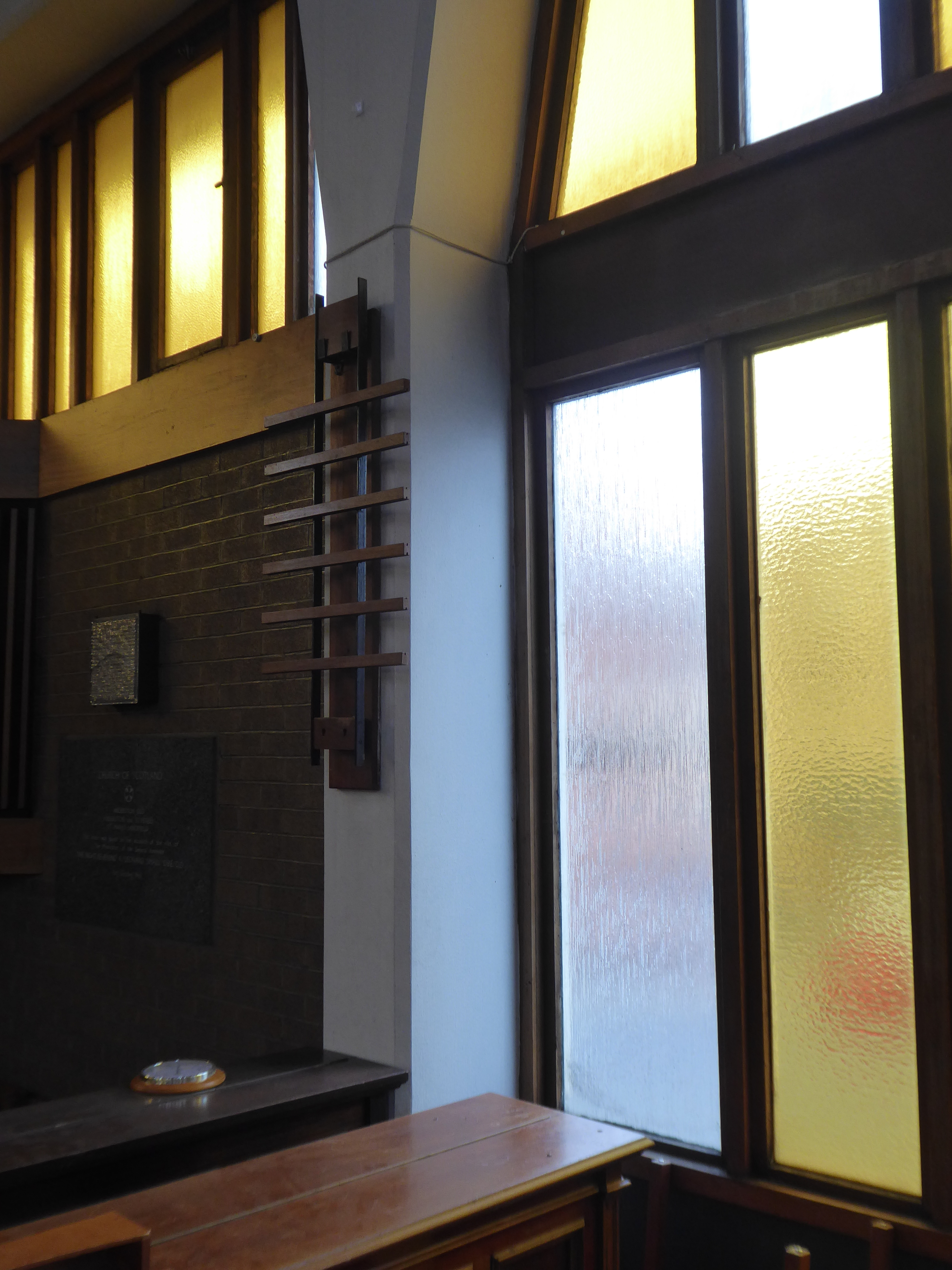
Let’s take a look around inside.
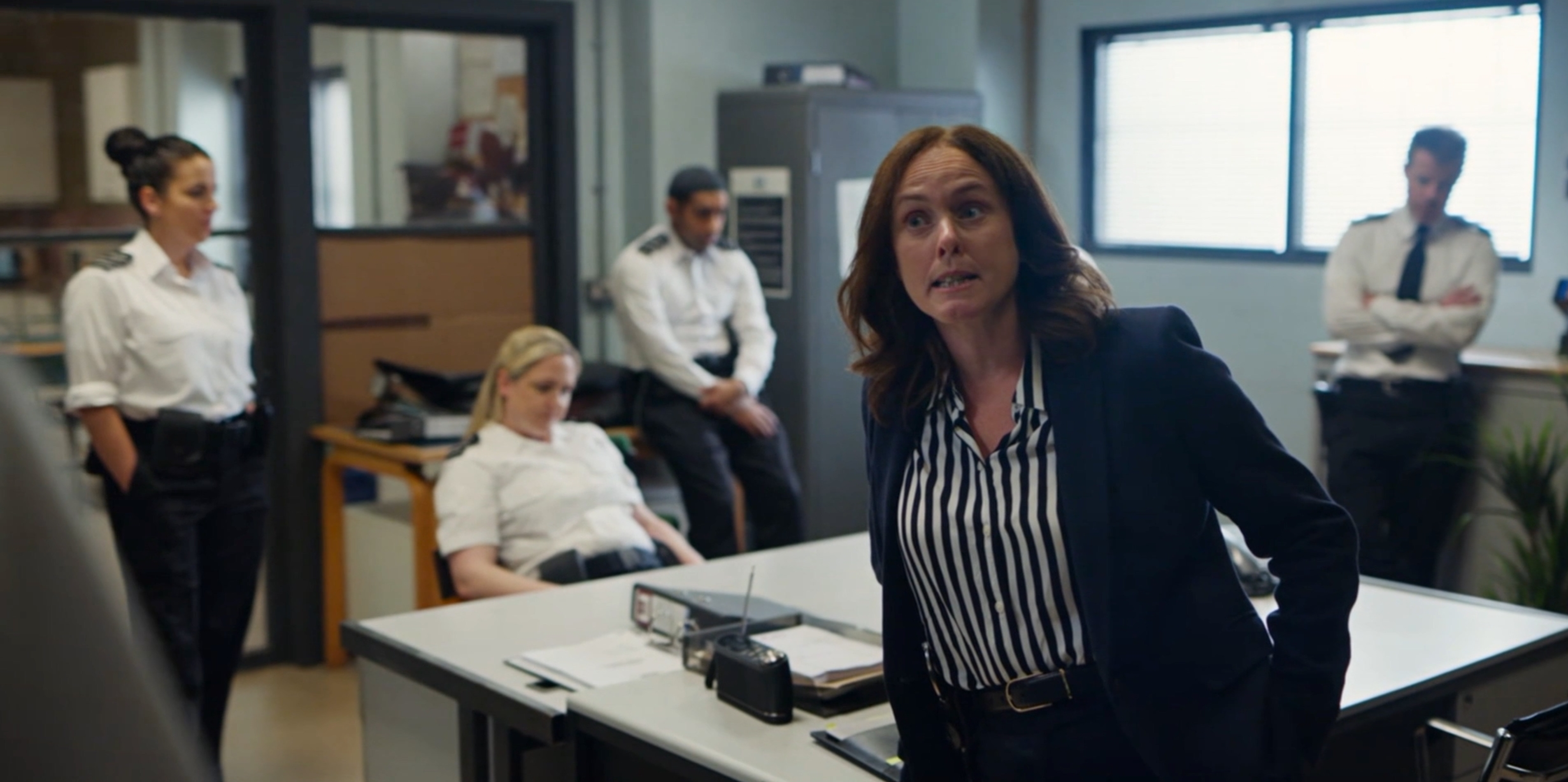
As a footnote the recent STV Studios produced series SCREW was filmed here!
Architects: David Harvey, Alex Scott & Associates – 1967
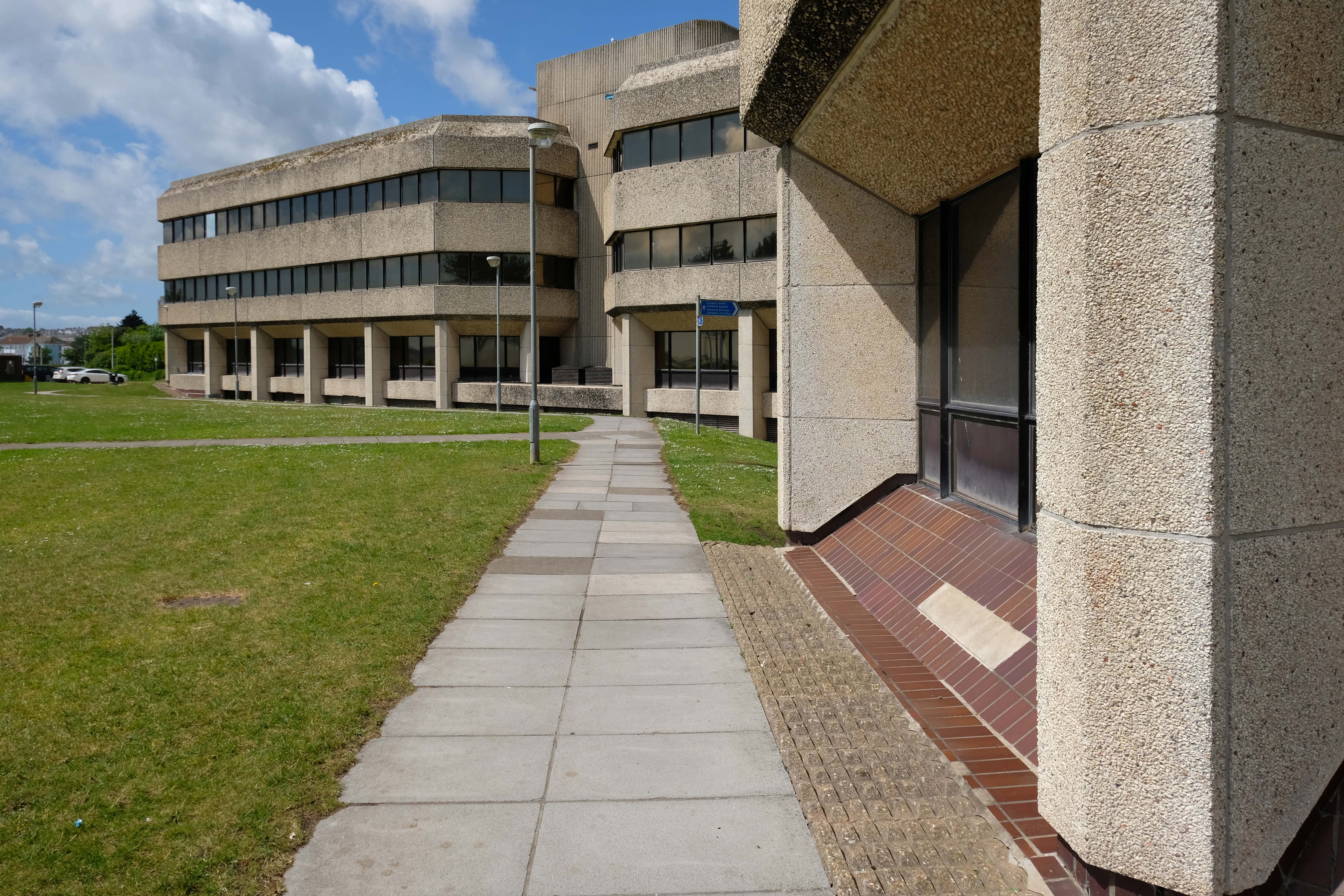
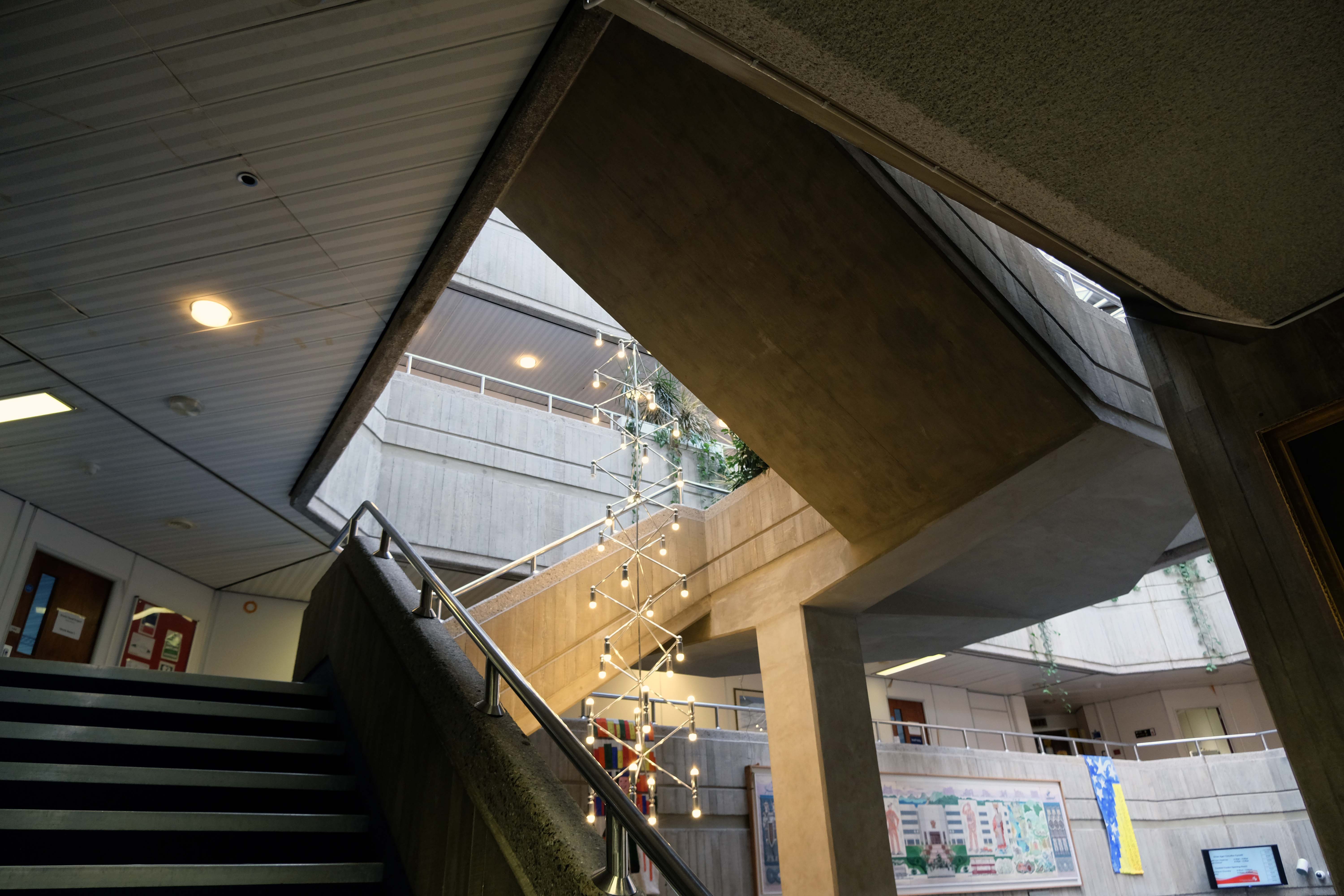
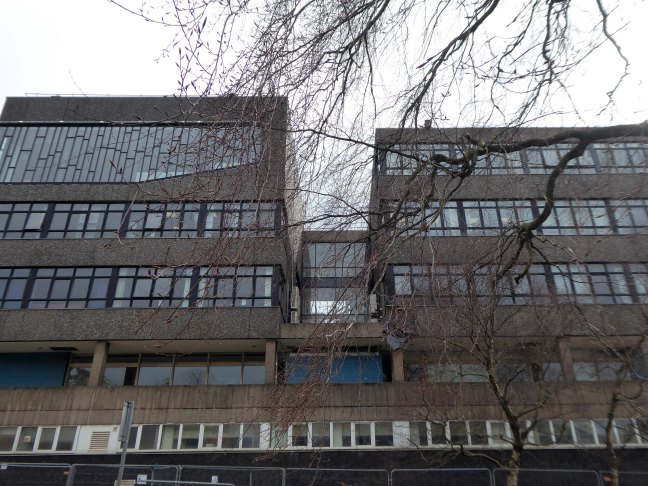
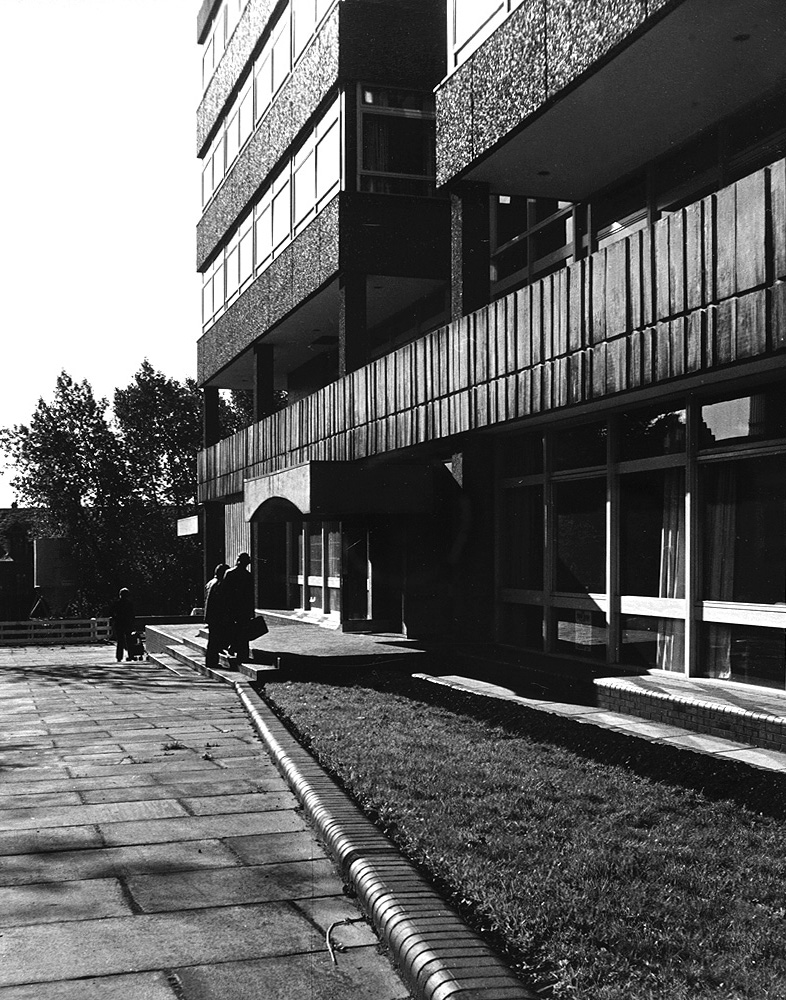
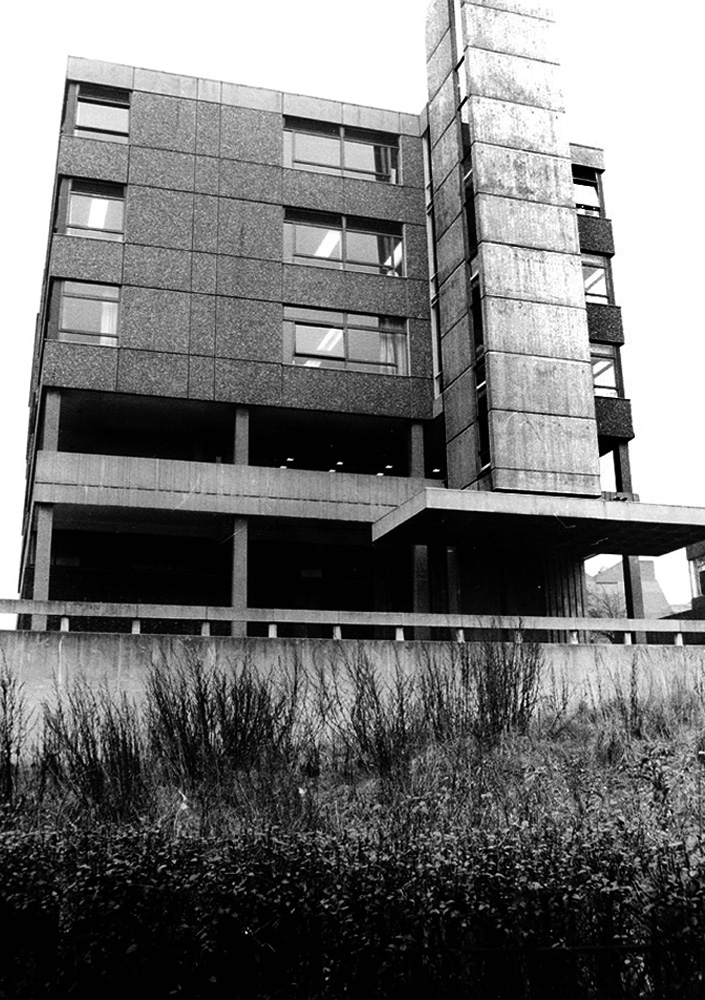
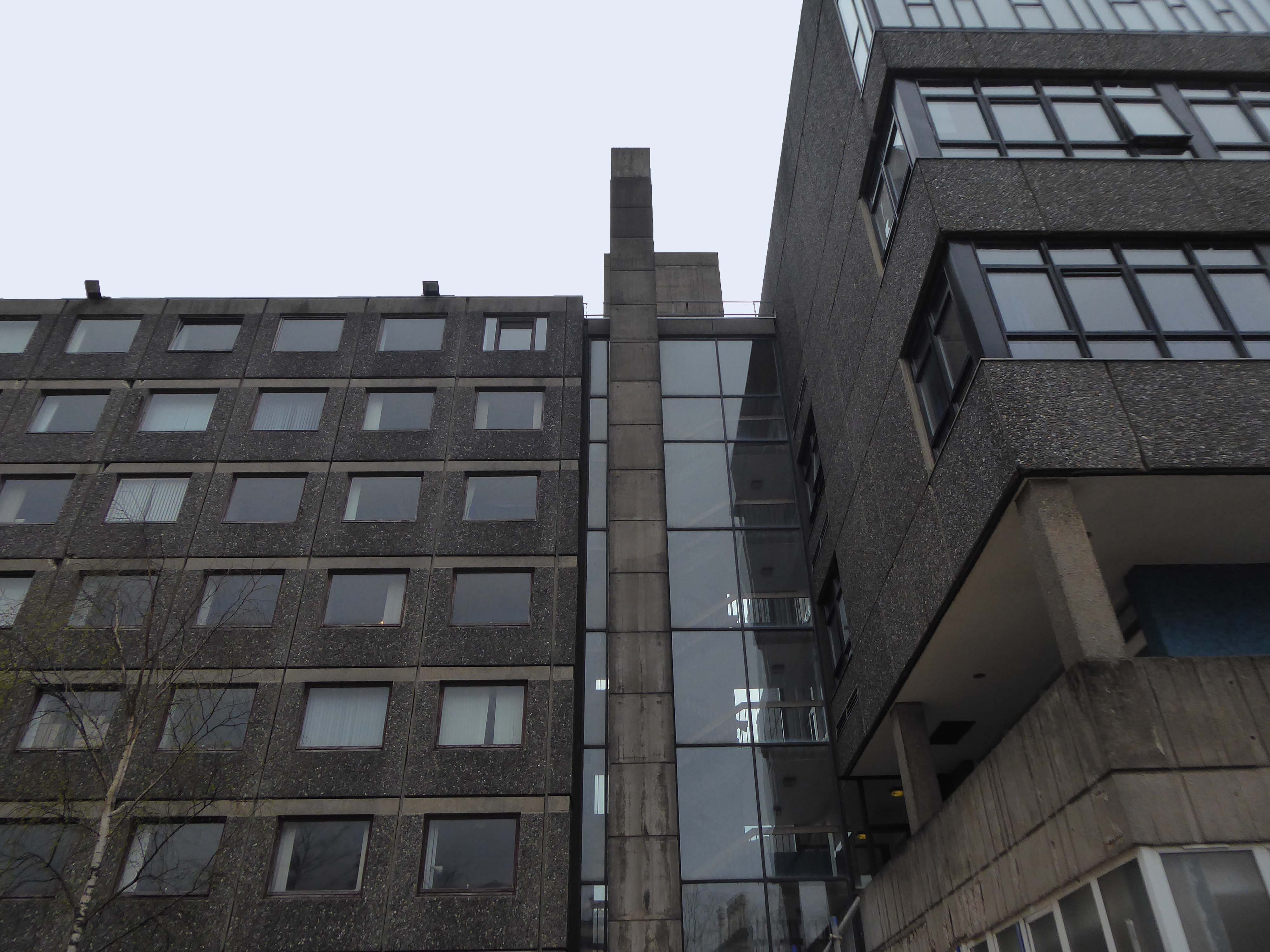
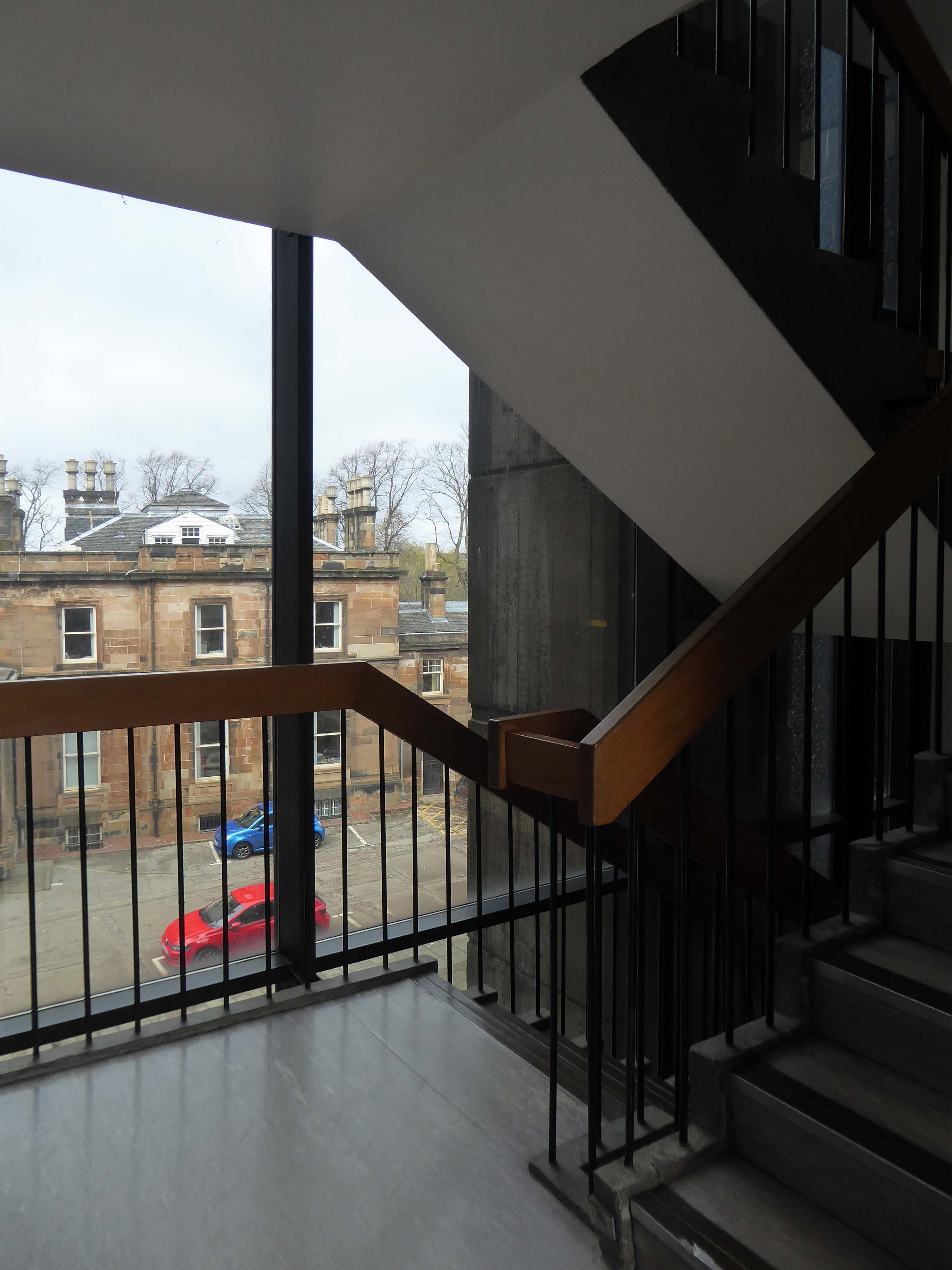
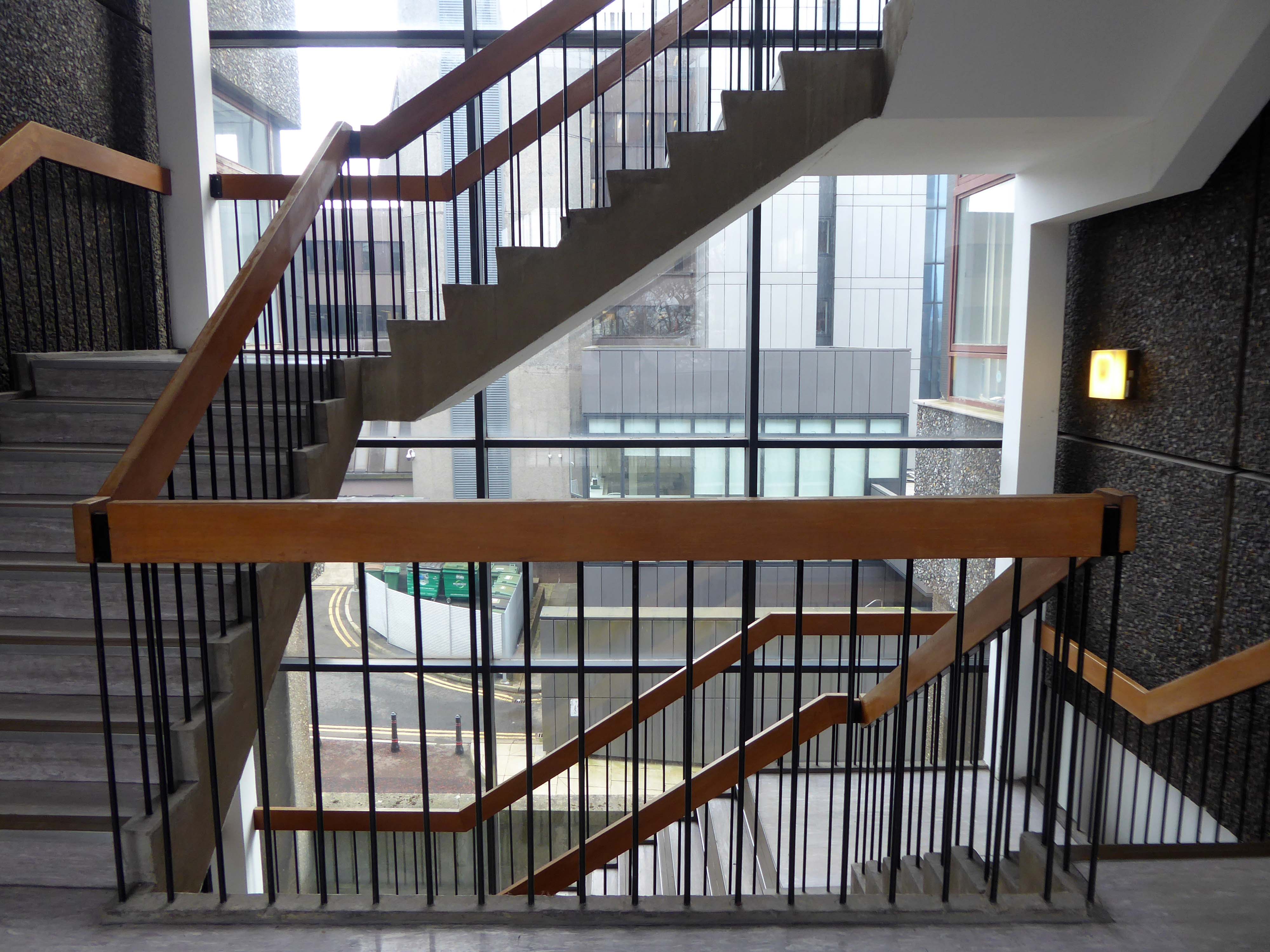
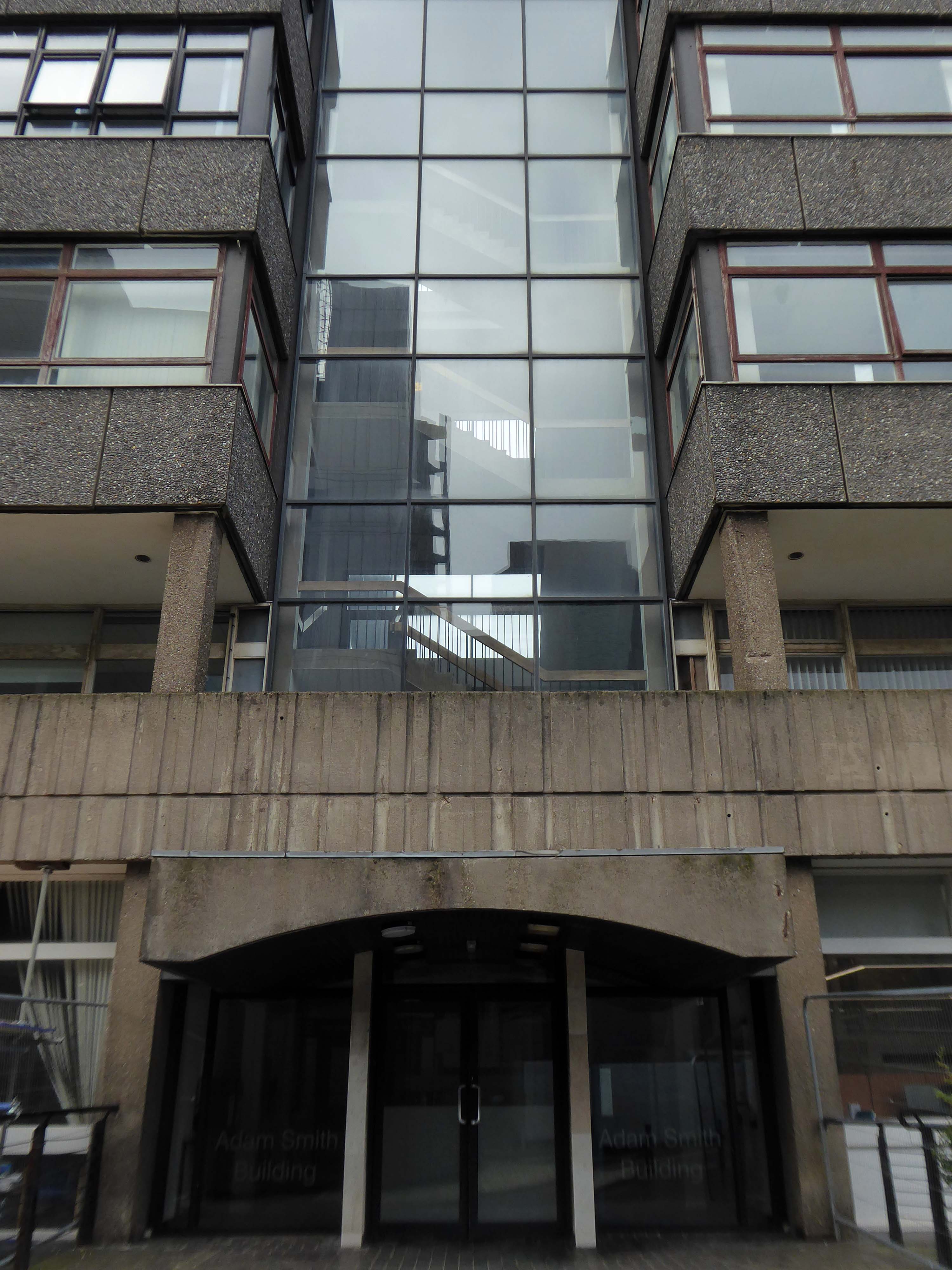
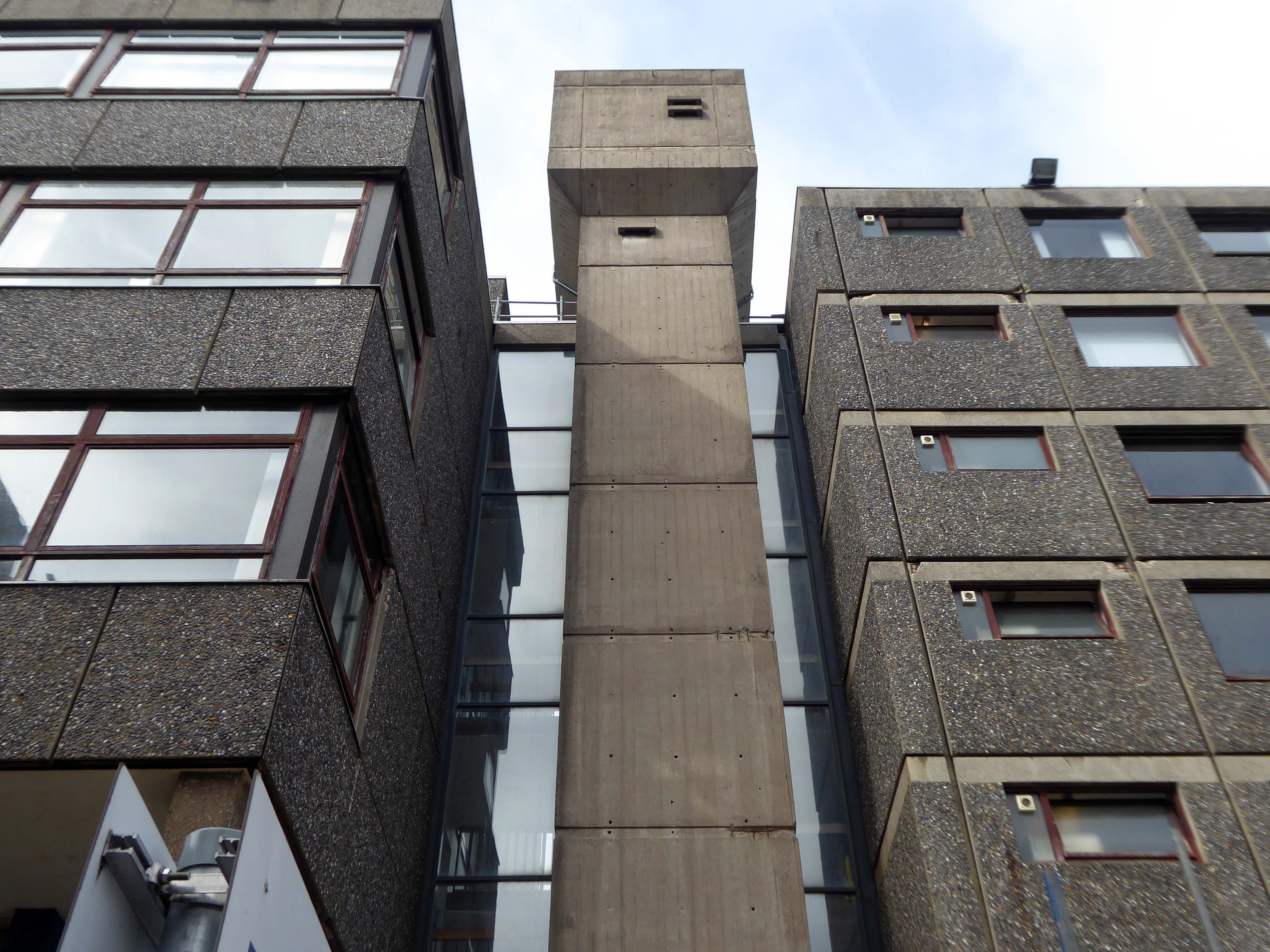
The Adam Smith Building, named in honour of the moral philosopher and political economist, Adam Smith, was formally opened on 2 November 1967 by Sydney George Checkland, Professor of Economic History from 1957 to 1982. The building was the first of the University’s multipurpose blocks housing a large number of departments, and a library for Political Economy, Social and Economic Research, Economic History, Political and Social Theory and Institutions, Management Studies, Psychology, Social Psychology, Accountancy, Citizenship, Anthropology, Criminology, Industrial Relations, and the School of Social Study. A records store was provided beneath the Library for the Economic History department to house their rapidly growing collection of business records from the vanishing Clyde shipyards and heavy engineering workshops, which now form part of the Scottish Business Archive held at University of Glasgow Archive Services.
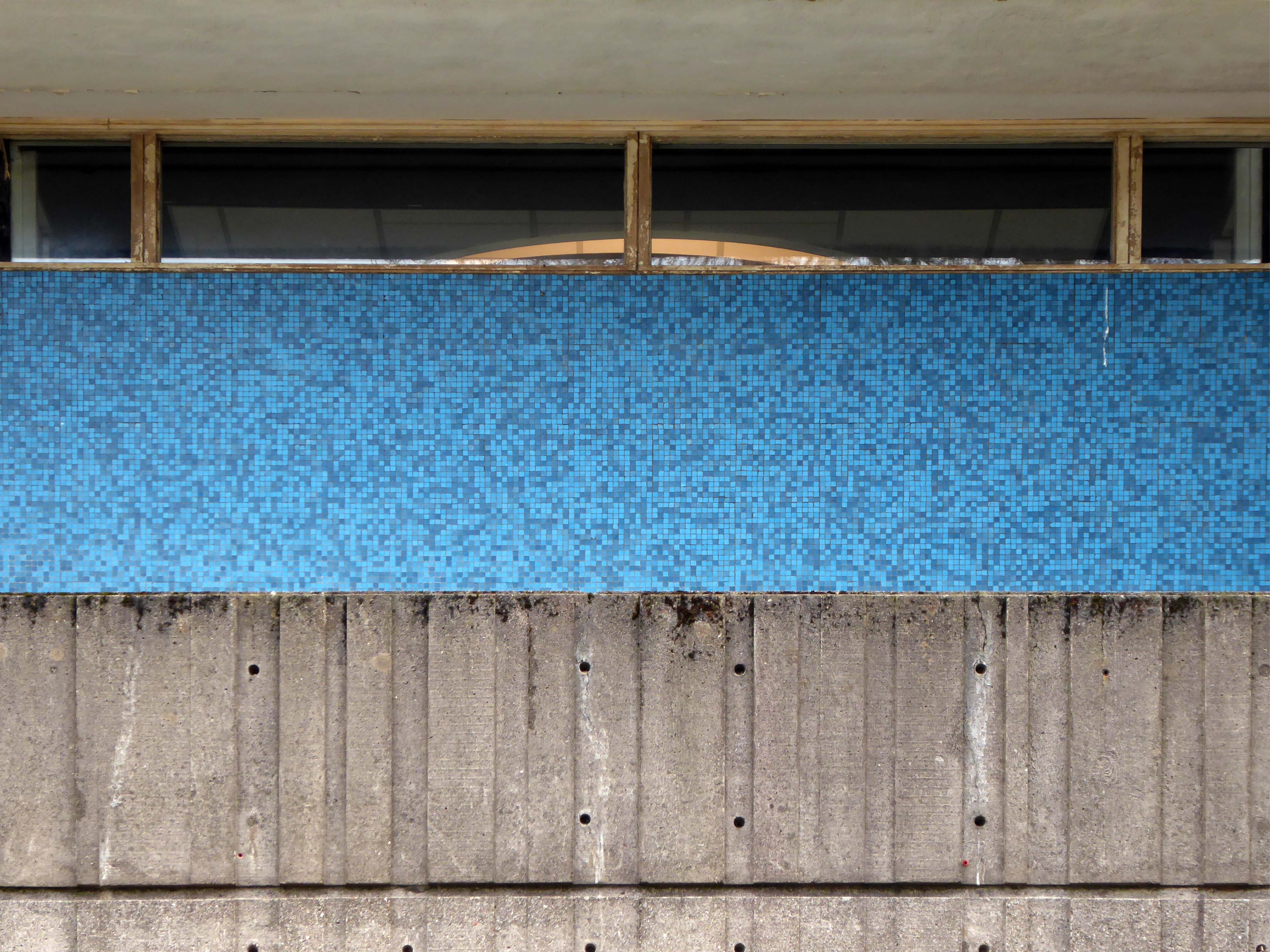
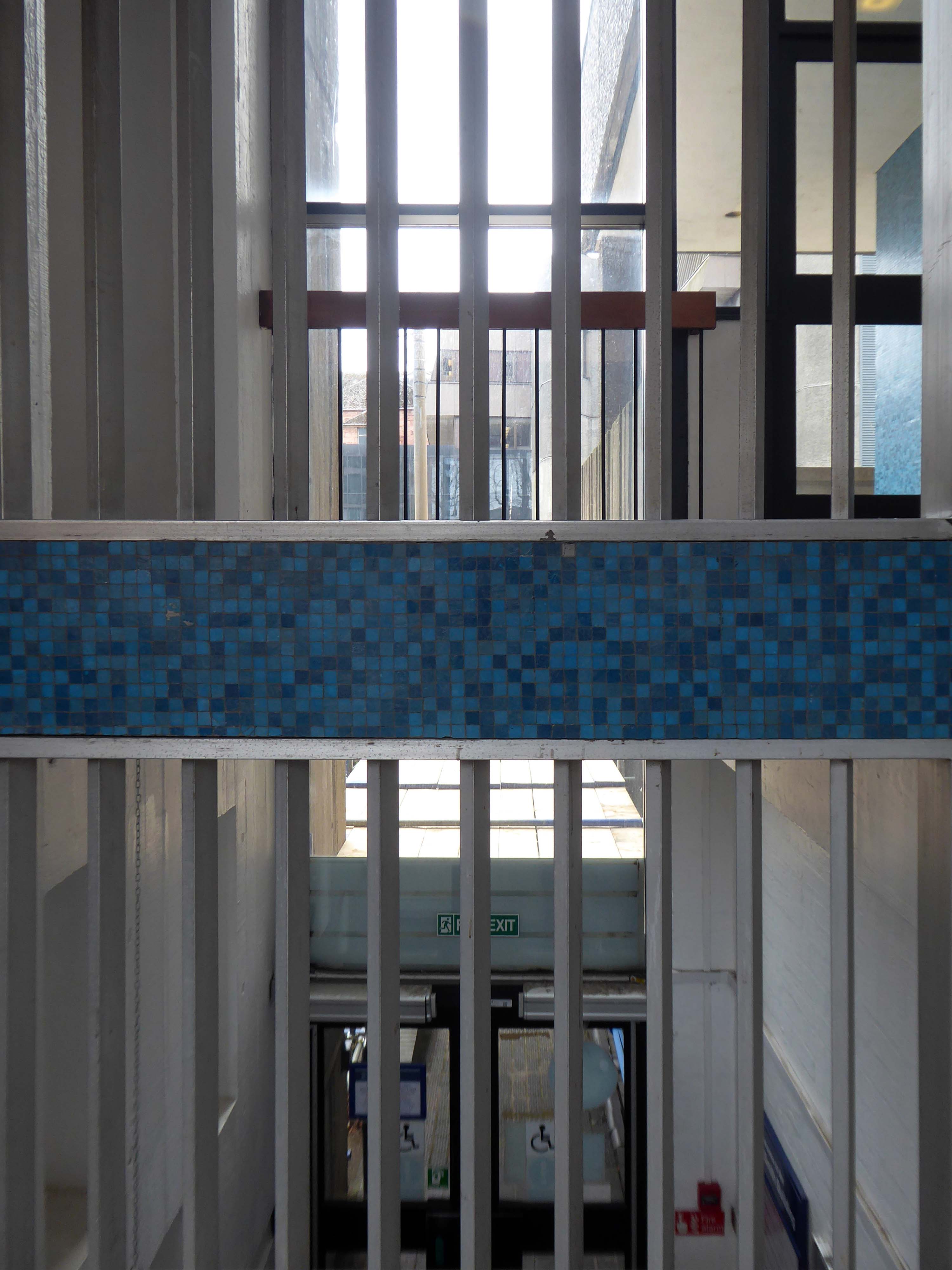
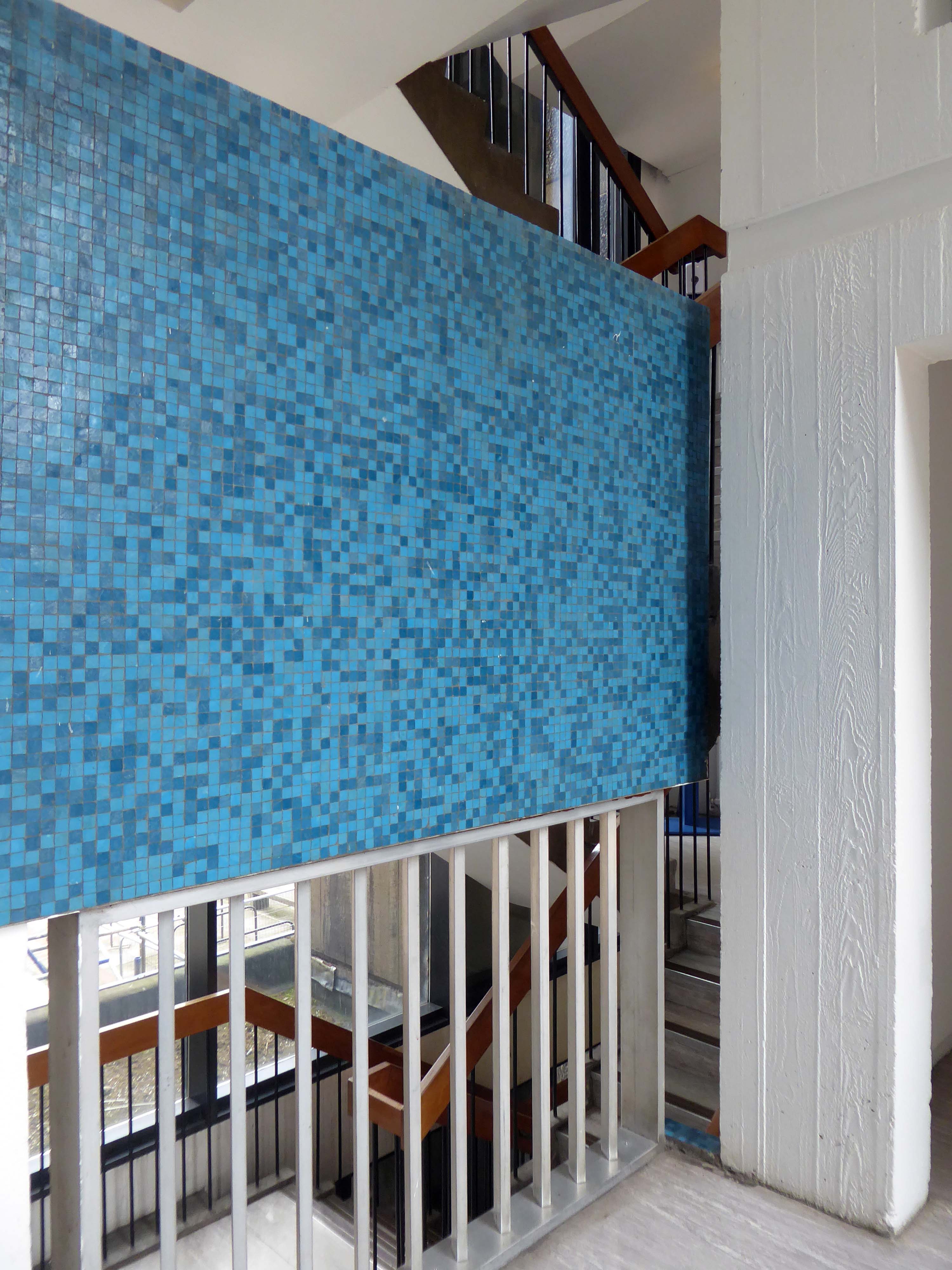
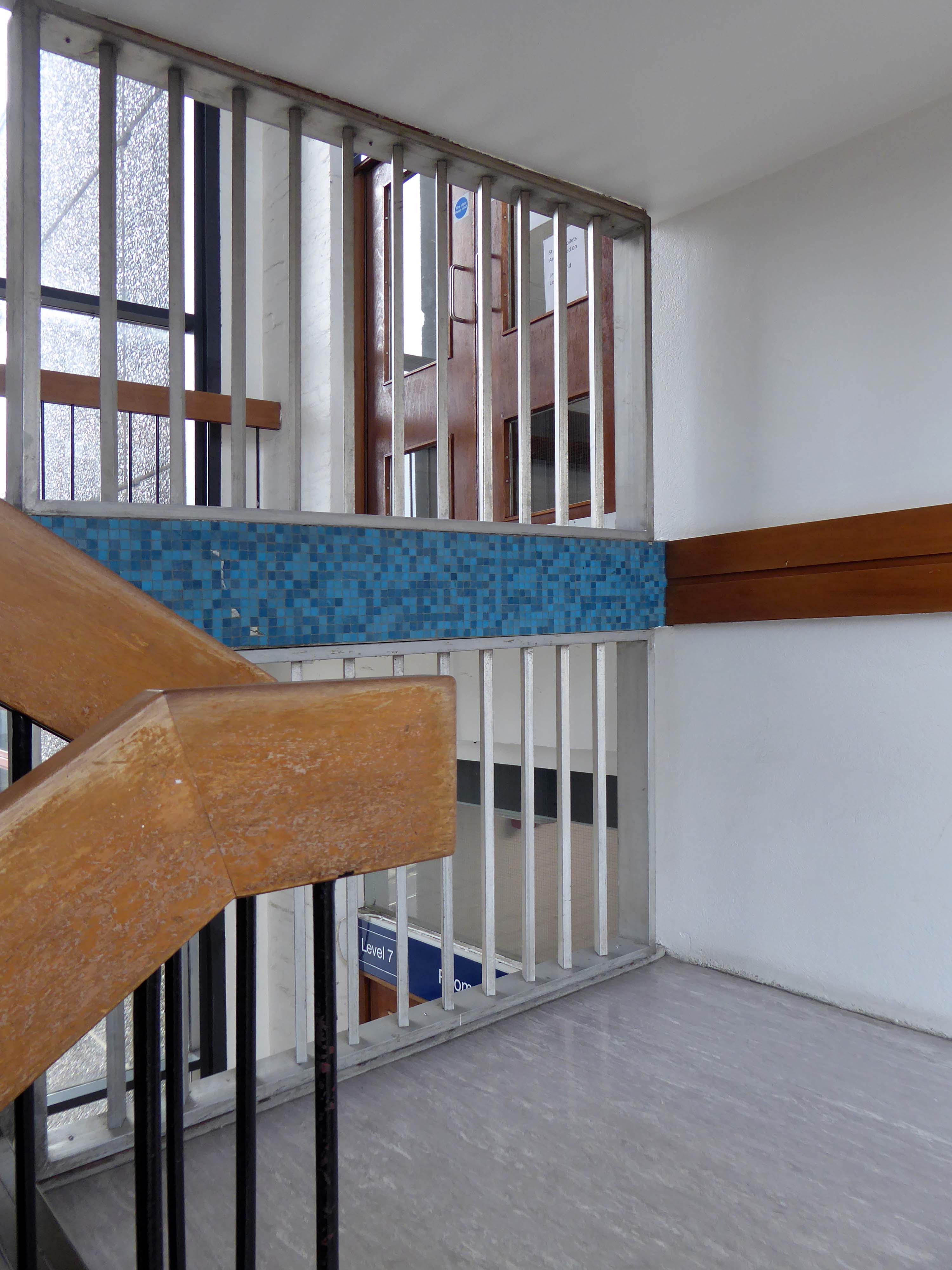
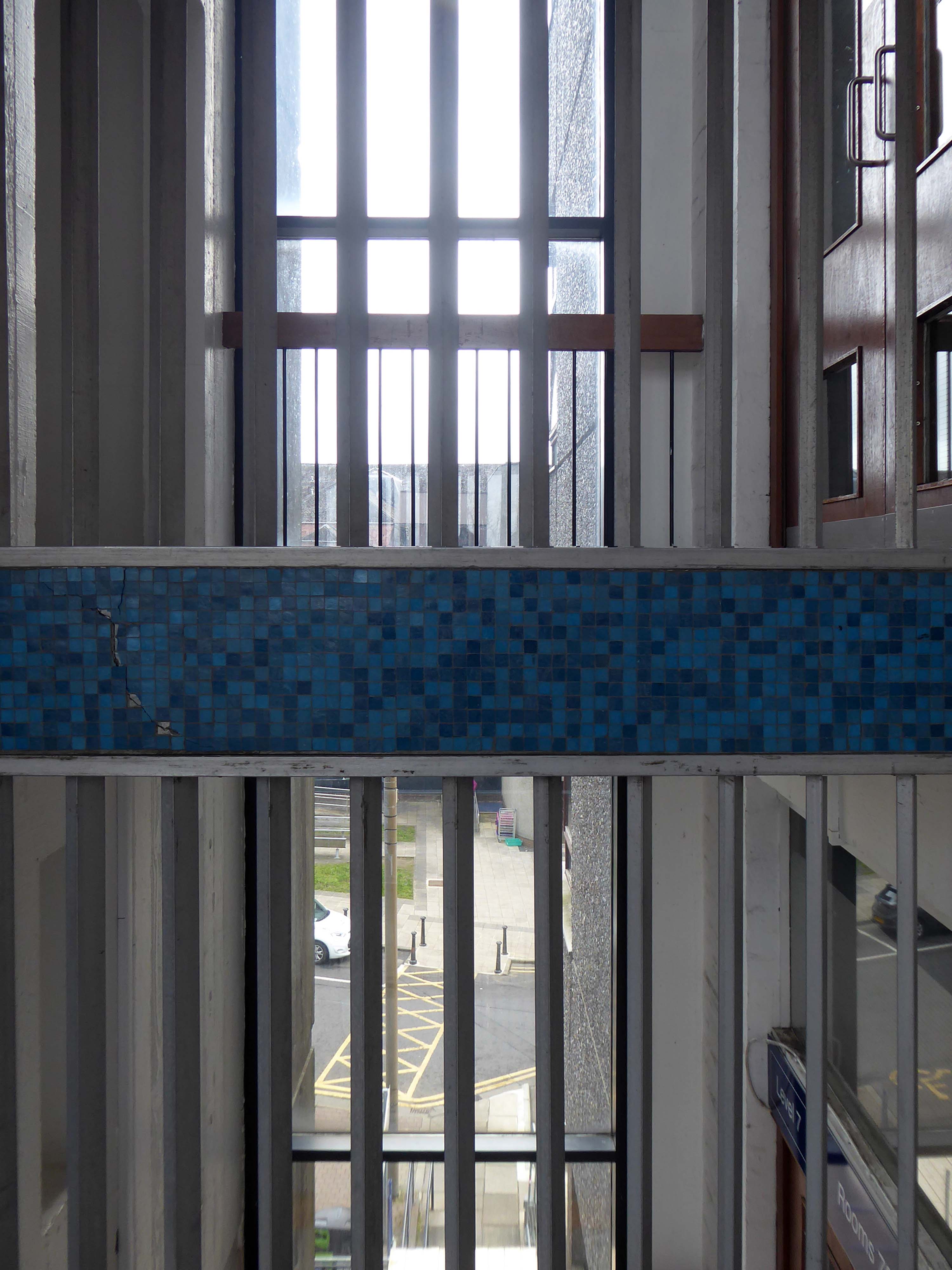
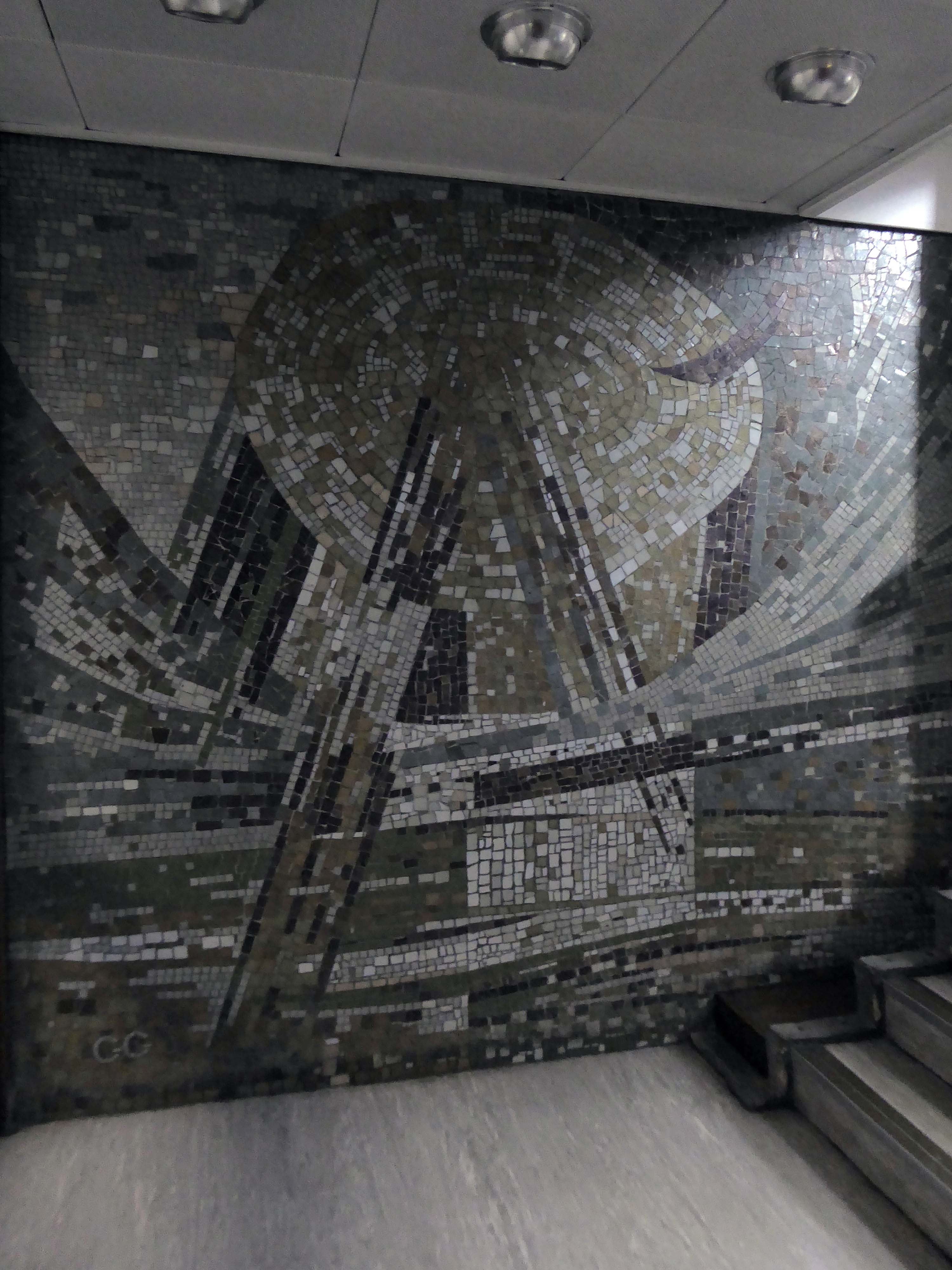
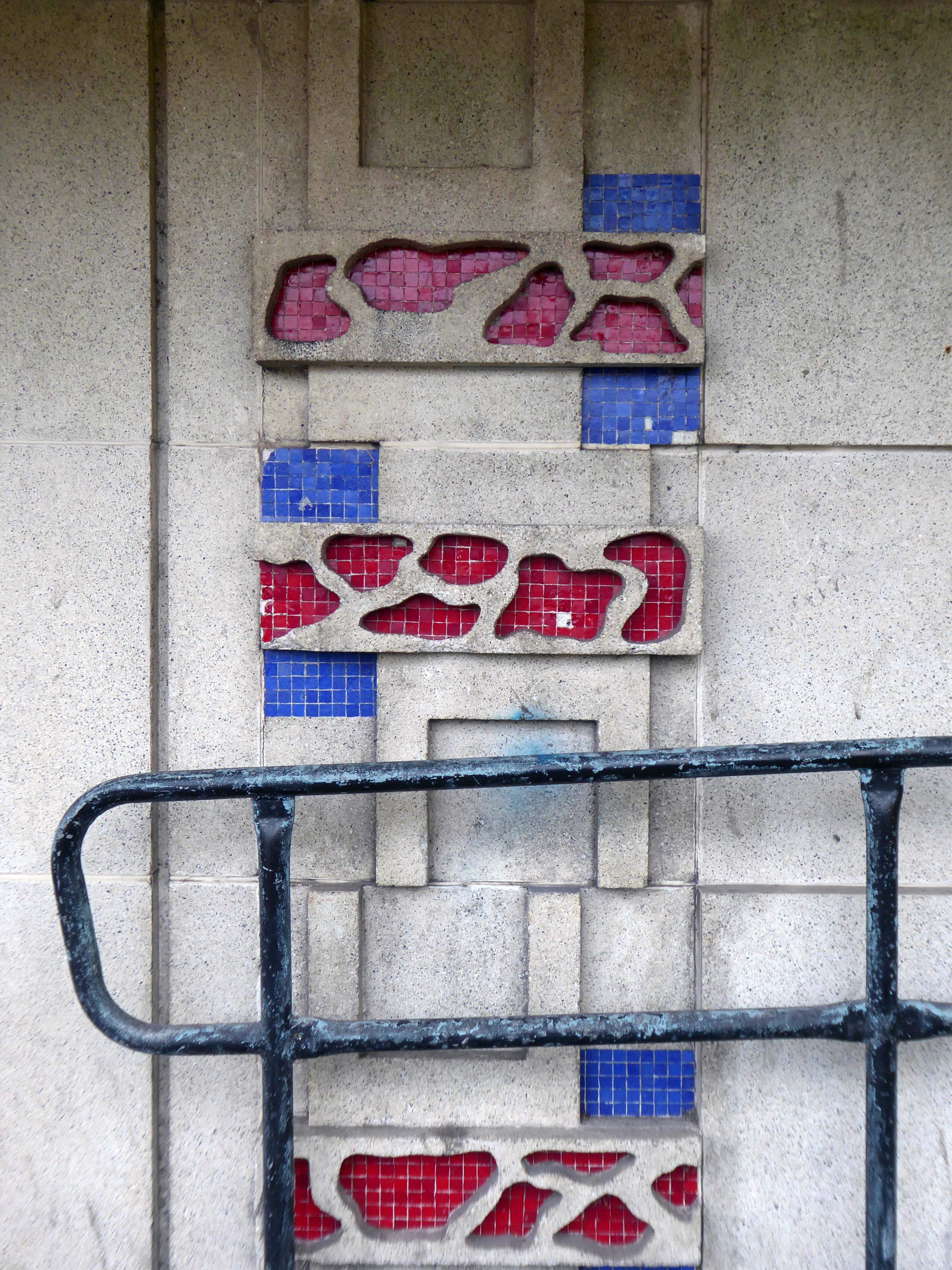
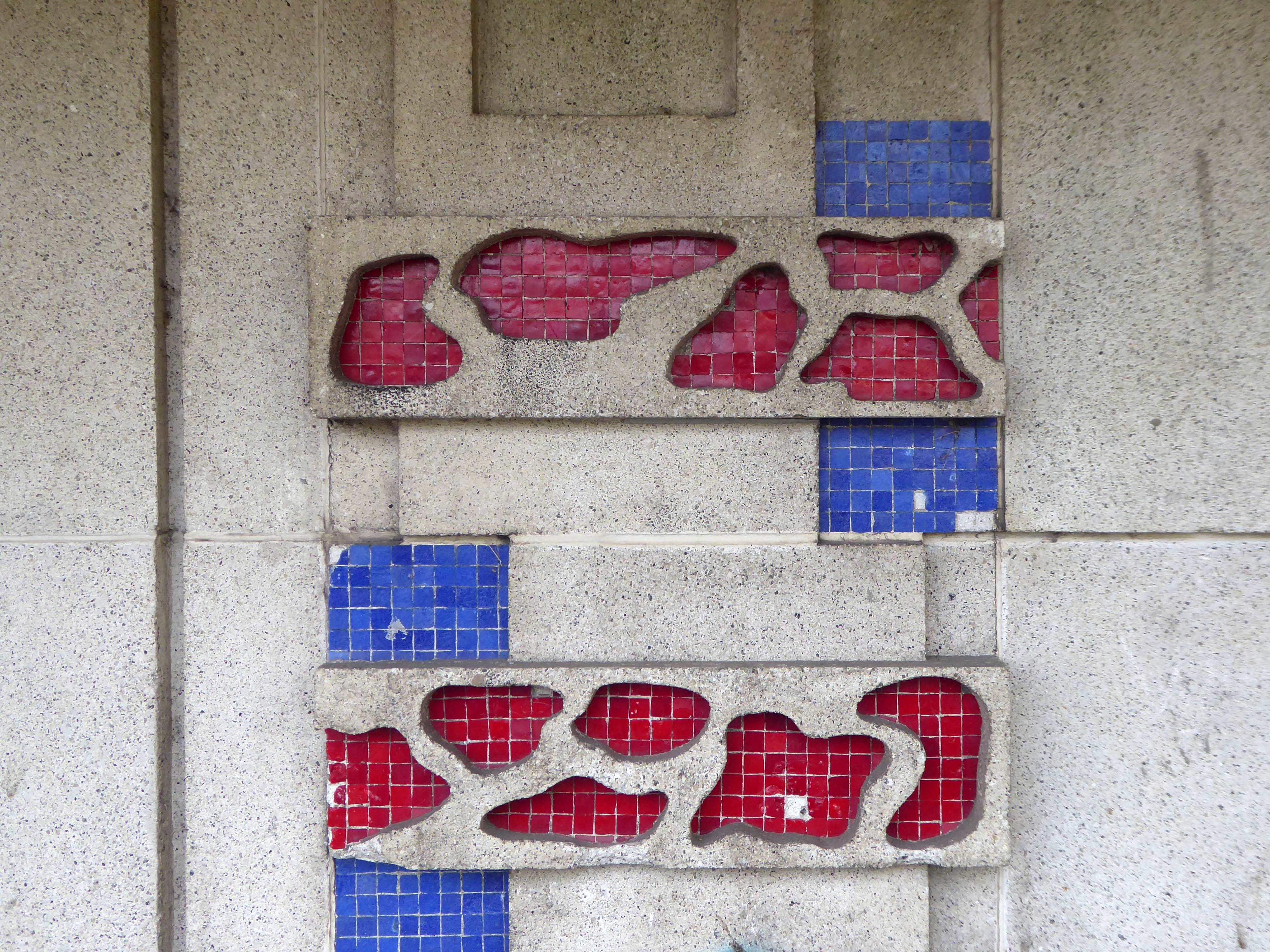
Wandering almost aimlessly around the campus, when the blue mosaic caught my eye.
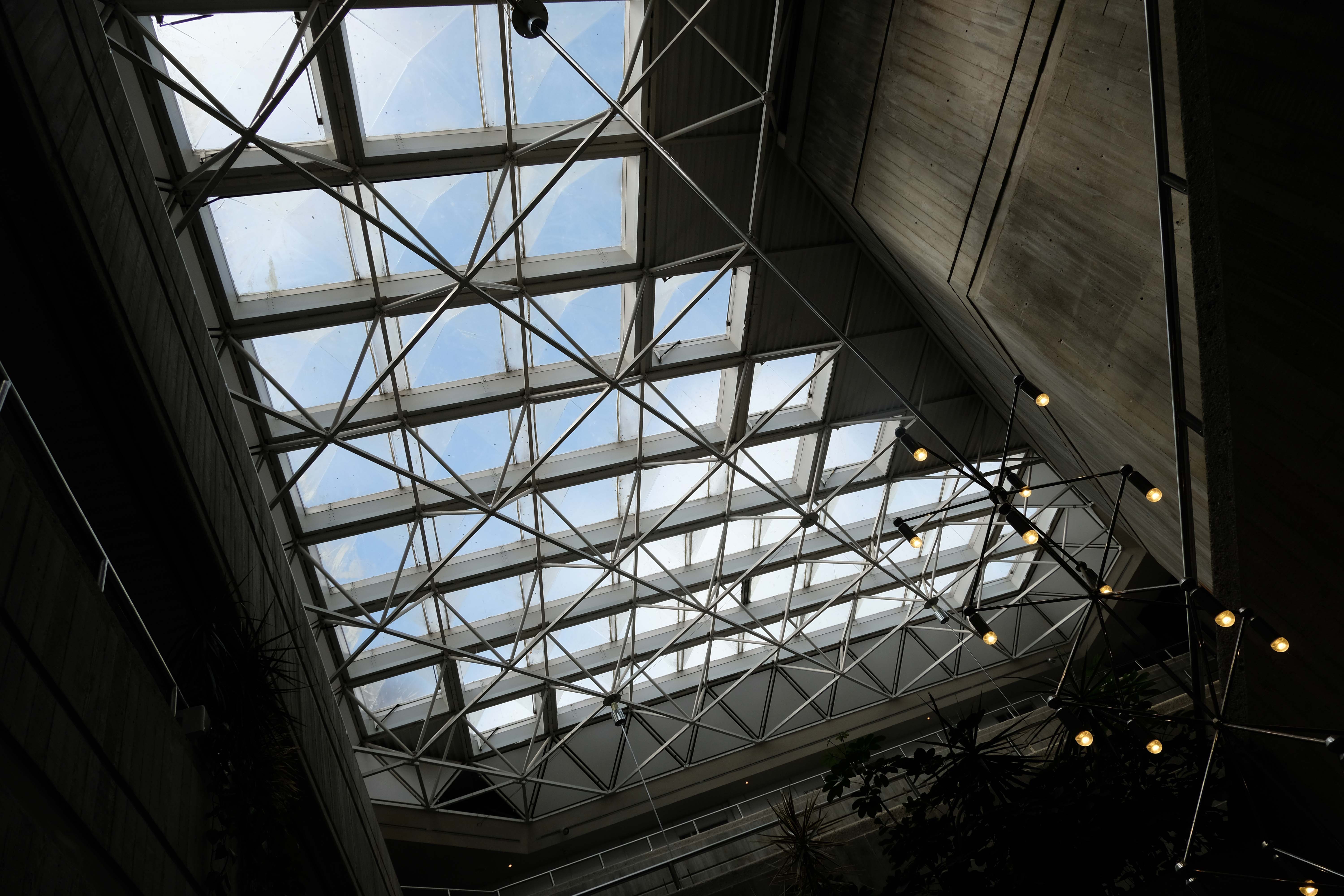
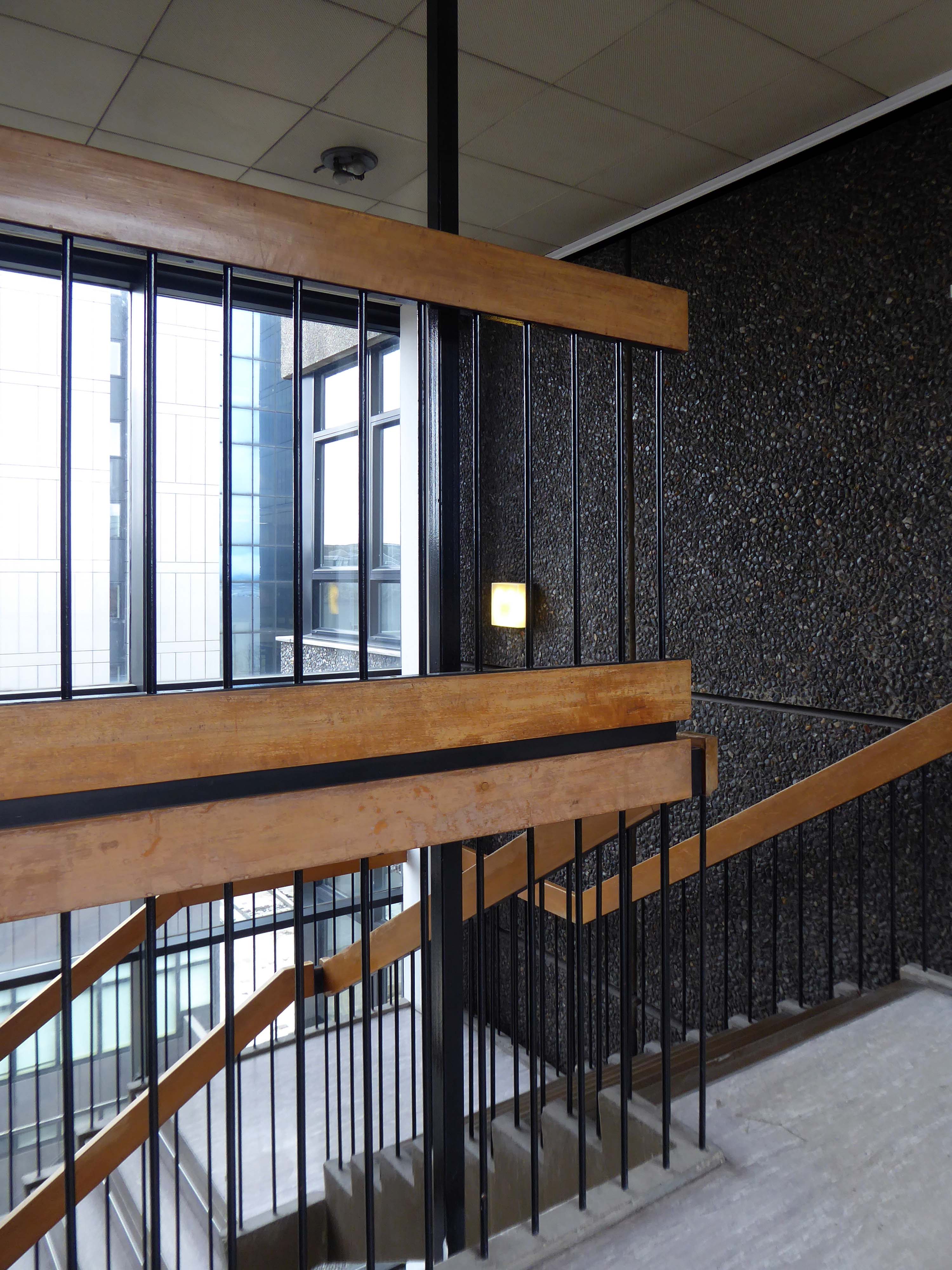
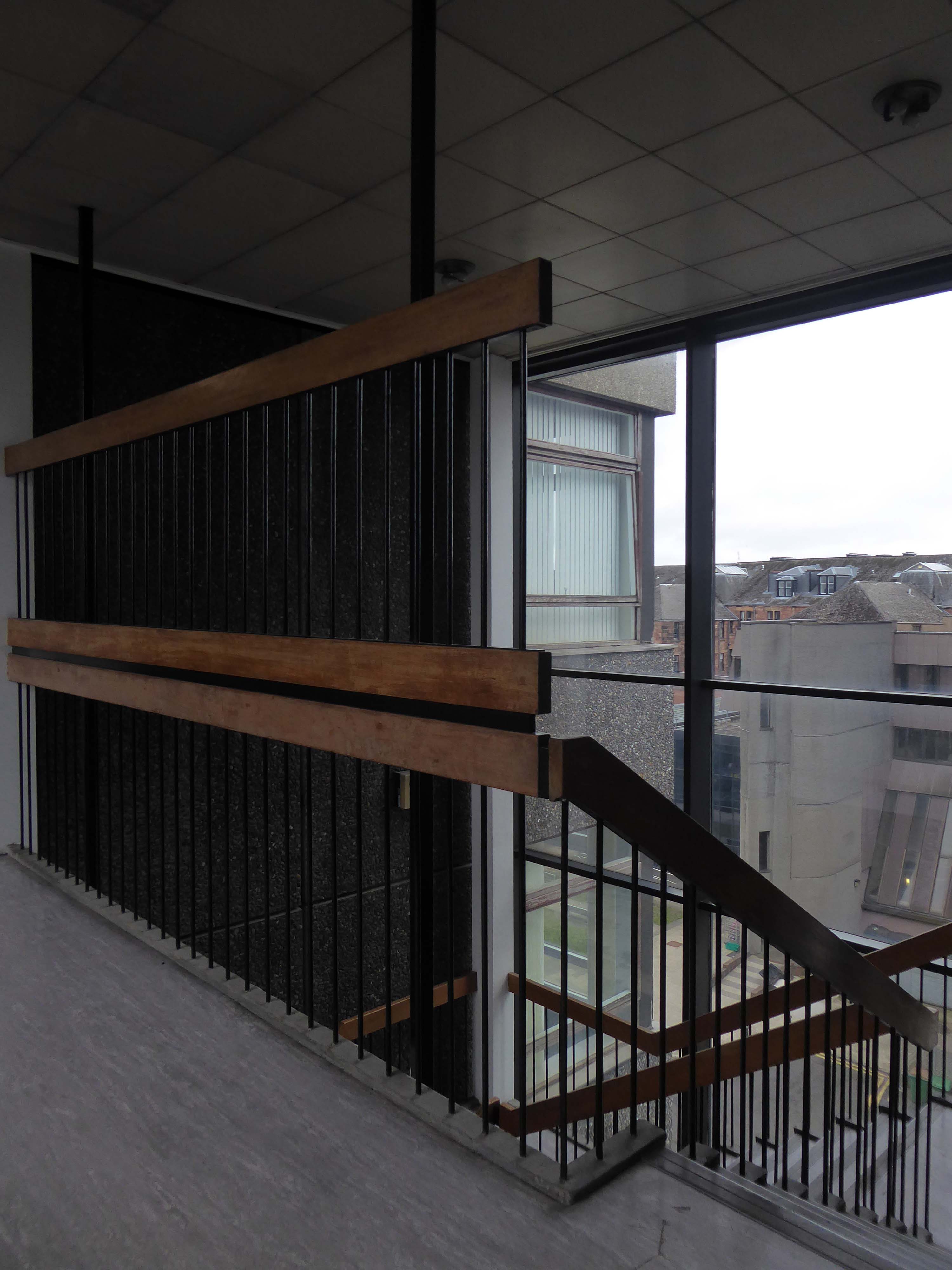
The glass stairwell drew me in further.
Entering the building I explained myself to the passing janitor:
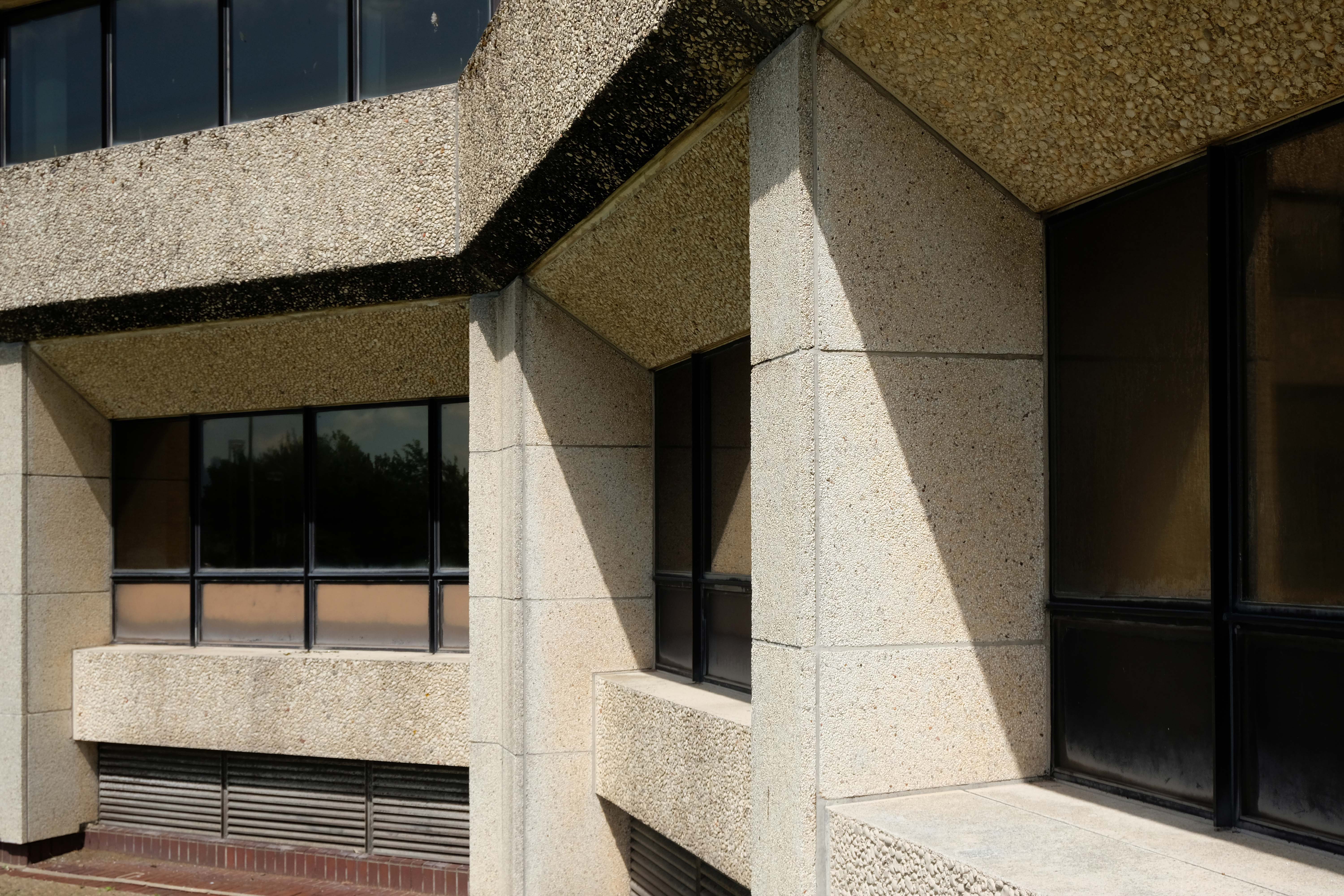
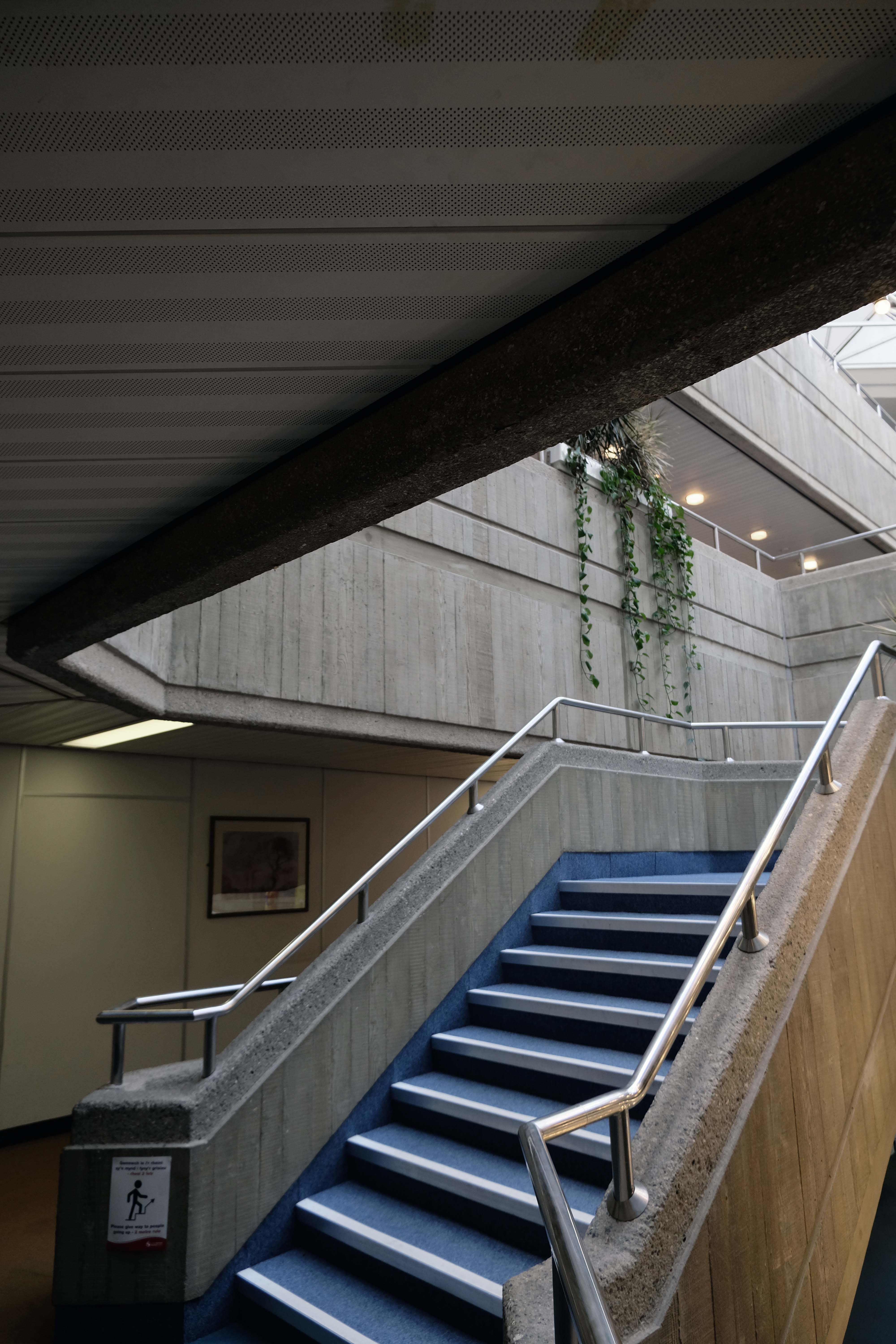
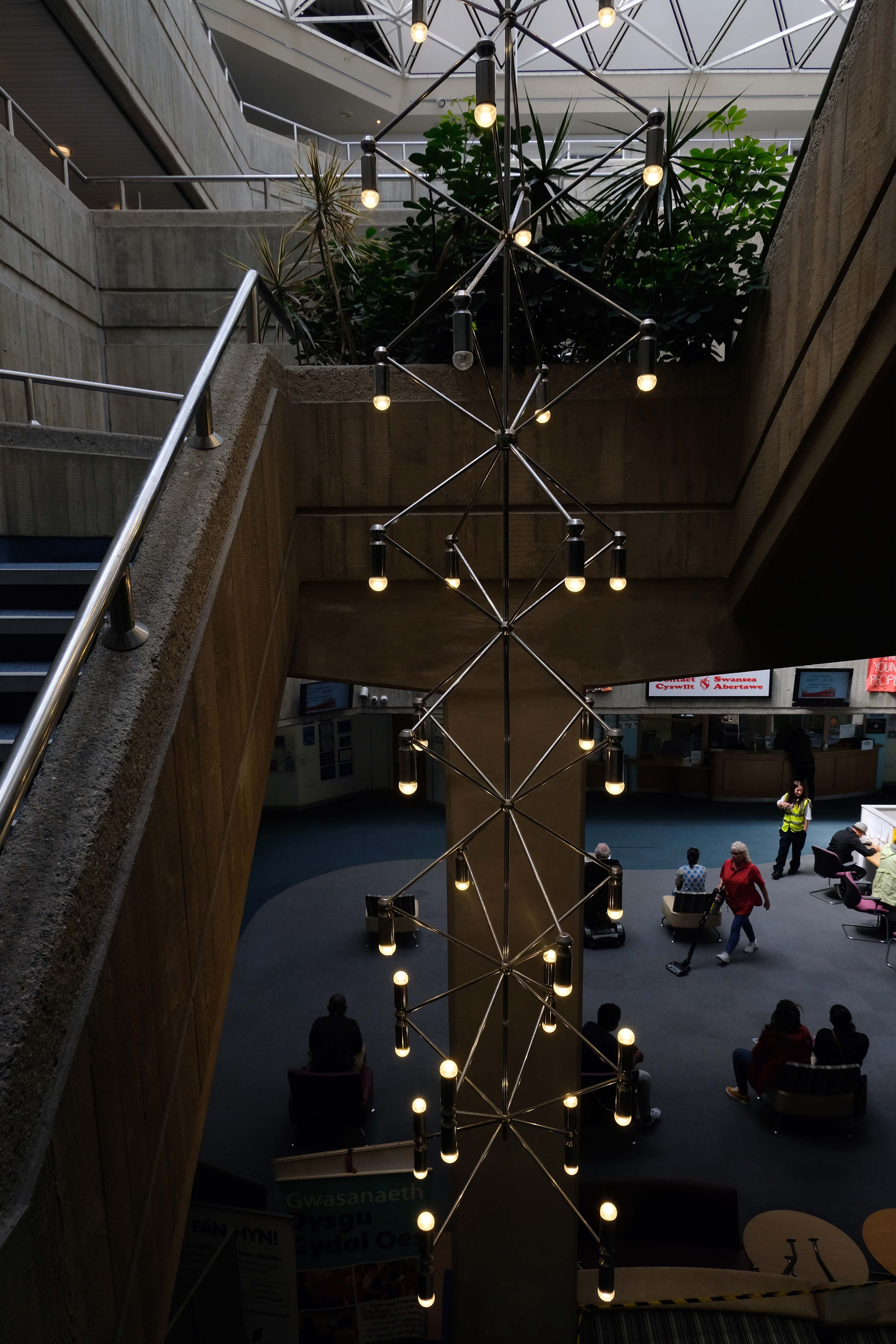
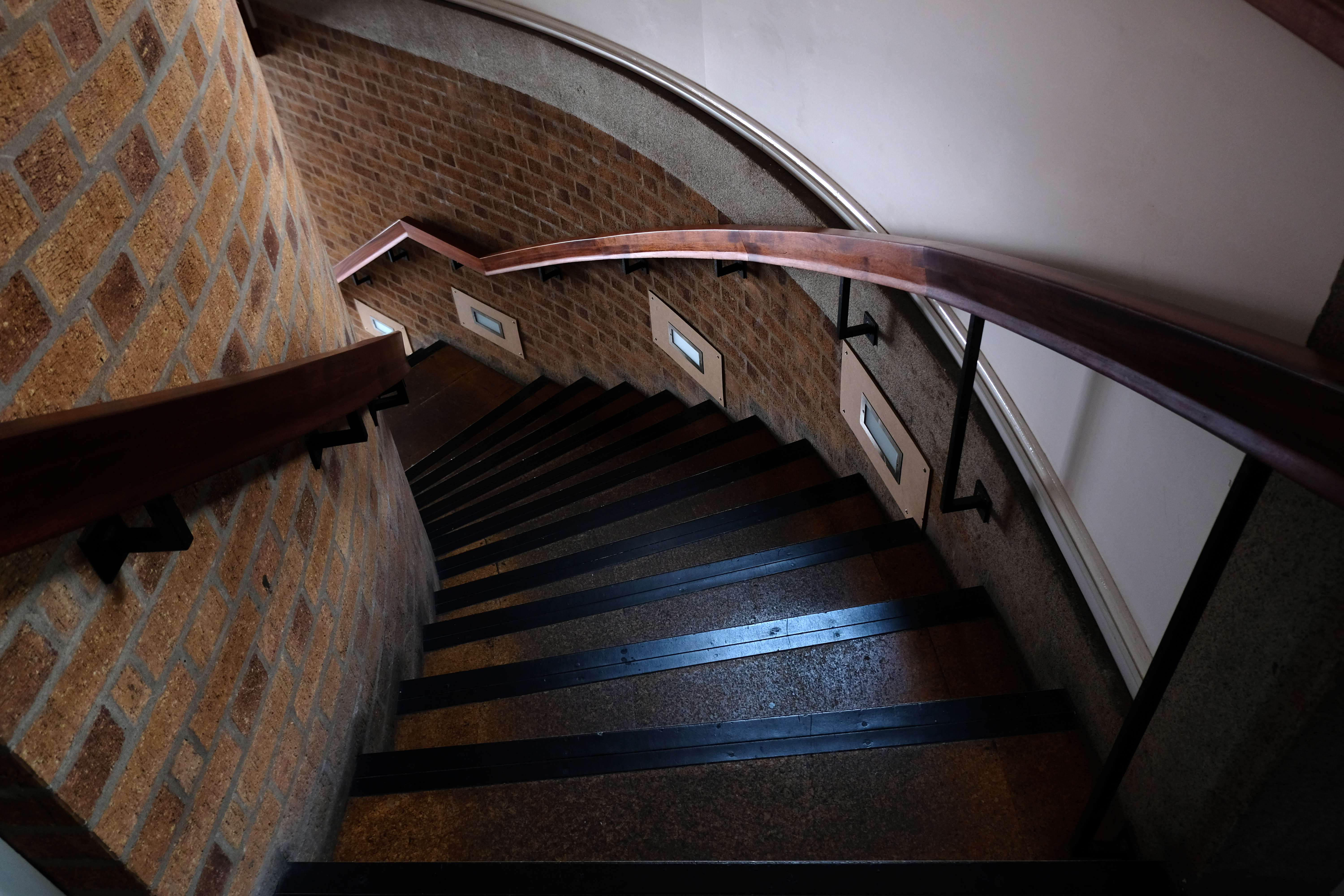
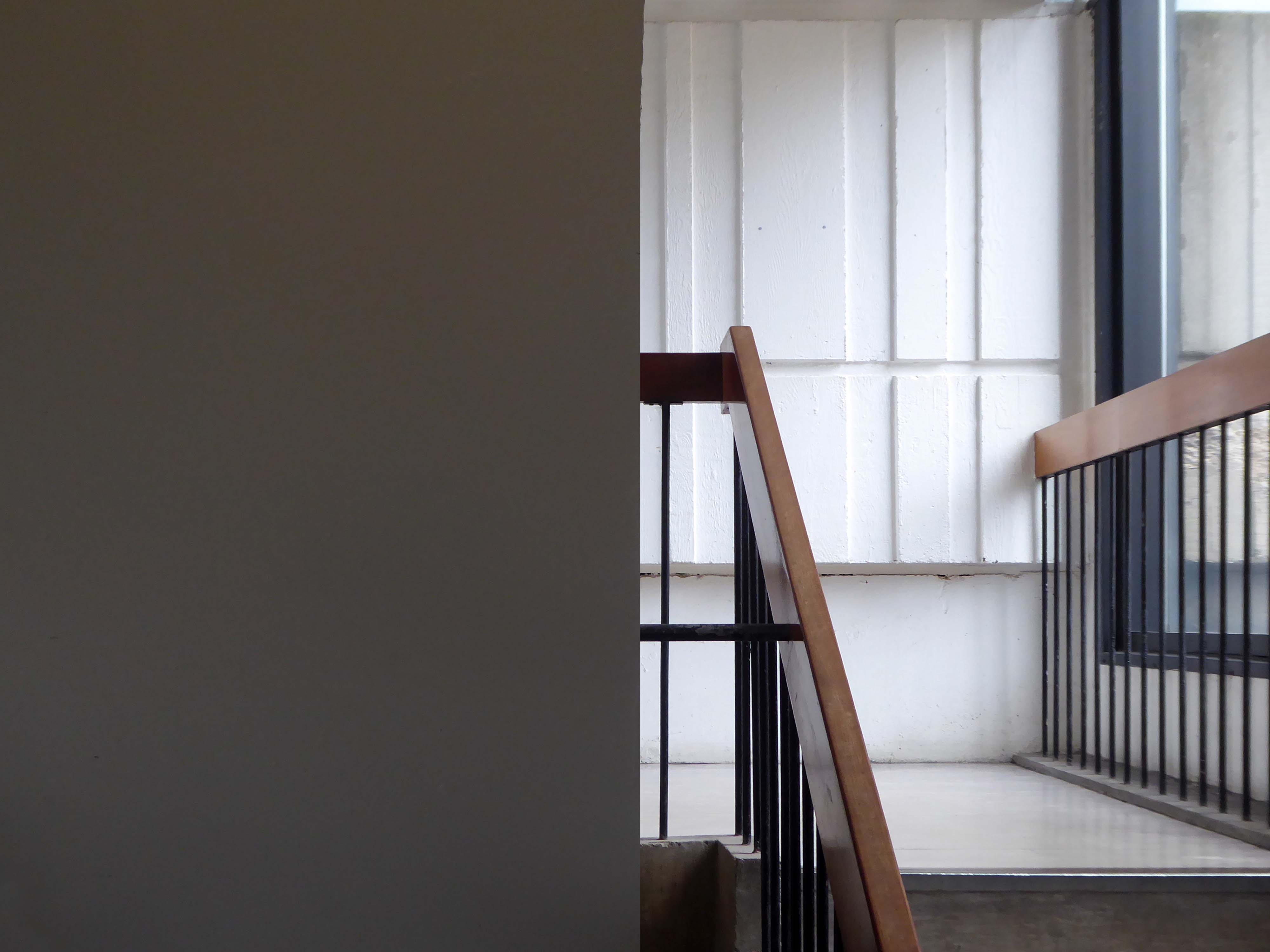
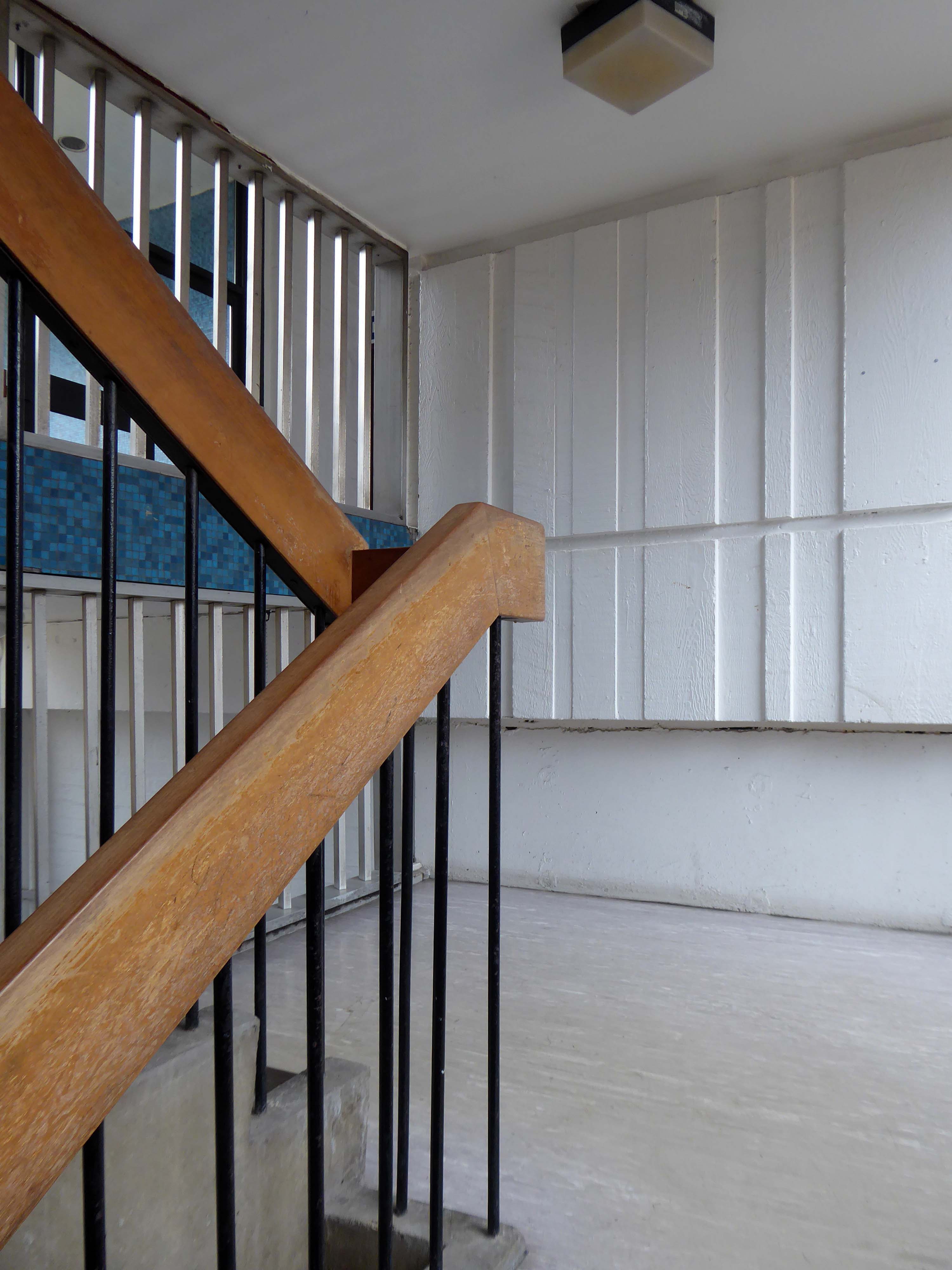
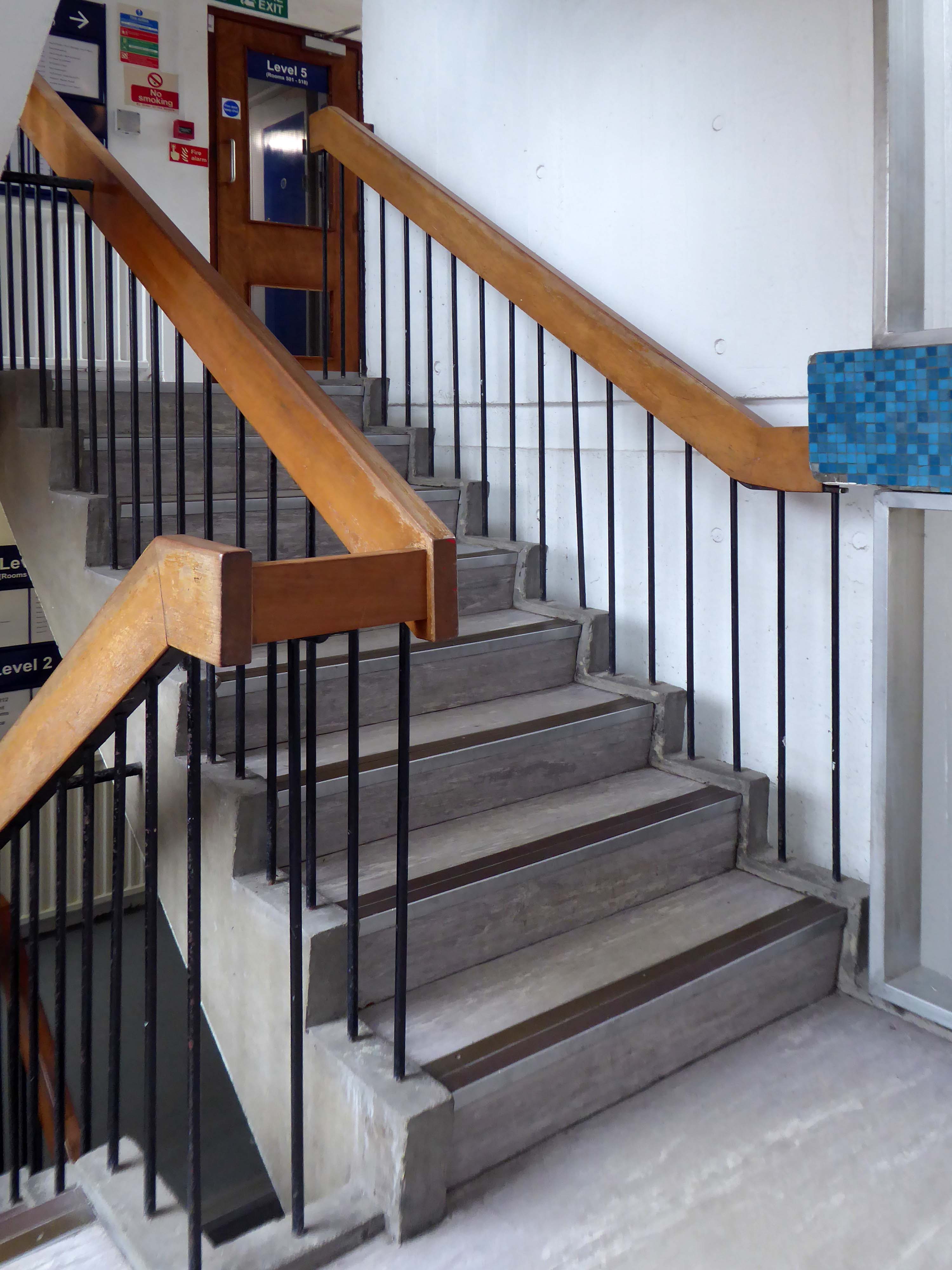
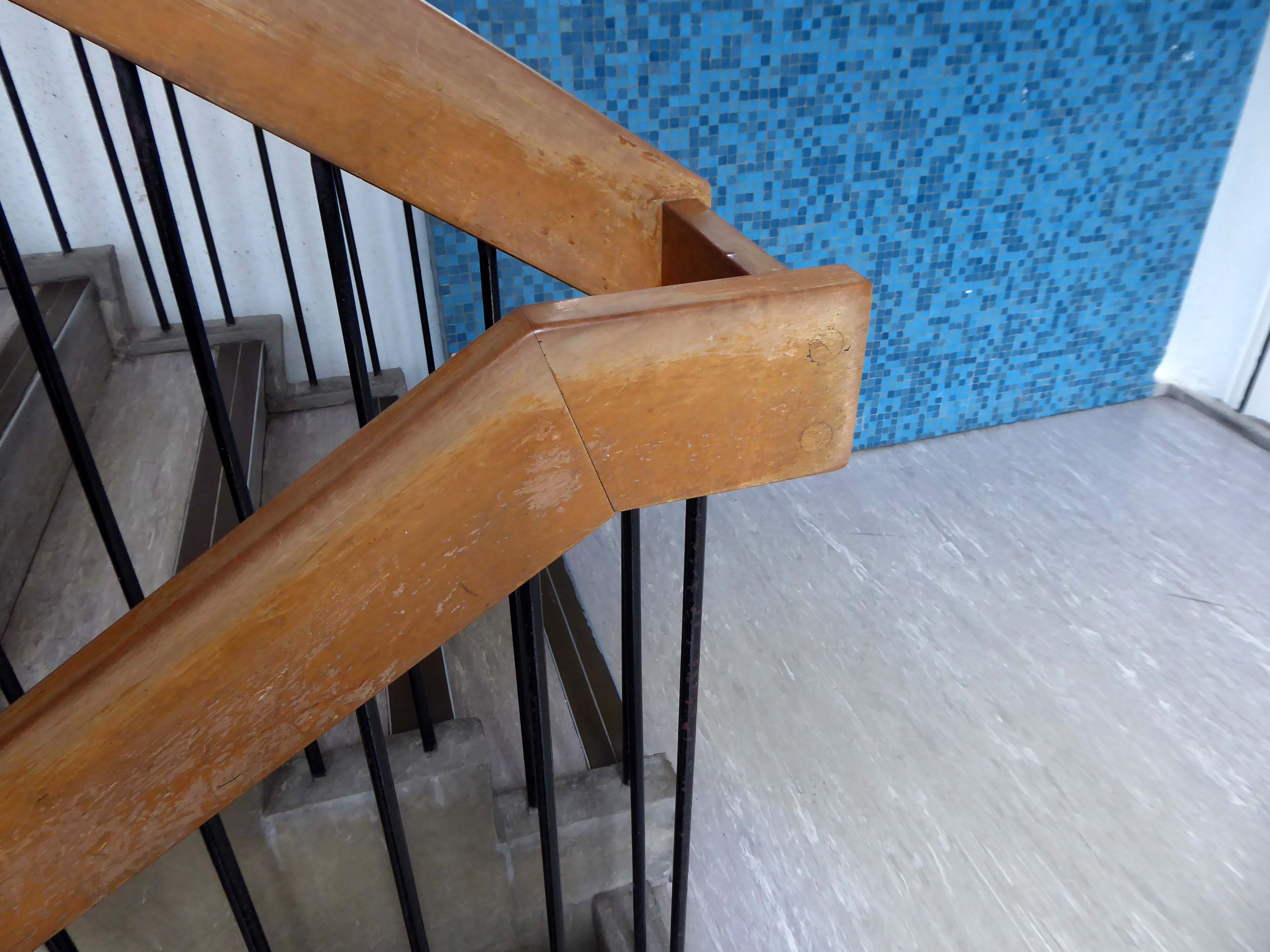
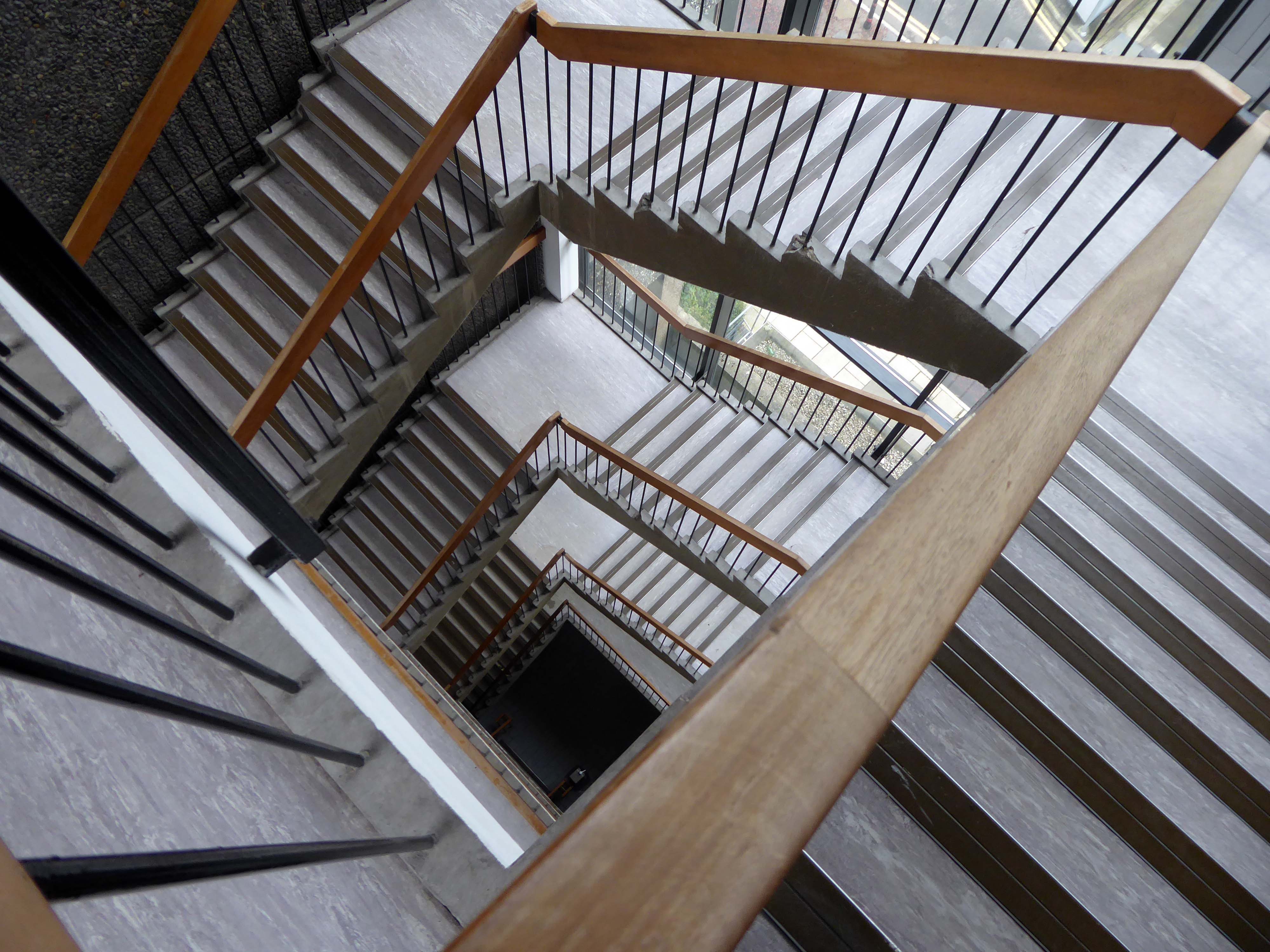
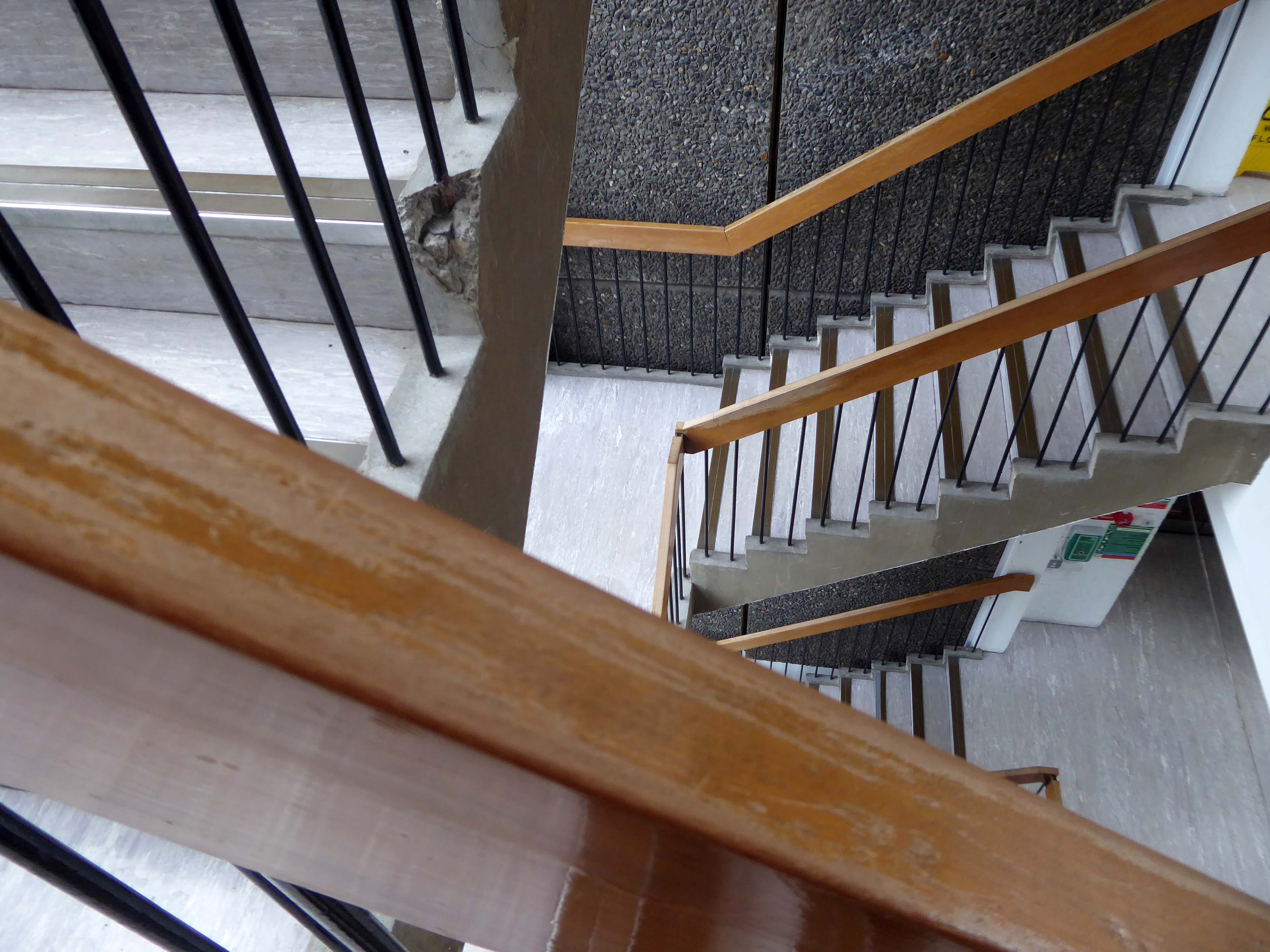
I’m intrigued by the stairways of 1960s civic buildings.
There are two – he helpfully replied.
Further intrigued I took a good look around – first up one.
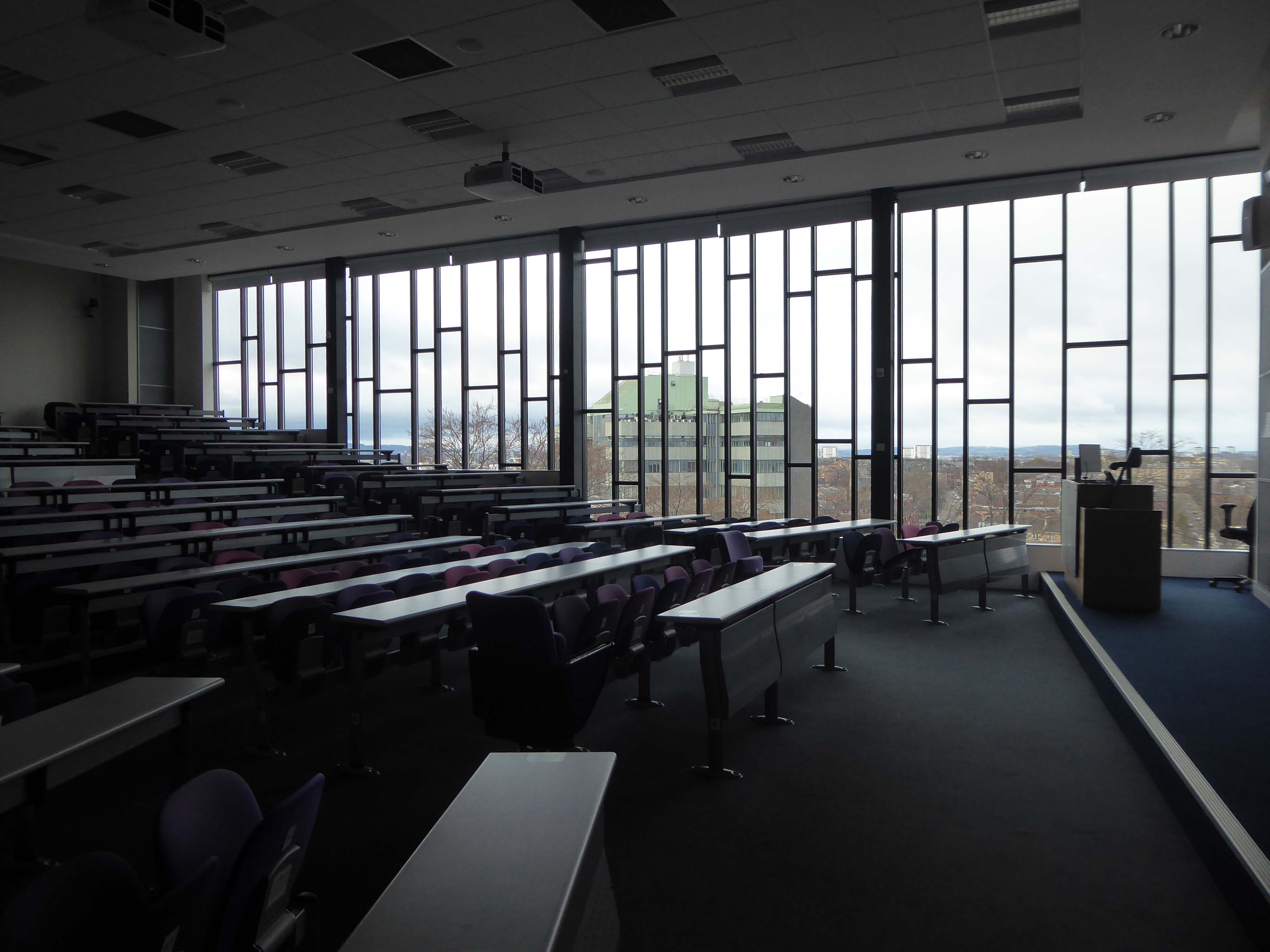
Reaching the top and discovering the Lecture Theatre.
Then down the other.
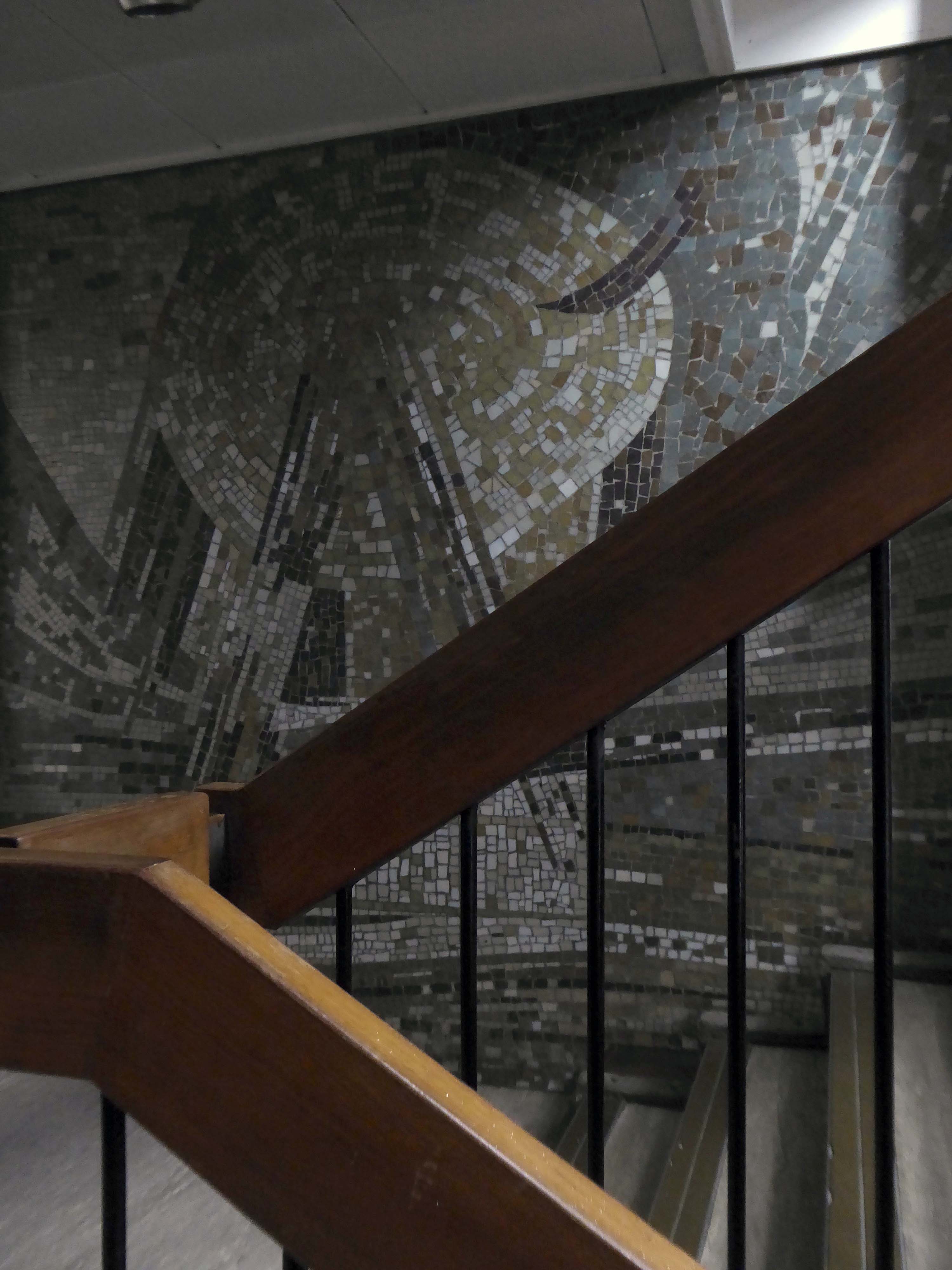
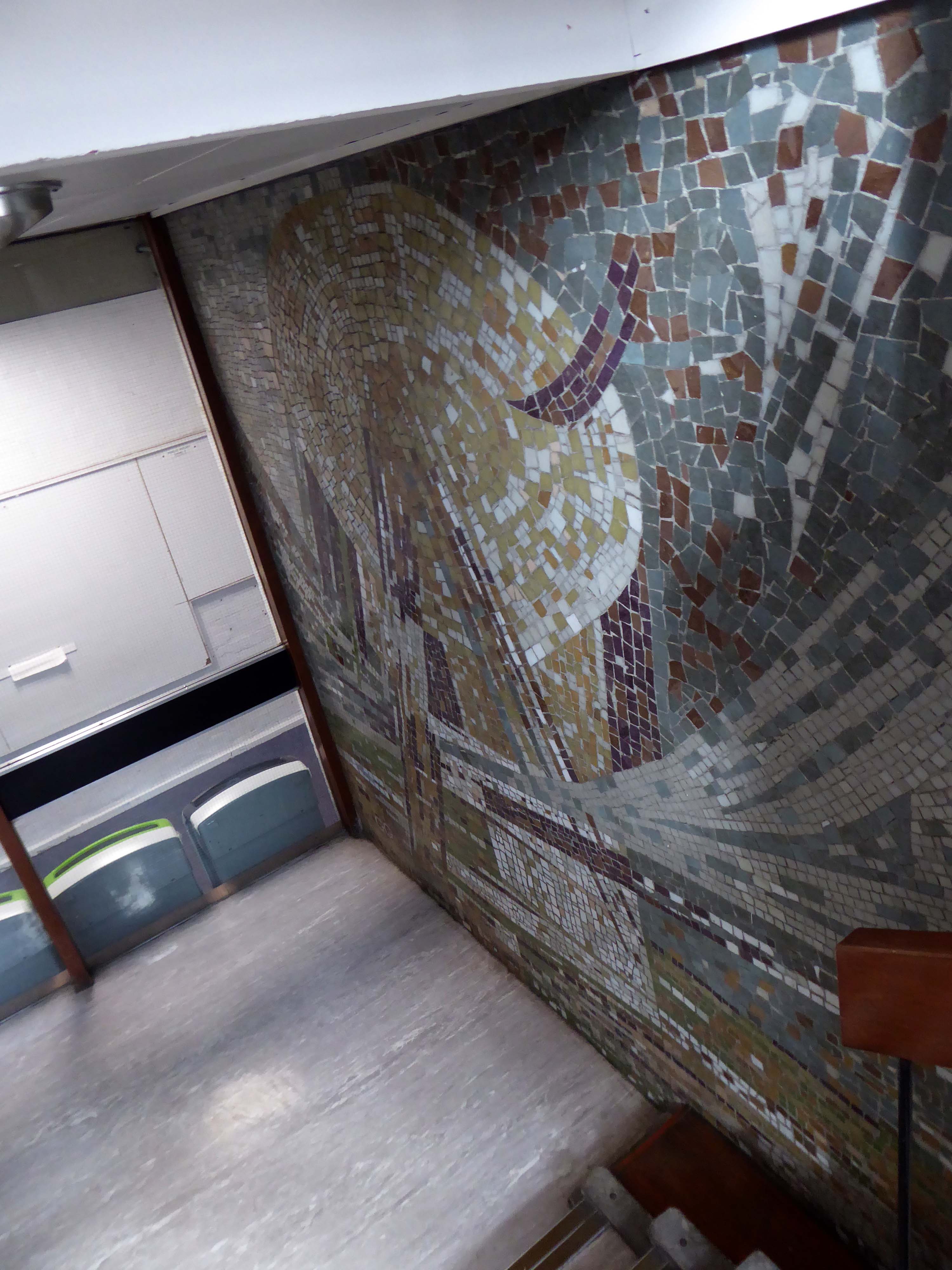
The mosaic mural at the foot of the main staircase was the work of George Garson, the head of the Mural Design and Stained Glass department at the Glasgow School of Art.
A quick look around the outside and then on my way.
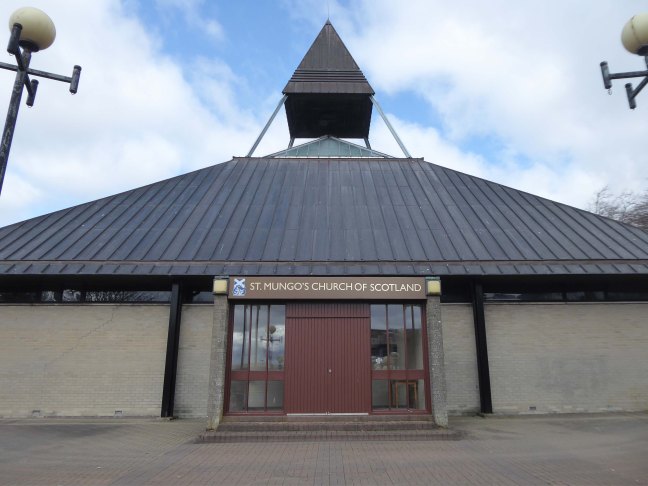
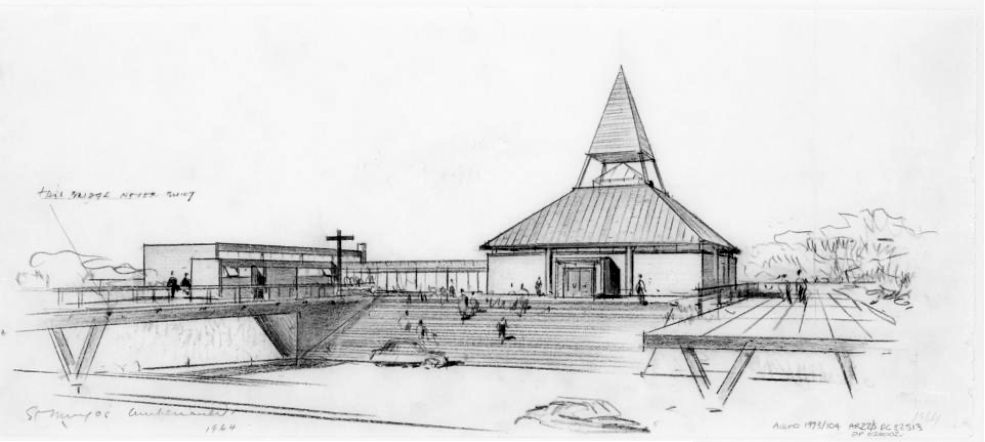
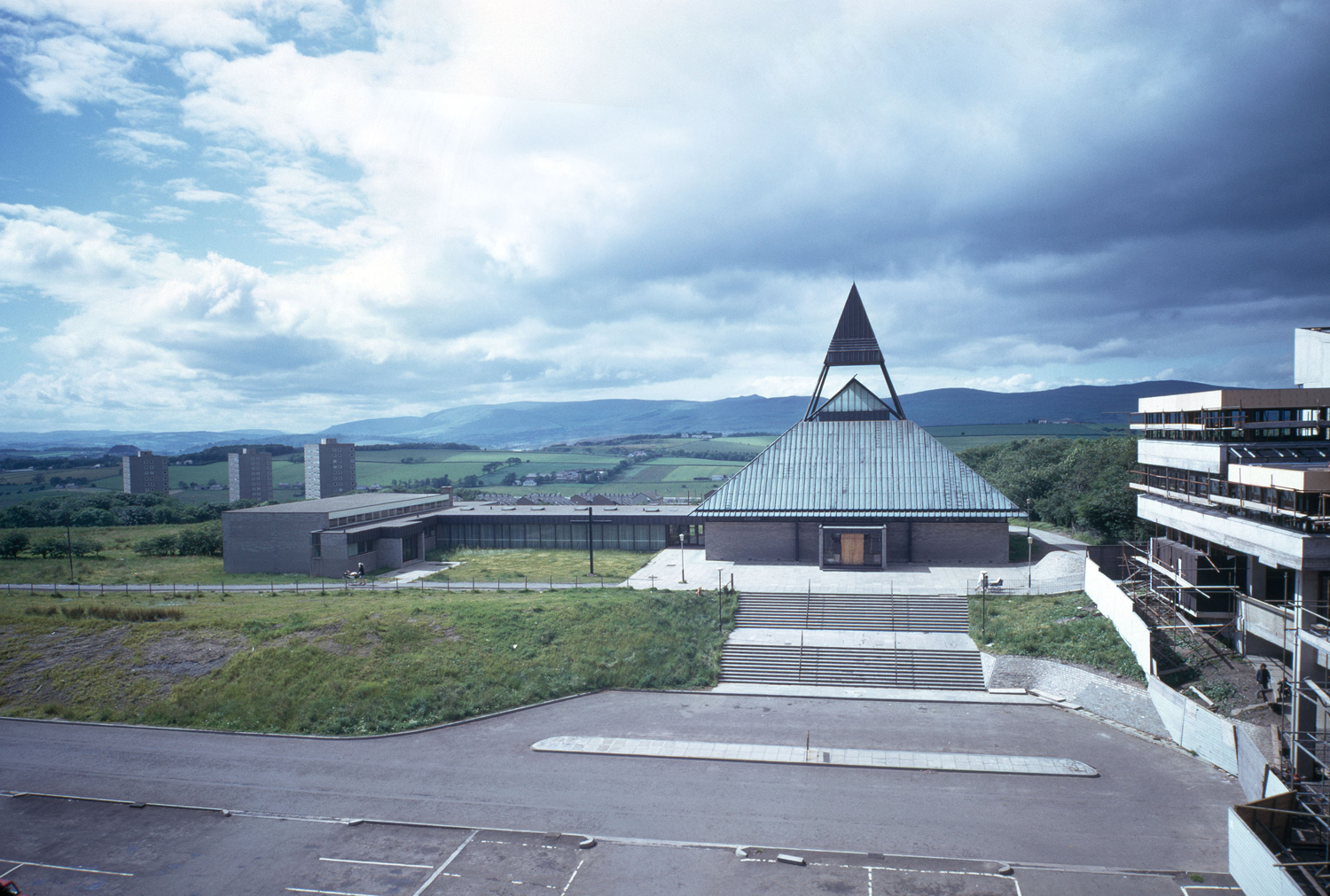
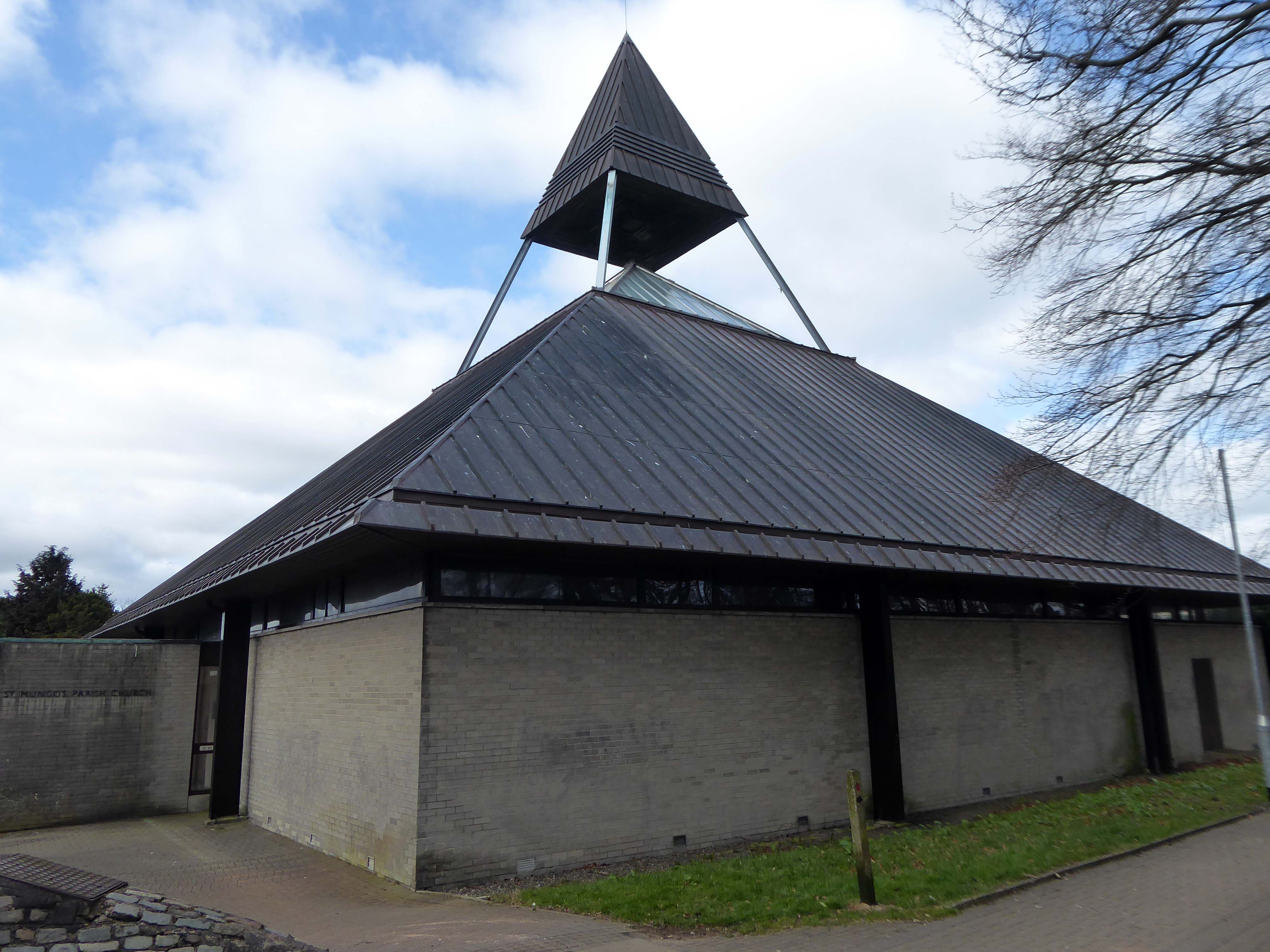
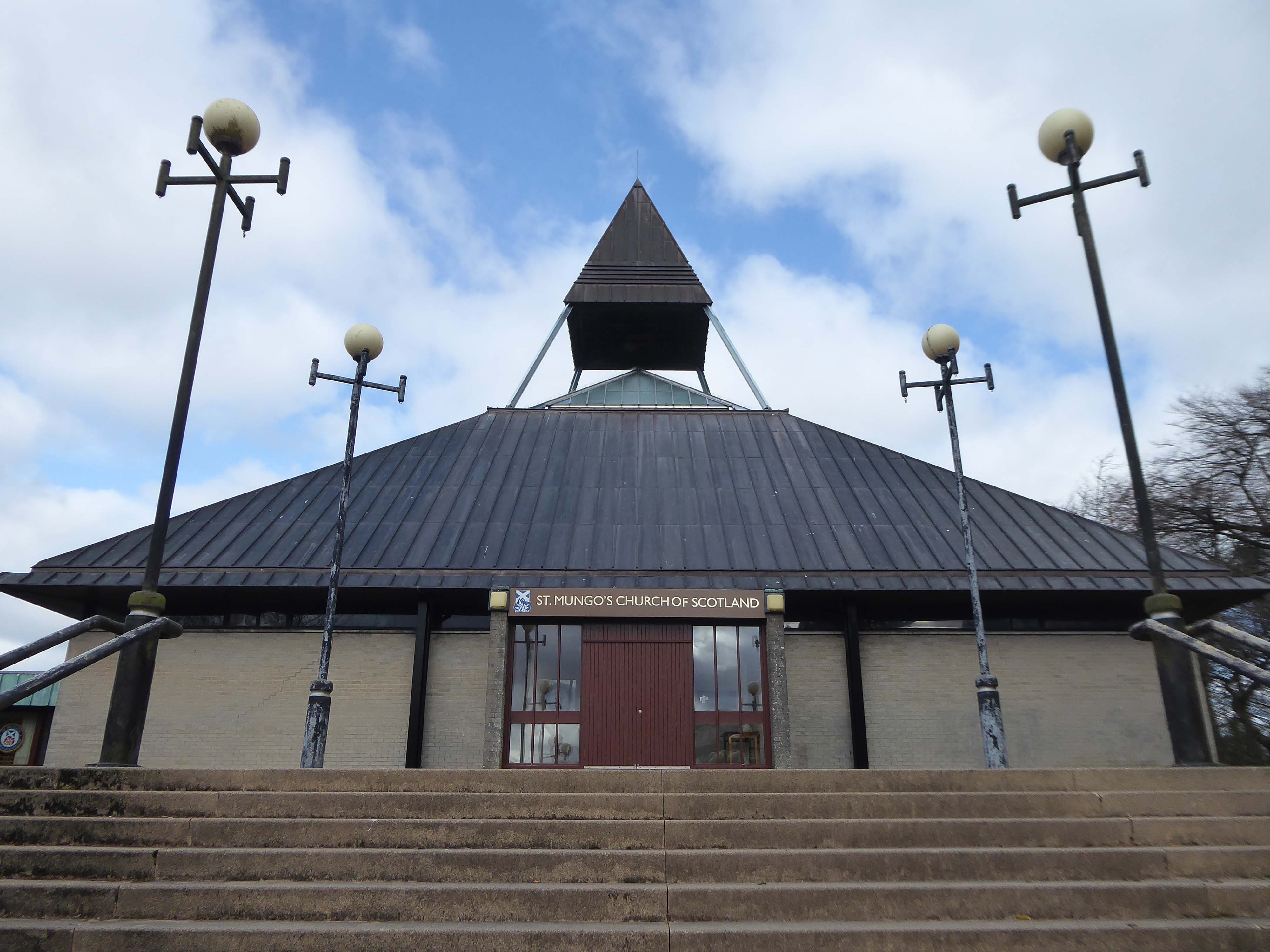
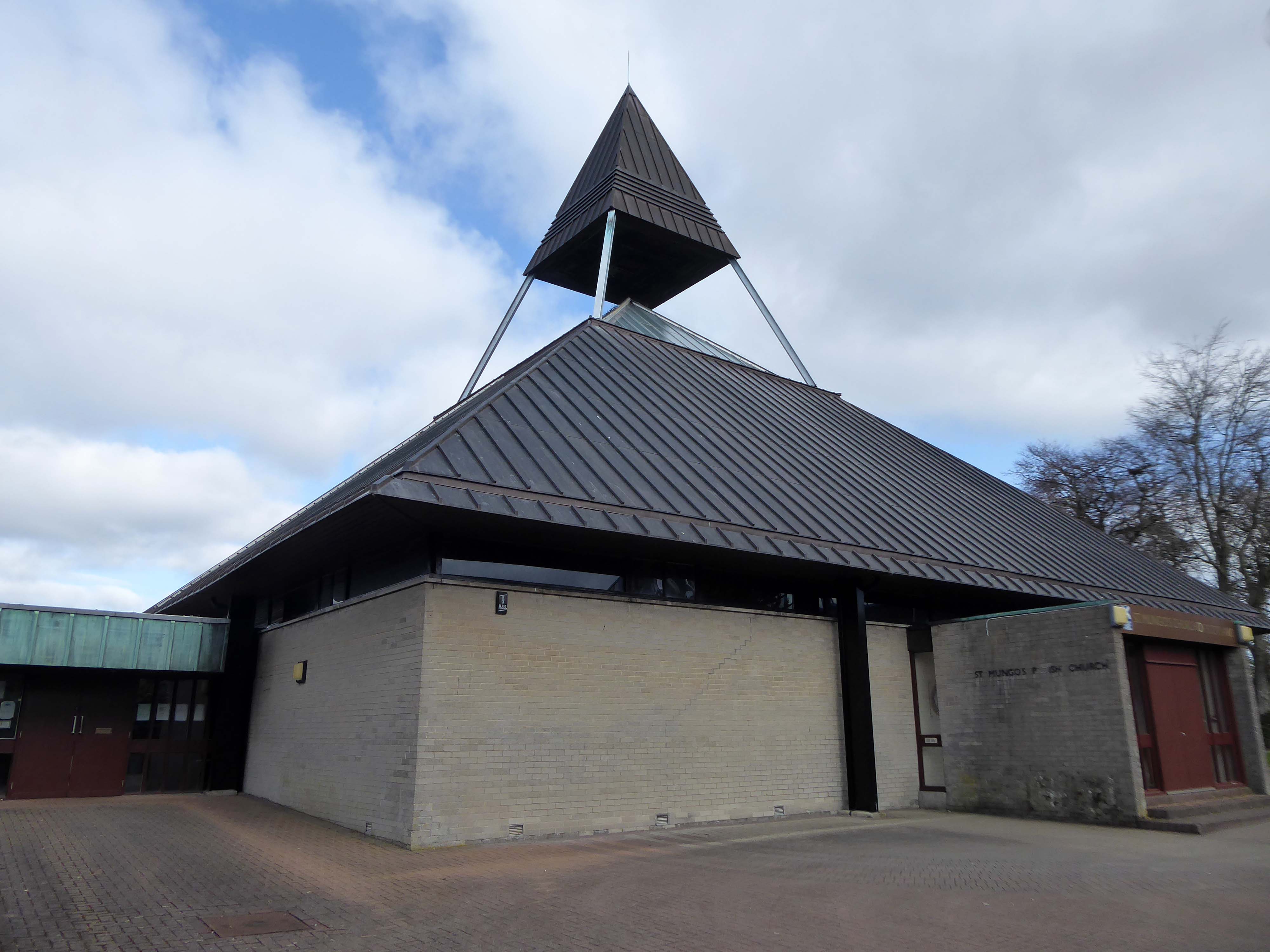
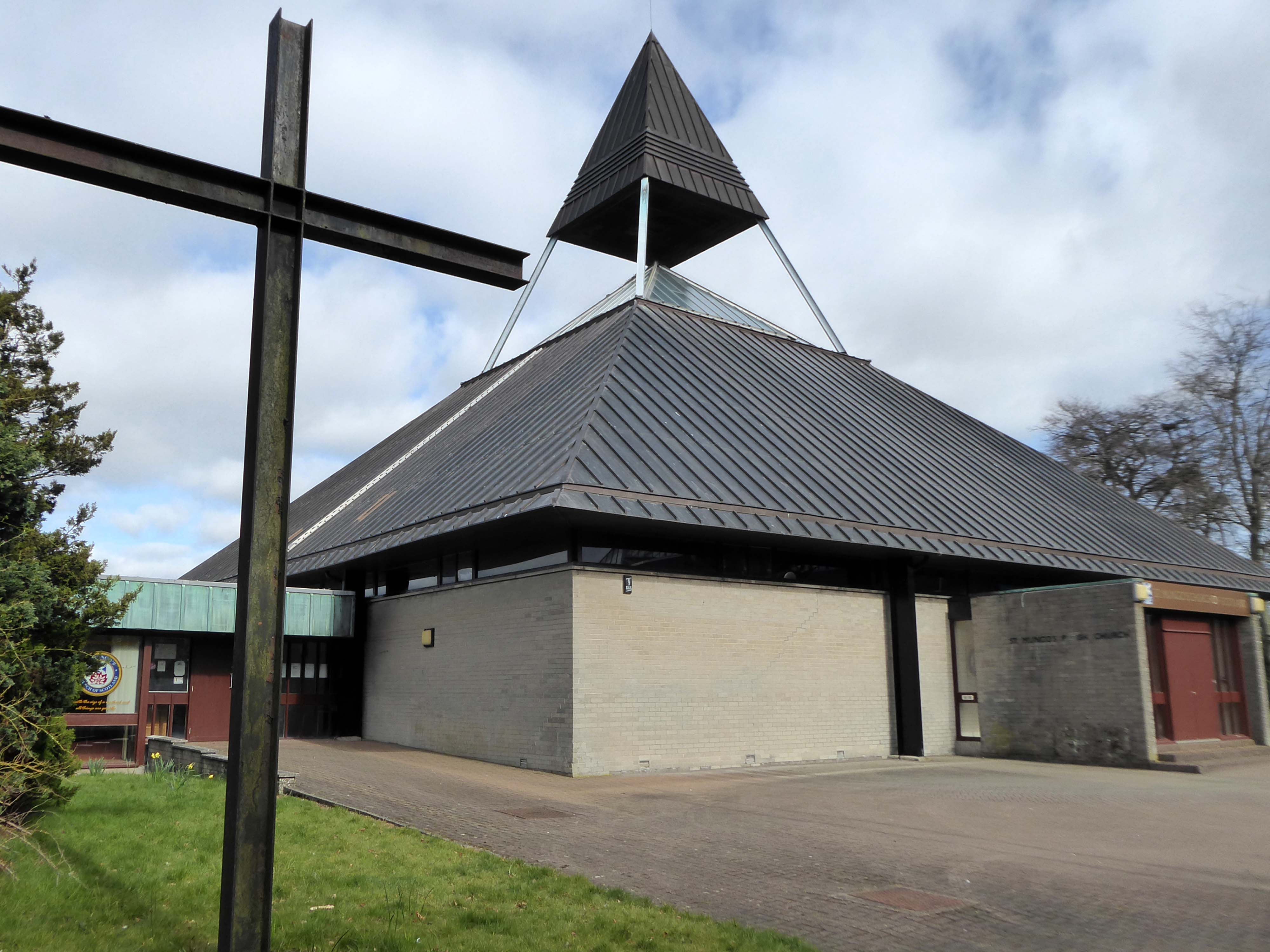
Single storey, square-plan pyramidal church with halls adjoining to SW.
Category B Listed
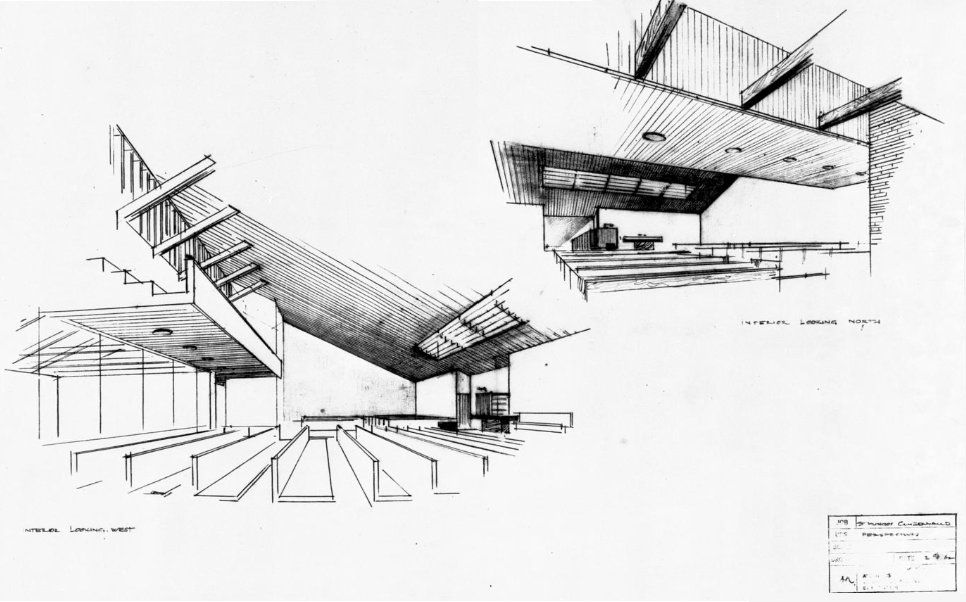
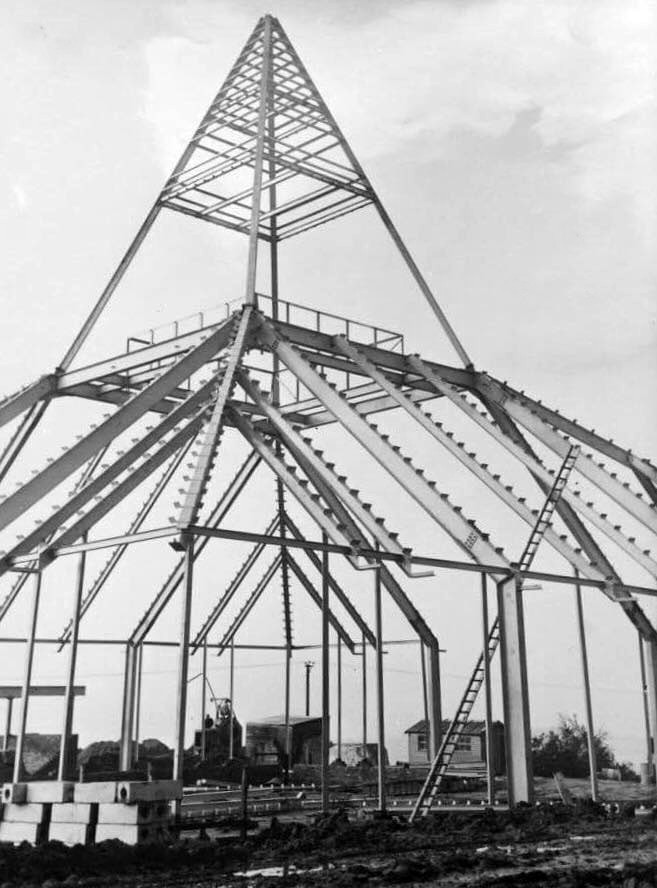
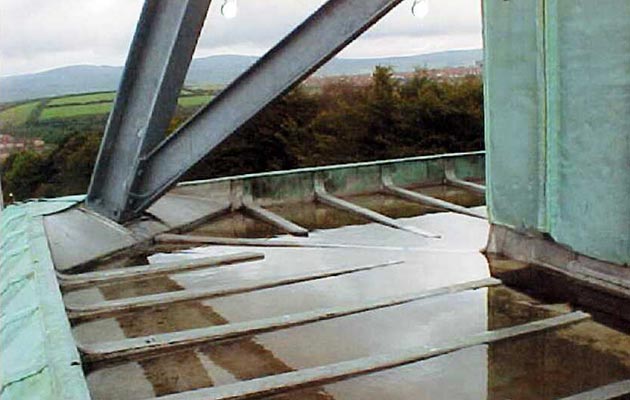
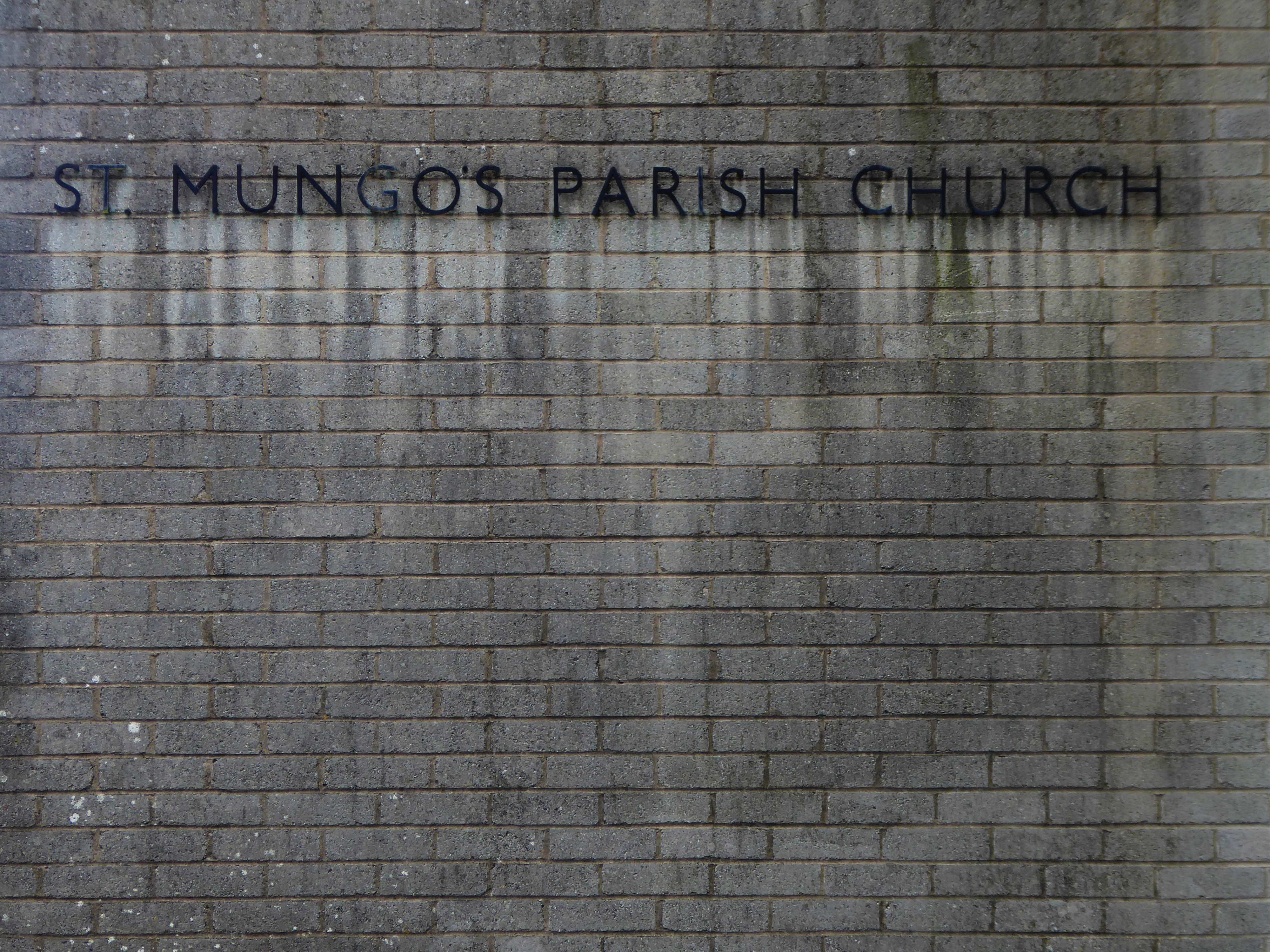
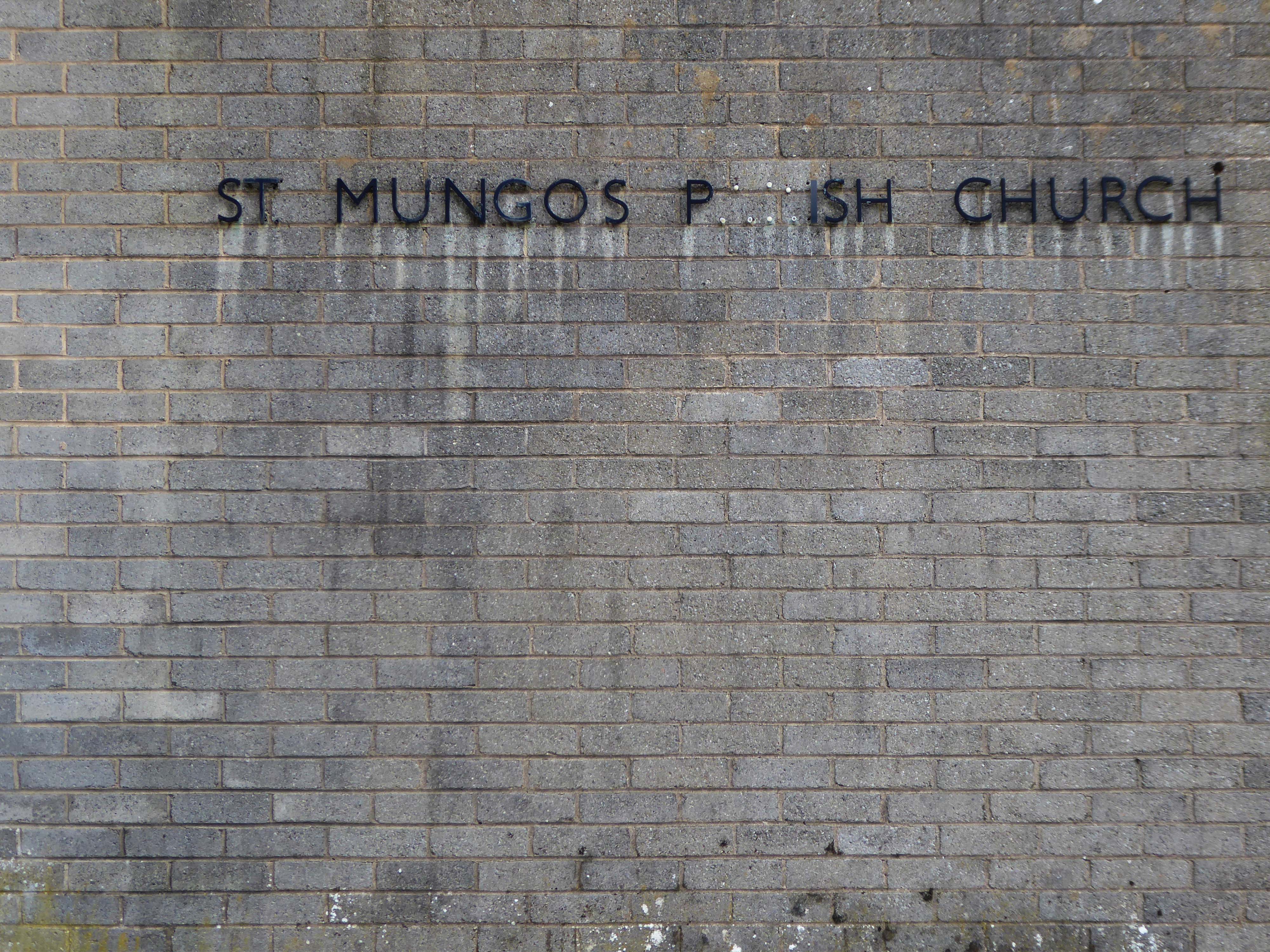
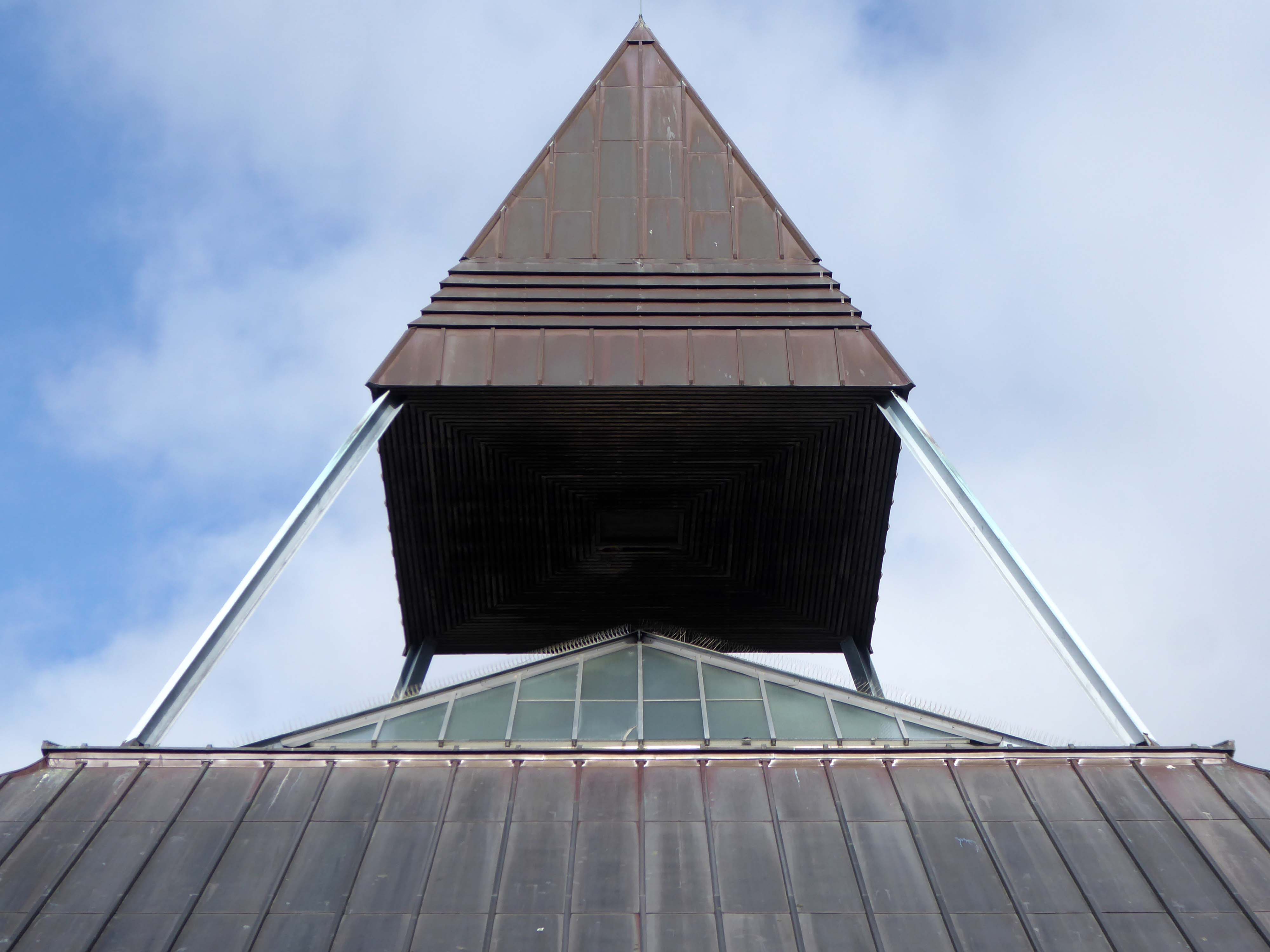
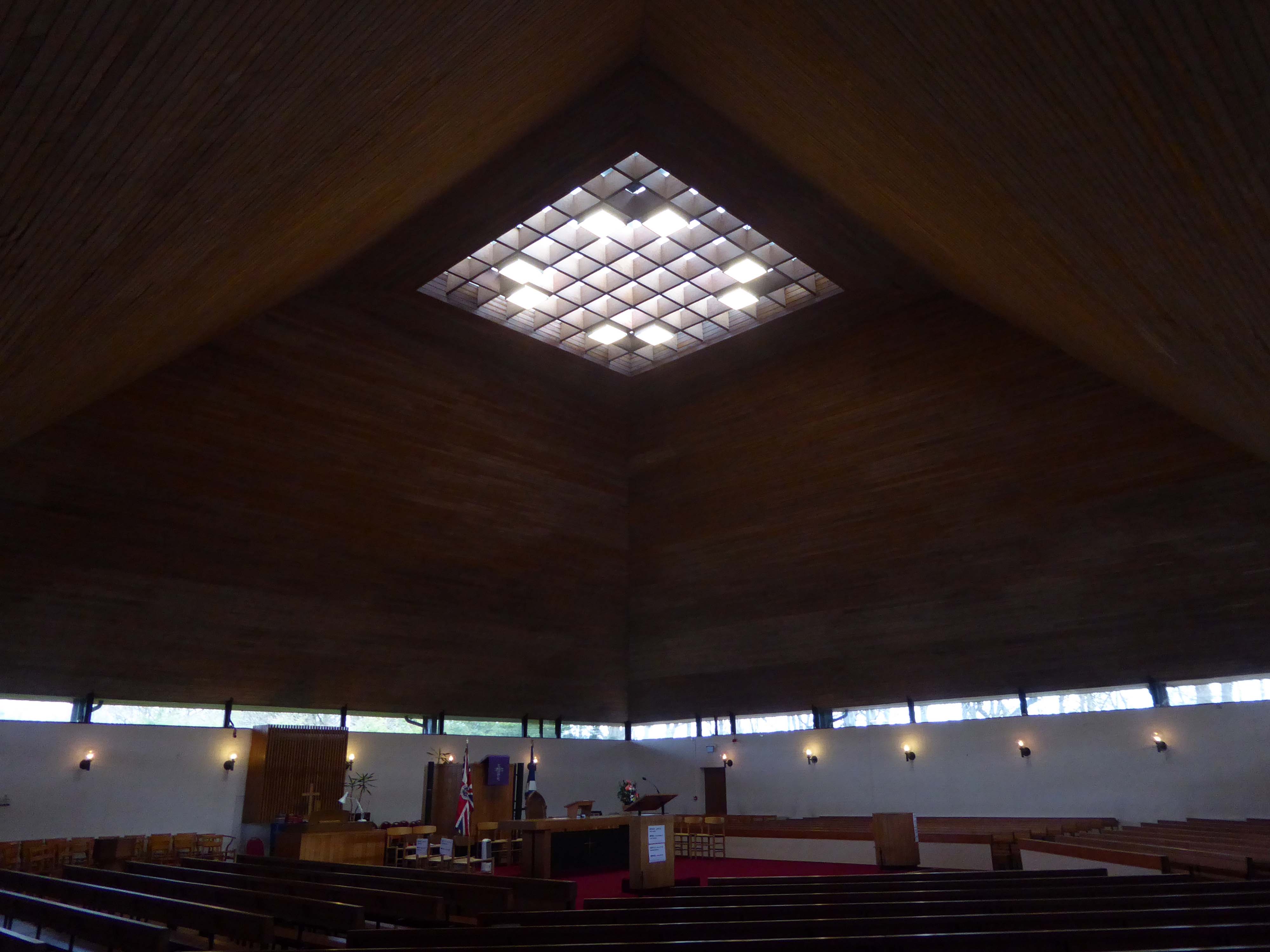
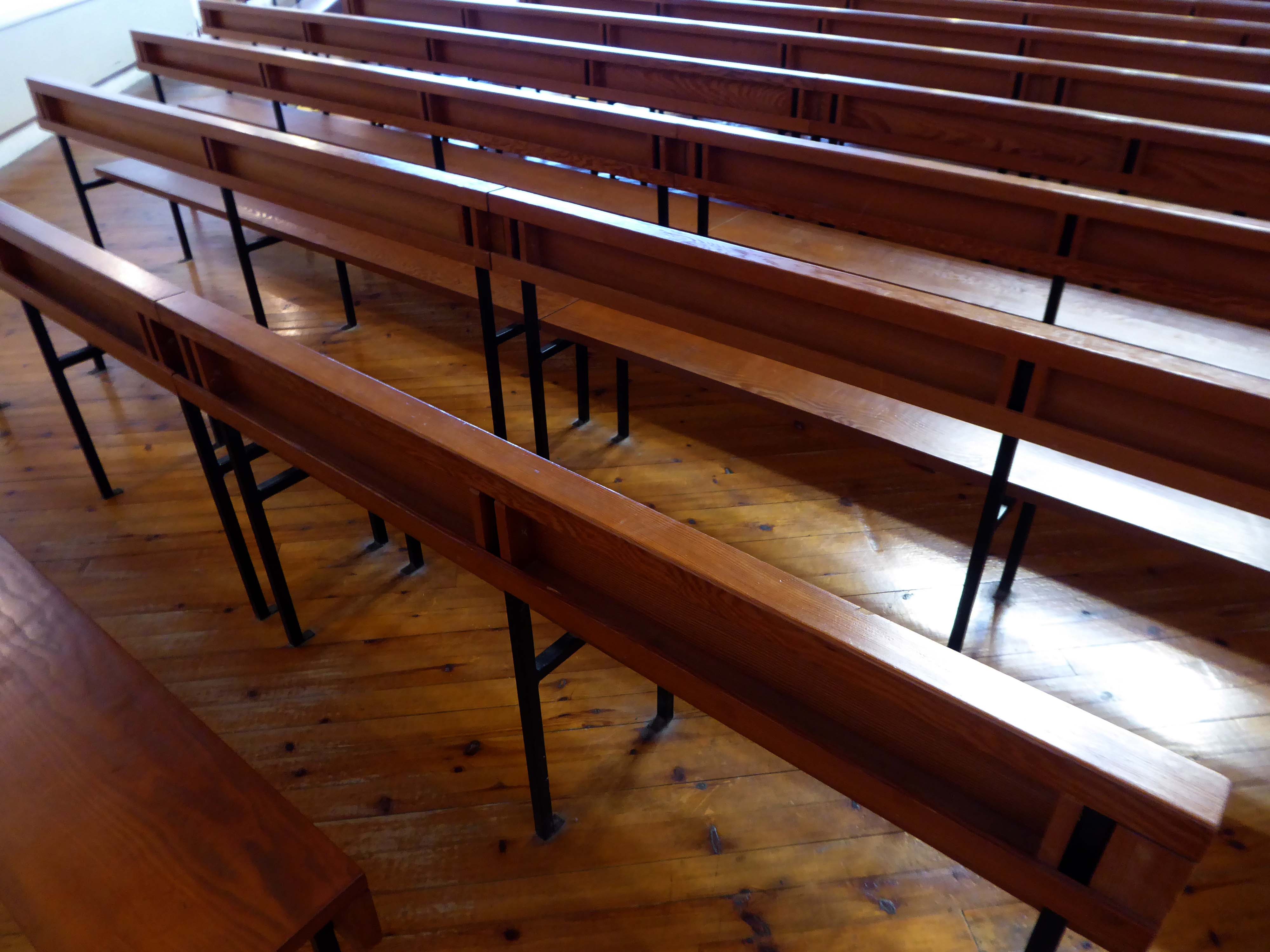
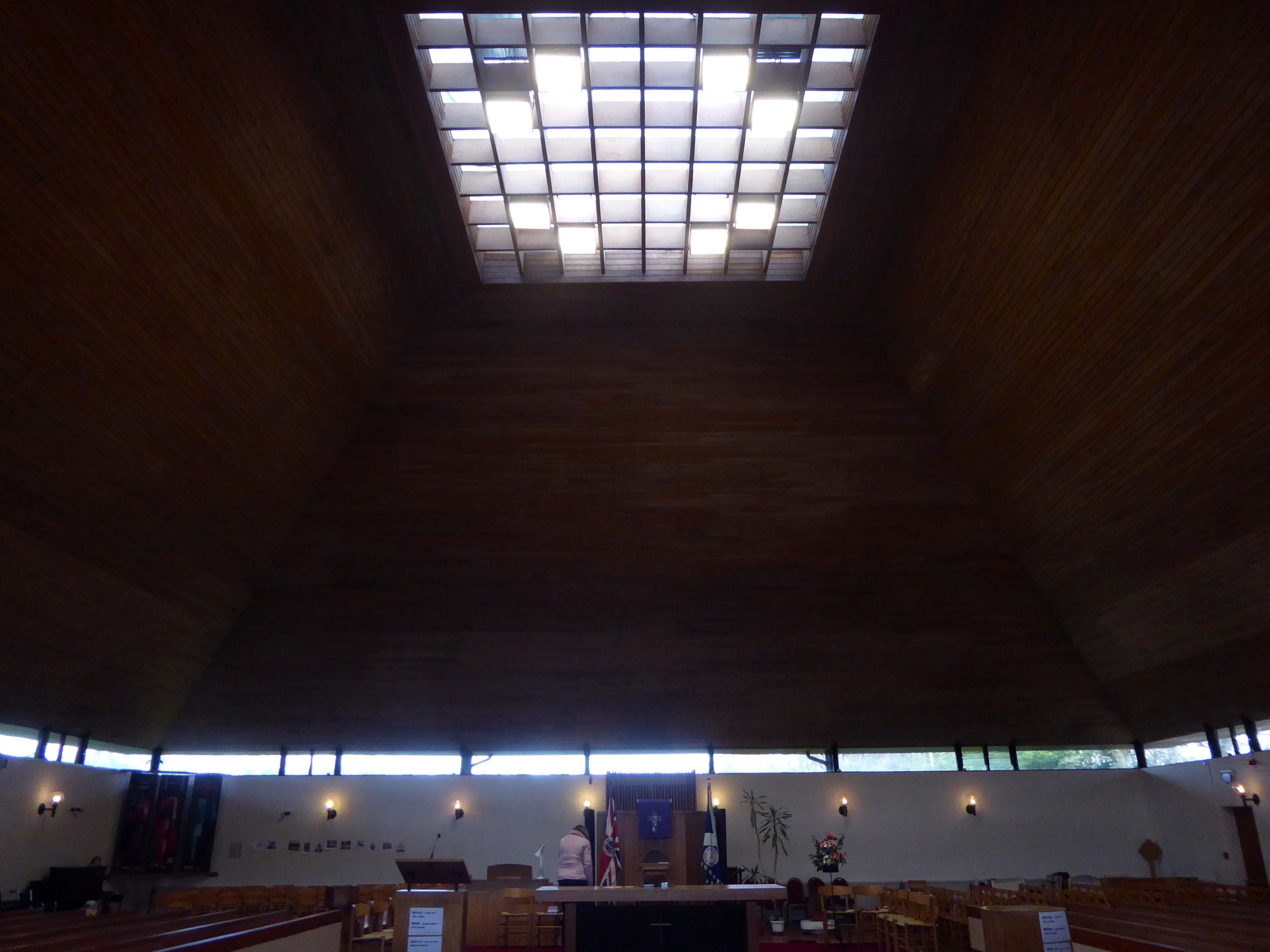
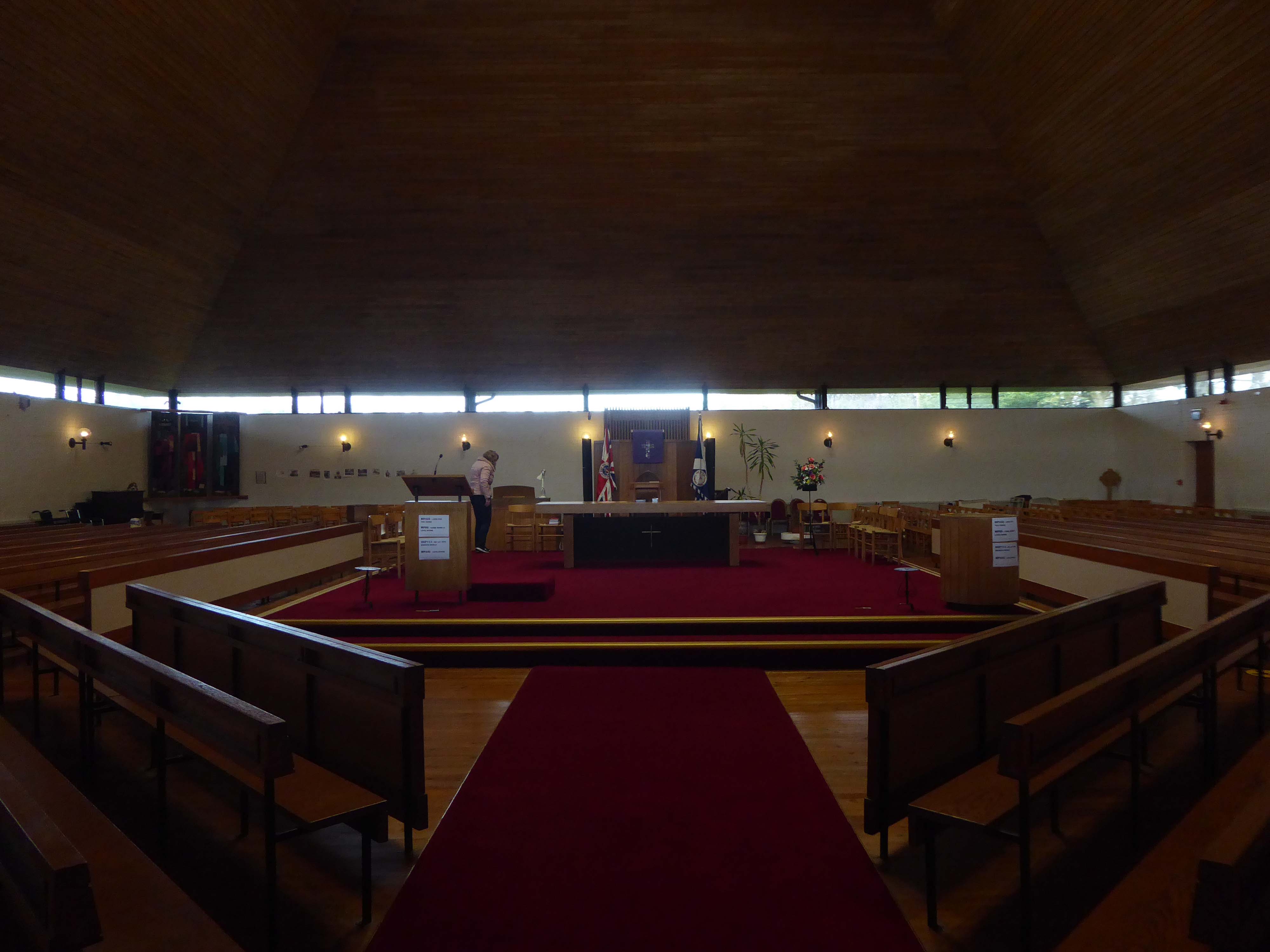
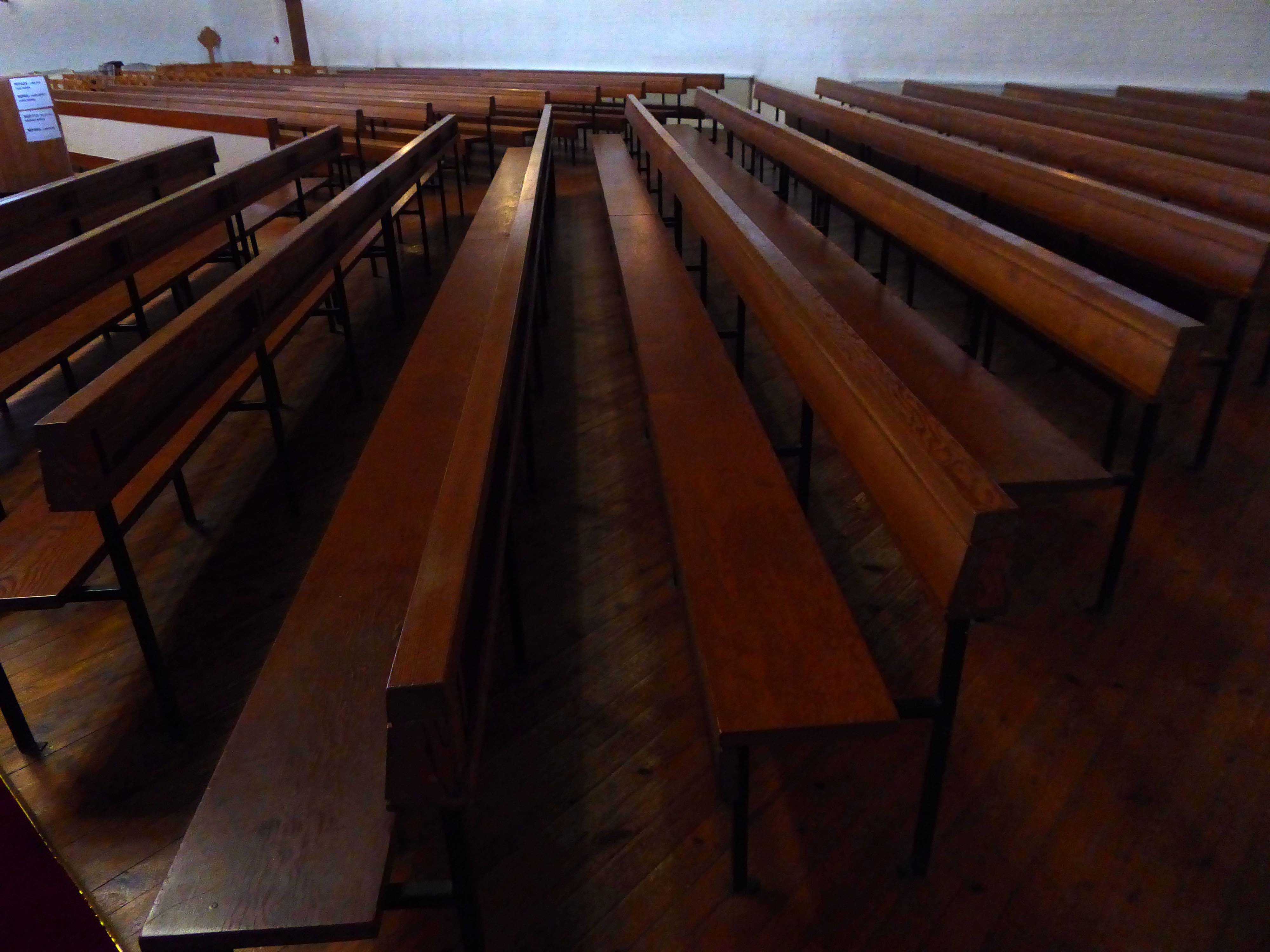
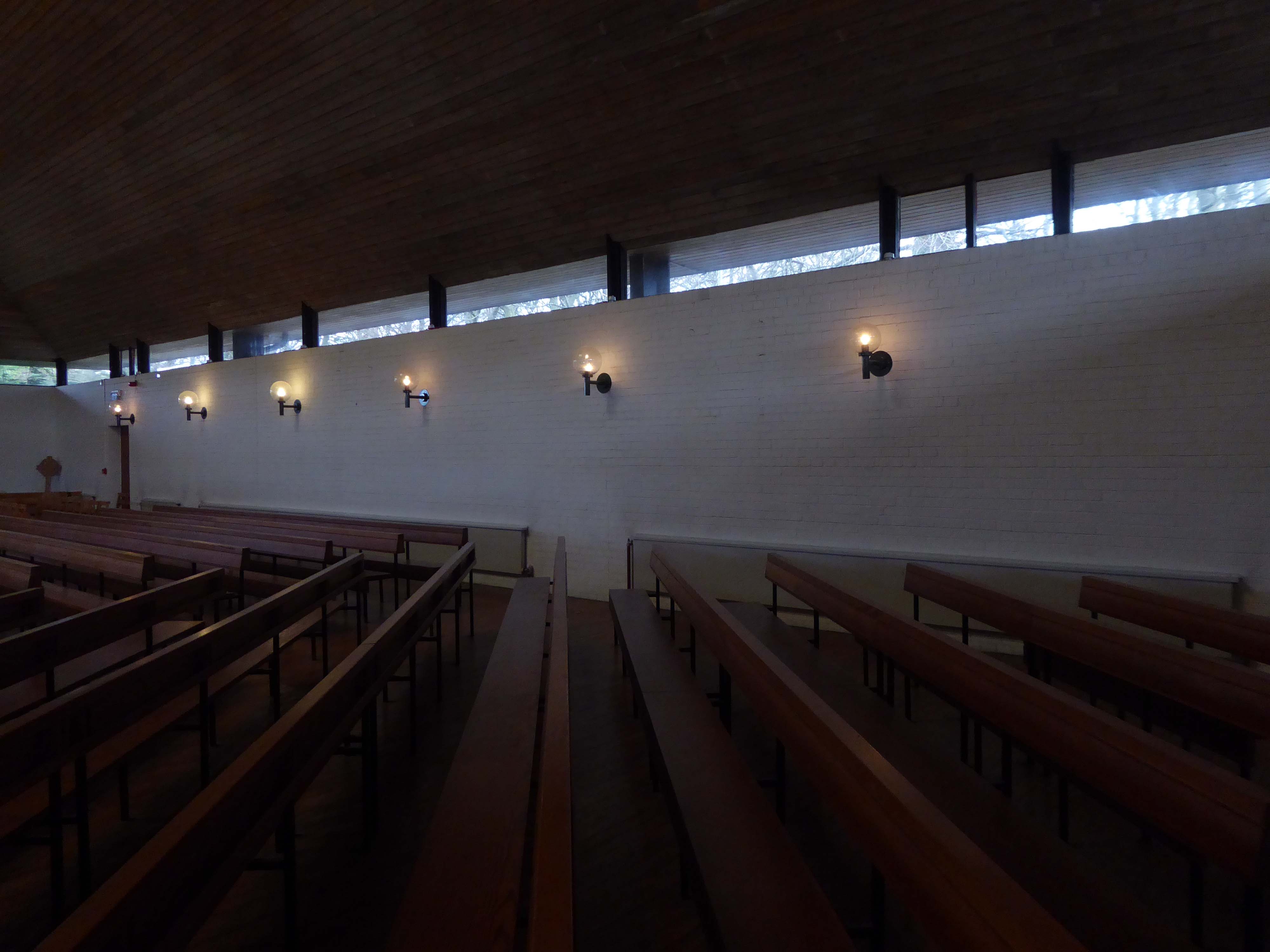
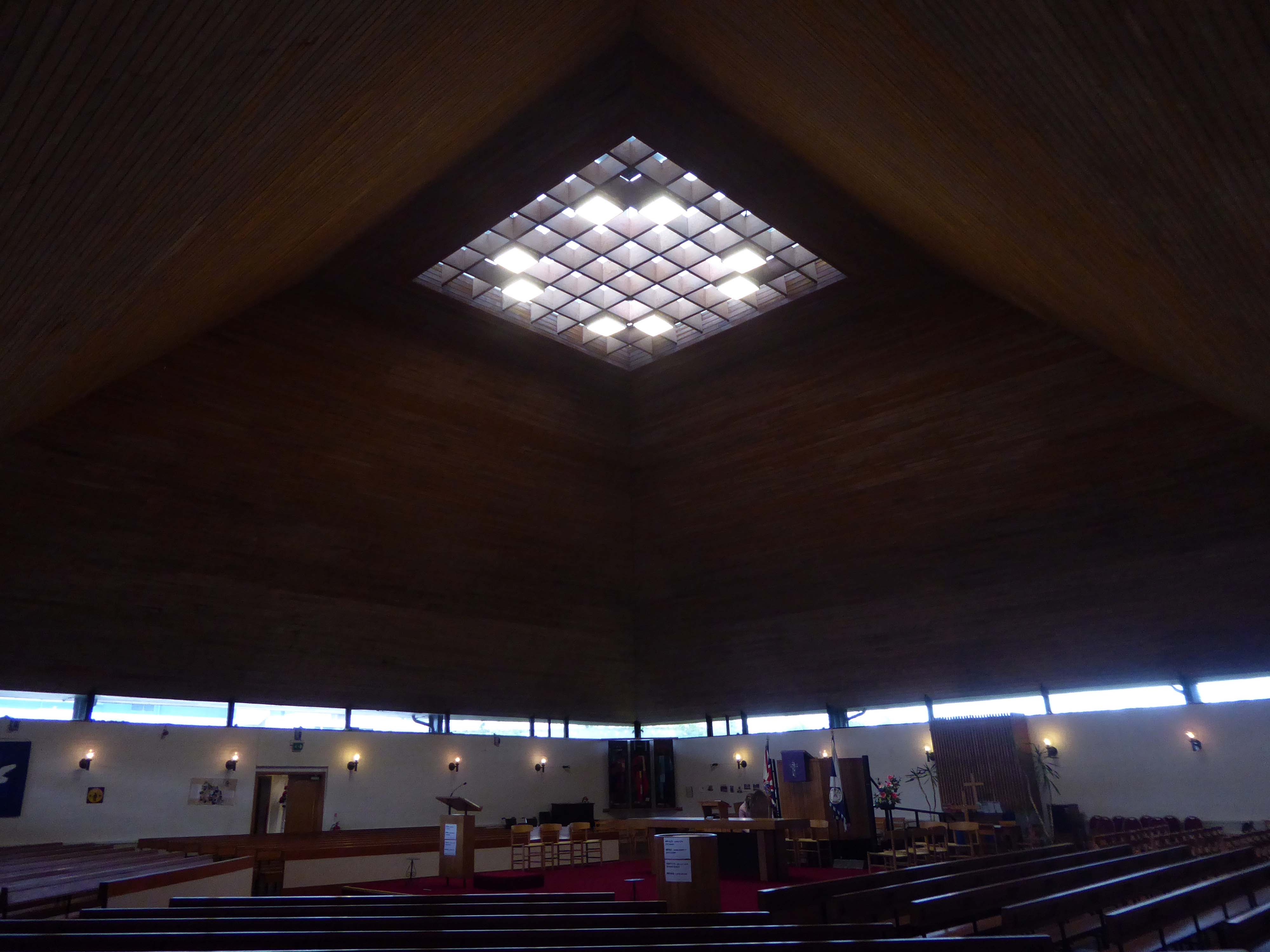
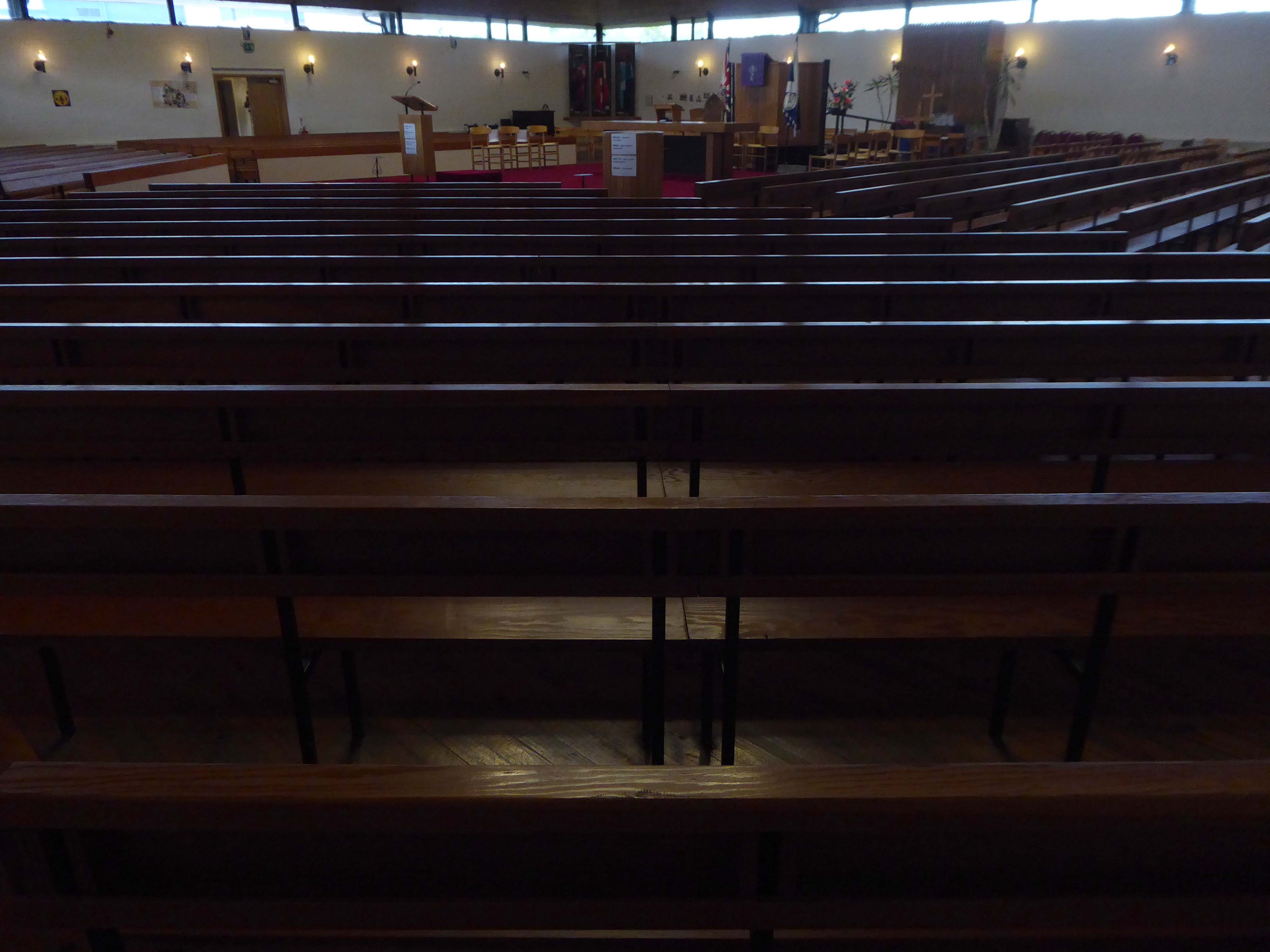
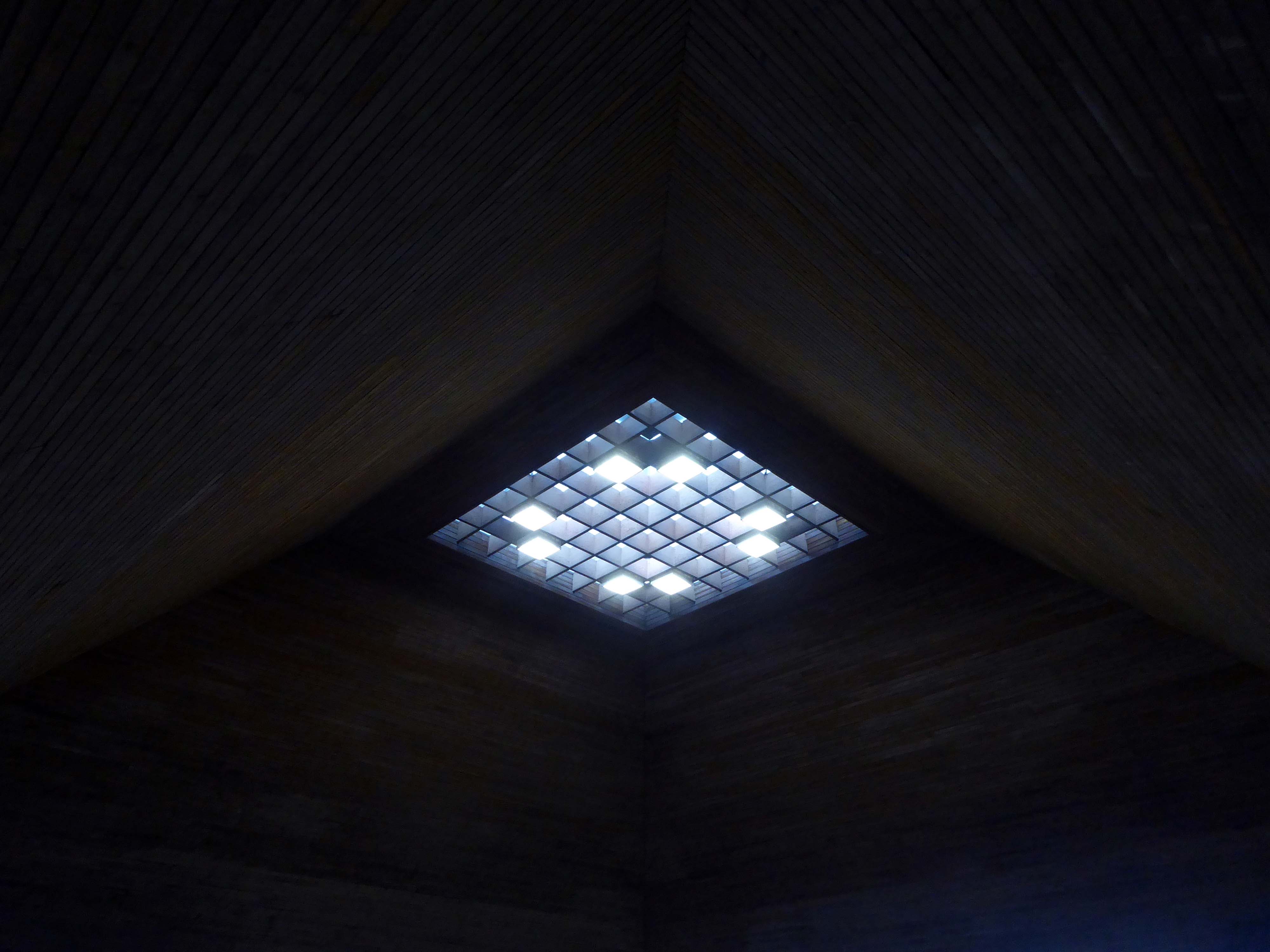
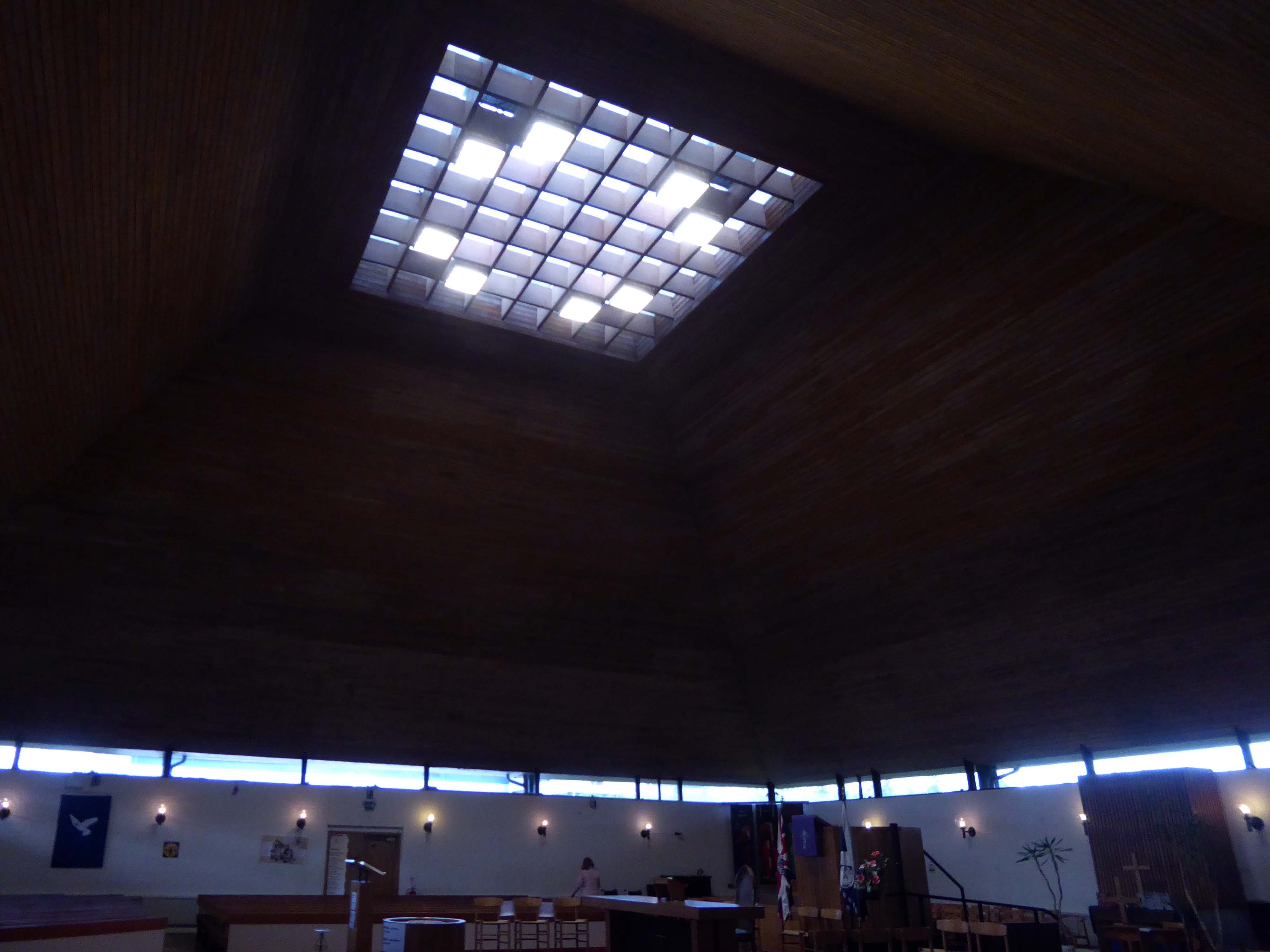
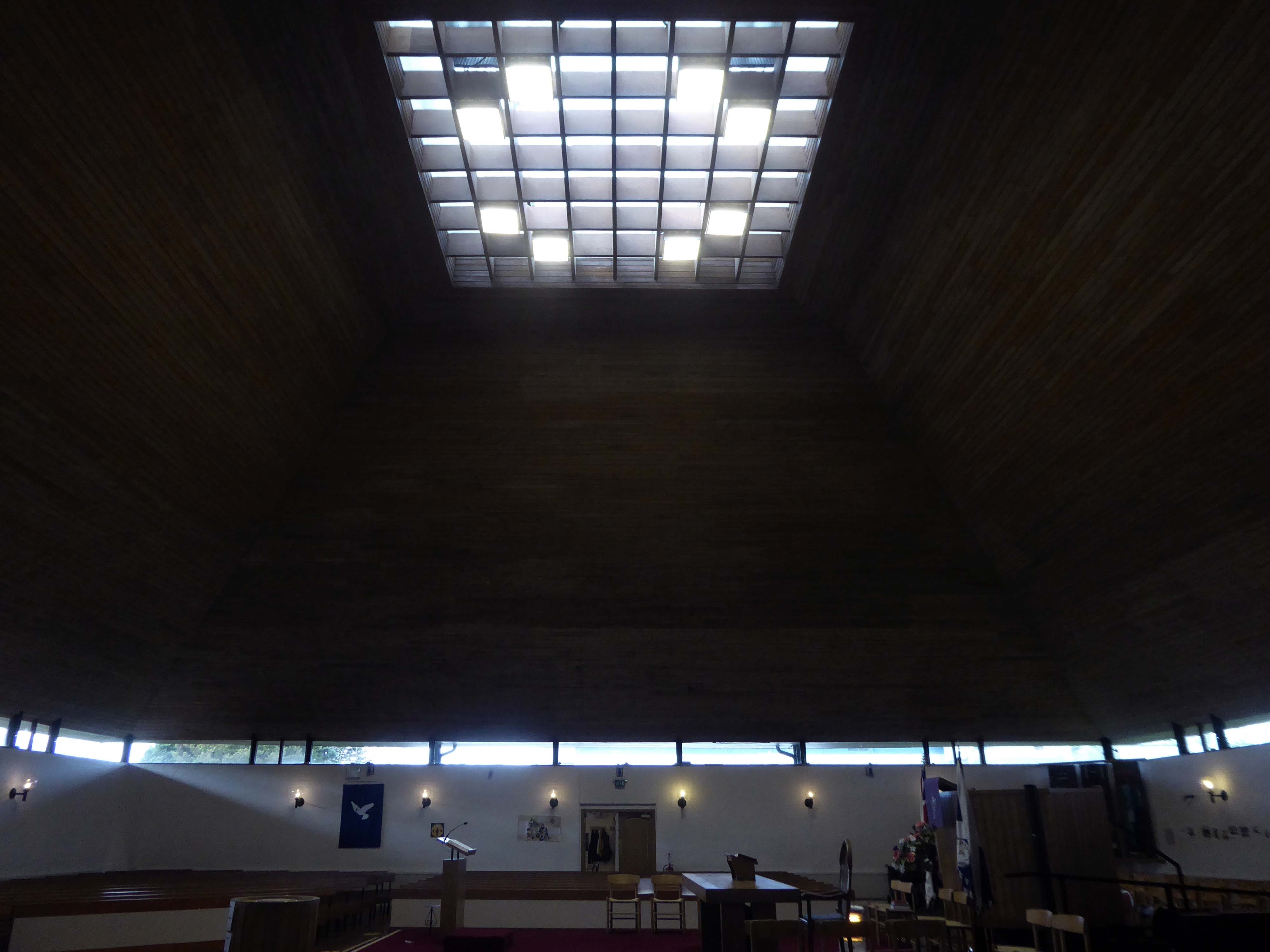
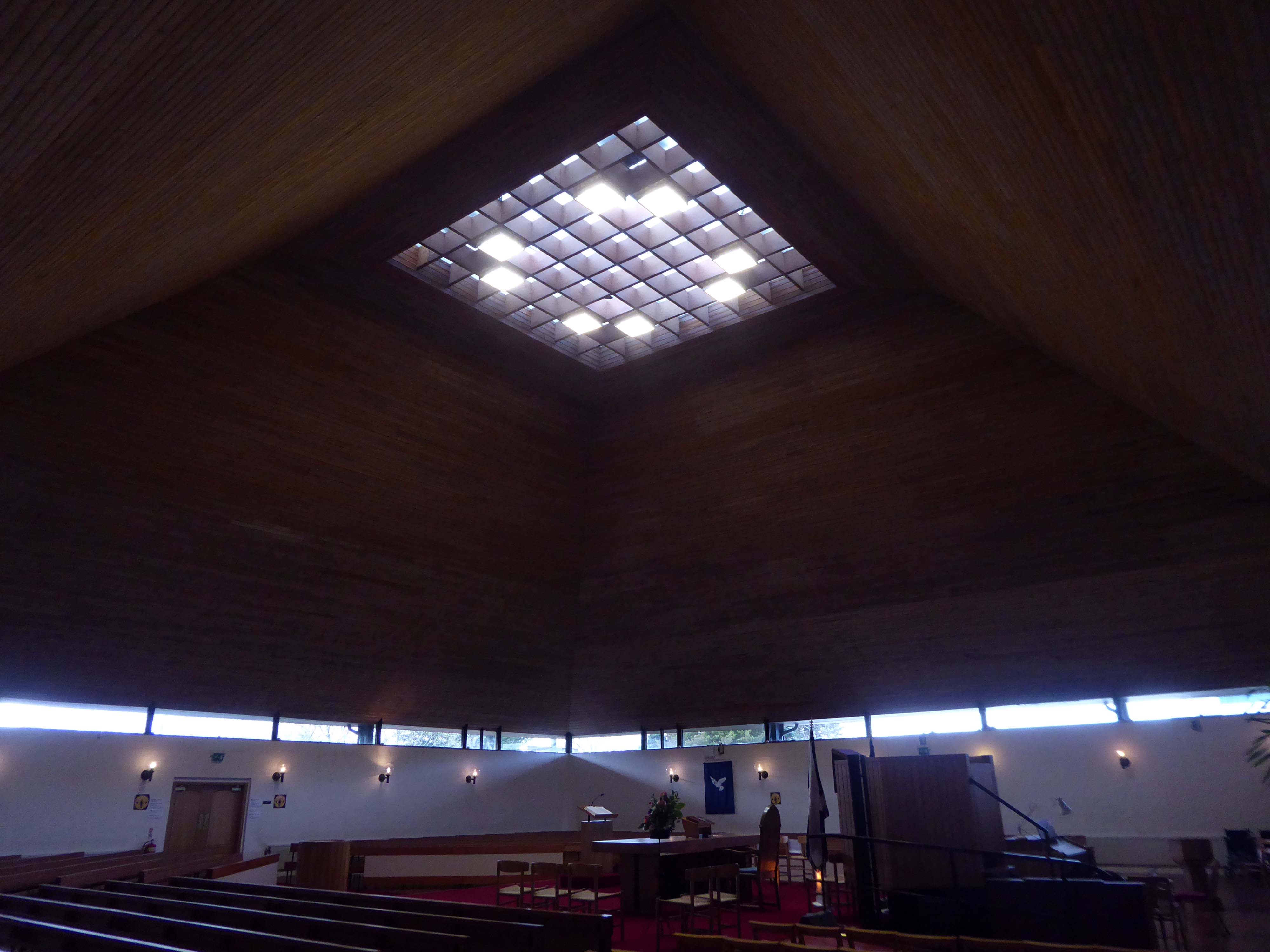
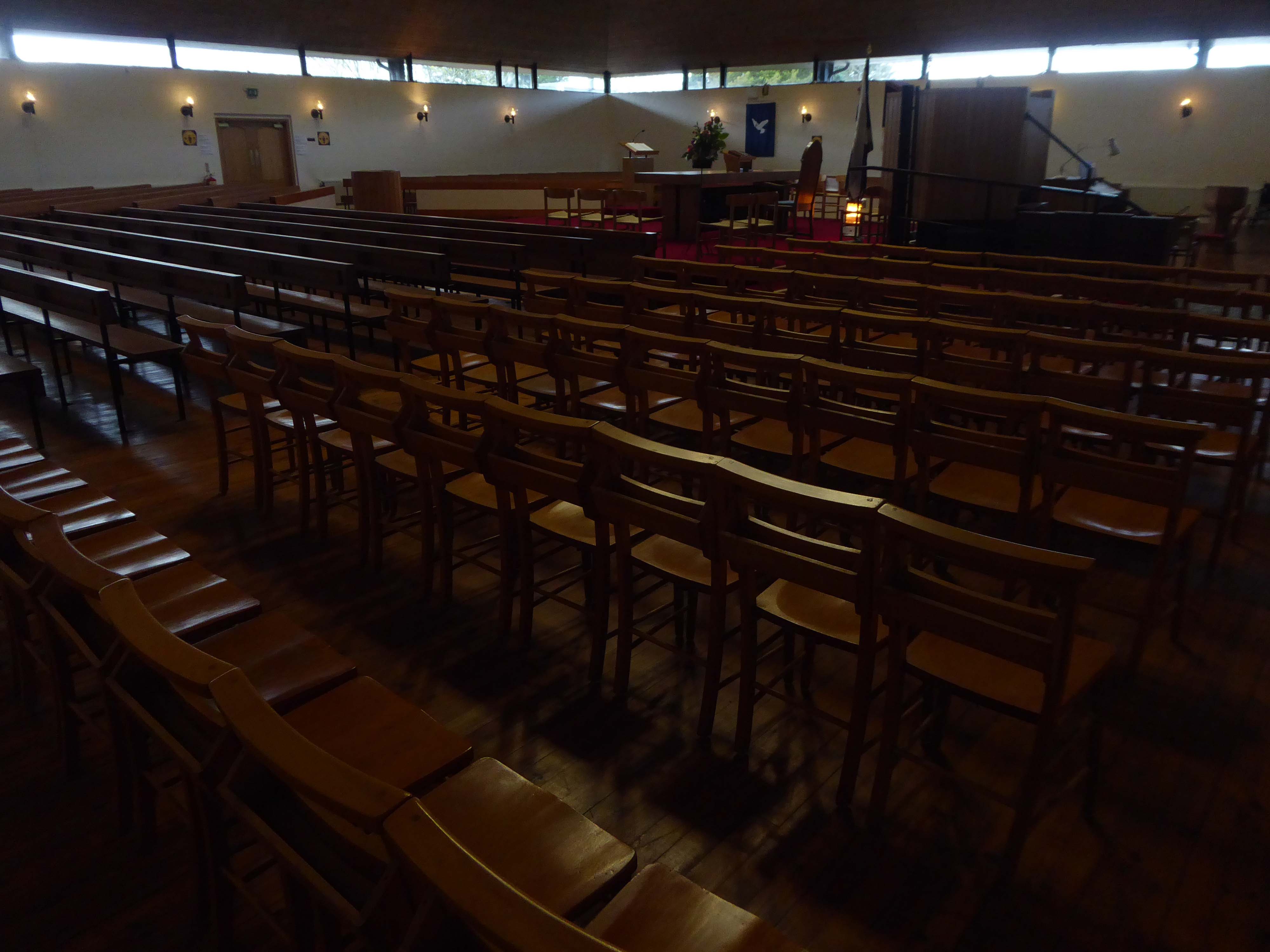
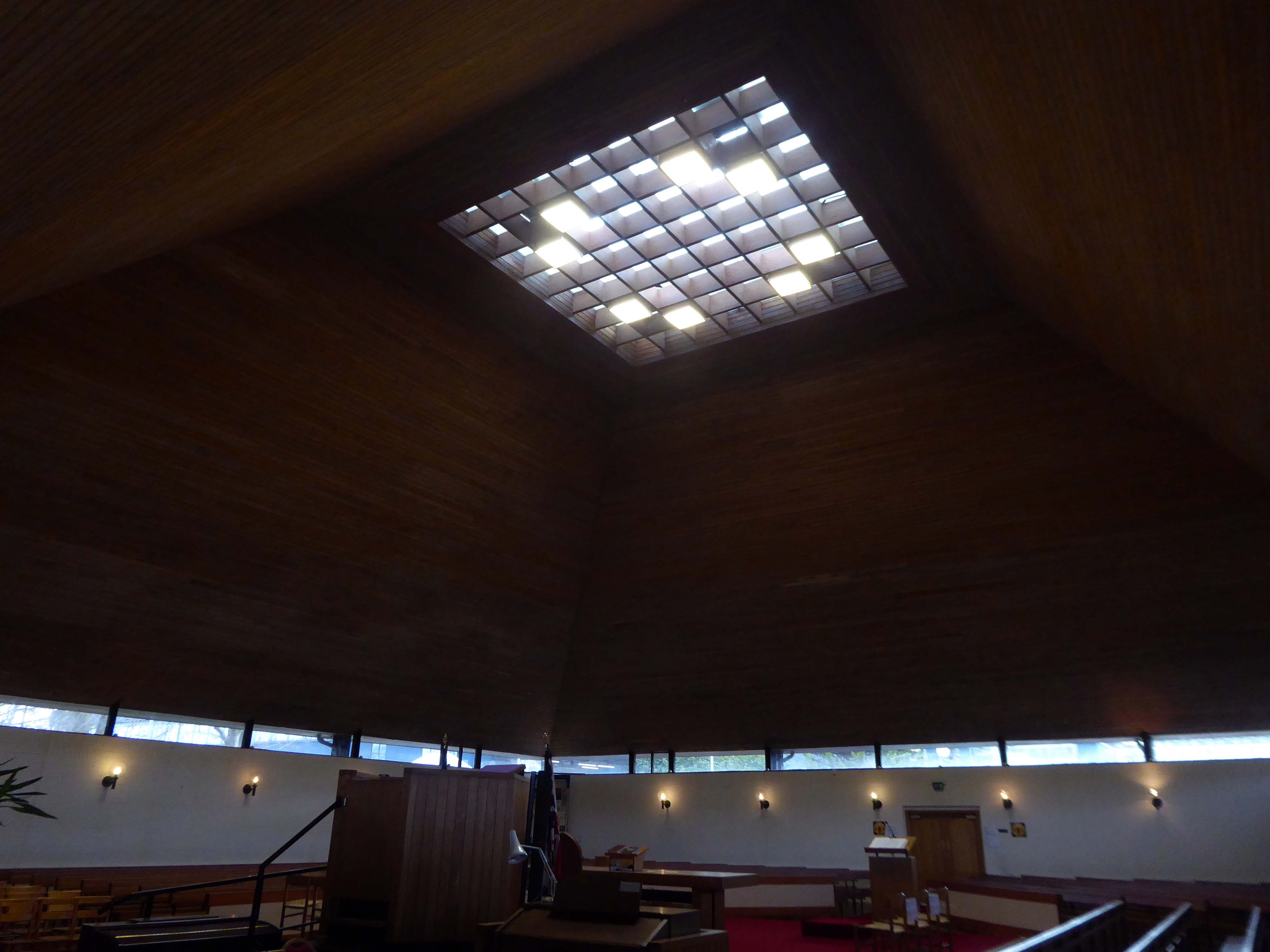
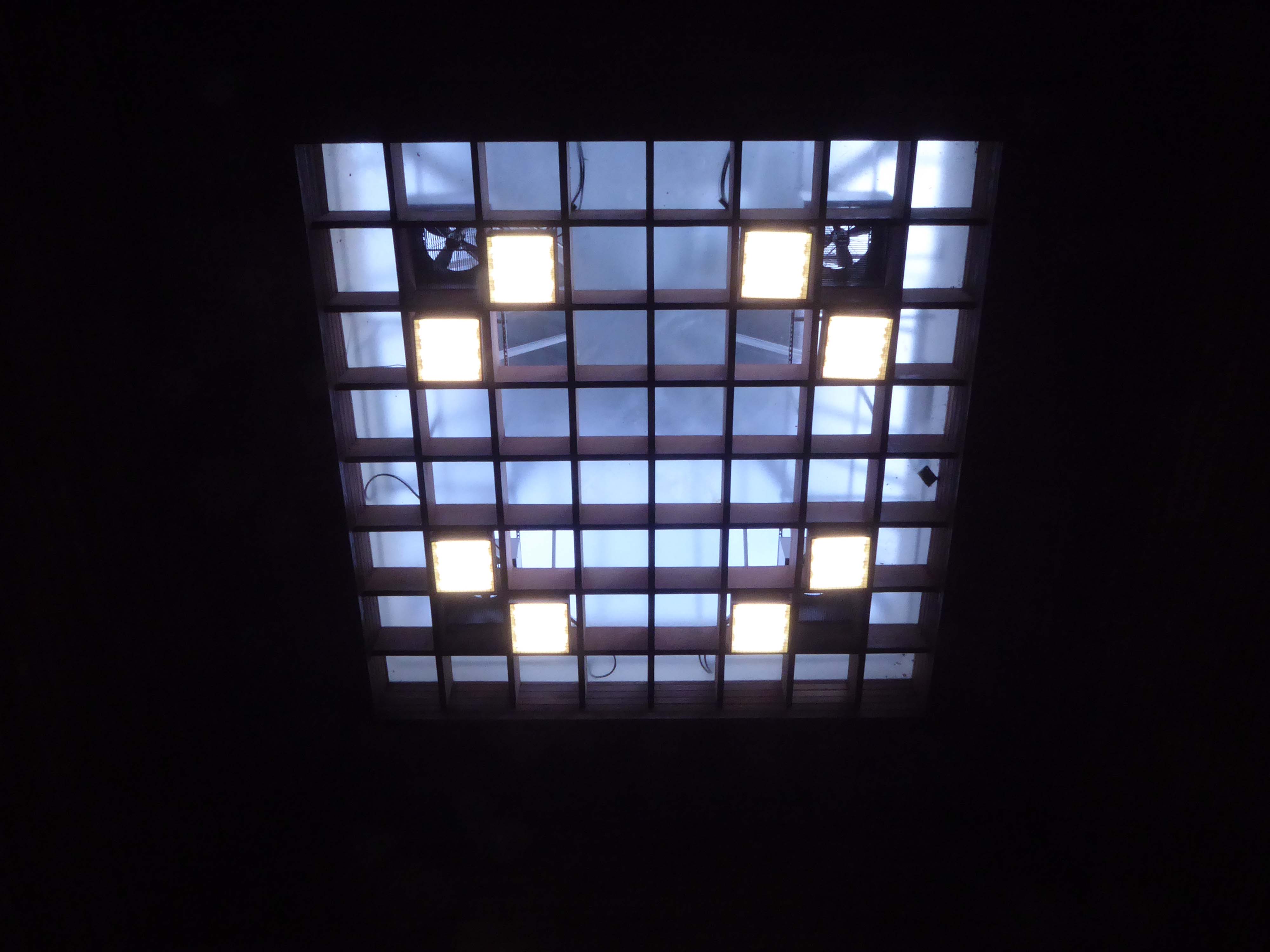
St Mungo’s Parish Church is a striking landmark in the centre of Cumbernauld. Prominently sited on the top of a small hill, the bold copper pyramidal roof is an important landmark. Alan Reiach designed two churches in Cumbernauld, both of which can accommodate 800, Kildrum Church – the earlier of the two. Alan Reiach 1910-1992, who was apprenticed to Sir Robert Lorimer 1864-1929, was primarily involved in the design of public buildings, including churches, schools, universities and hospitals. Noteworthy features of St Mungo’s Parish Church include the bold pyramidal roof, with apex of which forms a roof light lighting the nave of the church, and above this is a pyramidal belfry. The impressive Baltic redwood-lined interior gains natural light from the large central rooflight and clerestory windows.
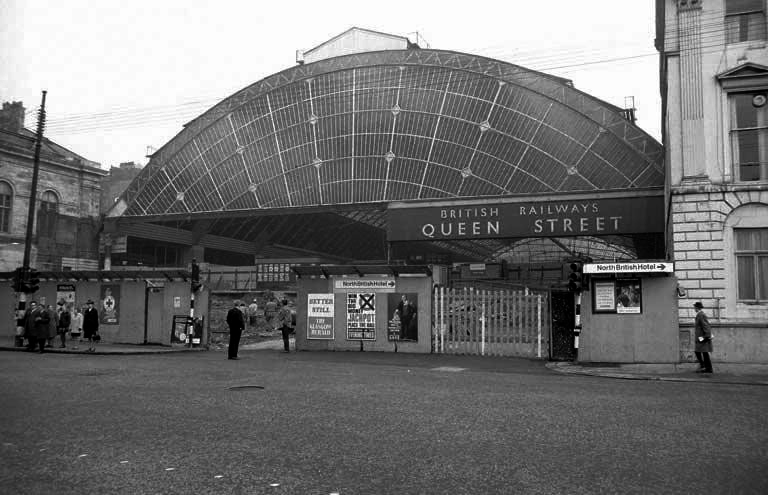
Sunday morning in Glasgow, I caught the first train out from Queen Street Station.
In October 2017, a £120 million project began on bringing the station up to modern standards, demolishing many of the 1960s buildings and replacing them with a new station concourse, which was completed in 2021.
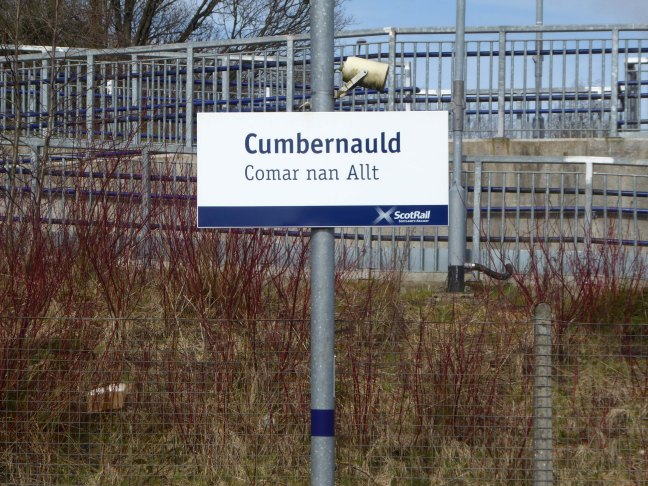
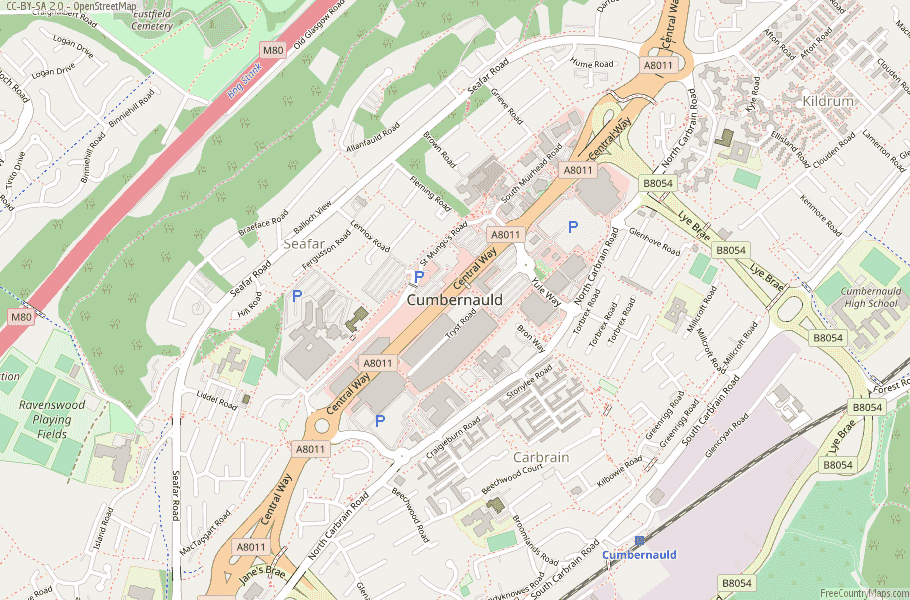
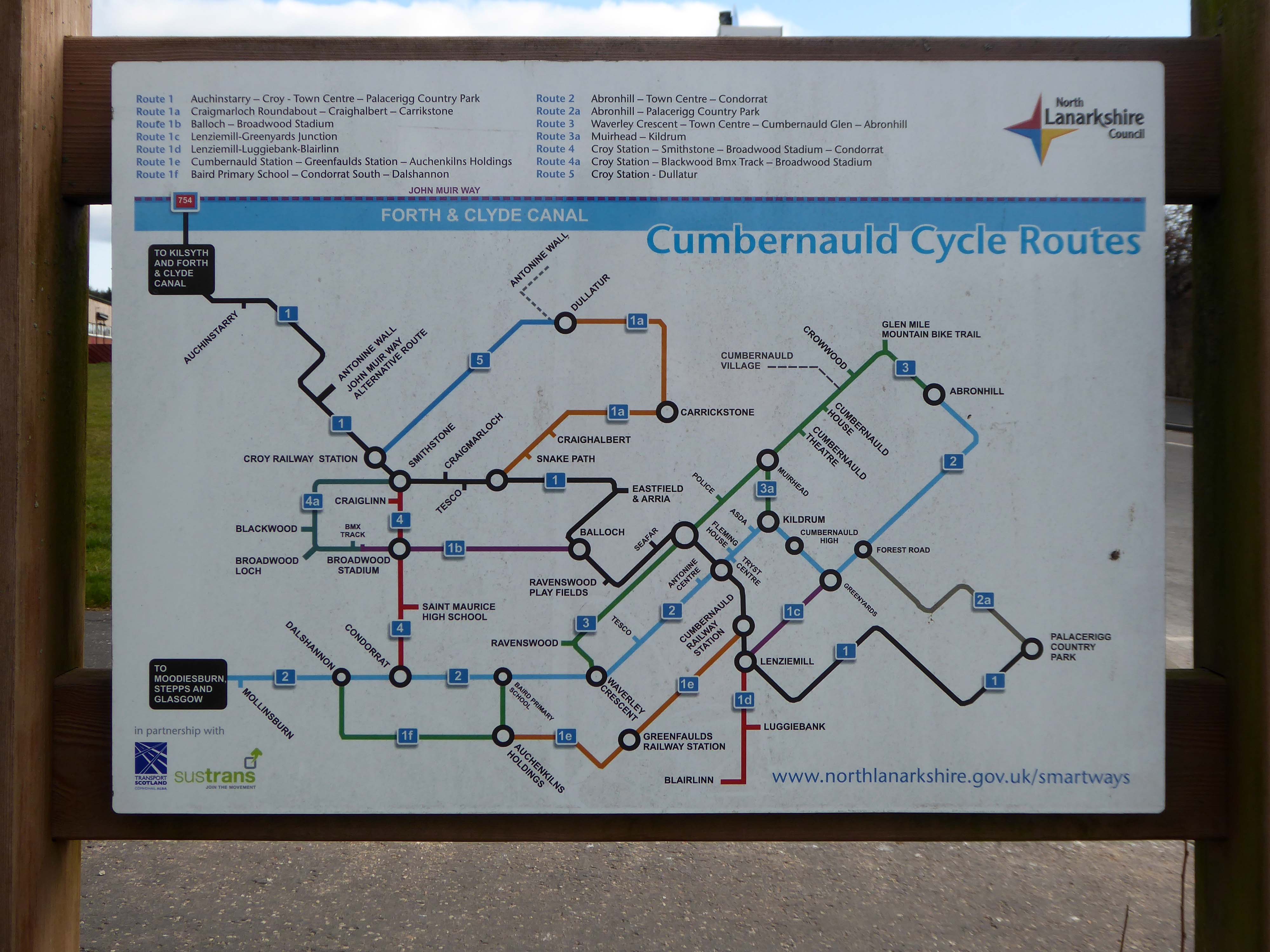
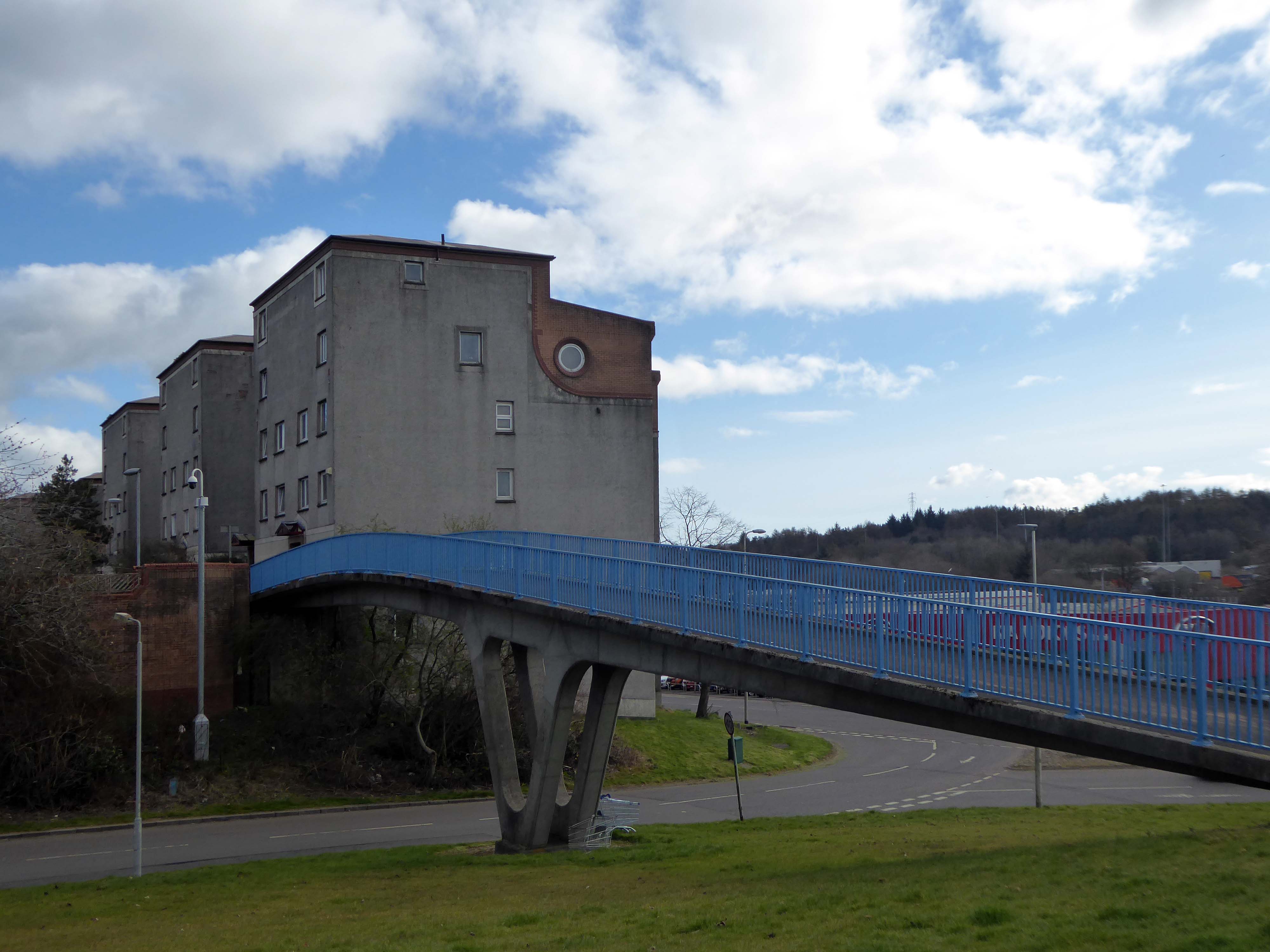
I arrived in Cumbernauld and walked toward the Central Way and back again.
Cumbernauld was designated as a new town in December 1955, part of a plan, under the New Towns Act 1946, to move 550,000 people out of Glasgow and into new towns to solve the city’s overcrowding. Construction of its town centre began under contractors Duncan Logan, chief architect Leslie Hugh Wilson and architect Geoffrey Copcutt – until 1962 and 1963, and later Dudley Roberts Leaker, Philip Aitken and Neil Dadge.
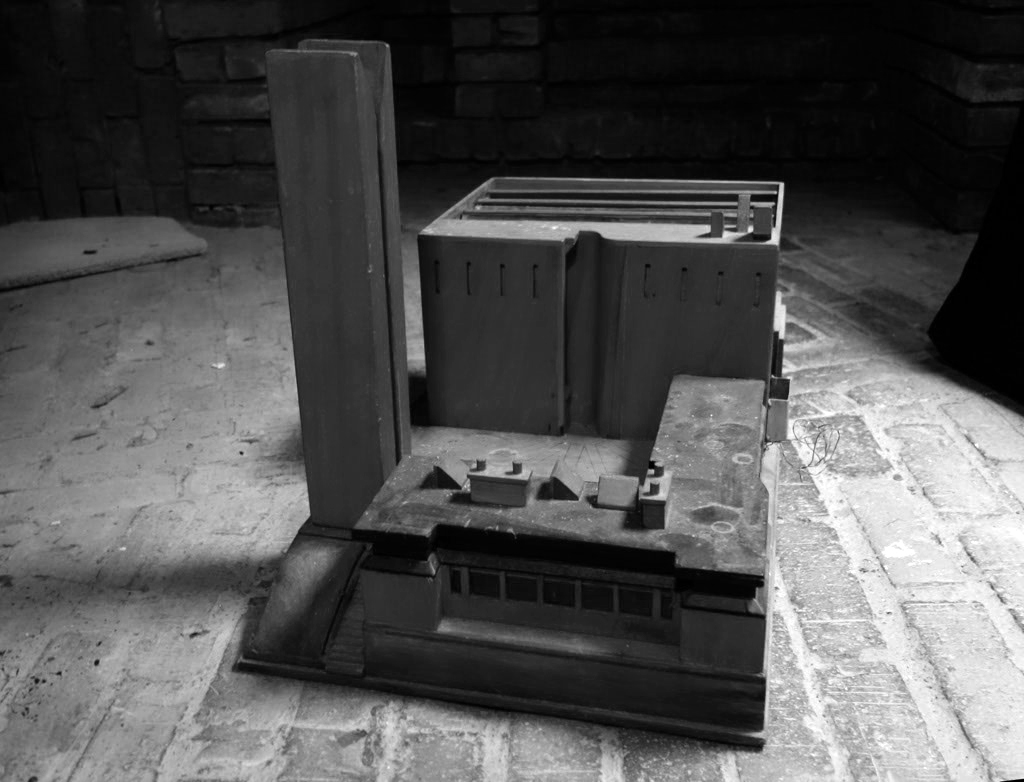
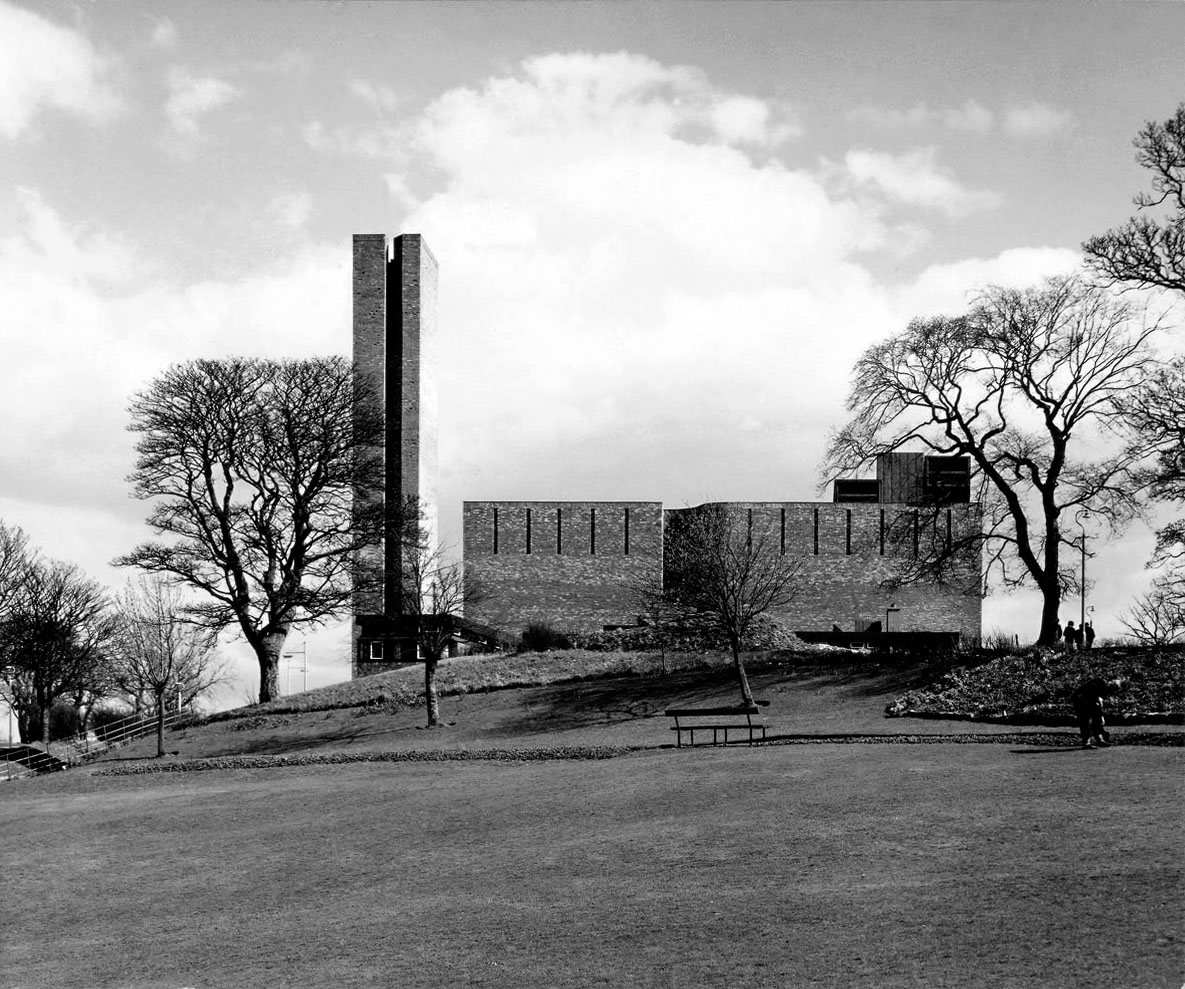
Designed by Professors Andy MacMillan and Isi Metzstein.
Grade A listed 1994 RIBA Bronze Medal
Should you so wish – jump the train from Glasgow Central, unless you’re already here/there.
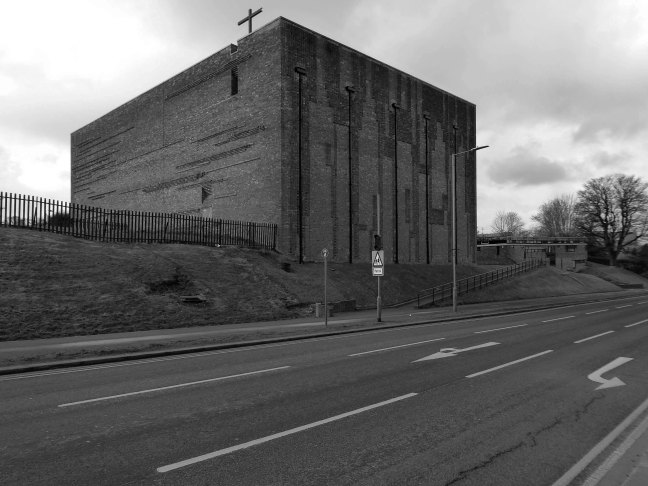
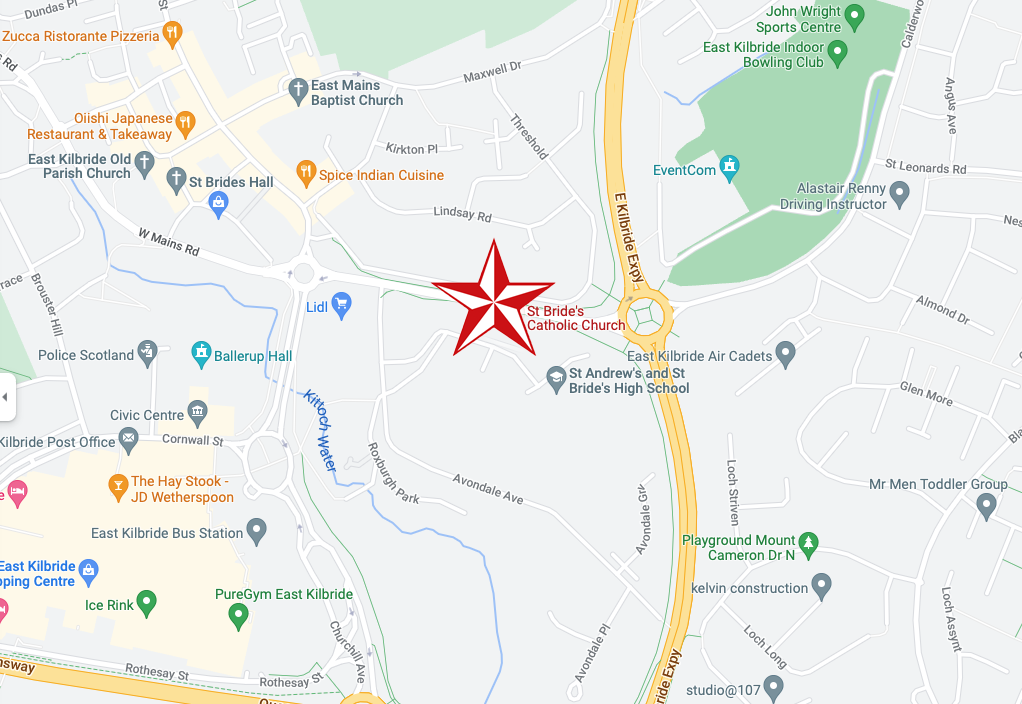
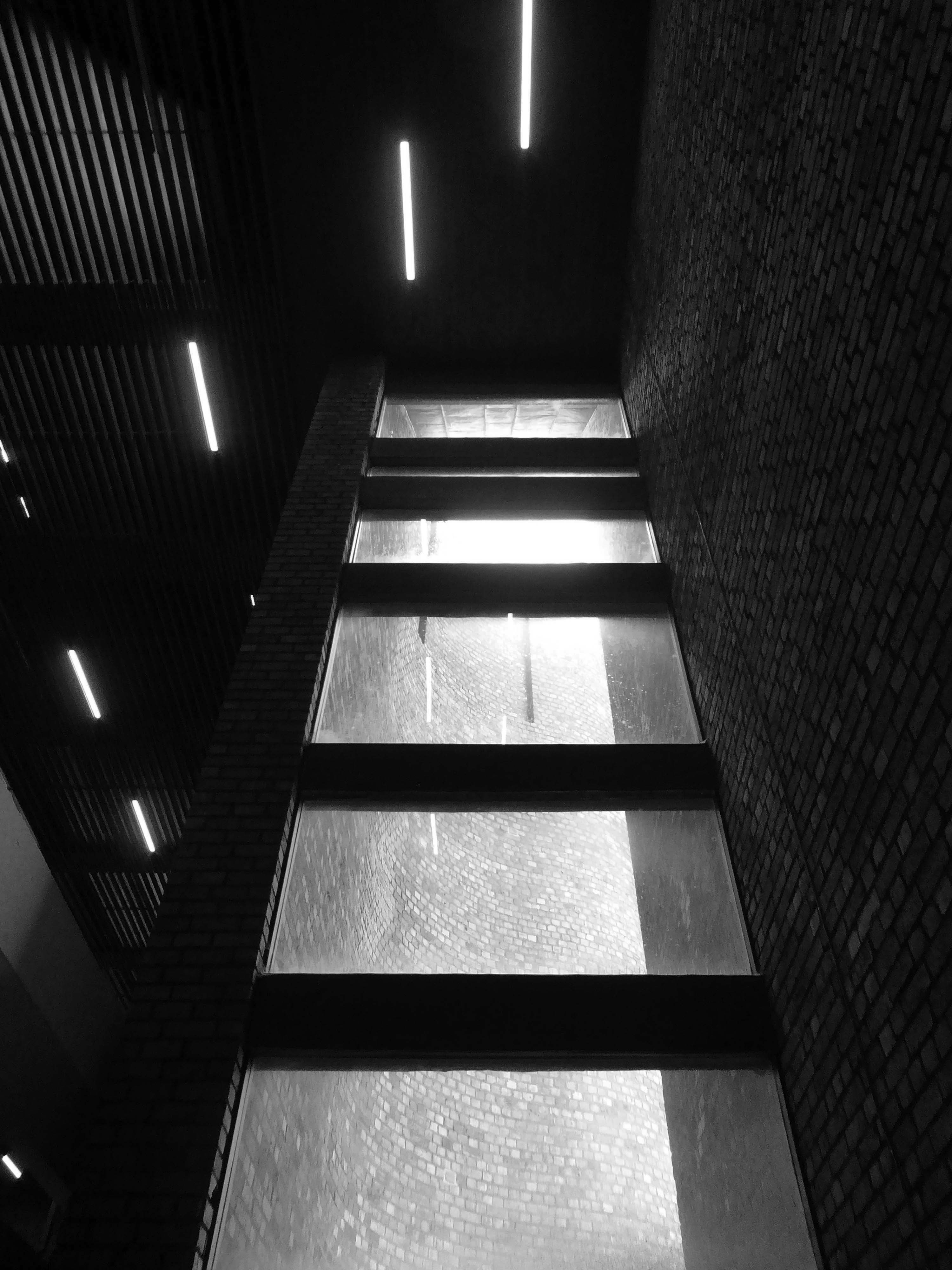
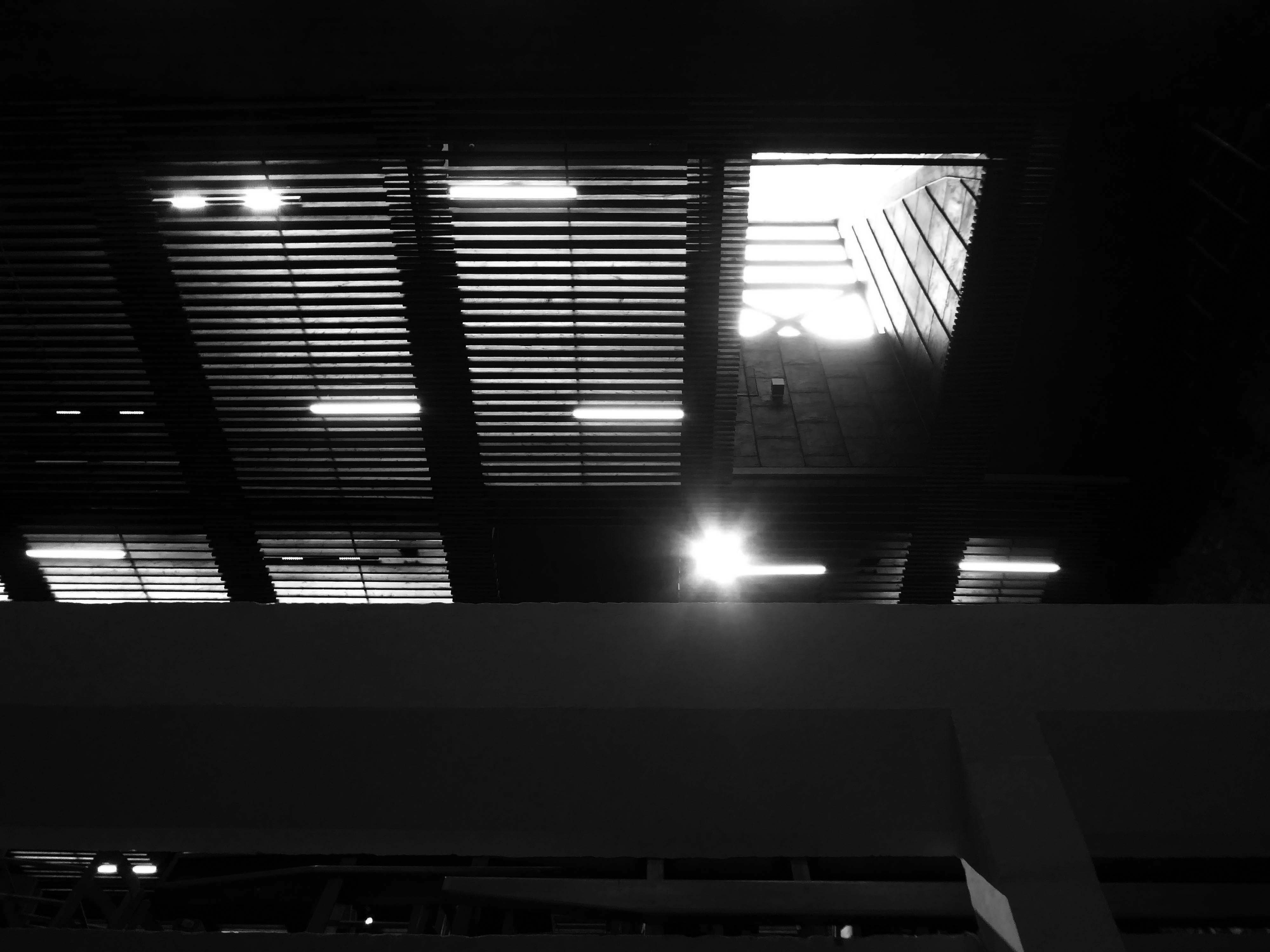
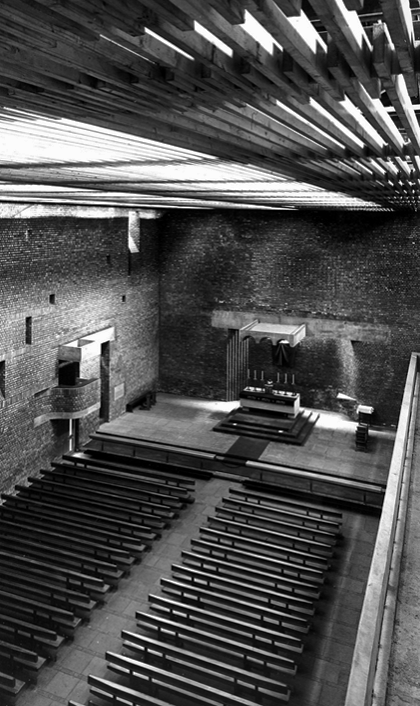
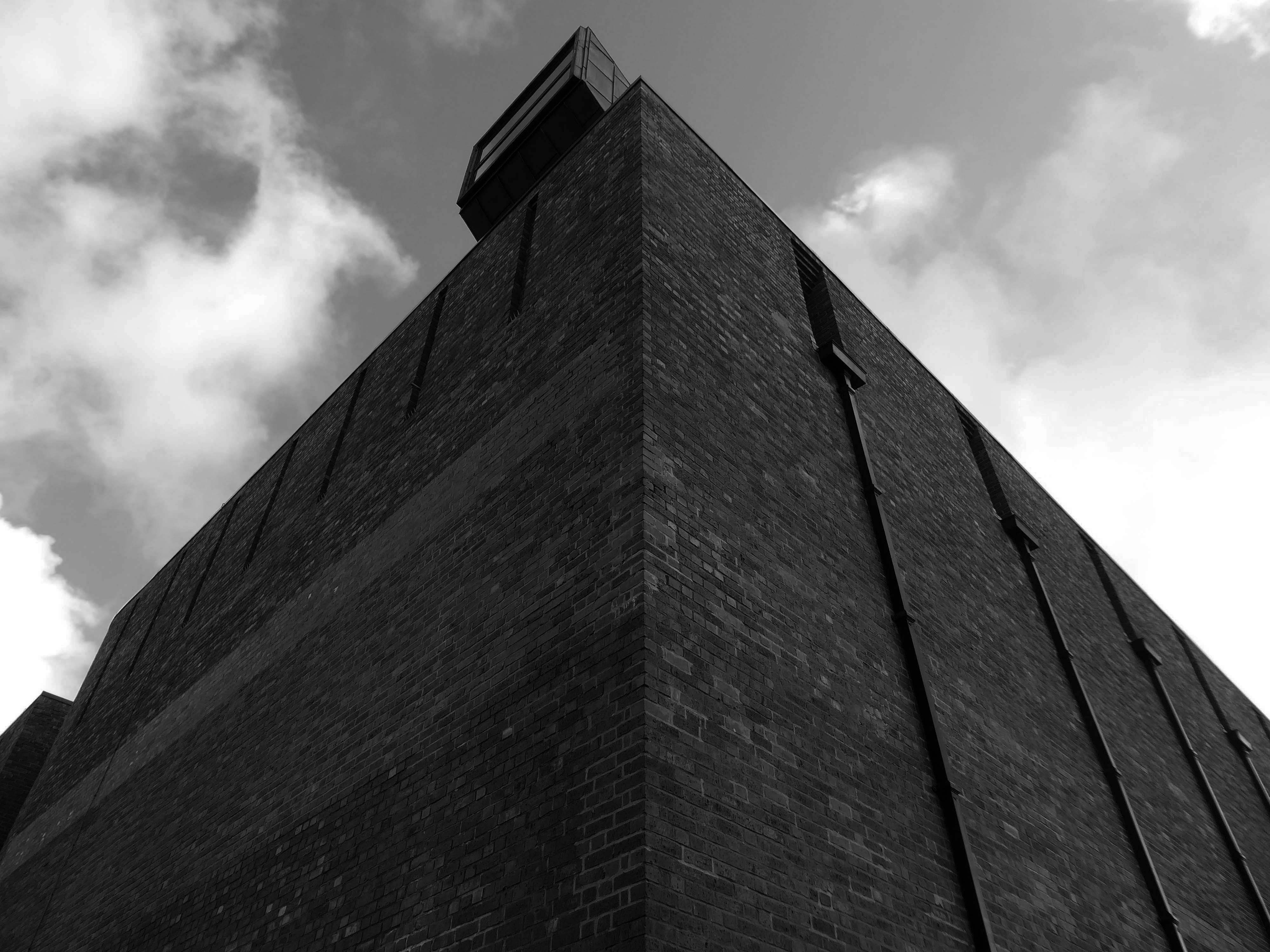
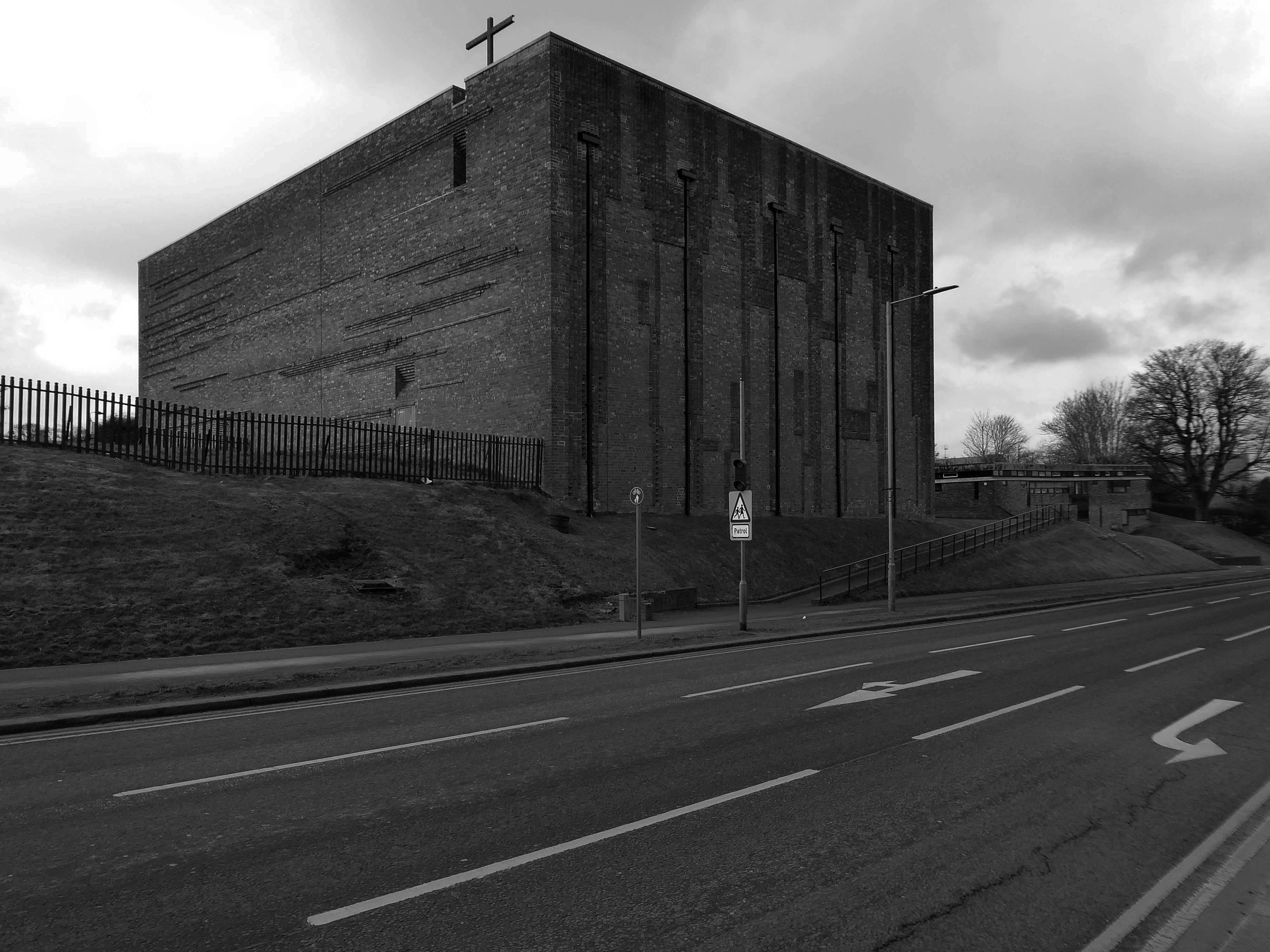
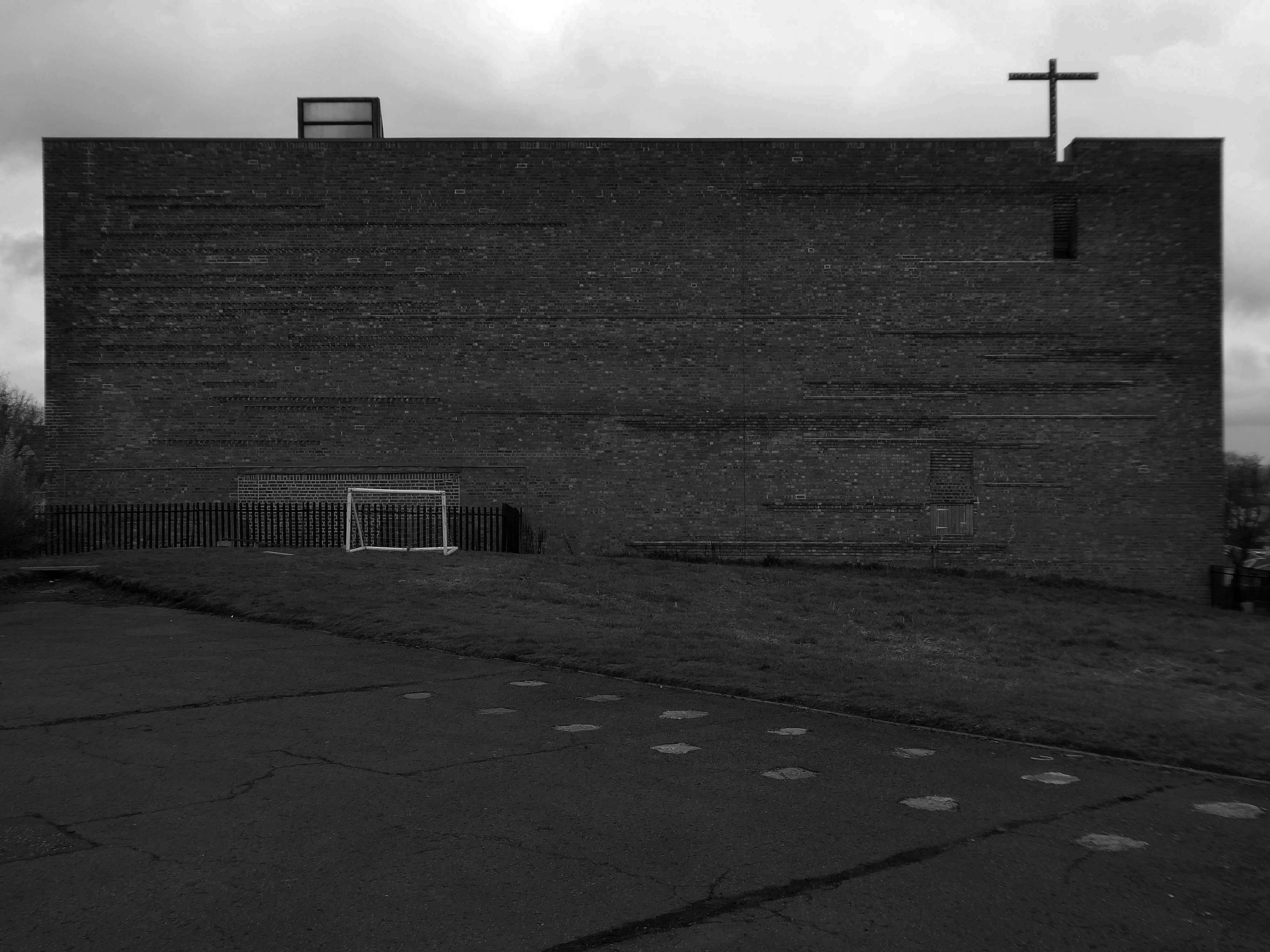
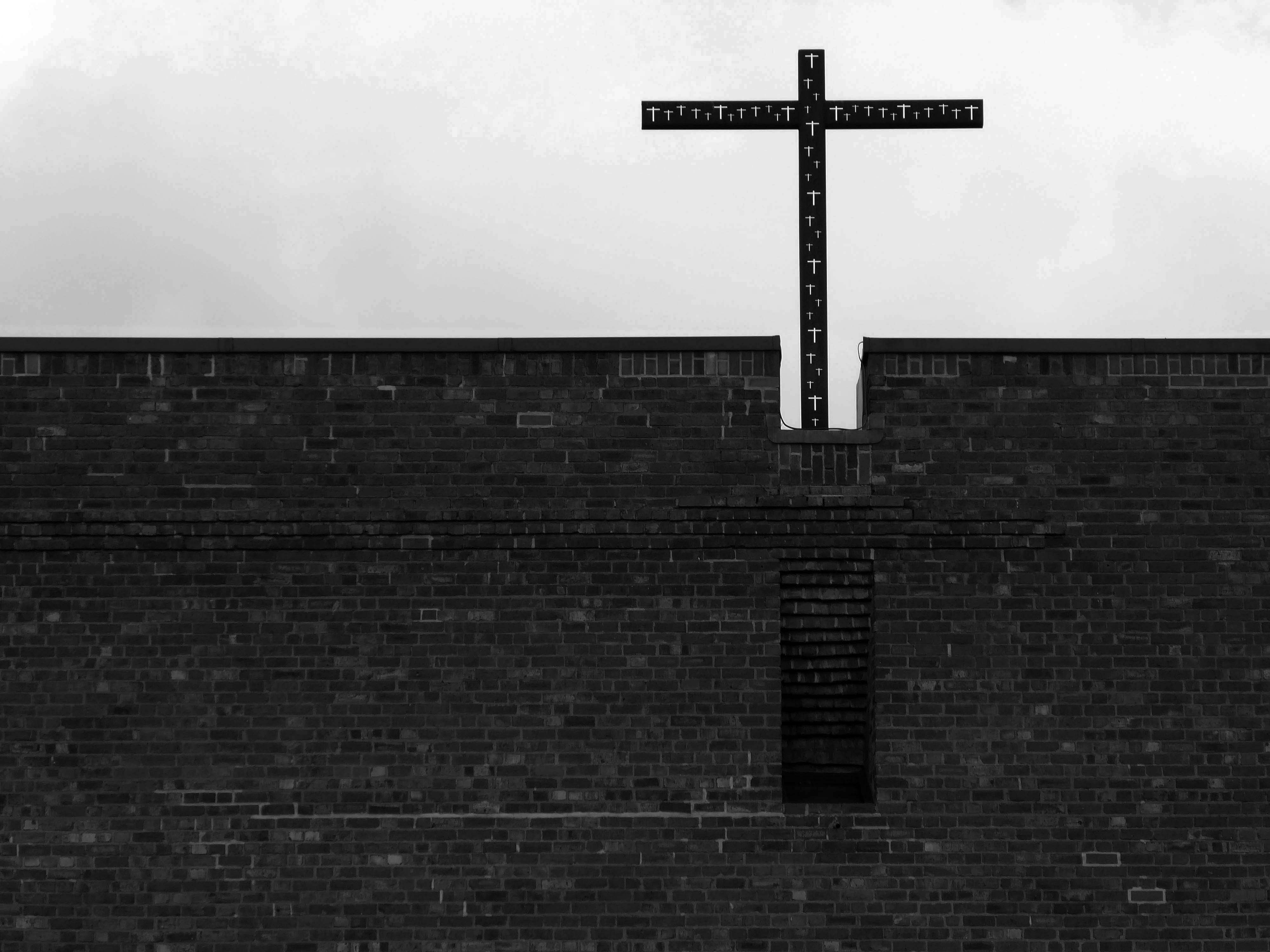
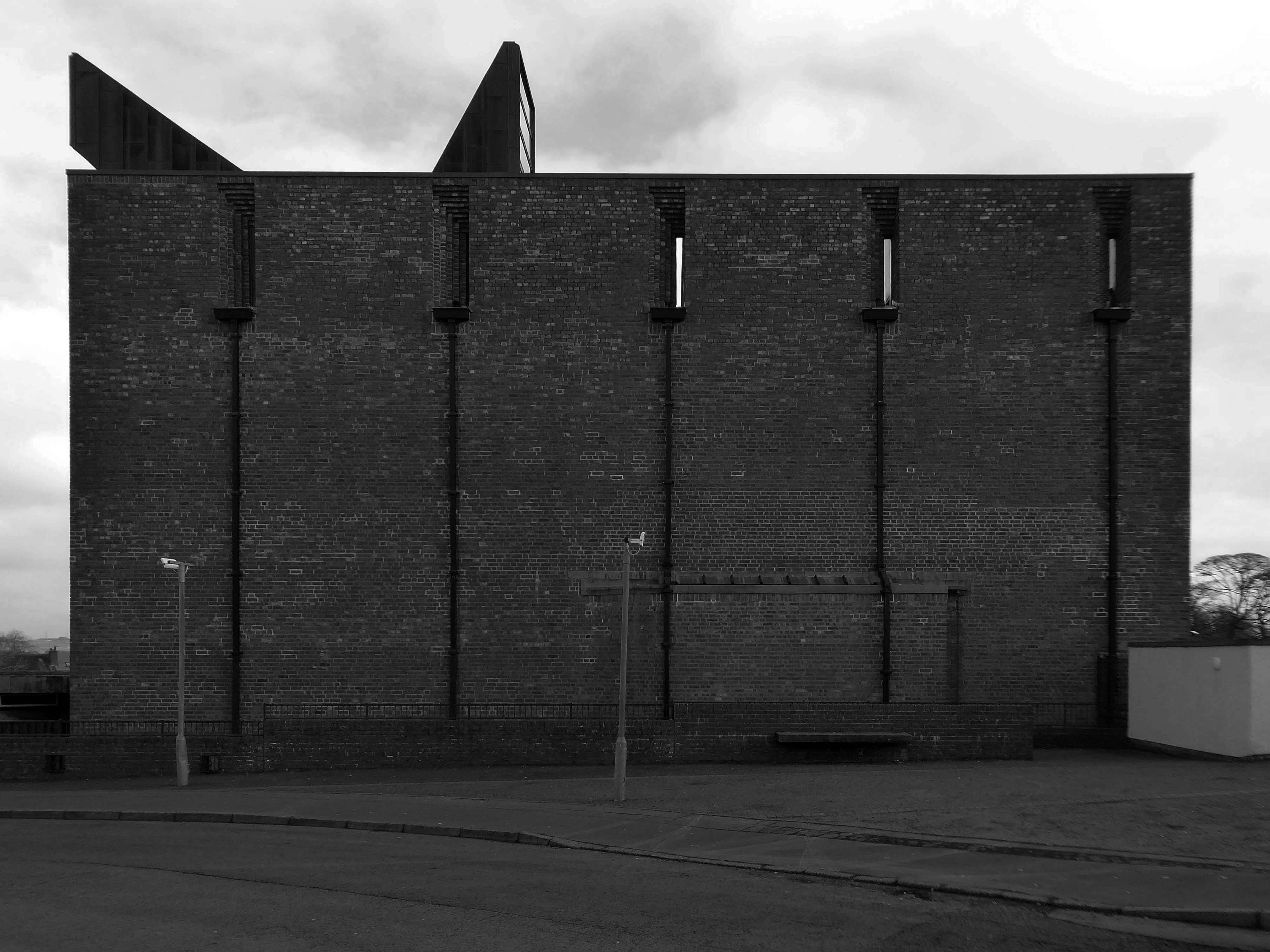
Walk up West Mains Road, alone on a hill standing perfectly still sits St Bride’s, you can’t miss it.
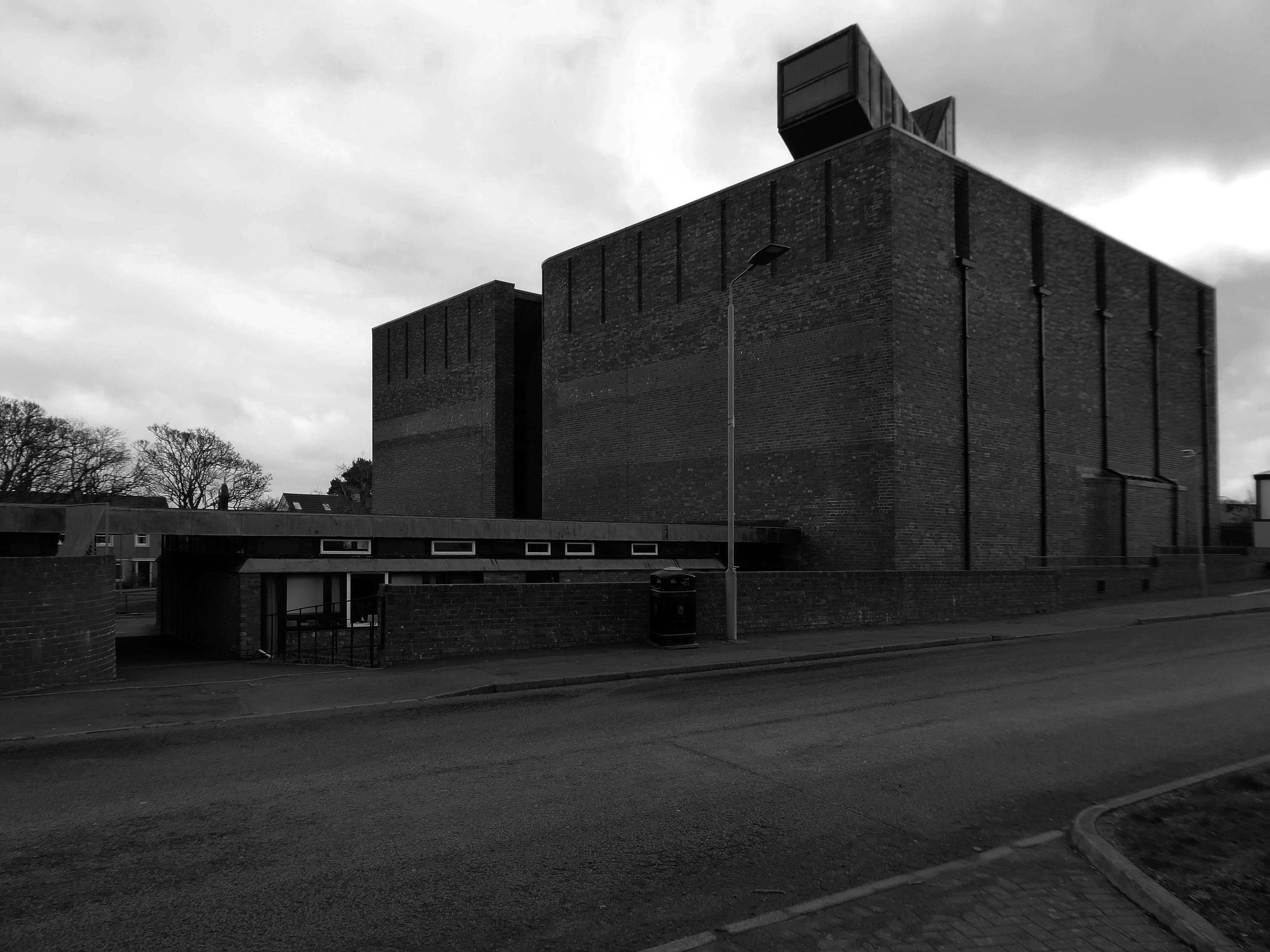
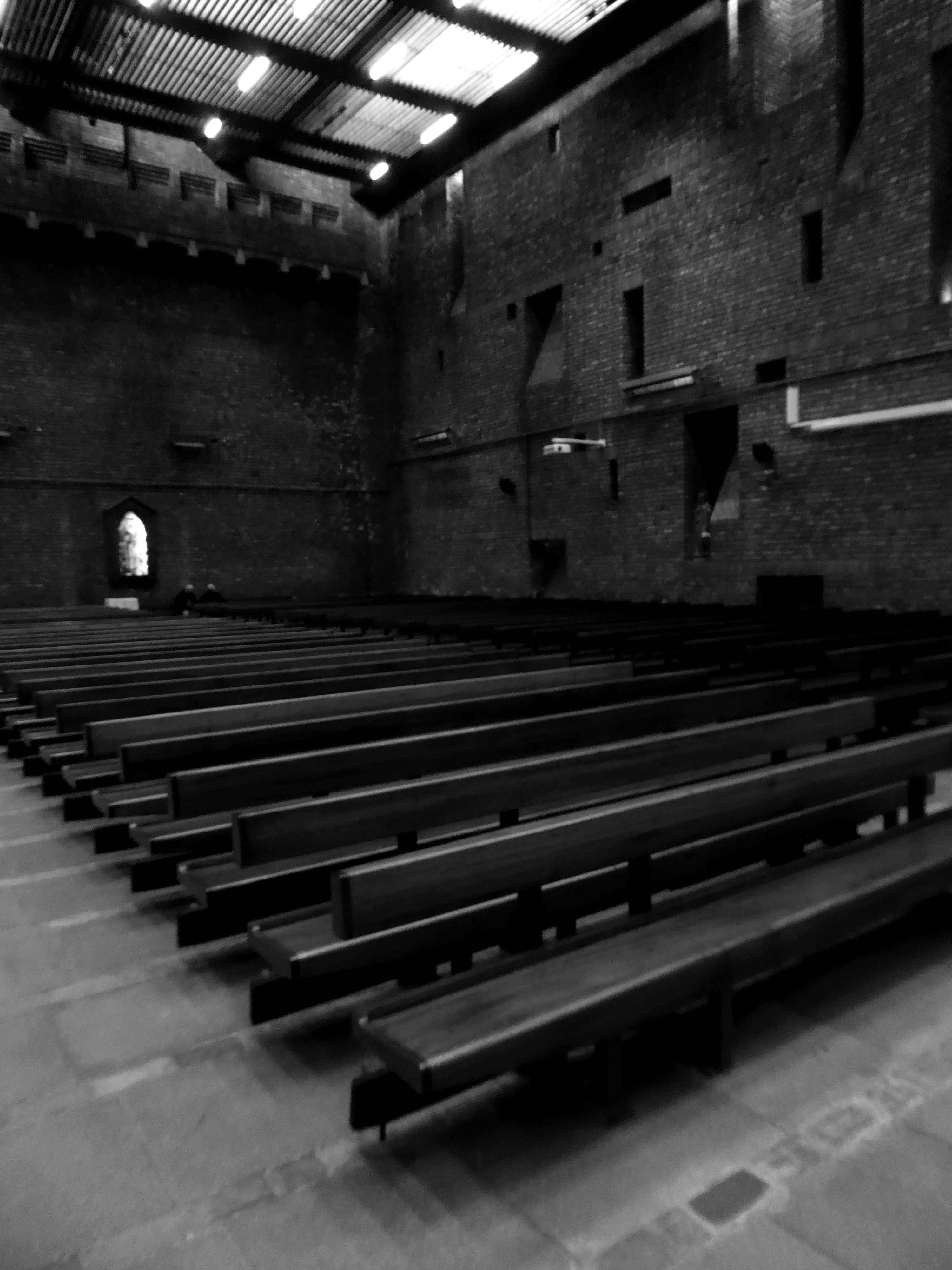
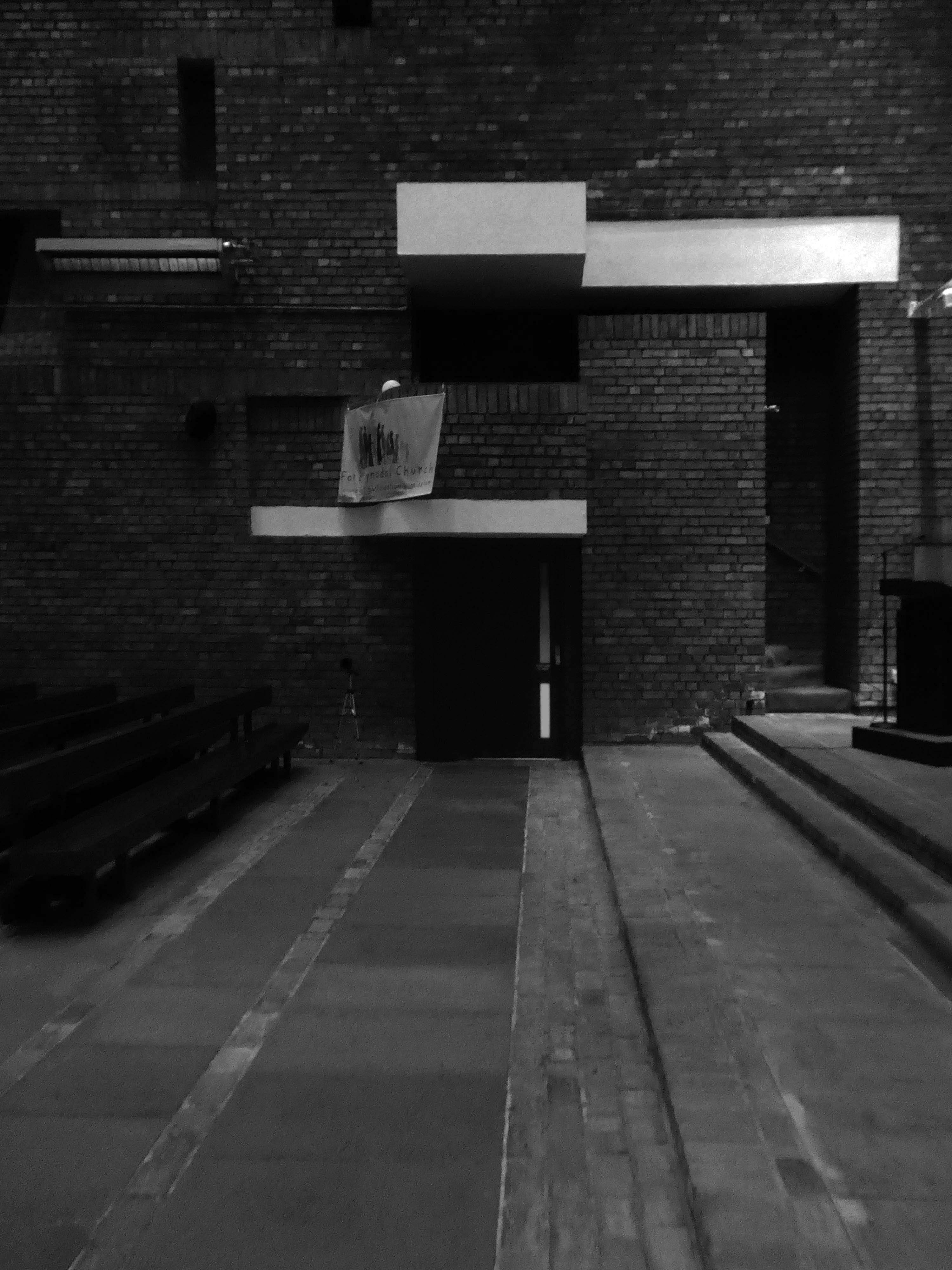
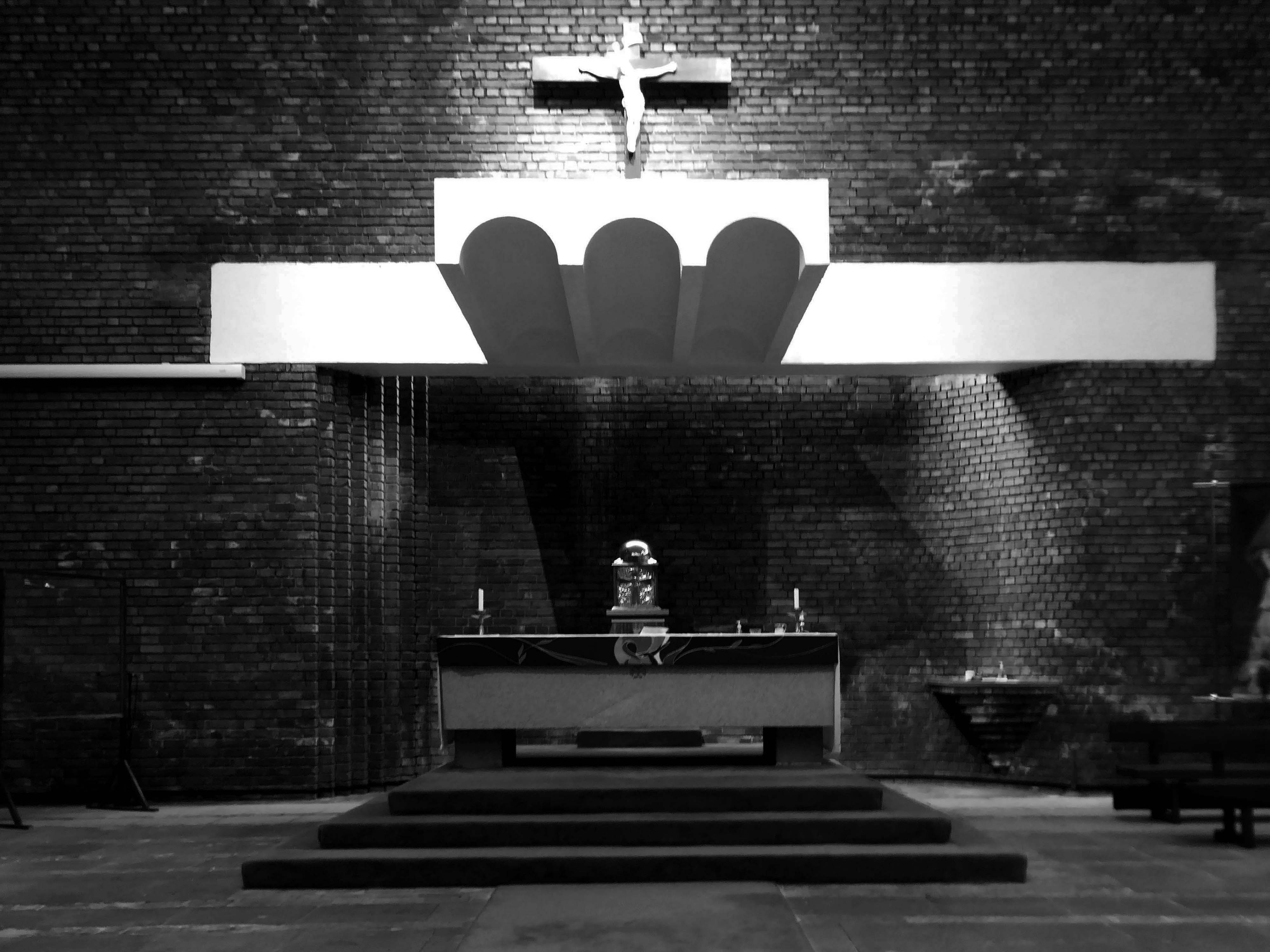
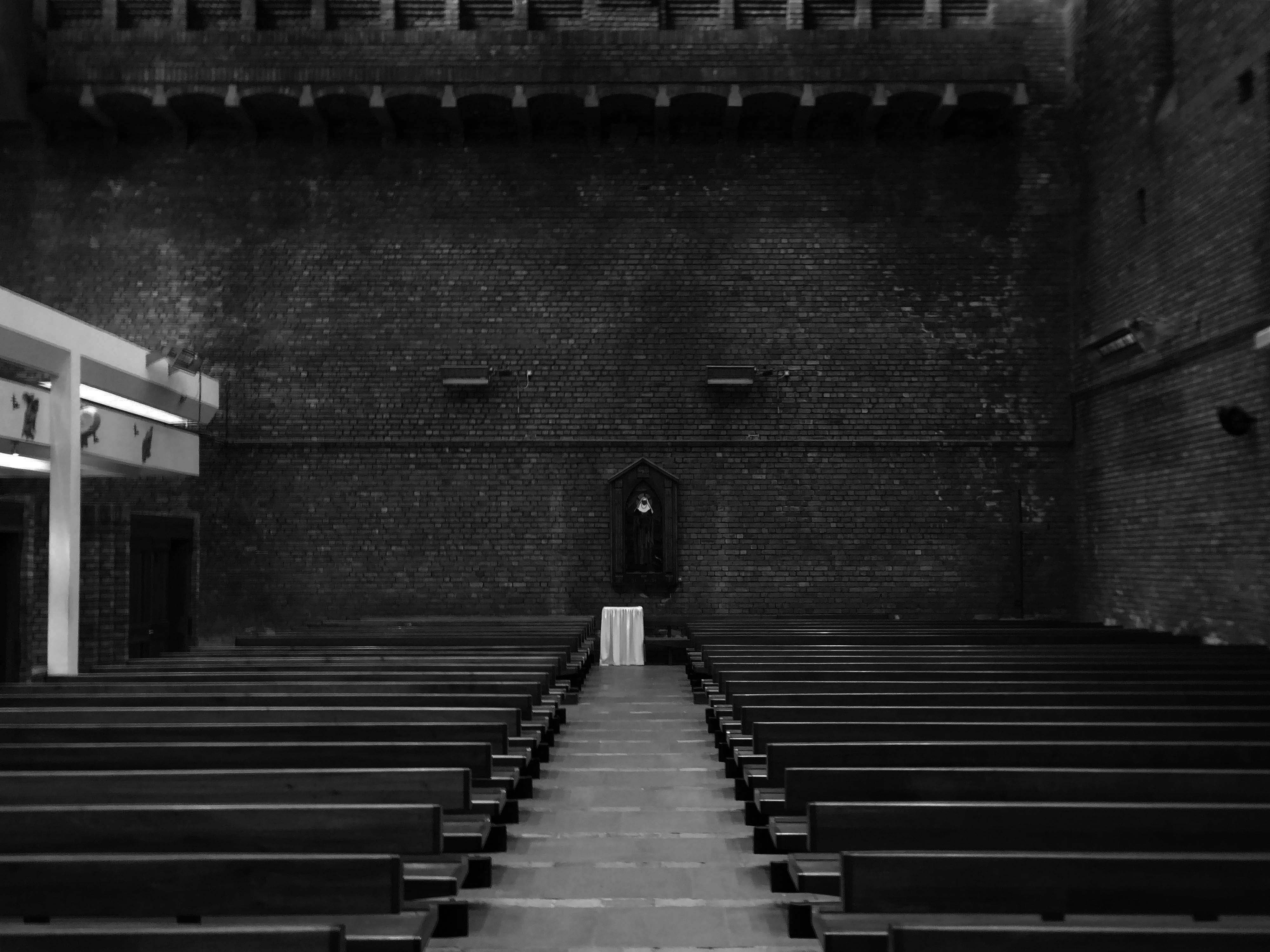
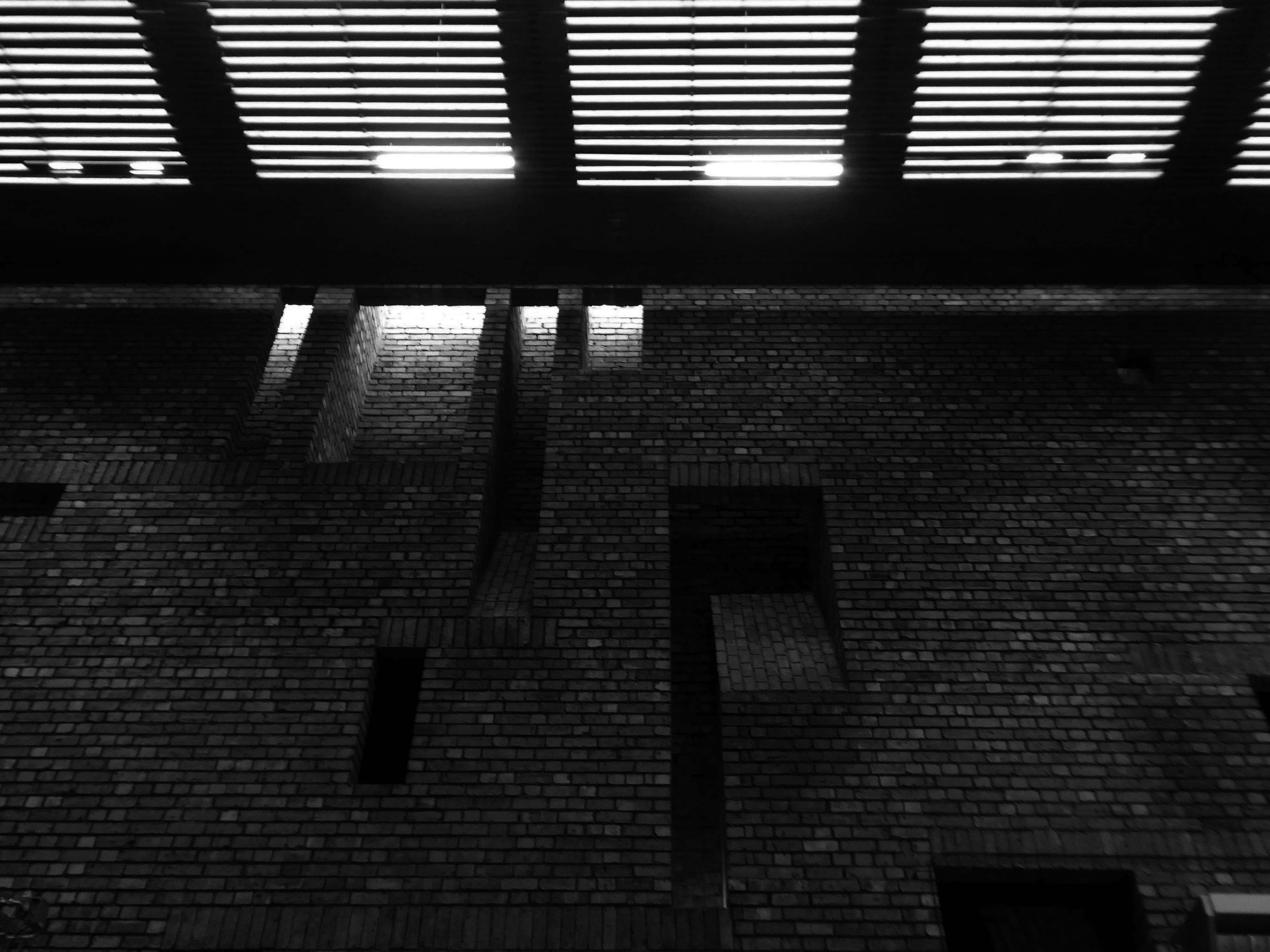
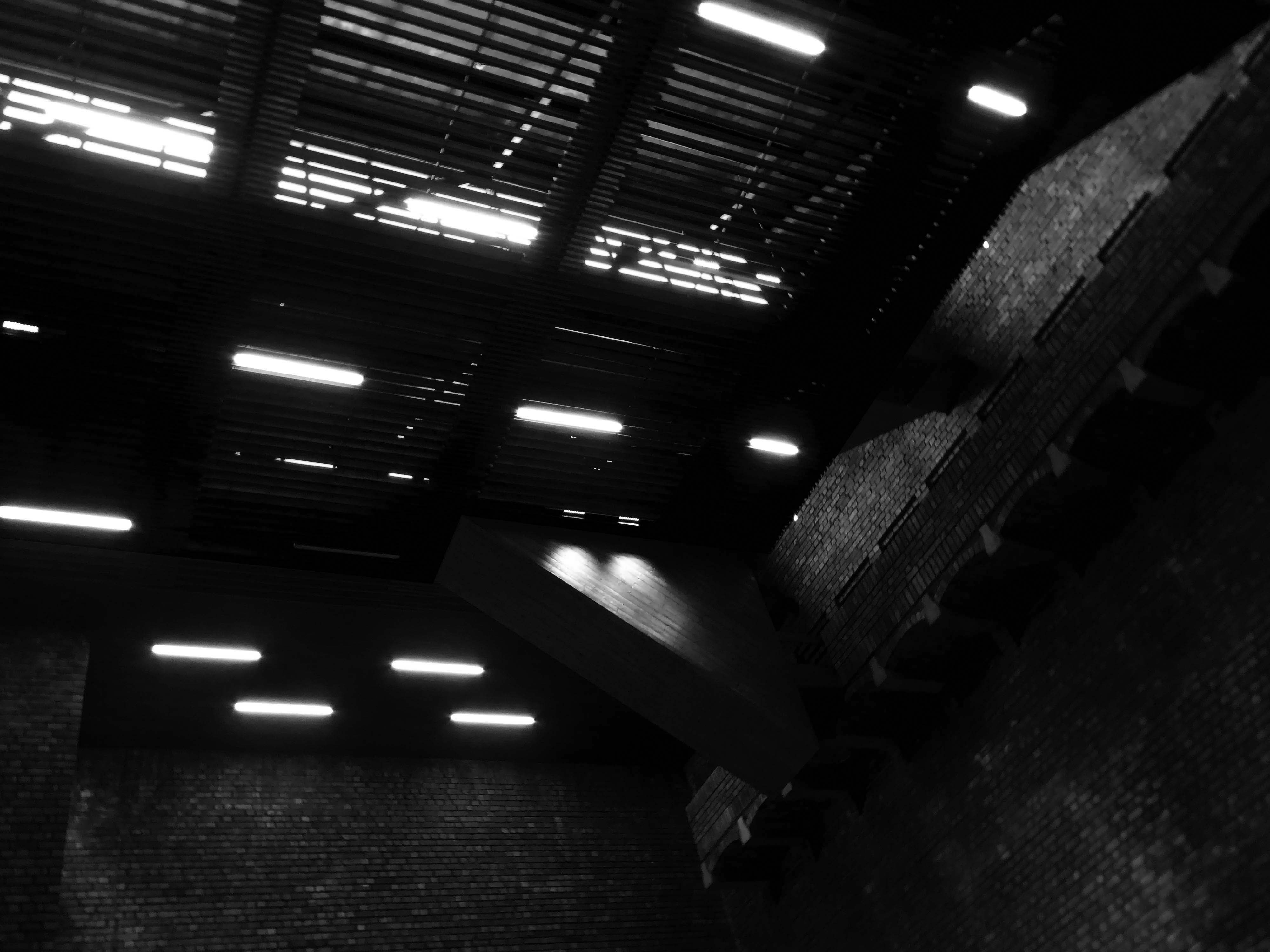
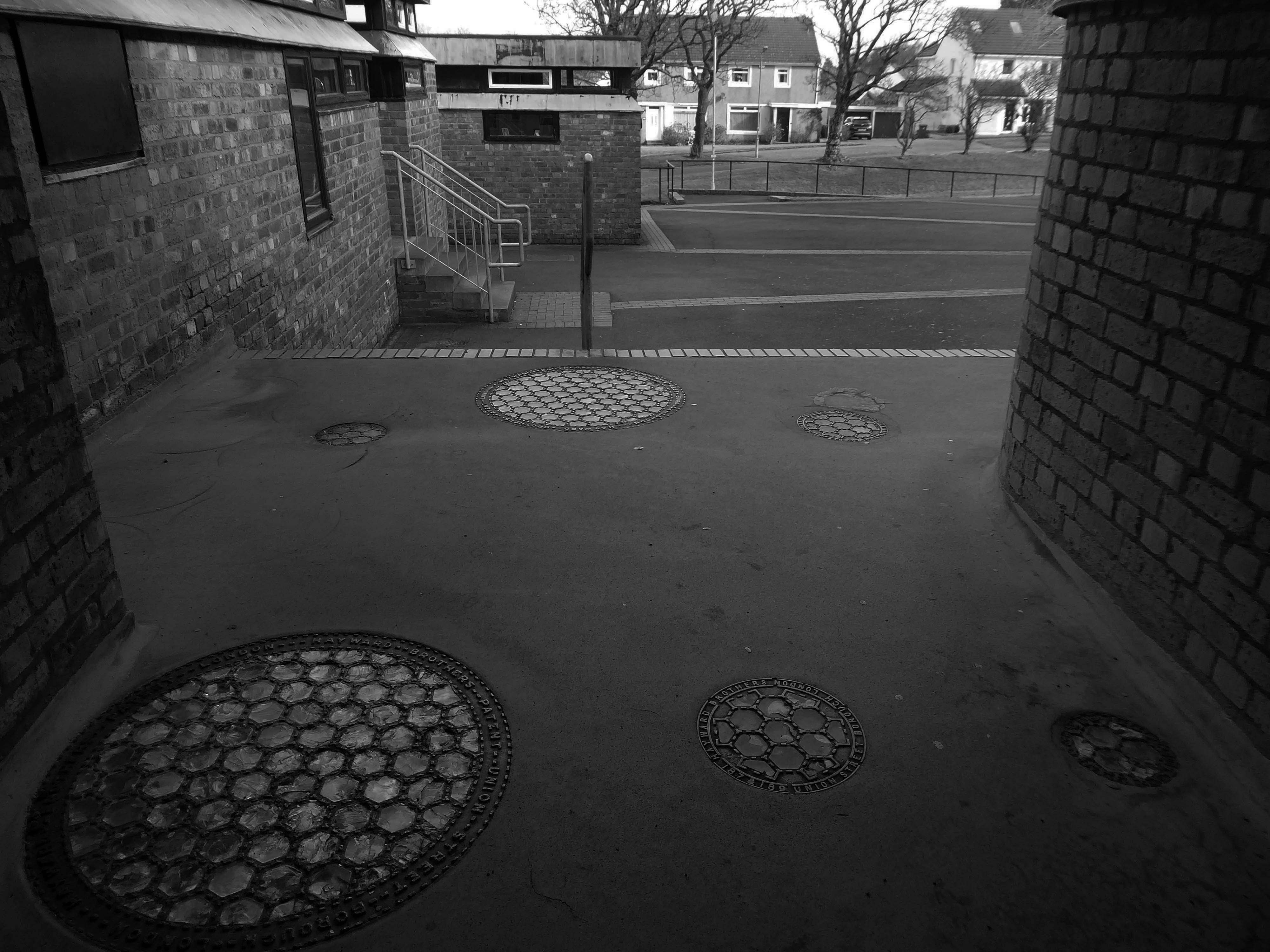
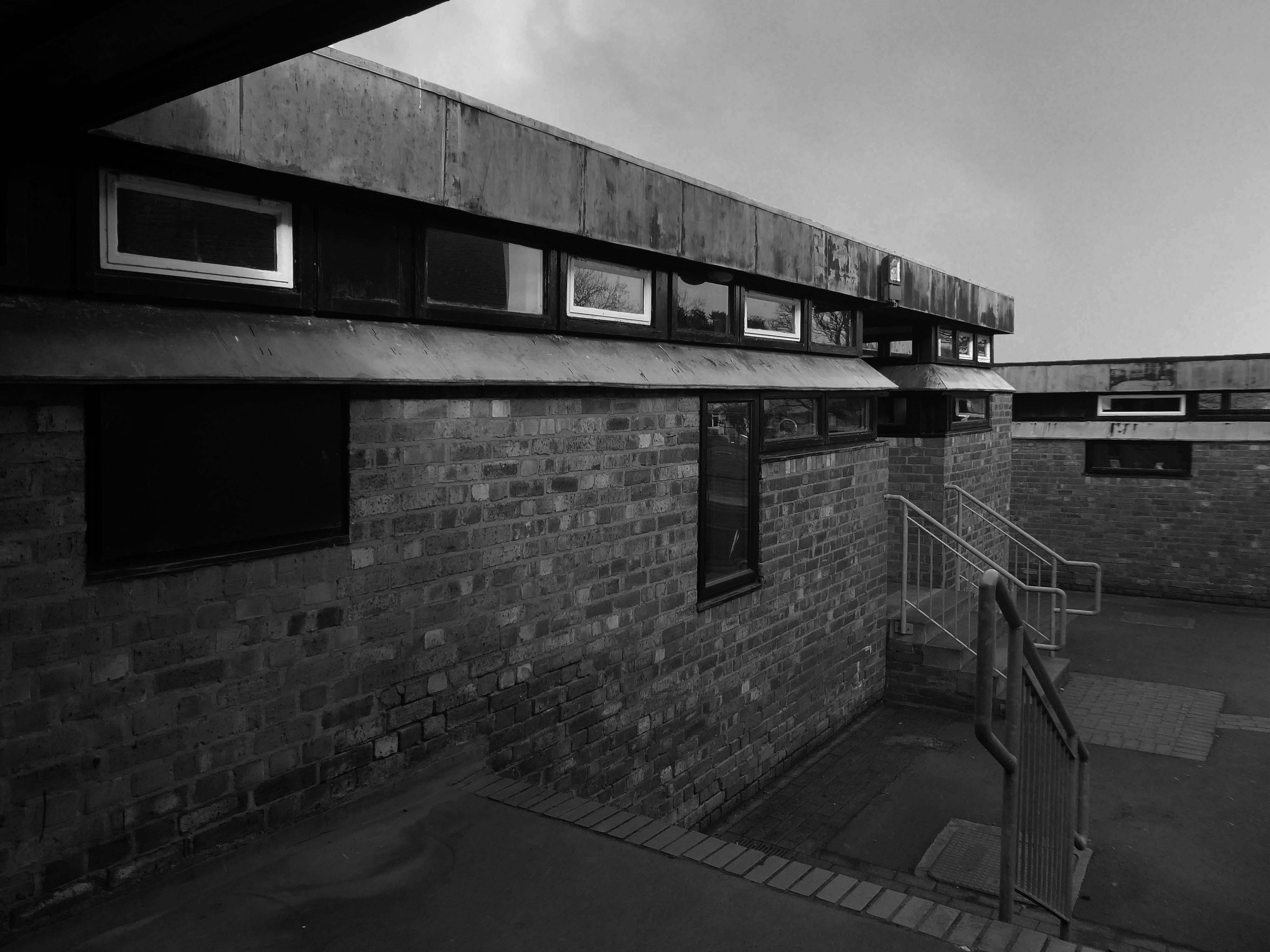
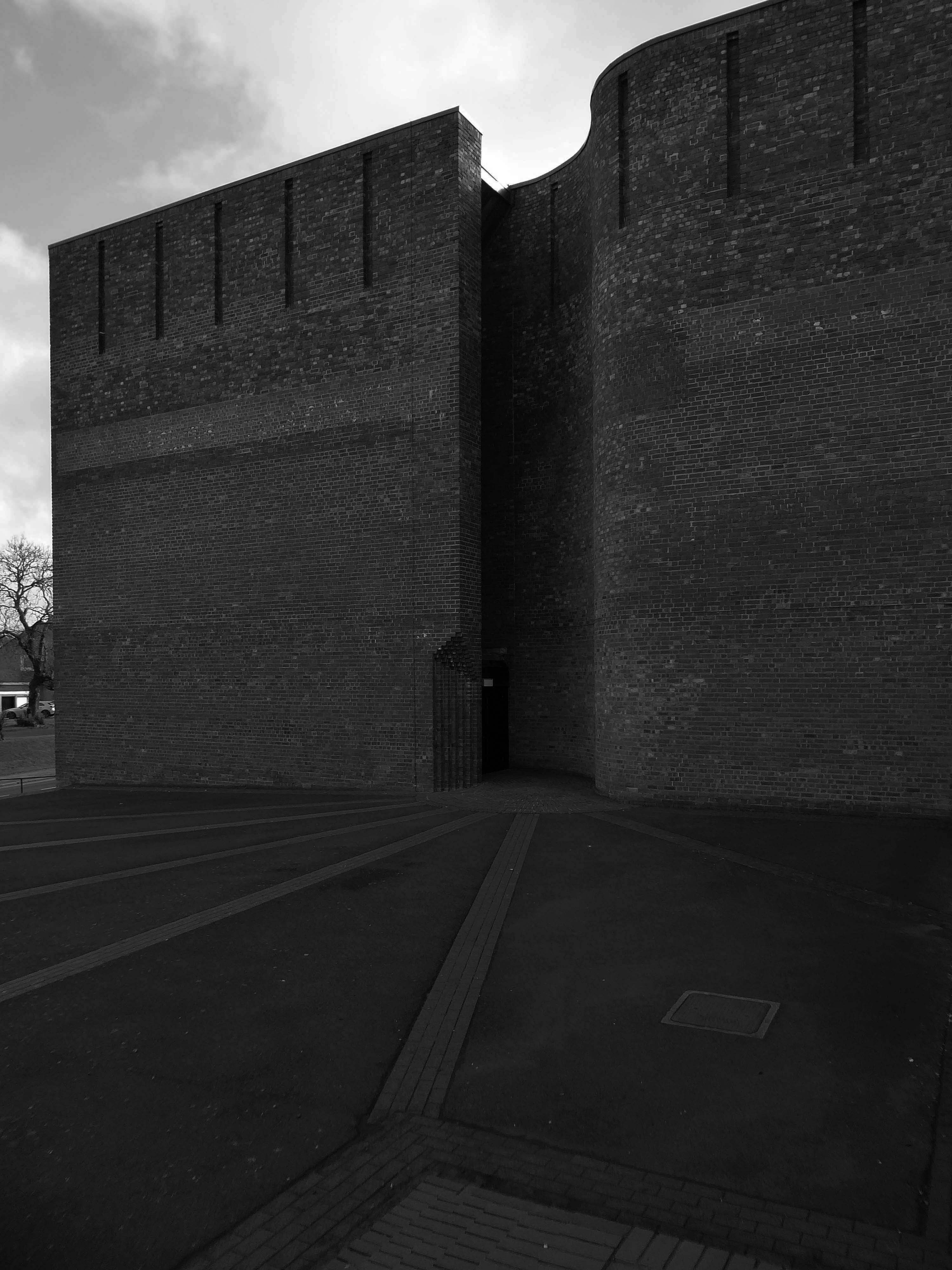
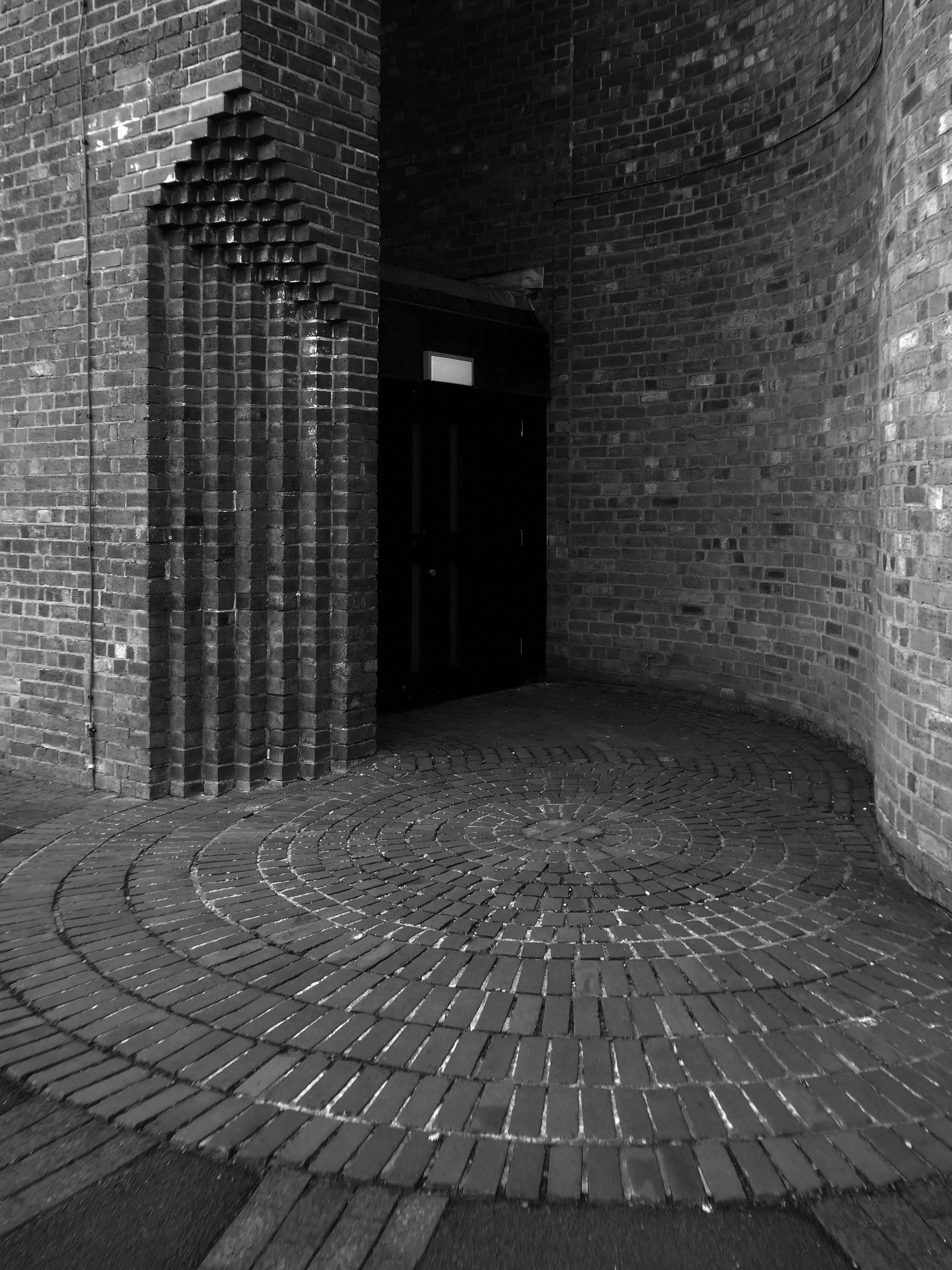
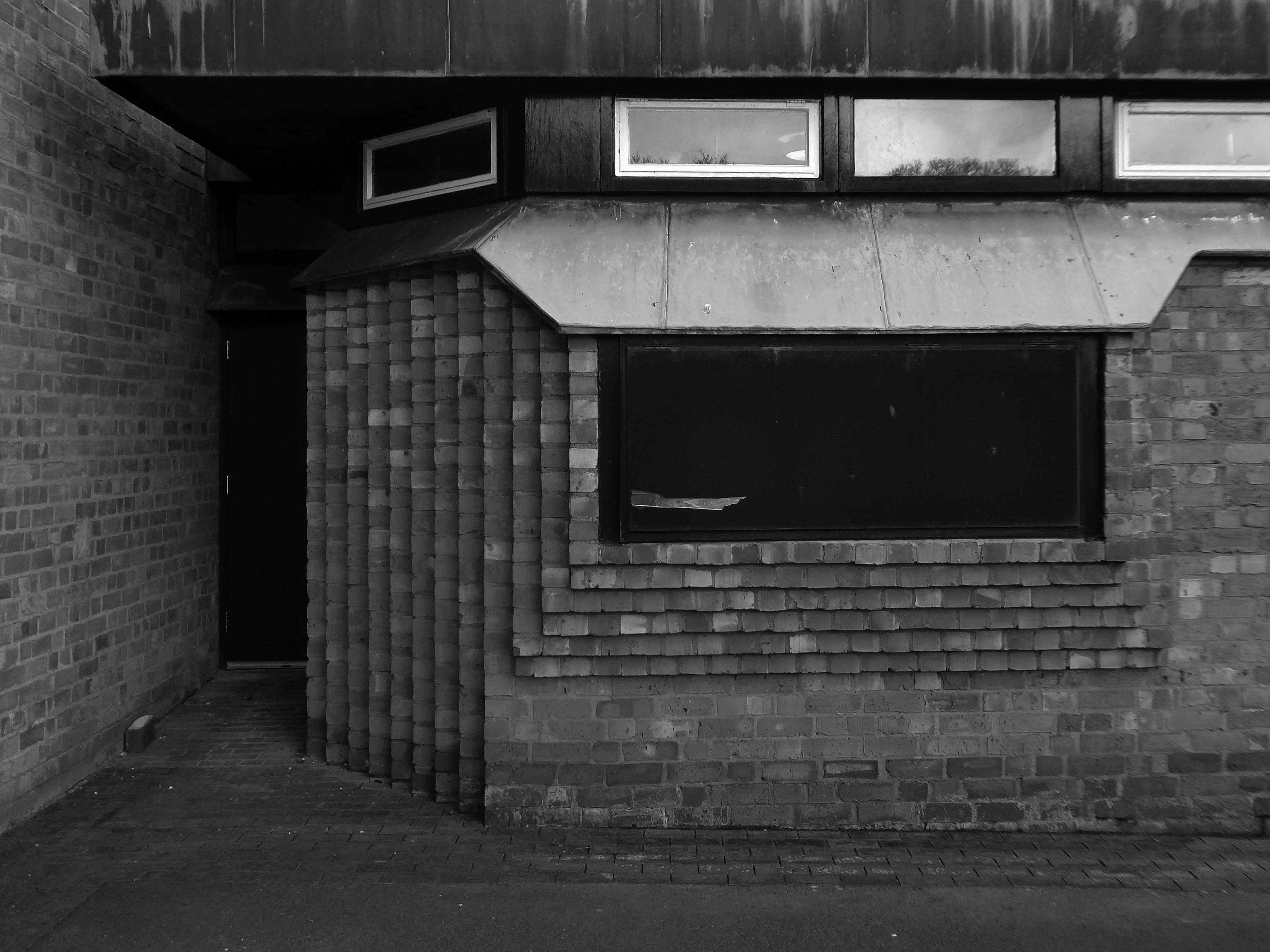
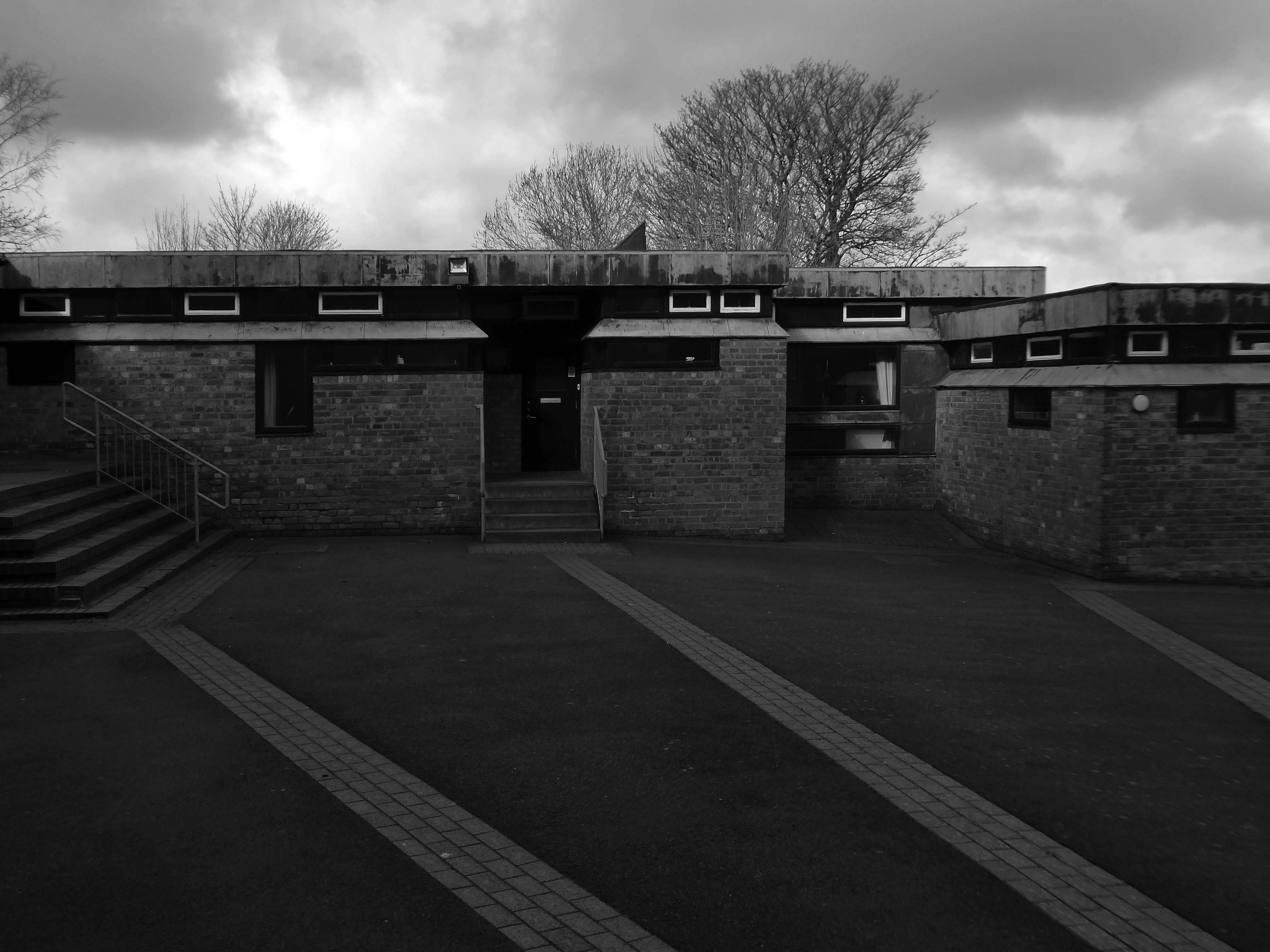
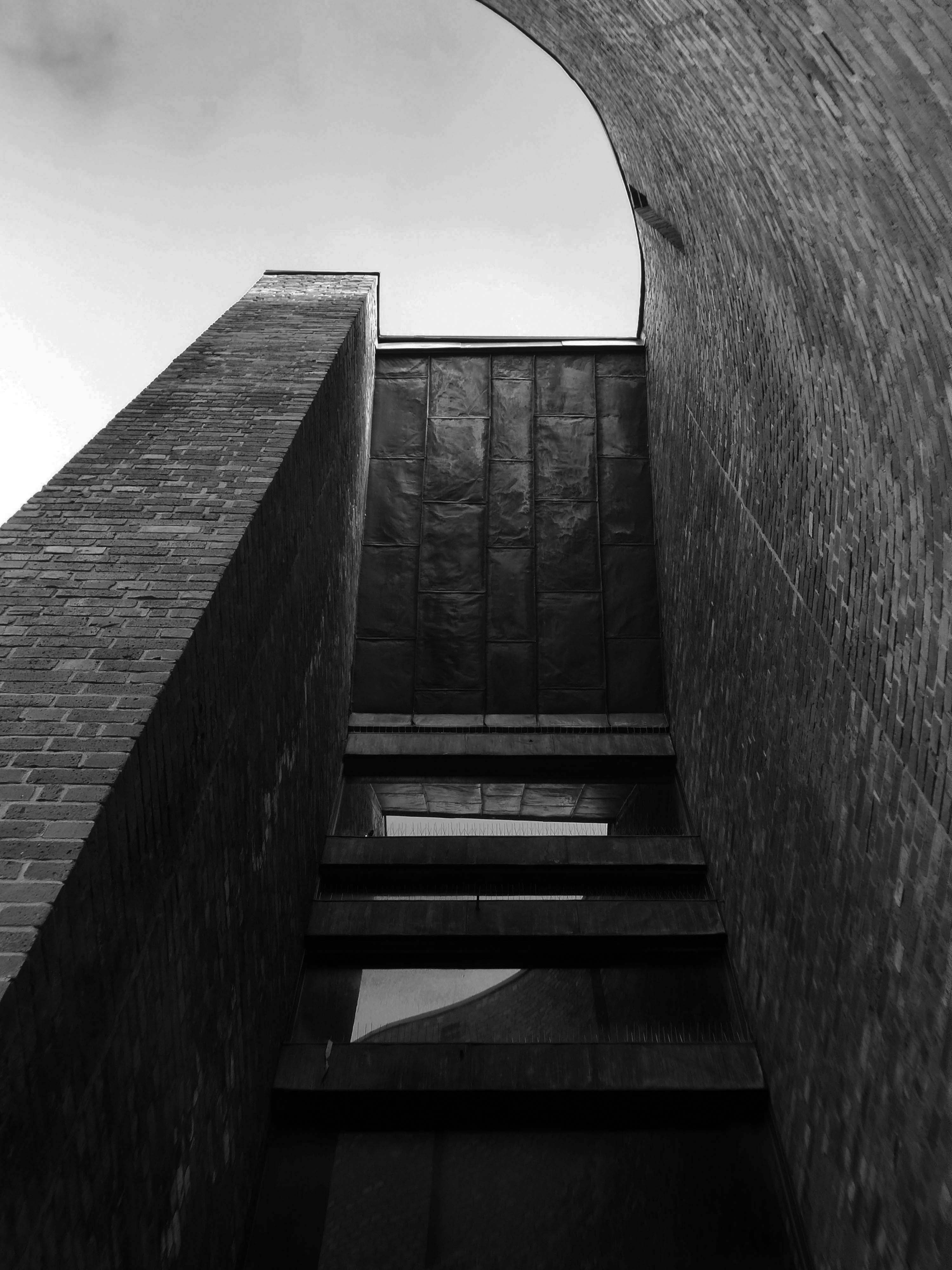
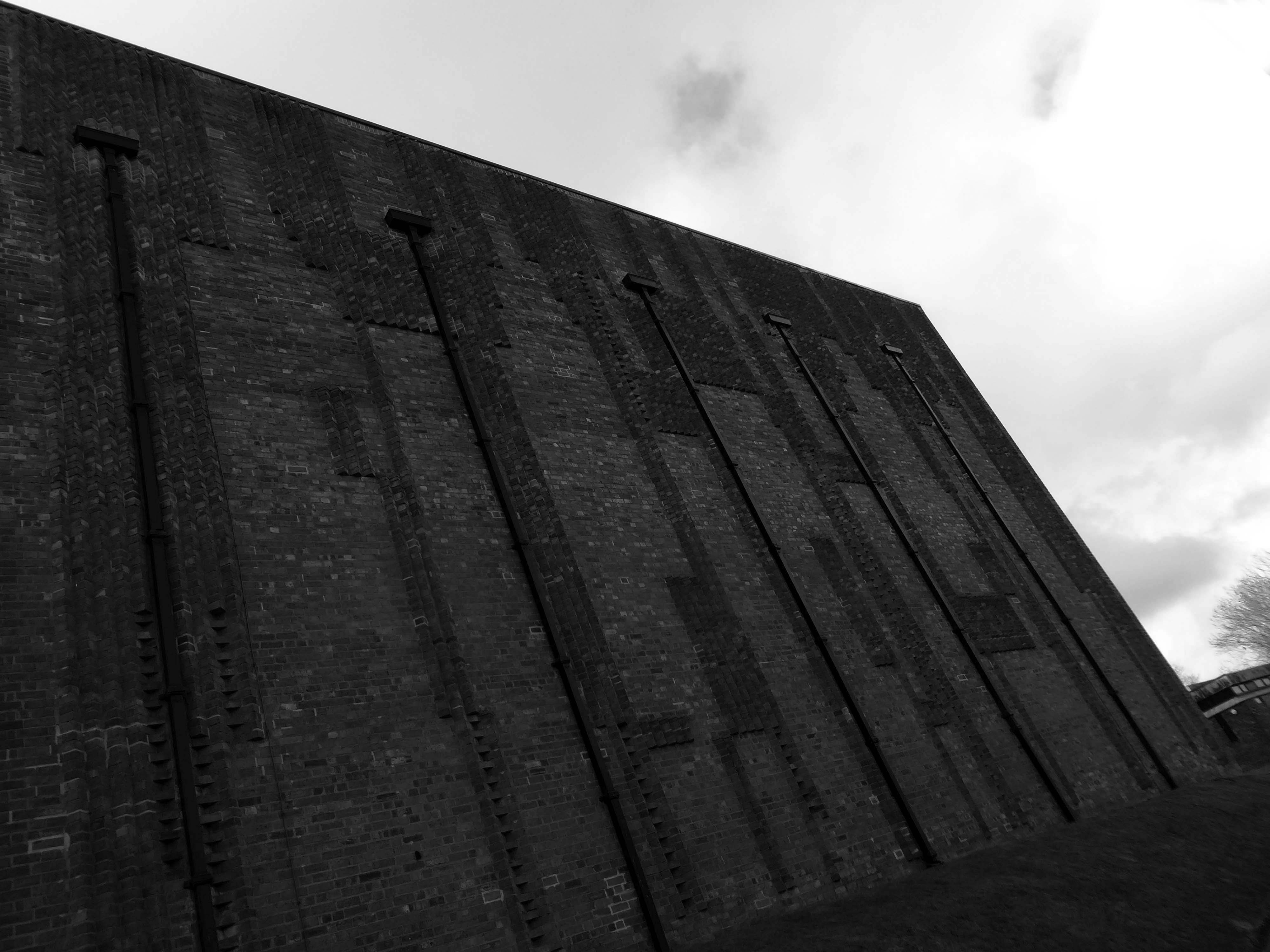
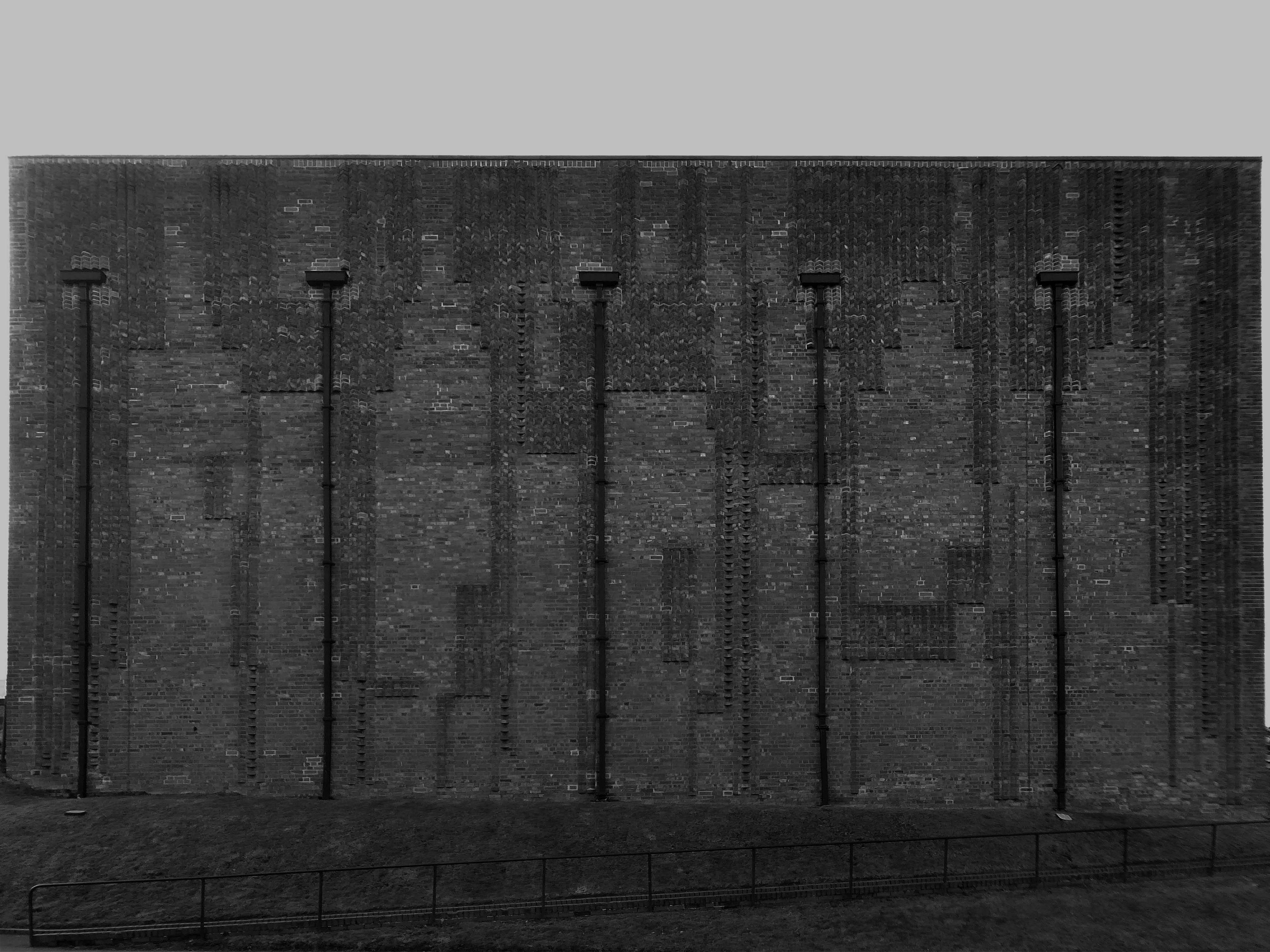
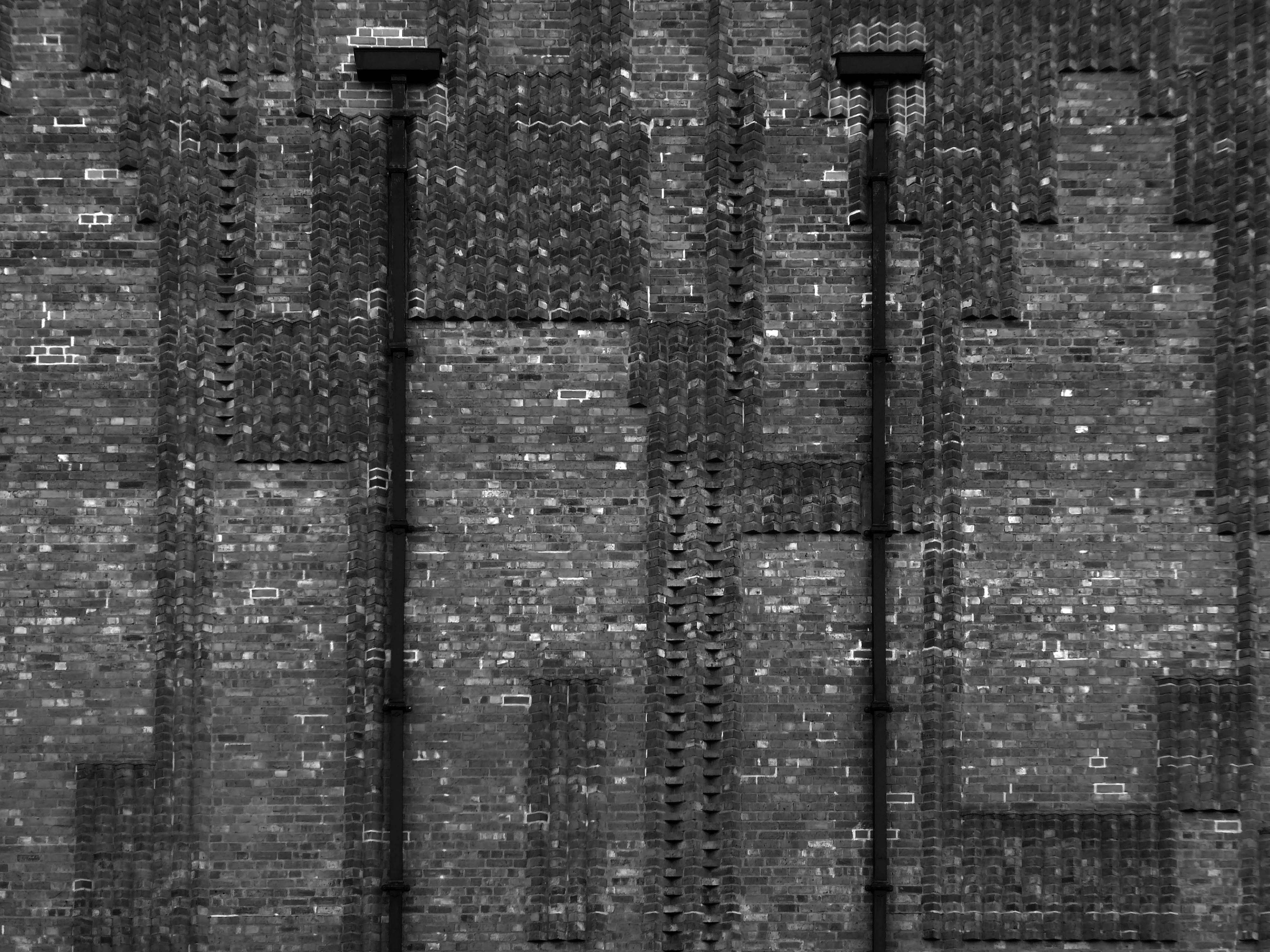
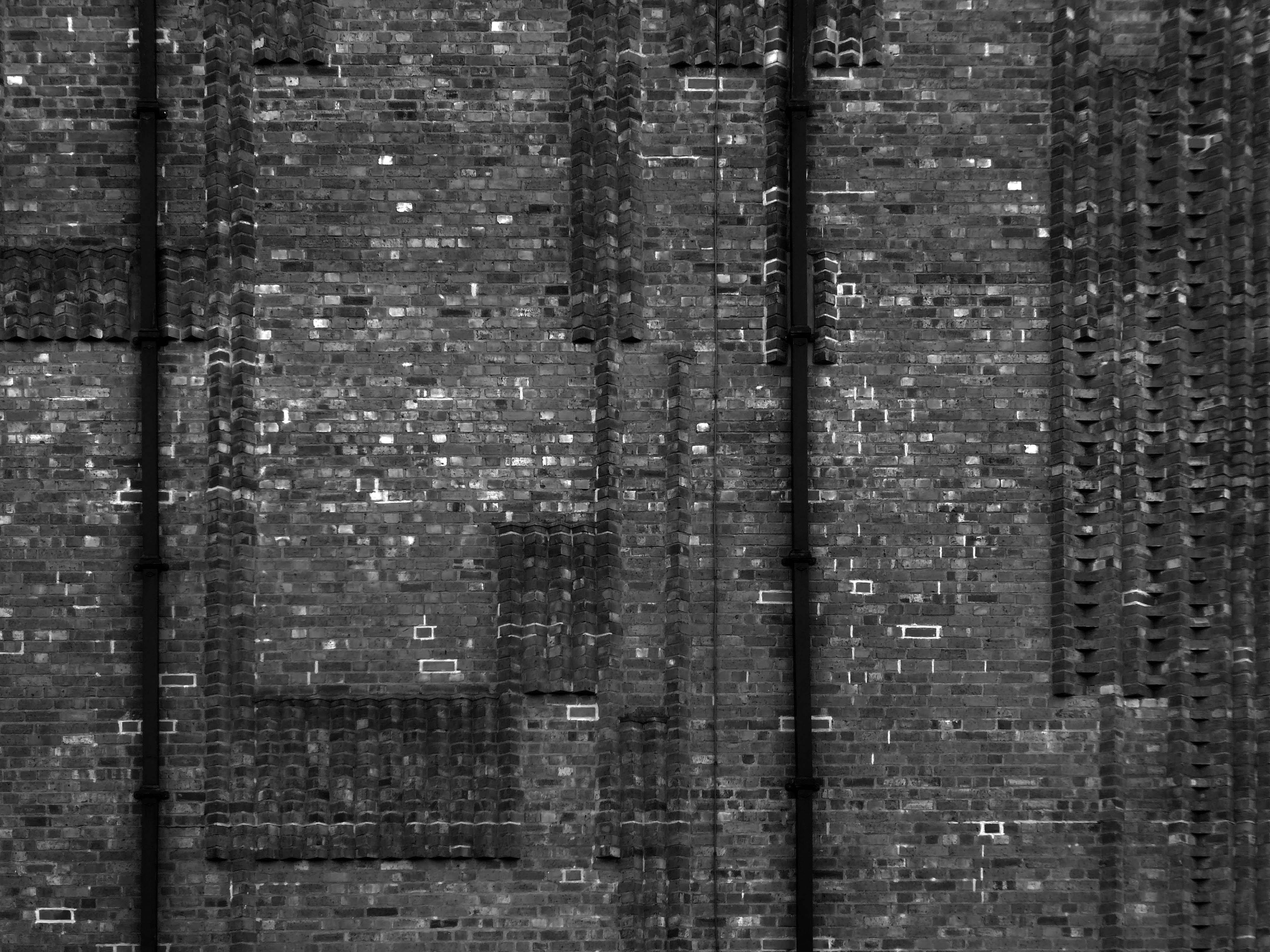
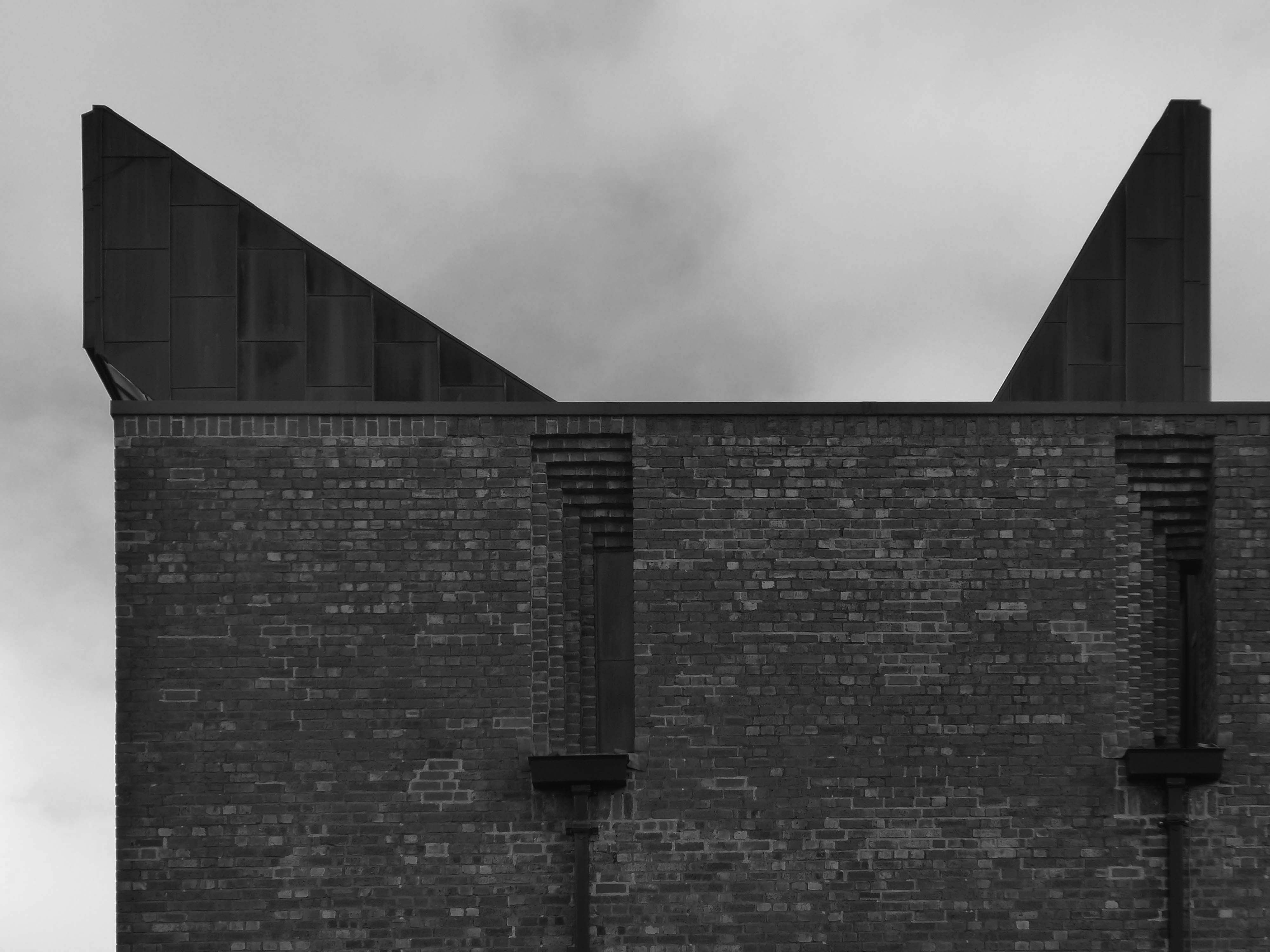
The biggest extant example of Bricktalism, the most Bricktalist building in the world, possibly.
Stallan-Brand design director Paul Stallan commented:
St Bride’s for me is the most important modernist buildings of the period. The church made from Victorian sewer bricks and concrete is both simple and complex. The architecture continues to be a key reference for students of architecture from across the world interested in modernism and the contemporary vernacular in context. Andy and Isi’s work is as important to Scotland as Alvar Aalto’s work is to the Finnish.
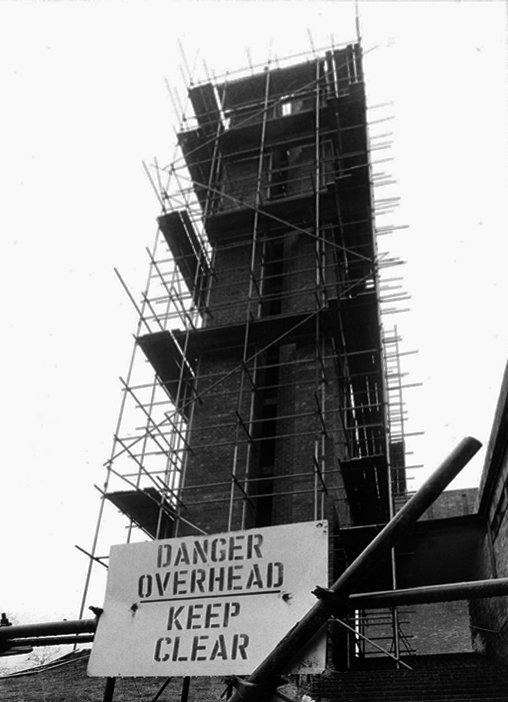
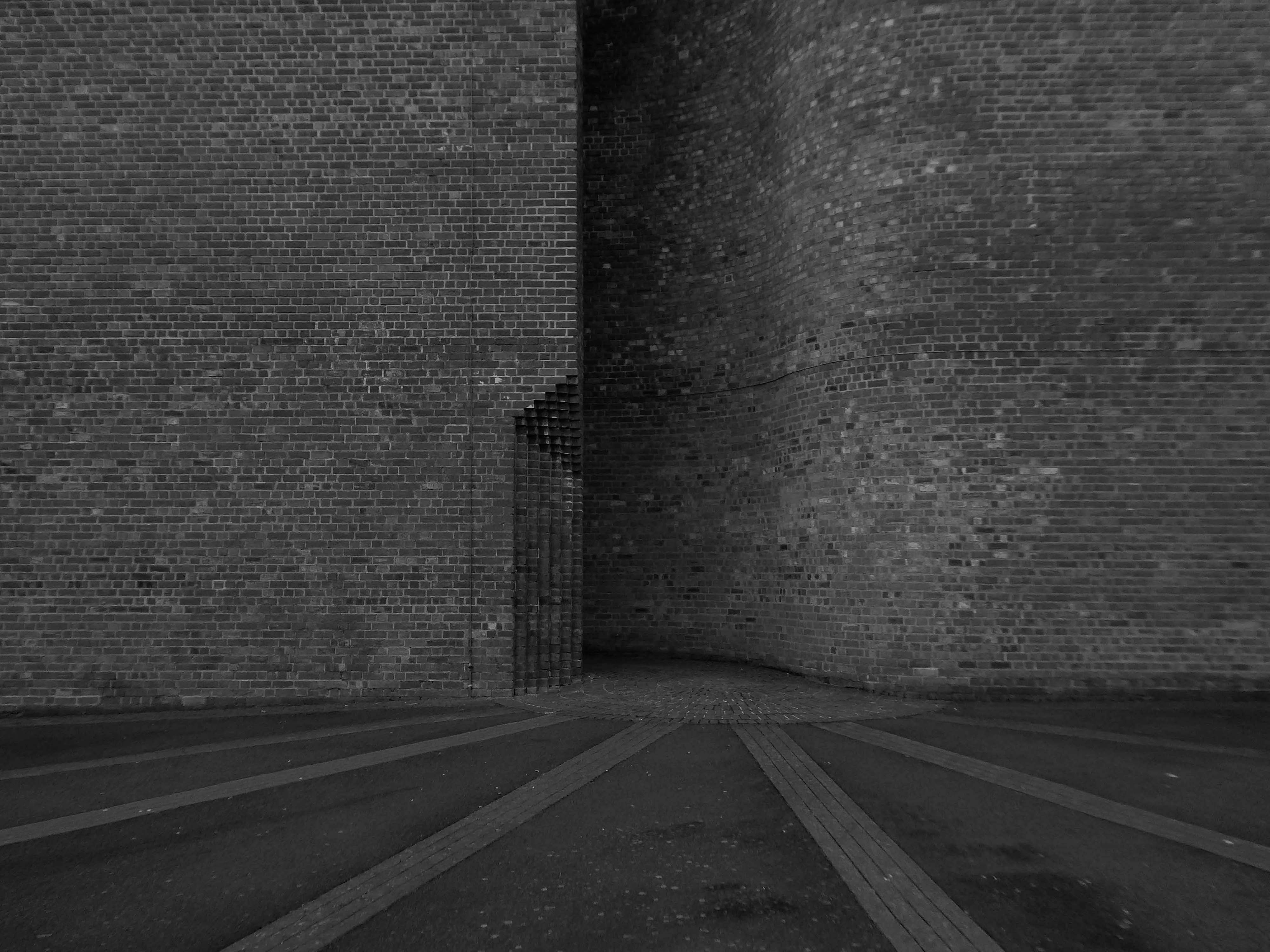
It’s a traditional Scottish stone detail I saw for myself as a boy growing up in the Highlands, on every castle and fortified house, and on the flanks of the tower at Muckrach, ancient seat of the Grants of Rothiemurchus, built in 1598. This was my local castle just a mile from home.
The entrance to St Bride’s, I like to imagine, comes from a friendship that included travel in the Scottish Highlands, admiring the Scottish vernacular close-up, of a fevered conversation about a simple concept – the massive blind box, and how the application of simple, semi-traditional material detailing can make it all the richer.
St Bride’s is simply one of the finest buildings in Scotland.
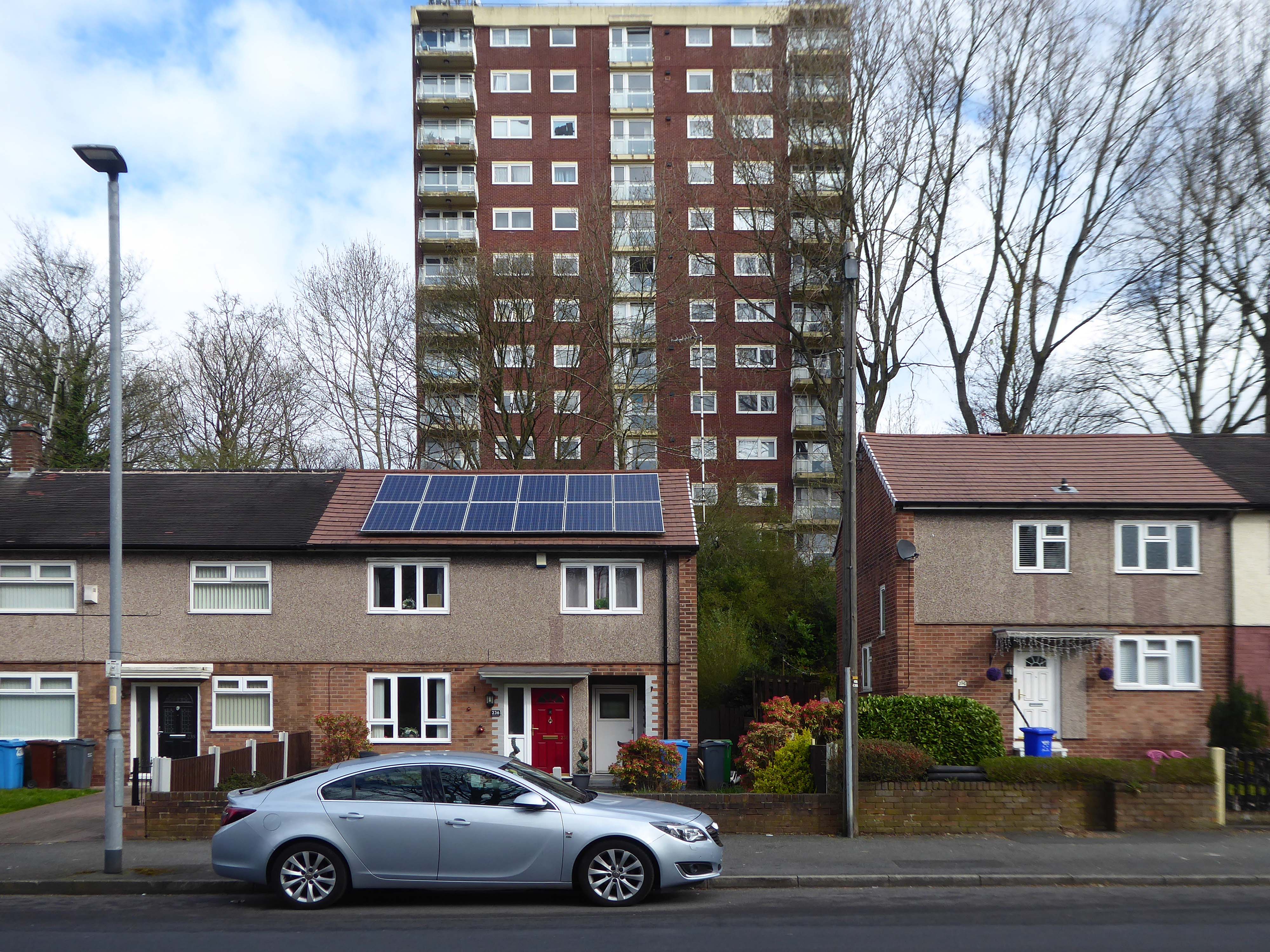
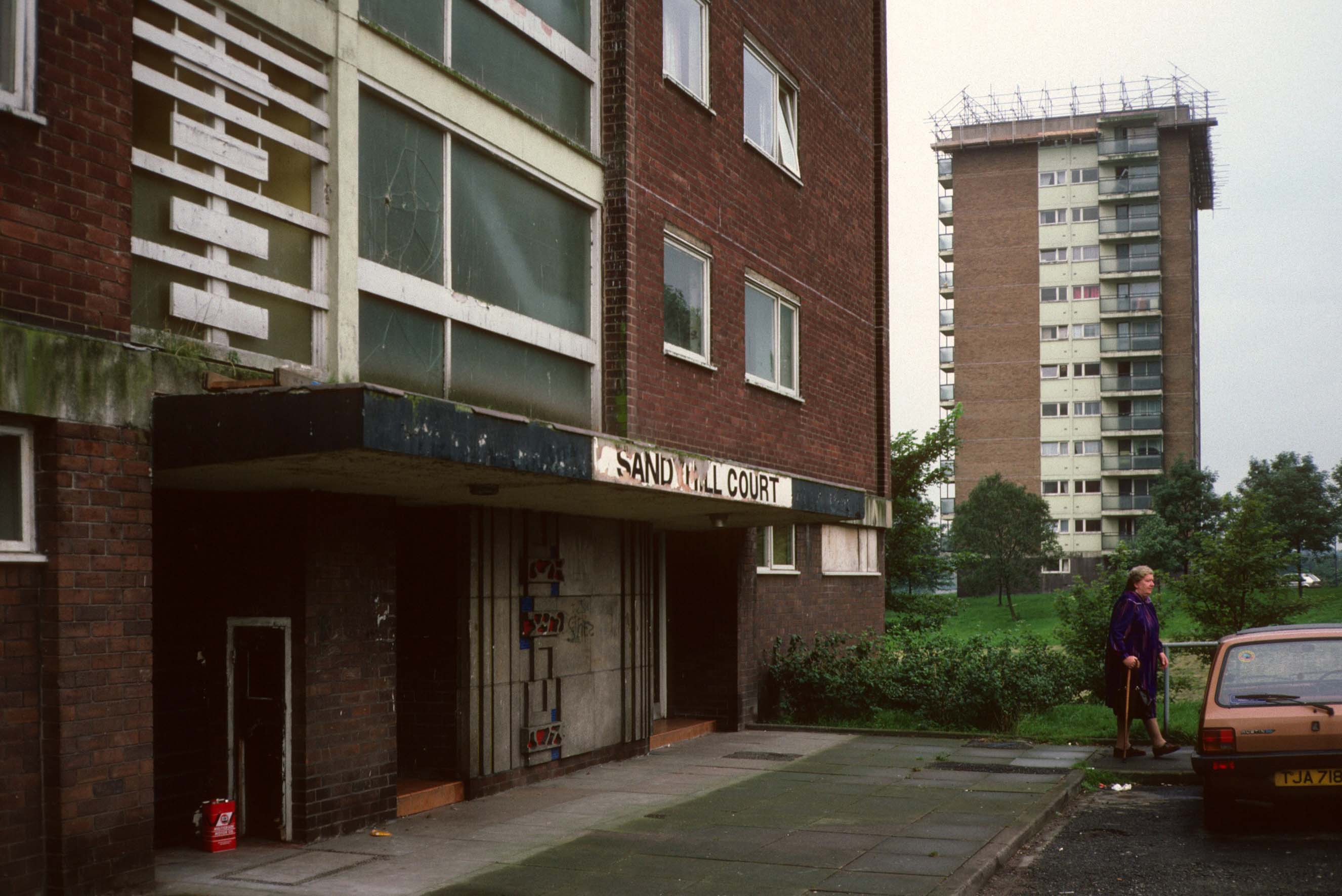
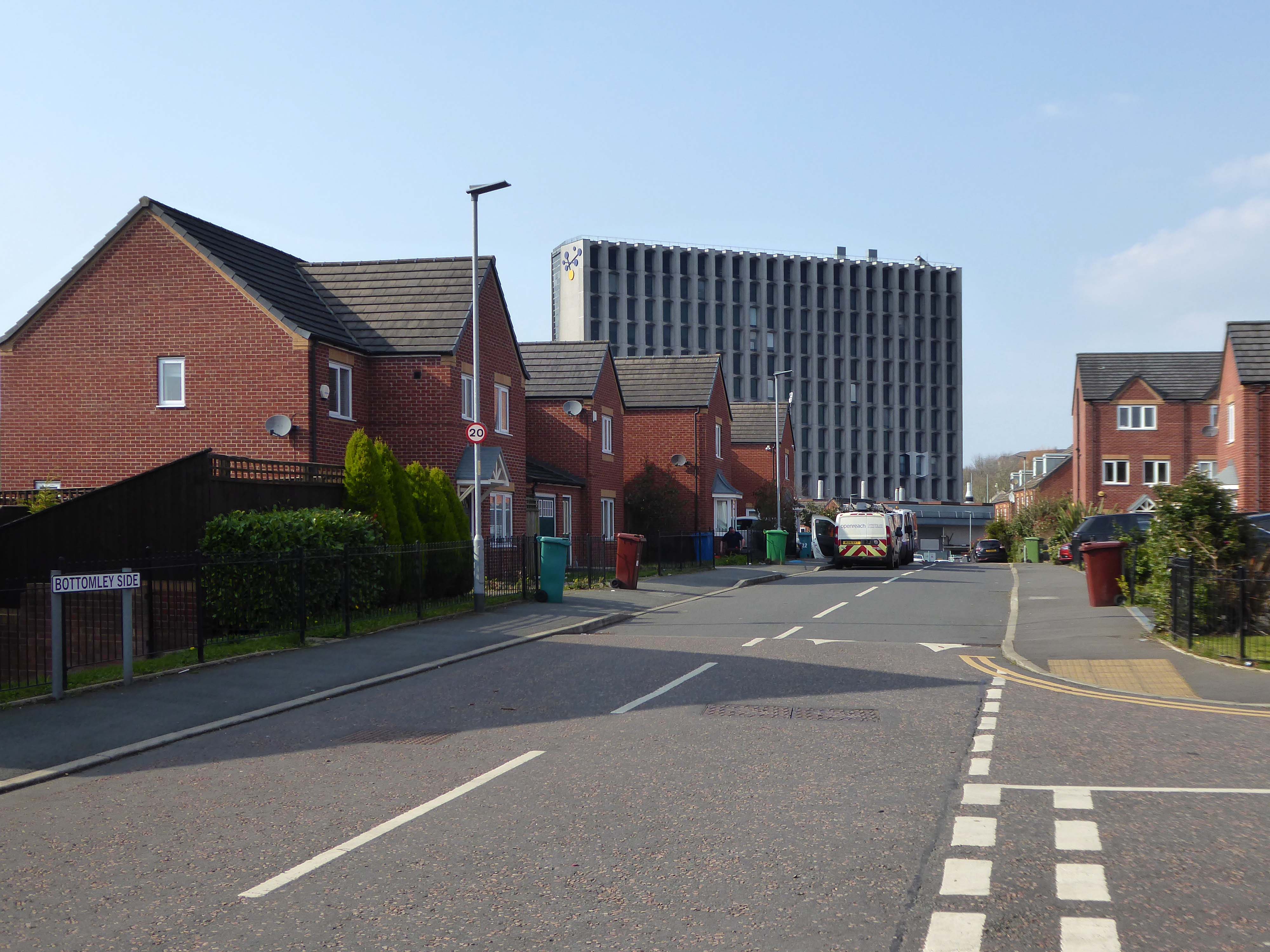
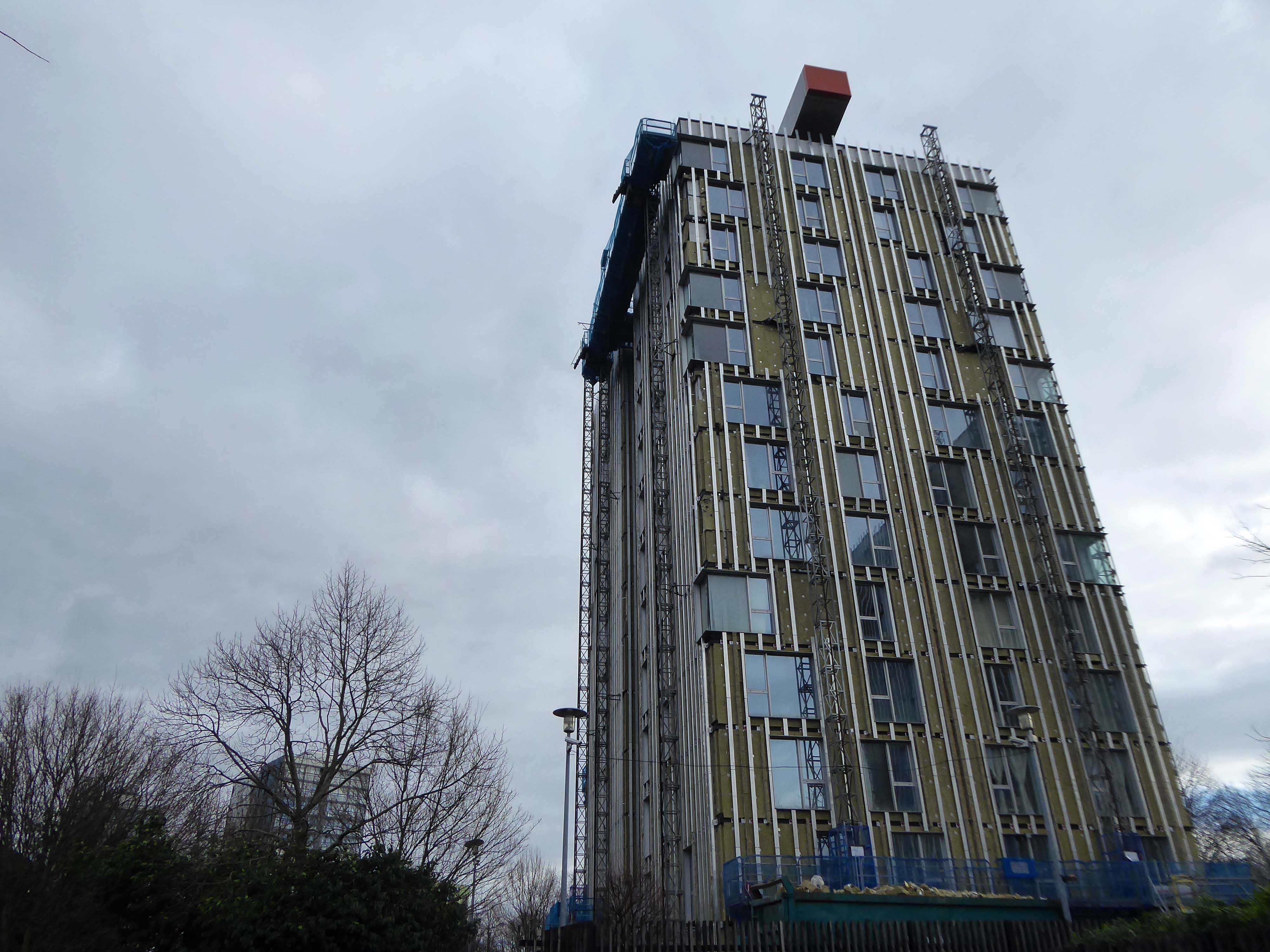
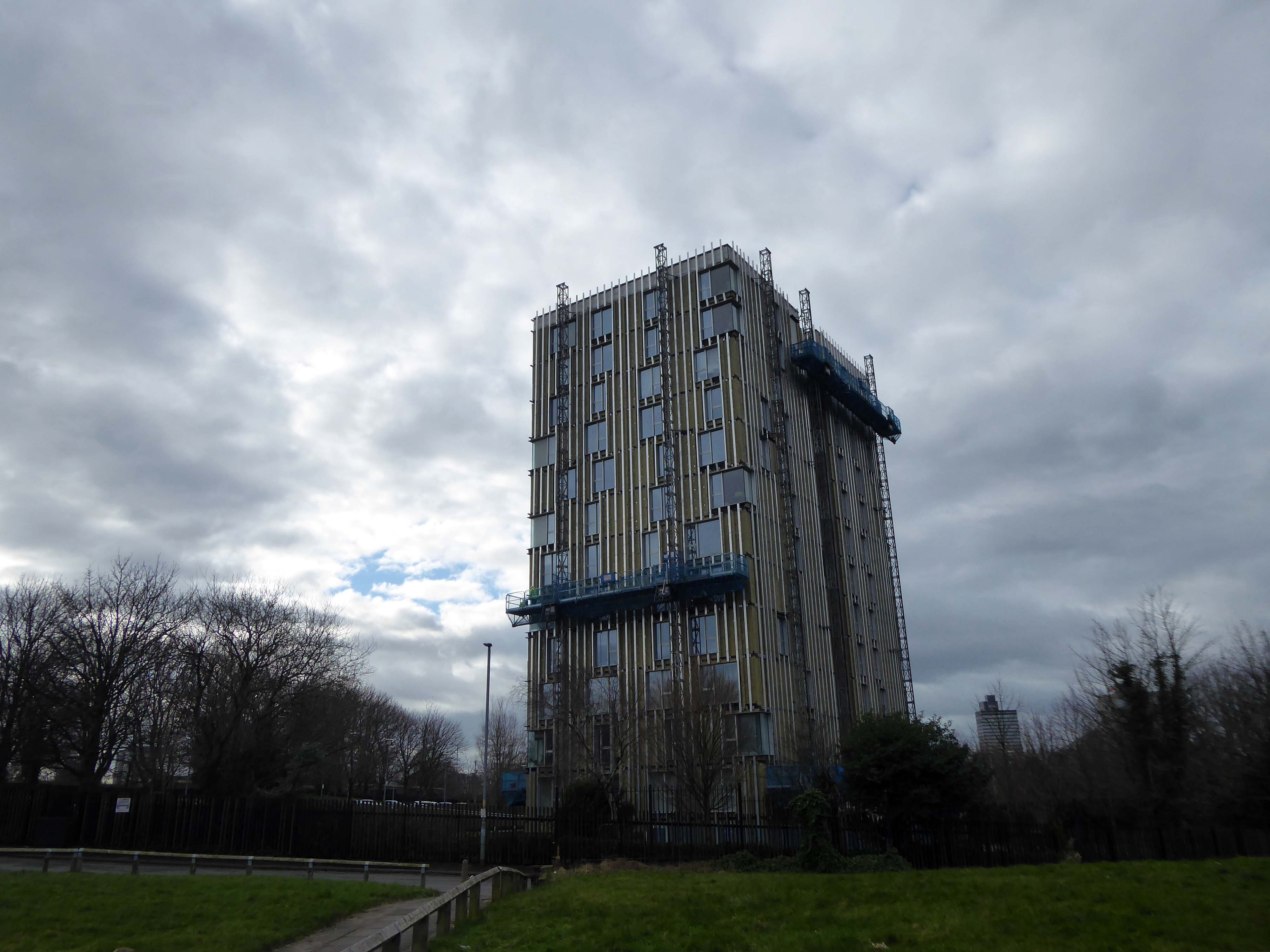
The flats had acquired a stereotypical bad reputation.
Blight flats will soon be high-rise des-res.
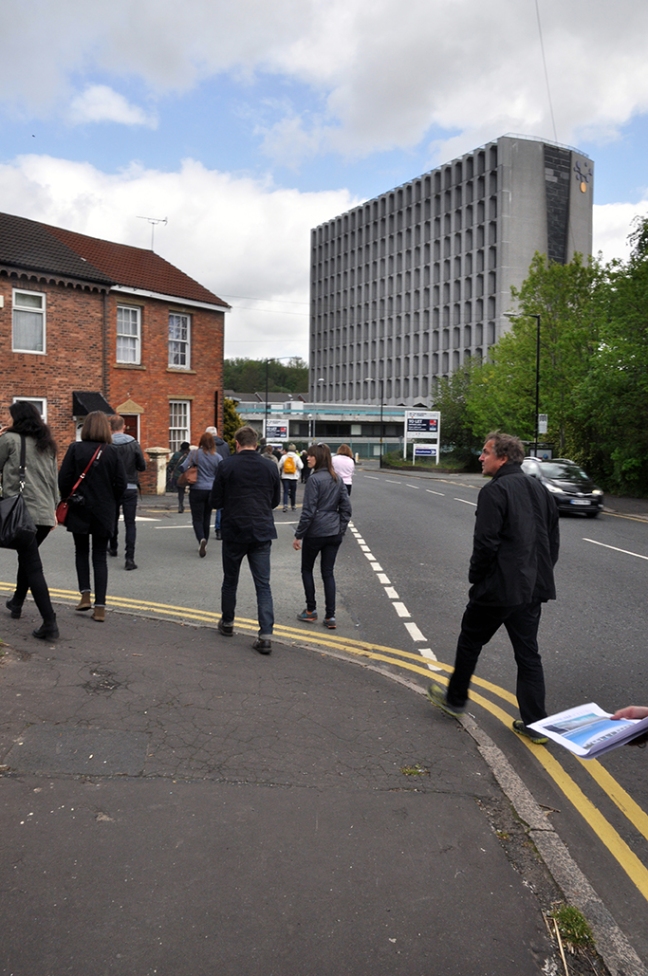
Residents on a blighted Blackley estate have been told of plans to deal with the mostly unoccupied high-rise flats that are seen as the cause of the problem.
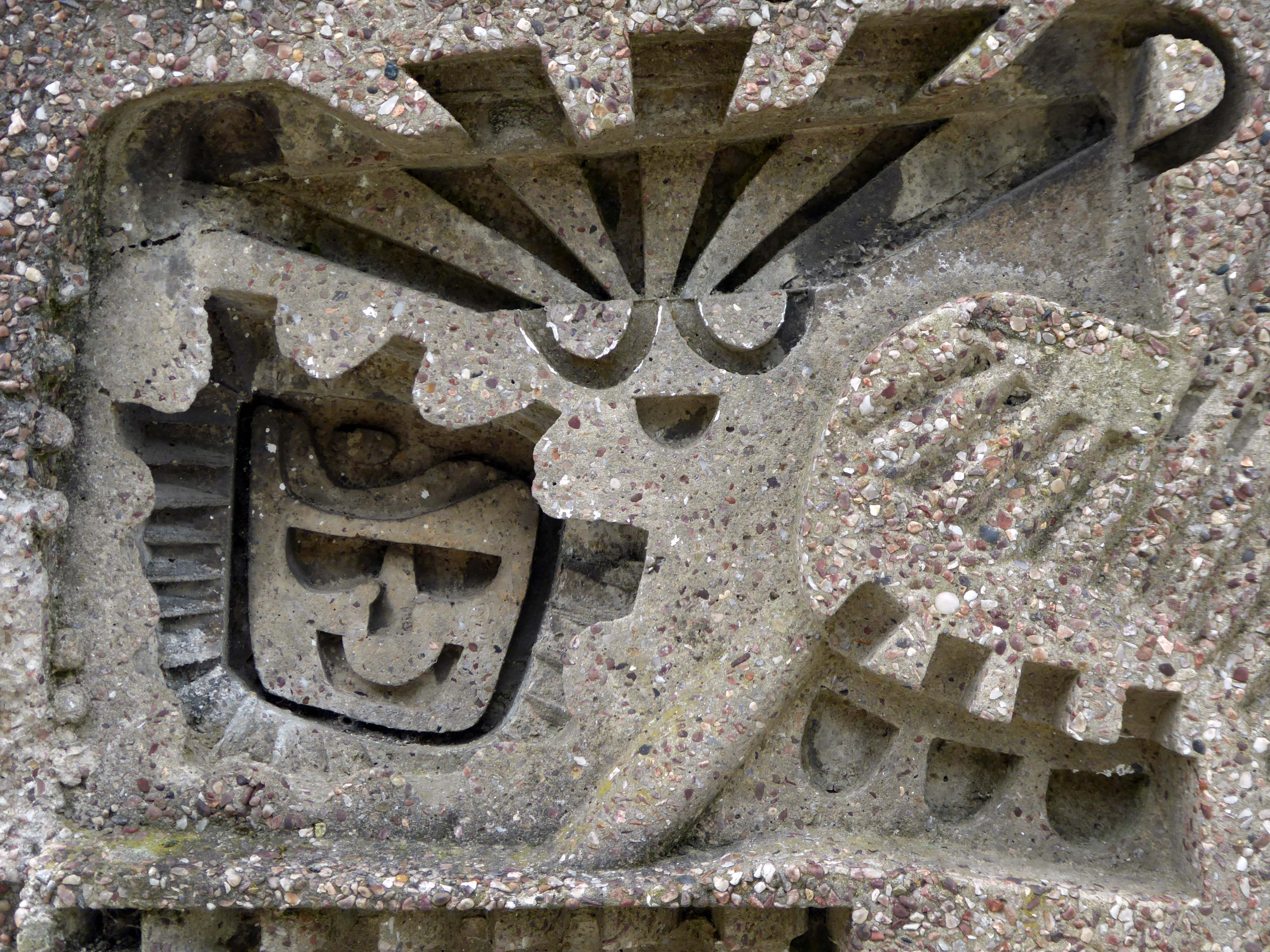
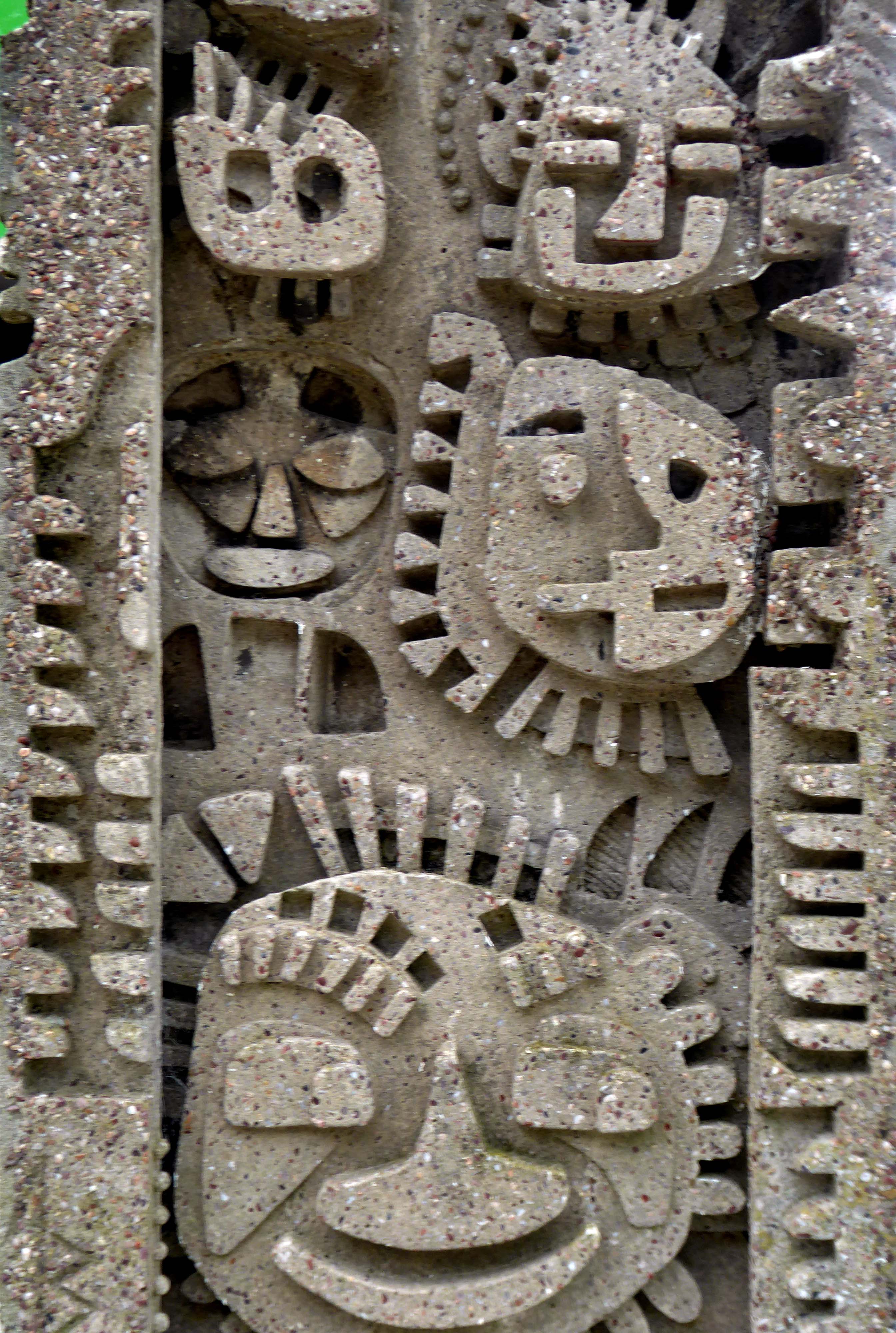
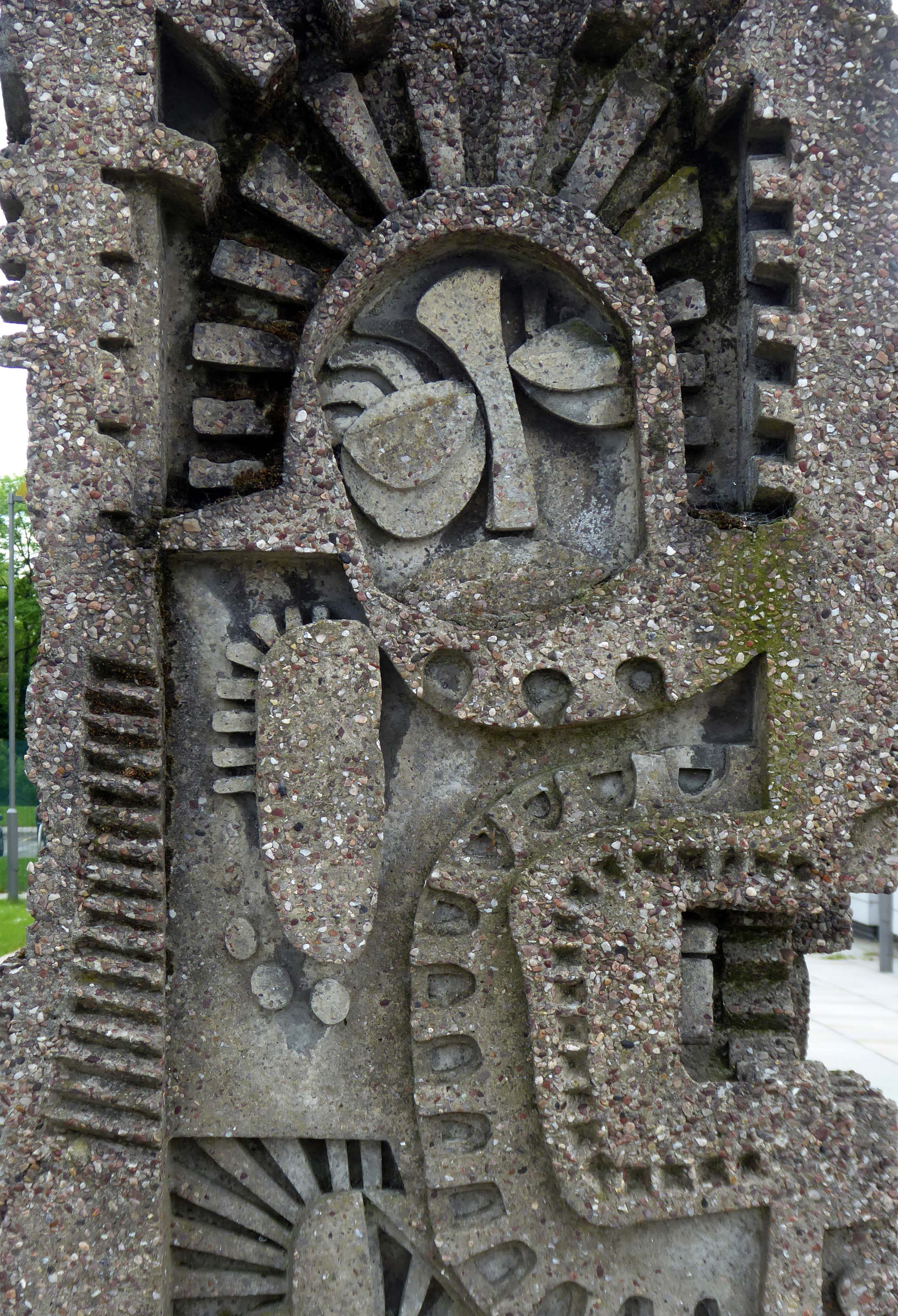
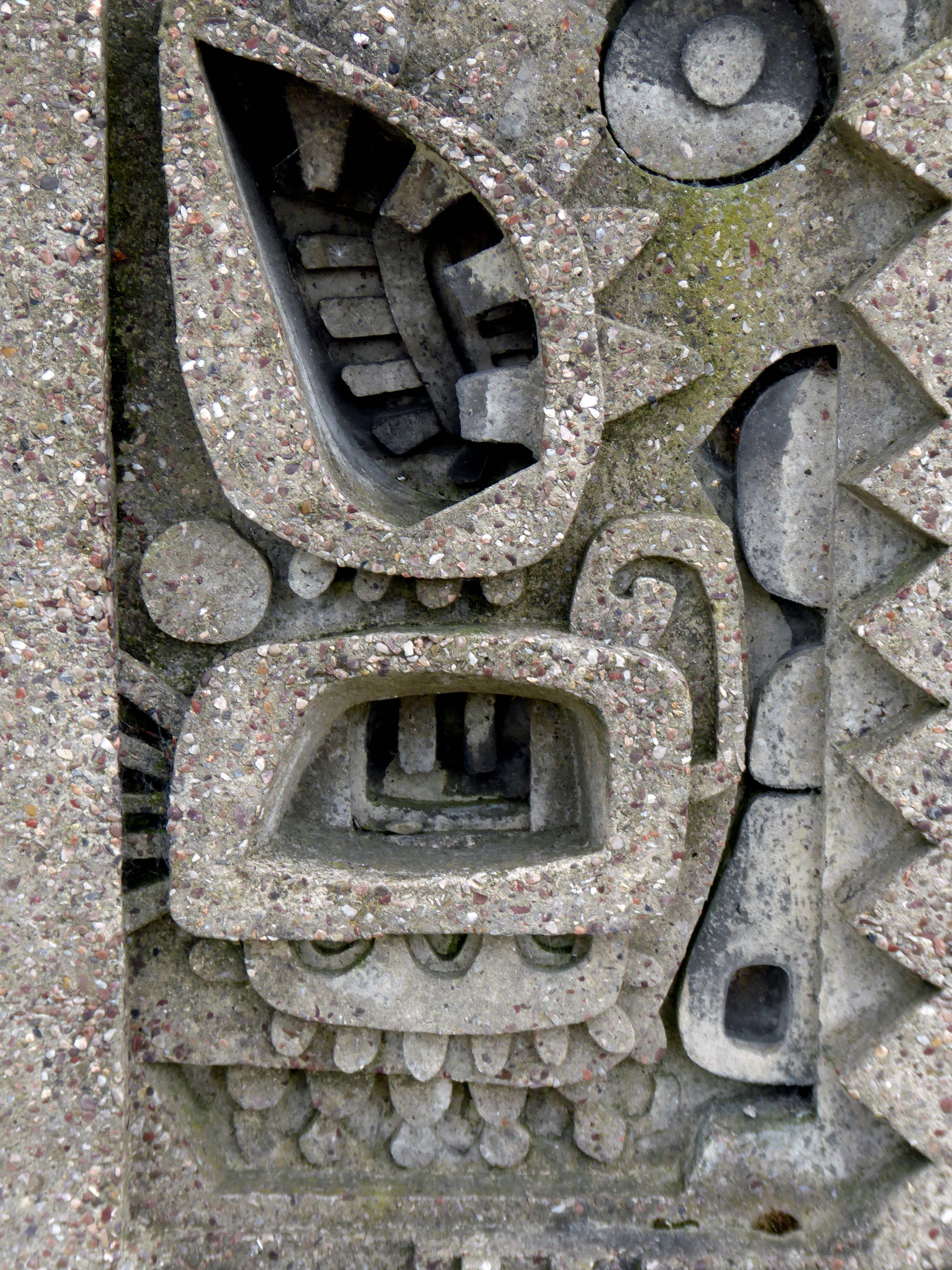
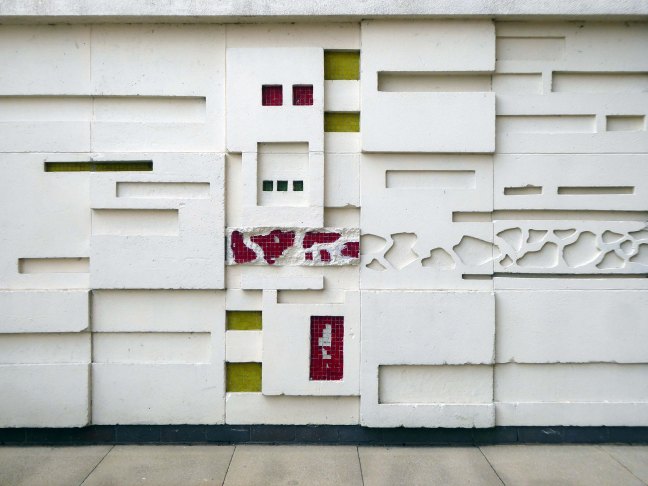
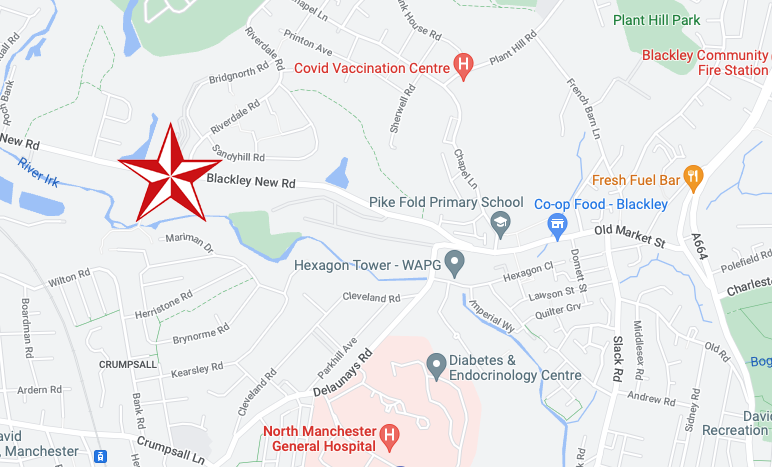
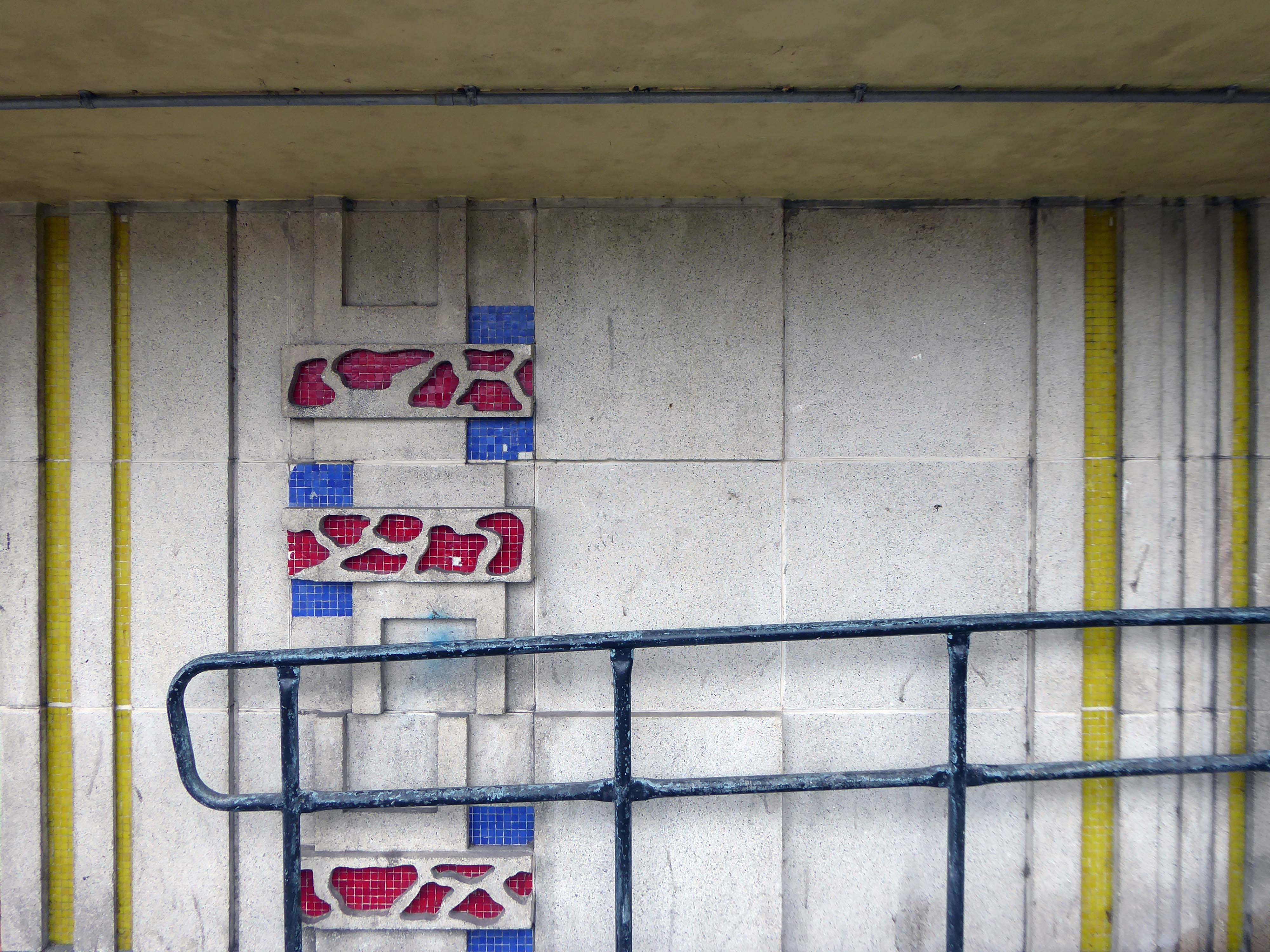
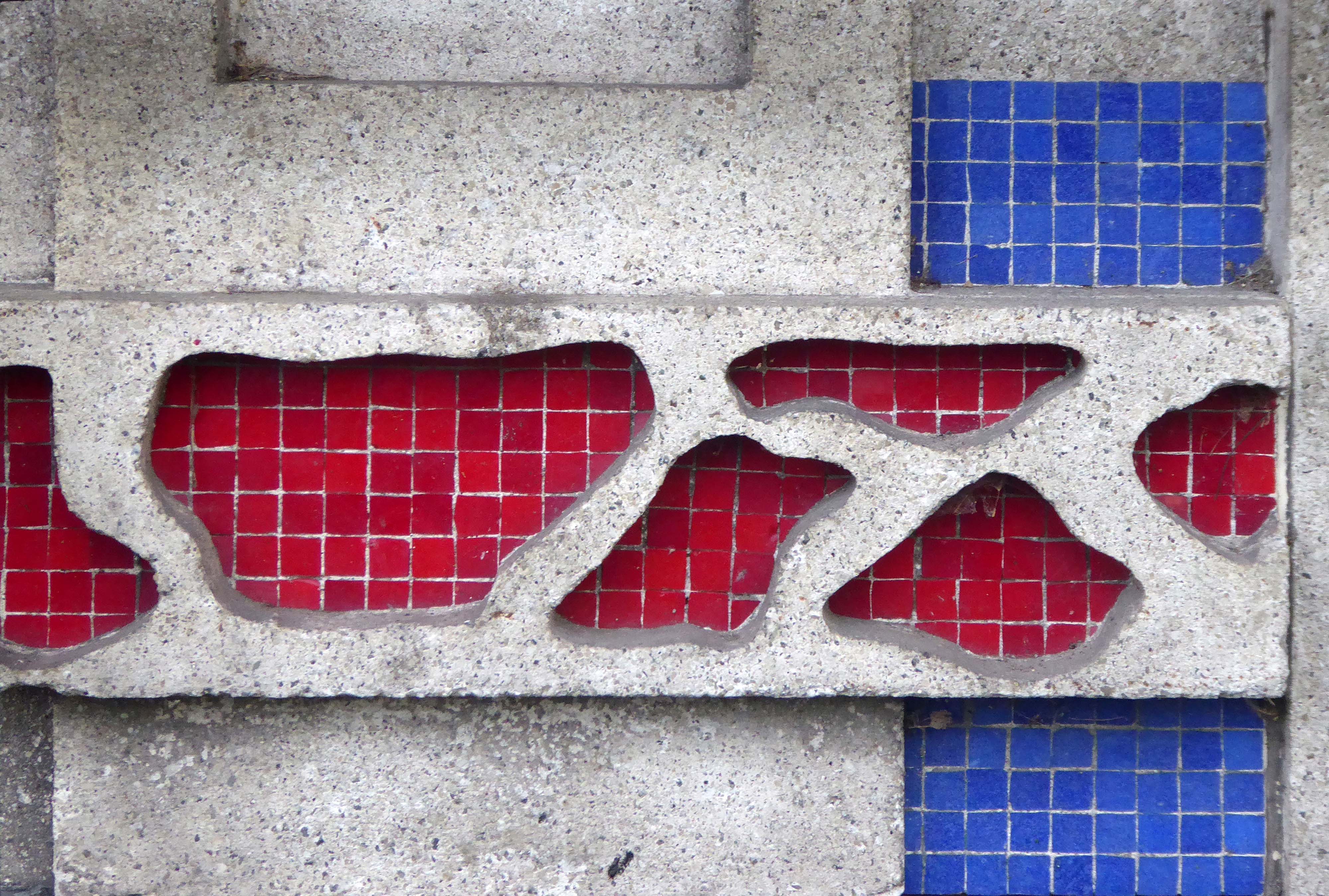
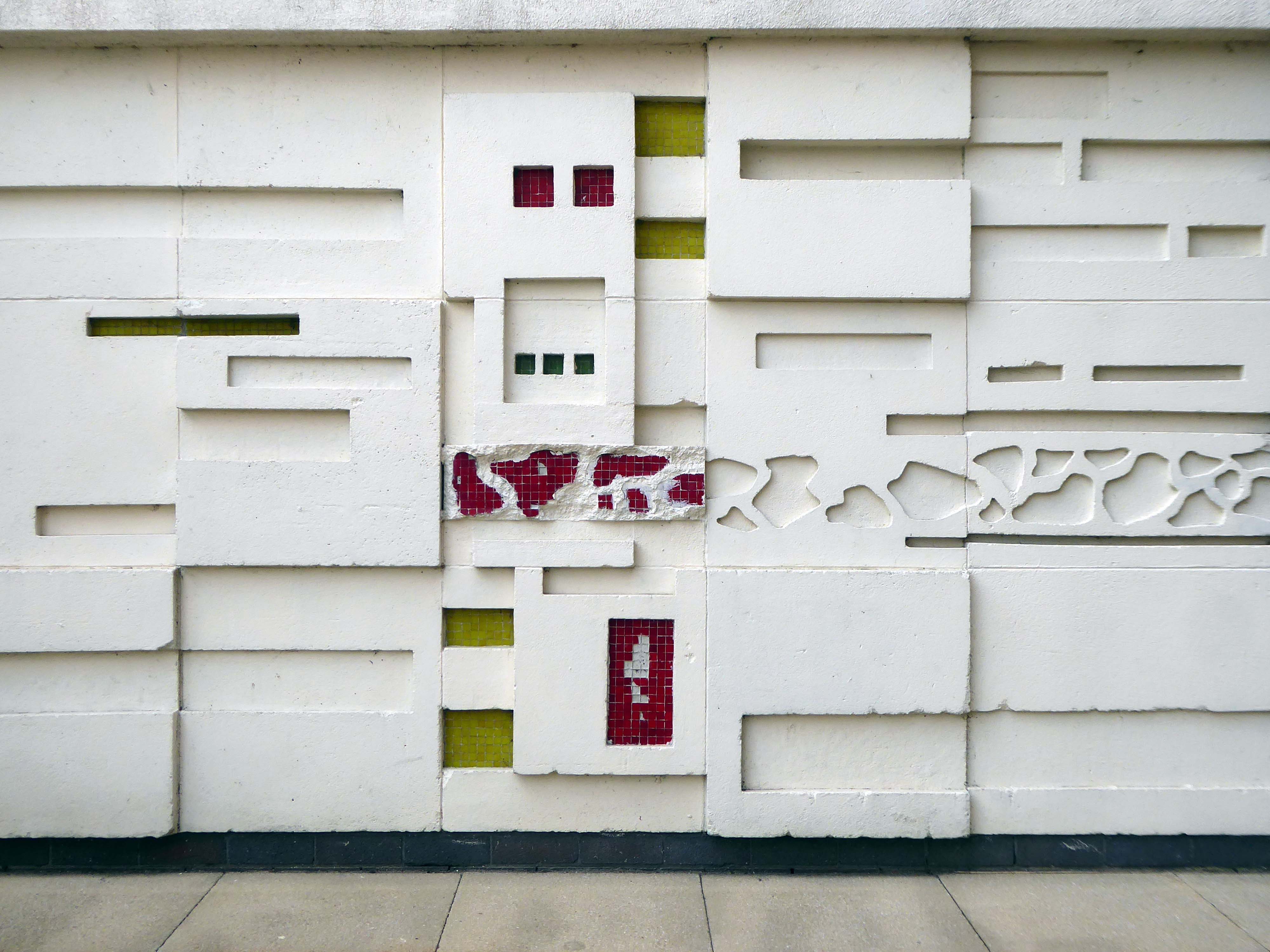
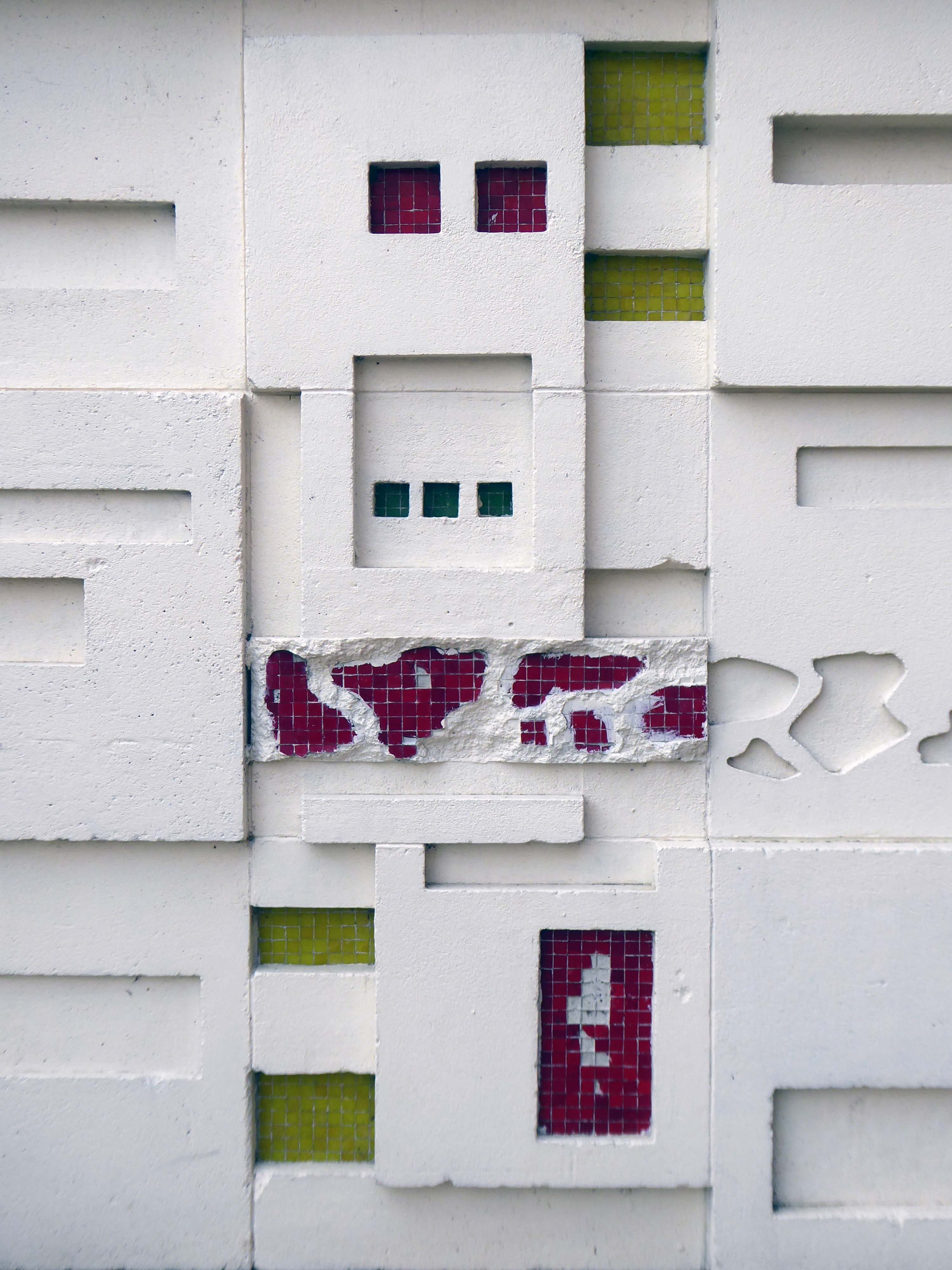
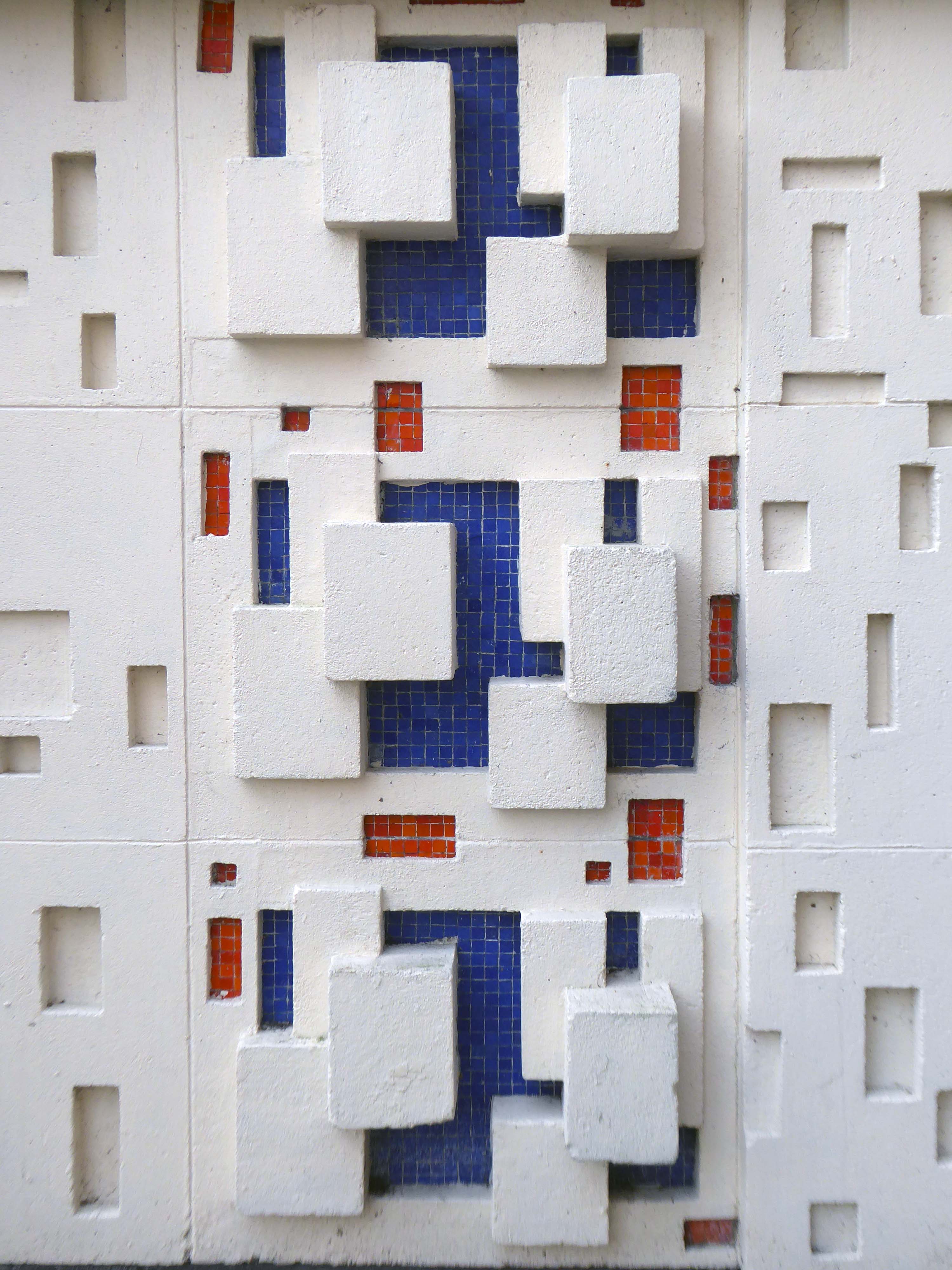
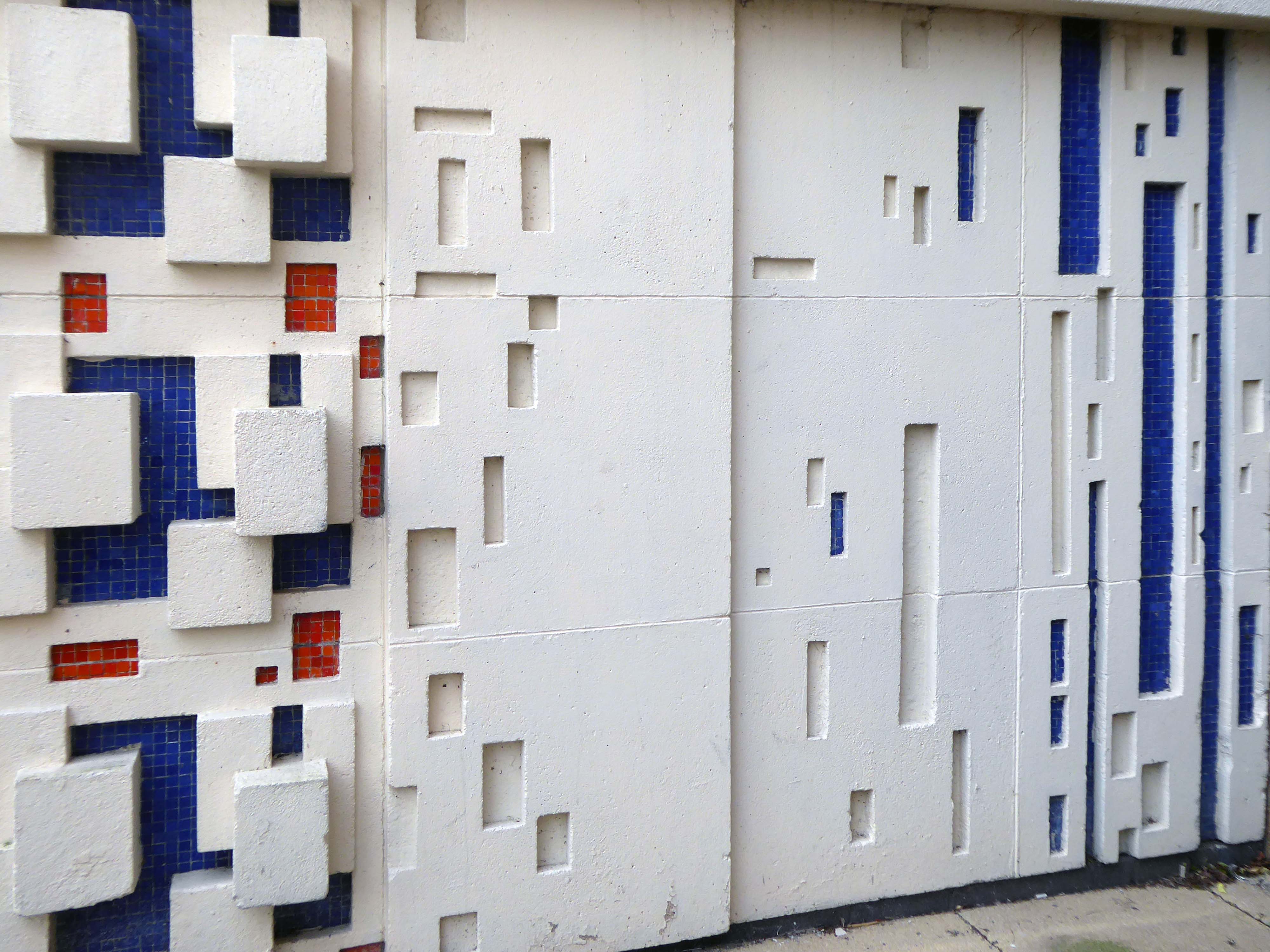
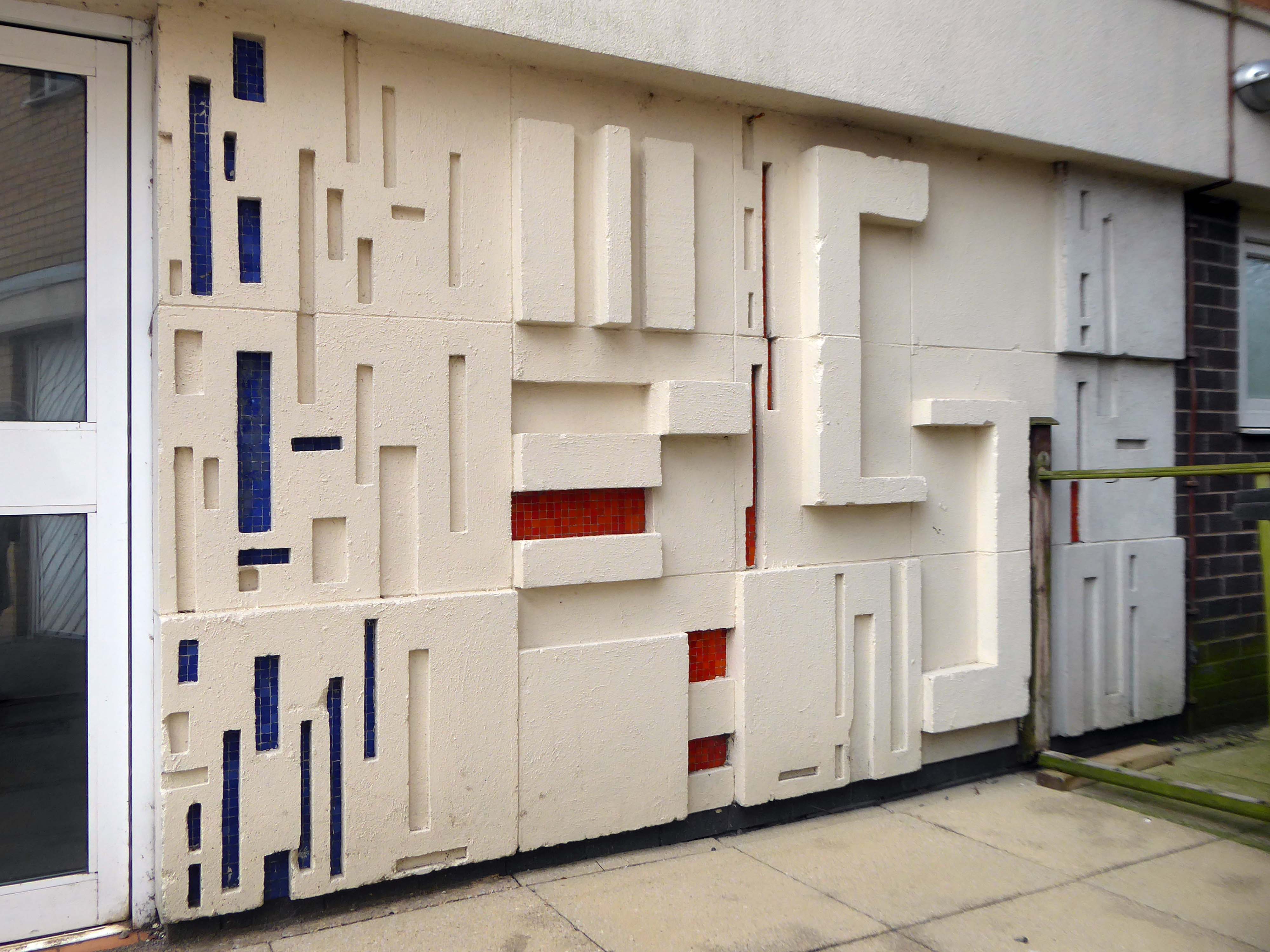
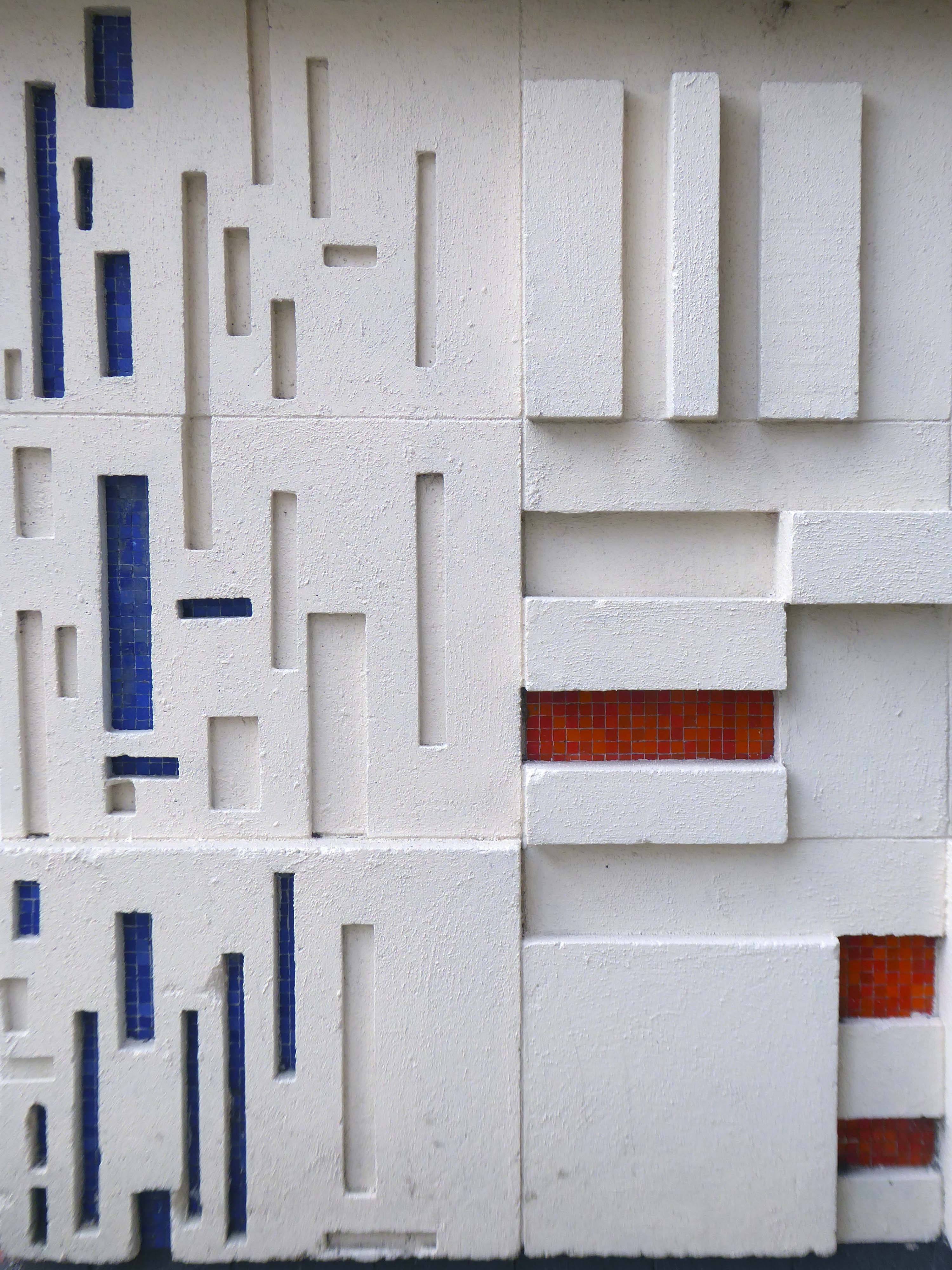
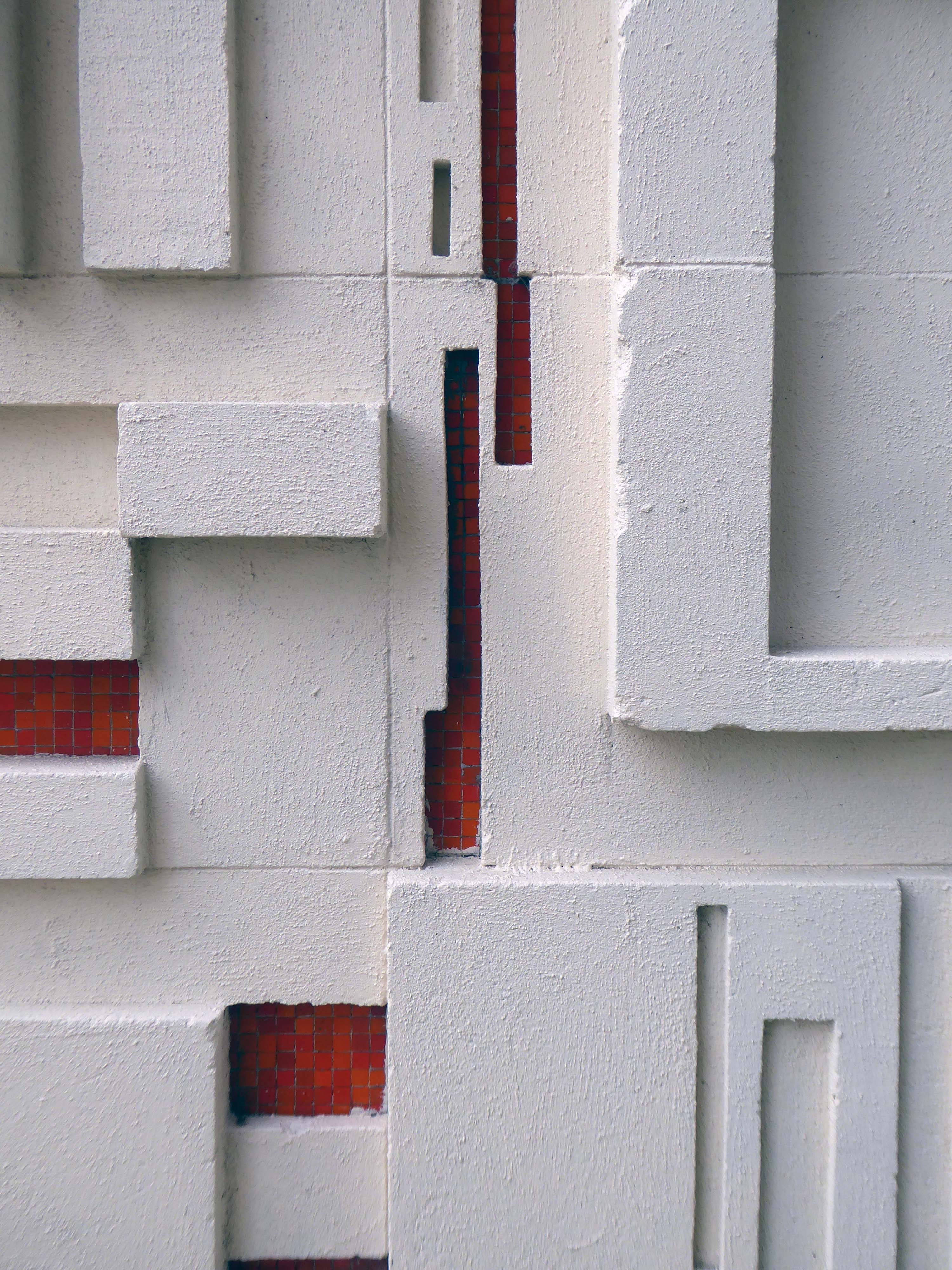
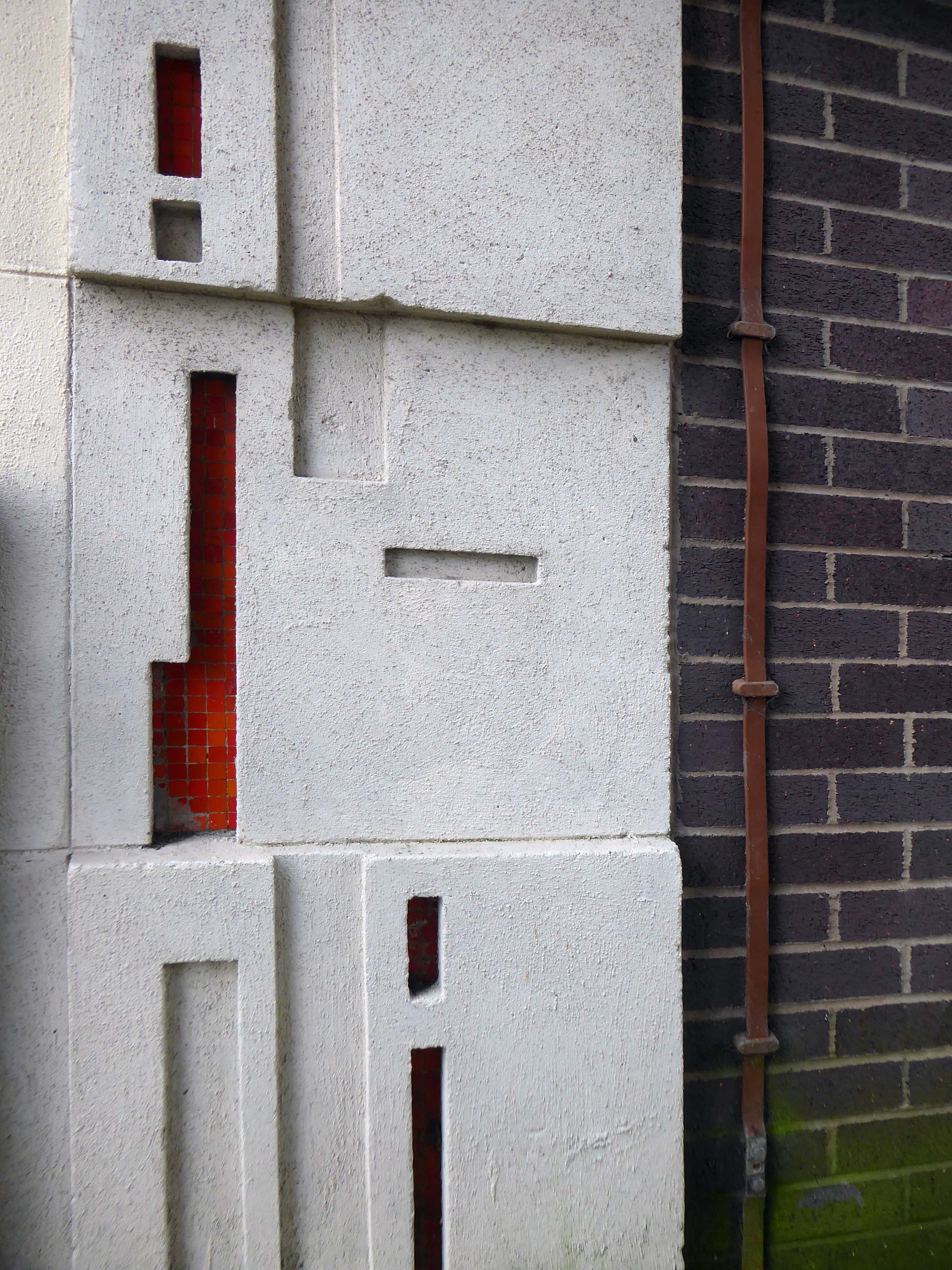
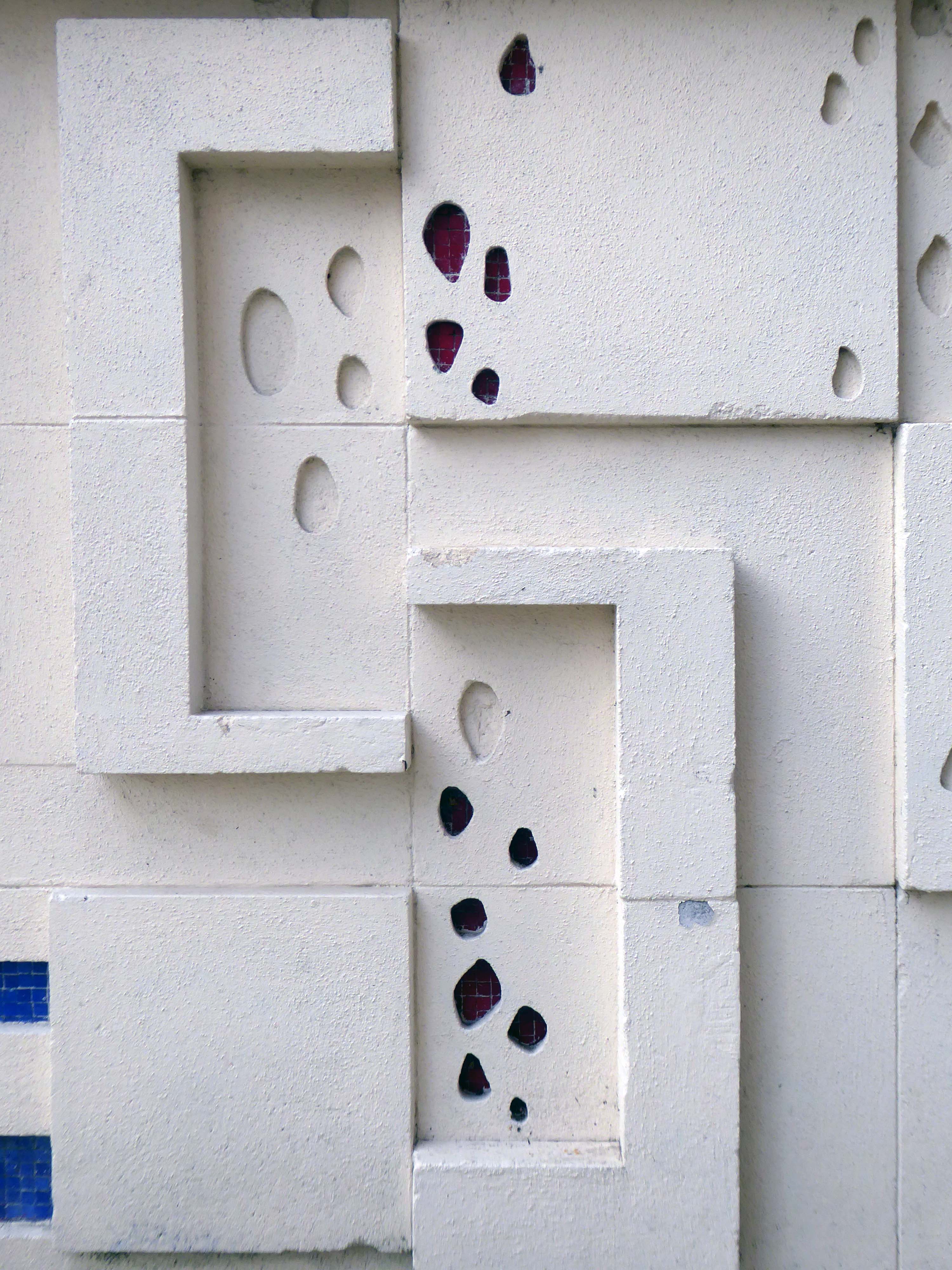
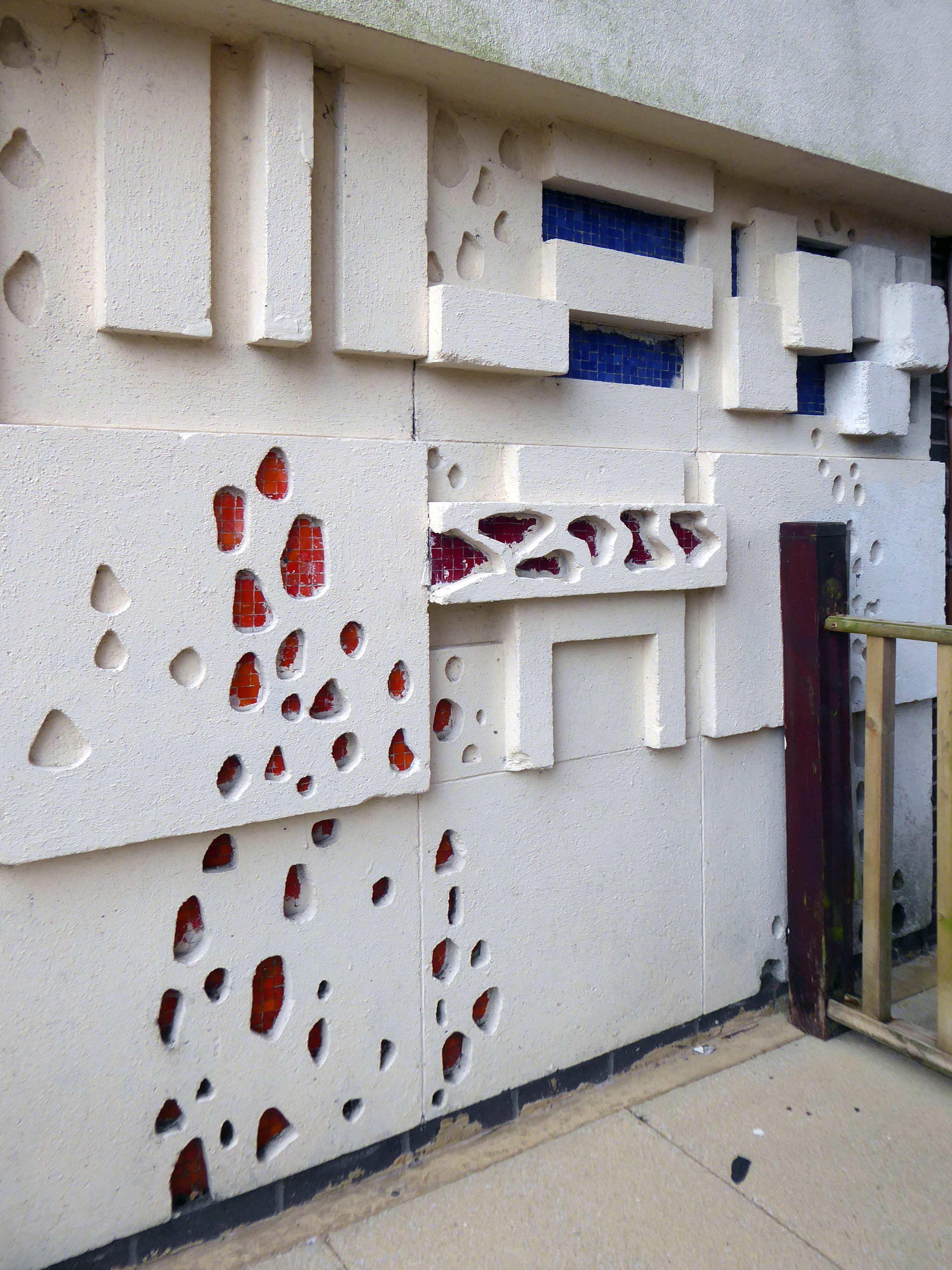
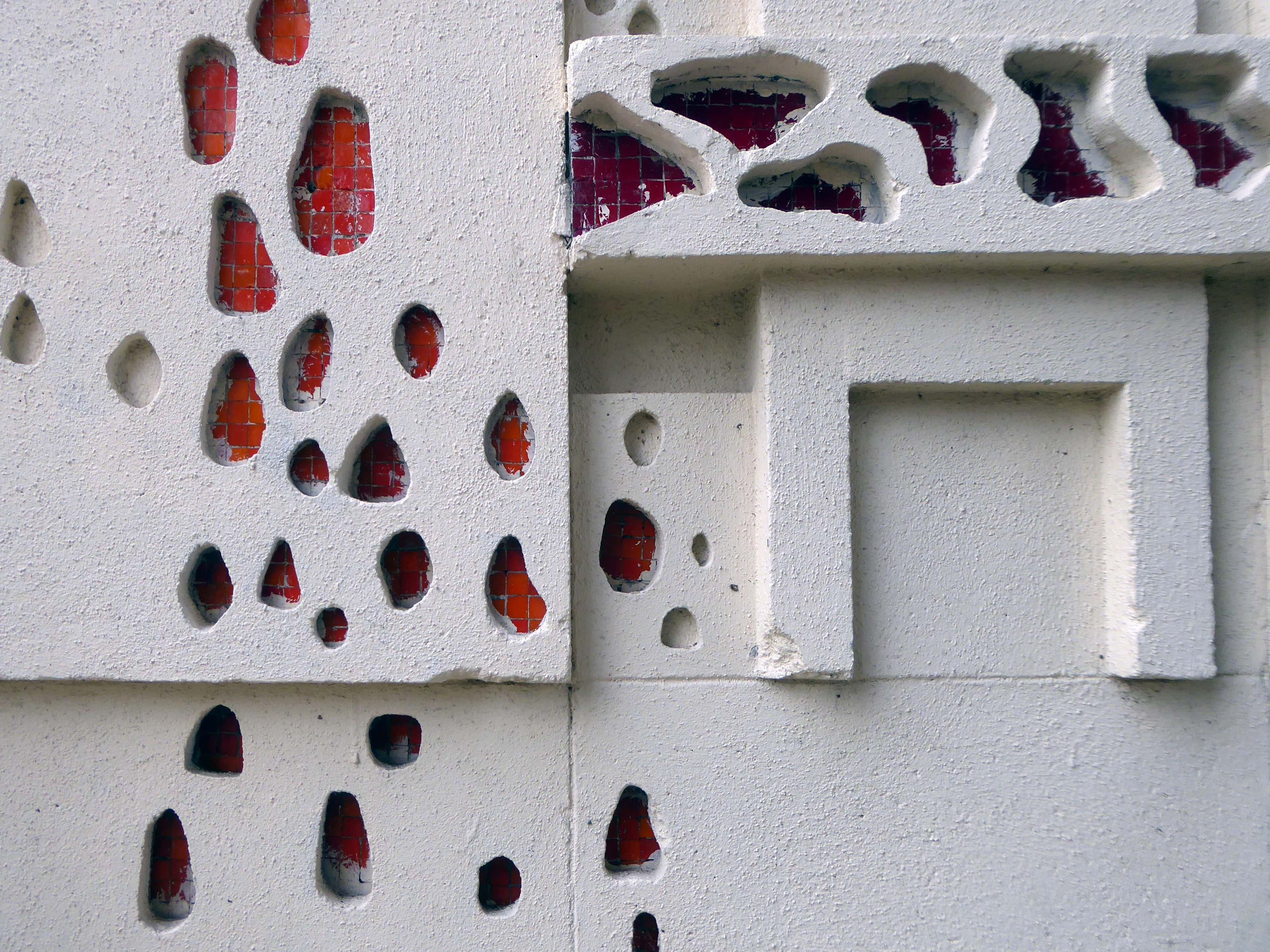
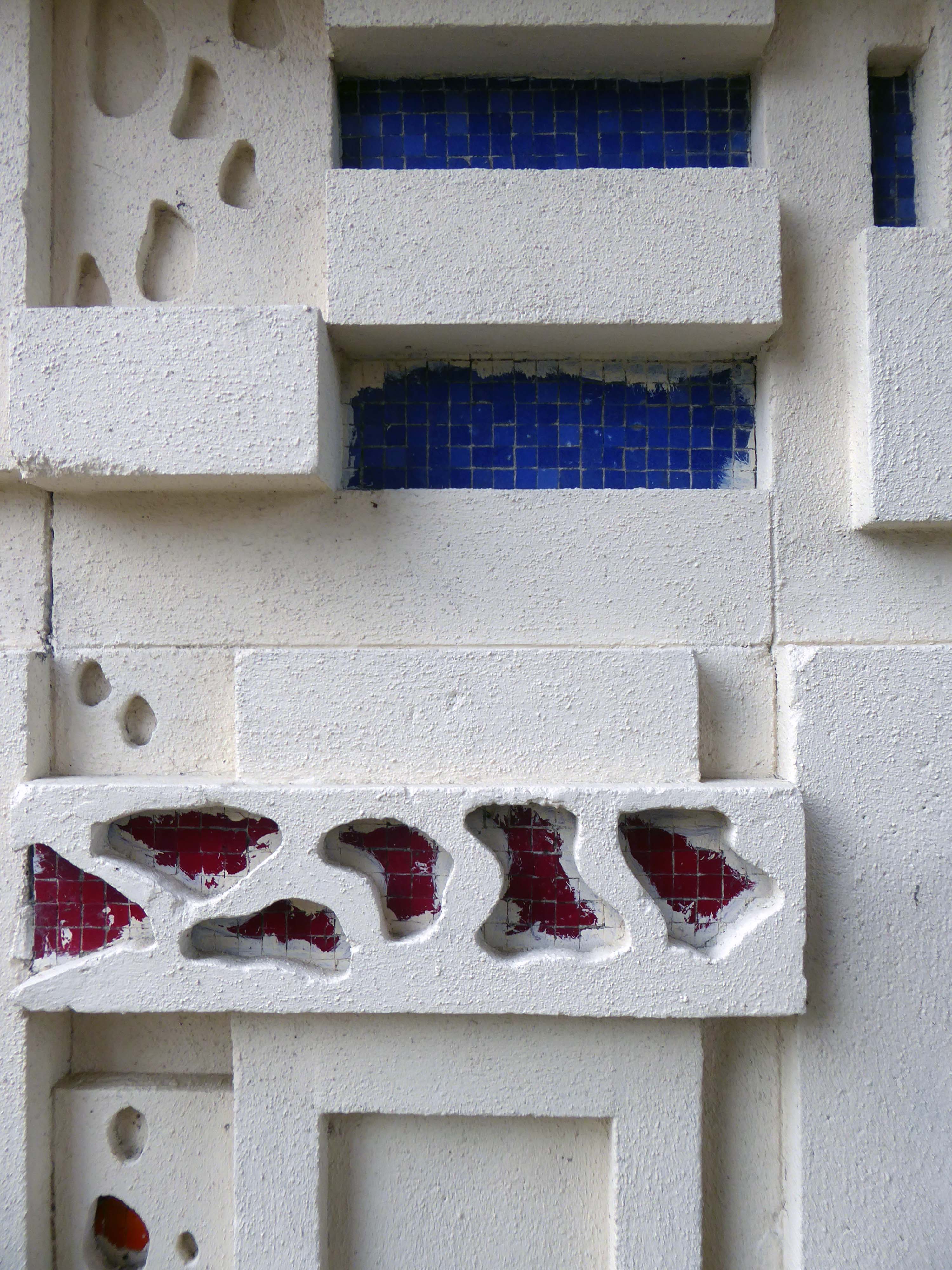
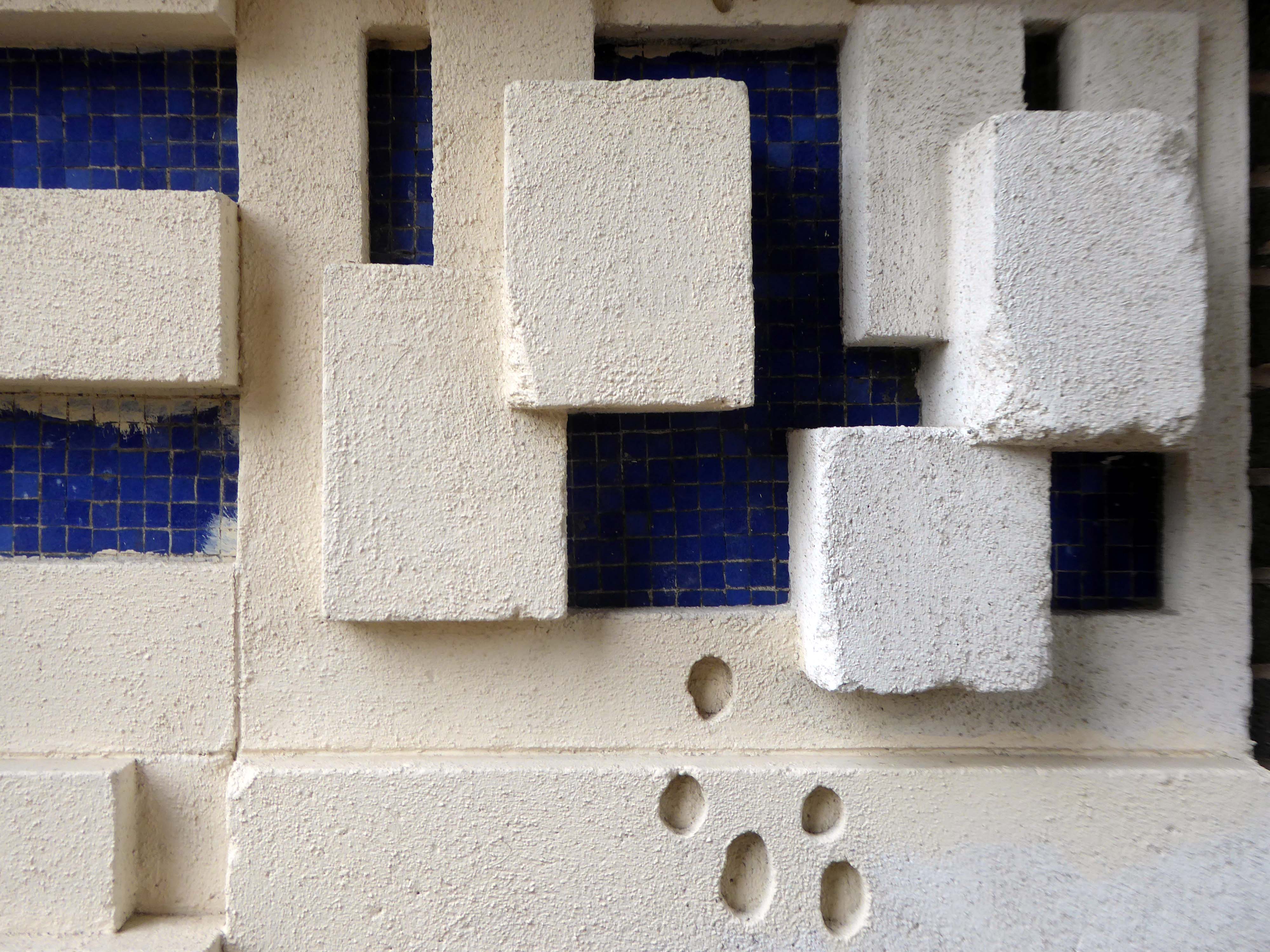
I entered via the vehicular access – in order to view the four remaining reliefs.
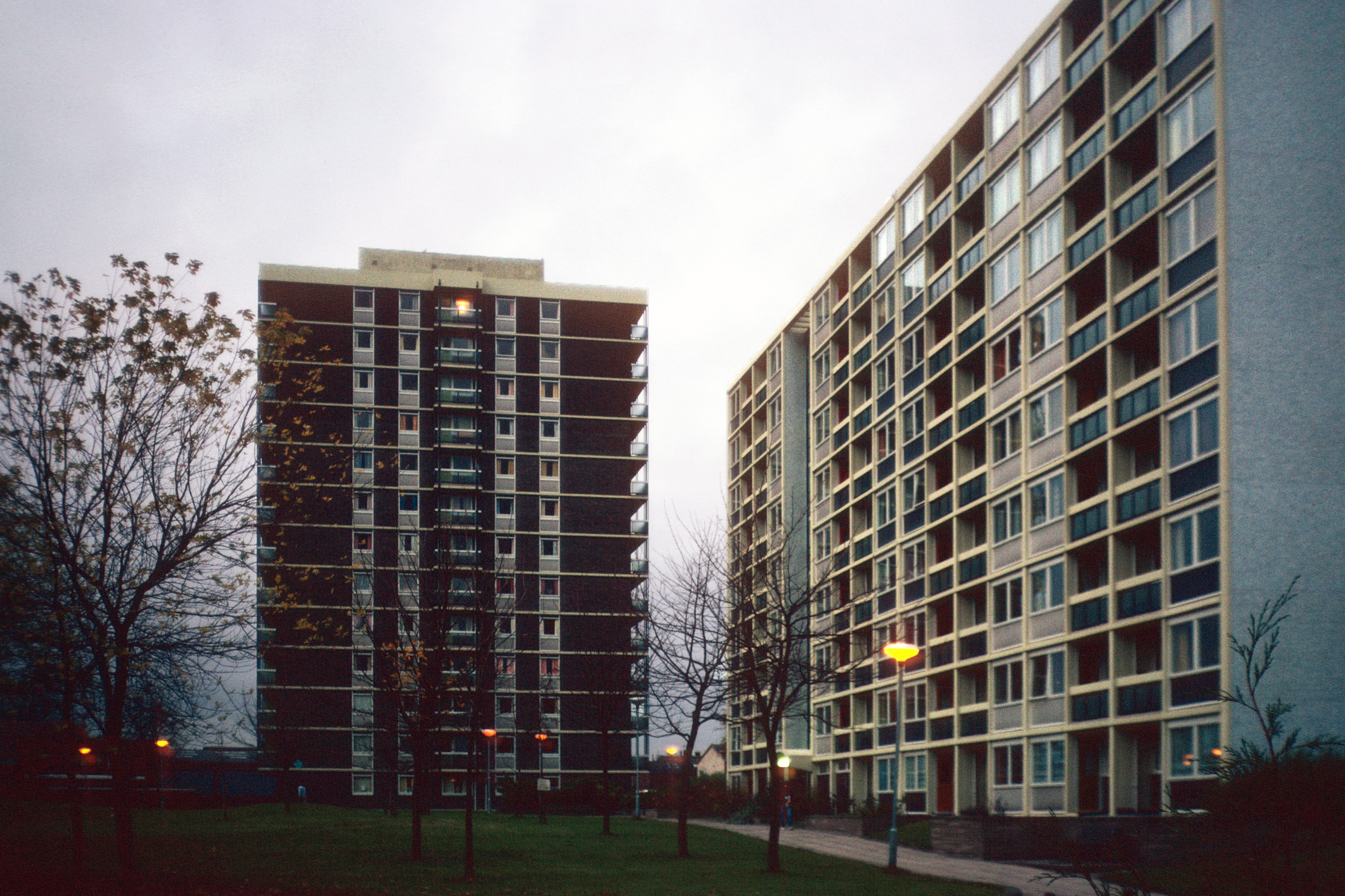
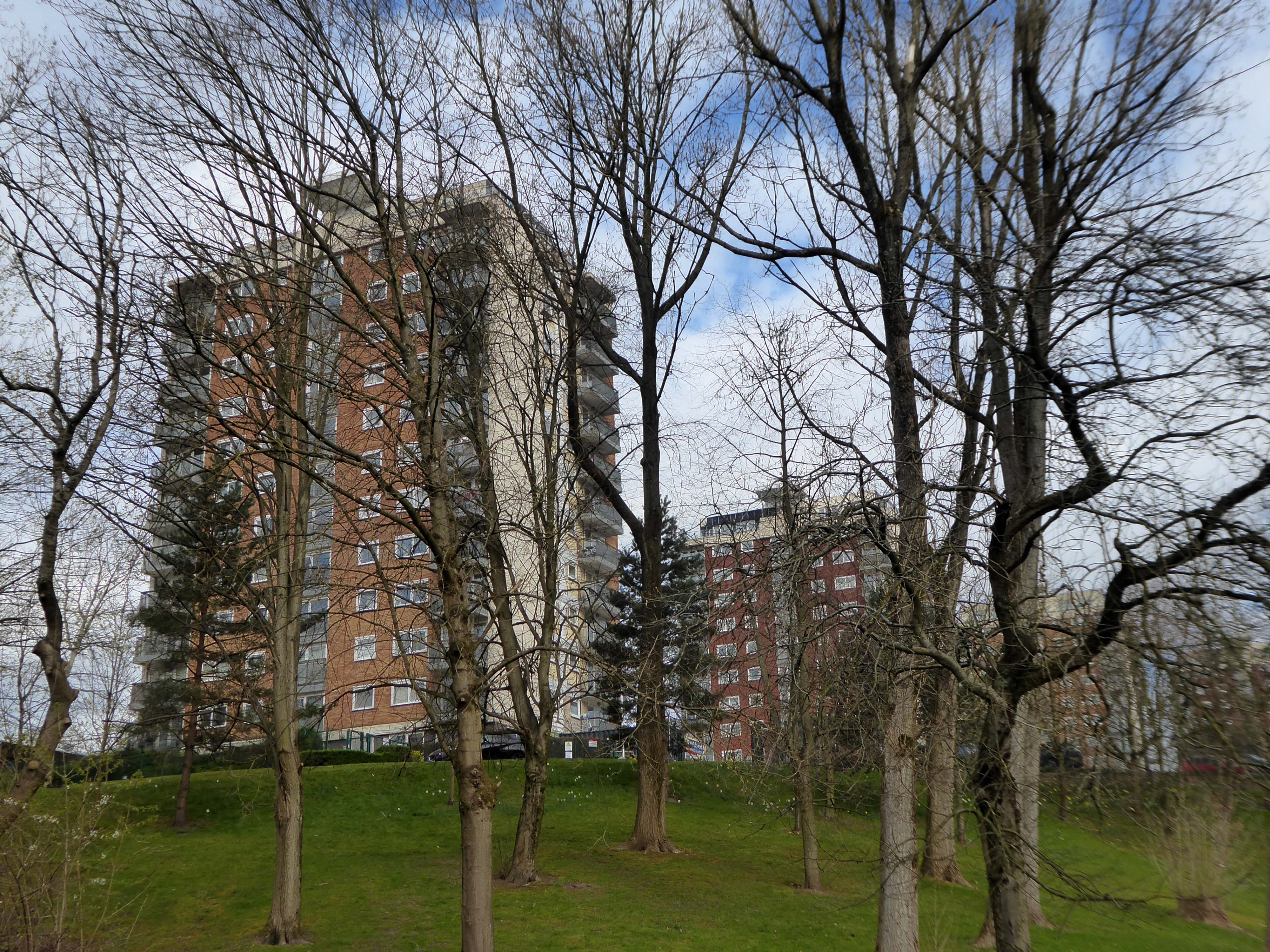
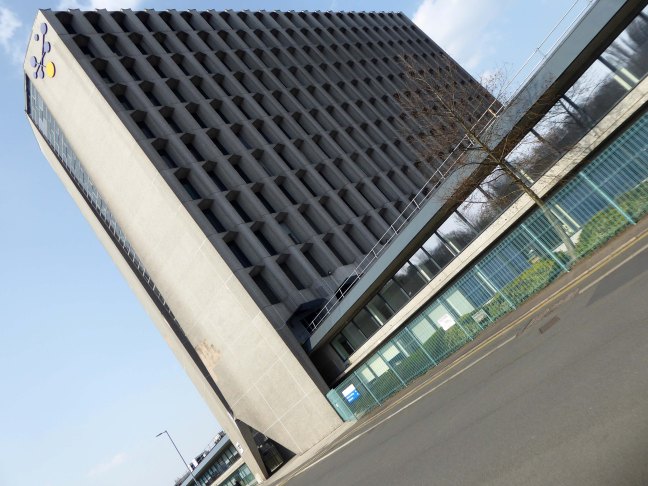
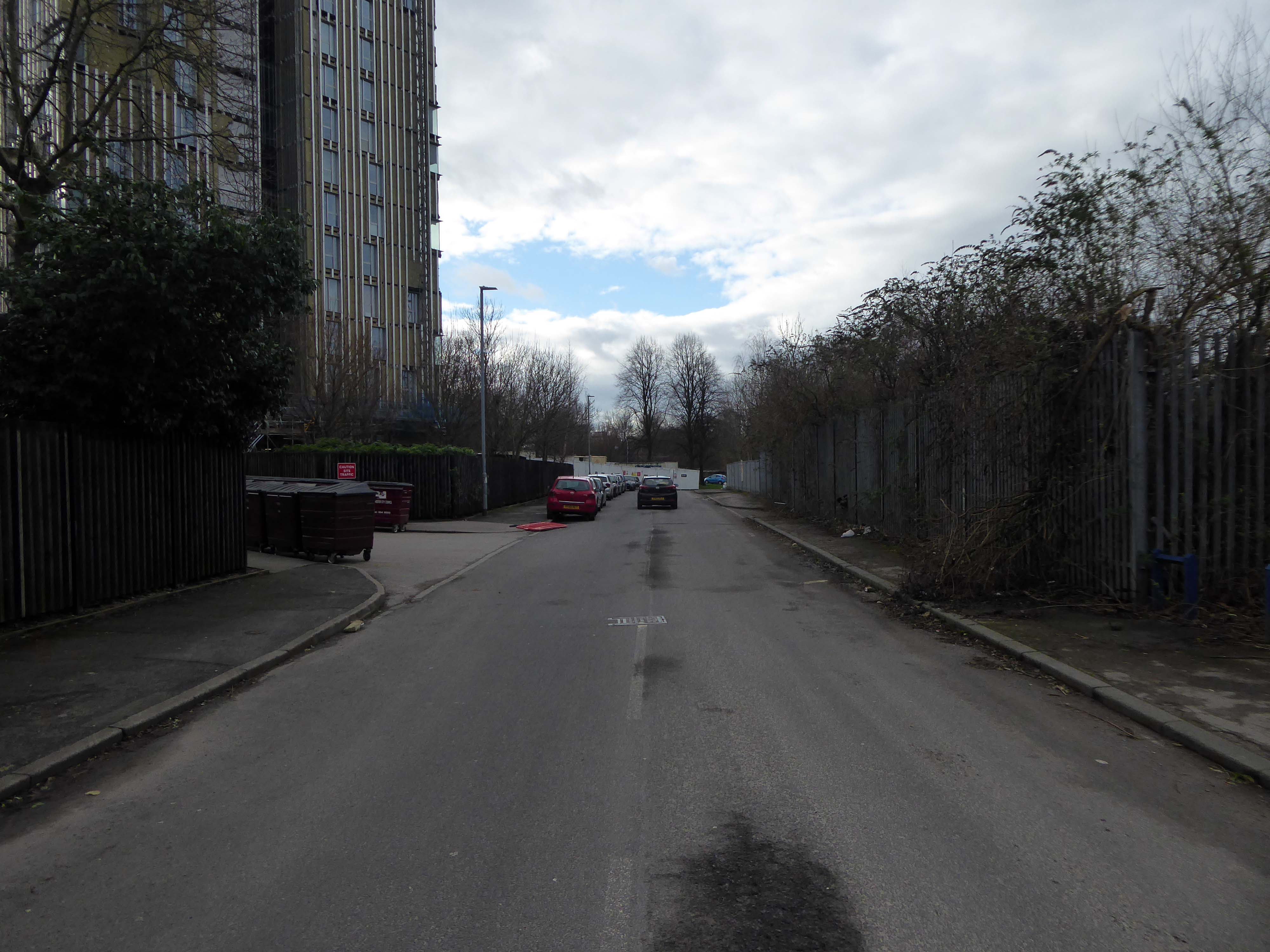
The Lakeside Rise blocks now form part of a private gated community and are accessed from Blackley New Road.
The original blocks and their locations are as follows:
Ashenhurst Court Now Lakeside 1 Heaton Court Now Lakeside 2 Wilton Court Now Lakeside 3 Blackley Court Now Lakeside 4
Bracknell Court demolished – was on the corner of Riverdale Road and Bridgenorth Road adjacent to Heaton Court Riverdale Court demolished – was on Riverdale Road opposite Bantry Avenue.
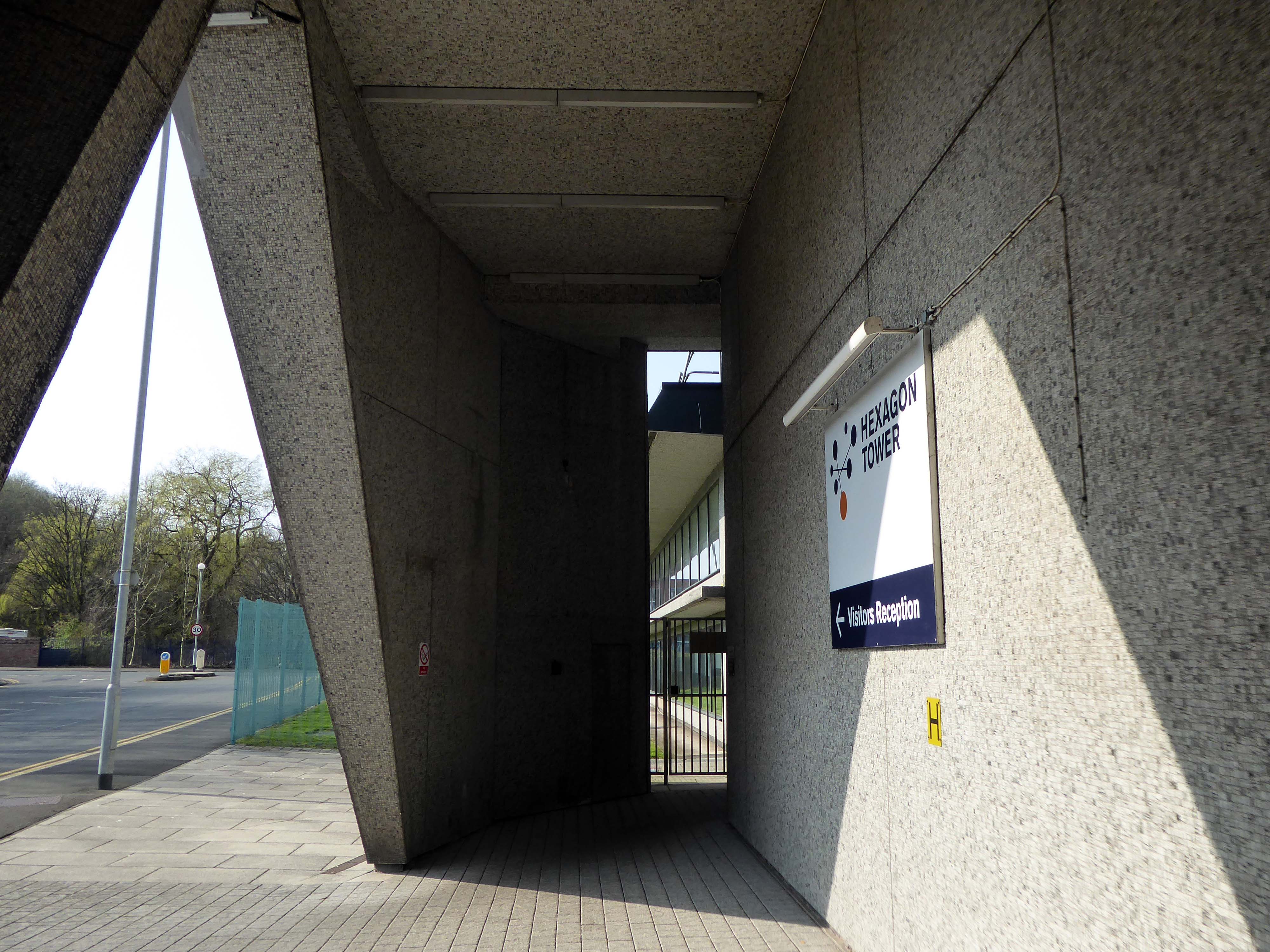
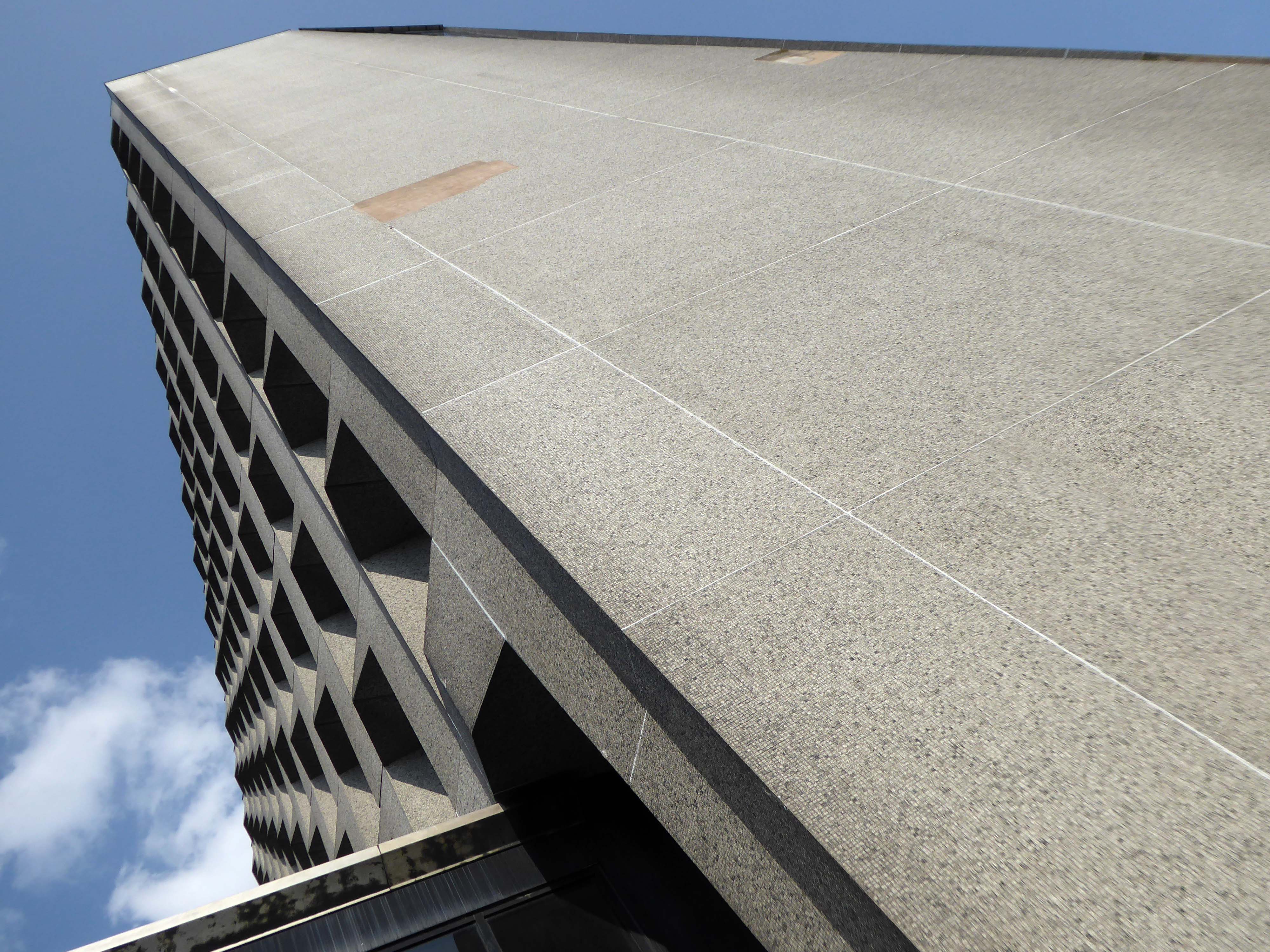
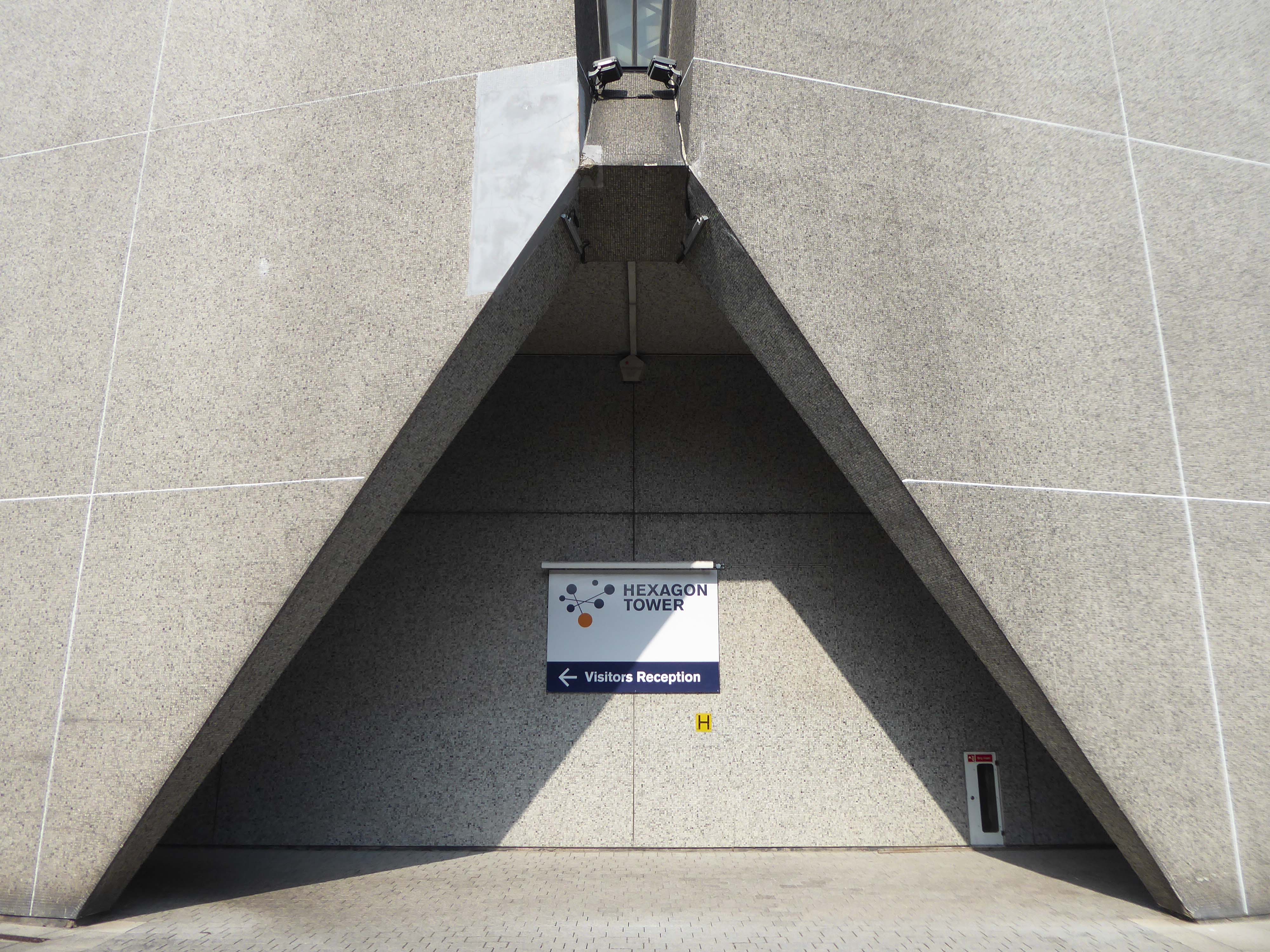
ICI’s Dyestuffs Division had its headquarters at Blackley in north Manchester, in a complex known as the Hexagon, which included its main R & D labs, and an experimental manufacturing plant.
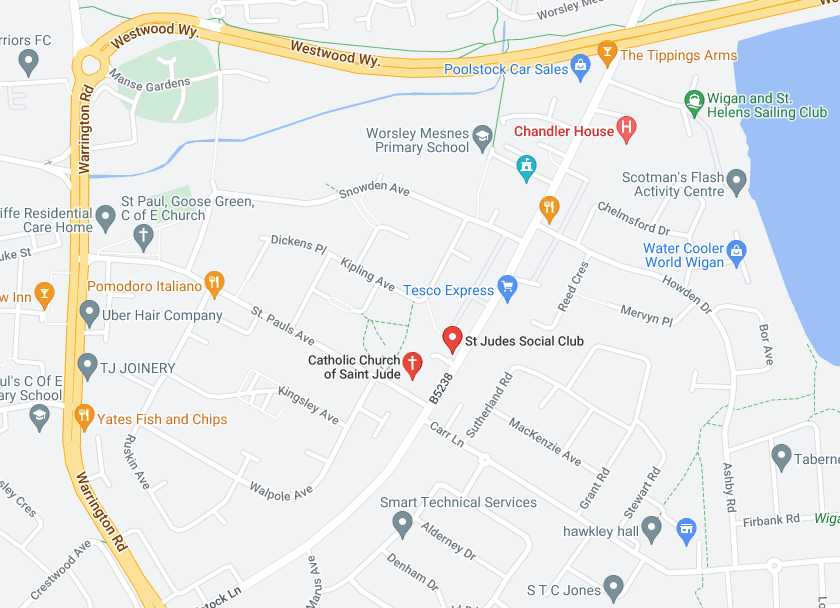
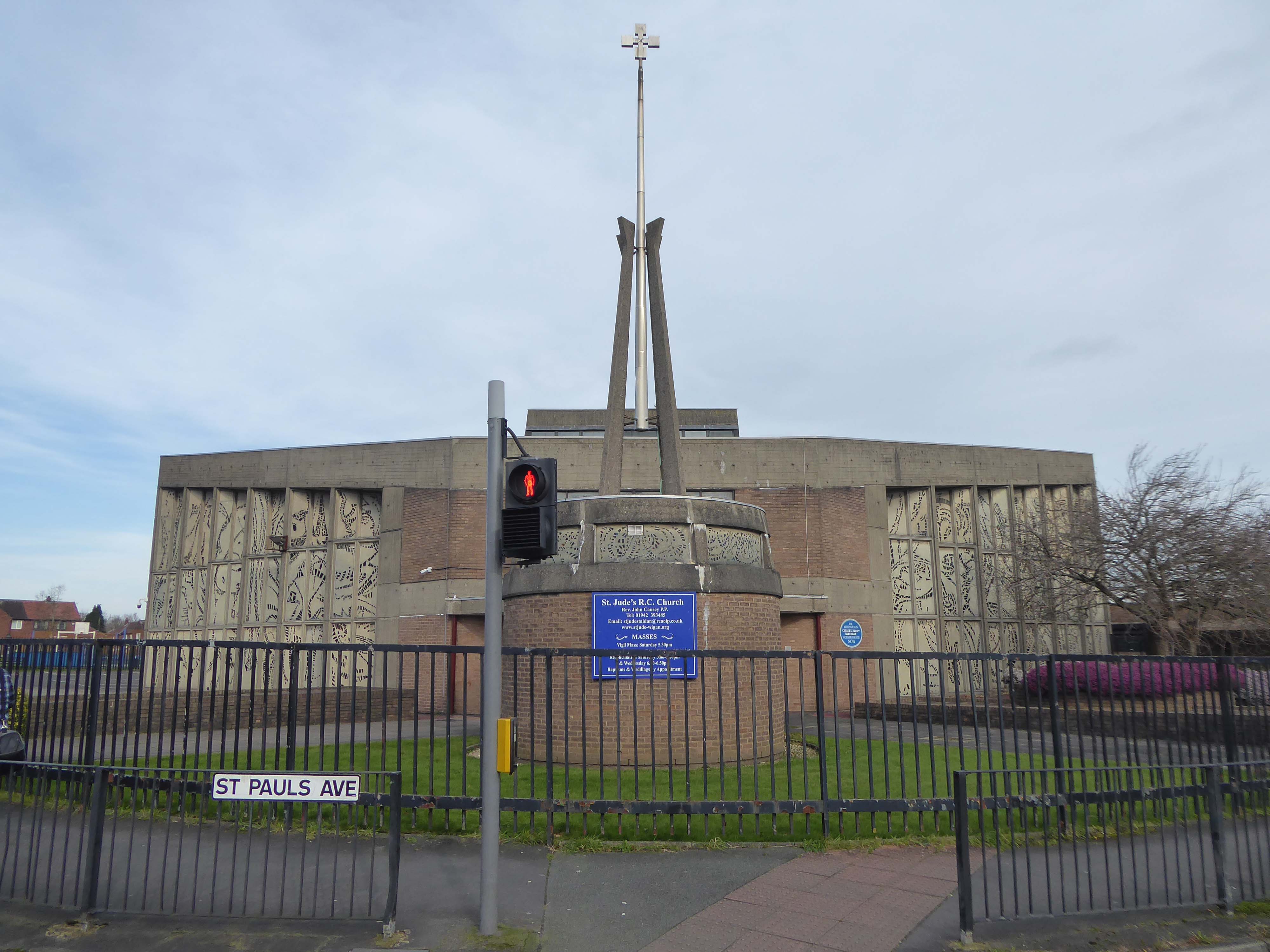
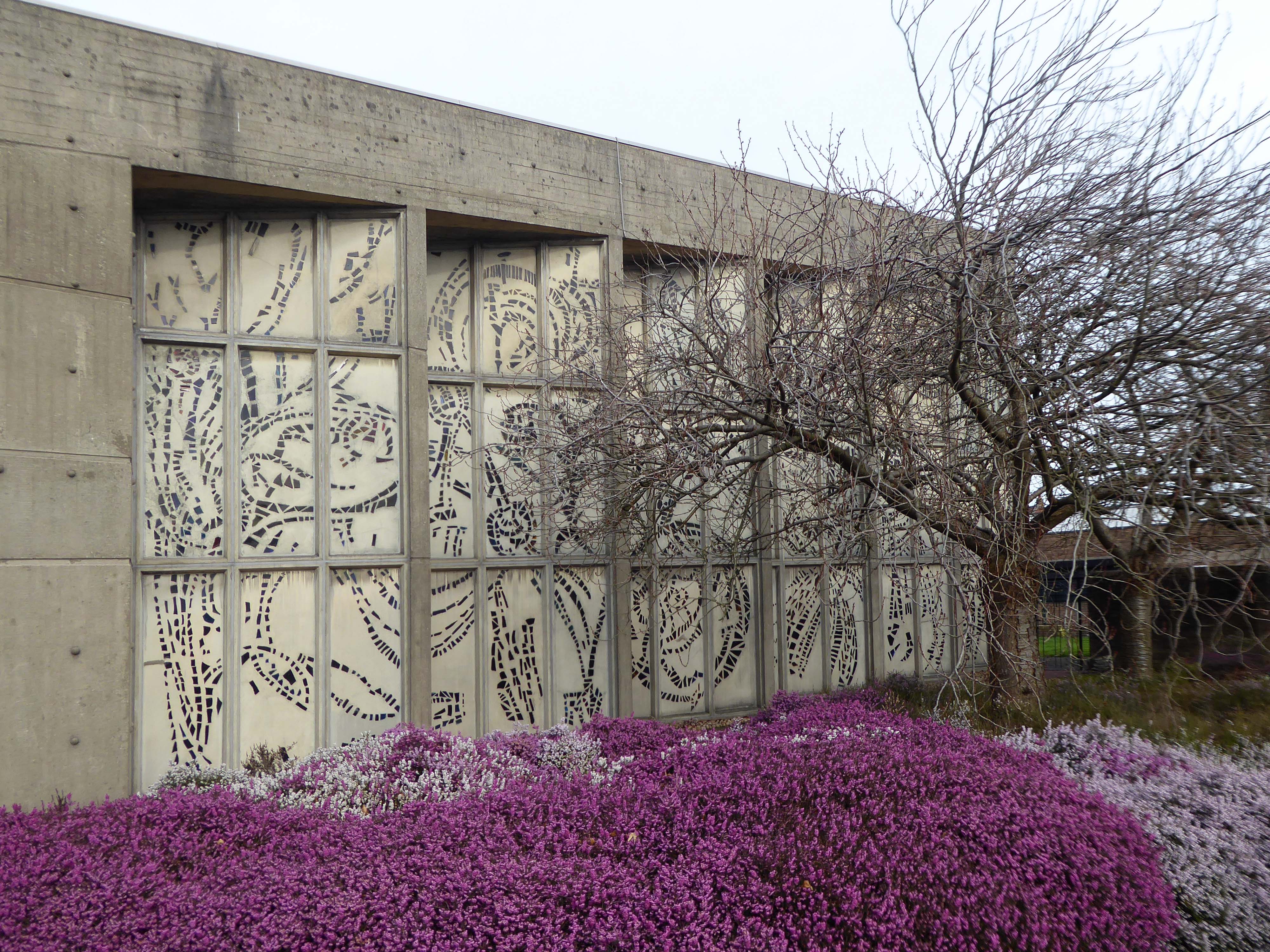
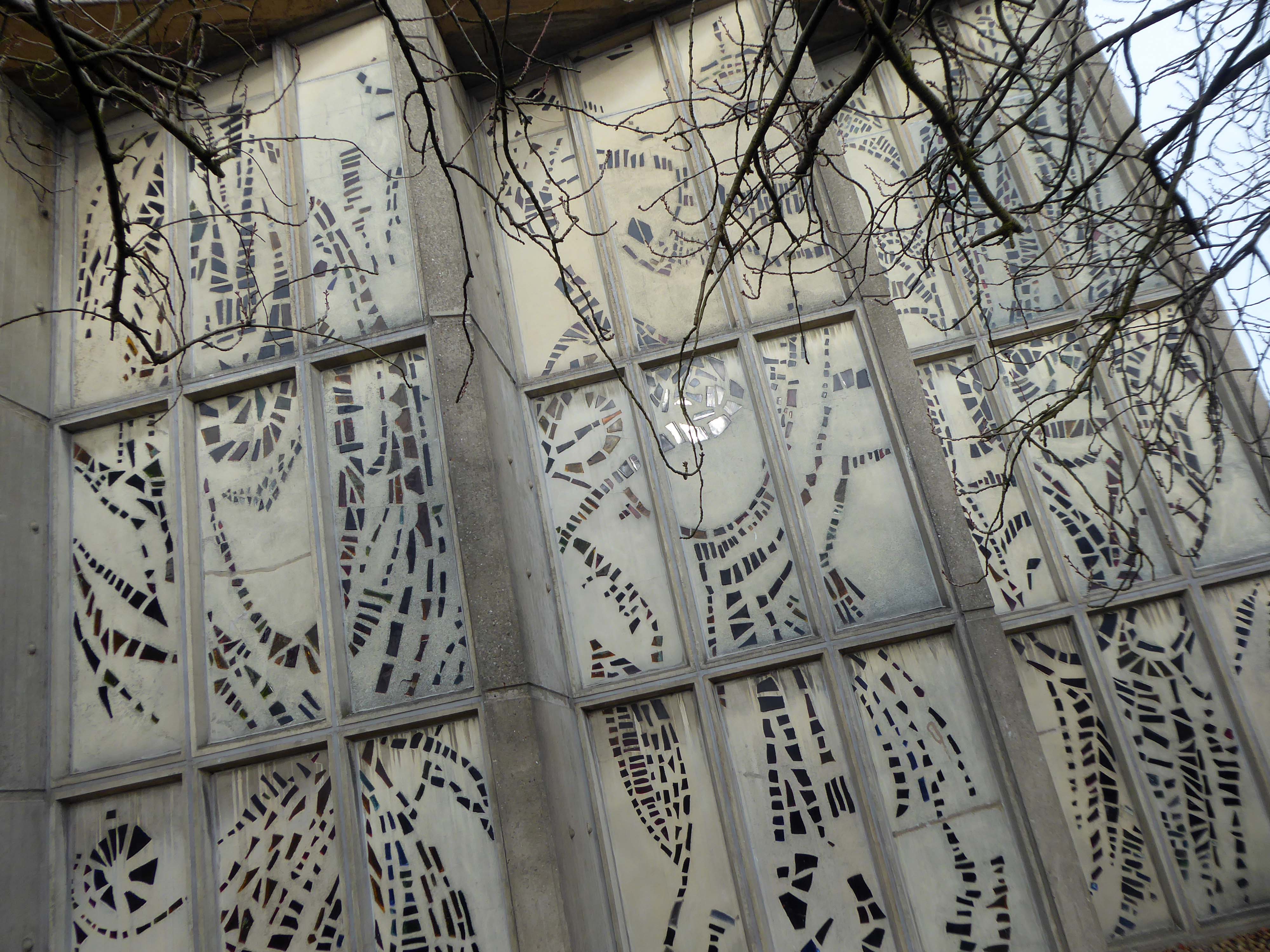
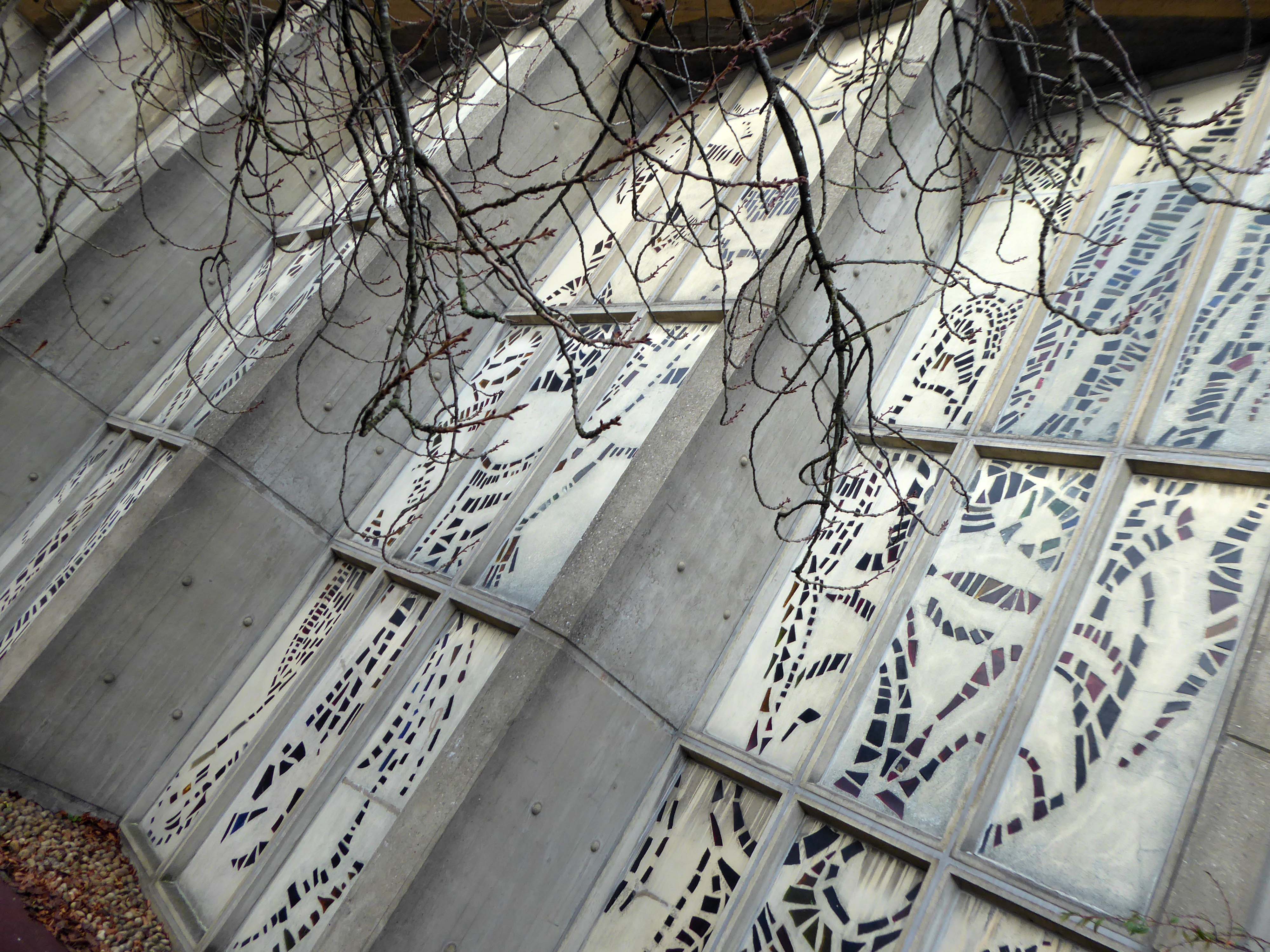
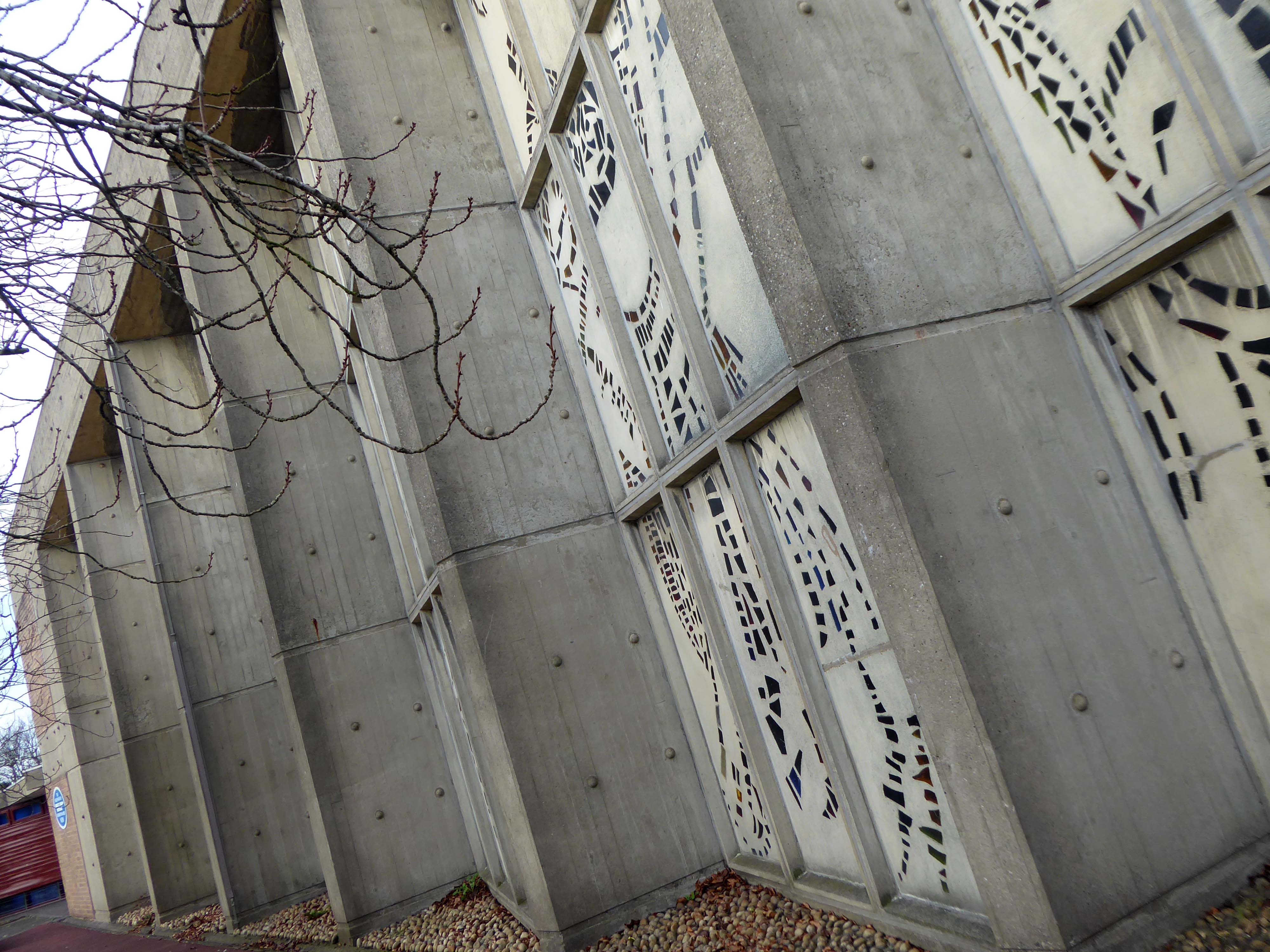
St. Jude’s Church Poolstock Lane/St Paul’s Avenue Wigan WN3 5JE
Following the demolition of many working class homes in central Wigan in the early-to-mid 20th century there was a migration to new council estates on the outskirts of the town including new developments in the Poolstock and Worsley Mesnes localities. In order to cater to the Catholic inhabitants of the new estates Father Richard Tobin of St Joseph’s parish in Wigan, established a chapel of ease – described as a wooden hut, on St Paul’s Avenue in 1959.
In 1962 Tobin wrote to the Archbishop of Liverpool George Andrew Beck with his proposals for a new, permanent church, suggesting that the church should be dedicated either to St Jude or Our Lady of the Assumption.
Beck replied on 15 March:
My dear Father Tobin, Many thanks for your letter. I like your suggestion of St. Jude as a patron of the new church. We already have a parish in honour of The Assumption but none, so far as I know, to St. Jude. I assume that you do not intend to suggest by this title that Wigan is a hopeless case!
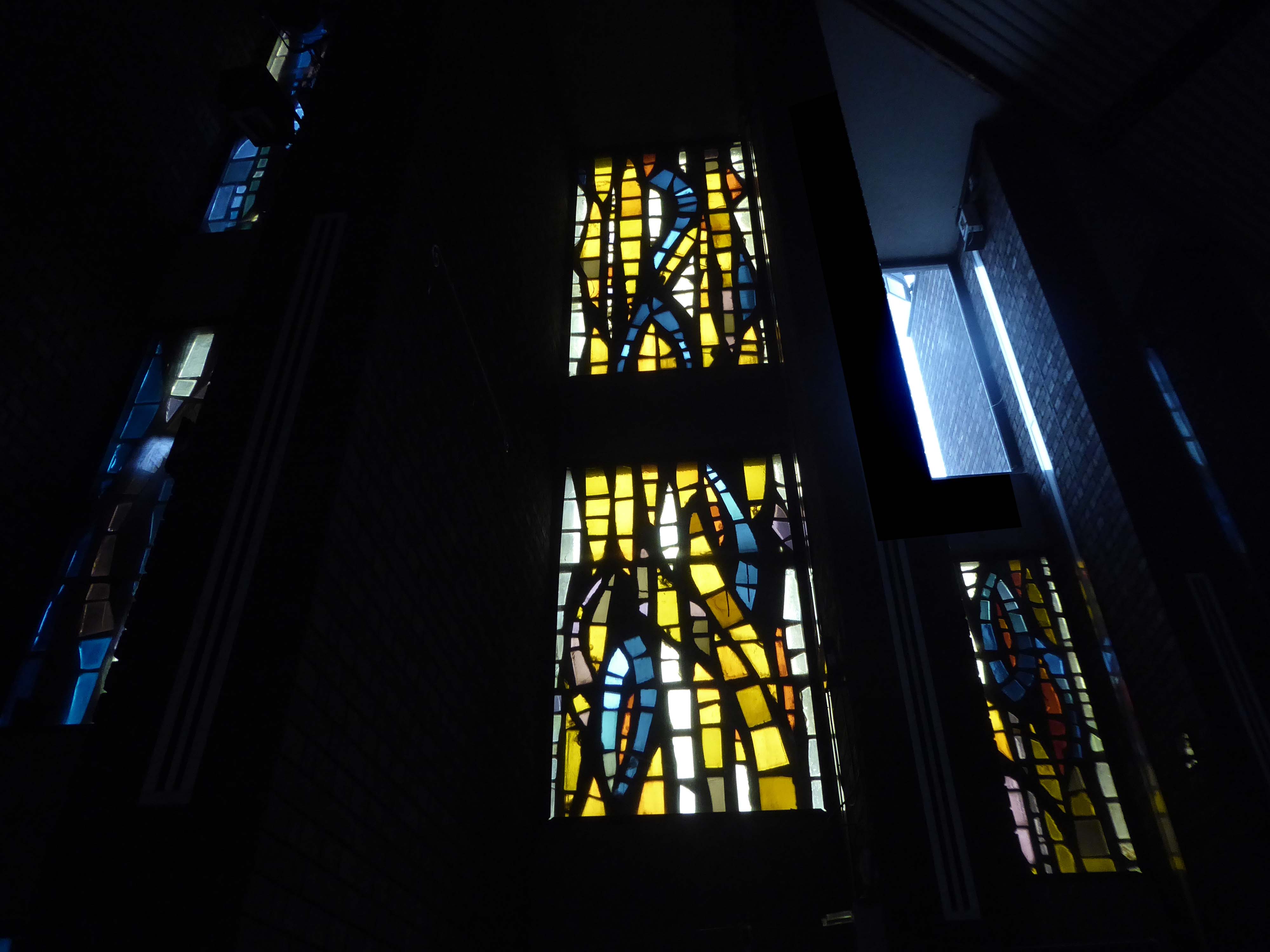
The Liverpool architects L A G Prichard & Sons were engaged and work began in the summer of 1963. Subsidence caused by coal mining in the area necessitated reinforced foundations and the final cost was over £100,000. The foundation stone was laid by Archbishop Beck in December 1964 and the church was opened for worship in July 1965.
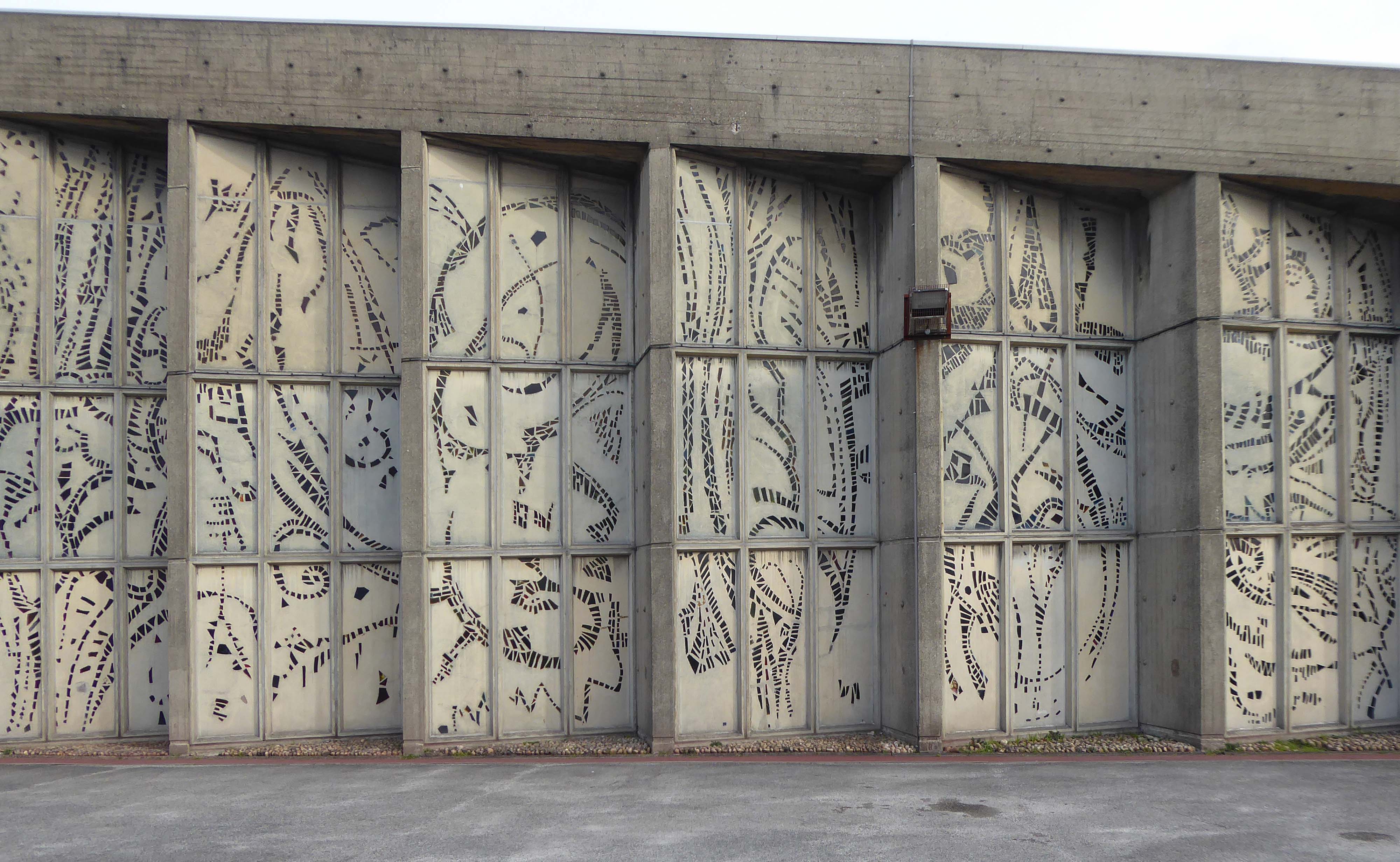
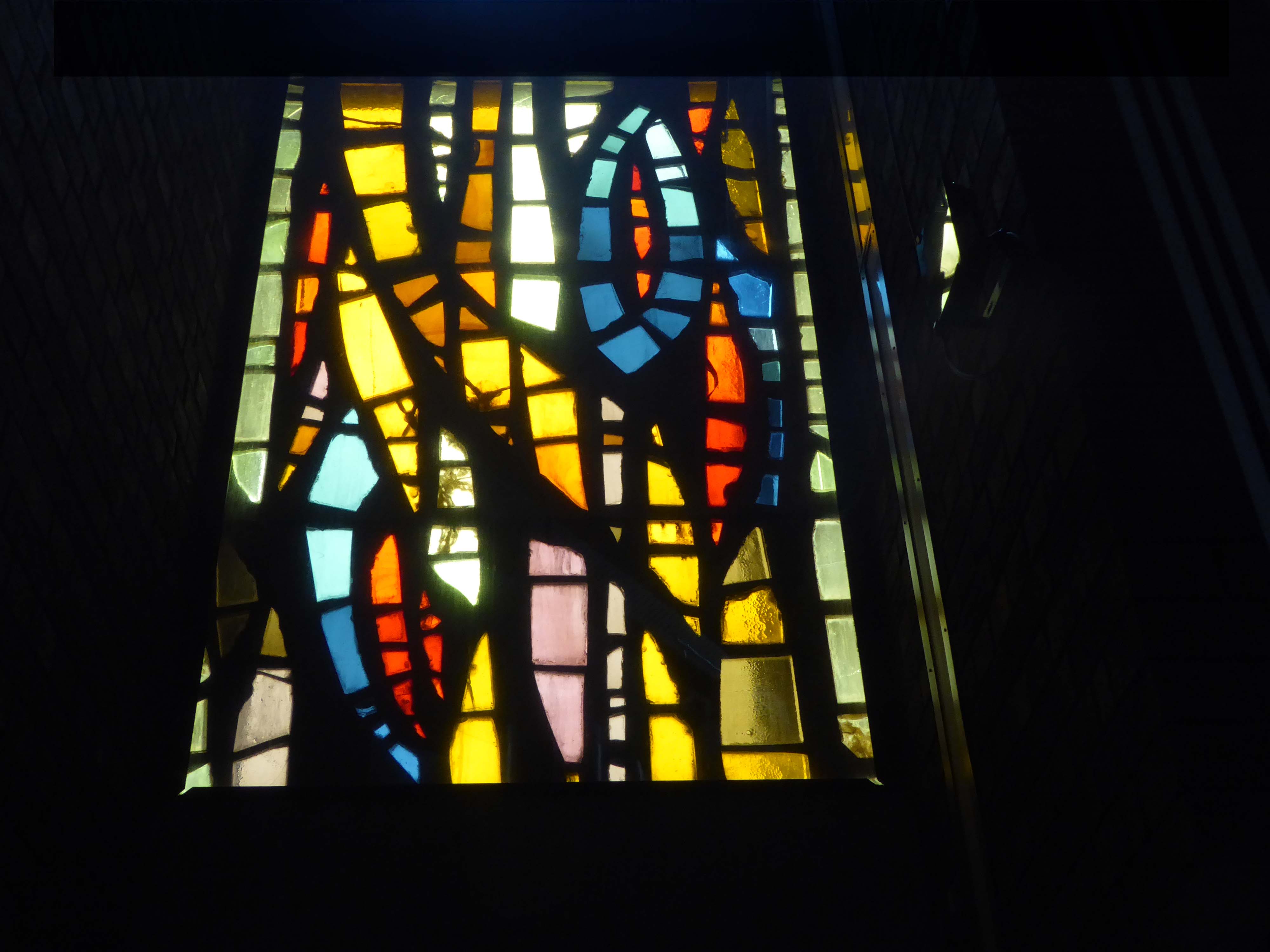
The most remarkable feature of the church is the dalle de verre stained glass on the walls of the nave, designed by Robin Riley, made by Verriers de St Jobain in France and fitted by glaziers J O’Neill and Sons.
Sadly Robin Riley died this year, aged 90, my thanks to his former student Keith Hamlett for the information.
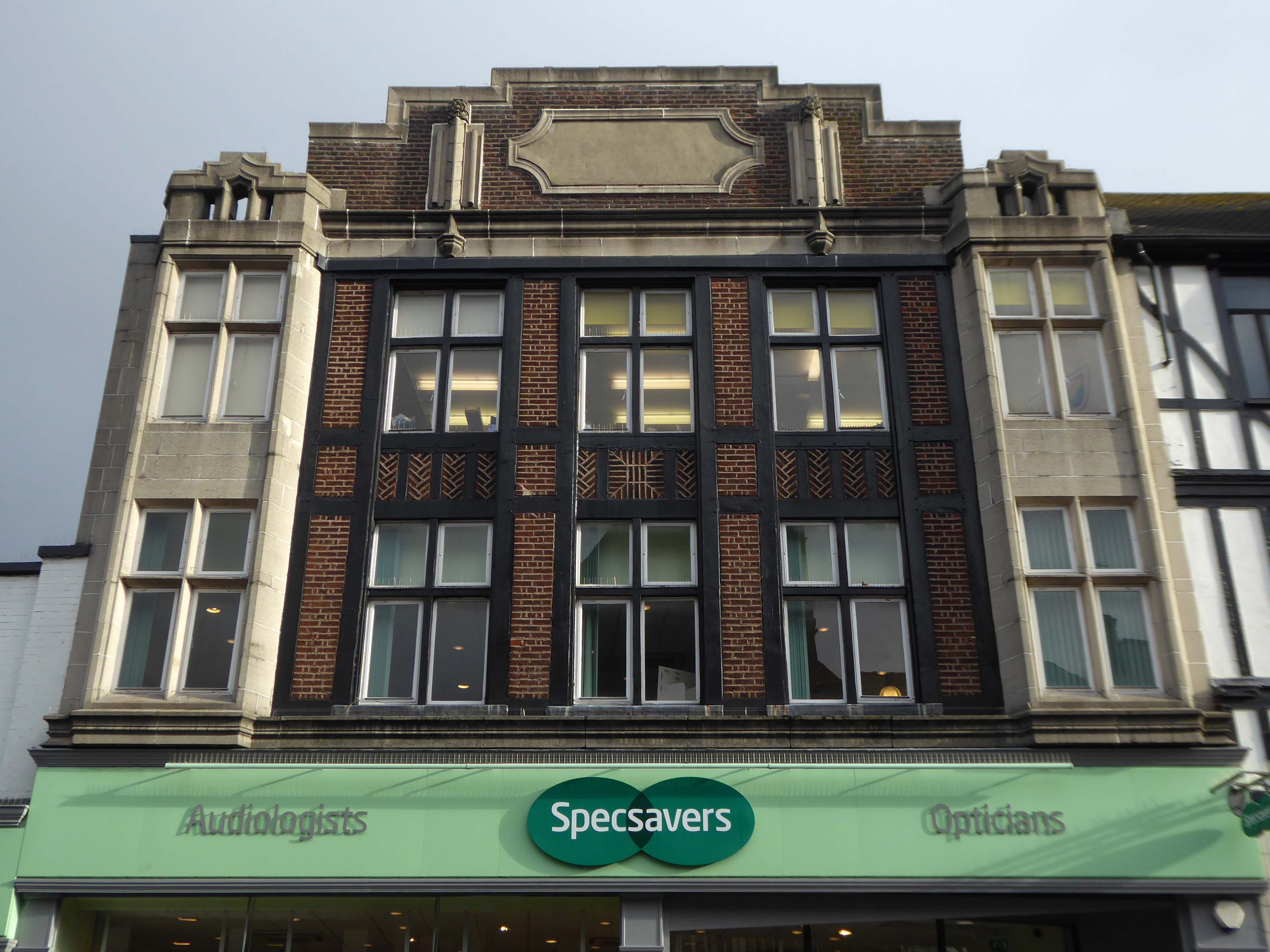
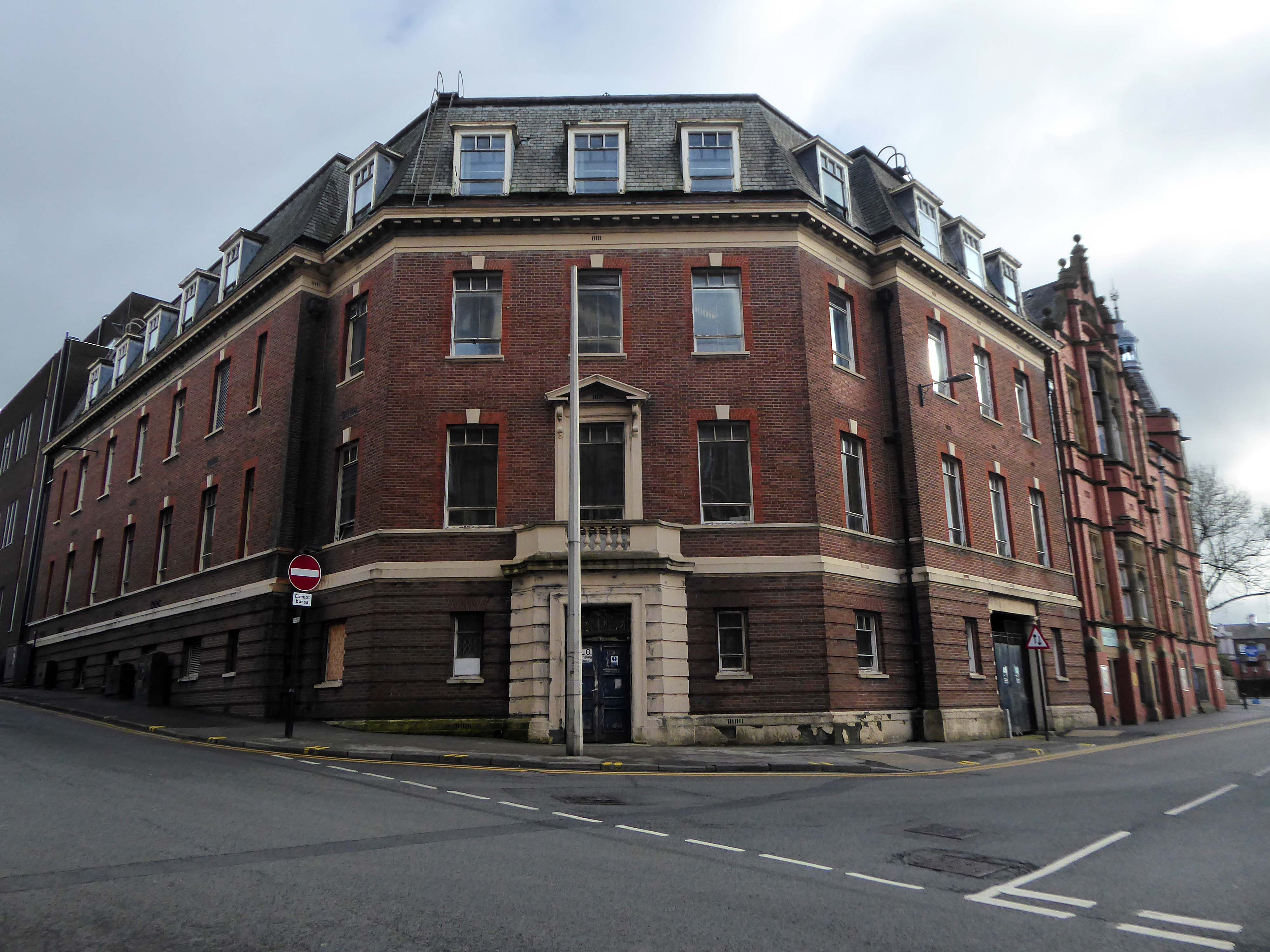
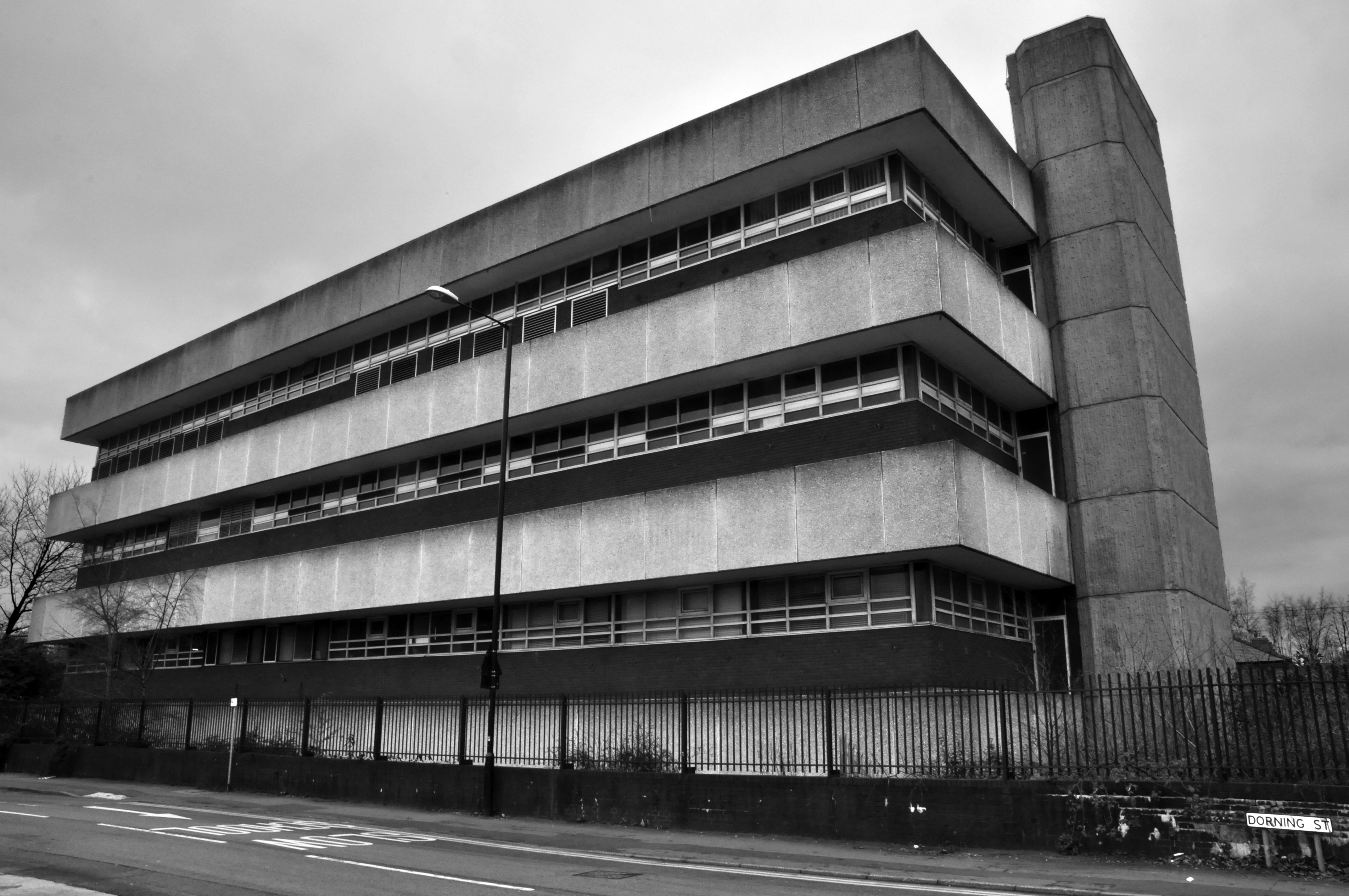
Back out onto Dorning Street in search of telephone exchanges, three telephone exchanges.
Inter-war
Sixties.
Seventies.
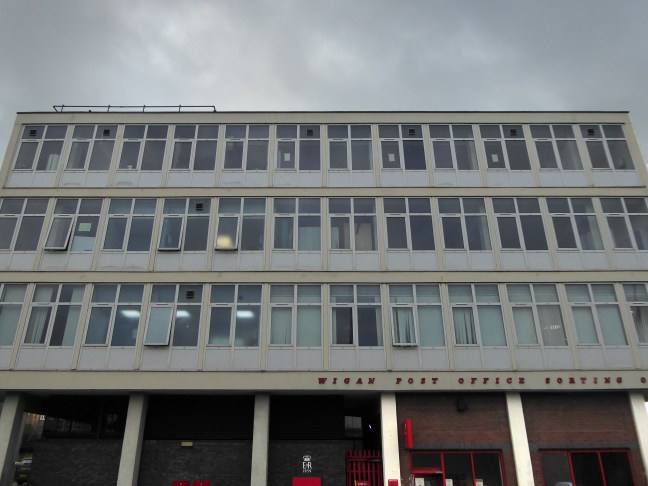
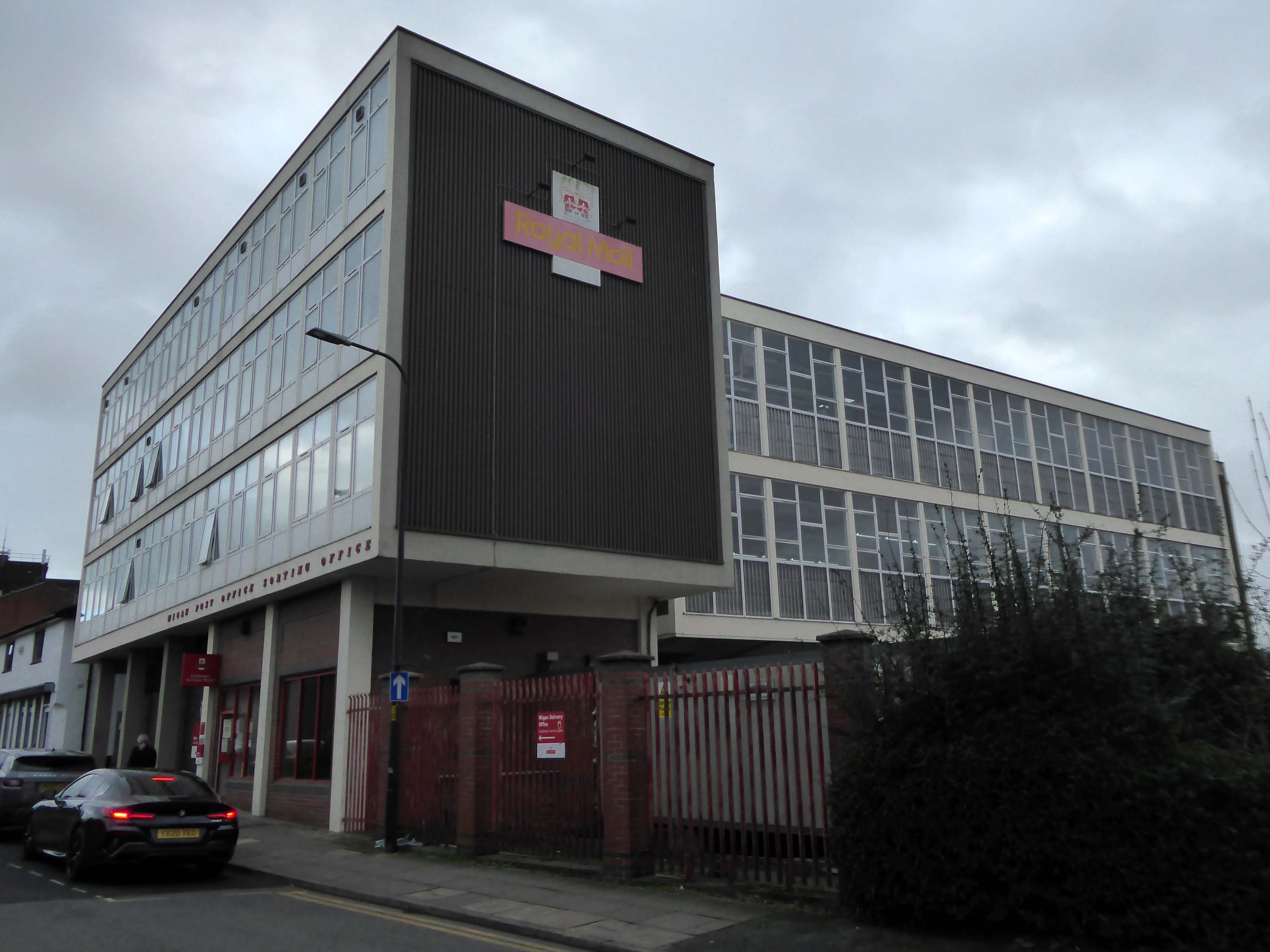
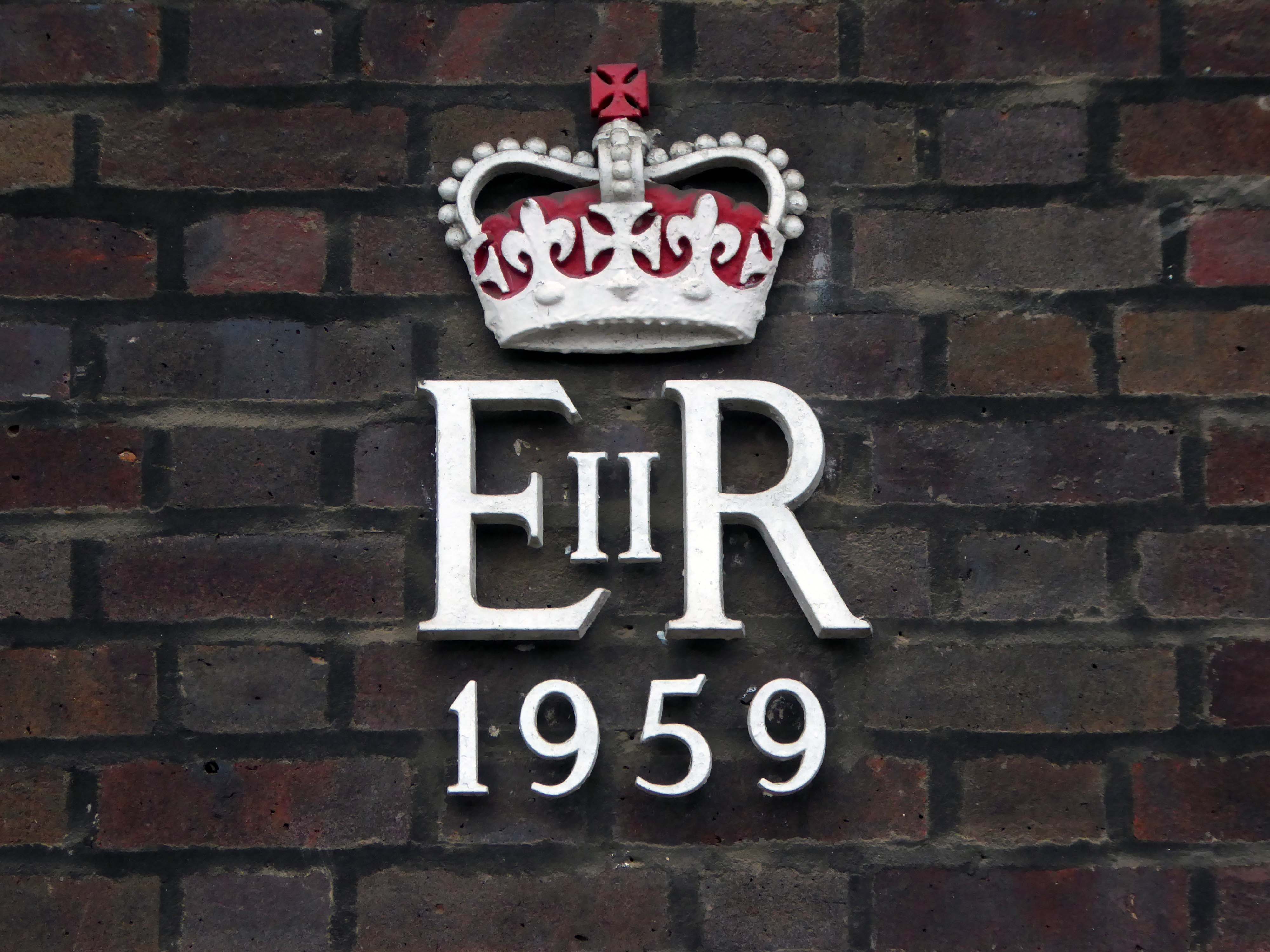
Just around the corner is an expansive GPO Sorting Office of 1959.
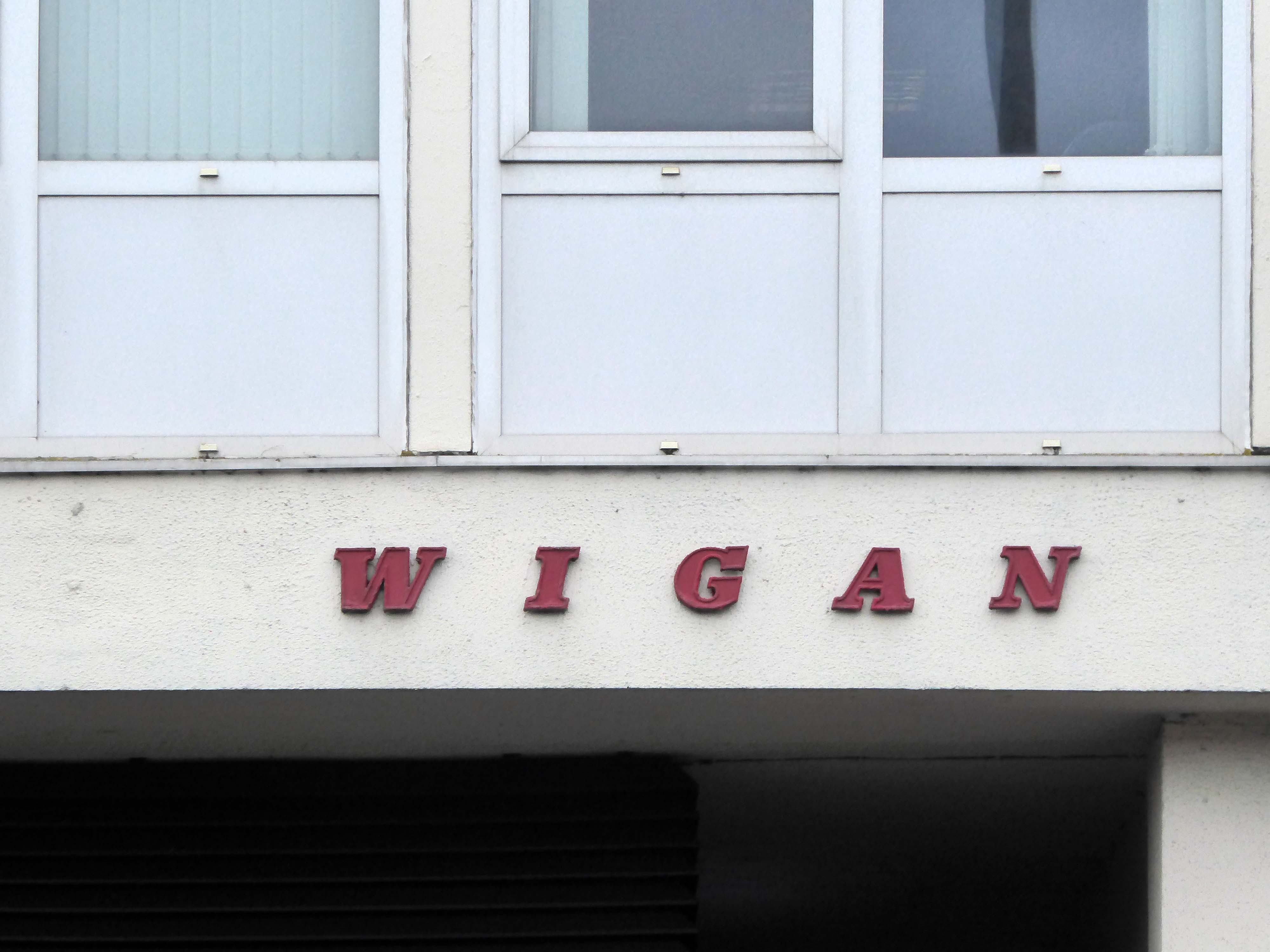
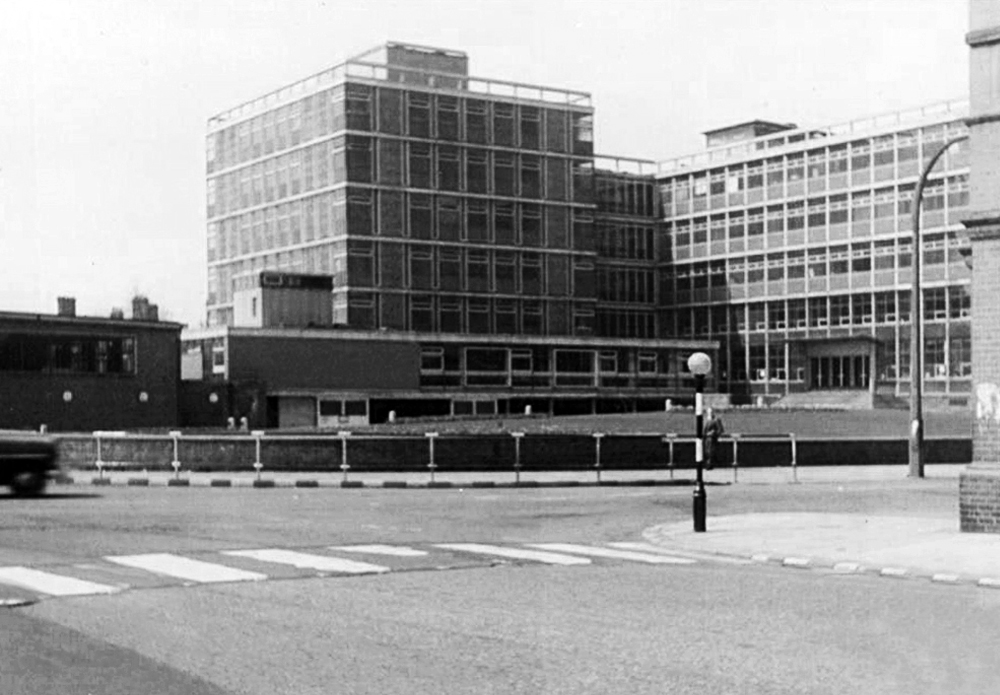
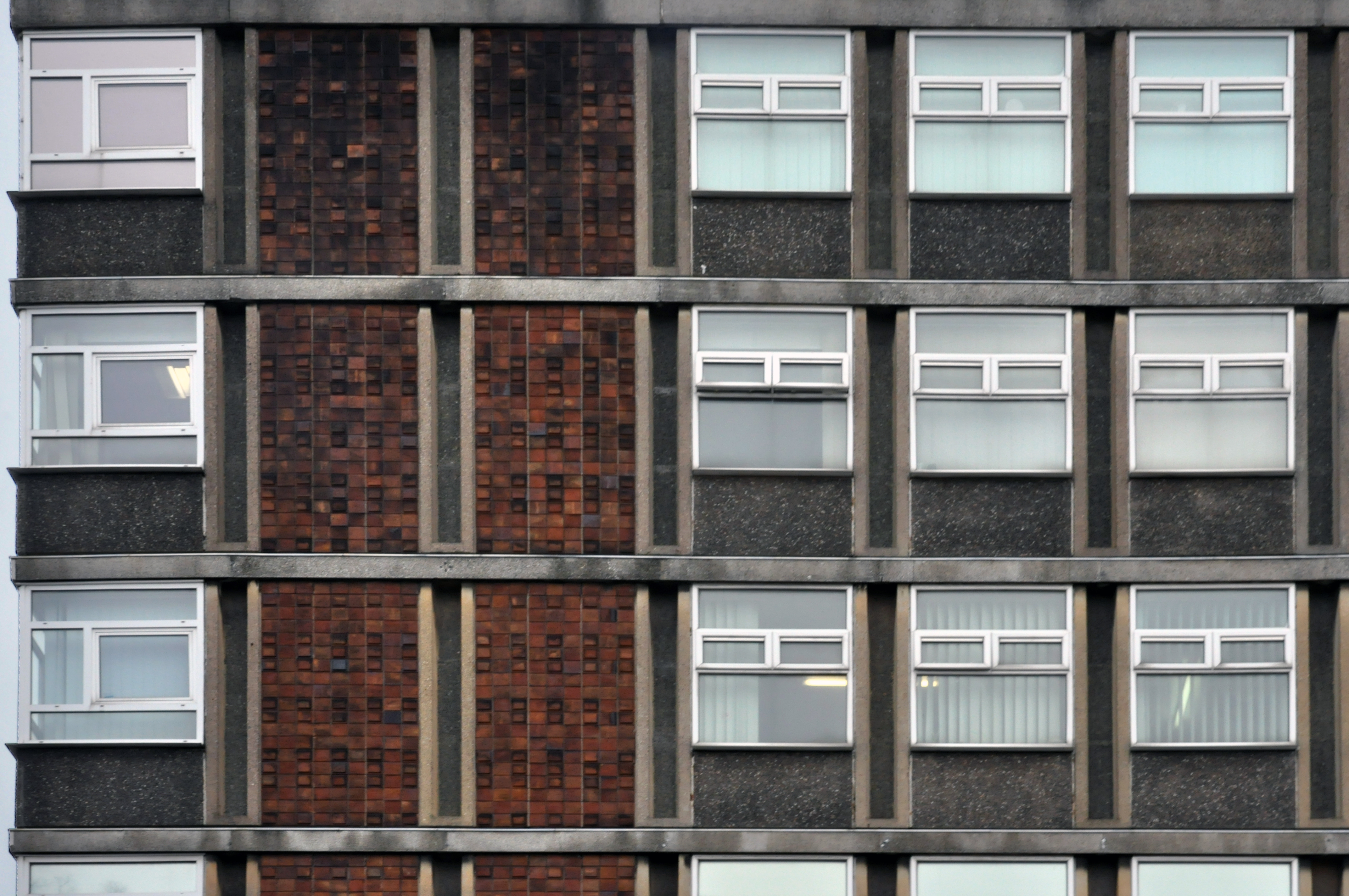
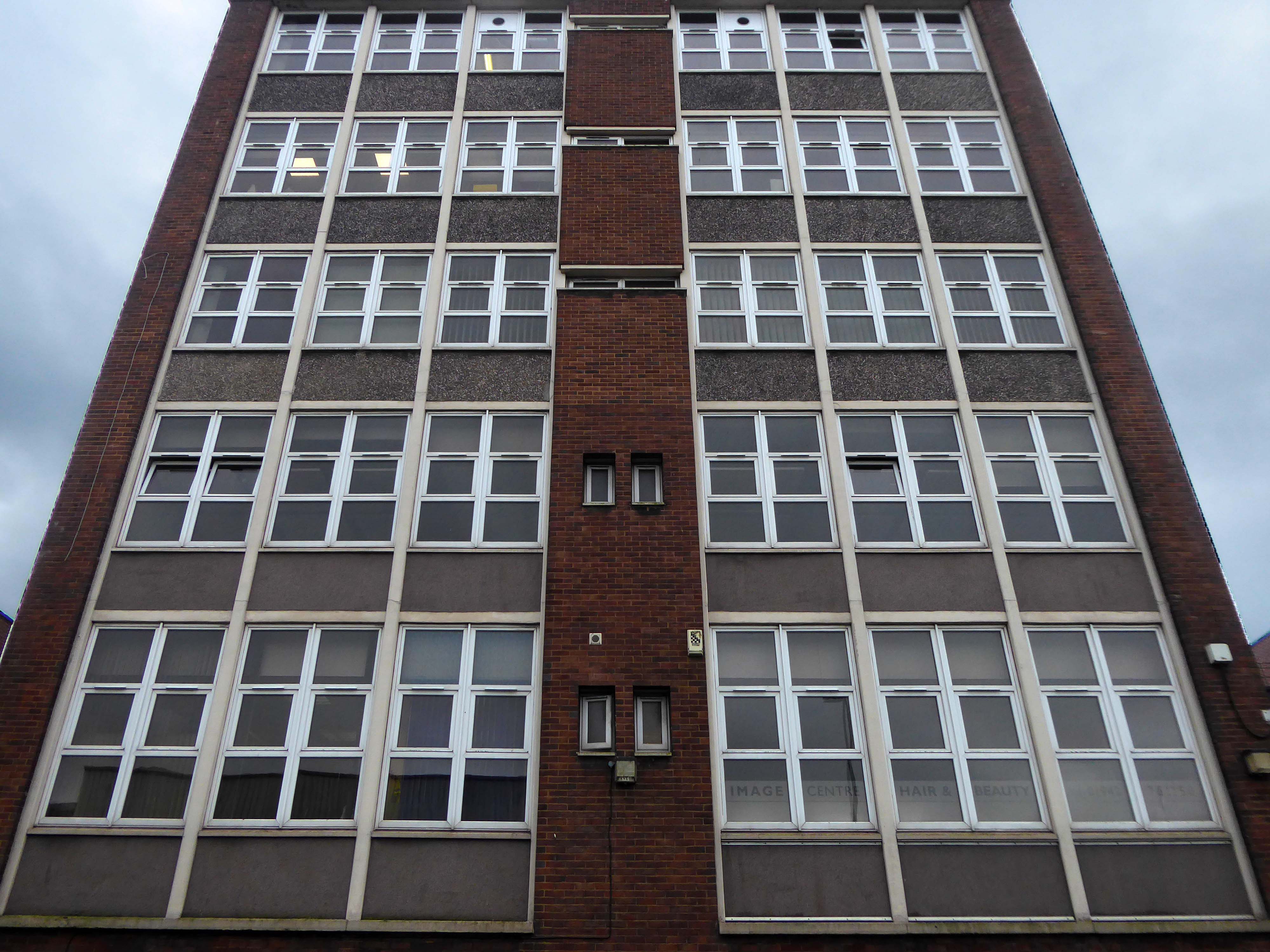
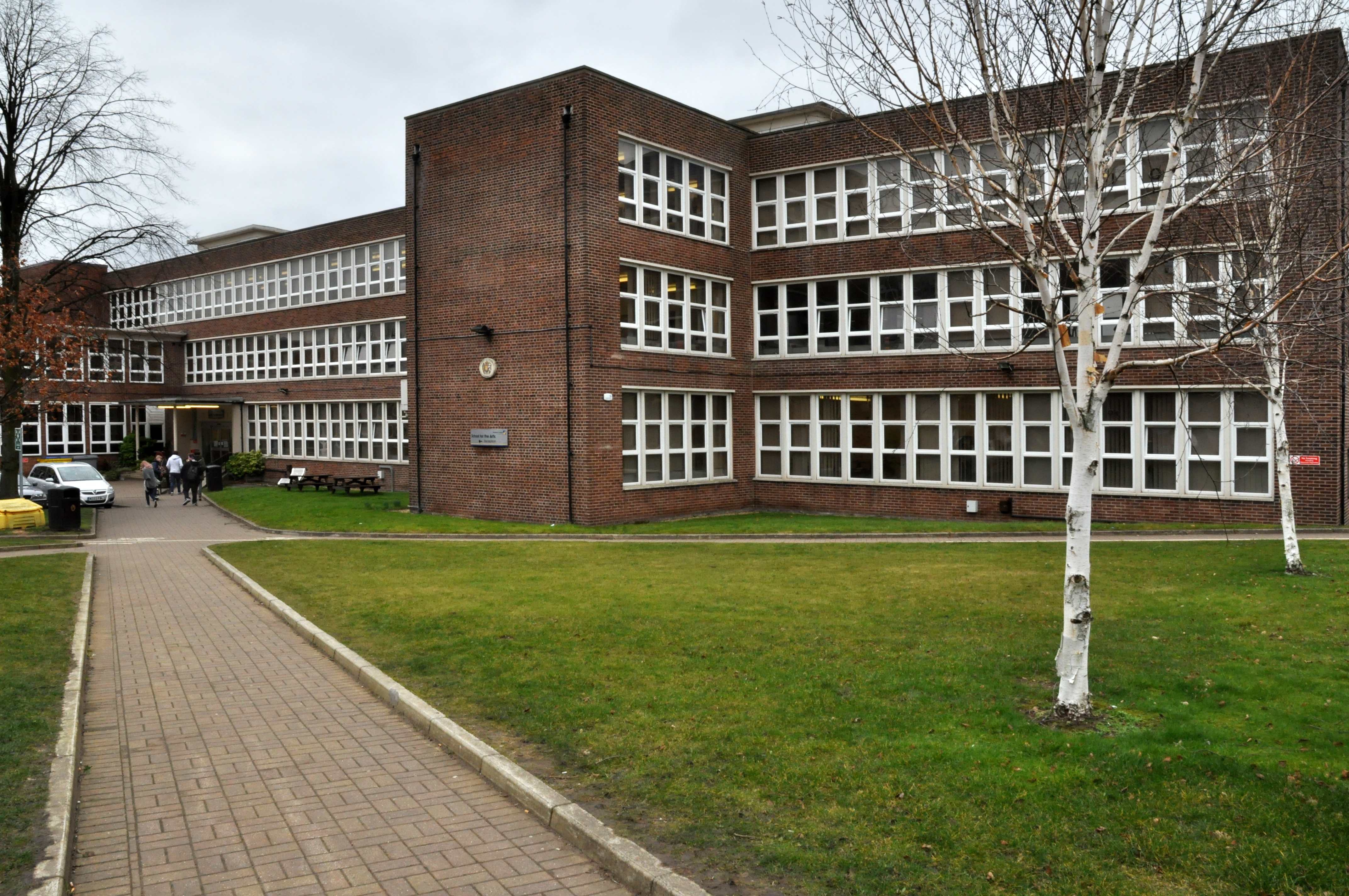
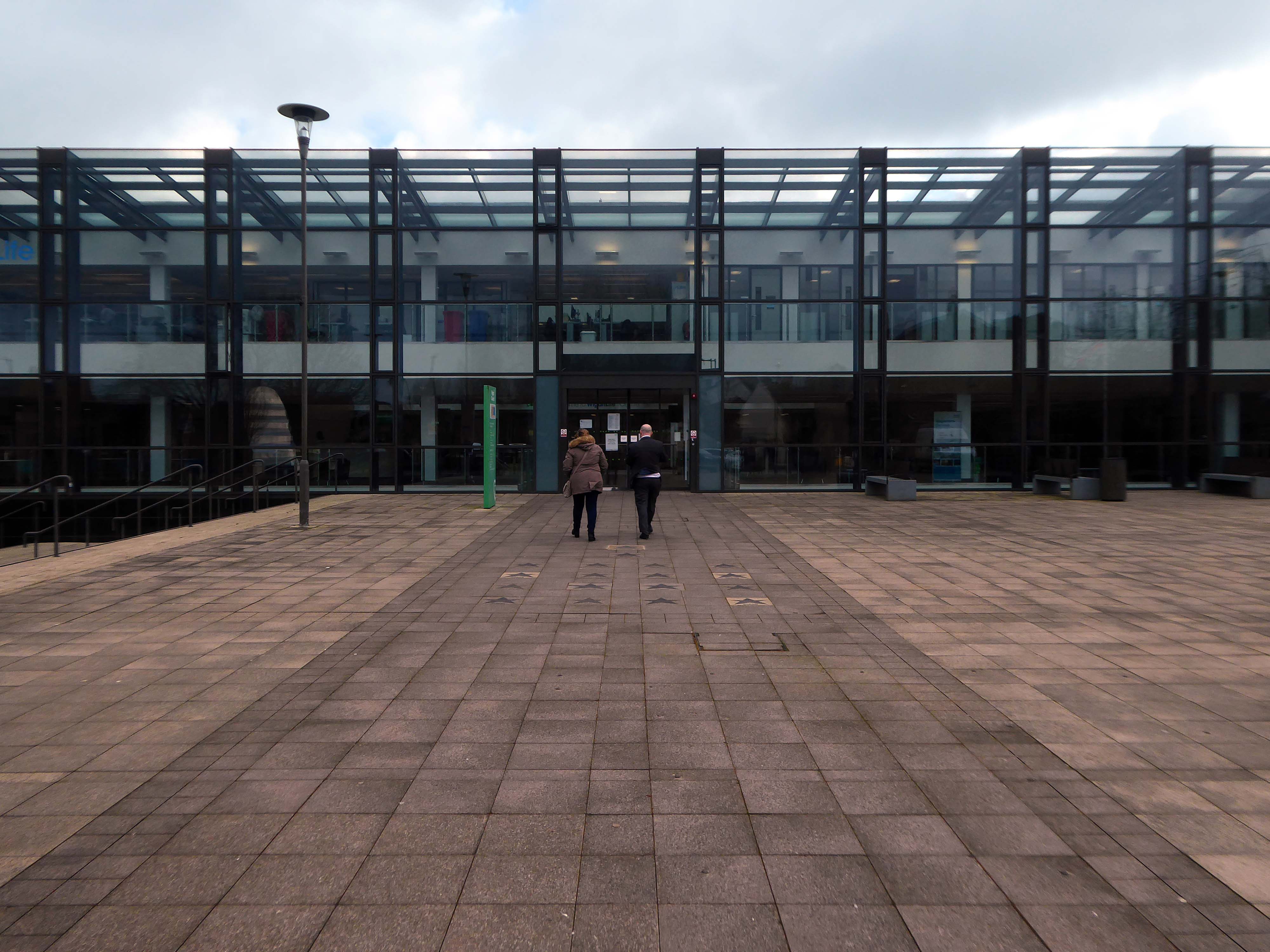
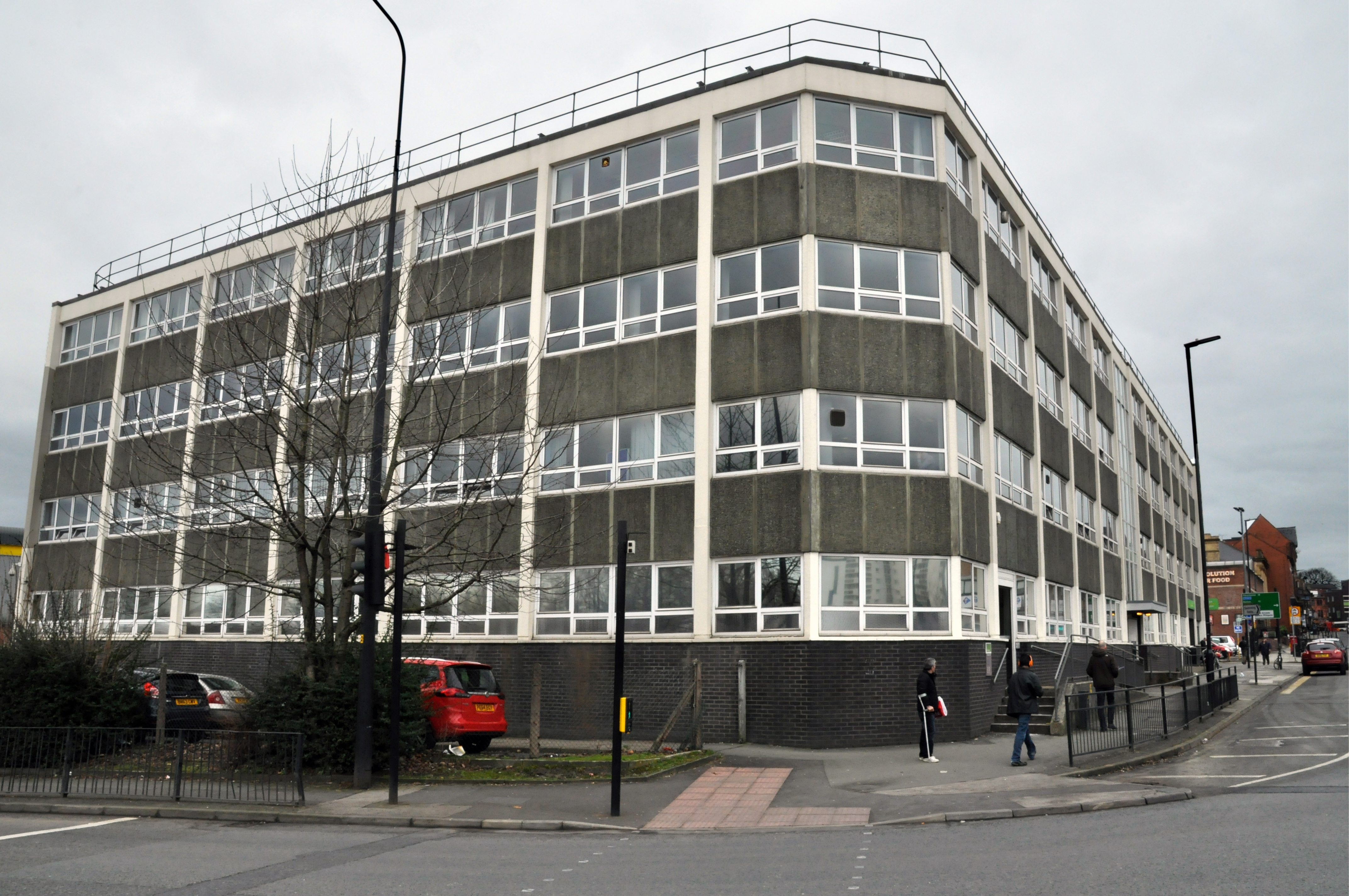
Across the way is the Technical College.
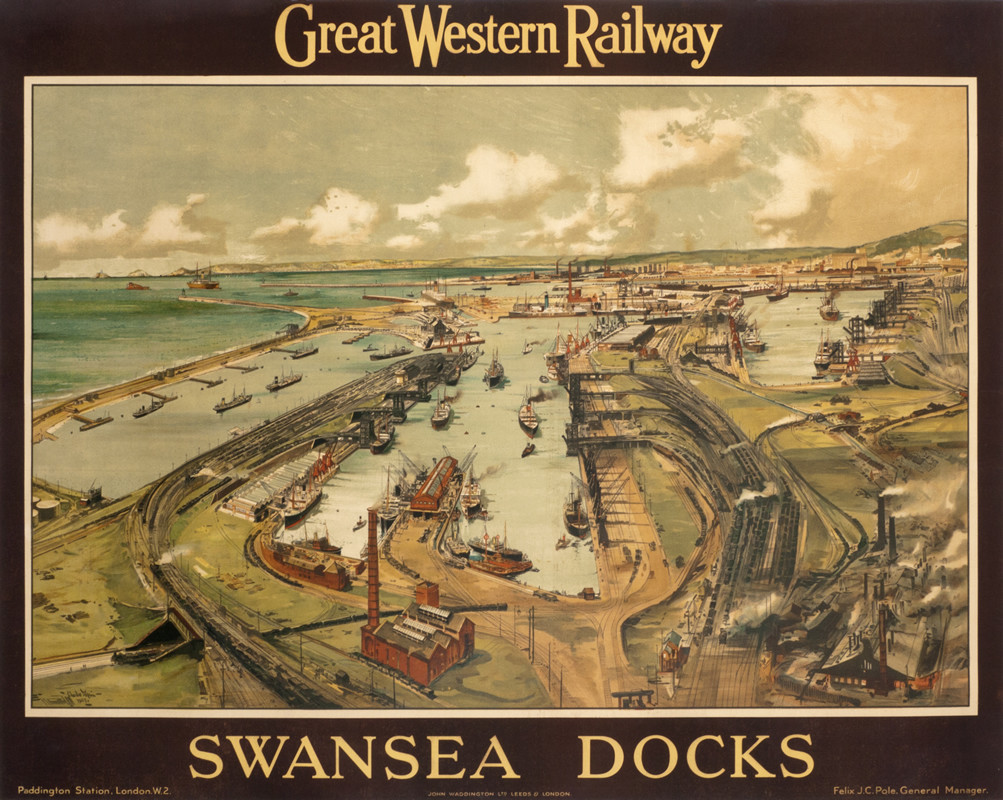
The foundations of Wigan & Leigh College date back to 1857, and the current institution was formed in April 1992 through the merger of Wigan College of Technology and Leigh College.
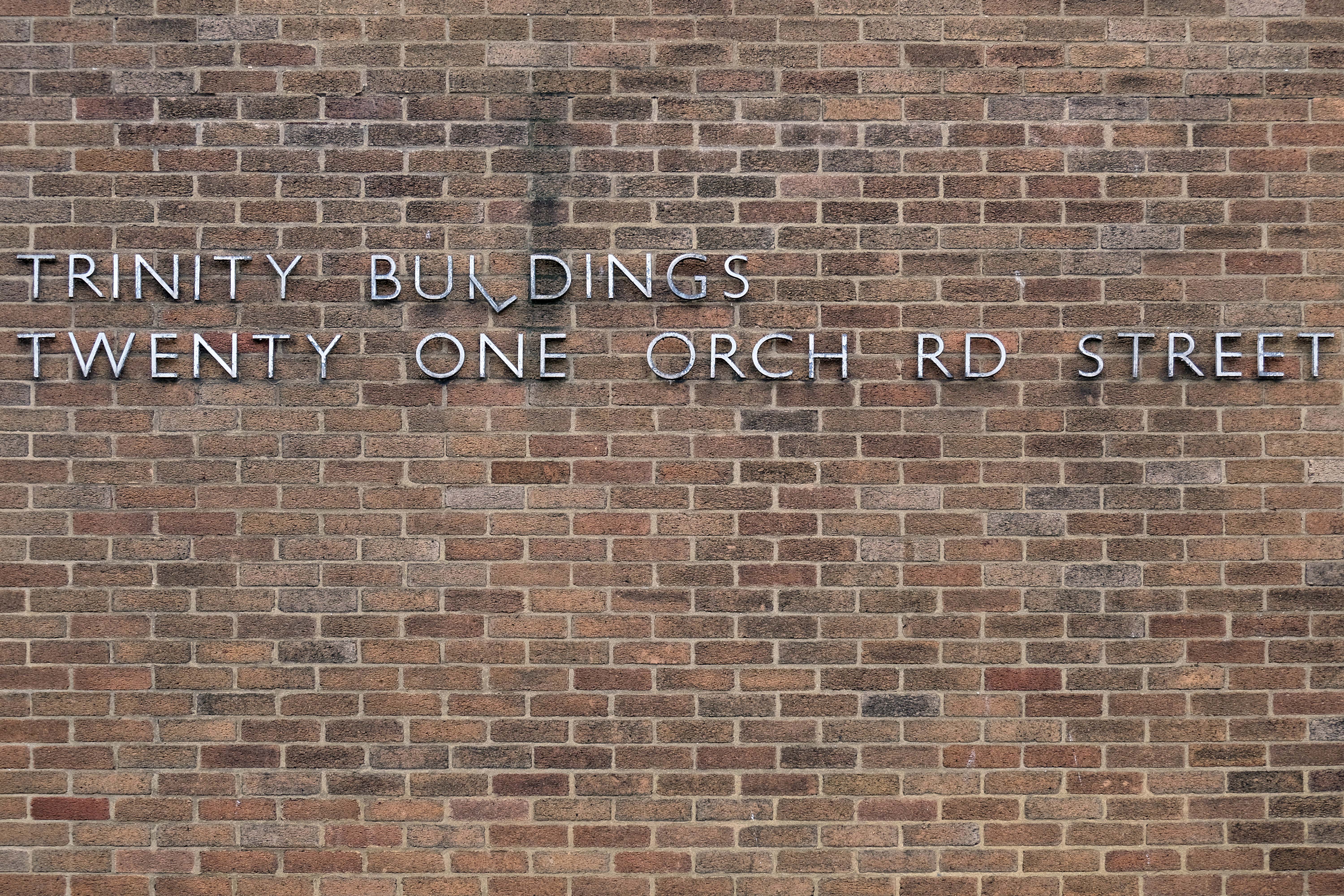
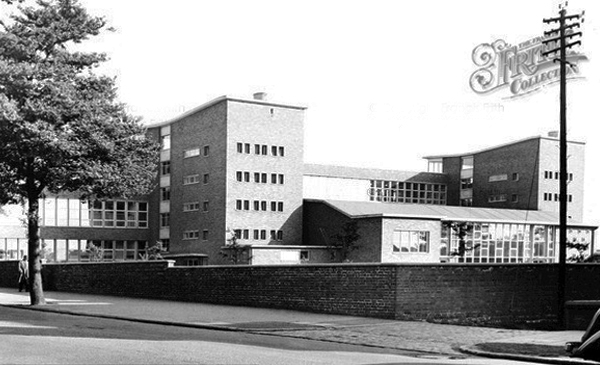
Partly formed from the Thomas Linacre Technical School.
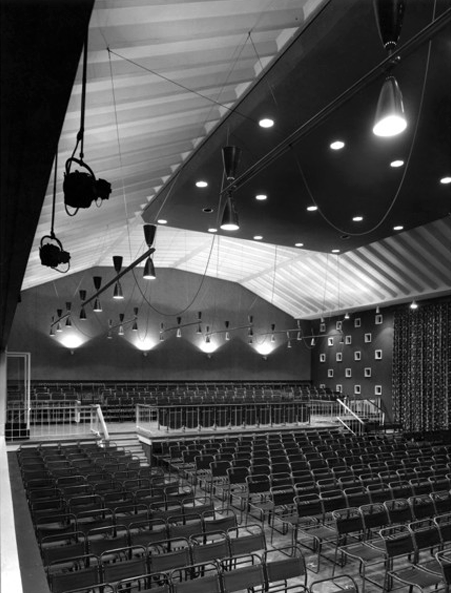
Architects: Howard V Lobb G Grenfell Bains & Hargreaves 1954
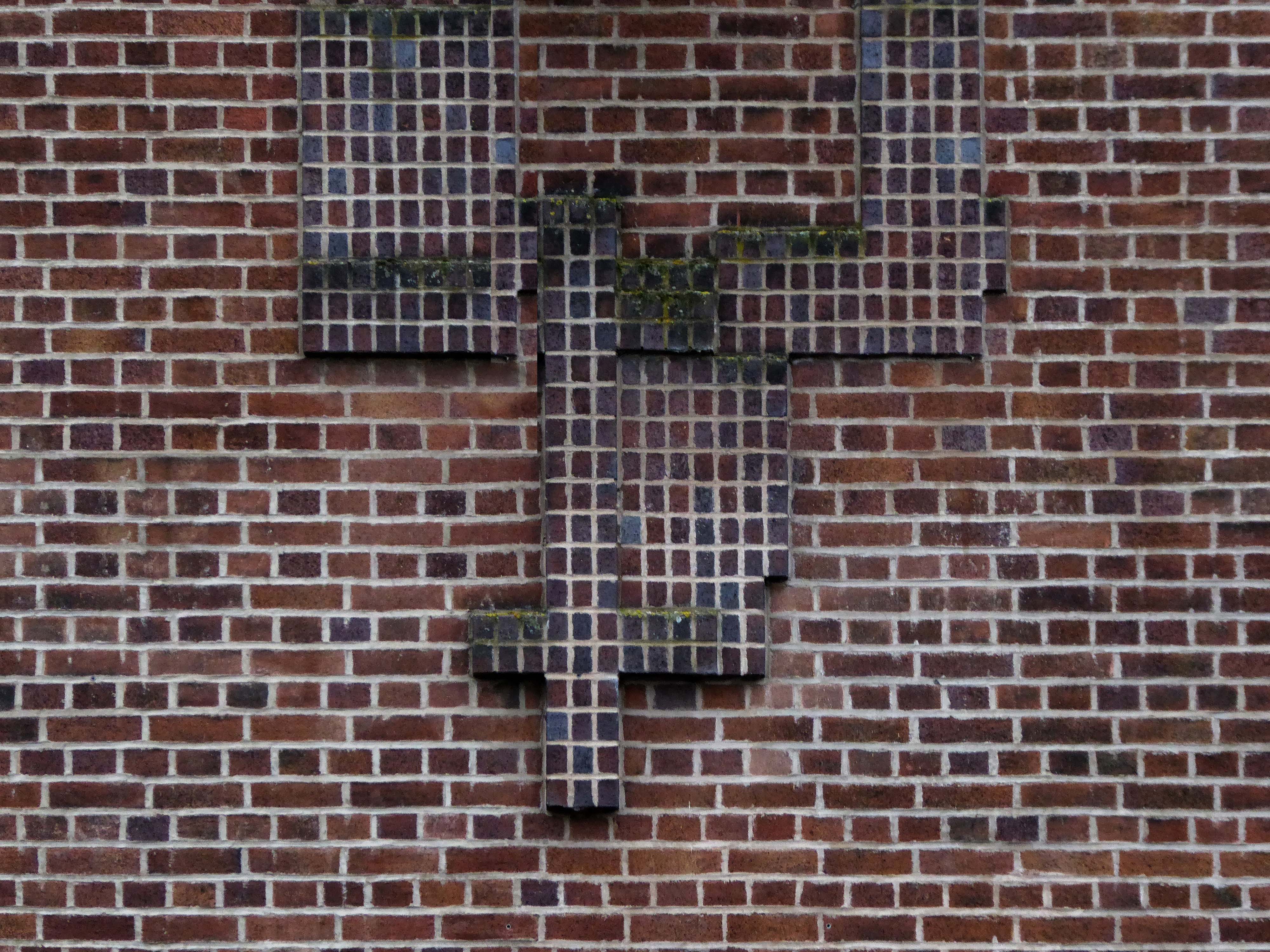
Curious decorative brick motif – a floor plan of the building.
My thanks to Mark Watson for his erudition and insight.
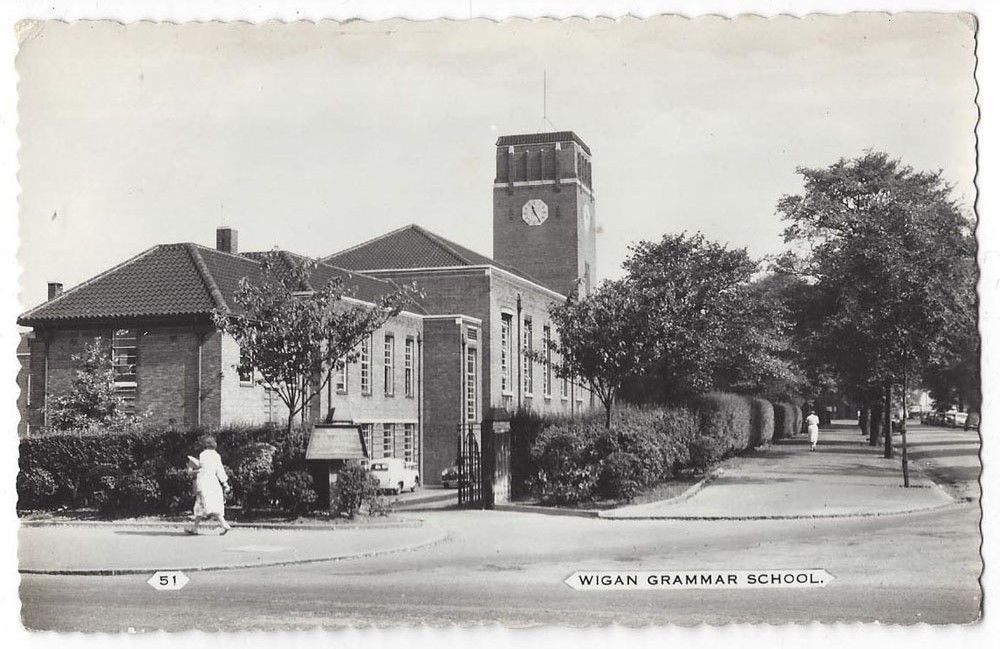
Across the road the former Grammar School now an NHS Centre.
Wigan Grammar School was founded in 1597 and closed in 1972 as part of the comprehensive education movement. it became Mesnes High School until 1989, and then the Mesnes Building of Wigan College.
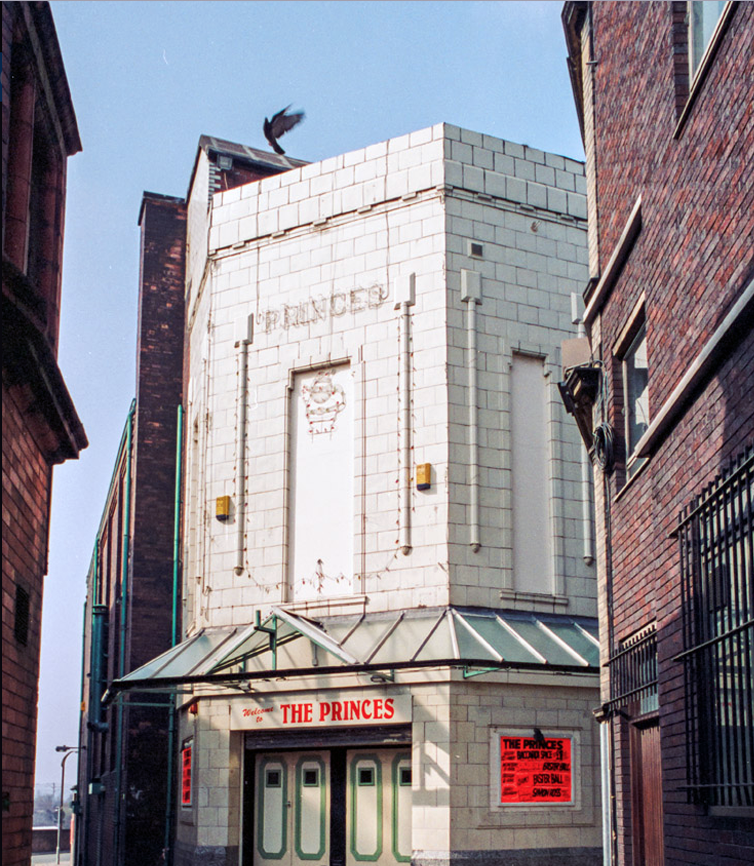
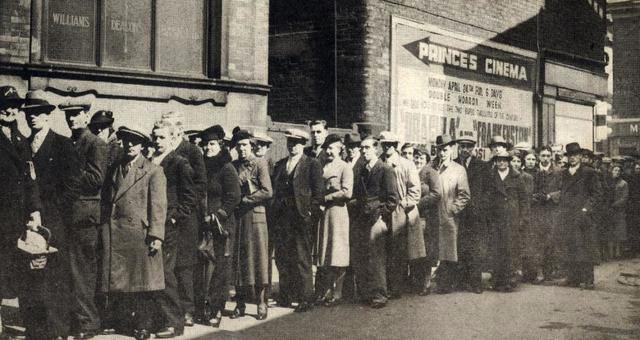
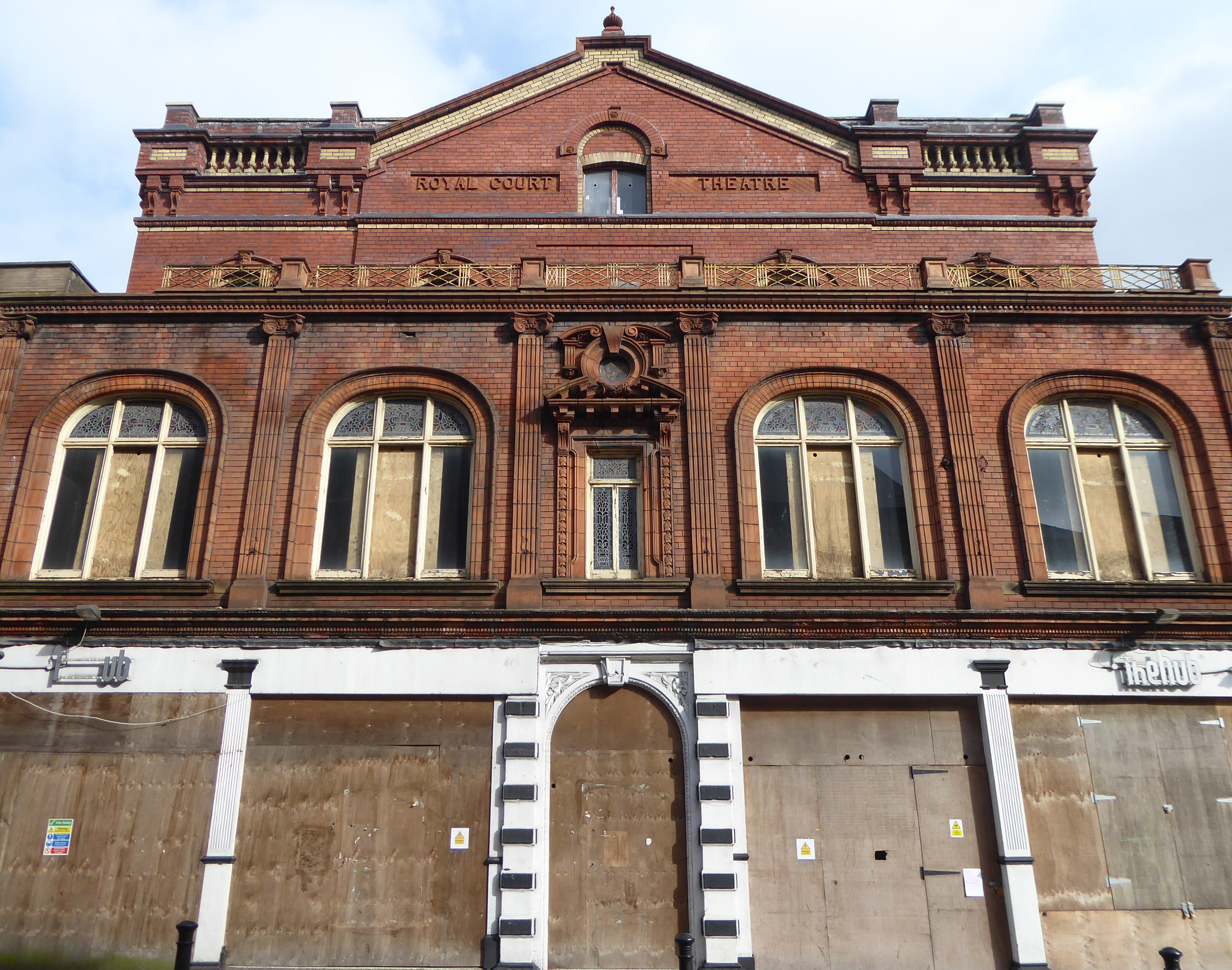
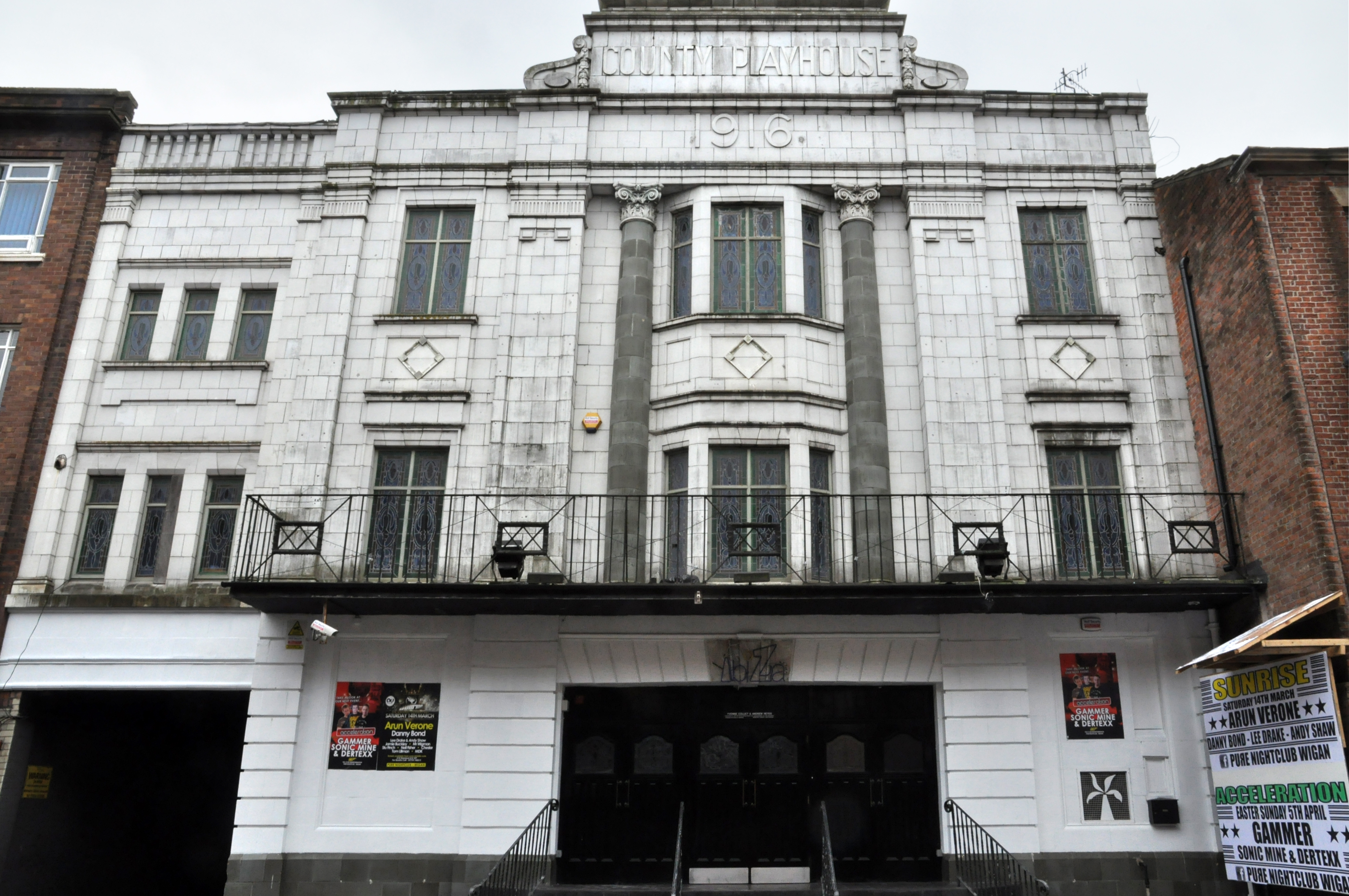
Construction began on the County Playhouse in 1916. However, due to a shortage of materials and labour during World War I, it was not completed until 1919.
Finally opened on 22nd December 1919 with The Peril Within – starring Dorothy Gish.
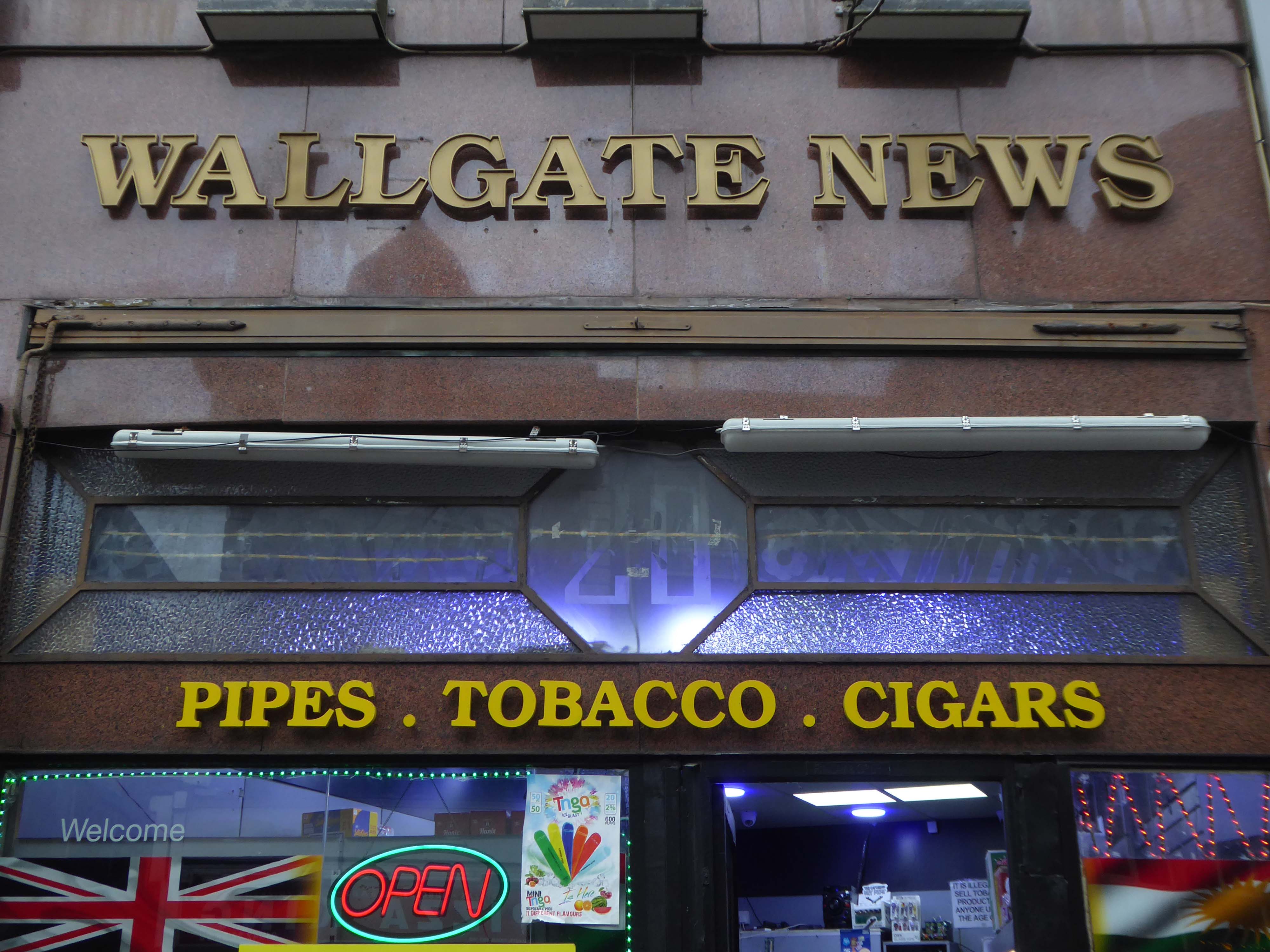
Onwards to the Wallgate News.
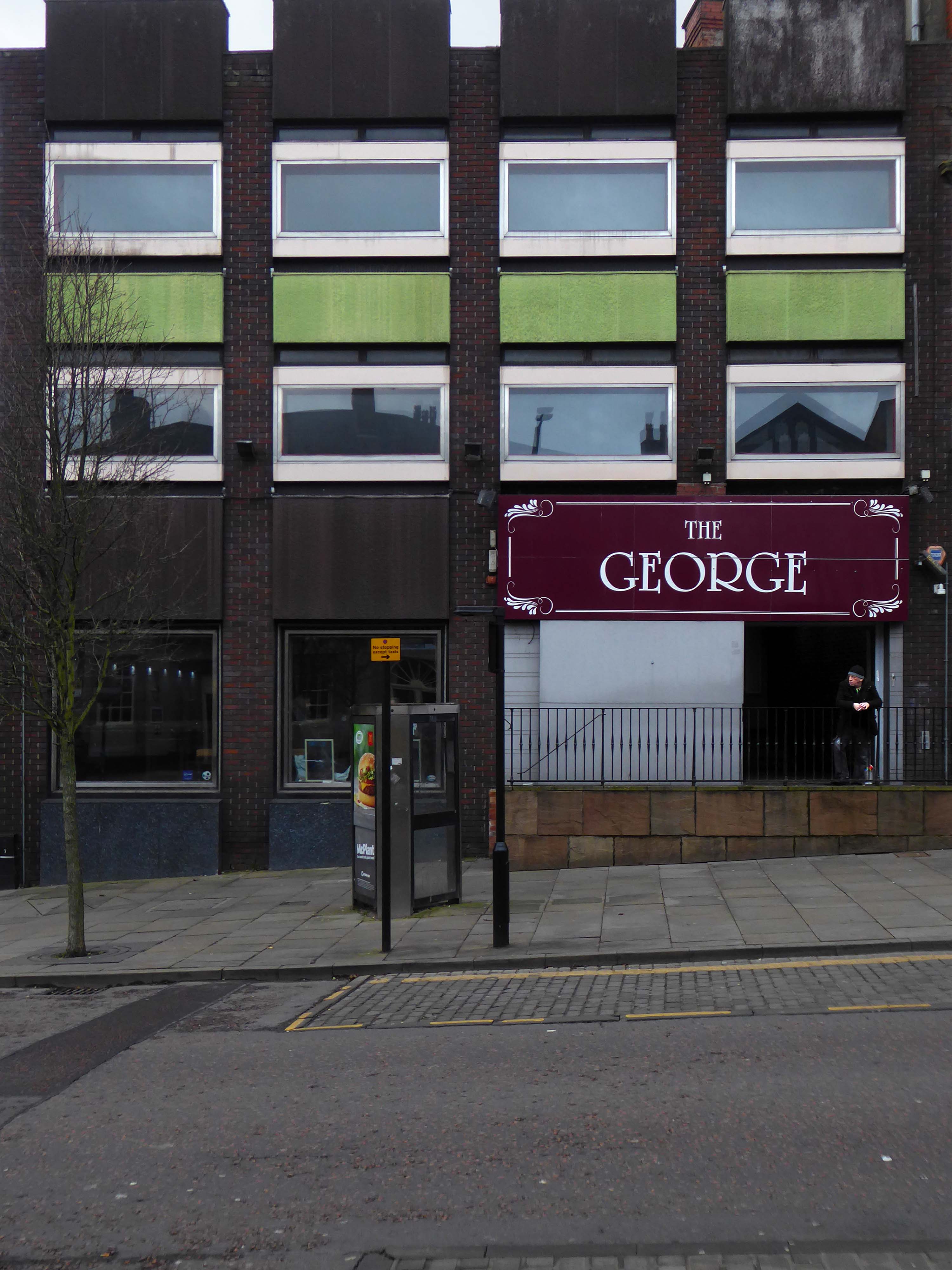
Finally to The George public house.
All ages, all different, all characters all like a bevvy.
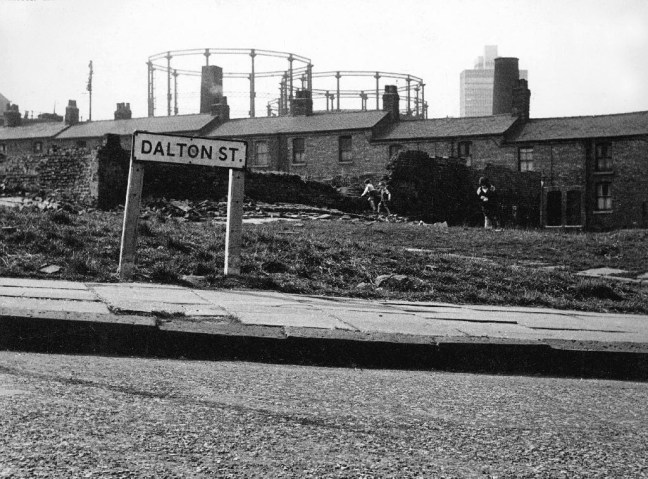
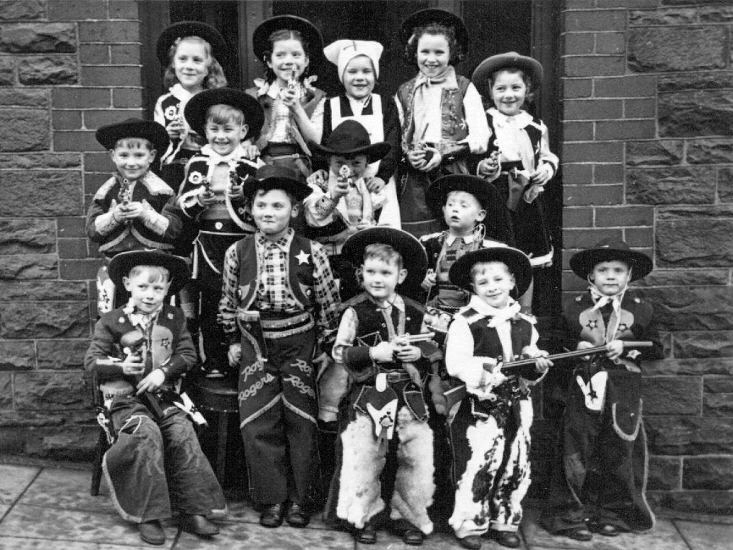
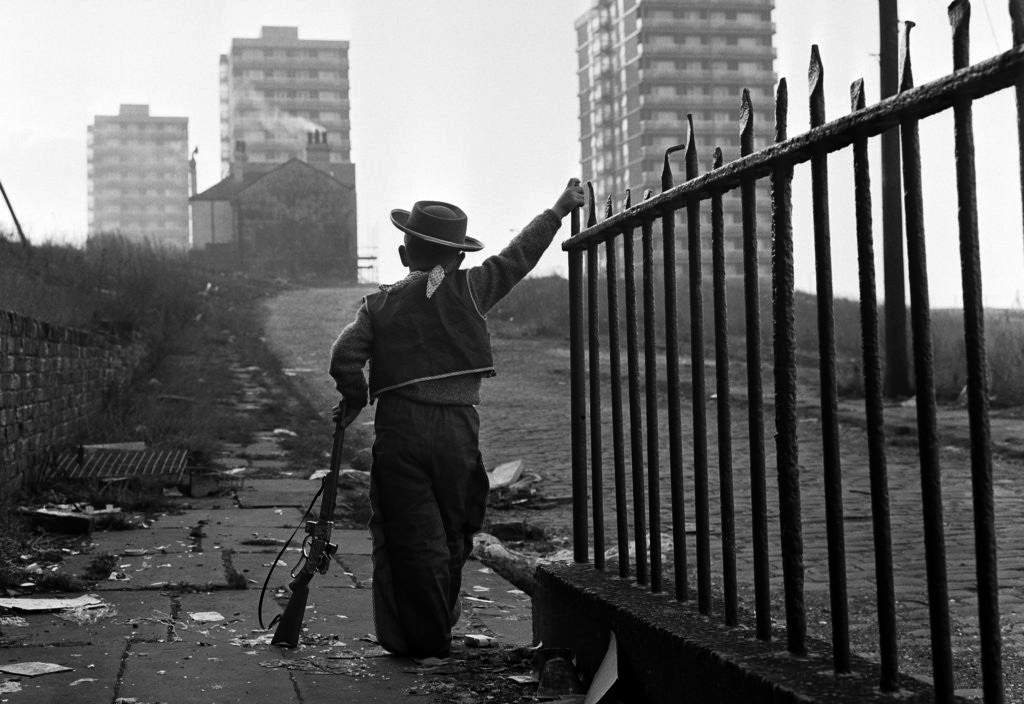
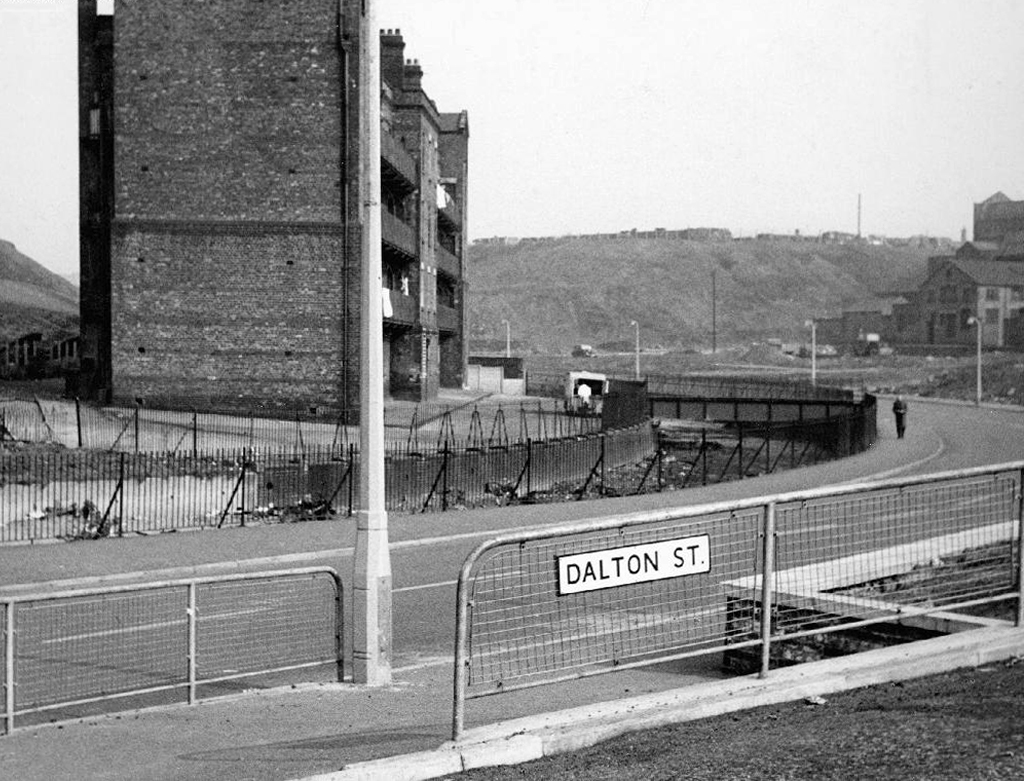
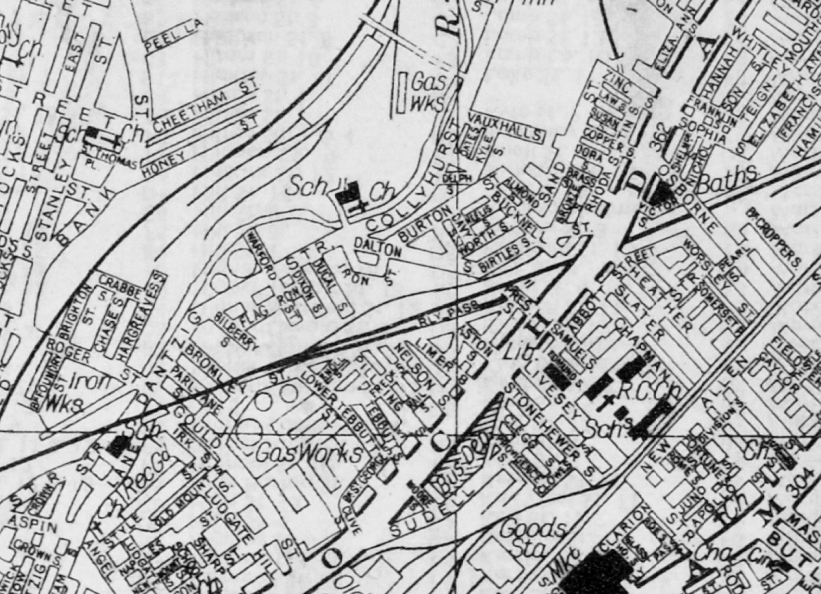
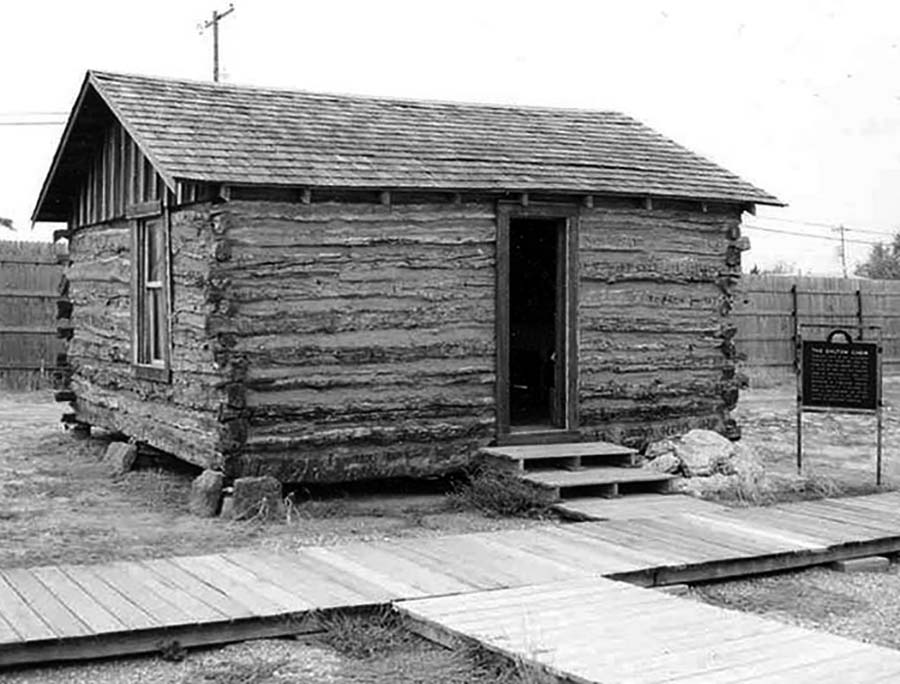
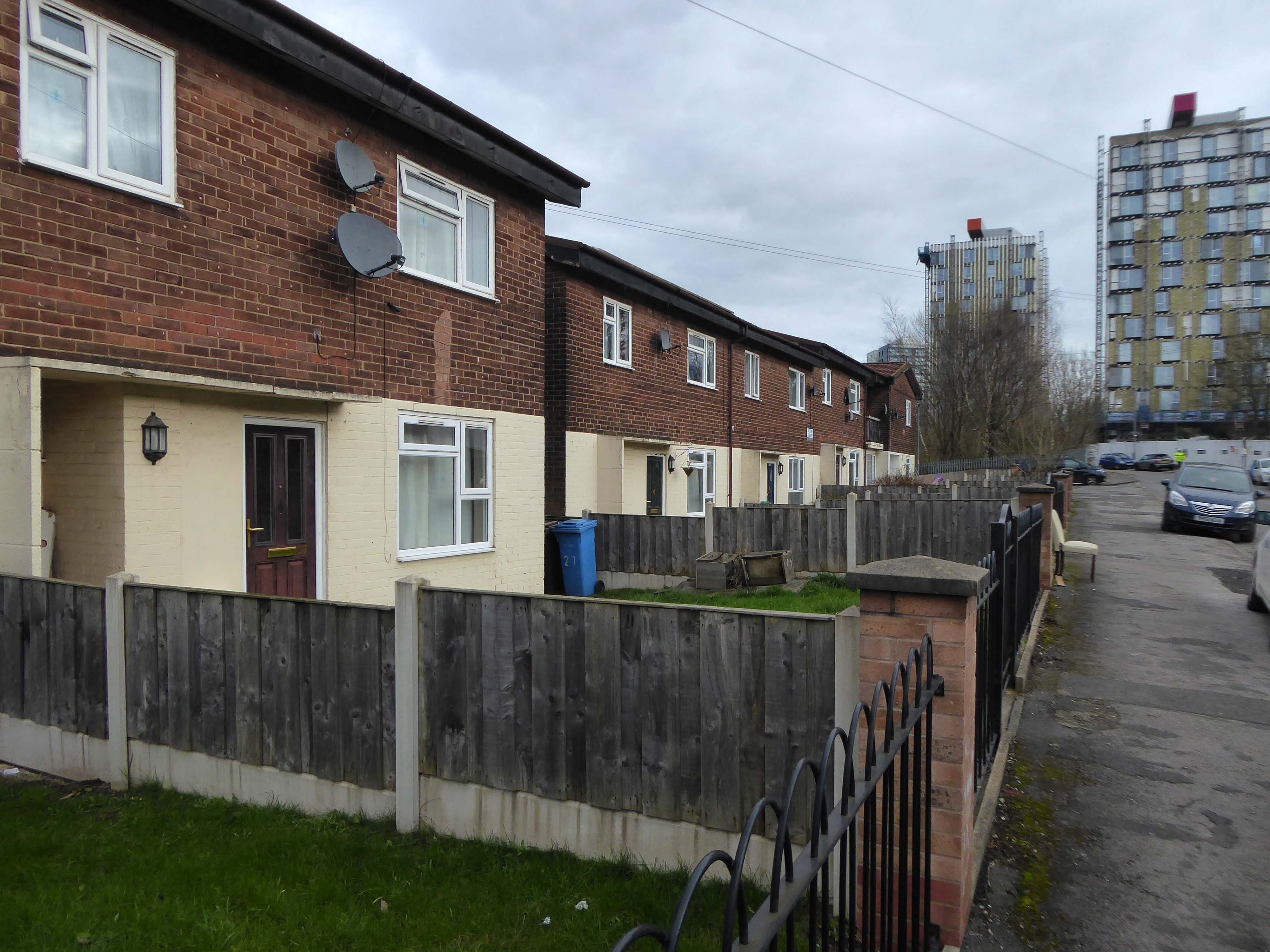
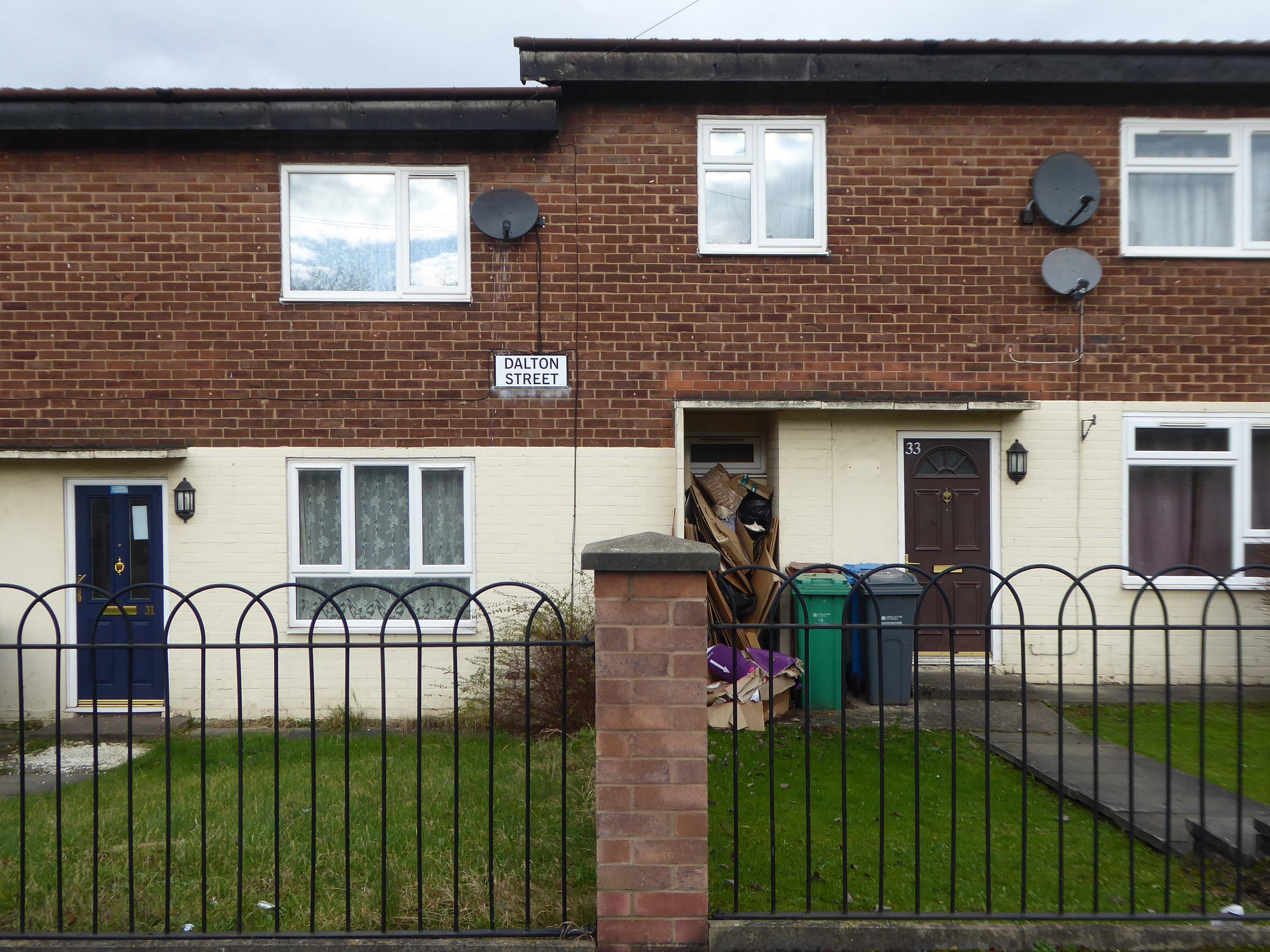
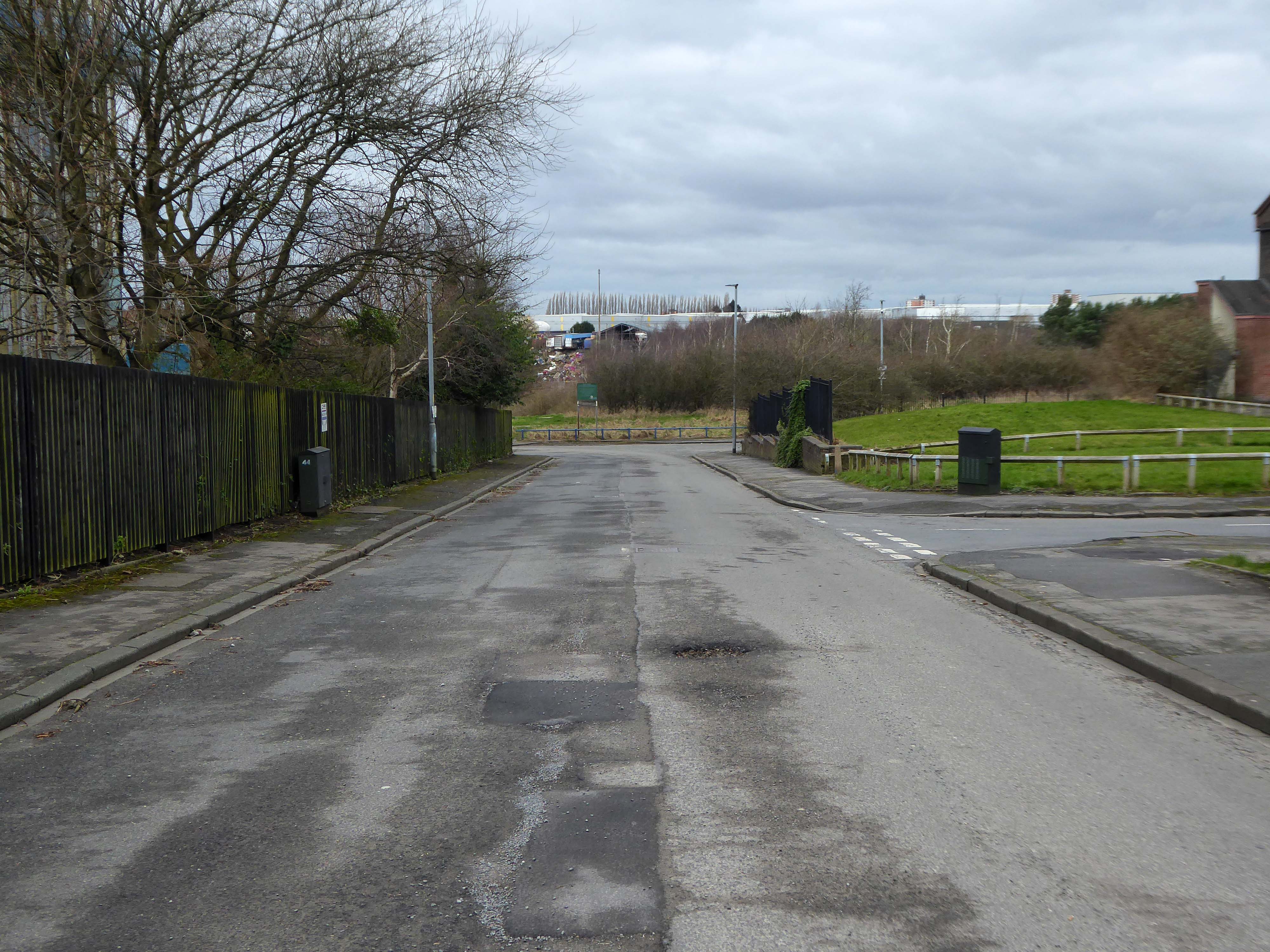
Now I’m going east to Dalton Street, home to the Collyhurst cowboy.
Photograph: Dennis Hussey
This is an illusion within an illusion, twice removed.
The Hollywood recreation, recreated on the rough ground of post war Britain.
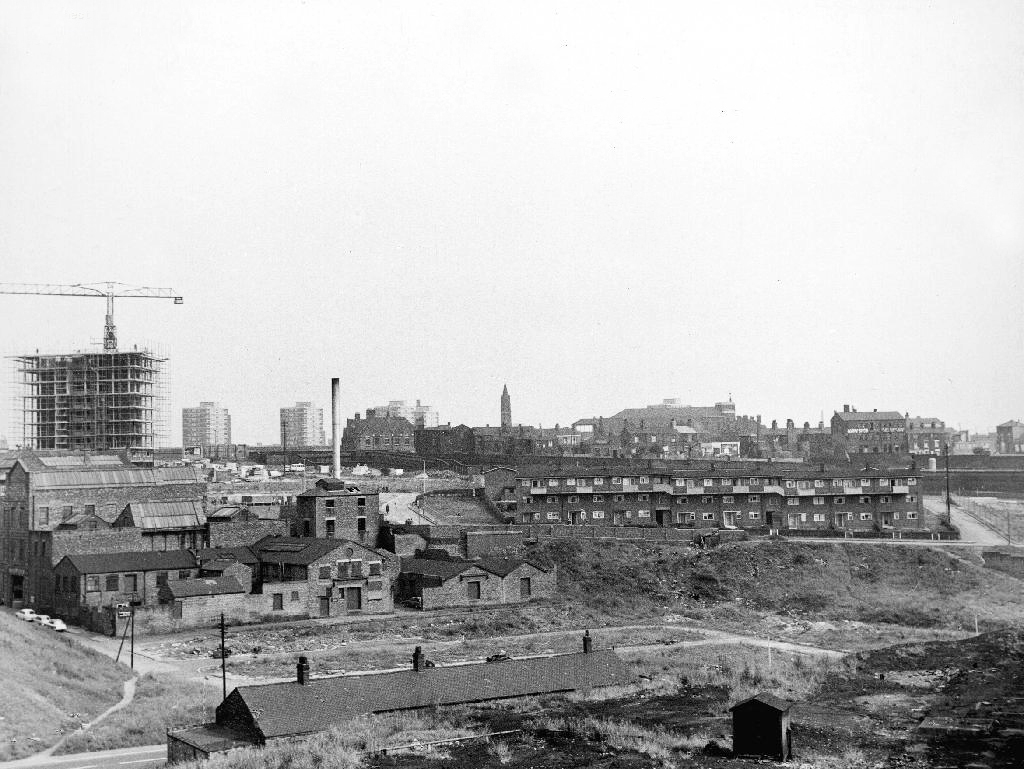
In 1960 the area was a dense network of streets, industry and homes – demolished during the period of slum clearance.
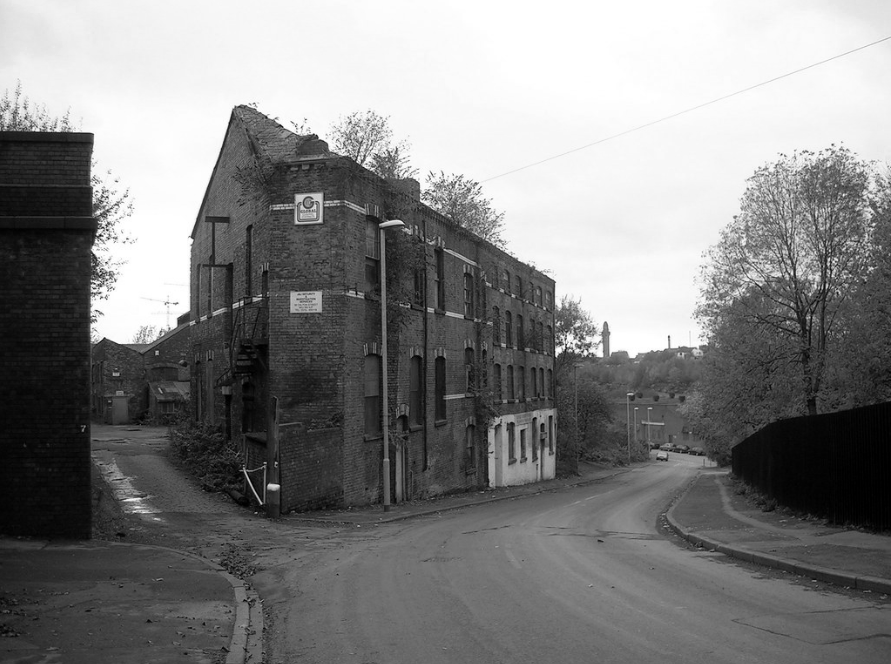
Escaping the dark, dank Irk Valley onwards and upwards to Rochdale Road.
The Dalton Works Arnac factory survived until 2008
Photograph: Mikey
The tight maze of Burton Street and beyond, reduced to rubble.
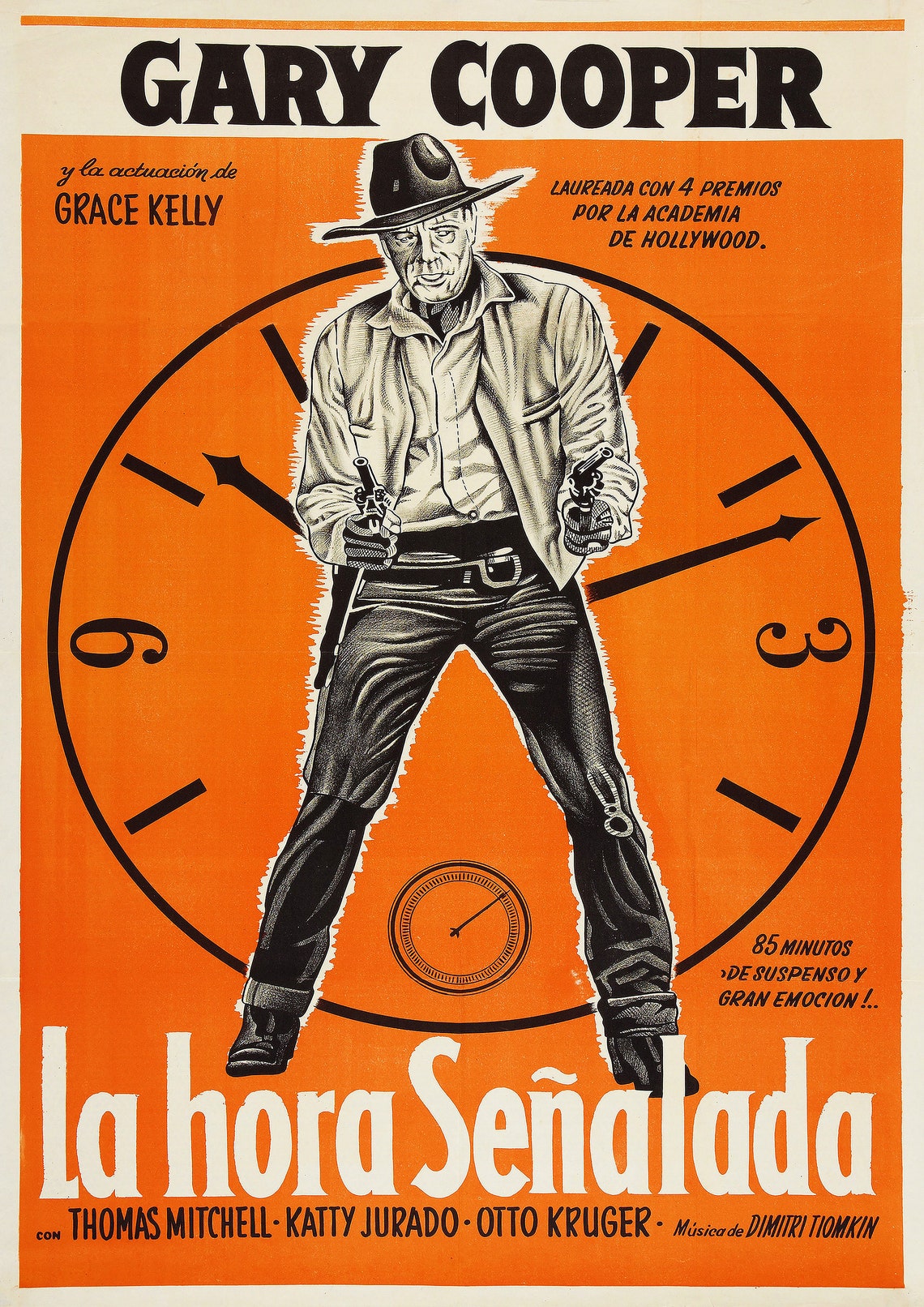
Dalton Street was not home to the Dalton Gang, they lived here in Oklahoma
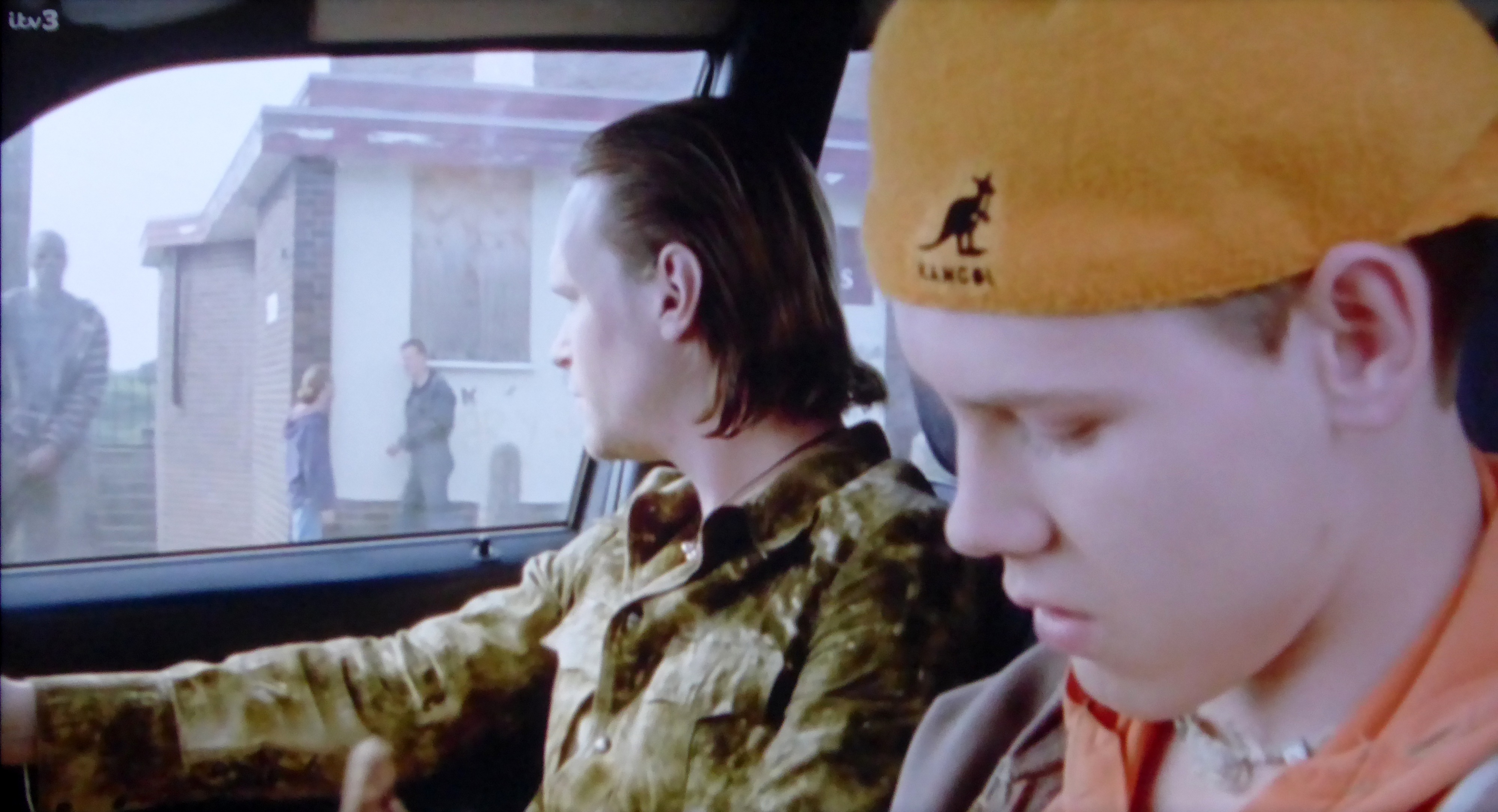
It was home to imaginary gangs, committing imaginary crimes, in an imaginary Manchester, in ITV’s Prime Suspect Five.
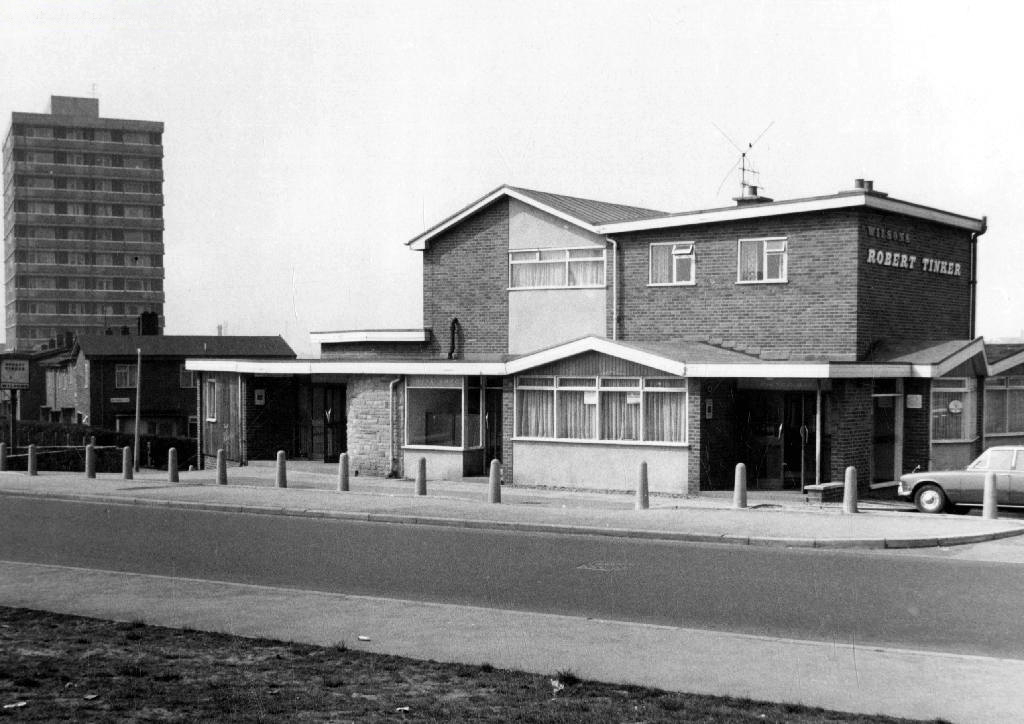
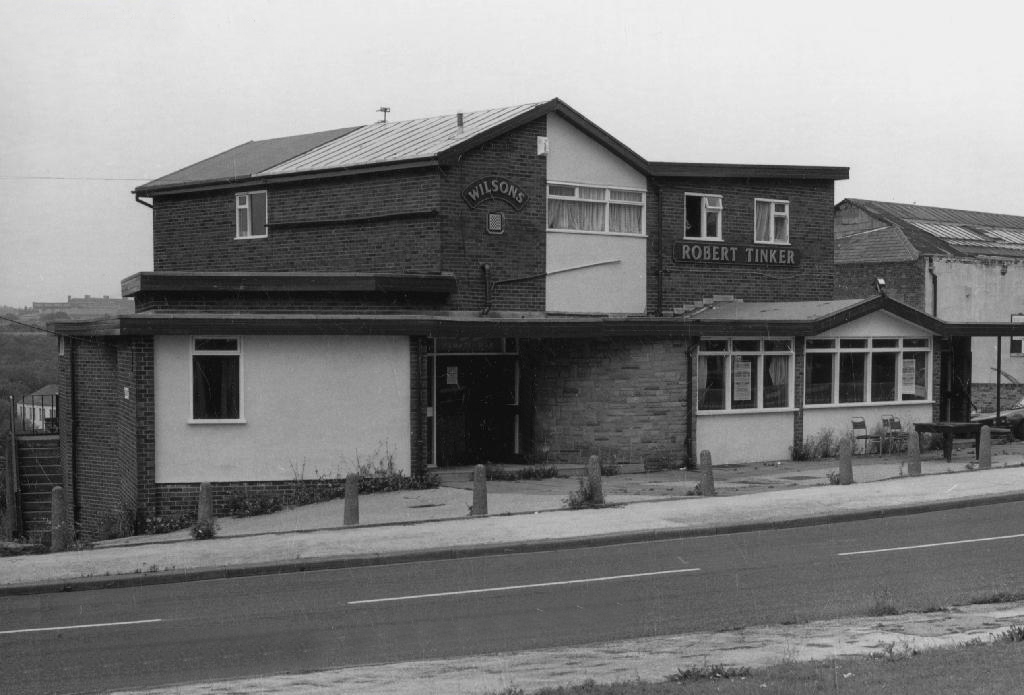
Kangol capped criminals doing business outside the Robert Tinker on the corner of the very real Dalton and Almond Streets.
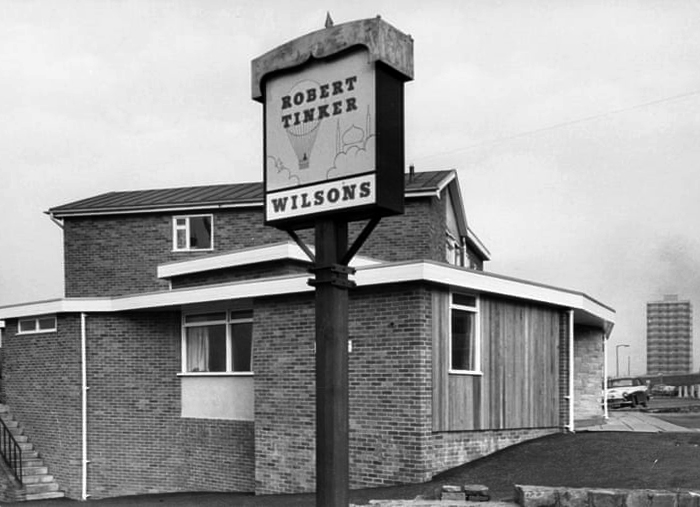
The Robert Tinker was an estate pub in a run down area of Collyhurst. The pub looked pretty grim from the outside, but it was smarter than I expected inside, I had a drink in the lounge which was carpeted and comfortable. This was a Banks’s tied house and there were two real ales on the bar, I had a drink of Banks’s bitter and this was a decent drink, the other beer was Banks’s mild. This pub closed about two years after my visit and looked derelict, it has now been demolished.
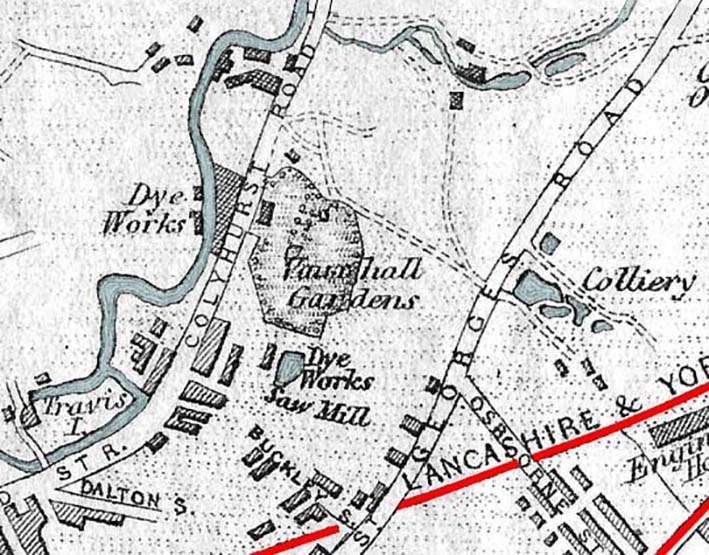
Robert Tinker was the owner of the Vauxhall Gardens, a Victorian pleasure venue.
At the openingthere was a special attraction, a giant cucumber which had been grown in the gardens reaching a length of seven feet and eight inches and a large and beautiful balloon was to be liberated at 9pm
Much of the red sandstone used for building in Manchester and the surrounding area, including stone for the Roman fort at Castlefield, St Ann’s Church in the city centre, Manchester Cathedral and the original buildings of Chetham’s Hospital, came from Collyhurst Quarry. Geologists use the term Collyhurst Sandstone for this type of soft red sandstone, which occurs in North West England
Tinker died in 1836 and gradually his gardens were whittled away, the subsoil was sold to iron moulders who cherished its certain properties and before long the trees were chopped down and houses were being built on the former site.
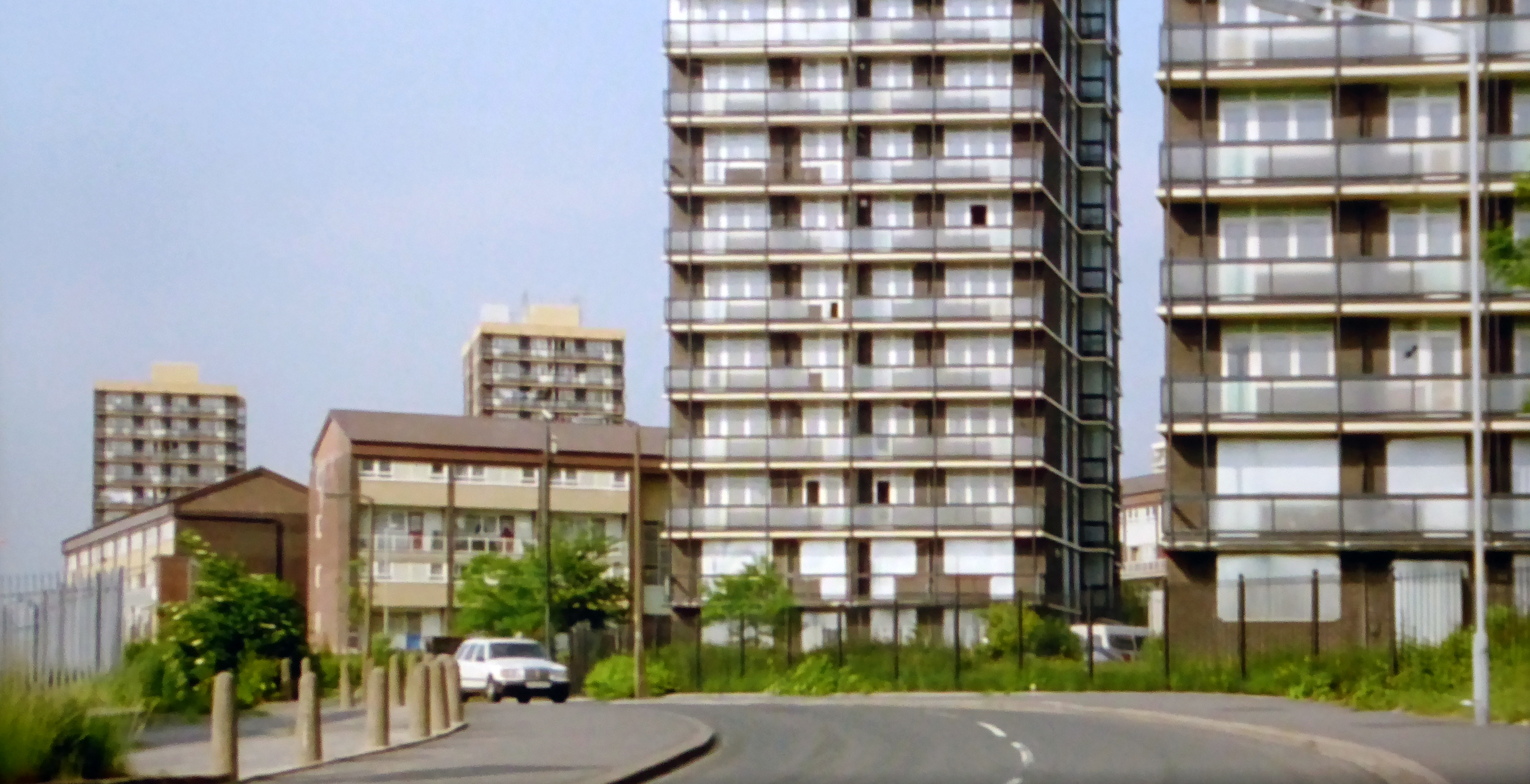
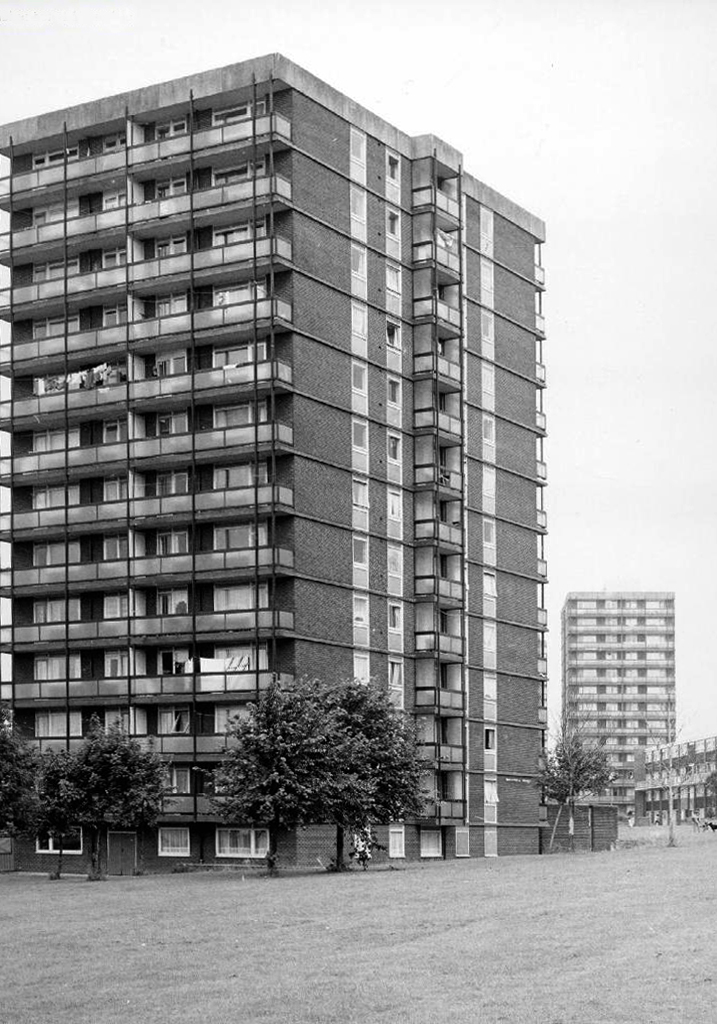
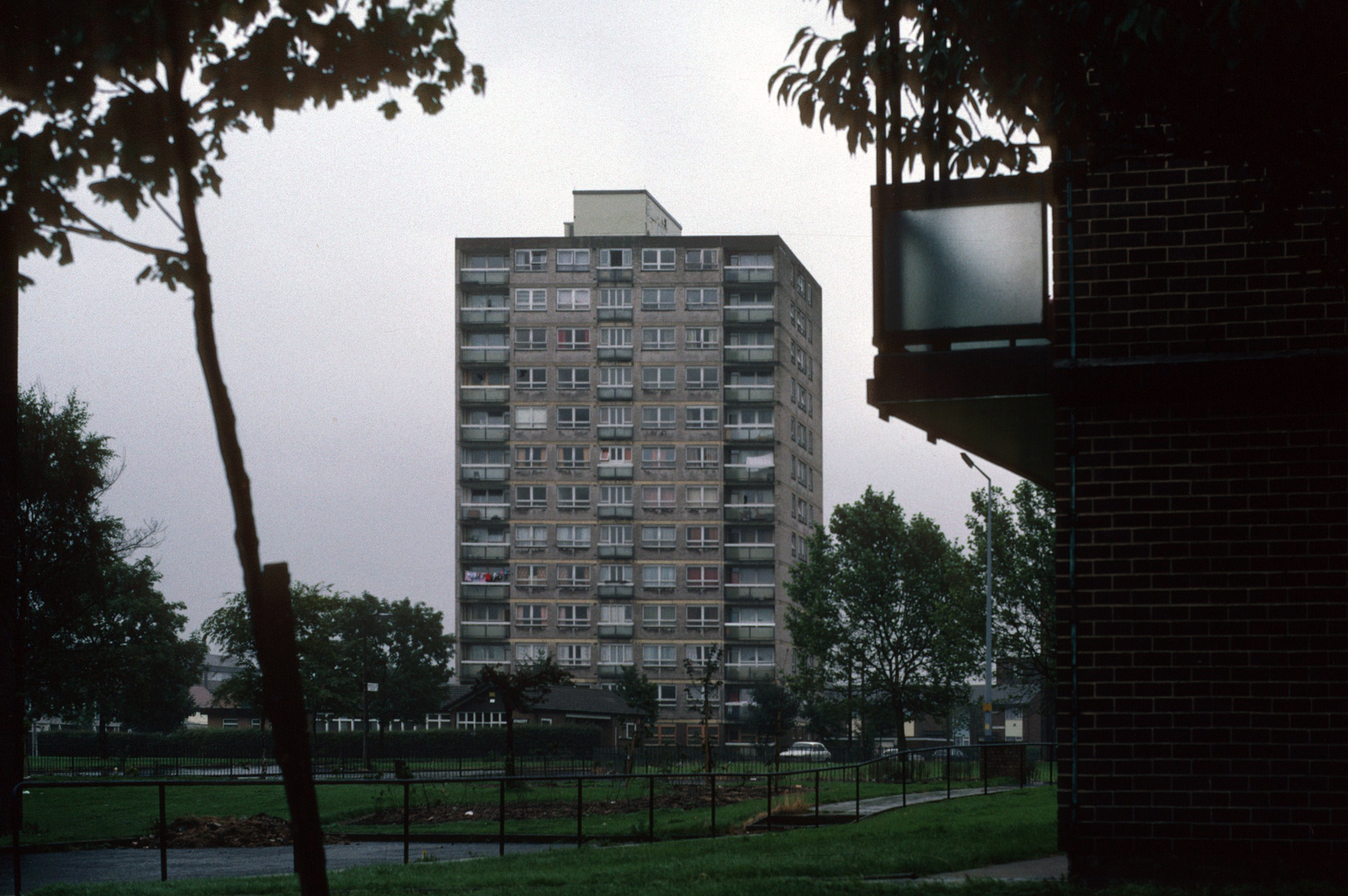
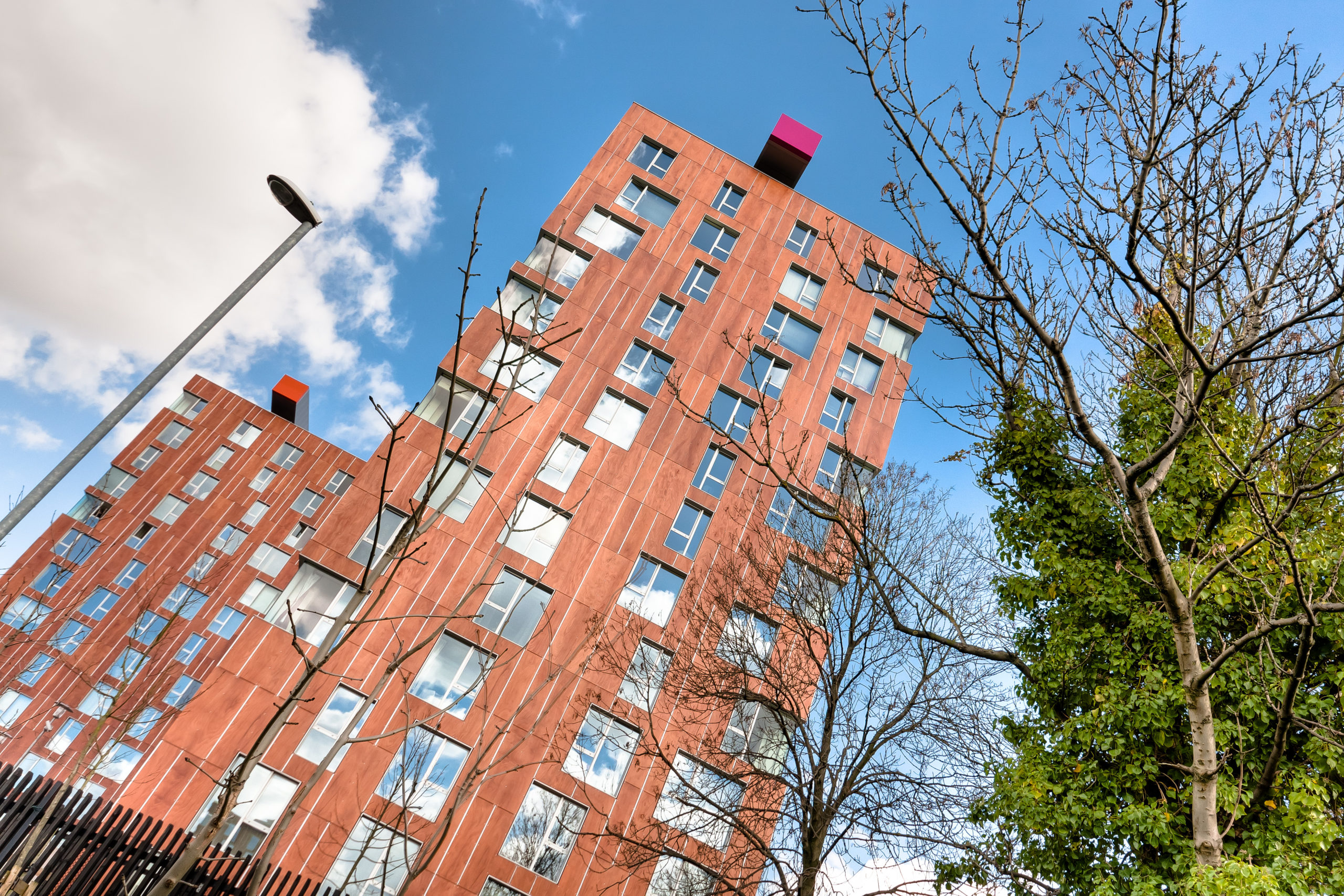
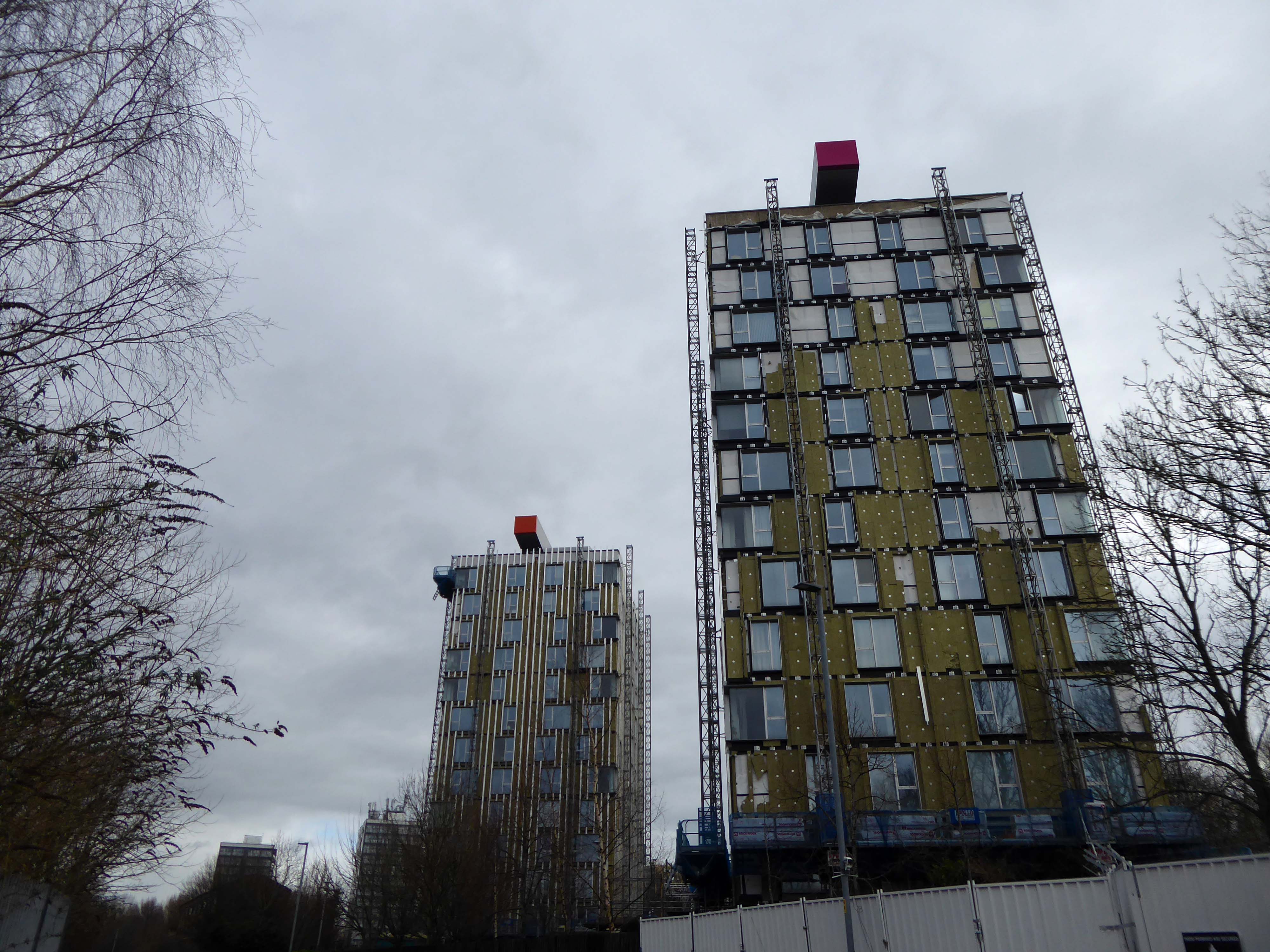
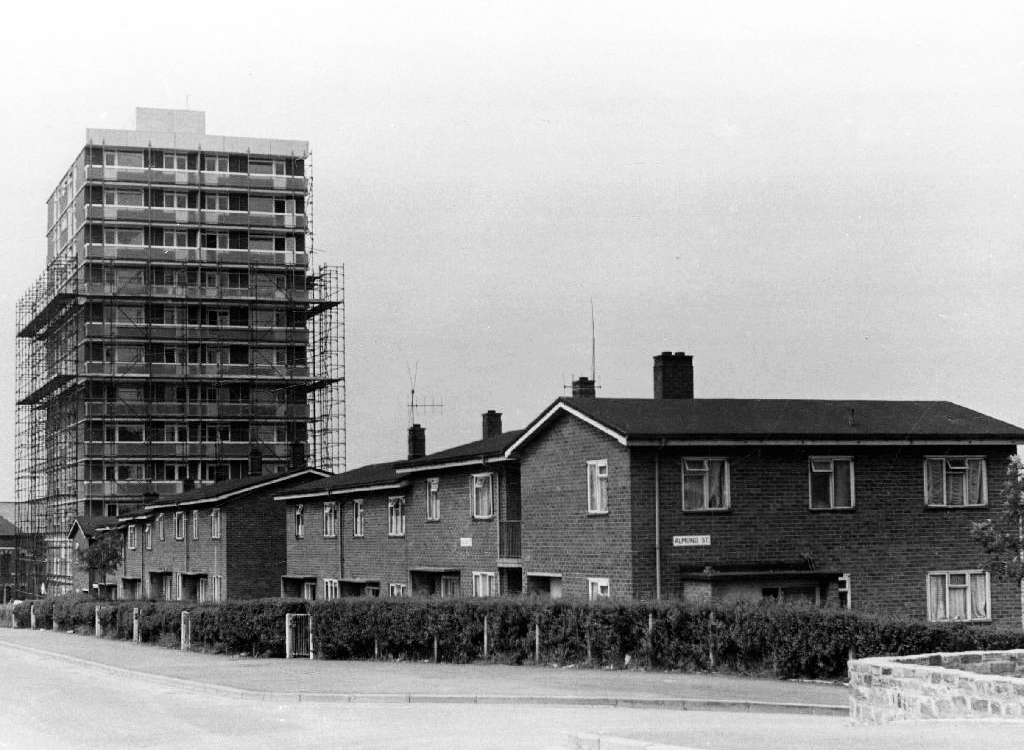
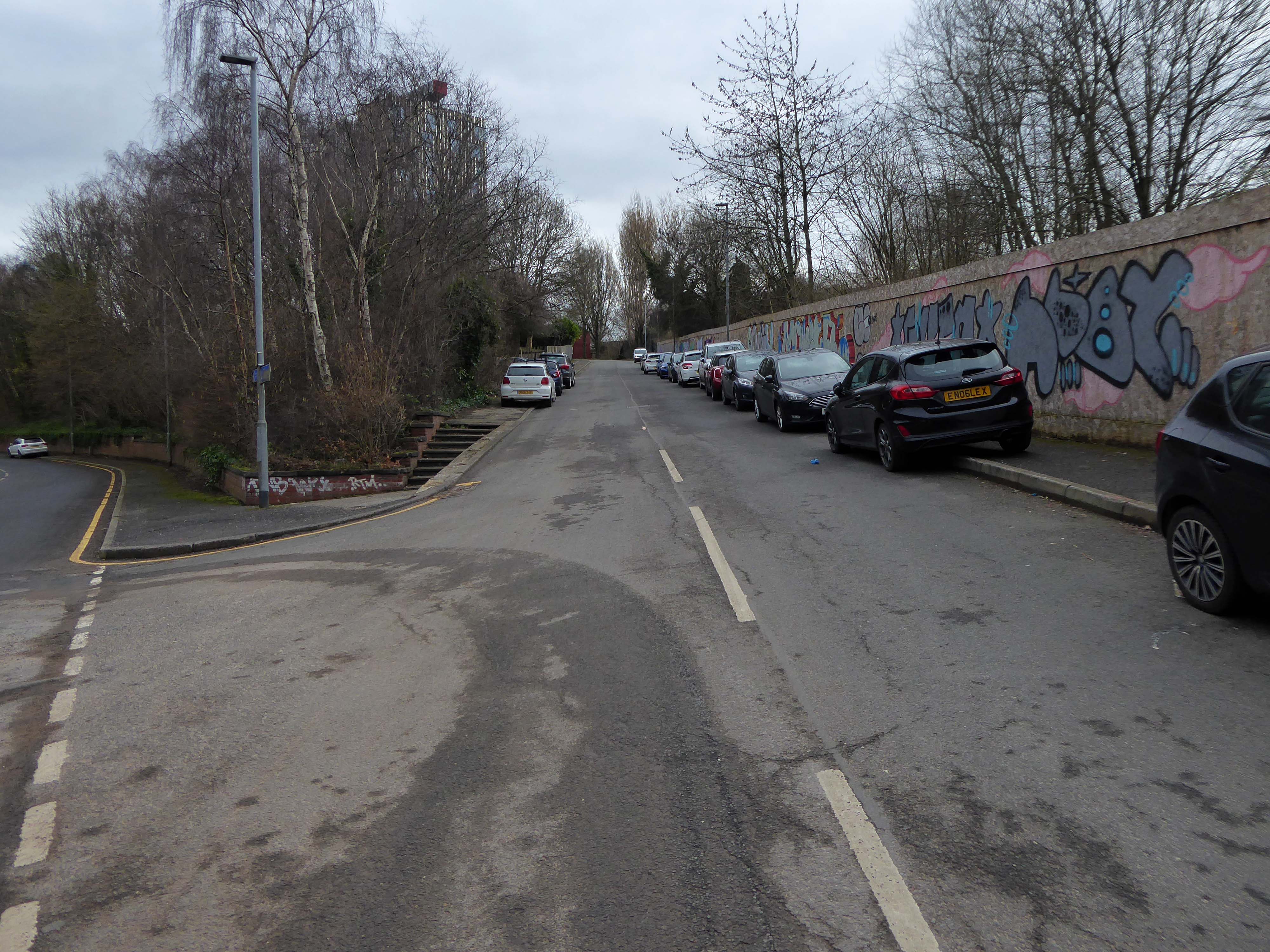
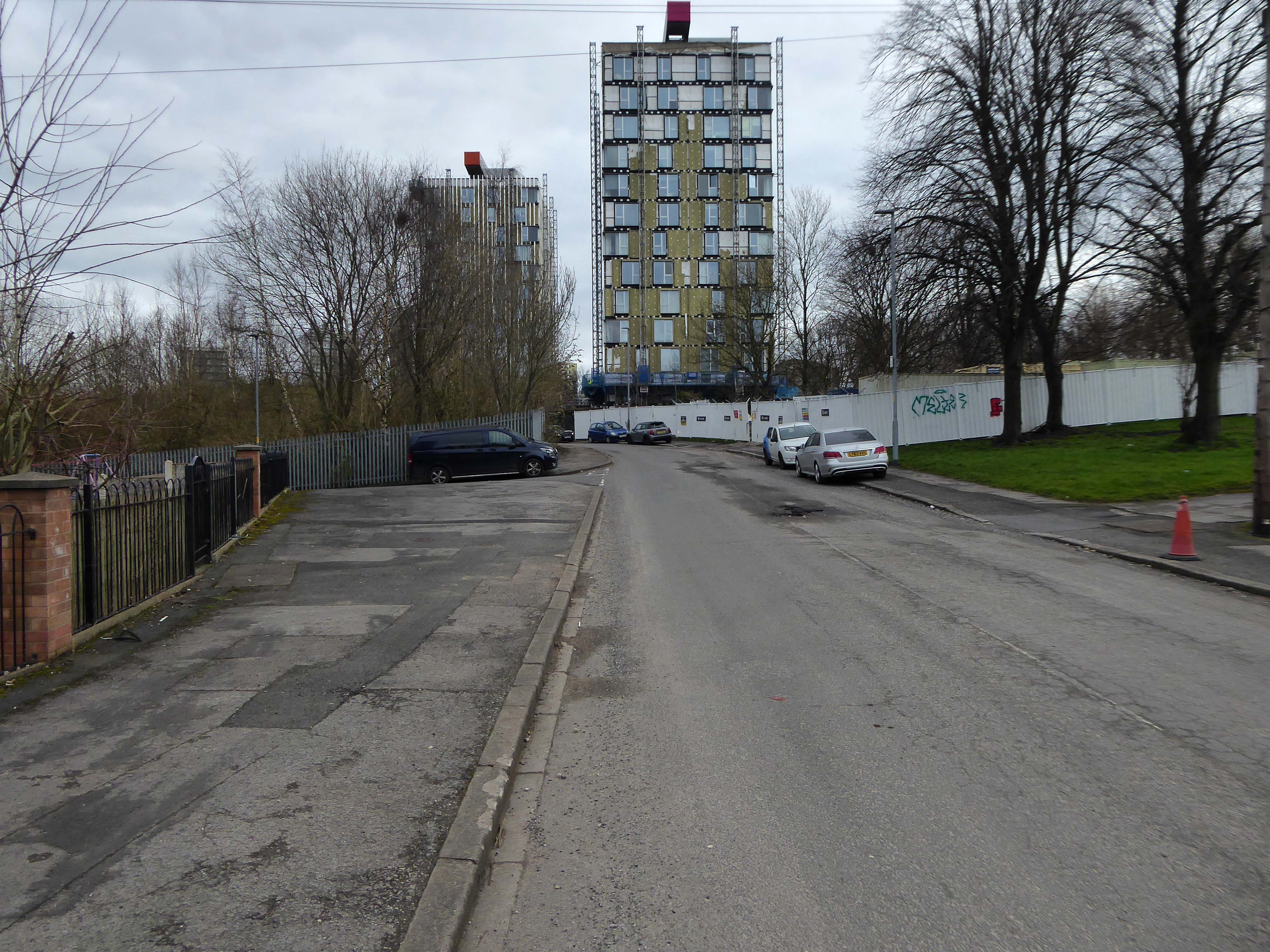
Those houses are in their turn whittled away, replaced in the 1960’s with fashionable tower blocks.
Architects: J Austen Bent 1965
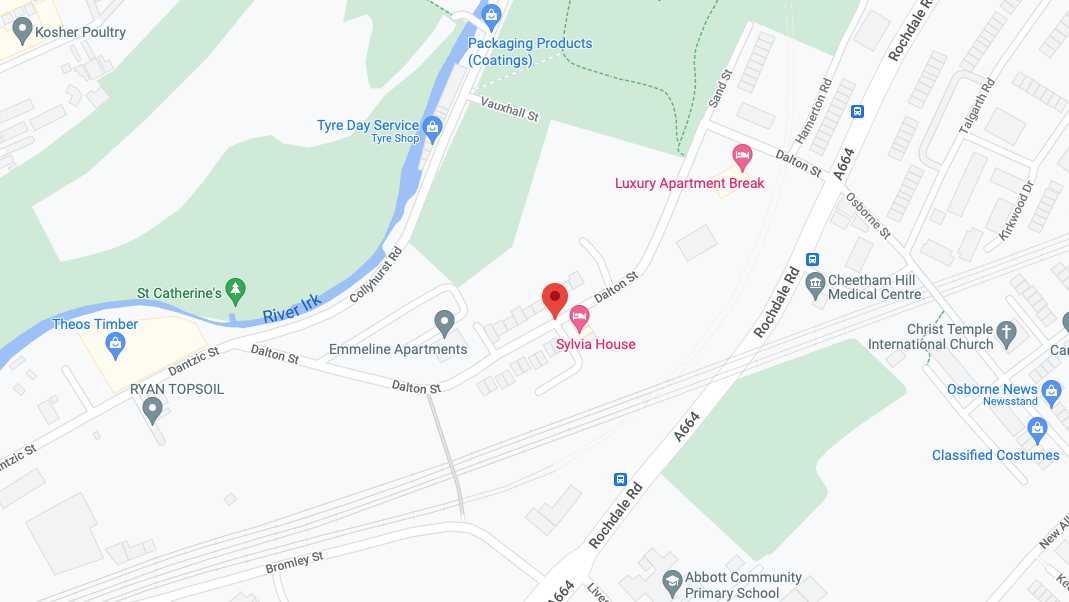
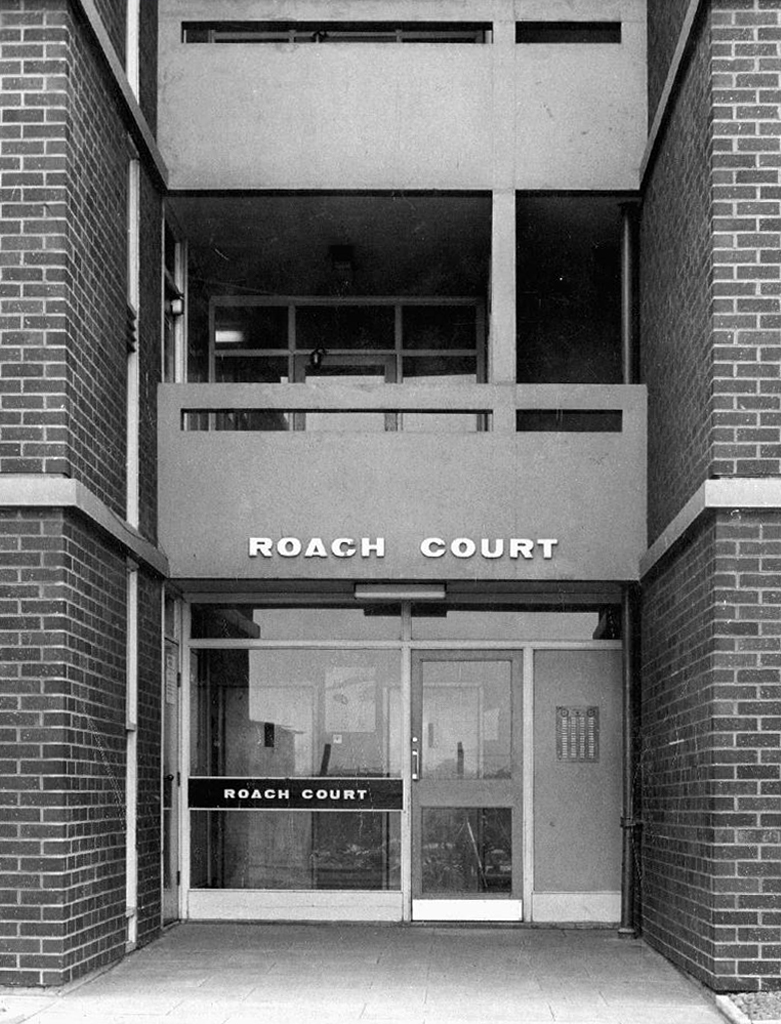
In total five thirteen storey blocks – Humphries, Dalton, Roach, Vauxhall and Moss Brook Courts
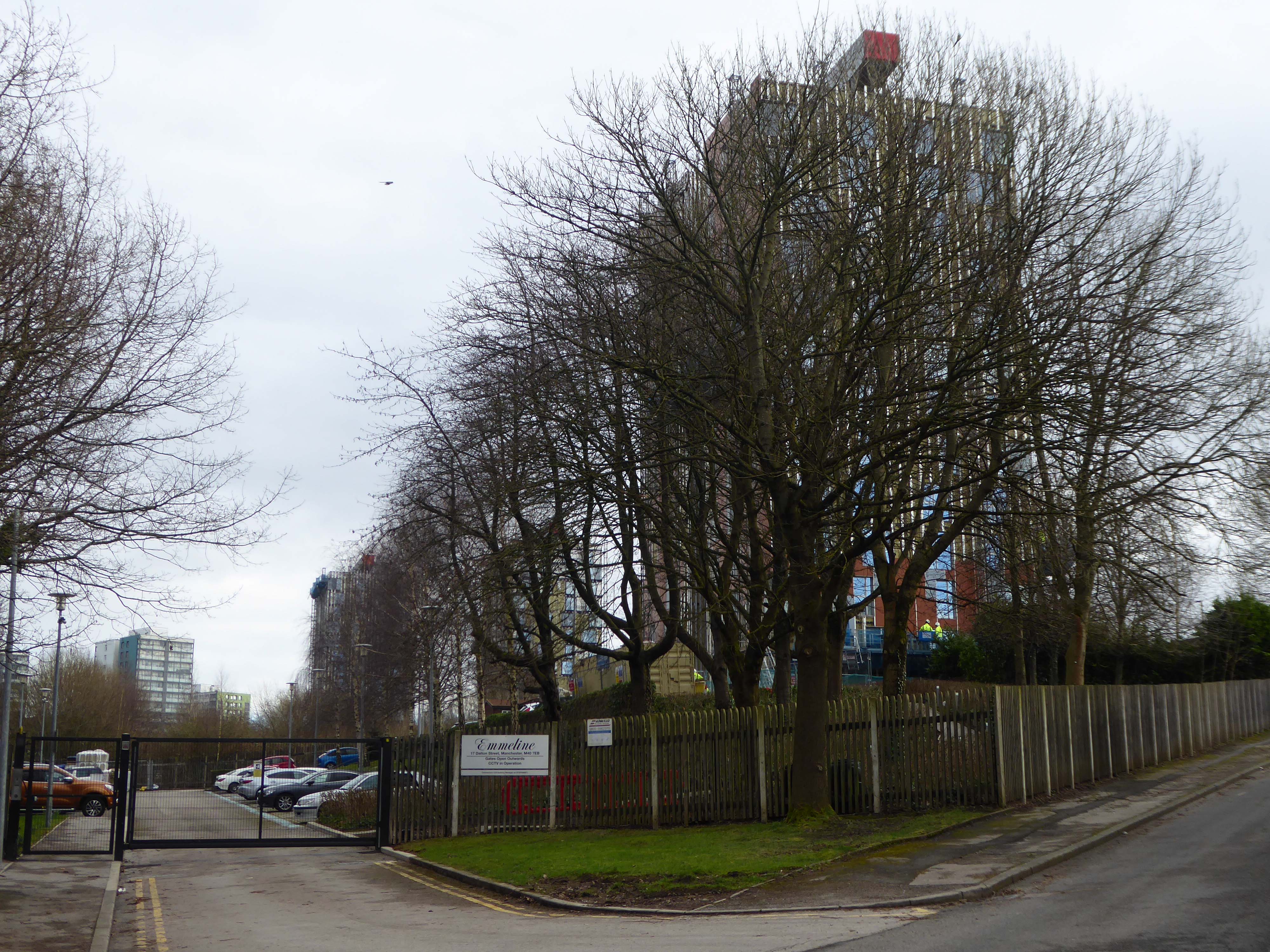
Subsequently purchased by Urban Splash and refurbished:
Designed by Union North Architects, the names for the Three Towers were decided in a public competition and the winning names were Emmeline, Christabel and Sylvia – naming the towers after the Pankhurst sisters and their mother.
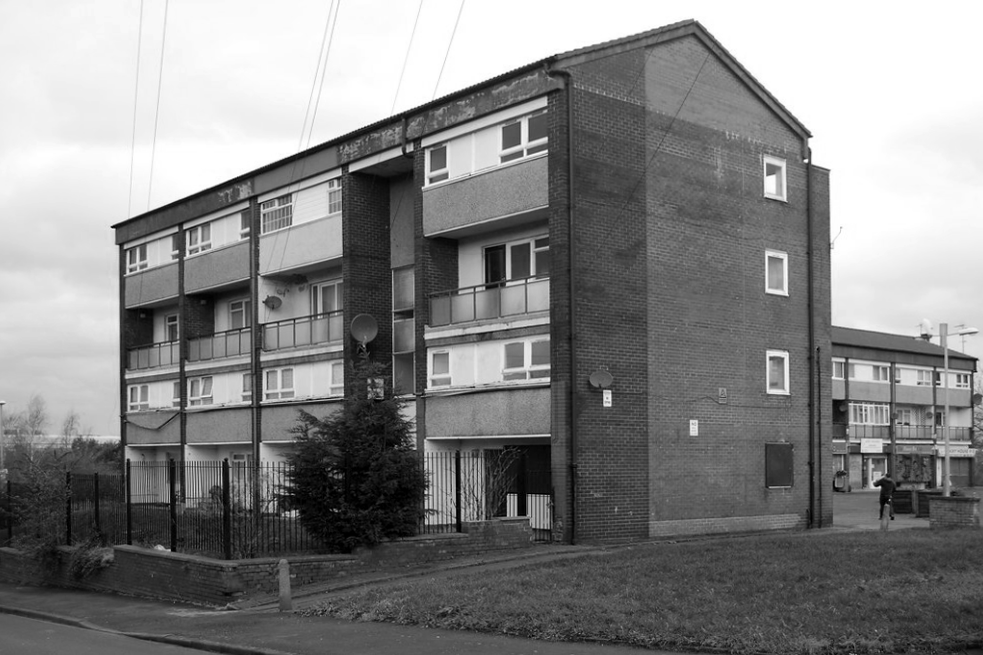
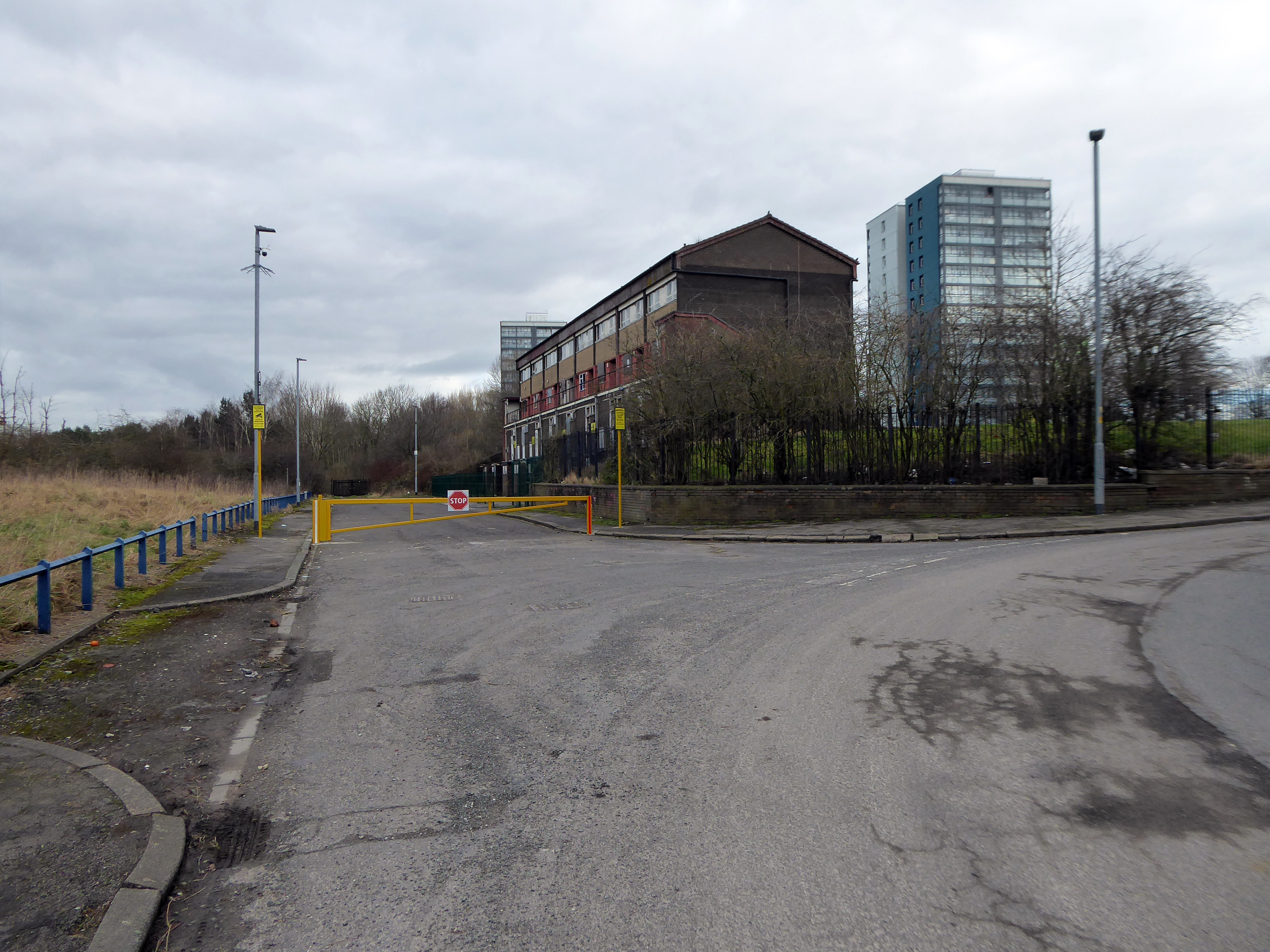
The remains of the remaining Eastford Square homes tinned up and secured awaiting who knows what.
So let’s take a short walk, see how things stand.
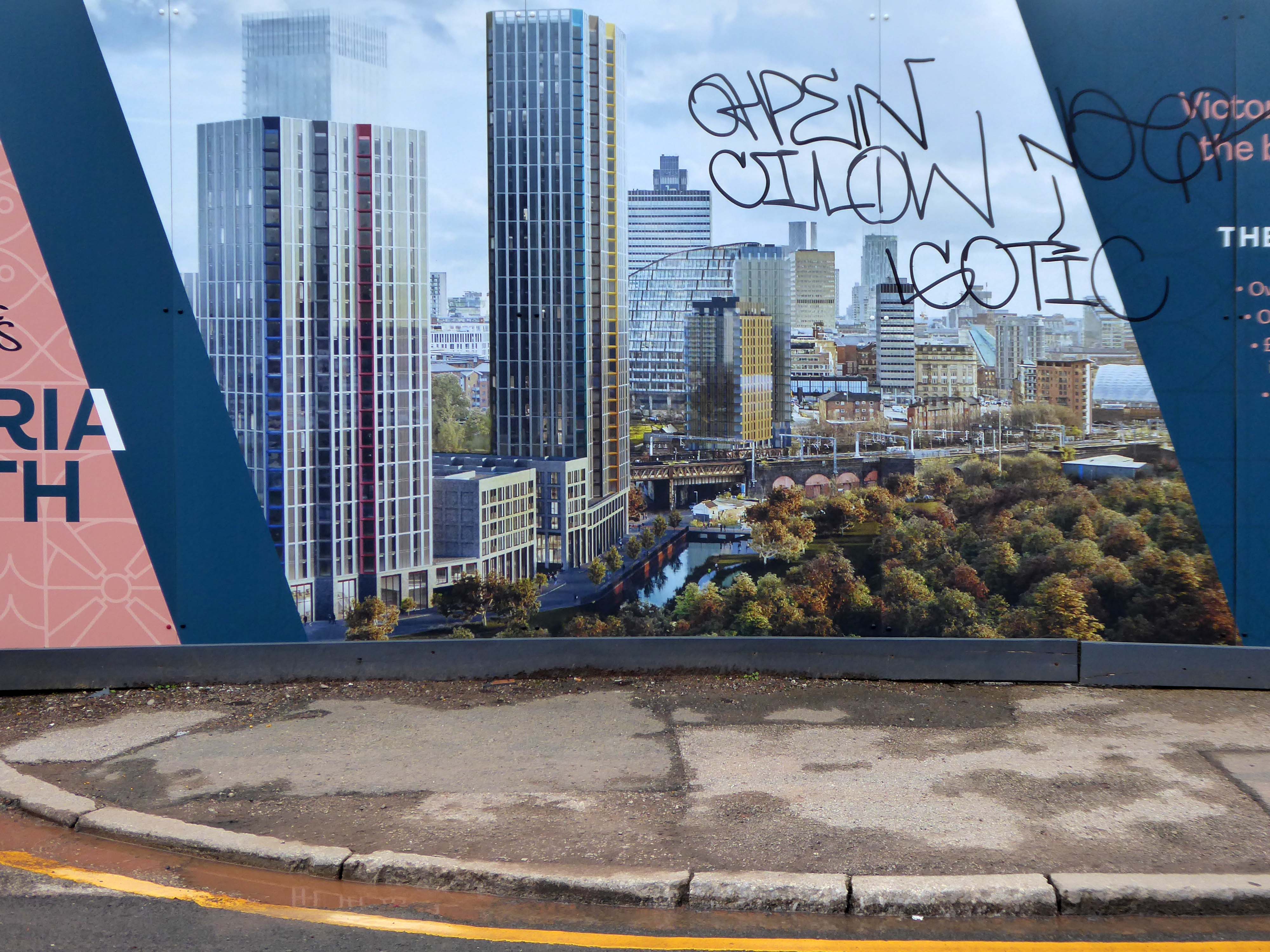
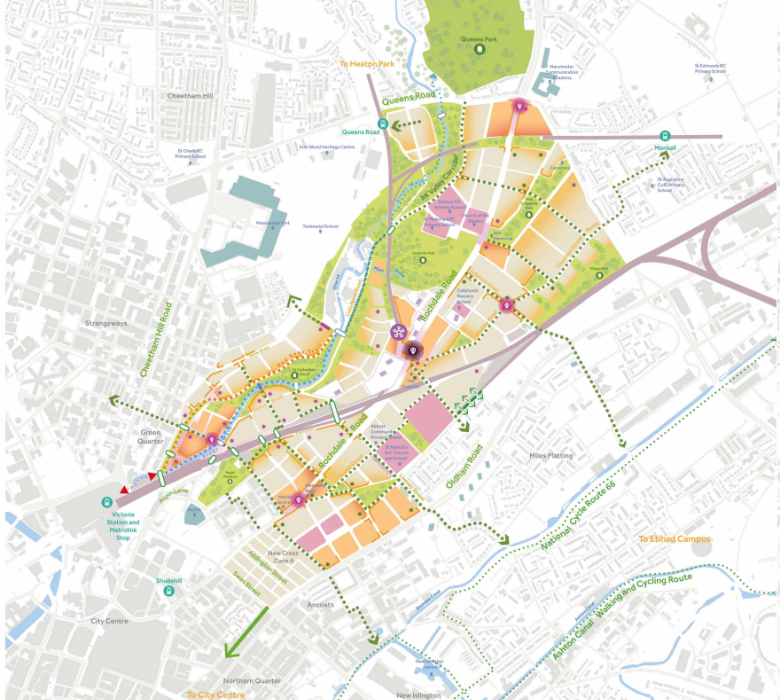
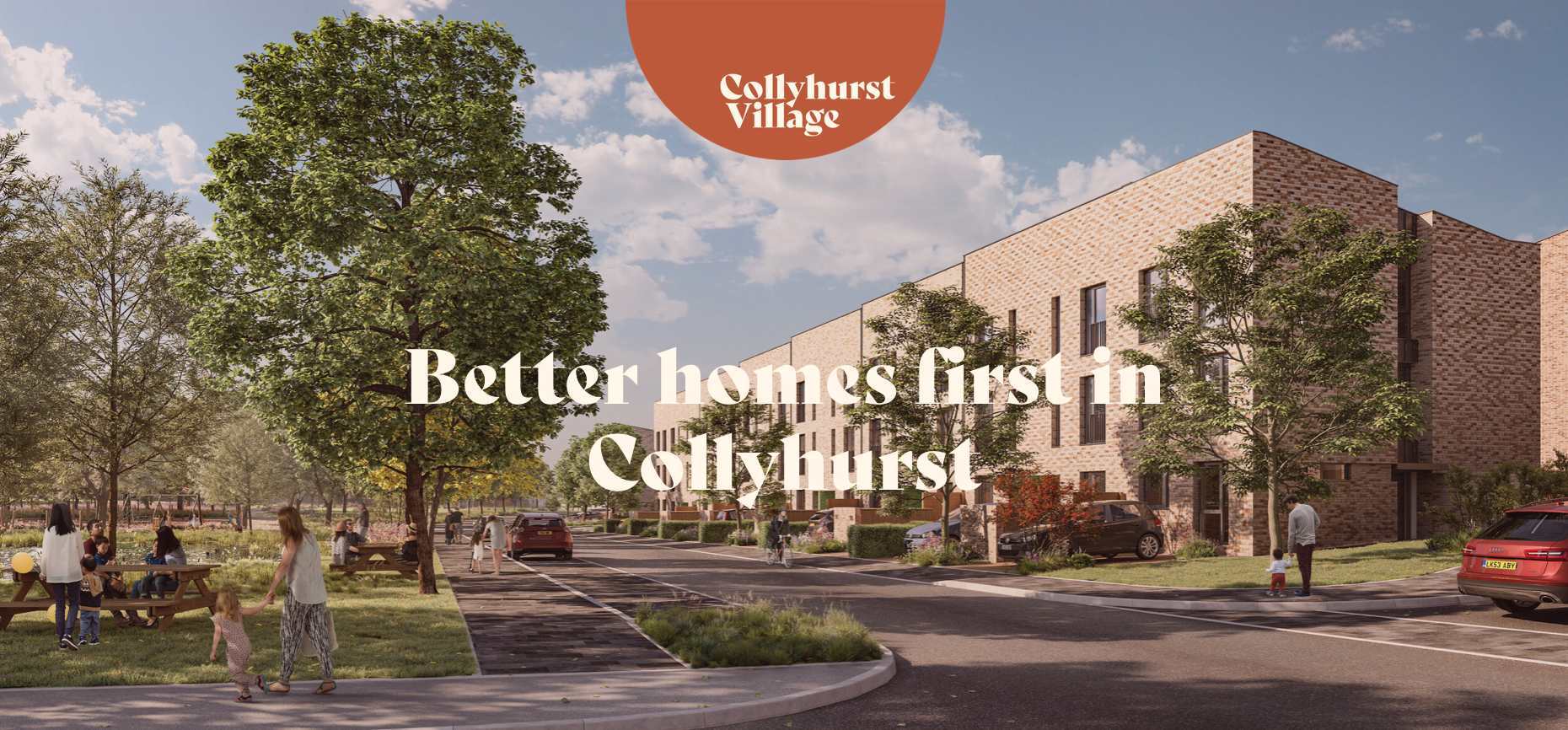
The area now forms the core of the latest municipal Masterplan – Victoria North.
Victoria North is a joint venture programme between Manchester City Council and developer Far East Consortium.
An internationally recognised developer, FEC specialises in residential led mixed-use developments and hotels, along with its casino and car park operations throughout mainland Europe.
The cowboys are now long gone – or are they?
When I was a cowboy out on the Western Plain Well, I made a half a million Working hard on the bridle reins
Come a cow-cow yicky come a cow-cow yicky, Harpurhey
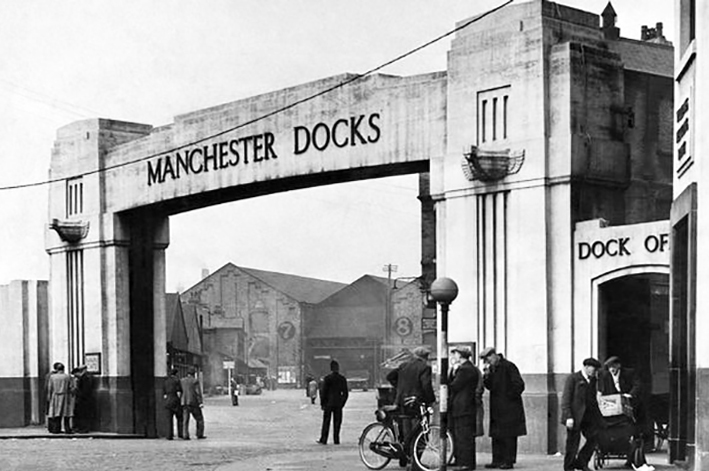
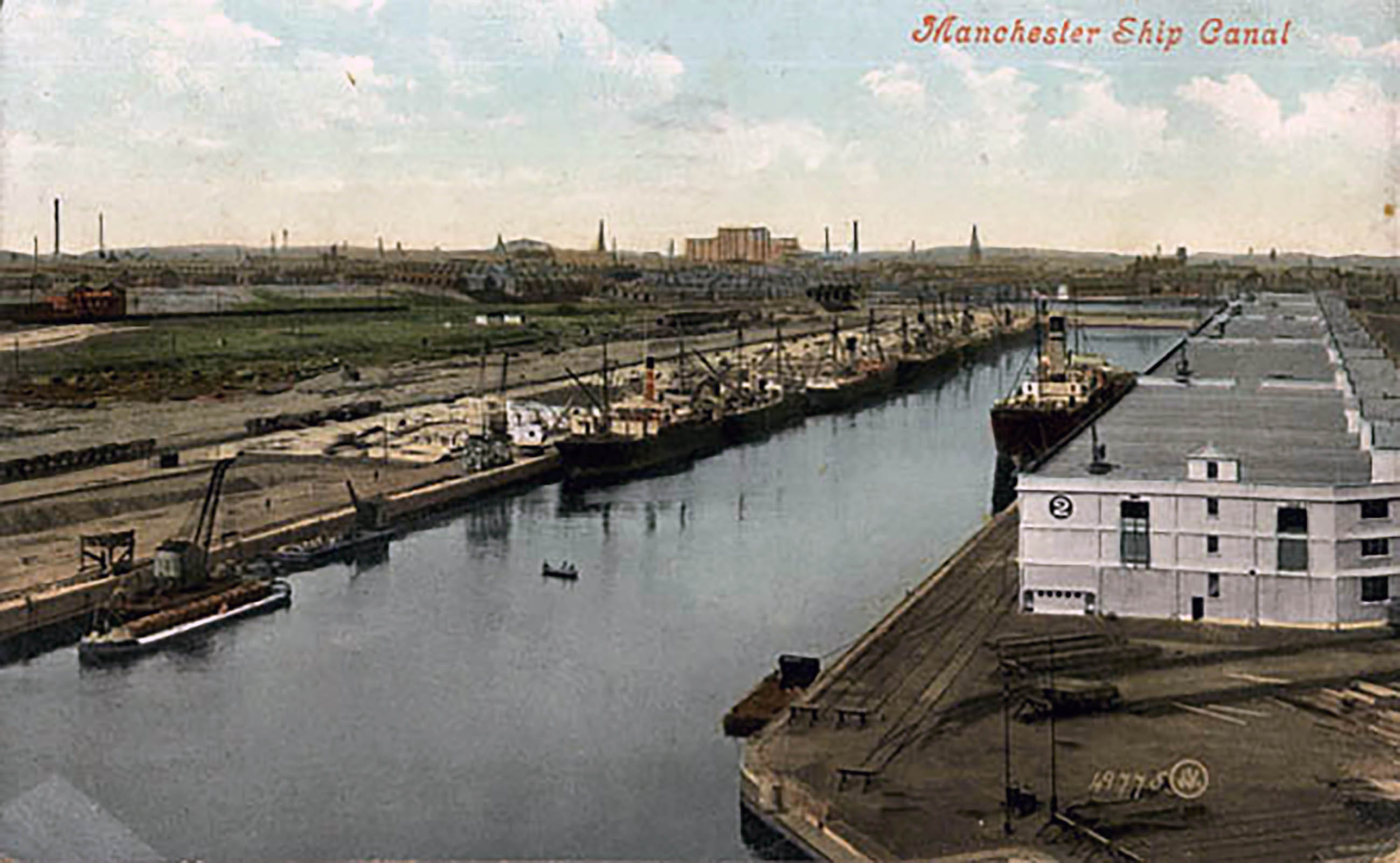
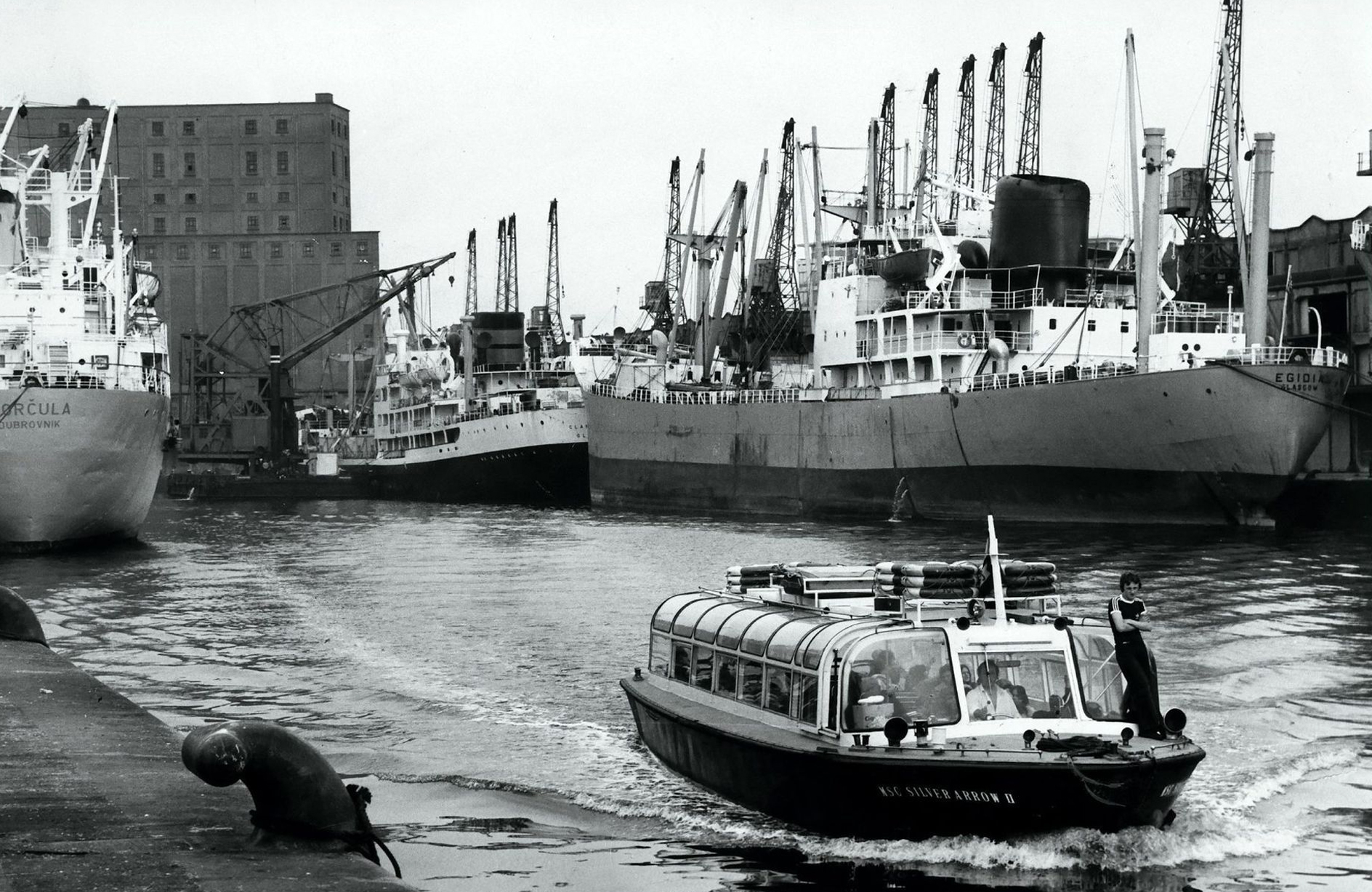
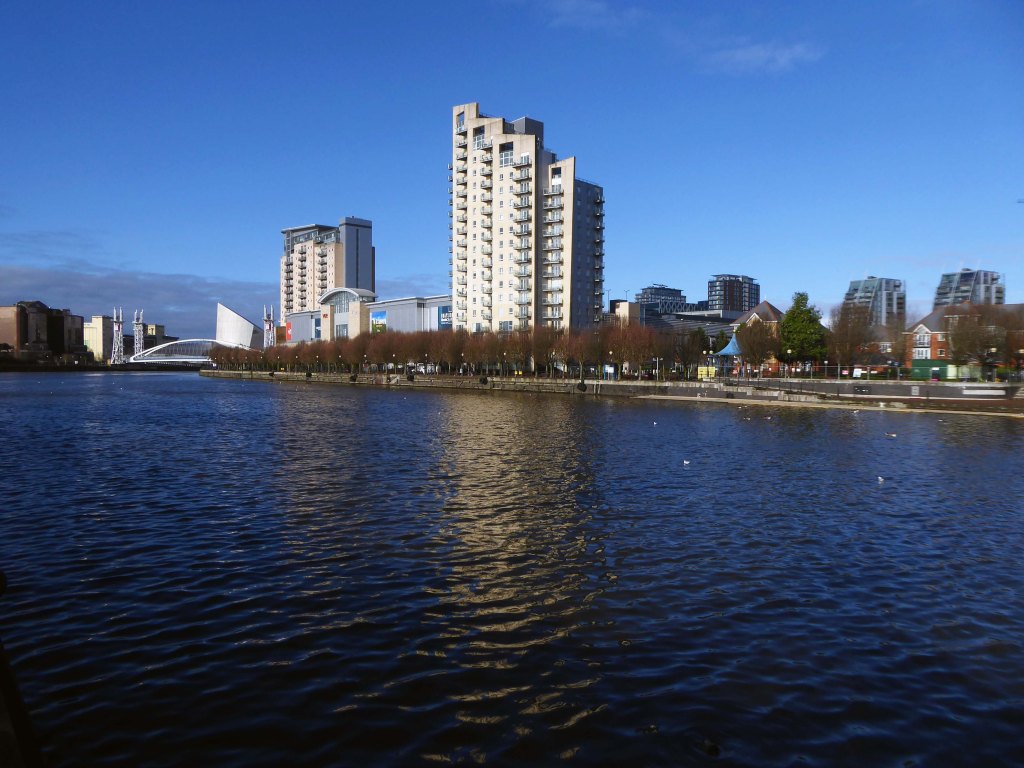
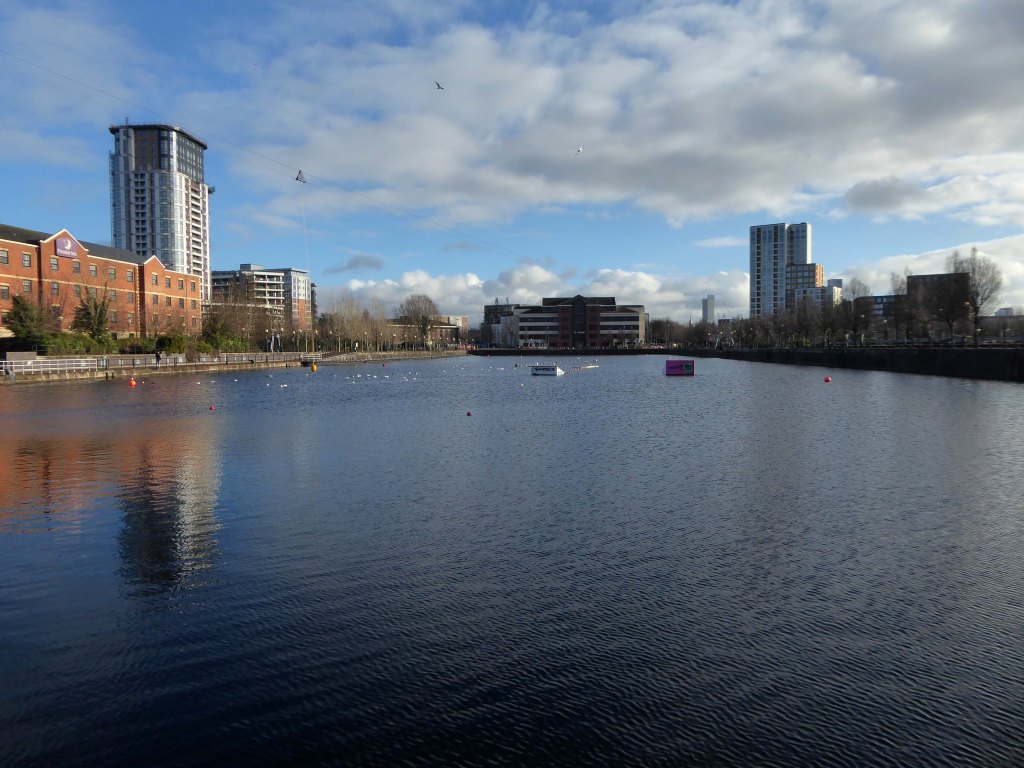
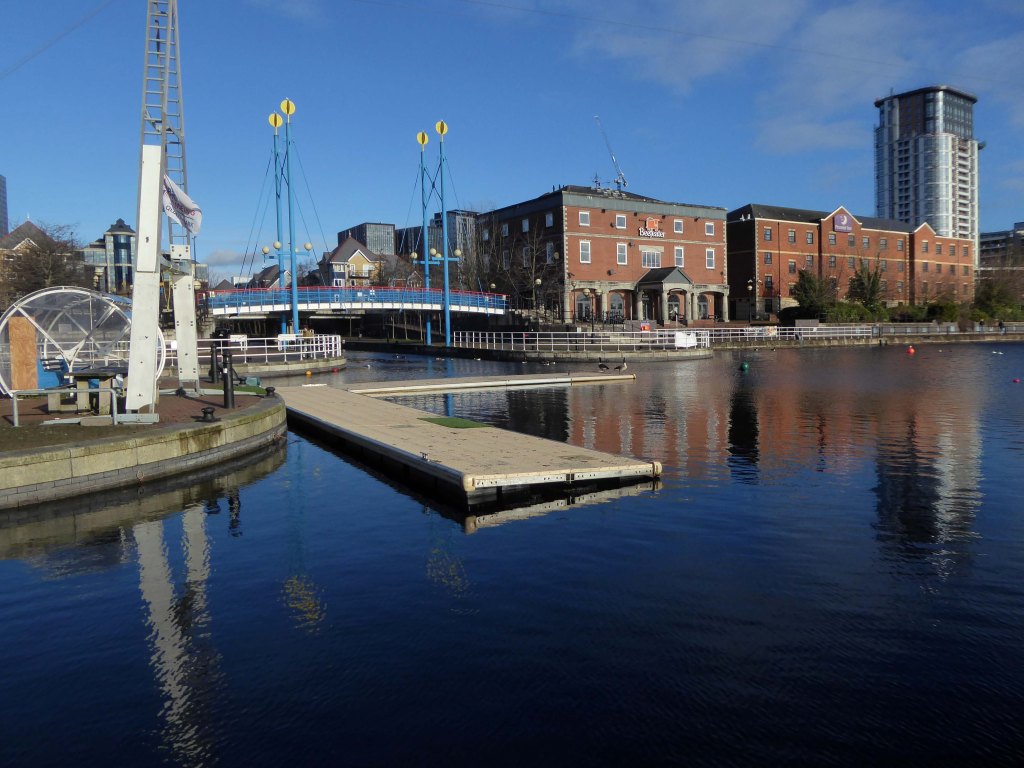
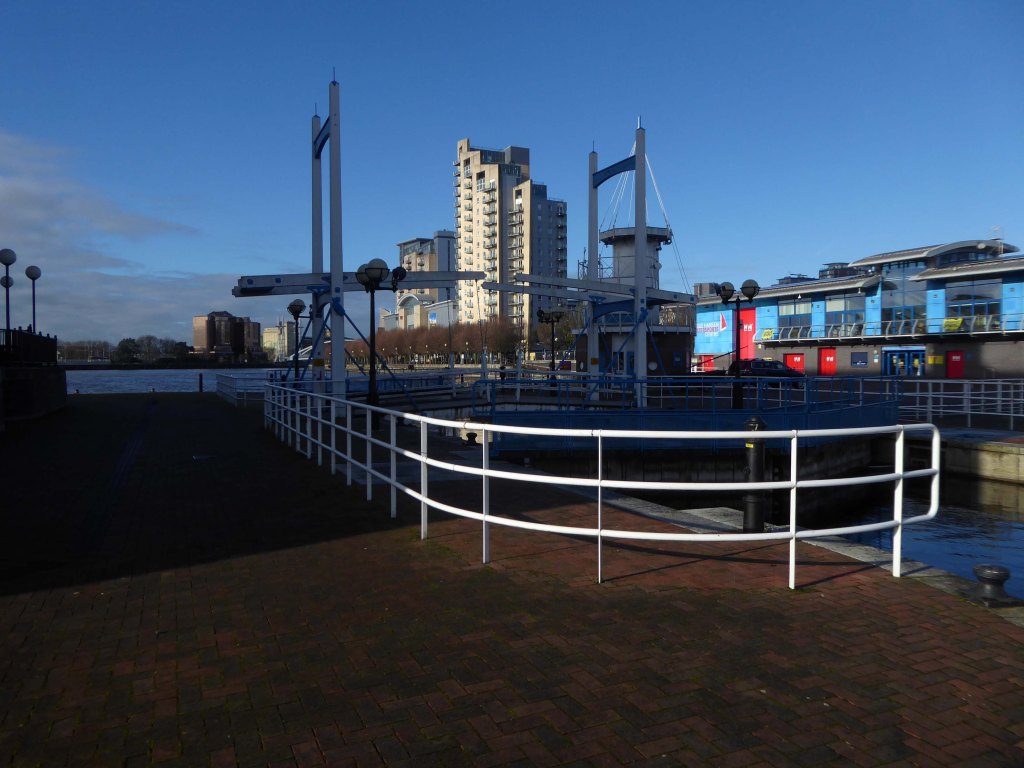
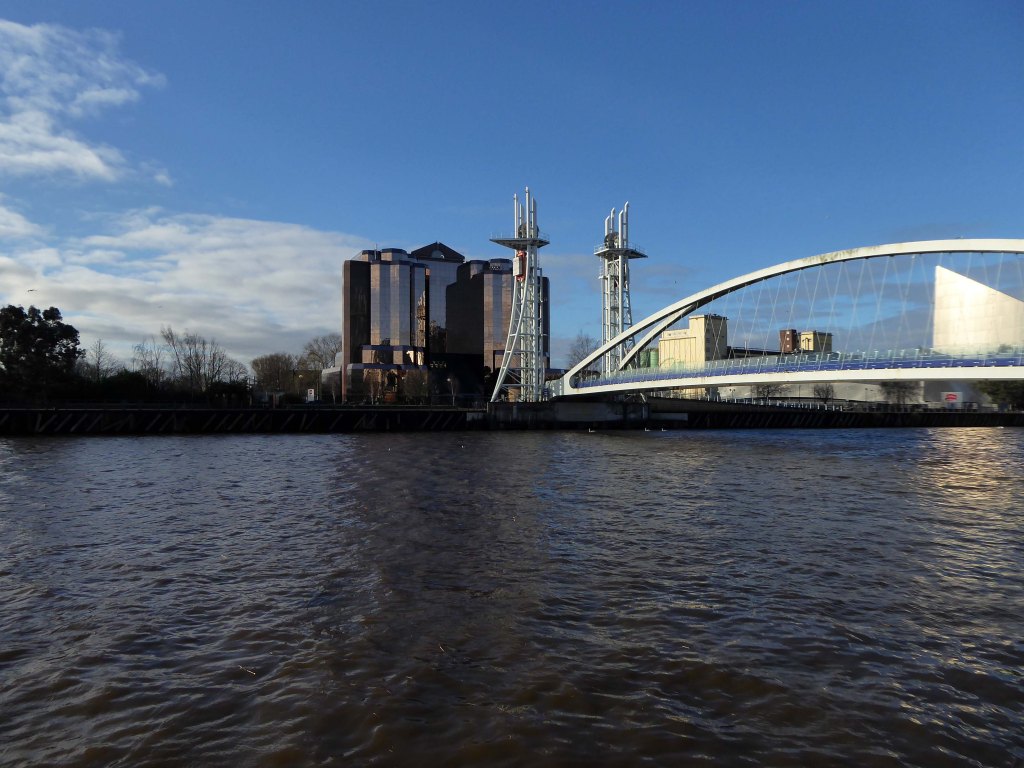
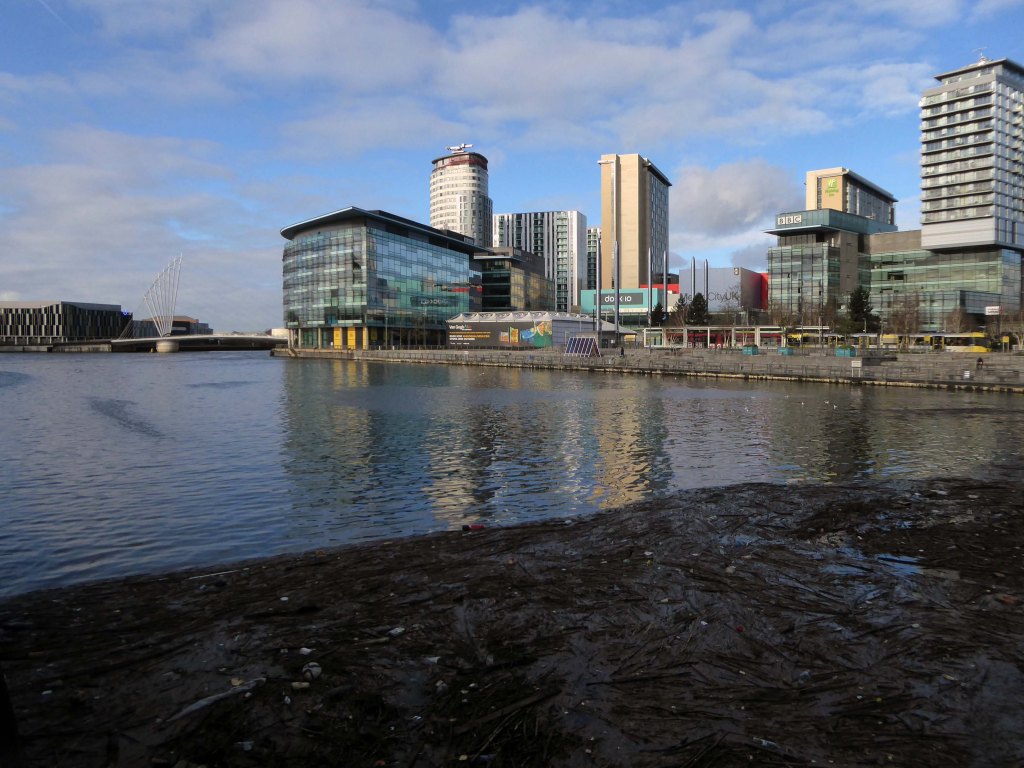
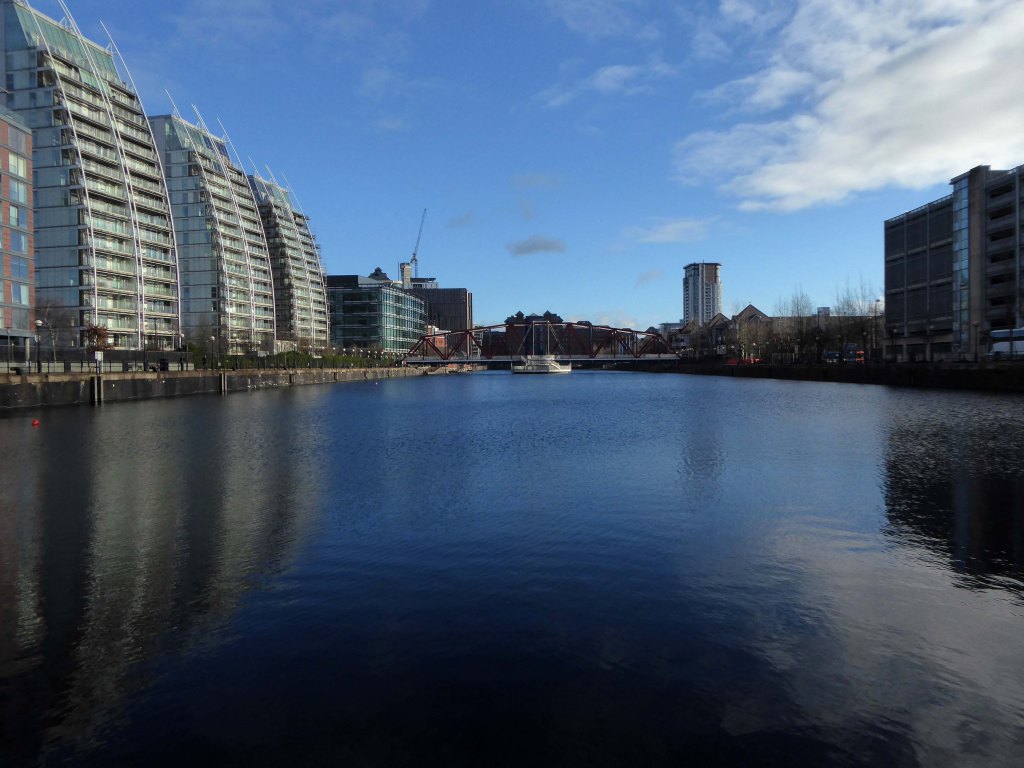
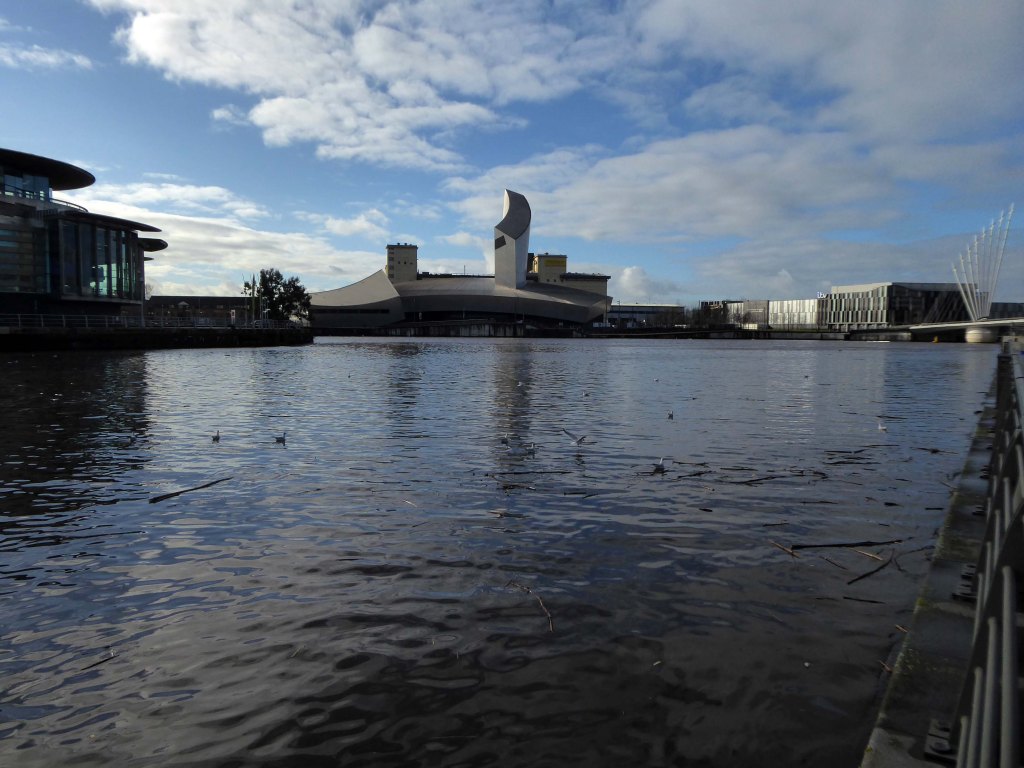
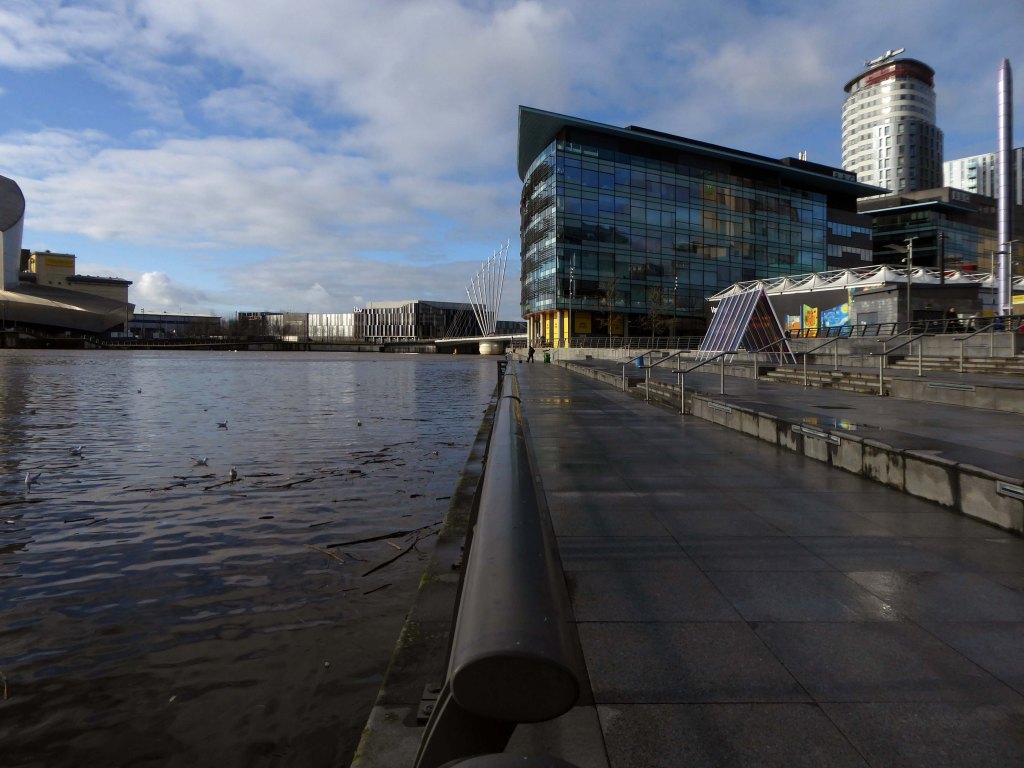
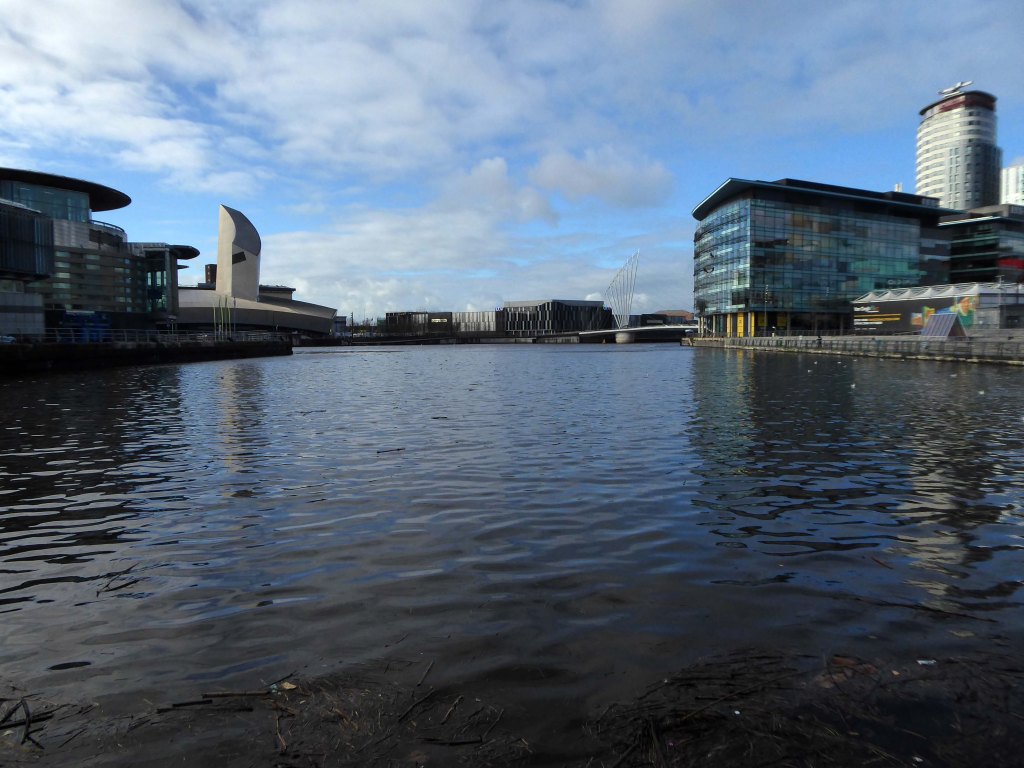
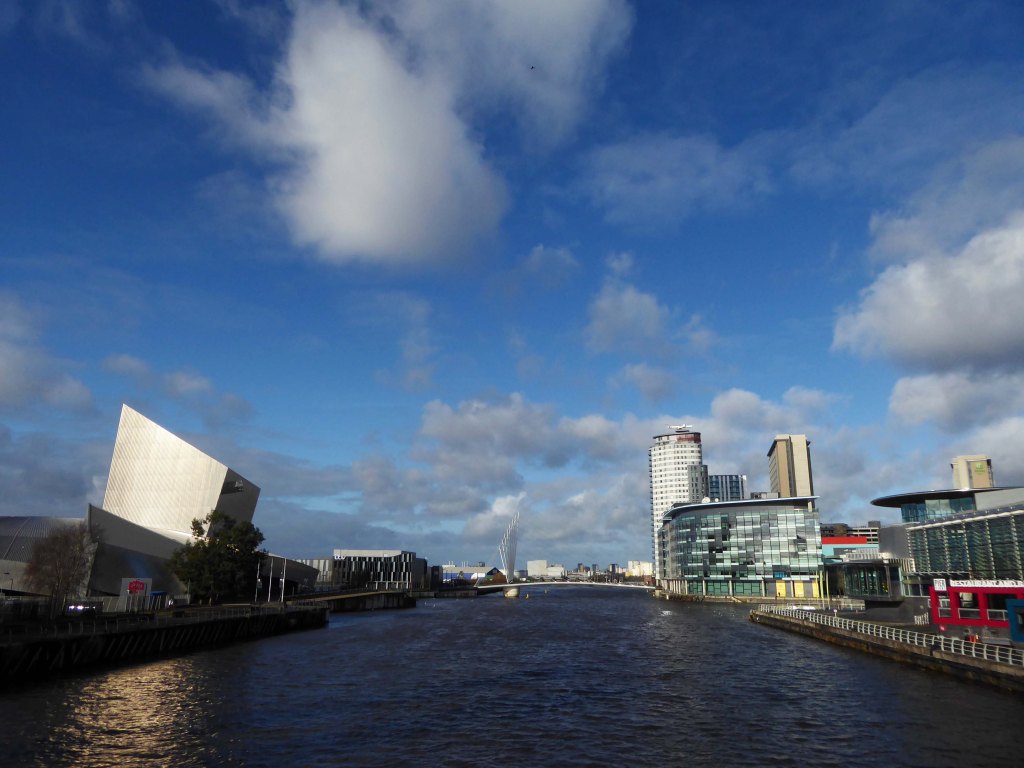
They were situatedin Salford, Stretford and Manchester at the east end of the Manchester Ship Canal. They formed part of the Port of Manchester from 1894 until their closure in 1982. The docks marked the upper reaches of the ship canal,and were a destination for both coastal and ocean-bound vessels carrying cargo and a limited number of passengers, often travelling to and from Canada.
Manchester Docks were divided into two sections; the larger Salford docks to the west of the Trafford Road swing bridge and Pomona docks to the east. Each section consisted of four docks in total, the largest being to the west; Dock 5 at Pomona was never fully completed. Of the eight working docks only one, Dock 1 at Pomona, was within Manchester itself. During much of 1948, Manchester Docks were Britain’s third busiest port owing to damage suffered by the Port of Hull during the Hull Blitz.
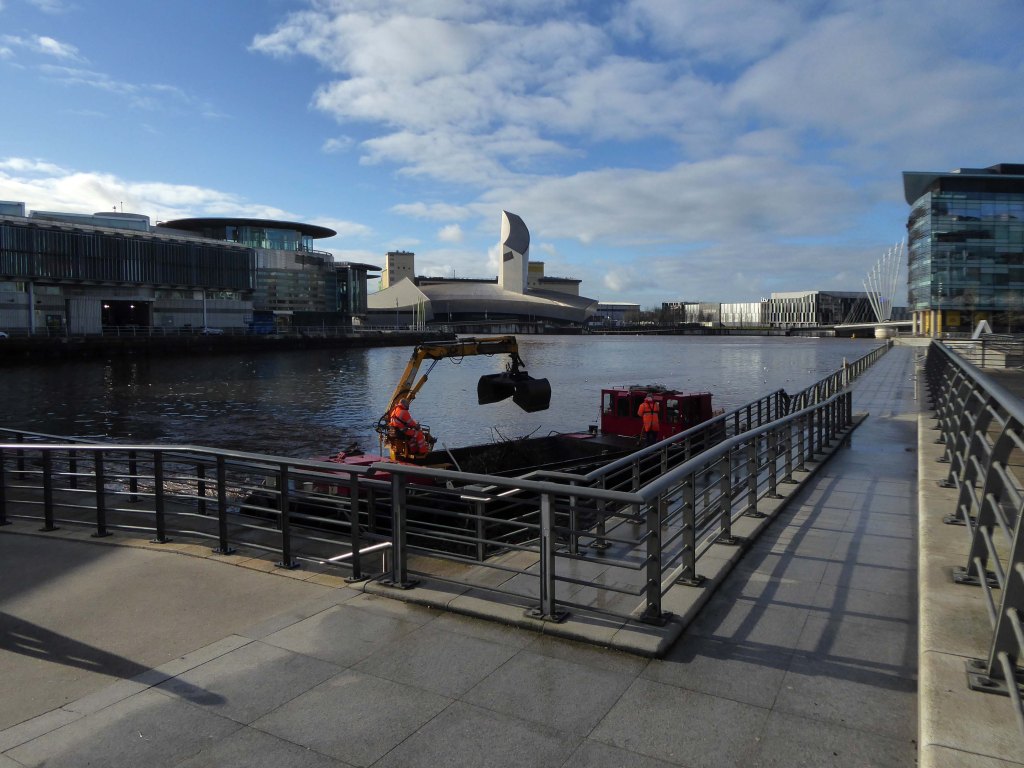
During the 1970s the docks began a rapid decline, largely due to containerisation. The increasing size of freight-carrying ships meant they could no longer navigate the ship canal and this, combined with increased trading with Europe and the east, saw use of Manchester Docks decrease. In 1982 the remaining docks closed and the area became derelict. Recognising the need to redevelop the area, Salford City Council purchased the docks in 1984 using a derelict land grant. The Salford Quays Development Plan was adopted in May 1985, proposing complete reclamation and development of the area for commercial, residential and leisure use.
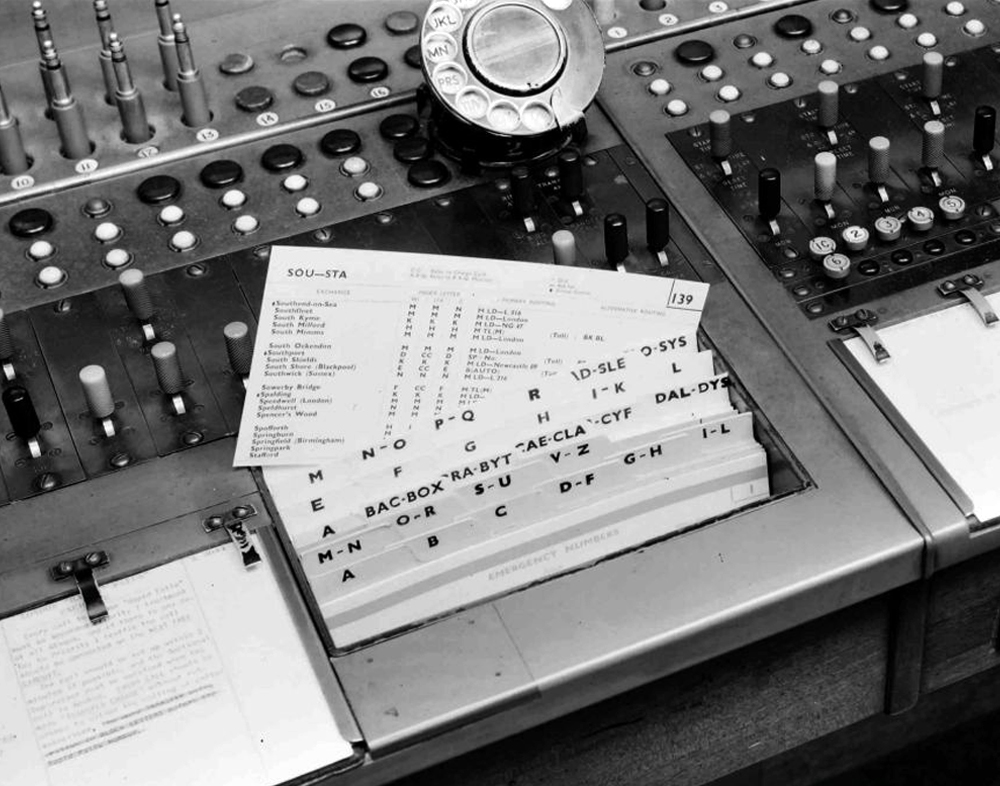
I only worked there very briefly in 1965, to do my Test Desk Training. It was a pleasant, if too hot, place to work: I remember being taken out for lunch at the Grand on my first day – very nice!
One peculiarity, which always stuck in my mind, was the canteen, upstairs, where the men all clung to one side, and the women to the other, never saw that anywhere else.
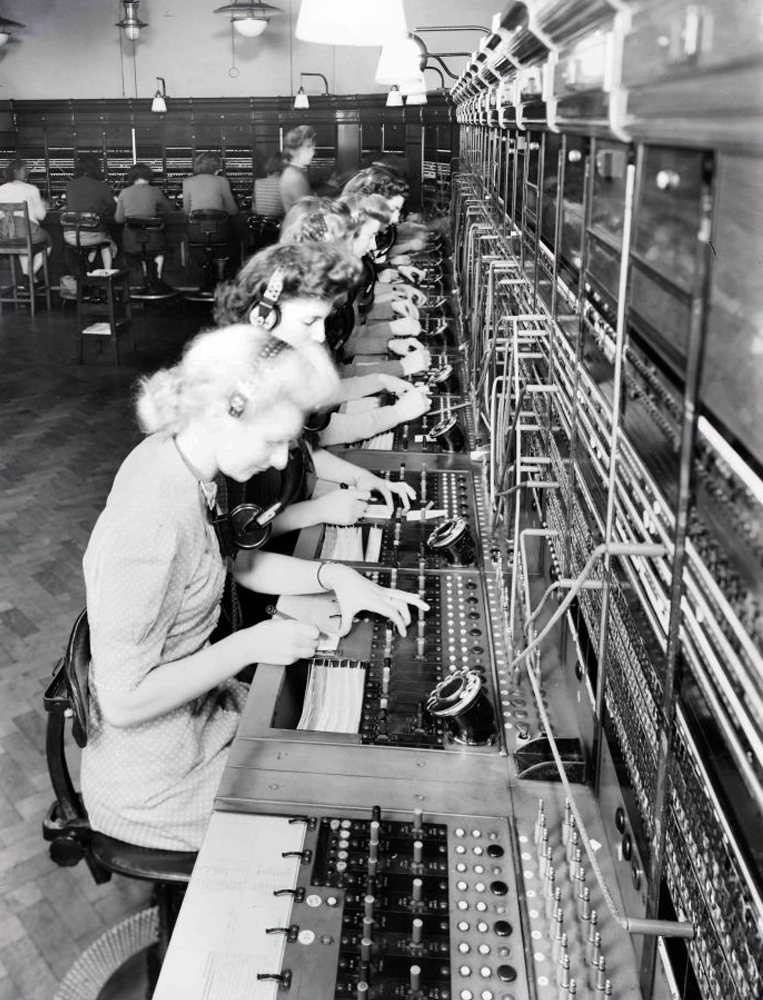
I was a telephonist 1961 -1968, I married a telephone engineer, you are right about the canteen or kitchen upstairs. When I first started after I’d finished my training I was sent down to the test desk for a long stand. Being a naive little thing I did as I was told, then sent out for some sky hooks and hen party hens, the girls I worked with were a great bunch we had ball best working years of my life, still friends with some of the telephonists I worked with – happy days.
Walking down Dorning Street one day going back to work and on the pavement outside the Grand there was a half crown. Tried to pick it up to howls of laughter. The lads in the telephone exchange opposite had welded a nail to it and pushed it in the ground between the paving flags. Very funny, and no I didn’t get it out.
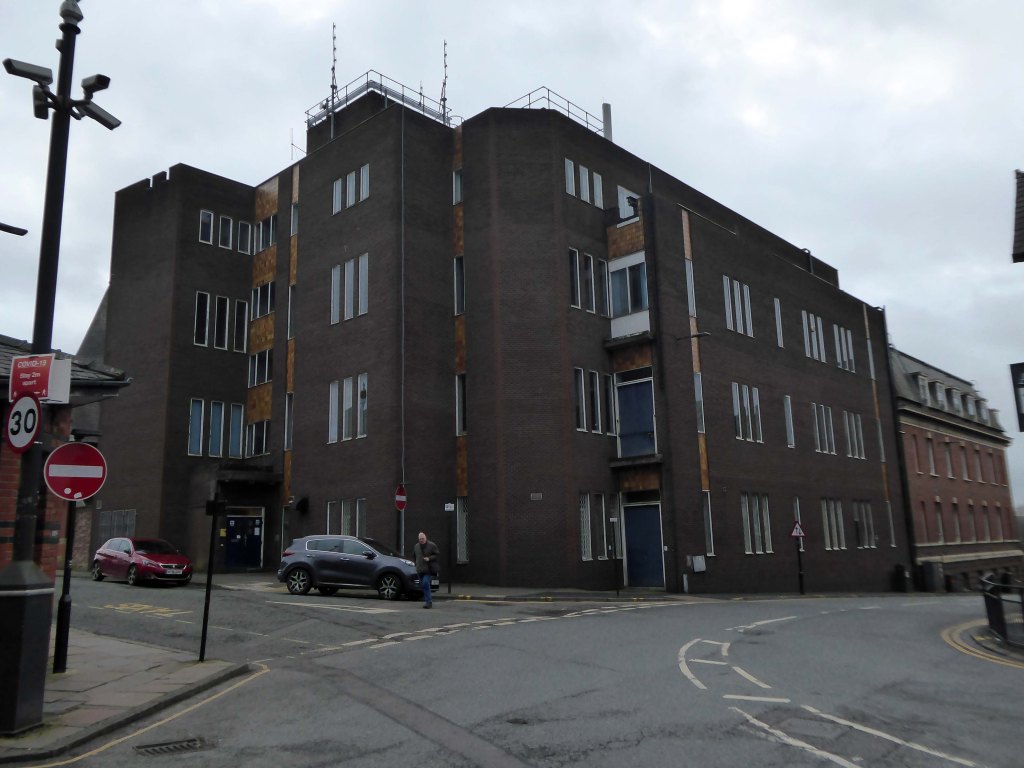
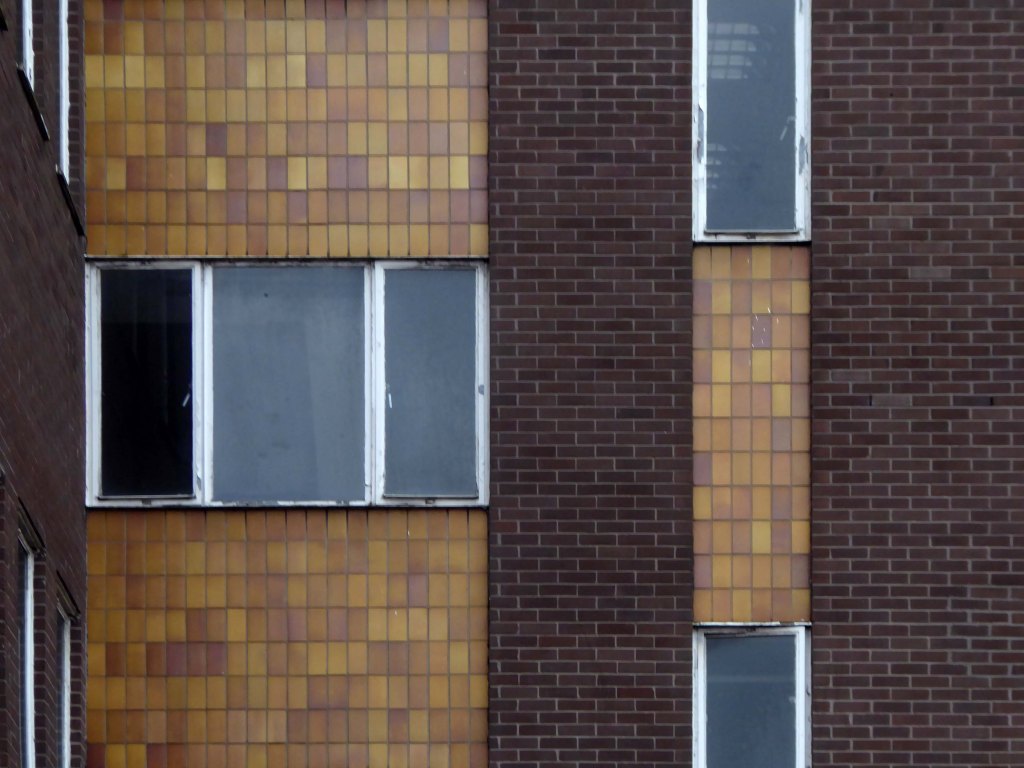
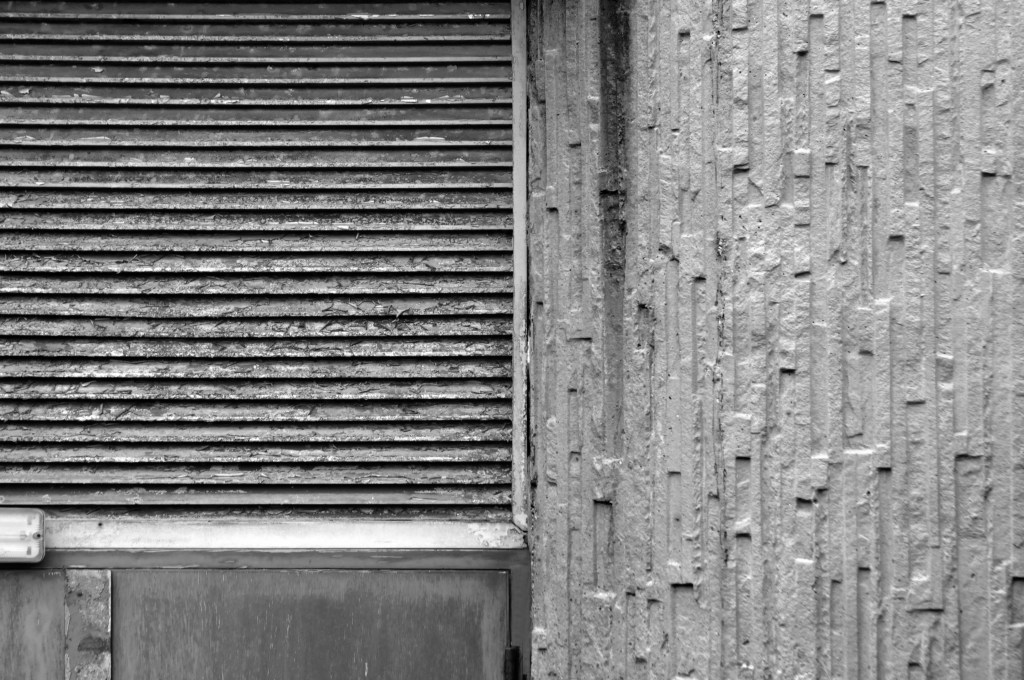
With narrow windows and inset light and dark tan tiles.
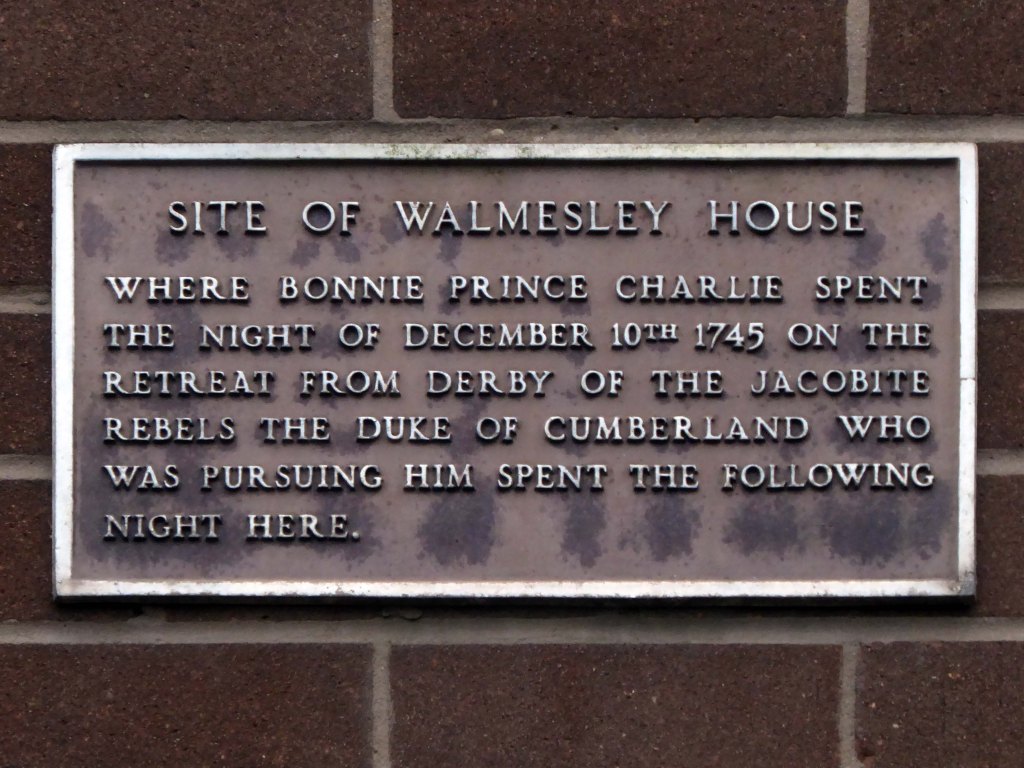
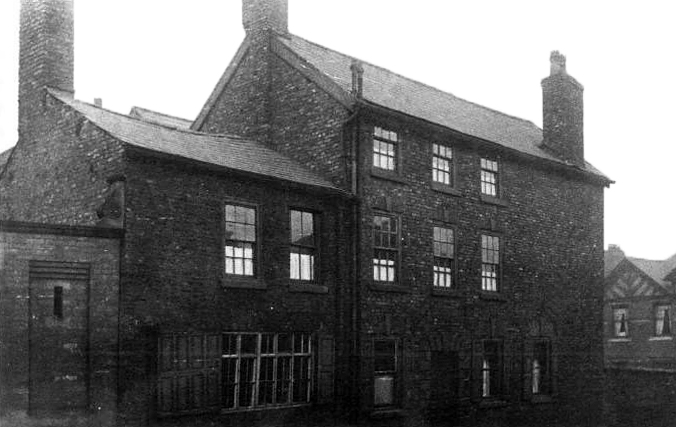
Prior to the exchange of telecommunications’ messages, the site was preoccupied by the exchange of partisan residents with a predilection for particular political persuasions.
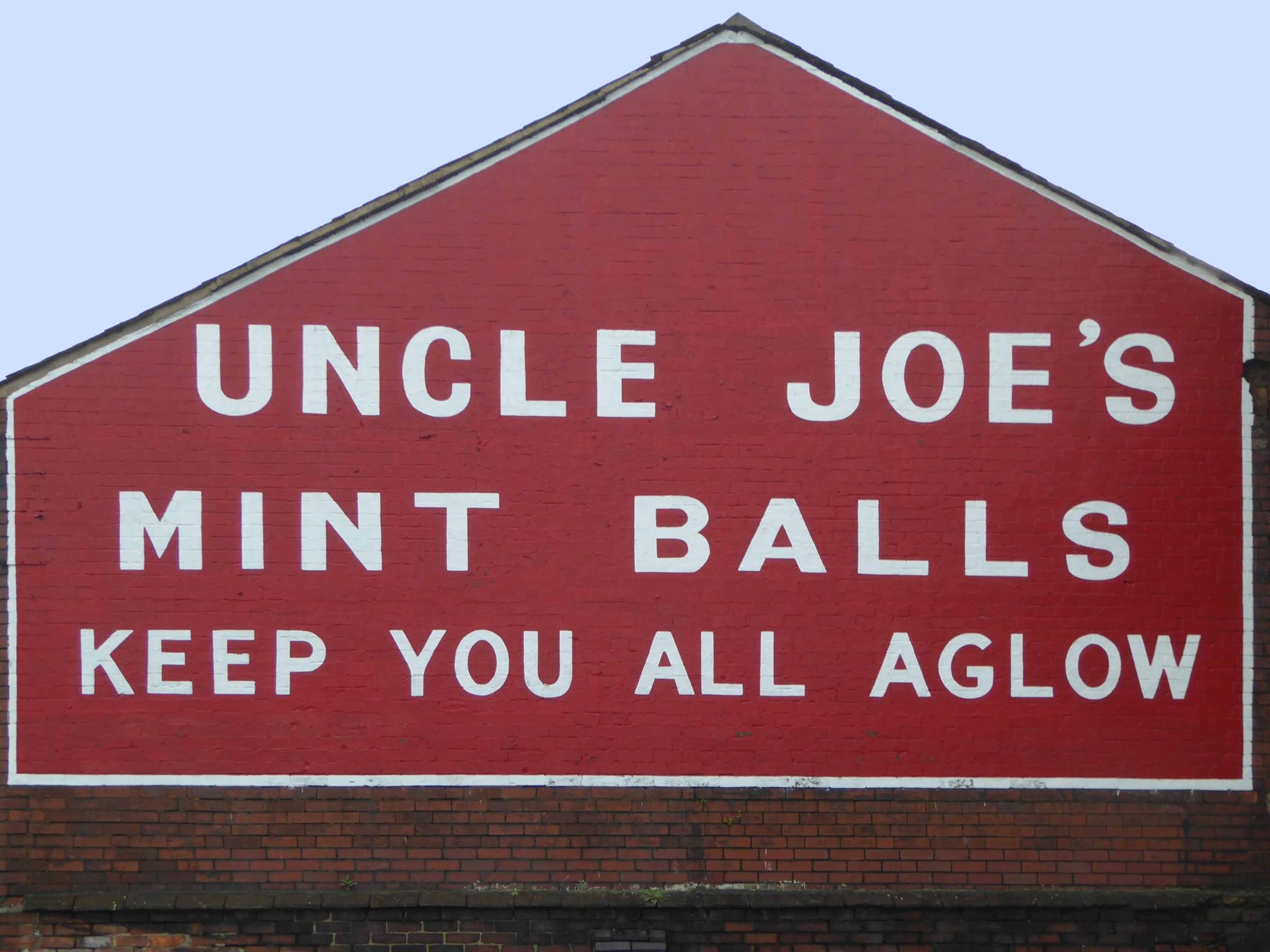
Let’s back track along Dorning Street and follow the aroma of Uncle Joe’s Mint Balls – to the Santus Works and beyond.
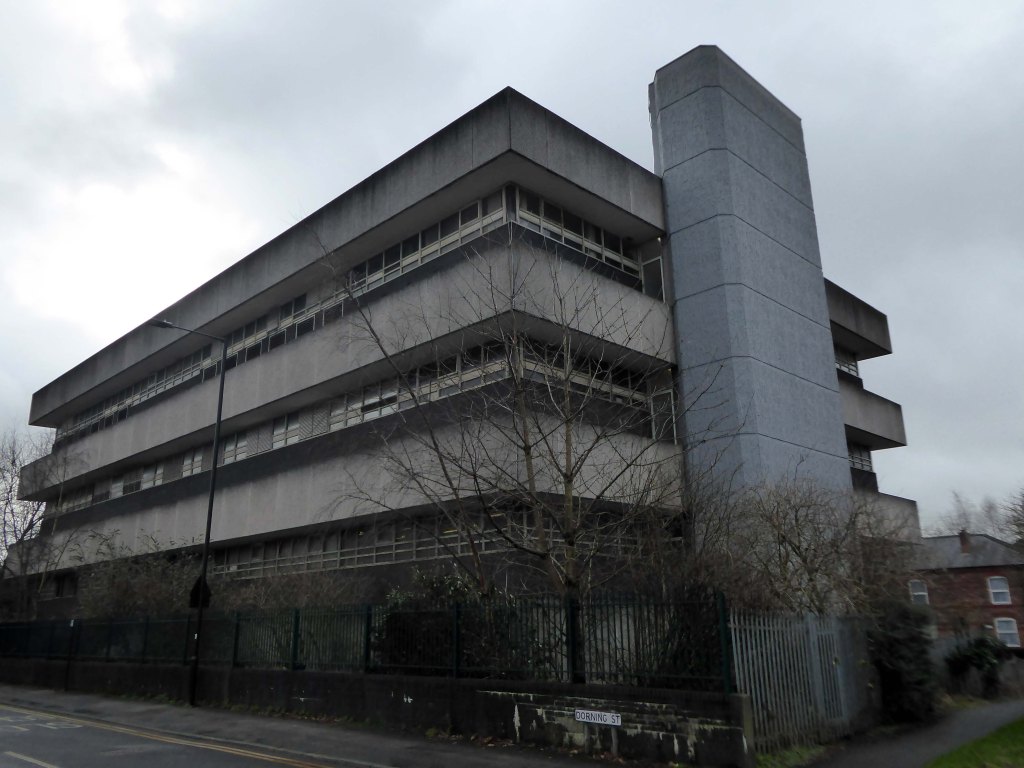
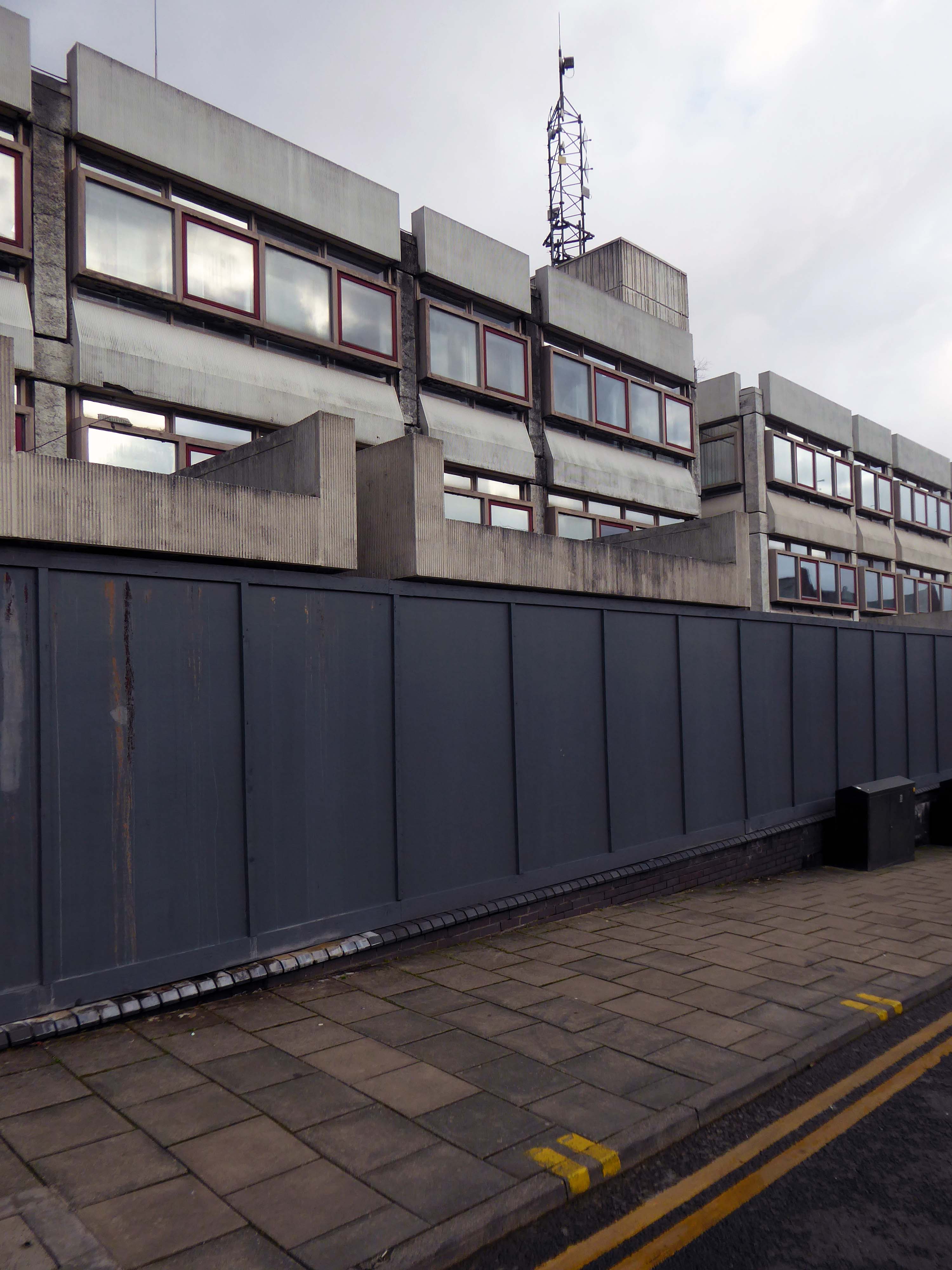
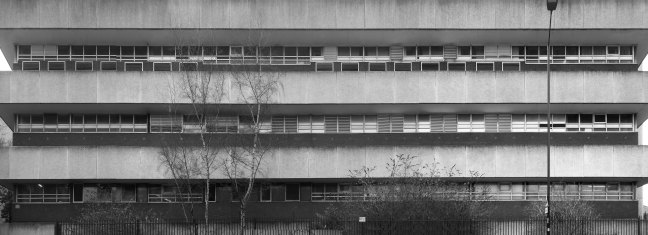
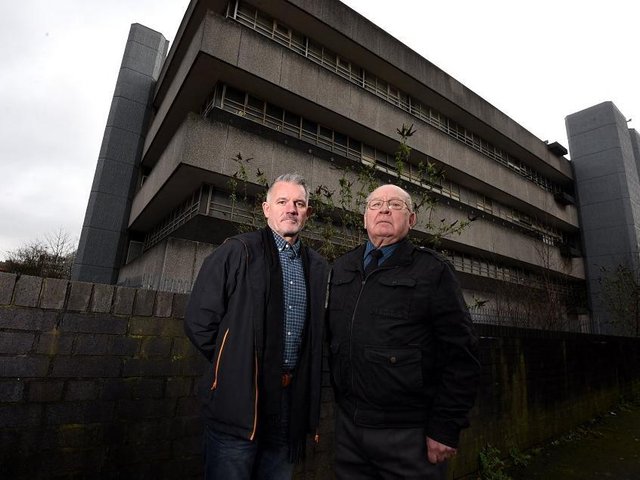
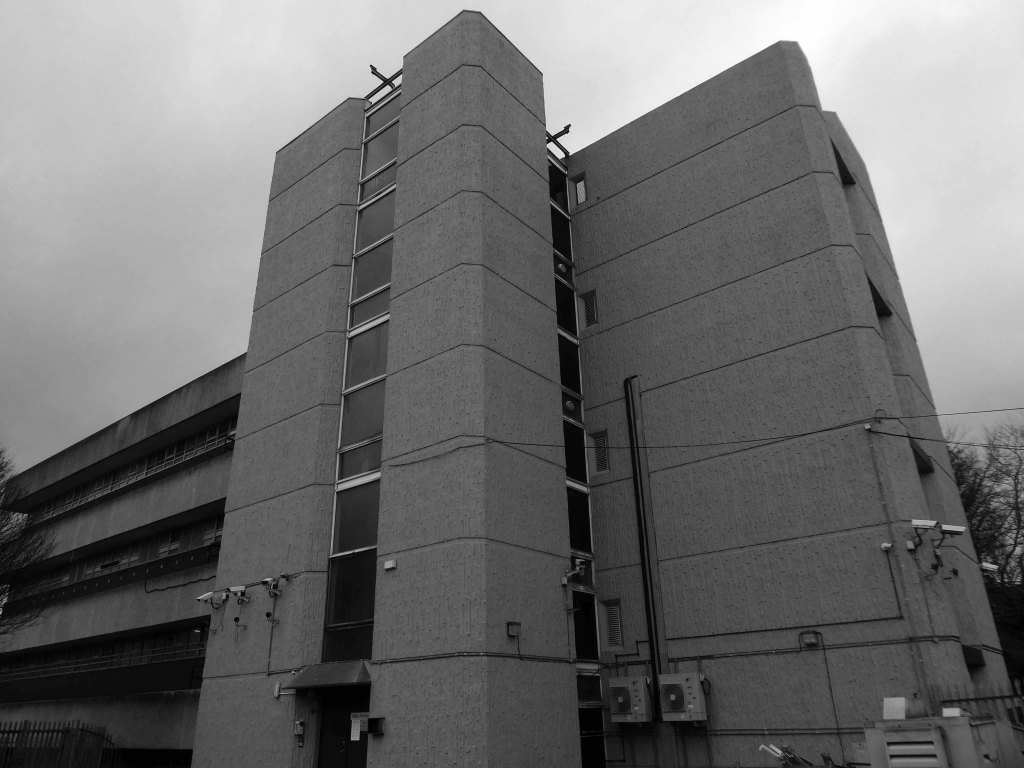
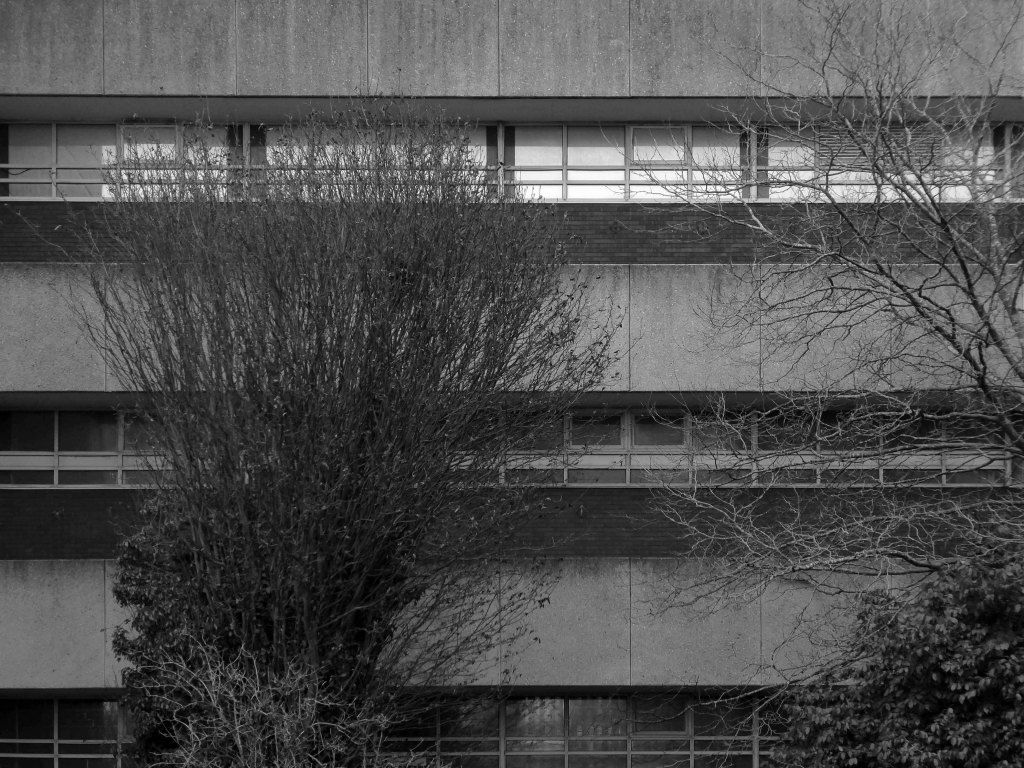
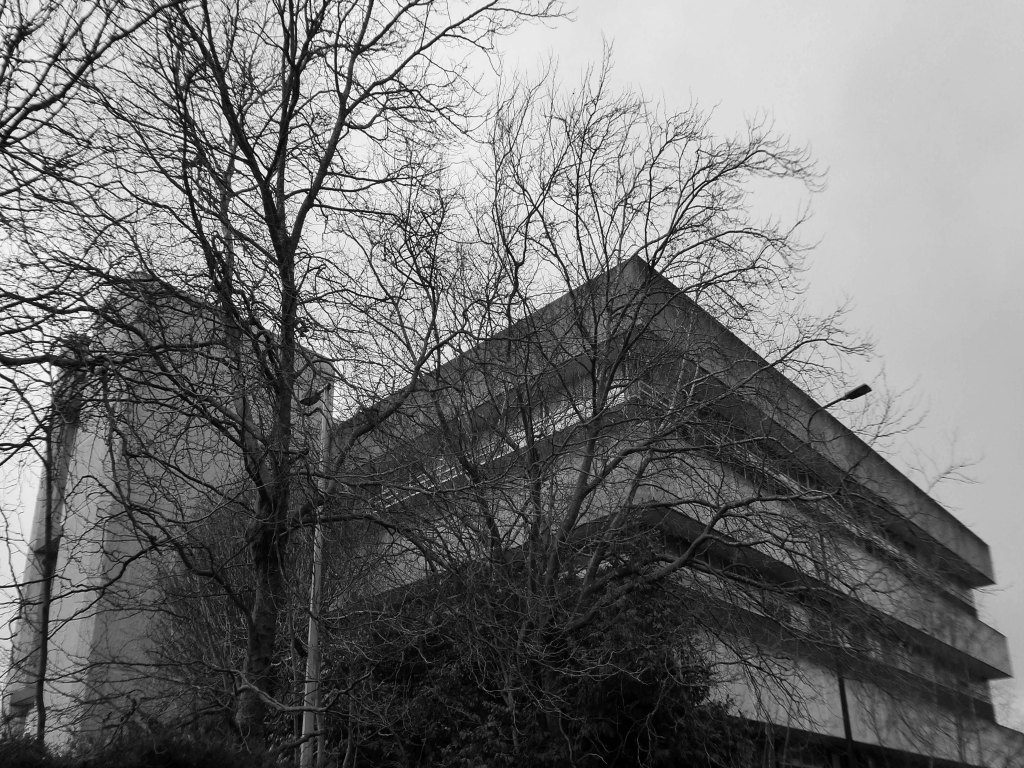
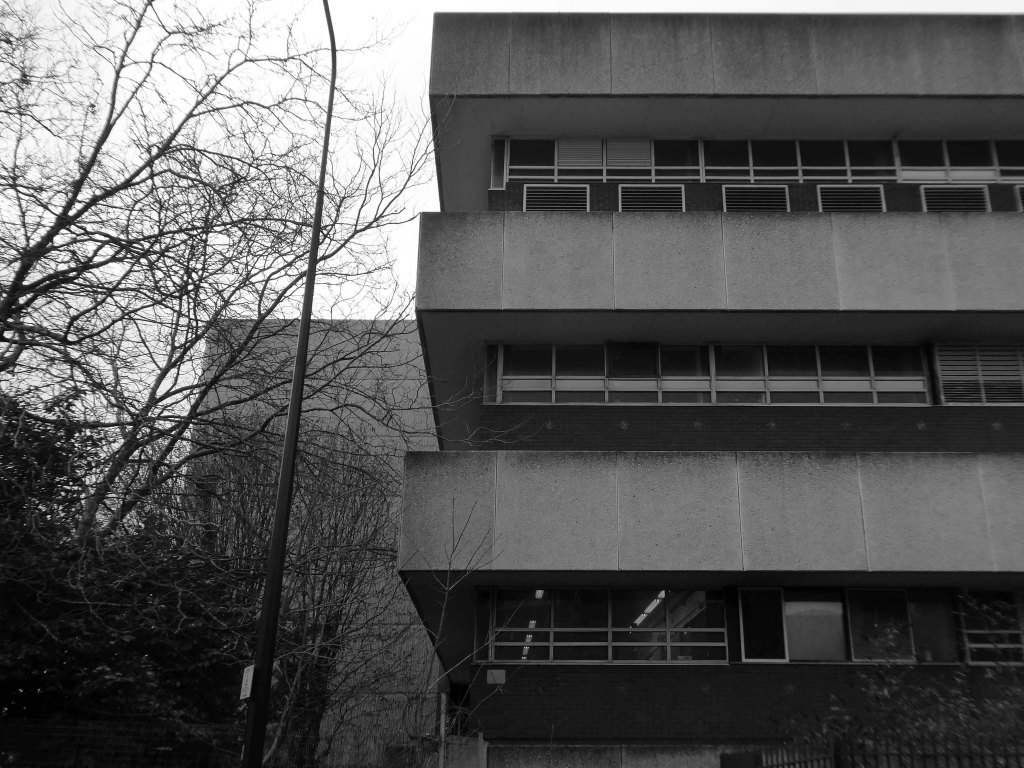
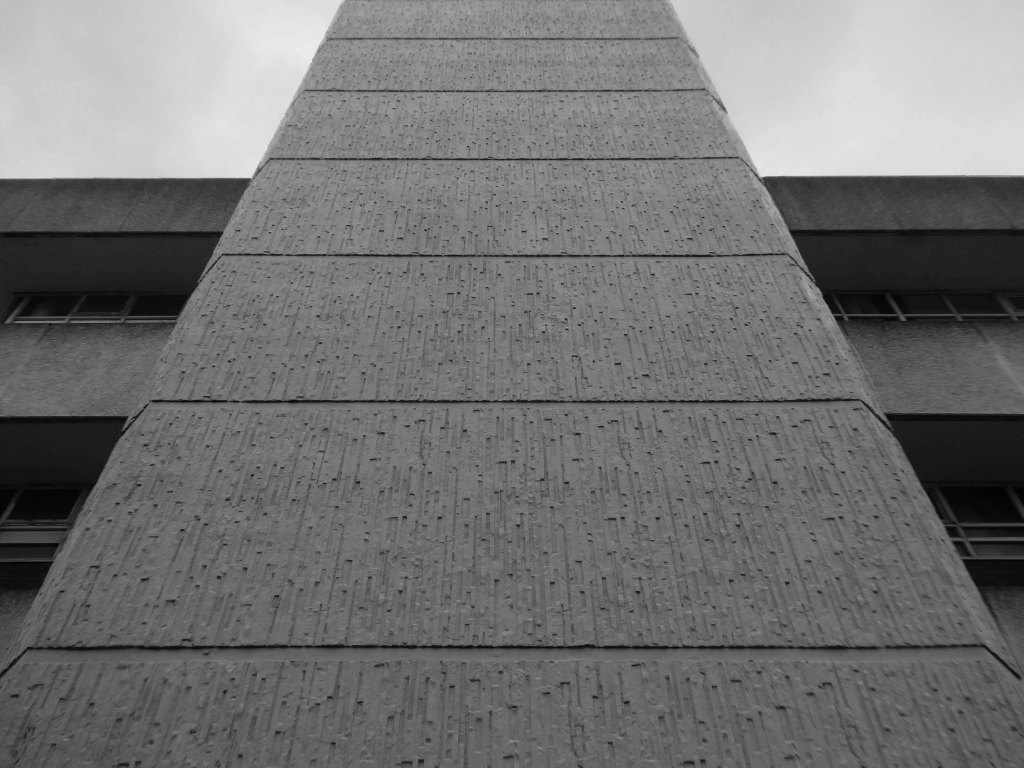
There stands a concrete behemoth.
Which has of late been beset with particular problems of its own.
Minefield of lager cans near Wigan school sparks worryWigan councillors.
They are on a mission to stop the grounds of a derelict building, which lies just yards away from a school, being used as a drinking den.
Almost not quite in the shadow of nearby neighbour the Hanley Tower, this little gem sits tucked away by the side of Queensway, minding its very own business.
The business of telecommunications.
Just a short walk from the railway station let’s take a look.
The report argues that the Northern Gateway should offer mixed, affordable and age appropriate housing and amenities. An equitable development plan should be developed, through community-led engagement, to ensure that the benefits of regeneration are shared amongst new and existing residents.
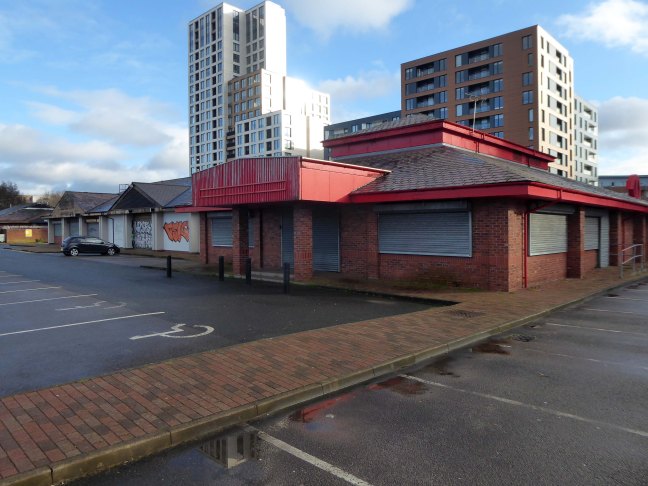
As of 2021 there is inaction and stasis
Collyhurst was described as a ‘forgotten place’ by some residents who felt that there had been insufficient investment in local housing and amenities.
The Northern Gateway remains a hidden portal to who knows where.
Detailed proposals for a second scheme to be delivered within neighbouring South Collyhurst, one of the seven neighbourhoods to be developed as part of the overall Framework, are expected later this year.
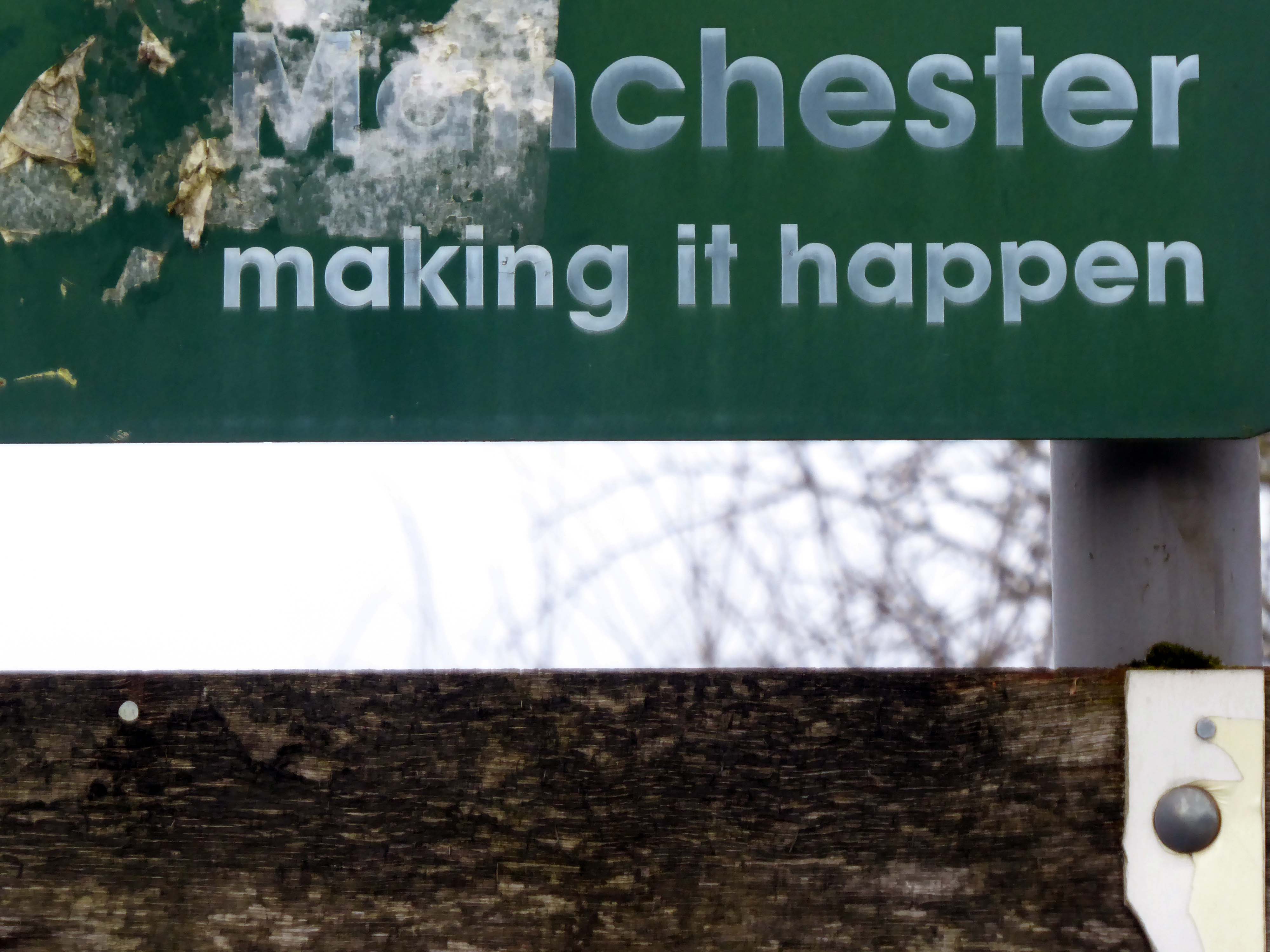
Far East Consortium and Manchester City Council’s 390-acre masterplan will now be known as Victoria North, a move that aims to “create a sense of place”, according to Gavin Taylor, regional general manager at FEC in Manchester.
The Northern Gateway has served us well as a name as we shaped plans for the area’s regeneration. But as we begin to bring forward development this year, it’s the right time to start creating a sense of place for what will be a significant new district in Manchester, as well as an identity that people can engage with.
Sir Richard Leese, leader of Manchester City Council, said:
We are at the beginning of an incredibly exciting phase of history for this part of Manchester and with some eagerness to see how this potential unfolds.
Victoria Riverside, a 634- home development marks the first stage of the regeneration project with the first apartments hitting the market.
The three towers – Park View, City View and Crown View, are based within the Red Bank neighbourhood.
Red Bank has been described as:
A unique landscape and river setting making the neighbourhood perfect for a residential-led, high-density development – all set in a green valley.
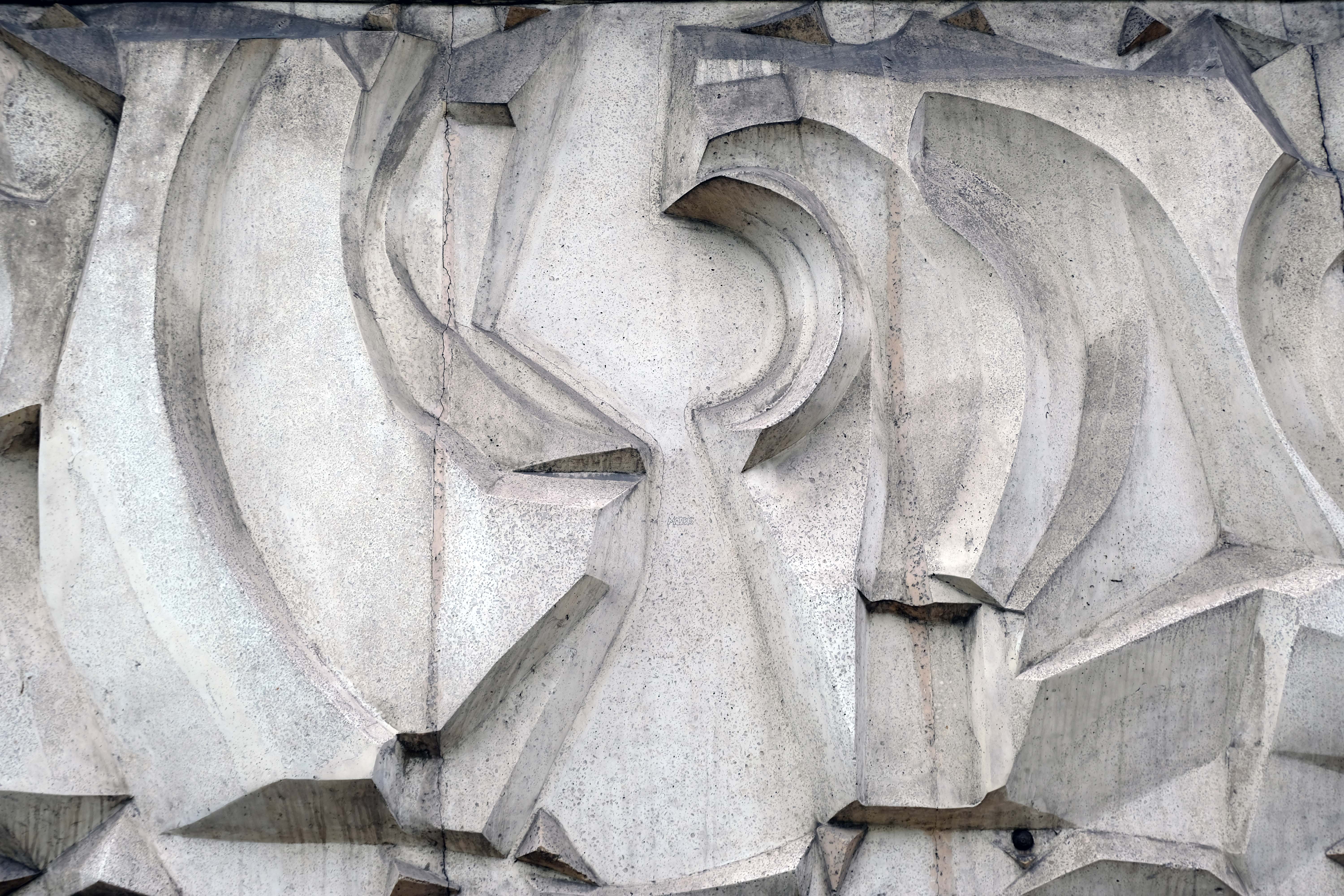
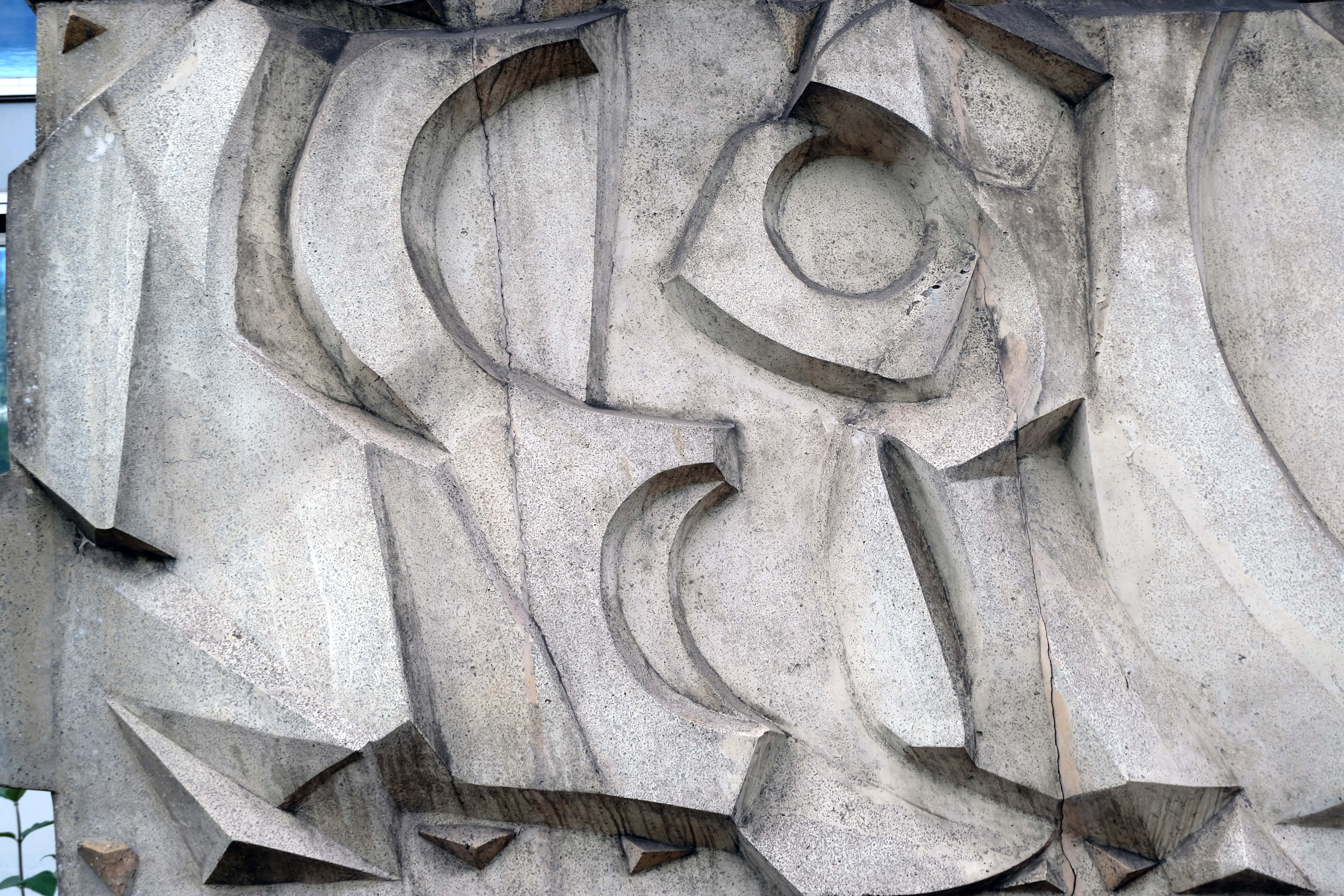
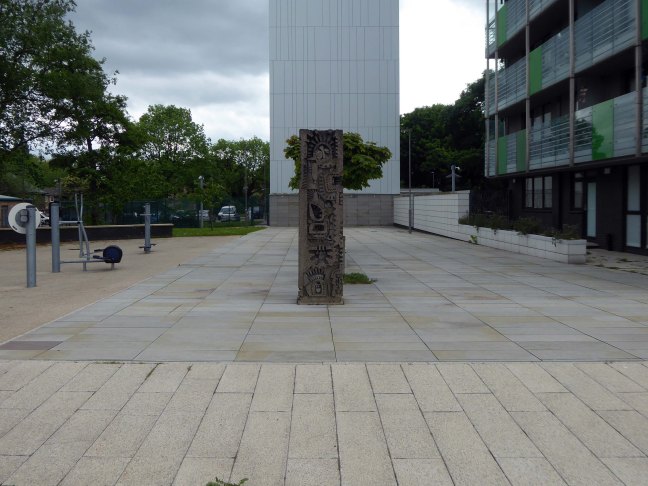
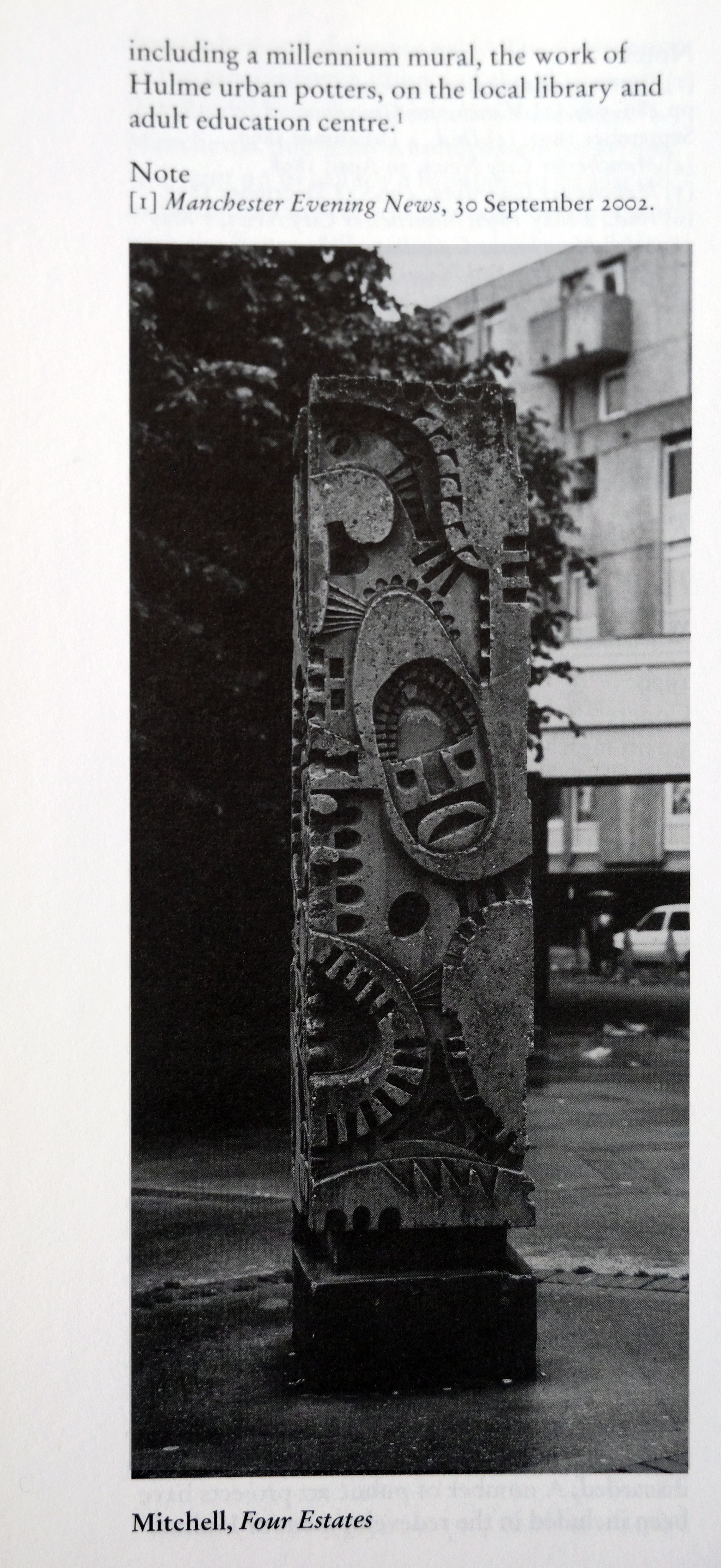
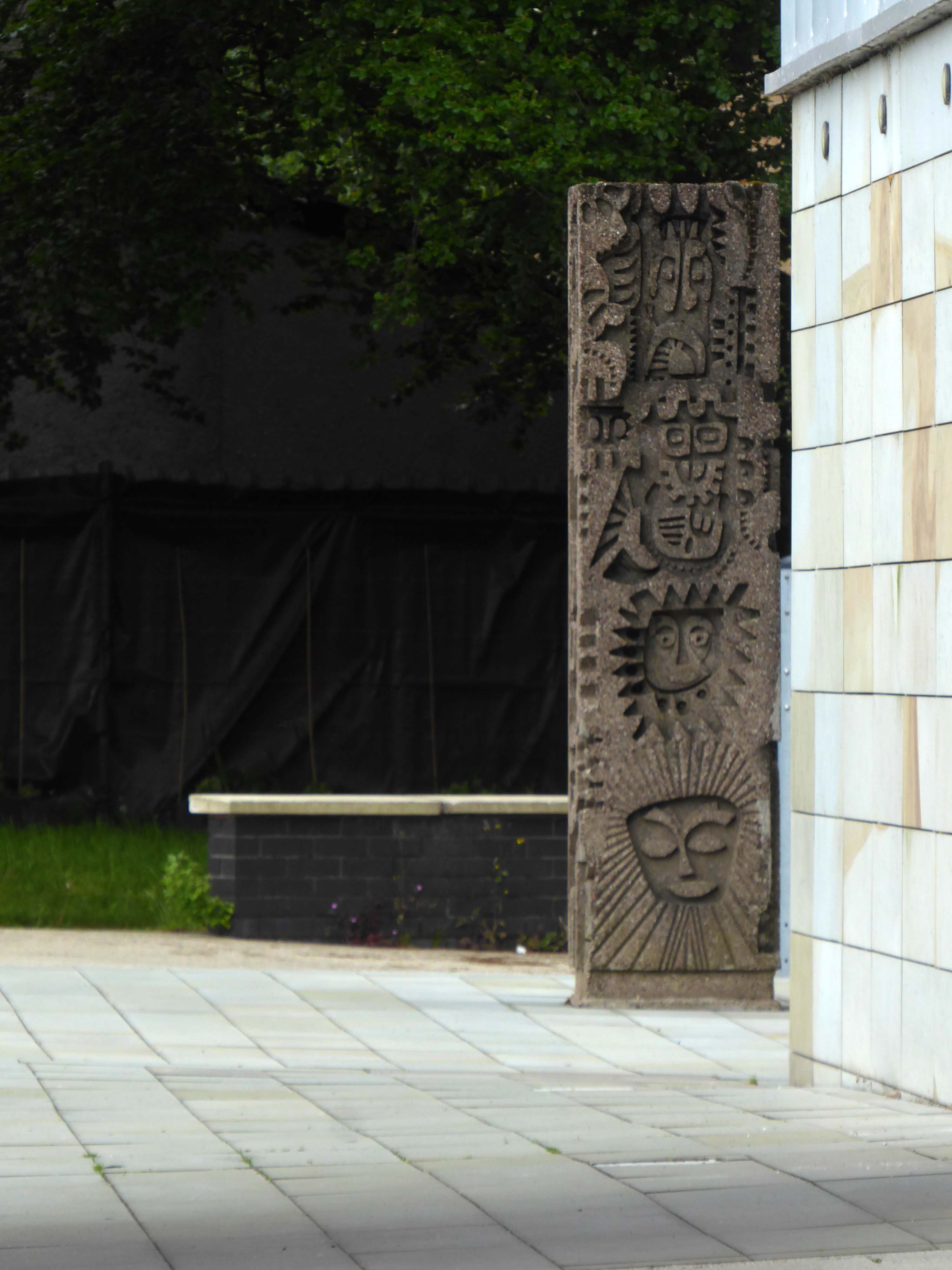
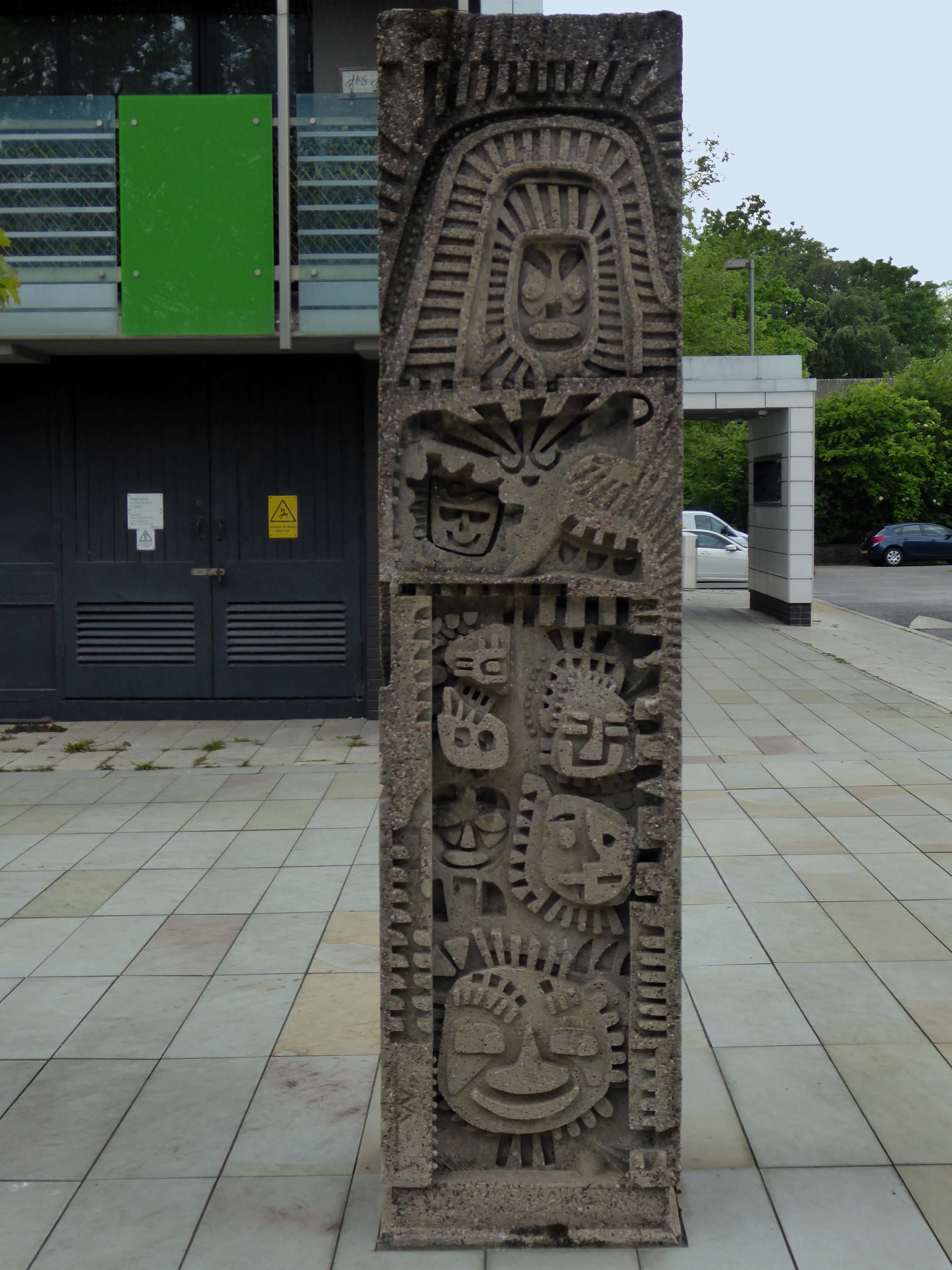
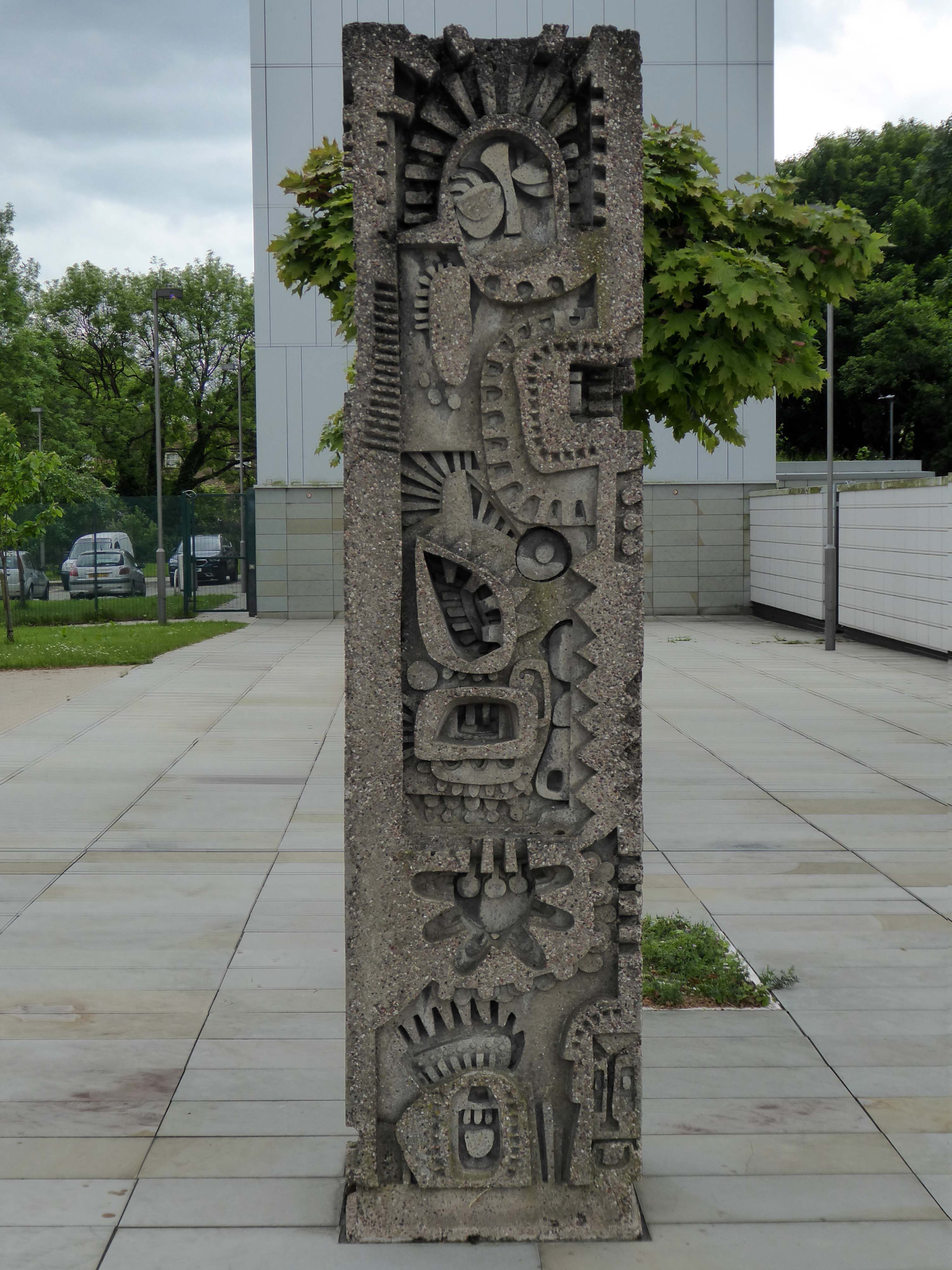
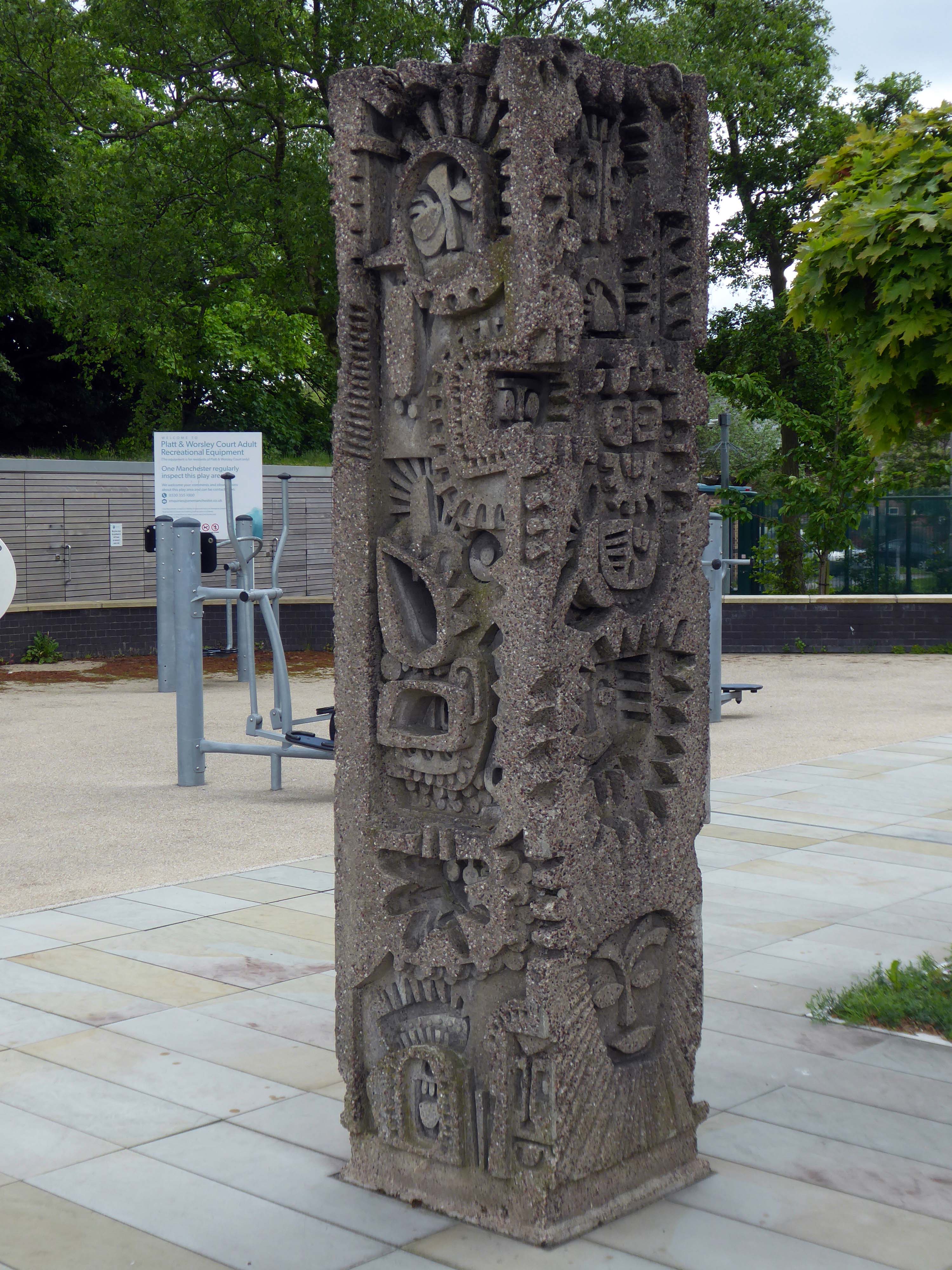
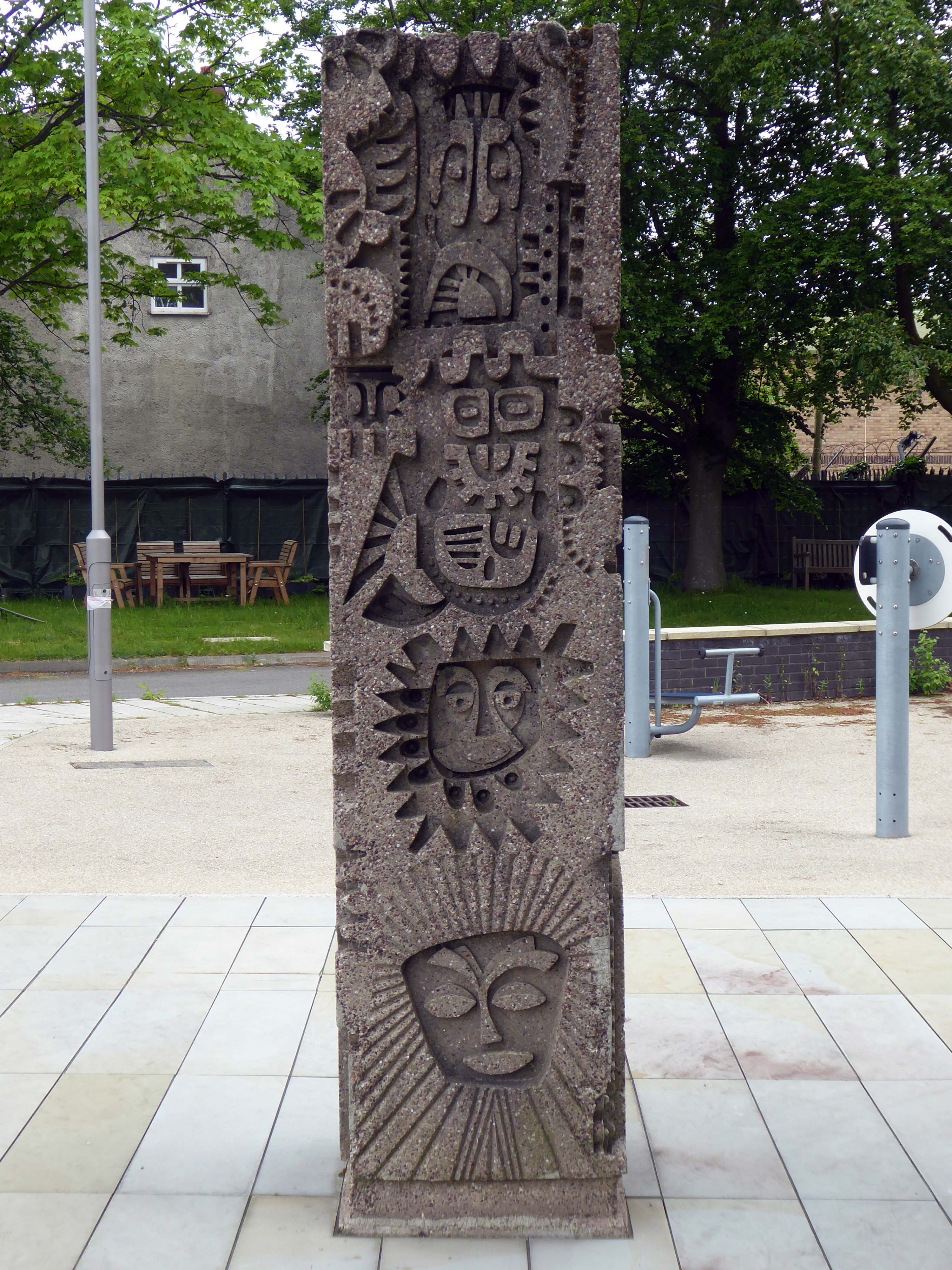
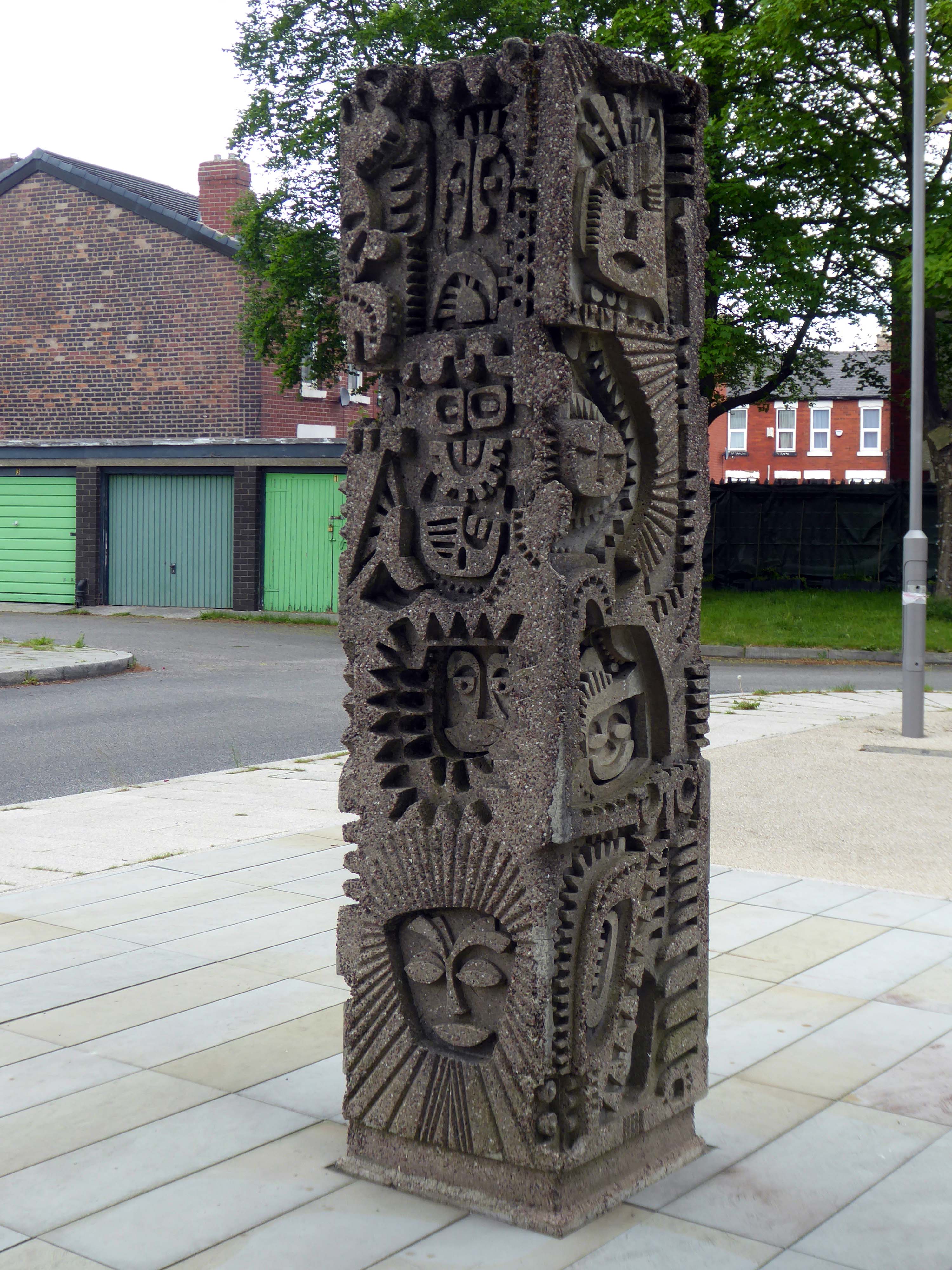
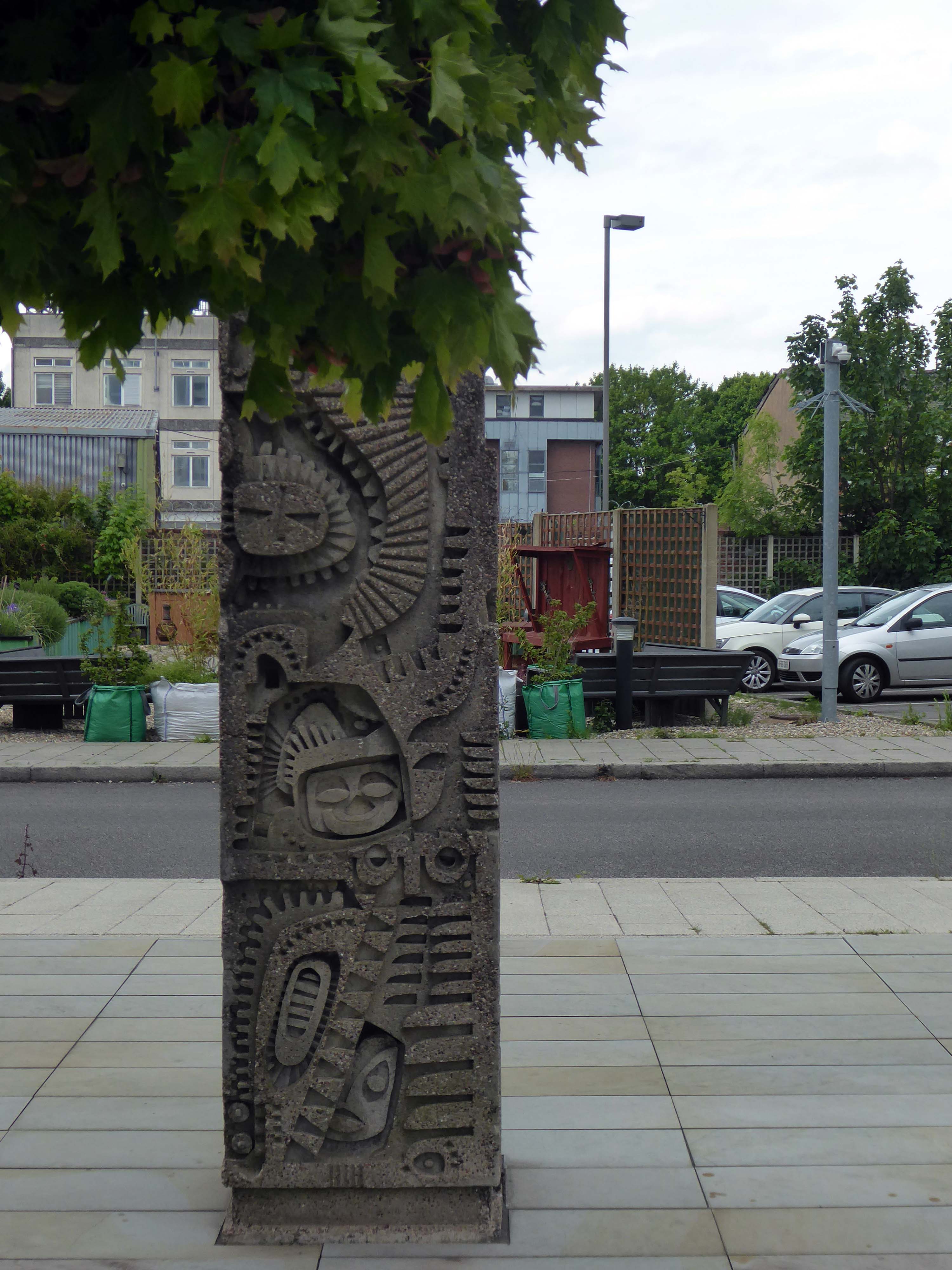
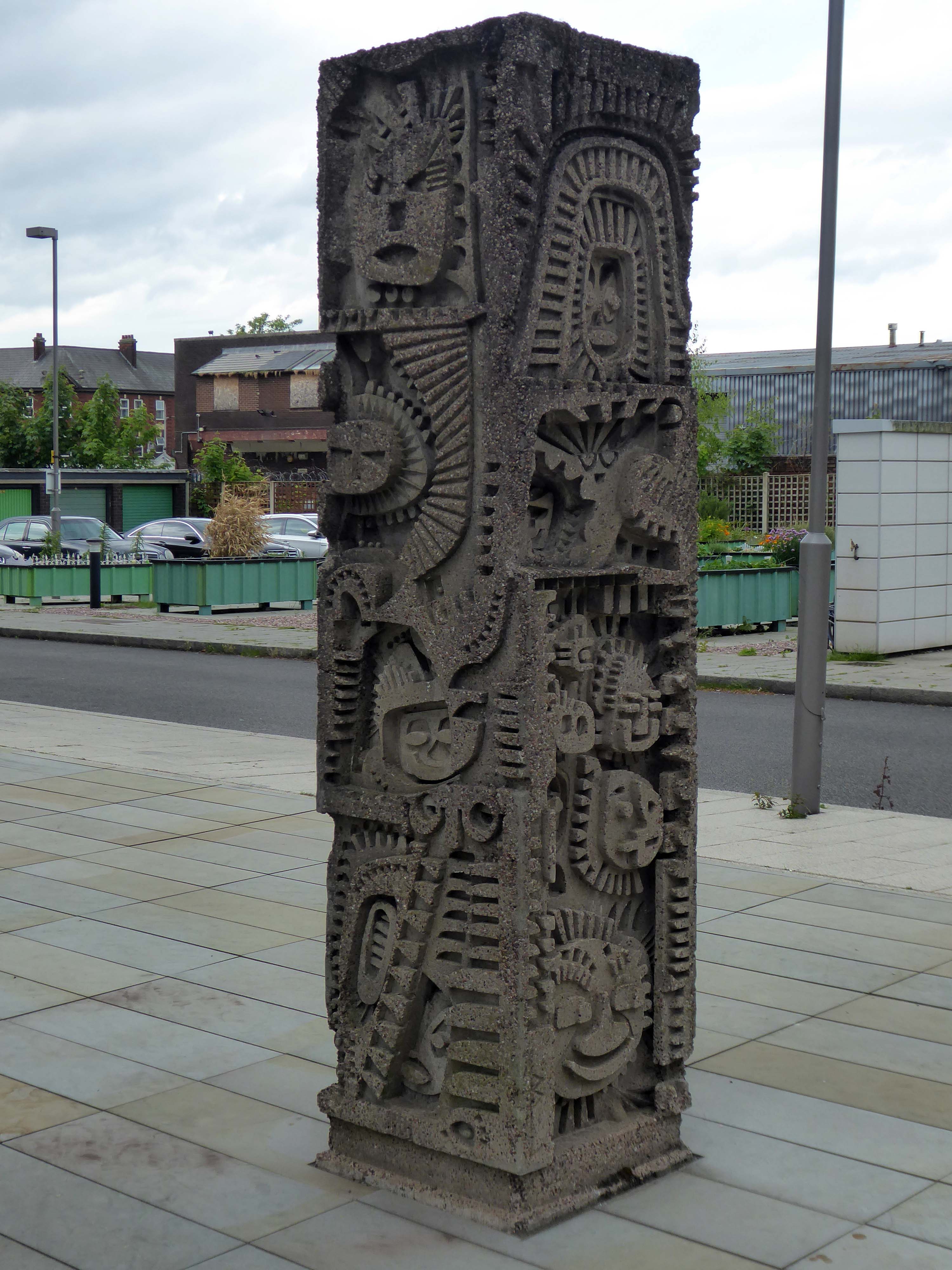
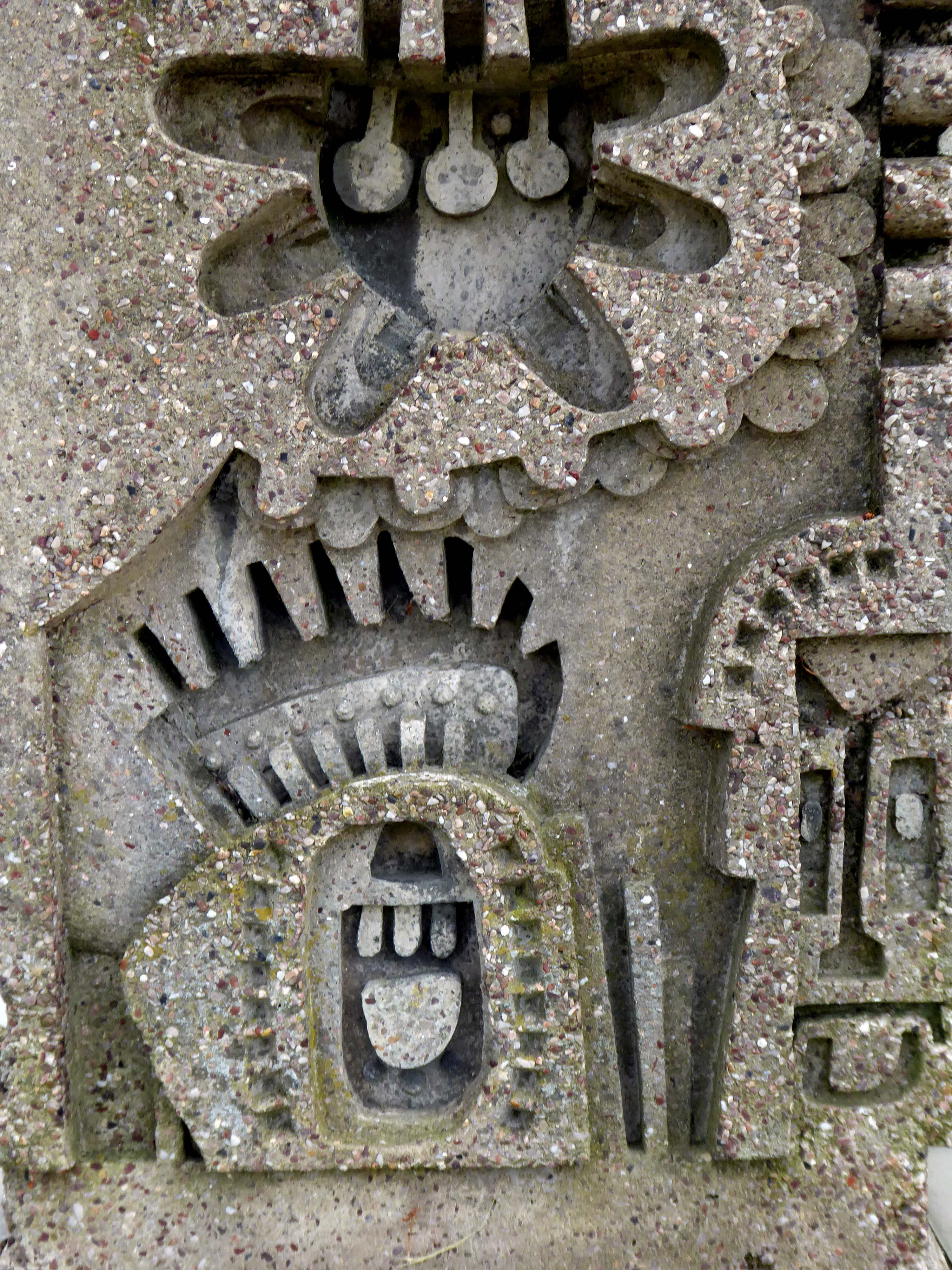
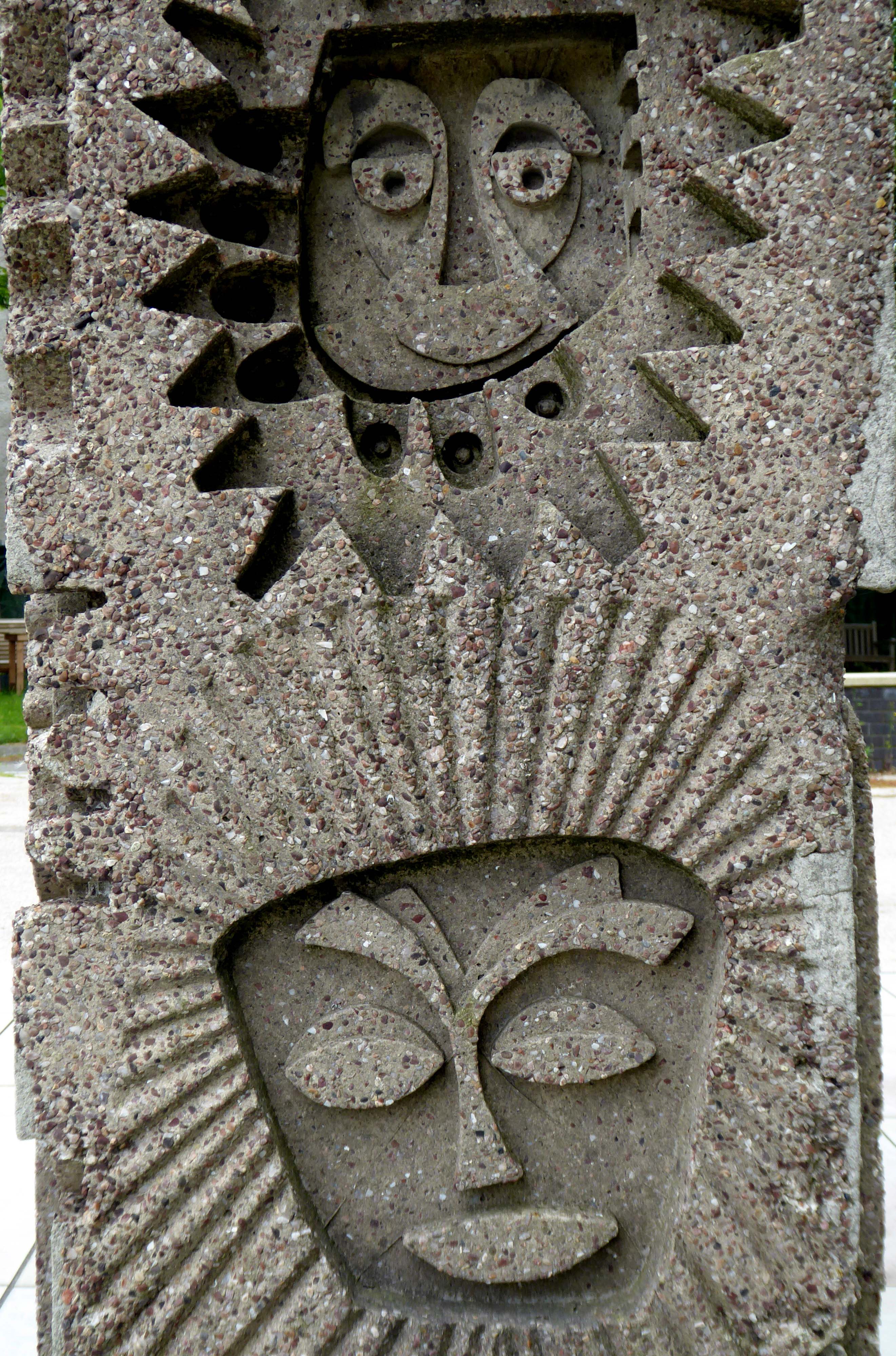
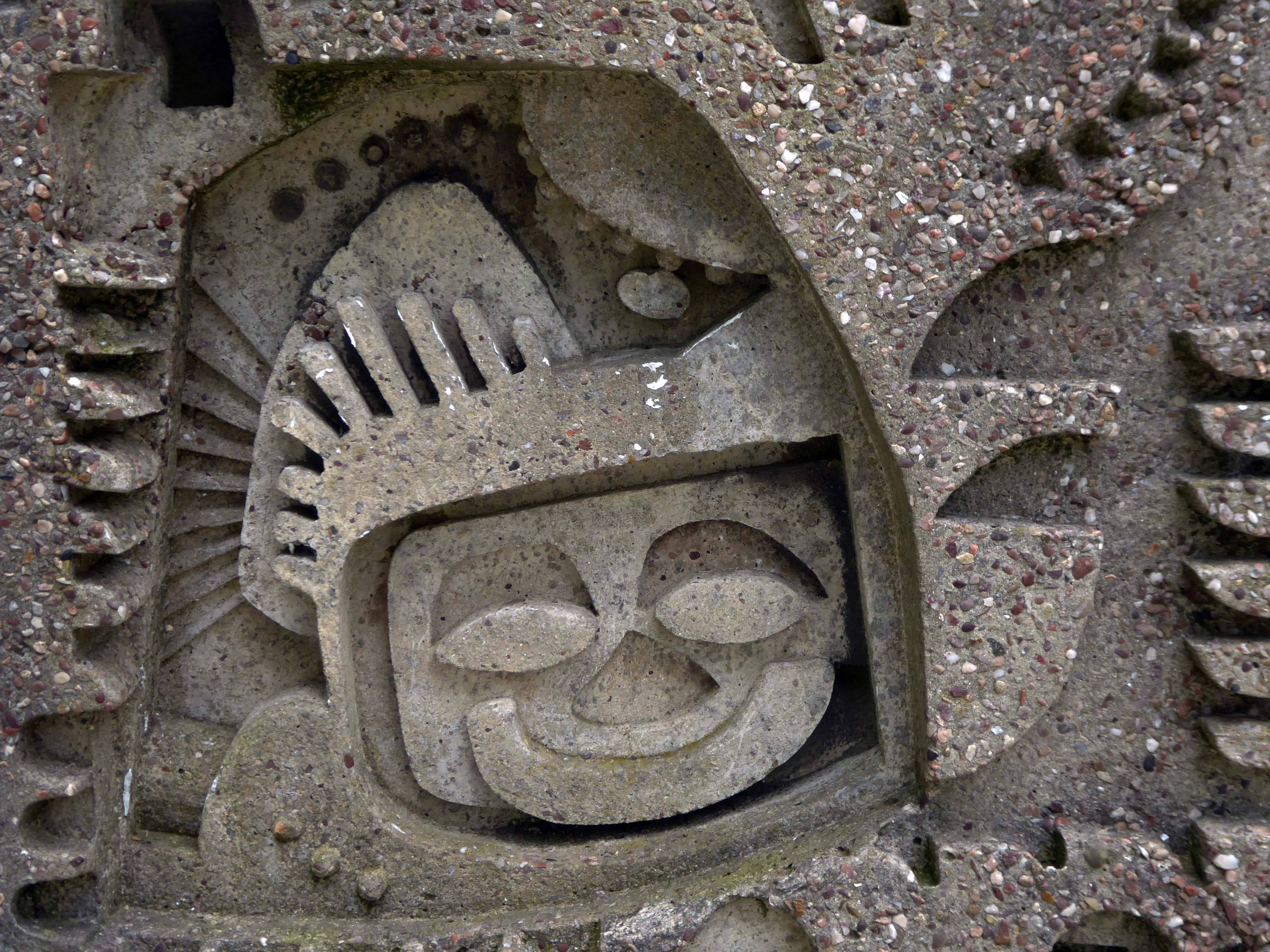
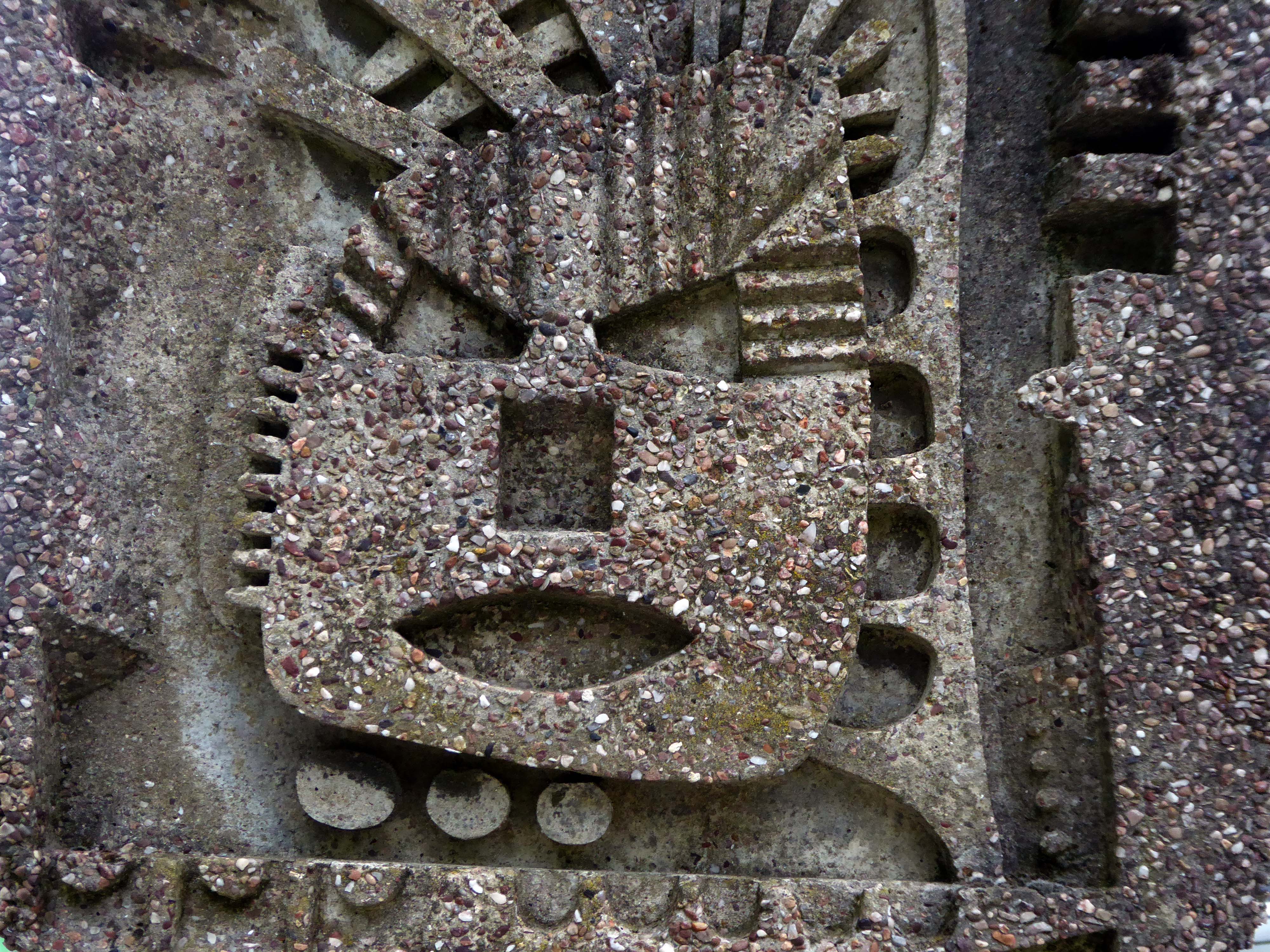
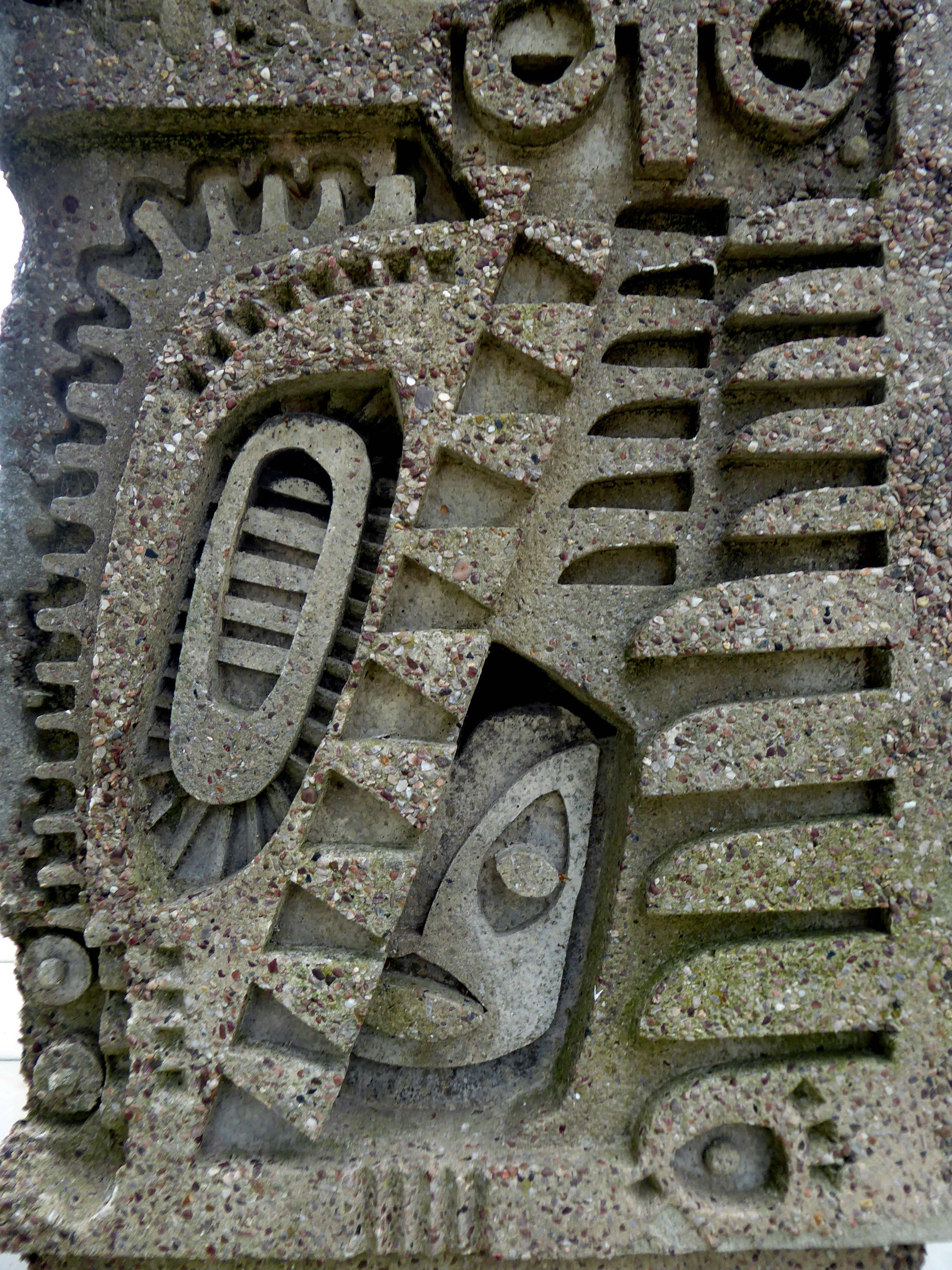
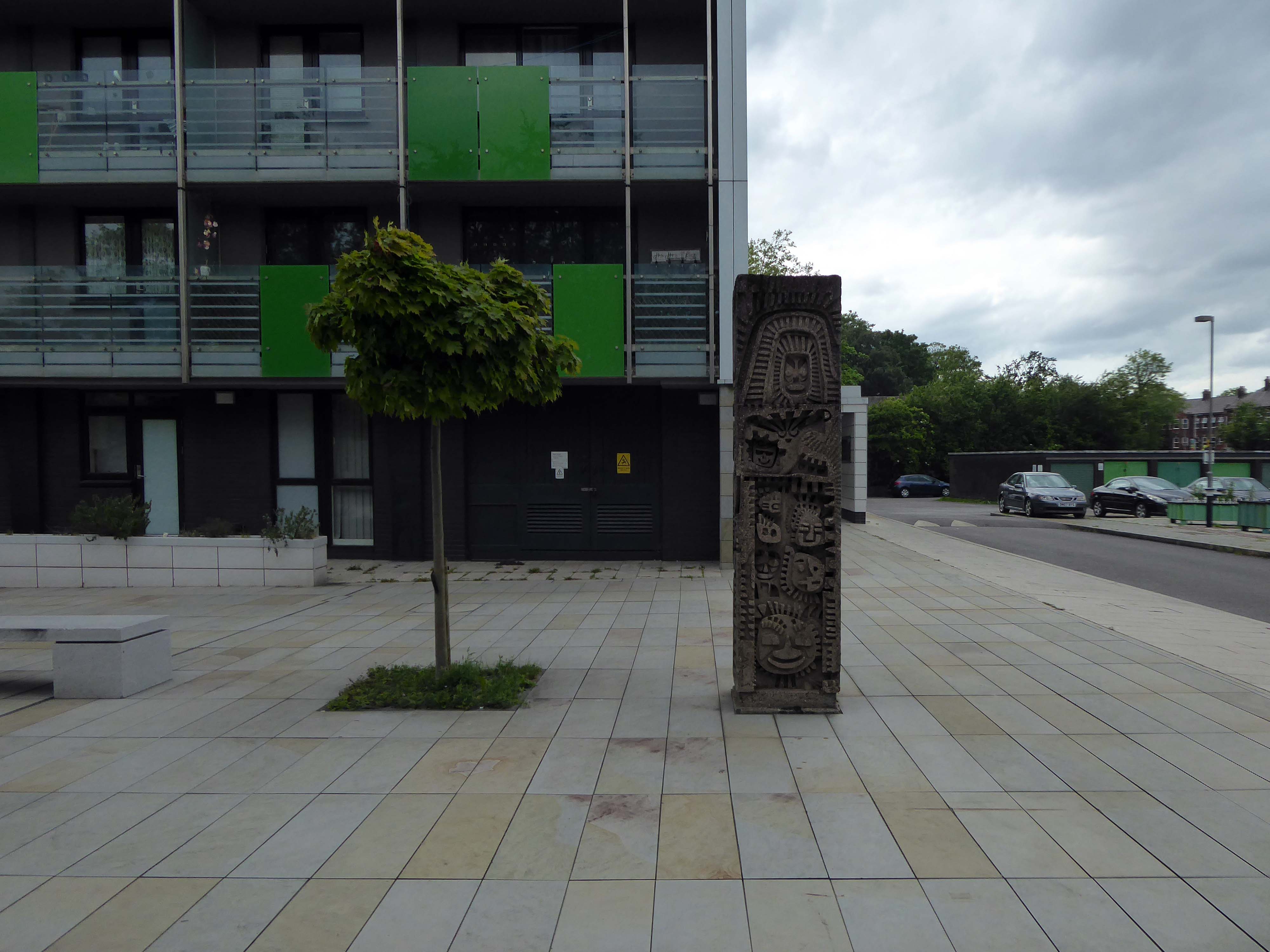
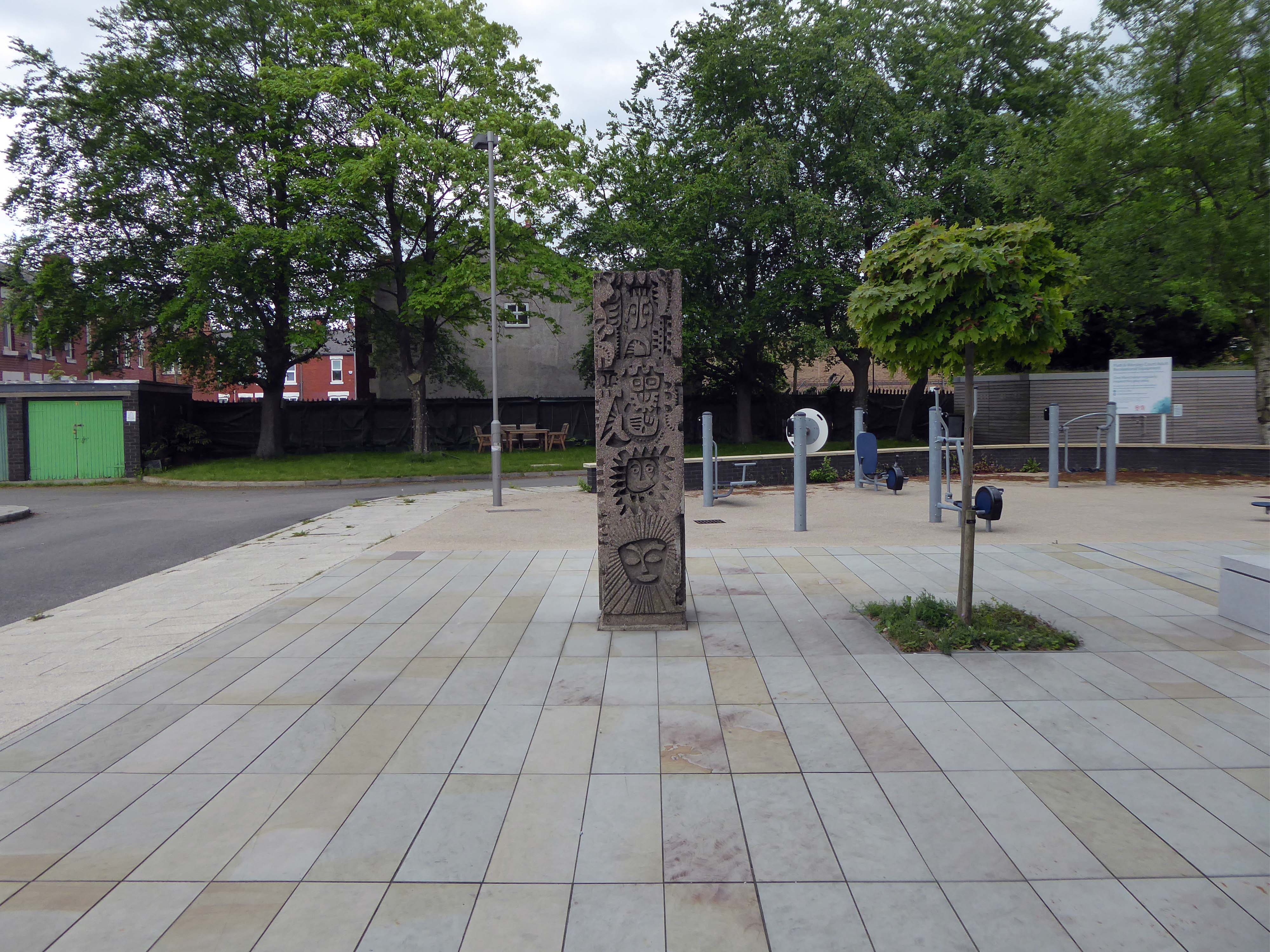
The putative William Mitchell totem continues to keep silent watch over the Square.