
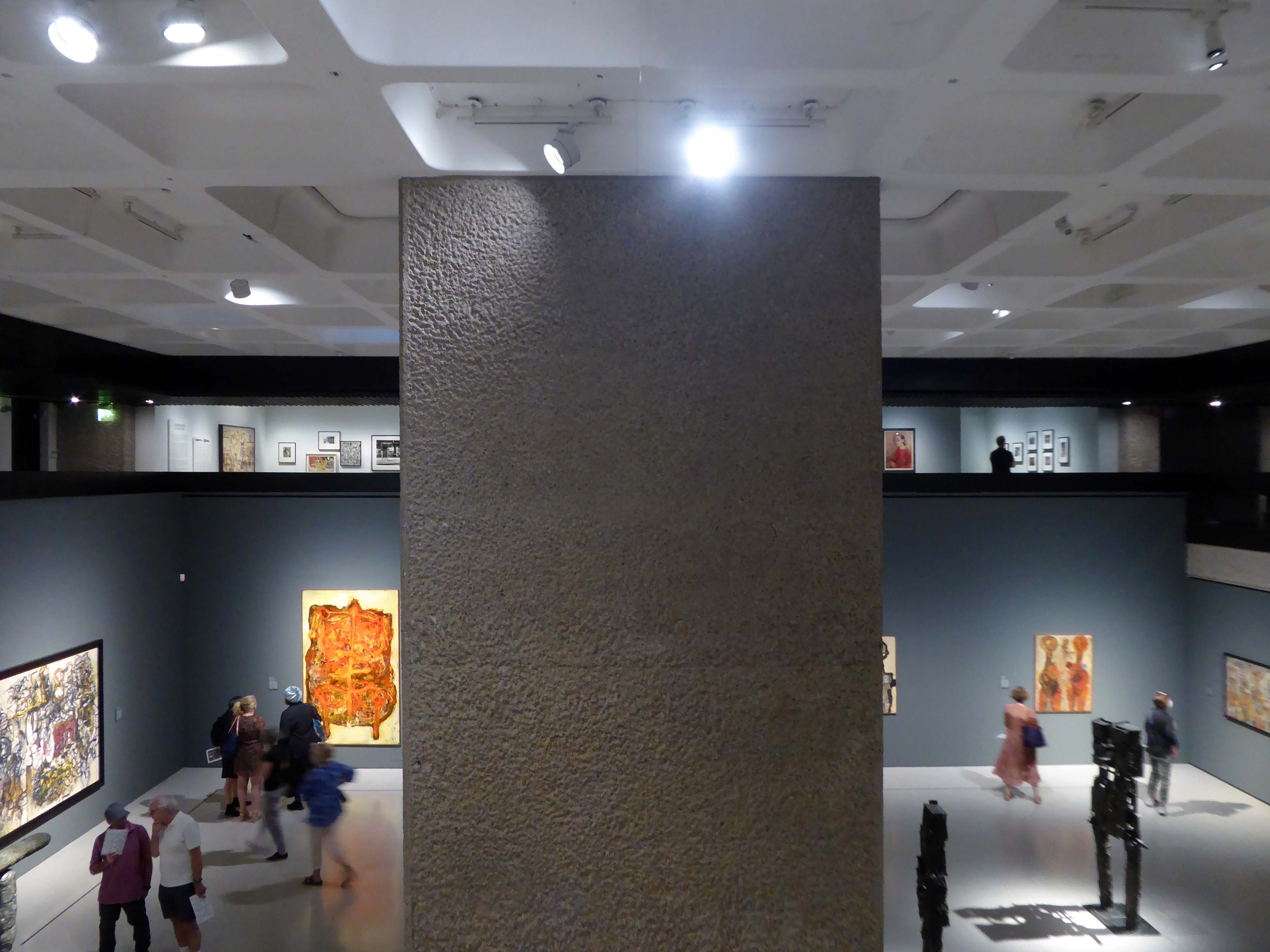
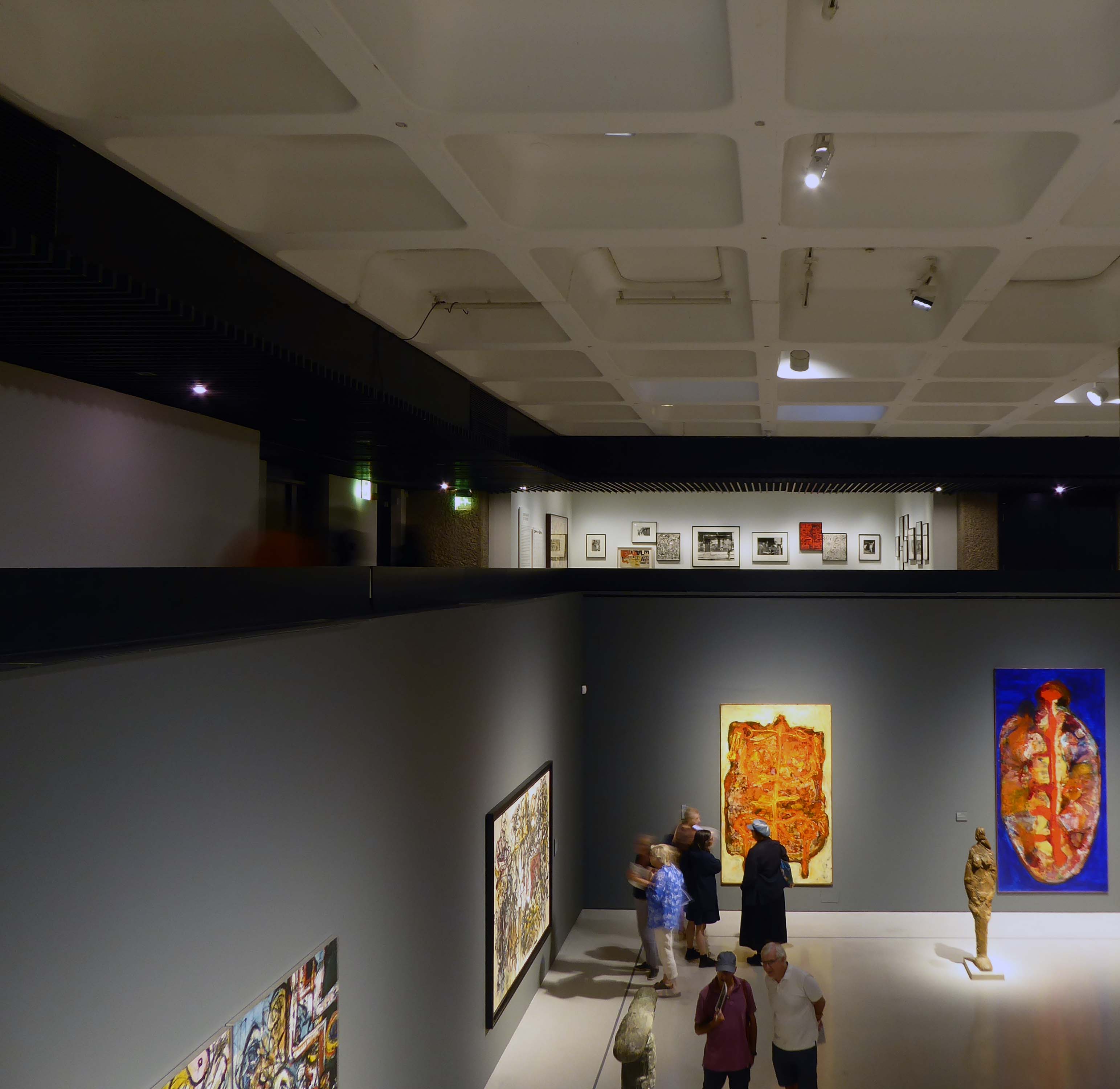
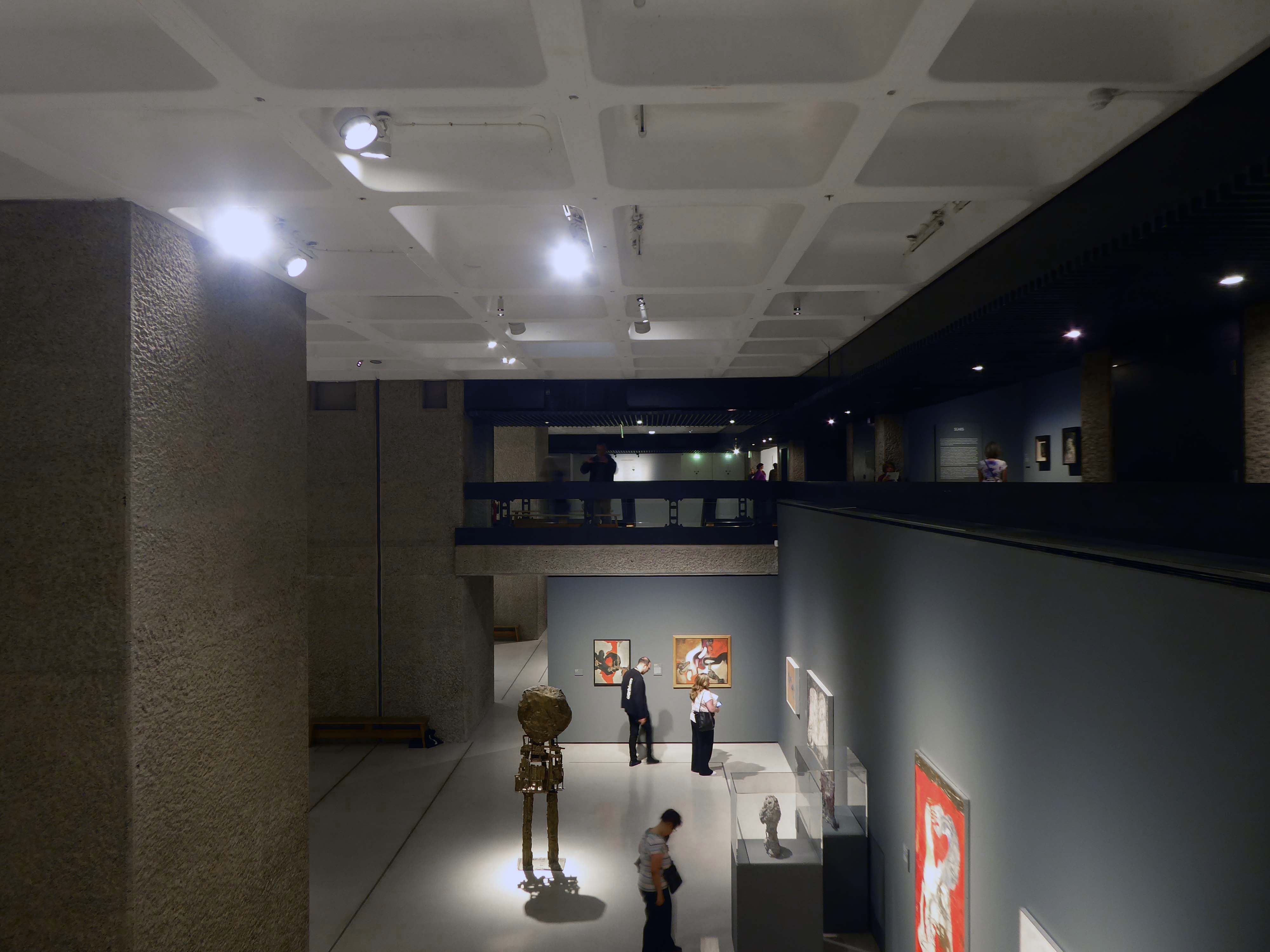
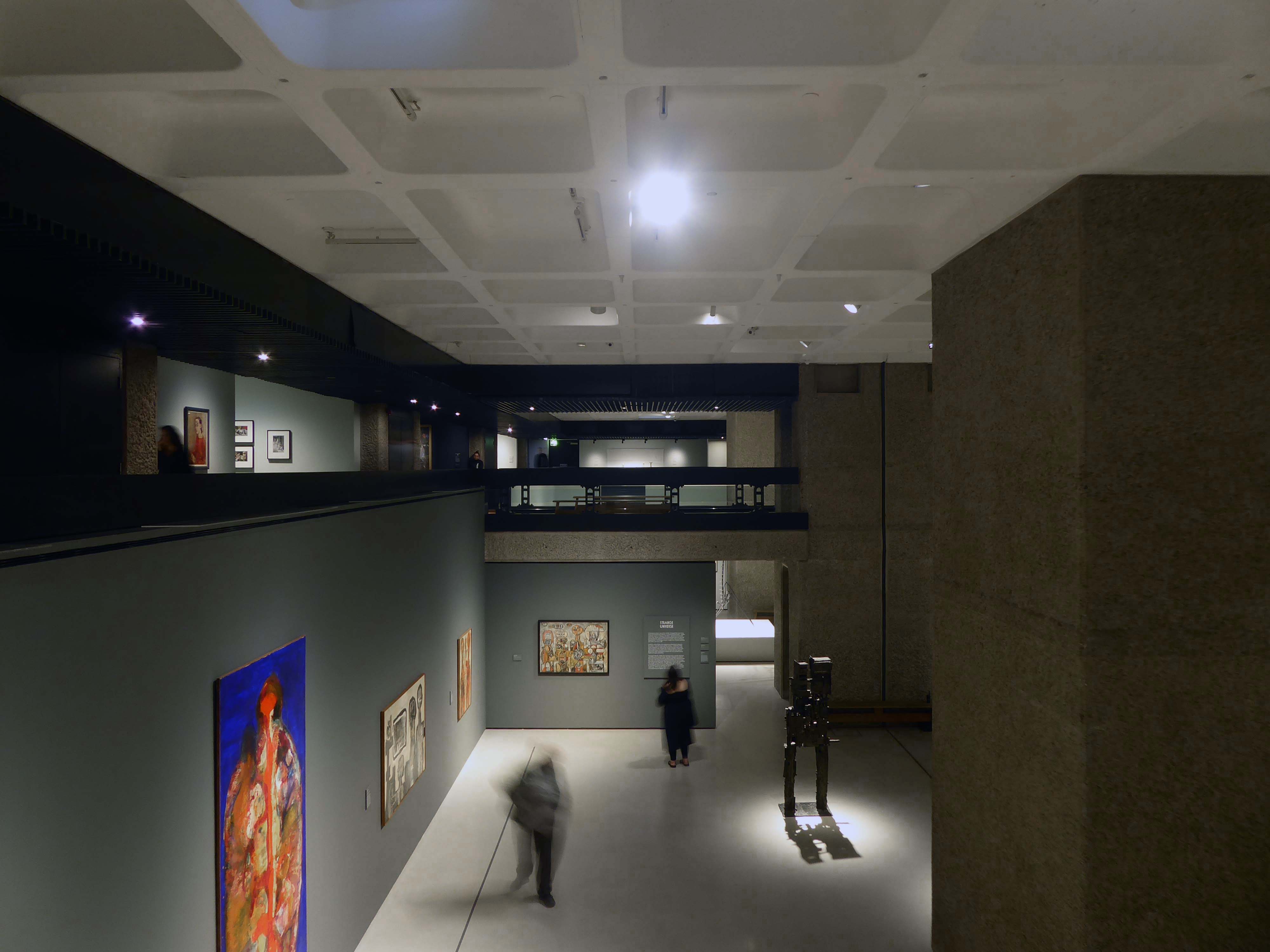
Is it a book is it a show?
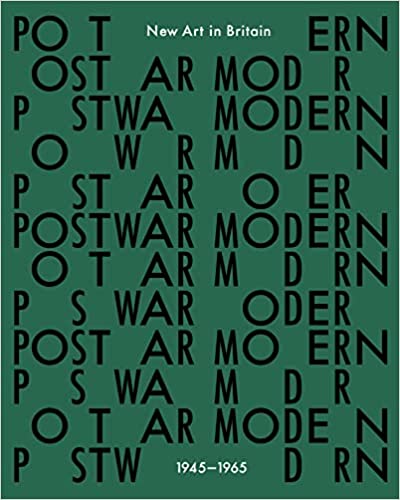
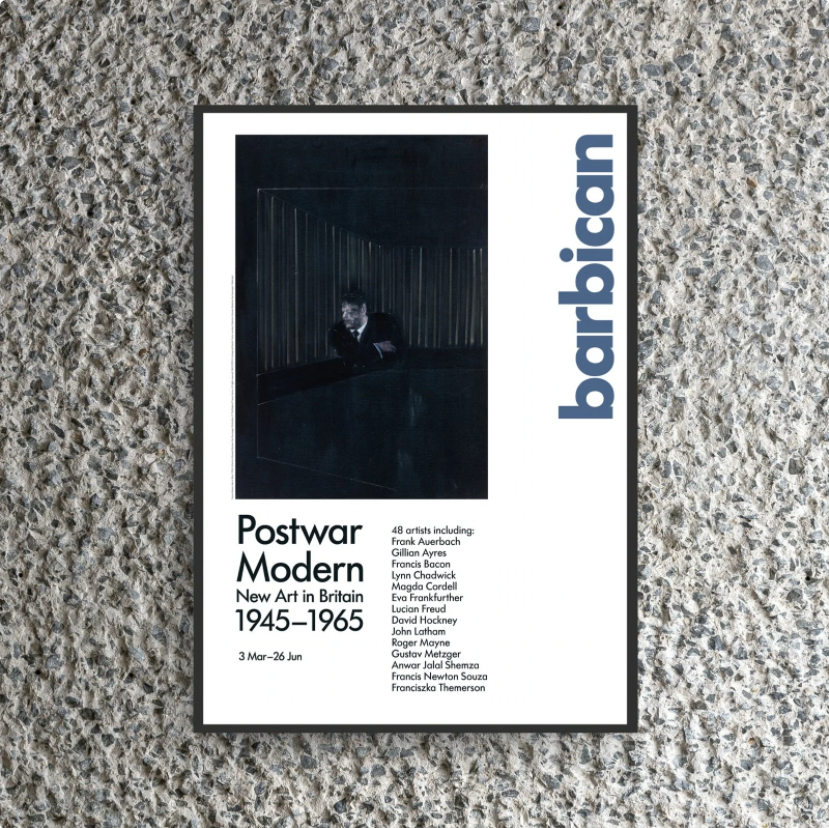
It’s both – well it was a show and it’s still a book.
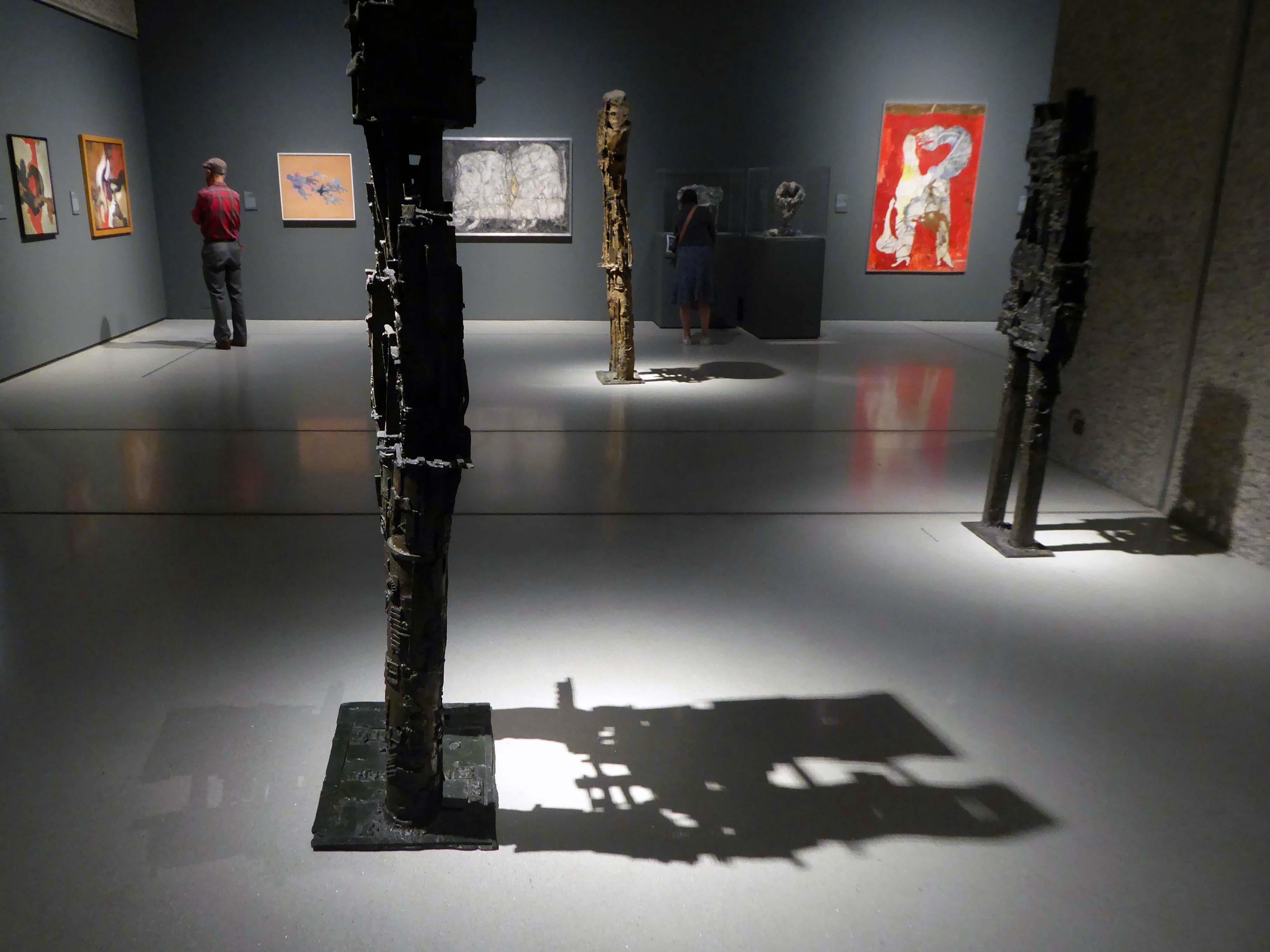
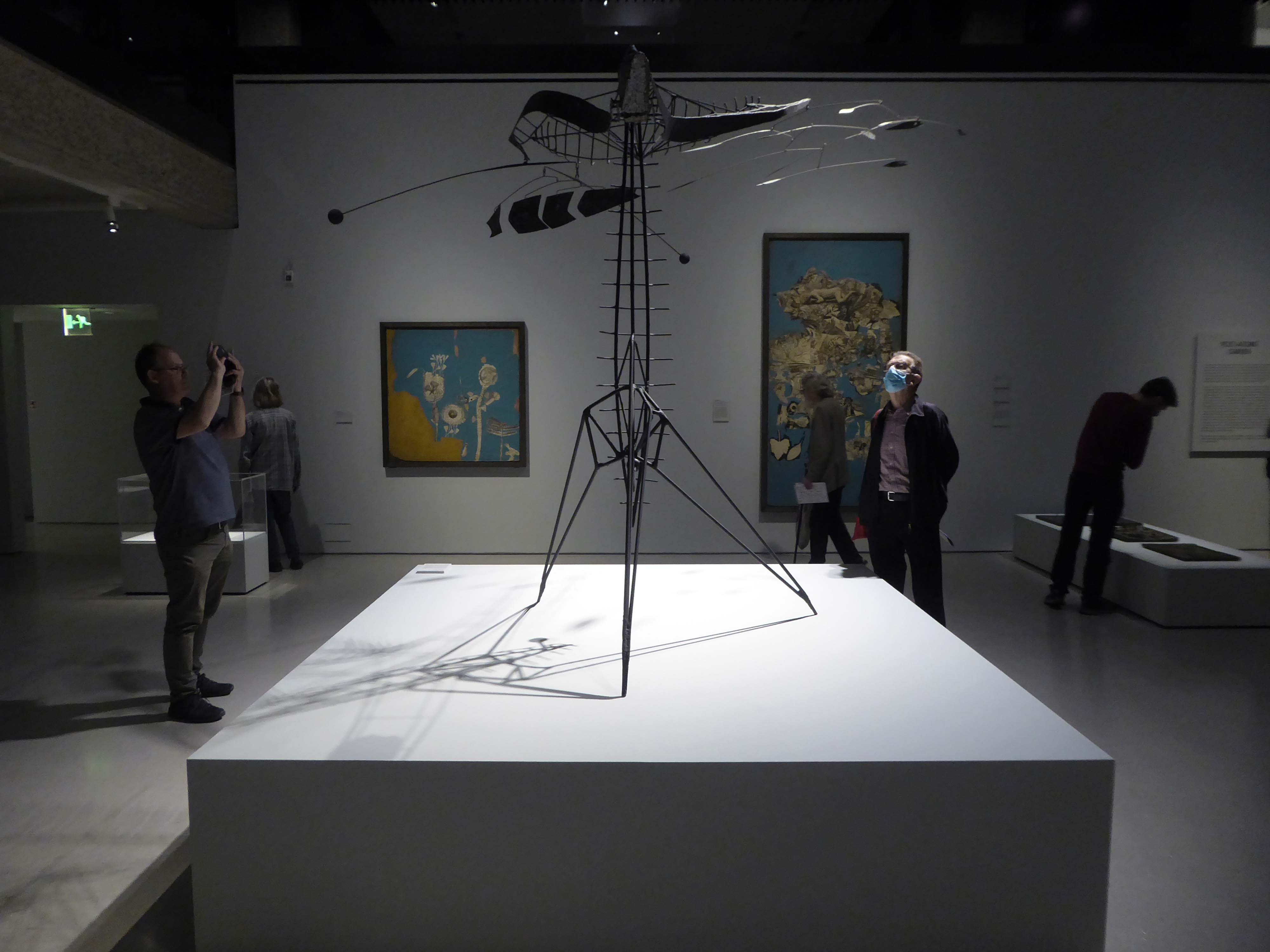
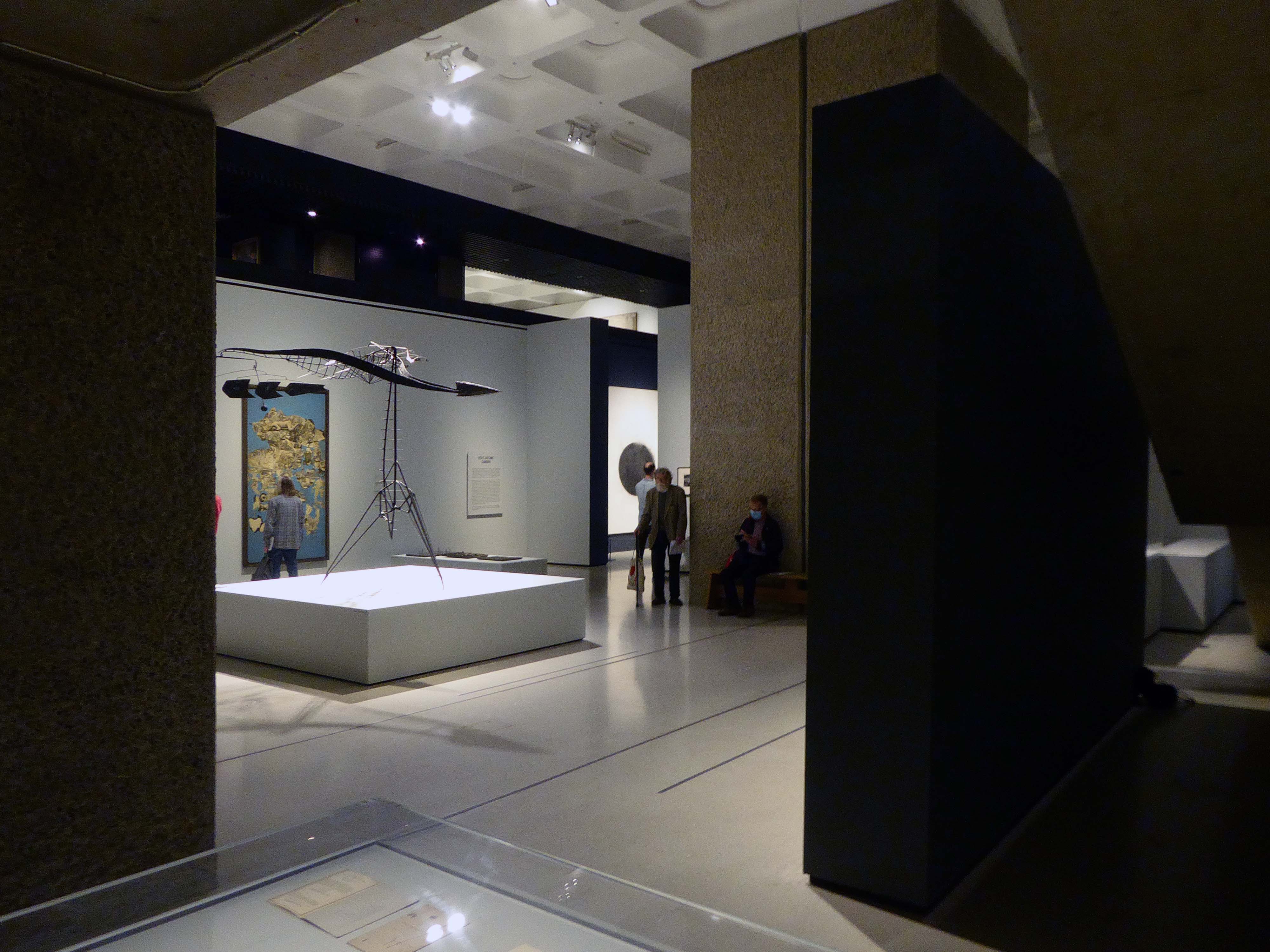
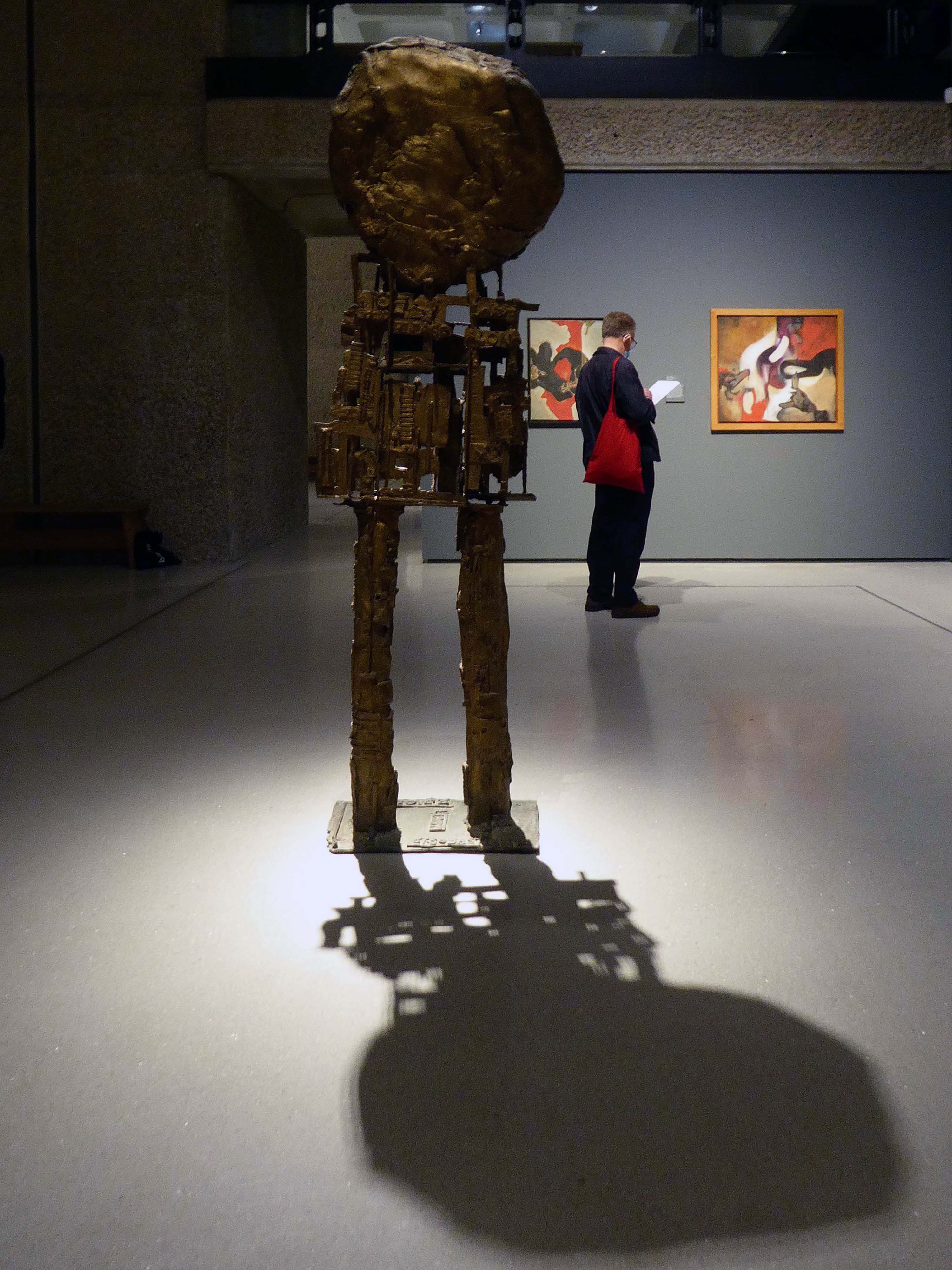
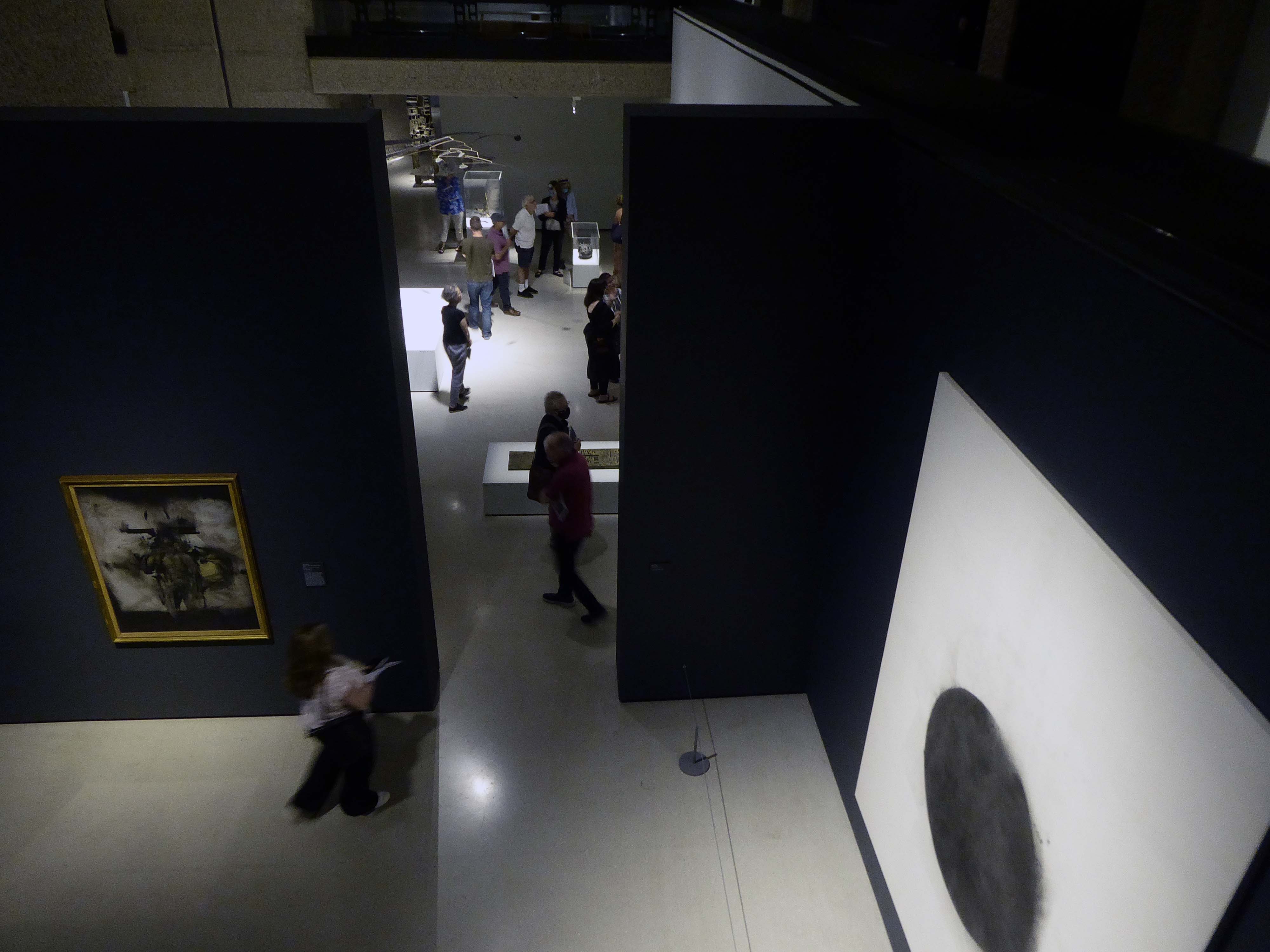
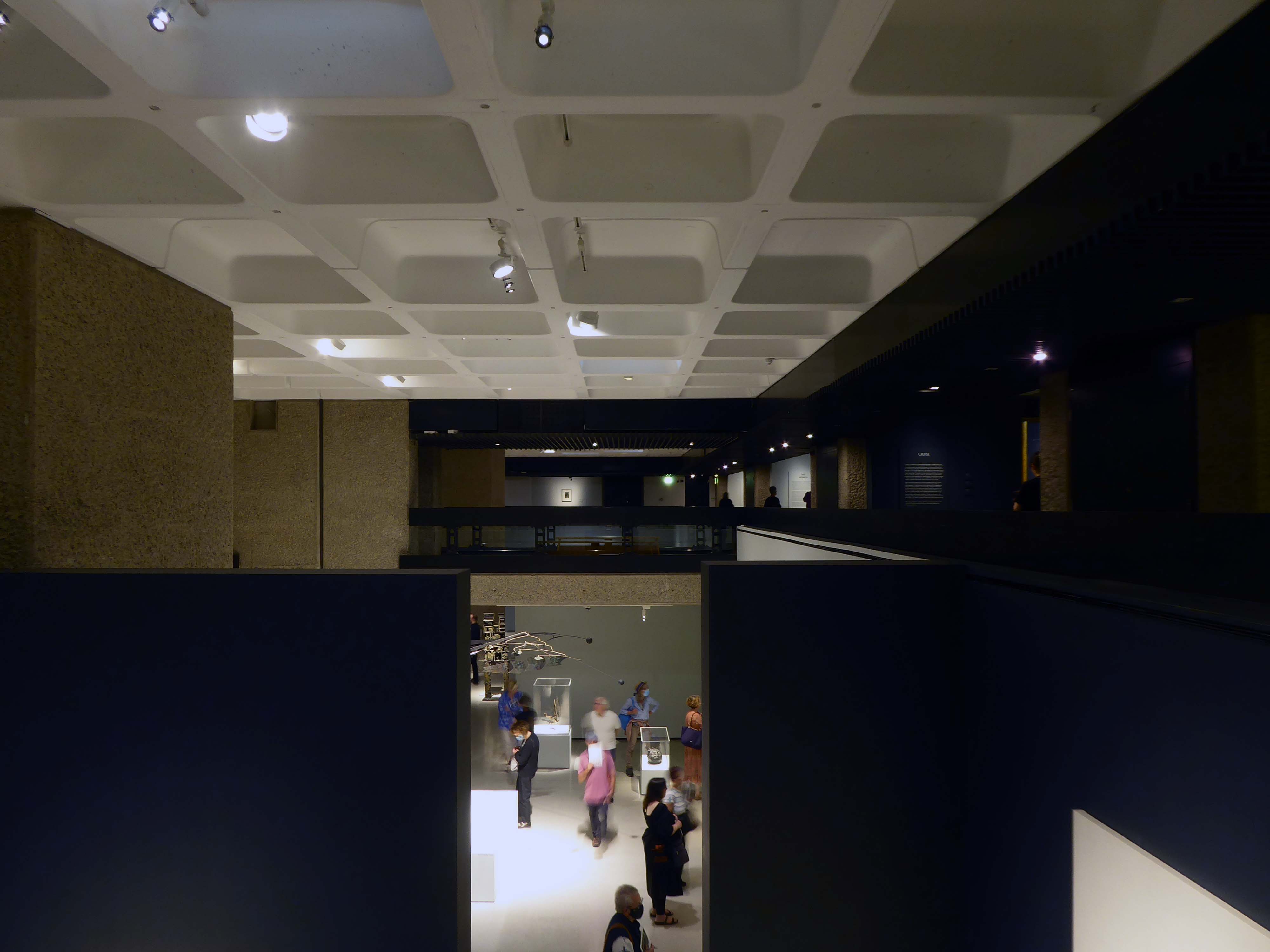
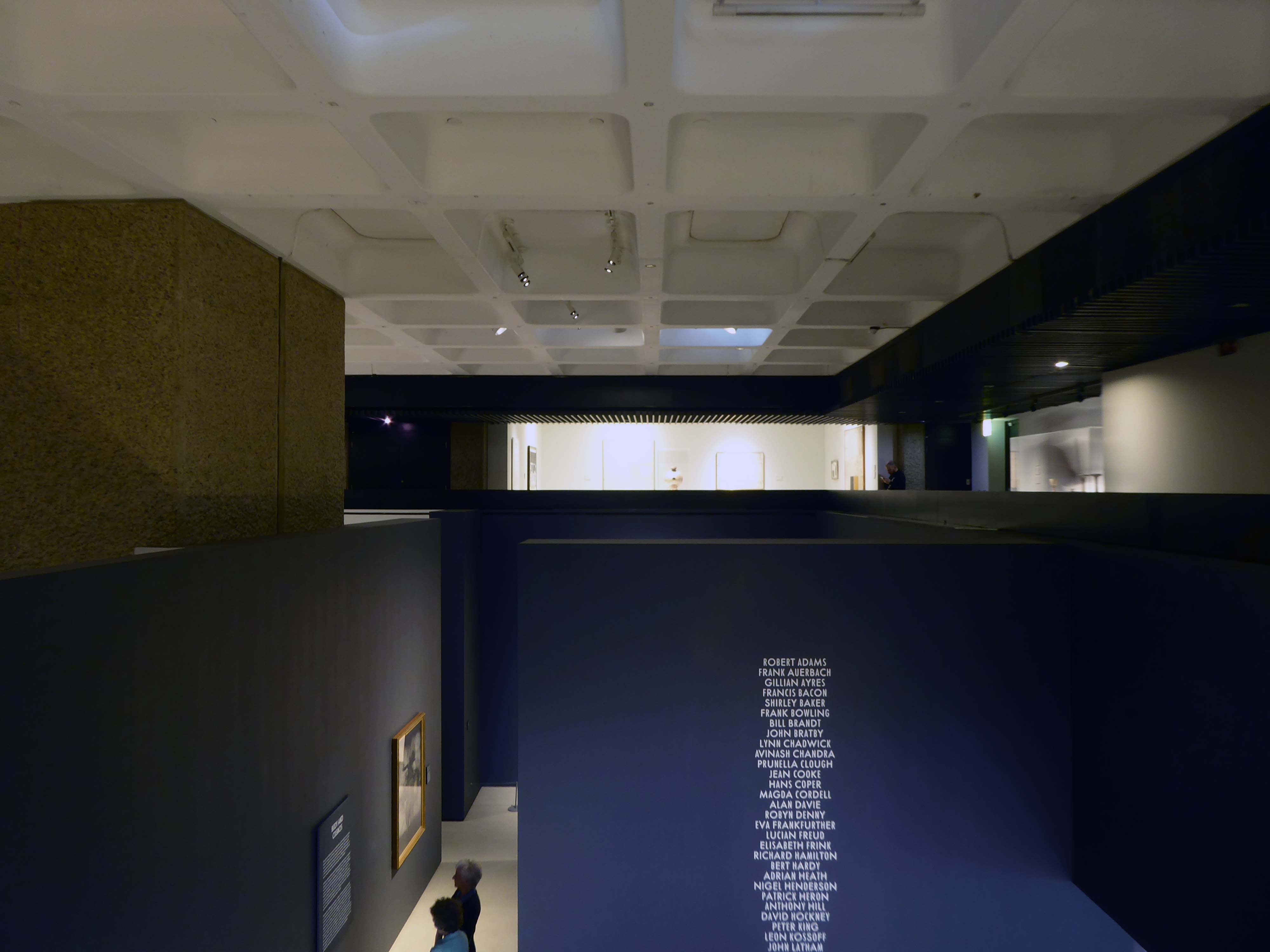
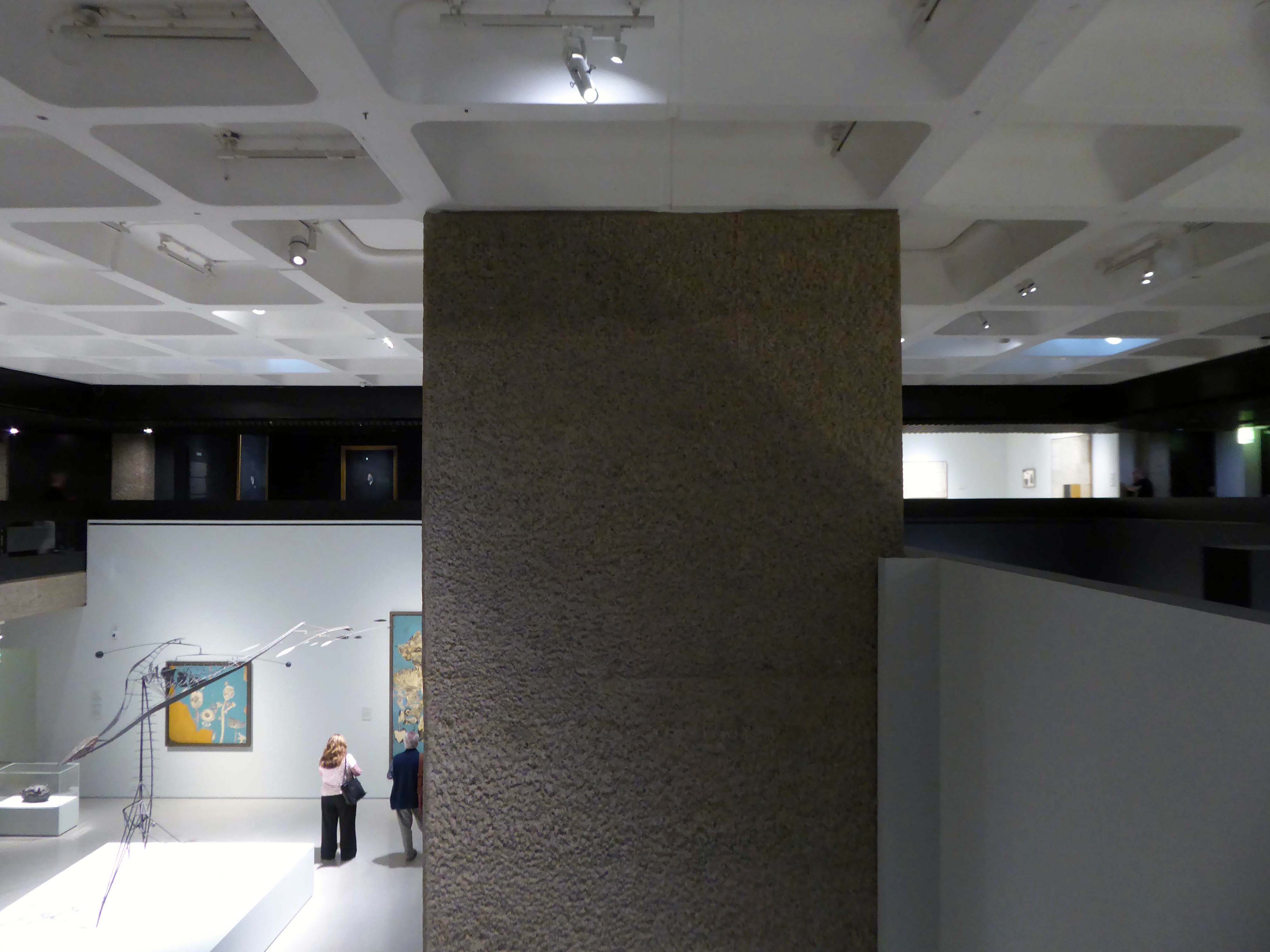
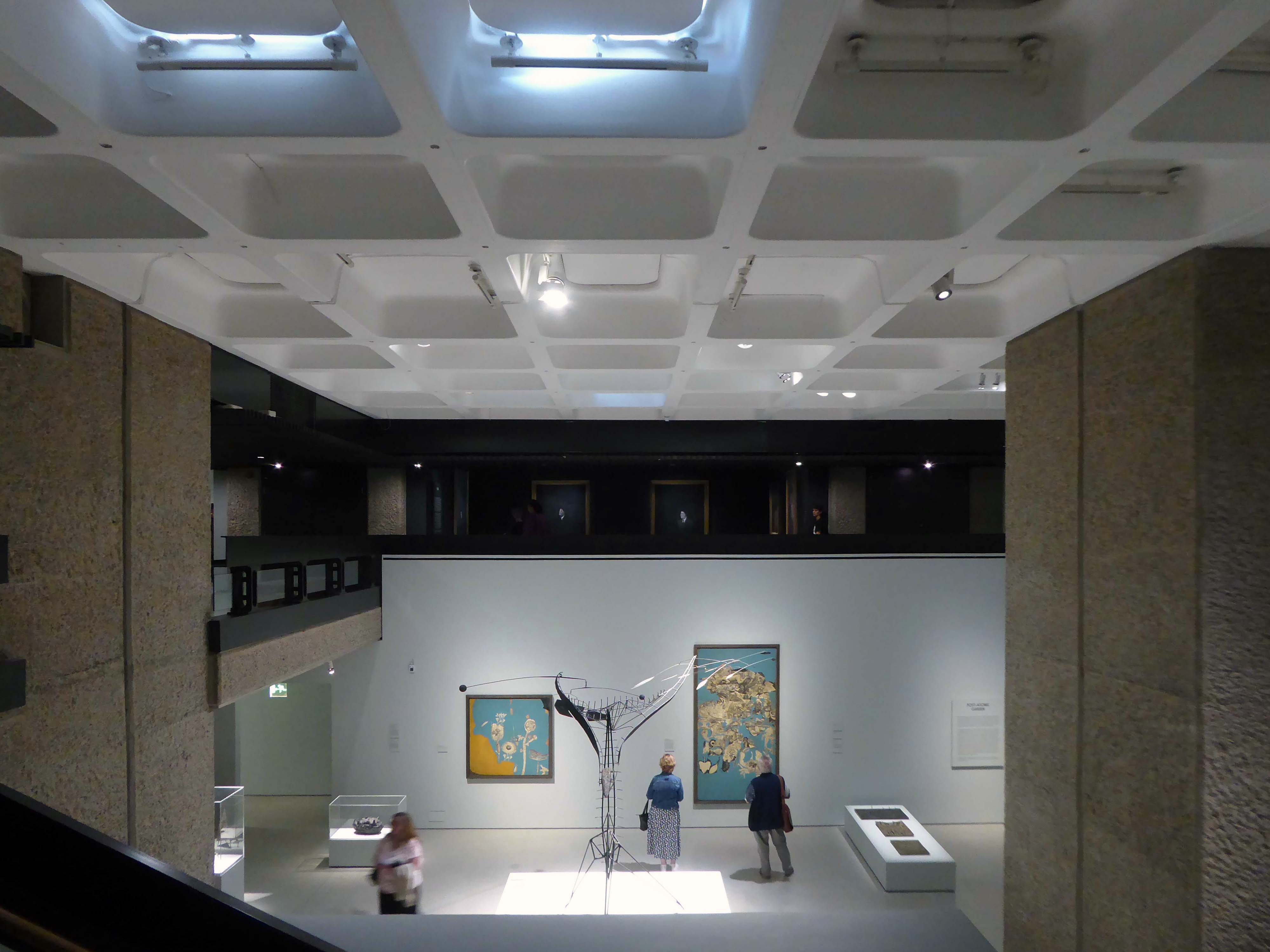
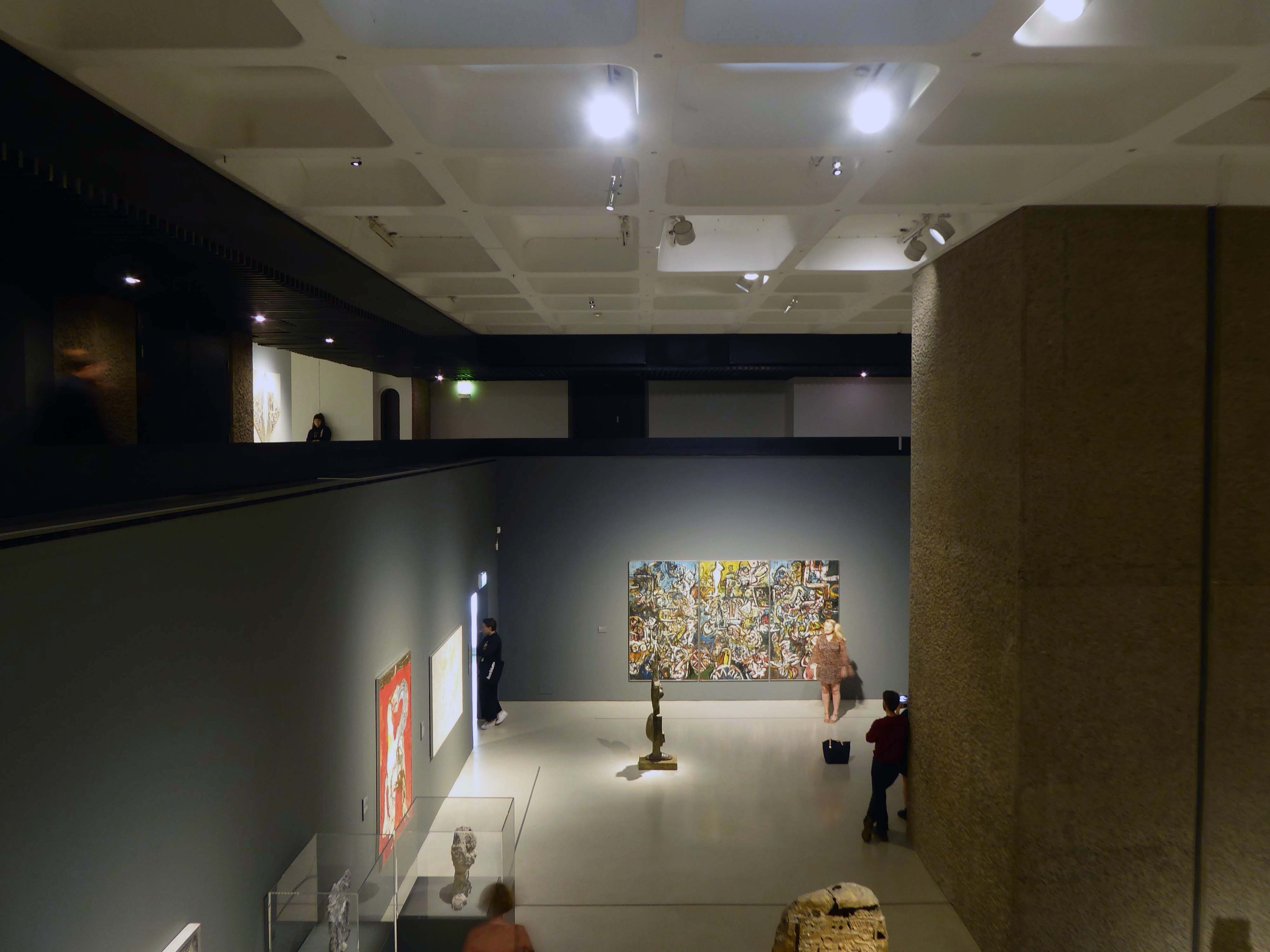
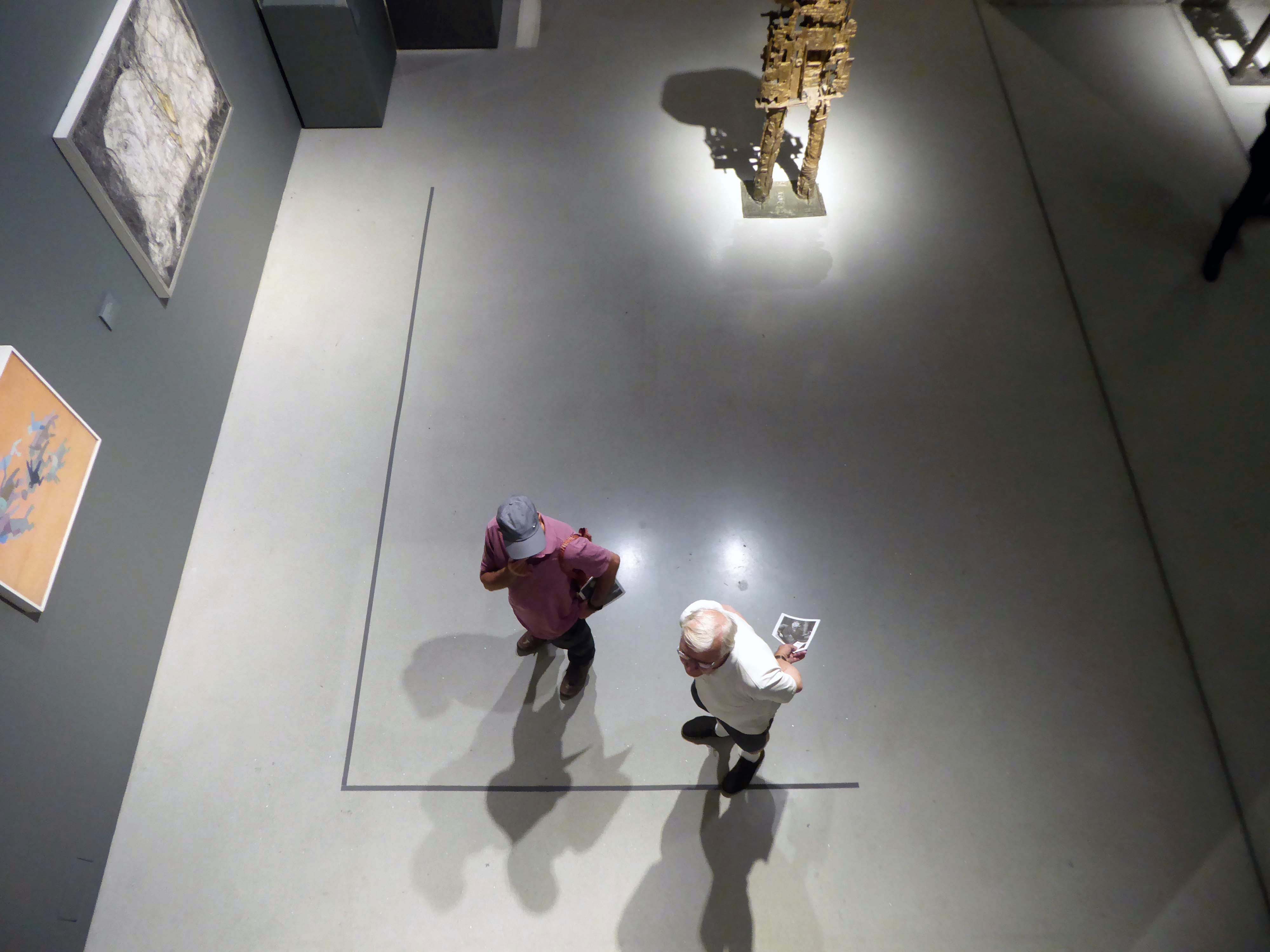
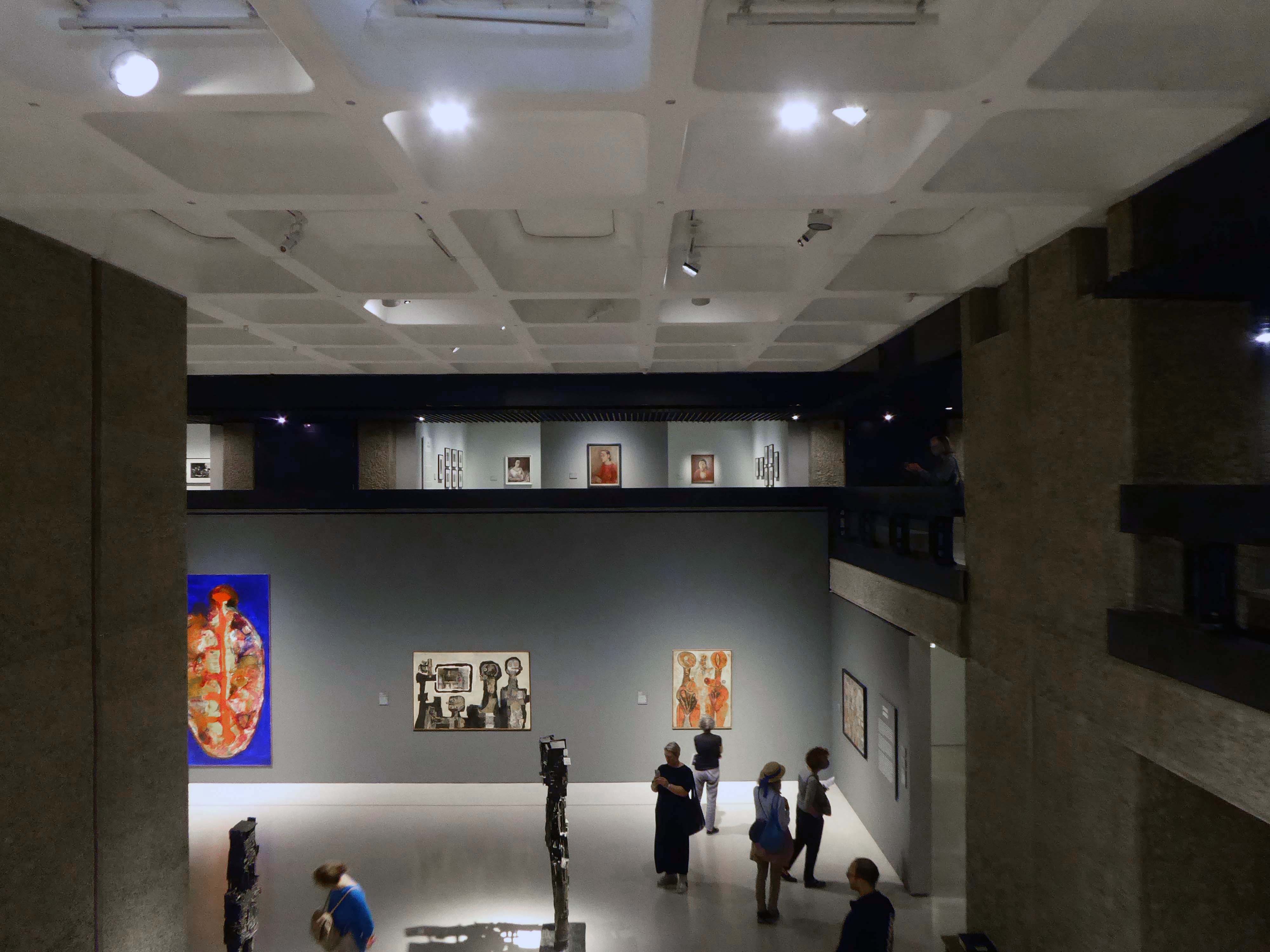
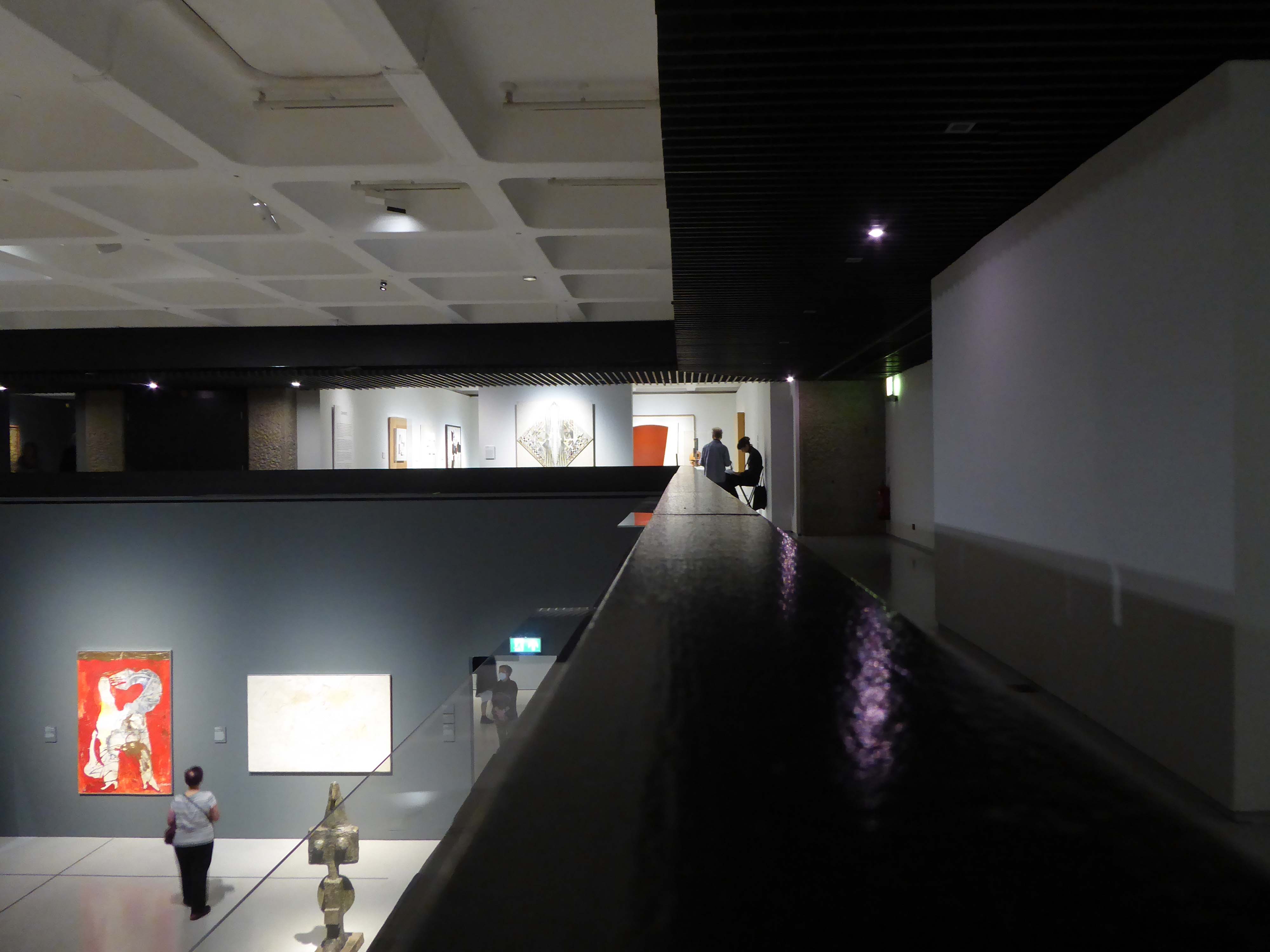
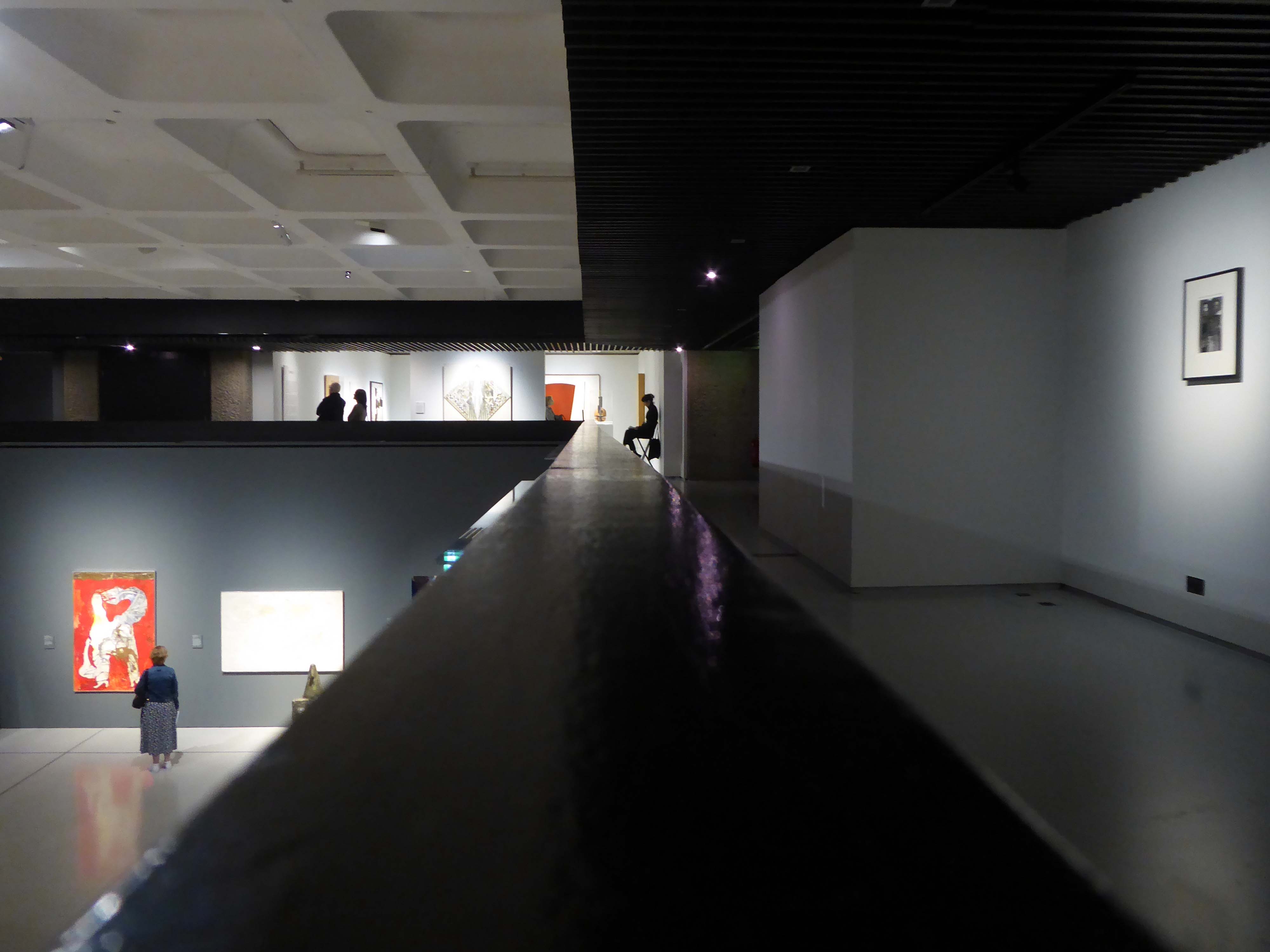
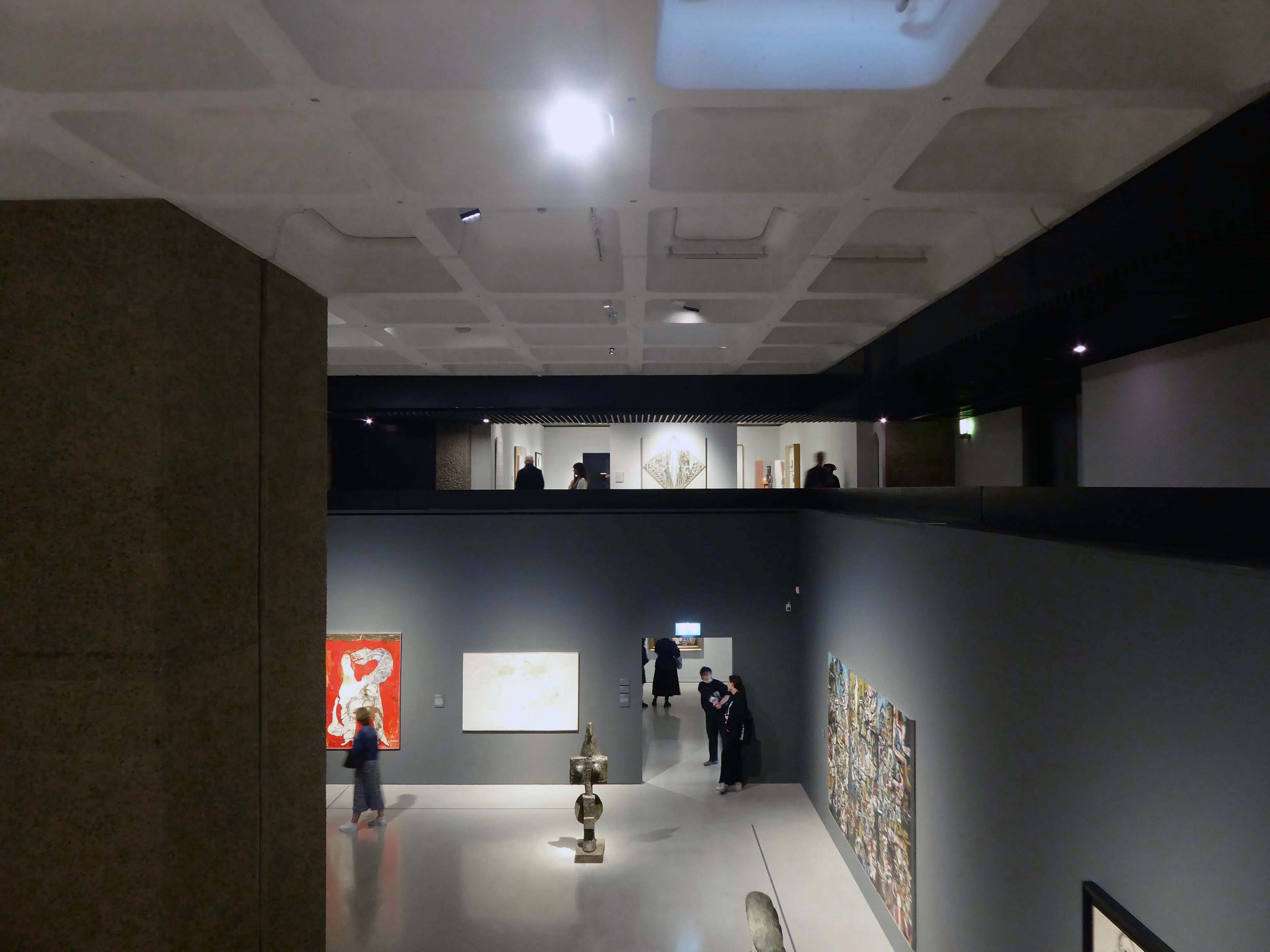
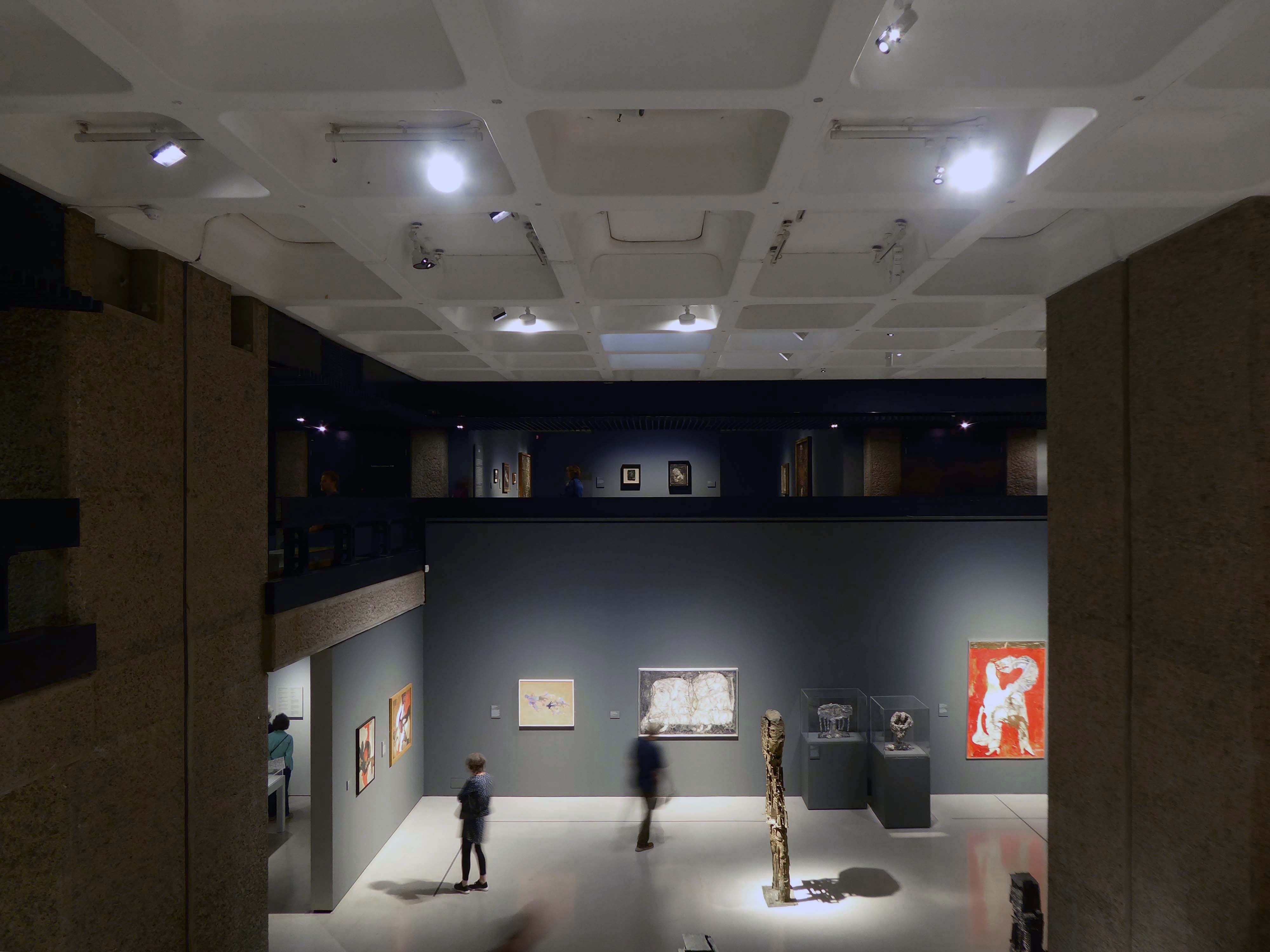
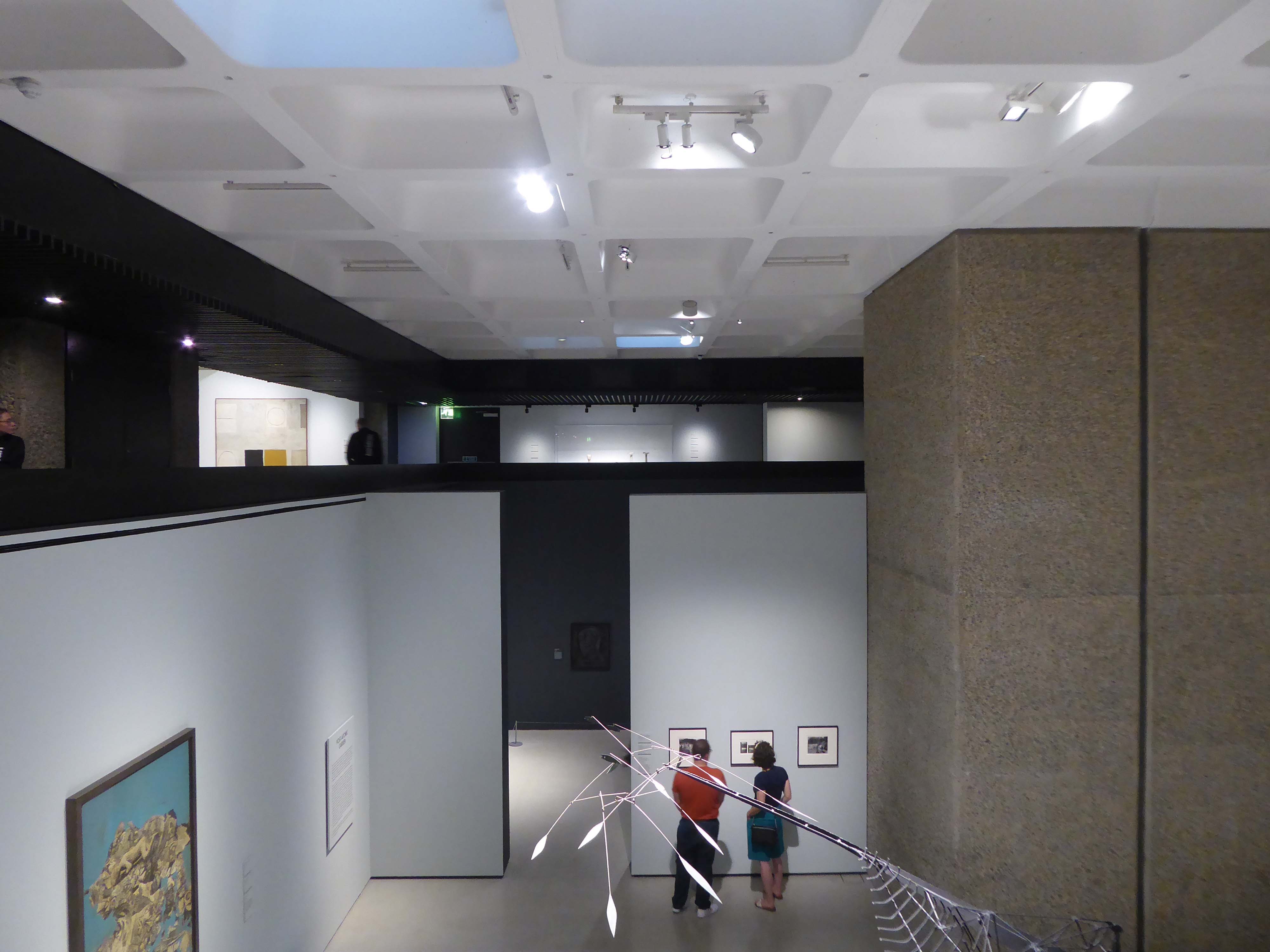
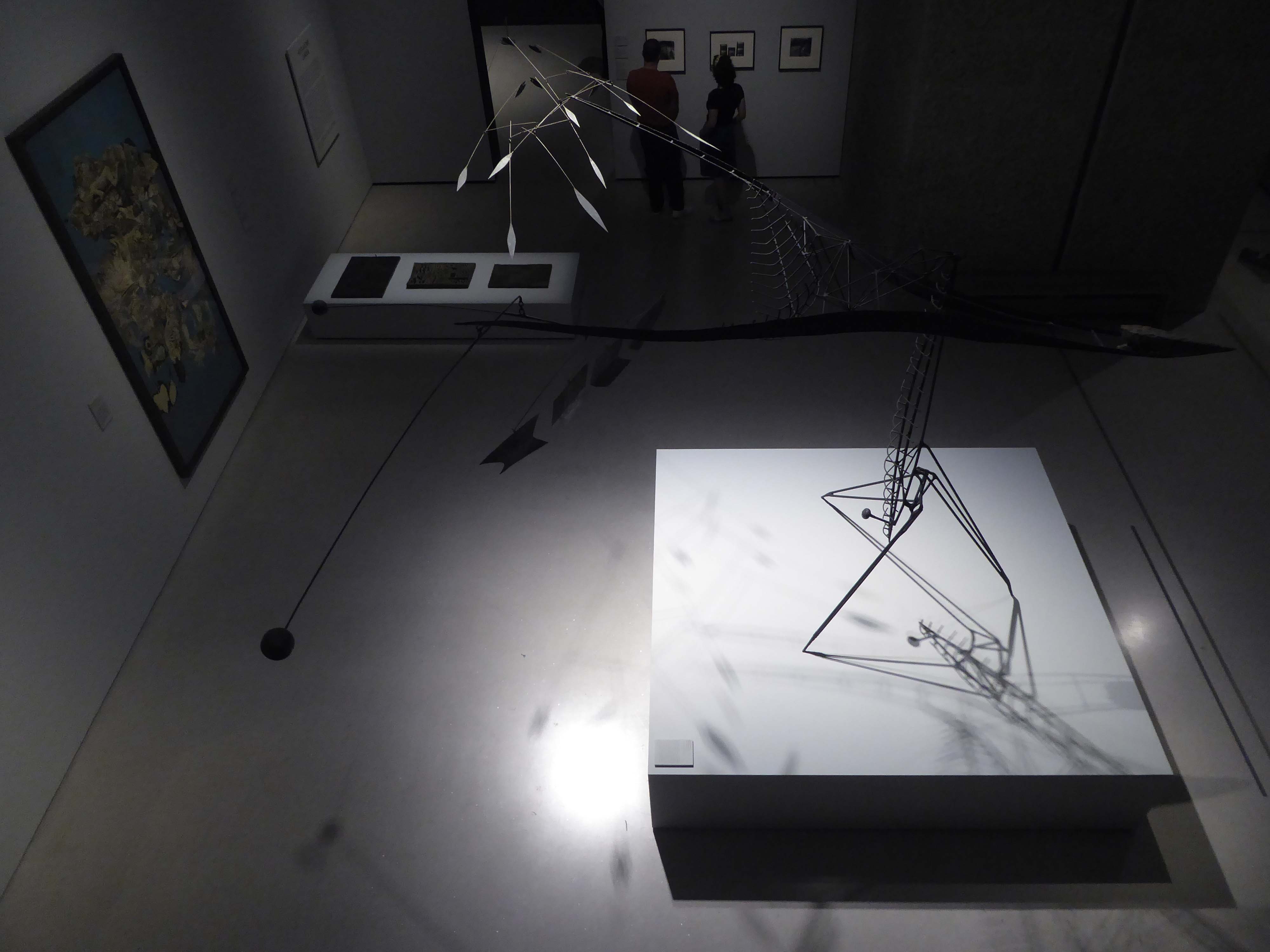
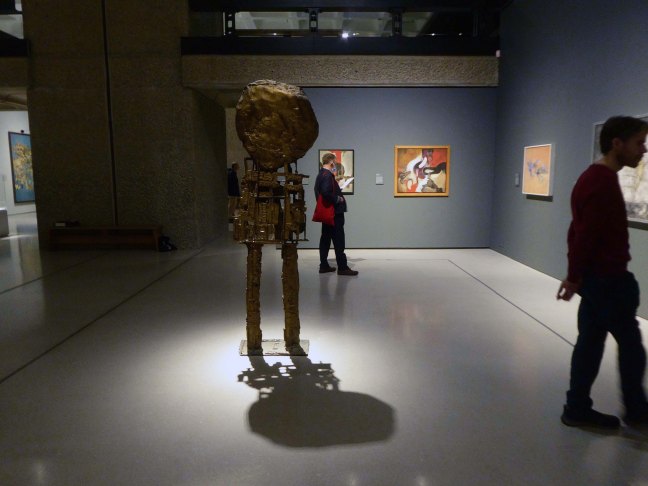
I went along and looked at the art and looked at the people looking at the art.
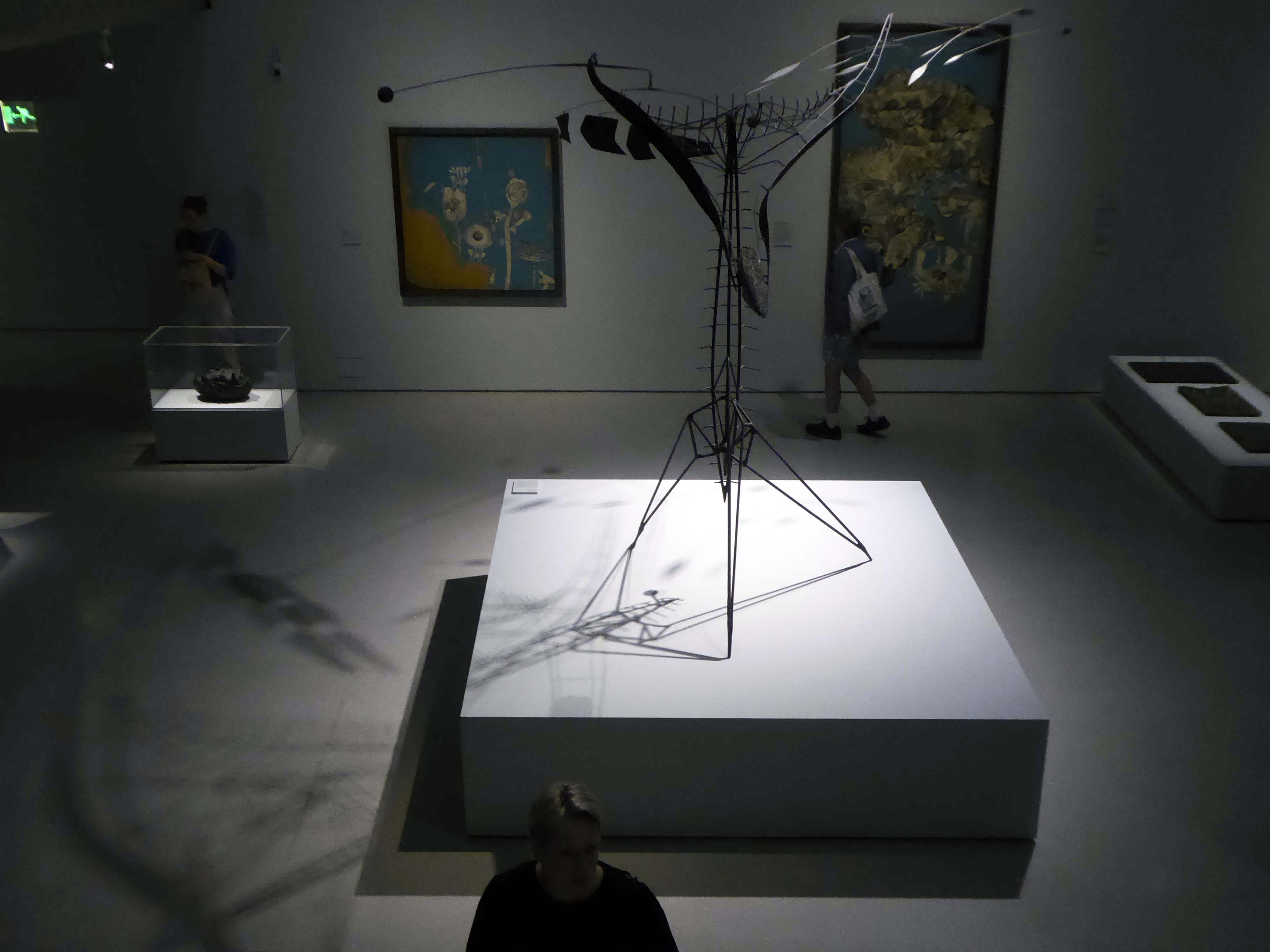
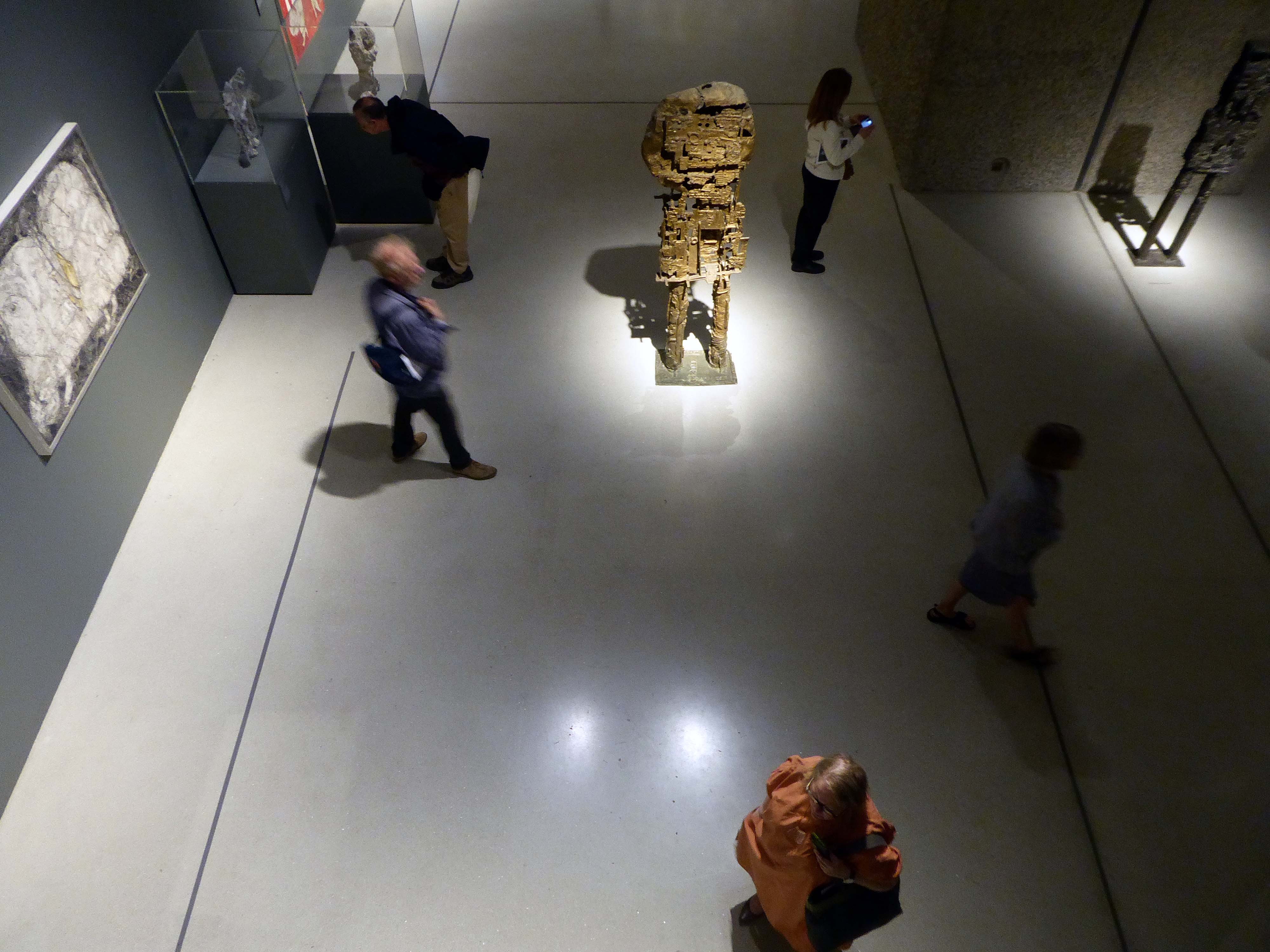
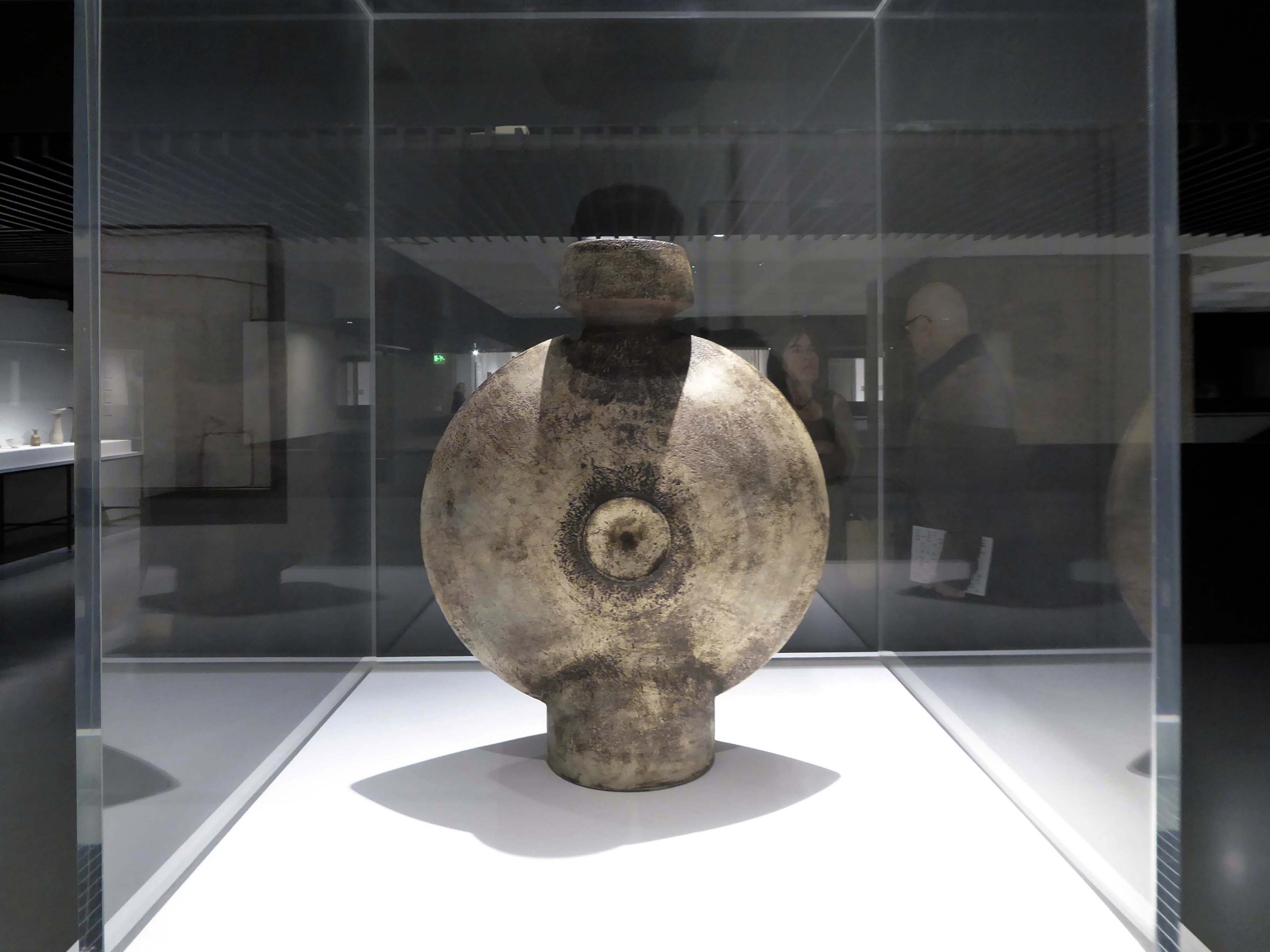
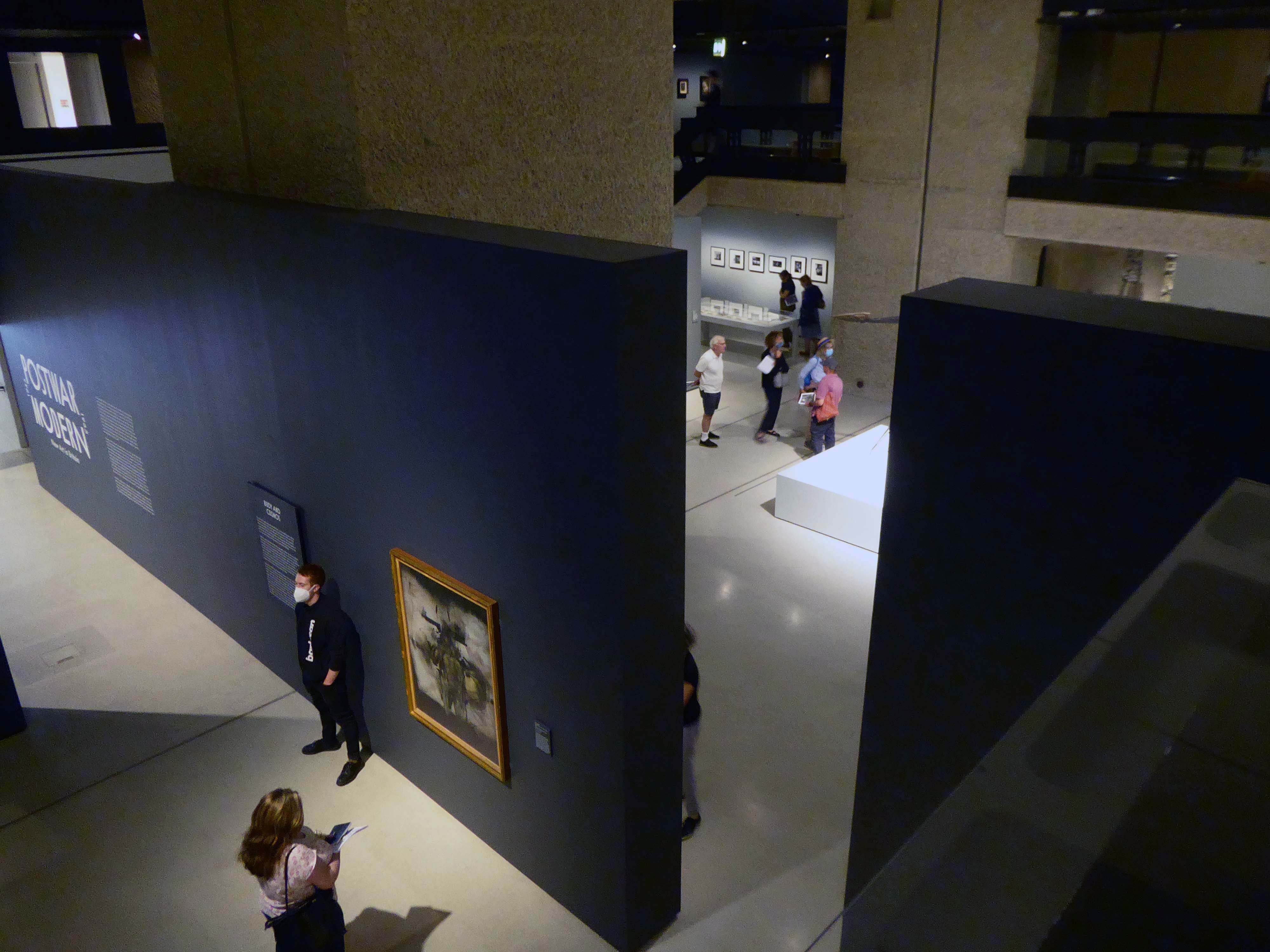

Is it a book is it a show?
It’s both – well it was a show and it’s still a book.
I went along and looked at the art and looked at the people looking at the art.
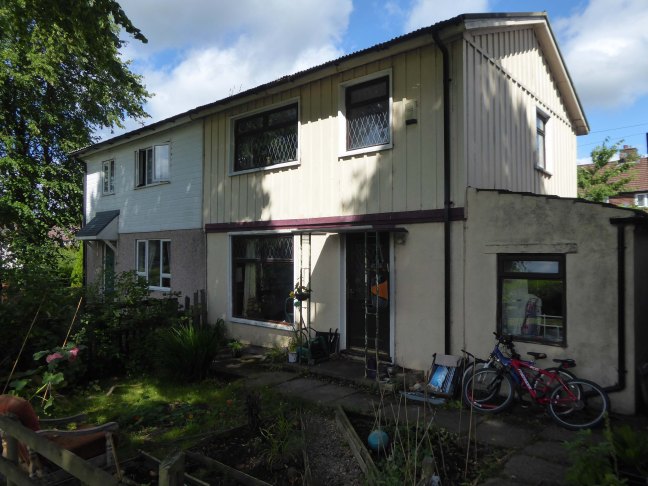
Wadsworth Lane Hebden Bridge HX7 8DL
Calderdale is awash with non-traditional housing as can be seen on this site:
Non-traditional housing in Calderdale
The Second World War brought an even greater demand for the rapid construction of new dwellings. In addition to the need to rebuild homes damaged as a result of the war, the Government had other objectives that were set out in a white paper in 1945, to provide a separate dwelling for any family who wanted one and to complete the slum clearance programme started before the war. After the Second World War there was a surplus of steel and aluminium production, and an industry in need of diversification. These factors drove the move towards the use of prefabrication, as a result many new varieties of concrete, timber framed and steel framed systems emerged. Whilst most systems were intended to provide permanent or long-term housing a few were intended only as emergency or temporary solutions.
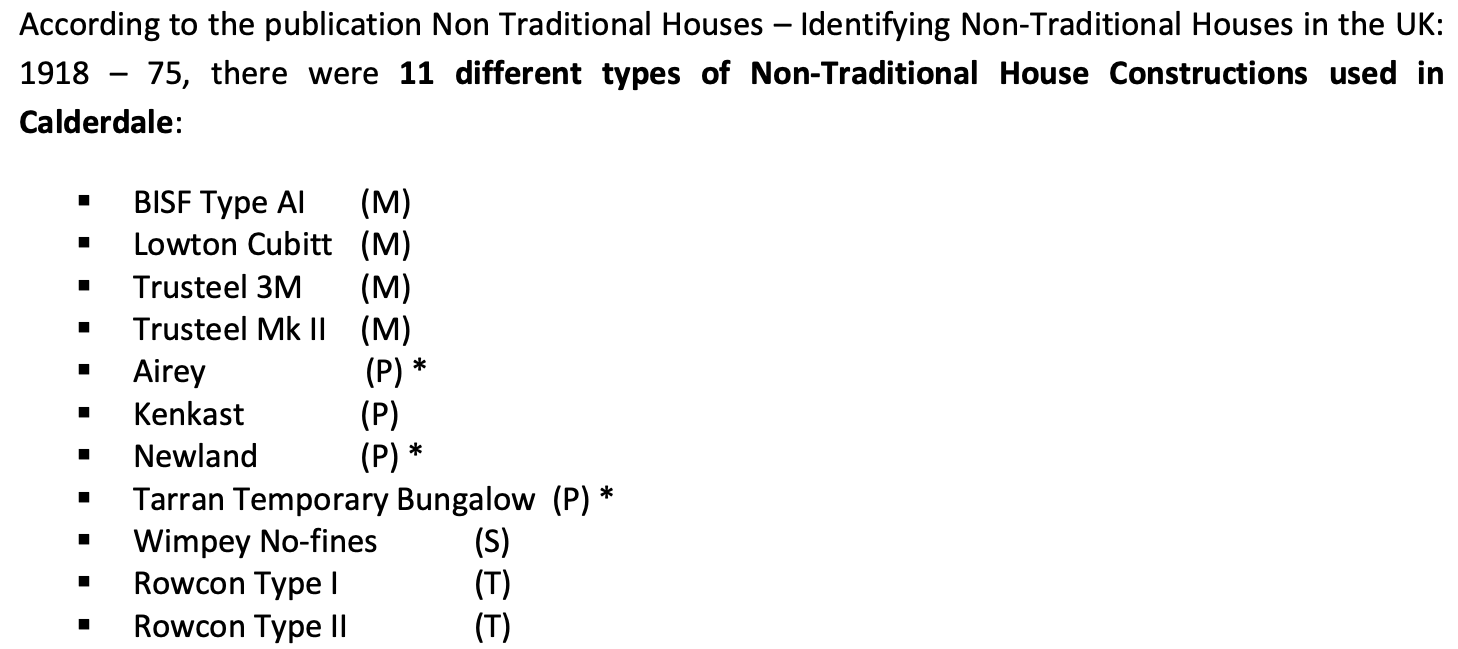
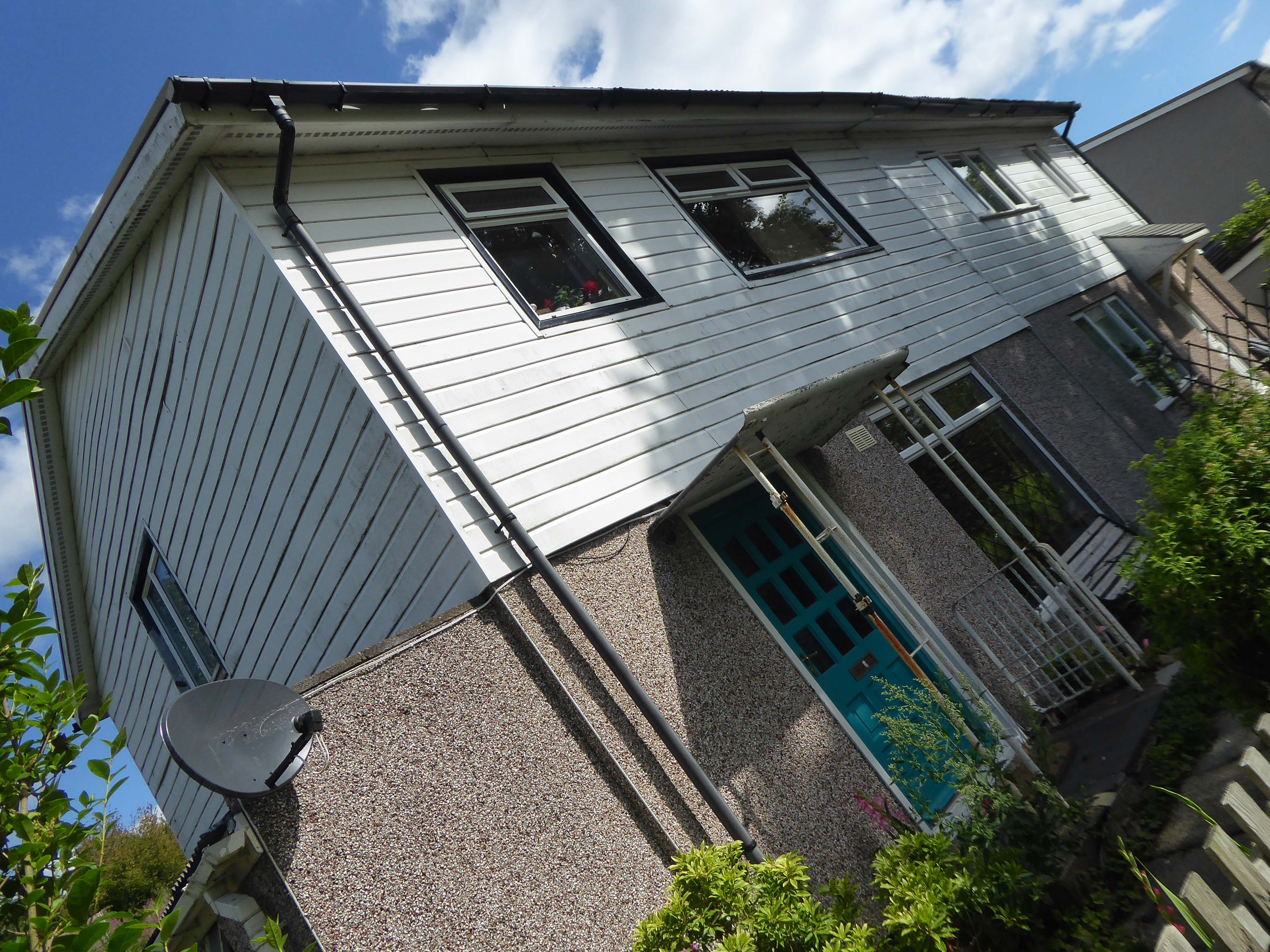
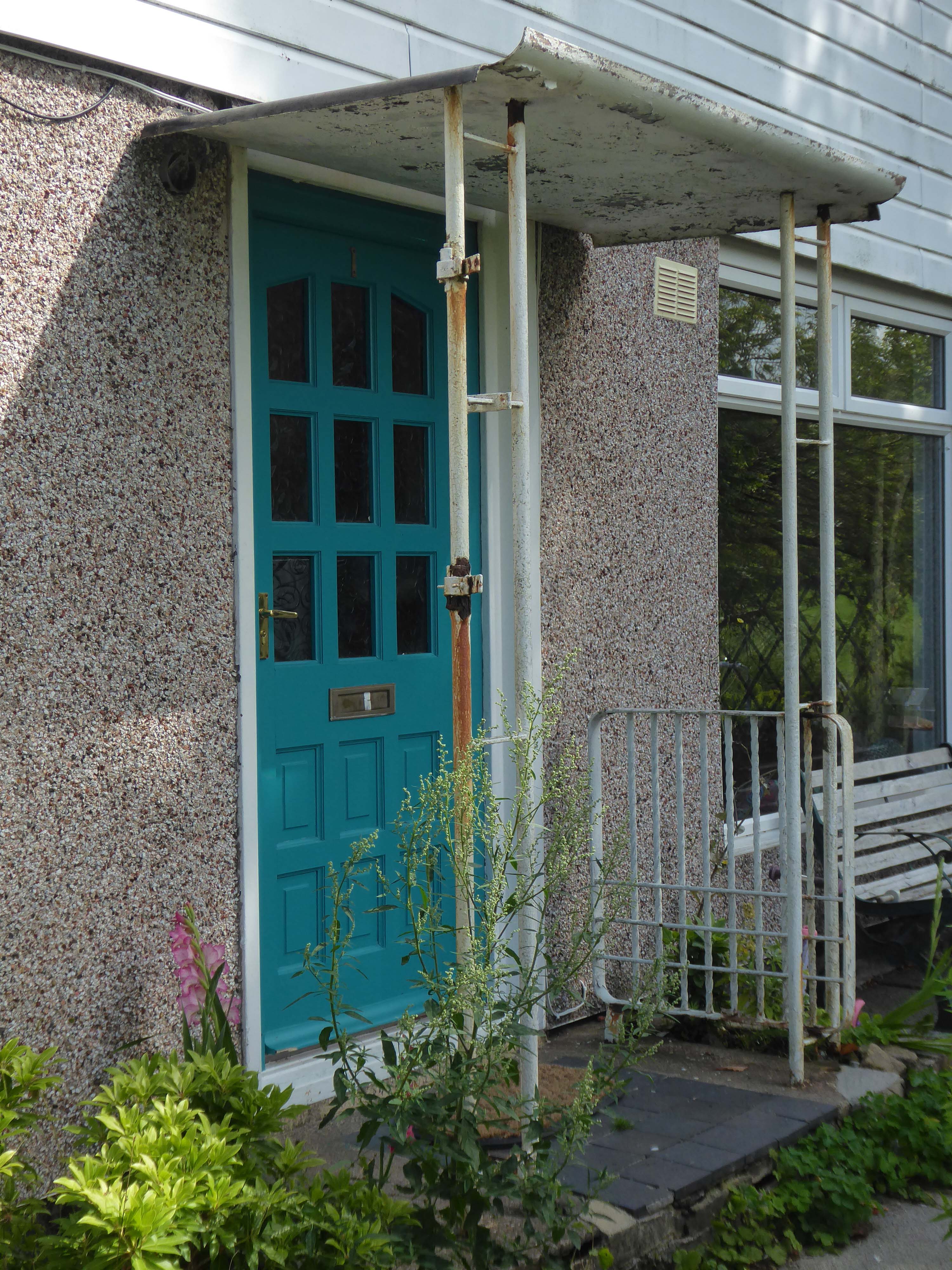
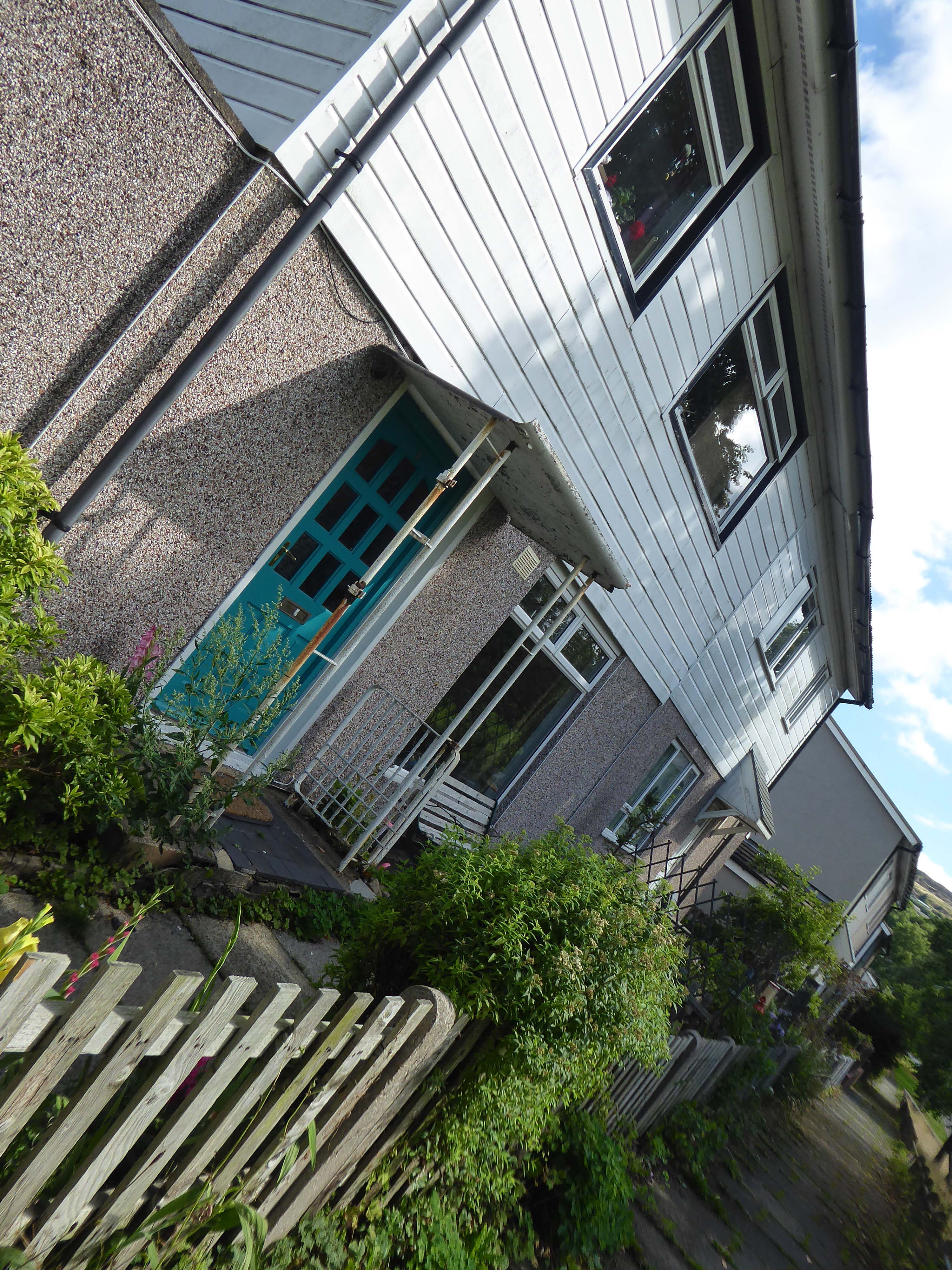
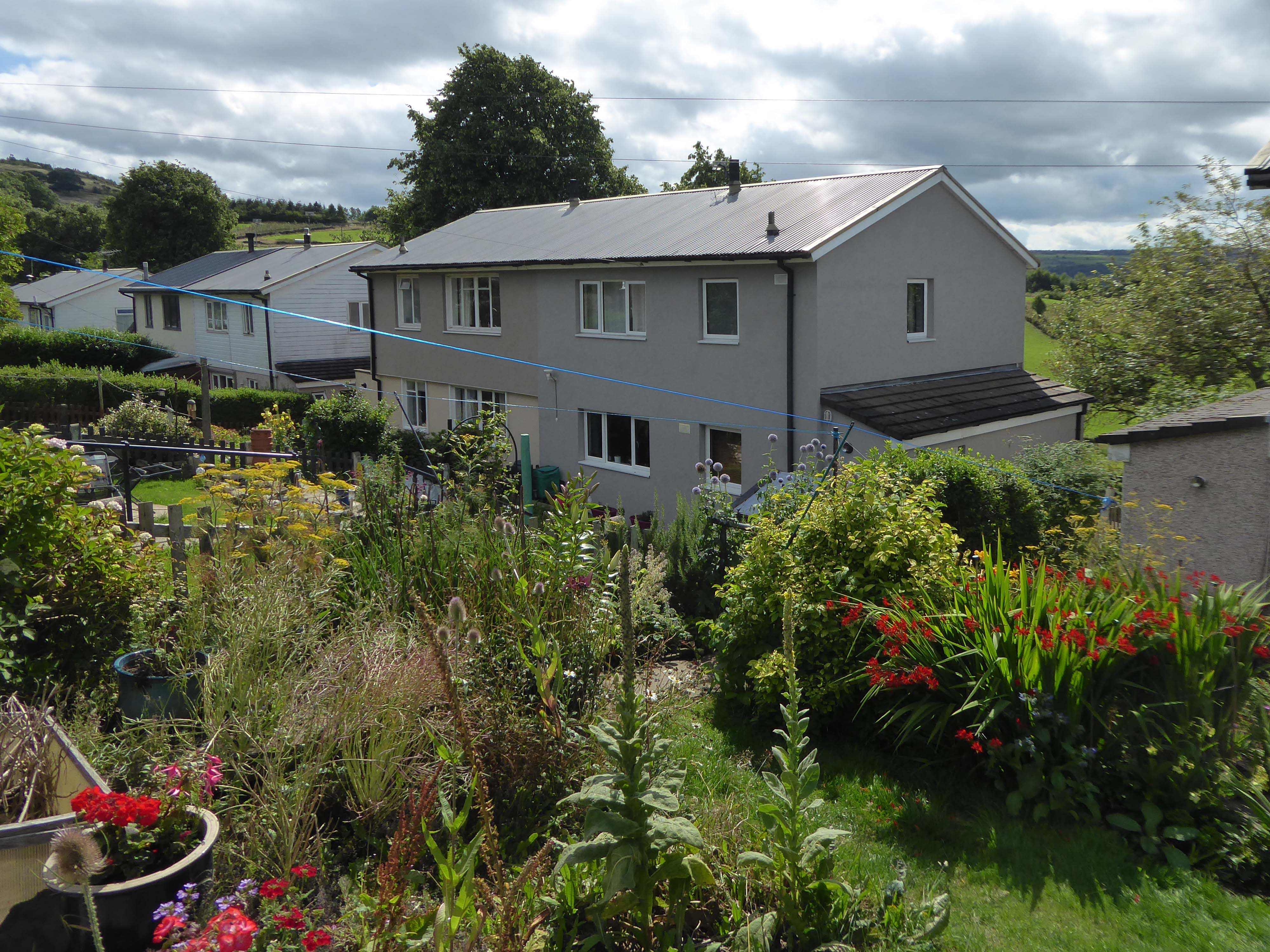
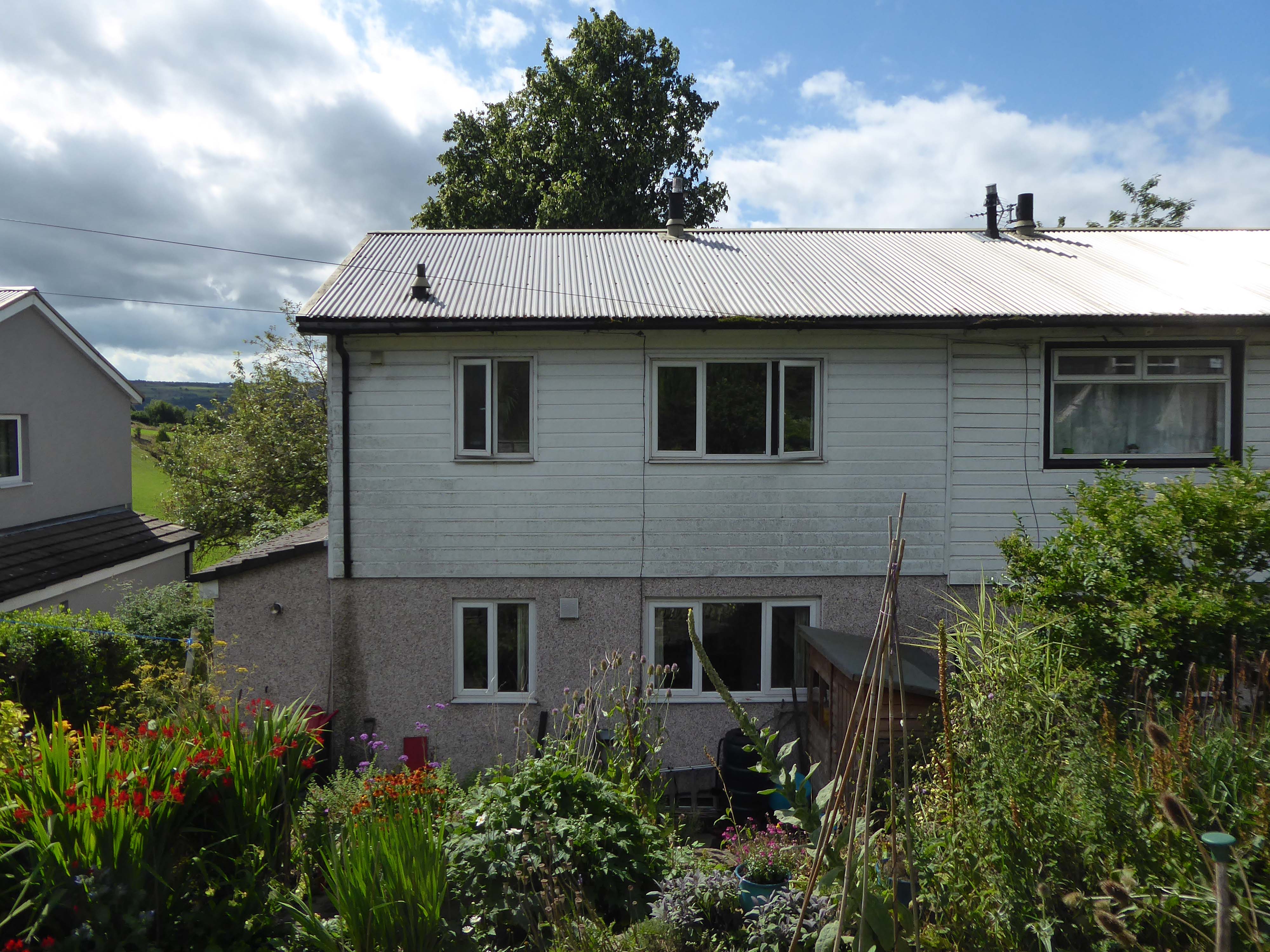
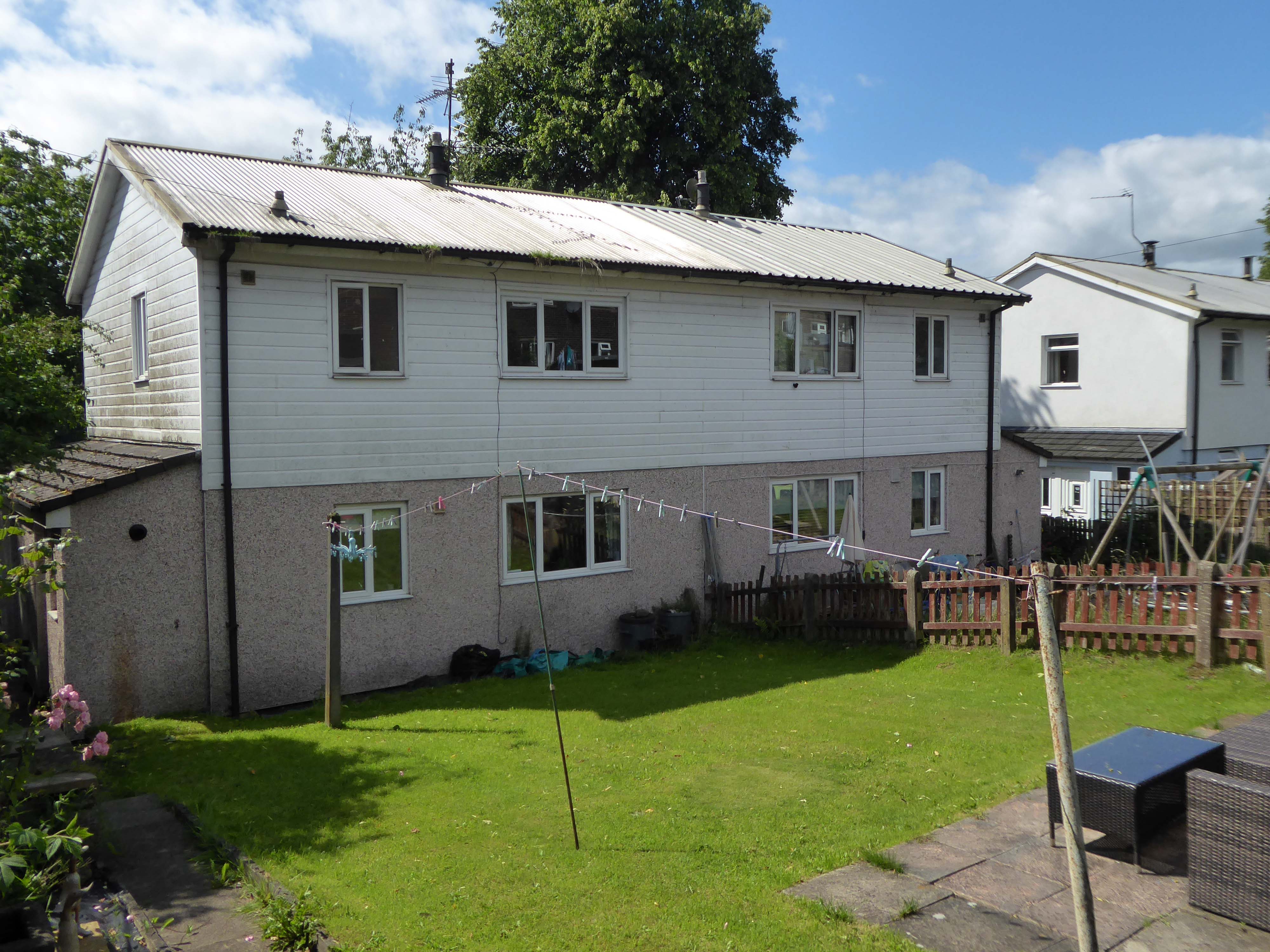
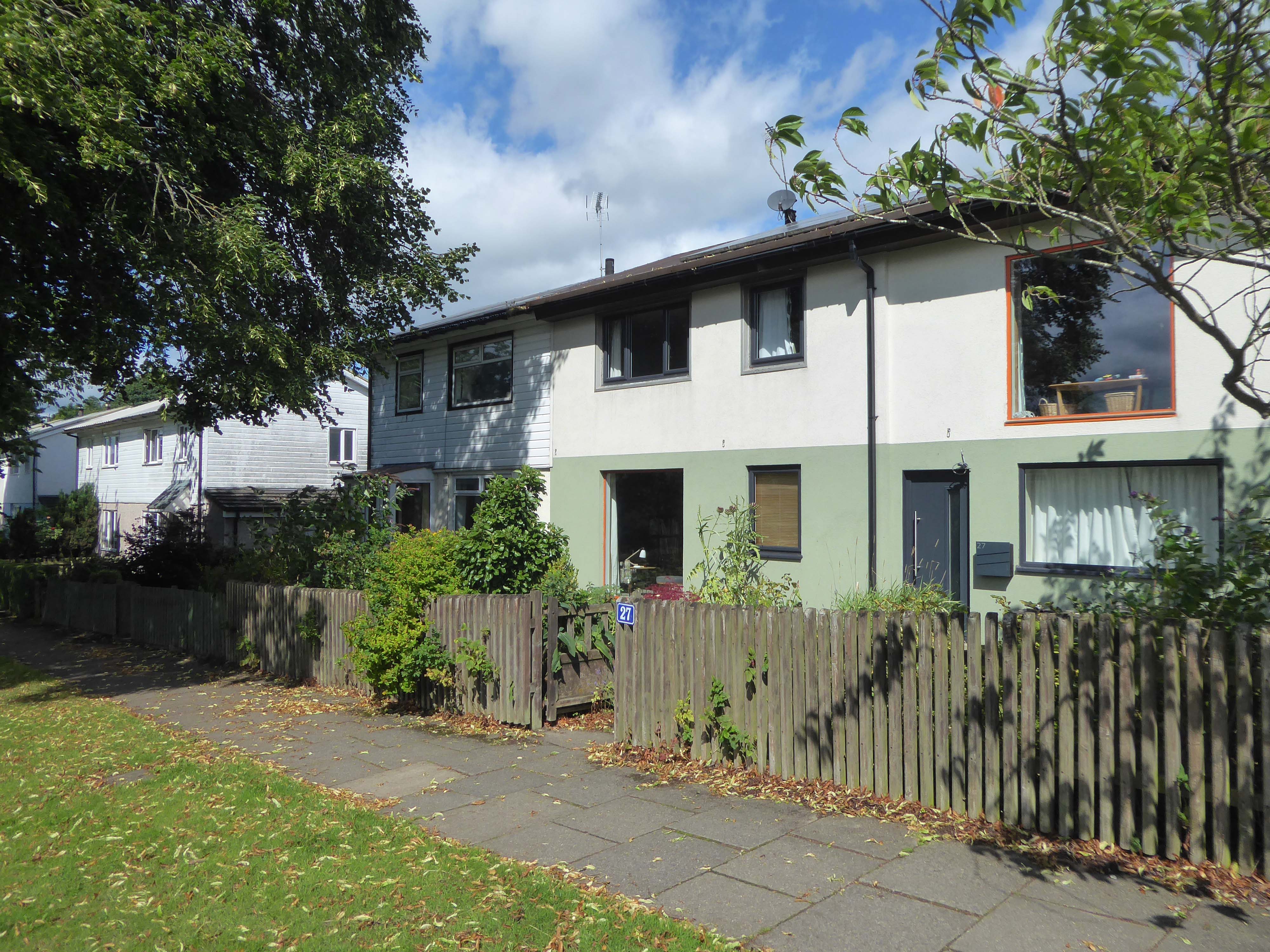
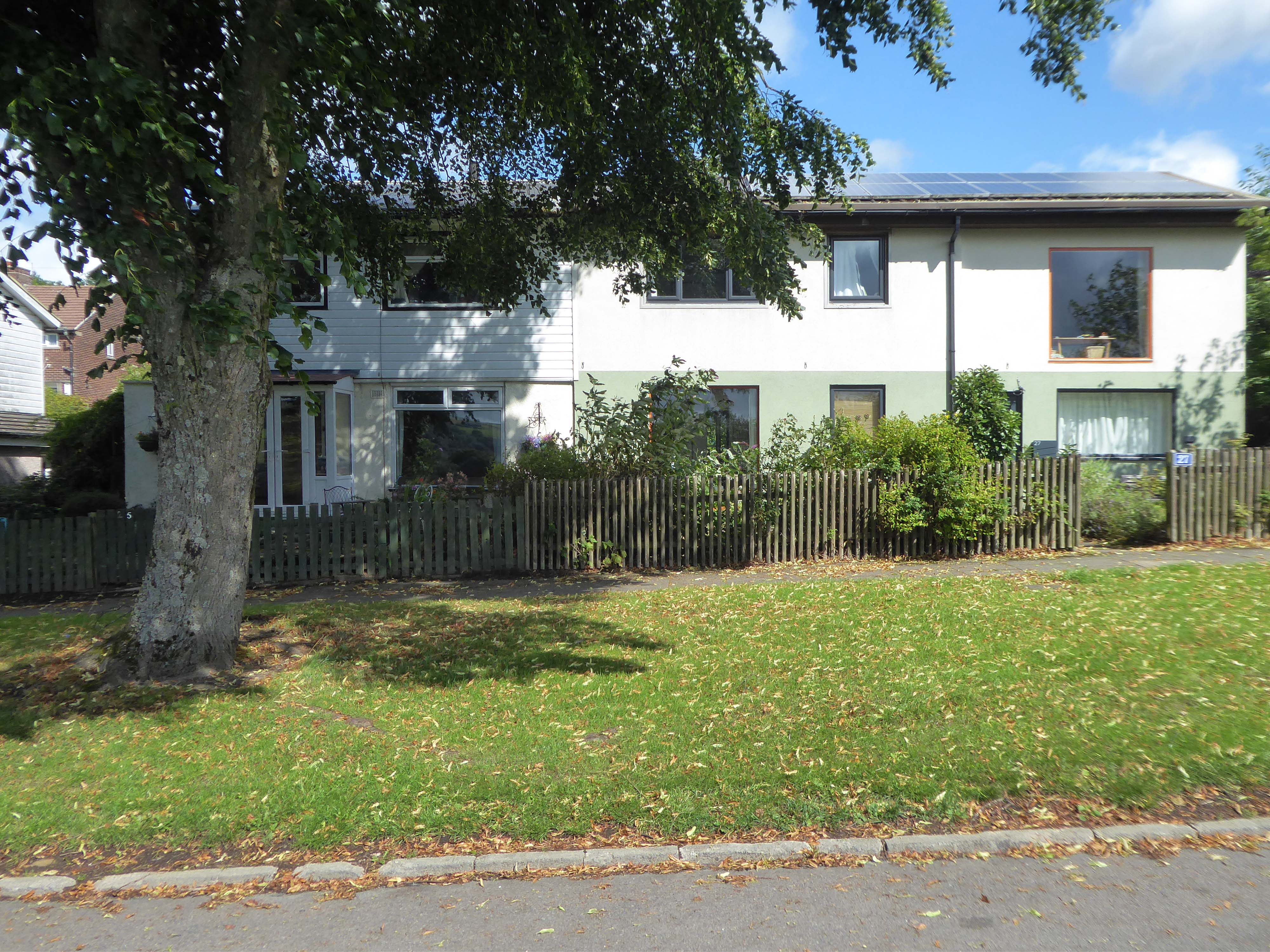
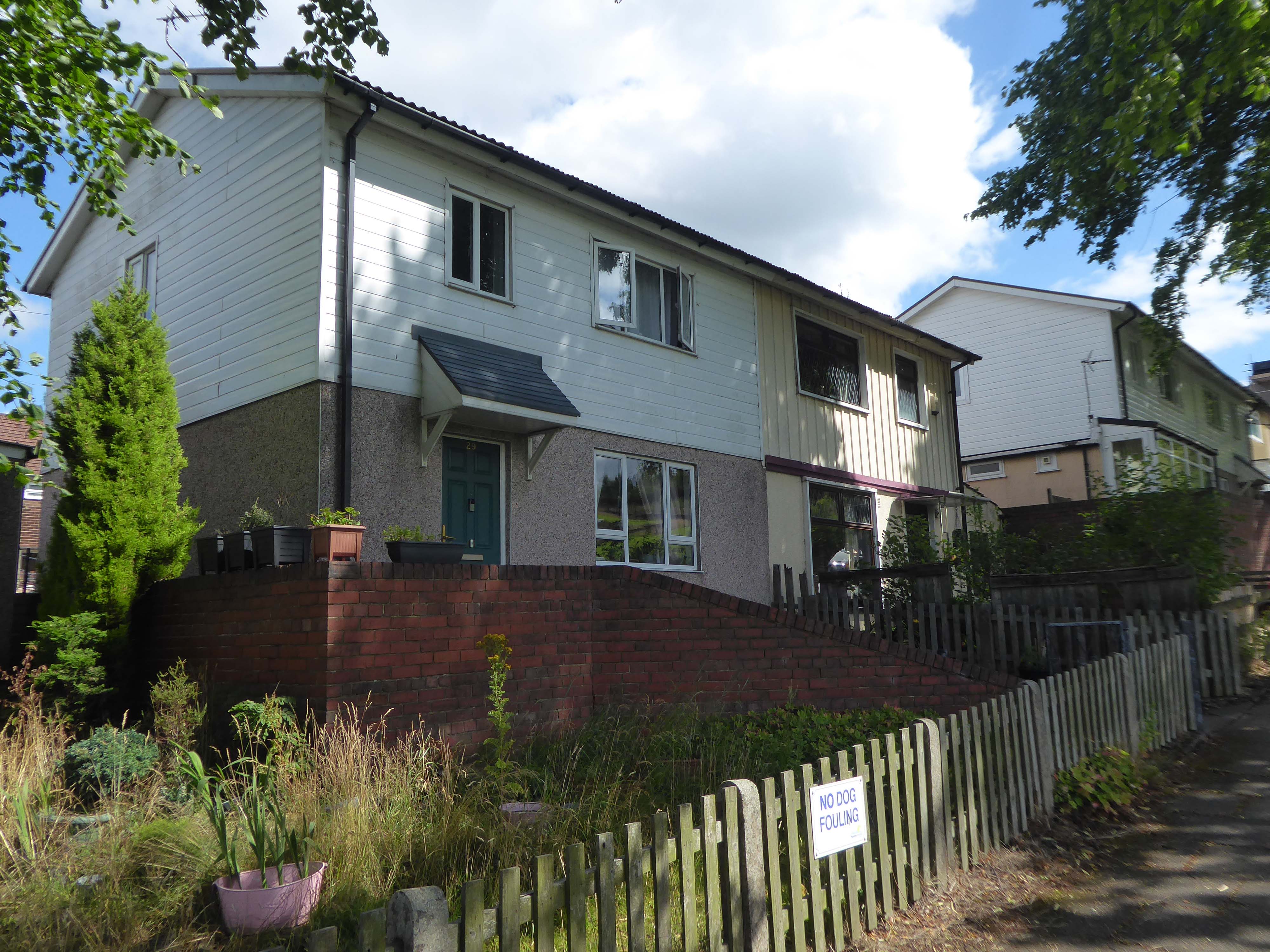
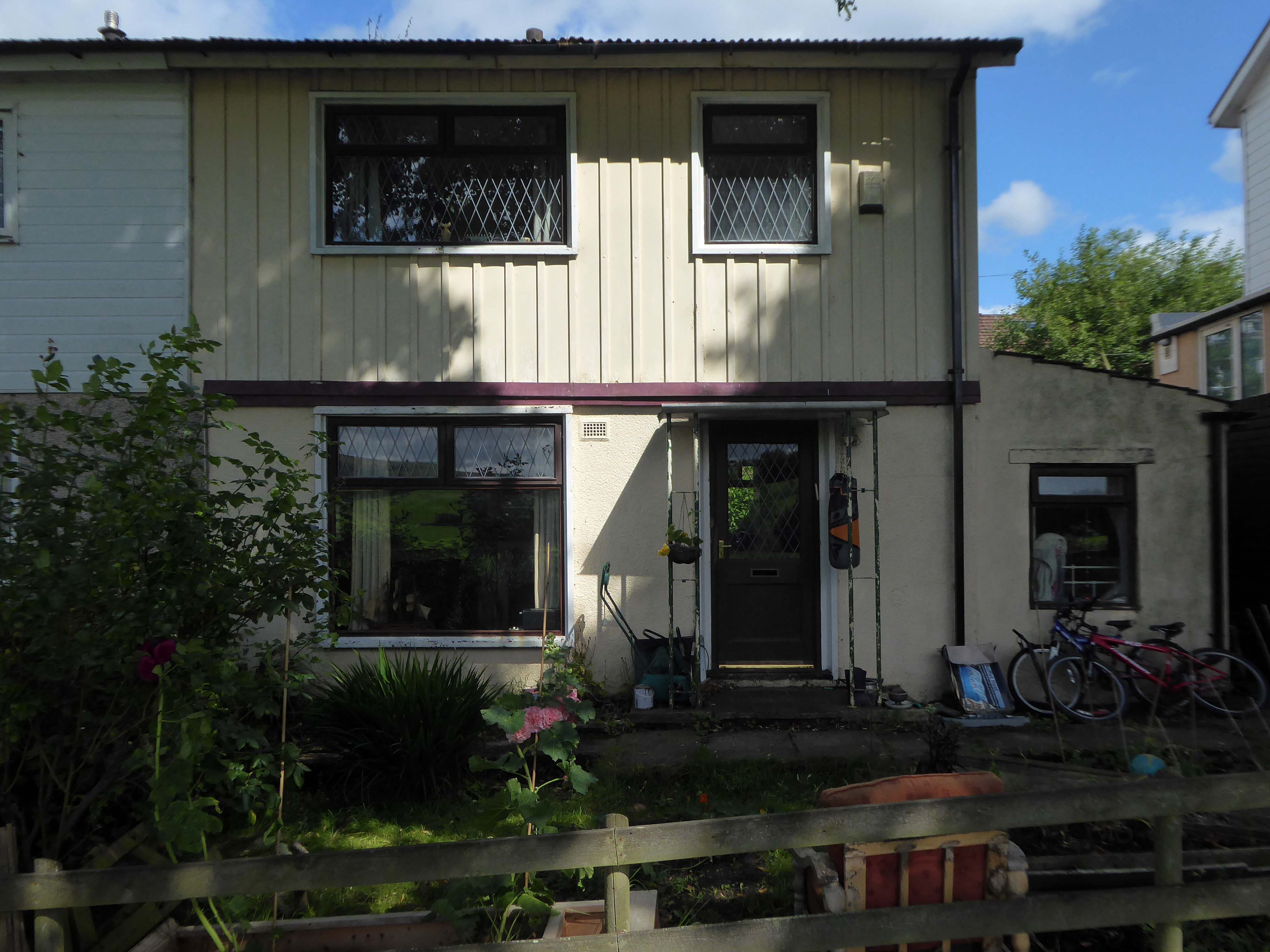
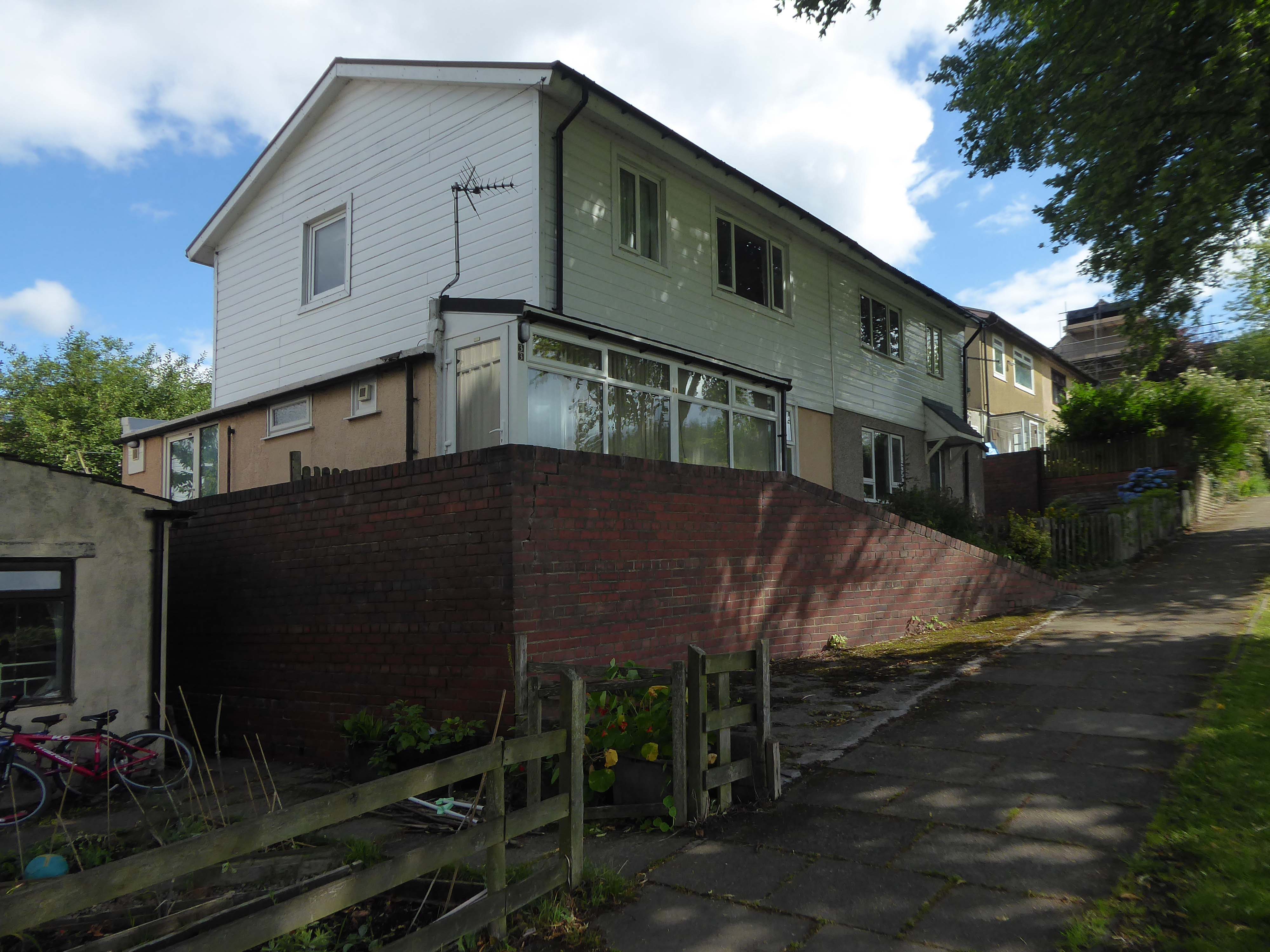
The homes on Wadsworth Lane are BISF Type A1 – designed by architect Frederick Gibberd and engineer Donovan Lee.
Manufactured by British Iron & Steel Federation and British Steel Homes Ltd.
Over 34,000 three-bedroom semi-detached houses and 1048 terraced houses were erected across England, Scotland and Wales.
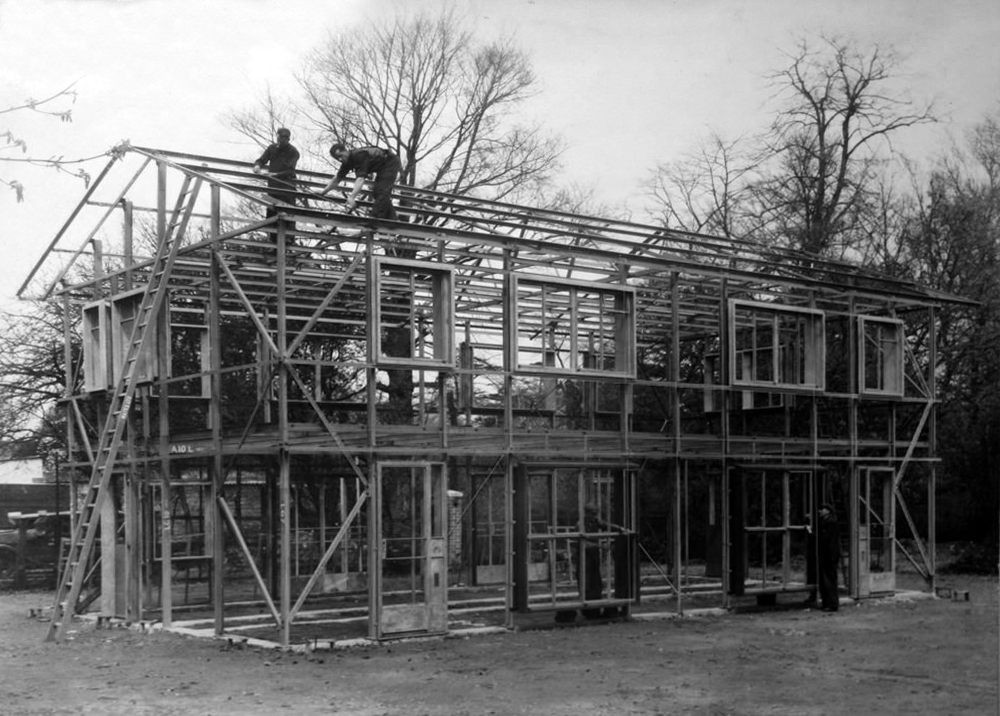
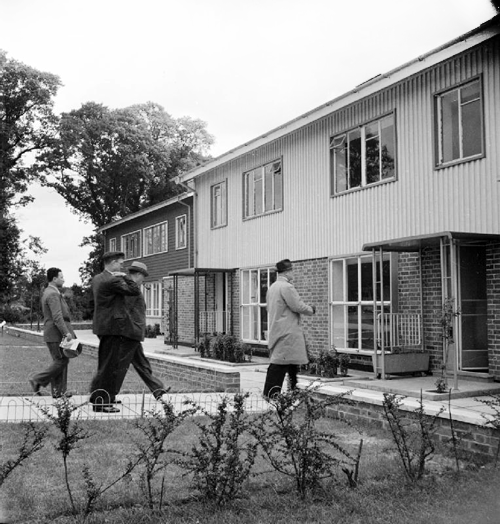
Non Standard House
We have encountered the very same houses in Tin Town Wythenshawe
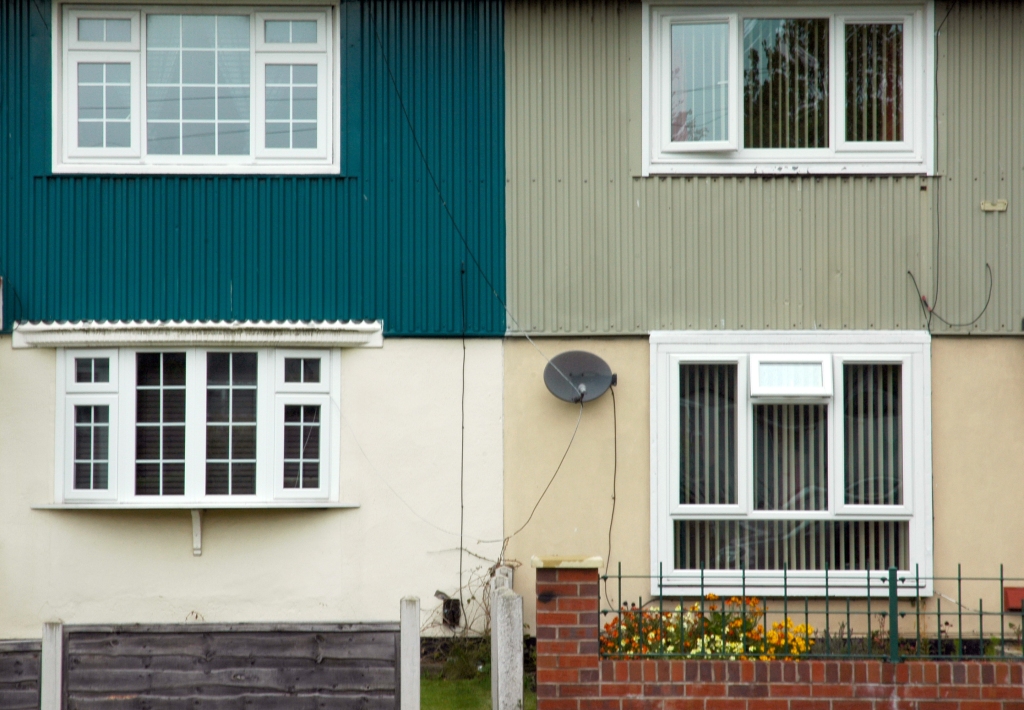
I walked up Wadsworth Lane in 2021.
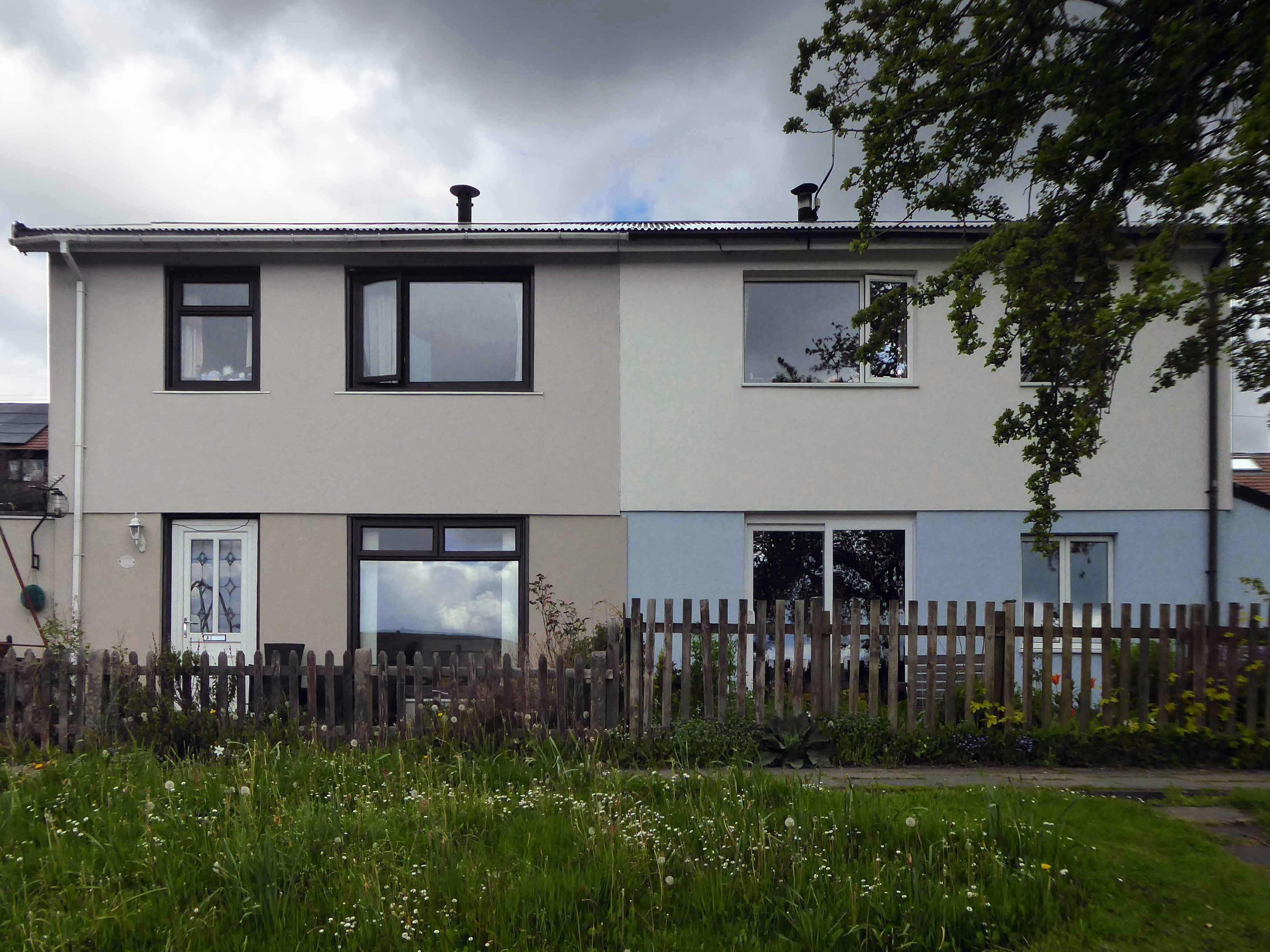
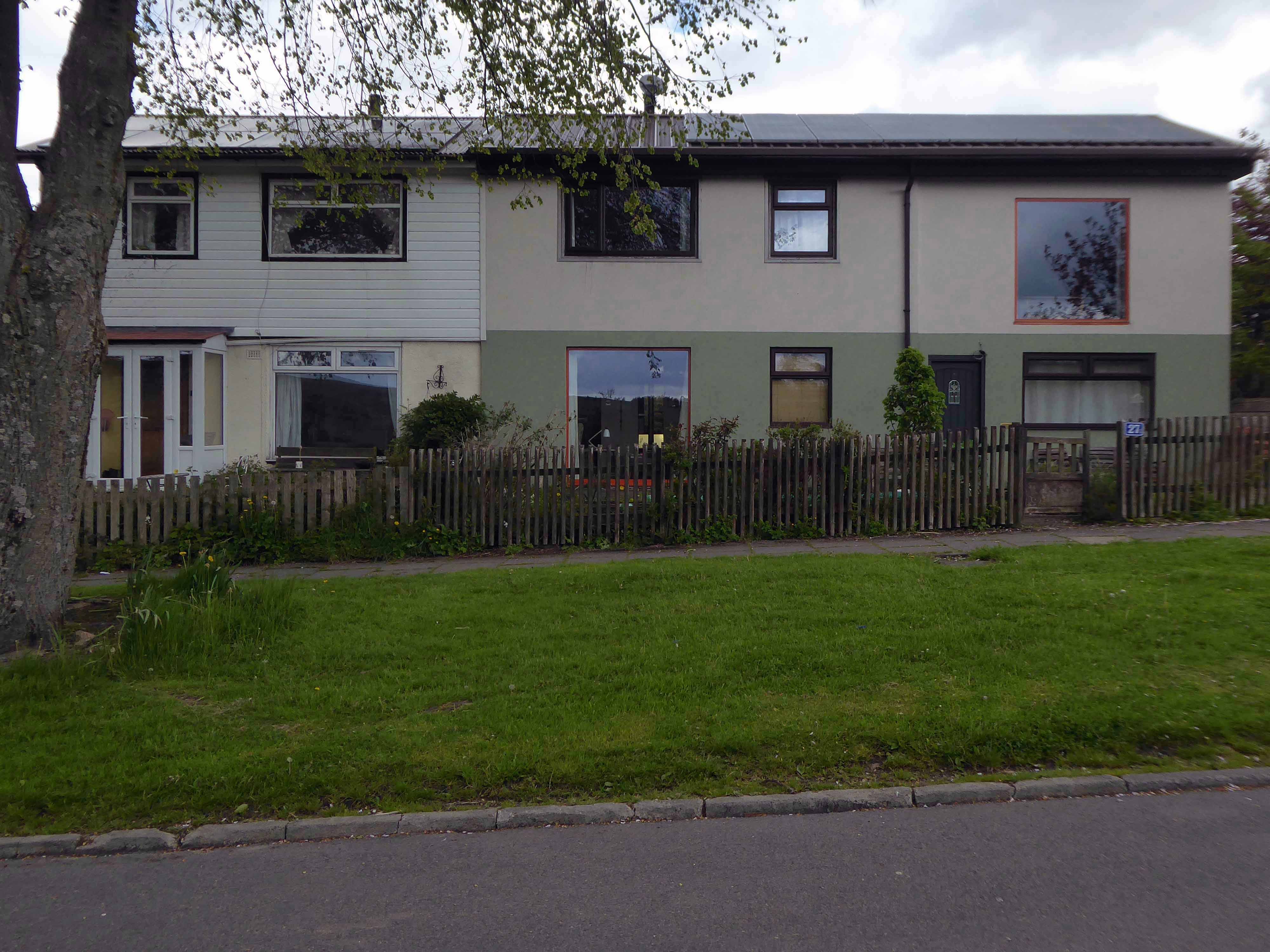
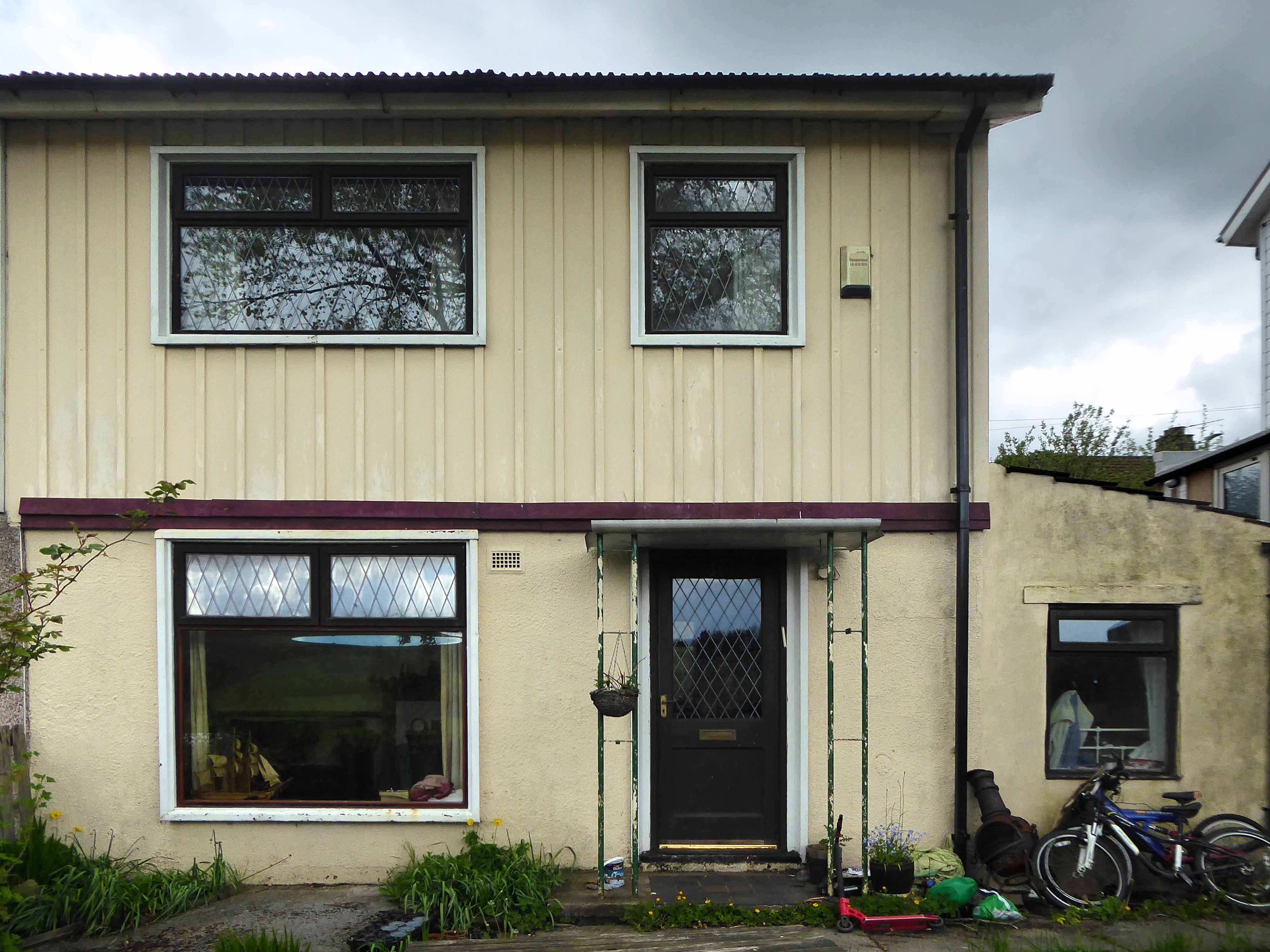
I walked past again in 2022 – the home appear to be in good health, many improved or extended, yet retaining at least a little of their heritage.
They are lived in and loved.

By wandering aimlessly, all places became equal, and it no longer mattered where he was.
Paul Auster City of Glass.
The station as built in 1961 to a design by the architect William Robert Headle, which included and advertised a significant amount of the local Pilkington Vitrolite Glass. The fully glazed ticket hall was illuminated by a tower with a valley roof on two Y-shaped supports. The platform canopies were free standing folded plate roofs on tubular columns.
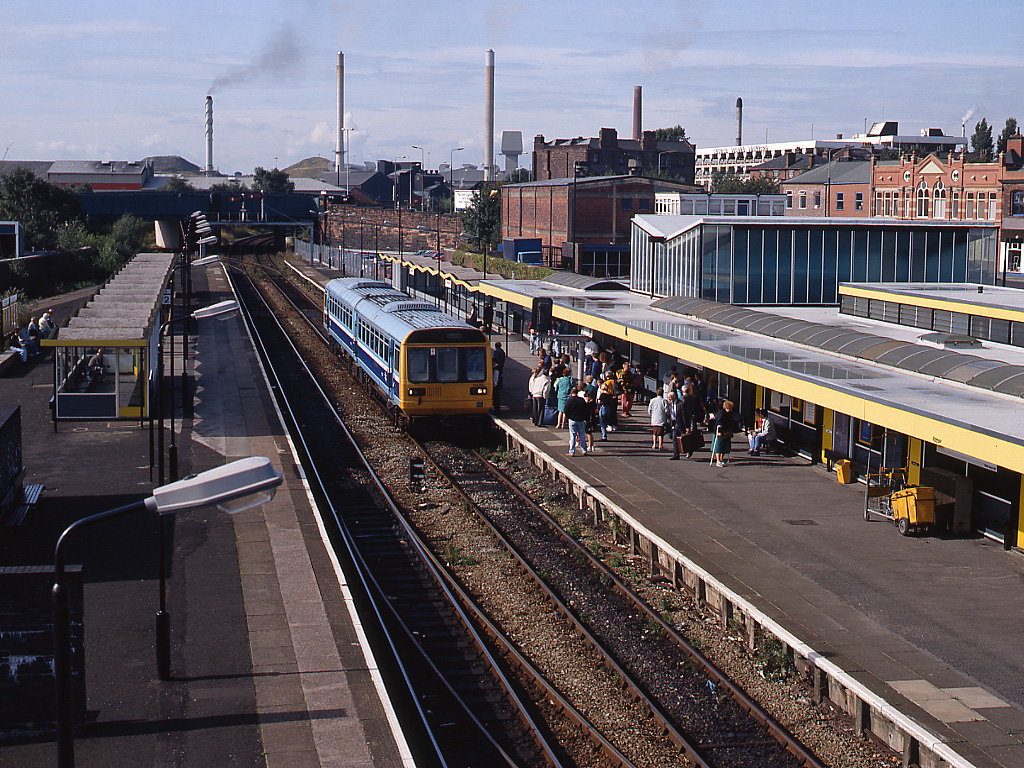
The new station building and facilities were assembled just a few yards from the 1960s station building and is the third build on the same site. The project came in at a total estimated cost of £6 million, with the European Union contributing £1.7 million towards the total funding. The new footbridge was lifted into place in the early hours of 22 January 2007.

The striking Pilkington’s glass-fronted building was designed by architect SBS of Manchester. Construction work was completed in the summer, with the new waiting rooms and footbridge opened to passengers on 19 September. The new station building was officially opened on 3 December 2007.
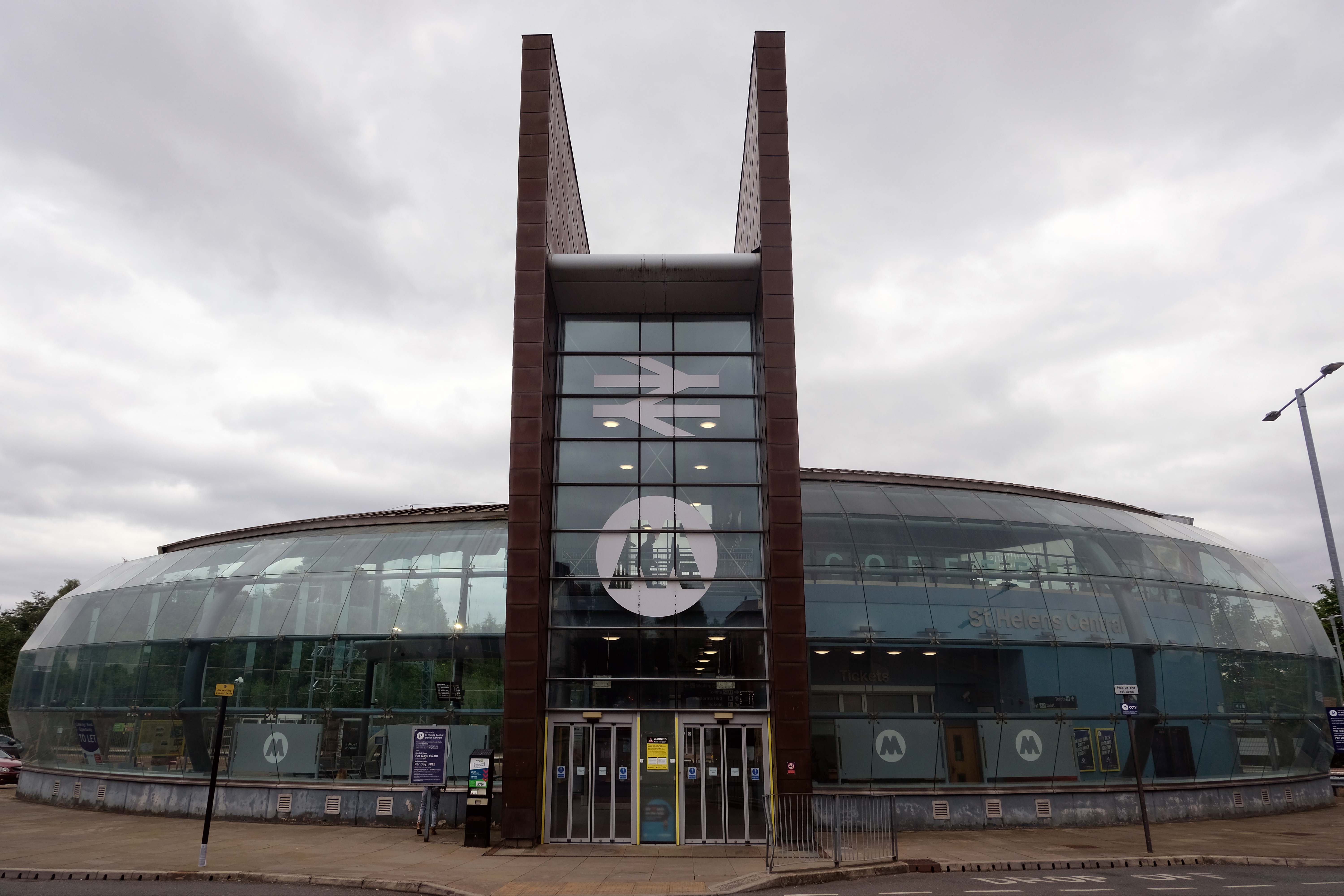
Emerging from the space age bubble of St Helens Central Station.
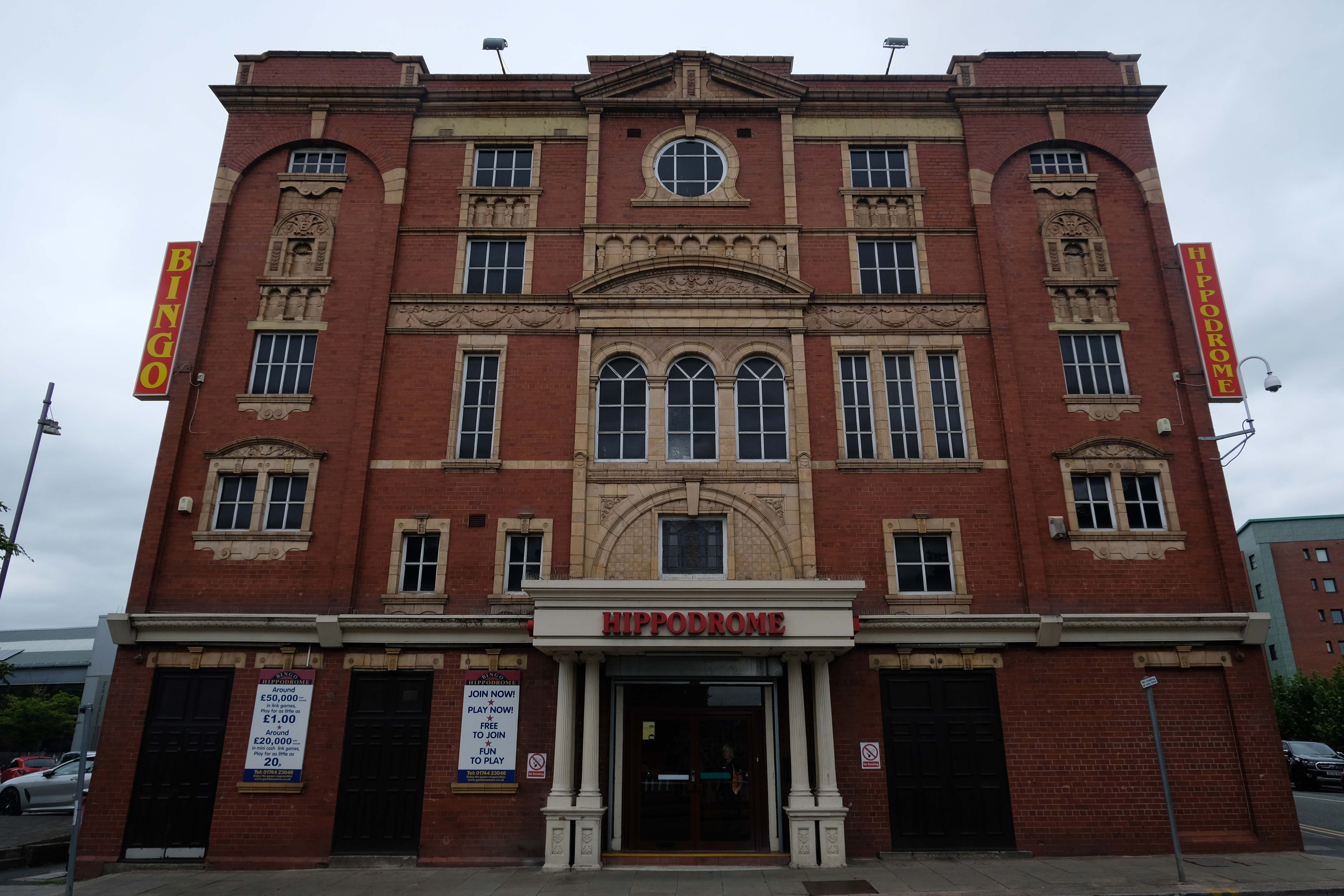
Turn right towards The Hippodrome
In the early Edwardian era a fine theatre was opened on 1st June 1903. It had been designed by local architect J A Baron and was on the site of an earlier theatre known as the Peoples Palace. It was operated as the New Hippodrome Cinema from 8th August 1938 when it reopened with Anna Neagle in Victoria the Great. On 1st September 1963 it was converted to a Surewin Bingo Club by Hutchinson Cinemas which continued to operate in 2008. By May 2019 it was independently operated as the Hippodrome Bingo Club.
Onwards down Corporation Street to Century House, currently awaiting some care and attention and tenants.
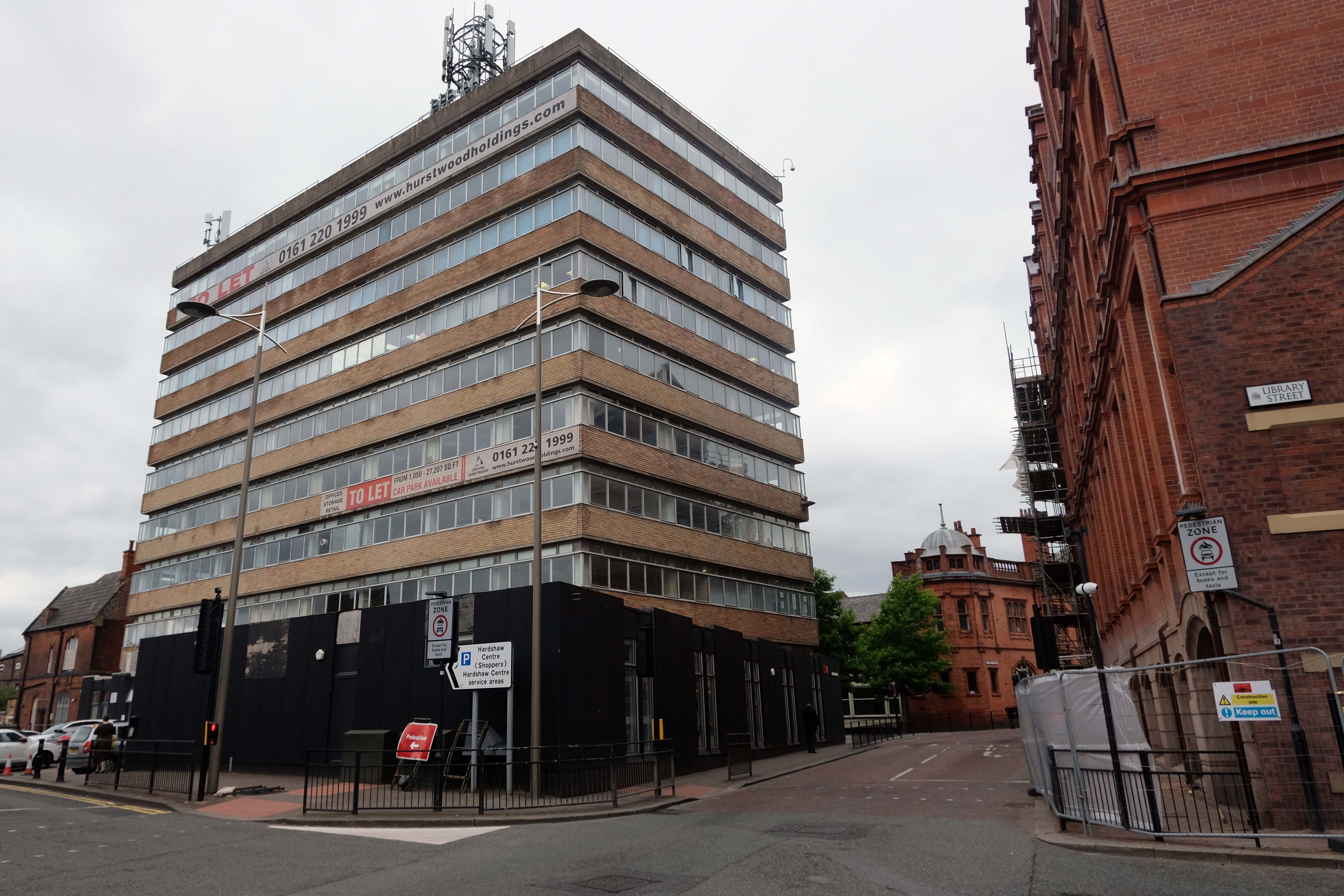
Century House is a prominent landmark in St Helens town centre, being the tallest office building in place. The accommodation ranges over 9 floors, providing offices from a single person, to whole floors. In addition, all tenants benefit from the use of a modern break out space and meeting rooms, in addition to manned reception desk.
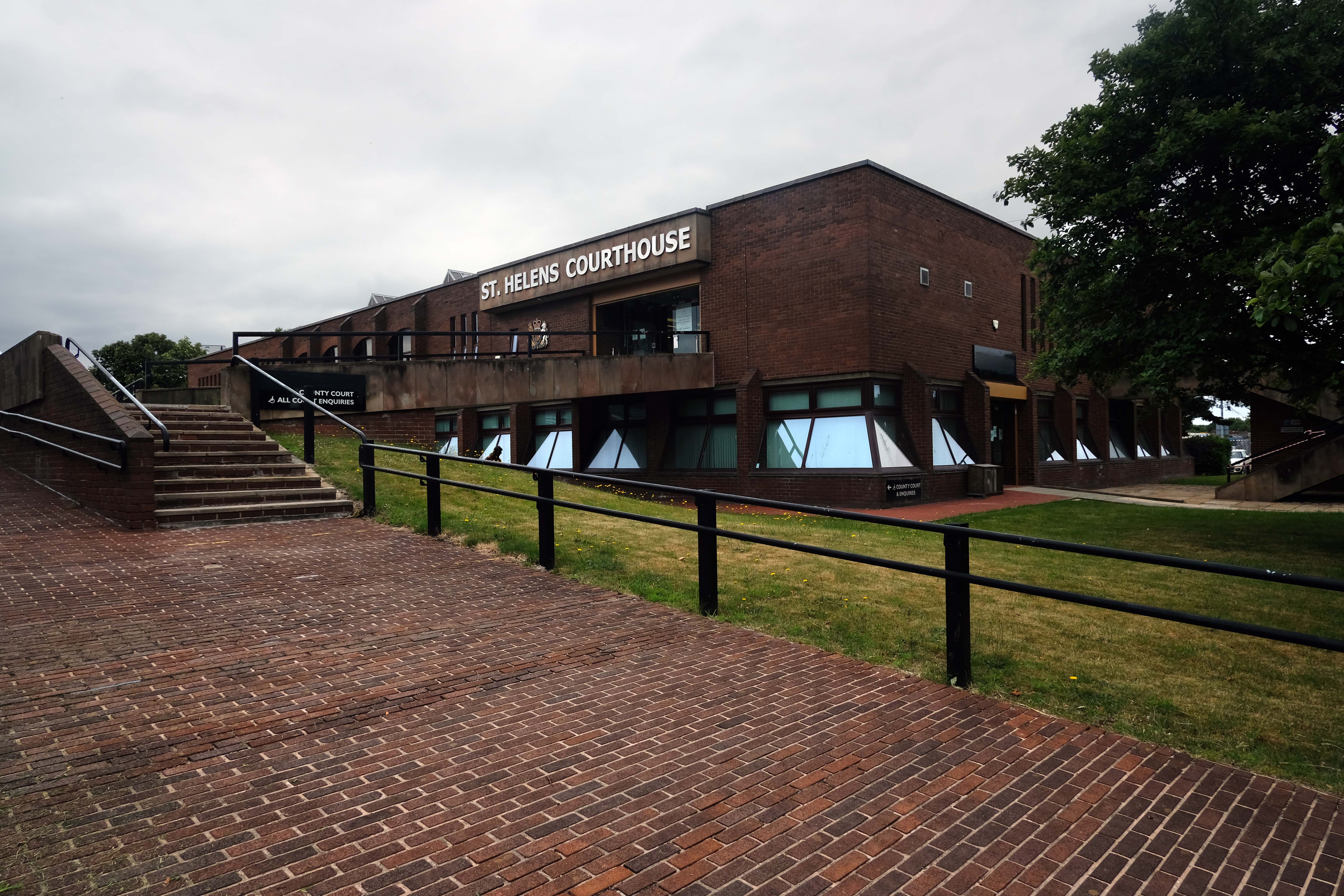
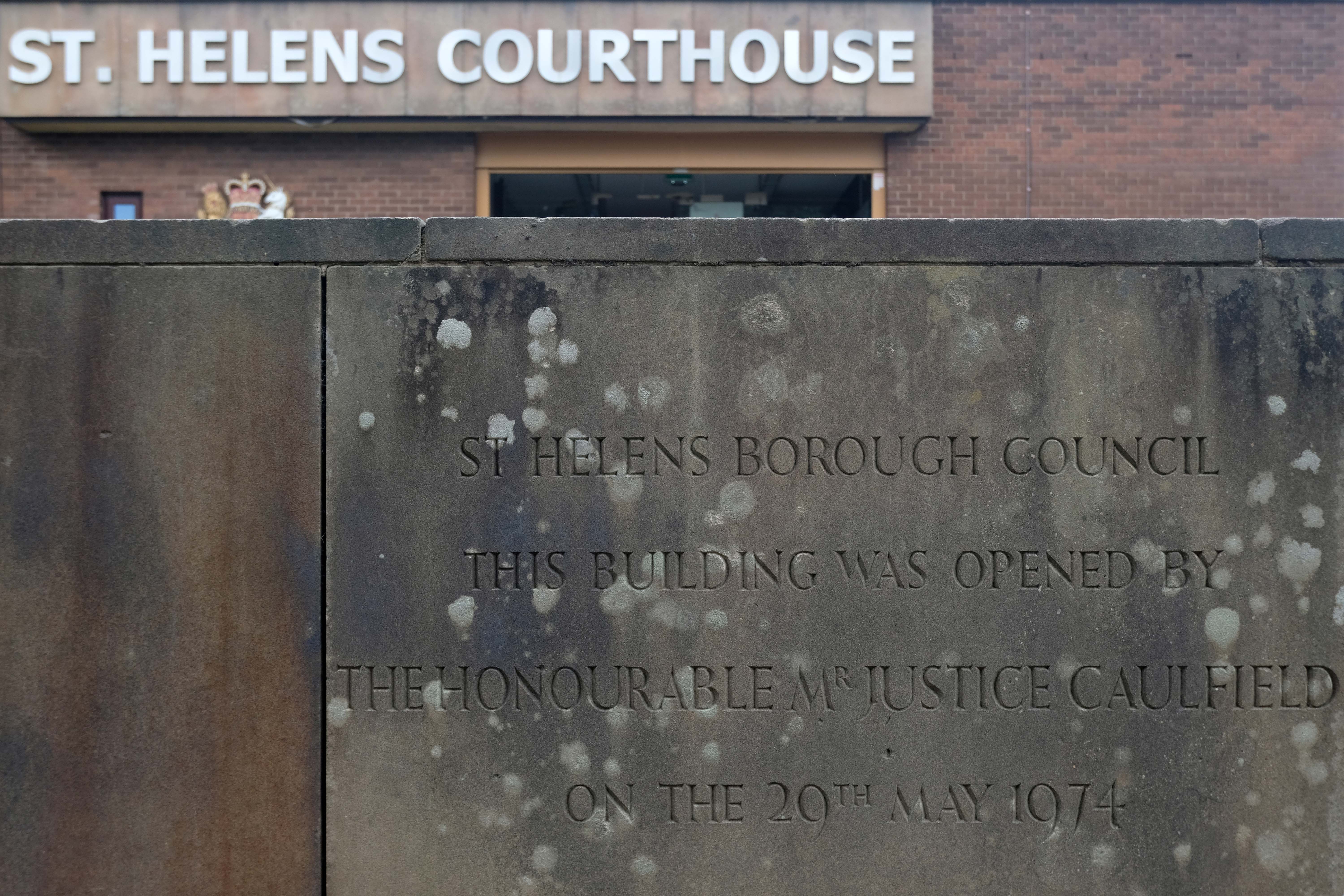
Next to the Courthouse low lying, lean and landscaped.
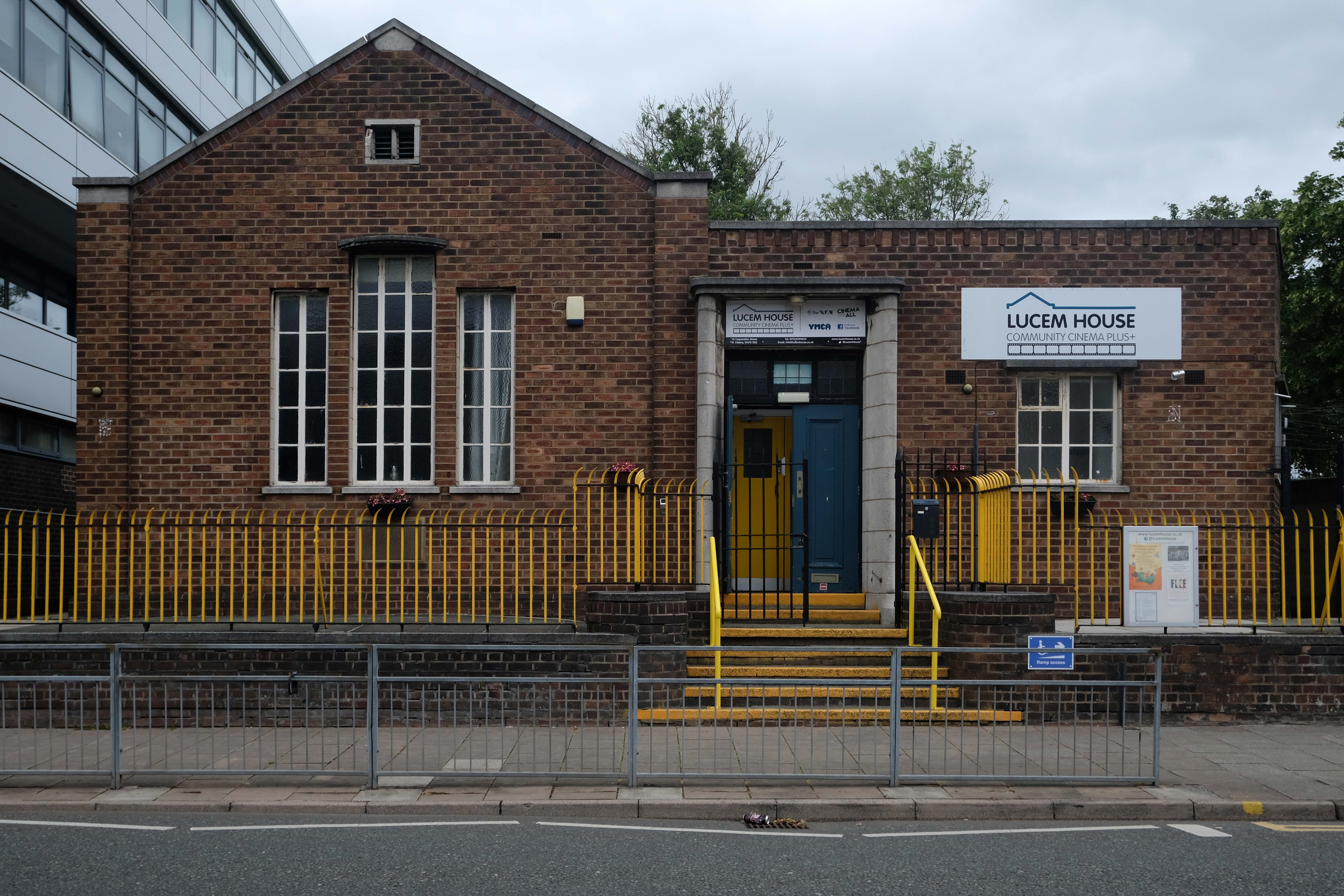
Further on down the road the former Unitarian Chapel – now the Lucem House Community Cinema.
On the corner the YMCA offers a cornucopia of architectural styles and fun.
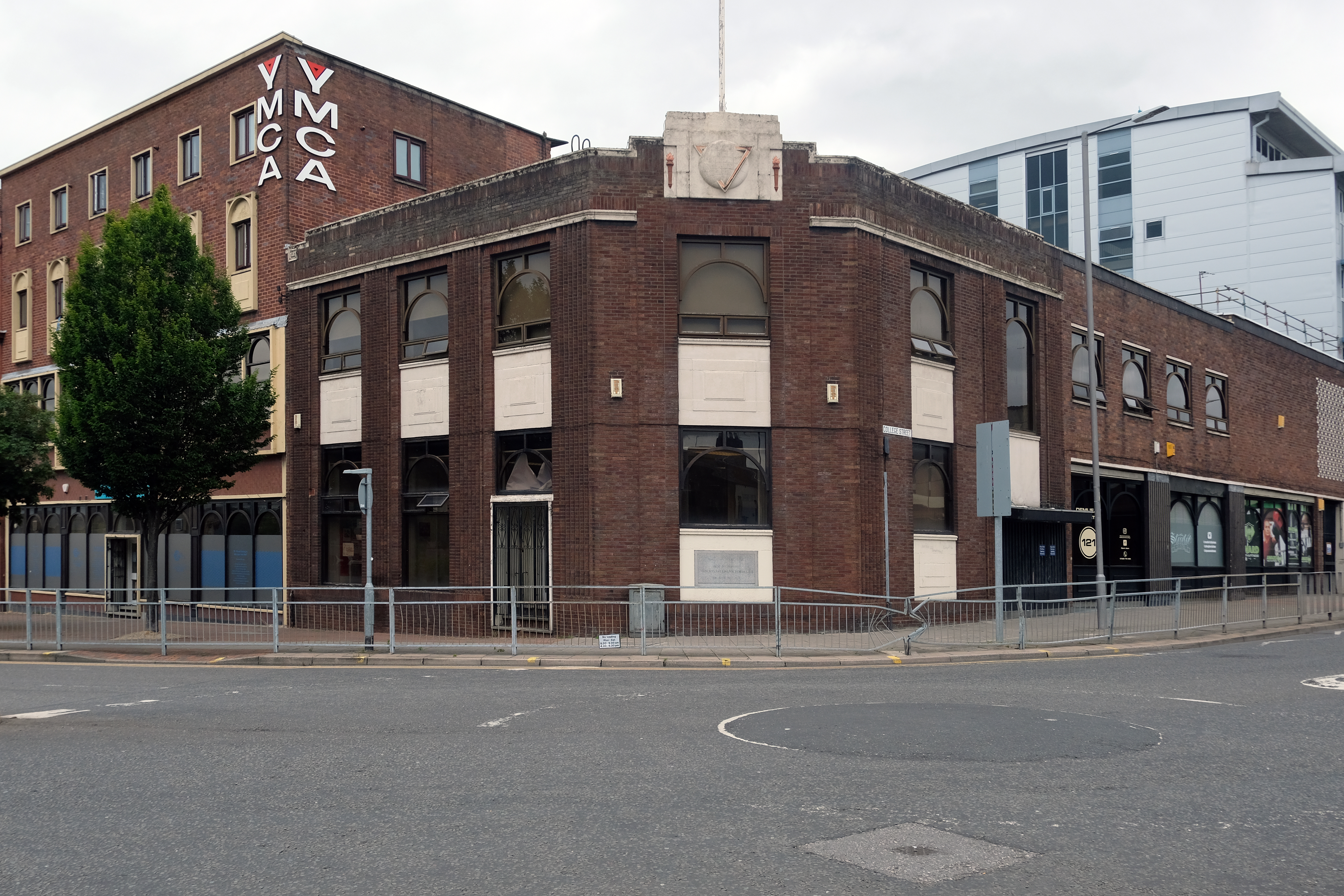
Including this geometric brick panel.

Around the corner to the Police Station by Lancashire County Architect Roger Booth.
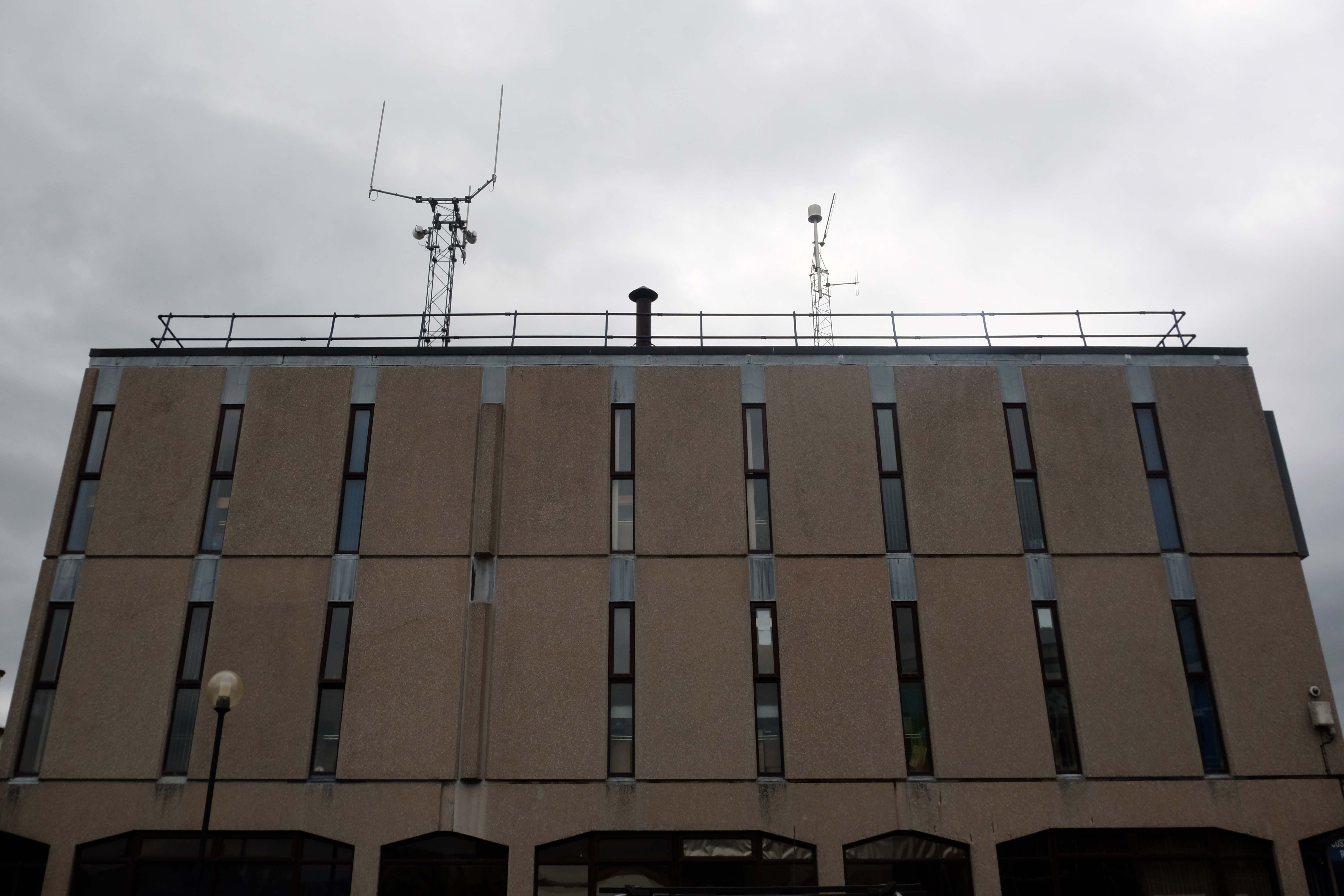
Down the way the derelict Job Centre.
There are plans afoot for conversion to apartments.

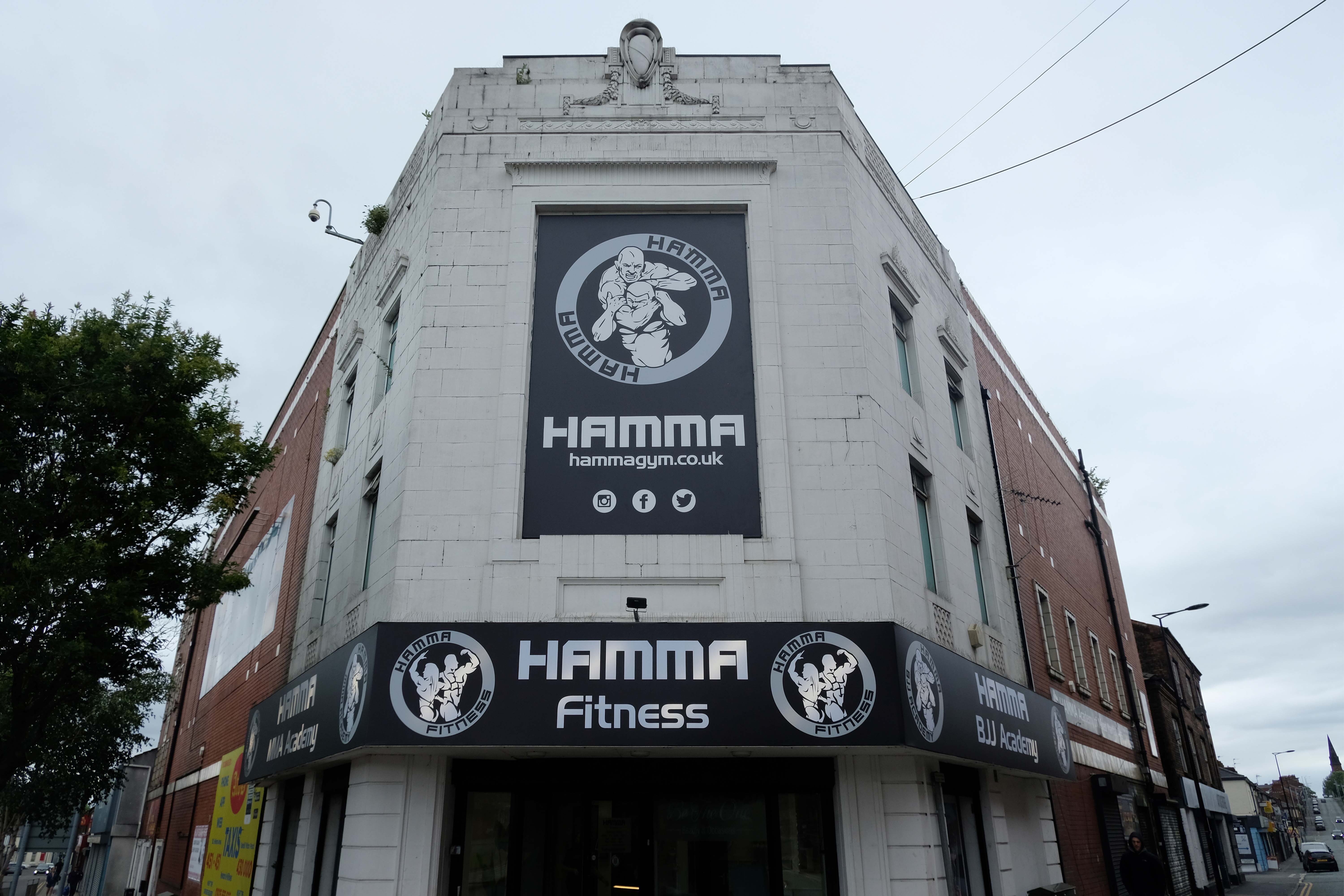
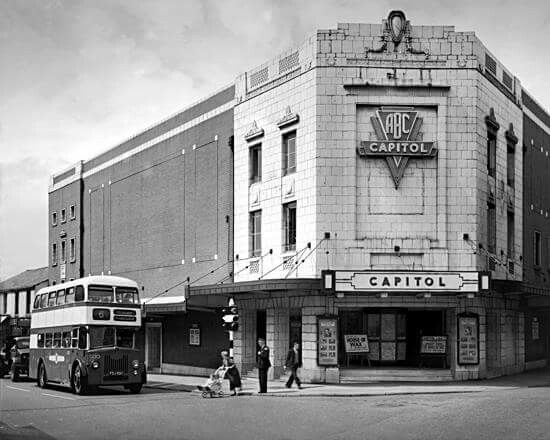
Former Capitol Cinema.
Architects: Frederick Evans and Edwin Sheridan Gray
The Capitol Cinema opened on 3rd October 1929 by an independent operator. It stood on a prominent corner site at North Road and Duke Street – known as Capitol Corner.
The Capitol Cinema was taken over by Liverpool-based Regent Enterprises Ltd. in 1929, and by the Associated British Cinemas – ABC chain in 1935. It underwent a renovation in the 1960’s, and was closed by ABC on 9th December 1978.
The building was converted into a sports centre, by 2009 it was a Central Fitness gymnasium.
Along the way to St Mary Lowe House RC – the style is a combination of Gothic and Byzantine elements. One of the most unusual fittings is the carillon, one of the largest in the British Isles with 47 bells, which was installed in 1930 and is still played regularly.
Architect: CB Powell 1924-30 Grade II Listed
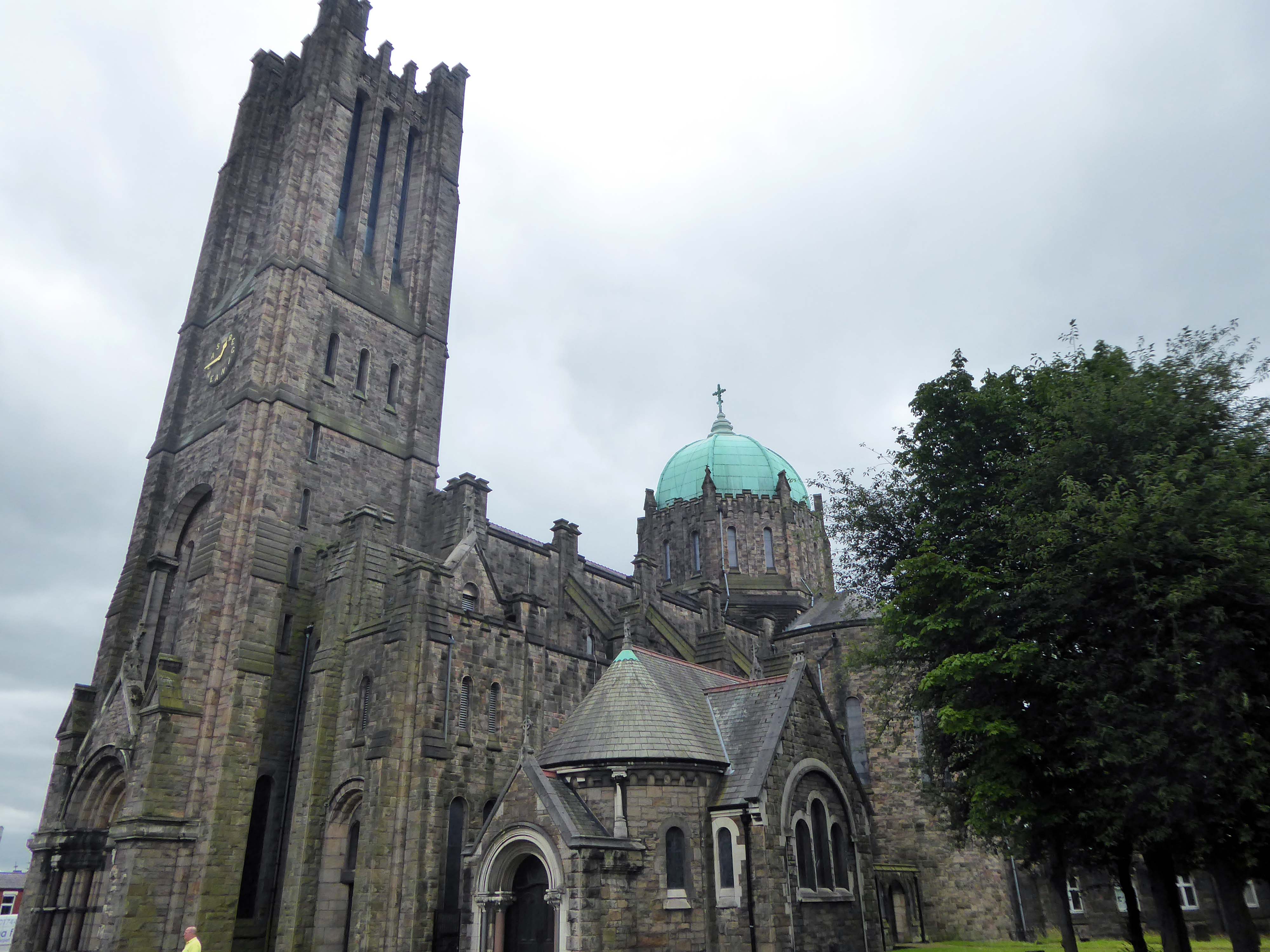
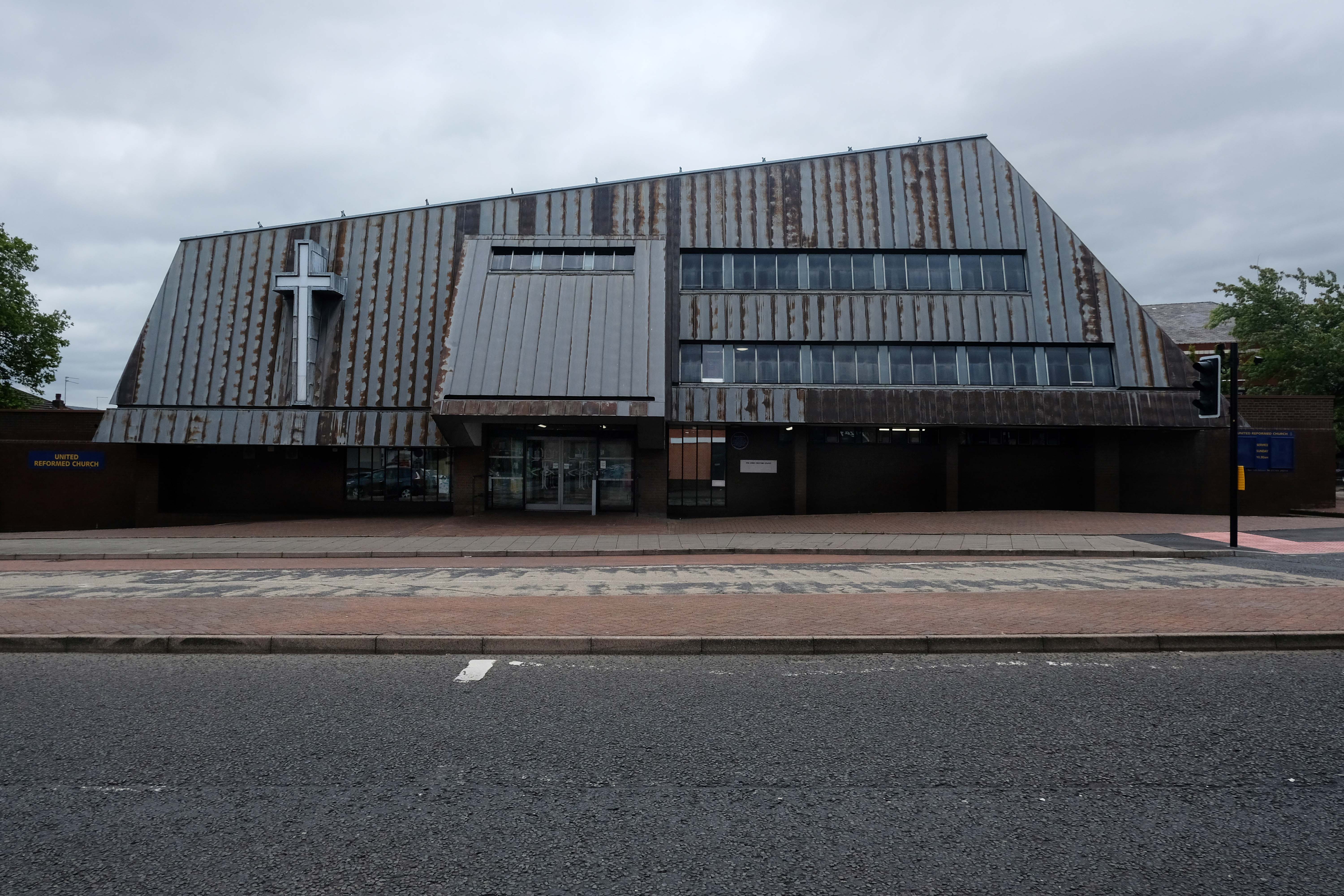
Next to the Ormskirk Street United Reformed Church
Ken Fisher’s first APEC project 1976
The main approach is identified by a beak-like porch which projects from the main cladding. In this space hangs a recast eighteenth century bell, from the original chapel.
Let’s take it to the Midland, Nat West and Barclays Banks.
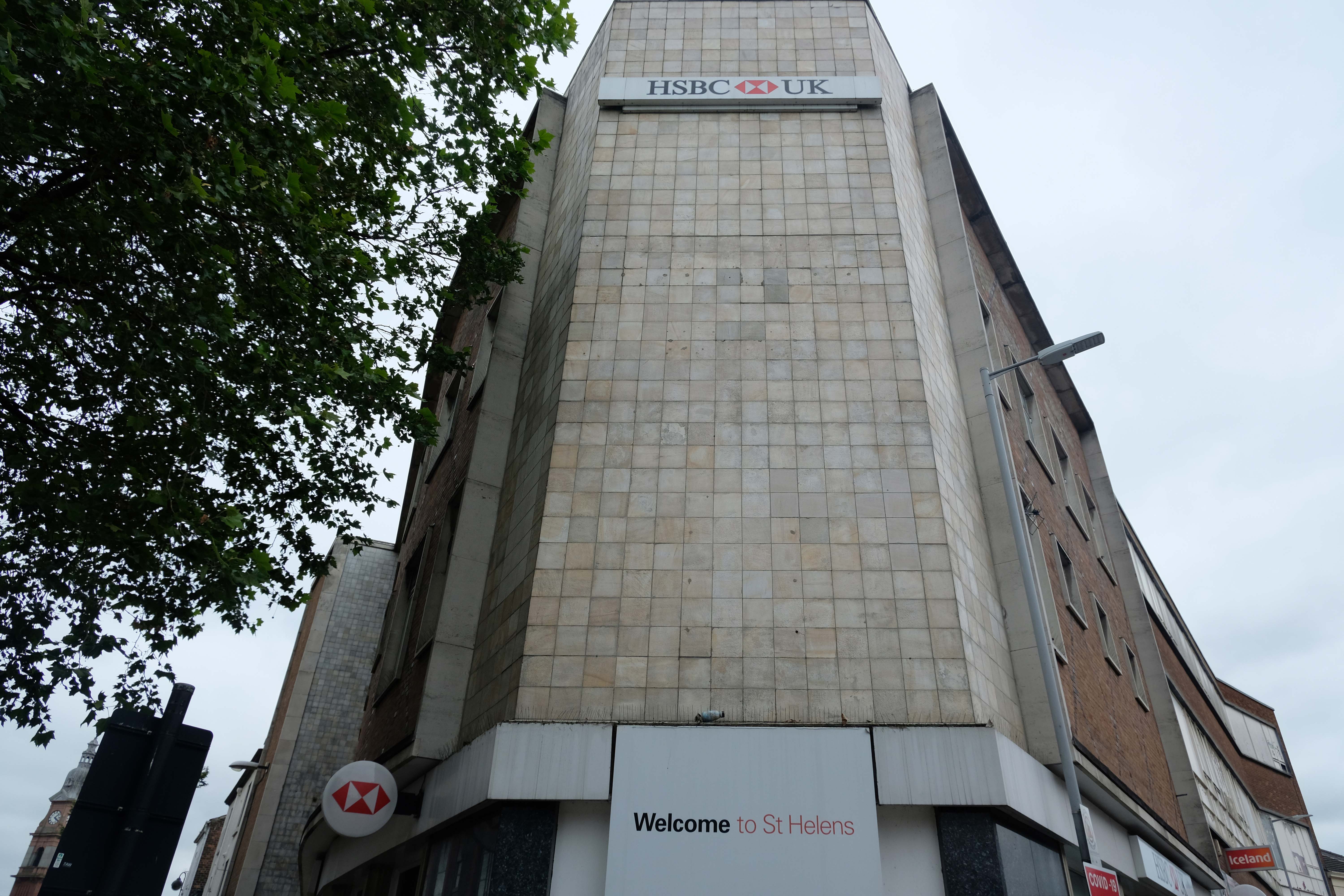
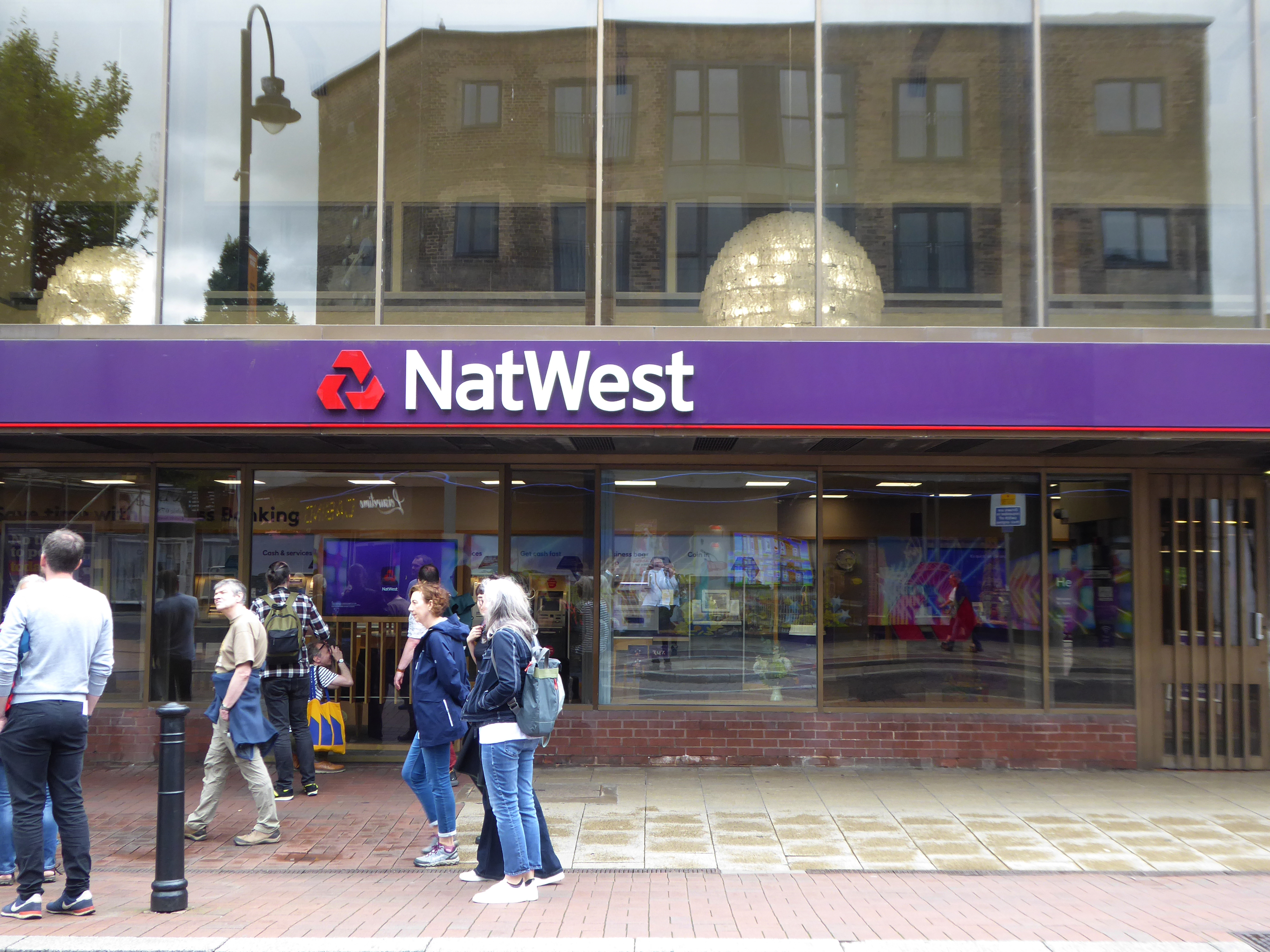
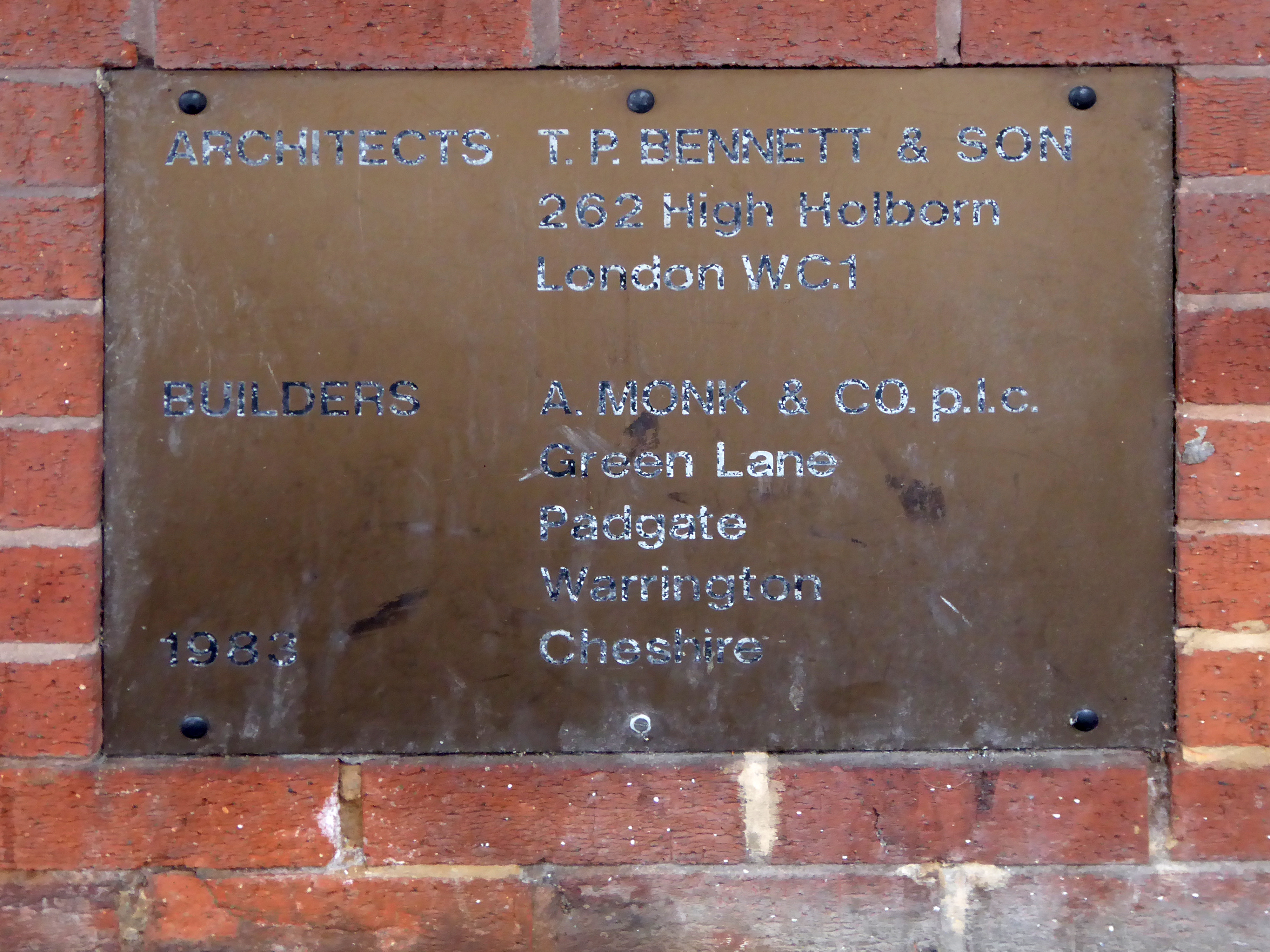
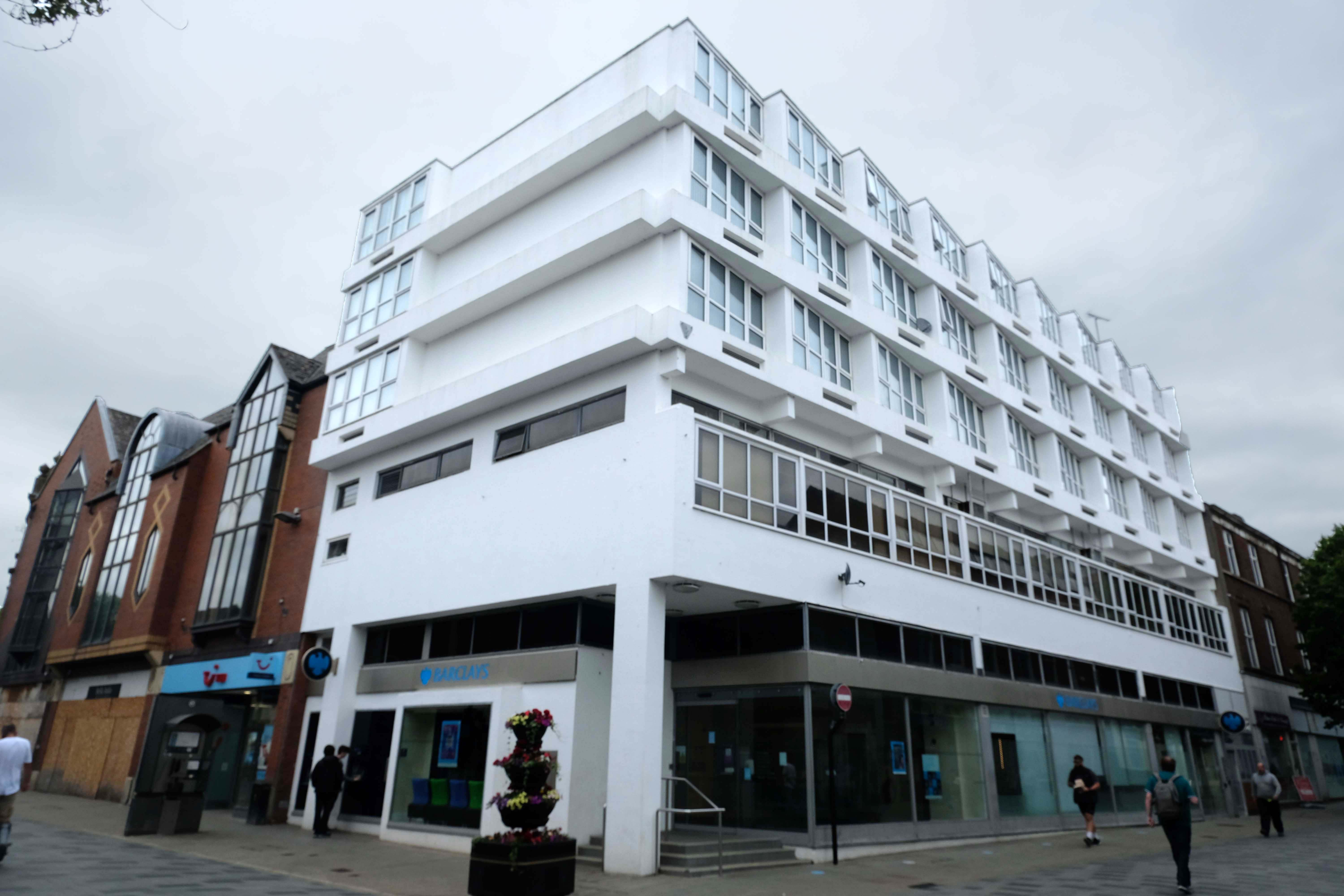
With an intermediate former Gas Showroom.
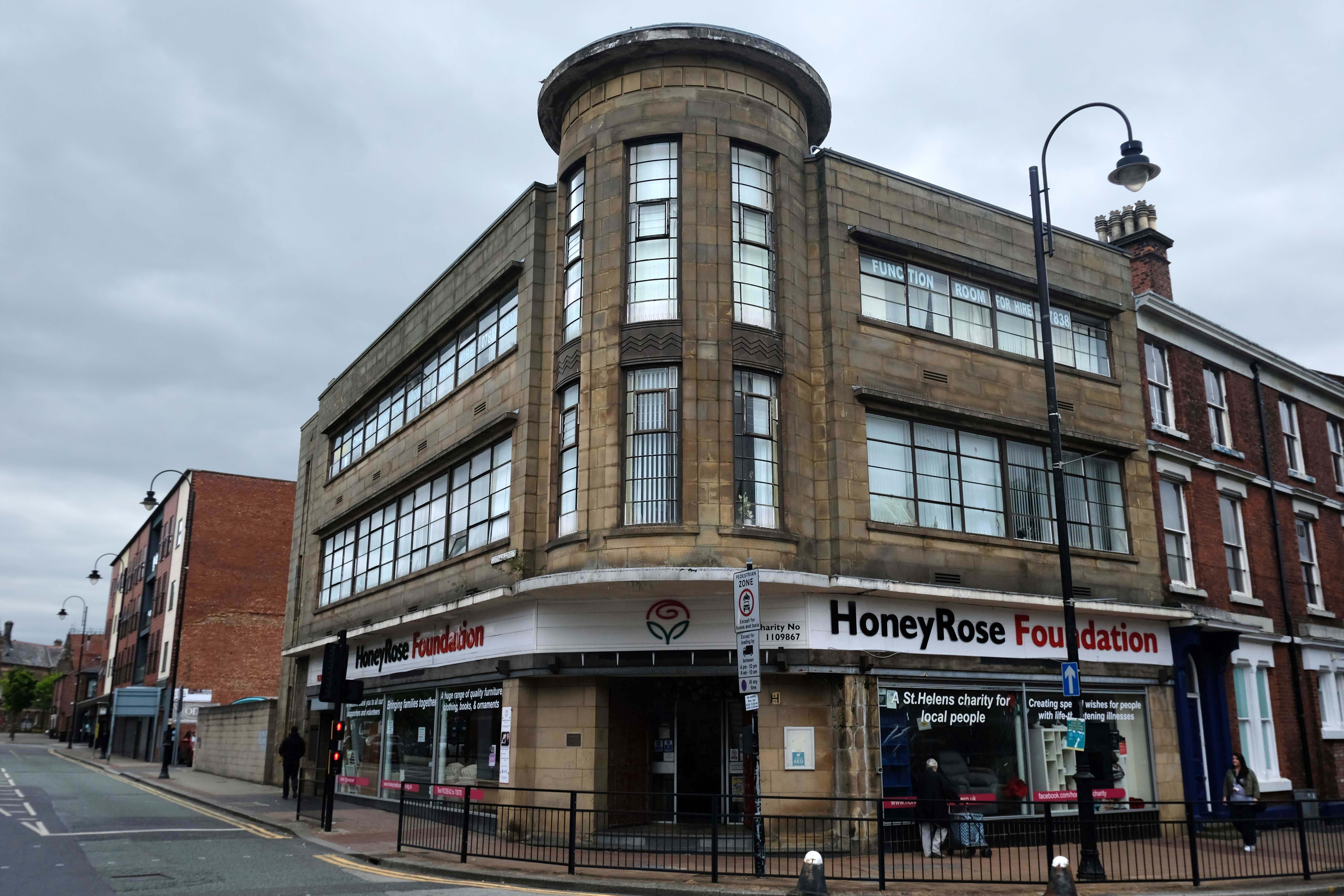
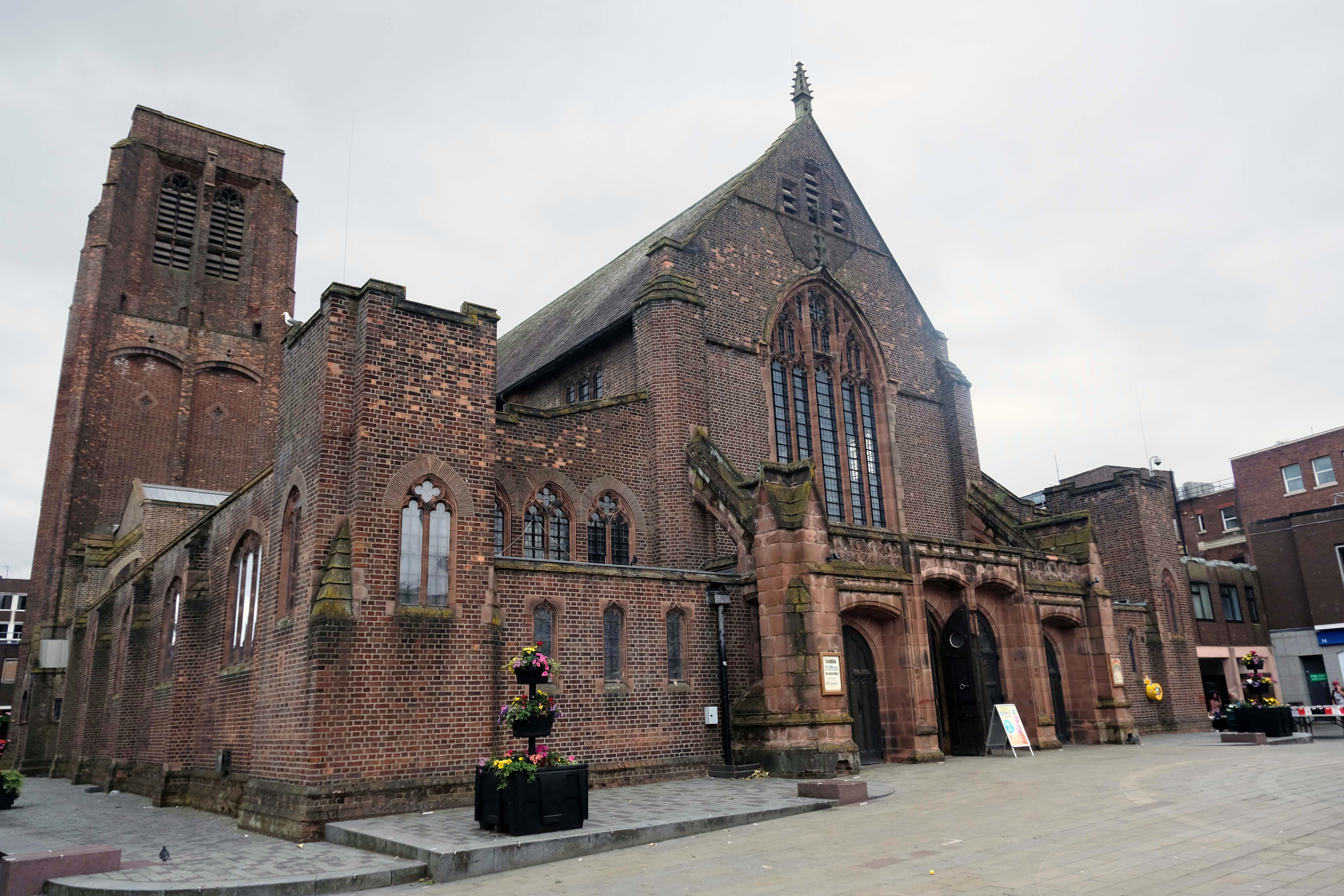
Next to the Church of St Helen.
Architect: WD Caroe 1920-26 Grade II Listed
A chapel has been on the site since at least the 16th century. The chapel was doubled in size in 1816, but burnt down in 1916. It is the parish church of the town, and stands in a prominent position.
St Mary’s Car Park a multi-storey masterpiece straight outa Dessau.
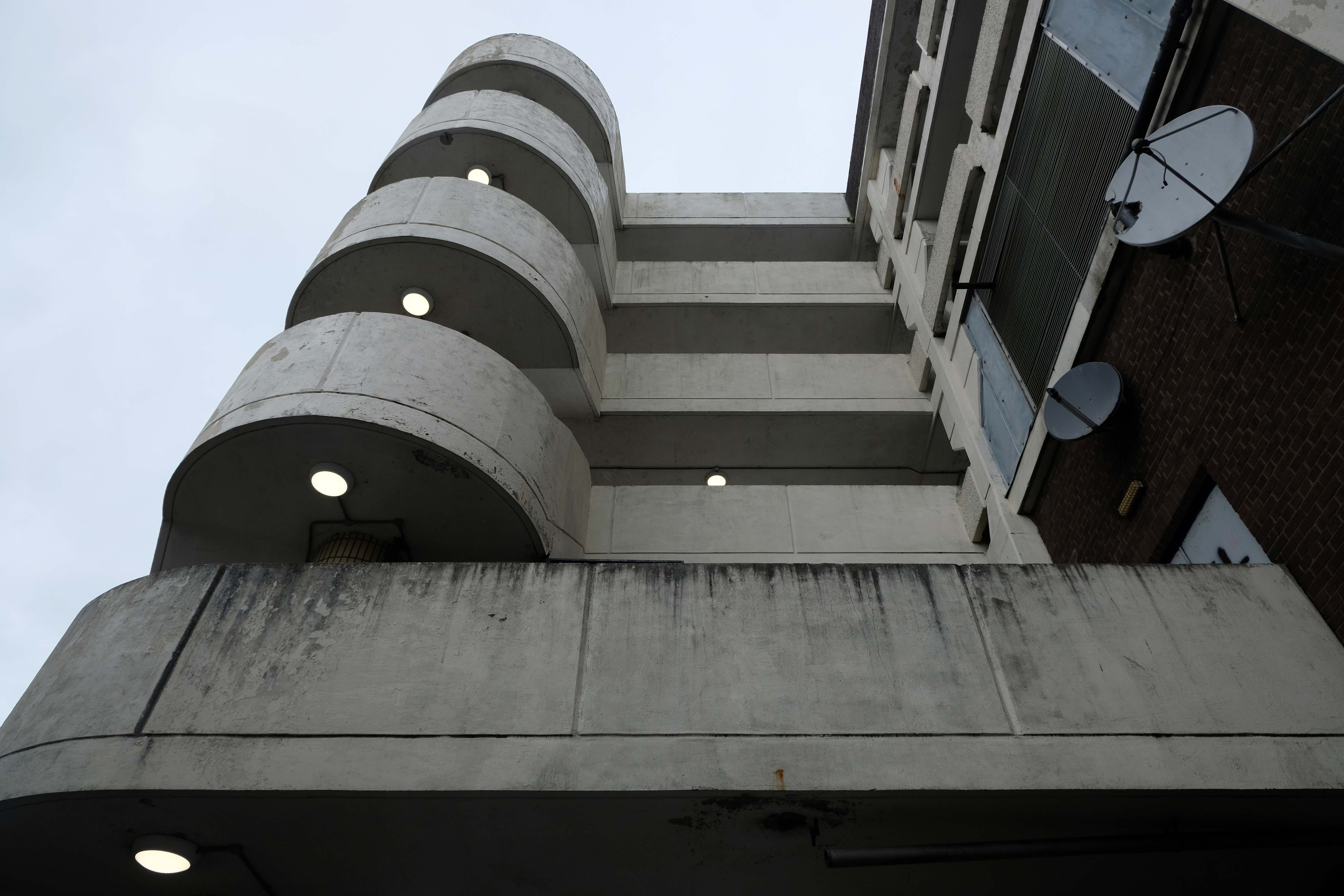
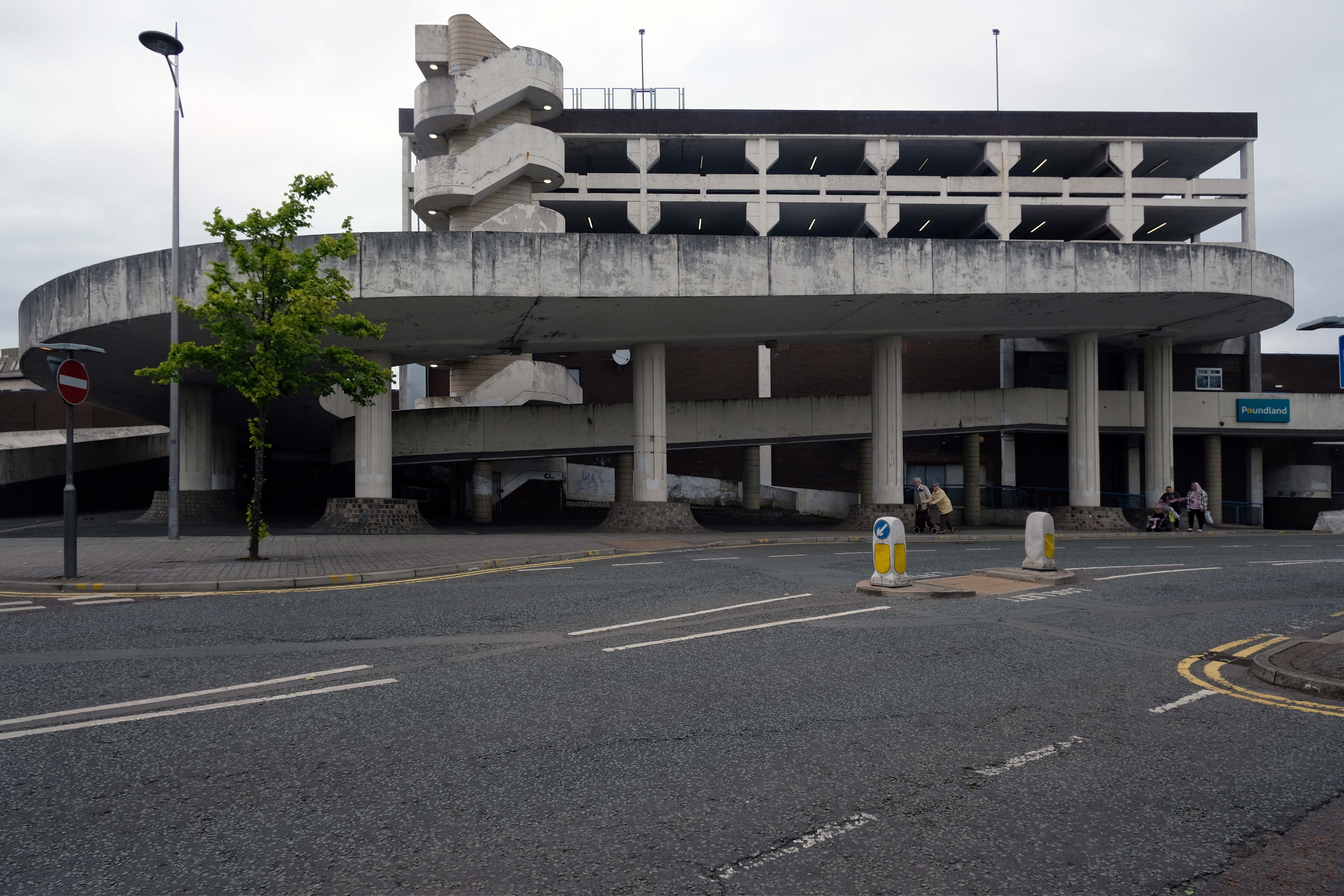
Next crossing a complex web of inner ring roads designed with the beleaguered pedestrian at the forefront of the planners’ minds.
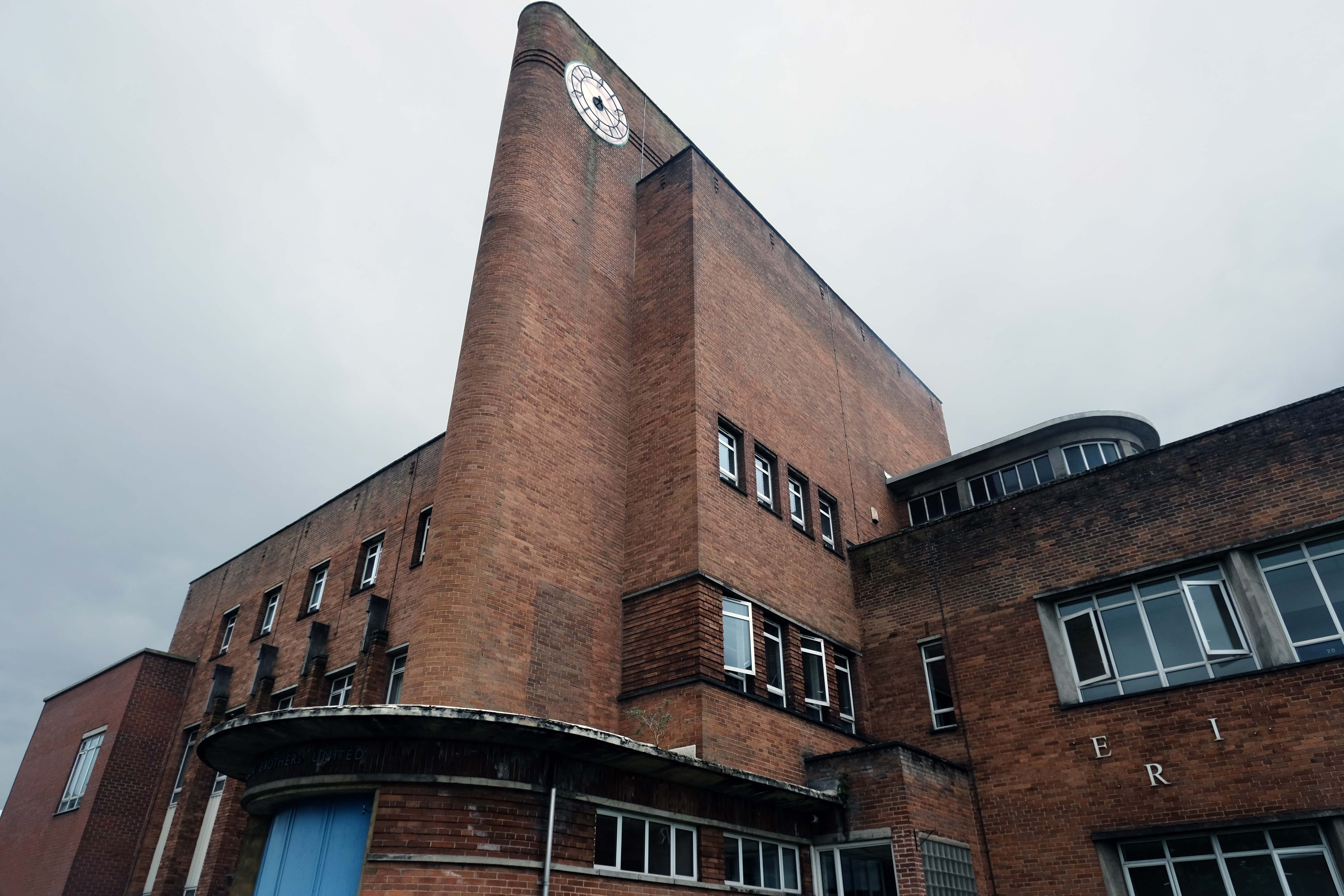
To the inter-war Pilkington’s Offices – Reflection Court
Architects: Herbert J Rowse and Kenneth Cheeseman 1937-41 Grade II Listed.
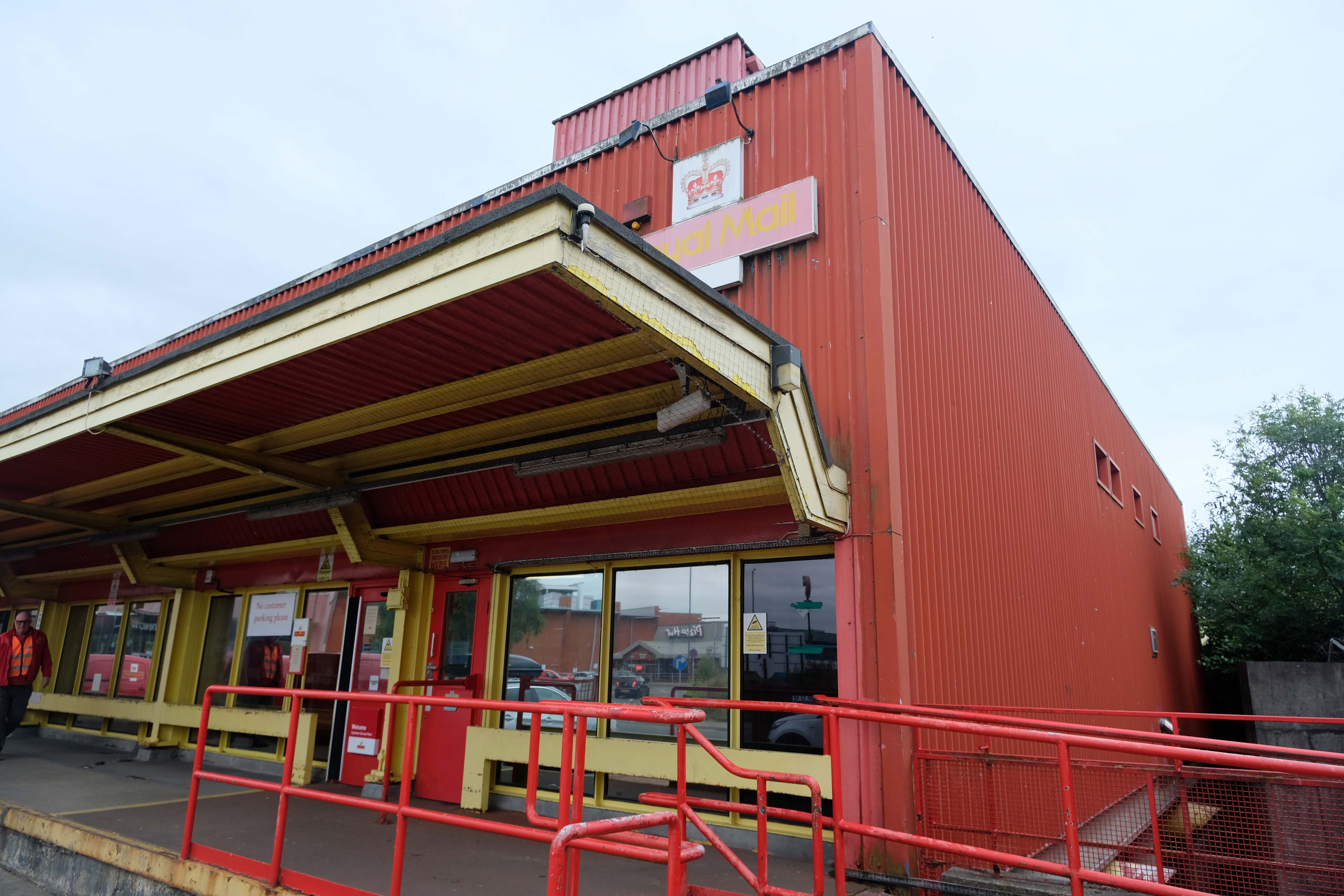
Onwards to the Post office – sorted.
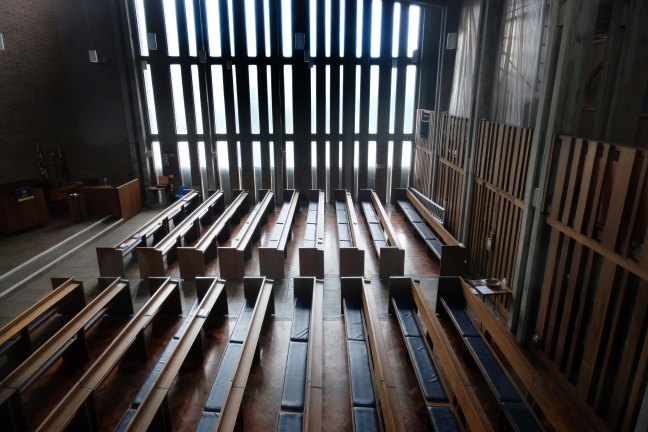
Wellington Road Eccles M30 9AL
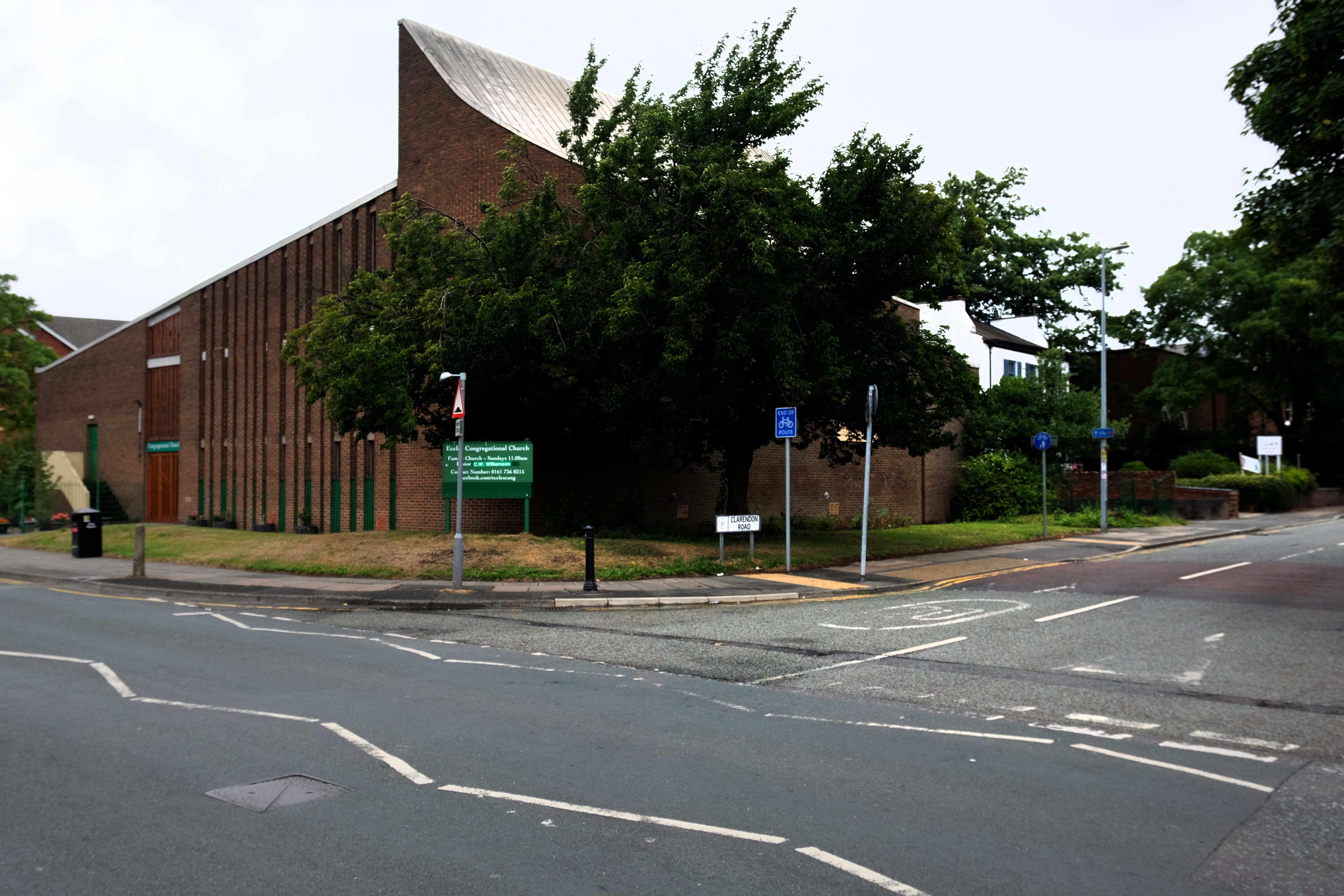
Architect: TD Howcroft 1969
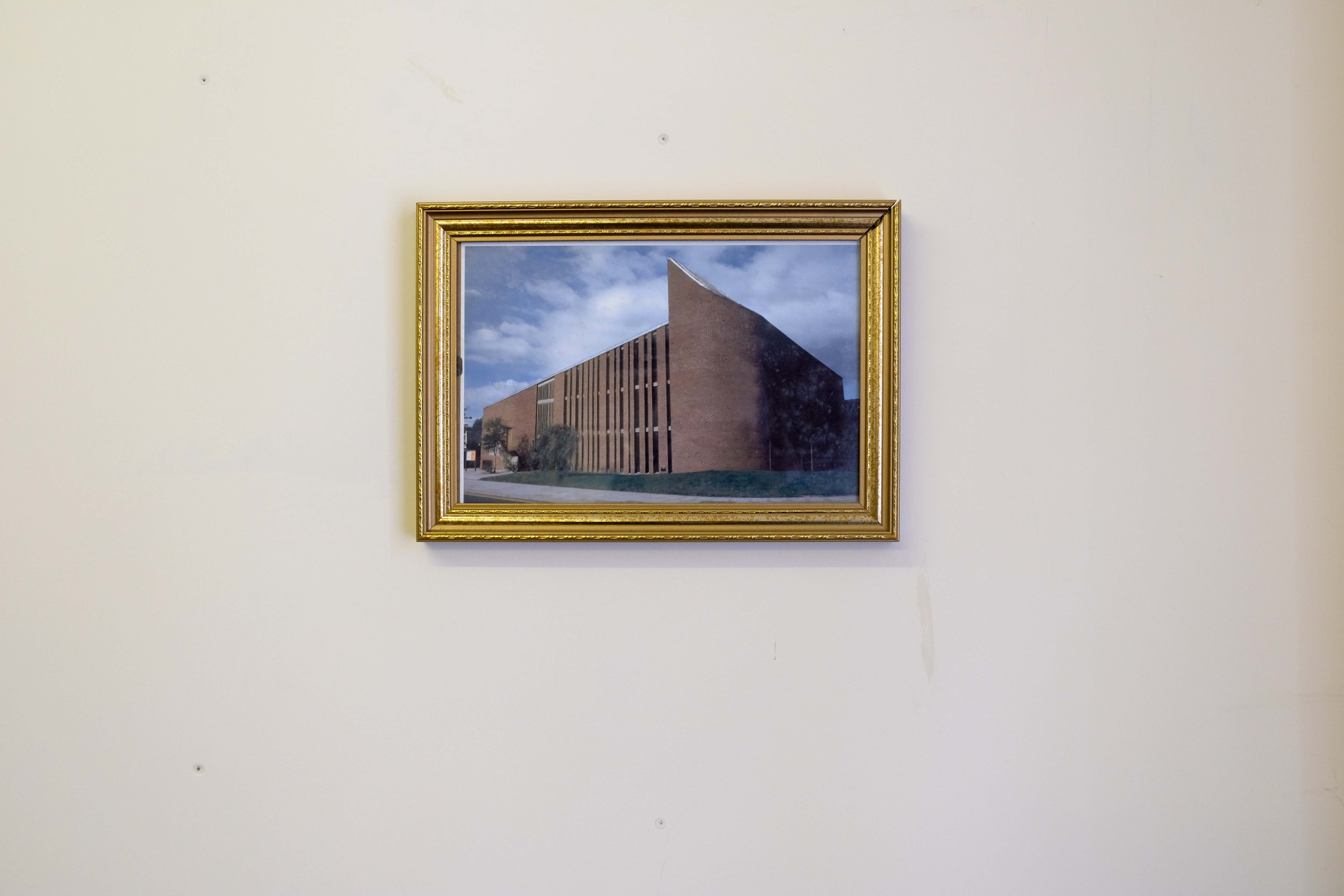
Once upon a time there was a Gothic church.
The Cornerstone of the building was laid in front of a crowd of 2,000 on Good Friday 1859 and the church was opened for public worship on Good Friday 6th April 1860. In the press of the day, the church was described as – a Cathedral looking church.
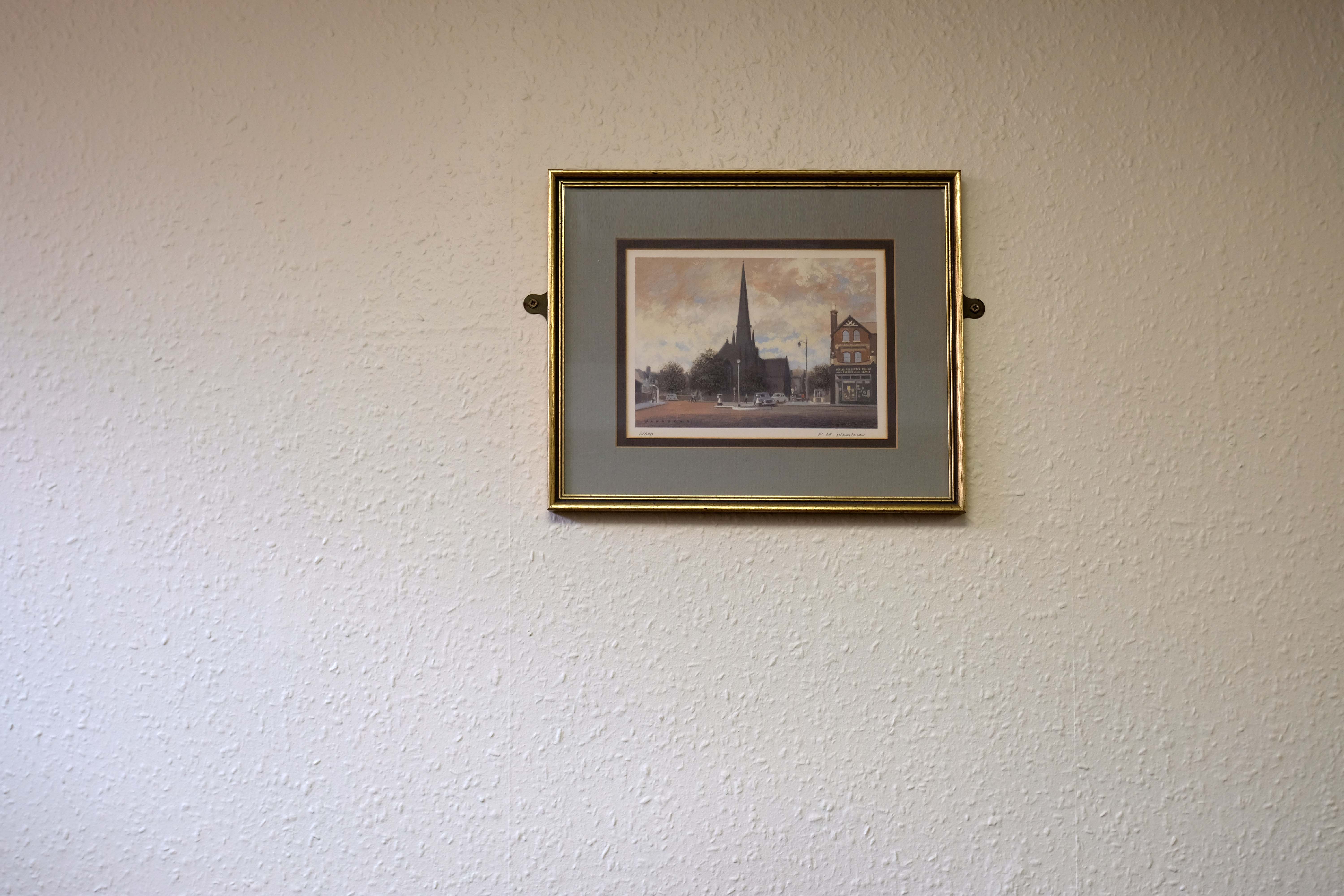
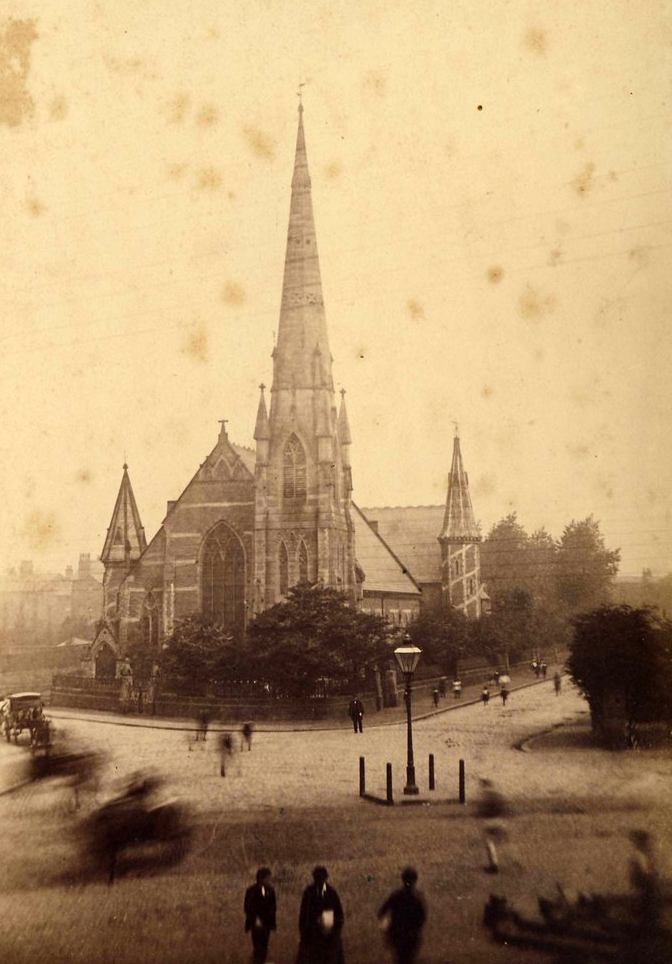
In 1965 it was announced that a new Eccles motorway would be built through the church land.
Work began to demolish the Church and replace it with a new smaller church, but the old church did not go down without a fight as workers could not pull down the steeple. After eleven days of battering and buffeting by eighteen pounds of gelignite and two eight ton bulldozers, the steeple finally surrendered.
Then there wasn’t – then there was this:
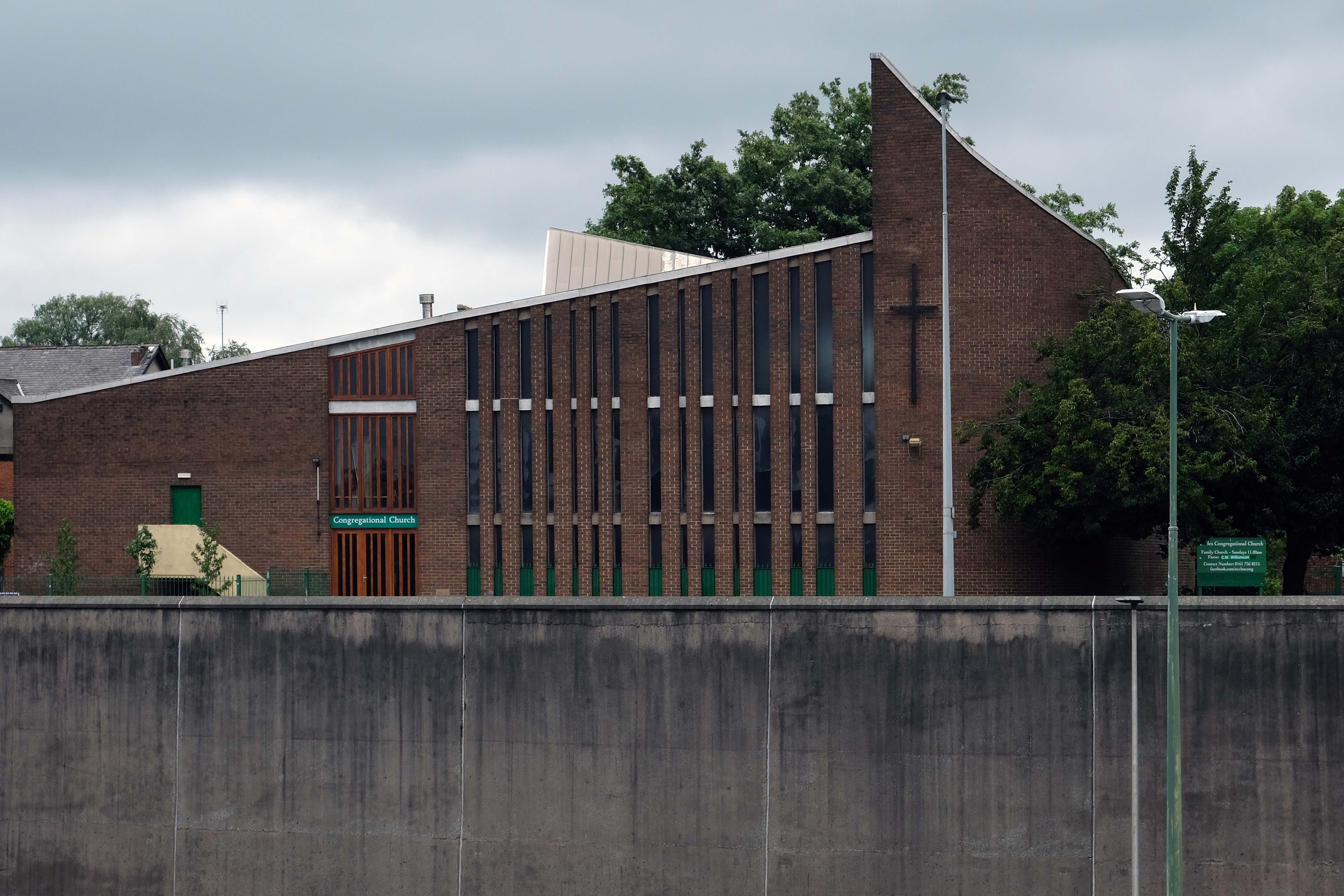
On Friday 11th July 1969, the new church officially opened with a splendid ceremony. A minor hitch occurred when the organ blew a fuse during the second verse but the Congregation sang through it while organist Mr Kenyon frantically fumbled about and rectified the matter.
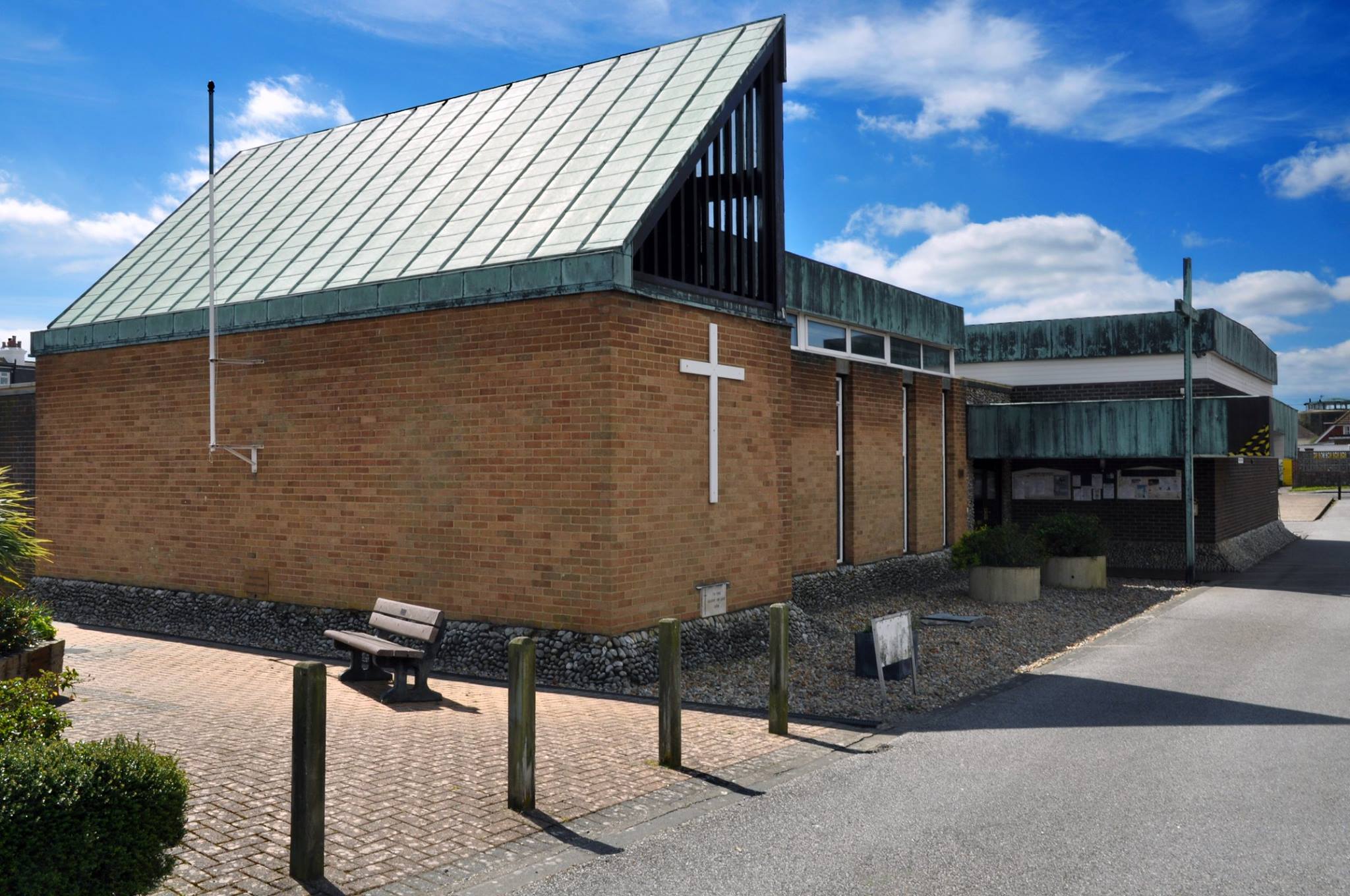
TD Howcroft was also responsible for St Wilfrid’s in Pevensey Bay – I happened to cycle by in 2015.
My thanks to Mr Tony Flynn – the acting Lord Mayor of Eccles, for arranging our visit through church member Mr George Cross.
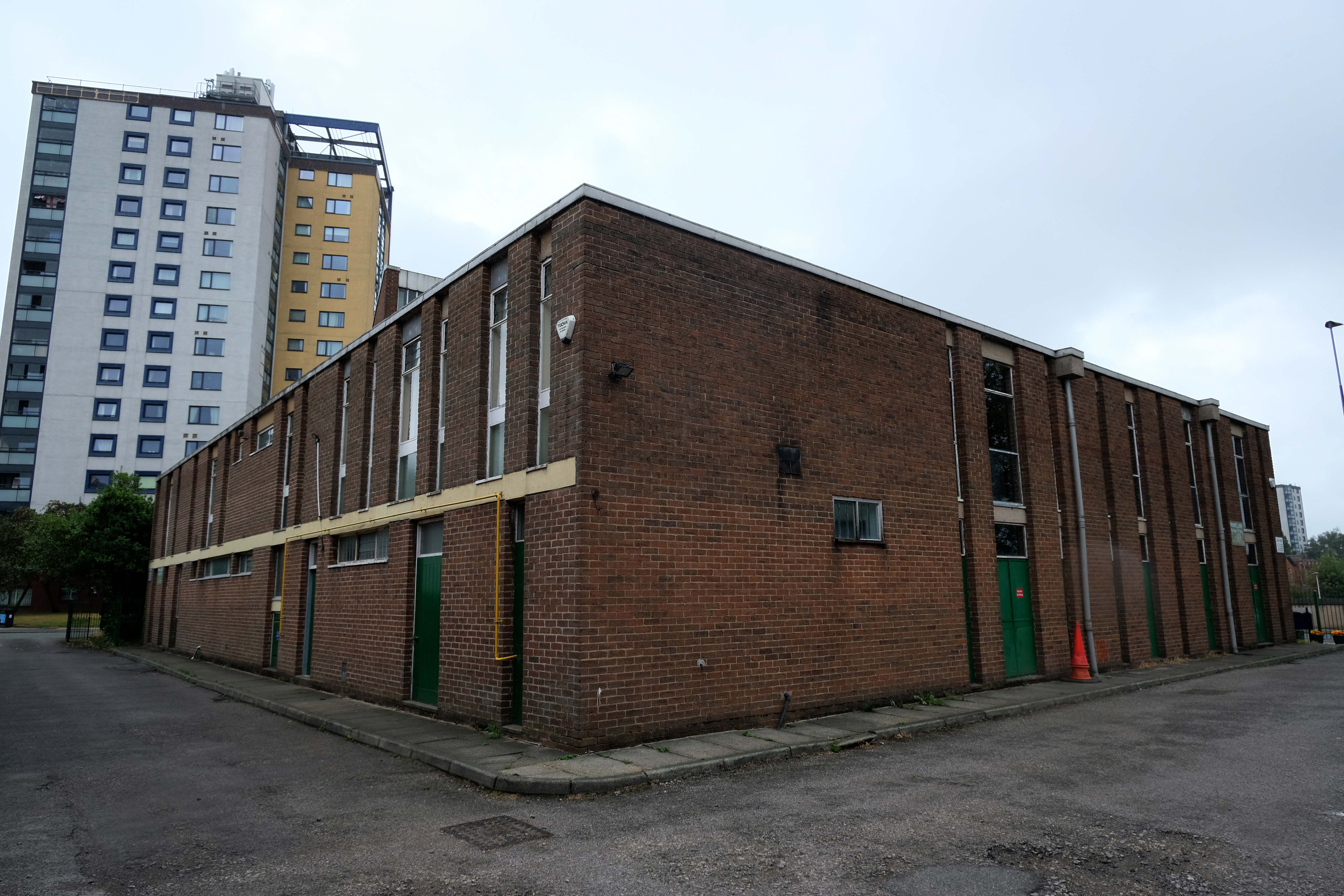
To the rear the exterior is, as Mr Pevsner would say – unprepossessing.
The elevation facing the main road more than somewhat less unprepossessing.
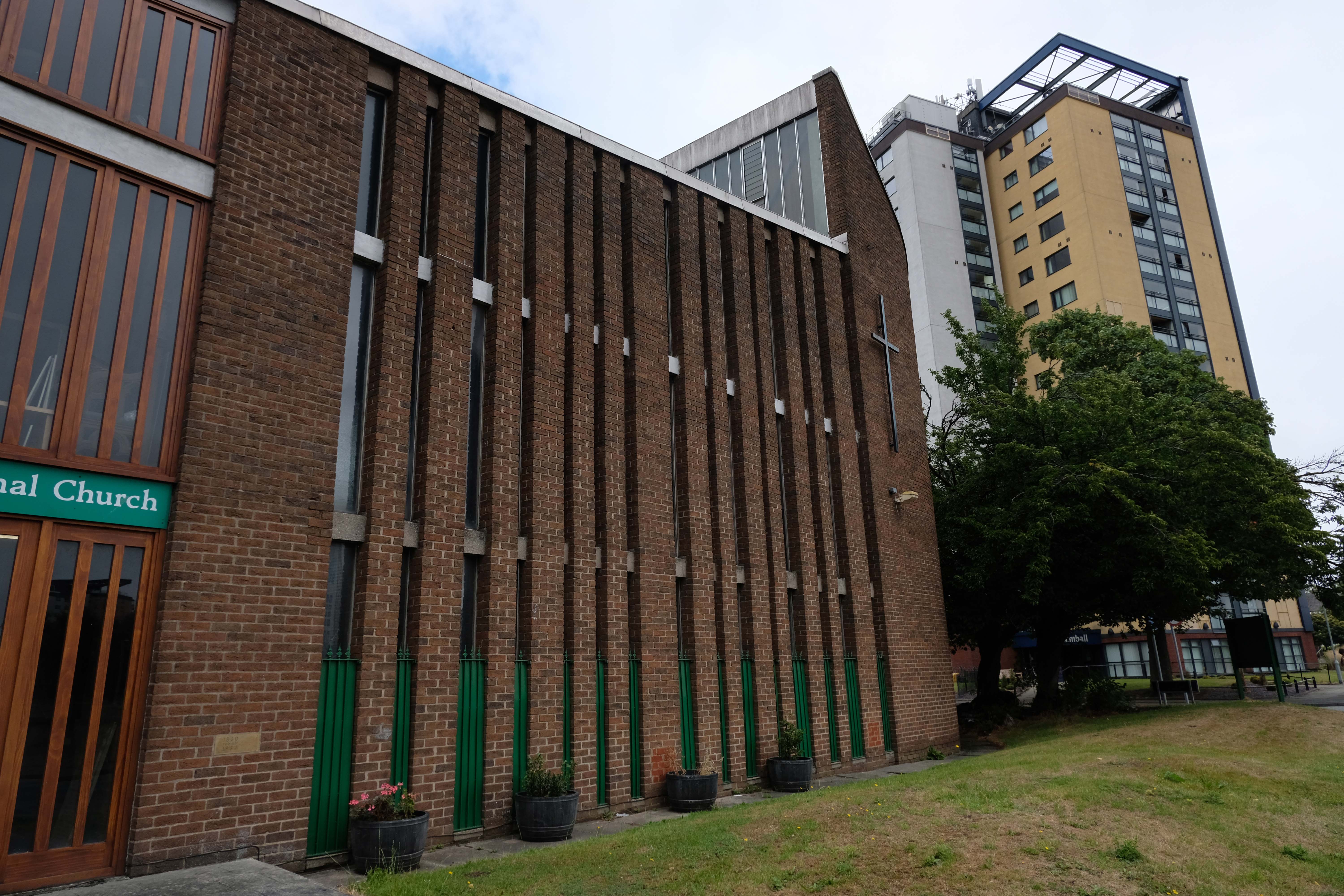
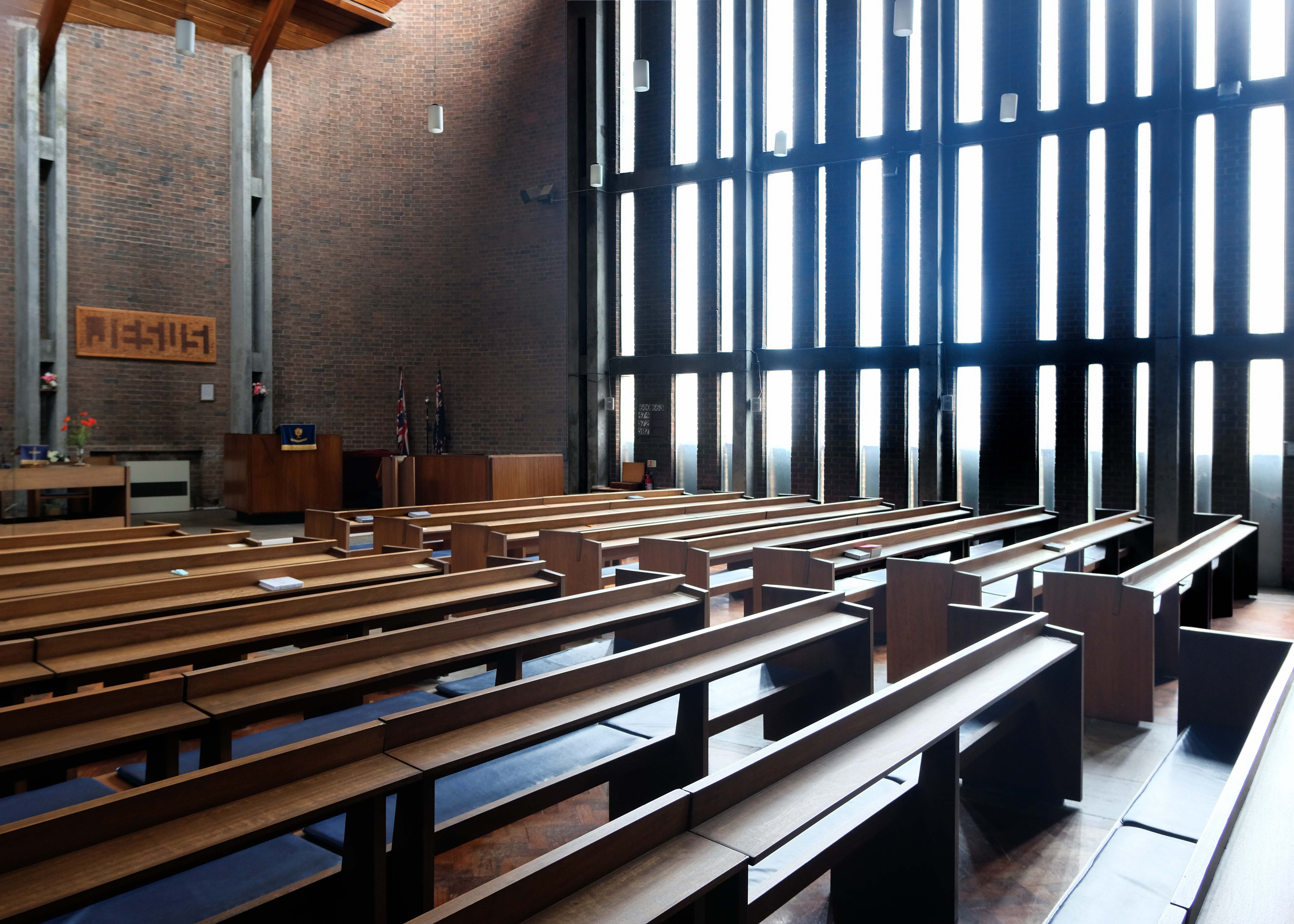
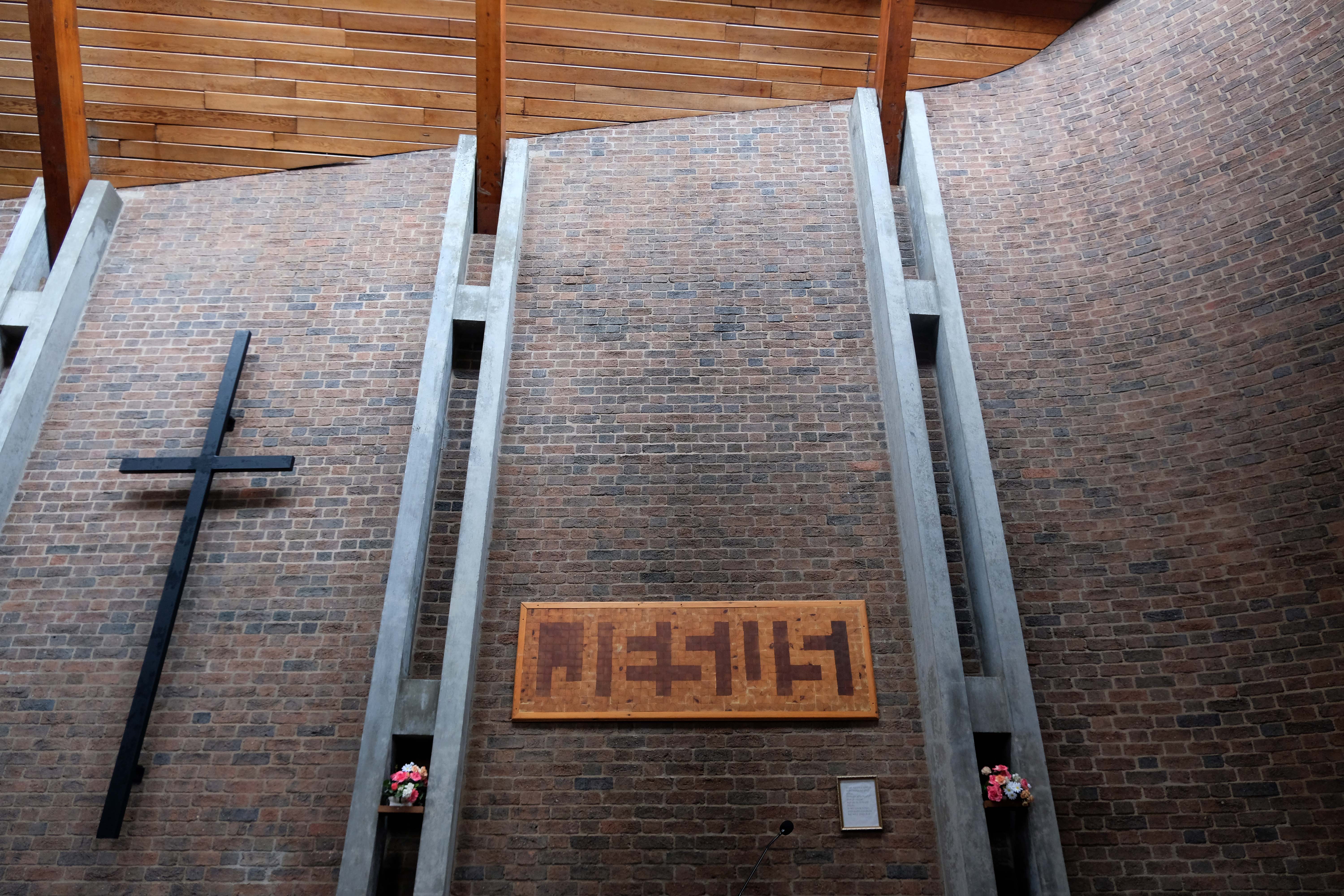
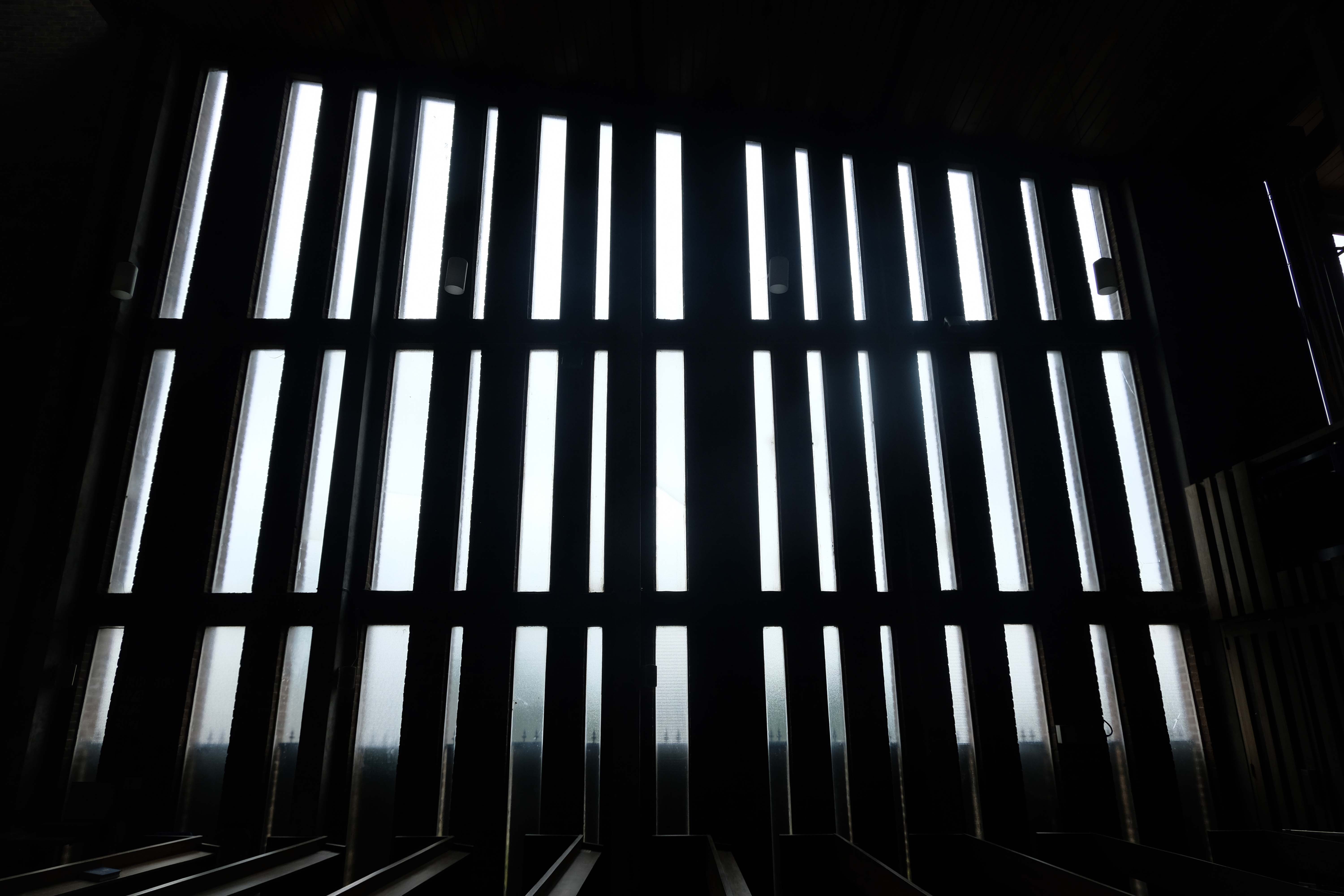
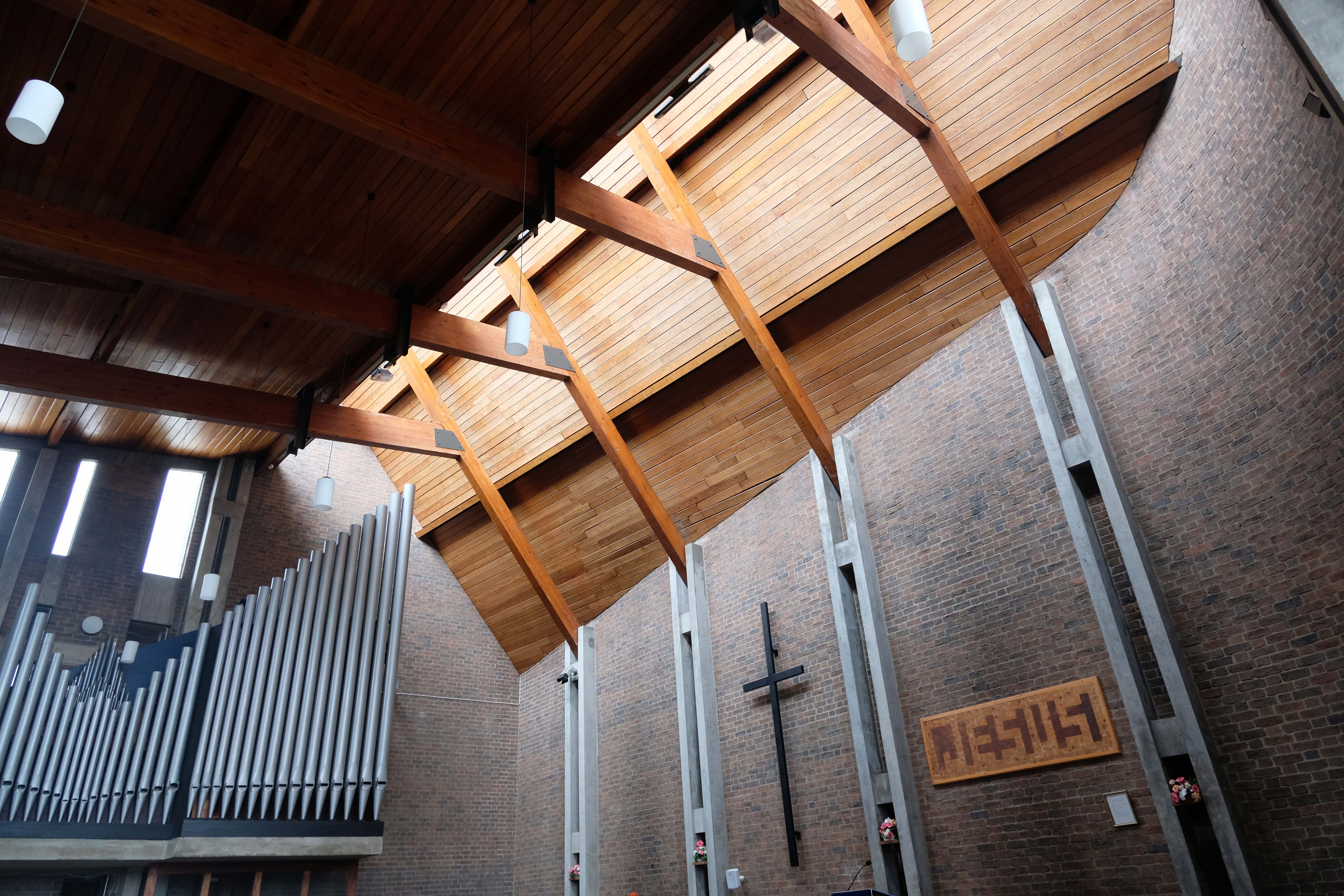
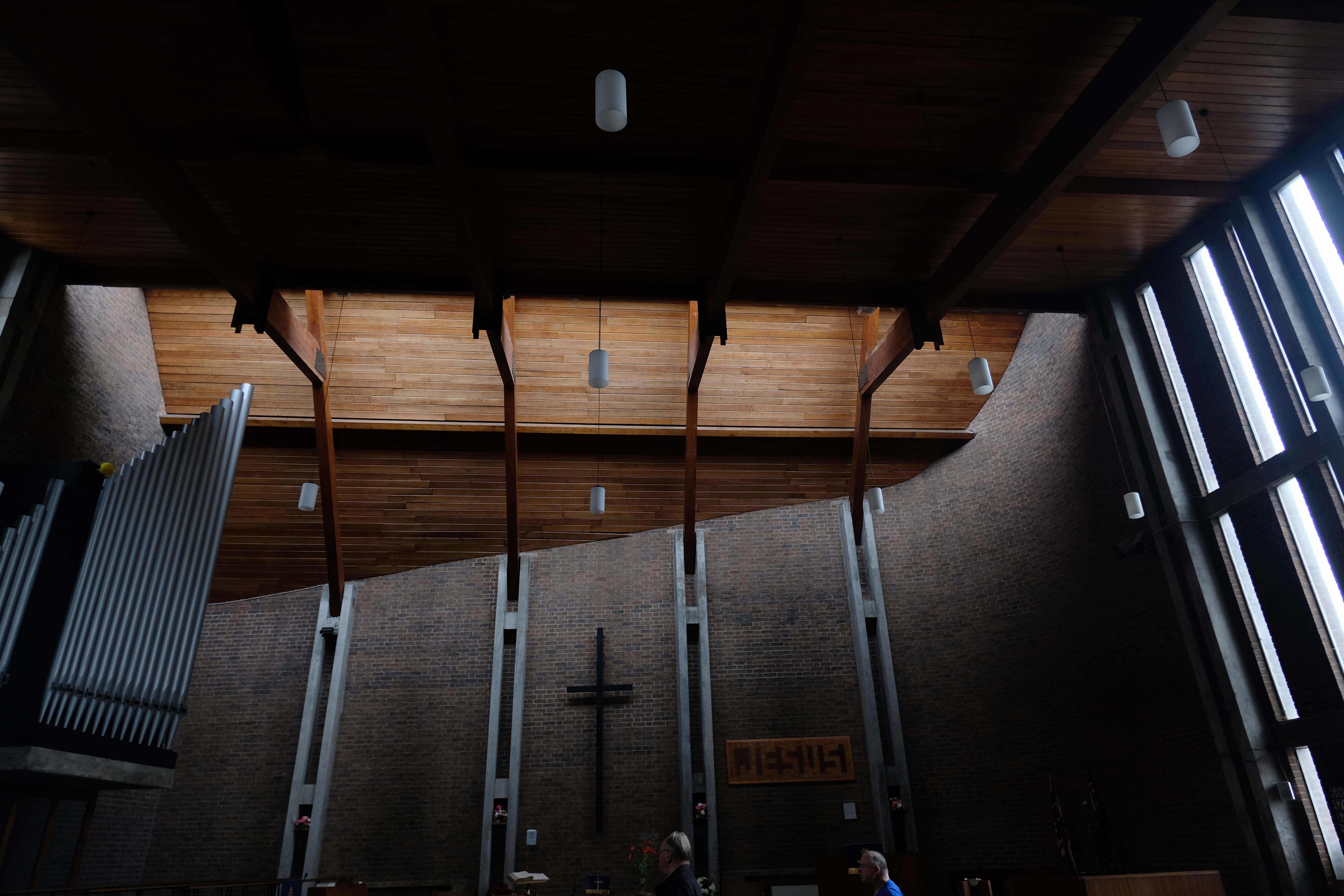
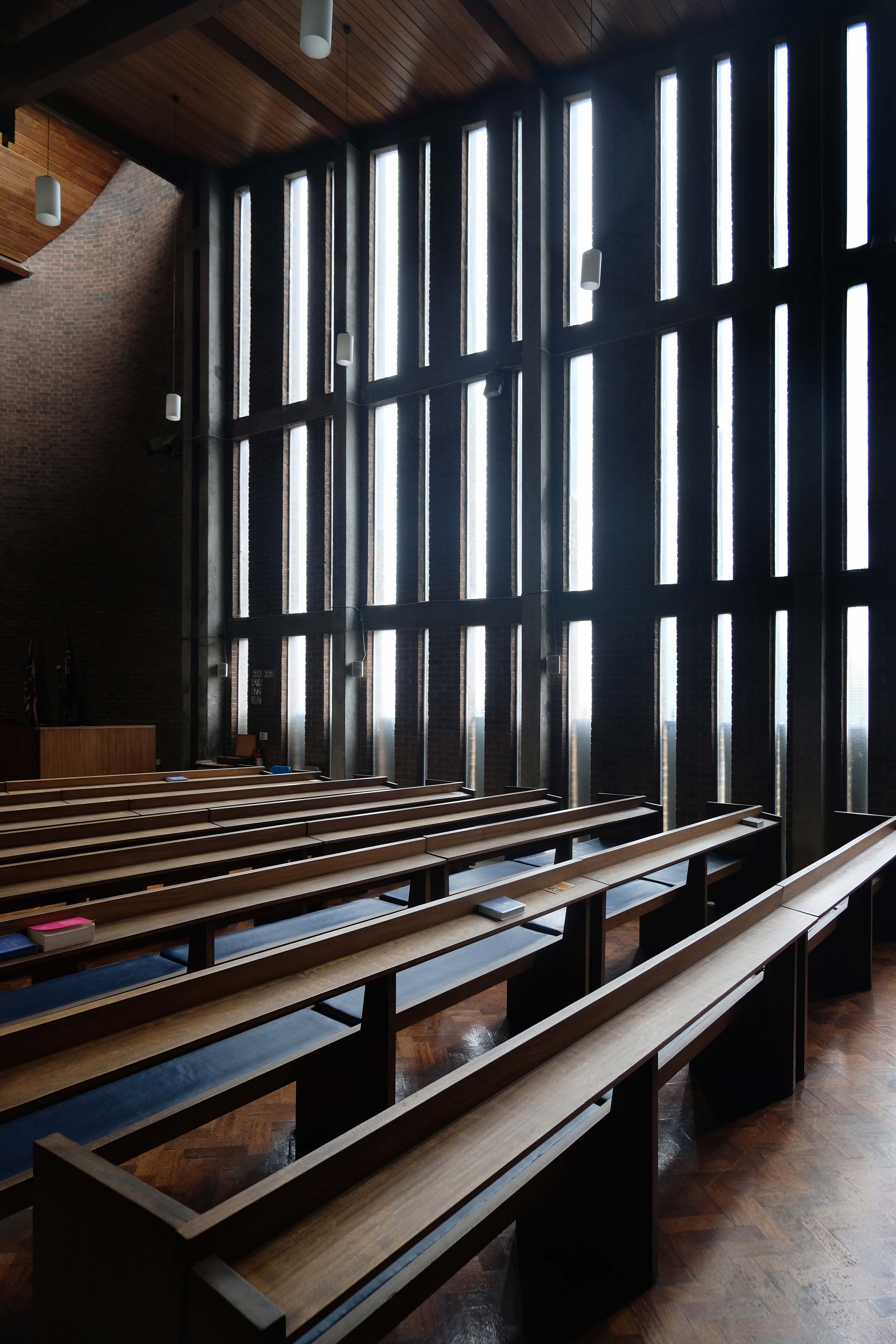
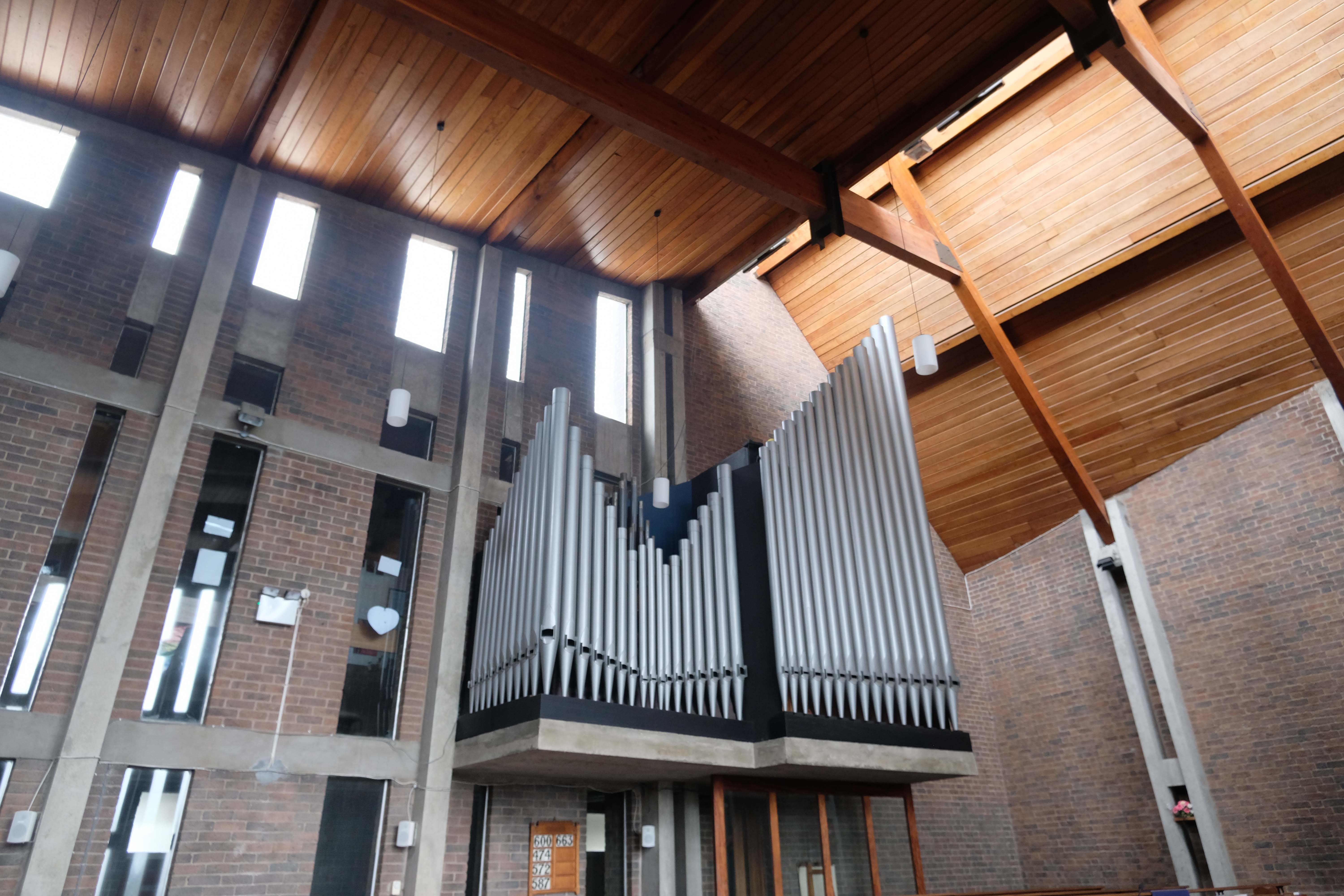
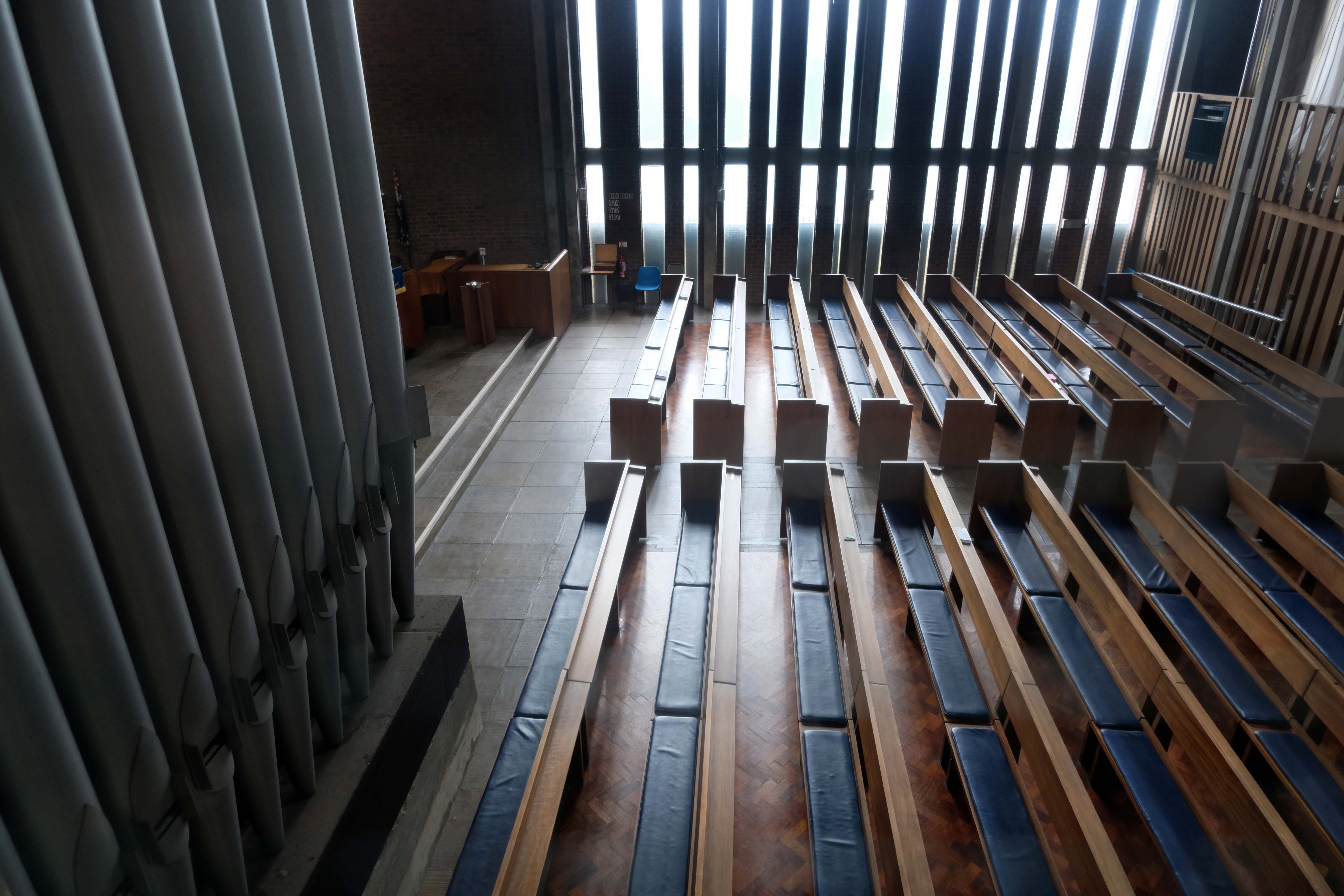
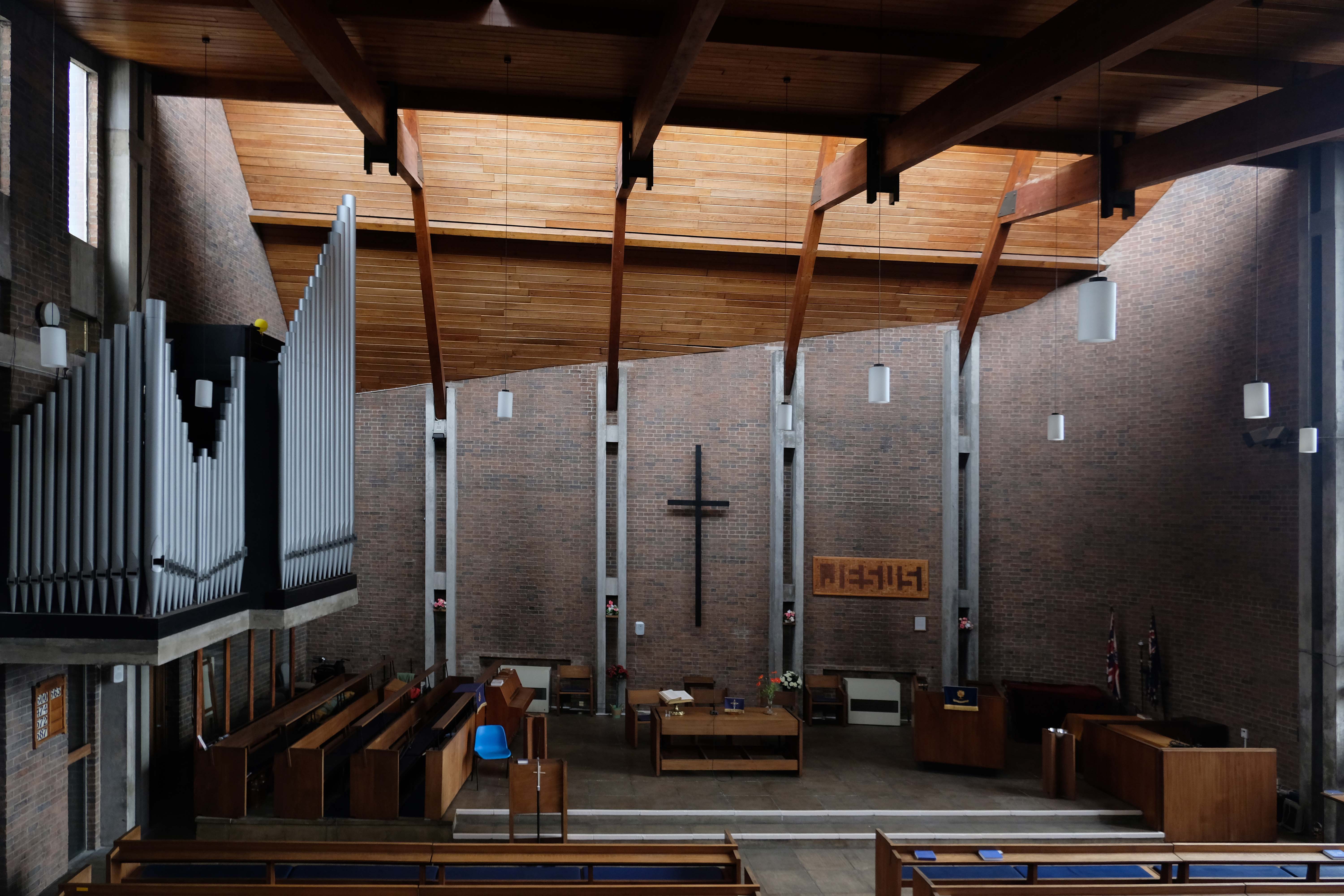
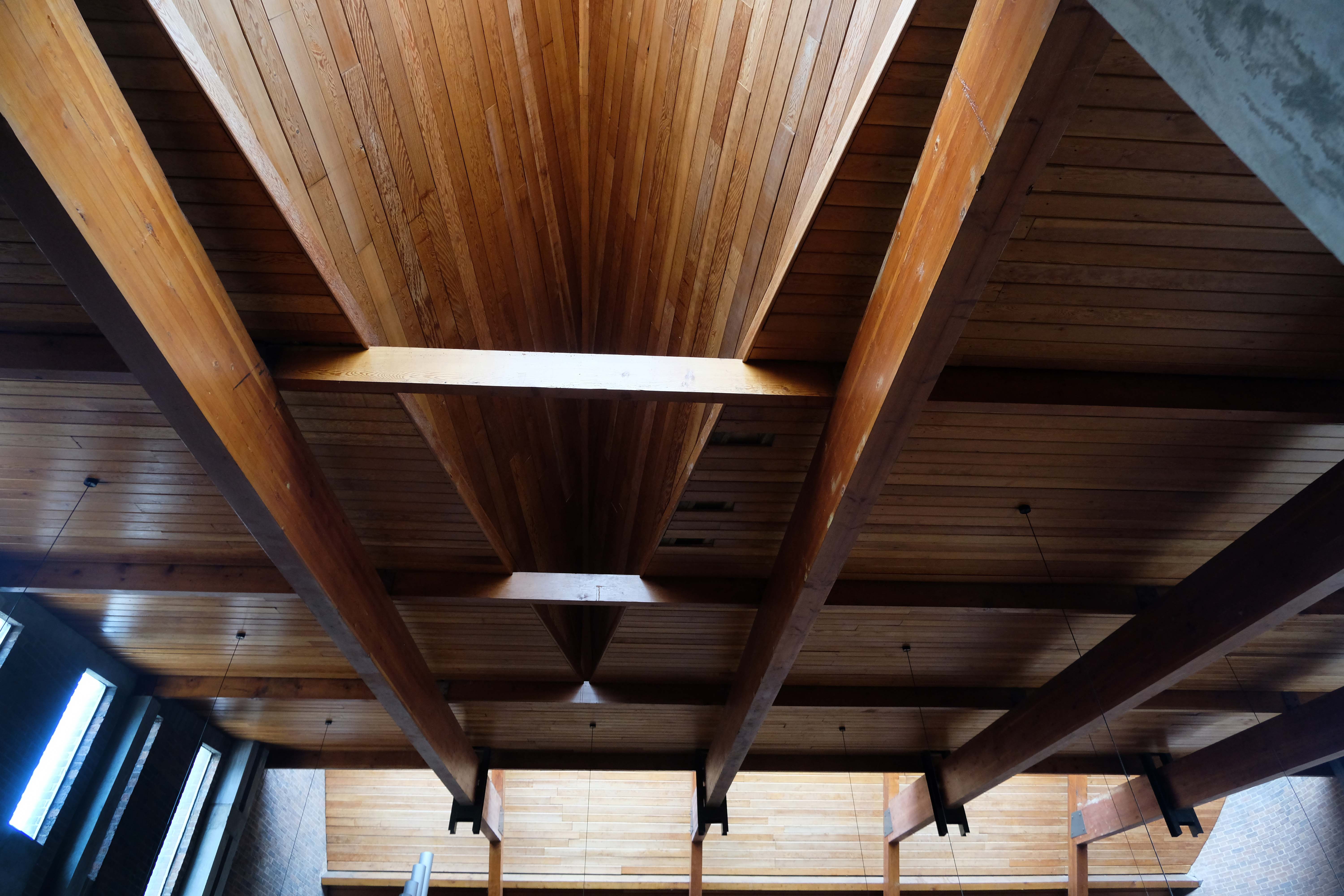
A curved apse along with a raised and canted roof – a window up above illuminating the altar.
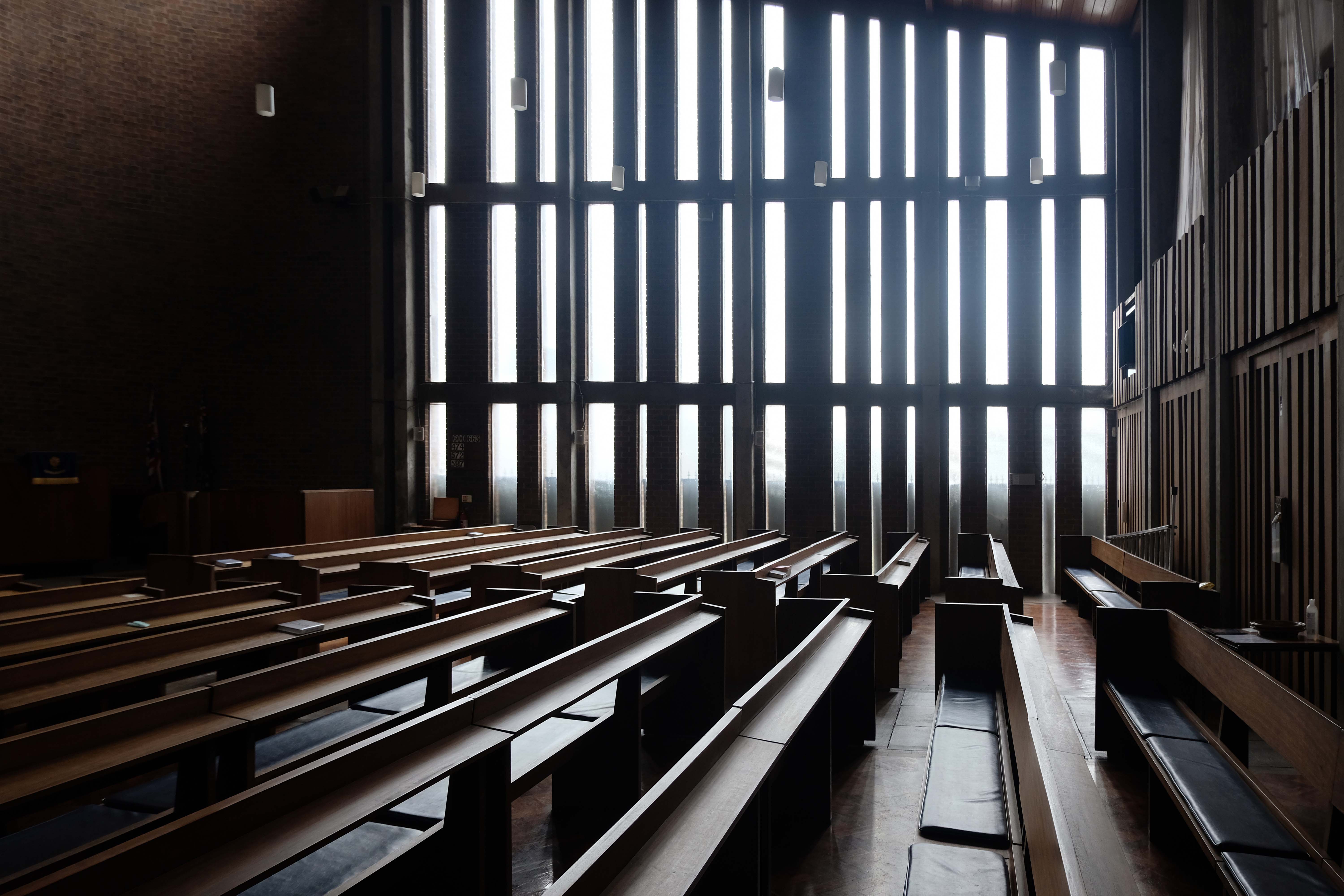
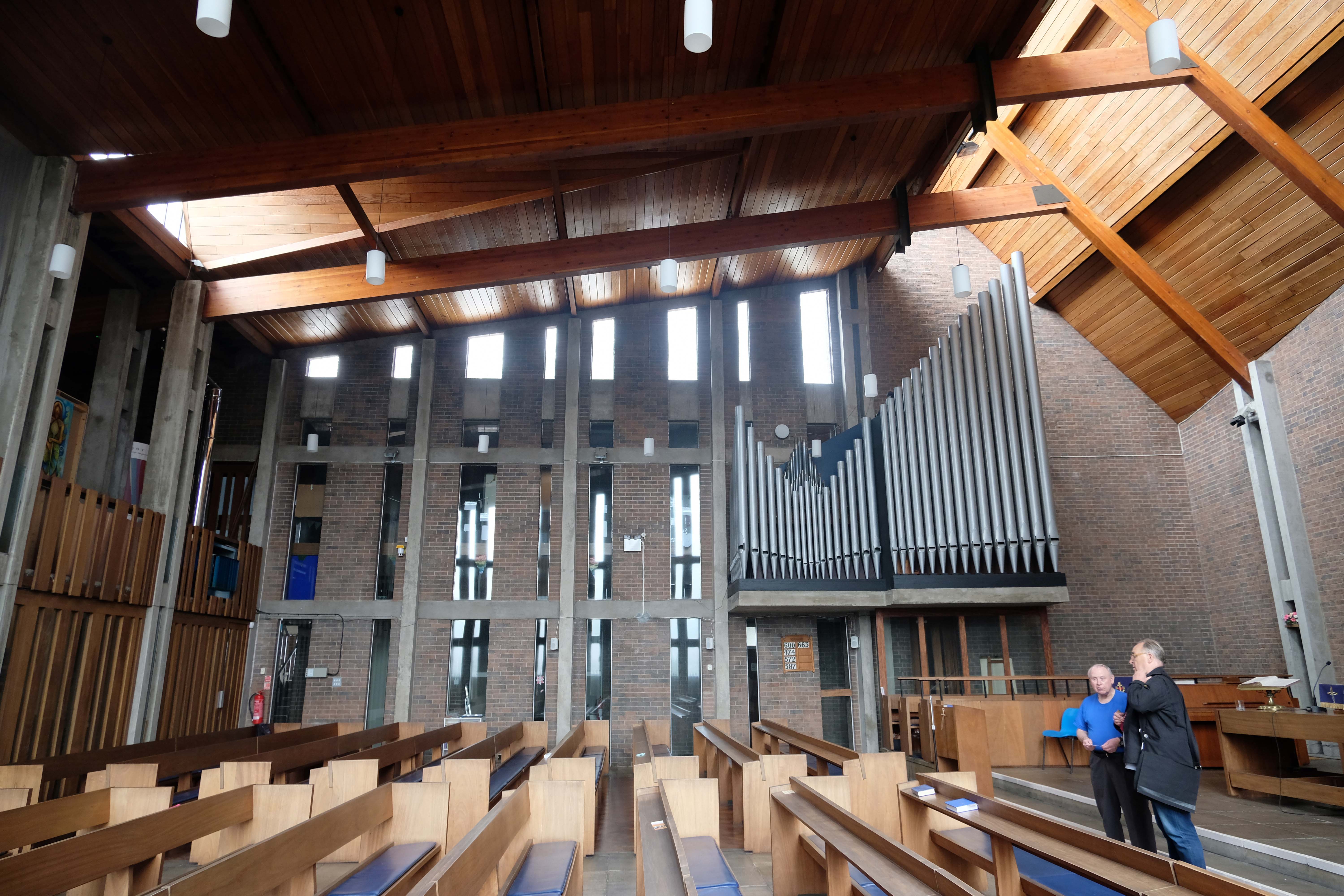
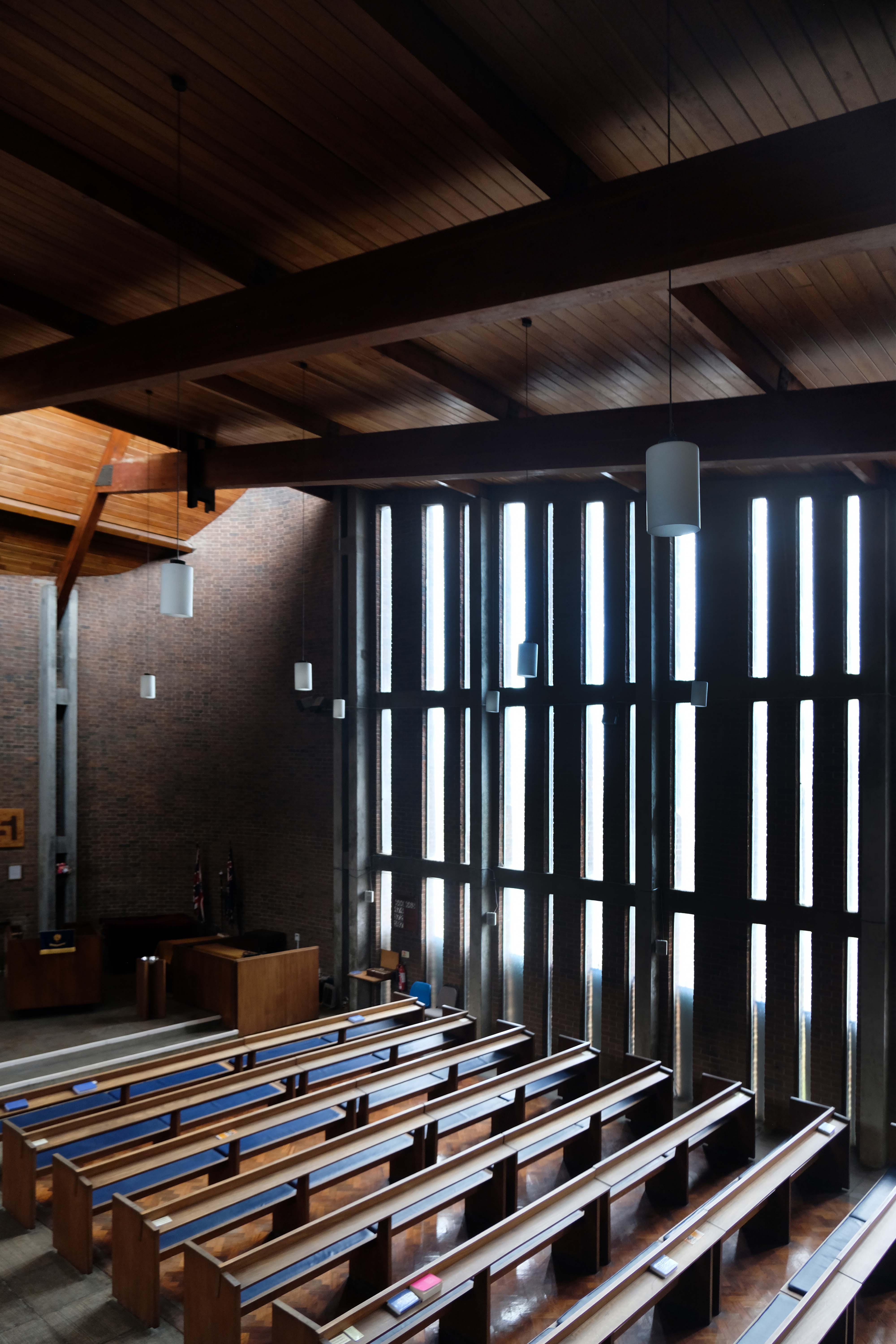
The main body of the church is bold and voluminous – strong verticals to the rear and right.
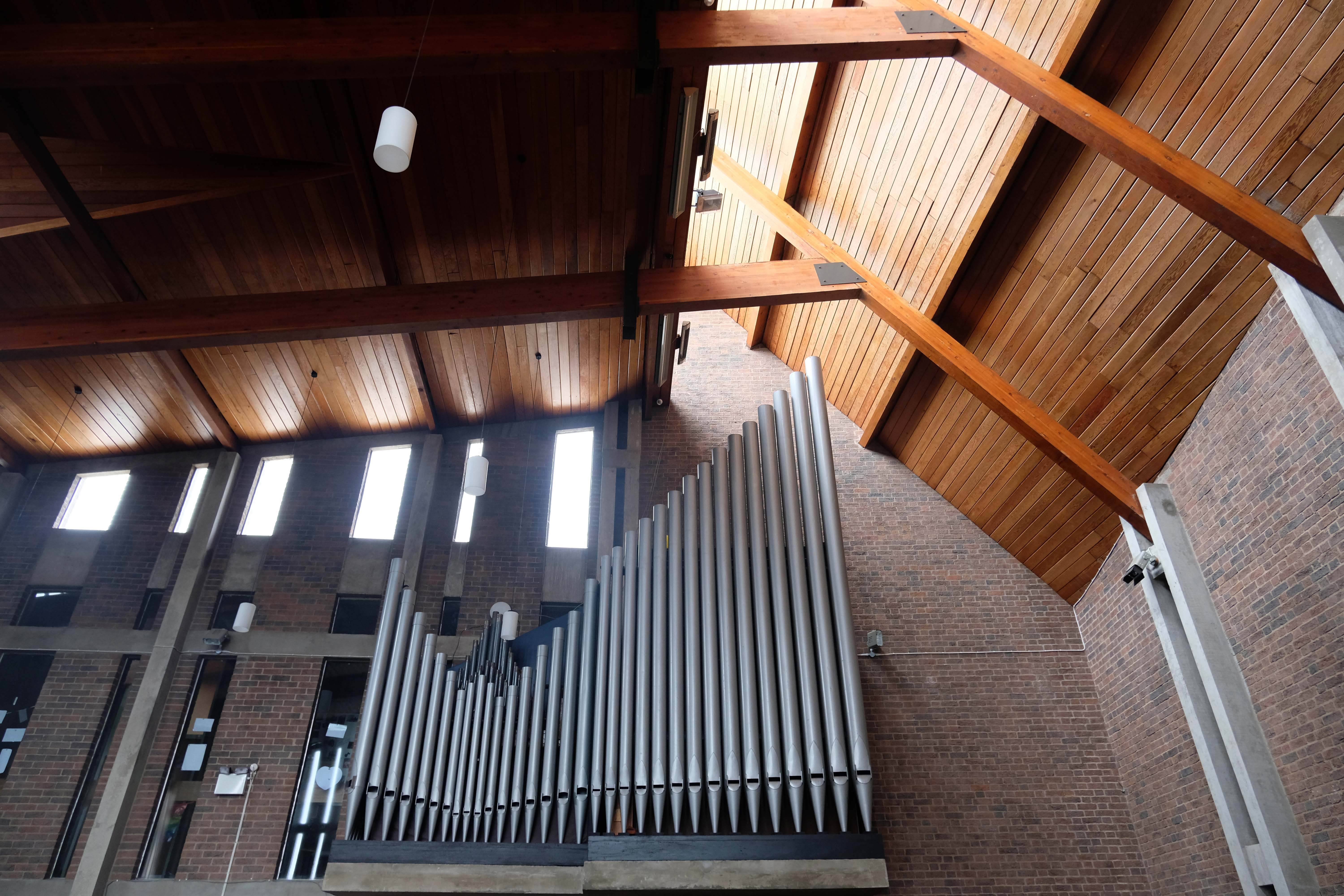
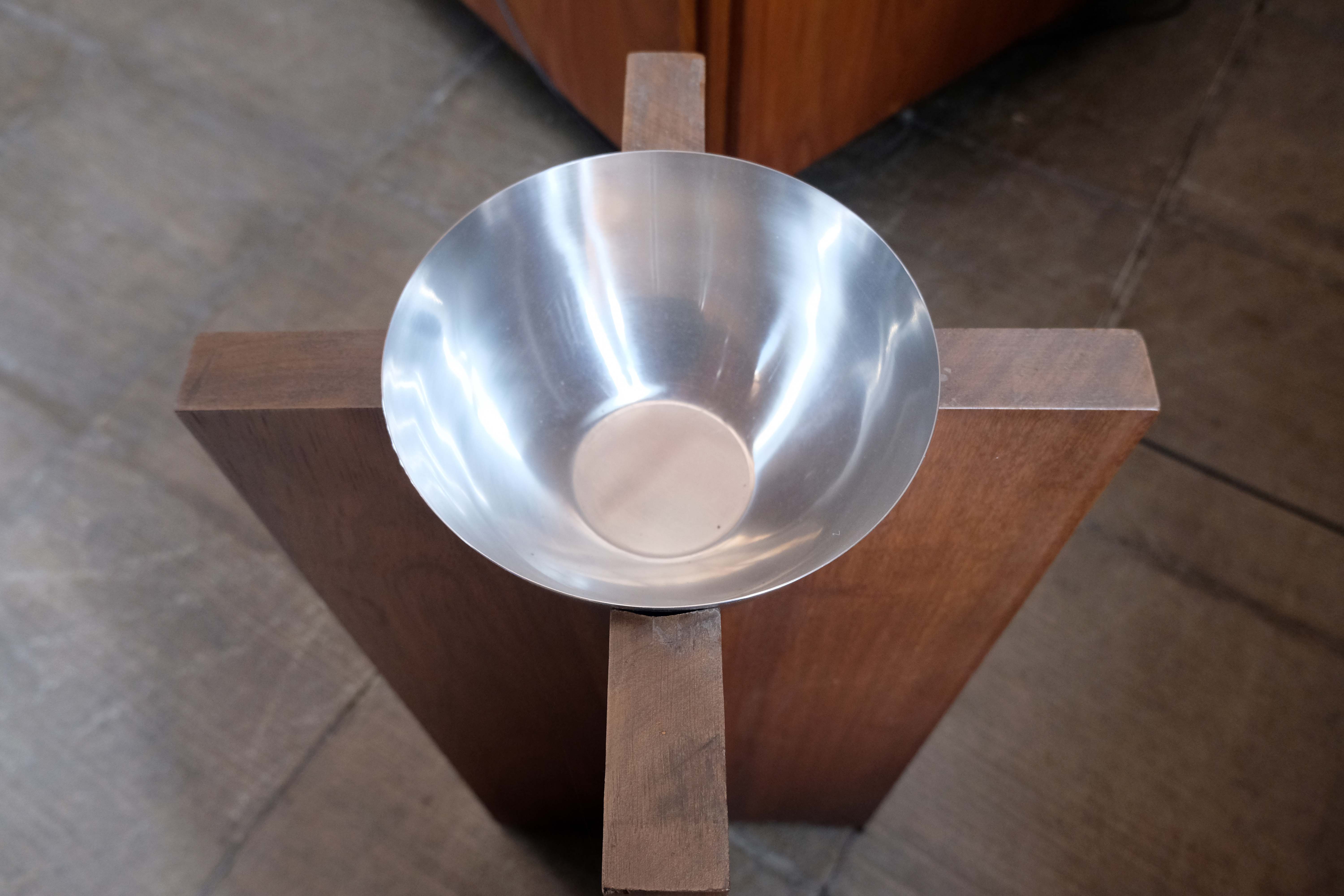
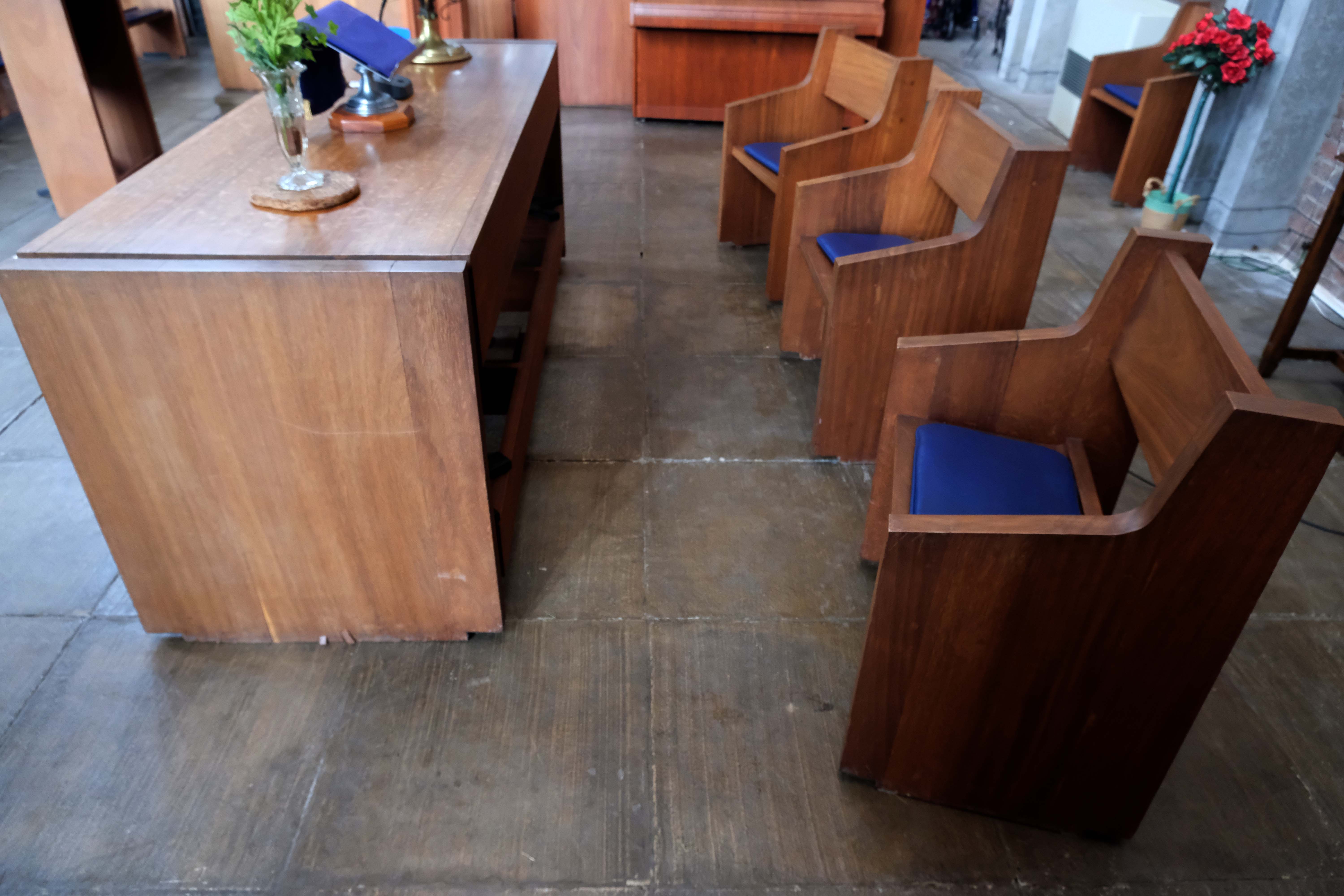
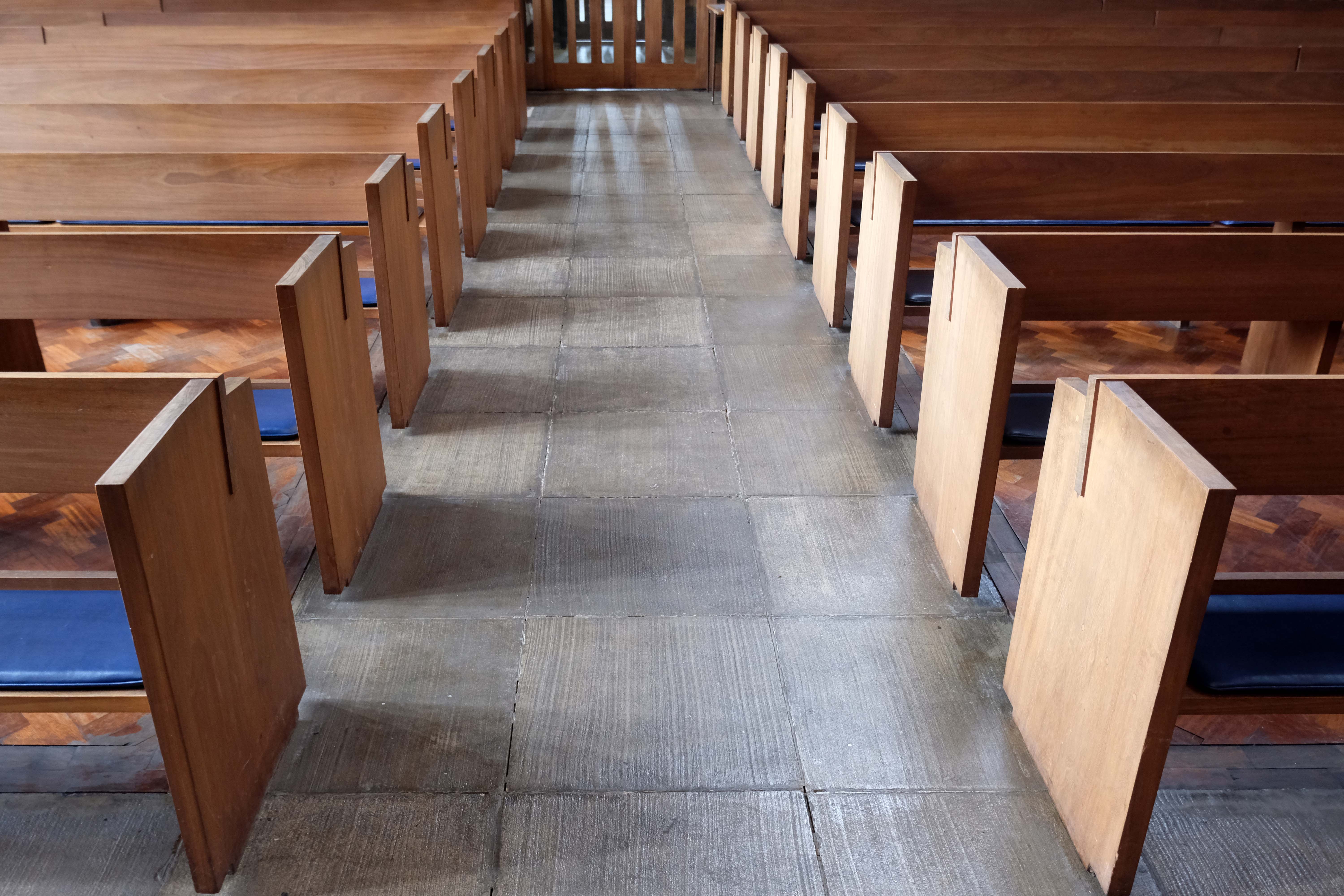
The pews, organ pipes and other furnishings appear to be of a piece.
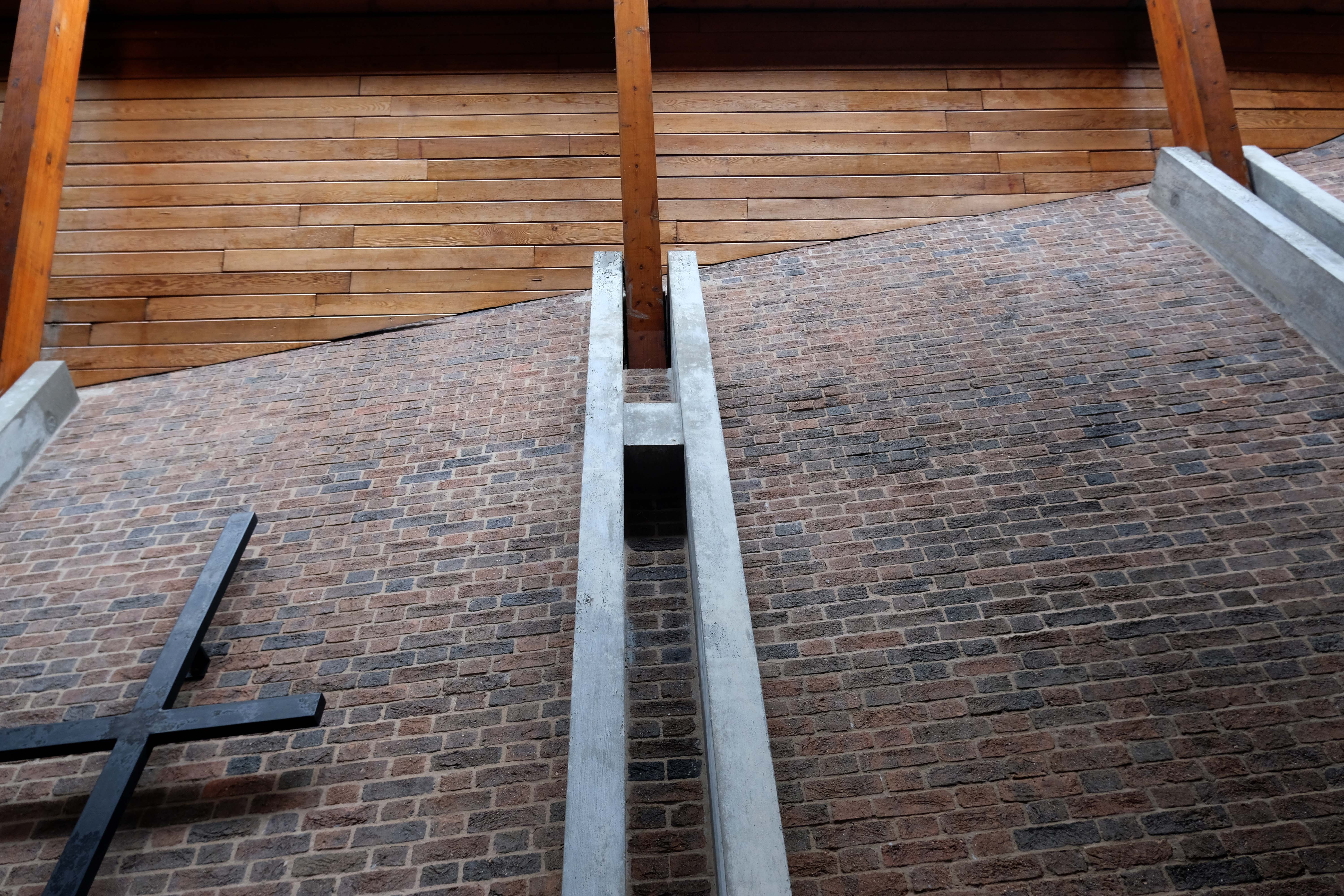
There is a dynamic timber roof with supporting beams.
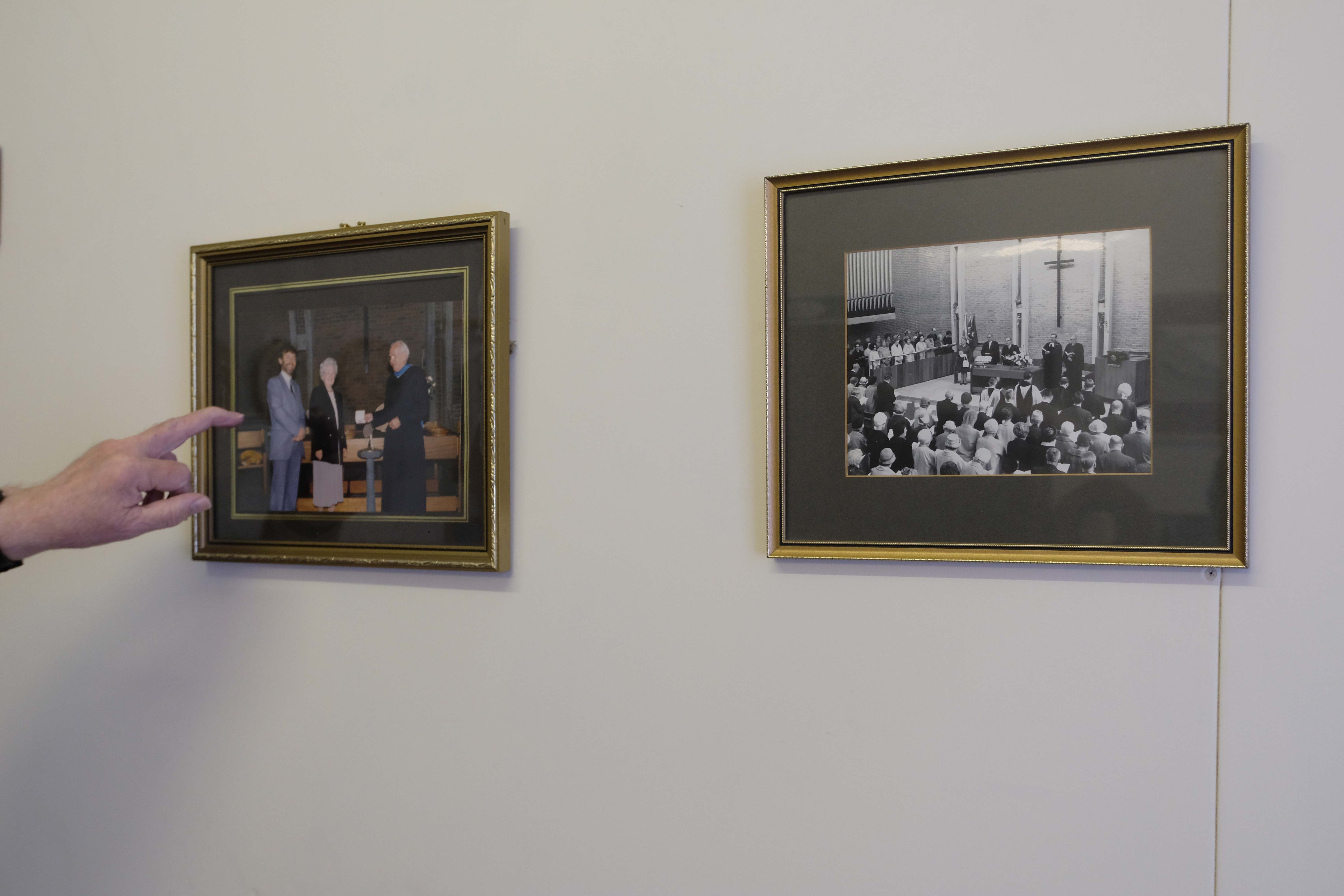
Previous Pastors.
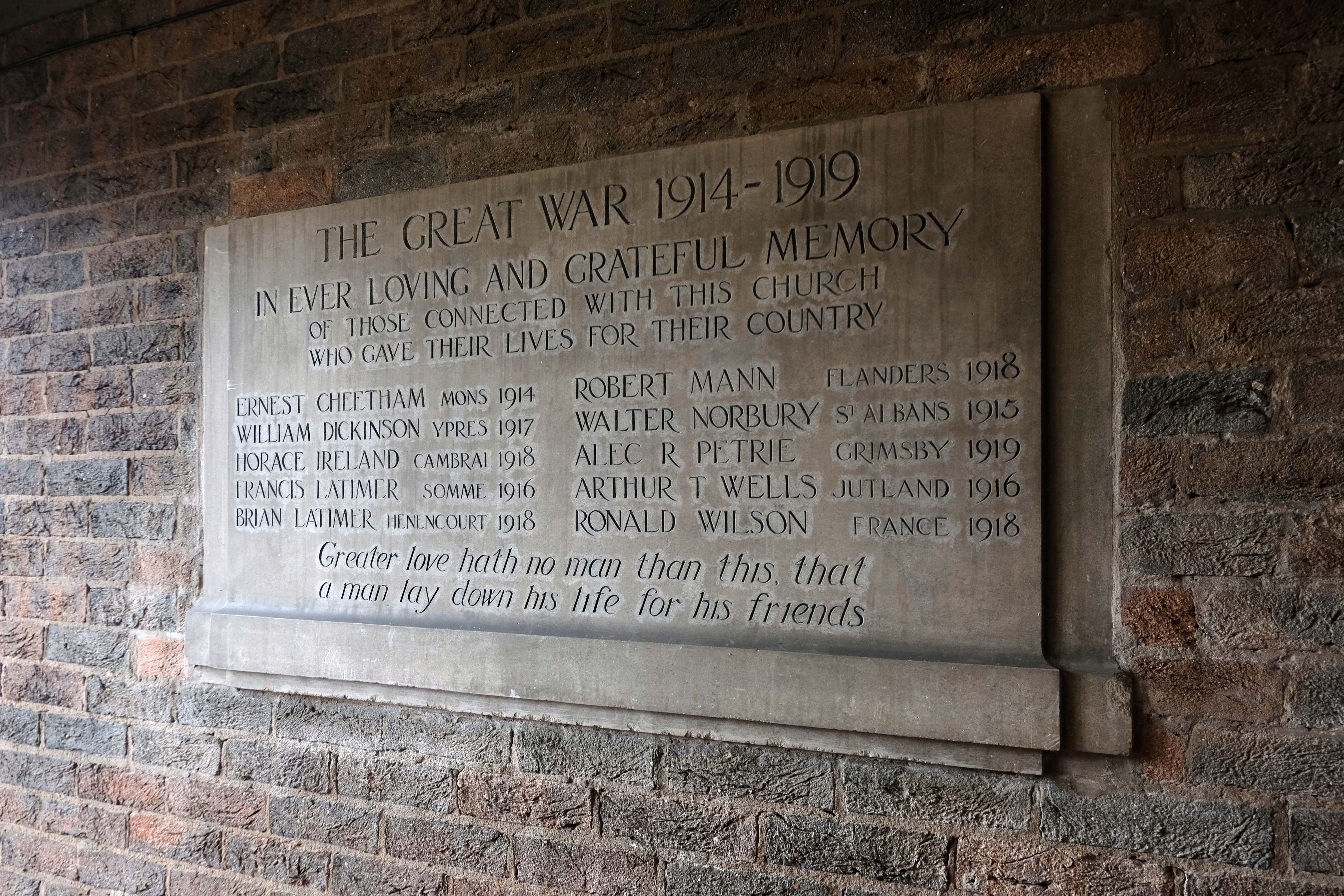
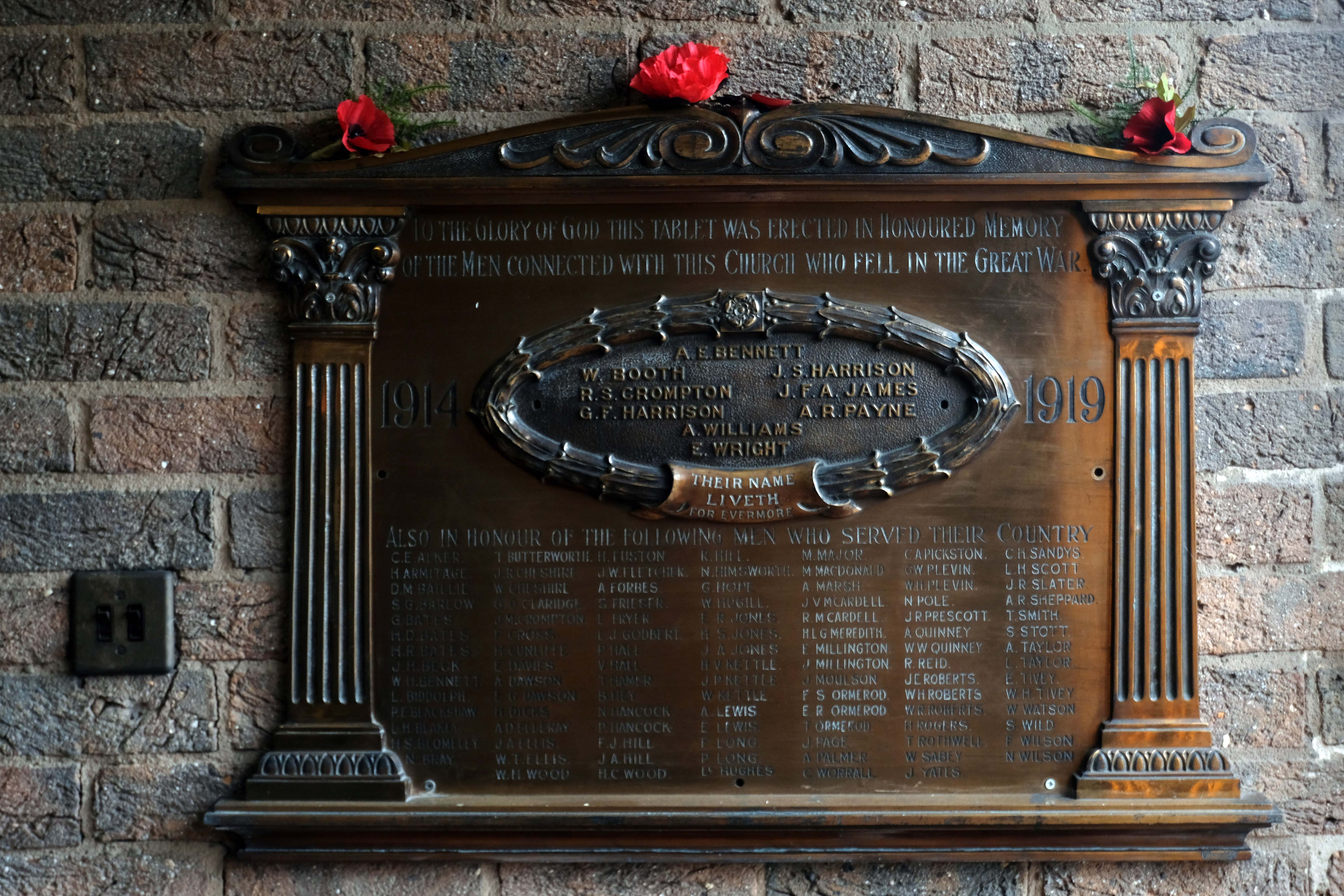
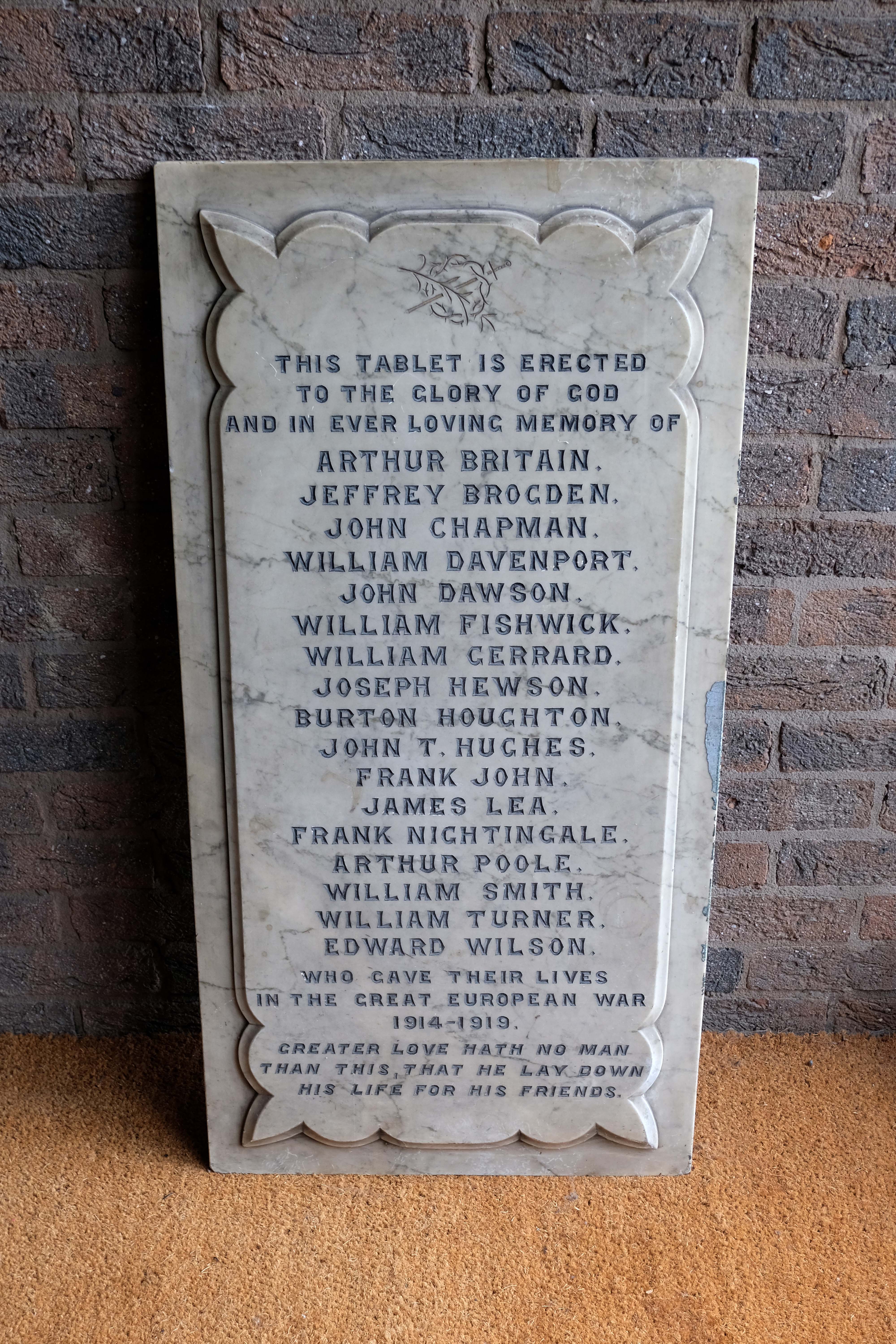
Relocated War Memorials.
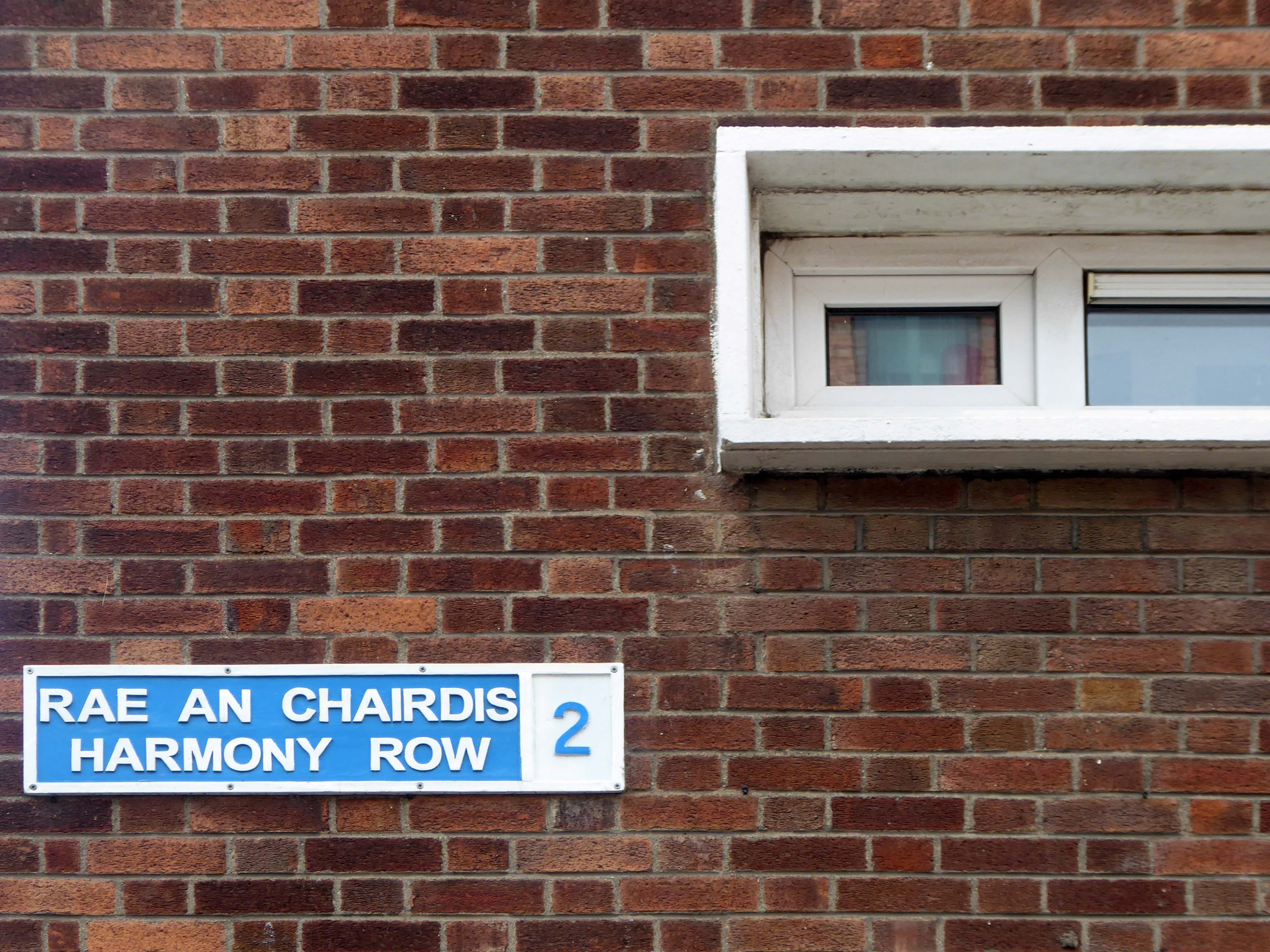
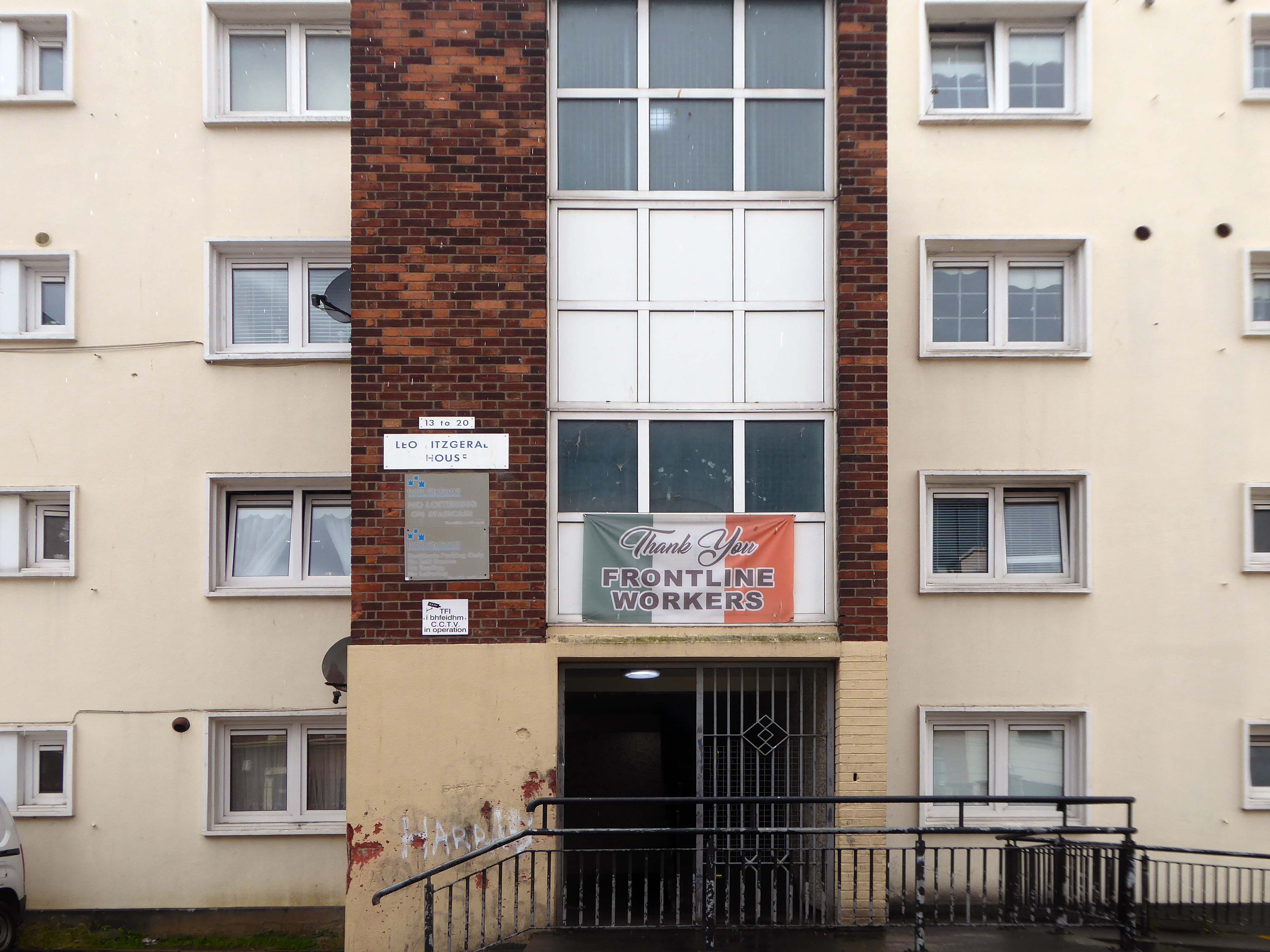
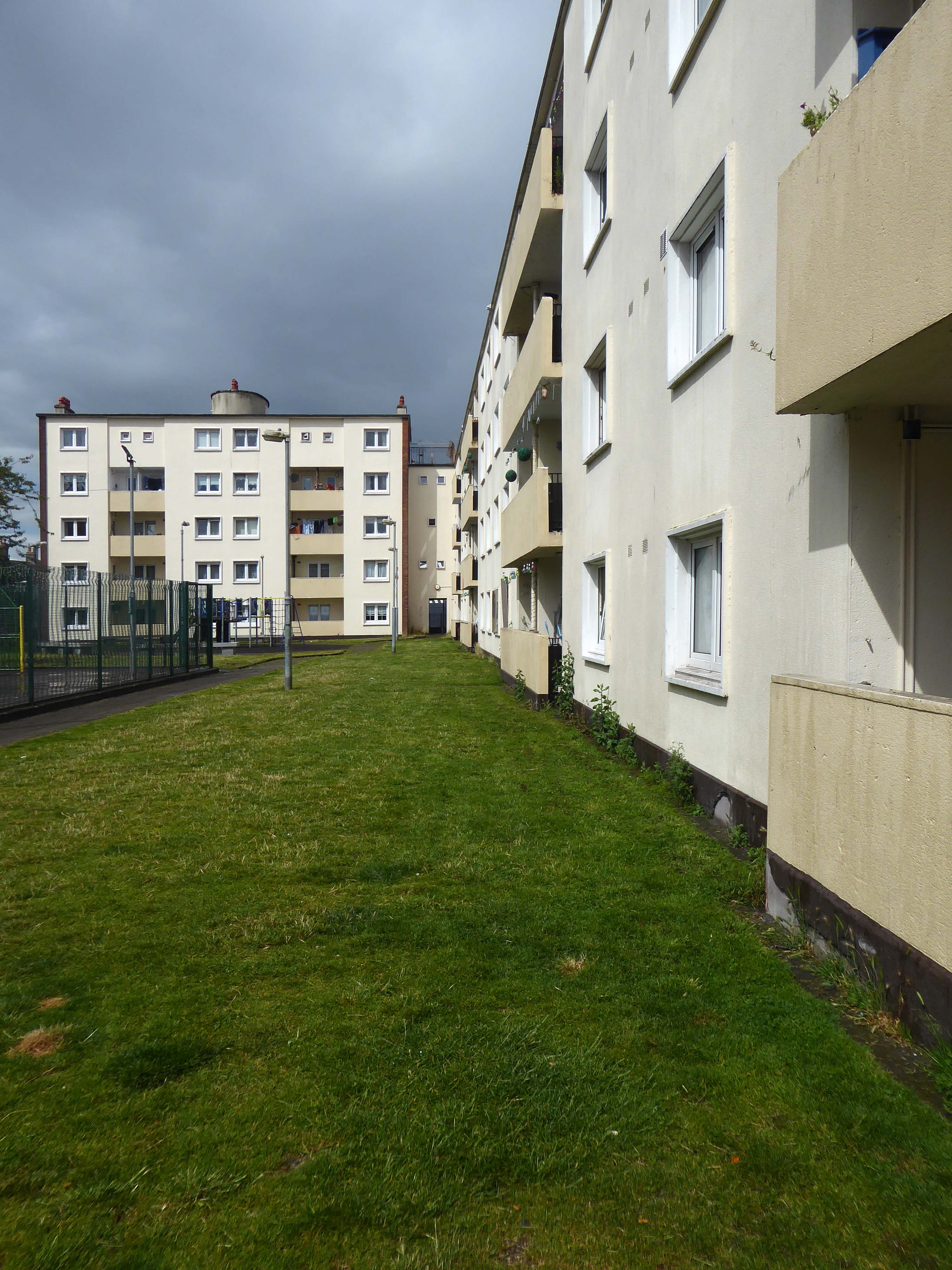
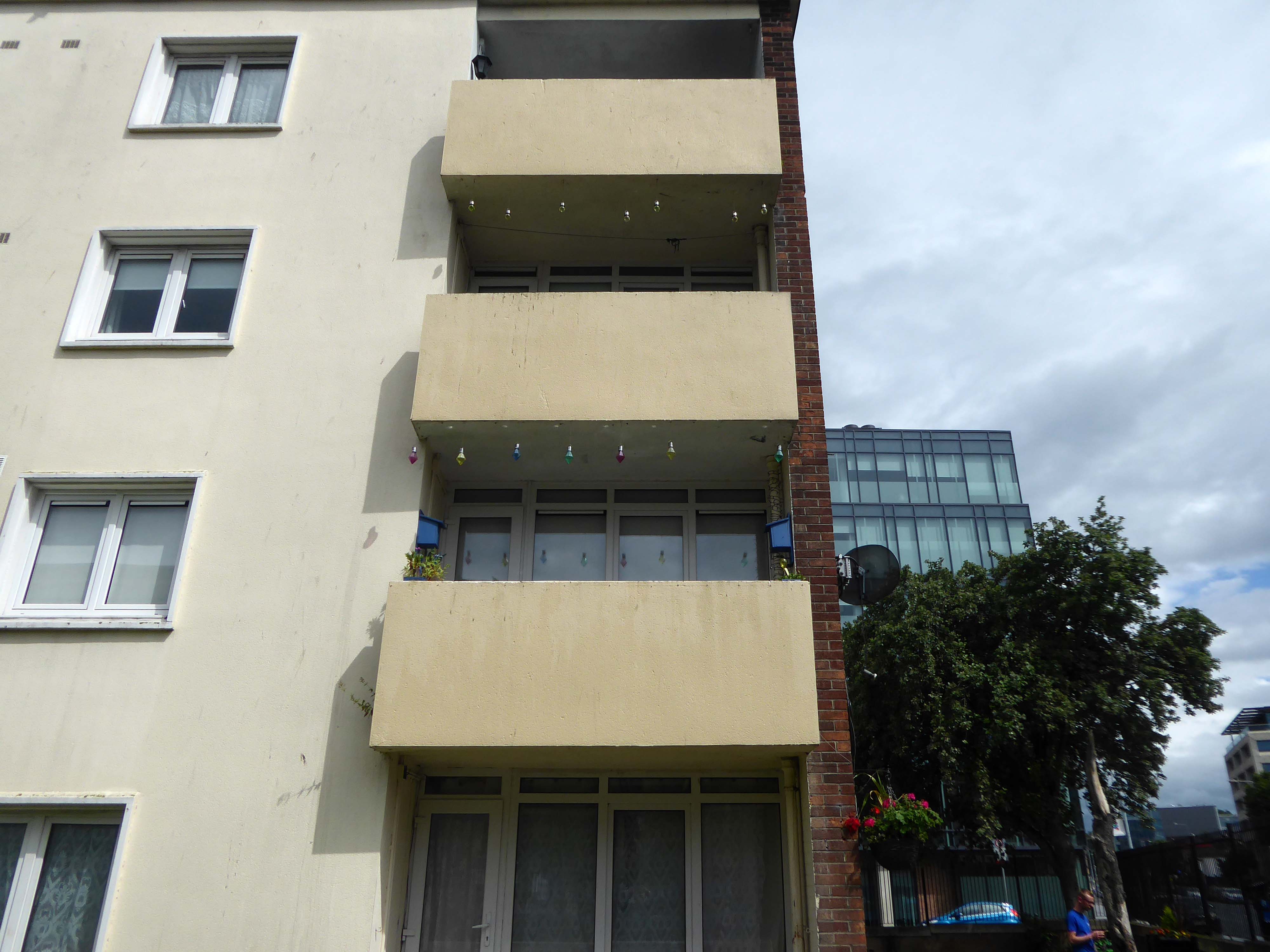
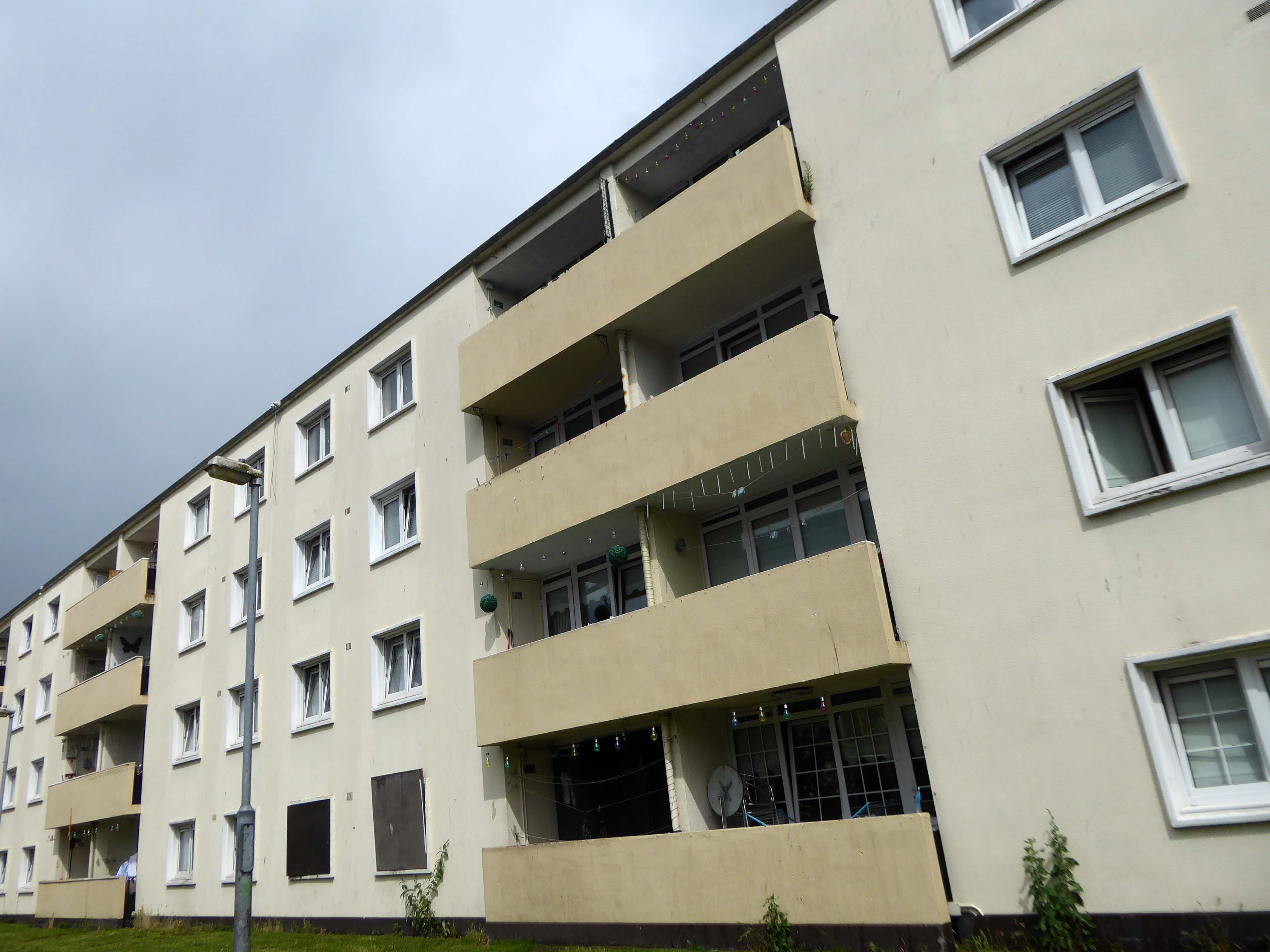
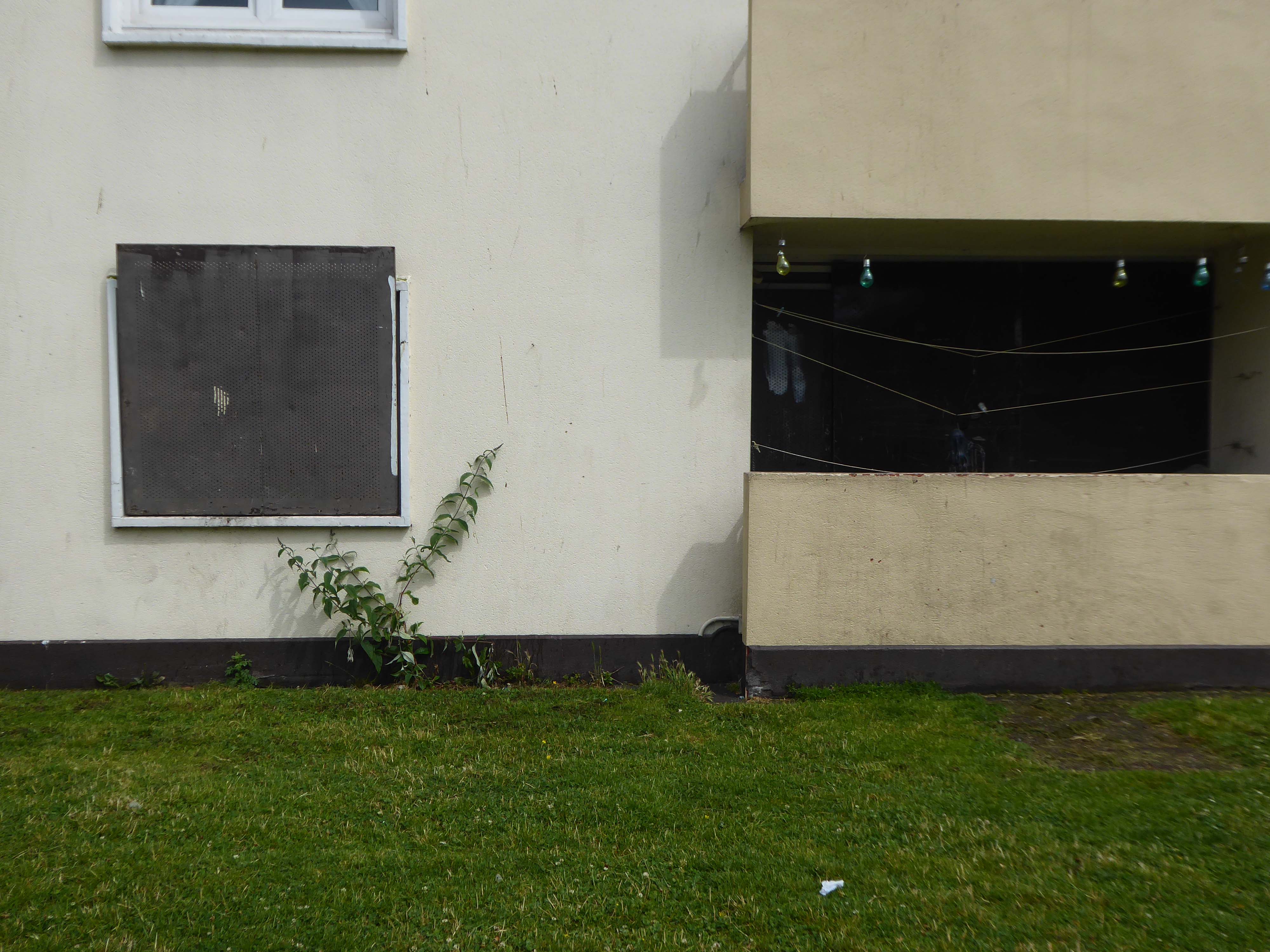
Leo Fitzgerald House Hogan Place Erne Street Upper Dublin 2
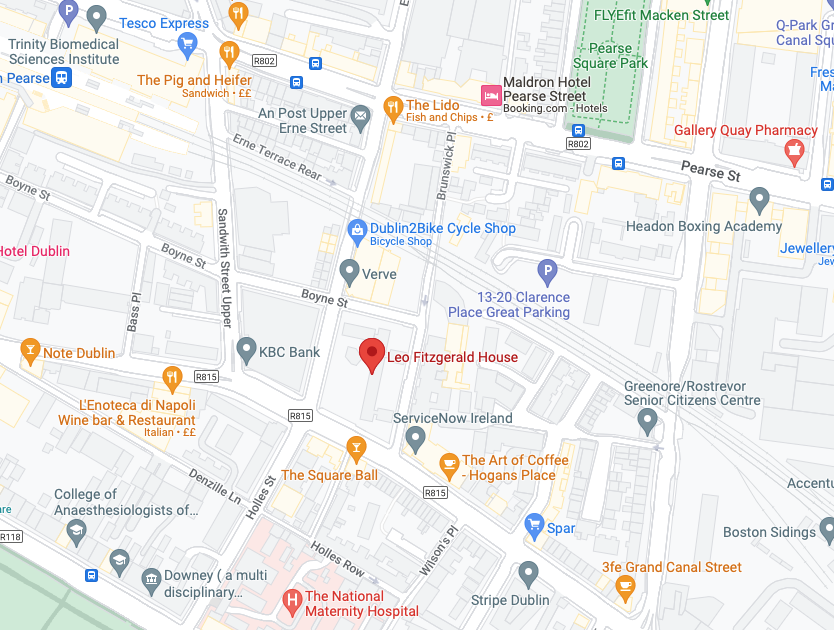
The second post featuring the work of Herbert Simms following on from O’Carroll Villas.
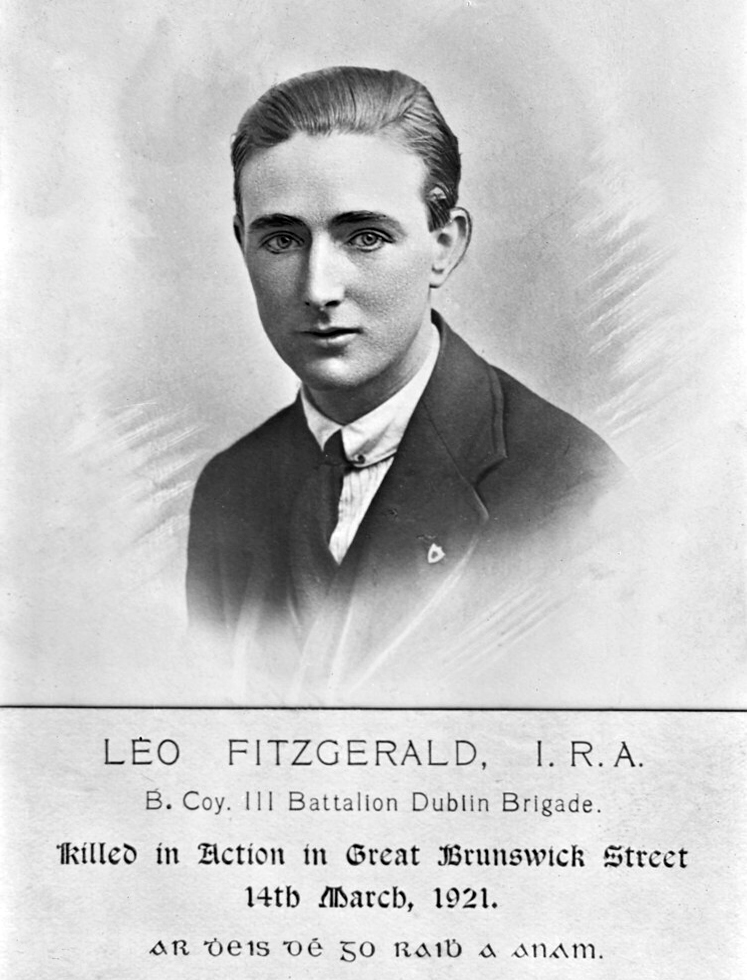
These homes were named for Civil War hero Leo Fitzgerald.
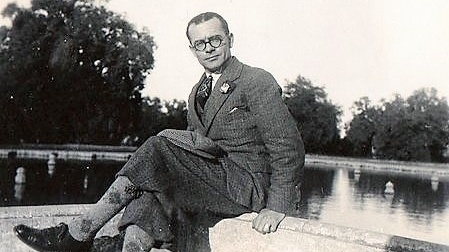
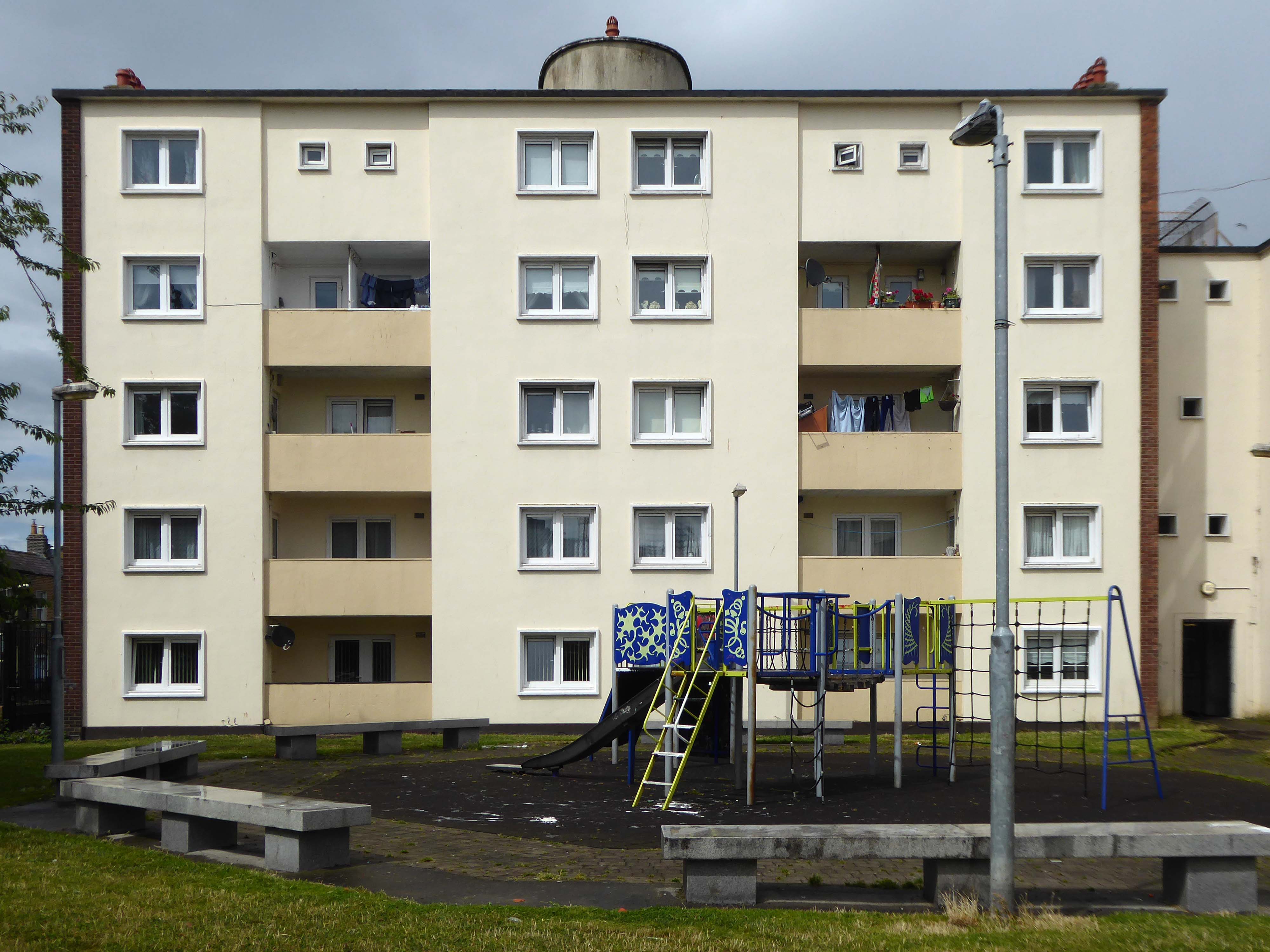
London born Herbert George Simms was responsible for the building of some 17,000 new working class dwellings in his time in office as Dublin’s pioneering Housing Architect, ranging from beautiful Art Deco flat schemes in the inner-city to new suburban landscapes.
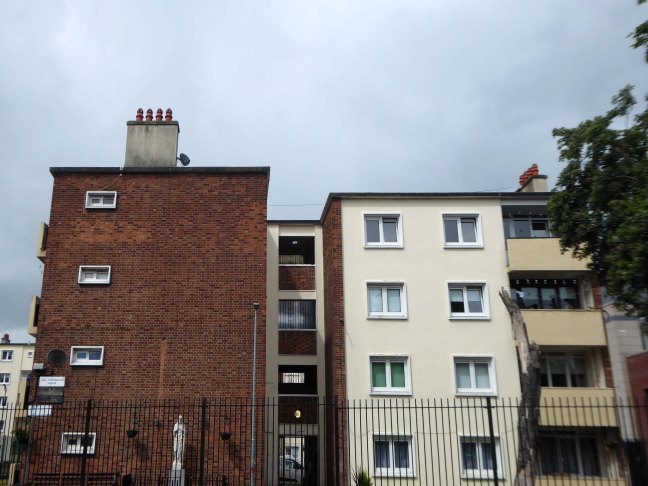
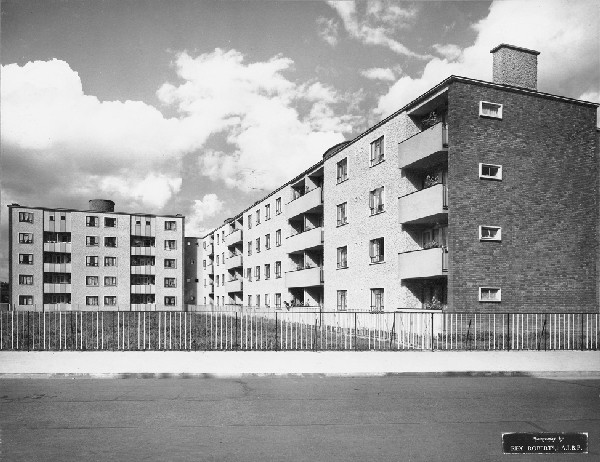
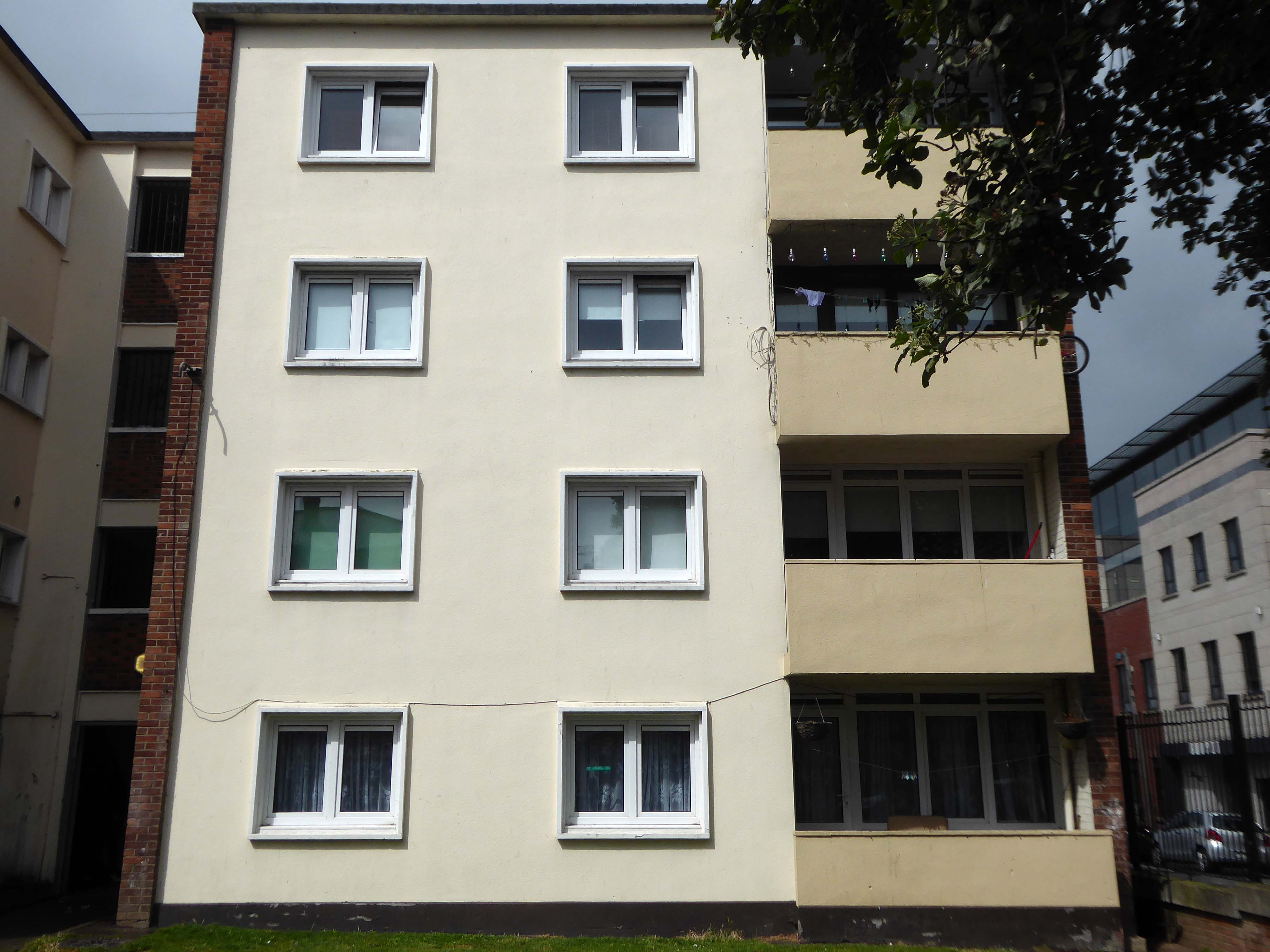
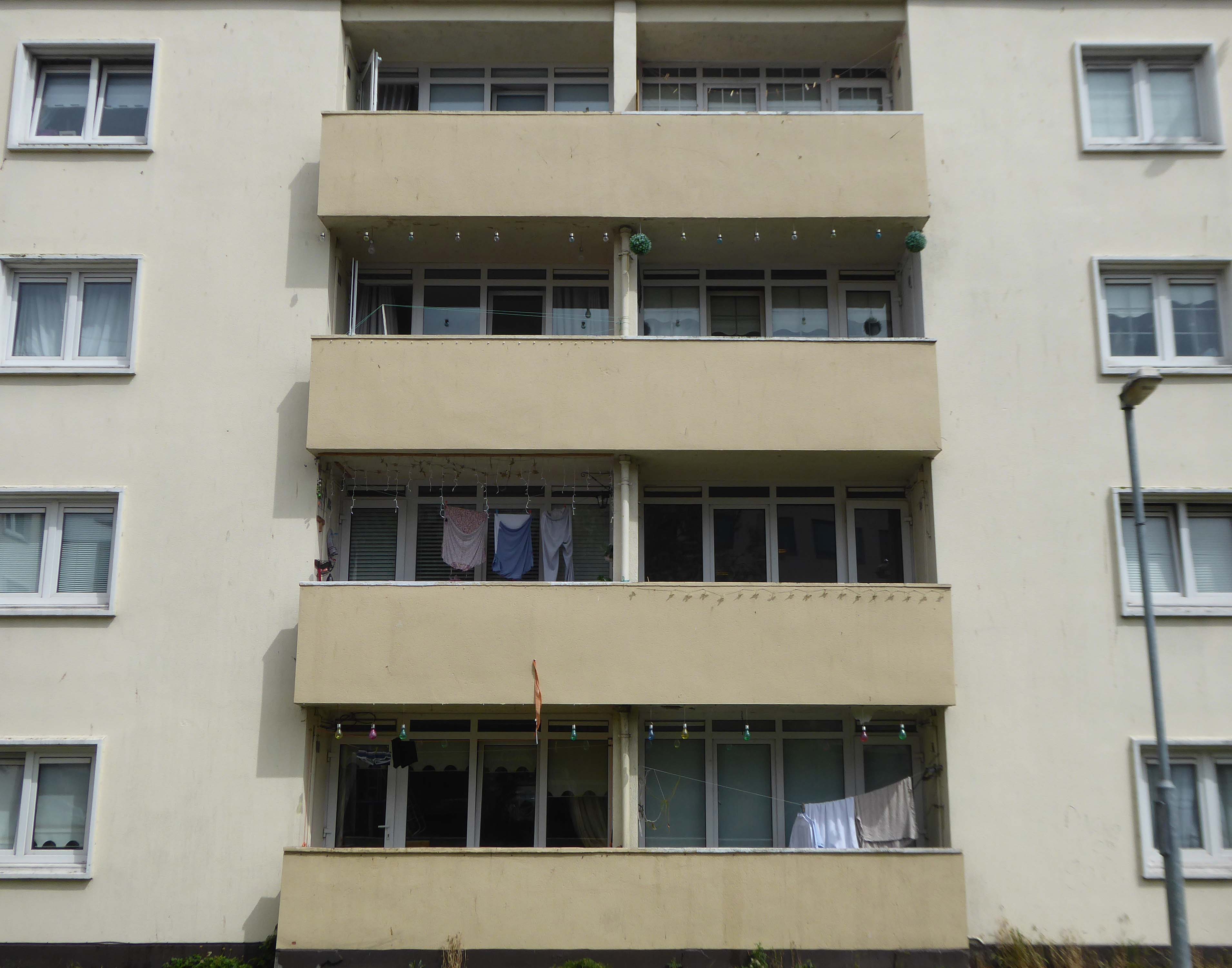
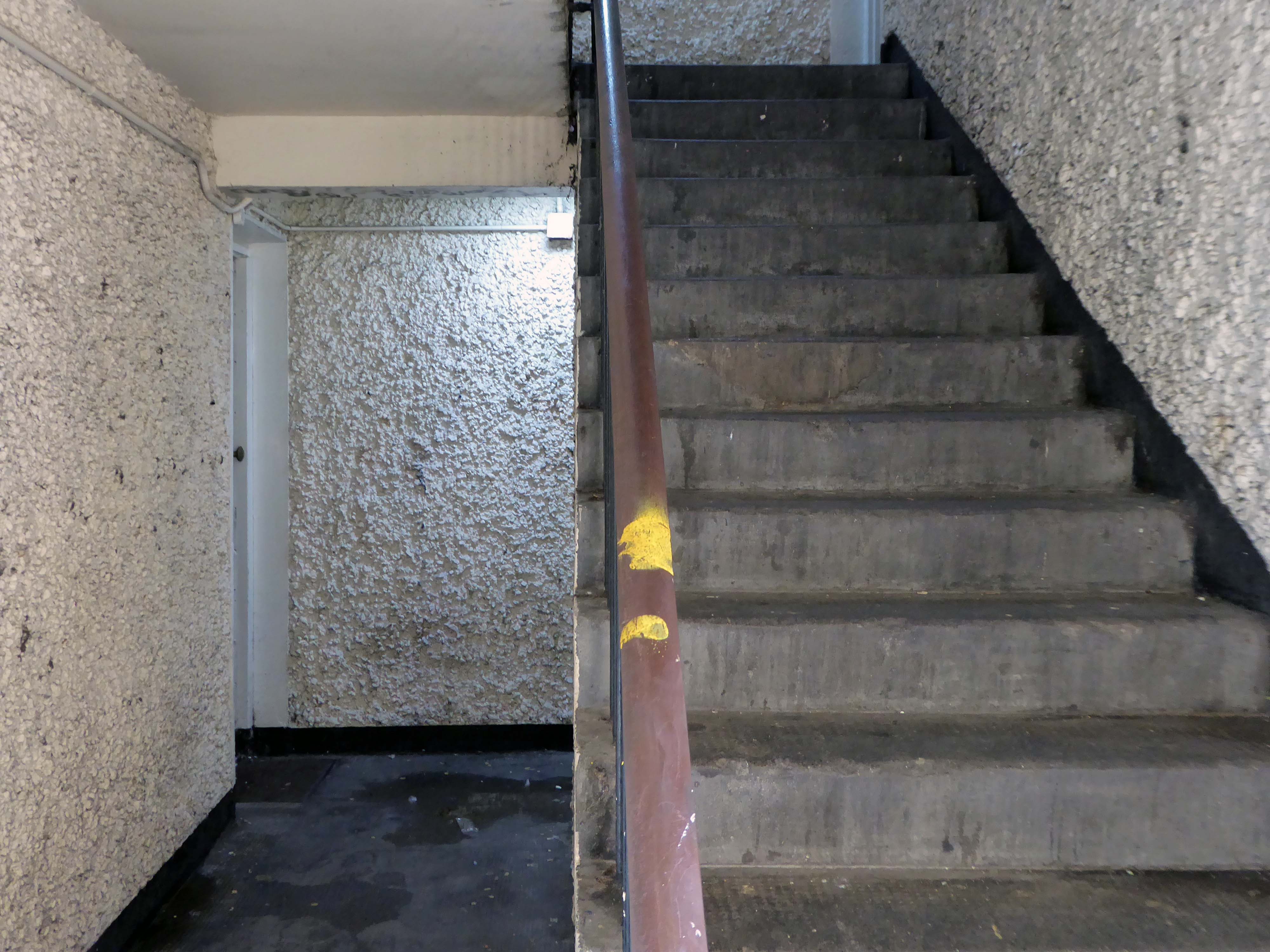
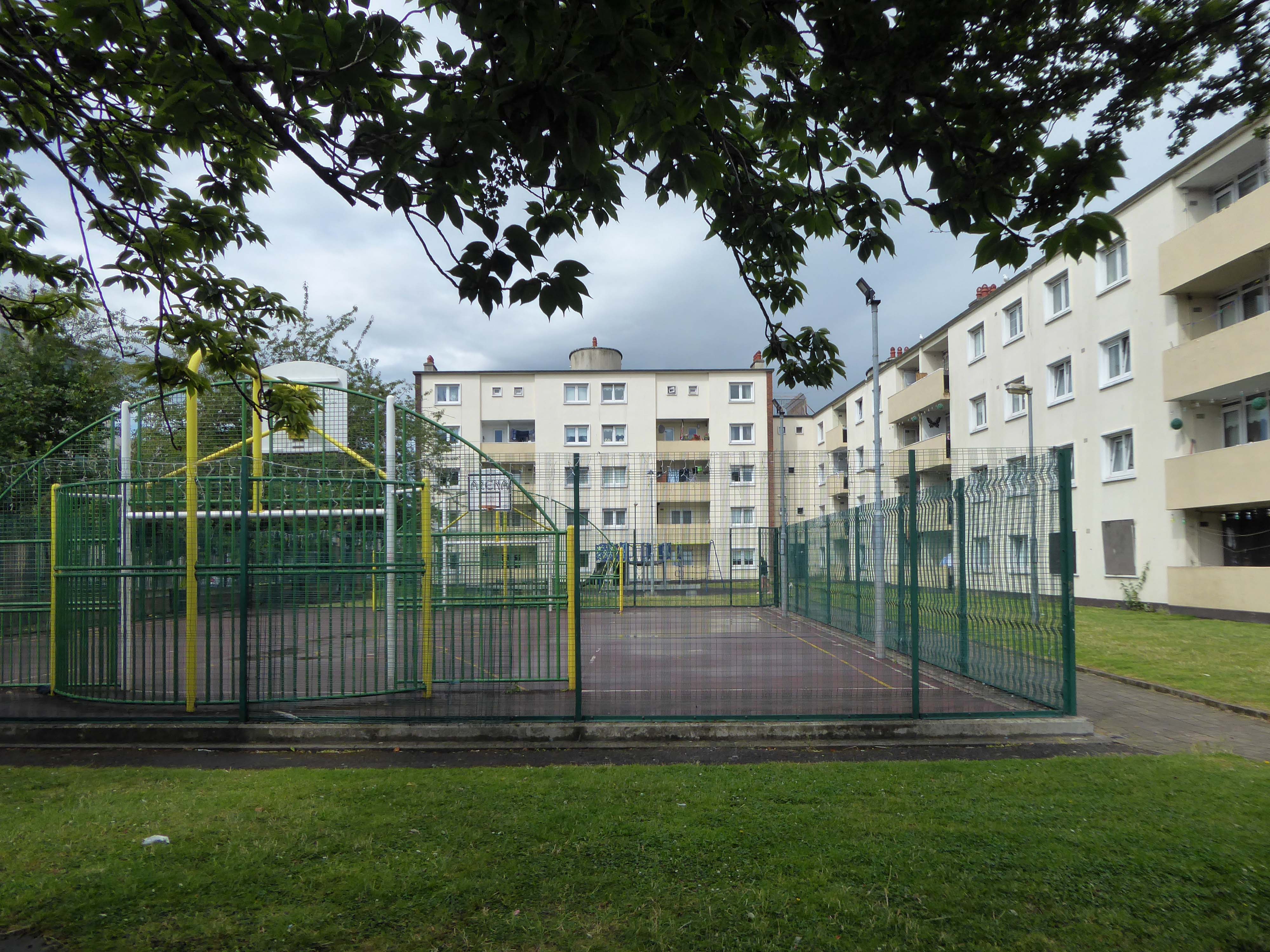
Freestanding L-plan multiple-bay four-storey social housing block, built c. 1940, having attached stairs tower to east elevation. Flat roof concealed behind rendered parapet with concrete coping, and having rendered chimneystacks with concrete copings and clay pots. Flemish bond brown brick and rendered walls. Square-headed window openings with rendered surrounds and sills, and replacement uPVC windows. Square-headed door openings with rendered surrounds and timber doors to galleries. Square-headed door opening in attached stairs tower with mild-steel double-leaf gate, concrete platform and steps.
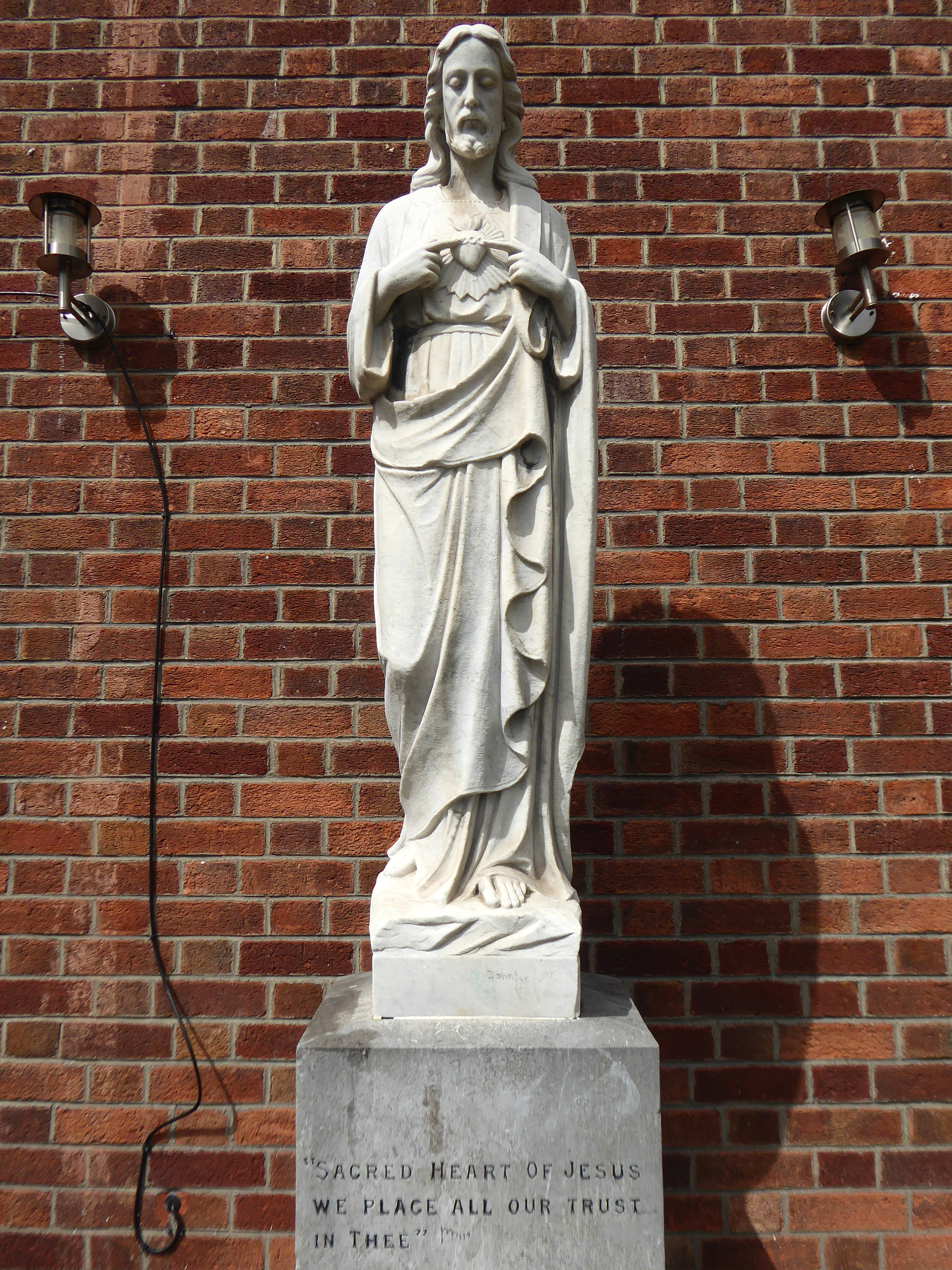
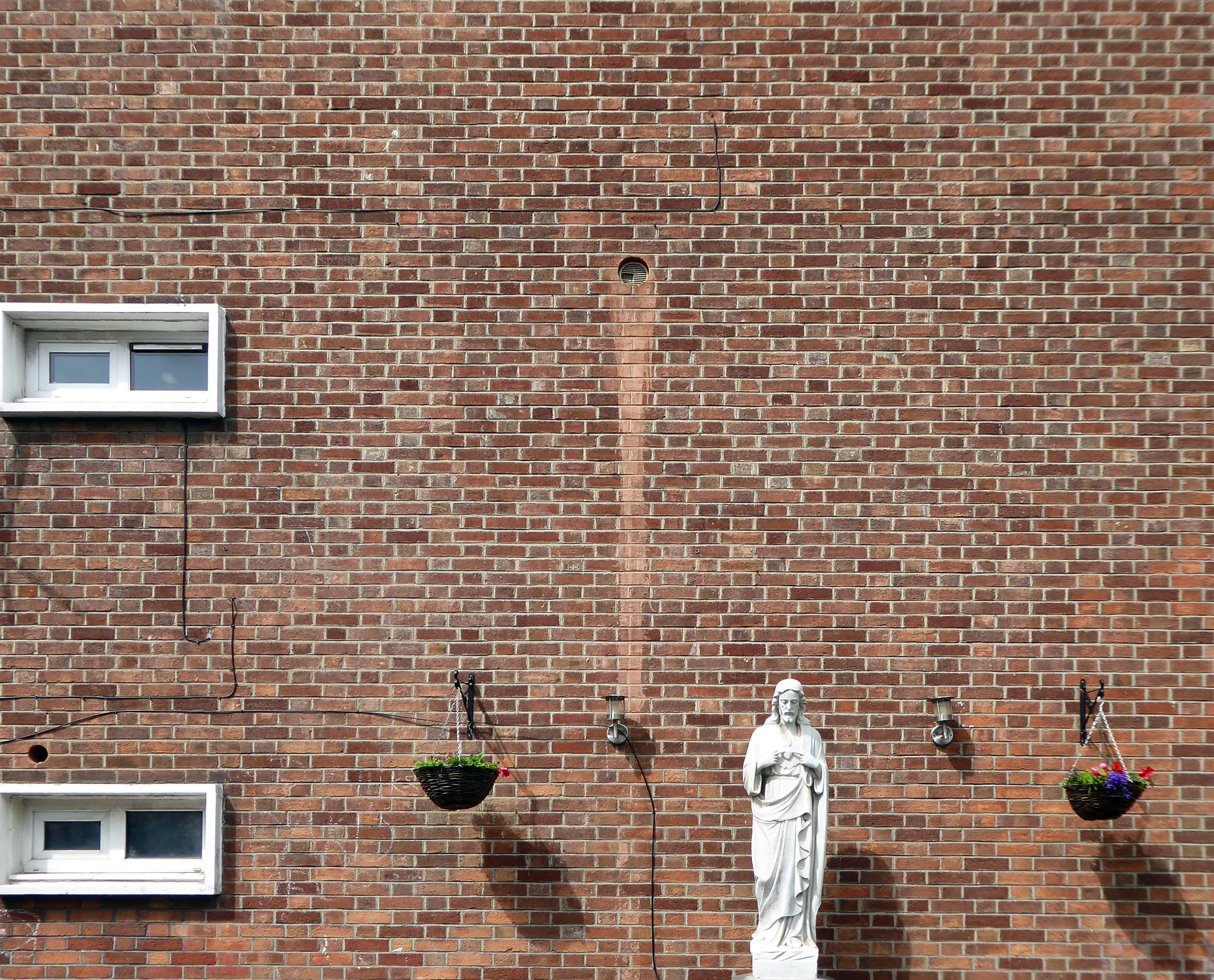
Statue of Sacred Heart to south elevation.
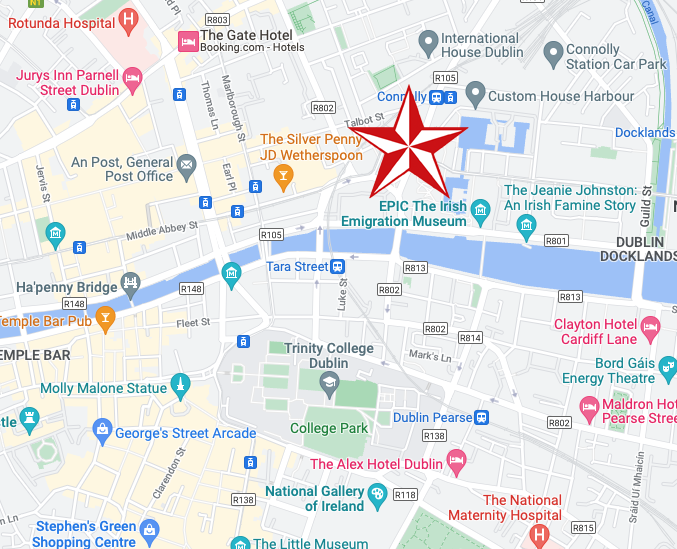
1 Talbot St North City Dublin D01 XW65 Ireland
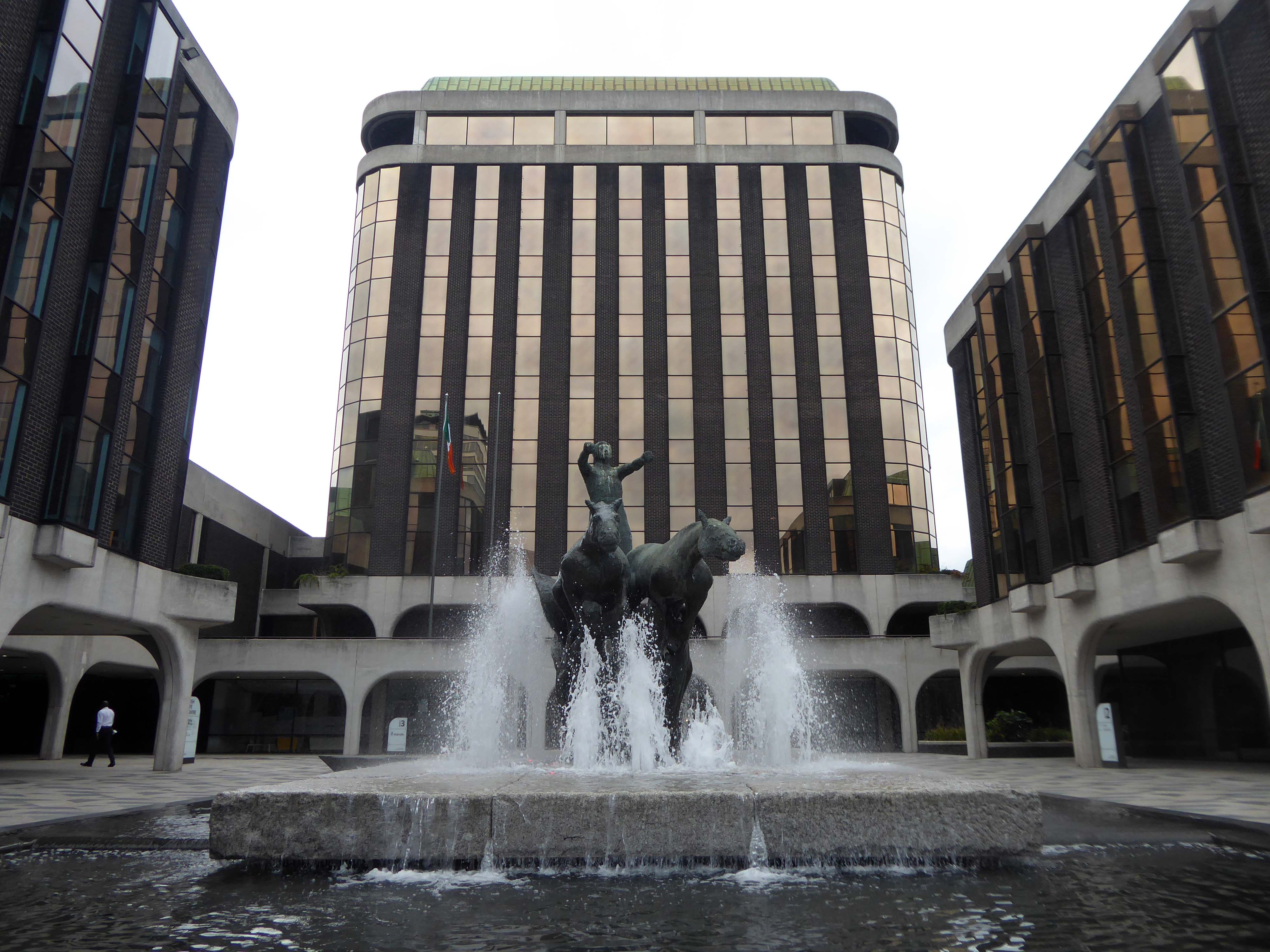
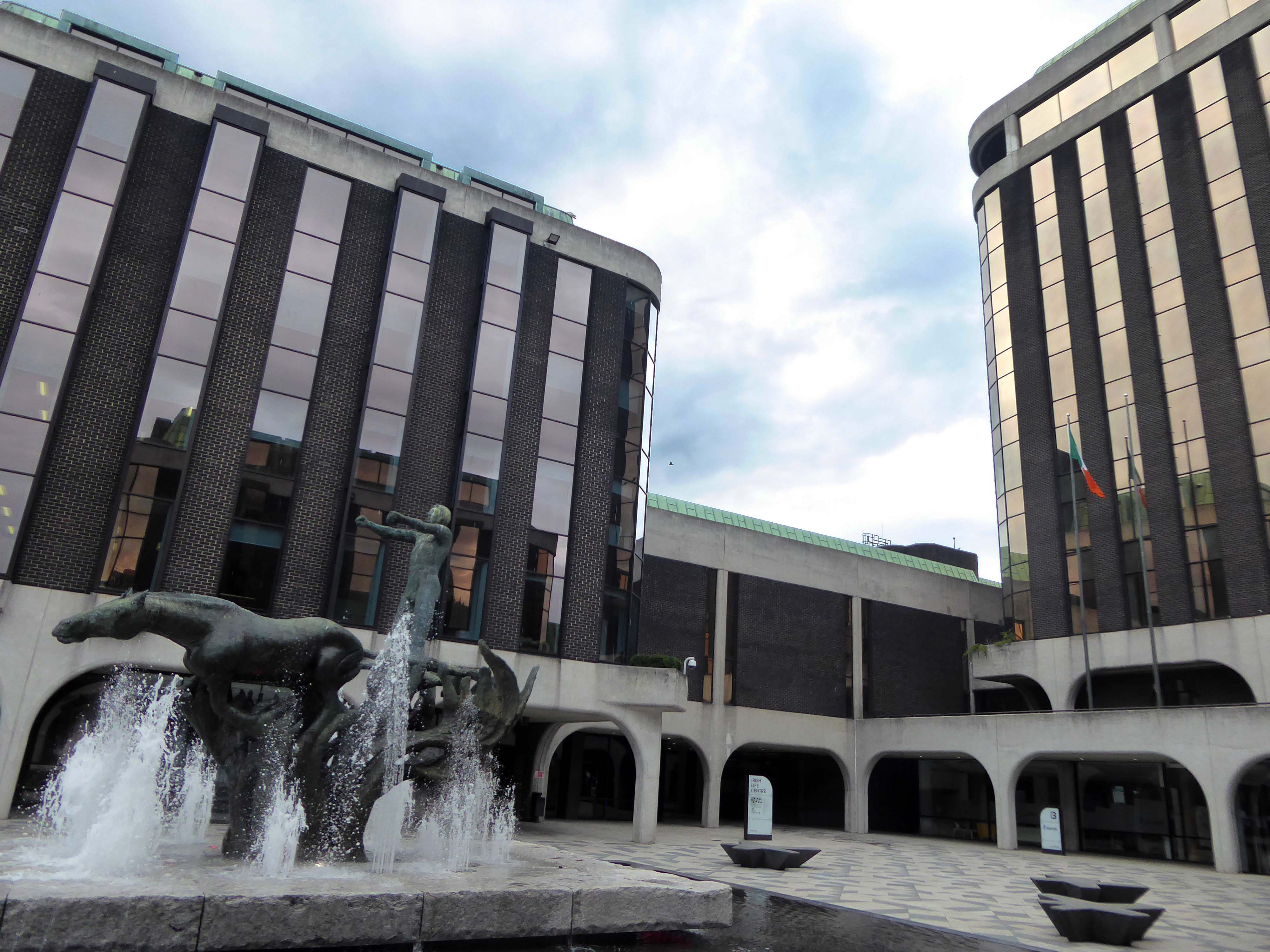
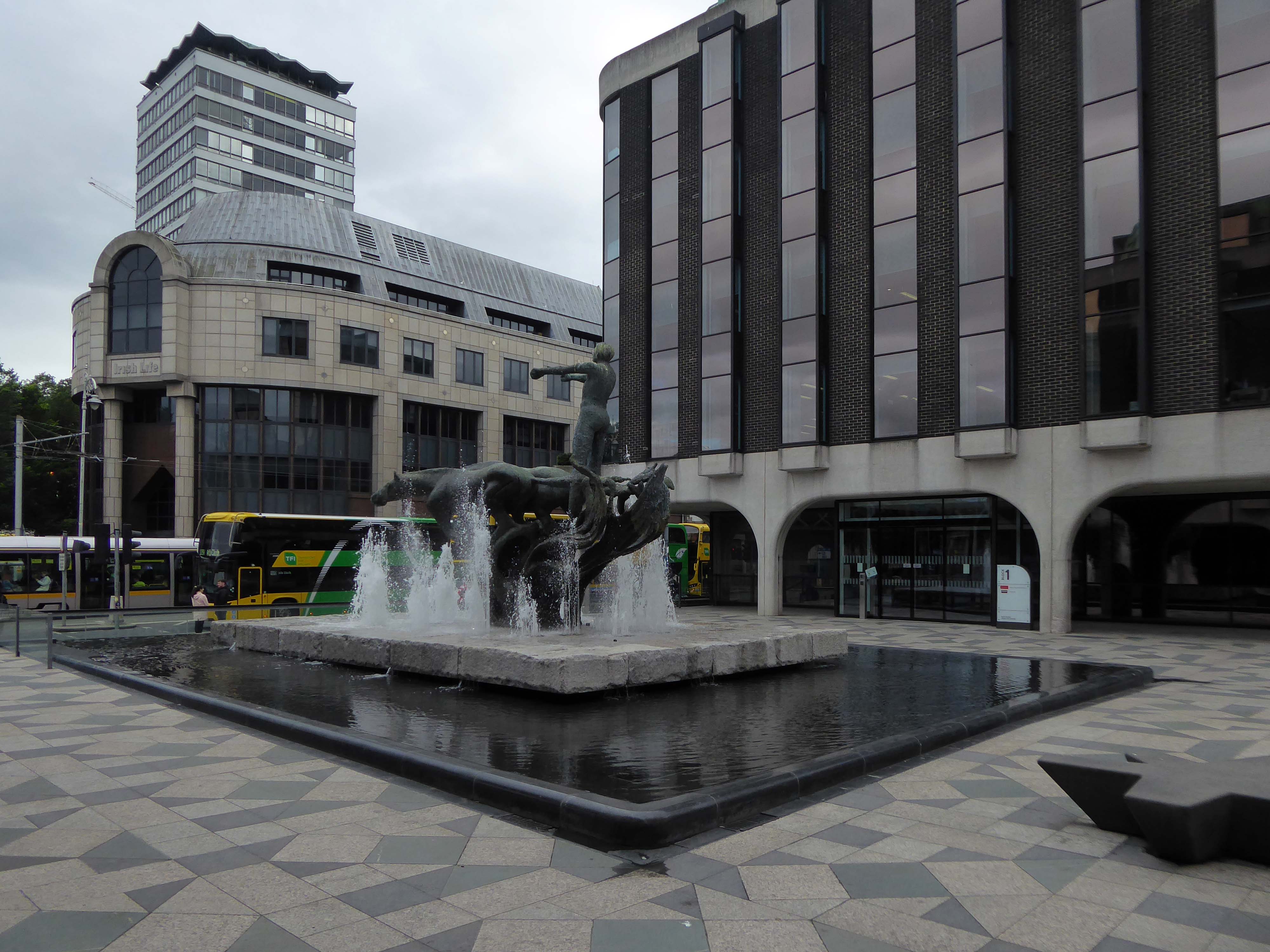
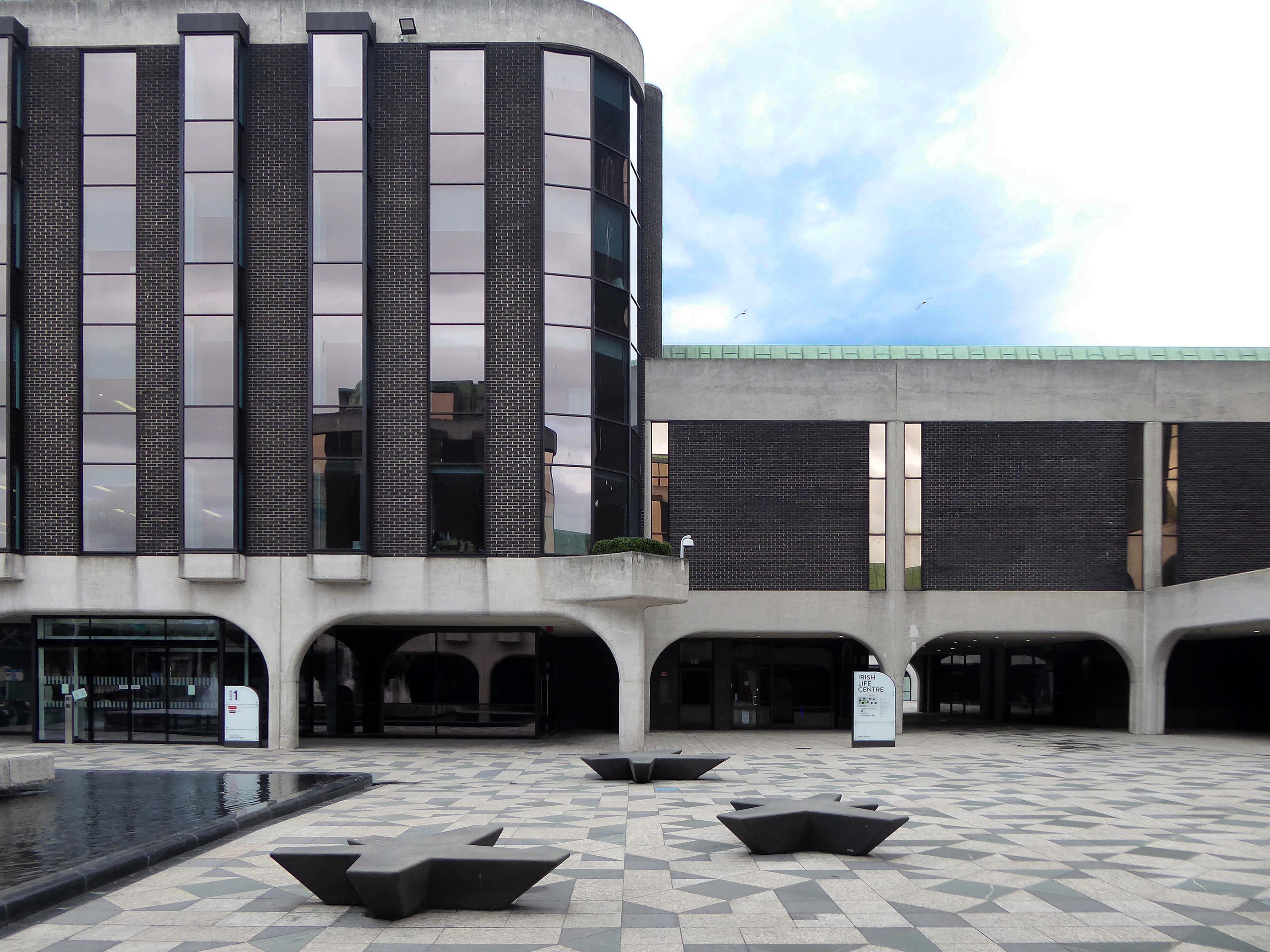
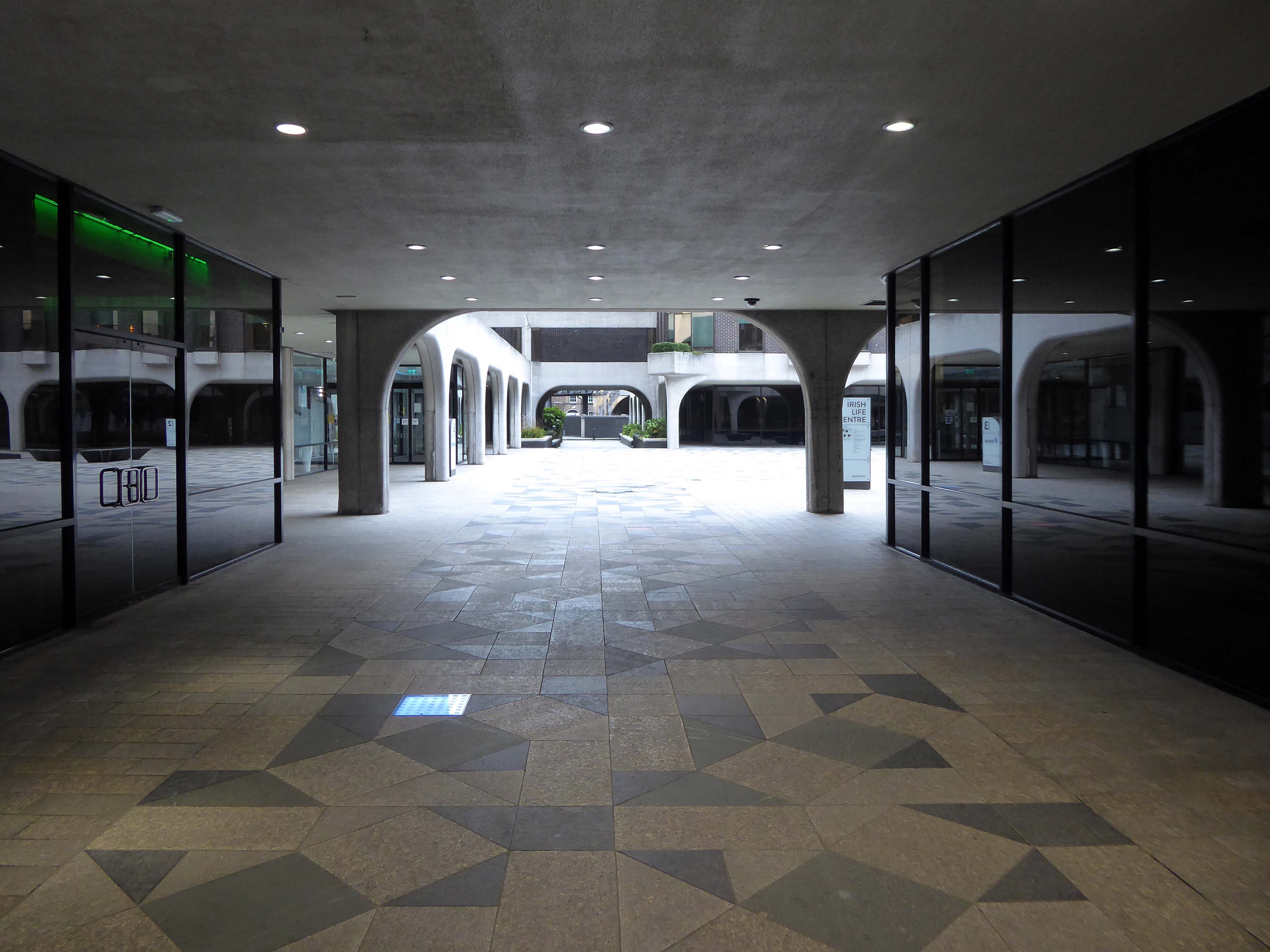
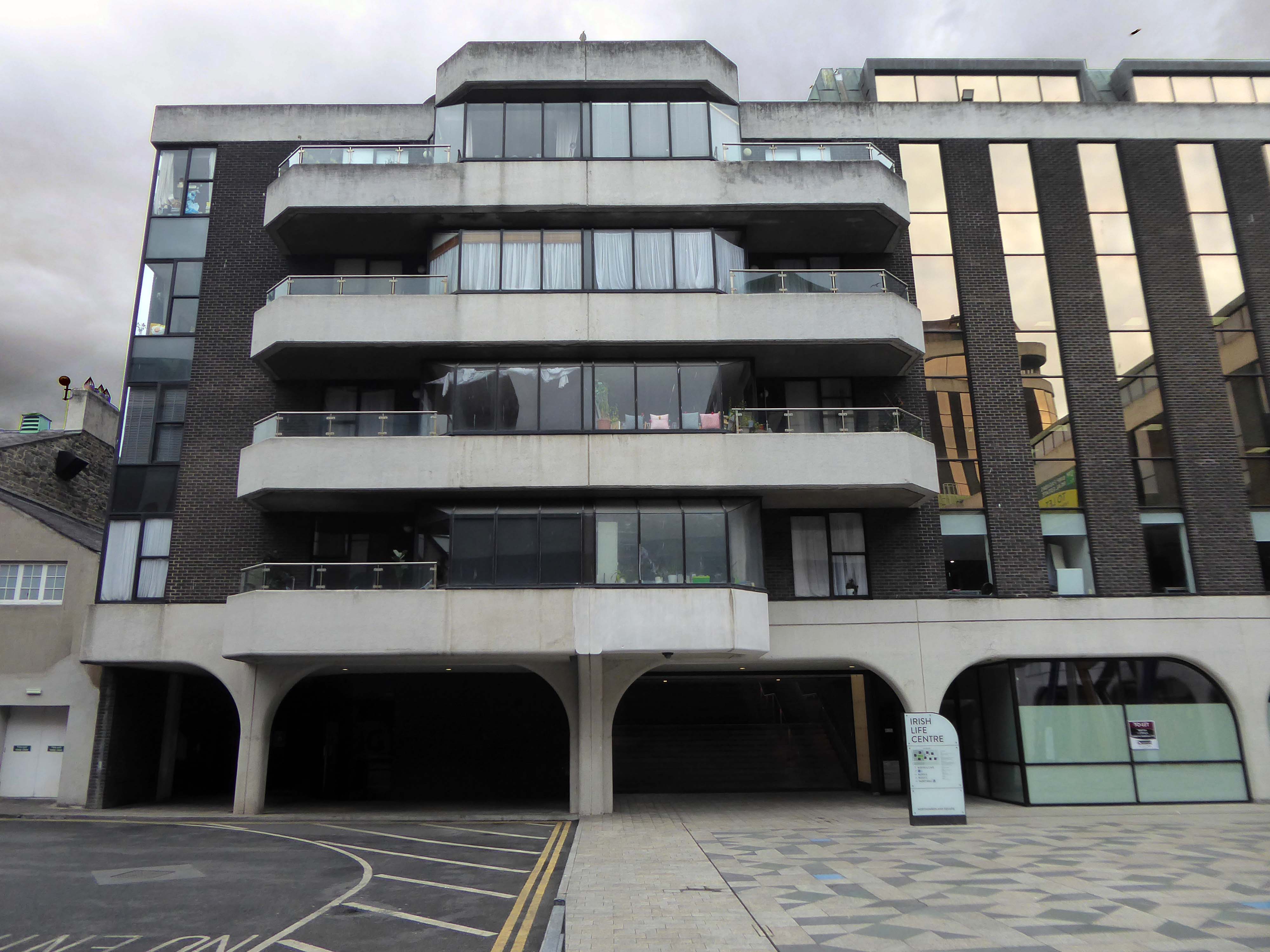
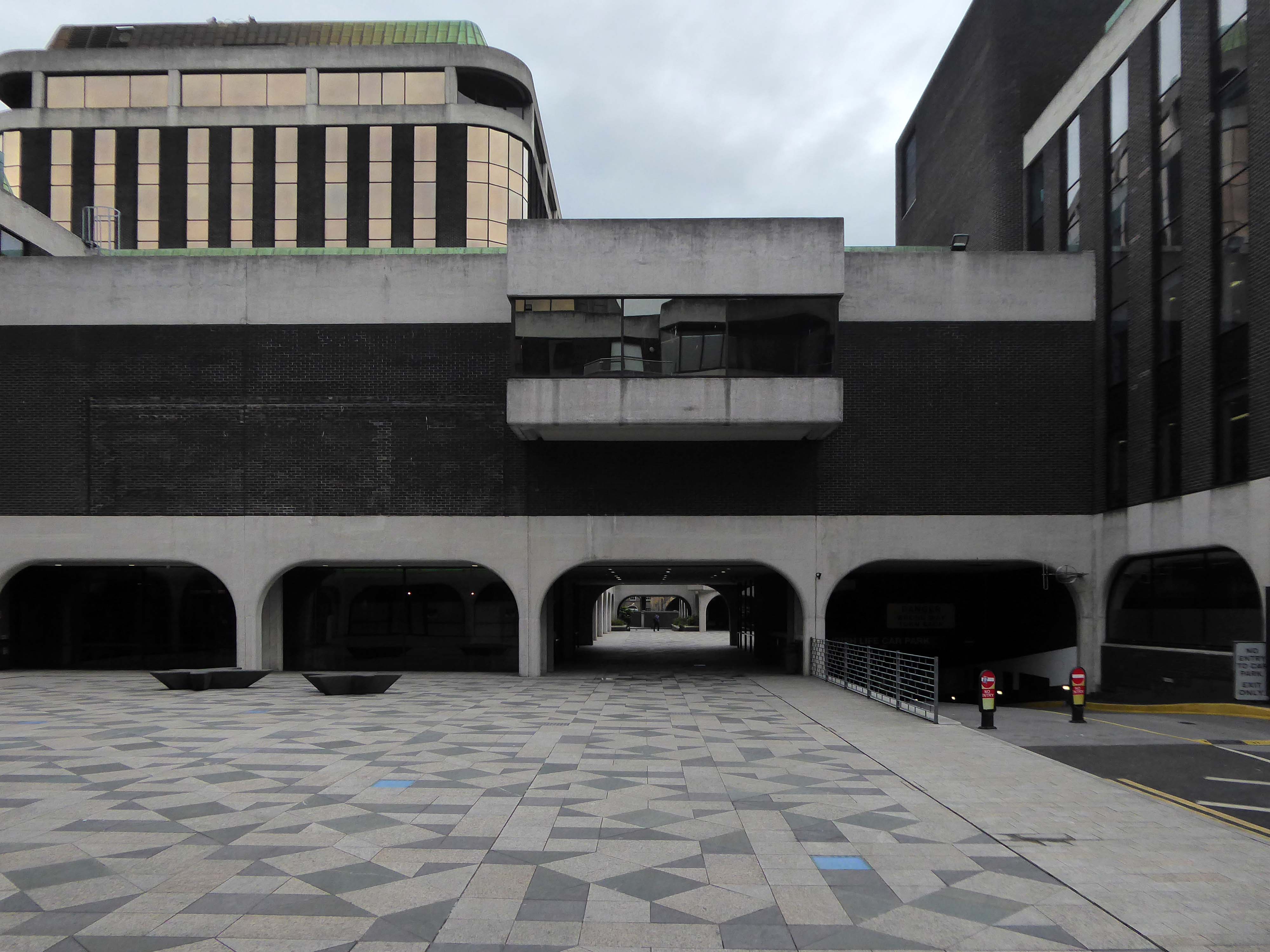
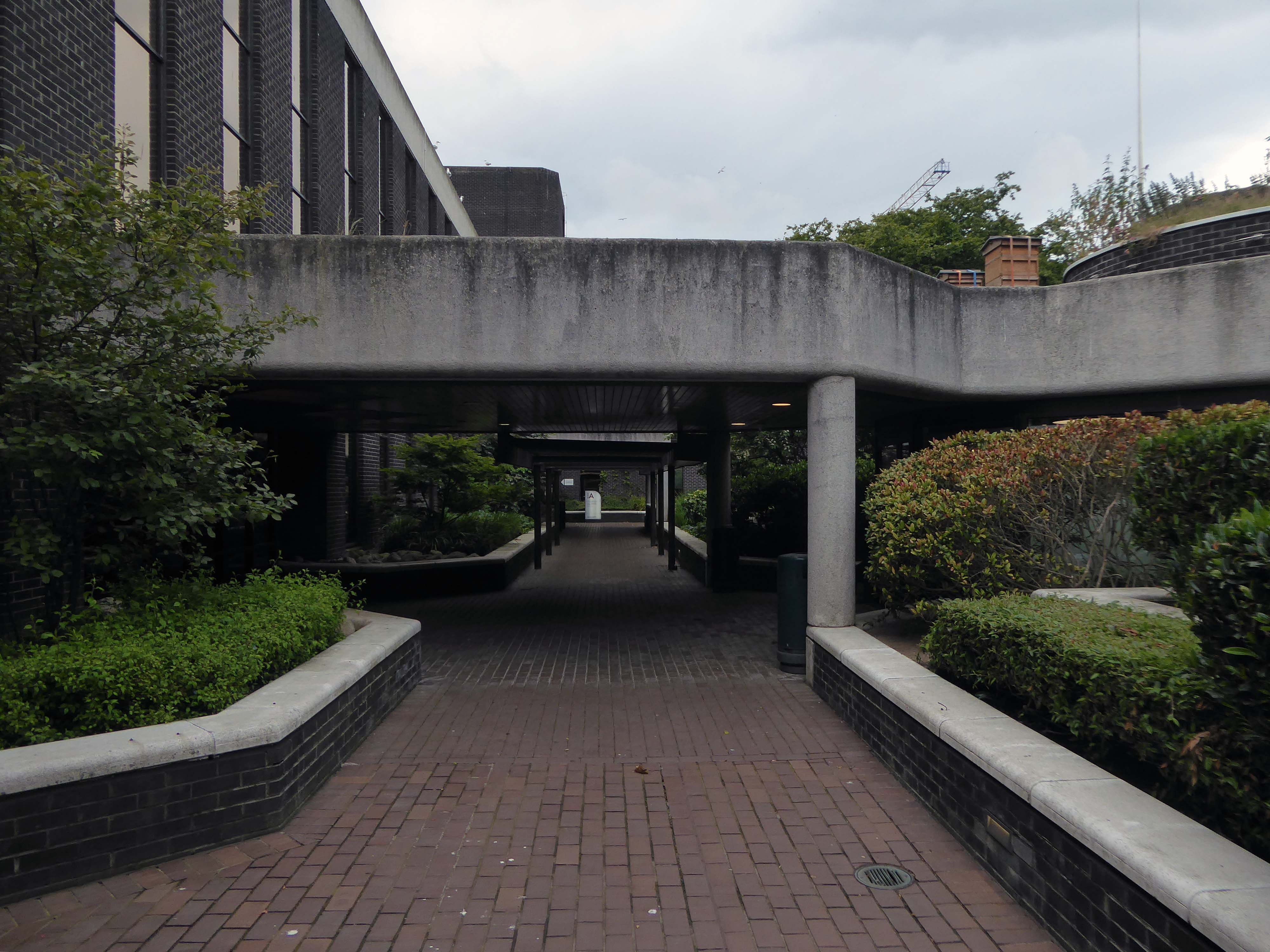
Architect: RKD Architects lead Andrew Devane
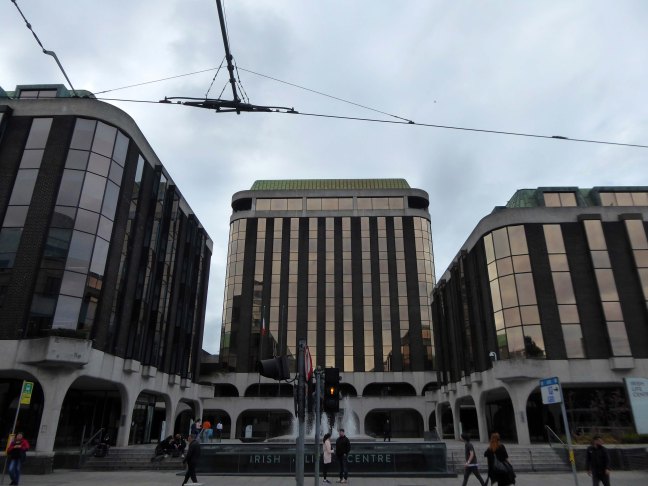
The brickwork, use of white aggregate for the arches, and tinted glazing are similar to Devane’s Stephen Court building on St Stephen’s Green.
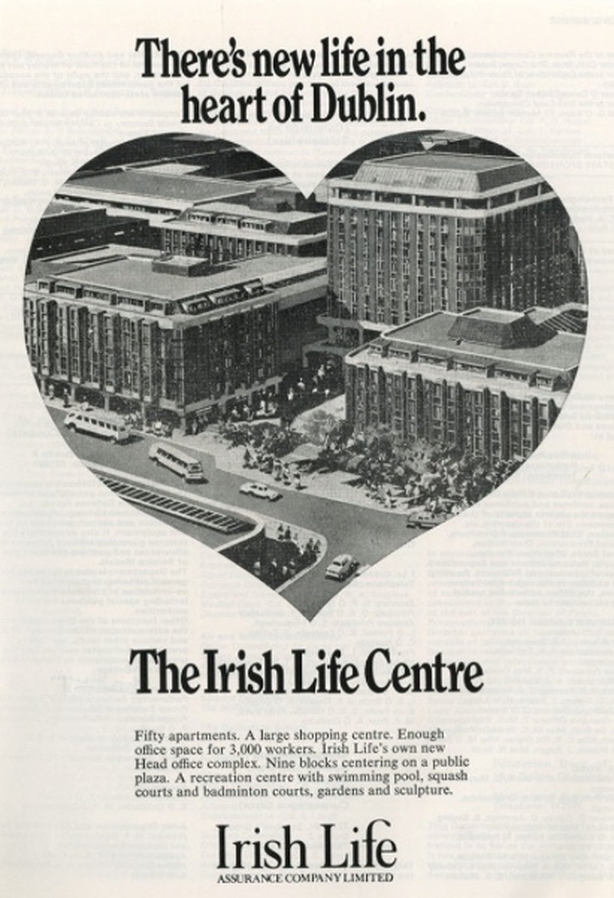
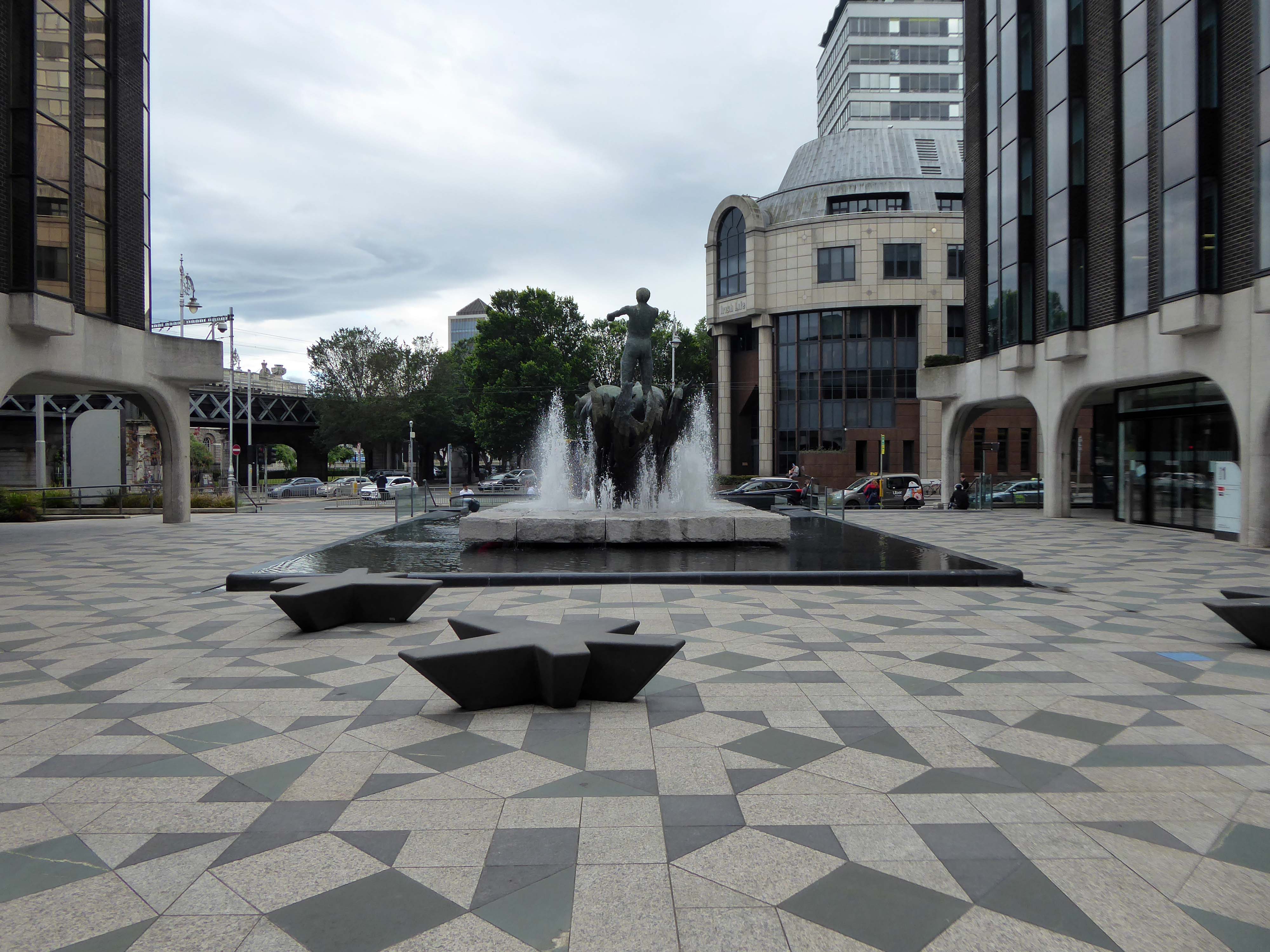
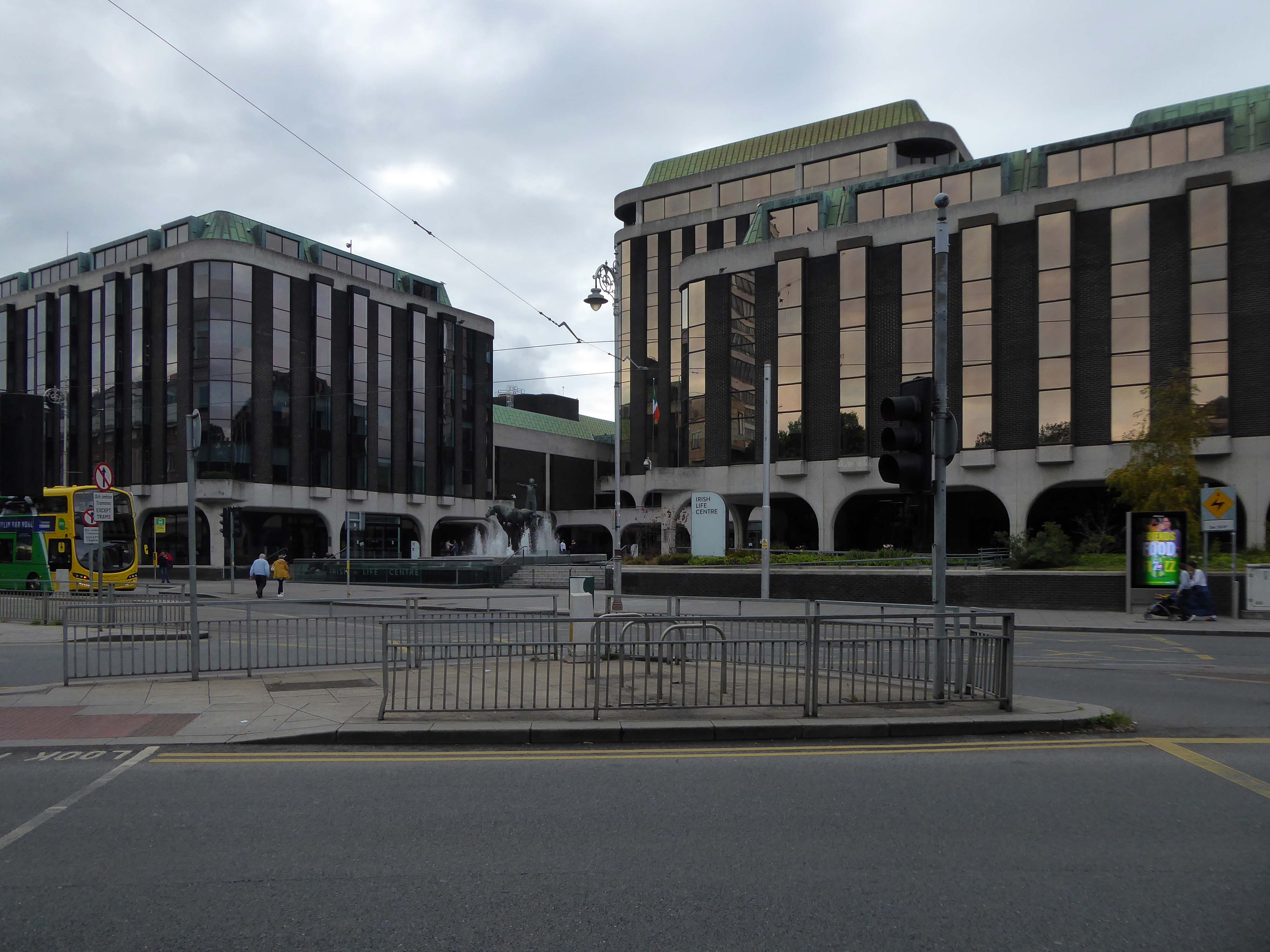
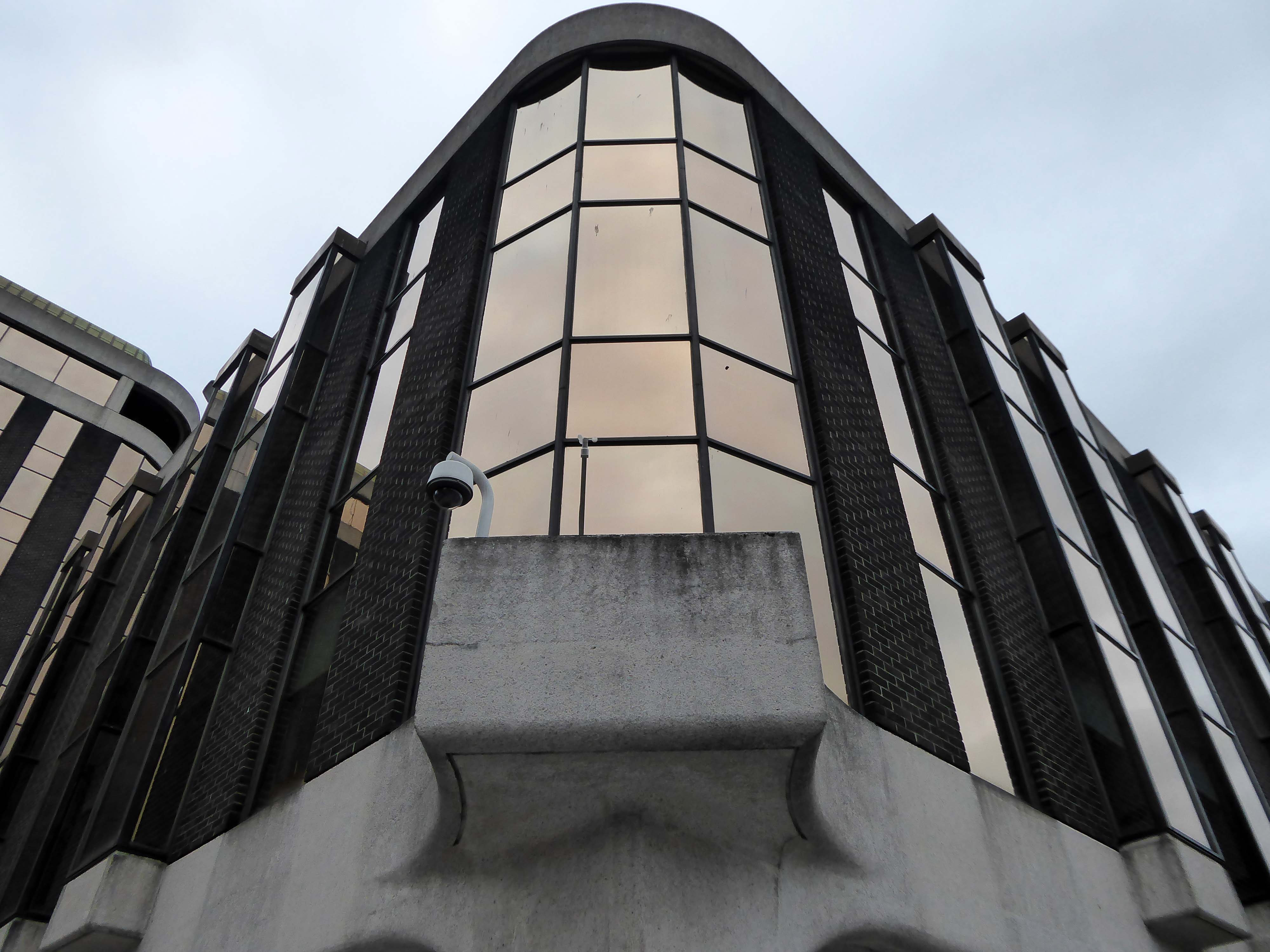
The nine-building Irish Life Centre complex was originally built between 1974 and 1977 comprising office space, as well as two blocks of apartments. The complex was built on the former site of the Brook Thomas warehouse and timber yards along with other adjoining sites costing £900,000.
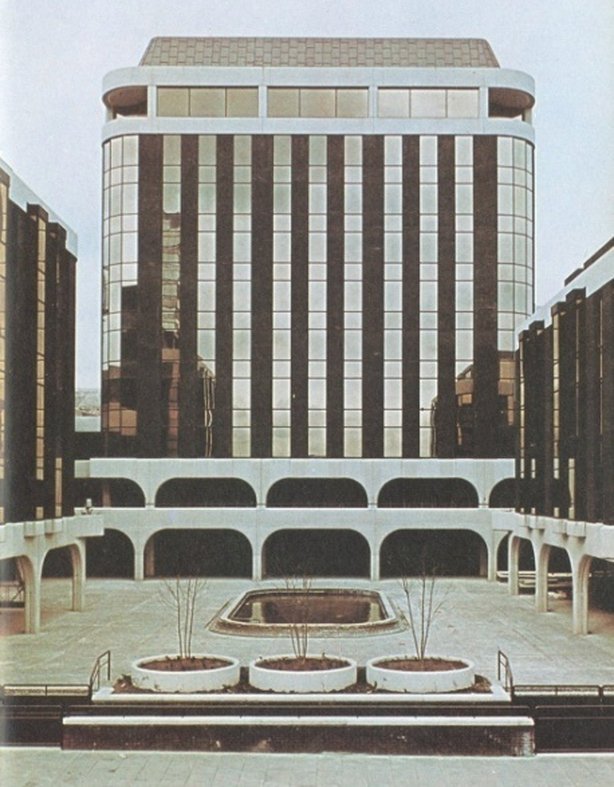
Irish Life, now part of the Canadian multinational Great-West Lifeco, were the original developers.
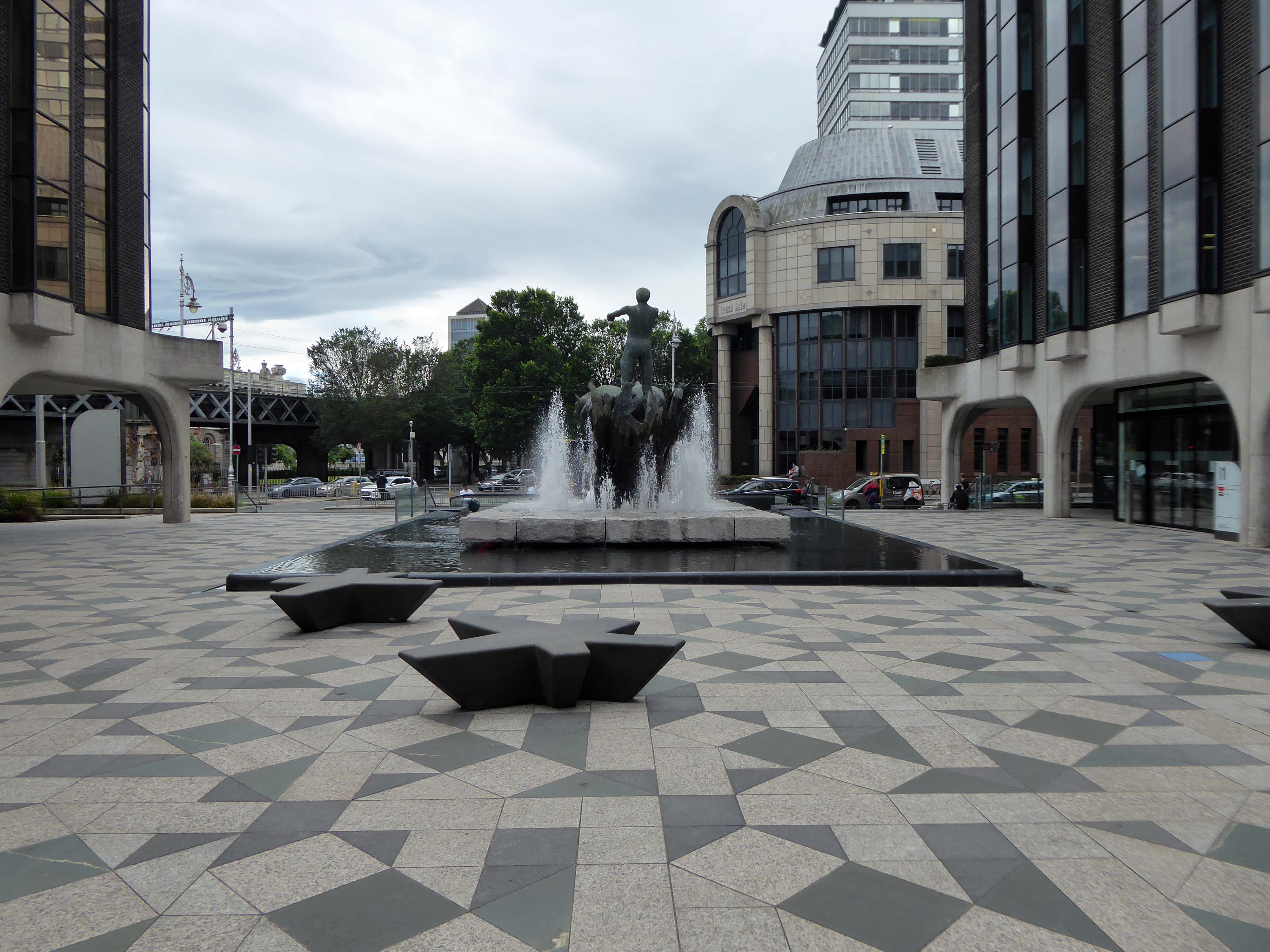
The 14-foot copper-bronze sculpture Chariots of Life by Oisín Kelly 1915 – 1981, greets staff and visitors at the entrance plaza. Although completed in 1978, the sculpture was not unveiled formally until 1982.
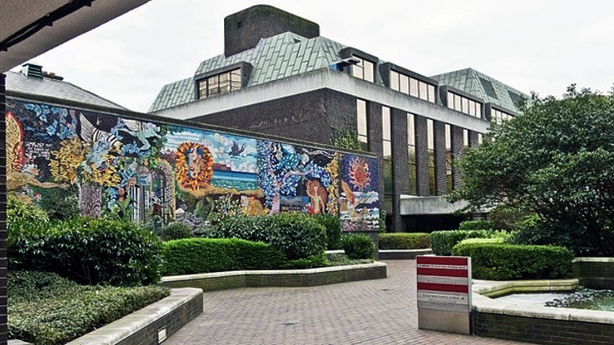
Inside the Abbey Court Garden there was once a large colourful mosaic, Sweeney Astray – 1987 by Desmond Kinney. The glass mosaic was comprised of twelve panels narrating Sweeney’s wanderings through forests and hills, from prose and poems dating back to the 1600s and updated by Seamus Heaney in the early 1980s.
It was removed in 2013.
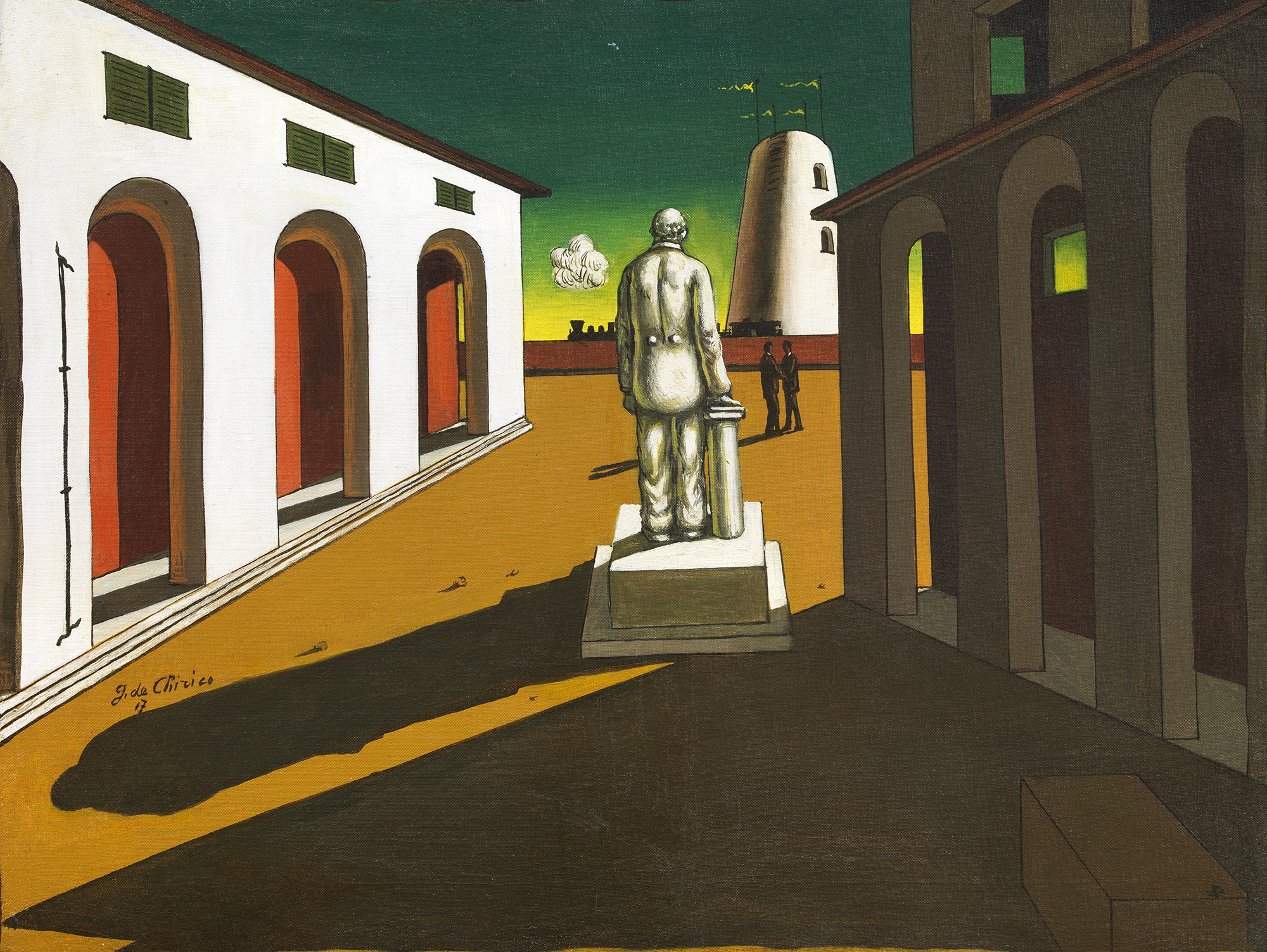
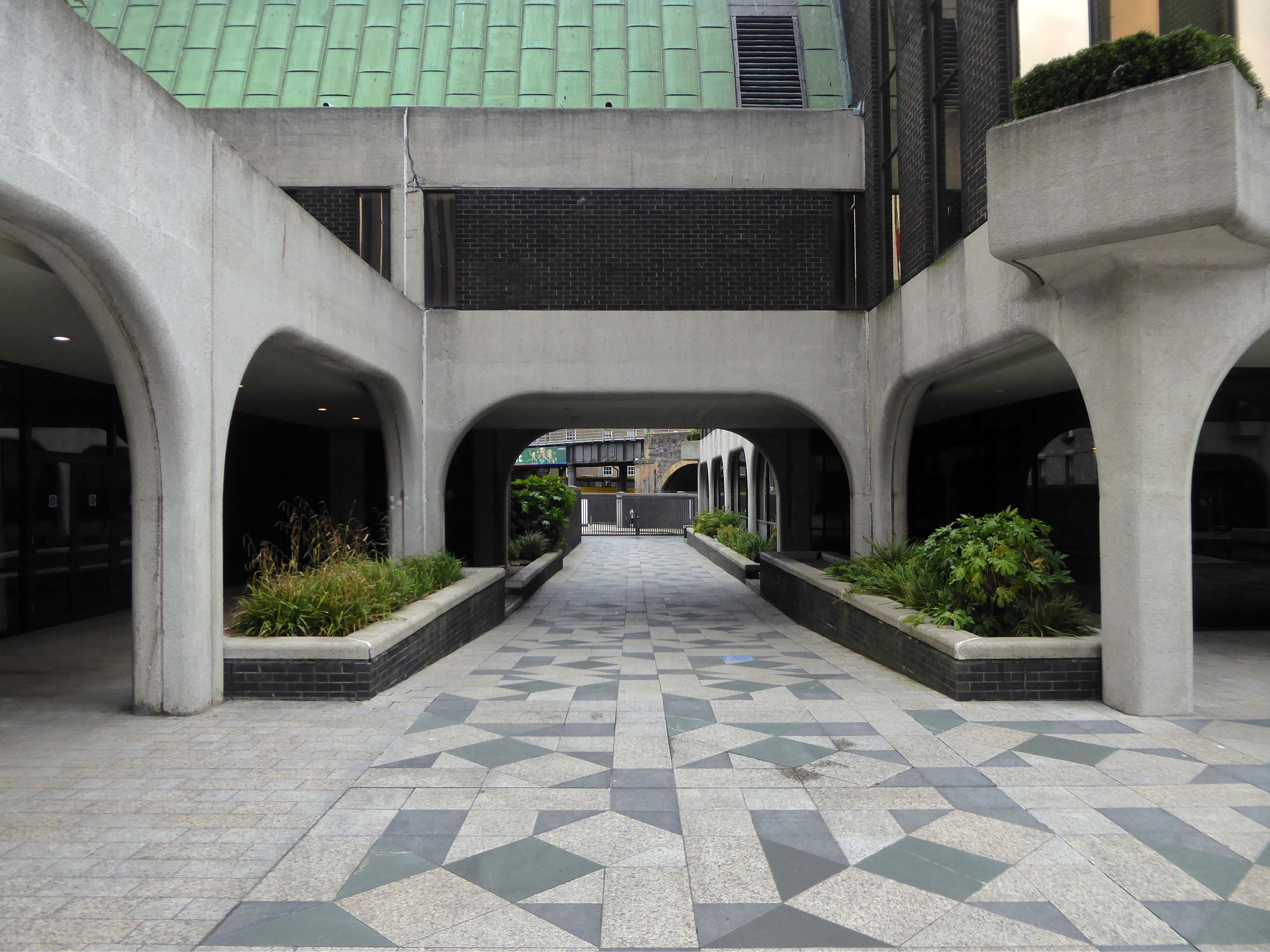
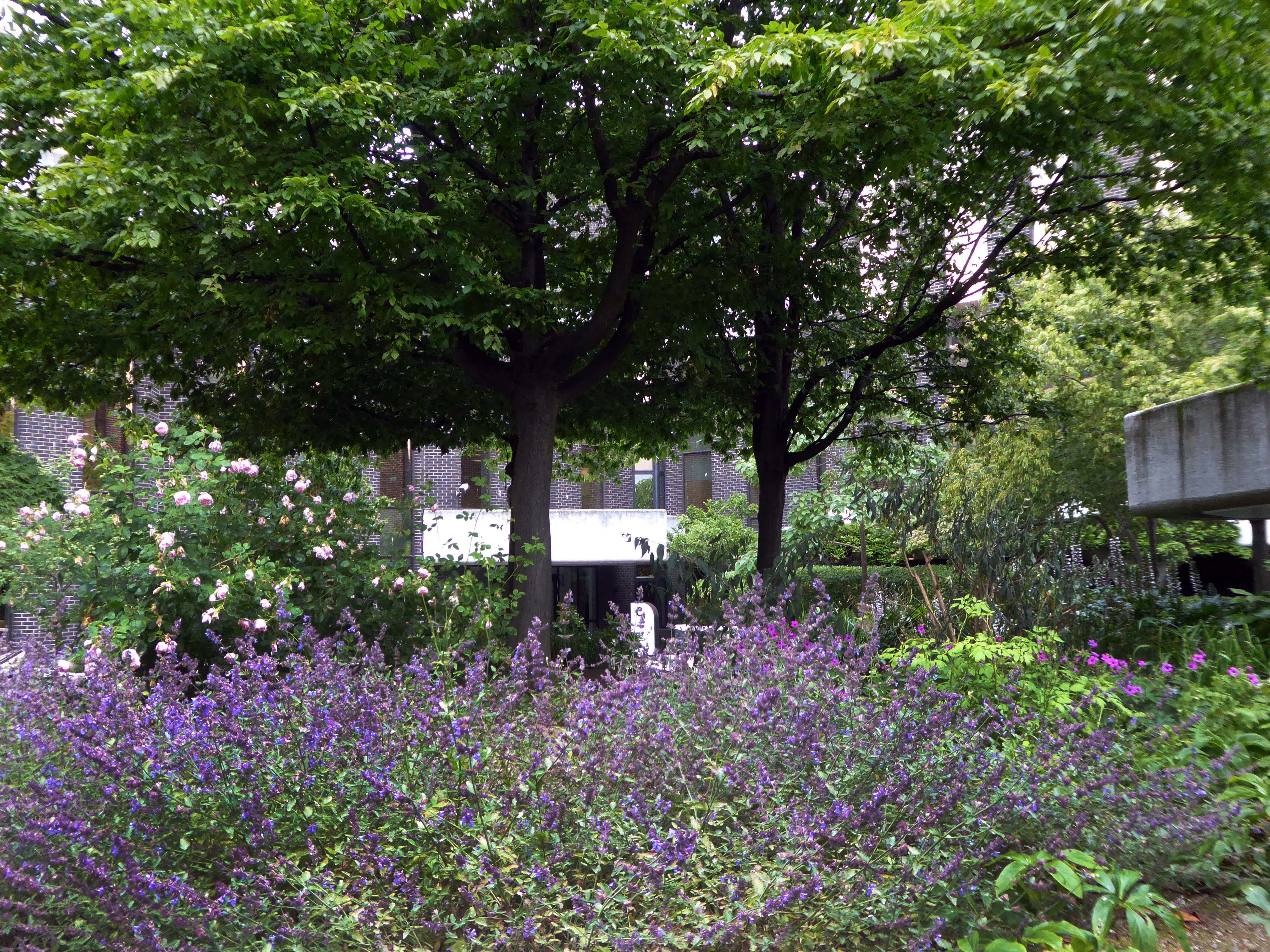
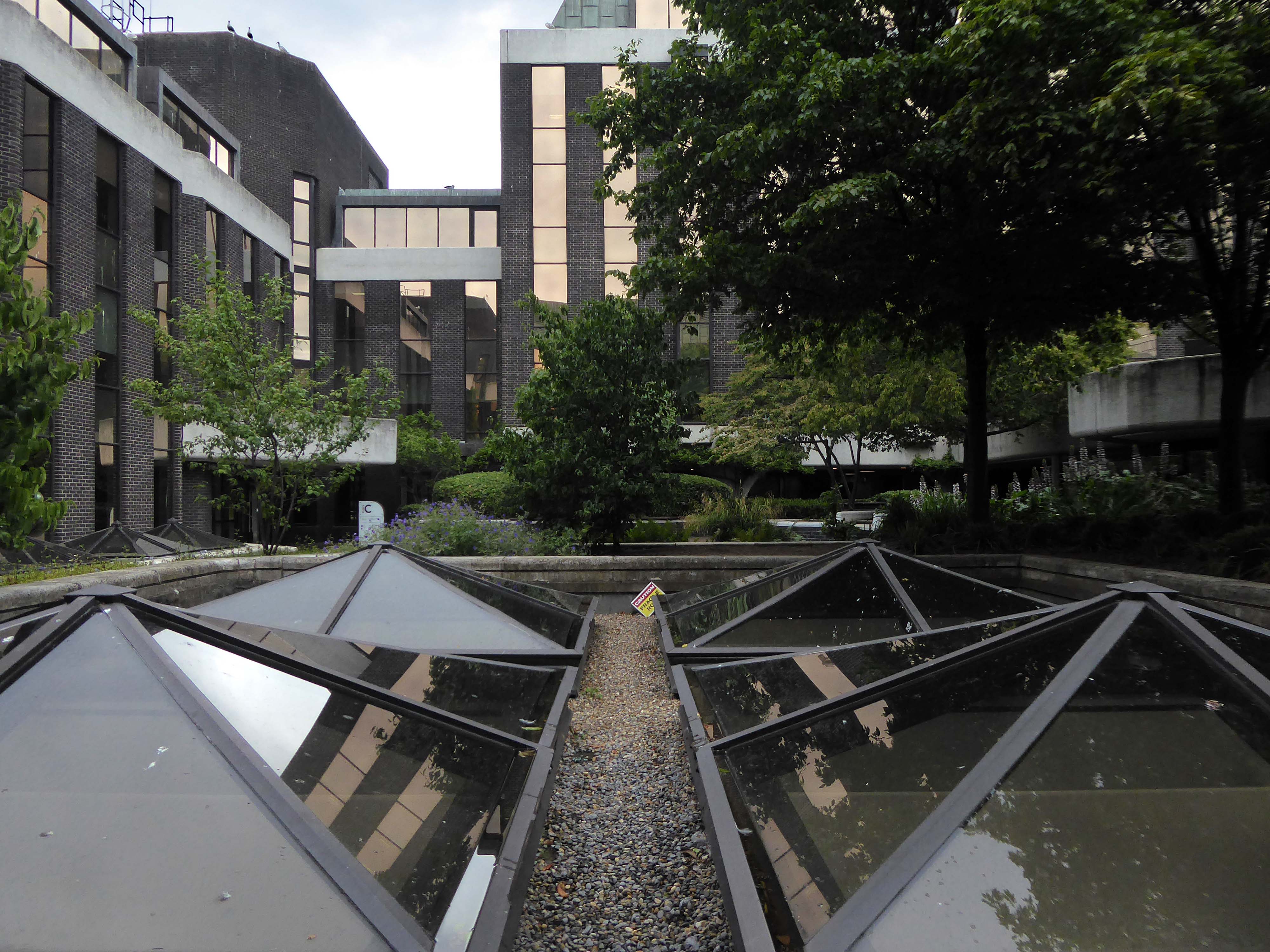
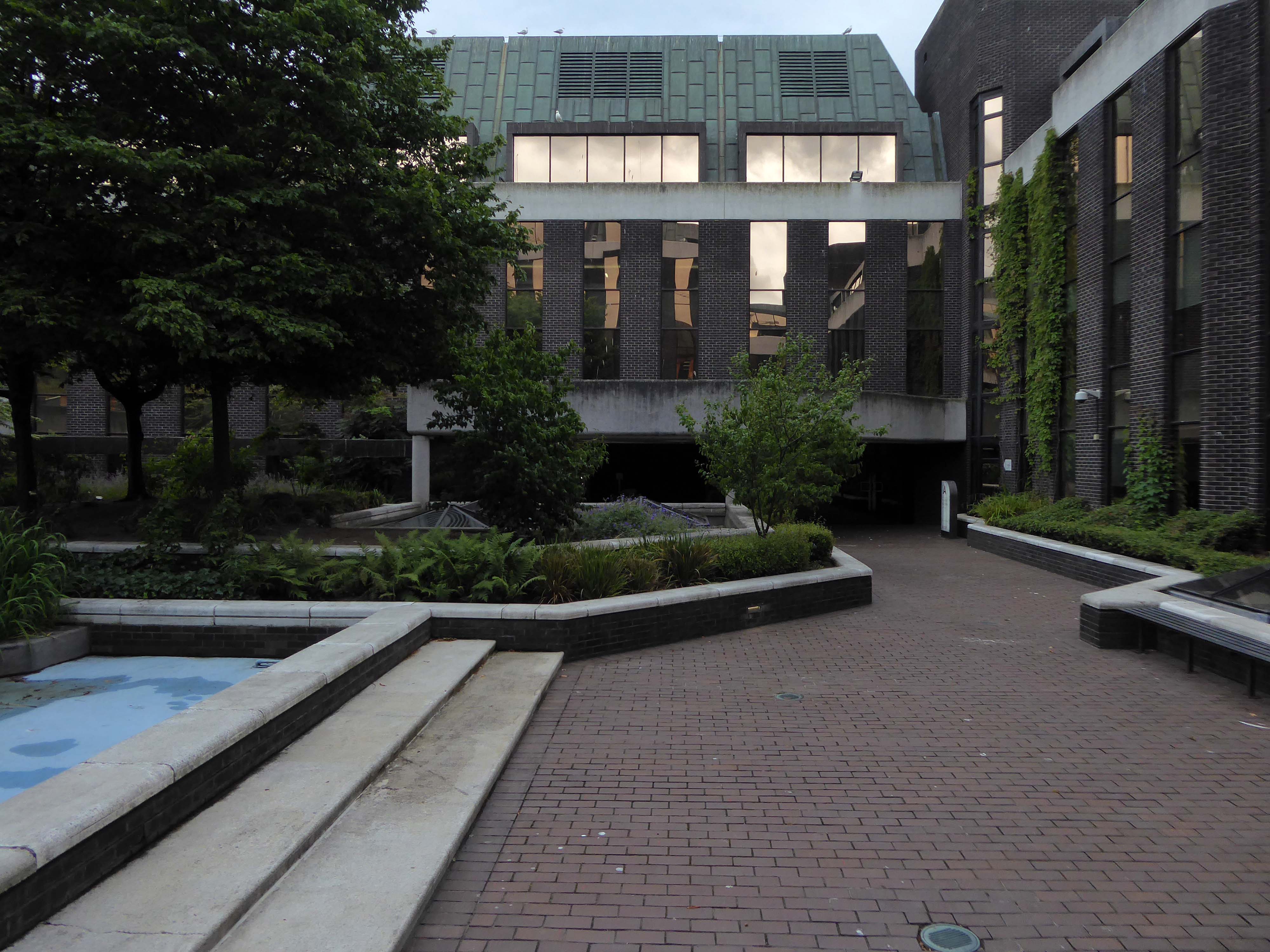
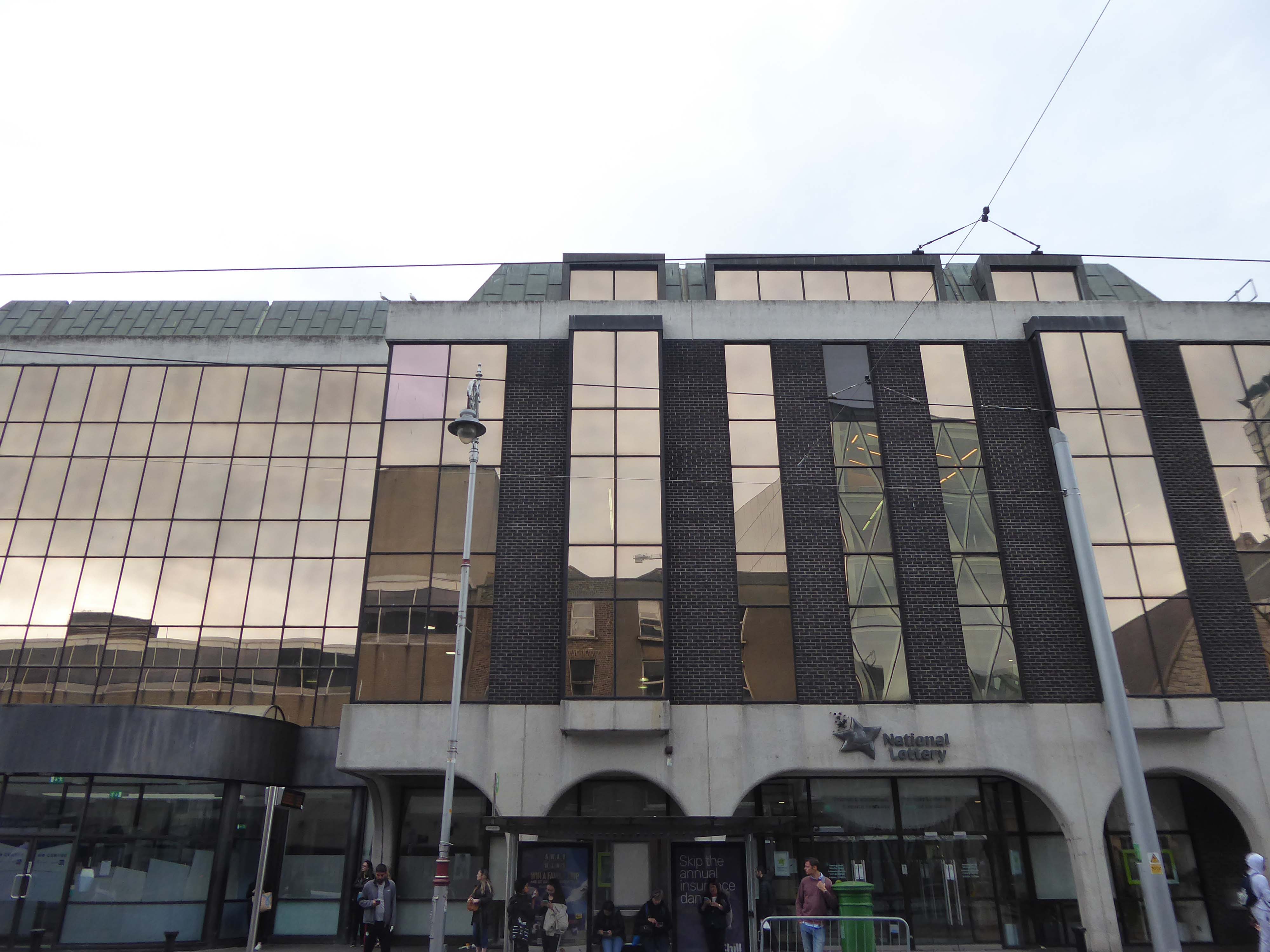
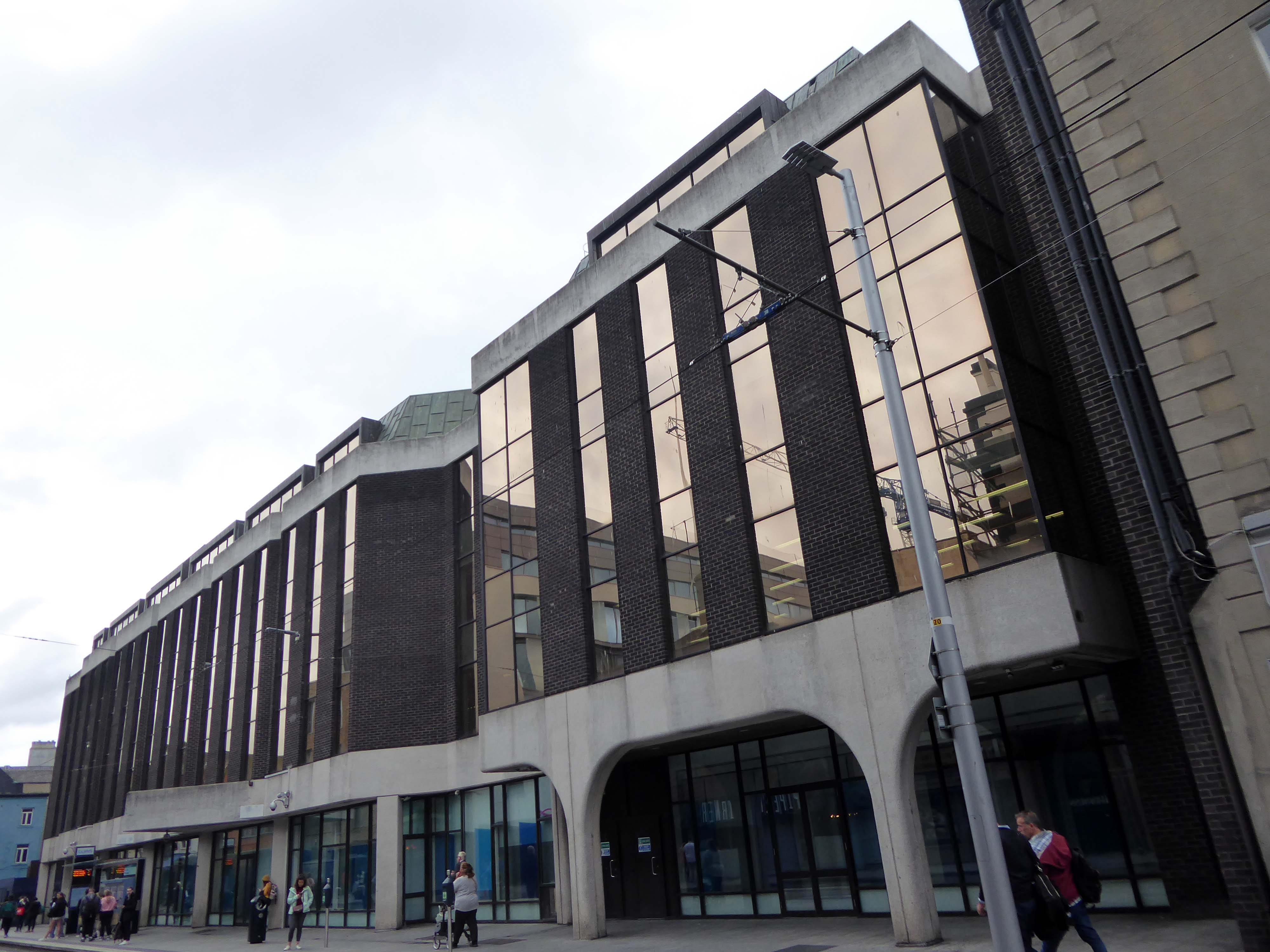
This is Dallas meets De Chirico – bronzed glass and dark colonnades surrounding open un-peopled piazzas.

Wandering under low underpasses into open space and finally into a green oasis.
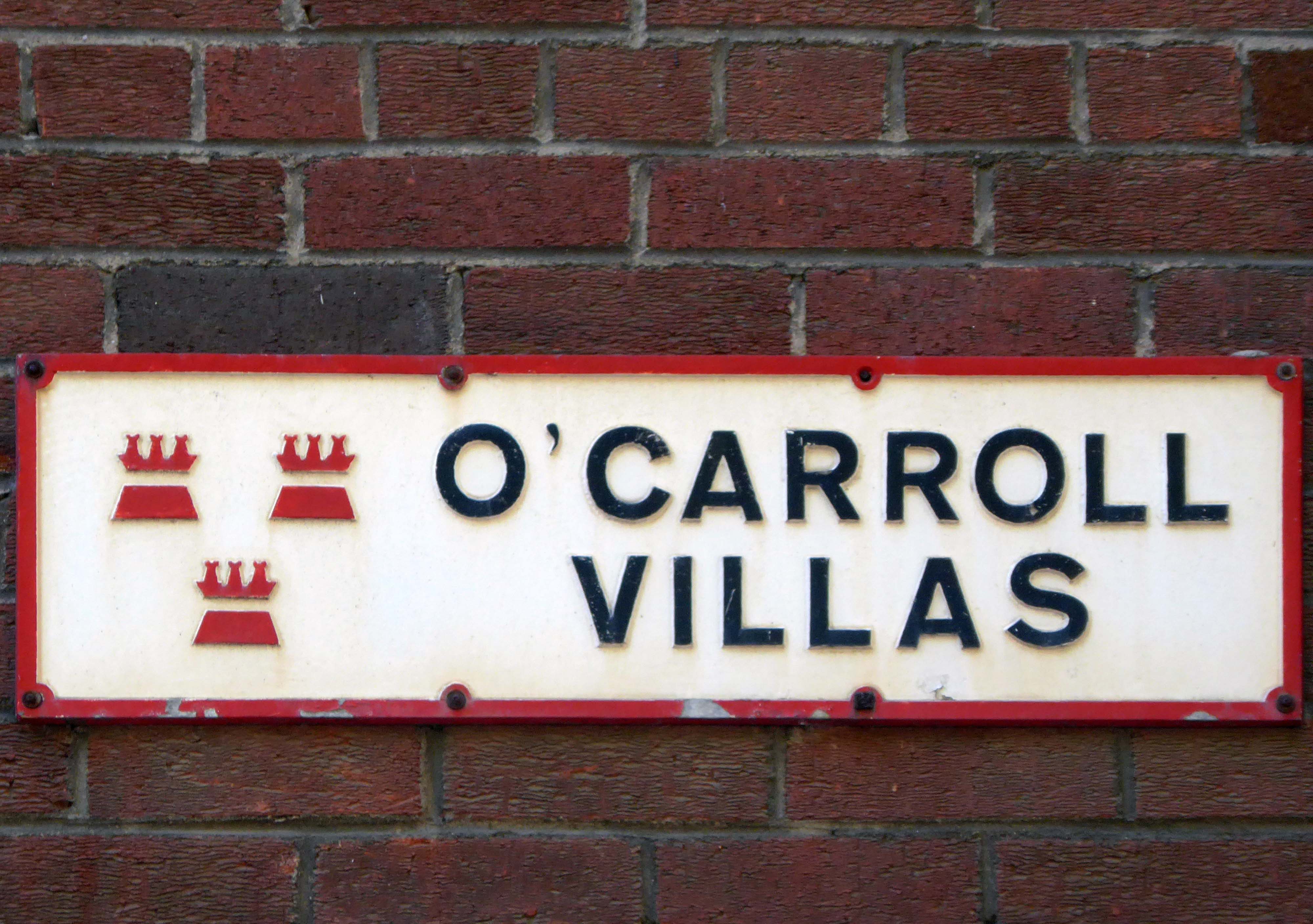
Richard O’Carroll TC died for his country on 5th May 1916.
A true martyr for the love of his Country and its people, and a true Working Class Hero!
Cllr O’Carroll deserves to be recognised by the State and the People of Ireland for his work with the Labour Party, The Ancient Guild of Brick & Stonelayers Trade Union and most importantly for his contribution to the Freedom of Ireland.
‘Bhí sé dílis dá thír is dá chineál’
‘He loved his country and served his kind’
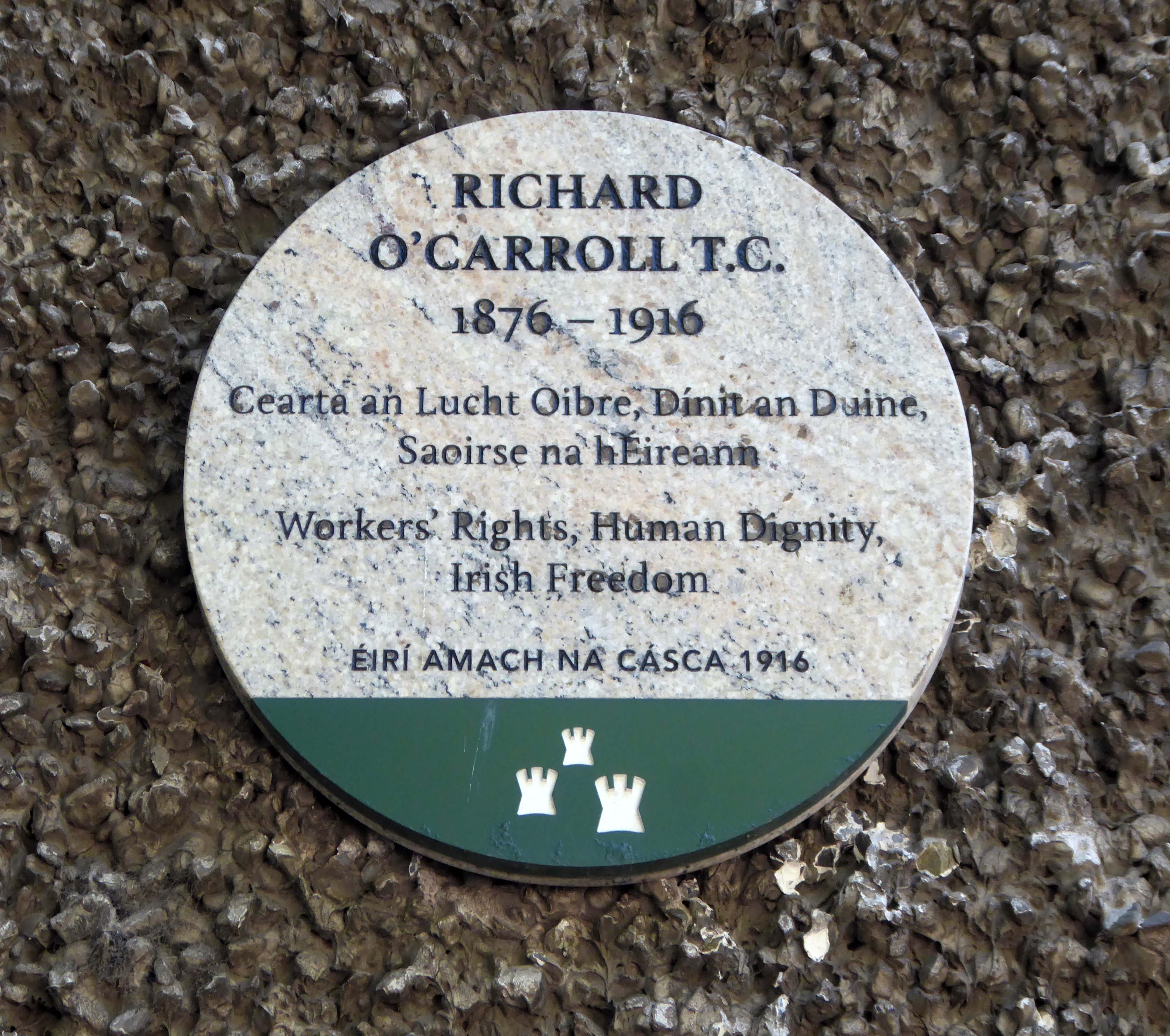
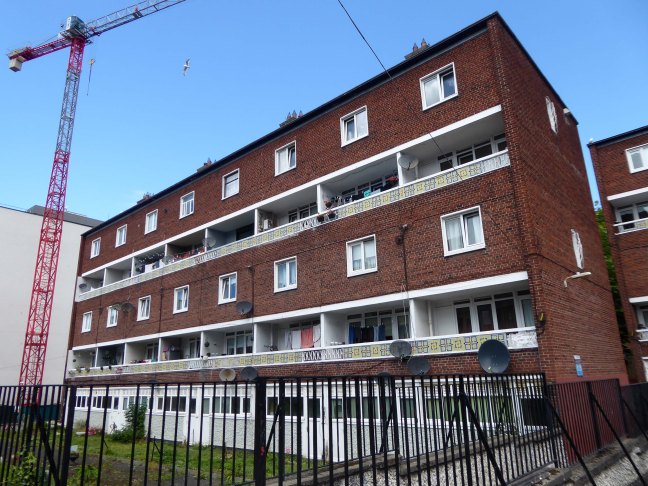
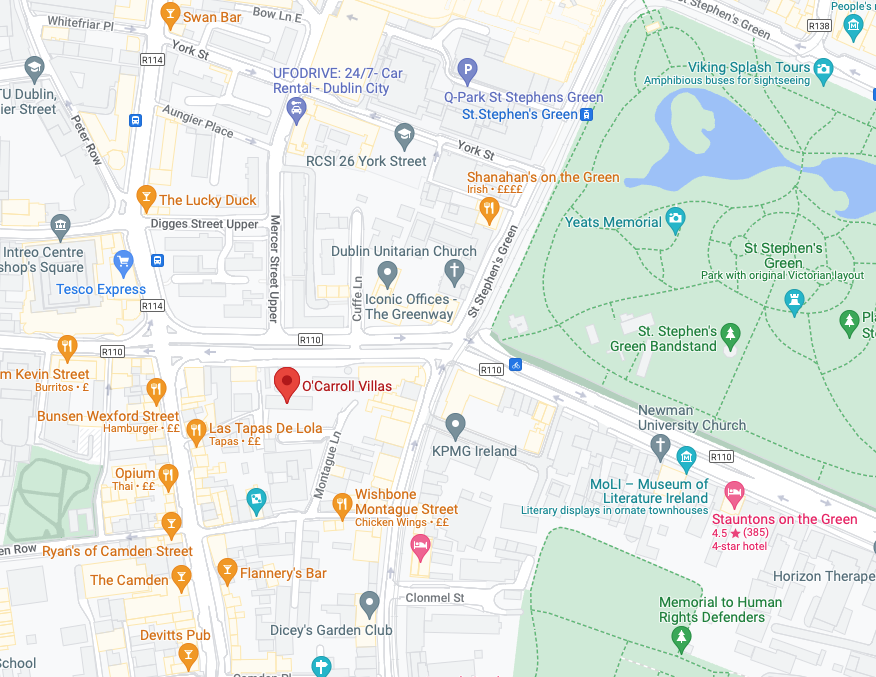
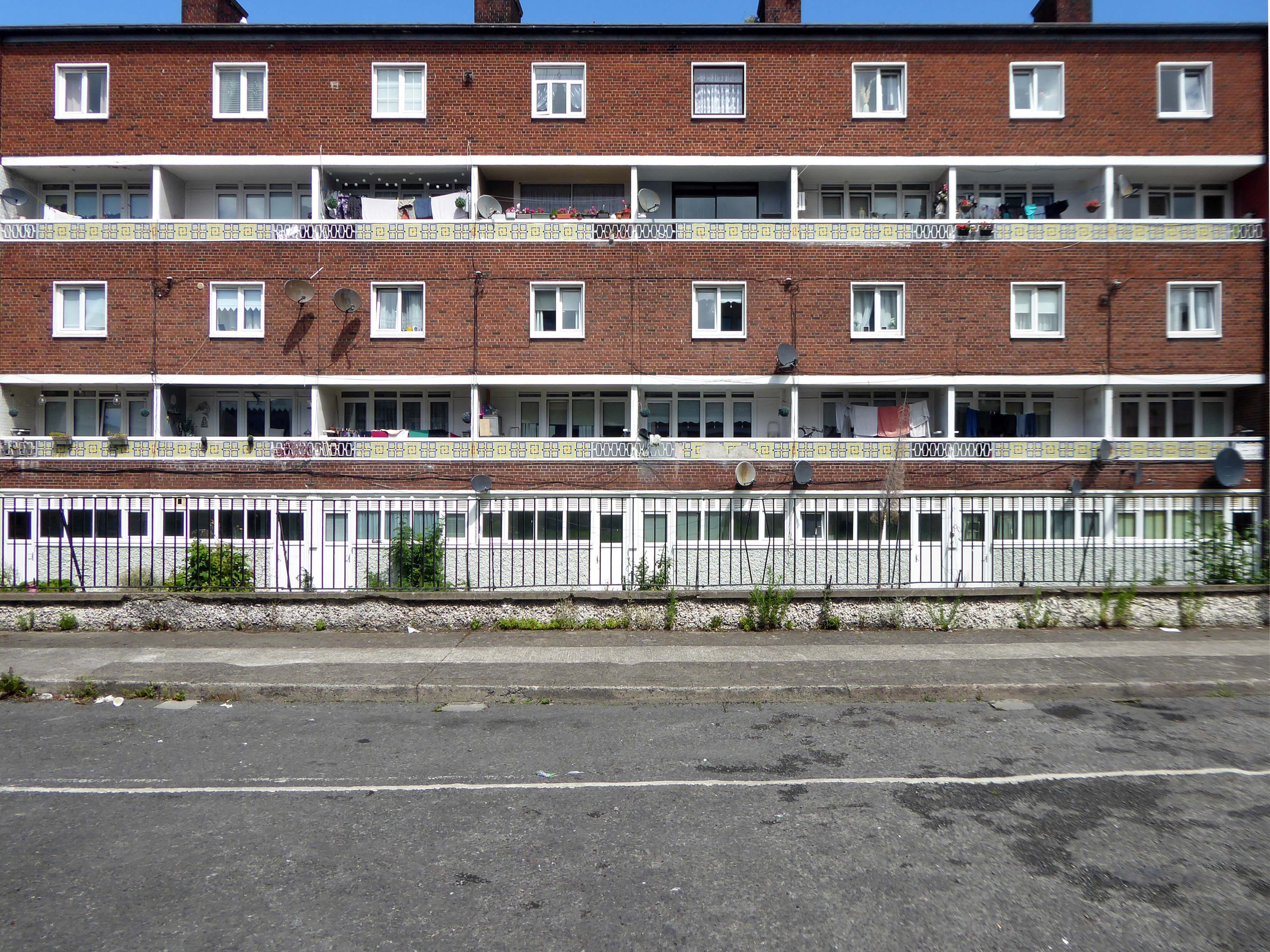
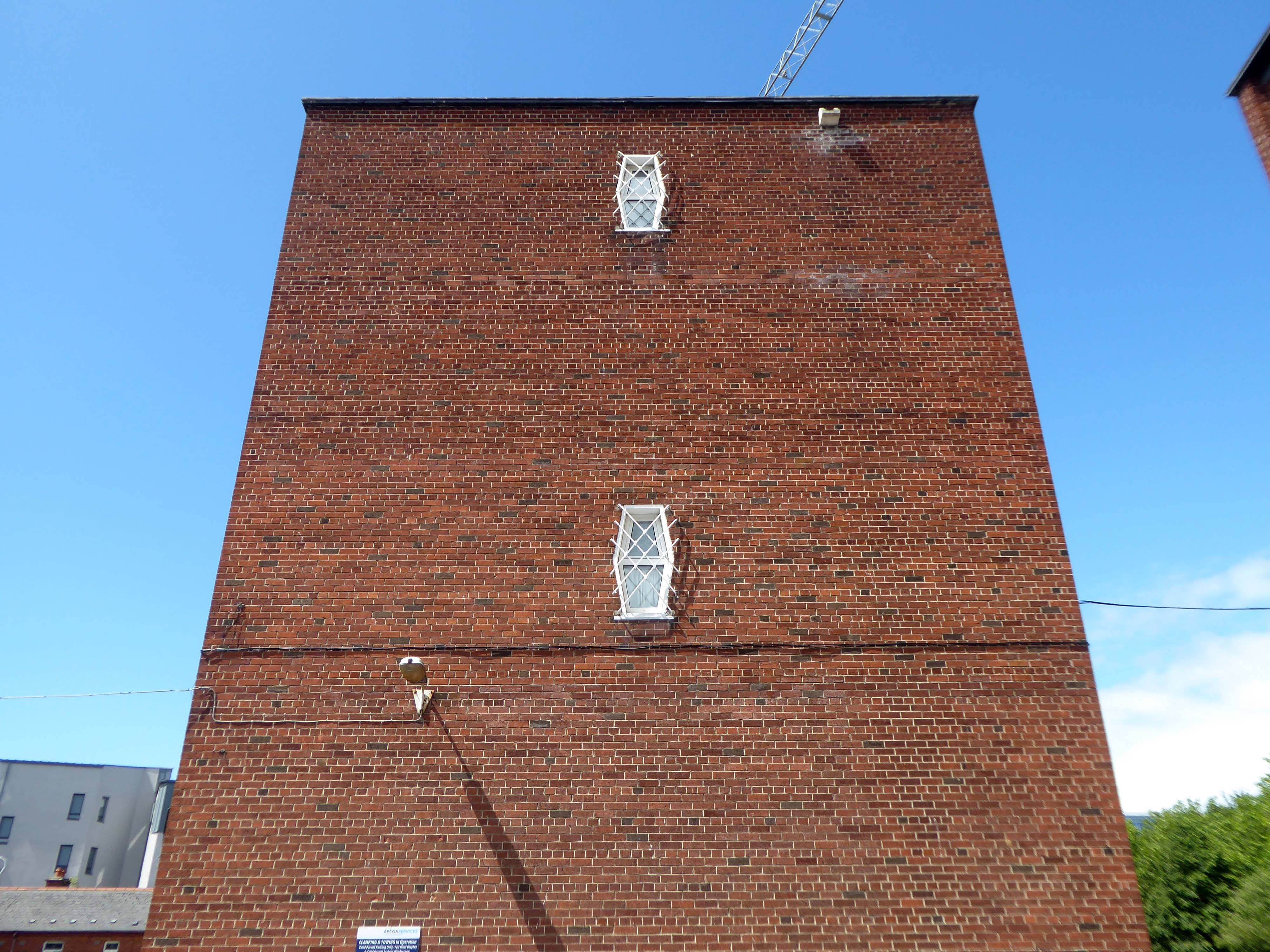
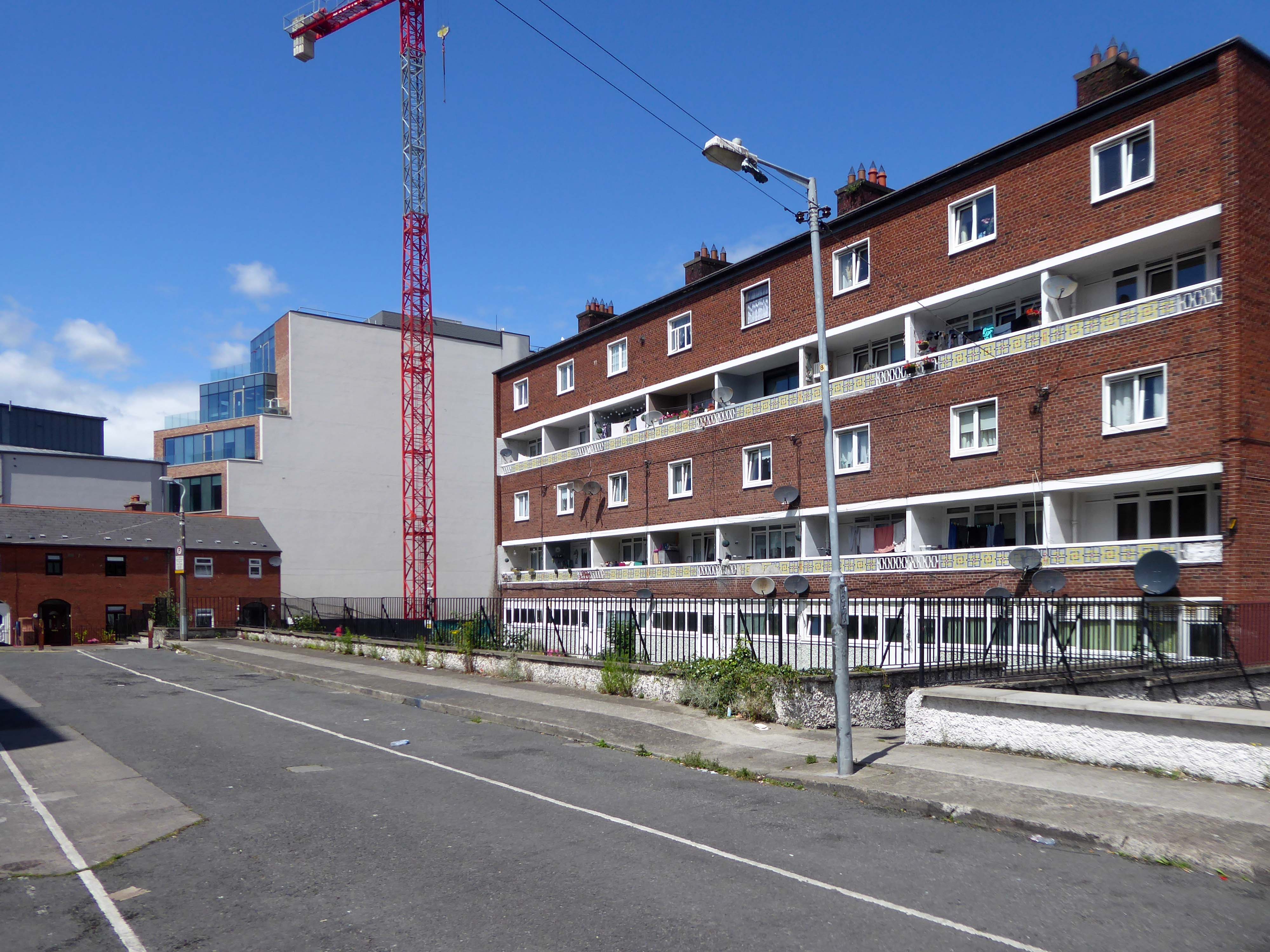
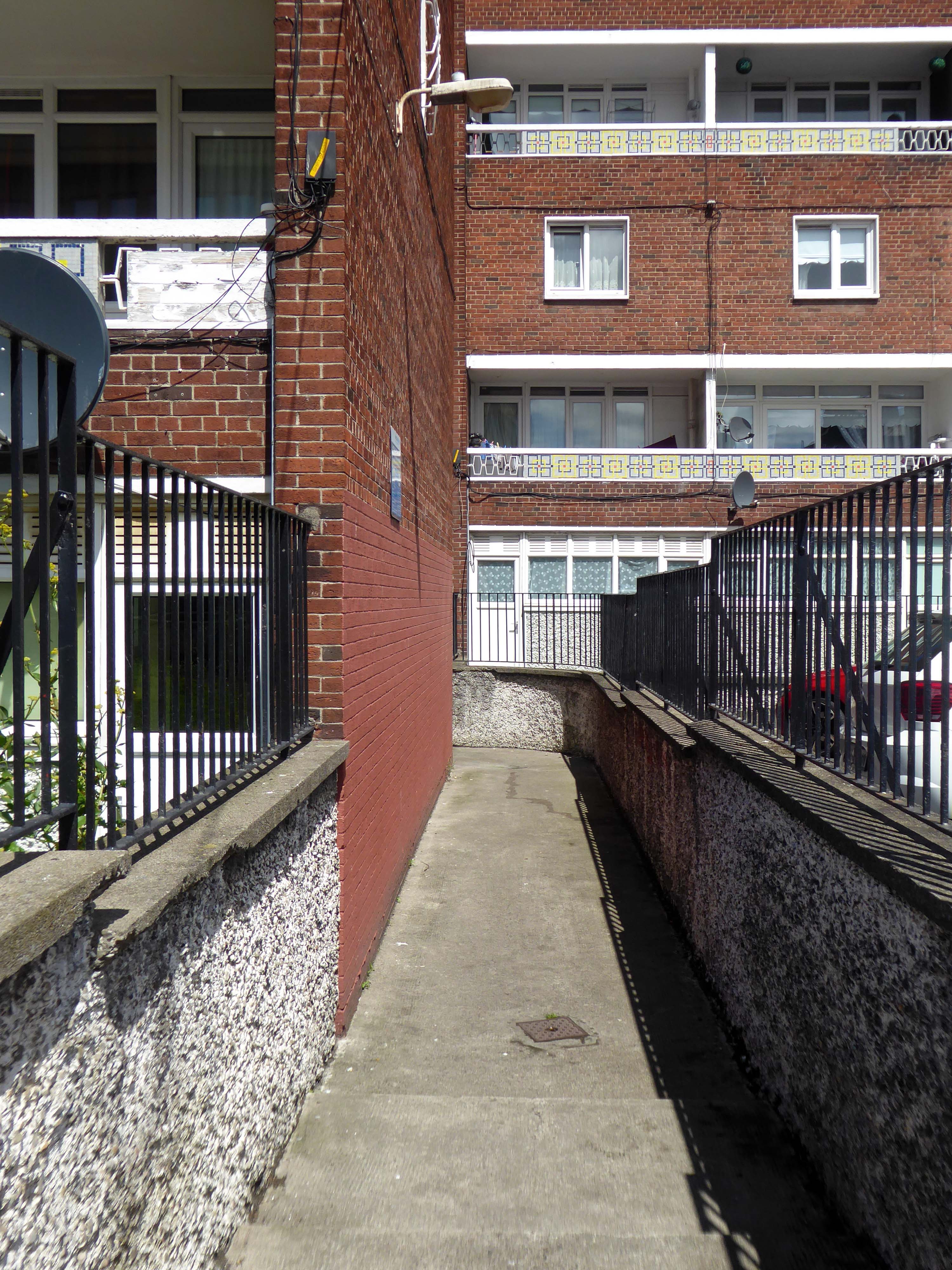
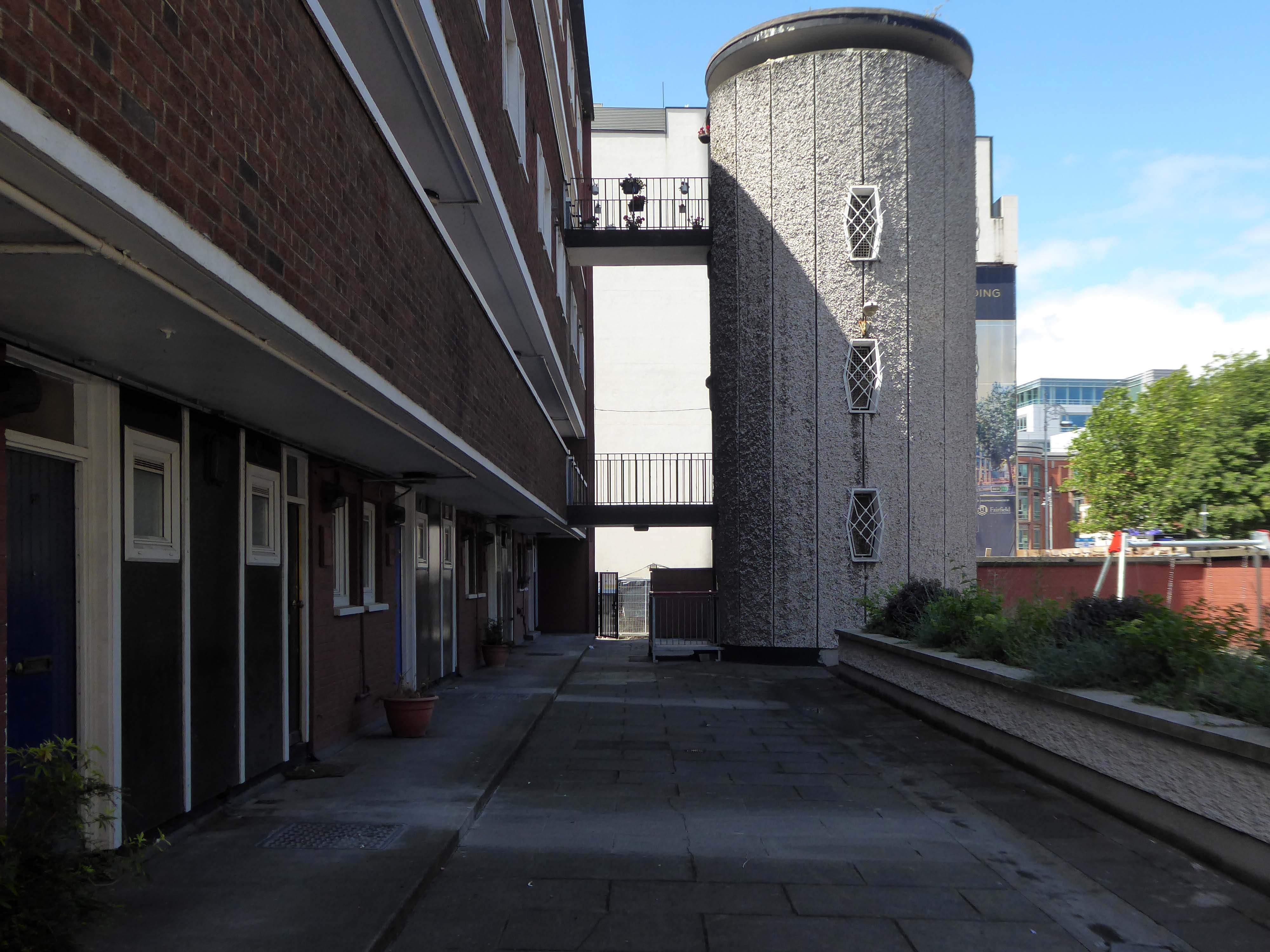
I came upon these two slab blocks of flats whilst walking the streets of Dublin – this service tower acts as a memorial to his life and achievements.
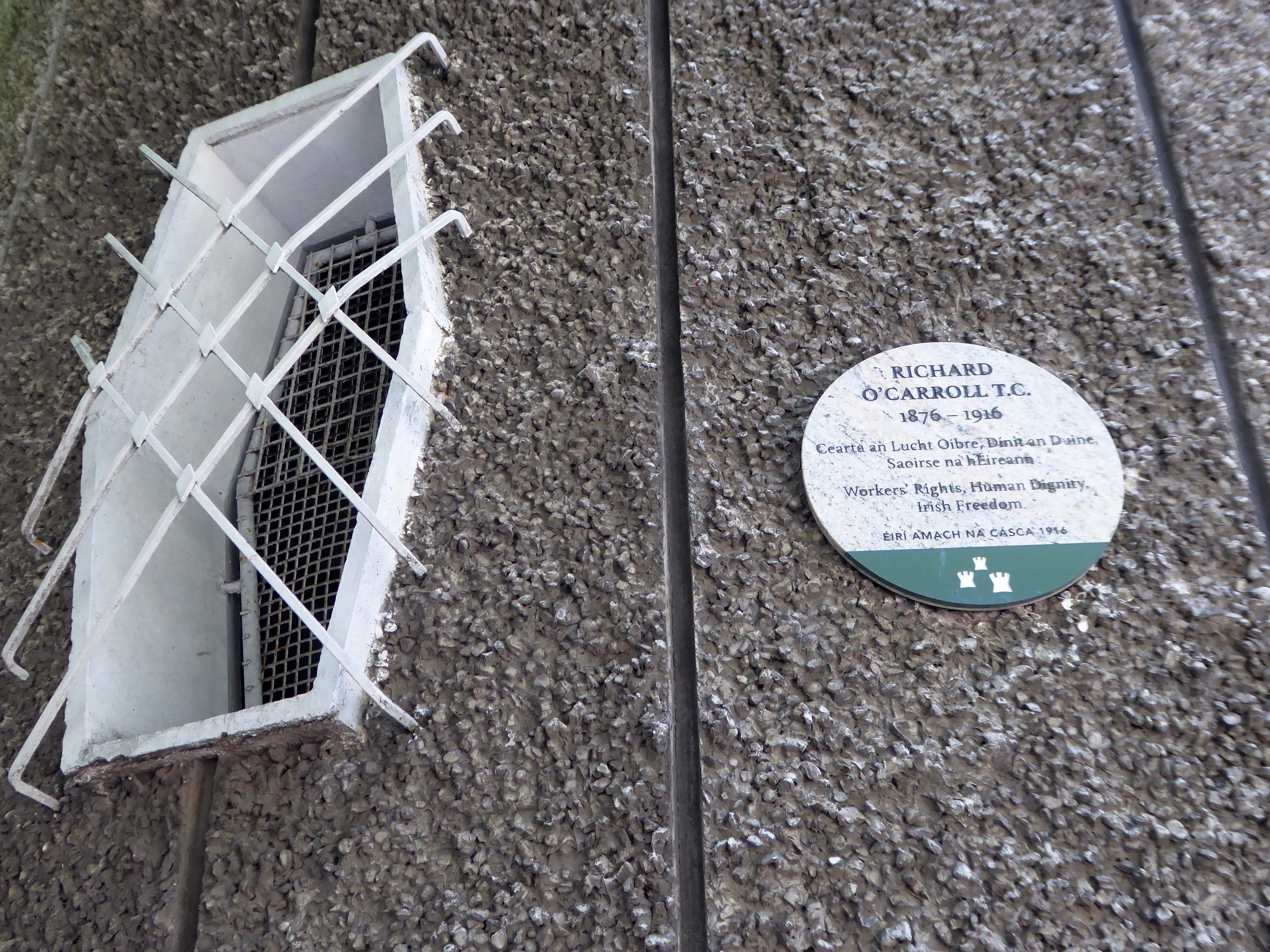
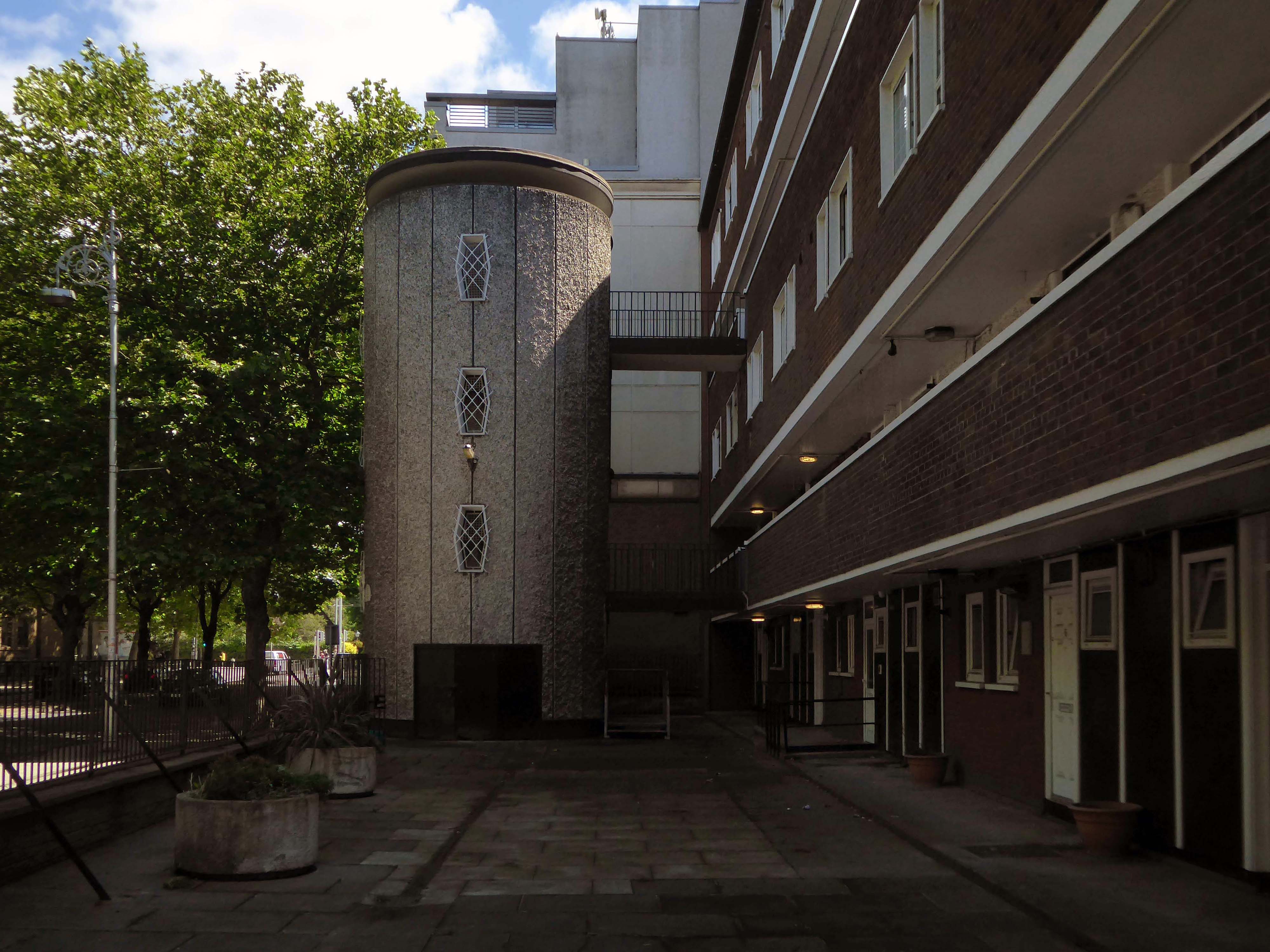
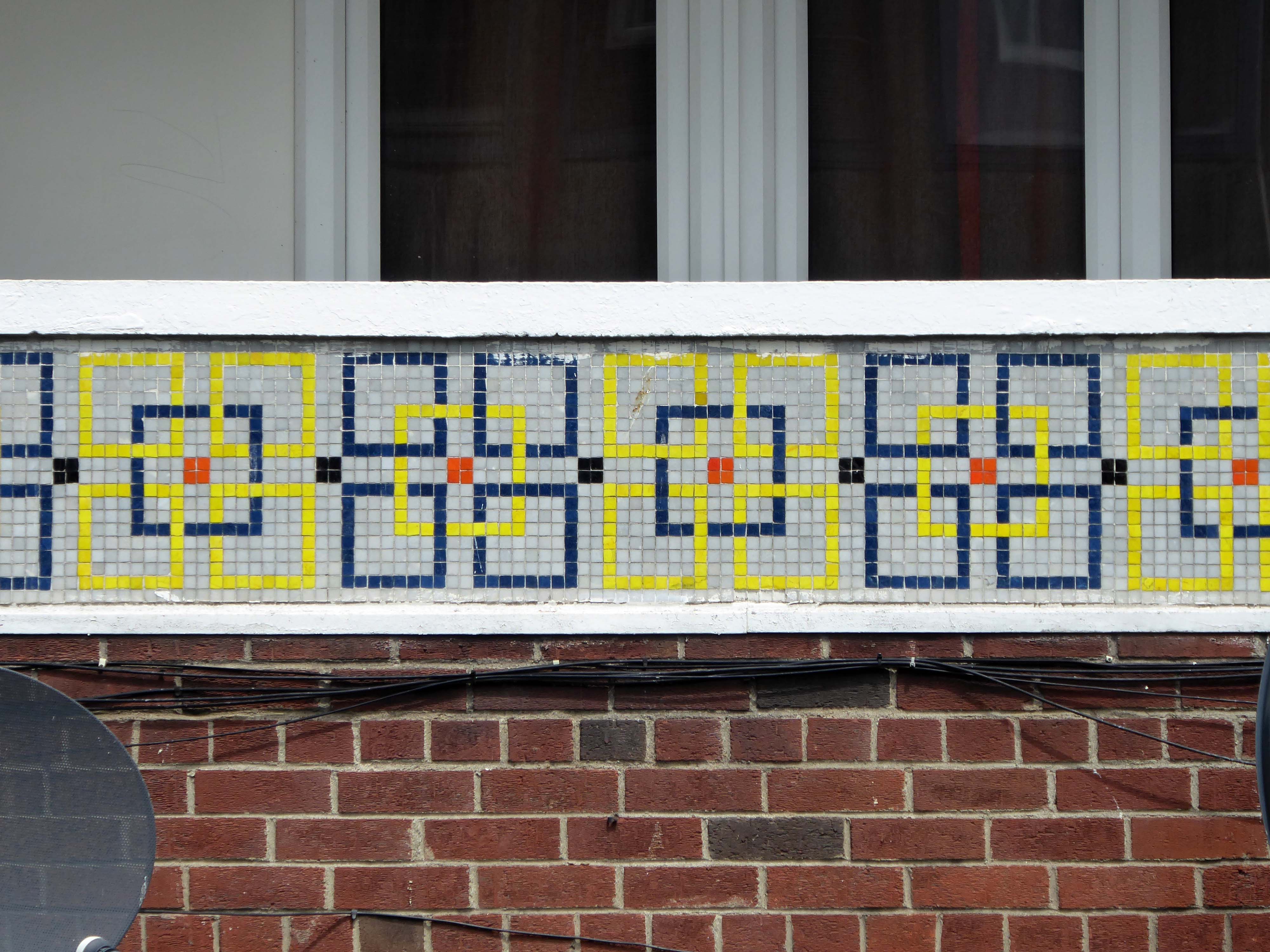
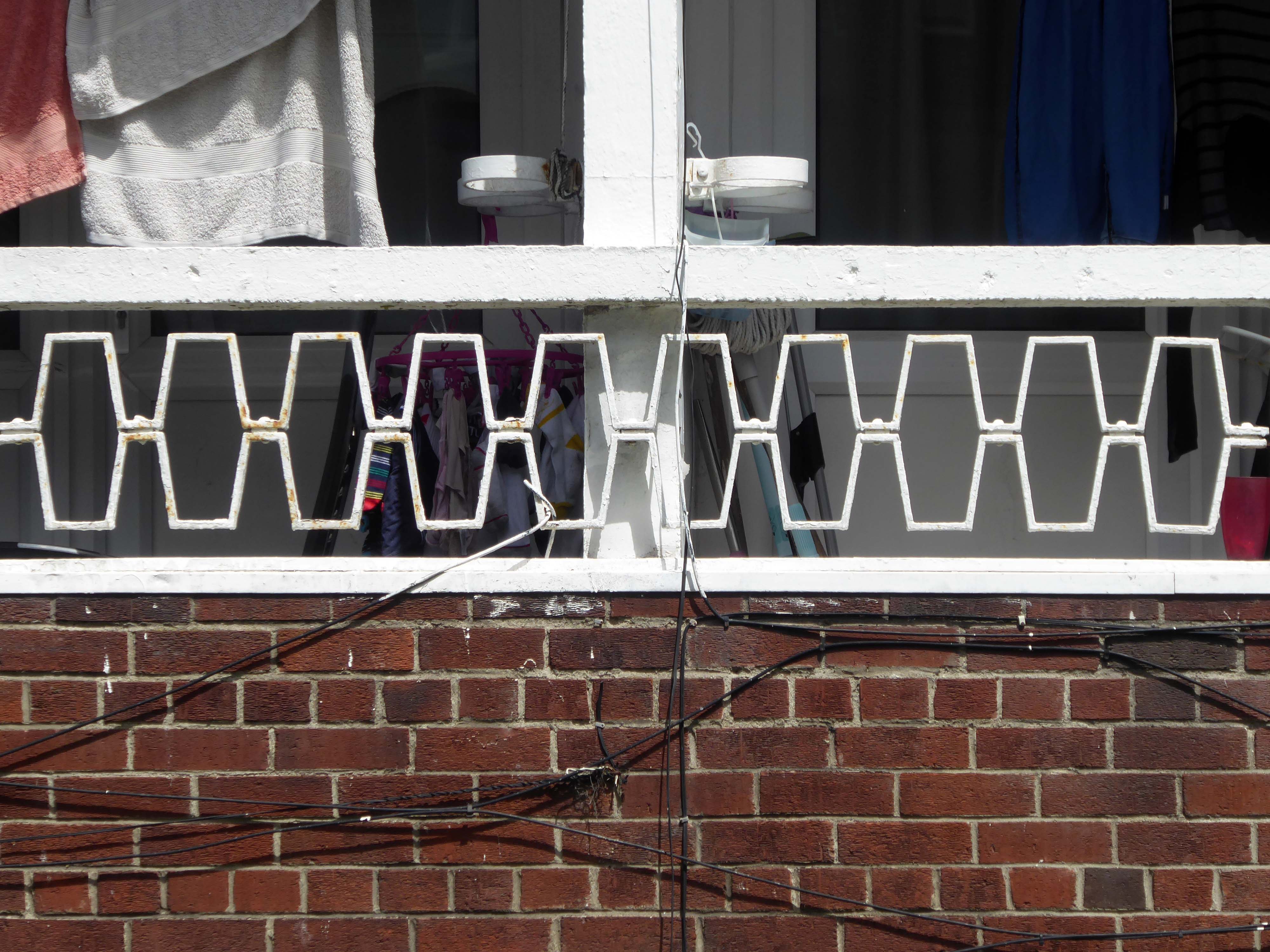
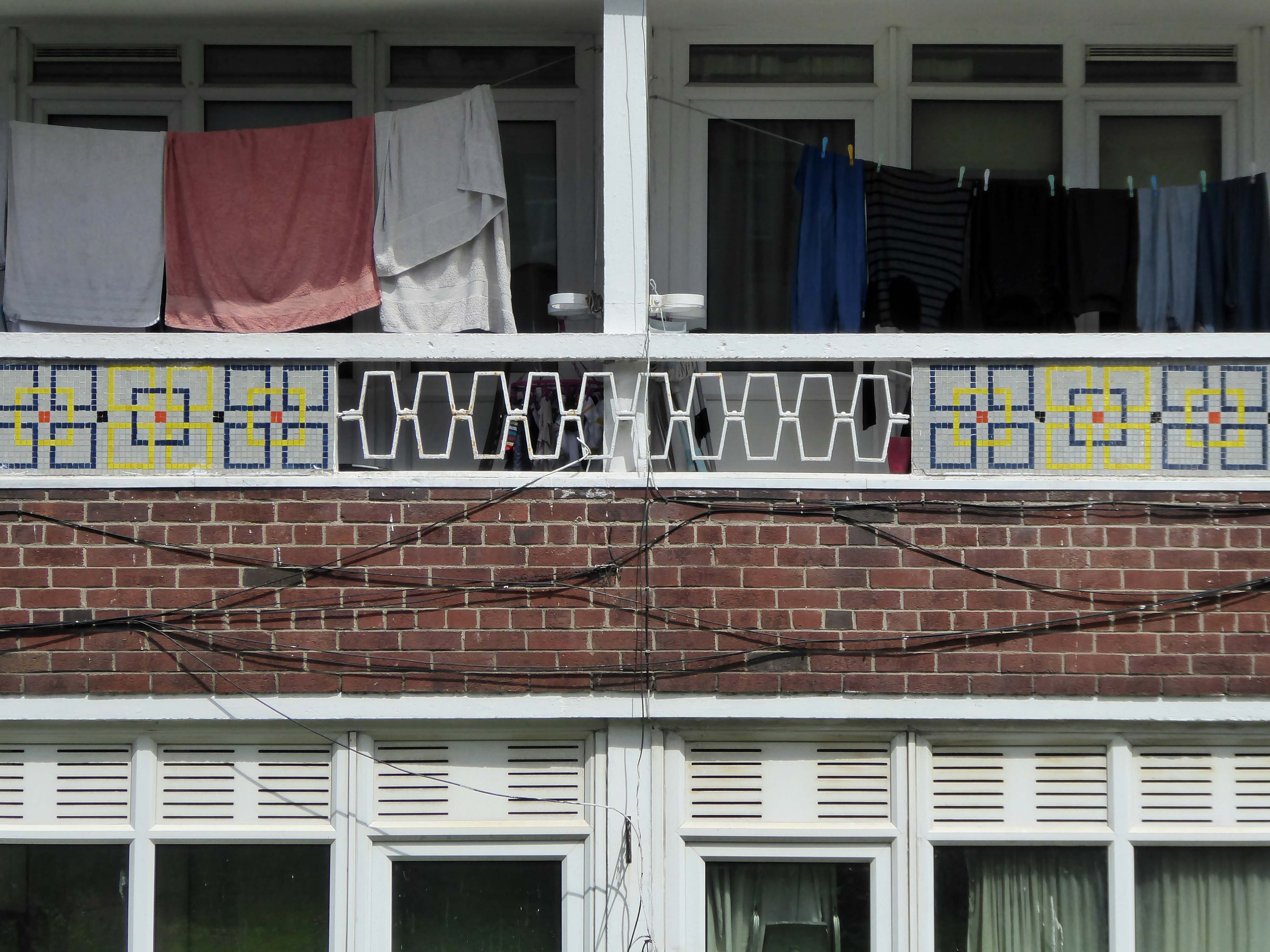
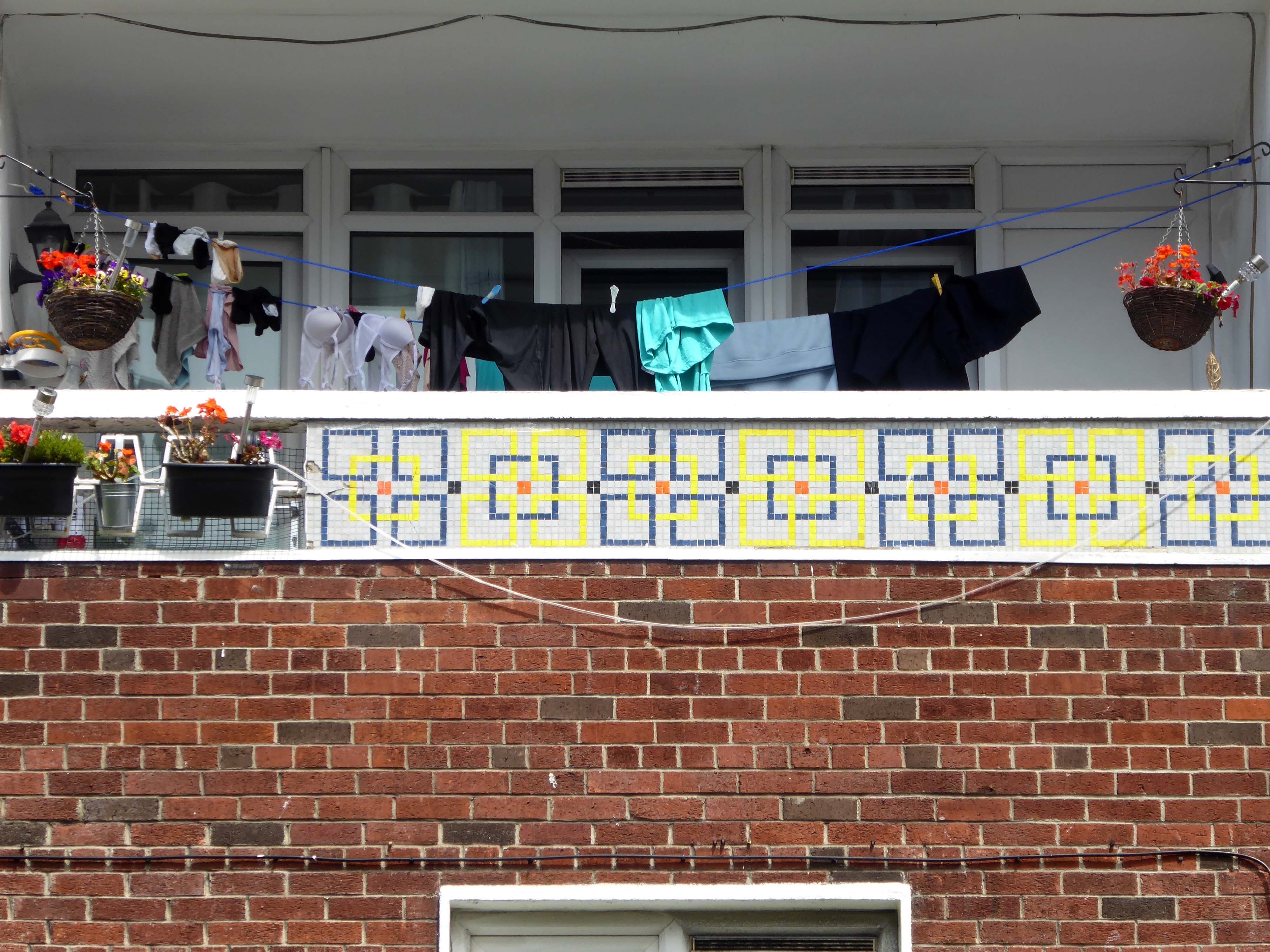
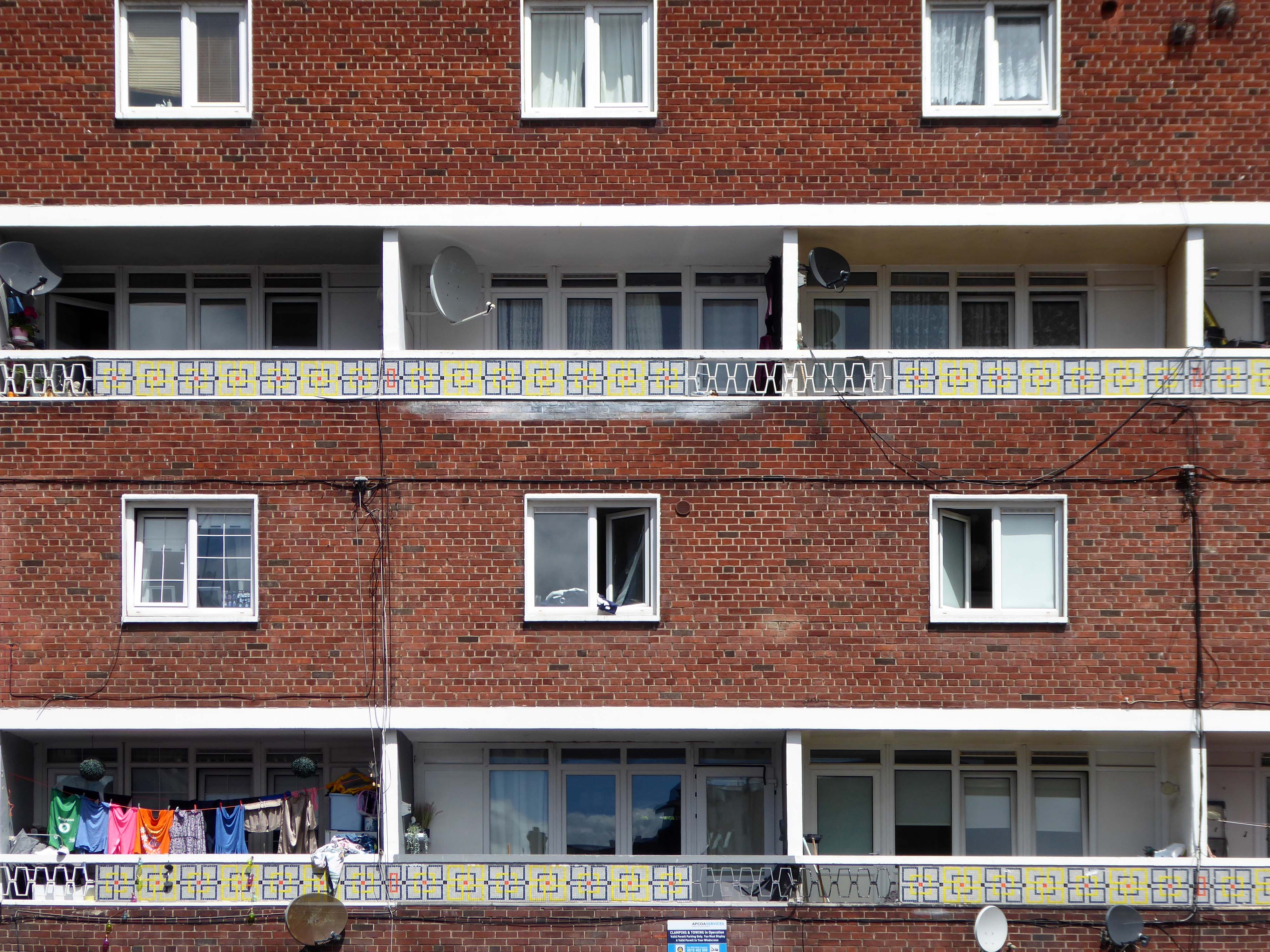
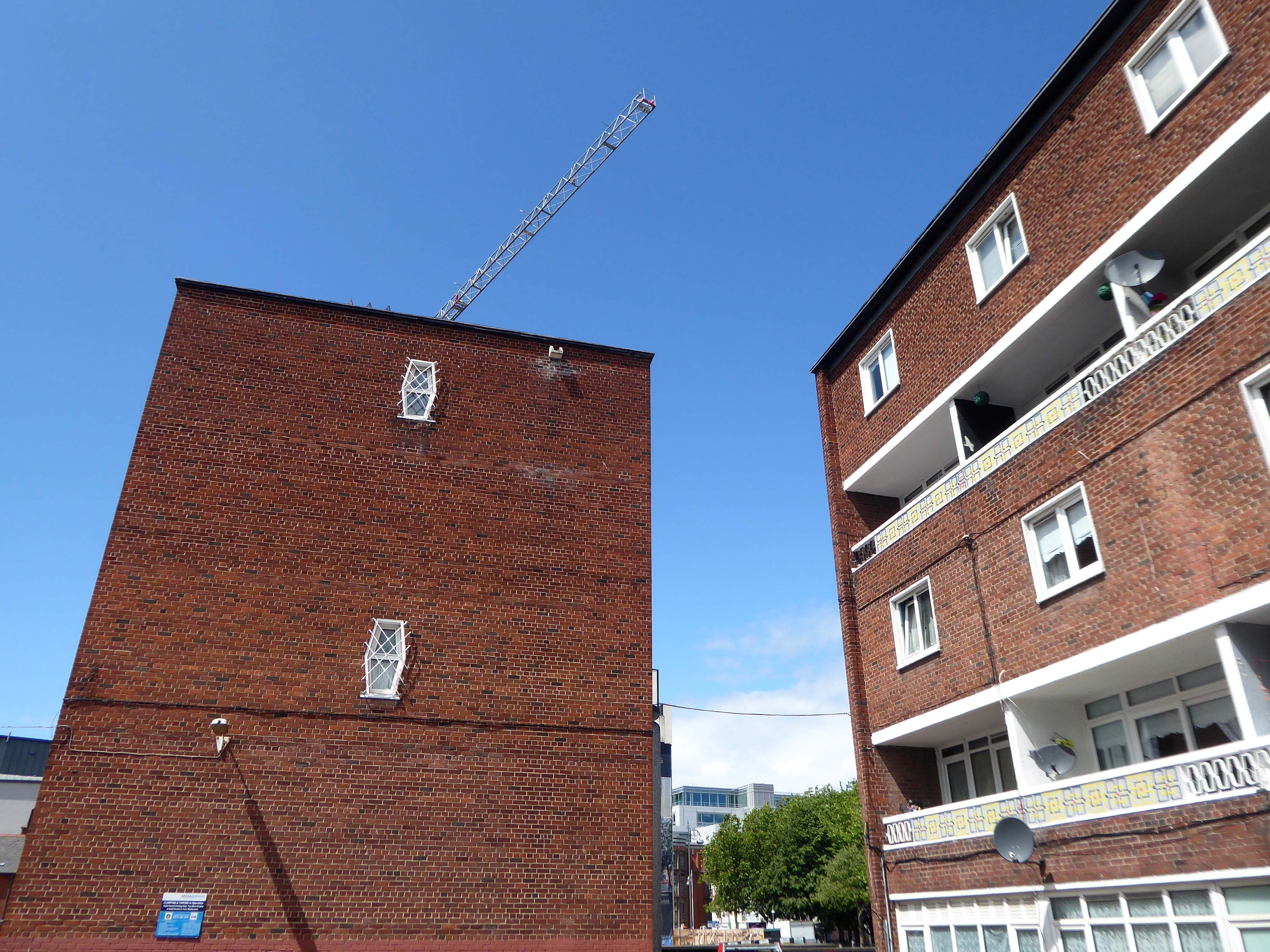
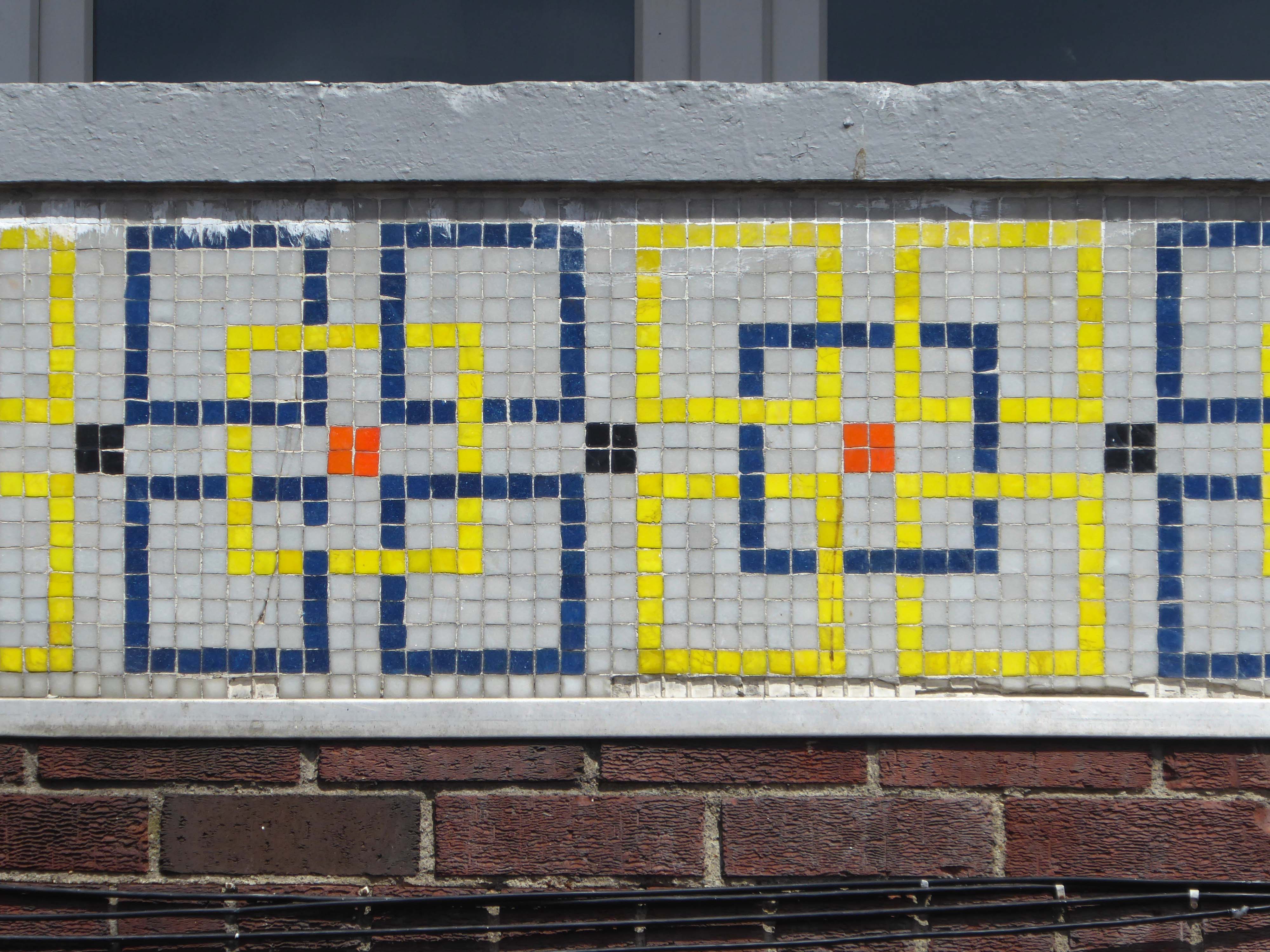
I was stopped in my tracks when I chanced upon the enchanting mosaics, wrought iron railings and walkups, I stayed a while to take a look around.
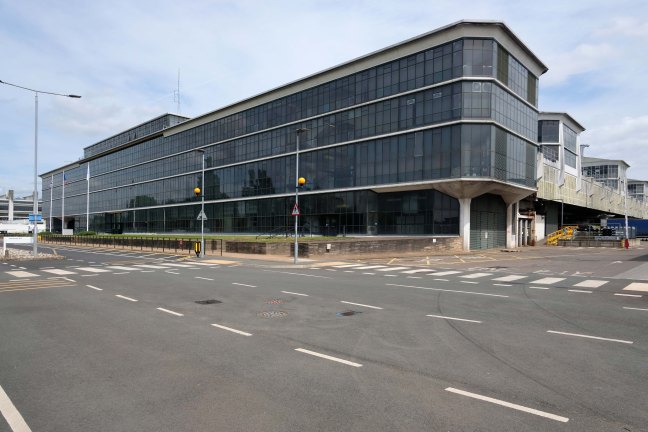
I boarded the 49 bus to Boots.
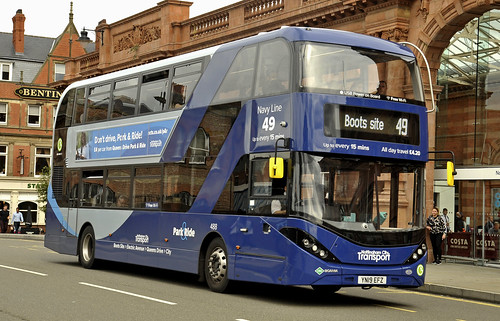
I alighted from the 49 bus at Boots and proceeded to take a look around.
Unsurprisingly the construction work was now complete.
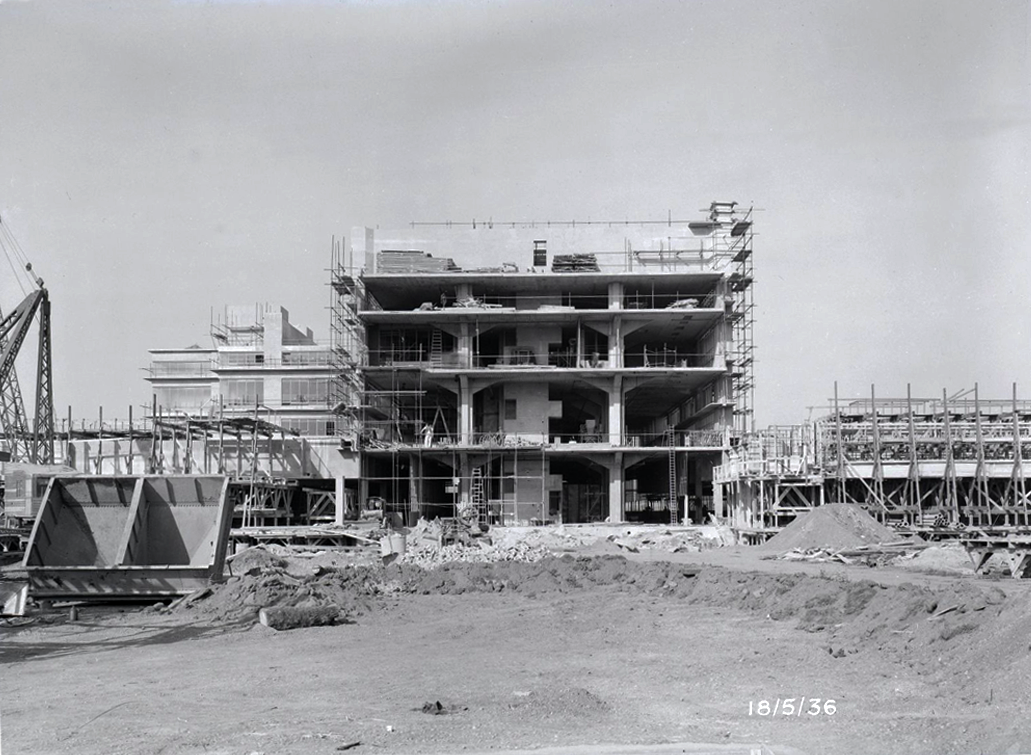
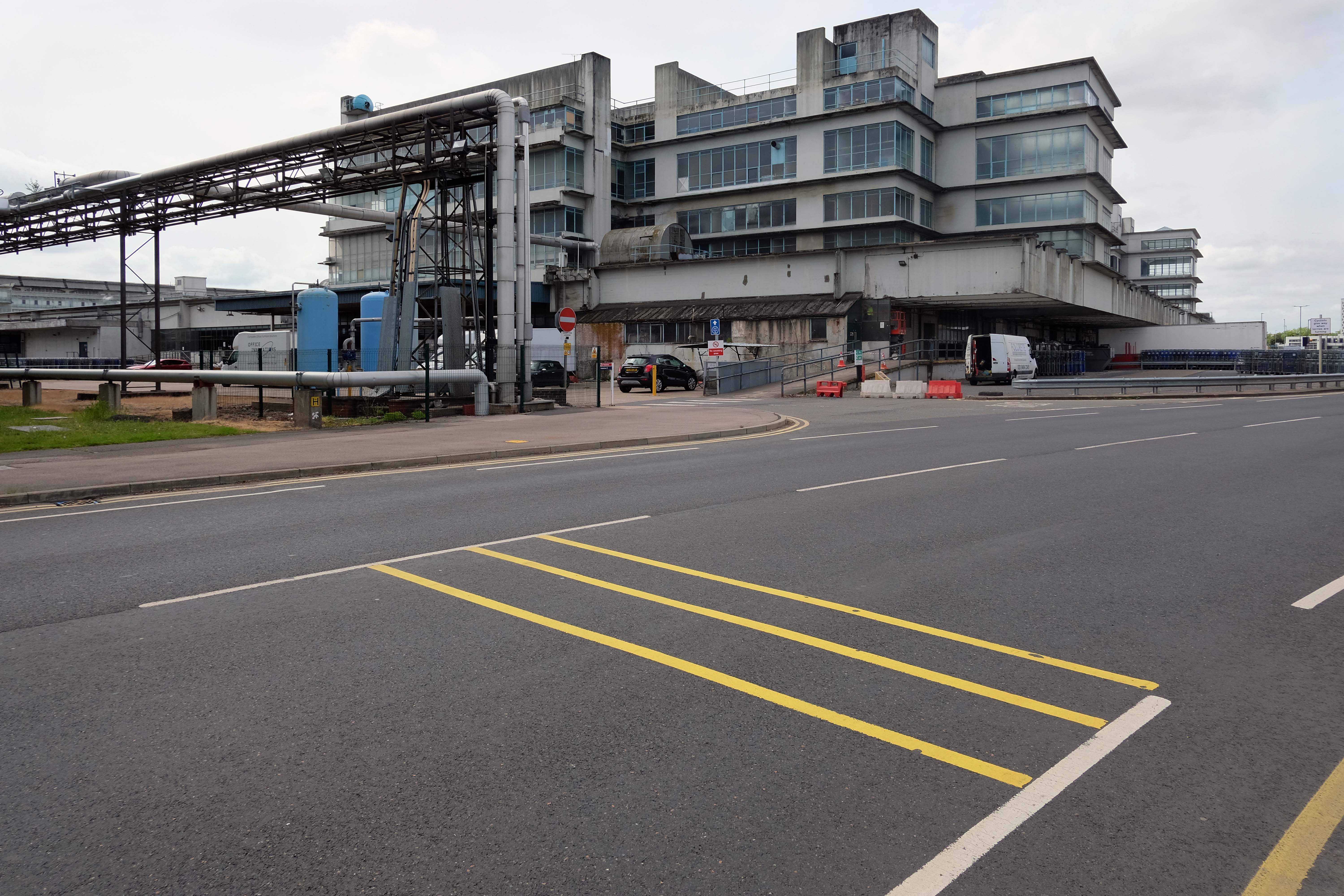
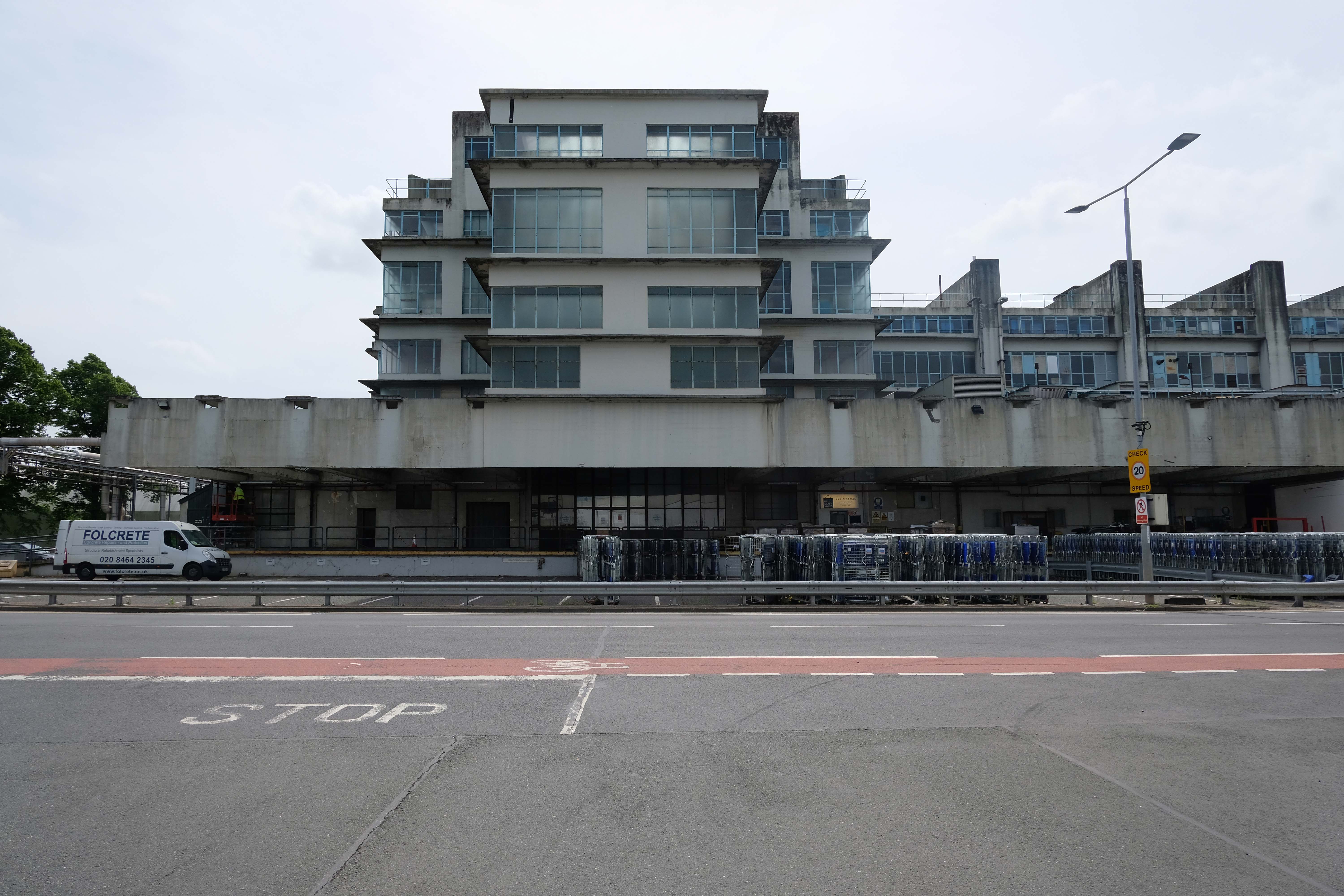
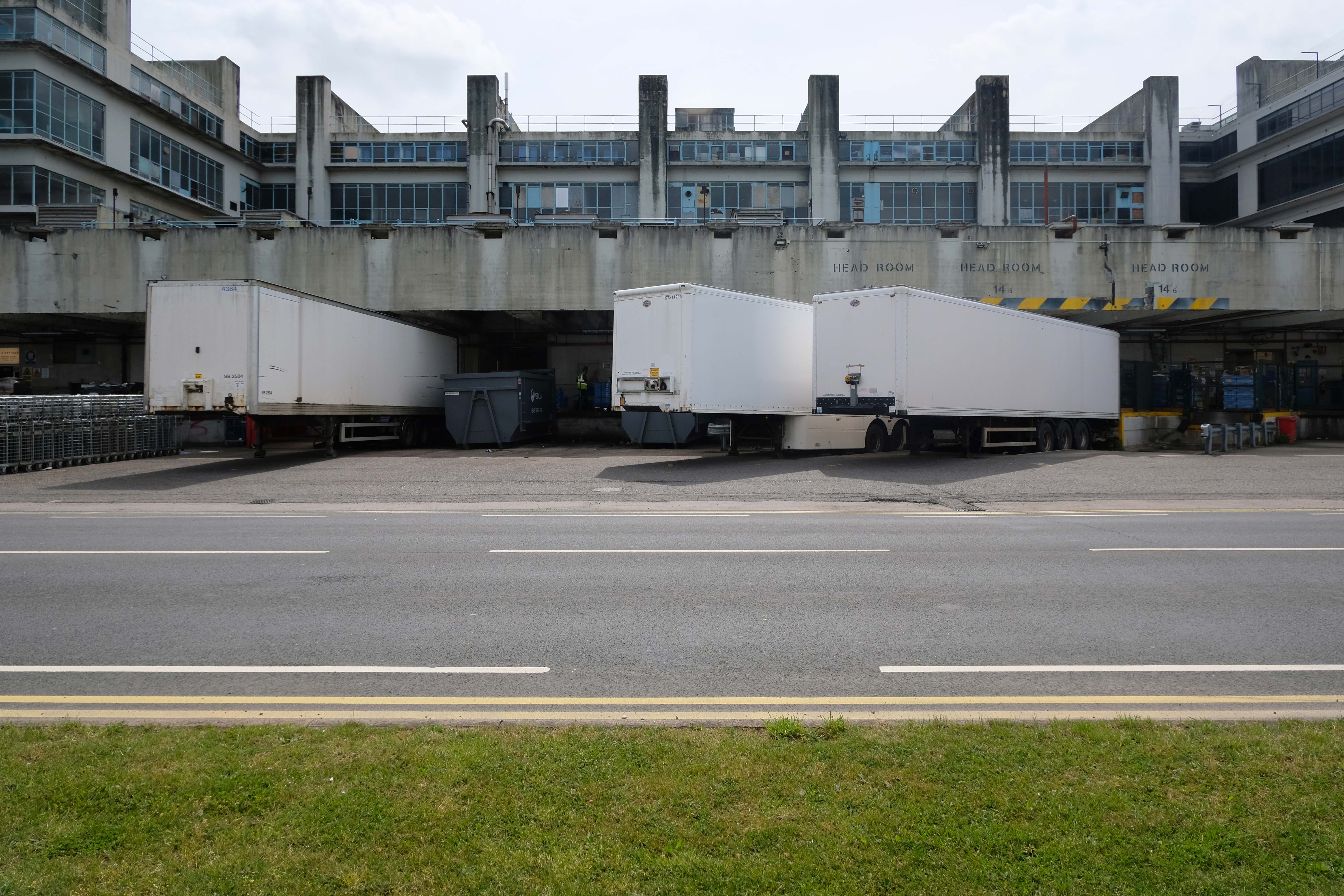
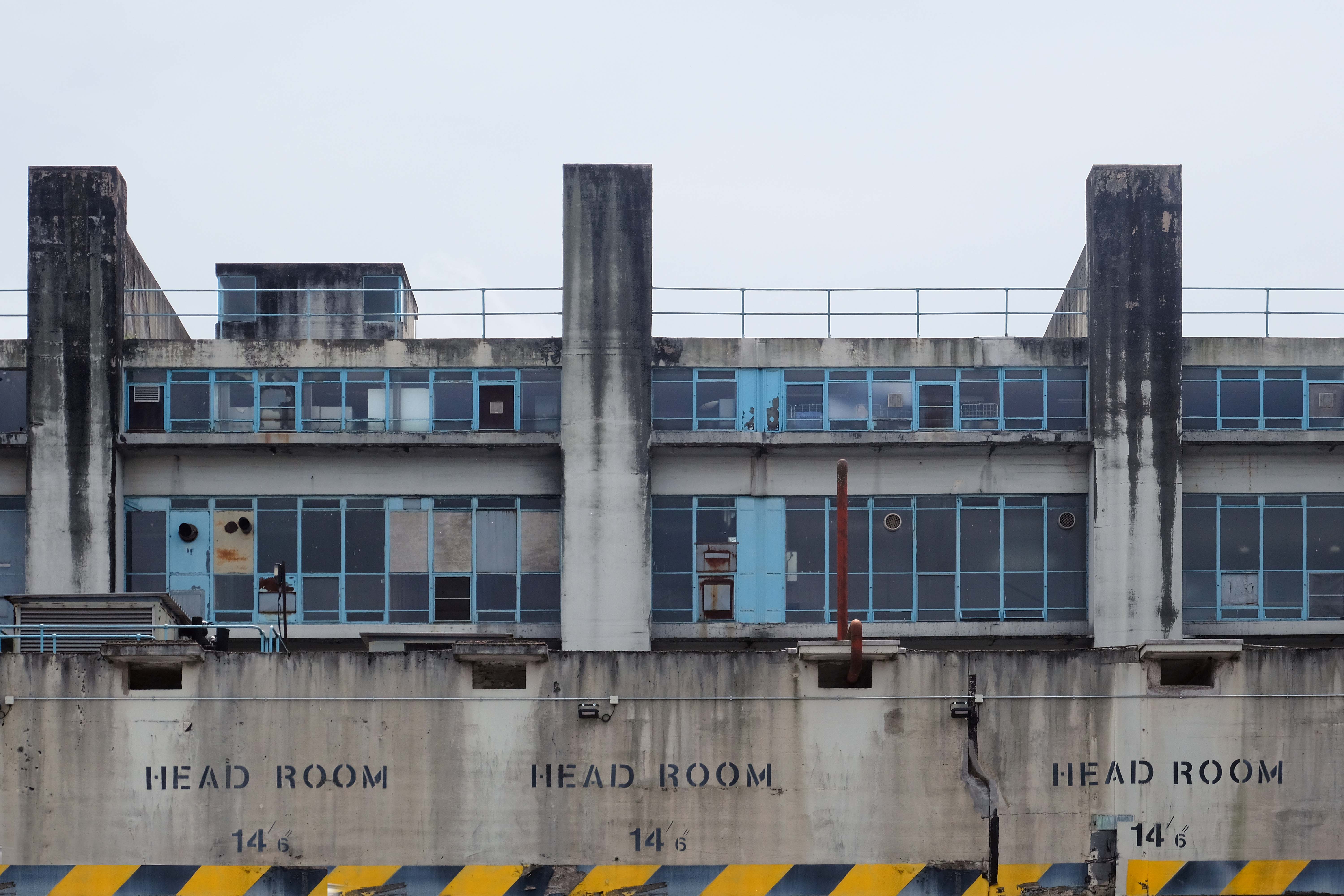
The pharmaceutical factory for the Boots Company was built in the 1930s and was designed by Sir E Owen Williams. It uses reinforced concrete as an external frame. The strength of the frame allowed the design to incorporate large areas of glass.
Much of the site is now listed.
Here is the company’s official history
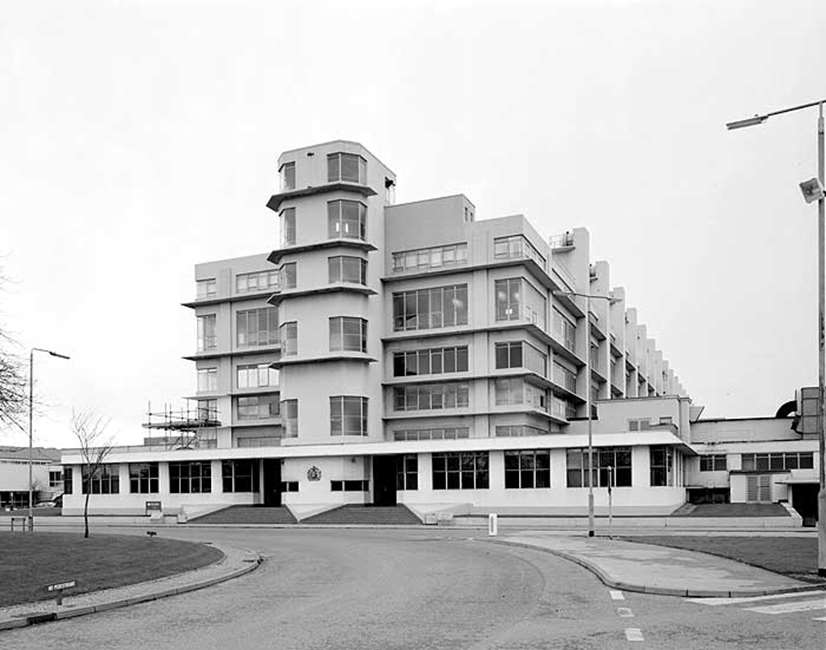
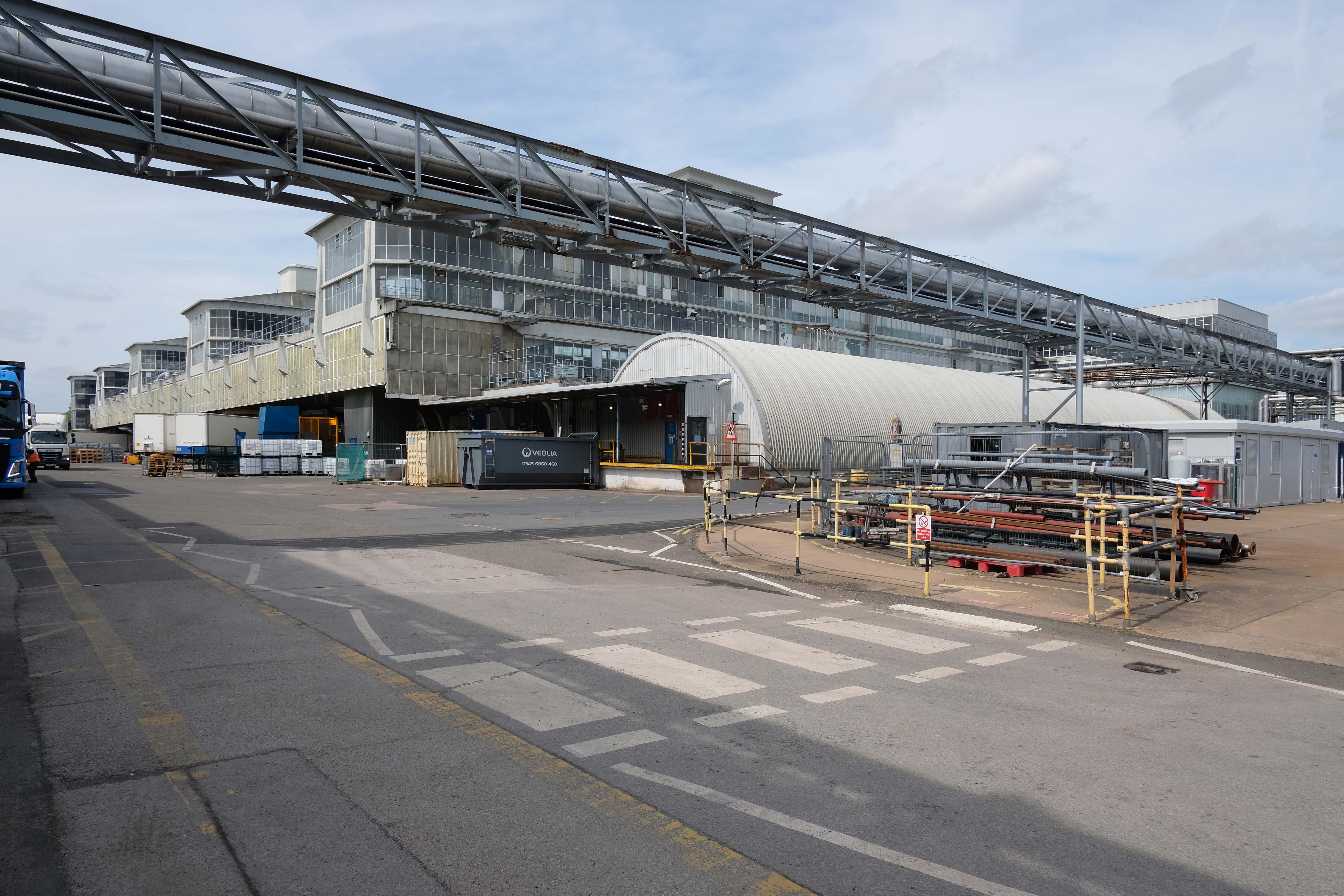
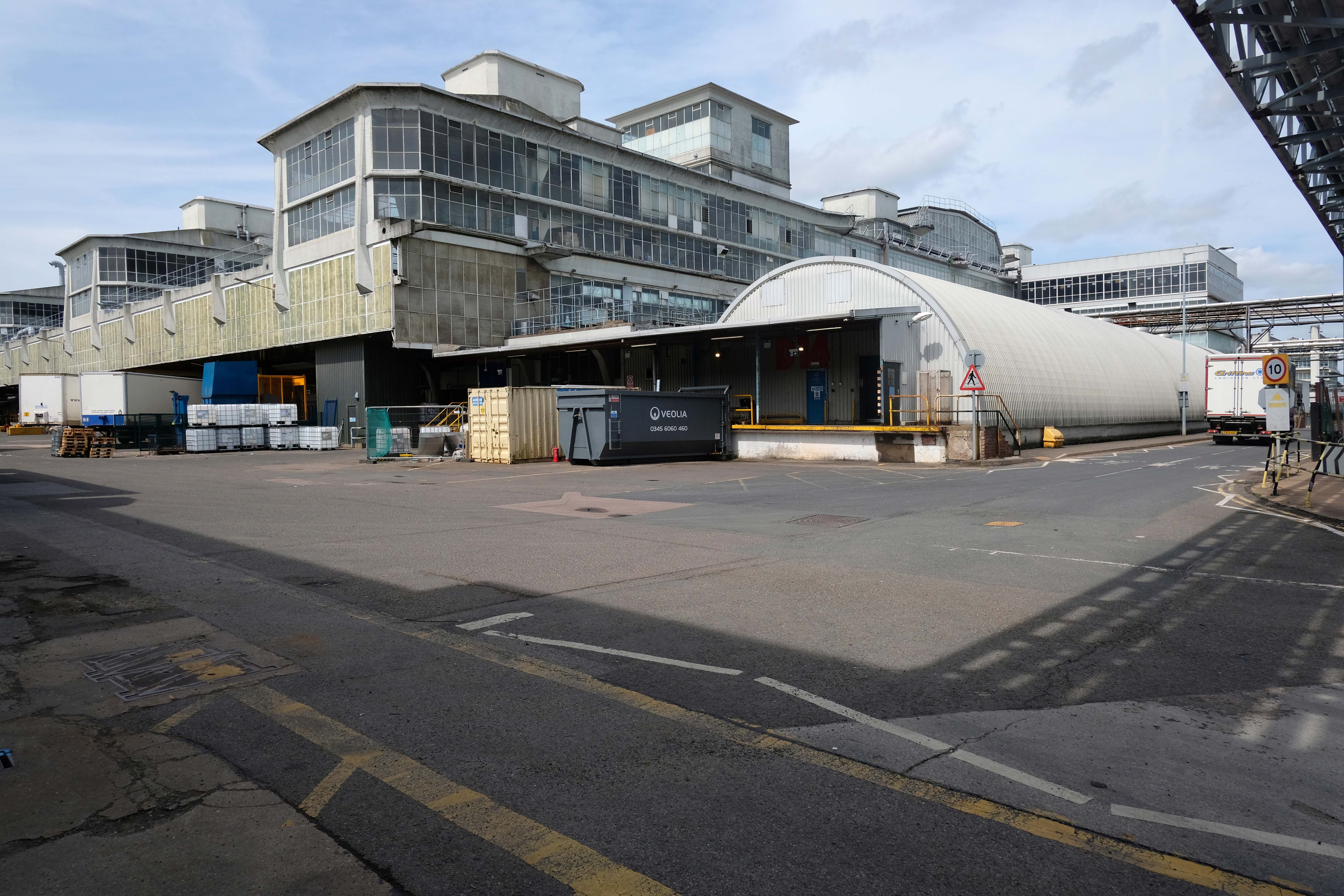
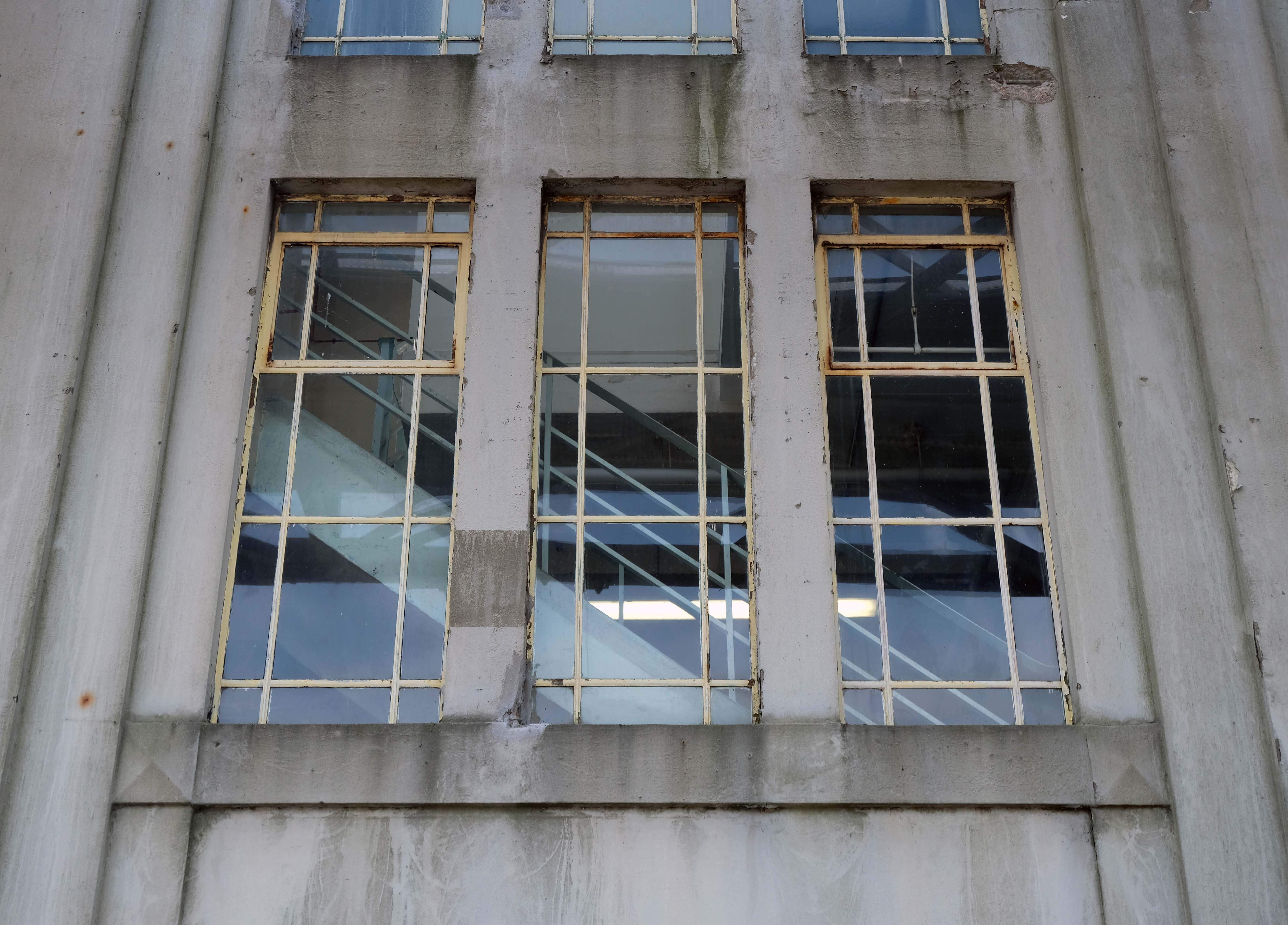
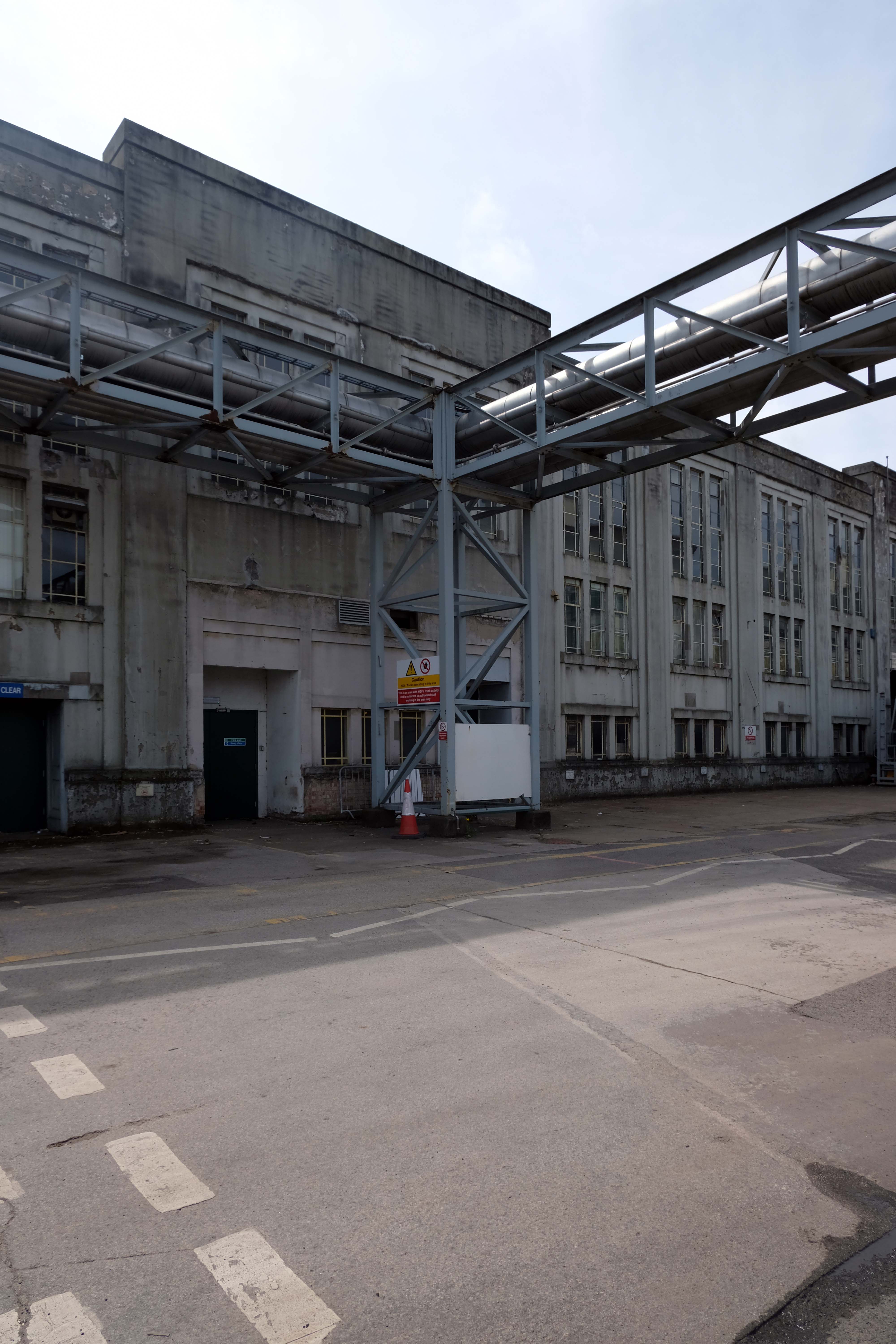

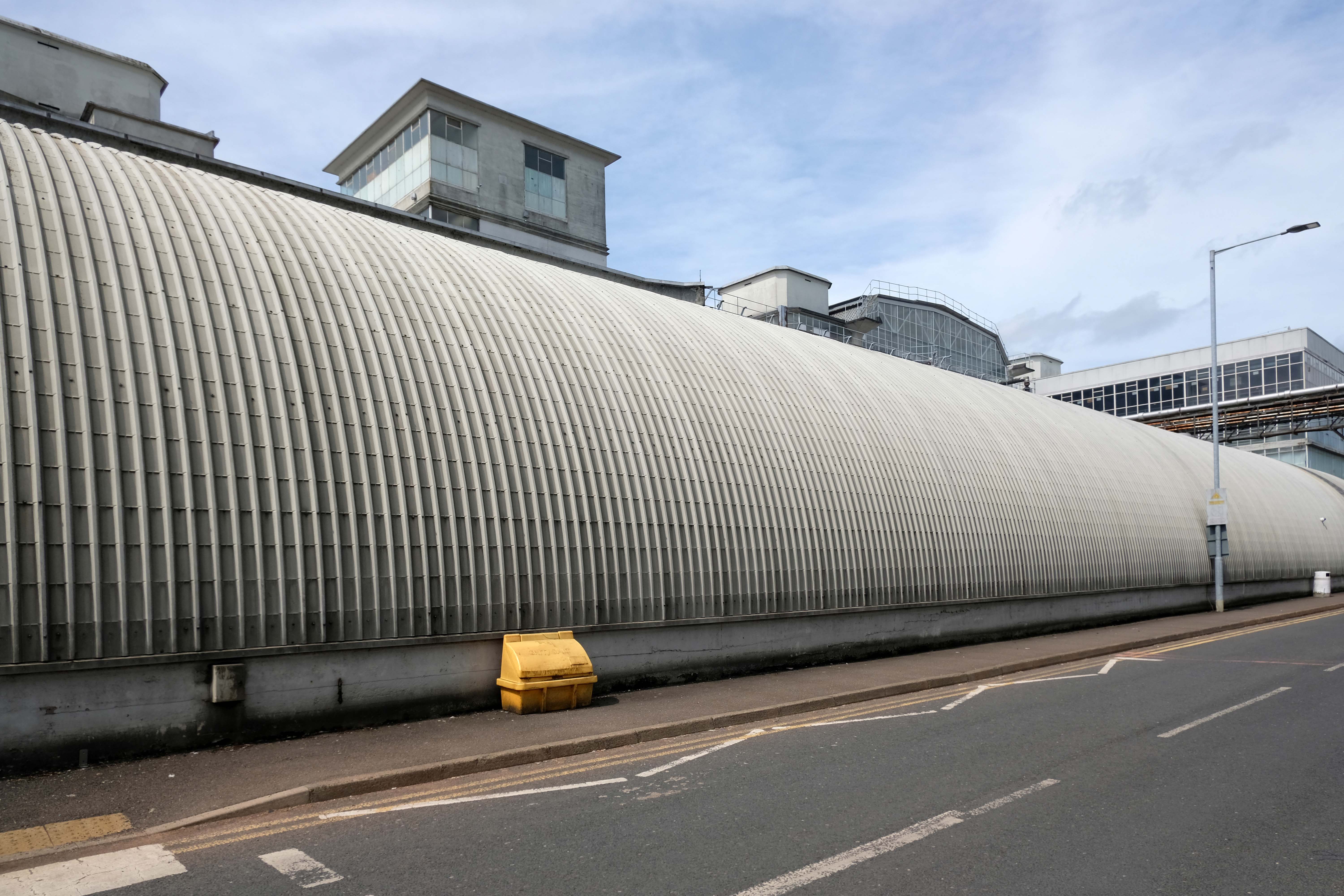
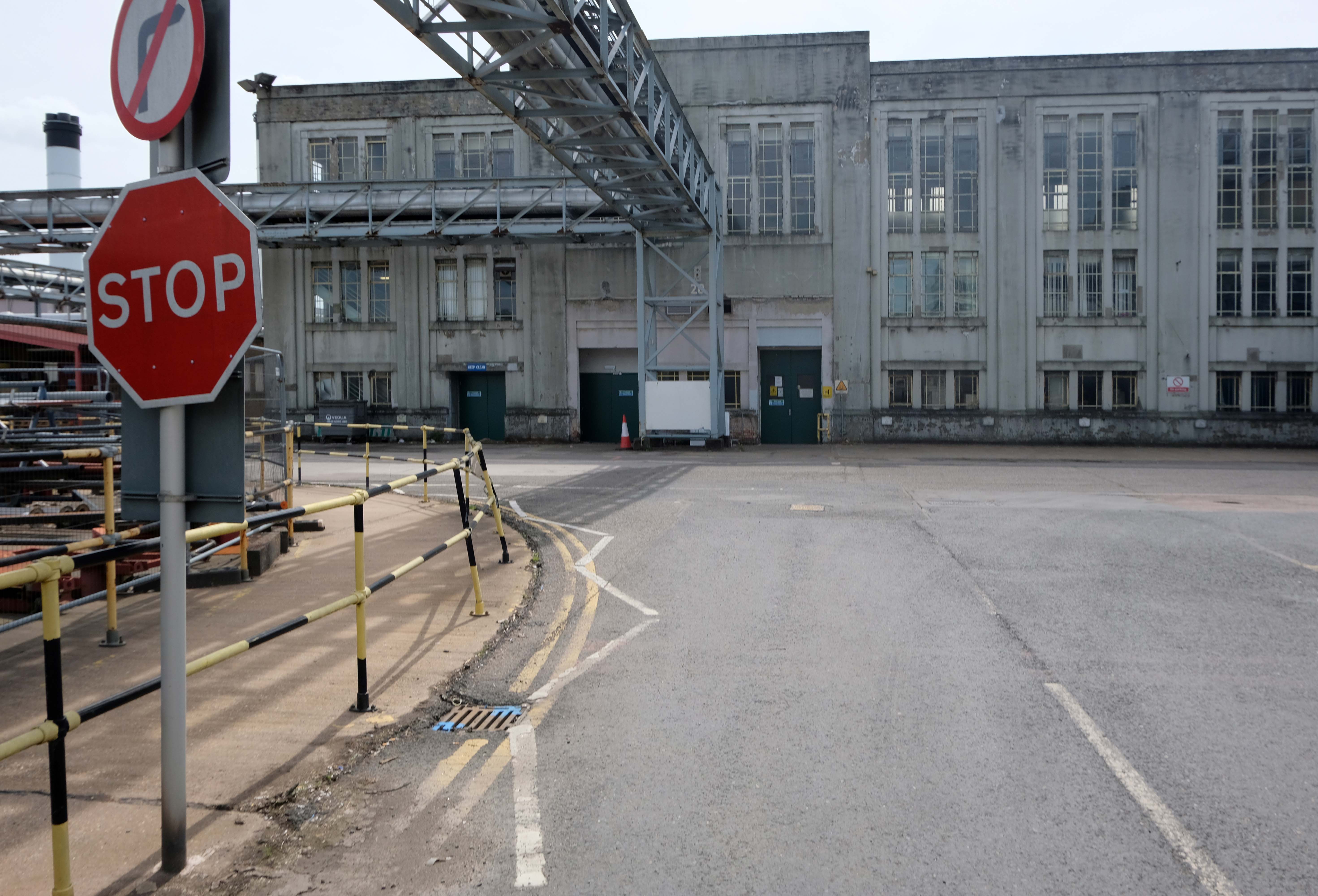
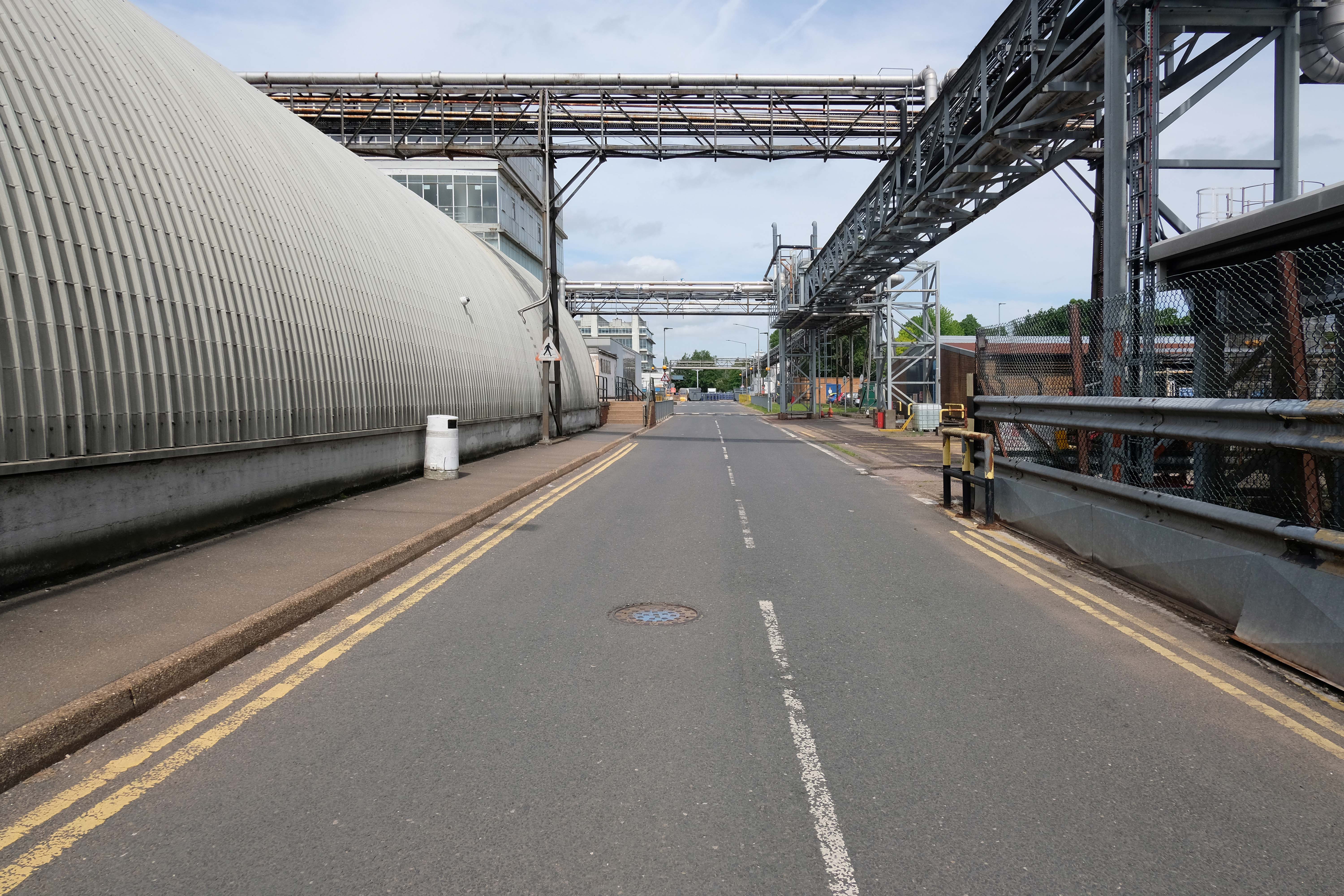
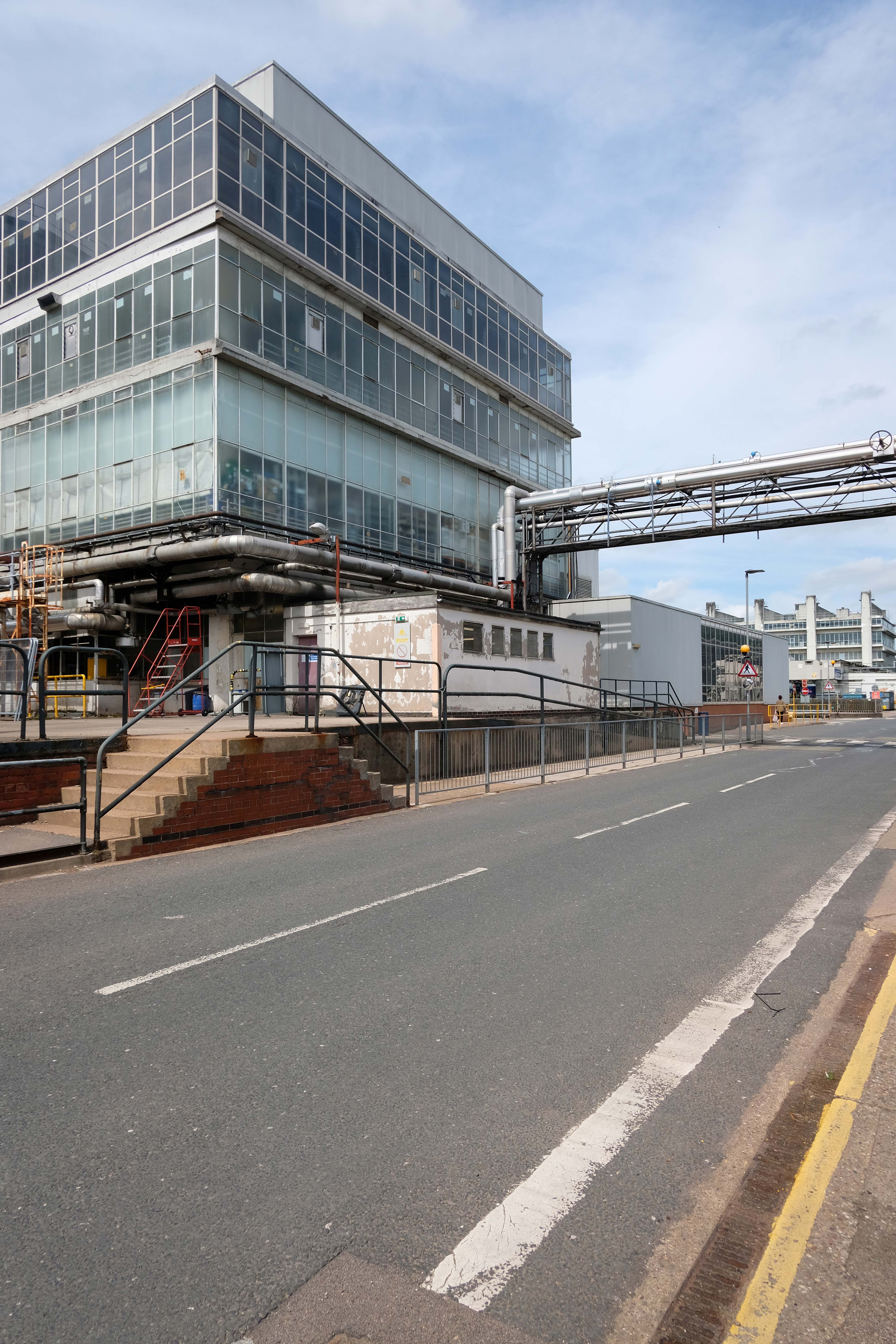
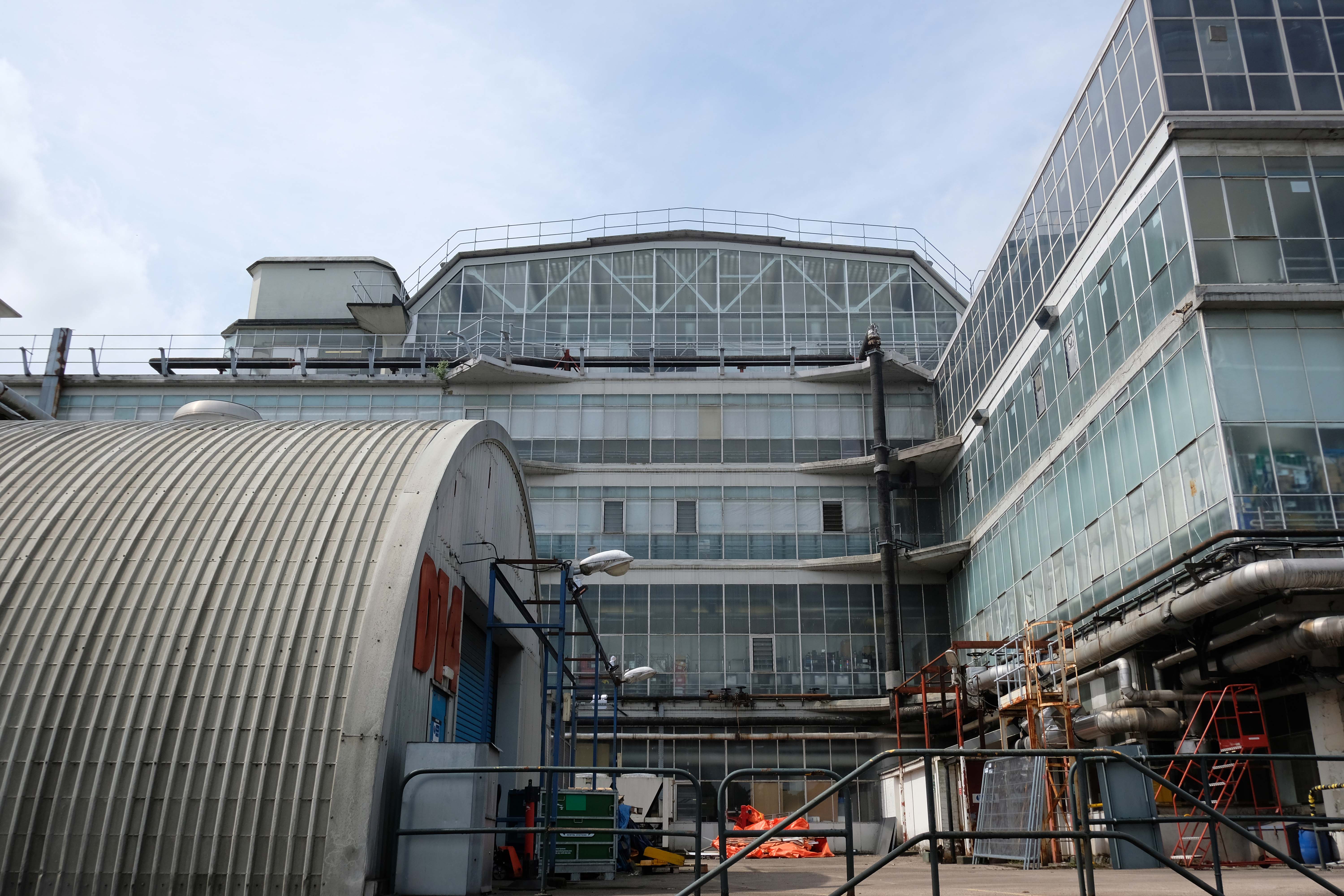
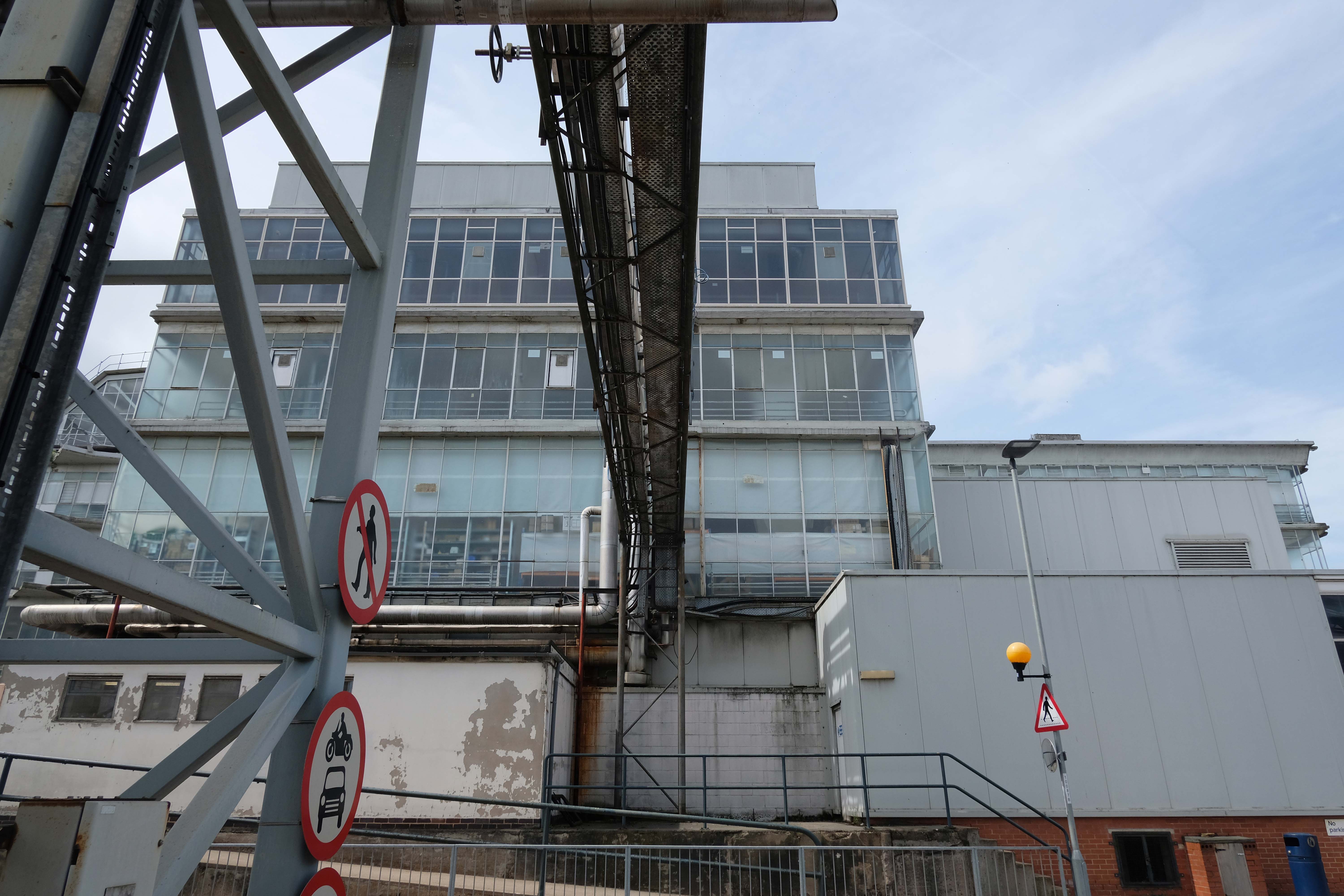
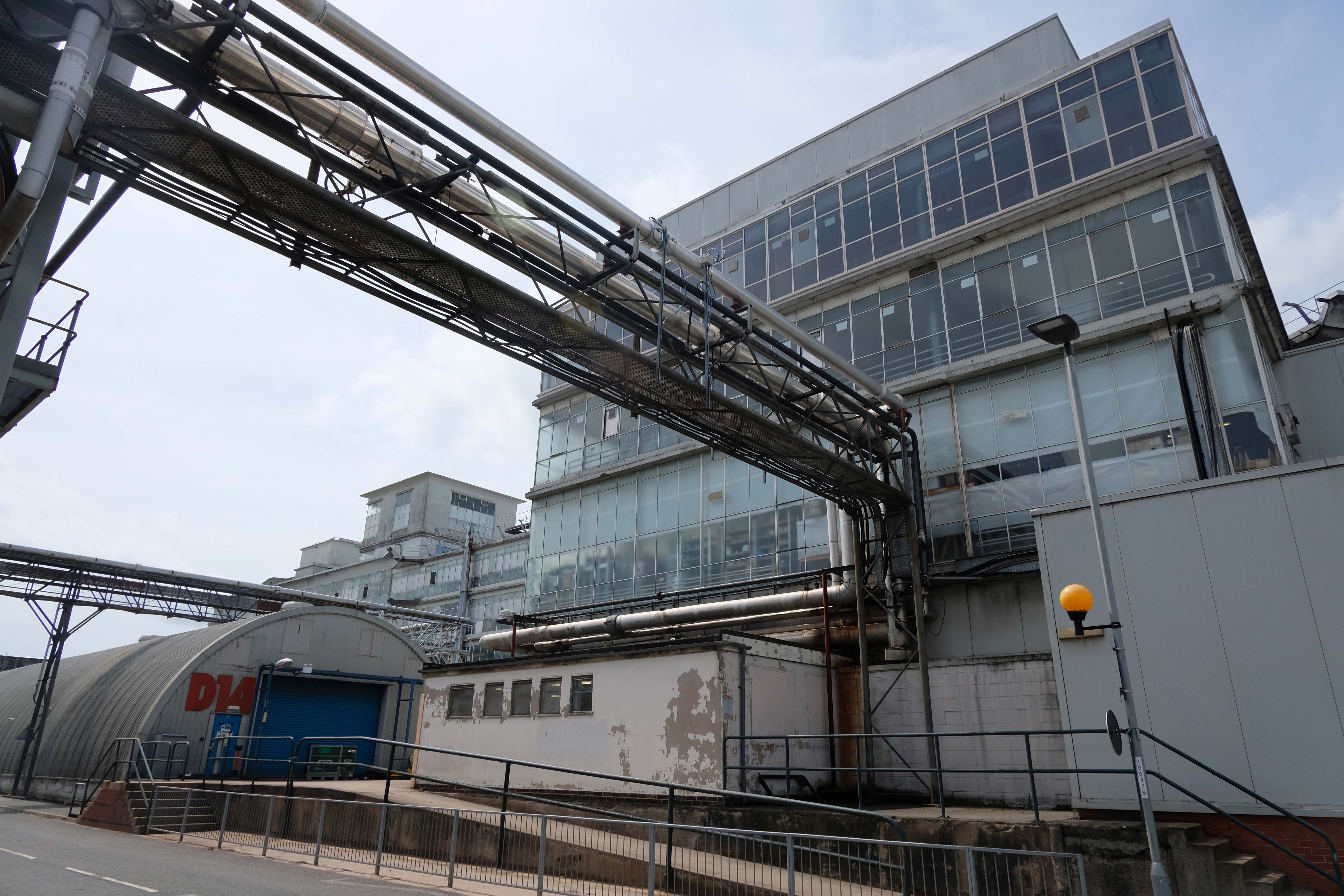
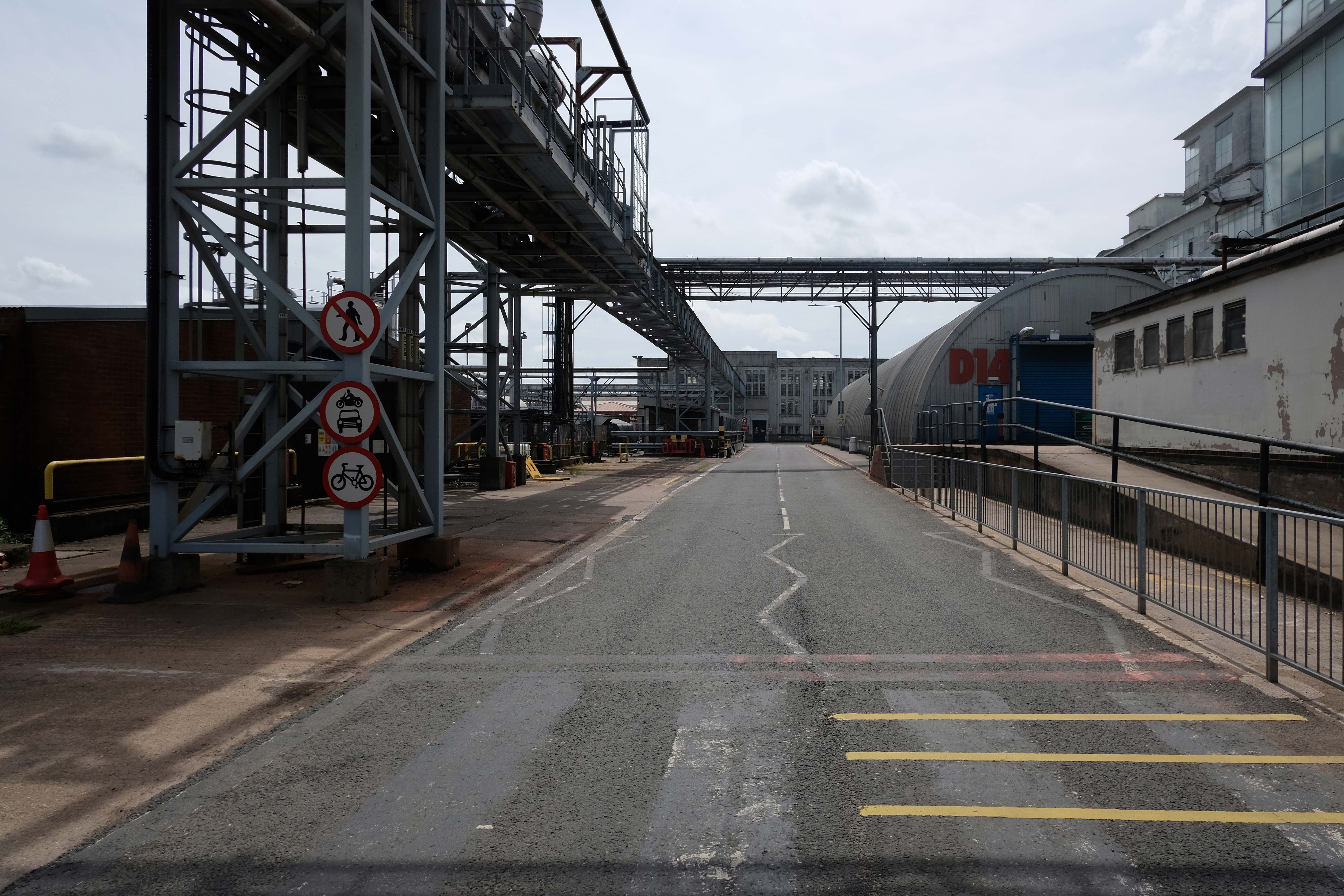
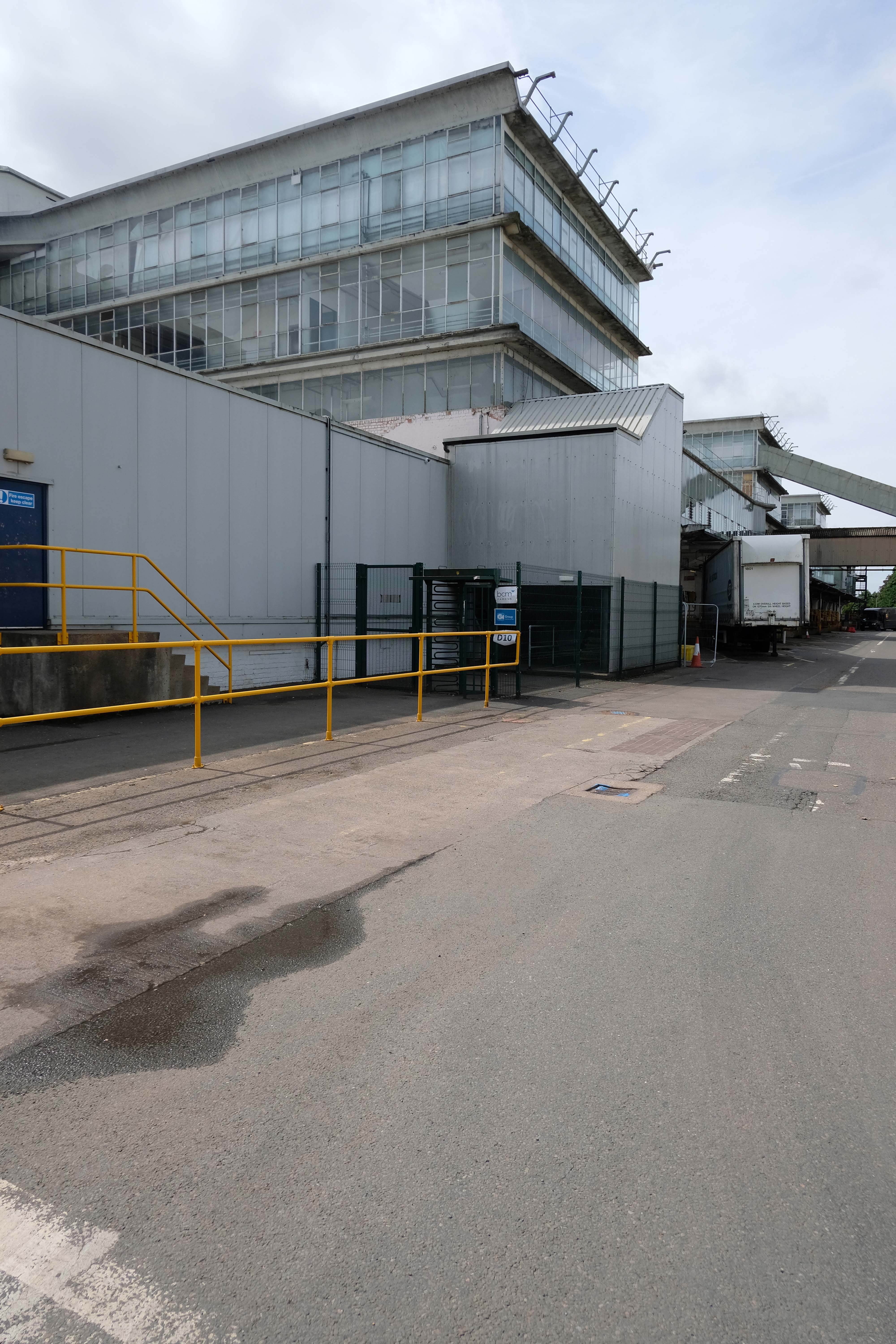
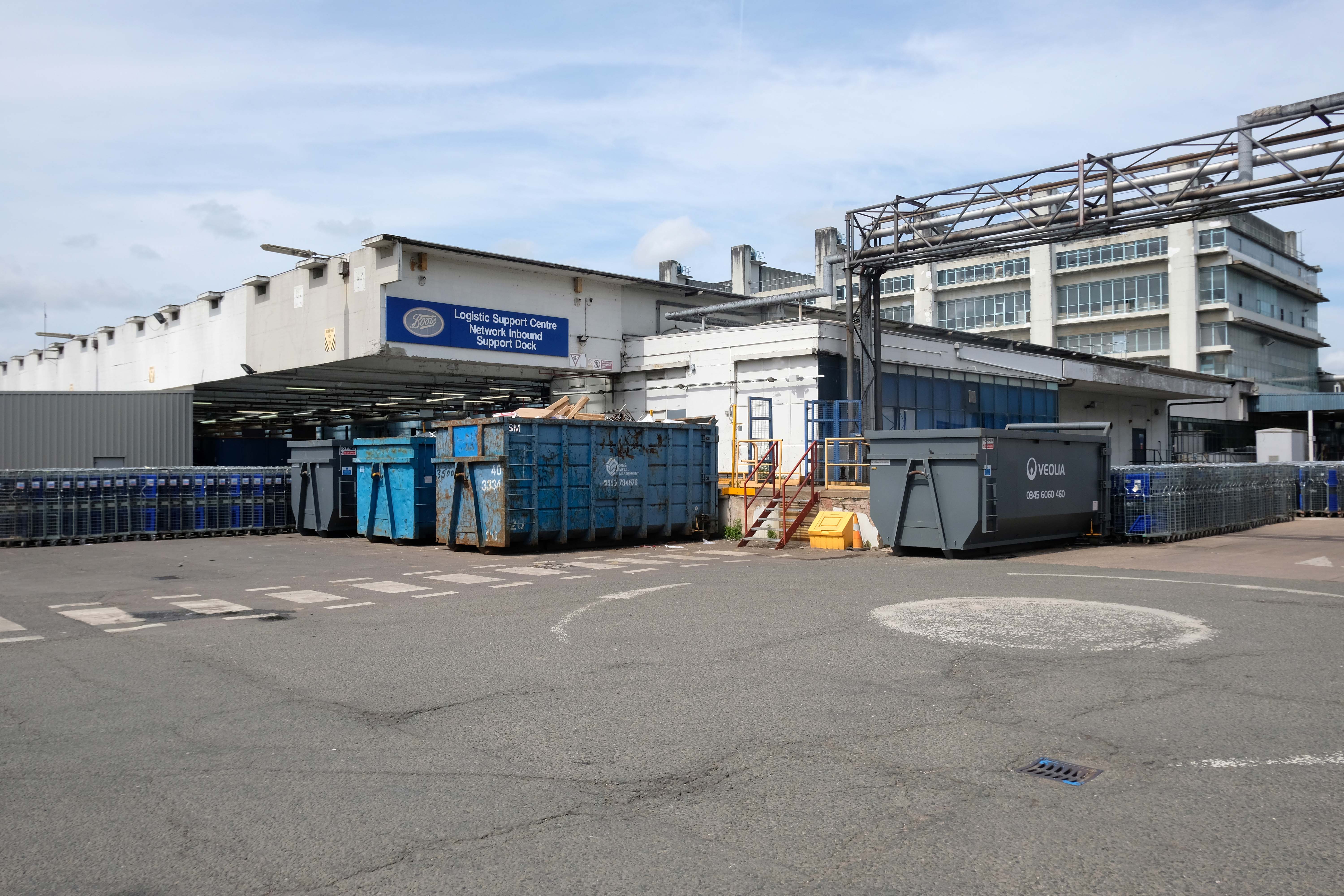
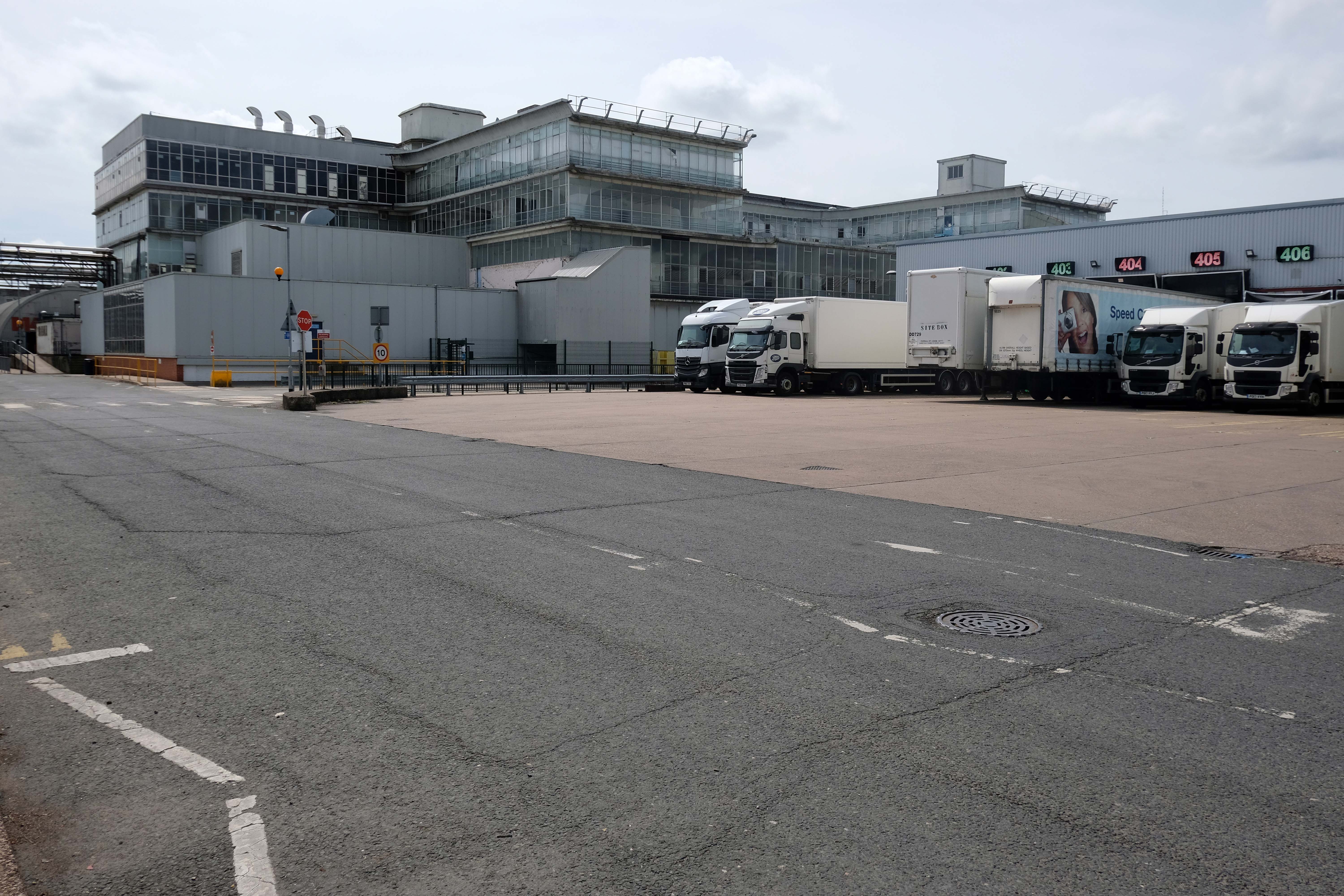
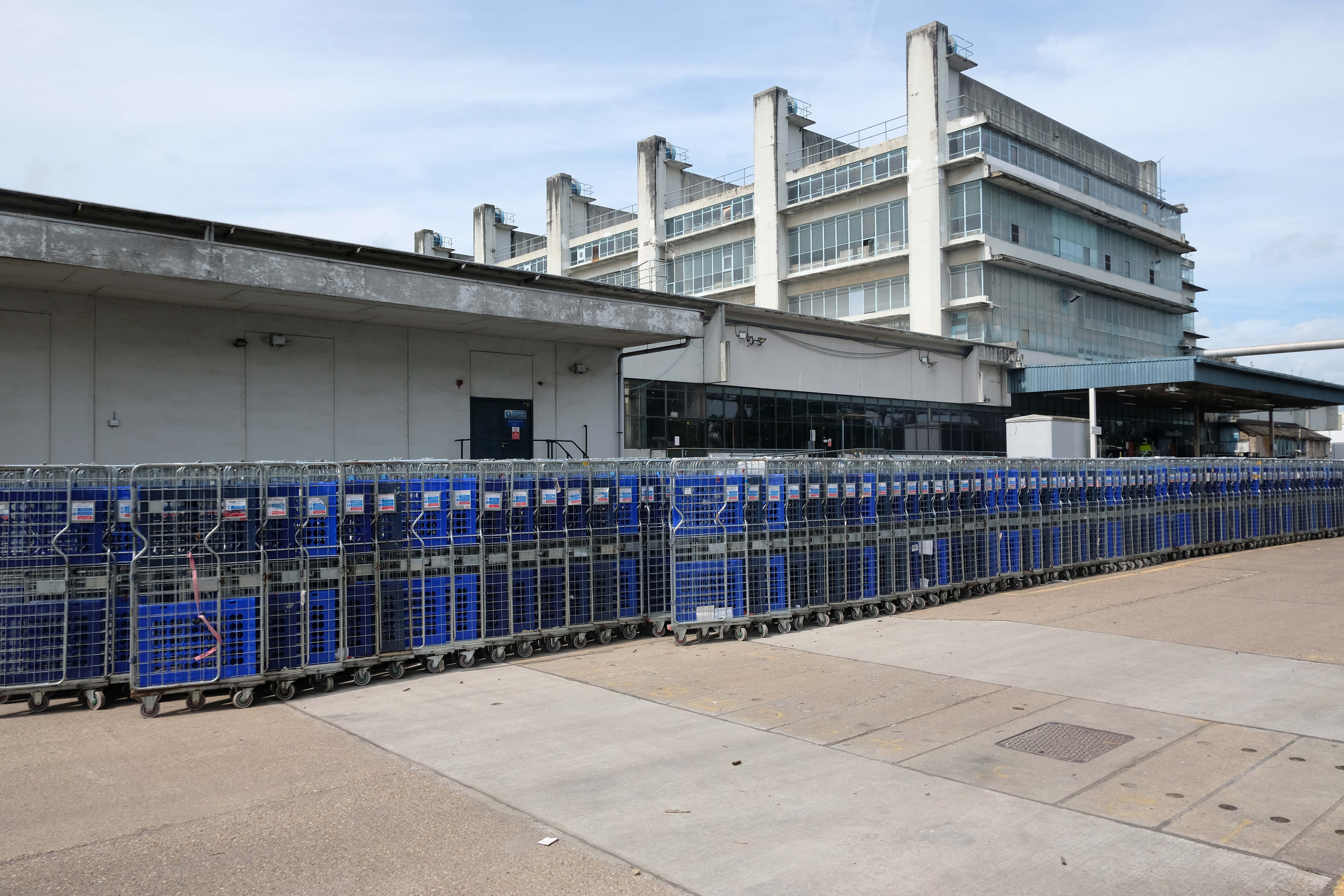
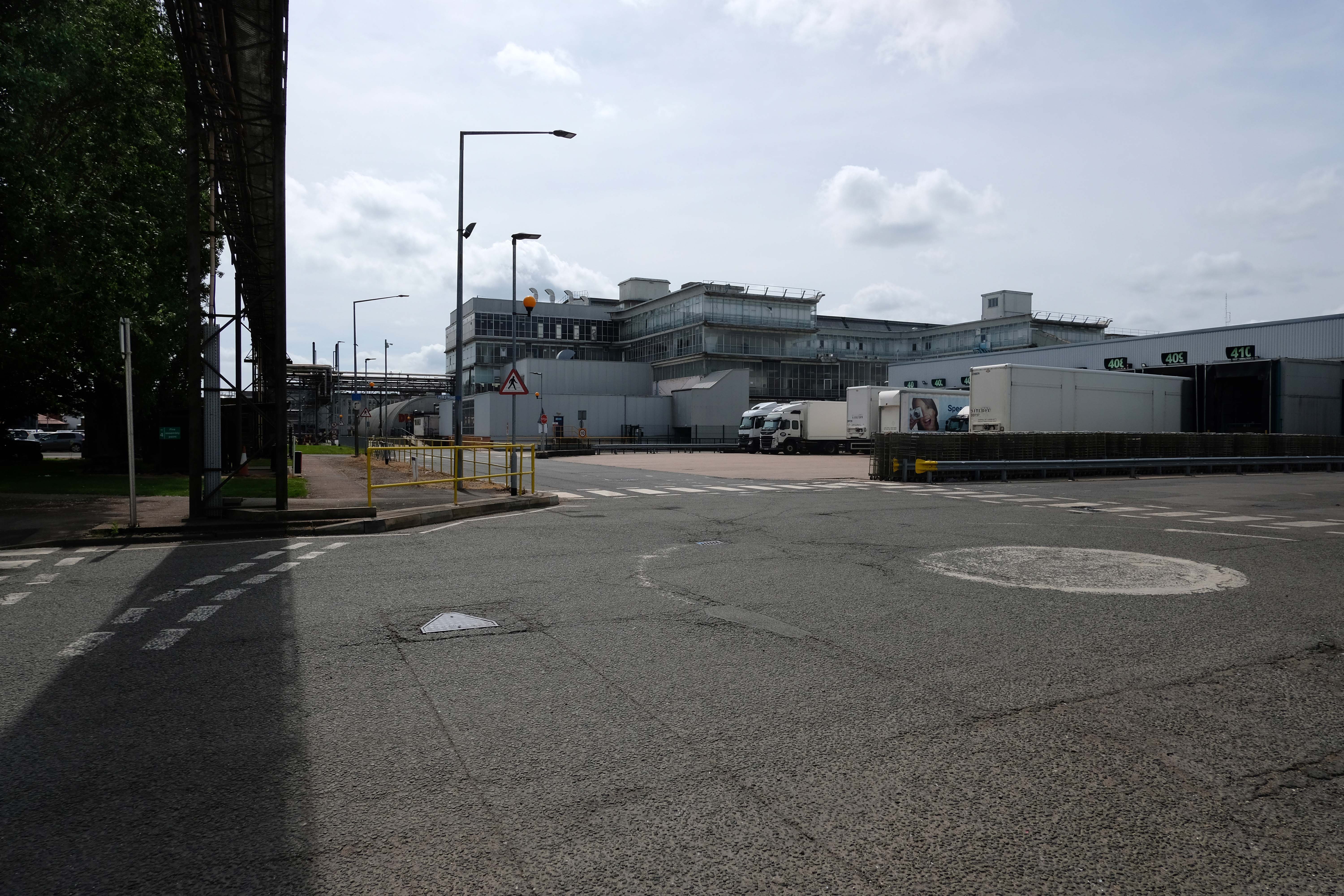
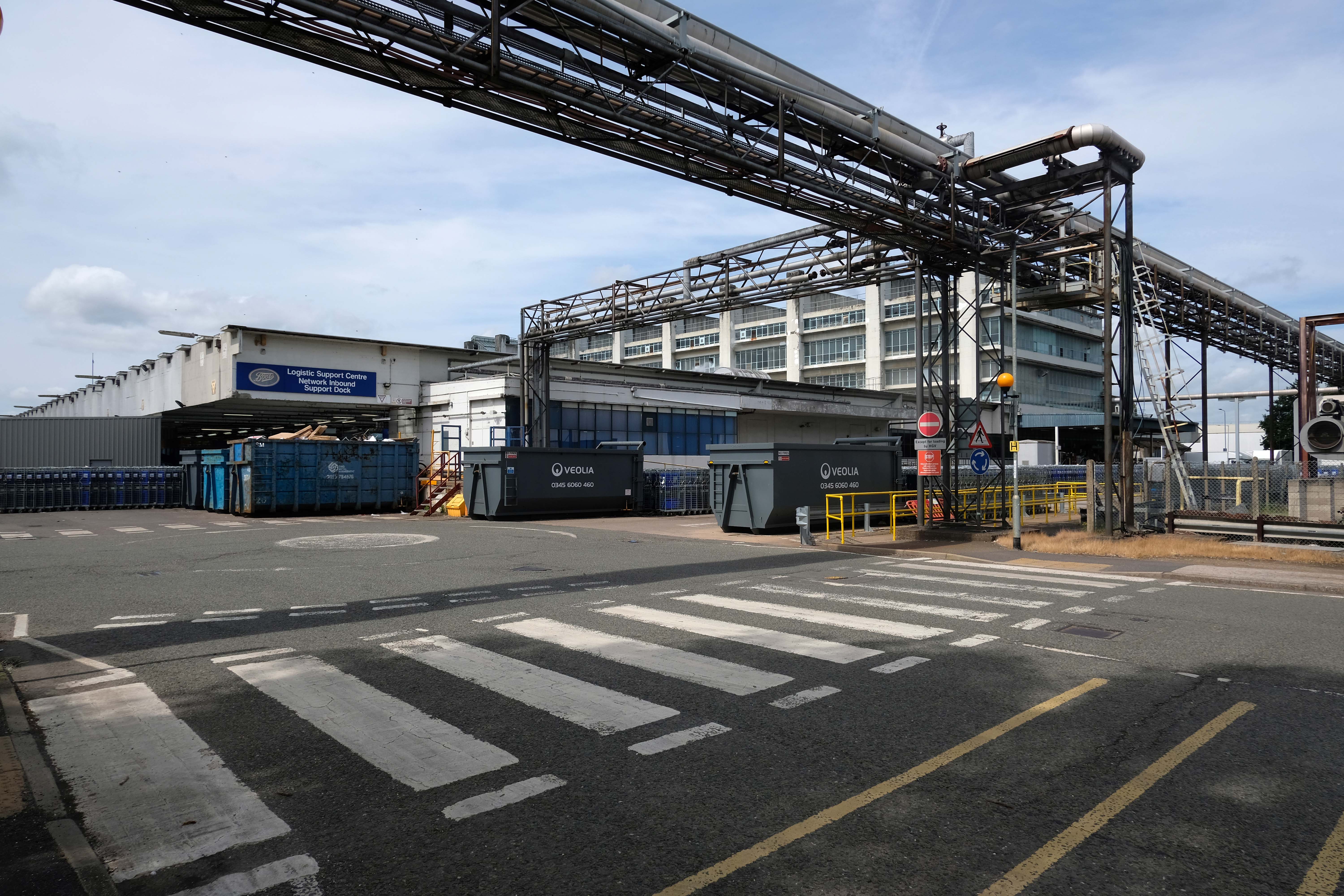
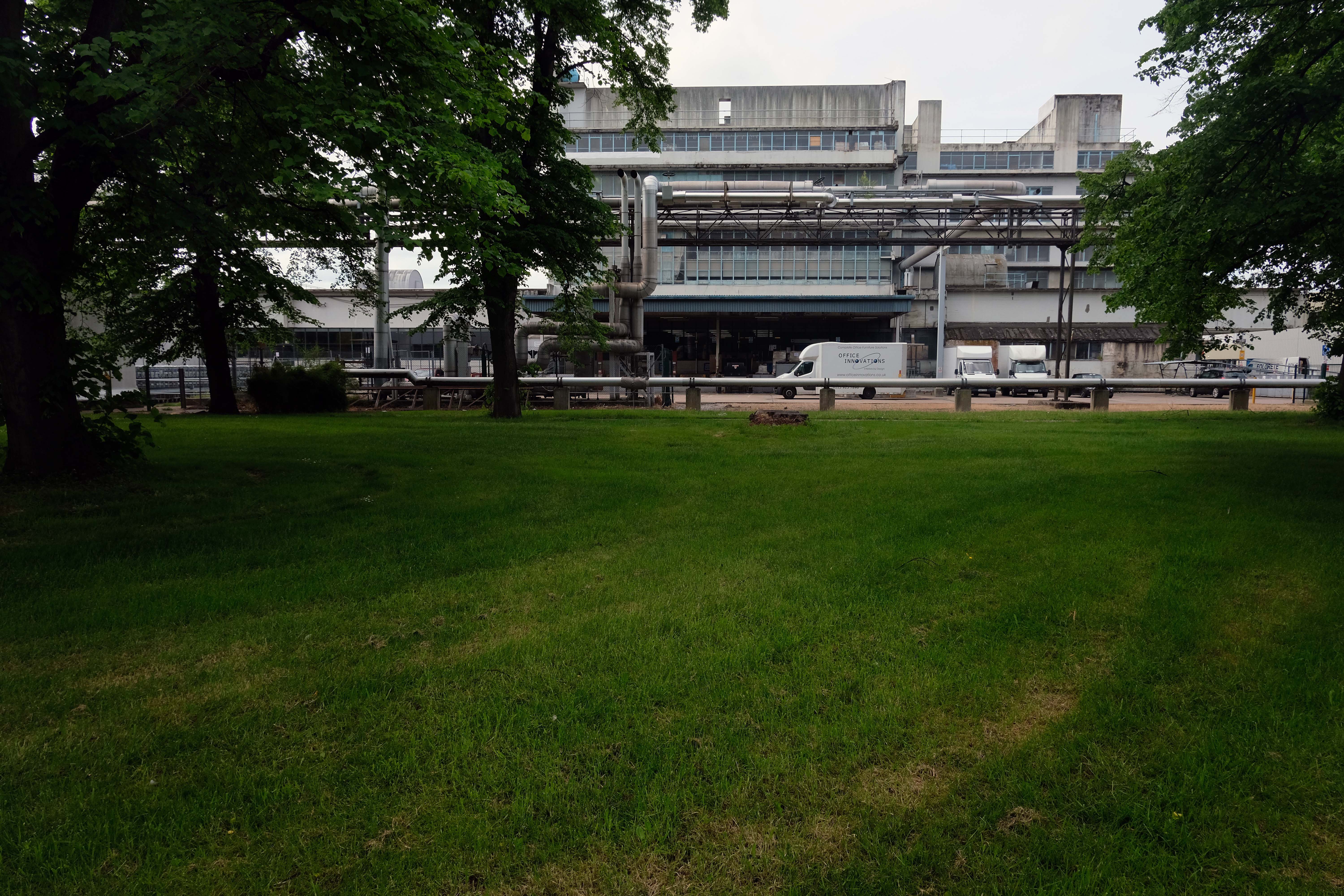
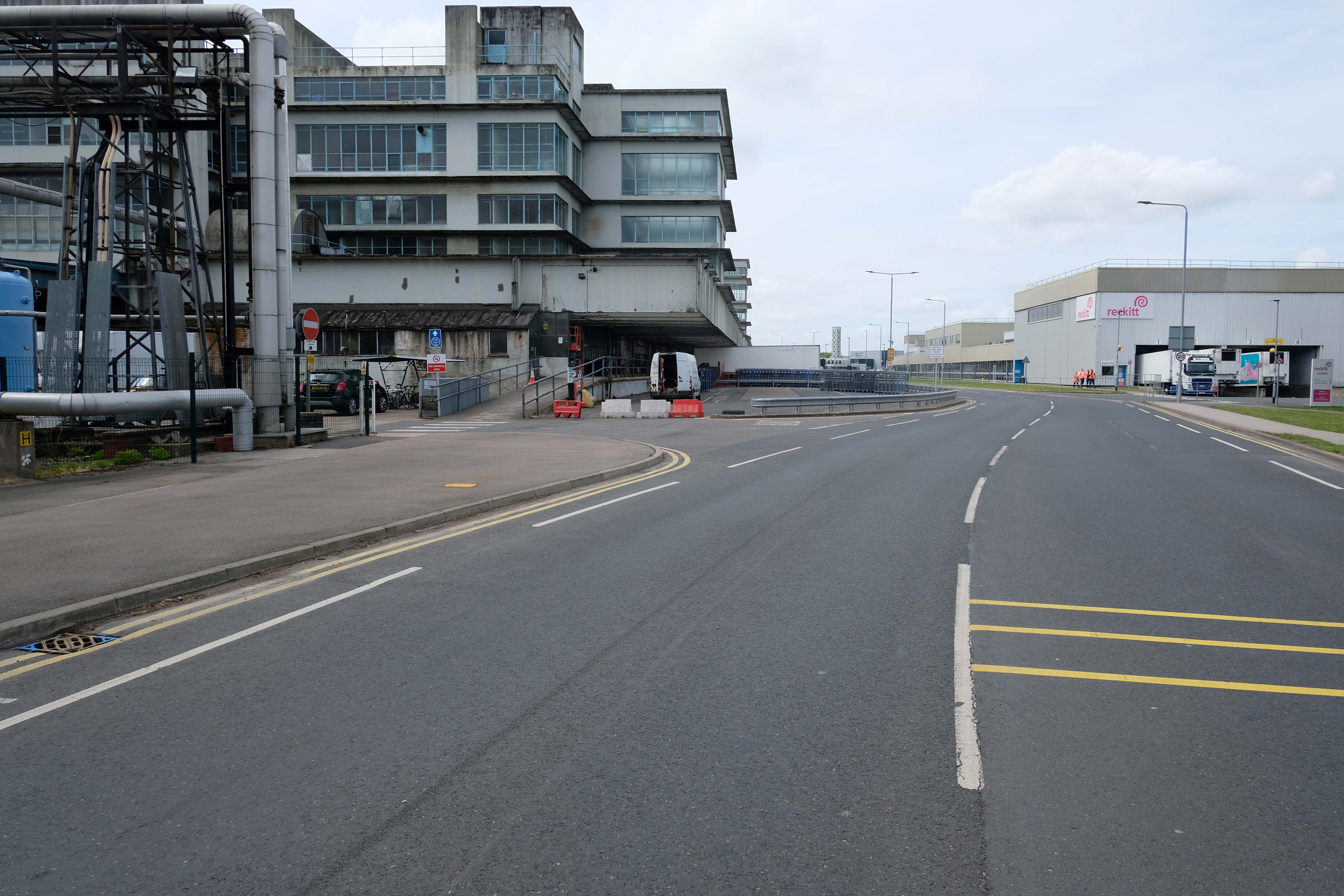

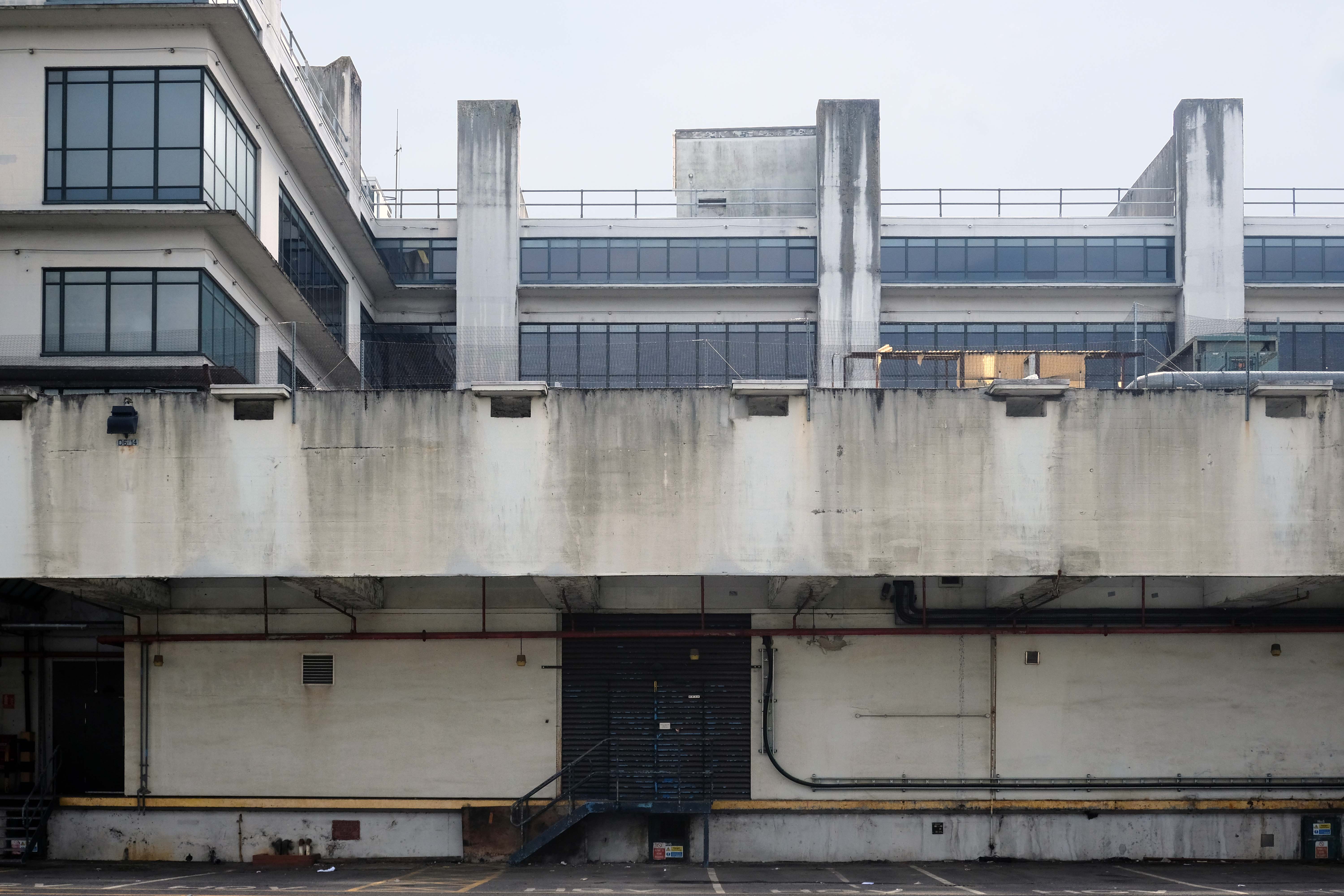
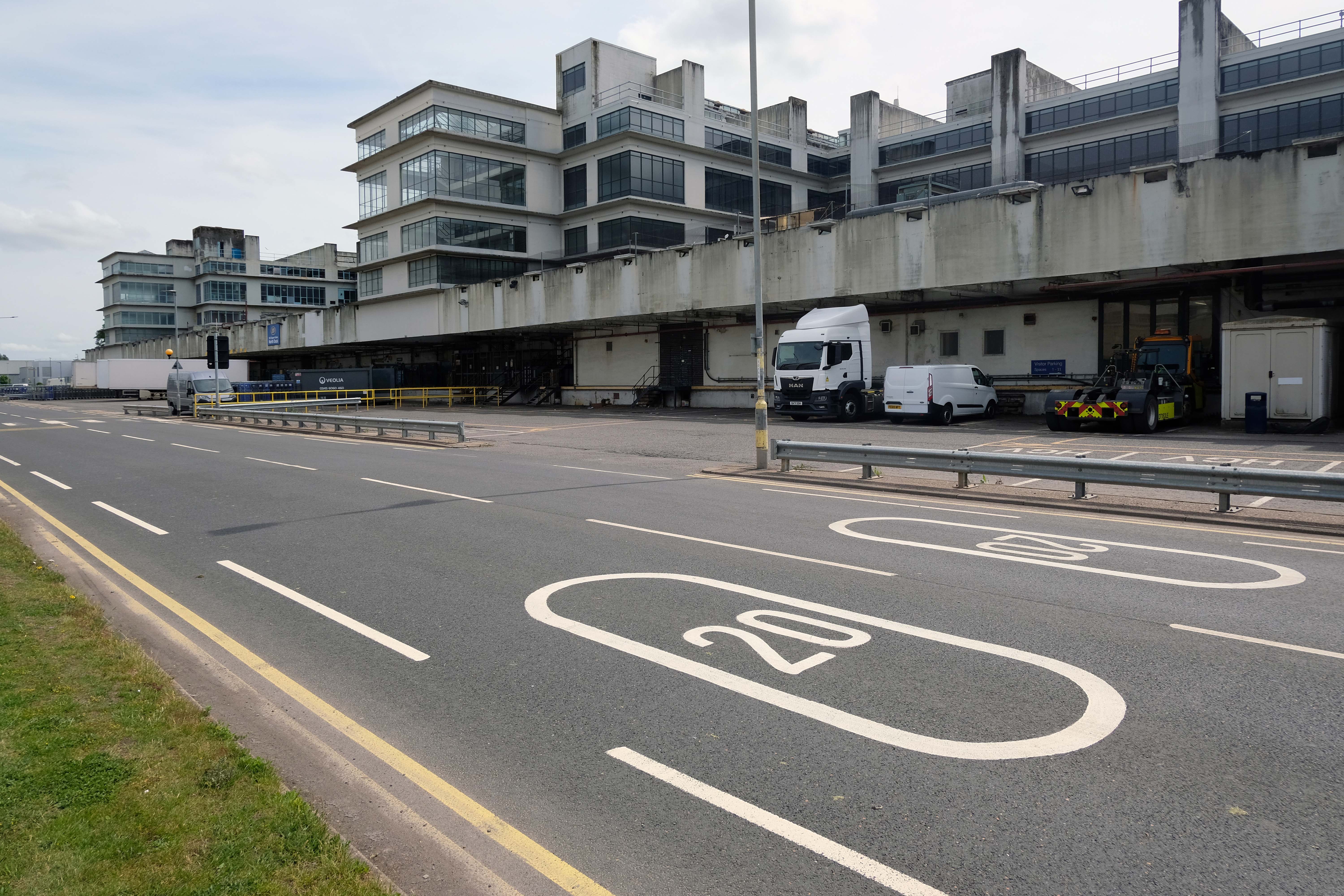
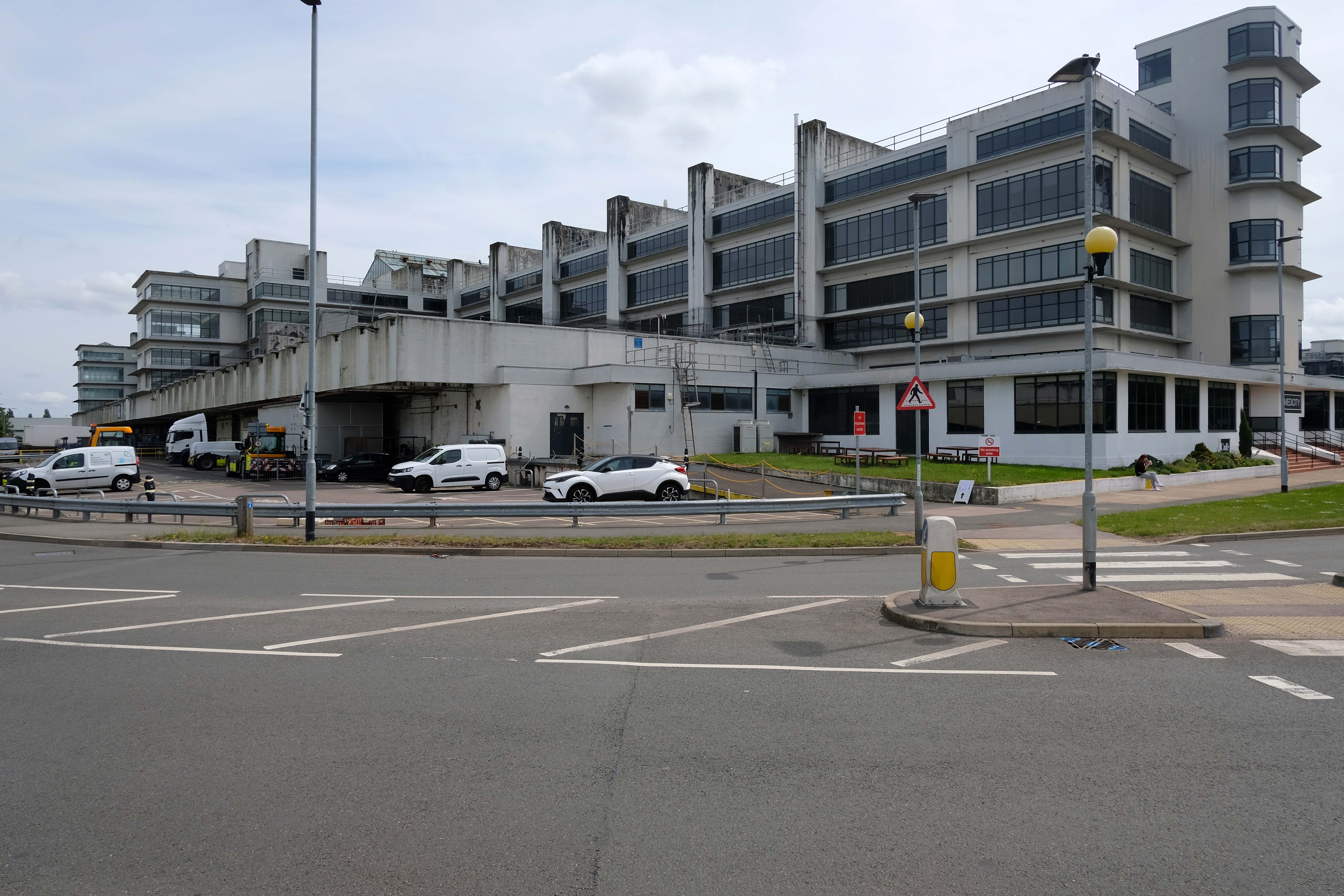
D34 Fire Station – now offices.
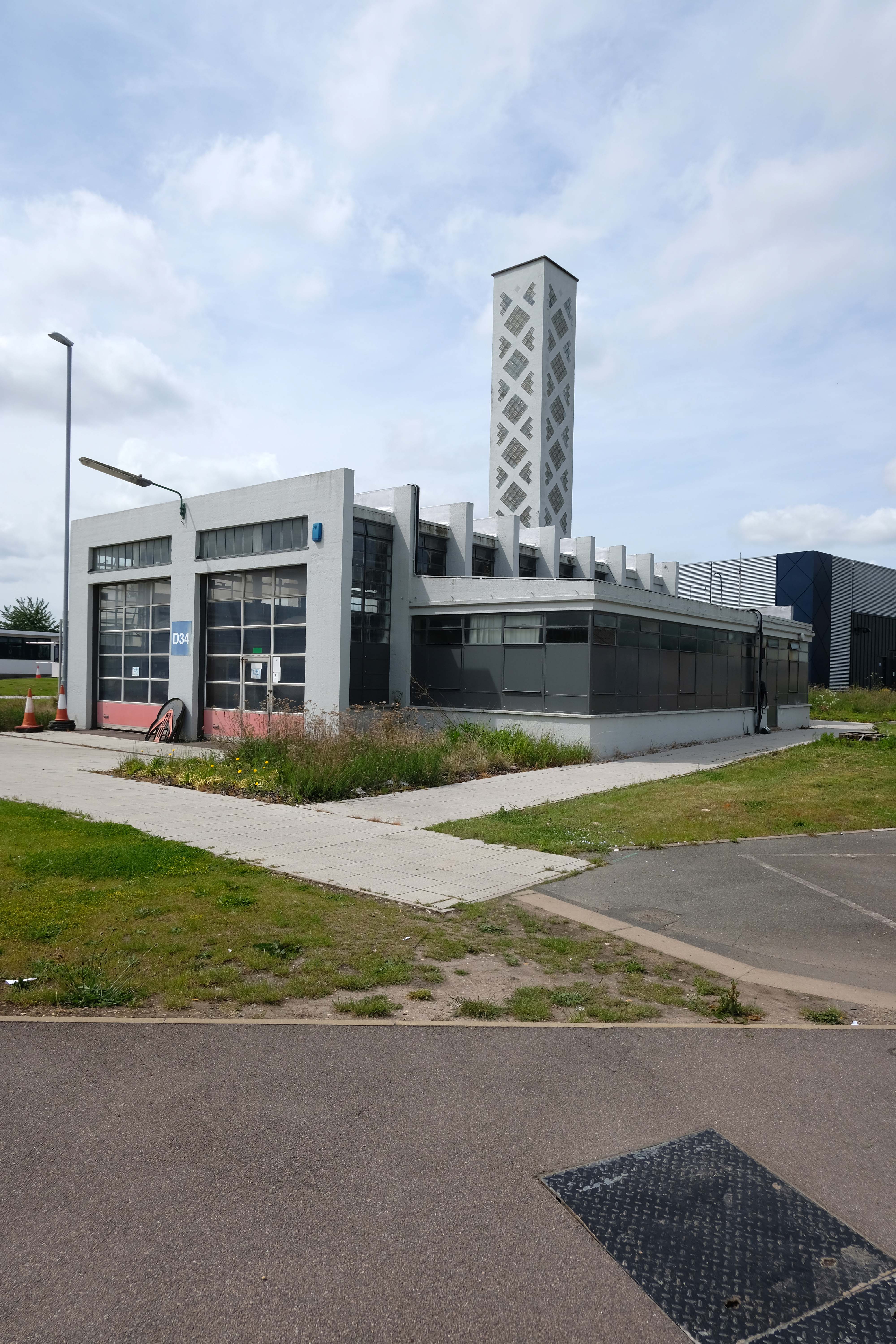
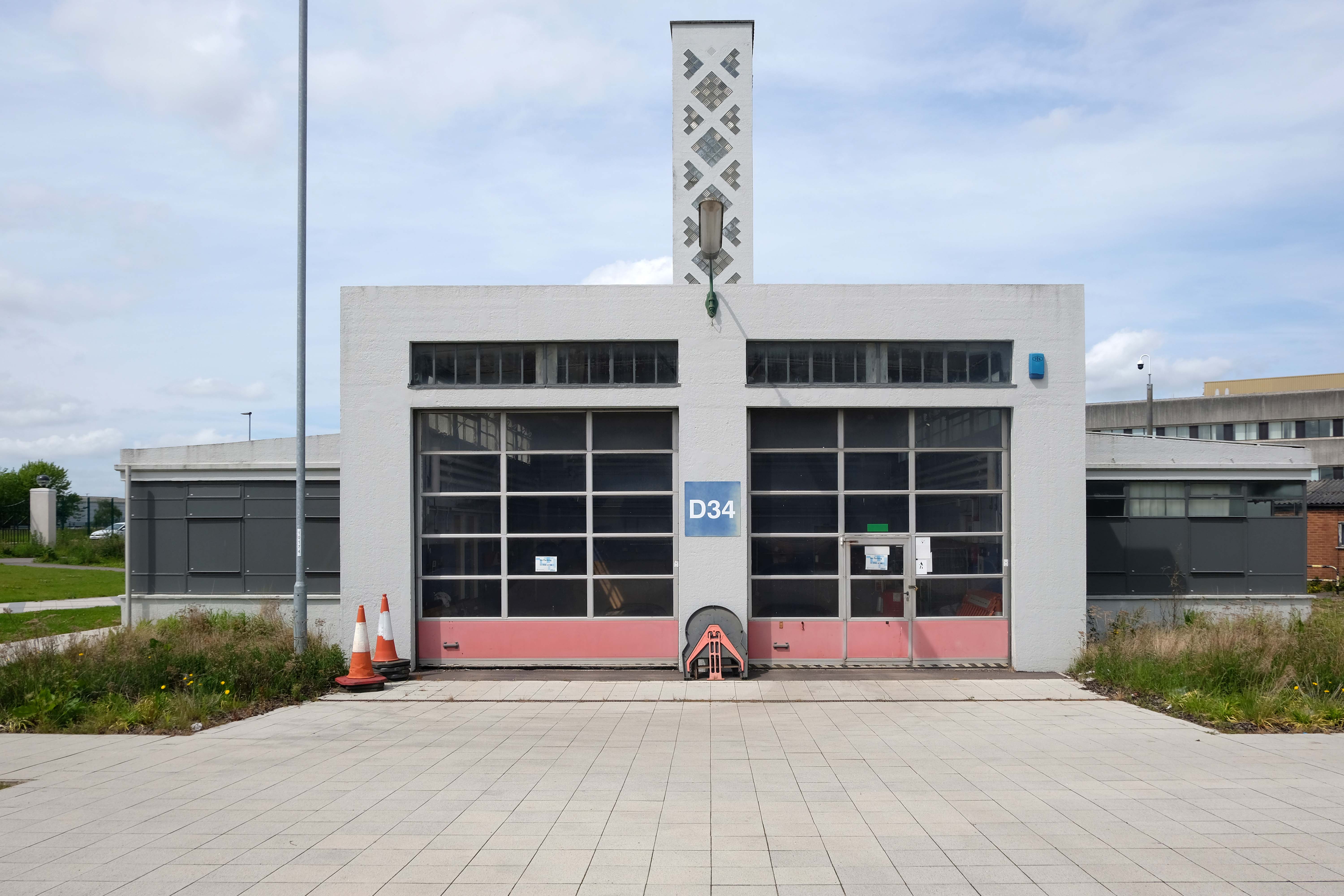
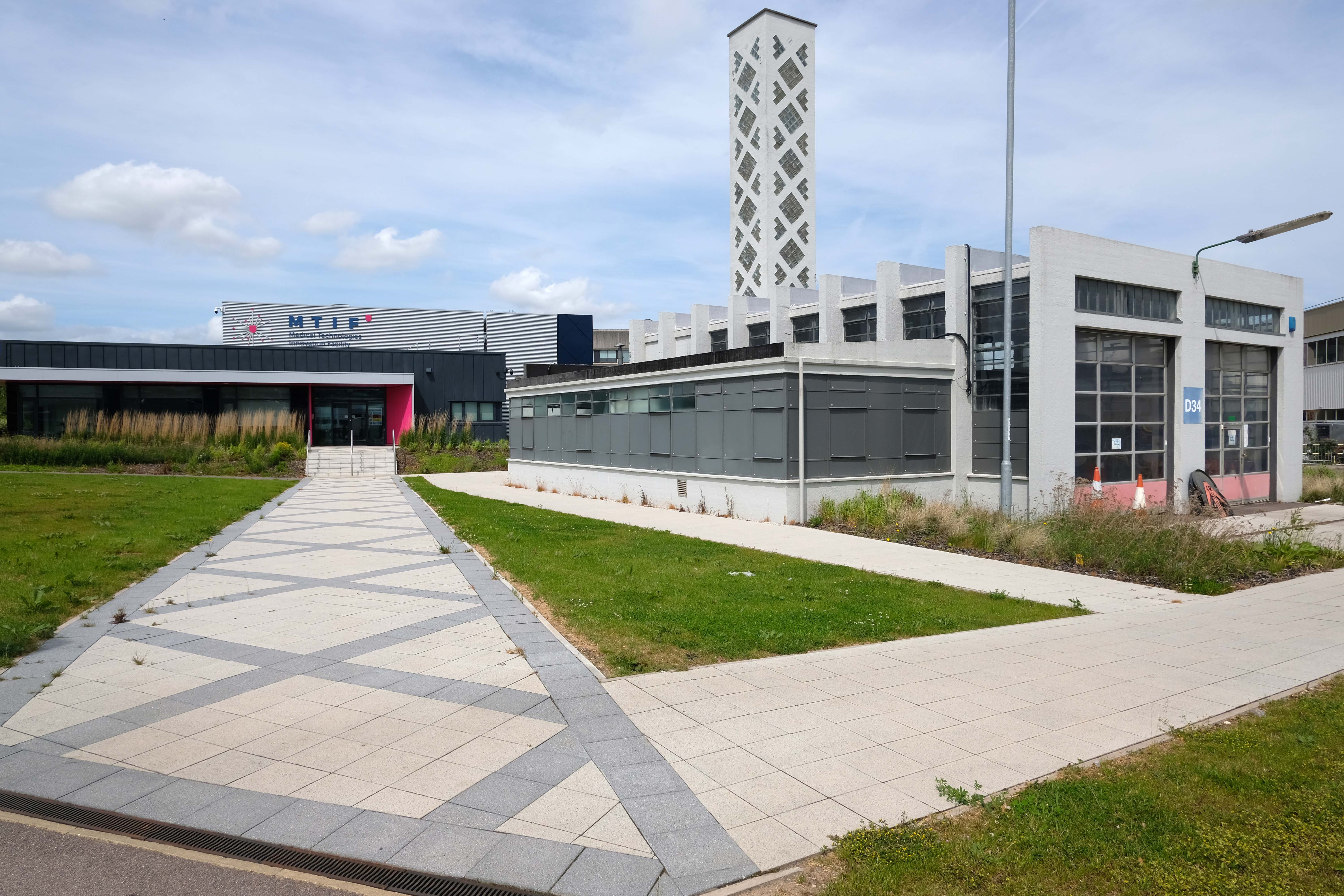
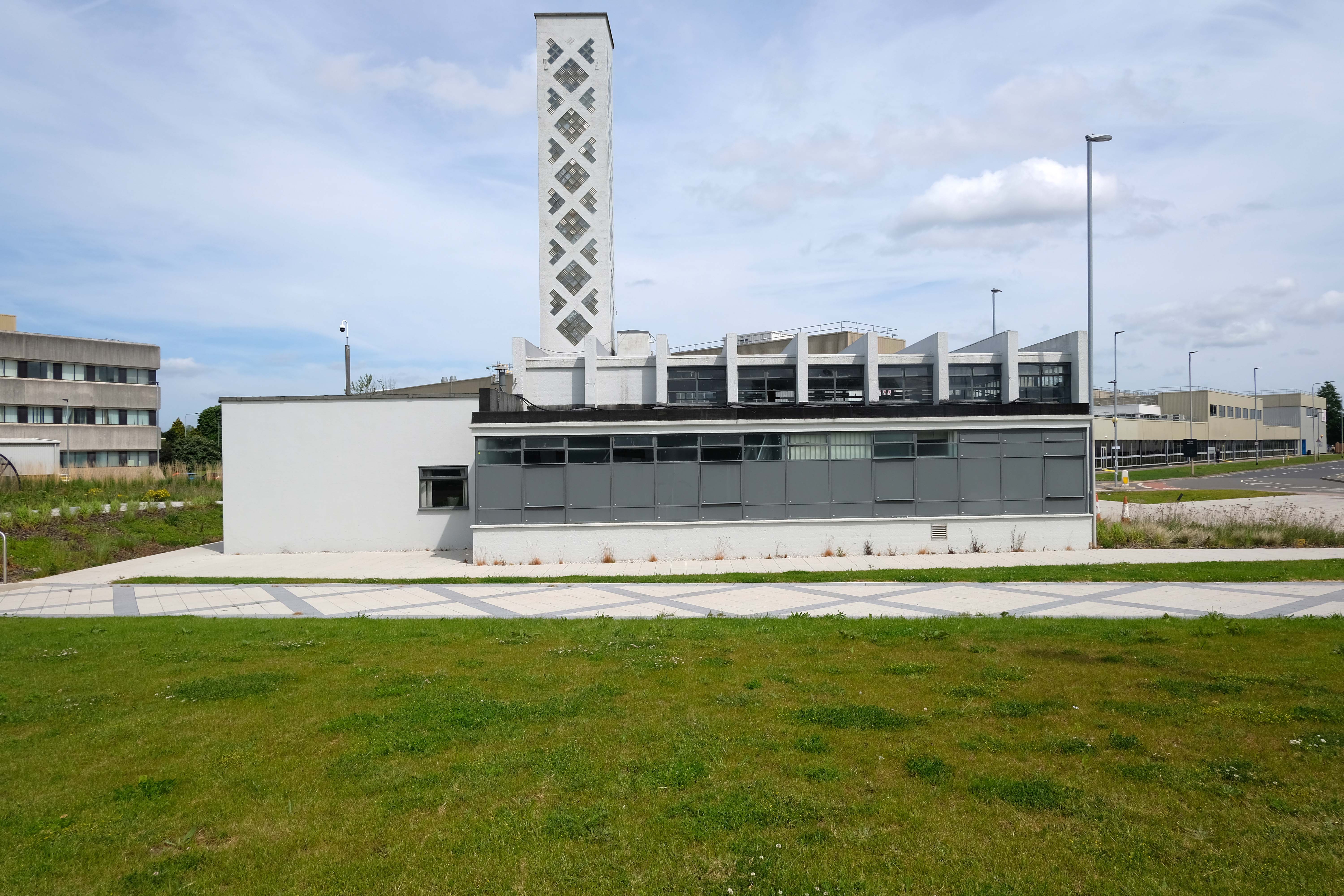
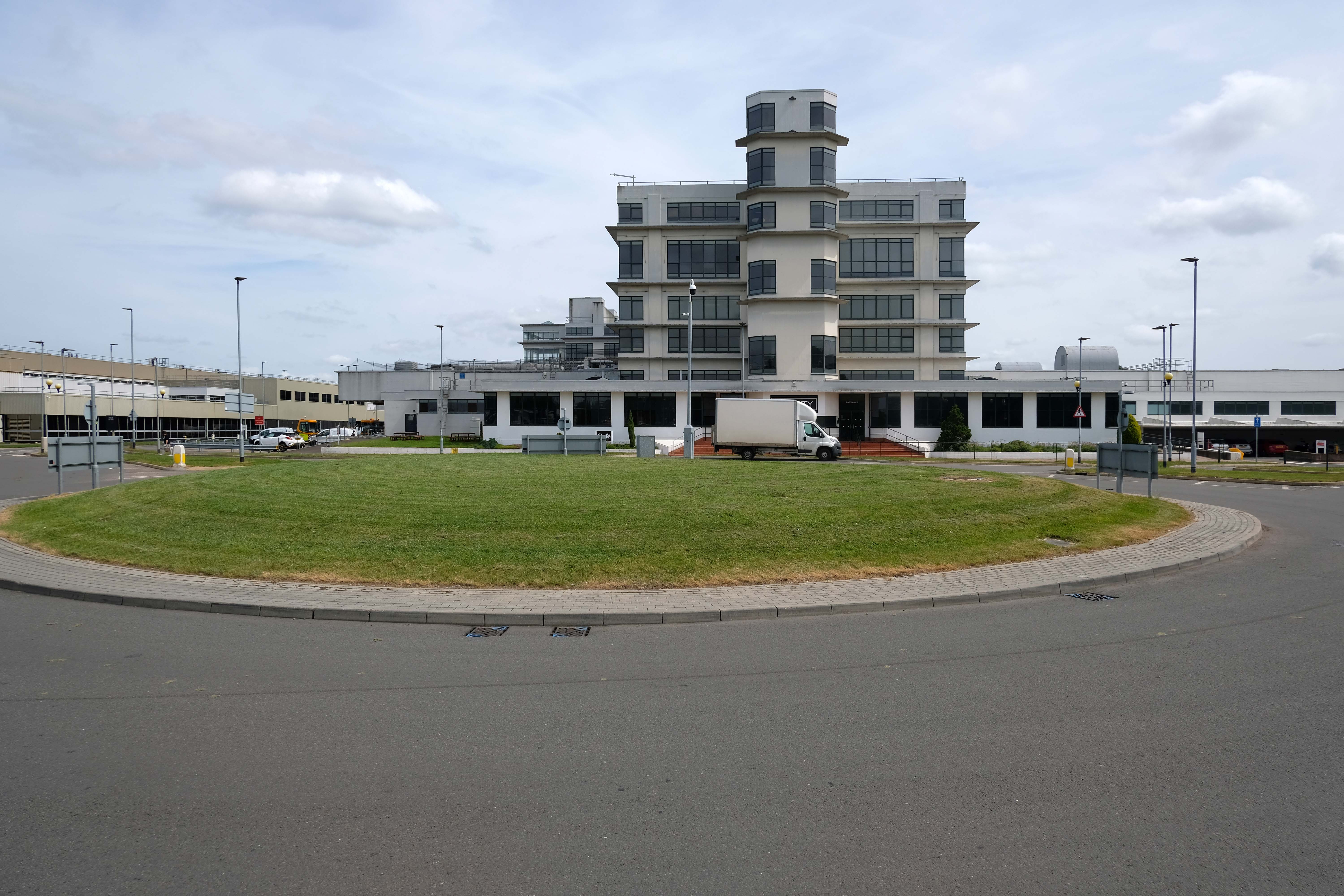
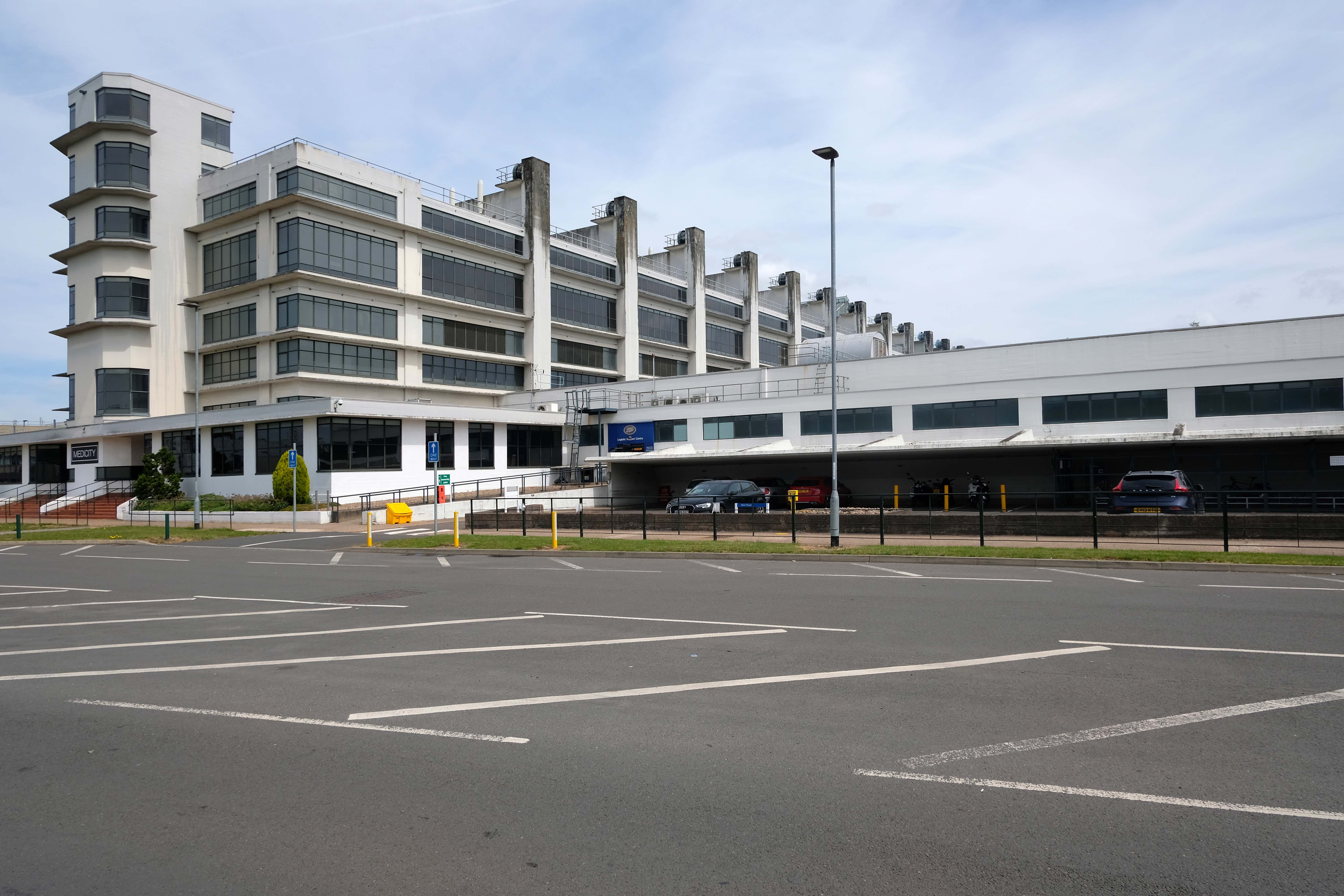
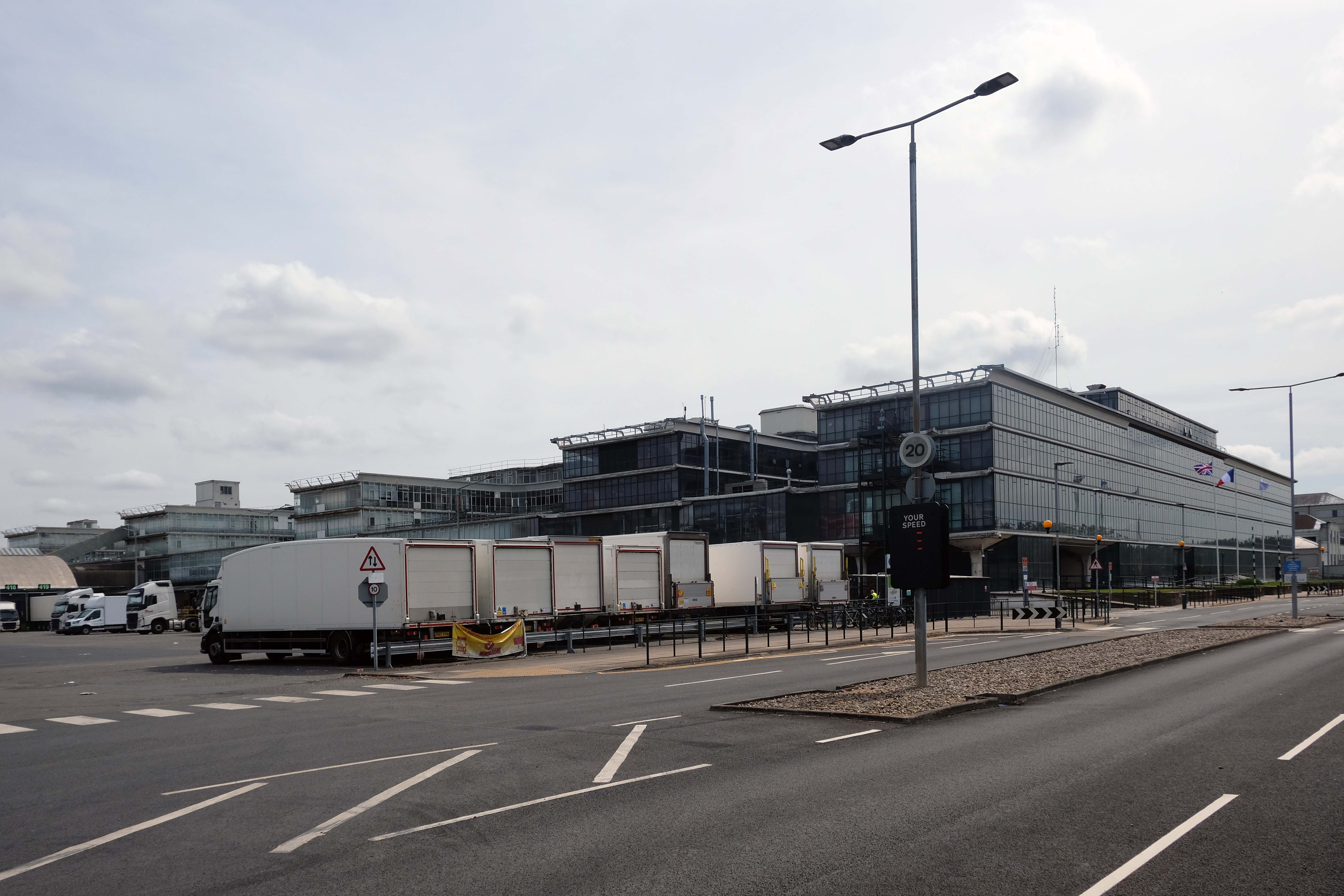
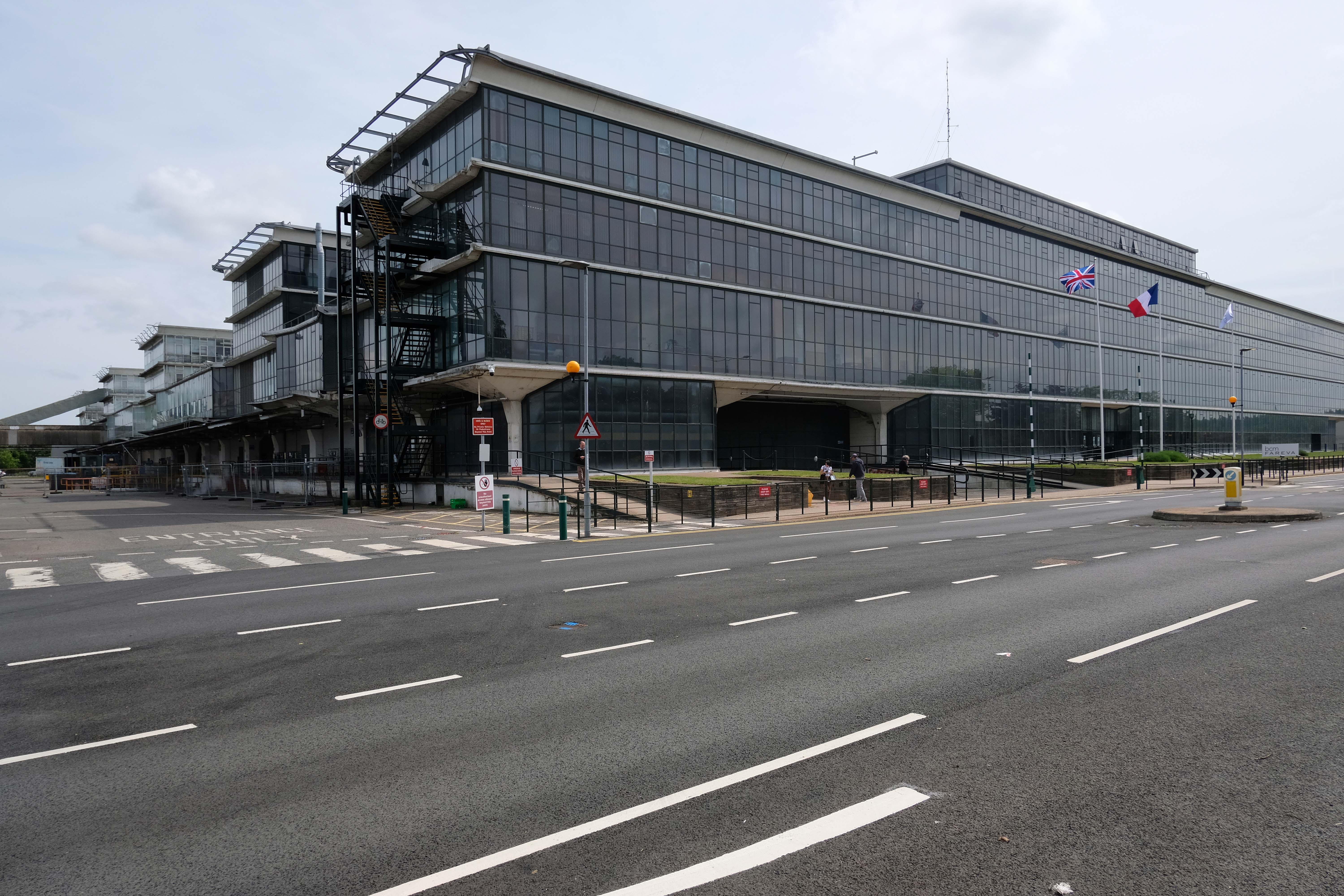
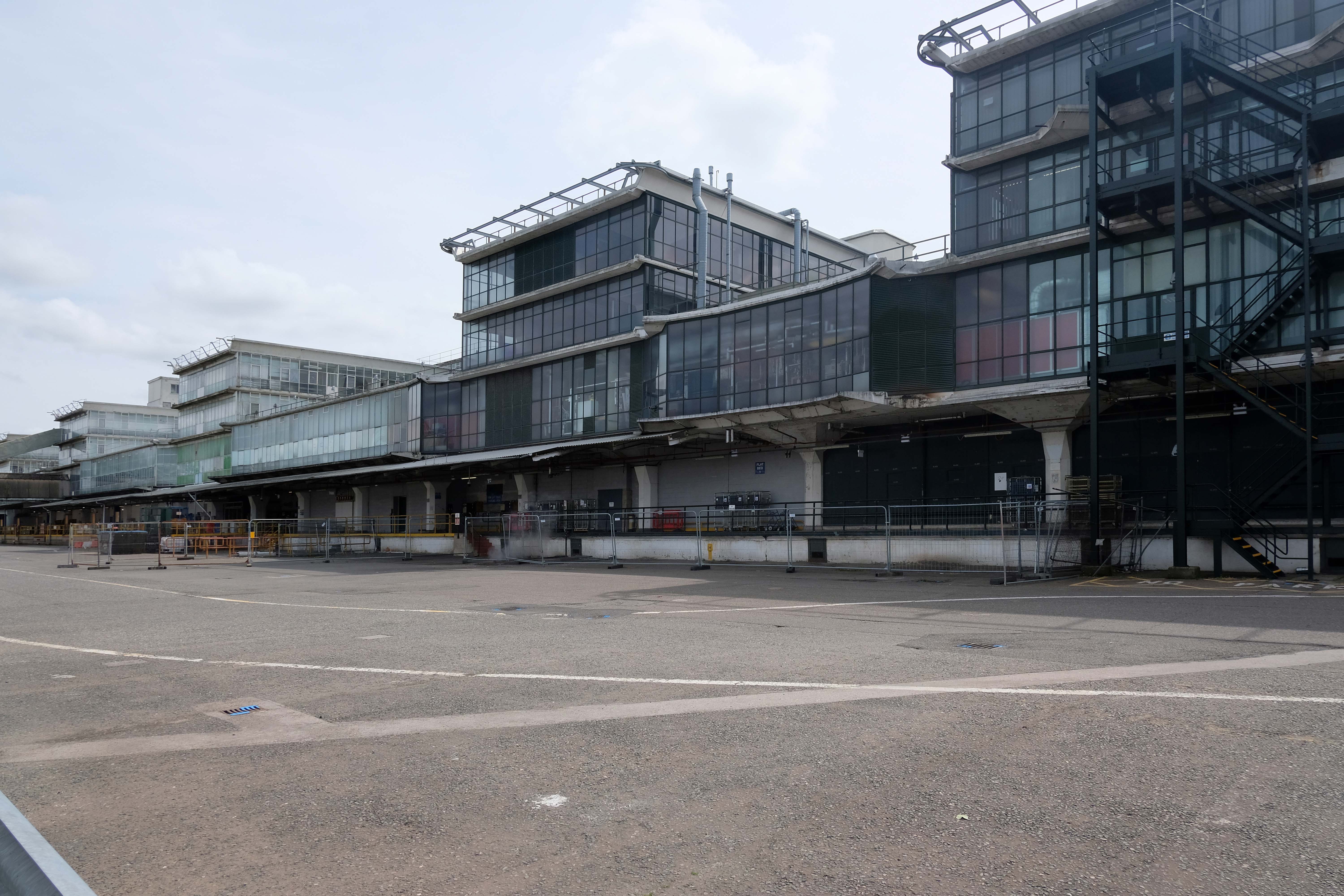
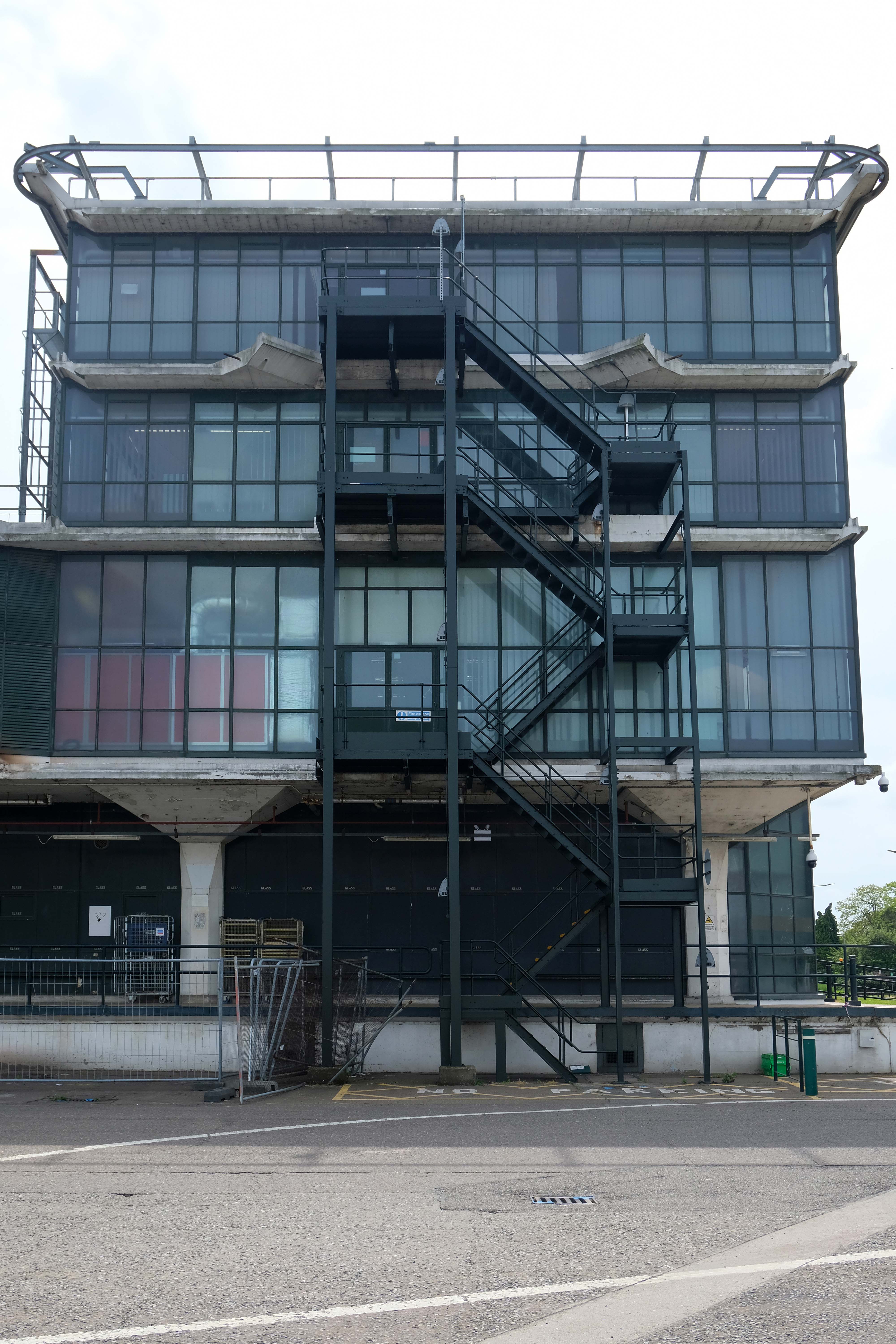
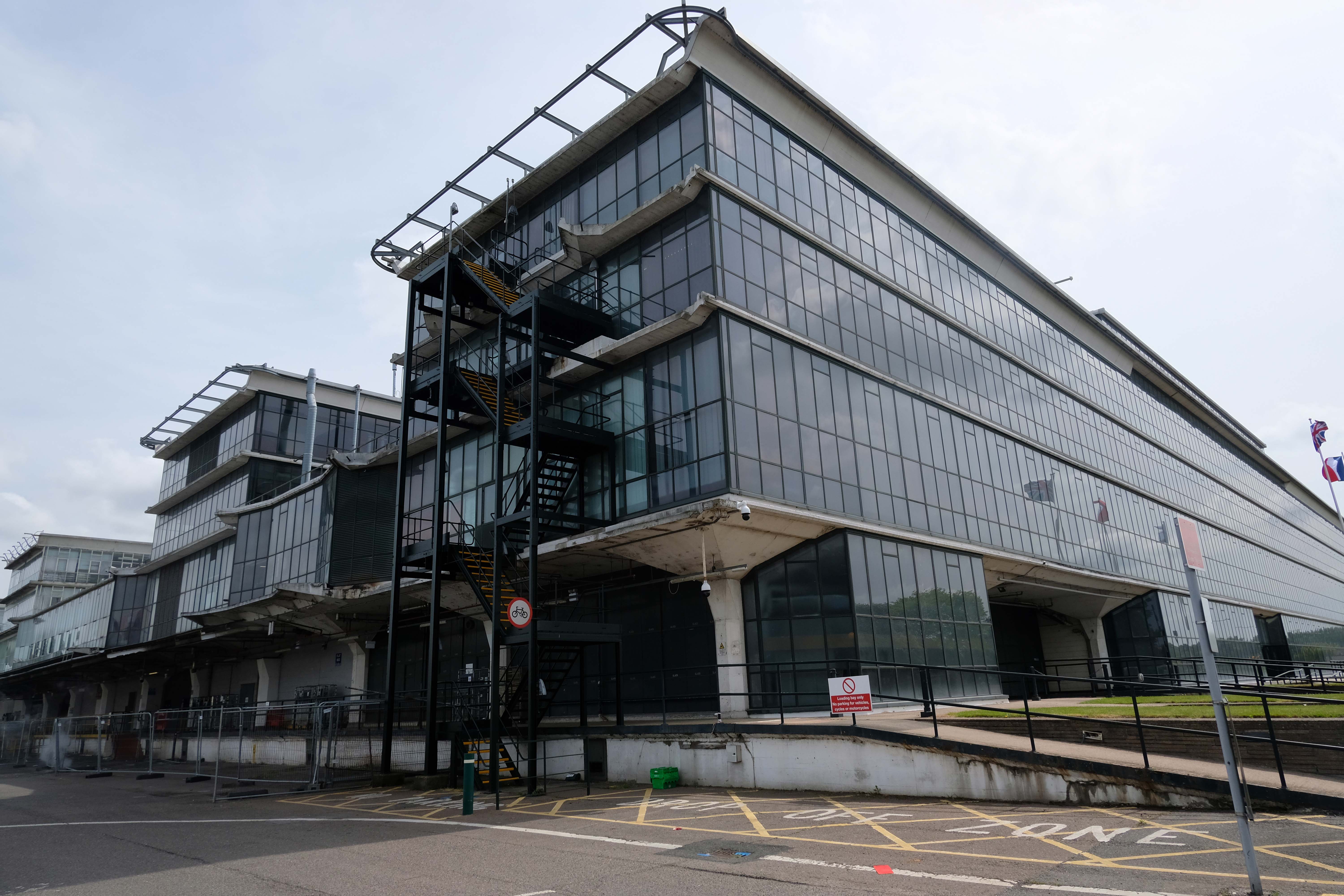
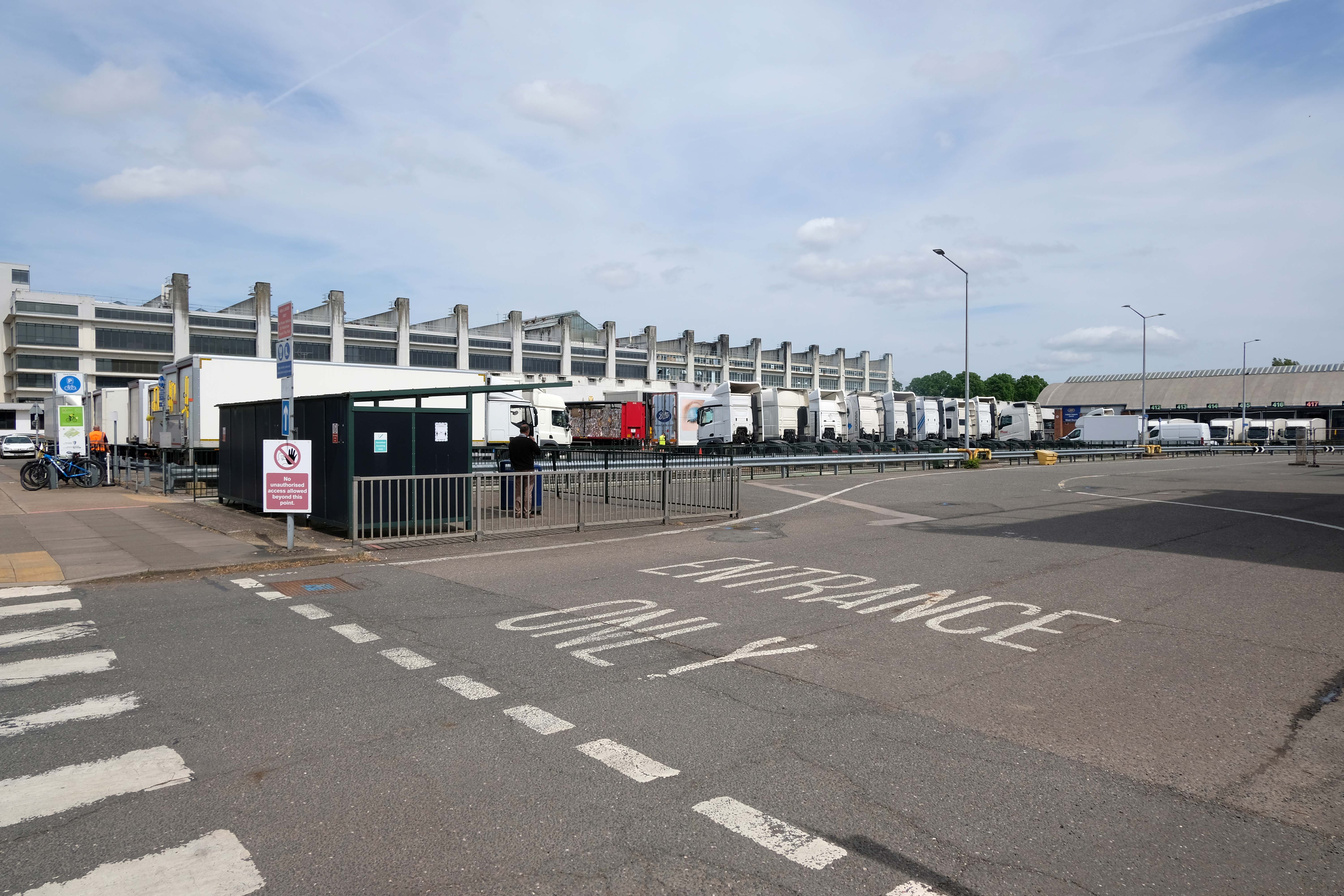
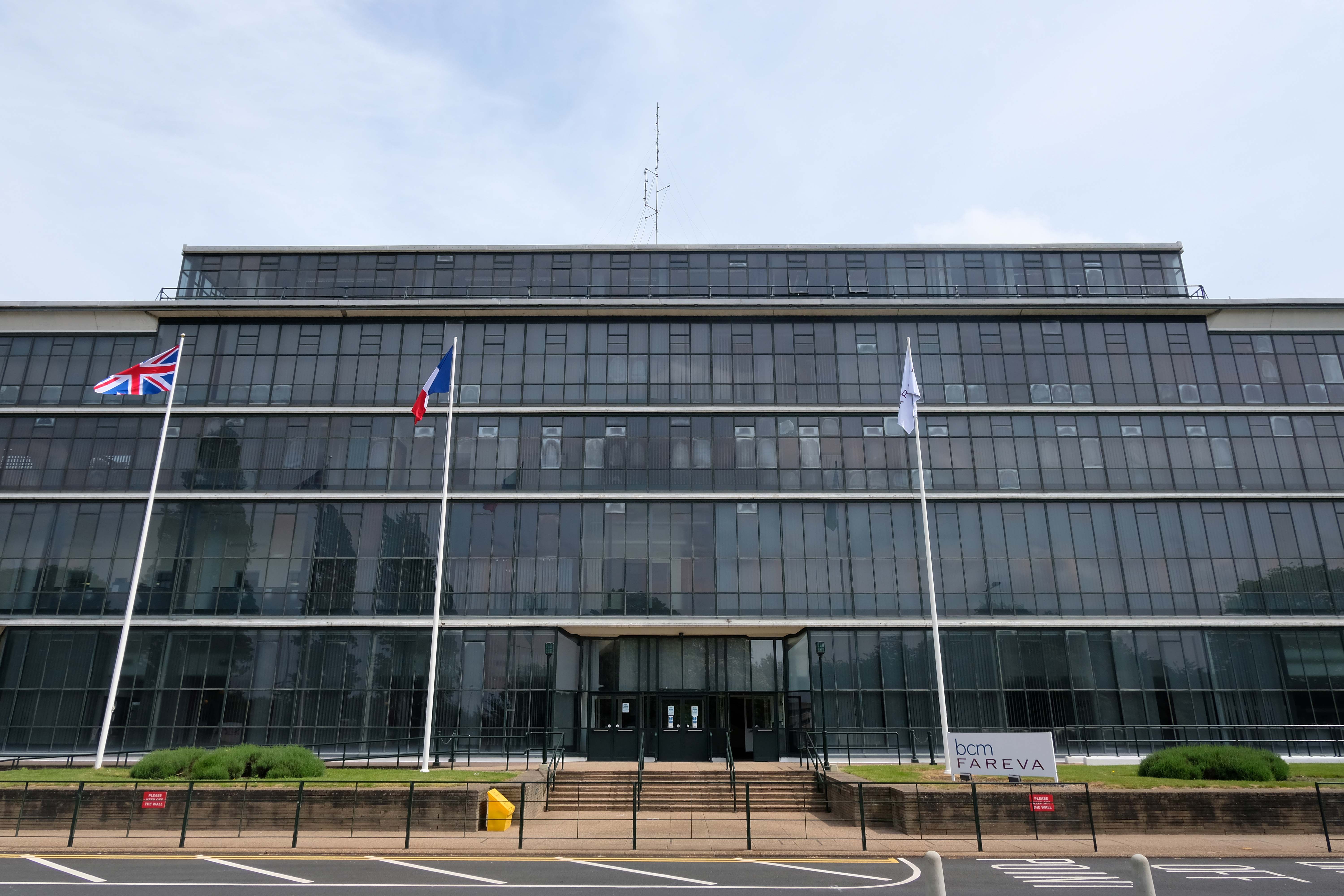
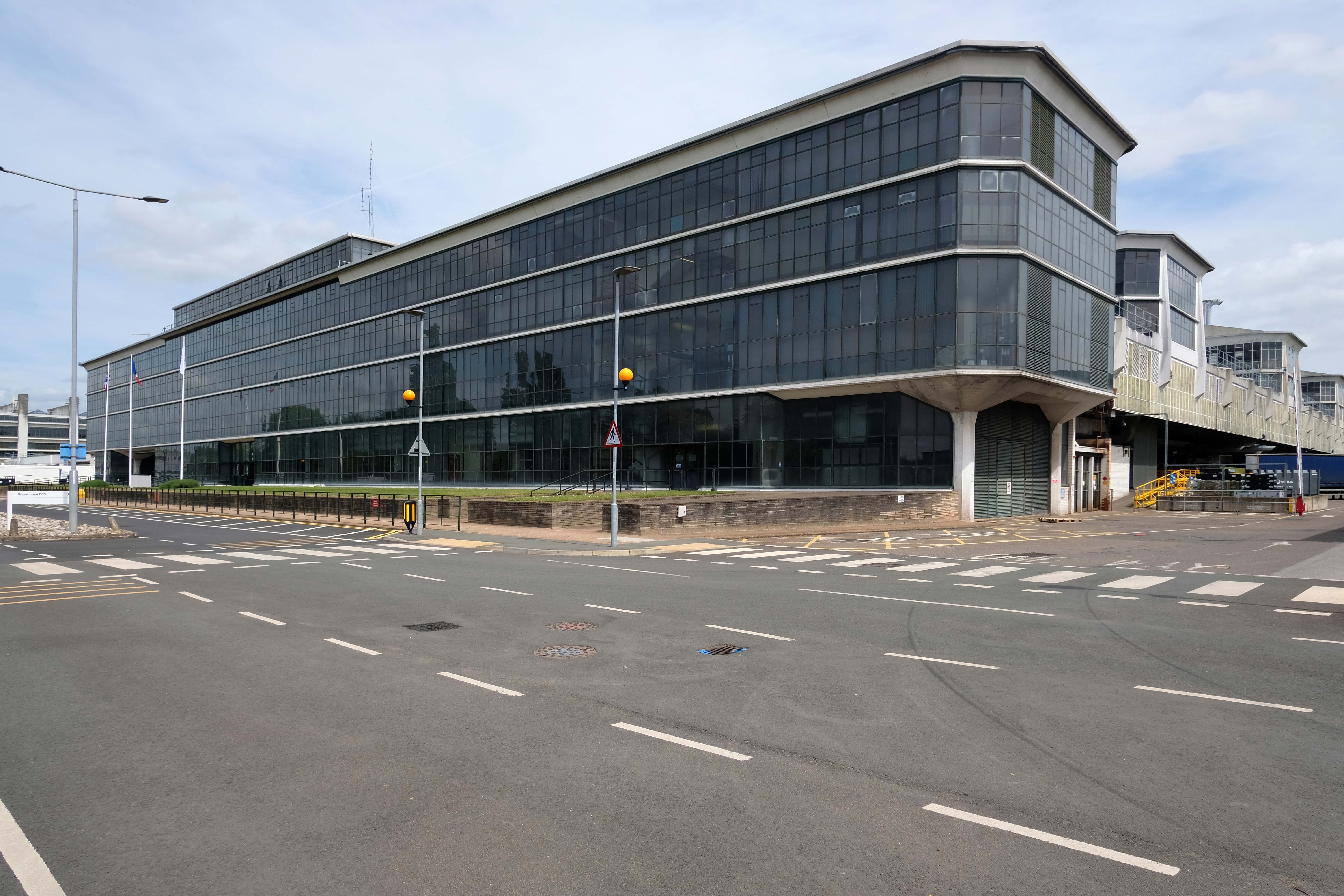
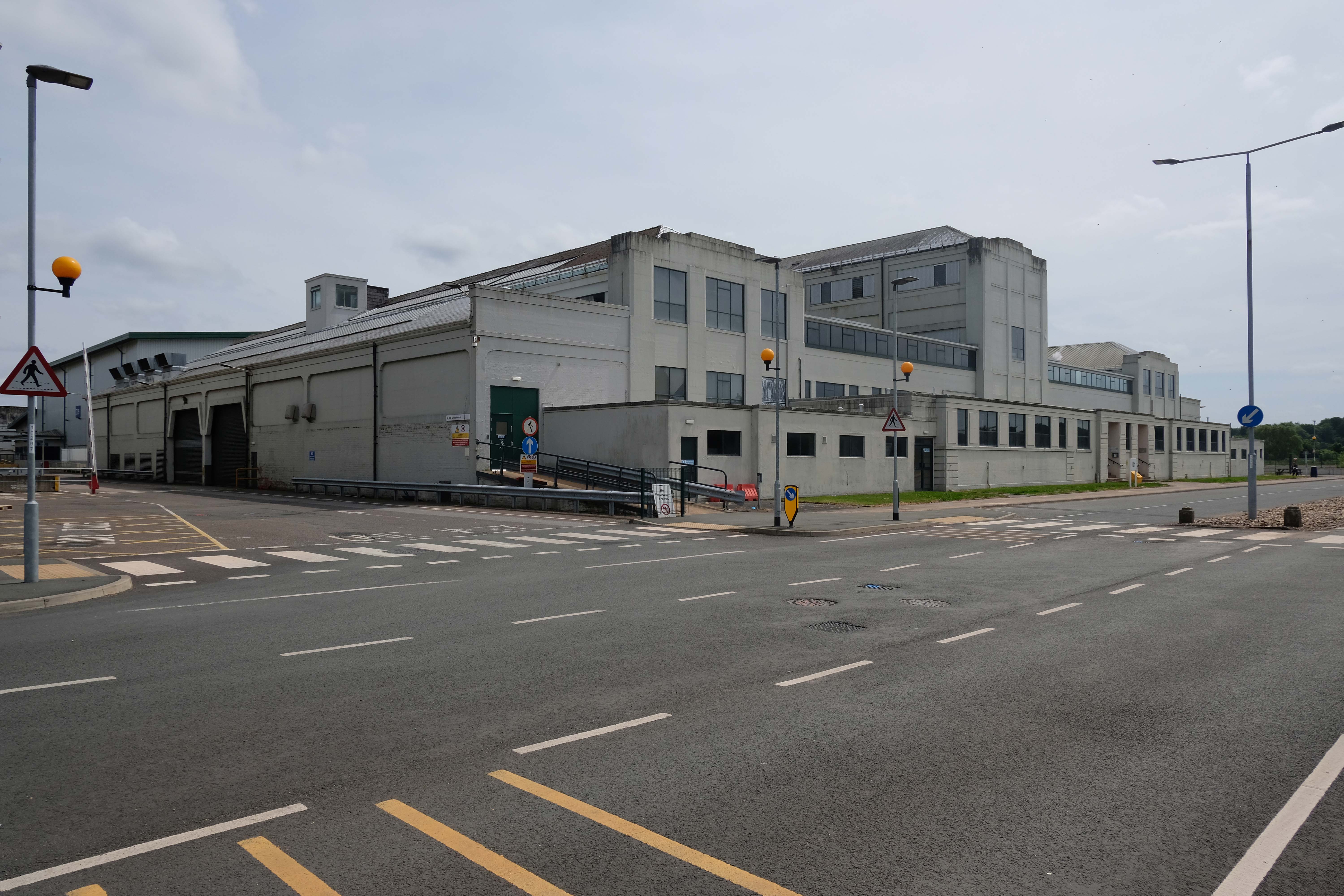
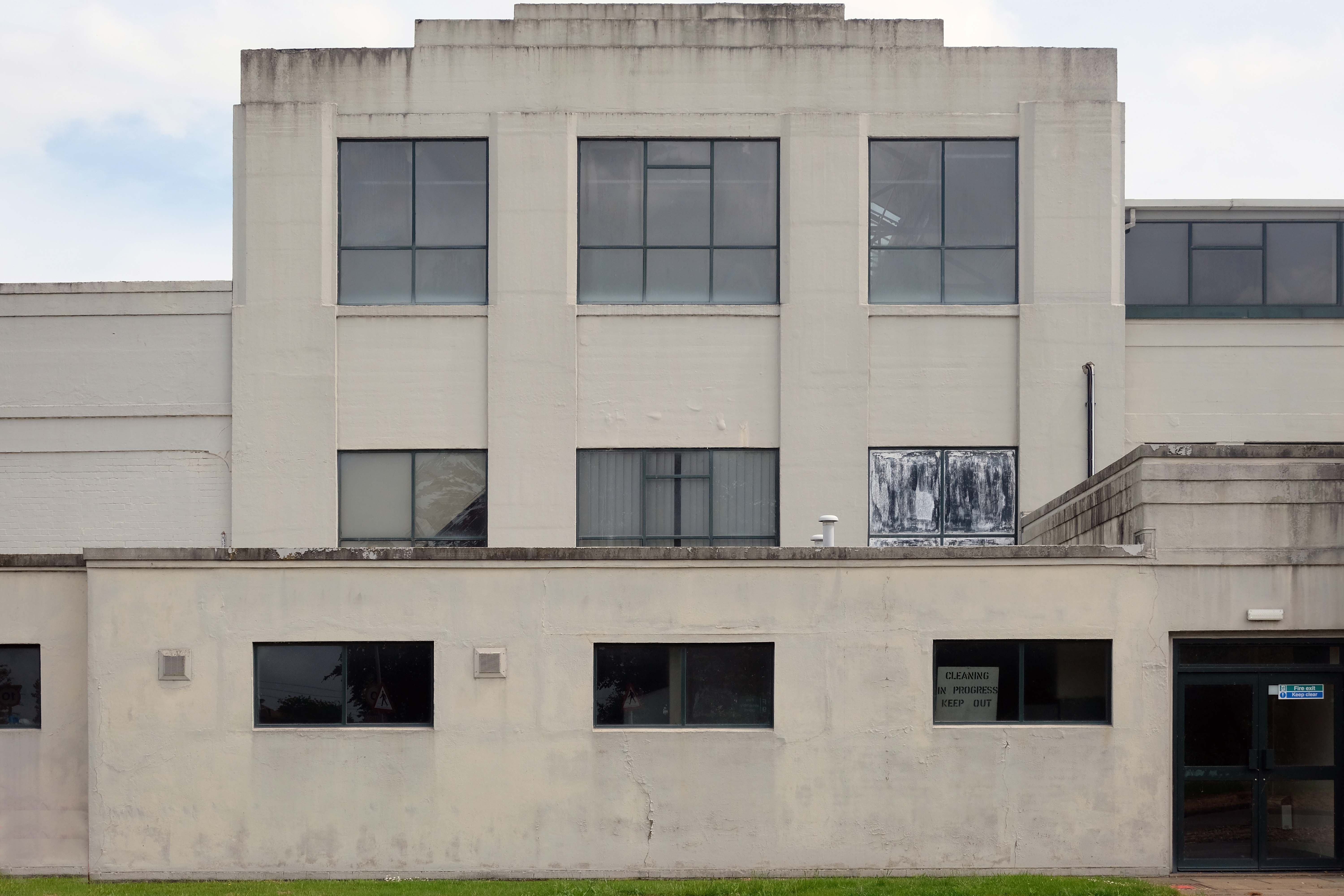
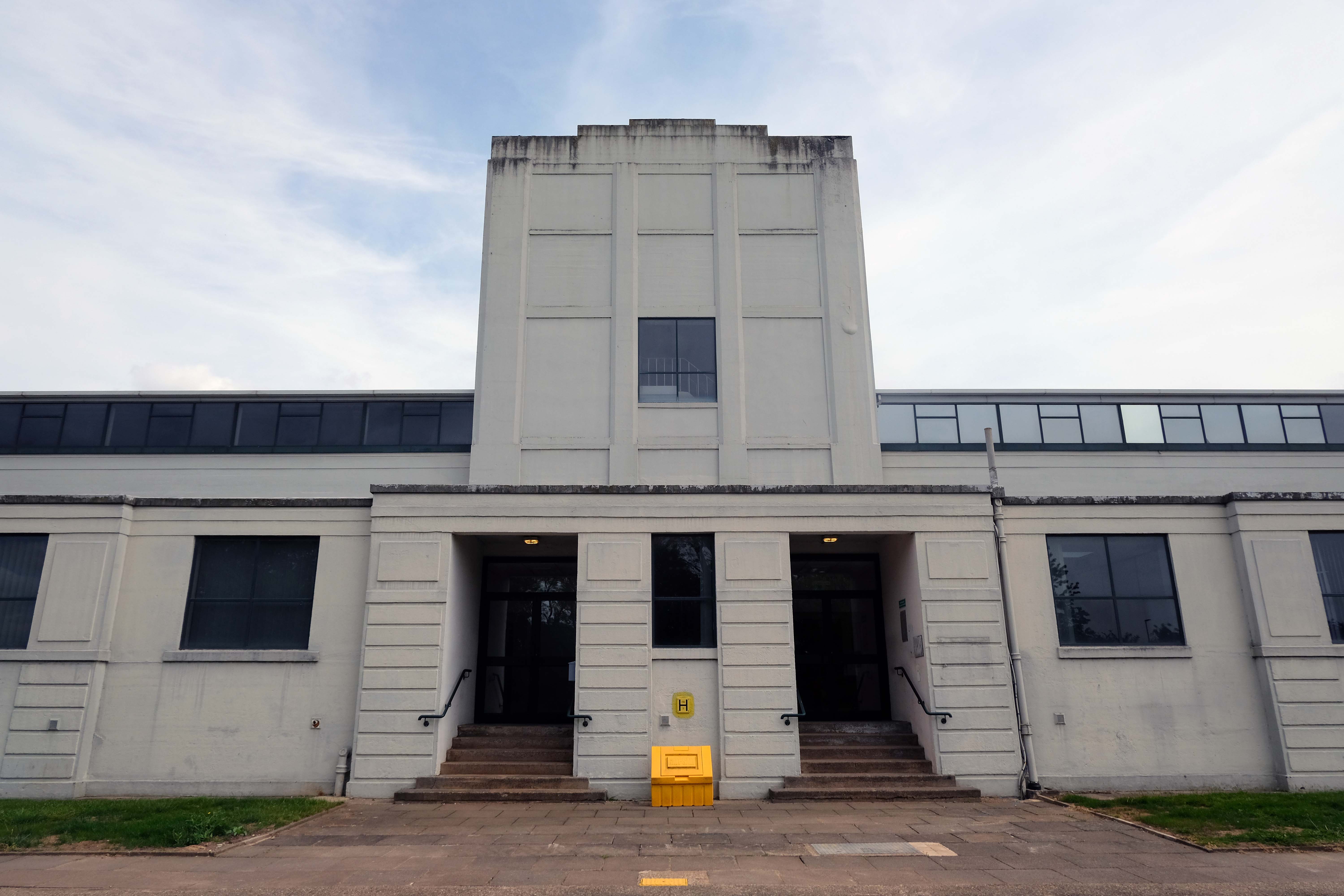
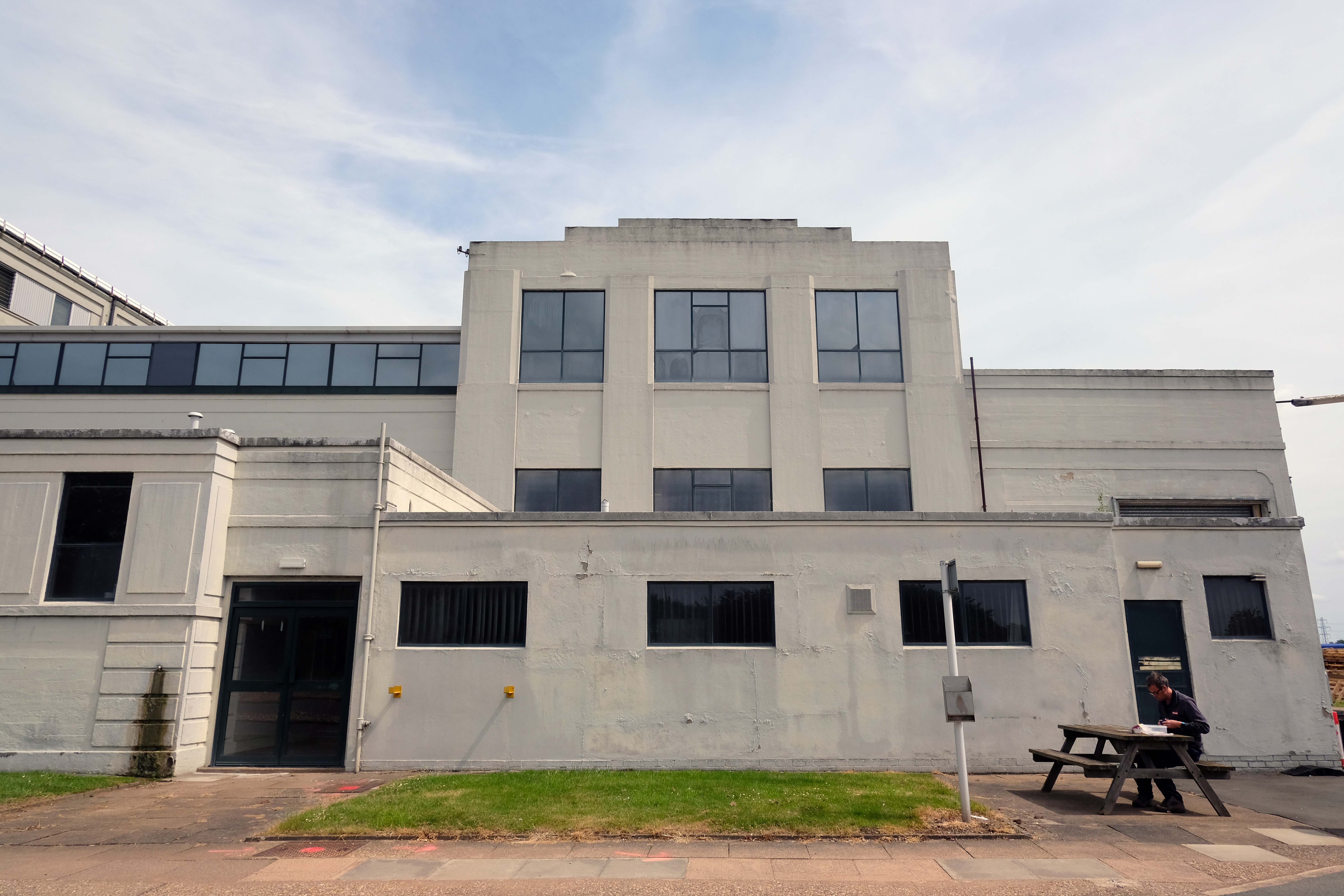
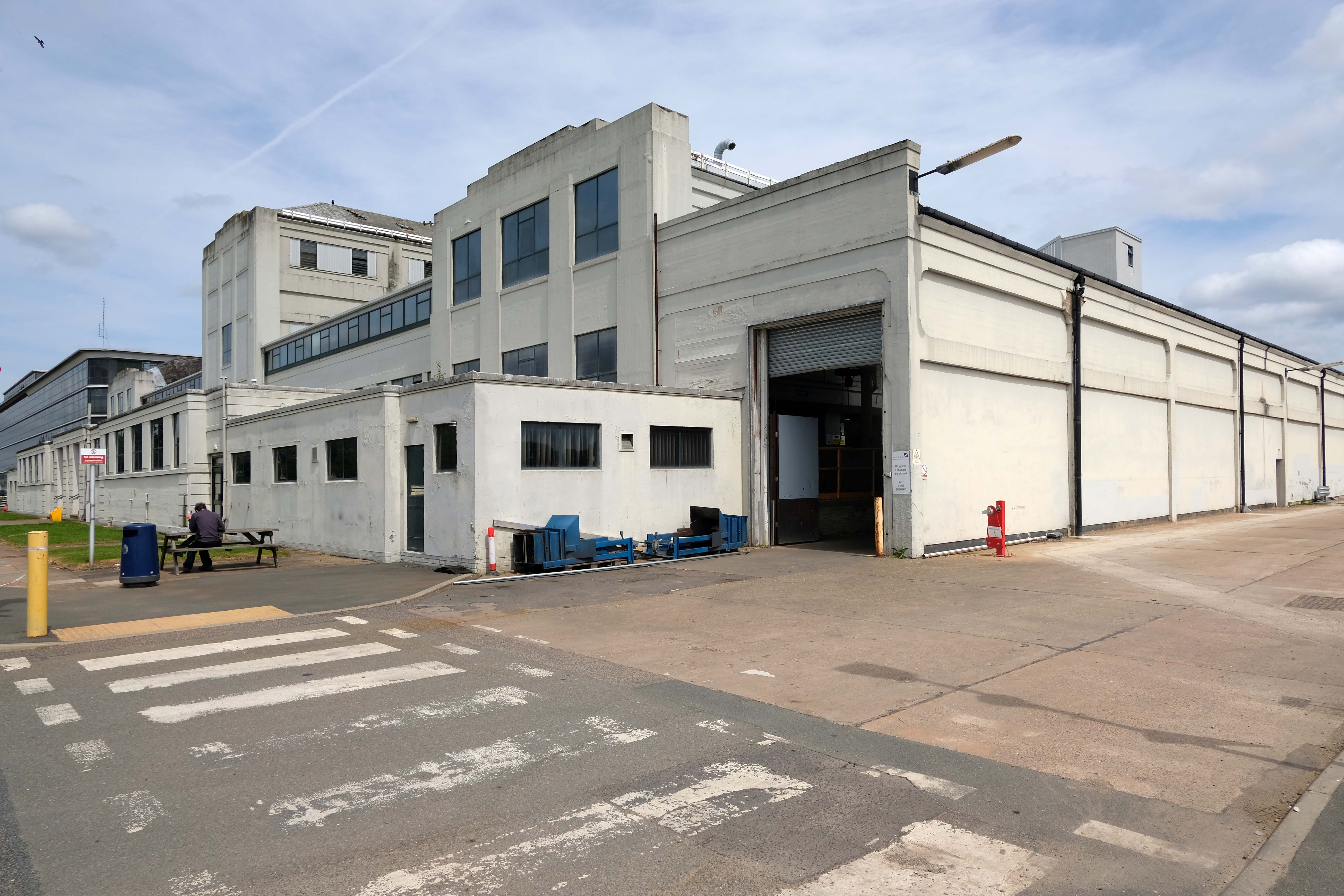
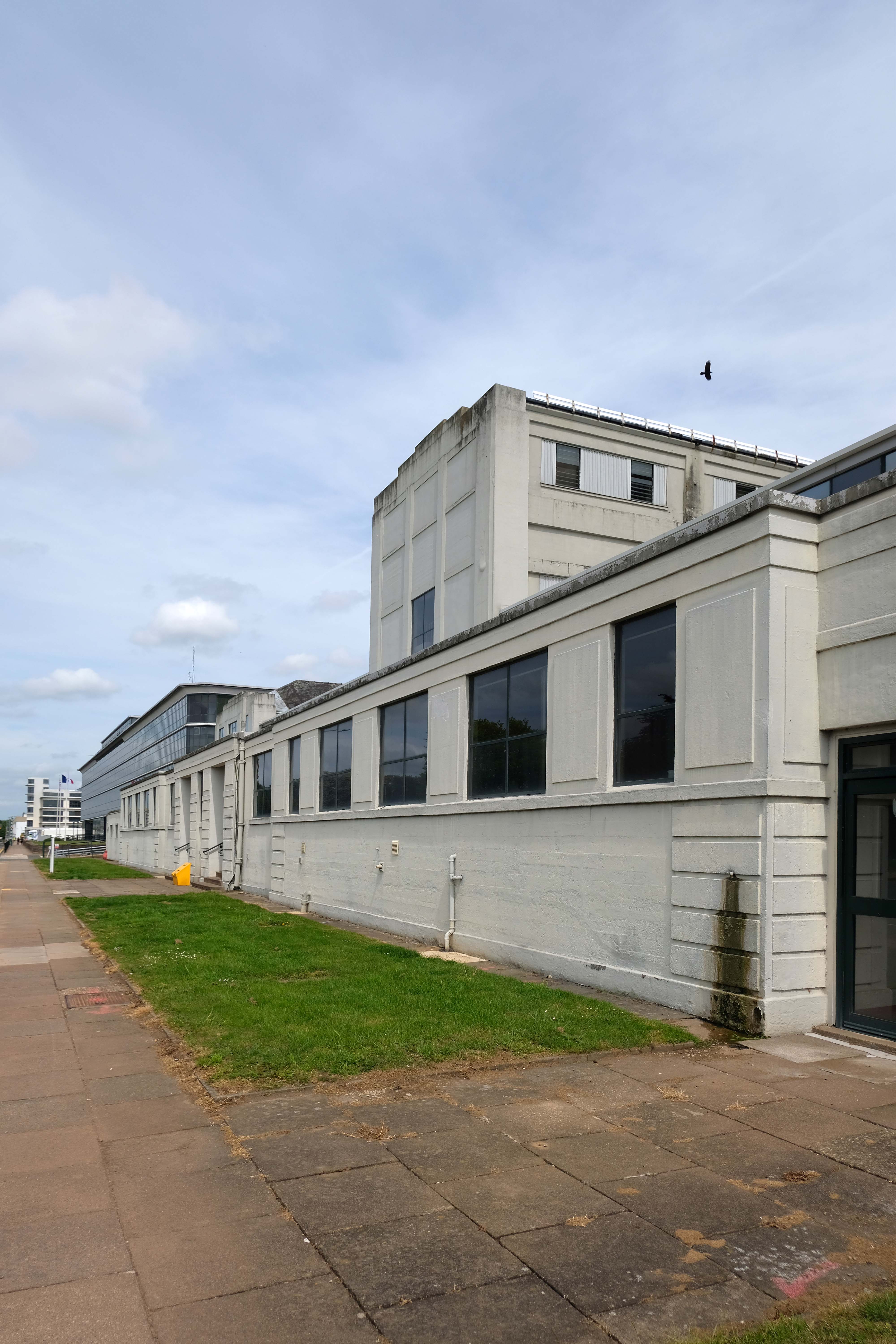
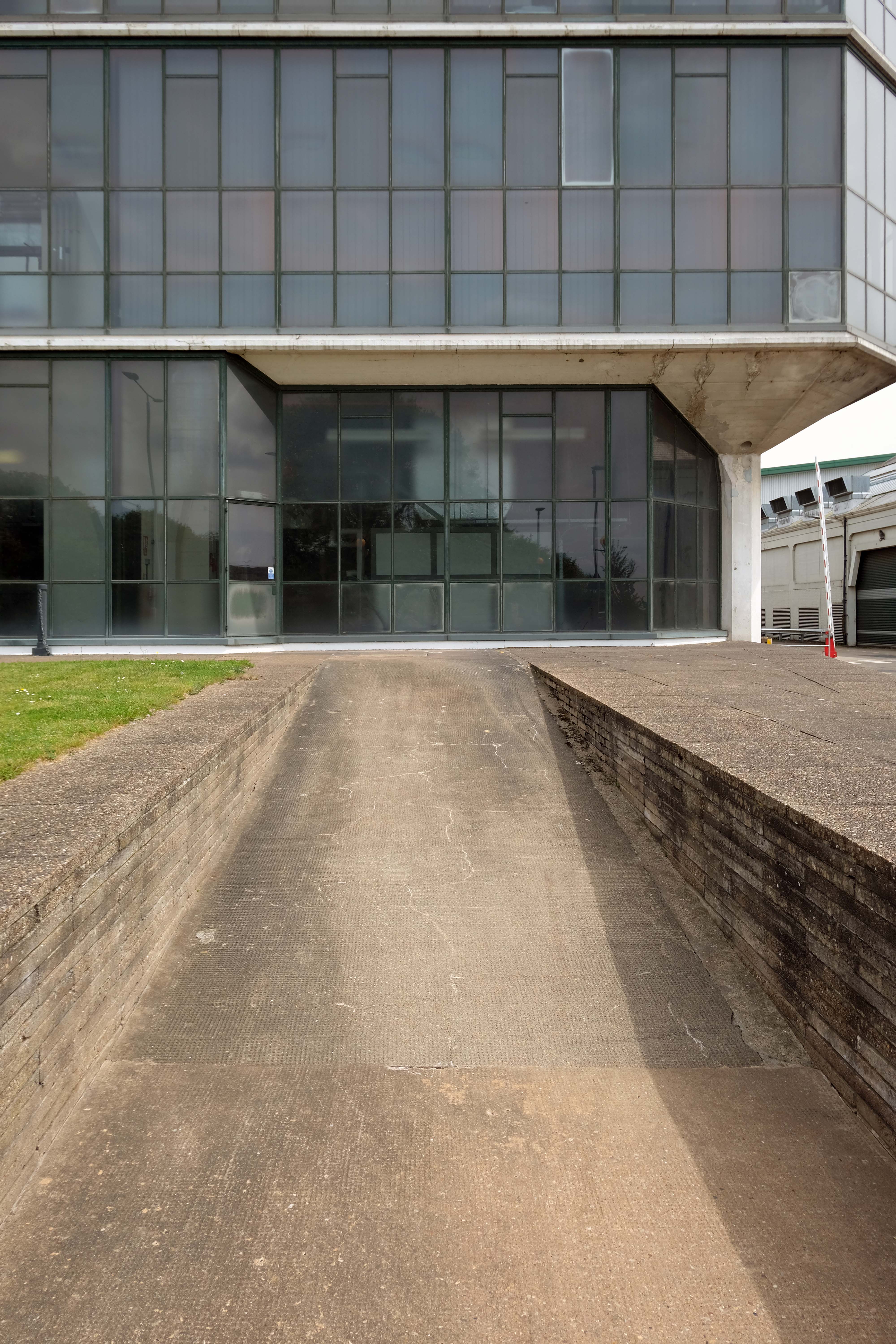
At this point I was asked to leave the site – having arrived on a public service bus, I was unaware that this was a restricted area.
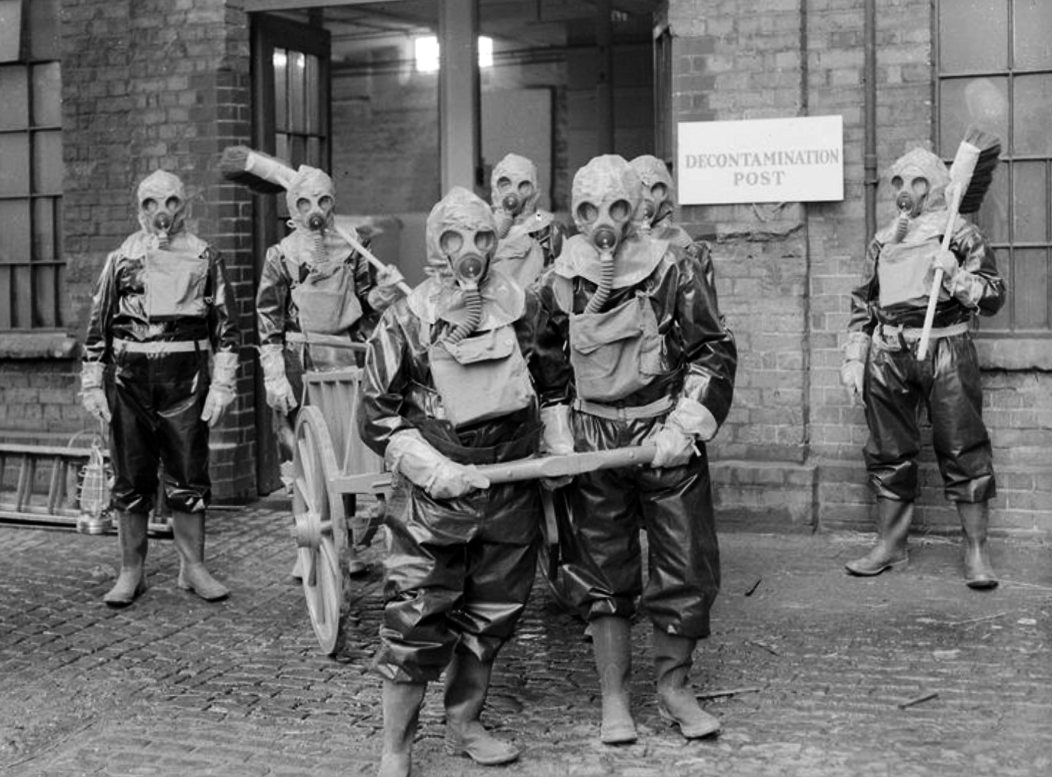
This was explained to me by the ever so helpful security staff.
I made my excuses and left.
D90 – Skidmore Owings & Merrill and Yorke Rosenberg & Mardell 1967-69
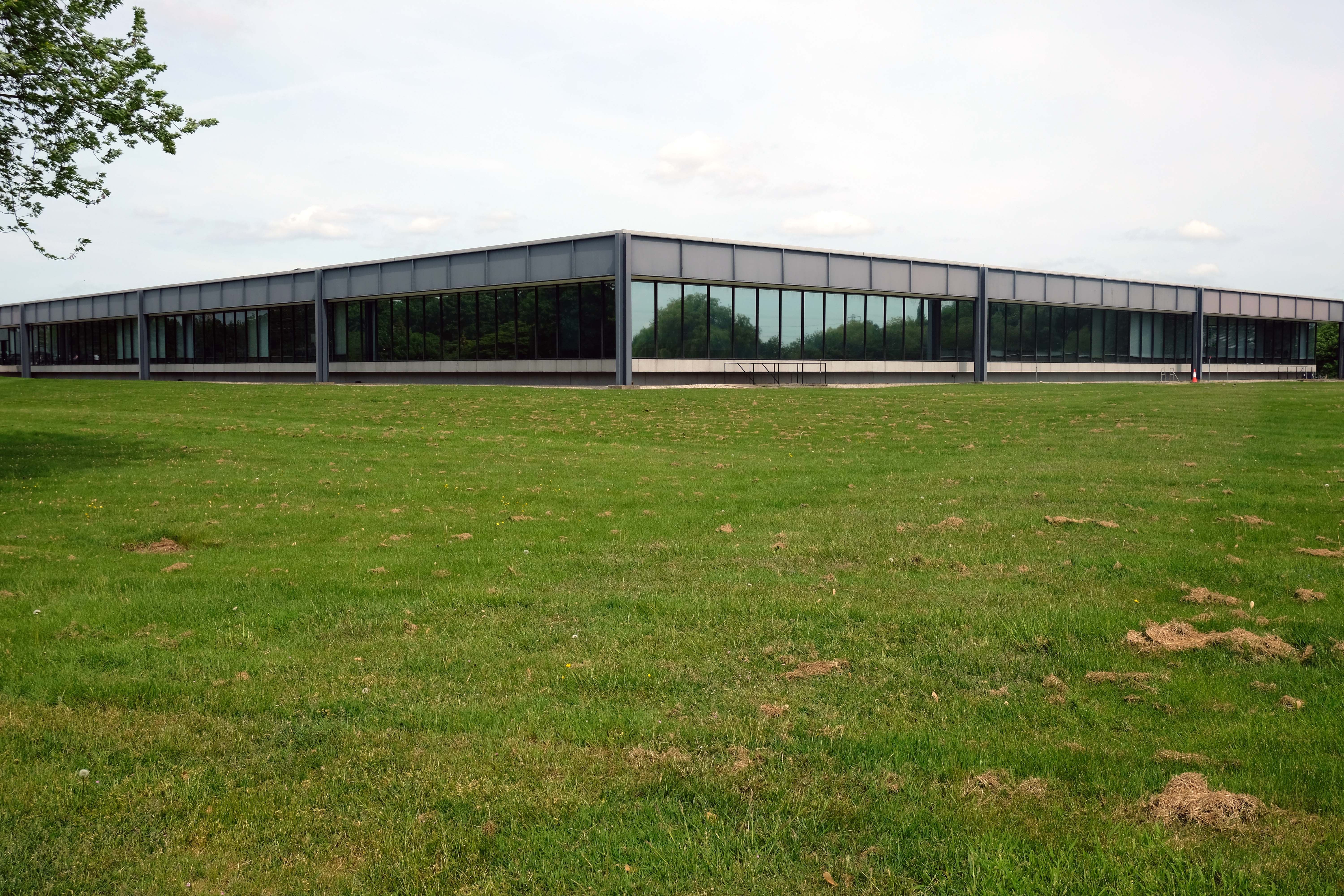
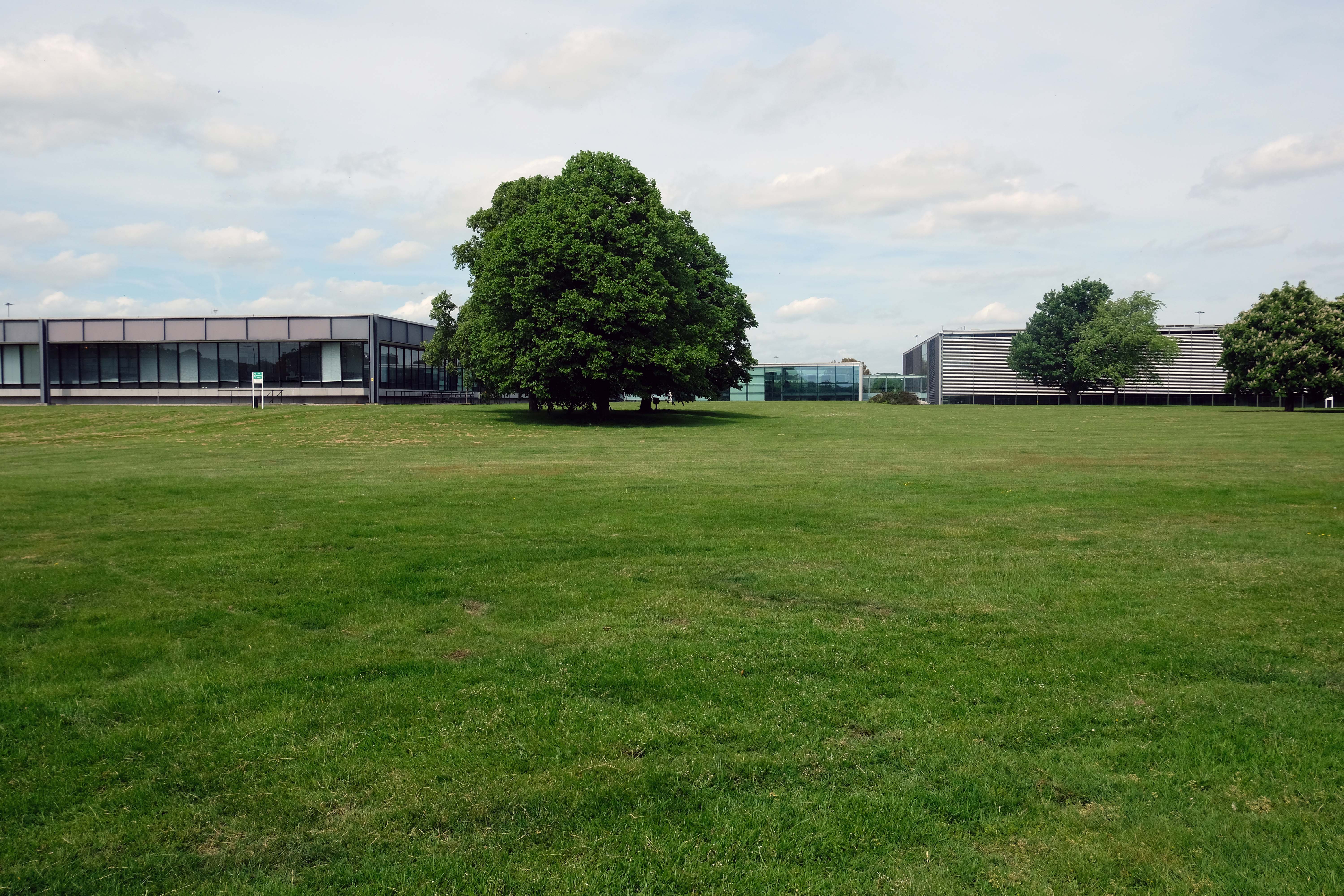
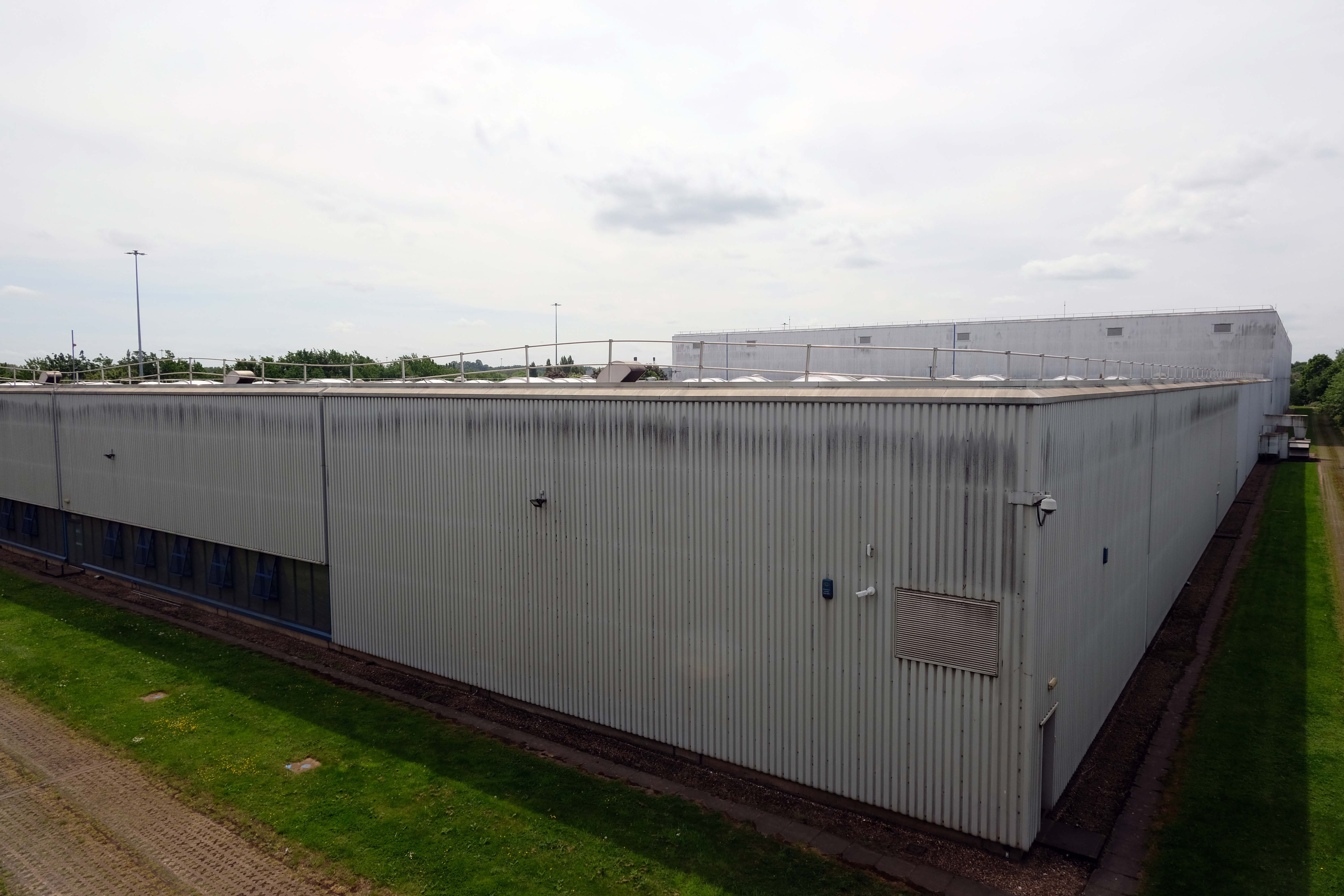

Organised by the Twentieth Century Society
Text by Eddy Rhead and David French.
Bolton Town Hall – 1873 was designed by William Hill of Leeds, with Bolton architect George Woodhouse.

The original building was extended in 1938 by Bradshaw Gass & Hope – hereafter BGH.
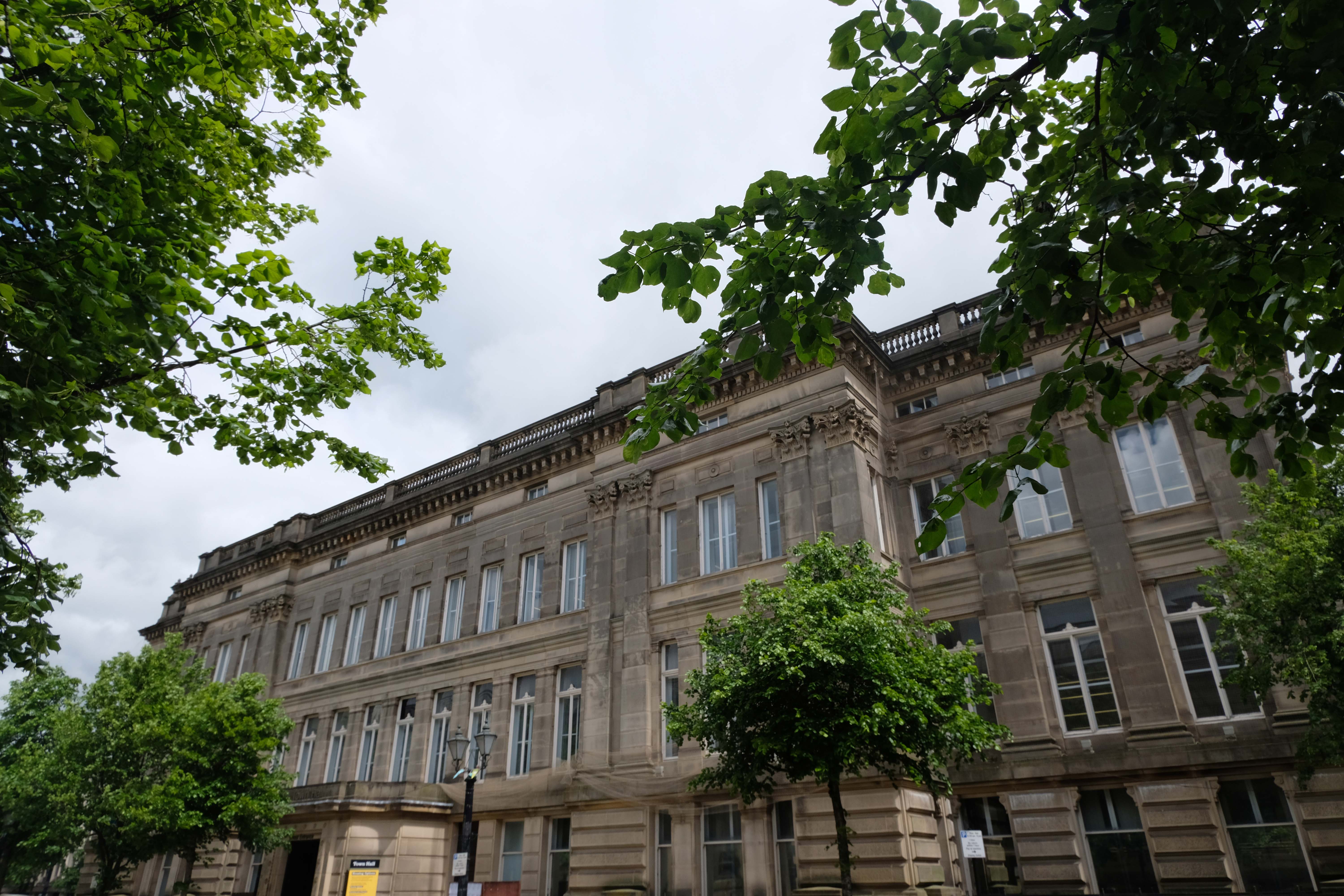
Le Mans Crescent by BGH 1932-9 well complements the Town Hall extension. Its neo-classical design is assured and confident. Pevsner remarked that:
There is, surprisingly enough, no tiredness, the panache is kept up.
Three arches pierce the Crescent’s centre but today they lead only to a potential development site. One end of the Crescent contains the Art Gallery and Library; the other used to house the former Police Headquarters and Magistrates’ Courts.
George Grenfell Baines, the founder of the Building Design Partnership, was involved in this project when he worked for BGH in the 1930s

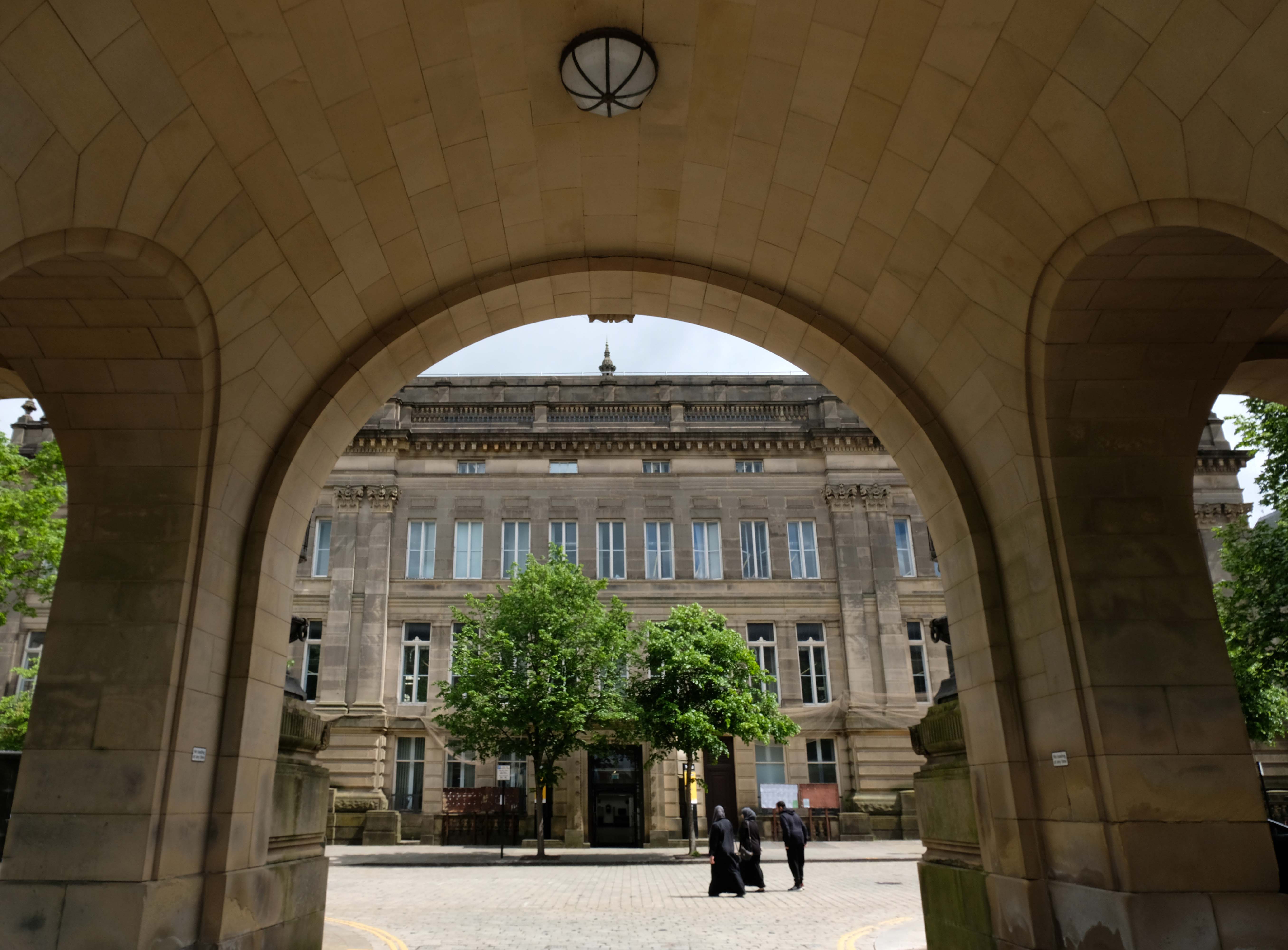
The Octagon 1966-67 originally by Geoffrey Brooks, the borough architect, rebuilt 2018-2021. The hexagonal auditorium has apparently been retained. Pevsner states of the former building:
A welcome dose of honest Brutalism.
The Wellsprings successfully fitting with the Town Hall

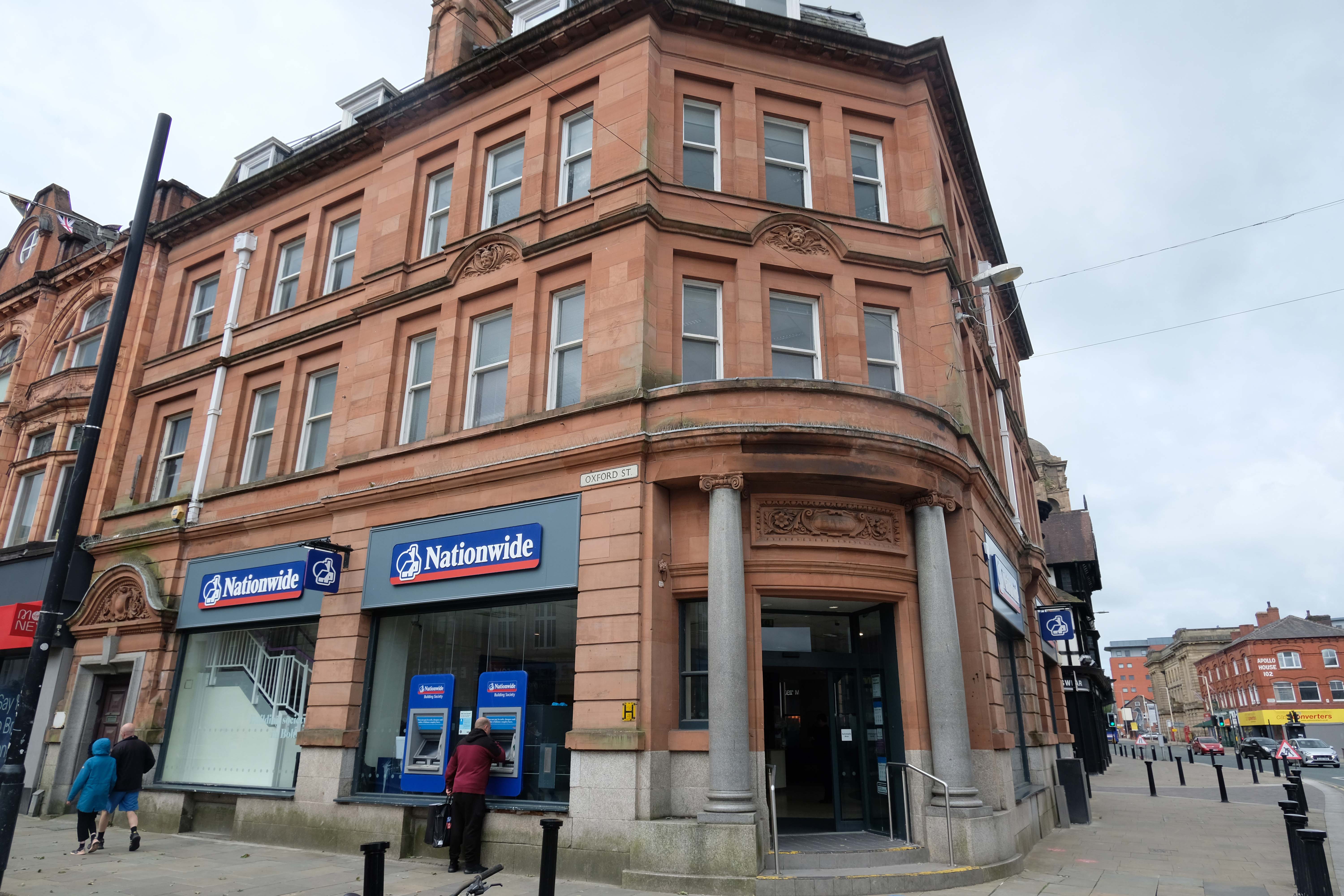
The former 1931 Cooperative Society Store, on the Oxford Street corner, is by BGH. The entrance has Doric columns in deference to the Town Hall’s Corinthian ones – and Le Mans Crescent uses the Ionic for the same reason.
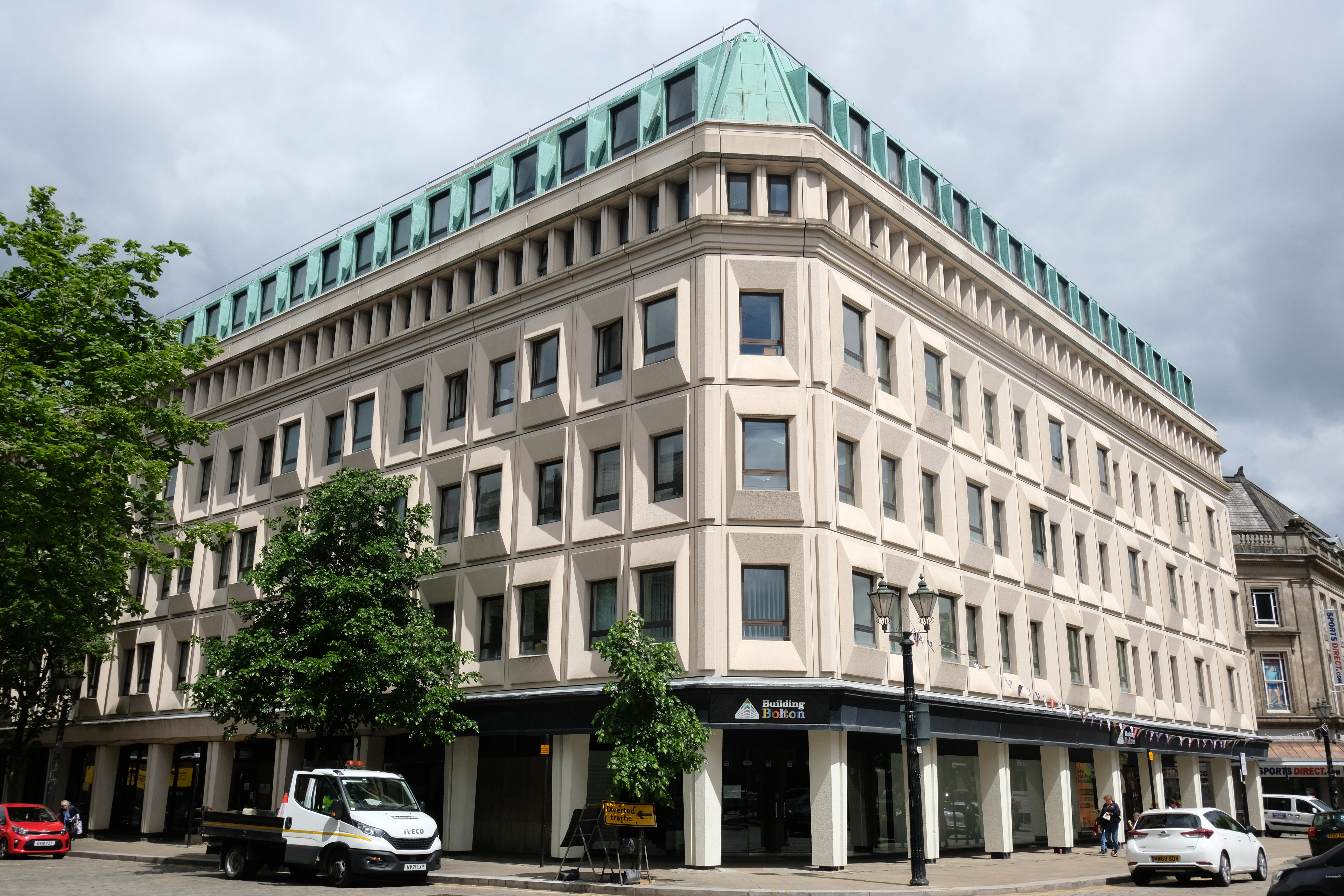
We pass Paderborn House 1968 -69 Sutton of Birmingham clad in moulded concrete, with Traverine around the entrance.
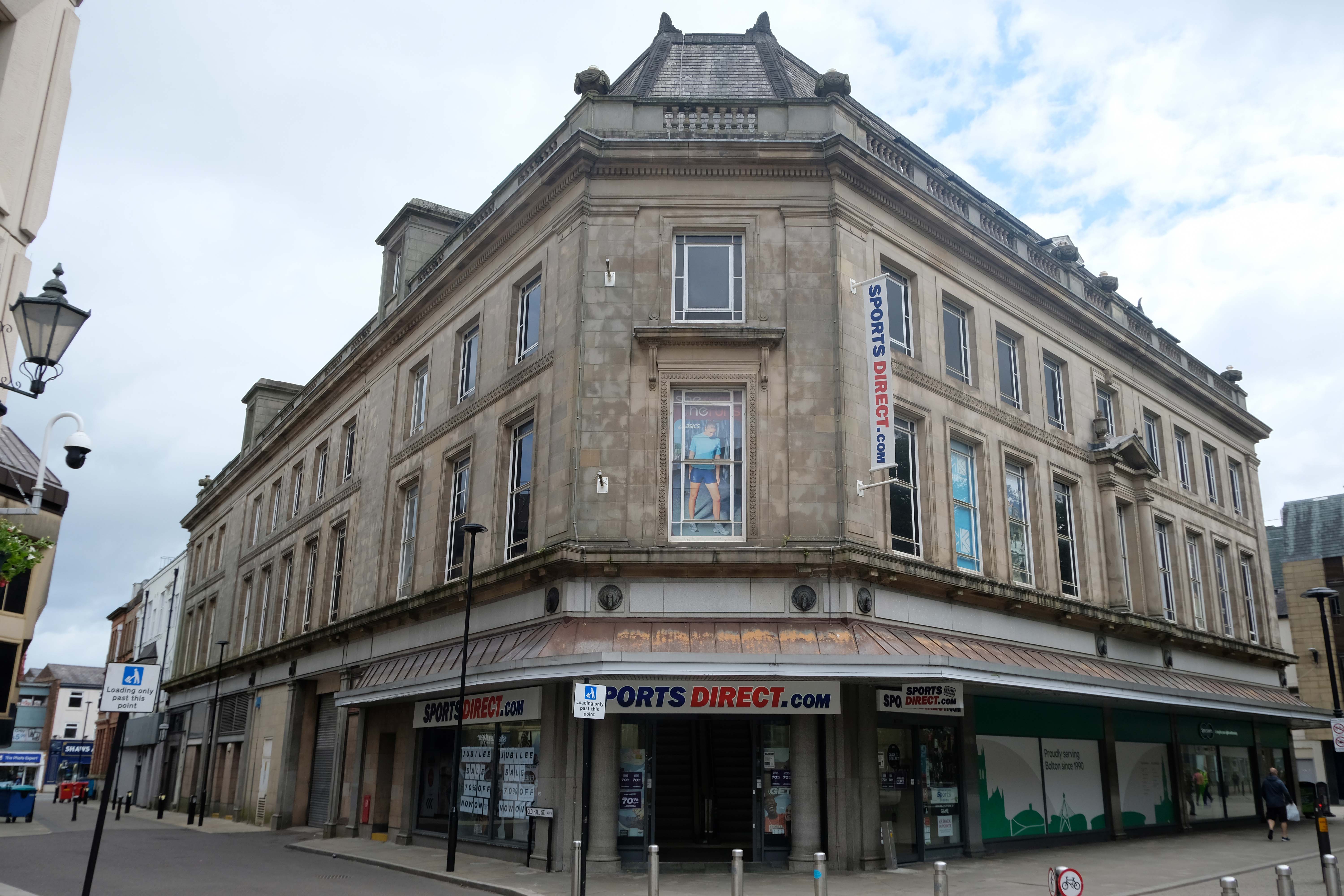
Former Lloyds Bank on Deangate corner, clad in white faience, looks BGH-ish but it’s not listed in the Lingards’ BGH monograph.

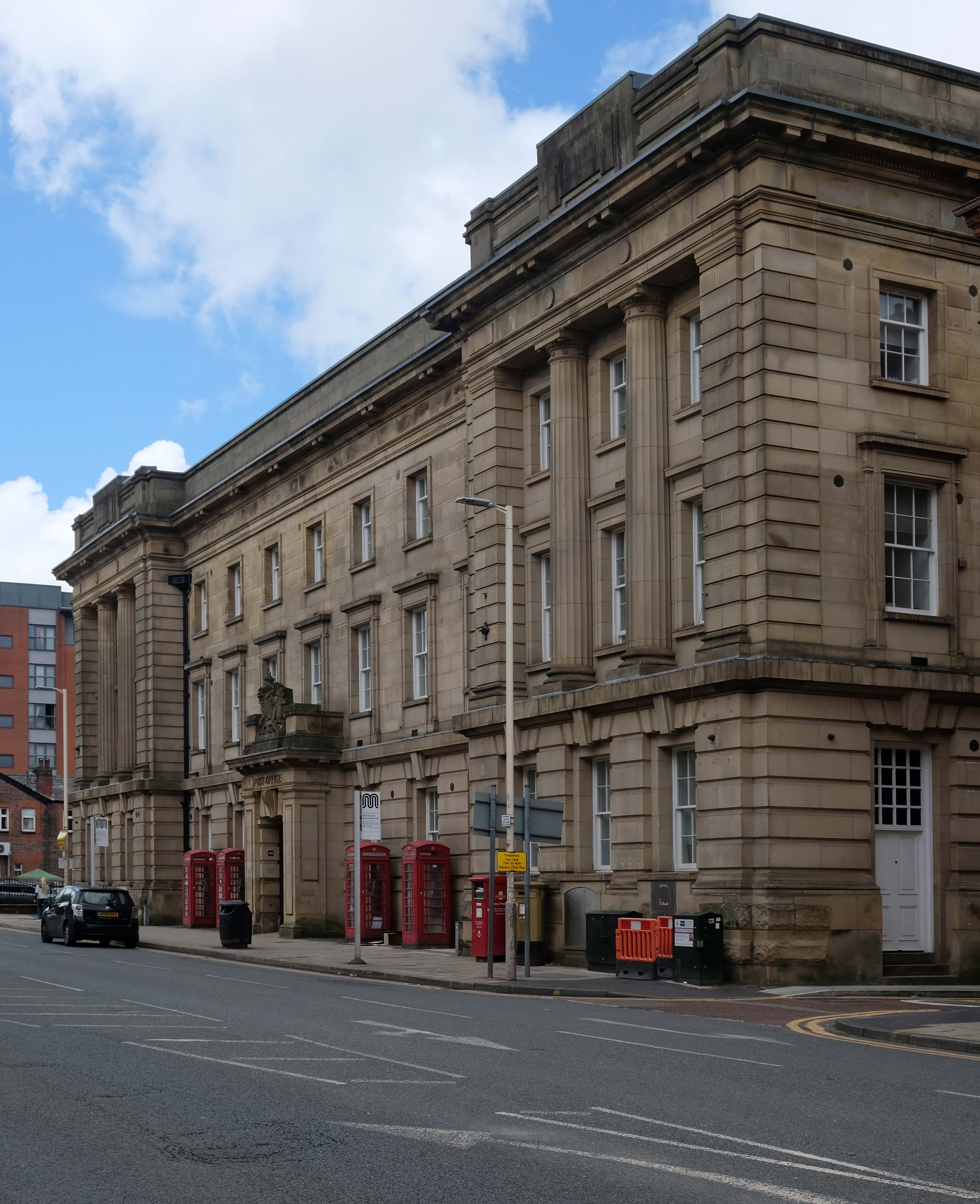
Across the way the unlisted Post Office – complete with listed phone boxes.
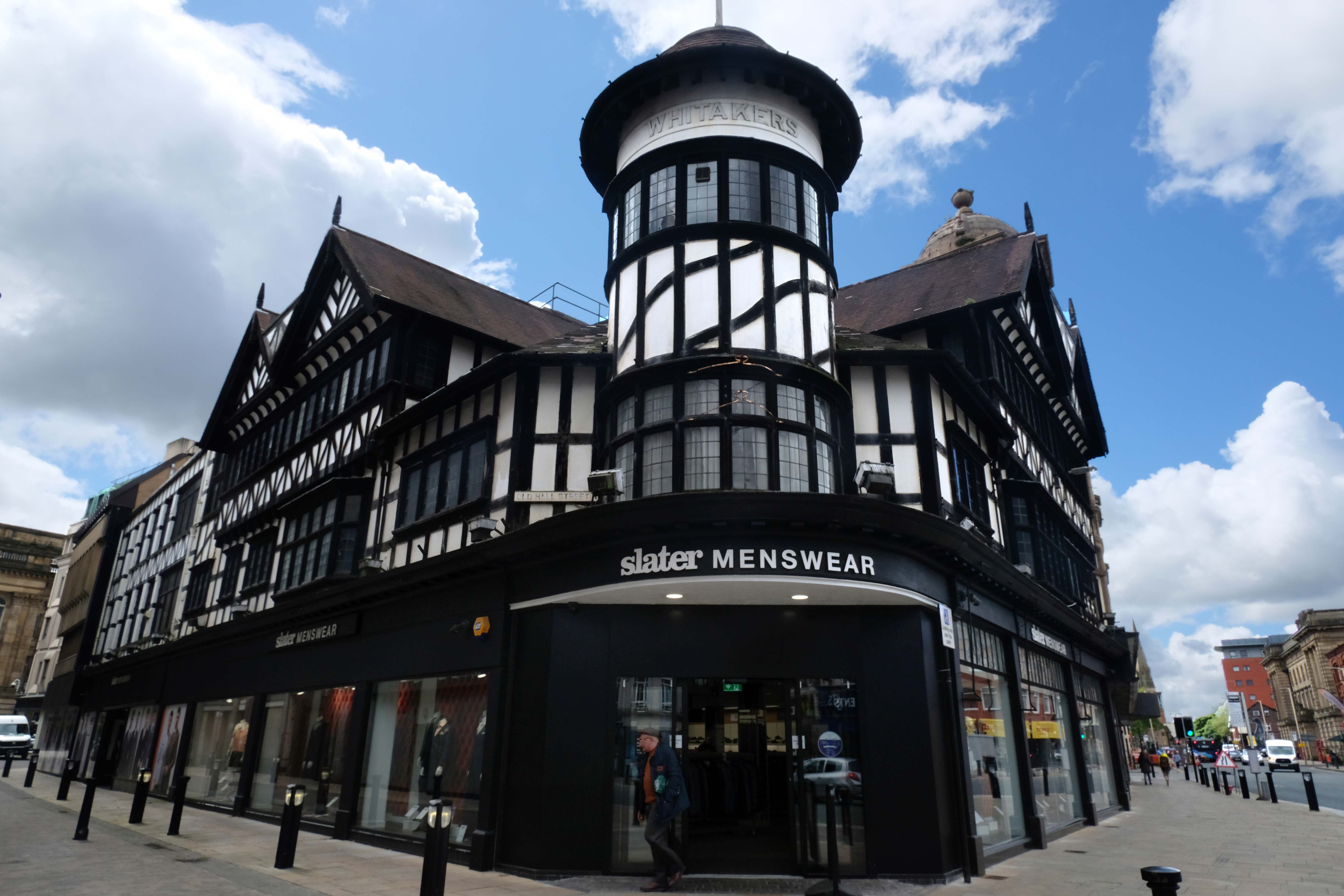
Whitakers 1907 by George Crowther.
Pastiche timber-framed with pepper-pot turret.
Incorporates genuine Tudor timbers from a demolished building nearby.
To the north of Deansgate, down Knowsley and Market Streets, is GT Robinson’s 1851-6 Market Hall. The interior is, according to Matthew Hyde: a lucid structure simply revealed.
He contrasts it with Market Place Centre 1980-88 by Chapman Taylor Partners: In that most ephemeral of styles, a jokey Postmodernism.
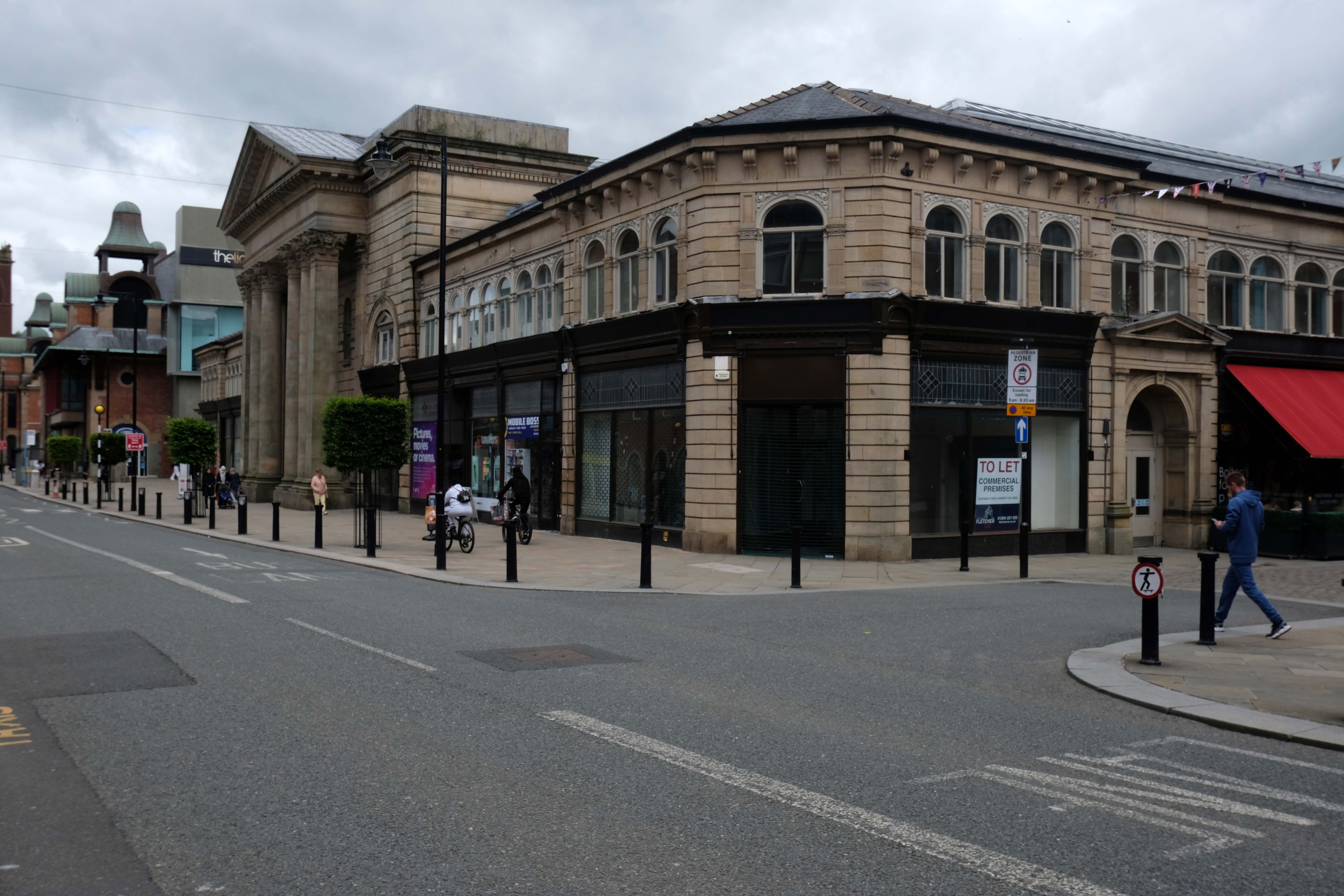
It does however echo Victoria Hall 1898-1900 BGH.

Chapman Taylor also did the 1980-8 Market Place Shopping Centre. The Market Hall was built over an impressive brick undercroft above the River Croal which has recently been opened up and is a destination.
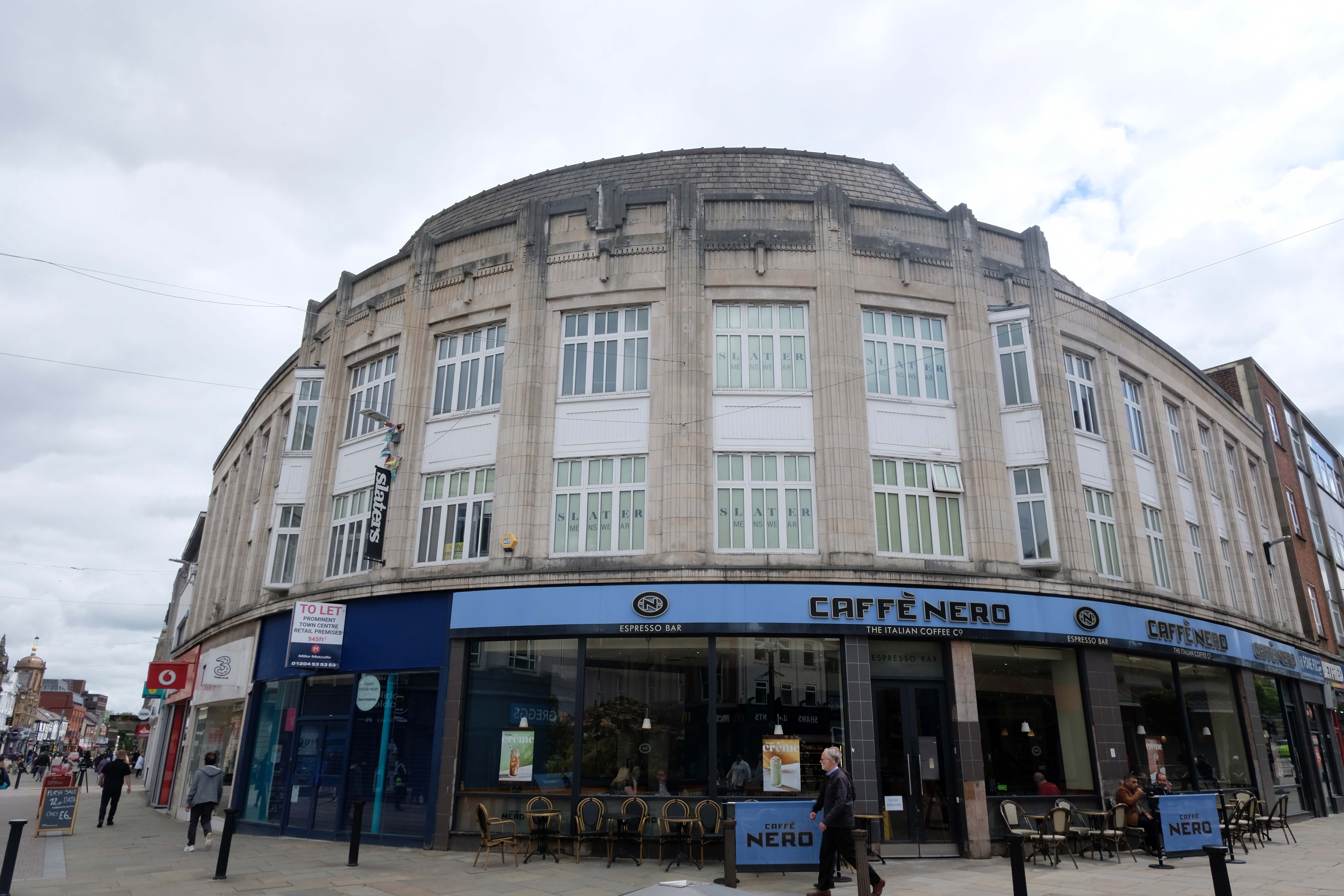
At the Oxford Street corner, Slater Menswear, above Caffé Nero, has Art Deco white faience upper storeys. Further down is the imposing Marks & Spencer, faced in dark stone 1965-67.
The mansard roof was added later.

Along Market Street, Clinton Cards is clad in white faience with Art Deco window details.

At the corner of Bridge Street is a charming 1960s clock; the building would not look out of place in Coventry.

Other buildings of interest on Deansgate include Superdrug – with some Art Deco features; Greggs by Ernest Prestwich of Leigh who trained with WE Riley.

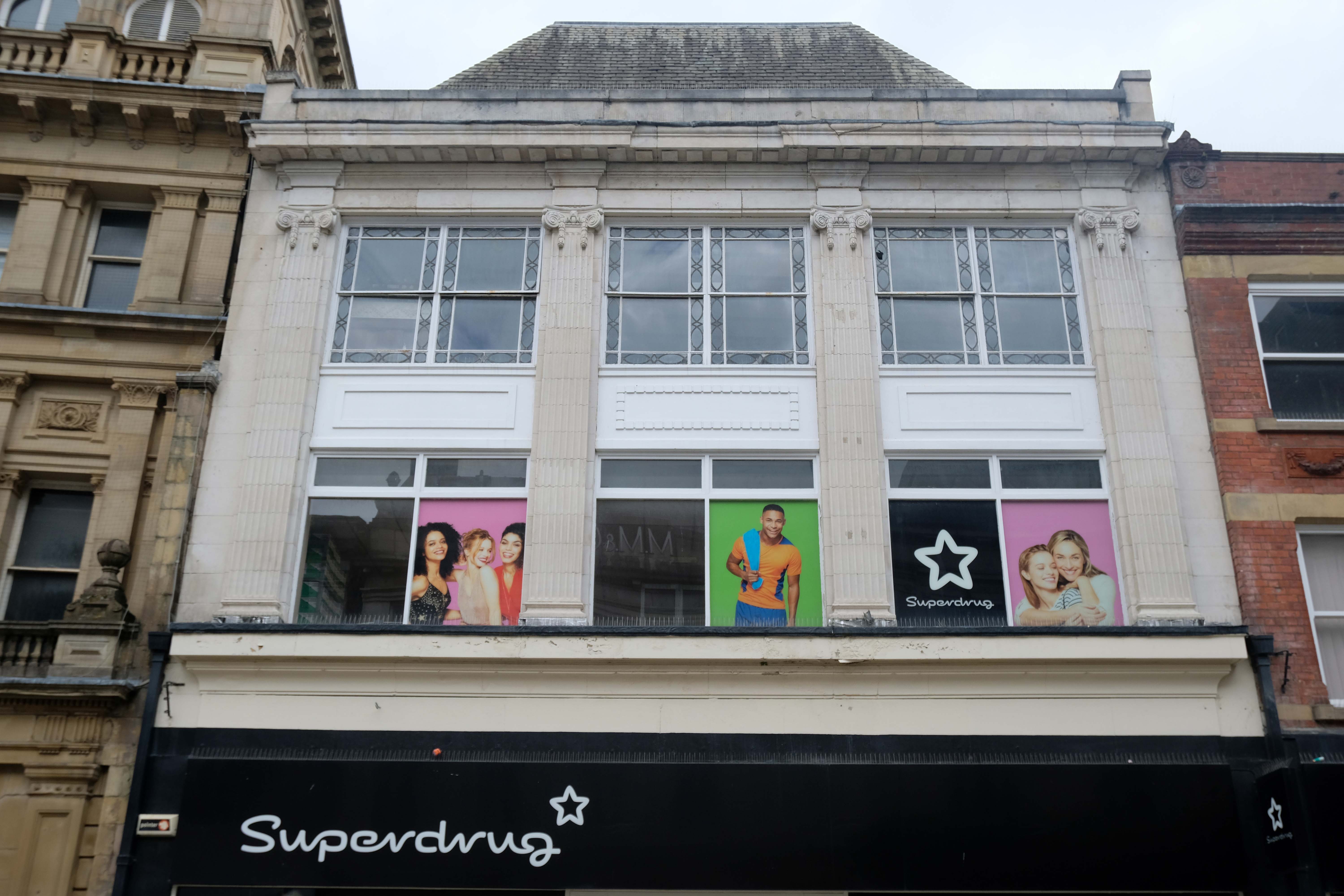
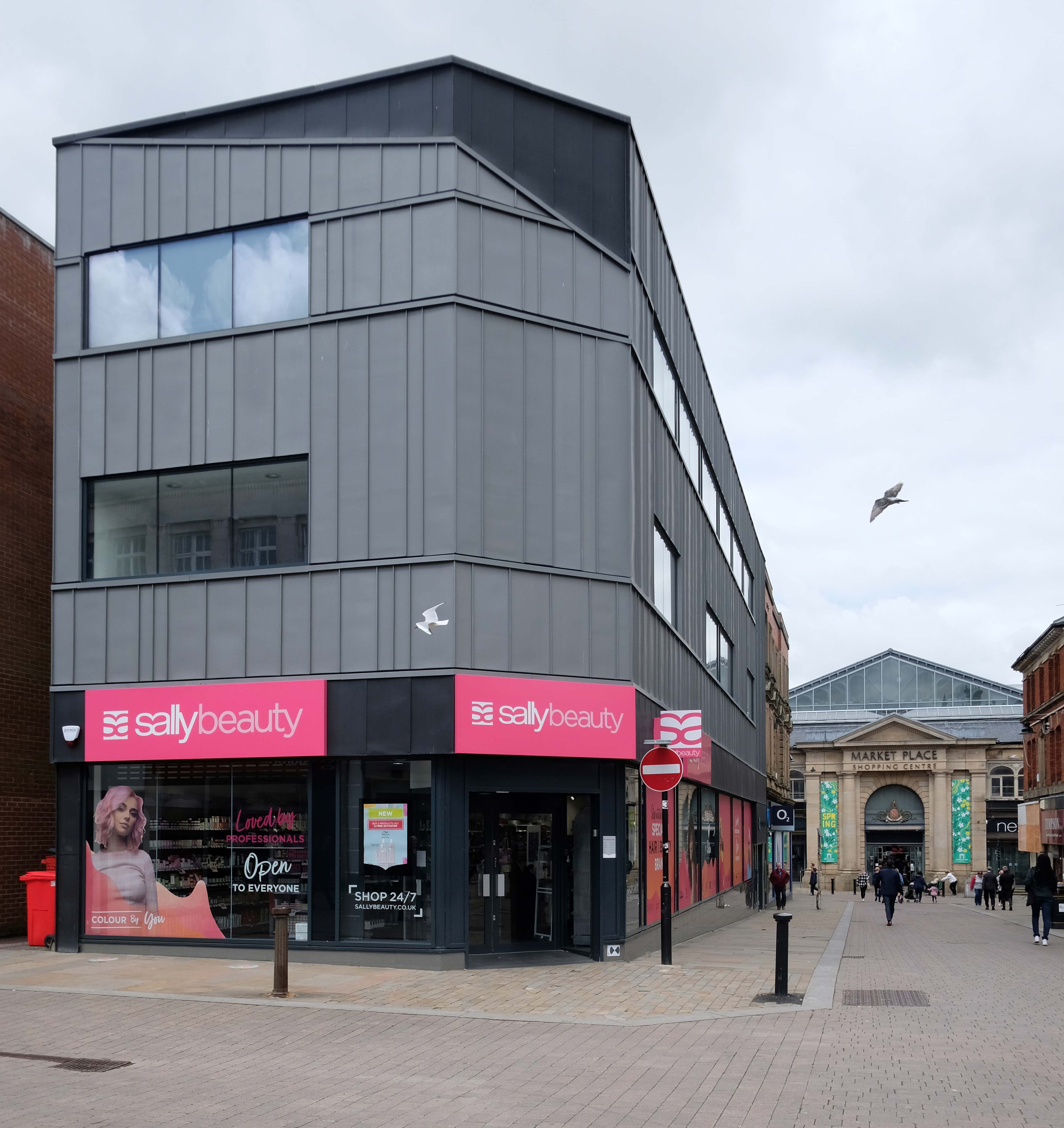
Sally Beauty and the Nationwide – entrance by William Owen of BGH.
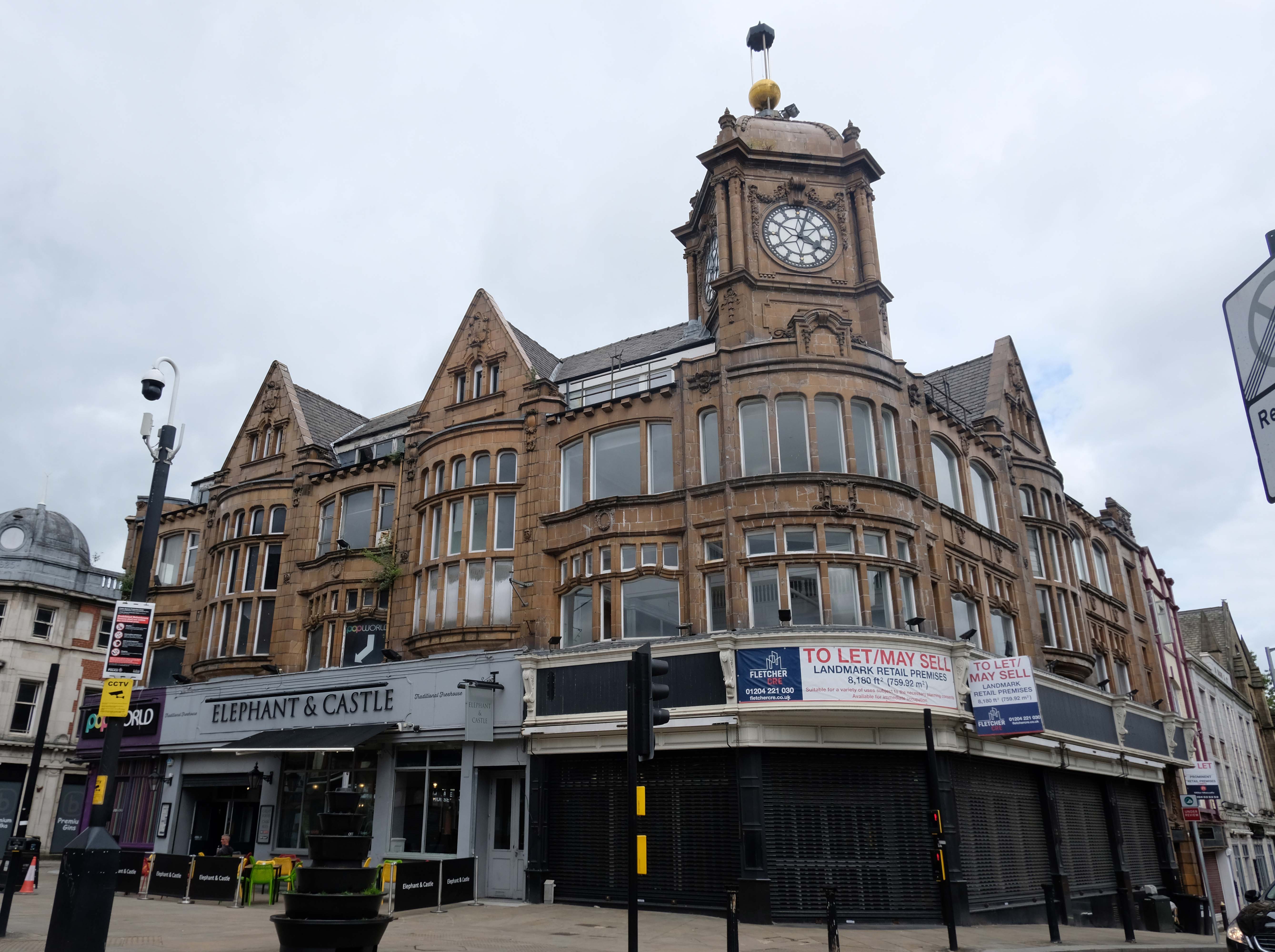
The former Preston’s jewellers, on the corner of Bank Street, has terracotta, by Thomas Smith & Sons 1908-13, a prolific local firm. It had a time ball, on the clock tower, which was raised daily at 9am and dropped at 10am, on receipt of a telegraph signal from Greenwich.
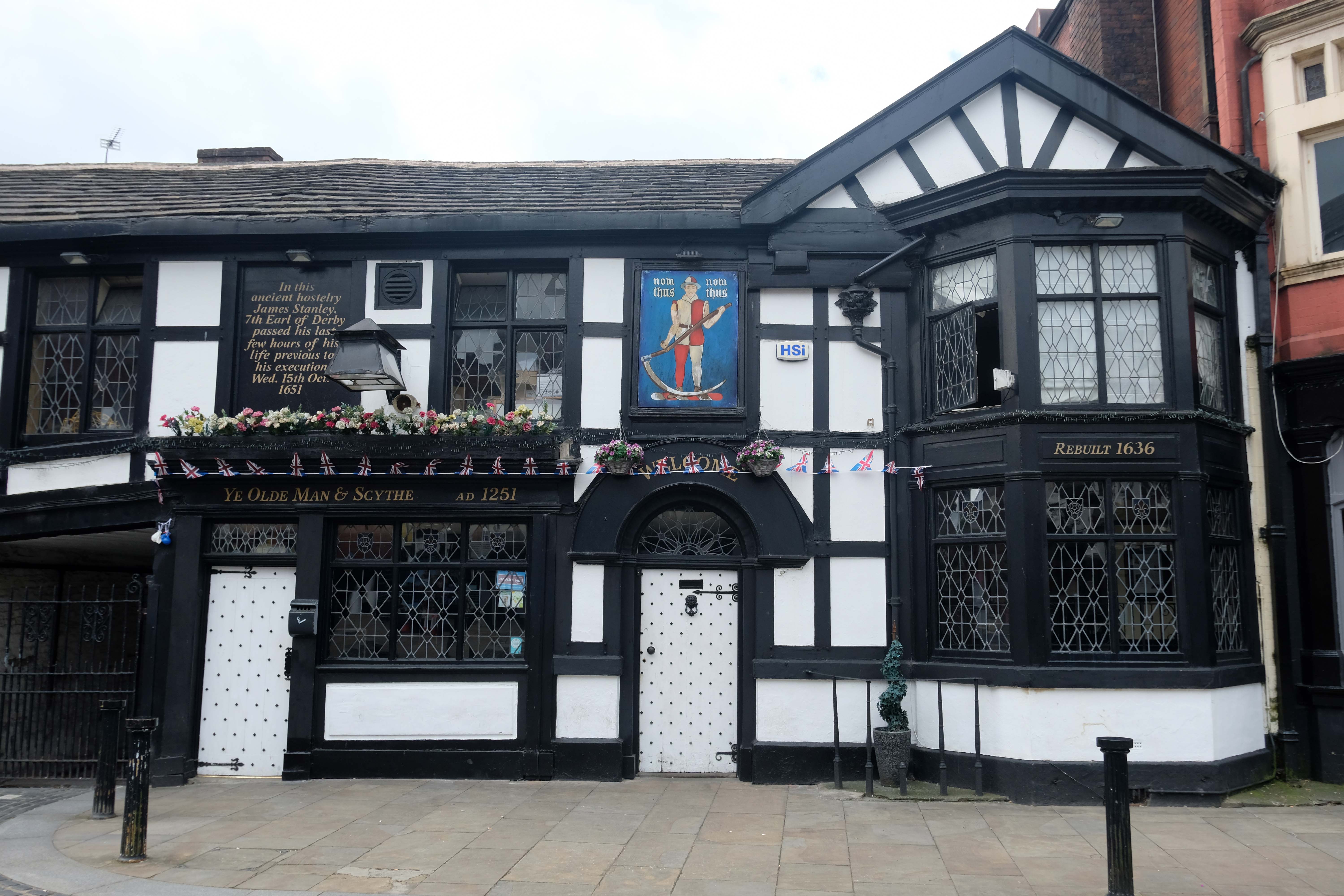
The 1909 Bolton Cross, in Dartmoor granite, by BGH replaced an earlier one which is now kept at Bolton School. Churchgate contains the 1636 Ye Olde Man & Scythe; the former coaching inn Swan Hotel, reconstructed in the 1970s to look more genuinely Georgian and Ye Olde Pastie Shoppe 1667.
Stone Cross House 1991 was built for the Inland Revenue in an aggressively red brick and spiky style. It has a rather desperate chandelier in the foyer.

The gates of St Peter’s church EG Paley 1871 are framed by Travel House, Newspaper House -1998 and Churchgate House and Huntingdon House 1974.
St Peter’s has a Neo-Gothic font and cover by N Cachemaille-Day 1938. The gates and gate piers may look early C20 but they are late C18.
Samuel Crompton 1753-1827, the inventor of the mule, is buried under the large granite monument, erected in 1861.
At the corner of Silverwell and Institute Streets is WT Gunson & Son’s 1970 Friends Meeting House: decent with a light elevated roof corner. It has a tilted roof floating on the glazed upper walls.
Scott House has a charming 1926 plaque commemorating Sir James Scott and his wife Lady Anne. Scott started the Provincial Insurance Company.
The two storey offices of Fieldings and Porter are a successful piece of infill by BGH.

Nip around the back to get a glimpse of this cracking stairway.
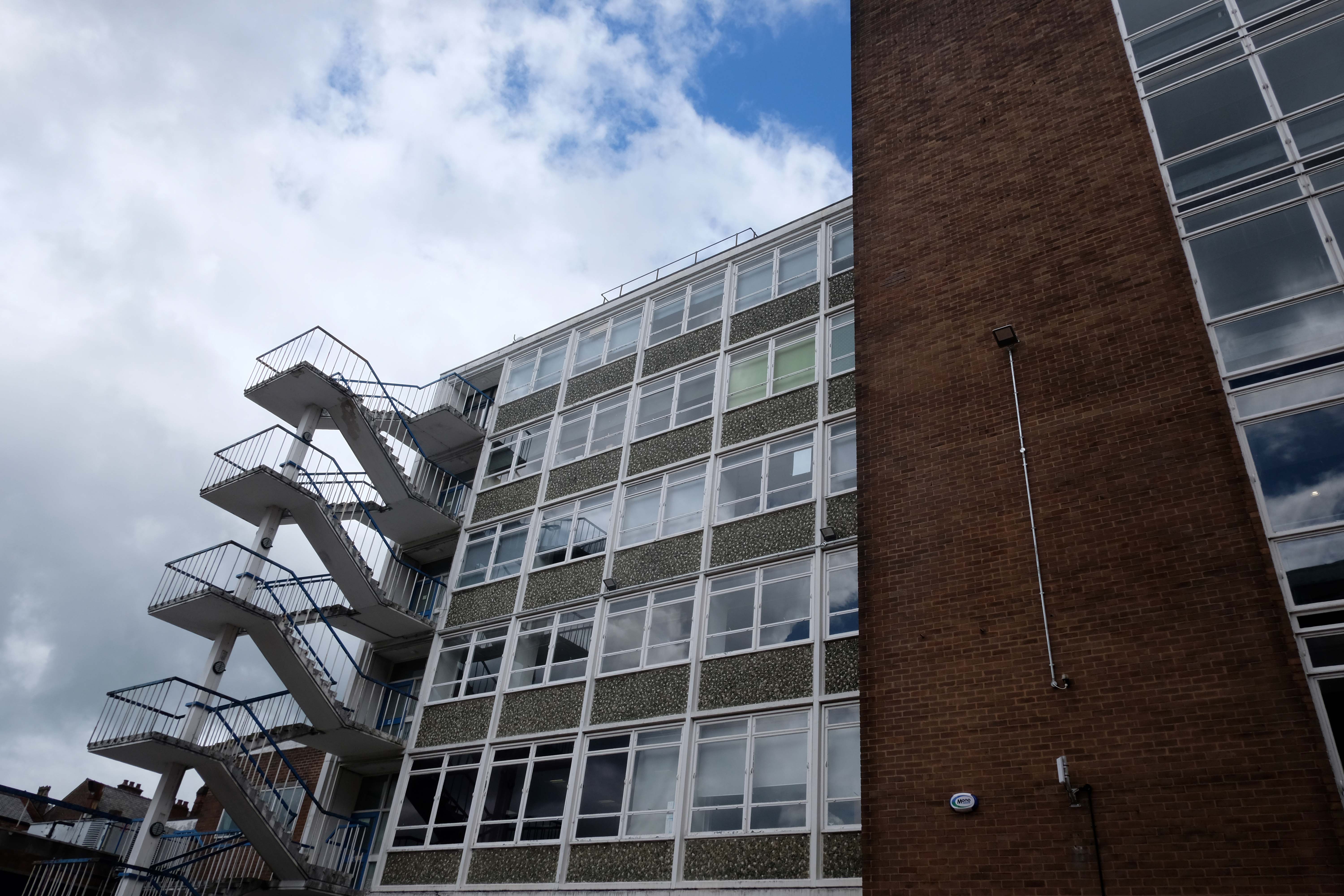


Silverwell Street 1810 is named after the Silver Well. Bradshaw Gass & Hope now self-described as Construction Design Consultants, not architects, are at number 19. Note the plaque to JW Wallace, founder of the Eagle Street College, dedicated to the works of the American poet, Walt Whitman. Wallace worked there from 1867 to 1912. The plaque is ringed by a quote from Whitman:
All architecture is what you do to it when you look upon it.
Whitman corresponded with his Bolton admirers; the Museum contains early editions of his works and his stuffed canary.
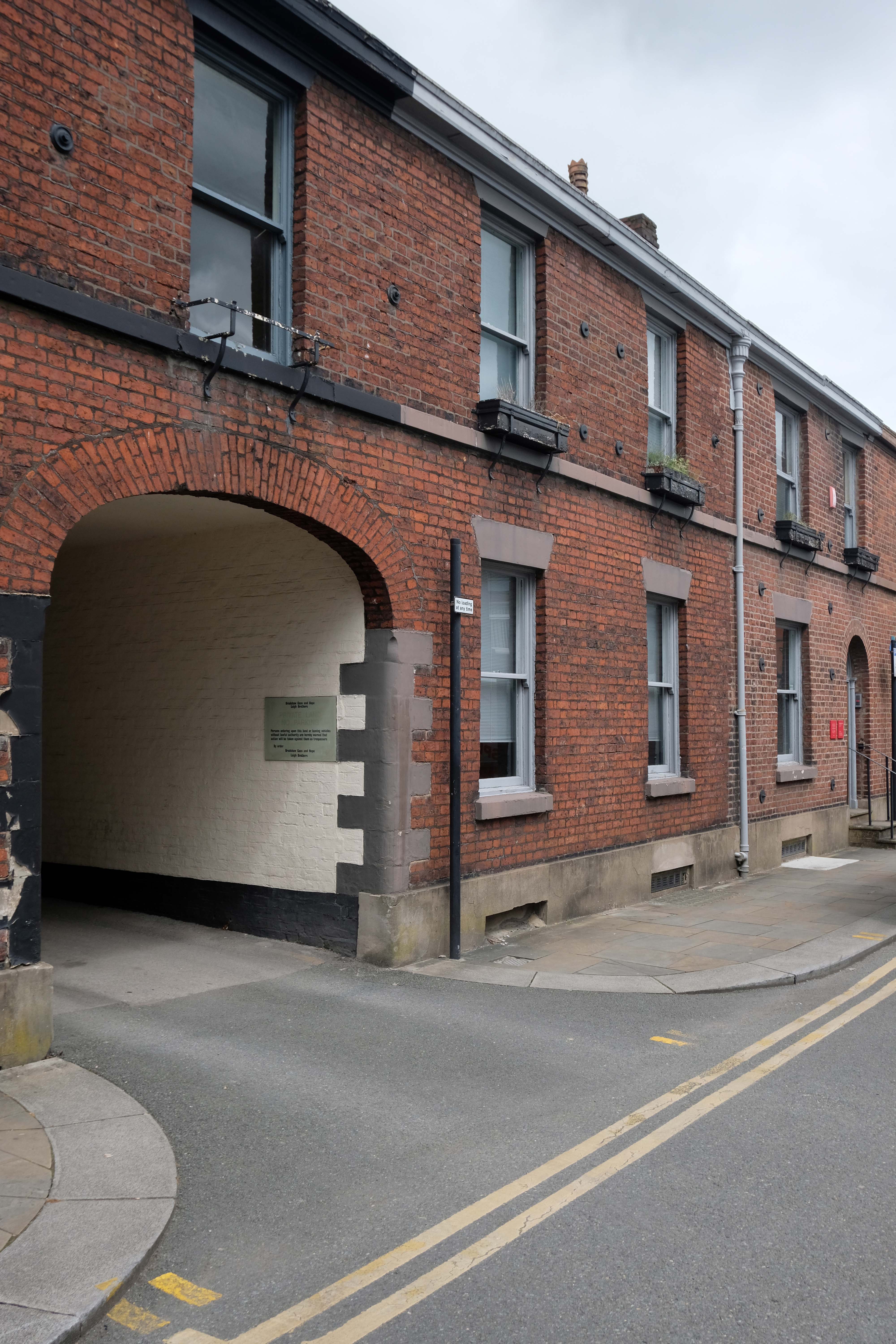
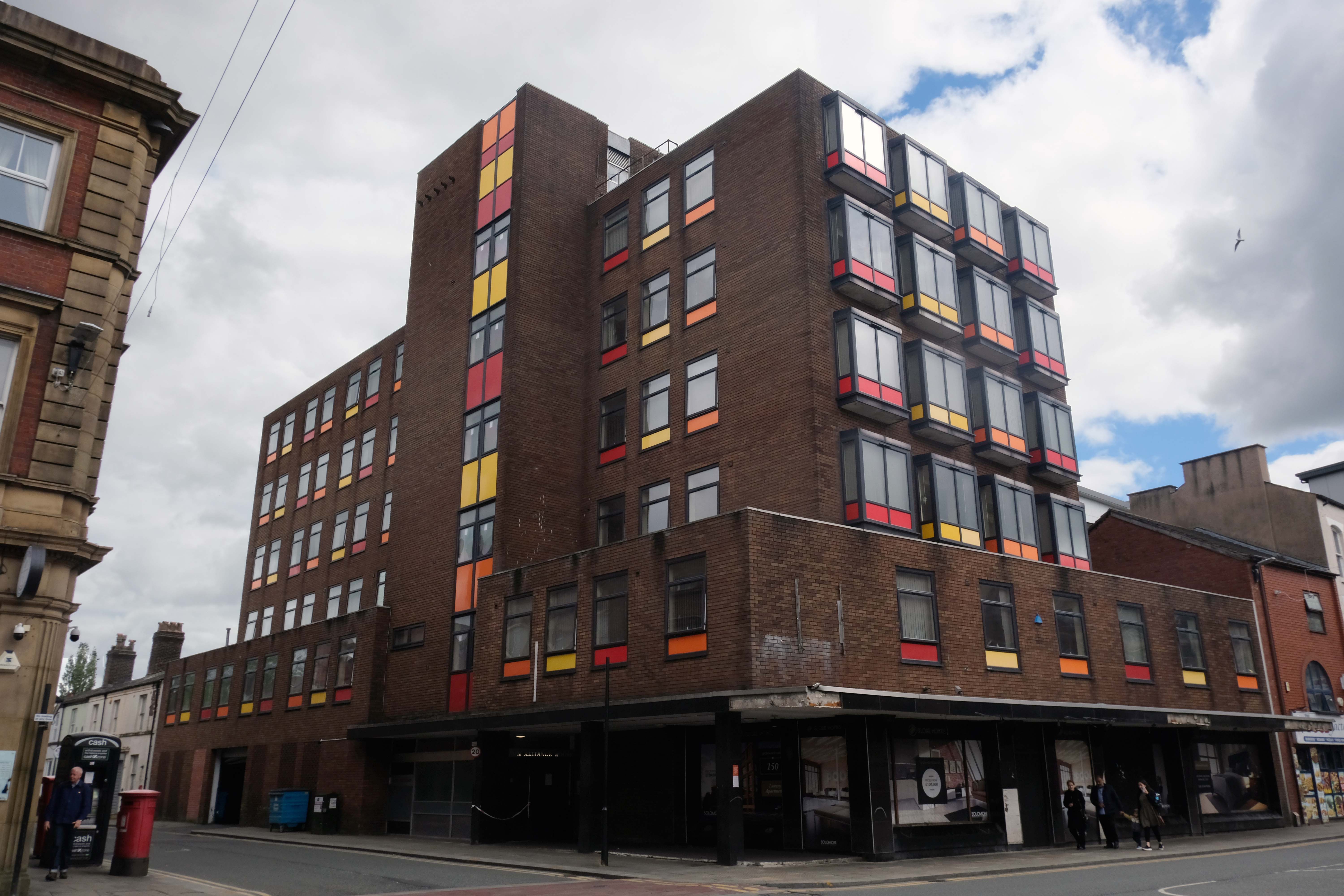
Further down Silverwell Street is the 1903 Estate Office of the Earl of Bradford who still owns a large area of Bolton. At the end of Silverwell Street is the former Sun Alliance House, now converted to flats, the colourful panels are a later addition.
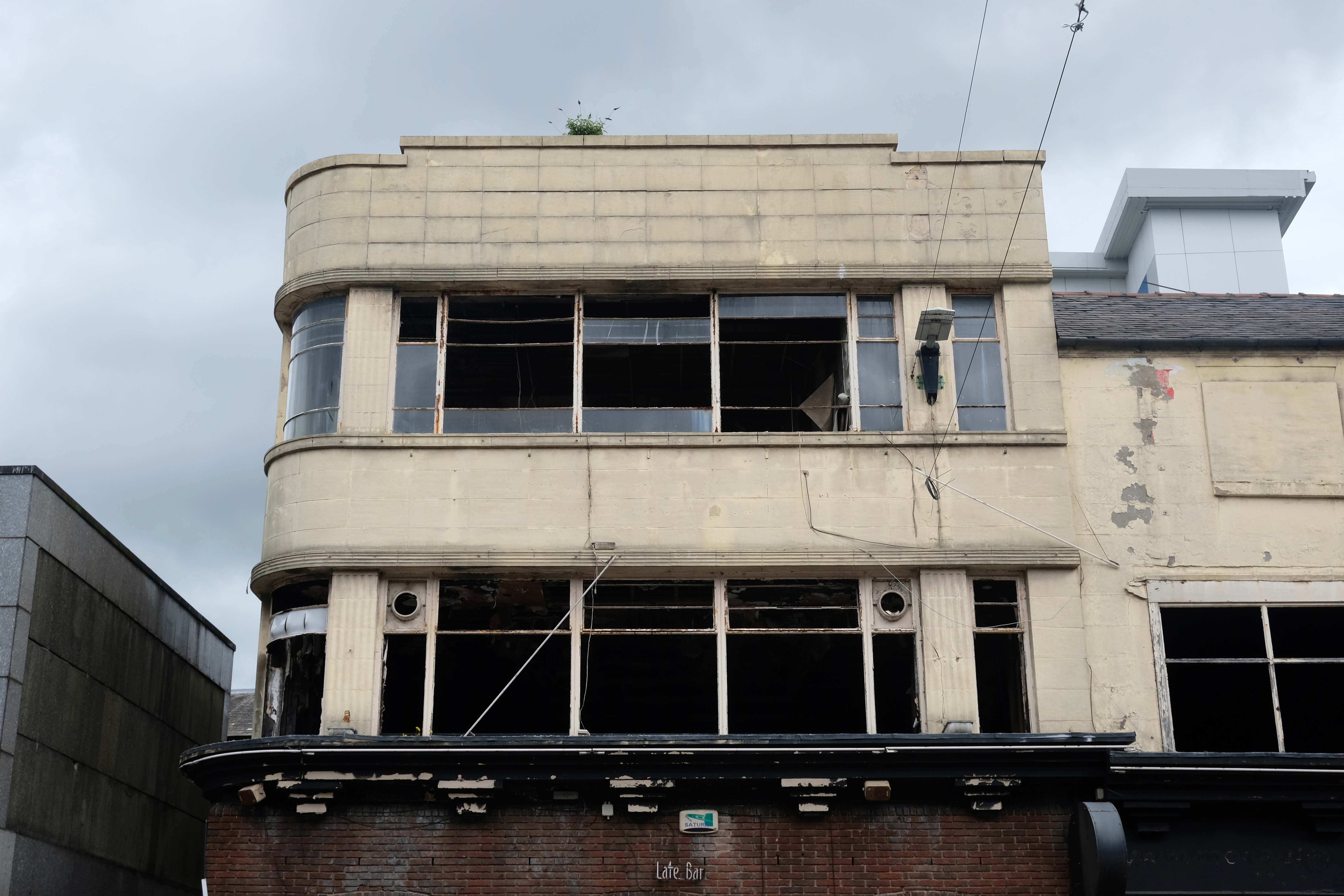
Bradshawgate and Silverwell lane corner has a former café bar with original curved Moderne windows. This was originally Vose’s tripe restaurant, later UCP – United Cattle Products. It was most stylish and elegant, decorated in 1930s streamline Moderne style, with starched white tablecloths, silver service and smart waitresses.
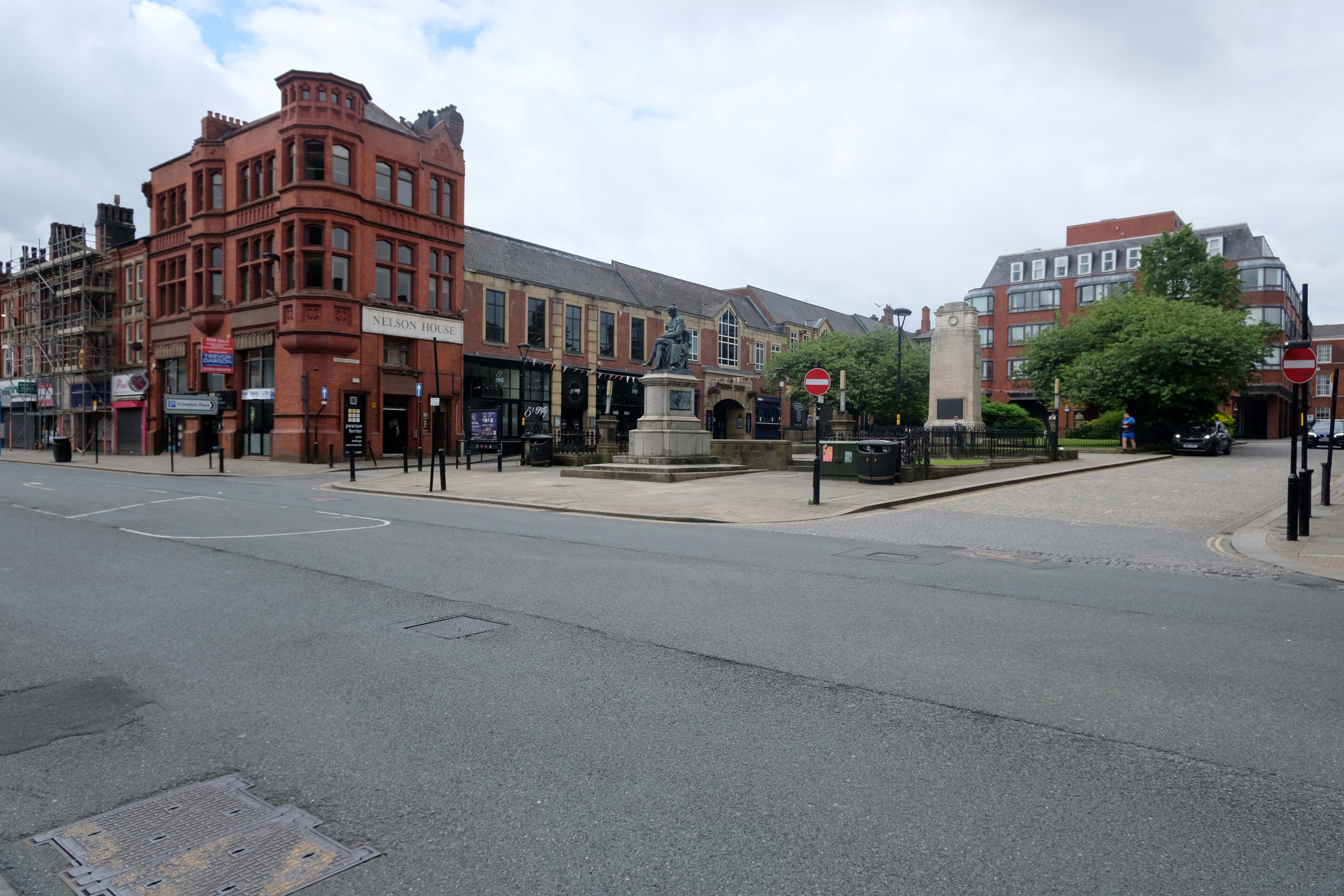
Nelson Square was opened on March 23, 1893. The cenotaph memorial to the Bolton Artillery is by Ormrod, Pomeroy & Foy 1920. Calder Marshall sculpted the statue of Samuel Crompton 1862. The shiny red former Prudential Assurance office 1889 isn’t by Waterhouse but by Ralph B. Maccoll of Bolton. Matthew Hyde in Pevsner describes the early C20 faience facades of Bradshawgate as:
A plateful of mushy pea, ginger nut, liver, tripe and blood orange shades.
Infirmary Street has a 1970s office block with an octagonal, nicely lettered plaque to WF Tillotson, newspaper publisher. Round the corner in Mawdsley Street, the former County Court 1869 TC Sorby, 1869. Opposite, at the corner, is GWBD Partnership’s 1987 St Andrew’s Court, containing a somewhat whimsical recreation of a Victorian shopping street in miniature. The job architect was J Holland. Matthew Hyde says:
Neatly contrived on a tight site.
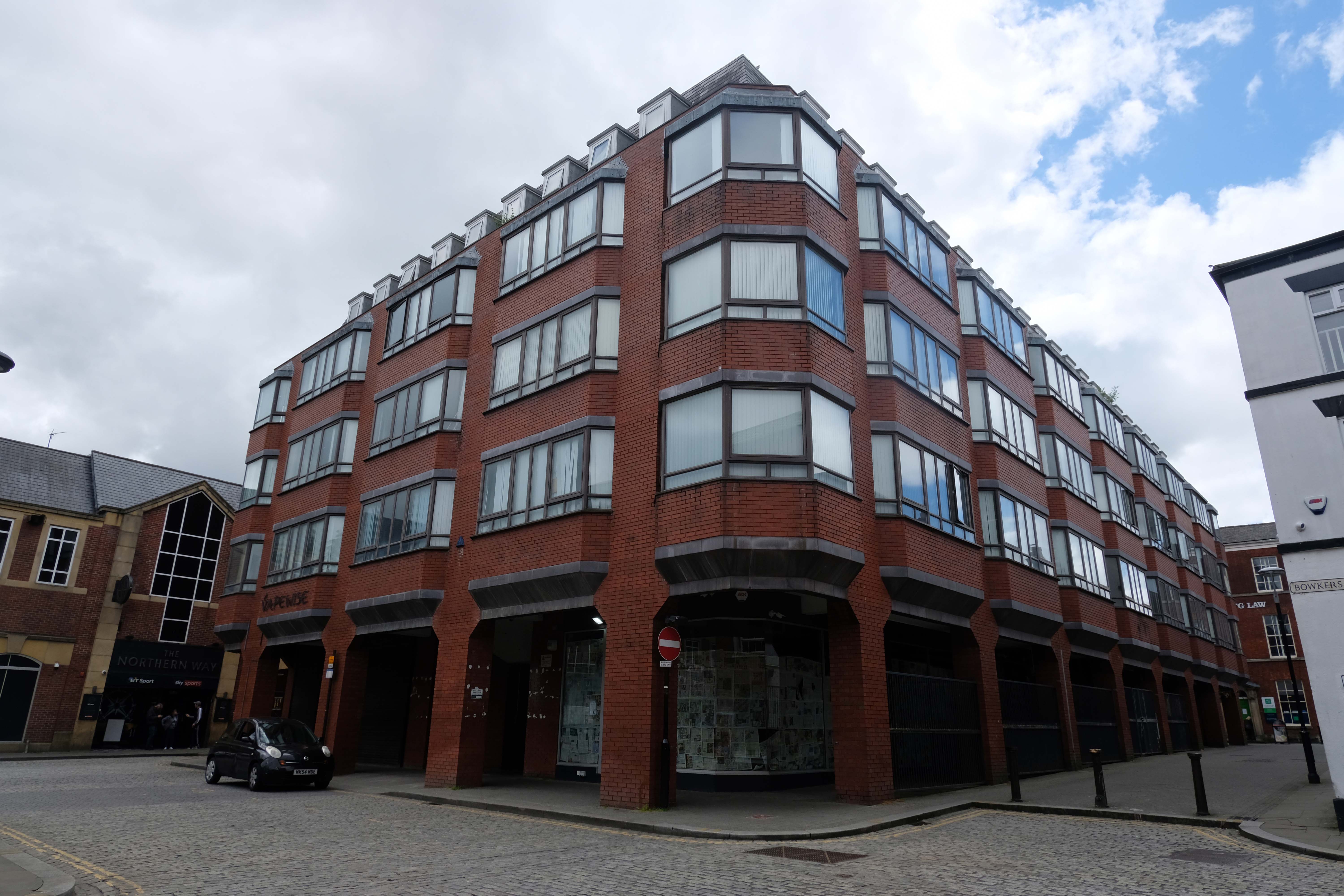
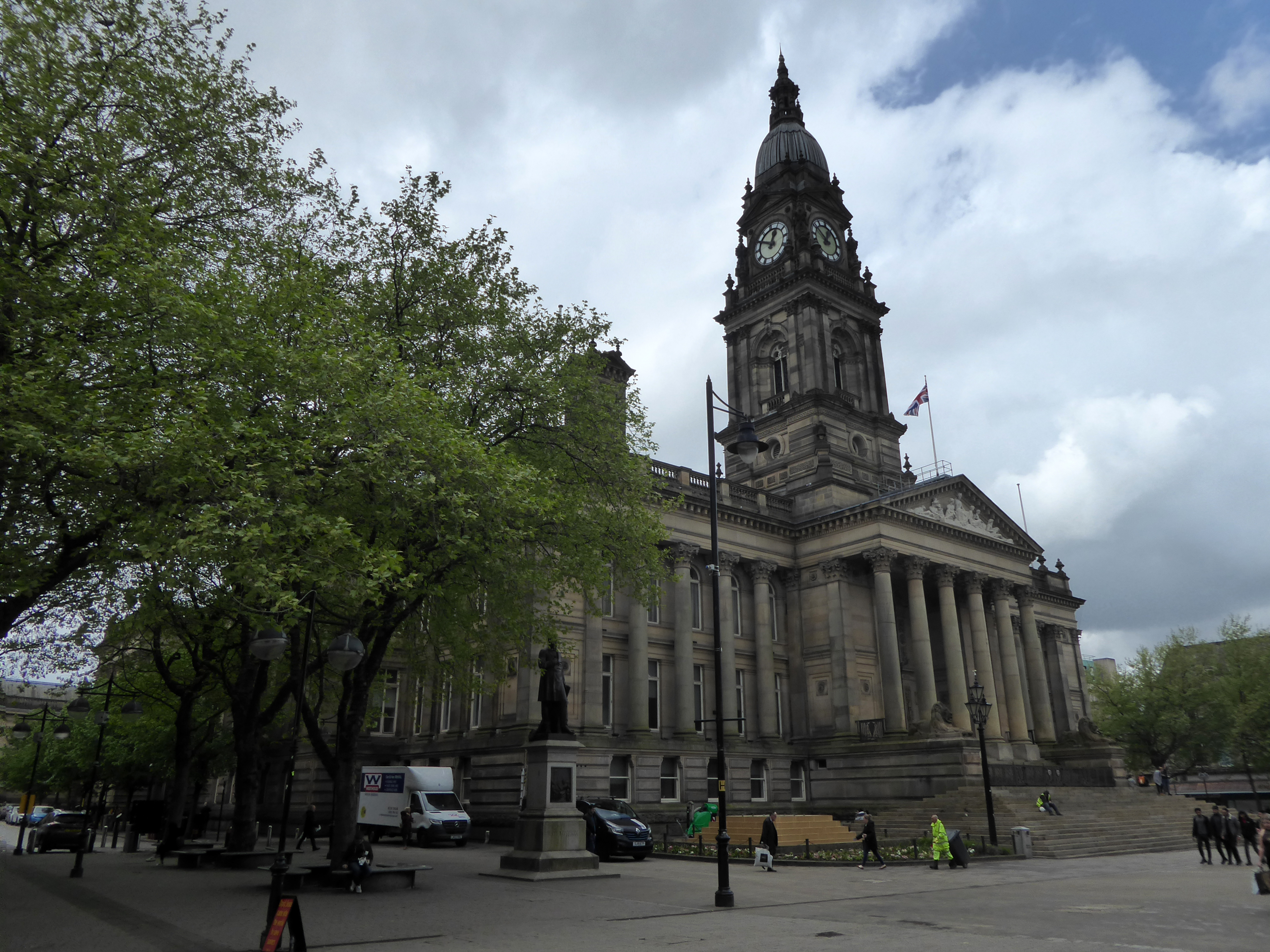
Into Exchange Street and through the former Arndale Centre 1971; low and mean according to Pevsner 2004, now re-branded as Crompton Place 1989 Bradshaw, Rose & Harker and still dreary, we go to Victoria Square and the Town Hall. The classical building on the left is the former Bolton Exchange 1824-5 Richard Lane.

The square was pedestrianised in 1969, to the Planning Department’s designs, under RH Ogden. It was quite an early scheme which won three awards including one, unsurprisingly, from the Concrete Society. The fountains were designed by Geoffrey Brooks and the trees were planted by the Earl of Bradford.

Owen Hatherley in Modern Buildings in Britain says of the town
It feels as if you’re in a real city, like in Europe, and you can drink your cup of tea in repose while admiring the monuments.
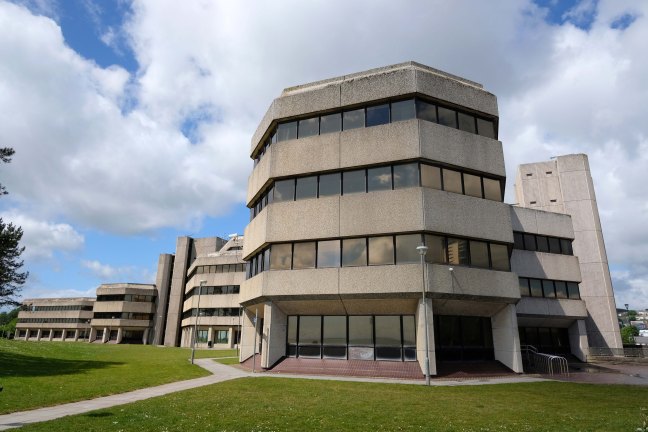
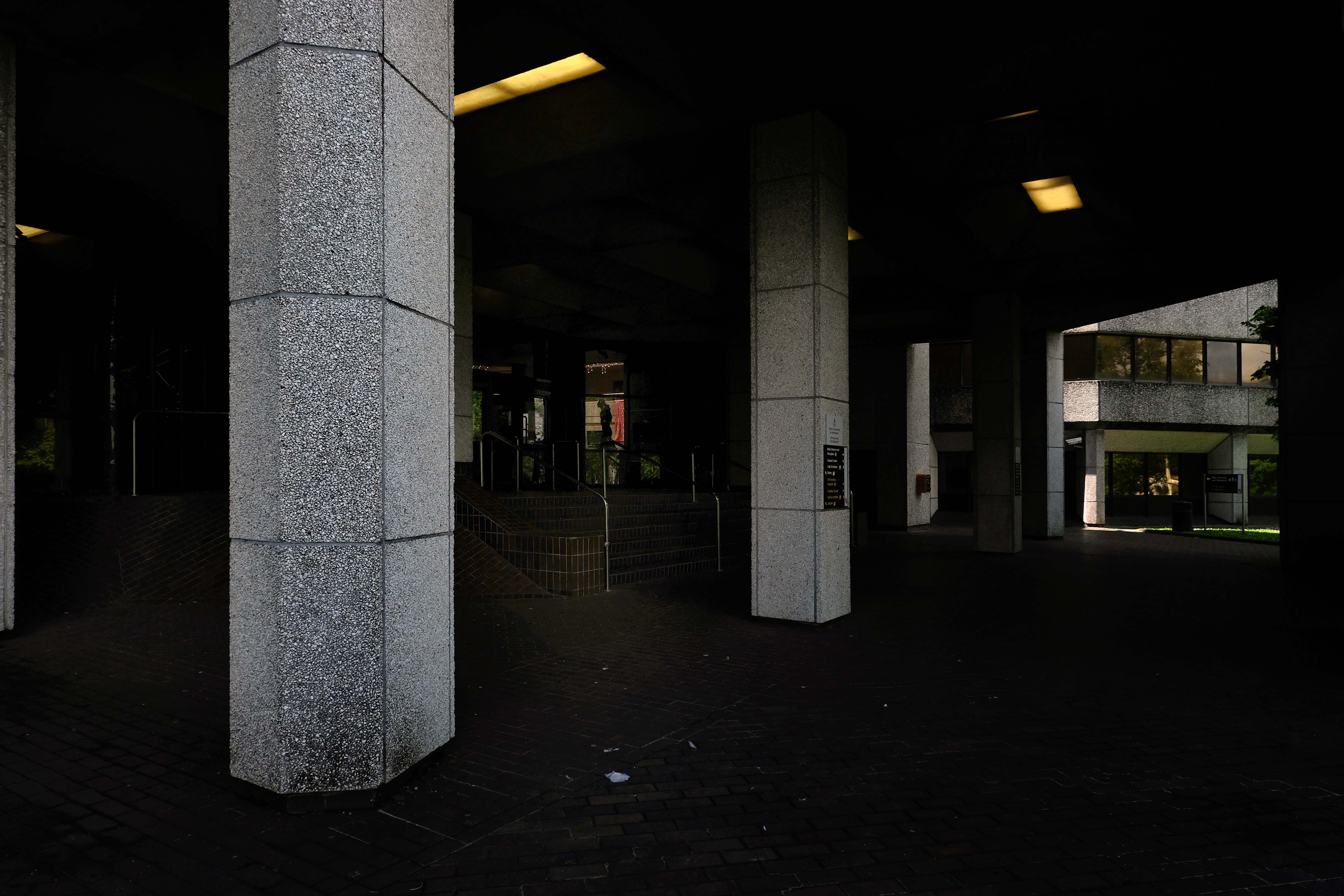
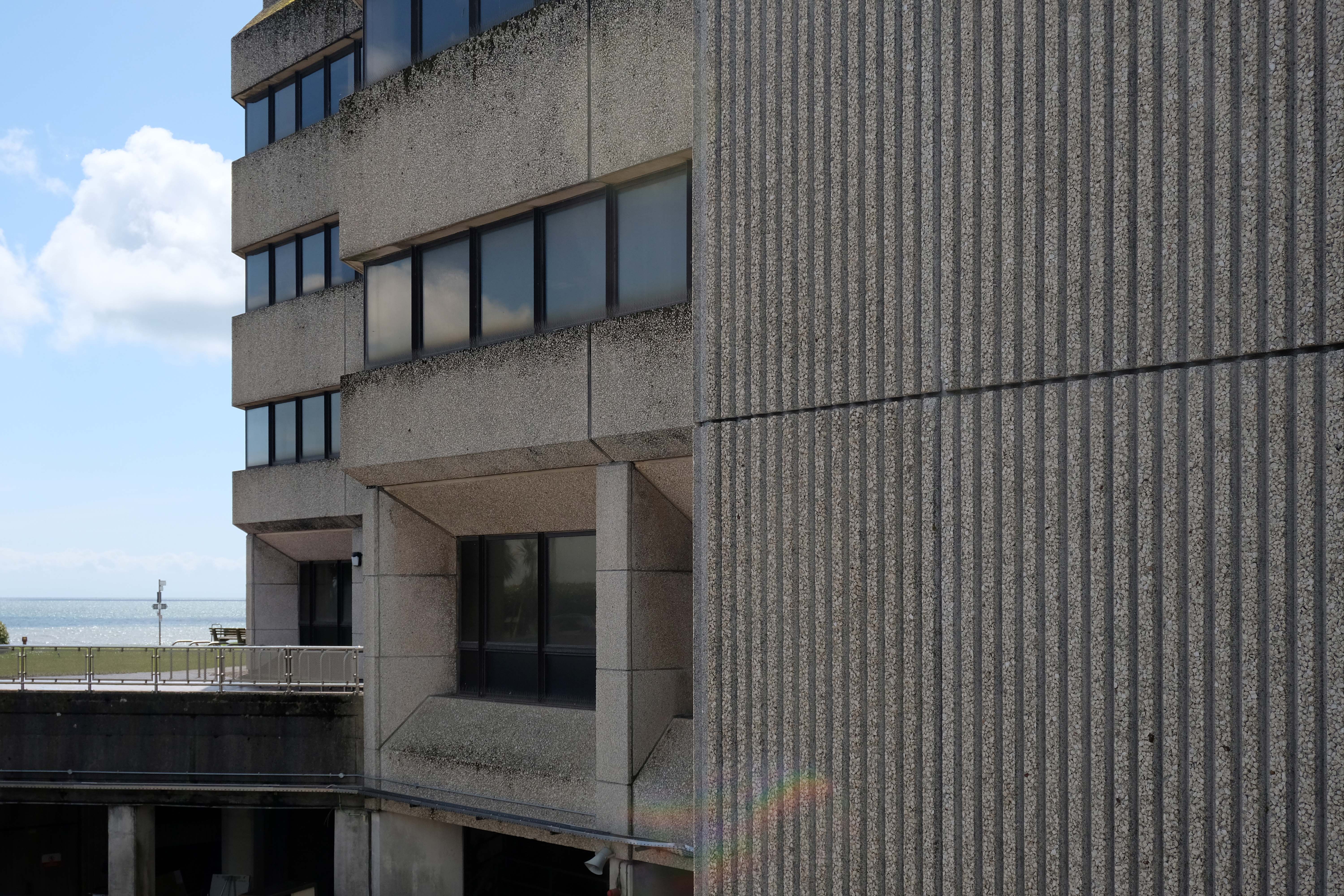
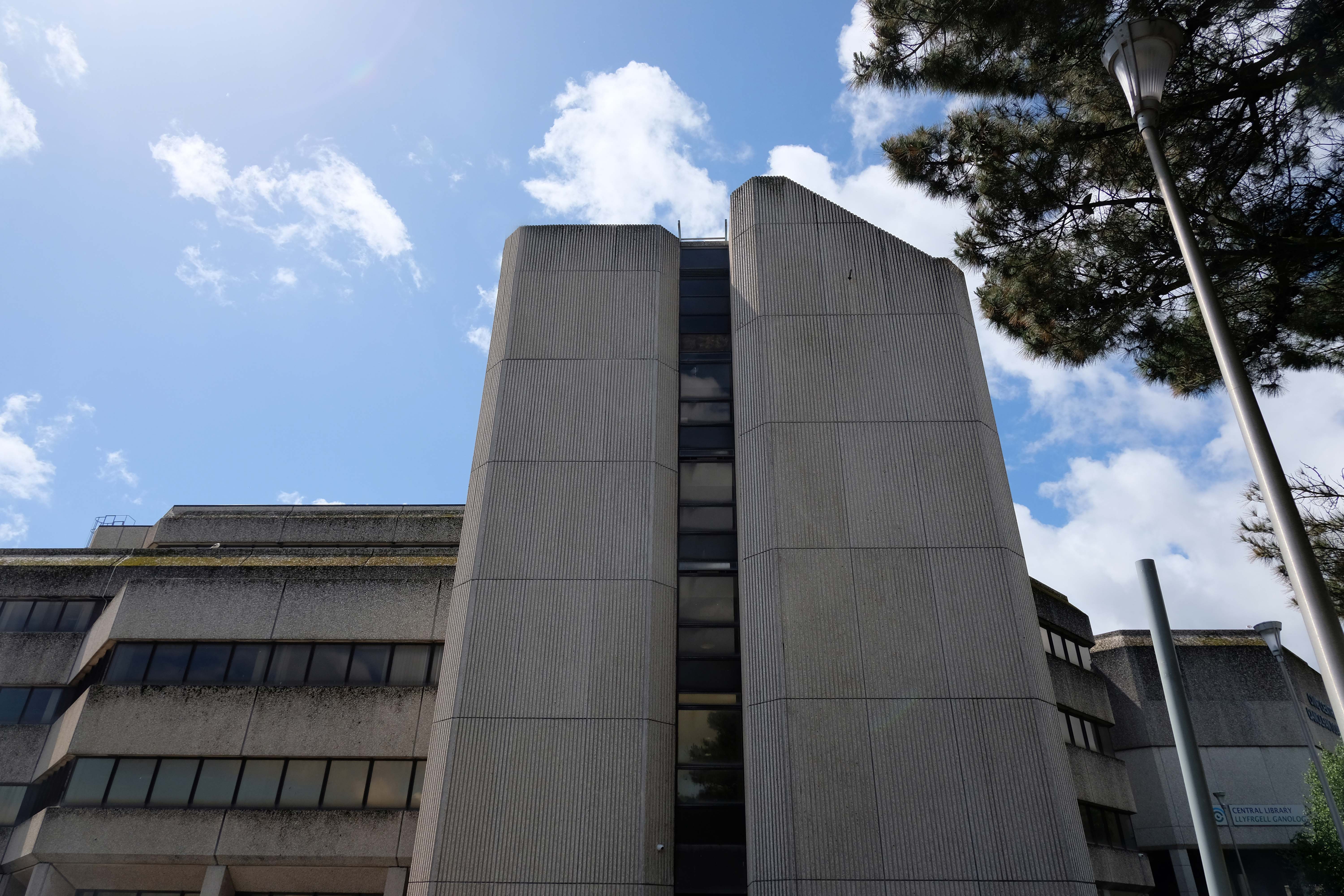
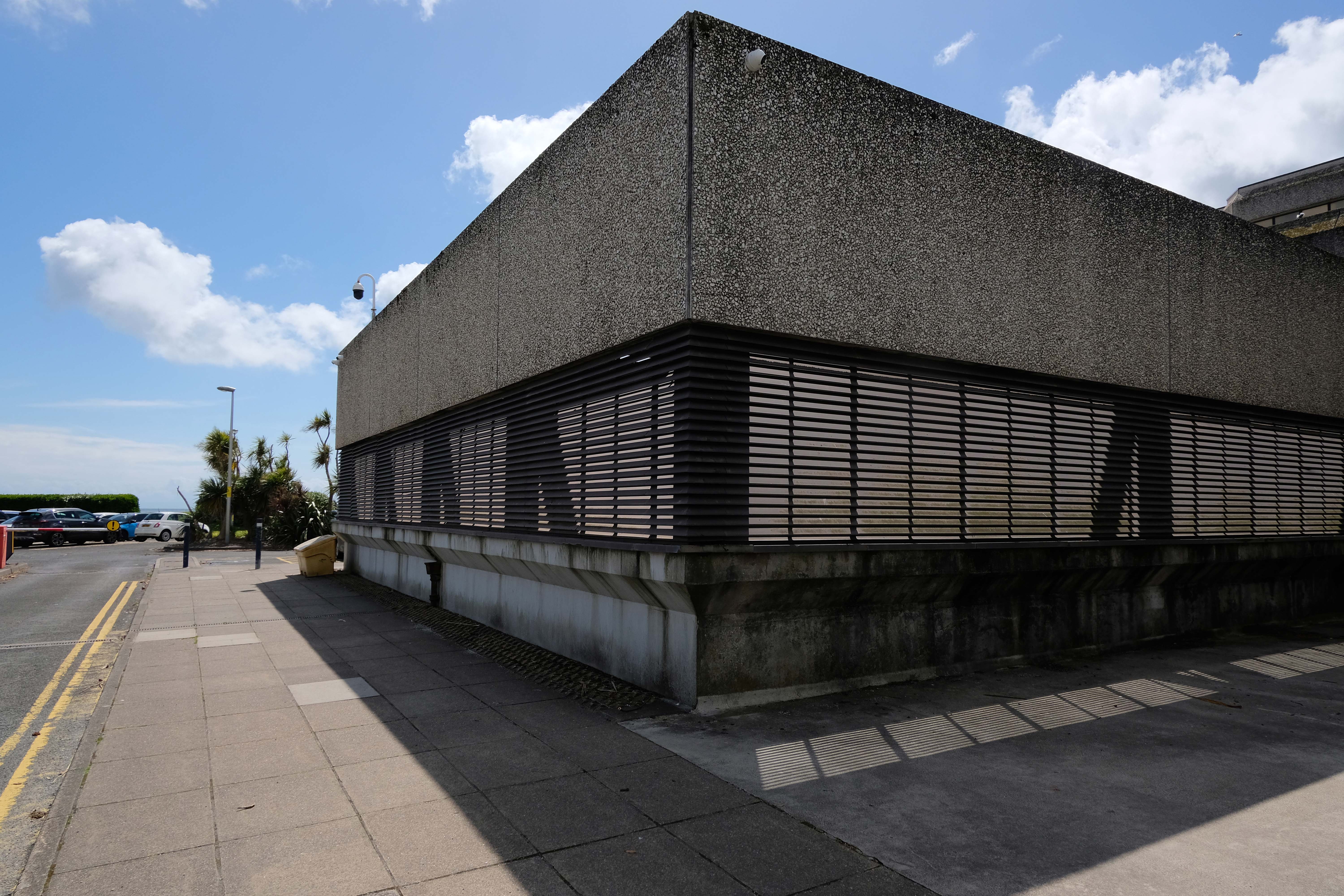
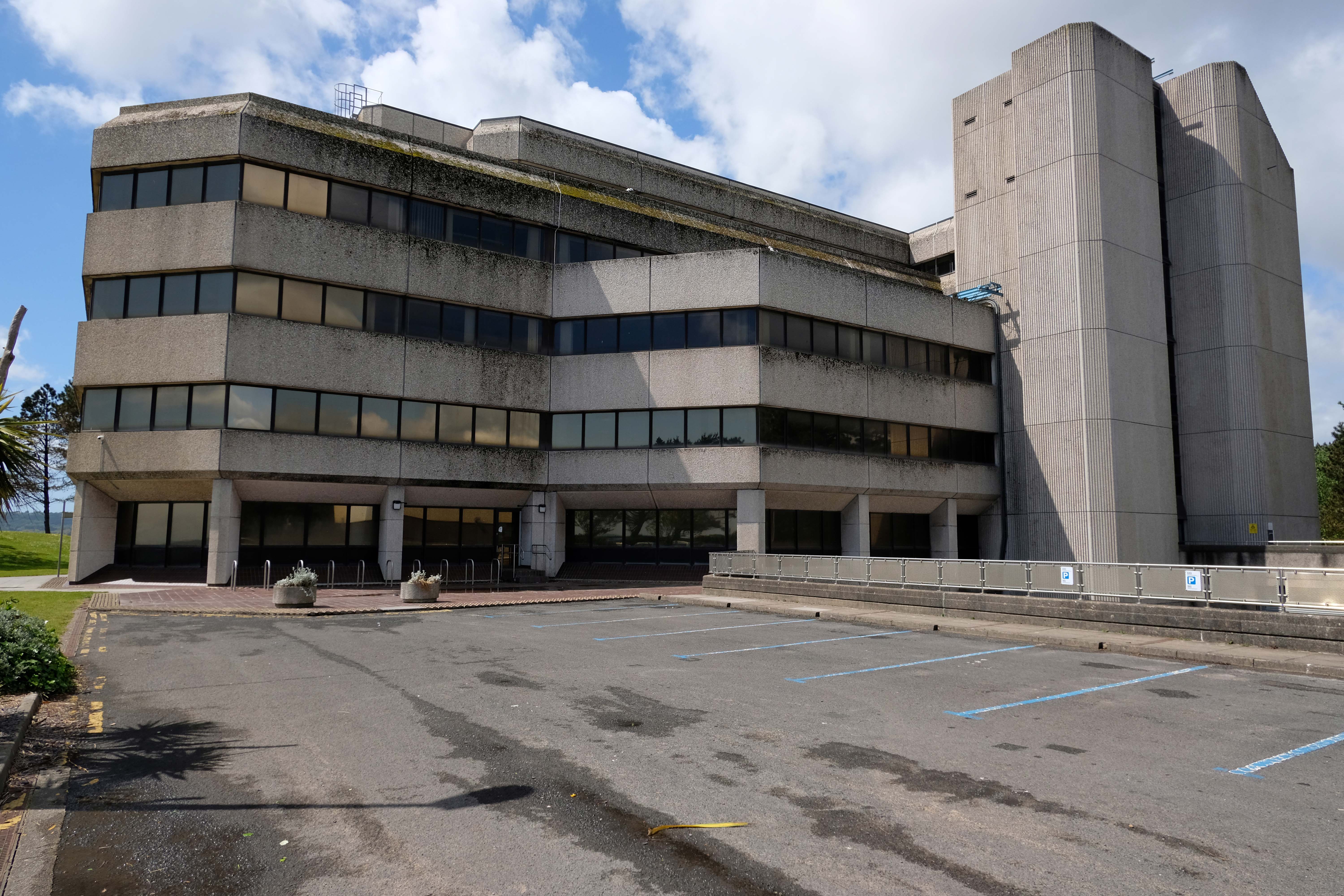
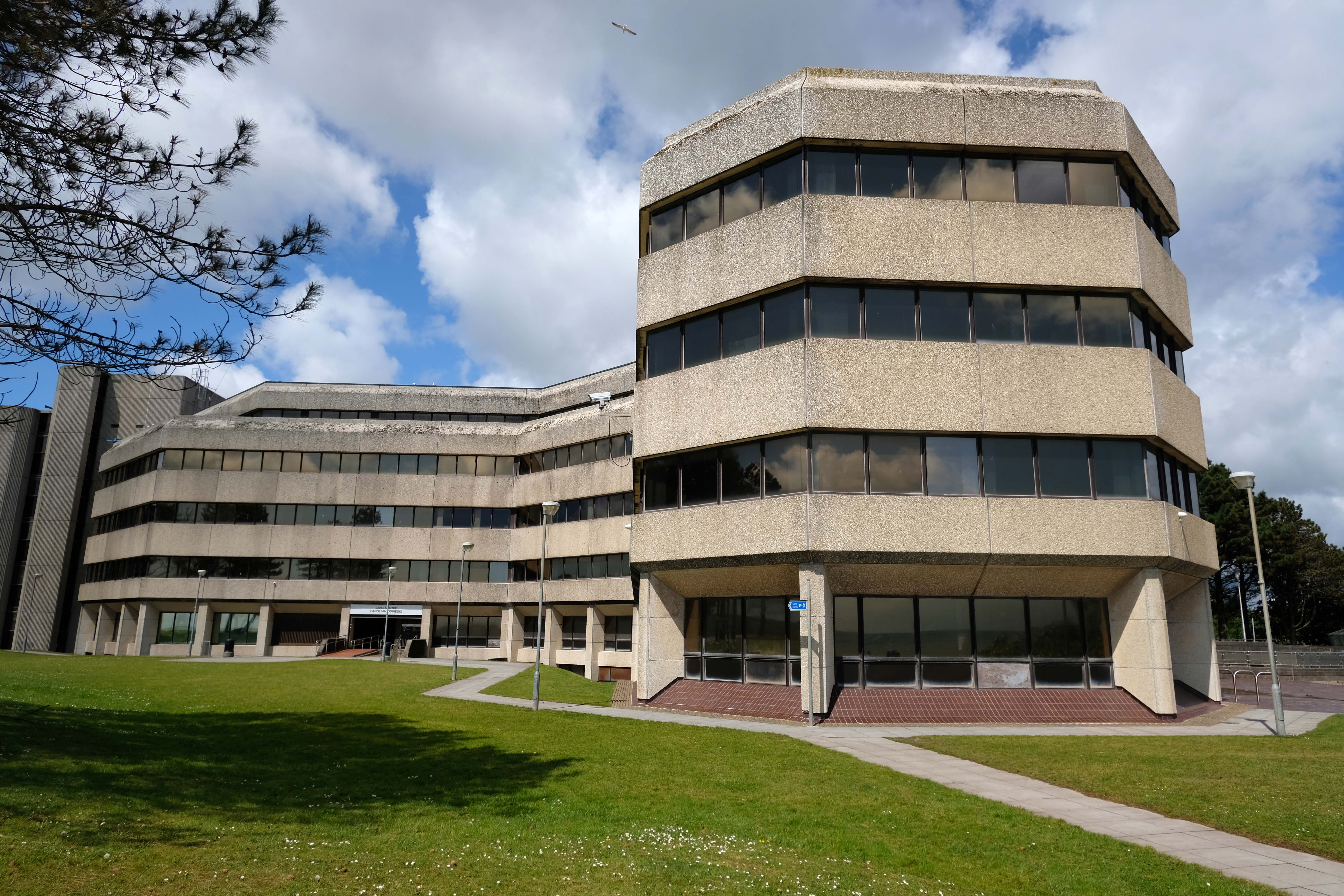
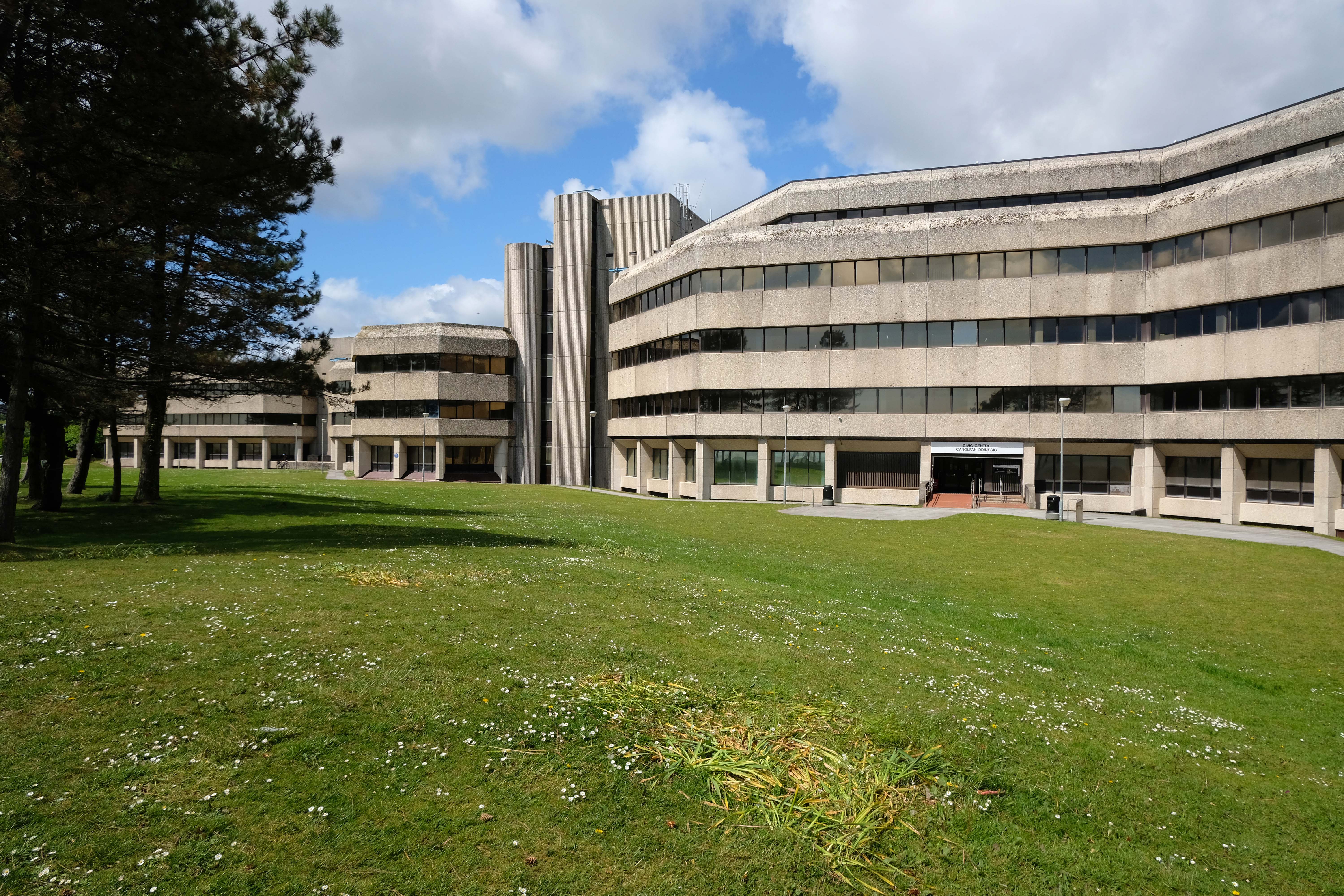
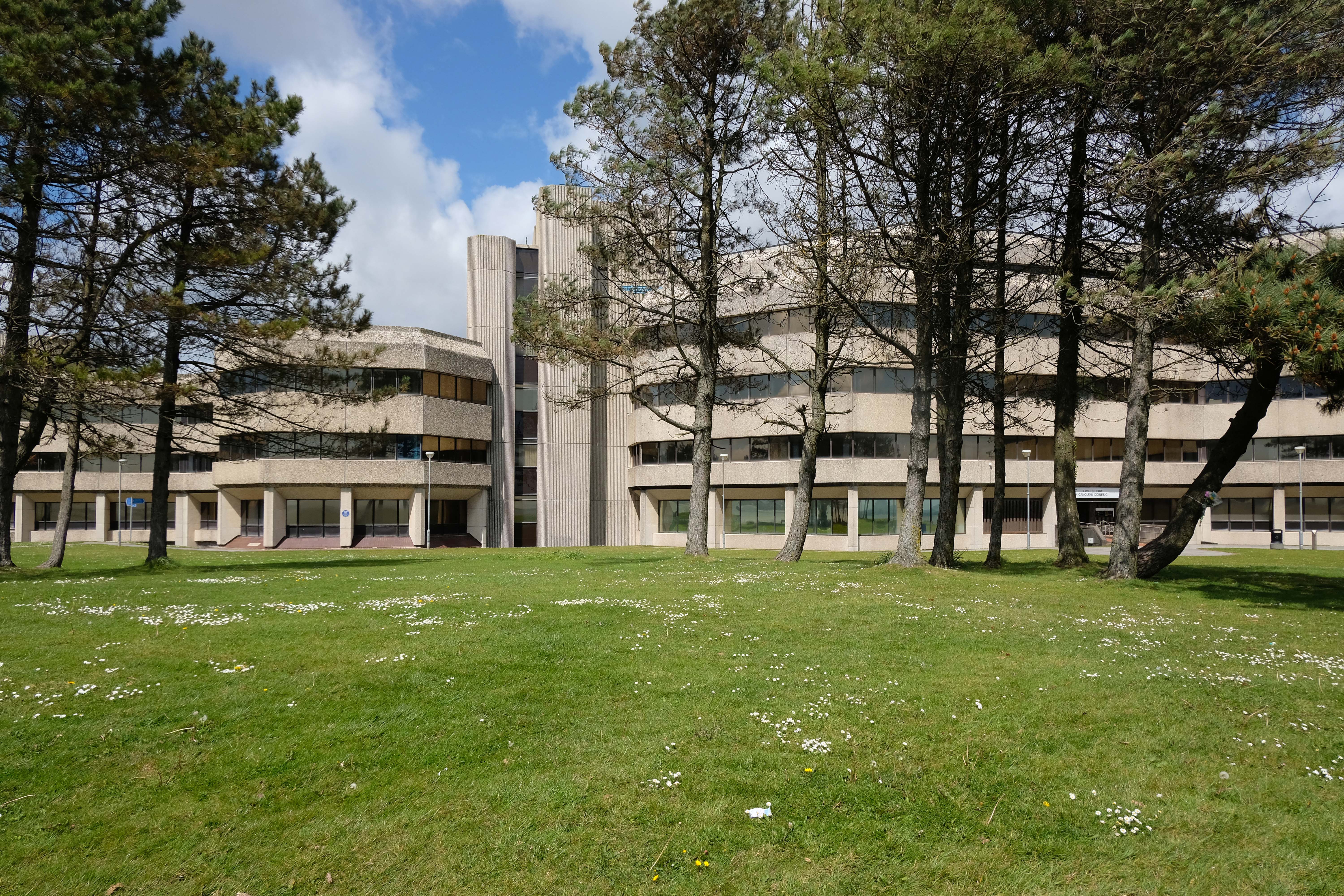
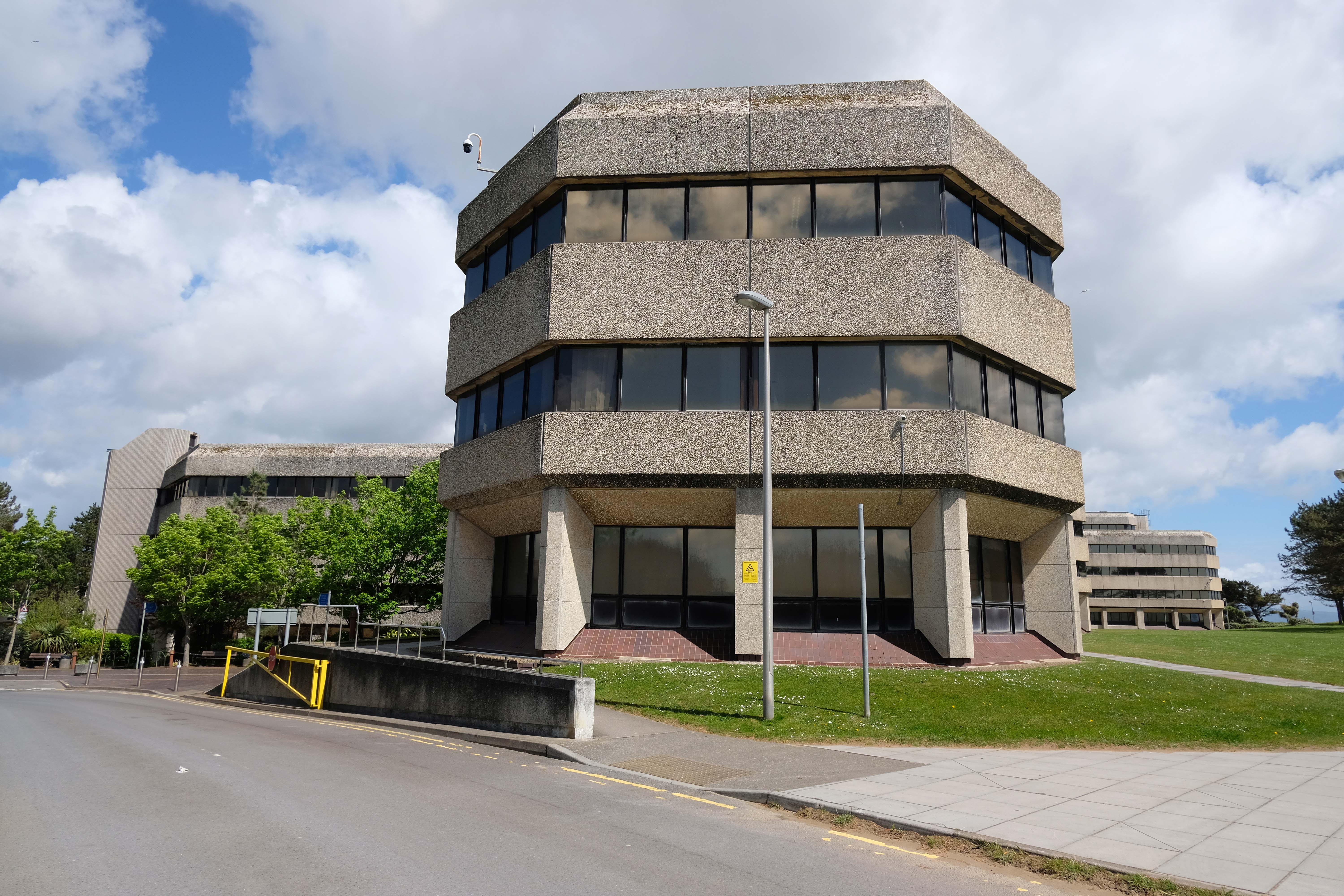
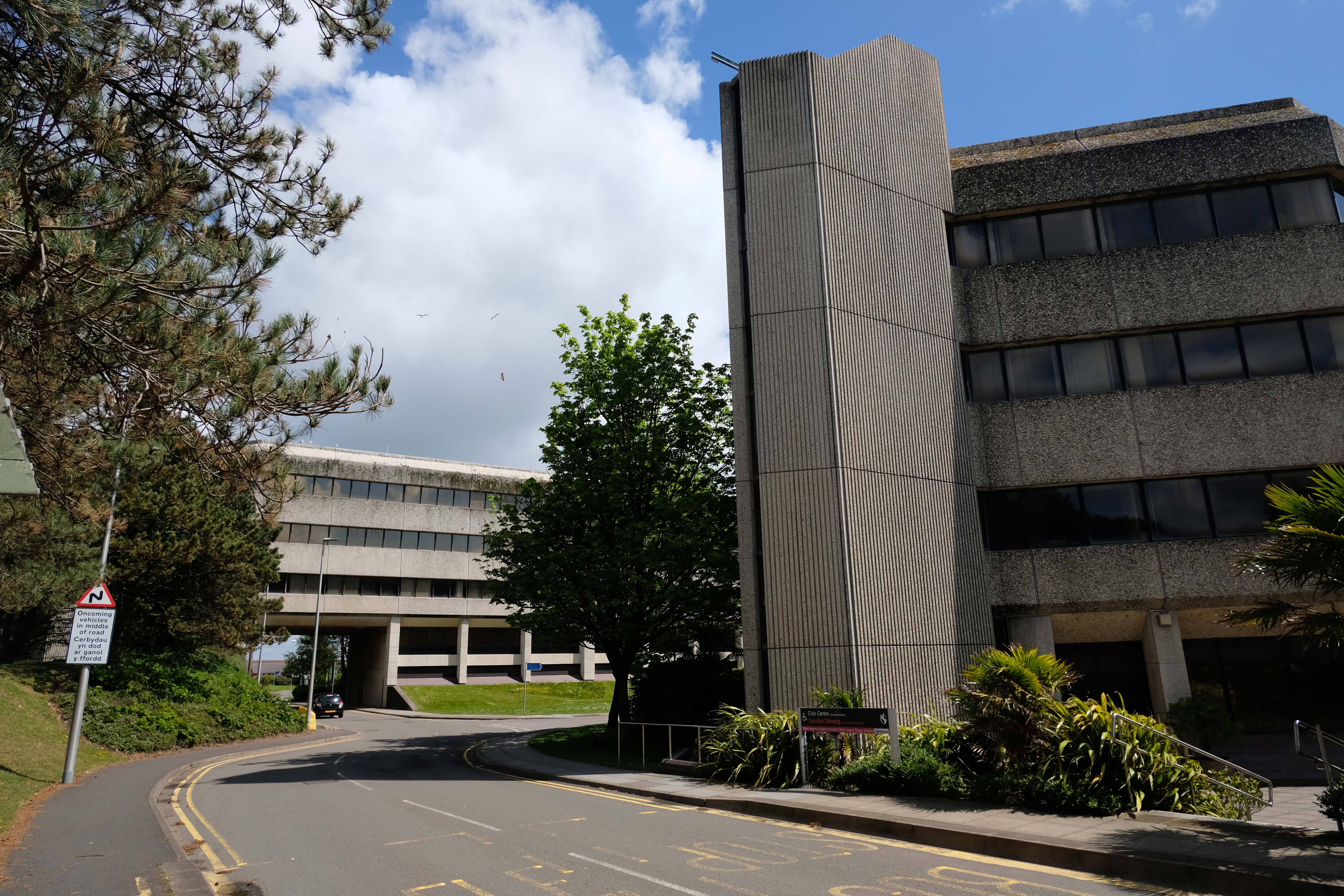
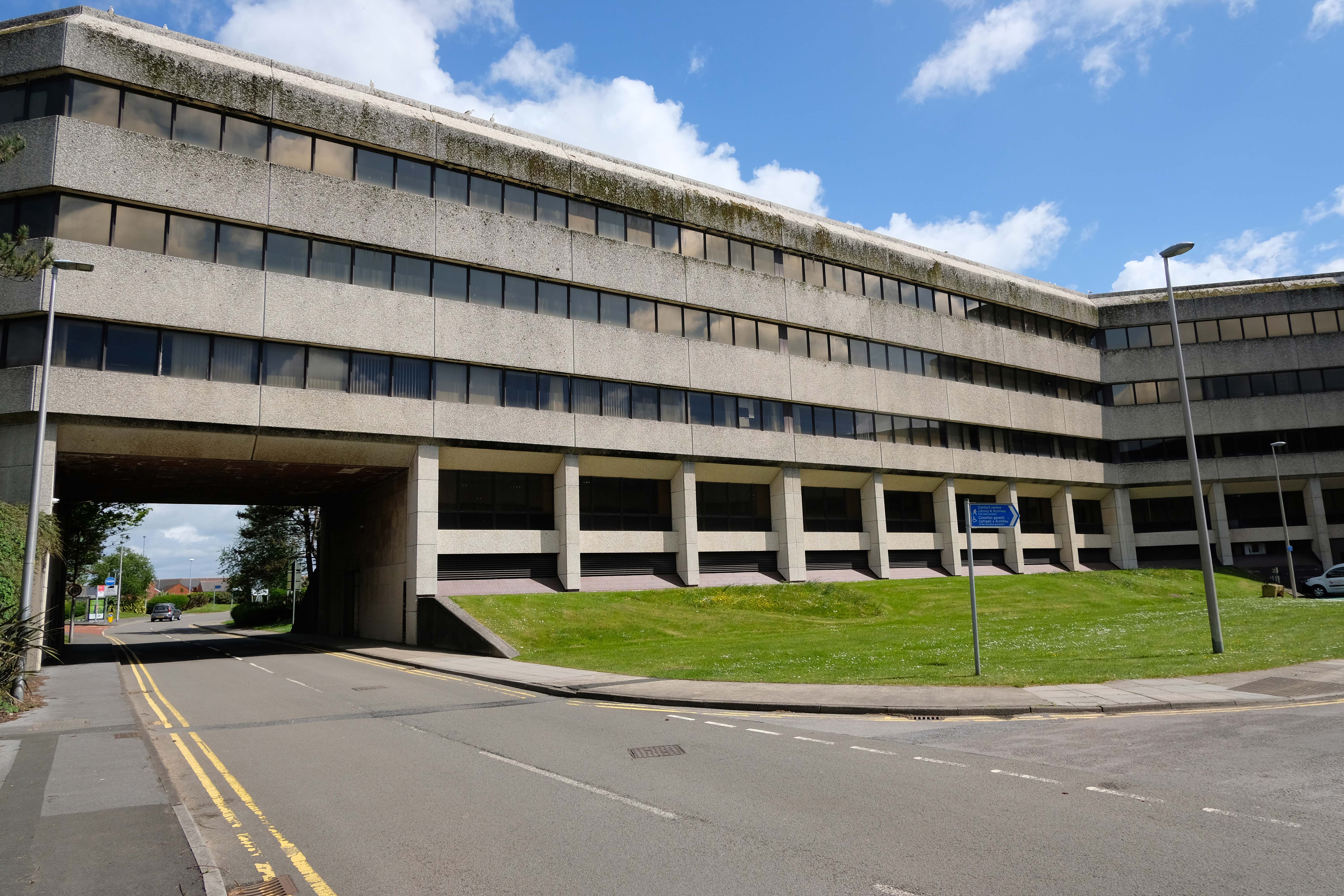
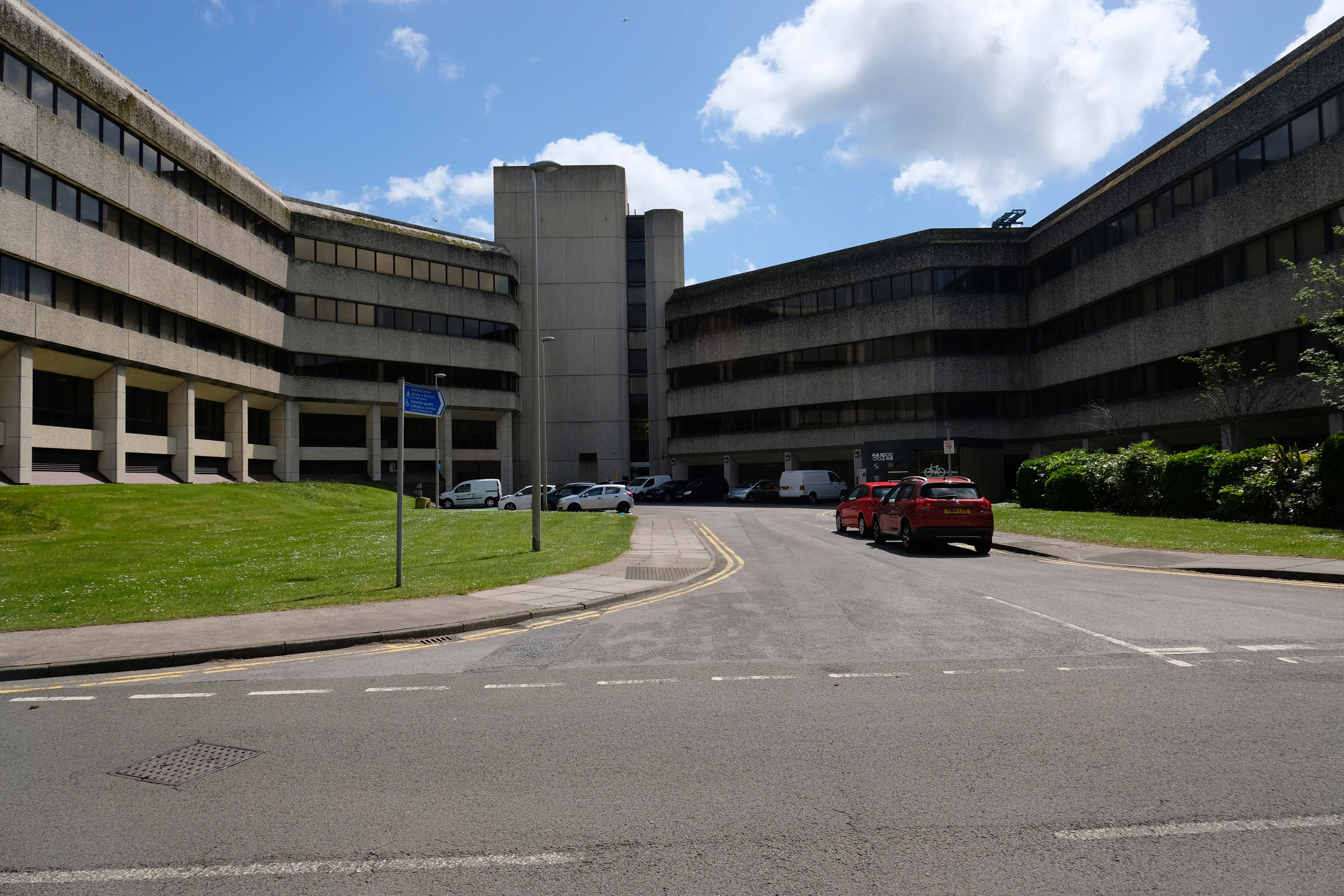
Architects: J Webb as County Architect and CW Quick as the job architect of the West Glamorgan County Architects Department 1982
Canolfan Ddinesig Abertawe formerly known as County Hall.
Confused?
Don’t be, it’s all quite simple really.
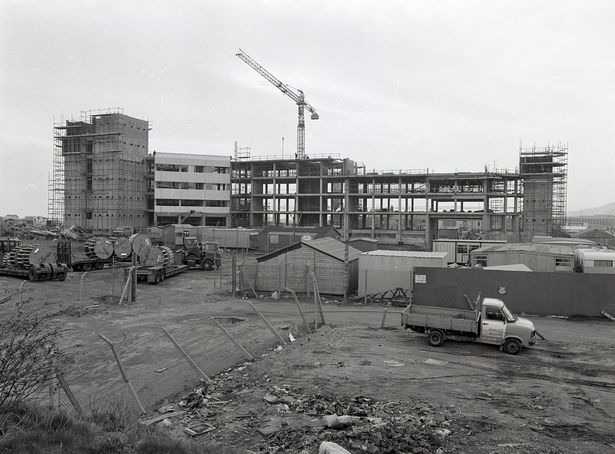
Following the implementation of the Local Government Act 1972, which broke up Glamorgan County Council and established West Glamorgan County Council, the new county council initially met at Swansea Guildhall. Finding that this arrangement, which involved sharing facilities with Swansea Council, to be inadequate, county leaders procured a dedicated building, selecting a site formerly occupied by an old railway goods yard associated with the Mumbles Railway.
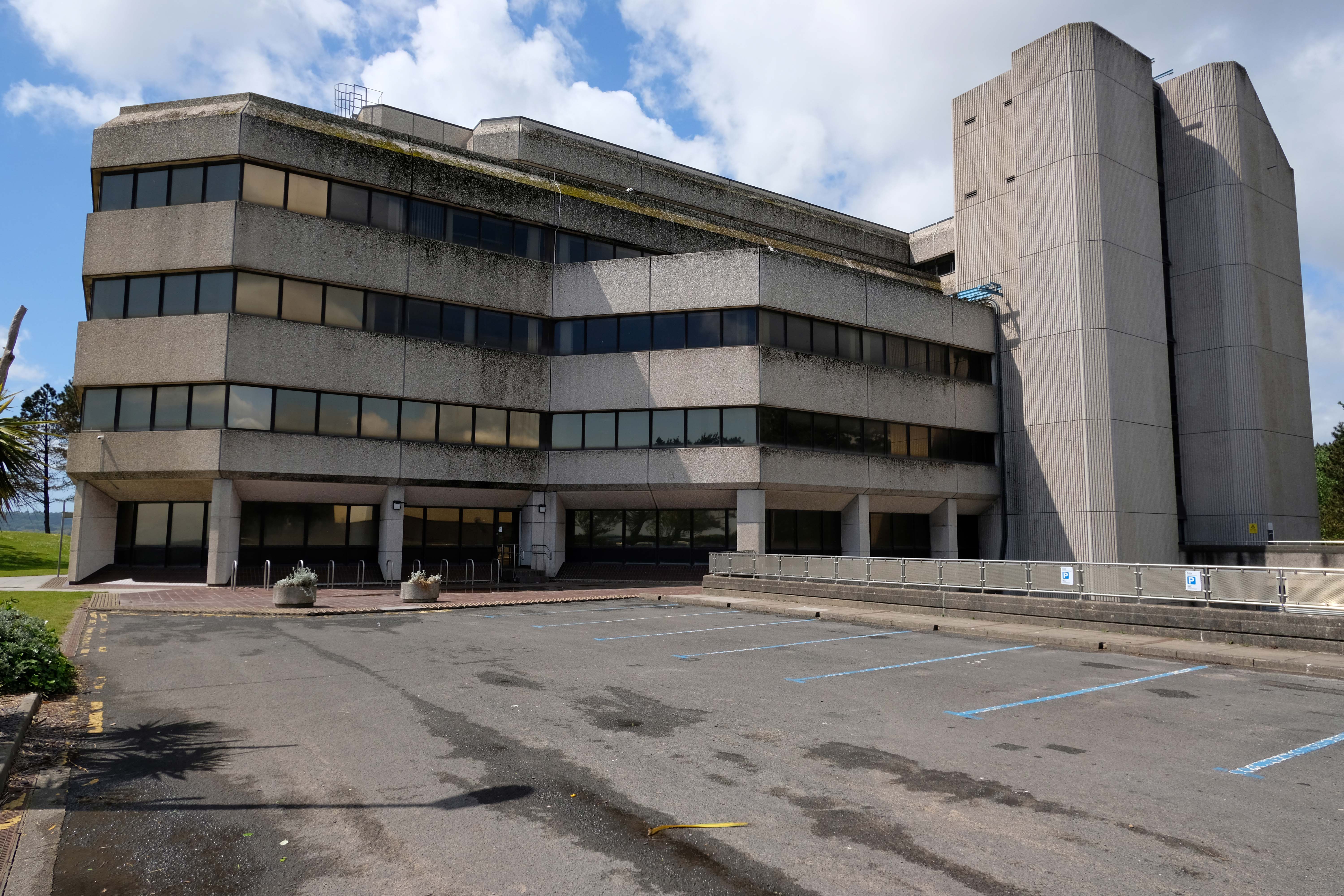
The design features continuous bands of glazing with deep washed calcined flint panels above and below.
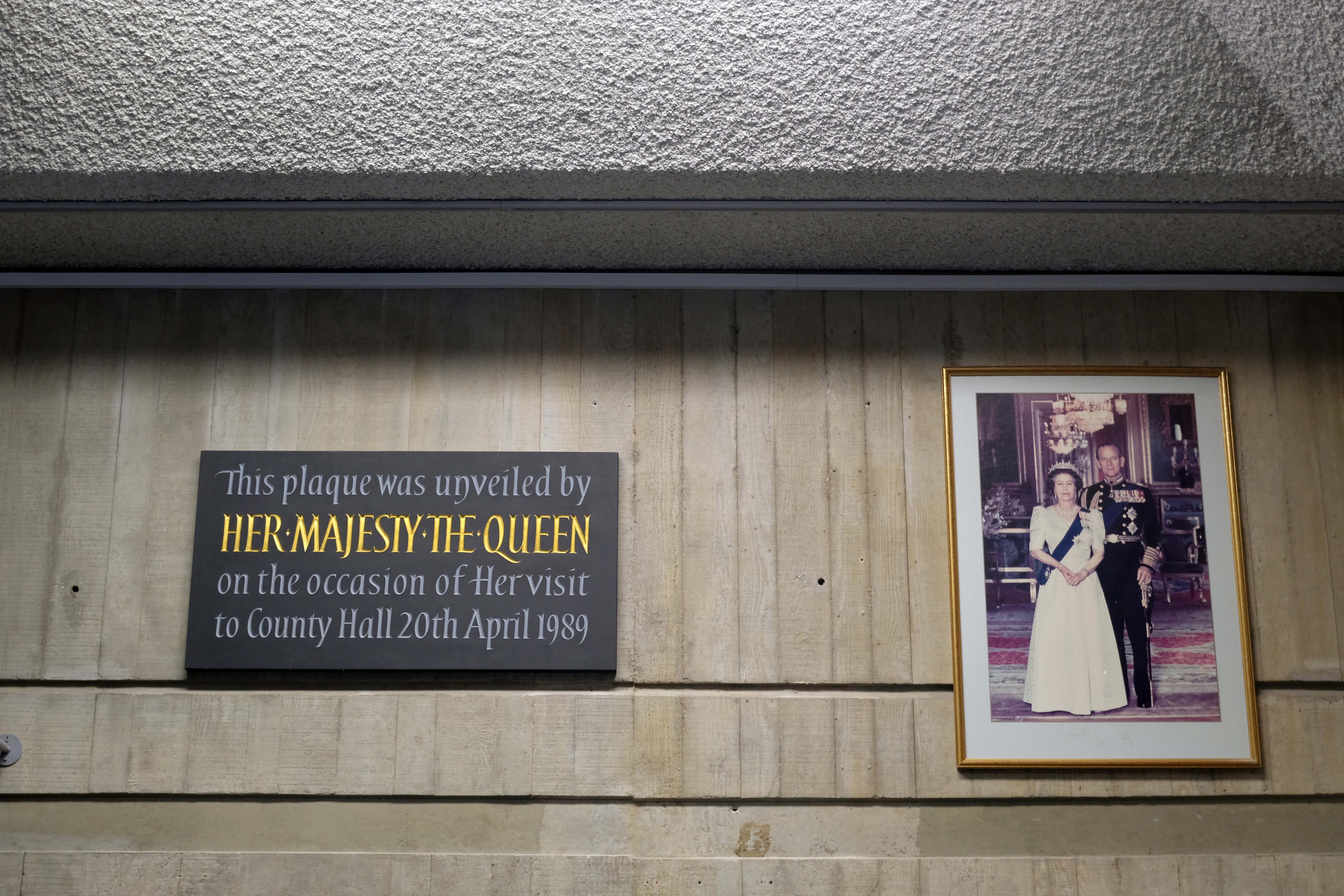
Queen Elizabeth II, accompanied by the Duke of Edinburgh, visited on 20 April 1989.
After local government re-organisation in 1996, which abolished West Glamorgan County Council, ownership of the building was transferred to Swansea Council. It was renamed Swansea Civic Centre on 19 March 2008, and Swansea Central Library moved into the complex as part of a redevelopment scheme.
See, simple!
However.
In 2019 it was reported that Swansea Council leader Rob Stewart said:
As part of our city centre’s multi-million pound transformation, it remains our aim to vacate and demolish the civic centre.
We want to reinvigorate that area and we continue to make progress on a master plan for it.
Powell and Dobson think that this seems like a swell idea
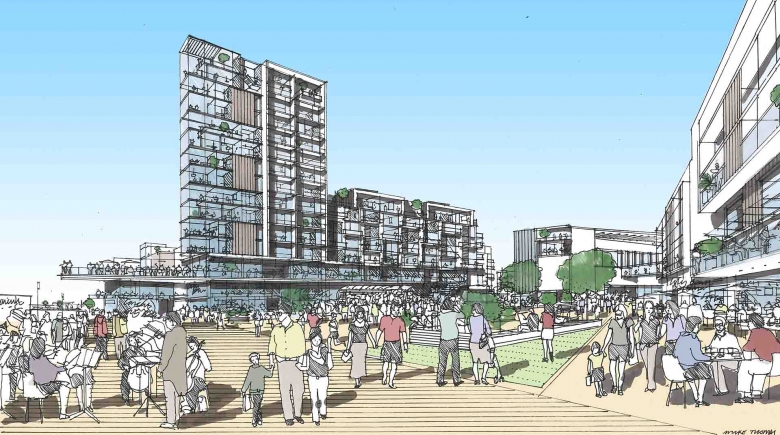
Urban Splash seem to have a slightly vaguer vision.
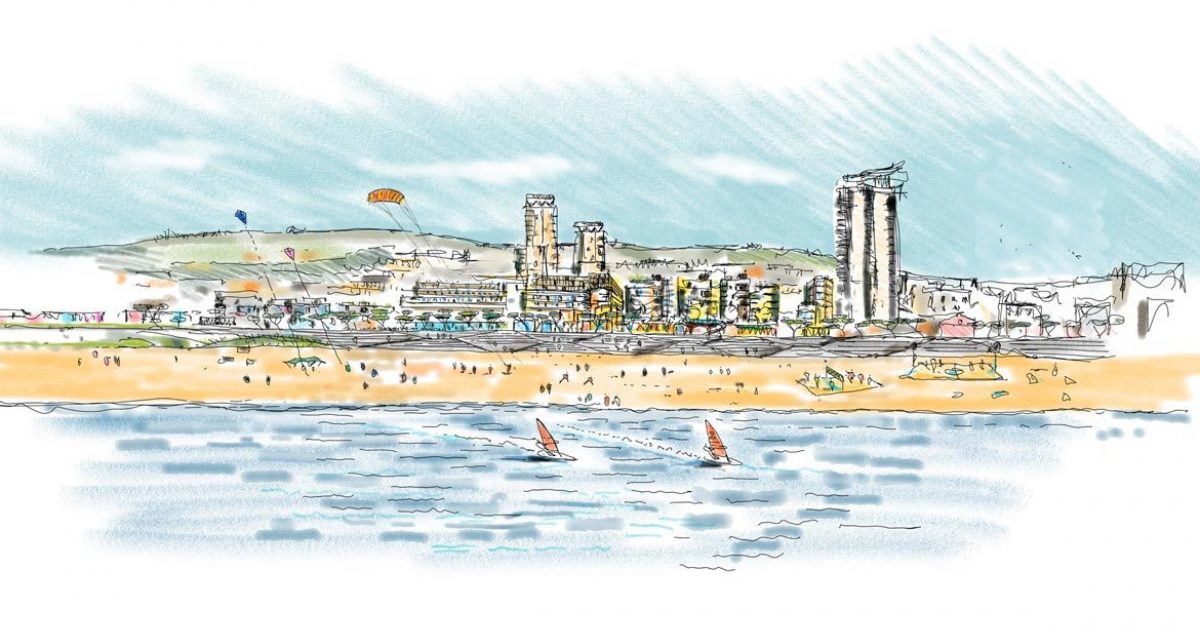
In March 2021, plans to find a new use for the location continued to still be a commitment of Swansea council, with the announcement of the transfer of the central library and other public services to the former BHS and now What! store on Oxford Street.
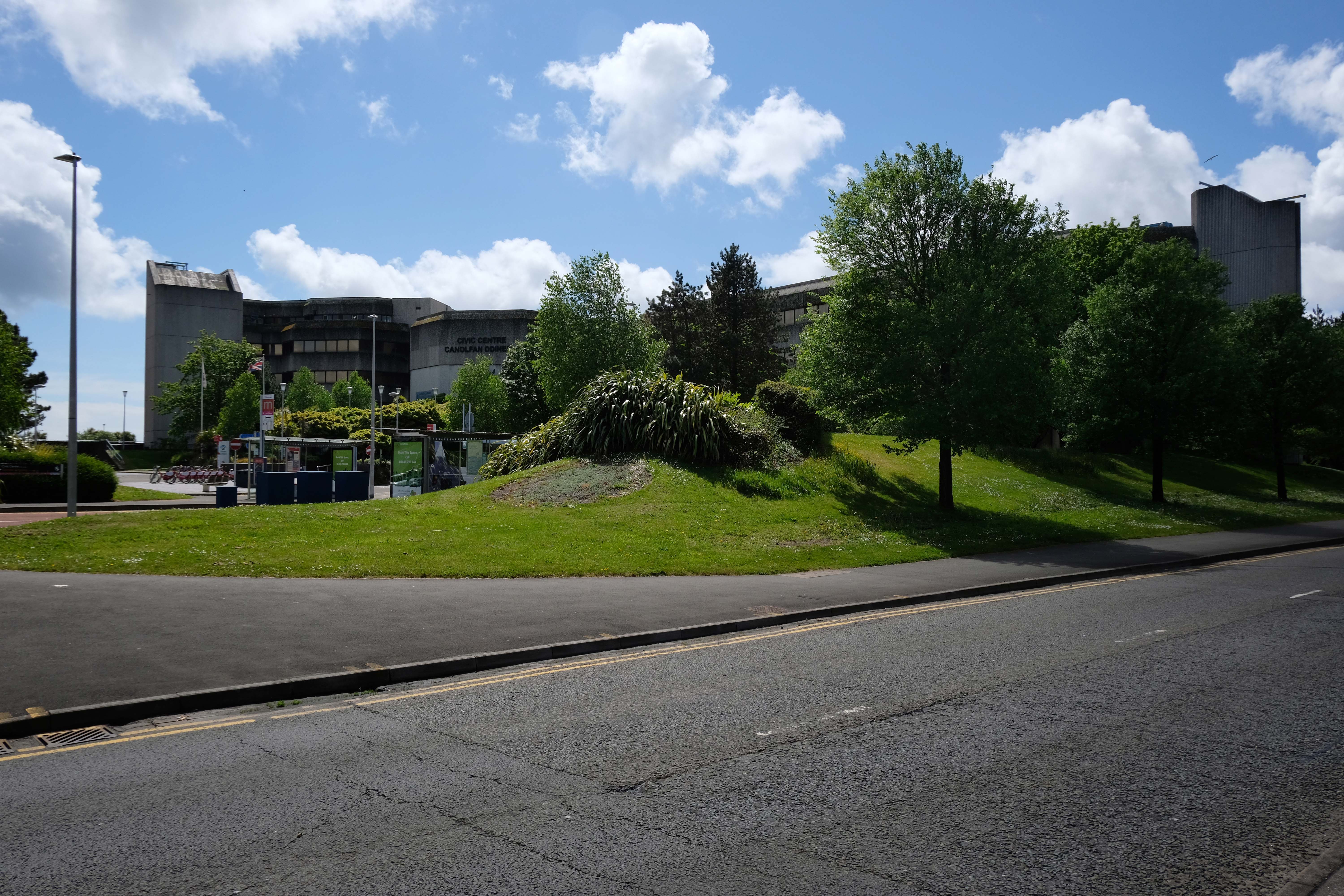
Swansea Civic Centre is at risk the Twentieth Century Society says so – they are strongly opposed to demolition of the iconic building and have submitted an application to have the building listed as Grade II.
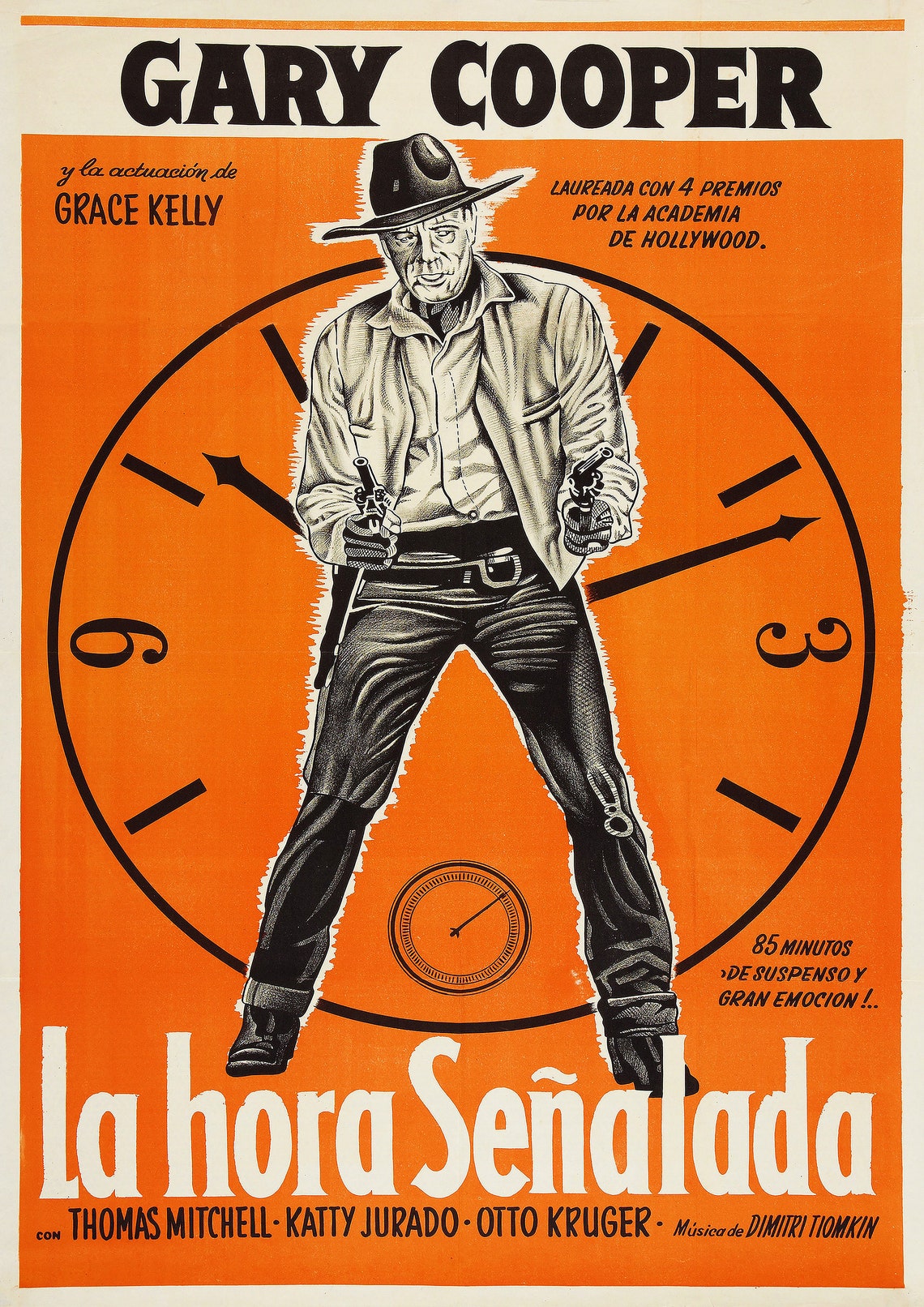
I do not know what fate awaits it, I only know it must be brave – to paraphrase Dimitri Zinovievich Tiomkin, Ned Washington, Gary Cooper and Frankie Laine – it’s High Noon and counting.
Any road up as of the 11th of May it looked just like this:
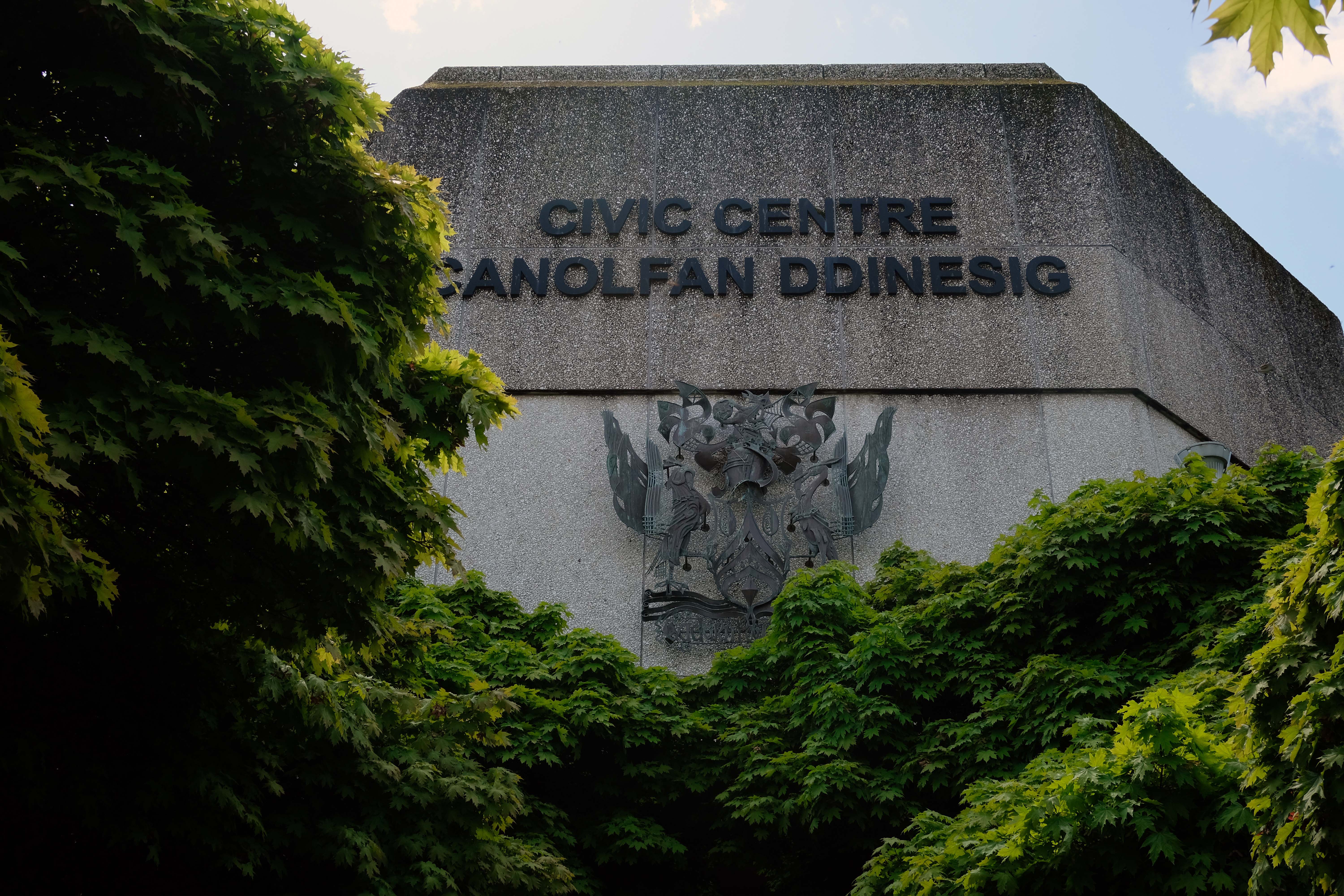
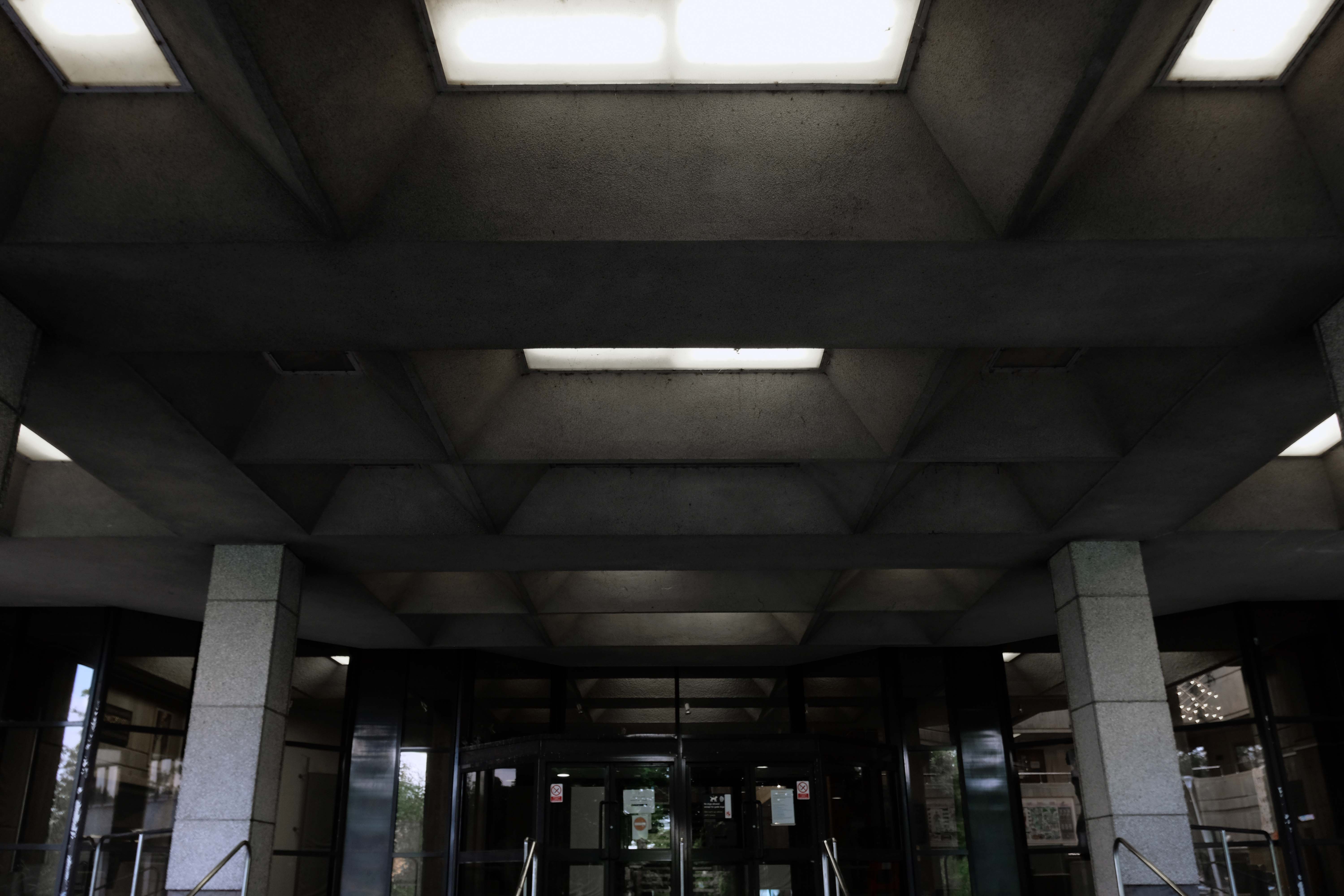
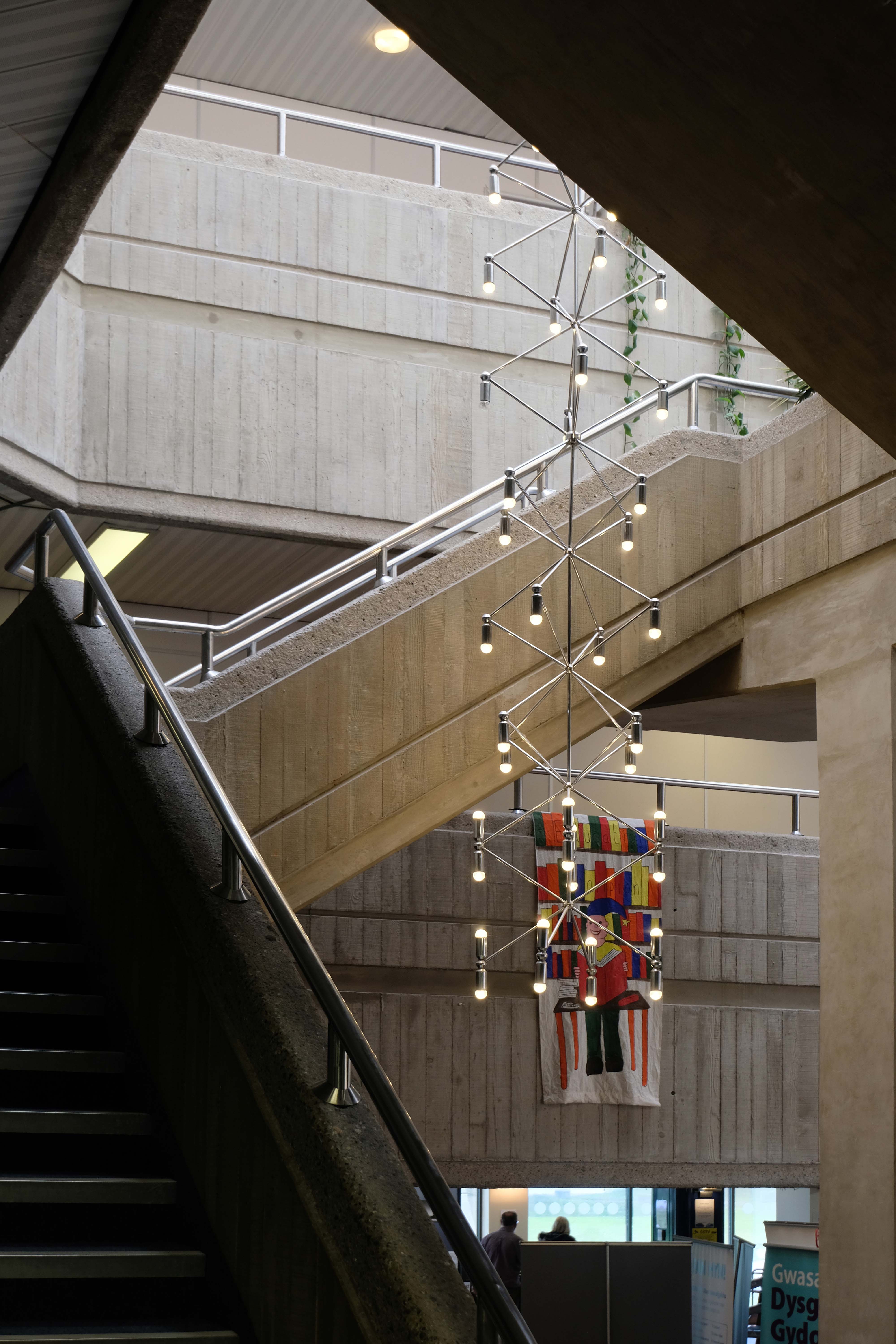
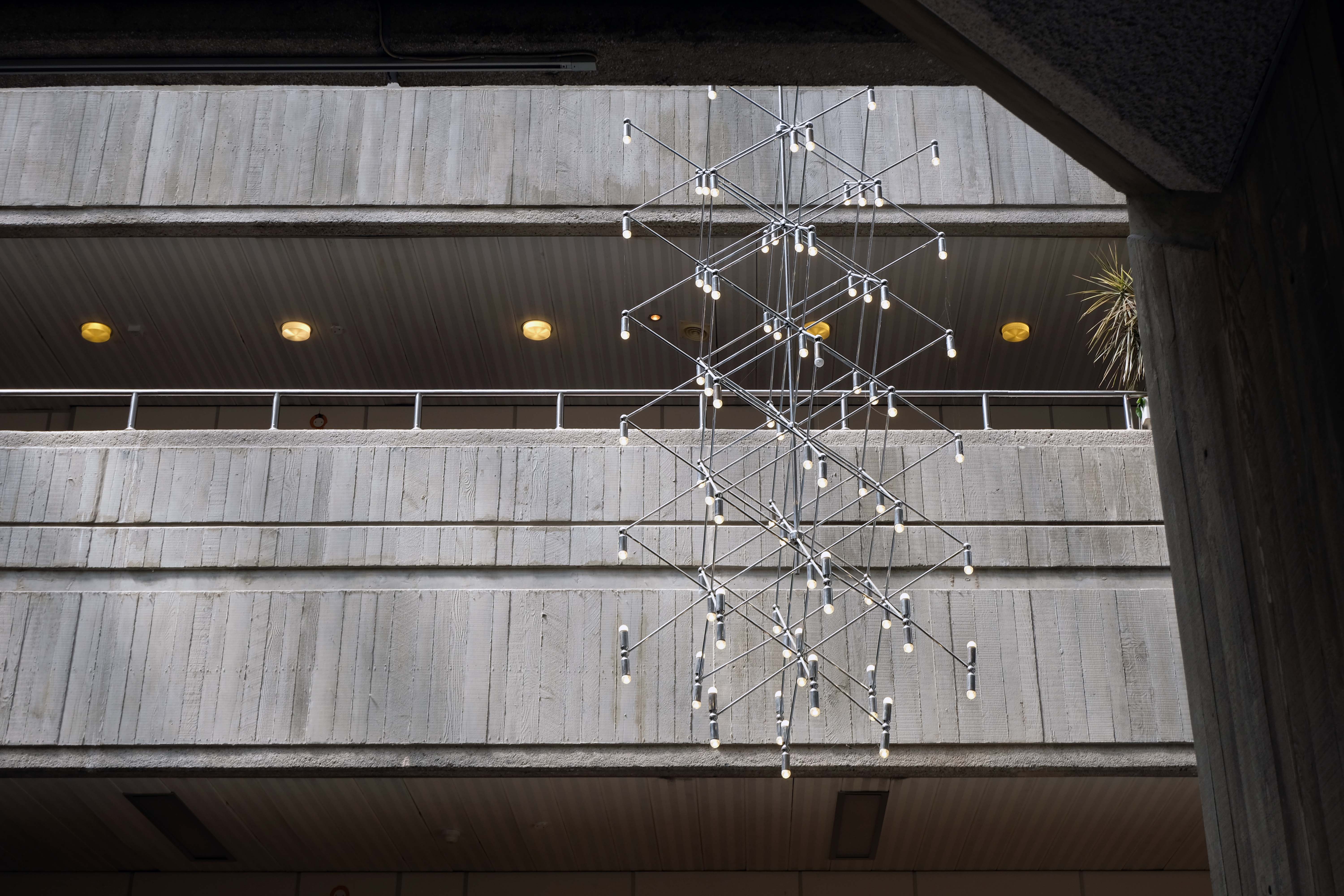
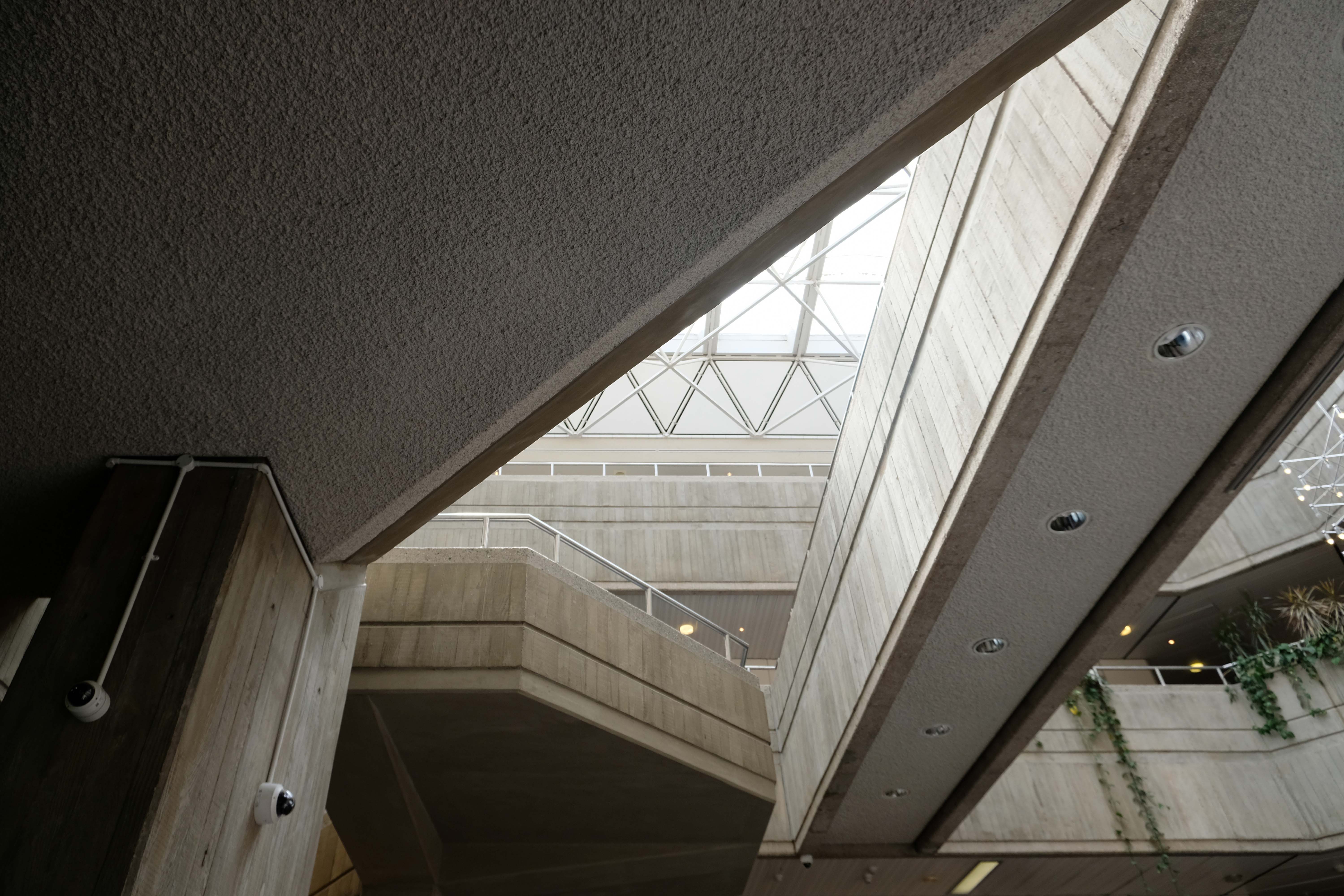
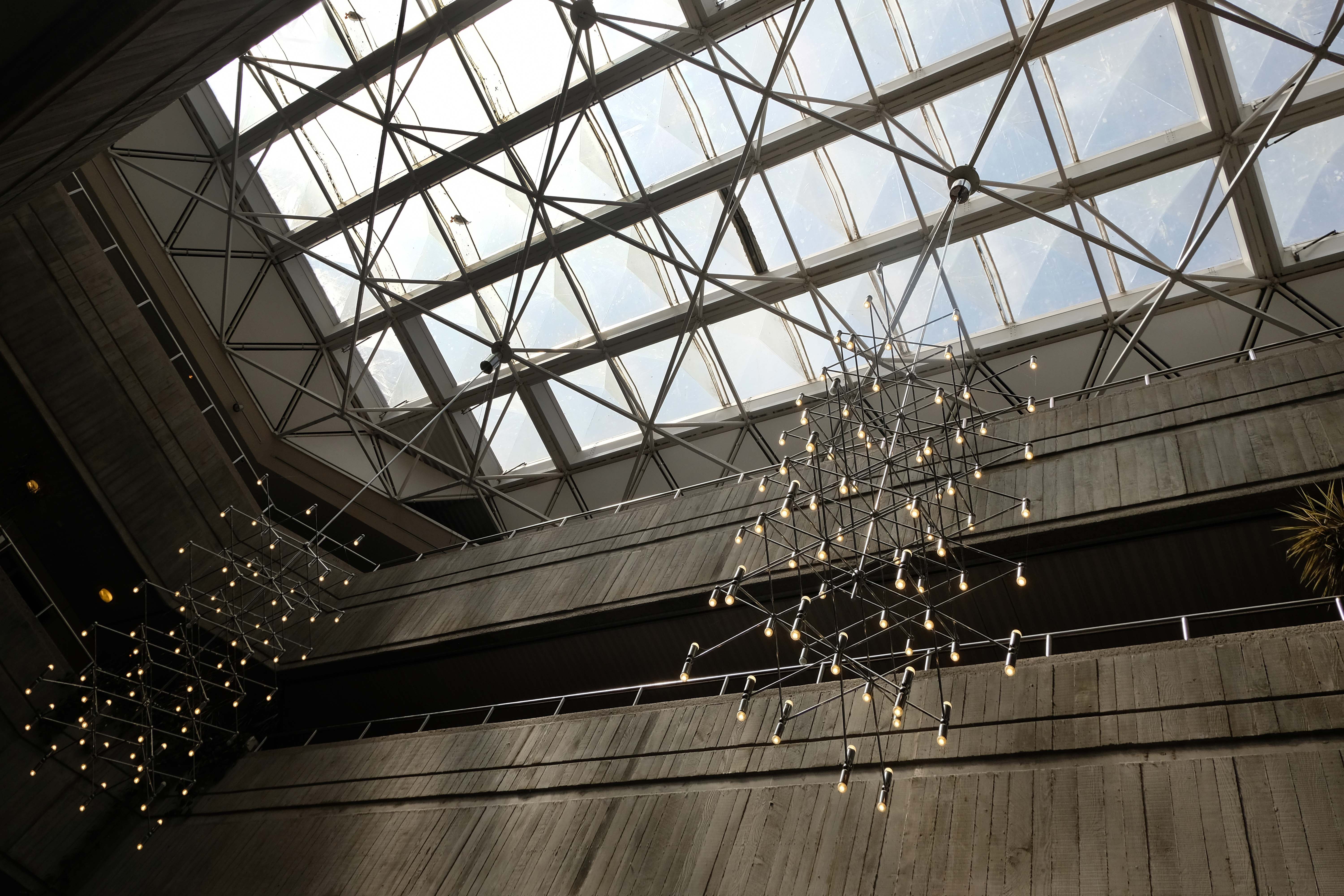
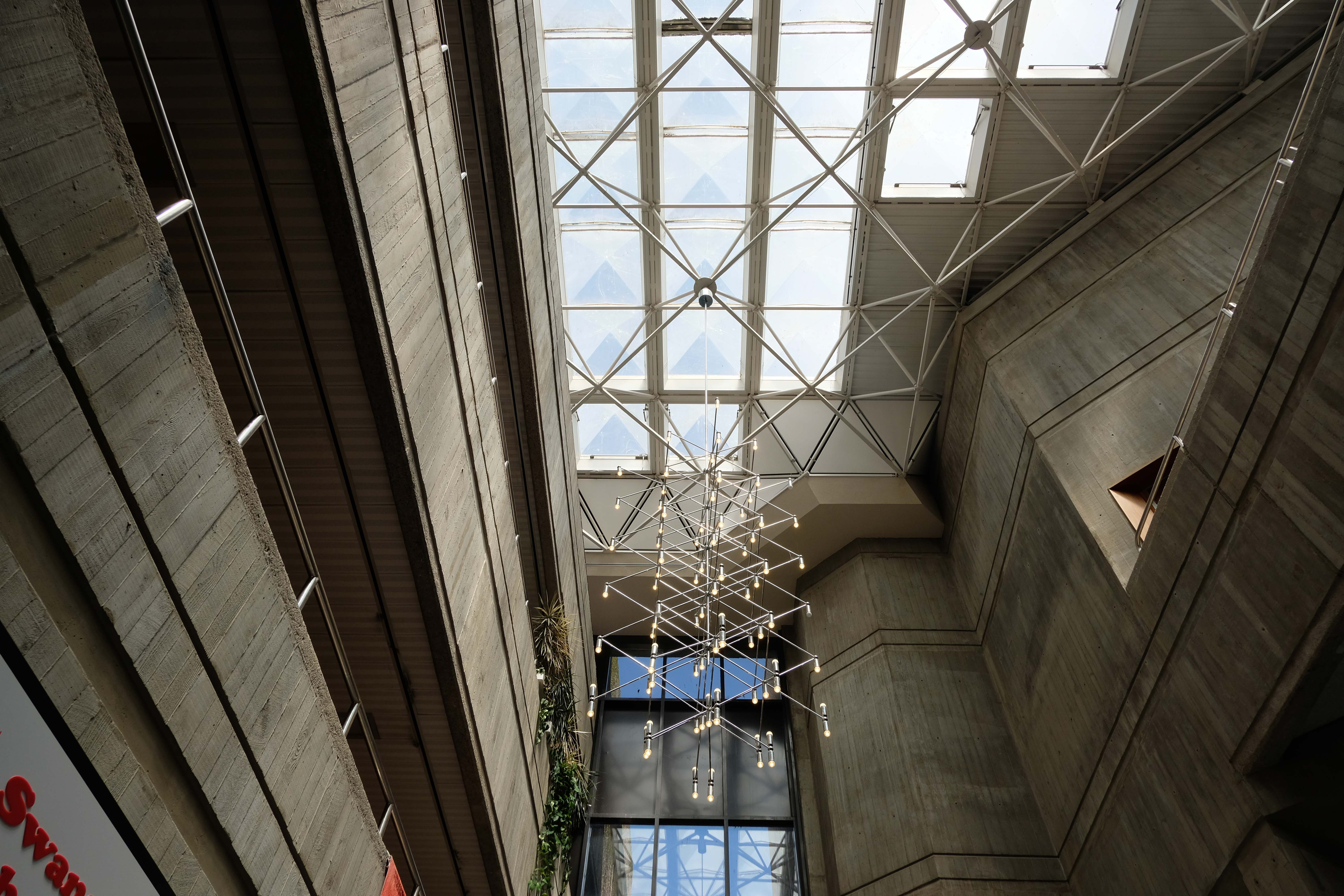
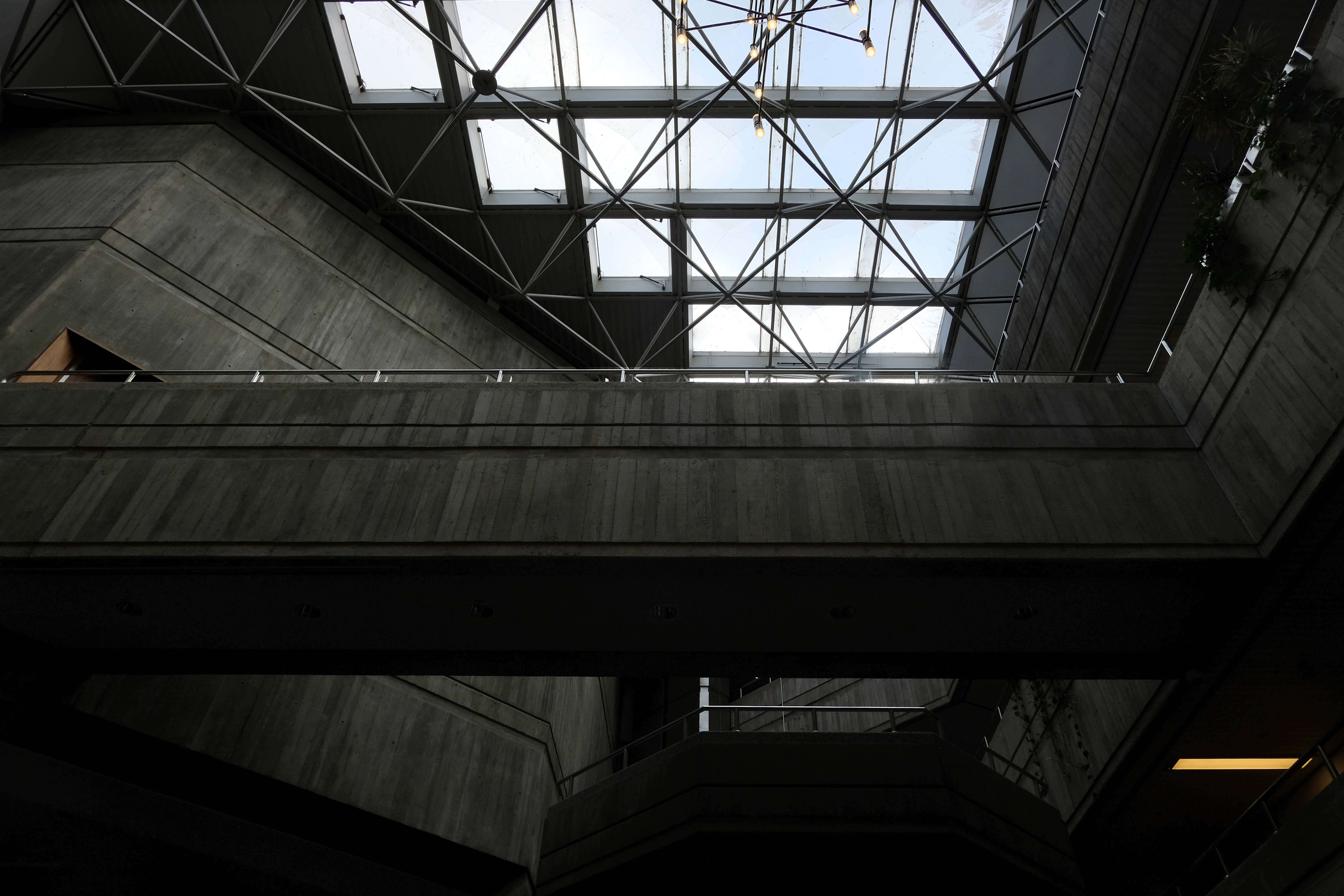
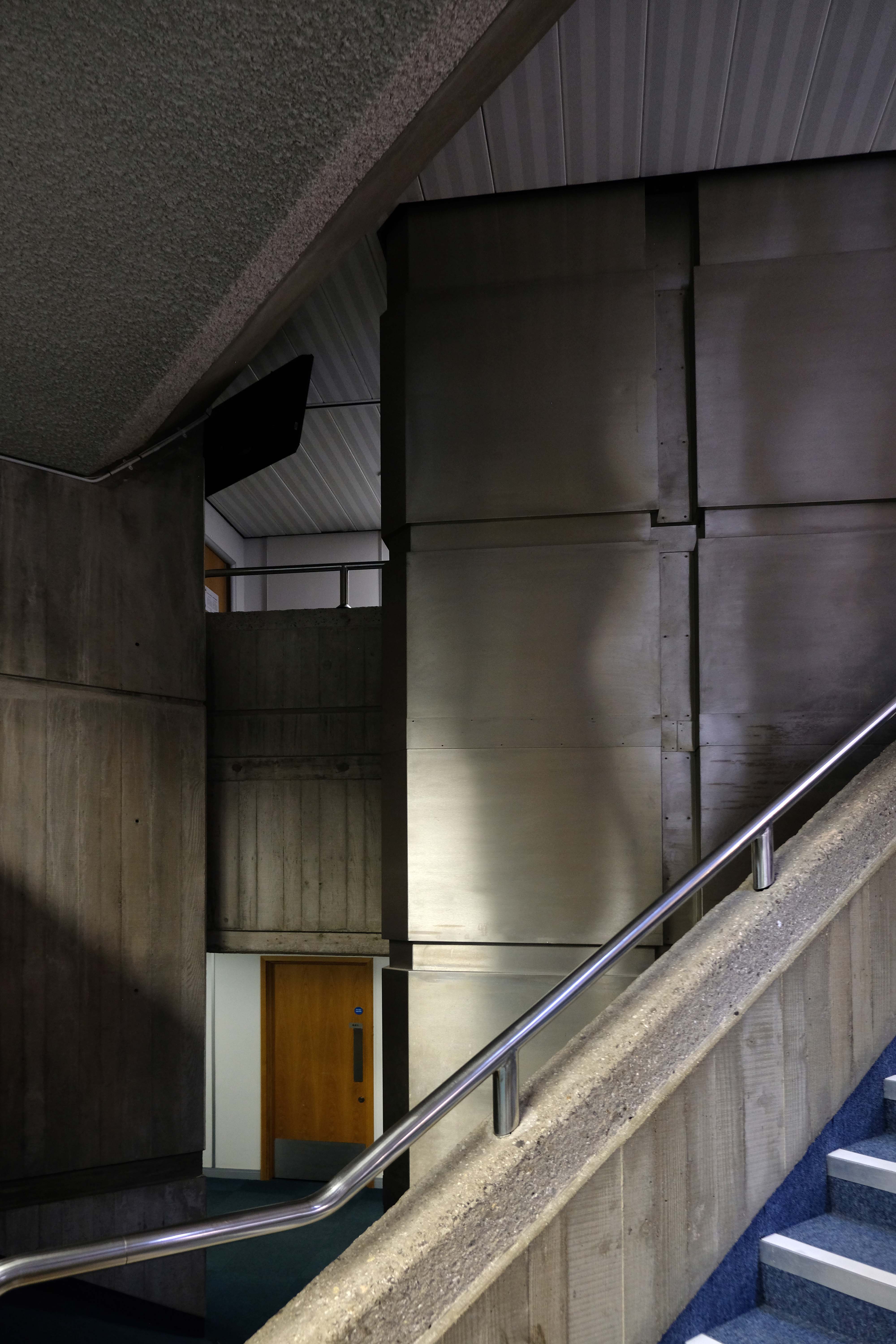
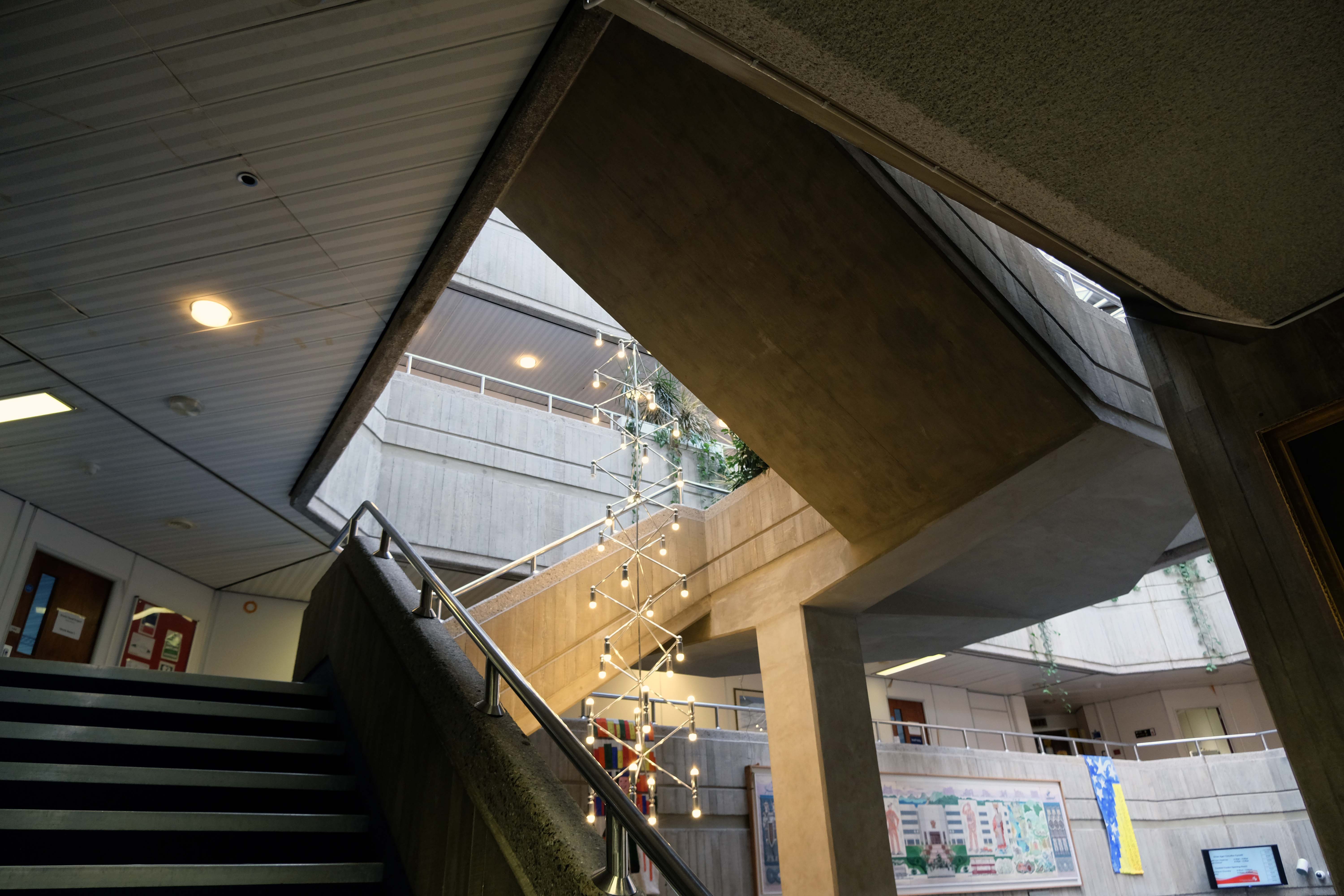
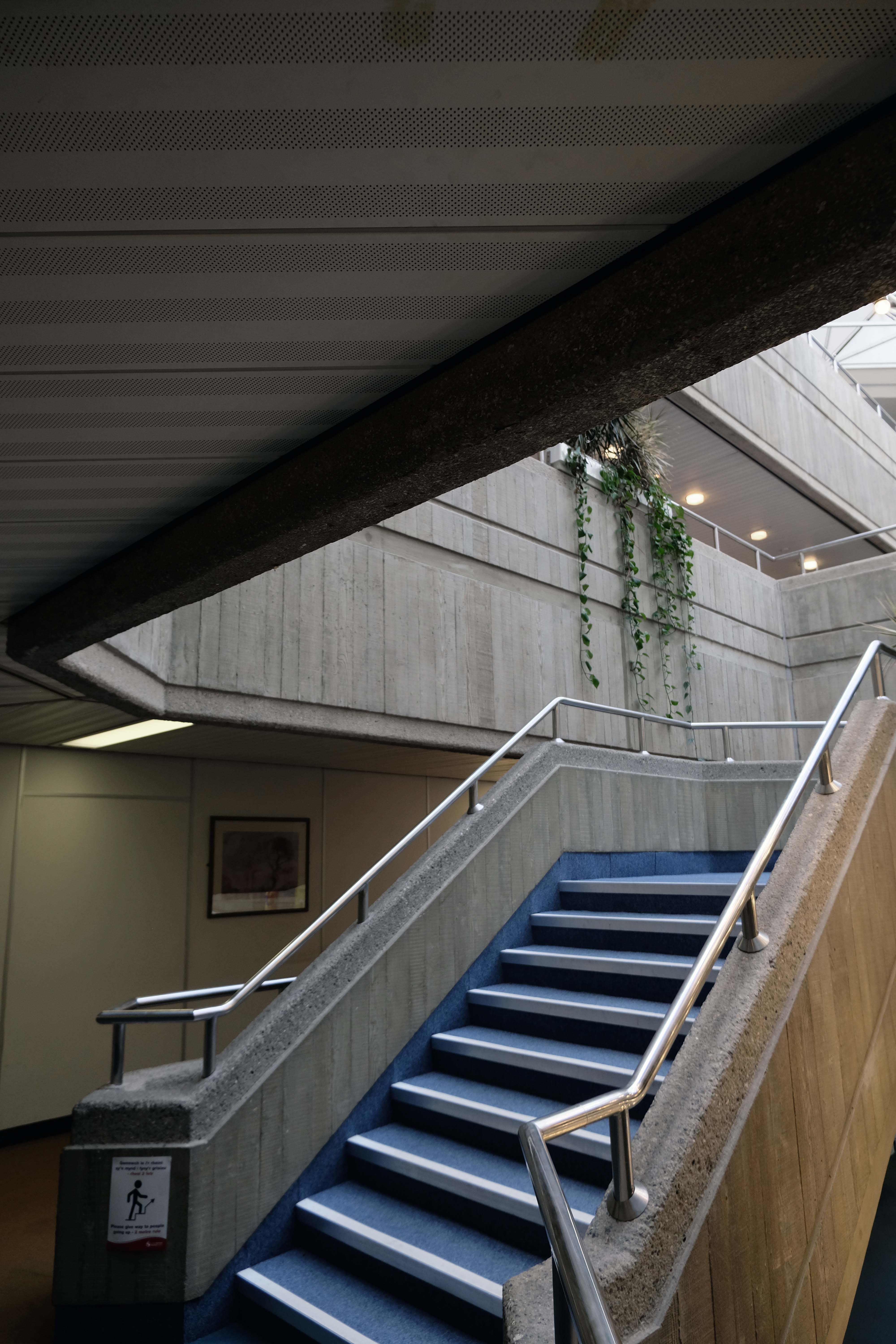
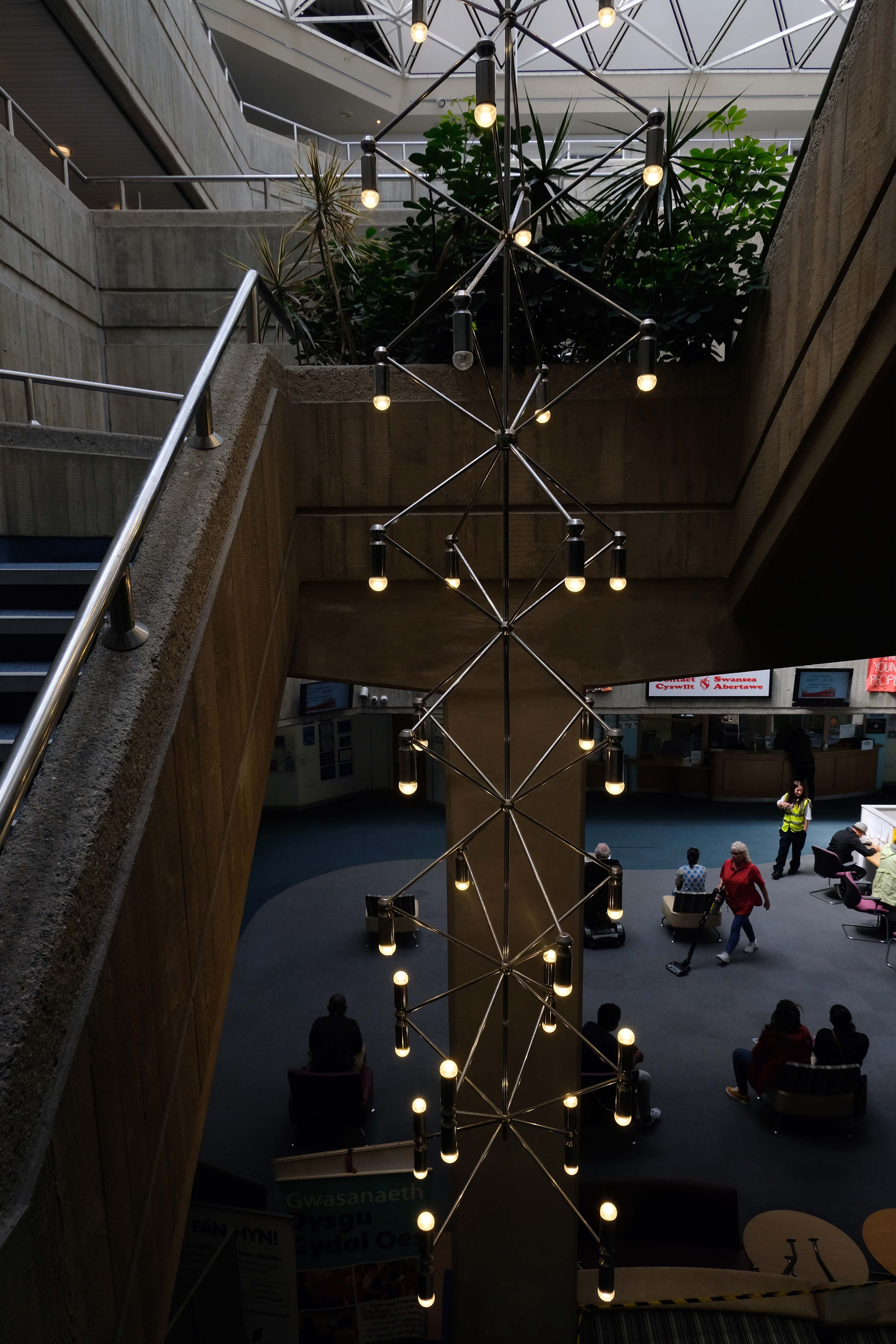
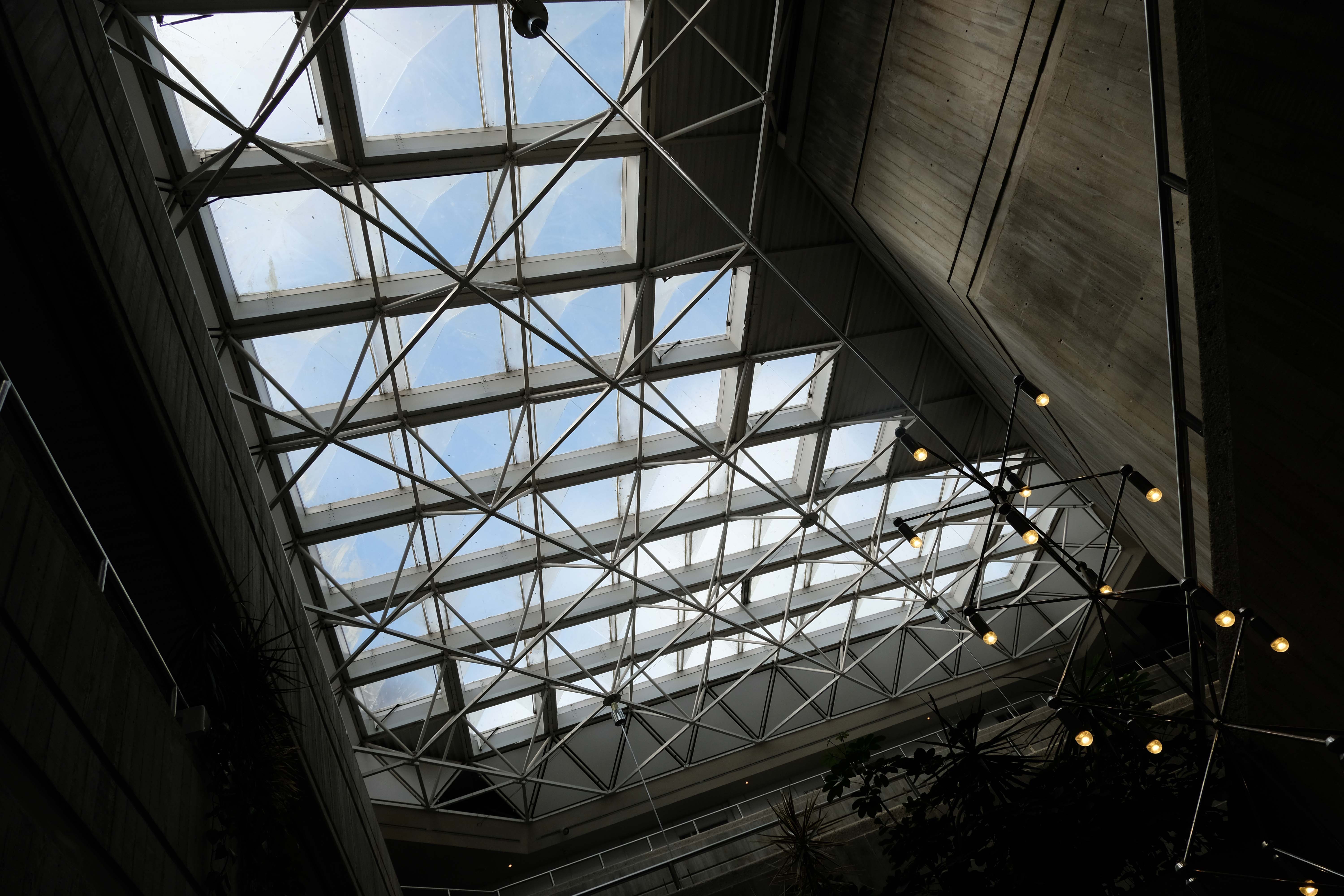
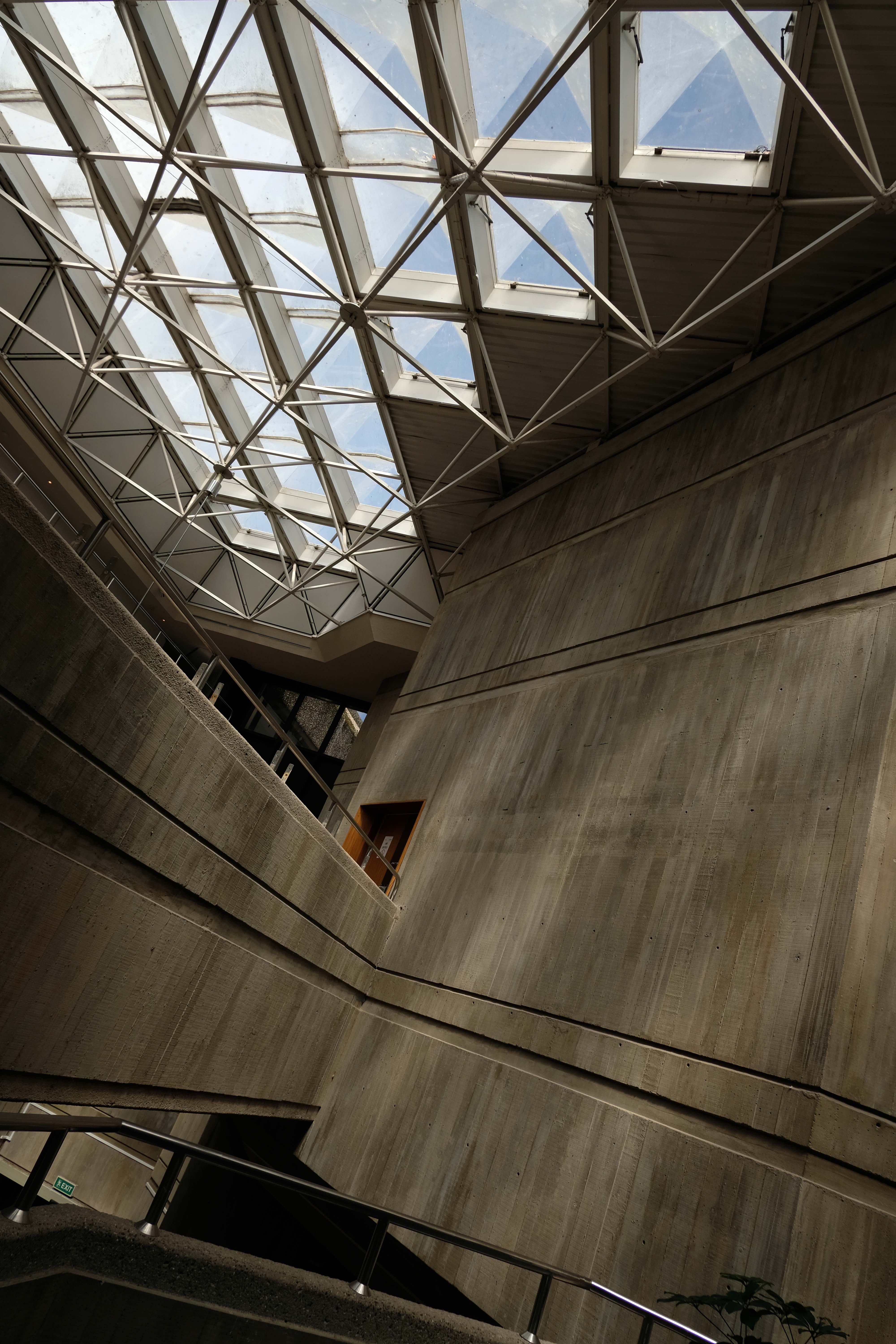
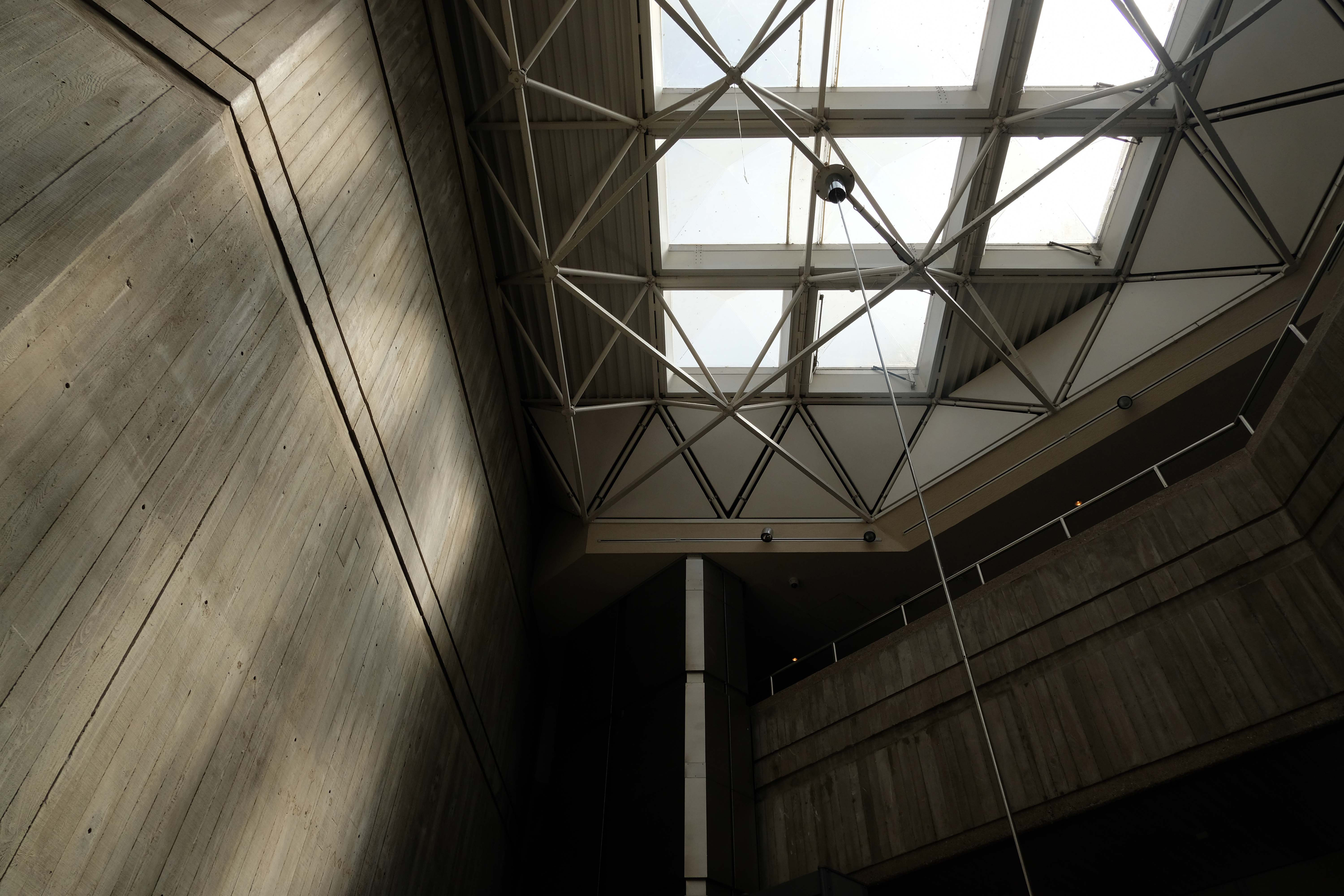
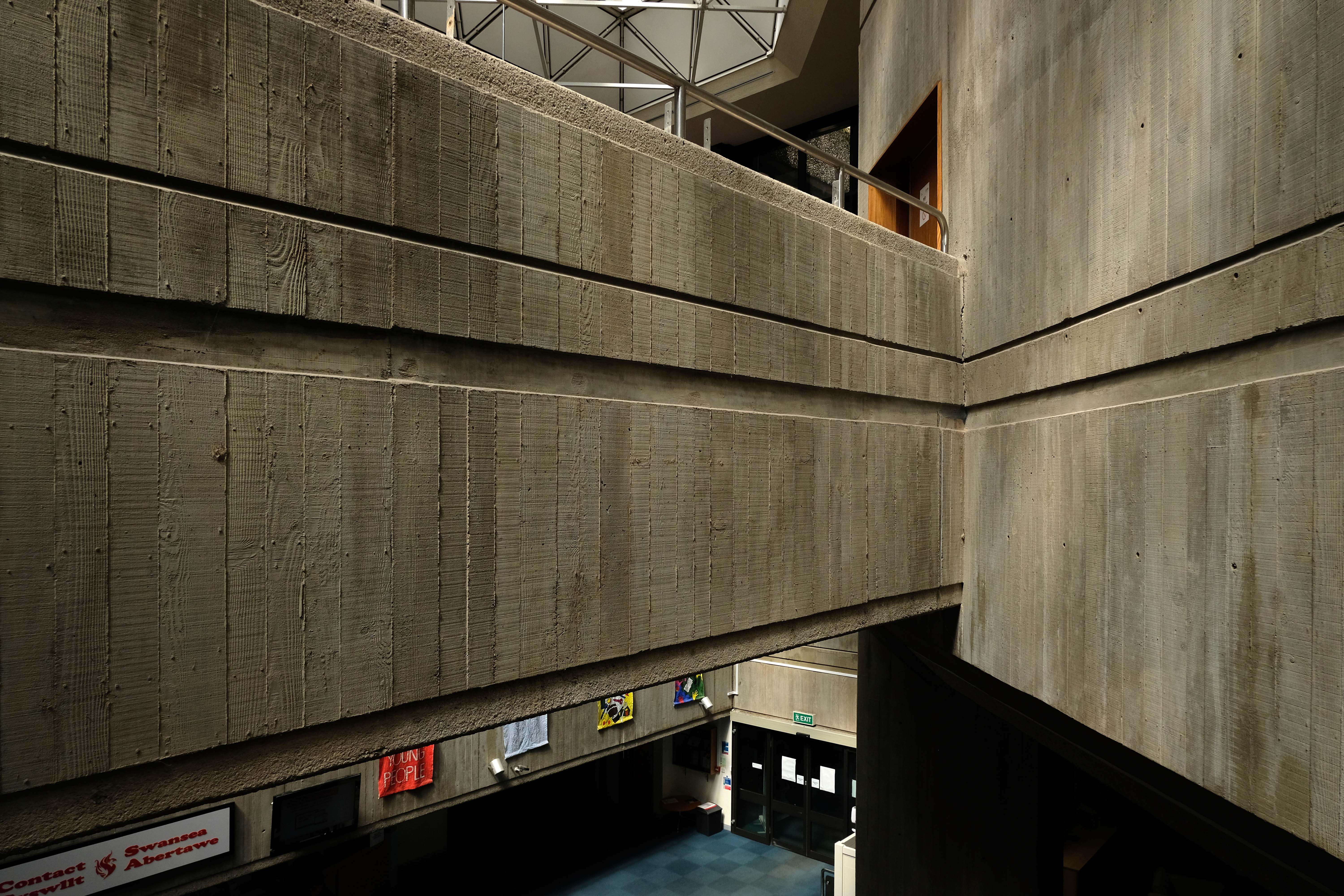
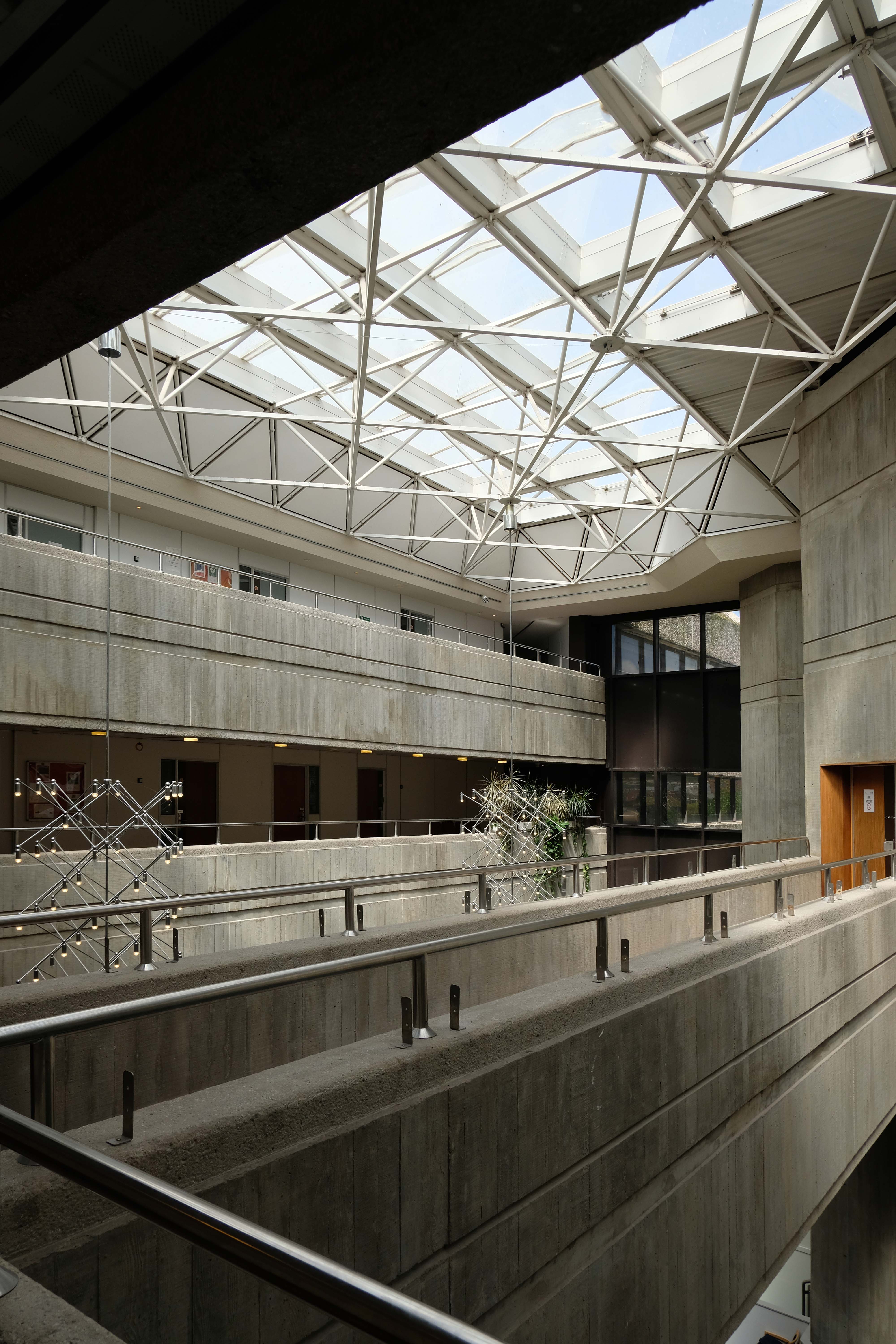
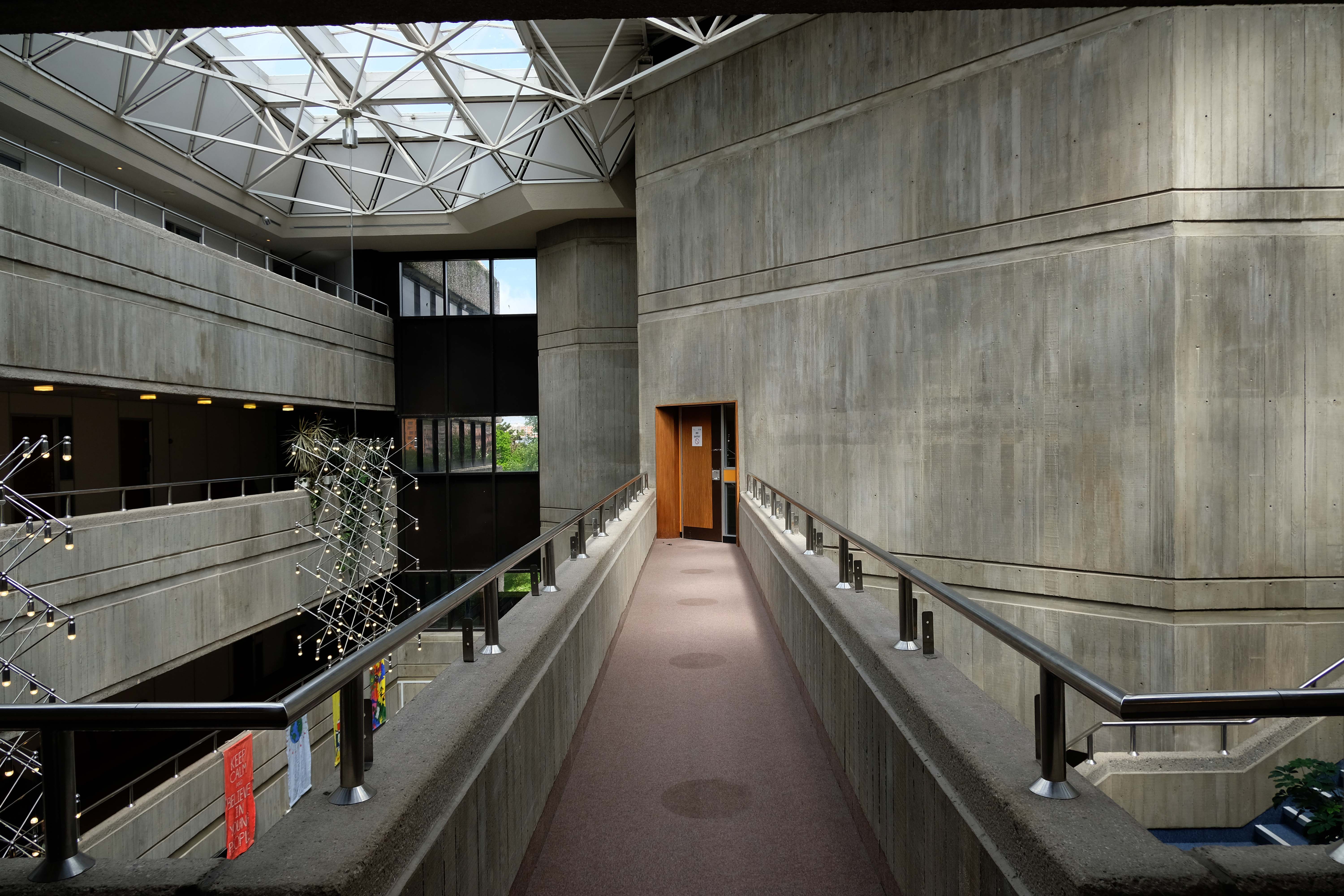
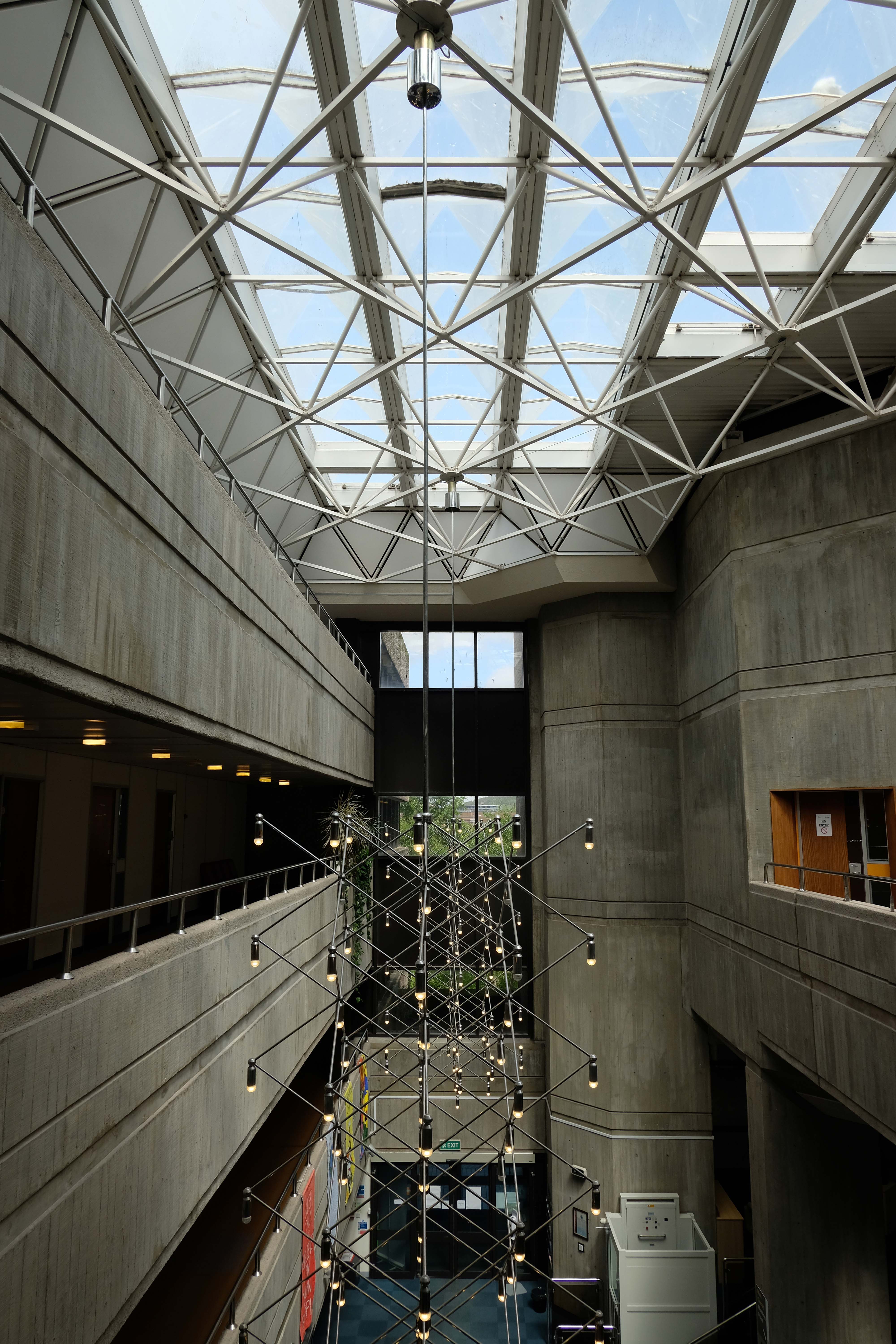
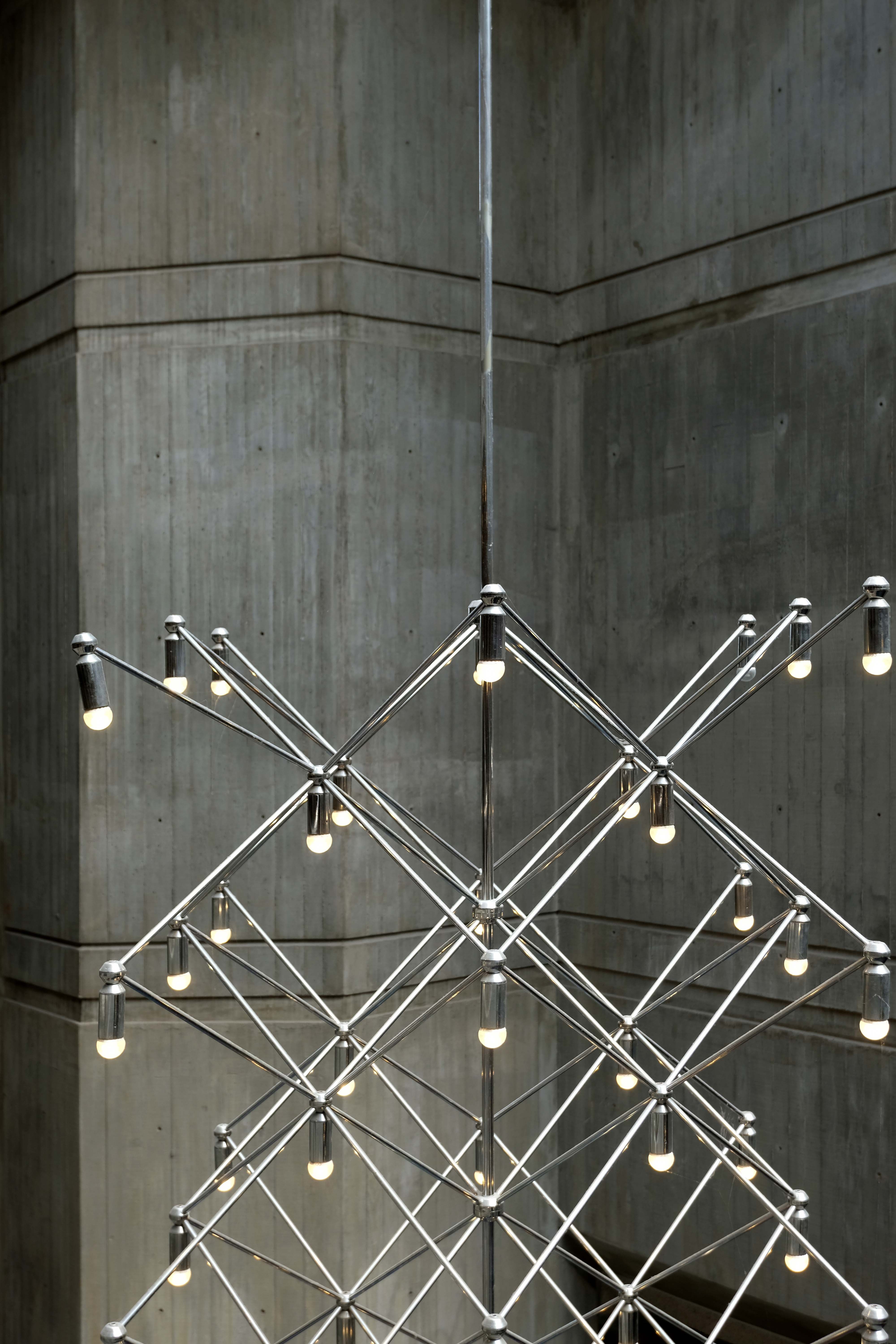
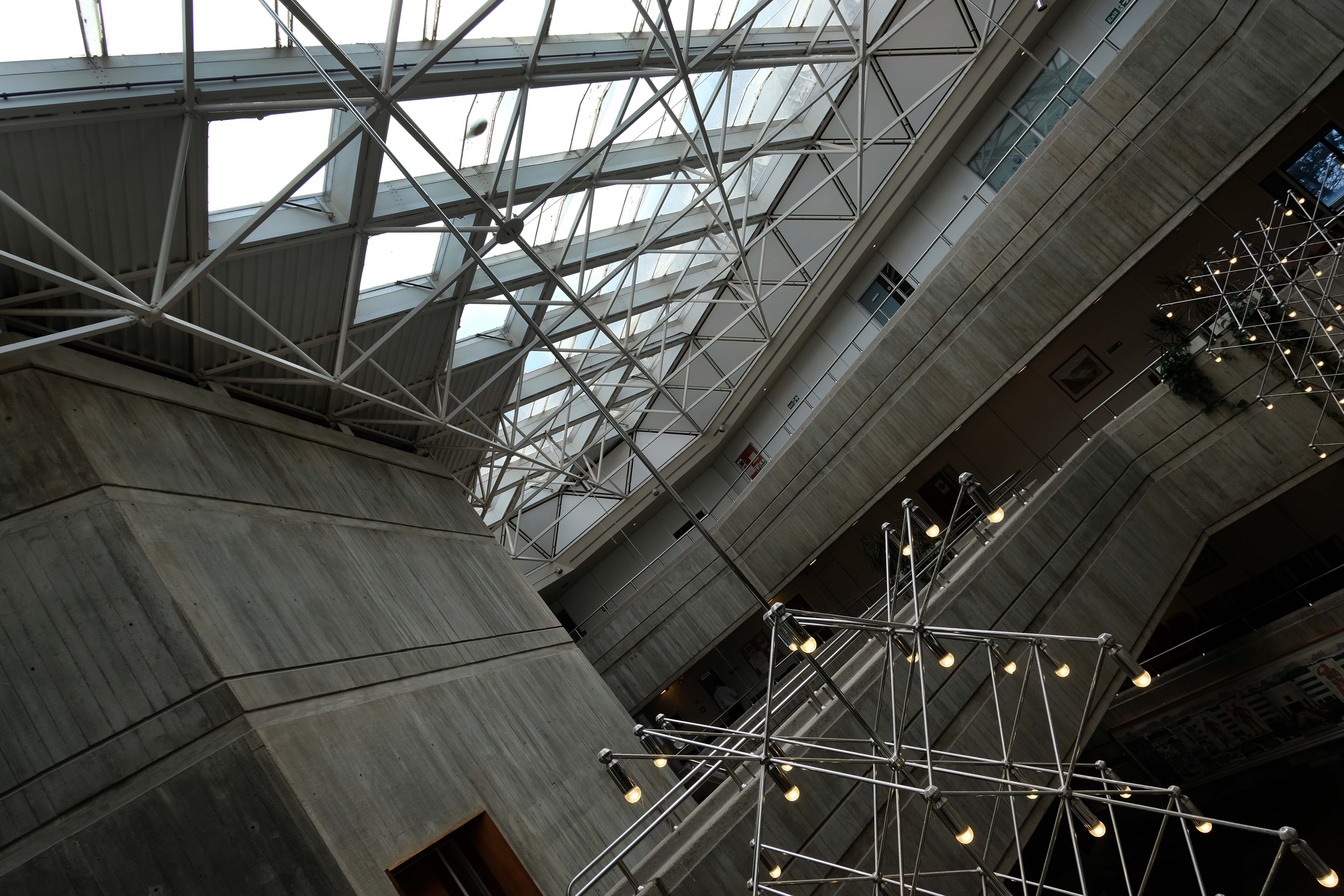
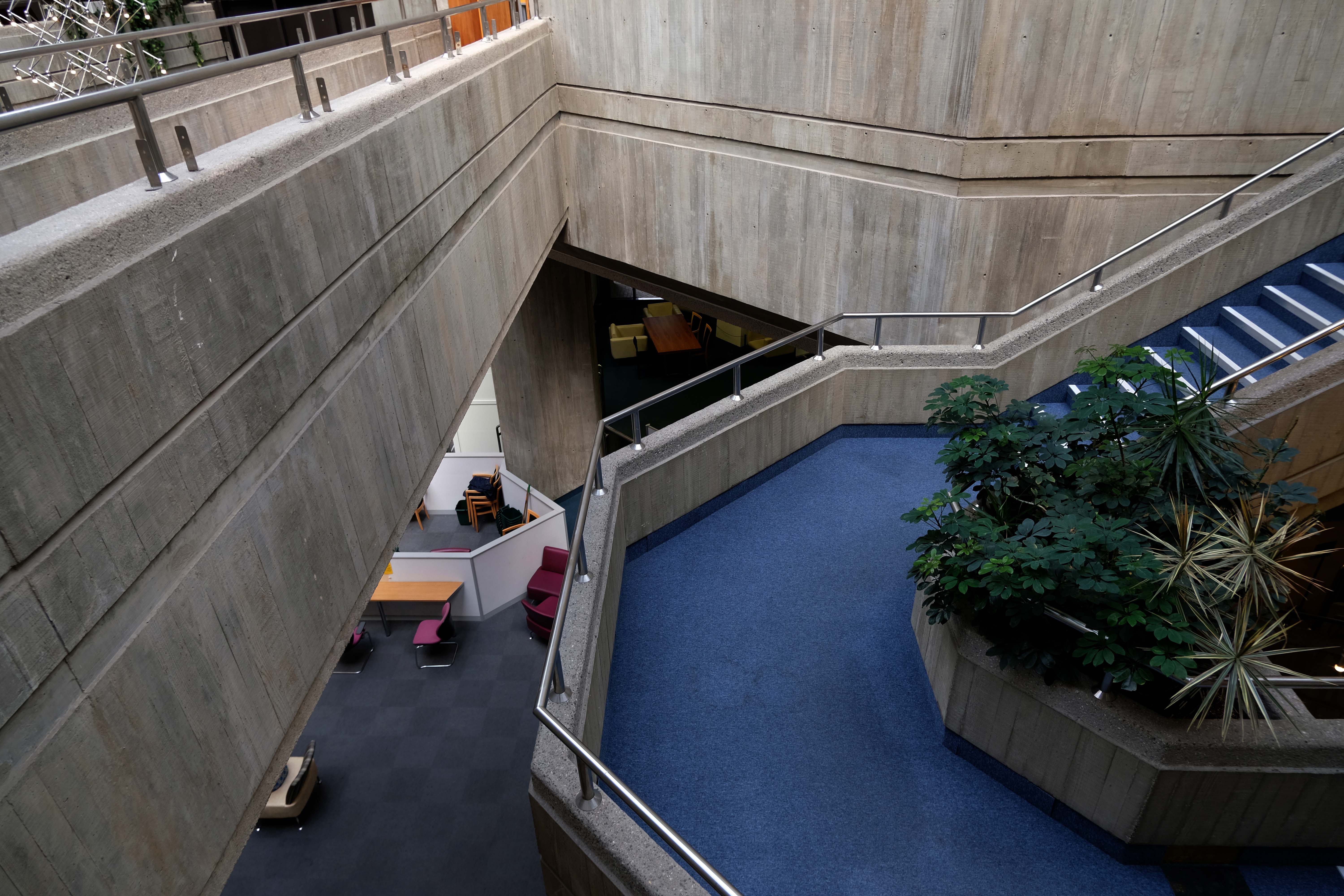
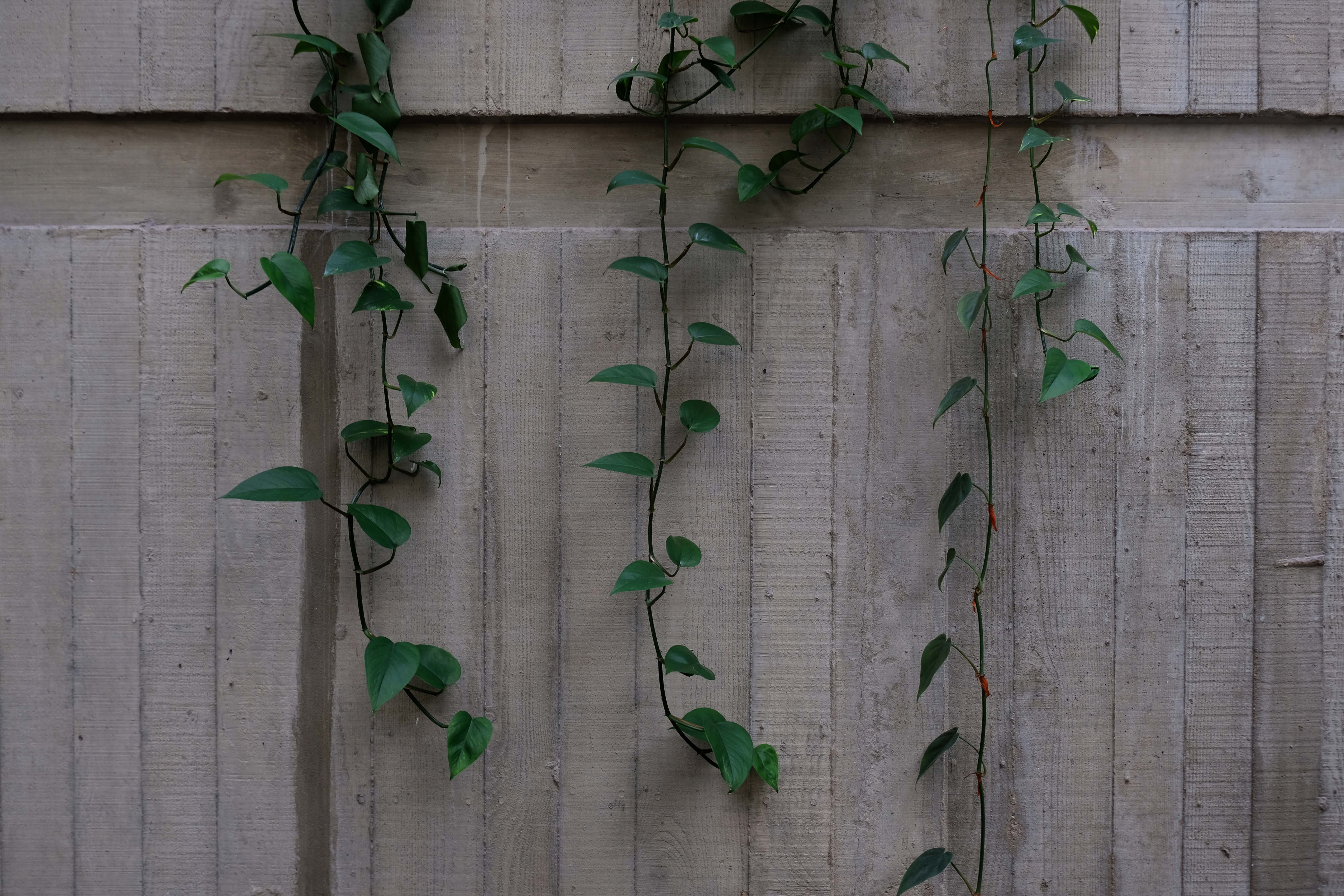
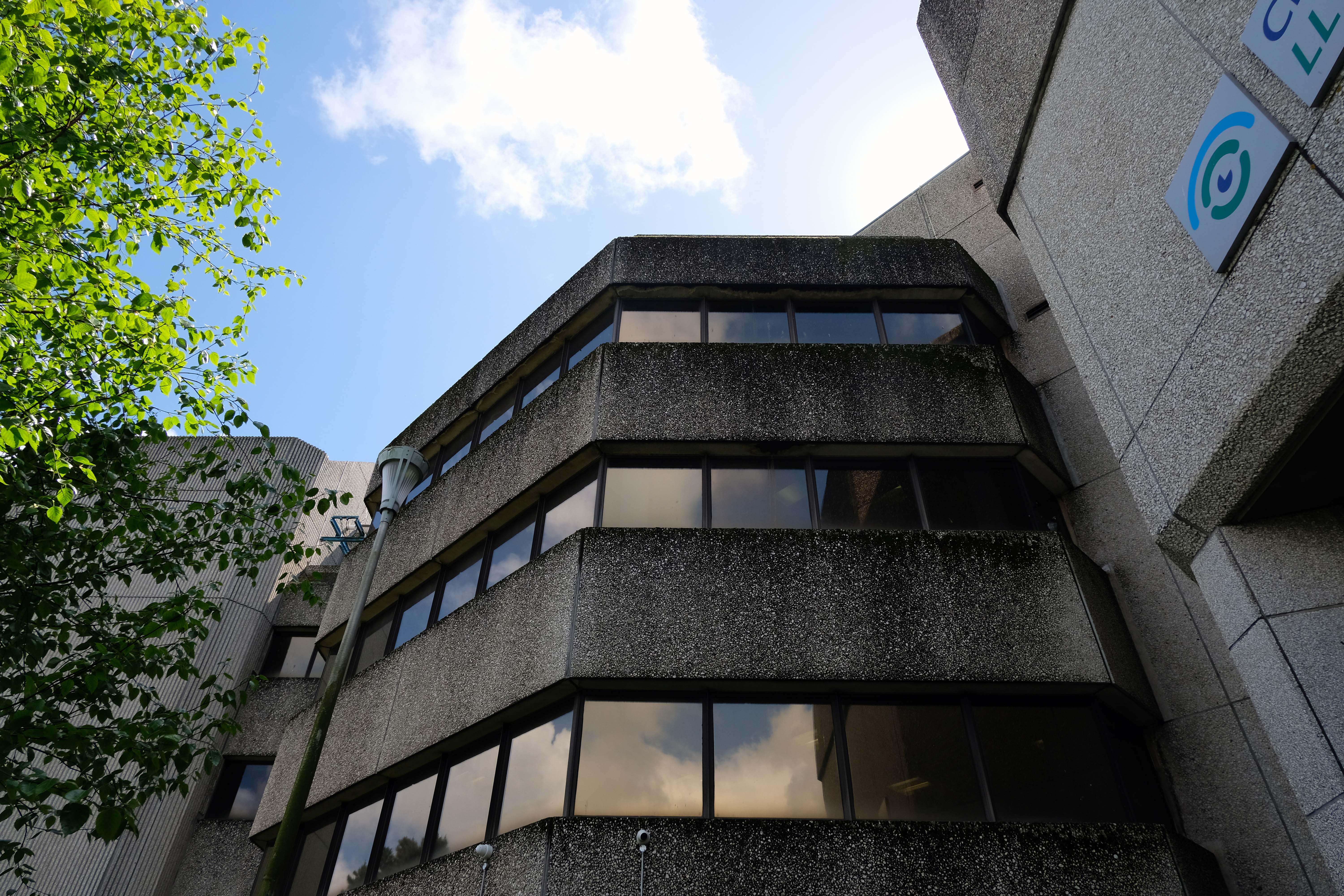
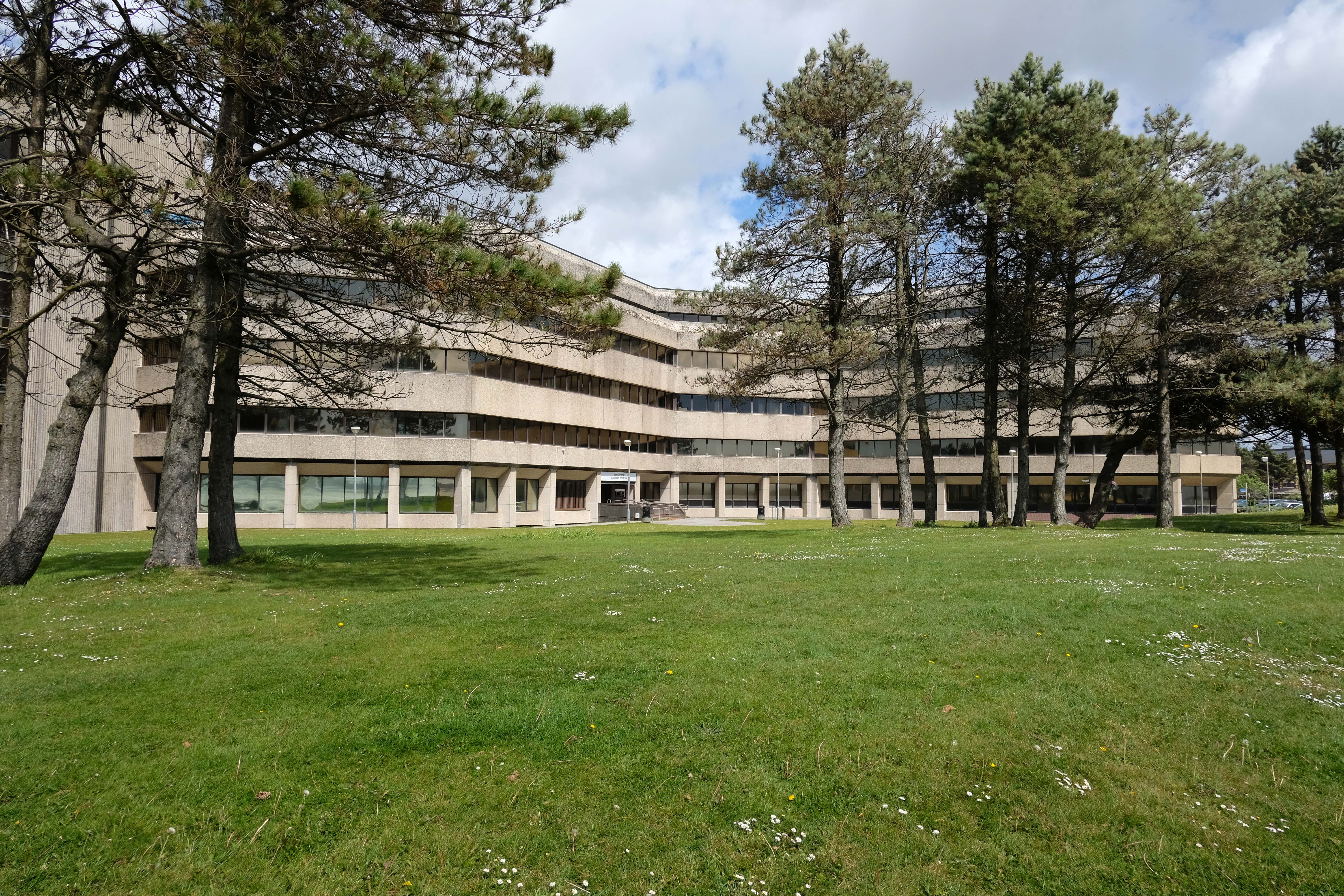
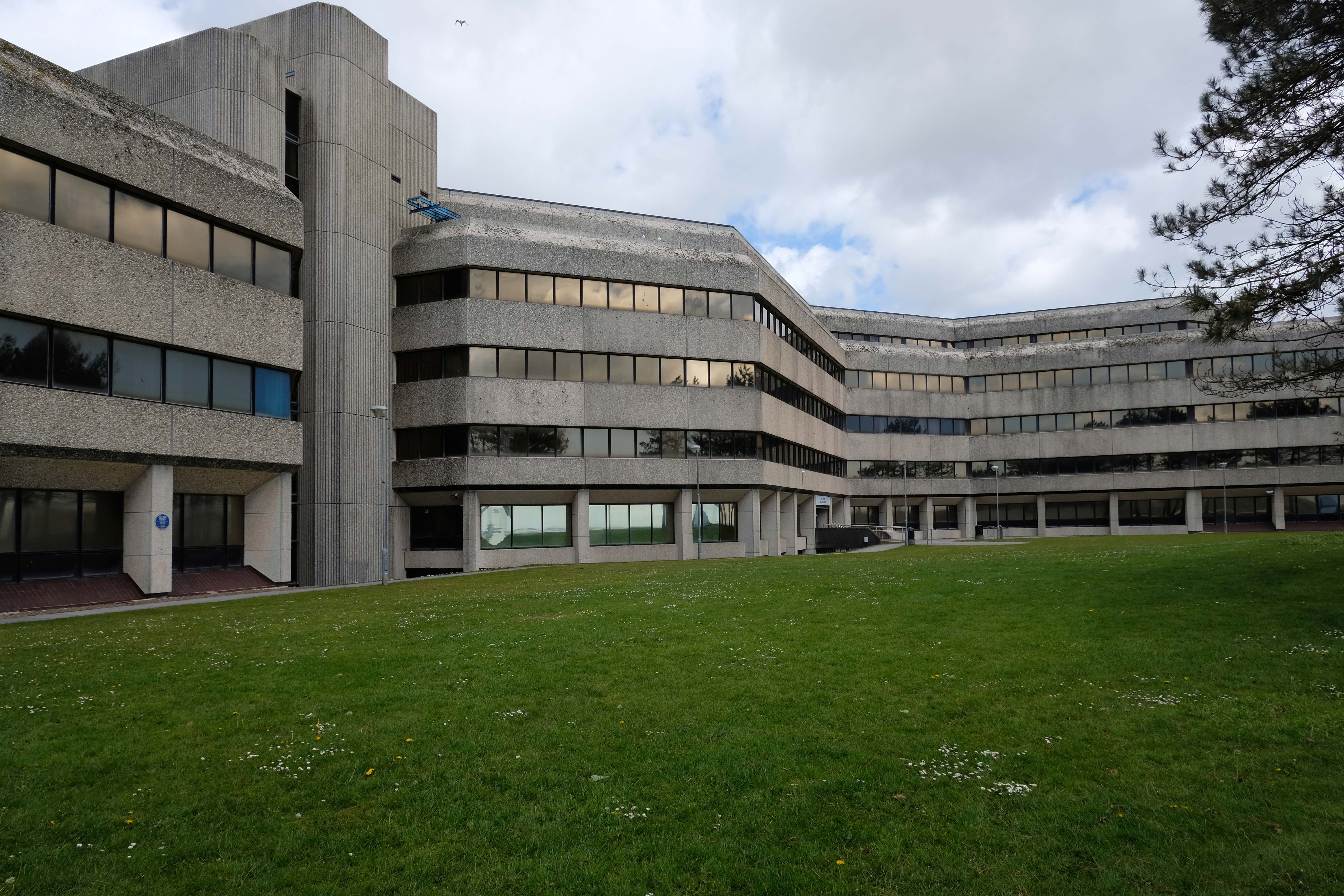
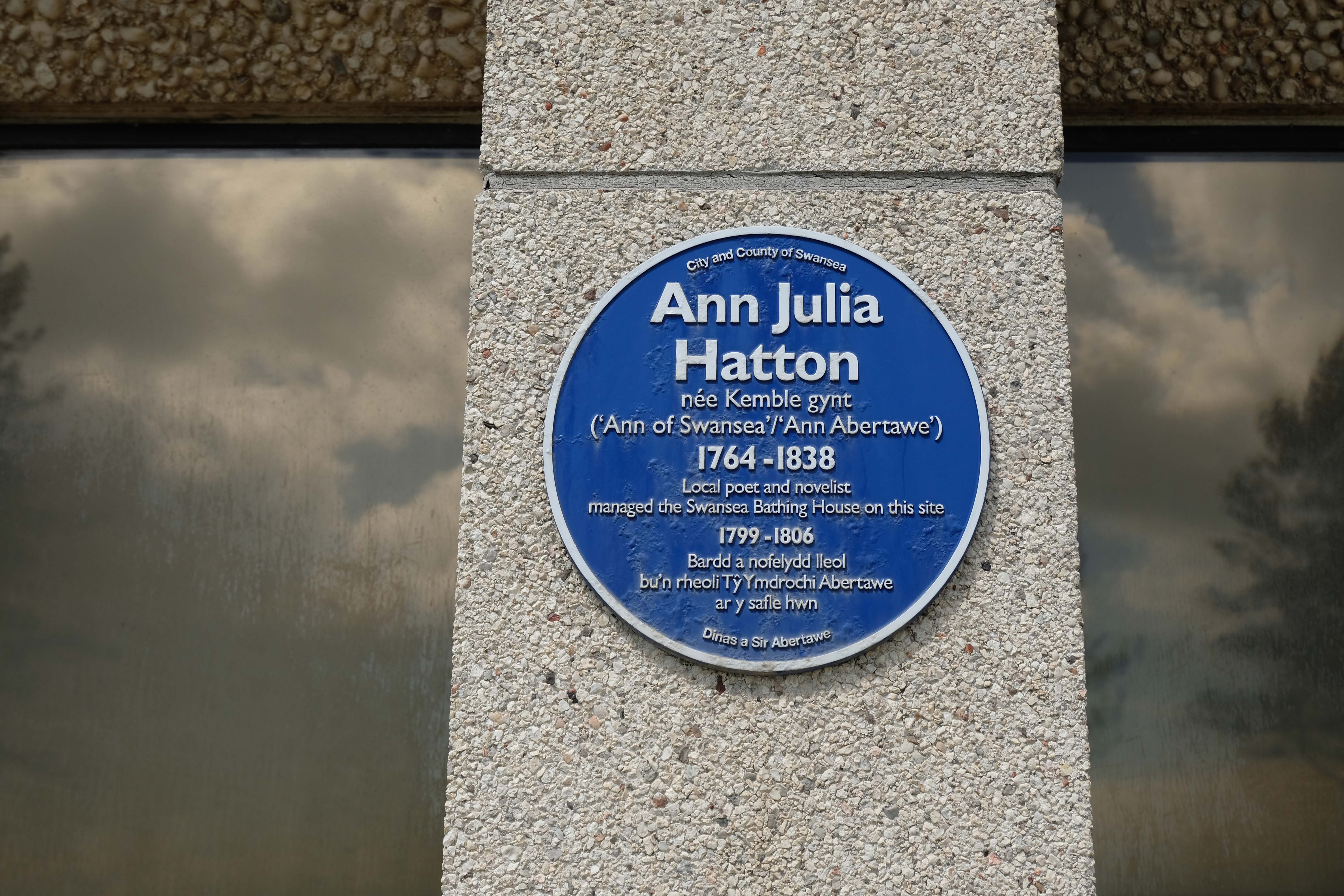
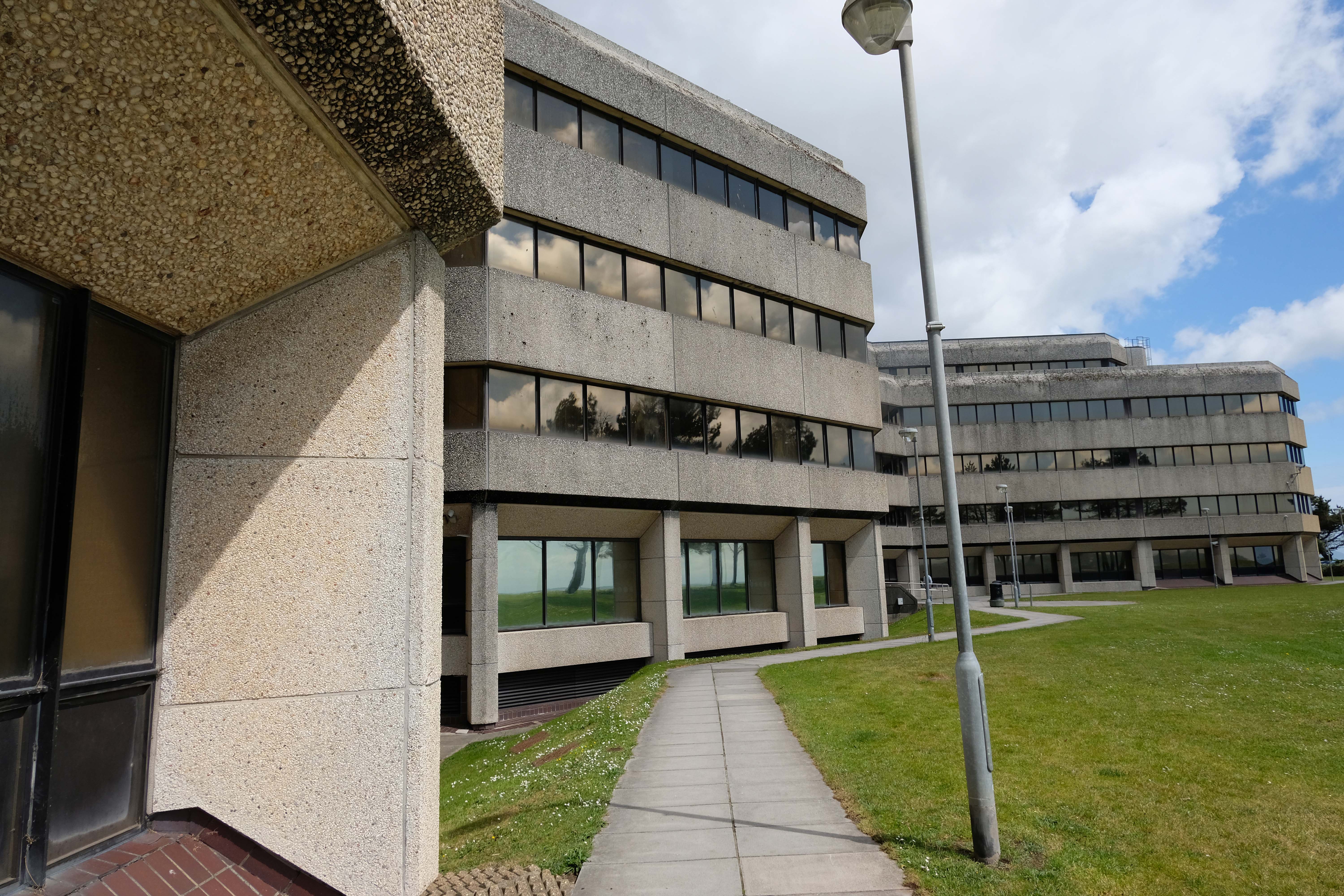
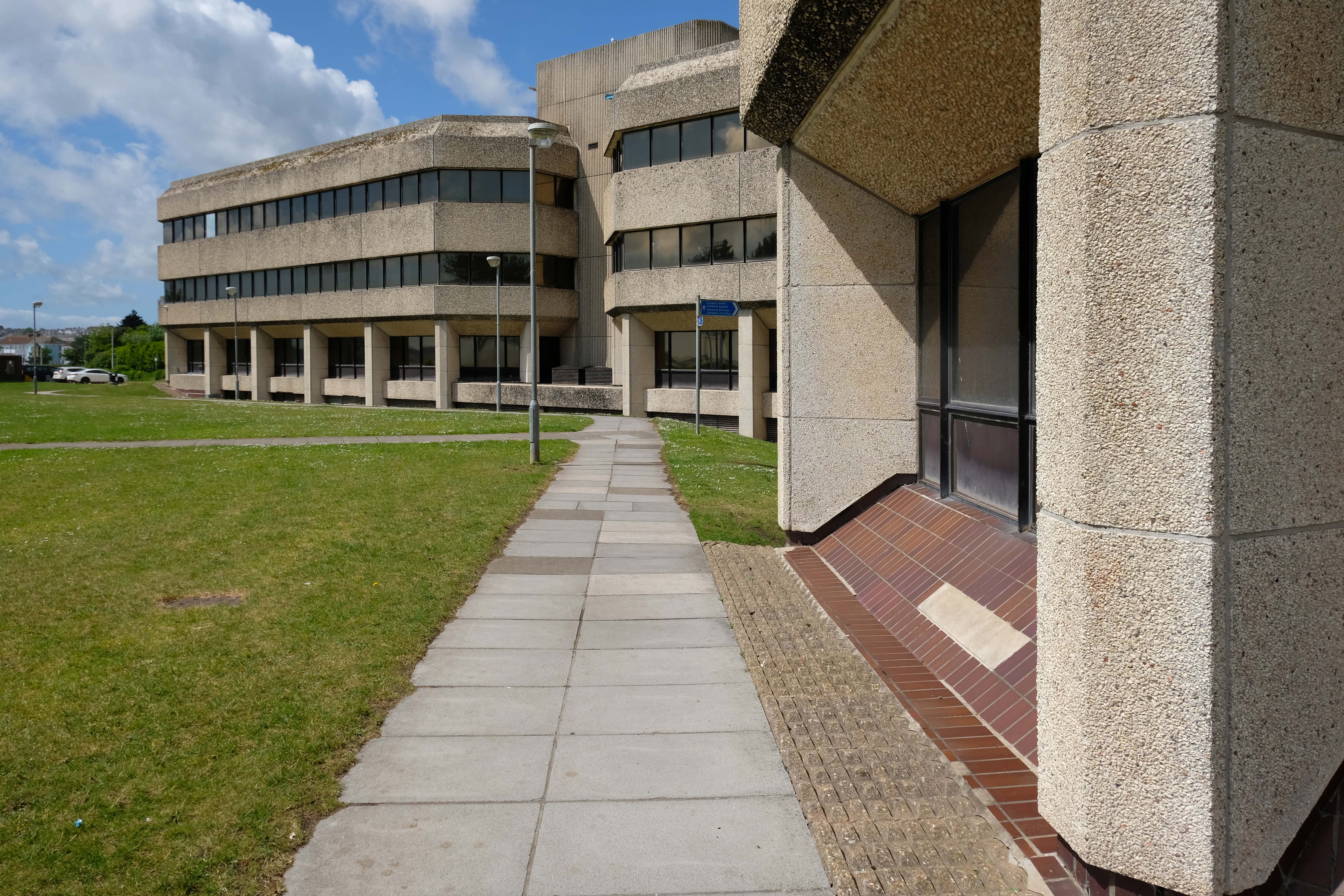
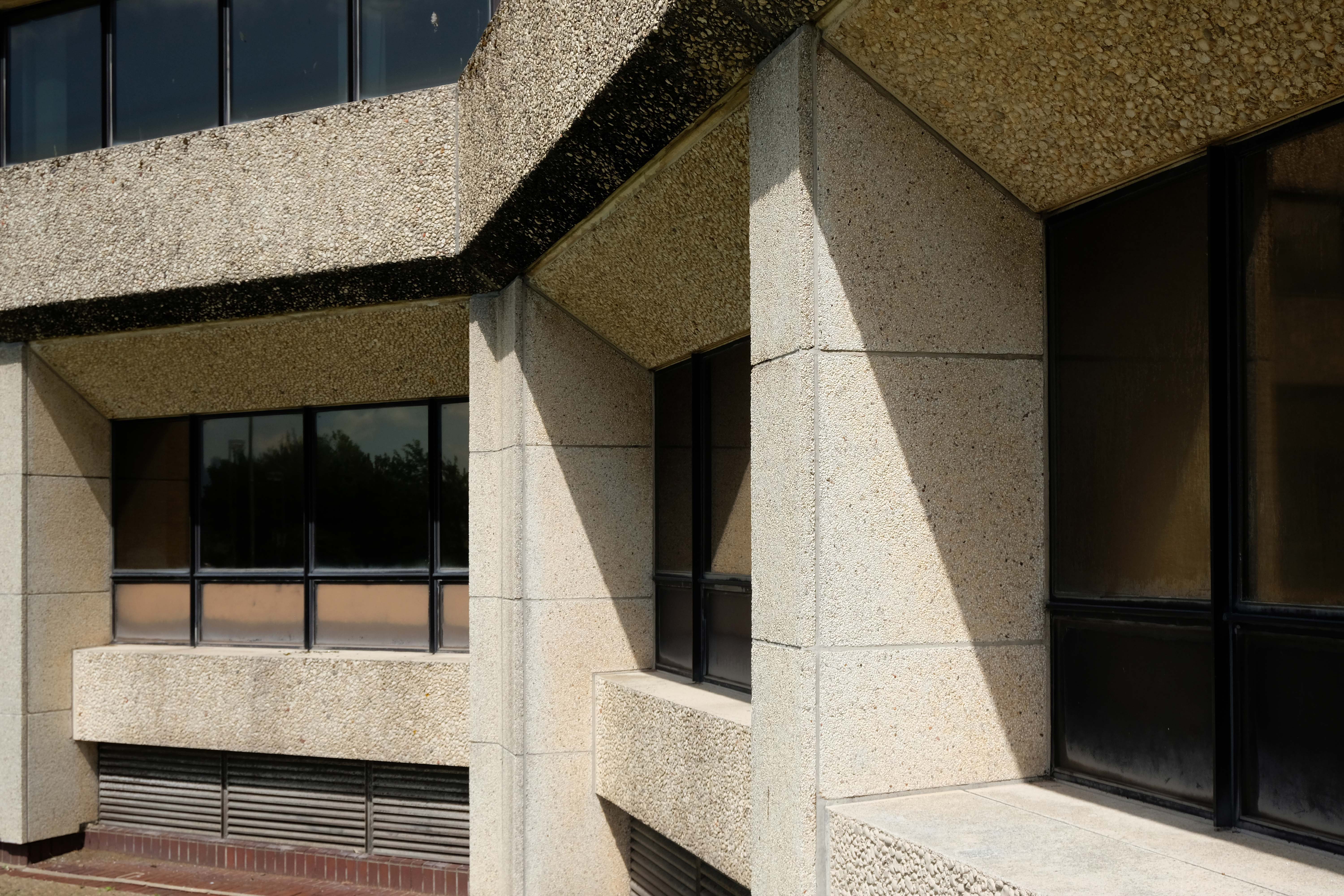
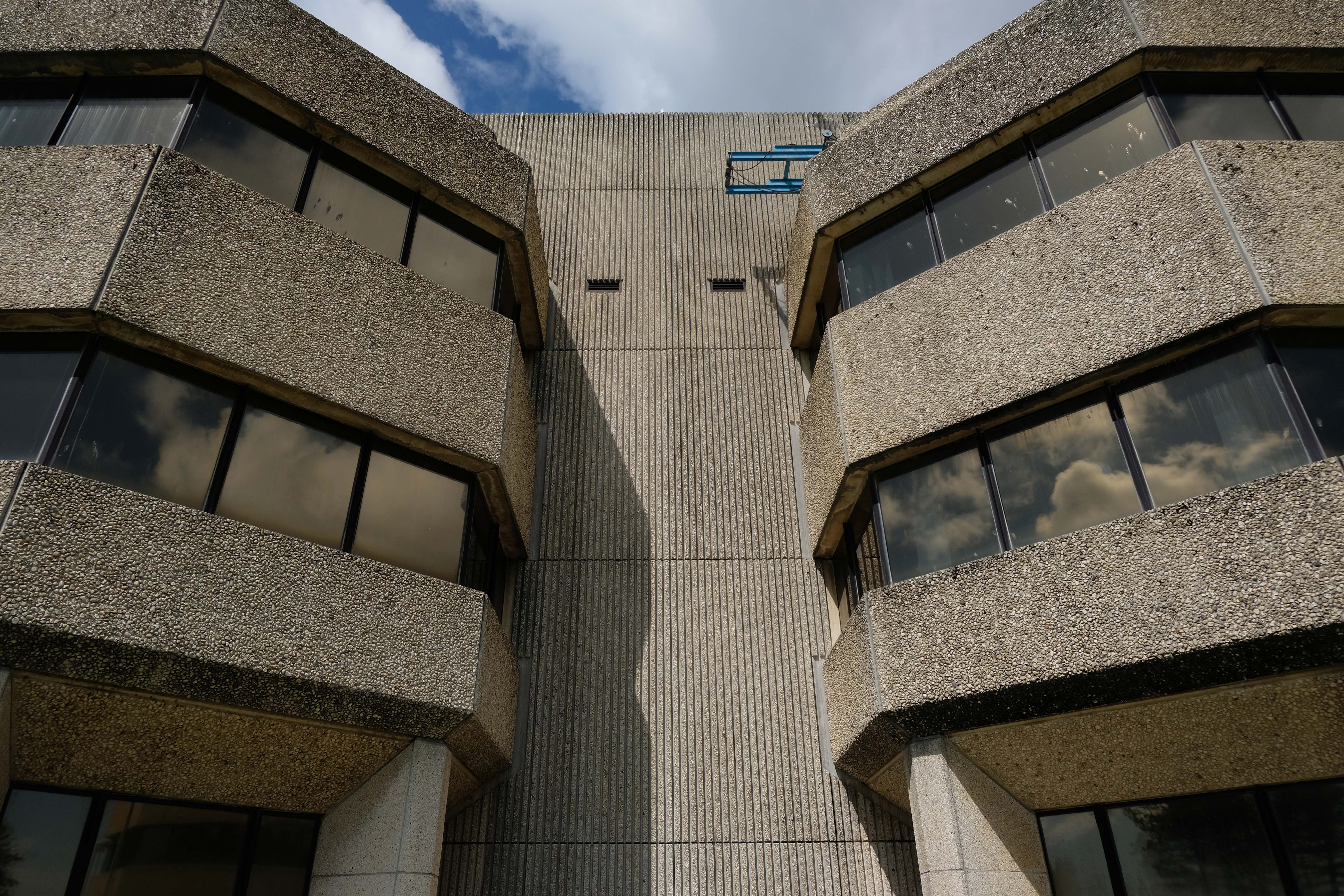
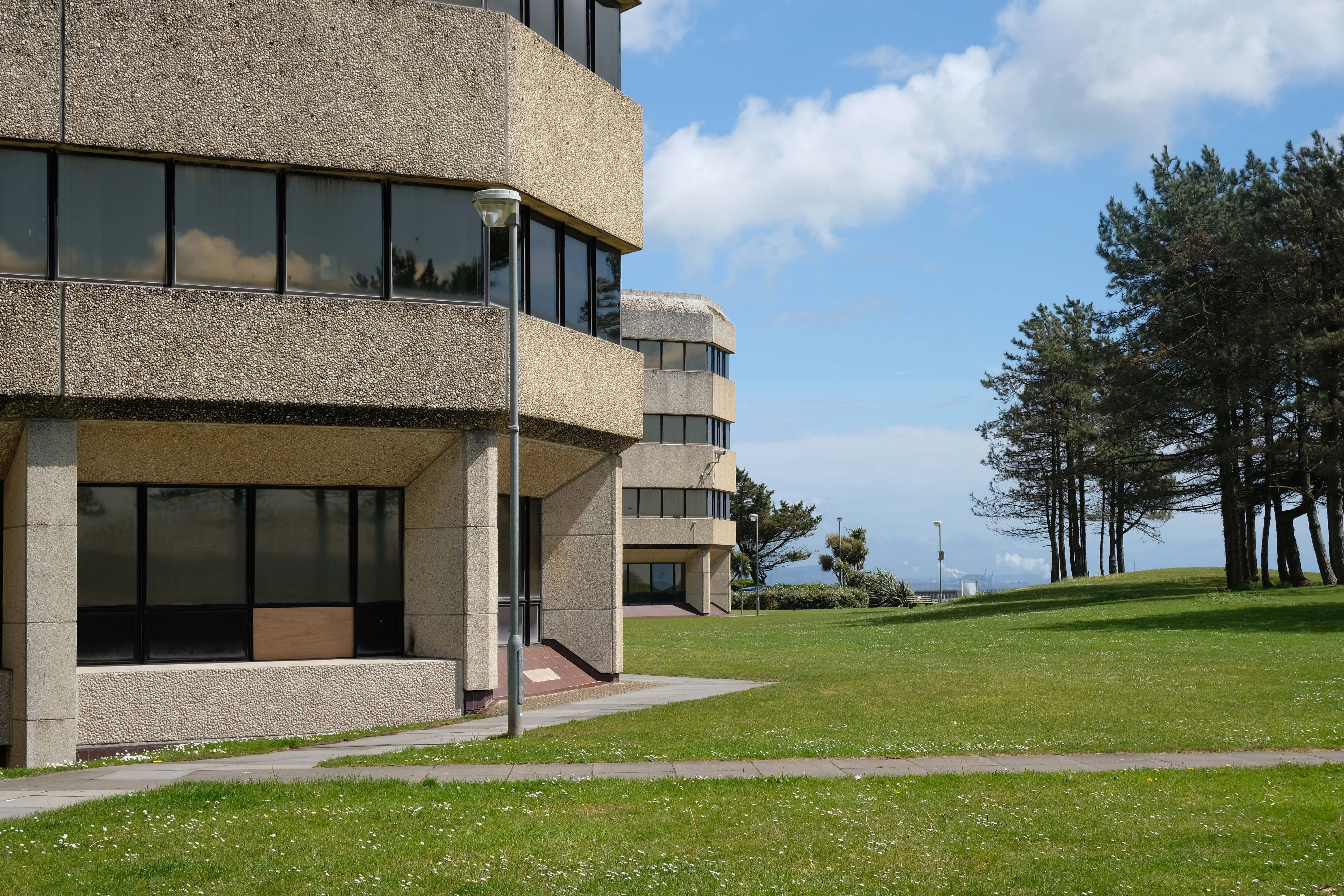

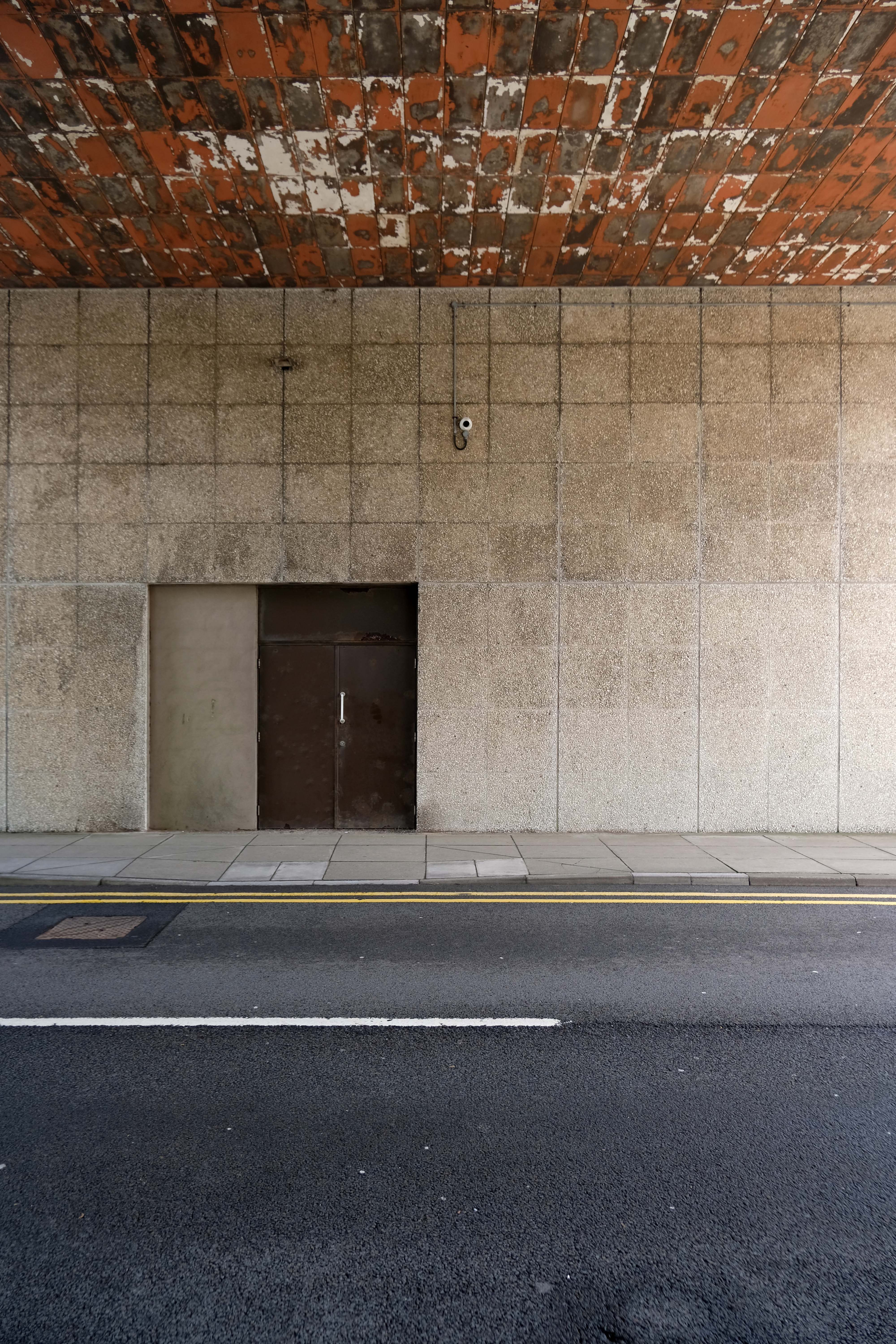
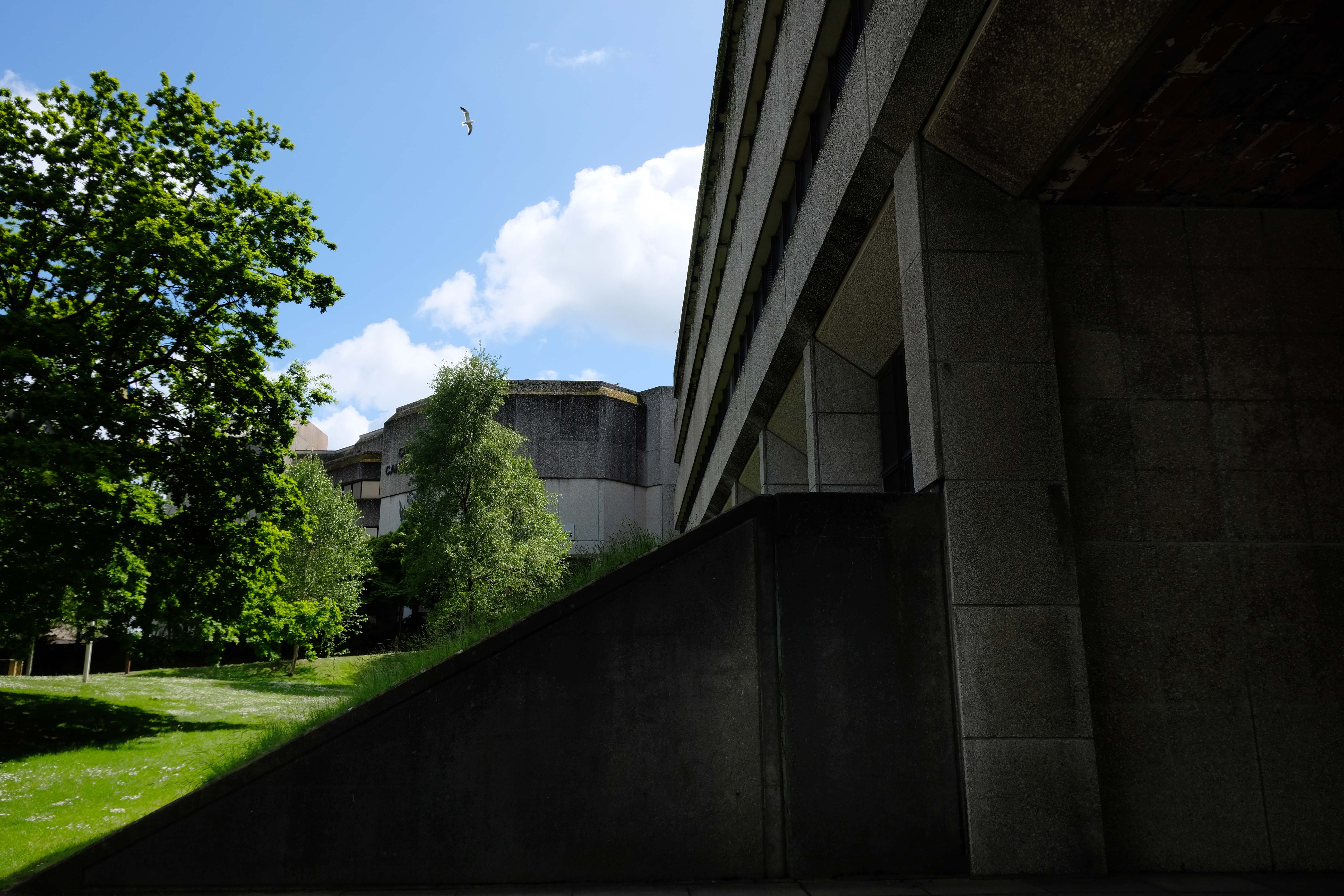
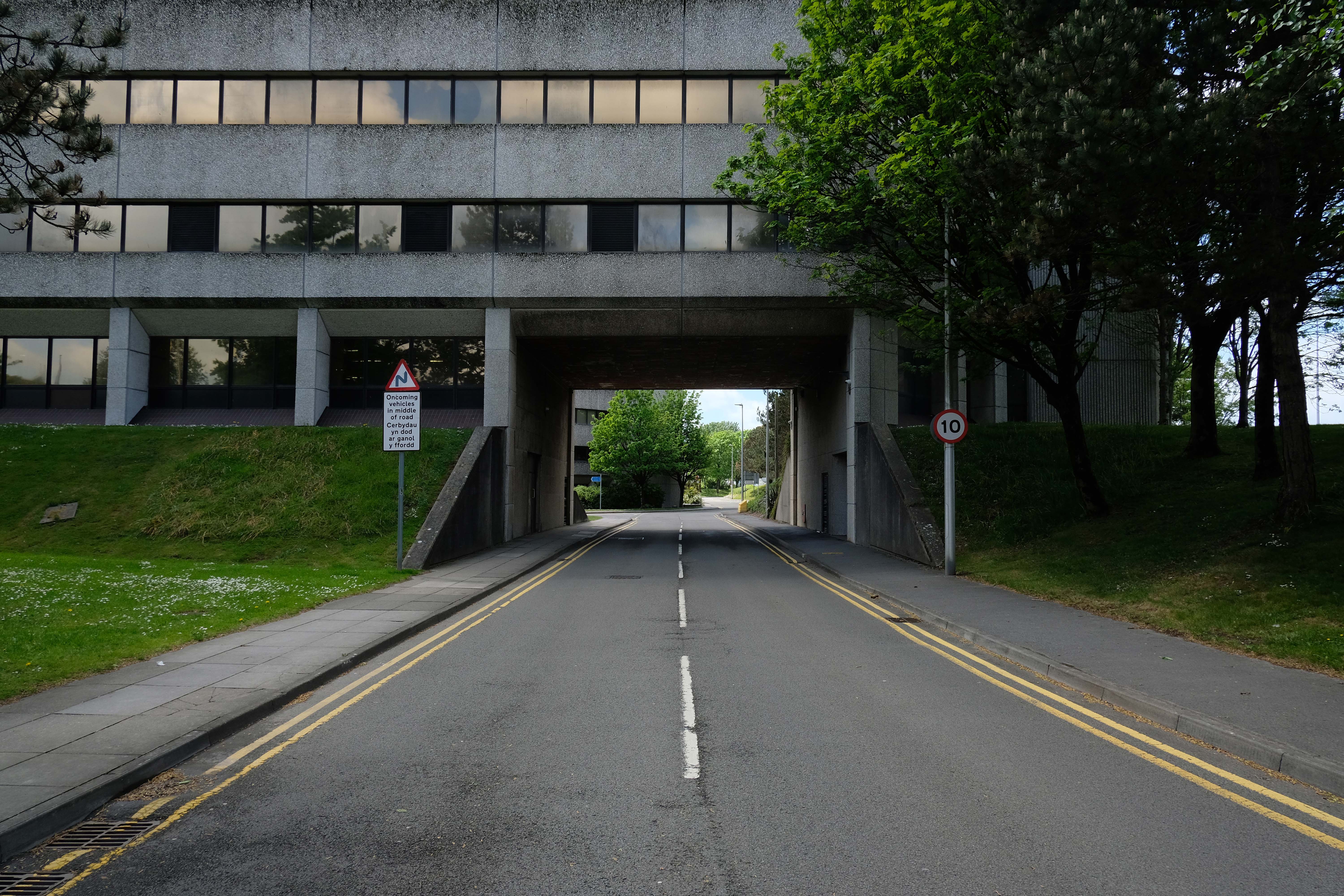
Diolch yn fawr once again to Catrin Saran James for acting as my spirit guide.
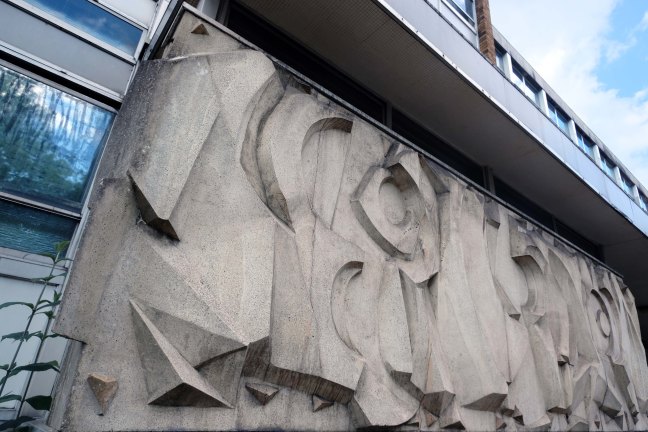
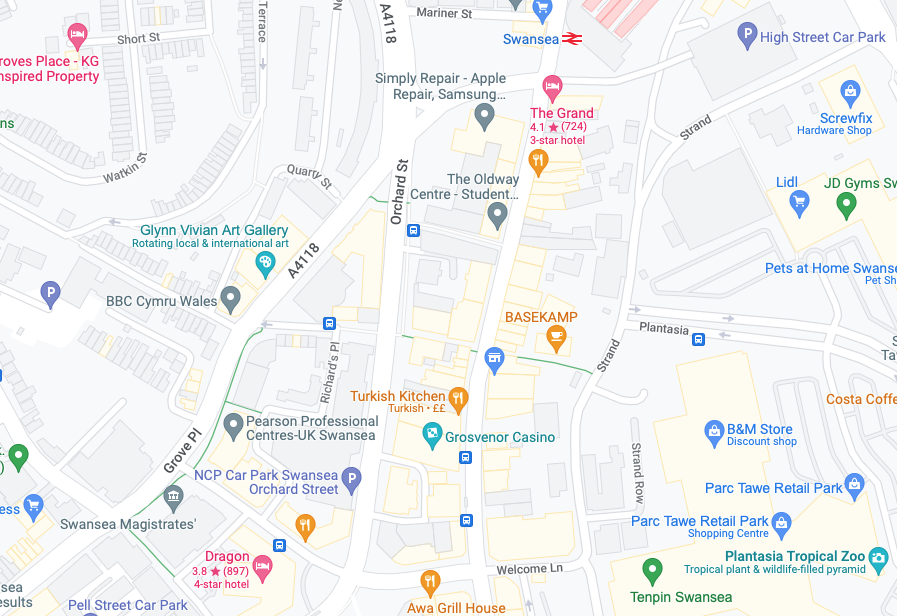
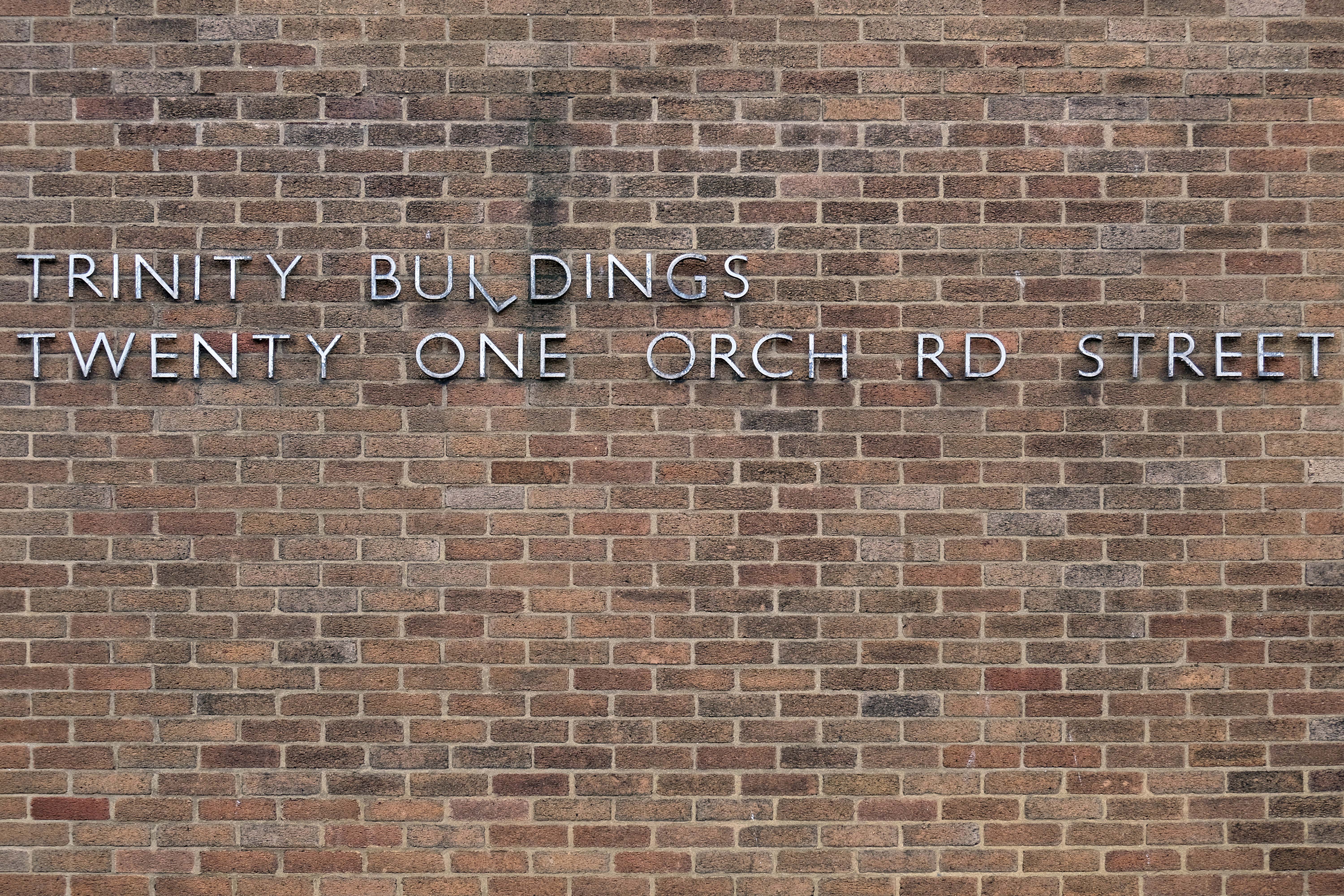
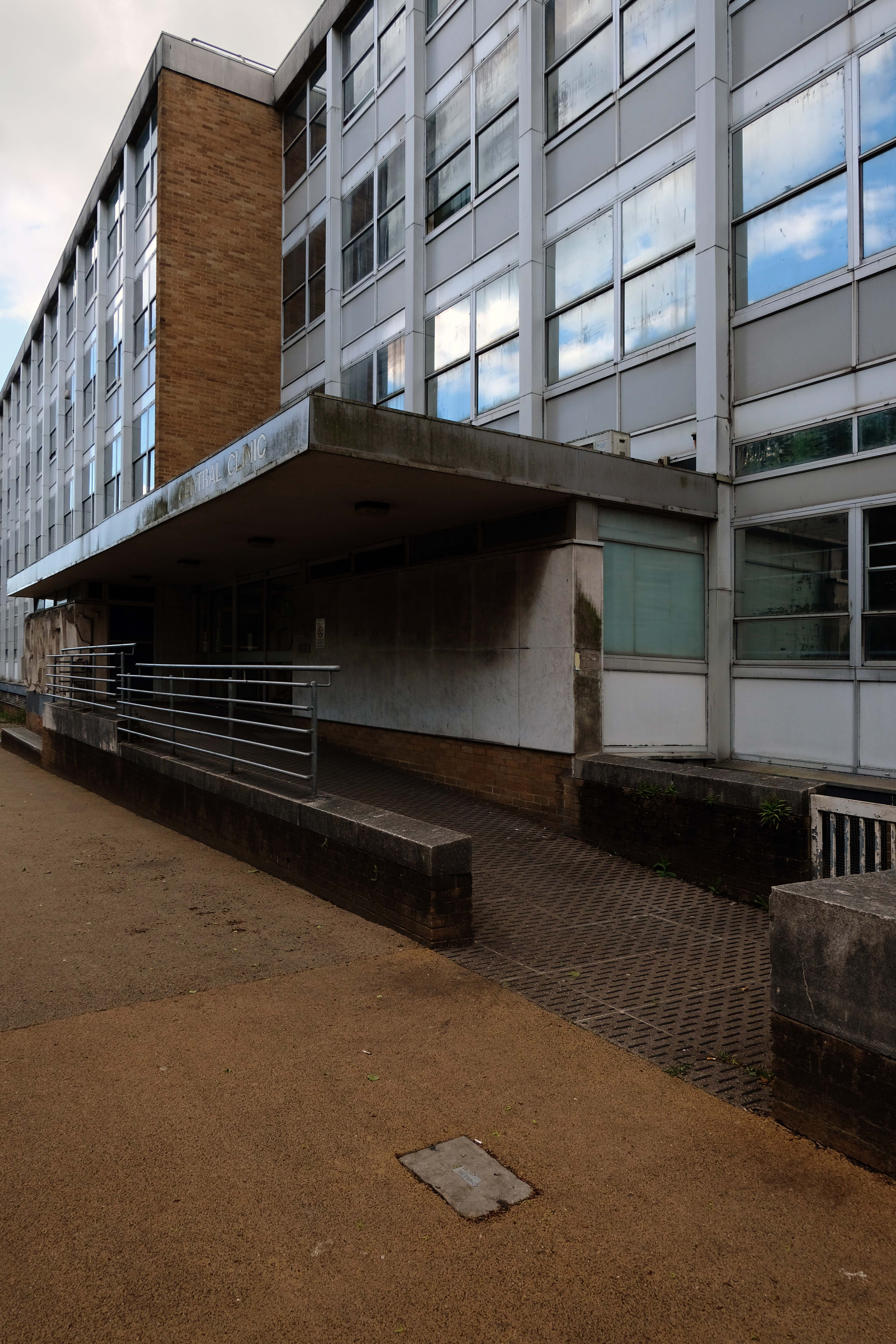
Central Clinic 21 Orchard Street Swansea SA1 5AT
Whisking you back in time!
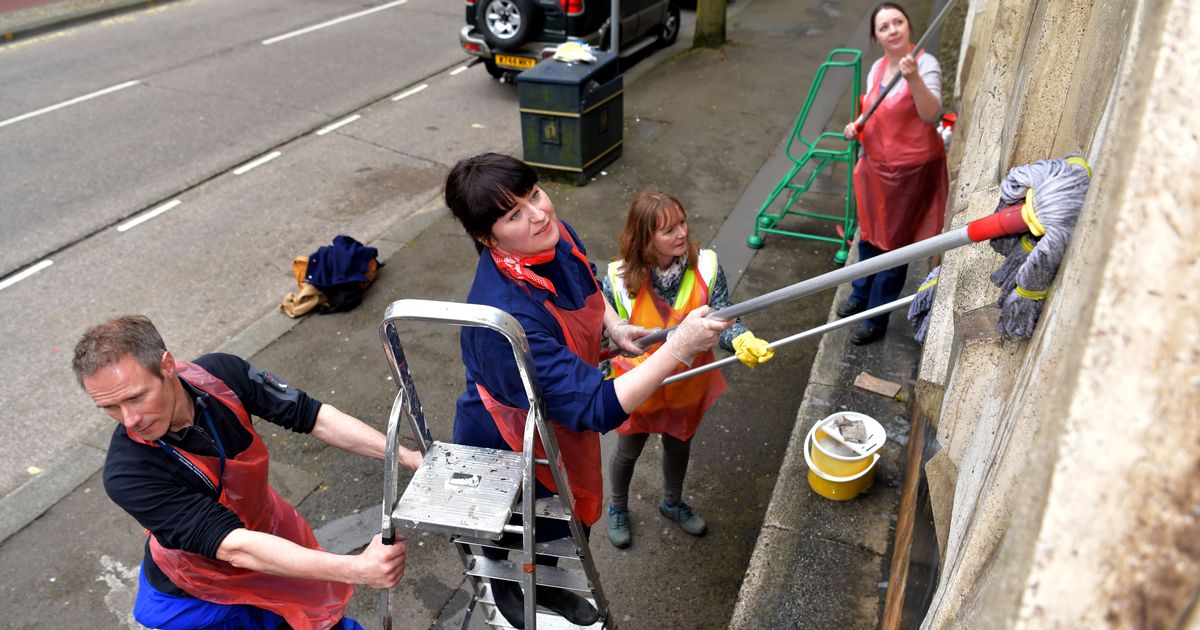
To 2015 when local artist and archivist Catrin Saran James is undertaking a little reverse vandalism by way of guerrilla restoration or adfer gerila if you will.
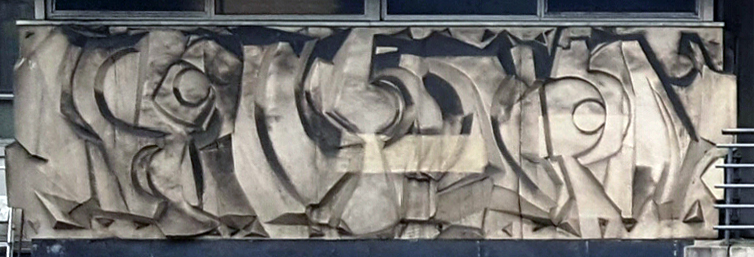
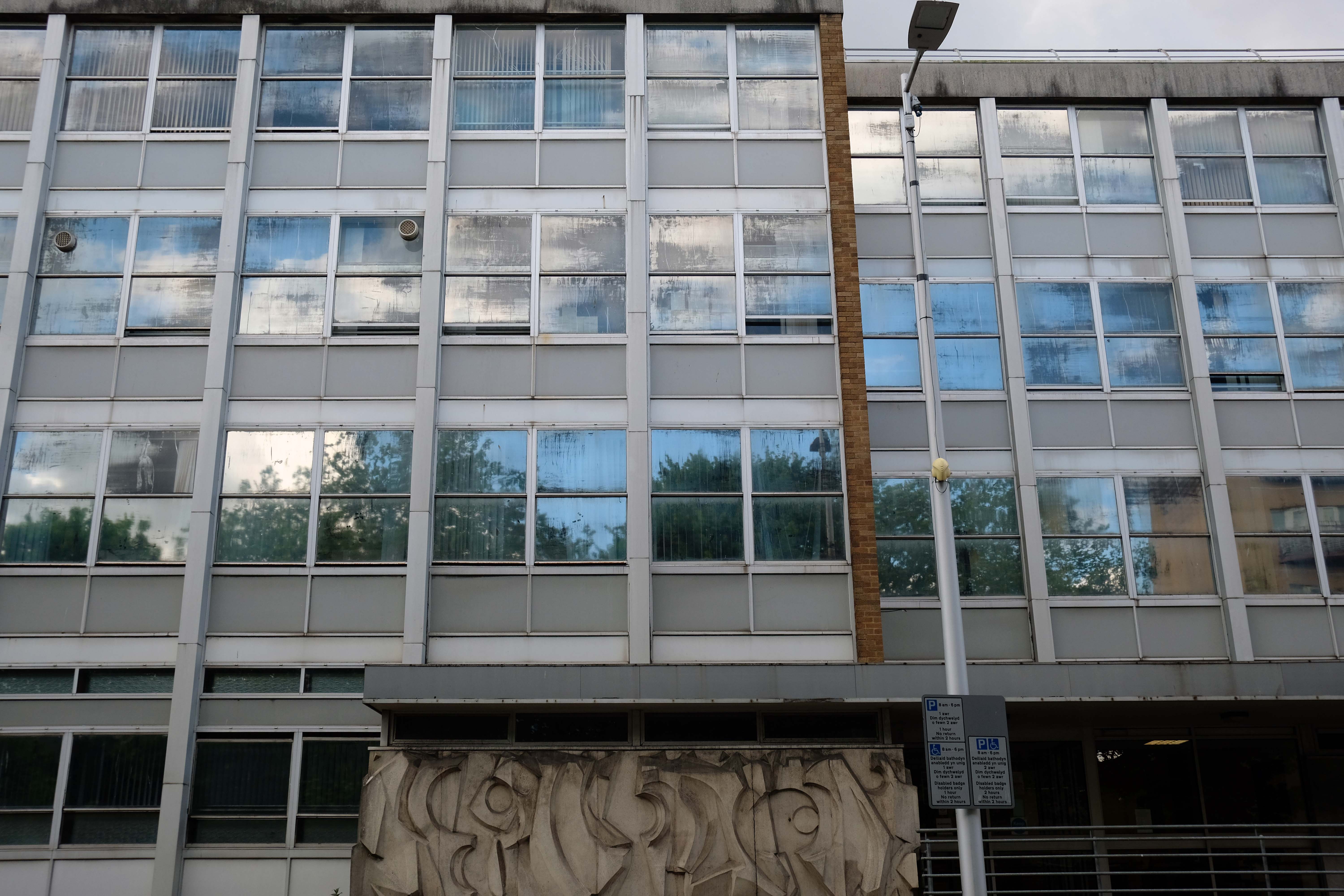
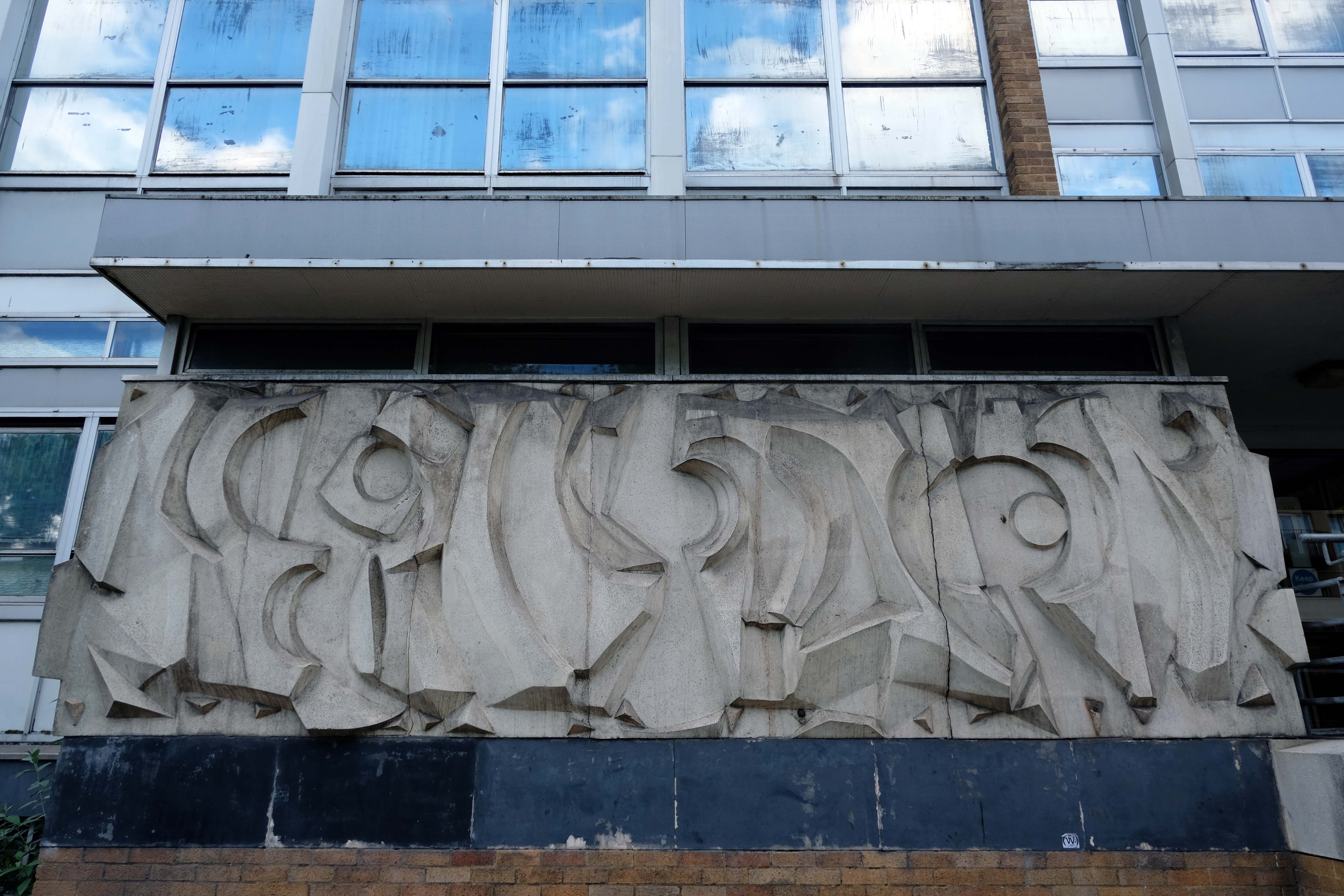
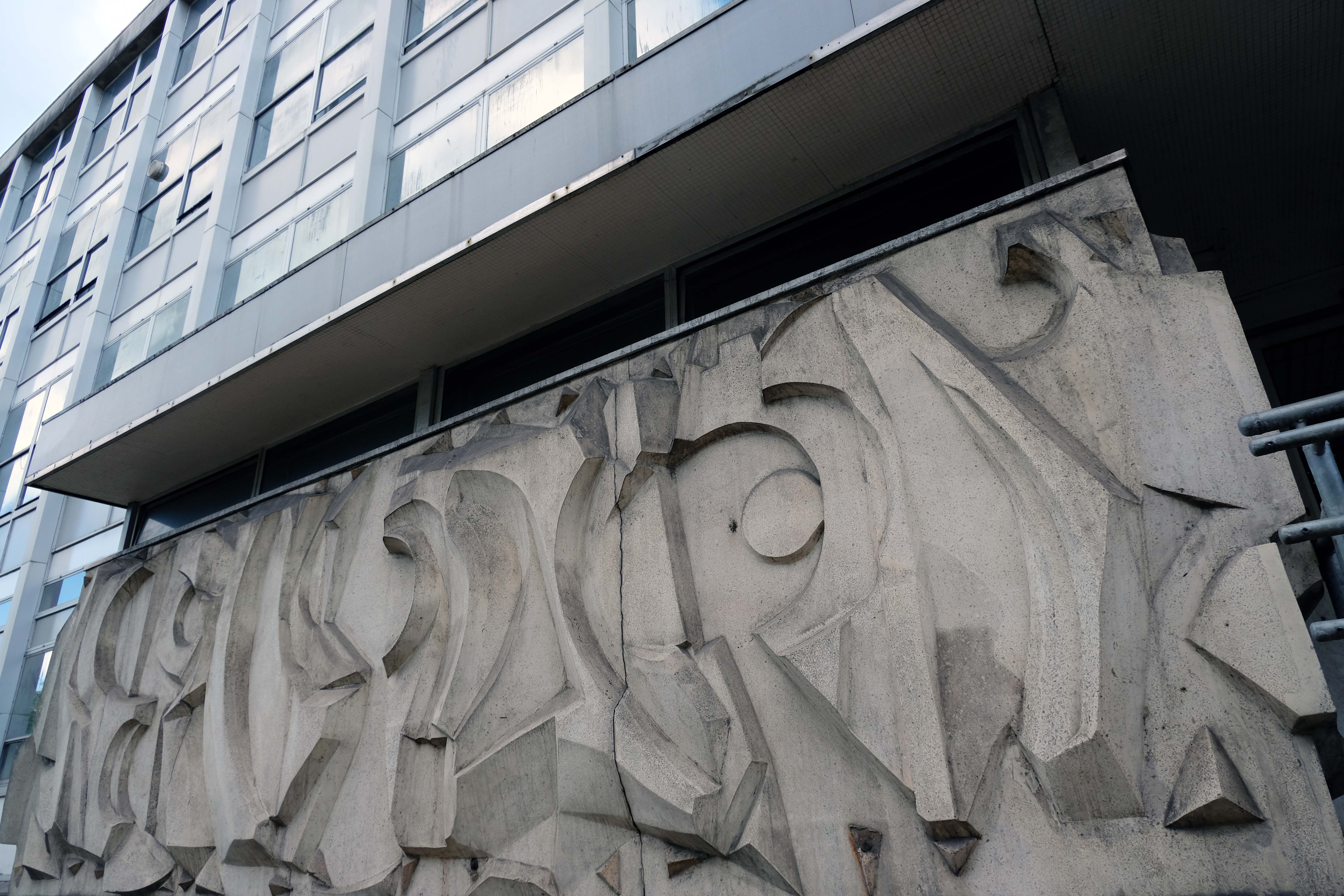
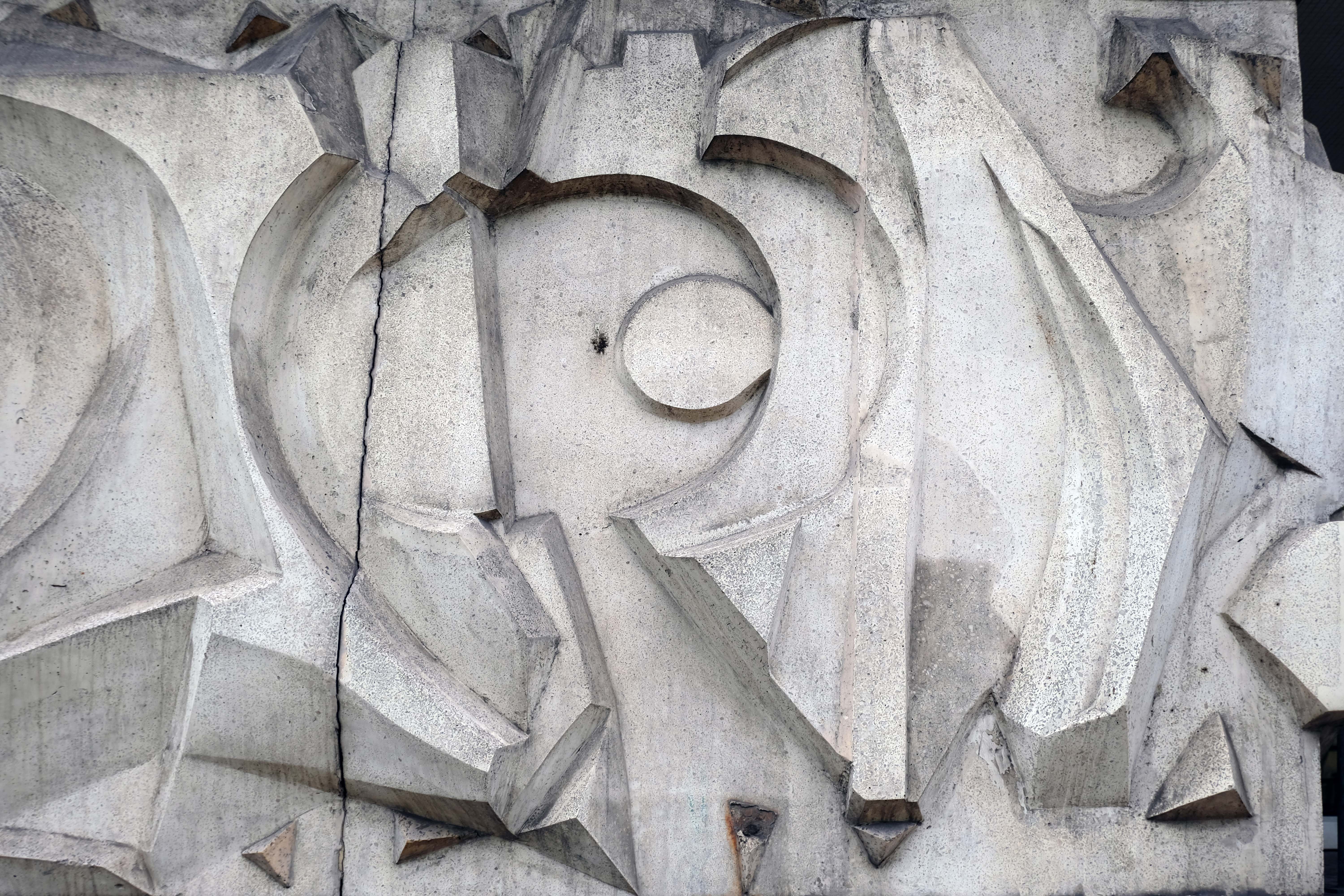
Leading to a full scale cleaning of the Harry Everington 1969 concrete mural adorning the Central Clinic.
It was under Harry’s guidance that students from the Swansea College of Art produced the mural which was put on the building’s exterior back in 1969.
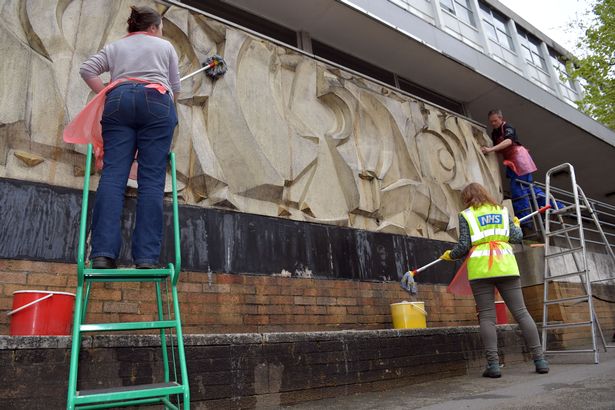
It was fantastic to have had an email from the ABMU Health Board earlier this year.
Martin Thomas who leads the ABMU Heritage Team contacted me as he was researching what public art the health board owned.
Martin came across my Guerrilla Restoration work and the previous work I’d done in highlighting cleaning samples of Harry Everington’s 1969 abstract concrete sculptural mural over the last 5 years.
Taken from the ABMU Heritage blog, here’s what Martin said of the project:
When we started this group we carried out a scoping exercise to see what historical artefacts the health board owned and this mural came up.
When I did more research I found out about Catrin’s project and we thought it would be a good idea to help finish what she had started.
We thought this would be a great opportunity for us to clean a very neglected sculpture.
Subsequently her gallant restoration endeavours made headline news in Wales Online.
Fast forward to Wednesday May 11th 2022 – I am aboard the Transport for Wales train, Swansea bound!
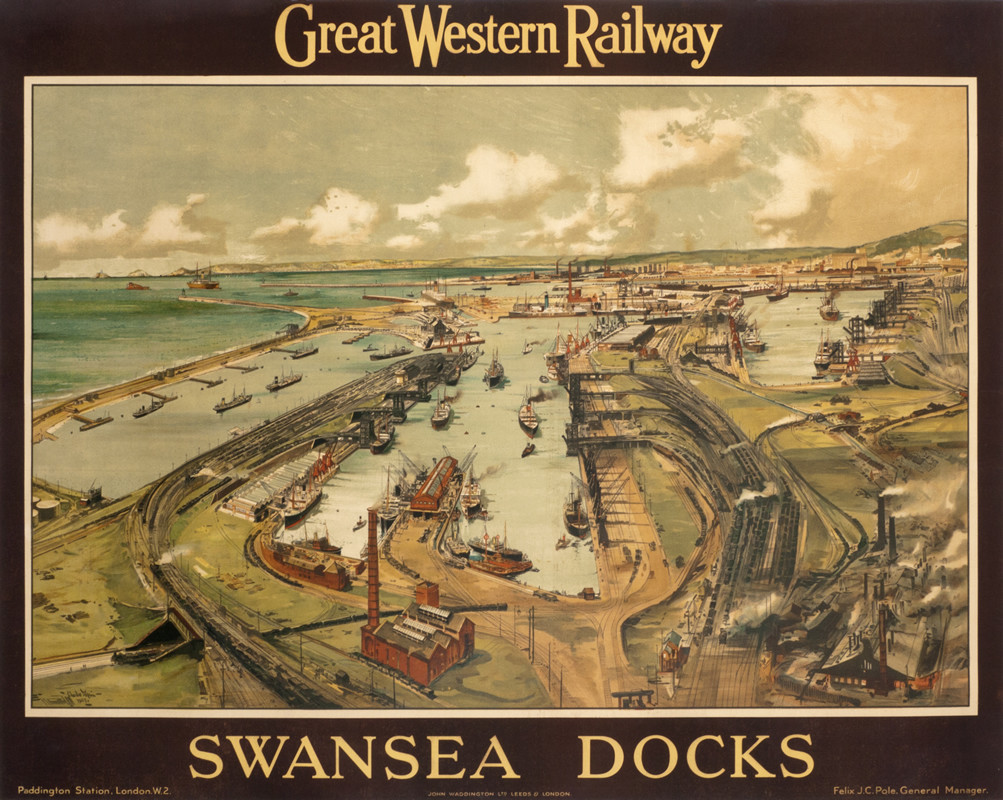
Catrin had kindly forwarded me a clear and comprehensive guide to Swansea’s Modernist architecture.
Characteristically, I promptly got lost, fortunately we had arranged to meet at the National Waterfront Museum – which was clearly signposted. Following a chat and a cuppa we swanned off, visiting the Civic Centre and a lovely array of post-war retail outlets.
We parted and I went on my merry way – I can’t thank you enough for your company and erudition Catrin, diolch yn fawr.
Eventually I arrived at the Clinic, I feel that the best time to visit a medical centre is when you are fighting fit, with an overwhelming interest in cast concrete, rather than plaster casts.
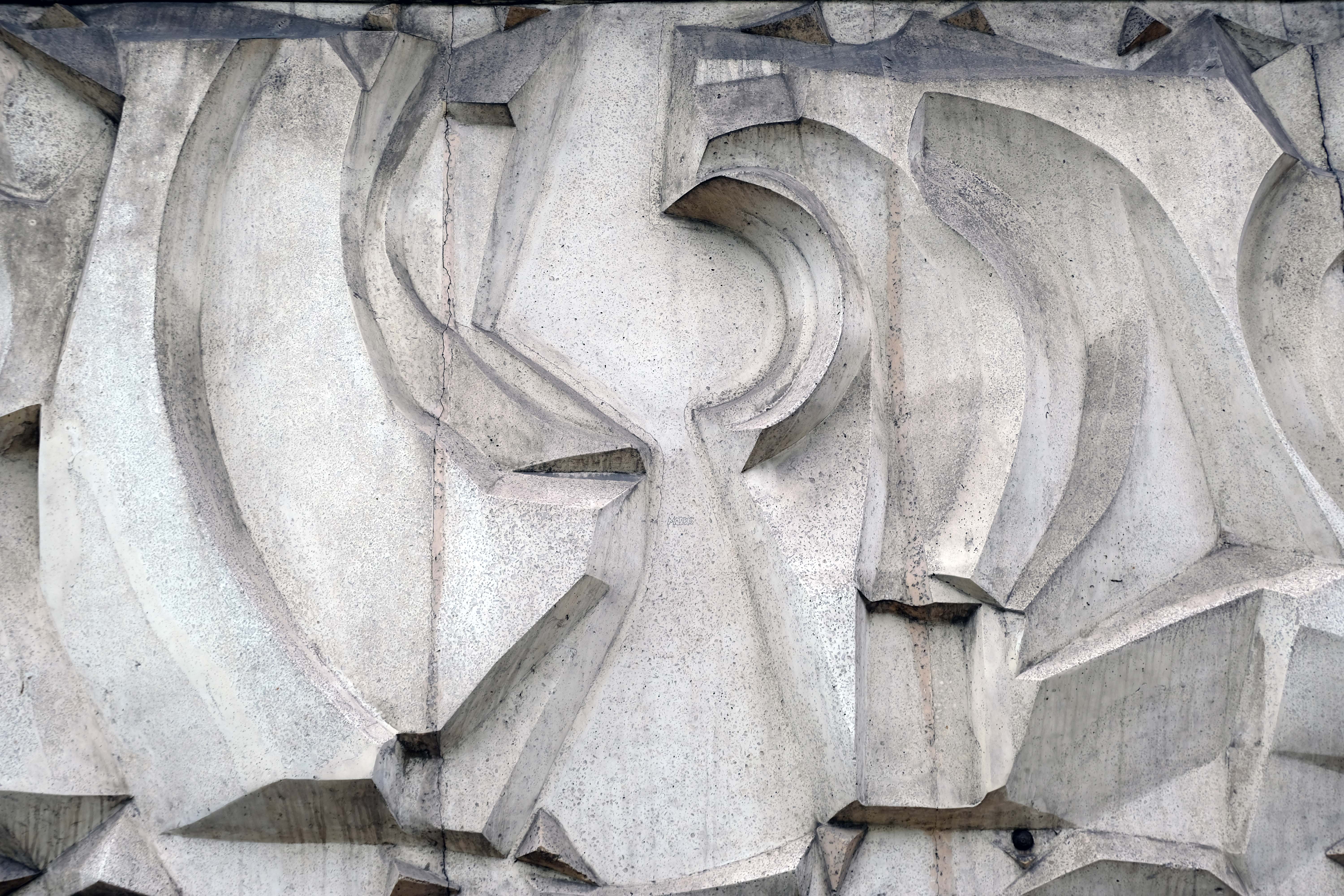
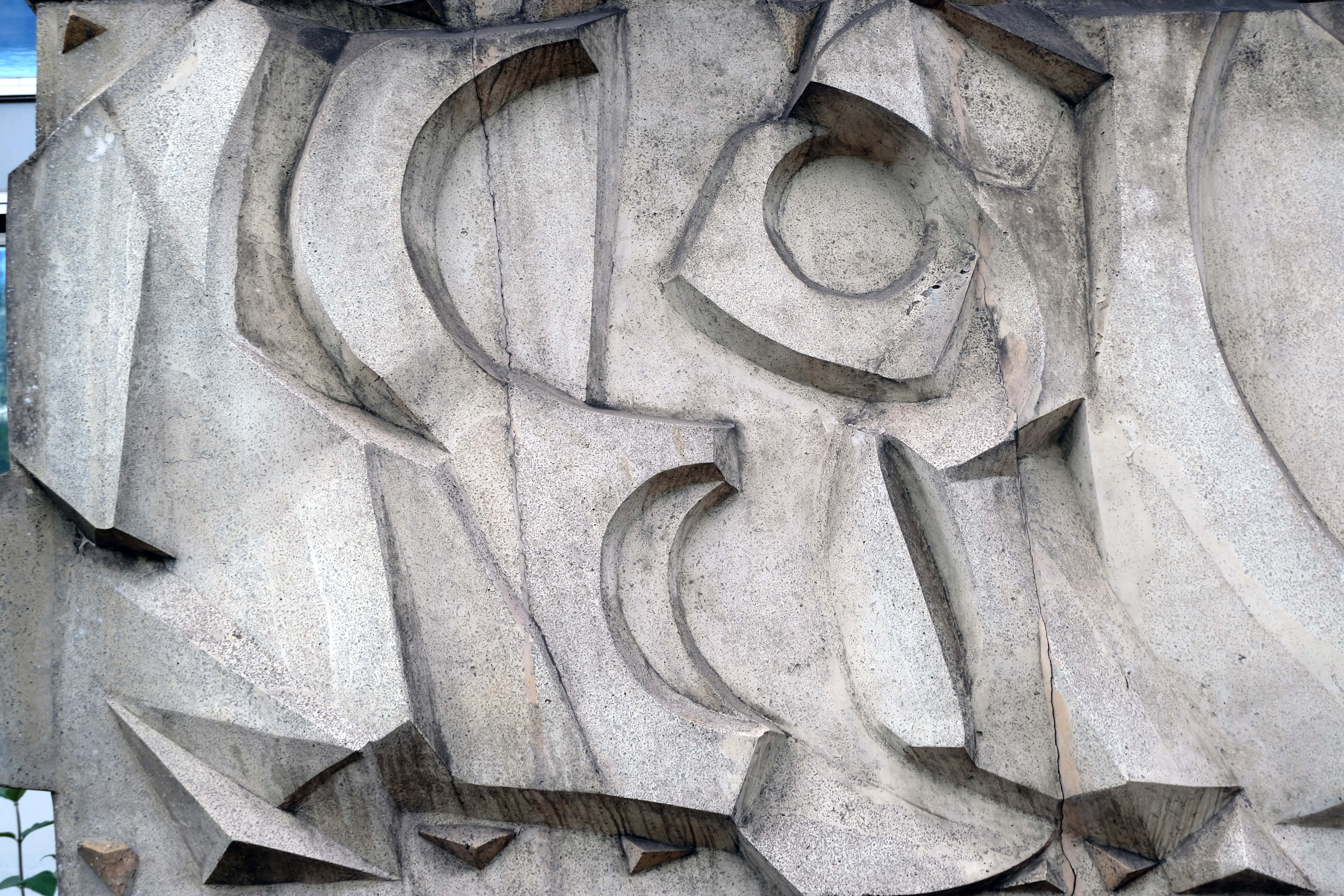
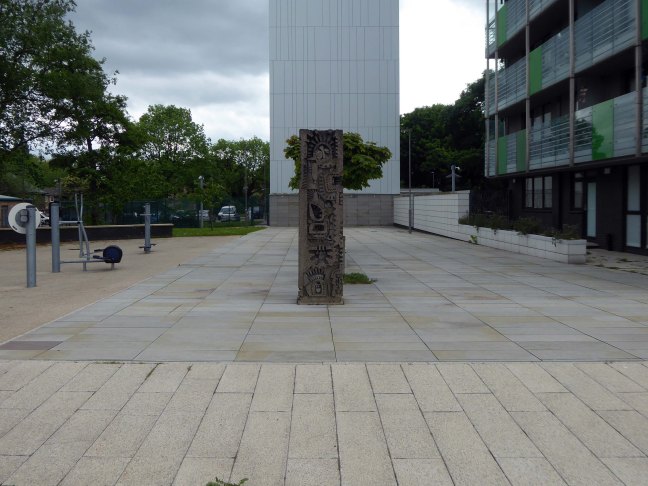
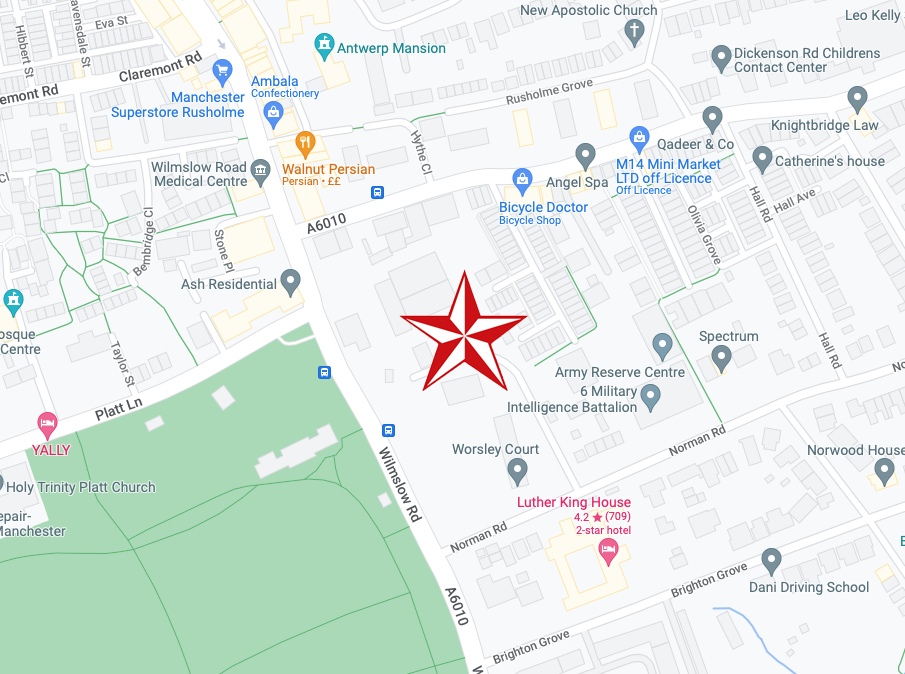
Wilmslow Rd Manchester M14 5LT
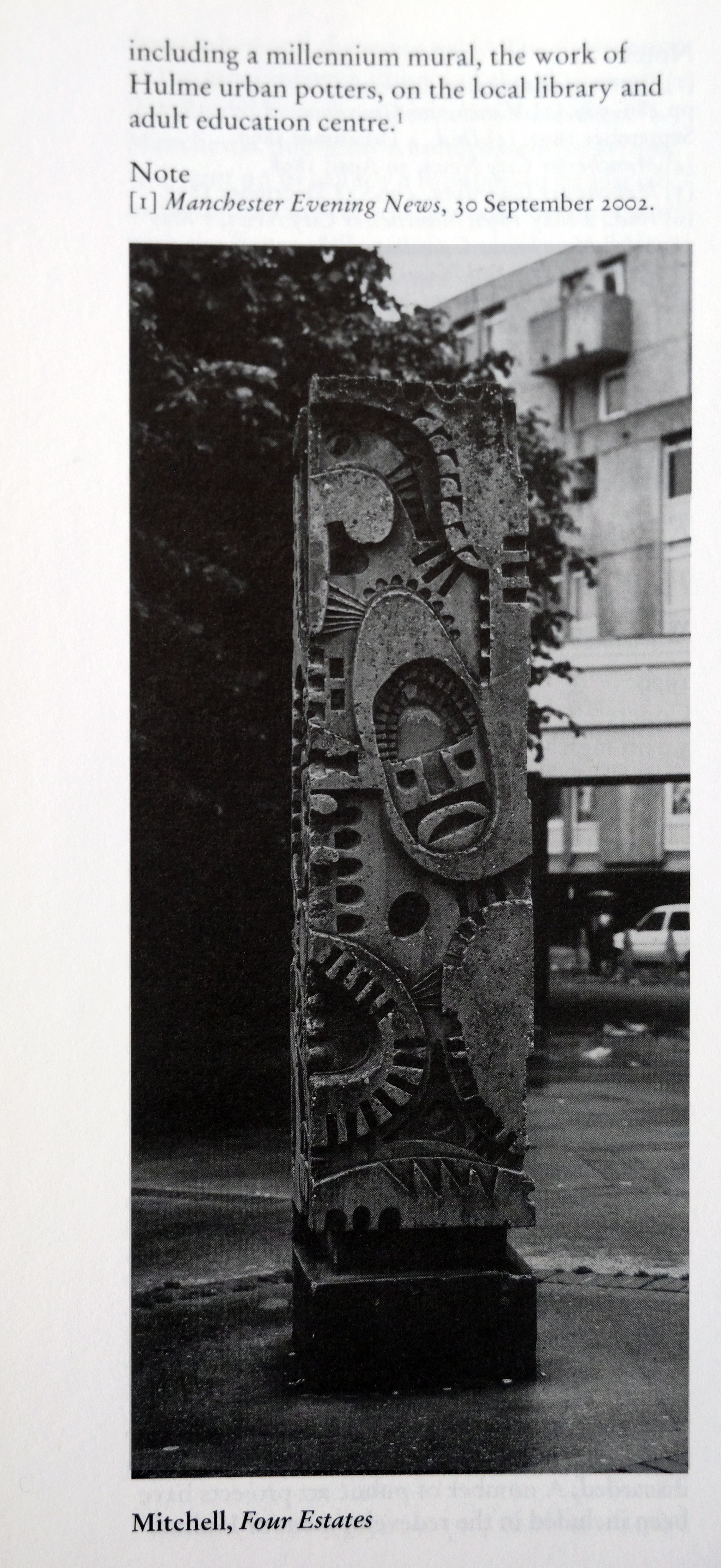
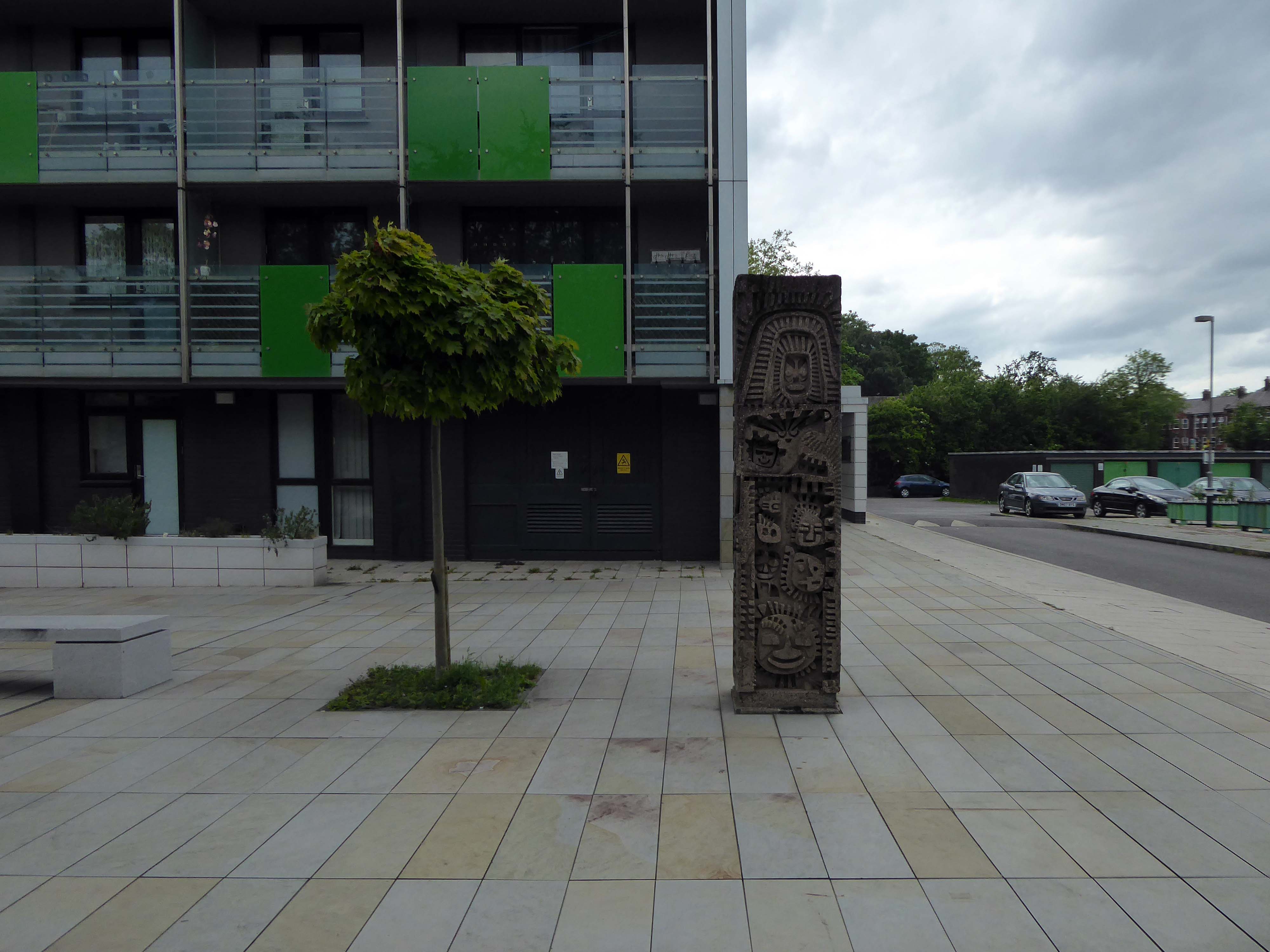
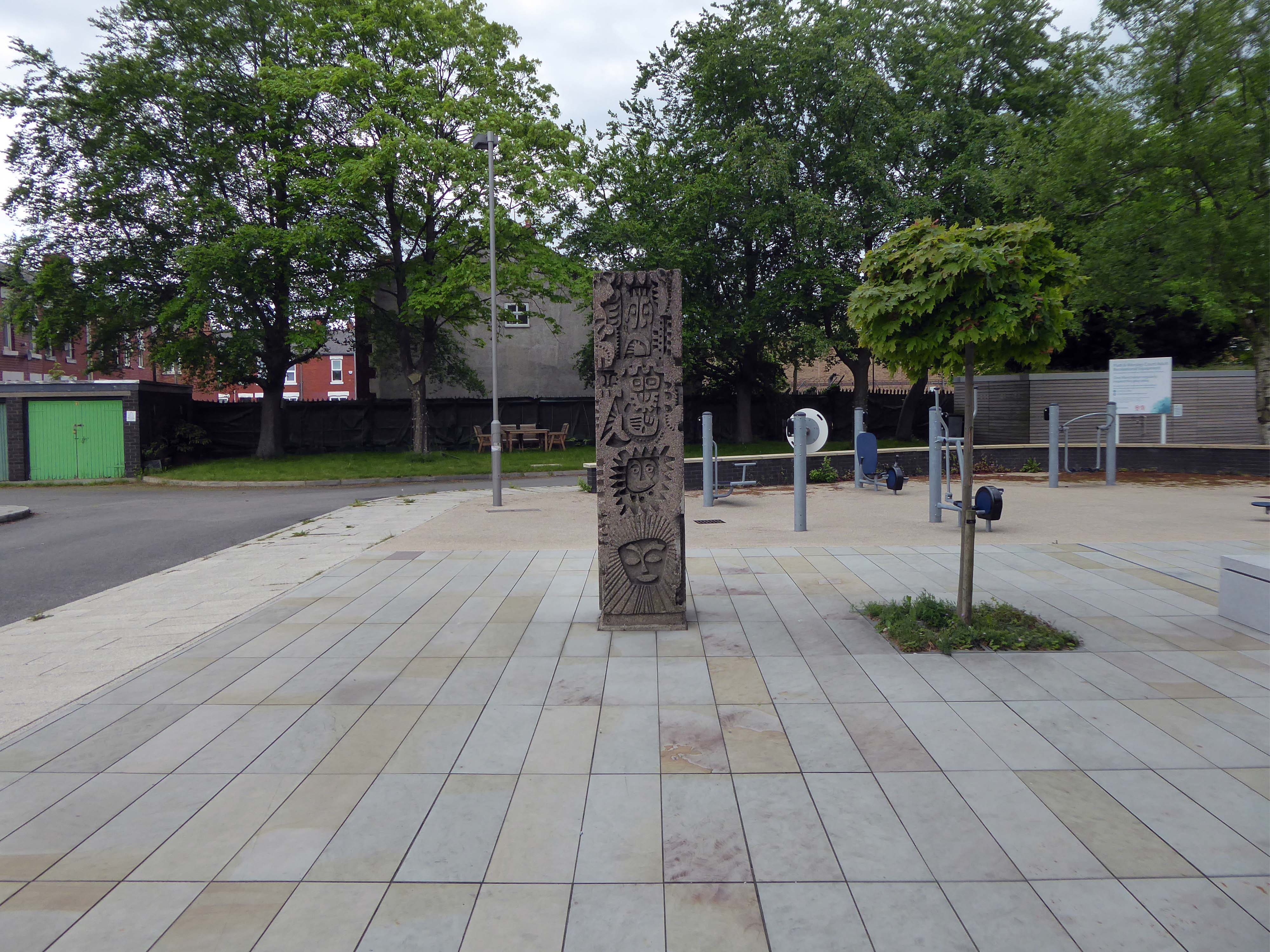
Situated outside Platt Court a third of four William Mitchell totems that I have visited – Eastford Square and Newton Heath still extant.
The Hulme exemplar has gone walkabout.
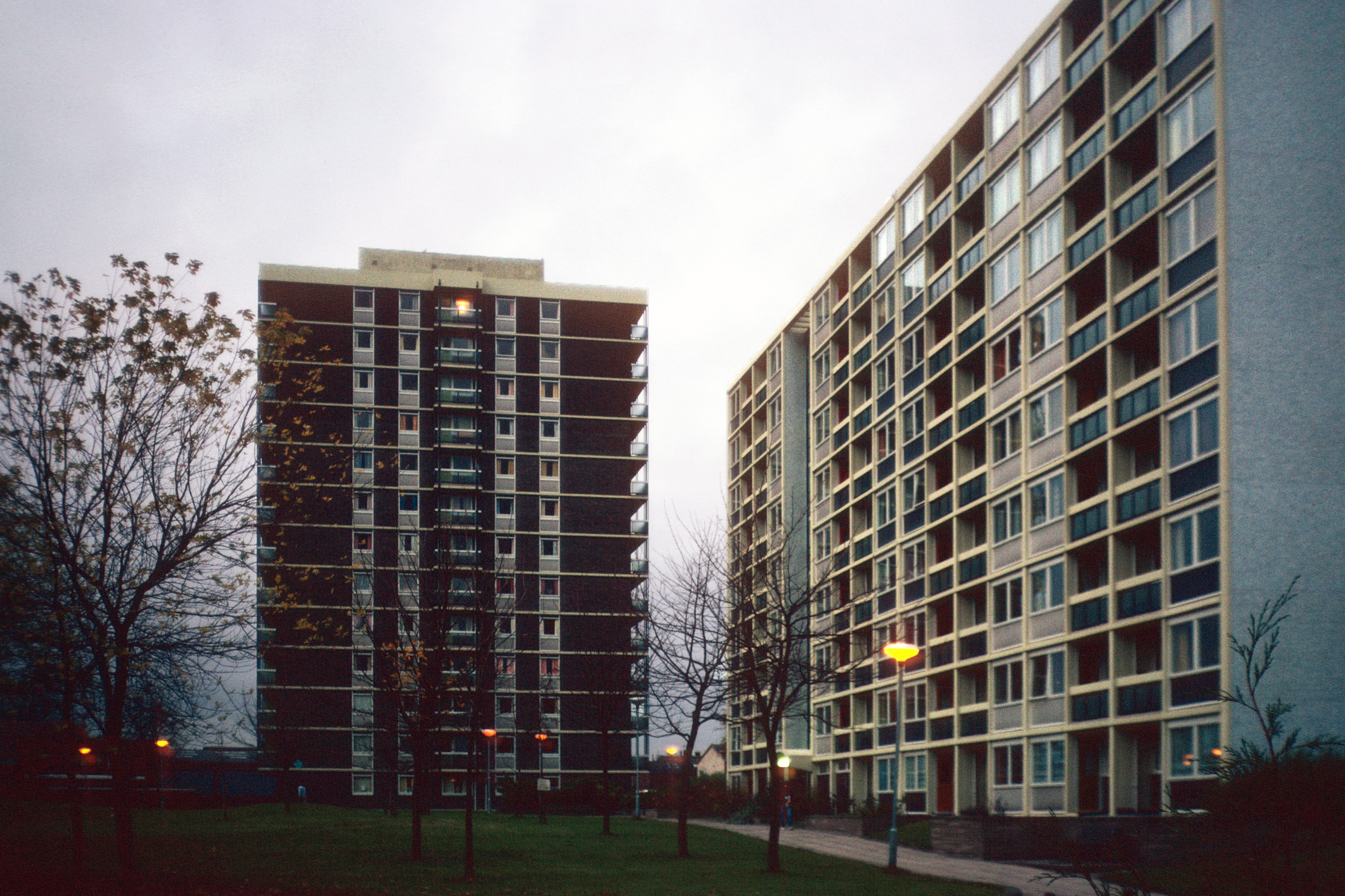
Tower Block tells us this is one 13 storey block containing 62 dwellings along with one 9 storey block containing 70 dwellings.
Built by Direct Labour commissioned by Manchester County Borough Council
Seen here in 1970.
The flats are now gated, so I peeped tentatively through the fencing.
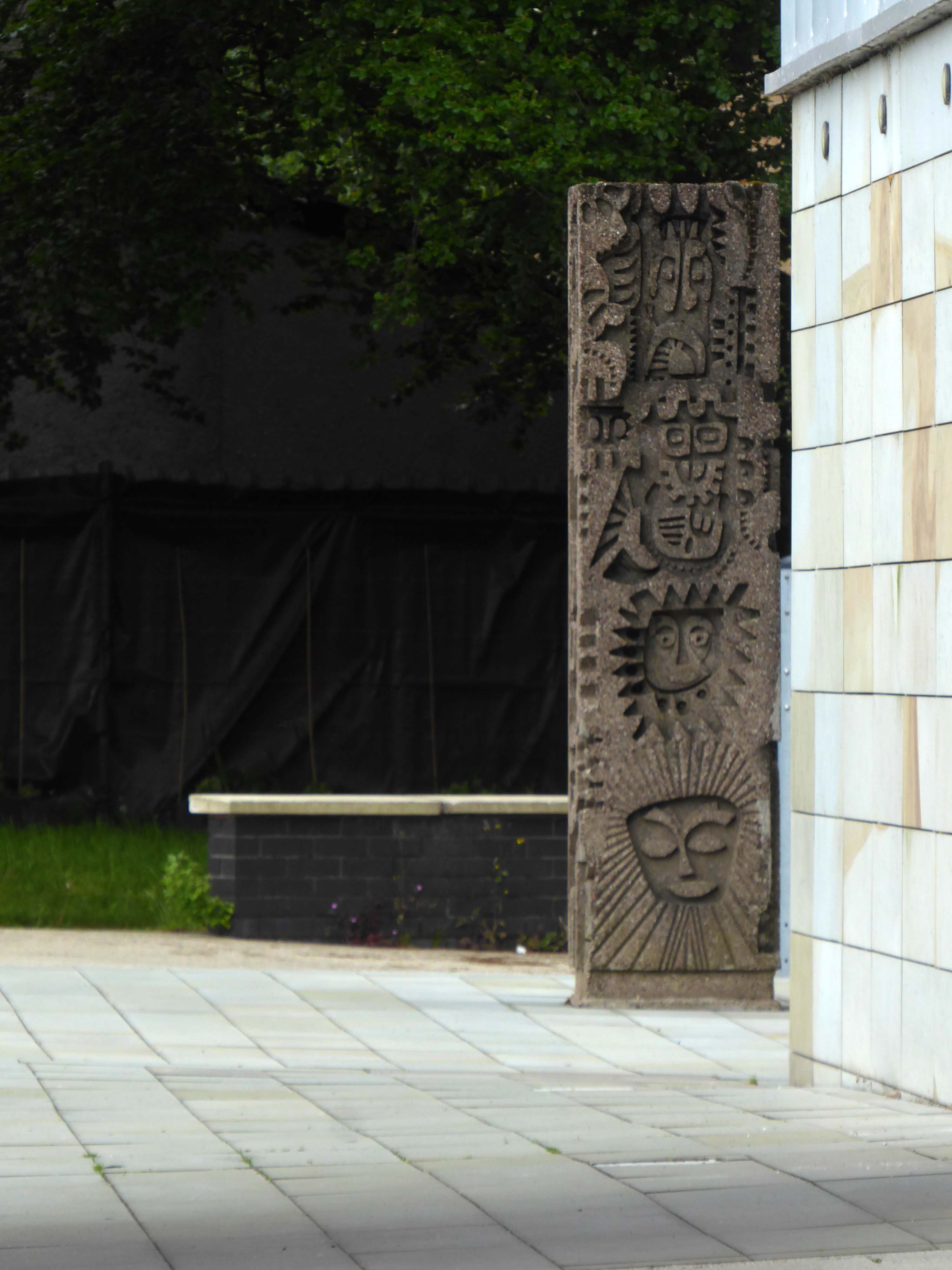
Then chatting to the site’s maintenance gardener I gained access – here is what I saw.
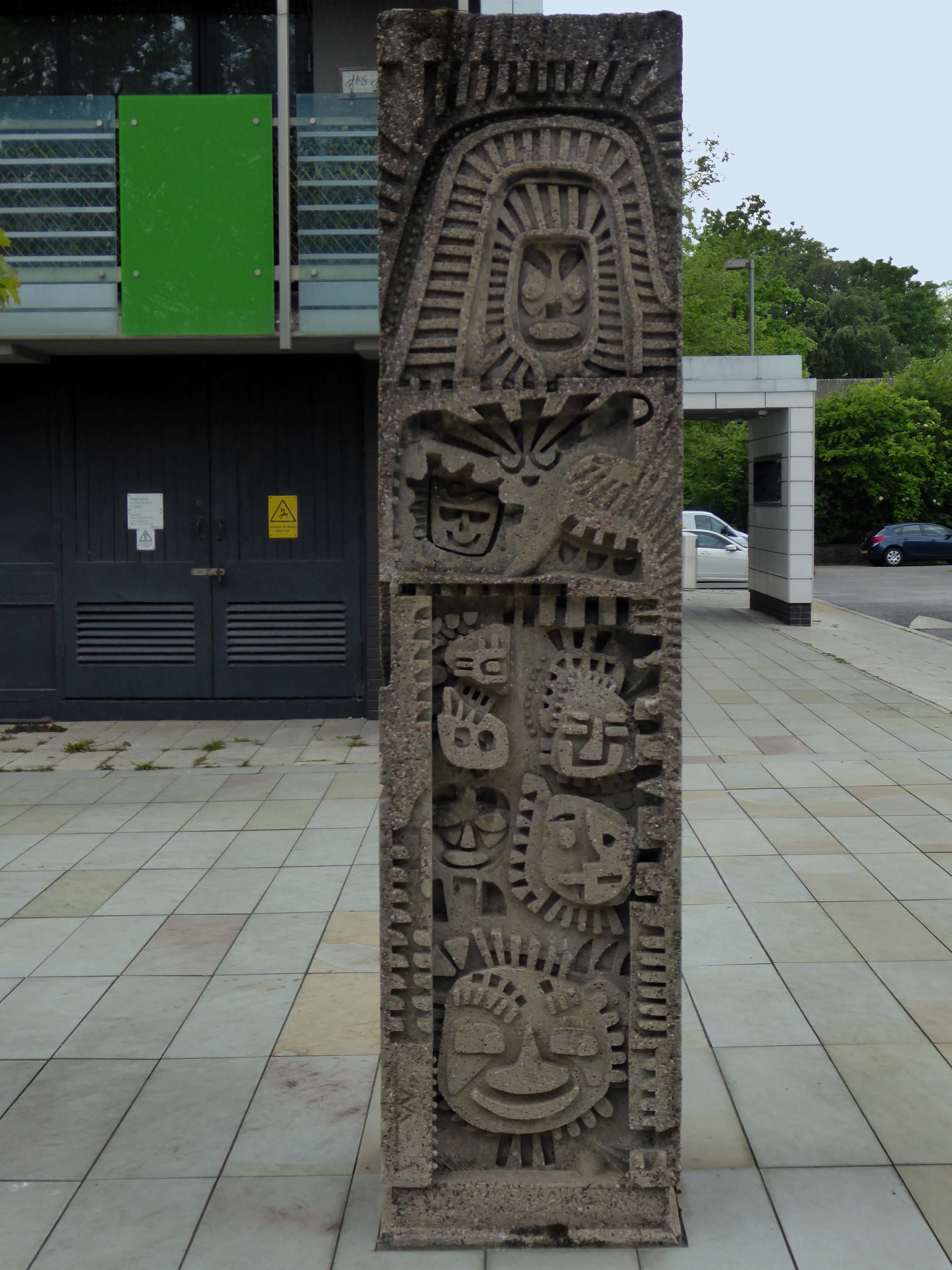
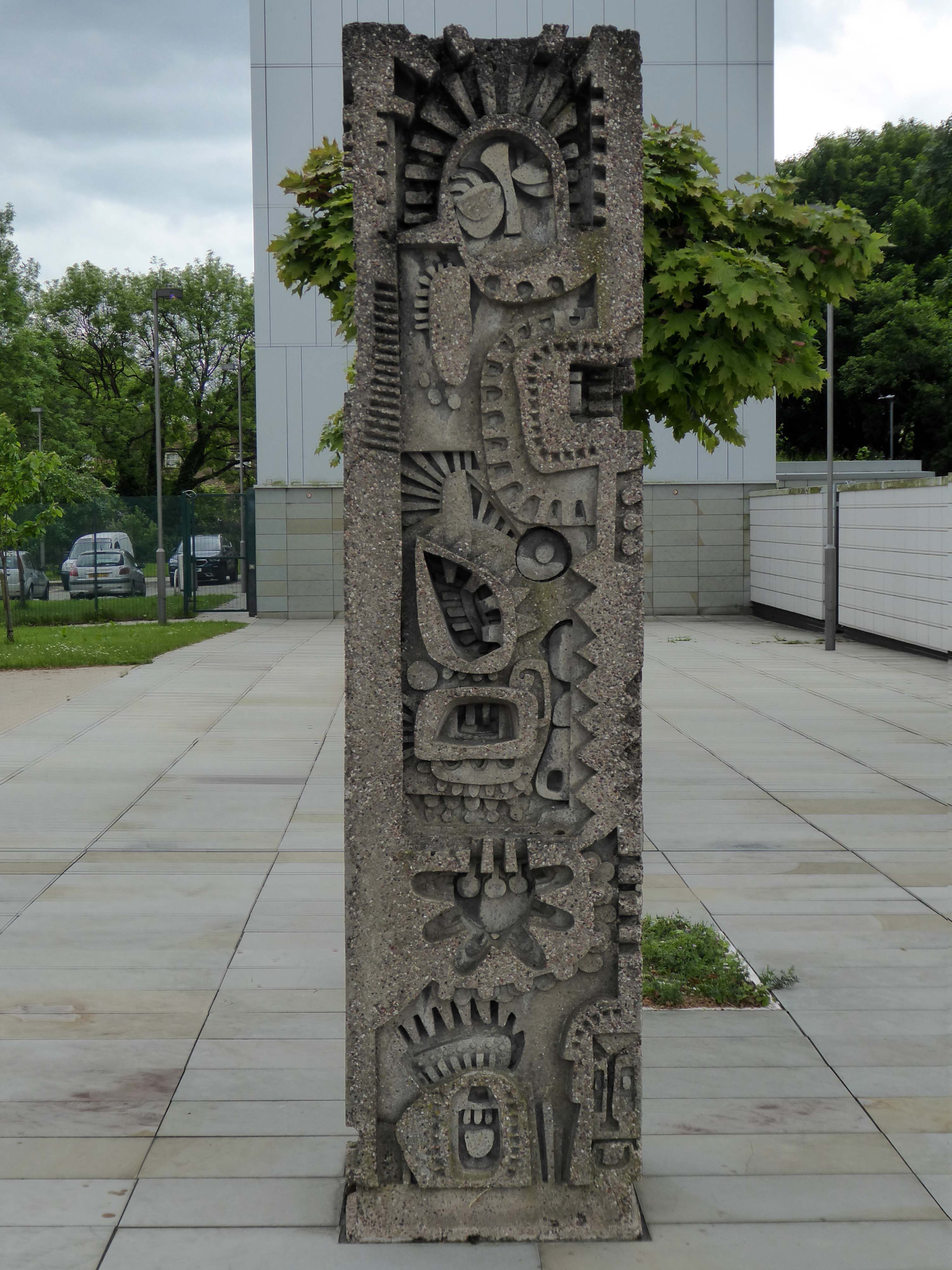
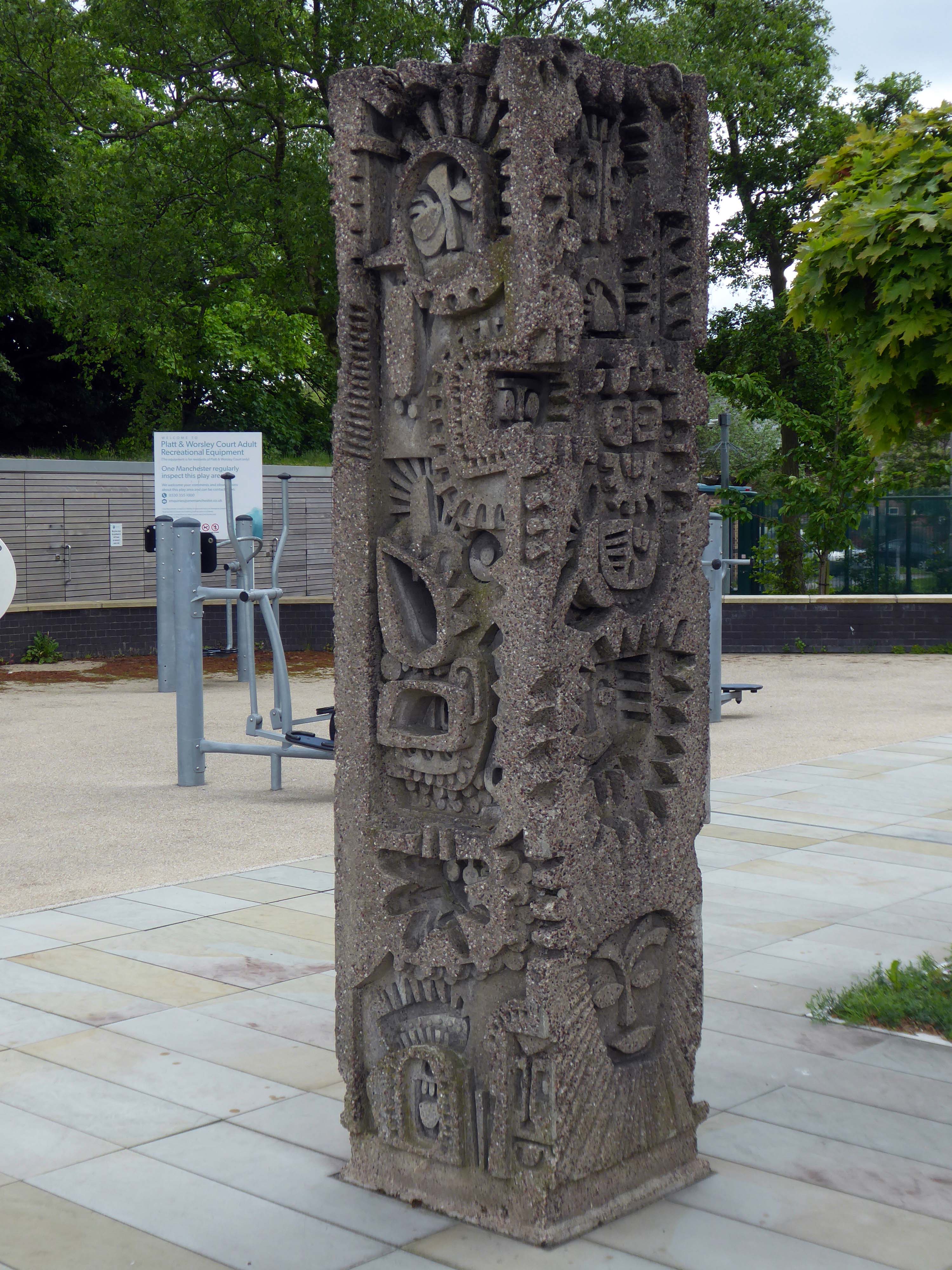
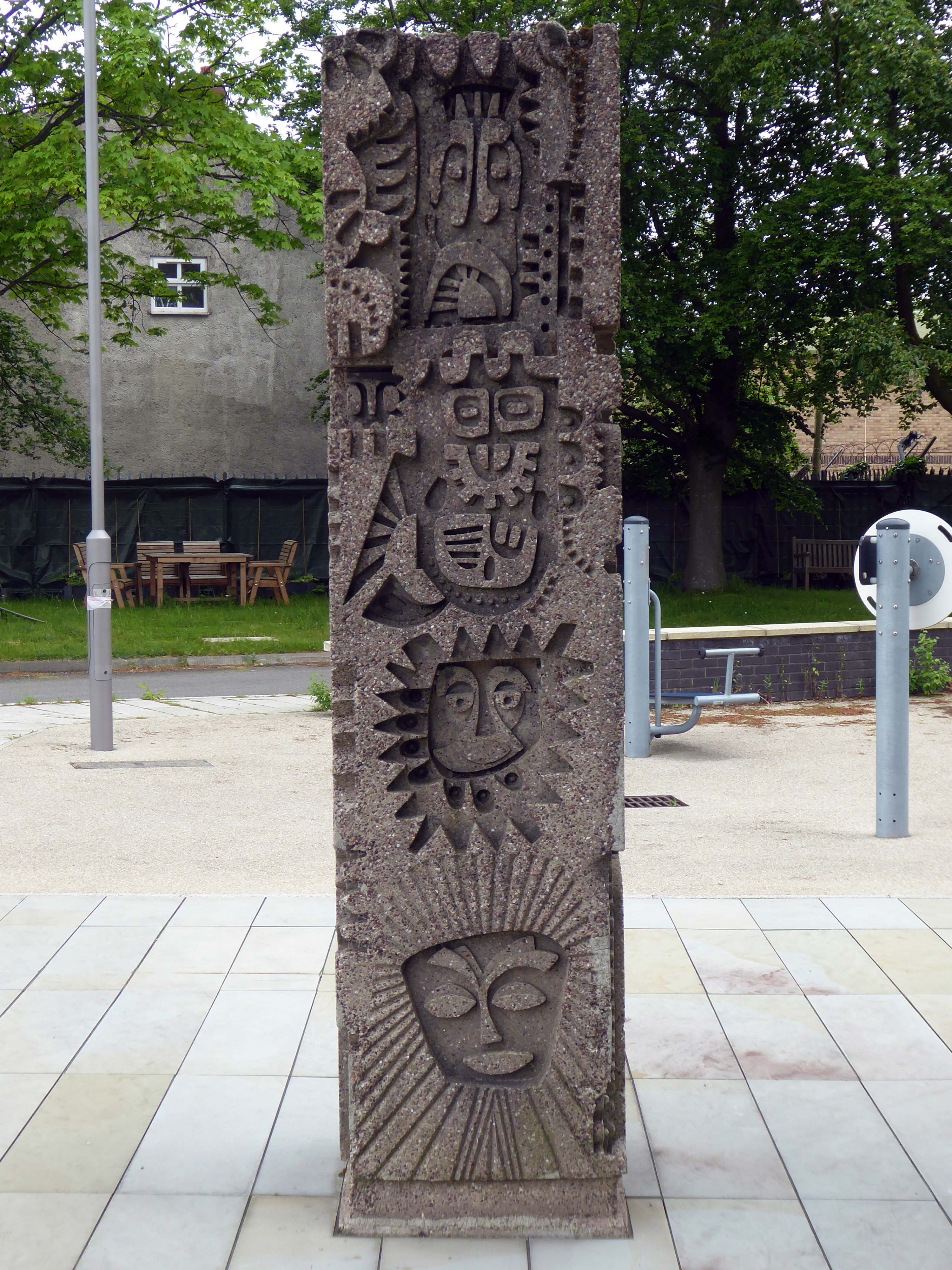
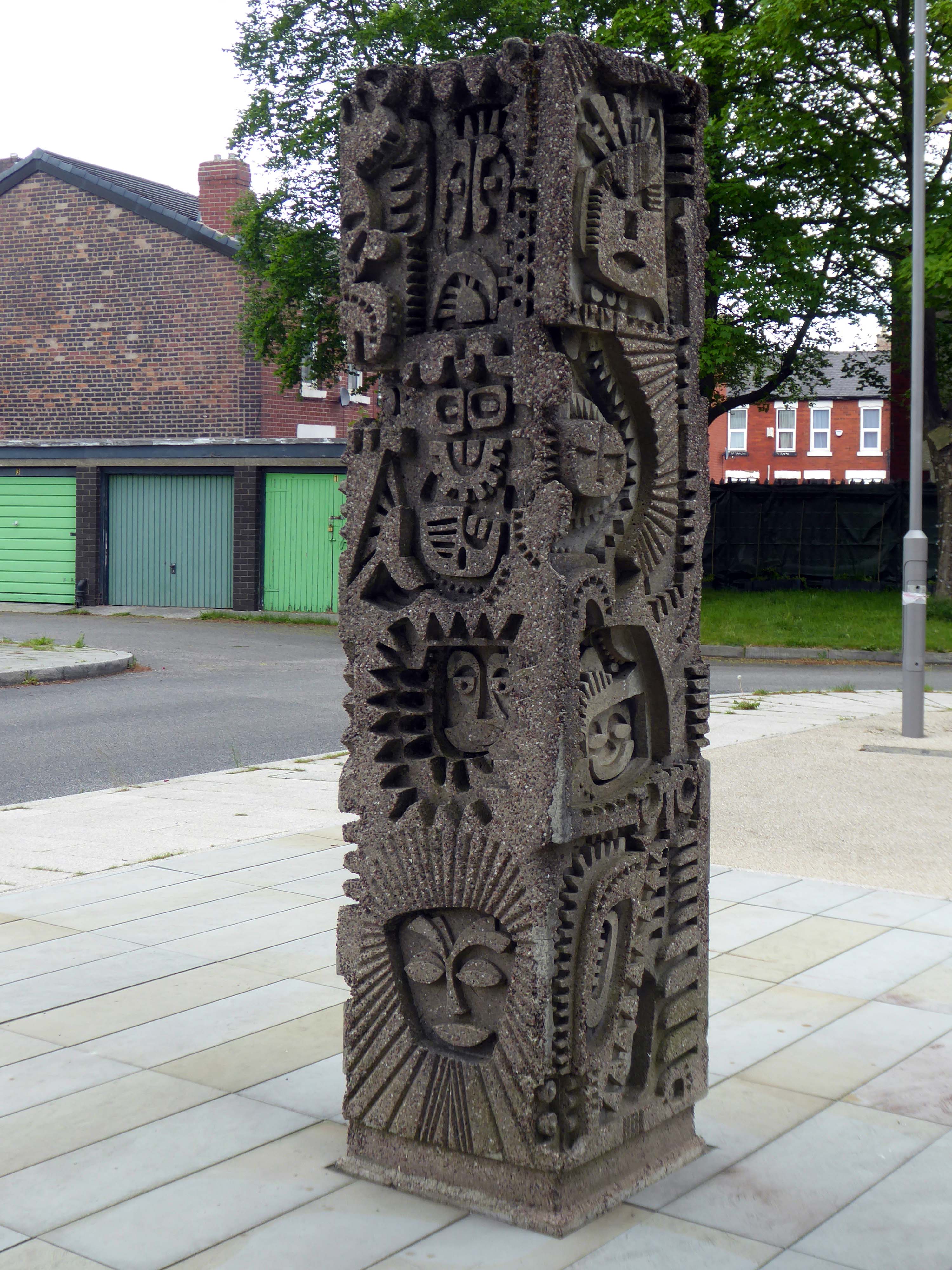
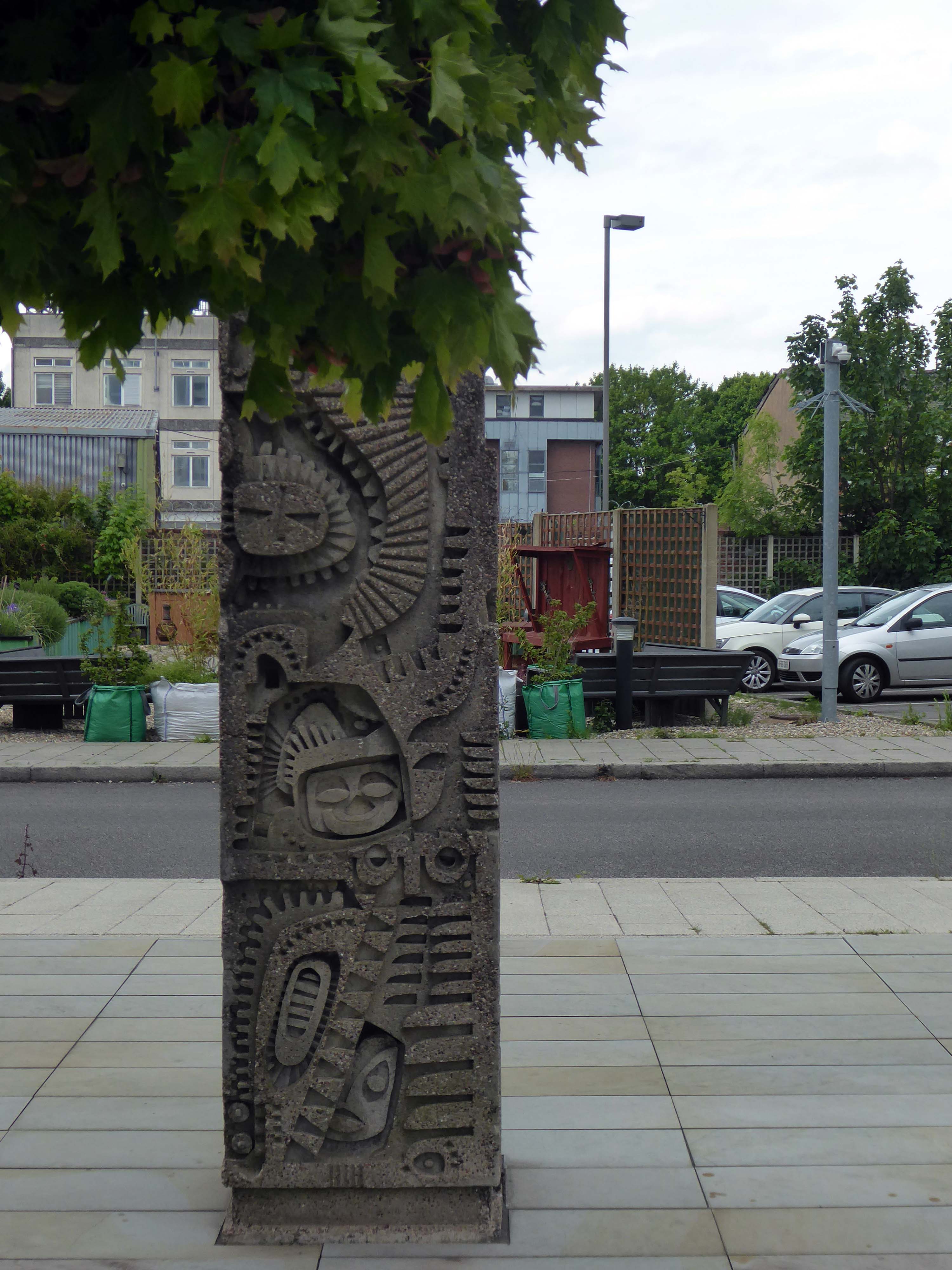
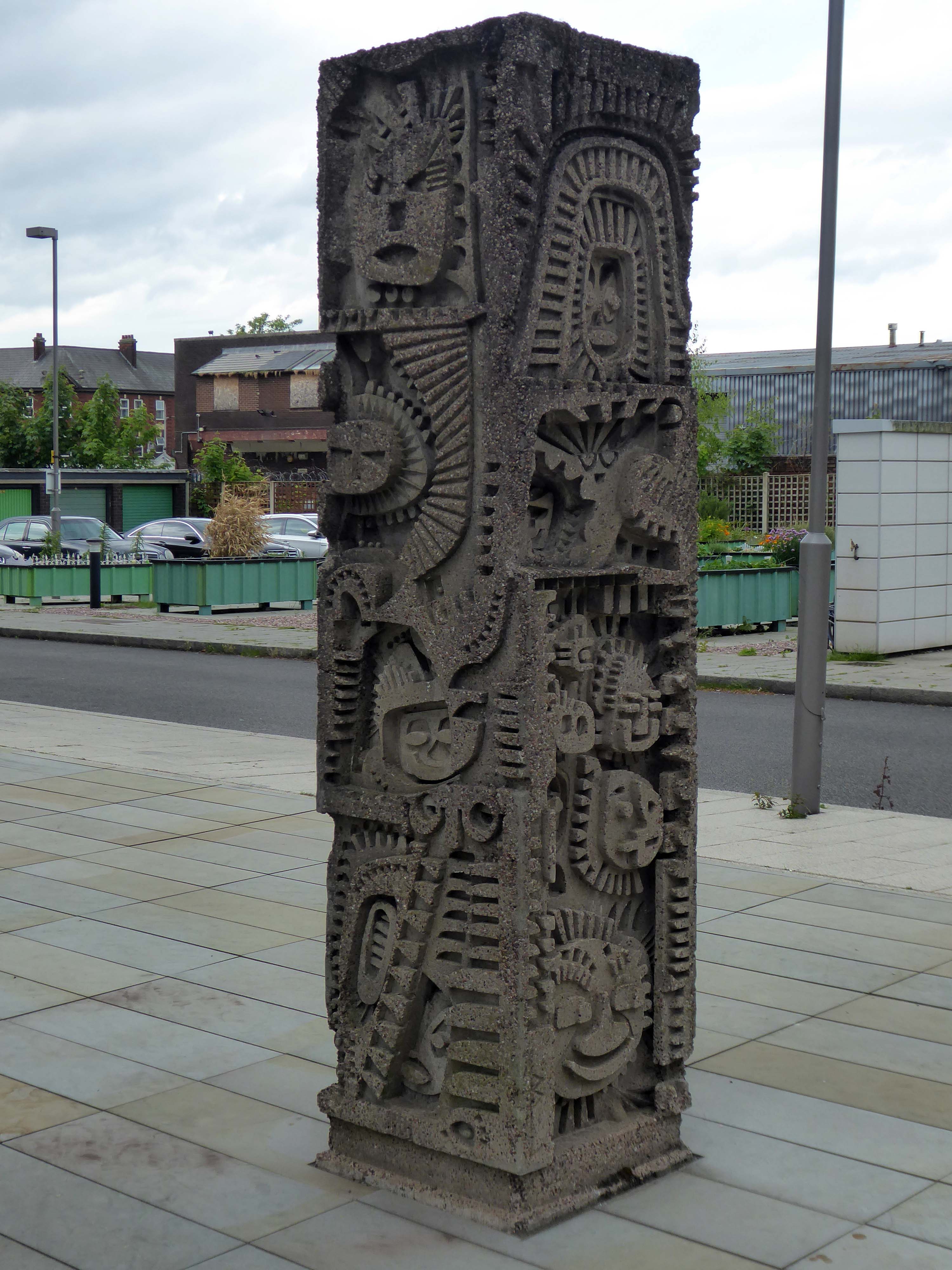
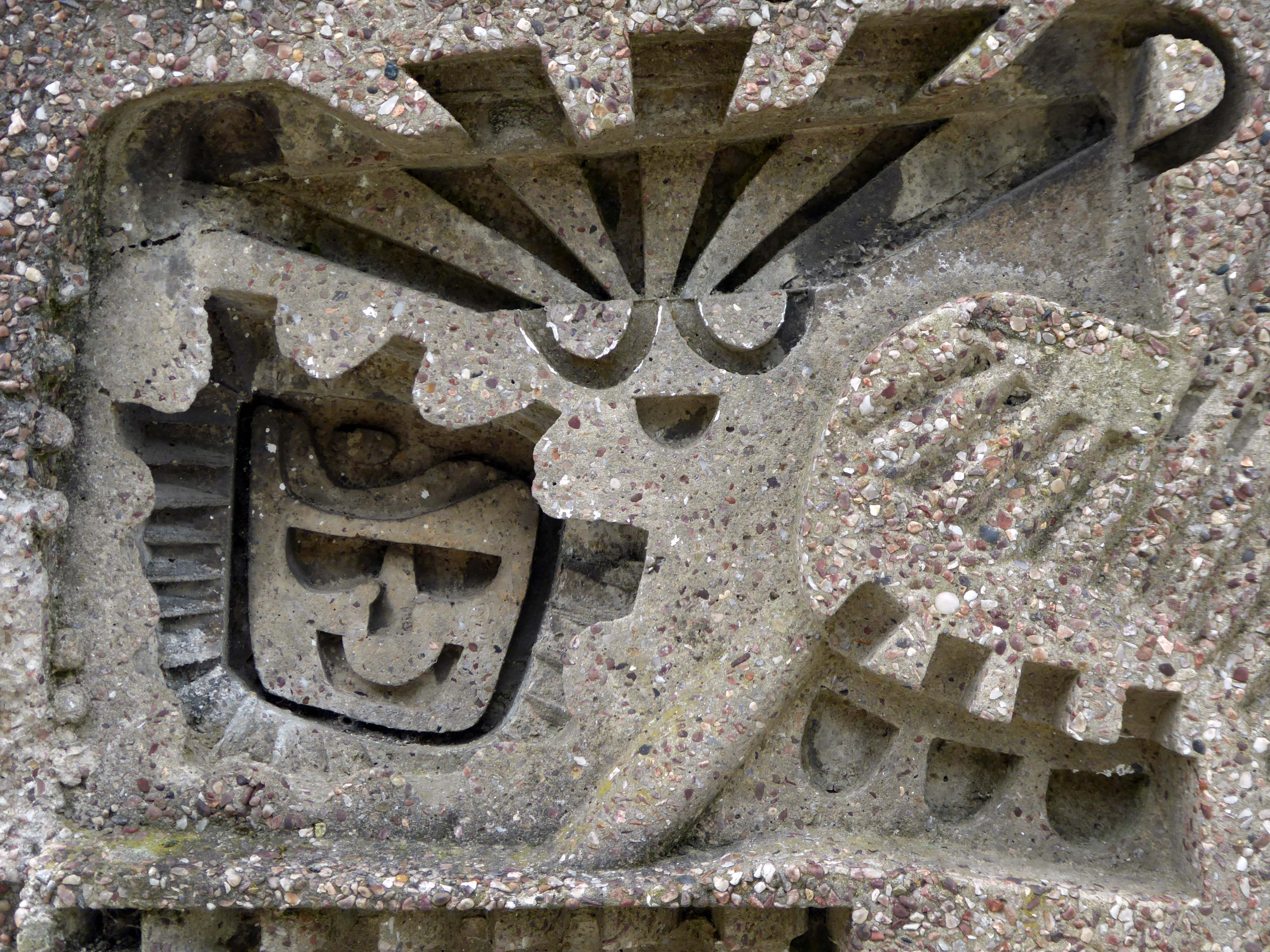
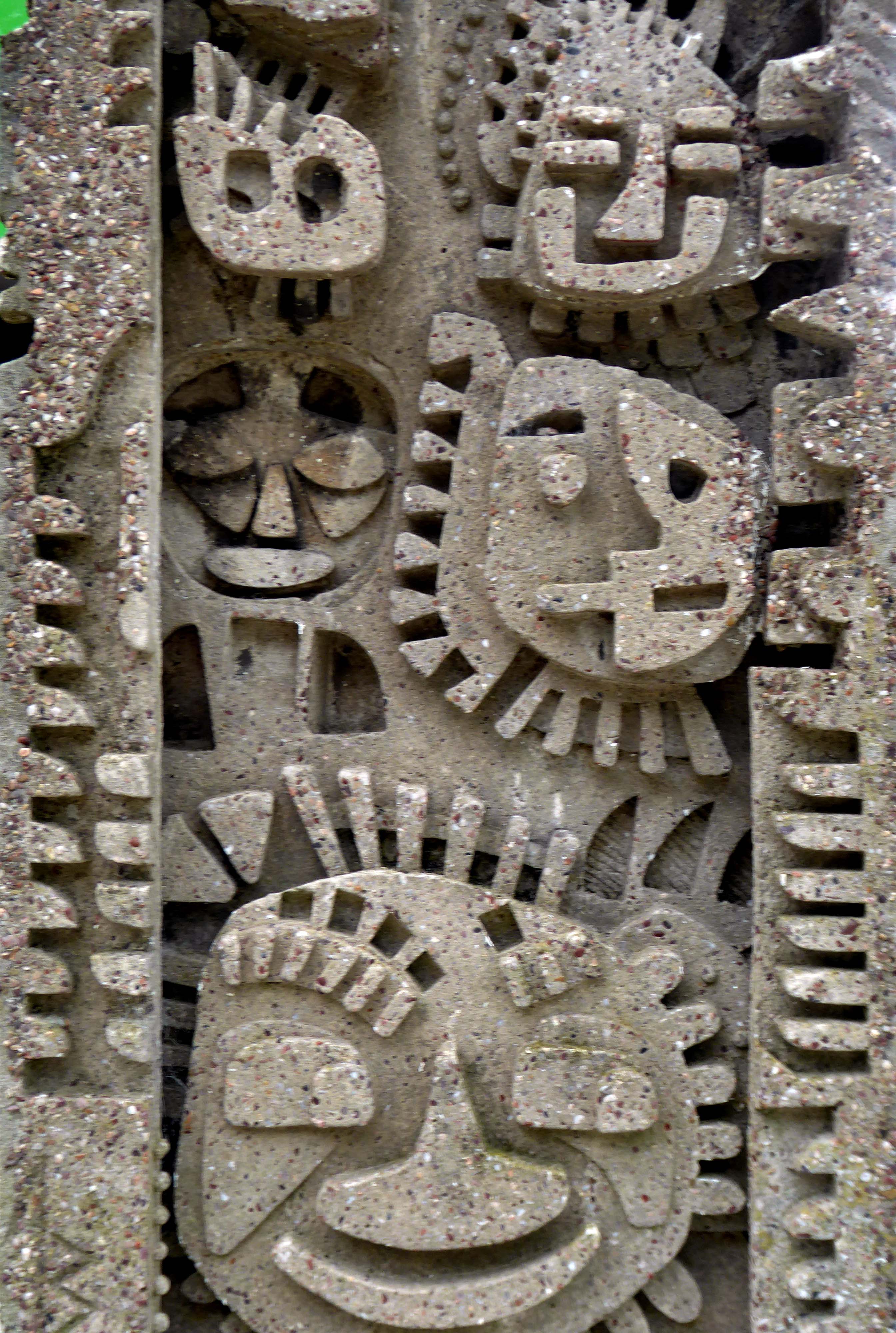
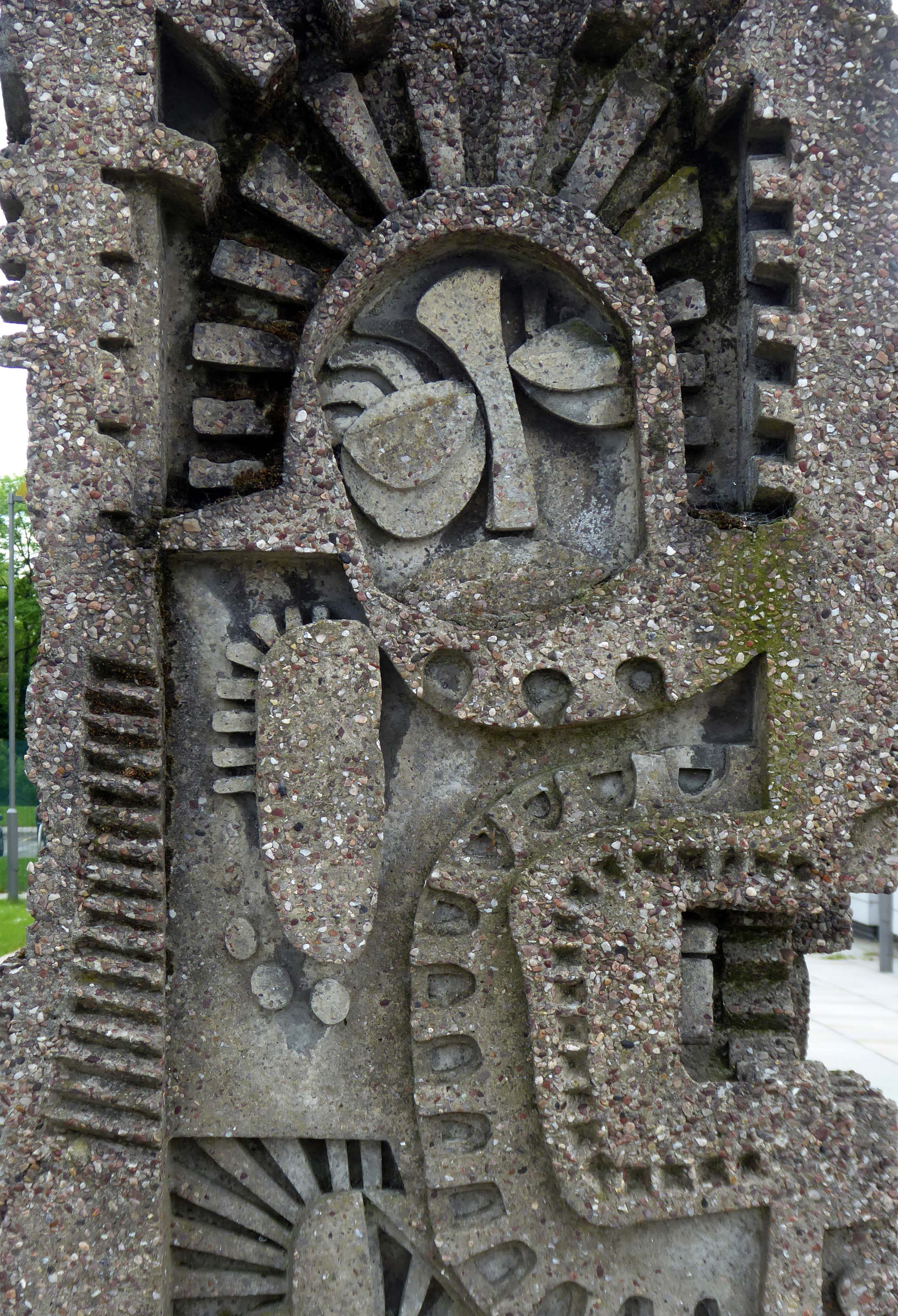
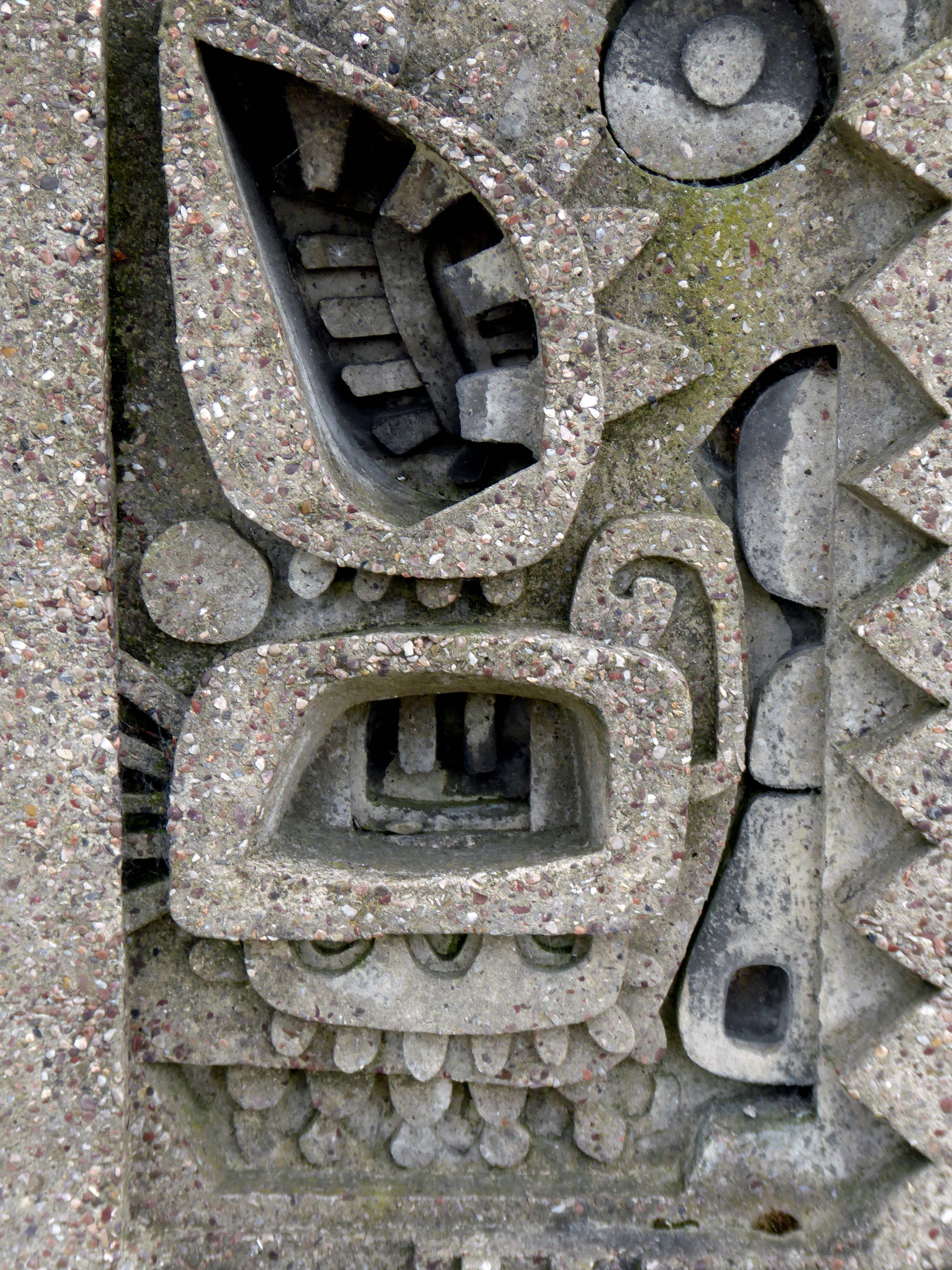
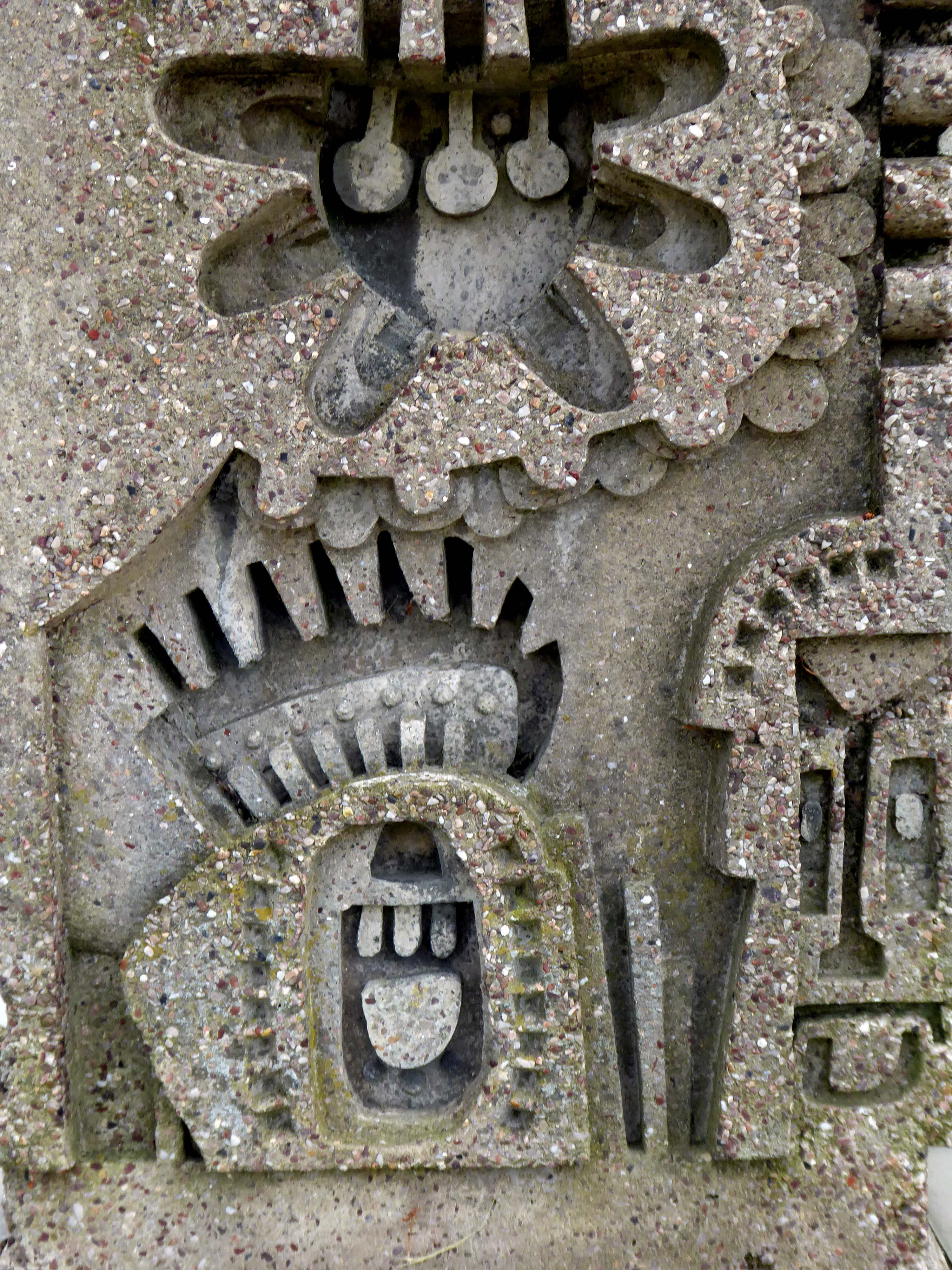
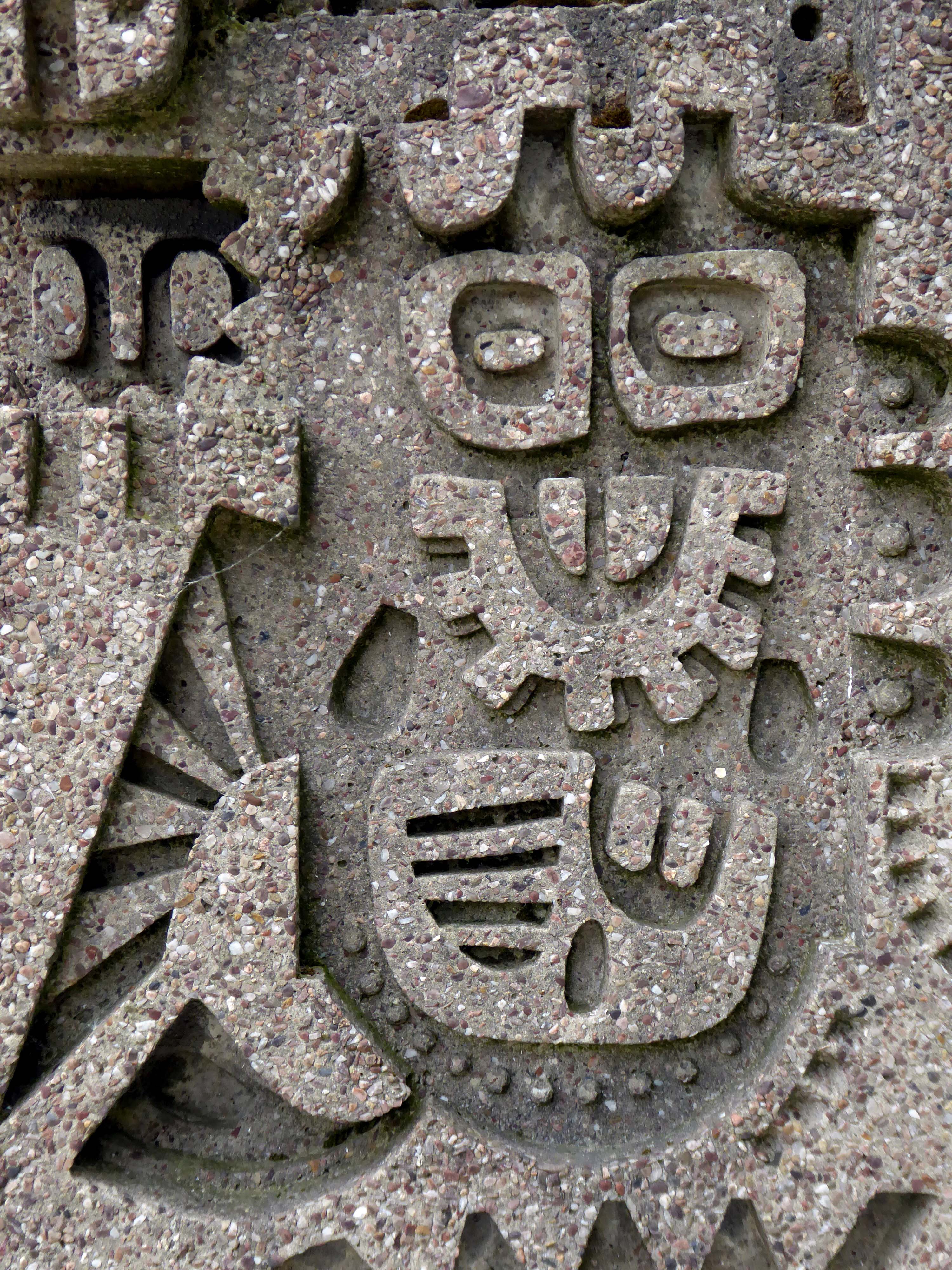
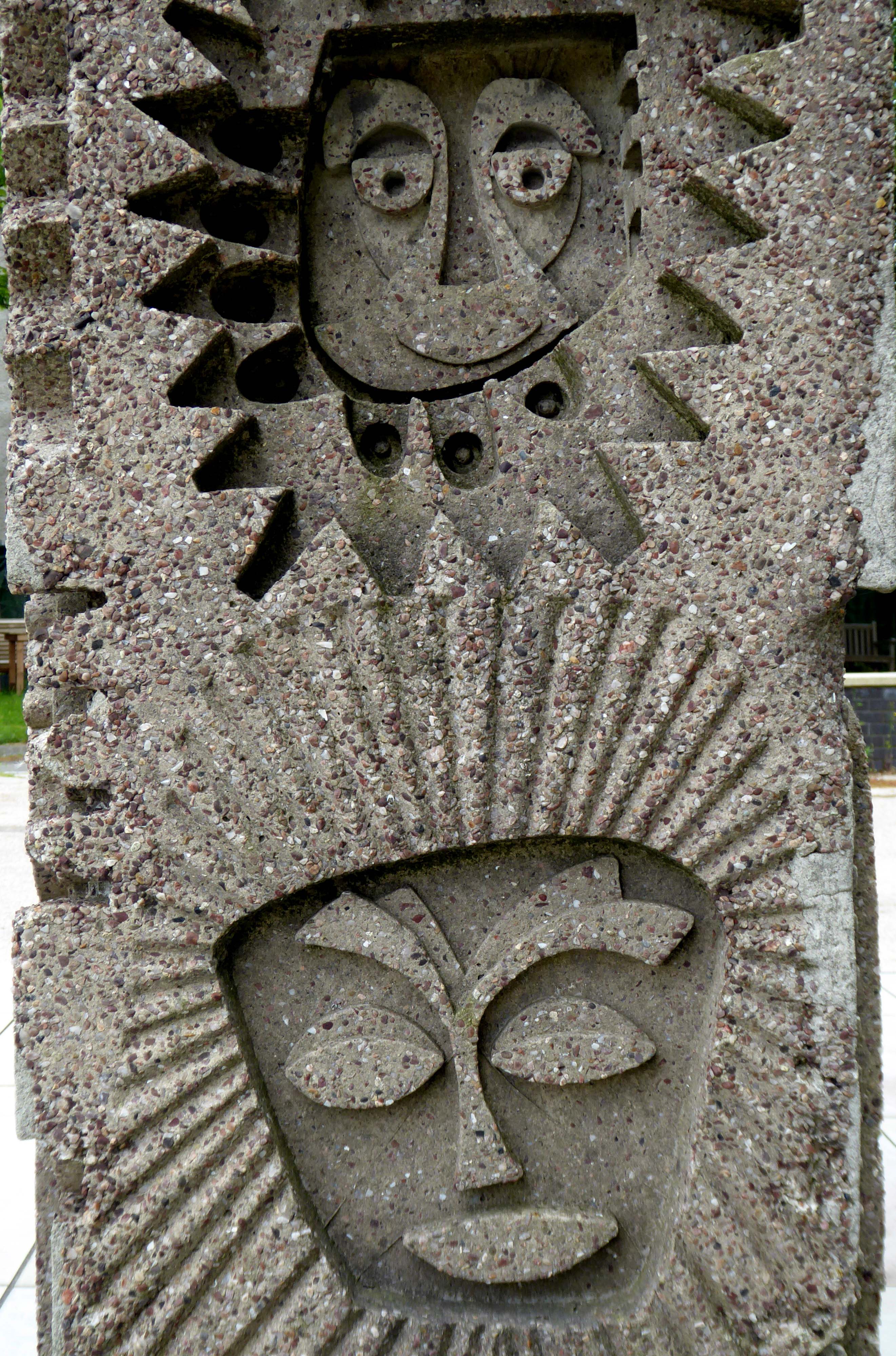
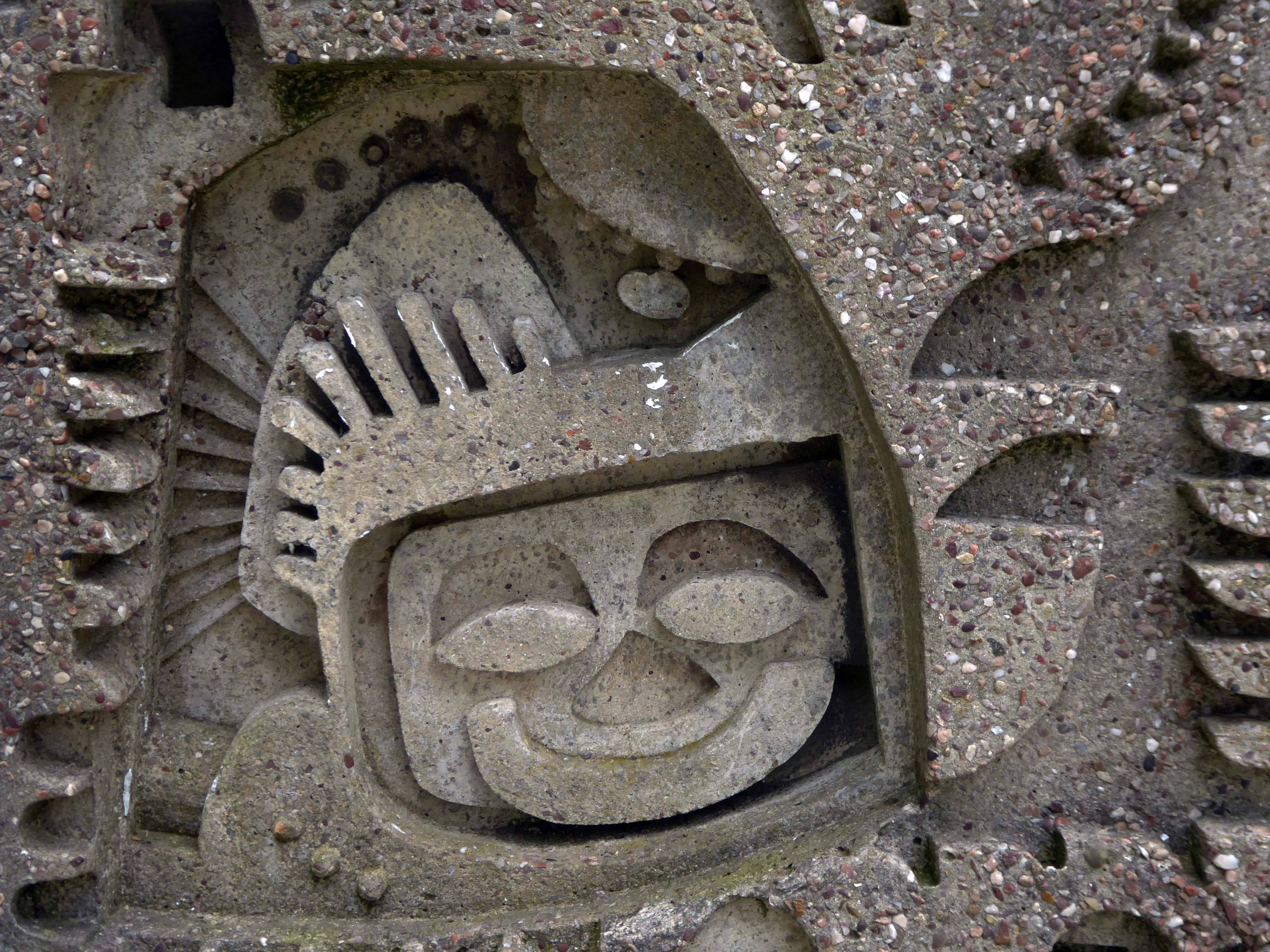
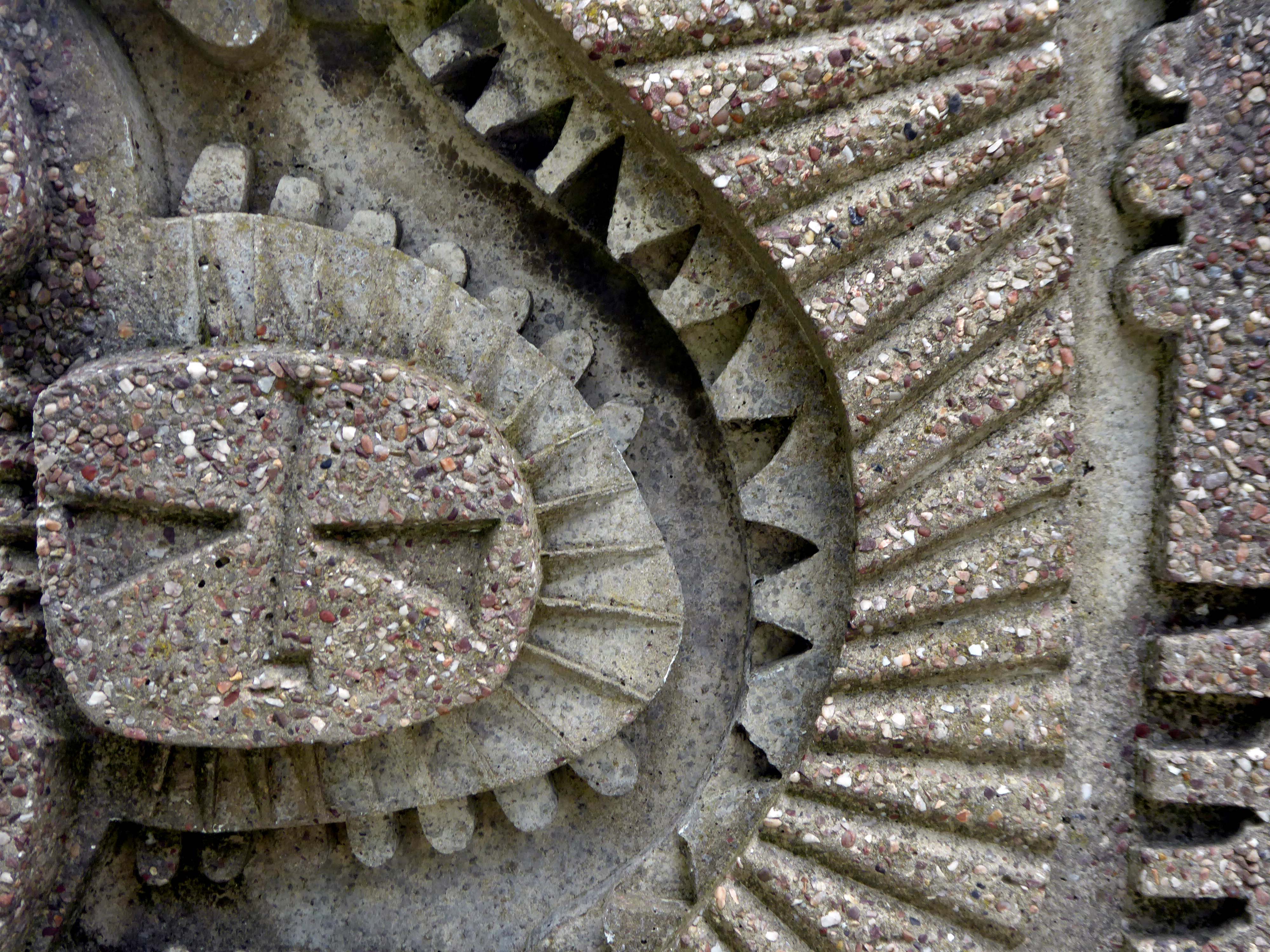
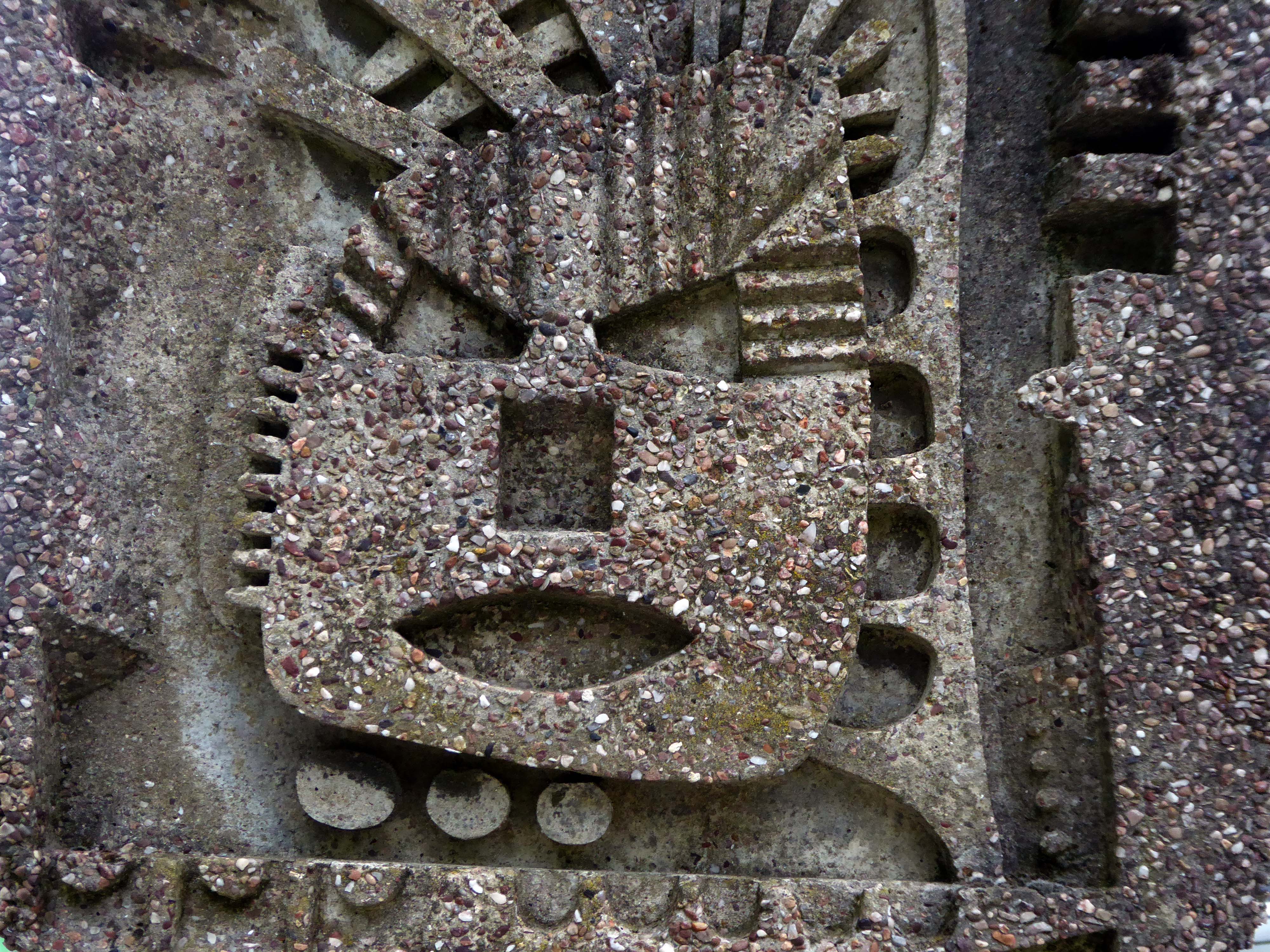
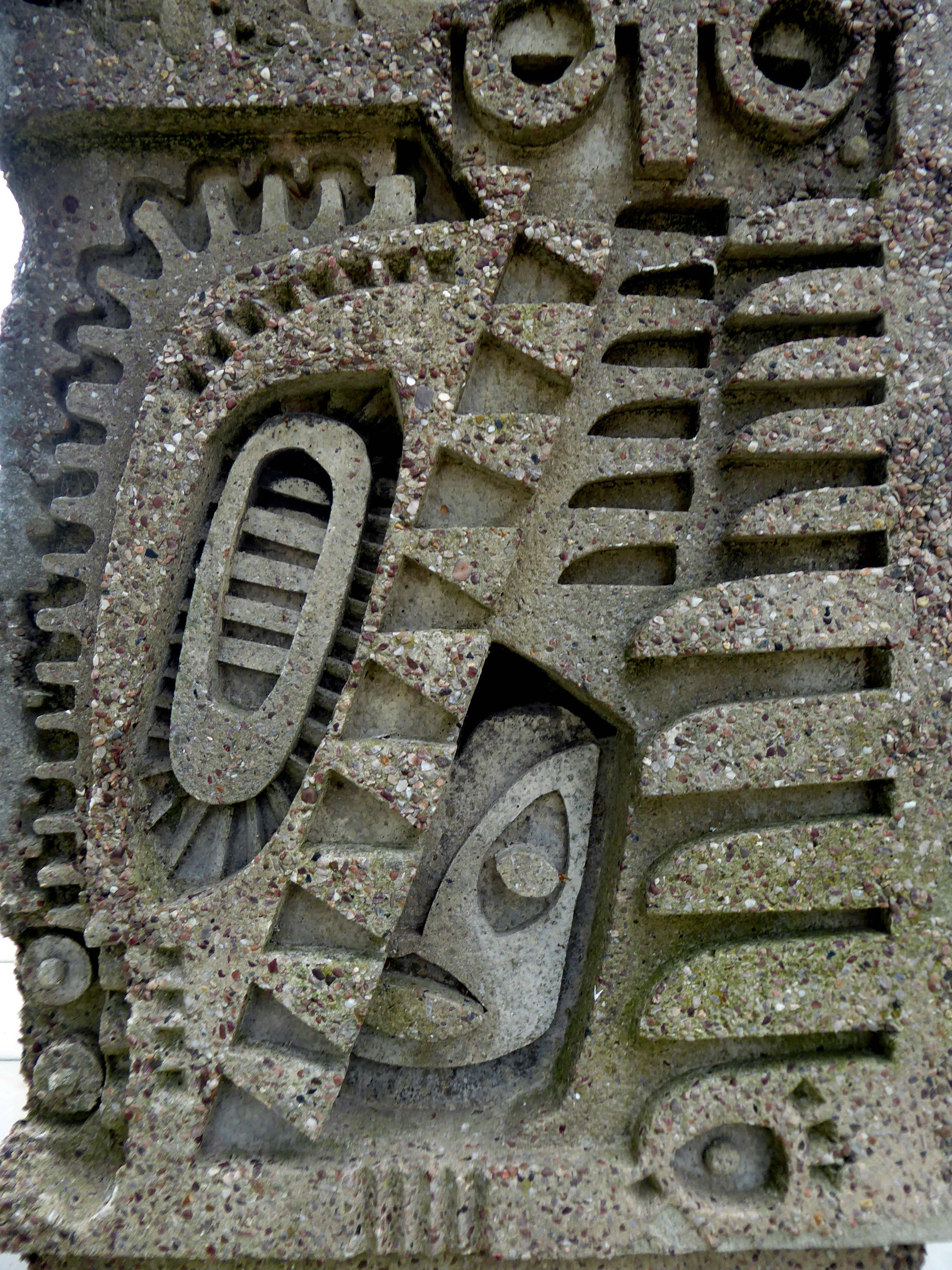
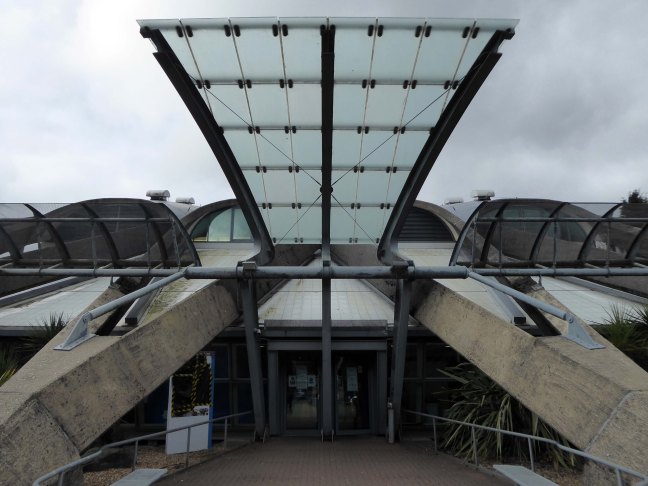
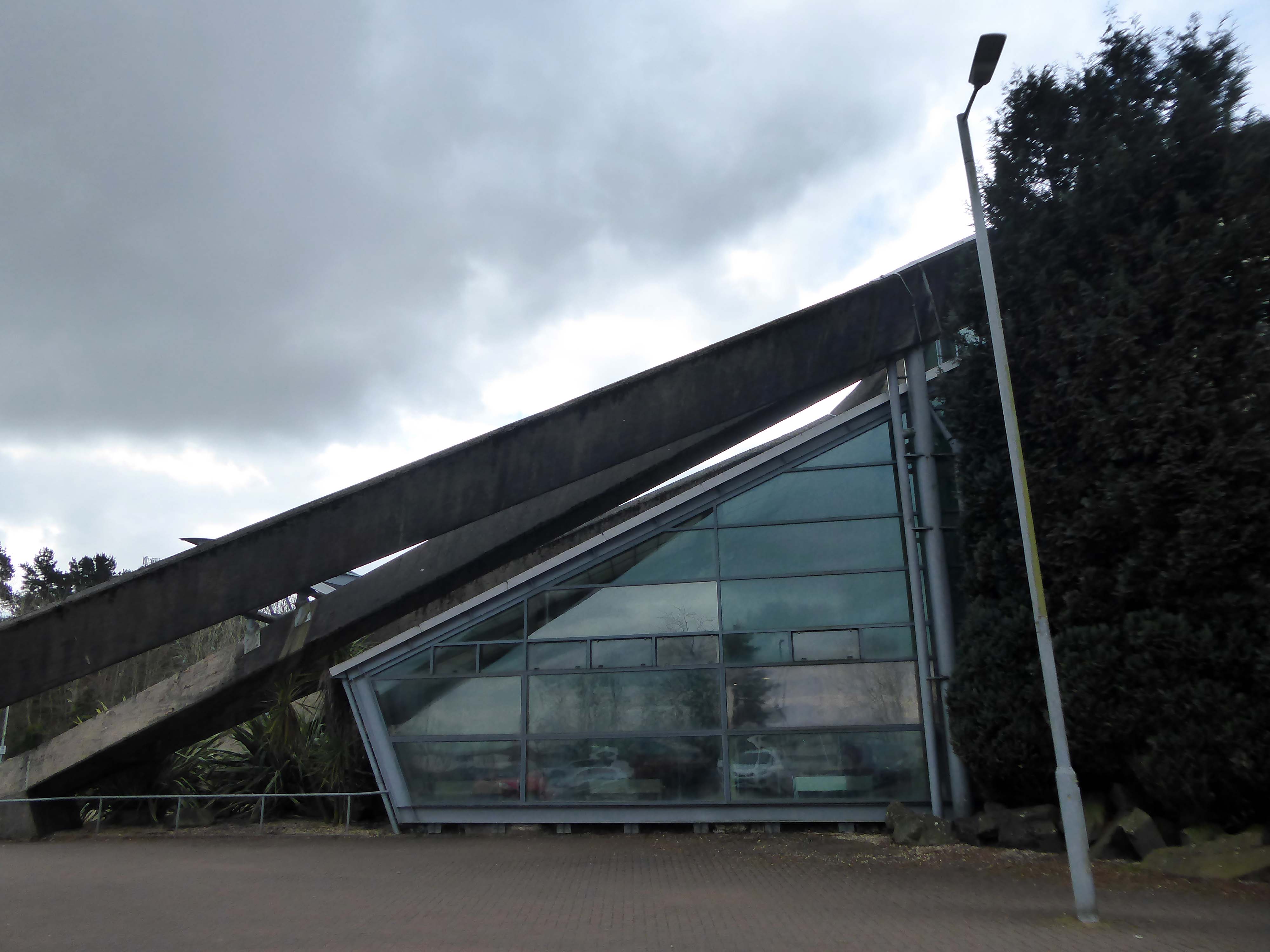
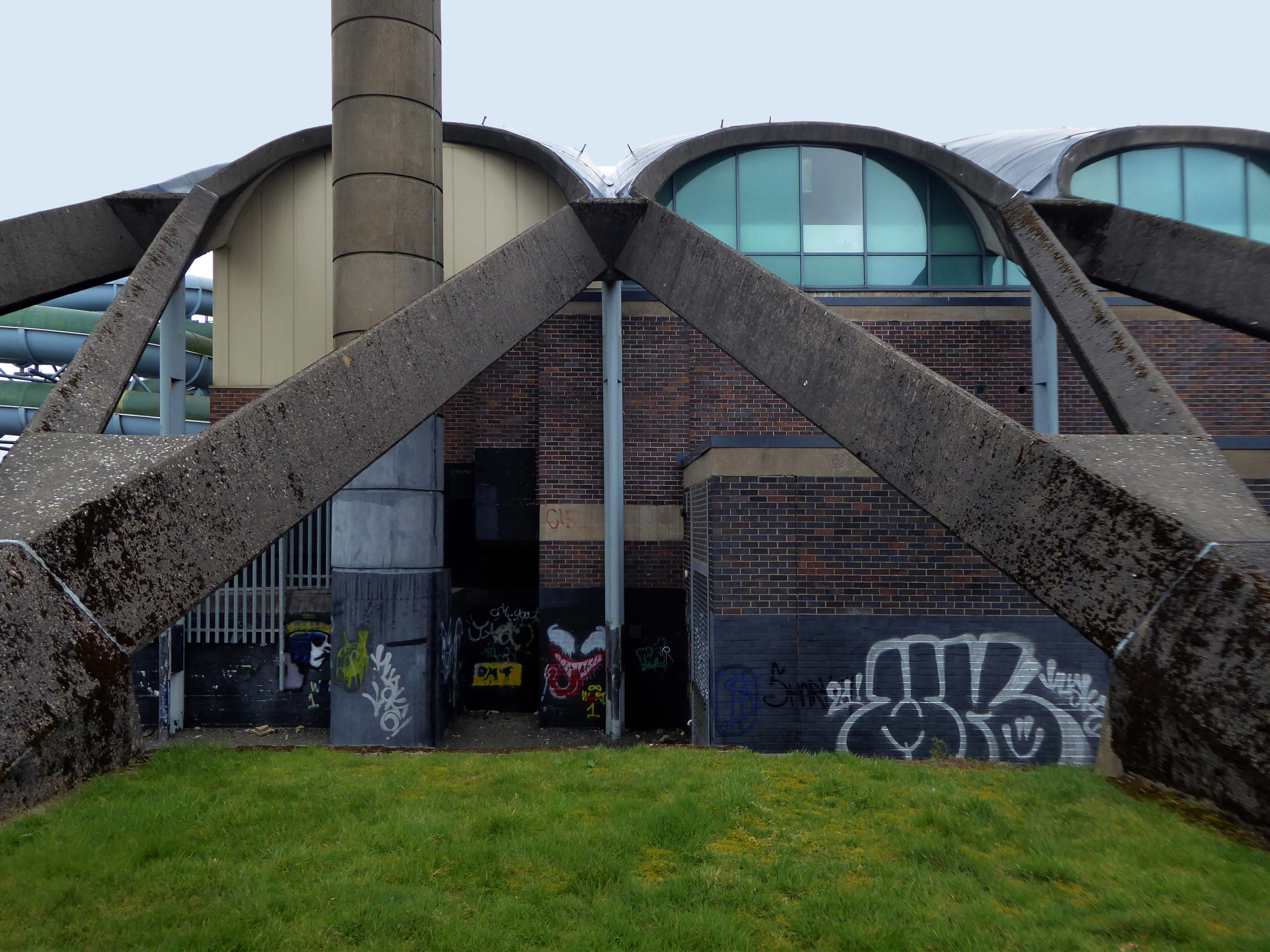
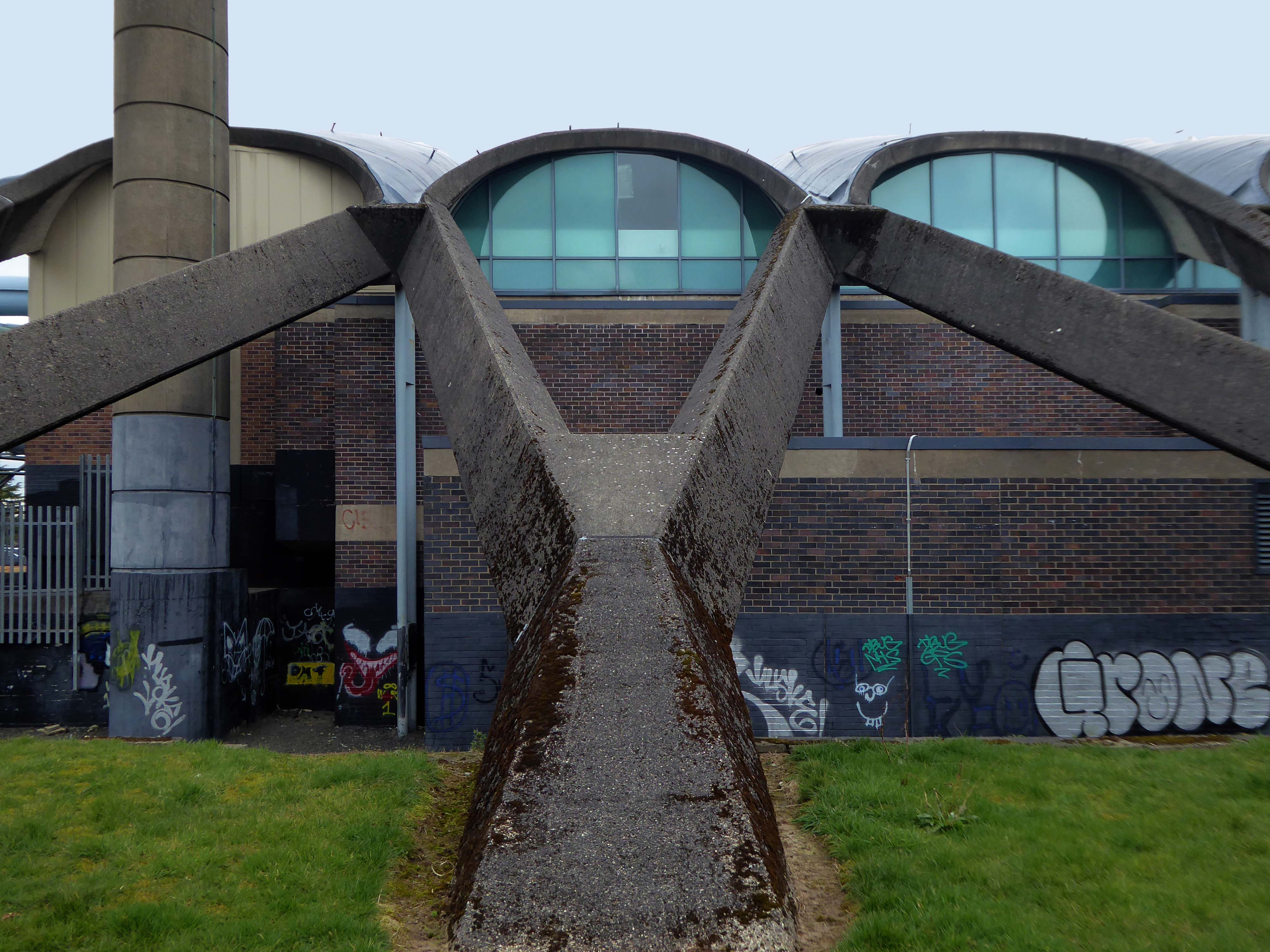
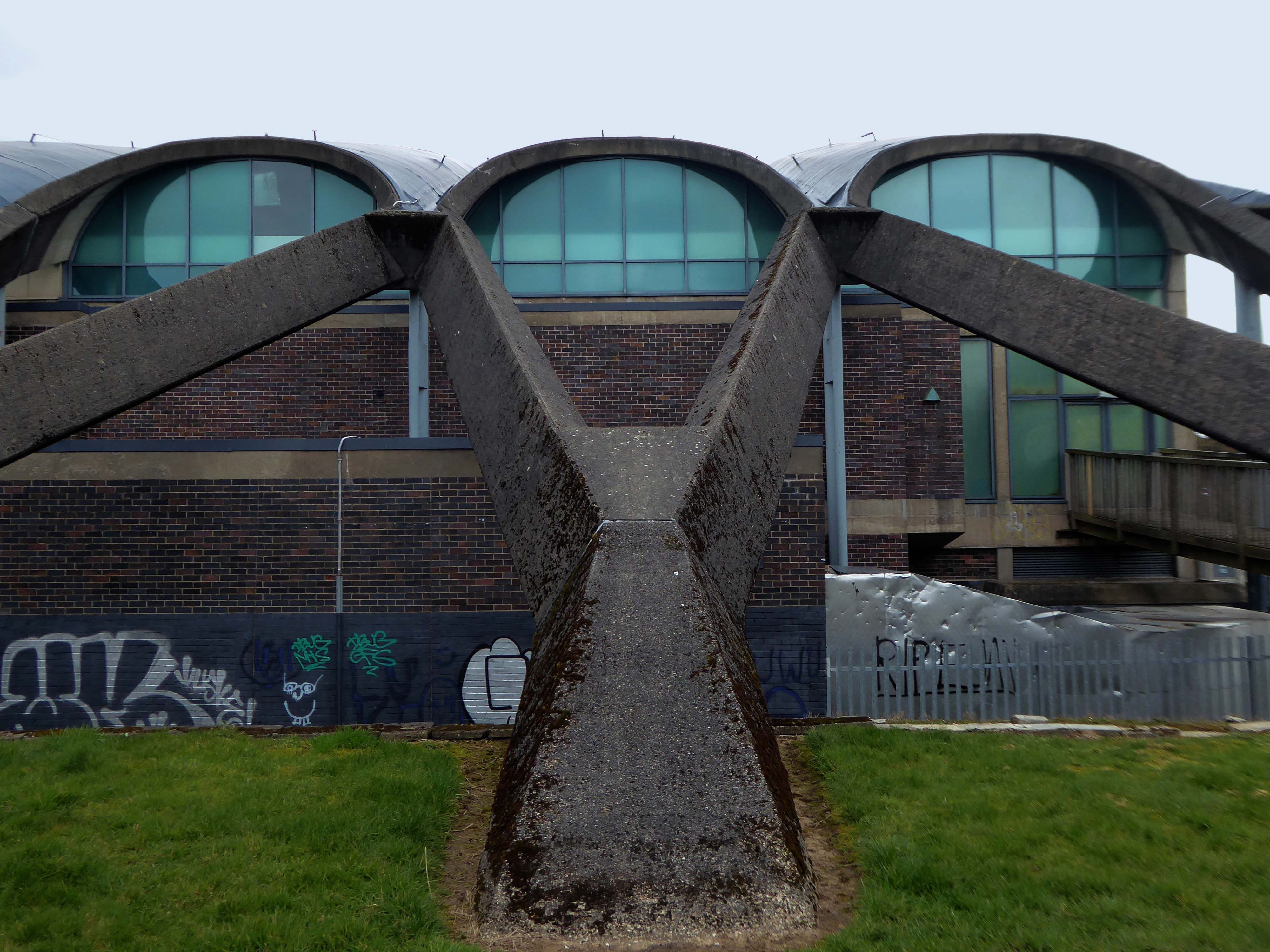
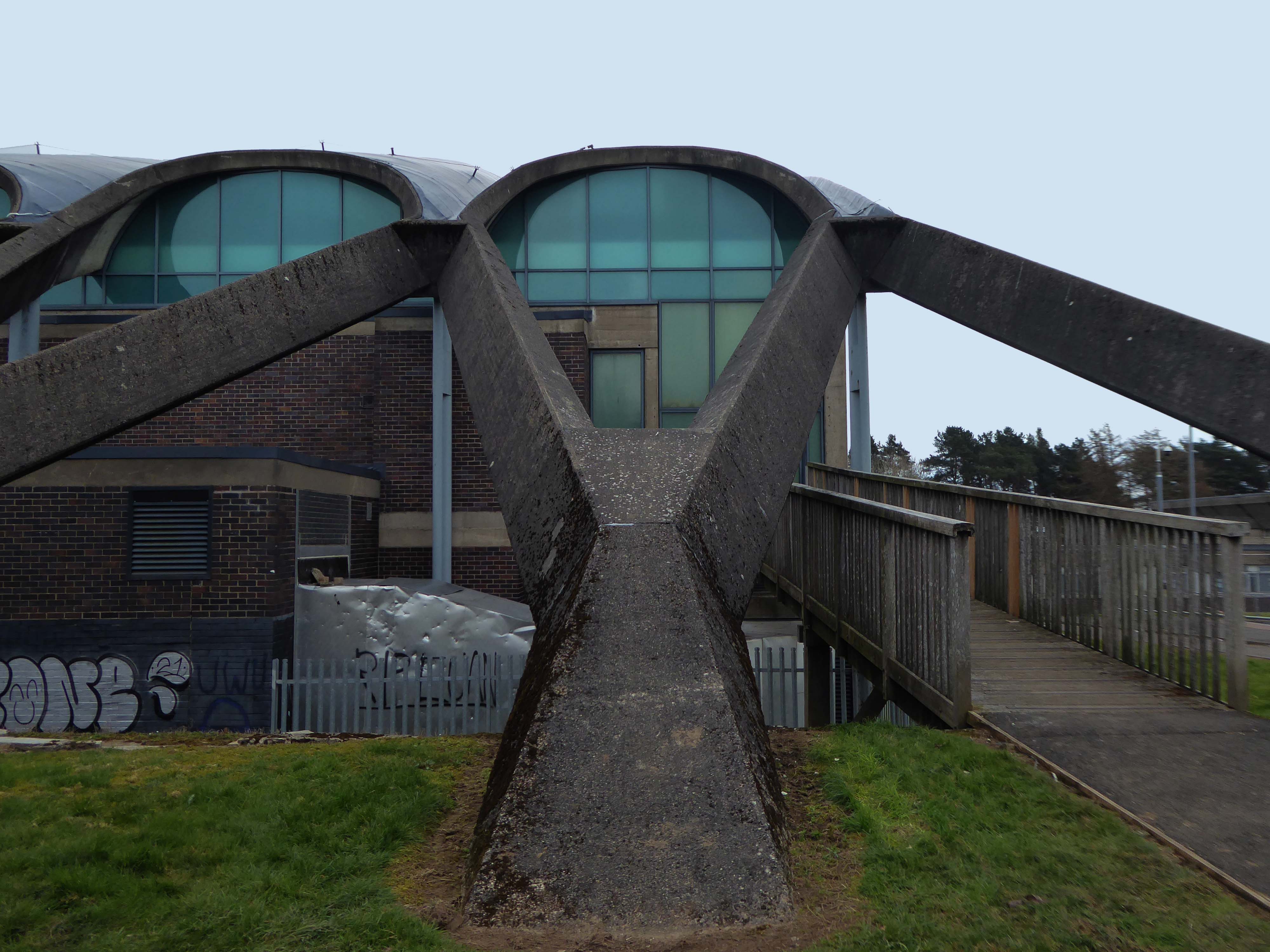
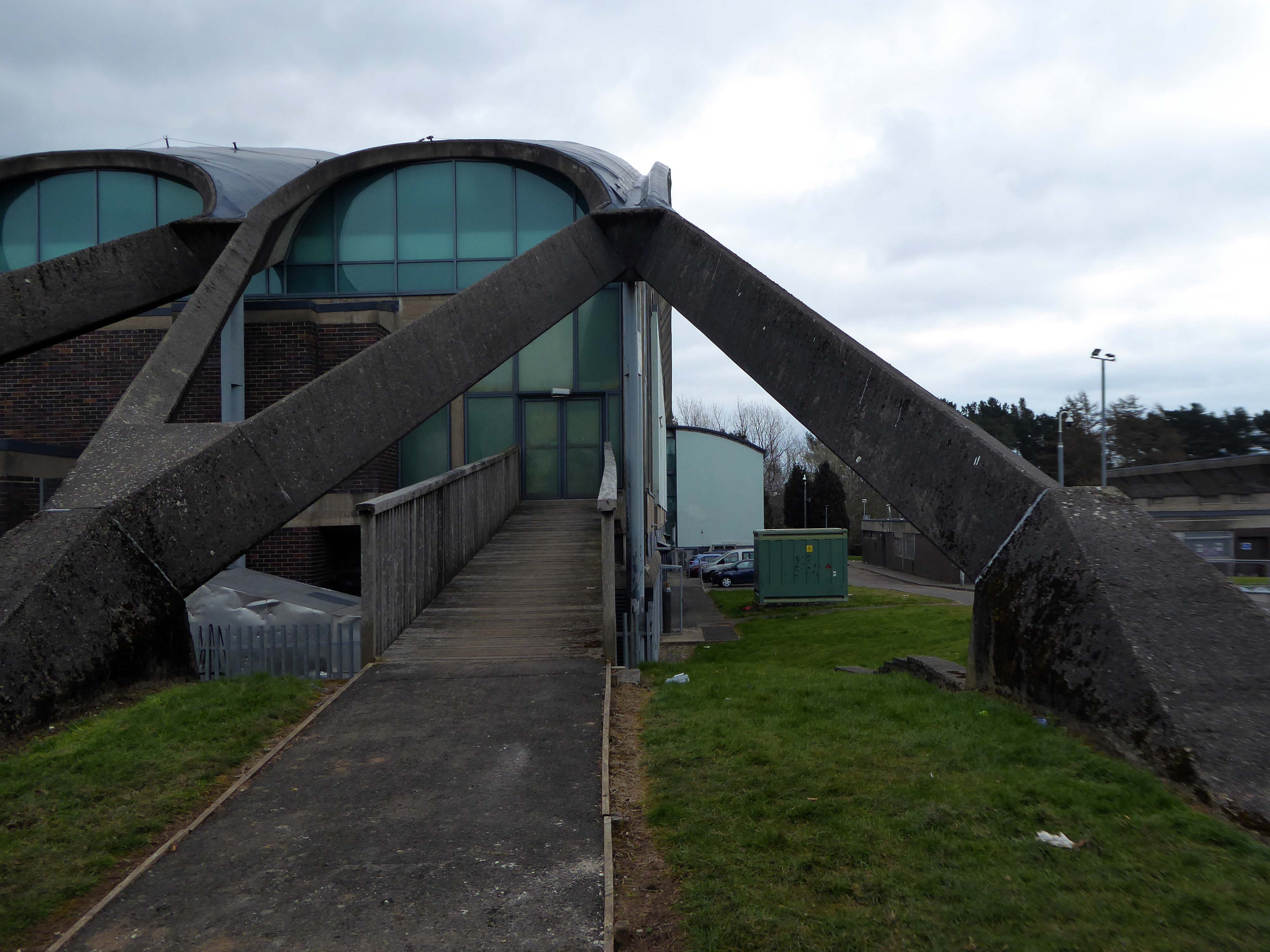
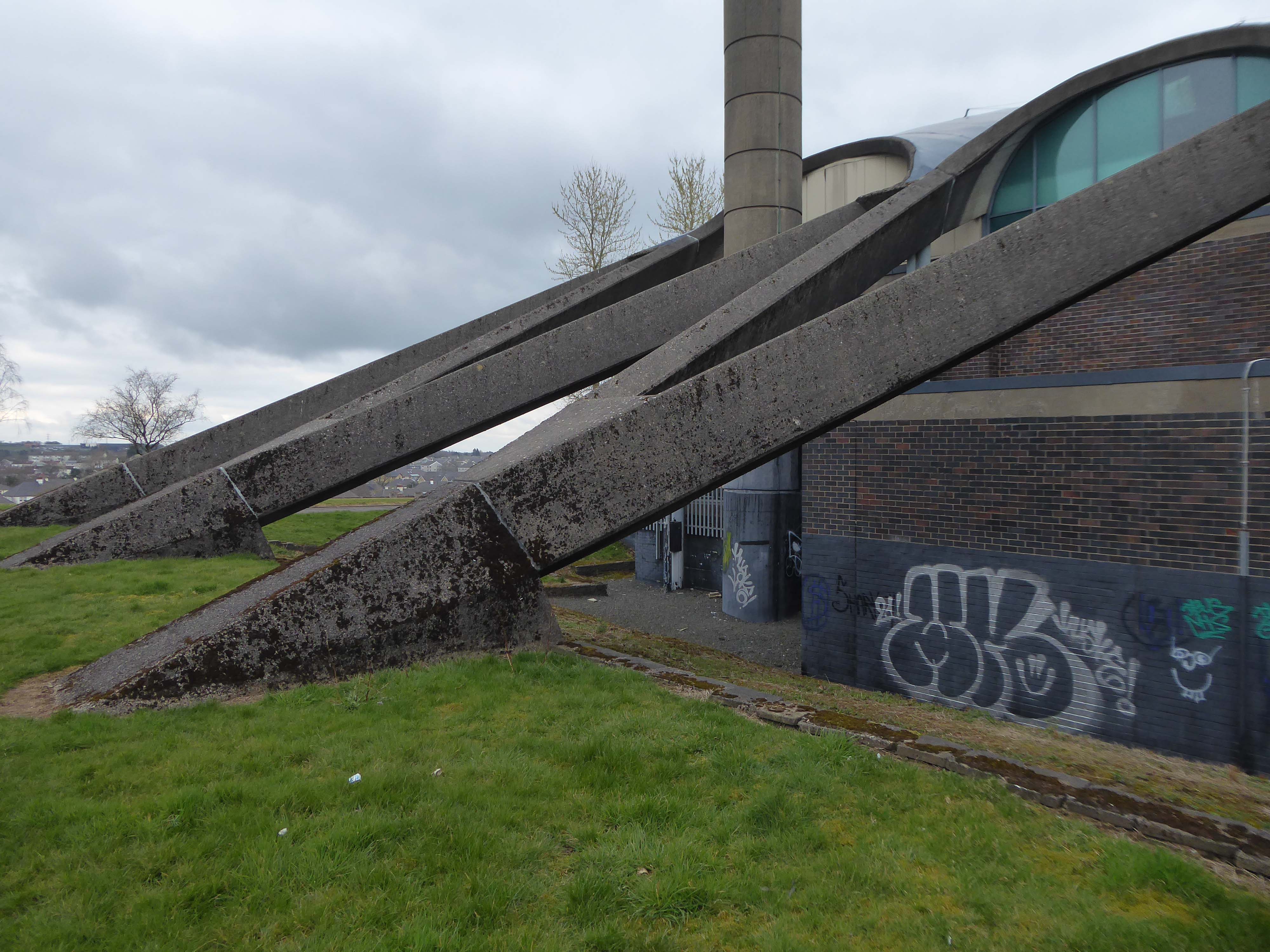
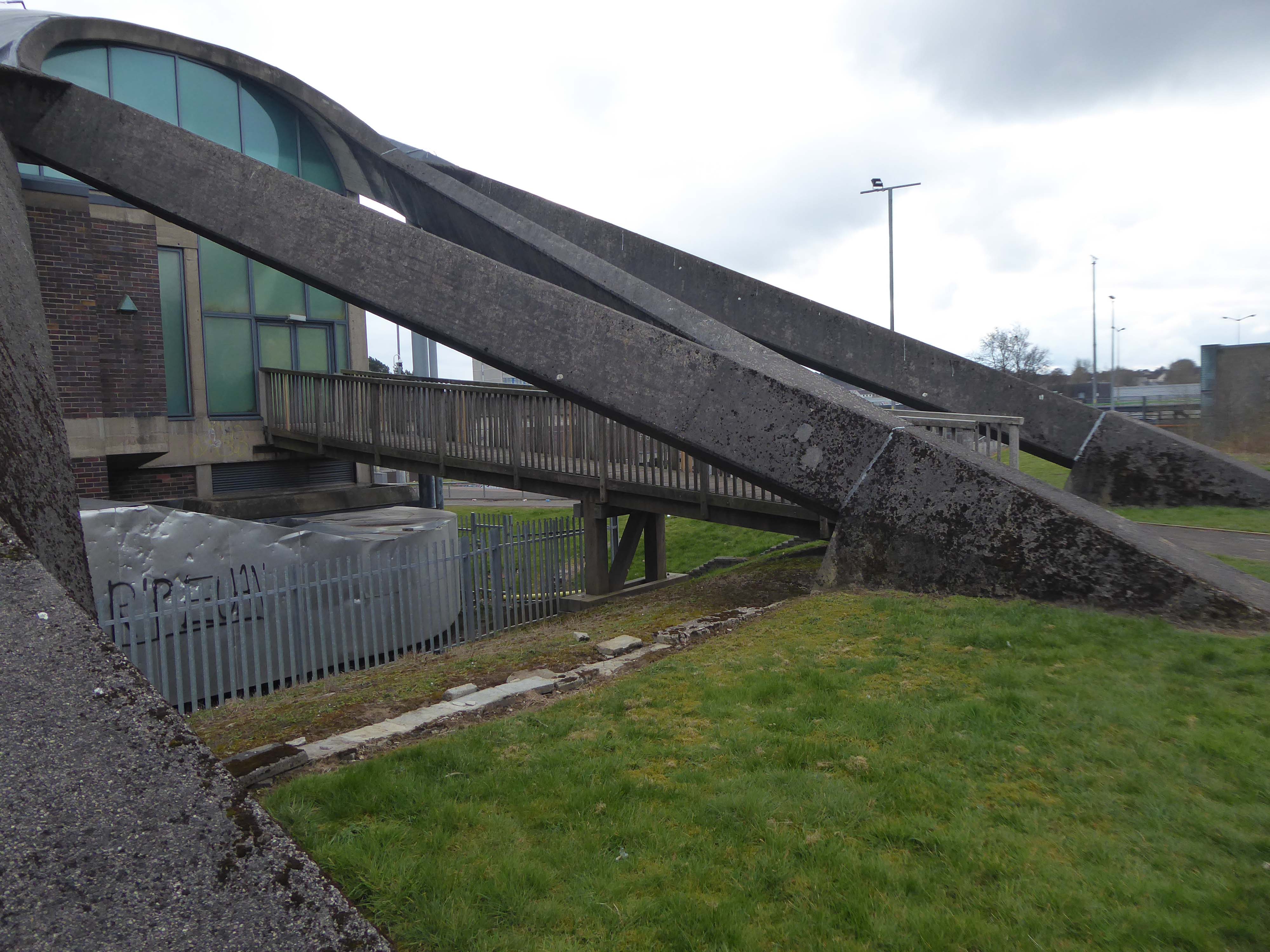
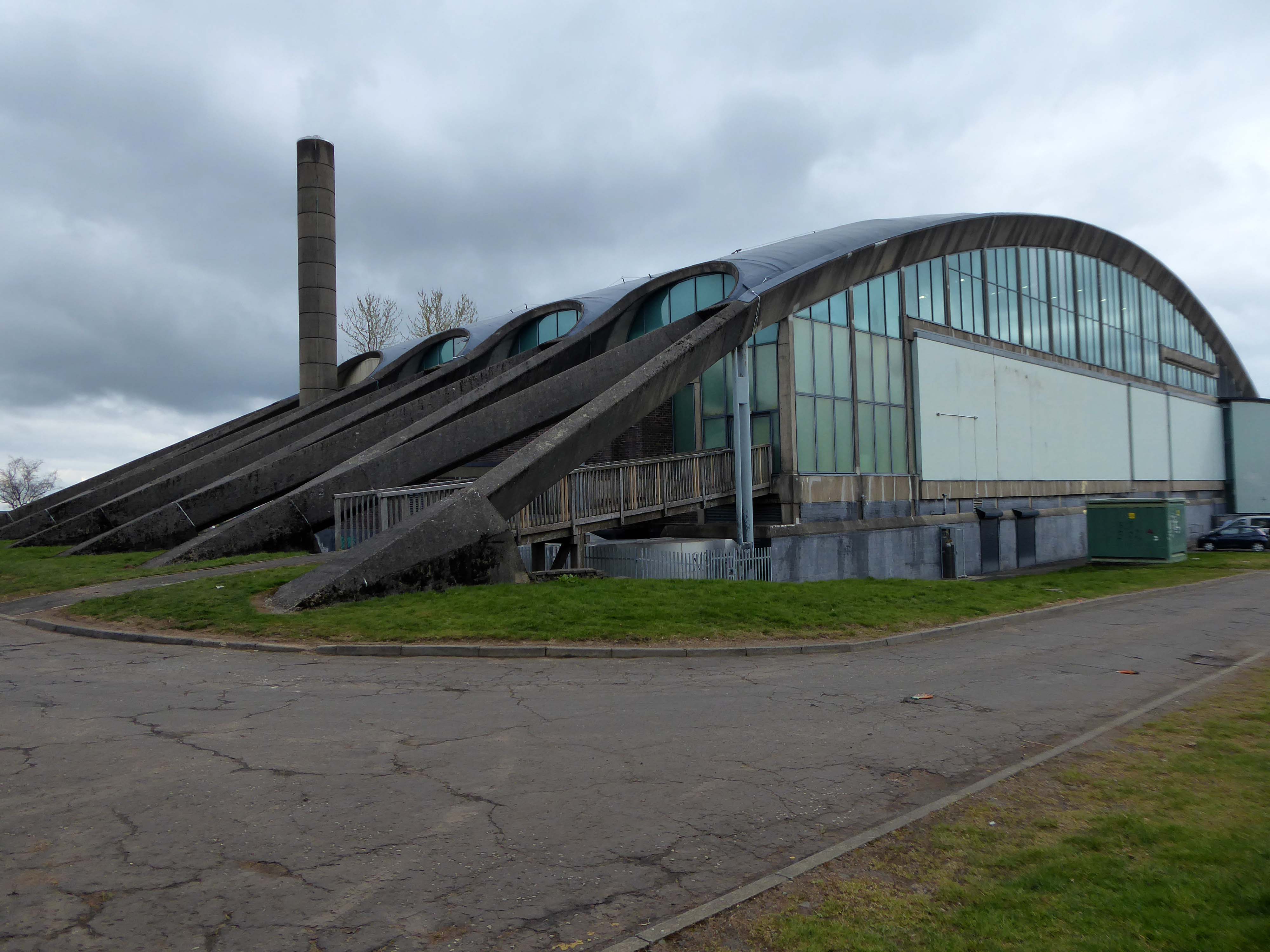
Designed by Alexander Buchanan Campbell and named after former Lord Provost Sir Patrick Dollan, it was opened in 1968 as Scotland’s first 50 metre swimming pool.
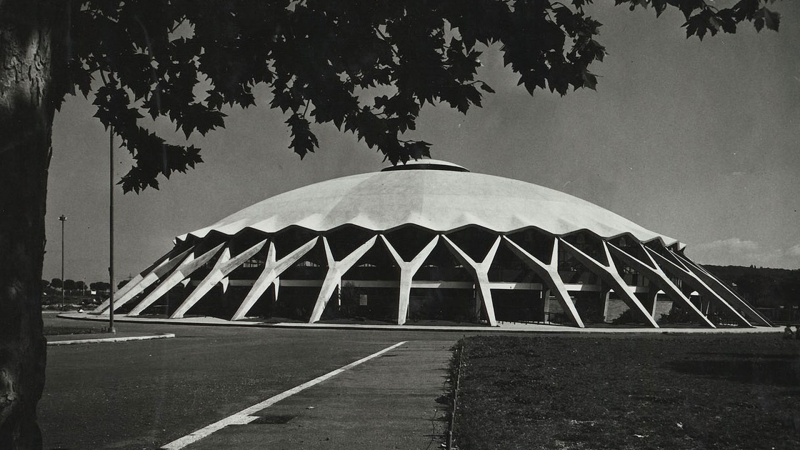
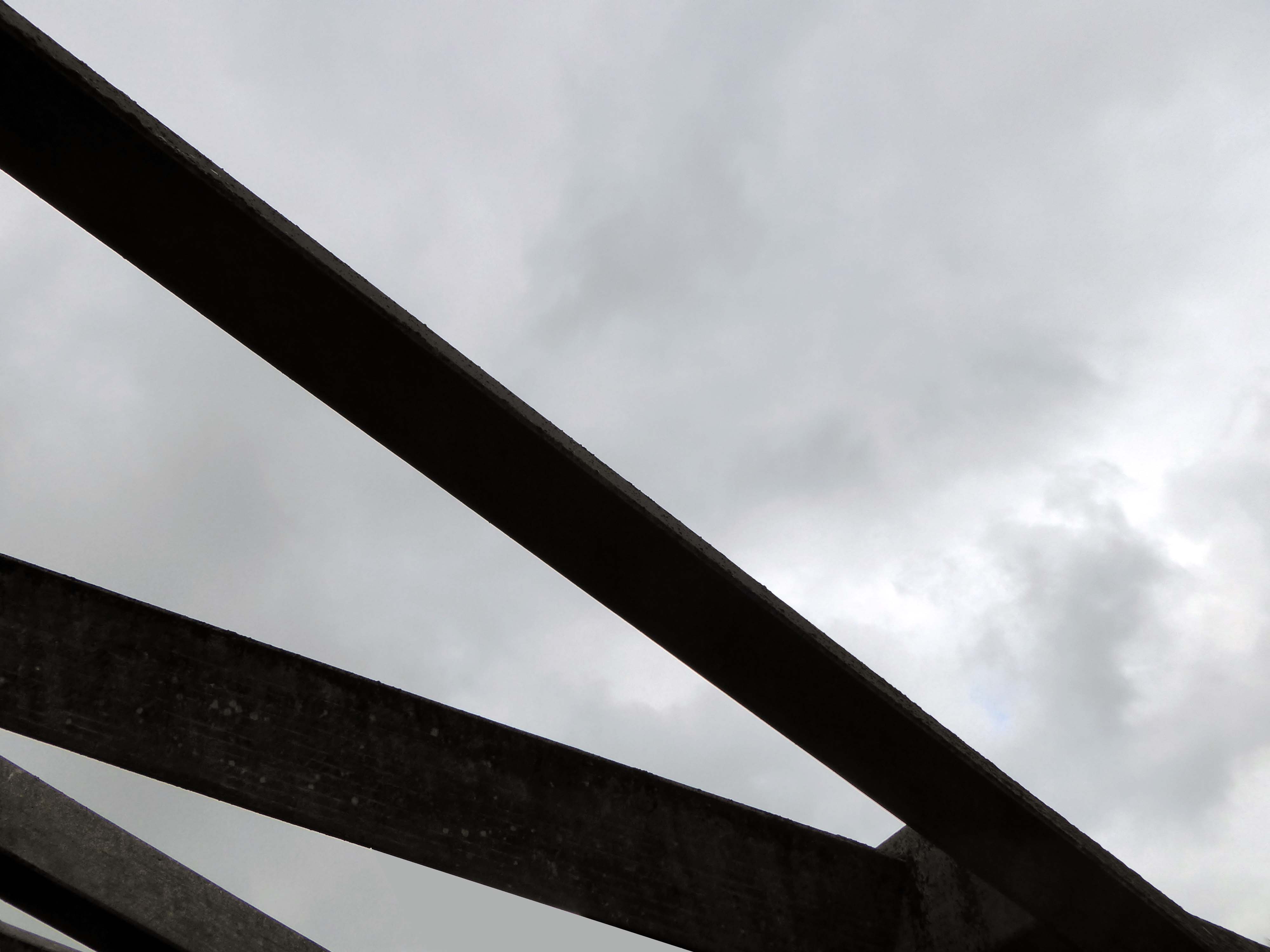
It consists principally of pre-stressed concrete and imitates a colossal marquee – the vaulted 324 ft parabolic arched roof appears to be held down by pairs of v-shaped struts that meet the ground at a thirty degree angle.
Buchanan Campbell admitted that he had been influenced by the architecture of the 1964 Summer Olympics in Tokyo, Japan and the designs by Kenzo Tange for the gymnasium there.

Also inspired by Pier Luigi Nervi’s Olympic Complex in Rome.
In 1993, the international conservation organisation Docomomo International listed Dollan Baths as one of sixty key monuments in Scottish post-war architecture.
It was listed in 2002 as a Category A building by Historic Environment Scotland.

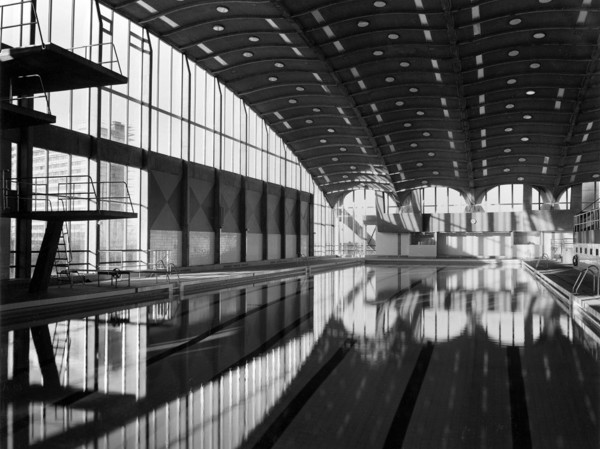
The Dollan’s wet recreation facilities include South Lanarkshire’s only 50m swimming pool and SLLC’s most exclusive health suite facility which features a sauna, steam room, sanarium, spa pool and relaxation area.
If you prefer dry recreation facilities then look no further as the Dollan features two gyms. The first is a traditional gym with the latest Life Fitness cardio and HUR compressed-air resistance equipment.
To complement these fantastic facilities there are two fitness studios that play host to a diverse range of fitness and mind, body and soul classes as well as a morning creche.
Sadly, I am neither a water babe nor gym bunny – body, soul and mindfulness are maintained in perfect harmony solely by means of modern mooching.
I walked around, I took a look.
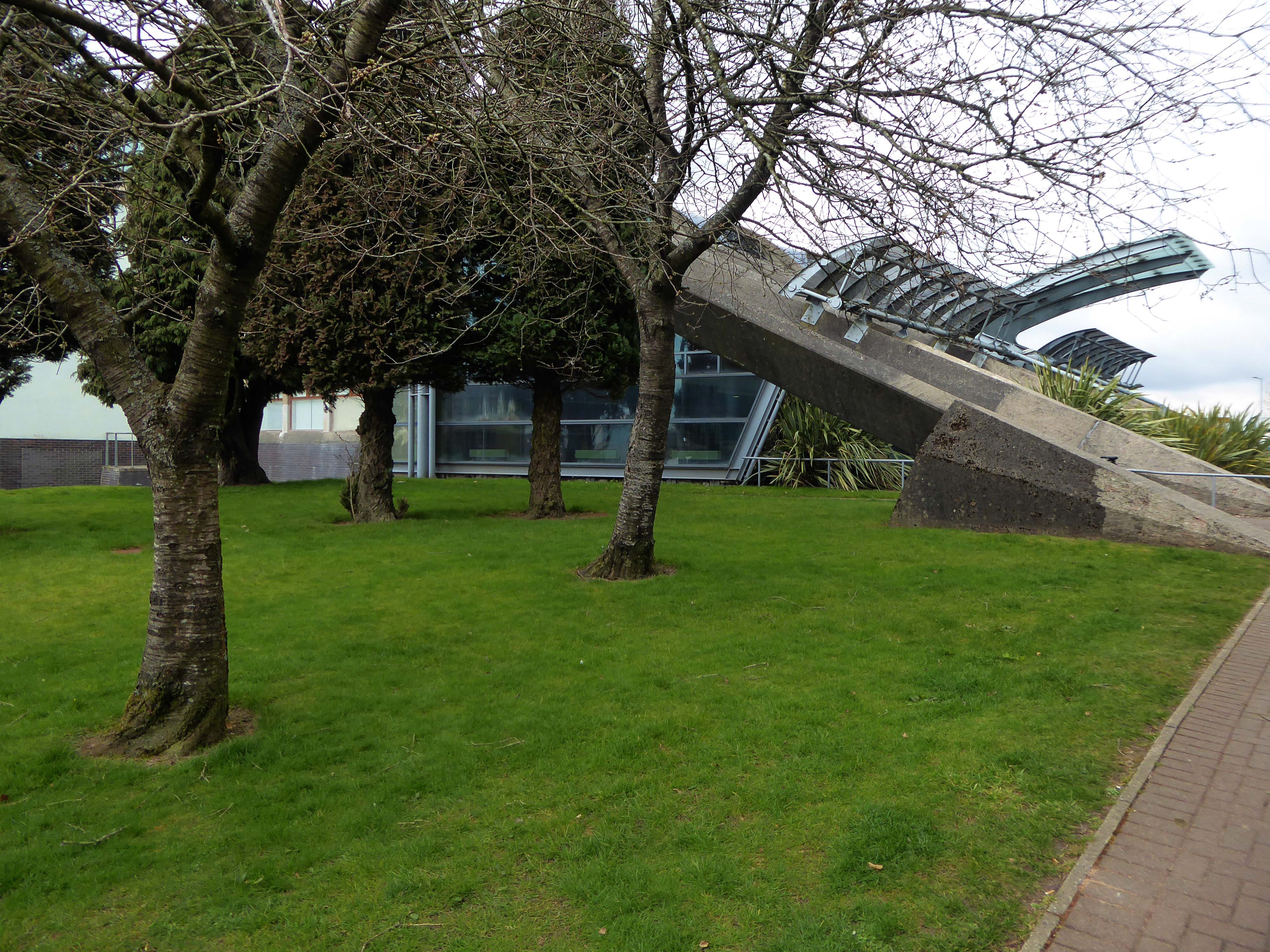
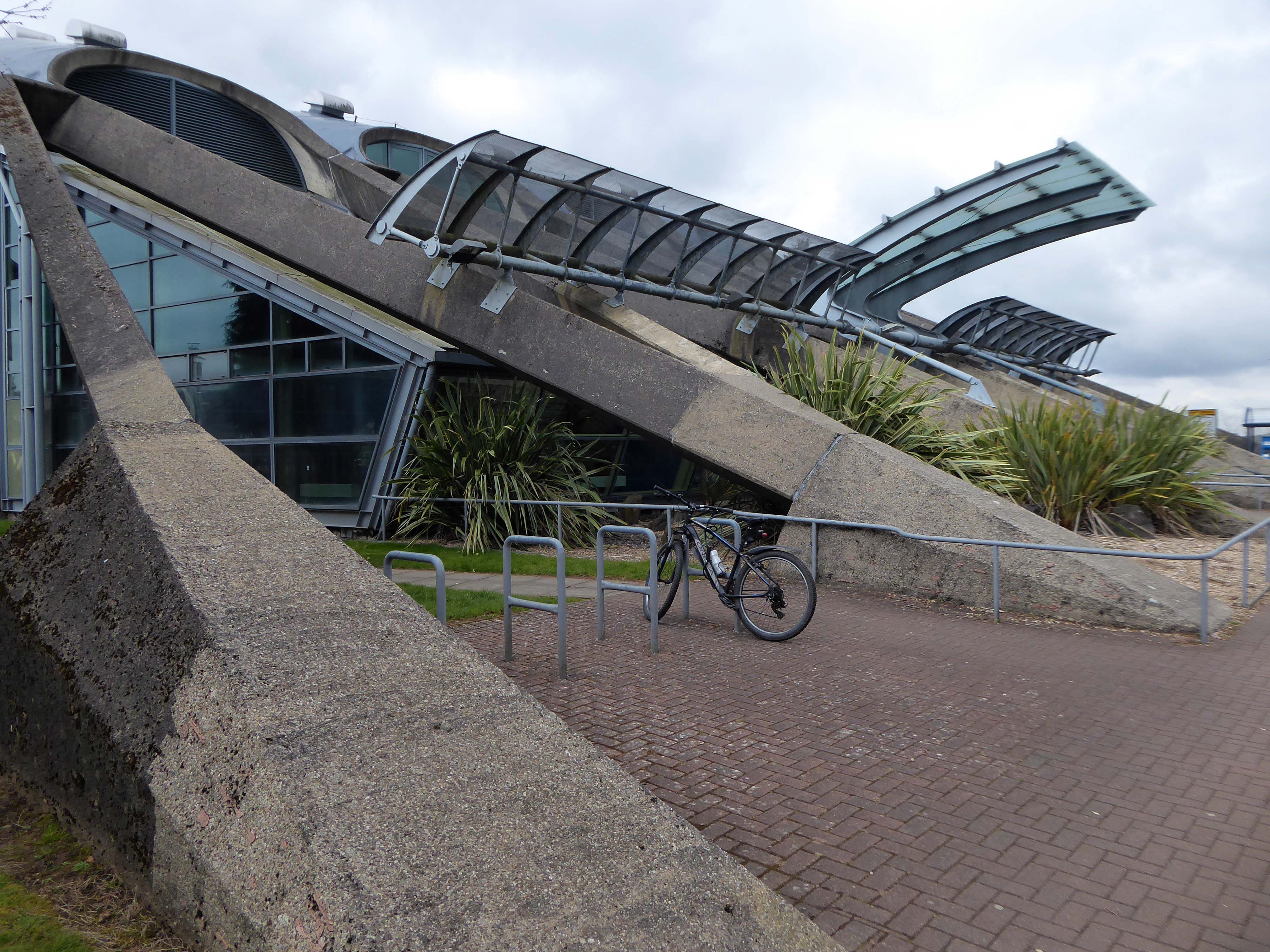
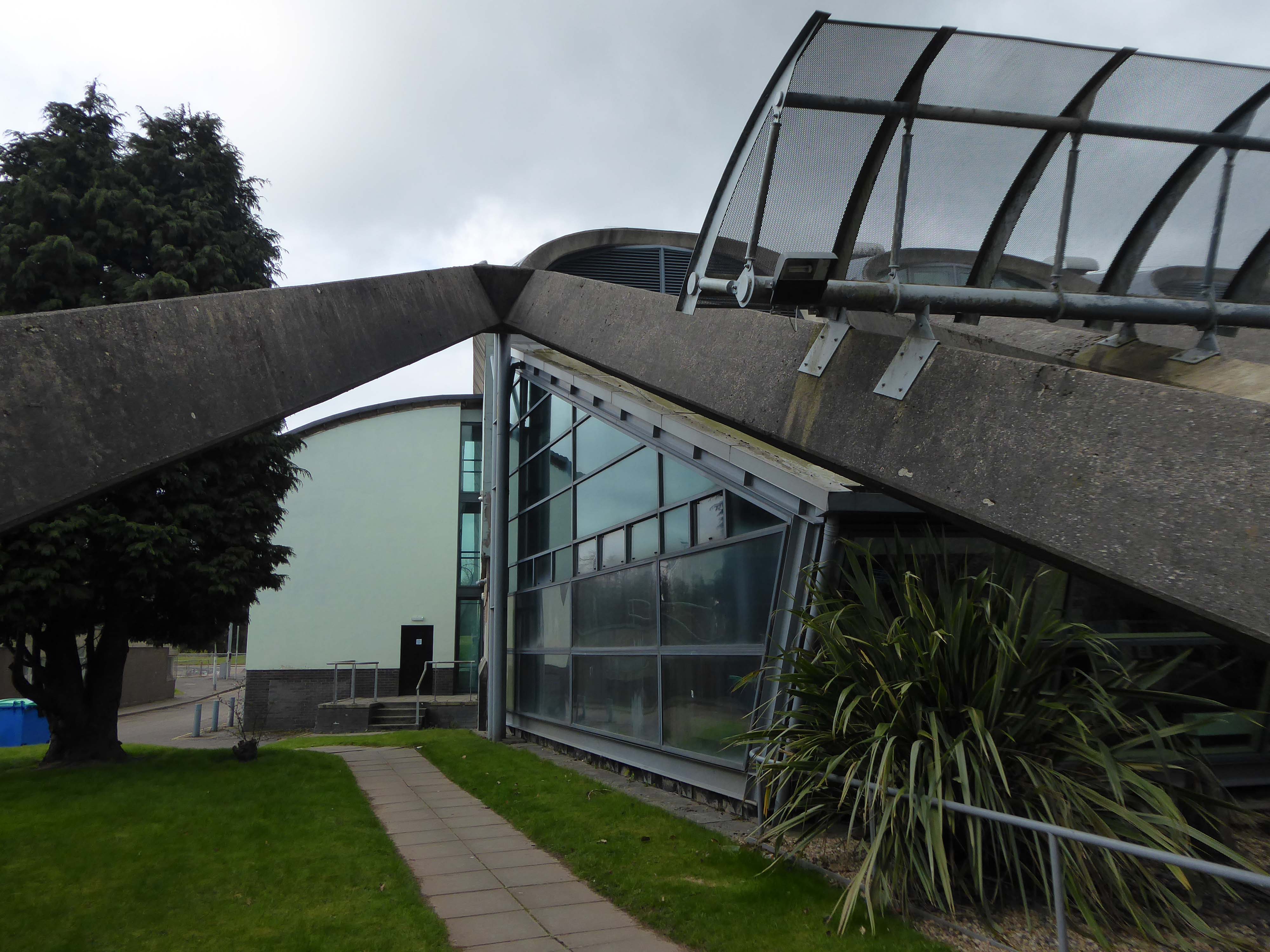

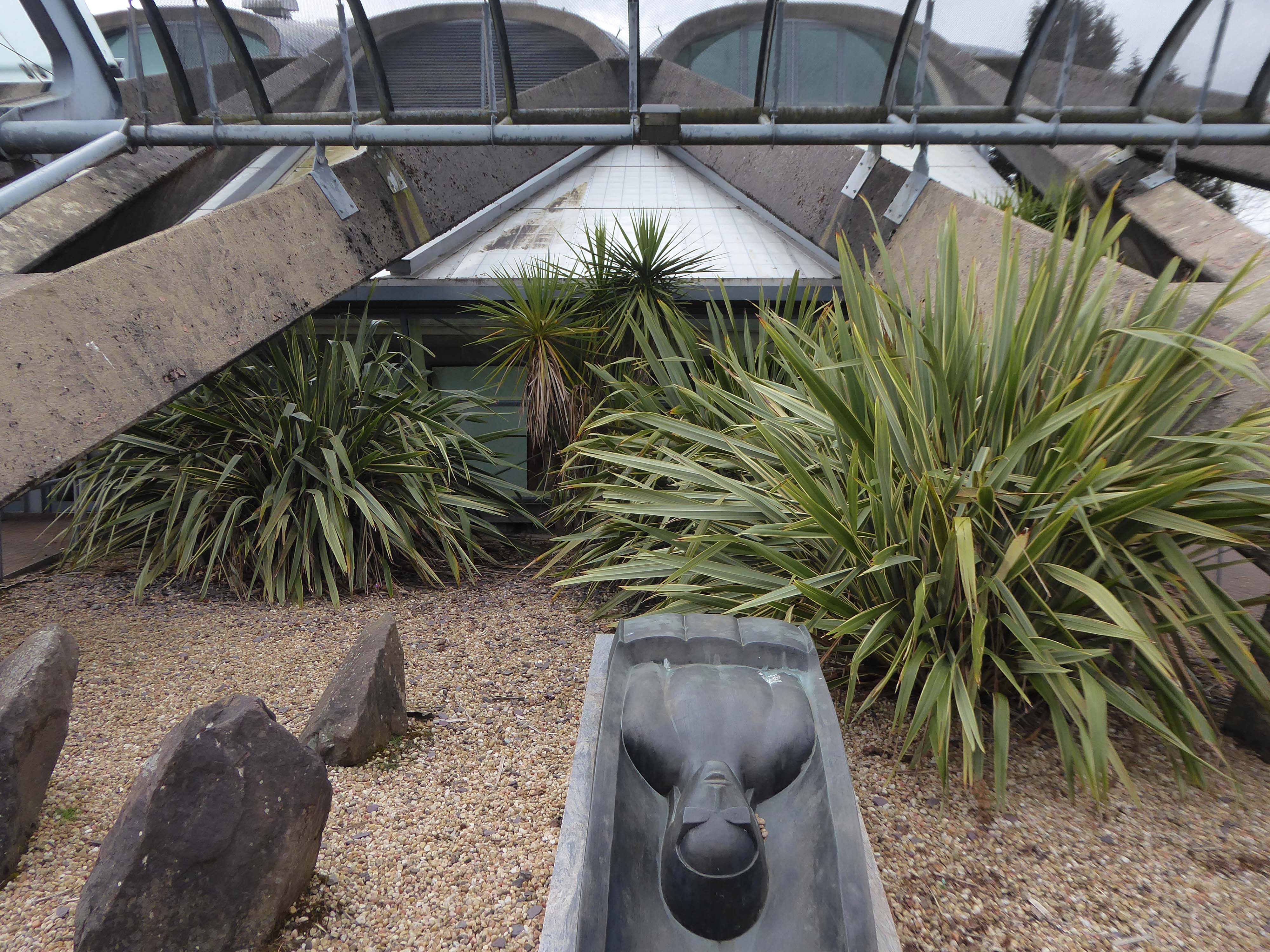
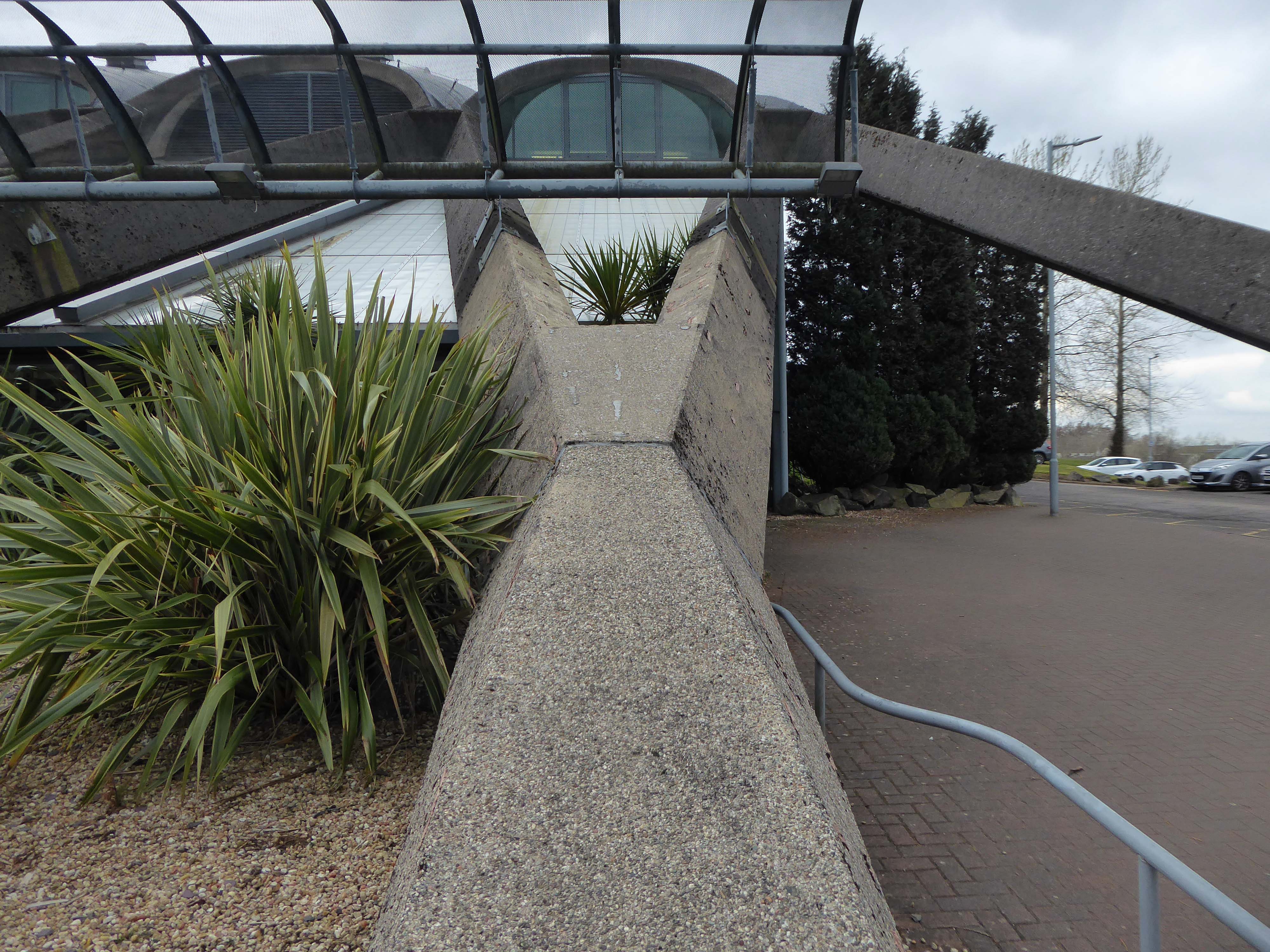
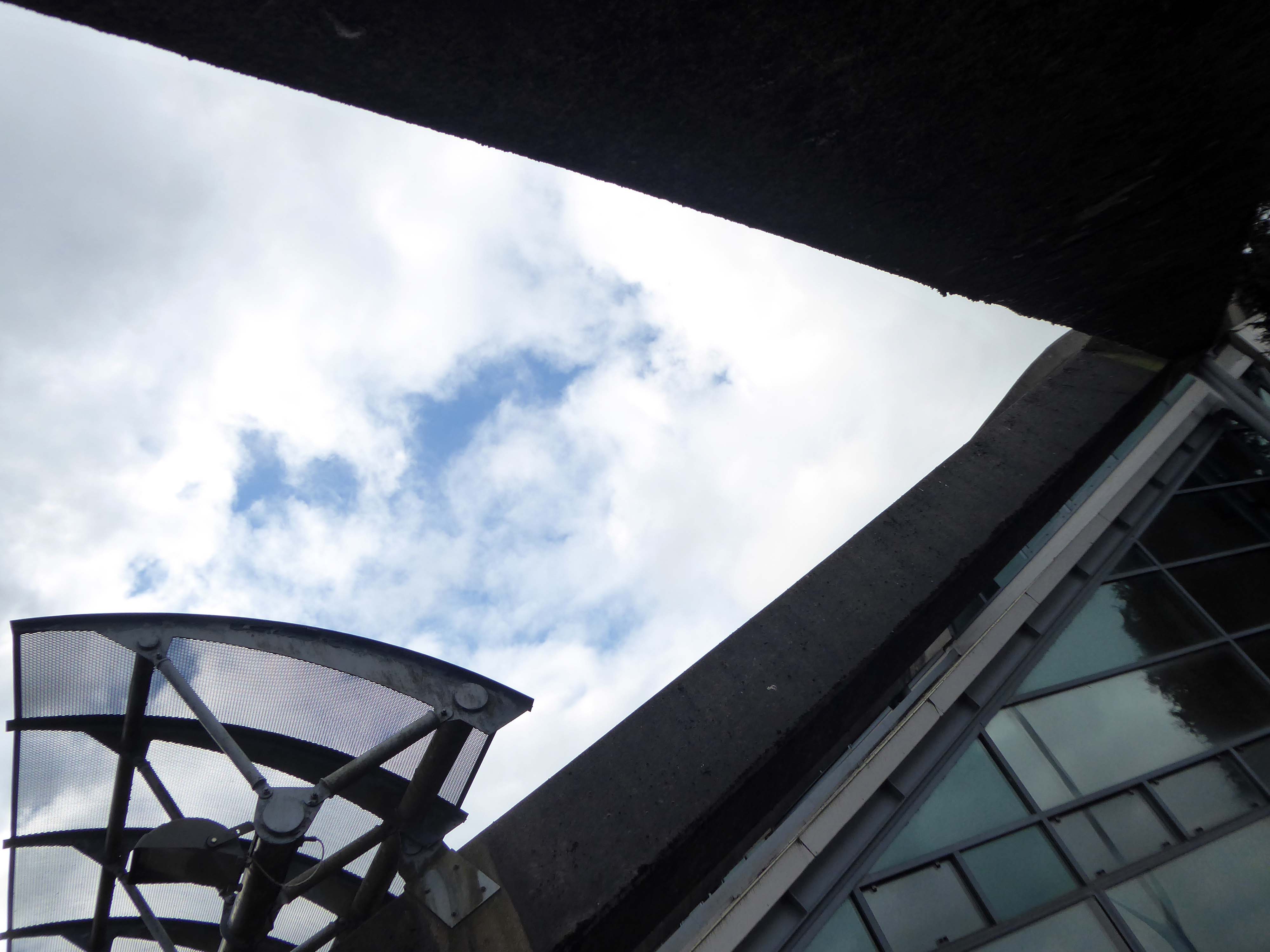
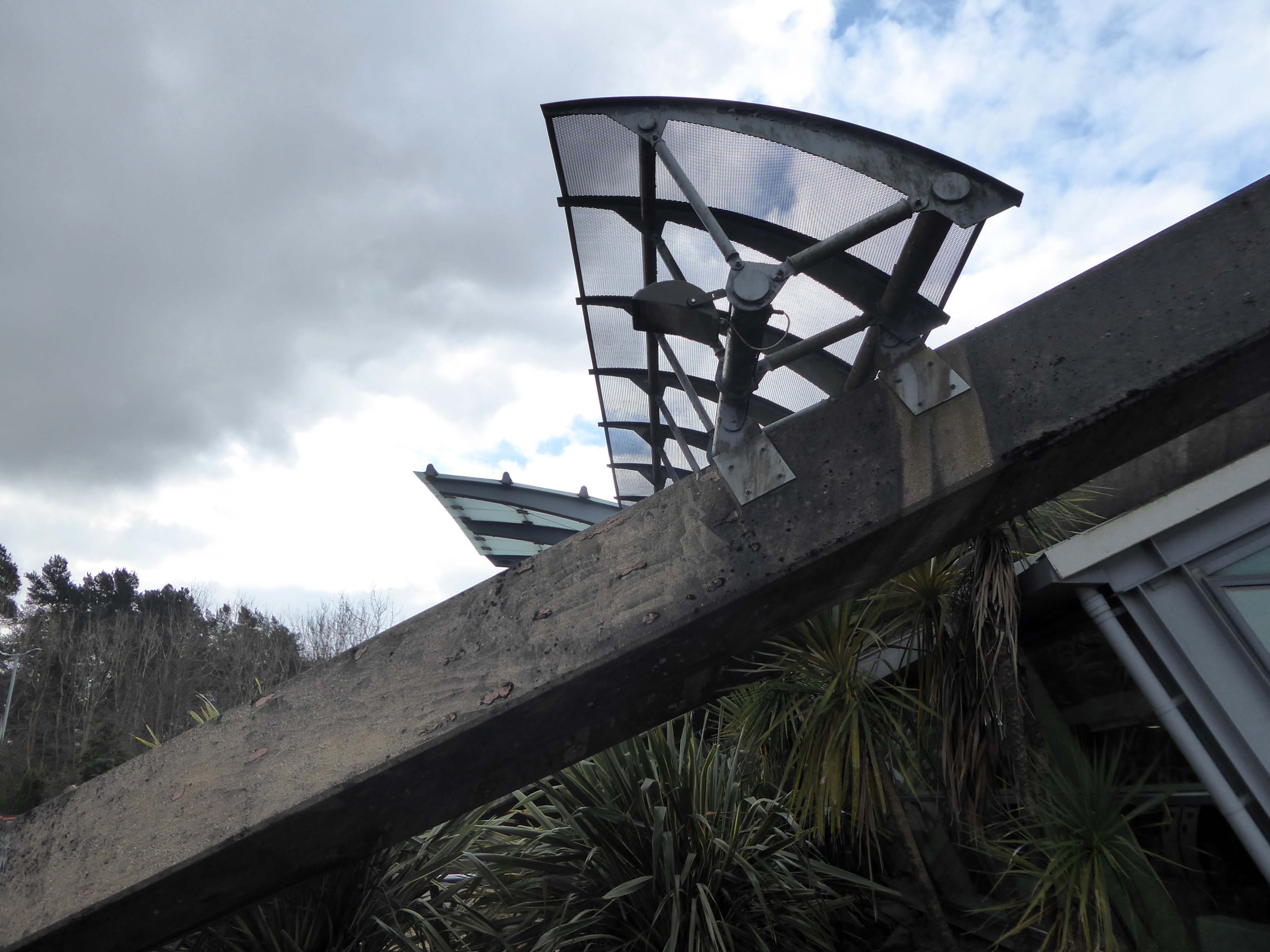
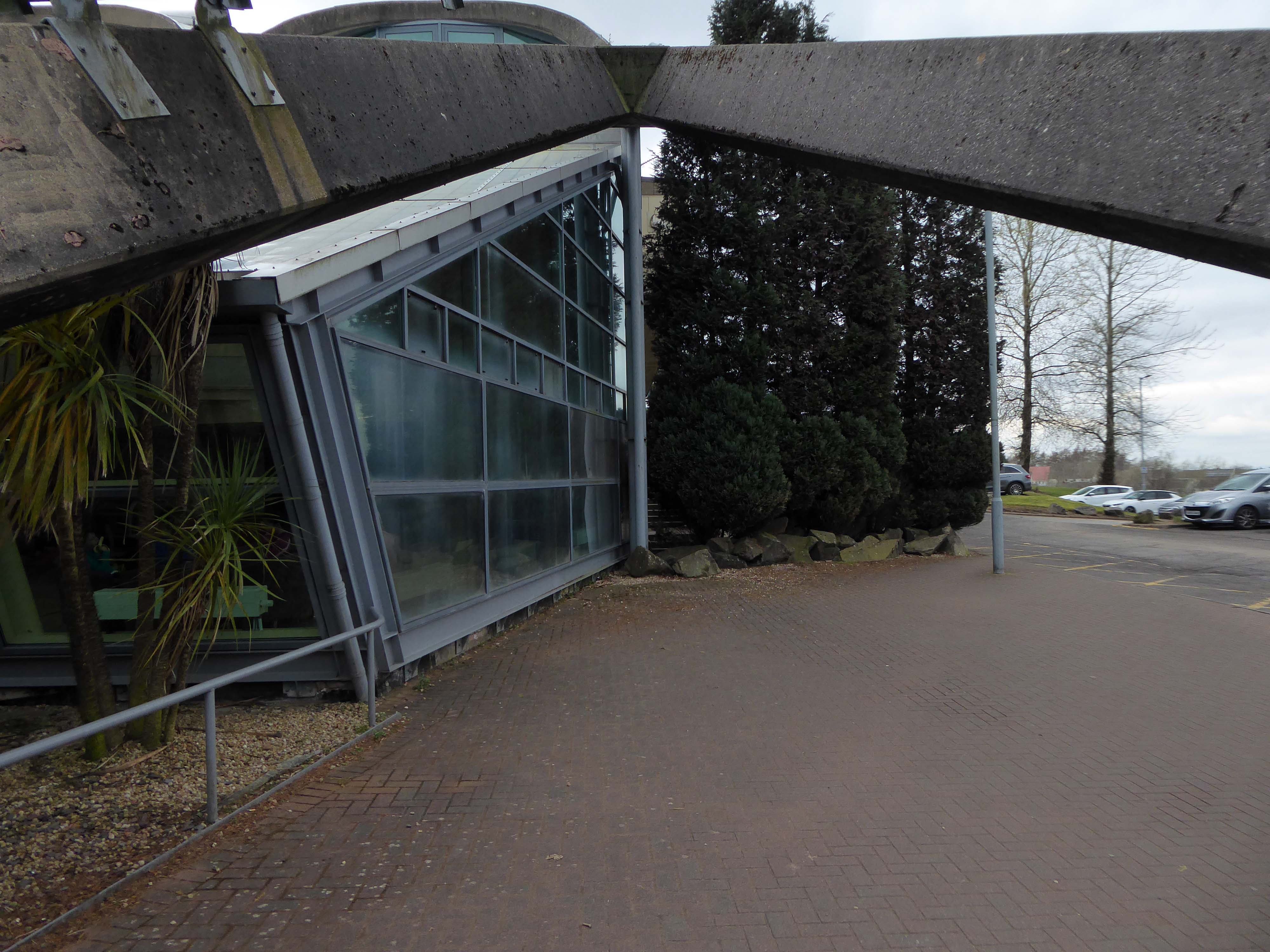
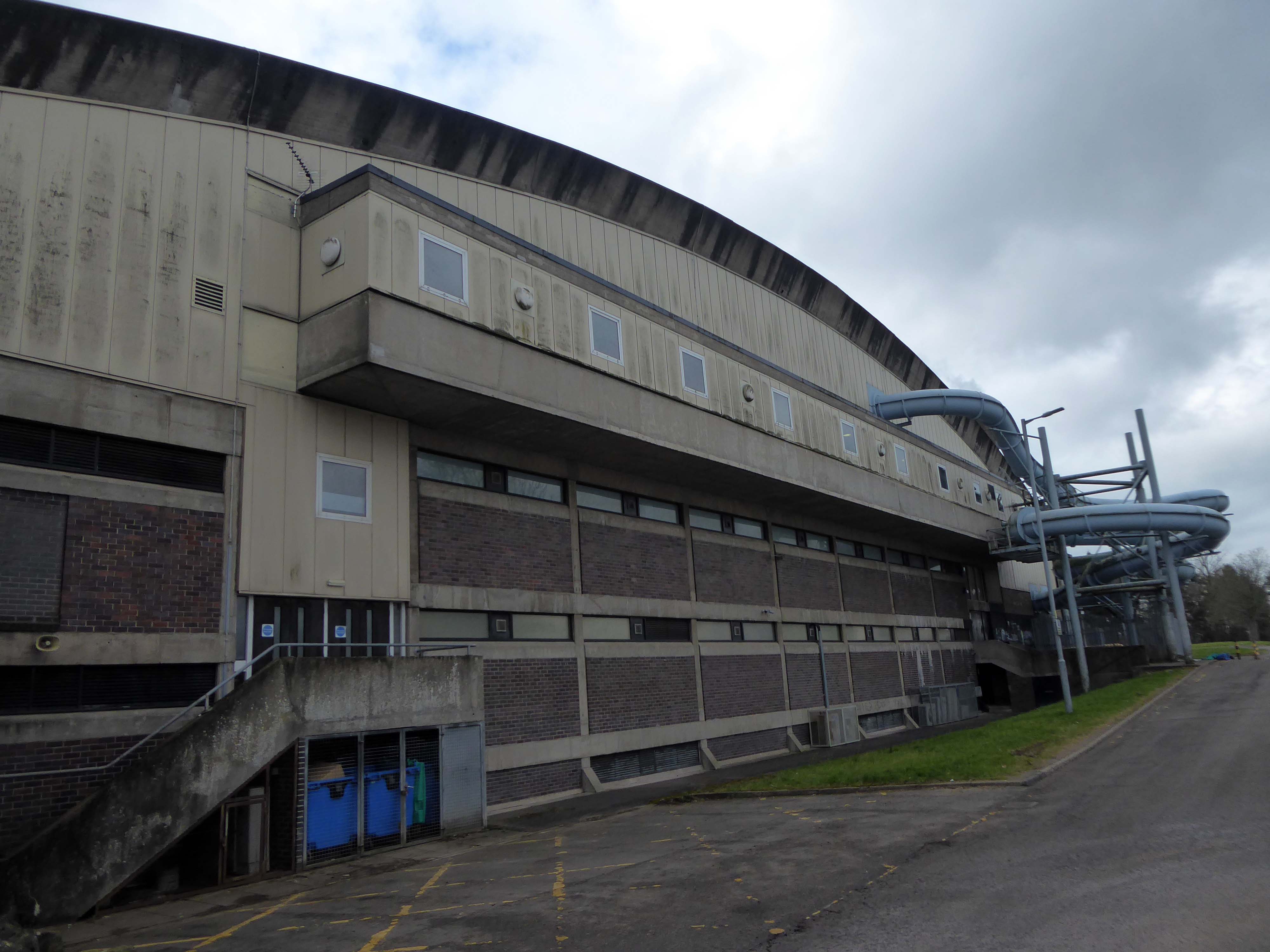
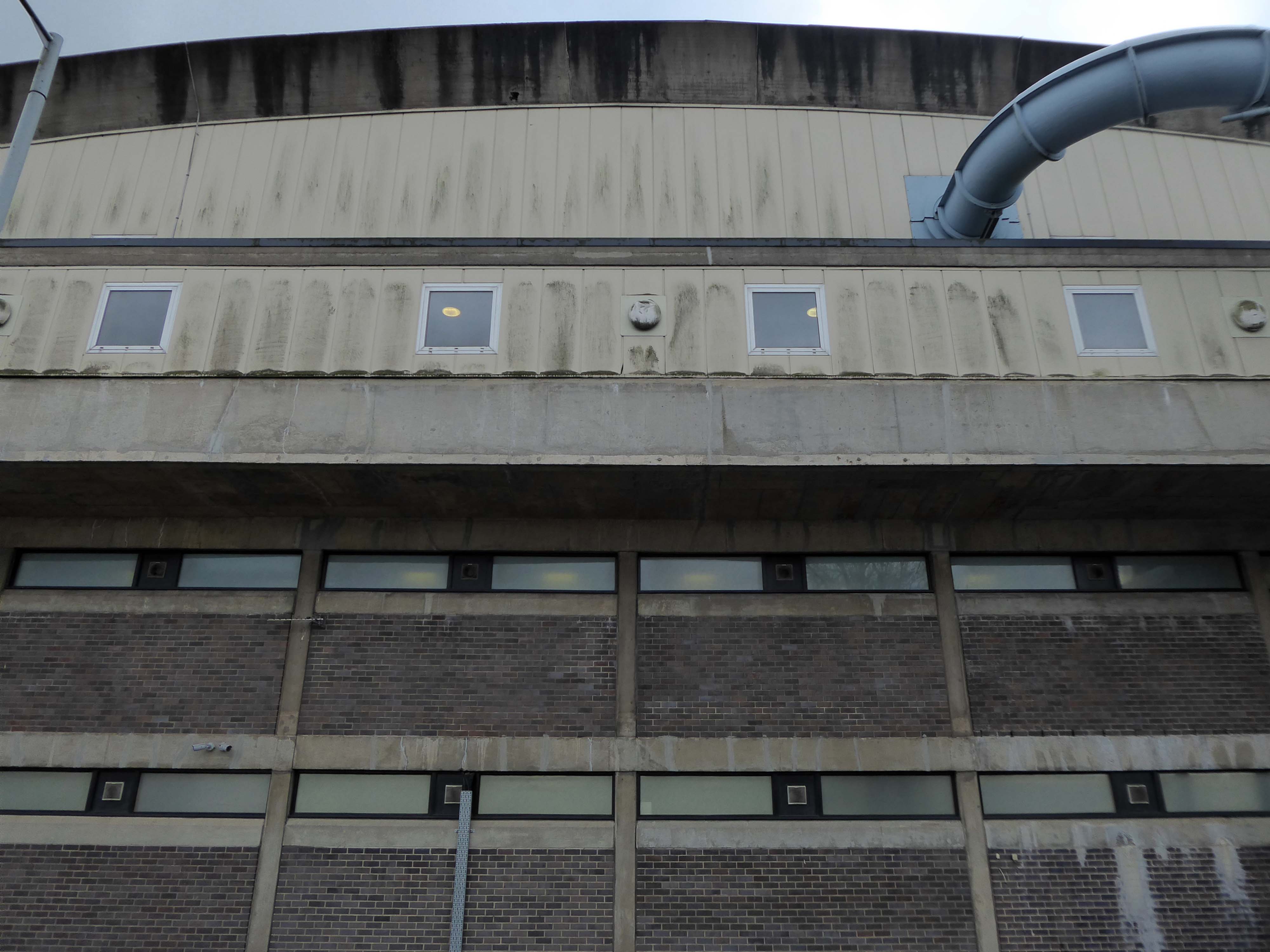
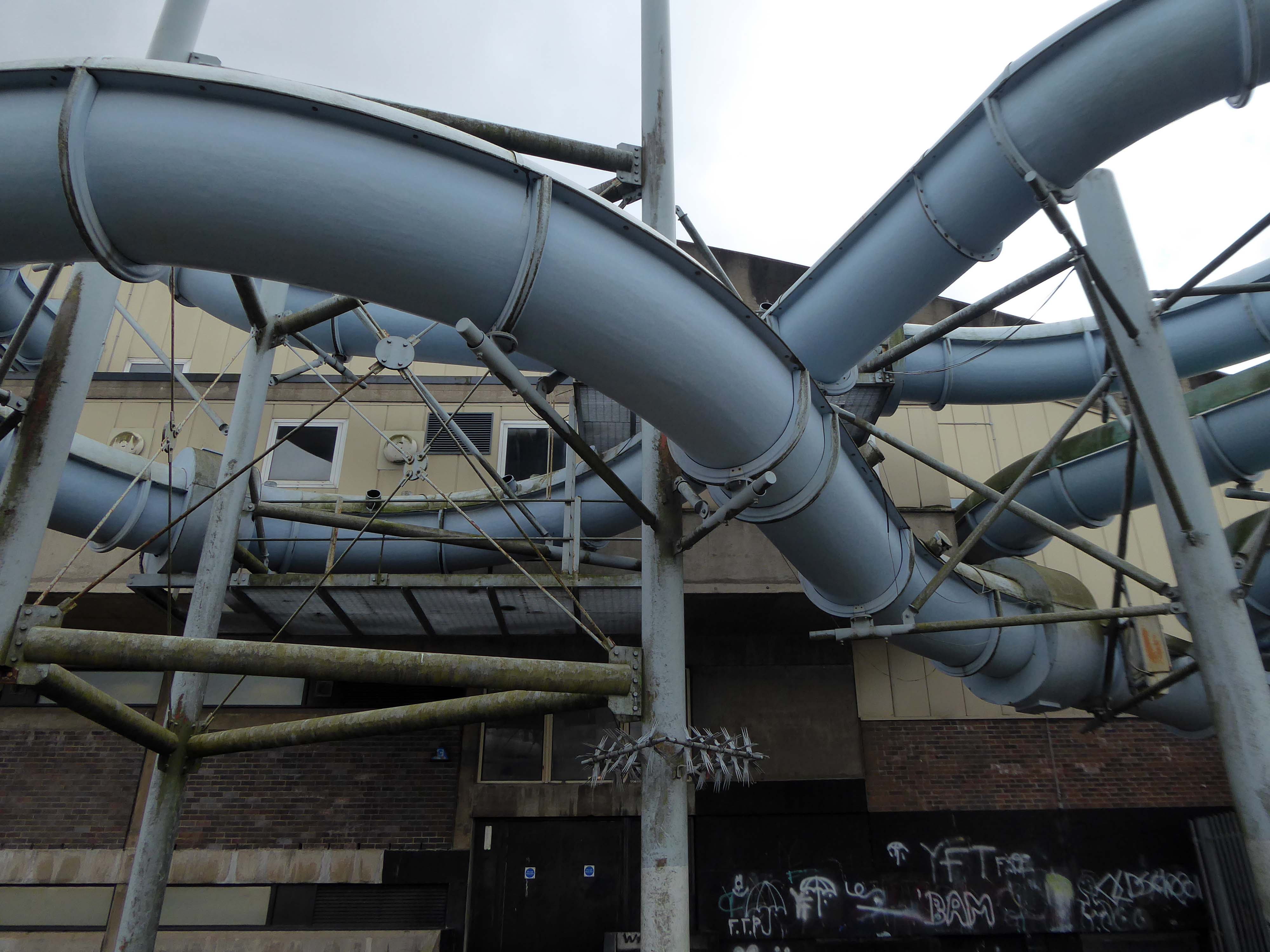
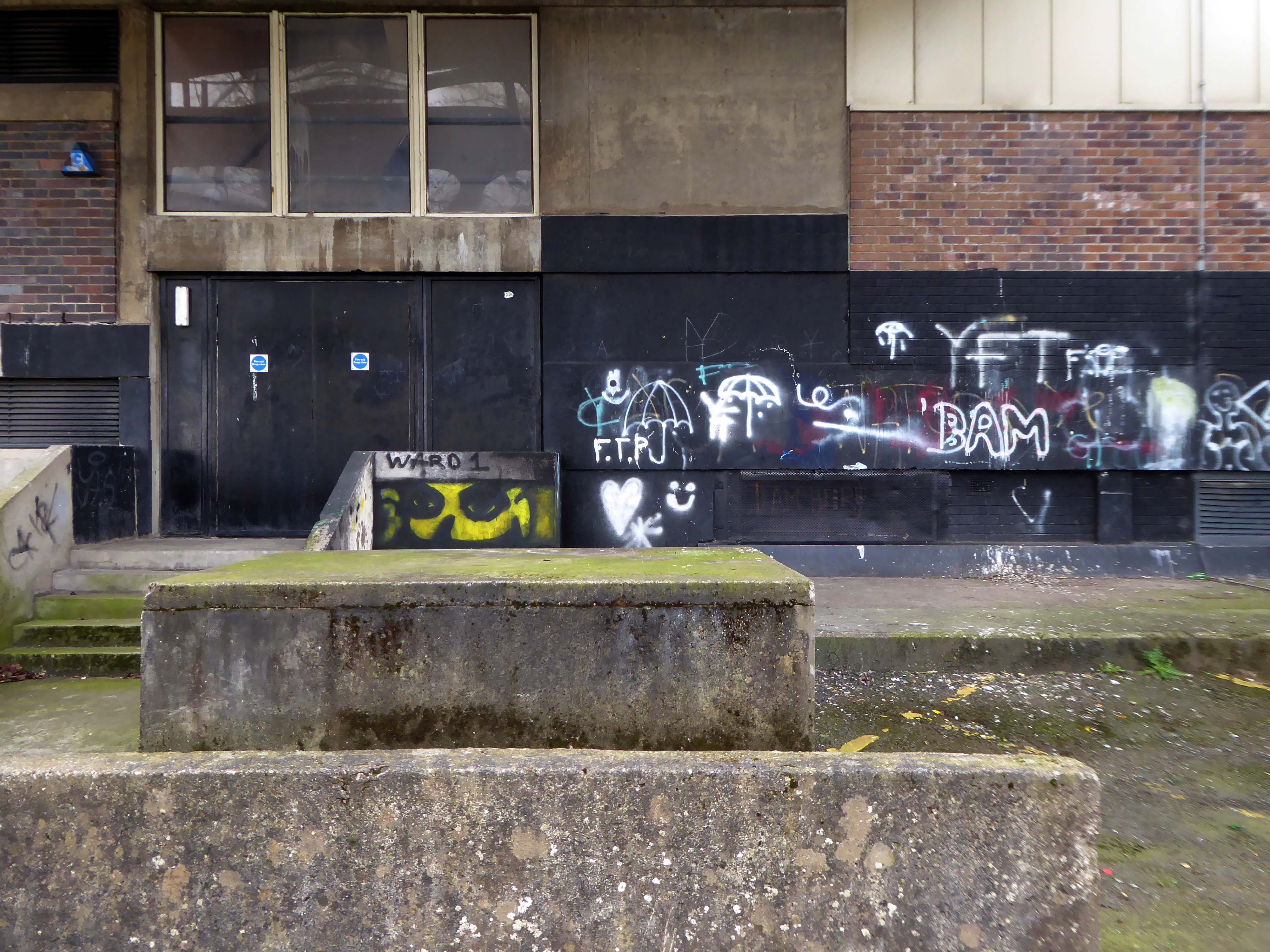
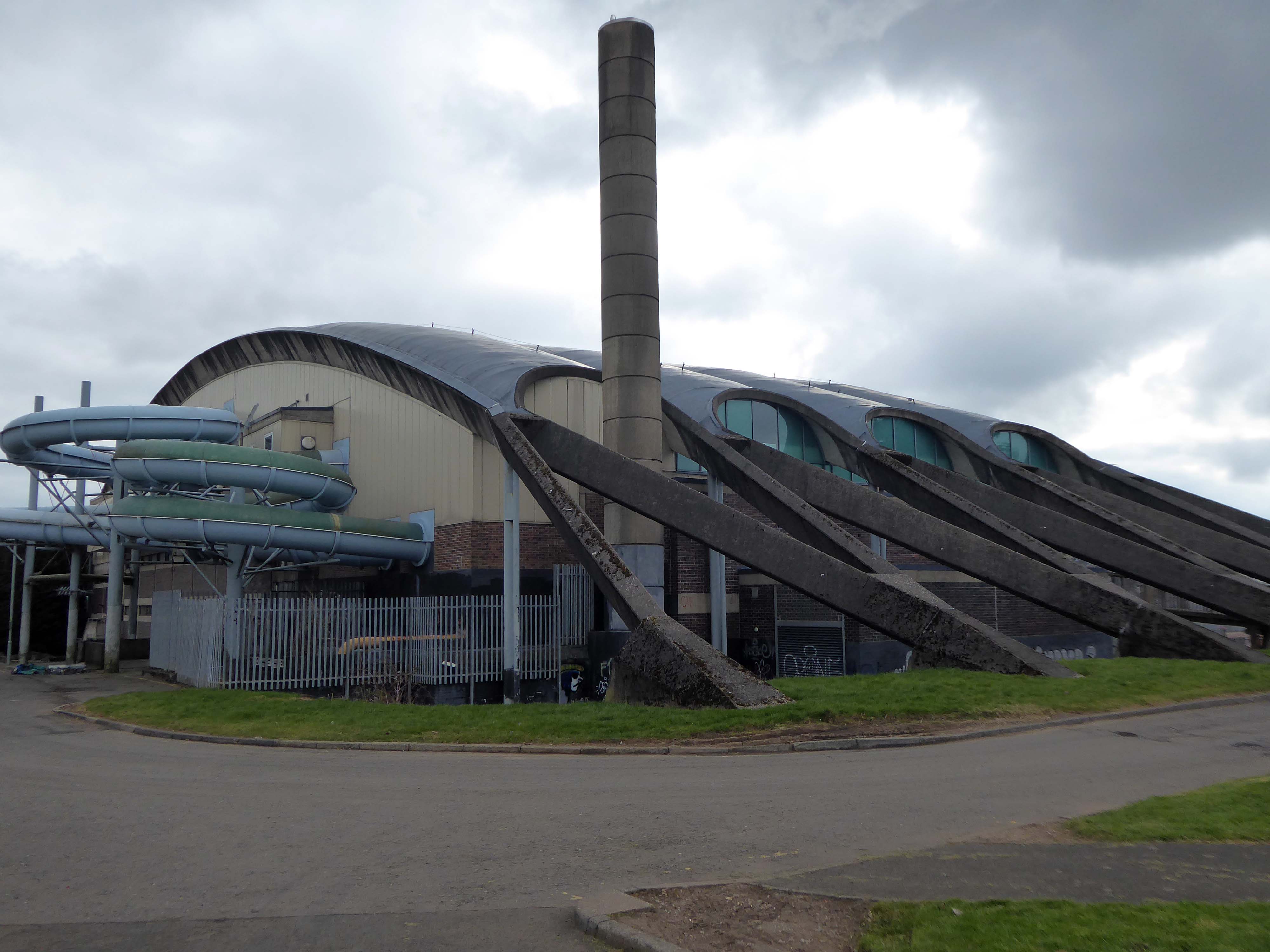
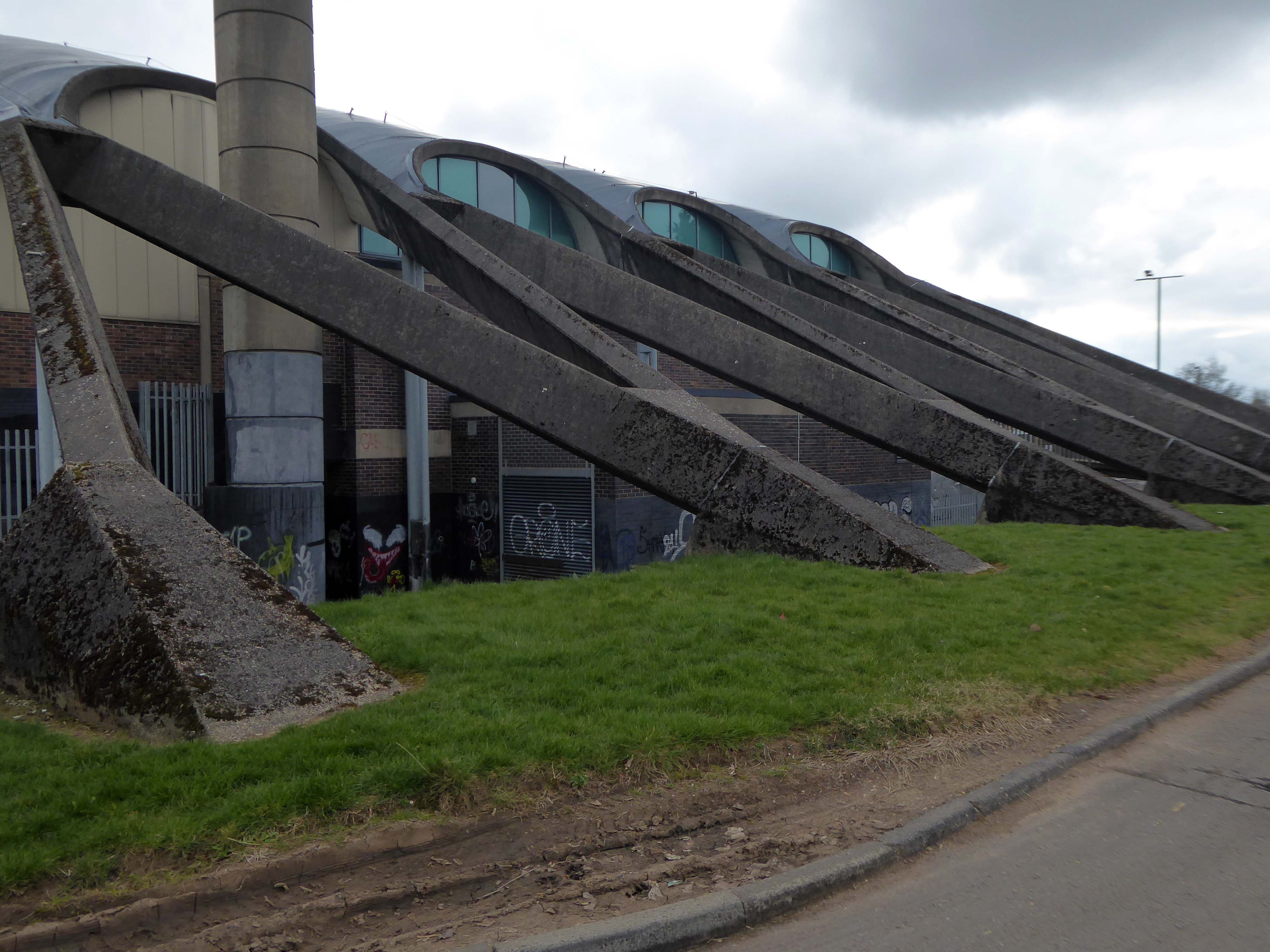
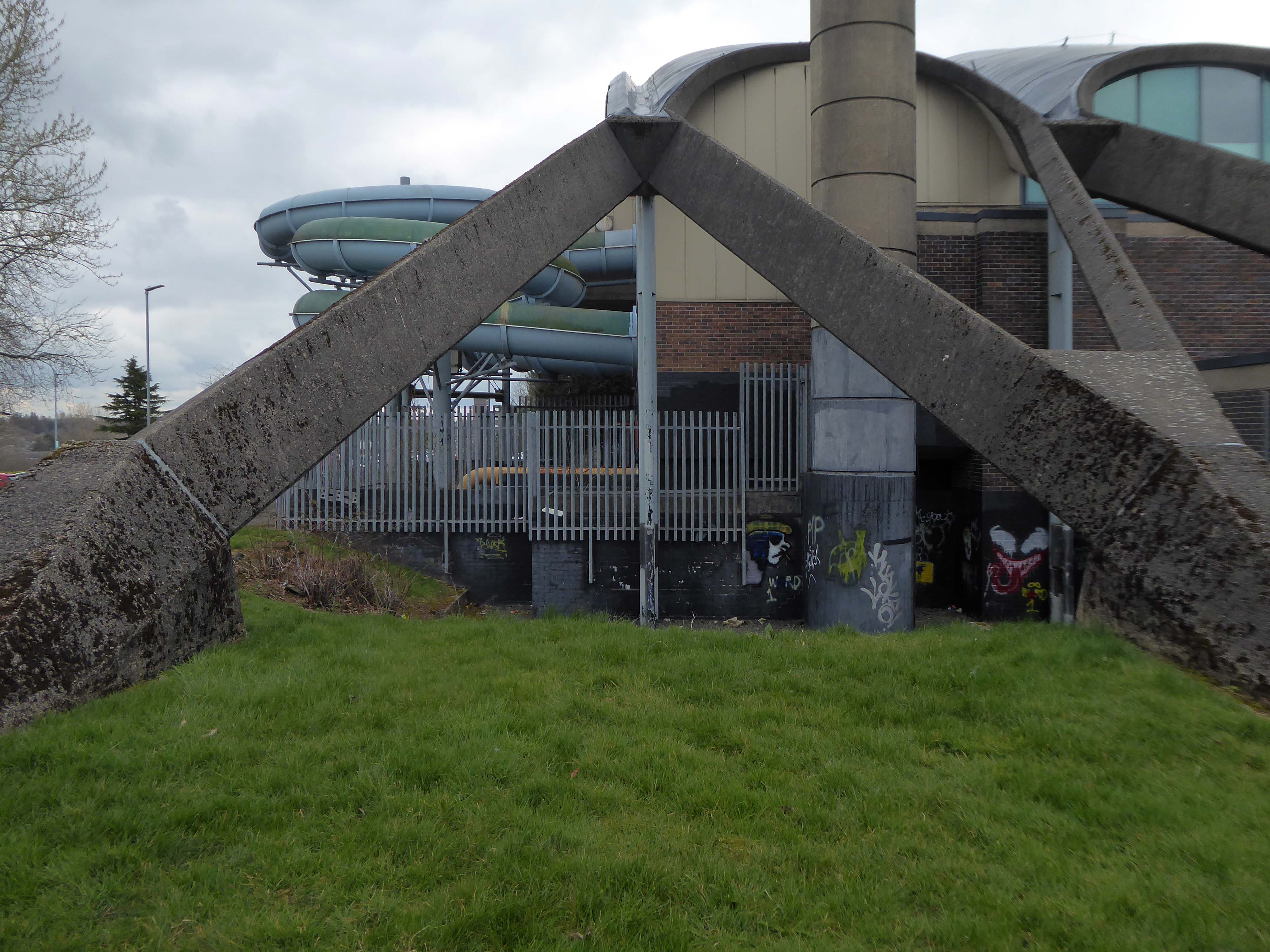
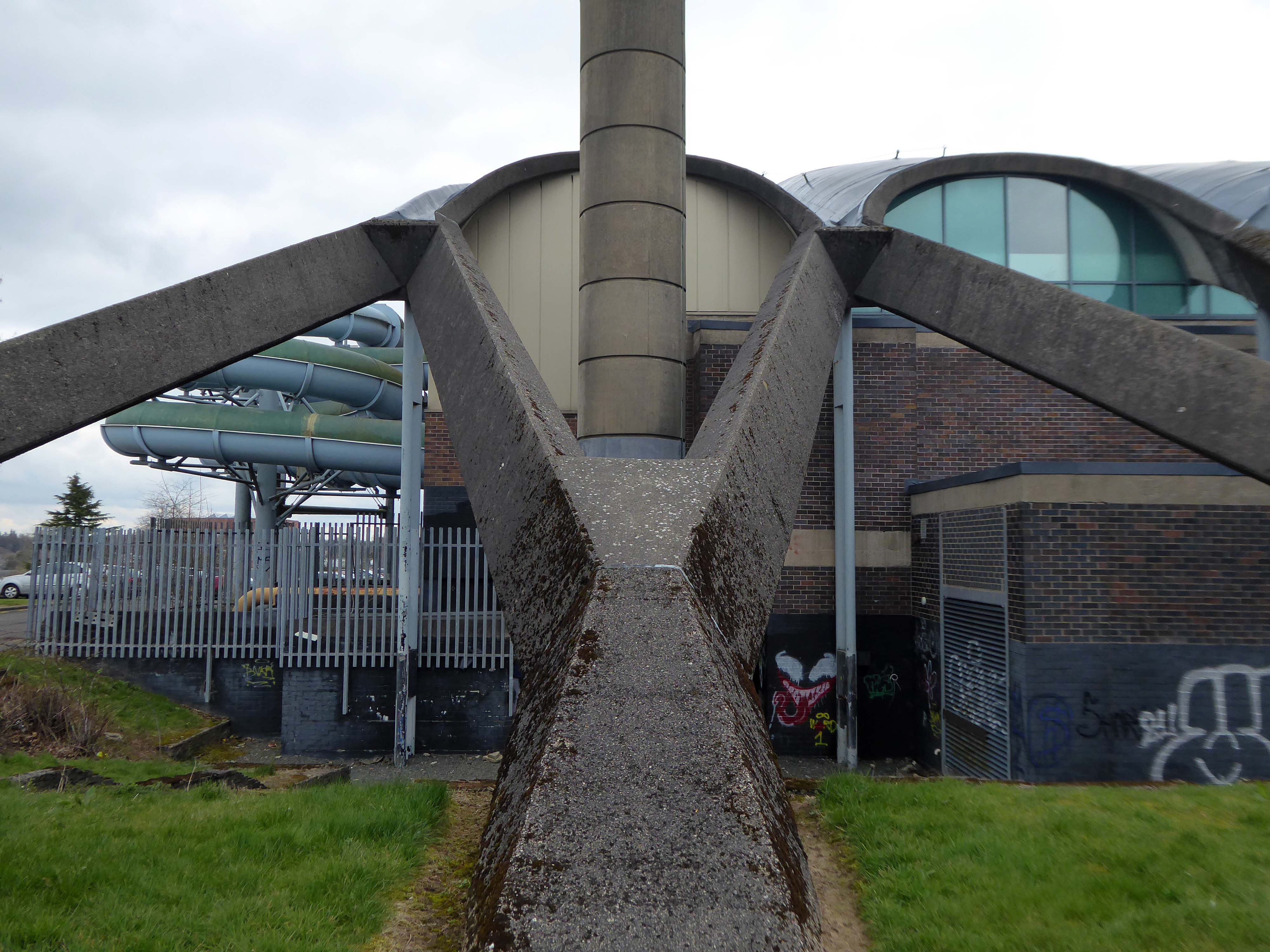

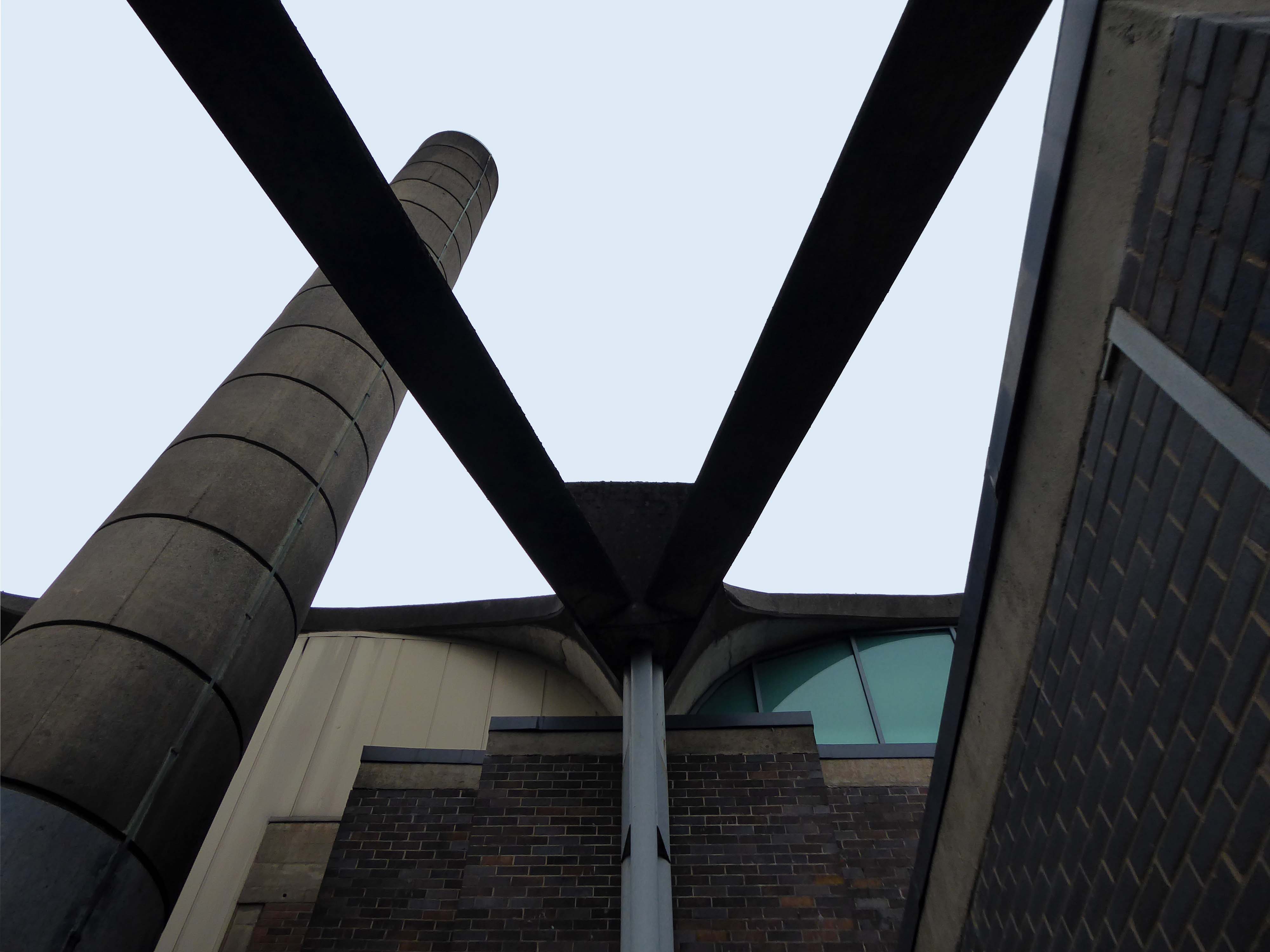
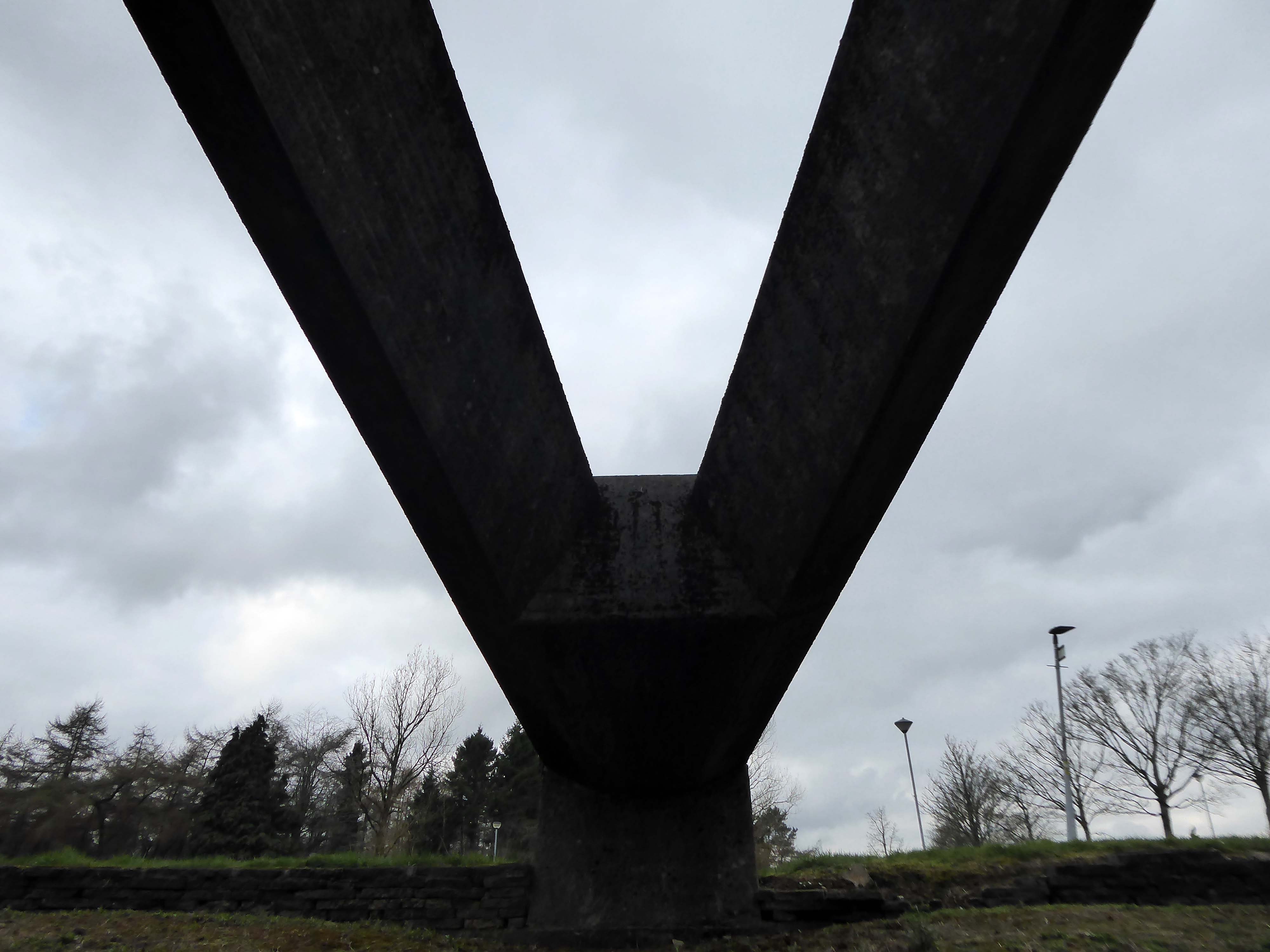
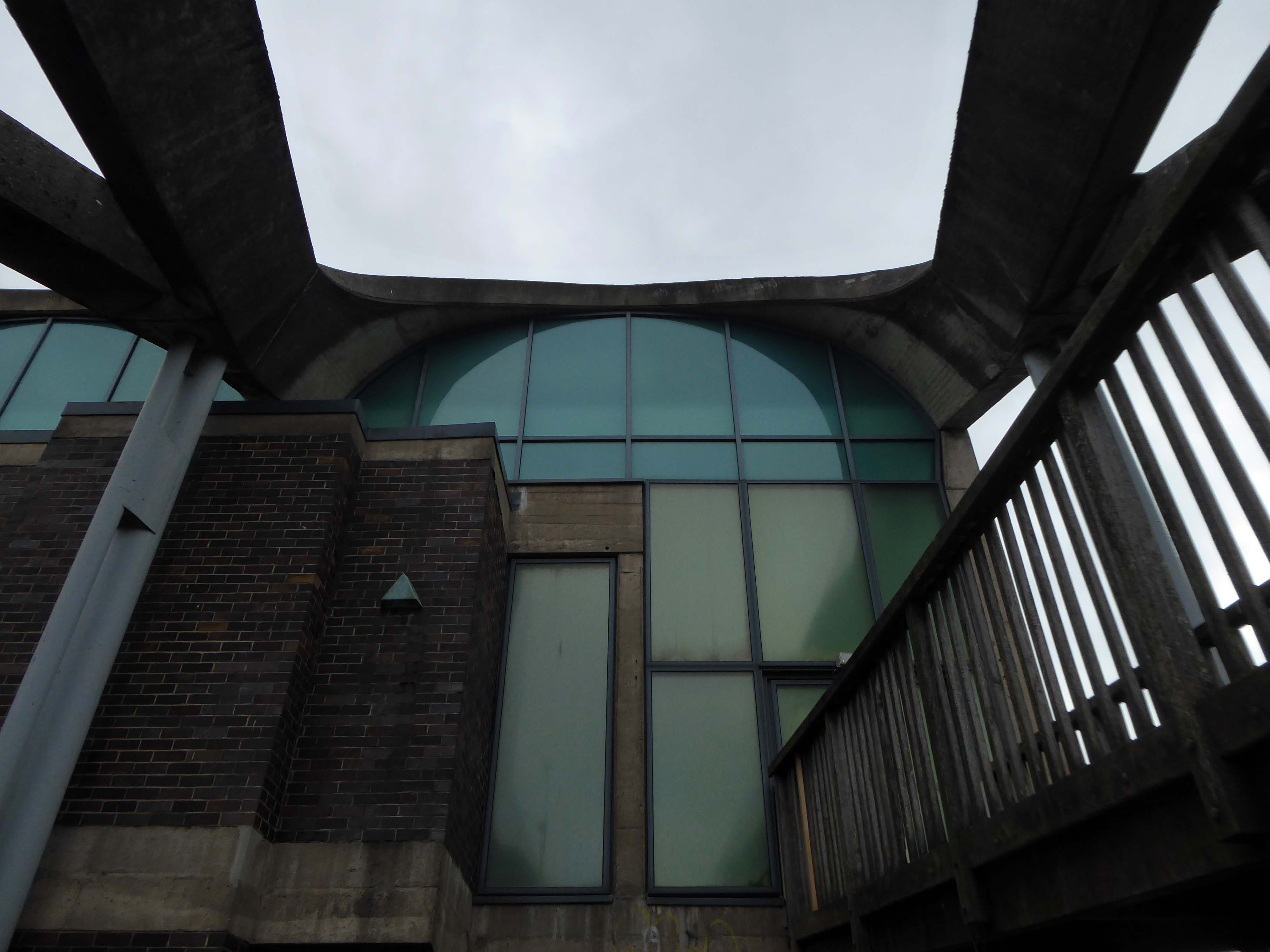
Structural engineering surveys showed that parts of the pool surround and pool tank were in a state of near collapse and emergency work had to be carried out to install temporary structural supports. The centre was closed in October 2008 for major refurbishment, consisting of structural repairs and replacements and the installation of new structural supports. This required a significant amount of structural engineering design input. The structure of the unique roof was not affected.
Substantial redesign and replacement of heating and ventilation and pool water treatment engineering services was carried out. This included new high-efficiency gas-fired boilers, a ventilation system for the swimming pool hall, a combined heat and power system, new water filters, and high-efficiency pumps as part of an upgraded pool water treatment system.
Electrical engineering and lighting systems were almost entirely replaced throughout the building. The external roof covering was replaced and an additional layer of thermal insulation was added to reduce heat loss from the roof and to provide extra protection for the roof structure. New lockers were provided for the changing rooms and the health suite. New tiles were placed for the pool and health suite. The repair work began in July 2009 and the Aqua Centre re-opened on 28 May 2011. The completion of the major repair and refurbishment contract cost over £9 million.
Would that more buildings were saved from the demolition derby.
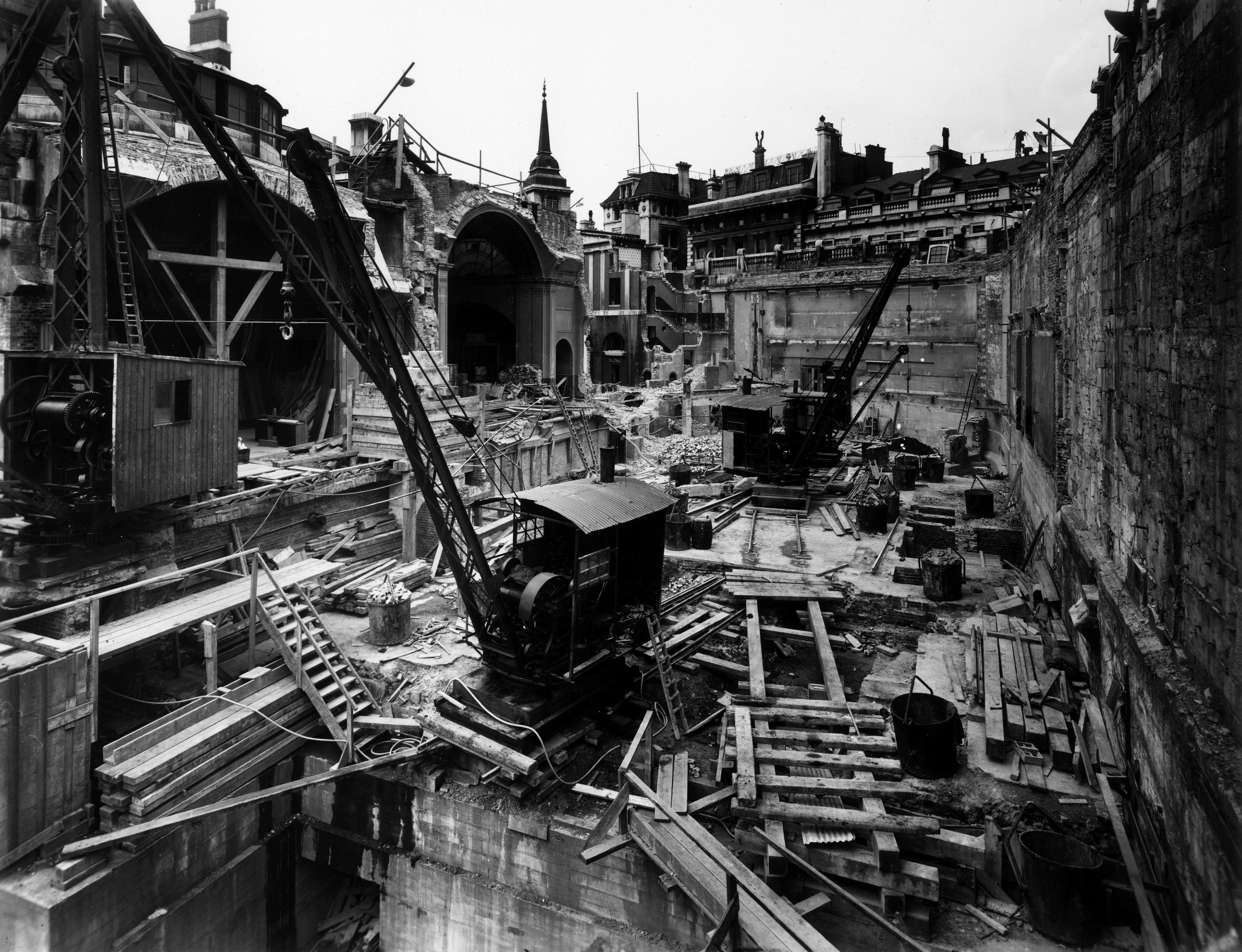
The wrecking ball has always been the great symbol of urban progress, going hand in hand with dynamite and dust clouds as the politicians’ favourite way of showing they are getting things done. But what if we stopping knocking things down? What if every existing building had to be preserved, adapted and reused, and new buildings could only use what materials were already available? Could we continue to make and remake our cities out of what is already there?

I walked from St Bride’s Church, through a valley to East Kilbride Civic Centre
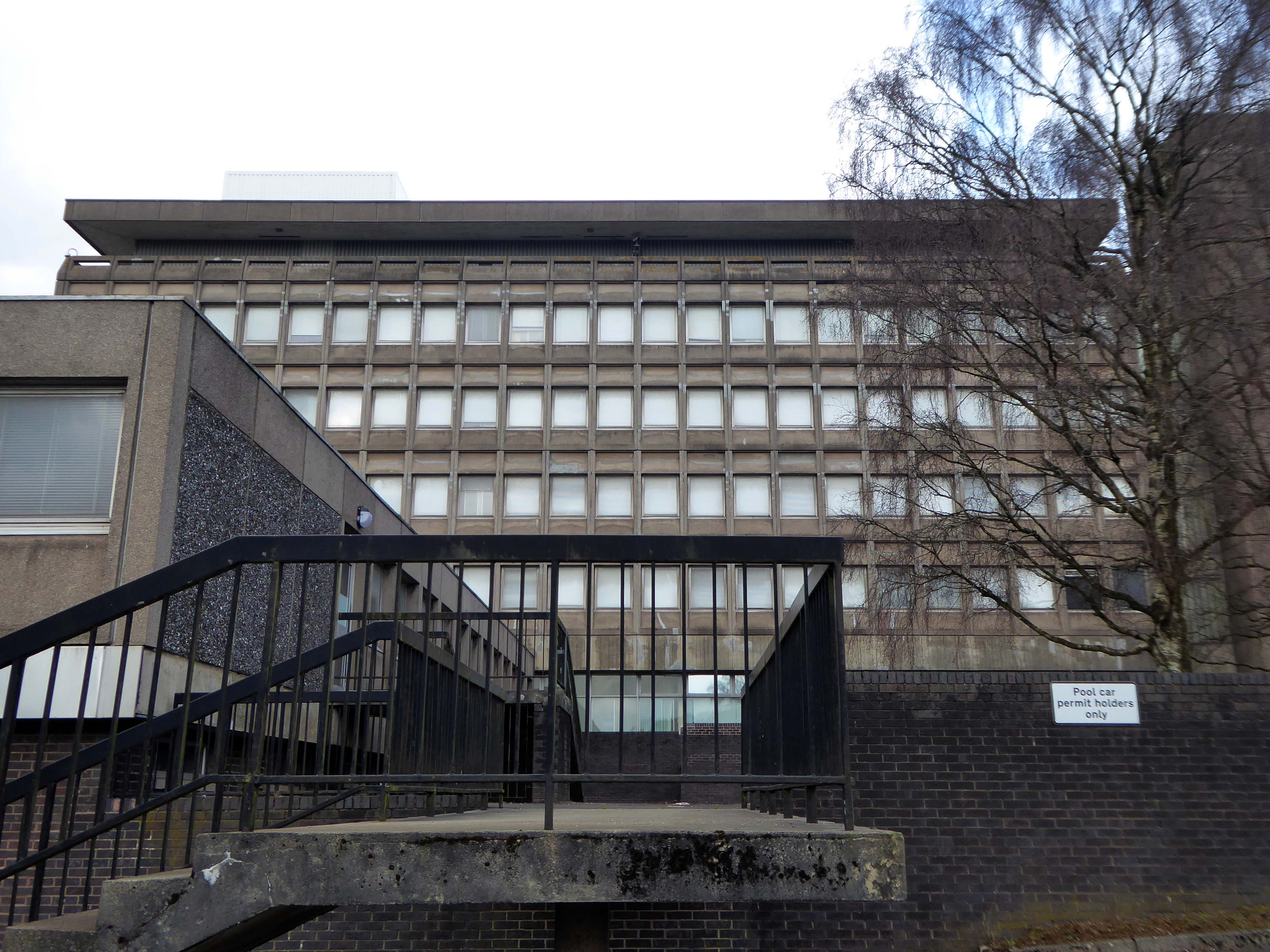
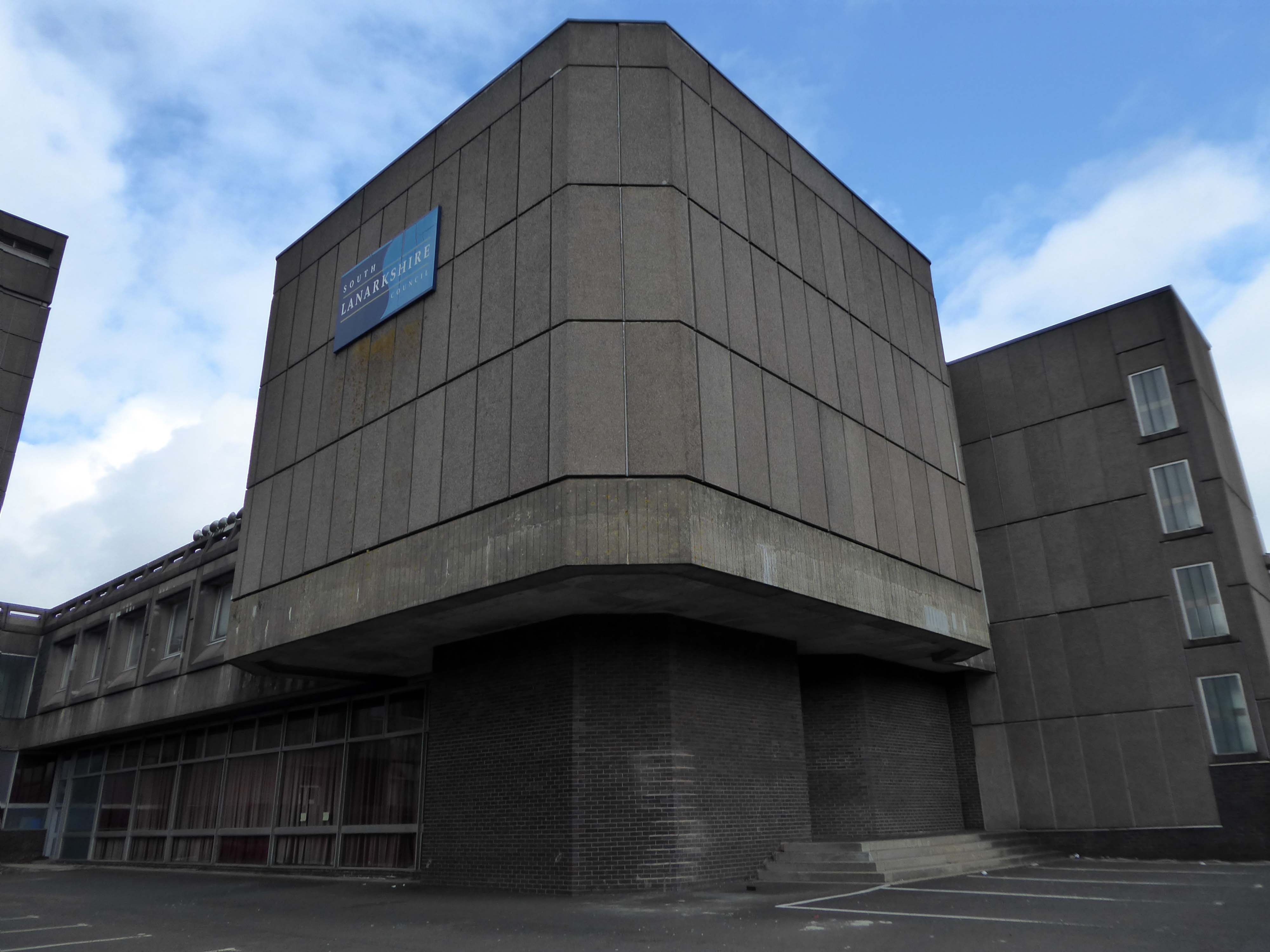
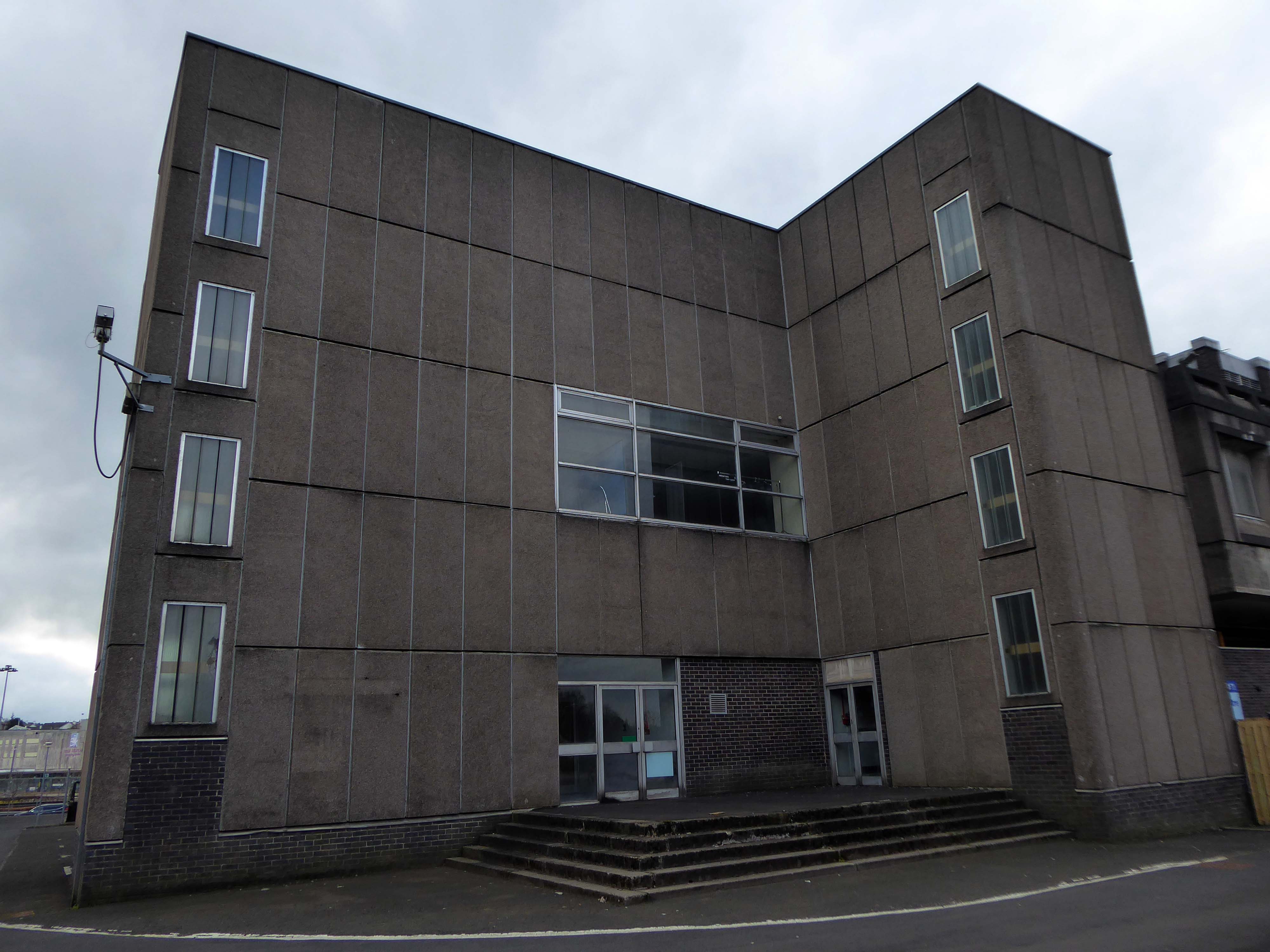
Commissioned by the burgh of East Kilbride, was designed by Scott Fraser & Browning, built by Holland, Hannen & Cubitts and completed in 1966.
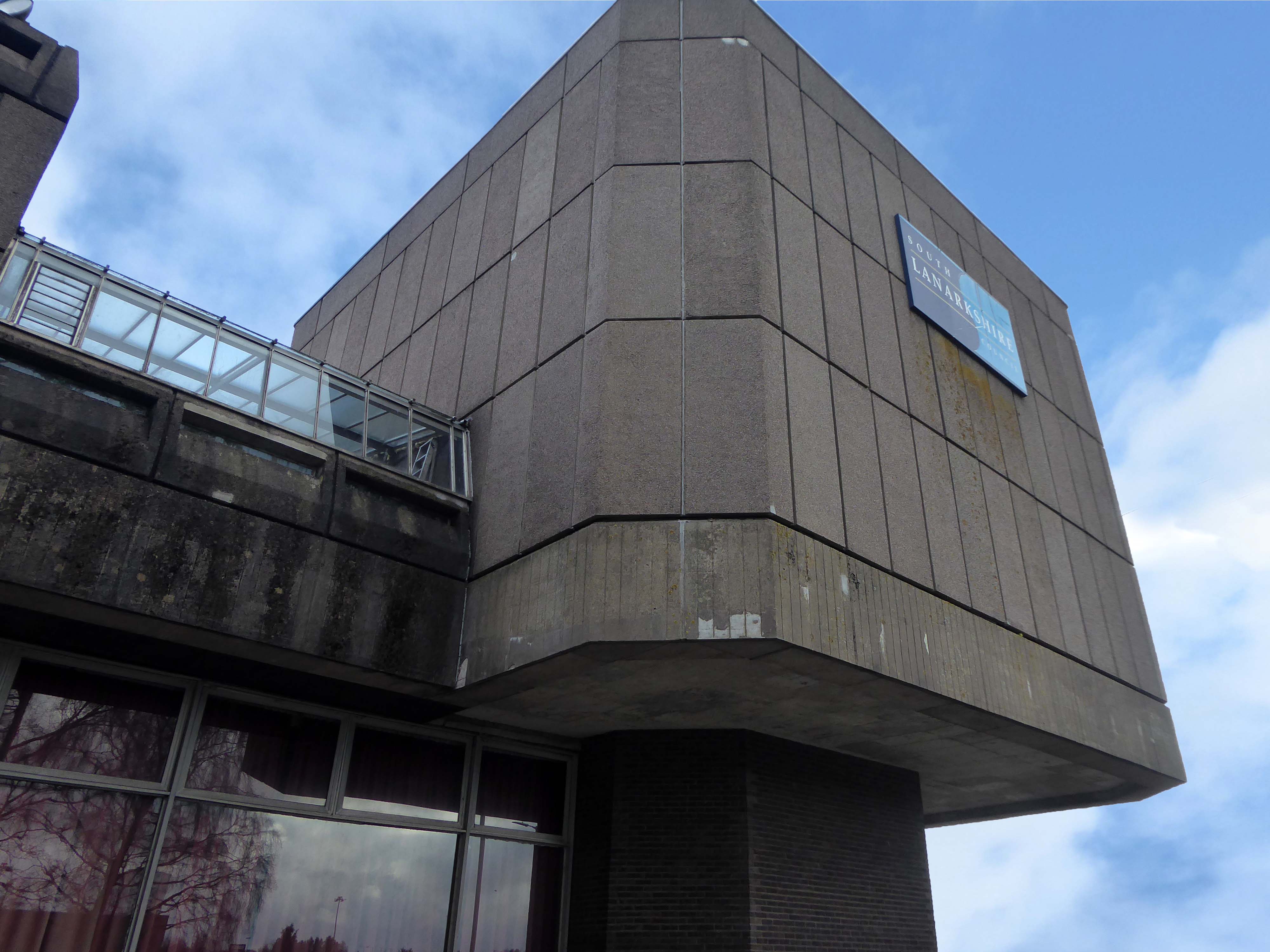
Accommodating Ballerup Hall.
Ballerup Hall is located within East Kilbride Civic Centre and takes its name from its twin town Ballerup, which is near Copenhagen in Denmark. The hall comprises a main hall with stage, kitchen facilities and a bar servery. The adjoining district court room is available after office hours for a limited range of activities.

The stars of British Championship Wrestling return to East Kilbride with a star-studded line up including The Cowboy James Storm and all your favourite BCW Superstars!

I missed the missing link twixt Roddy Frame and the Civic Centre.
If you were lucky enough to catch the 2013 concerts in which Frame marked the 30th anniversary of High Land Hard Rain by playing Aztec Camera’s seminal debut album live, you’ll already have seen Anne’s pictures. Before getting to High Land Hard Rain itself in those shows, Frame treated audiences to a rare set drawn from what he termed his East Kilbride period – the songs he was writing as a teenager that would appear on Aztec Camera’s two Postcard singles, and form the basis of the band’s legendarily unreleased Postcard album, Green Jacket Grey.
While he played those tunes, huge, striking black and white images of his old hometown appeared as a backdrop behind him, setting exactly the right fragile, retro-future new town mood of post-industrial Fahrenheit 451 urban development.
There are plans for redevelopment:
A strategic masterplan for East Kilbride town centre which could see a new purpose-built civic facility is to be put before the council next month.
Last March we told how radical new plans could see the crumbling Civic Centre replaced with – a new front door to East Kilbride.
Despite there being no specific proposals agreed at this stage, South Lanarkshire Council has confirmed that agents of the owners are set to present their strategic masterplan to elected members in February.
It currently sits by the shopping centre and a patch of empty ground.
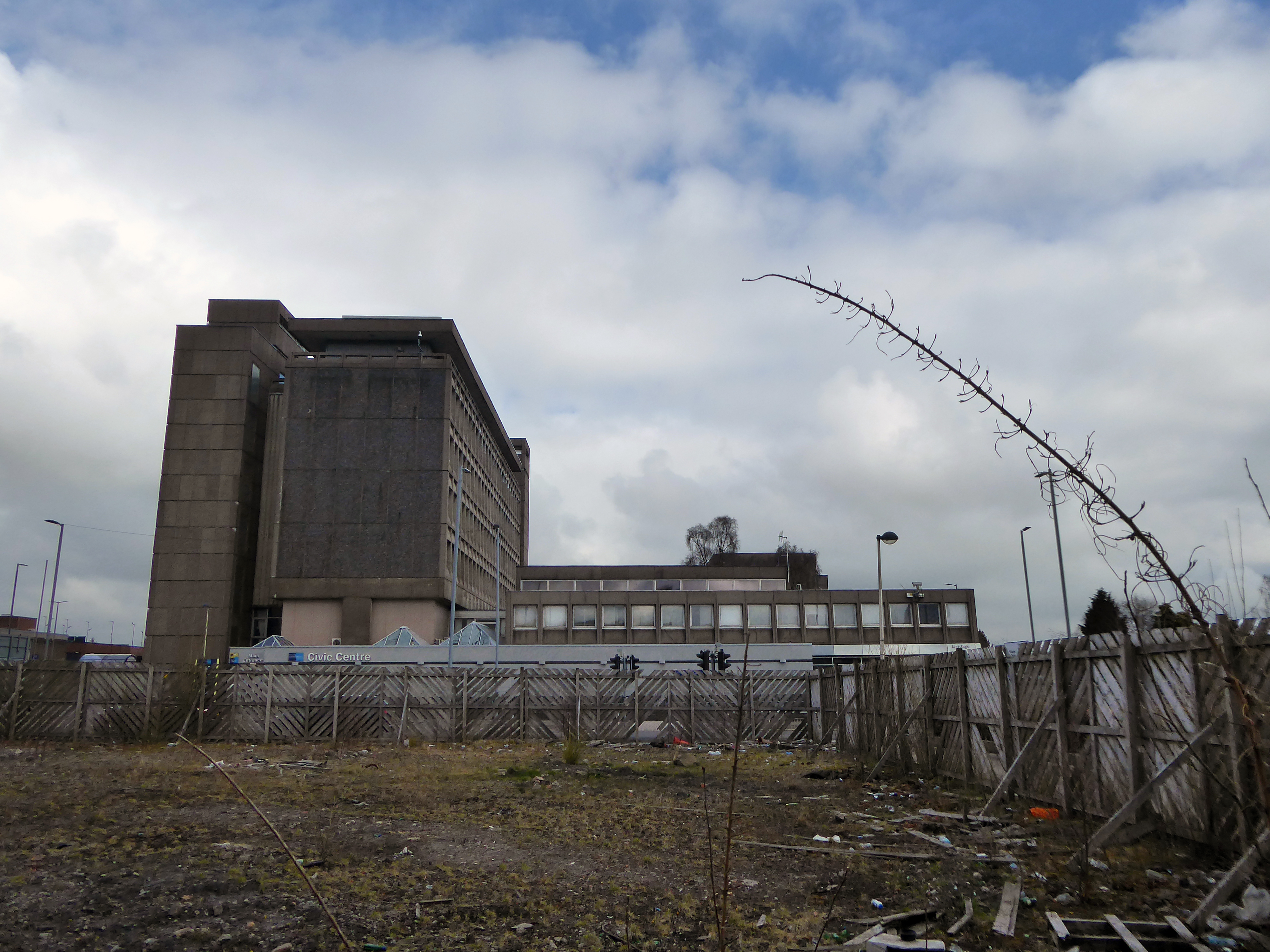
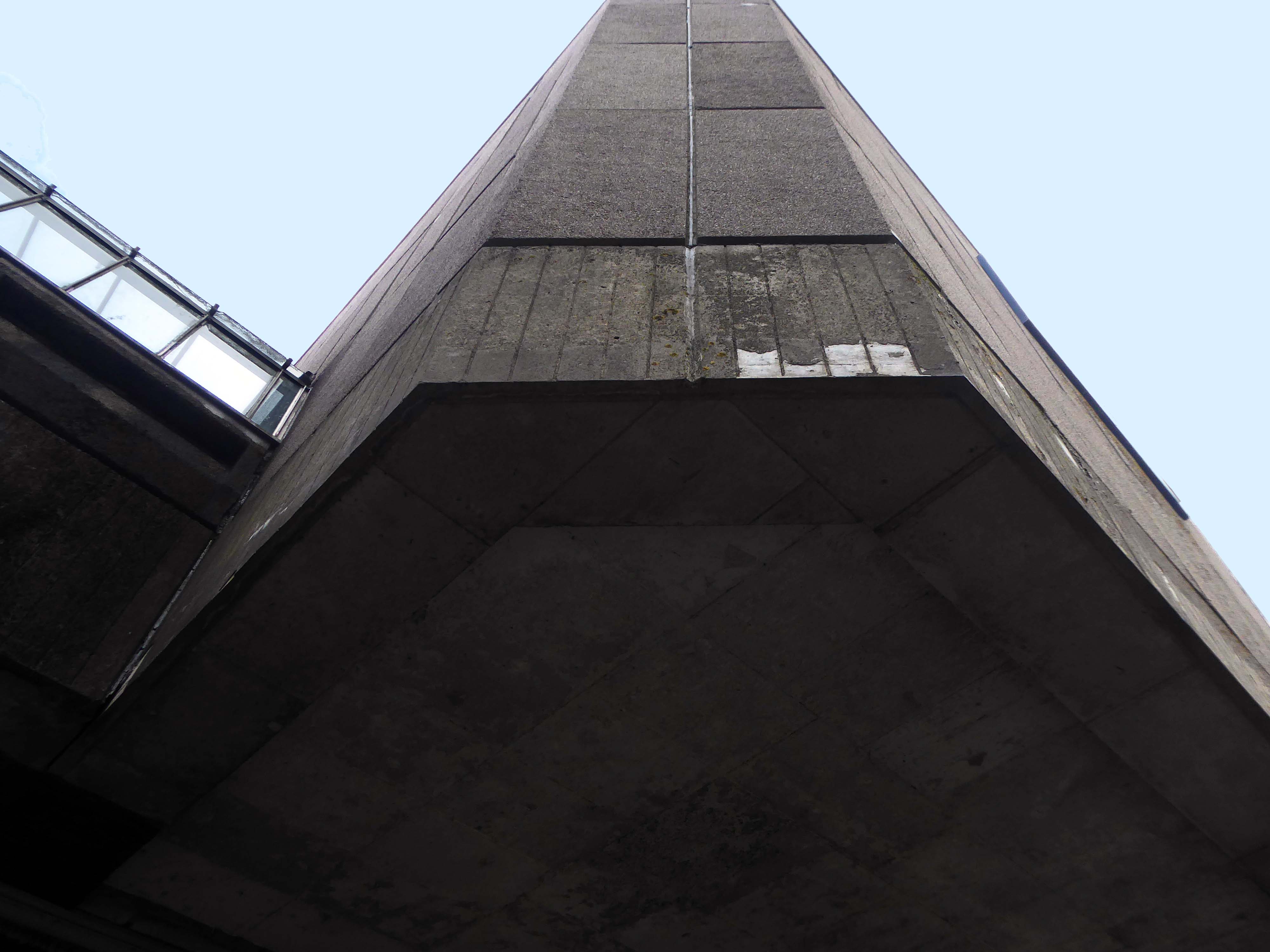
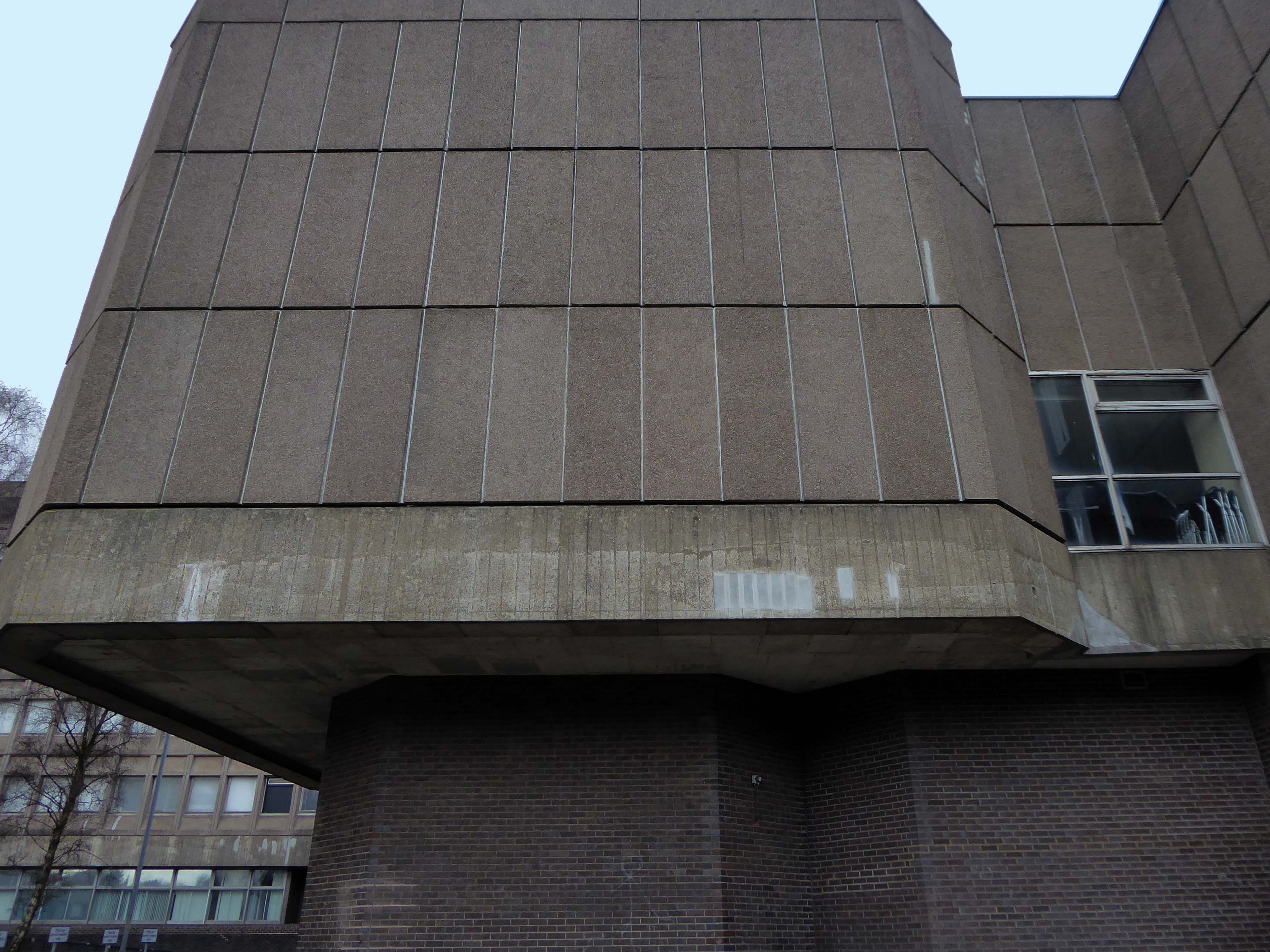
Several imposing interlocking volumes, formed by pre-cast concrete panels.
East Kilbride was the first new town built in Scotland in 1947. New Town designation was a pragmatic attempt to soak up some of the population from an overcrowded and war ravaged Glasgow. Its design was indeed an anathema to the chaotic and sprawling Glasgow: clean straight lines, modern accessible public spaces; and footways, bridges and underpasses built with the pedestrian in mind. It was designed as a self contained community — with industry, shops, recreation facilities and accommodation all within a planned geographic area.
On a quiet Saturday morning in April, approaching through an underpass or two, I arrived at the shopping centre.
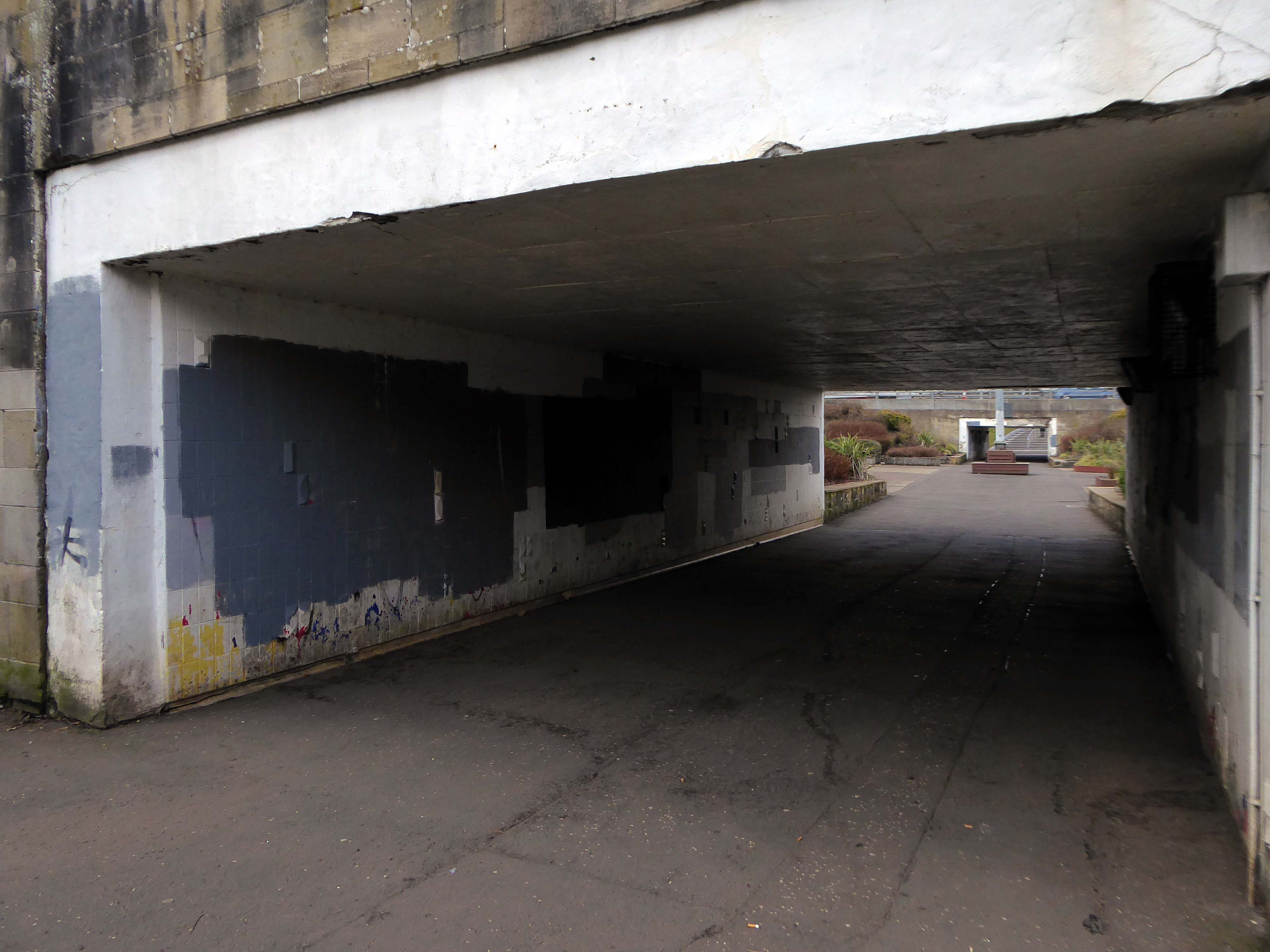
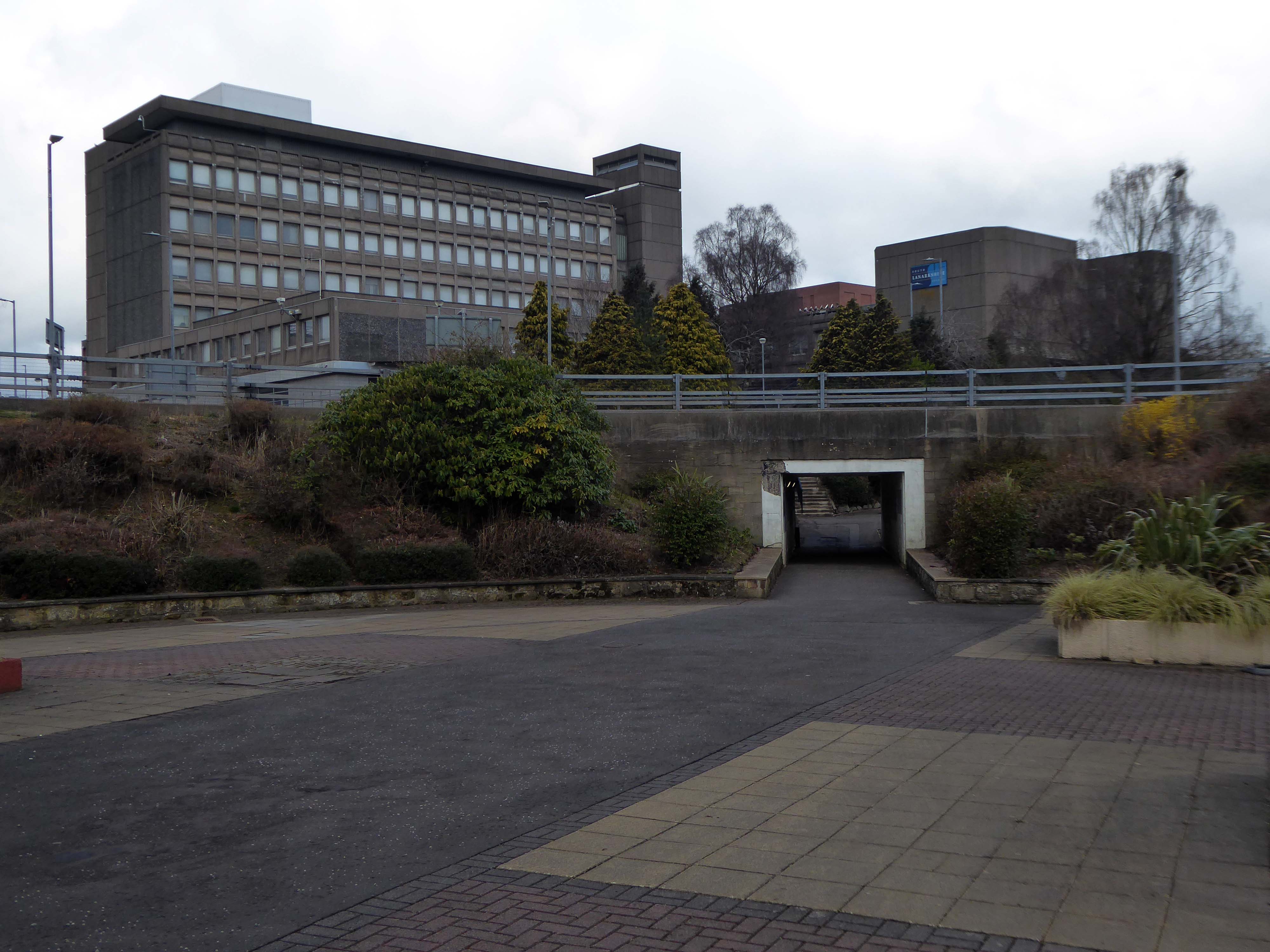
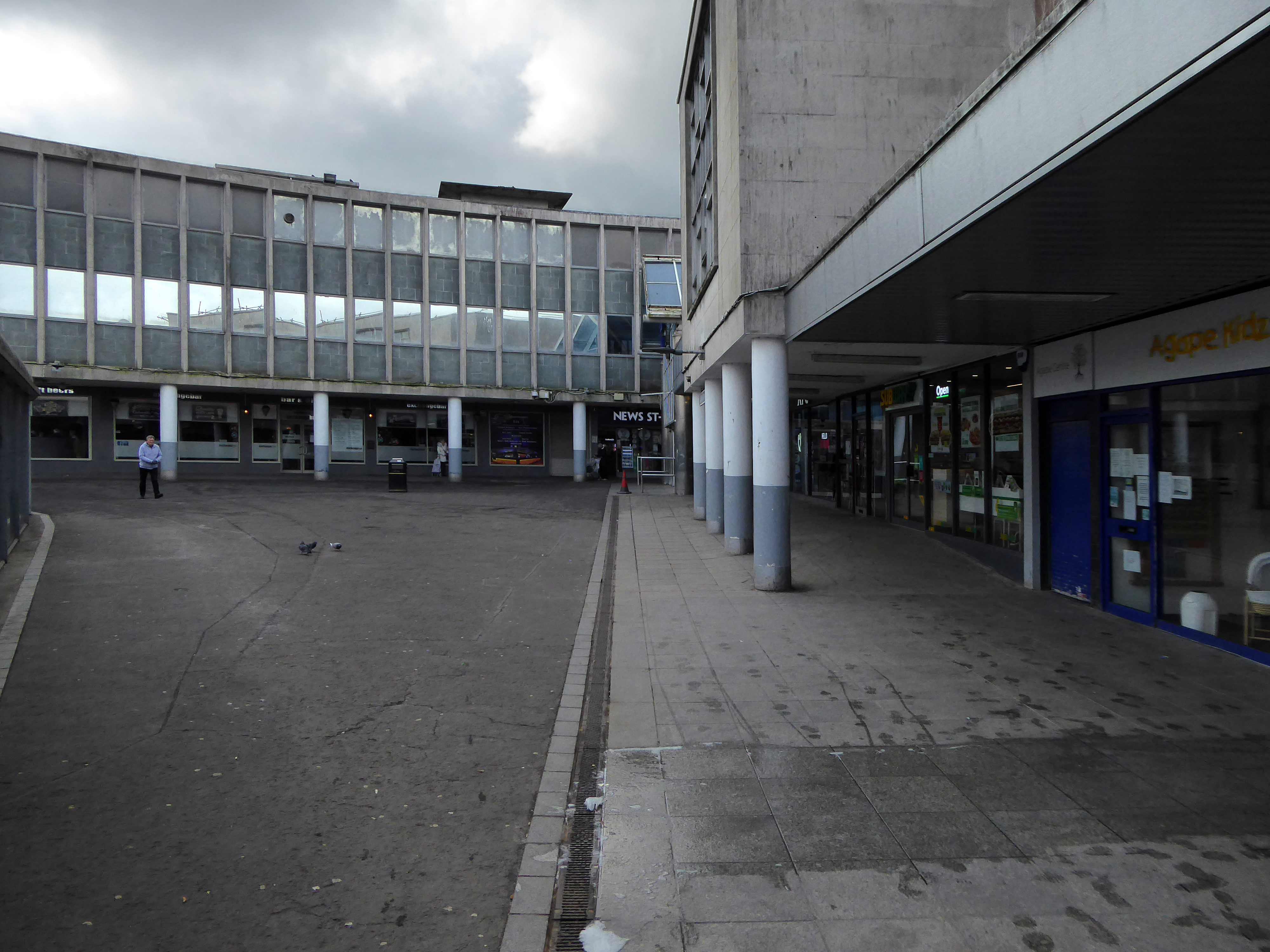
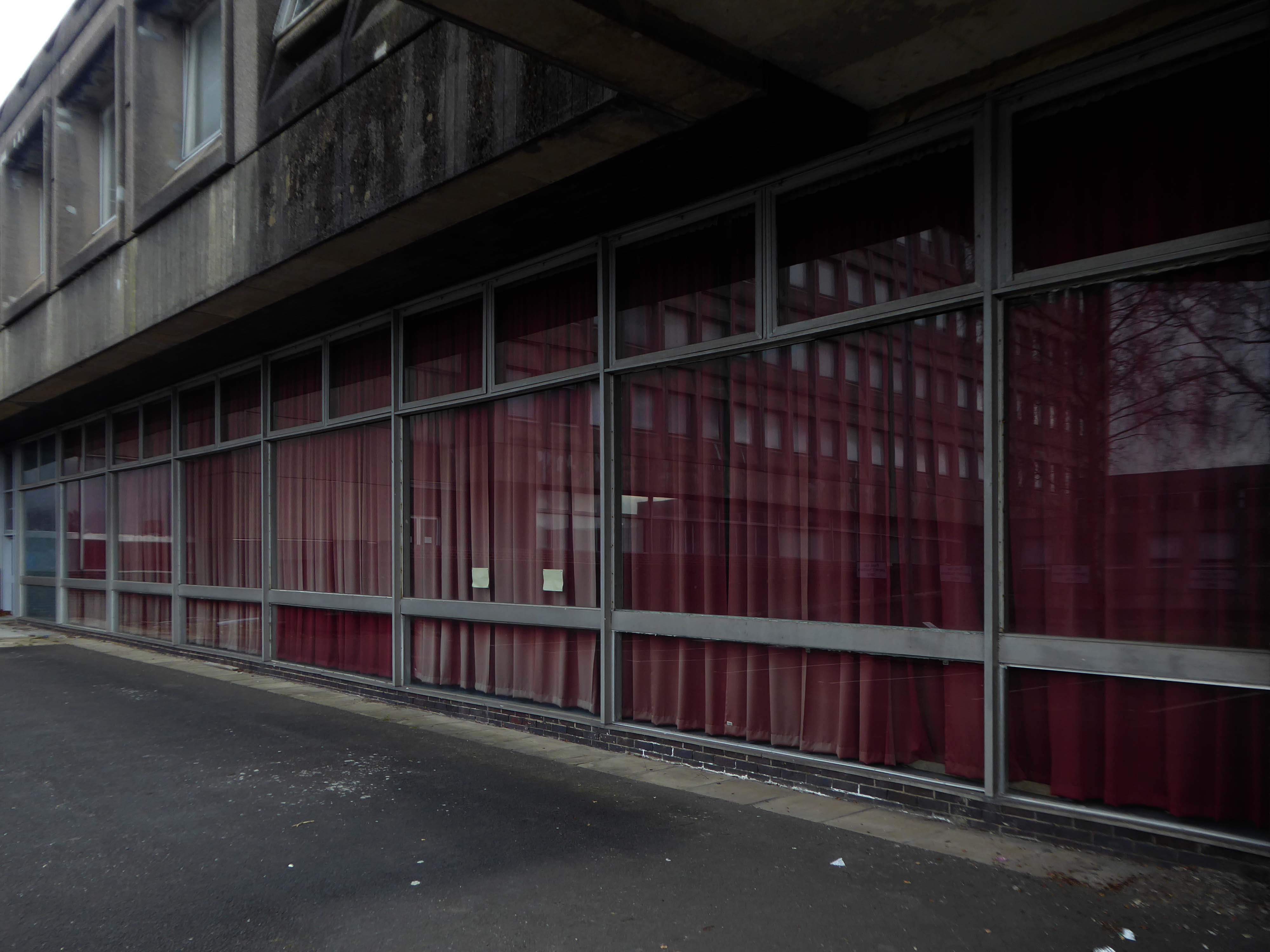
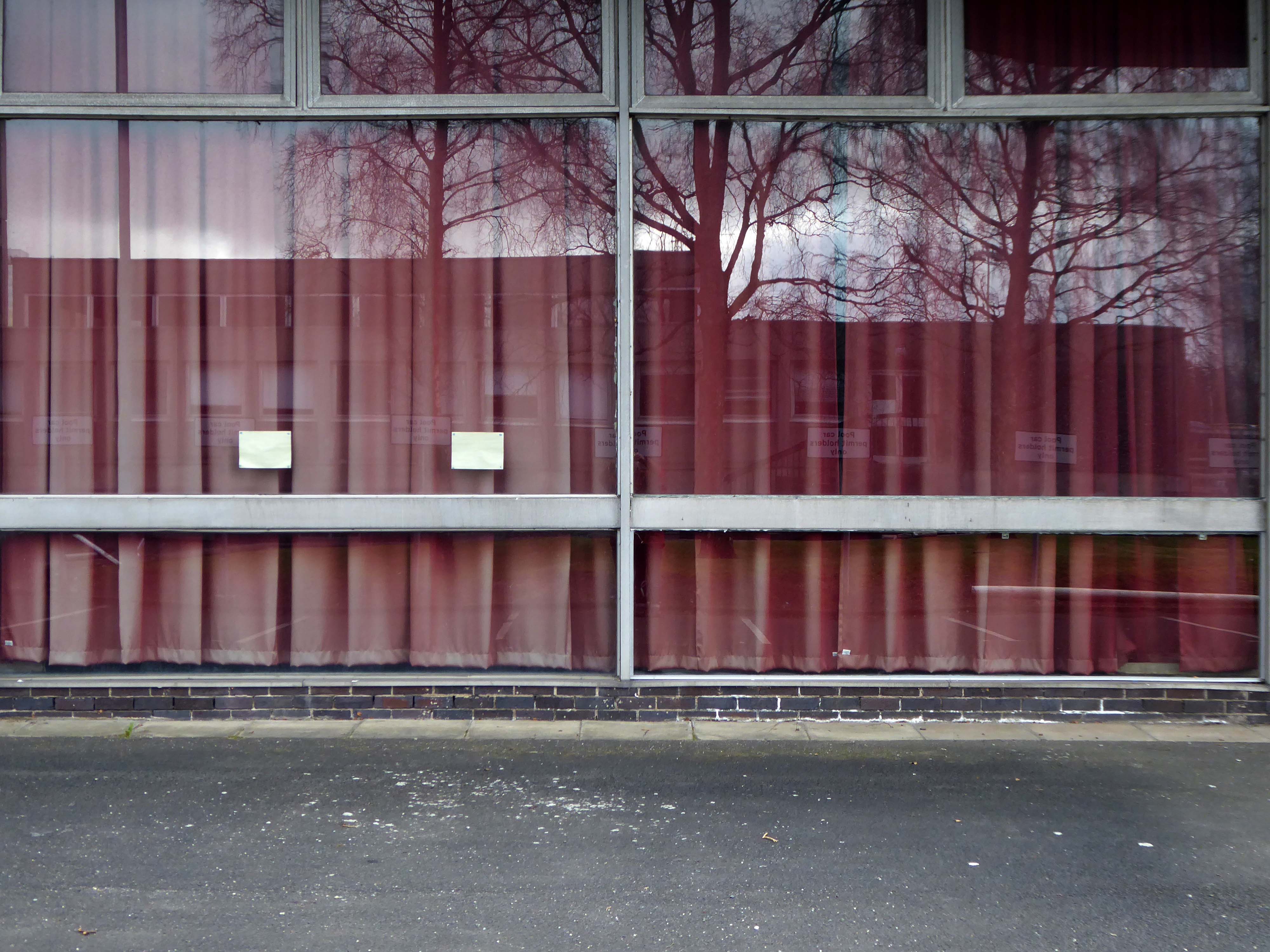
Then circumnavigated the Civic Centre.
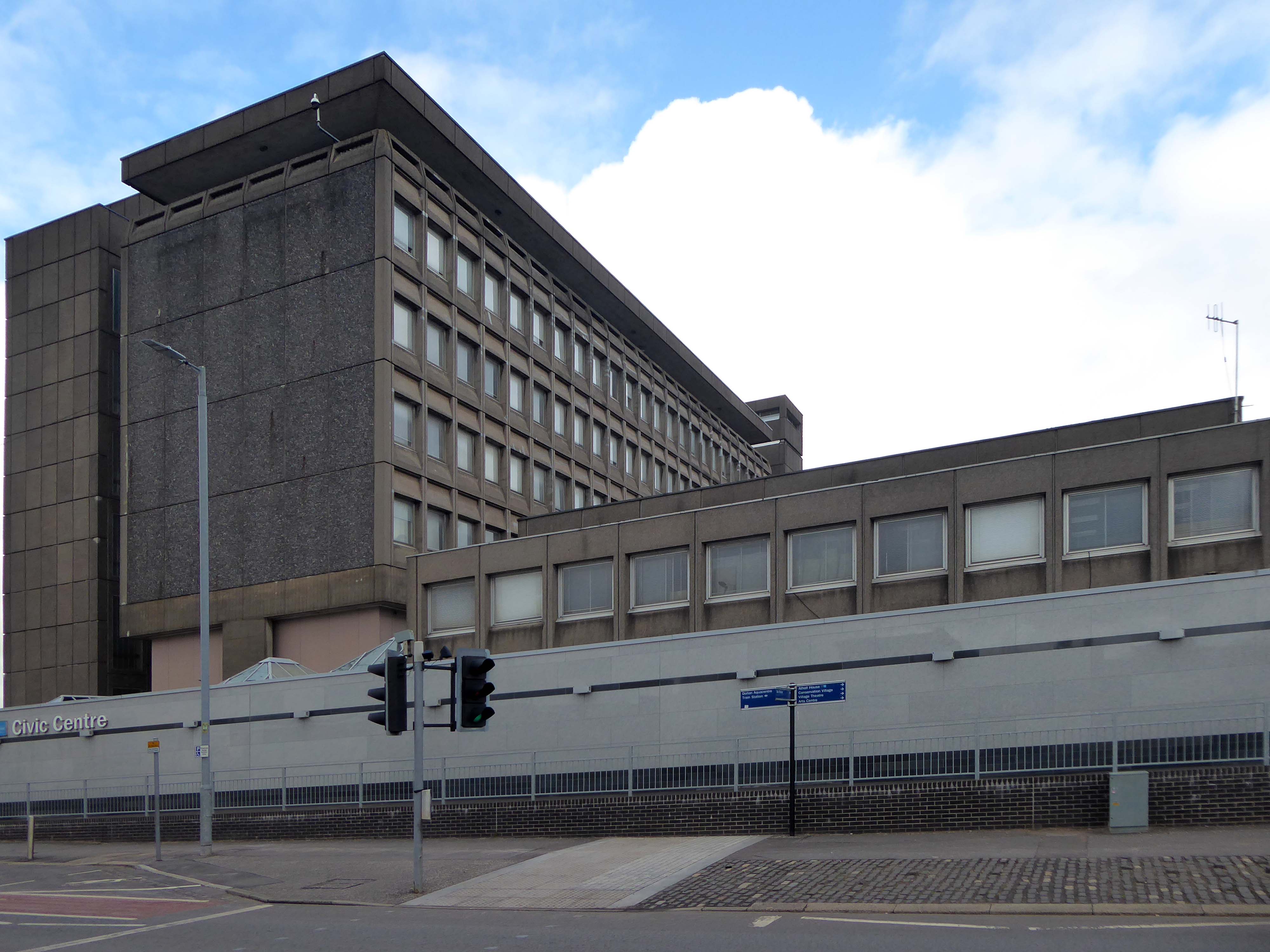

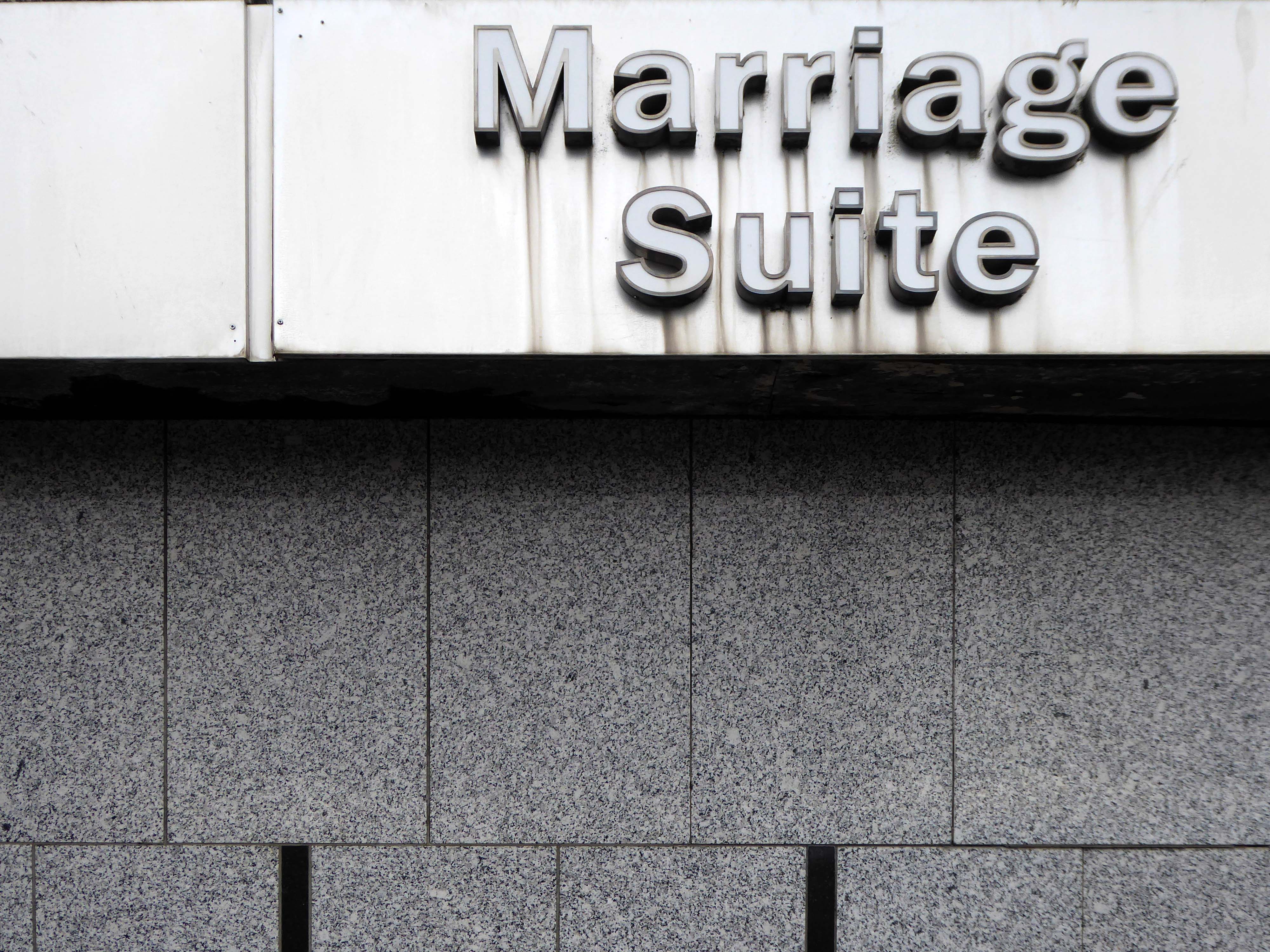
The cost of getting married in East Kilbride will rise by up to 39 per cent.
Couples currently pay £217 for a council official to carry out their service on a Saturday – this will increase to £250.
On Fridays, the next most popular day, the cost will rise to £120 from £87.50.
Getting married Monday to Thursday still represents the best value, but the rise from £72 to £100 represents the highest in percentage terms.




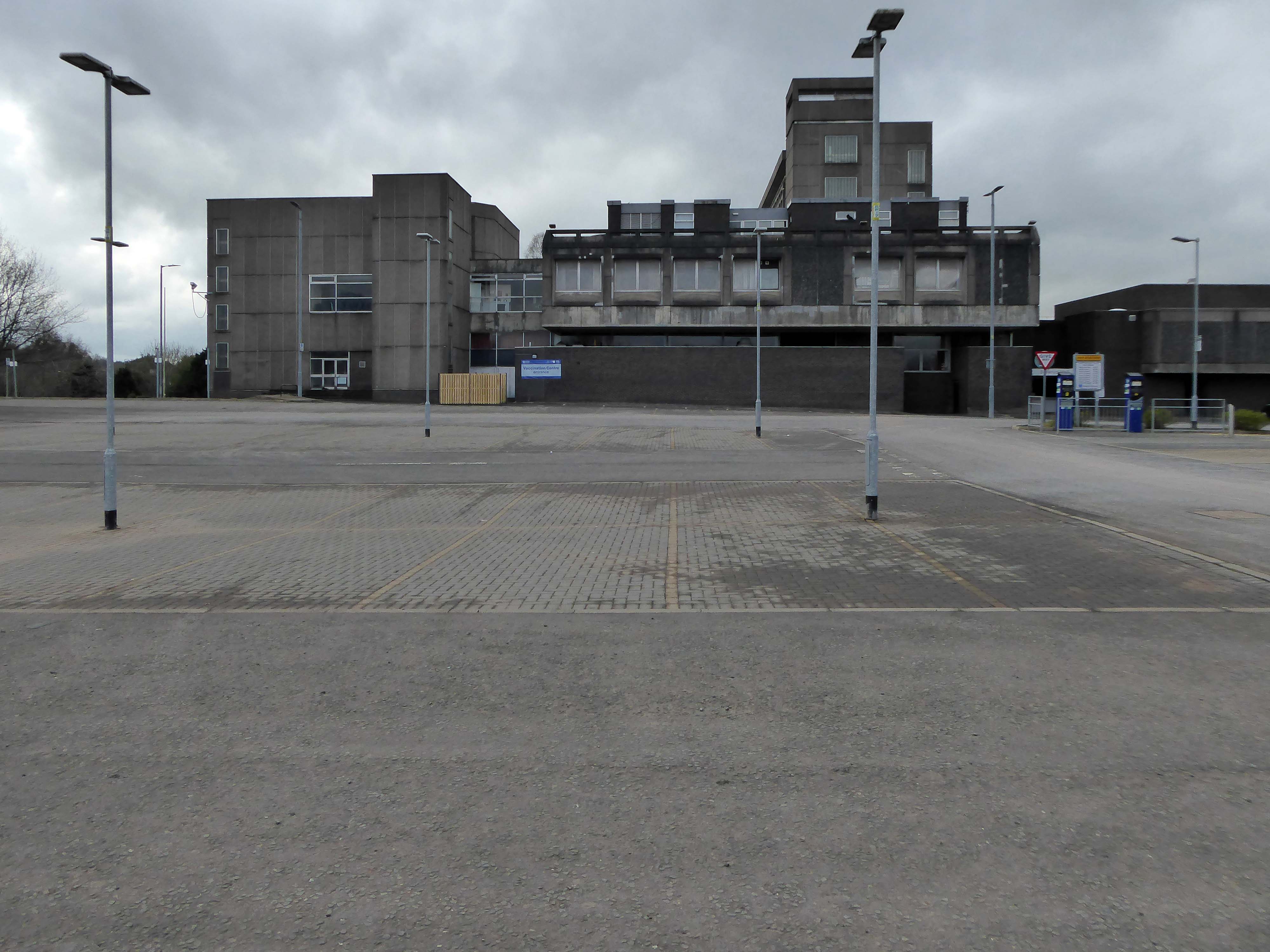

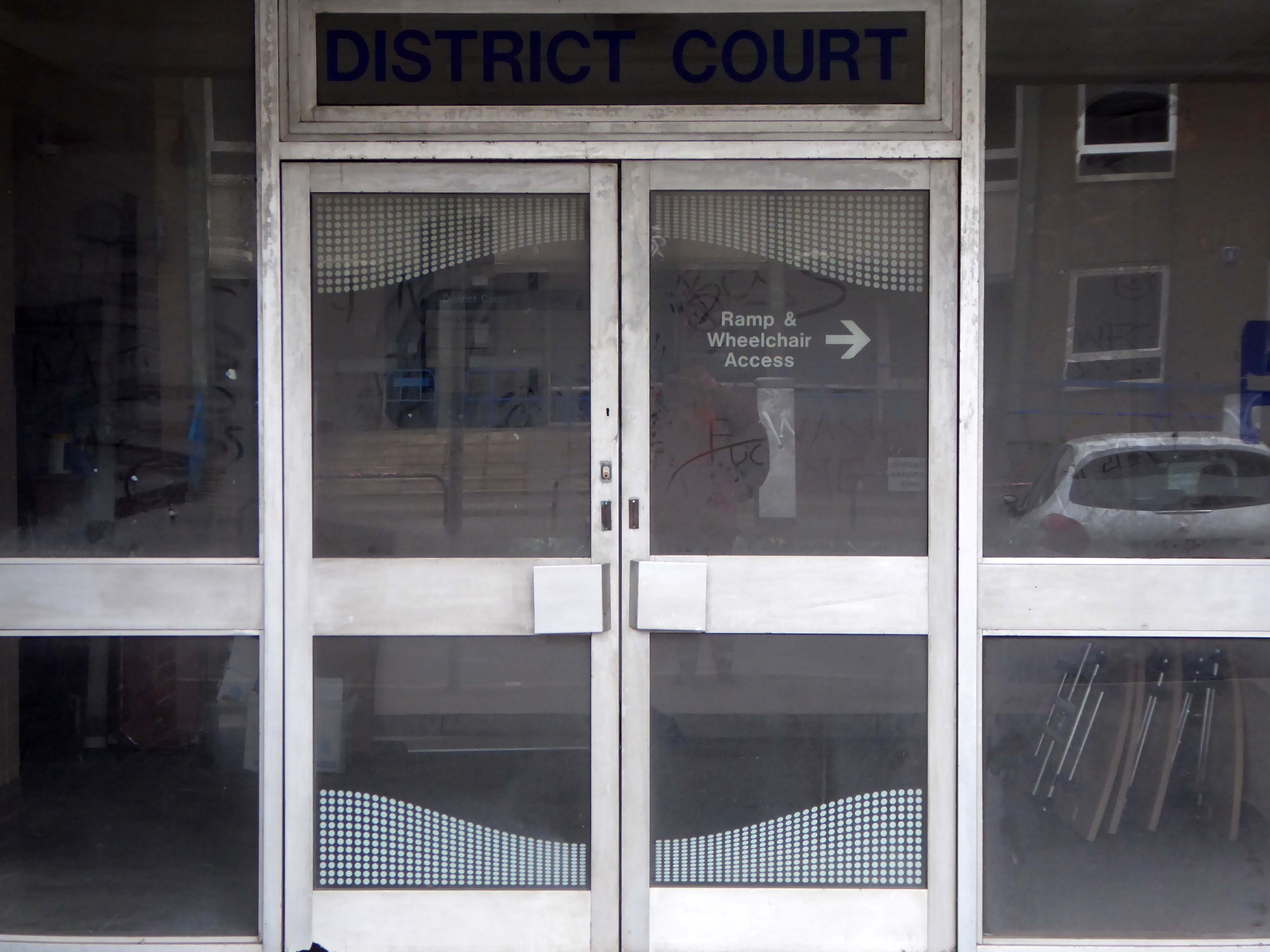
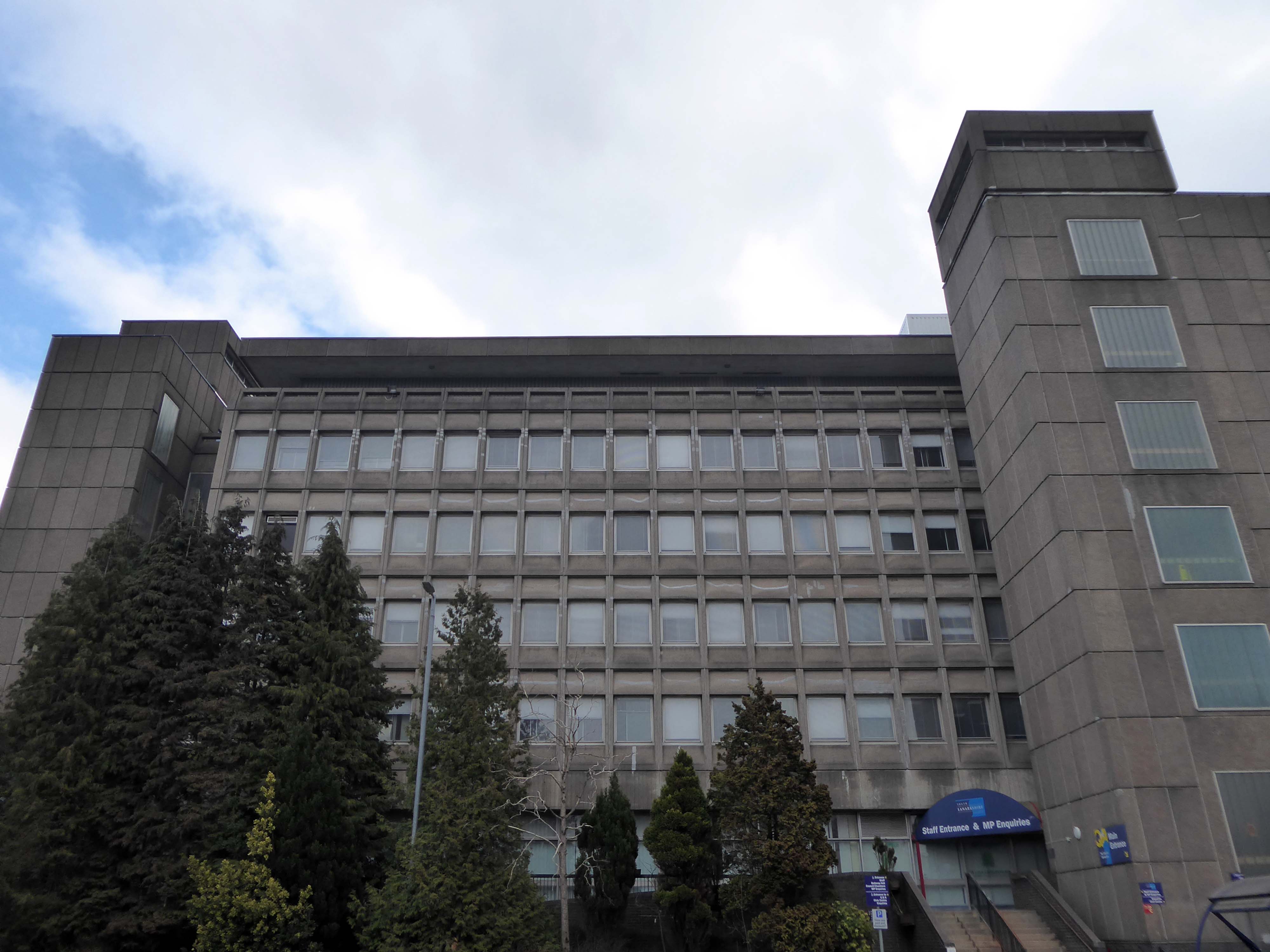

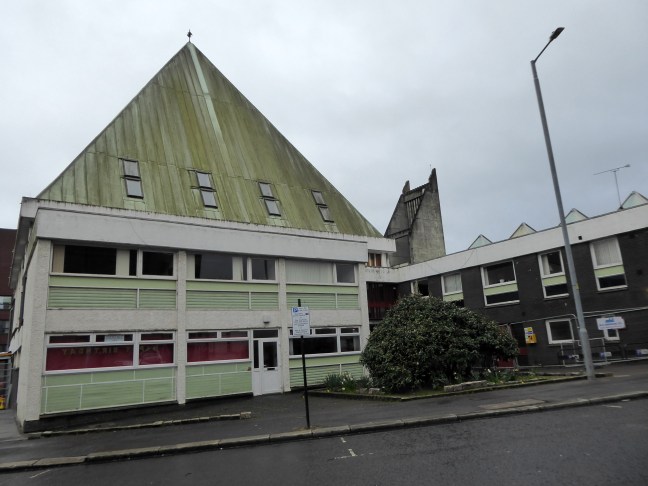
759 Argyle Street Glasgow G3 8DS
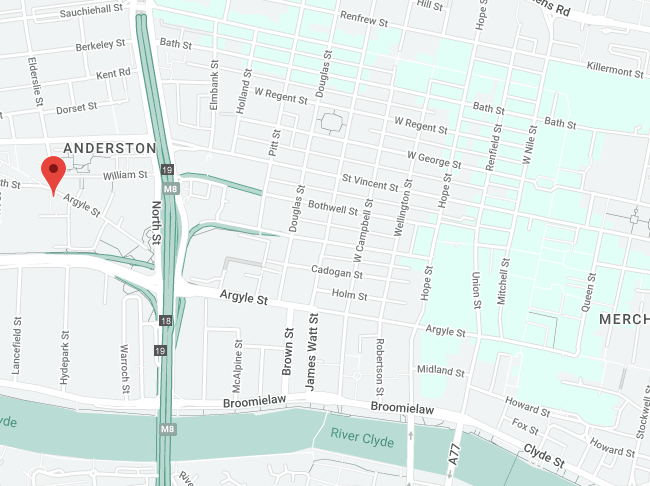
Architects: Honeyman, Jack & Robertson
I was walking along St Vincent Street one rainy day.
From the corner of my left eye, I espied a pyramid.
Curious, I took a turn, neither funny nor for the worse, the better to take a closer look.
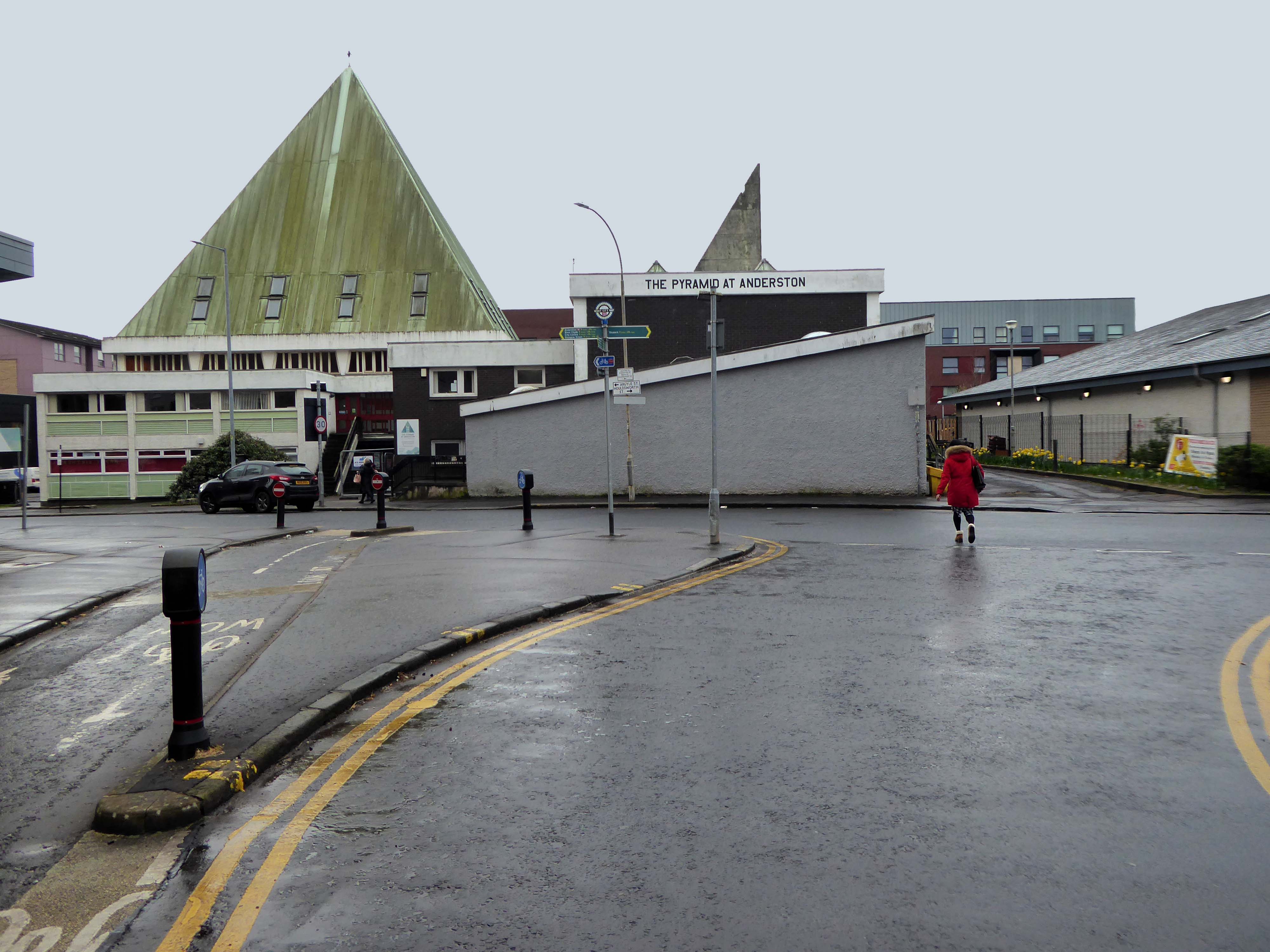
Following a promotion within the Church of Scotland to construct less hierarchical church buildings in the 1950s, an open-plan Modern design with Brutalist traits, was adapted for the new Anderson Parish Church. The building consists of a 2-storey square-plan church with prominent pyramidal roof, with over 20 rooms. The foundation stone was laid in 1966, with a service of commemoration in the now demolished St Mark’s-Lancefield Church. The building was completed in 1968.
Let’s take a look around outside.
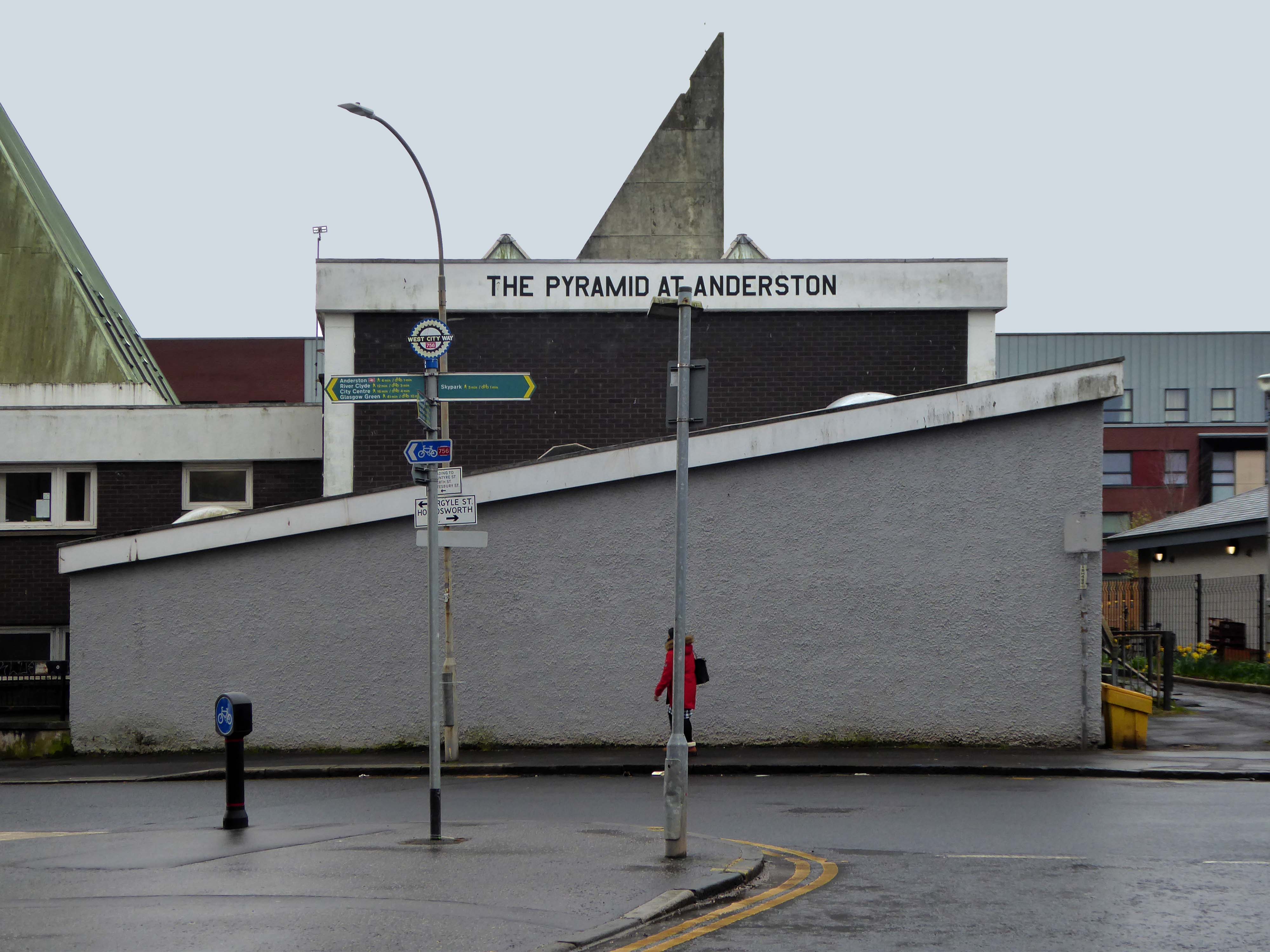
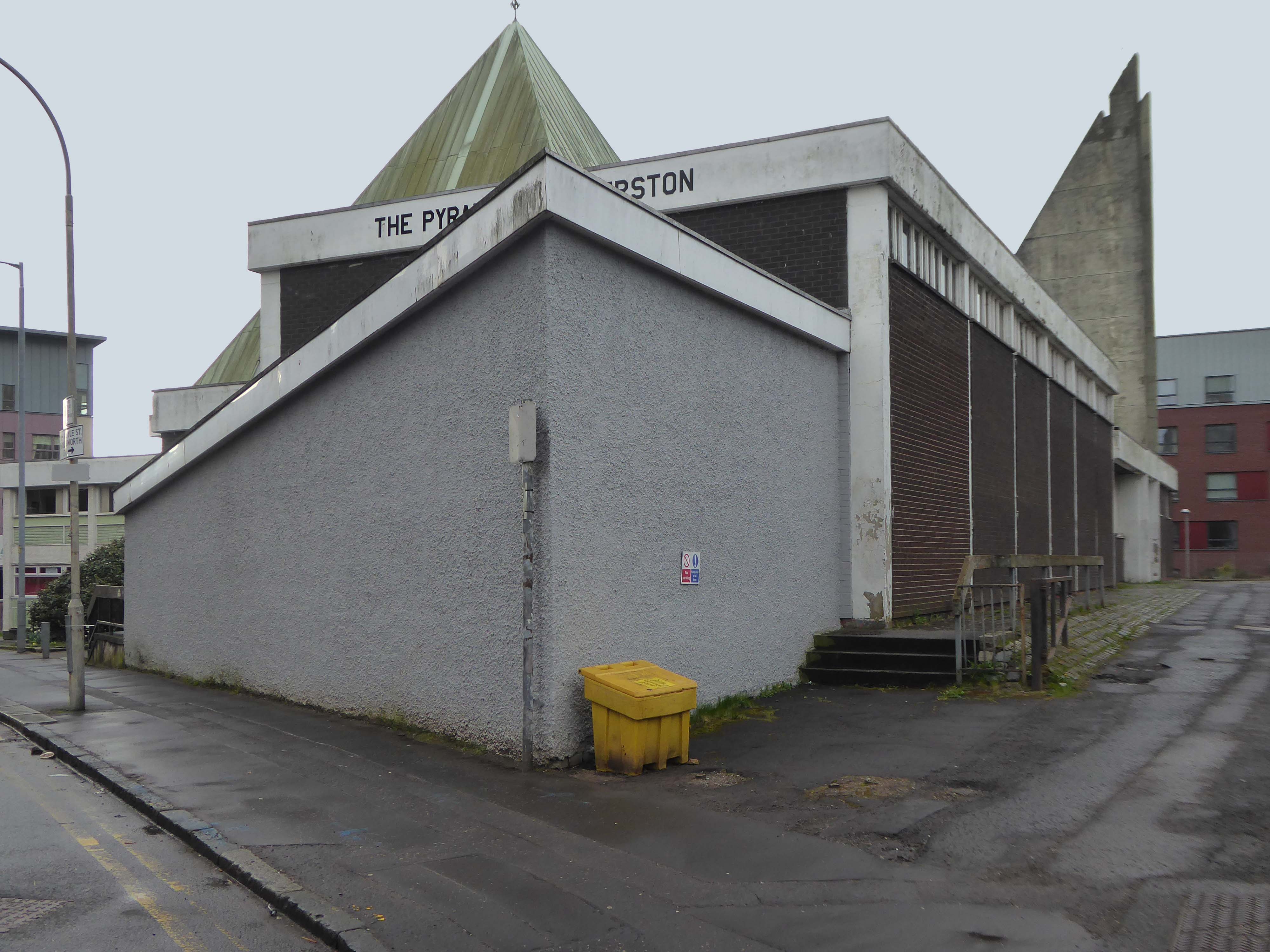
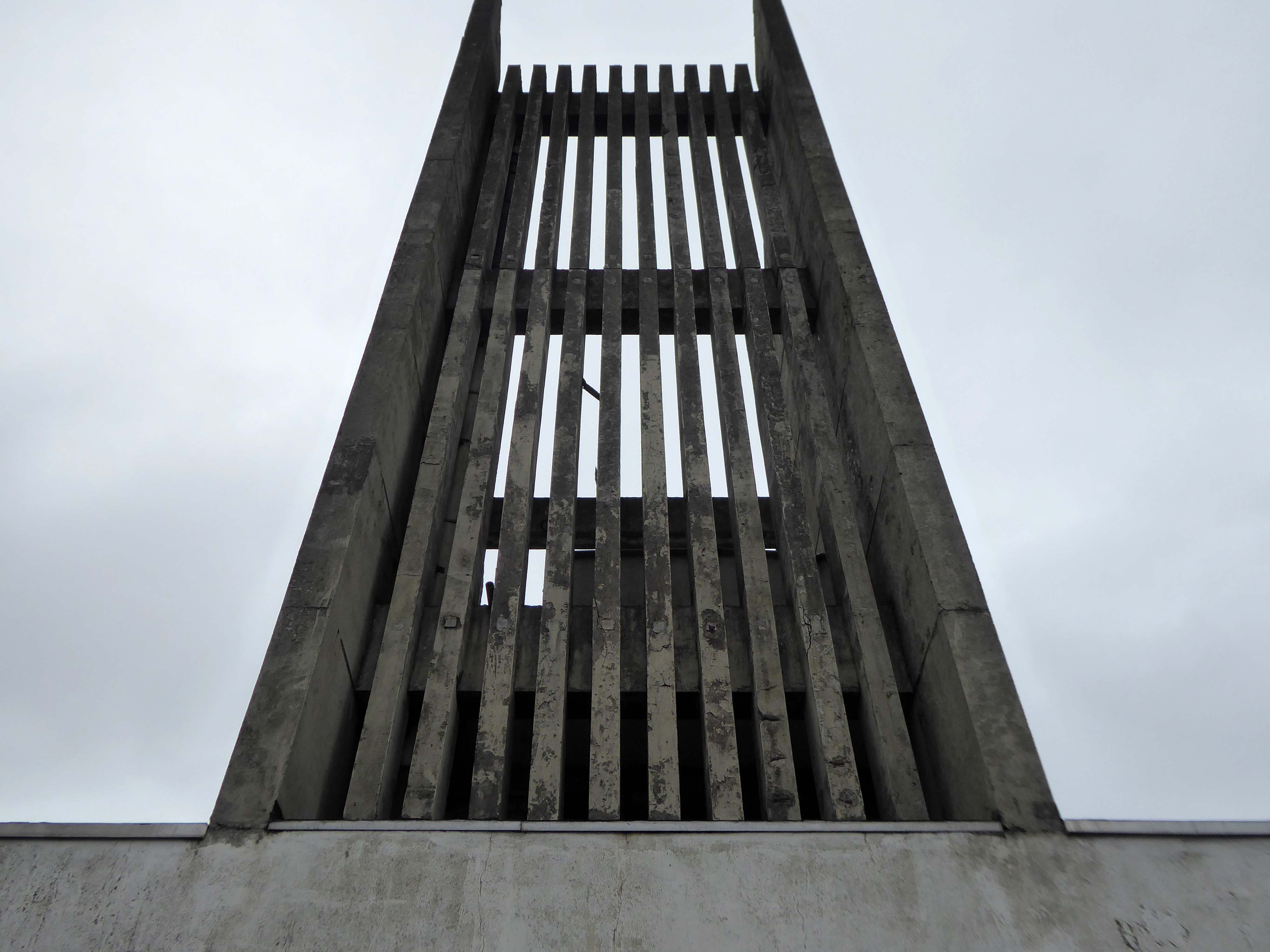
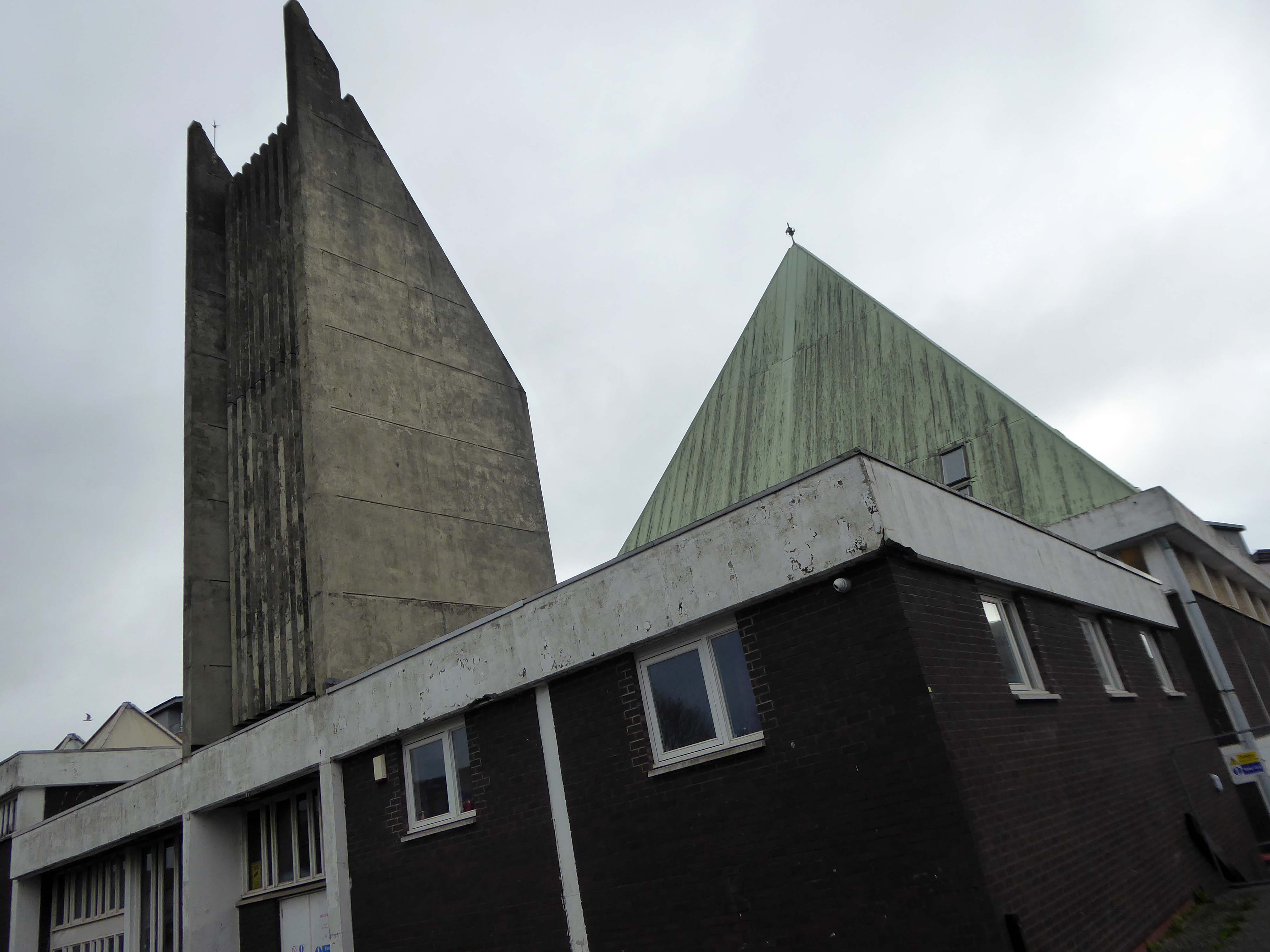
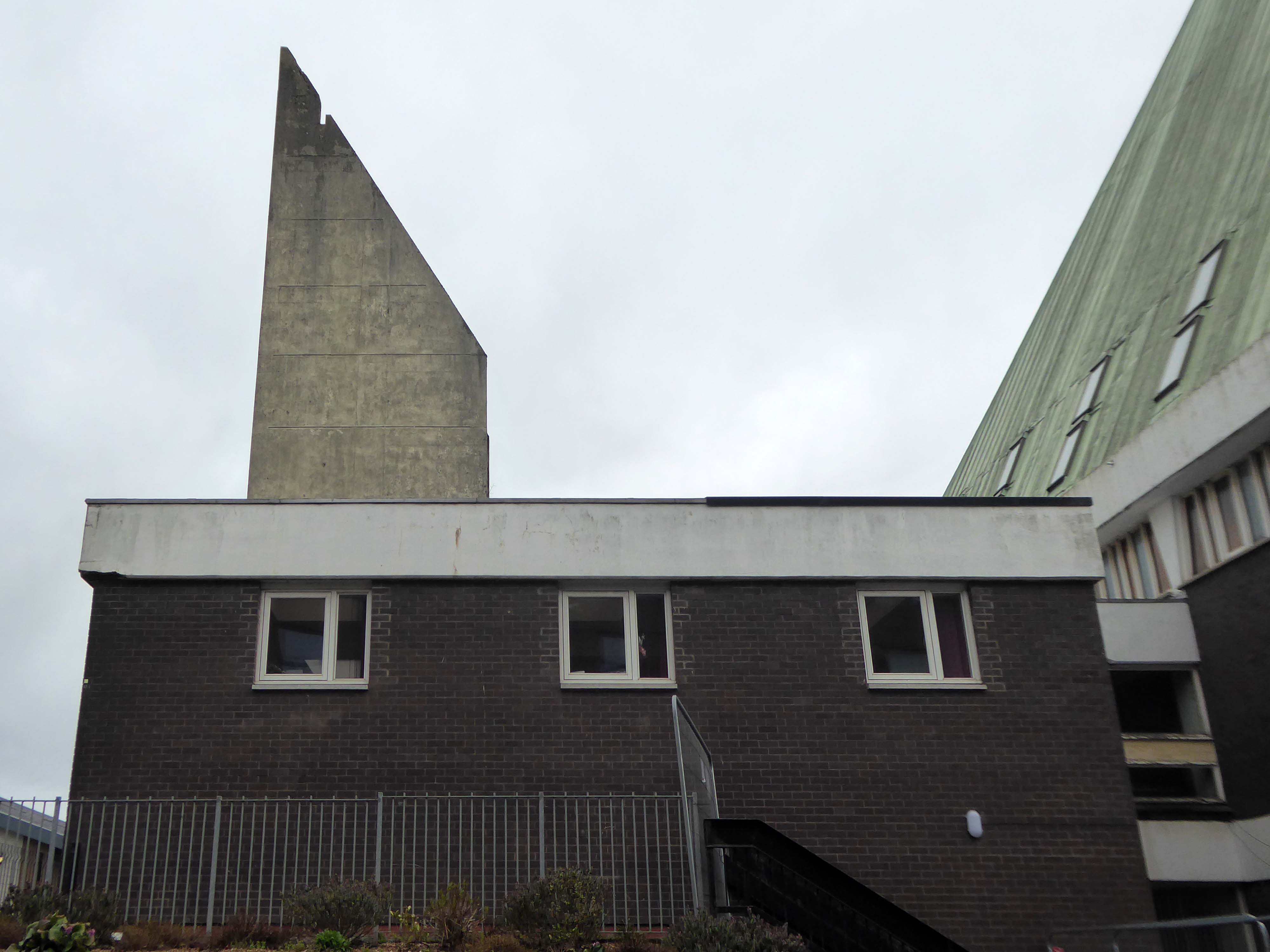
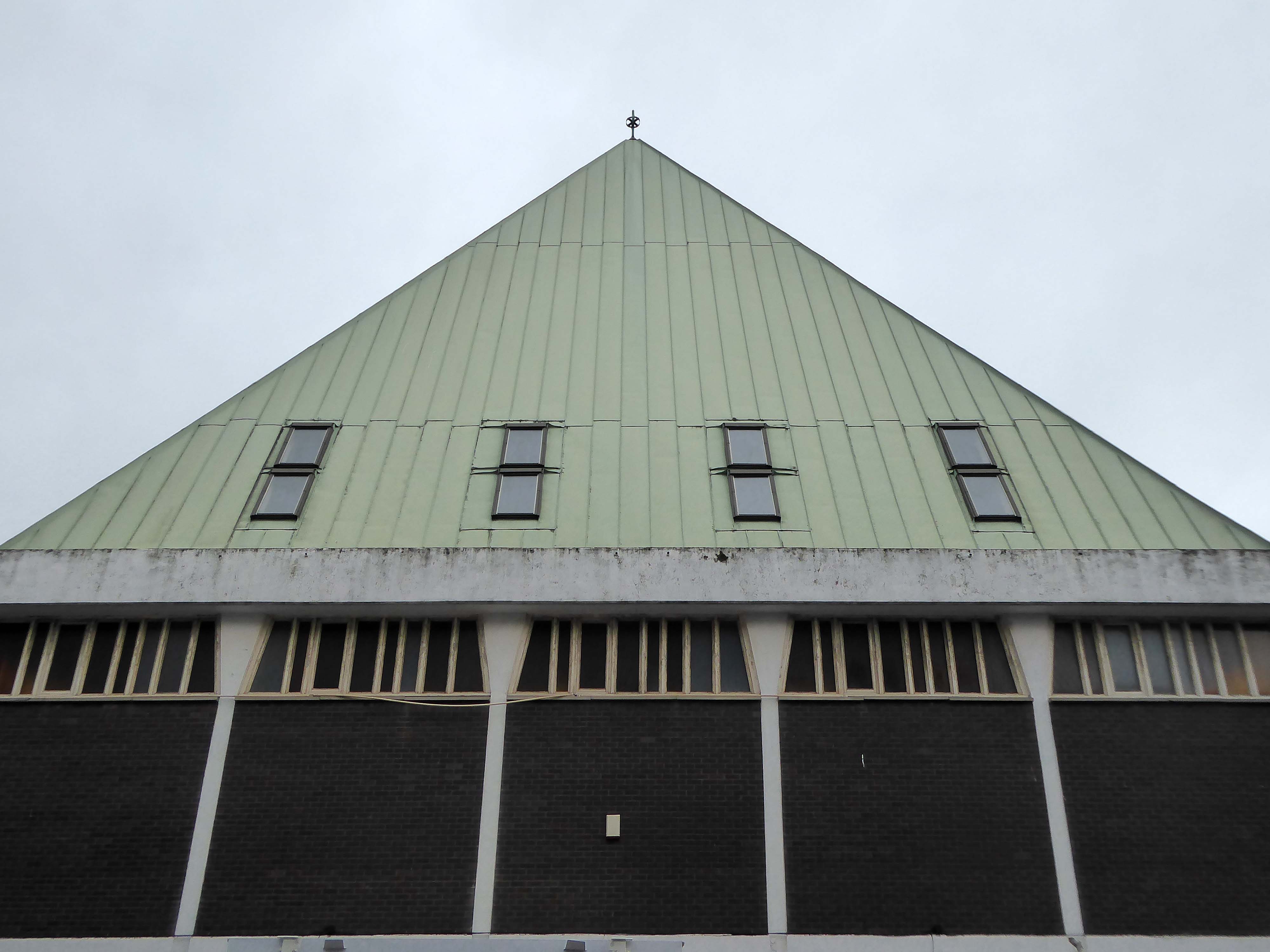
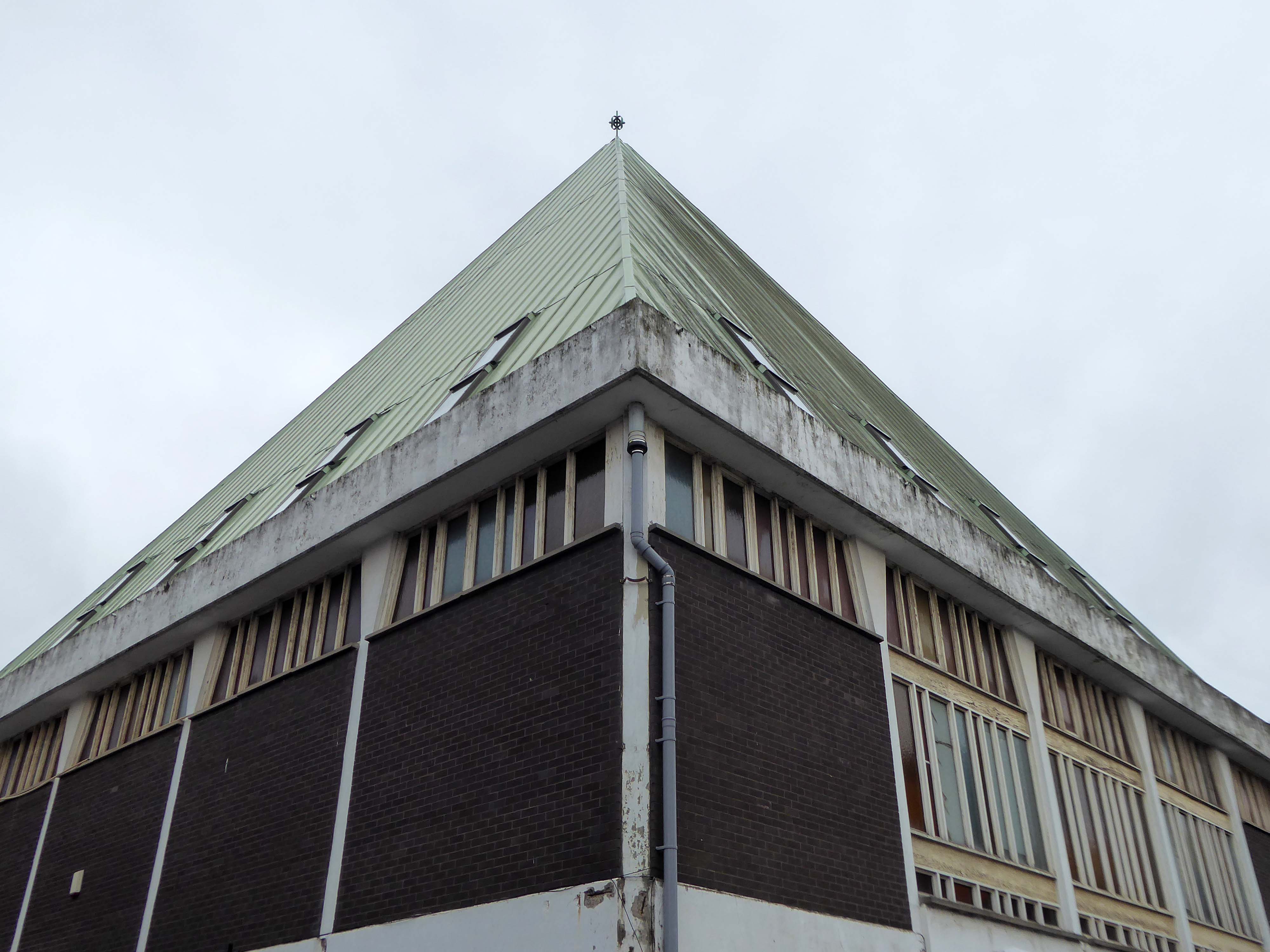
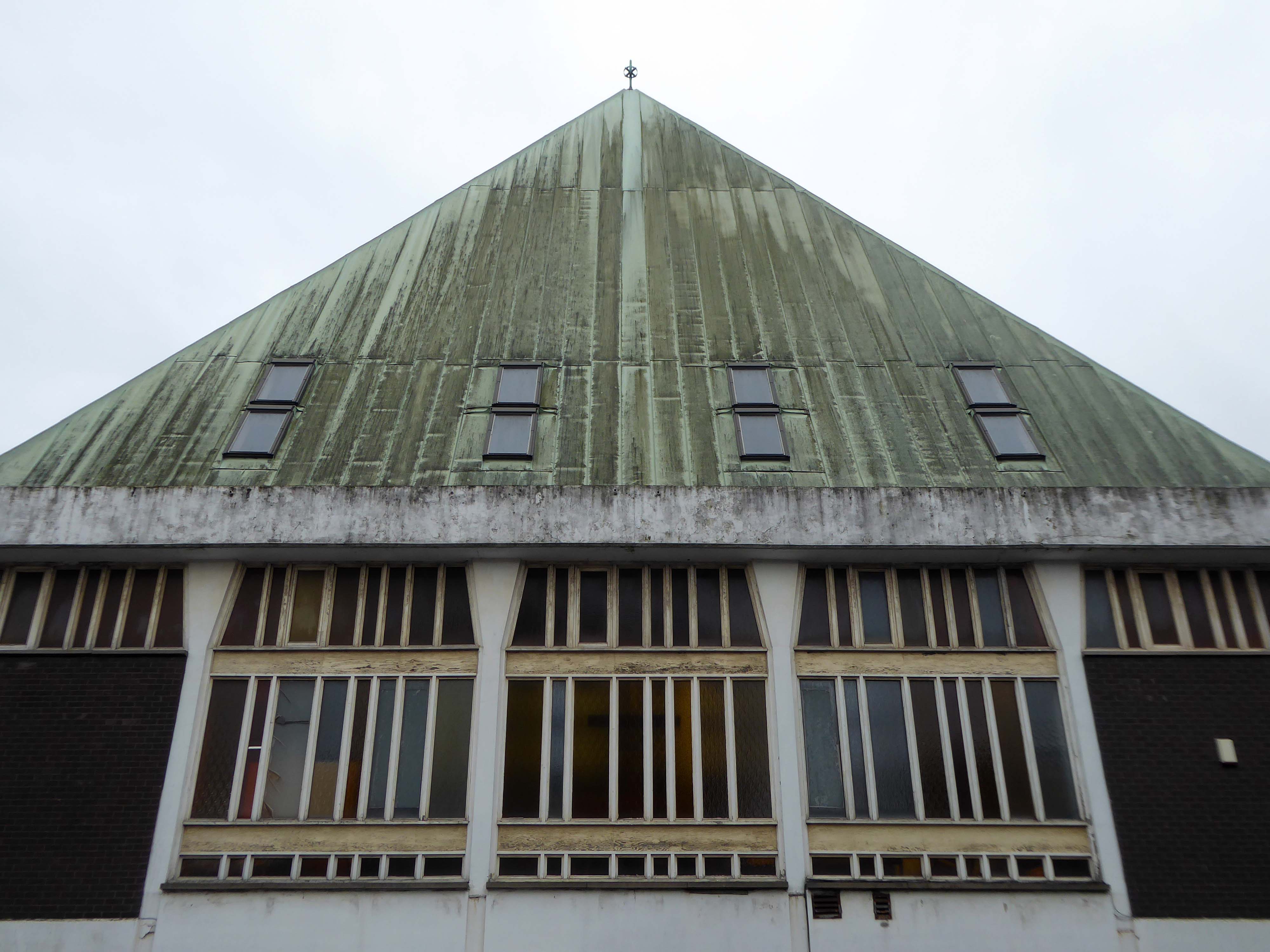
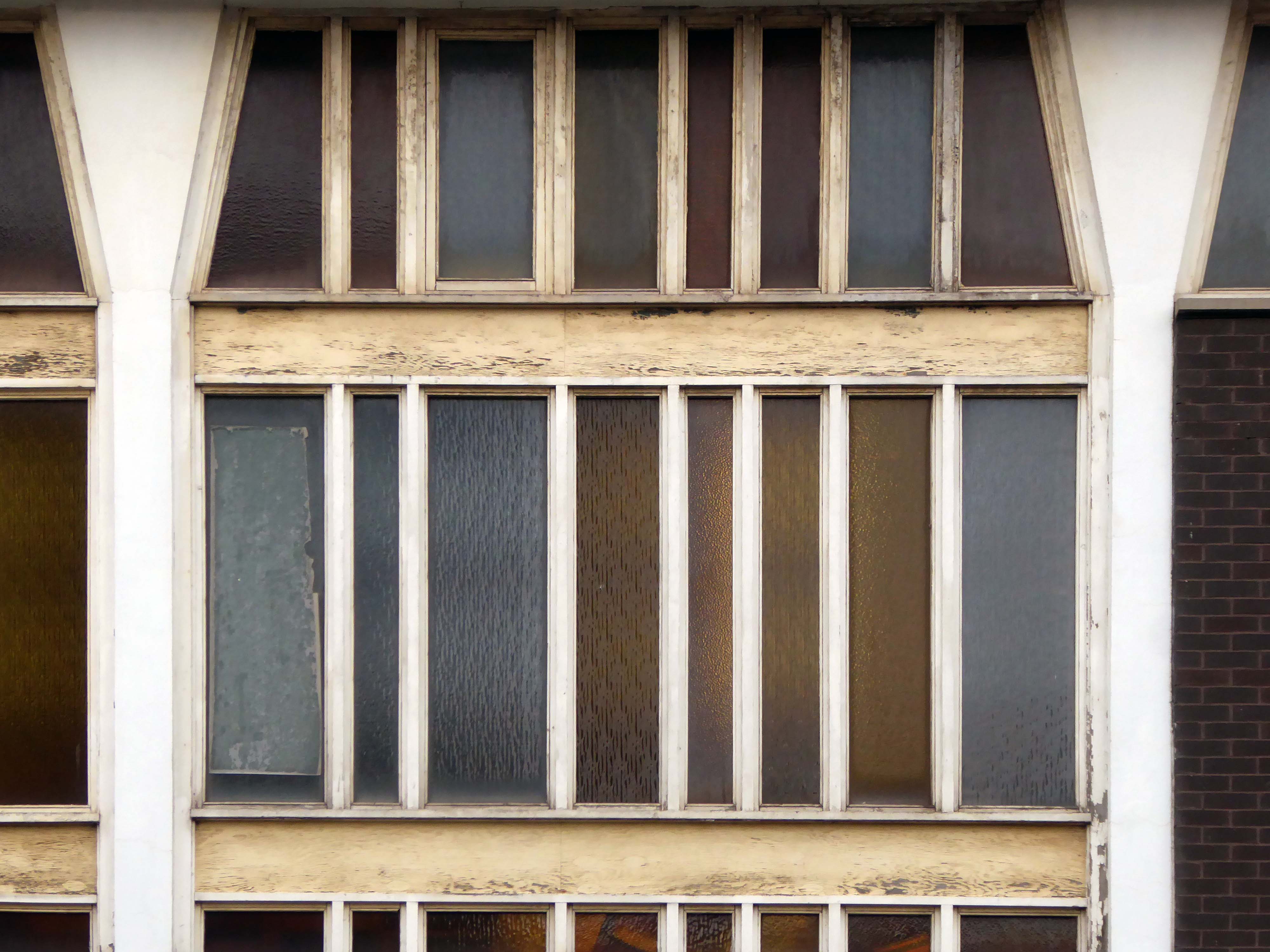
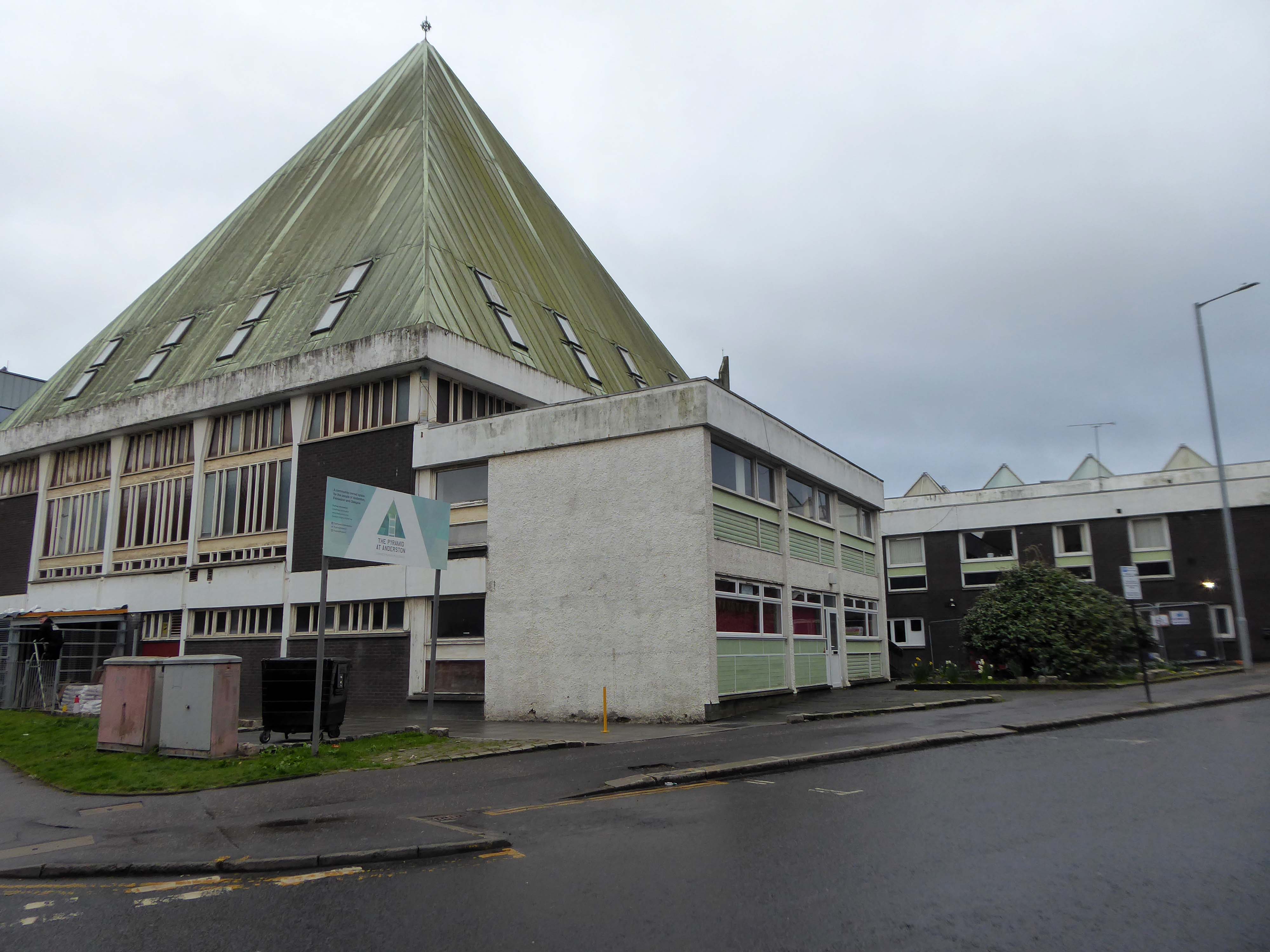
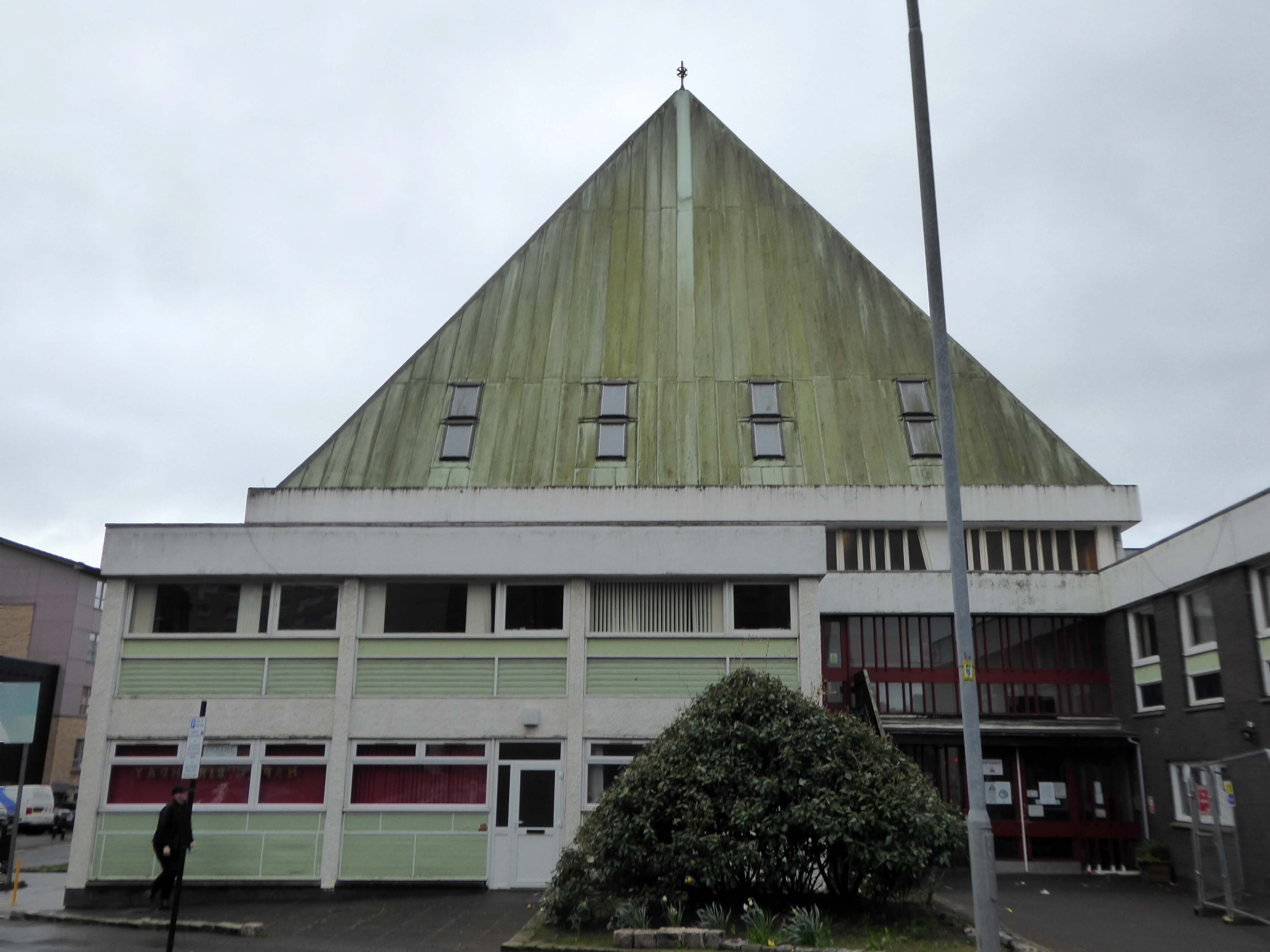
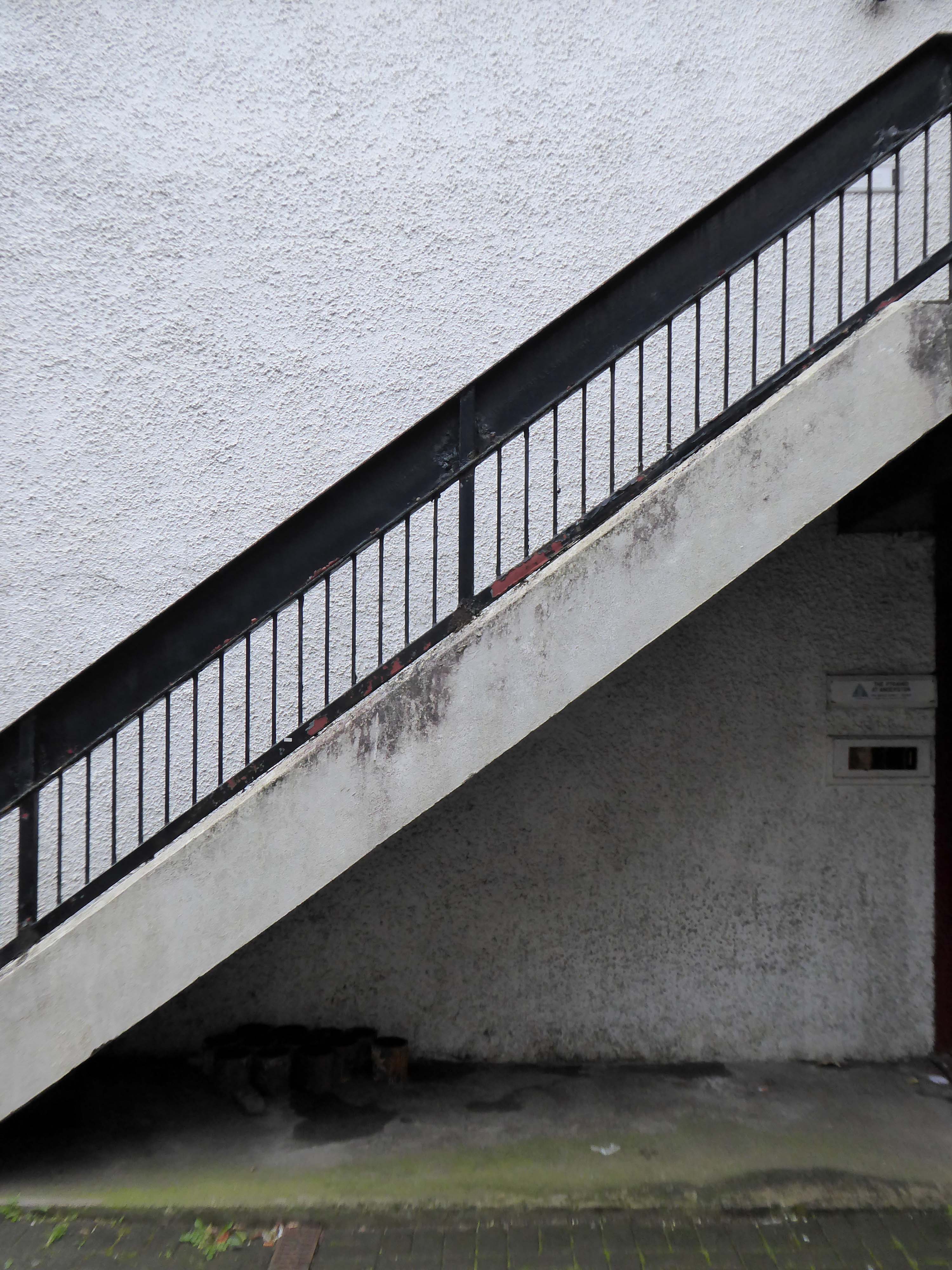
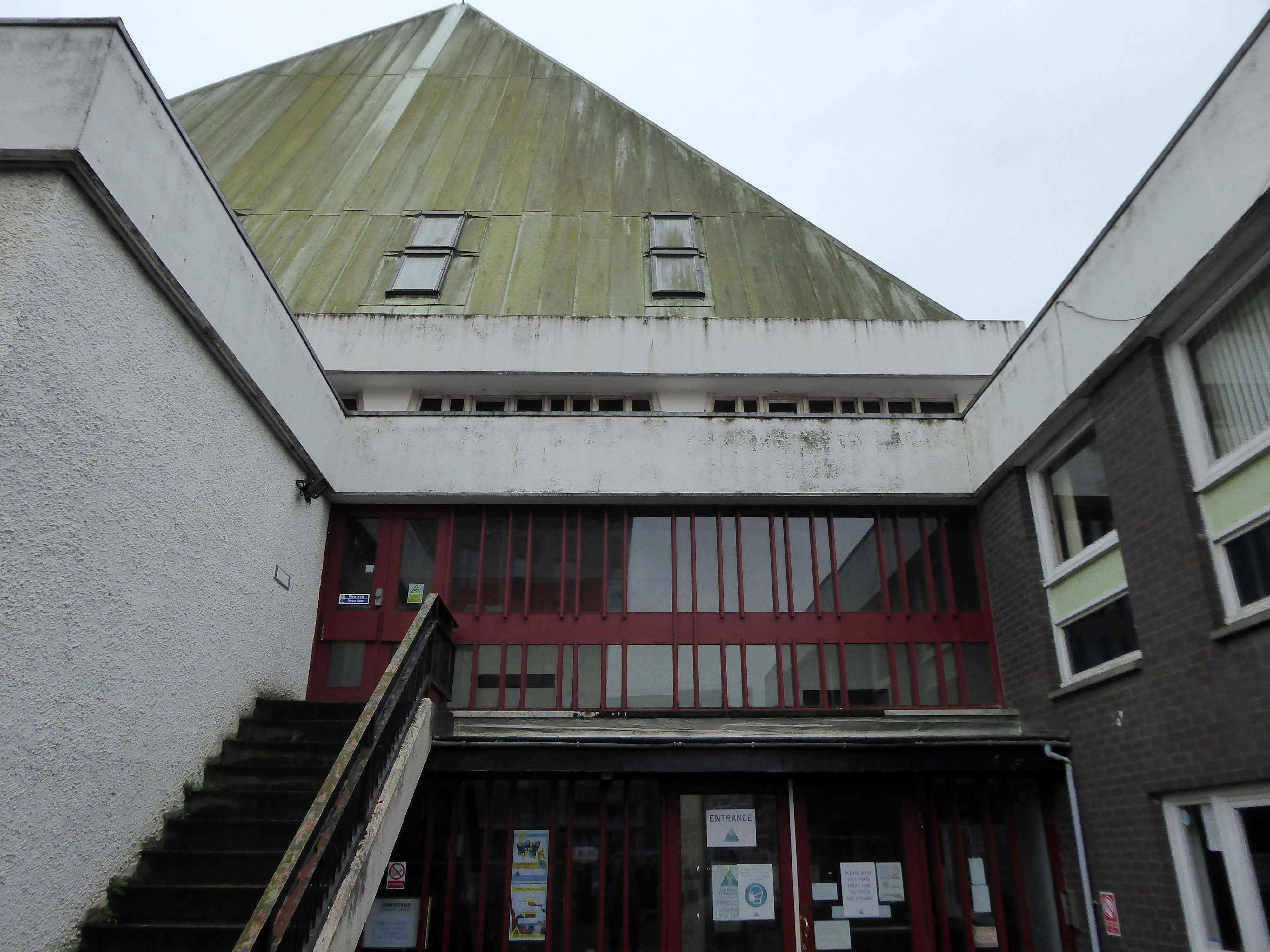
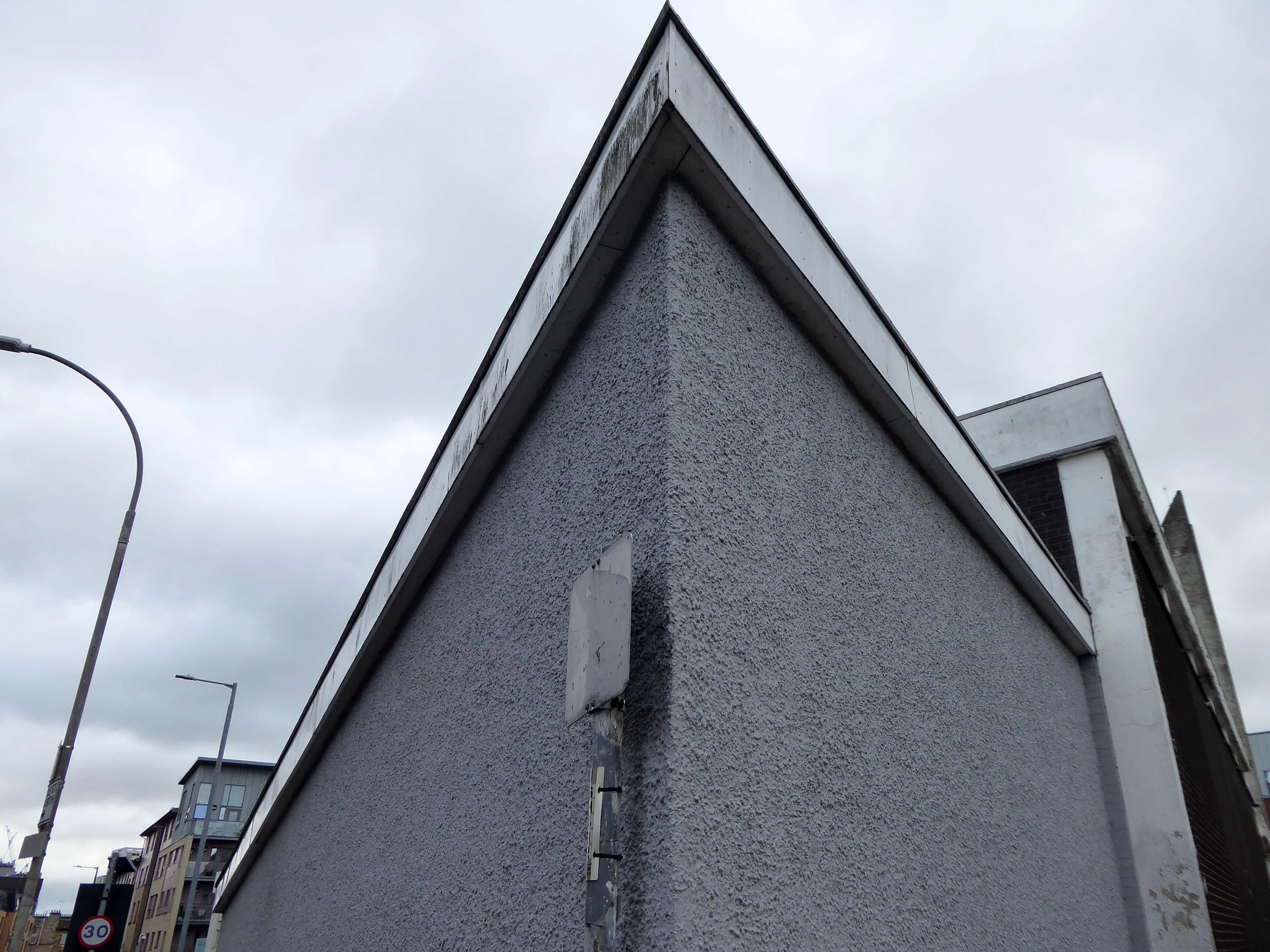
Later that same day, I got a message from my friend Kate to visit her at the centre.
She is charged with co-ordinating a variety of activities at The Pyramid.

In 2019 the Church of Scotland sold the building and it became a community centre for people to:
Connect, create and celebrate.
It also serves as an inspirational space for music, performances, conferences and events.

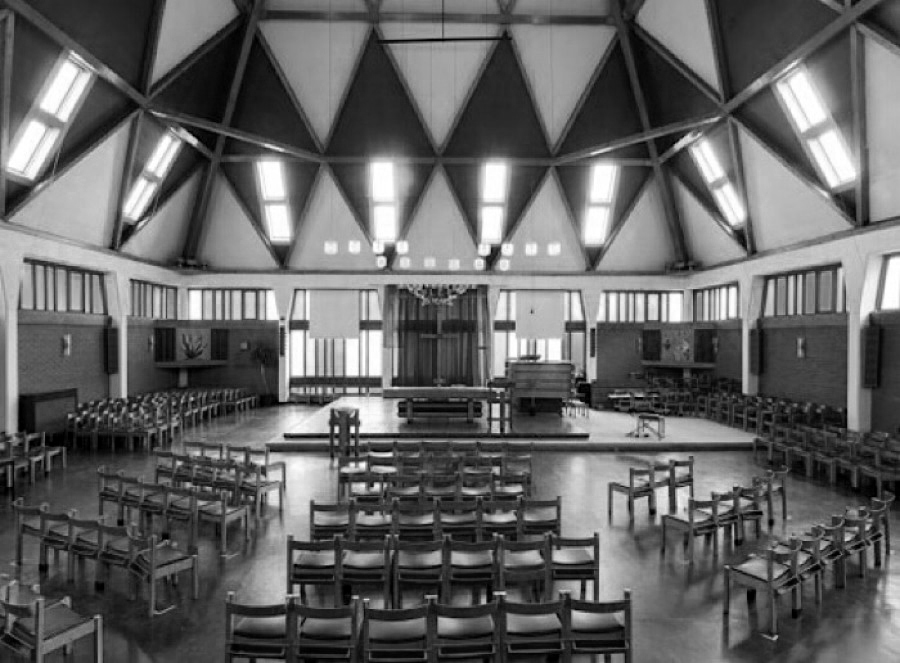
Let’s take a look around inside.
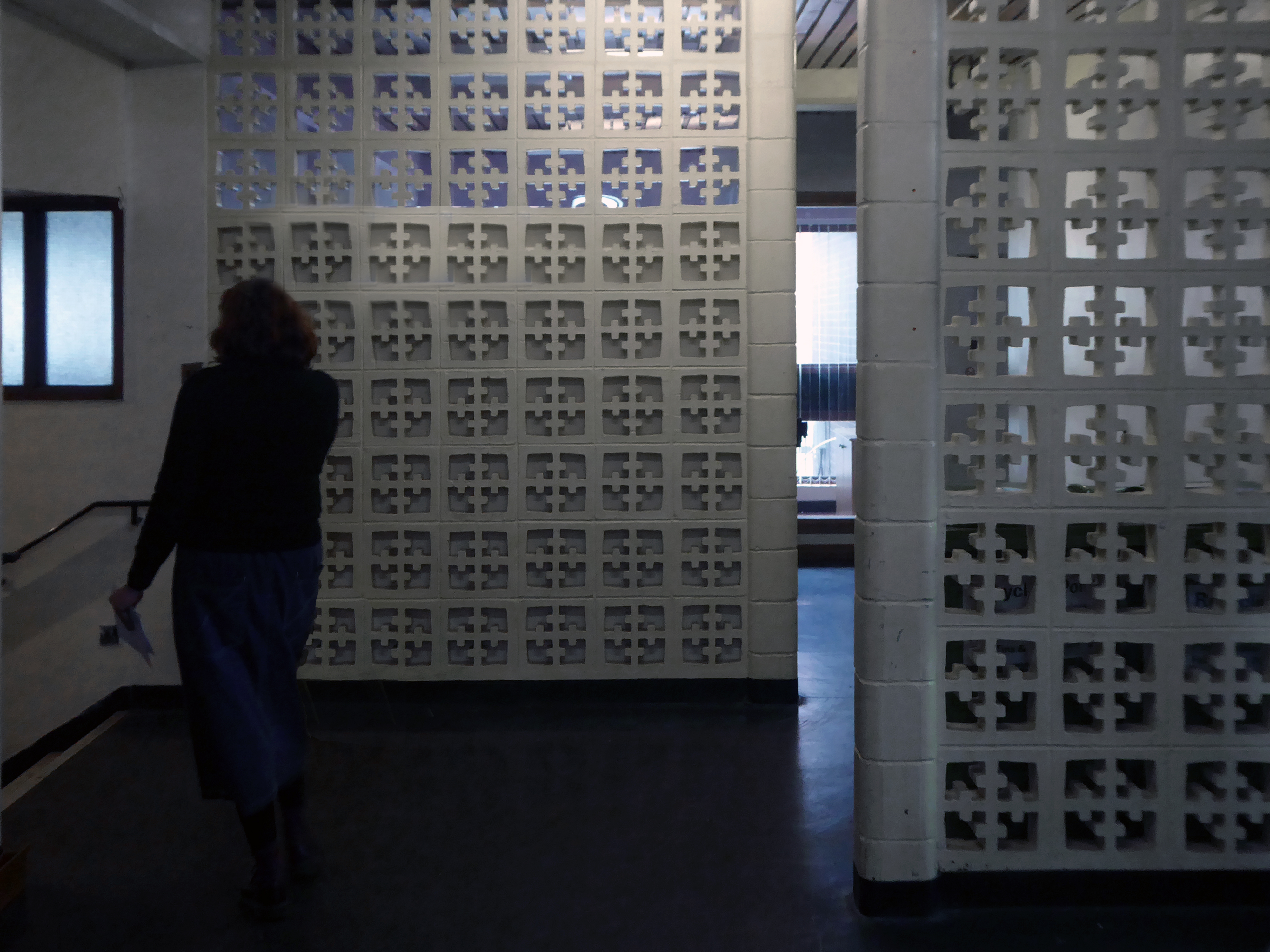
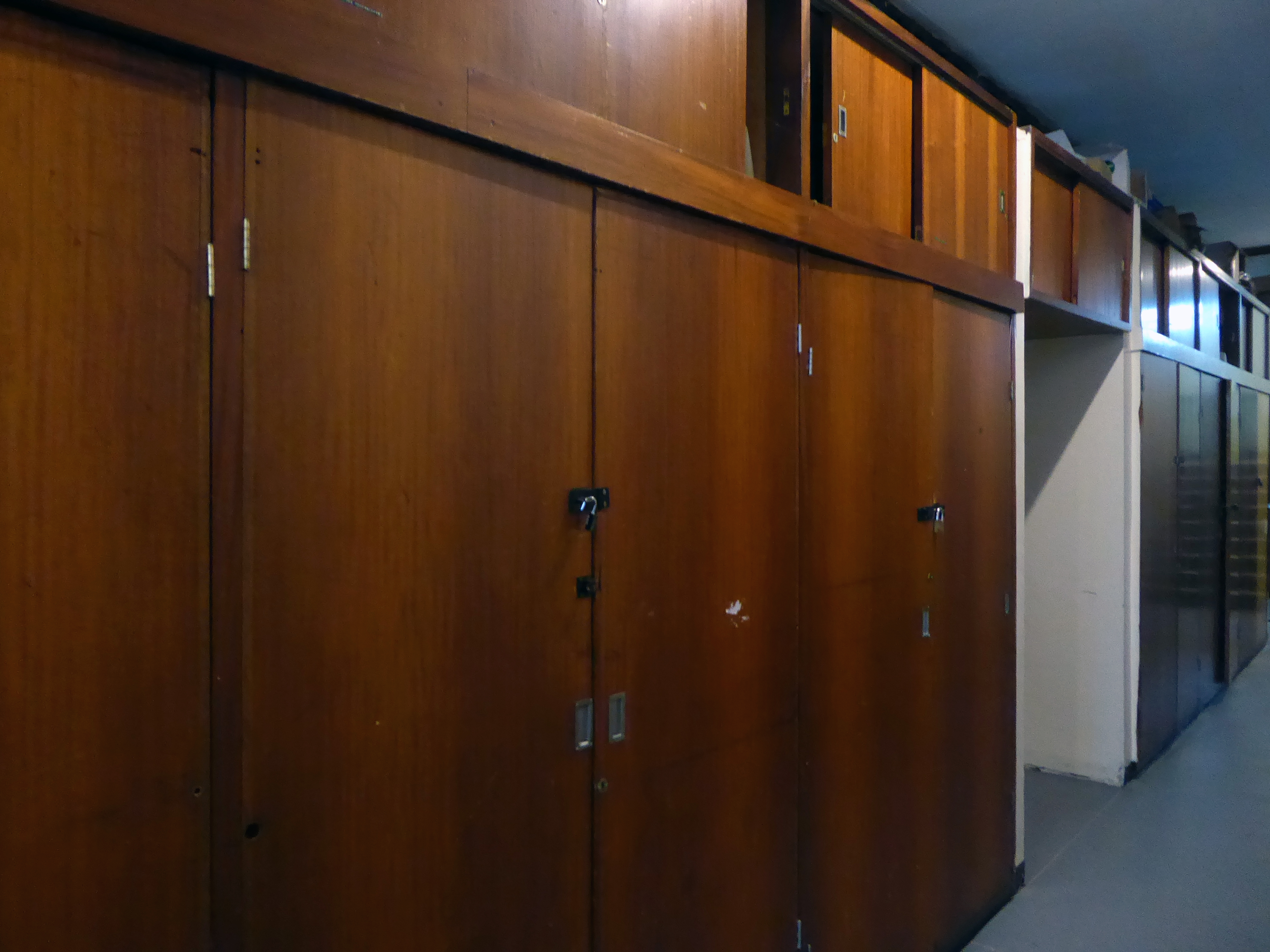
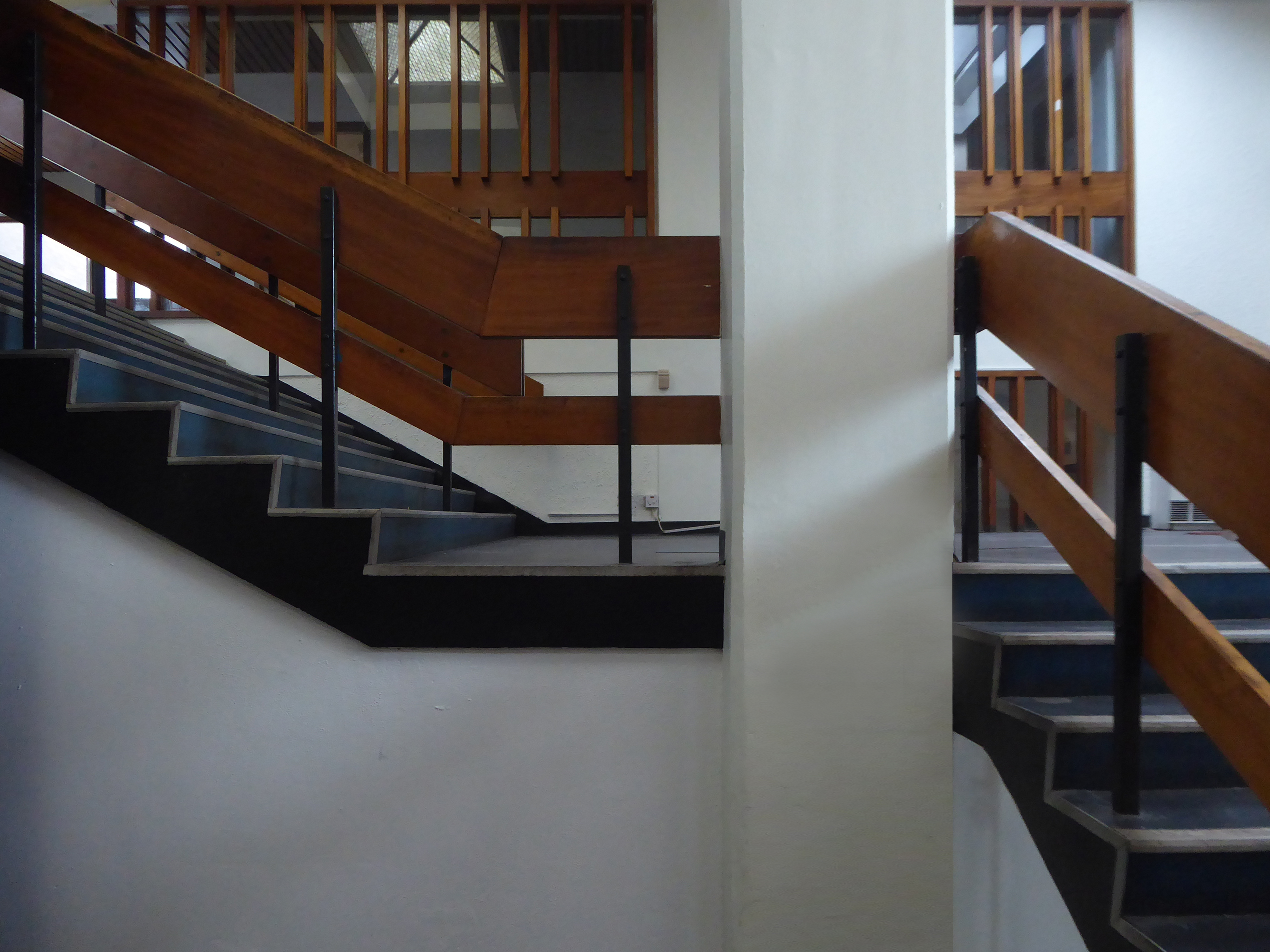
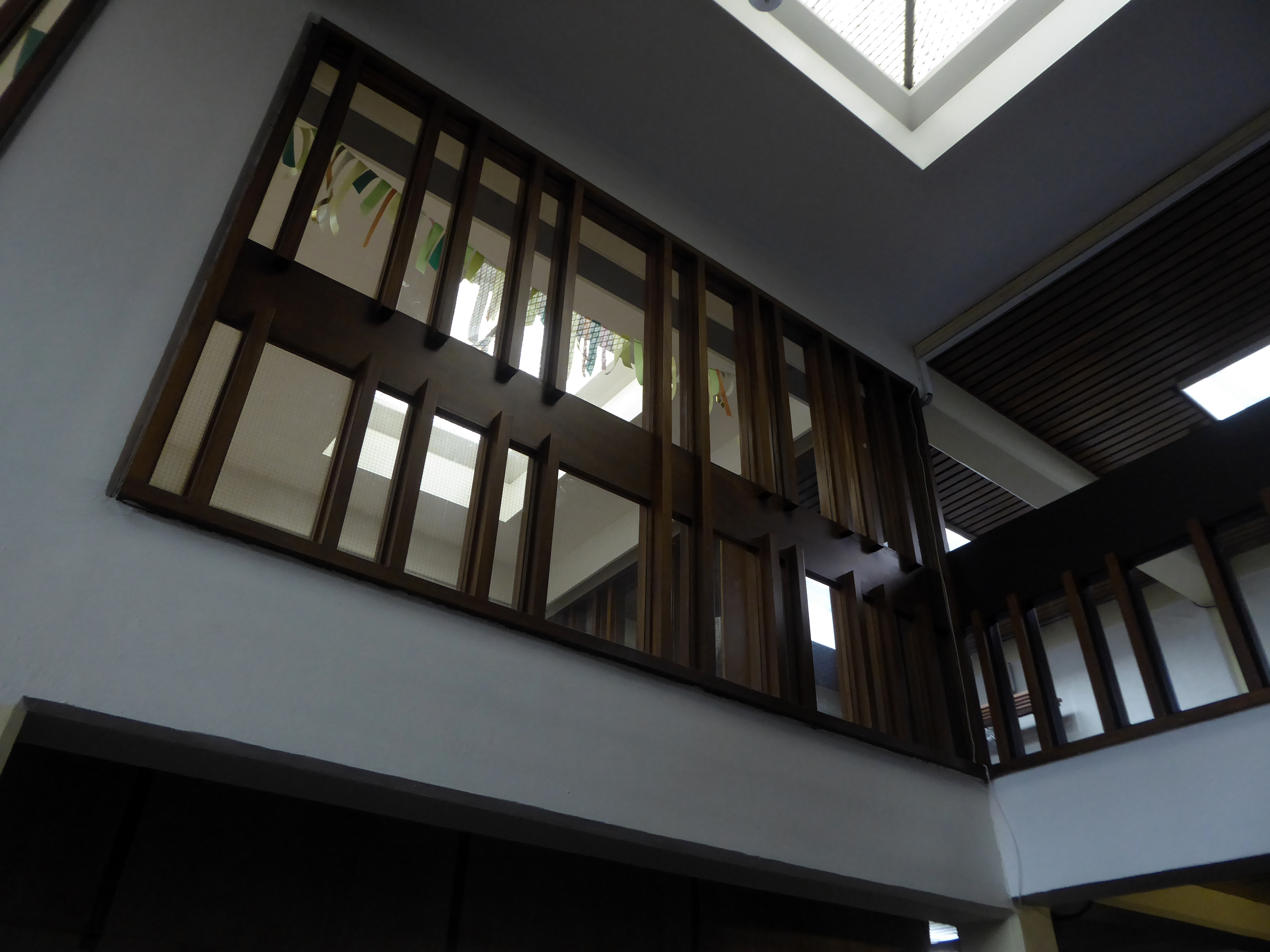
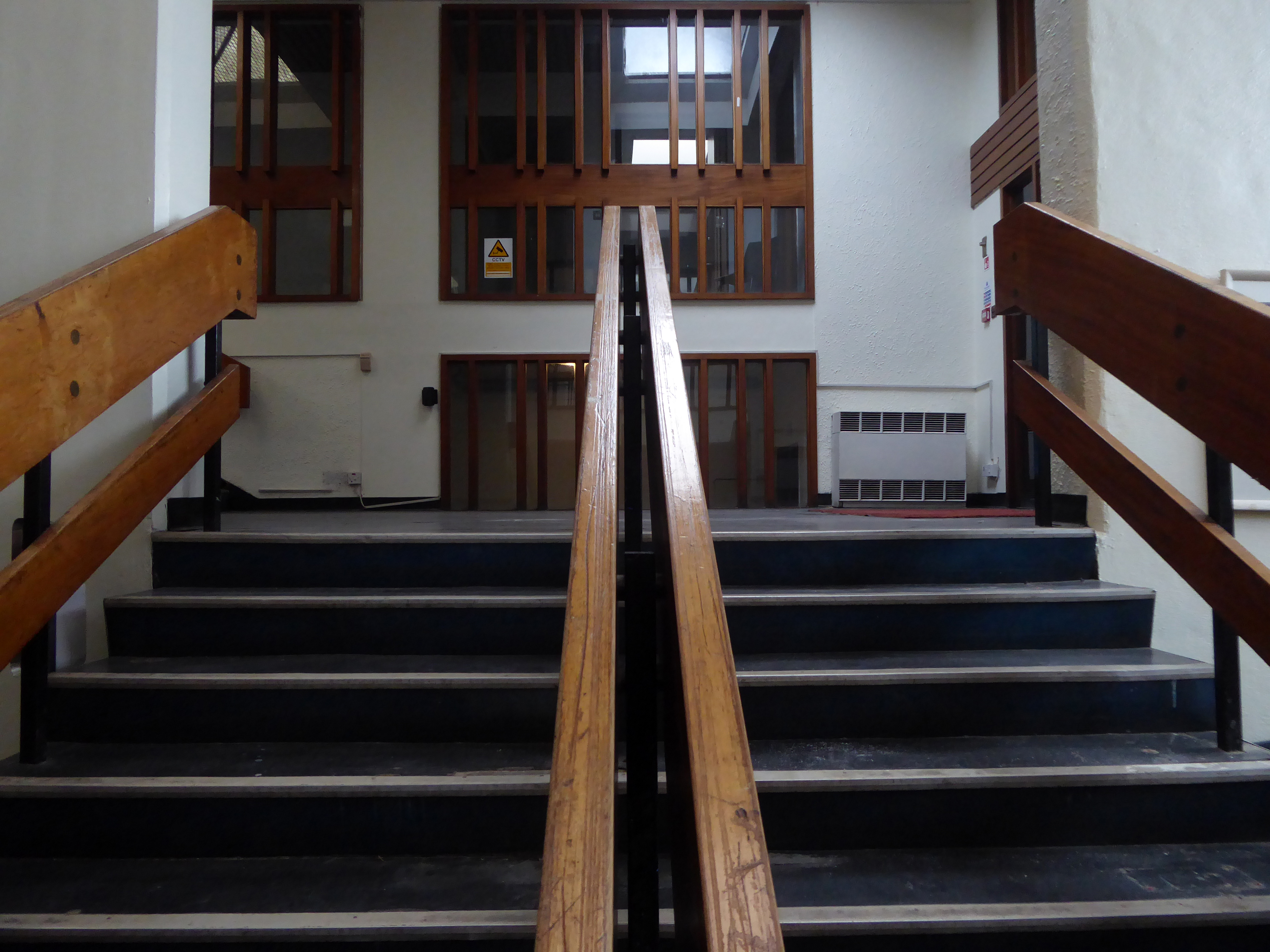
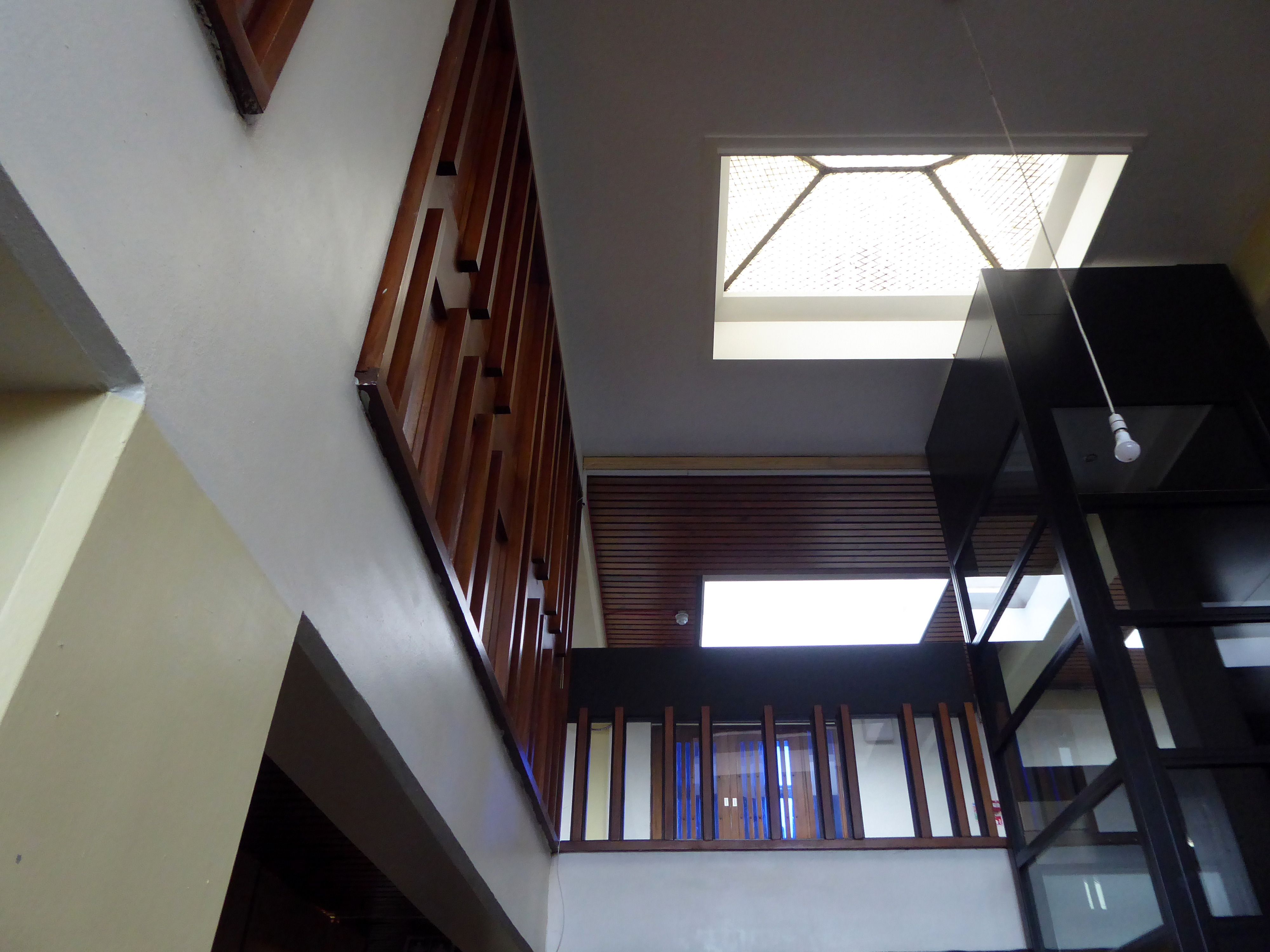
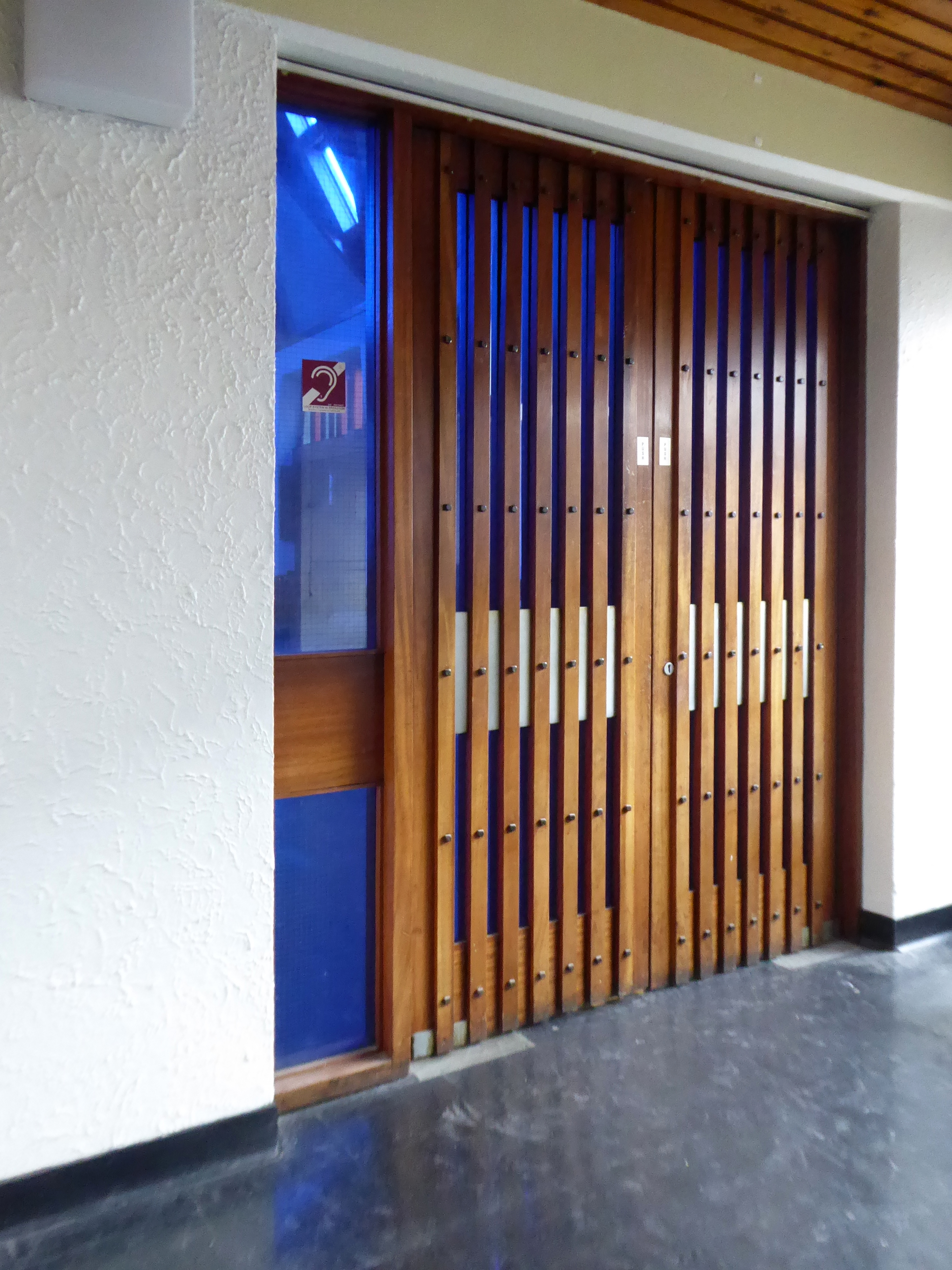
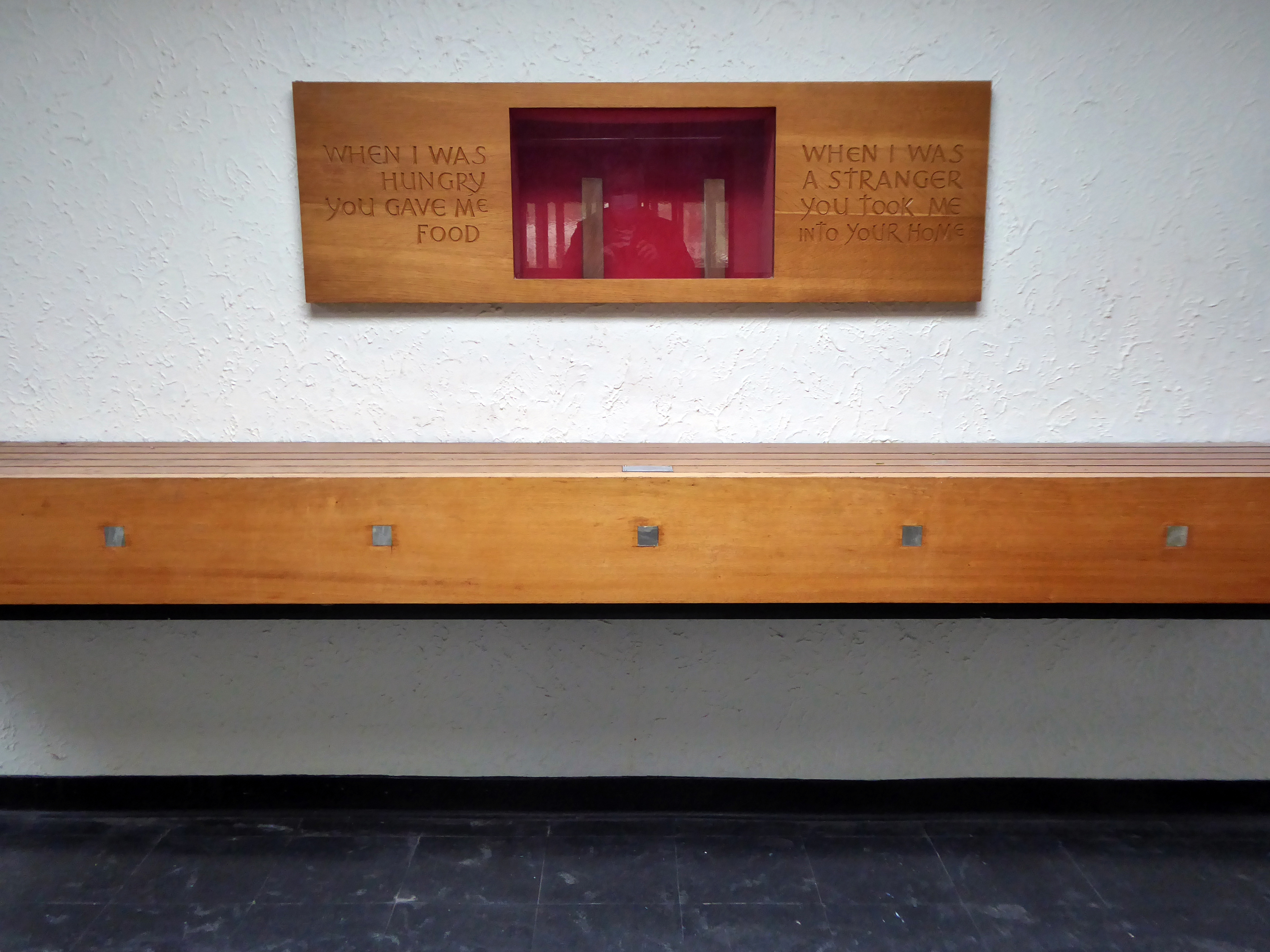
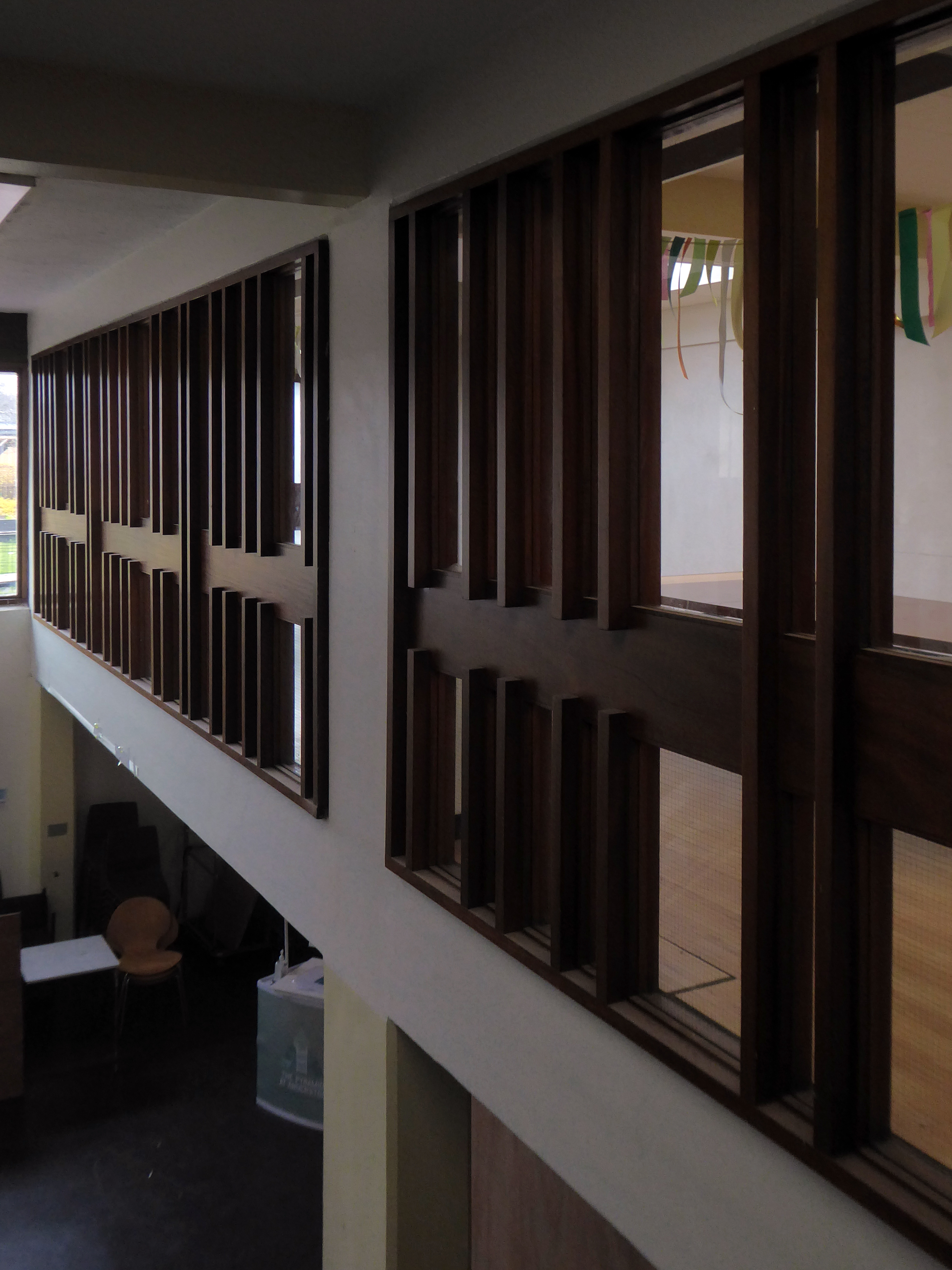
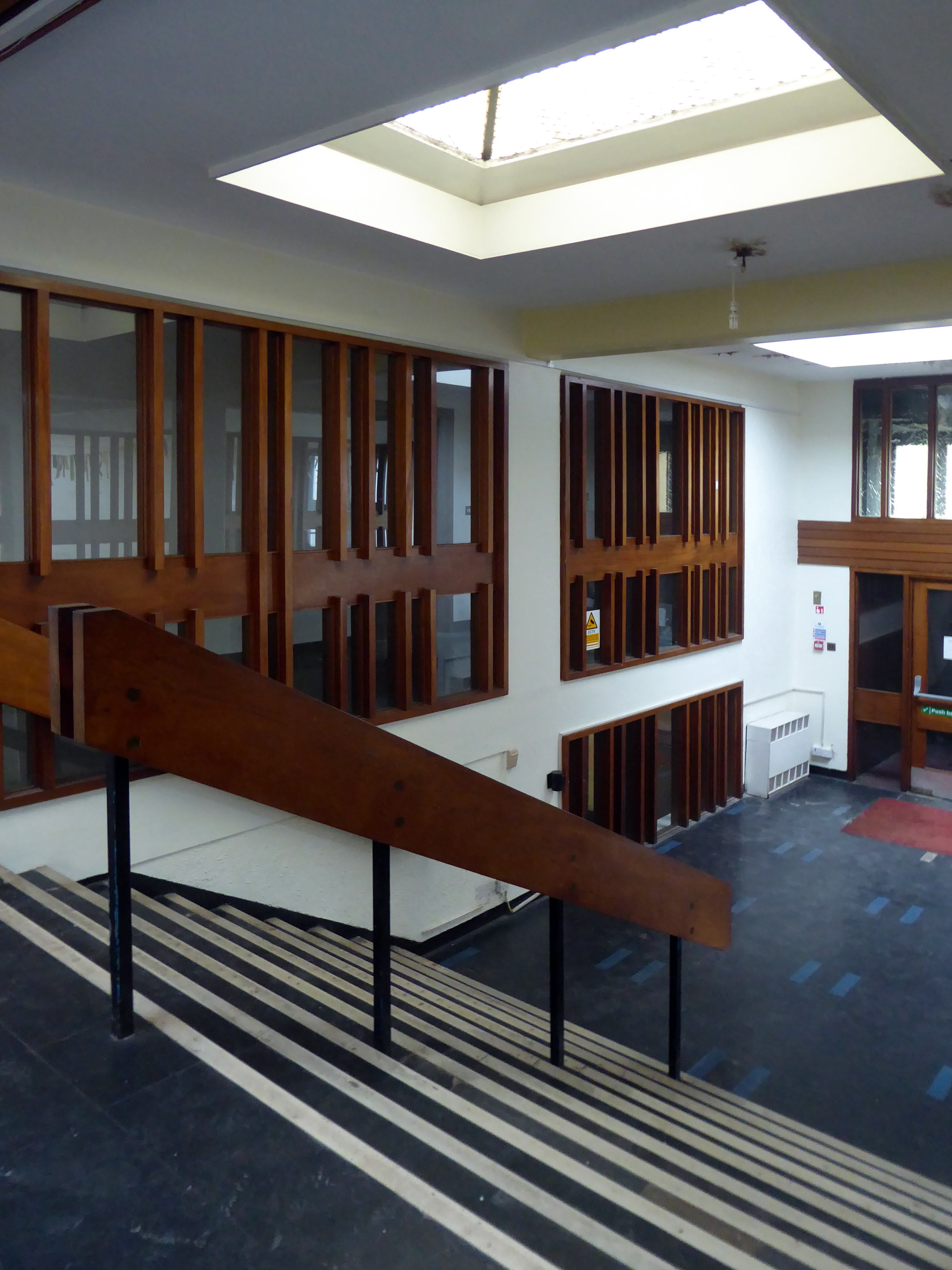
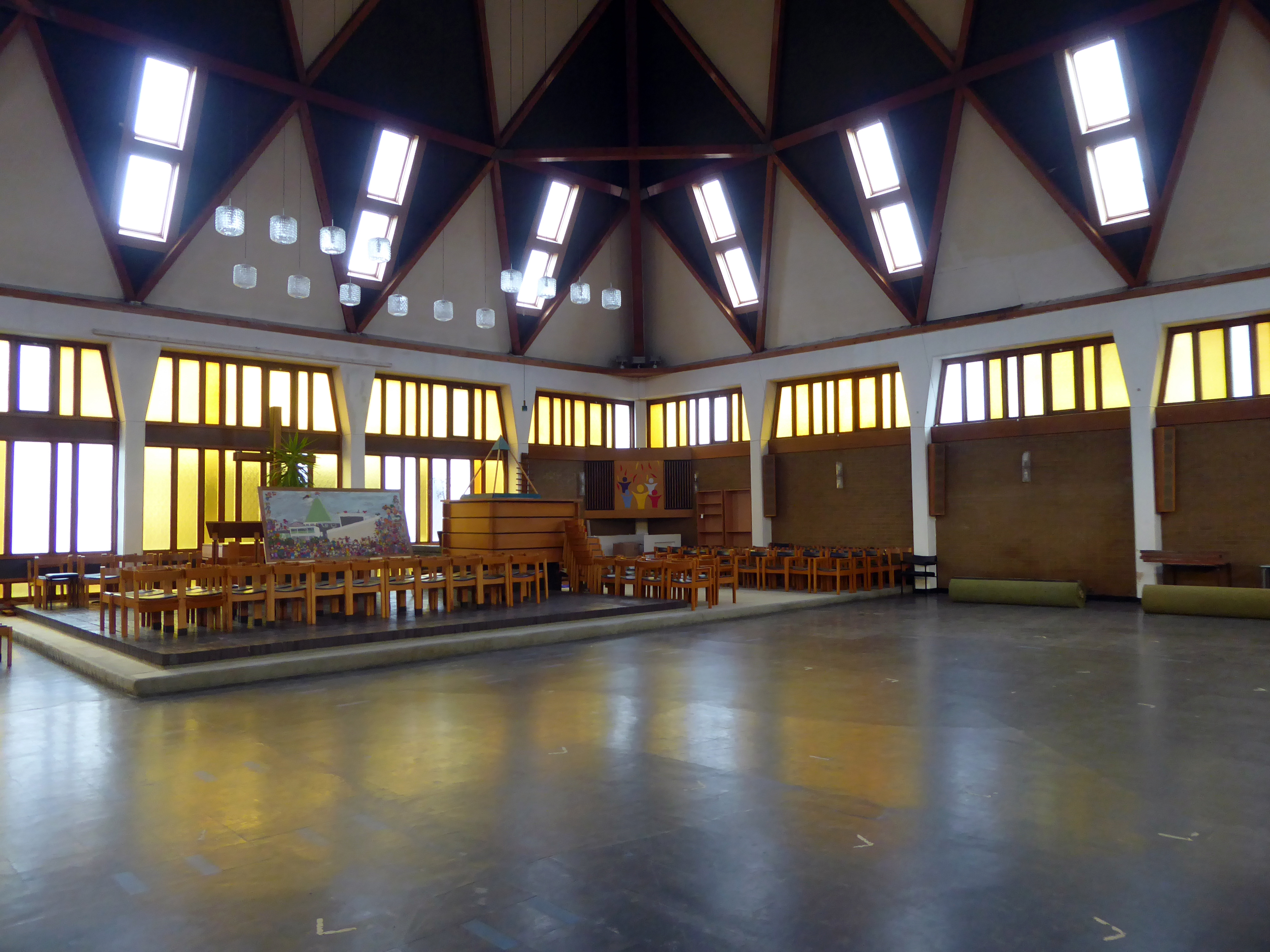
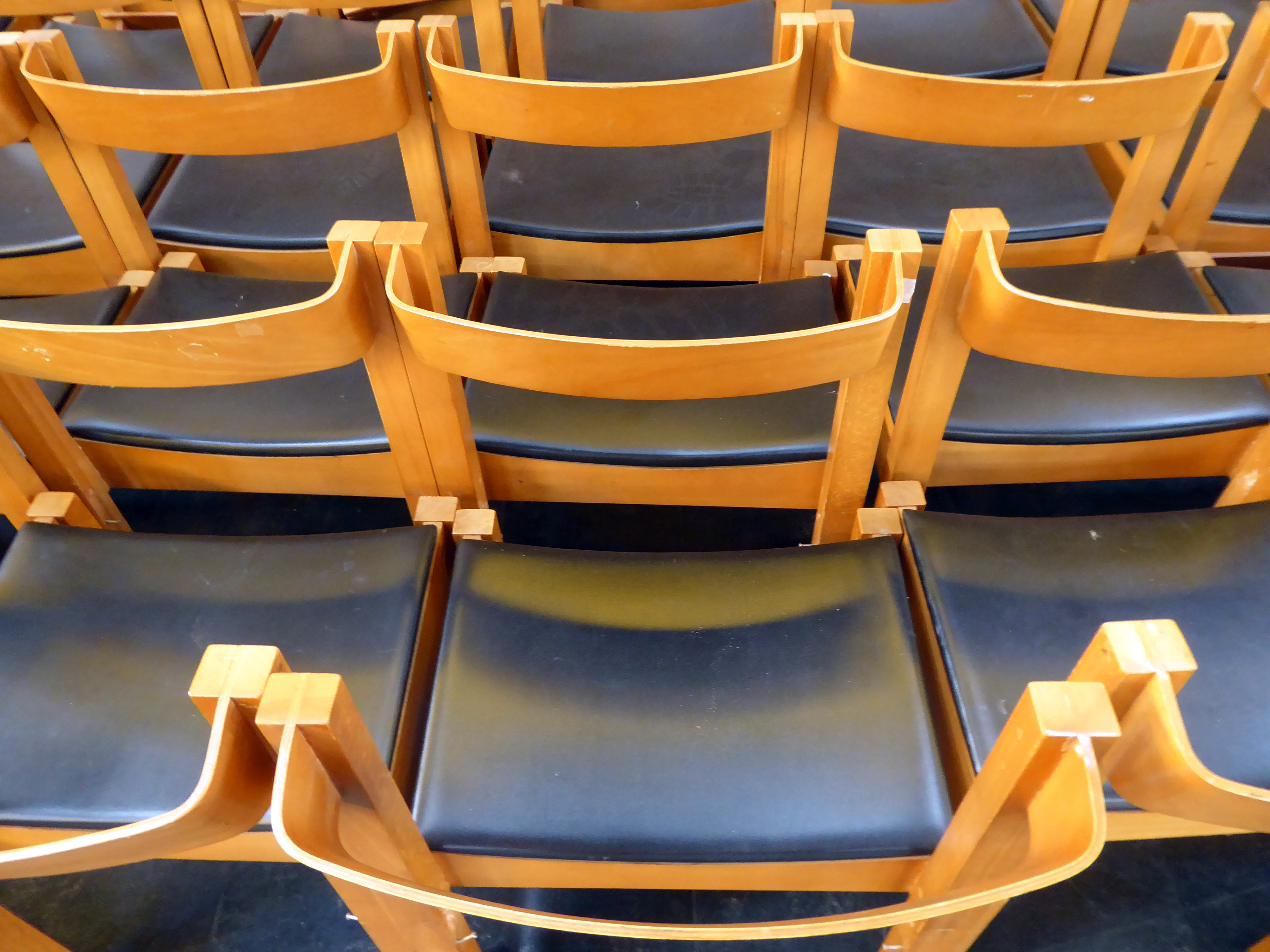
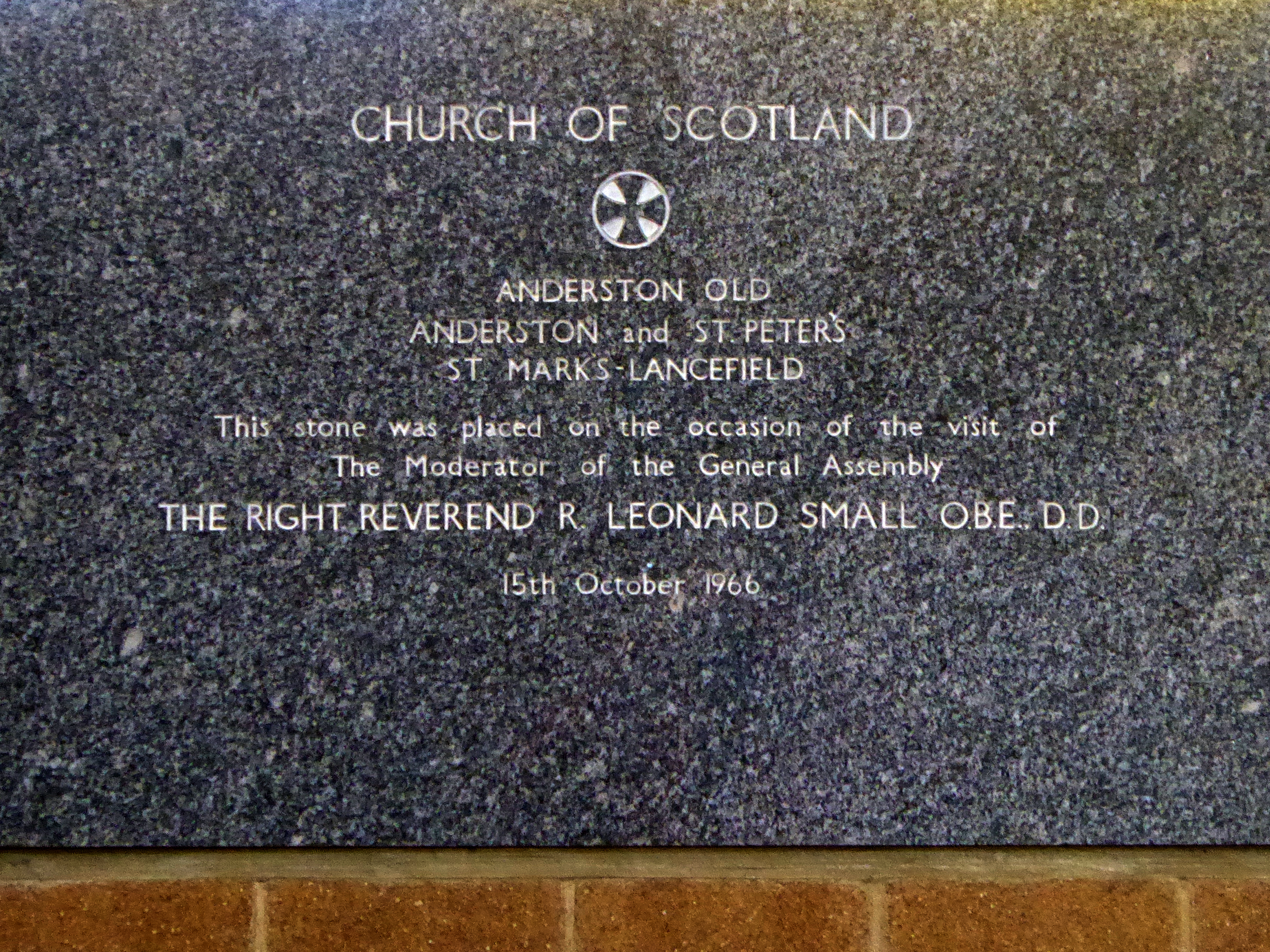
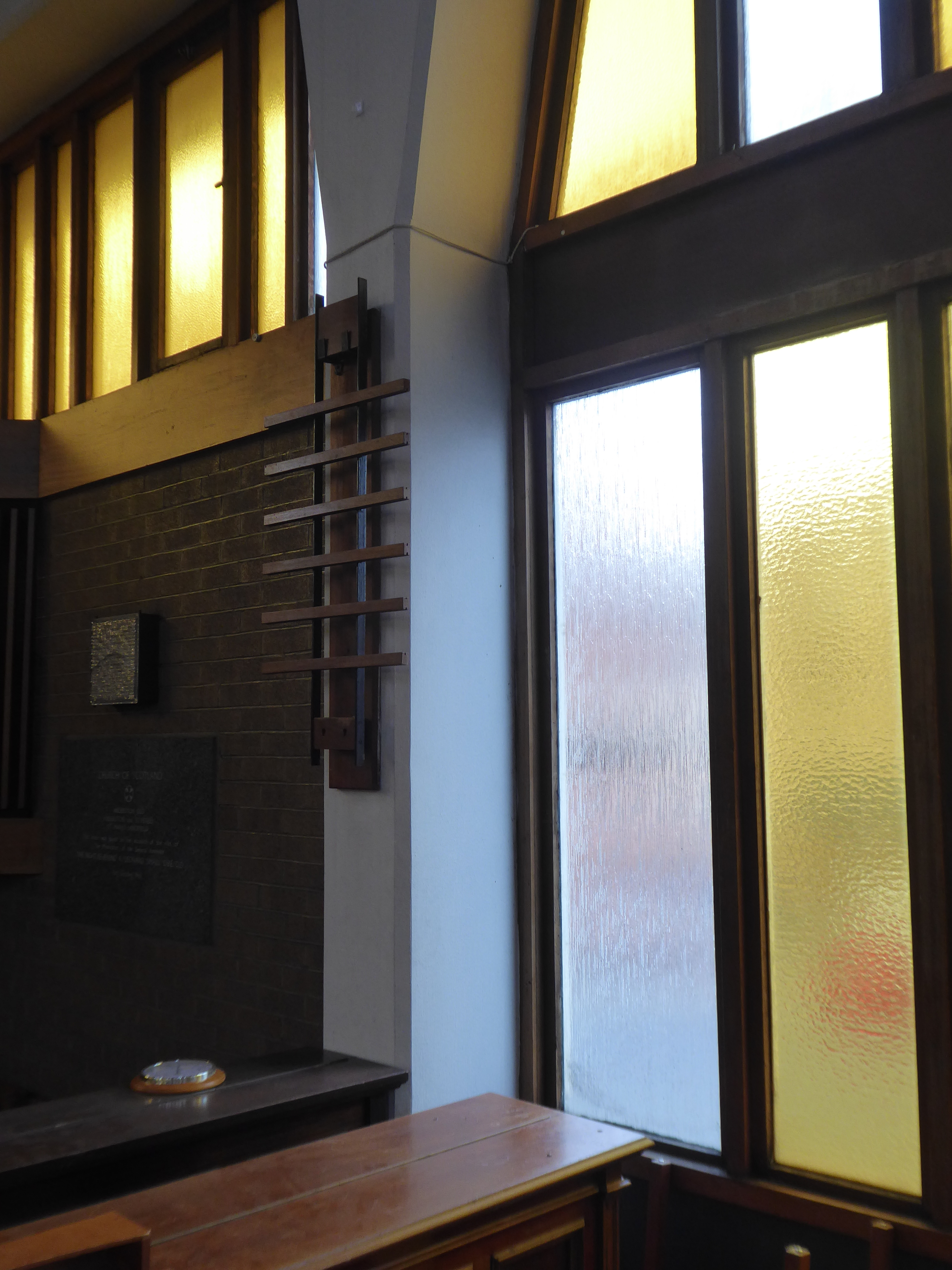
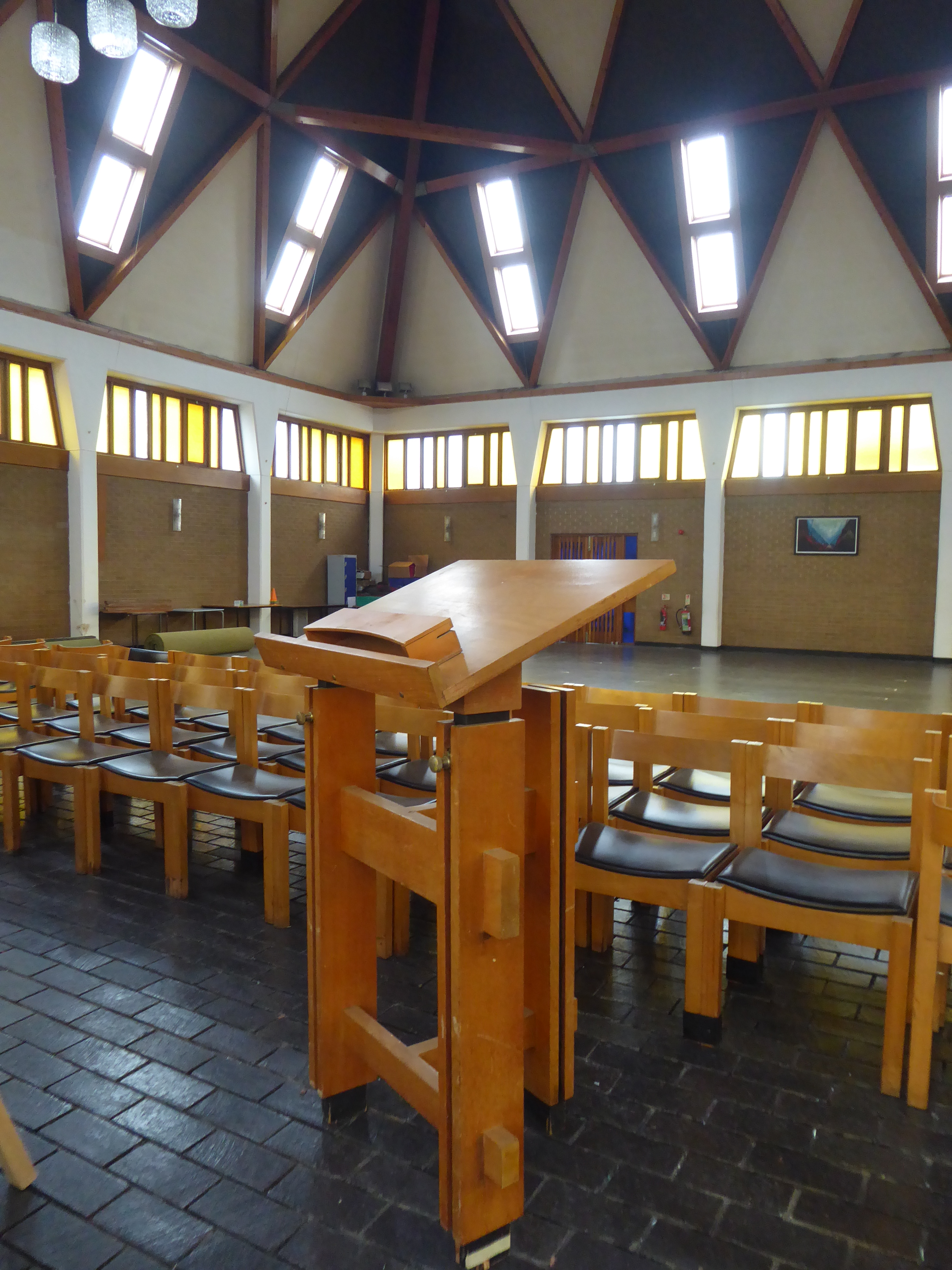
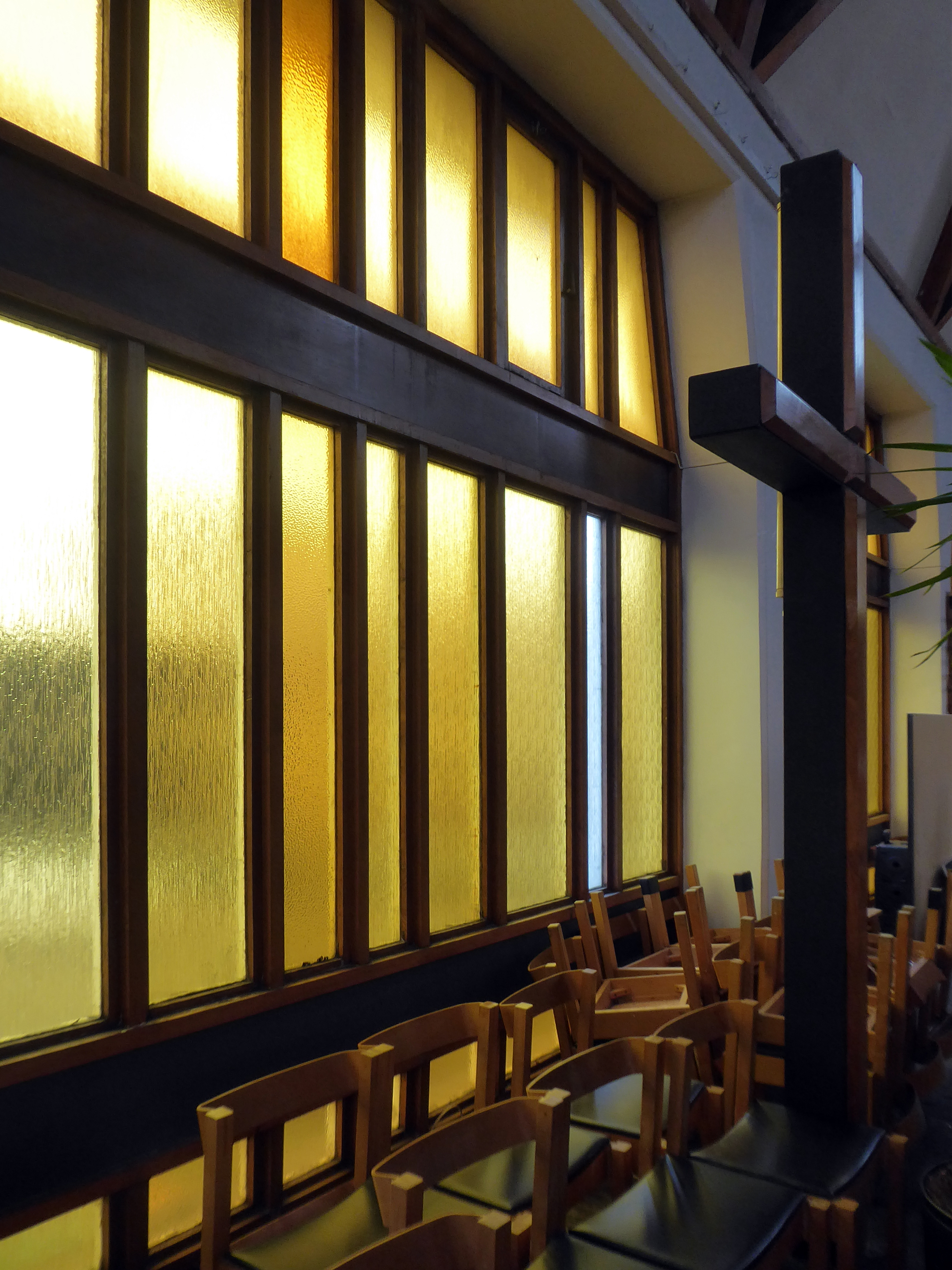
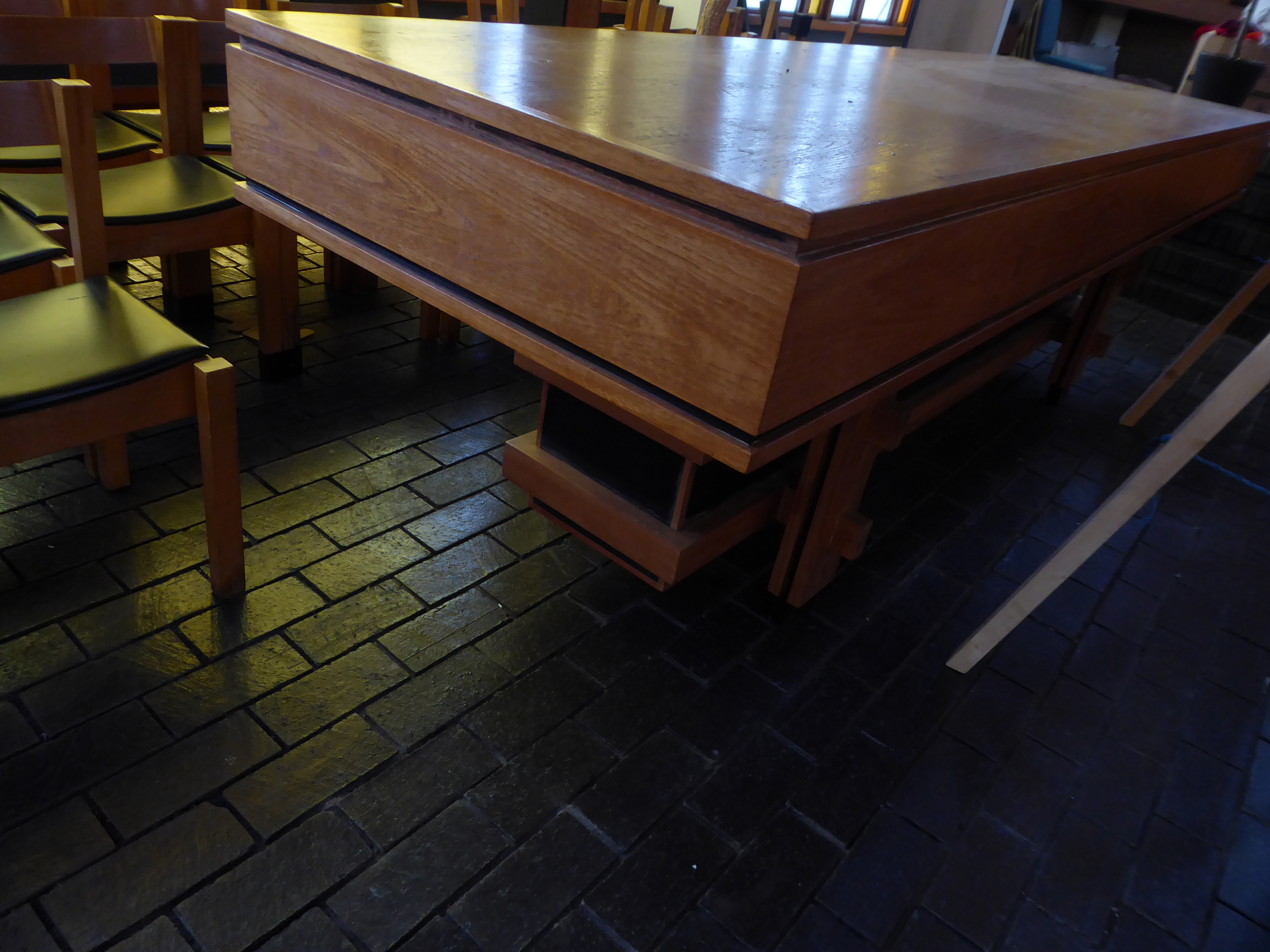
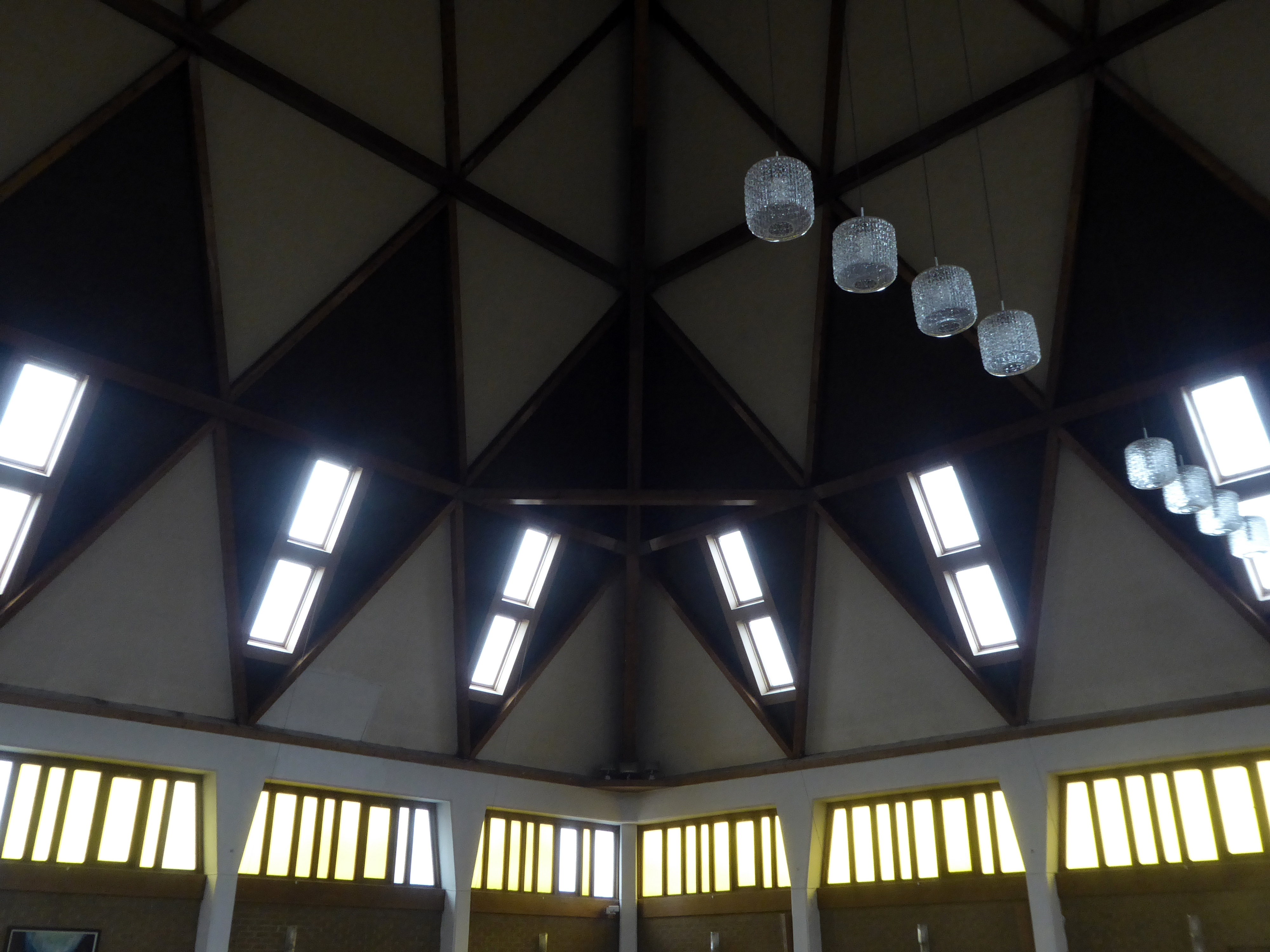
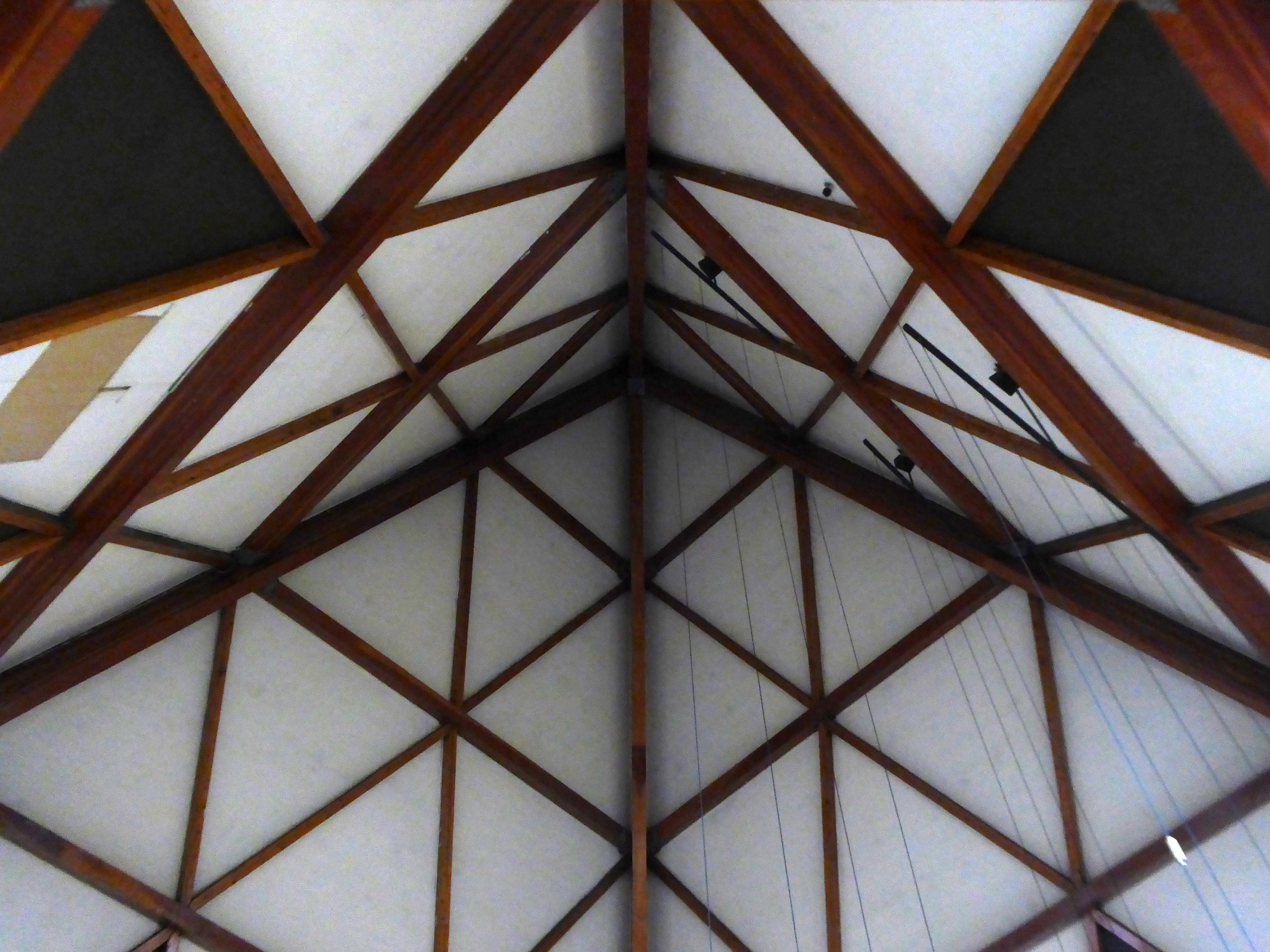
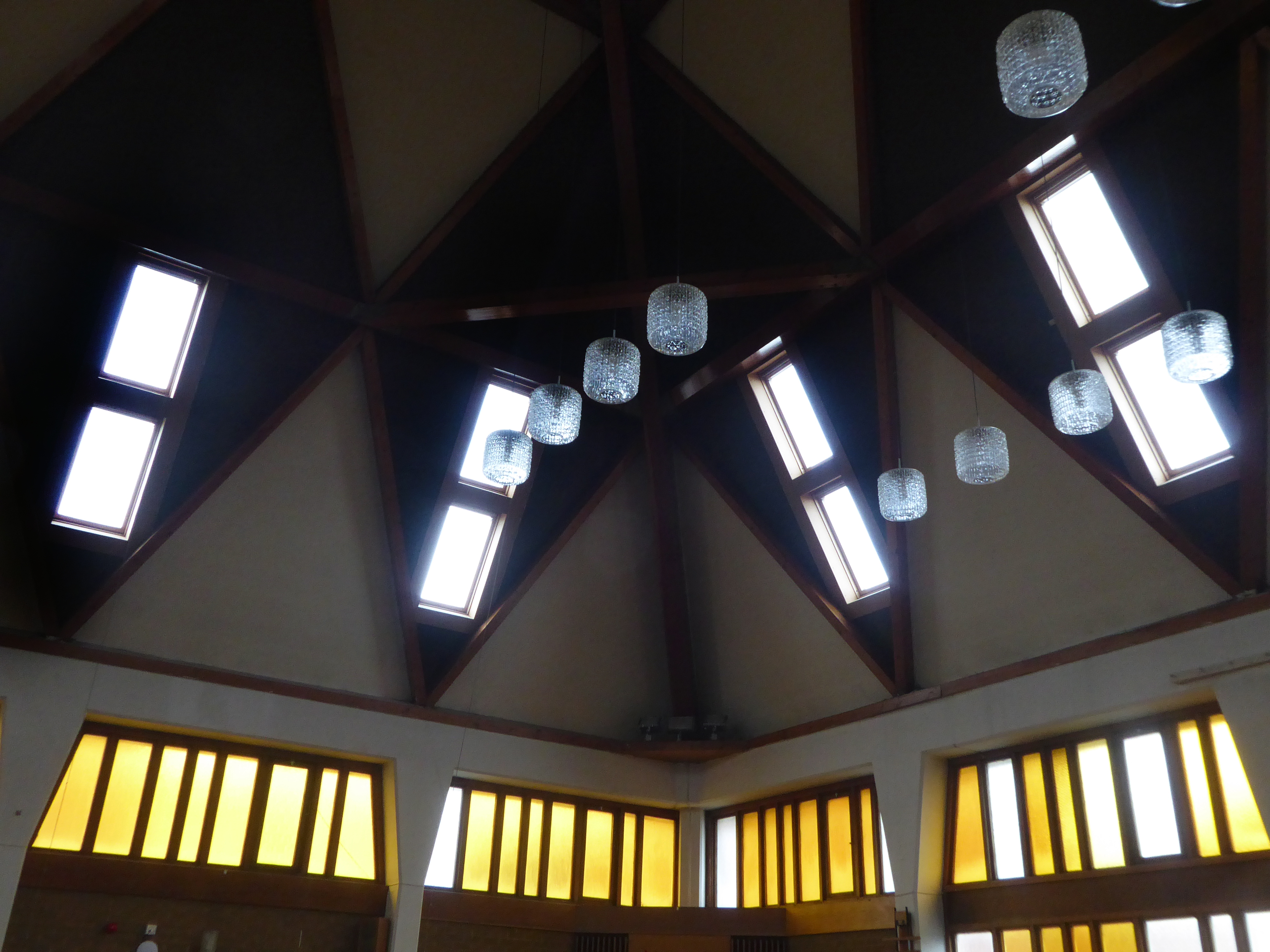
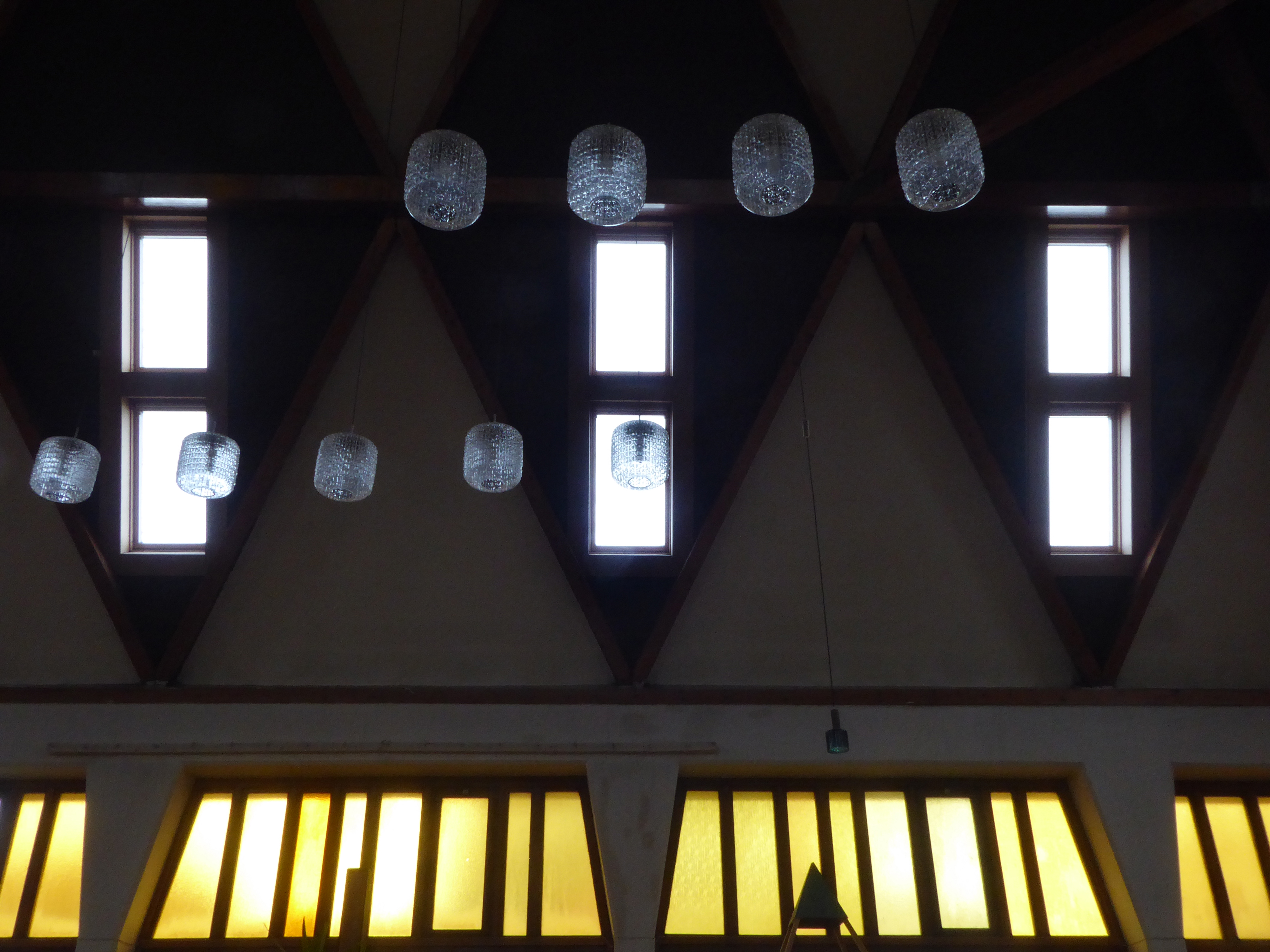
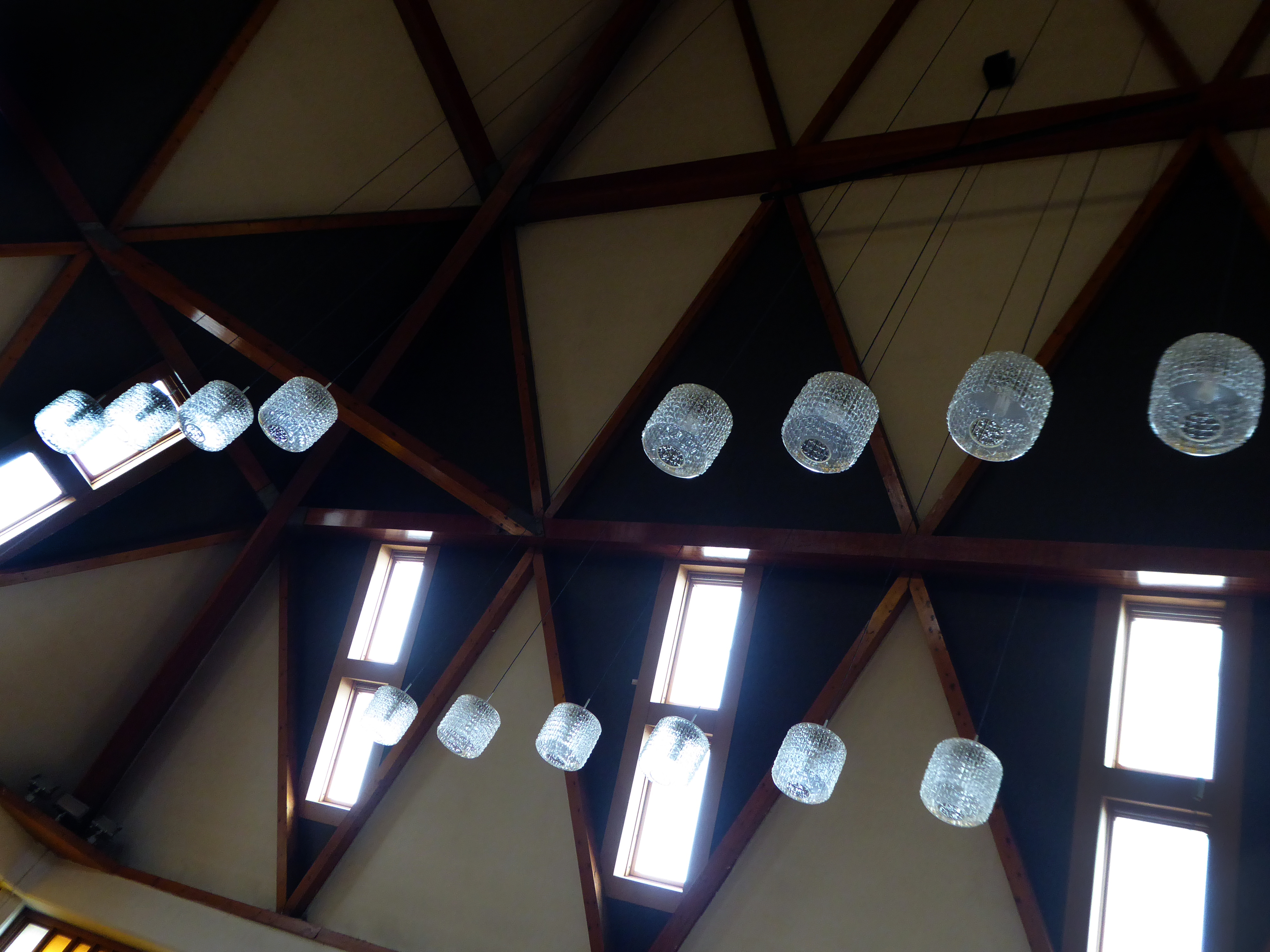
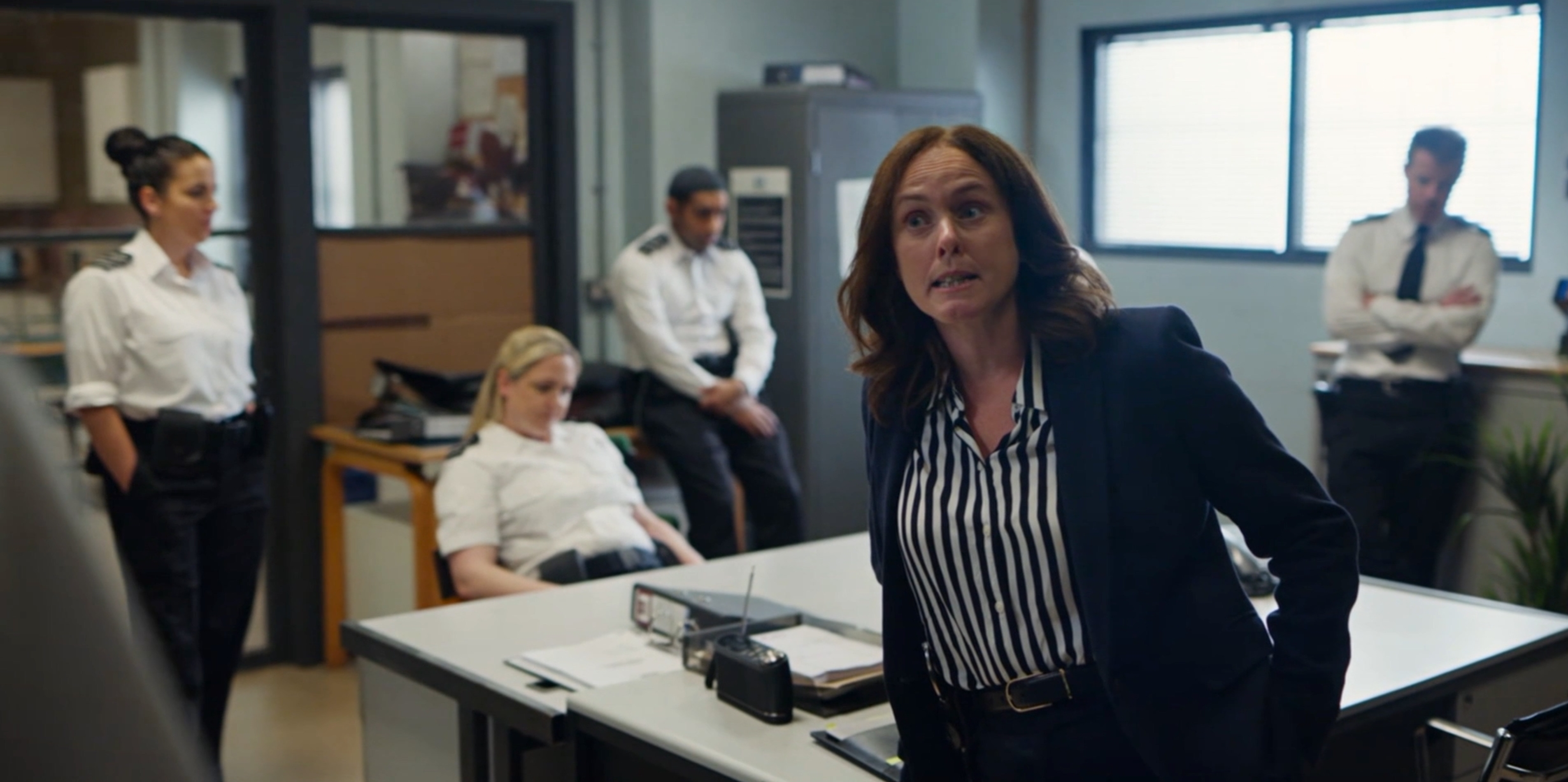
As a footnote the recent STV Studios produced series SCREW was filmed here!
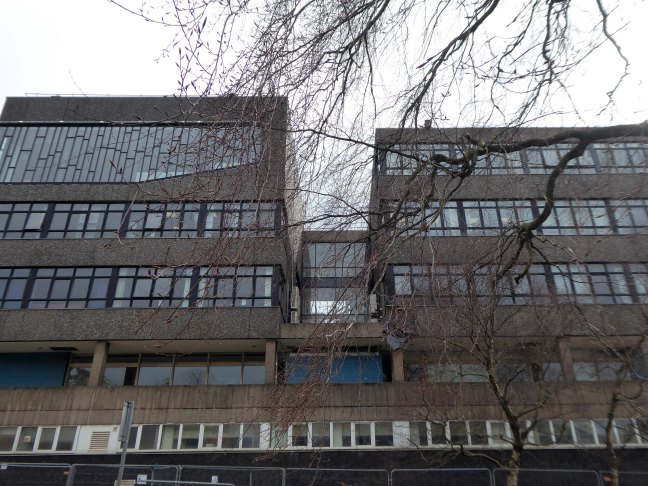
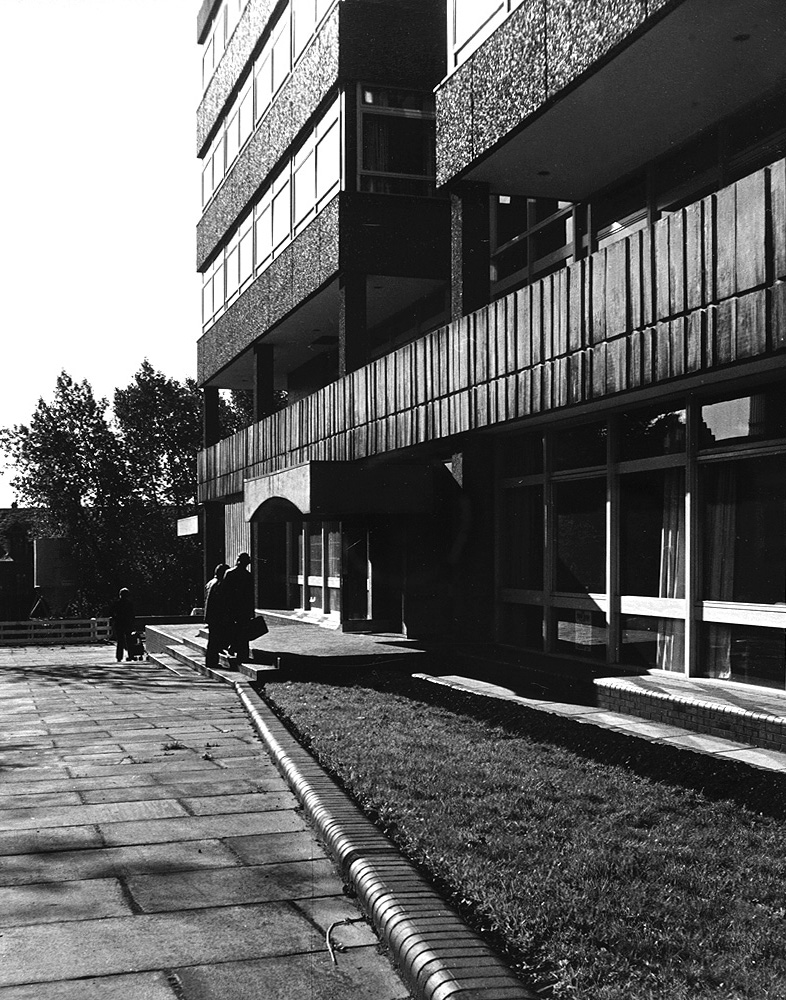
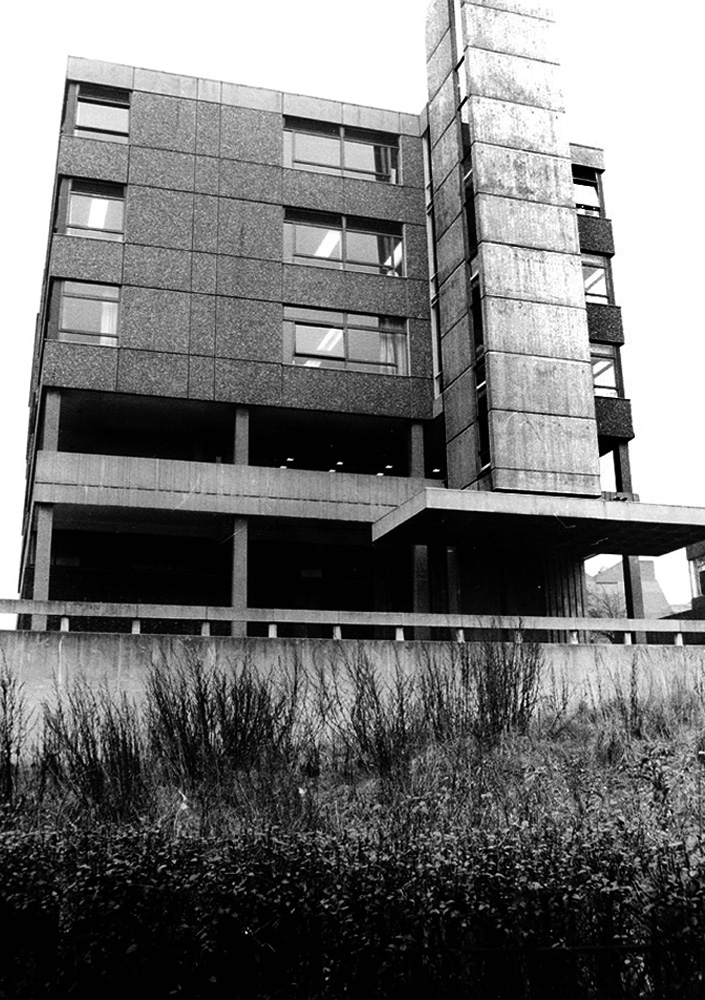
Architects: David Harvey, Alex Scott & Associates – 1967
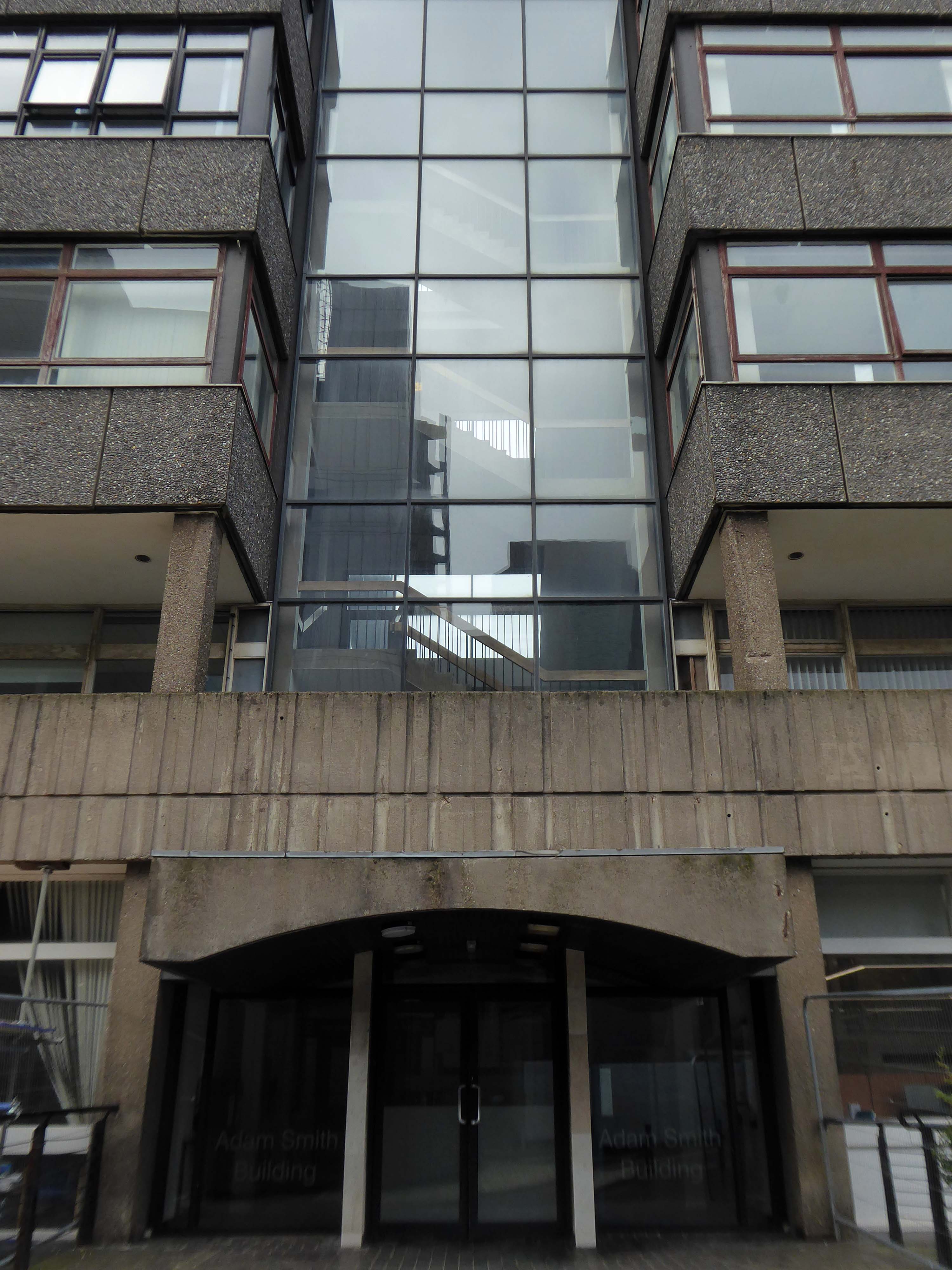
The Adam Smith Building, named in honour of the moral philosopher and political economist, Adam Smith, was formally opened on 2 November 1967 by Sydney George Checkland, Professor of Economic History from 1957 to 1982. The building was the first of the University’s multipurpose blocks housing a large number of departments, and a library for Political Economy, Social and Economic Research, Economic History, Political and Social Theory and Institutions, Management Studies, Psychology, Social Psychology, Accountancy, Citizenship, Anthropology, Criminology, Industrial Relations, and the School of Social Study. A records store was provided beneath the Library for the Economic History department to house their rapidly growing collection of business records from the vanishing Clyde shipyards and heavy engineering workshops, which now form part of the Scottish Business Archive held at University of Glasgow Archive Services.
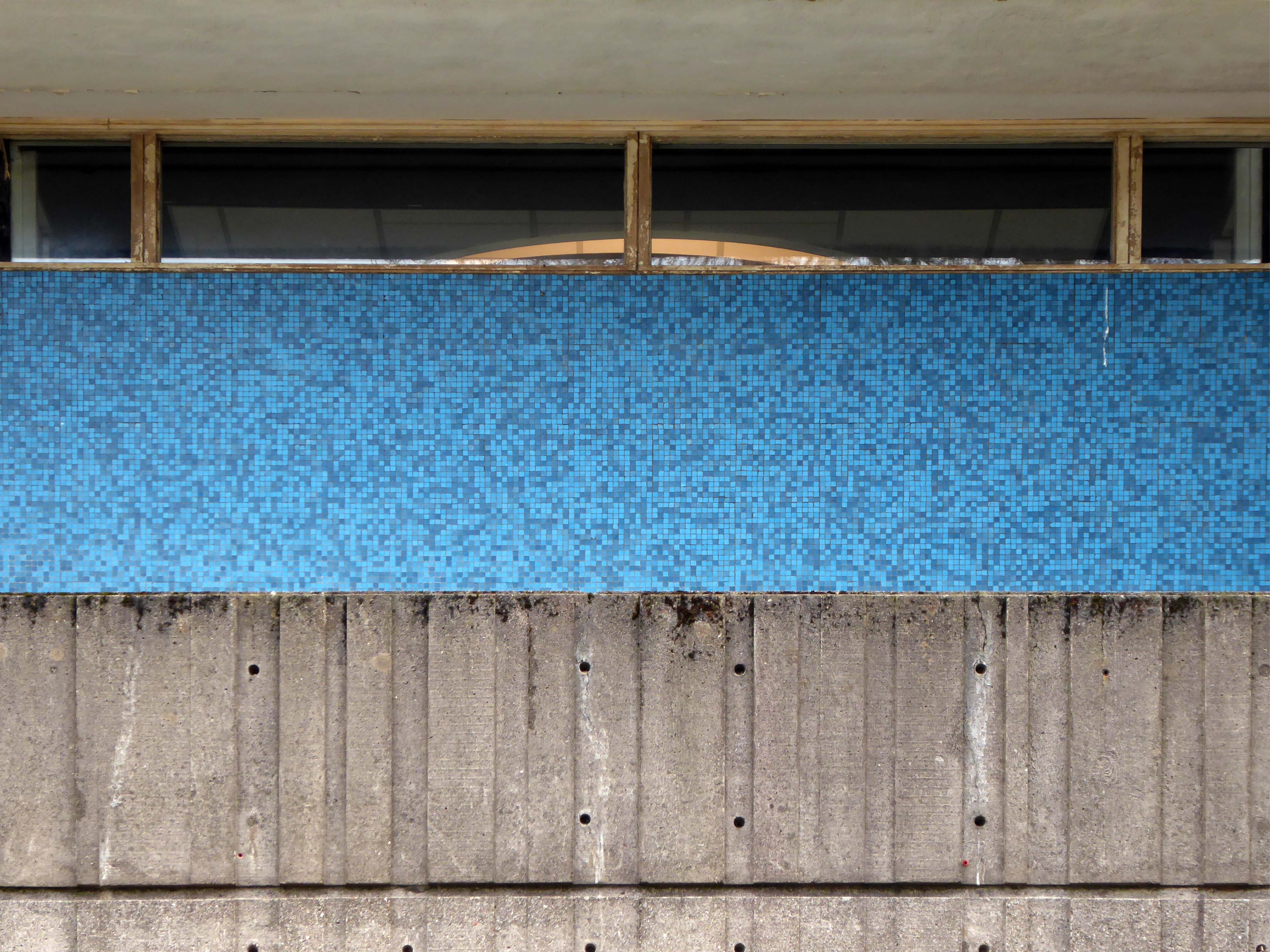
Wandering almost aimlessly around the campus, when the blue mosaic caught my eye.
The glass stairwell drew me in further.
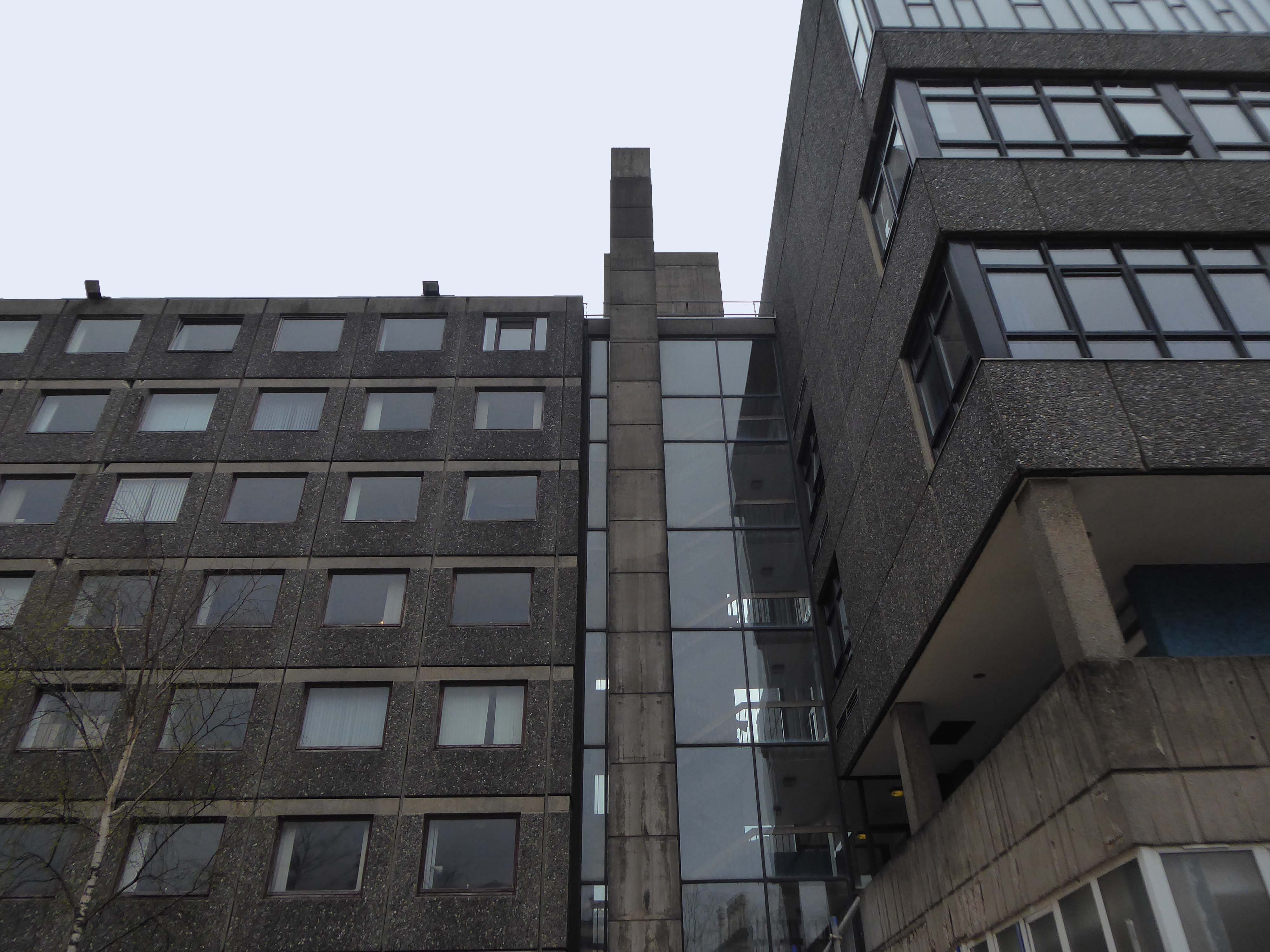
Entering the building I explained myself to the passing janitor:
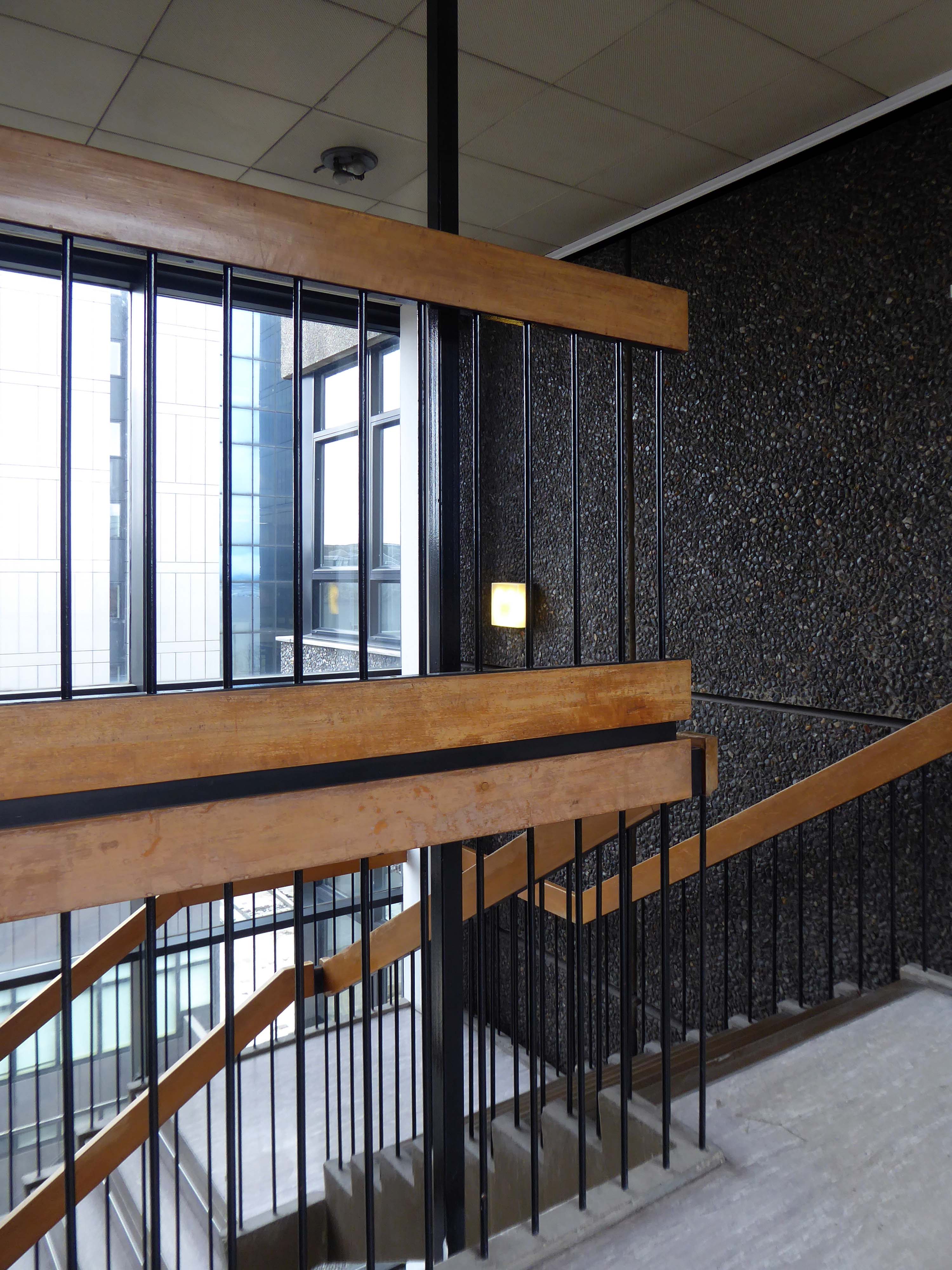
I’m intrigued by the stairways of 1960s civic buildings.
There are two – he helpfully replied.
Further intrigued I took a good look around – first up one.
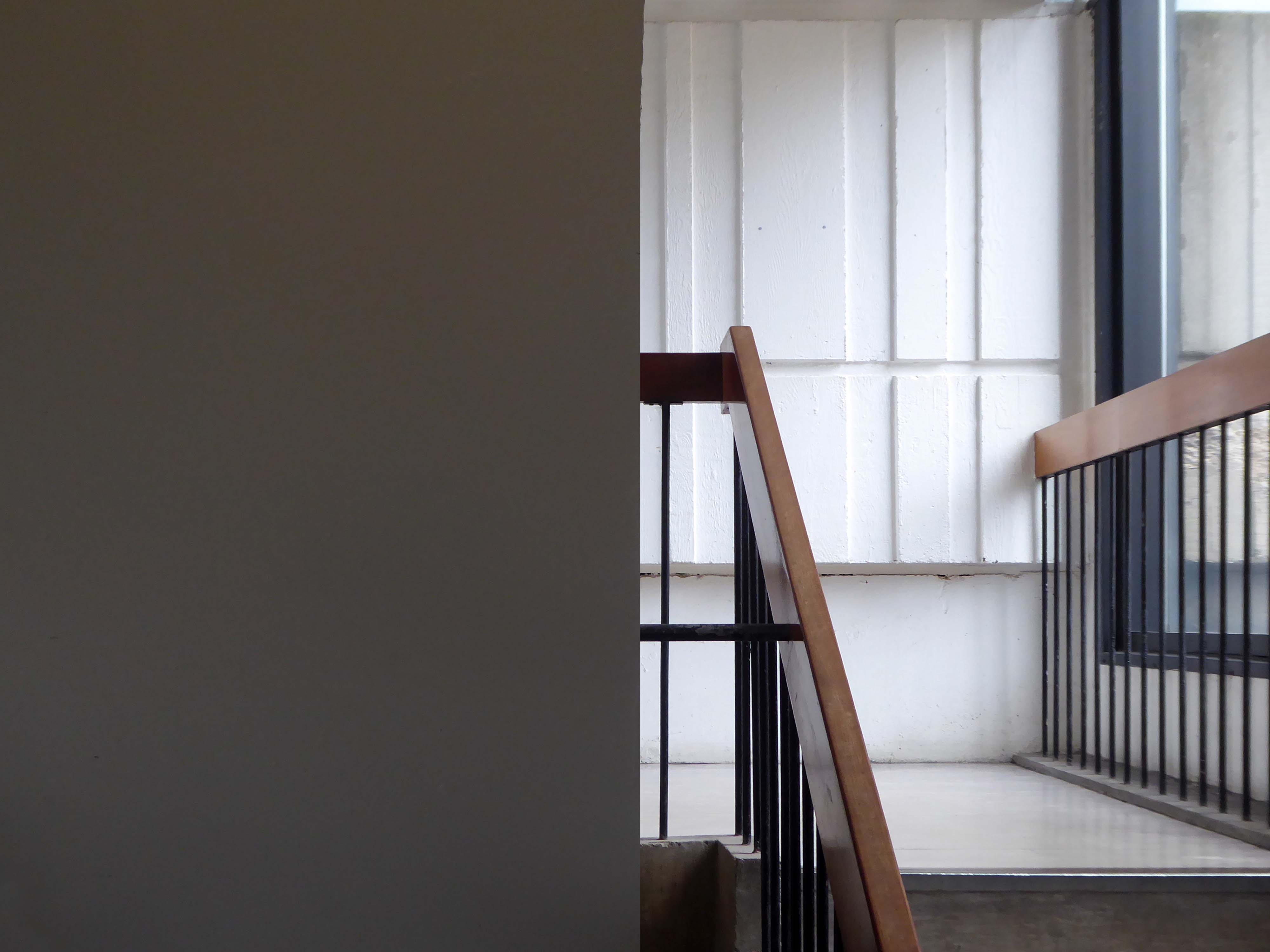
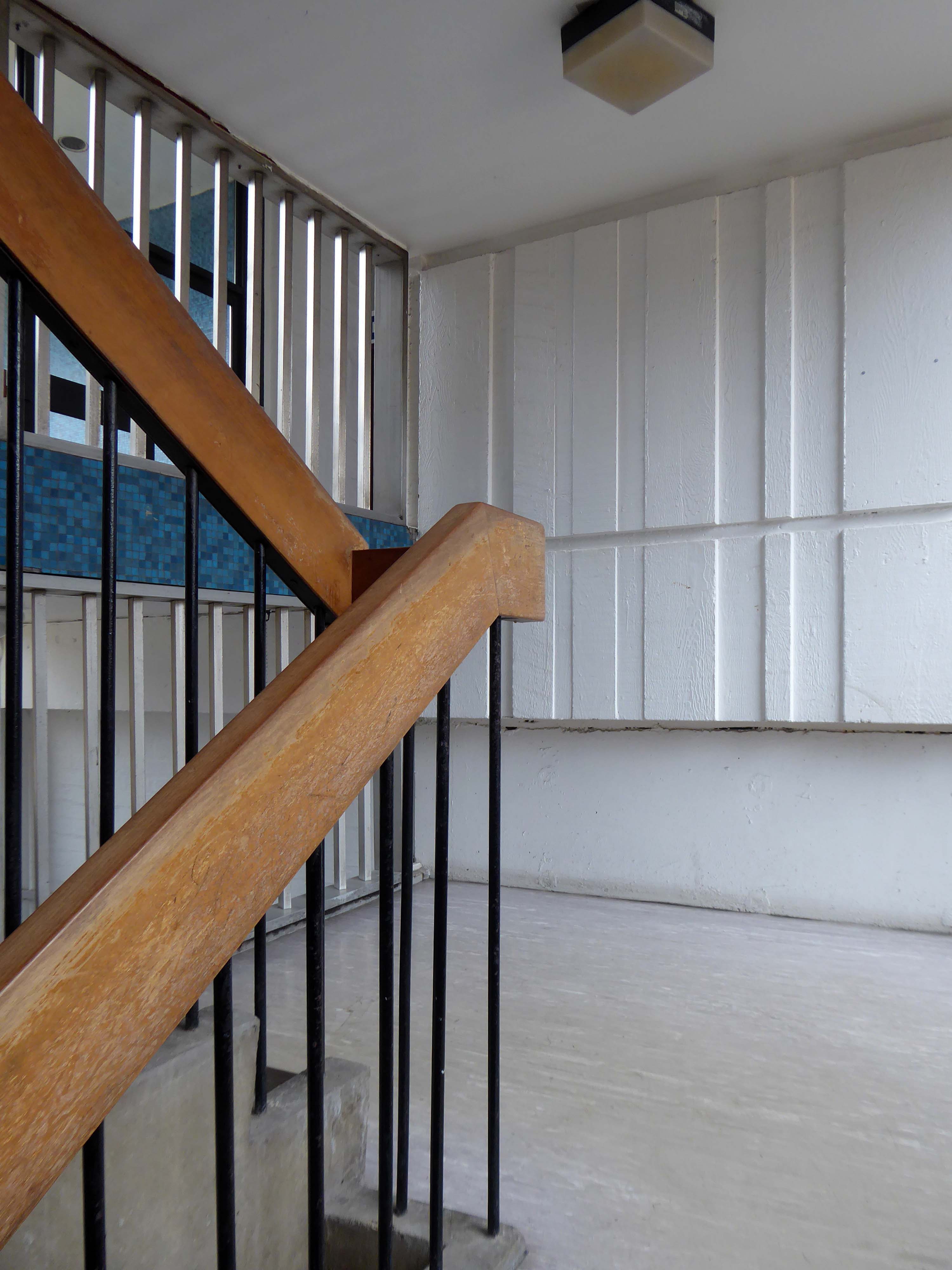
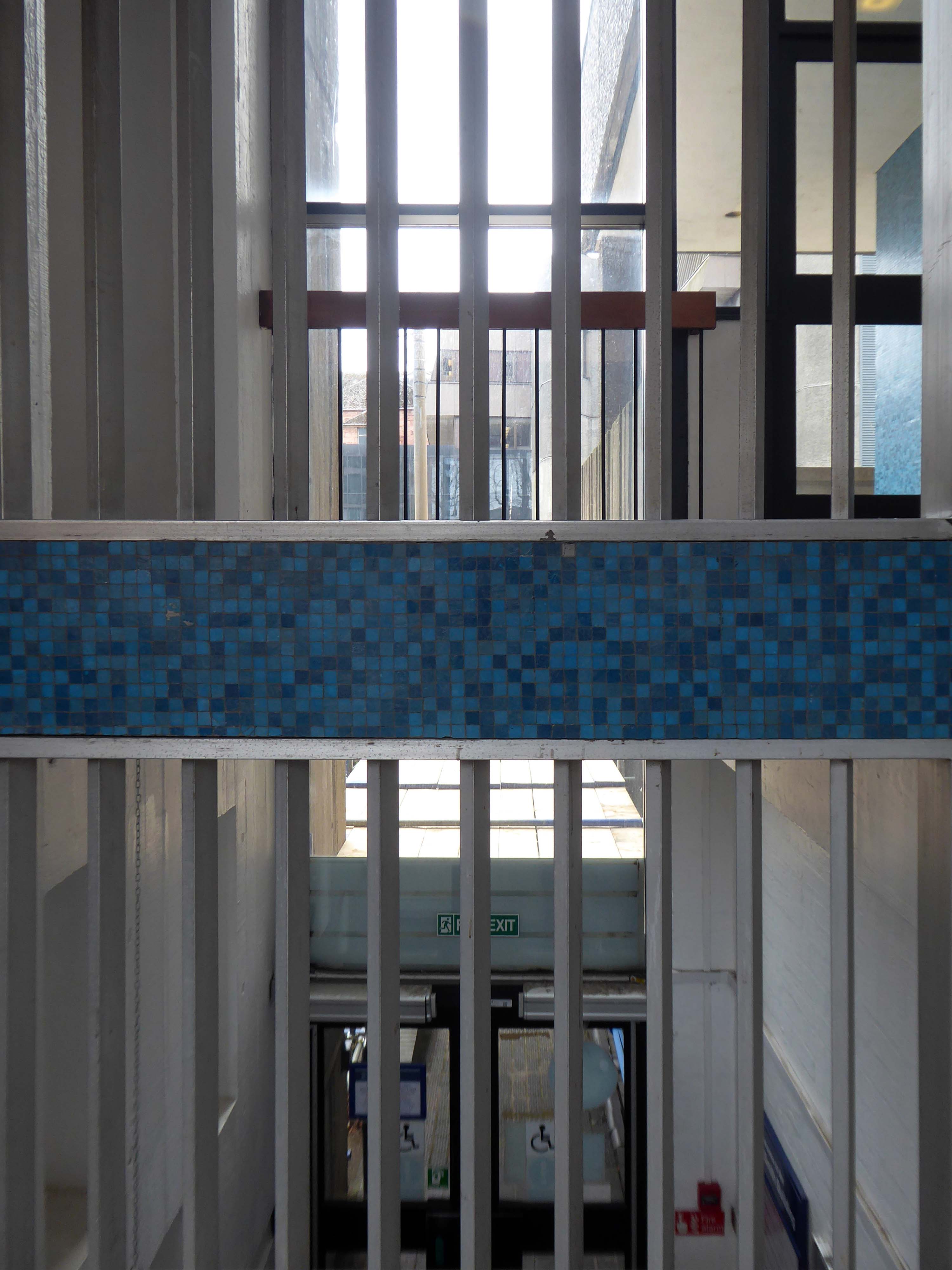
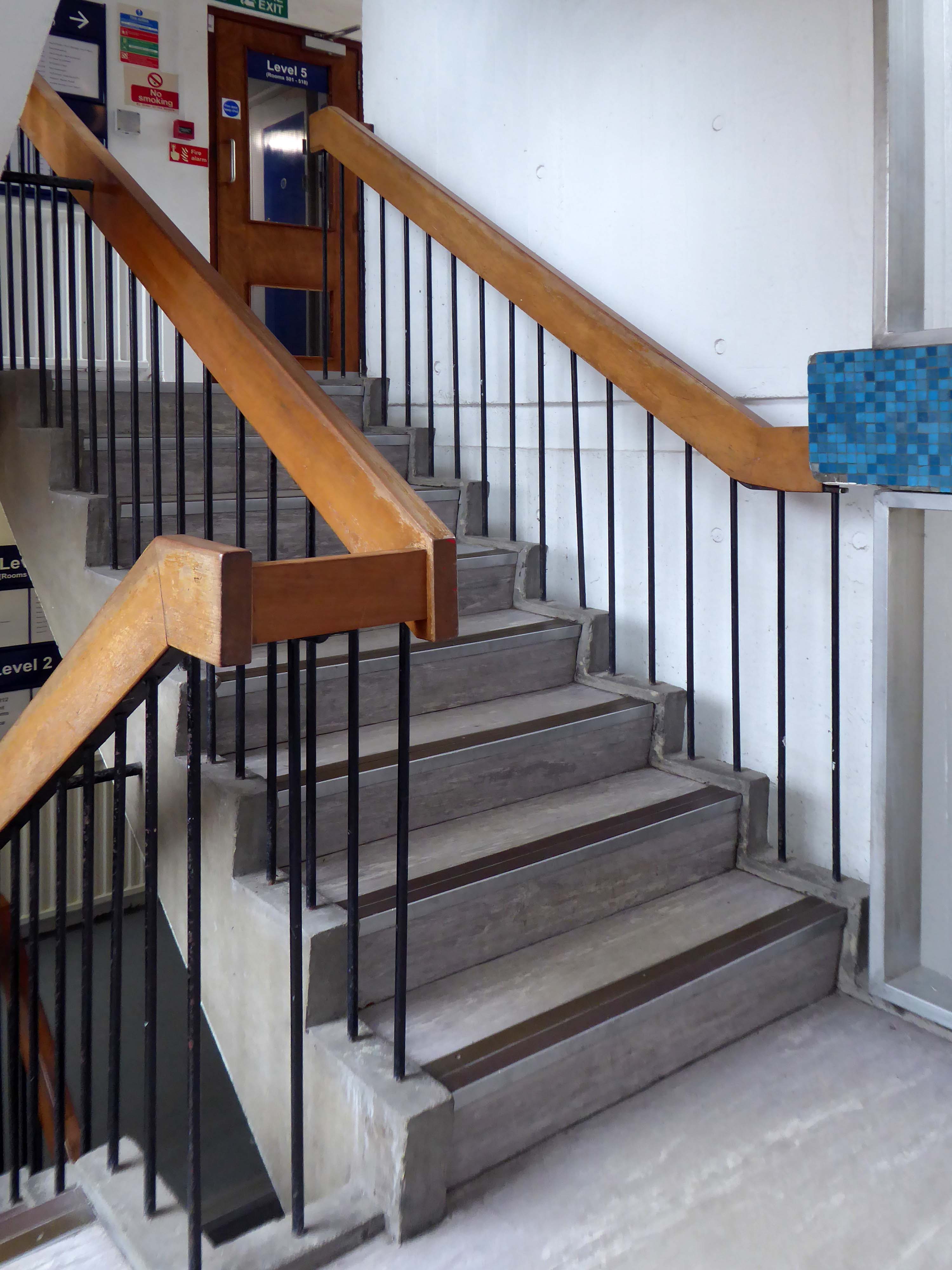
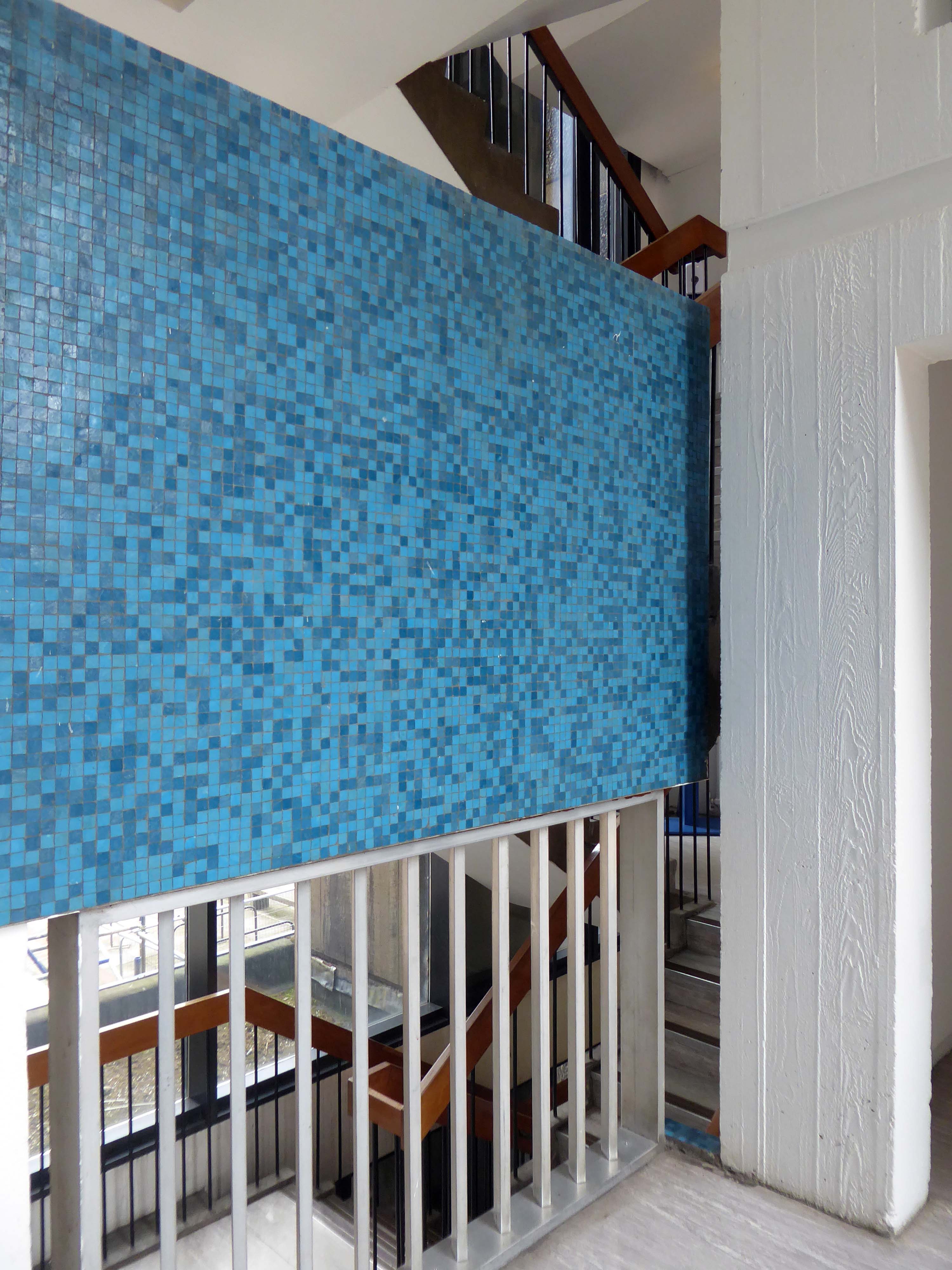
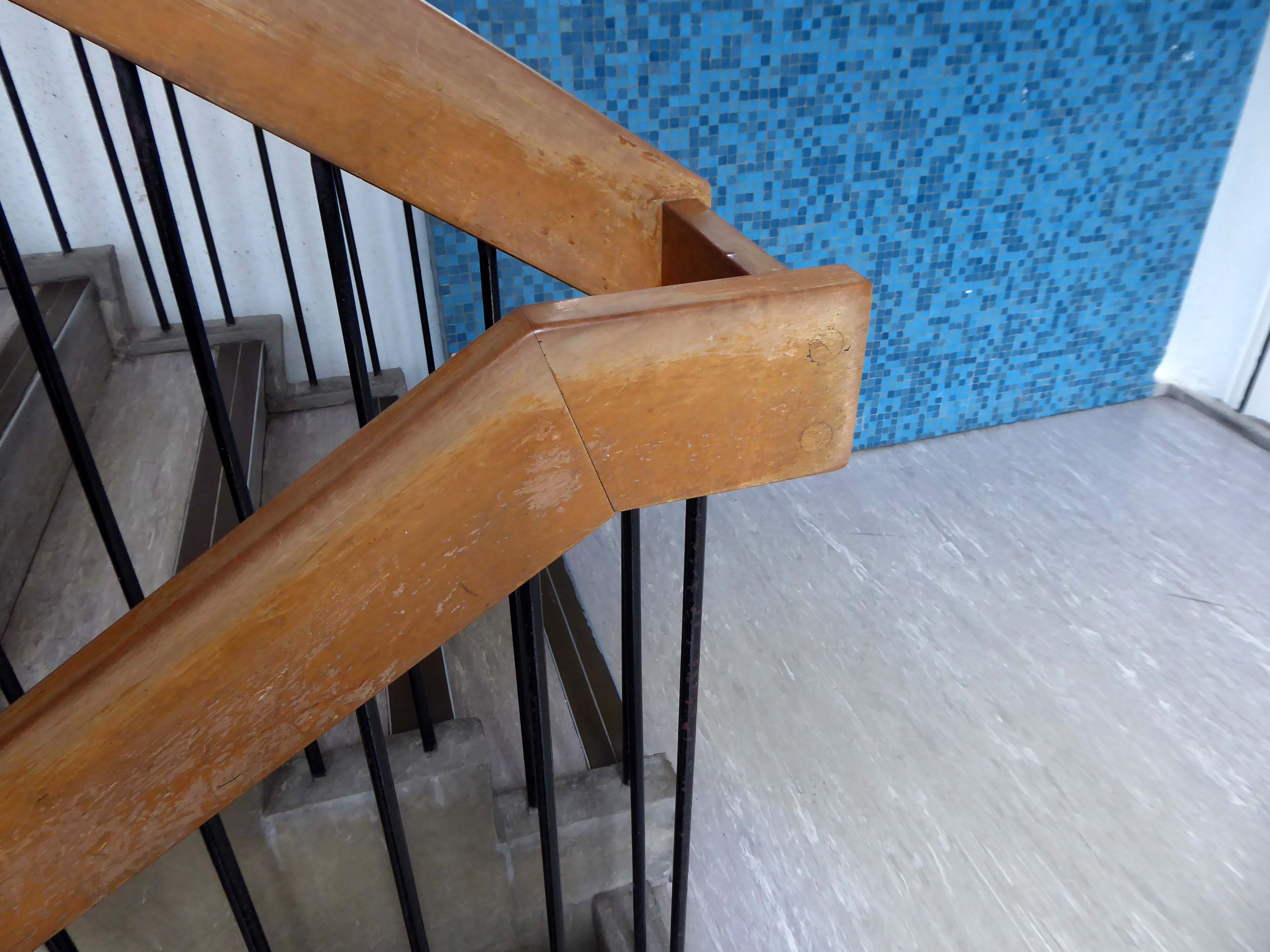
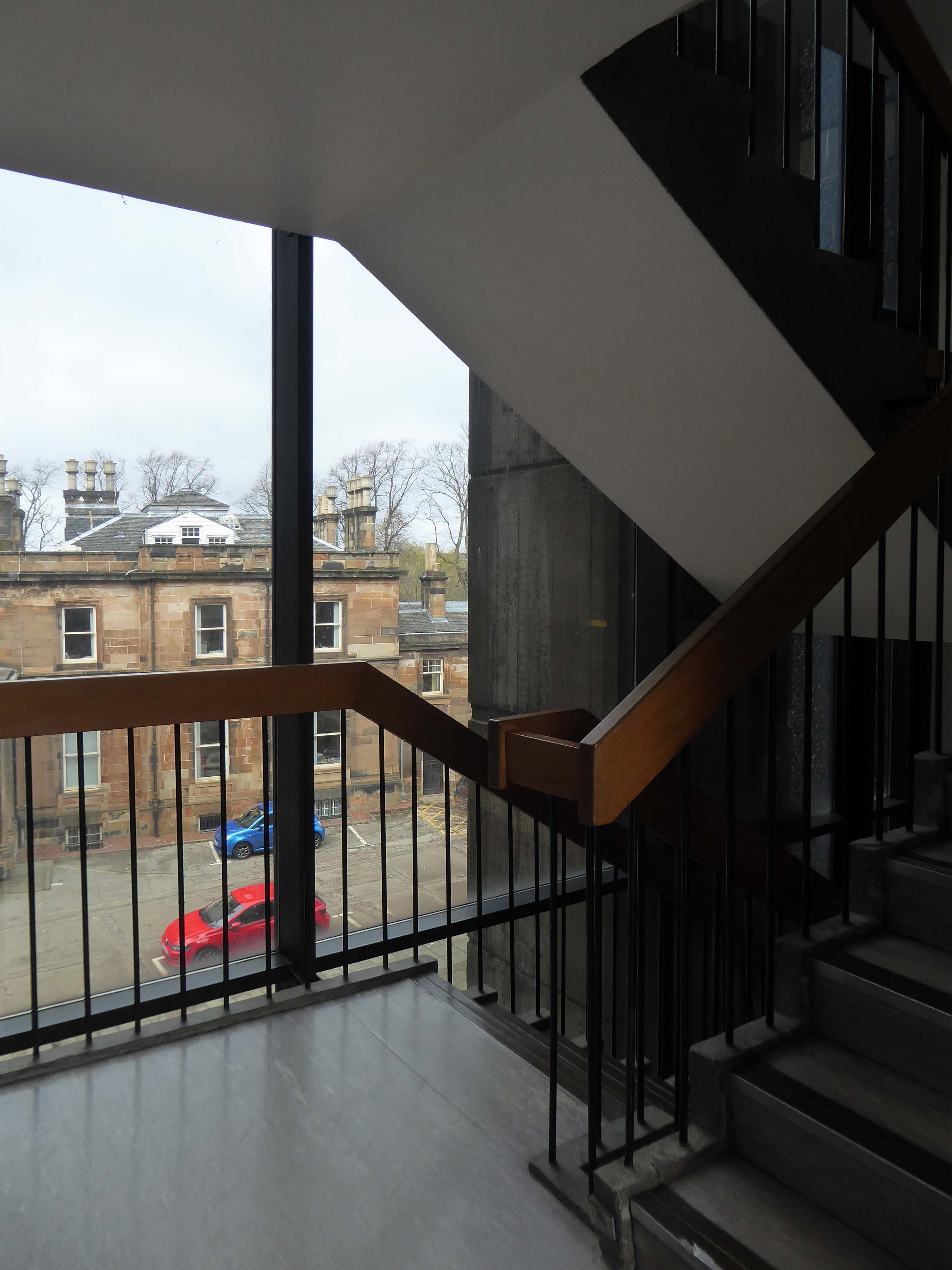
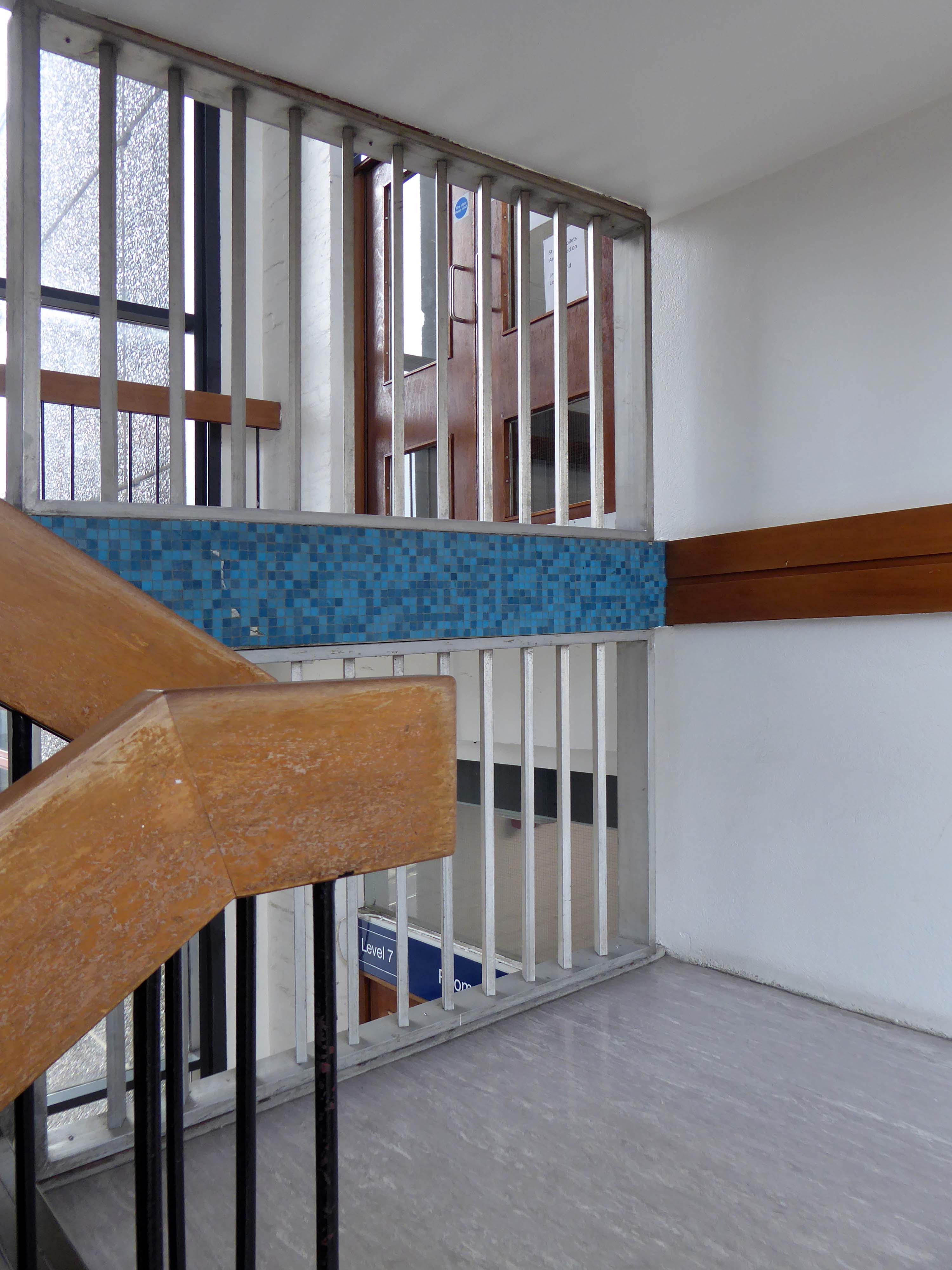
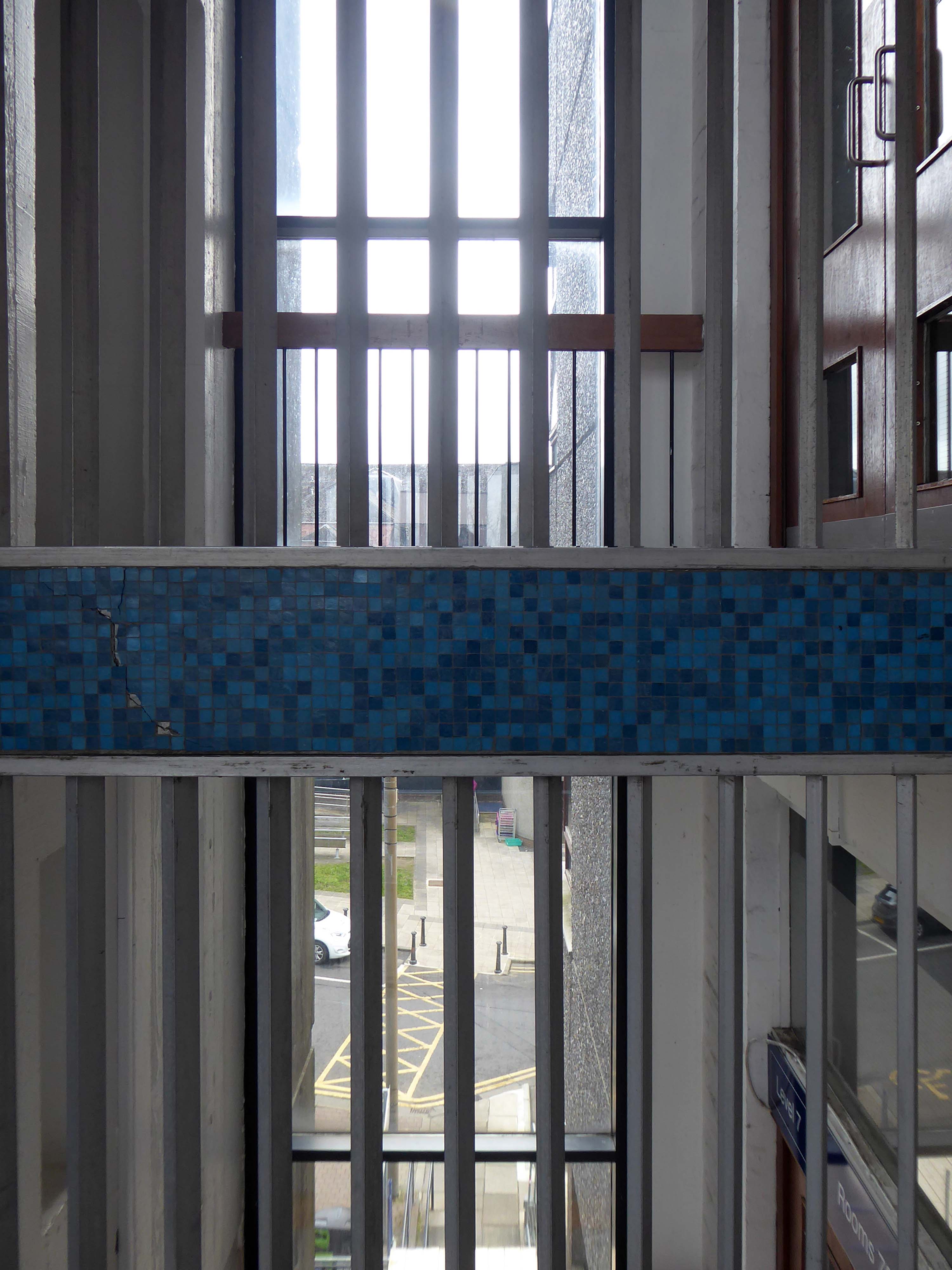
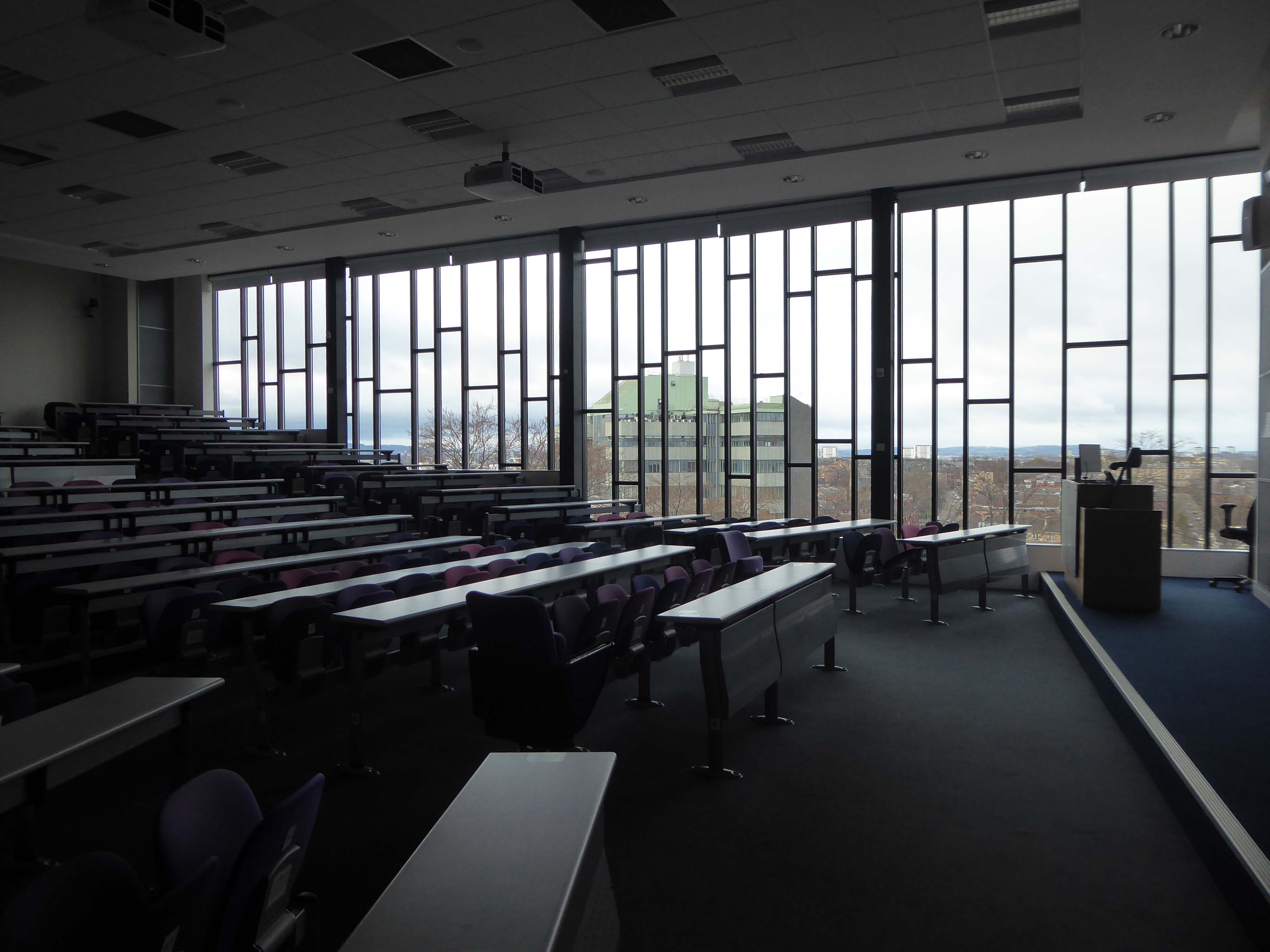
Reaching the top and discovering the Lecture Theatre.
Then down the other.
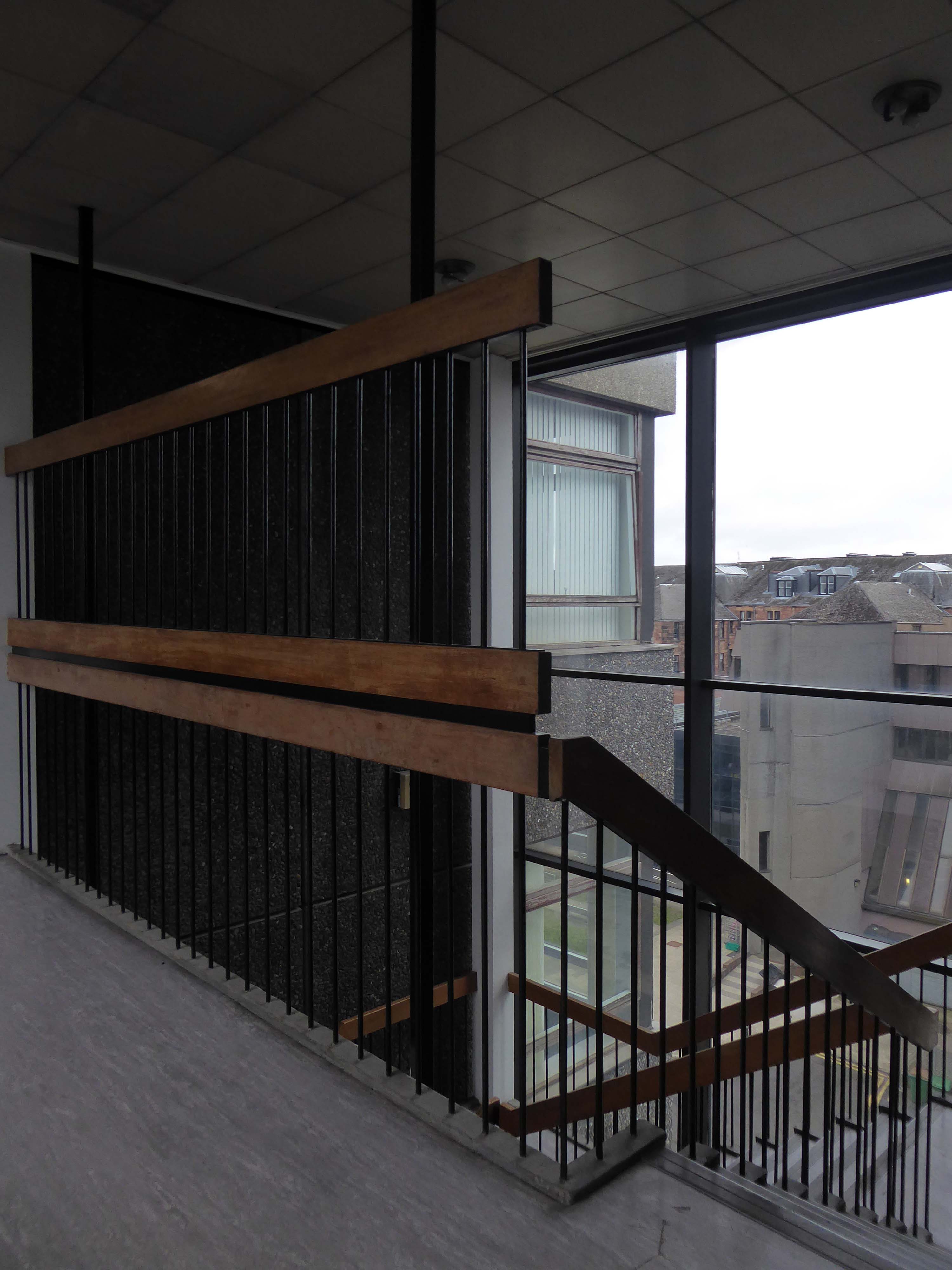
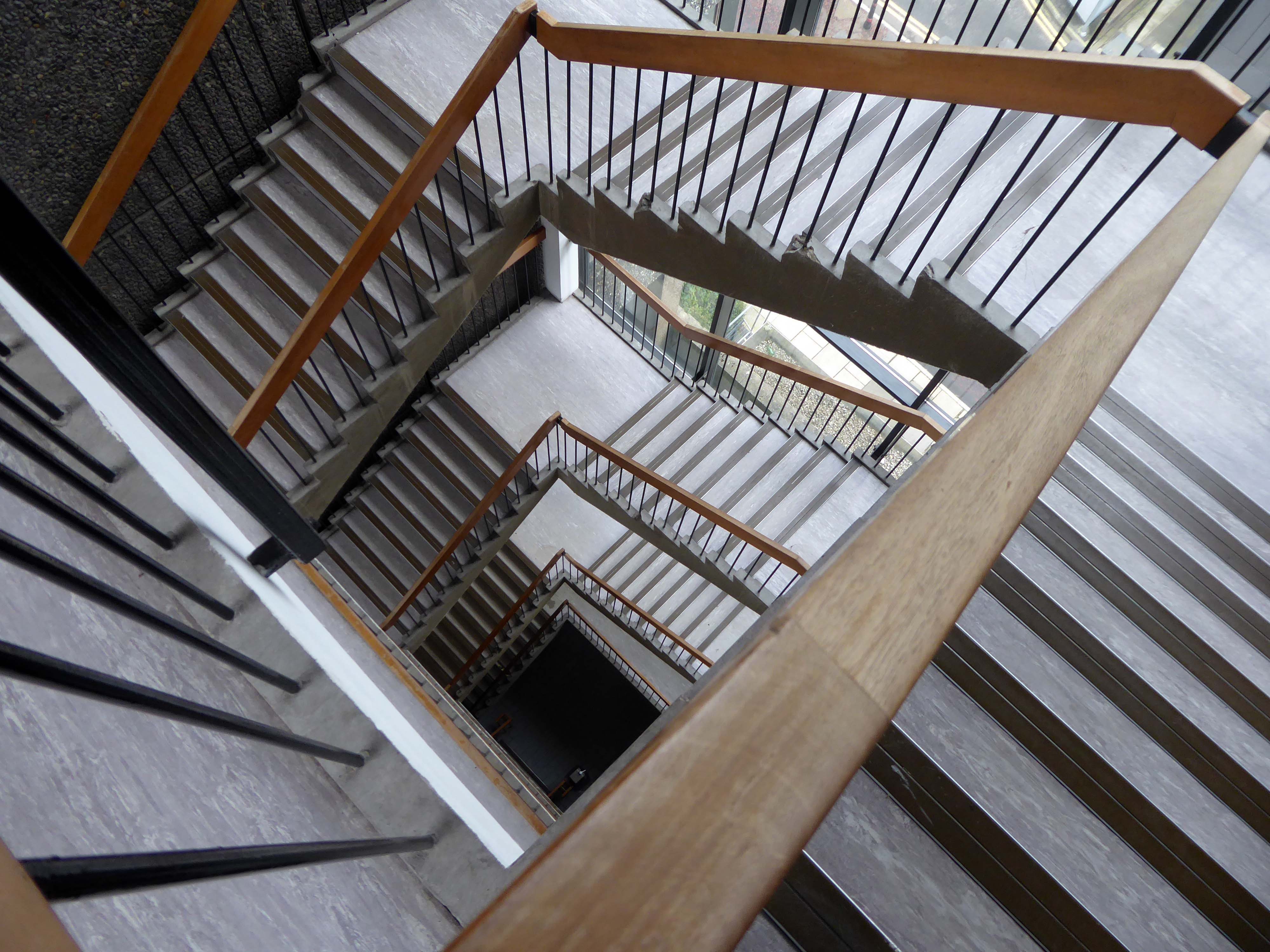
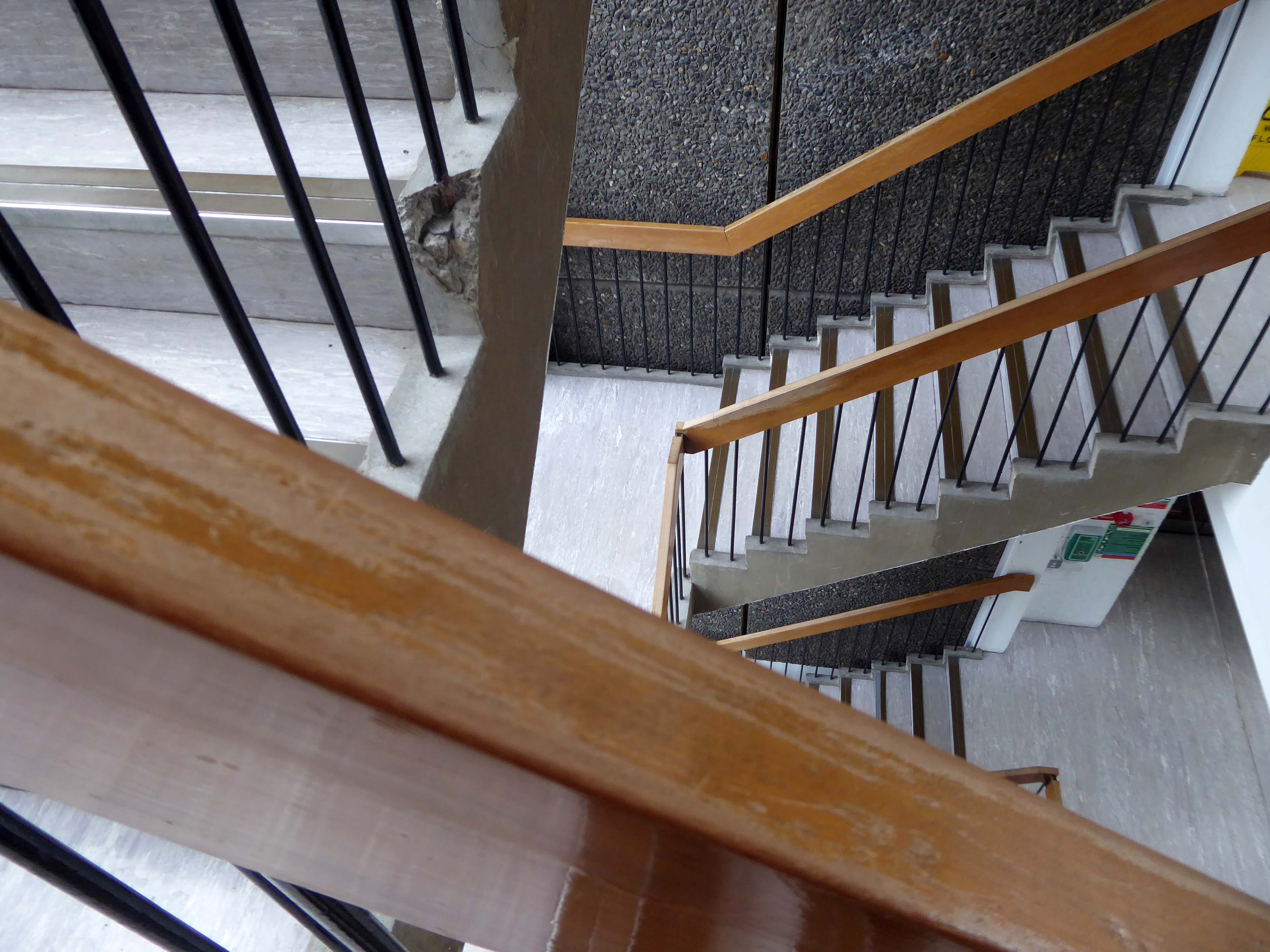
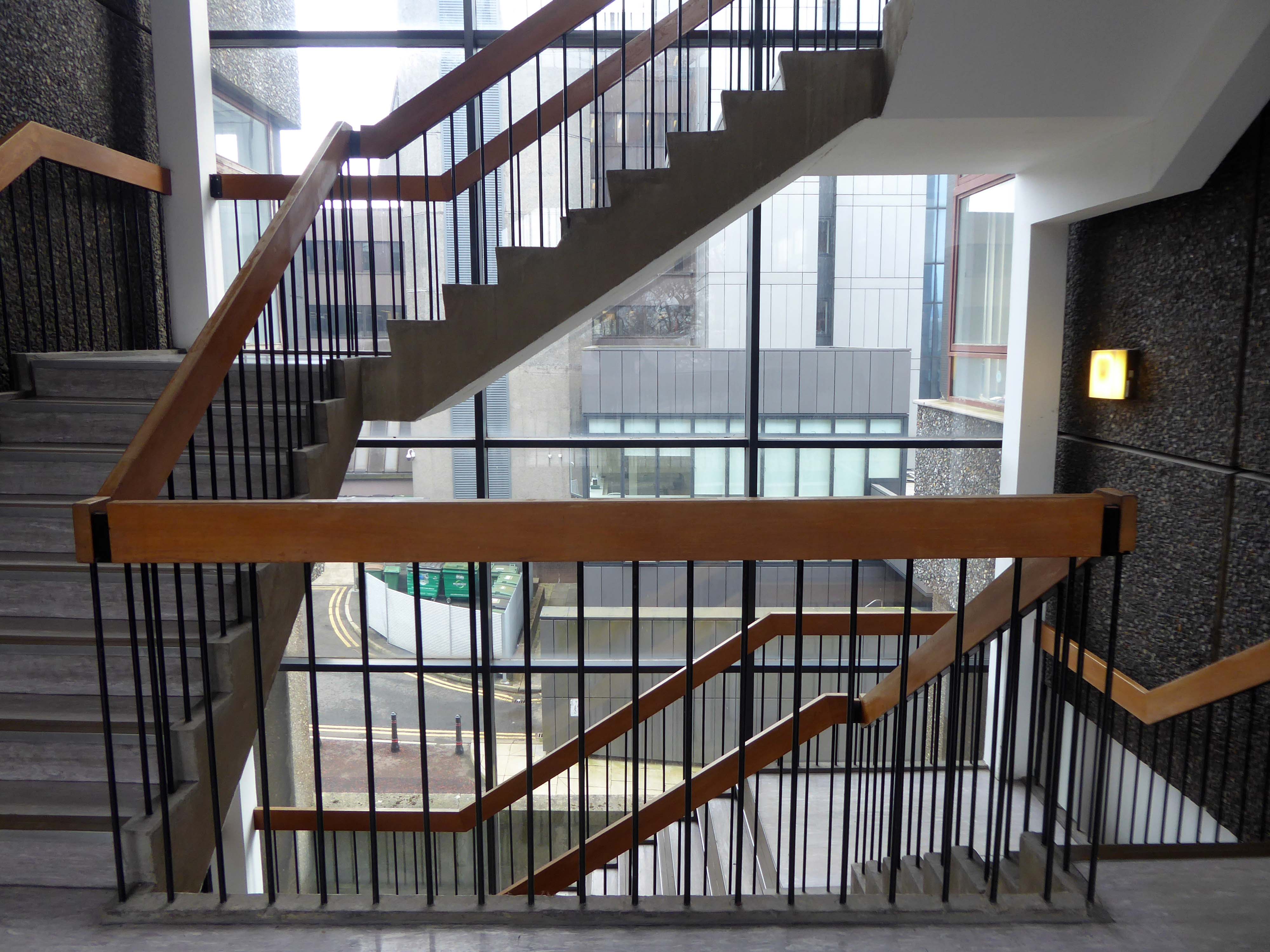
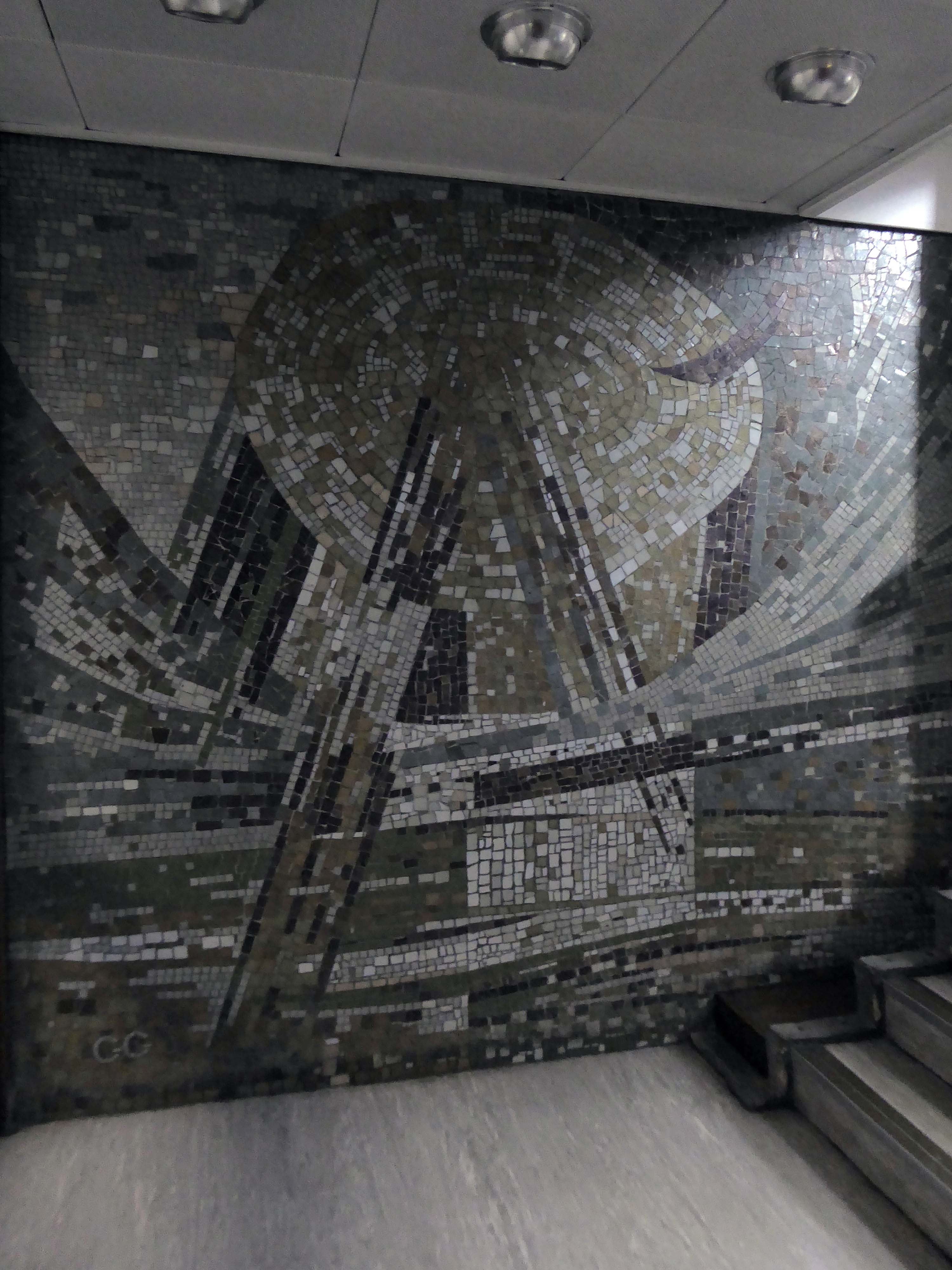
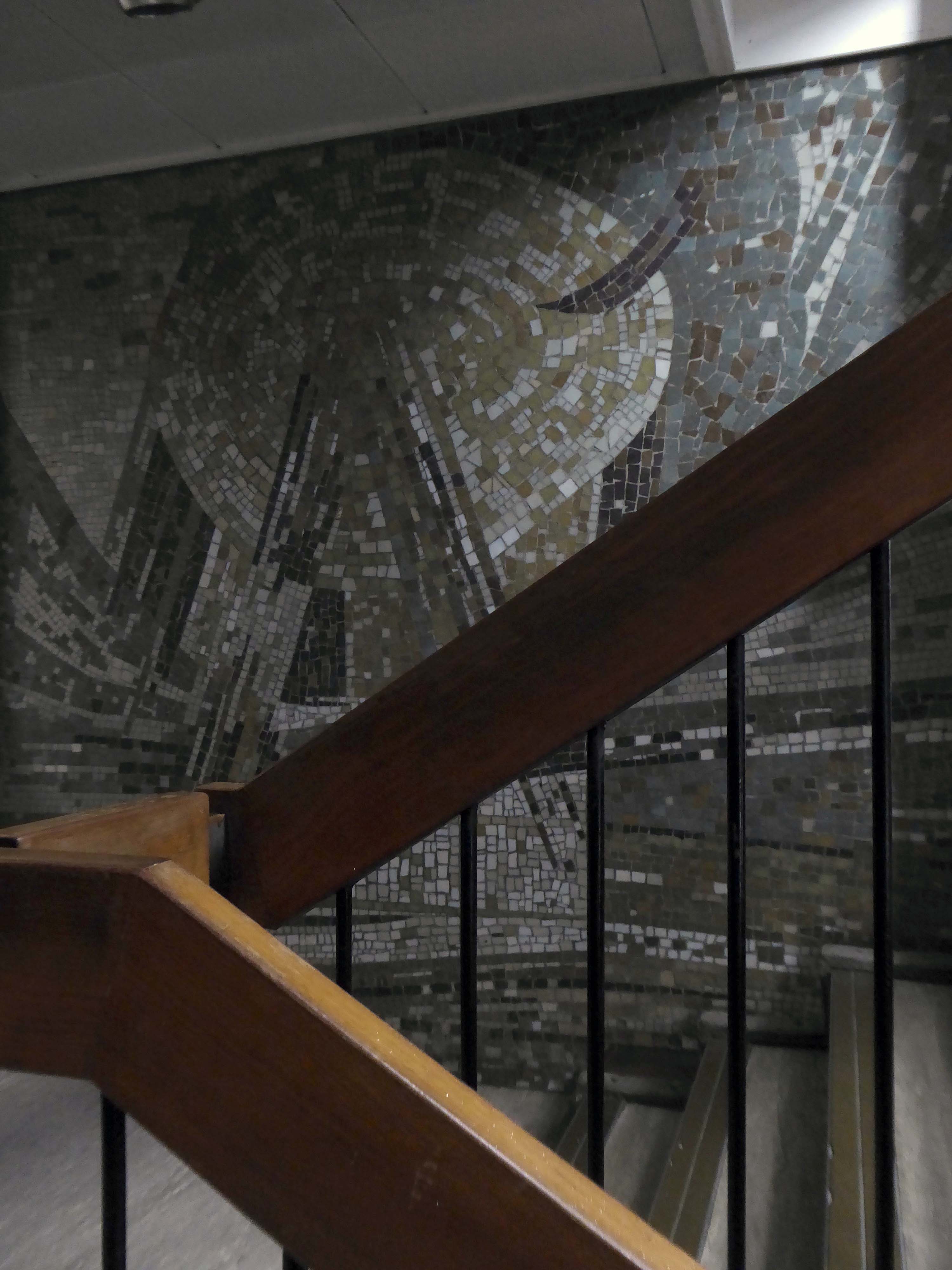
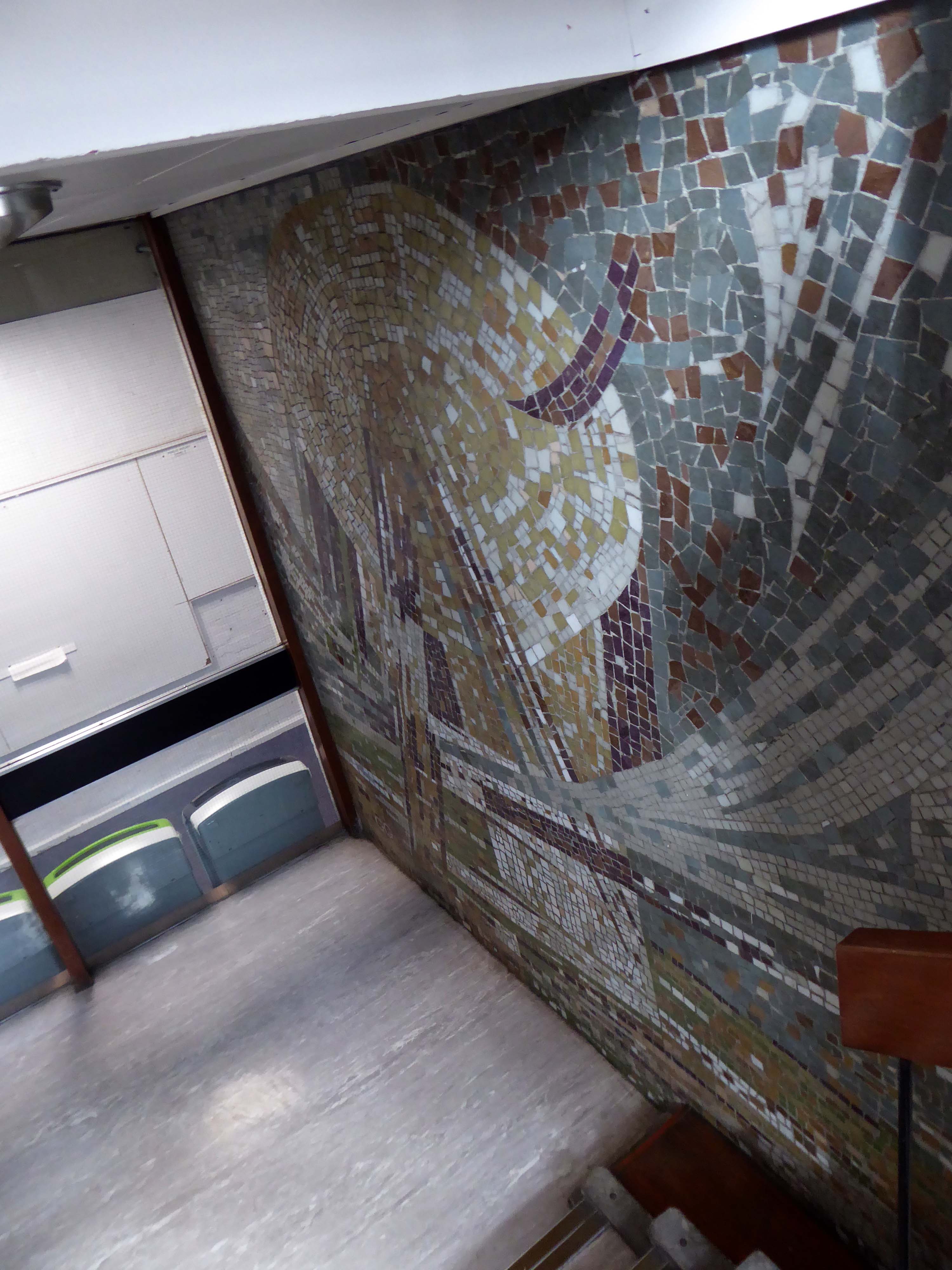
The mosaic mural at the foot of the main staircase was the work of George Garson, the head of the Mural Design and Stained Glass department at the Glasgow School of Art.
A quick look around the outside and then on my way.
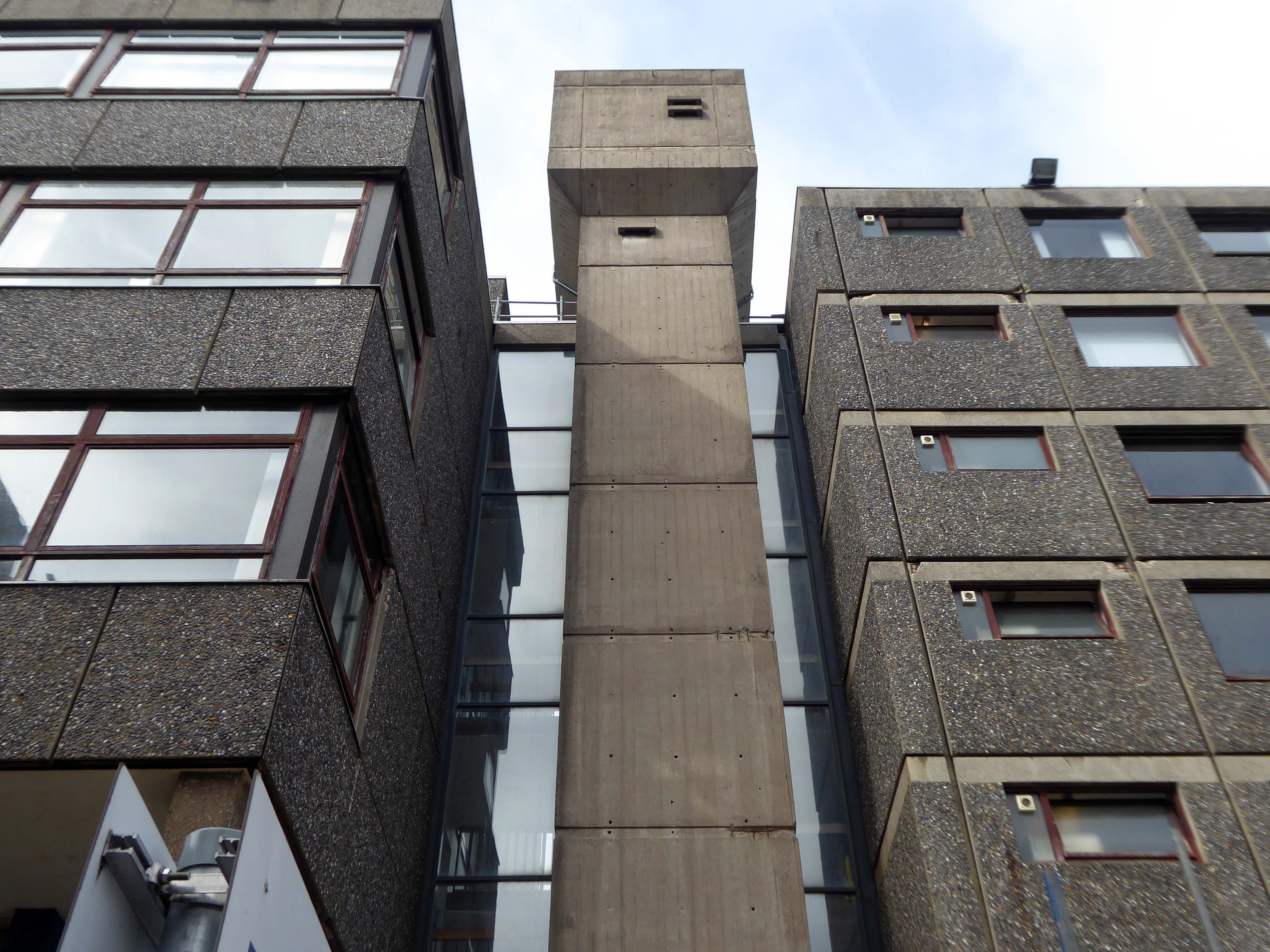
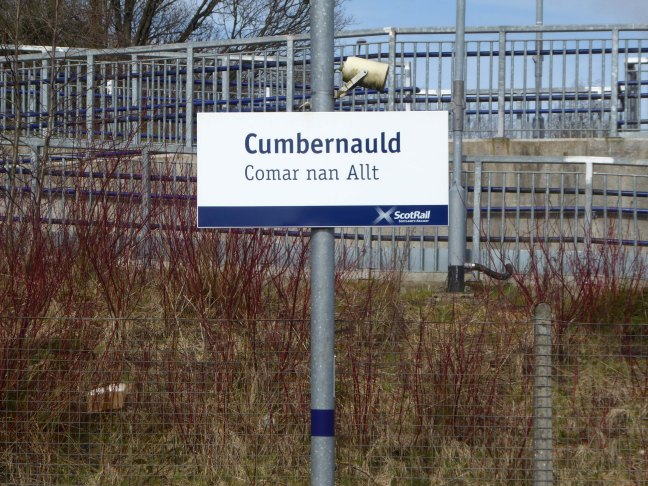
Sunday morning in Glasgow, I caught the first train out from Queen Street Station.
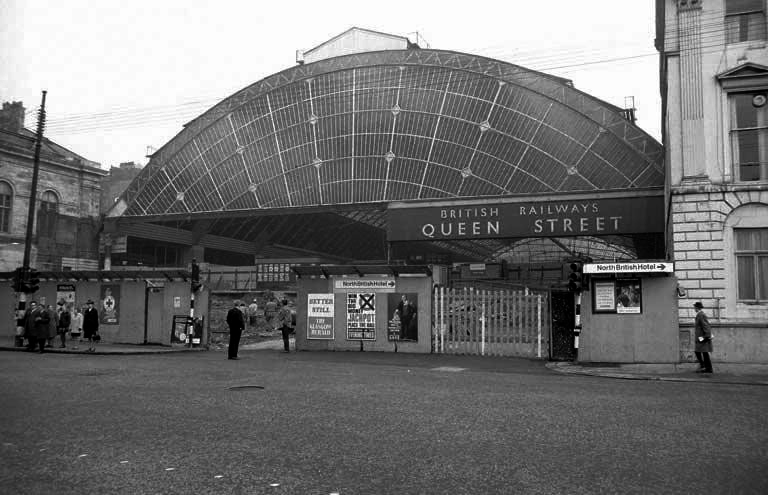
In October 2017, a £120 million project began on bringing the station up to modern standards, demolishing many of the 1960s buildings and replacing them with a new station concourse, which was completed in 2021.
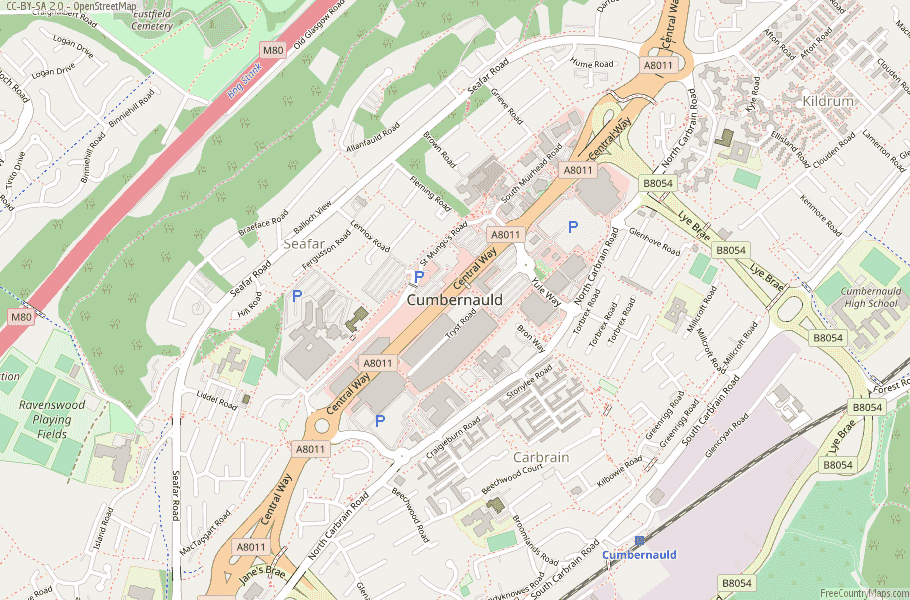
I arrived in Cumbernauld and walked toward the Central Way and back again.
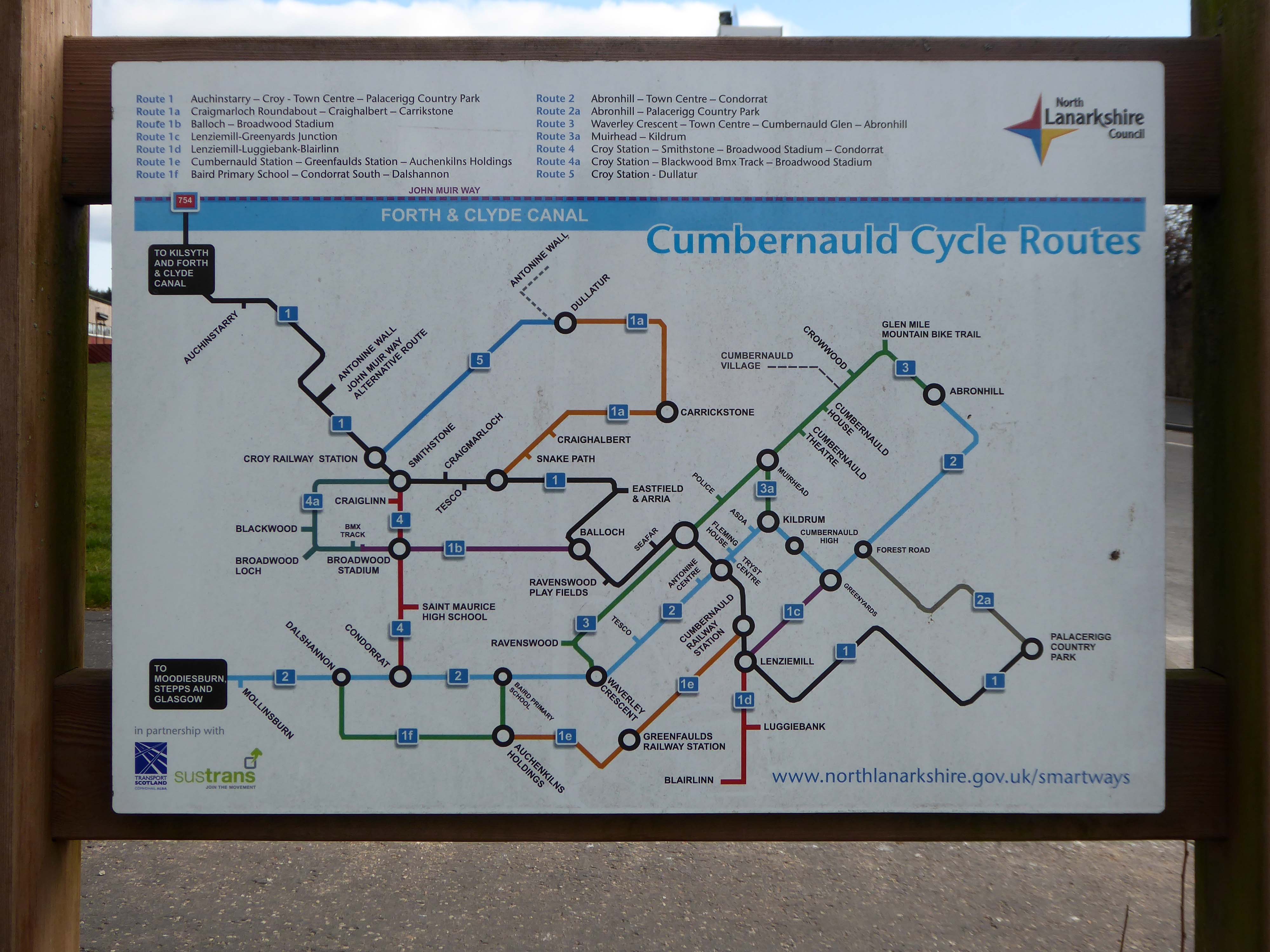
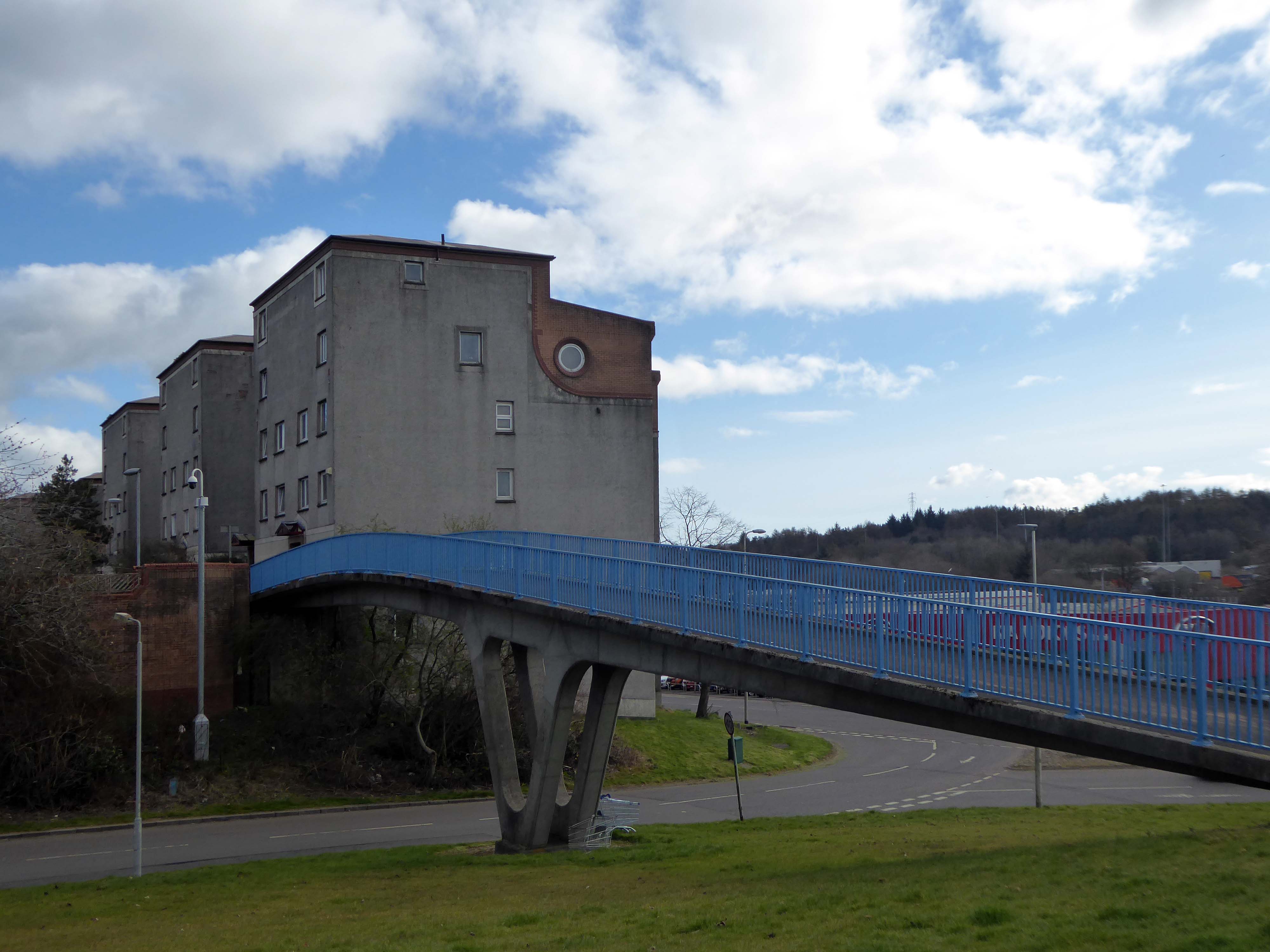
Cumbernauld was designated as a new town in December 1955, part of a plan, under the New Towns Act 1946, to move 550,000 people out of Glasgow and into new towns to solve the city’s overcrowding. Construction of its town centre began under contractors Duncan Logan, chief architect Leslie Hugh Wilson and architect Geoffrey Copcutt – until 1962 and 1963, and later Dudley Roberts Leaker, Philip Aitken and Neil Dadge.
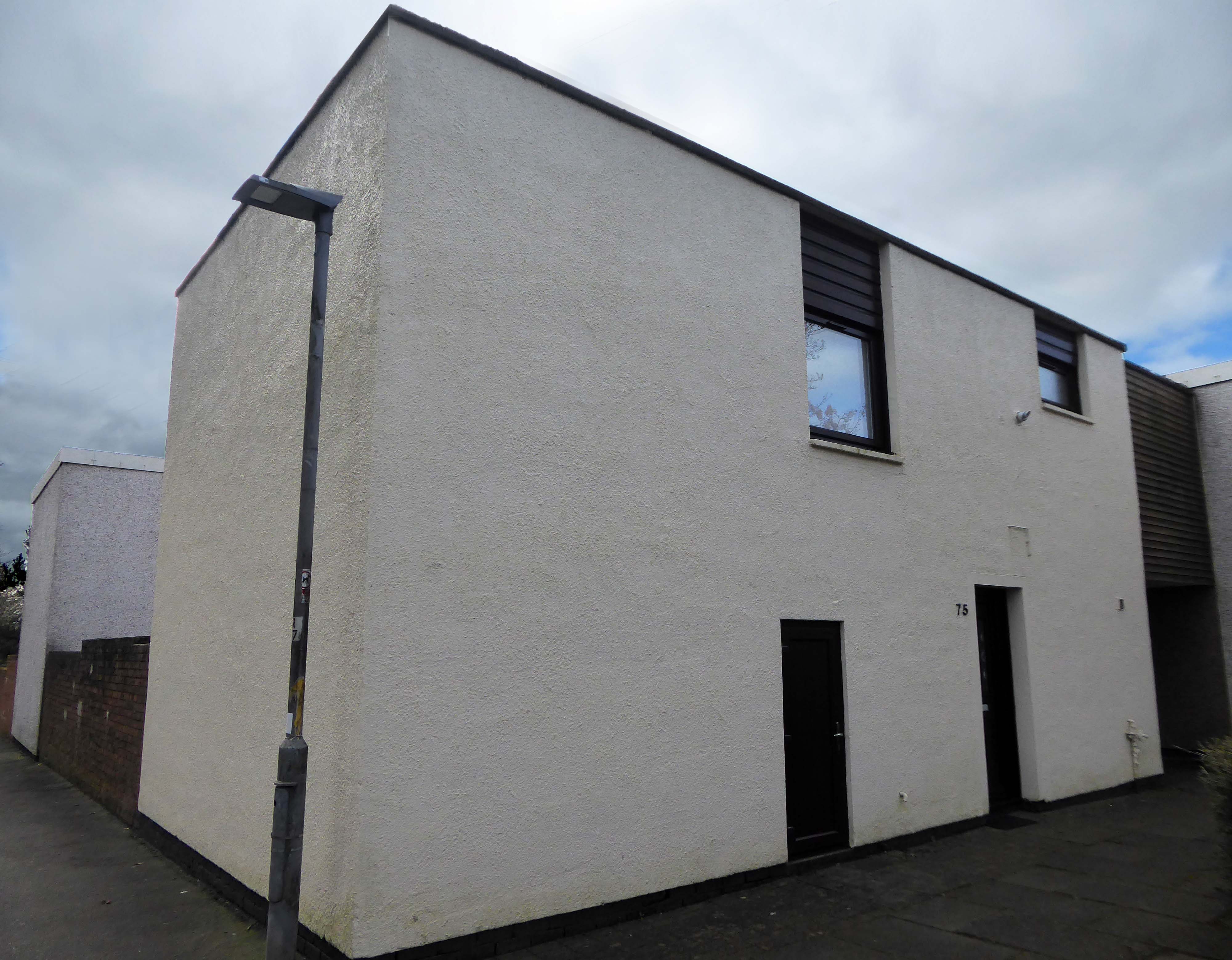
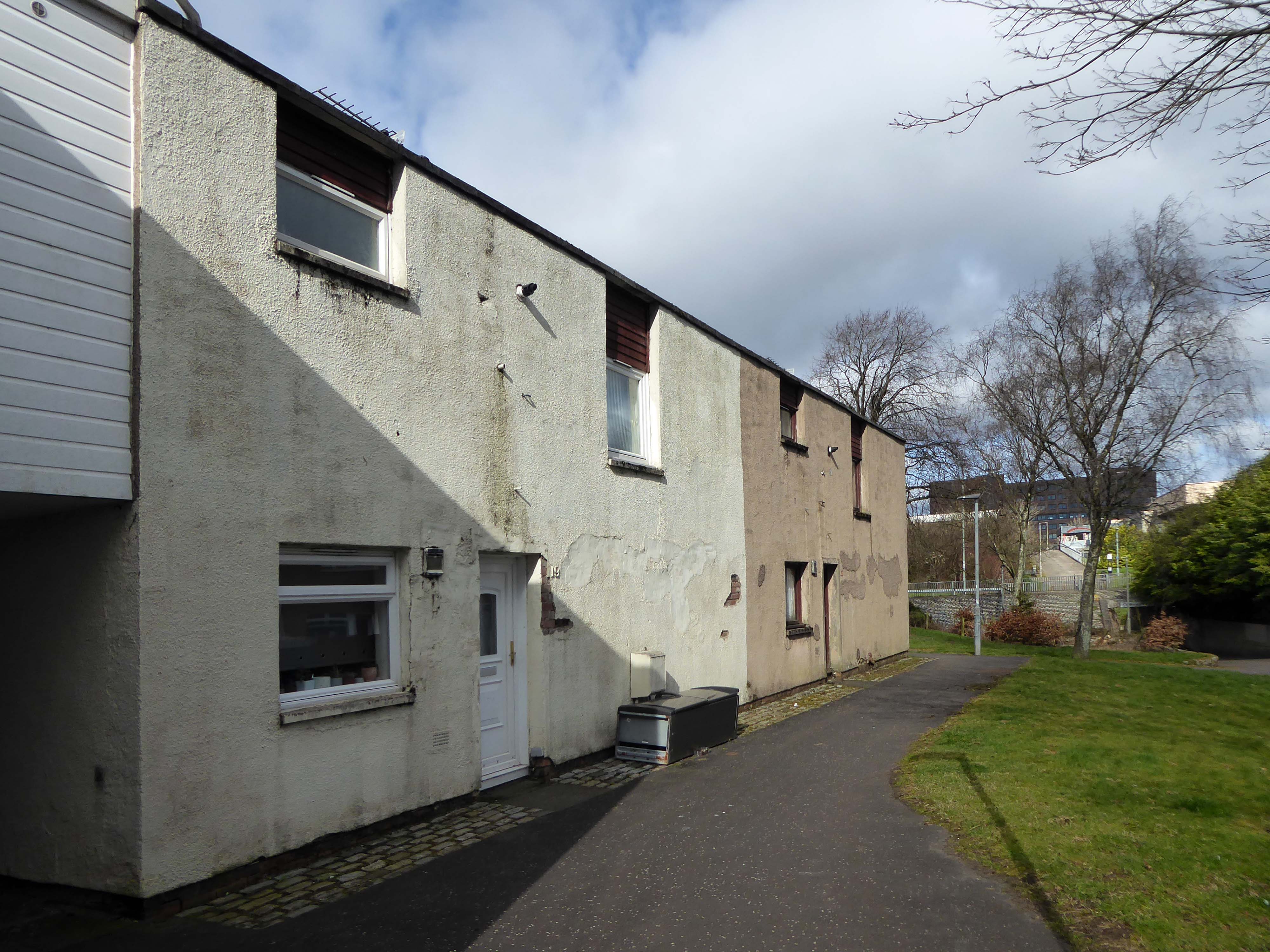
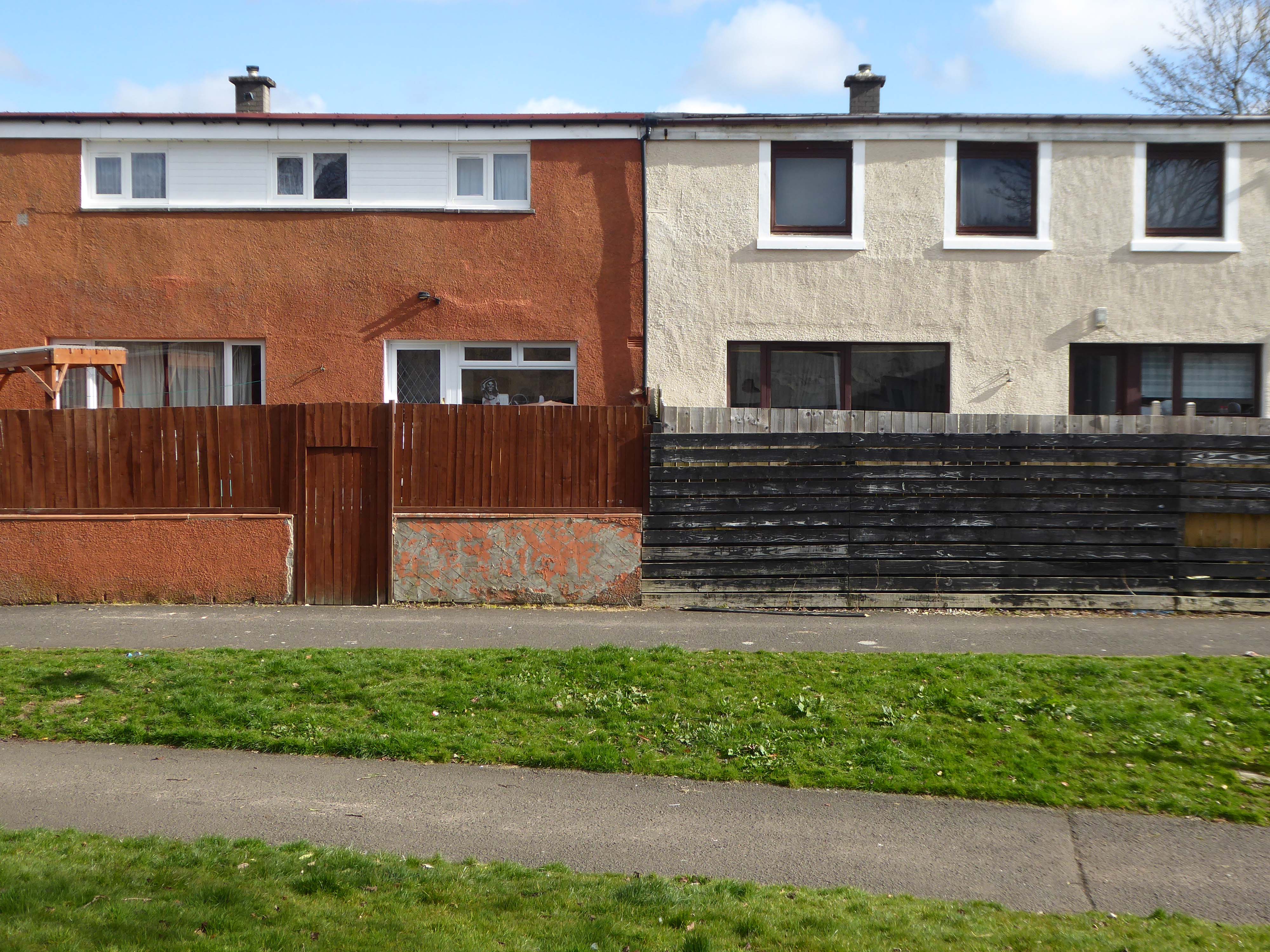
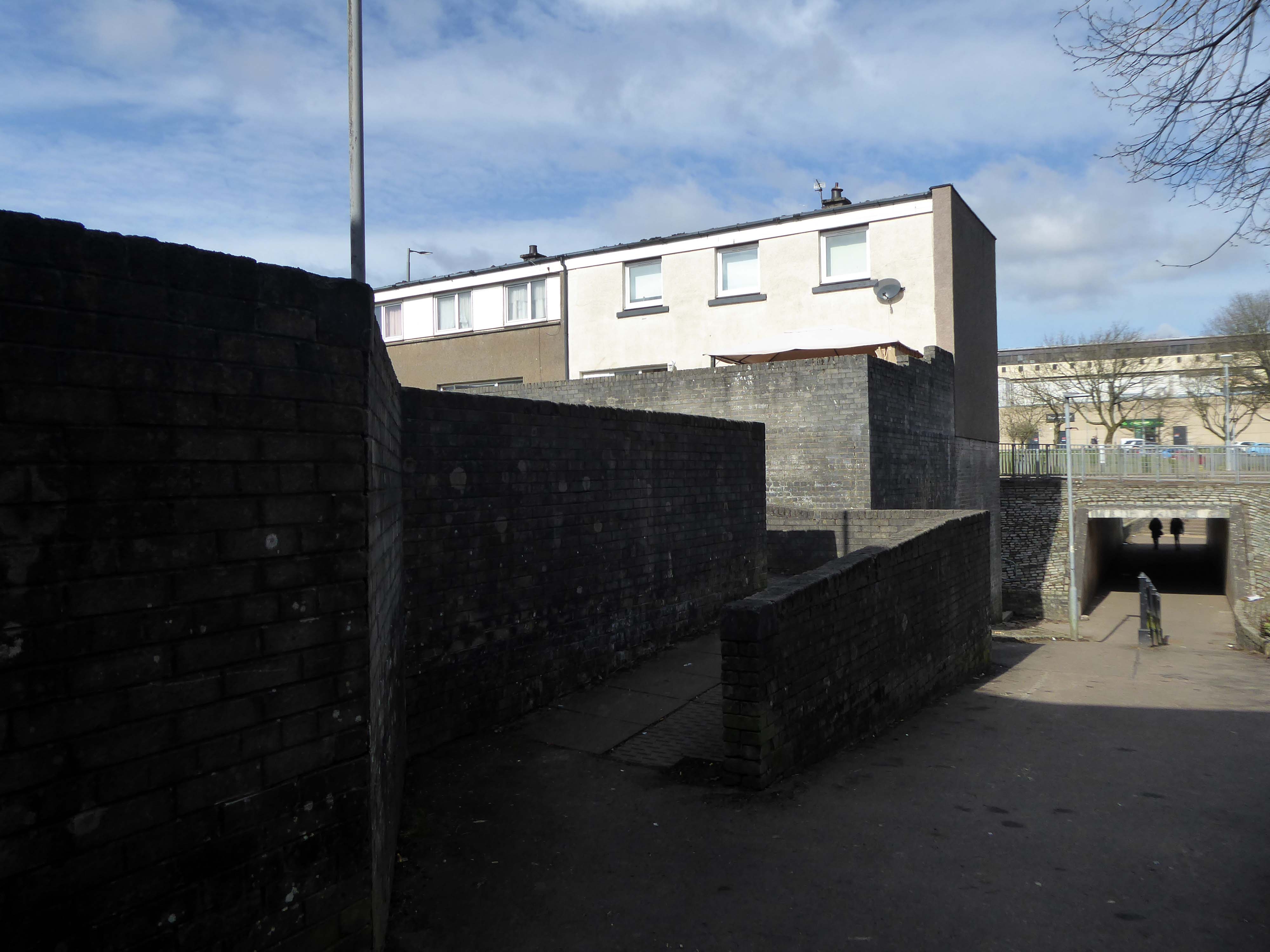
This is the housing that I saw.
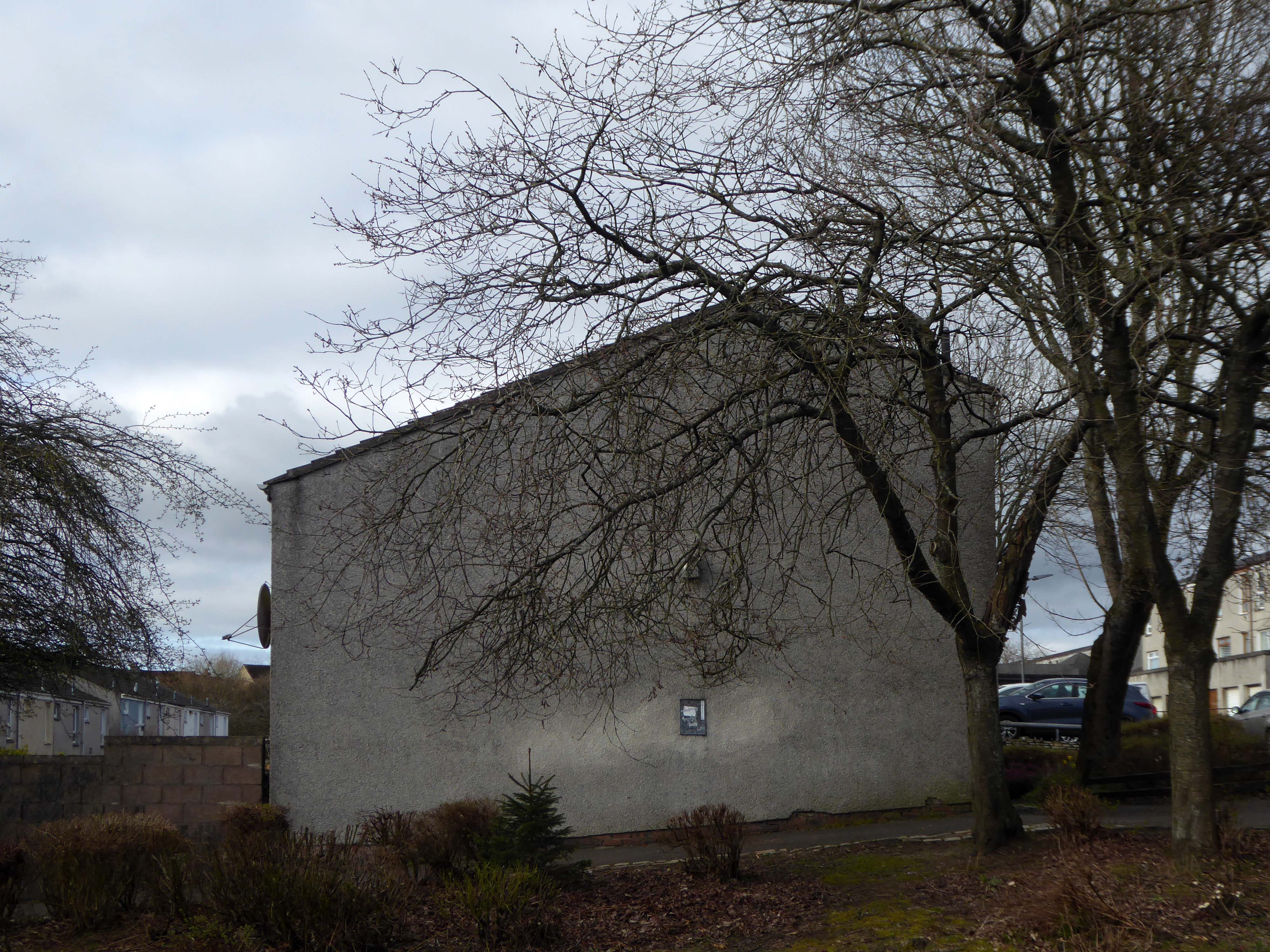
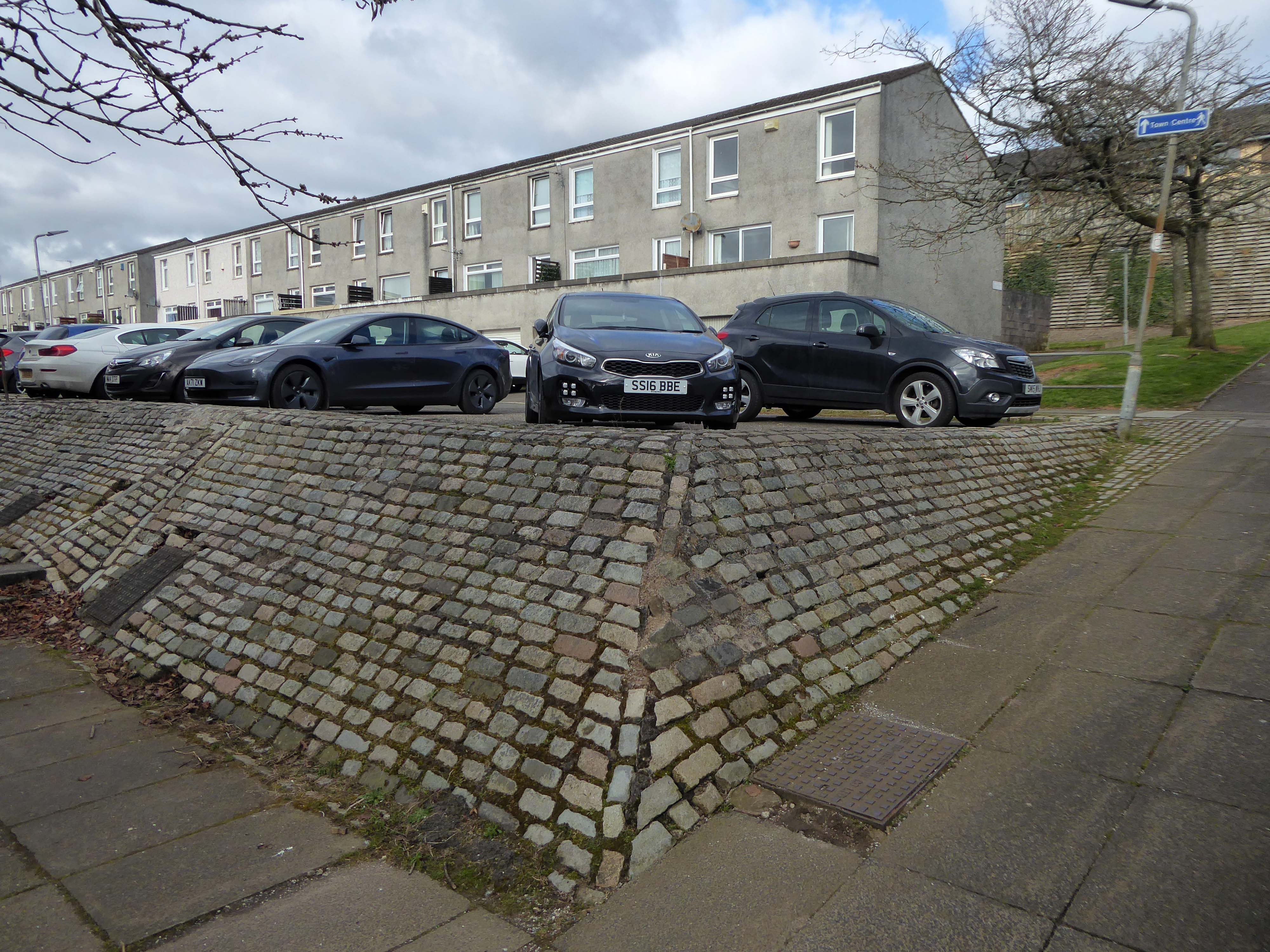
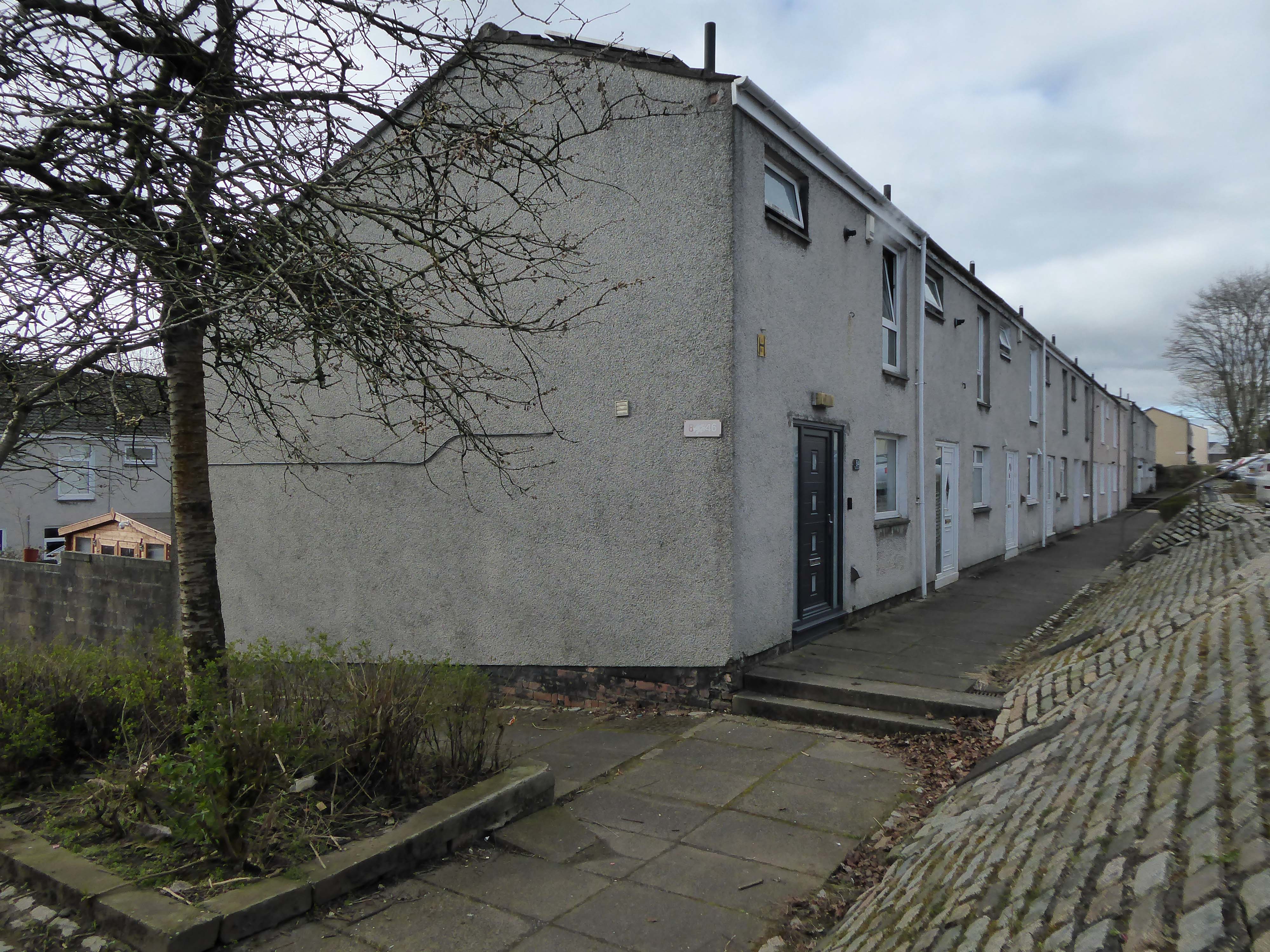
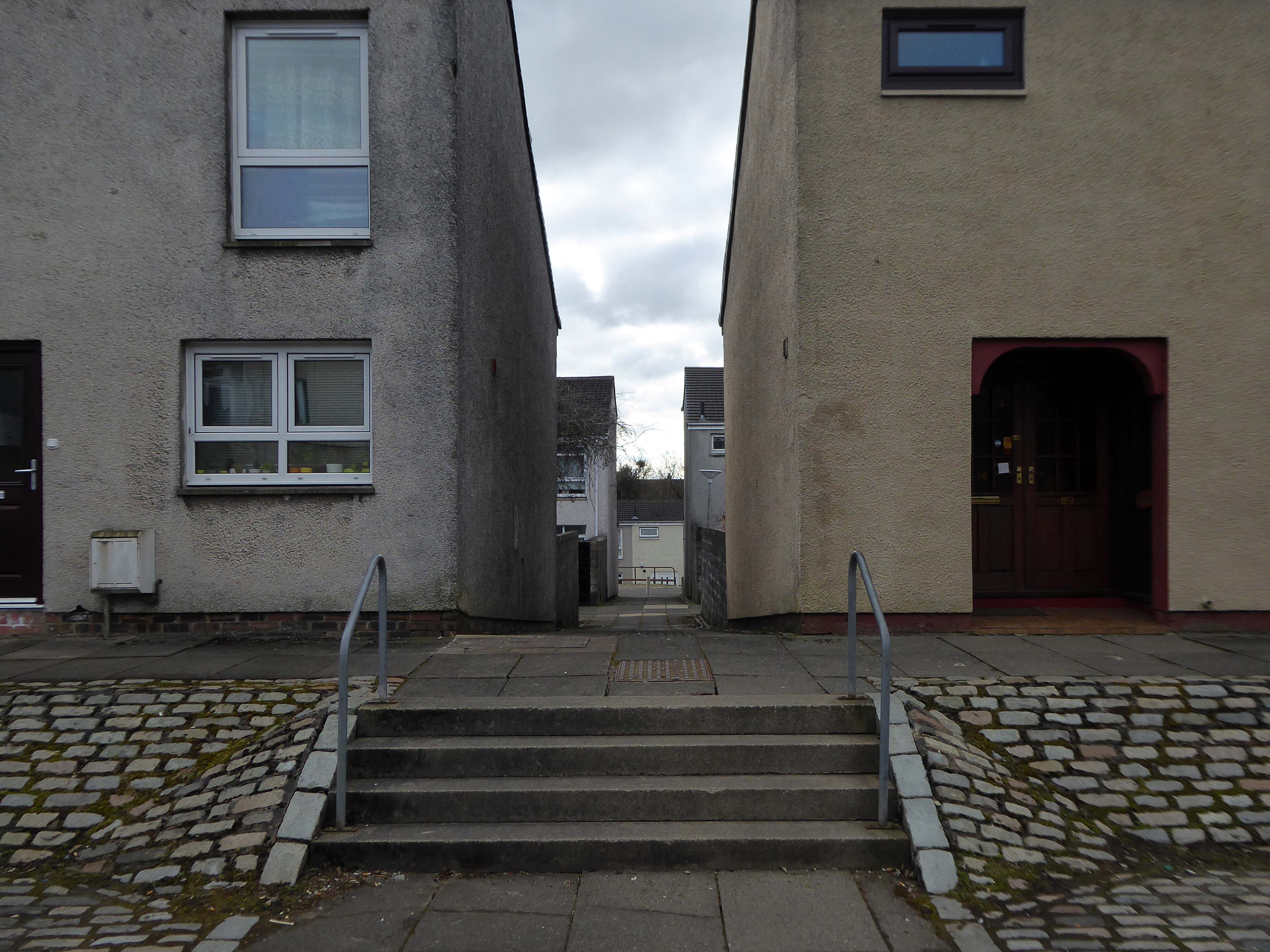
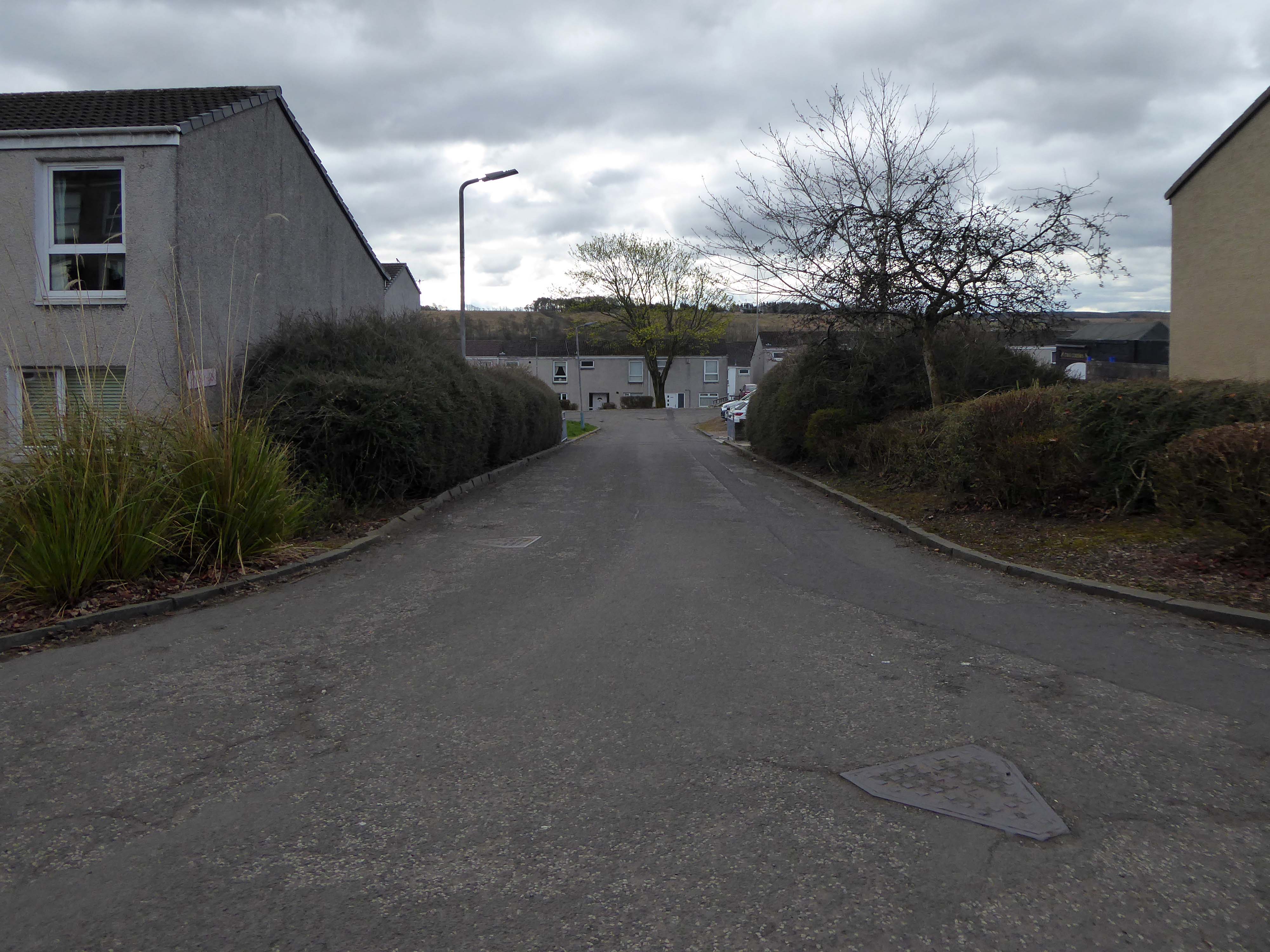
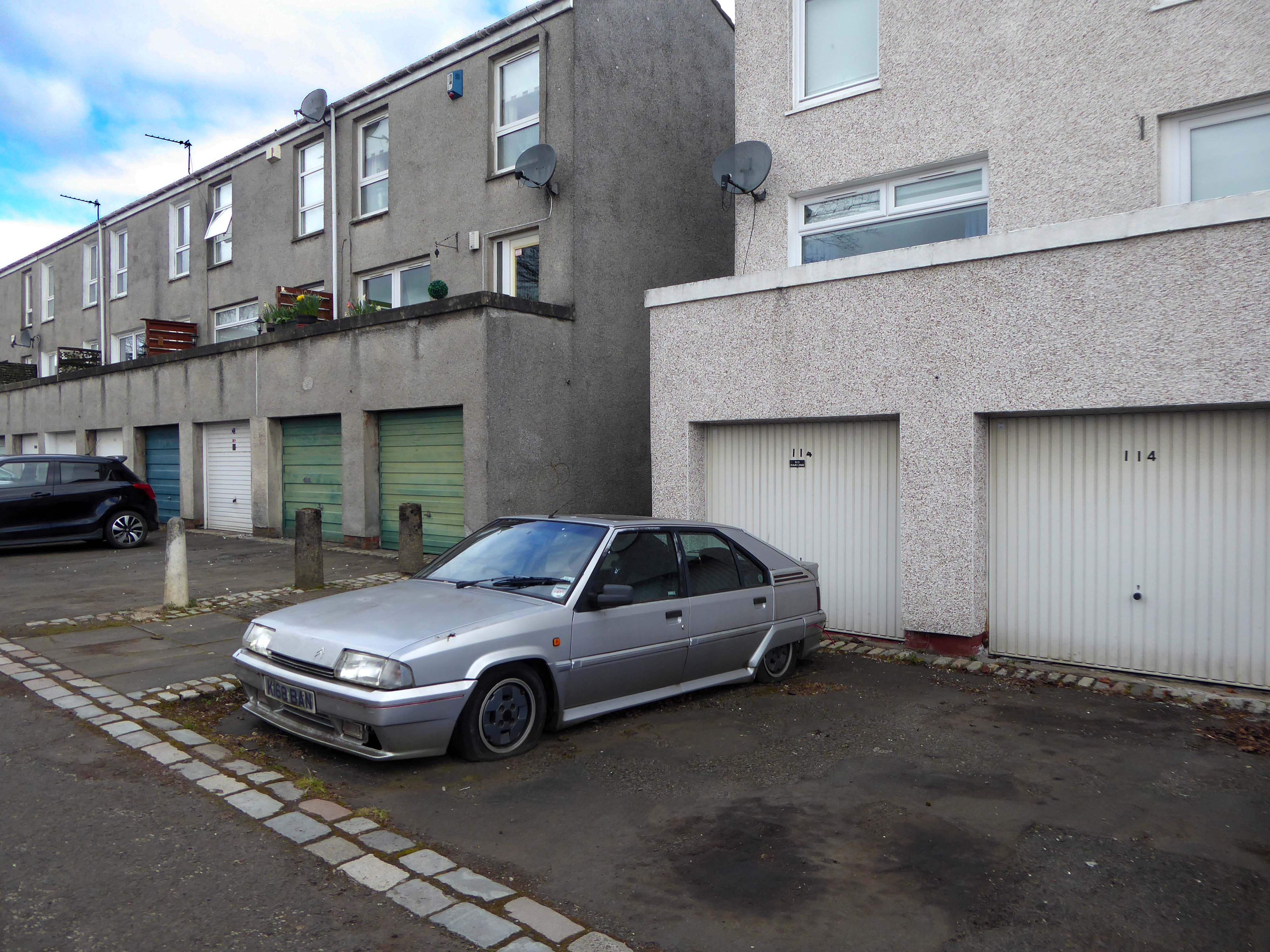
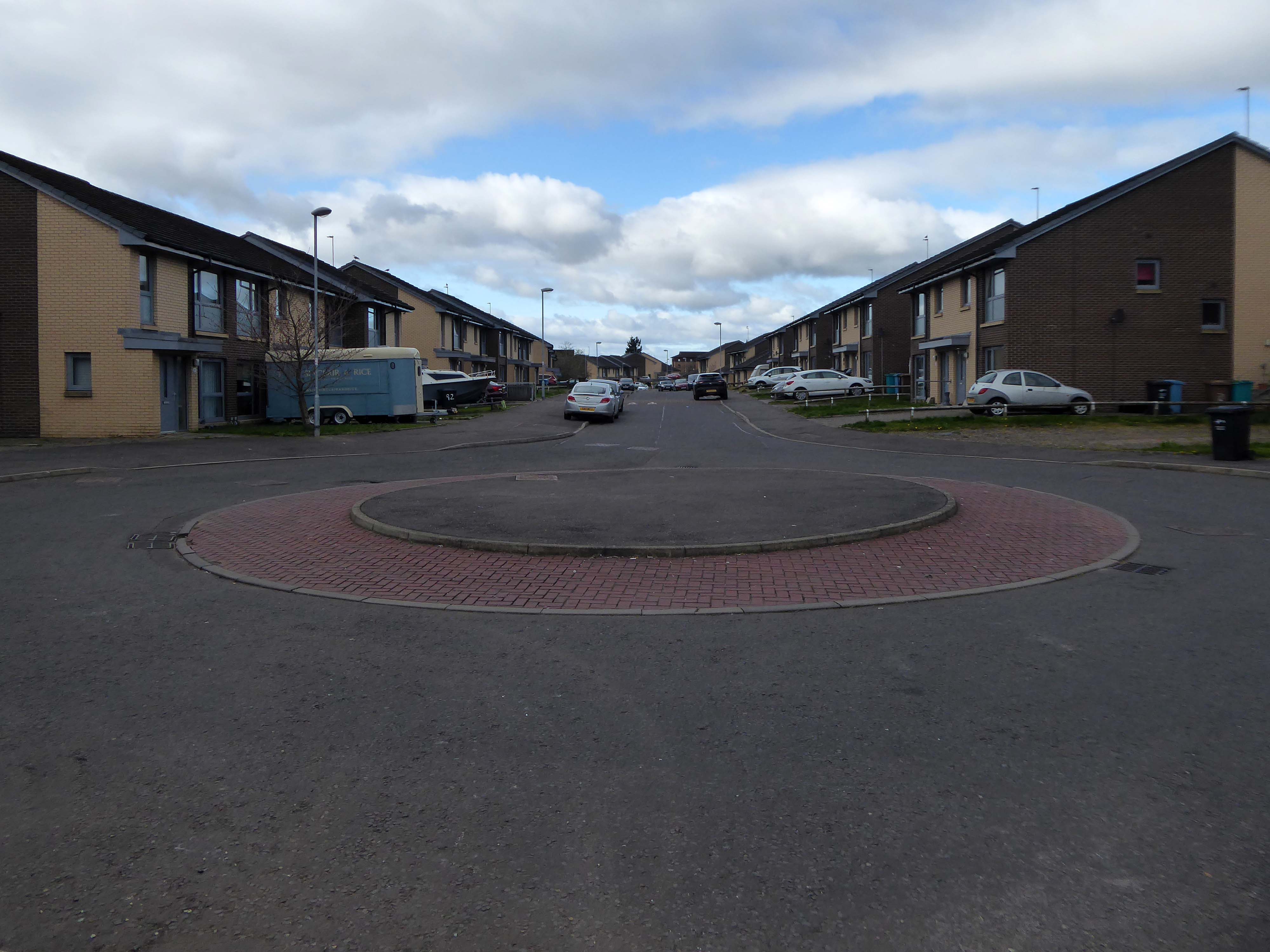
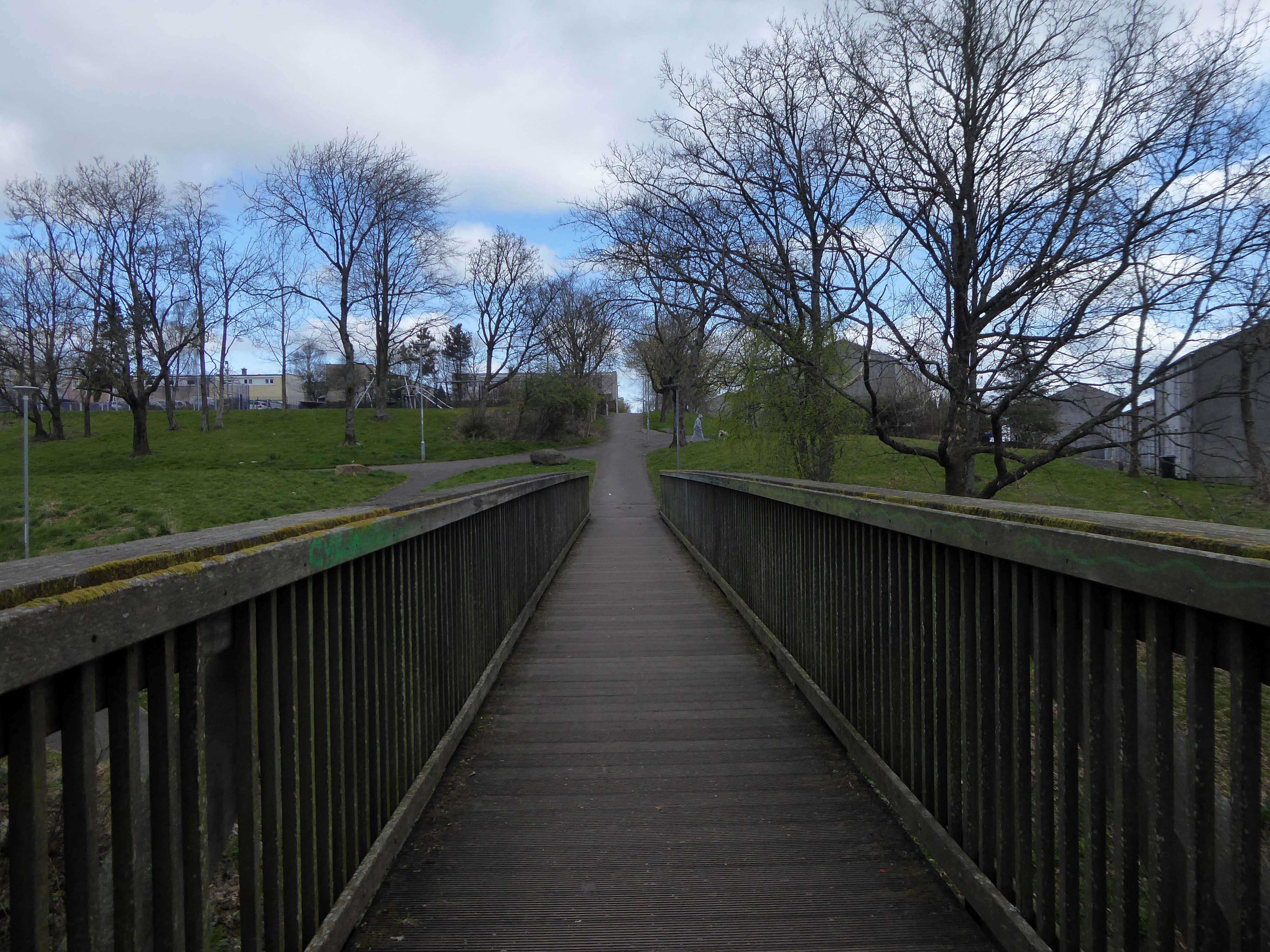
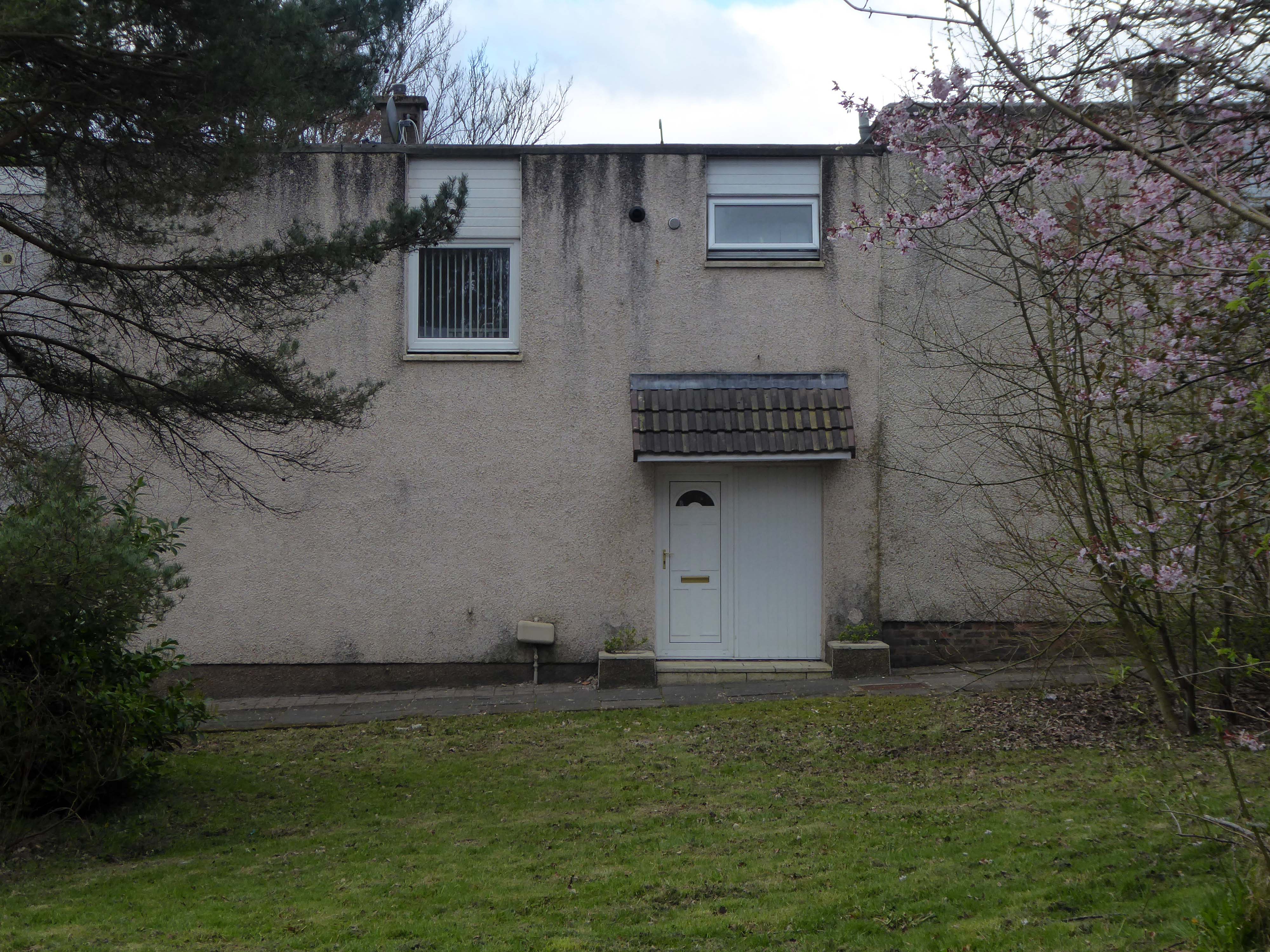
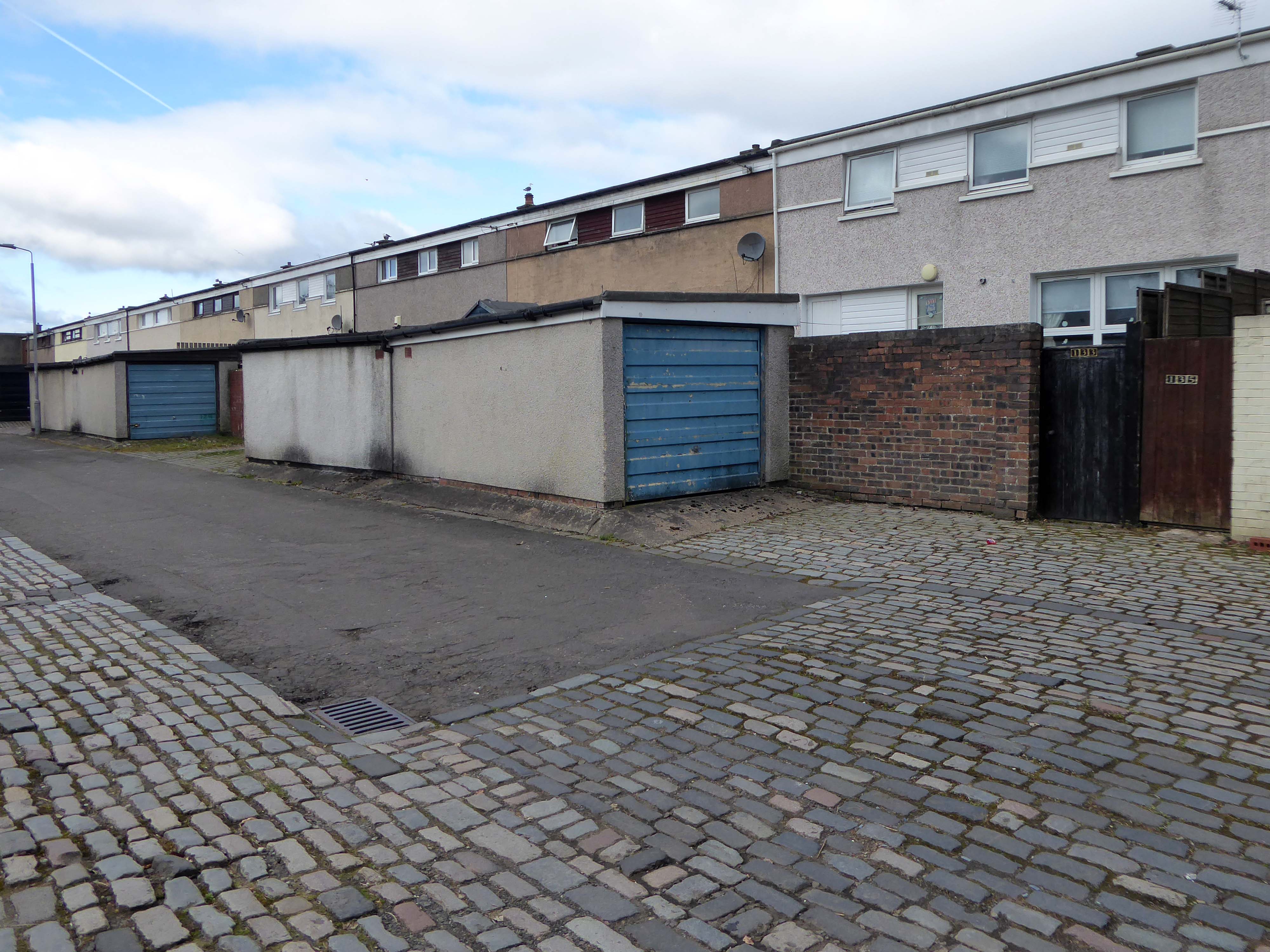
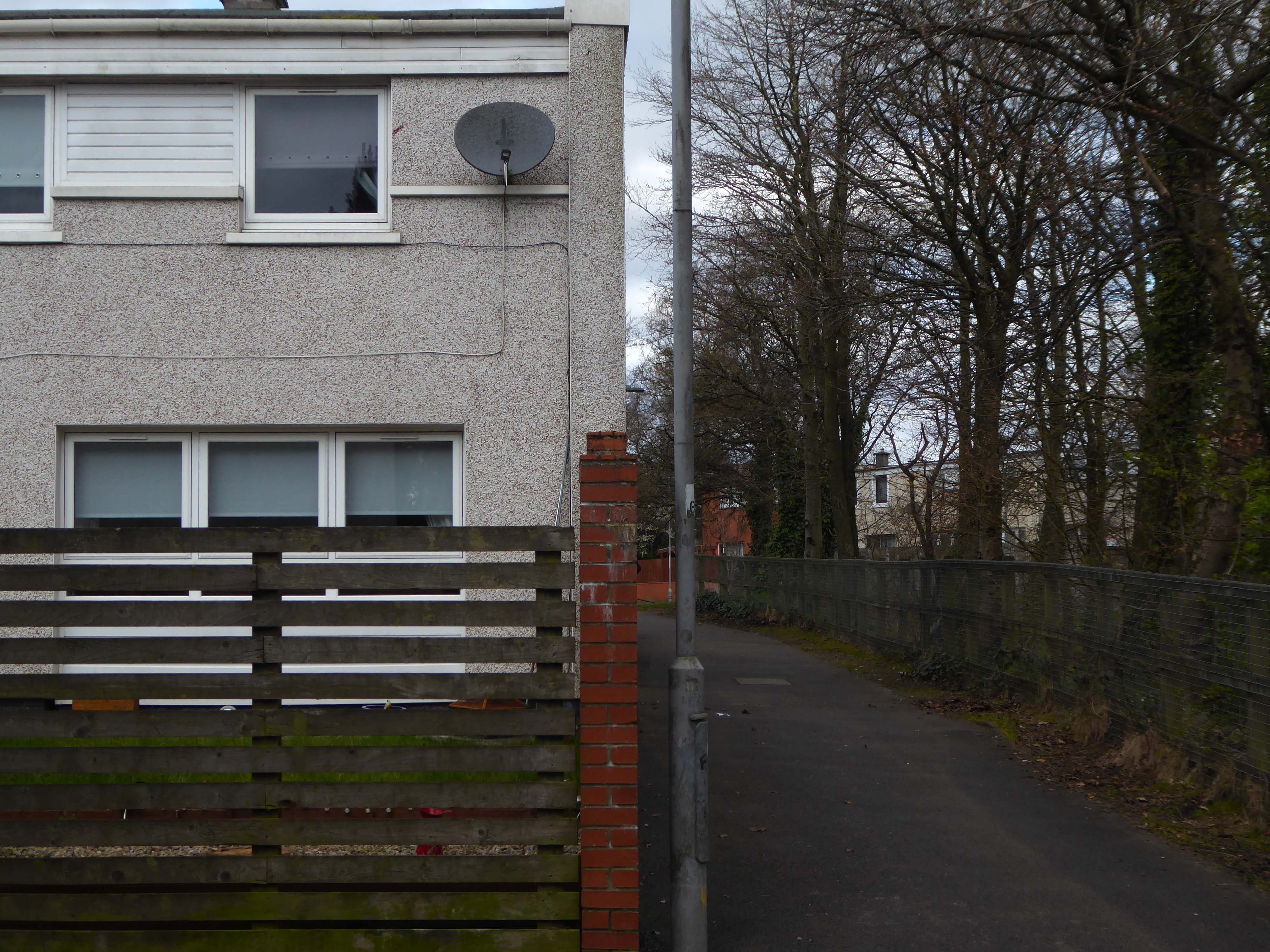
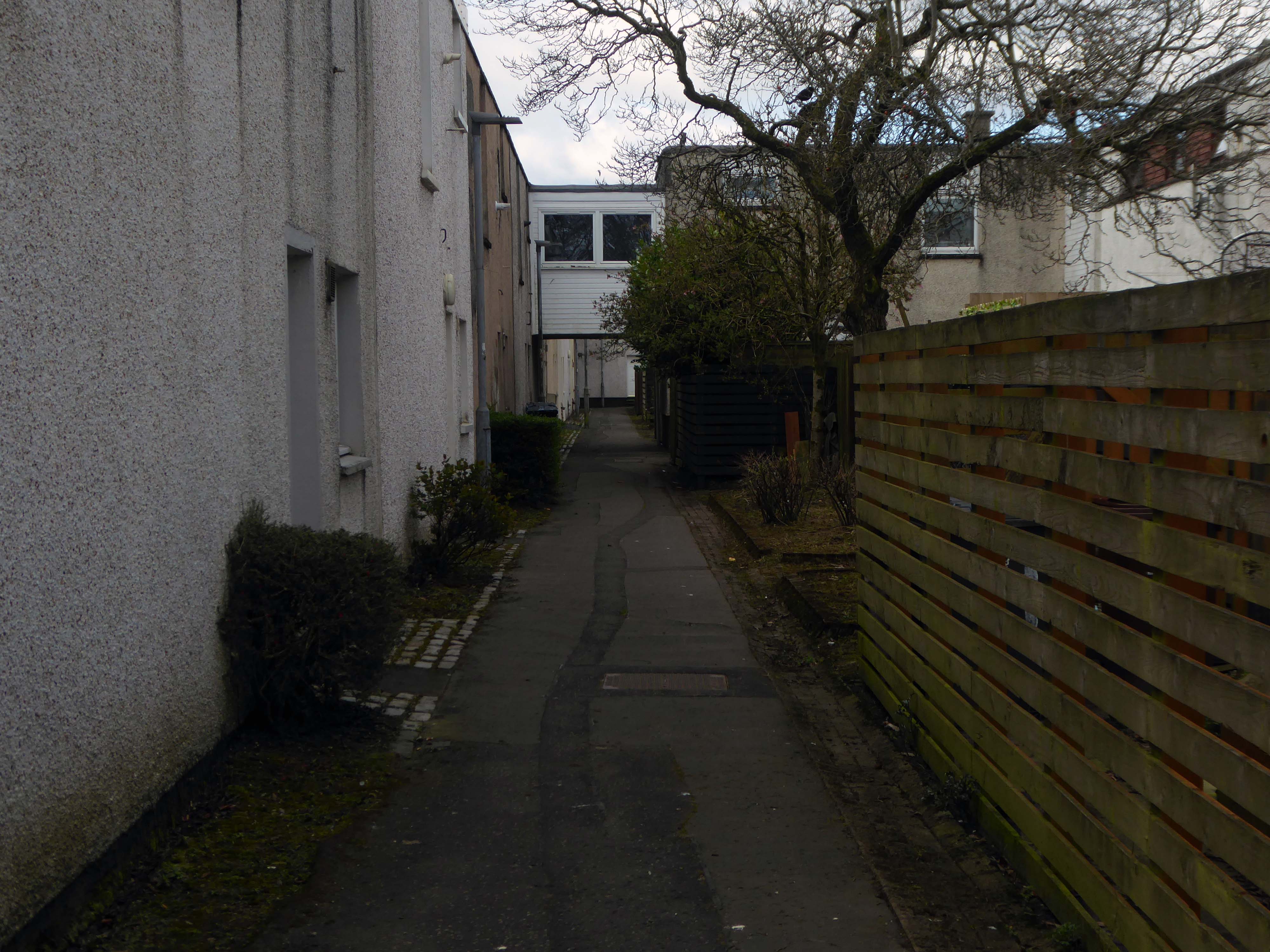
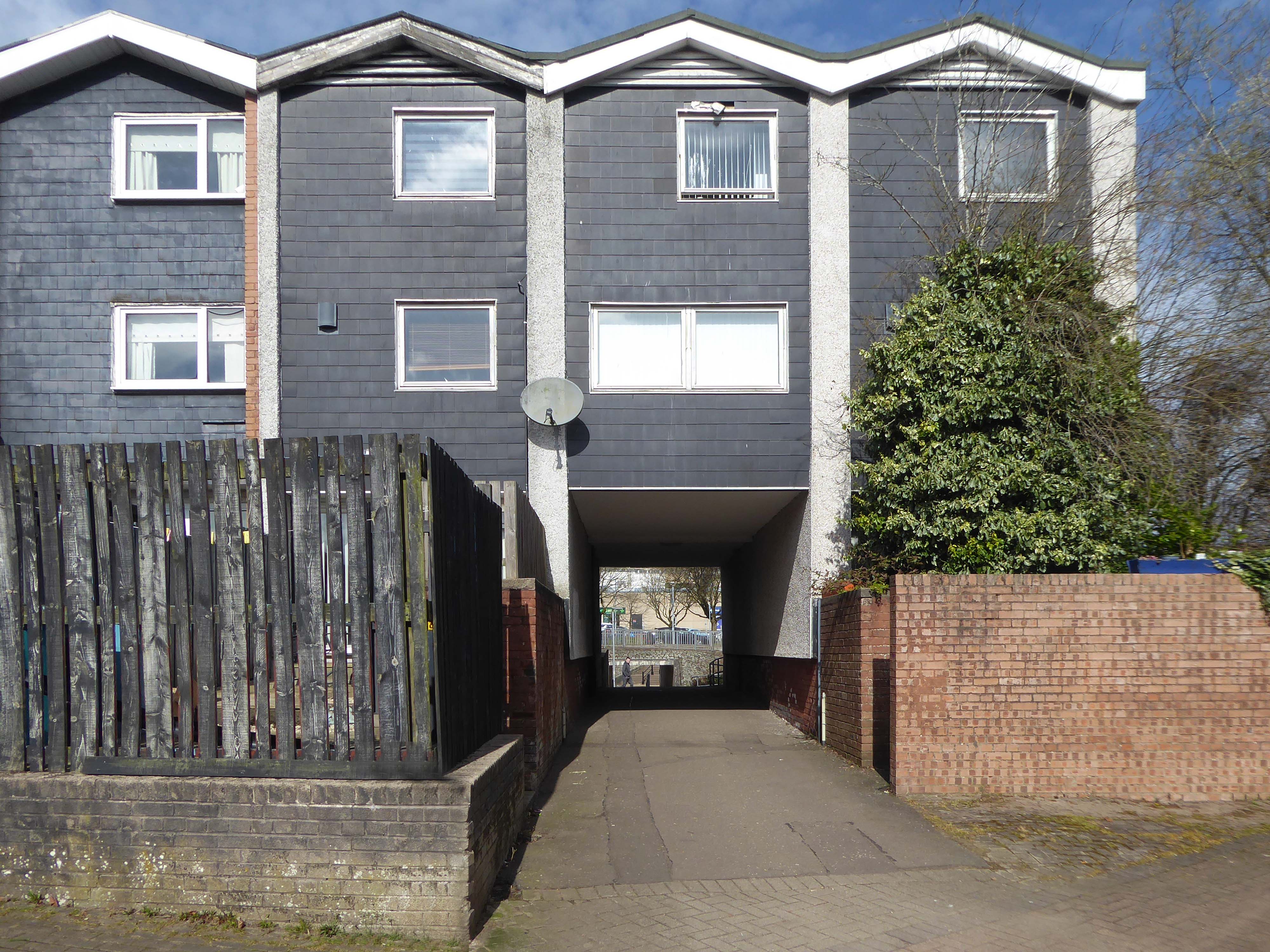
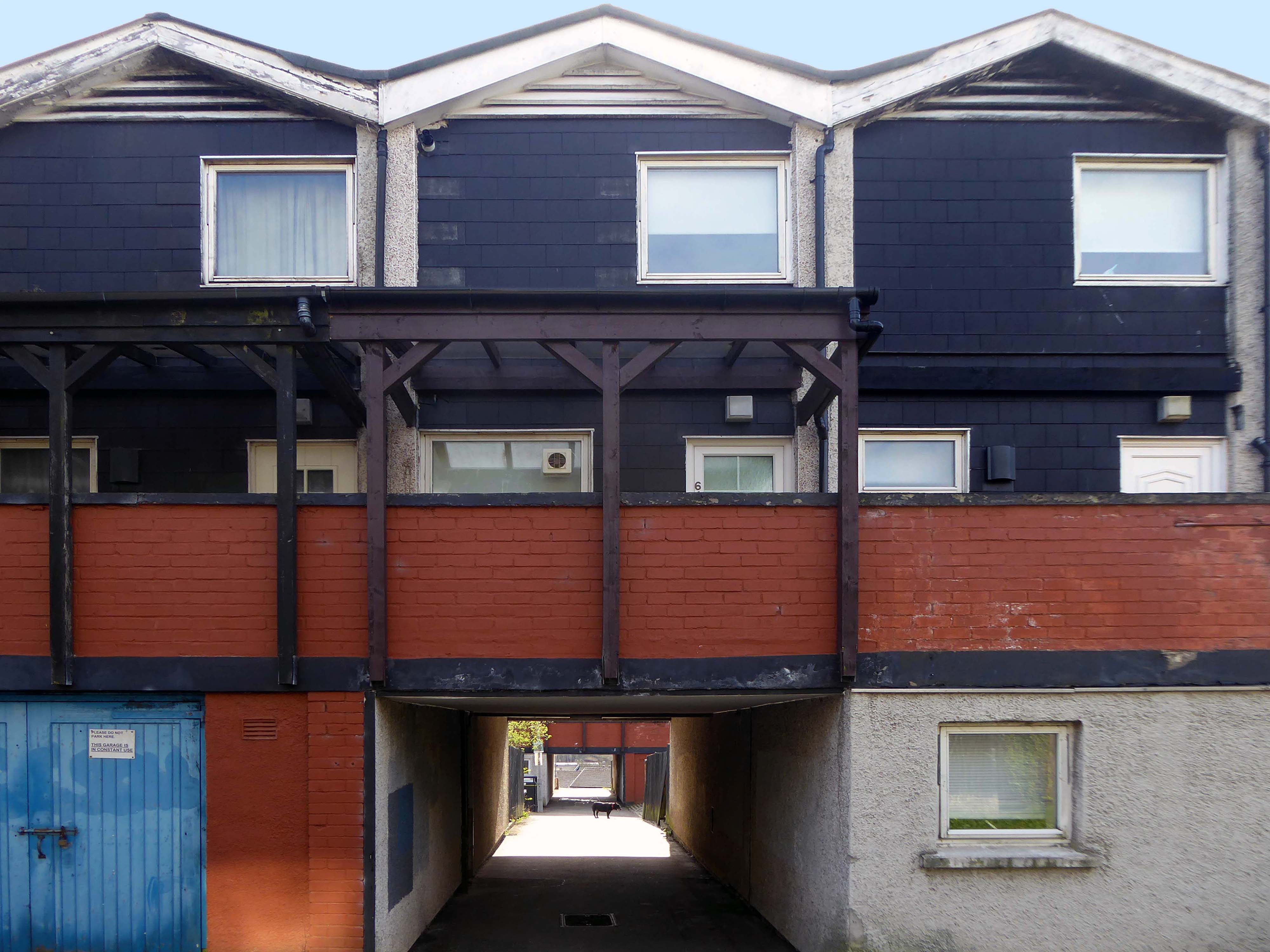
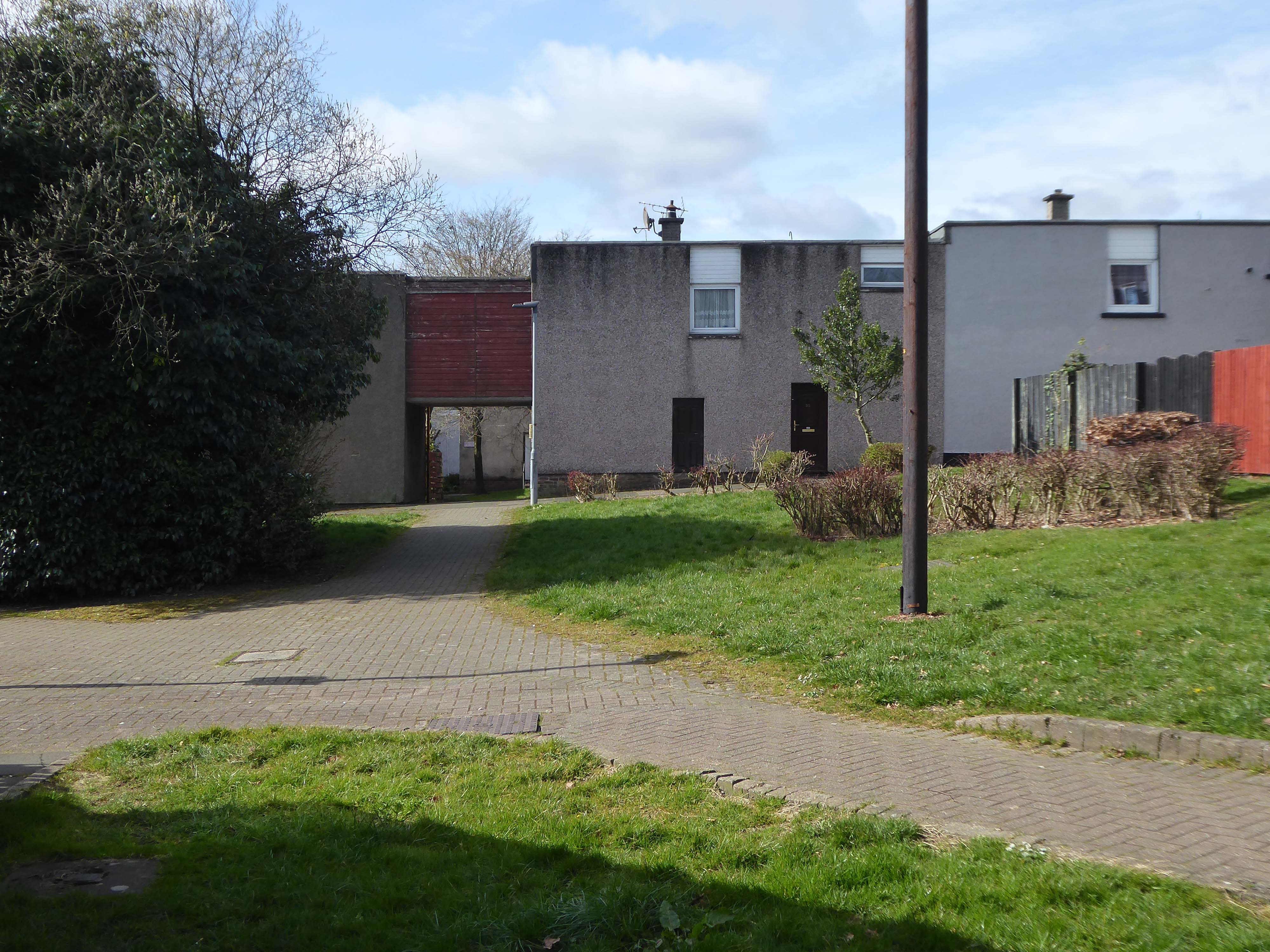
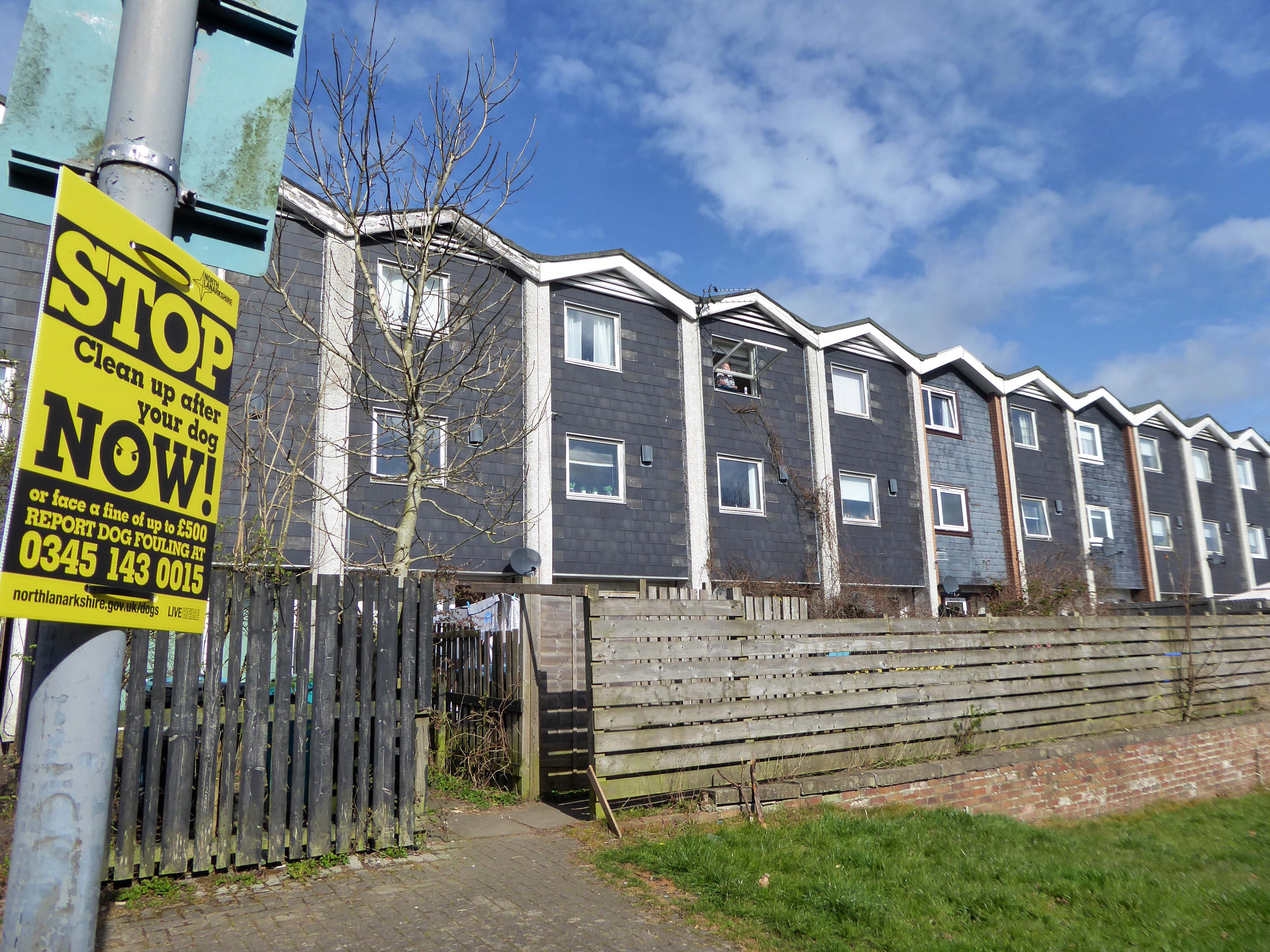
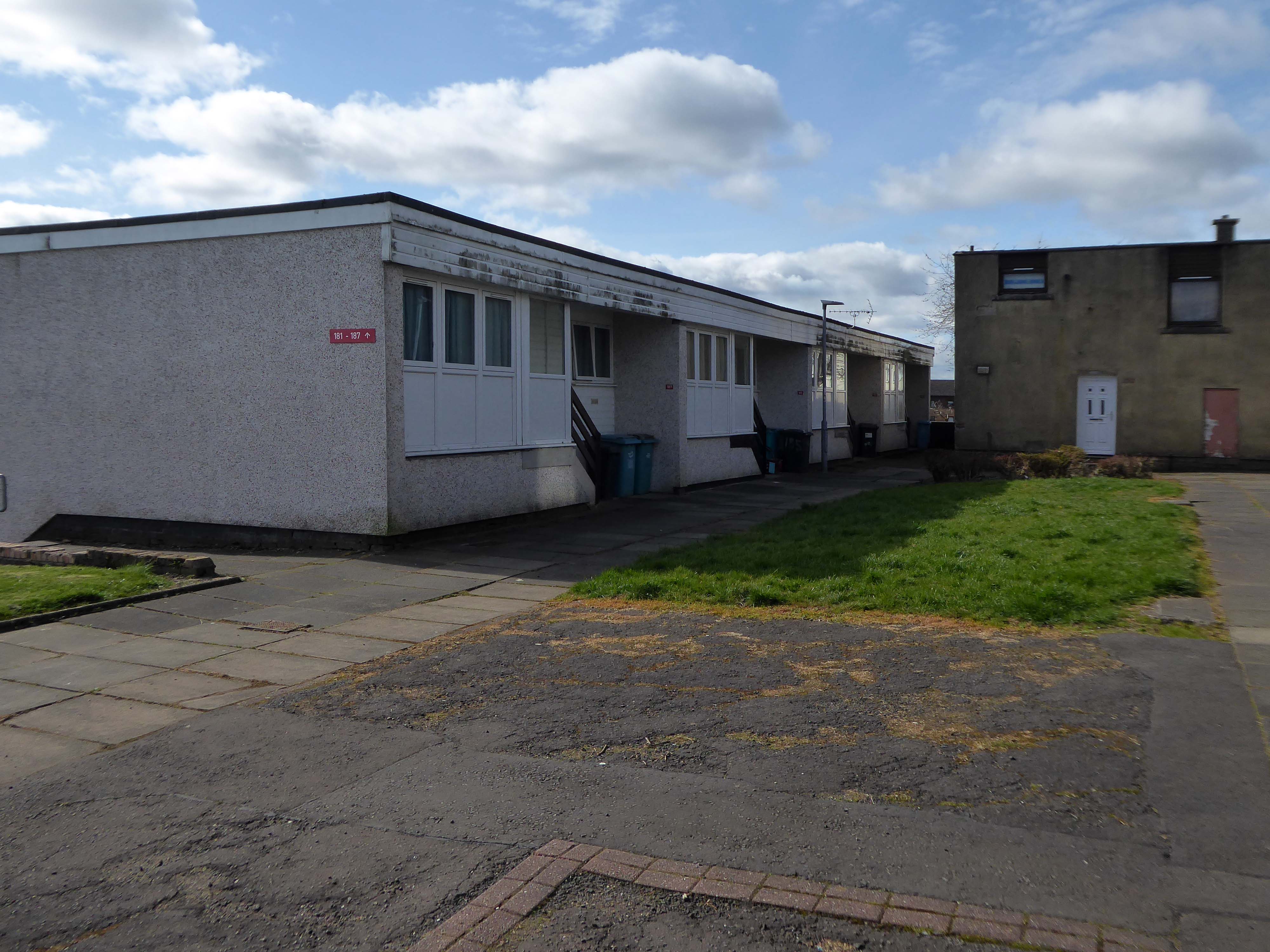
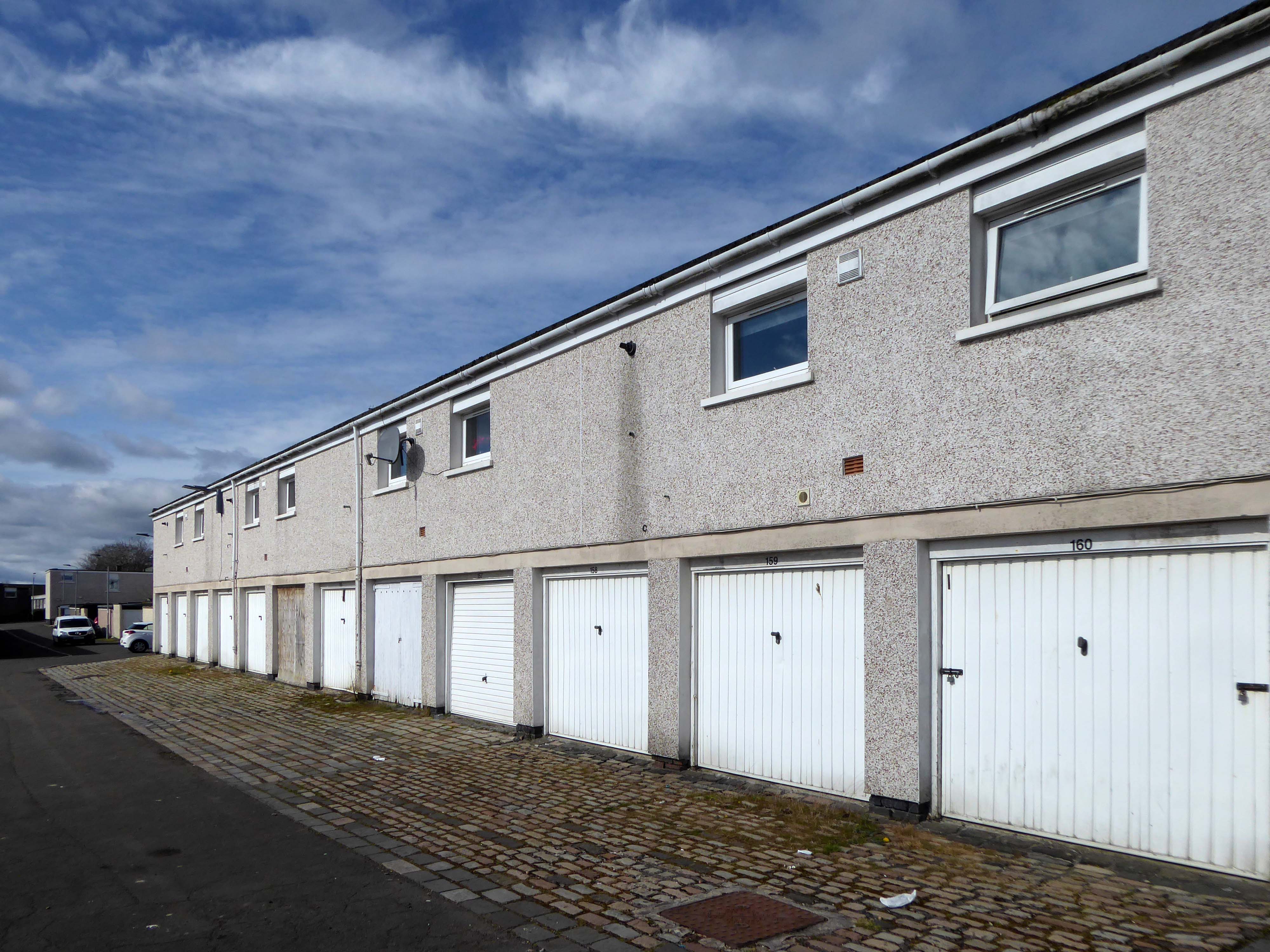
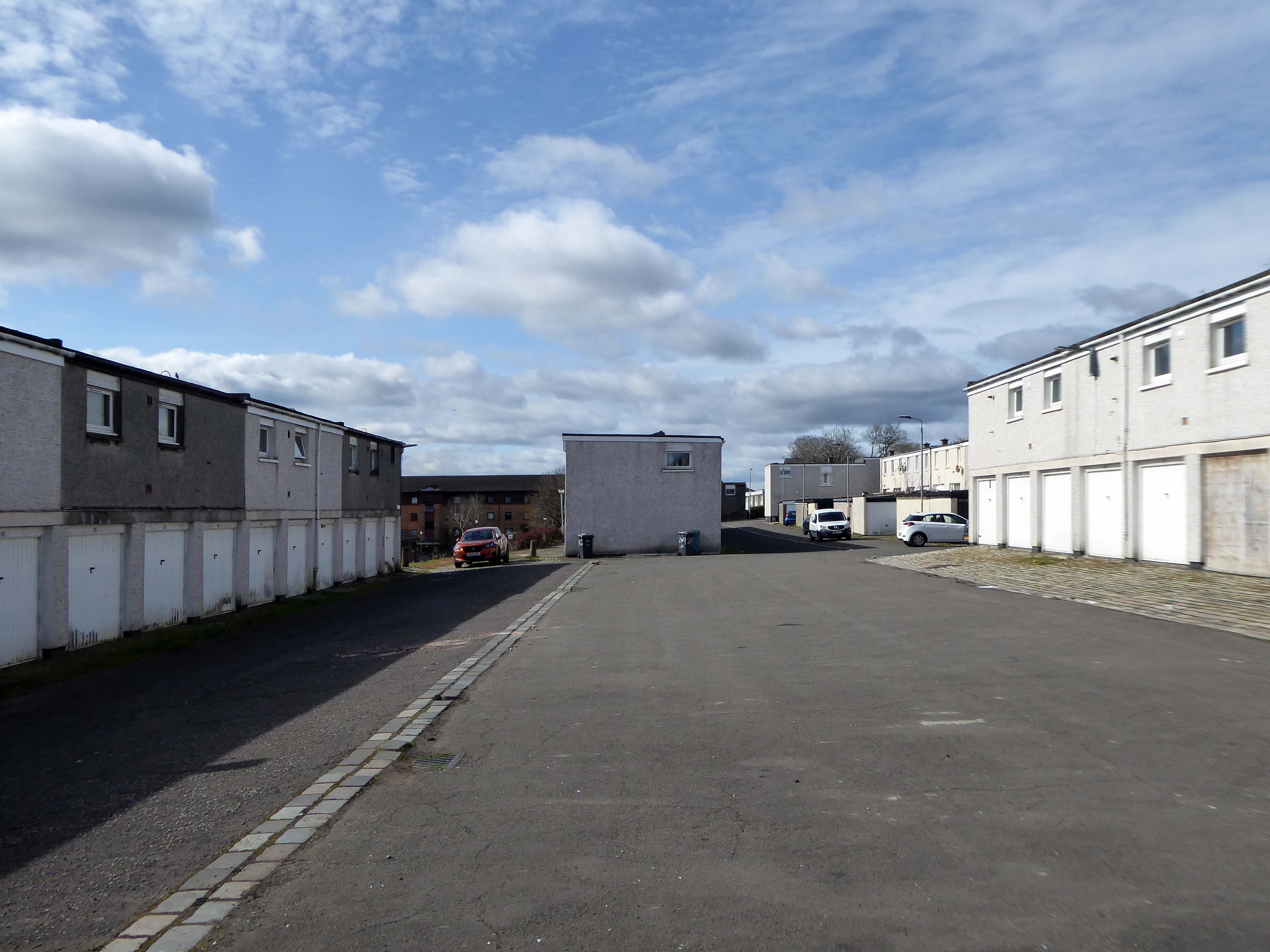
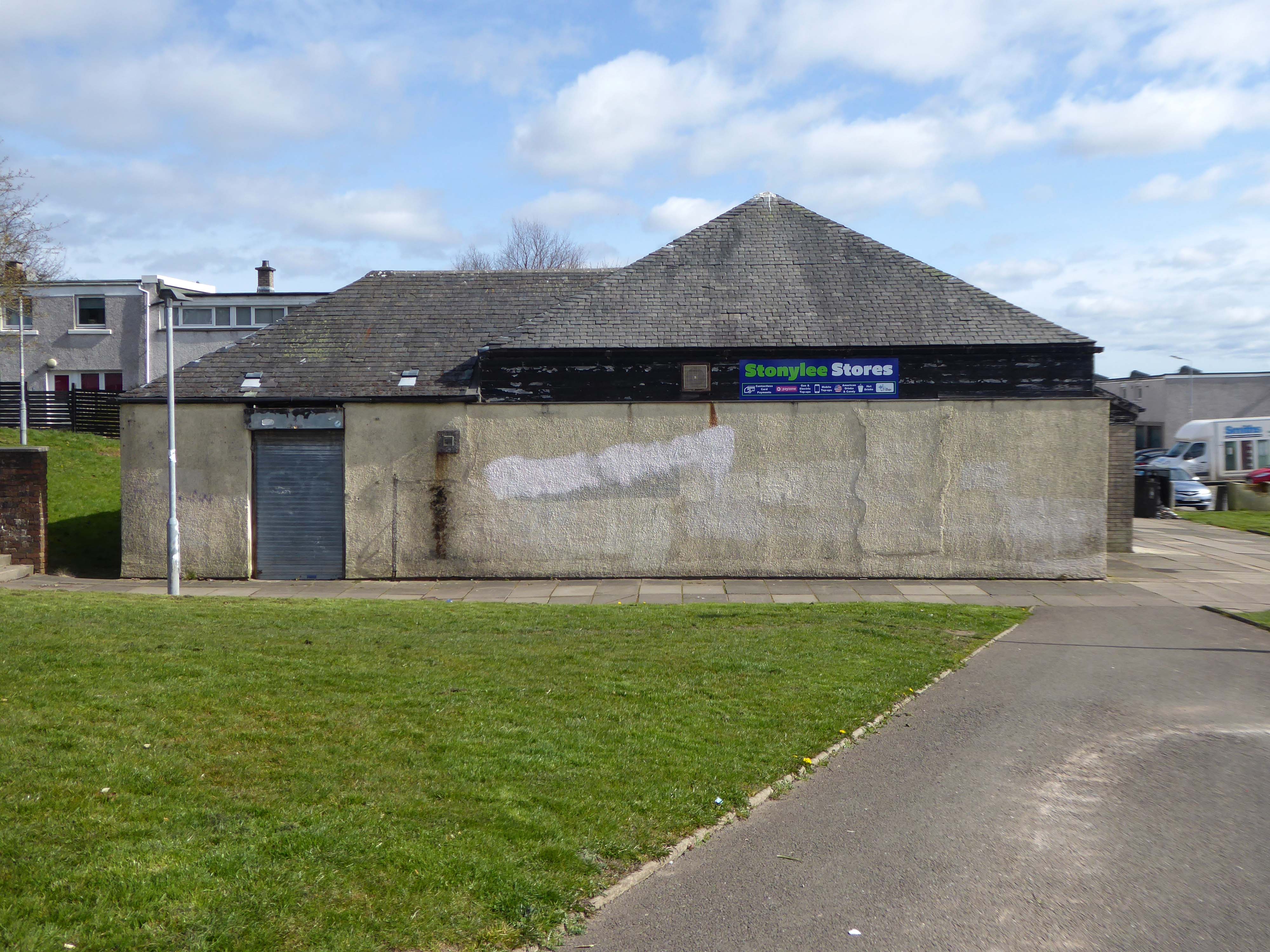
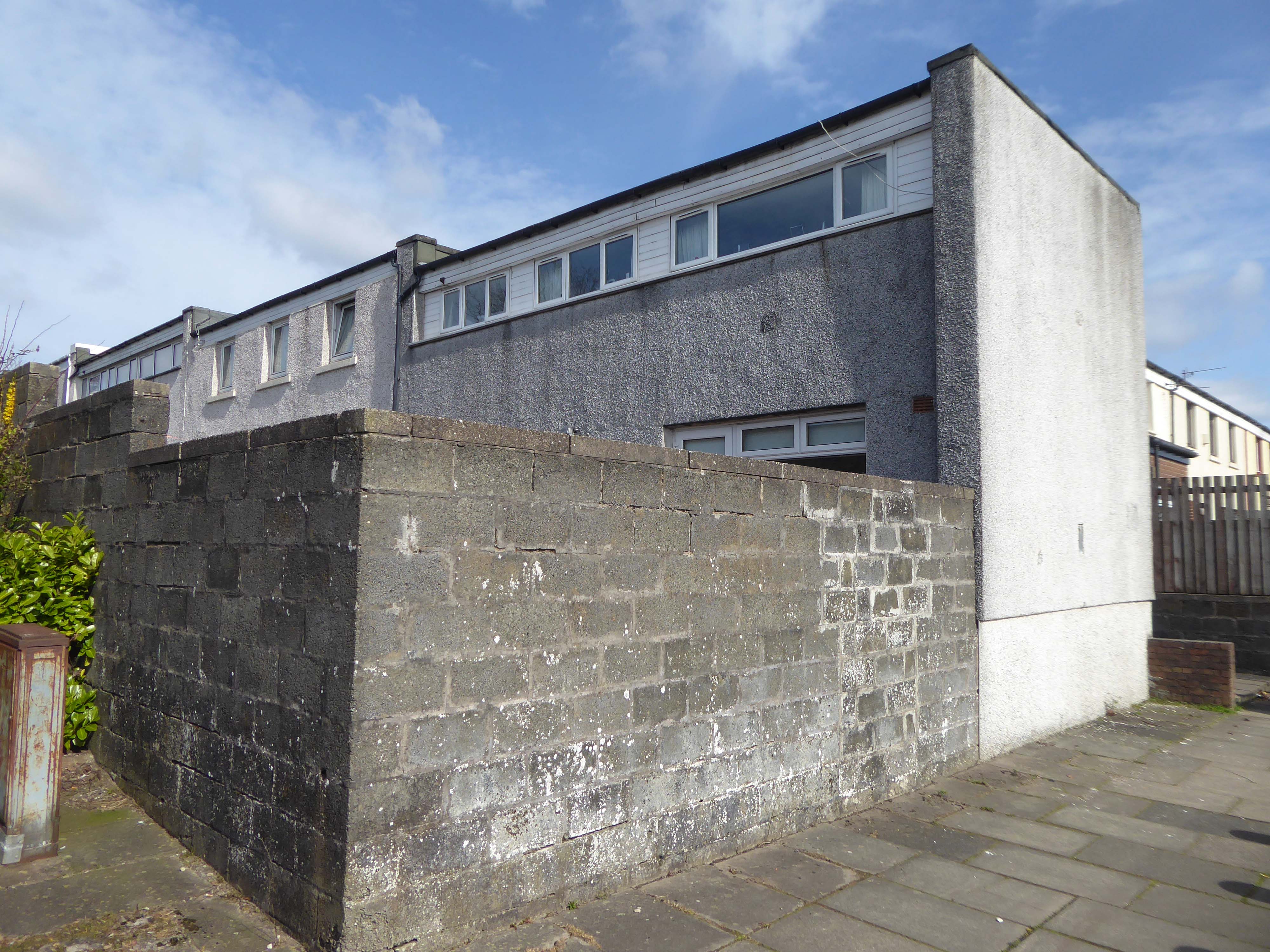
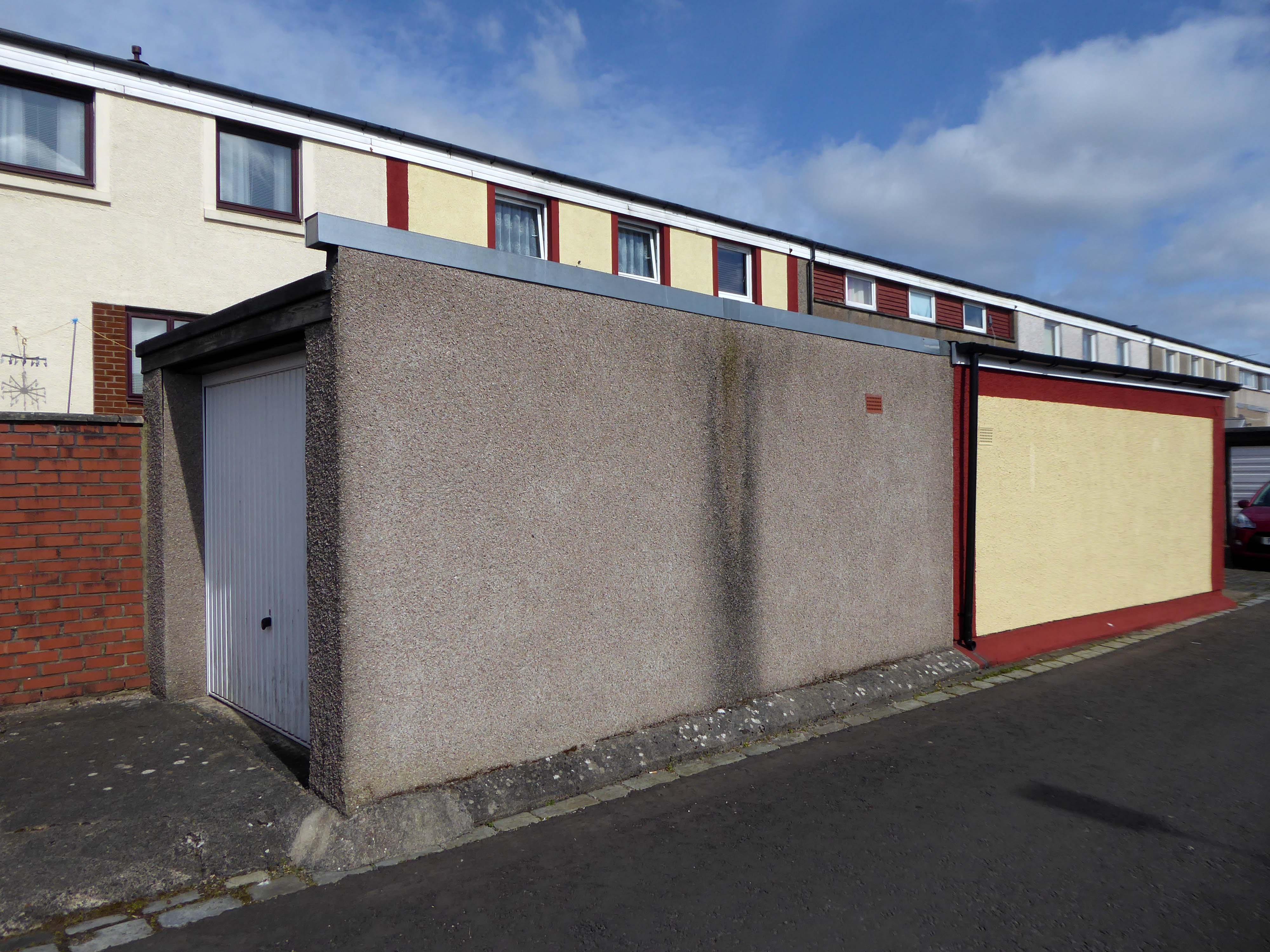
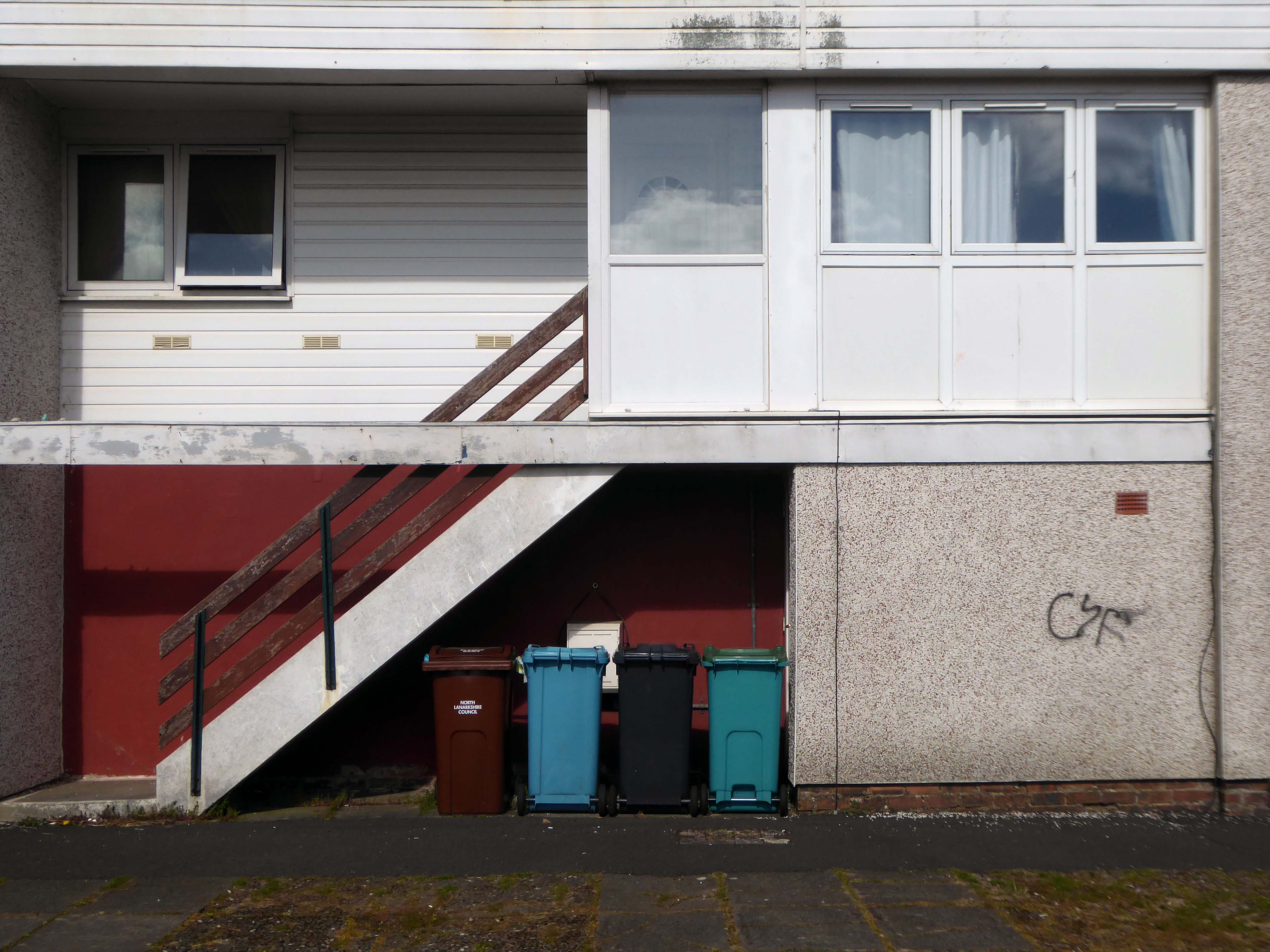
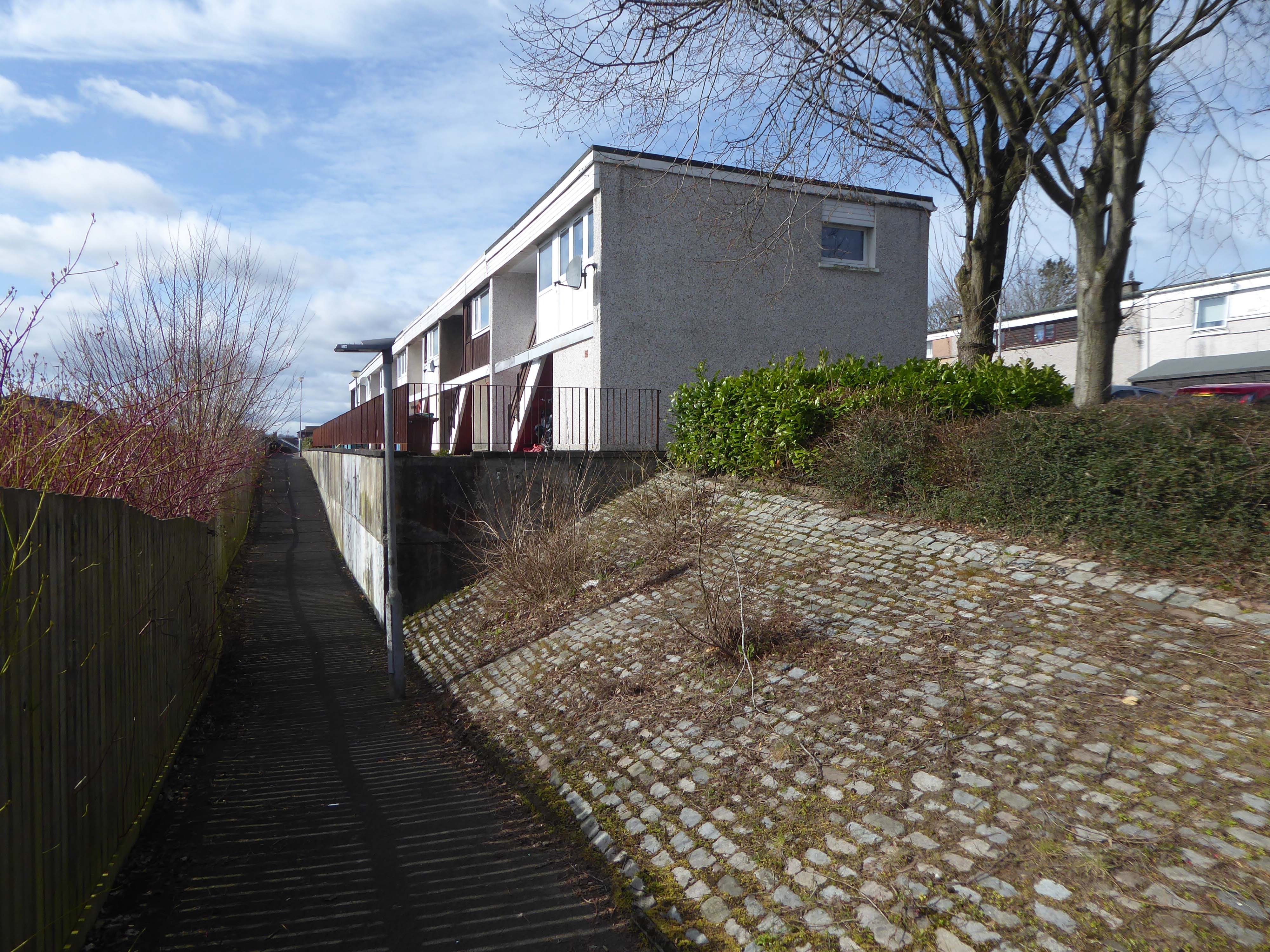
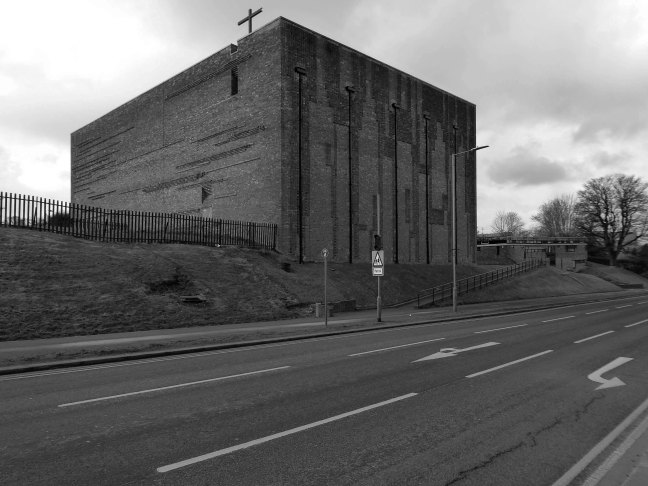
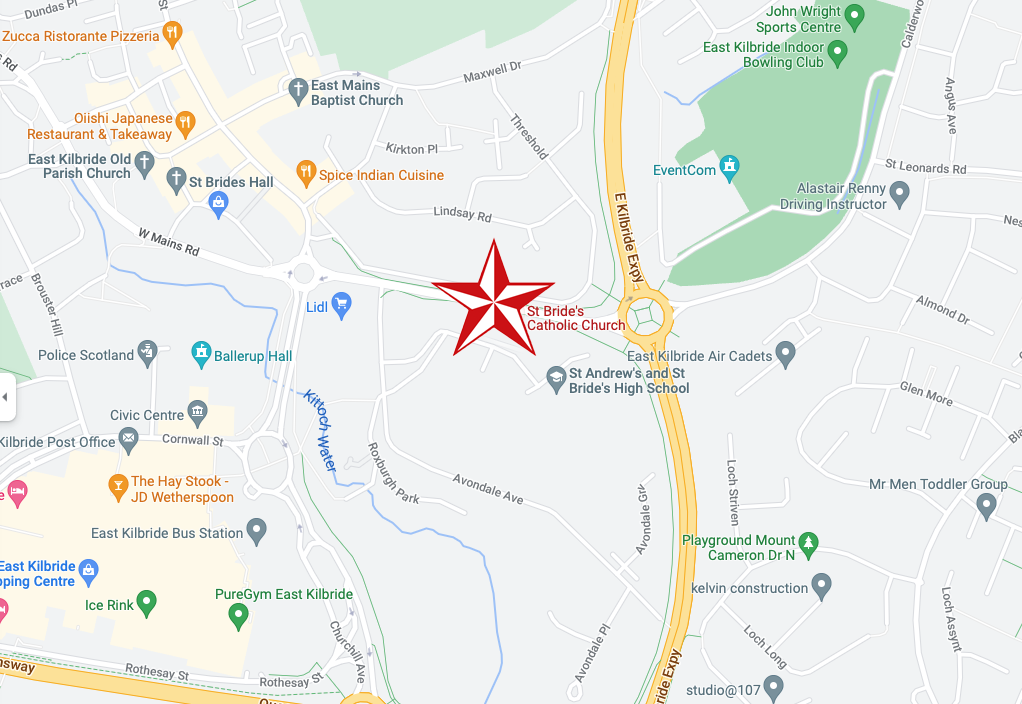
Whitemoss Ave East Kilbride Glasgow G74 1NN
Architects: Gillespie Kidd & Coia 1957-1964
Designed by Professors Andy MacMillan and Isi Metzstein.
Grade A listed 1994 RIBA Bronze Medal
Should you so wish – jump the train from Glasgow Central, unless you’re already here/there.
Walk up West Mains Road, alone on a hill standing perfectly still sits St Bride’s, you can’t miss it.
The biggest extant example of Bricktalism, the most Bricktalist building in the world, possibly.
Stallan-Brand design director Paul Stallan commented:
St Bride’s for me is the most important modernist buildings of the period. The church made from Victorian sewer bricks and concrete is both simple and complex. The architecture continues to be a key reference for students of architecture from across the world interested in modernism and the contemporary vernacular in context. Andy and Isi’s work is as important to Scotland as Alvar Aalto’s work is to the Finnish.
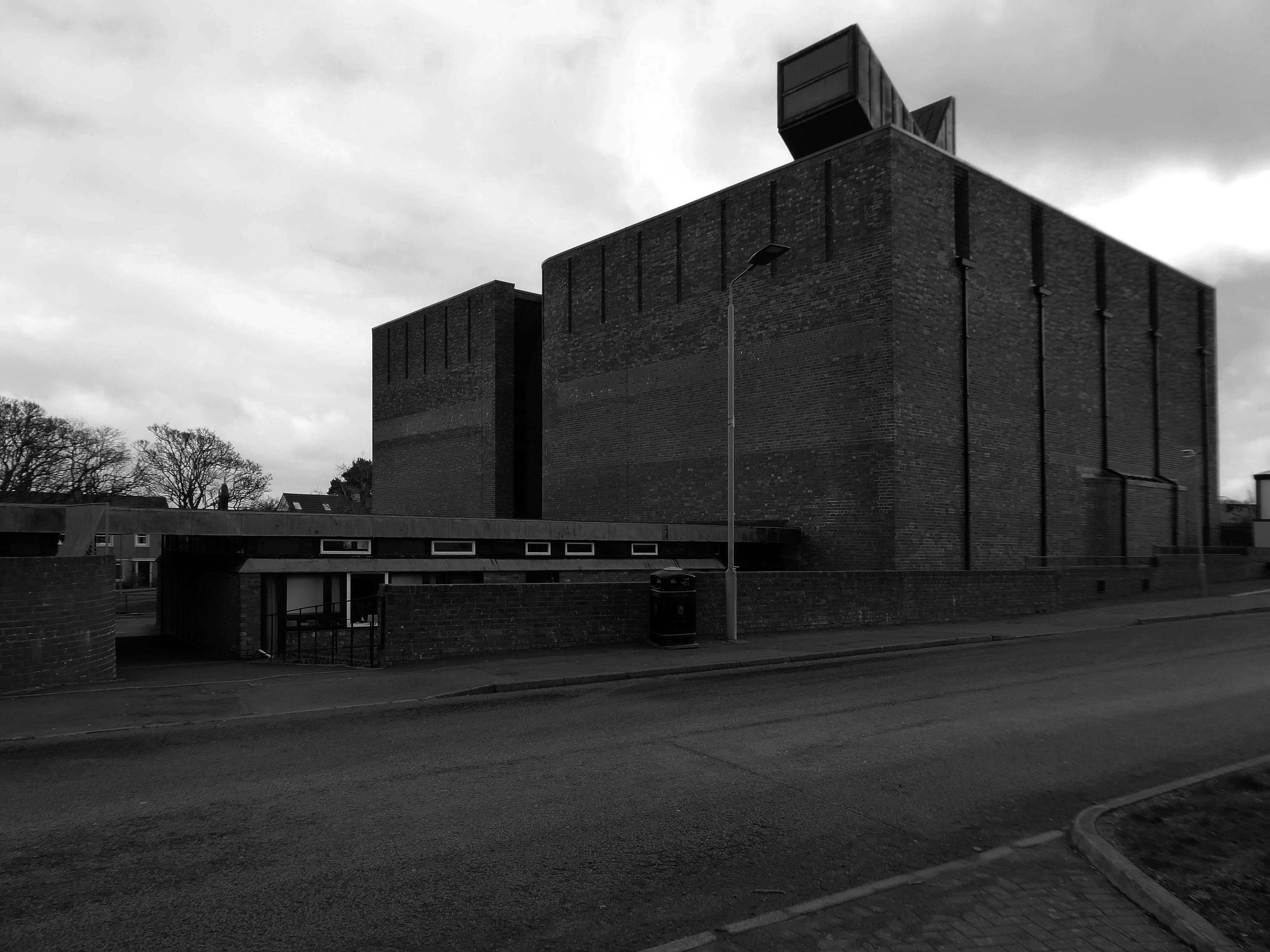
The bell tower was removed in 1983 due to extensive damage to the brickwork.
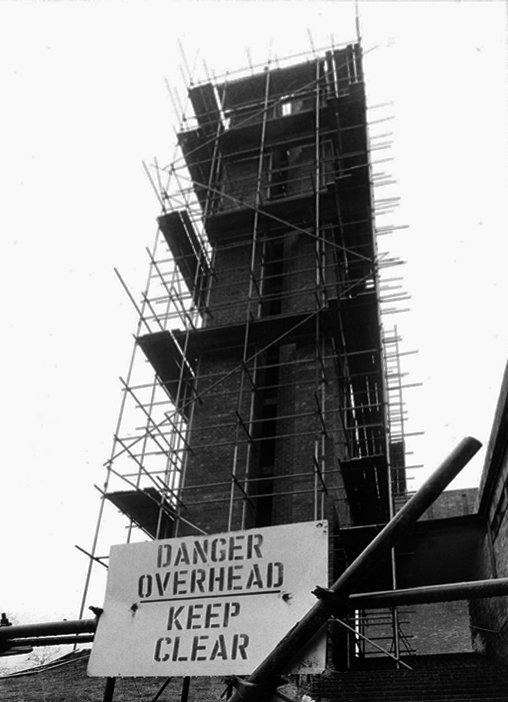
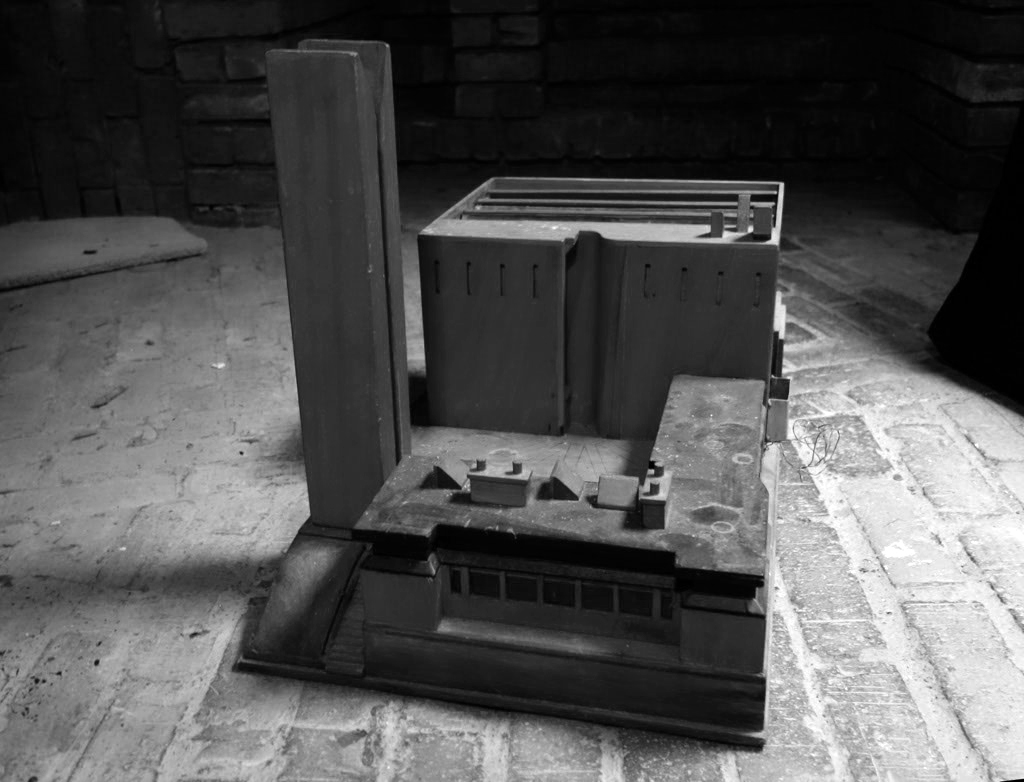
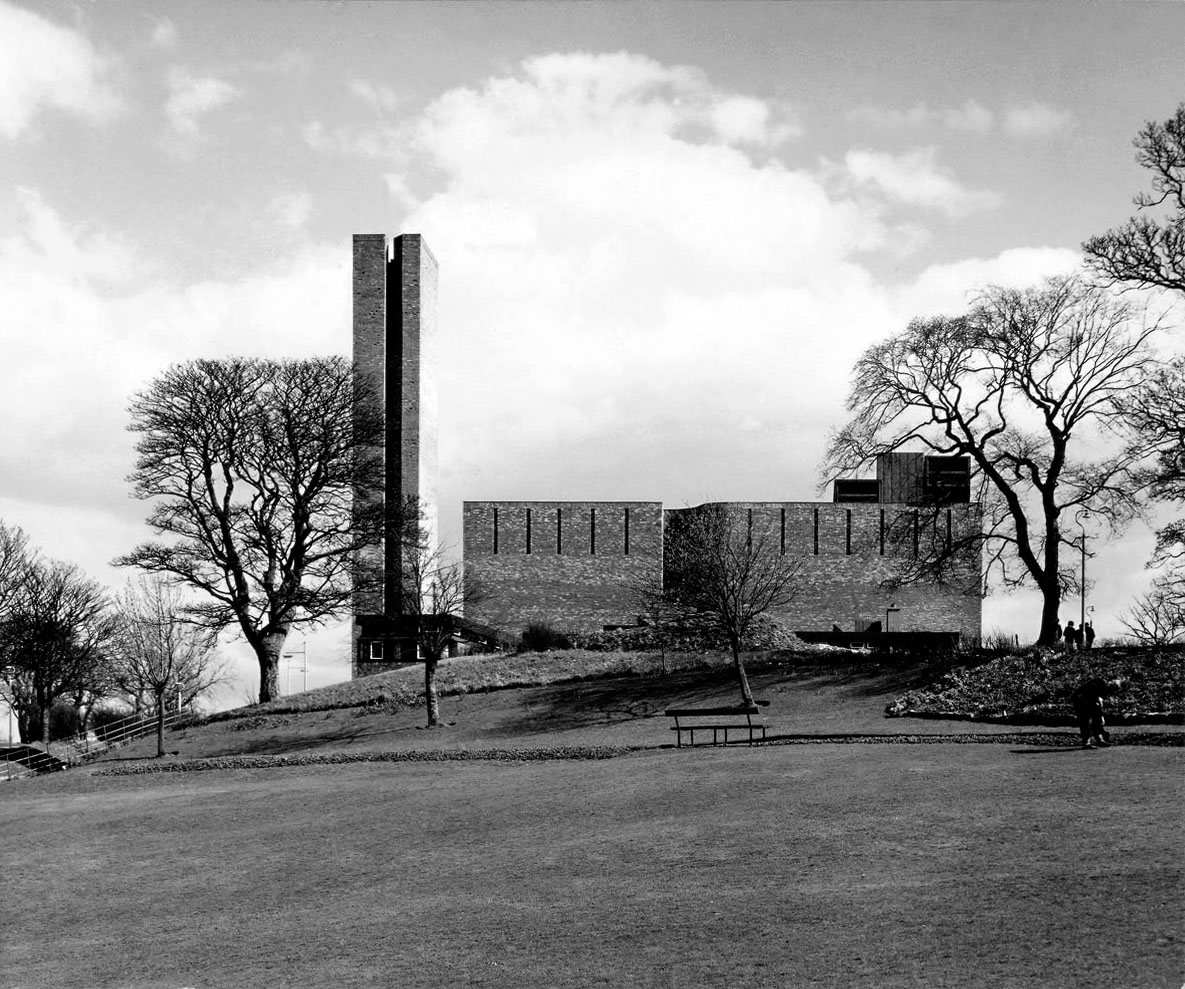
Image: Gillespie Kidd & Coia Archive at the The Glasgow School of Art.
It’s a traditional Scottish stone detail I saw for myself as a boy growing up in the Highlands, on every castle and fortified house, and on the flanks of the tower at Muckrach, ancient seat of the Grants of Rothiemurchus, built in 1598. This was my local castle just a mile from home.
The entrance to St Bride’s, I like to imagine, comes from a friendship that included travel in the Scottish Highlands, admiring the Scottish vernacular close-up, of a fevered conversation about a simple concept – the massive blind box, and how the application of simple, semi-traditional material detailing can make it all the richer.
St Bride’s is simply one of the finest buildings in Scotland.
Chris Boyce design director at CJCT Studios
Get your skates on it’s almost ten o’clock, Saturday Mass is about to start, take a seat.
Many thanks to Fr. Rafal Sobieszuk and the congregation for their warm welcome.
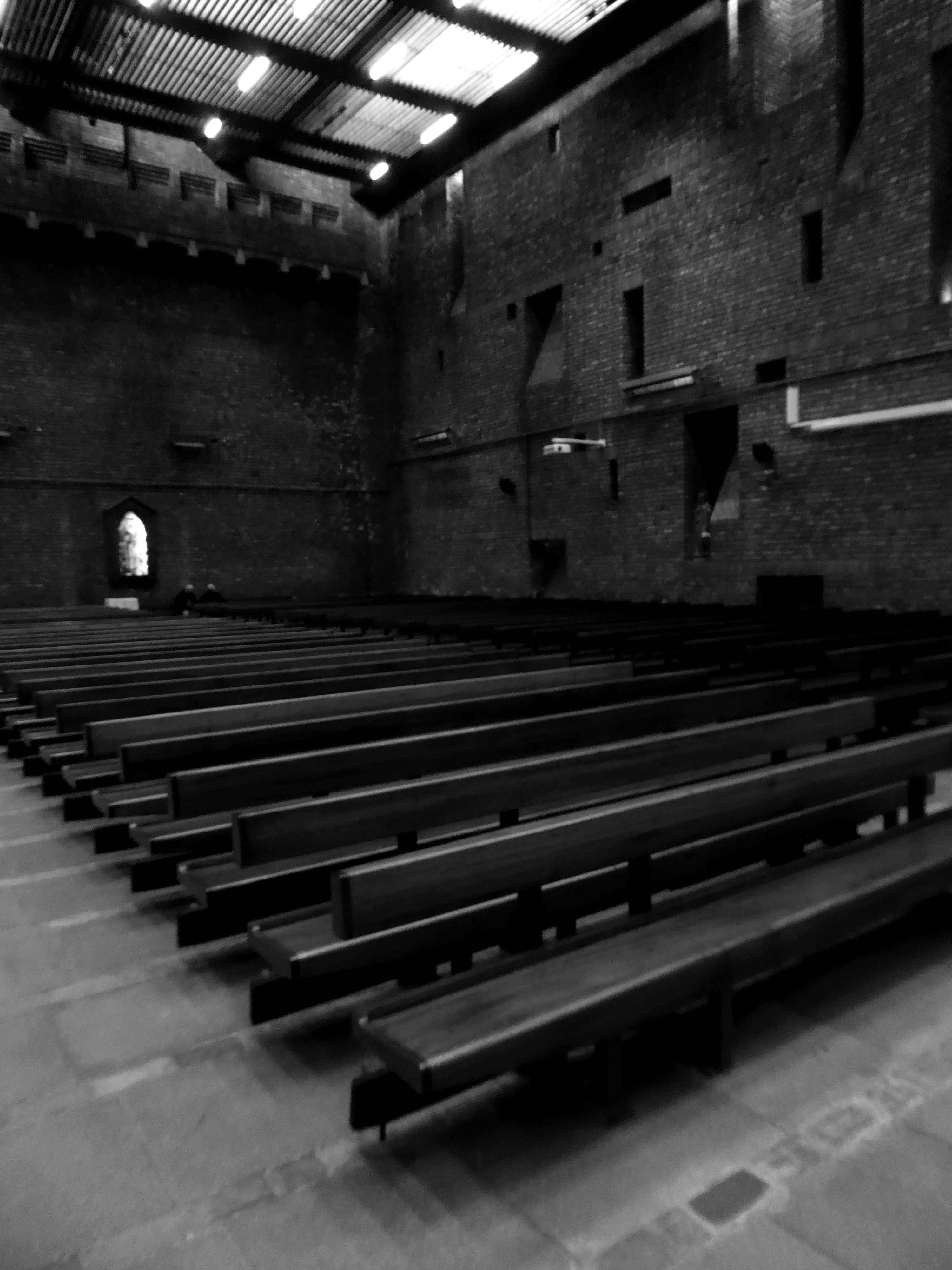
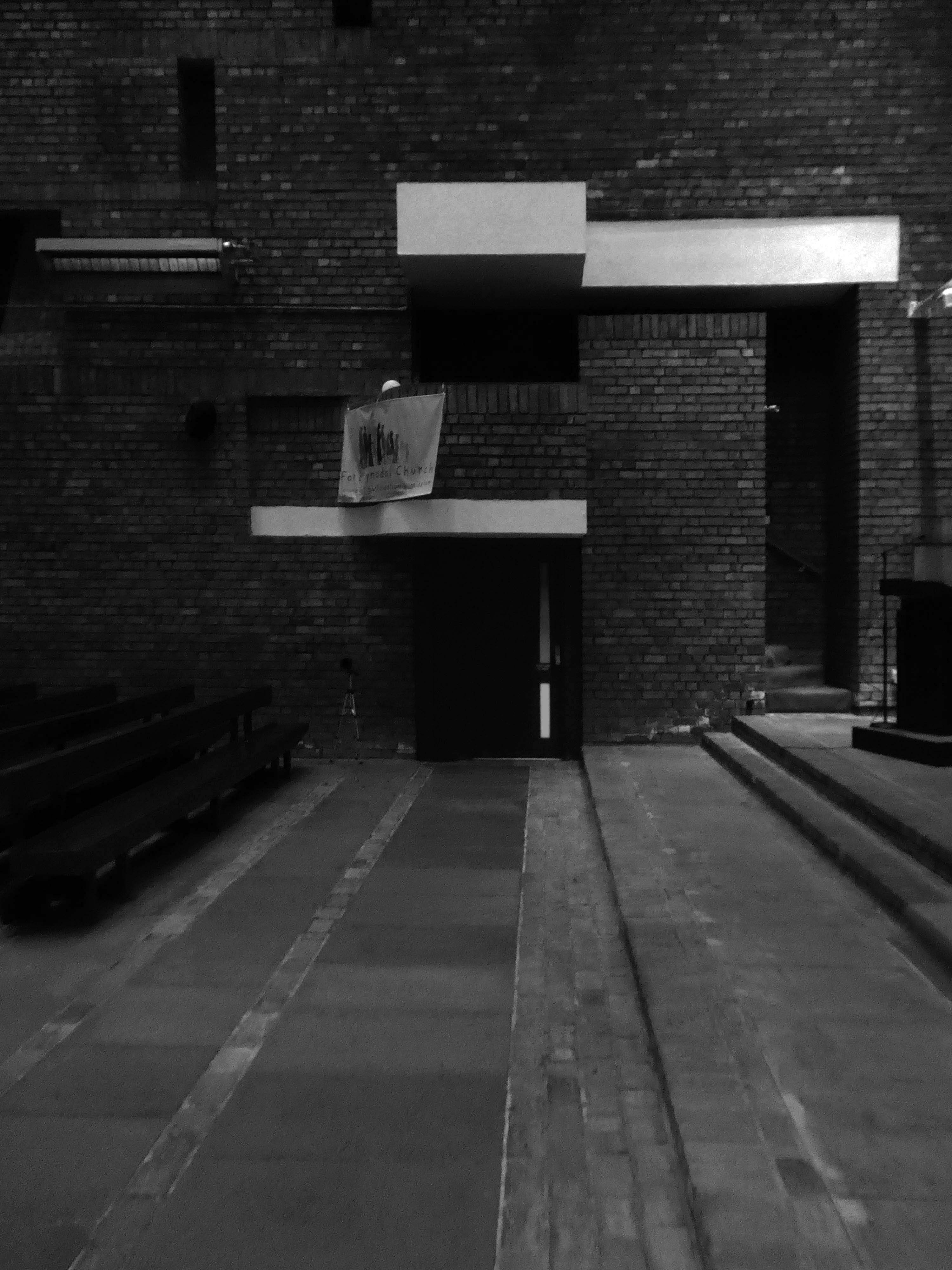
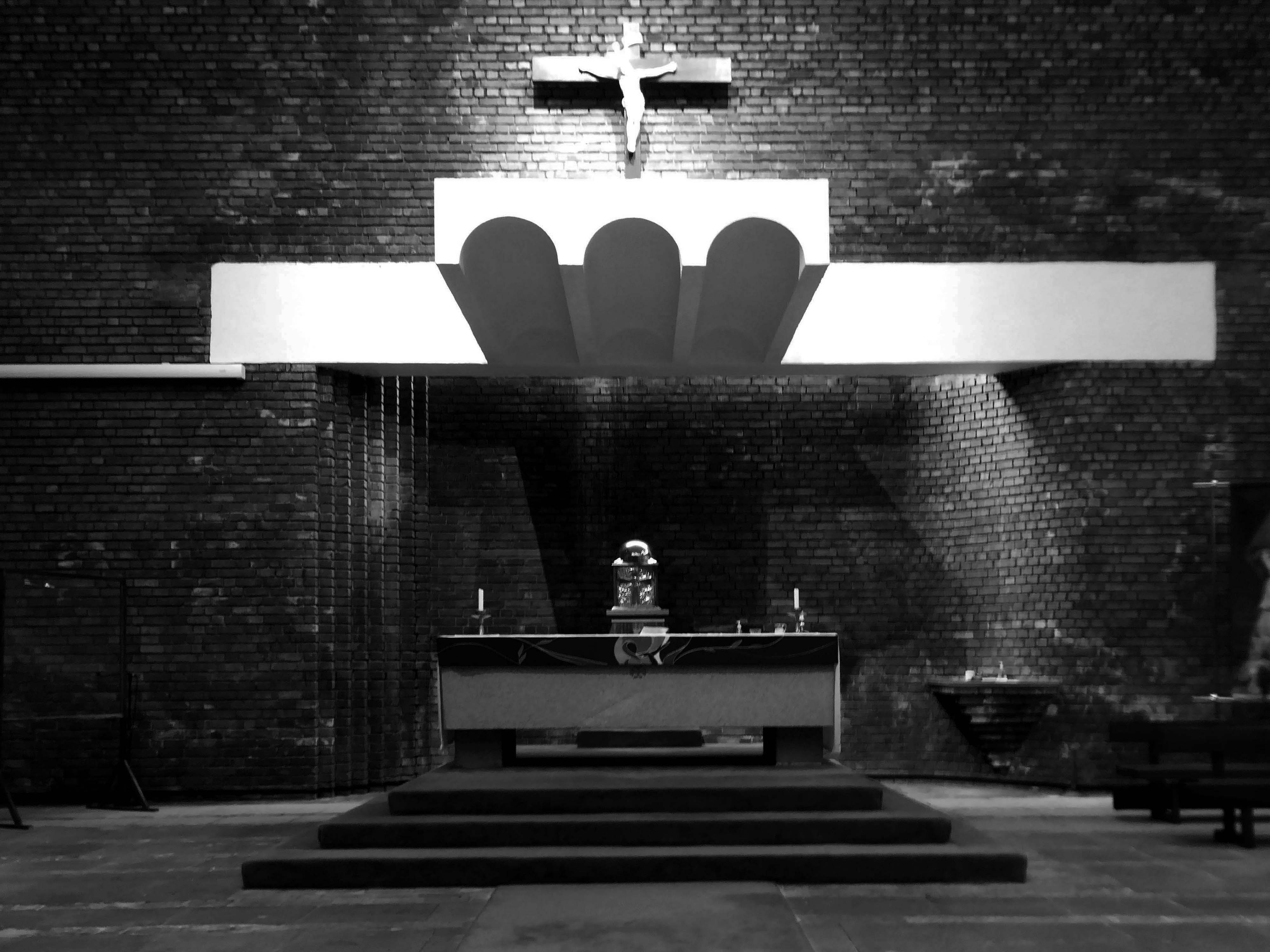
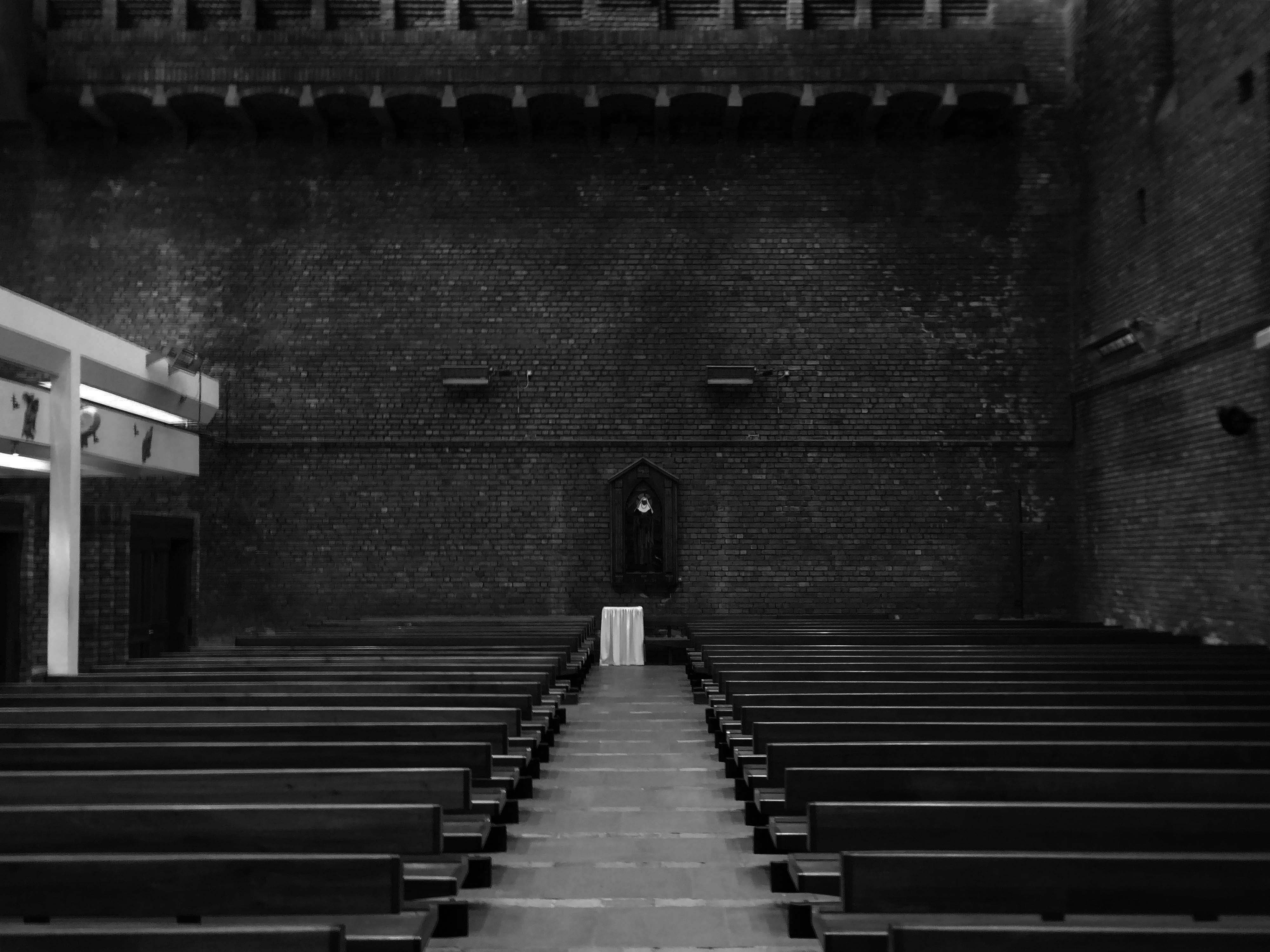
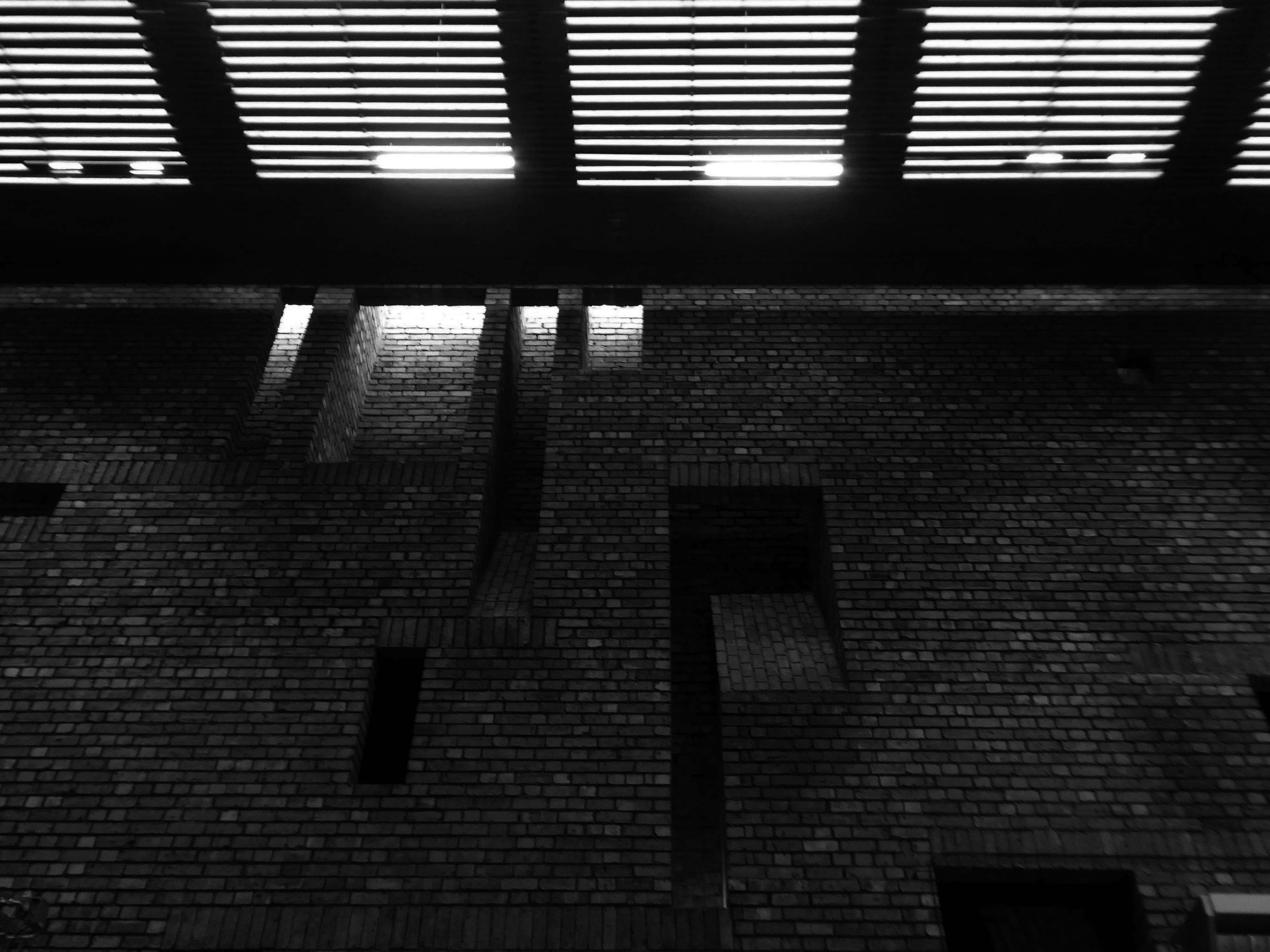
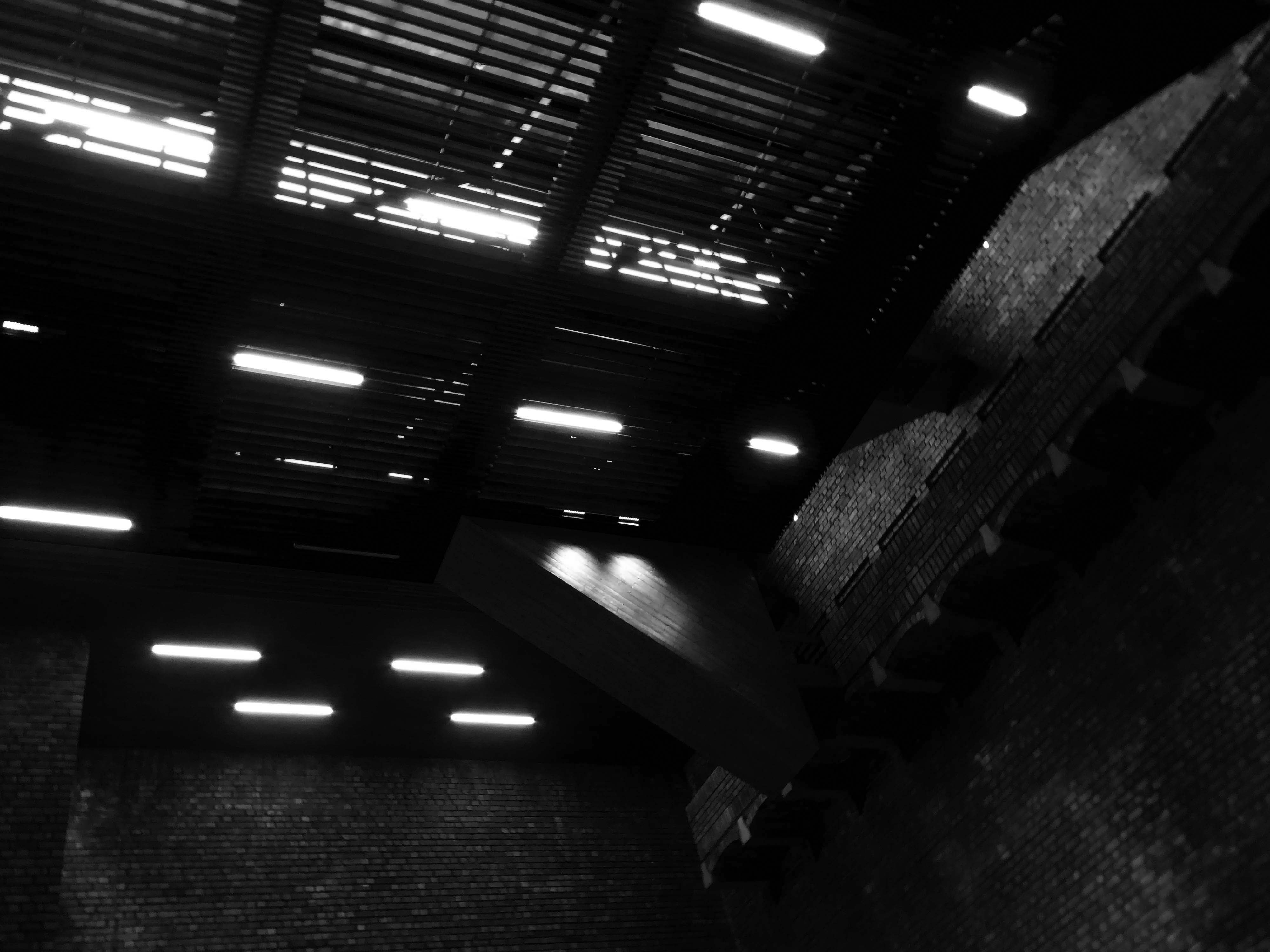
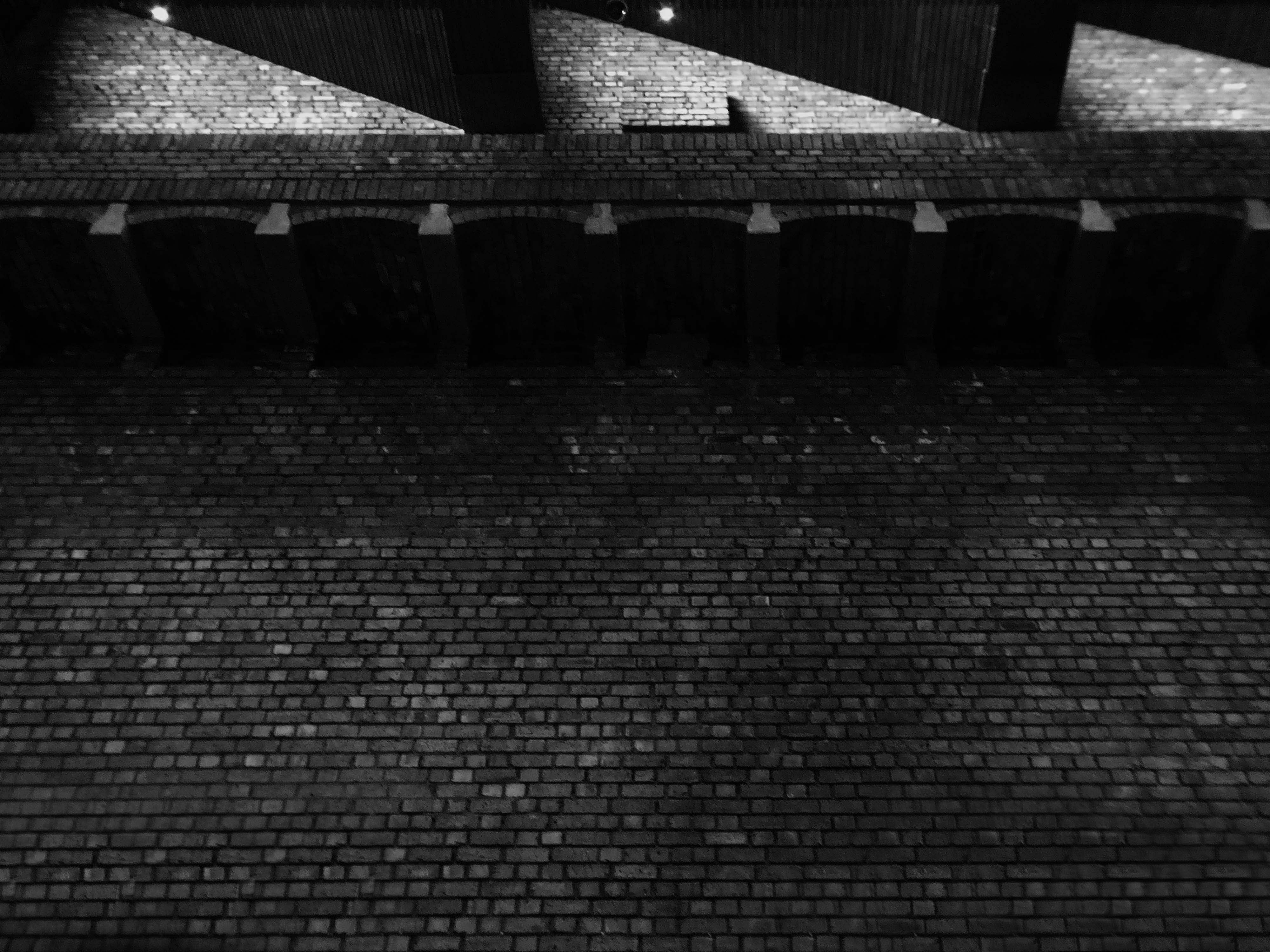
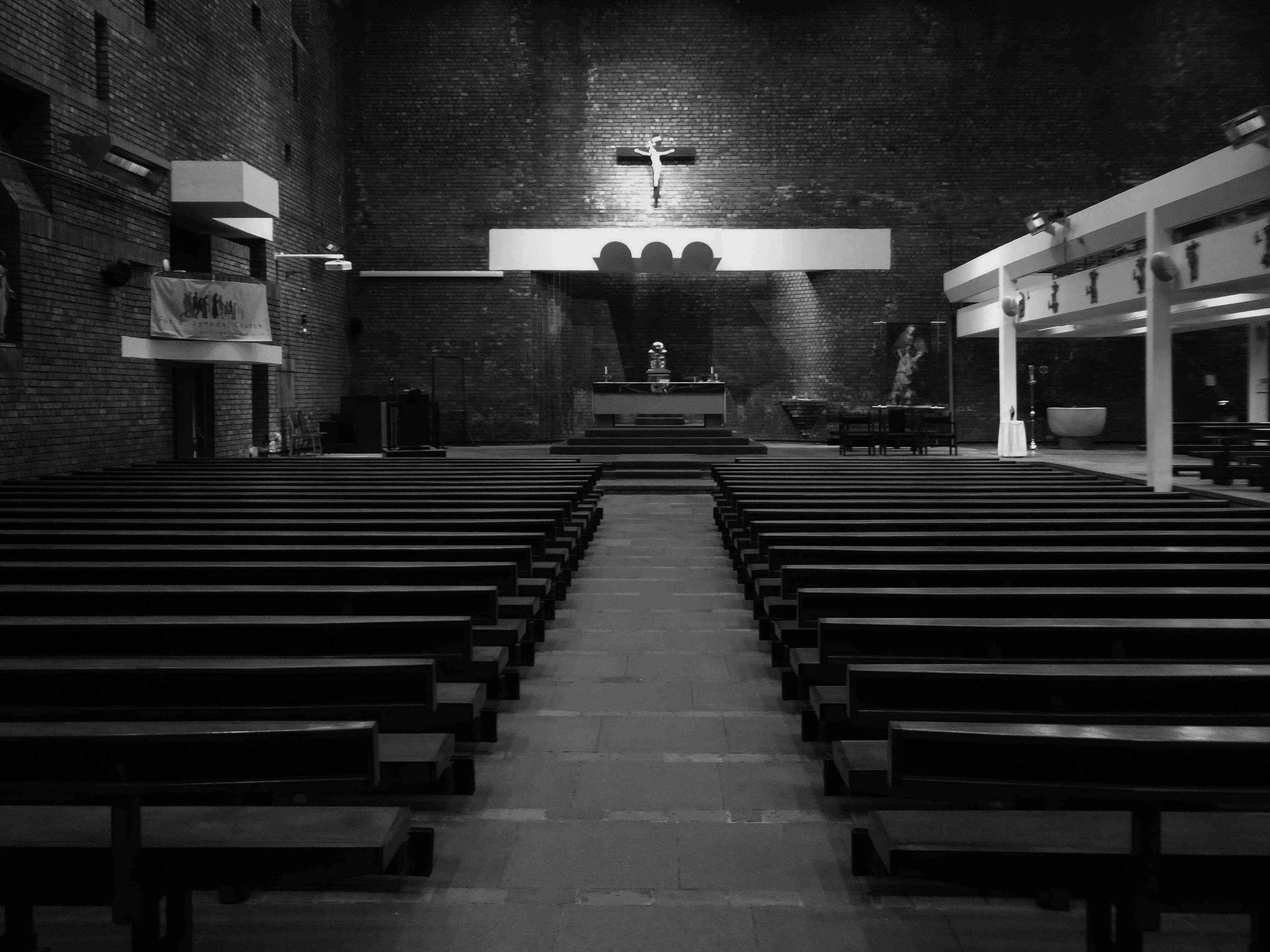
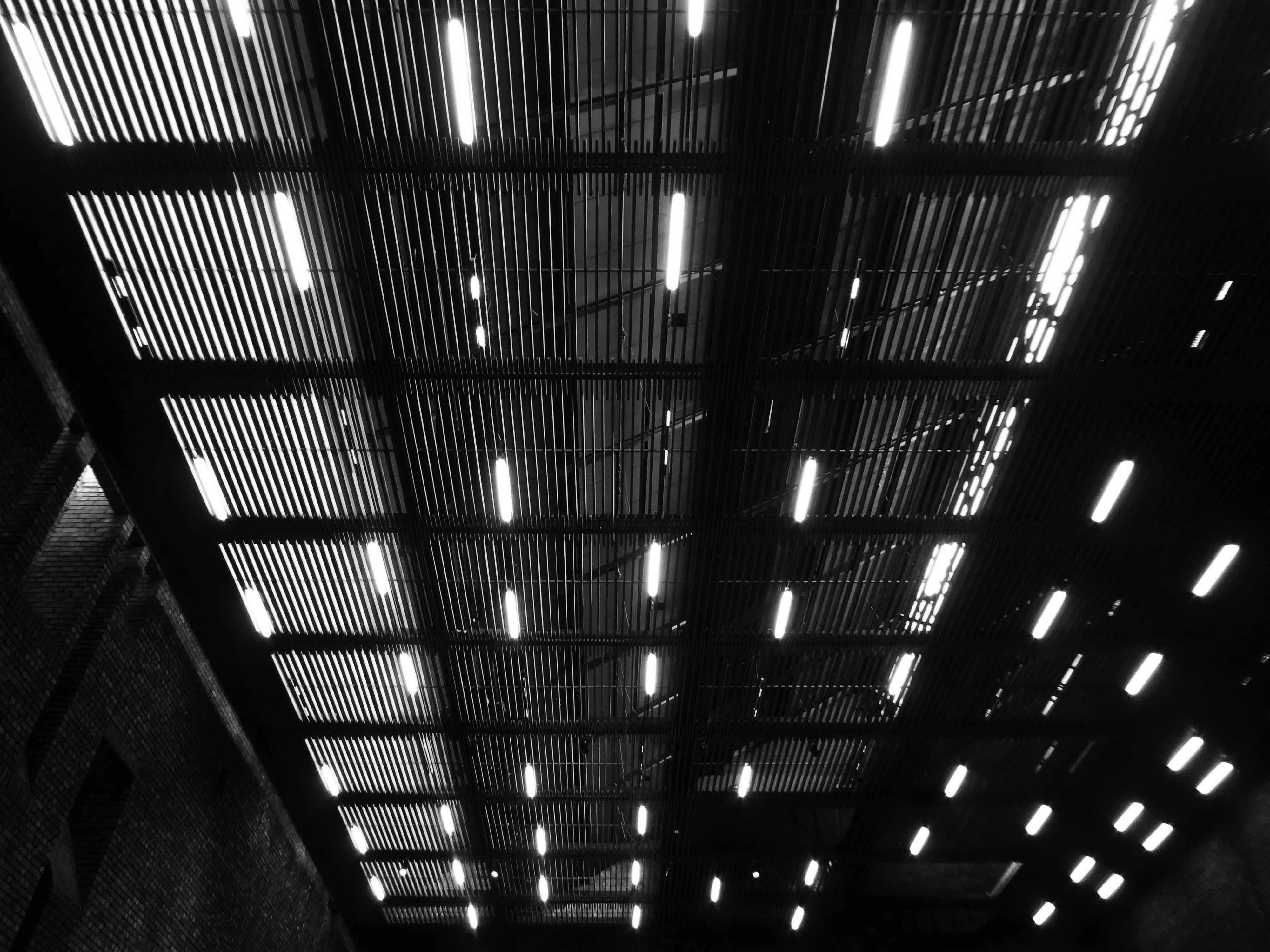
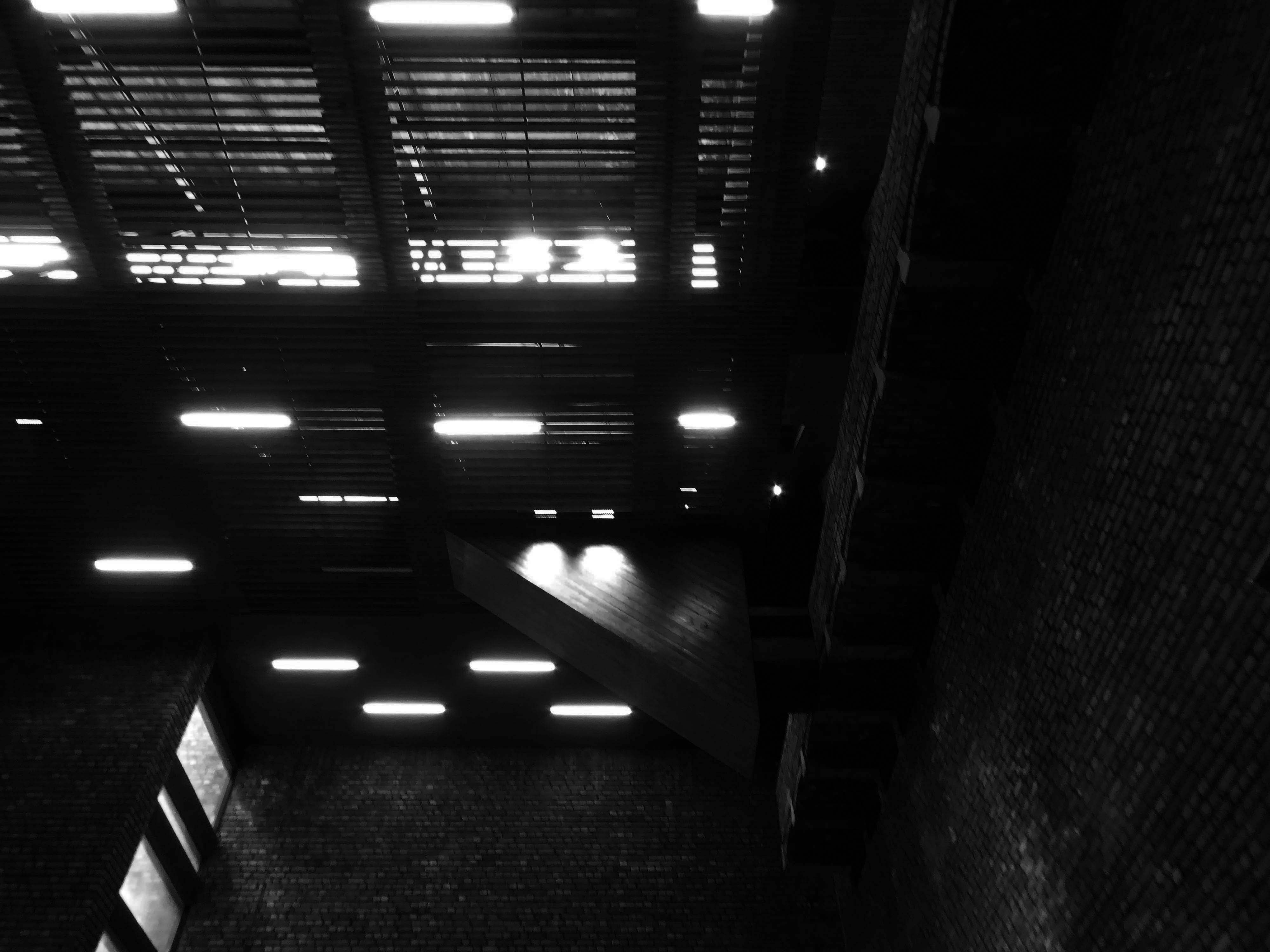
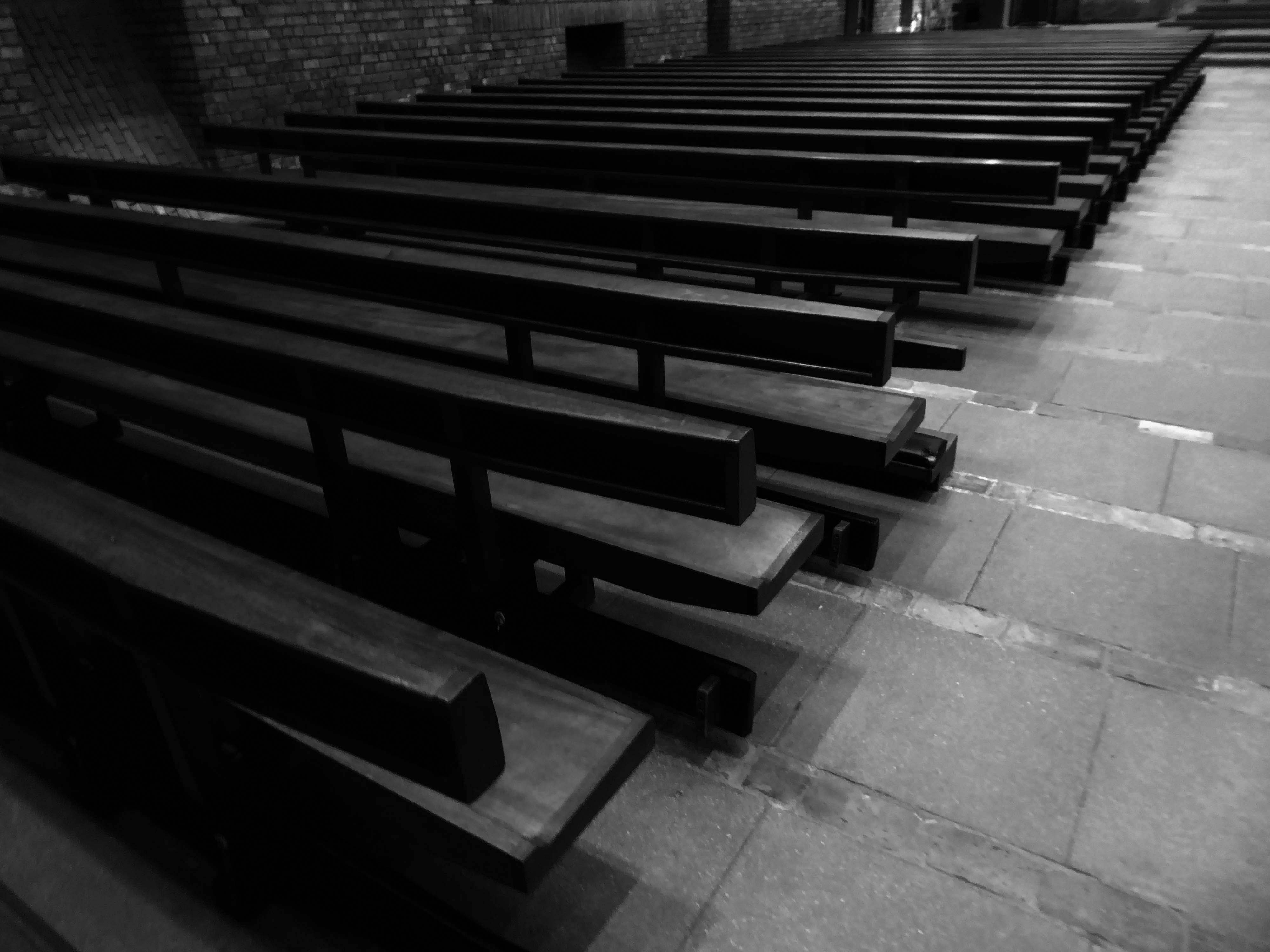
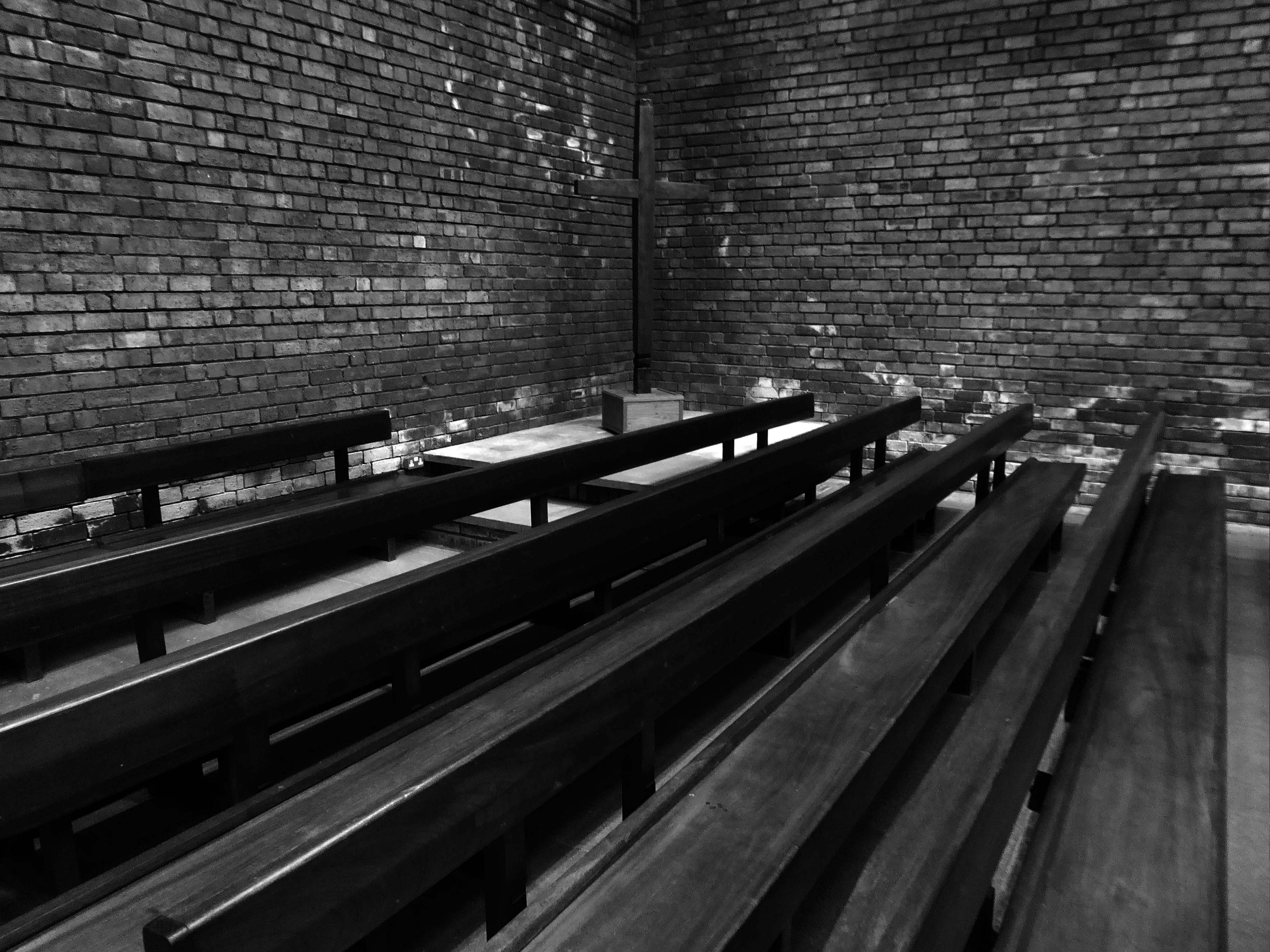
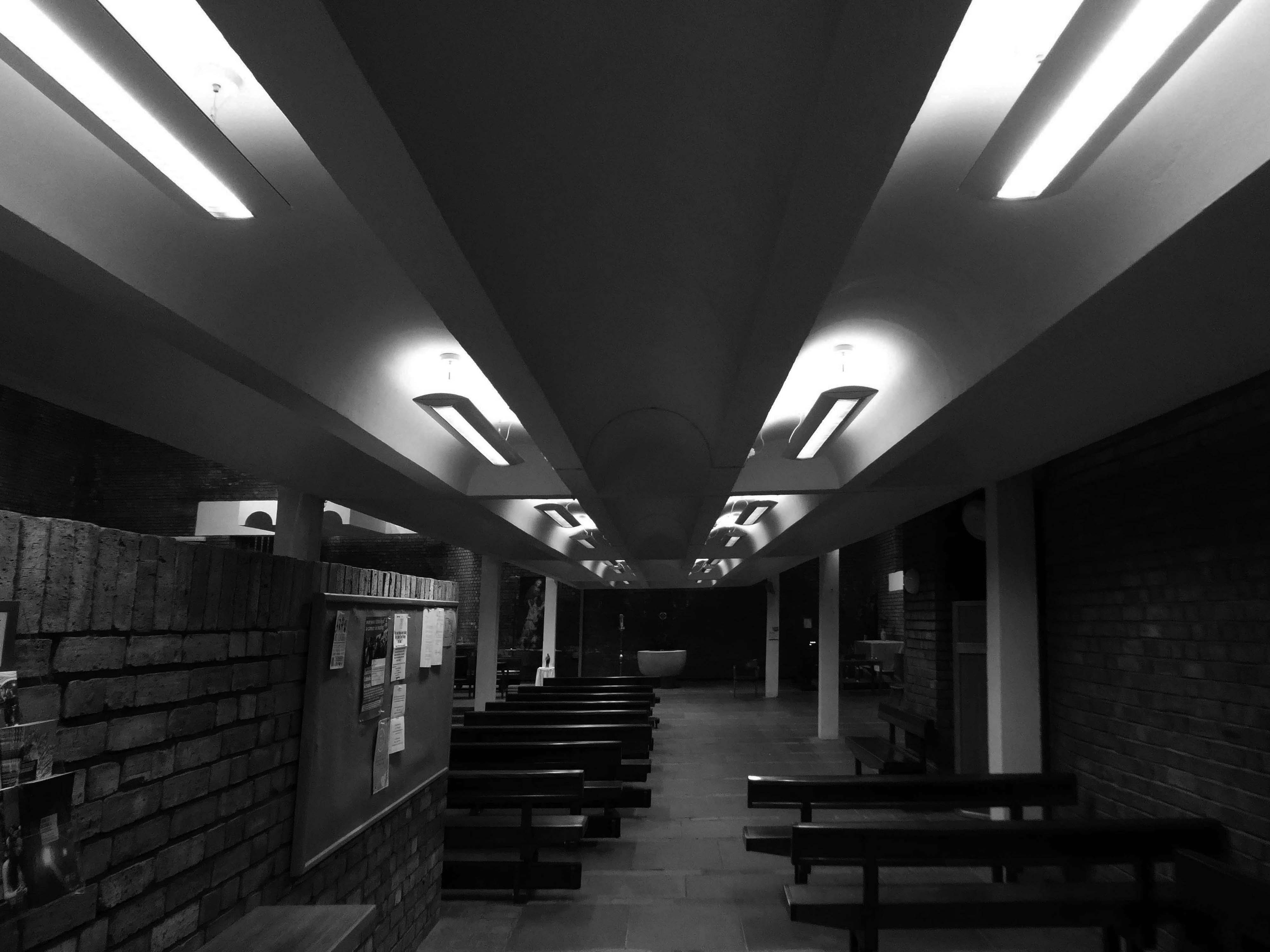
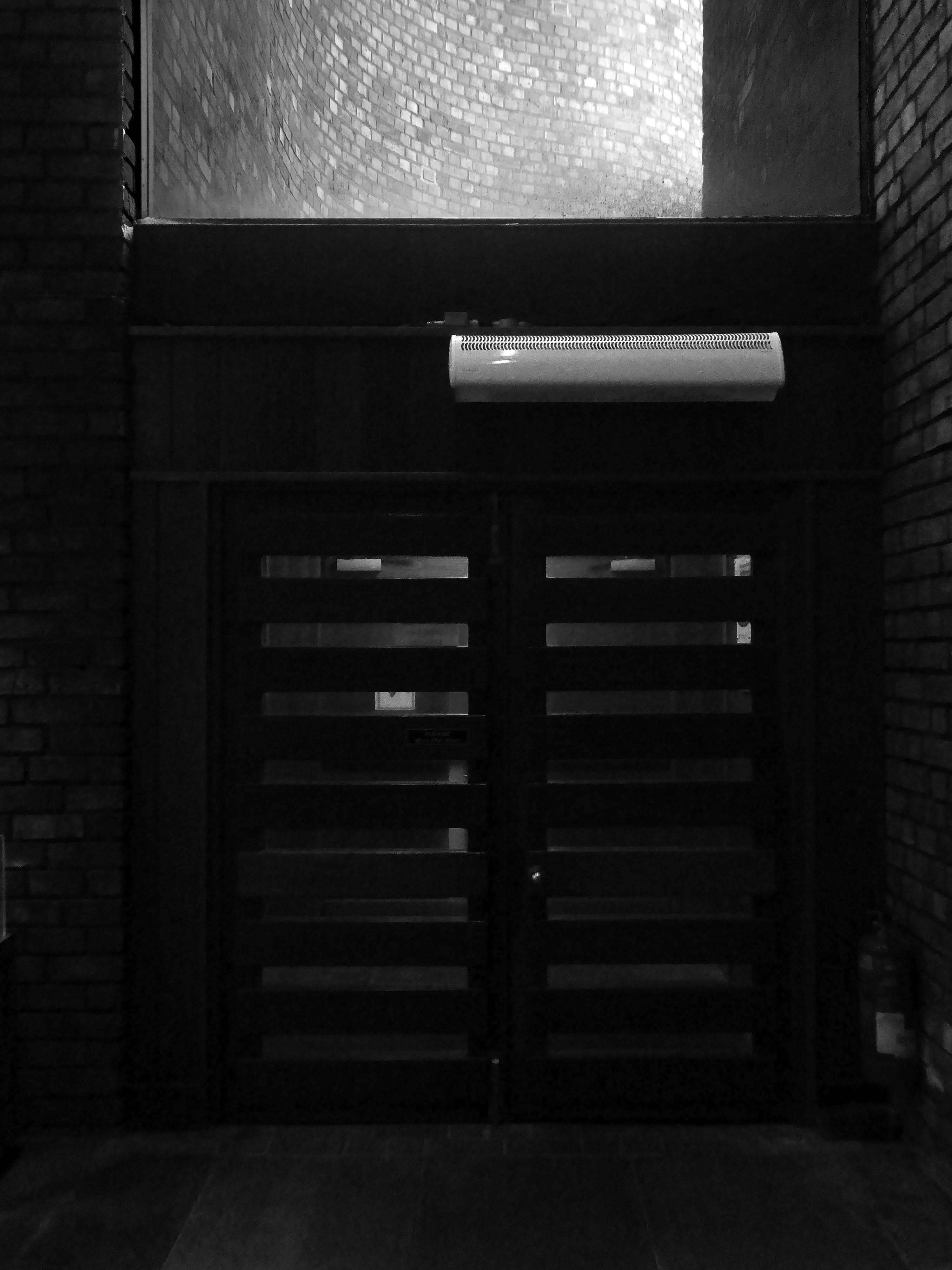
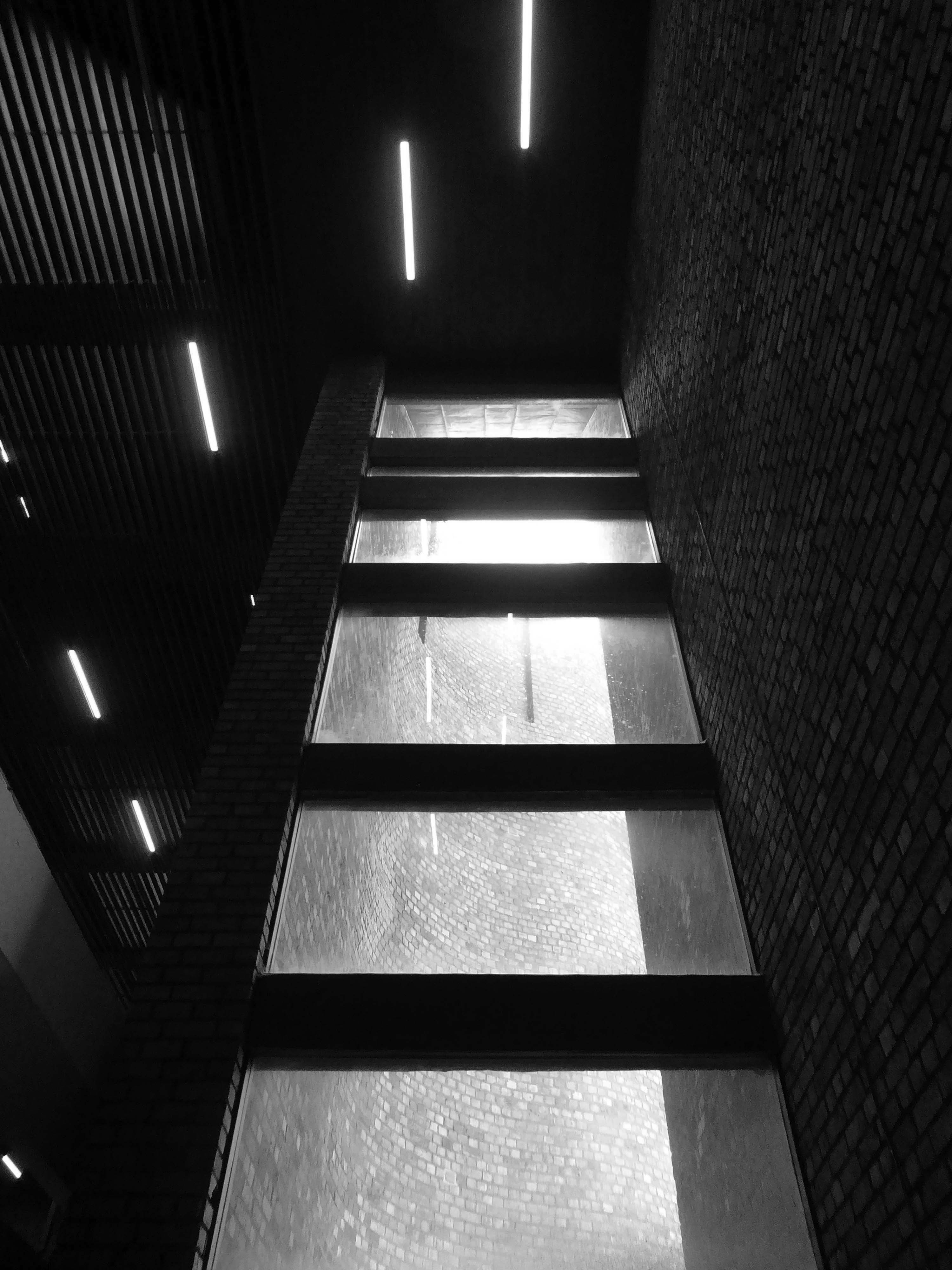
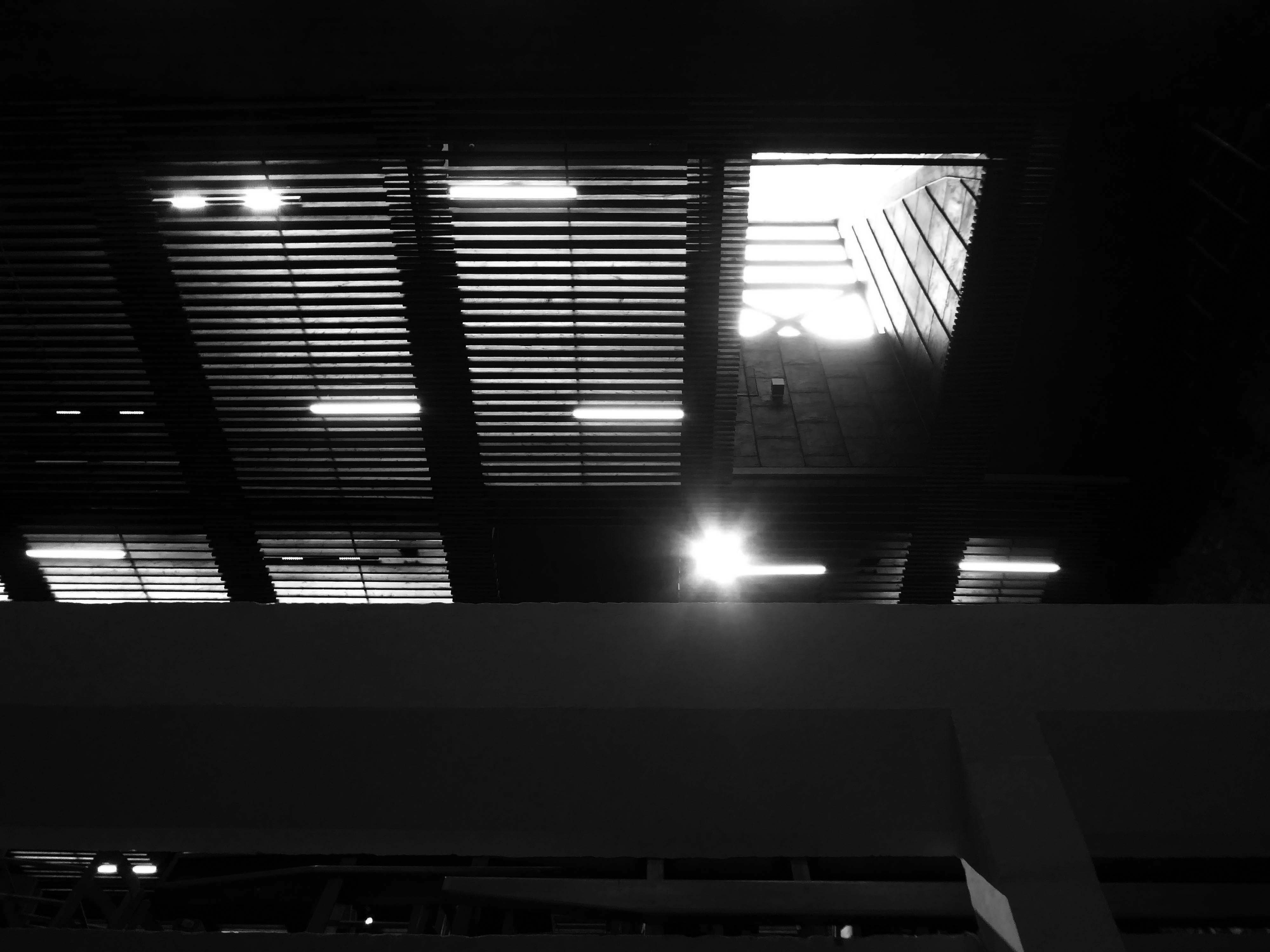
Sadly I was unable to reach these dizzy heights.
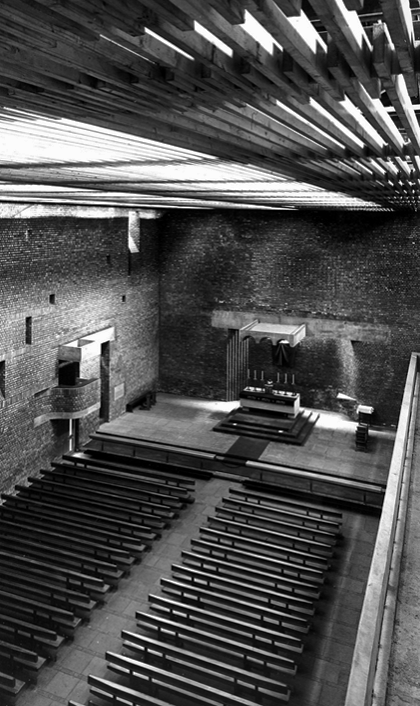
Happily the exterior is open and easily accessible, though care should be taken when zig zagging carelessly across West Mains Road.
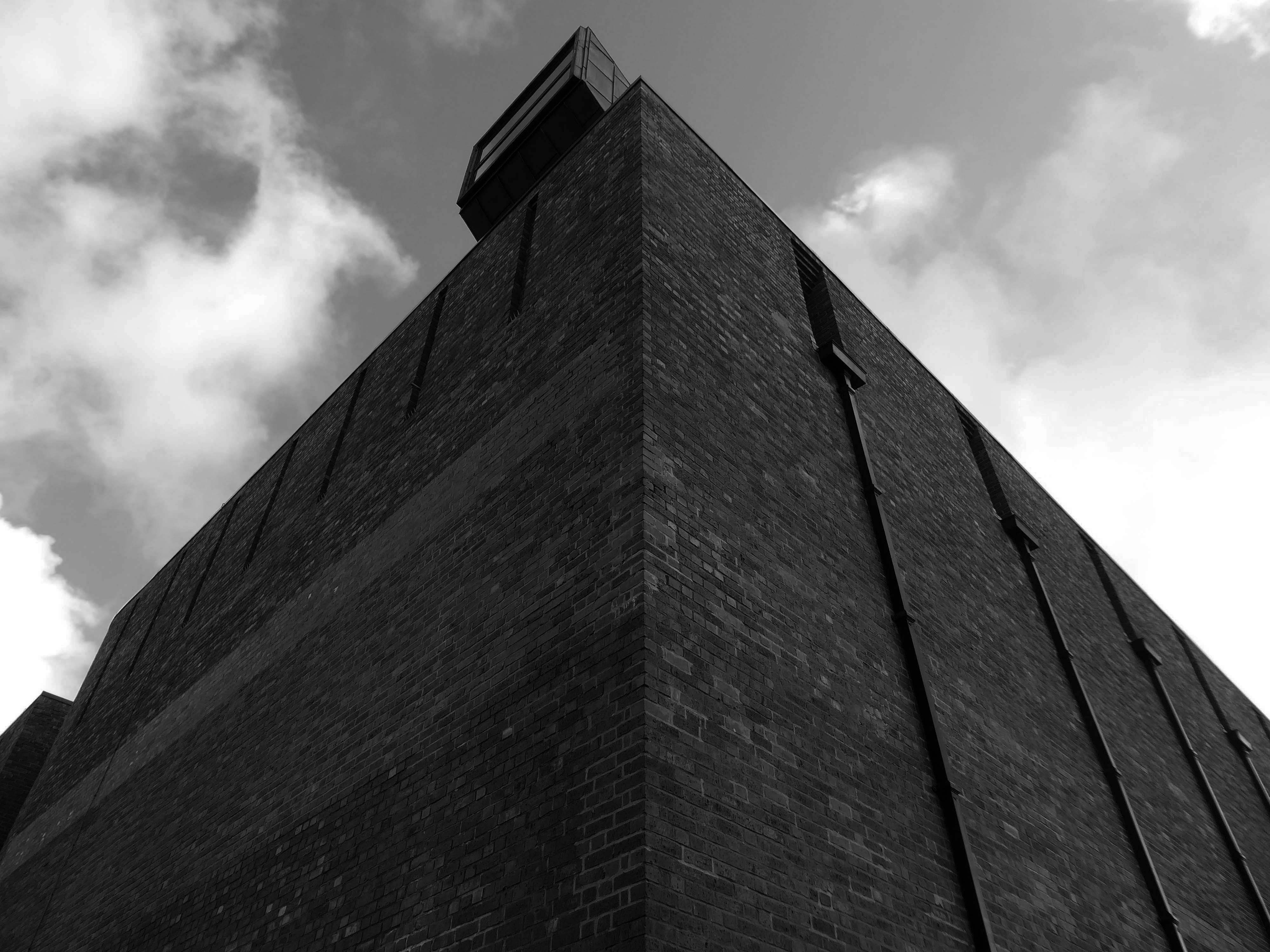

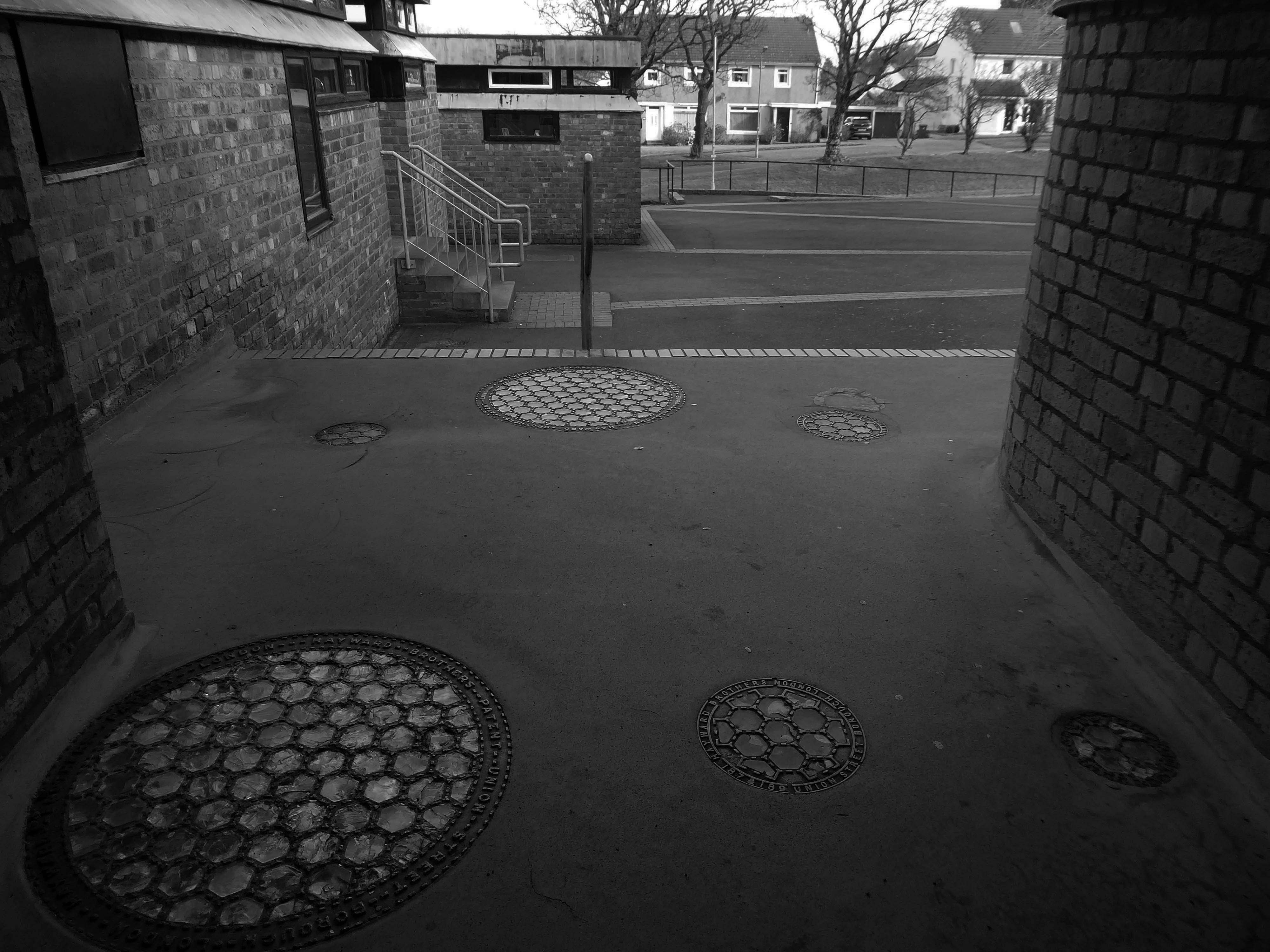
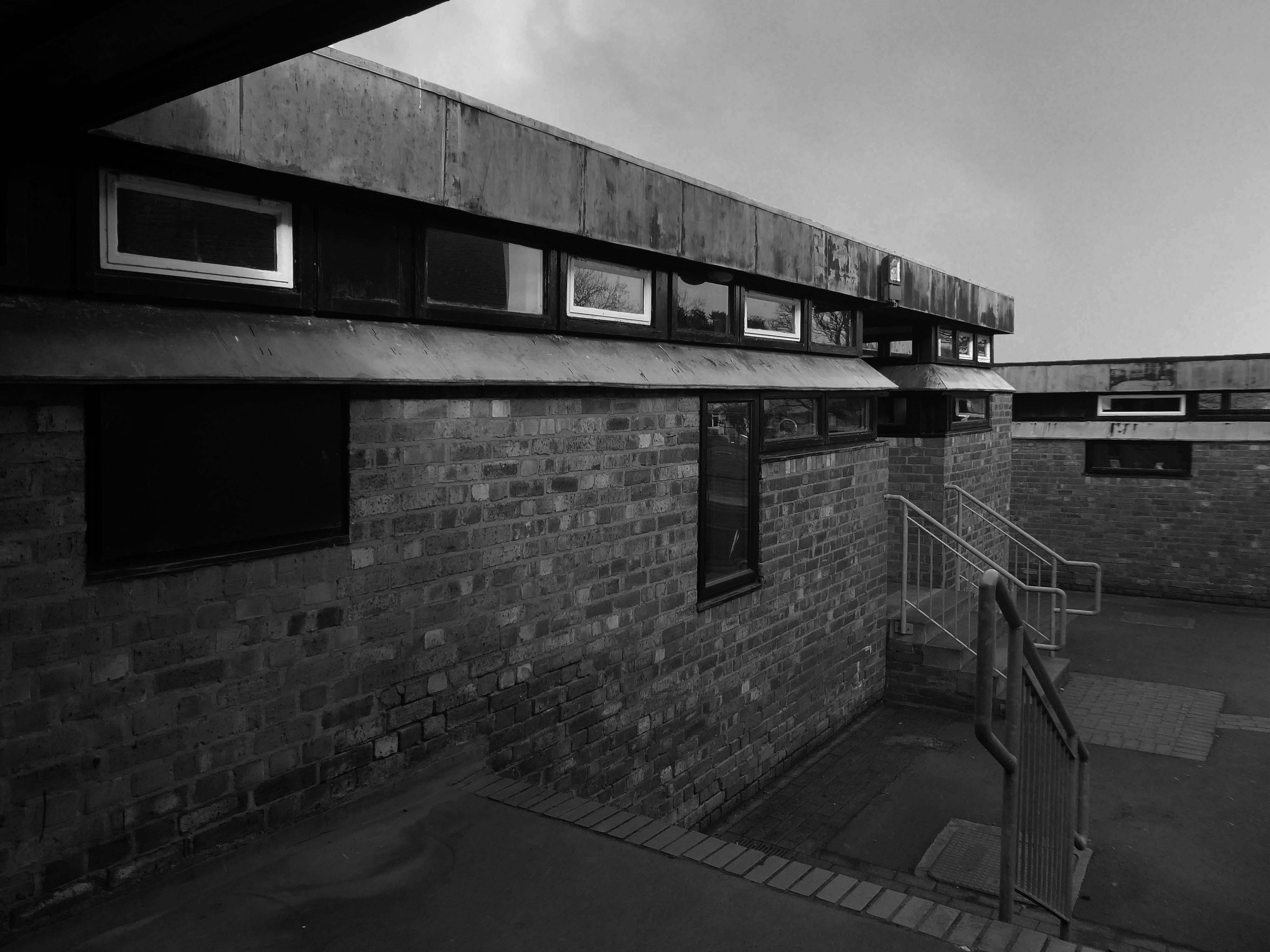
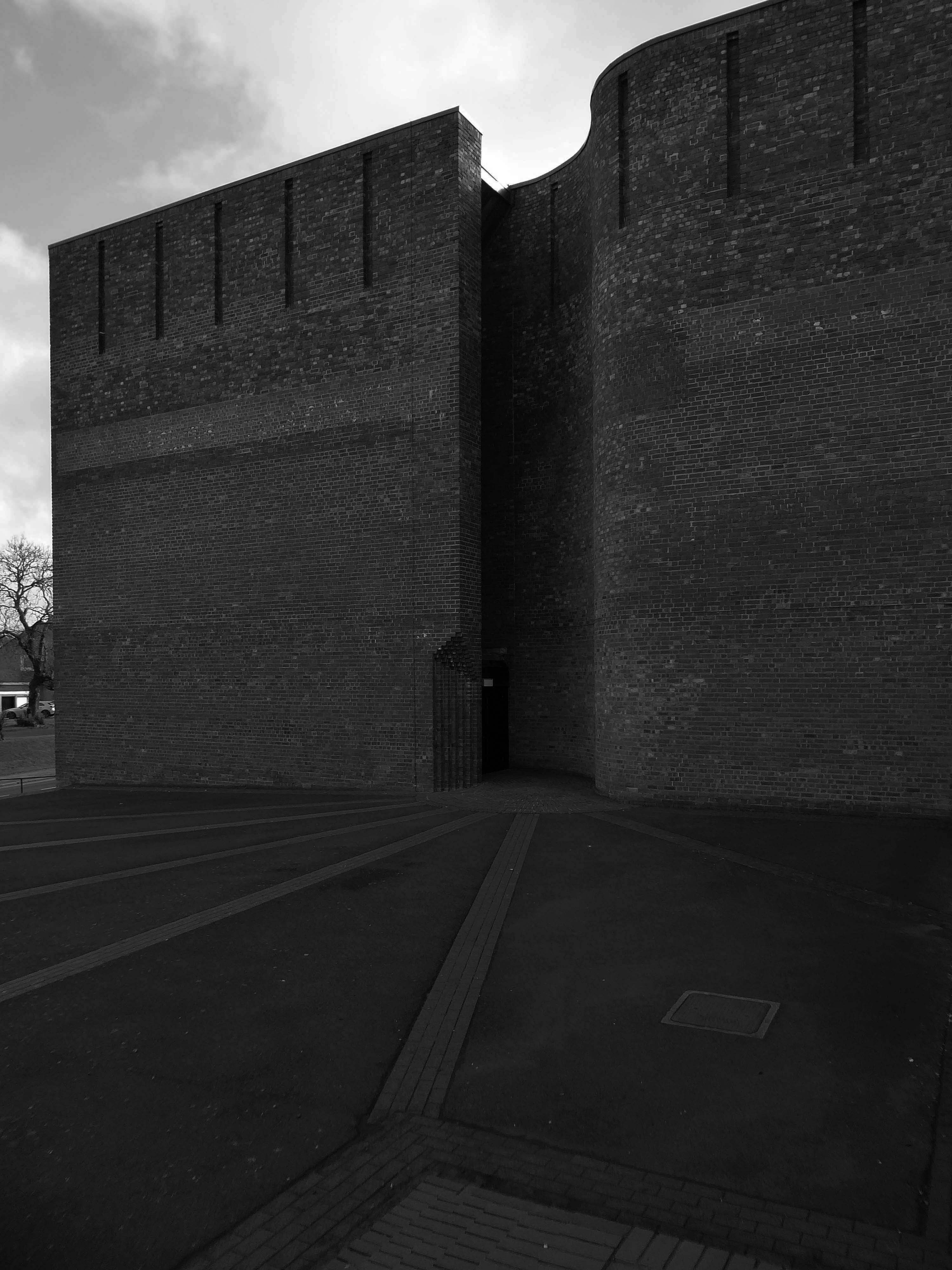
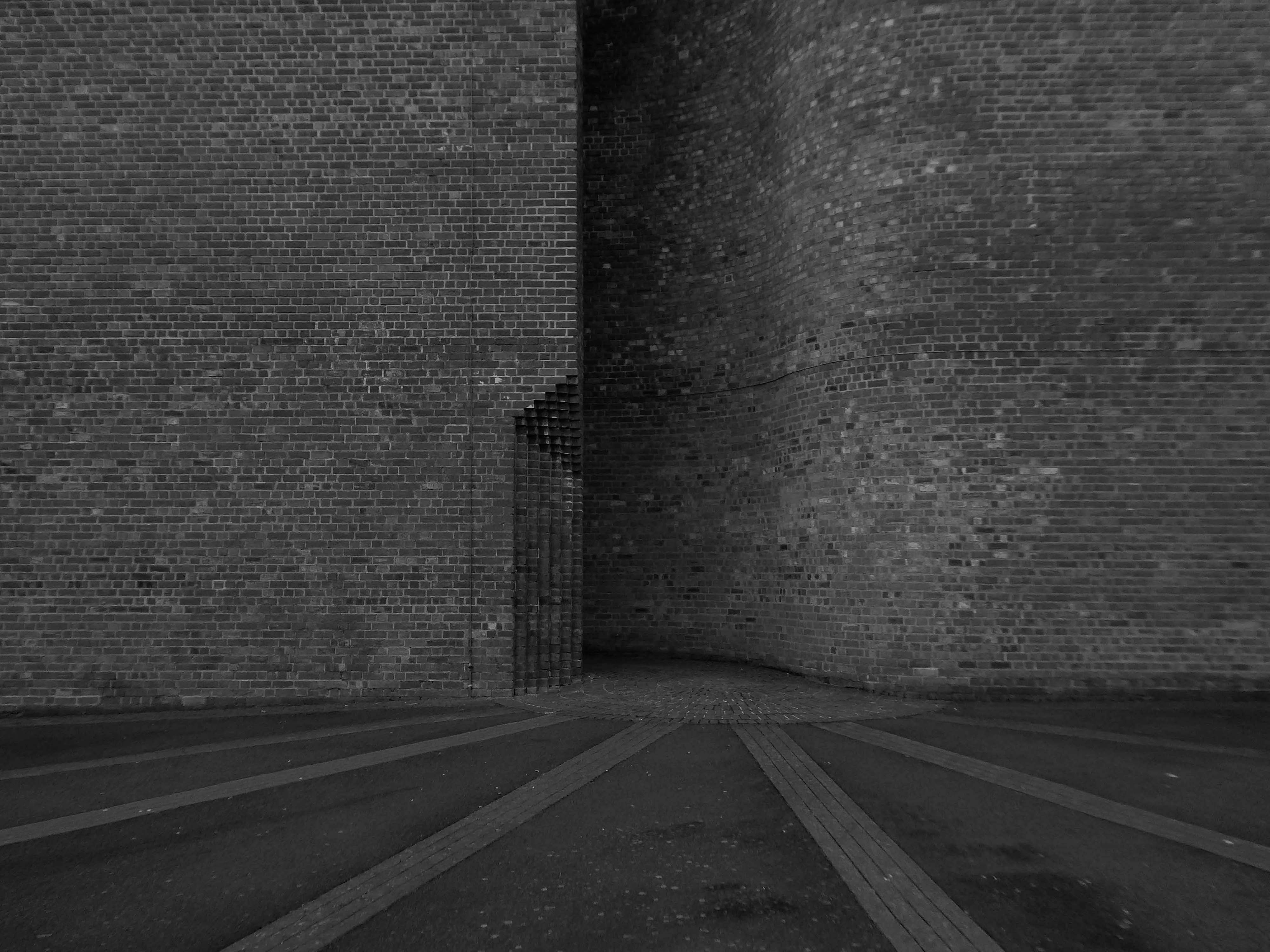
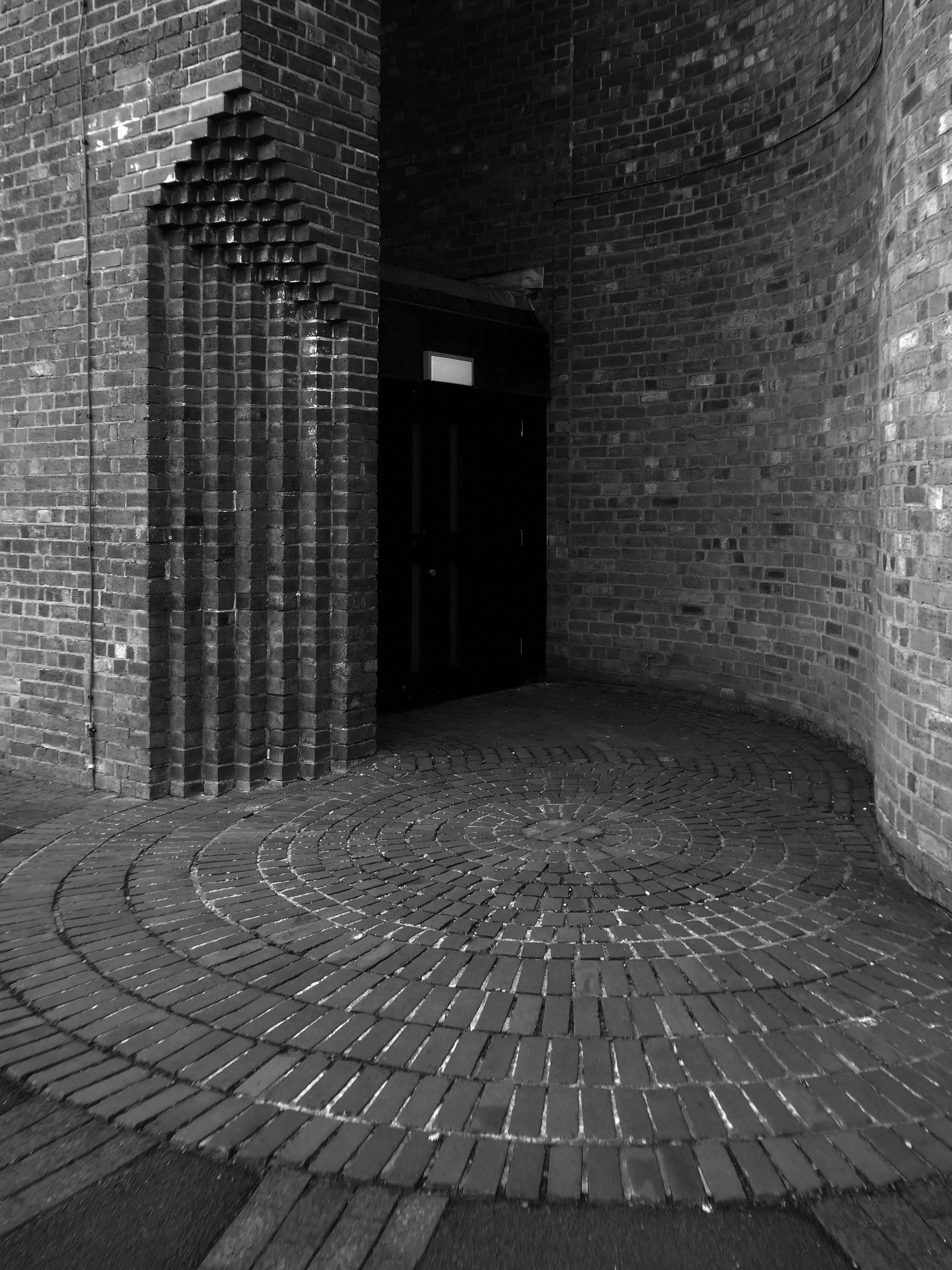
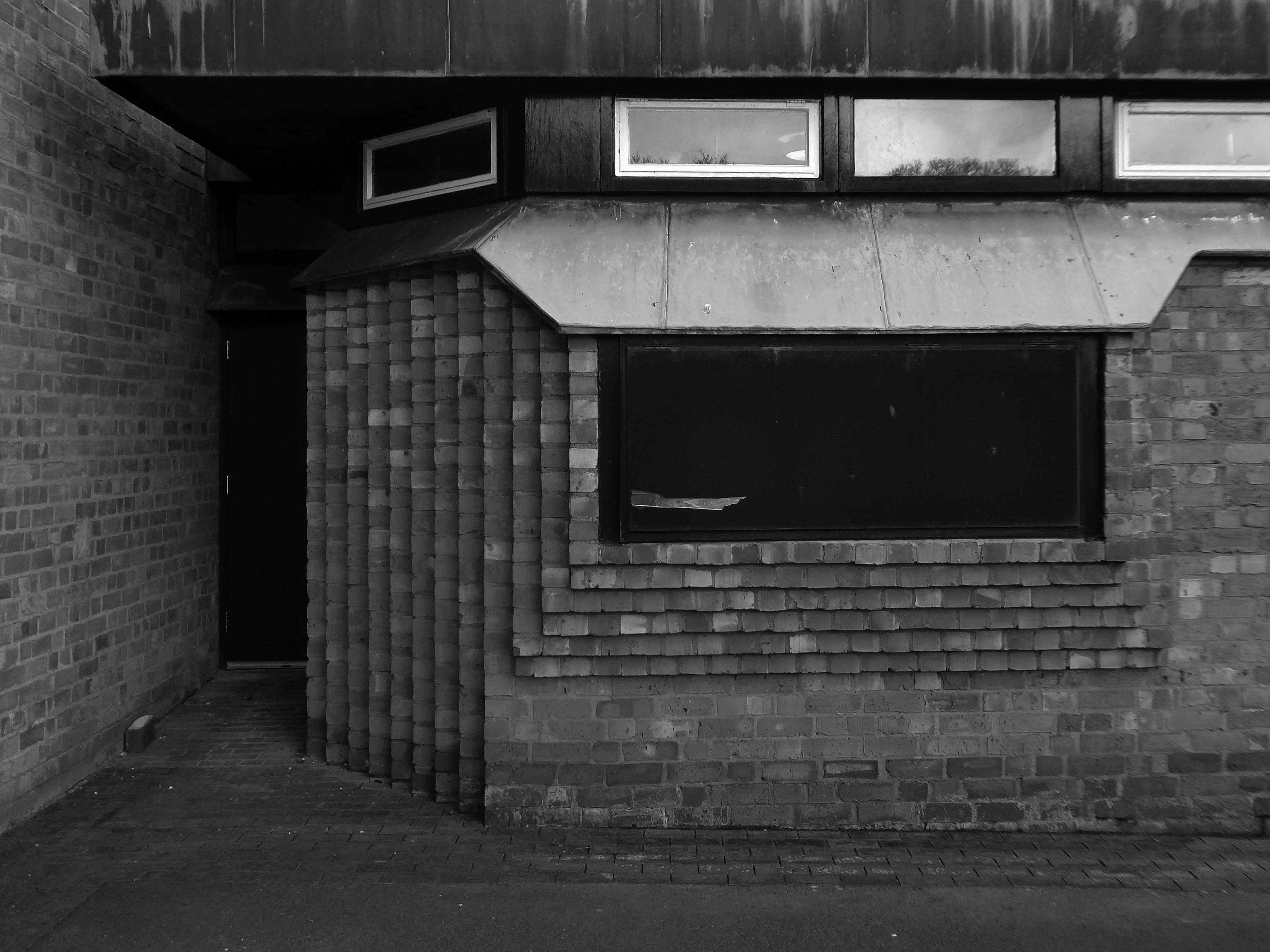
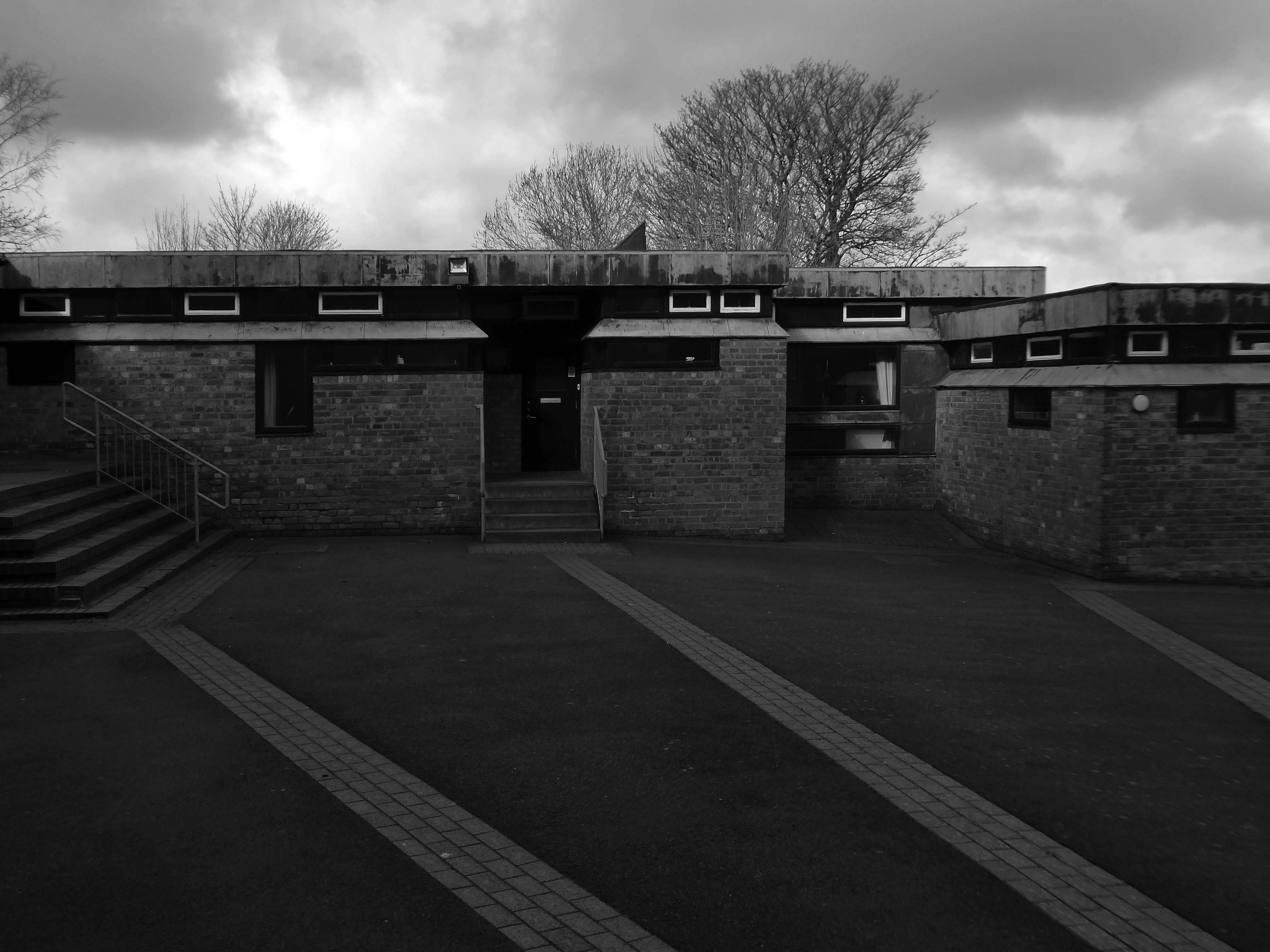
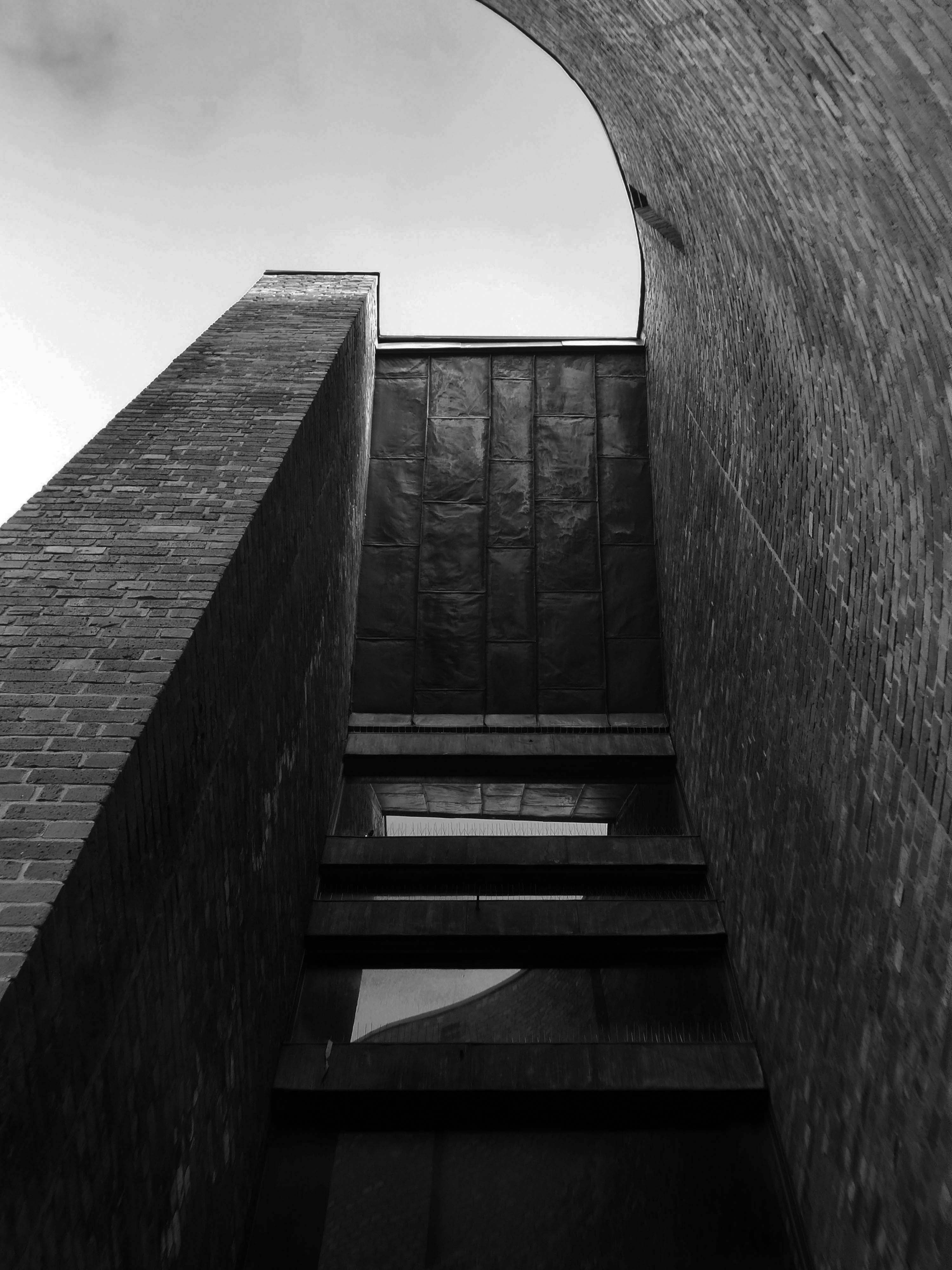
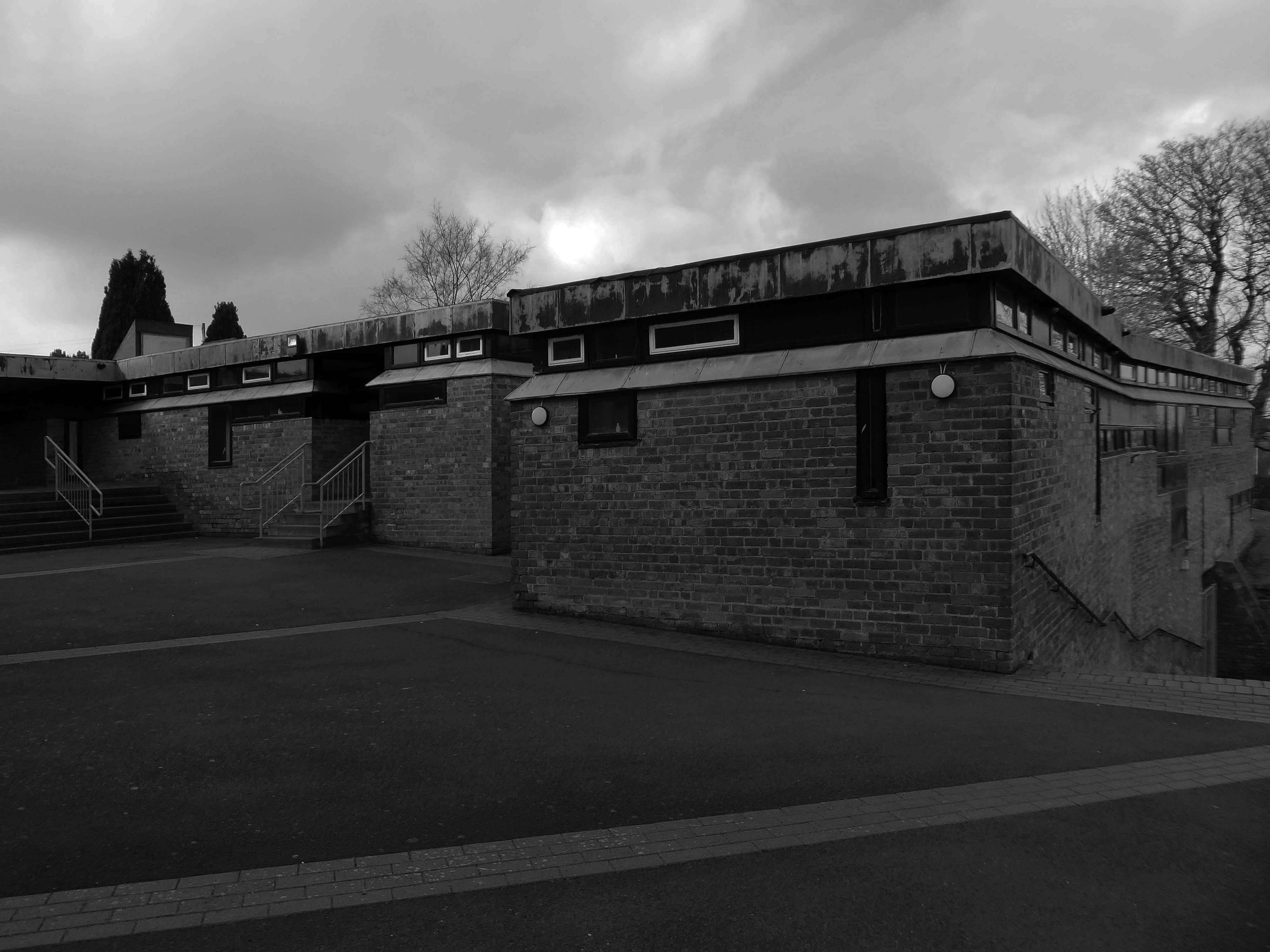
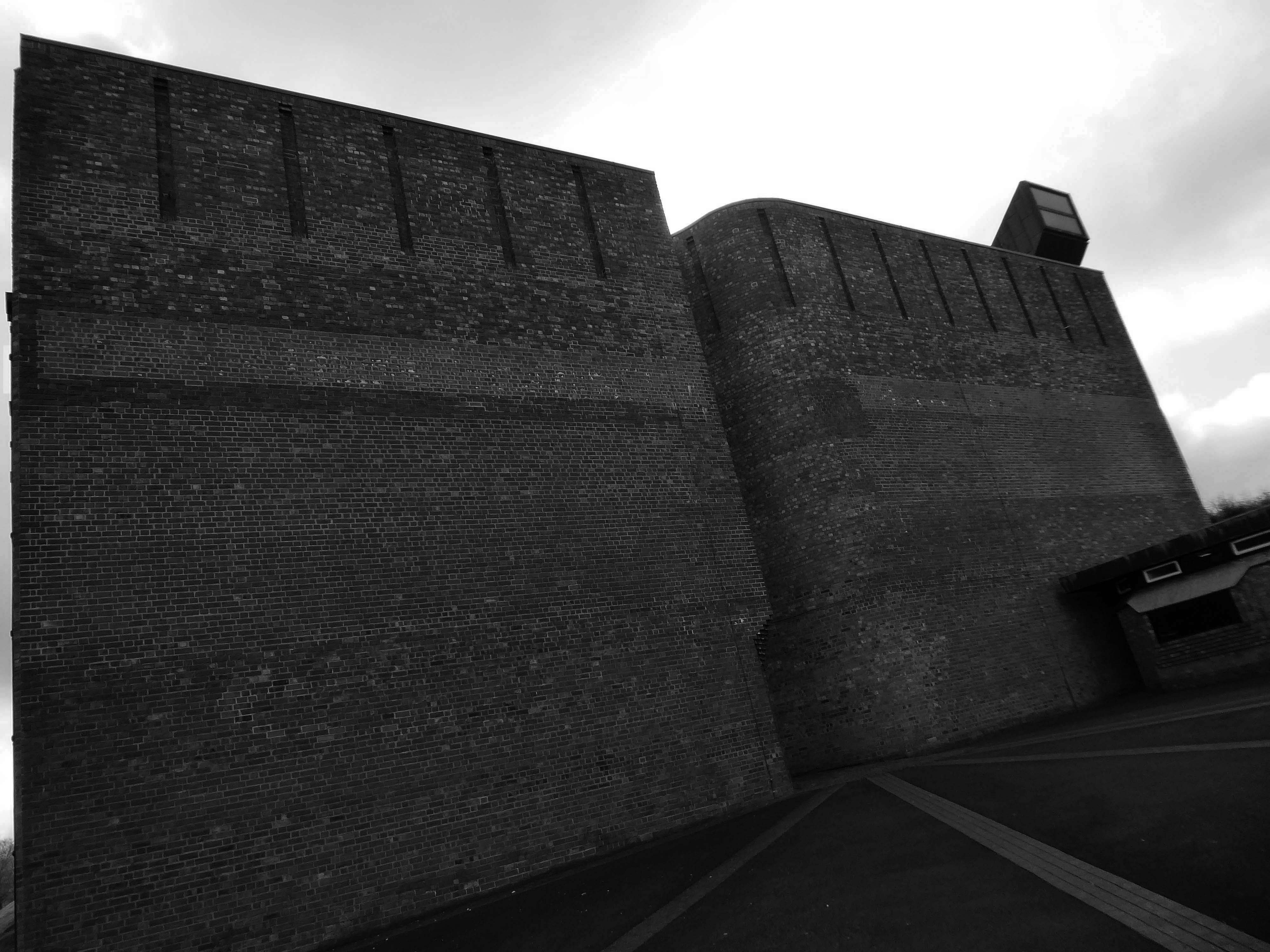
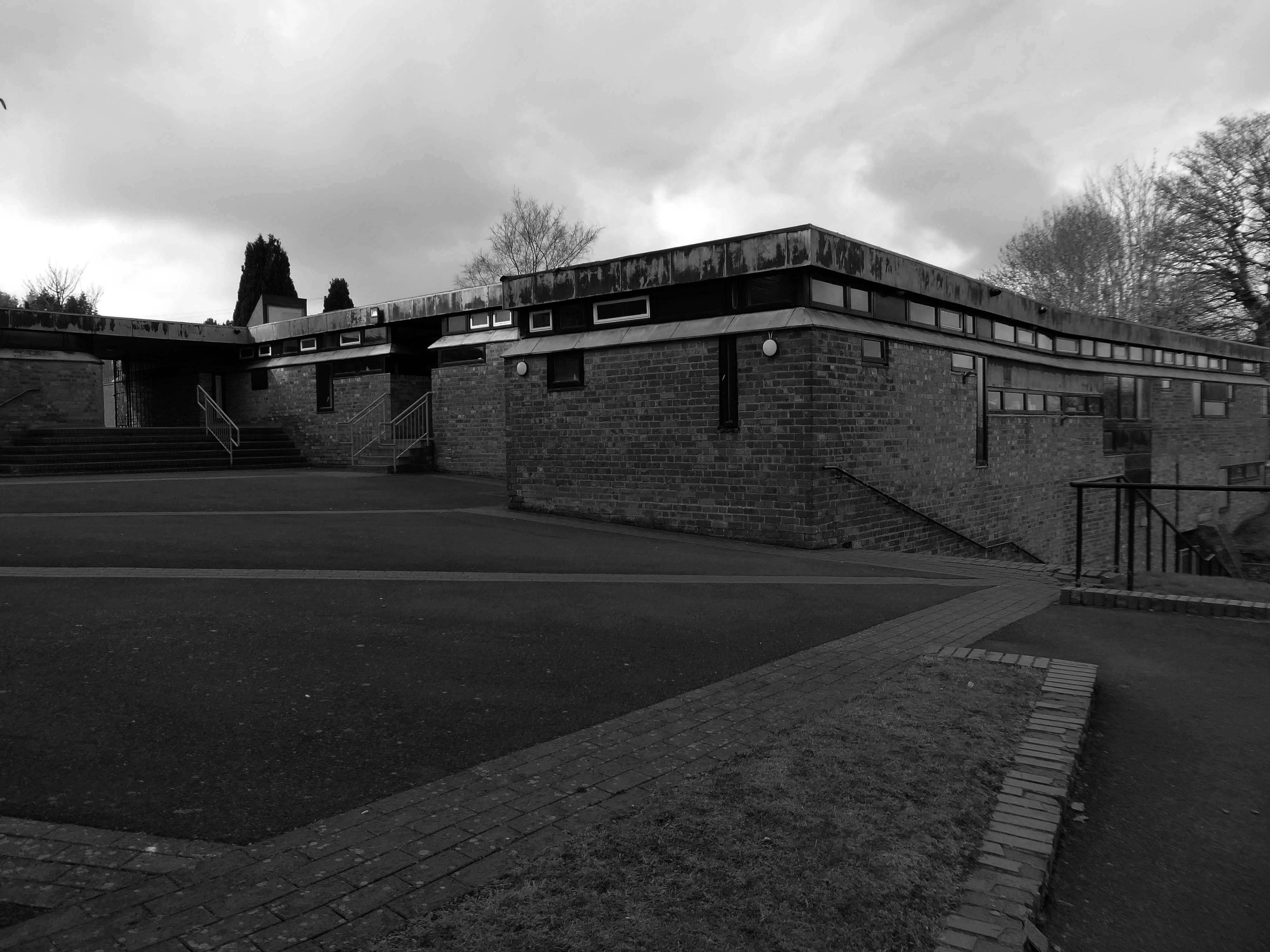
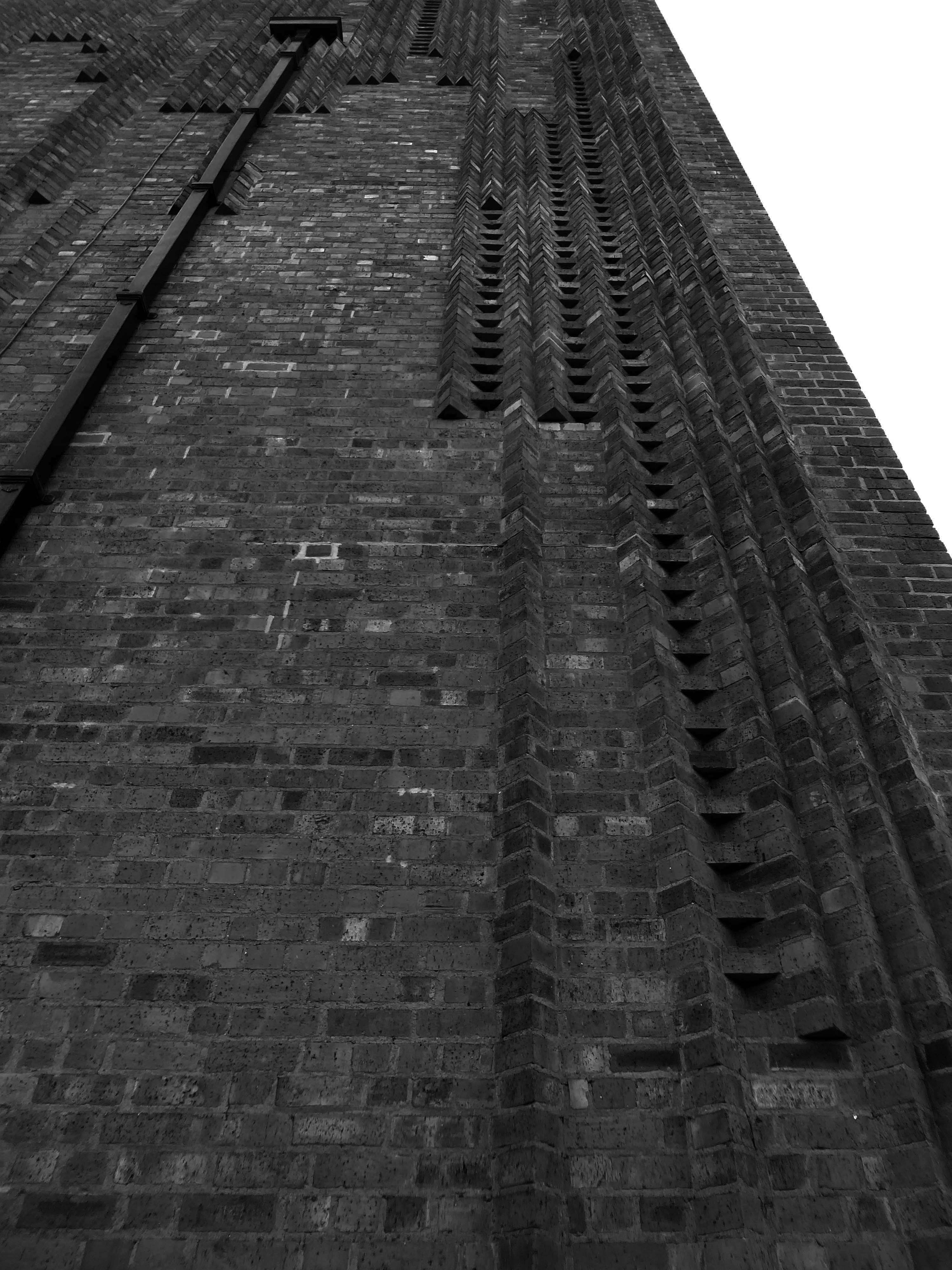
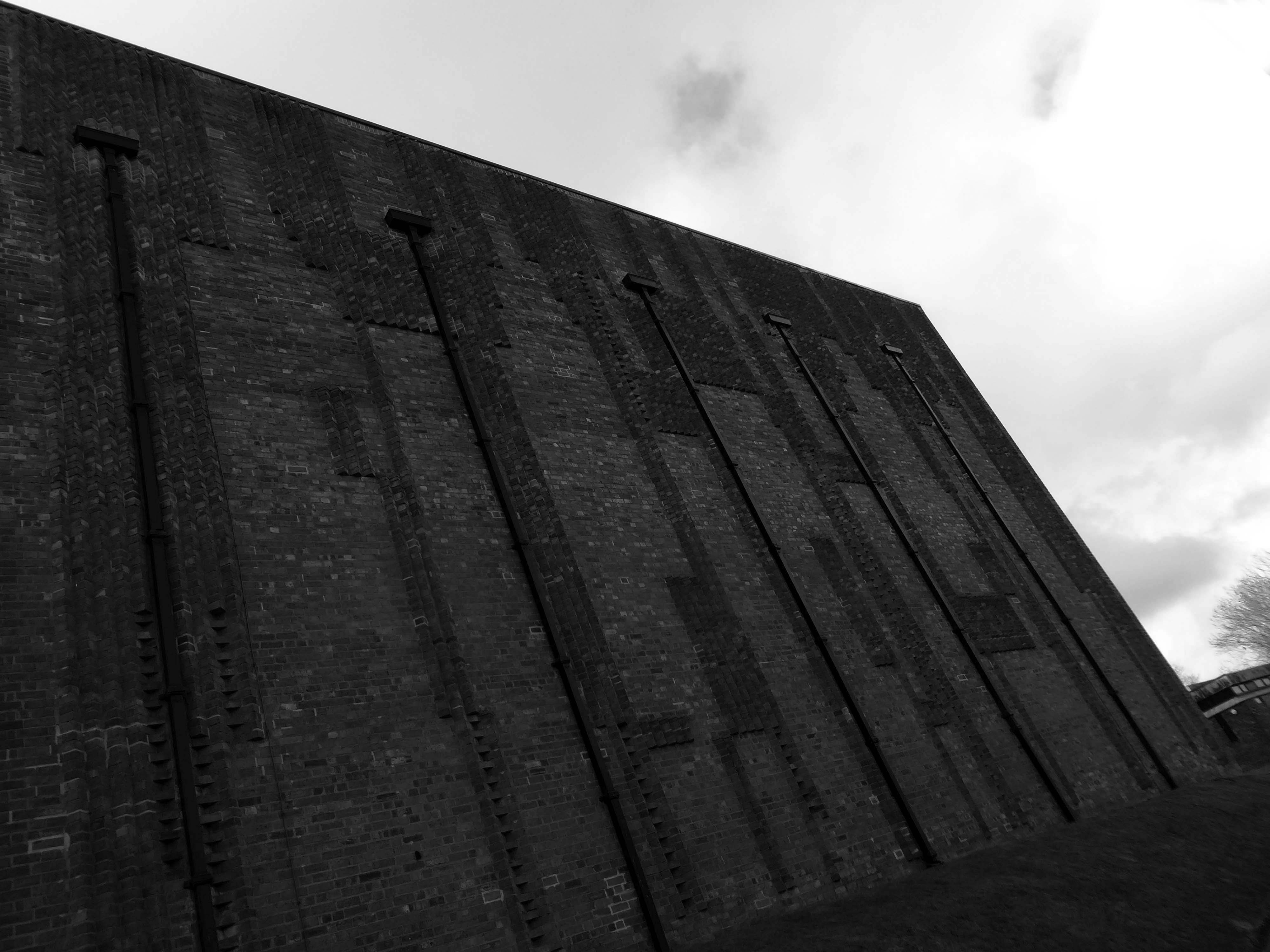
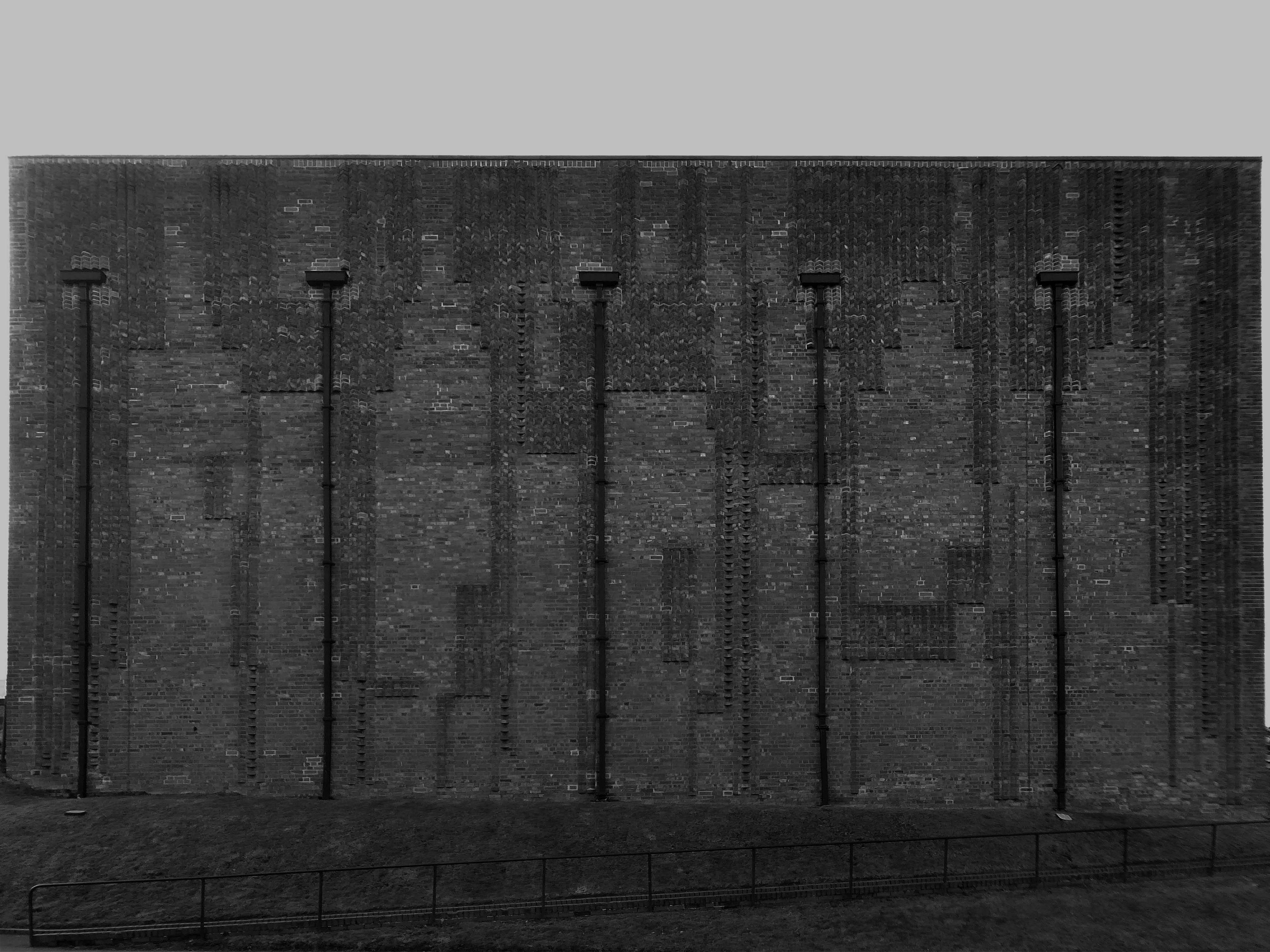
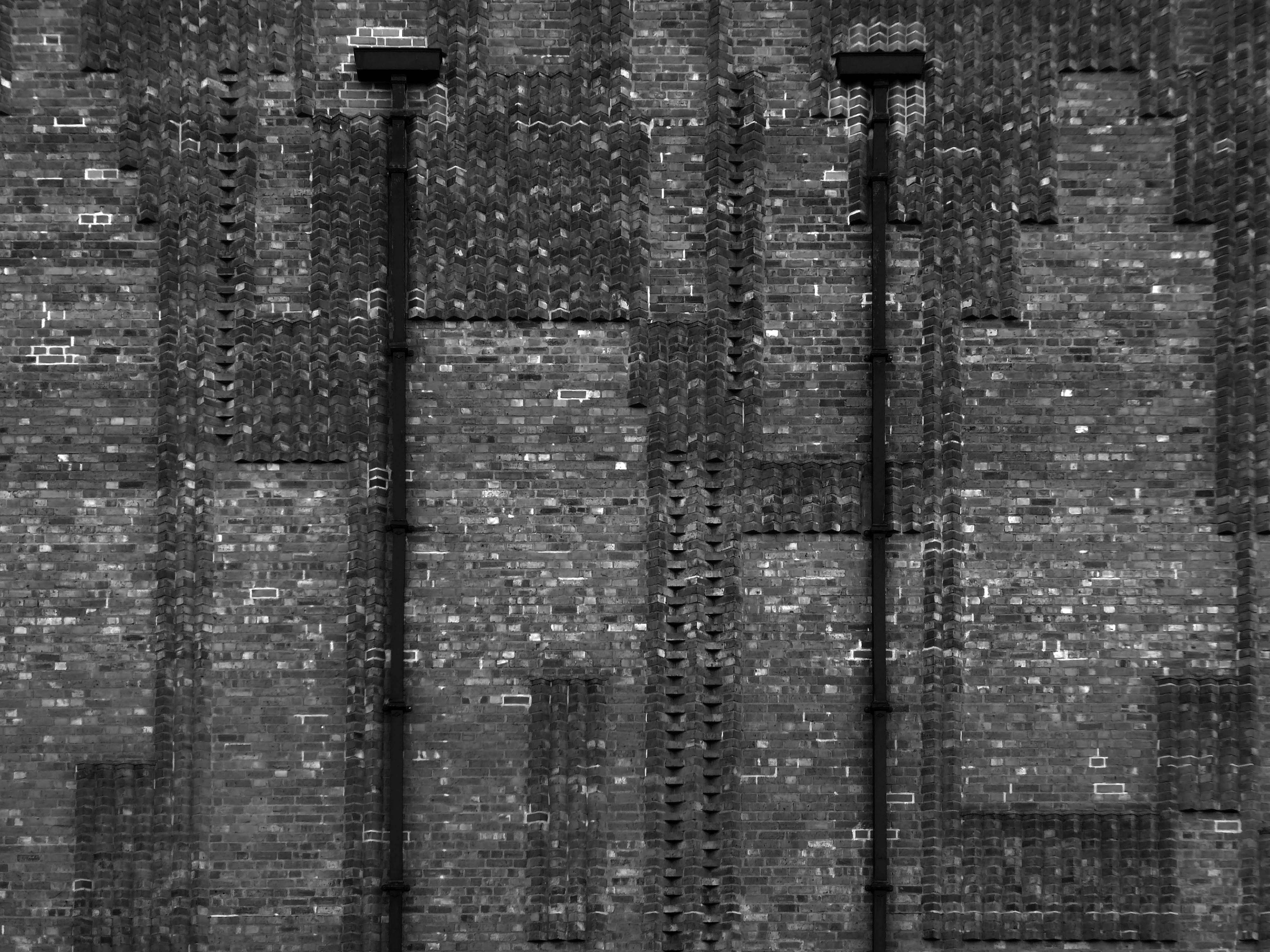
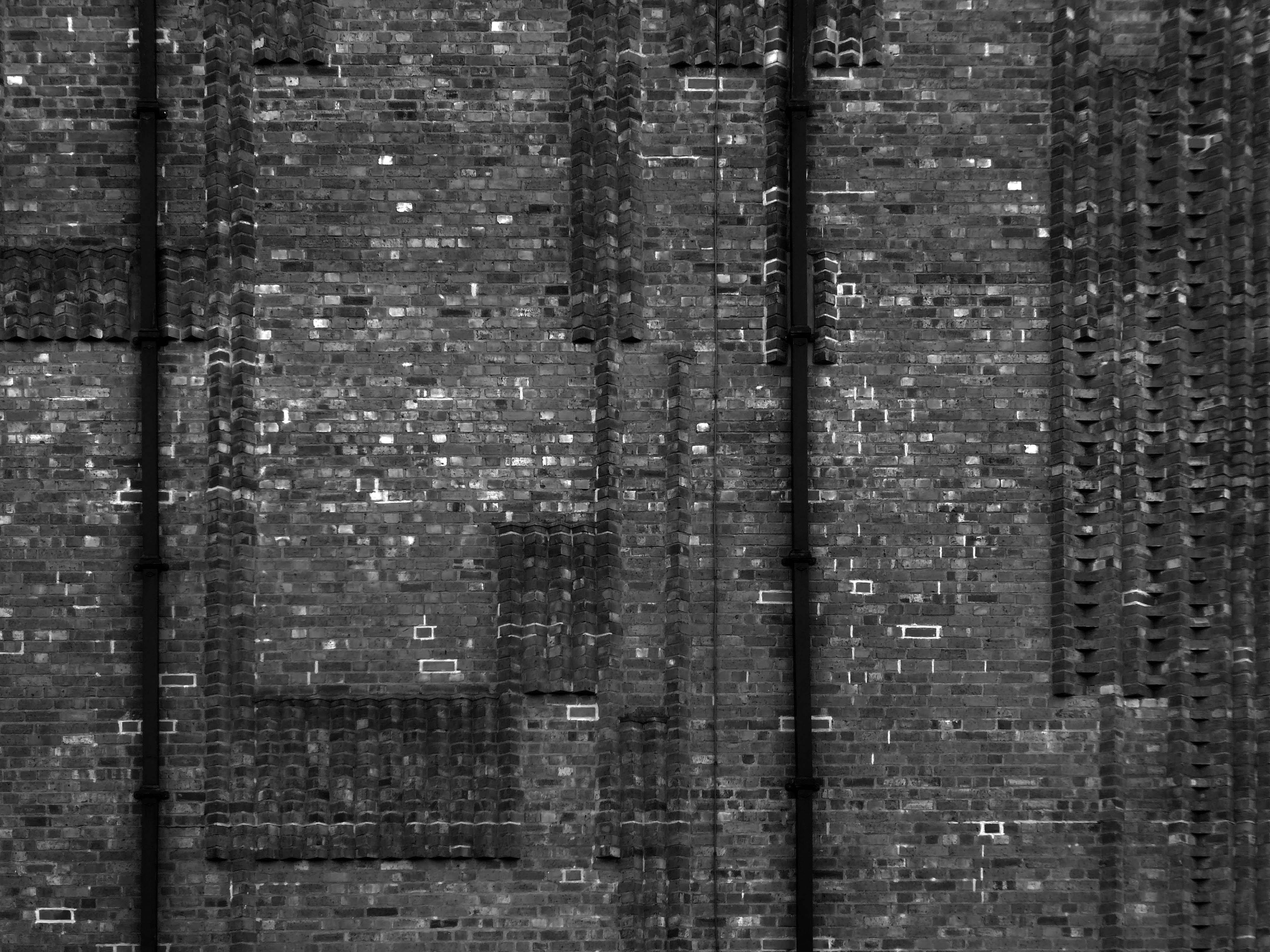
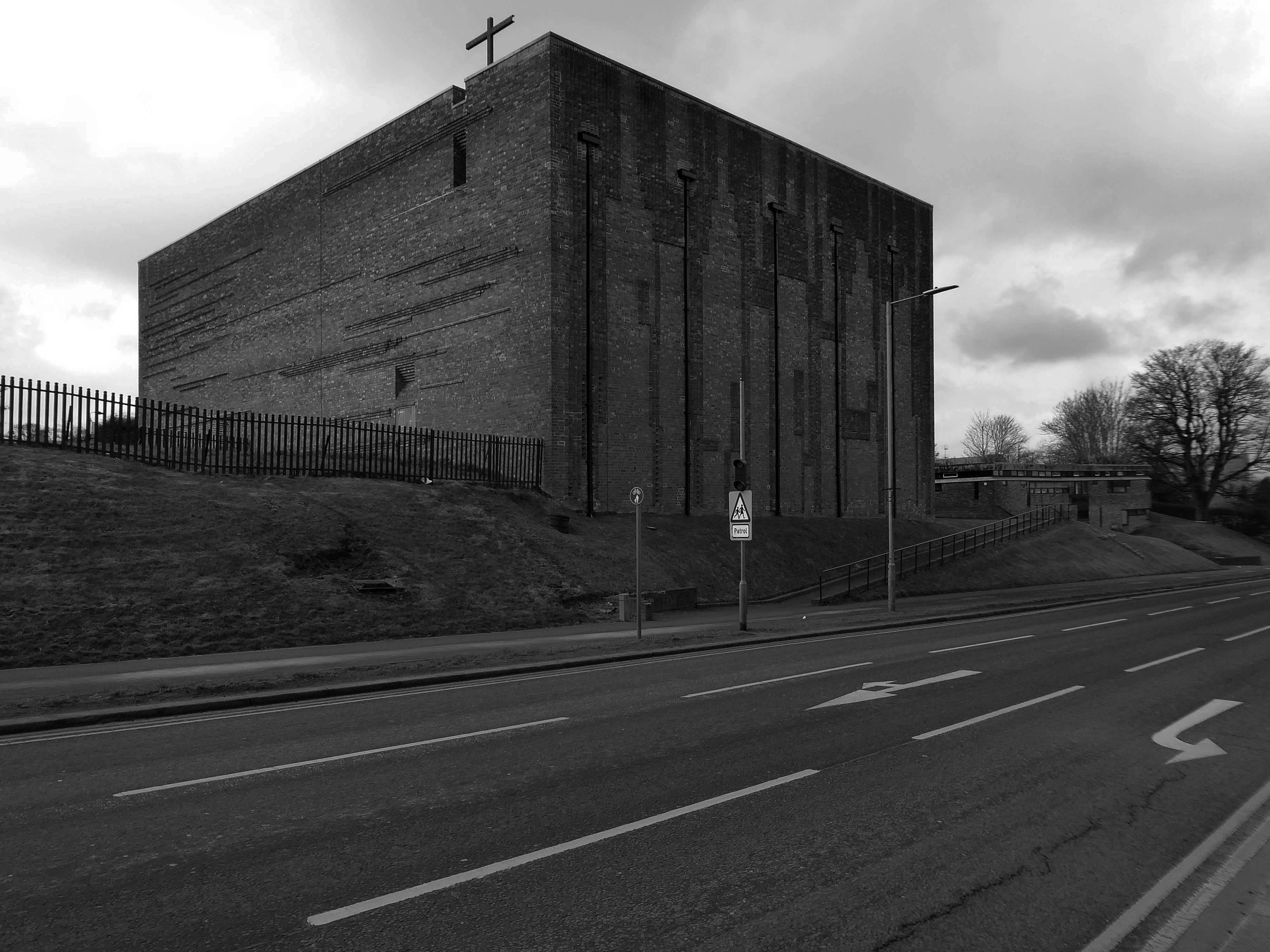
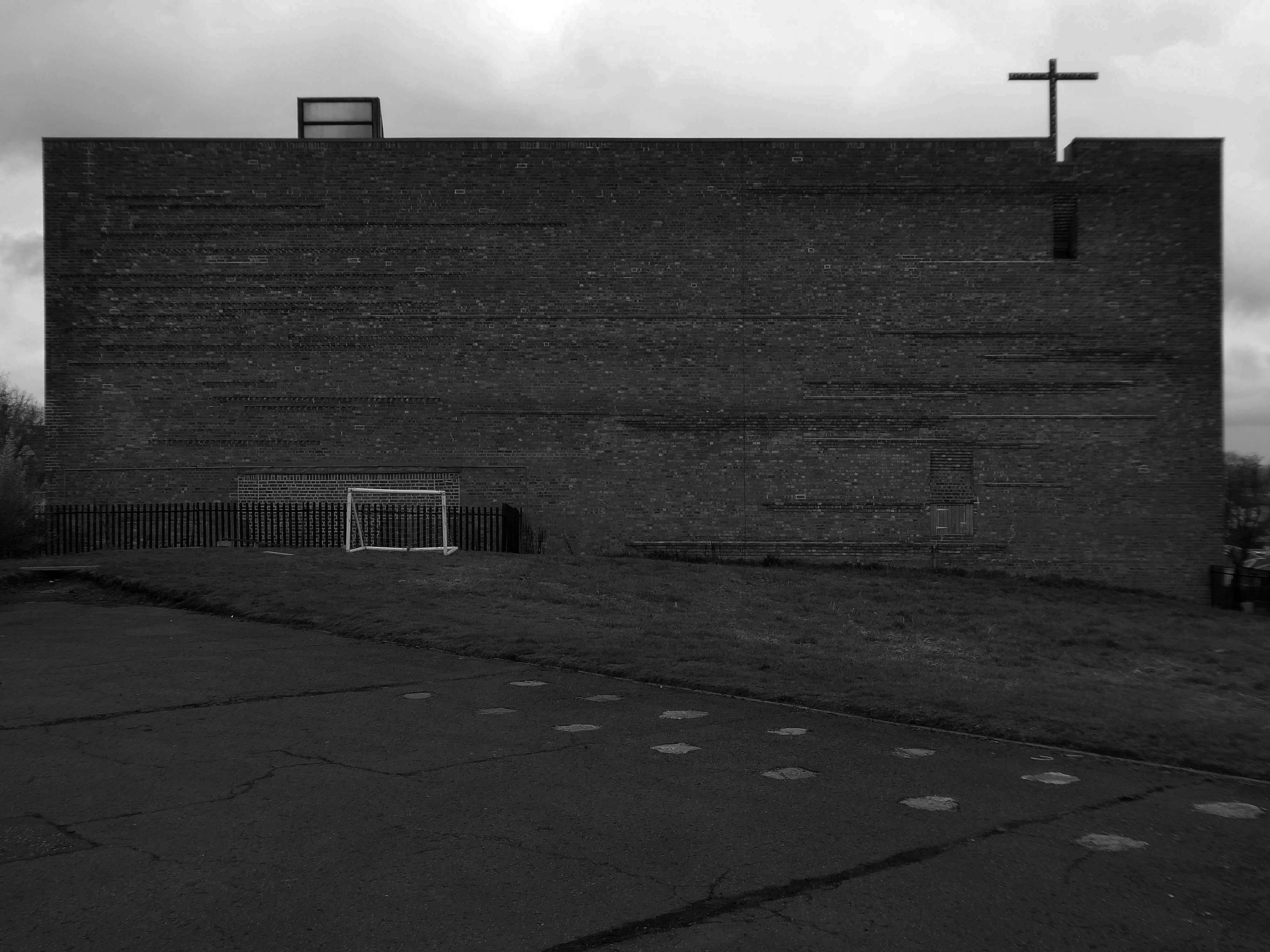
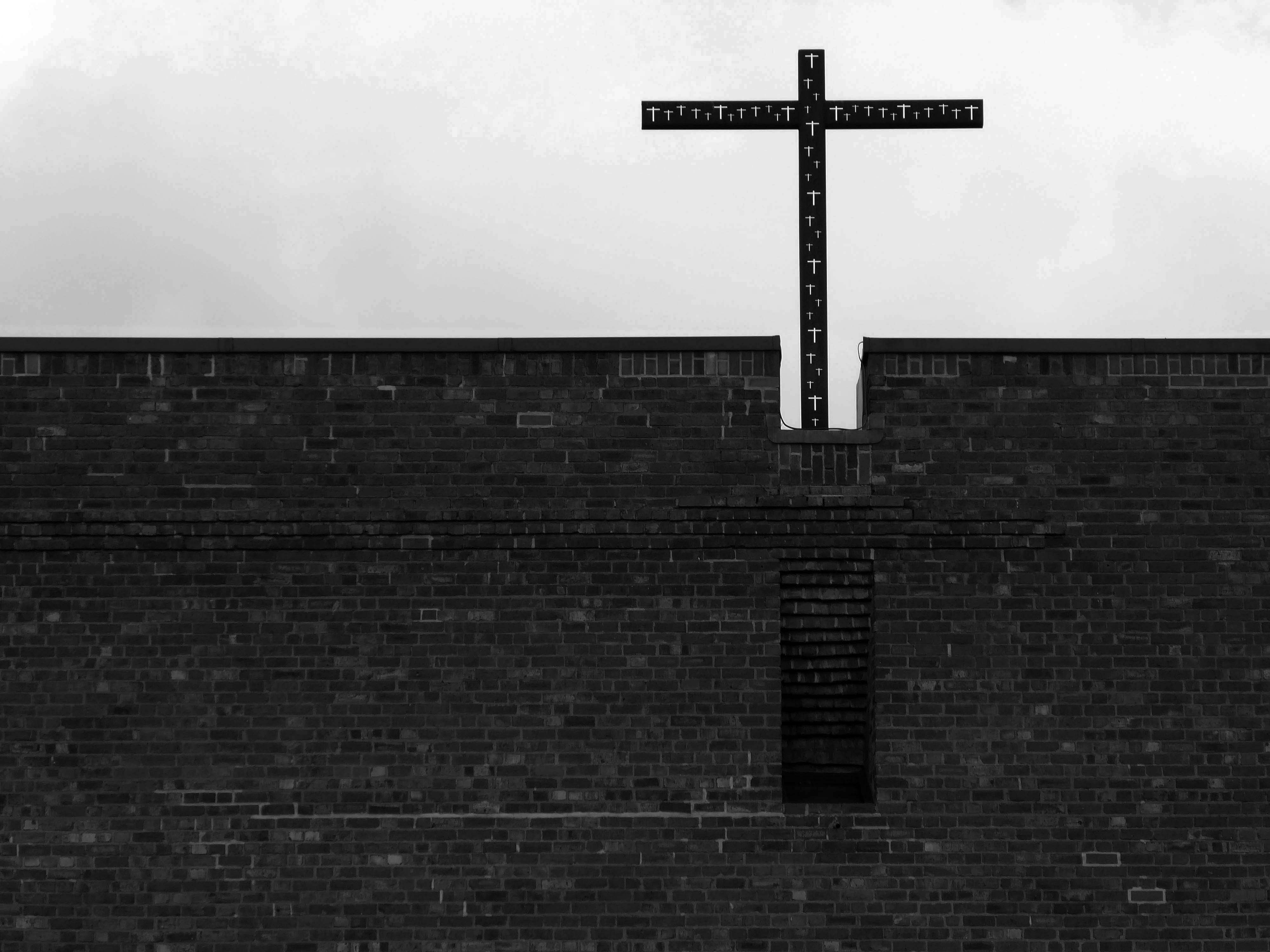
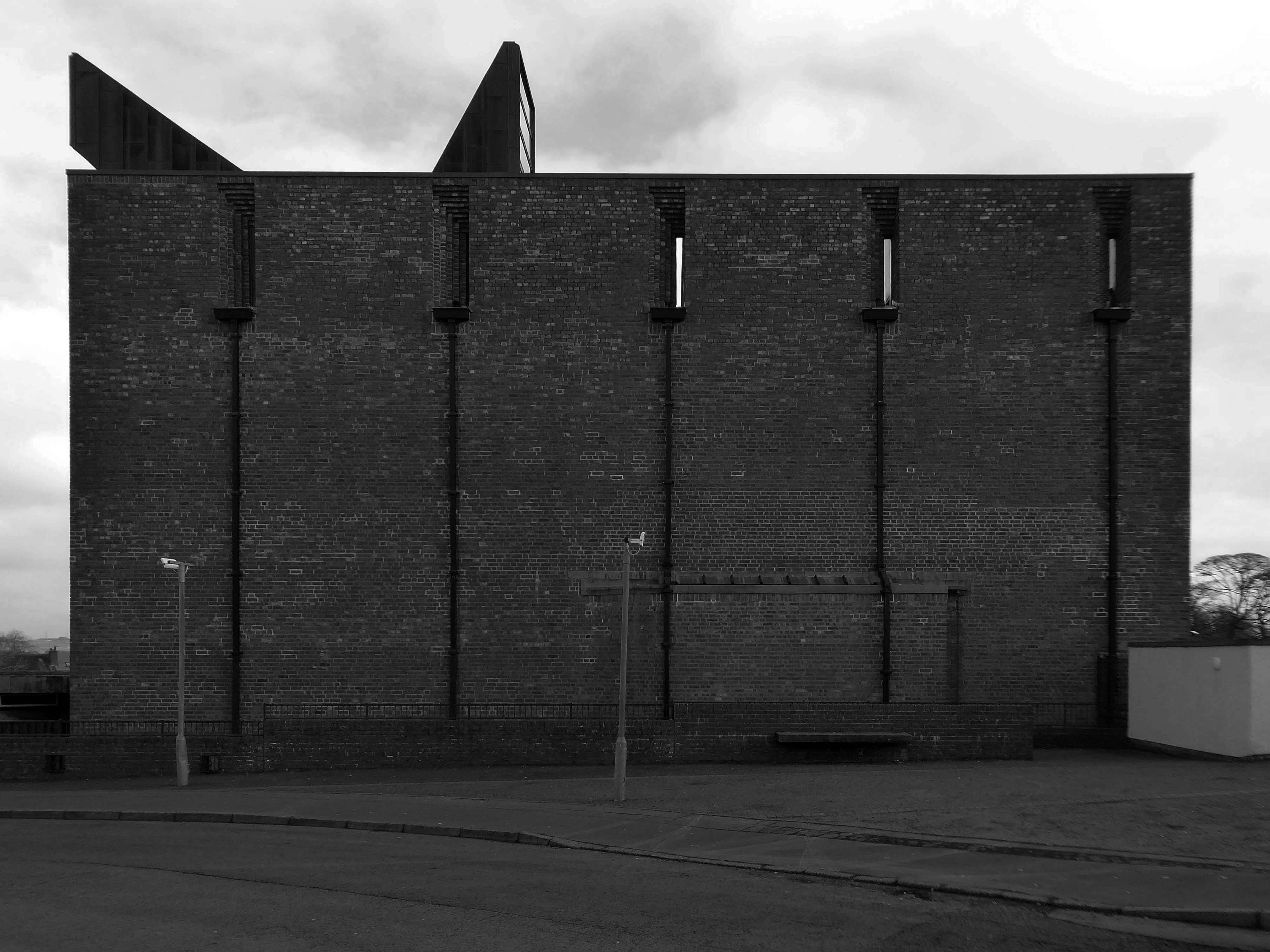
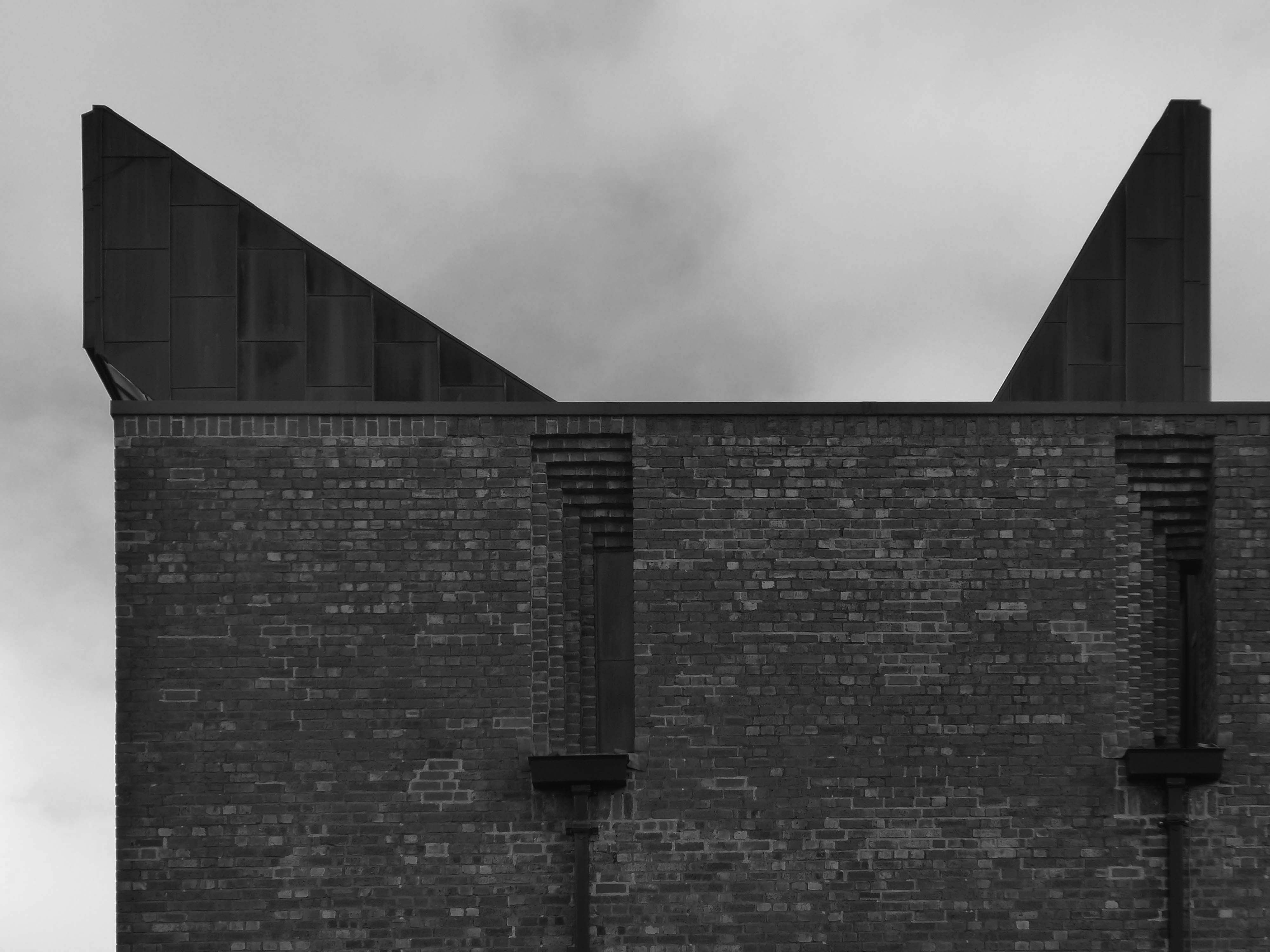
Historically this is my very first Scot’s post, more to follow, I’m away to the Civic Centre.

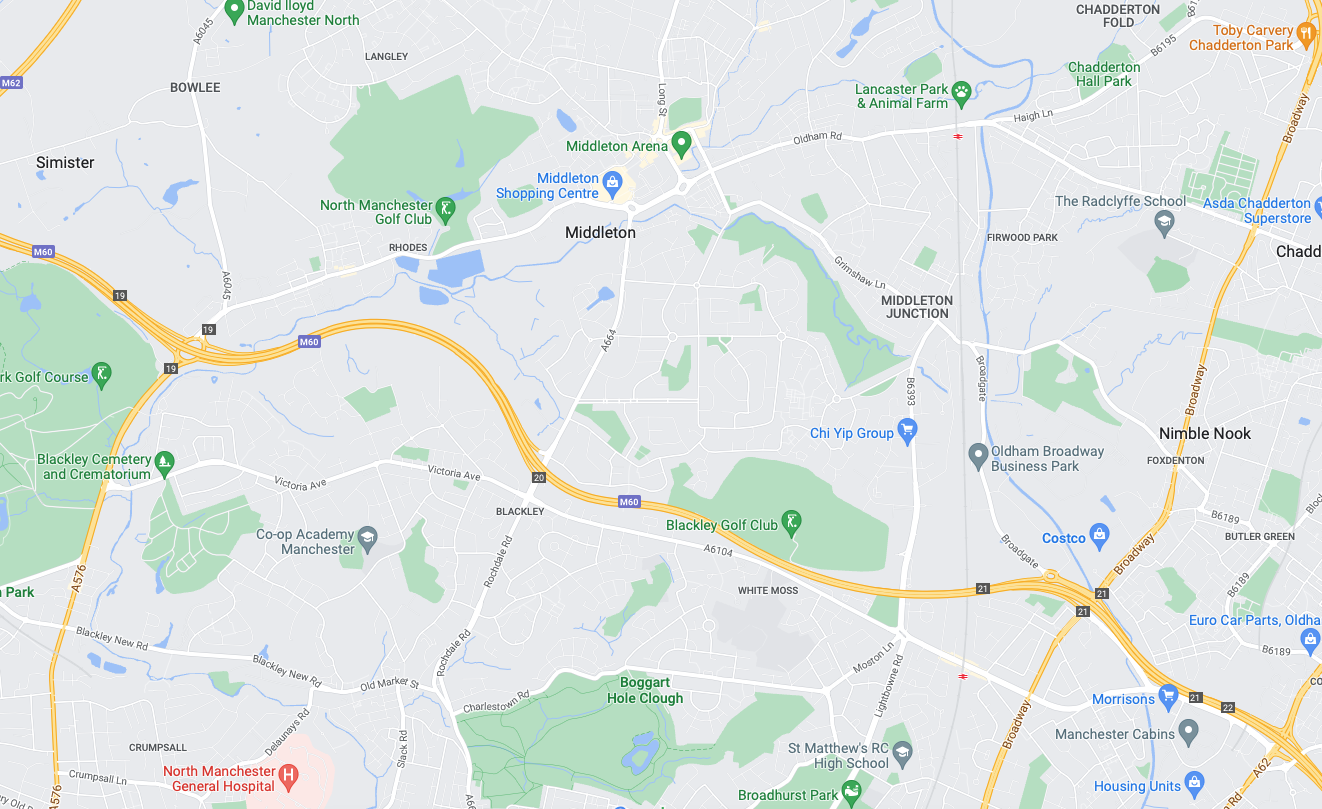
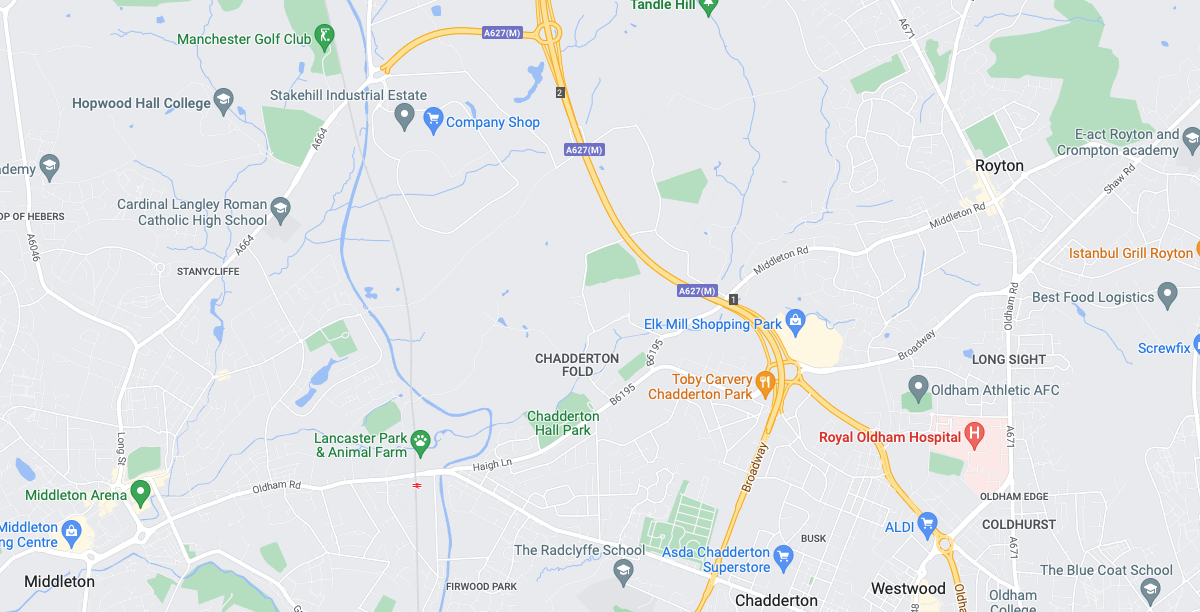
Having walked and cycled twixt Victoria Station and Blackley, I returned once more to the Hexagon Tower to resume my explorations towards the source in Royton.
Beginning on Delaunays Road and onwards along Blackley New Road.
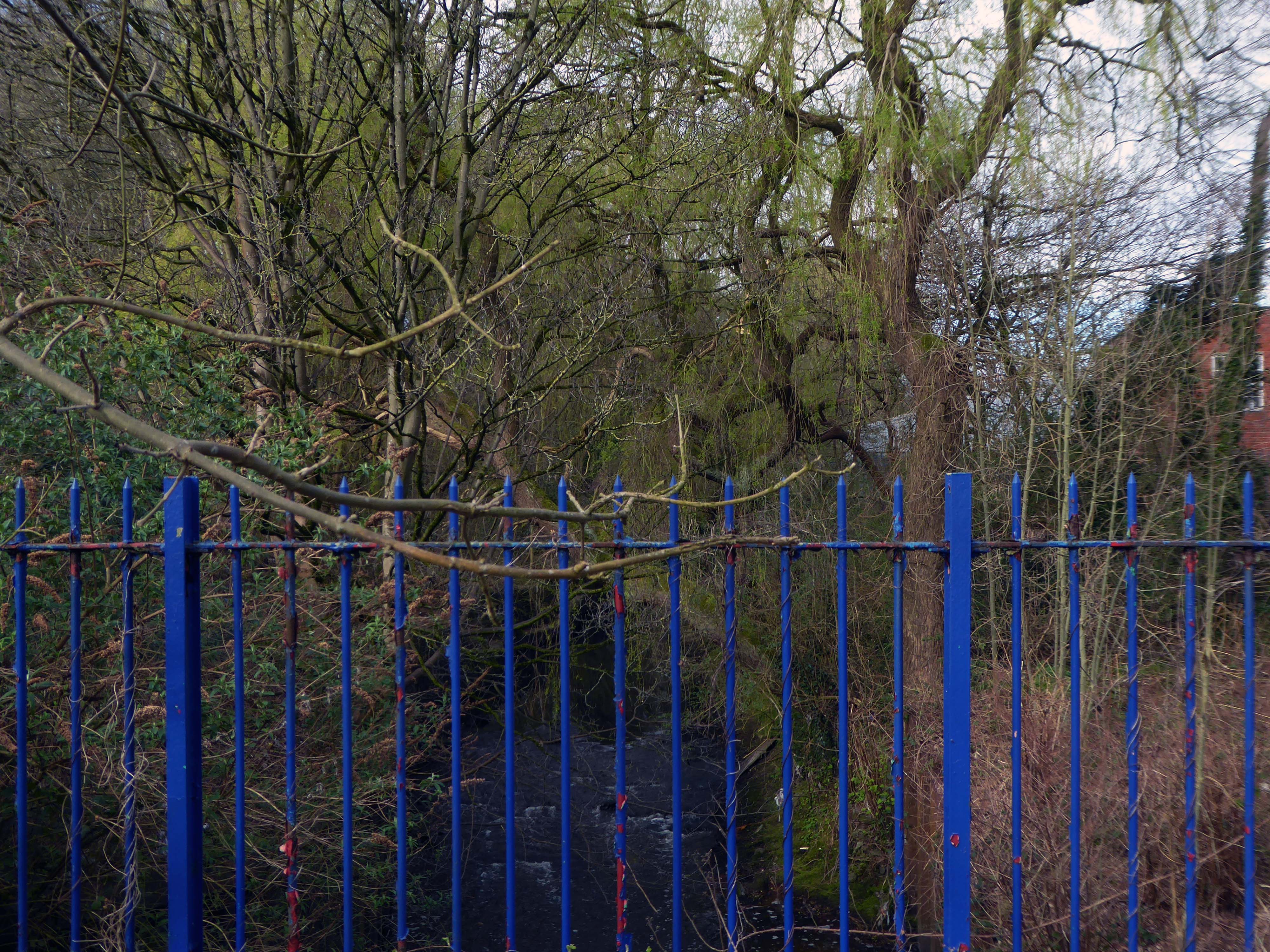
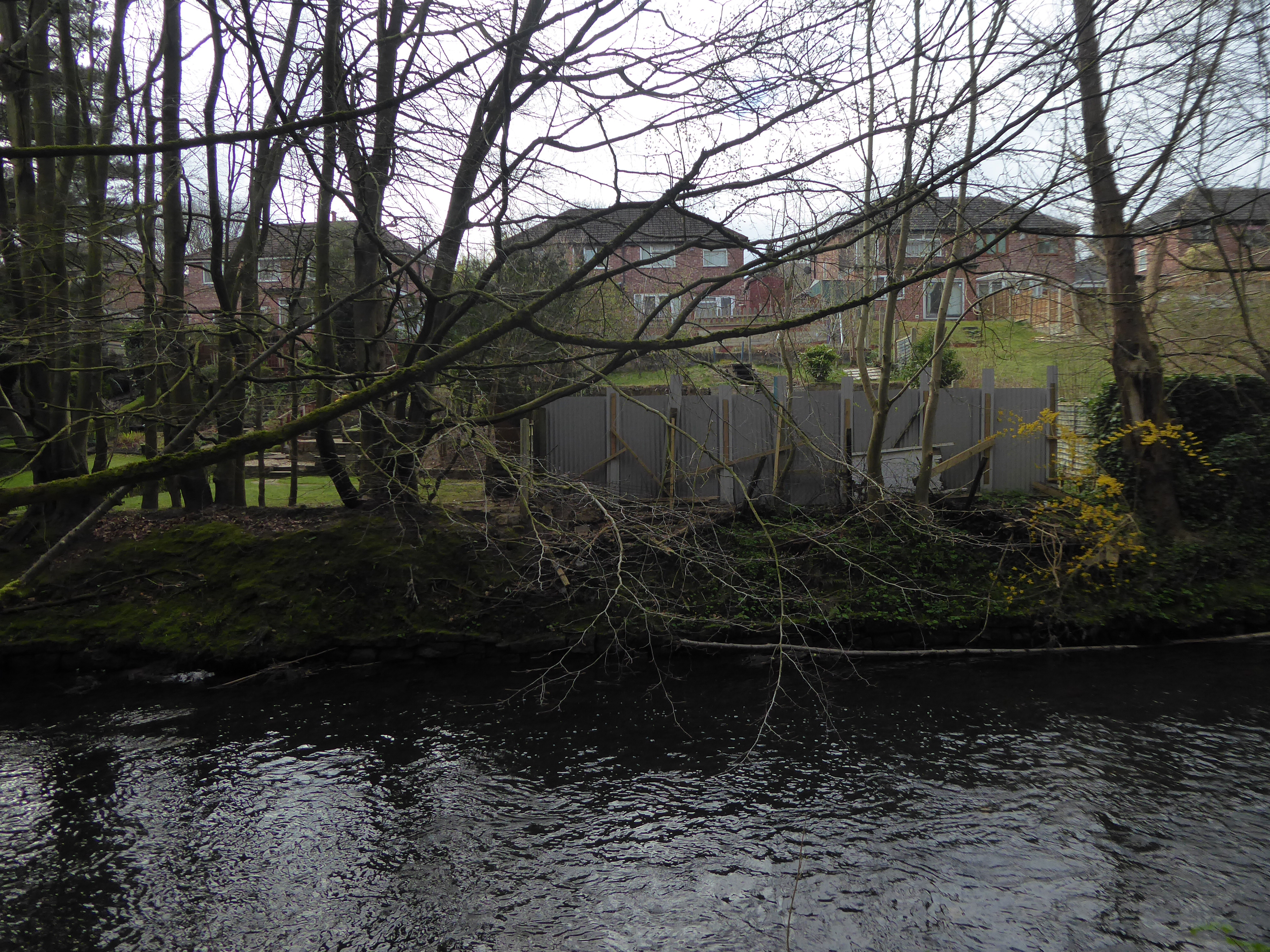
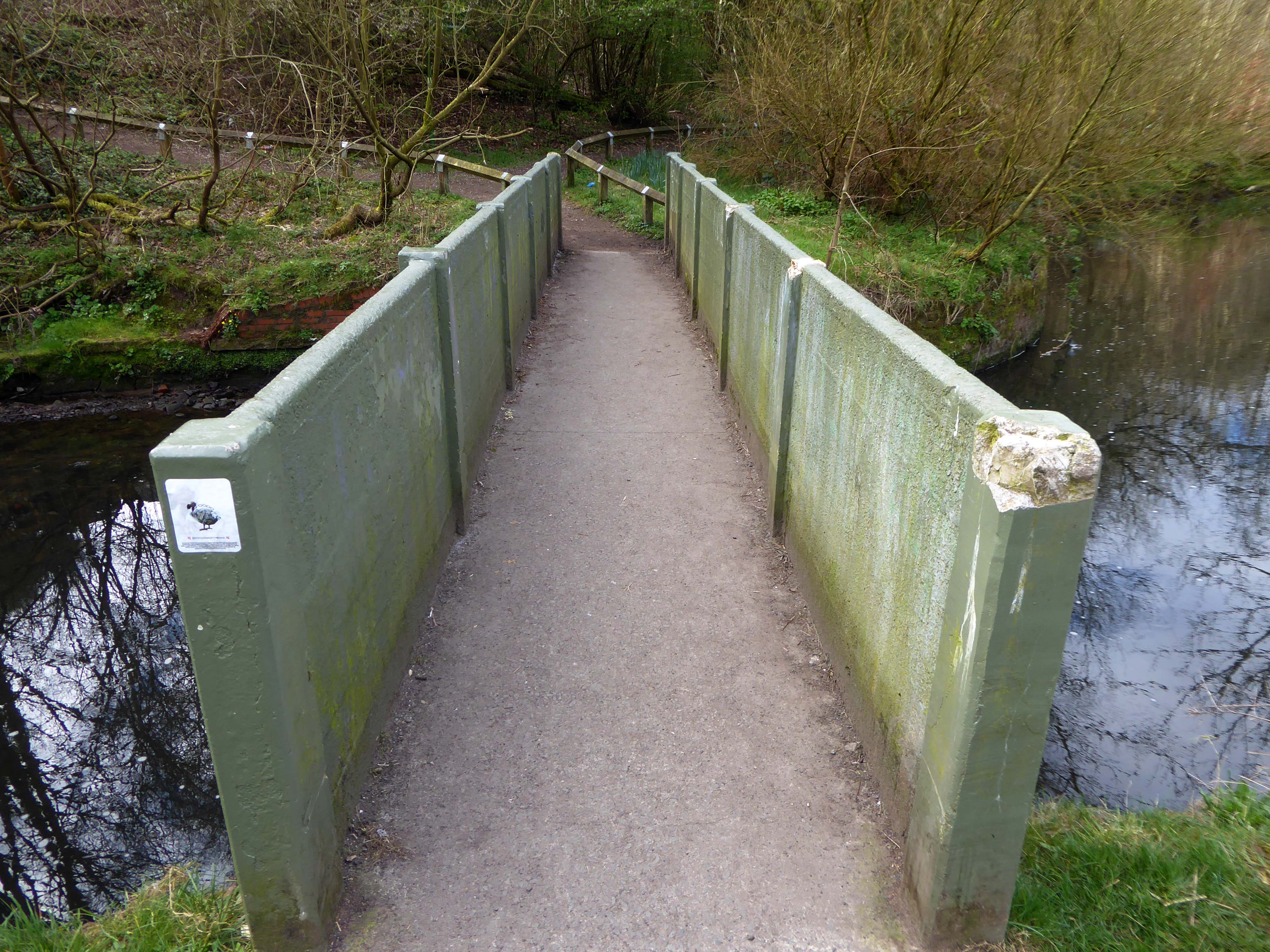
The footpath falls away from the main road to the wooded valley.

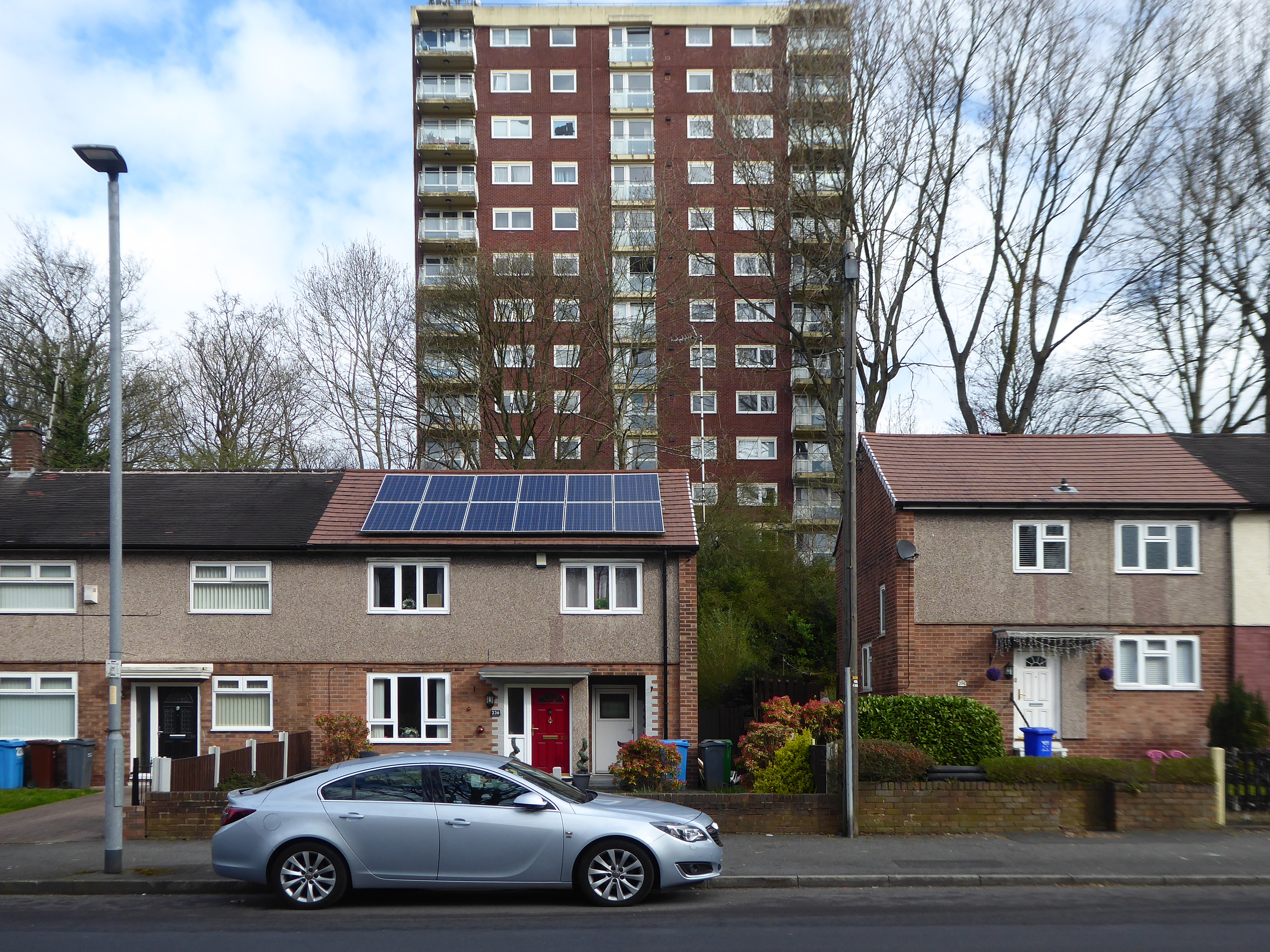
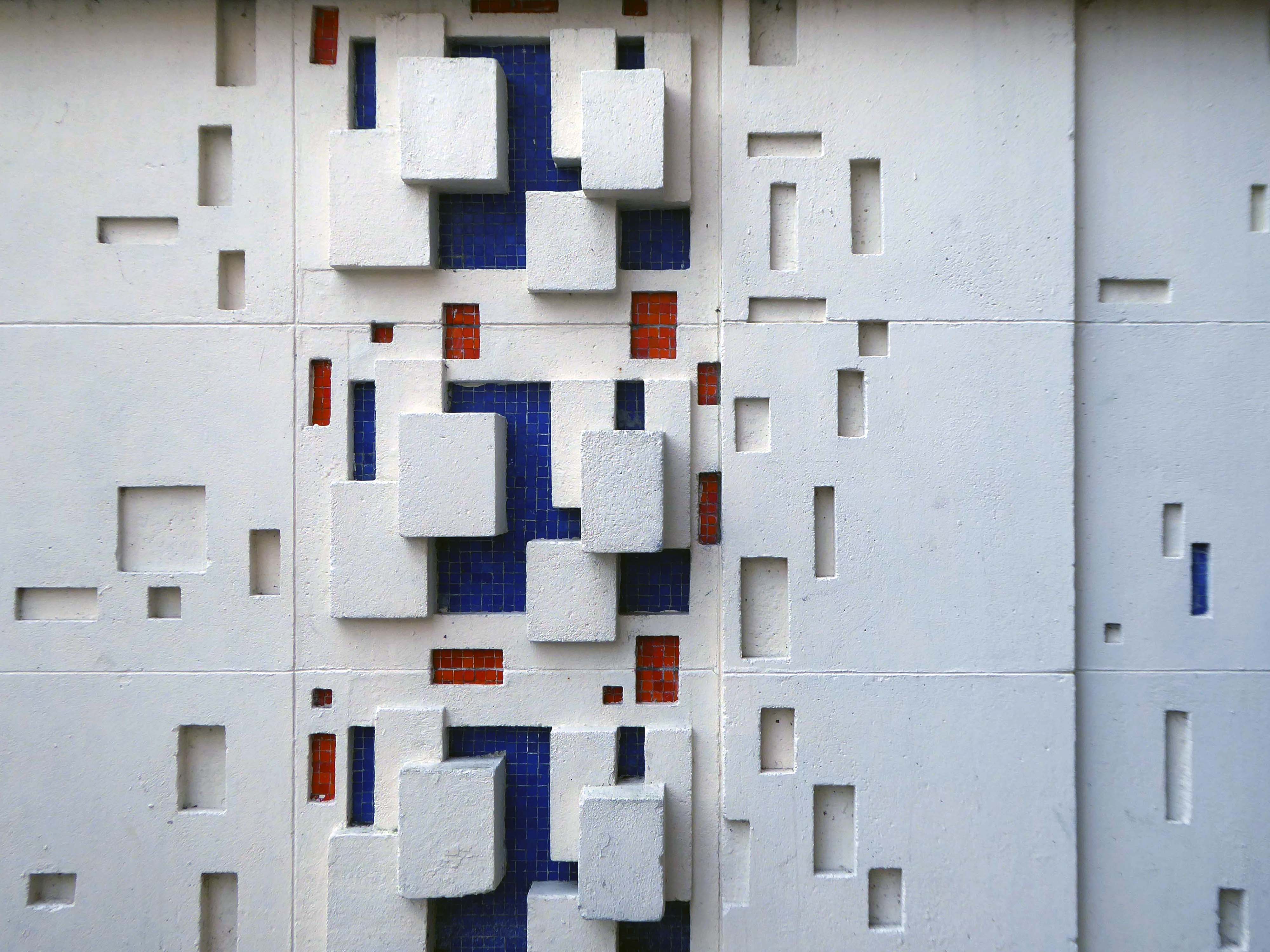
Returning to the road I was distracted by Sandyhill Court and the reliefs which I discovered there.
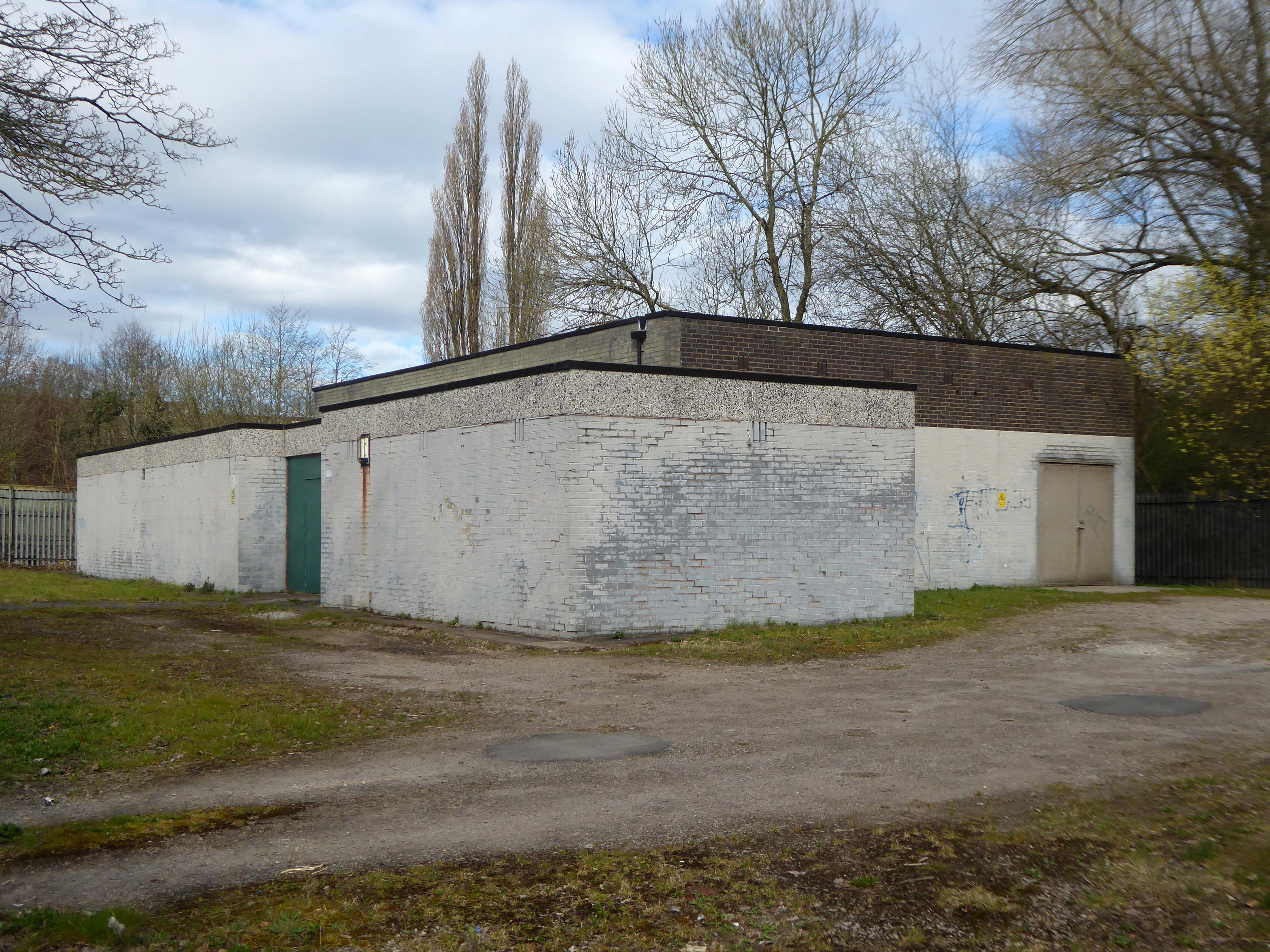
I was also taken with with this electrical substation.
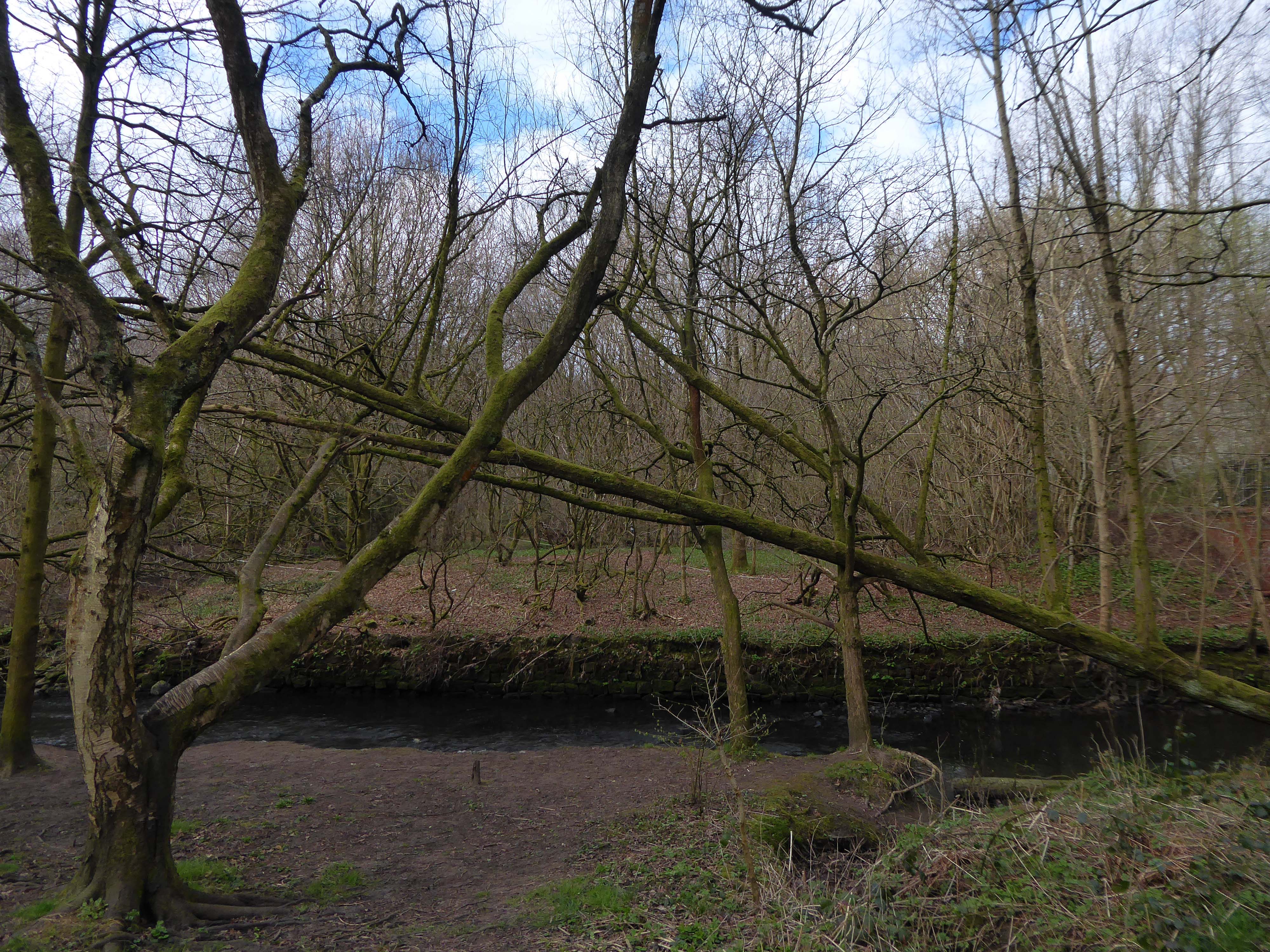
We are encouraged to be wild about Blackley Vale a reclaimed landfill site.


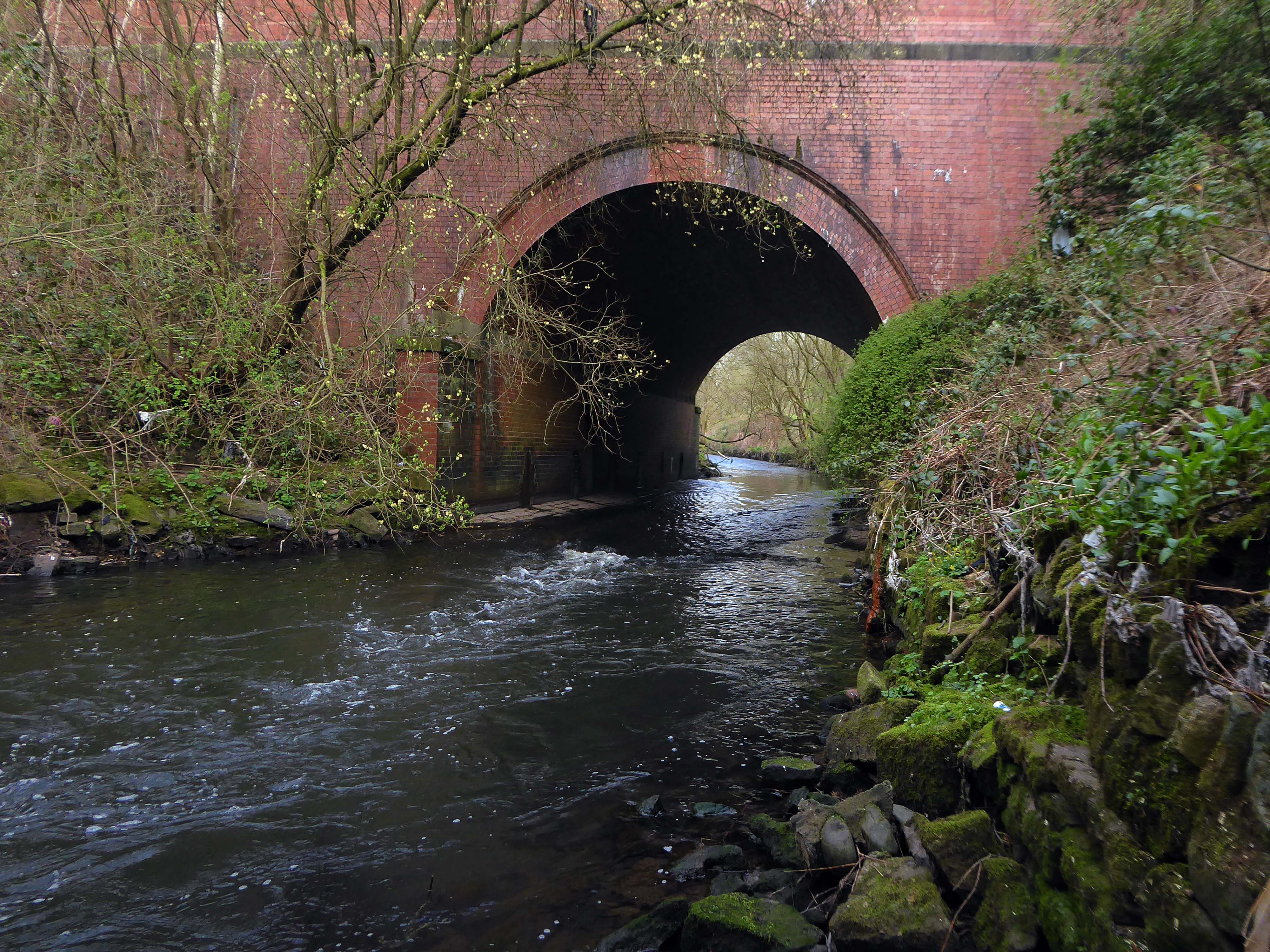
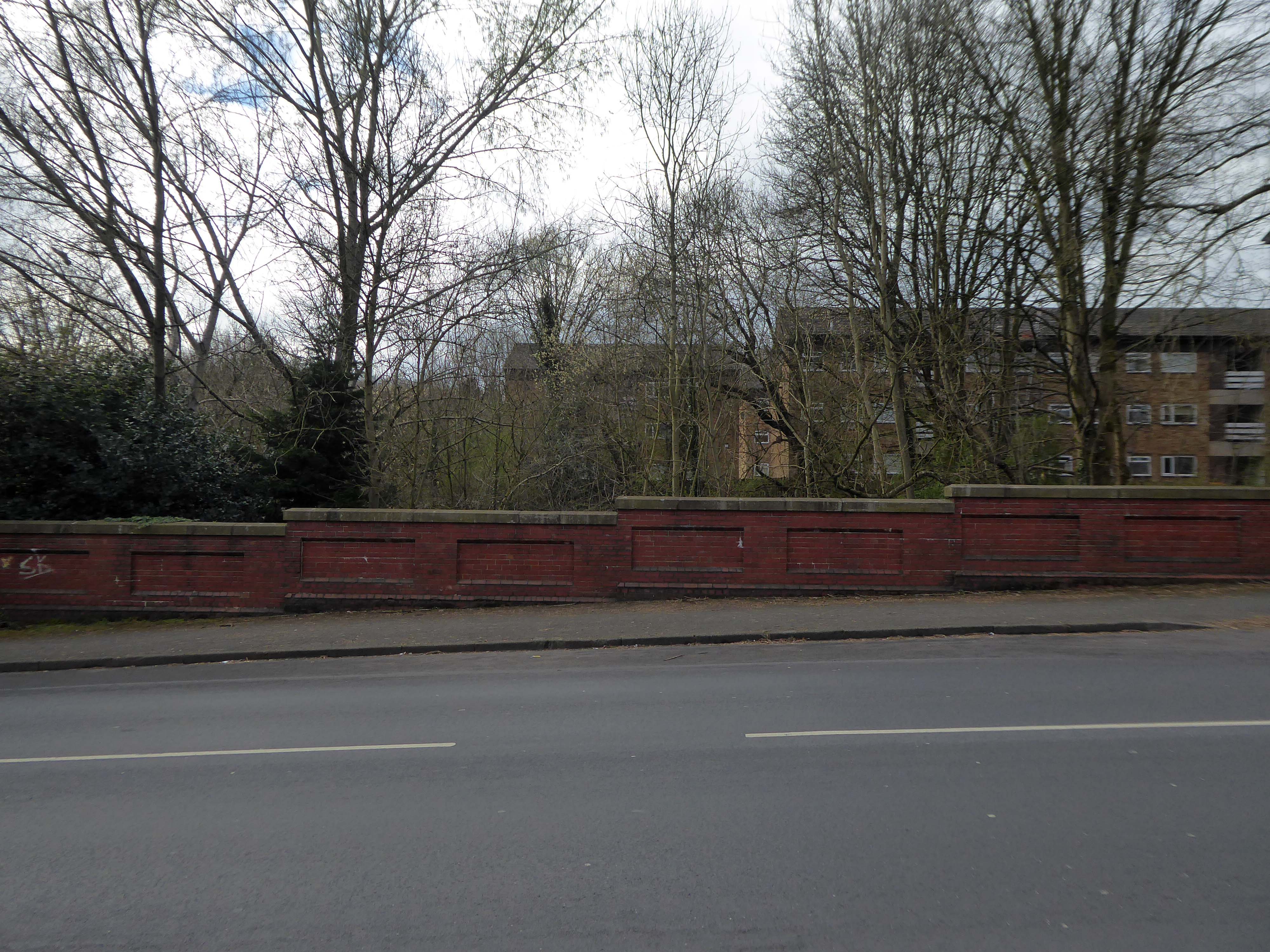
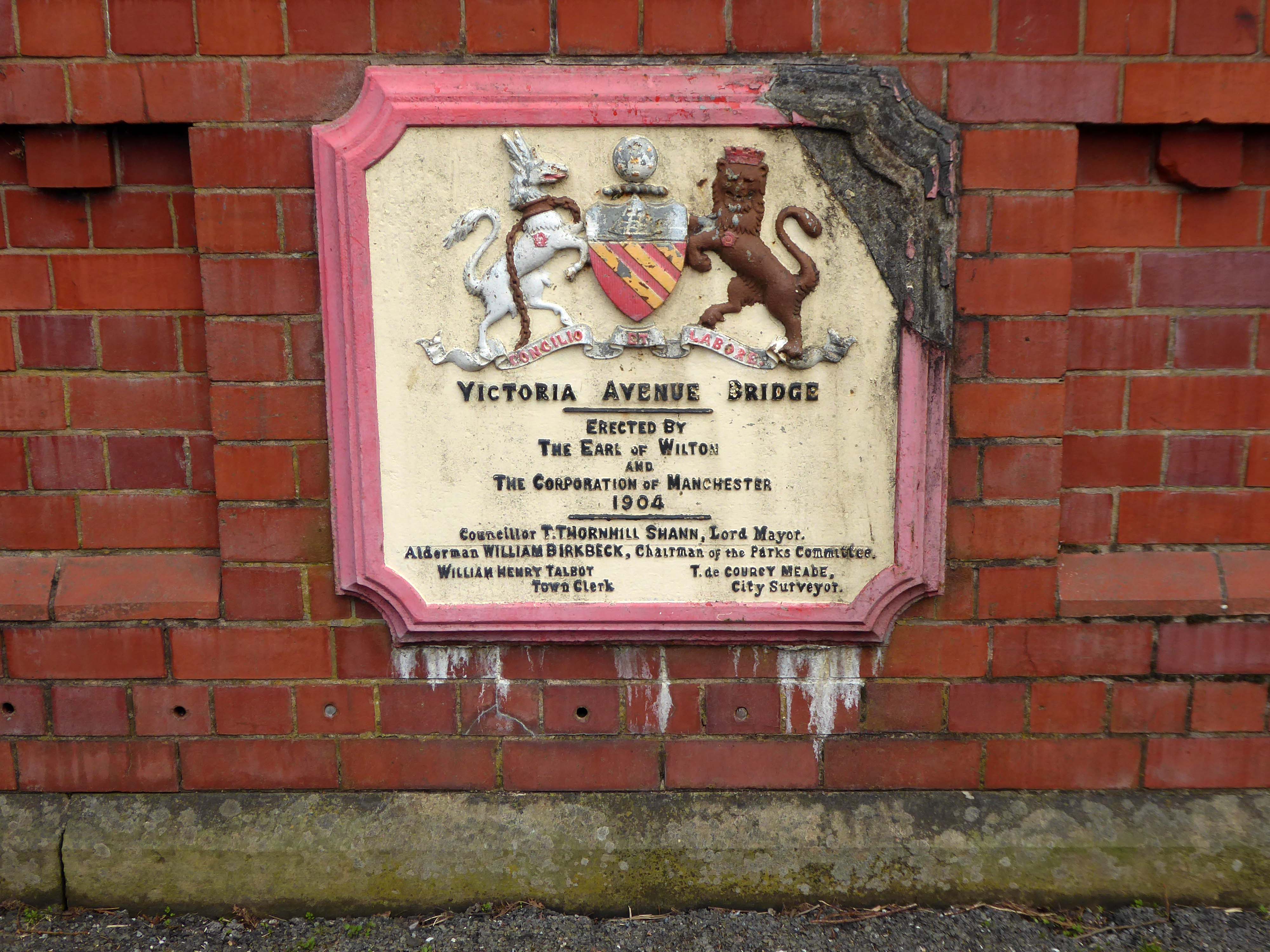
Across the Victoria Avenue Bridge and down the other side.
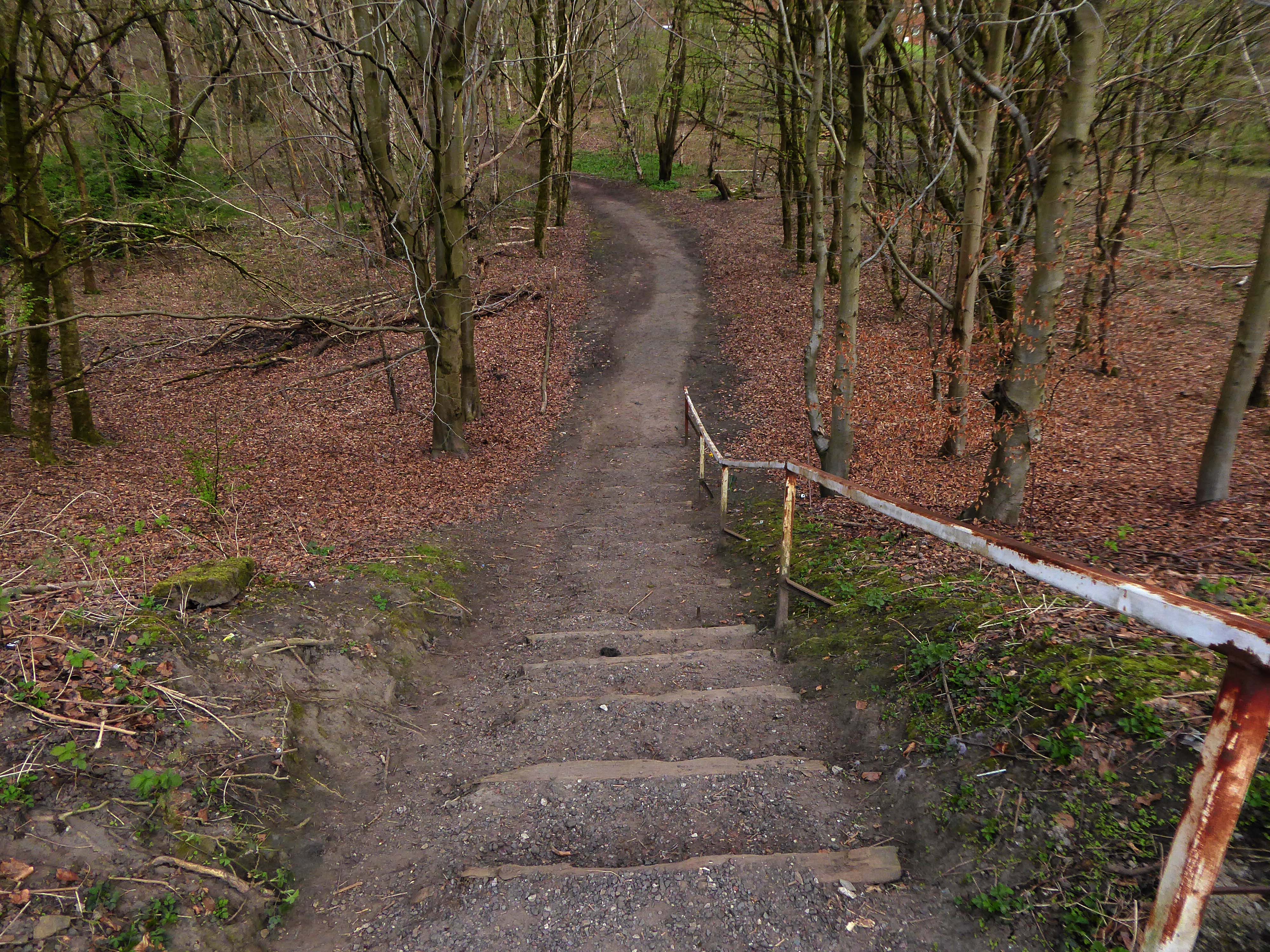

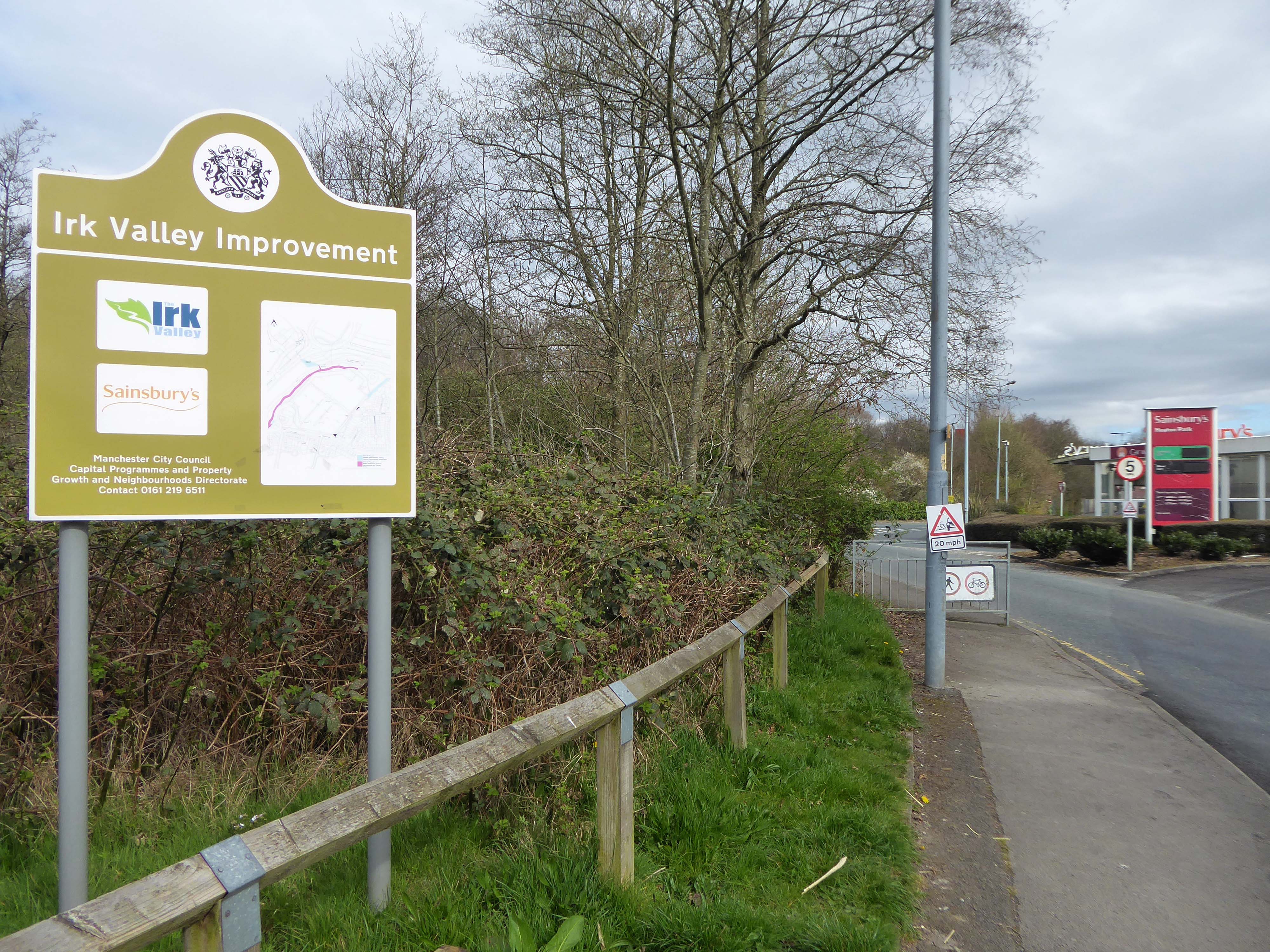
Emerging by Sainsbury’s and picking up the path again.


Onwards under the M60 Motorway.
The M60 was developed by connecting and consolidating the existing motorway sections of the M63, M62, and an extended M66. It came into existence as the M60 in 2000, with the completion of the eastern side opening in October.
The original plan called for a completely new motorway, but policy change led to the plan which created the current motorway. As soon as it opened, the motorway got close to its projected maximum volume on significant sections.

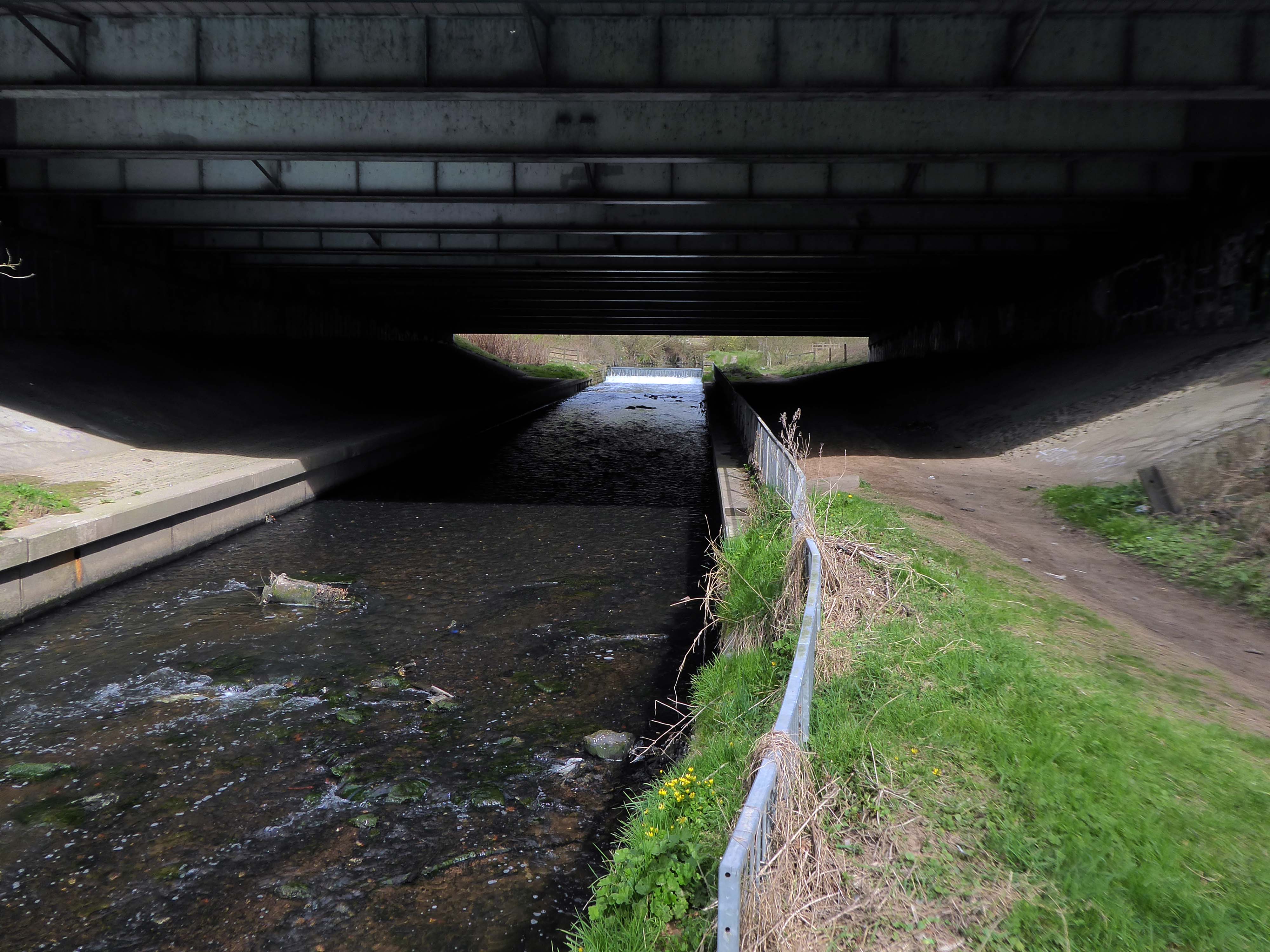
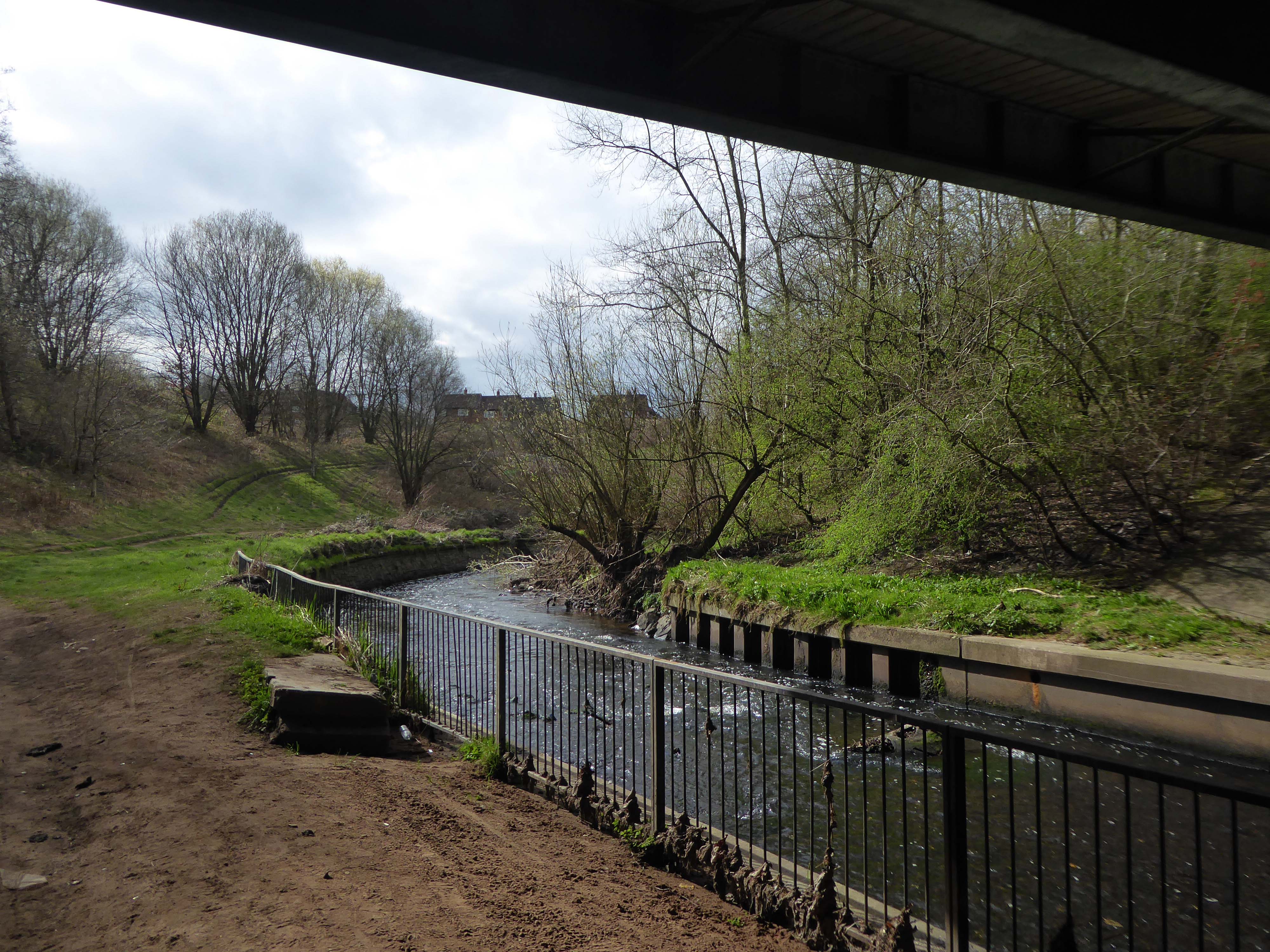
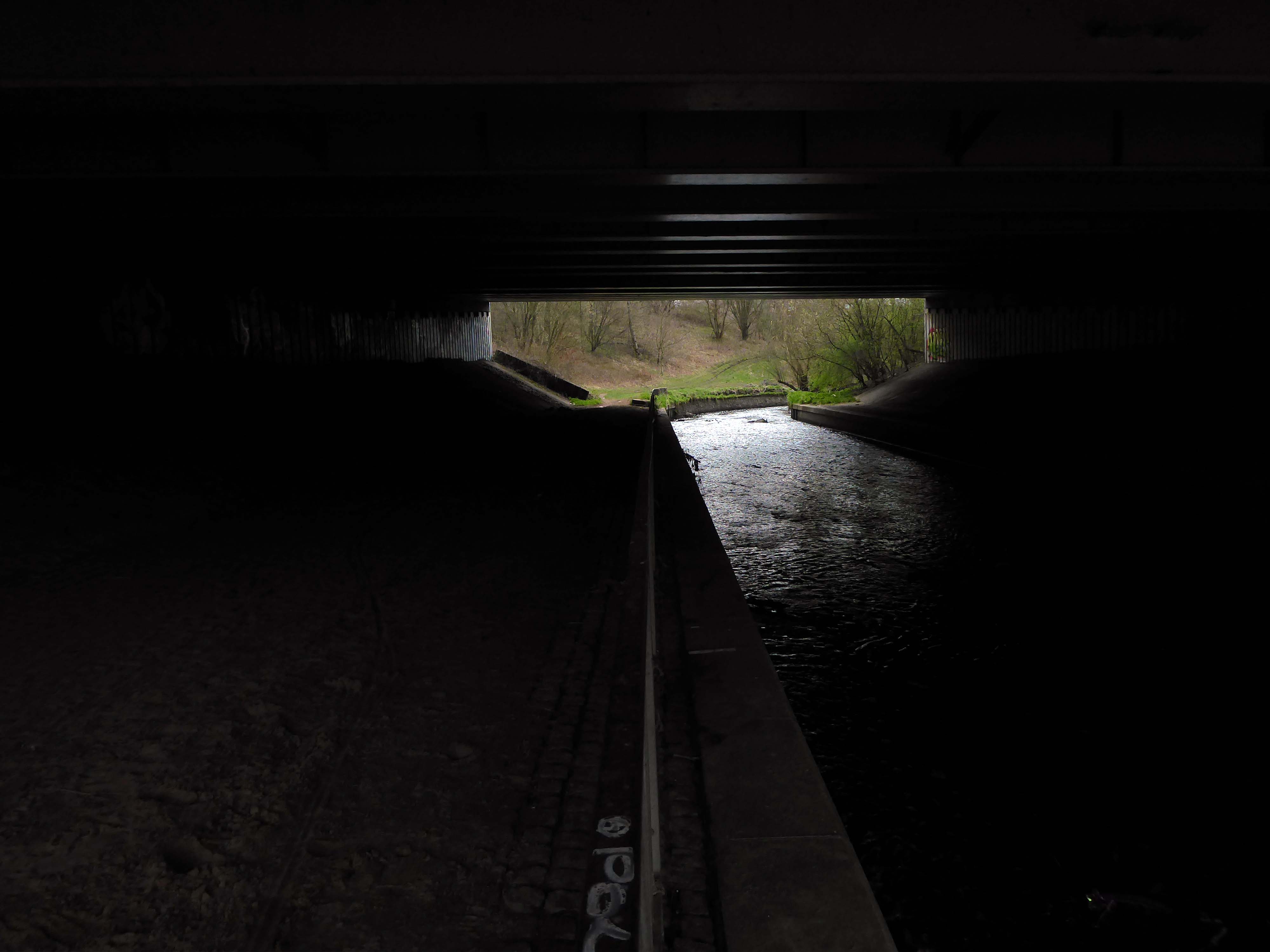


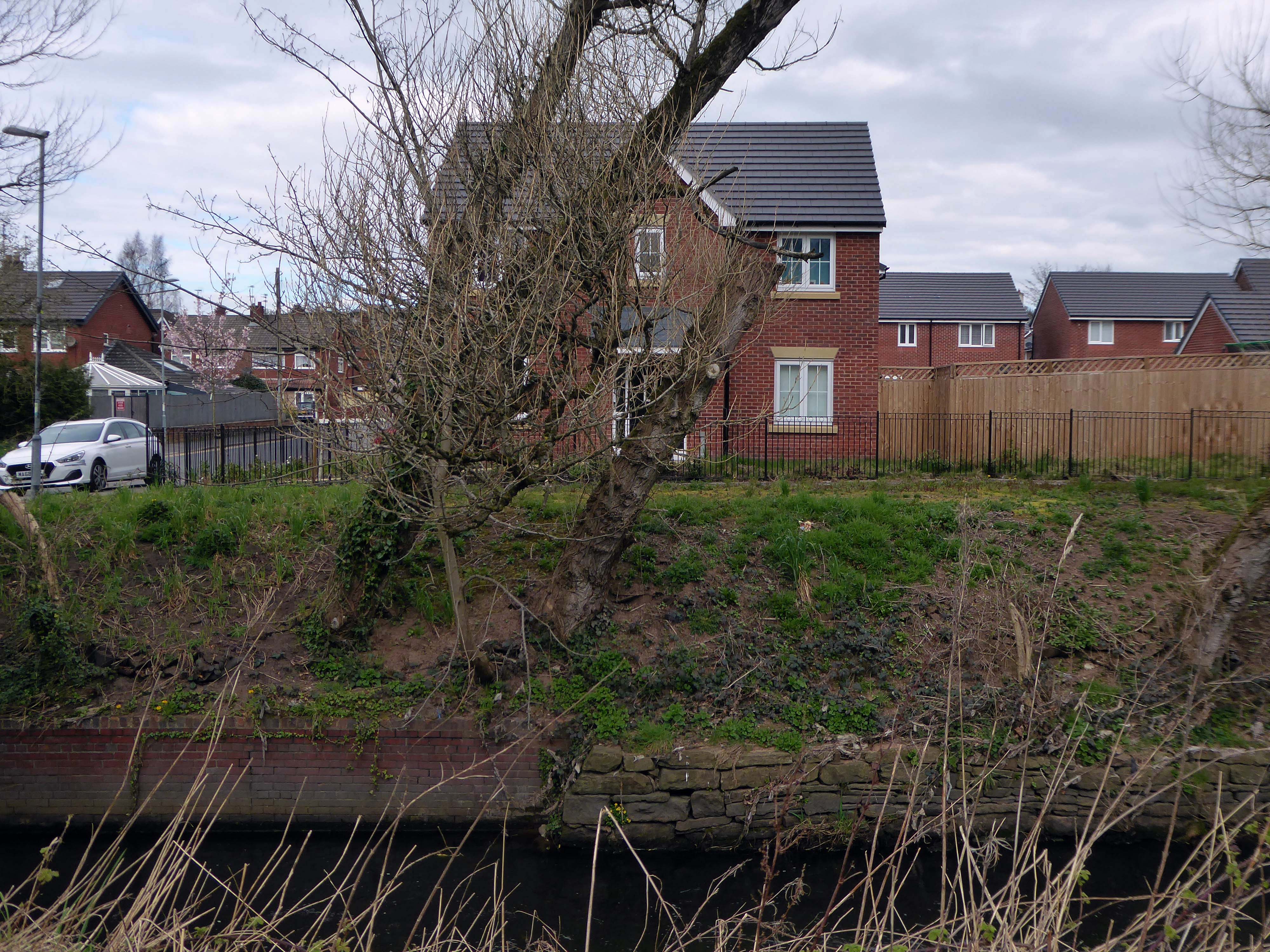


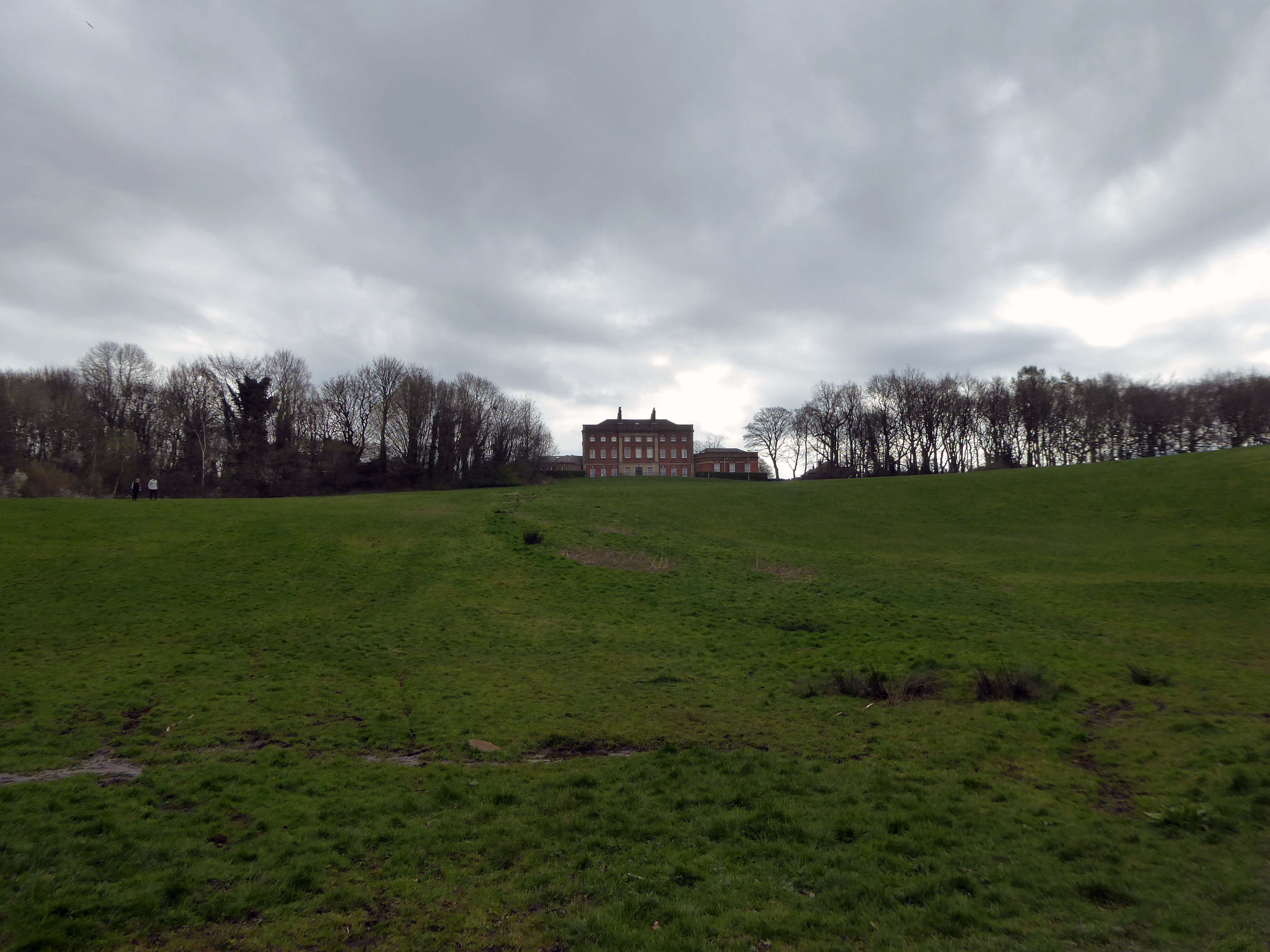
Hey look there’s Alkrington Hall!
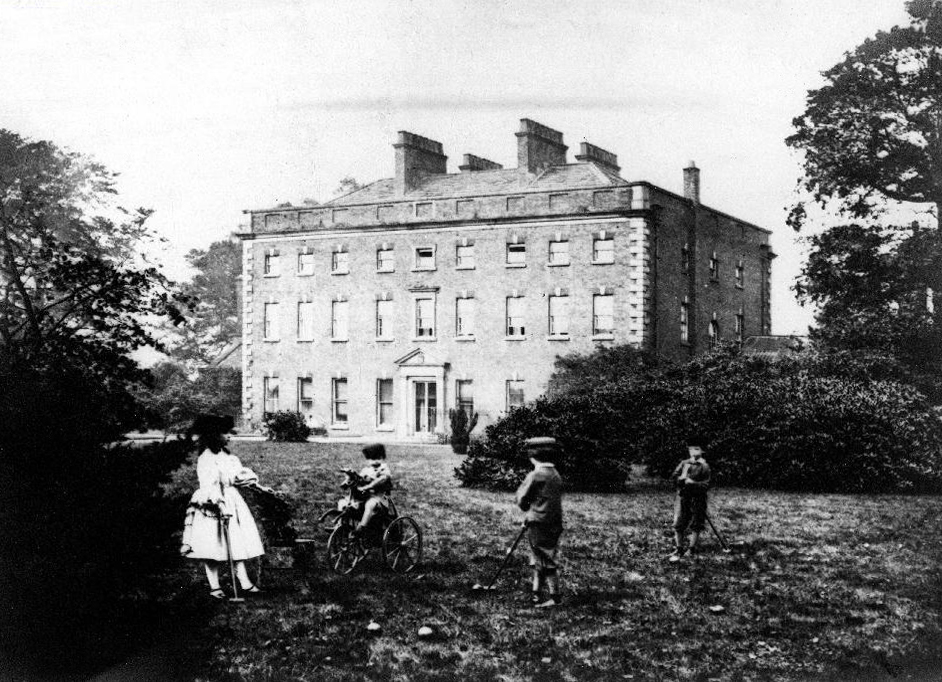
This Palladian mansion was designed and built in 1736 by renowned architect, Giacomo Leoni, who had also been responsible for significant alterations to Lyme Hall during the same period.
Offering an infusion of historical significance coupled with an abundance of living space throughout, Alkrington Hall East, simply must be viewed to be appreciated in full.
During the early 1770’s, the Hall became the largest museum outside of London, when the Hall’s owner, Sir Ashton Lever, exhibited his private collection of natural objects, including live animals. Remaining as an imposing symbol of Leoni’s work, Alkrington Hall remains one of only a few surviving examples throughout England.
In modern times, the Hall has since been carefully and sympathetically separated into 4 sections, and we are pleased to be offering for sale the largest portion of the Hall, with a total floor area comprising of over 7500 SQFT, and living accommodation spread over 4 floors.
Sold for £825,00 in 2021 Savills
Seen here in 1870

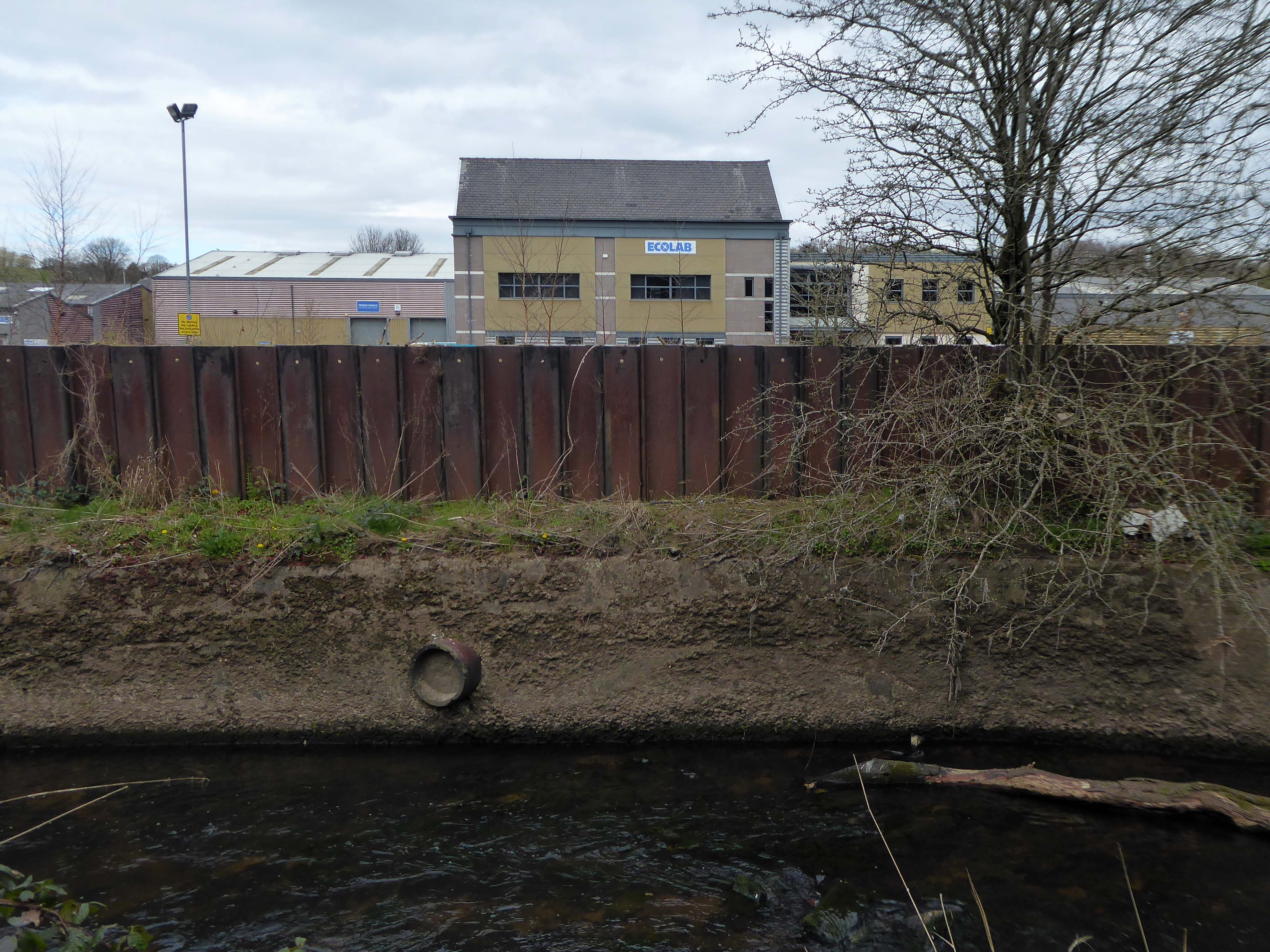
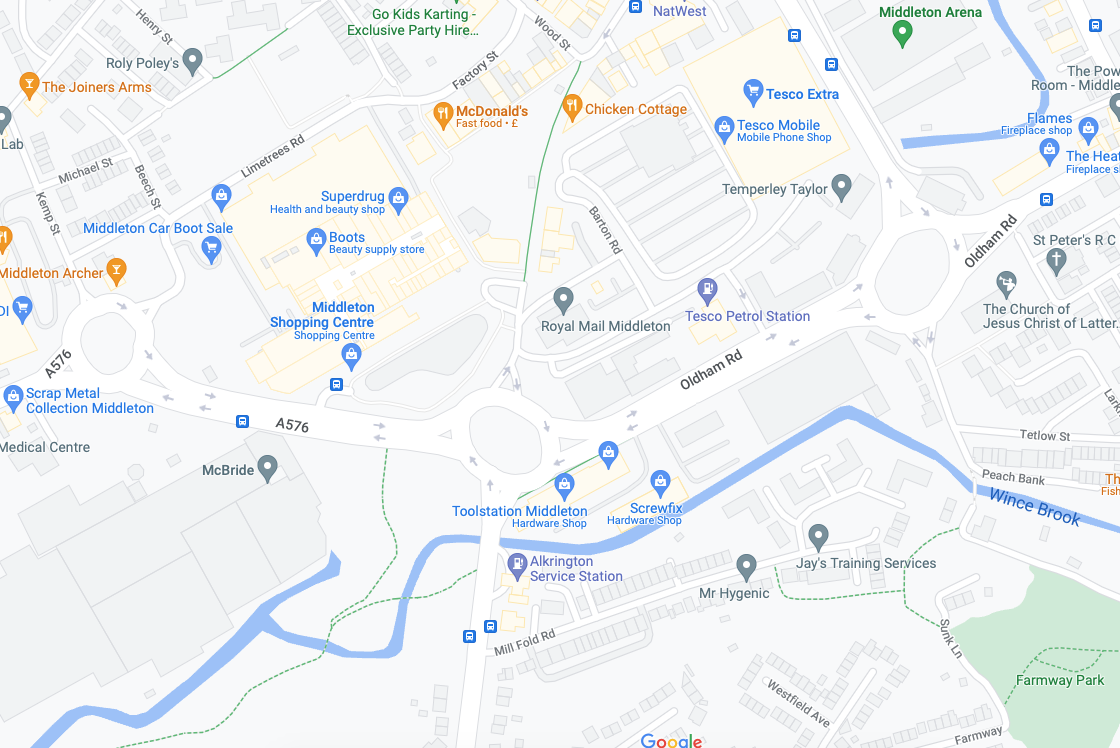
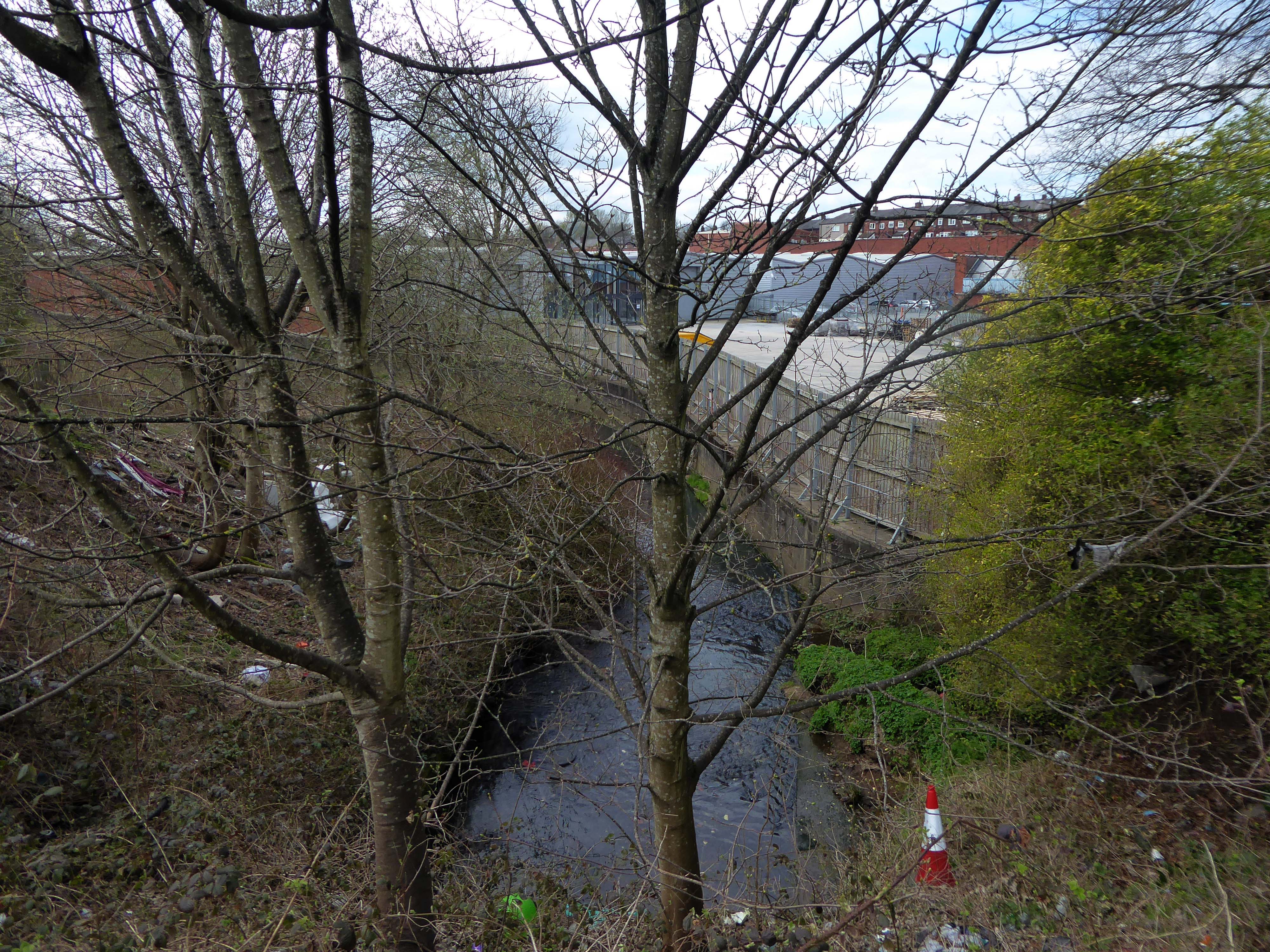
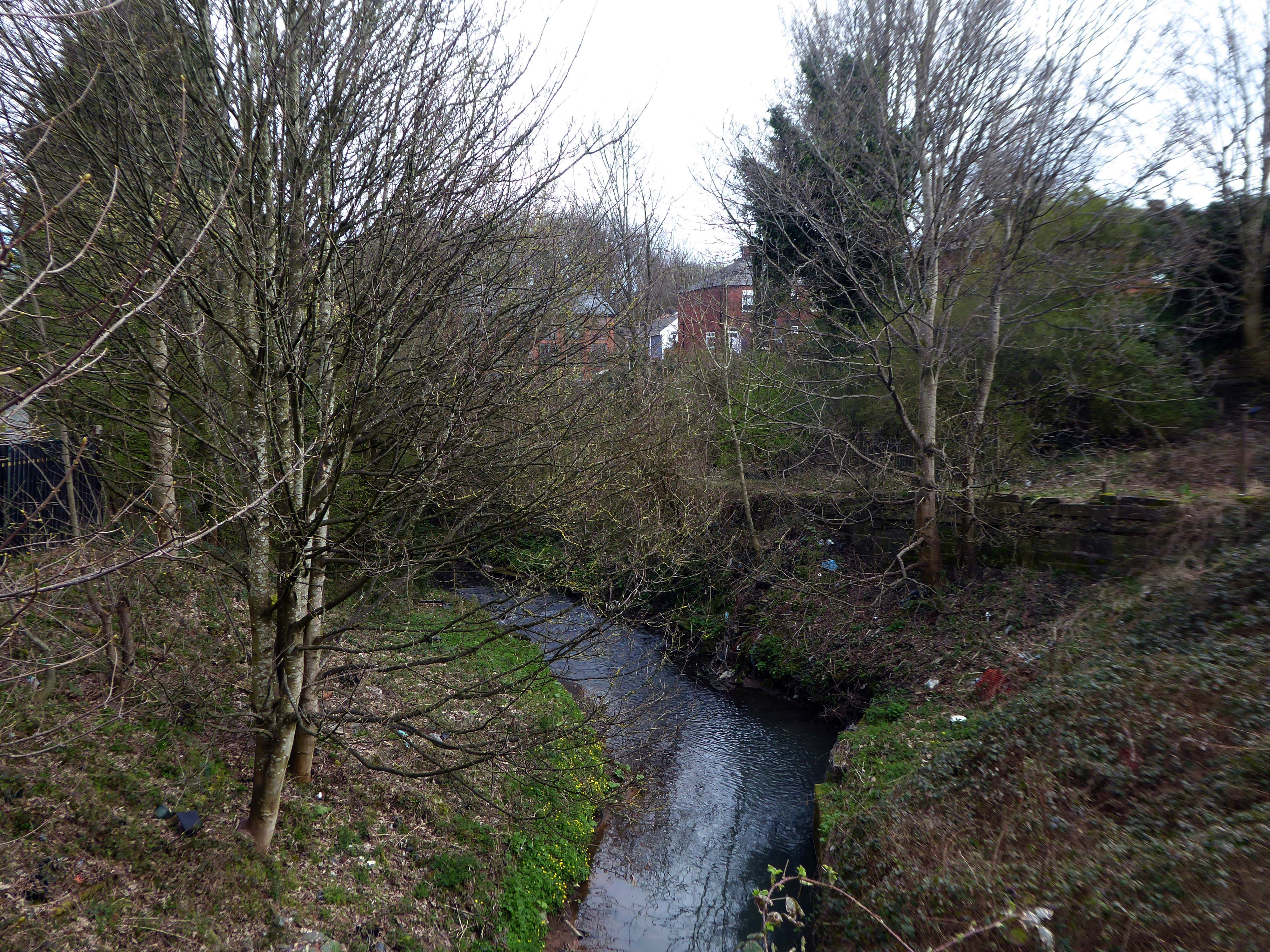
Don’t follow Wince Brook – it’s so far from right that it’s wrong – right?
1907 by G Stott of J Stott and Sons – Red brick with internal cast-iron frame.
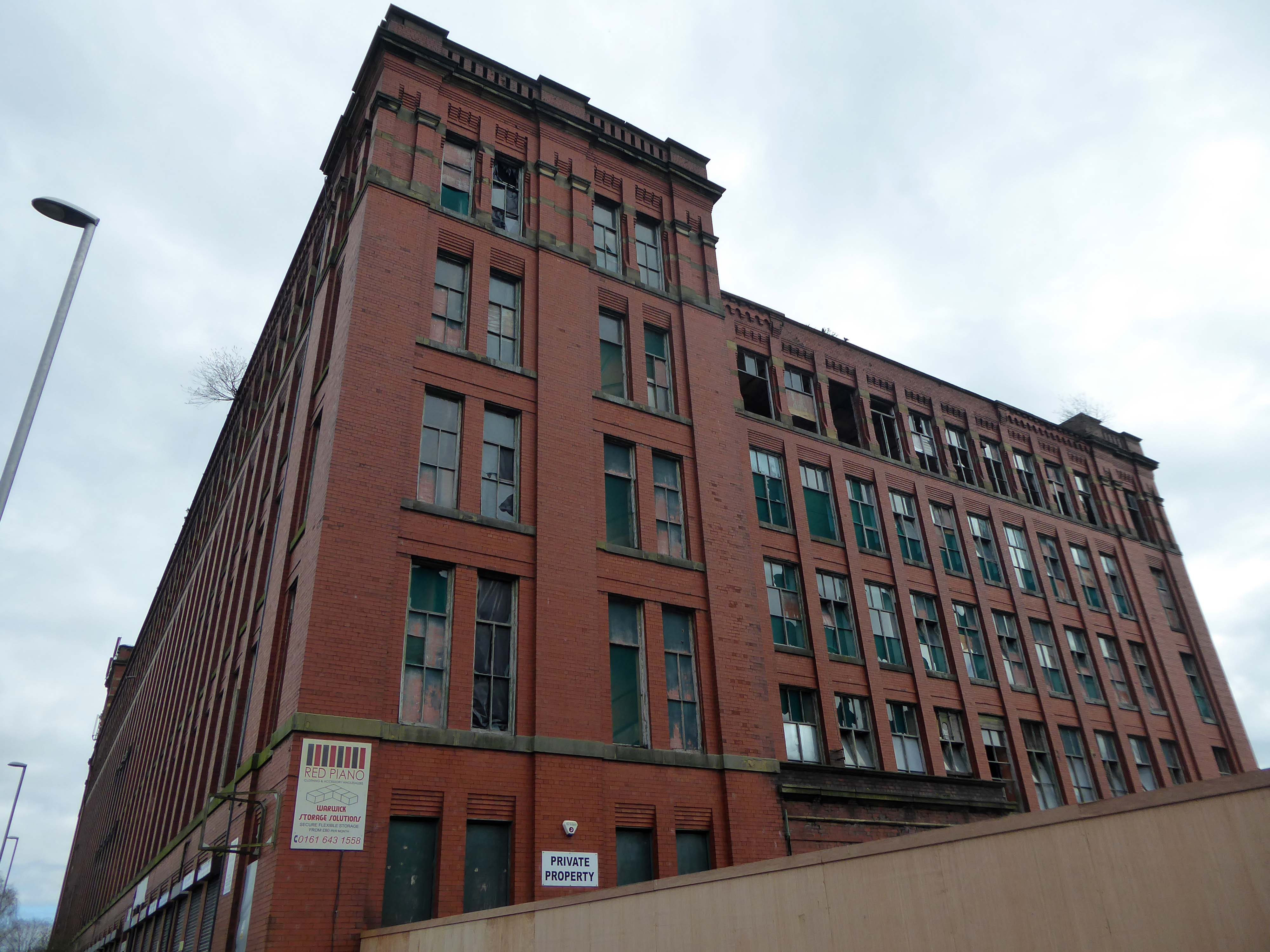
There was and Oval Partnership planning for a retail development in 2014 which failed to materialise.
The converted building will provide a showcase for Chinese manufacturers of construction-related products looking to enter the UK and wider European markets. Products on display will include tiles, lighting, furniture, kitchenware, sanitary ware and curtains. A second phase will see the construction of a new building alongside effectively doubling the floor space. In addition the brief includes a range of restaurant, leisure, culture and entertainment facilities threaded through the building. The conversion will open up the existing building in a dramatic way, maximizing permeability and providing a strong visual connection back into the town, promoting public access through the building to the attractive south-facing waterside of the mill.
Permeability failed to be maximised, sadly.
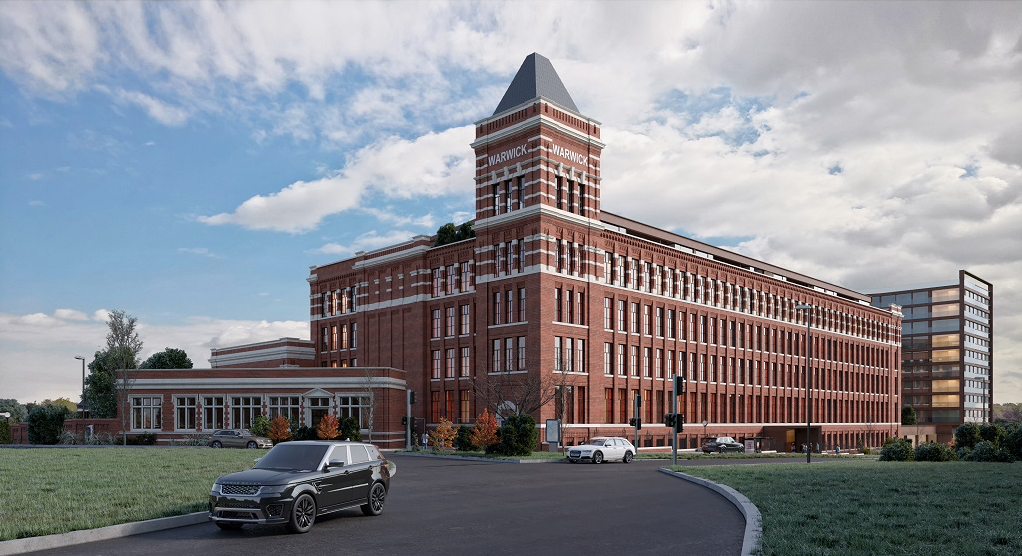
Ambitious plans to refurbish Grade II listed Warwick Mill to create new homes and breathe life into an important building and part of Middleton’s history have been drawn up.
Warwick Mill has recently changed ownership and the new owners, Kam Lei Fong (UK) Ltd, have been working with Rochdale Borough Council over the last nine months to develop proposals to redevelop the site.
So far so CGI good- the town eagerly awaits a surfeit of high end SUV owners.
The Job Centre steadfastly remains a Job Centre.
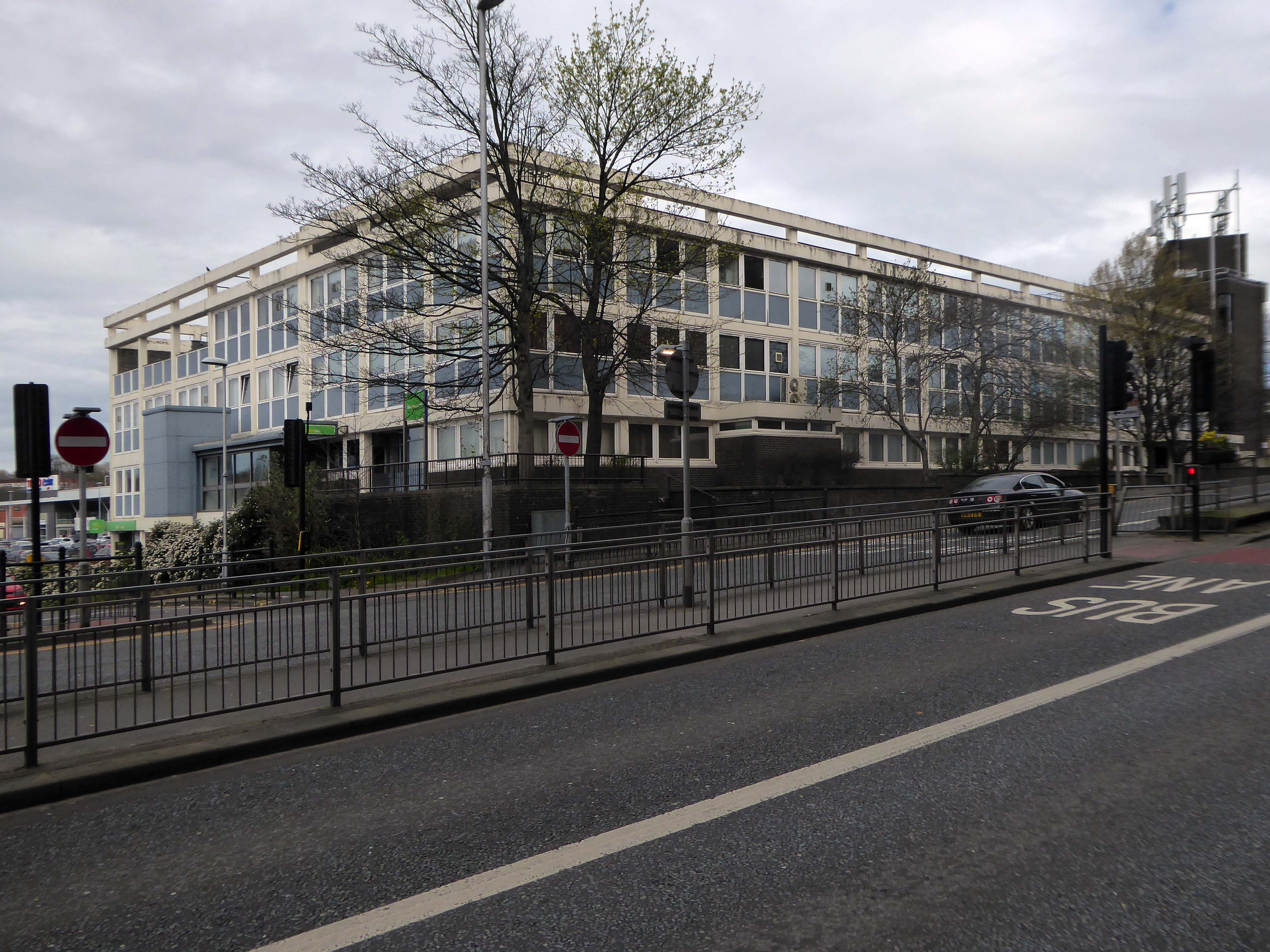
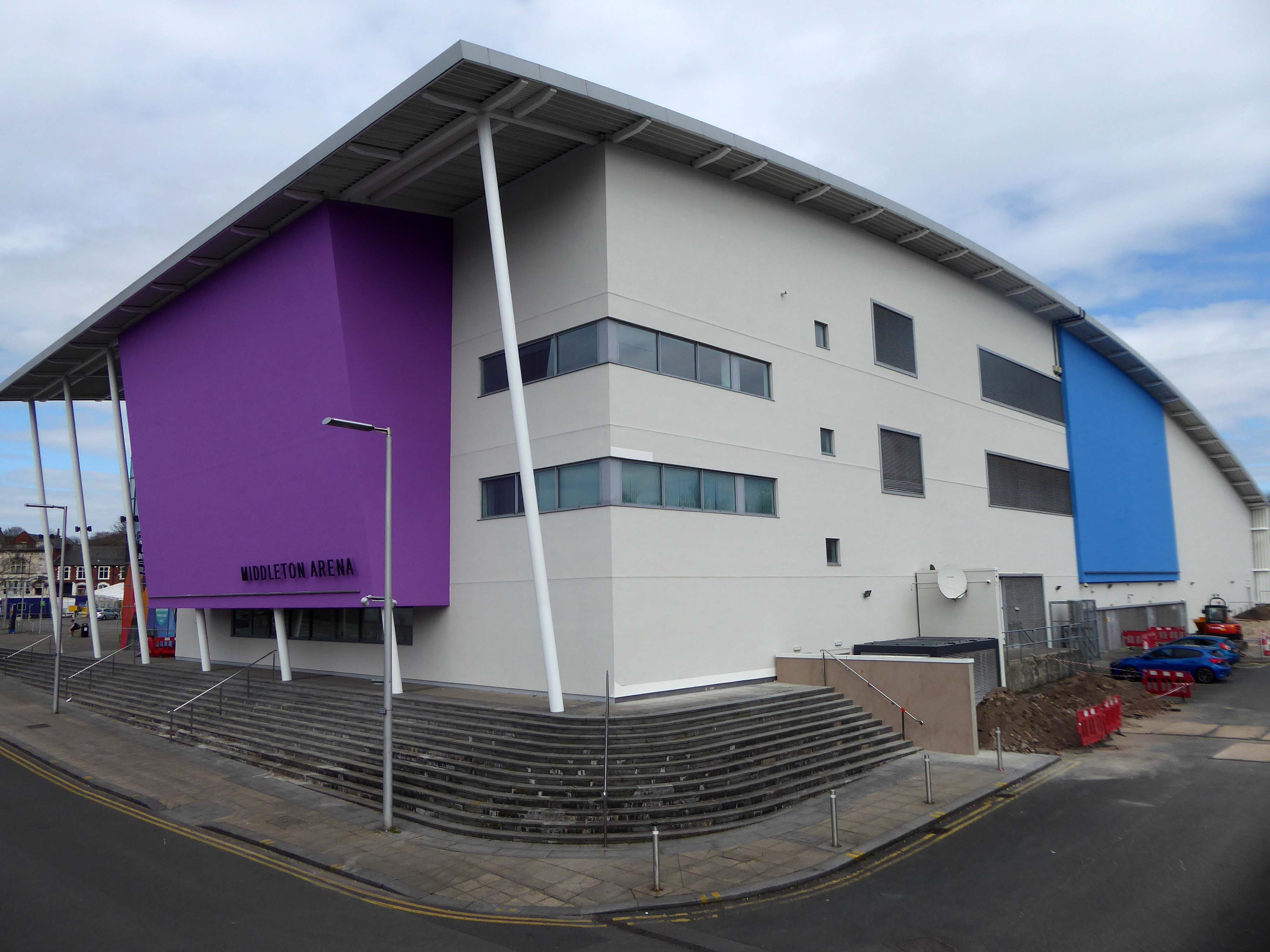
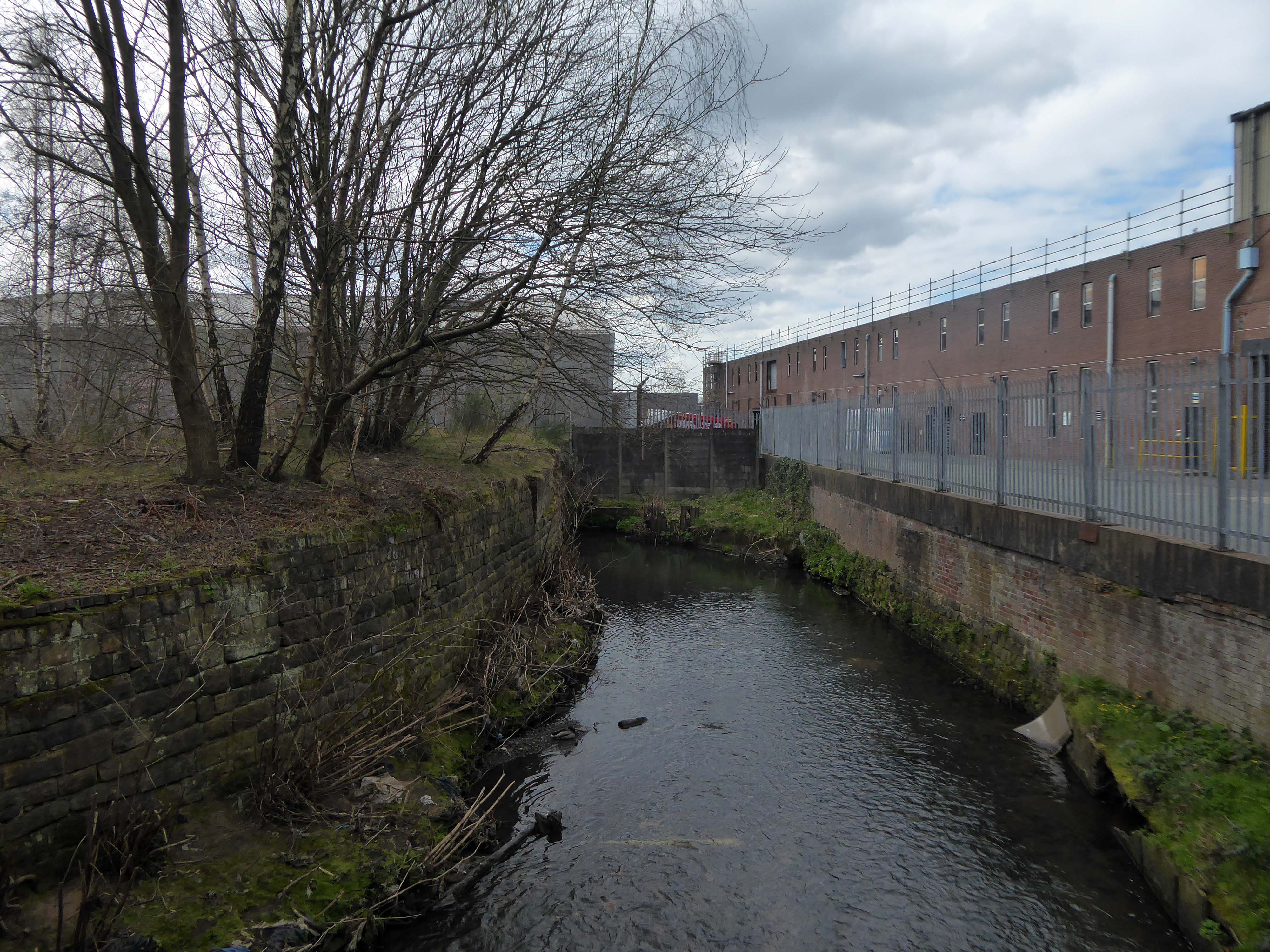
The river reappears here in back of the Middleton Arena.

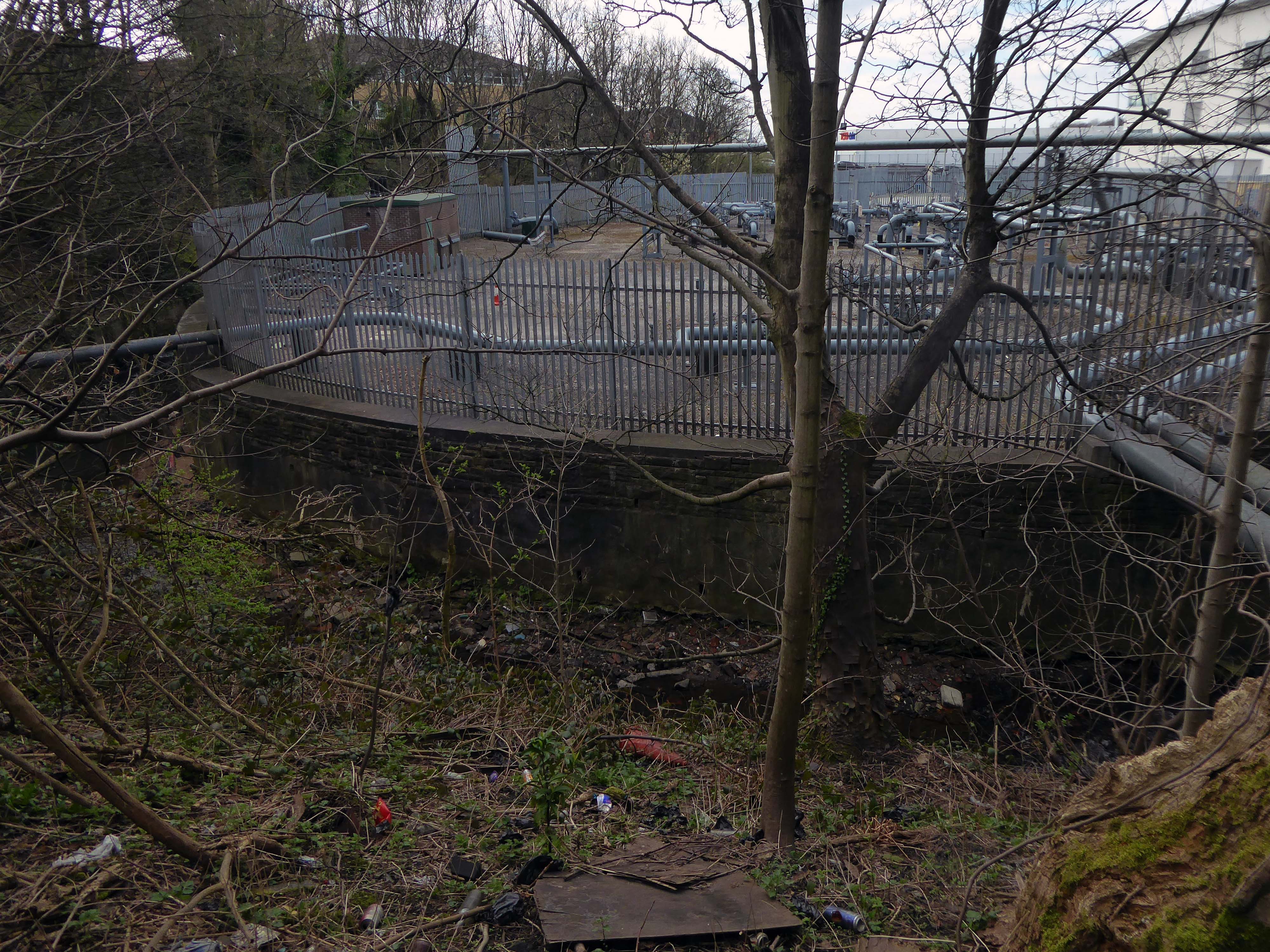
Proceeding in a disorderly manner.
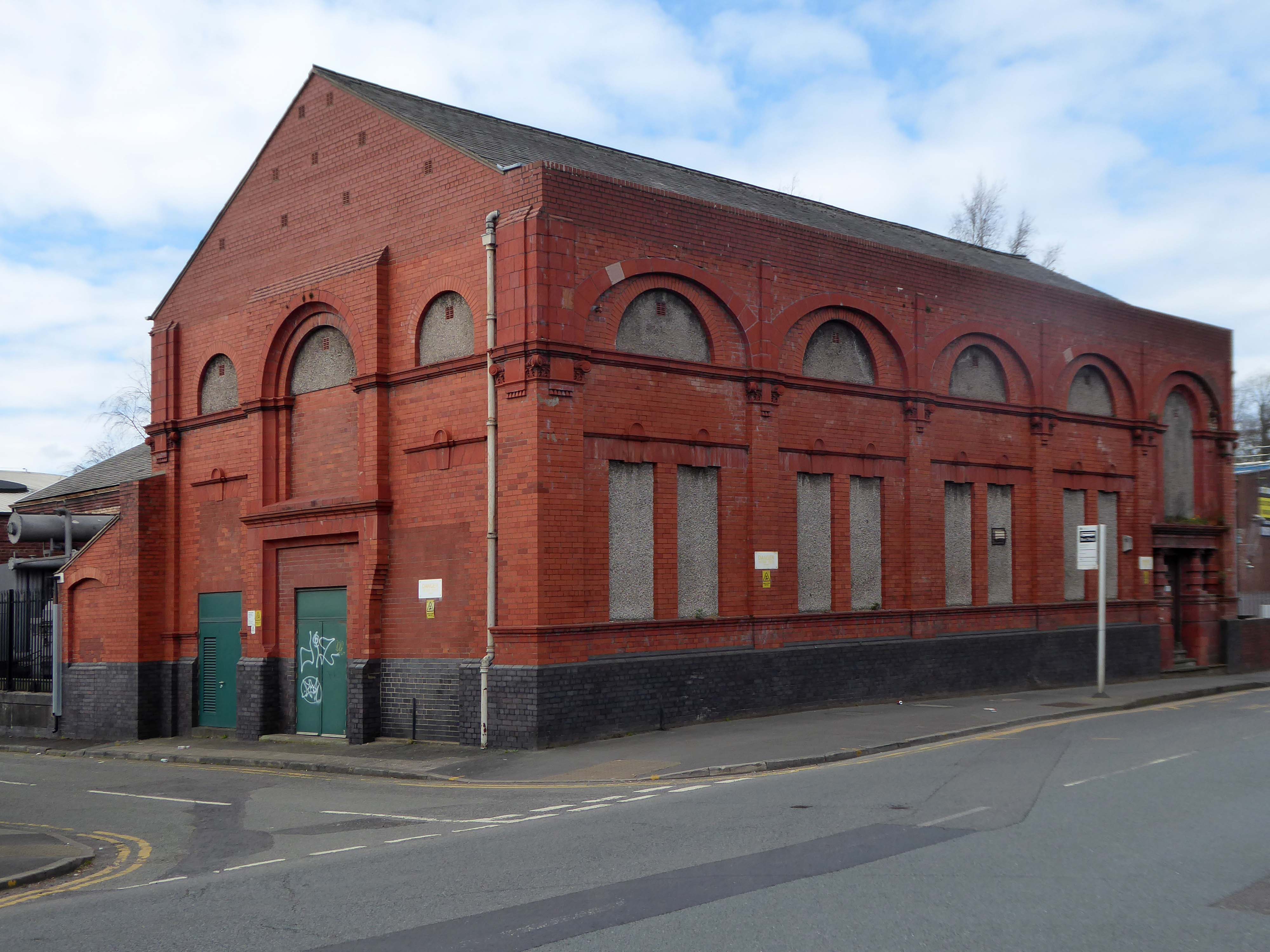

Across the way is Lodge Mill.
A Middleton couple has saved the oldest surviving mill in the town after a two-year renovation project.
Located on Townley Street, Lodge Mill was built in the mid-1800s and was originally a silk weaving mill. It went on to cotton weaving and cloth dying, then to a home for many different small local businesses. Sadly, in the early 2000s, it fell into disrepair and became derelict.
Martin Cove and Paula Hickey bought Lodge Mill on 1 April 2019 and immediately set about replacing and repairing the roof. They also installed a 19.4kw solar PV system so the mill became its own little power station that summer.
In August 2019, the couple opened a small ice cream shop on the ground floor of the mill – named the Ice Cream Shop at Lodge – selling locally-made ice cream from Birch Farm, Heywood.
The ice cream is made using cream from Tetlow Farm’s dairy herd at Slattocks – Martin explained.
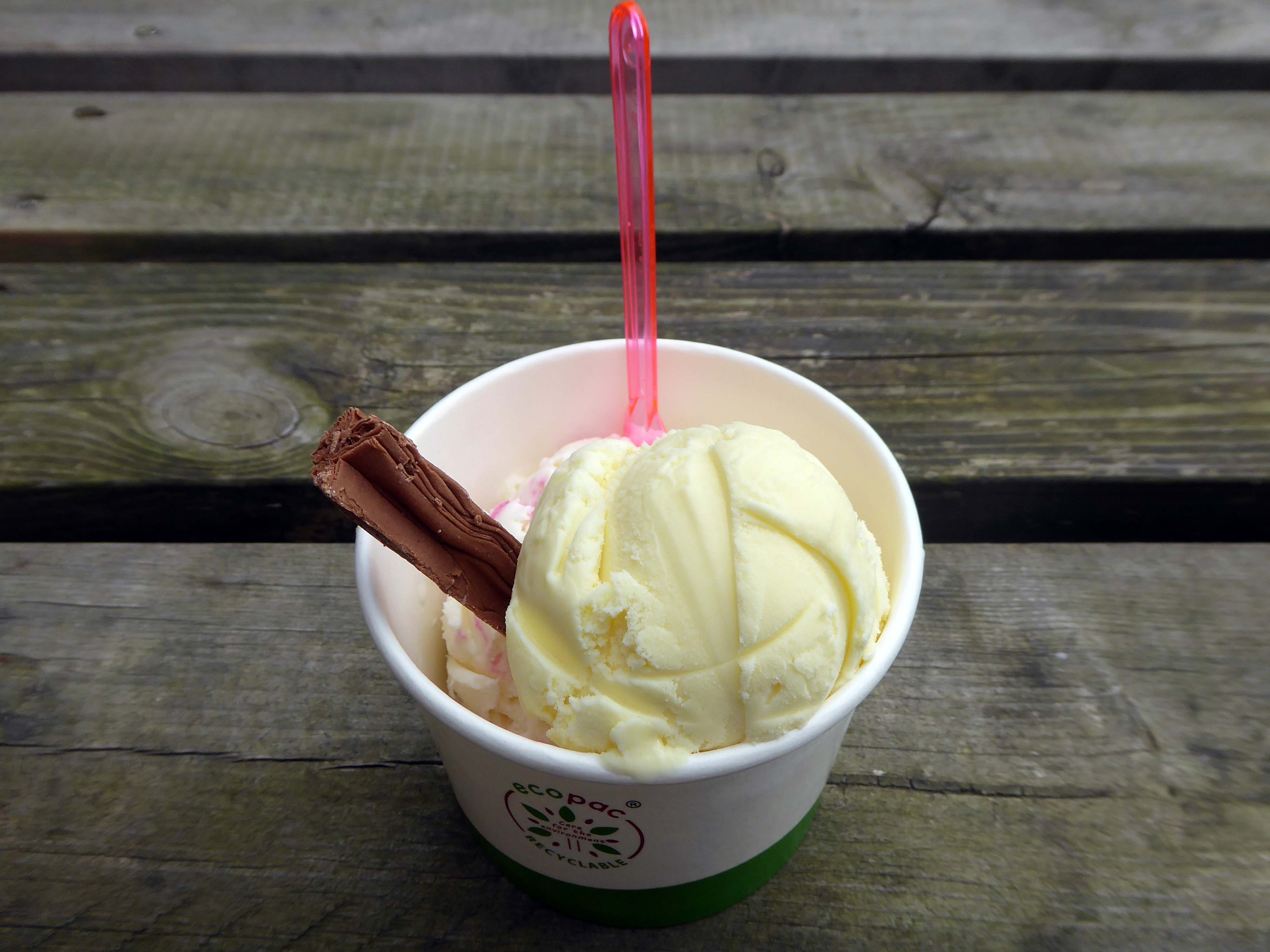
It was £2.25 for two scoops and a flake – a welcome oasis on a warmish day.

Sadly in December 2021 there was a serious fire, work has since been done to repair the roof.
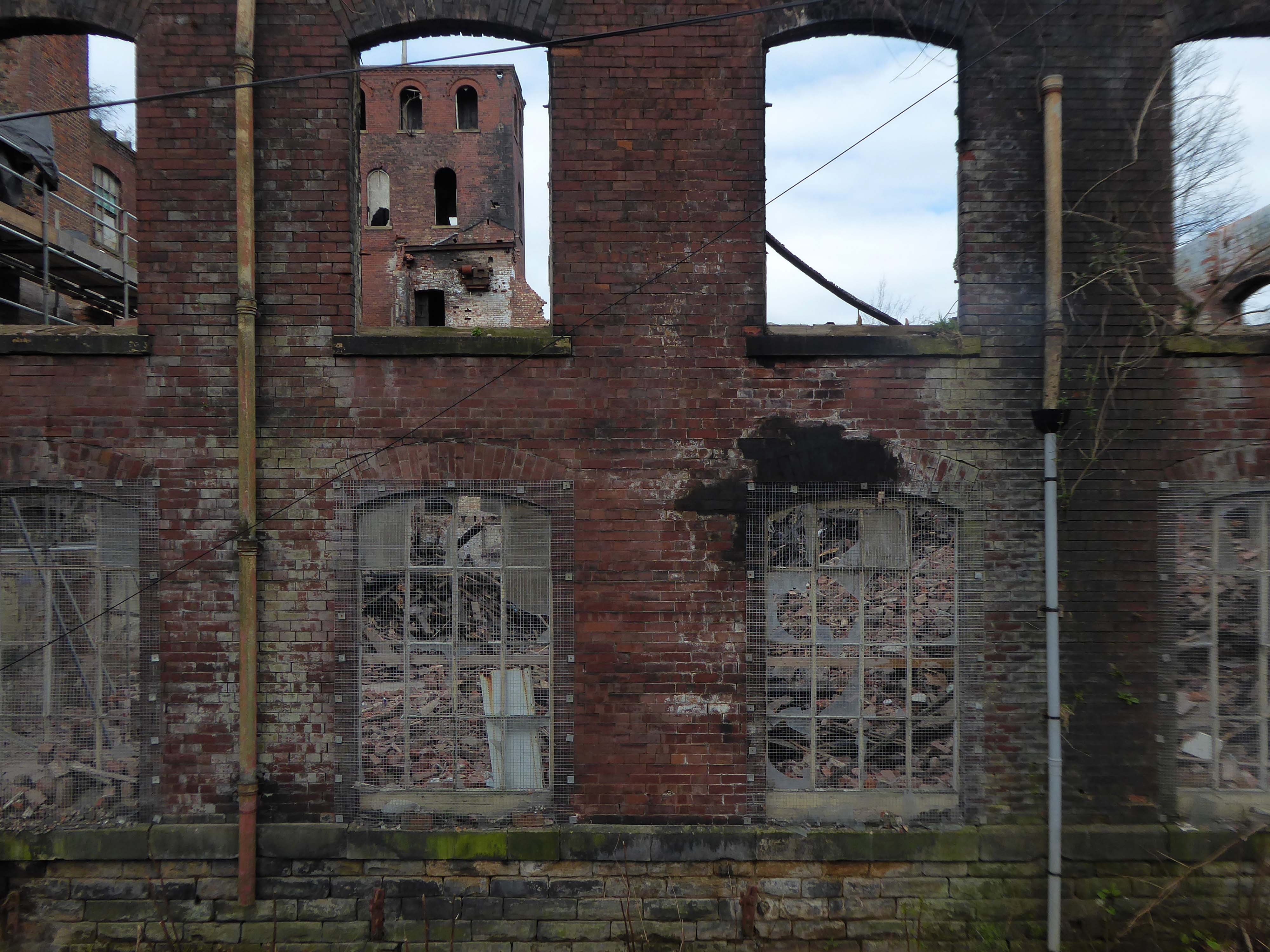
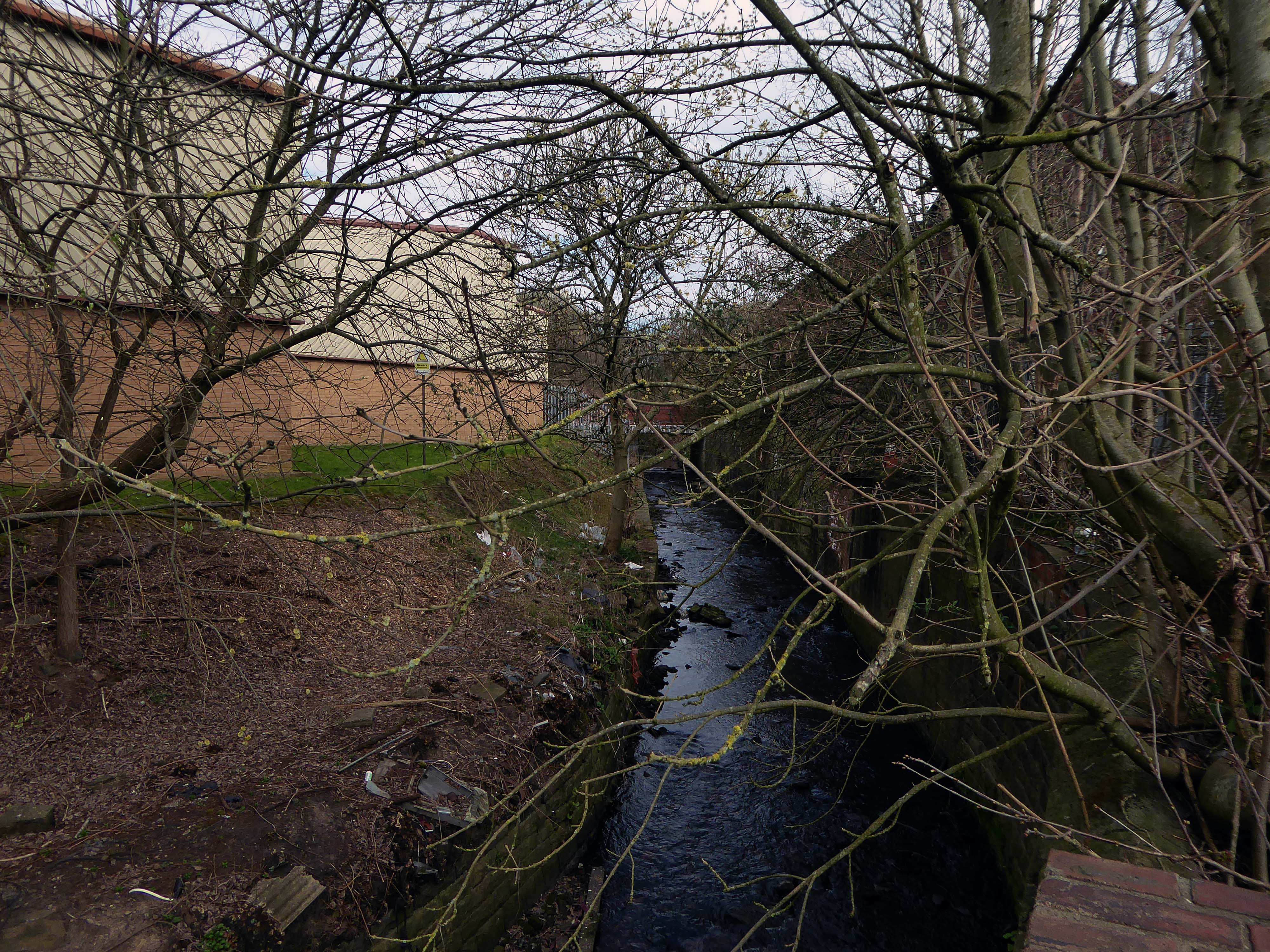


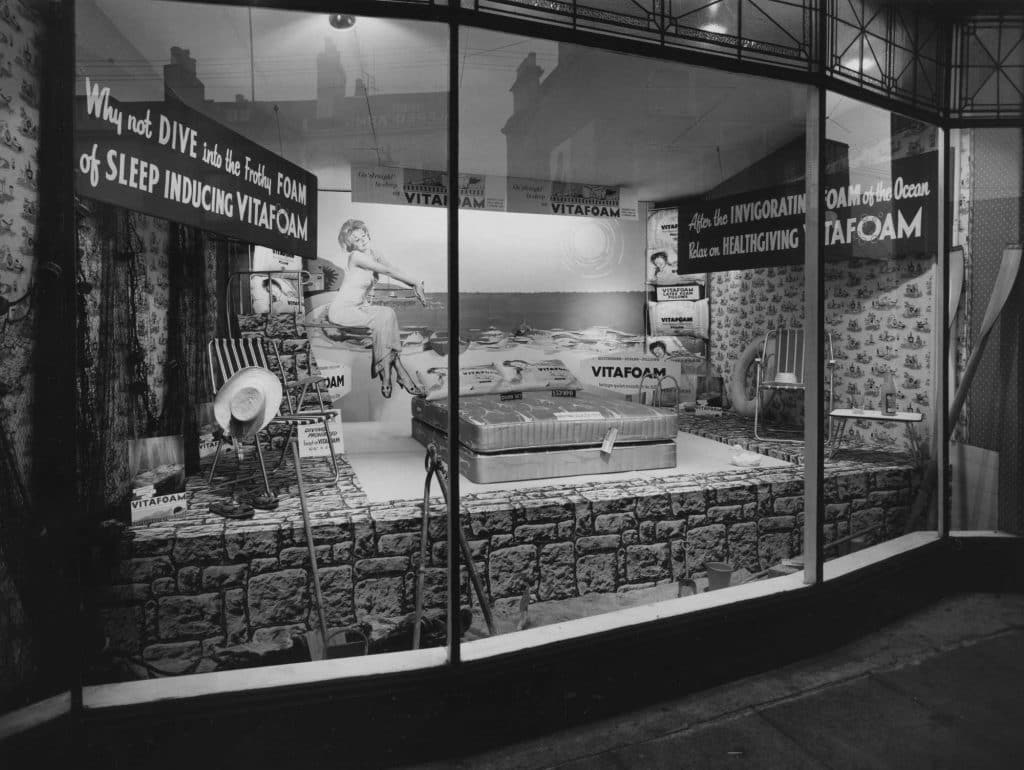
Still very much in use the Vitafoam Mill
Founded in 1949 on £100 capital, Vitafoam started its original operation manufacturing latex foam products in Oldham, Greater Manchester.
After establishing the business, the company made a major move to its current site in Middleton, Manchester in 1955, acquiring two empty former cotton mills to cope with increased demand.
By 1963, Vitafoam had added the manufacture of polyurethane foam to its business and was providing product speciality for upholstery and bedding markets.
As Vitafoam entered the new millennium the company had made great strides in supplying external foam converters. These rely on Vitafoam to be their business partner and provide their foam needs. This trend continues to grow from strength to strength and is supplemented by our own group conversion companies.

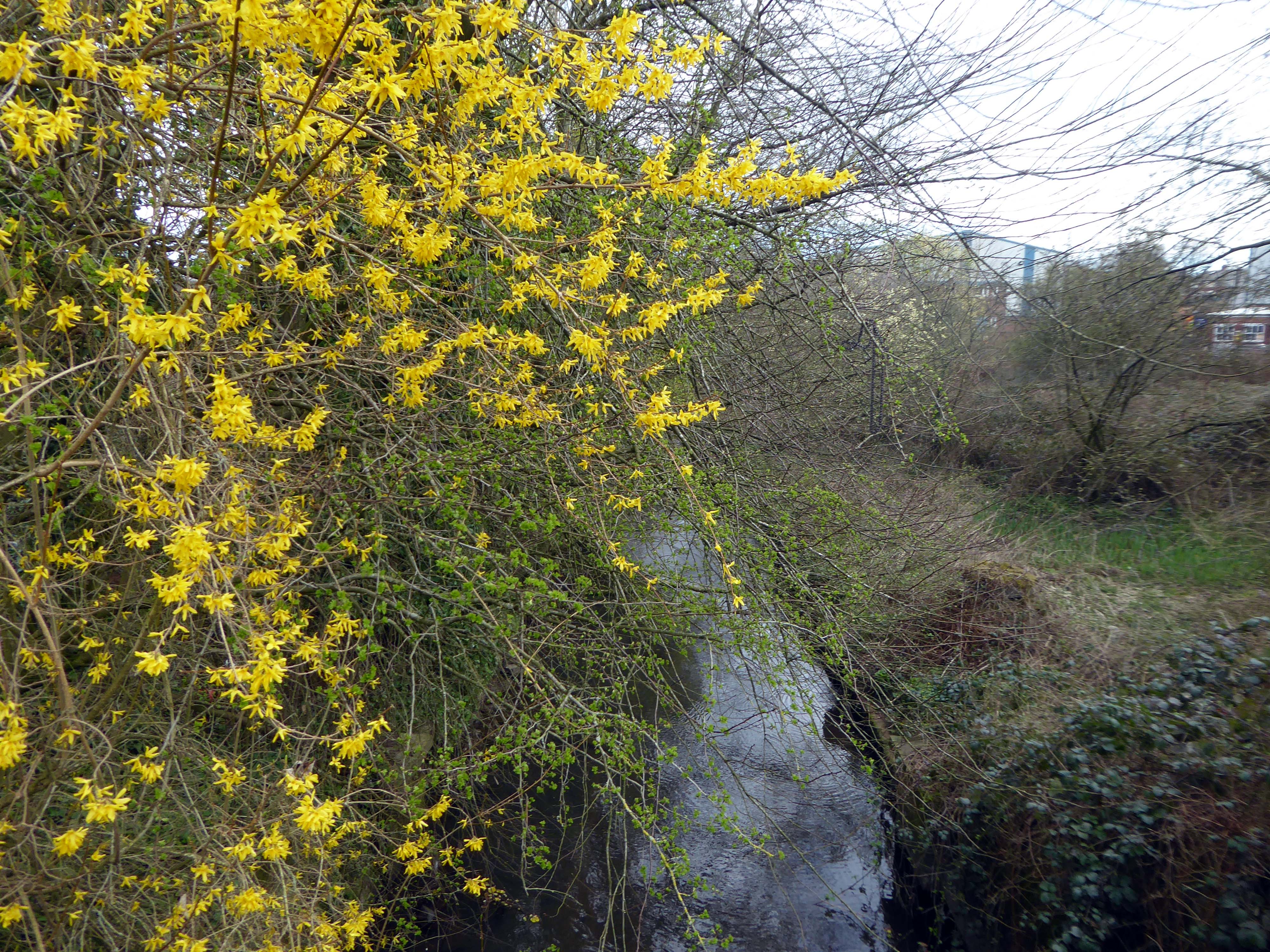
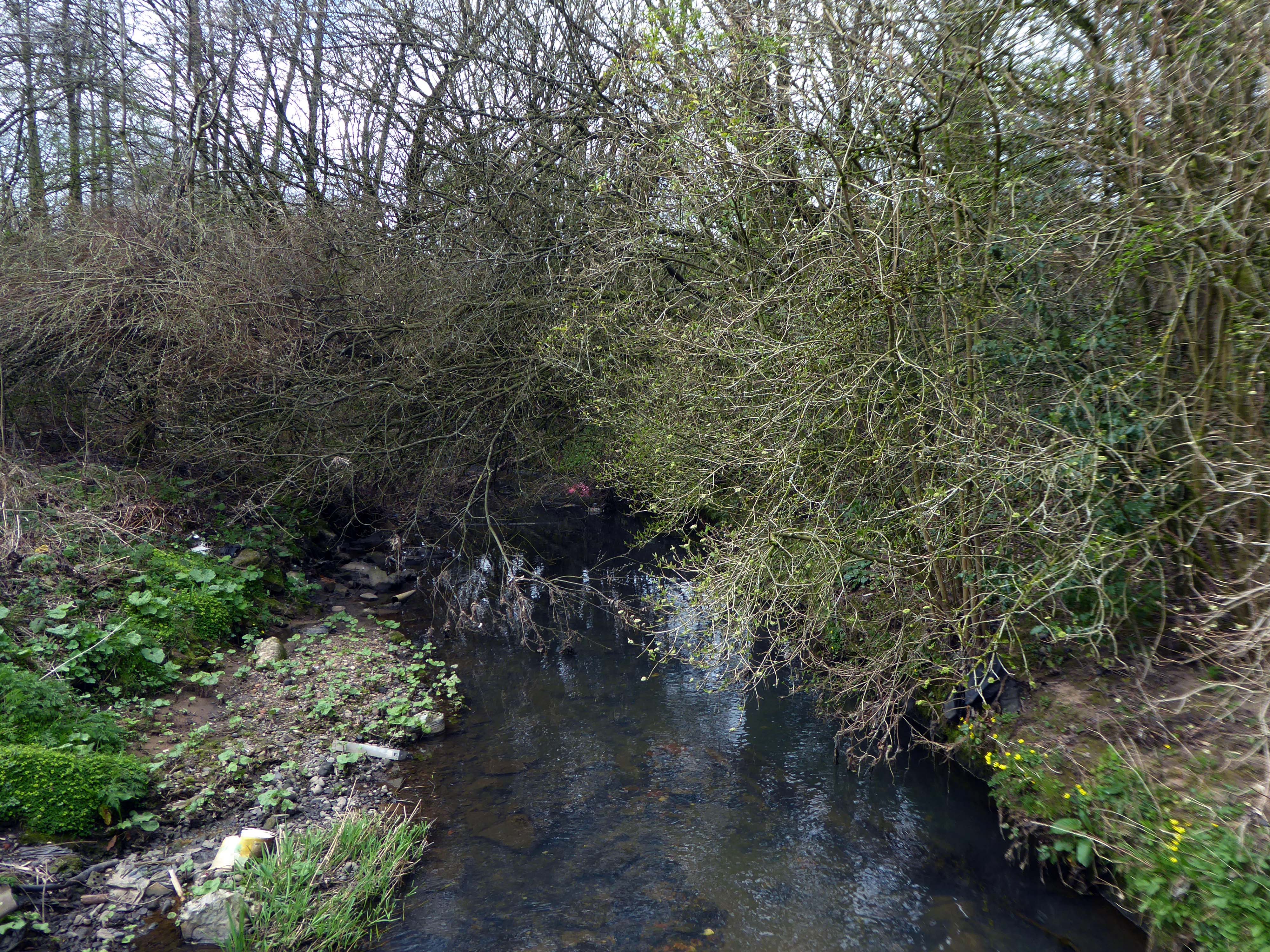
Regaining the river at Chadderton Hall Park.
Its roots stretch back to the 13th century being the land on which Chadderton Hall once stood. It contains a large field area with a small football pitch, a playground area, several flower gardens and a small café situated next to the Park’s bowling green.
Chadderton Hall was first built in the 13th century by Geoffrey de Chadderton, this first hall was in Chadderton Fold slightly to the east of the current park. In 1629 a new hall was built at the site of the current park and was present there until the 20th century when it was demolished in 1939. It was at the end of the 19th Century that the area surrounding Chadderton Hall began to be used for public recreation. A boating lake and a menagerie, including a kangaroo and a lion, were established as part of a Pleasure Garden. These features have long since been demolished but evidence of the boating lake can be seen by the hollowed out area where the playing fields now stand.
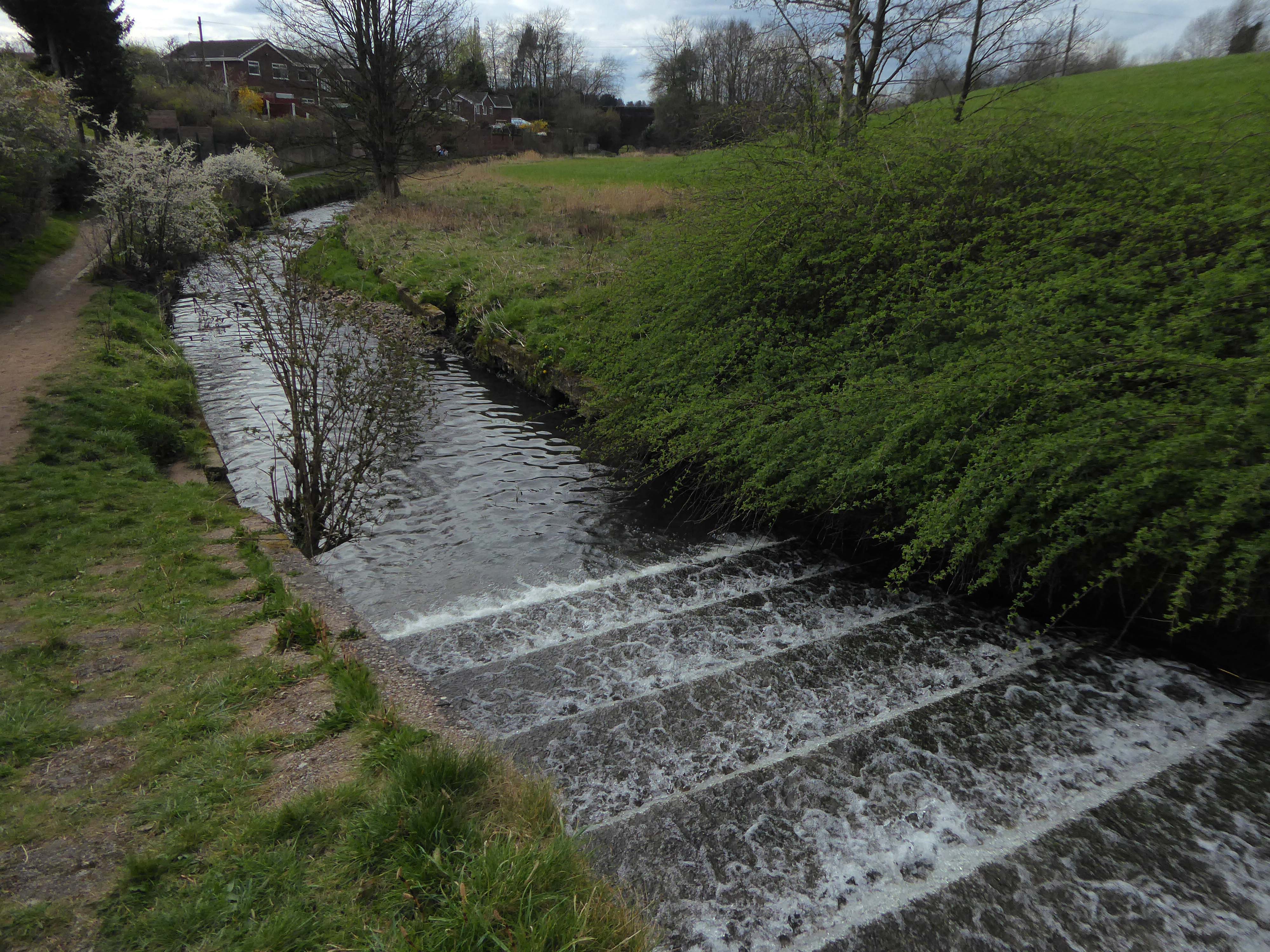
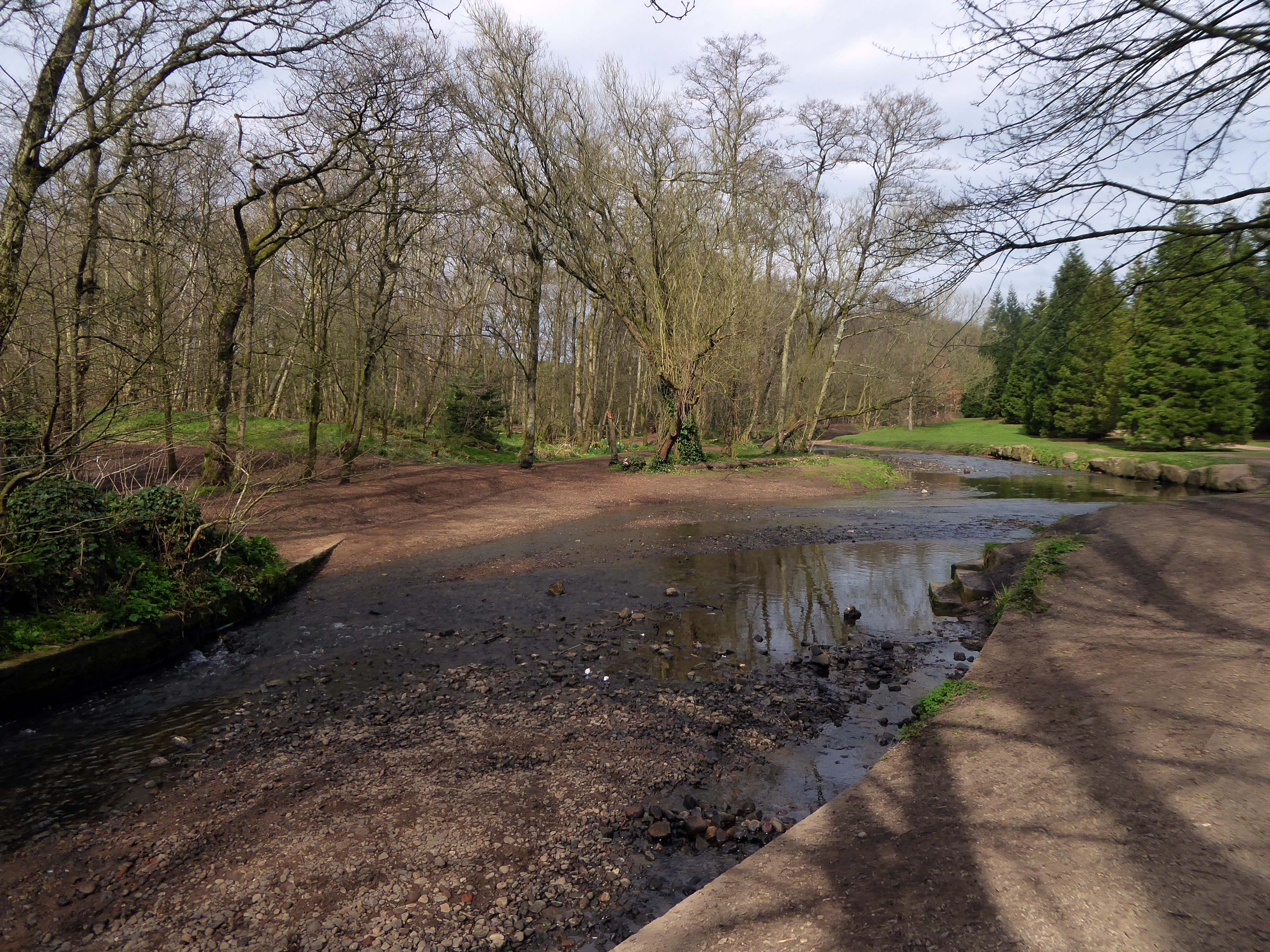

Diminishing now the river thin and shallow, as we rise into the hills on the outskirts of Greater Manchester.
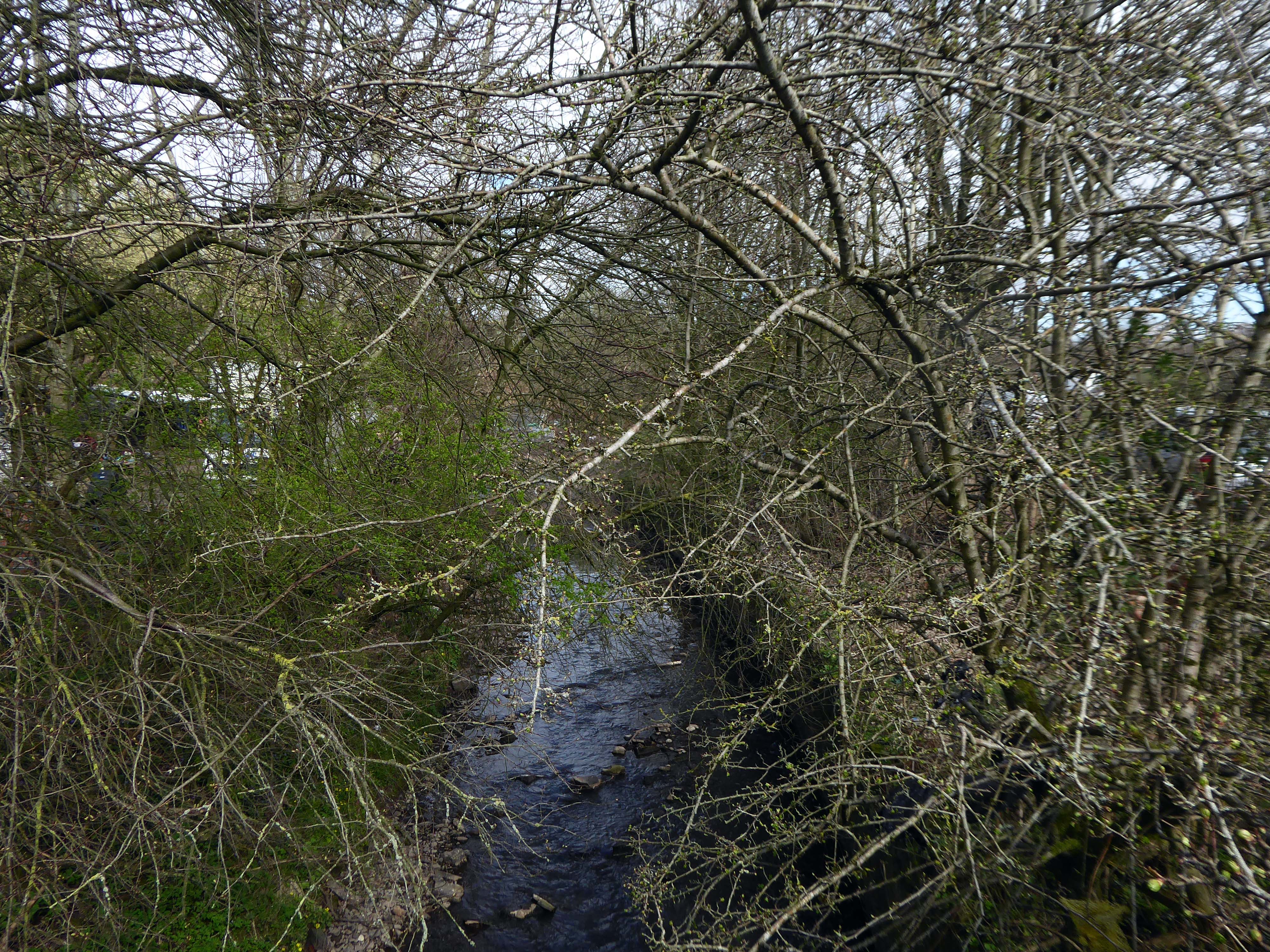

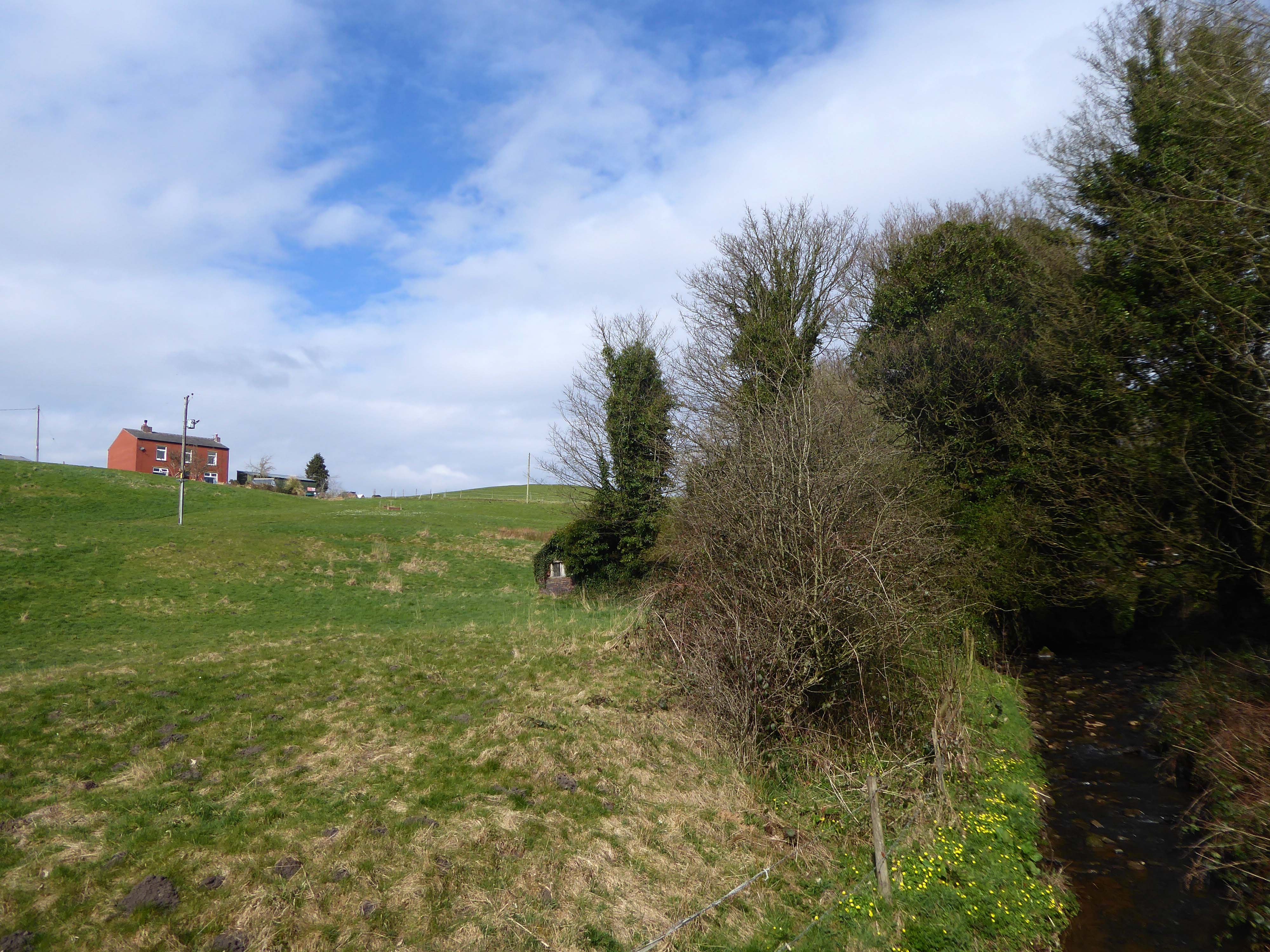
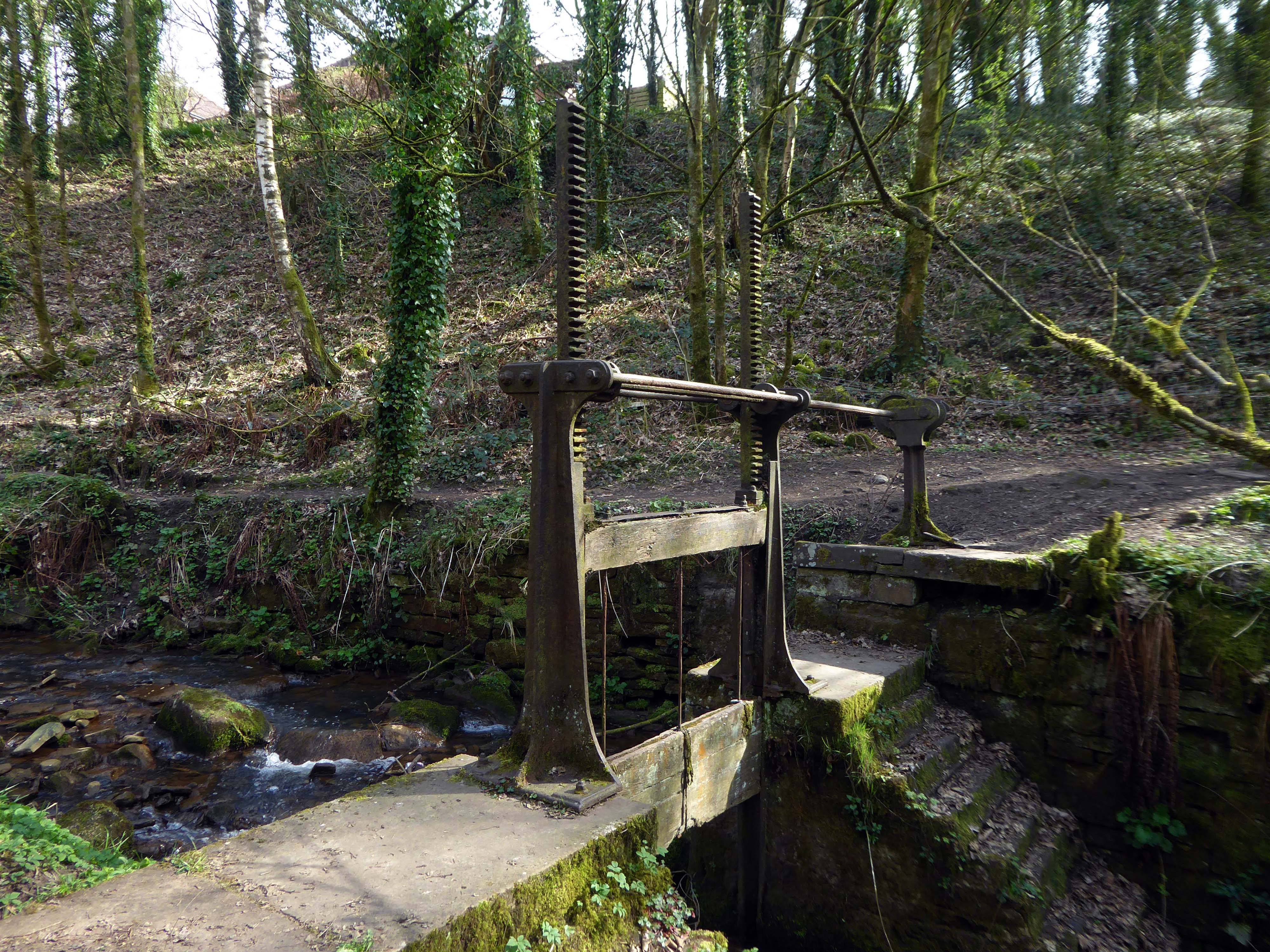
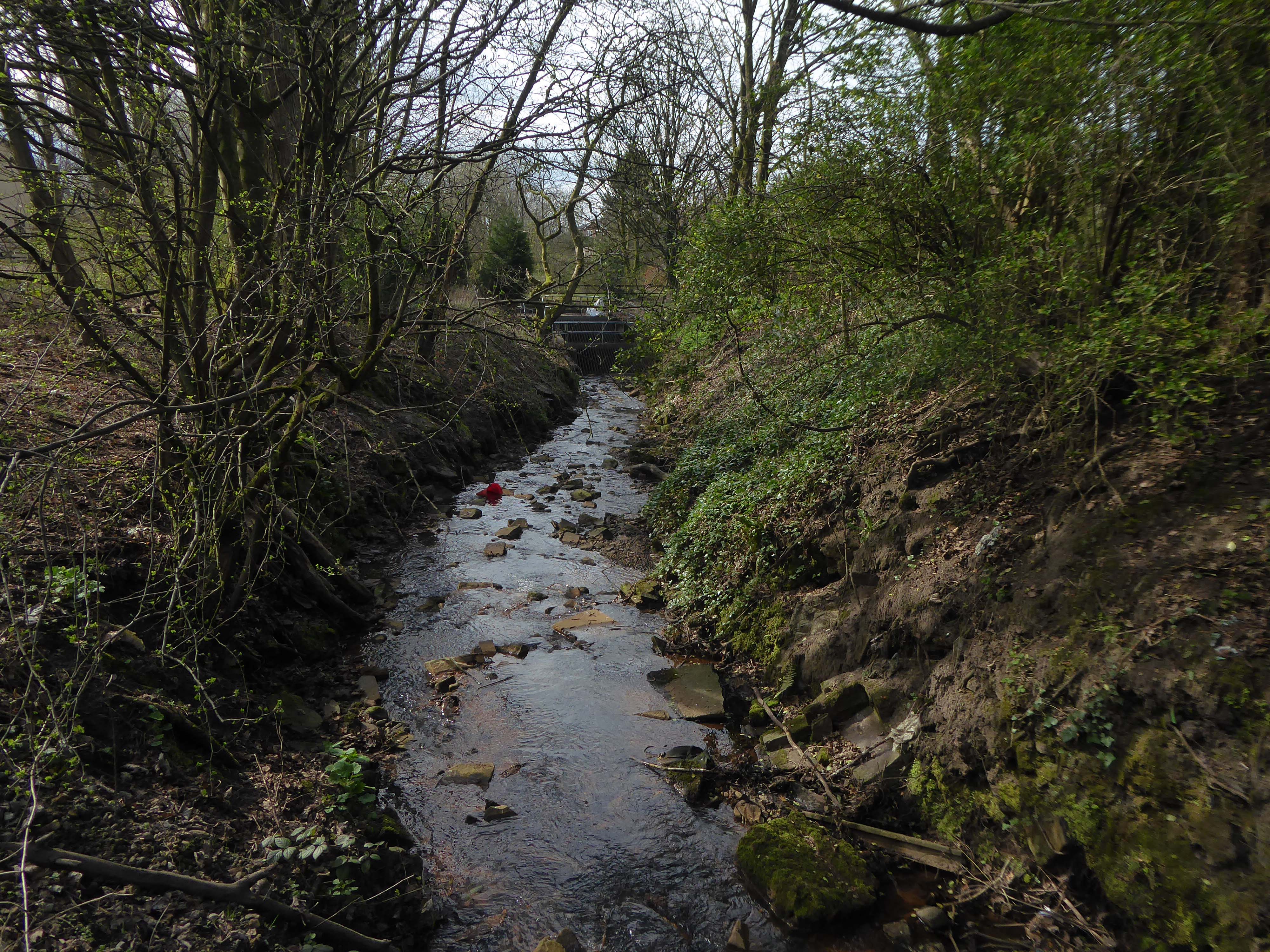
Passing by Royton Cricket Club as the river disappears again.
Based in the heart of Thorpe Estate – Royton Cricket, Bowling & Running Club offers a family friendly environment whilst hosting strong, competitive cricket throughout the summer. Bowling throughout the summer along with a Running section – Royton Road Runners, who operate all year round. Along with seasonal events such as our well known firework display along with St Georges Day celebrations – with plans in the pipeline for improvements on current events as well as new exciting projects – it’s a great time to be apart of the club & community!
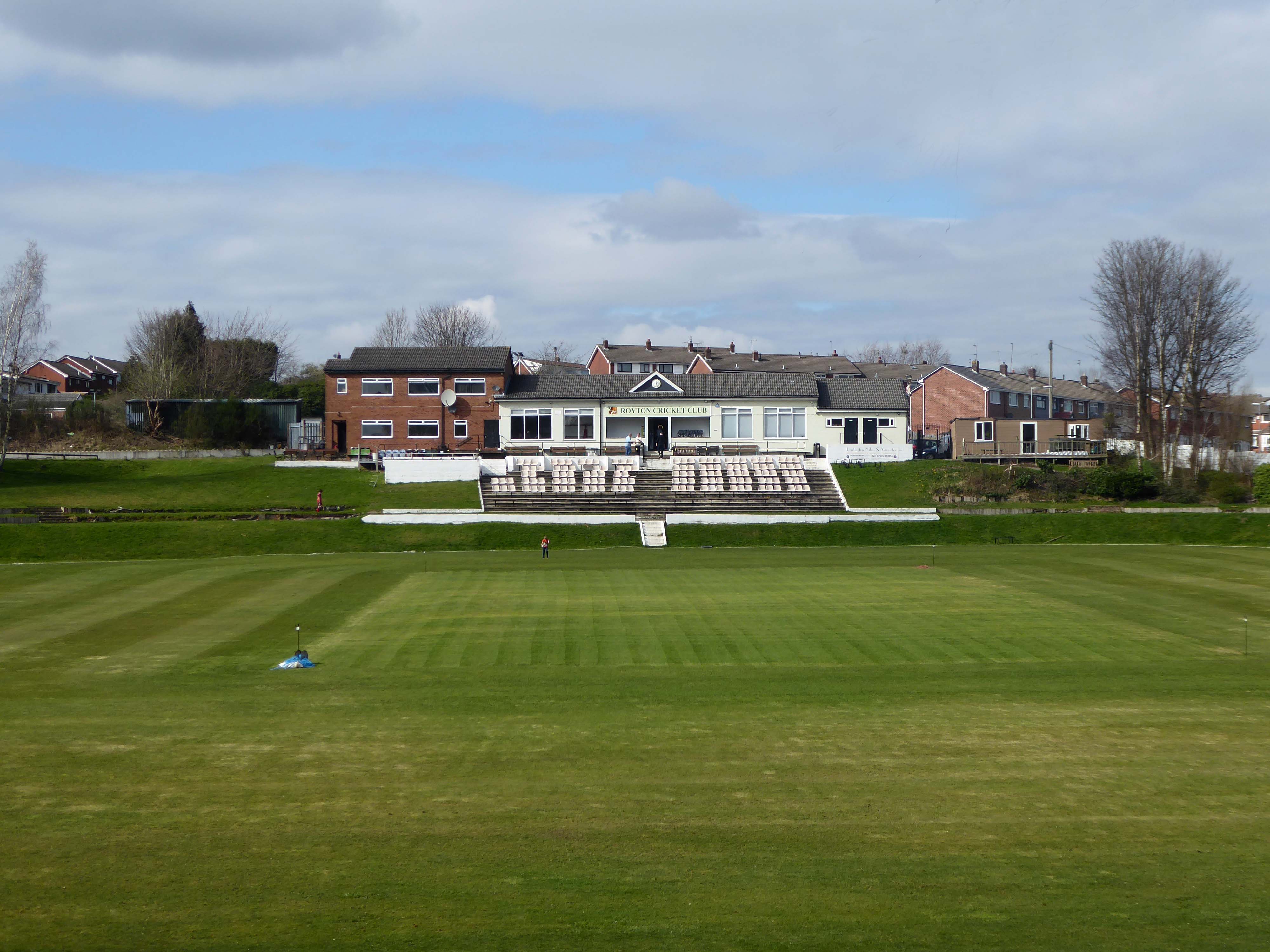
I have very fond memories of visiting with my dad Eddie Marland as he followed Ashton in the Central Lancashire League – both watching cricket and seeing my dad crown green bowling here.
The river has gone underground again.
To be found on Salmon Fields – in pool form.
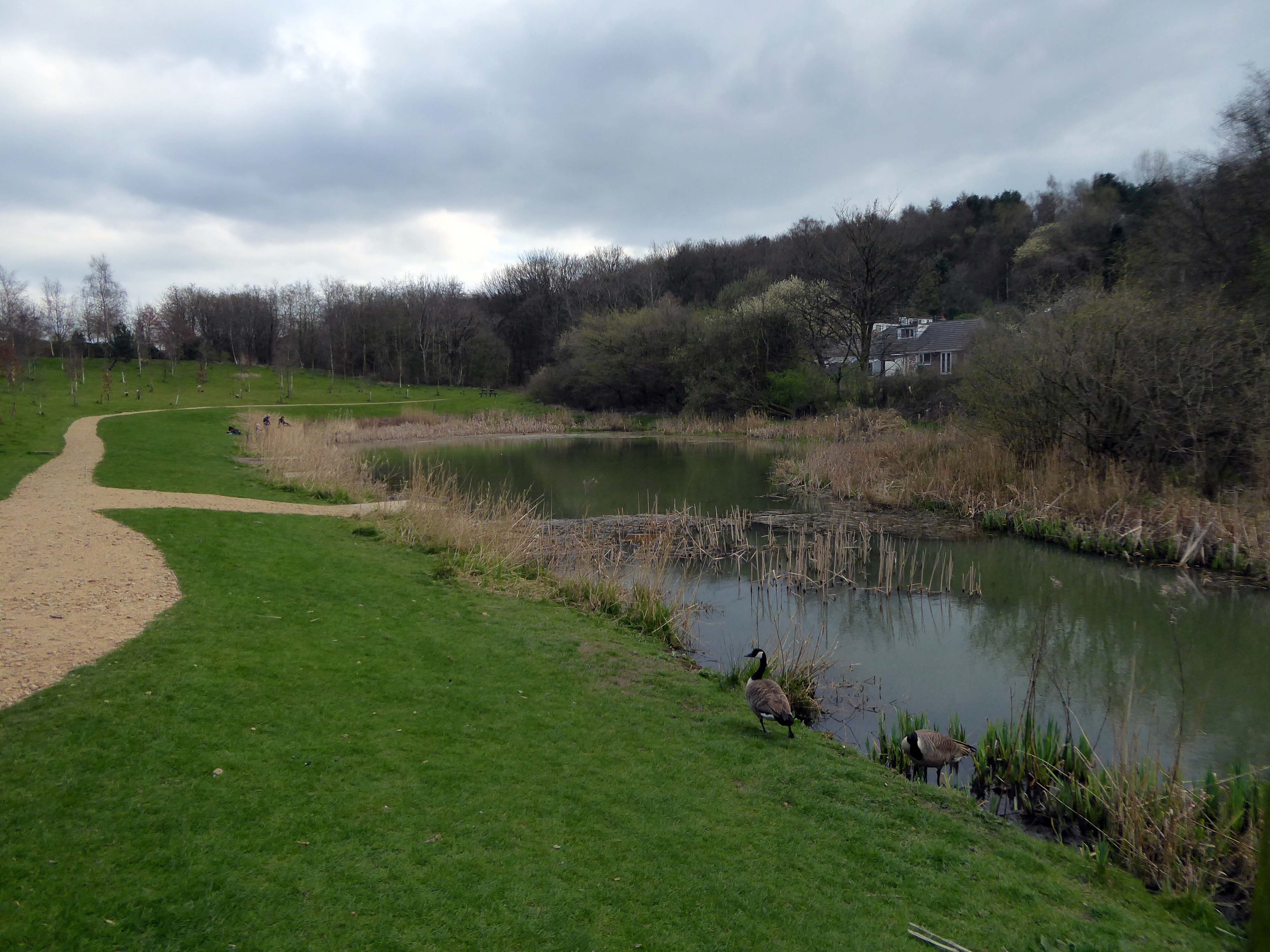
Site of a Life for a Life Memorial Forest
These now full memorial forests were originally donated to Life for a Life by Oldham Metropolitan Borough Council. Salmon Fields meadow sits adjacent to a lovely pond that is used regularly by fishing enthusiasts and is frequently used as a breeding site for Canadian Geese.
Life for a Life planting areas are natural environments where we encourage wildlife and plantlife to flourish, as such additional items should not be added to the tree or the space around it, especially as they can cause damage to the tree.
Please be aware that any prohibited items left on or around memorial trees will be removed.
Although these sites are now full to the planting of new memorial trees if you have an existing memorial tree dedicated you can still upgrade memorial plaques, add additional ashes to a memorial tree, order memorial keepsakes etc.
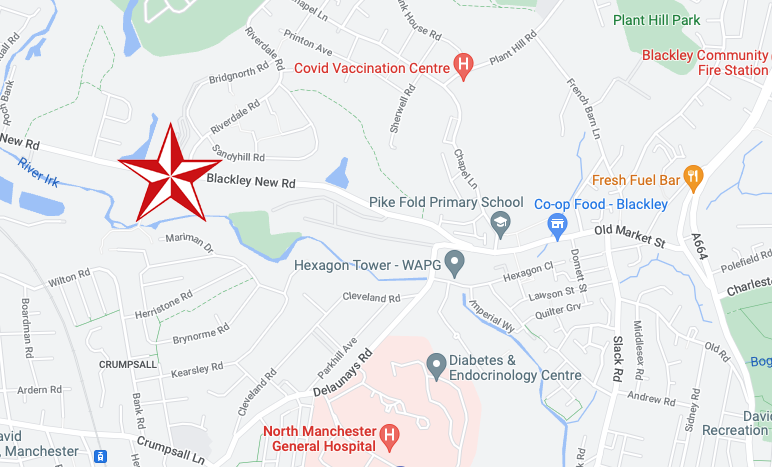
Sandyhill Court Sandyhill Rd Manchester M9 8JS
Almost high on a hill stands a lonely tower block.
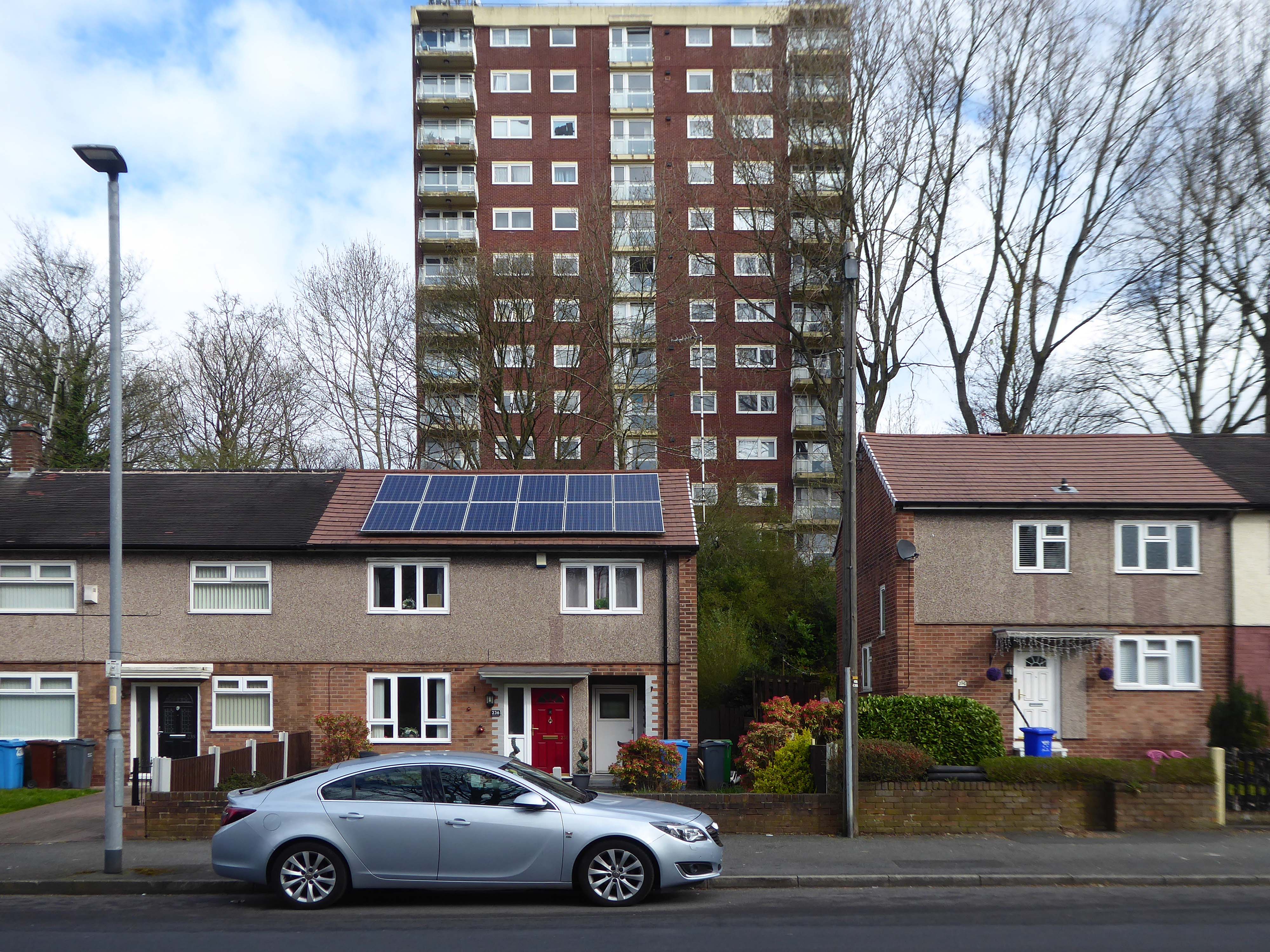
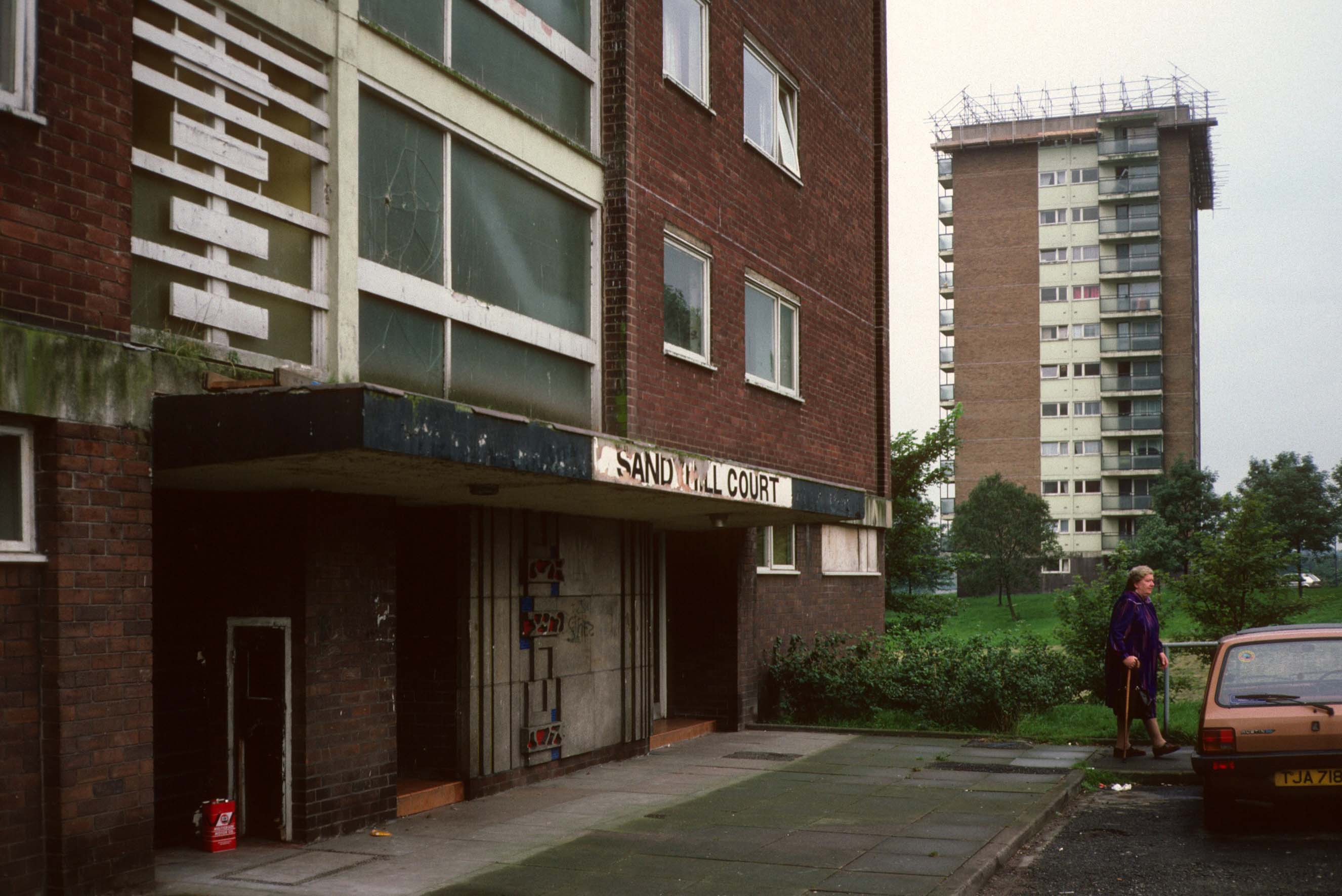
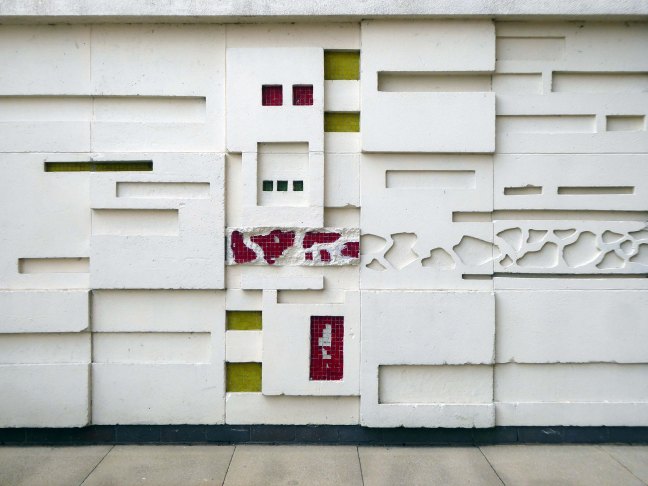
Sandyhill Court – Stands on the corner of Riverdale Road and Sandyhill Road and is still a local authority block.
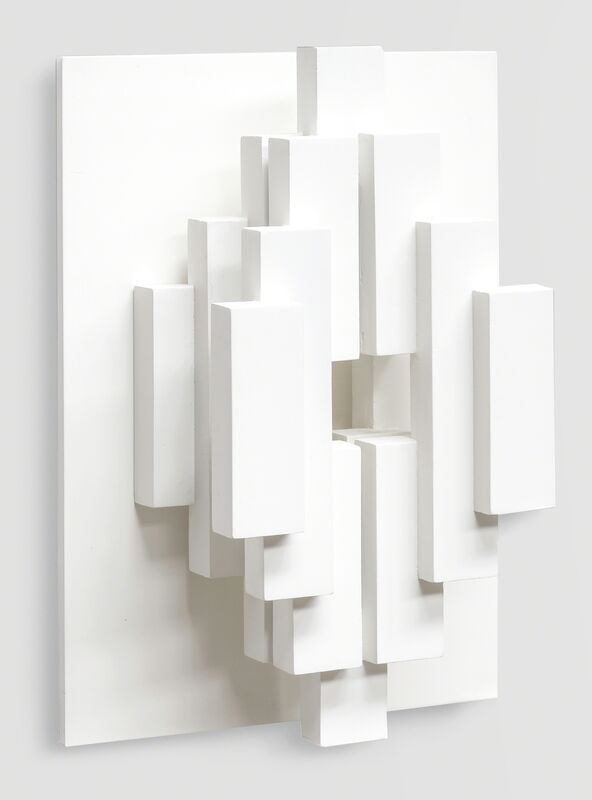
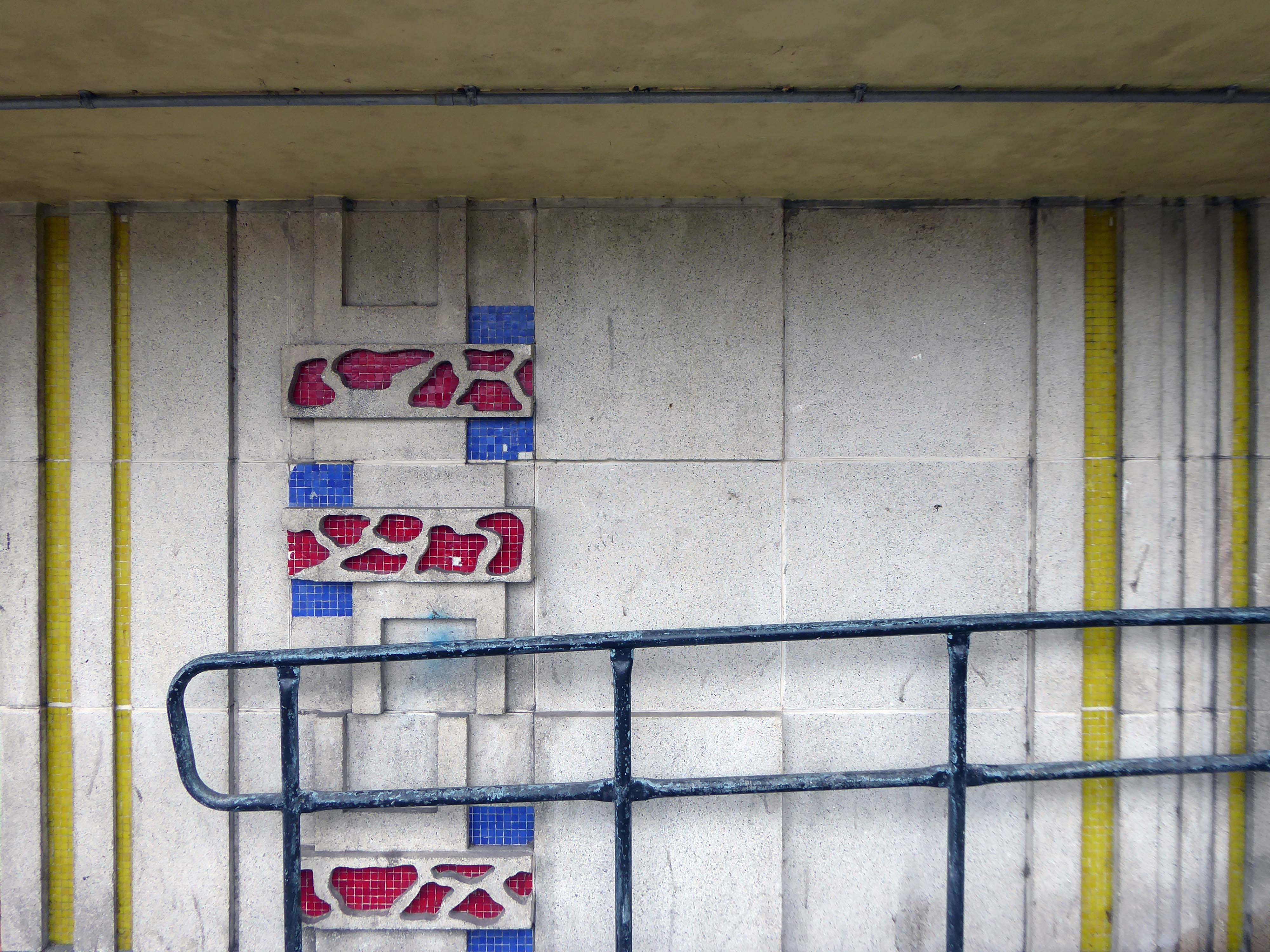
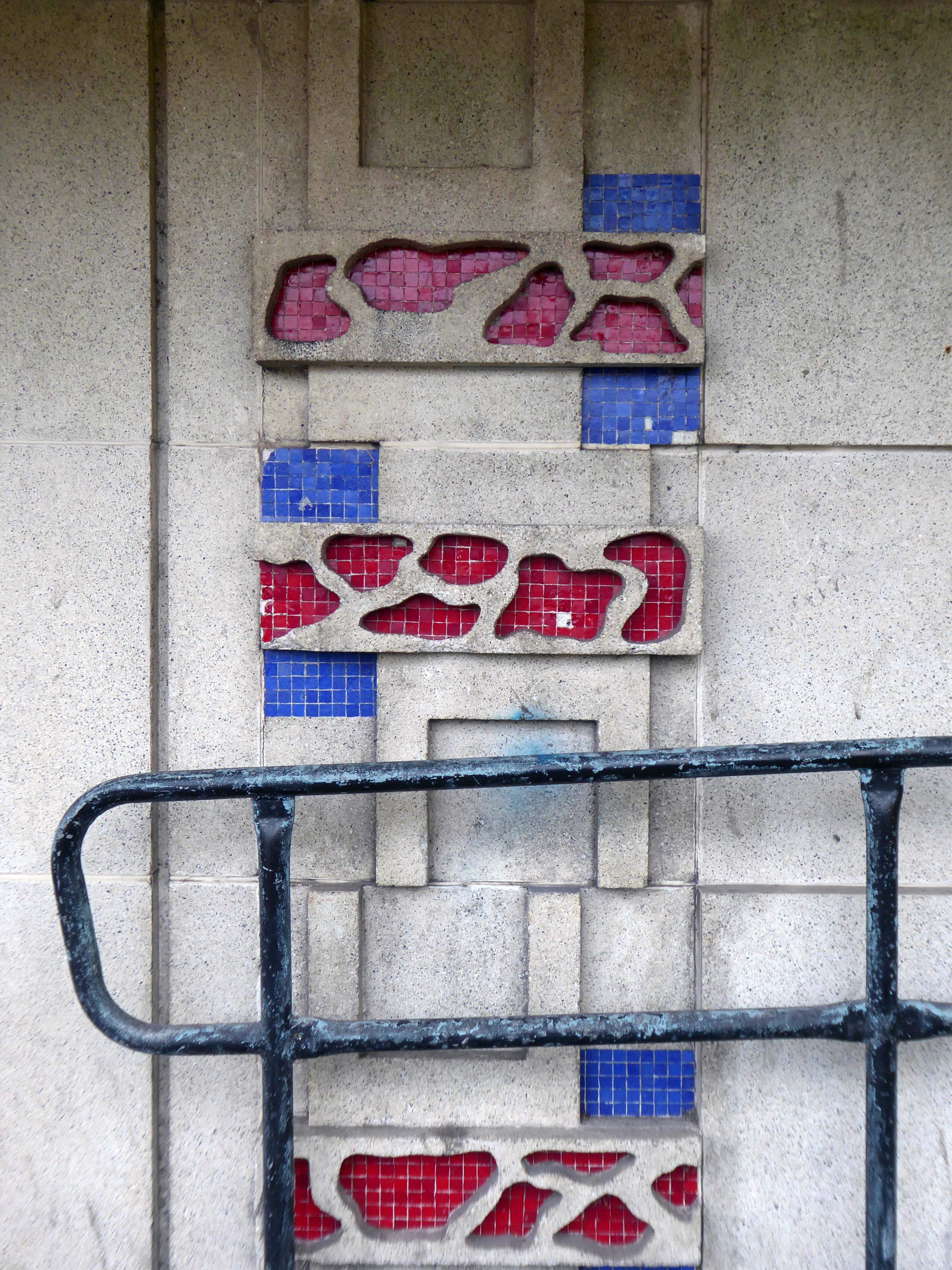
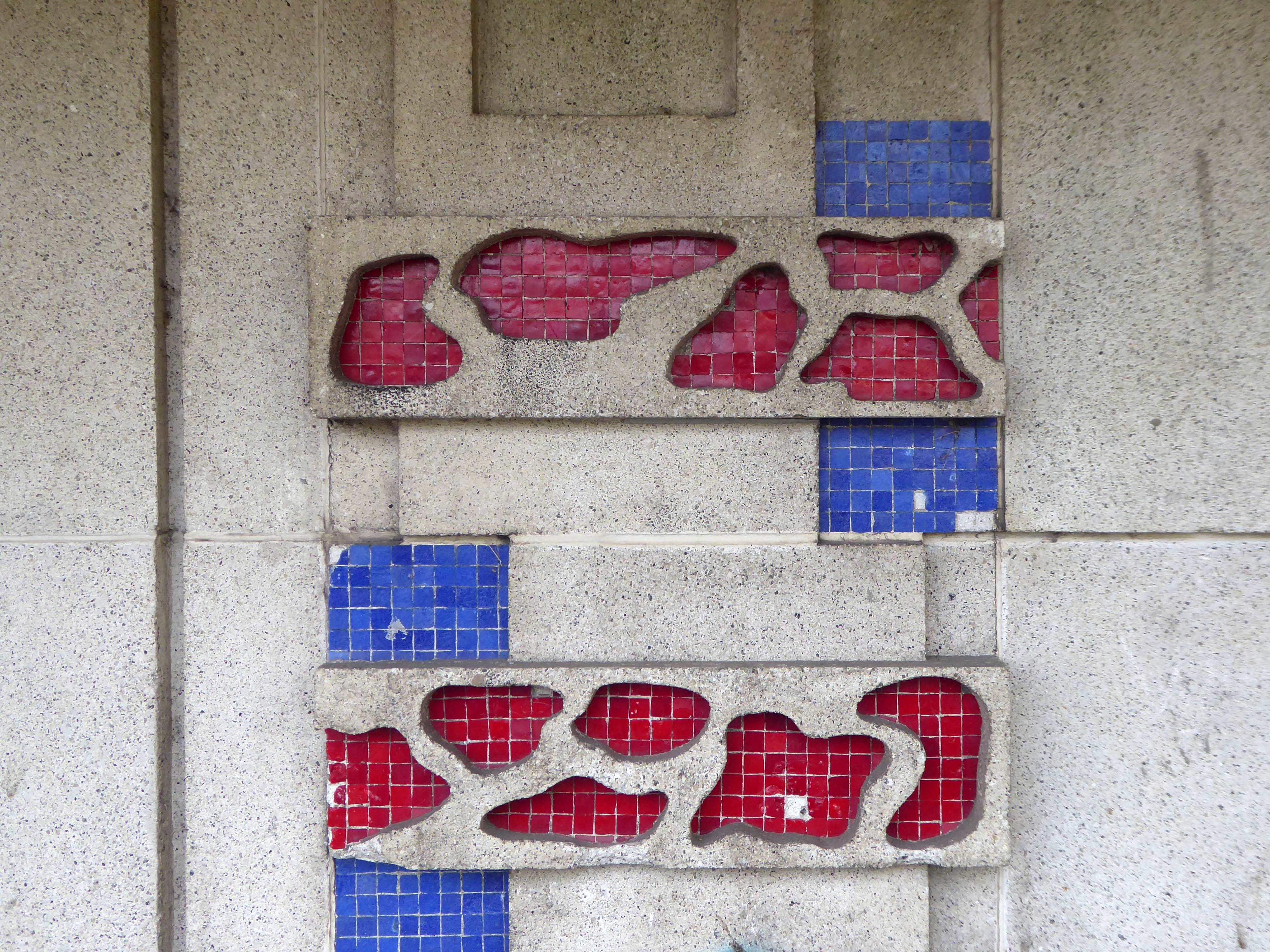
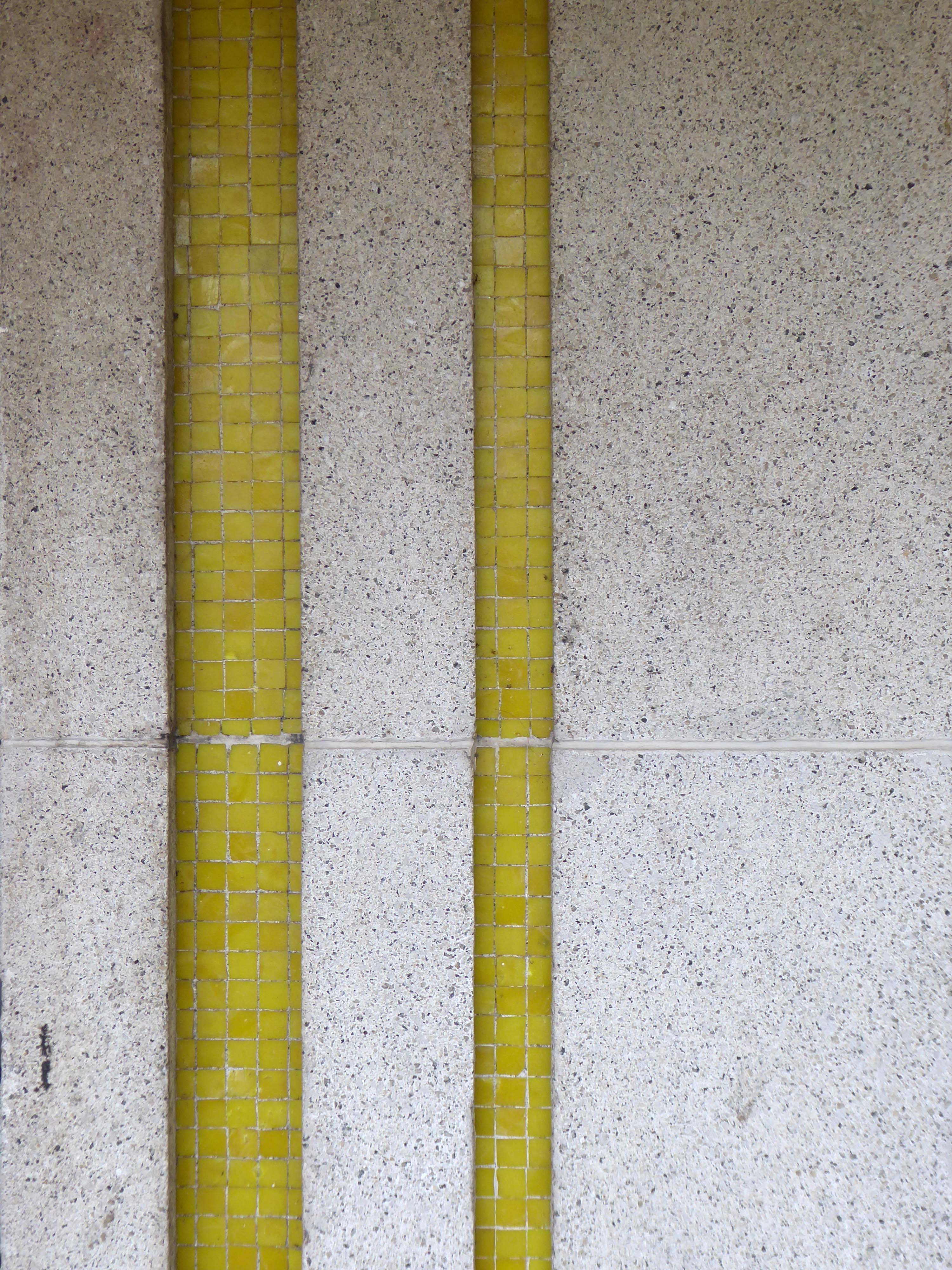
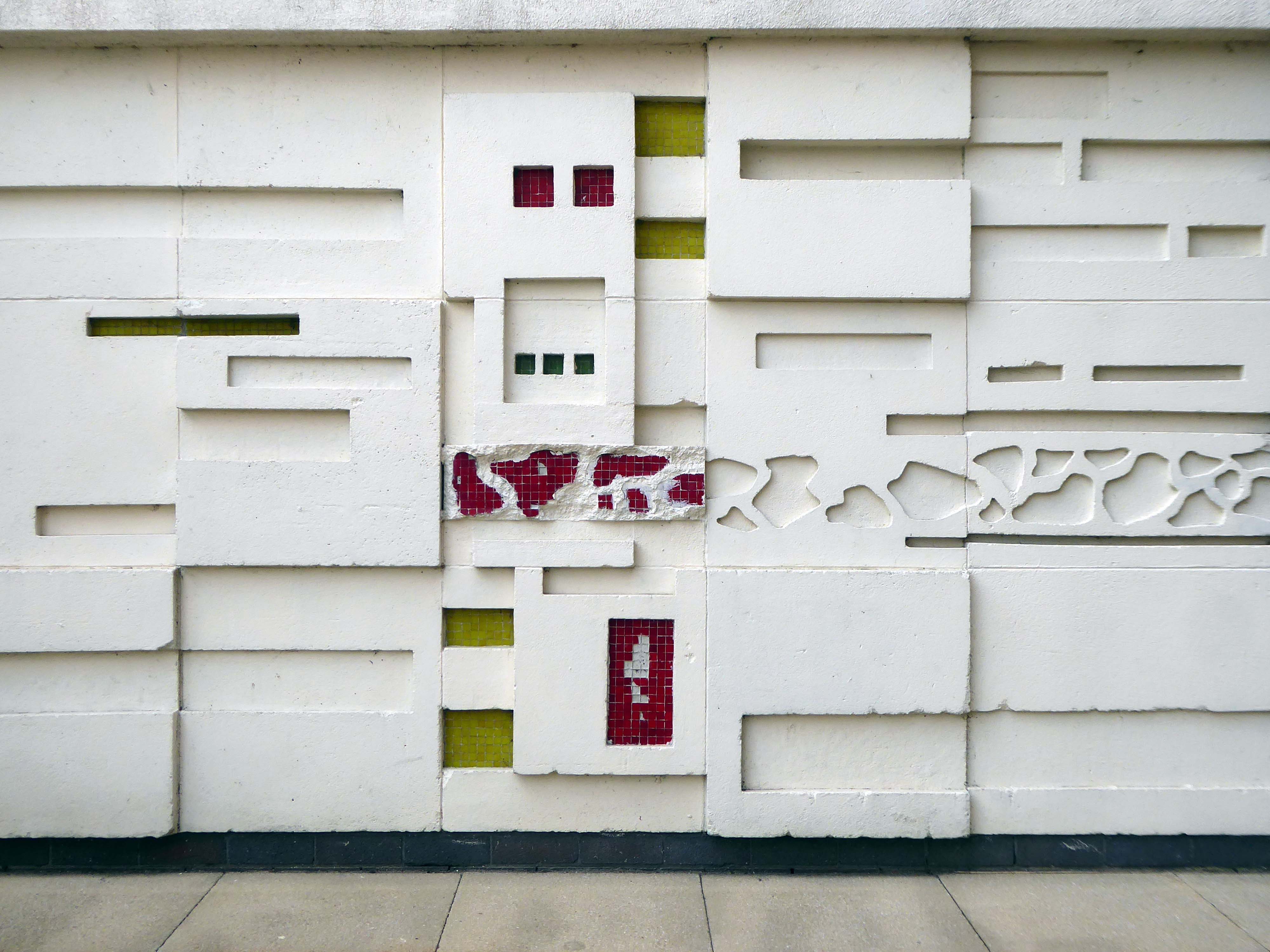
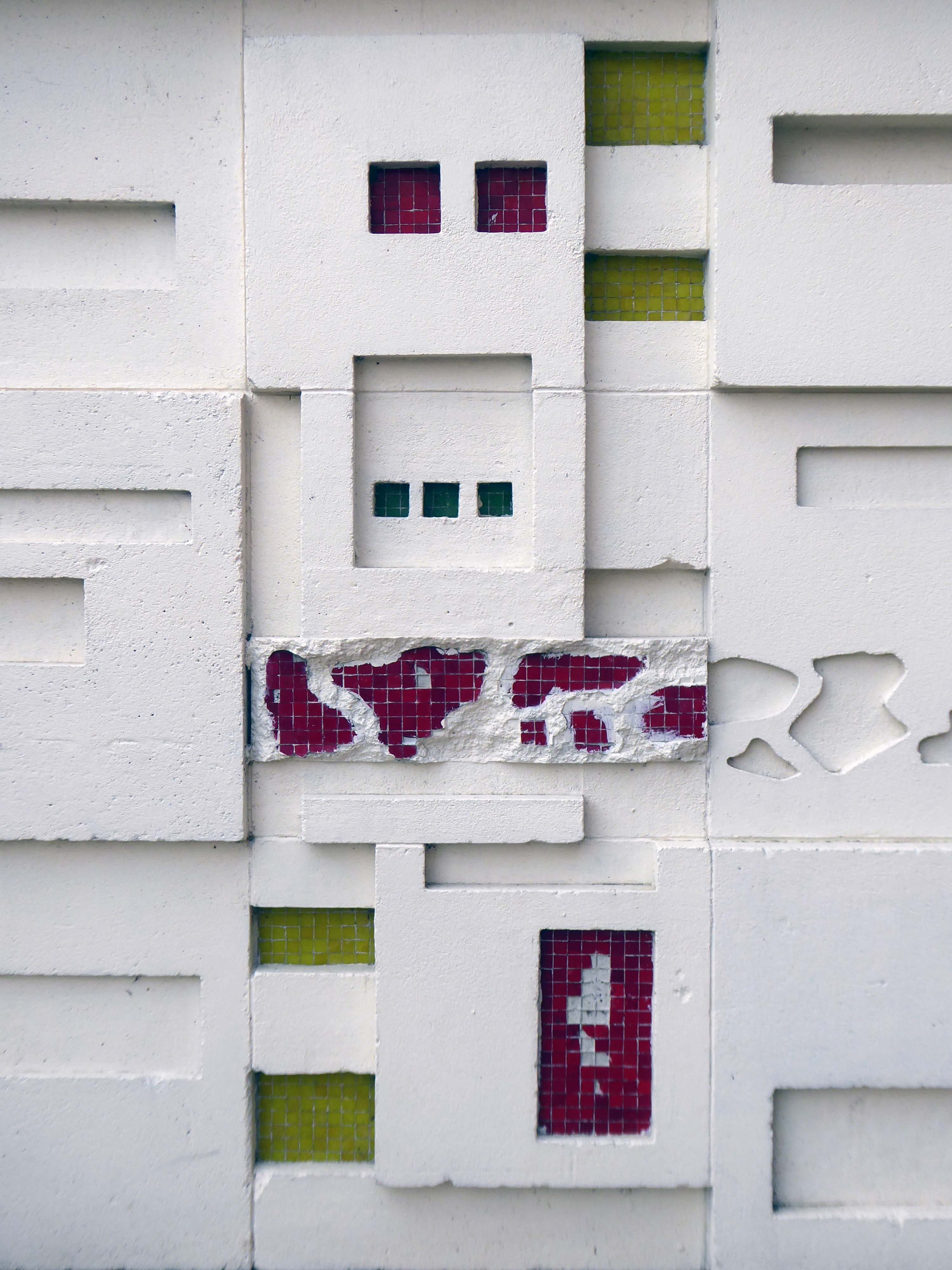
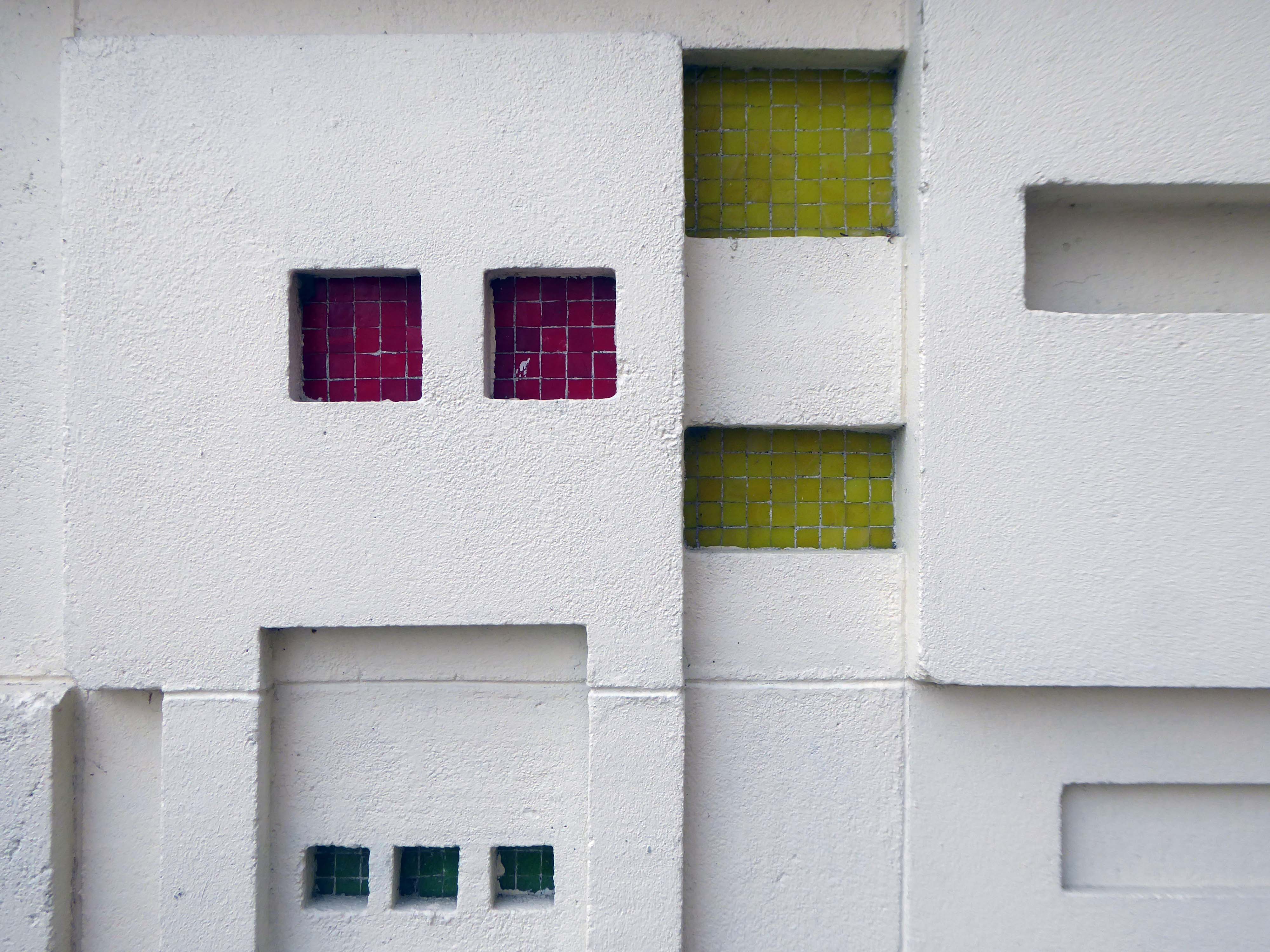
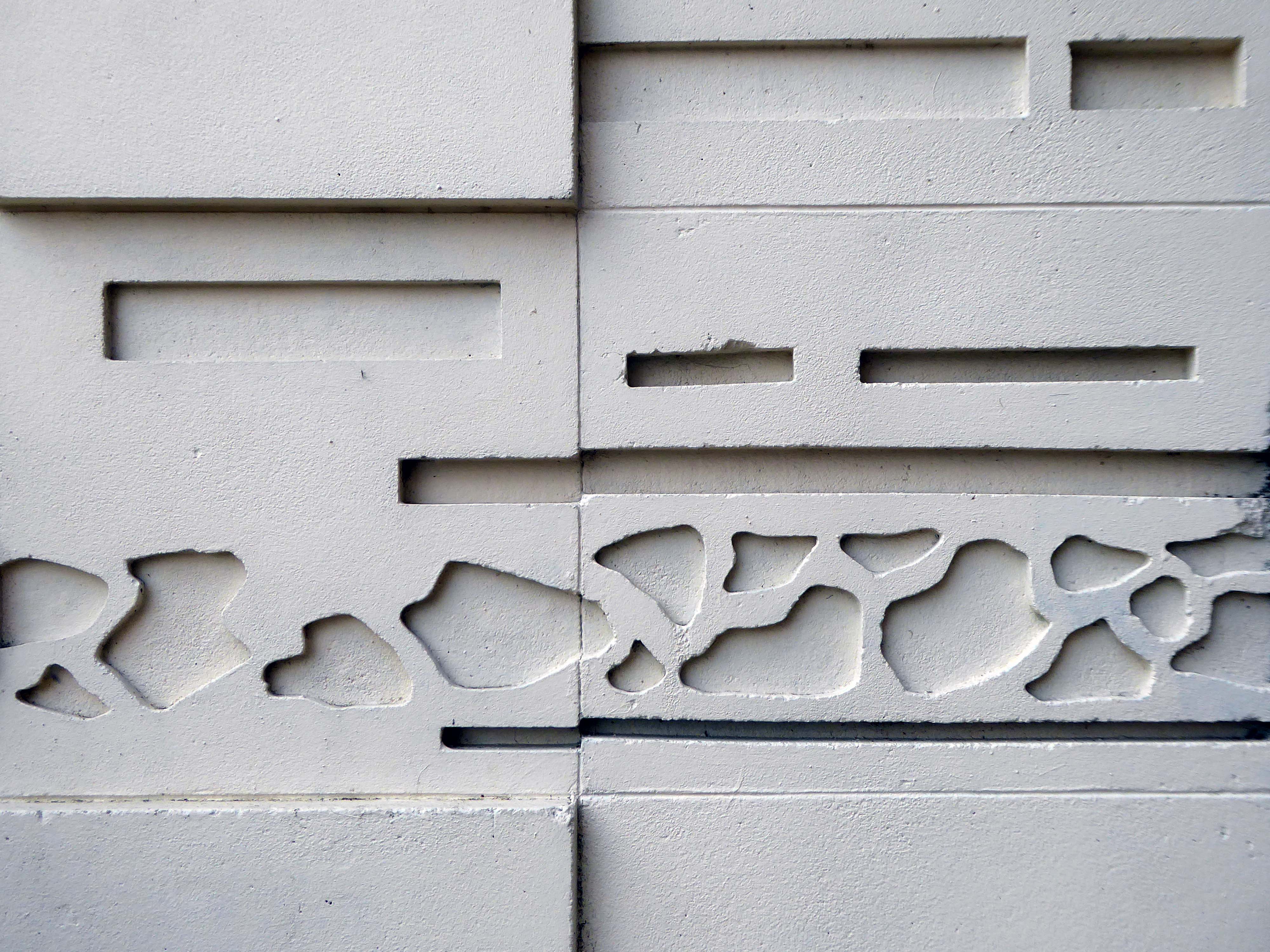
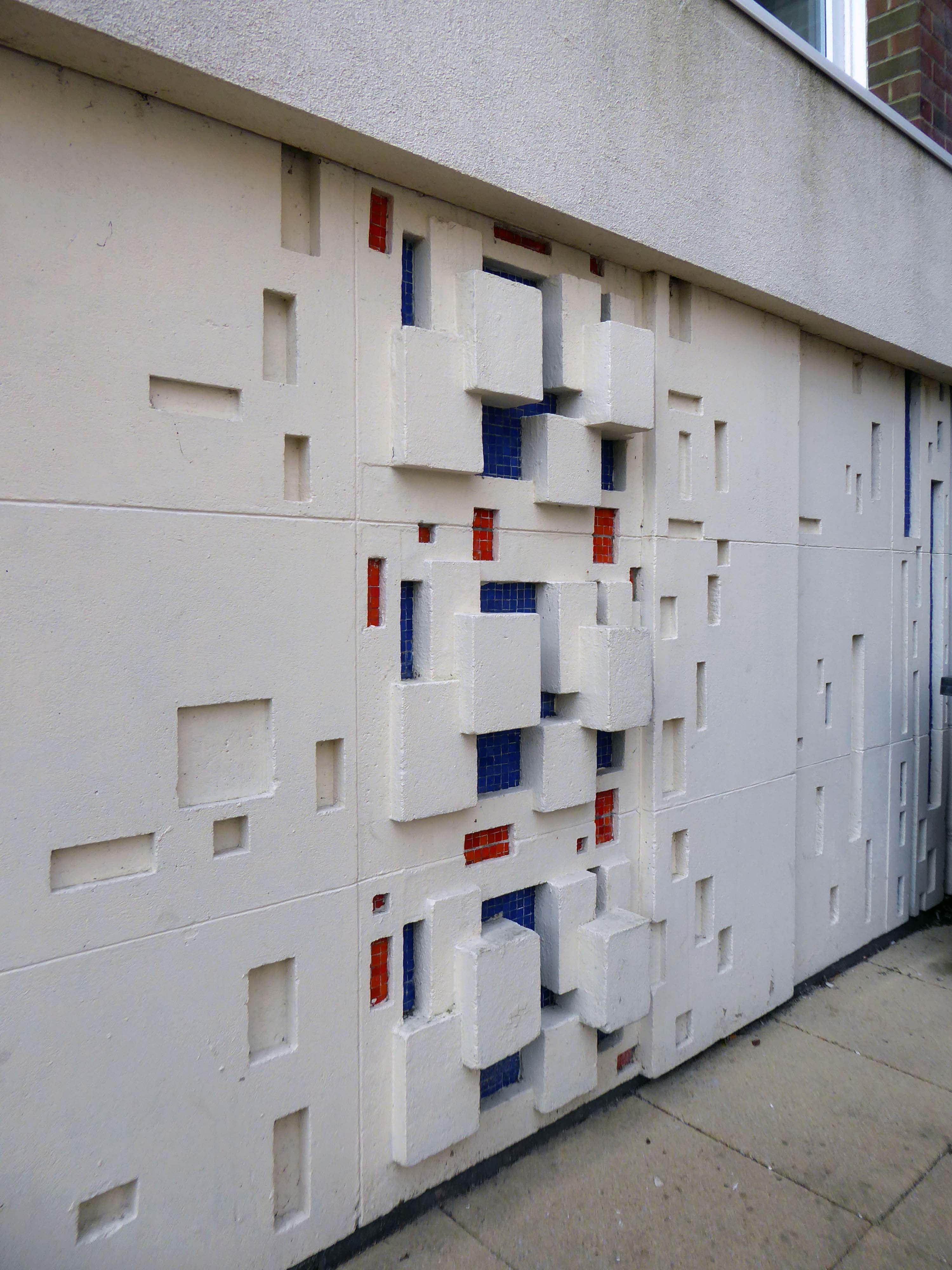
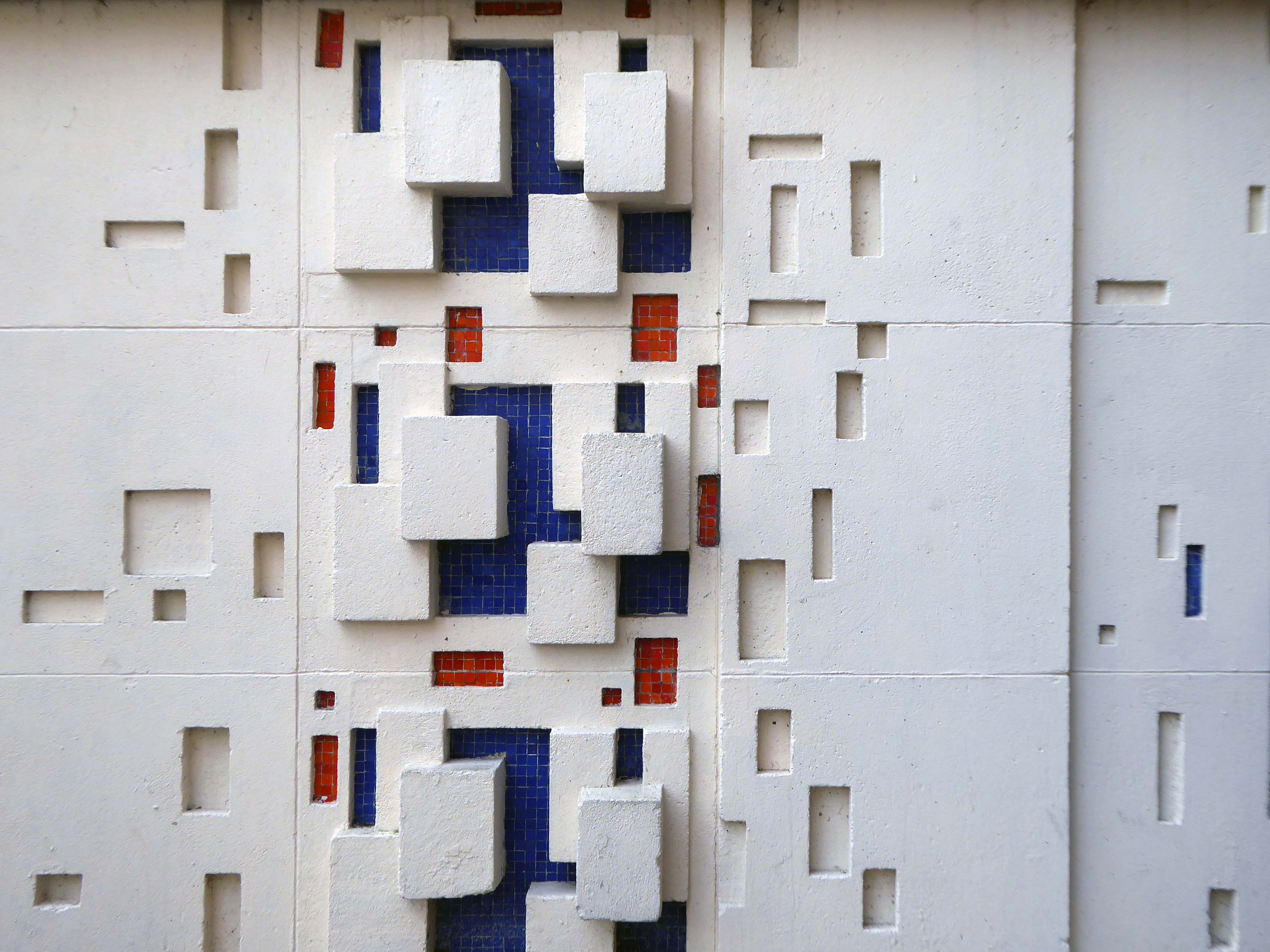
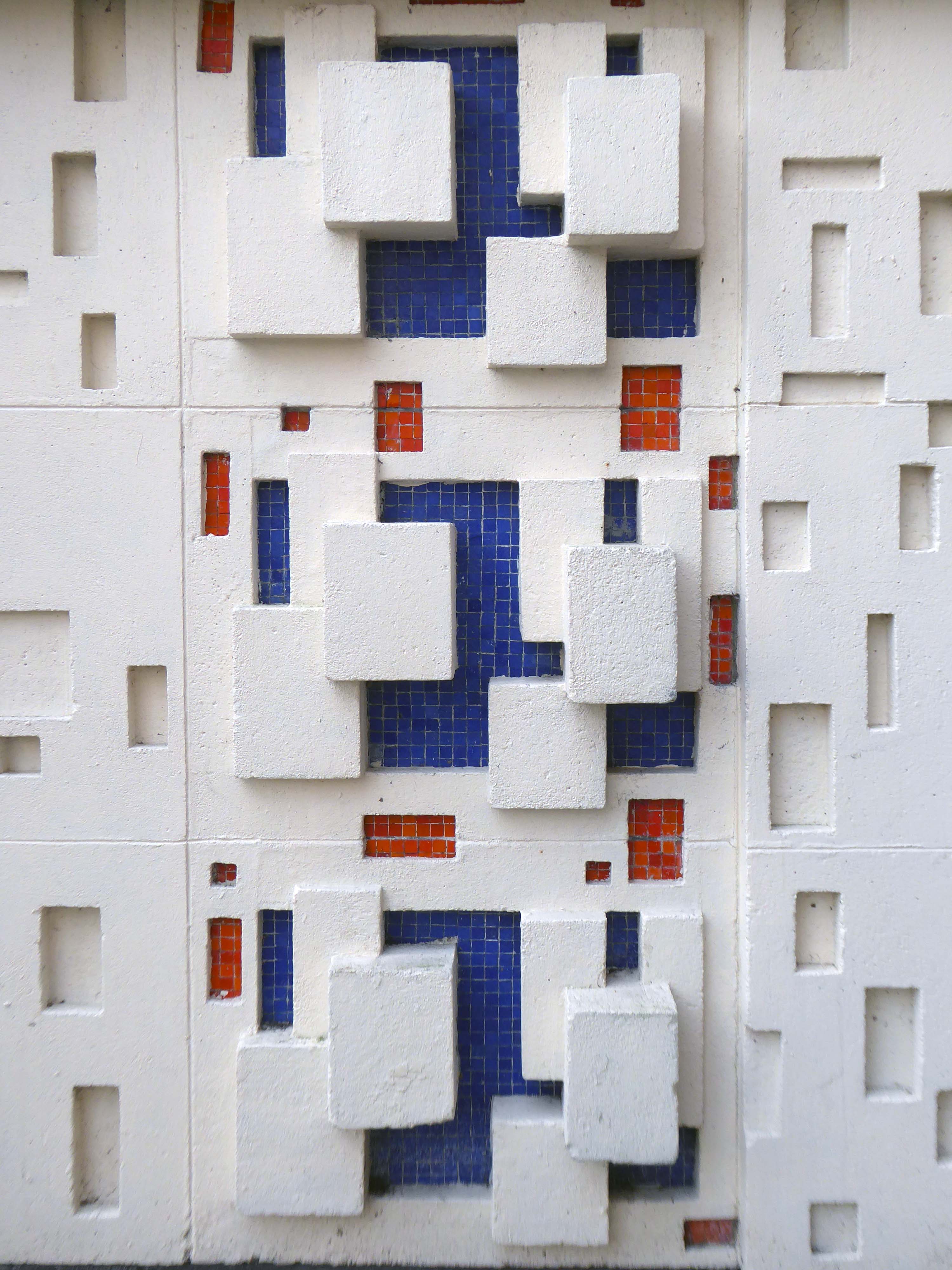
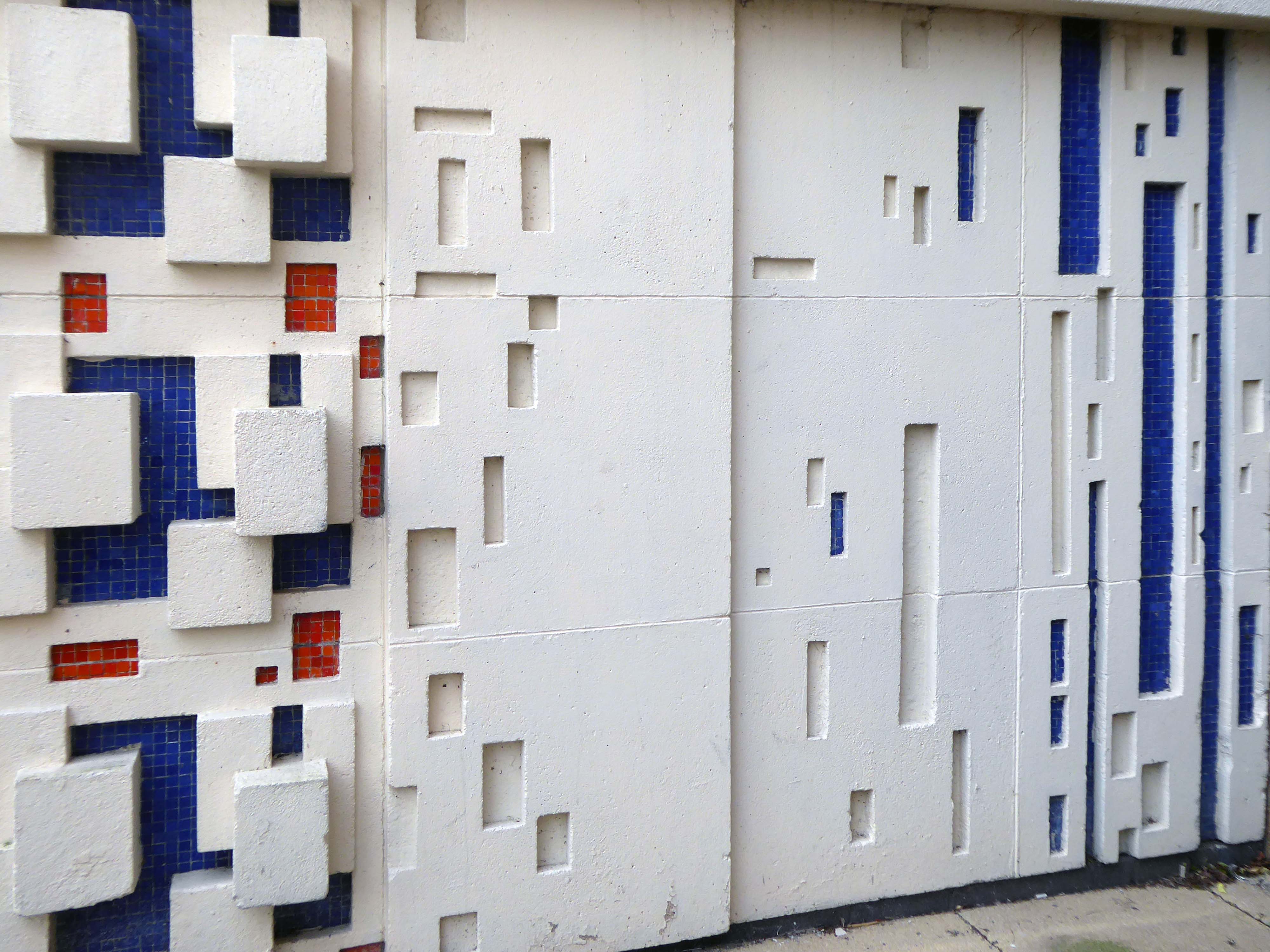
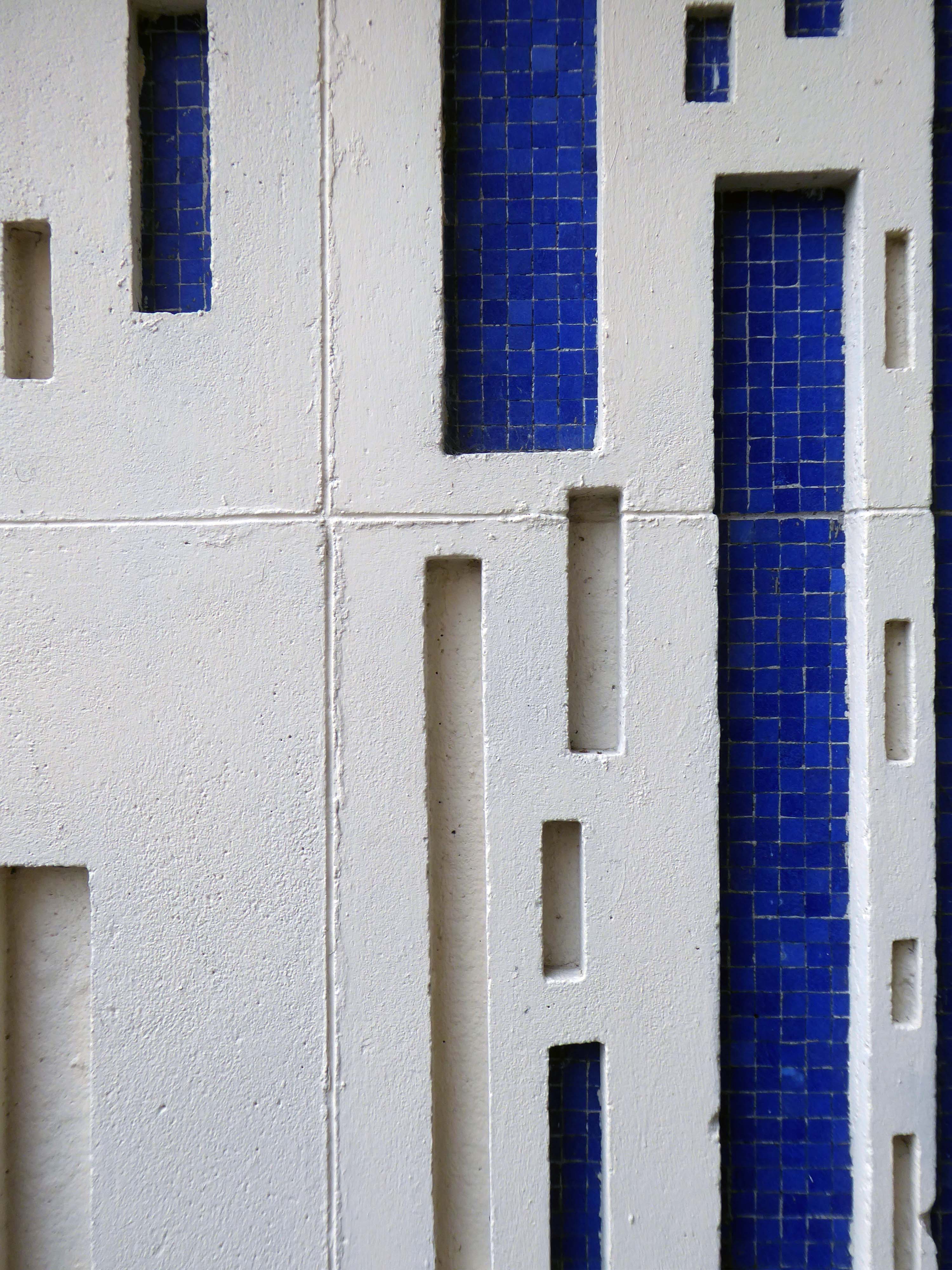
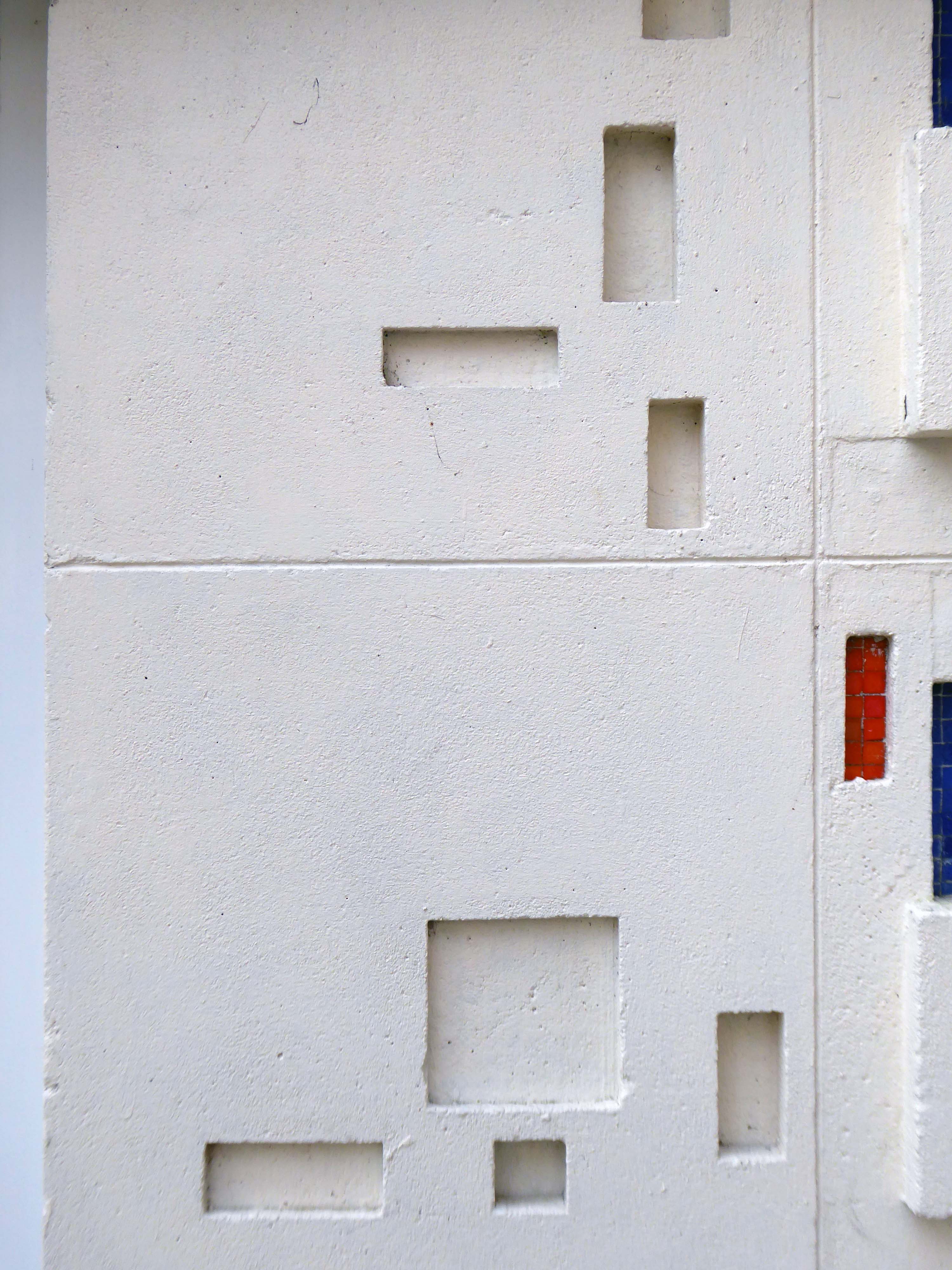
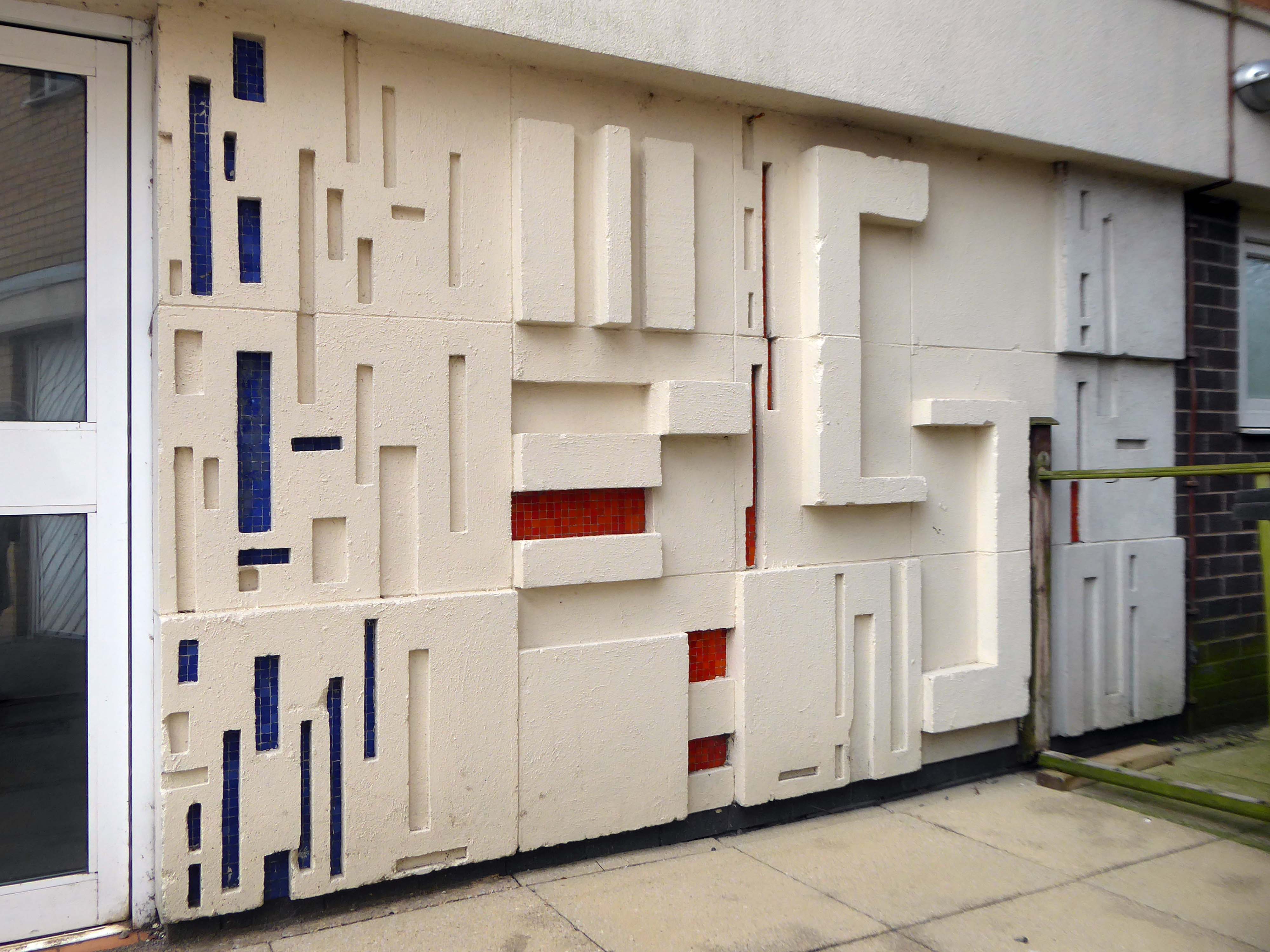
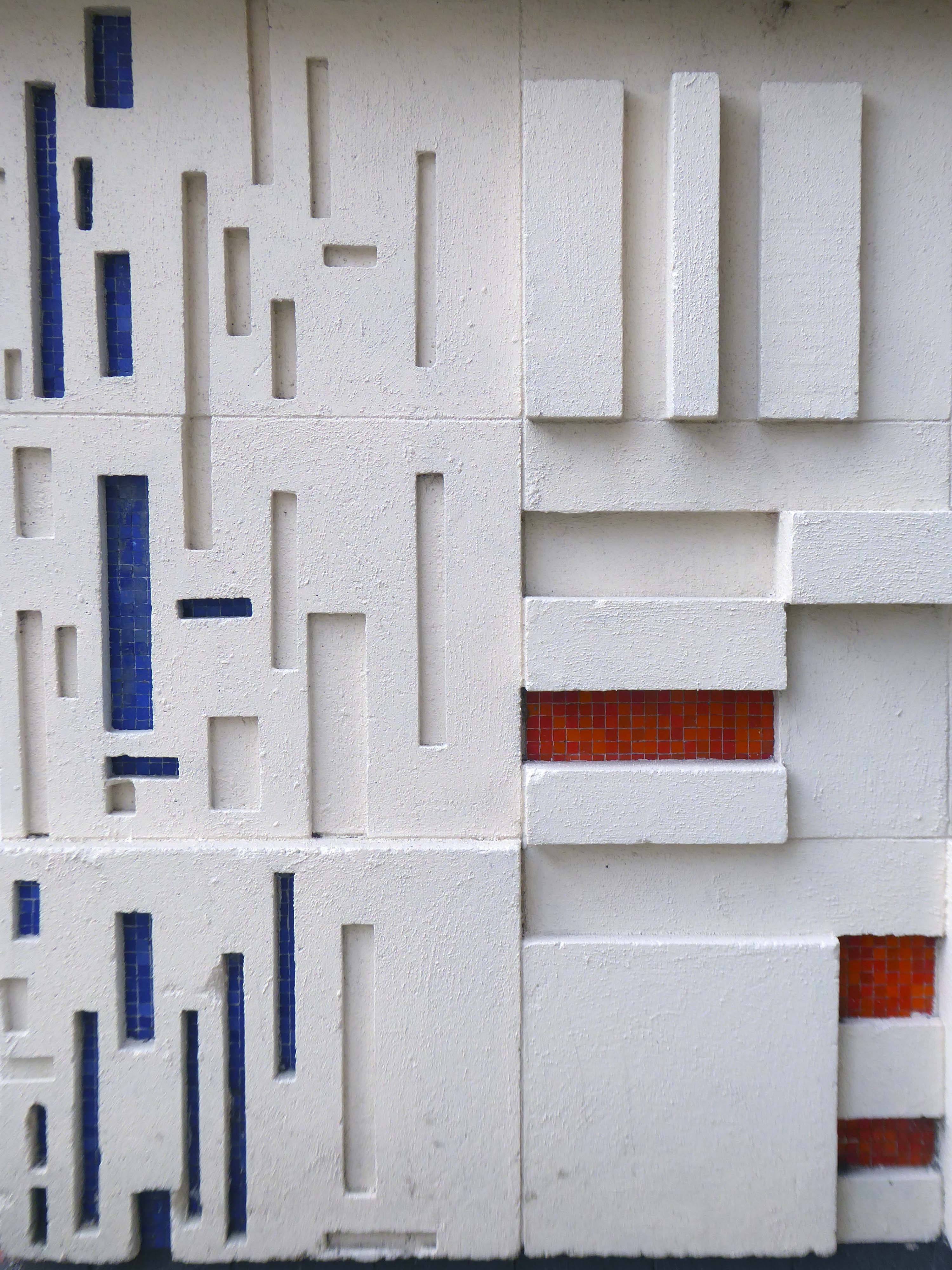
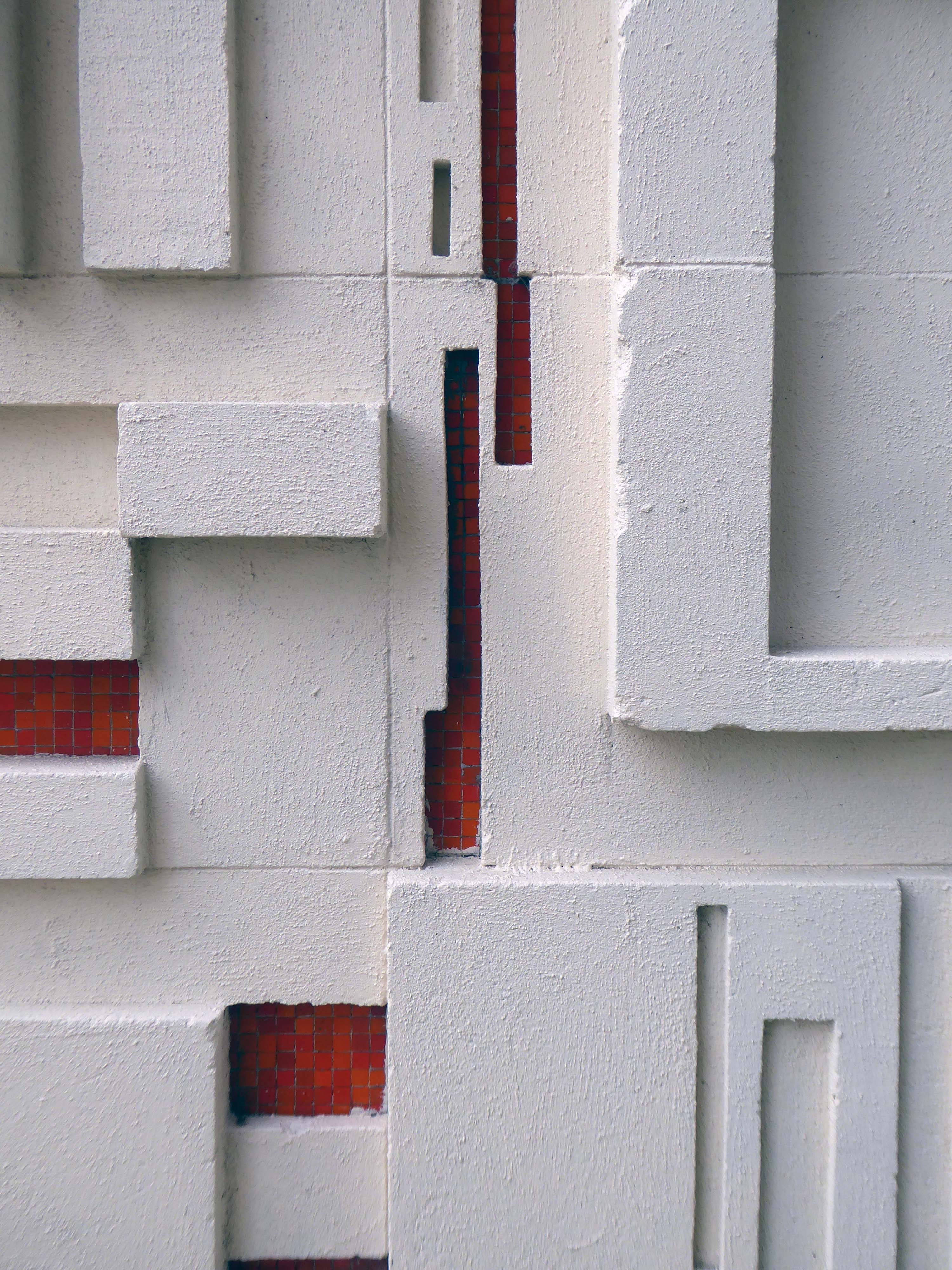
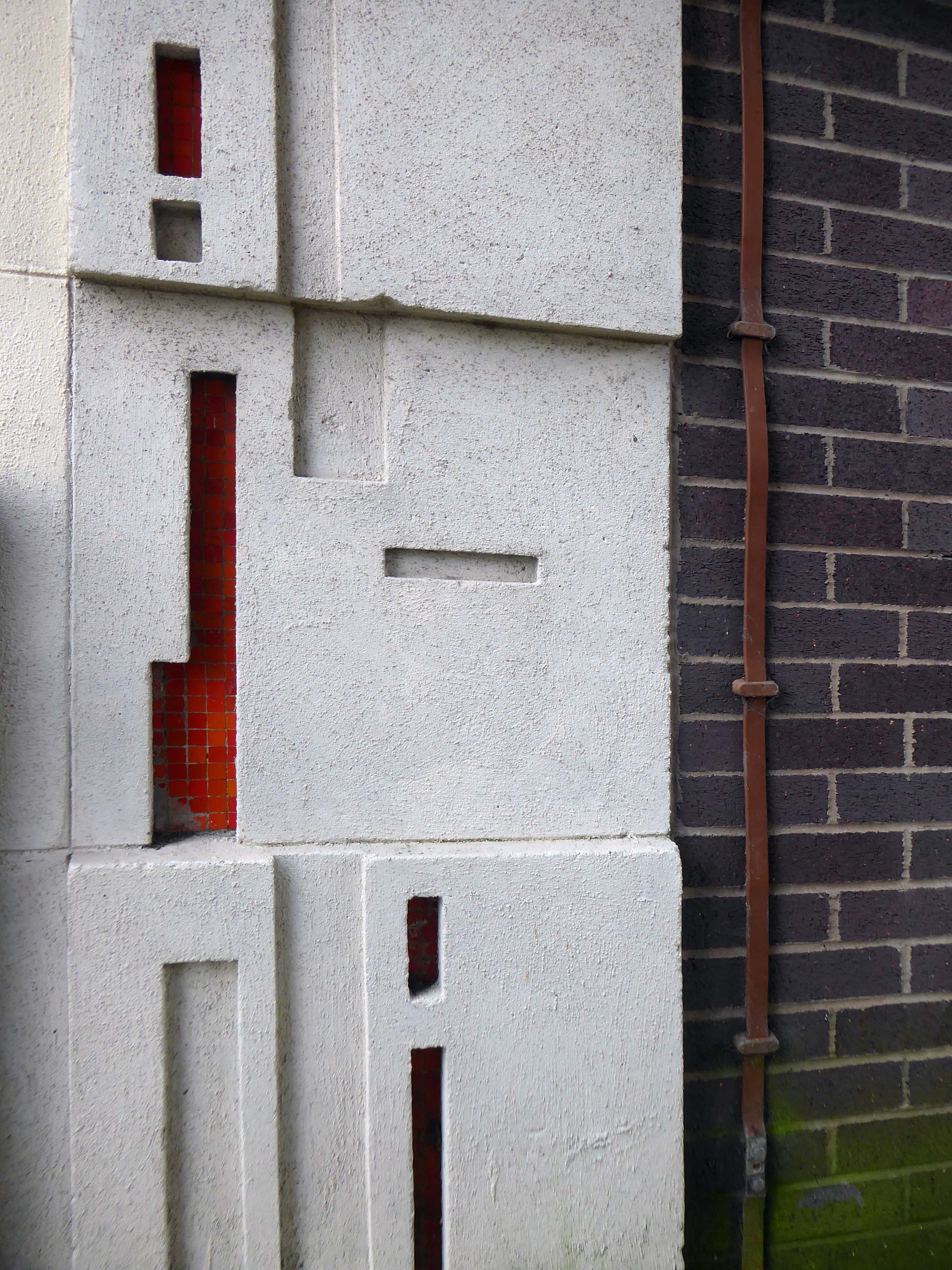
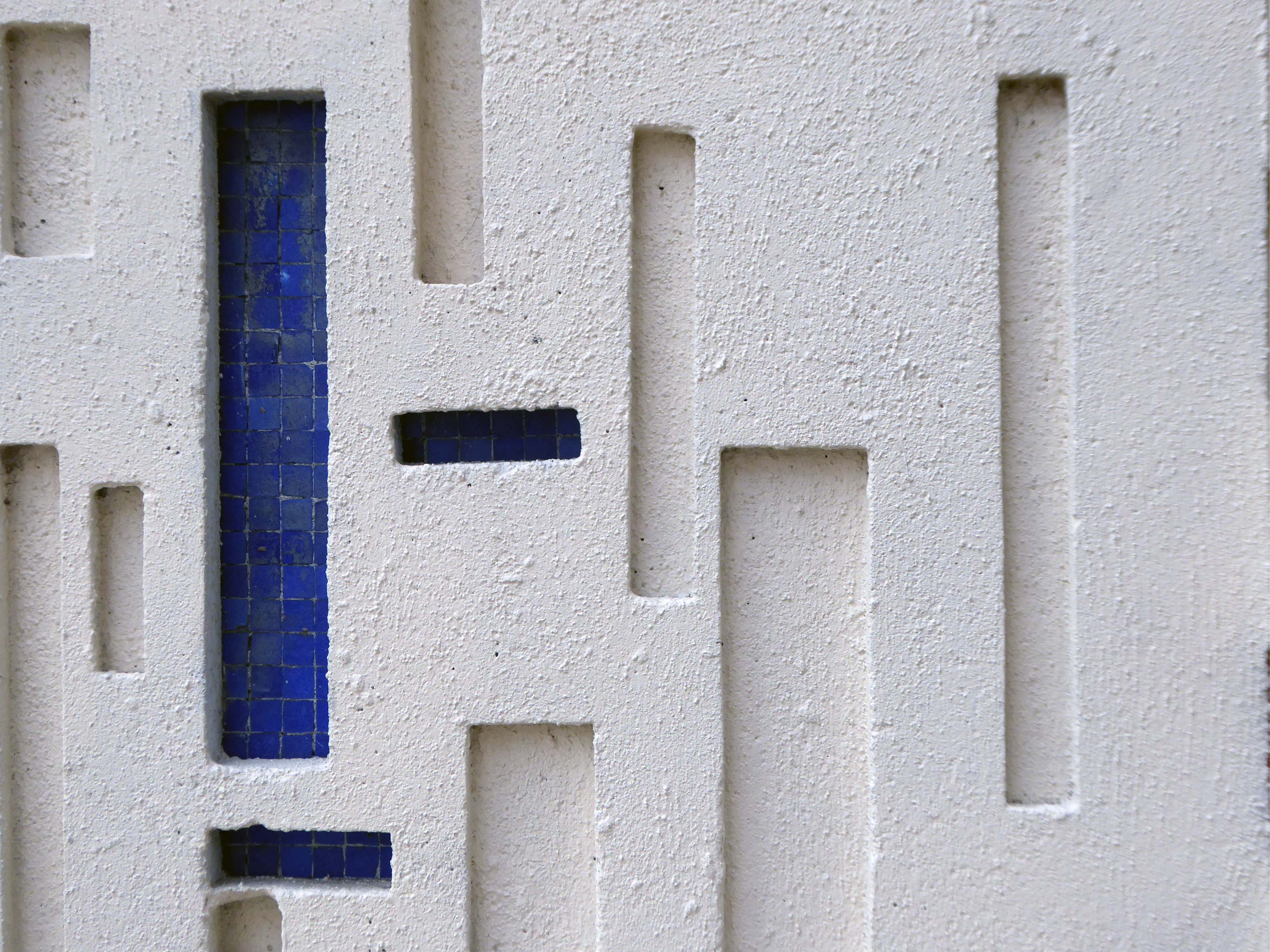
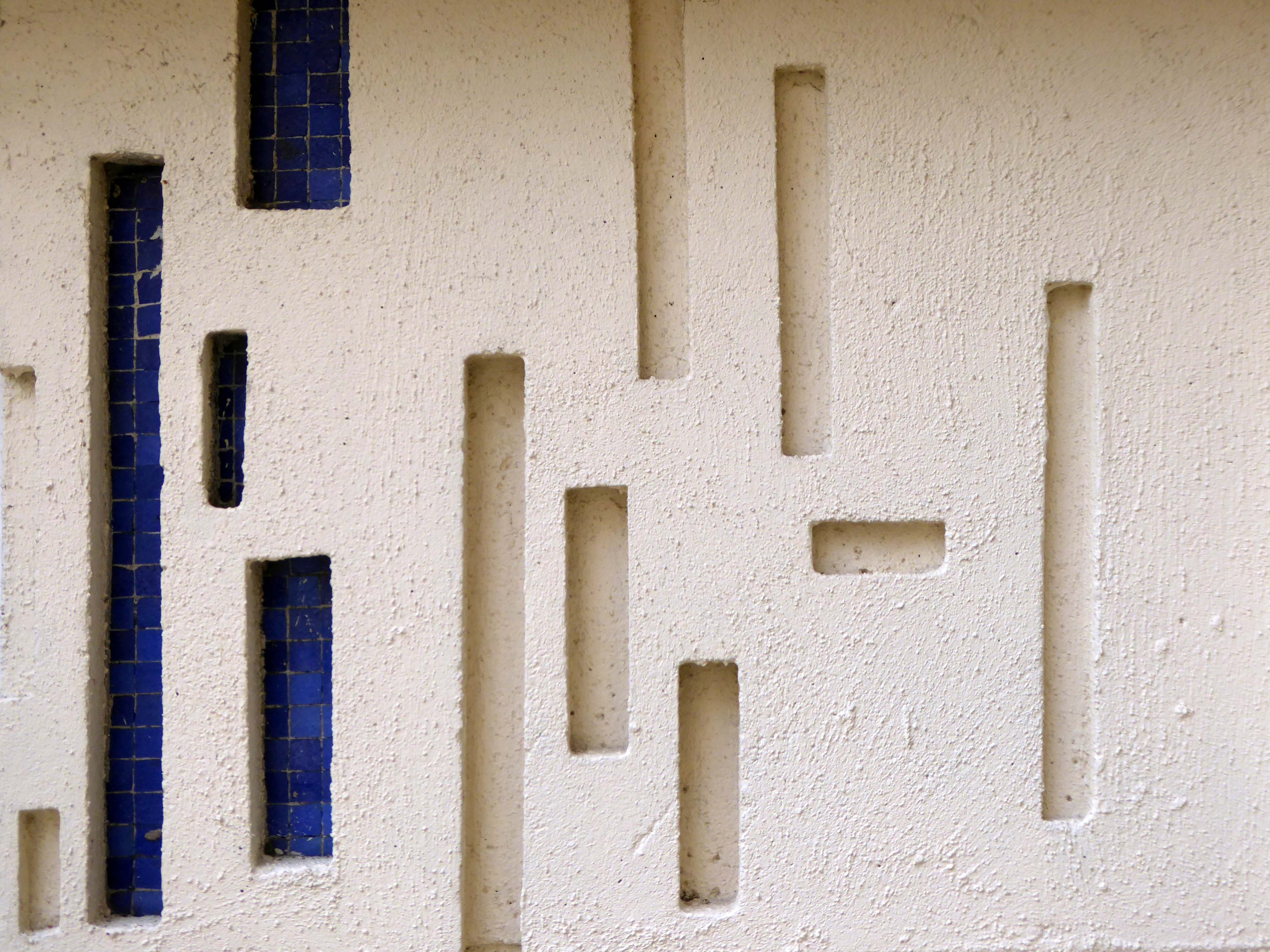
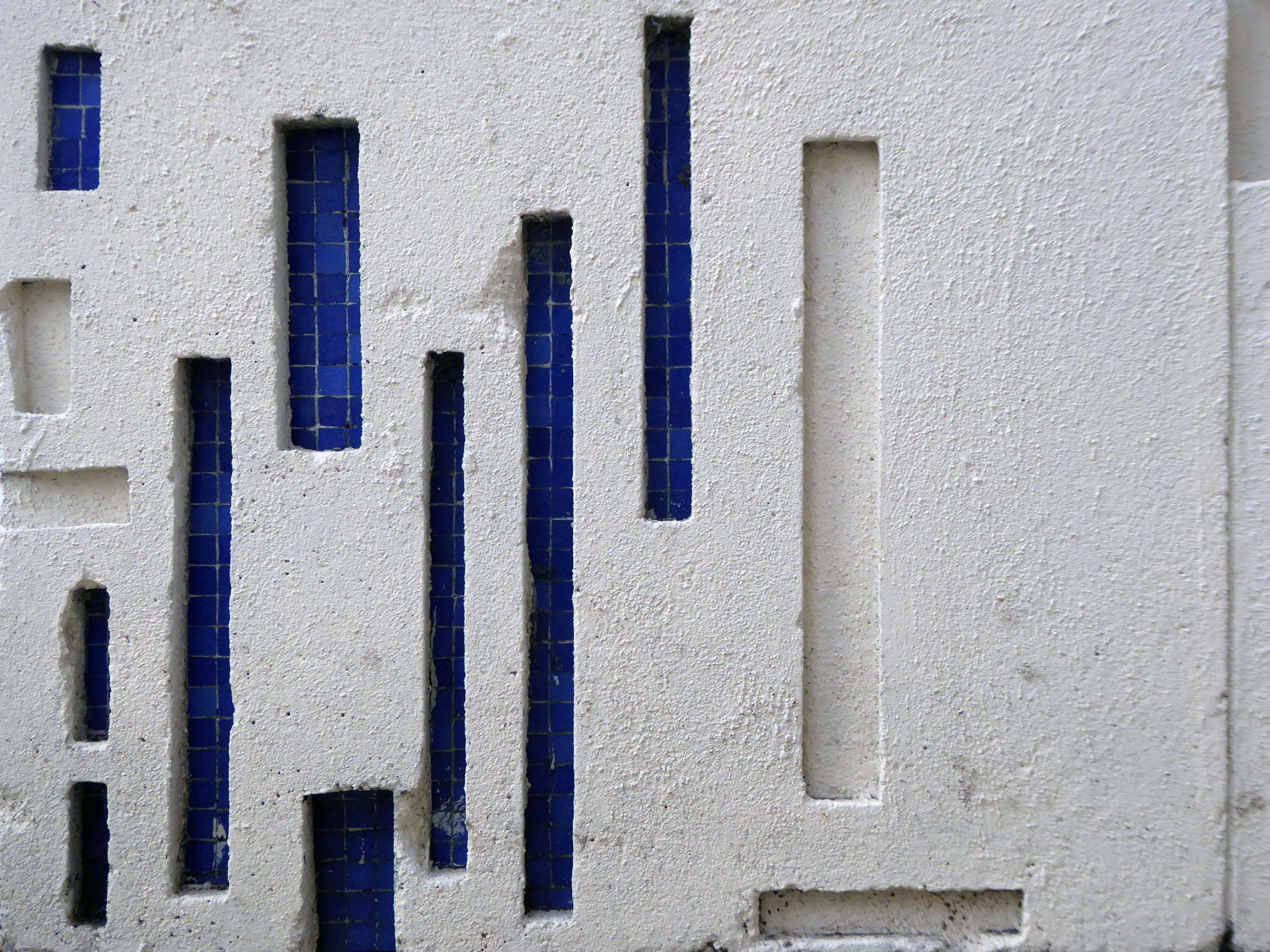
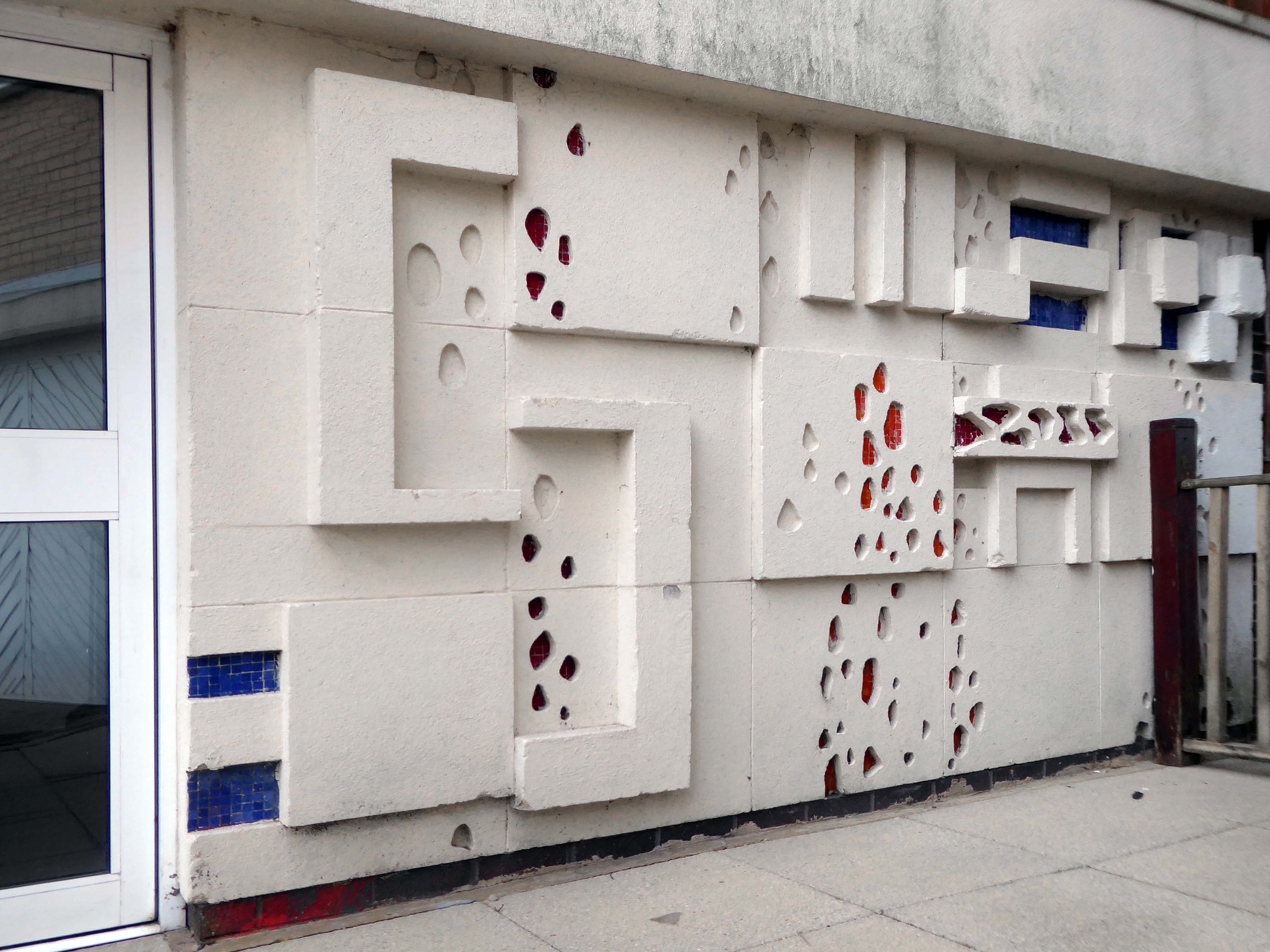
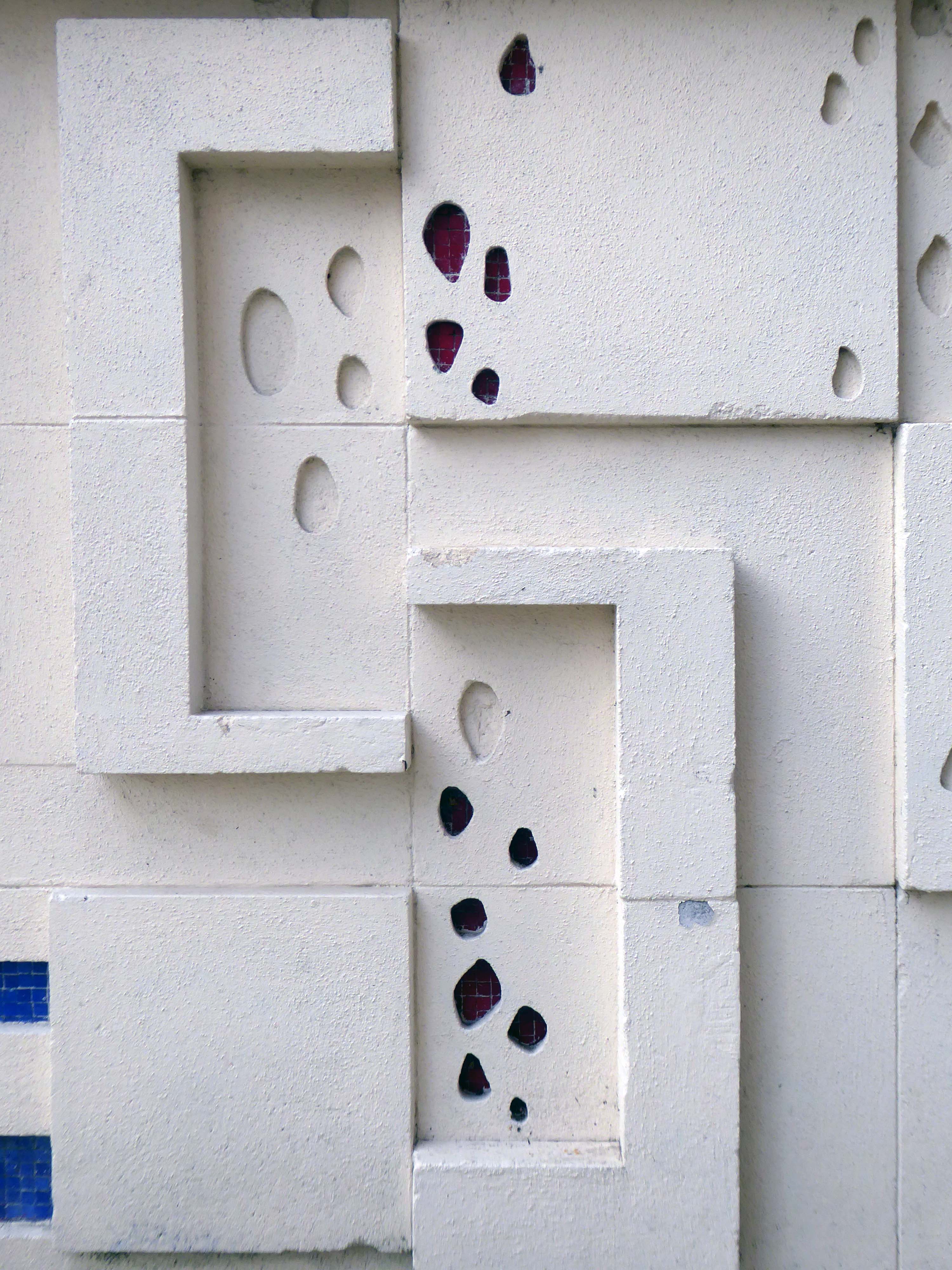
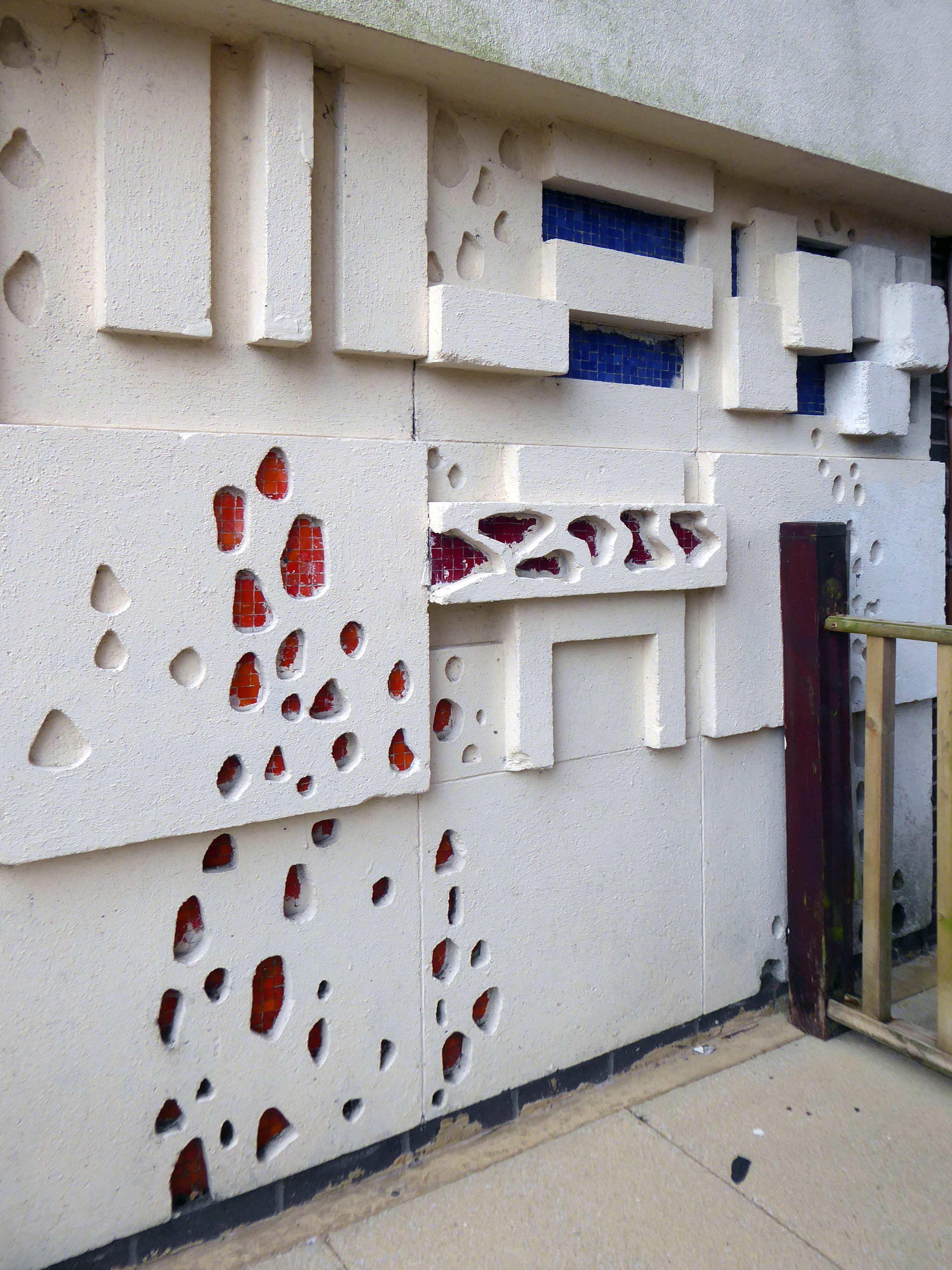
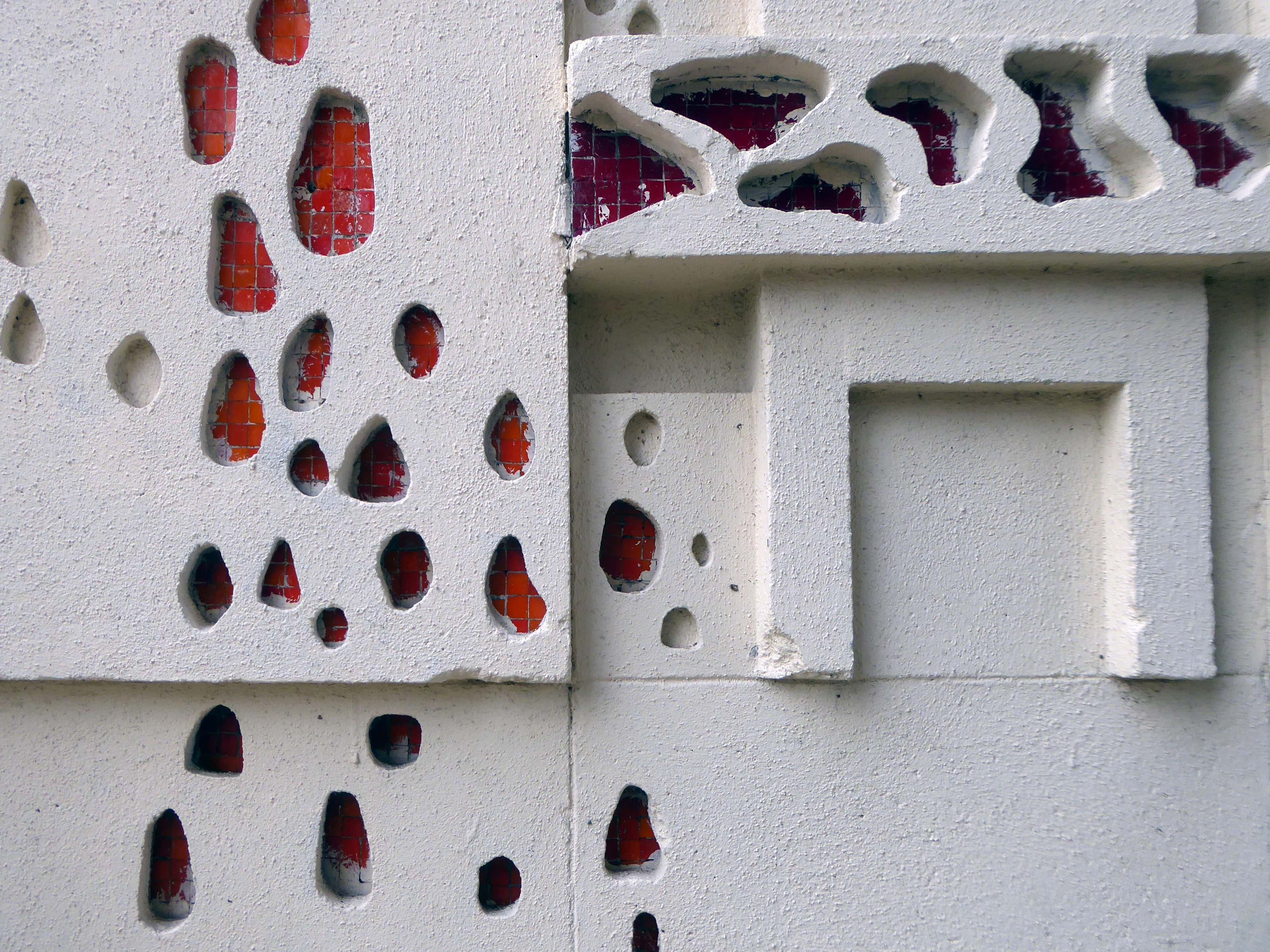
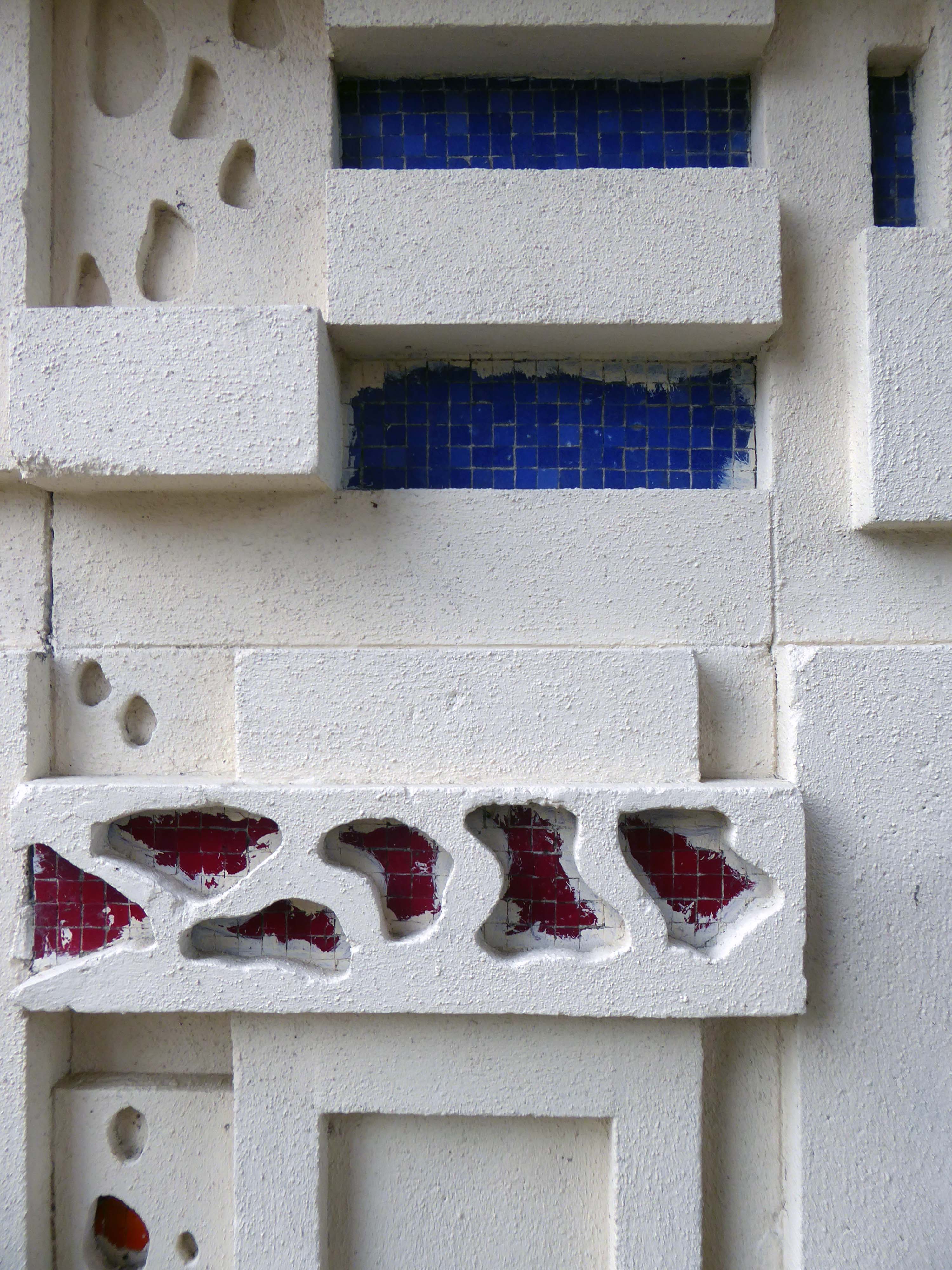
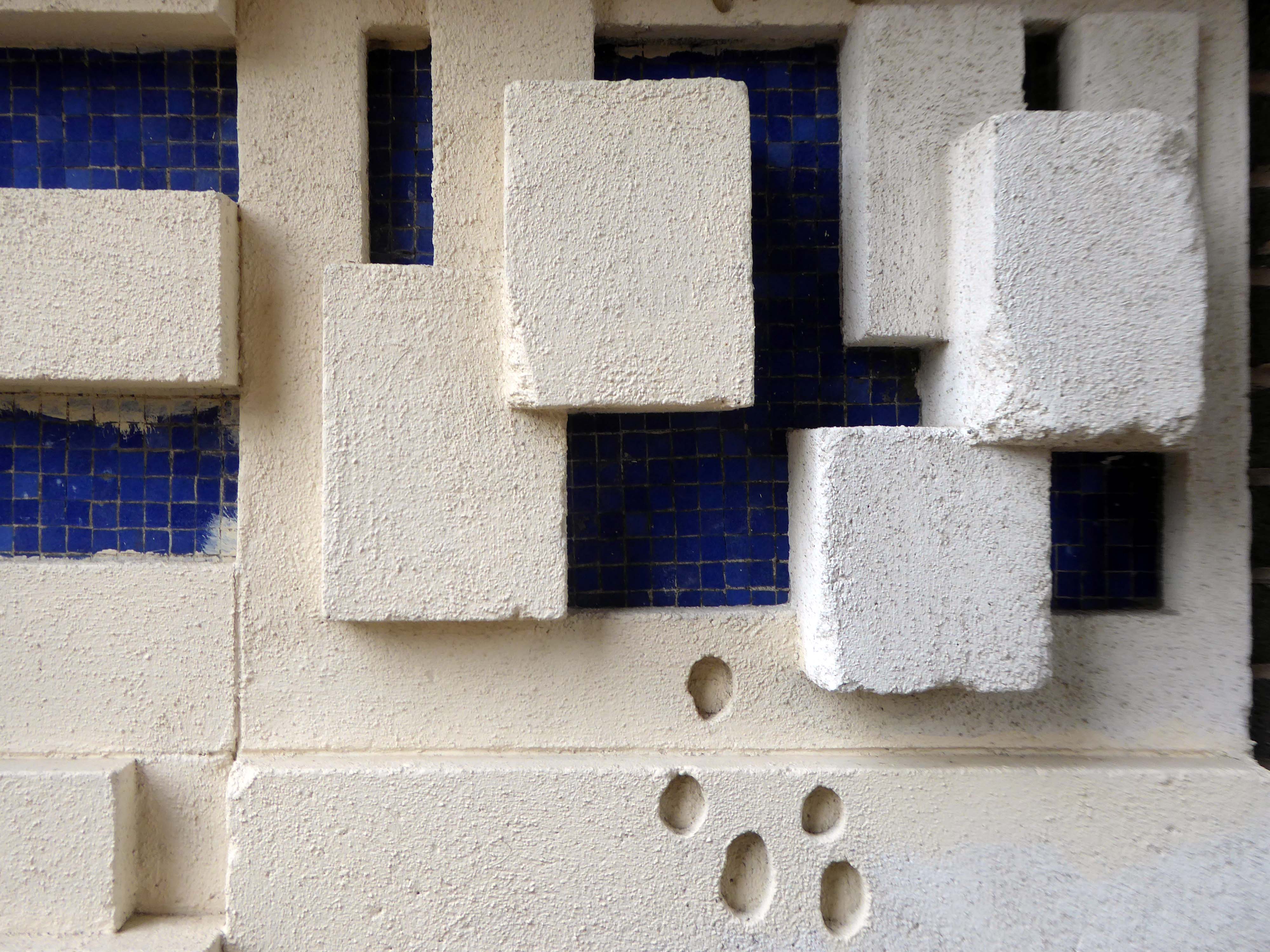
The front entrance has a mosaic and concrete relief, recalling De Stijl particularly Joost Baljeu.
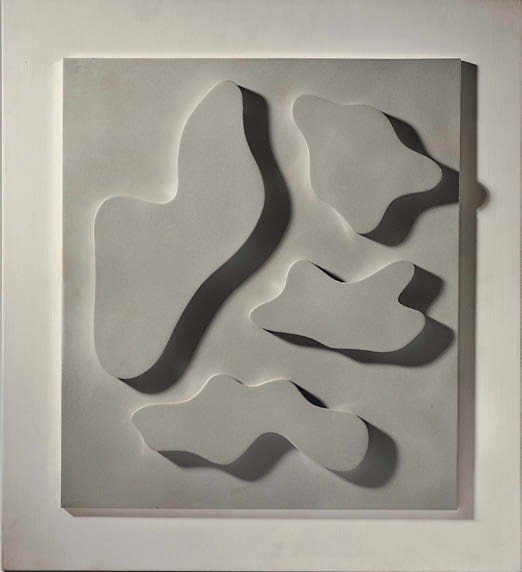
Along with echoes of Jean Arp.
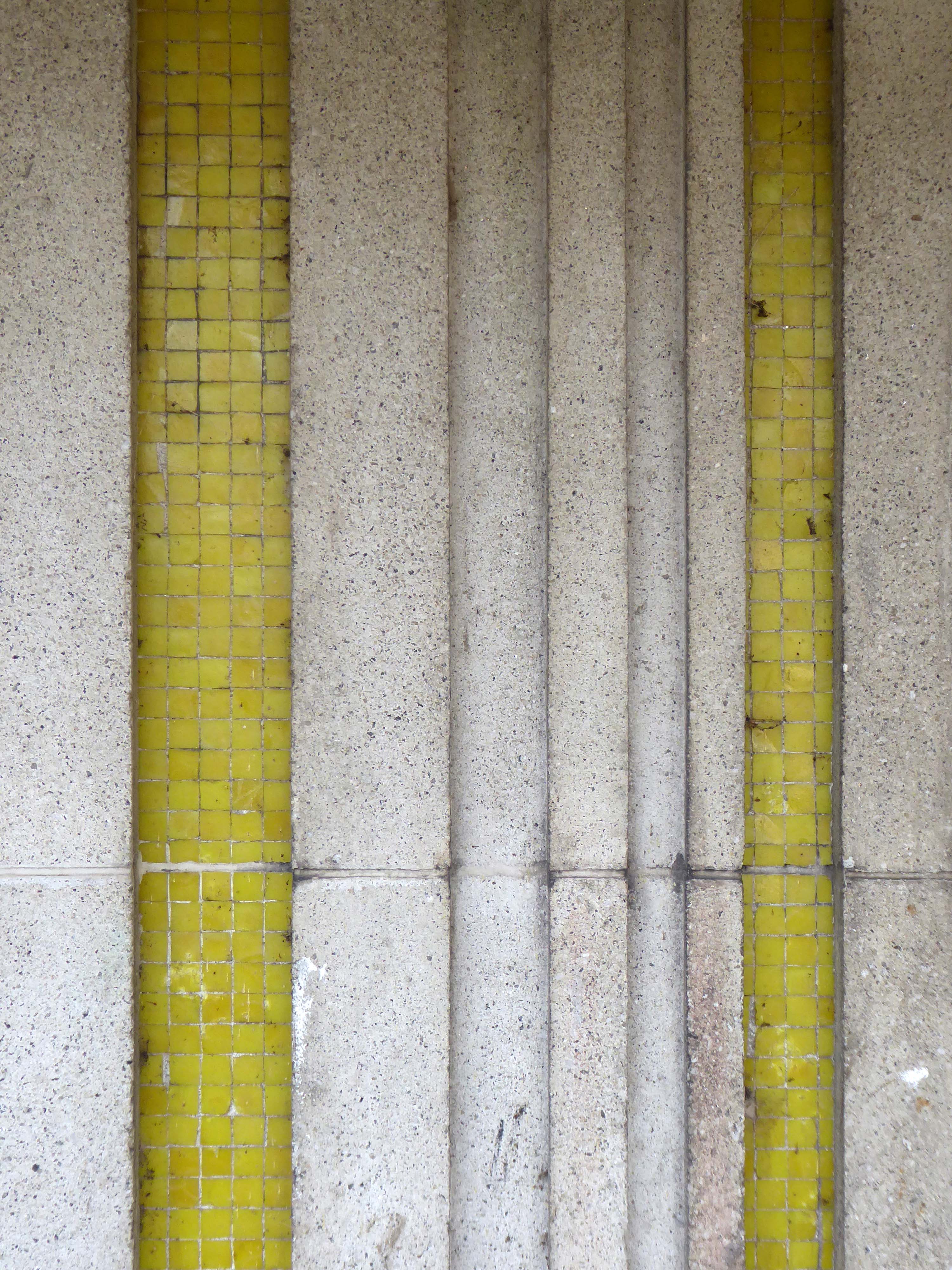
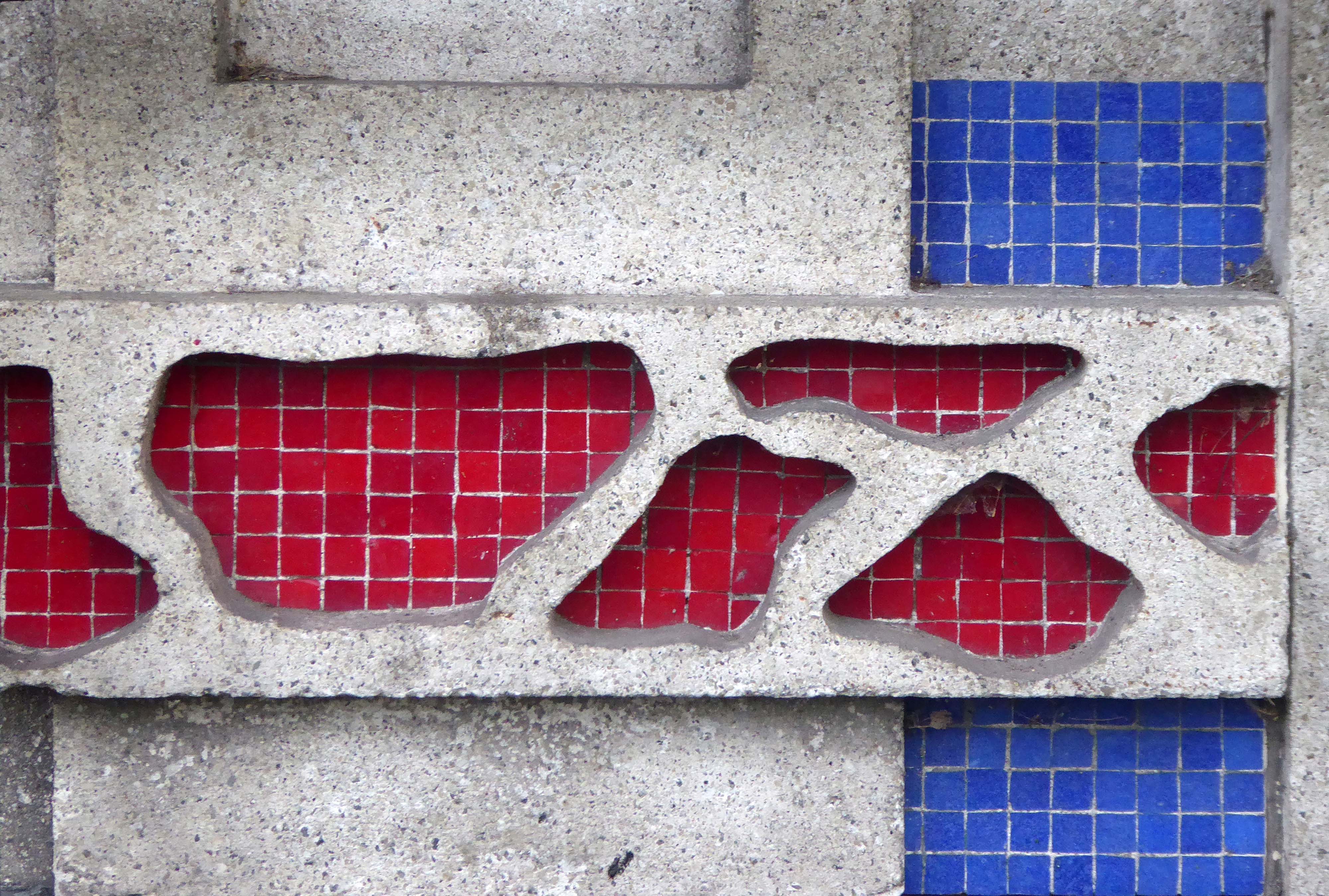
The flats had acquired a stereotypical bad reputation.
Blight flats will soon be high-rise des-res.
Residents on a blighted Blackley estate have been told of plans to deal with the mostly unoccupied high-rise flats that are seen as the cause of the problem.
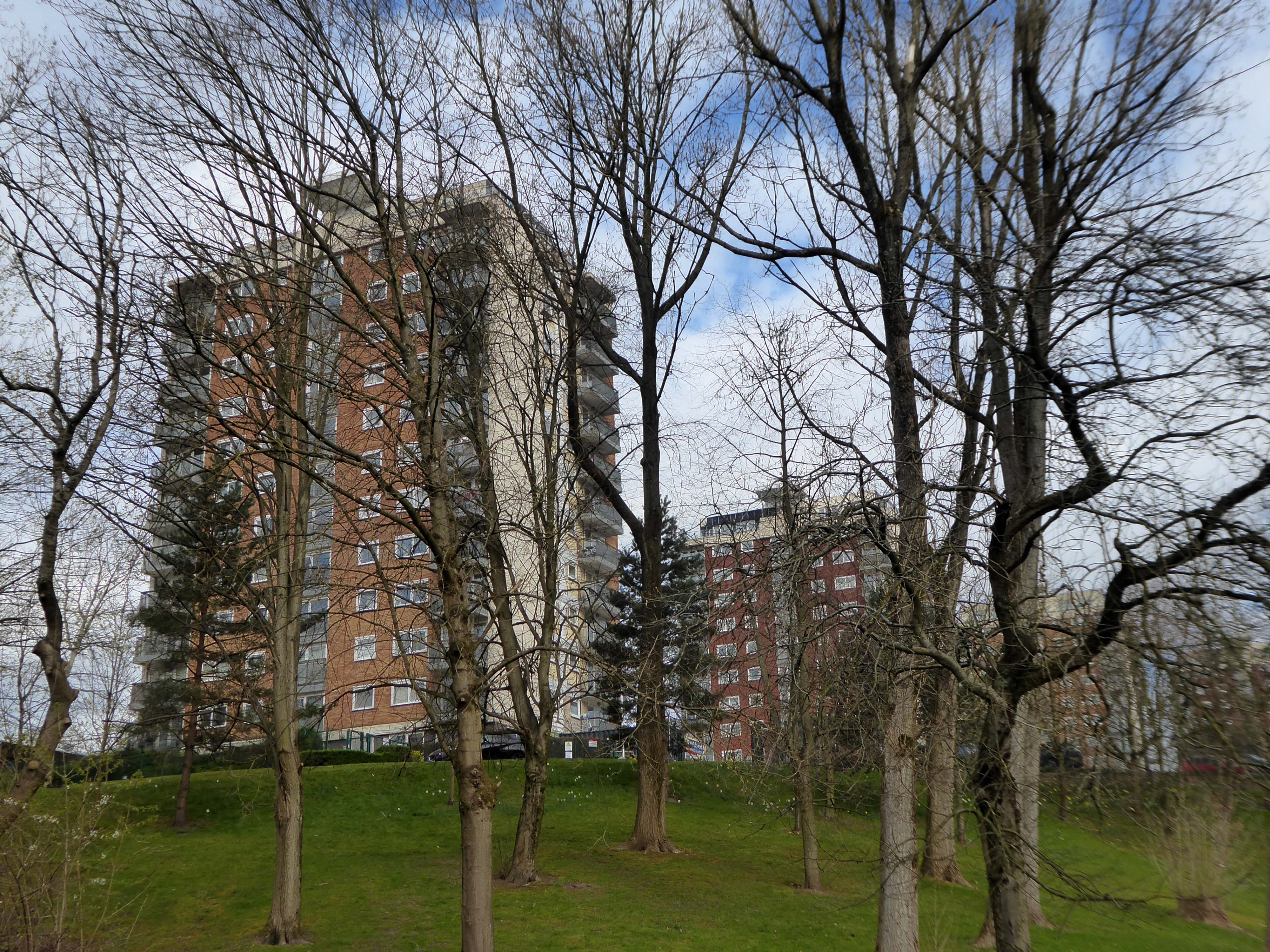
The Lakeside Rise blocks now form part of a private gated community and are accessed from Blackley New Road.
The original blocks and their locations are as follows:
Ashenhurst Court Now Lakeside 1
Heaton Court Now Lakeside 2
Wilton Court Now Lakeside 3
Blackley Court Now Lakeside 4
Bracknell Court demolished – was on the corner of Riverdale Road and Bridgenorth Road adjacent to Heaton Court
Riverdale Court demolished – was on Riverdale Road opposite Bantry Avenue.
 Modern Mooch