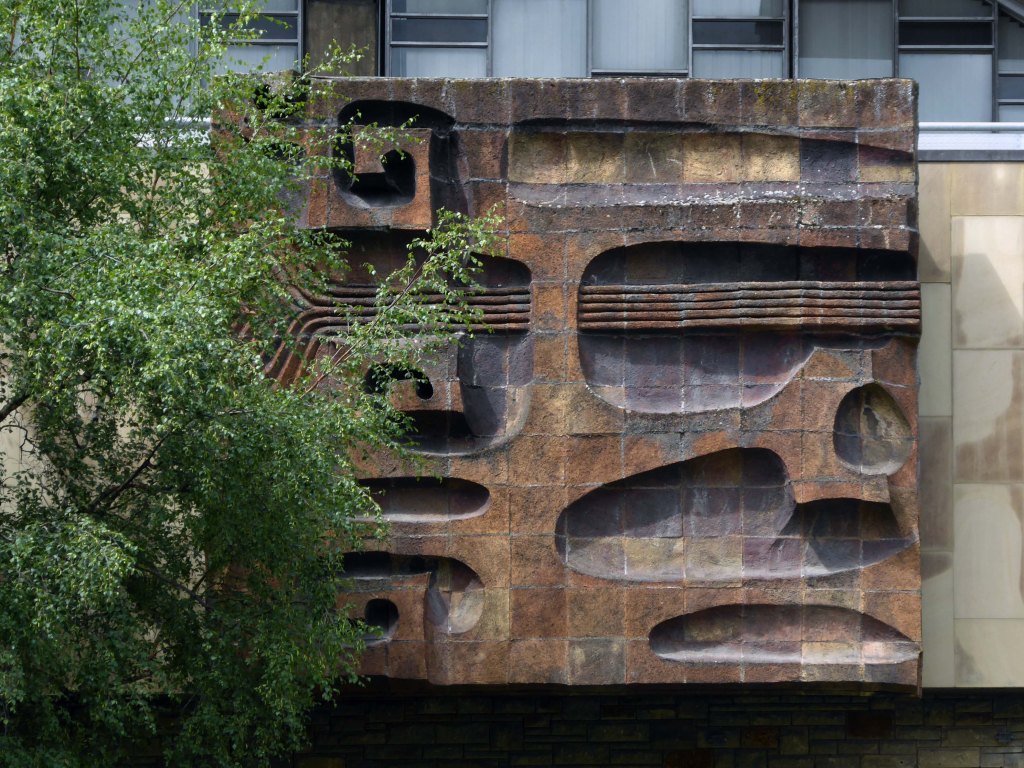
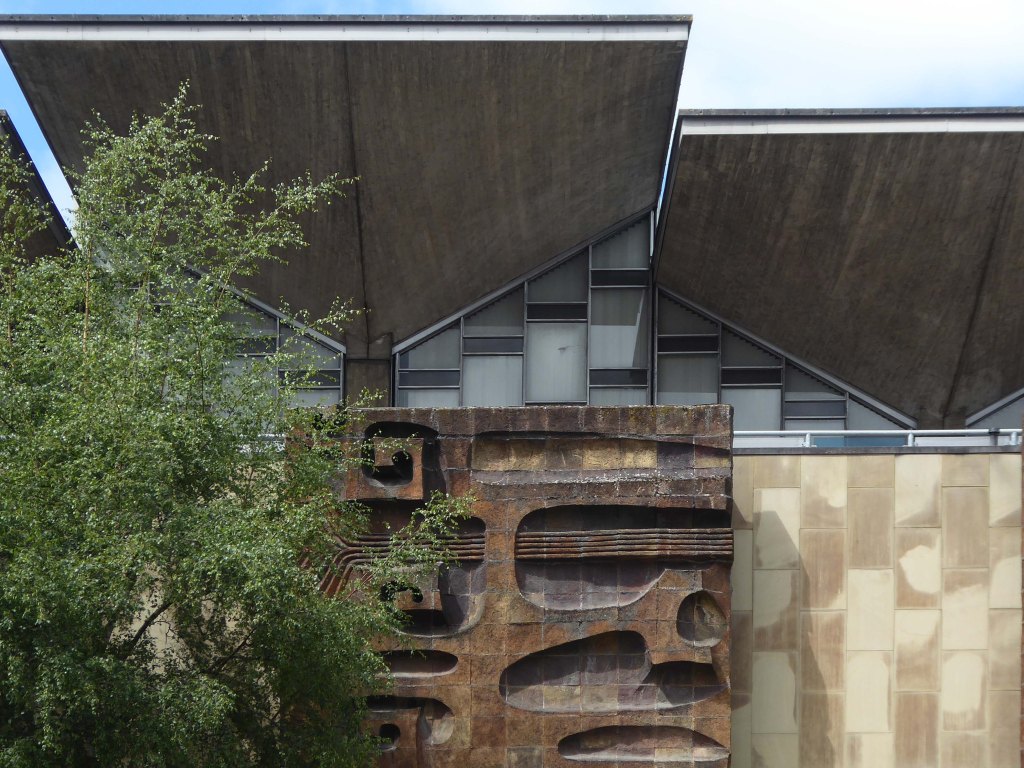
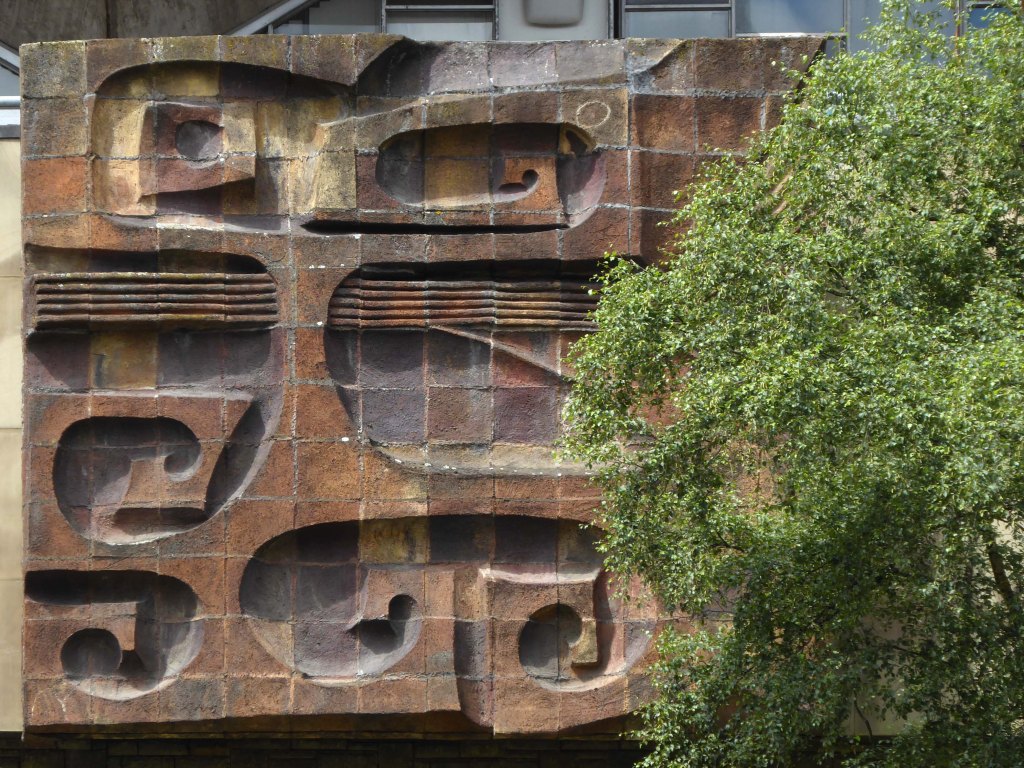
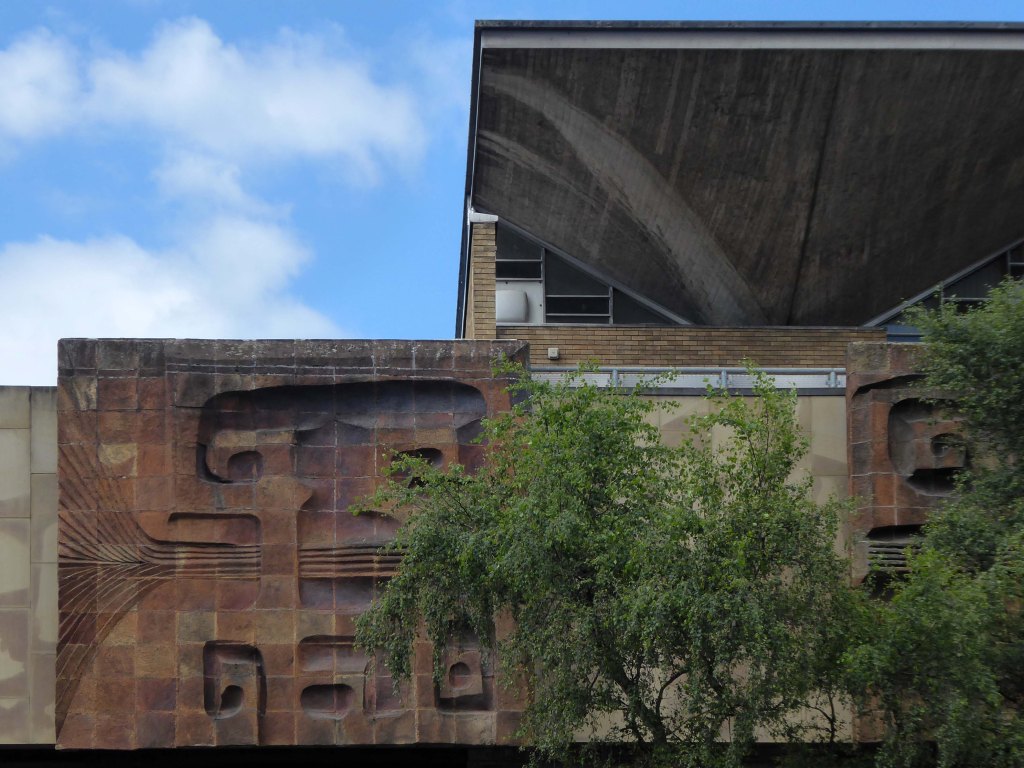
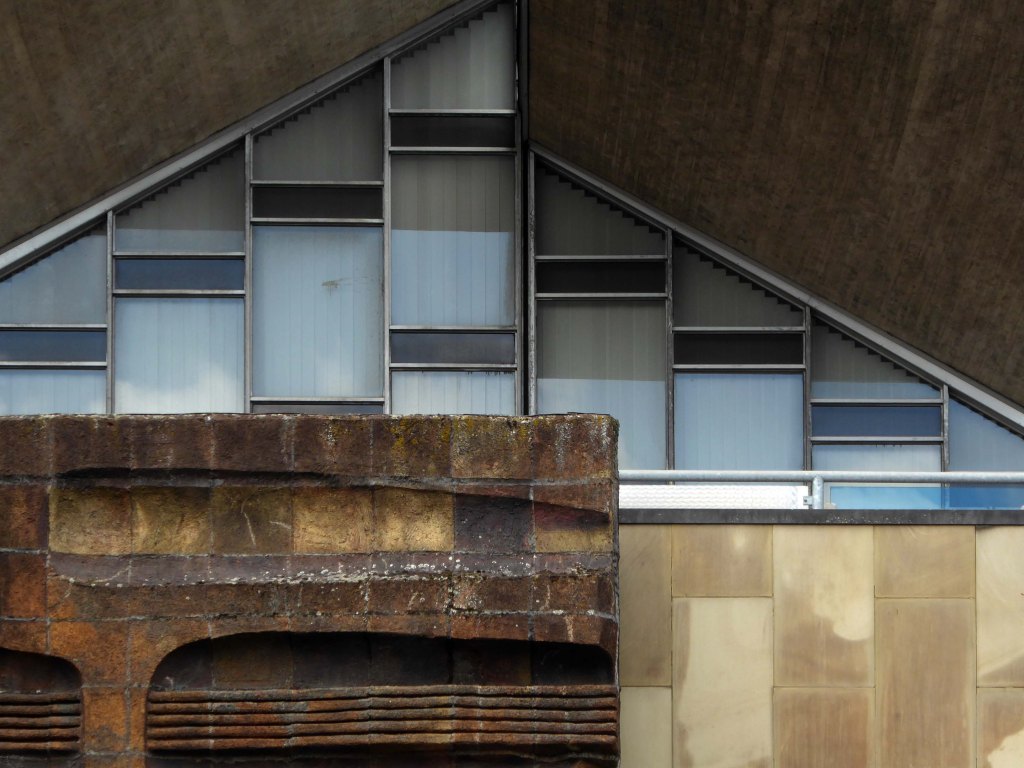
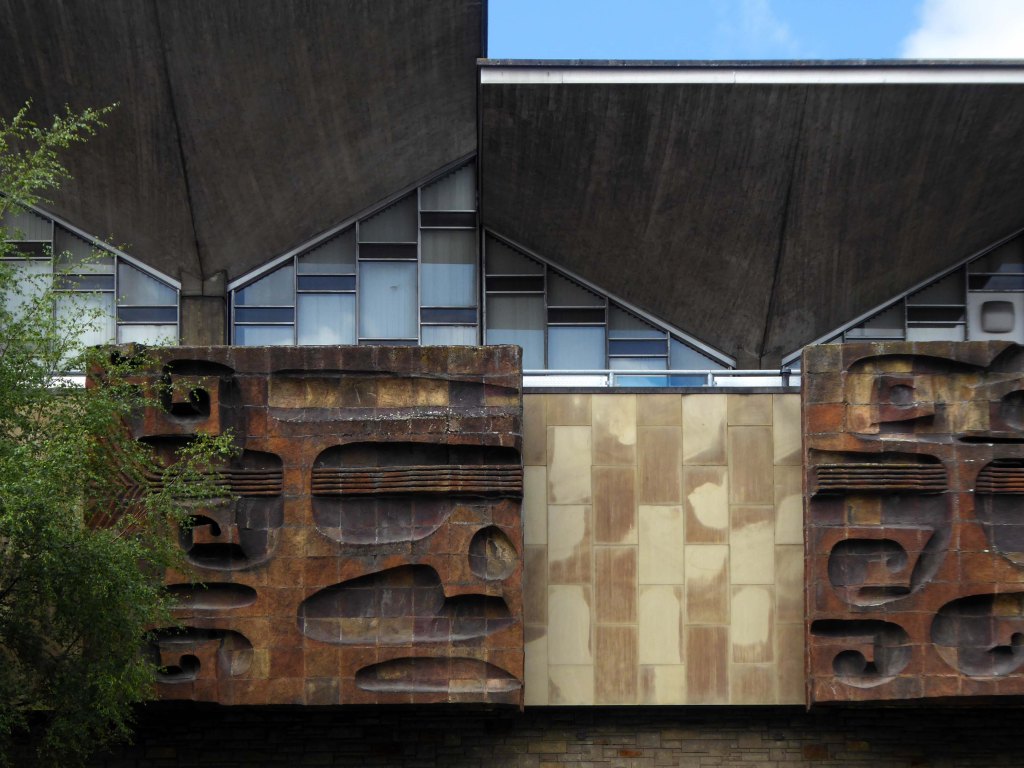
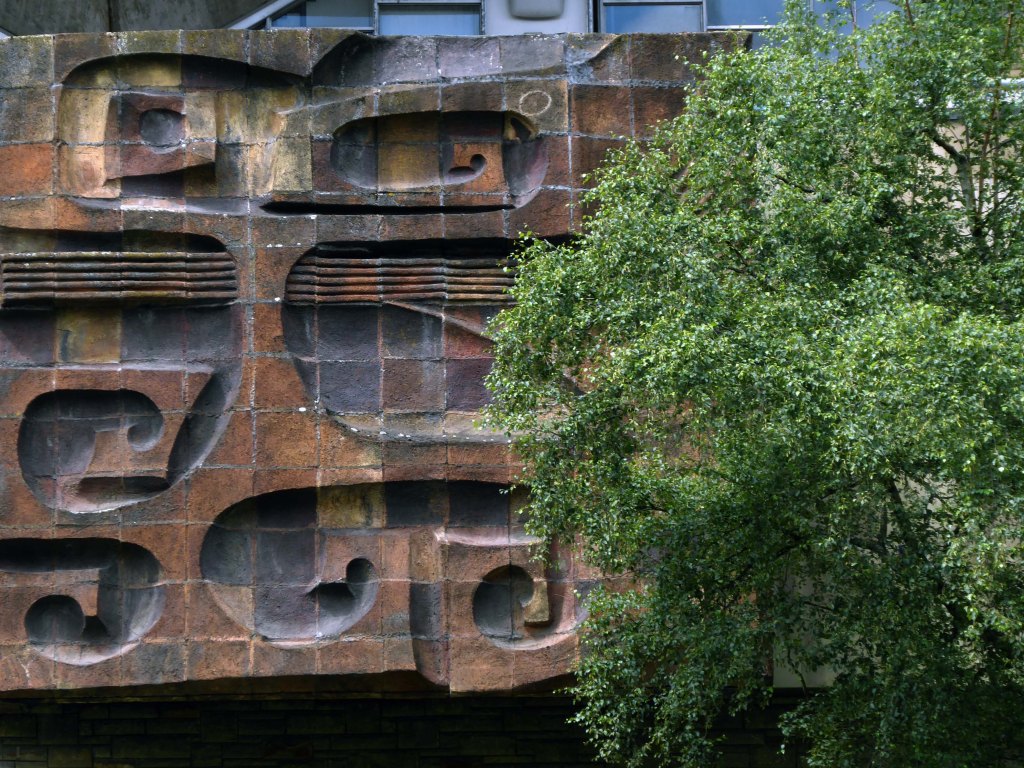
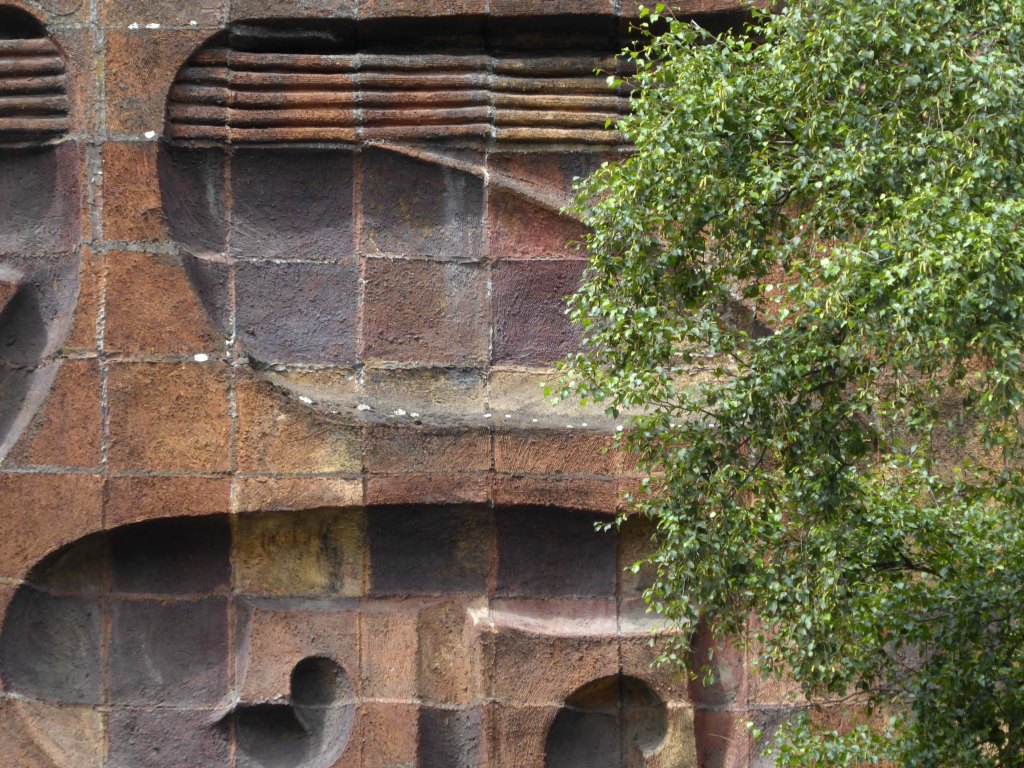
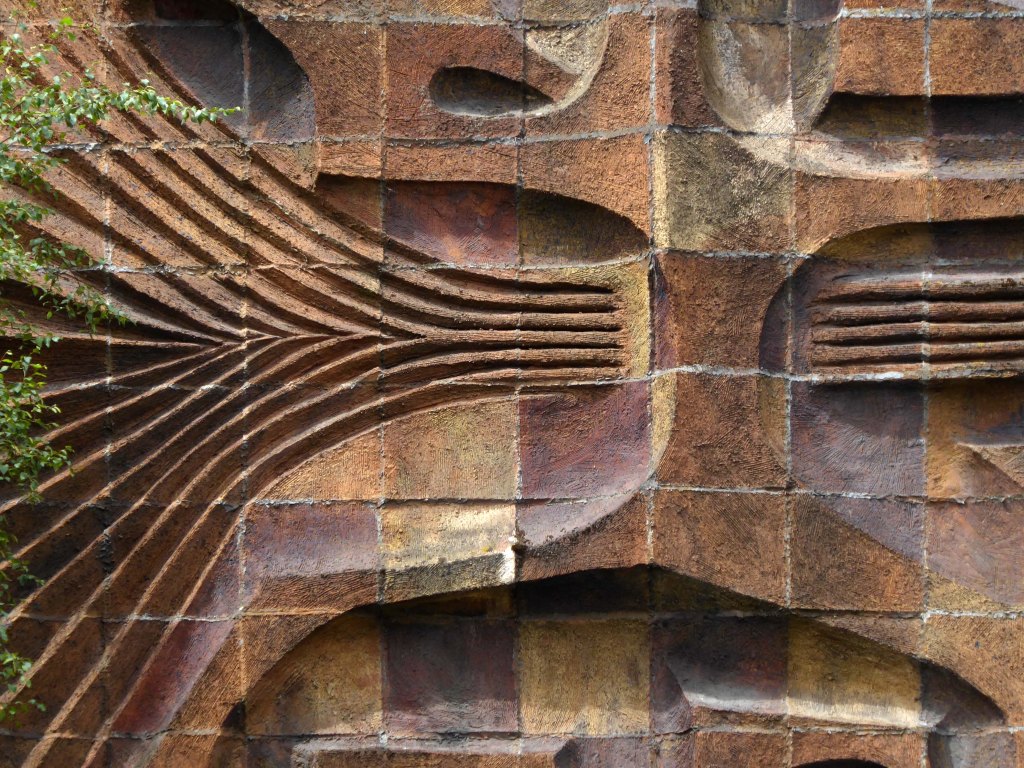
Now I want to look in detail at the exterior ceramic art.
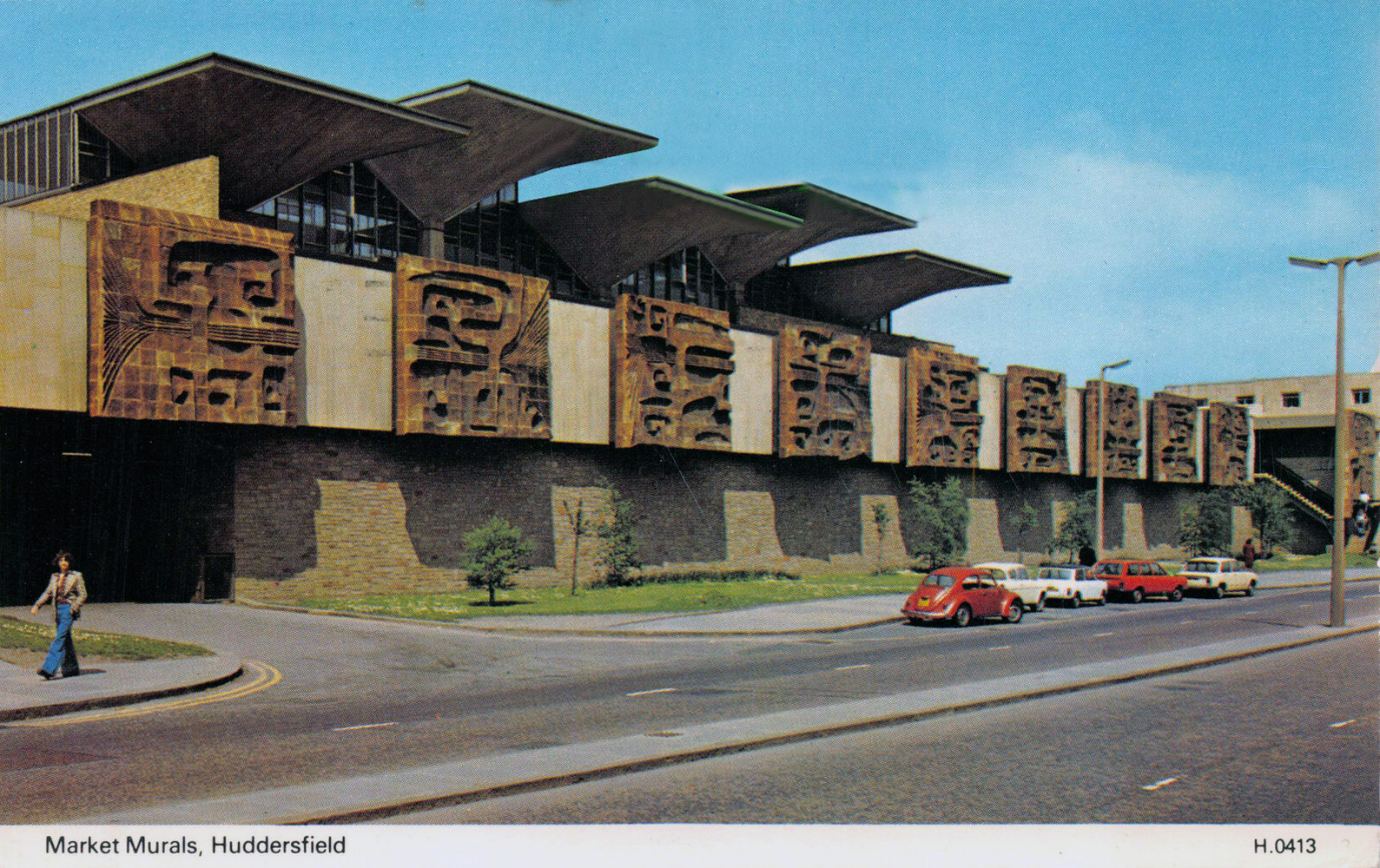
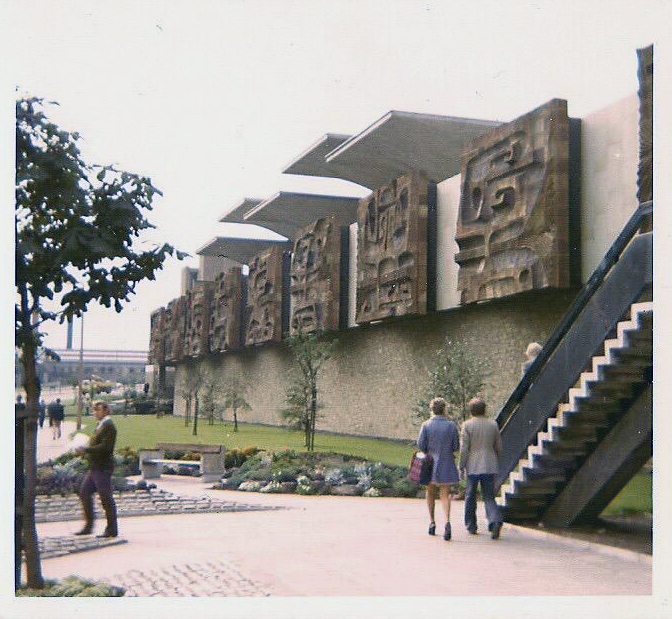
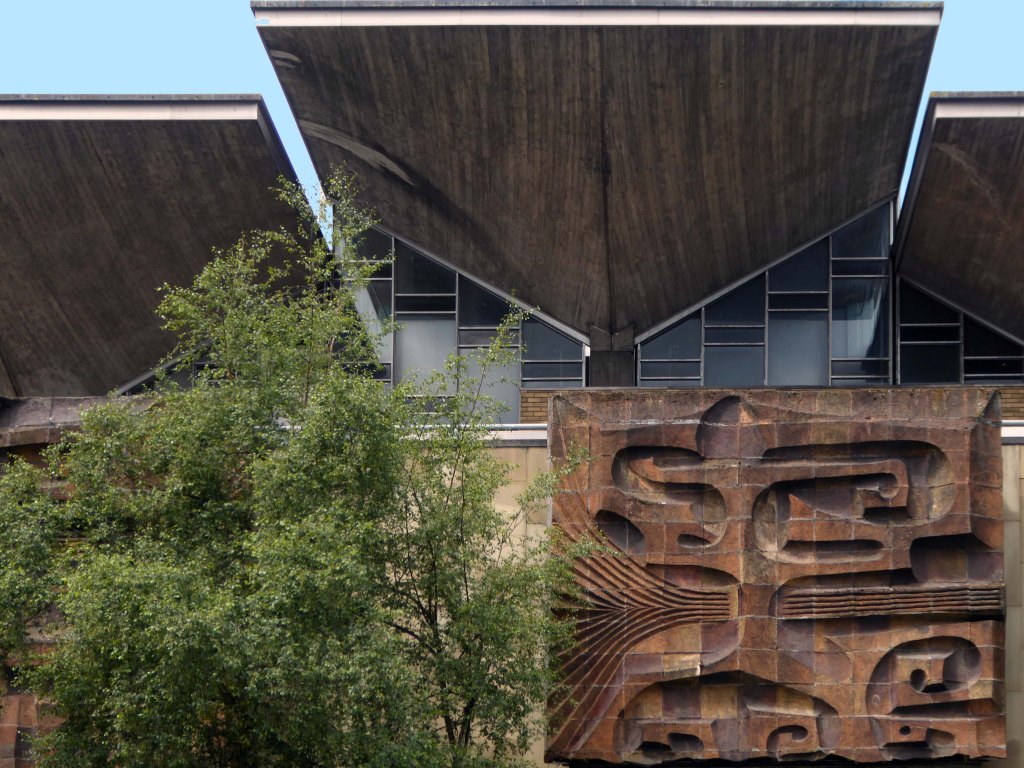
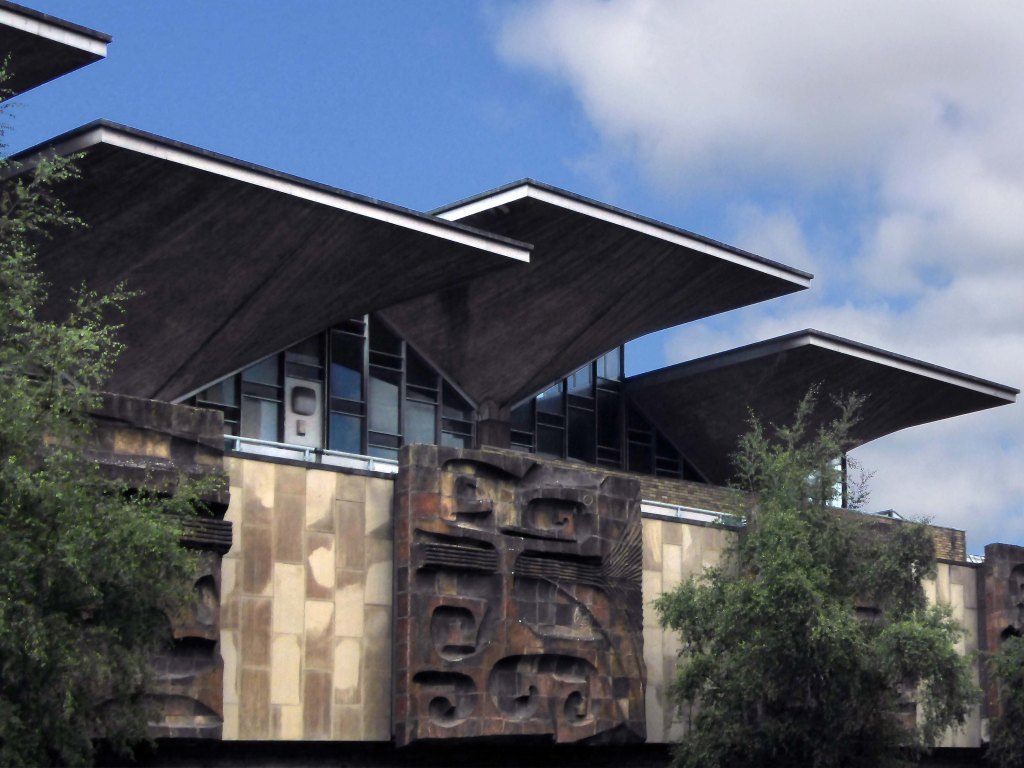
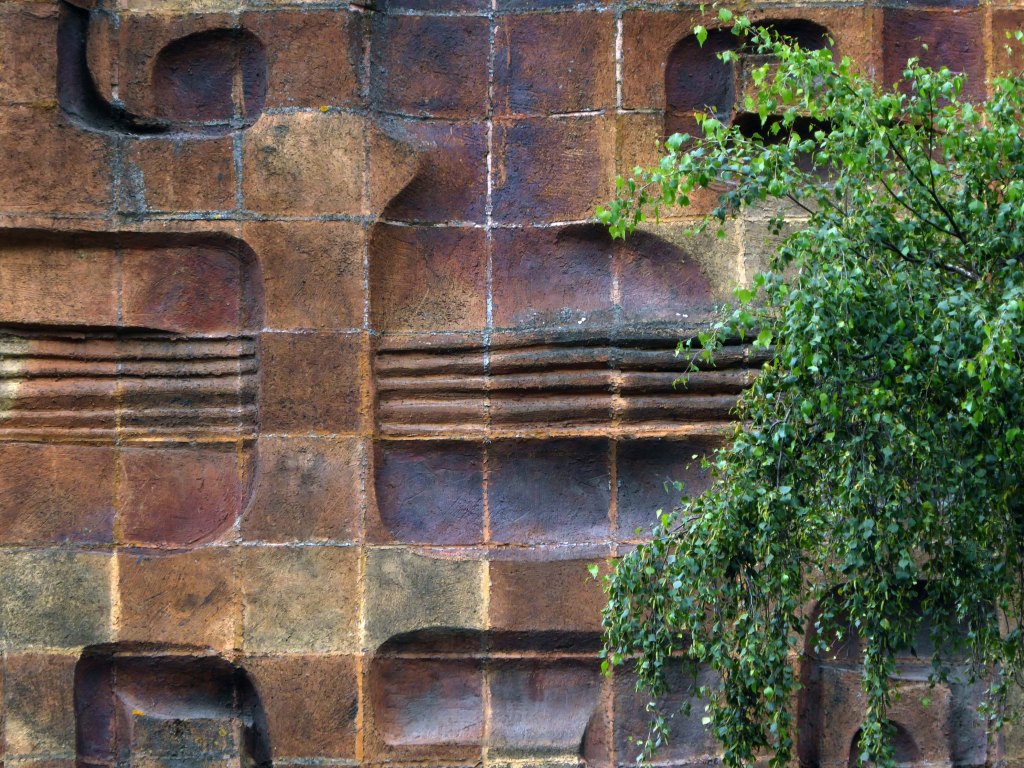
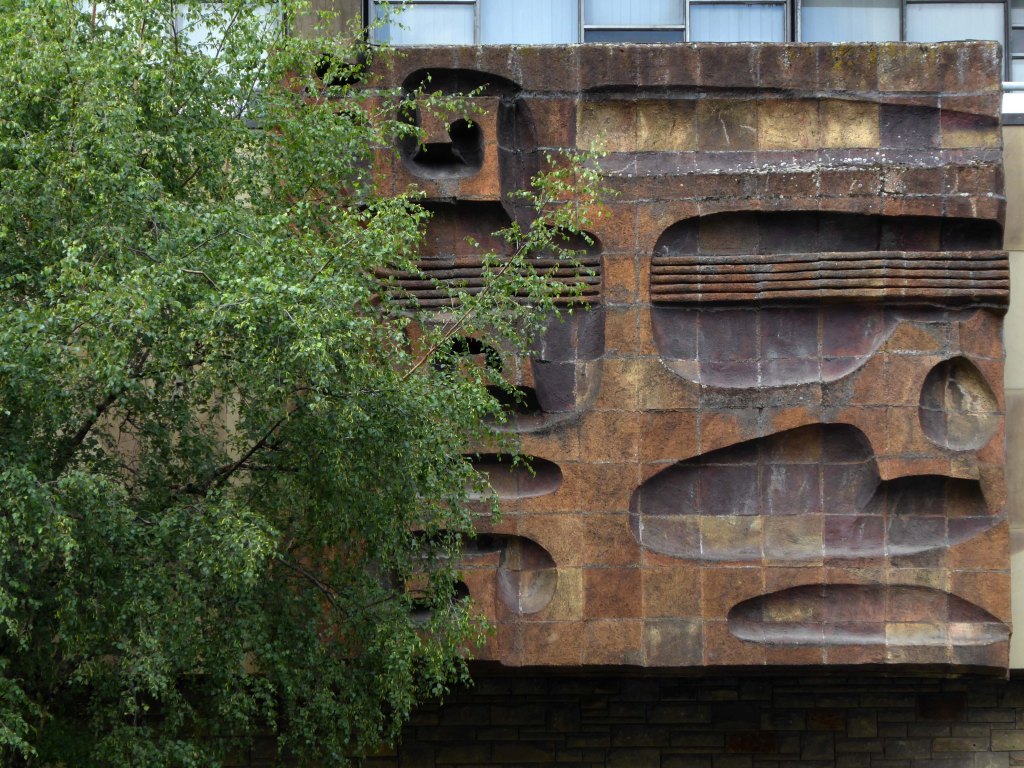
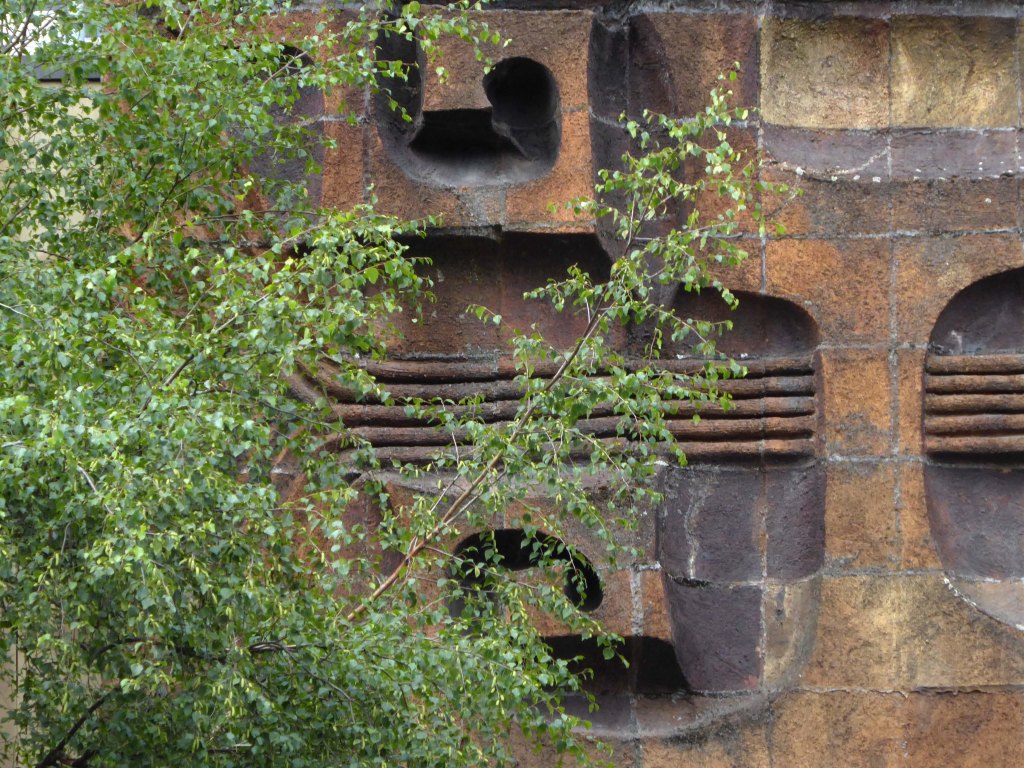
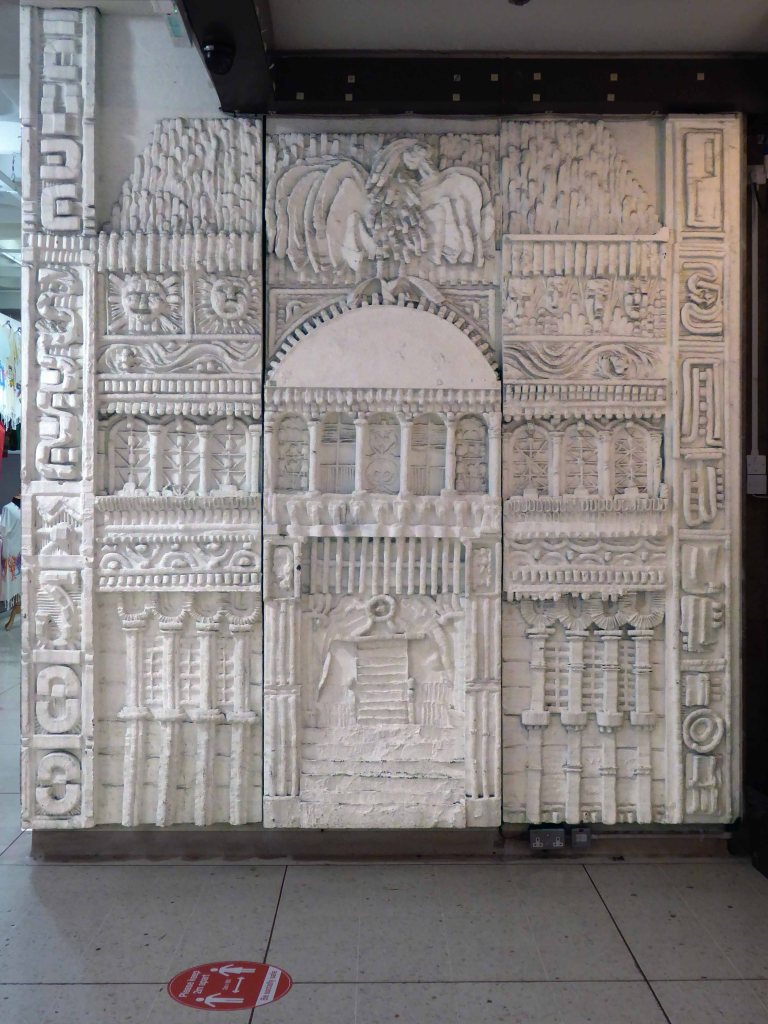
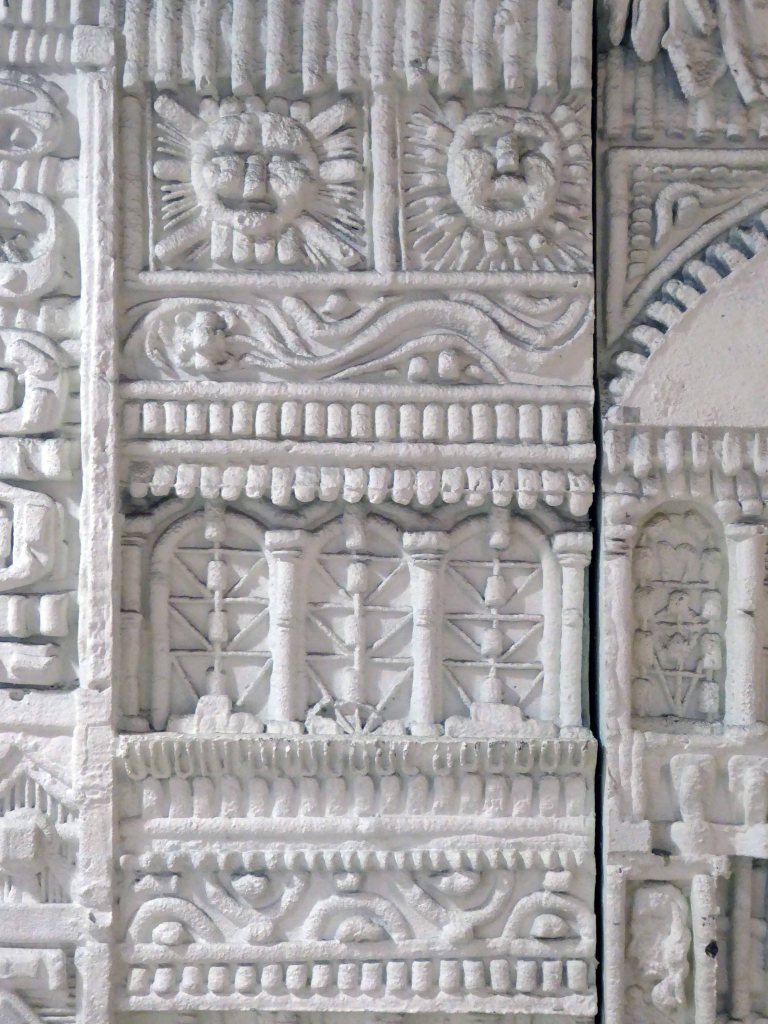
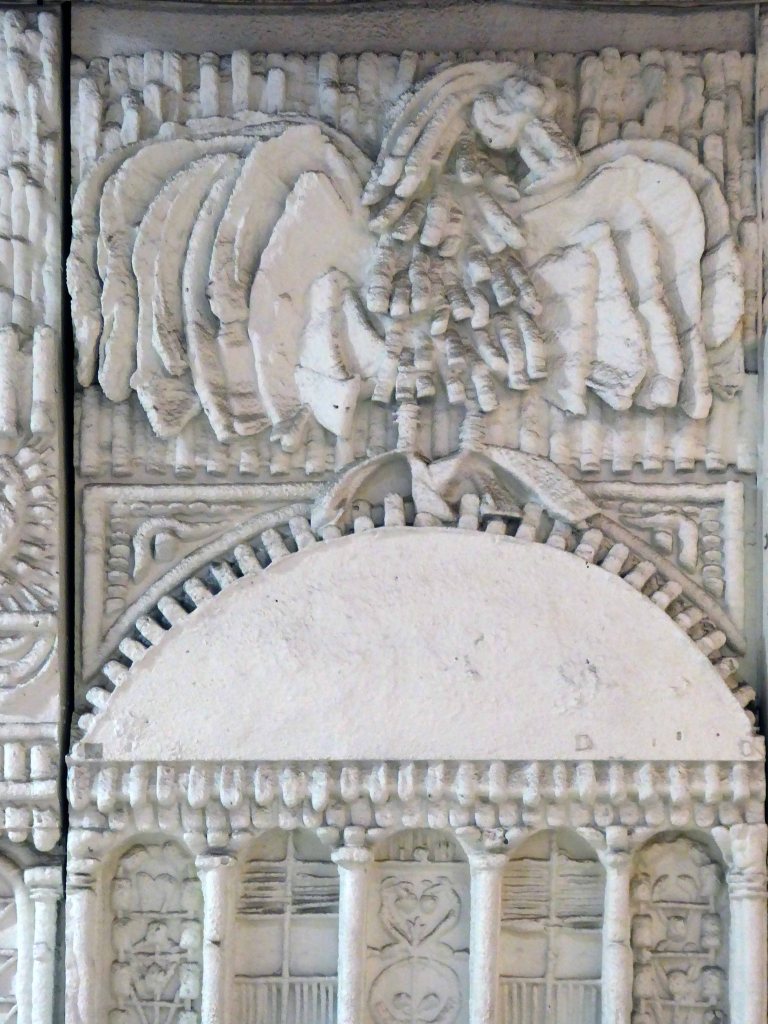
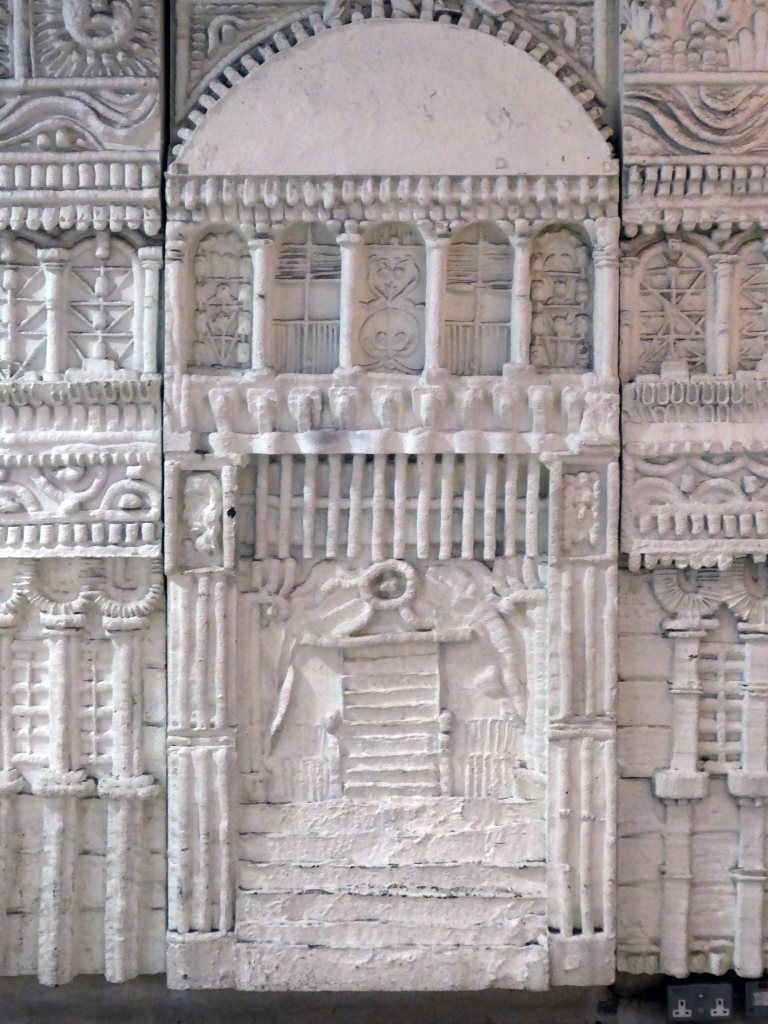
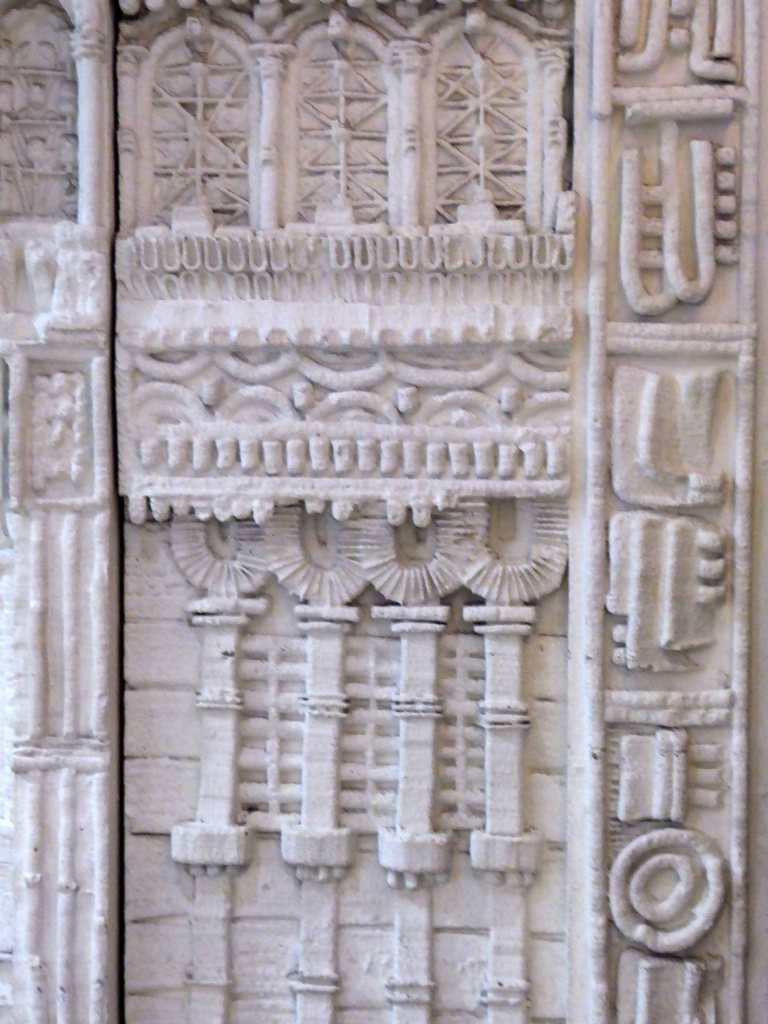
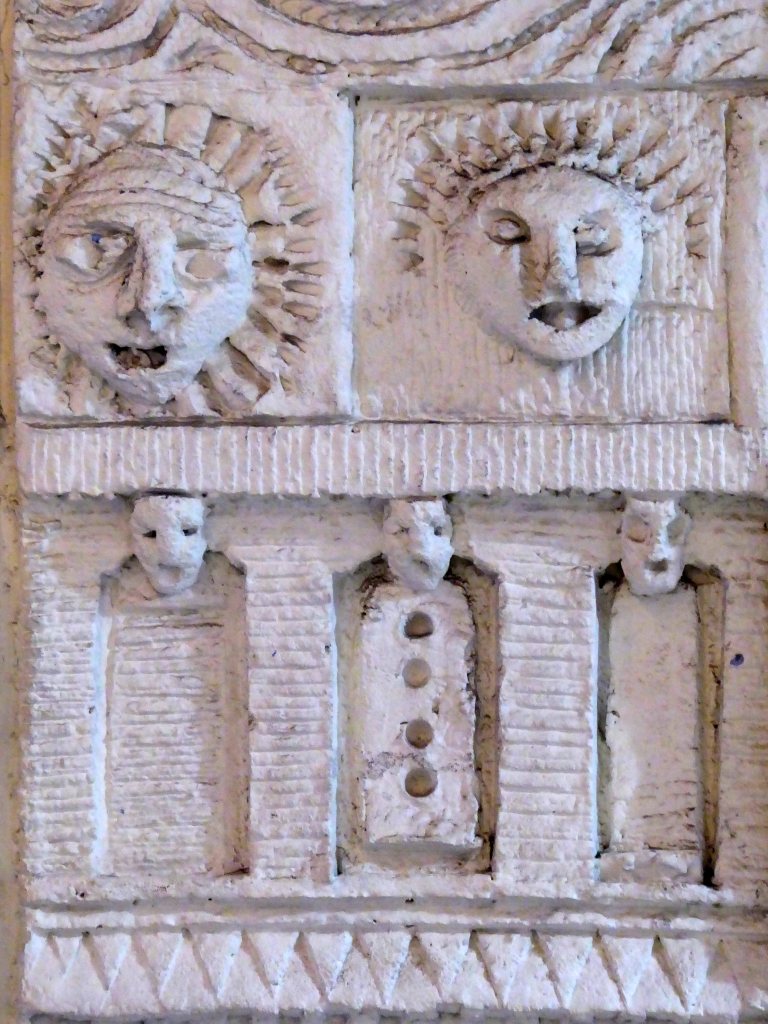
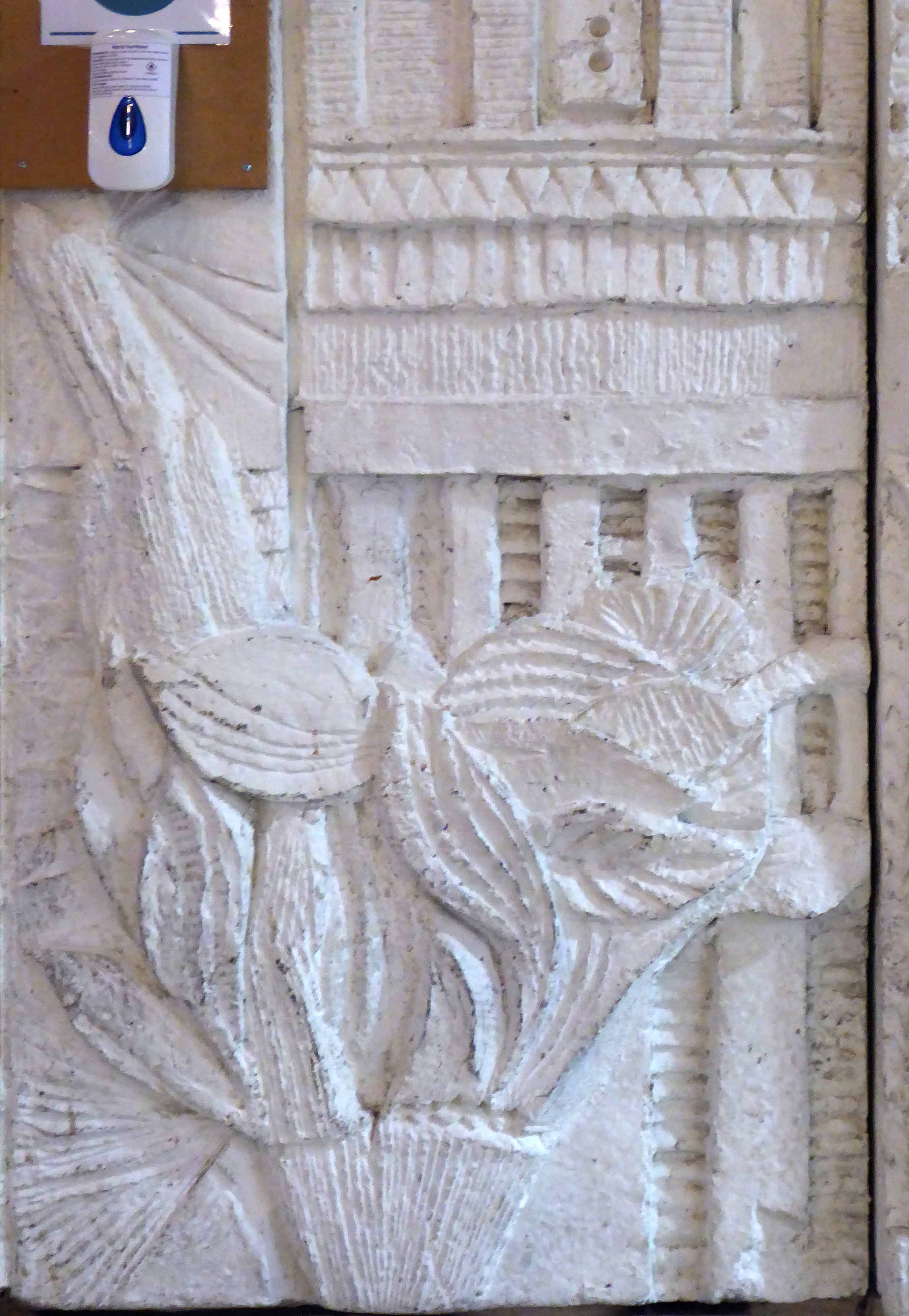
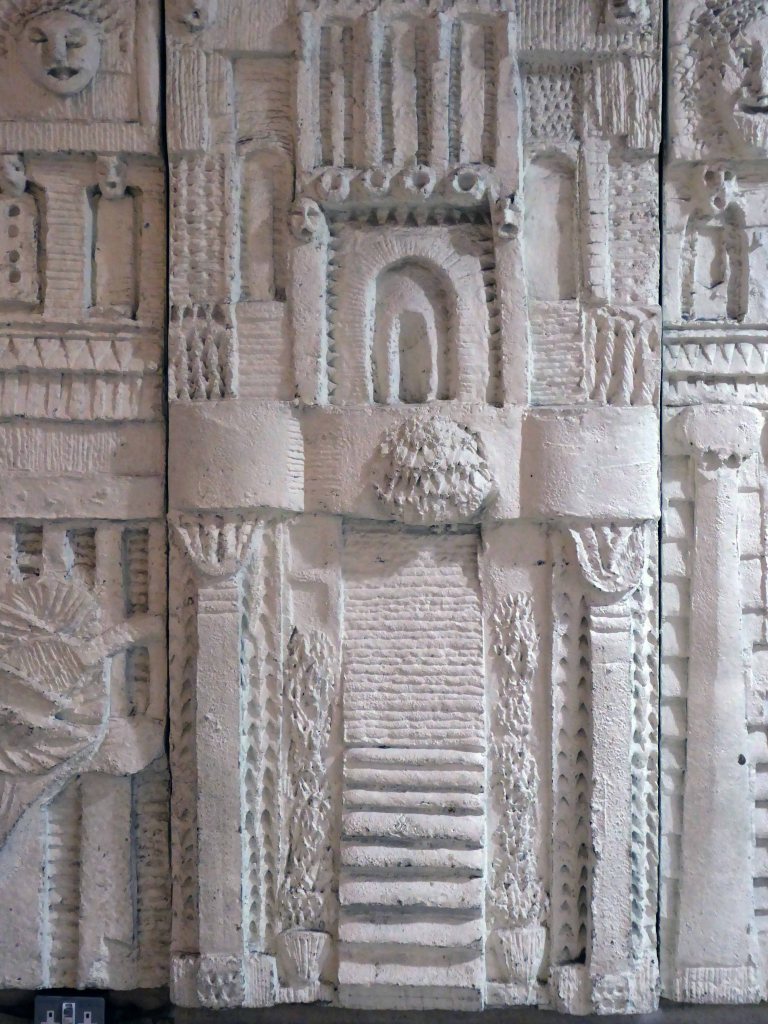
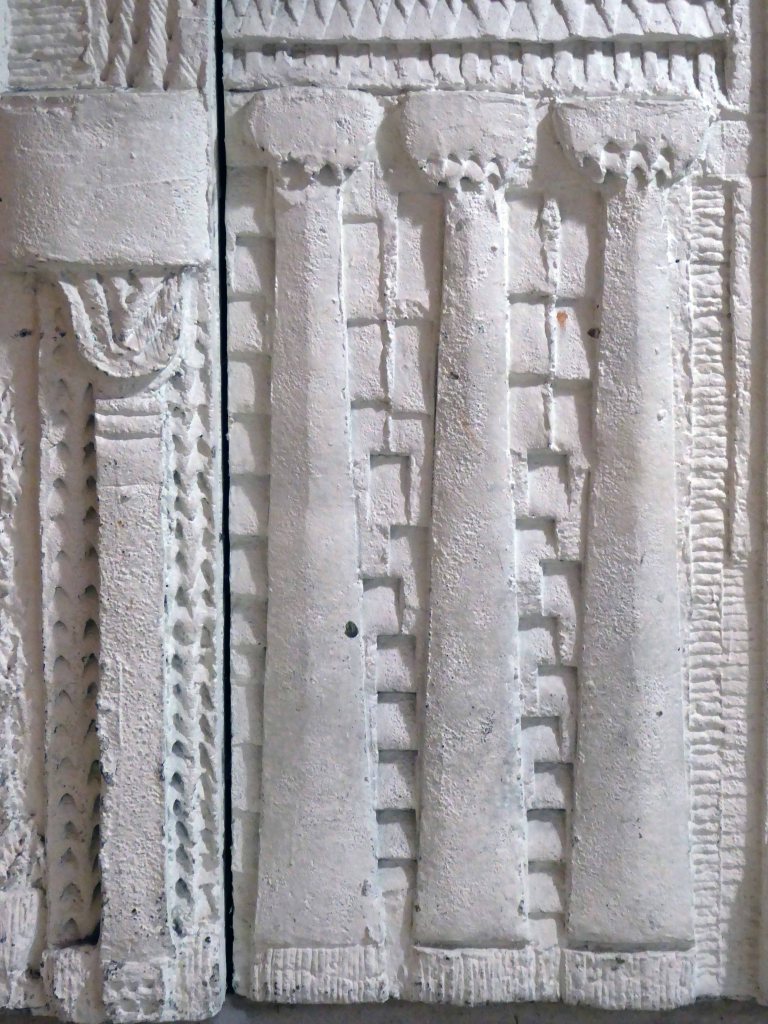
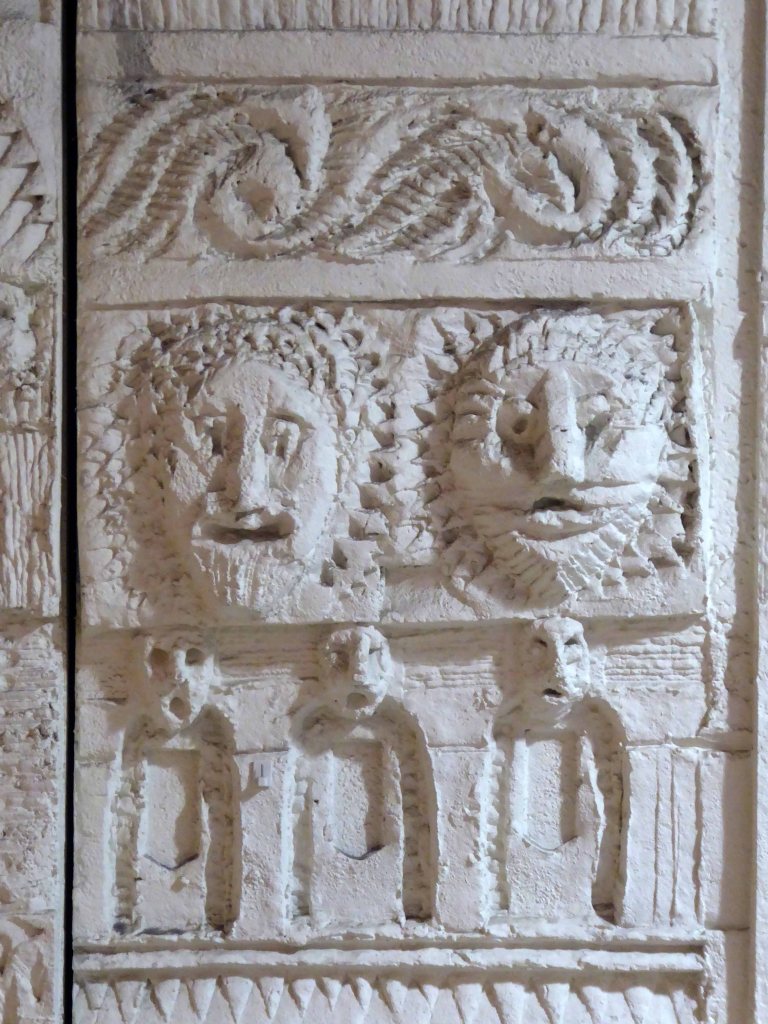
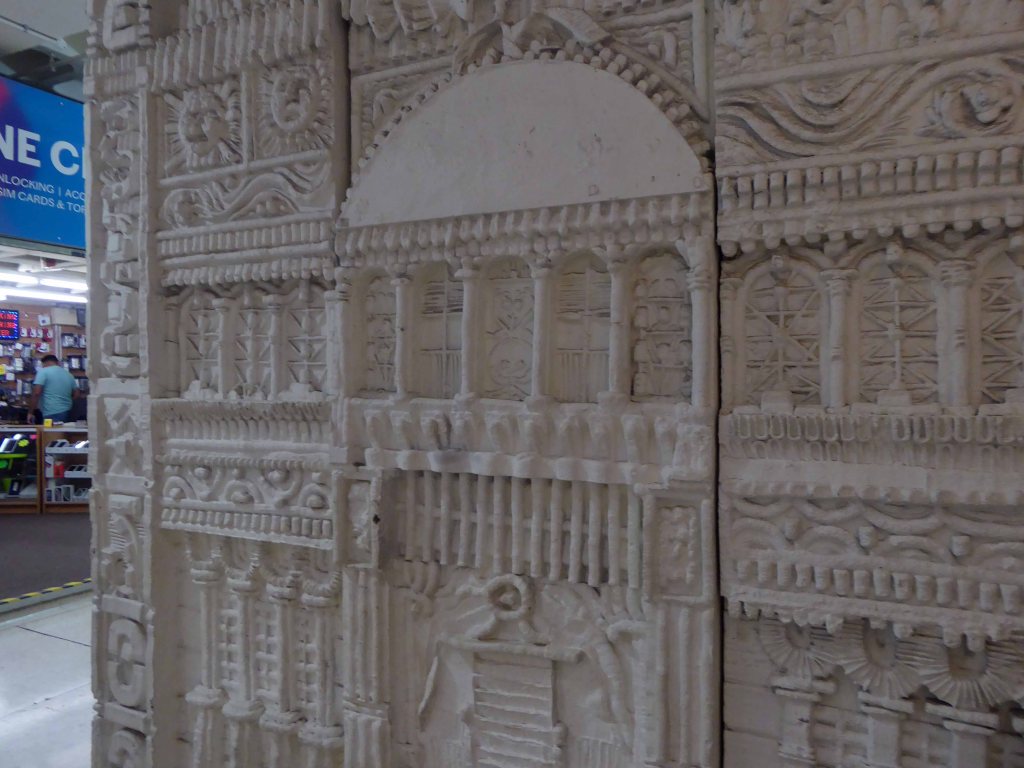
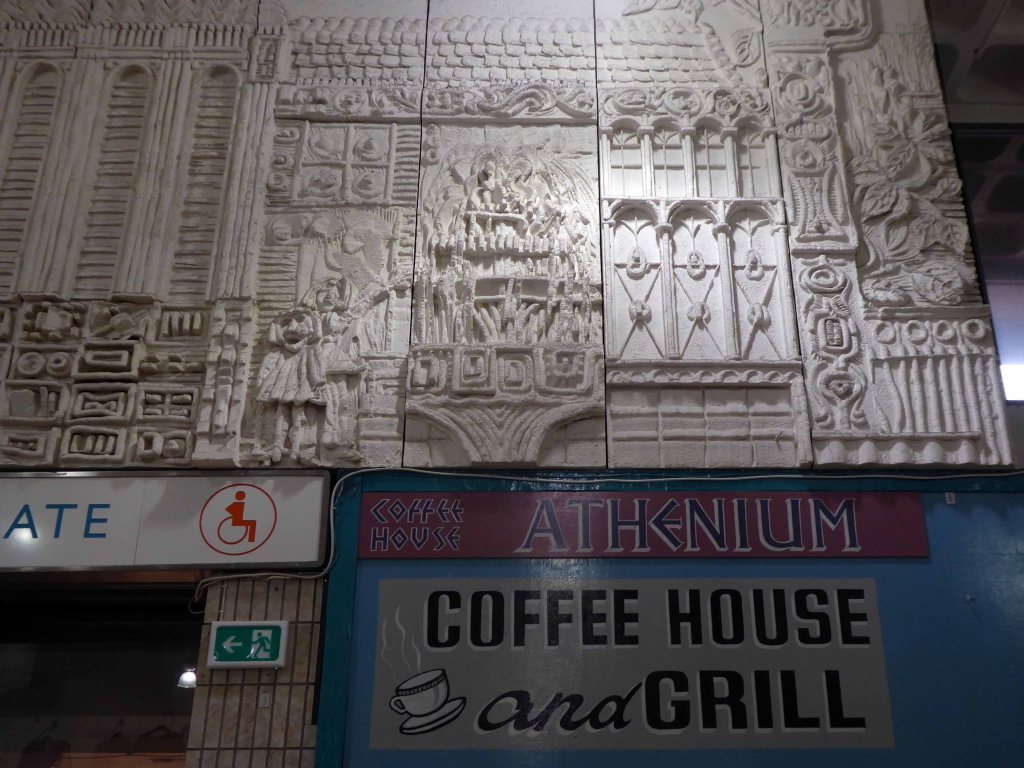
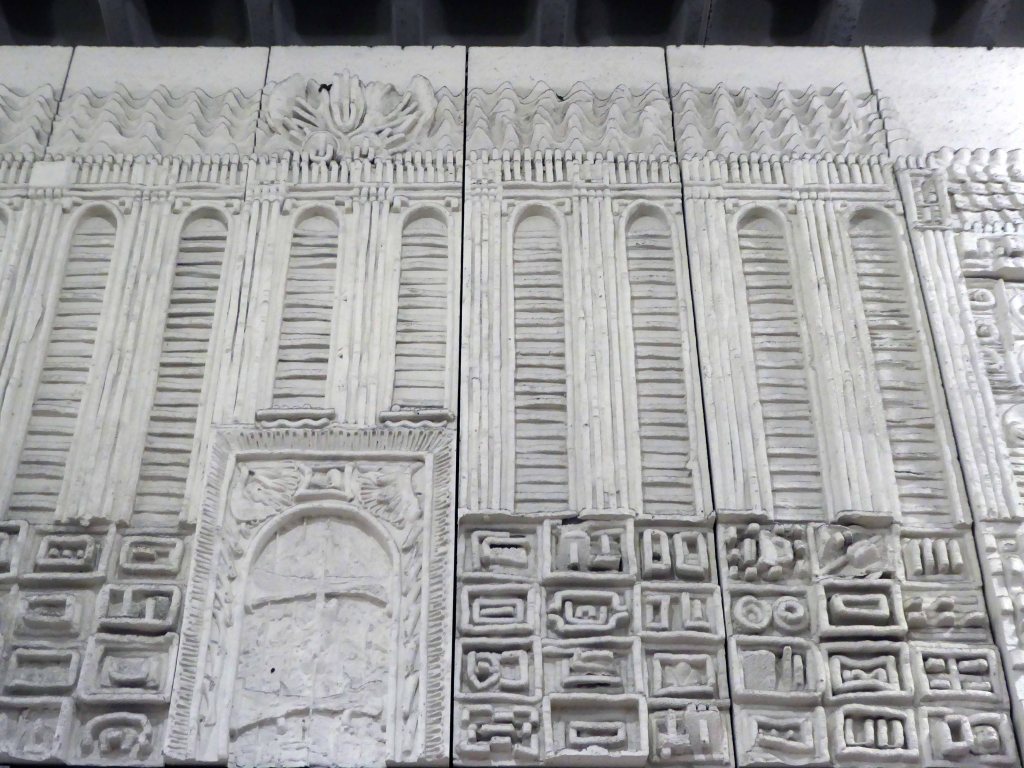
The façade of the market hall on Queensgate incorporates five roof sections with patent glazing and is decorated with square ceramic panels by Fritz Steller, entitled Articulation in Movement, set over natural stone cladding.
These continue across the façade of the adjoining shops, to make nine panels in all, with a tenth larger panel added in 1972, pierced by stairs and an entrance to the market hall from Queensgate.
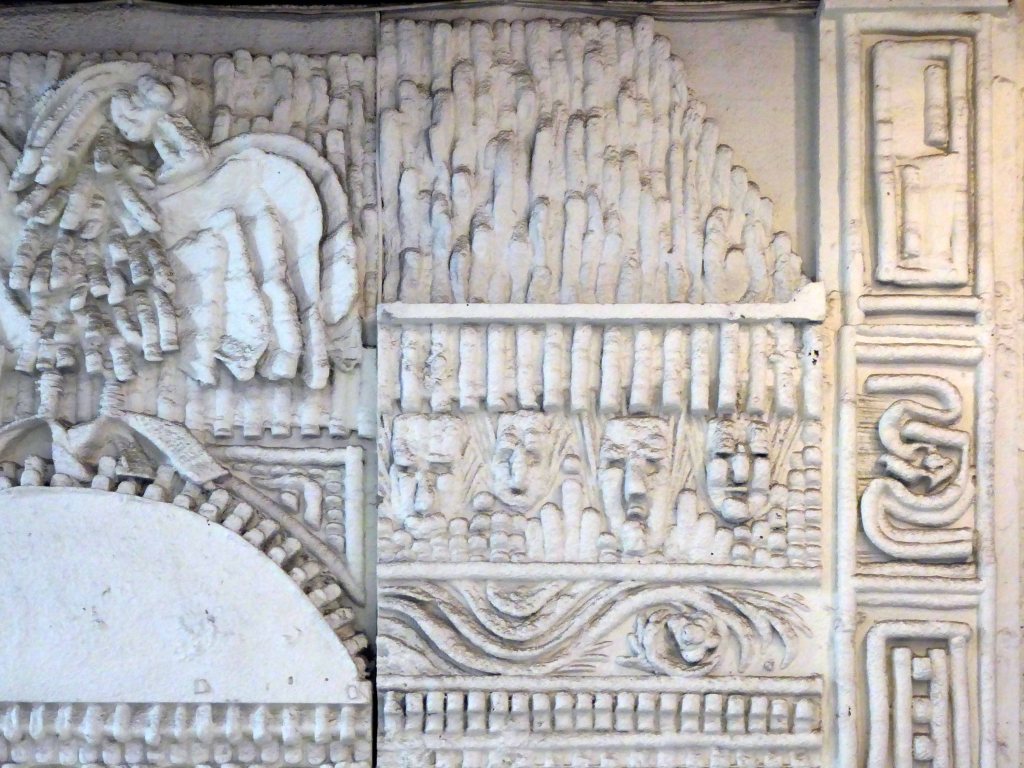
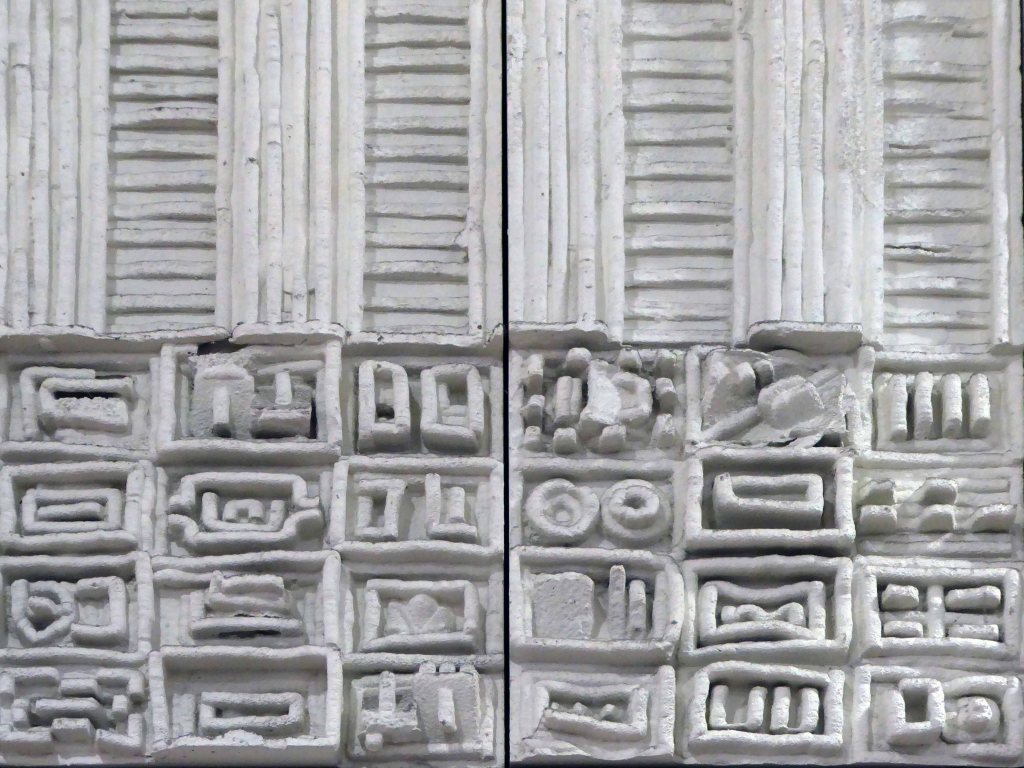
They have representations of the mushroom shells of the market hall, turned through 90 degrees, with abstract representations of the goods available within.
The enormous abstract art panels weigh almost 50 tons.
Seen here in the 1970s when the trees and cars were smaller – though trousers and lapels were considerably wider.
Fritz Steller
1941 Born in Dresden, Germany.
1959-1964 Studied sculpture and architecture at Birmingham College of Art, Birmingham, UK. Specialised in sculpture.
Until 1969 Head of Art at Sebright School, Wolverley, near Kidderminster, Worcestershire, UK.
1969-1977 Established and led the Square One Design Workshop and Transform Ceramic Company, Snitterfield, near Stratford-Upon-Avon, Warwickshire, UK.
1977 -1980 Established and led ceramic production in Isithebe- Mandini, Kwazulu, South Africa.
1980 Left South Africa due to basic fundamental differences of opinion over the apartheid regime. Established and led an art centre and gallery in Ewzulwini Valley near Mbabane, Swaziland.
1992 After the destruction of the art centre and gallery moved to Germany.
Since 1993 has set up a new business in Empangeni, KwaZulu-Natal.
Fritz now lives and works in South Africa and Germany as an internationally recognised artist.
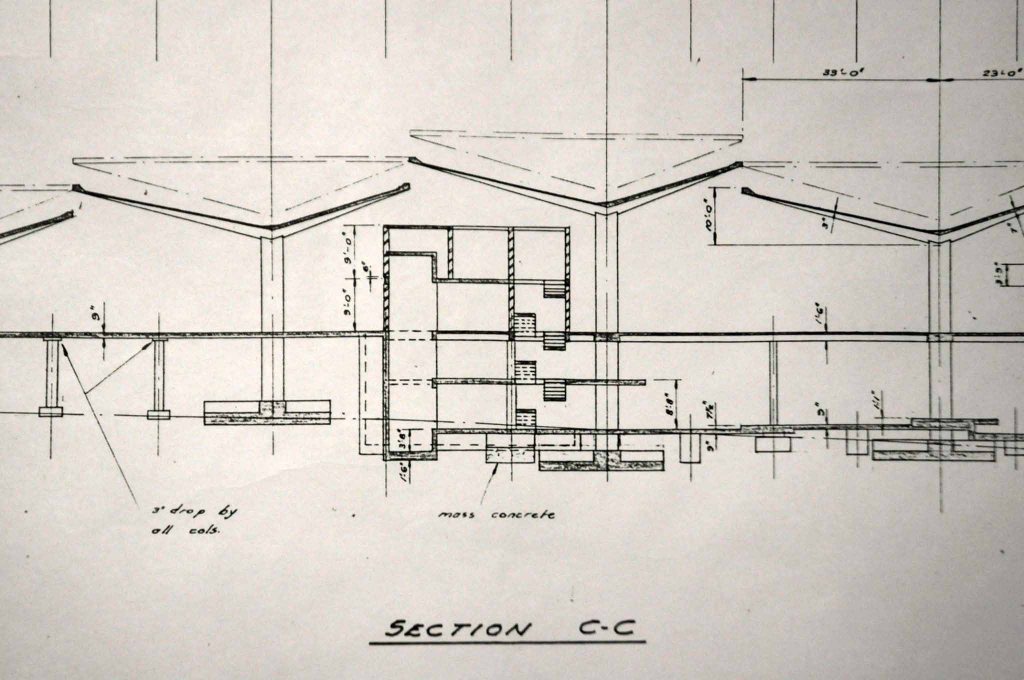
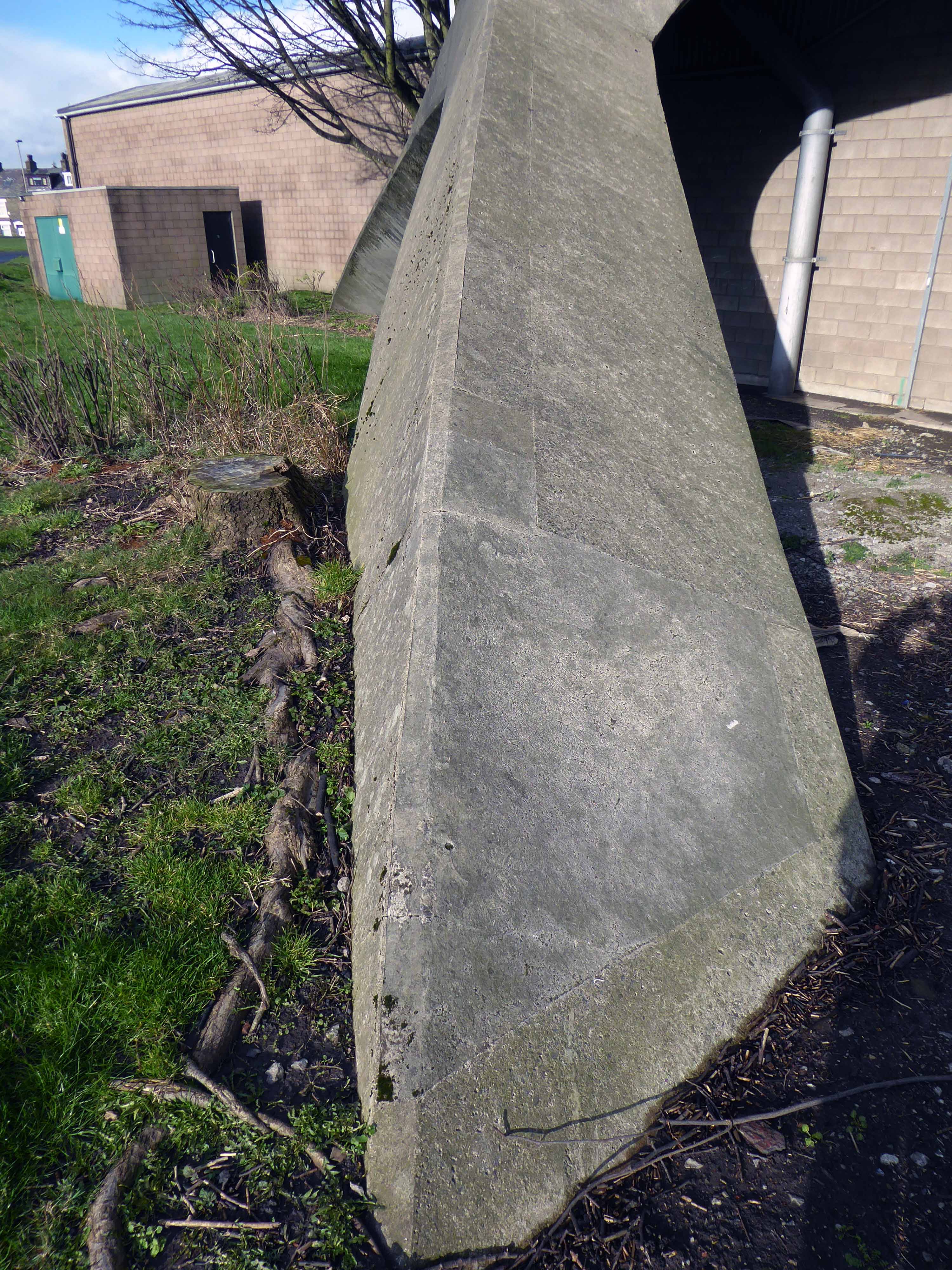
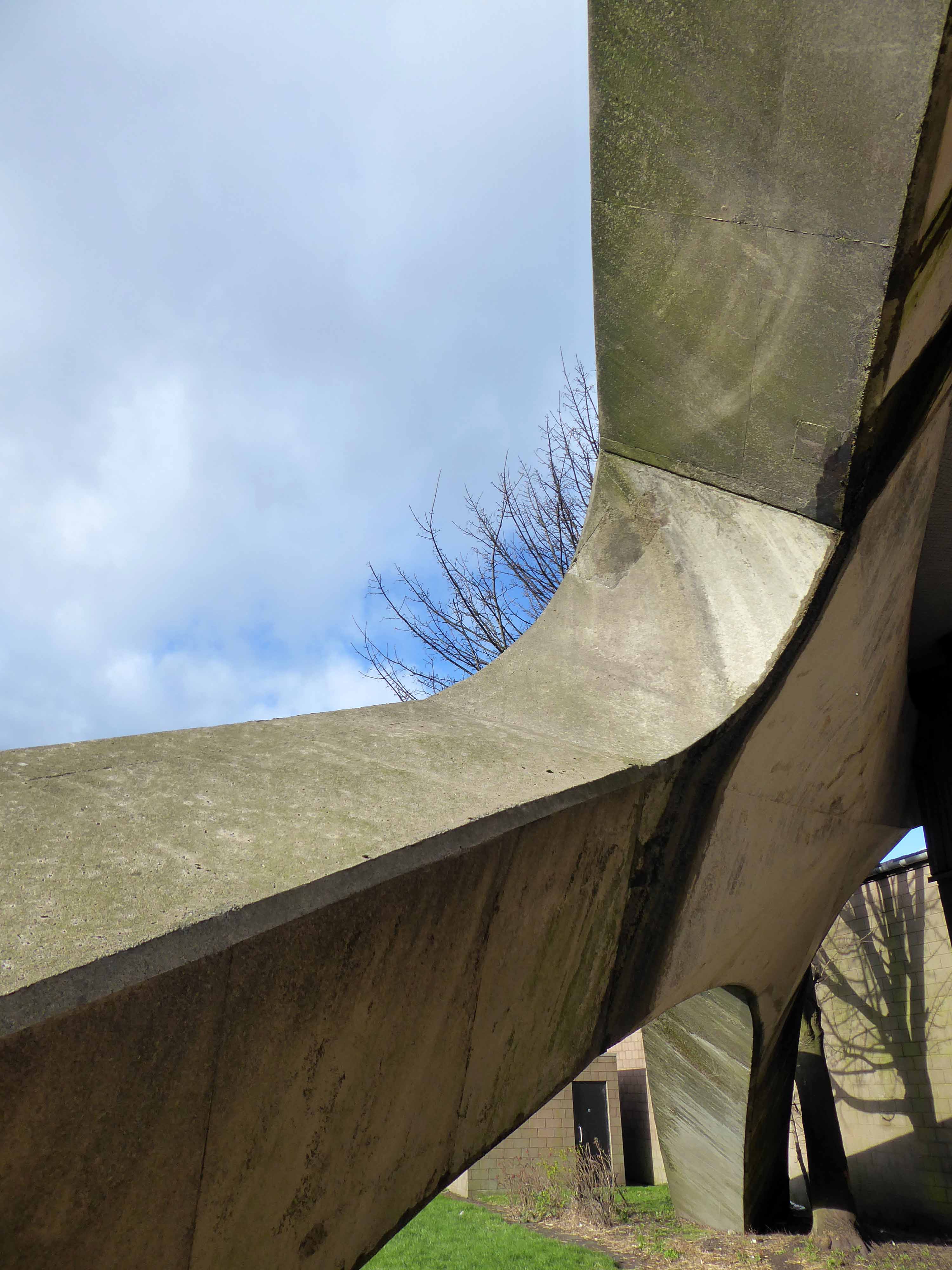
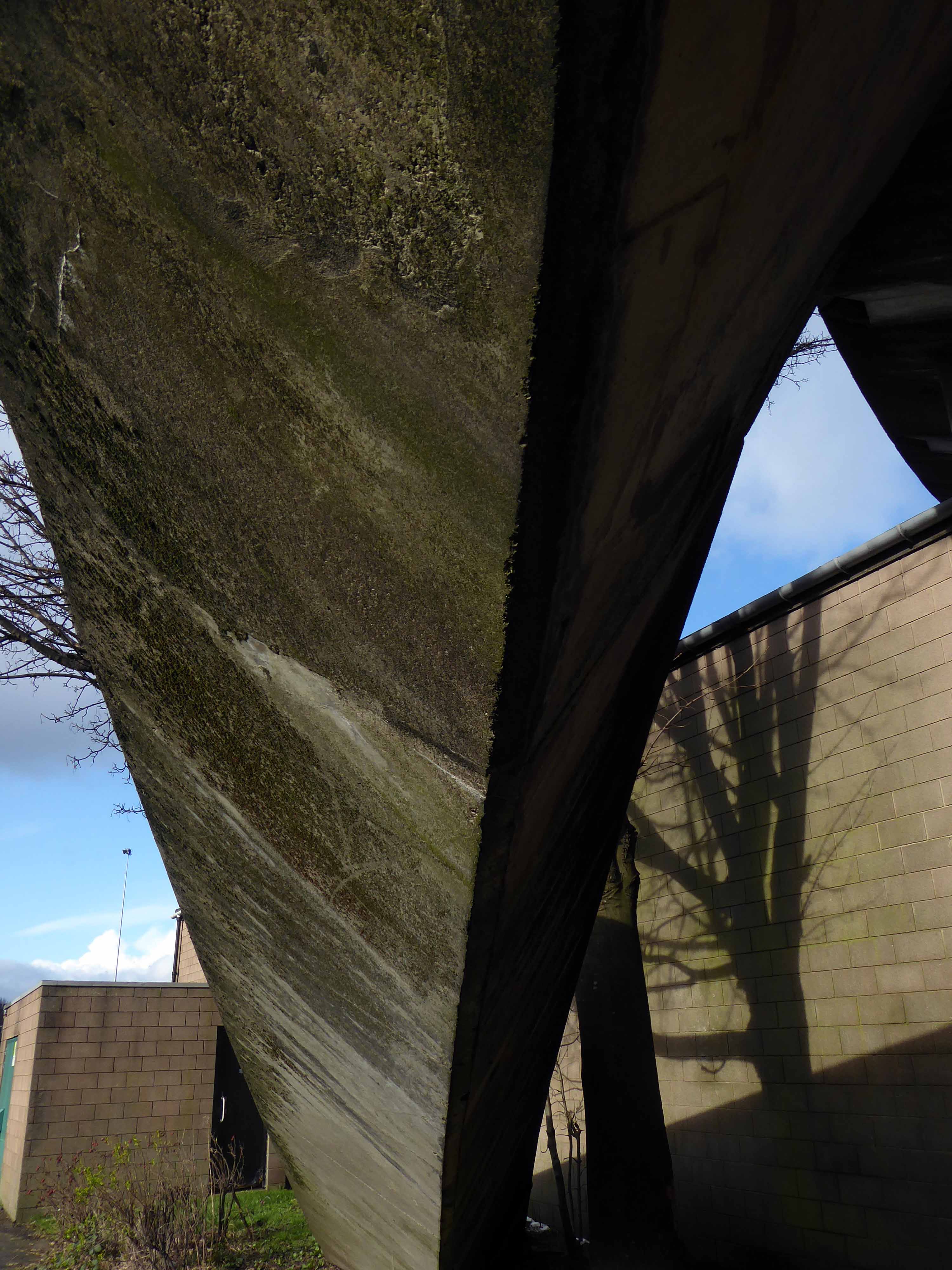
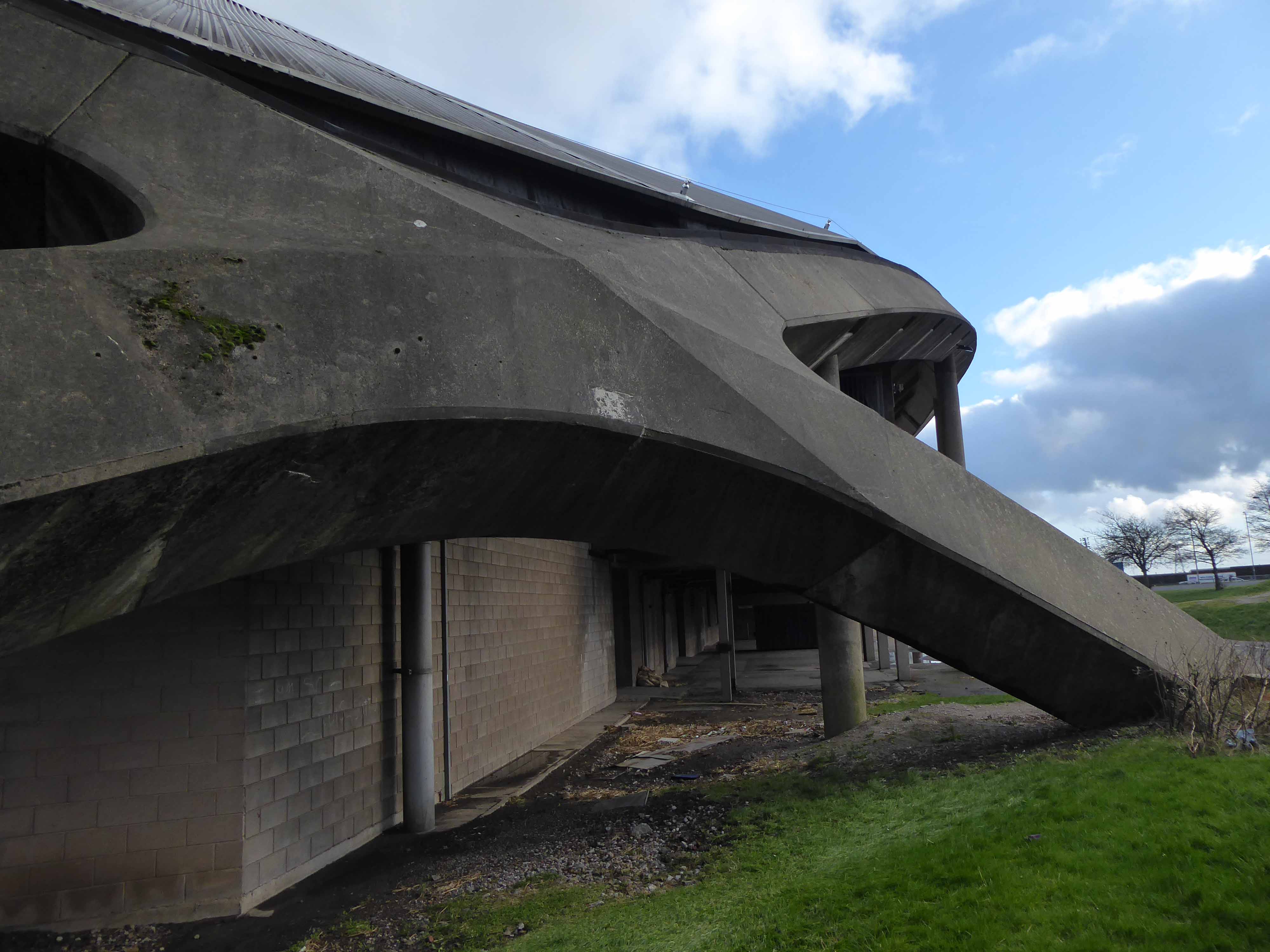
Designed by the J Seymour Harris Partnership – now Seymour Harris Architects, the building was opened on 6 April 1970 and features a roof structure based on 21 asymmetric paraboloid shells.
The practice was inspired by Mexican Felix Candela for the innovative, lightweight concrete roof sections.
Steller met the project’s lead architect Gwyn Roberts while they were both at college in Birmingham.
Roberts was never to see his masterpiece listed, the architect, who left the practice to set up on his own in the early ’70s, died in 2004.
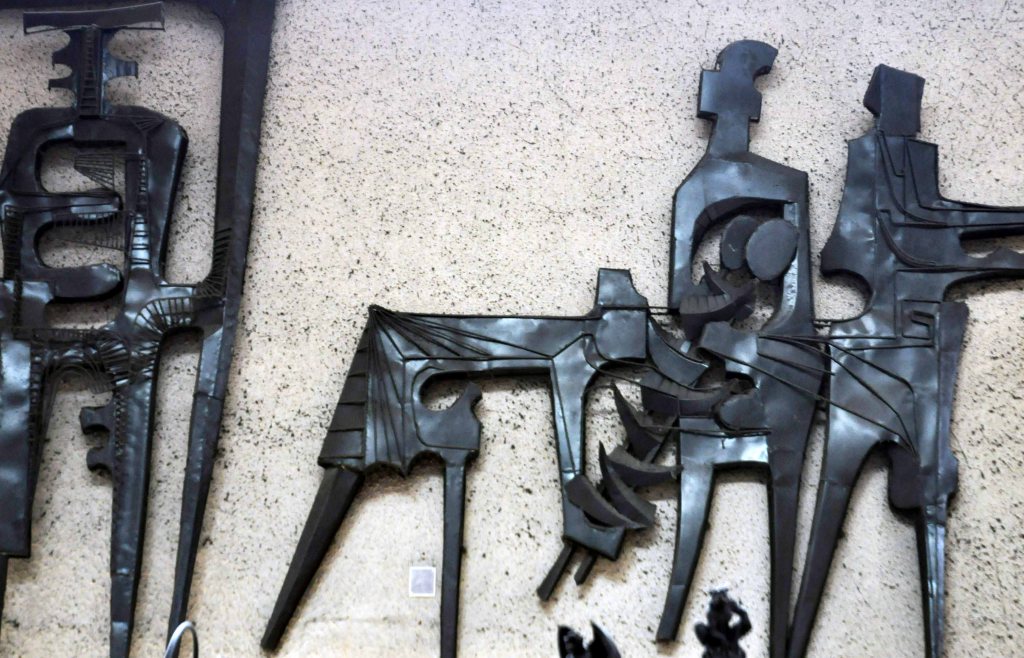
Along the north wall of the hall is a relief sculpture entitled Commerce, in black painted metal with semi-abstract figures representing agriculture, trade and products, also by Fritz Steller.
So let’s have a look at the largest ceramic sculpture in the world – partially obscured by trees.
Opened on 9th September 1928 with the silent film Lonesome Ladies.
The Carlton Picture Theatre in Anlaby Road was designed by the firm of Blackmore & Sykes and was built by Messrs. Greenwood and Sons.
It was run by Hull Picture Playhouse Ltd.
This was a lavish suburban cinema, with an elaborate green and gold sliding dome utilising Venetian glass and housing hundreds of concealled lights. Roman marble mosaics and painted plaster panels on the walls added to the sense of occasion engendered by a trip to the flicks.
A Fitton & Haley organ was installed, but this was later removed to the more central Cecil Theatre and was destroyed when that theatre was bombed during WW II.
The cinema had two entrances, one in each of the two towers on the front corners of the building. Above the proscenium was the inscription, rather inapt given how soon talkies arrived :
“A Picture is a poem without words”.
There was a single balcony and, for its date, a surprisingly large car park.
It continued unaltered, save for minor war damage, until its closure in April 1967, after which it was simply converted to bingo usage which continued as a Mecca Bingo Club until 2008.
This is an immense and noble building, a once great single screen cinema.
Unluckily closed for some thirteen years, now looking neglected and forlorn.
Tinned up and awaiting an uncertain future, planning was applied for conversion to apartments, it was refused.
It is unlisted and unloved in need of friends and funds, who could operate a cinema and theatre in the manner of The Plaza in my hometown of Stockport.
The number of cinemas in Hull peaked at thirty six in 1938.
British film making flourished during the war years and cinema attendances were much higher, but by the end of the Second World War there were only twenty five – several had been bombed.
In 1964 competition from radio and television, and latterly bingo, reduced the number of cinemas to ten.
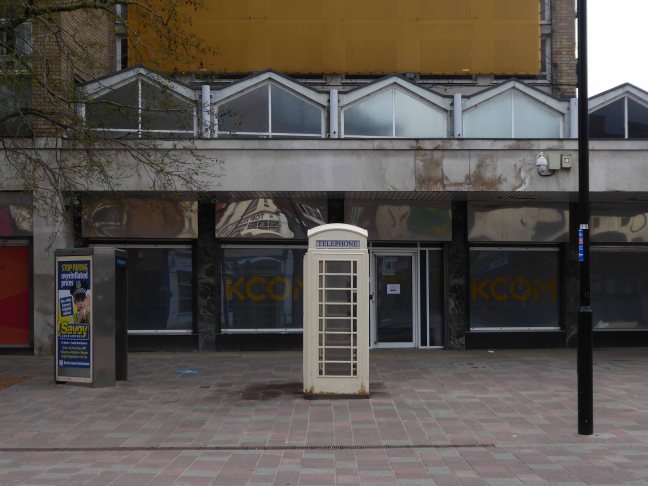
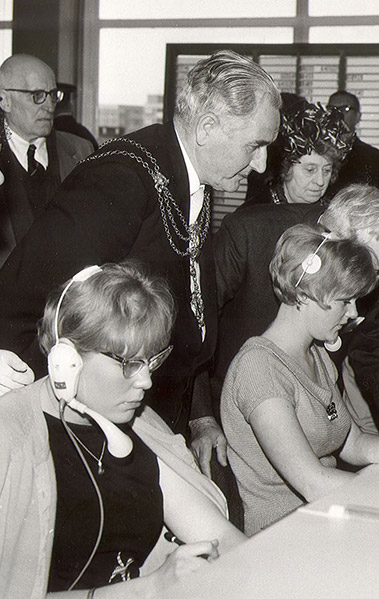
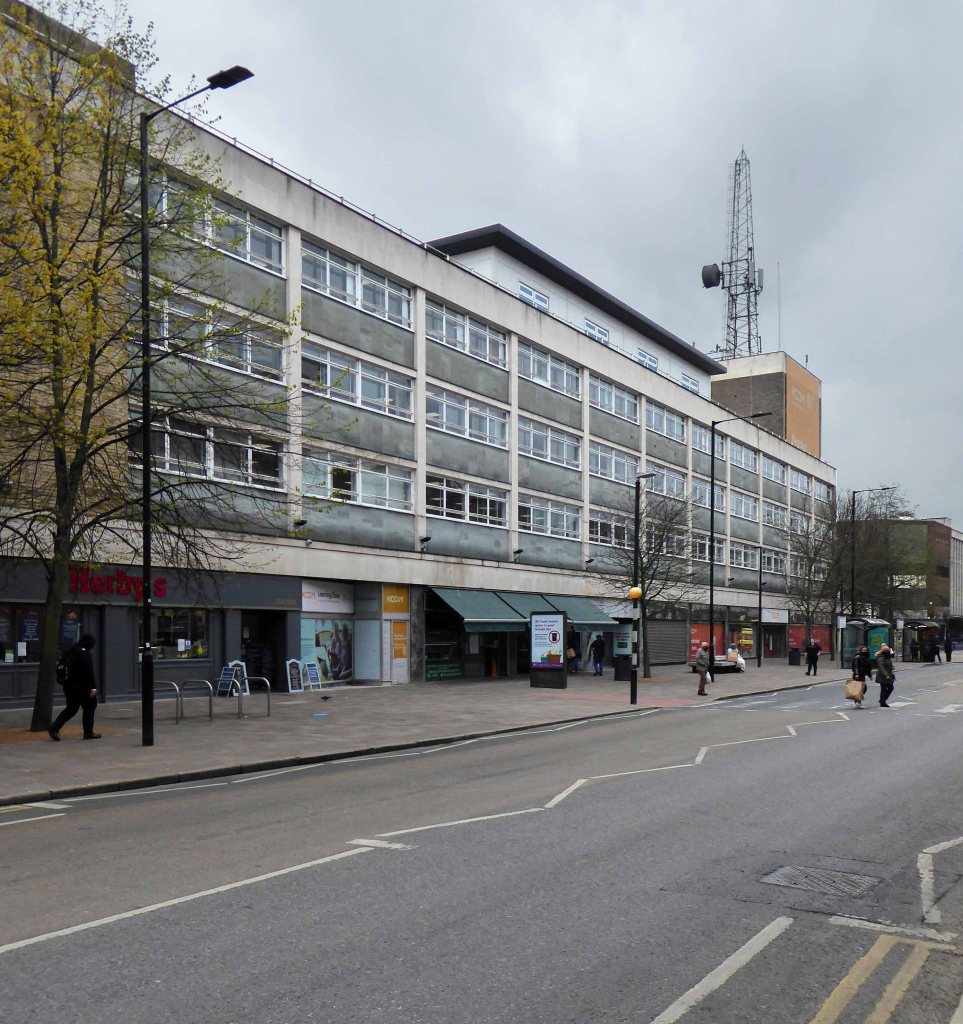
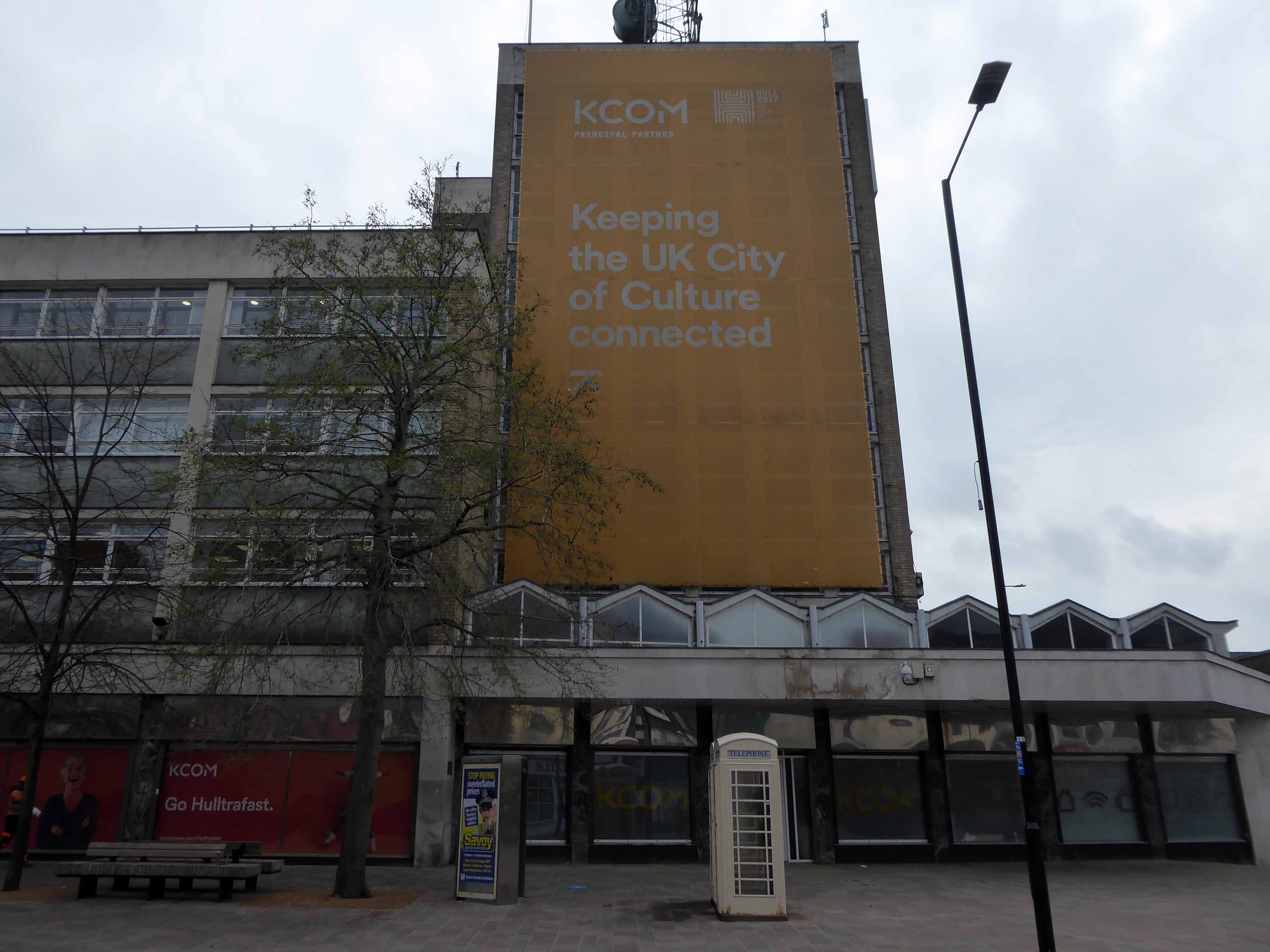
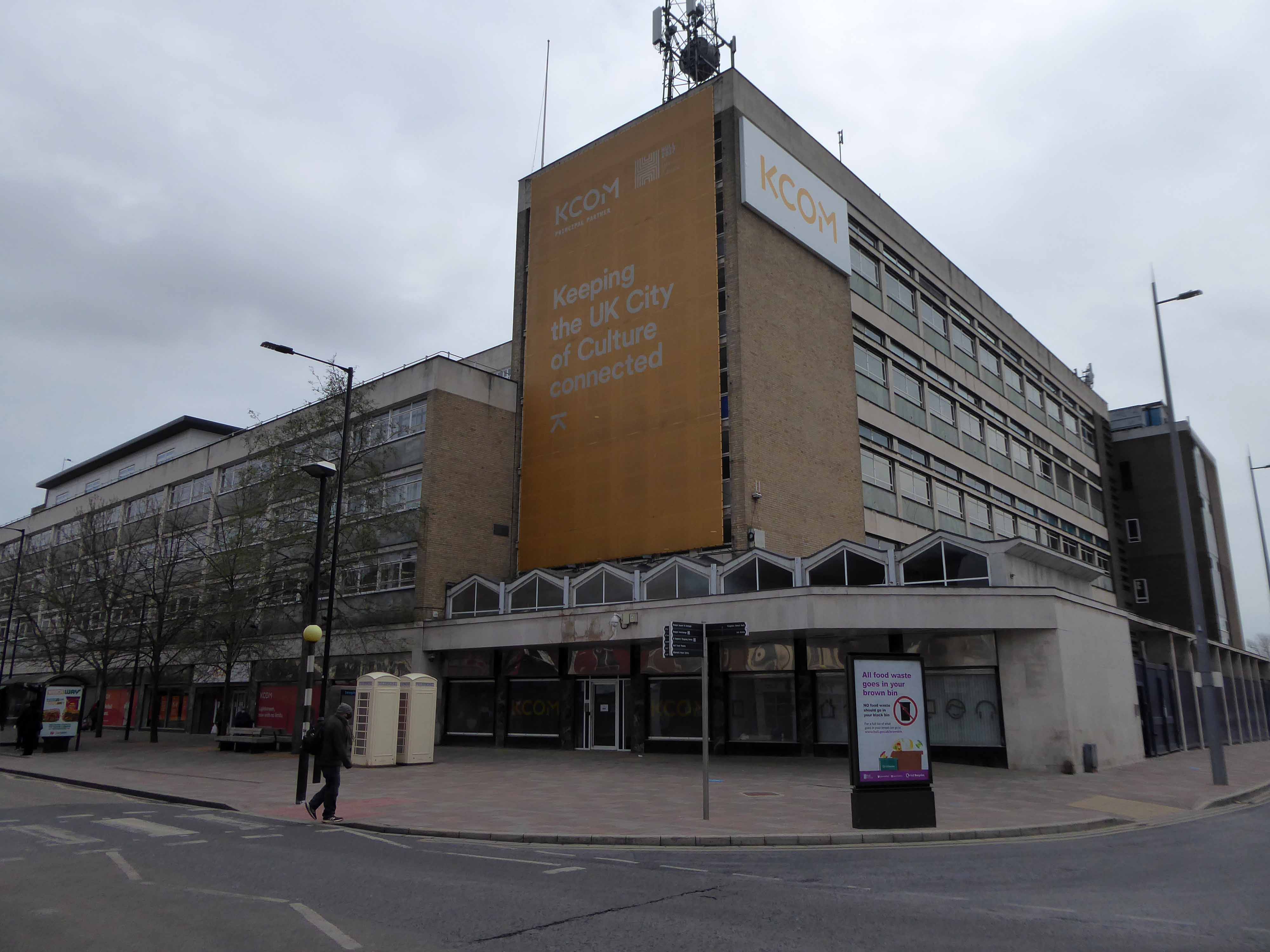
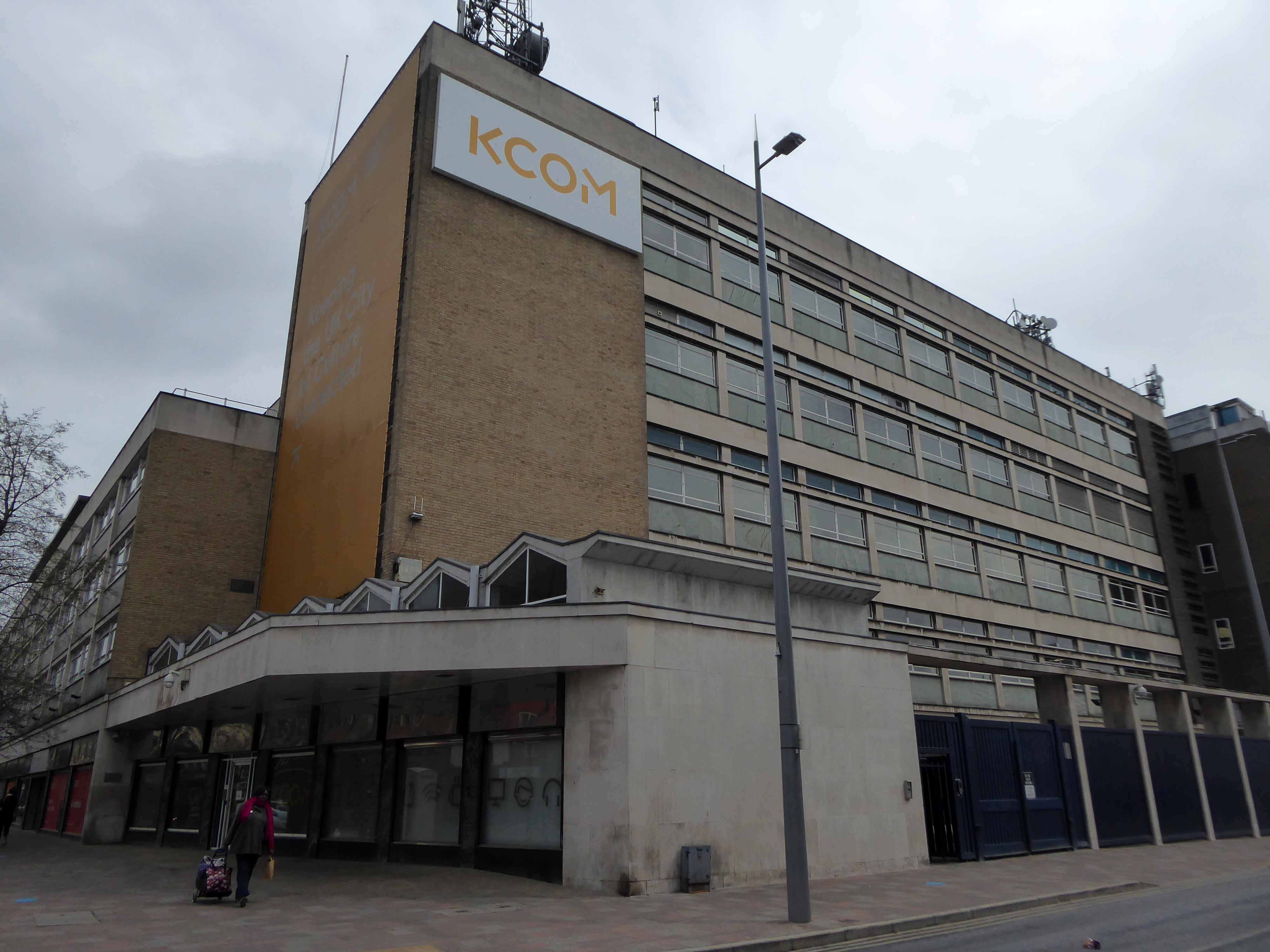
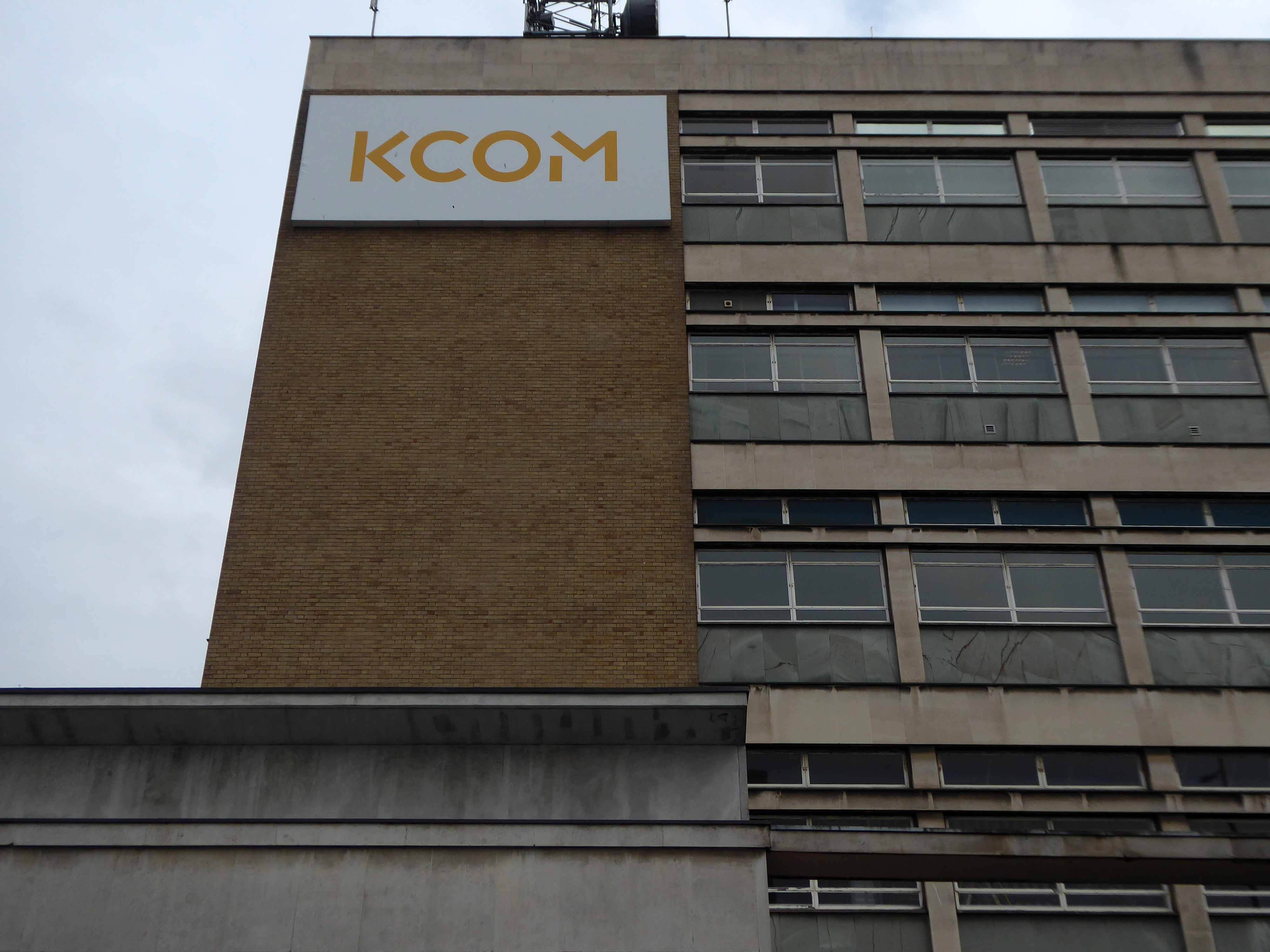
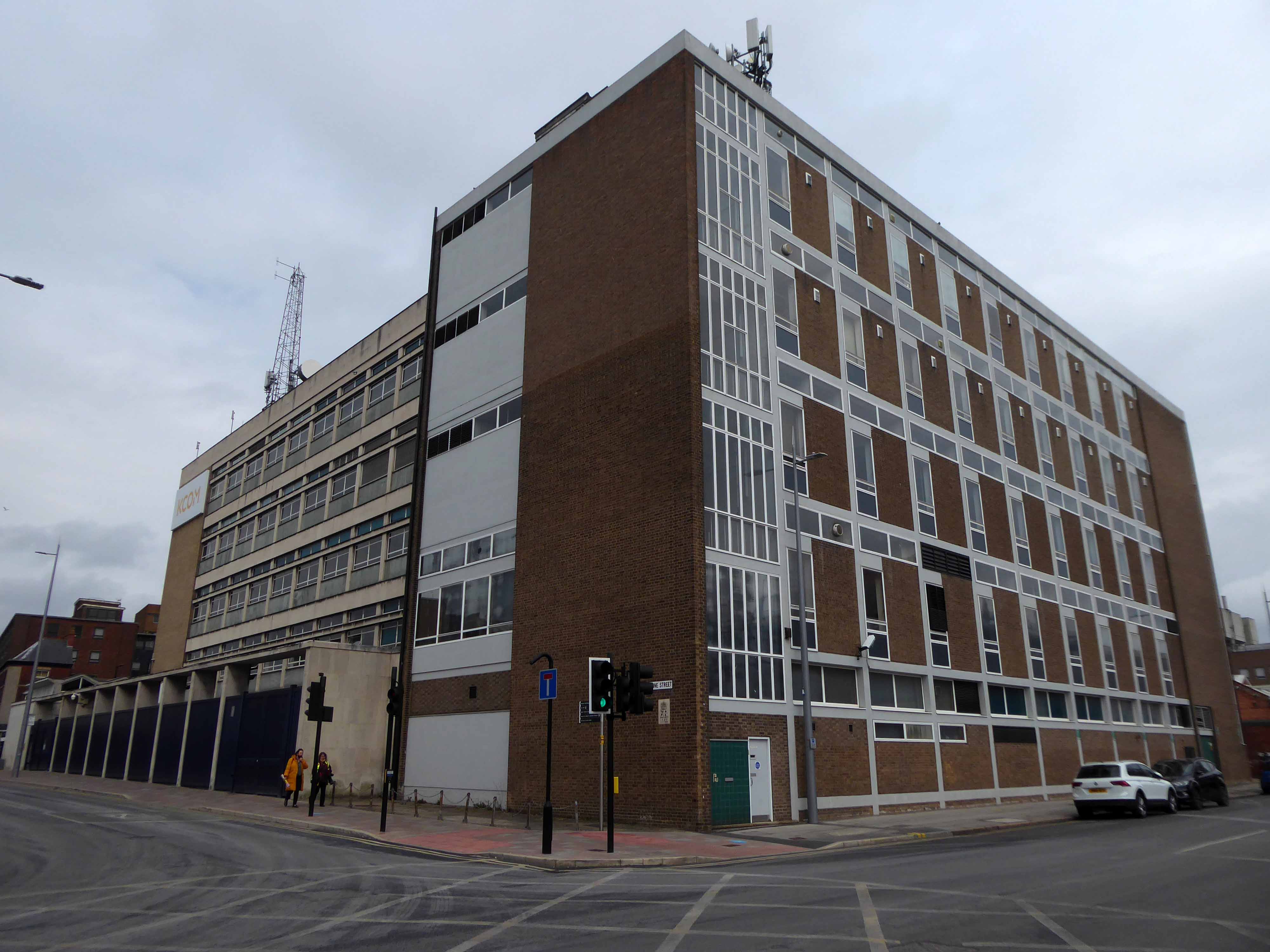
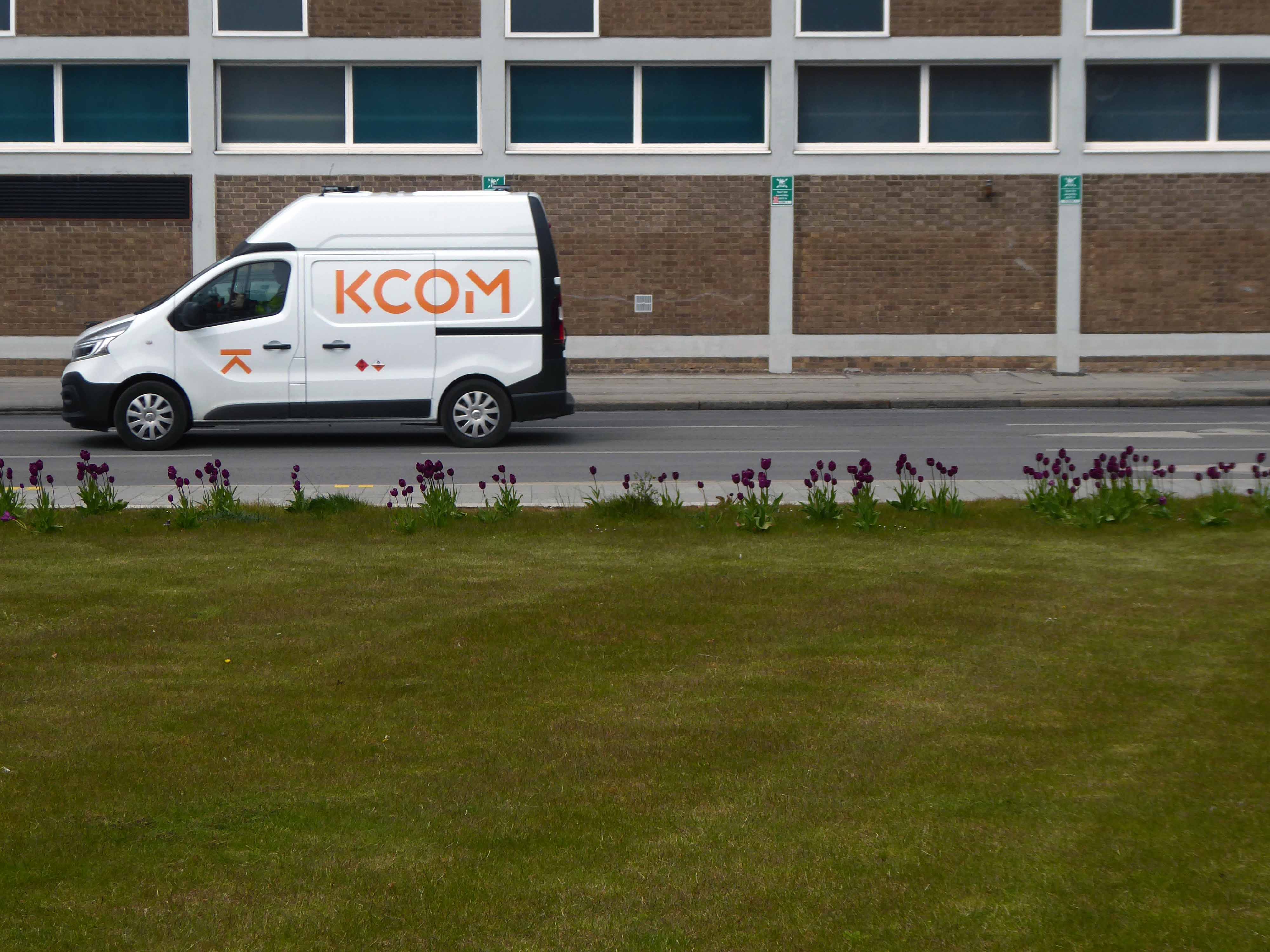
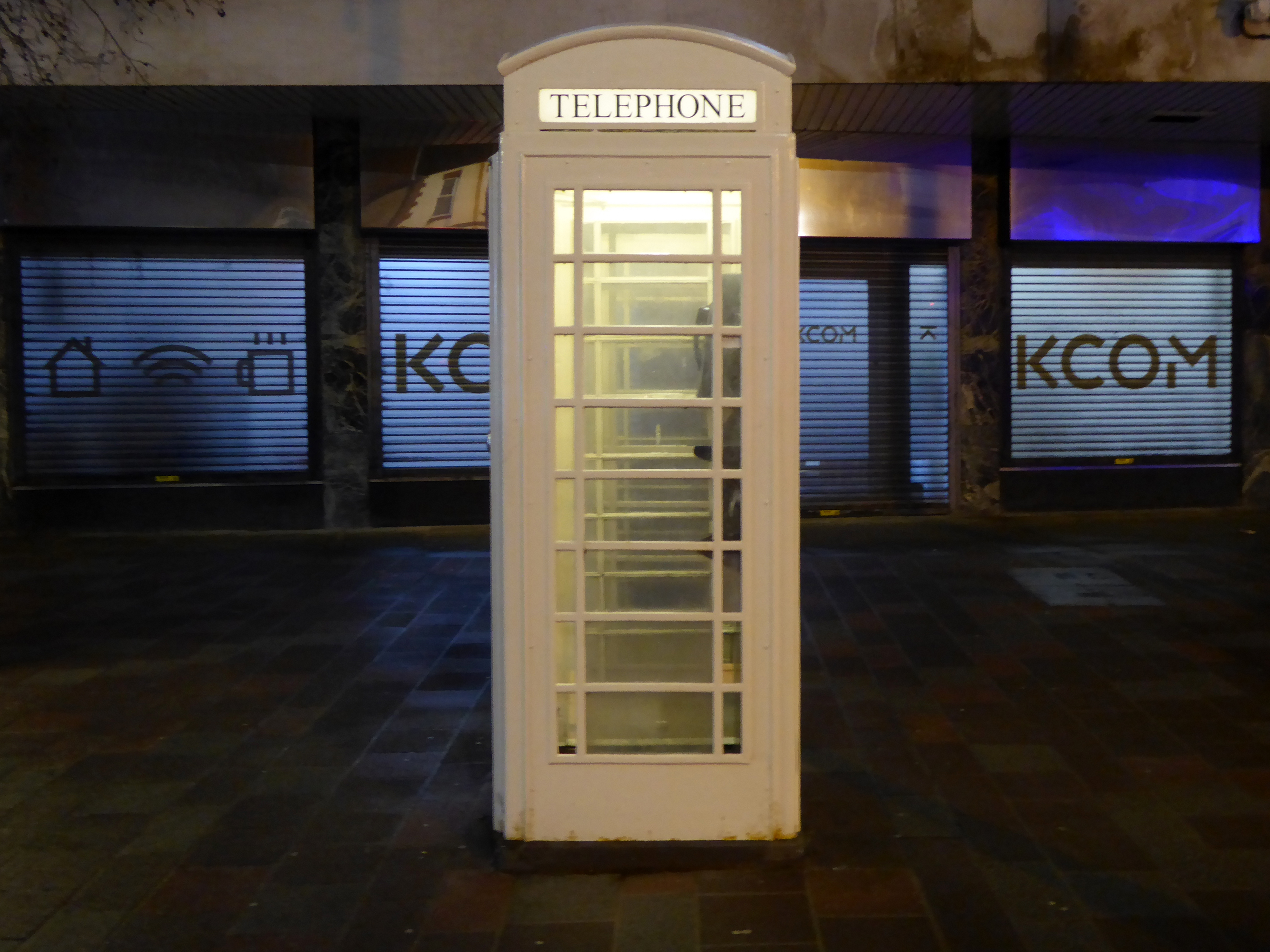
When Hull City Council founded KCOM back in 1904, as Hull Telephone Department, it was one of several local authorities across the country granted a licence to run its own phone network.
Gradually, over time other authorities gave up control of their networks to the Post Office which wanted to create a single national service, but Hull City Council decided to keep its network and continue to go it alone.
While the Post Office network eventually became BT, Hull’s network, like the city itself, remained fiercely independent. That’s why today Hull has its own distinct cream phone boxes in contrast to the red ones you’ll find elsewhere.
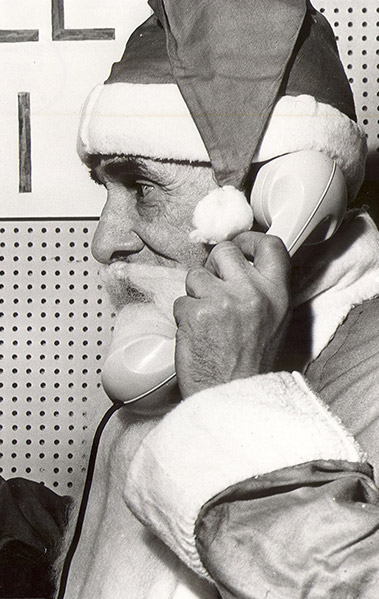
1952 Call Father Christmas service was introduced.
Having heard of a recorded message service in Scandinavia, Hull Councillor J M Stamper suggested the idea of putting Father Christmas on the telephone. The Call Father Christmas service was introduced shortly afterwards, the first of its kind in the UK. By dialling a Hull Central number children could hear recordings of a Christmas story and carol singing.
The stories were written and performed by Hull Telephone employees.
The first story attracted 20,000 callers, with 35,000 customers the following year with calls and media interest received nationally and internationally.
The success of the Father Christmas service led to the creation of other recorded information lines, such as Bedtime Stories, Teledisc and Telechef.
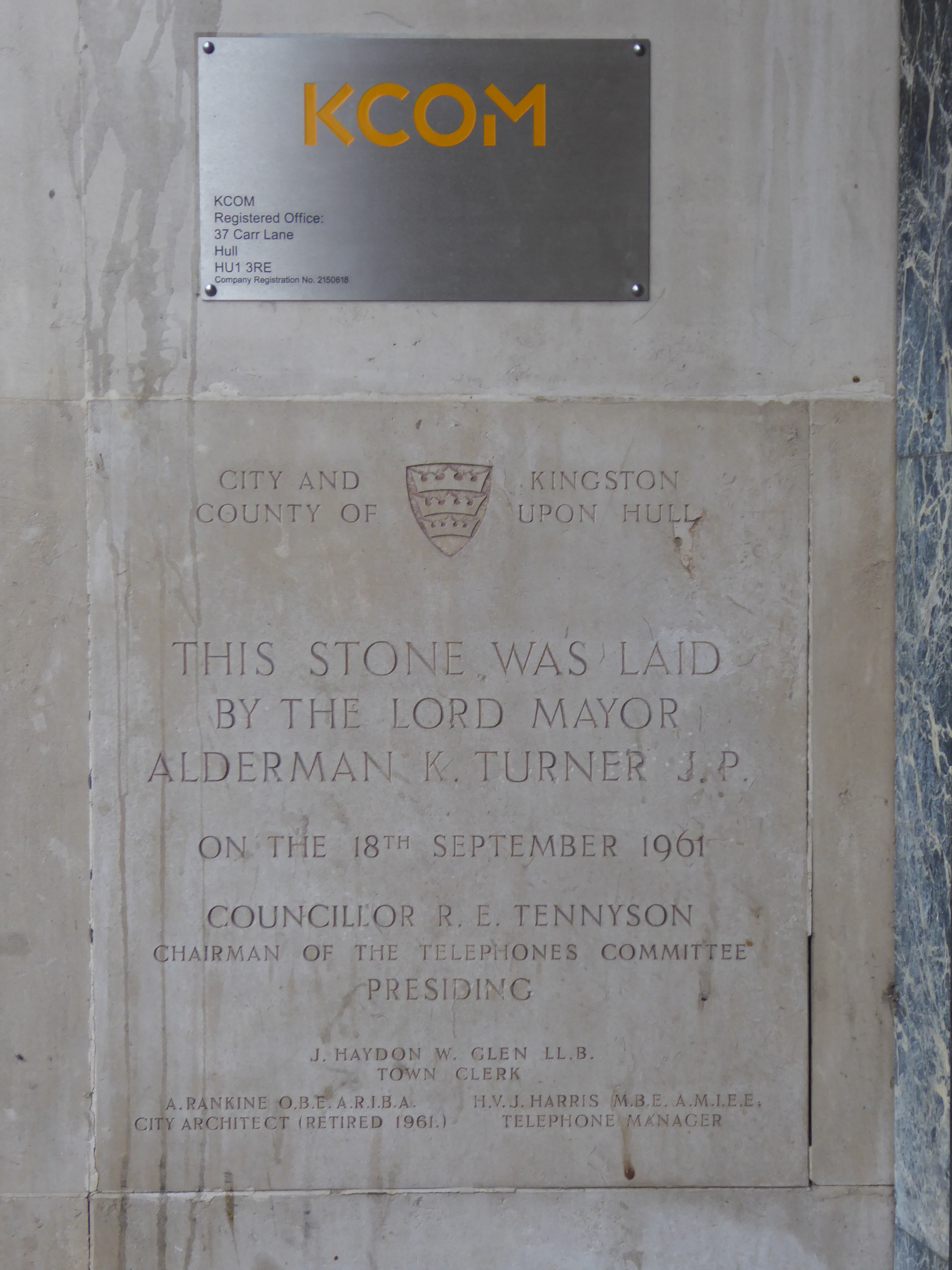
This recipe line was introduced in 1950s and was still going strong until the 1990’s, with 50s recipes such as meat loaf and corned beef with cabbages being replaced by dishes such as Italian Chicken Bake.1964Celebrating our Diamond Jubilee with the official opening of the new Central Exchange and Head Office – Telephone House in Carr Lane Hull.
The work of City Architect A Rankine OBE RIBA2007 New company name as Hull City Council sell remaining stake.
The shareholders of Kingston Communications HULL PLC voted to change the company name to KCOM Group PLC to more accurately reflect the changing shape and geographic reach of the company.
Hull City Council sell remaining stake-holding in the business.
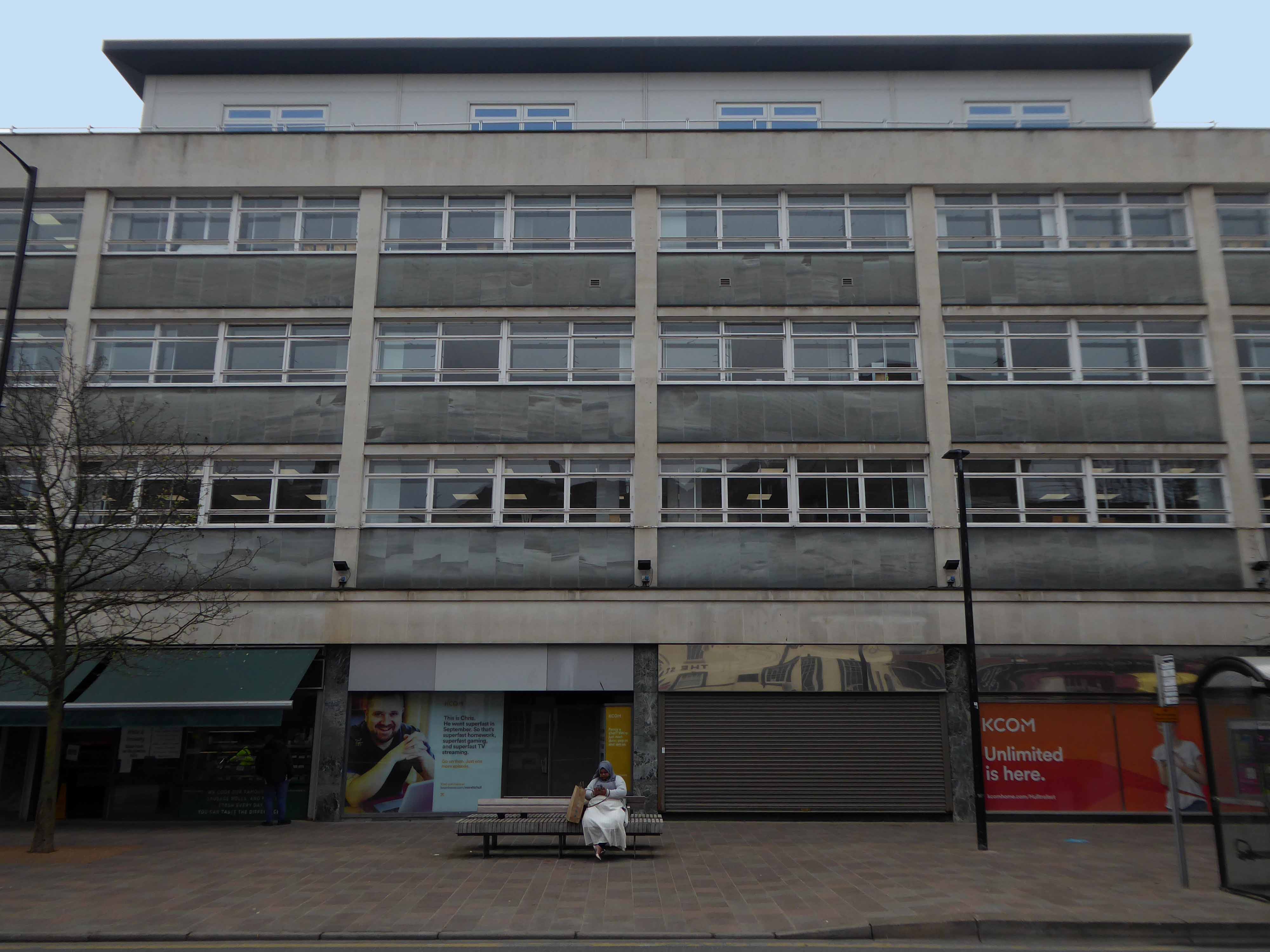
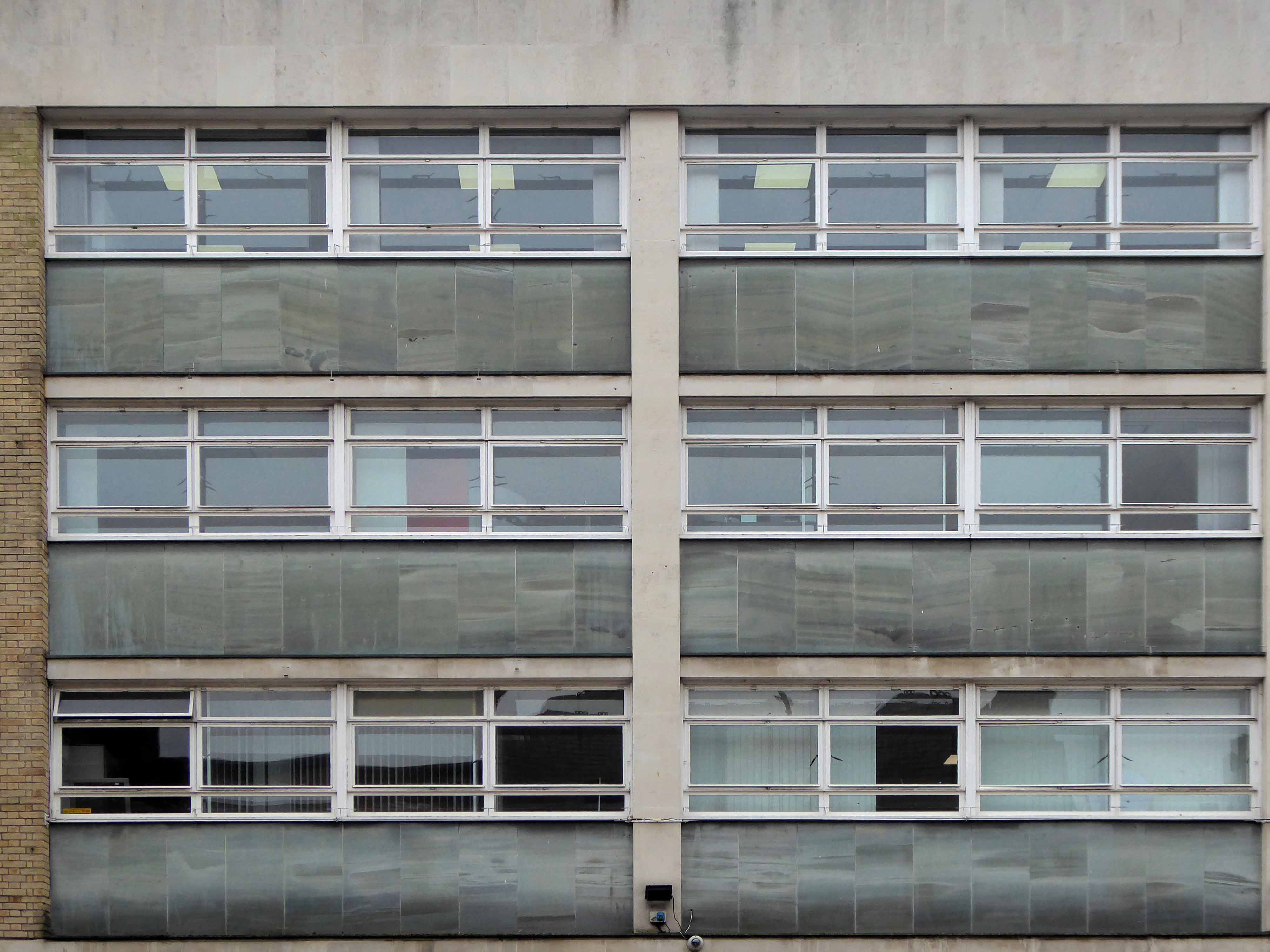
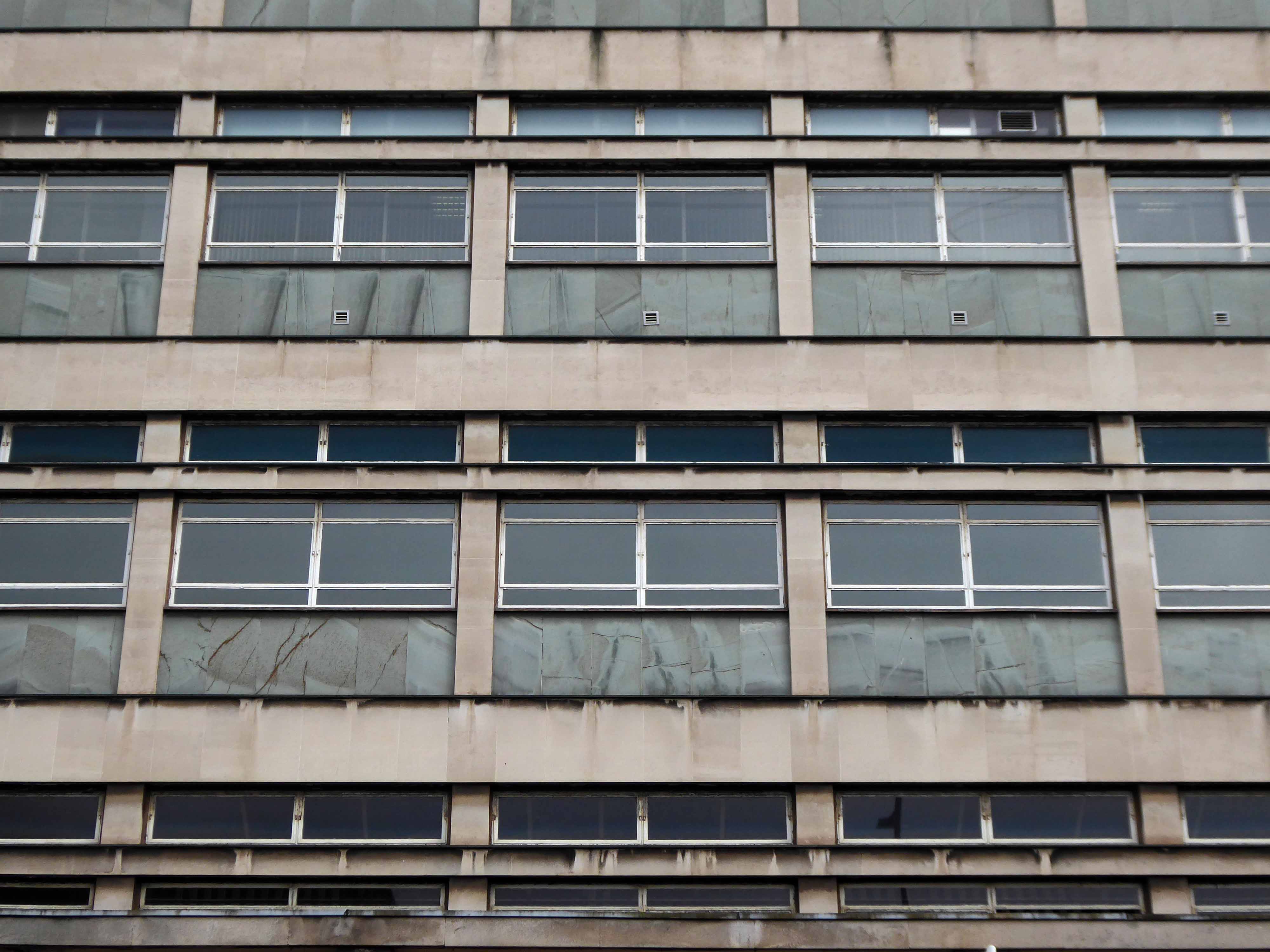
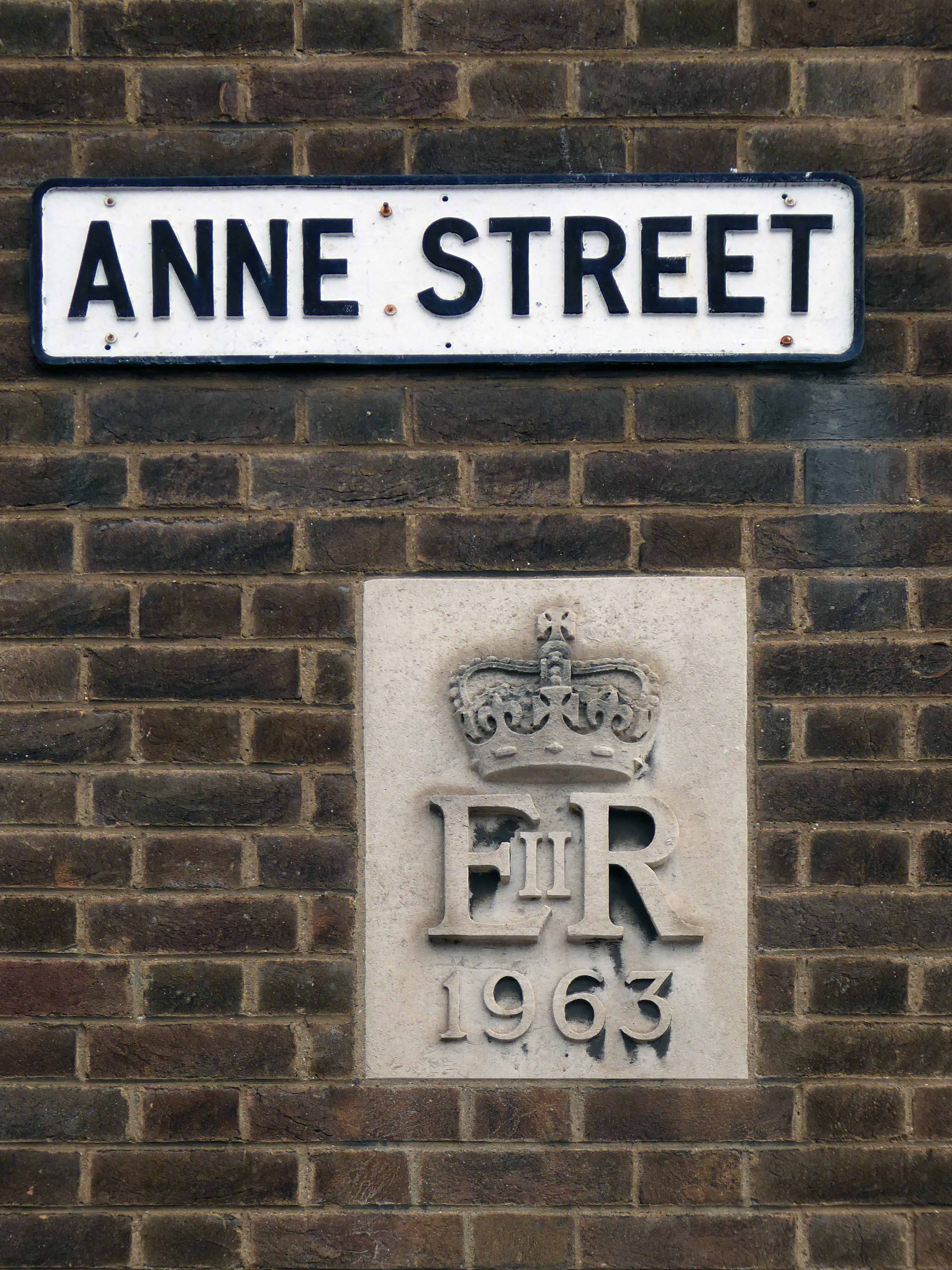
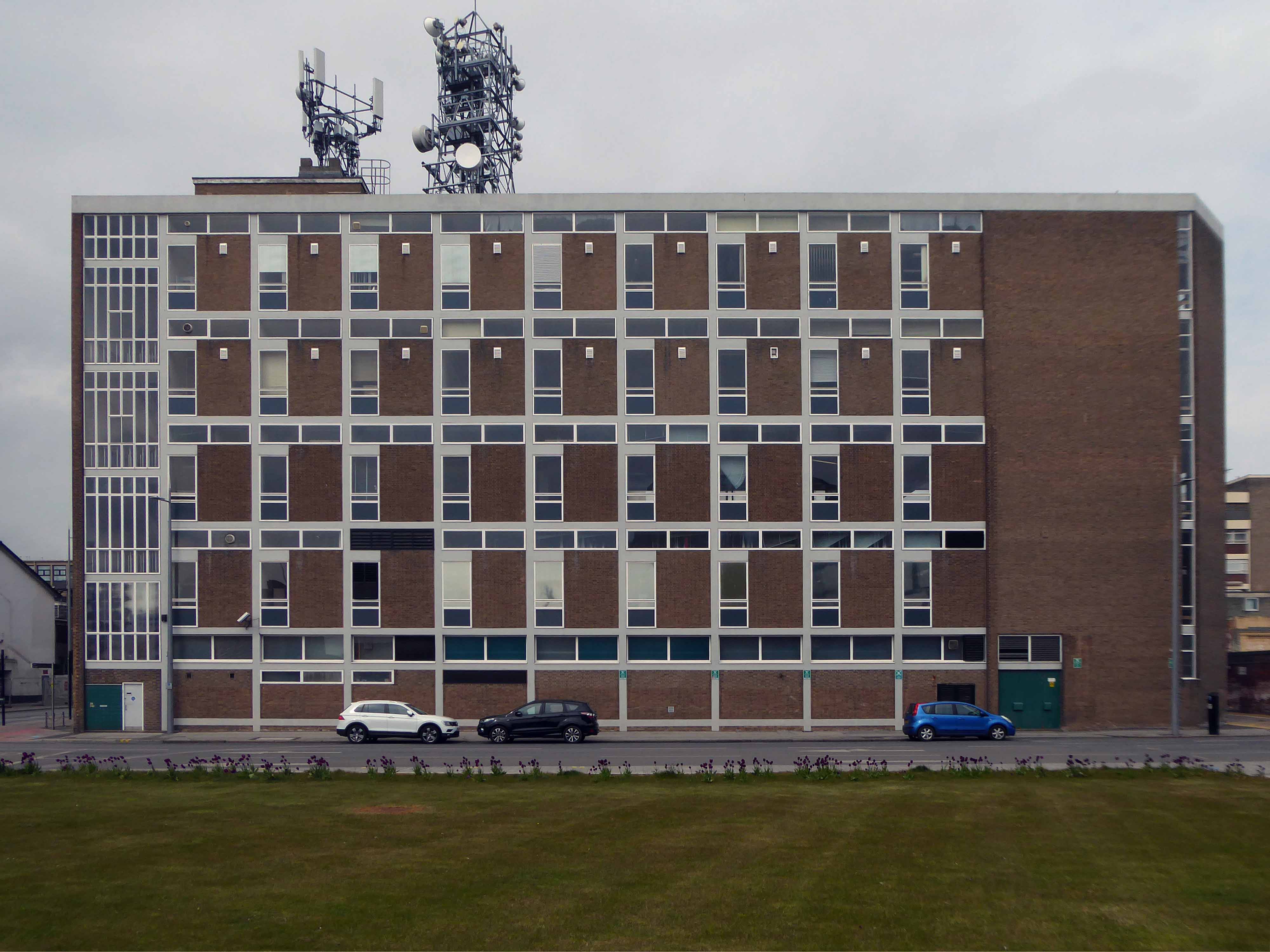
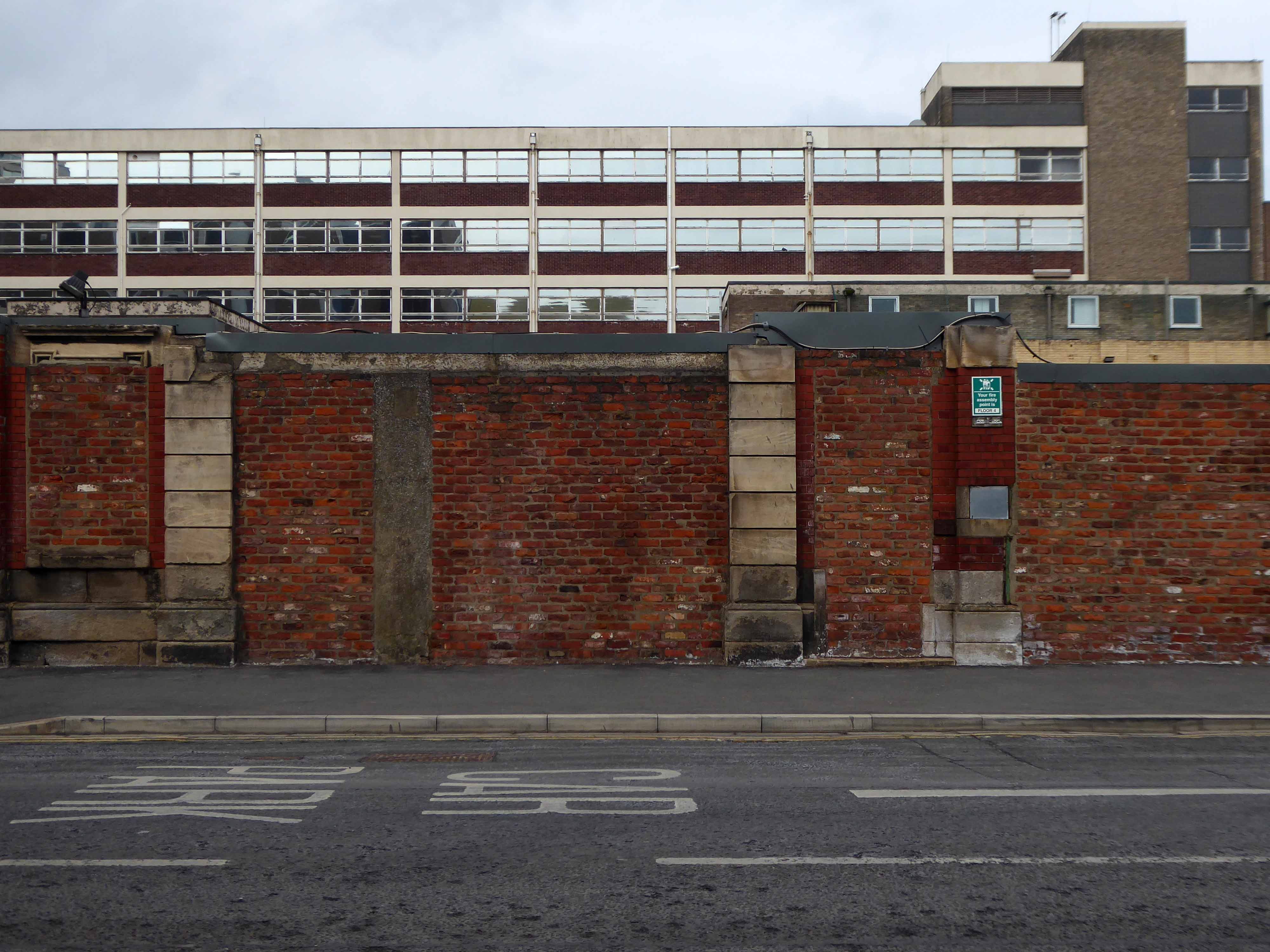
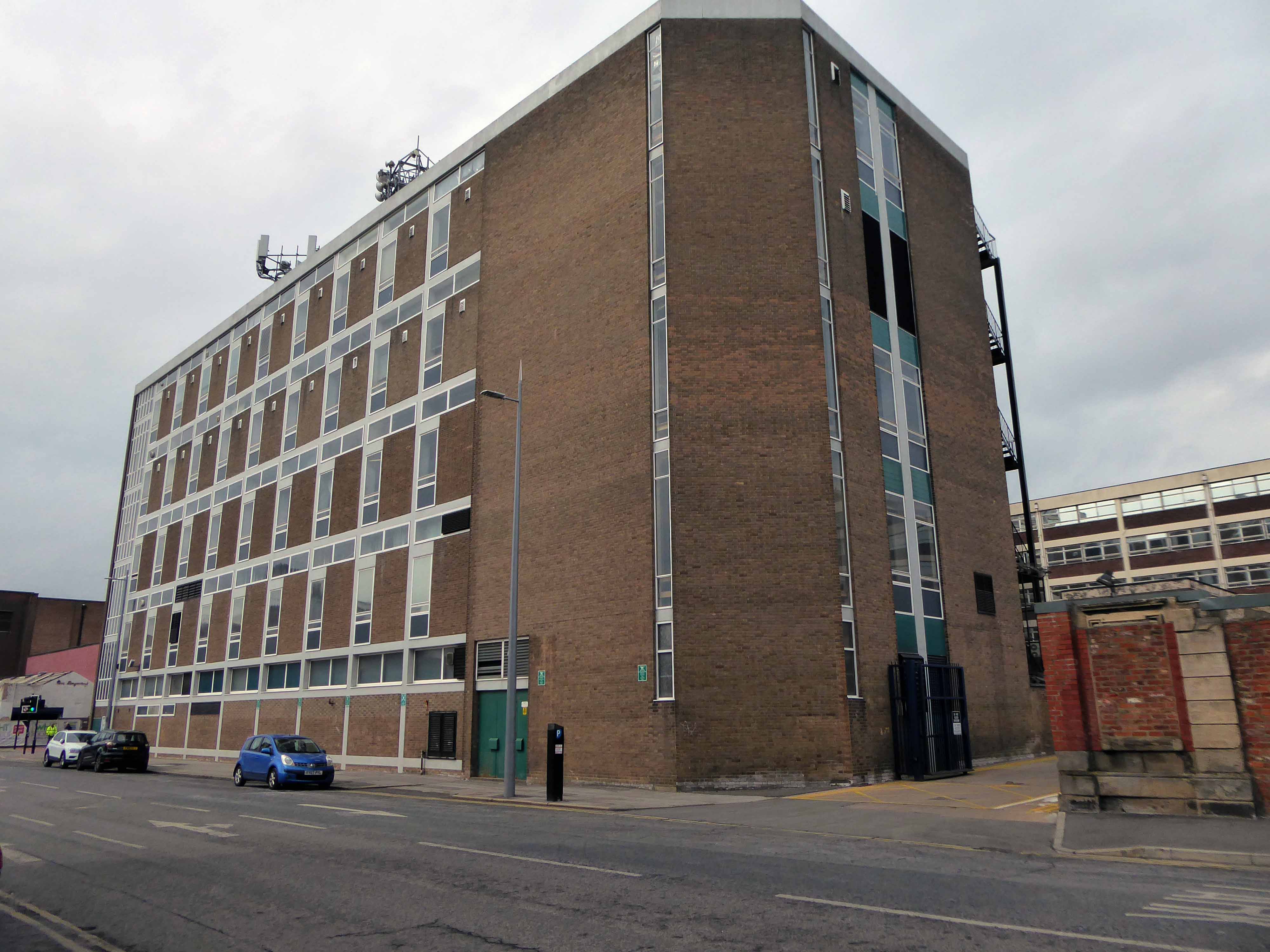
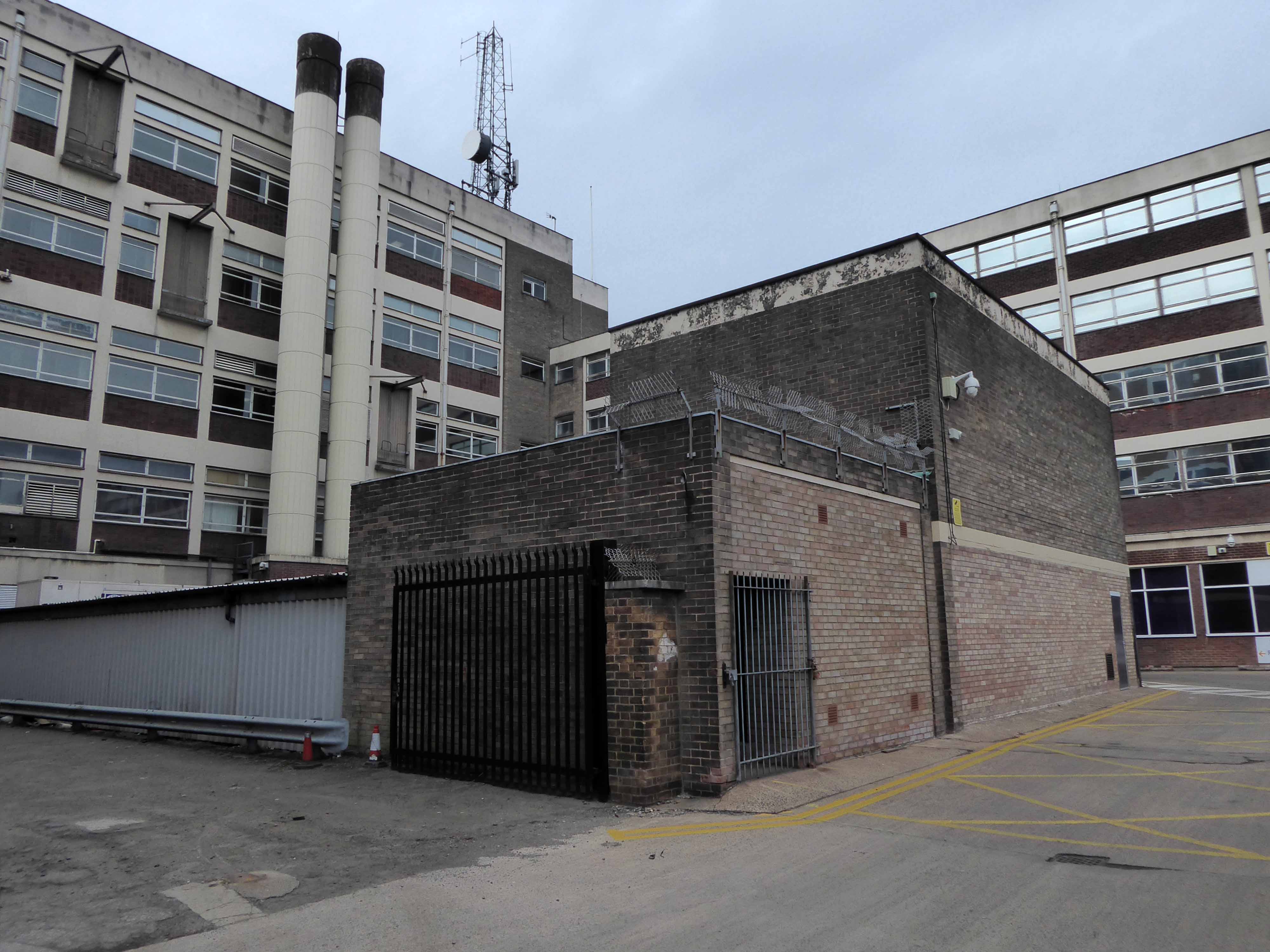
This is a fine building of brick, concrete, stone and steel, a restrained palette and commanding volumes, which asserts itself within the framework of the surrounding post-war architecture.
Well worth a walk around – let’s circumnavigate right now!
Good night all, sweet dreams and don’t forget to call Santa – hope that you all enjoyed your corned beef and cabbage.
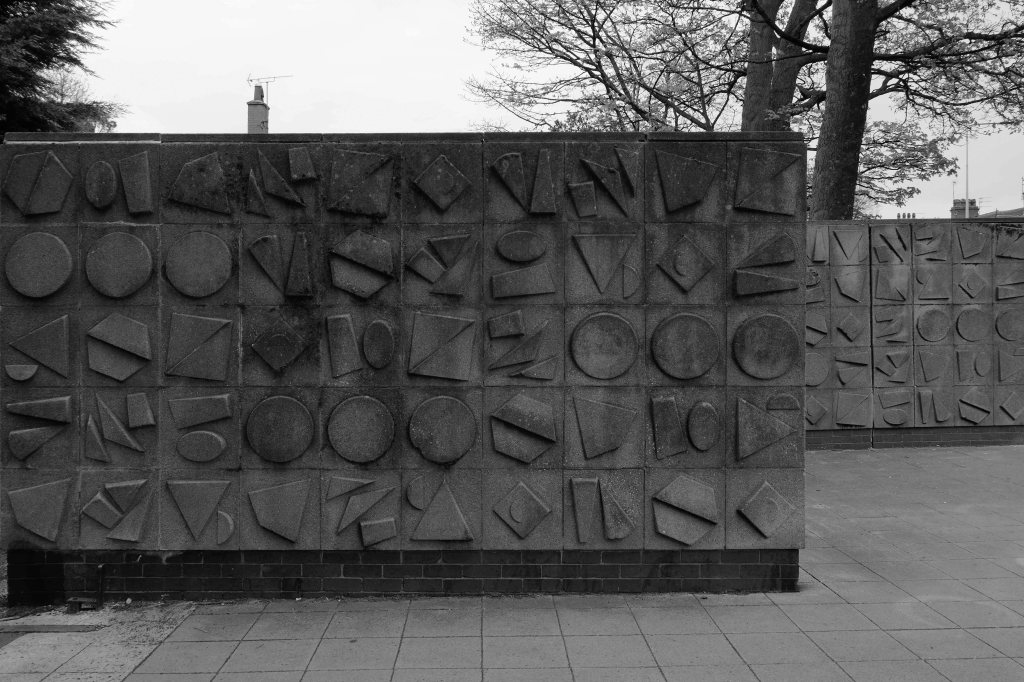
At the entrance to the park on Holderness Road are eight concrete walls.
They are covered in square, cast concrete modular panels.
Said to be the work of the City Architect in 1964.
Municipal Dreams lists the City Architect at that time to be JV Wall, having replaced David Jenkin in that same year.
My money’s on Wall – well it makes sense don’t it?
I had taken the bus from Hull Interchange on a chill April morning.
The driver obligingly giving me a shout at the appropriate stop – right outside the gates.
They are not universally loved:
A further testament to the concrete pourer’s art is to be found adorning the entrance to East Park. They are so horrible that I could find nothing on the net to indicate who designed them, shame is a powerful motive for reticence. So here they stand to welcome the visitor; after this the actual park couldn’t be any worse.
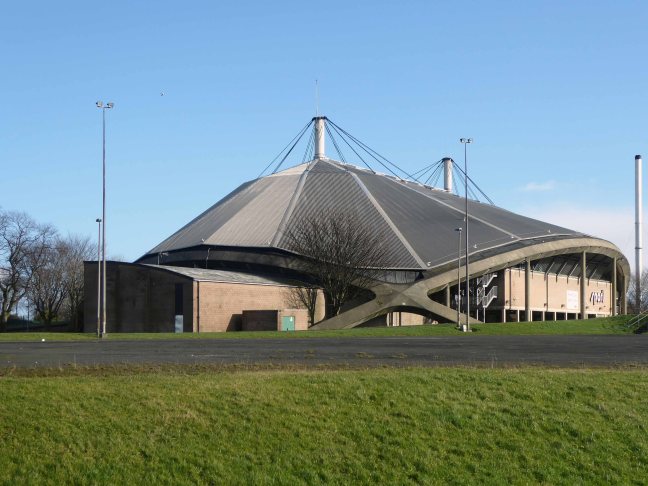
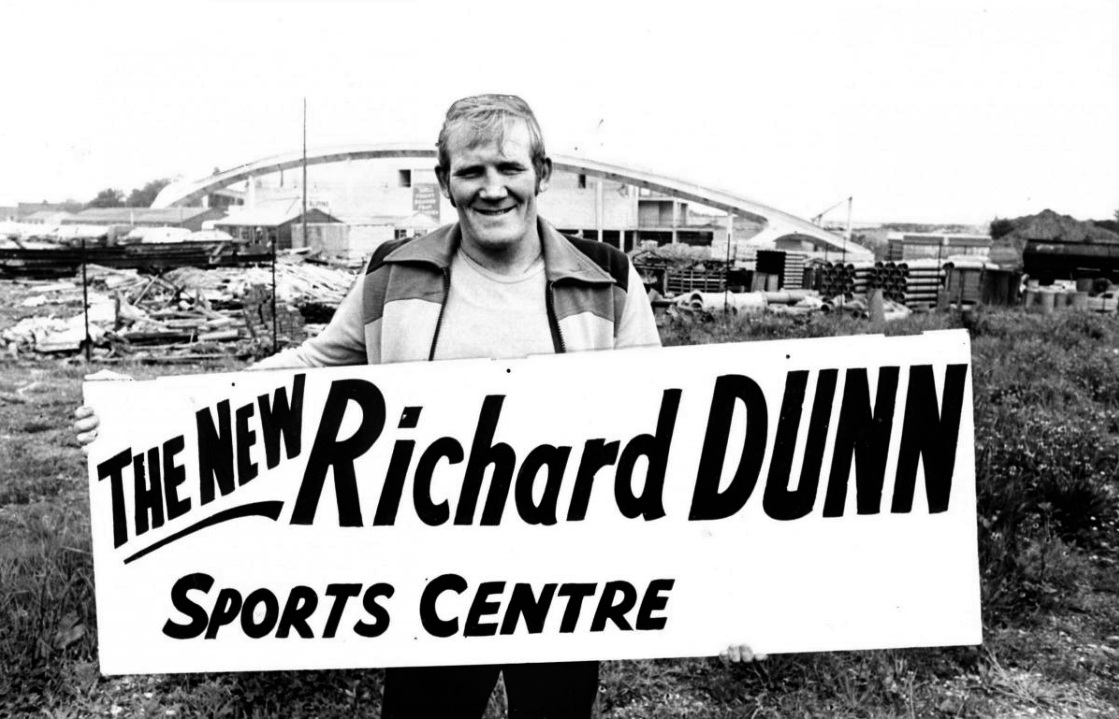
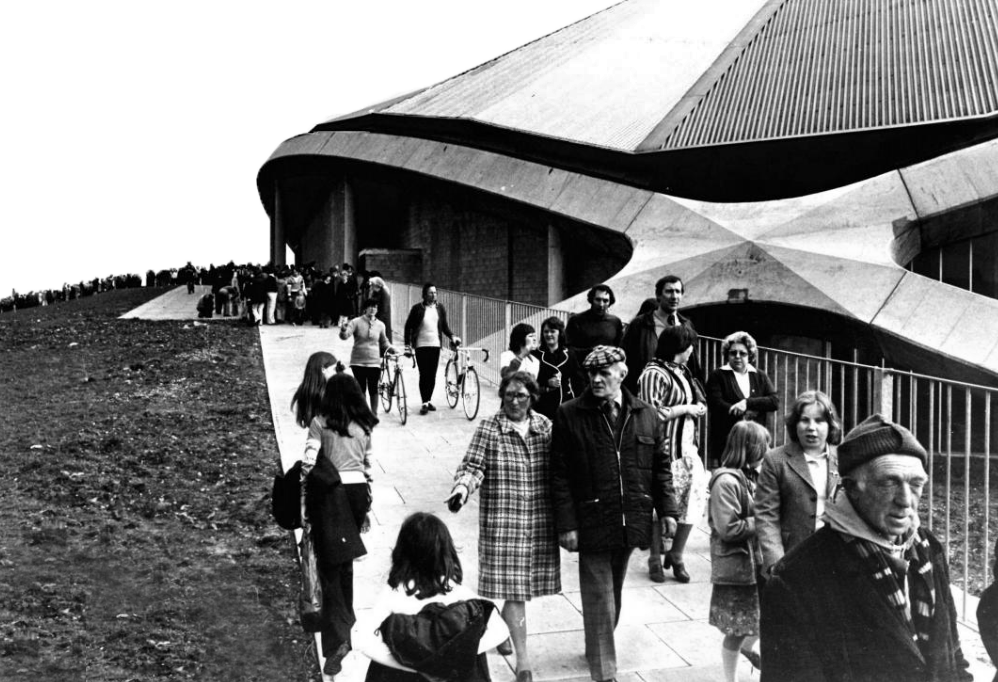
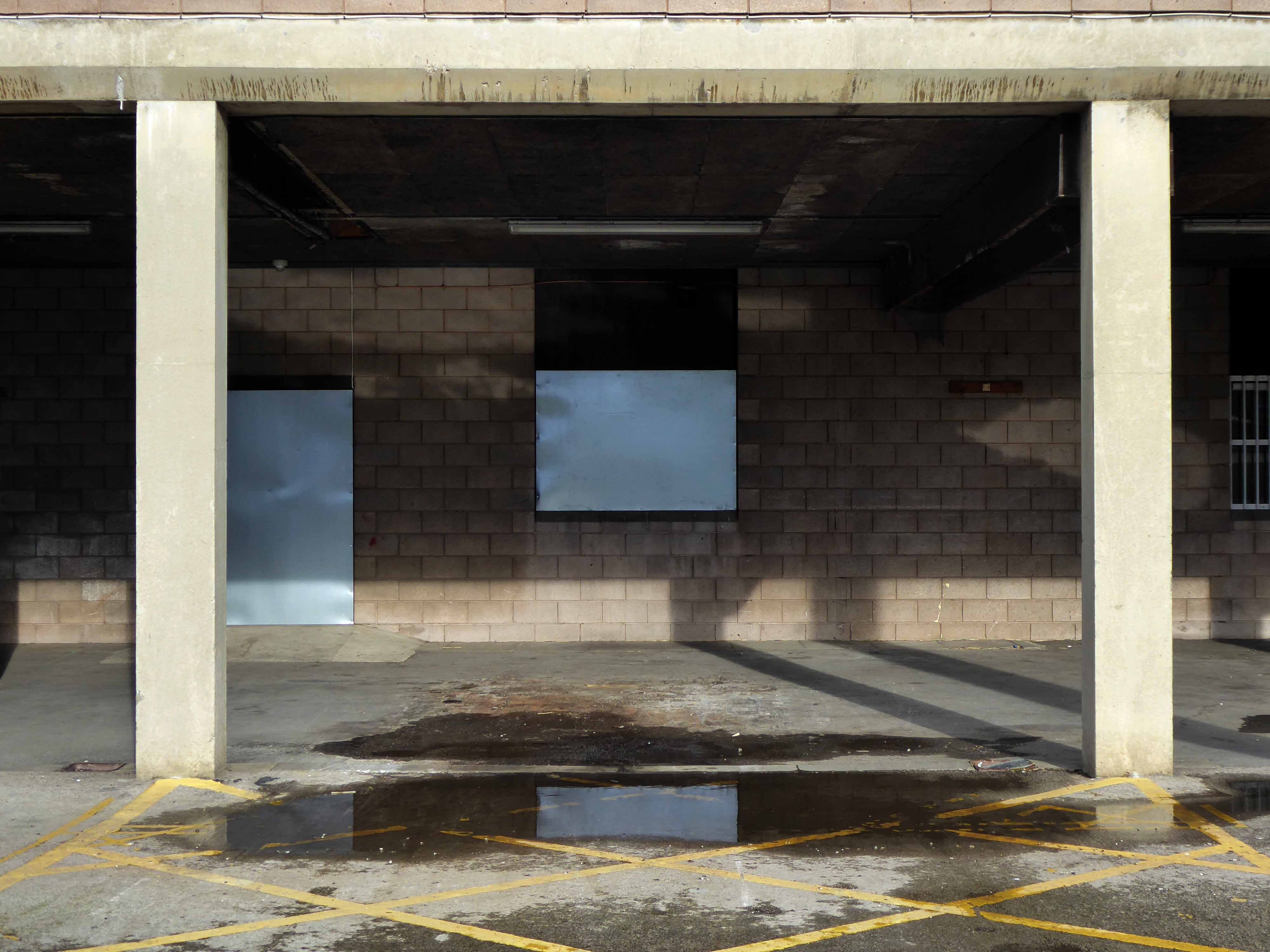
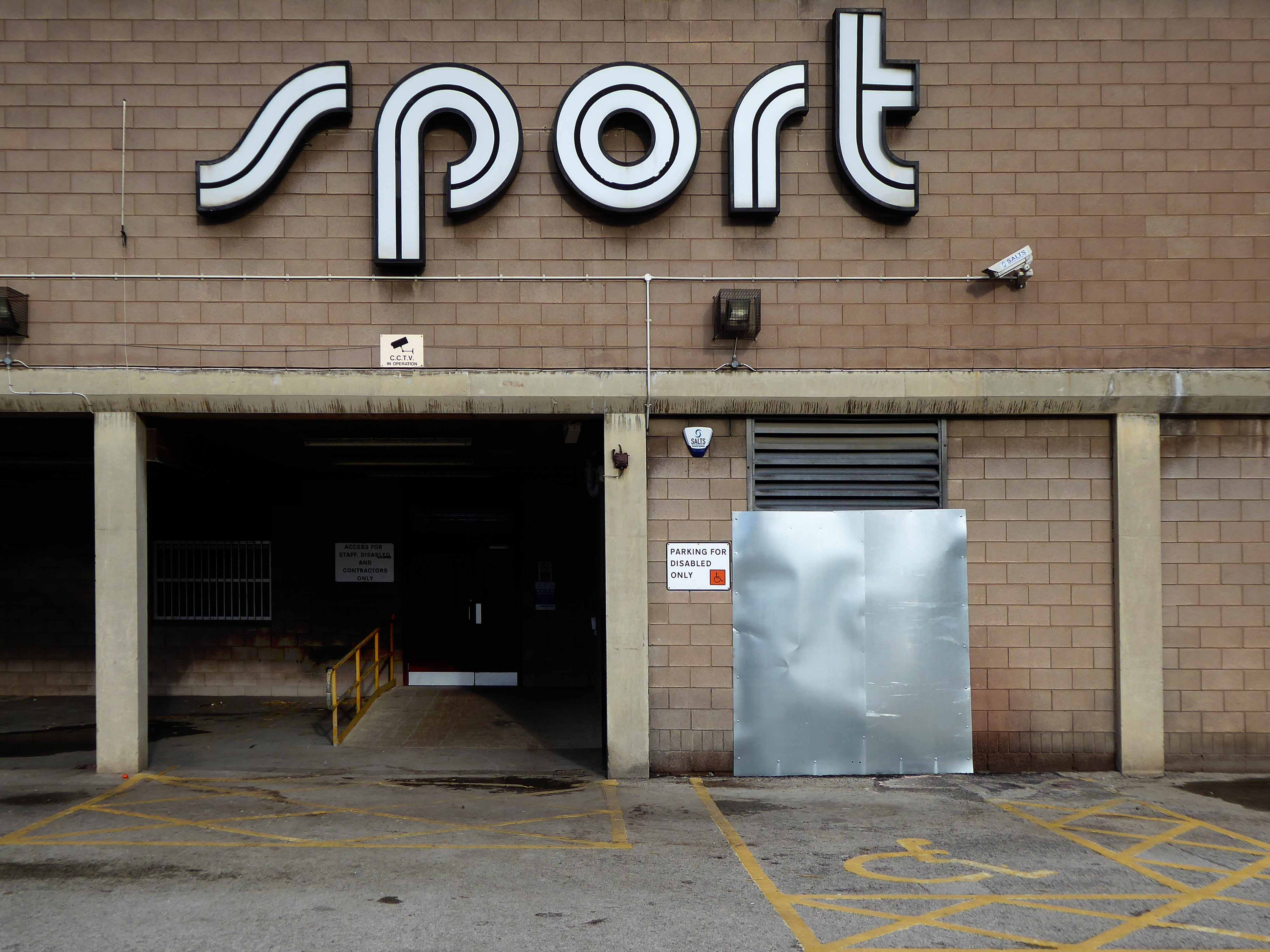
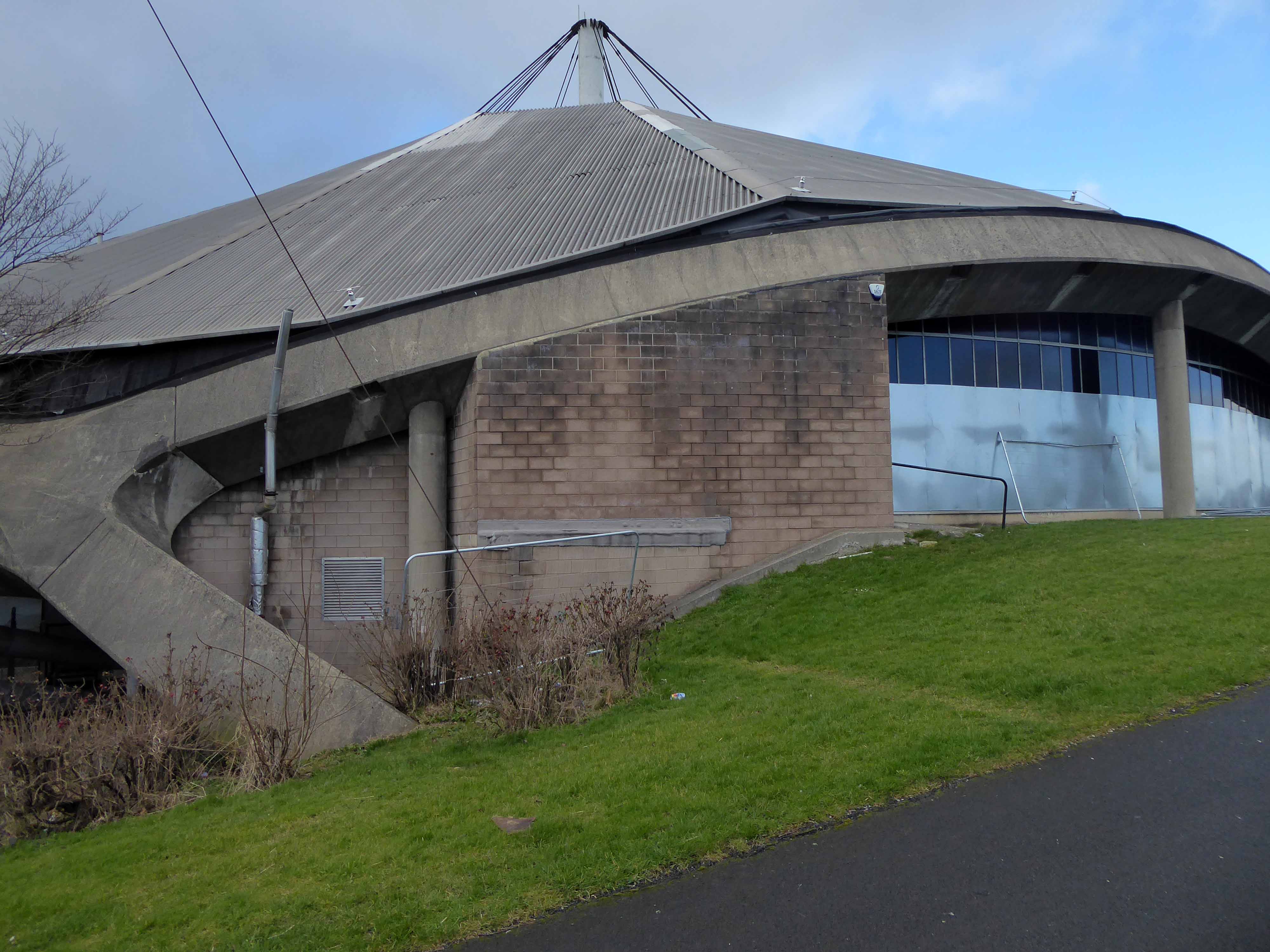
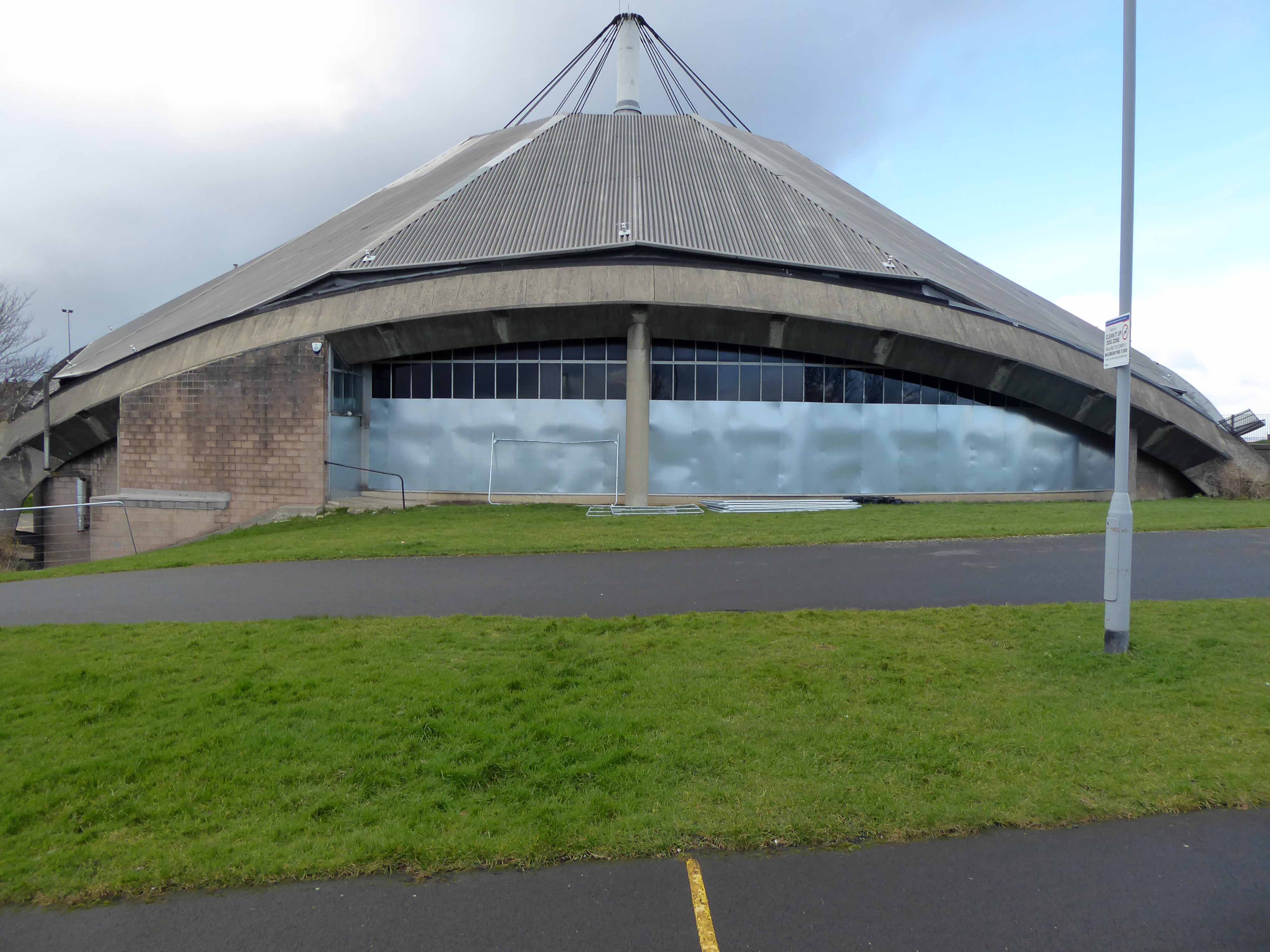
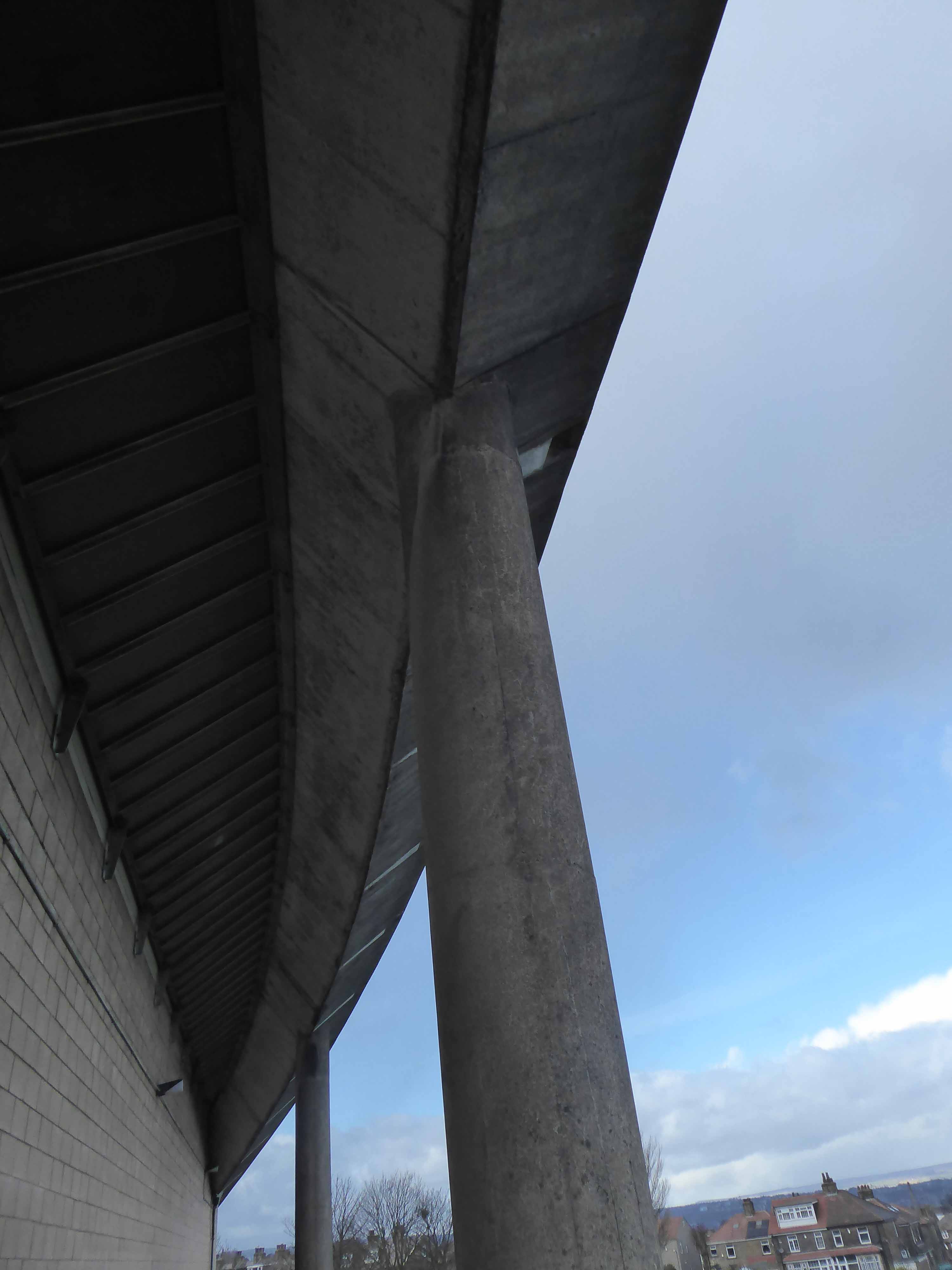
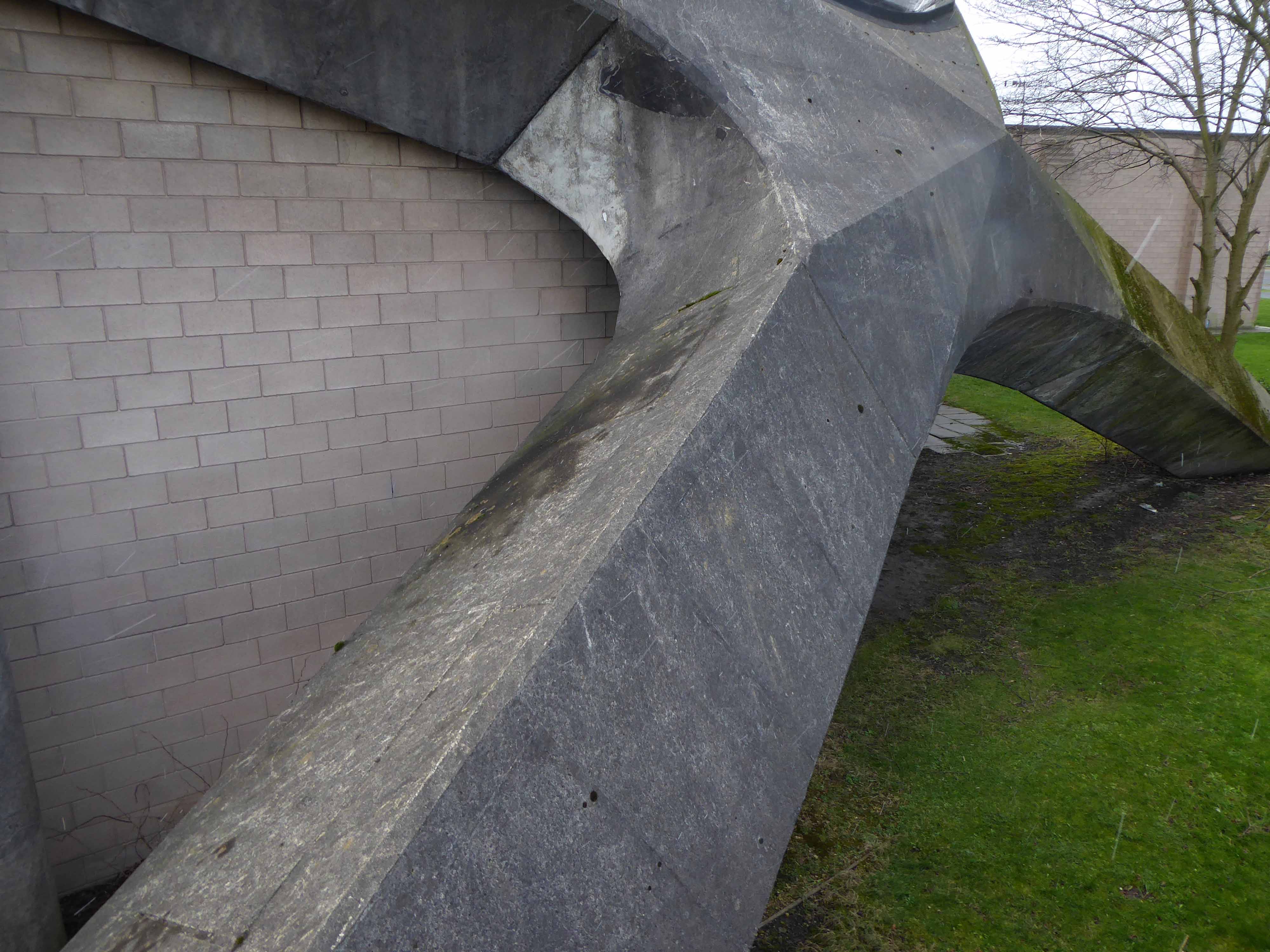
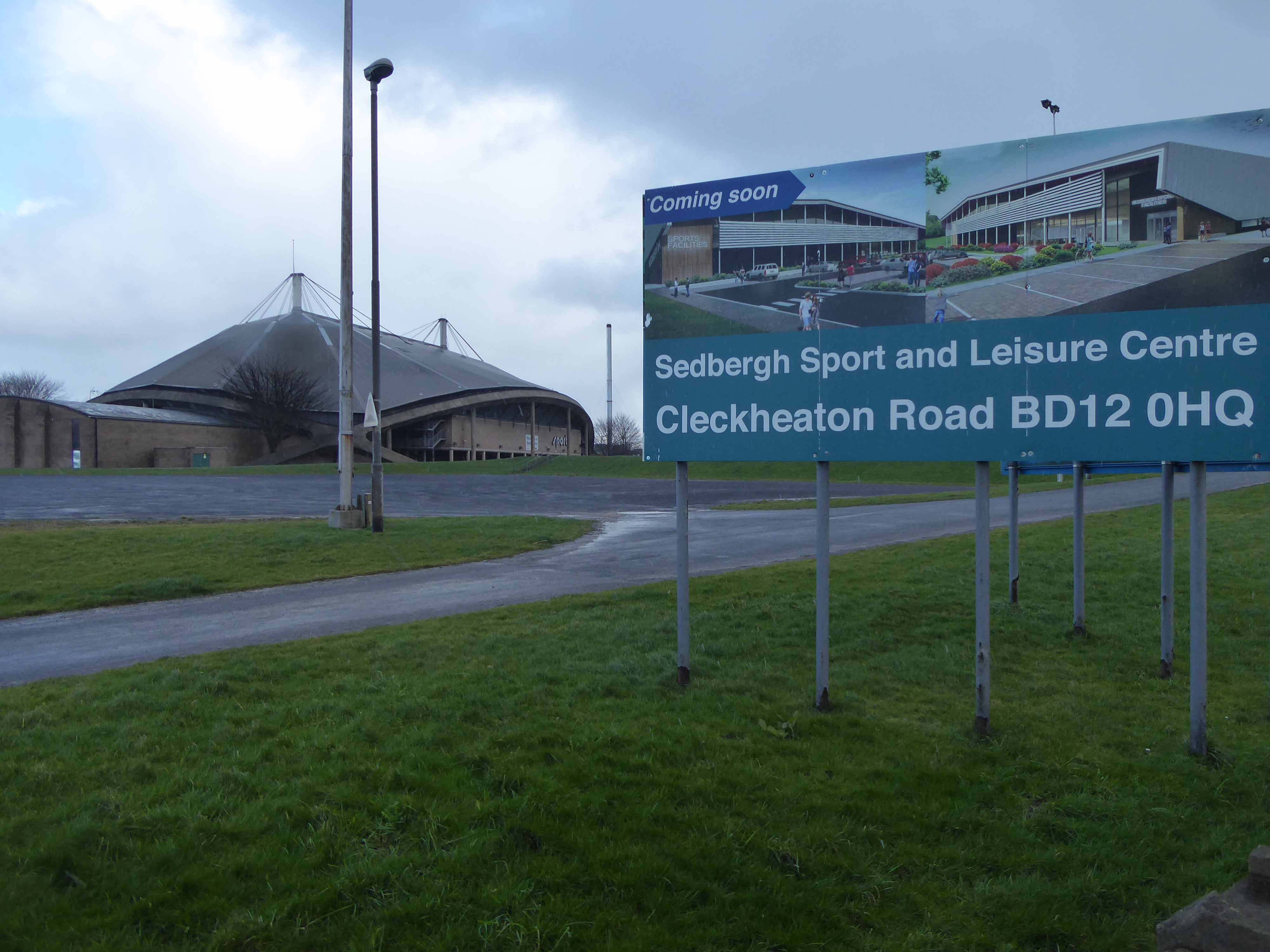
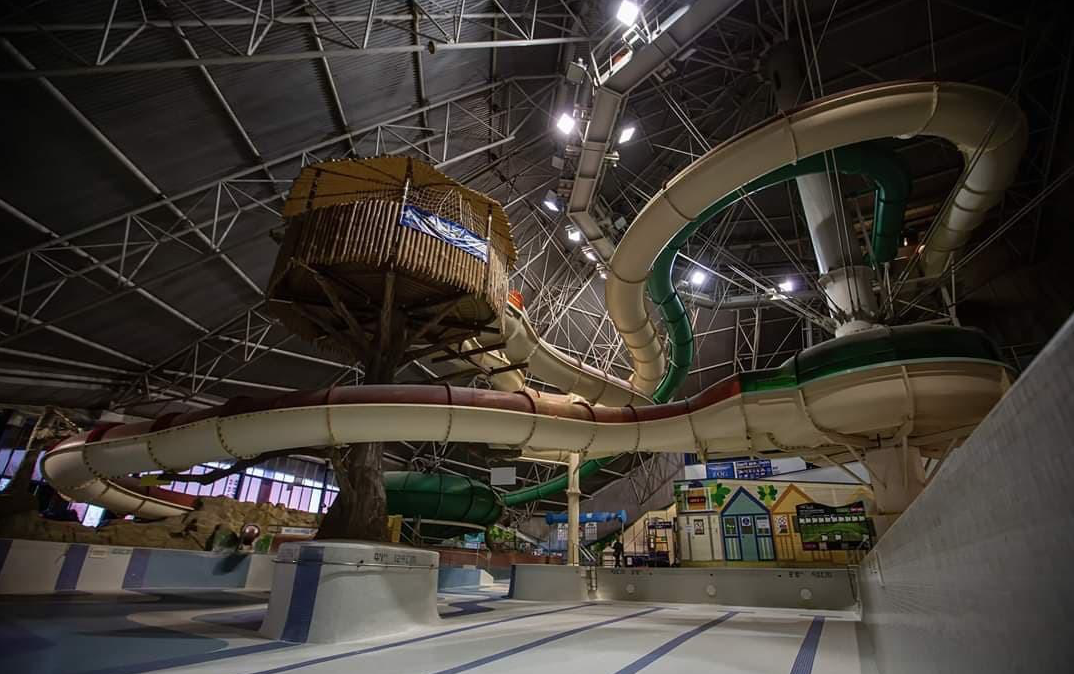
Named for local lad pugilist Richard Dunn, the ambitious imagining of architect Gordon Elliott – the sports centre opened in 1978.
The Richard Dunn Sports Centre, originally Odsal Sports Centre, was designed by myself Trevor Skempton, as part of a team in the office of Owen Perry, Bradford City Architect until 1974.
Gordon Elliot then took over; as Chief Architect for the Met District, after the construction contract had been let.
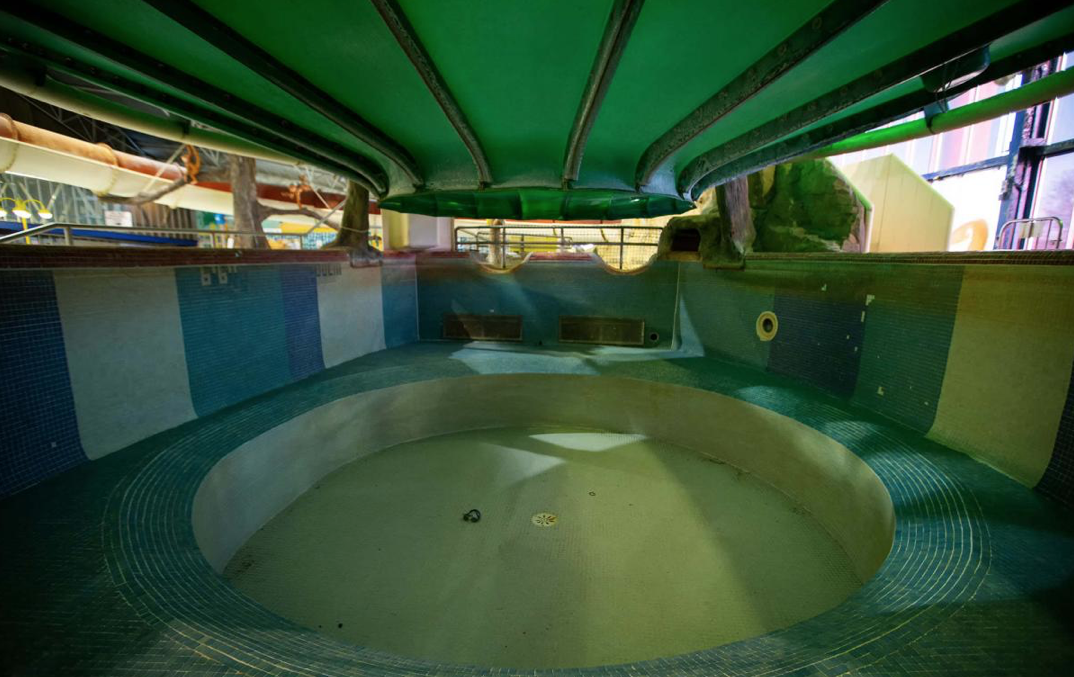
Comprising pools, sports hall, dance studio, sauna, gym and ancillary facilities the centre was certainly state of the art.
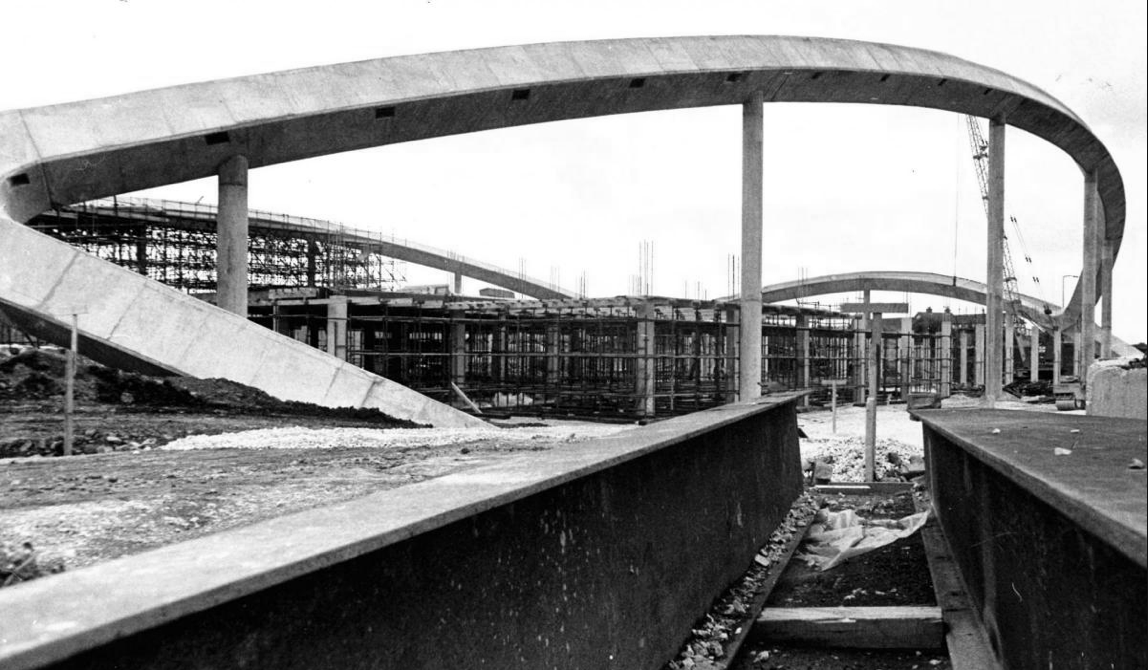
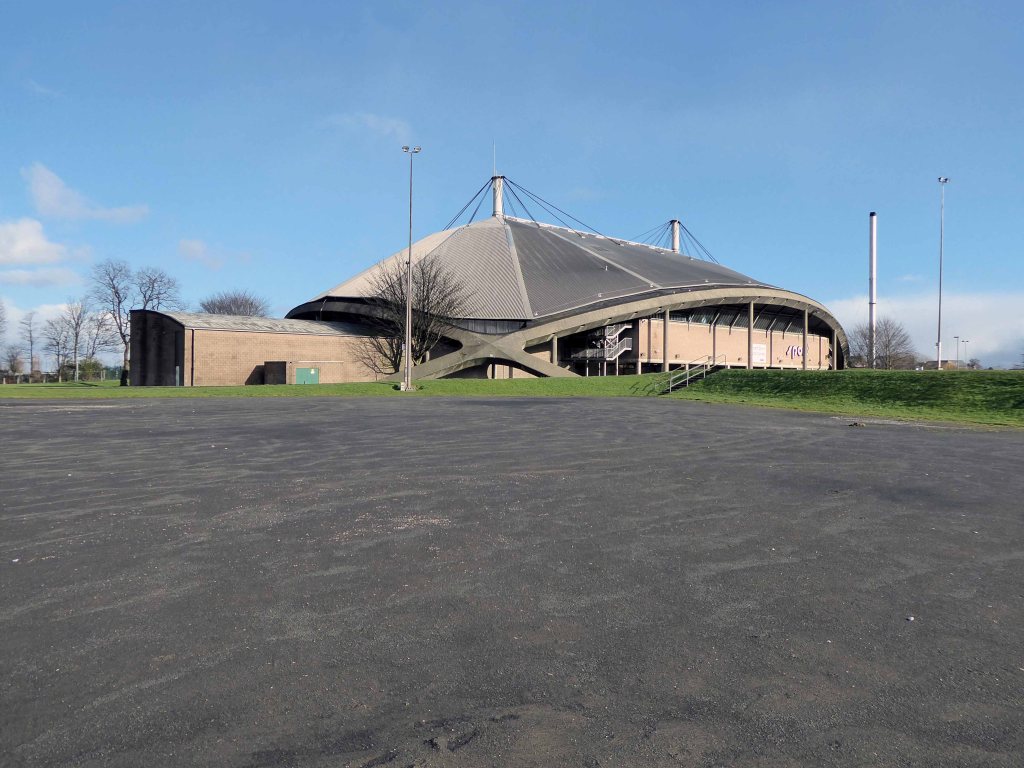
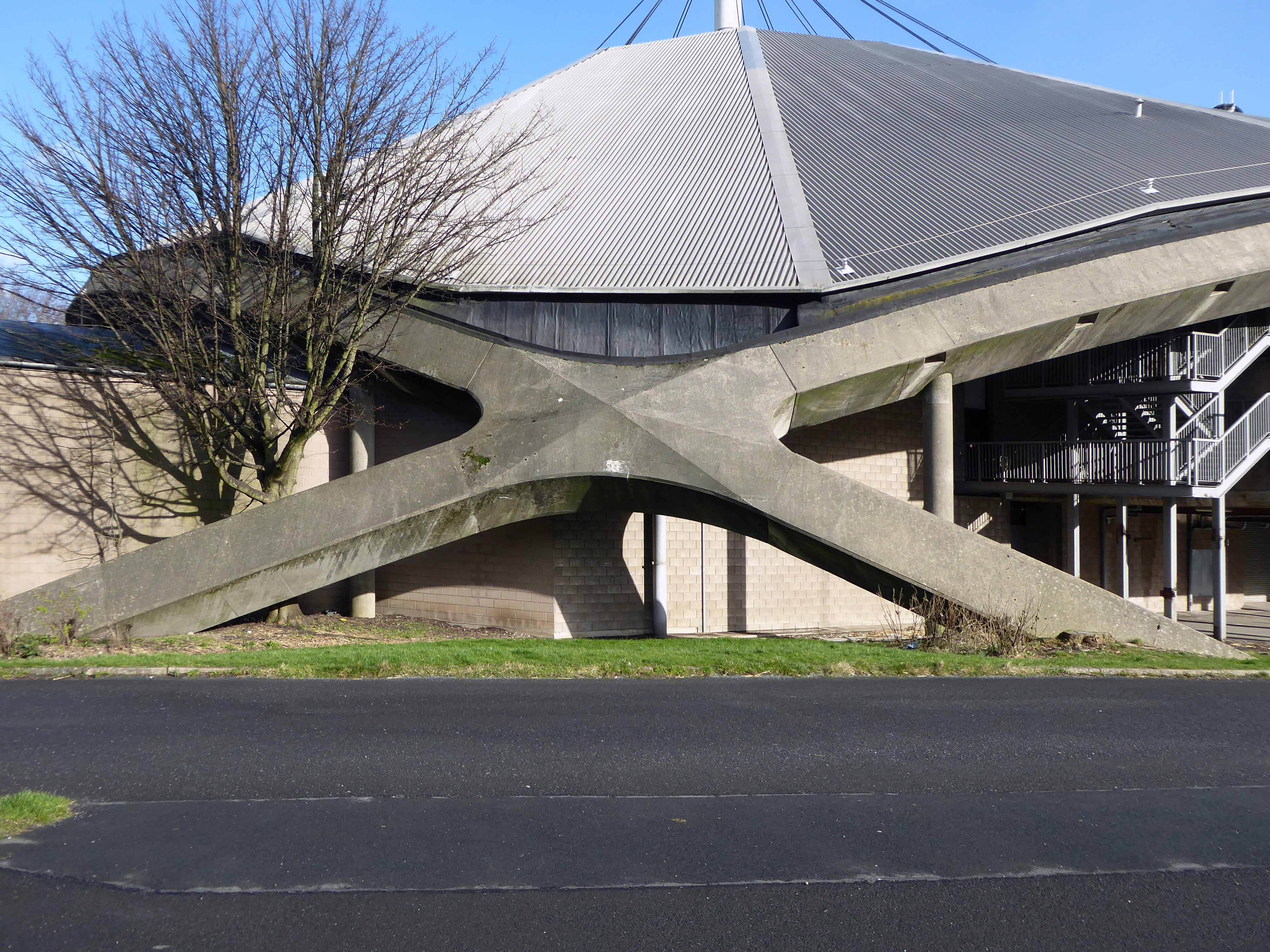
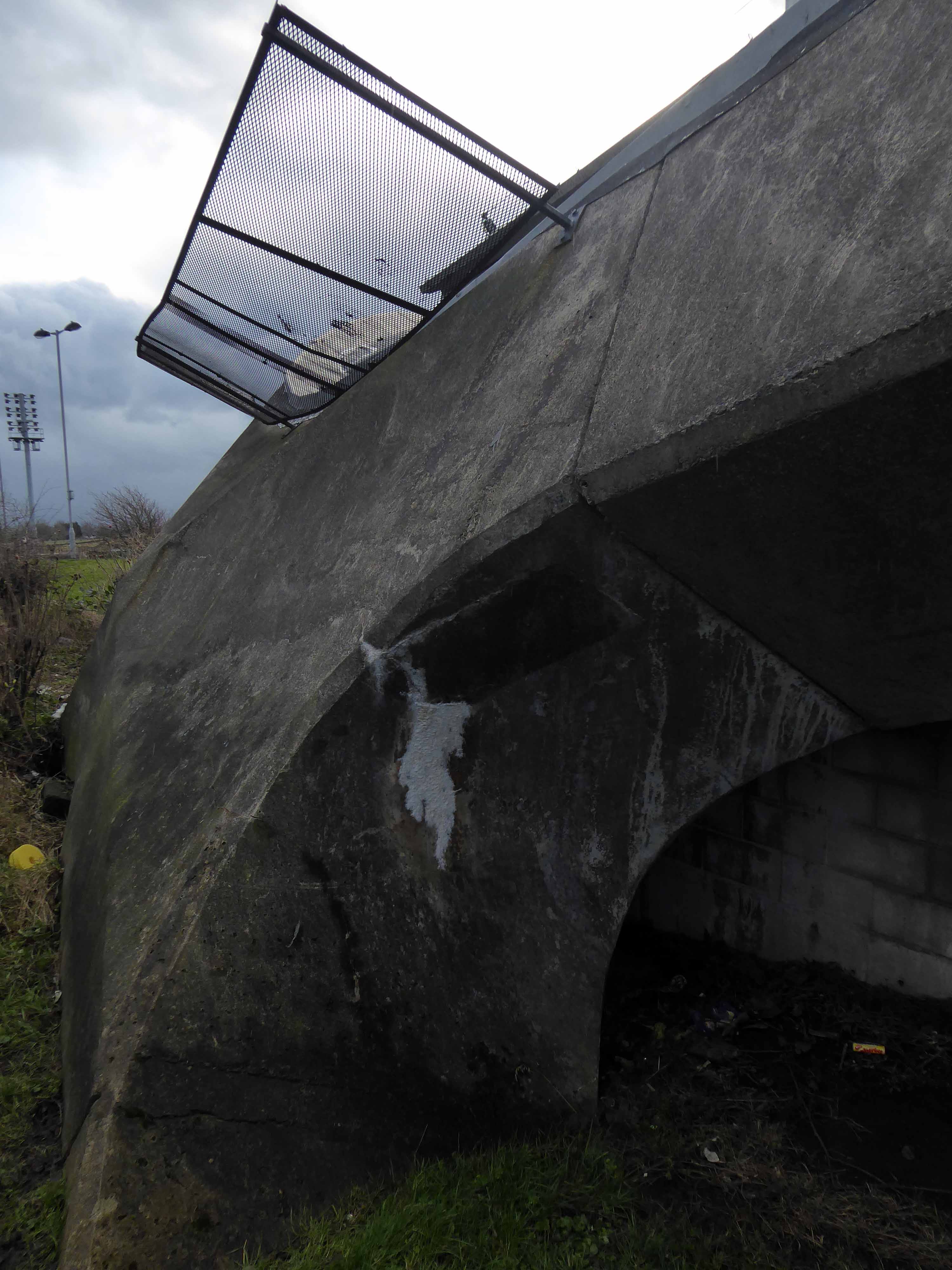
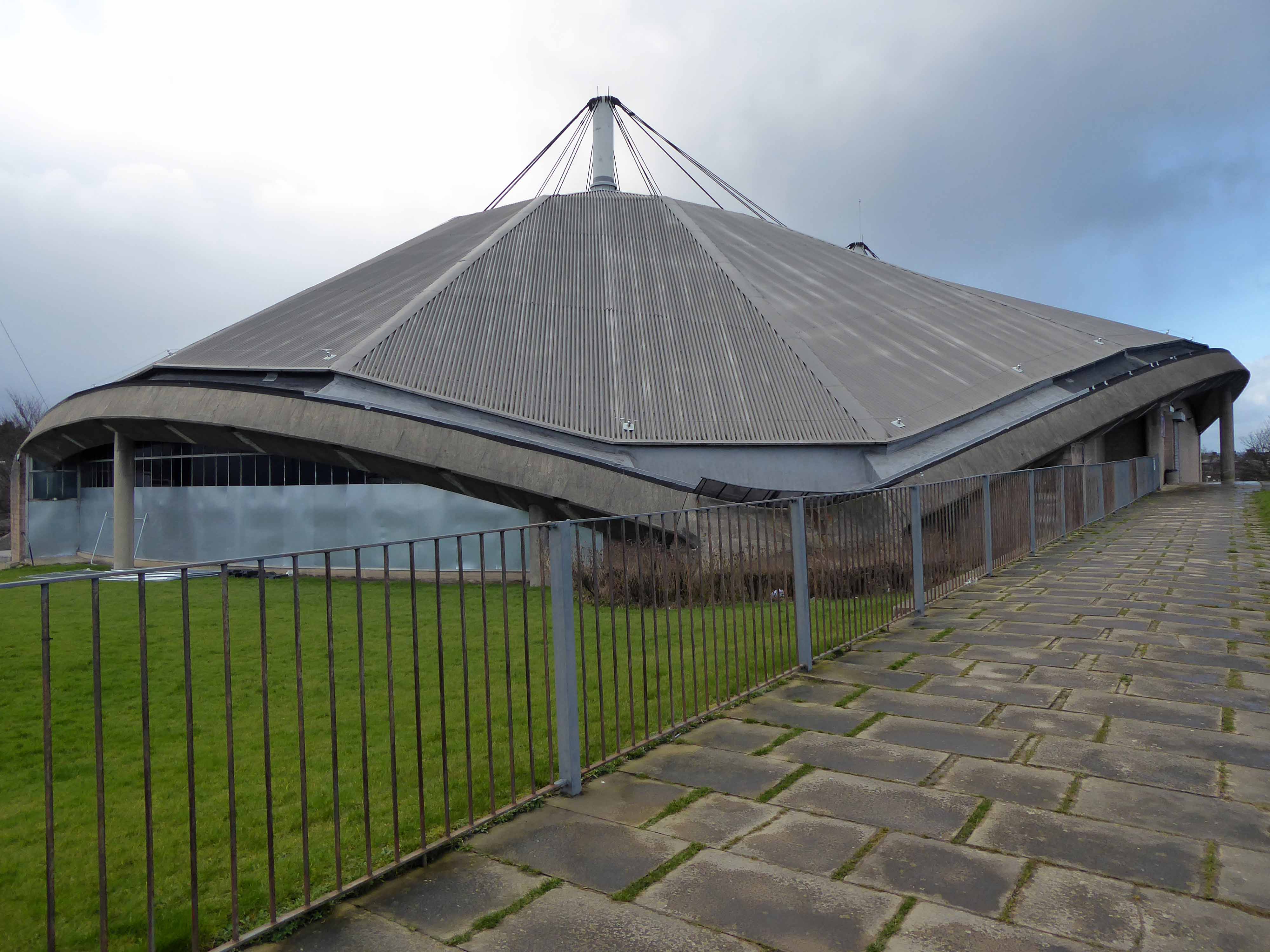
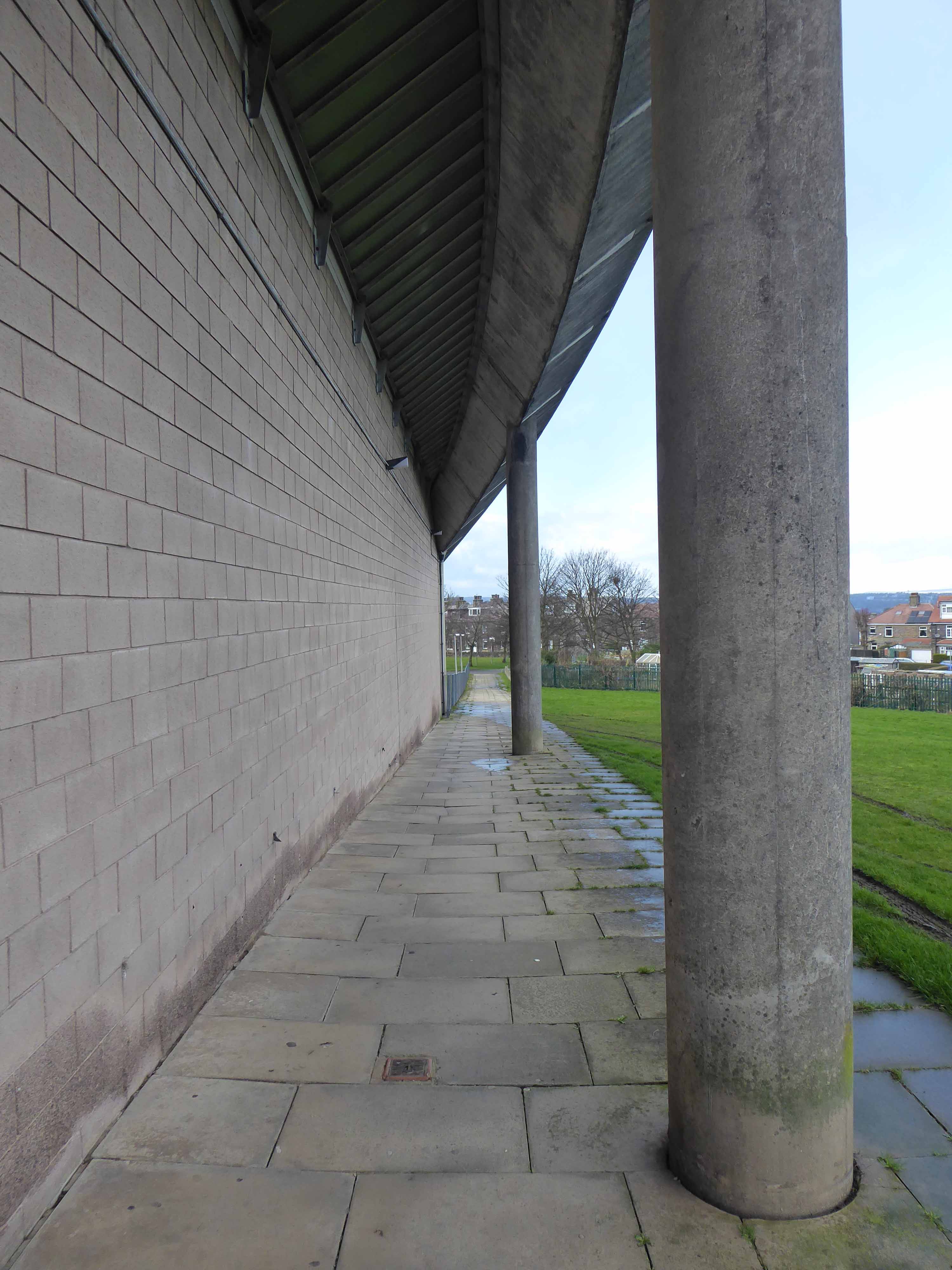
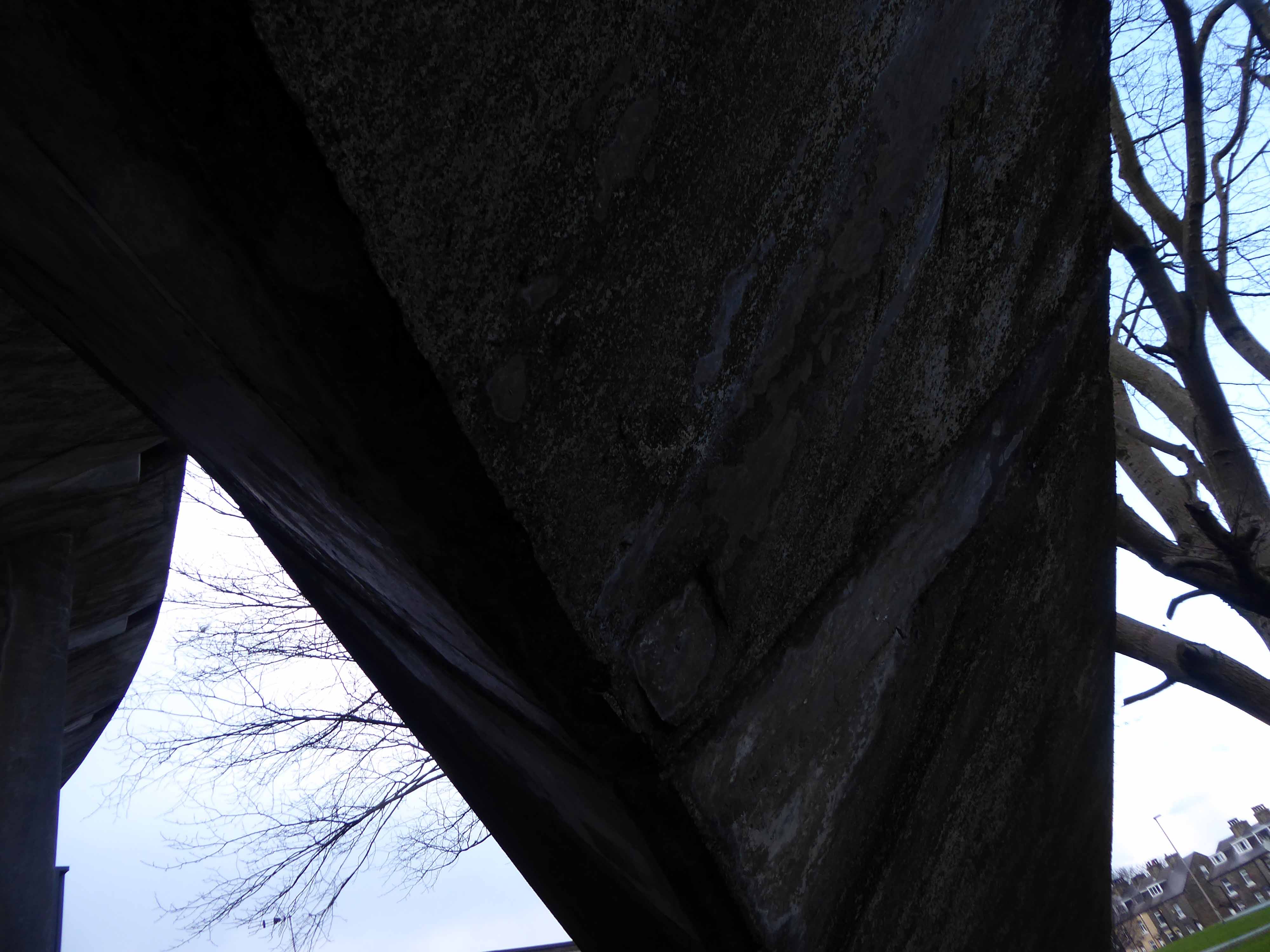
Sweeping interlocking arcs of concrete, were at the heart of the structure.
Topped out with a suspended canopy.
Attracting huge crowds on the occasion of its opening.
It’s remarkable – here are my photographs from February 2020.
I advise you to get along and take a look, just as soon as humanly possible.
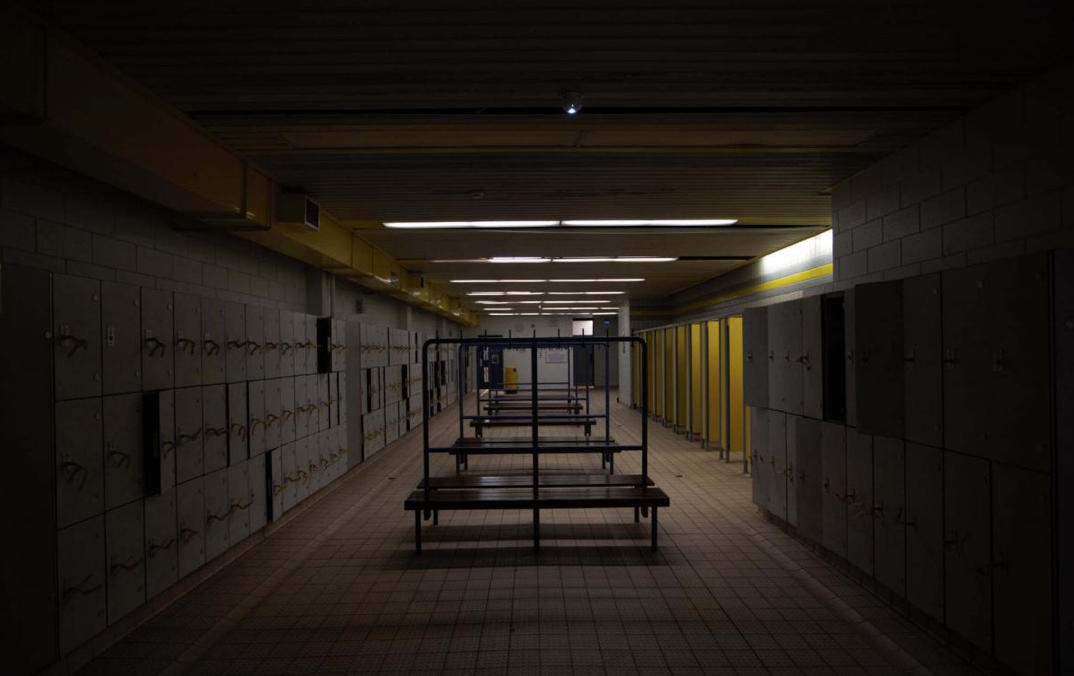
Recently John Mann was granted permission to snap the deserted interior.
The ghostly gasps of the exercising public exorcised forever.
Eileen Ayres, who has worked at Richard Dunns from before it even opened to the public said:
When I came here this place was super, super modern – state of the art. Now we’re moving to Sedbergh it is great to be in a state of the art facility again. The younger staff are so excited about the move to a new, modern sports centre.
I have a lot of memories of here, a lot of staff I’ve met and become friends with over the years. We’ve had a lot of events here, international events that have taken place here over the years. When Richard Dunn was new a lot of people wanted to hold these events here. Now we have a new leisure centre I hope some of these events come back to Bradford.
I started at 23, I said I was just coming for a year. Here we are 41 years later.
When asked if she thinks it is right to be closing down Richard Dunn she said:
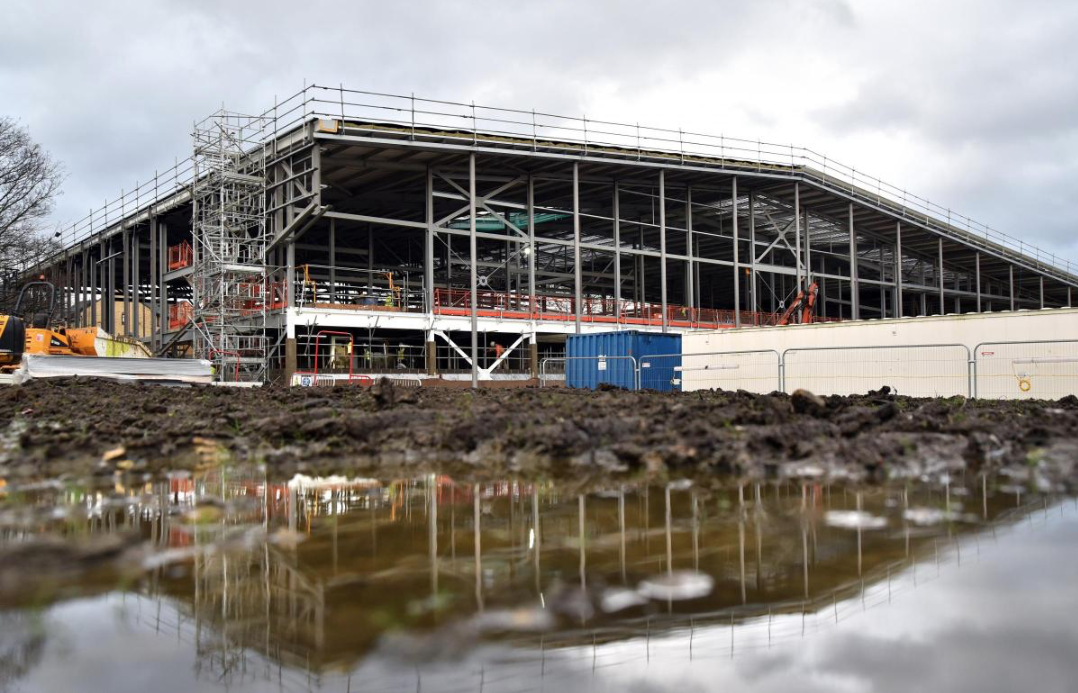
In my heart no, but realistically it has to go. It is run down – it would be way too expensive to run or refurbish. You can’t keep putting money into old things.
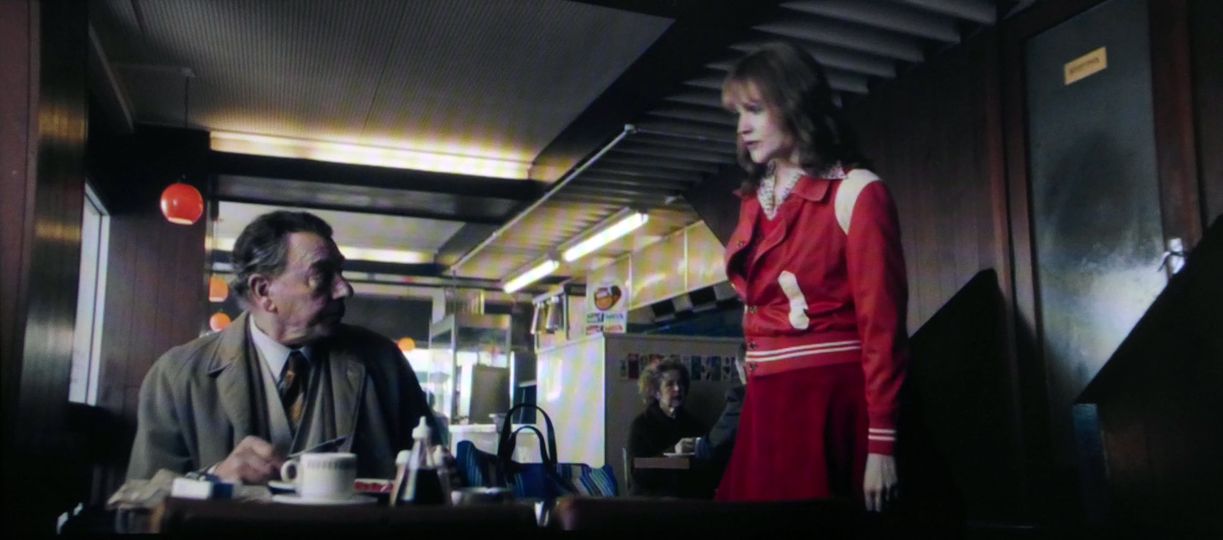
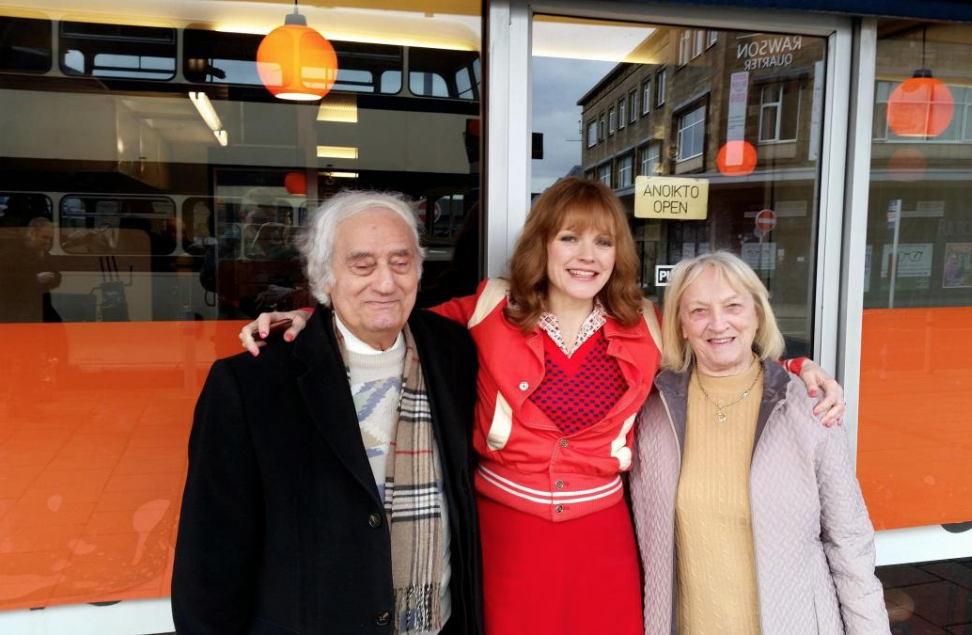
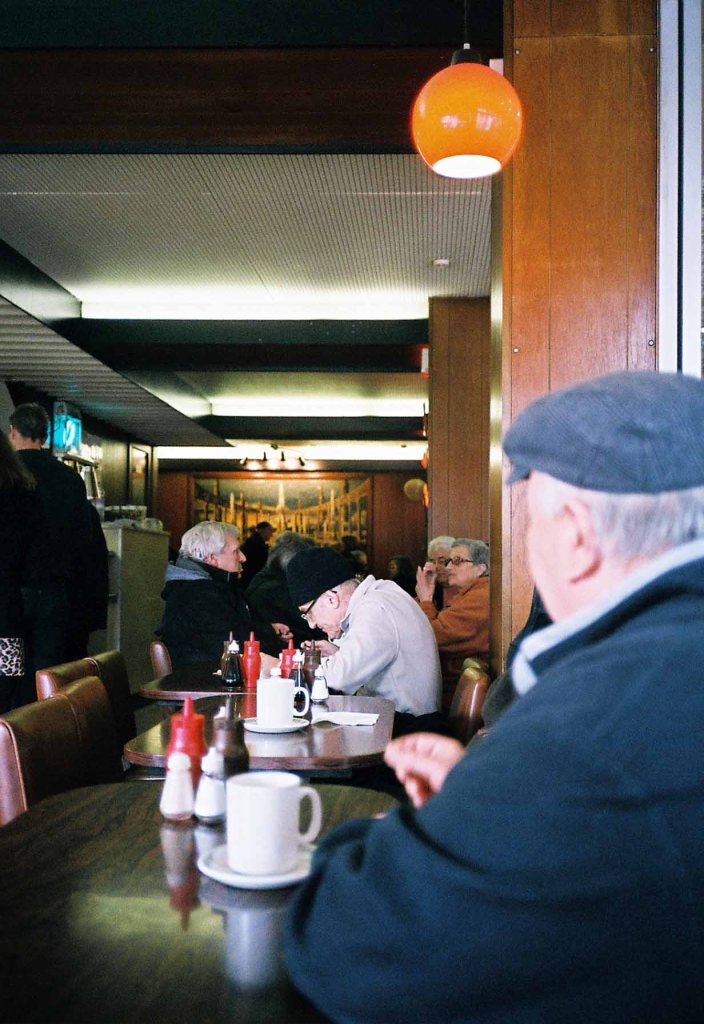
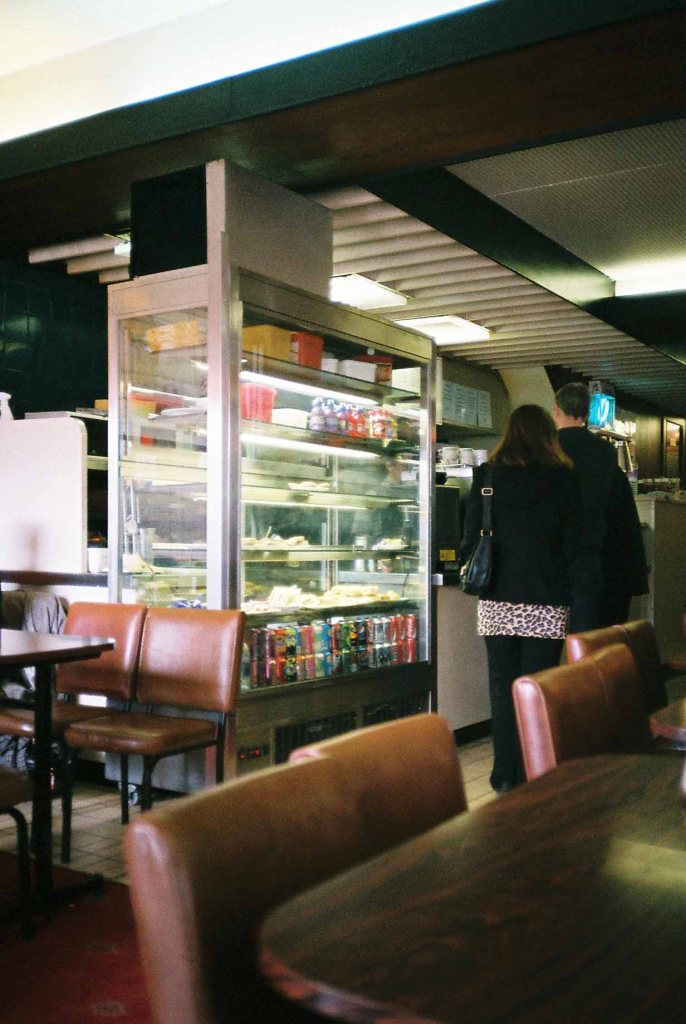
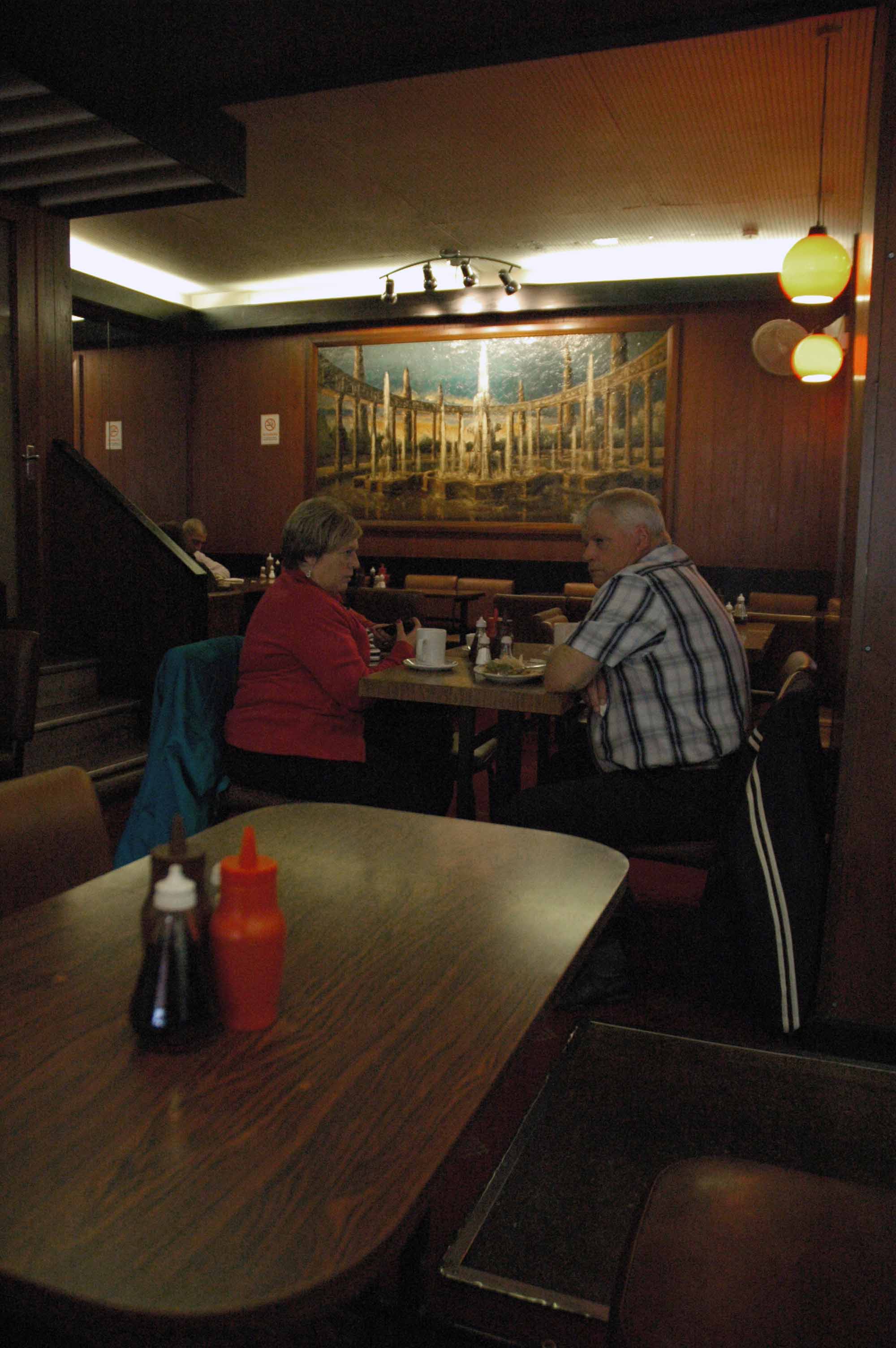
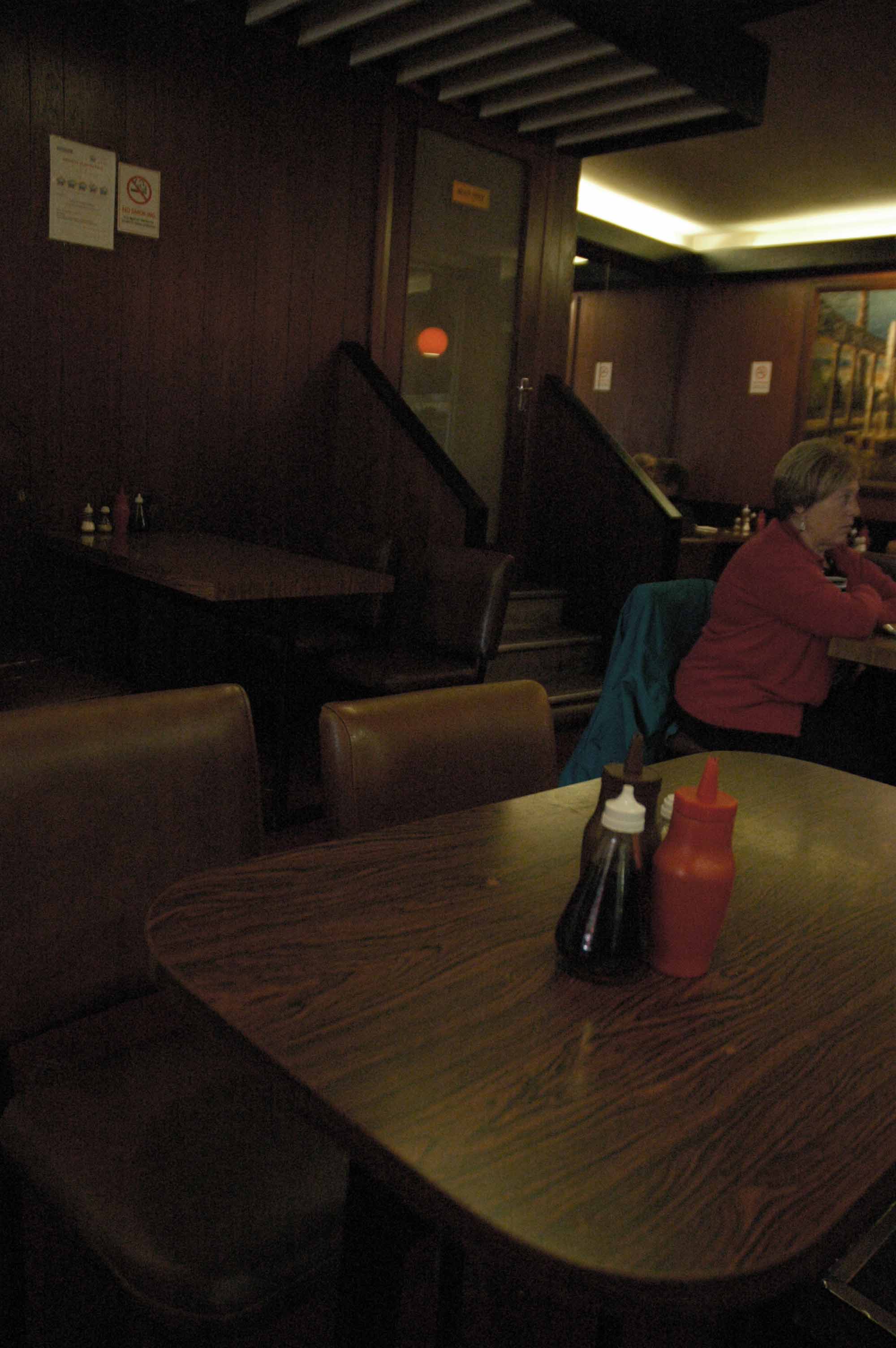
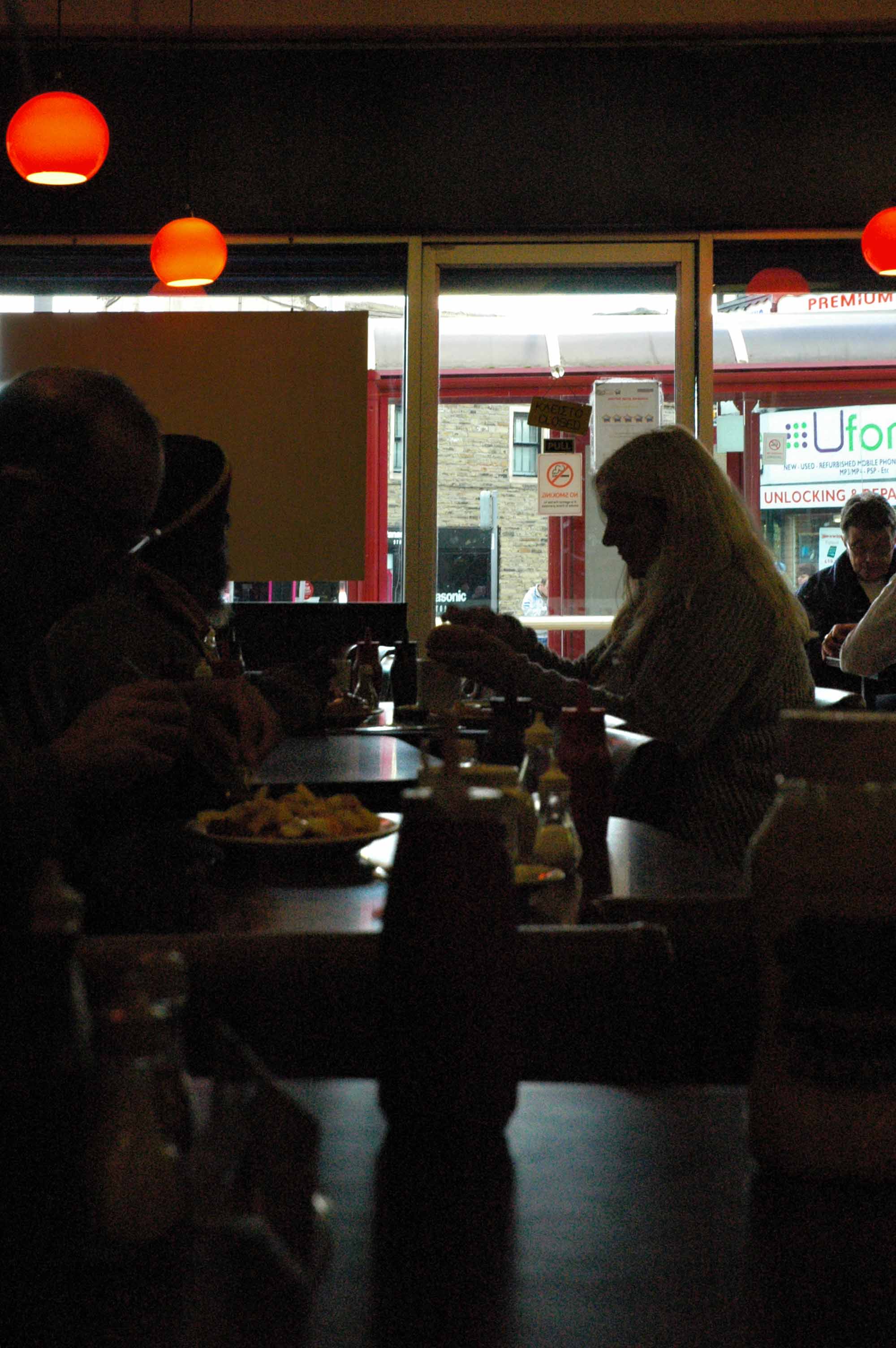
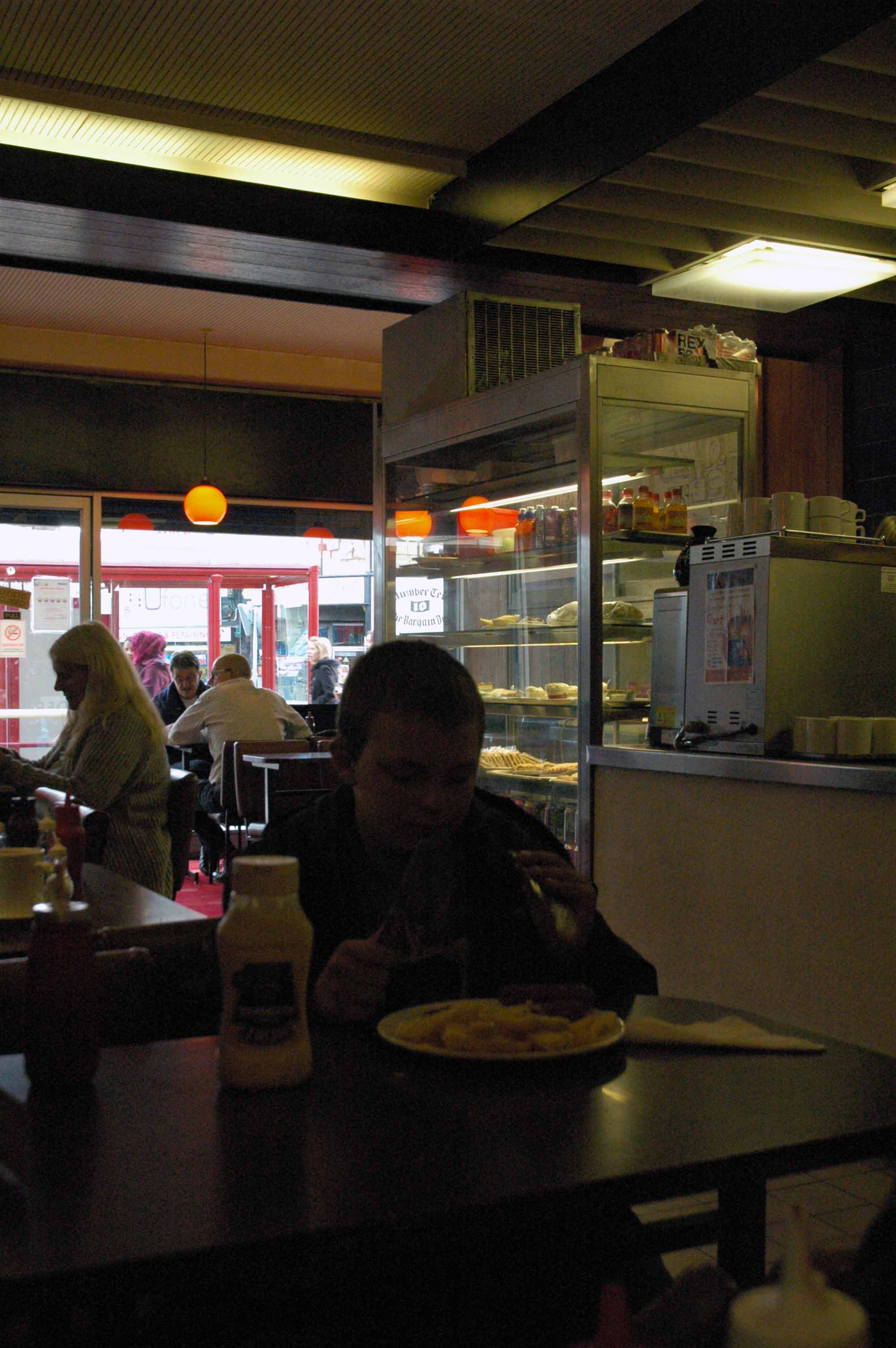
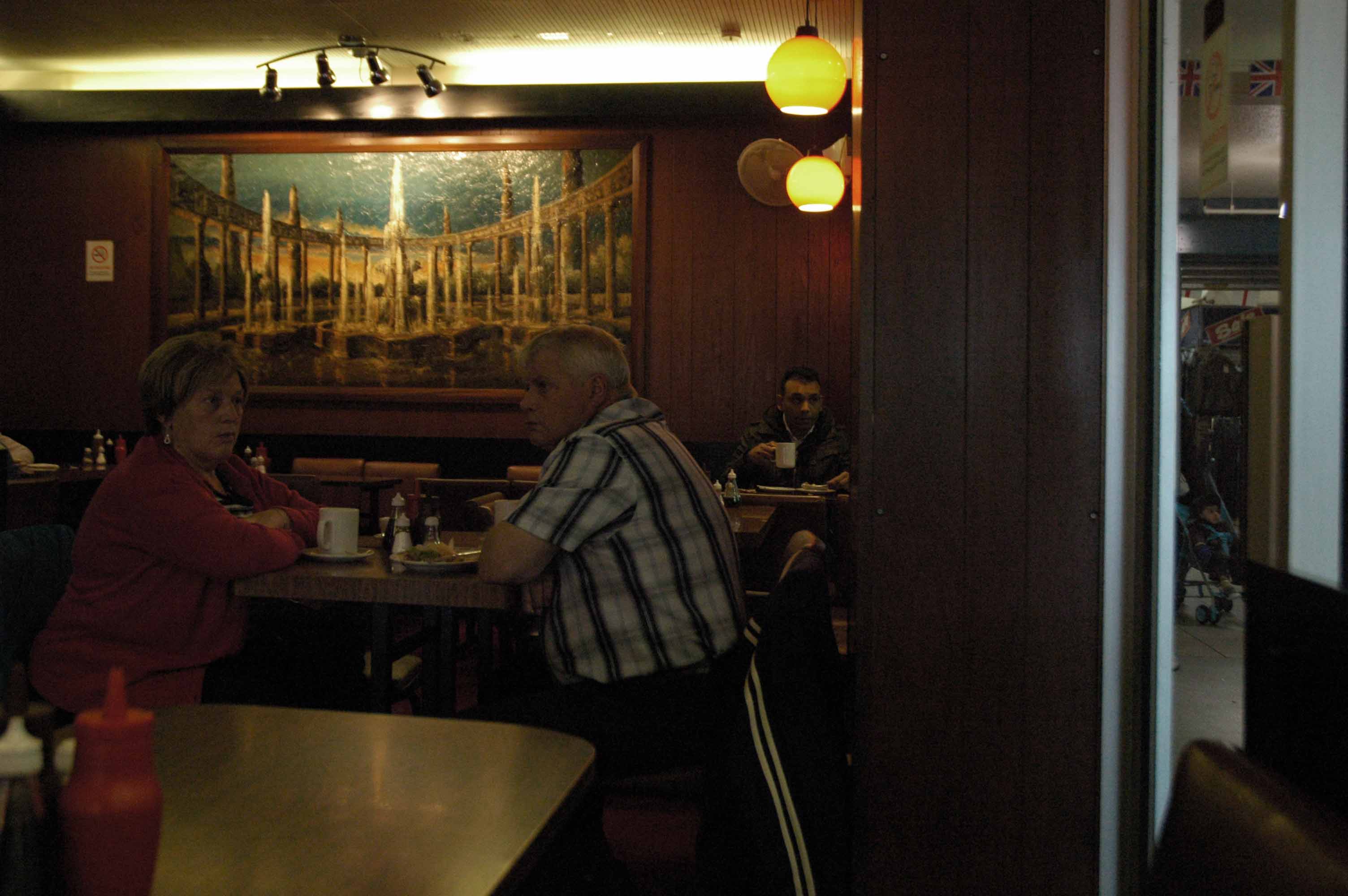
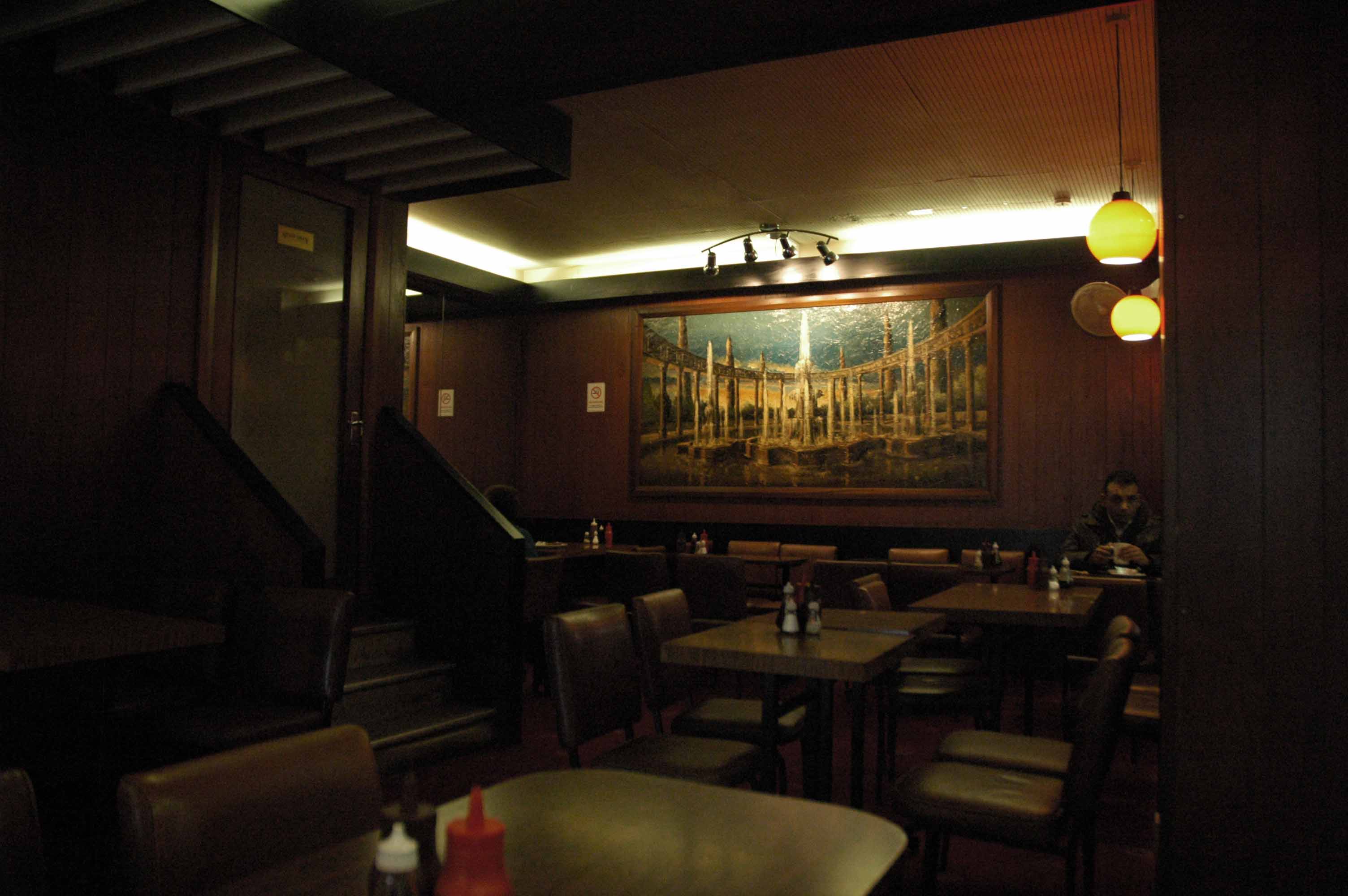
I first came here some twenty years ago or so and on each subsequent visit little seems to change.
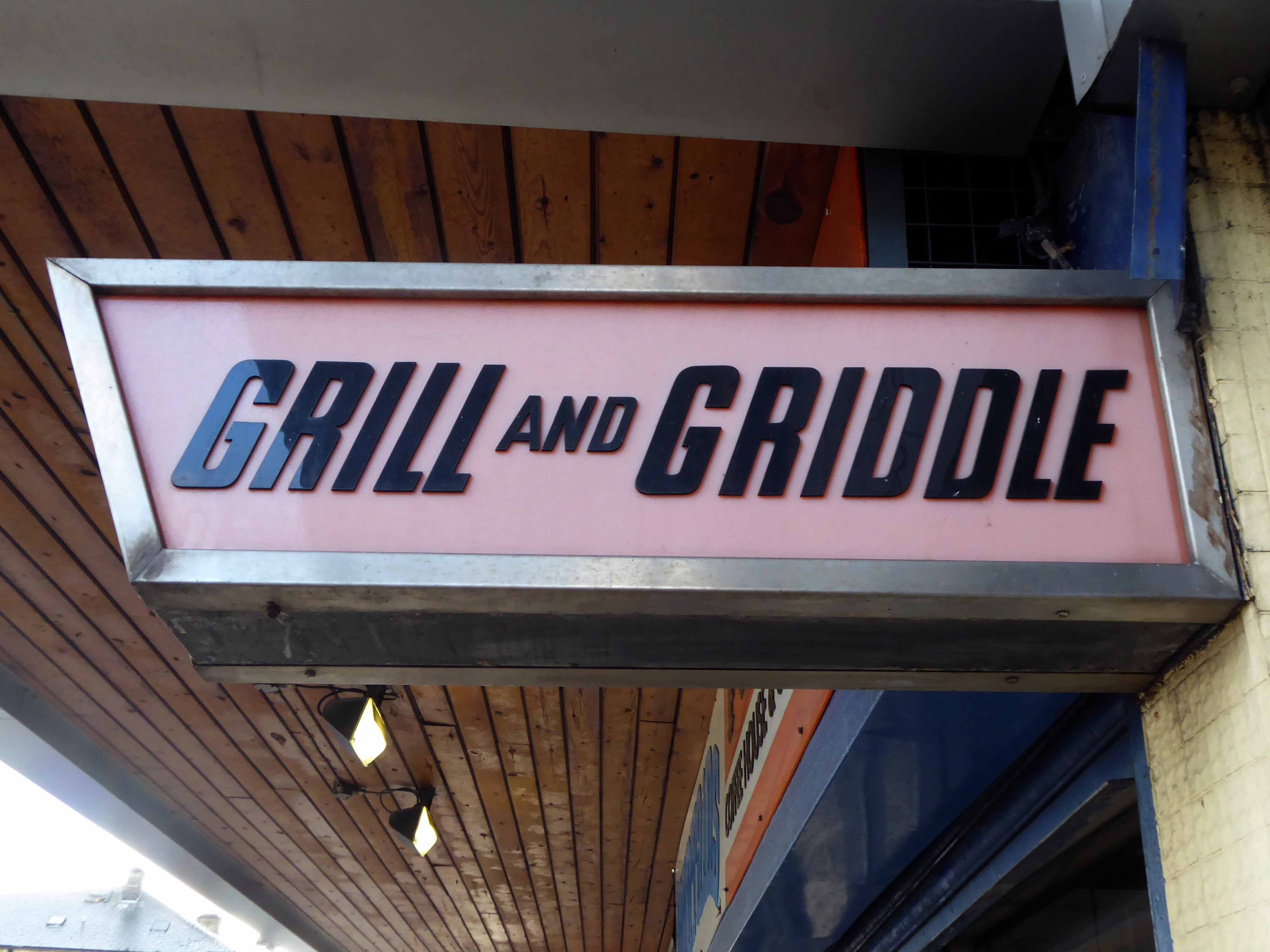
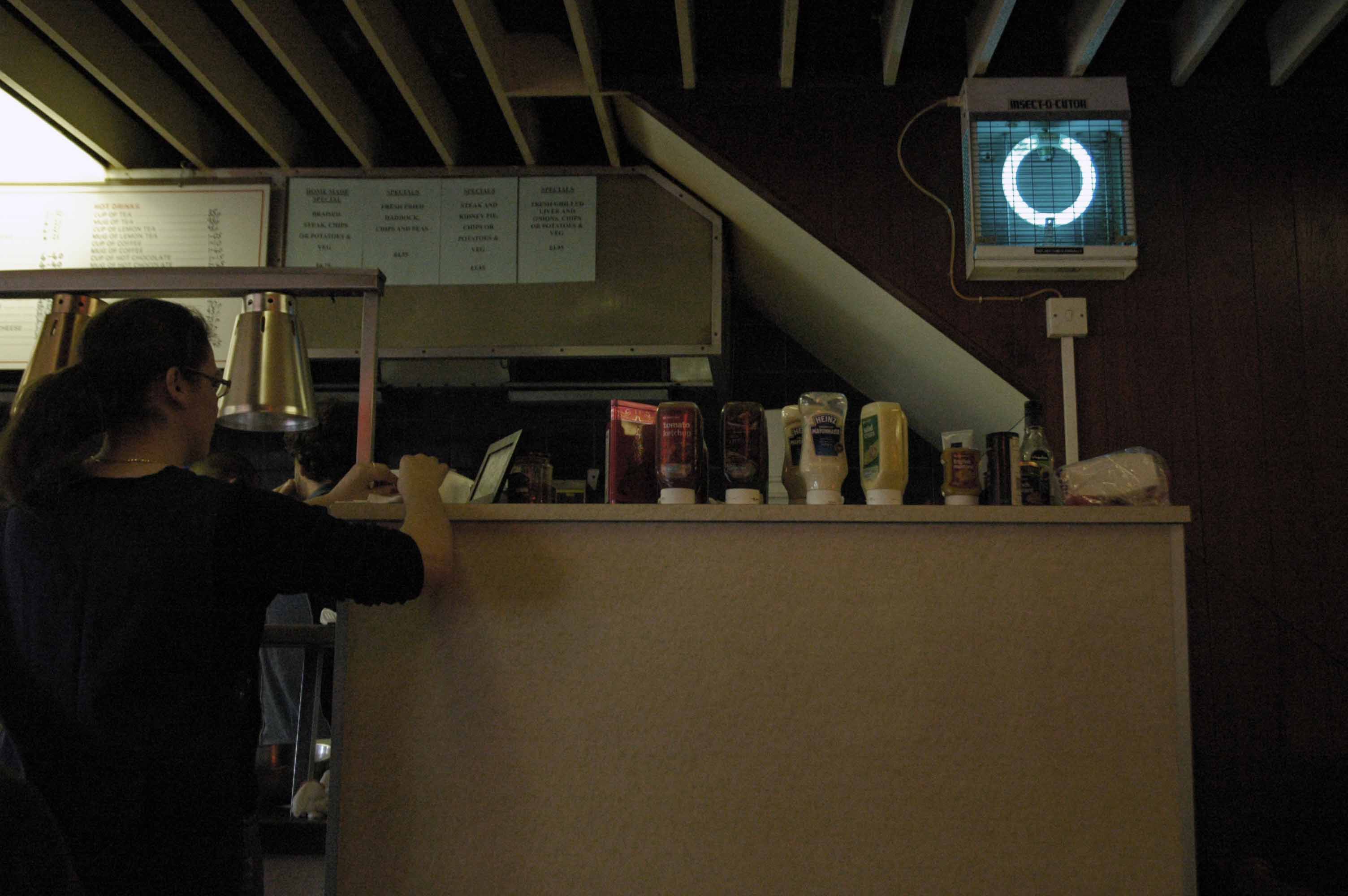
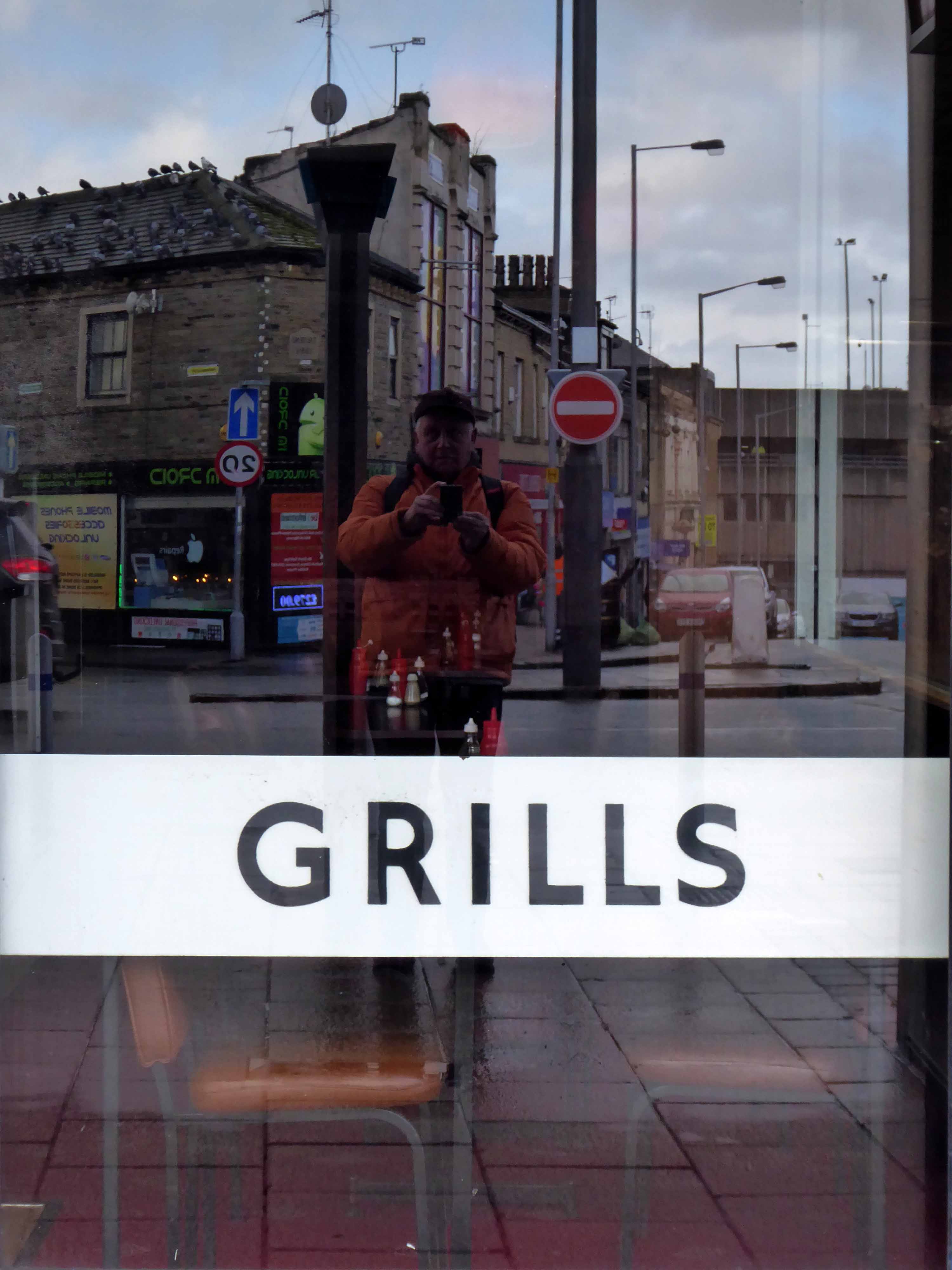
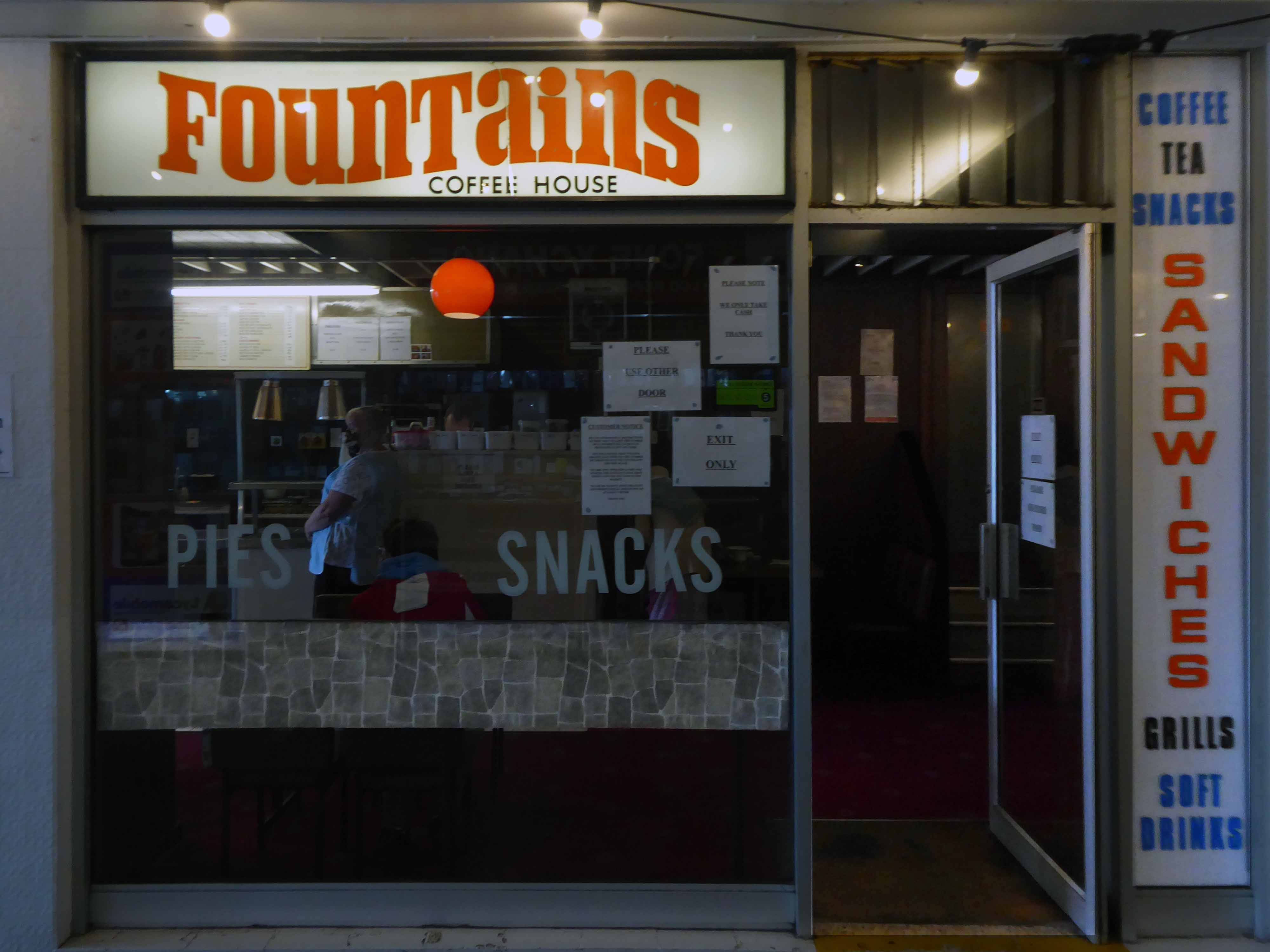
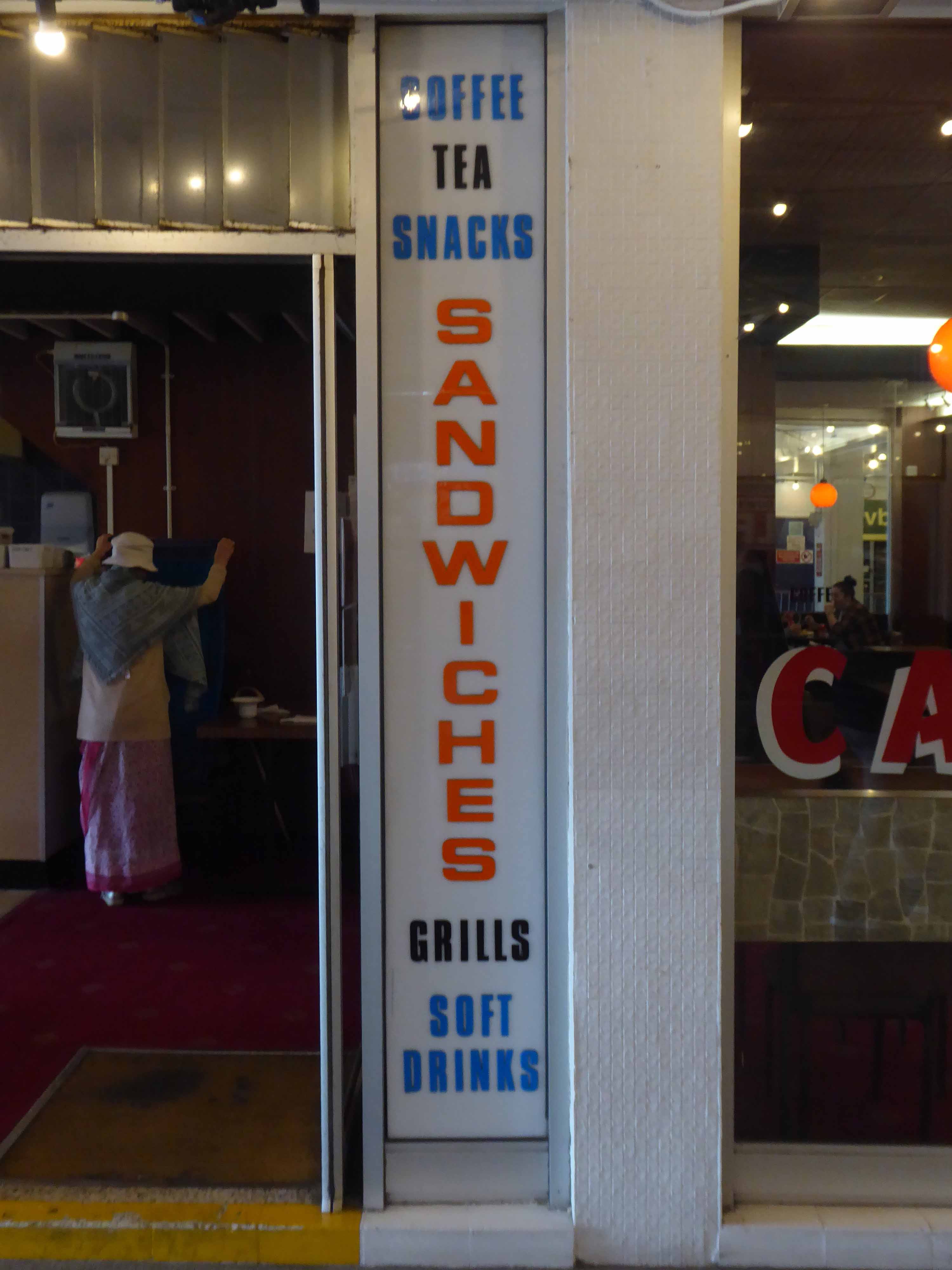
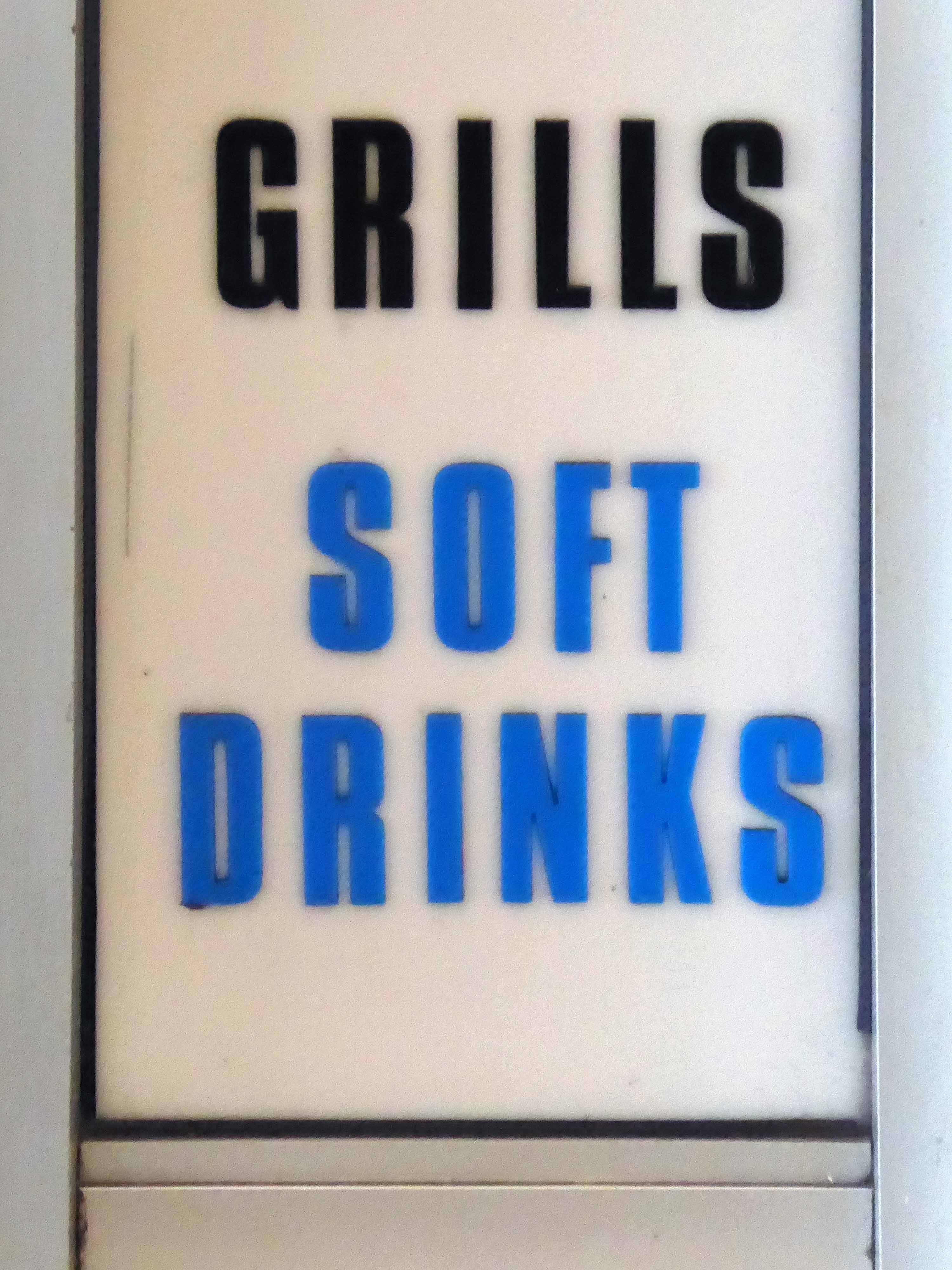
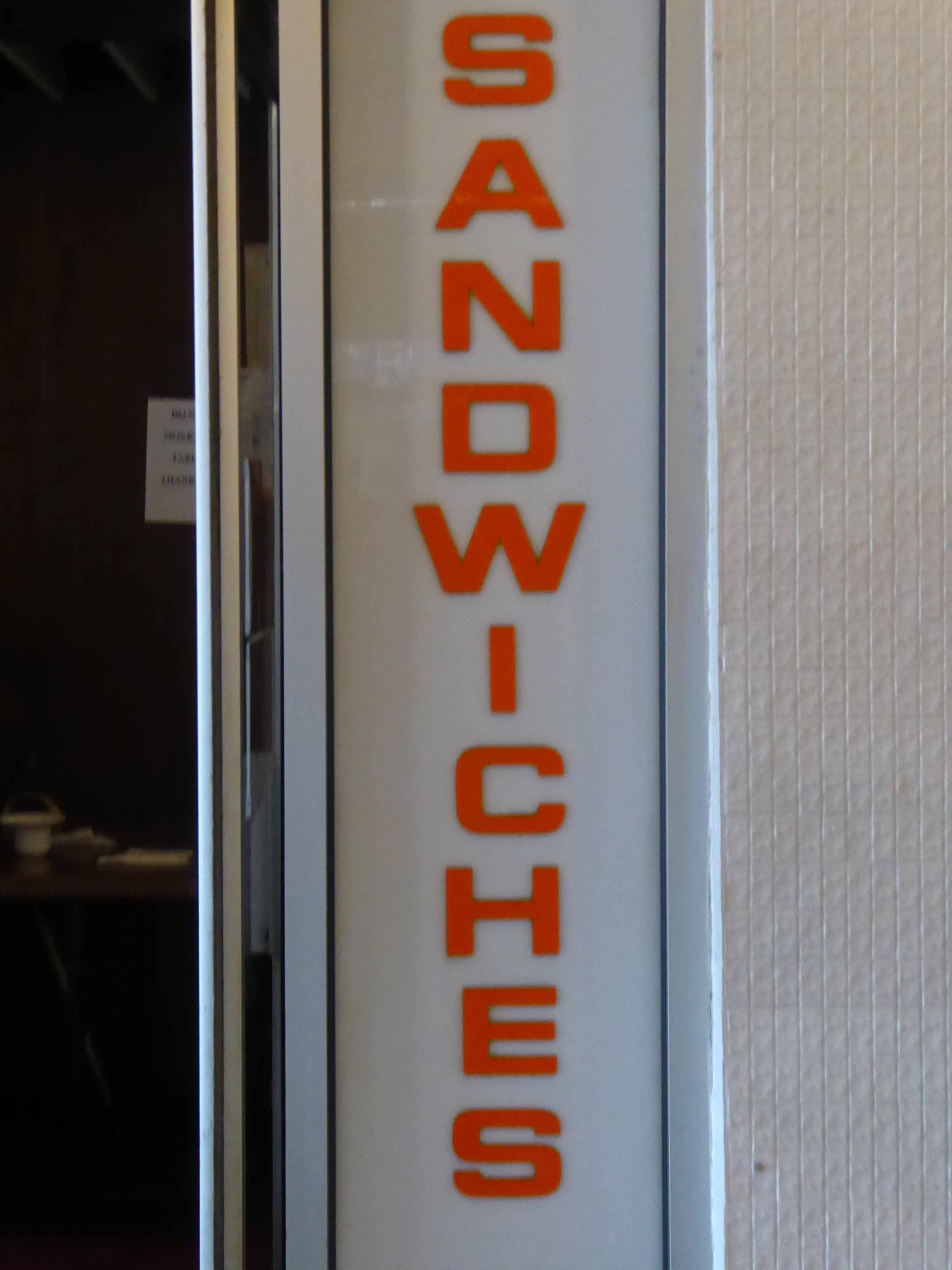
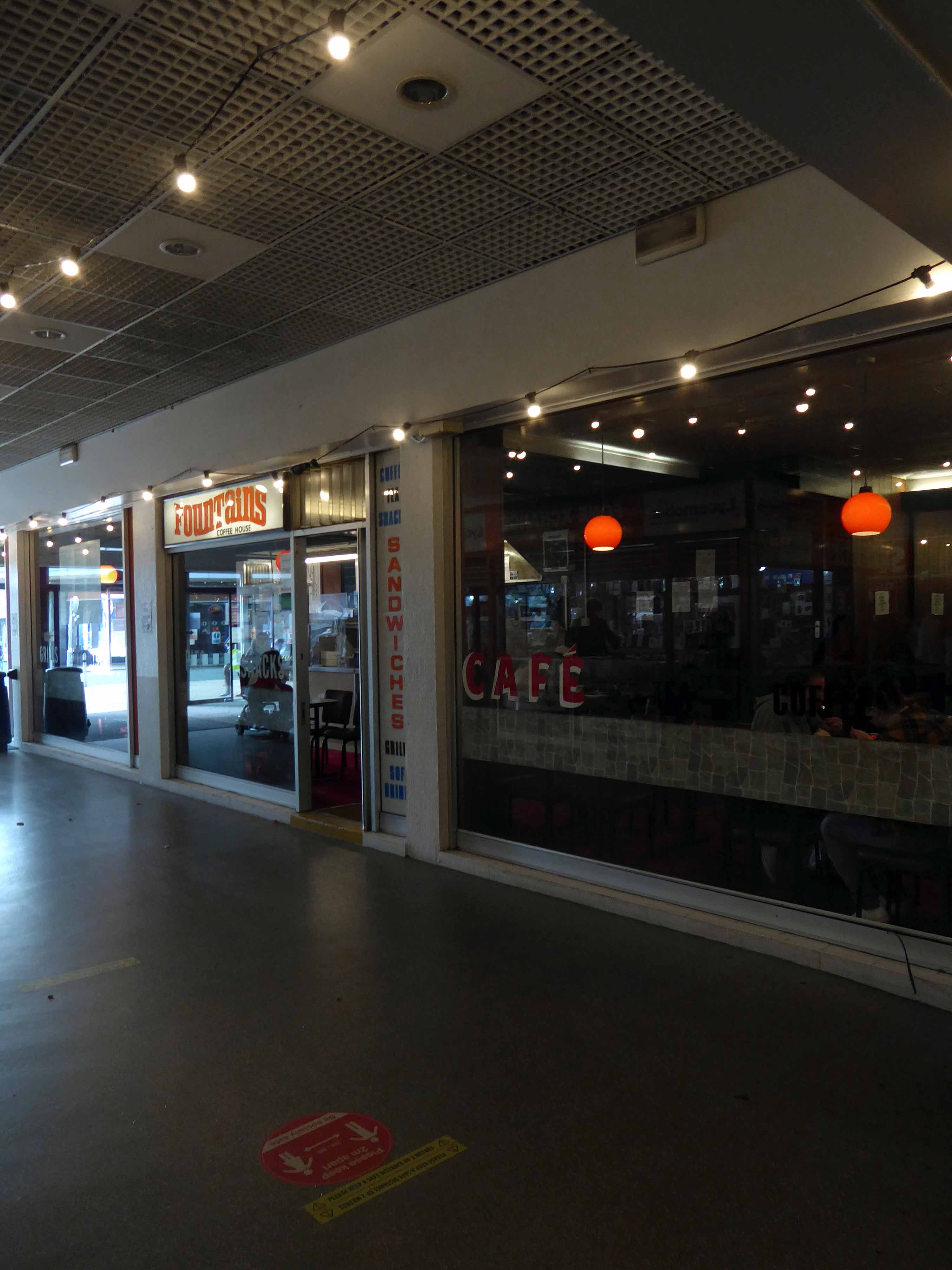
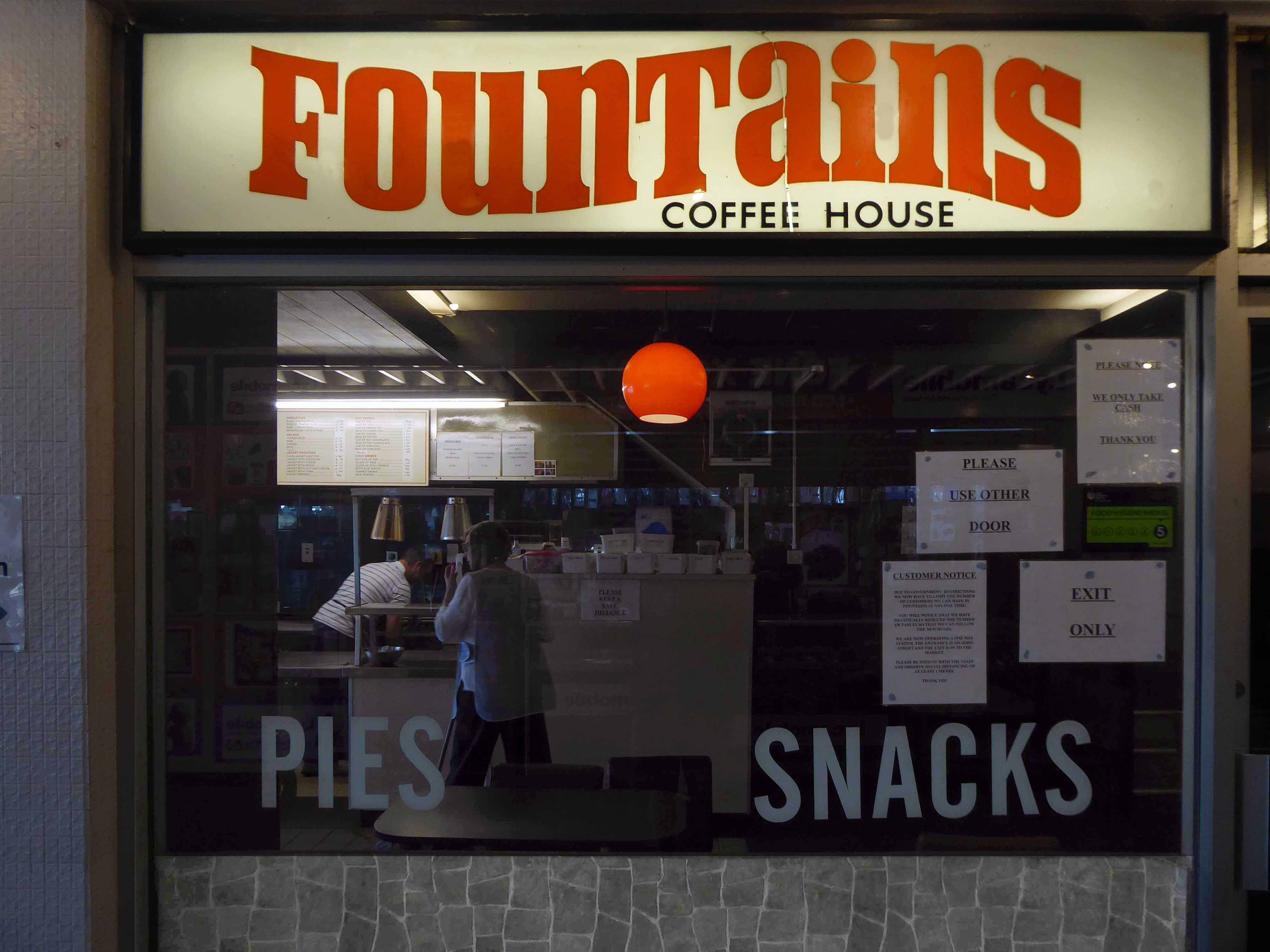
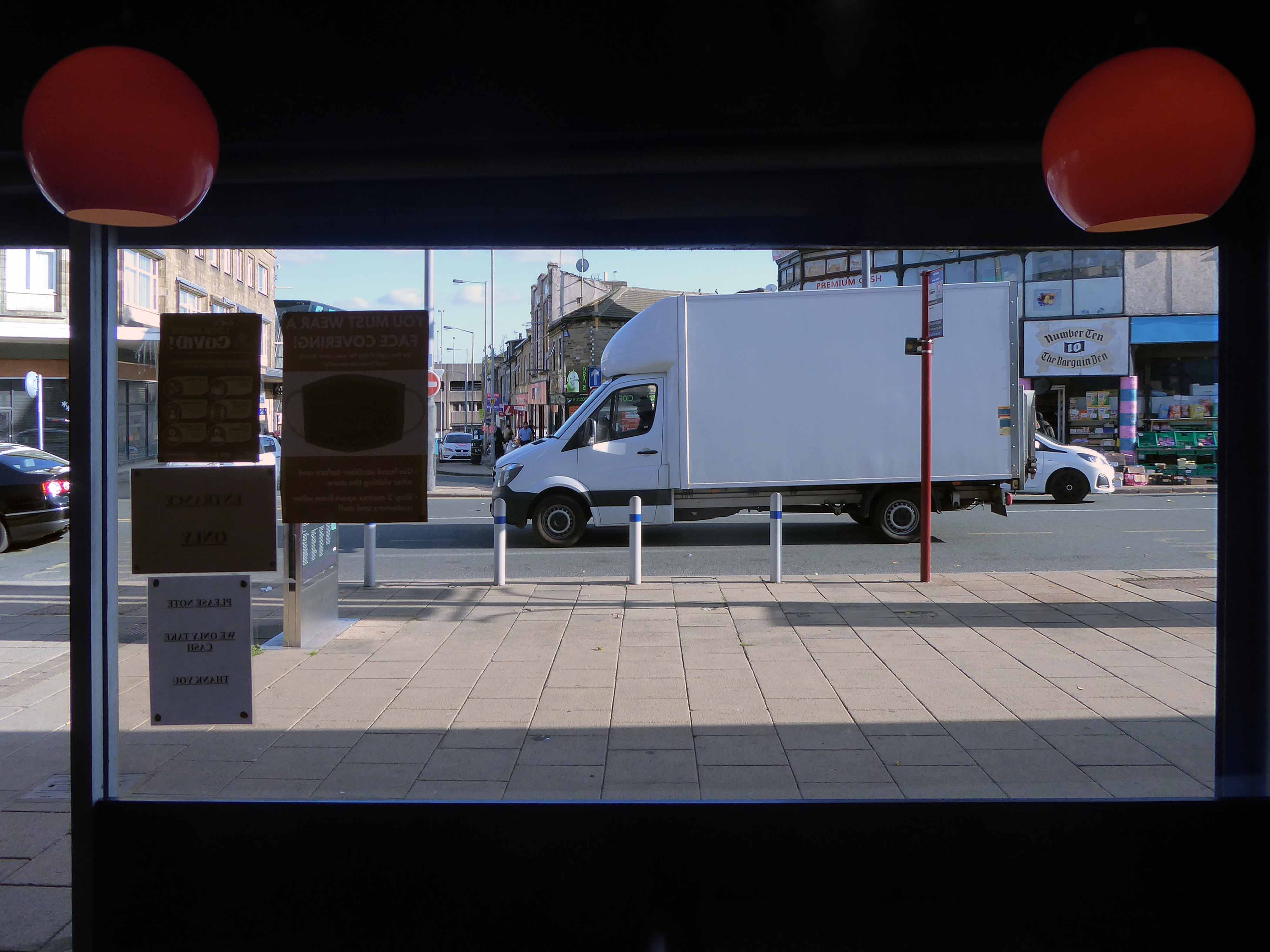
The exterior signage and fascia remain intact.
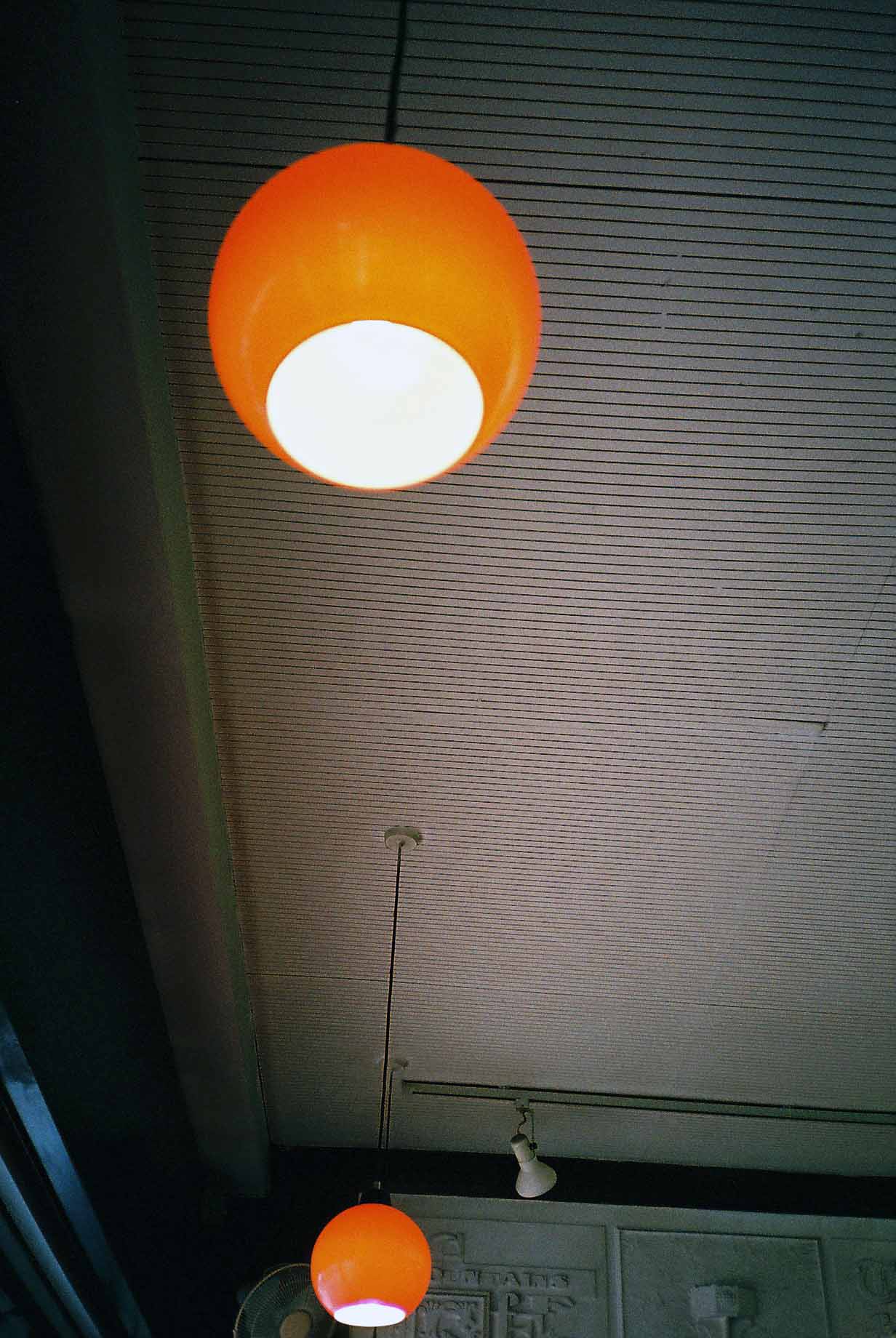
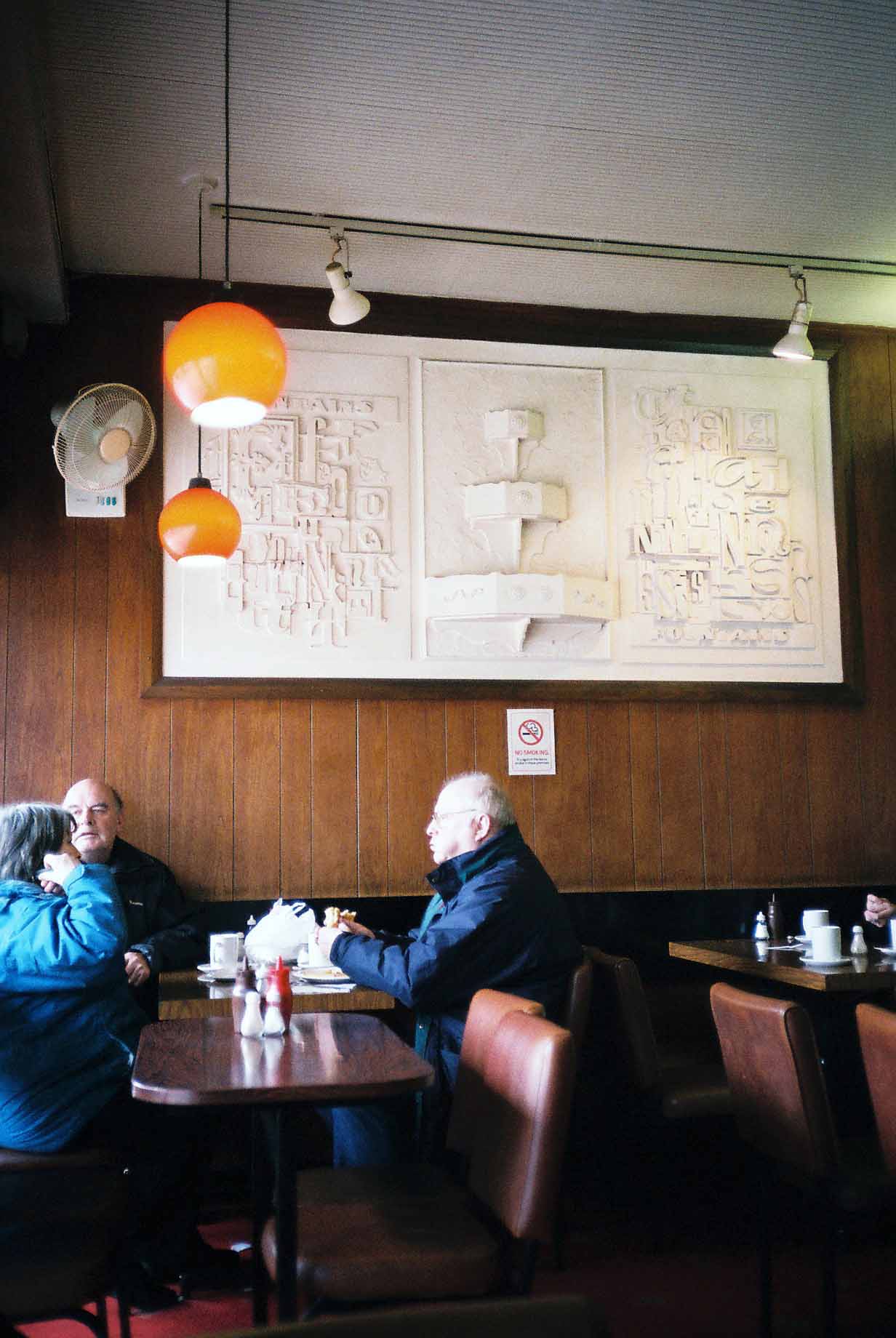
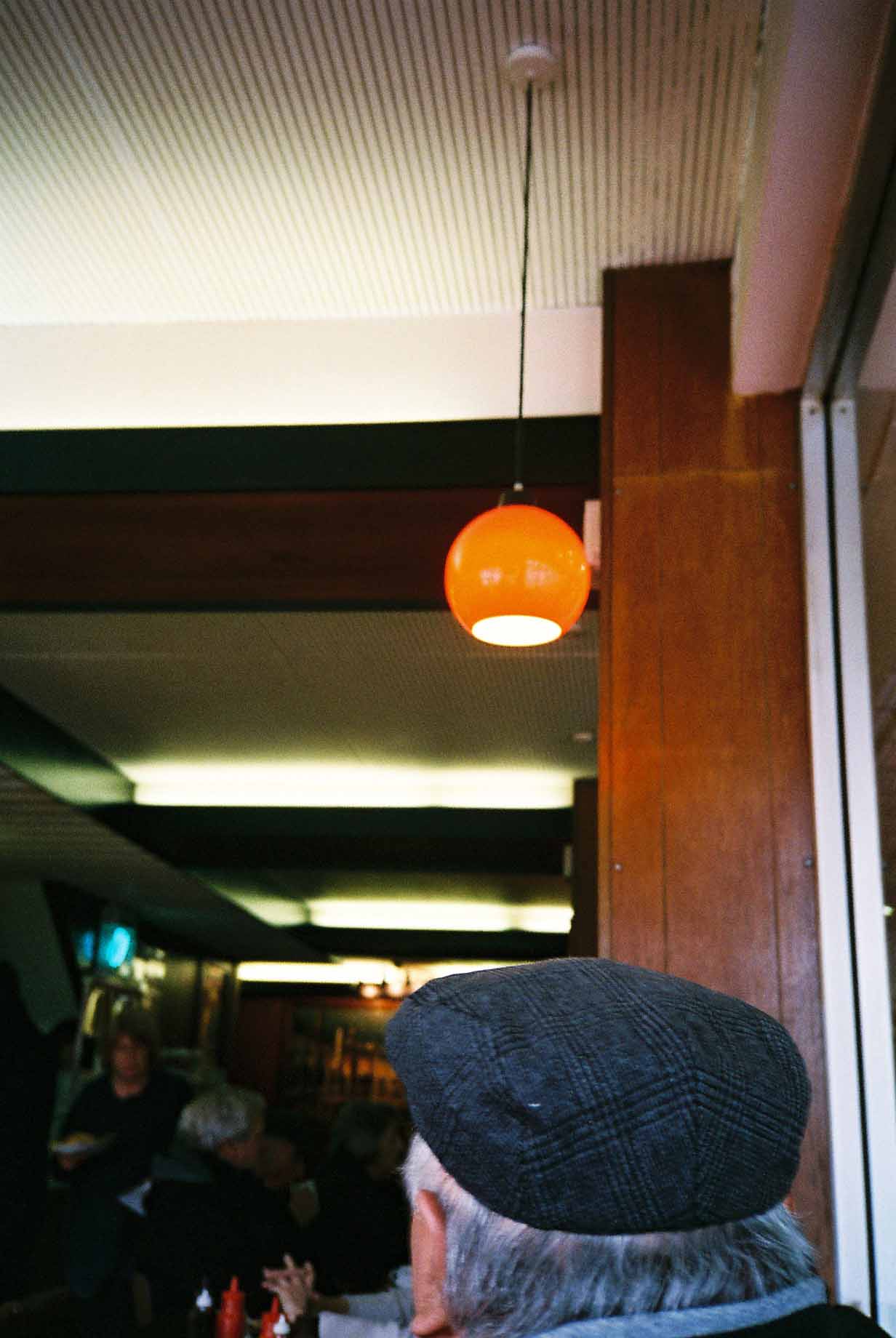
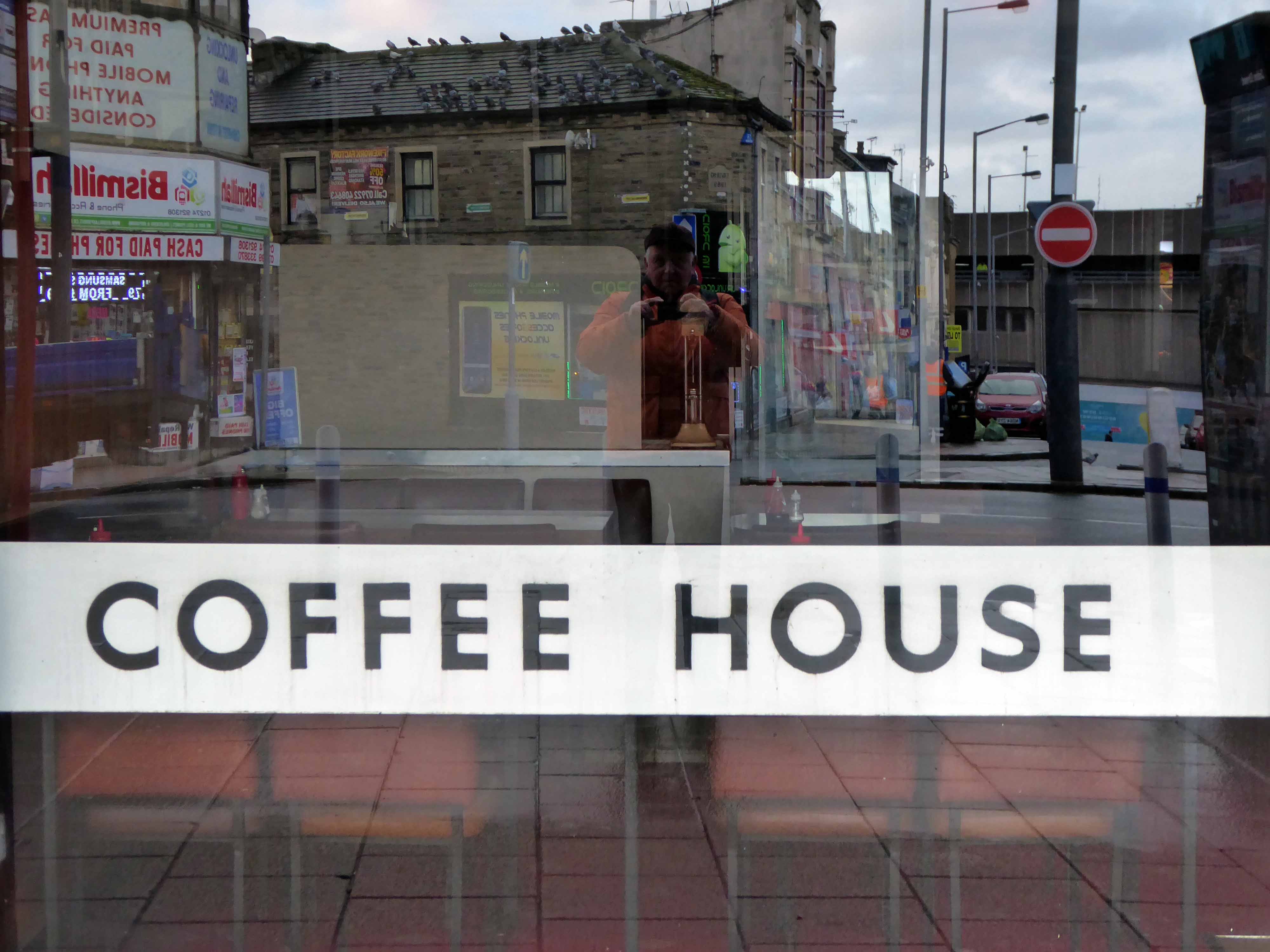
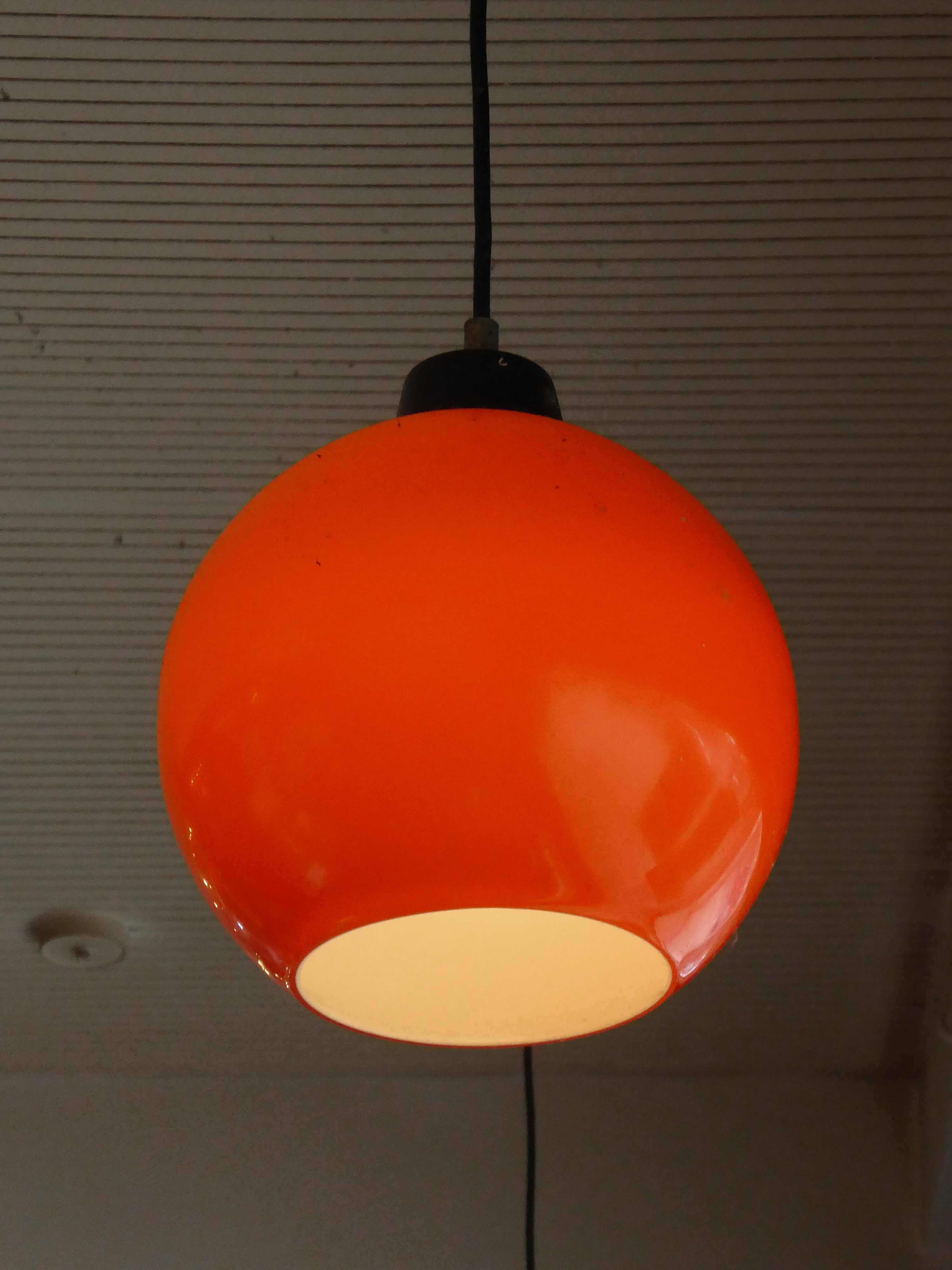
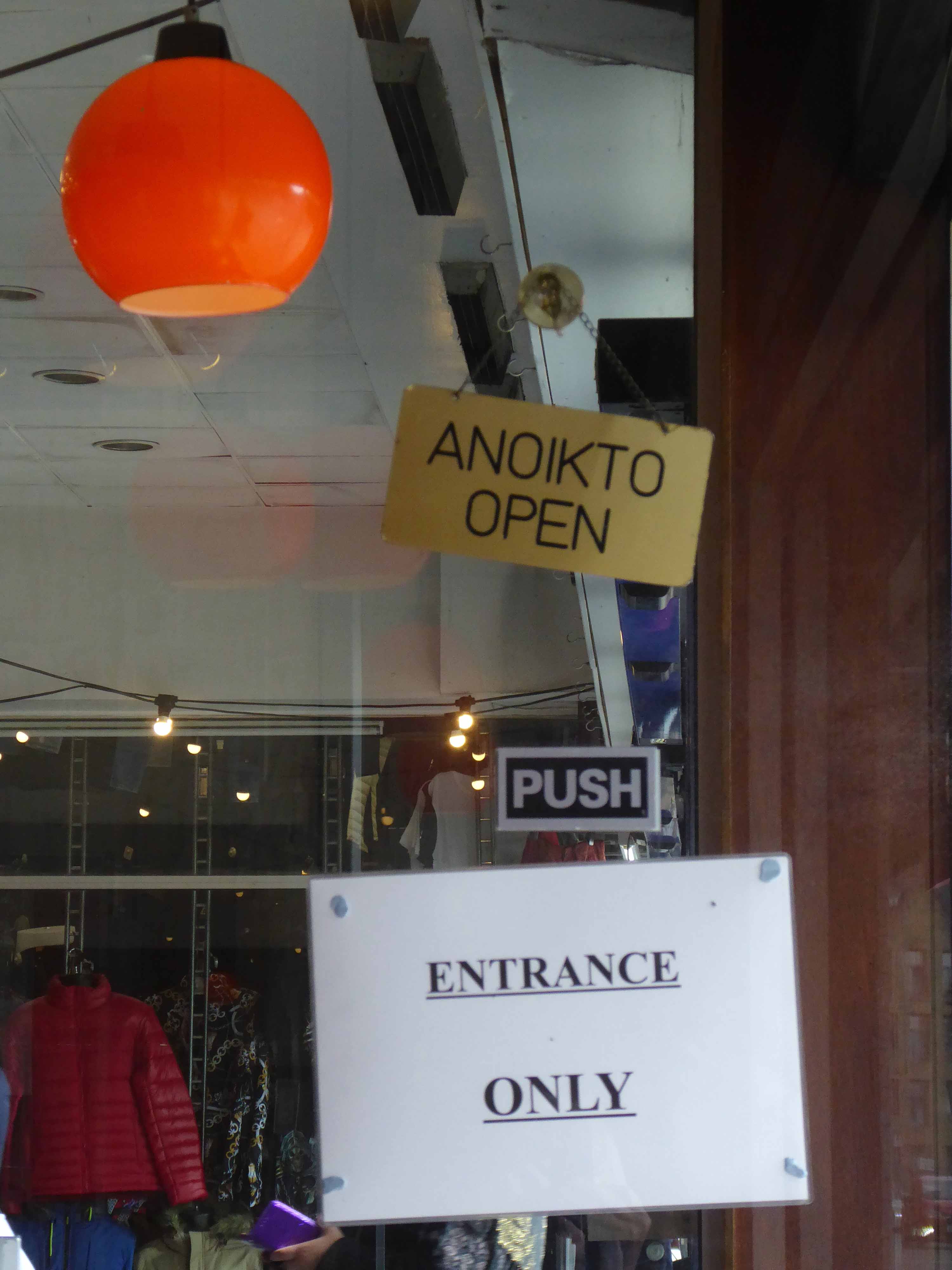
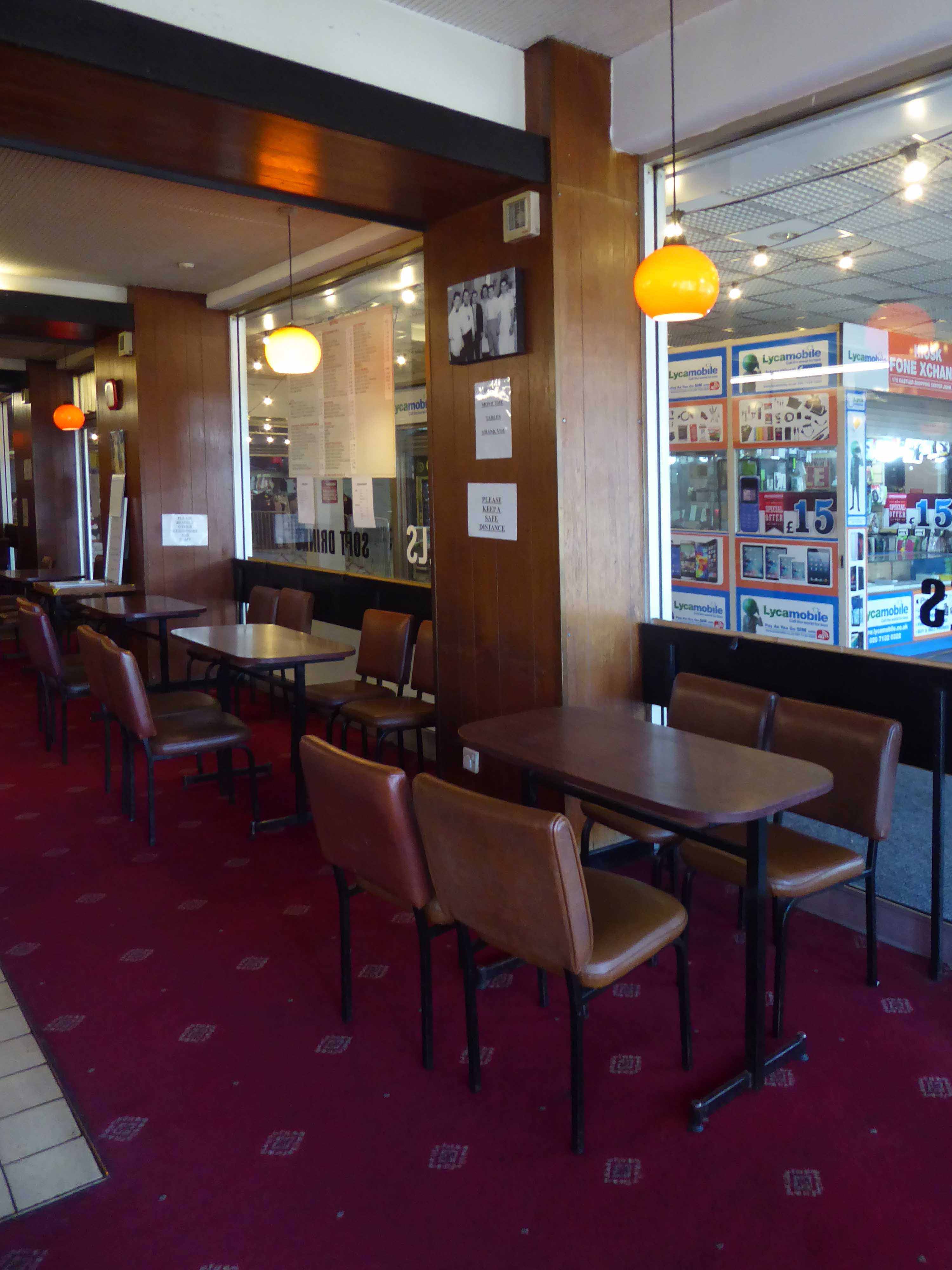
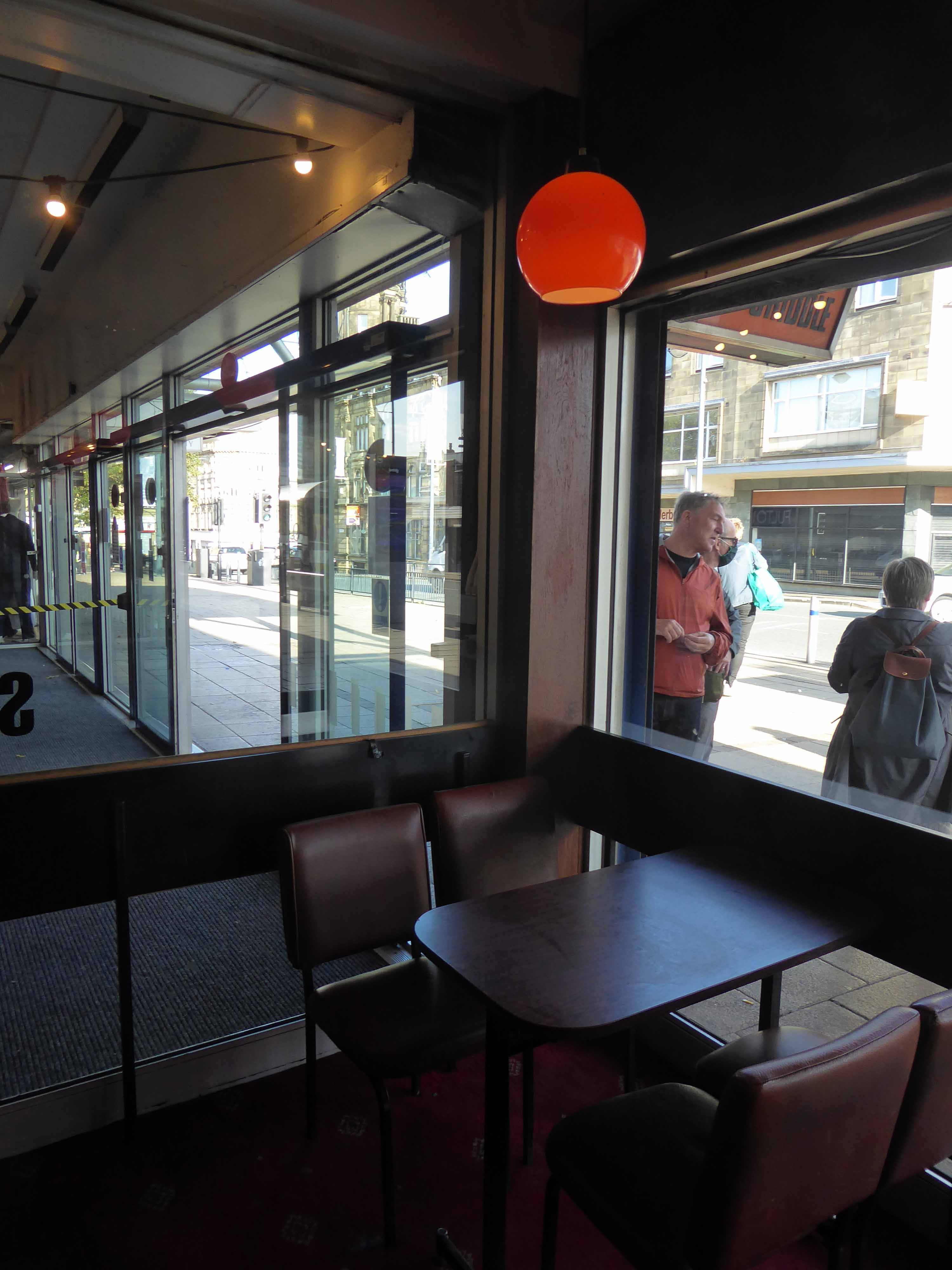
The orange light shades are still hanging limp and bright from the suspended ceiling.
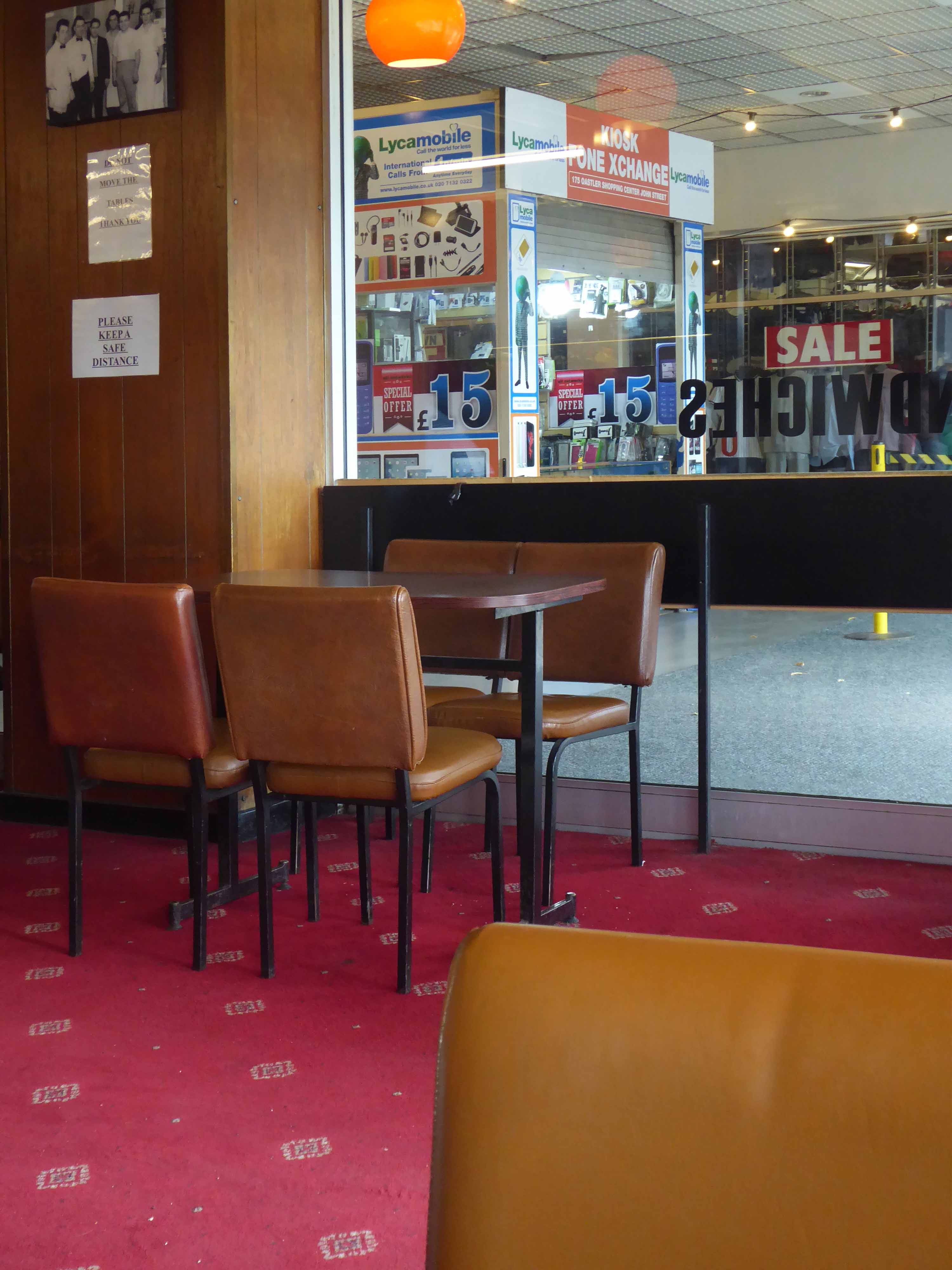
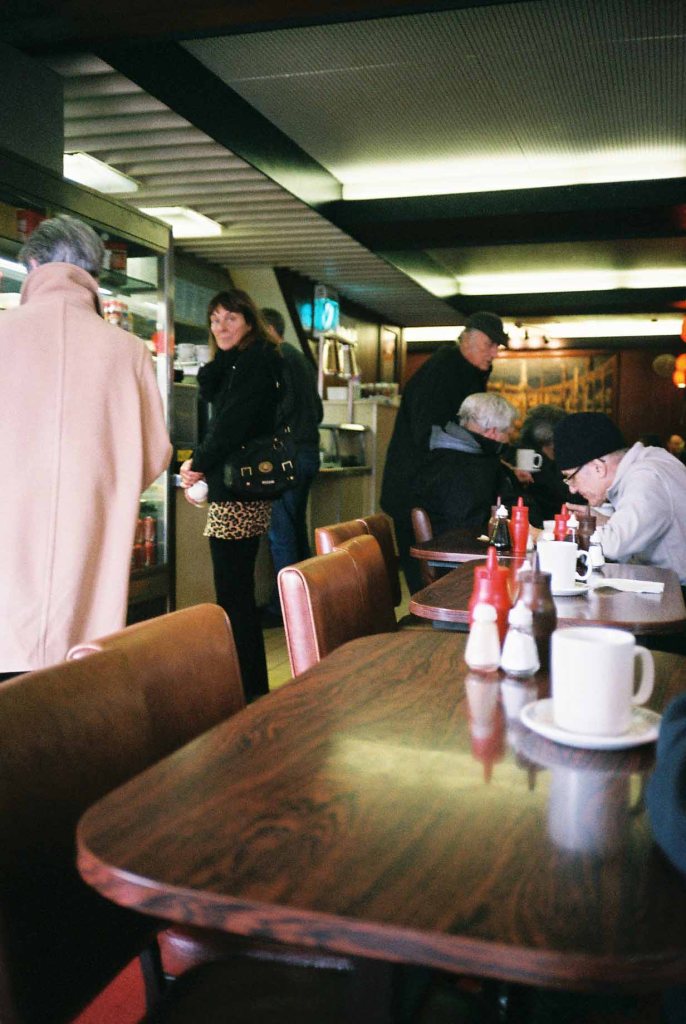
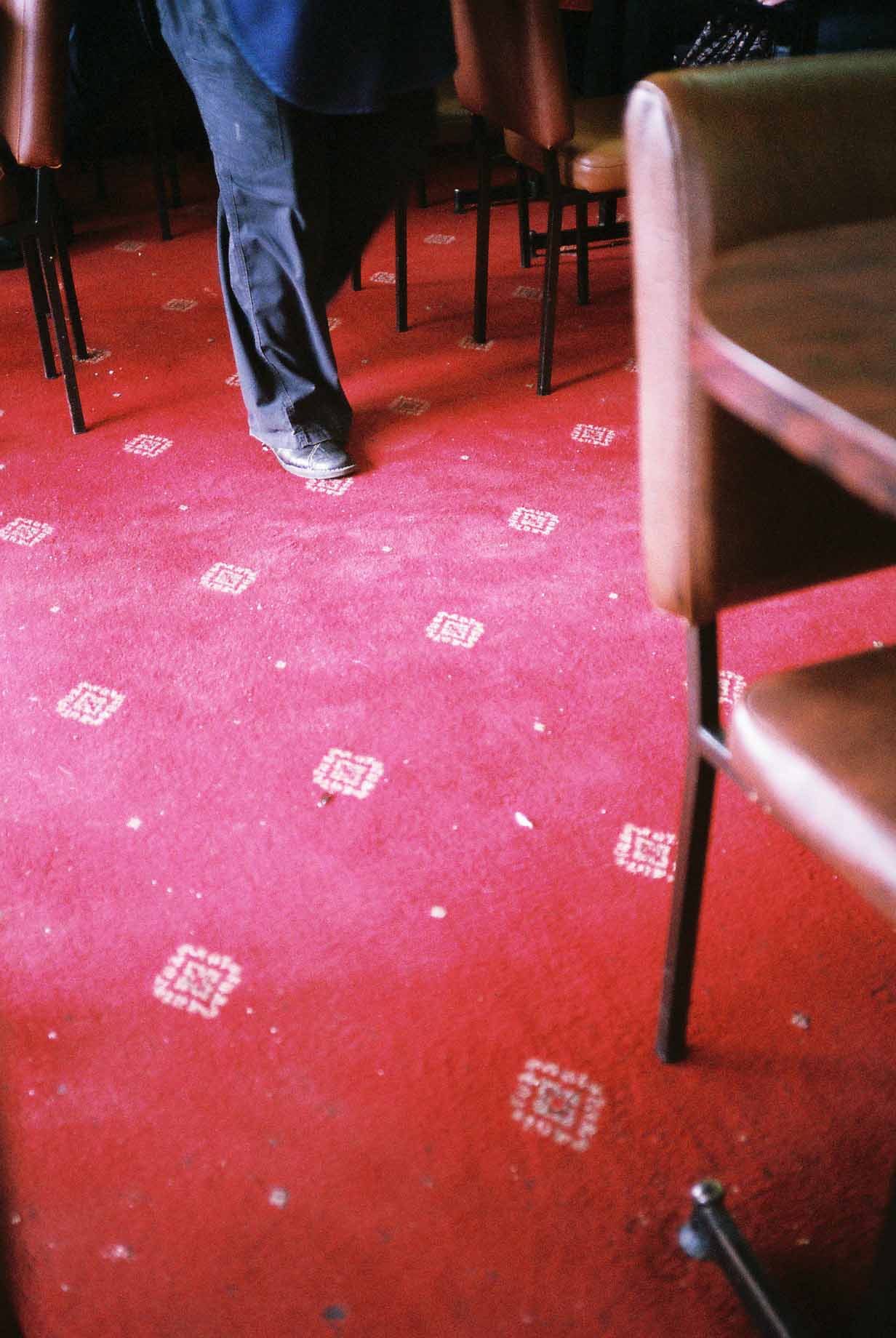
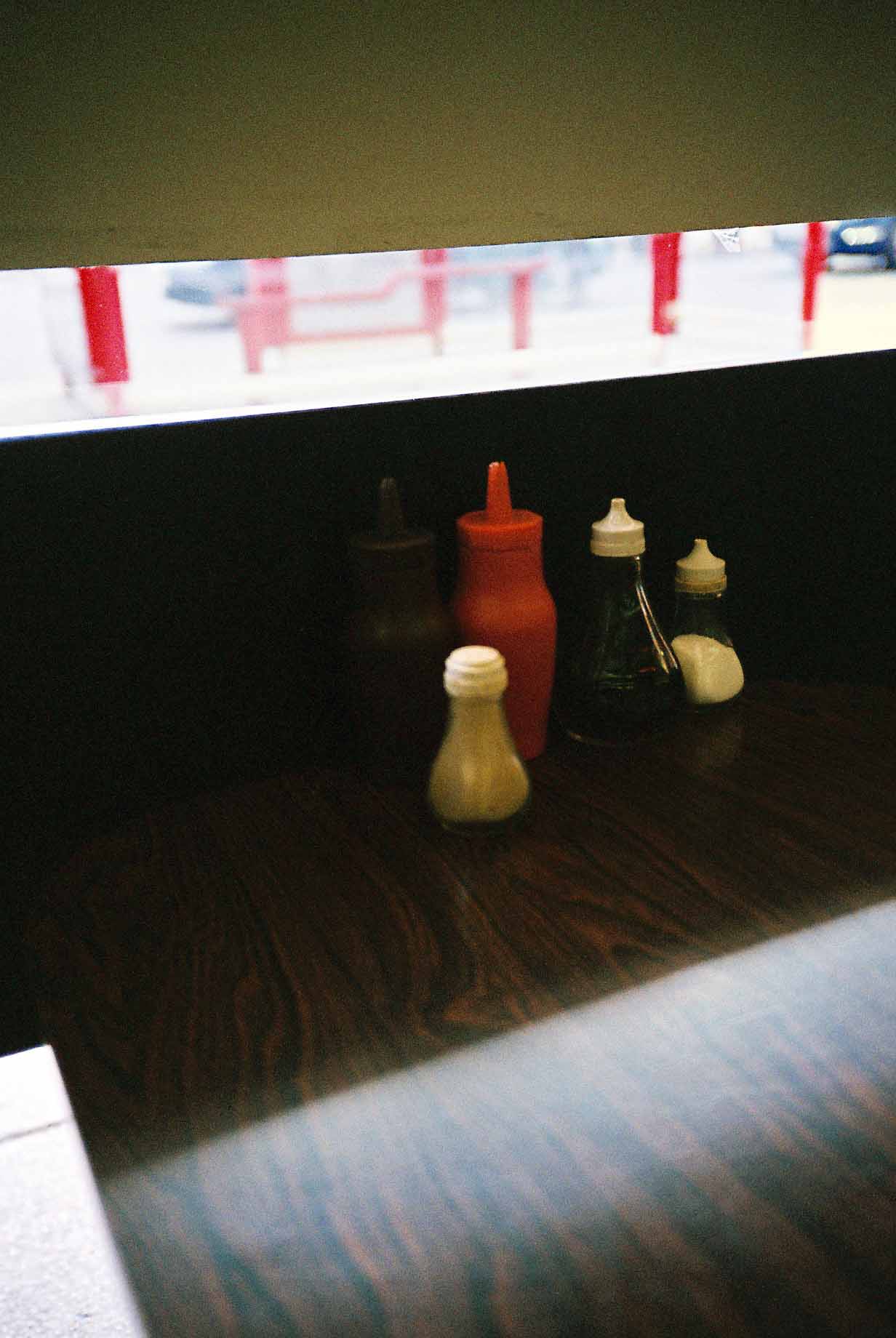
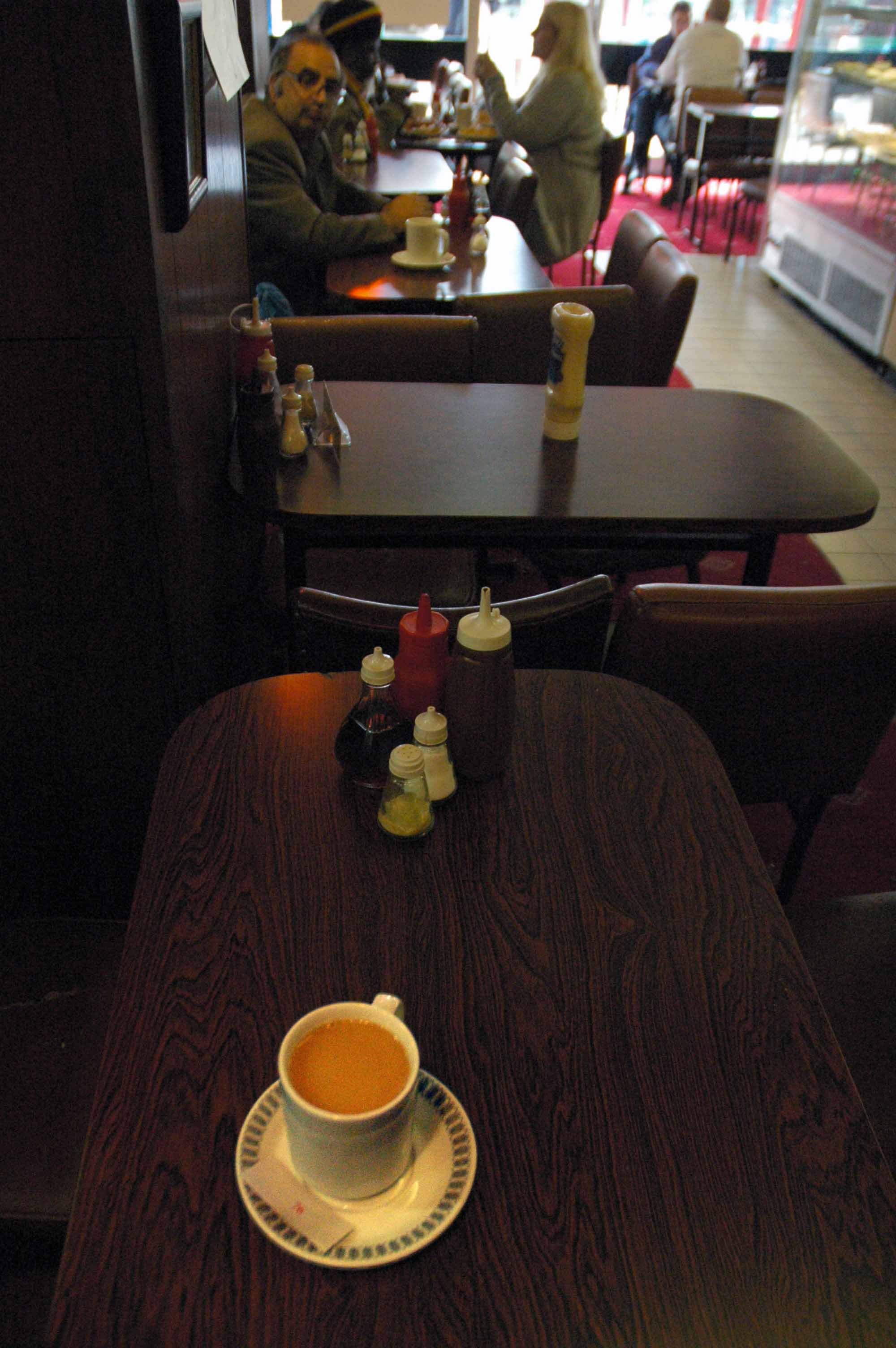
The furniture and scarlet carpet unmoved, as the cheery waiting staff weave merrily in, out and round about with meals and drinks.
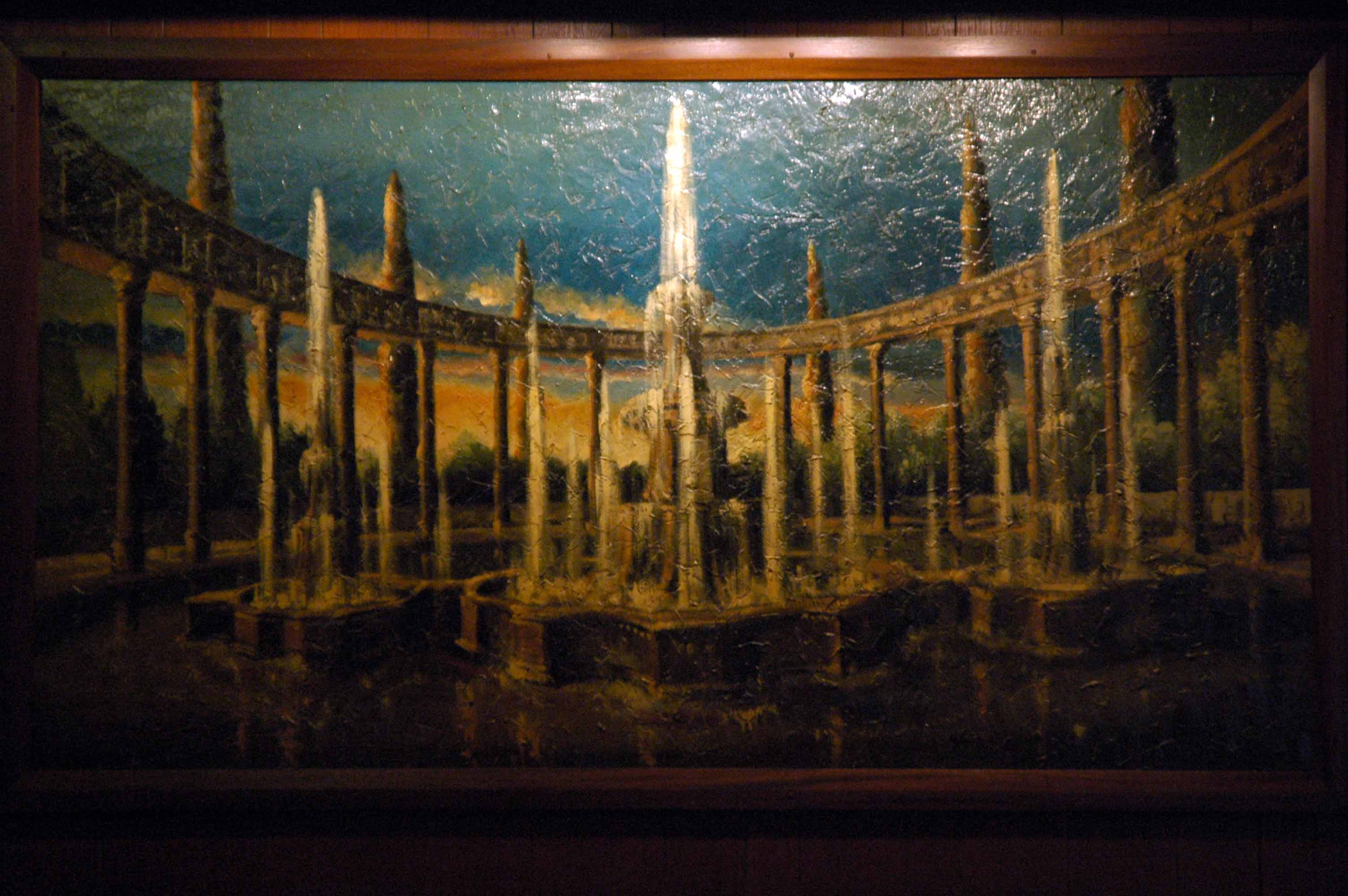
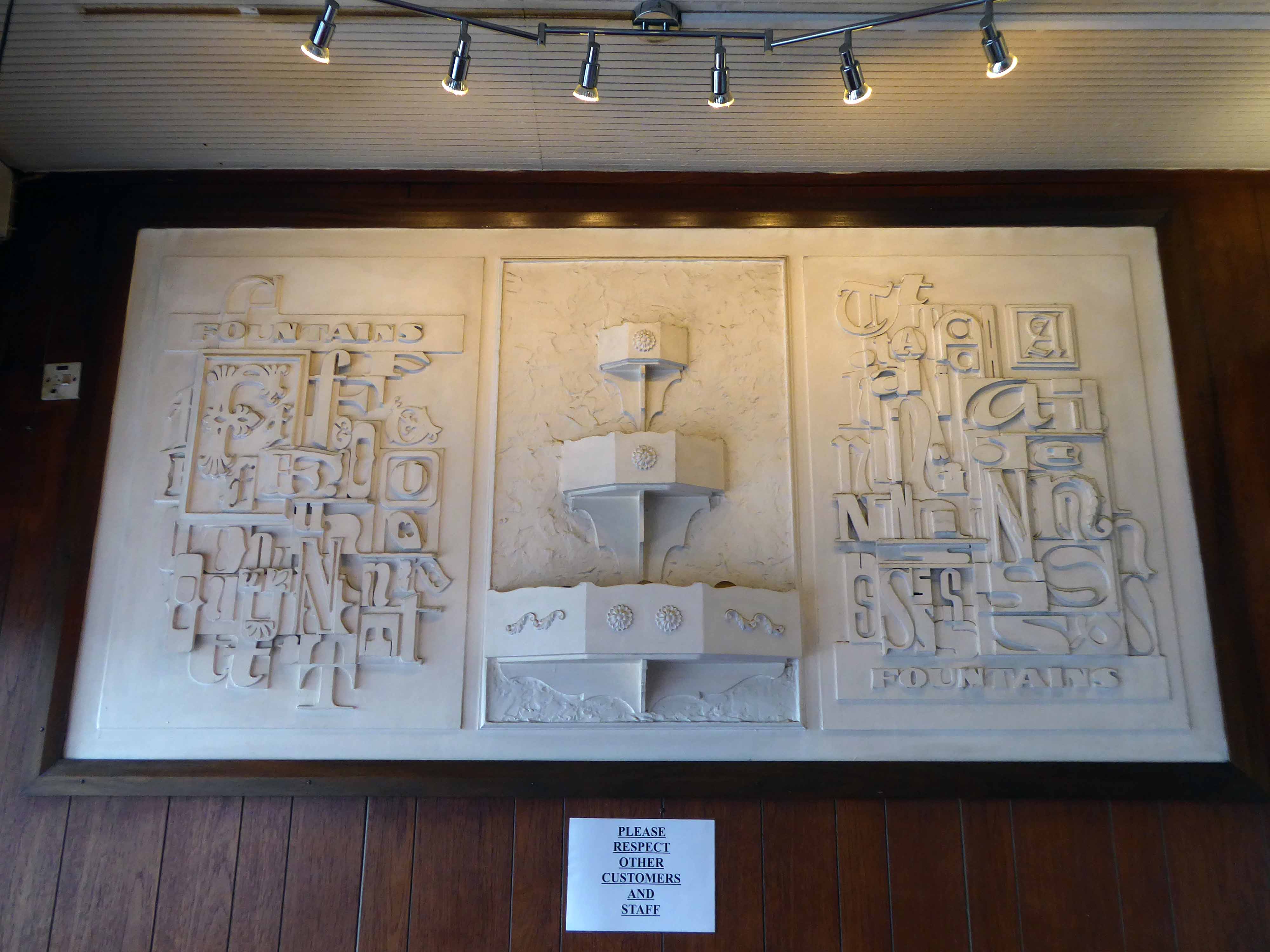
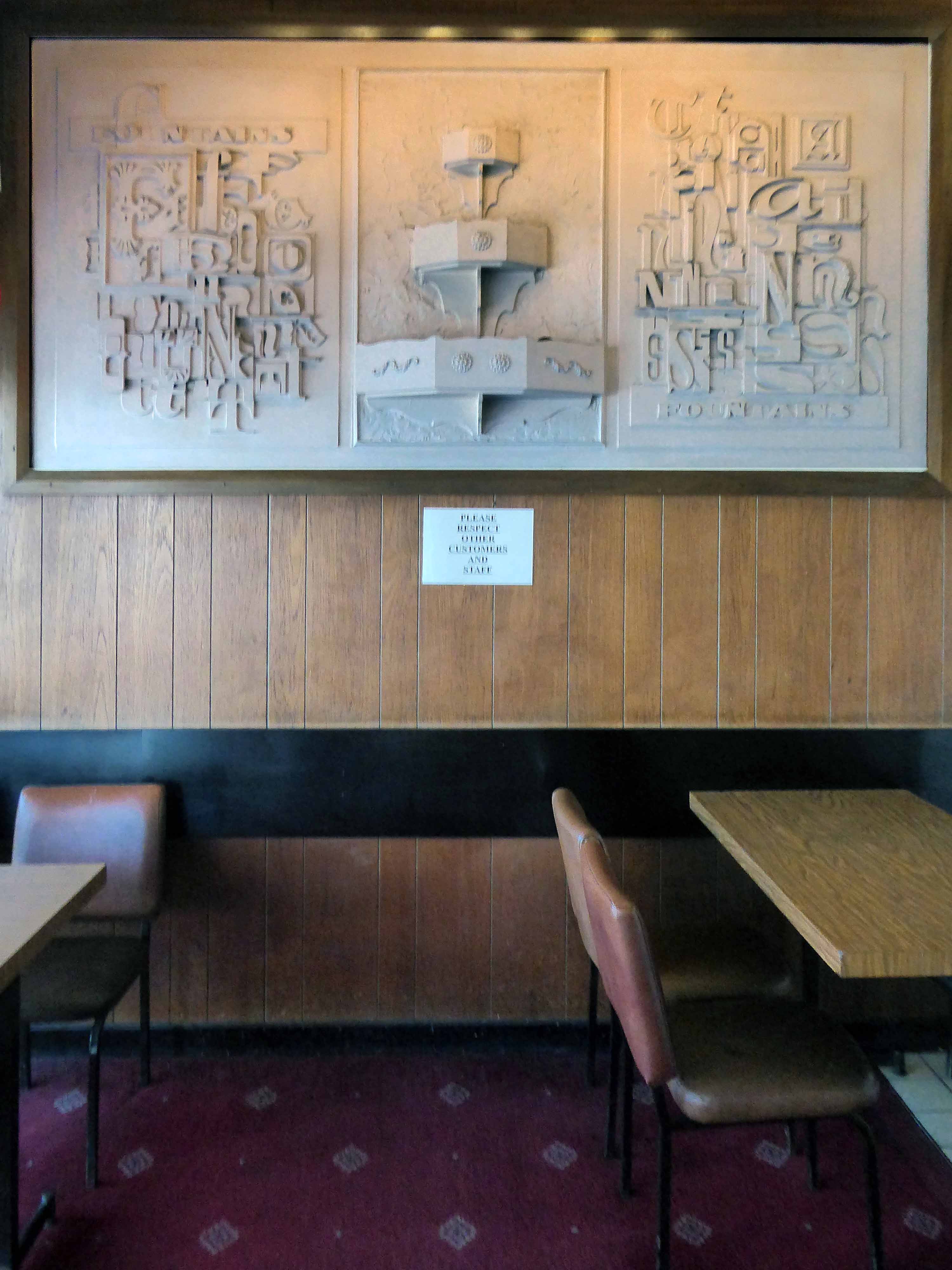
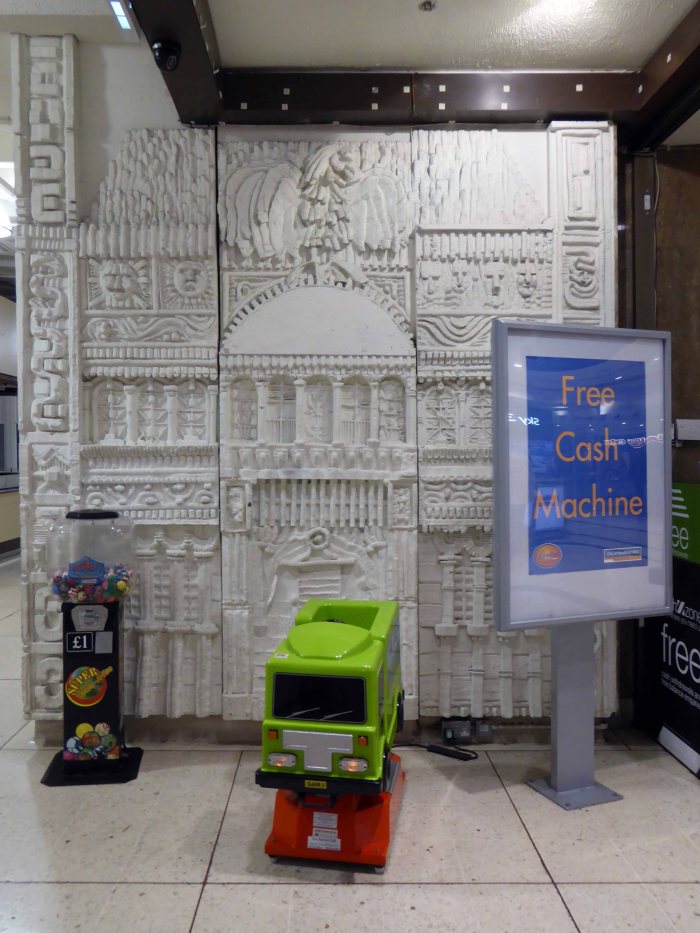
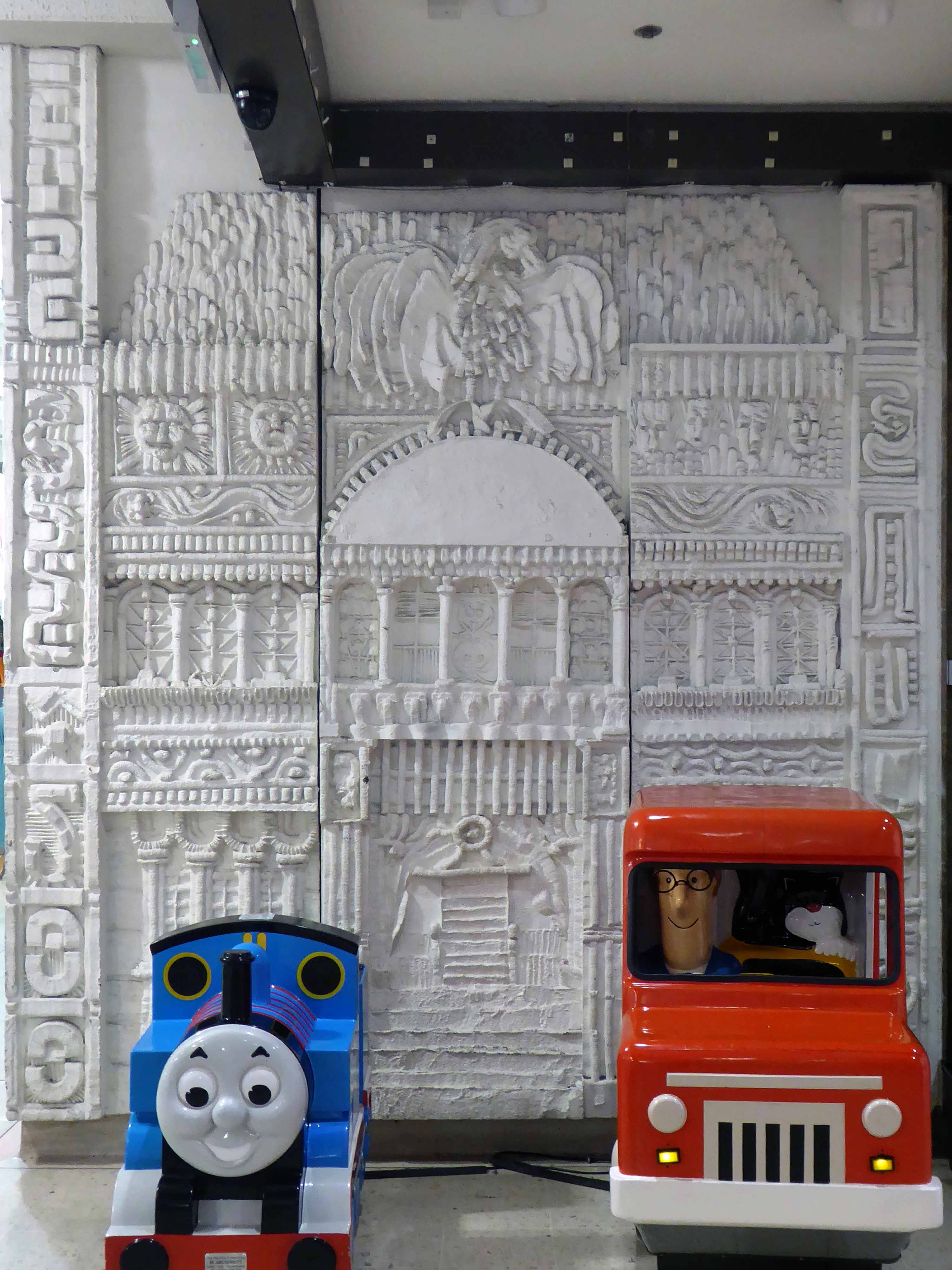
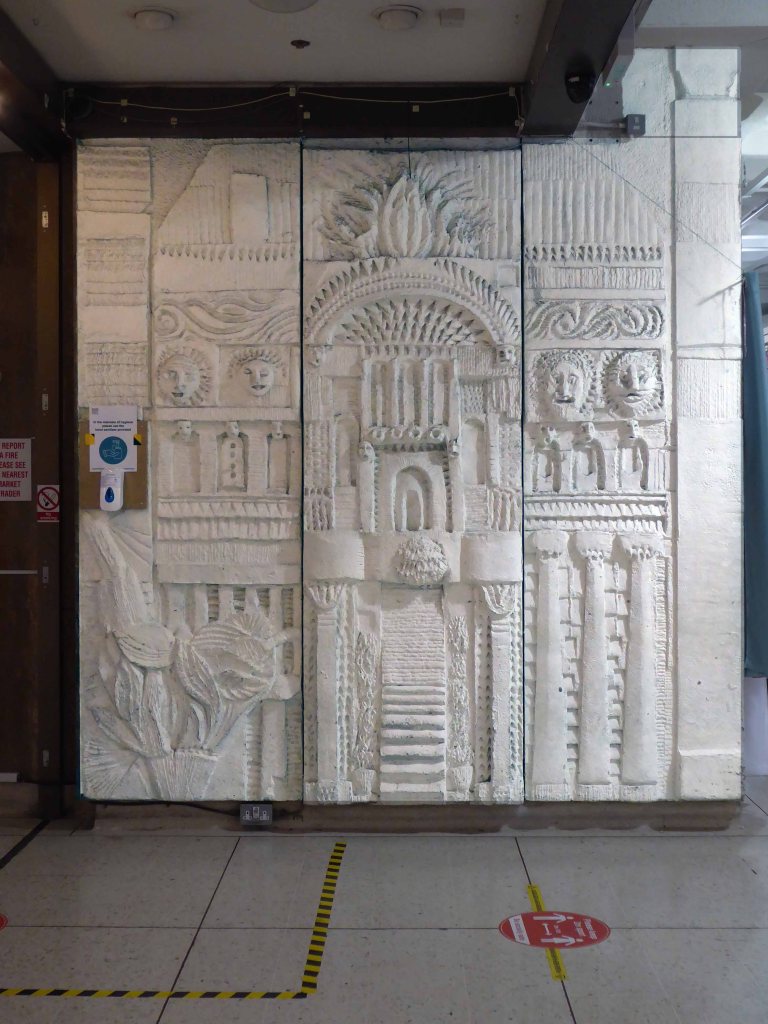
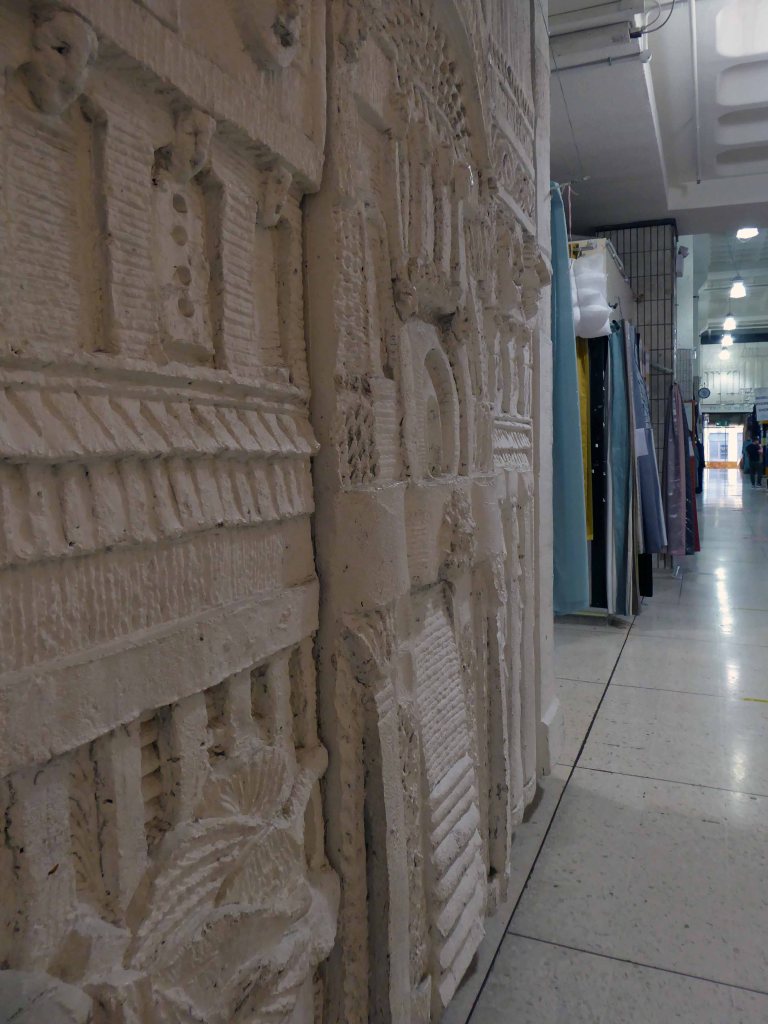
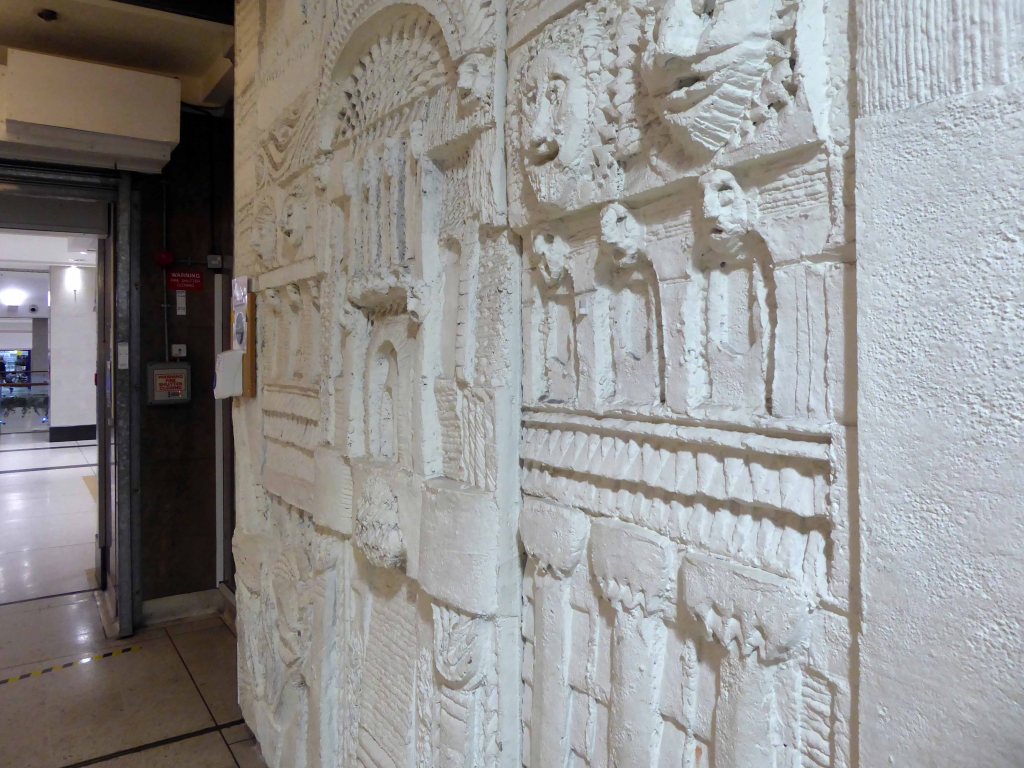
The distinctive white relief sits in the same place on the wall.
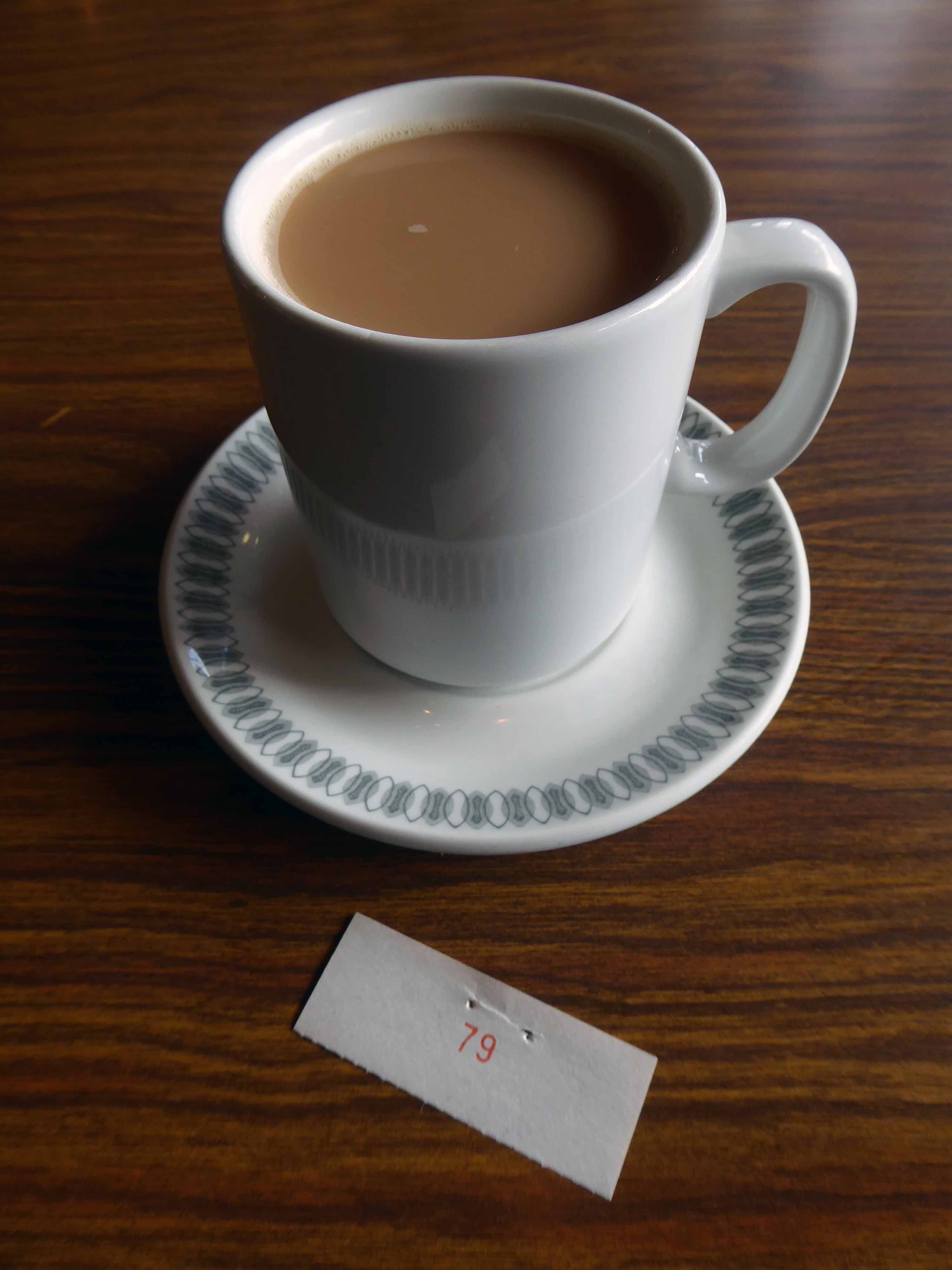
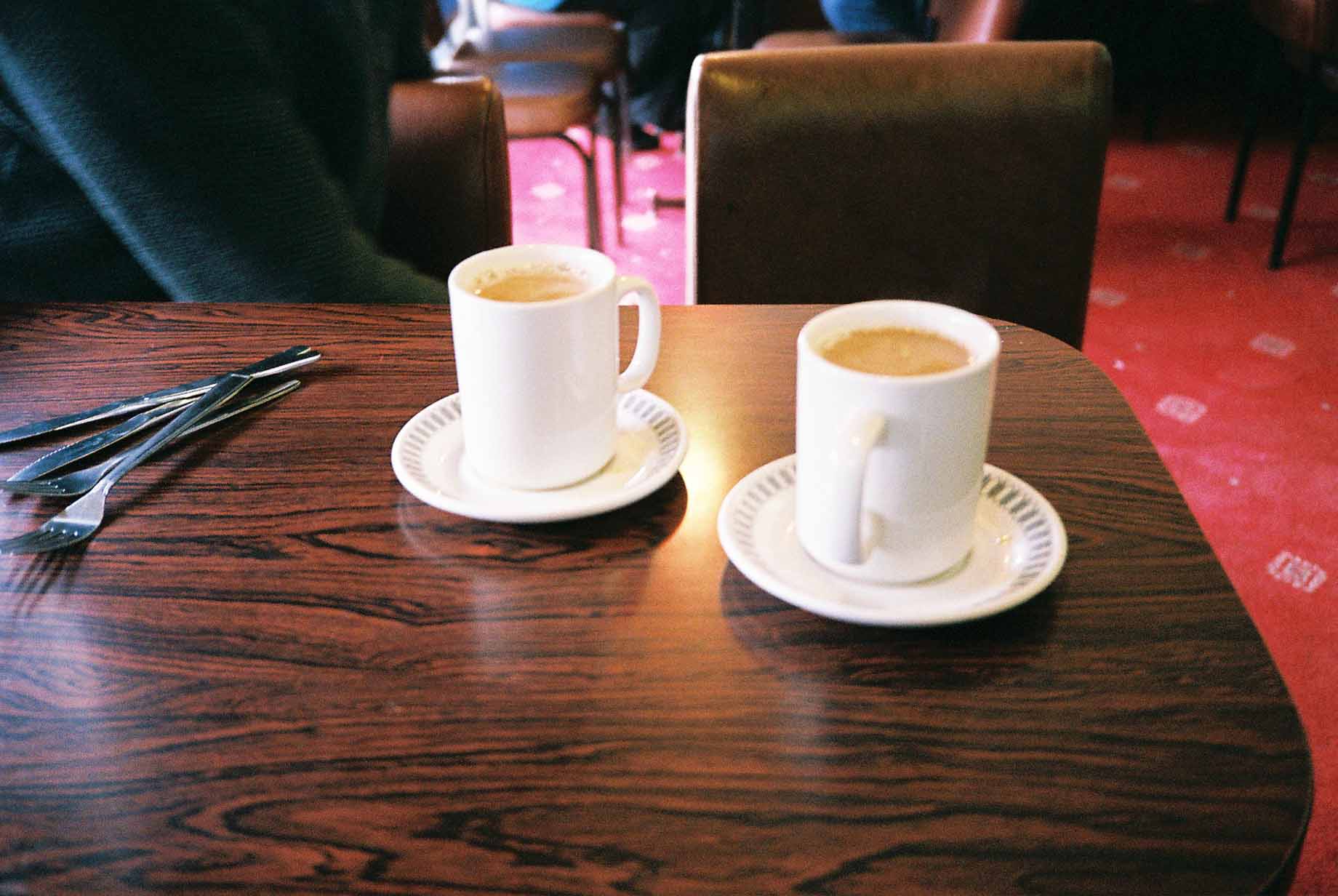
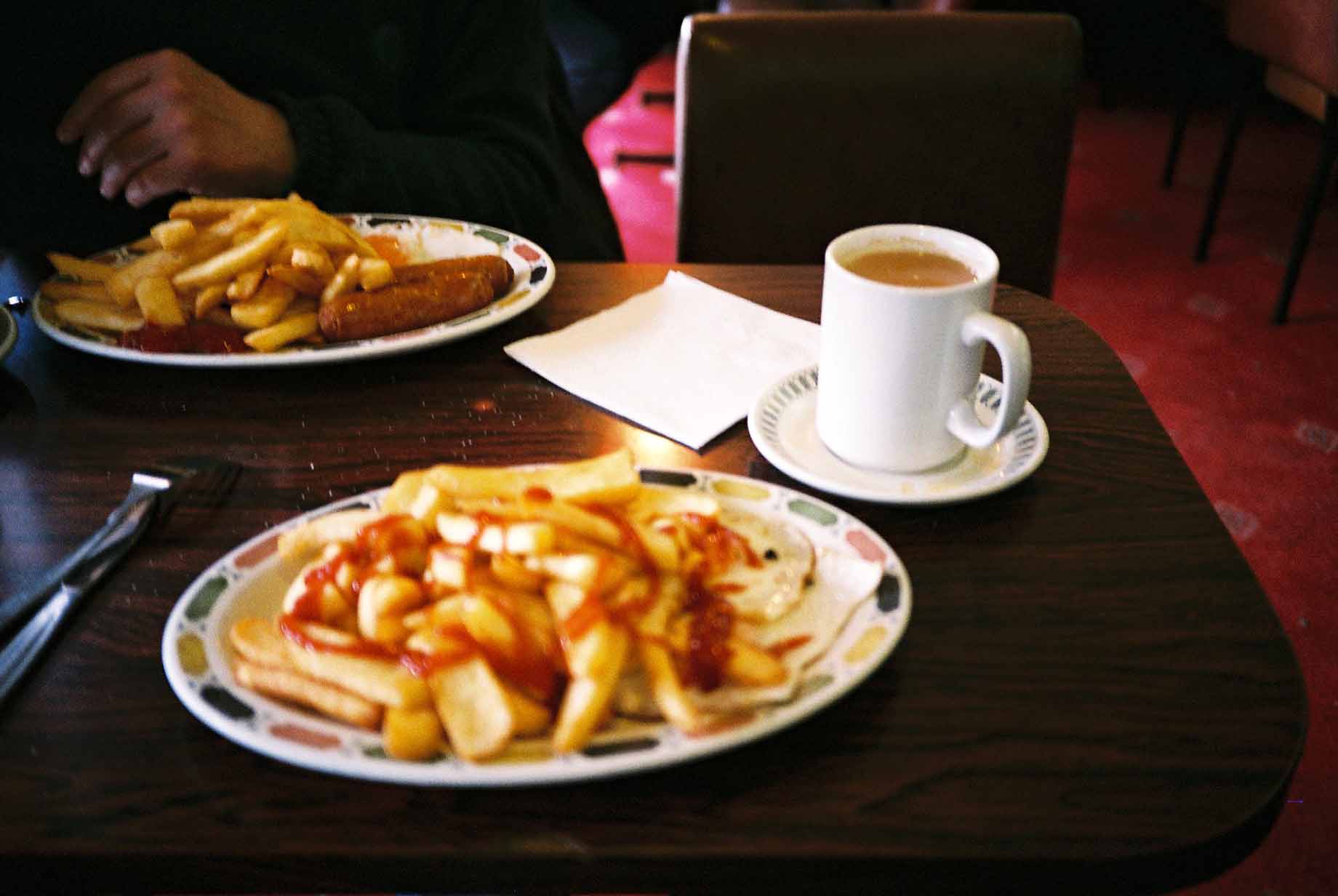
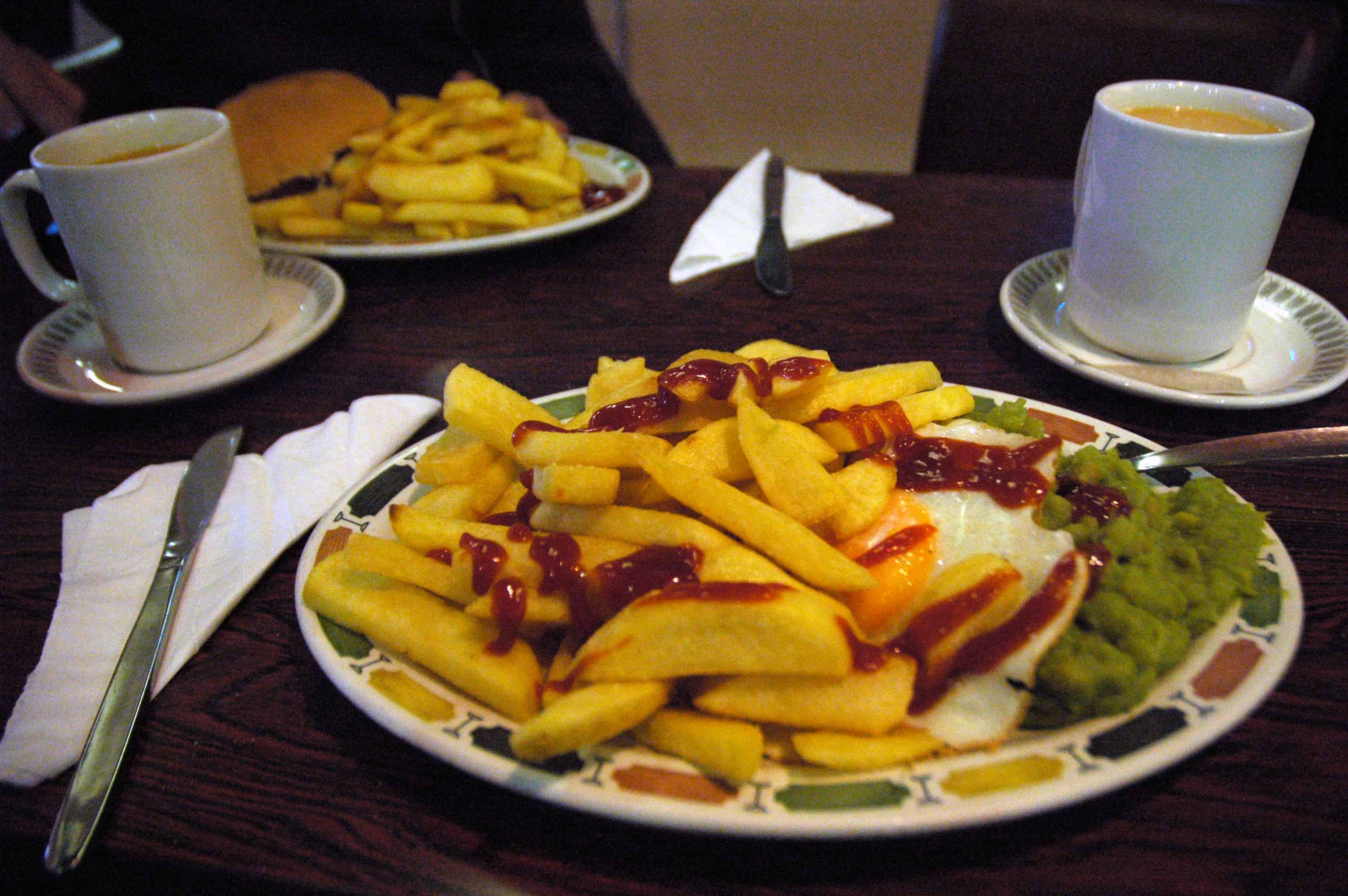
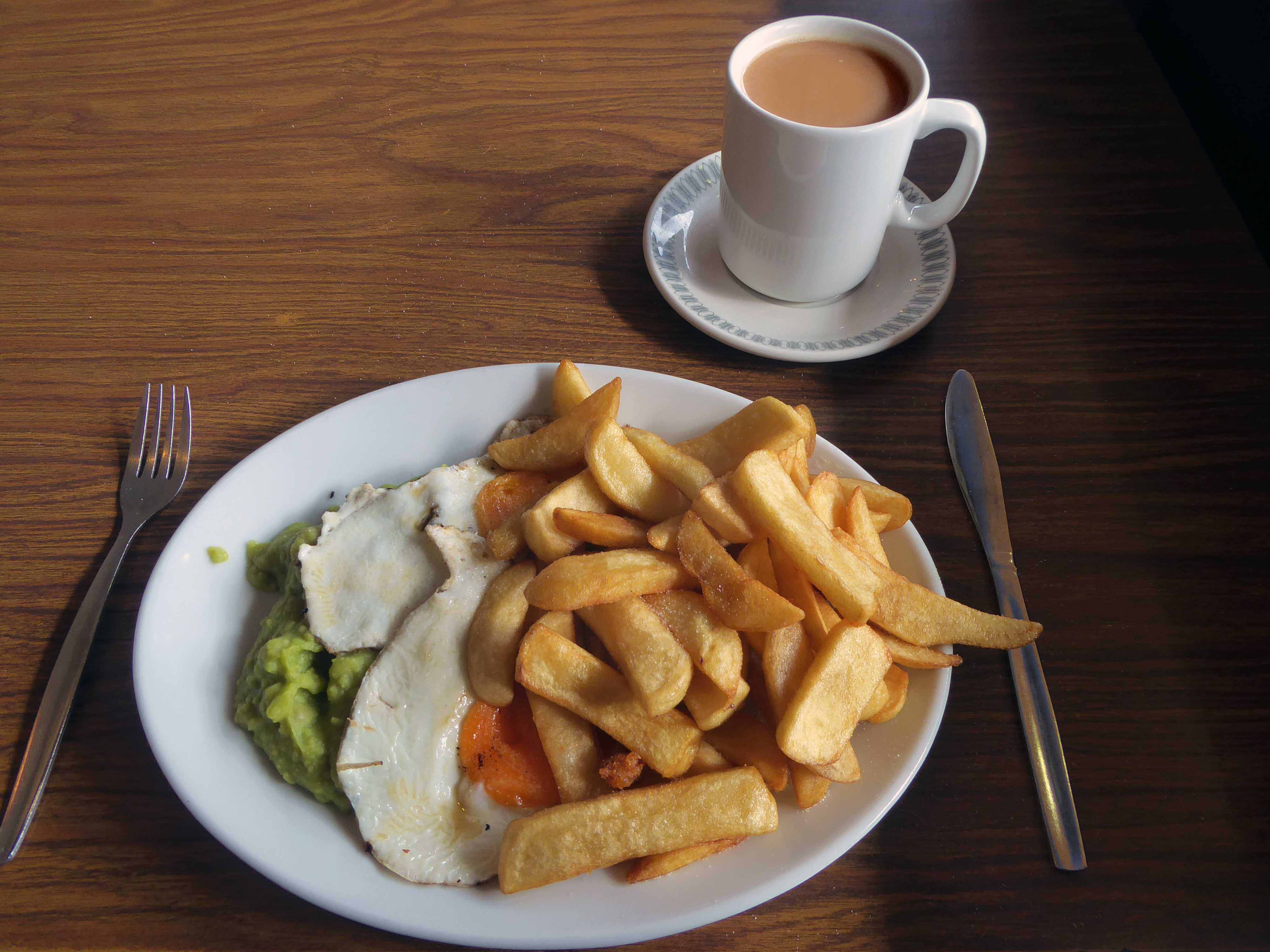
Almost inevitably I order a mug of tea.
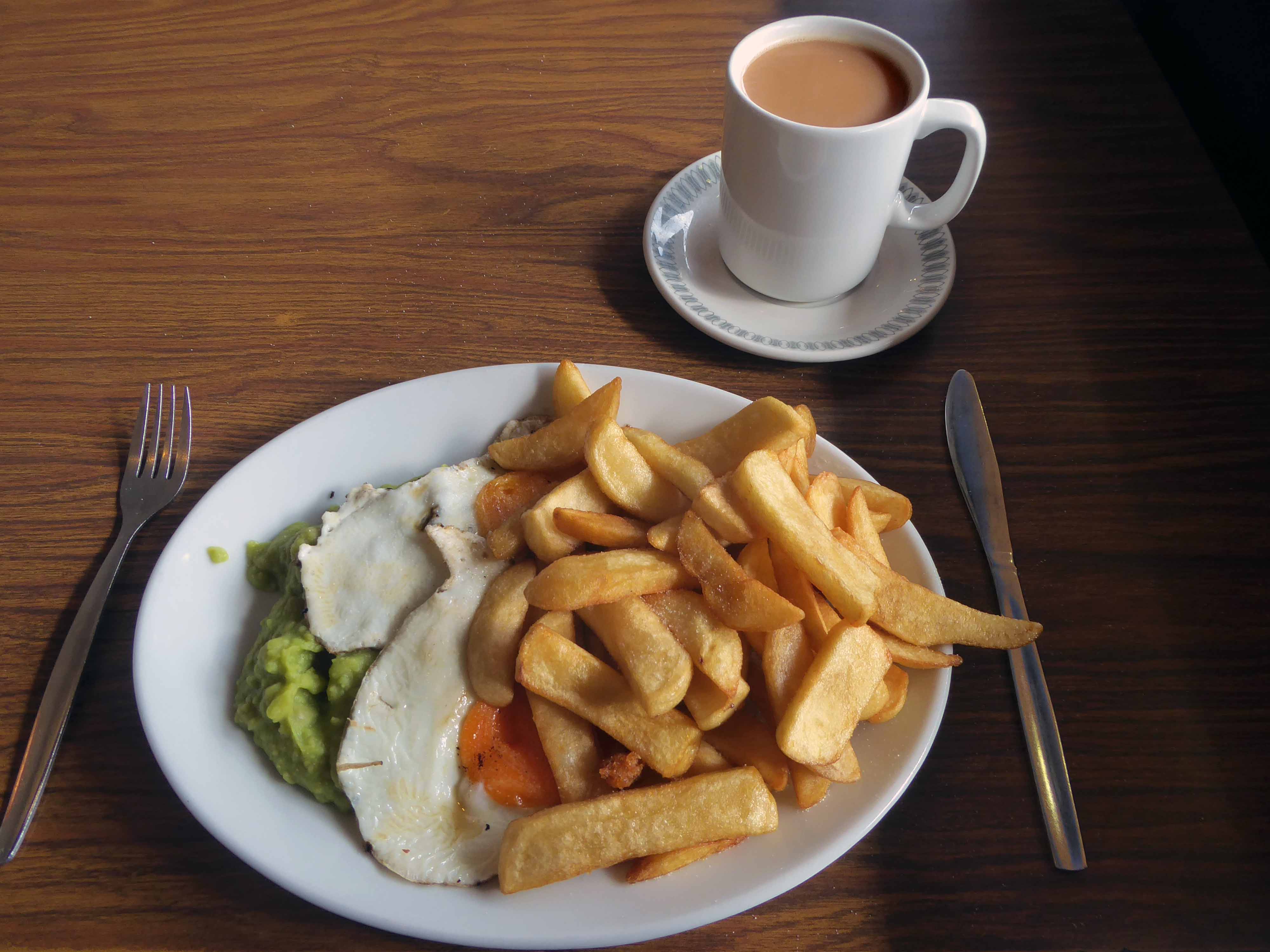
Along with a plate of eggs chips and peas.
Eat and drink the lot and leave happy and contented – who can resist a well run, well appointed classic café?
I can’t.
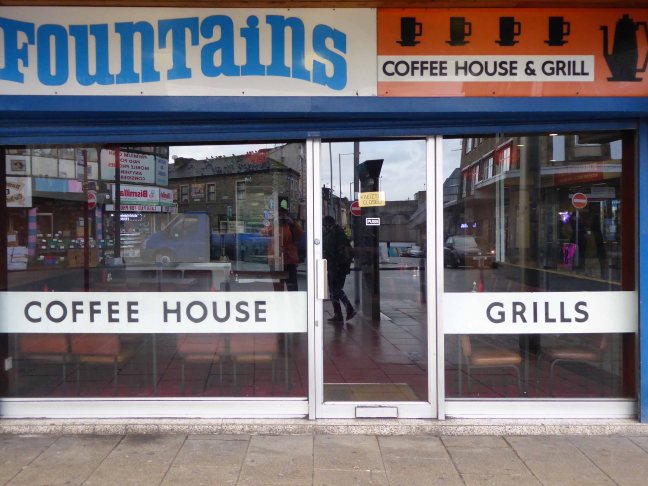
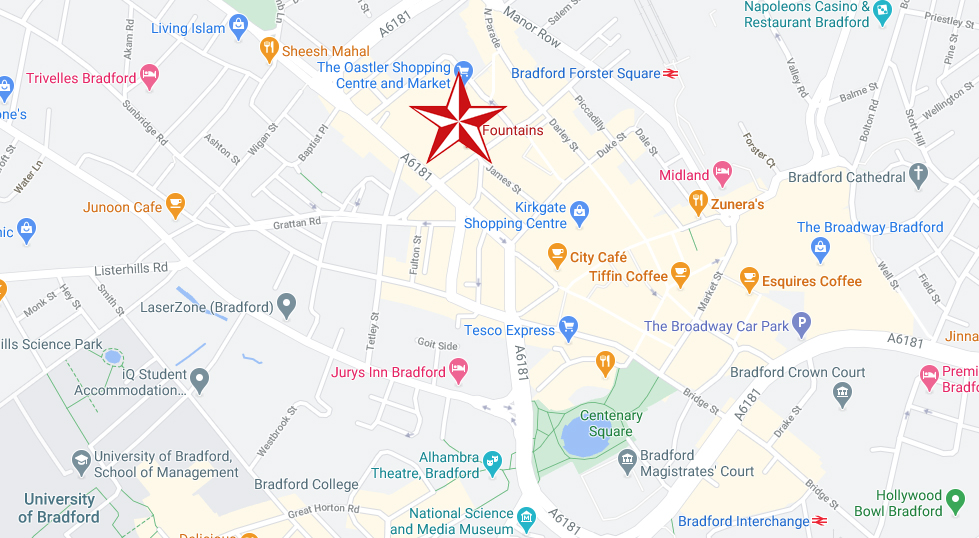
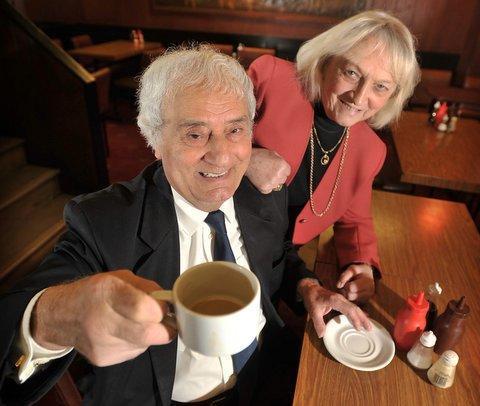
A well-known and respected figure in the Bradford business world, Mr Paul Georgiou ran Fountains Coffee House in John Street for just shy of 50 years alongside his wife Mary, and has run cafés and other businesses in the city for almost six decades.
Other ventures created by Mr Georgiou include the Hole in the Wall nightclub, which was one of the first underground nightclubs in the city centre.It hosted acts including Sir Tom Jones and rockers Thin Lizzy as they rose to fame in the late 1960s and early 1970.
Sadly he passed away in 2019.
His main business Fountains Coffee House is now managed by his son Michael, but when it opened it was one of the first businesses to open in the John Street Market, as the Oastler centre was known then.
Positioned above the entrance/exit and either side of the exit/entrance.
They have had over time various companions to keep them company.
They are currently friendless – the Kirkgate Market is to be closed, its future uncertain – and by inference Big Bill’s public art is under threat too.
The Council has announced to its traders in Kirkgate Market and the Oastler Centre that it will not be carrying out the proposed refurbishment of Kirkgate Market as the new market in Darley Street will now accommodate non-food sales on one trading floor with the other trading floor being dedicated to fresh foods and the 1st floor for hot food and beverage sales.
As per they are unlisted, largely unnoticed and as such very vulnerable, get it while you can, take a trip to Bradford real soon.
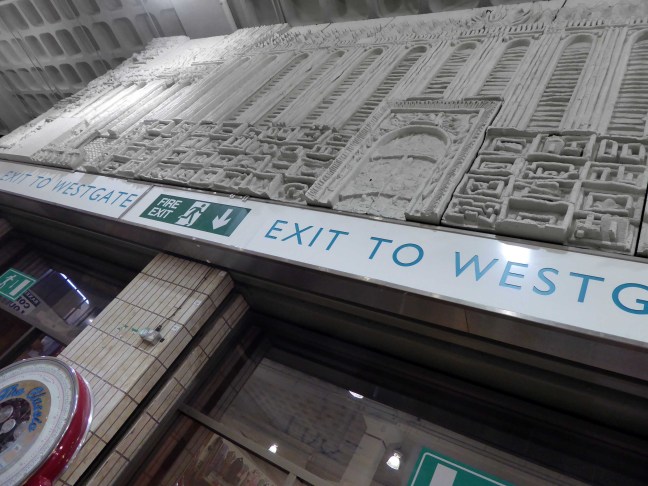
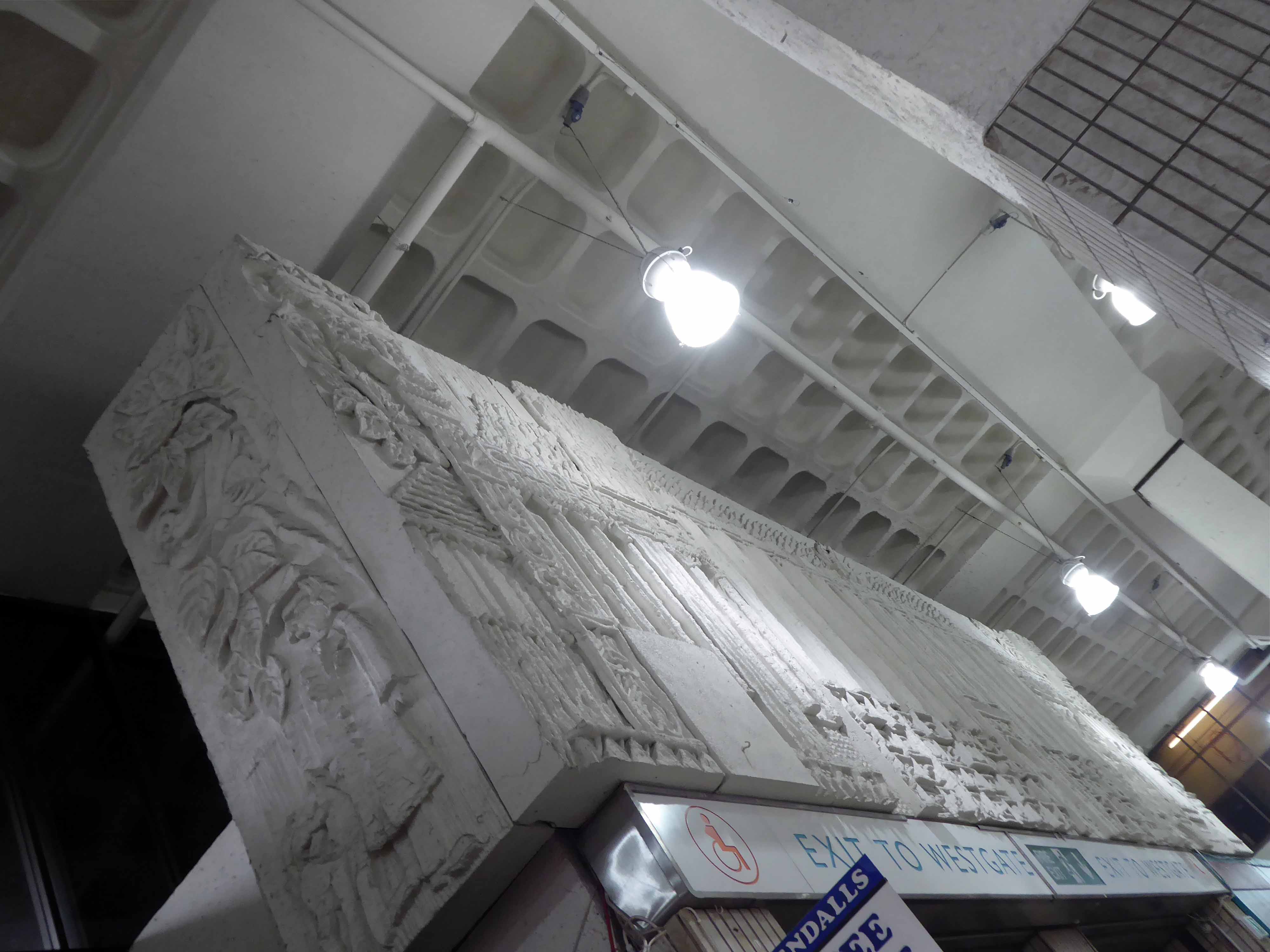
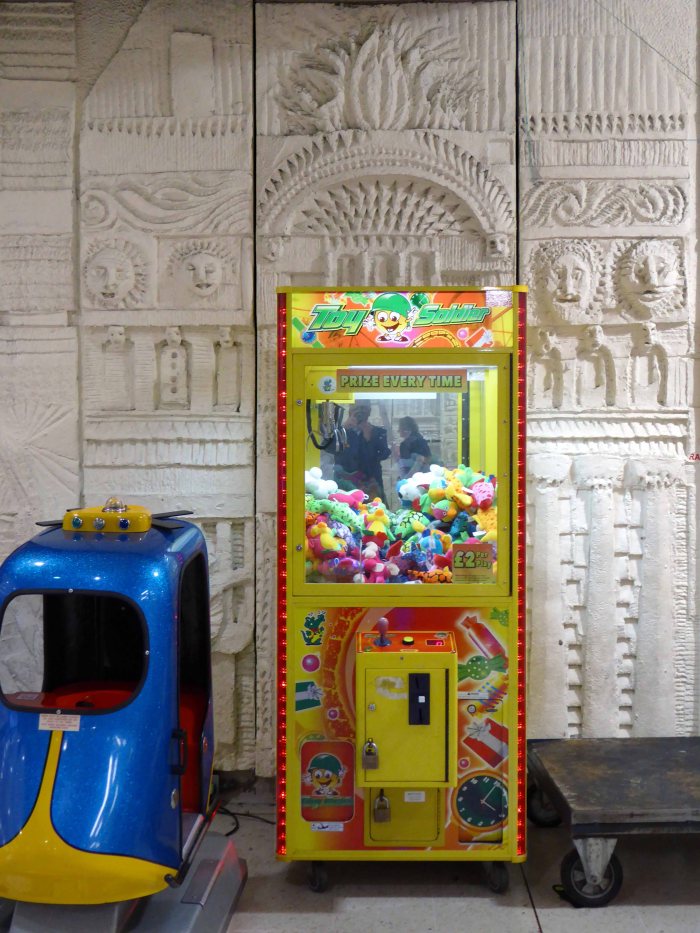
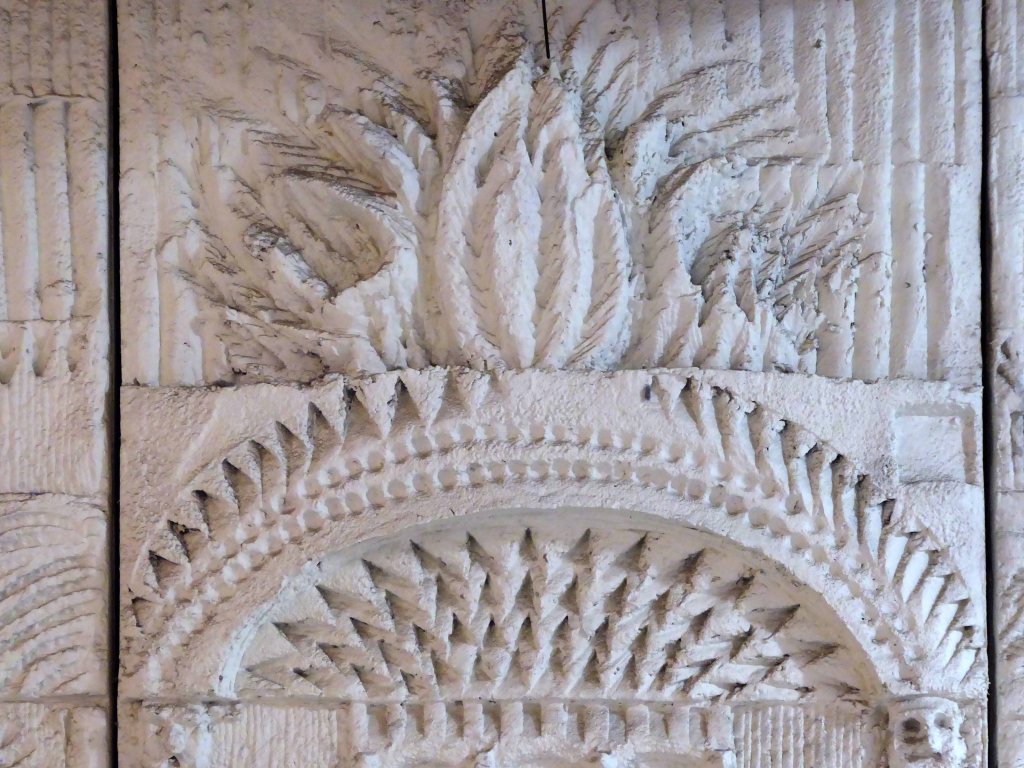
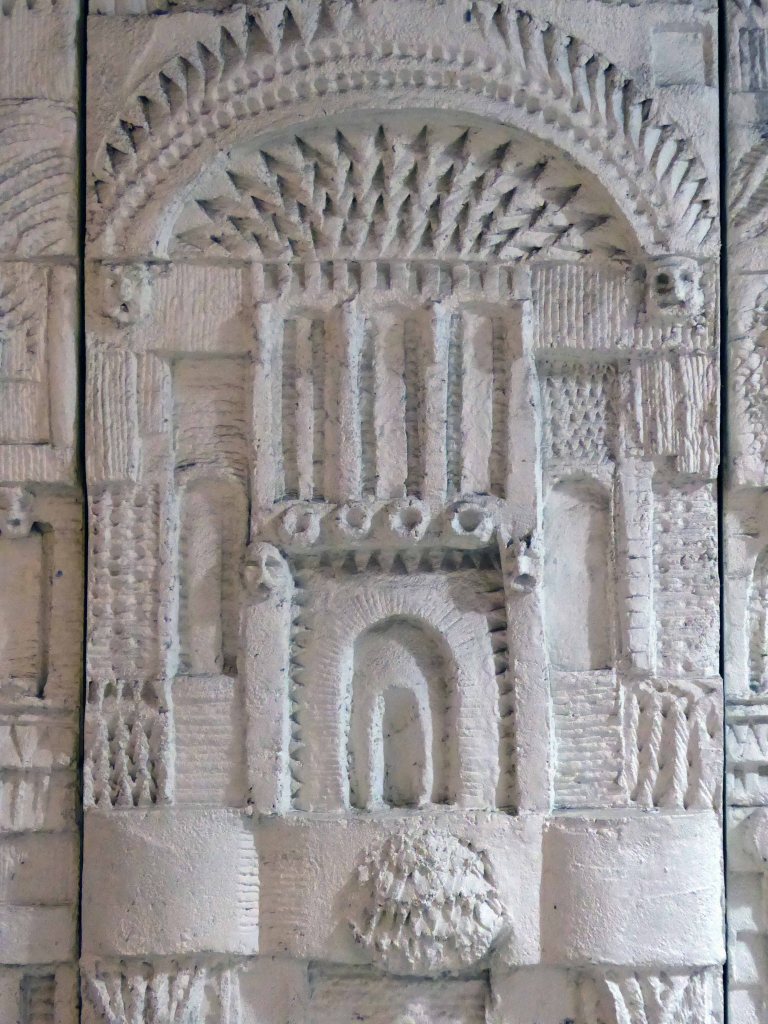
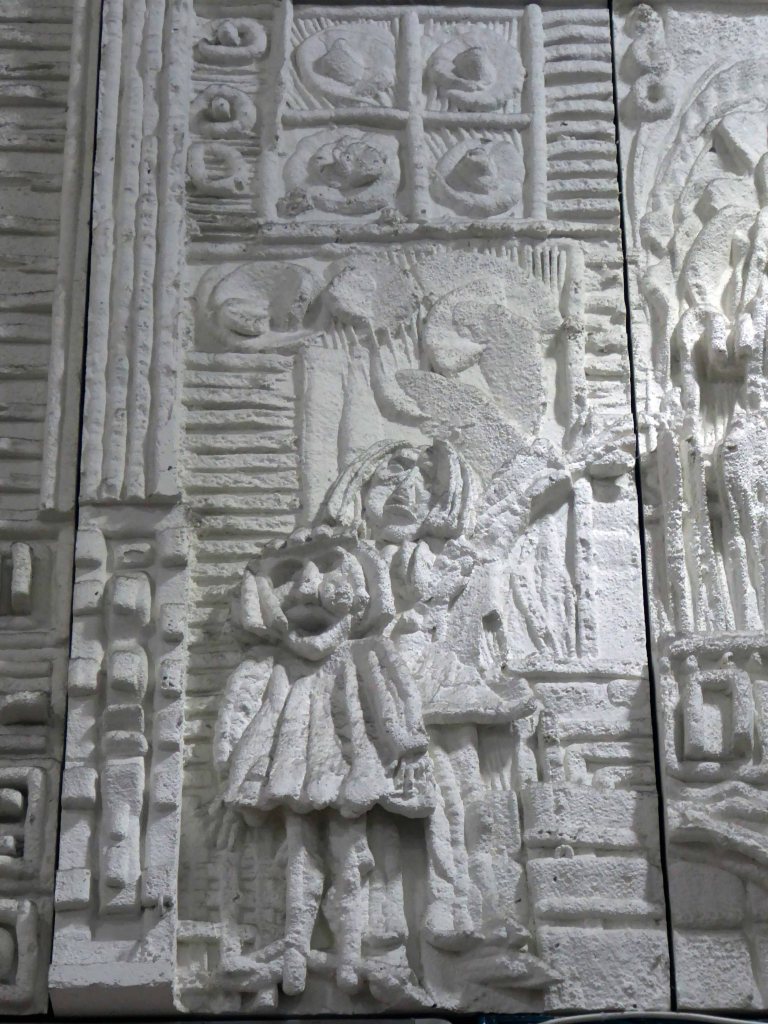
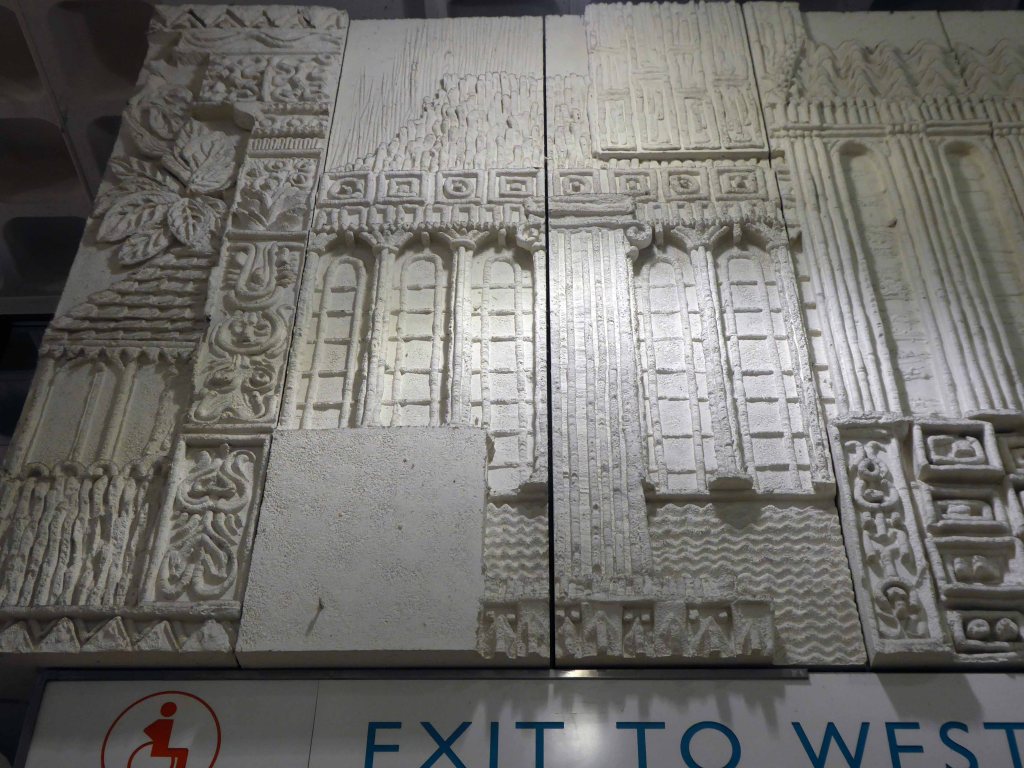
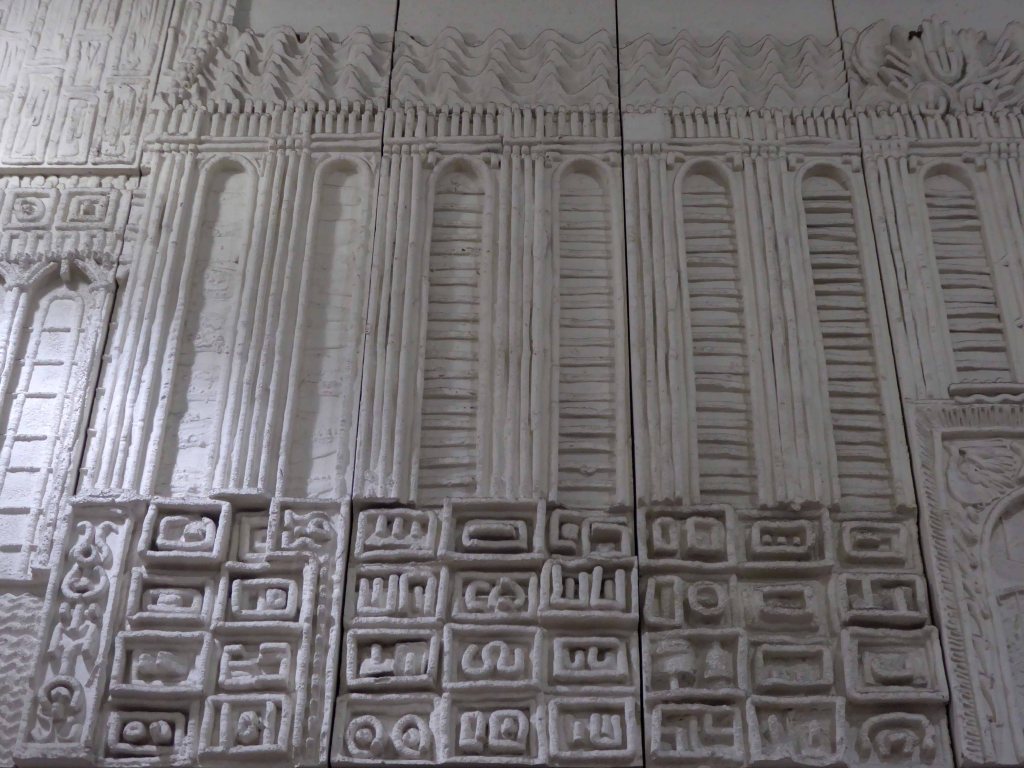
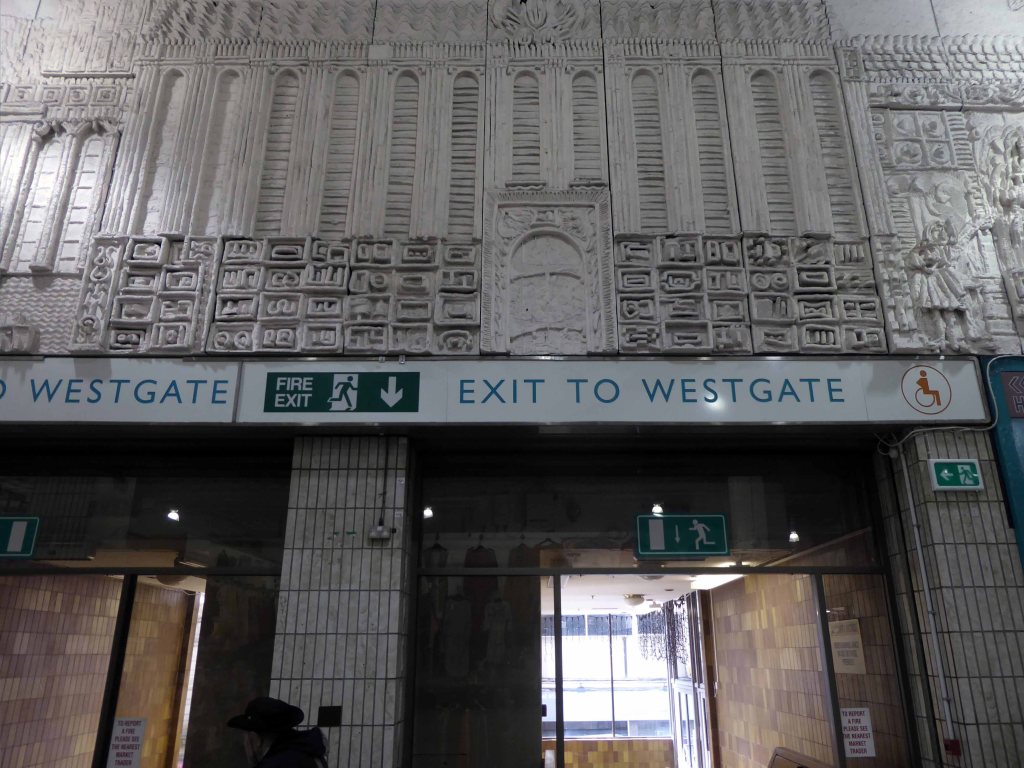
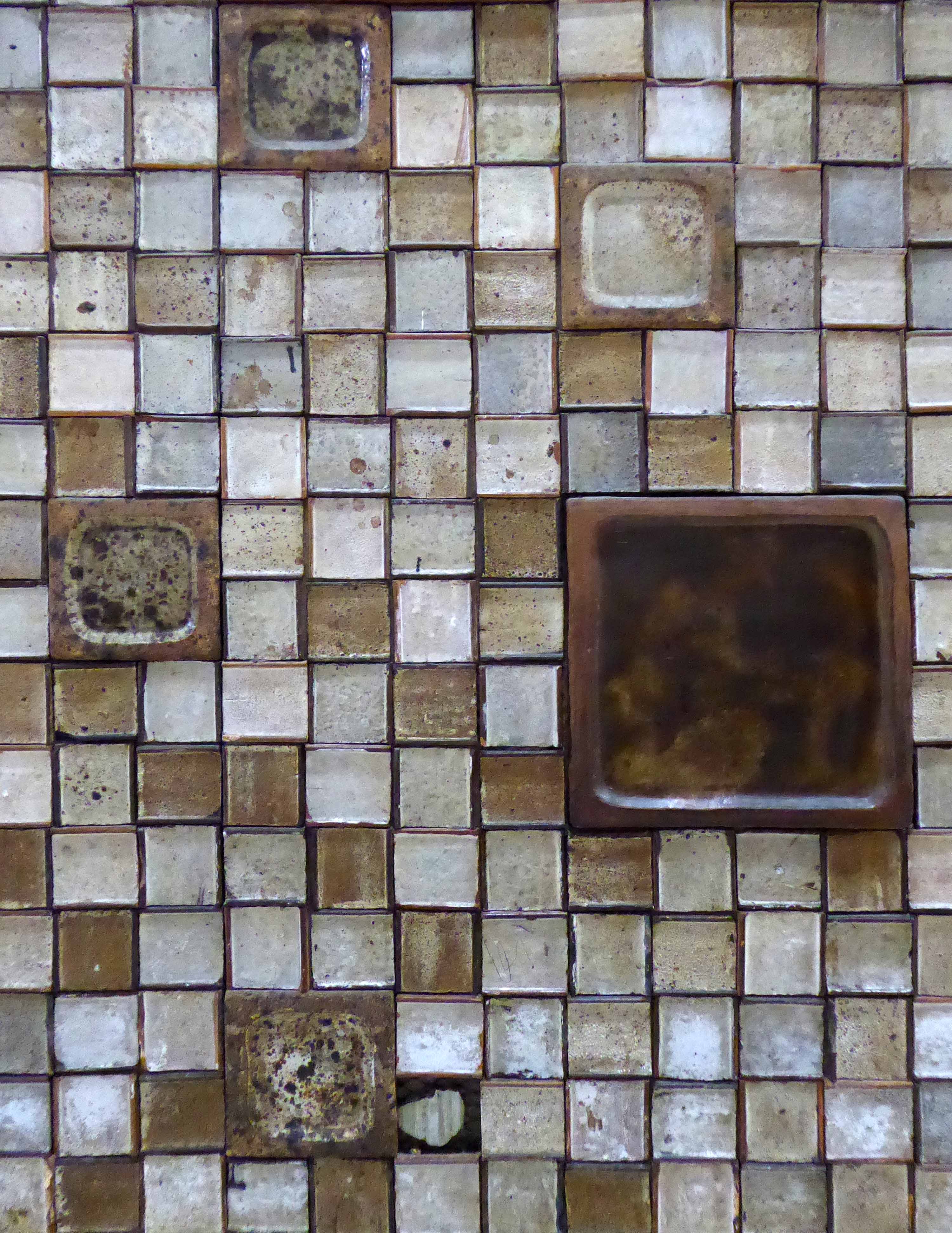
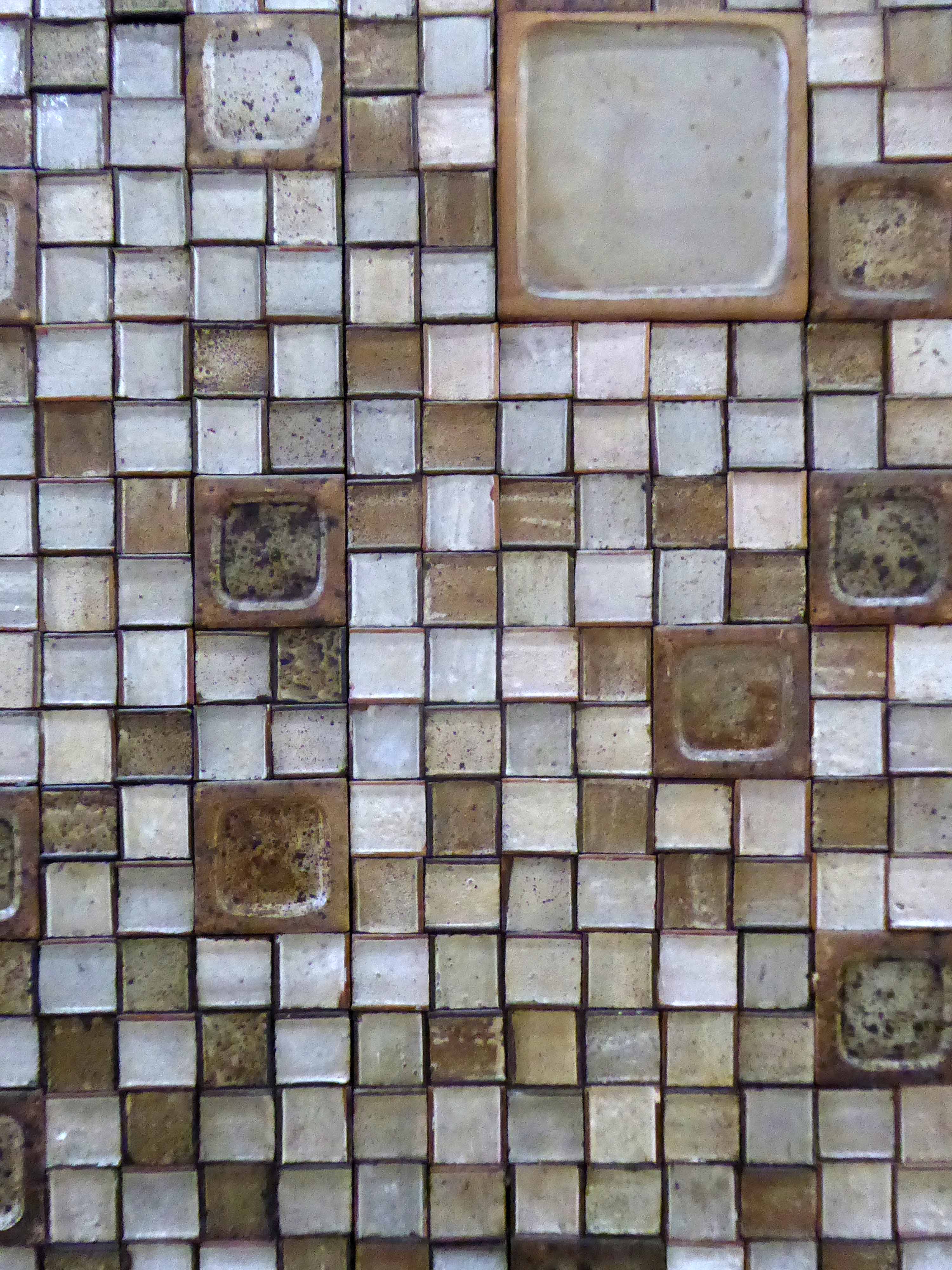
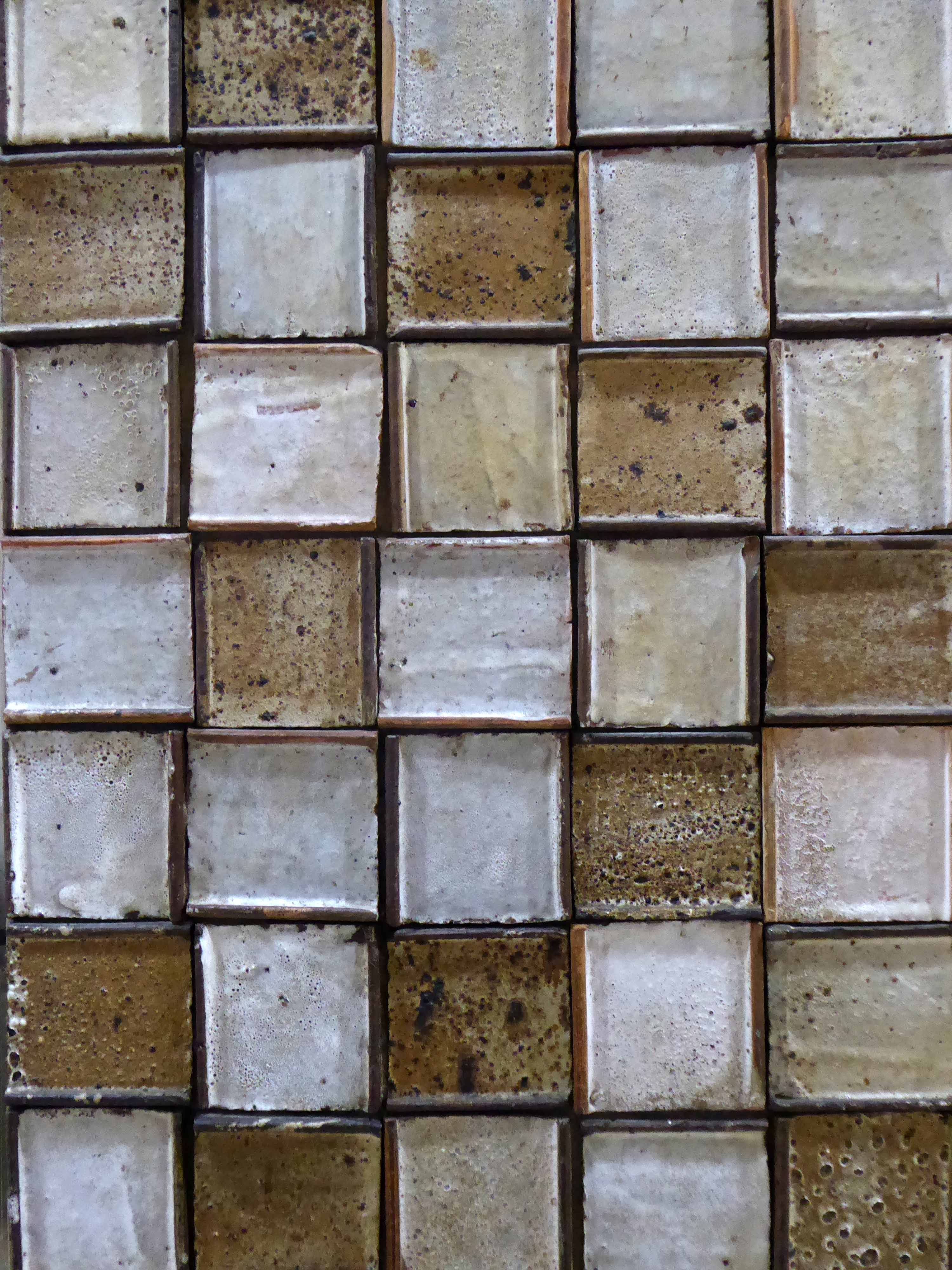
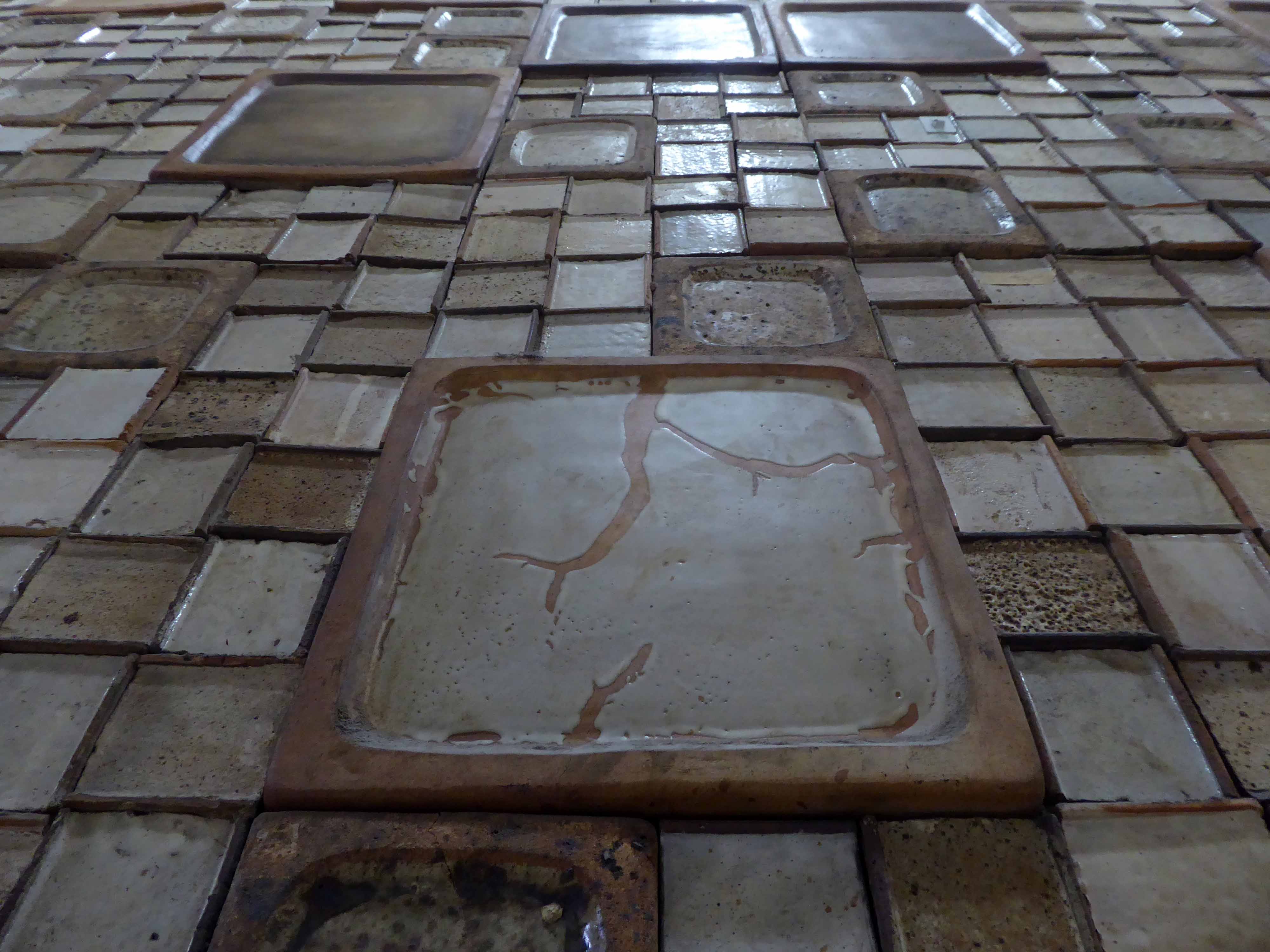
Mention must also be made of the tiled ceramic mosaics which adorn one wall and the three panels on the raised area above the stalls.
Authorship unknown.
I was most intrigued by these tiles – I have not seen this type before – they have a resemblance to to Transform tiles that were produced in Staffordshire in the 1970s, but they are different in several ways.
The November 1973 T&A microfilm appears to have been stolen from Bradford Library so I can’t check reports and features from the time of the opening of the market on November 22 1973.
Having walked from Hebden Bridge to Halifax with Mr Phil Wood, we approached Hall Street – and gazed admiringly at this striking building, from across the A58.
Attributed to C.S. Oldfield and it was completed in 1972 apparently they did the relief too.
20th Century Society
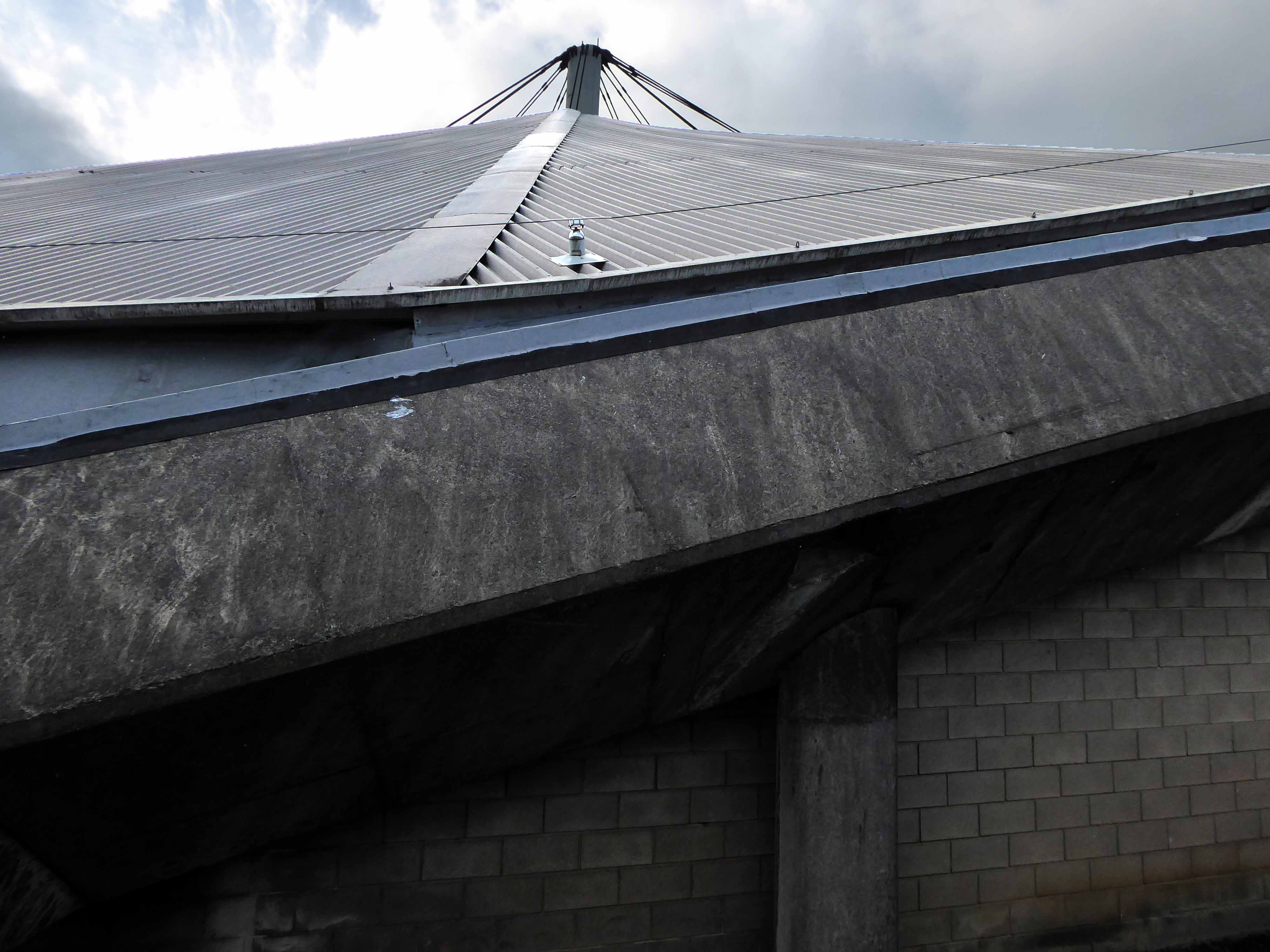
A low serrated, ridge and furrow conical roof, corona and steel spire breaking the skyline.
Very much a building of two halves, the single storey hall, adjoining the body of the church, which is raised on a plinth.
They are linked by an internal hallway.
An intriguing mix of restrained classical detailing, along with the more modernistic roof and internal structure.
From the outside it is possible to discern the stained glass panels in the corona.
To the right of the main entrance is a modular sculptural relief, modelled in concrete cast in fibreglass.
There are eight individual modules, set in a grid of six by eleven – sixty six in total, rotated to break up the rhythm of the piece.
I was blessed on the day of my visit, with permission to photograph the interior, many thanks to Pastor Mark.
Ernest Whiteley opened the shop on Easter Sunday 1901
His first week’s taking were £7 14s 1d.
He thought that he had done very well – says granddaughter Ann Clough.
Grandad lost his sight in 1940, I became his eyes. When he lost his sight and he handed over the till keys to mother, they had a little weep.He handed over to my mother because father had died three months before.
Ann has run the shop for the last sixty years, along with Sue, a full-timer for some thirty years.
The rep isn’t coming any more, ordering is online, that’s no good to us.
This is a cash only low-tech, high stock operation.
If they don’t have it – it probably doesn’t exist.
Along with Walton’s of Ashton under Lyne and the Wool Shop of Exmouth, this is one of a kind. A family business lovingly preserved and well run, trading traditional goods, in a kind and caring manner, to happy shoppers.
From the outside little has changed sine the 1930s, wide glass, well arranged windows, displaying a wide array of wondrous haberdashery.
All contained within an arcade with Art Deco detailing.
There are many, many mannequins from another age.
One man from Scotland stayed for hours, he had a fetish for the mannequins, we couldn’t get rid of him.
The side of the shop is largely given over to net curtains of every size, shape and design, labelled Monica, Daisy, Andrea, Vicky or Sarah.
The names were chosen by Sue, it’s a lot easier for people to say, I want Vicky, 36 deep, than the one with the squiggly flowers, or to remember the manufacturer’s number.
Inside is a haven of domesticity, dusters abound, along with all the other attendant cloths and towels to ensure household cleanliness.
Not forgetting the correct clothing for those domestic chores.
The original display units are a delight.
Almost every surface is awash with lady’s unmentionables – winter draws on, wrap up.
There are covers and doilies of every description.
And the finest display of sensibly priced handkerchiefs, fancy and plain.
Every sign and tag hand written with pride.
It was, as ever a privilege and a joy to spend a short time in another world, thanks ever so to Ann and Sue for their time and patience.
If your passing pop in spend a pound or two – I bought three dish cloths.
One customer told me he was going to a party dressed in a white mini-dress, purple wig, thigh boots and black tights, he came to look at nighties and tried one on in the changing cubicle. You’ve got to be broad-minded. It can be very disconcerting when you hear a man zipping up a corset.
Walking the wet walkway of Bridlington’s south shore, I was pleasantly surprised by this semi-distant concrete construction.
Which cleverly accommodates a convenient public convenience.
The pumping station is the most immediately obvious aspect of the scheme , situated as it is on the promenade.
Hanson UK supplied the concrete, with a range of complex mixes required.
You’re trying to make concrete with as little water in it as possible, but it still has to move to be placed into position. The only way to achieve this is with powerful admixtures, which deflocculate the cement despite the lack of water in it to lubricate it.
This difficulty also applied to almost all the concrete above ground level for durability reasons – anything that could come into contact with seawater had to be able to withstand it.
The final major complication was the aesthetic requirements from the local council. All the visible concrete had to match an older Victorian Spa, located a little way up the beach, which had previously been refurbished using Hanson concrete.
We were asked to match the colour, shading and texture of the new concrete to the spa.
The team was forced to use white cement, which had been used in the spa, but because of durability requirements they needed to use a cement replacement to improve the overall chemical resistance of the product. They used ground granulated blast furnace slag to replace 55 per cent of the white cement, which is white in colour itself. This had the added sustainability benefit of replacing imported white cement with a local waste byproduct.
All this to house the Yorkshire Water treatment plan and allow Bridlington to regain its Blue Flag status.
The extended pipework carrying the waste water far far away.
At the Headworks the Arup design concept was to extend the pumping station using pre-cast concrete panels that are sensitive to the existing facade. The development of 2015 succeeds in integrating a Brutalist aesthetic, into a largely Victorian setting. Incorporating several levels of seating and associated street furniture, affording some shelter and clear sight lines with transparent panels.
The artwork in front of the huts on Bridlington Promenade by Rachel Welford looks fantastic. The huts built by our contractors Morgan Sindall Grontmij (MGJV) were completed in August and they’re available for hire through the East Riding of Yorkshire Council. The beach huts are larger than the other beach huts on the Promenade and include disabled access and are especially suitable for family groups. Complementary artwork, also designed by Rachel Welford has been incorporated in the glass balustrade in front of the huts.
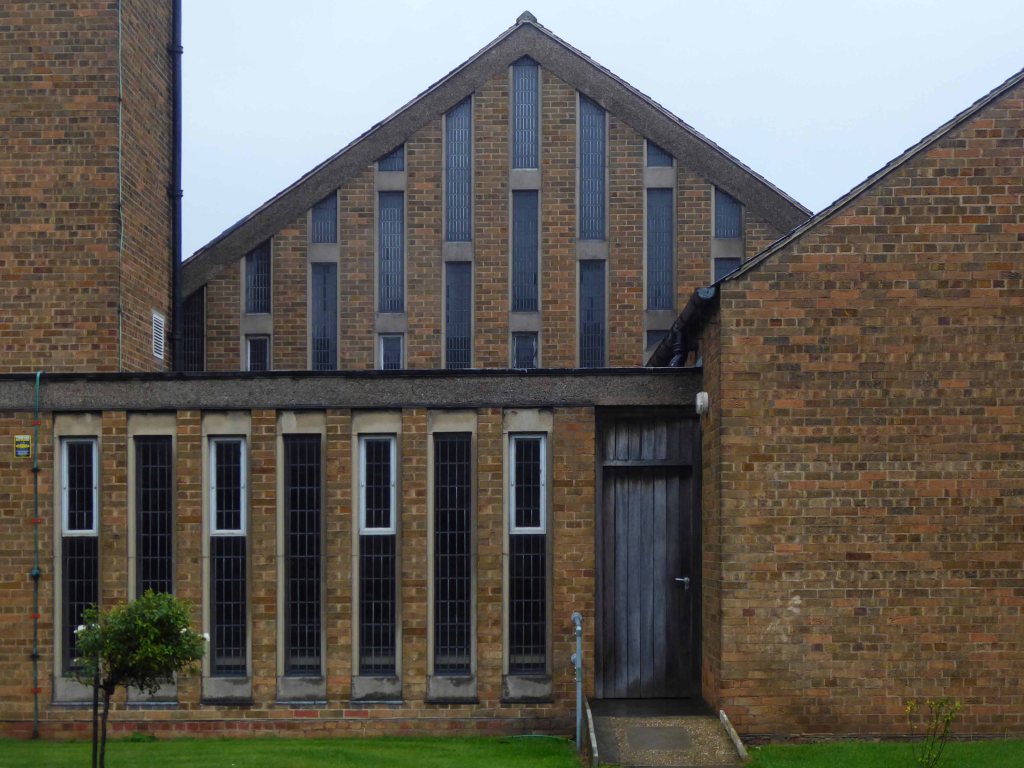
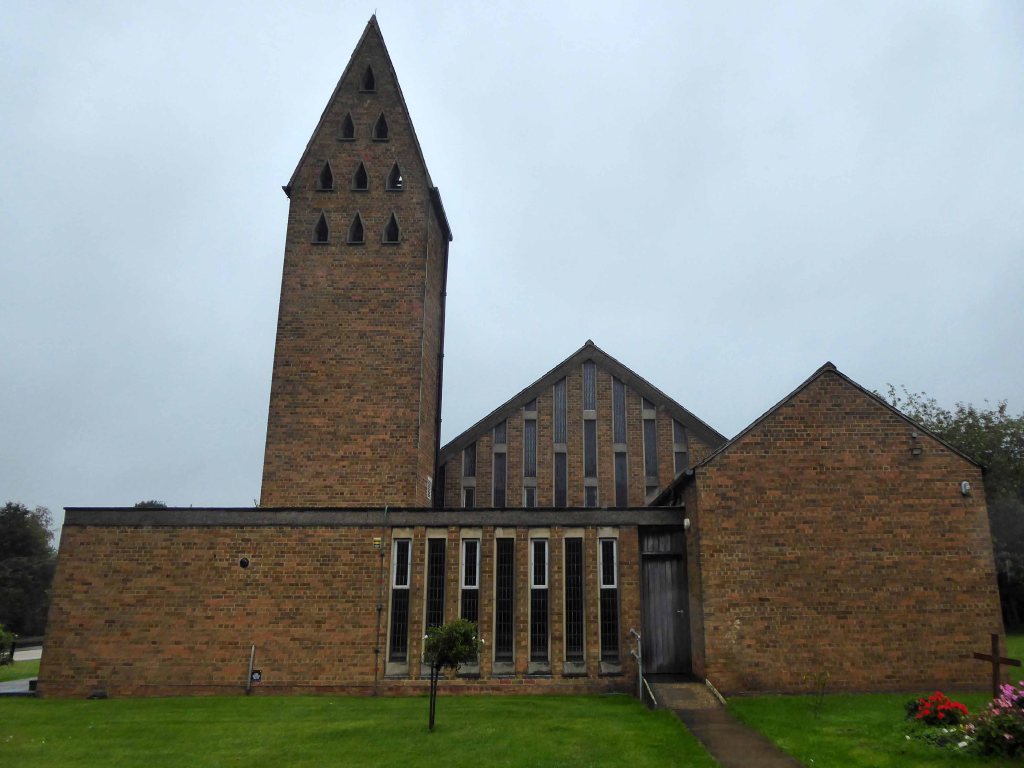
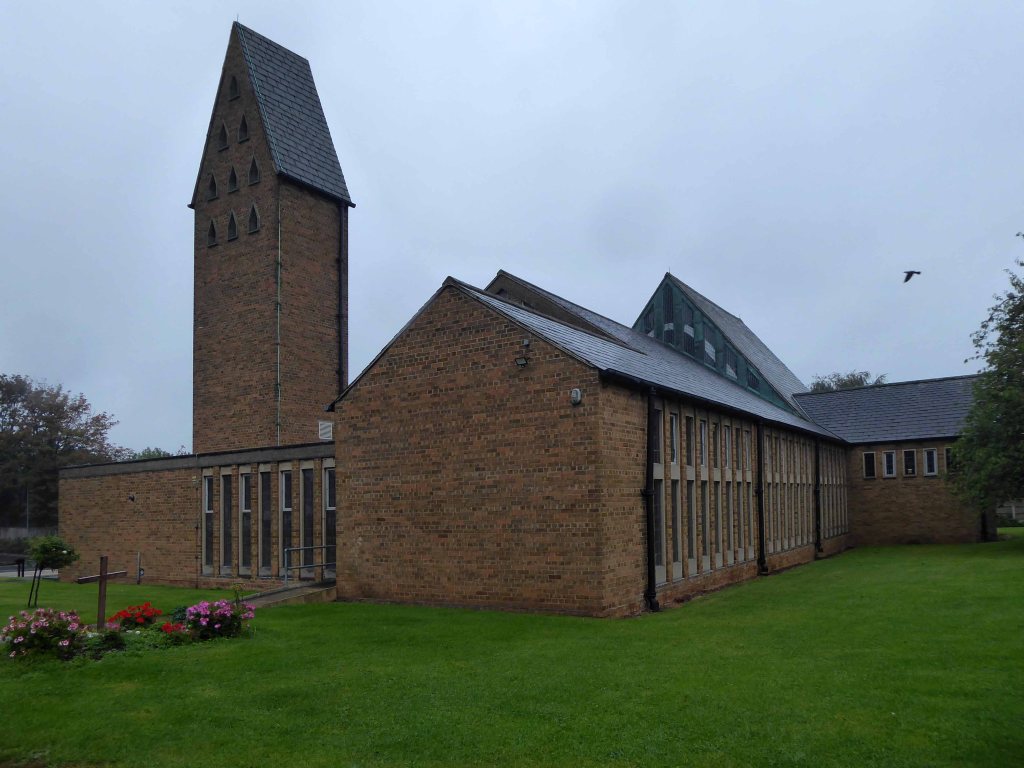
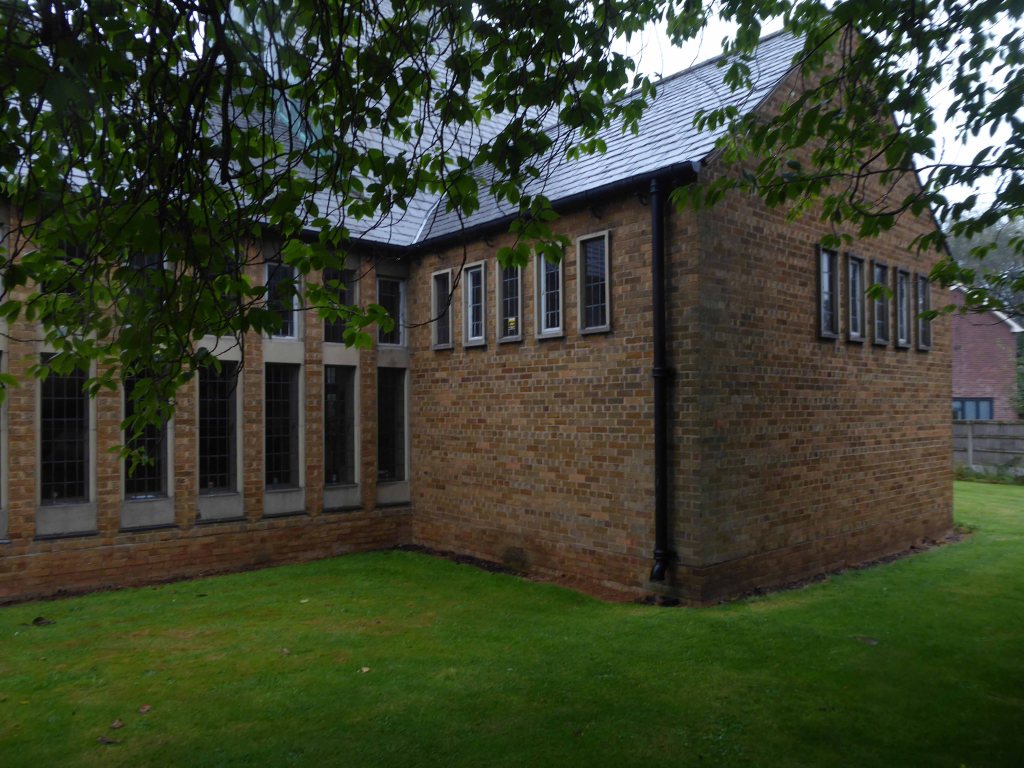
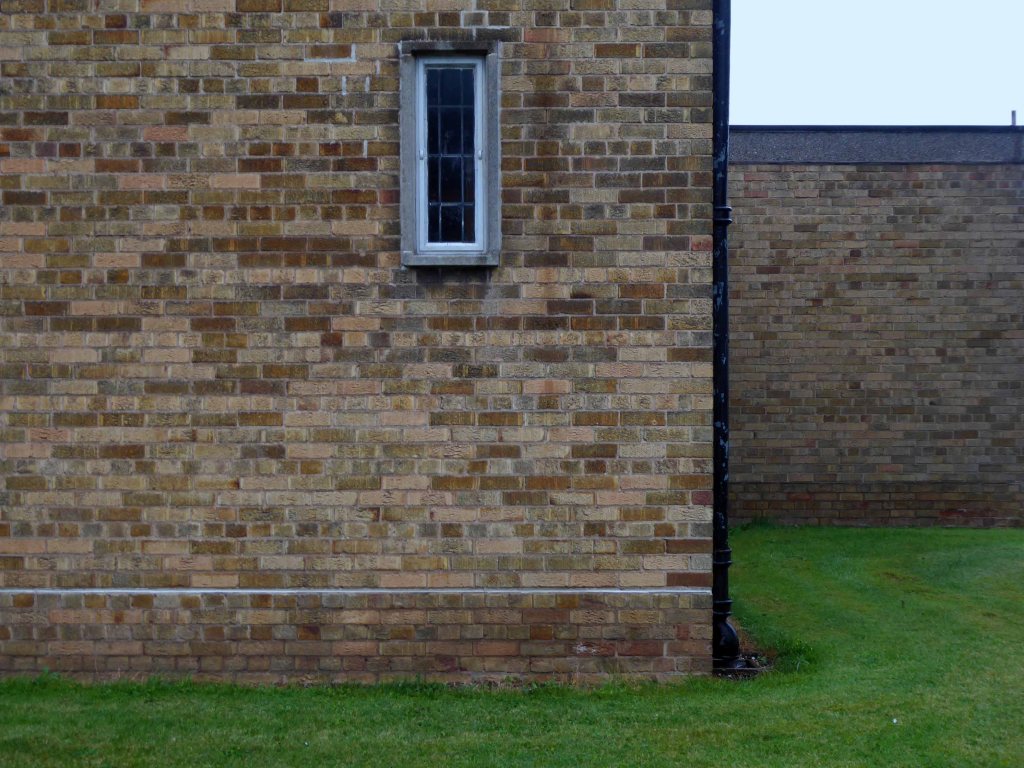
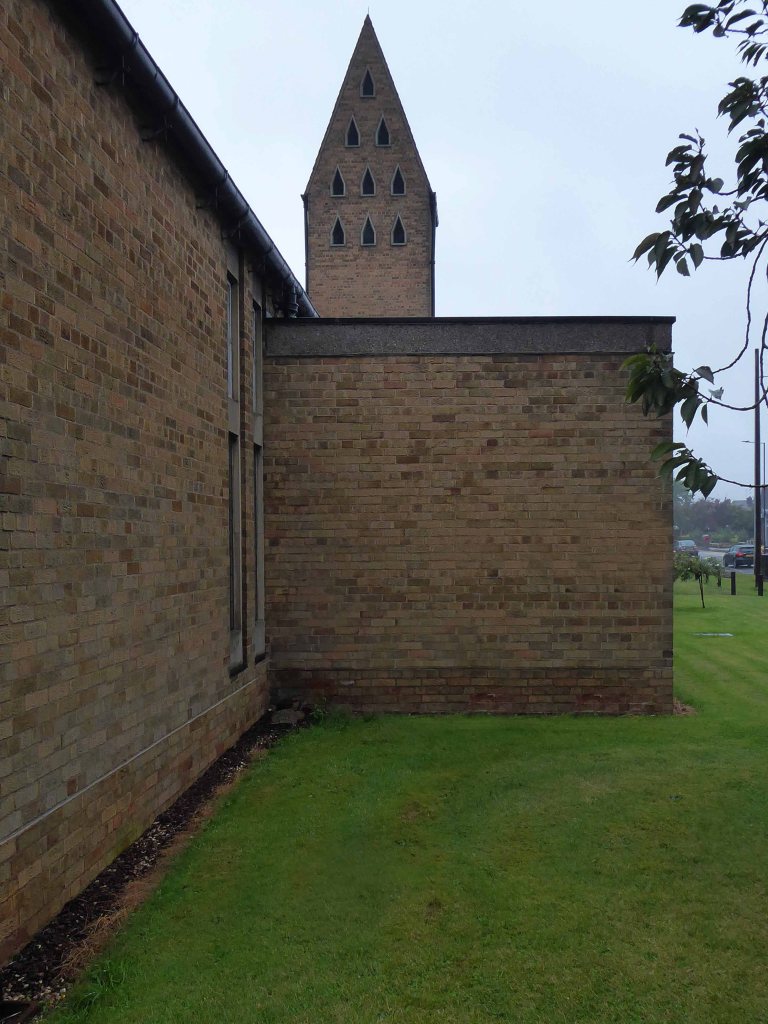
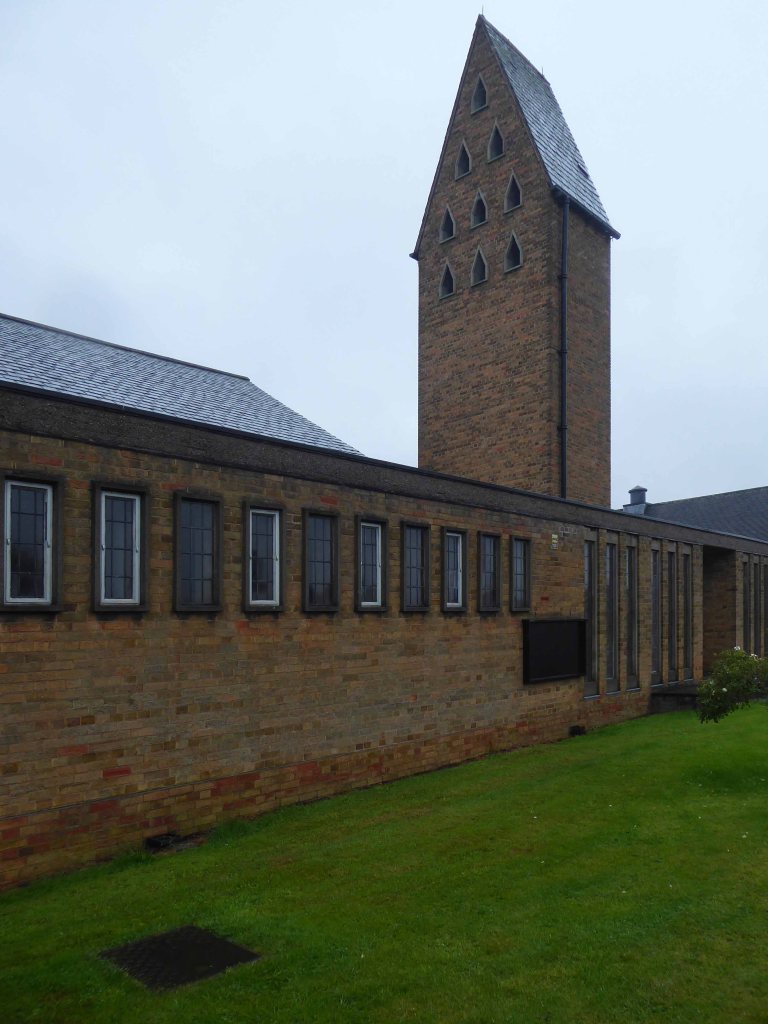
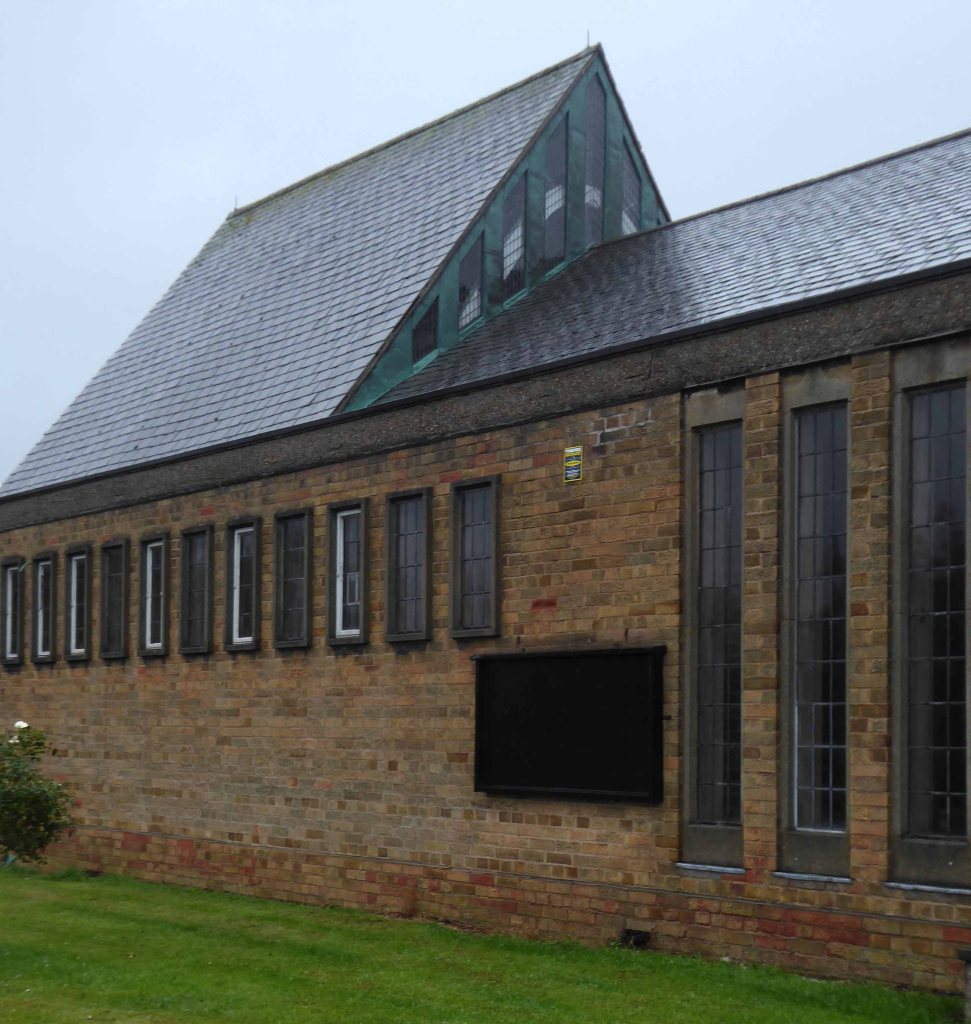
They are all built in his distinctive manner, brick and concrete, steel, wood and glass. Often working within tight budgets, respectful of the Christian Church’s early heritage, expressing mass and volume with simple geometry.
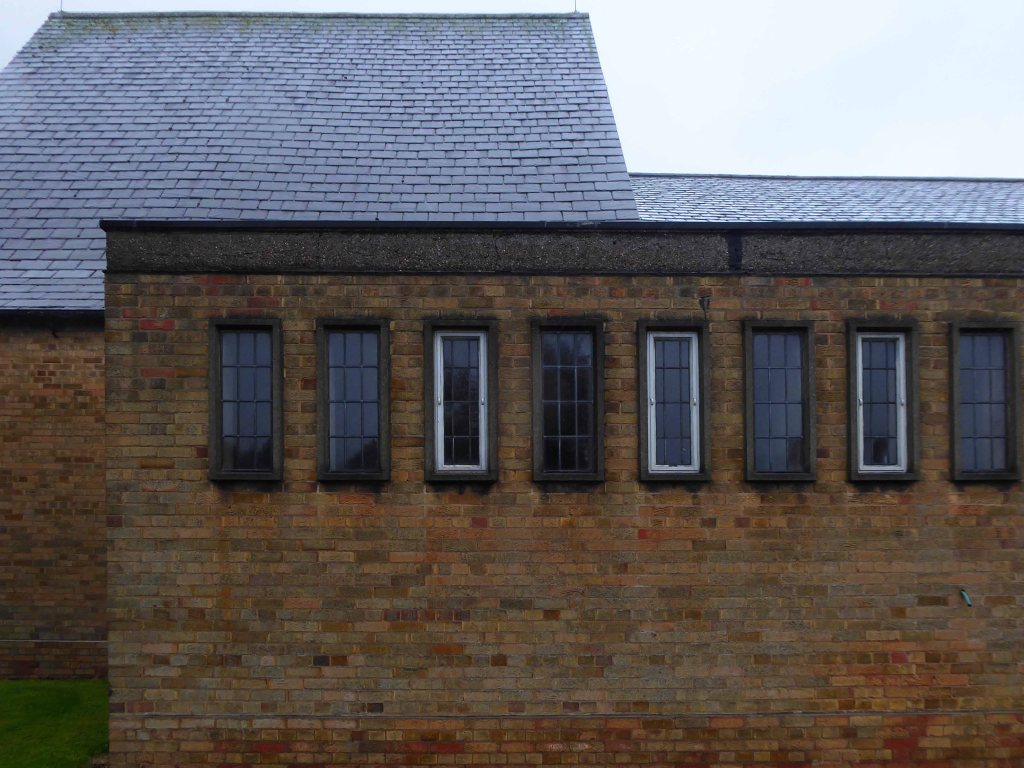
The exterior skin pierced by multiple rectangular windows, the interior revealing an elegant calm space with attendant simple decorative elements and fittings.
The body of the church has two asymmetric orthogonal outriders and a tall bell tower.
The transept chapel
The chancel and apse has a raised roof with a glazed face.
Let’s literally take an anti-clockwise look around the outside.
I was warmly welcomed by The Revd David D’Silva, Curate-in-Charge and kindly given free access to the church’s interior.
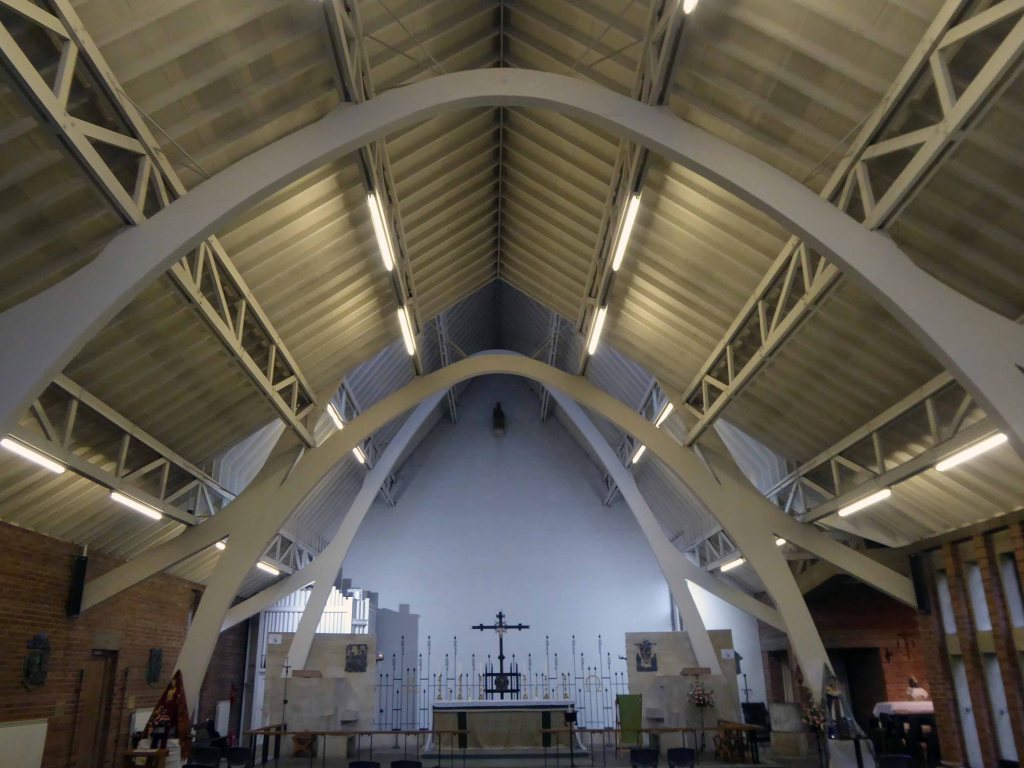
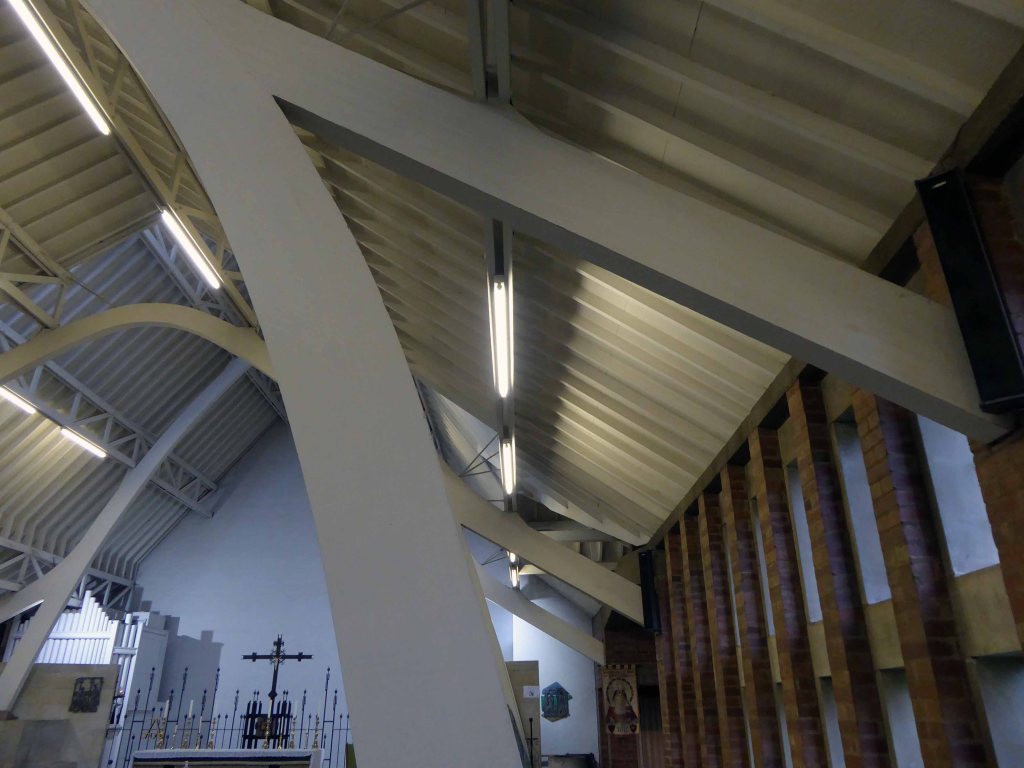
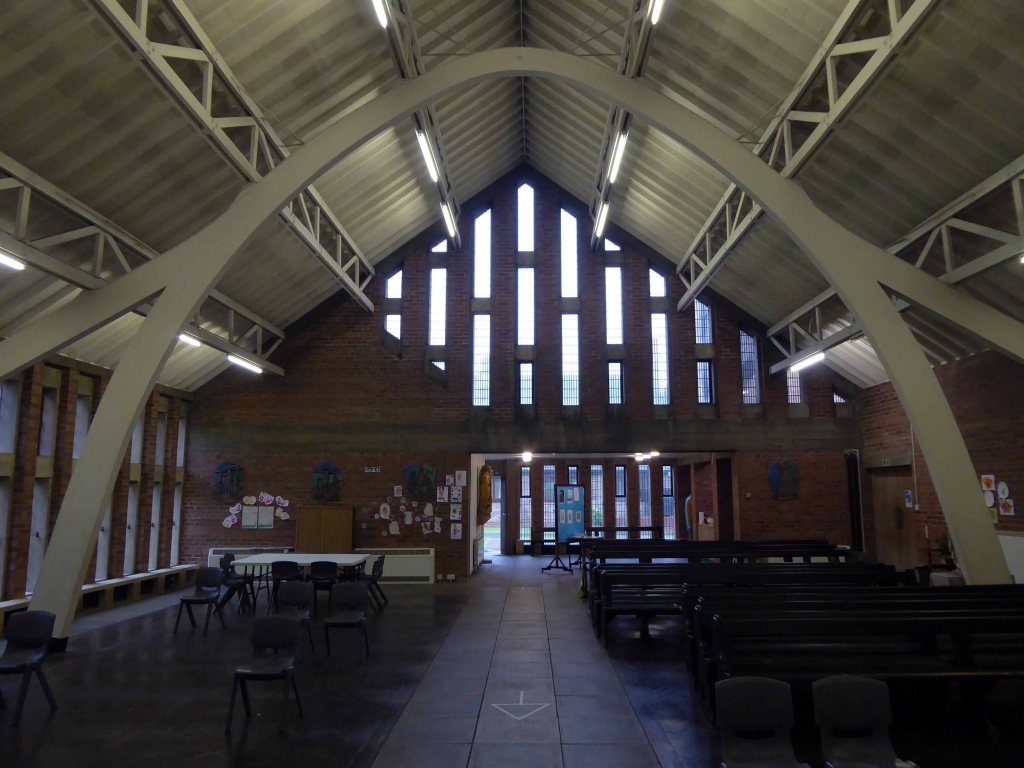
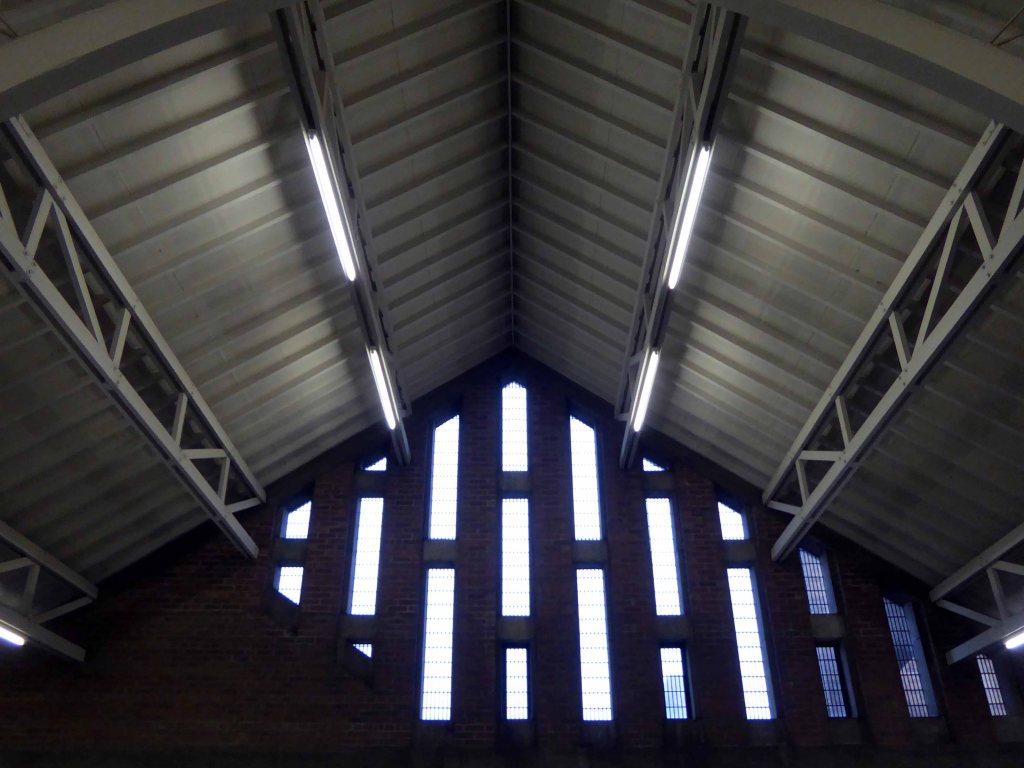
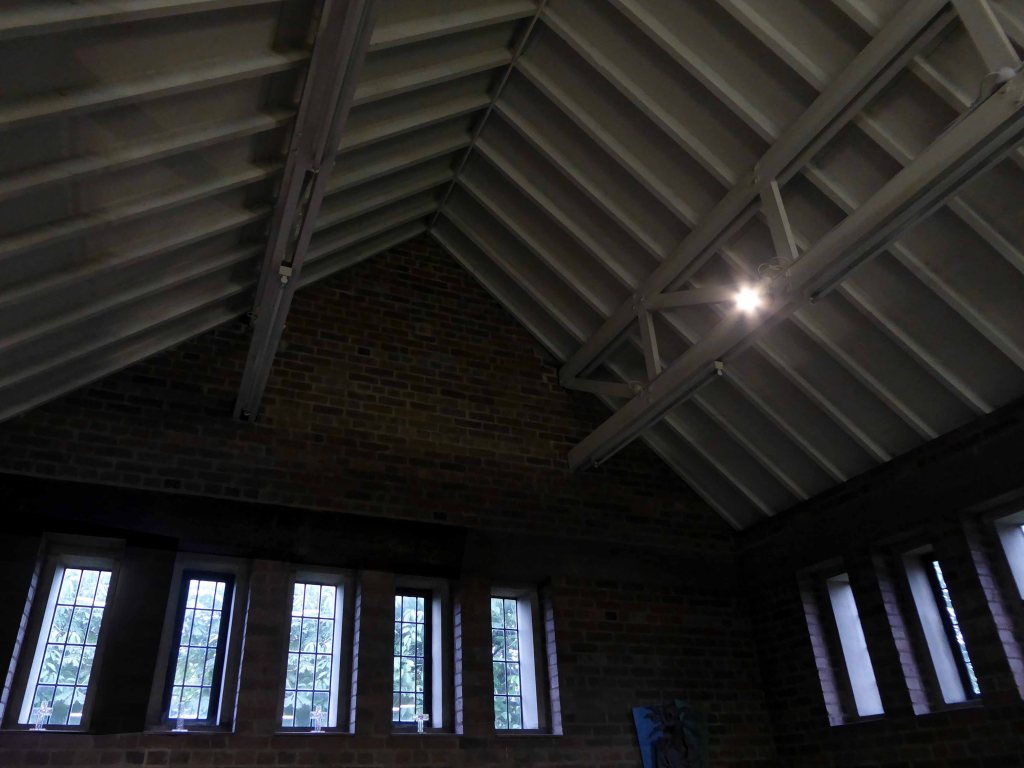
The wooden framed roof supported by huge parabolic arches of laminated timber.
There are retrieved pews, temporarily reordered to accommodate Covid requirements.
Pugin statuary.
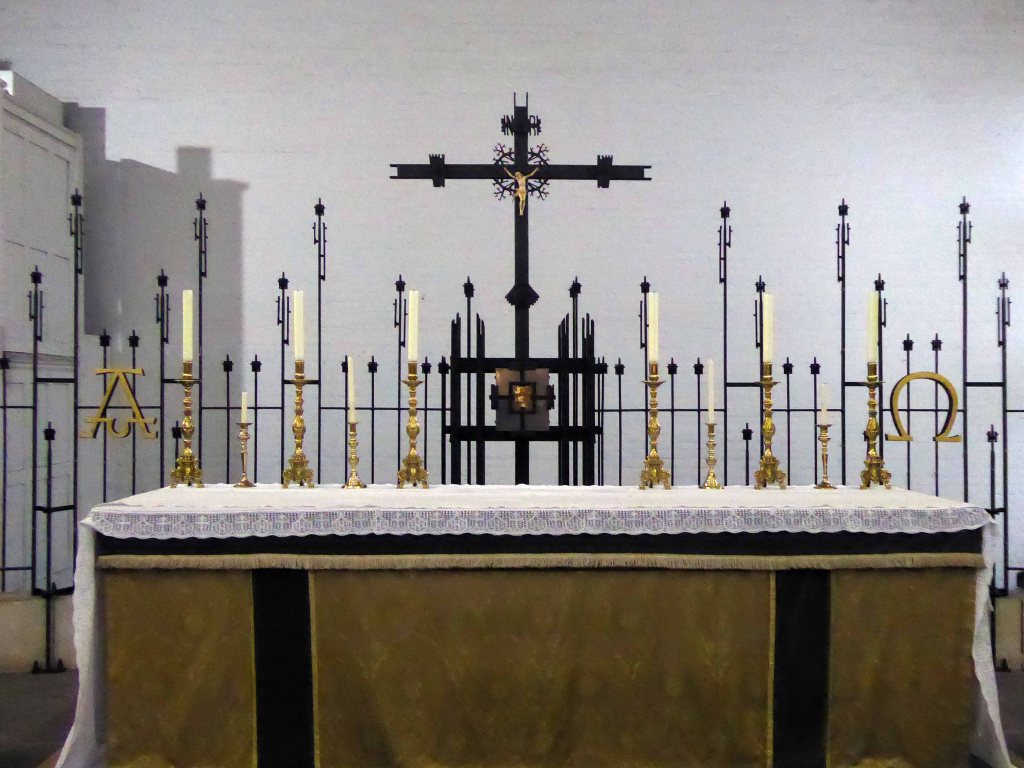
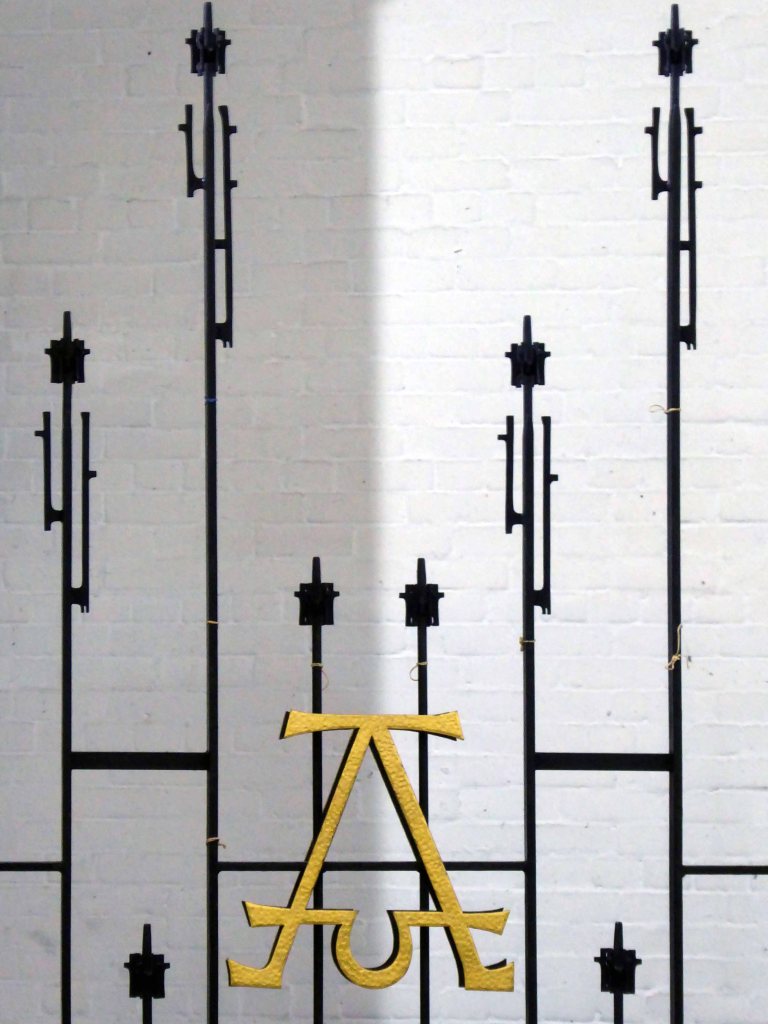
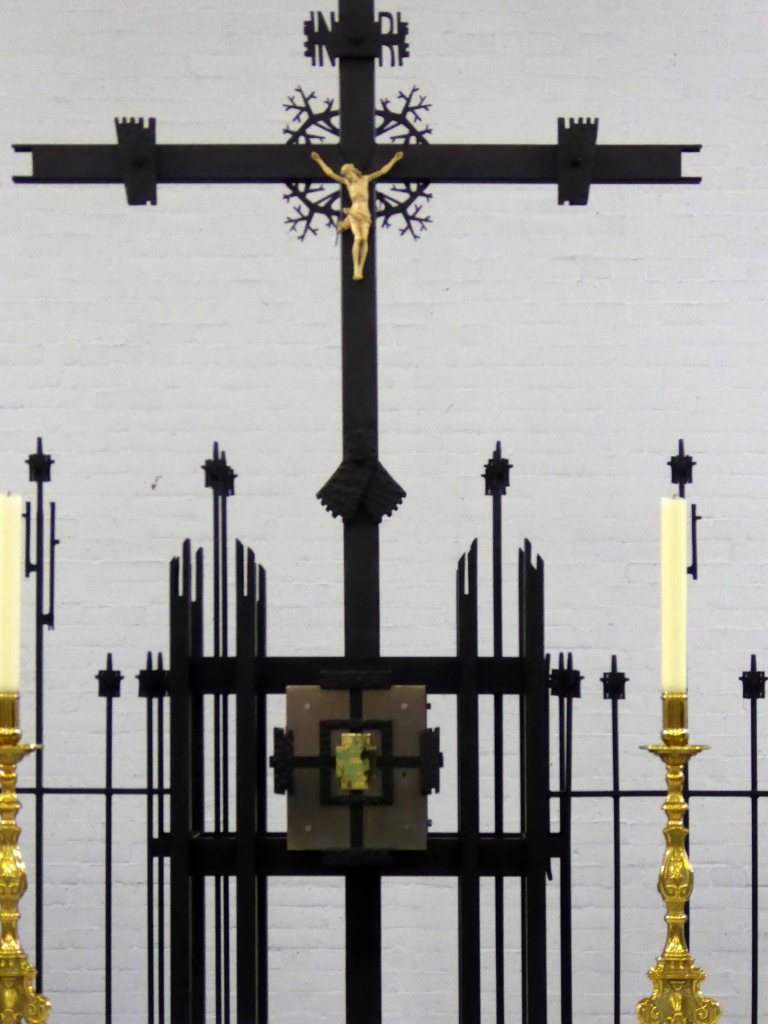
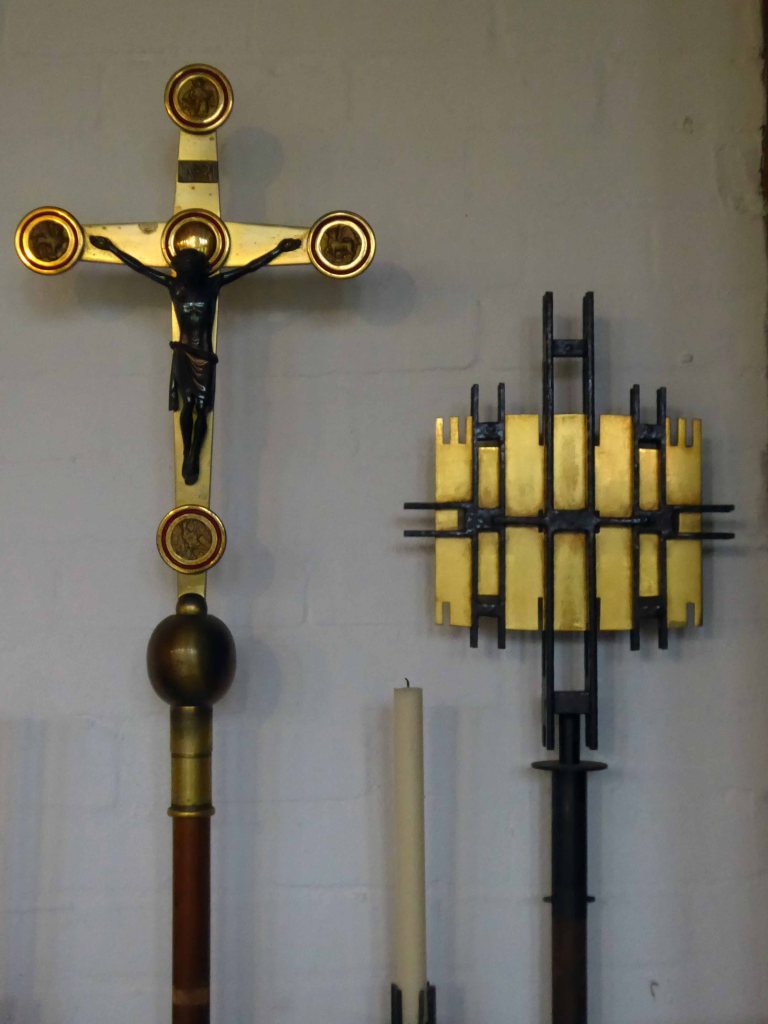
Pace’s own detailed design work in the altar screen and crucifix.
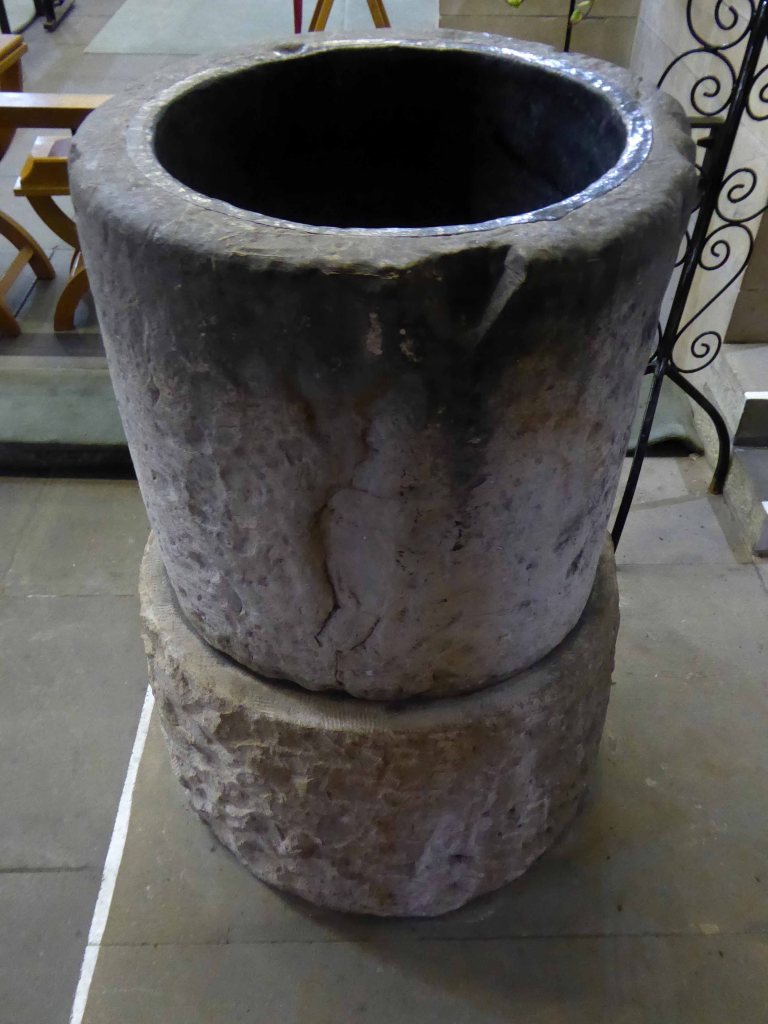
A Mediaeval font.
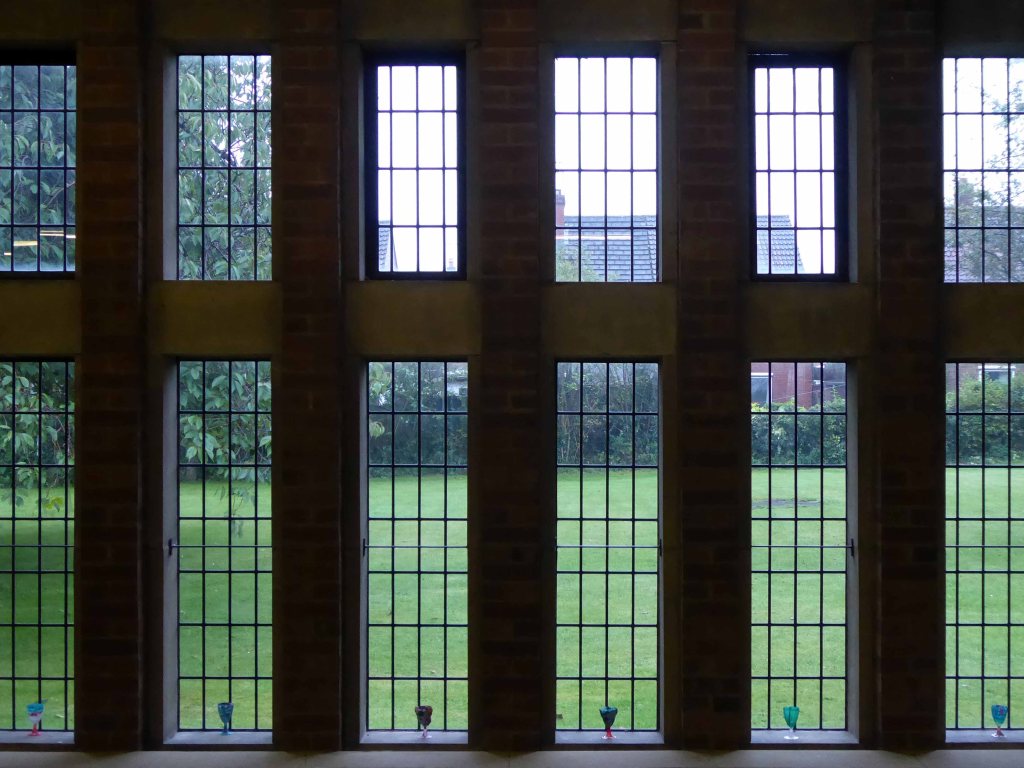
Light enters from several sources on three elevations.
And through the glazed area of the raised gable.
A delightful morning’s work visiting this well used and cared for church.
The world is inherently unstable, along comes a train a resort appears, along comes a ‘plane a resort disappears, along comes a virus and people disappear.
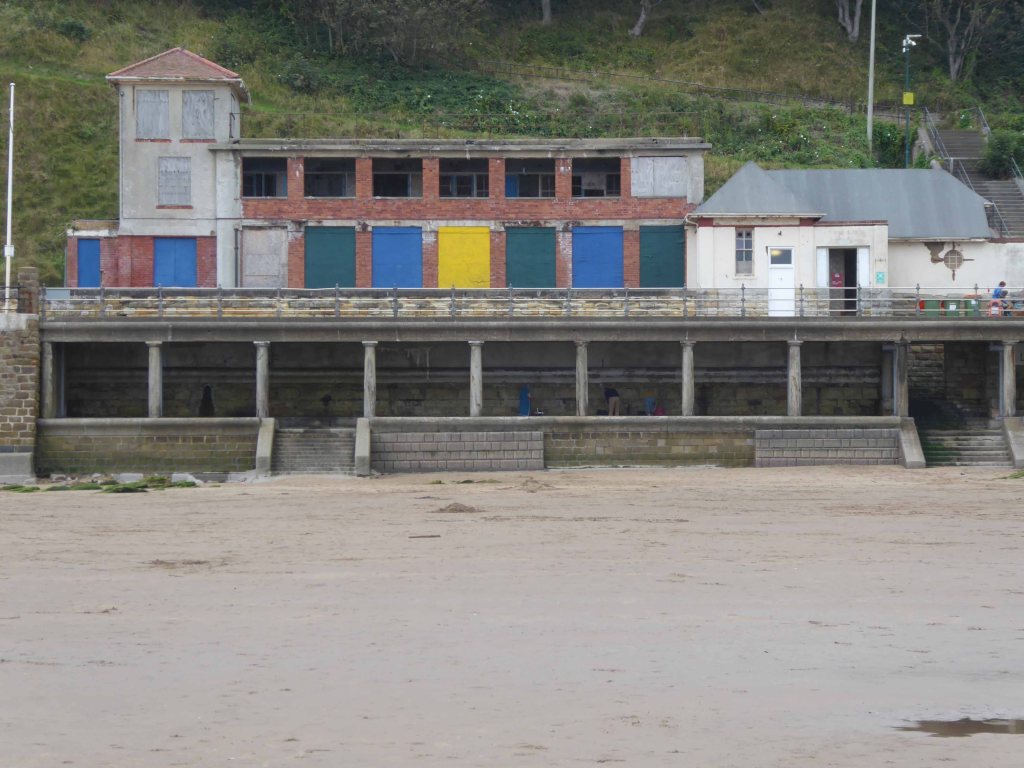
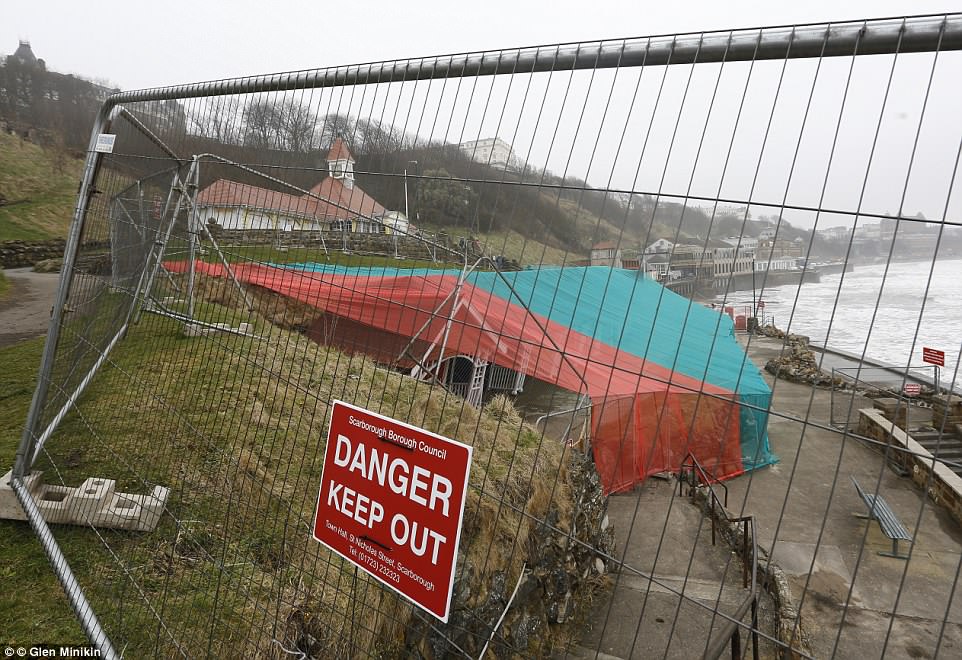
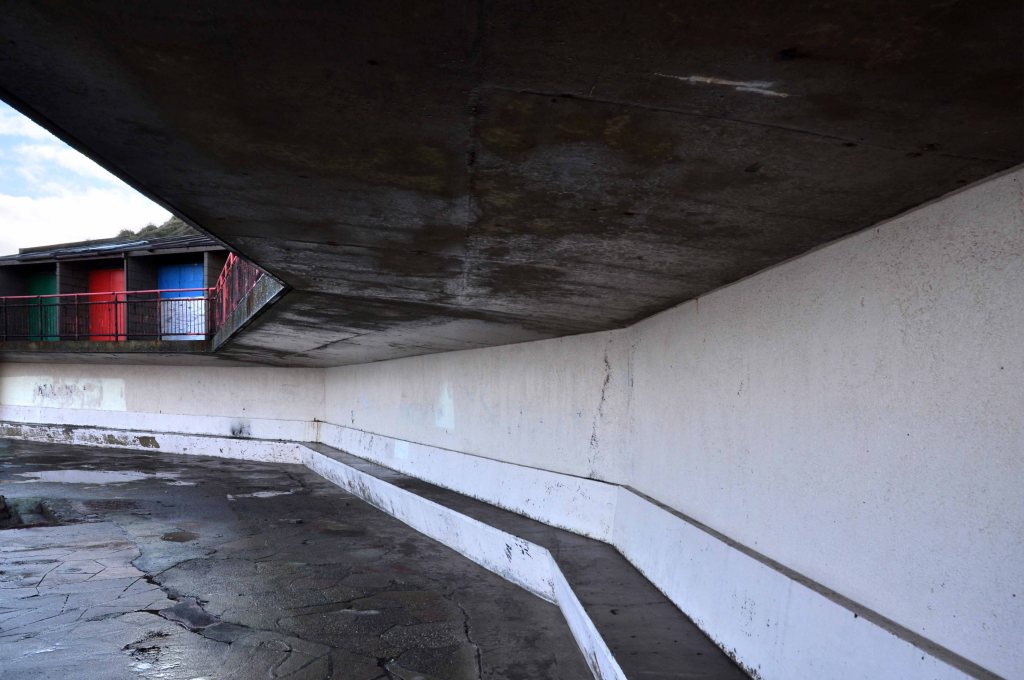
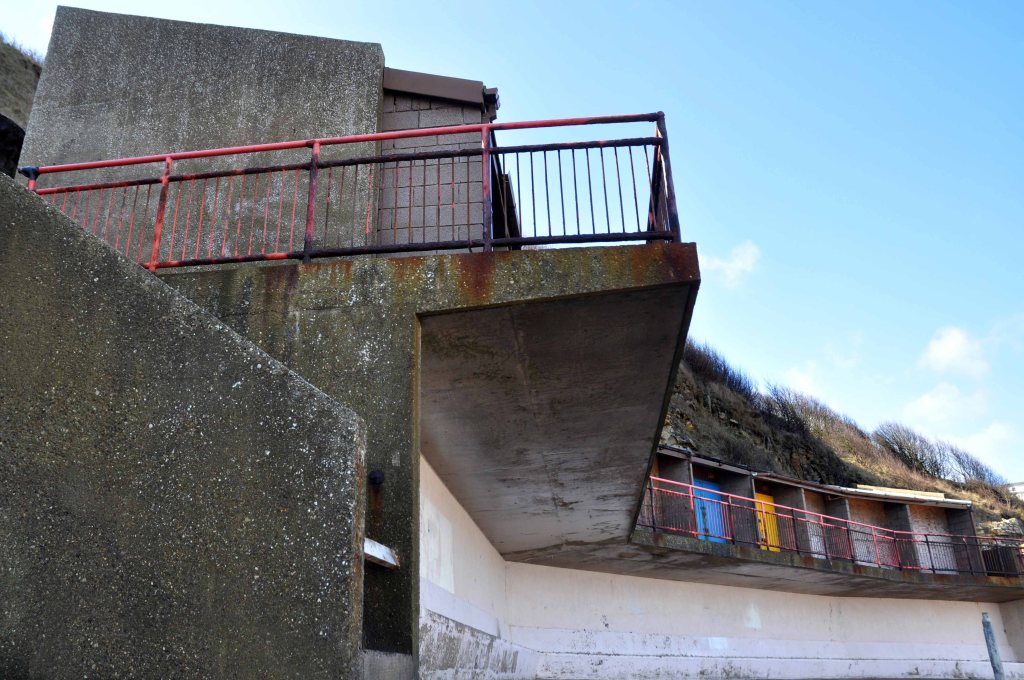
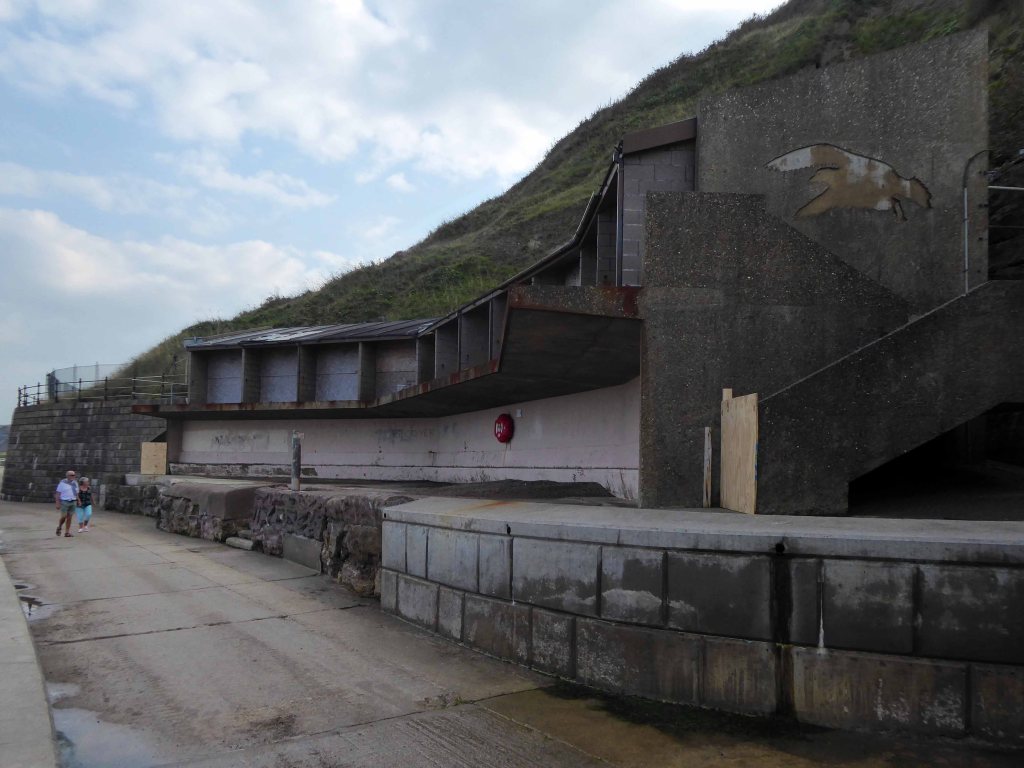
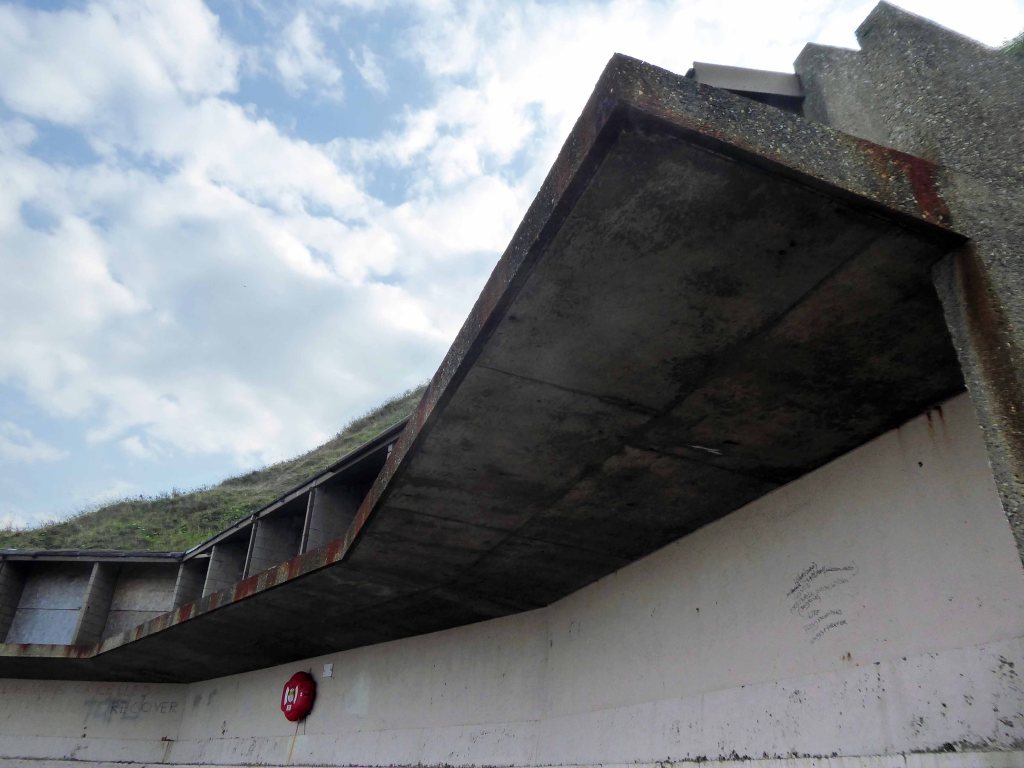
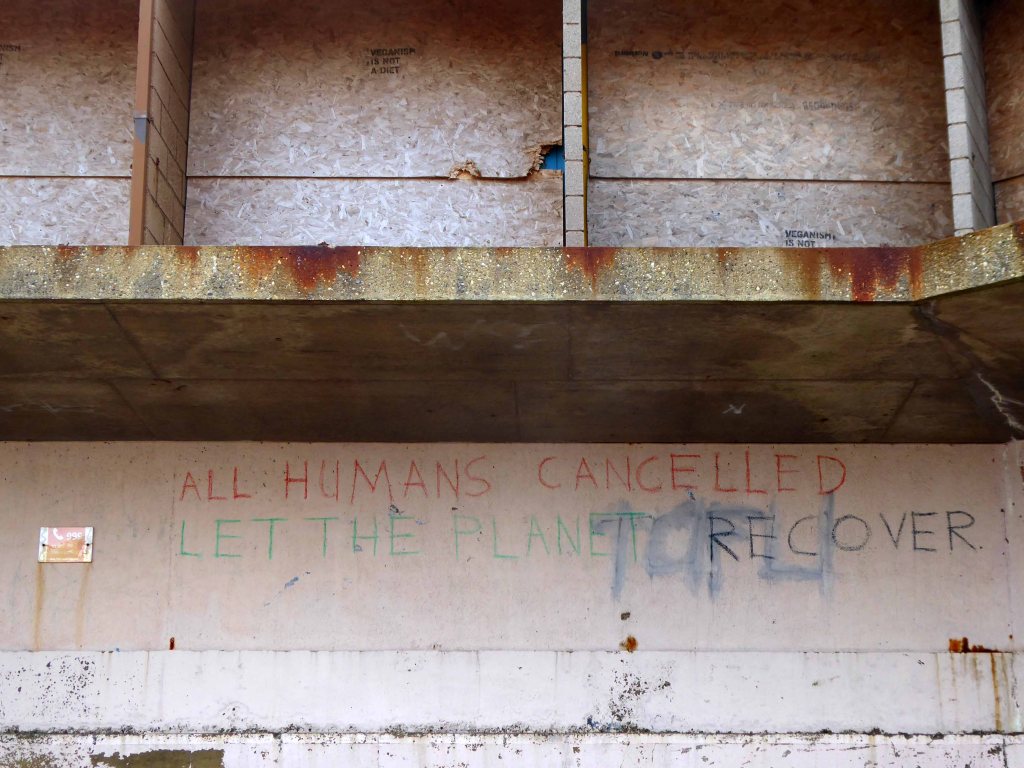
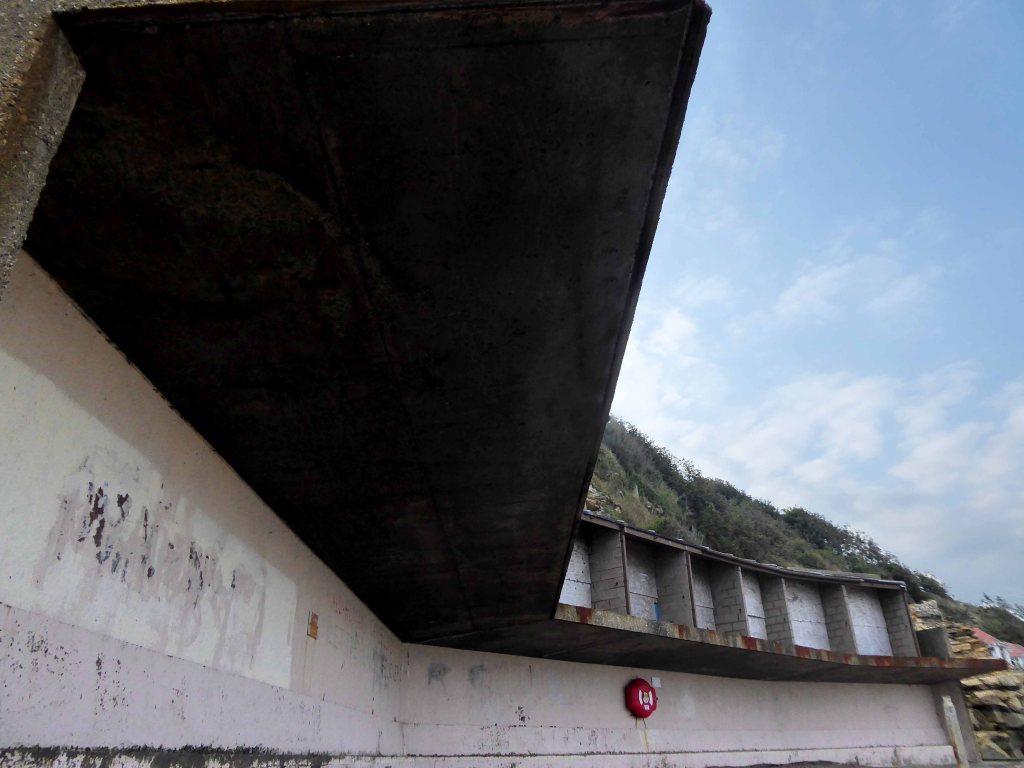
Some of the oldest sun bathing chalets almost became an Arts Hub.
Seaside chalets were under threat, with the cause believed to be the failure of a retaining wall.
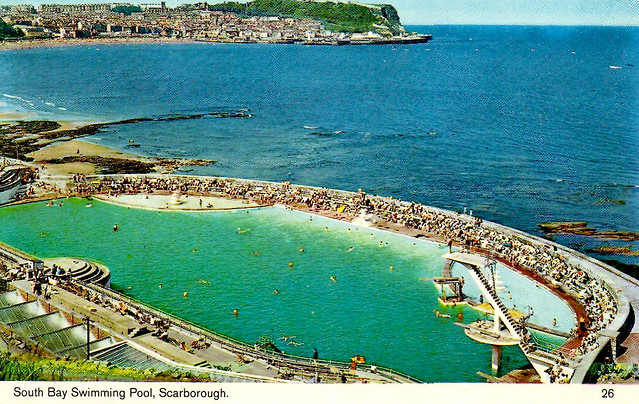
The swimming pool has been and gone, only an empty shell remains.
There are speculative plans and piecemeal repairs, but these are difficult times, and attracting substantial finance and flocks of tourists to revitalise the town, is no simple matter.
From 2011 I have visited South Bay, intrigued by all the above, but there’s a special place in my heart for these concrete chalets.
They never get a mention.
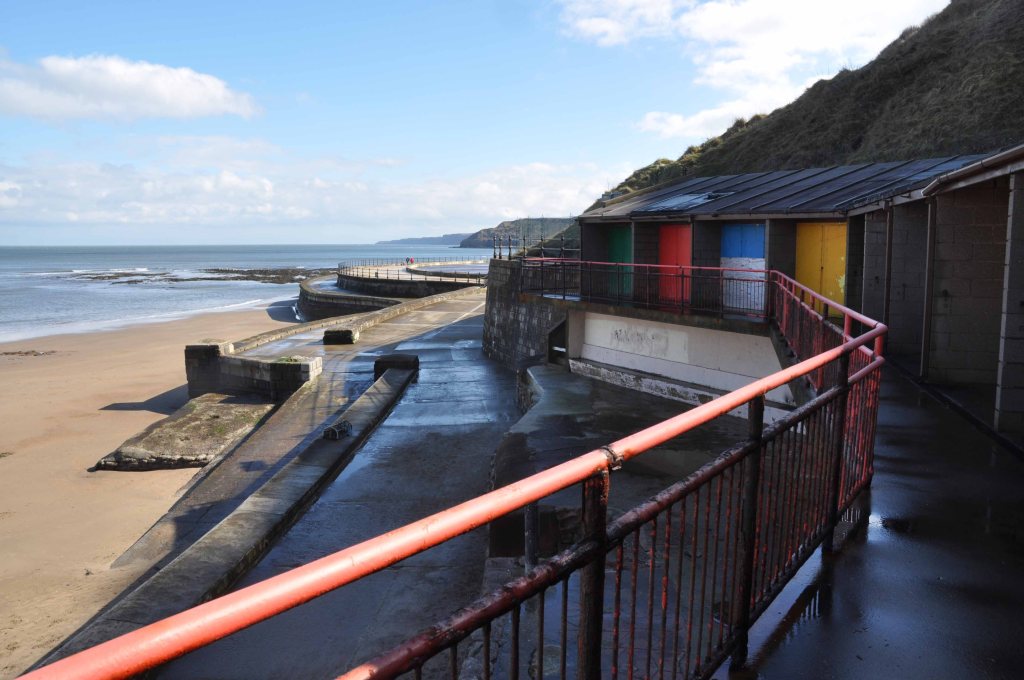
Here they are some years ago.
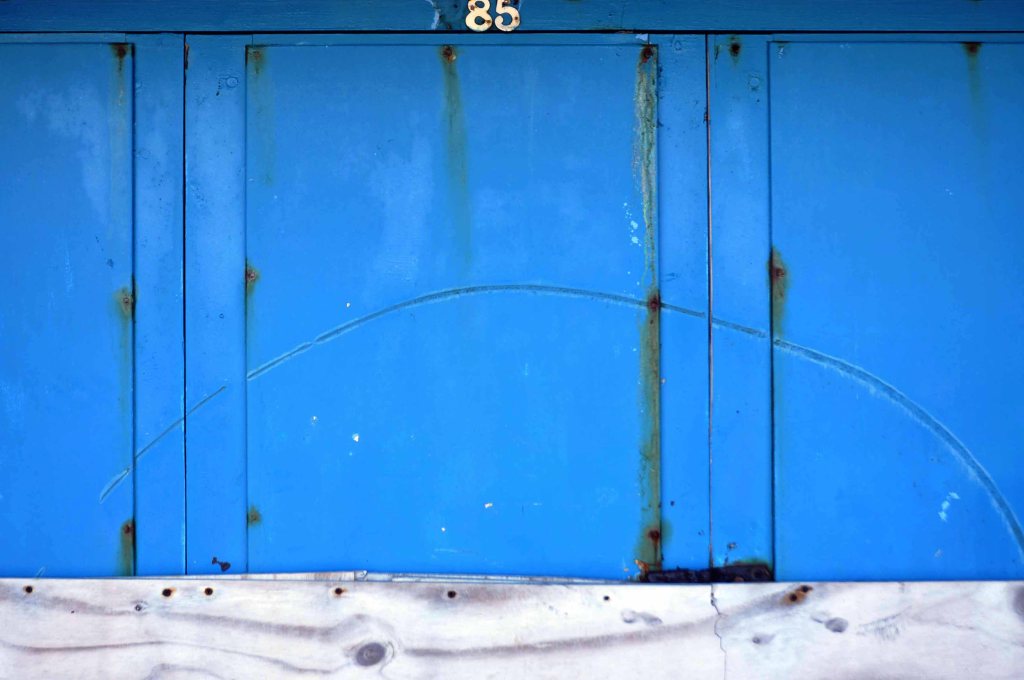
The primary coloured paint almost still fresh on their well locked doors.
They stand forlorn on the concrete shore overlooking an indifferent North Sea, hoping for a future in an uncertain age.
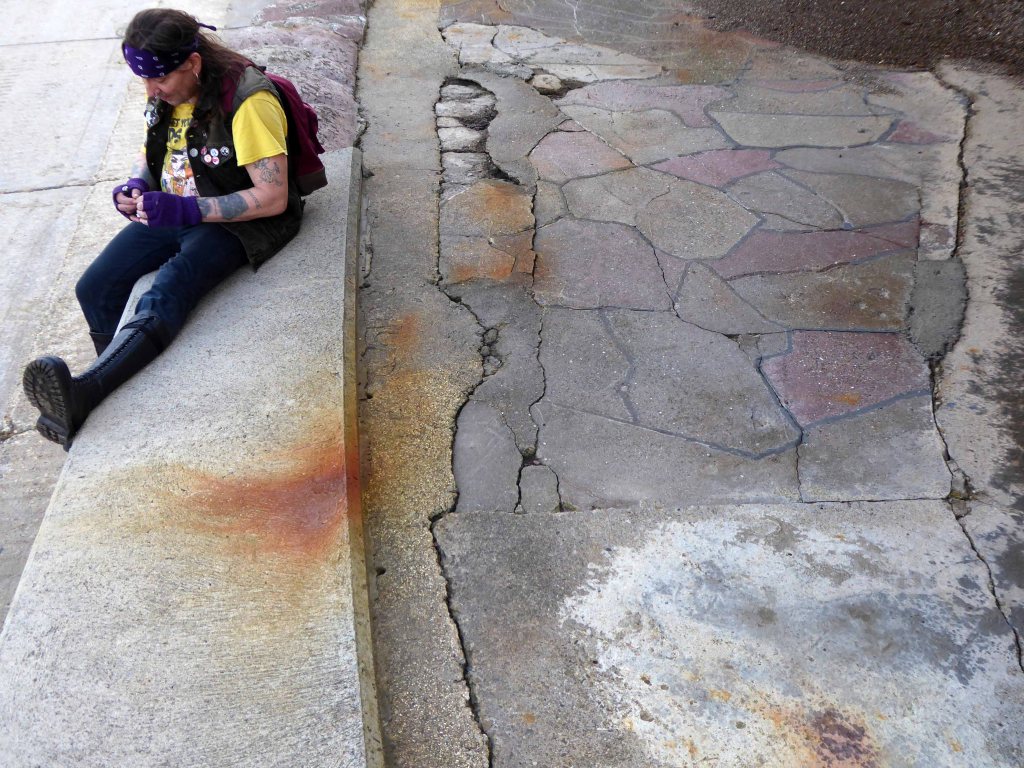
As I snapped I chatted to a local ANTIFA Anarcho Punk – ex Mansfield Miner and political activist, he feared that they would be swamped by some tidal wave of gentrification.
If so when, not soon.
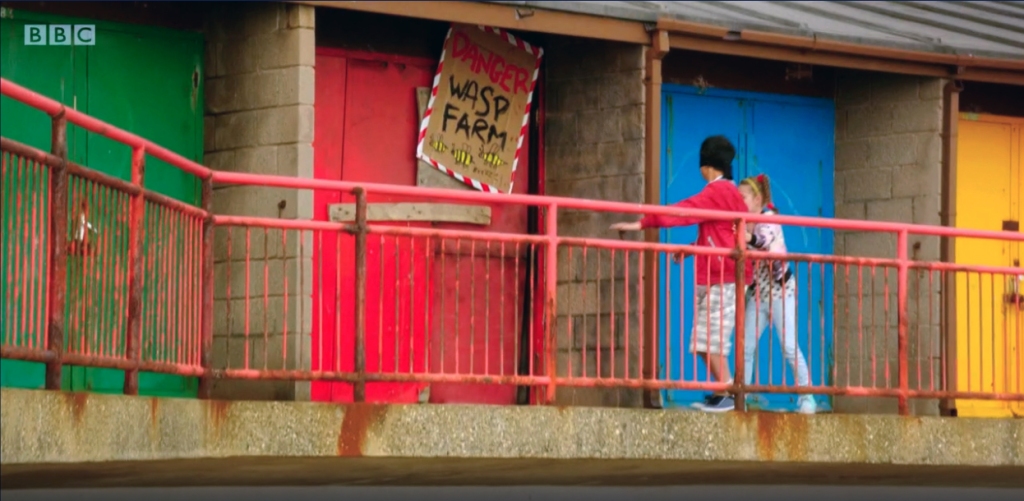
As a post script I have been informed that the site was used as a kid’s den in the CBBC TV series All at Sea!
29 King Street Bridlington East Riding of Yorkshire YO15 2DN
Supplier of a variety of discounted homewares and DIY products, toys, clothes and stationery.
In 1881 William Boyes opened a small store in Eastborough, Scarborough selling odd lots and remnants from merchants. There was great poverty in the working classes and housewives were even keener for a bargain than they are today. When customers found that they could buy enough material to make a coat or a dress cheaper than anywhere else, they soon spread the word and trade increased to such an extent that William had to look for larger premises.
William rented a large warehouse just off the main street where business continued to grow. By 1886 he purchased further units in Market Street and Queen Street and knocked them into one large store and named it ‘The Remnant Warehouse’. Older customers in Scarborough still refer to the shop as ‘The Rem’. As time went on William expanded his range and bought other clearance lines from merchants developing the warehouse into a department store.
Business continued to grow and go from strength to strength and in 1910 the expansion of the company started. Today W Boyes and Co Ltd operate over 60 stores throughout Yorkshire, the North East, Lincolnshire and Nottinghamshire & Leicestershire.
In 1969 Hammonds of Hull purchased the Carltons department store located in Bridlington, and within a year had demolished and rebuilt the store. The company’s independence did not last much longer, as in 1972 House of Fraser purchased the business for £8 million. The stores were then grouped under the Binns brand. The Bridlington store was closed in 1995 and the store stood empty for three years until Boyes opened in 1998
My sincere thanks to Kate Yorke for her detective work.
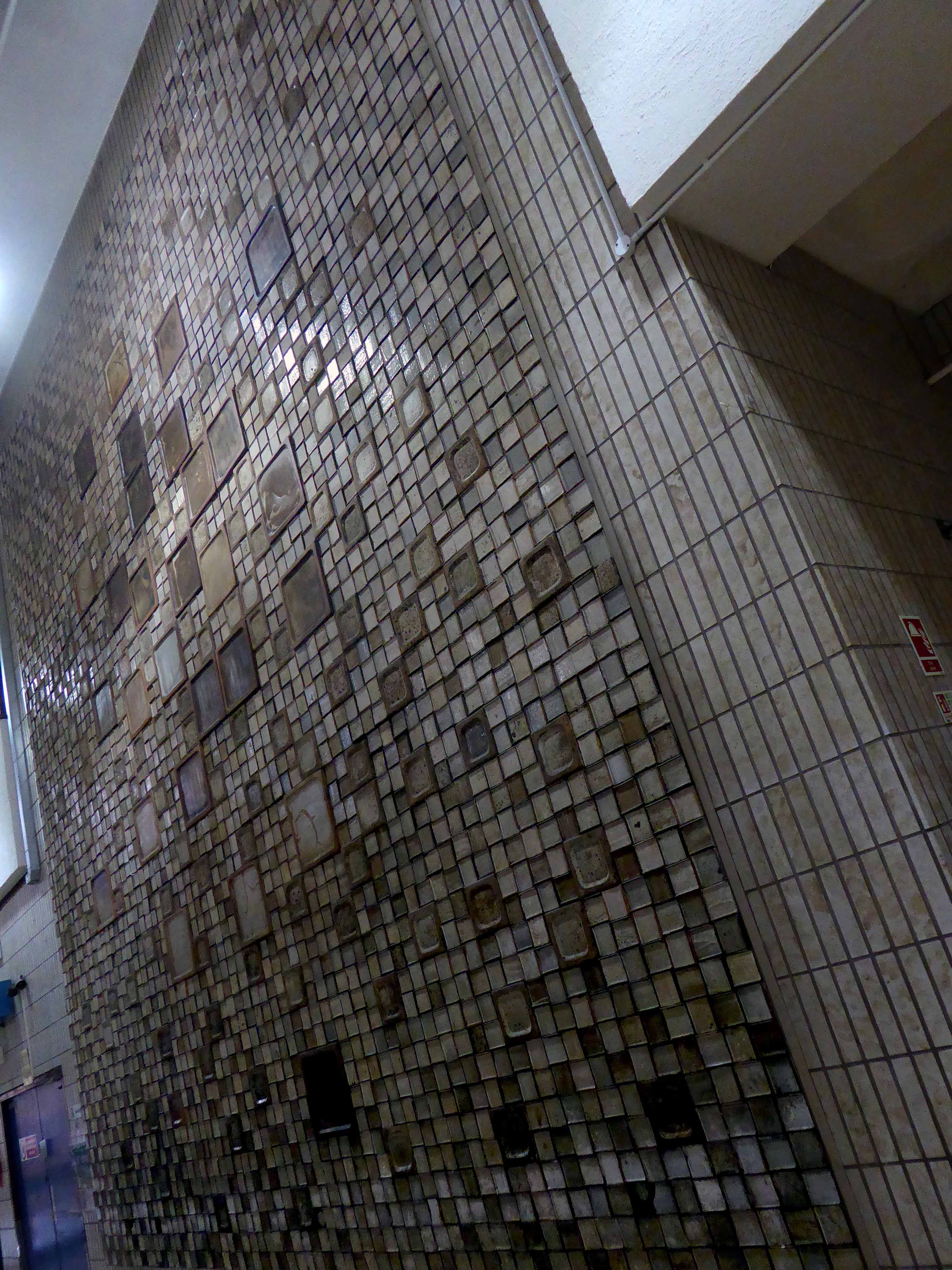
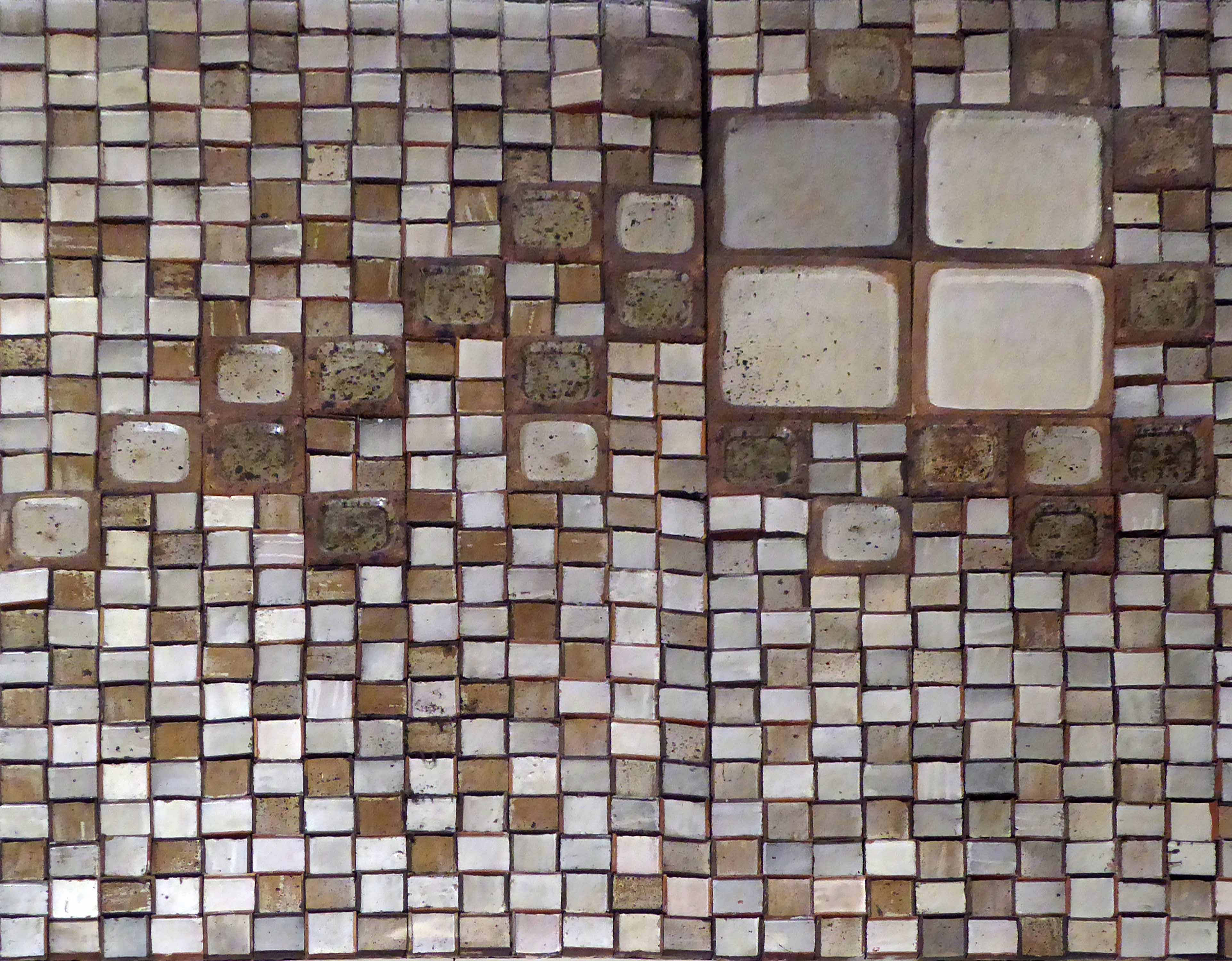
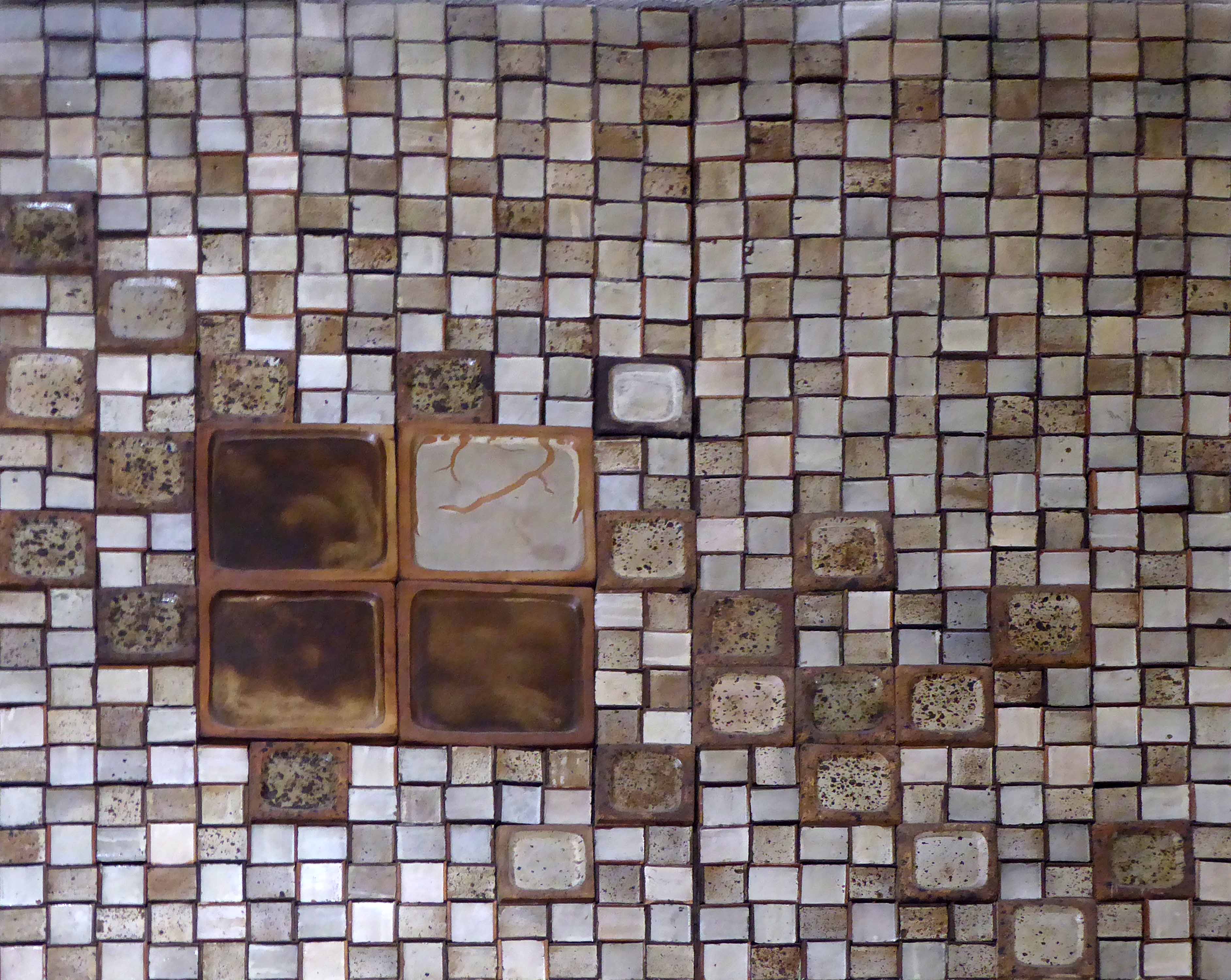
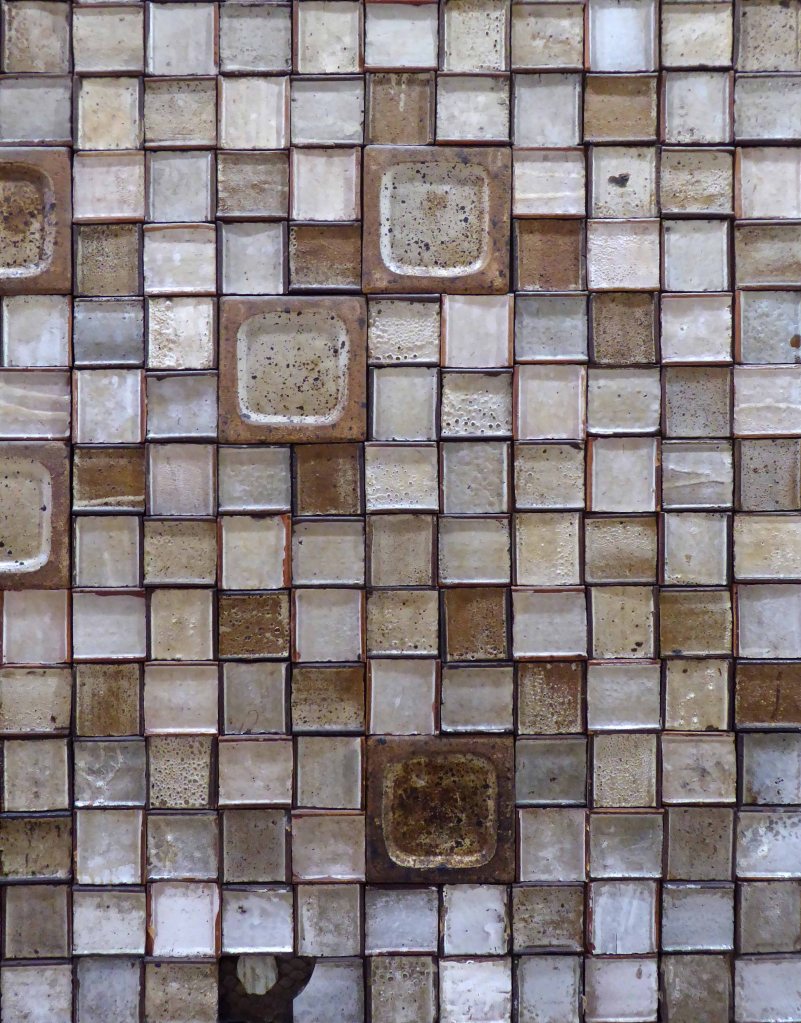
I have been here before, enchanted by the exterior tiles, of unknown origin – yet strongly redolent of William Mitchell’s work.
These are on the southern face of the building.
On the opposing side.
They flow through into the entrance lobby.
Exploring further I encountered these striking ceramic tiles on the stairwells.
With a matching set on the others side of the store.
It’s a constant delight to discover the decorative art of the Sixties preserved in situ. Remnants of a time when investment in original work was de rigueur, reflecting the pride which companies had in their buildings and the respect they held for their customers.
The stores trade as Boyes – pronounced Boys but often mispronounced as Boys-es.
It is still owned and family run with Andrew Boyes and his son Richard as joint managing directors.
The Scarborough store was home to a number of animals in the past, including monkeys, chipmunks and budgies. The animals were used as way of encouraging customers to visit the store and purchase something whilst they visited. Two of the monkeys, Jacko and Dinah, are famous to a generation of Scarborough shoppers.
Scarborough TEC formerly known as Yorkshire Coast College, Scarborough Technical College, Scarborough Technical Institute, and Scarborough School of Art is a further education college located on Lady Edith’s Drive Scarborough. It is a constituent college of the Grimsby Institute of Further & Higher Education.
Yorkshire Coast College was originally an independently controlled institution, but due to consistently poor results and long-term financial difficulties was taken over by the Grimsby Institute in January 2010.
In November 2016, the name was changed from Yorkshire Coast College to Scarborough TEC, with the TEC standing for Training, Education, Careers.
Colleges, once under the stewardship of the local authority are now independent businesses and as such subject to mergers and acquisition, for better or for worse.
1961
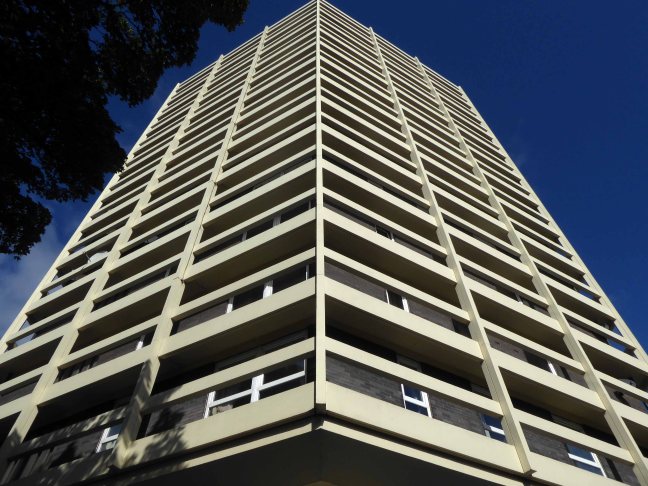
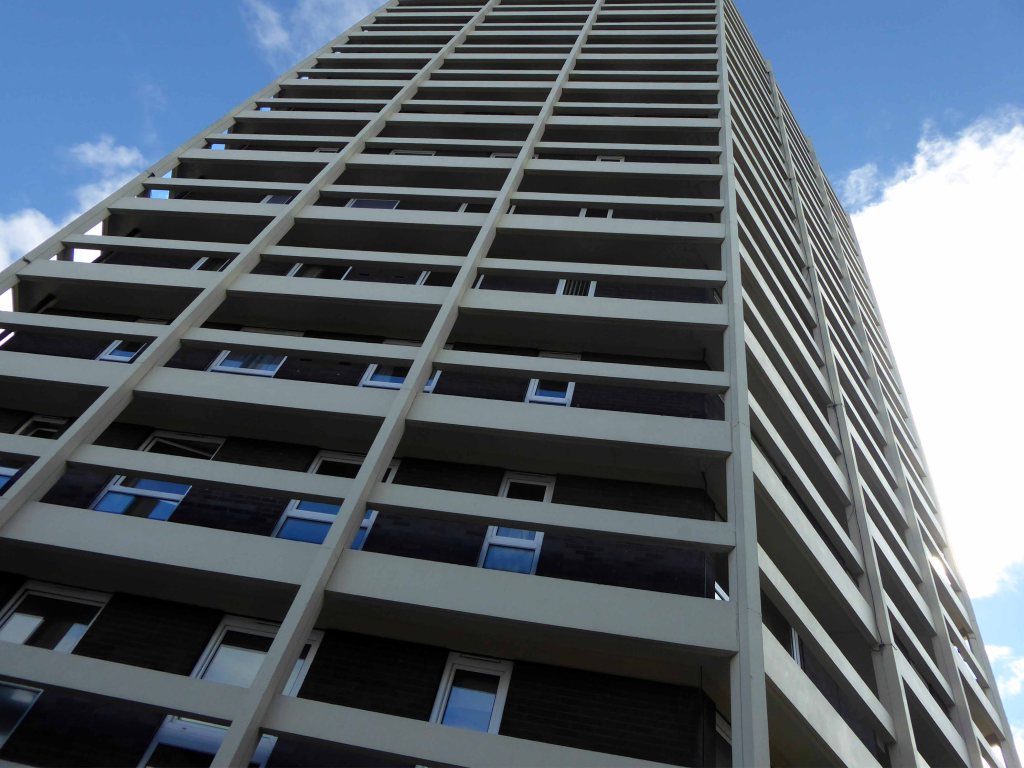
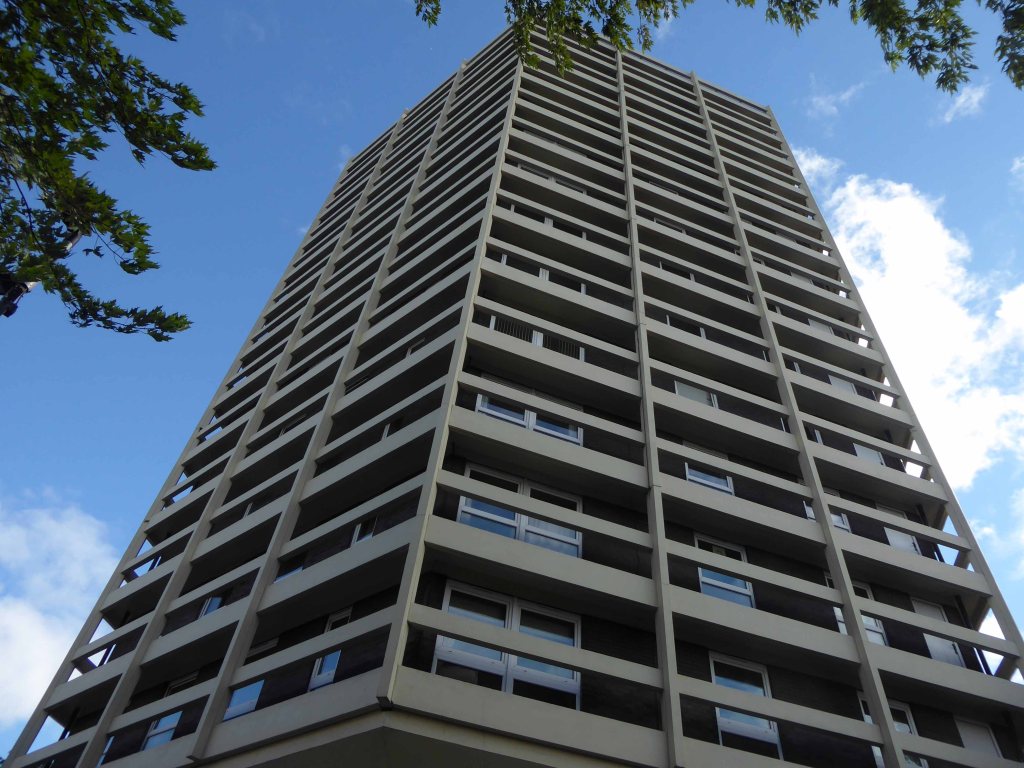
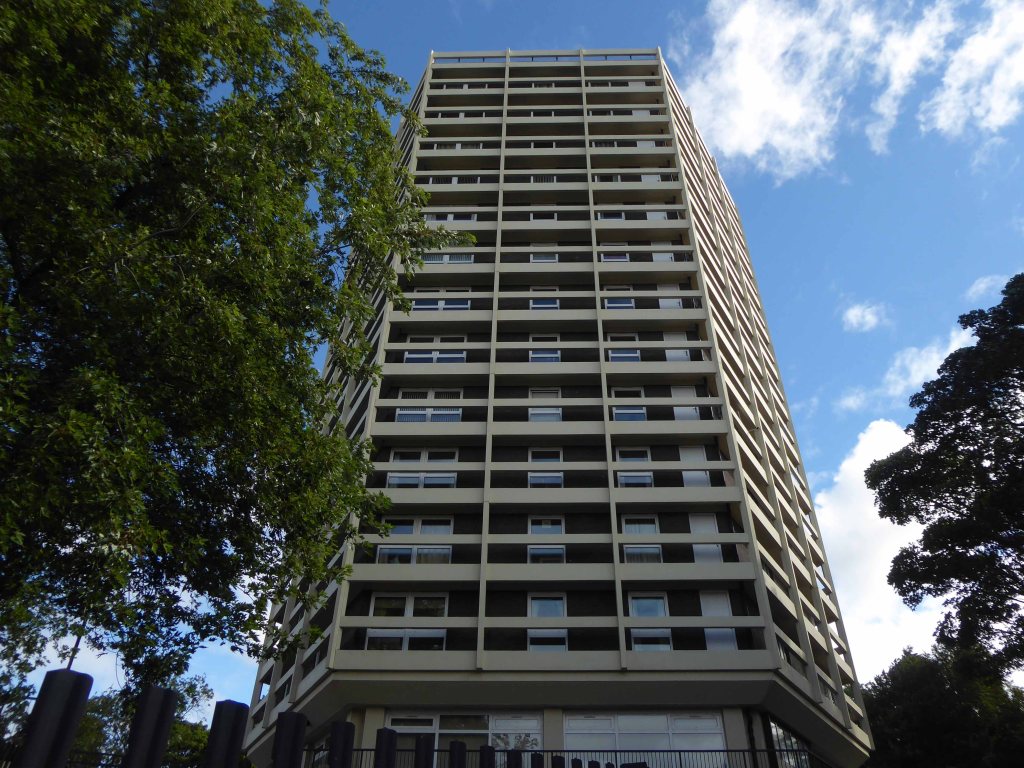
This is a building of architectural significance, GMW being responsible for several other ground breaking curtain wall towers and blocks – including Castrol House, now Marathon House one of the first curtain wall buildings in the UK, along with the Arts Tower in Sheffield.
In August 2015, GMW was taken over by another business, Scott Brownrigg, “as part of plans to move into the airport sector.”
It represents a time when vocational education was in the ascendancy, building for a manufacturing future with forward thinking, open, democratic and accessible architecture.
That optimism along with the attendant architecture are no longer, it seems – dish of the day.
It was a proud boast for many people in Scarborough that Robert Allen Palmer, the pop music icon, was raised and schooled there. Robert went to Scarborough Boys’ High School and studied art at Scarborough Technical College.
Photograph copyright Brian Cooke 2011
He played in his his first band there, The Mandrakes evolving from a gathering of pupils from the Scarborough High School for Boys during the summer of 1964. Meetings and practice under the work in progress title of The Titans, first in the crypt of a church and then a former chicken hut, took place. Allen – to become Robert in 1969 Palmer, joined after a successful audition and the first gig took place in a local youth club towards the end of the year.
Robert’s Mum says fame never changed him, “He never seemed any different, he took us on Concorde two or three times and the Orient Express and we always celebrated birthdays, anniversaries and Christmas, everything, together.”
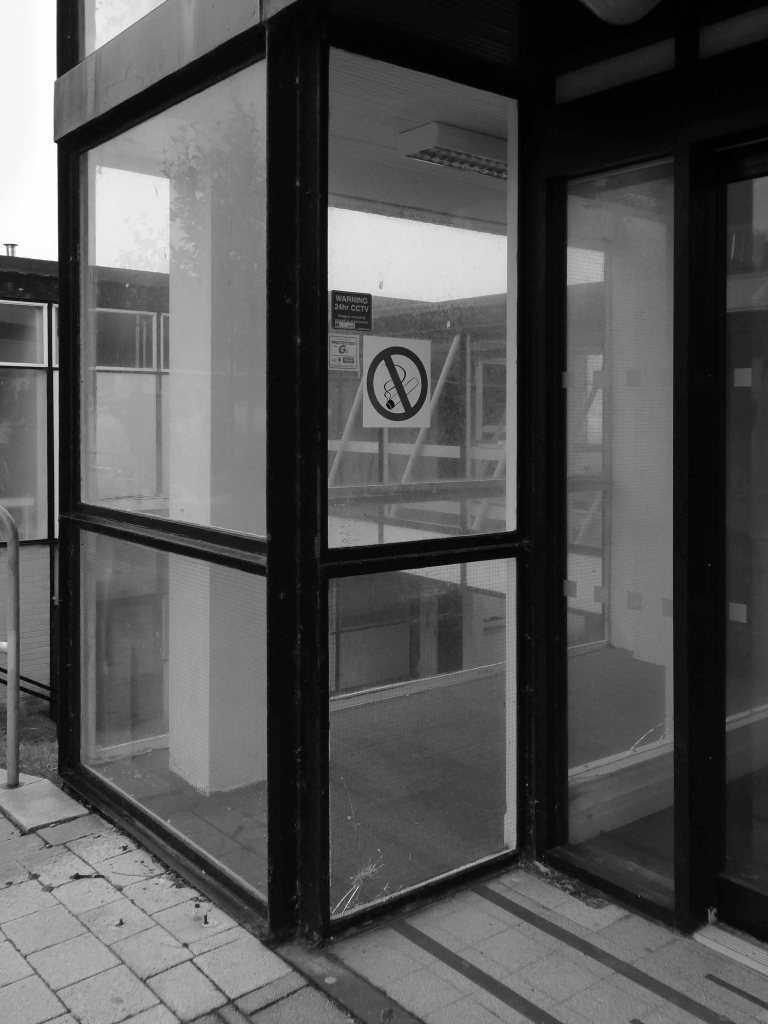
So I bowled up last Thursday following a tip from local lad Mr Ben Vickers, it rained and rained, armed with a Poundland one pound umbrella I took my chances and took some snaps.
Broken and boarded windows, spooky drips dripping and ghosts for company, heavy hearted marking the passing of an abandoned future and rapidly receding past.
Avoiding heavy showers and even heavier seas, I’m here again.
Three ways in and out of a doughnut on Scarborough’s South Bay.
One way in and out of the North Sea.
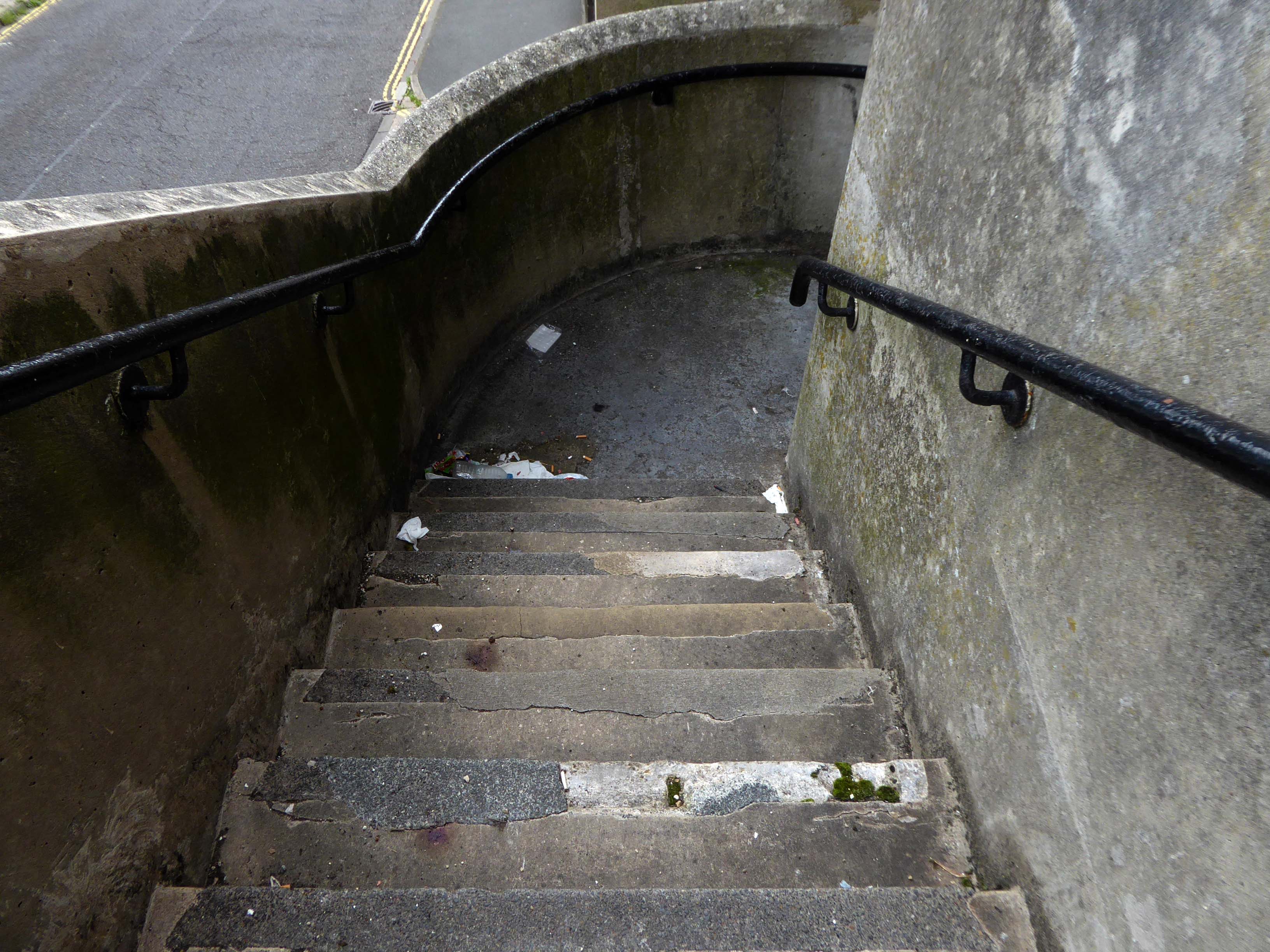
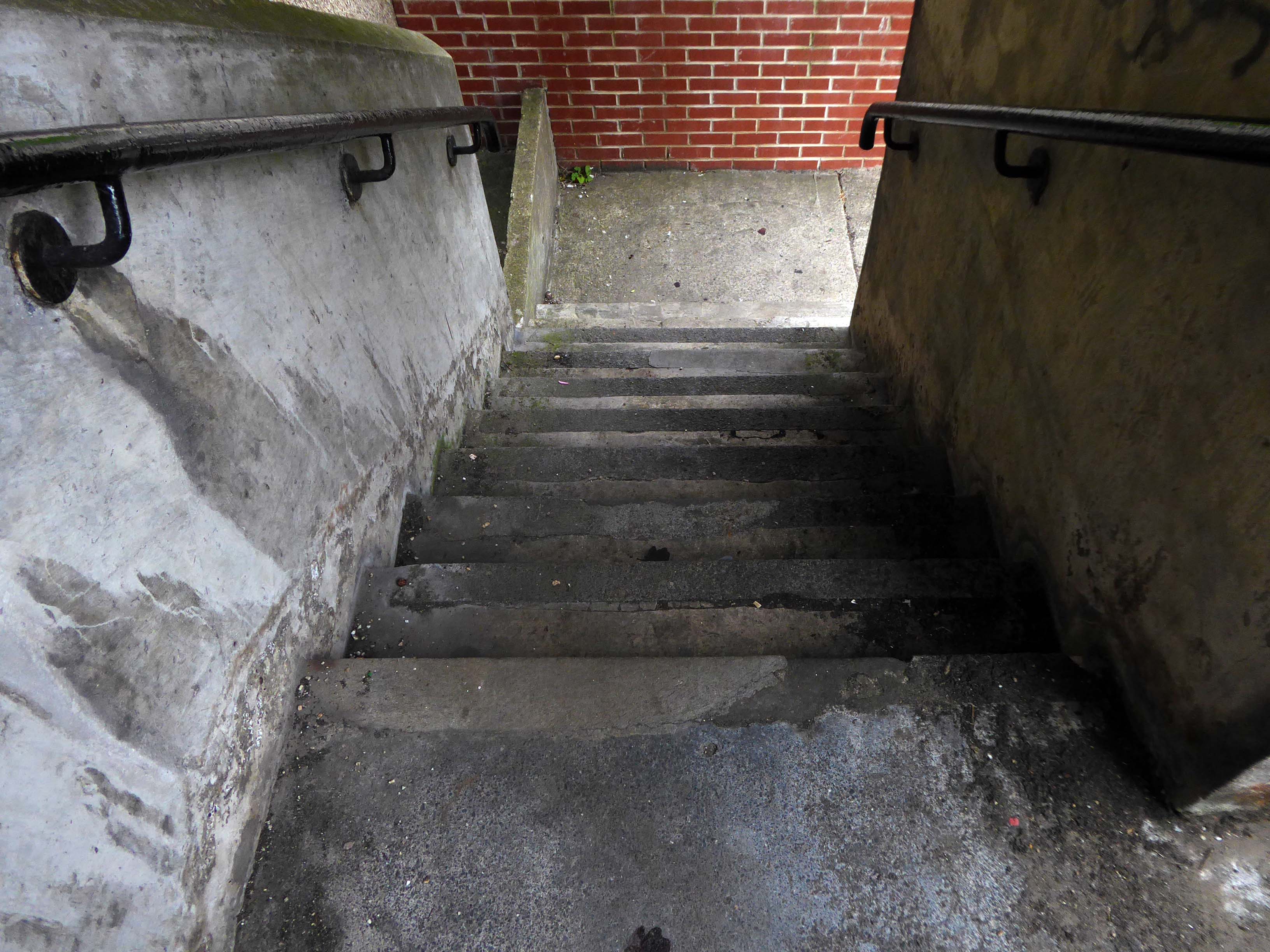
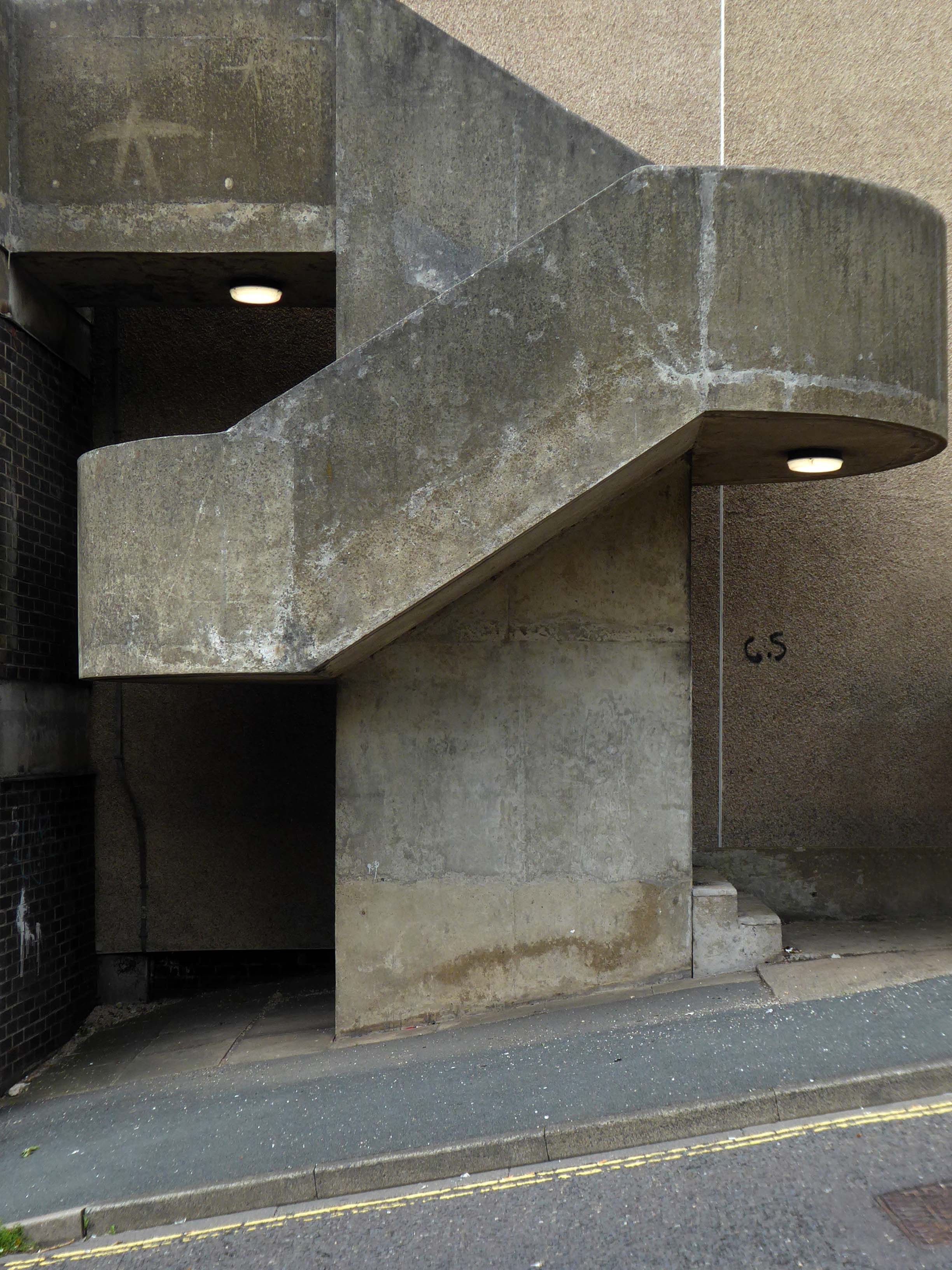
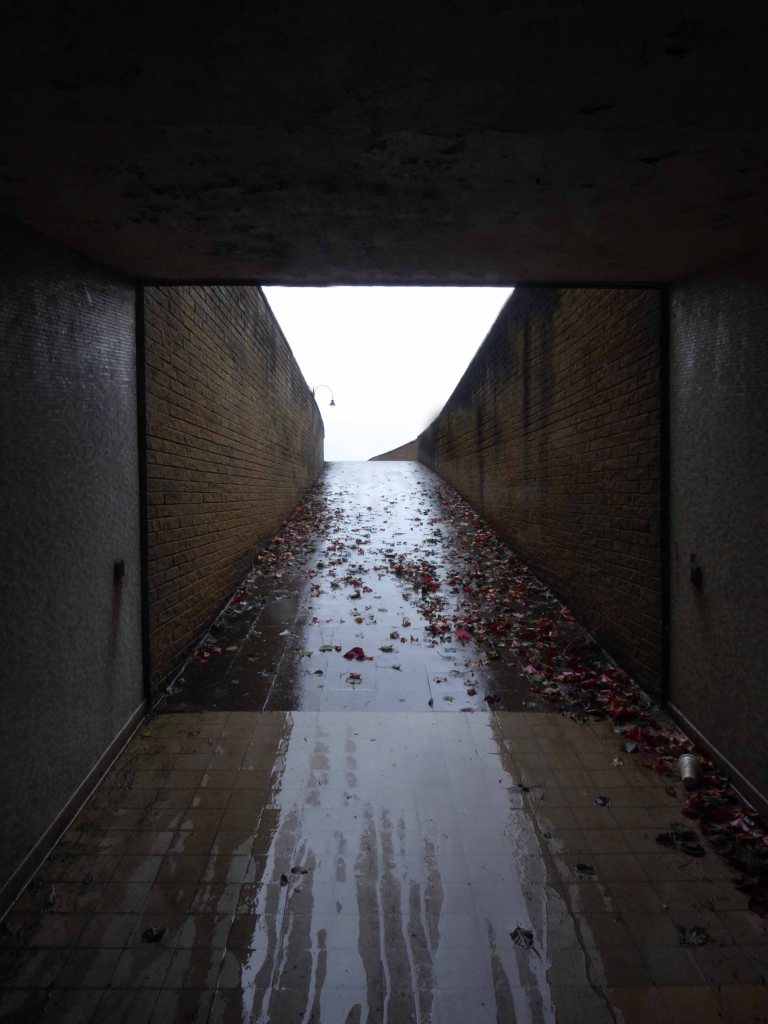
The underpass it seems is generally under threat, unsafe, often unloved and underground – often underused.
Once thought to be the answer to the threat posed to the pedestrian, by increased motor traffic, they are now deemed unsafe – poorly lit, badly maintained and scenes of anti-social activity.
Havens for those who are a threat to themselves.
Don’t let that put you off, get down and get with it!
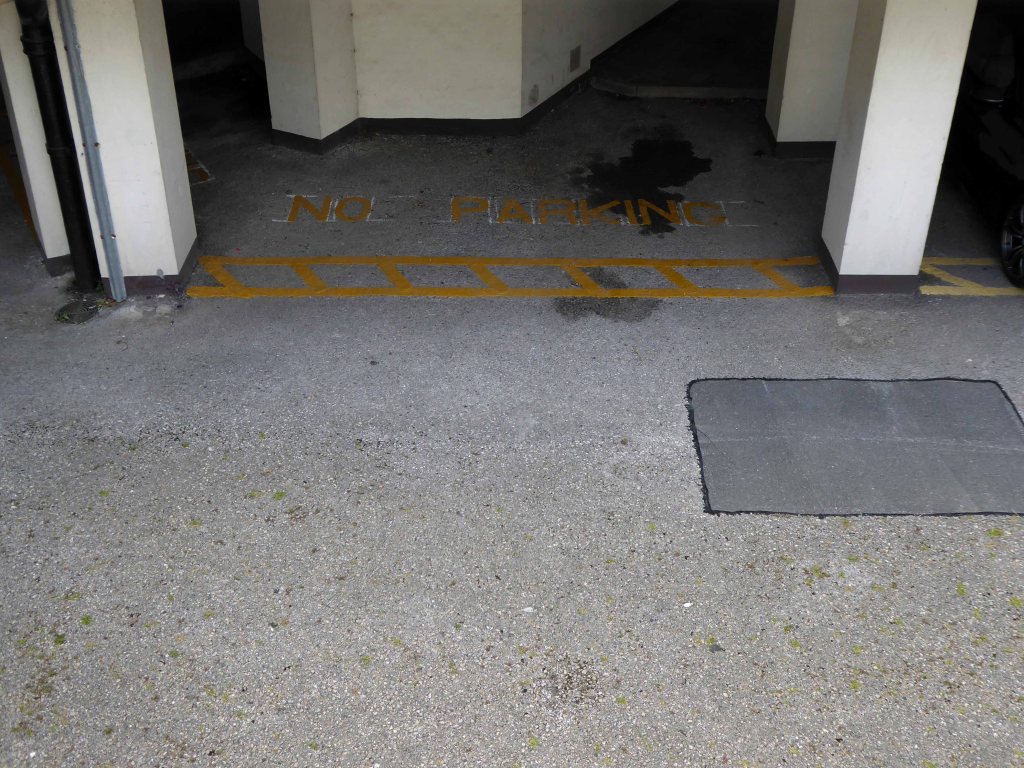
Why not treat yourself to a walk around the South Bay Underground Car Park?











































 Modern Mooch