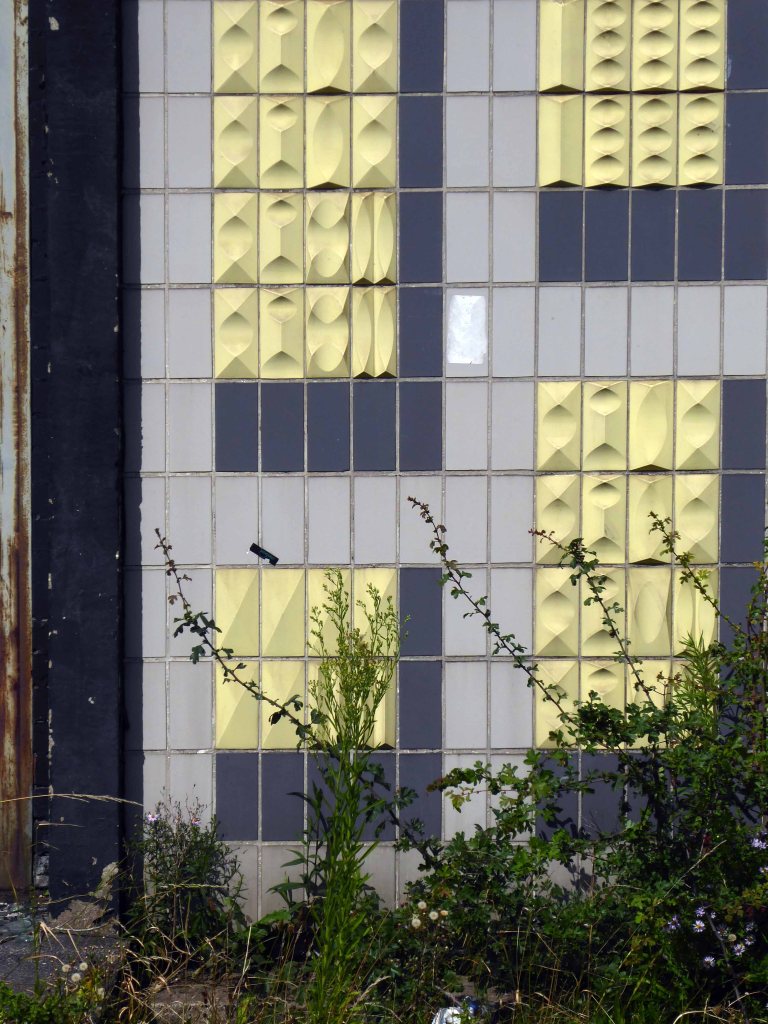
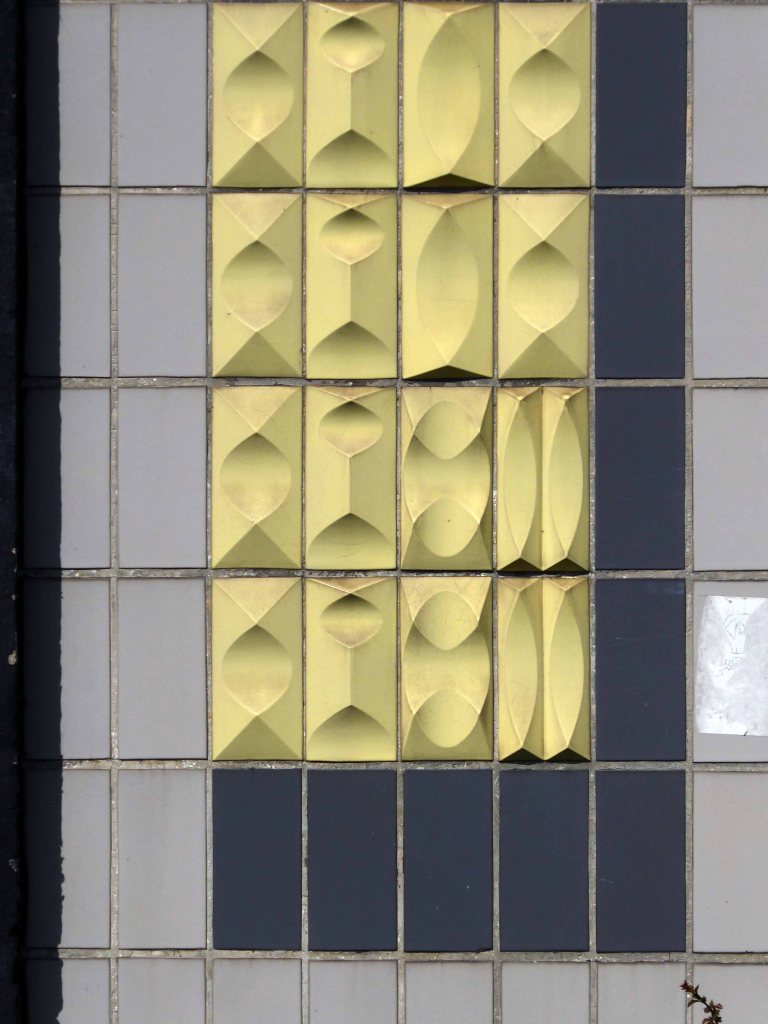
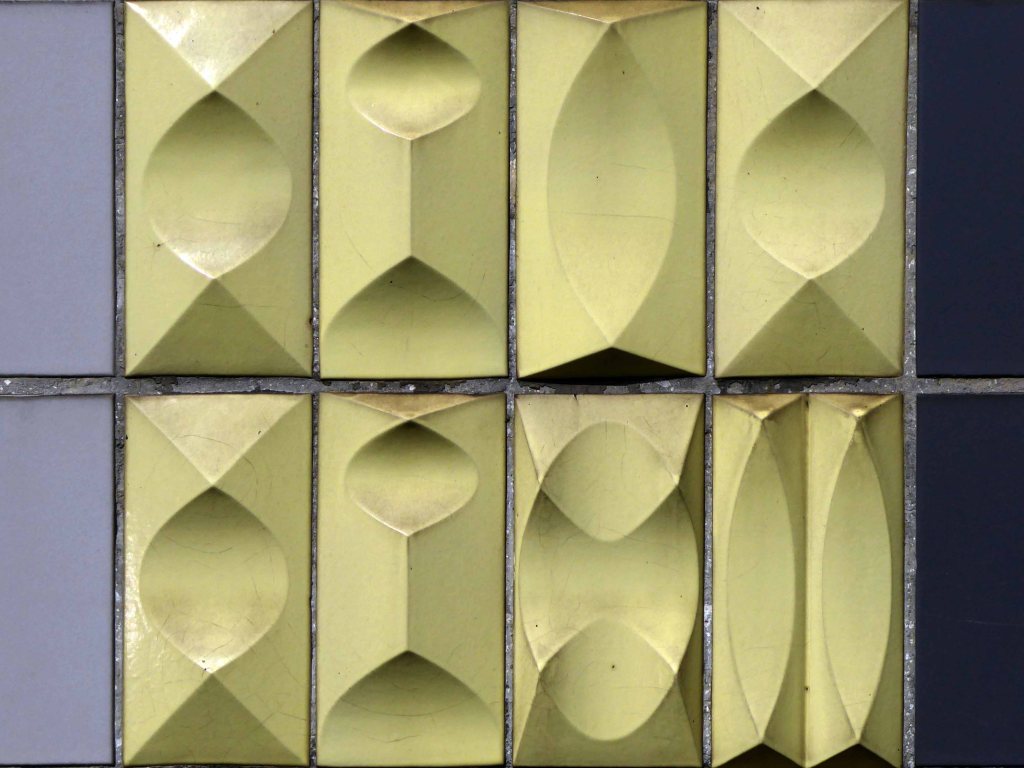
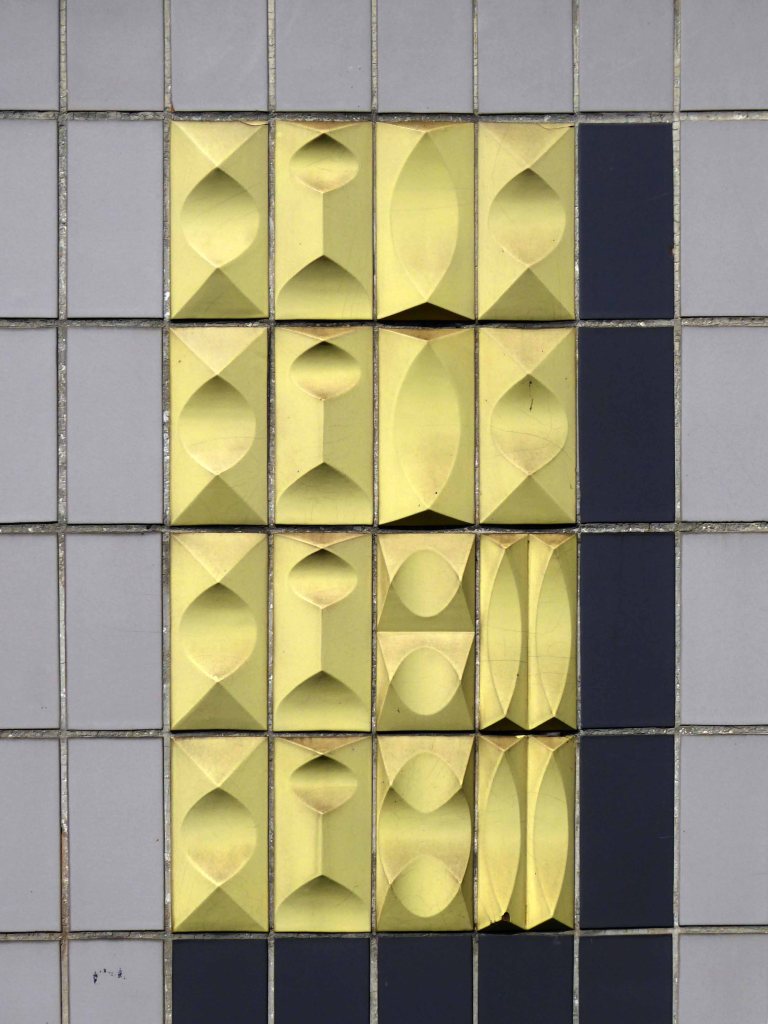
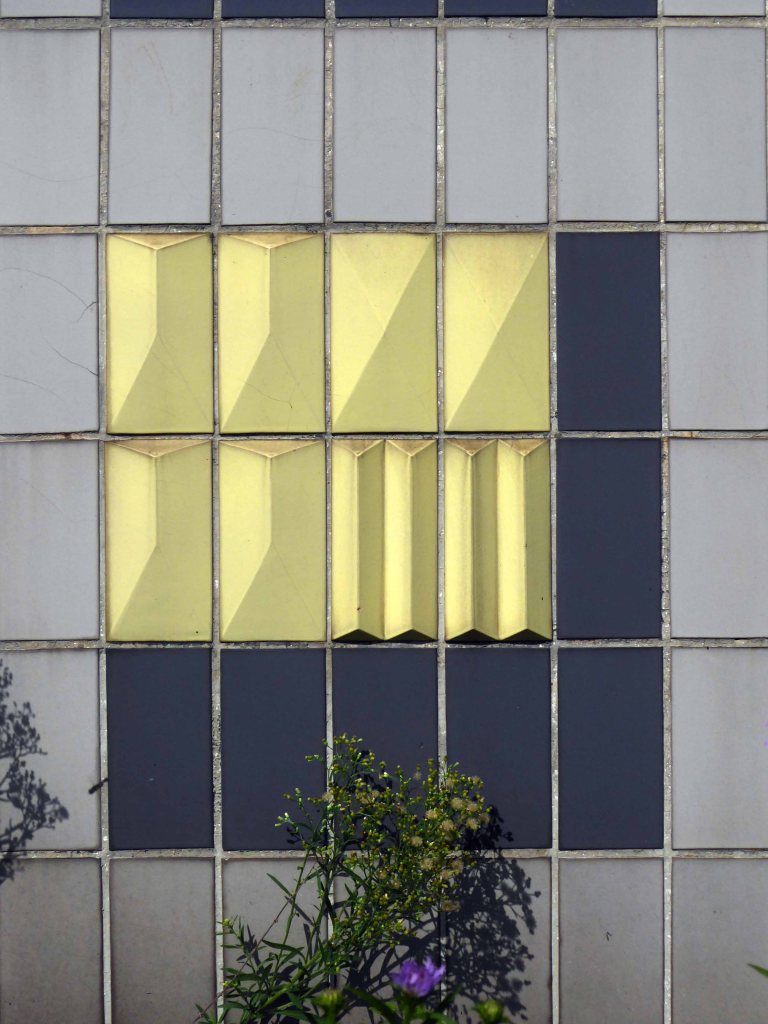
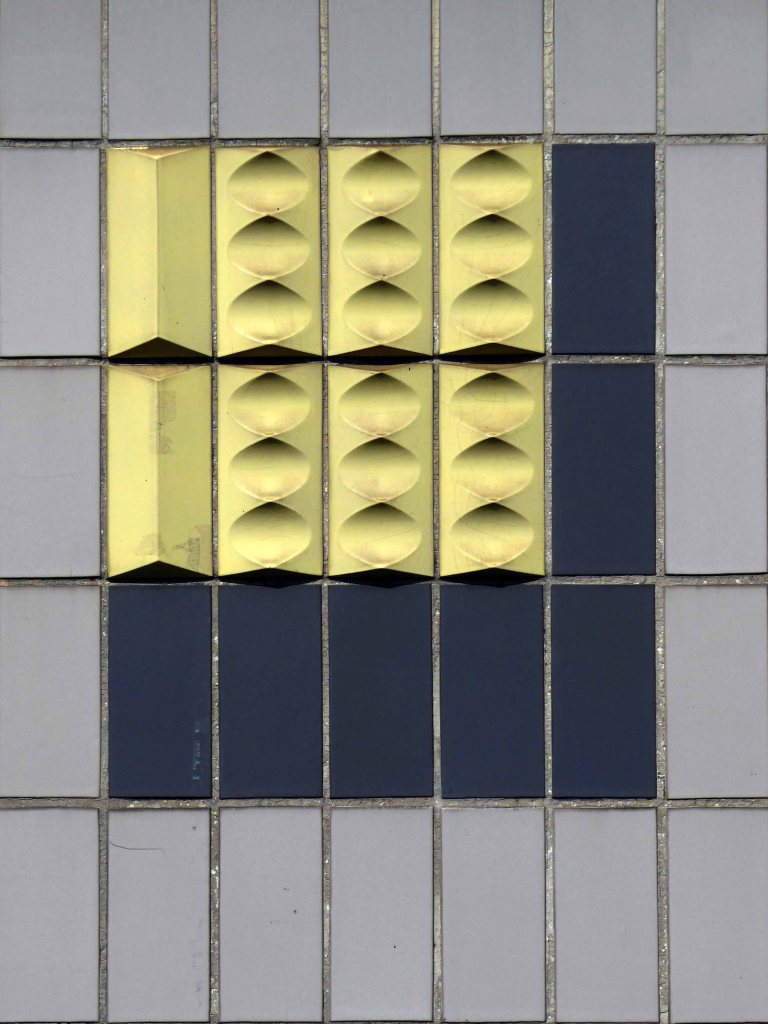
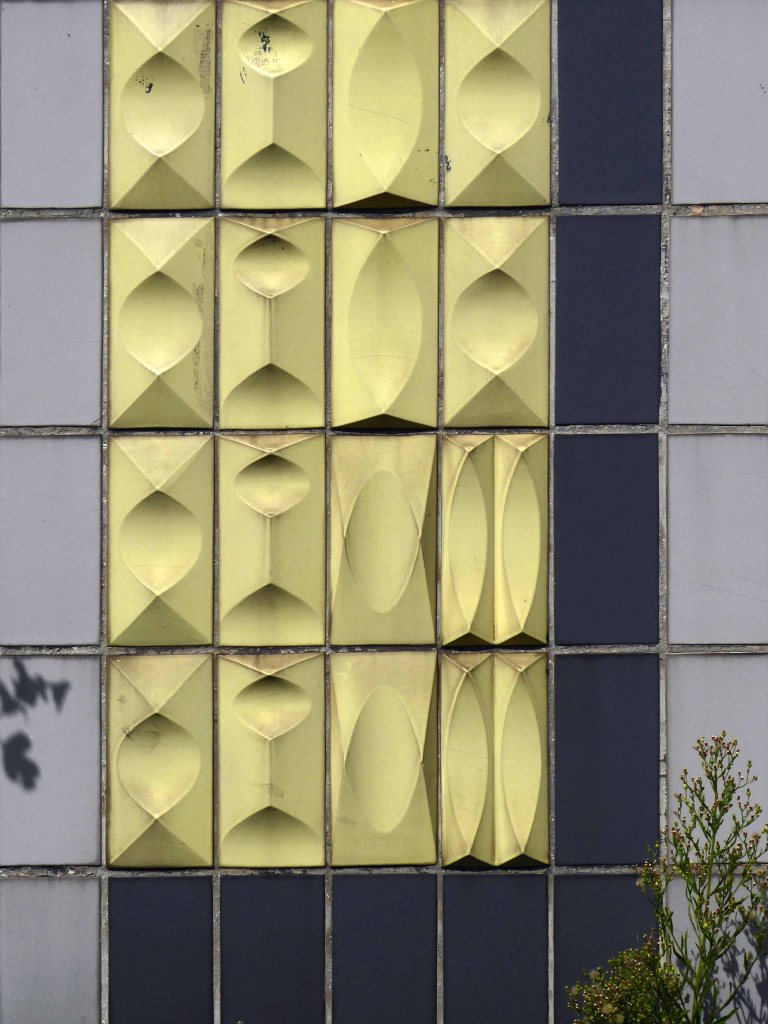
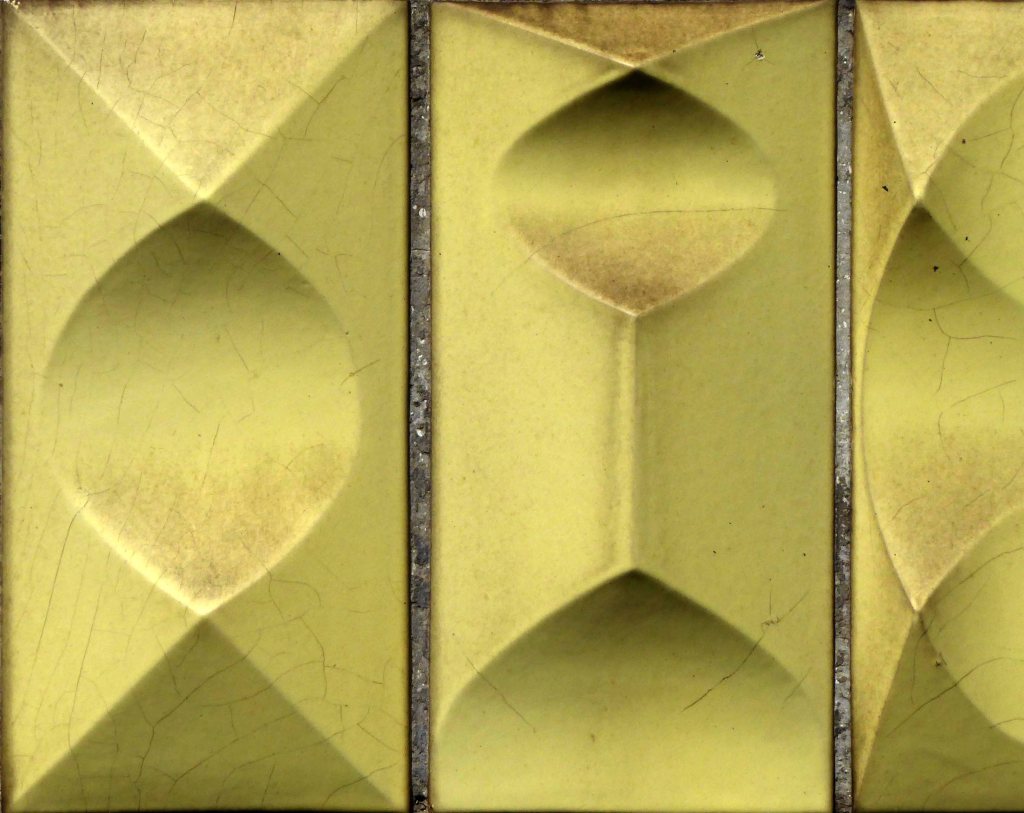
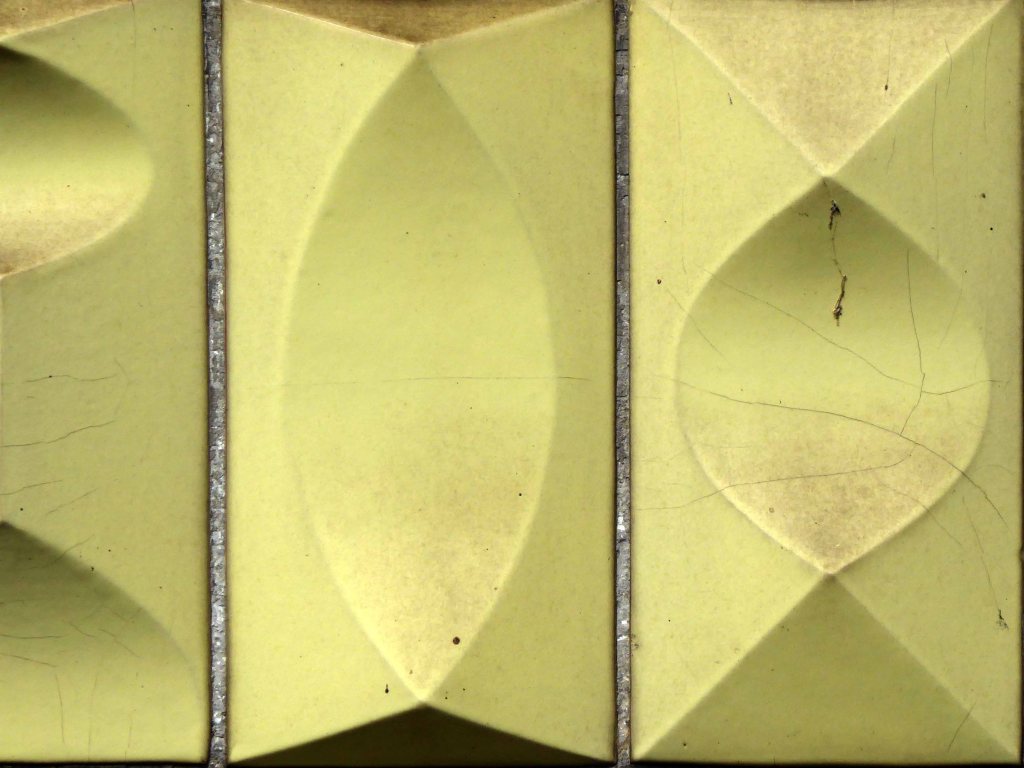
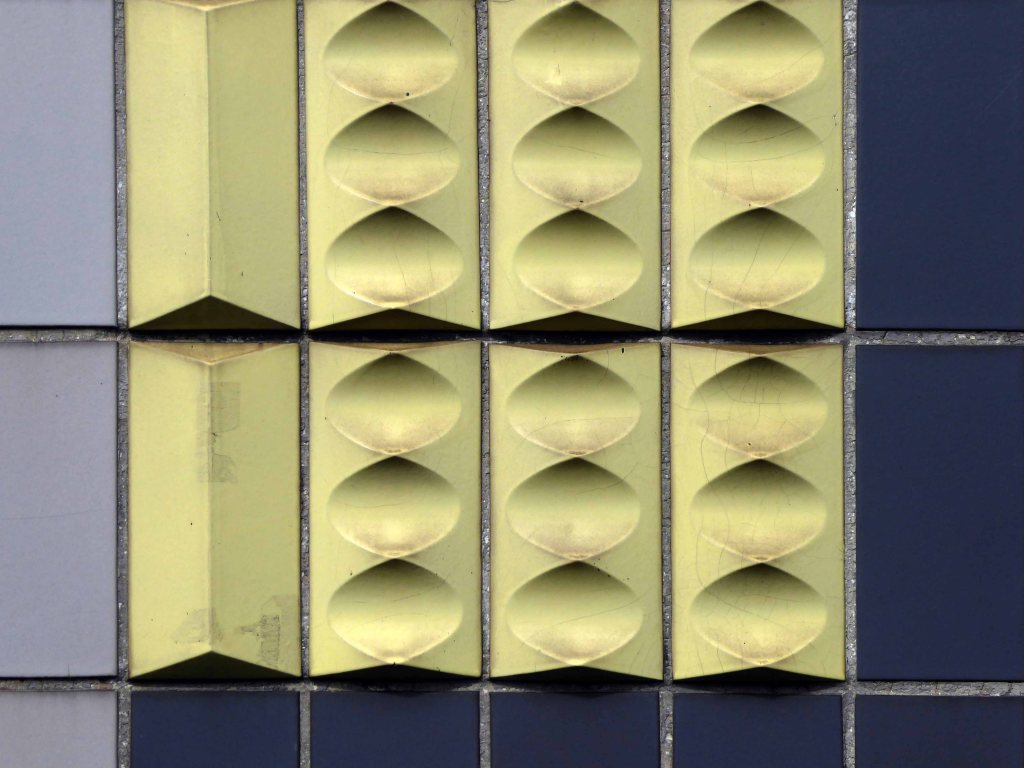
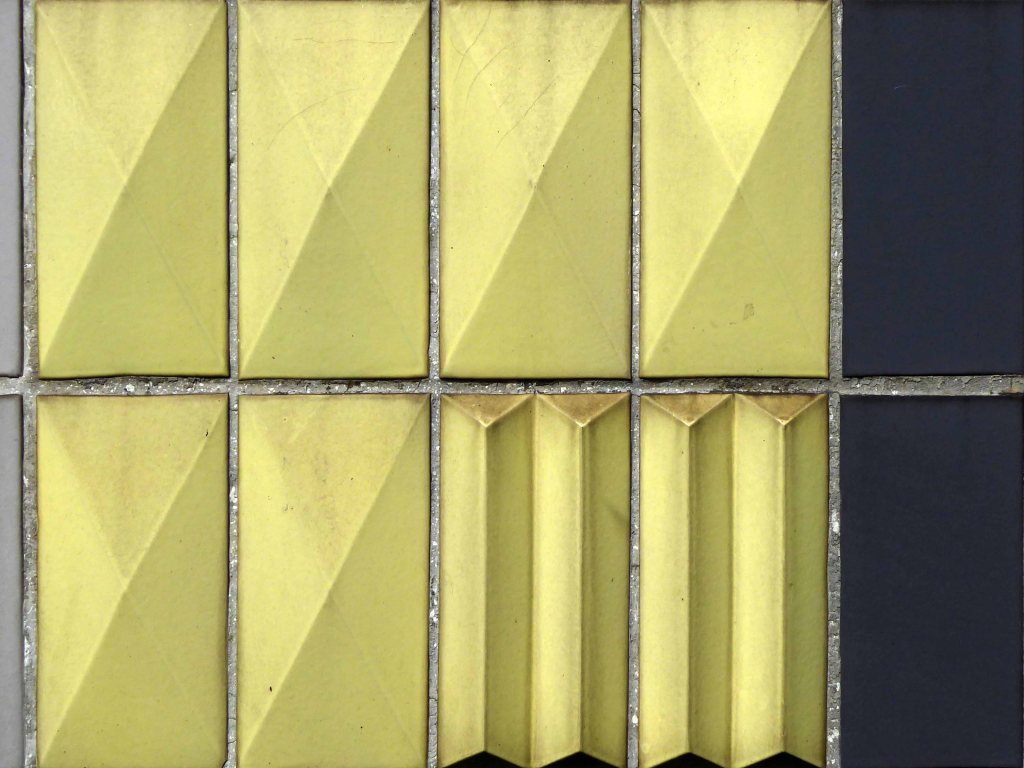
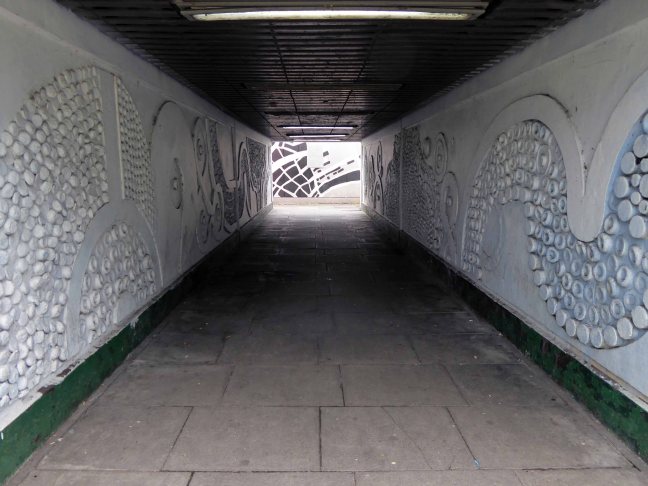
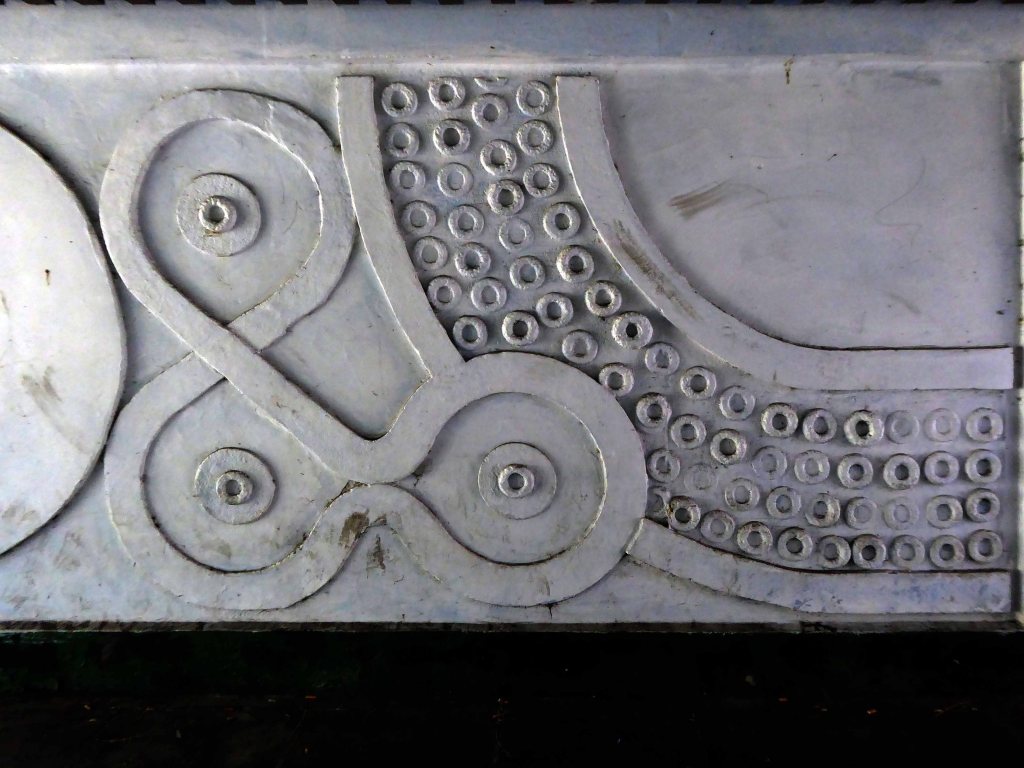
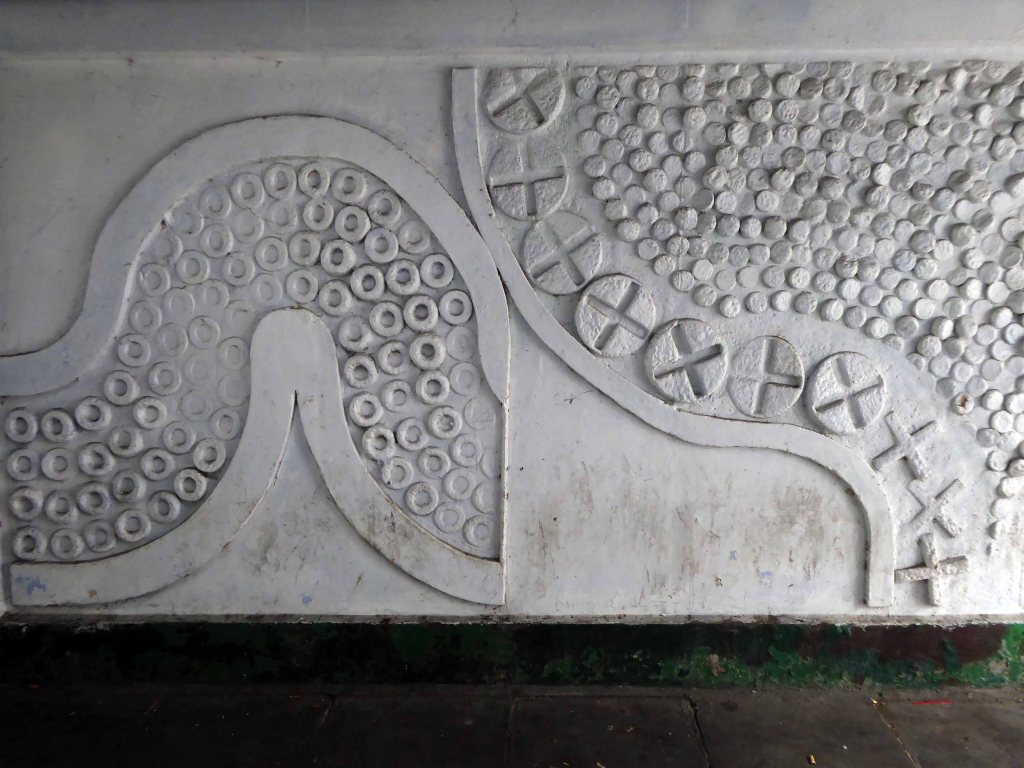
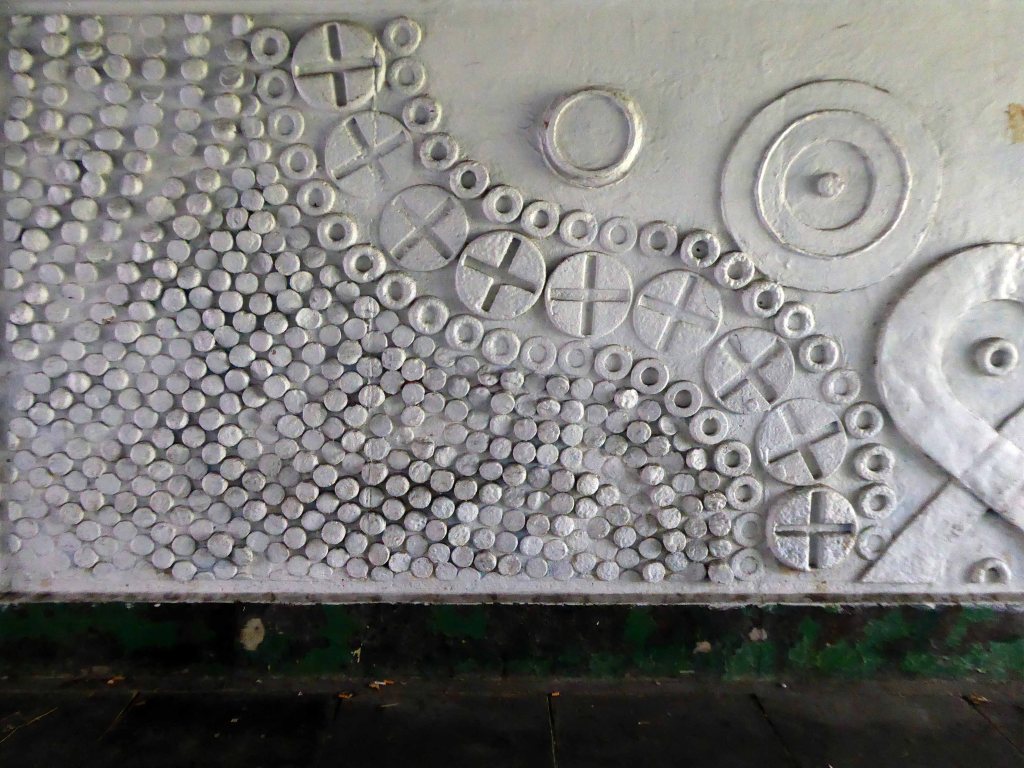
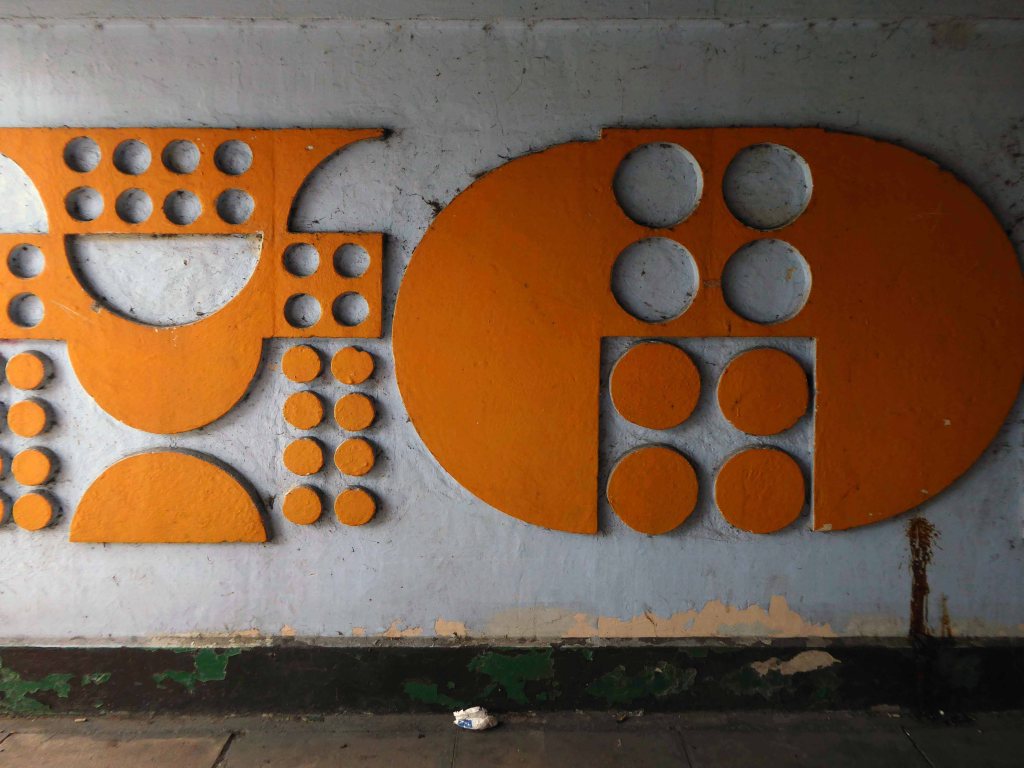
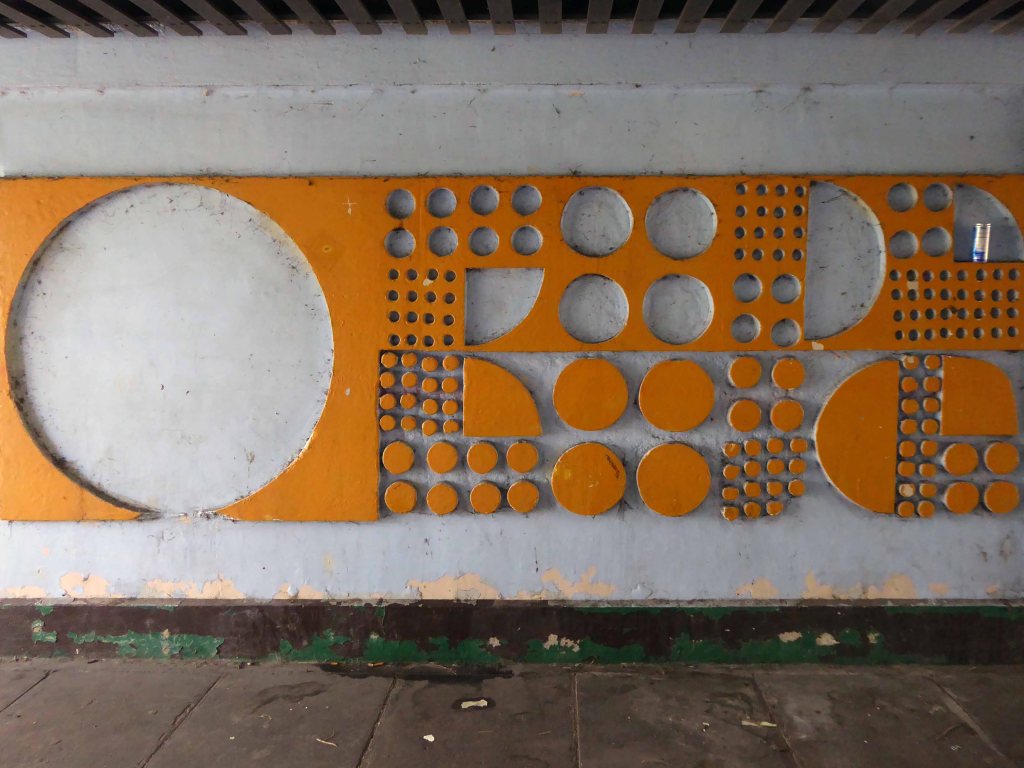
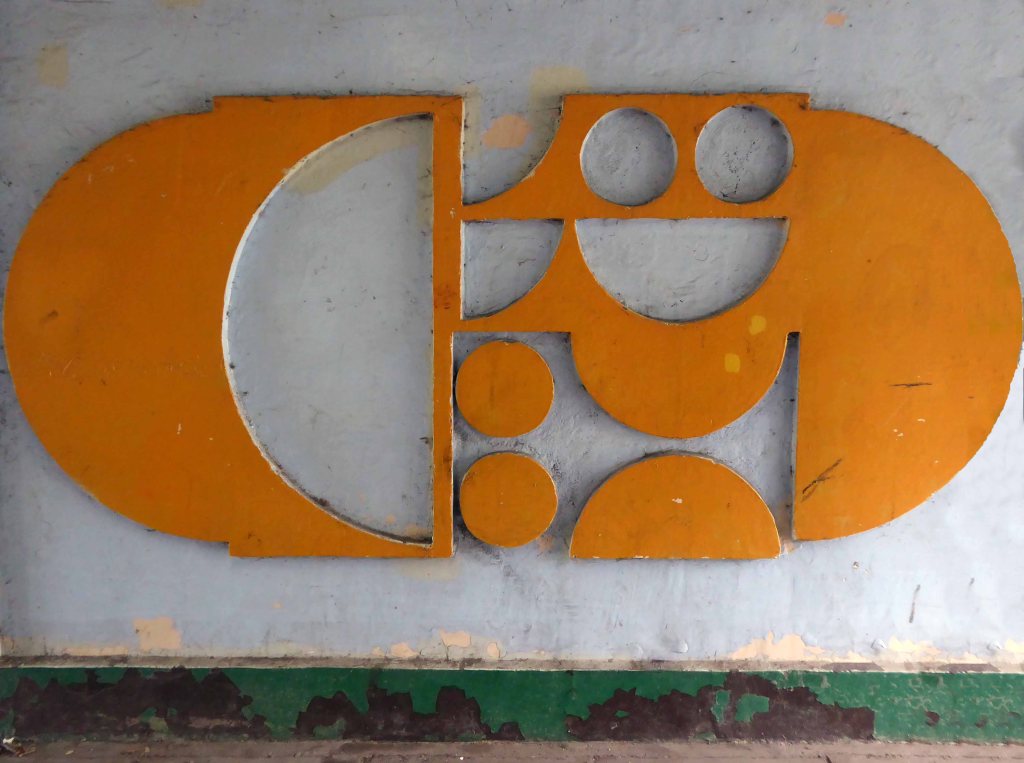
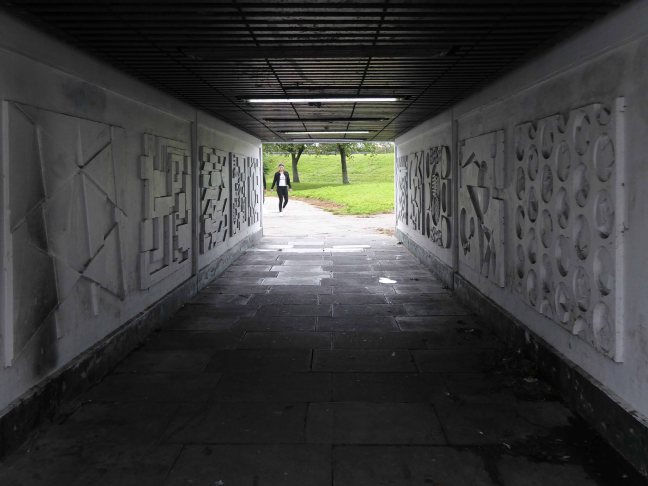
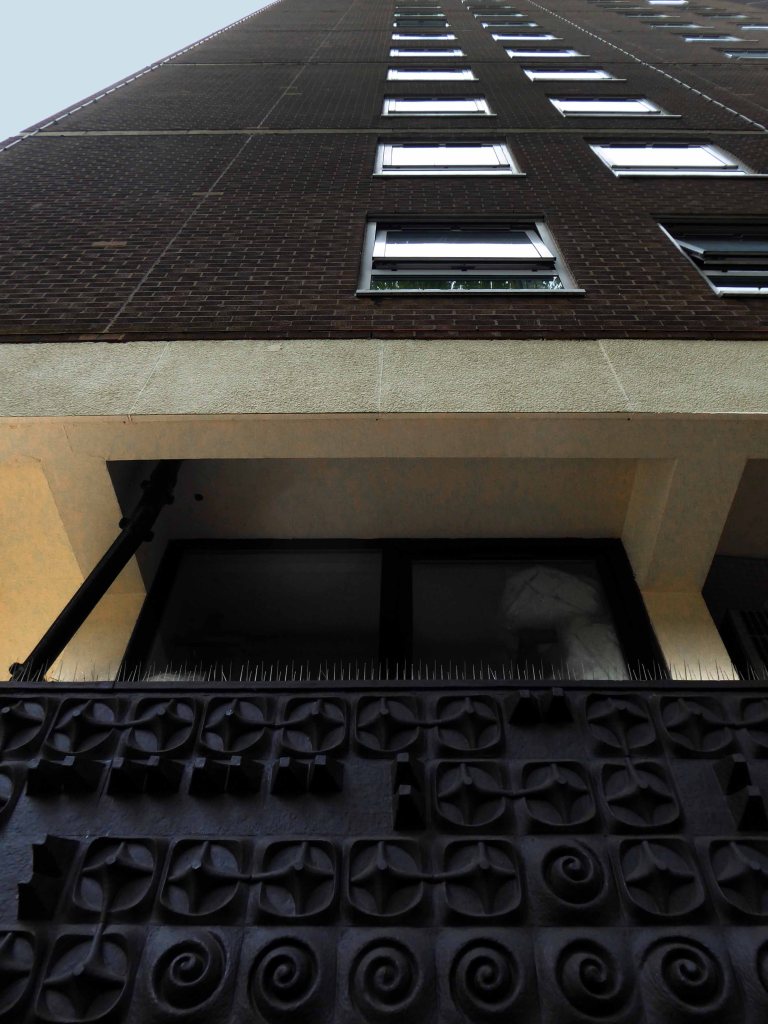
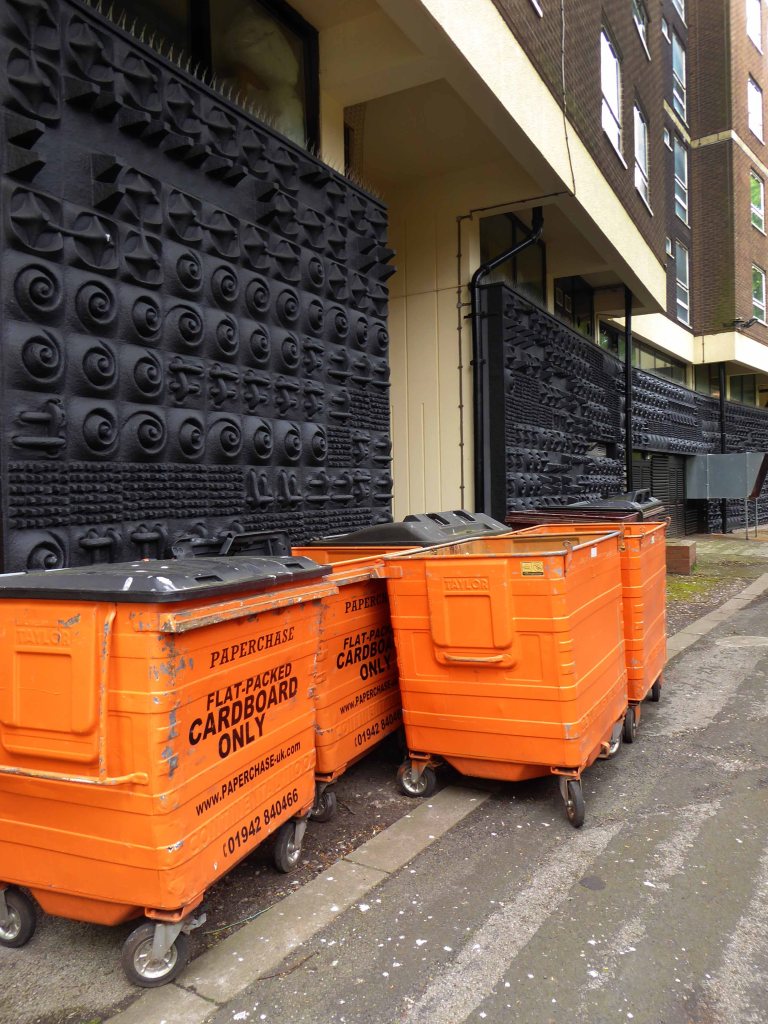
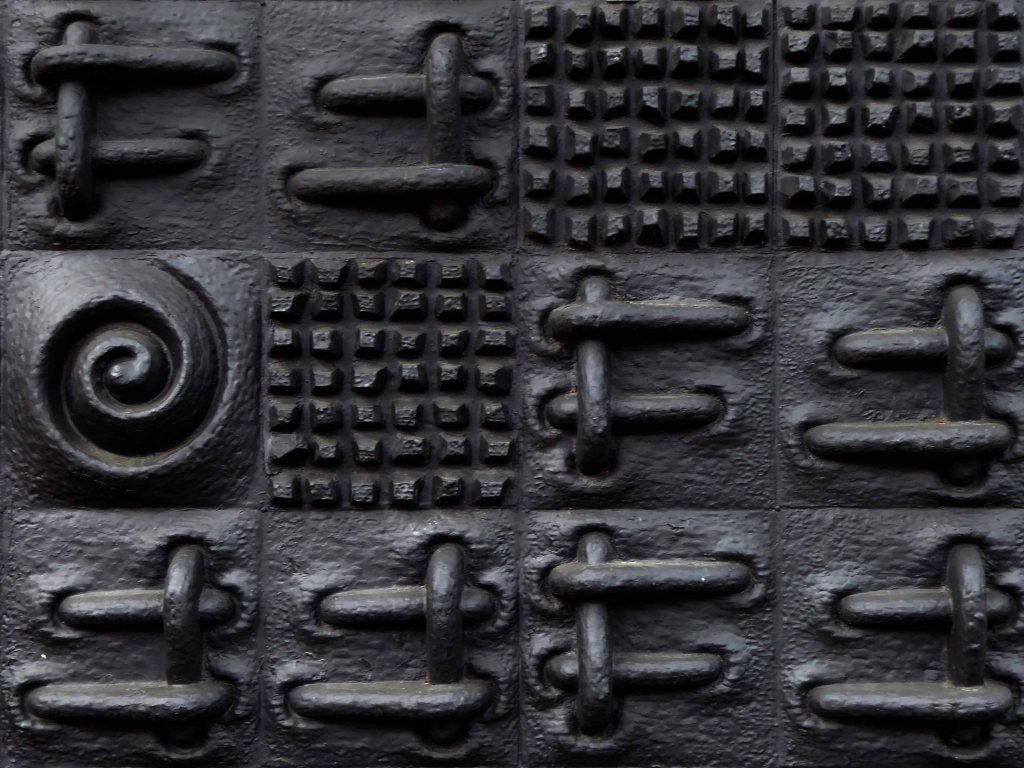
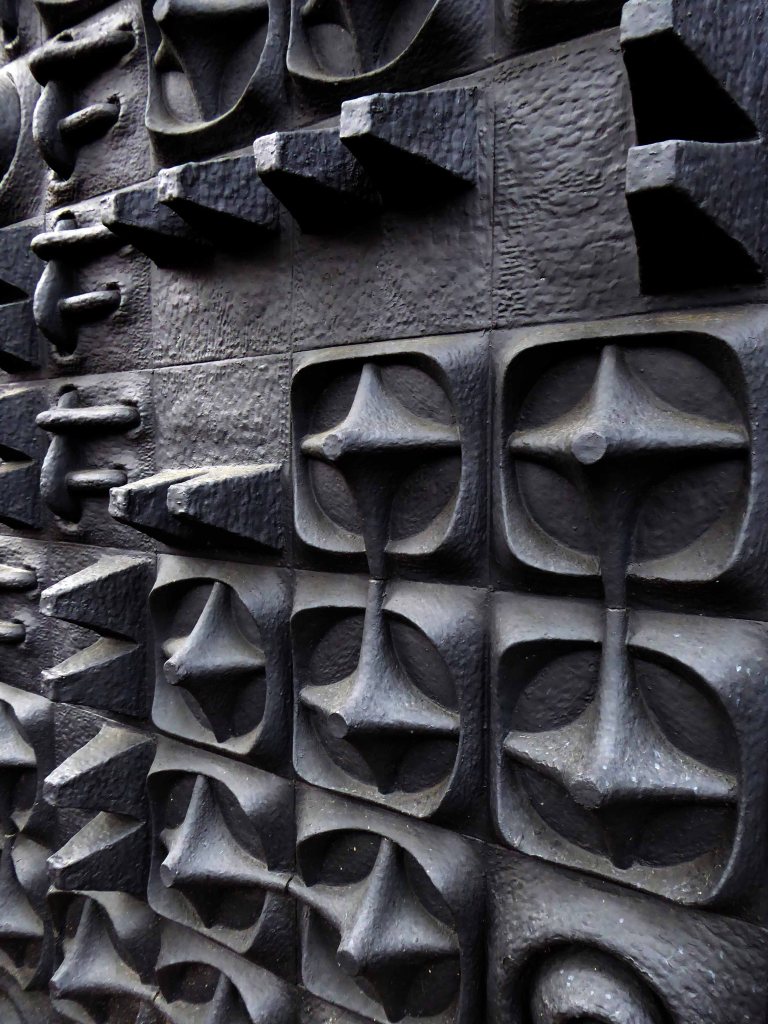
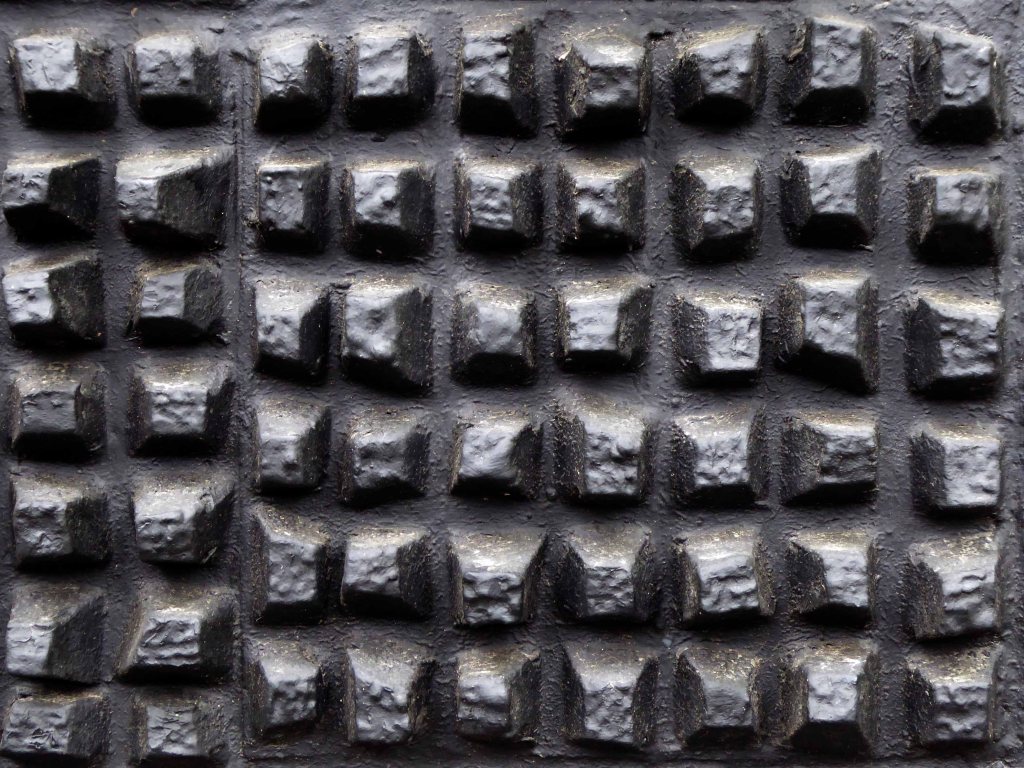
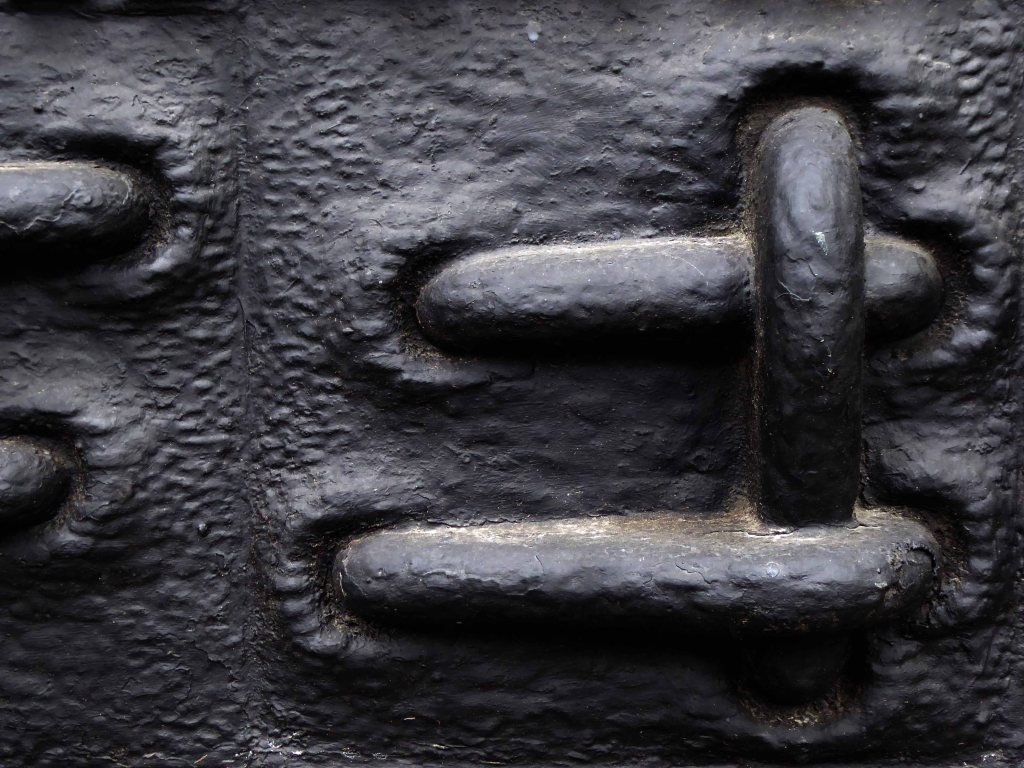
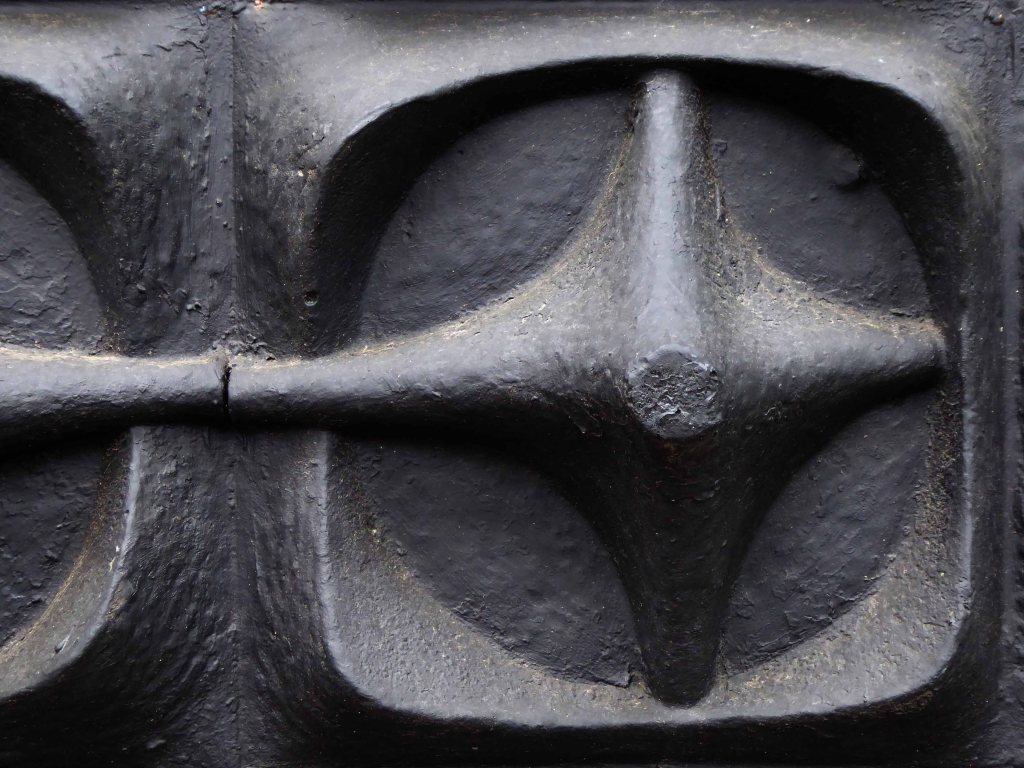
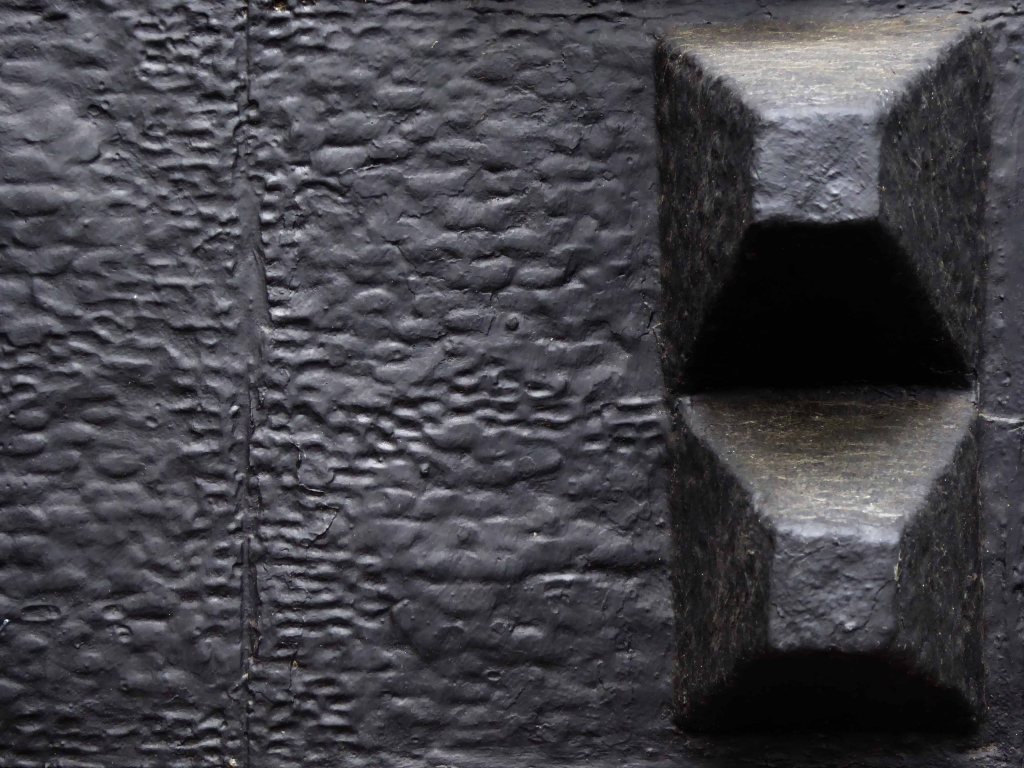
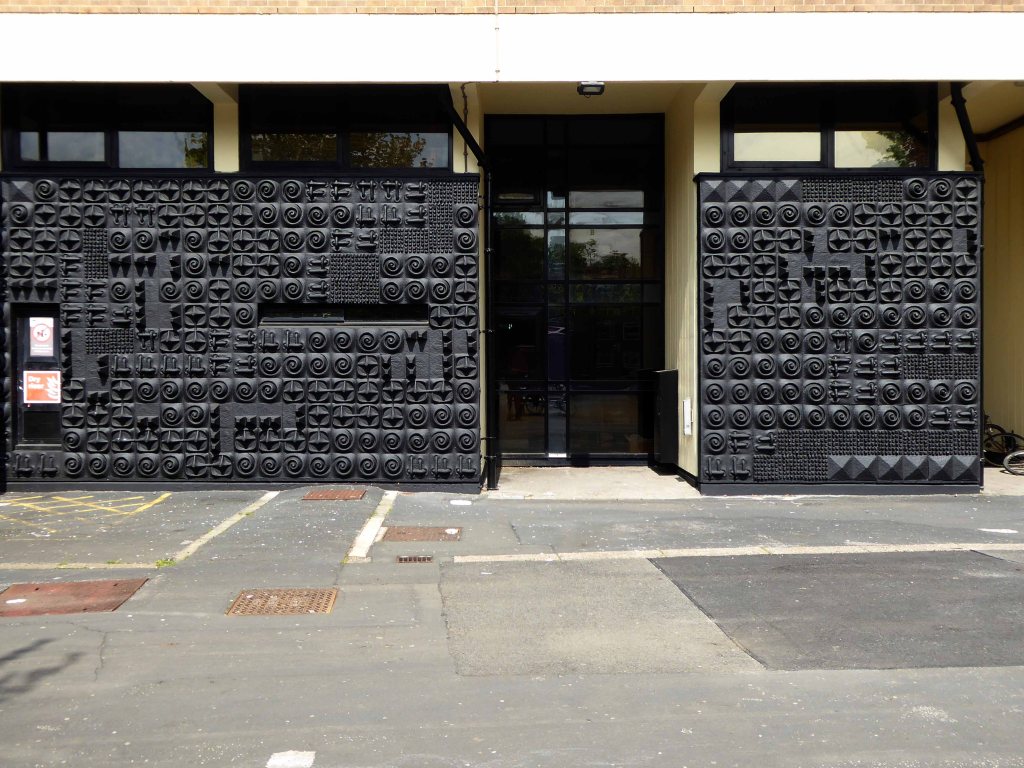
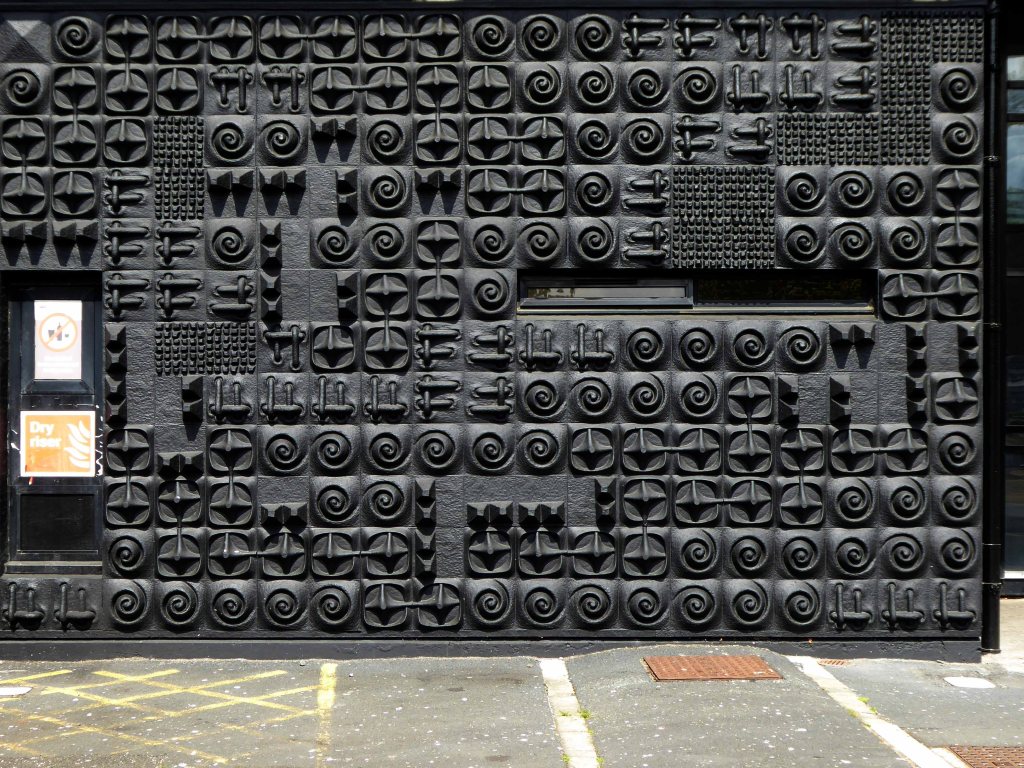
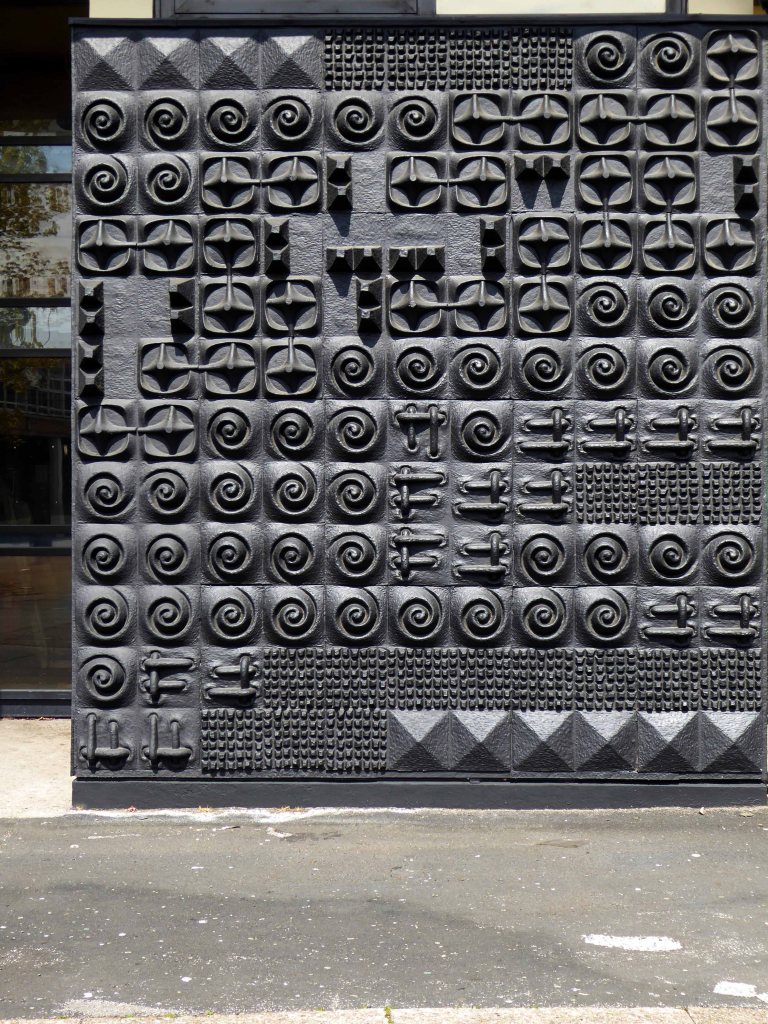
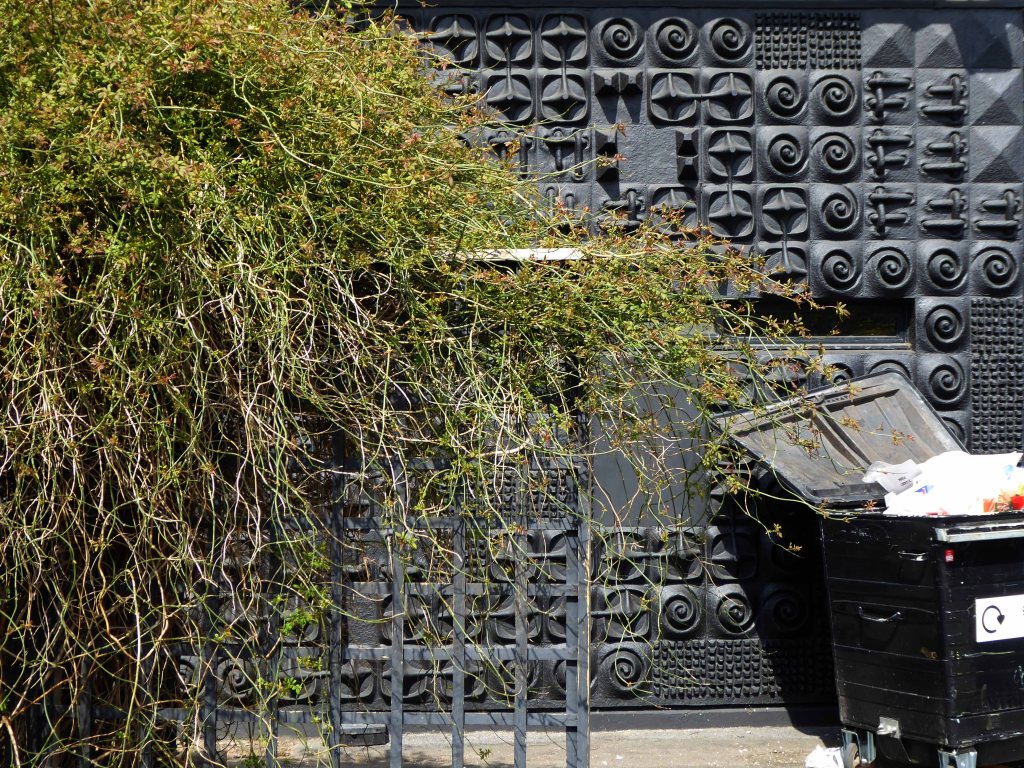
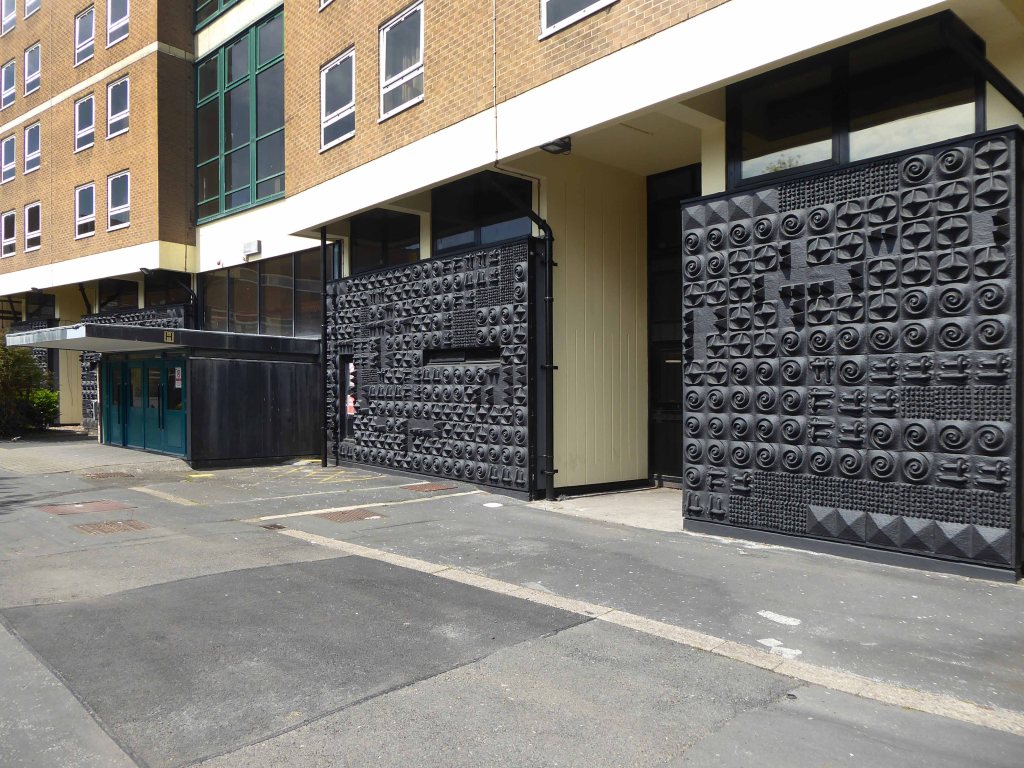
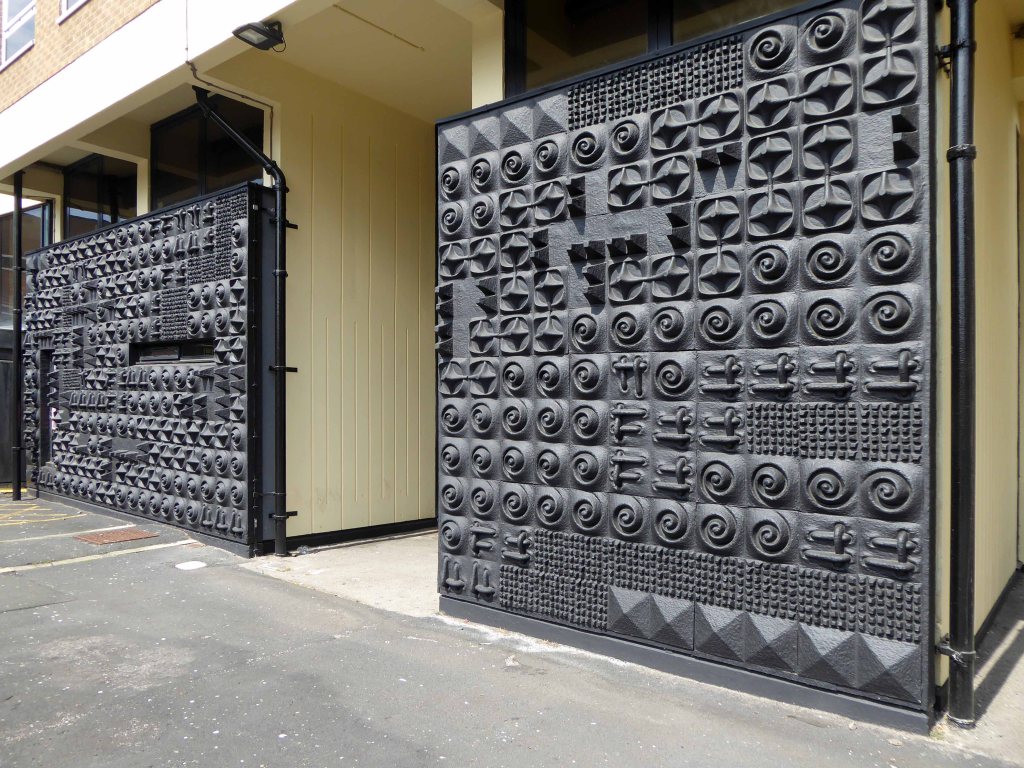
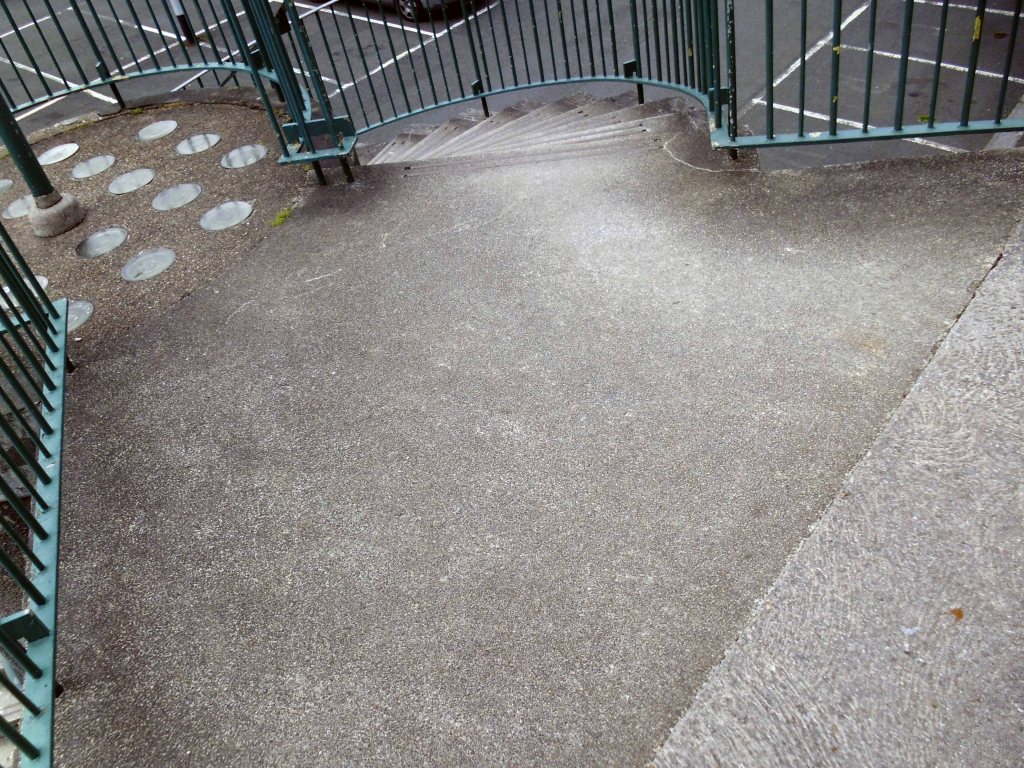
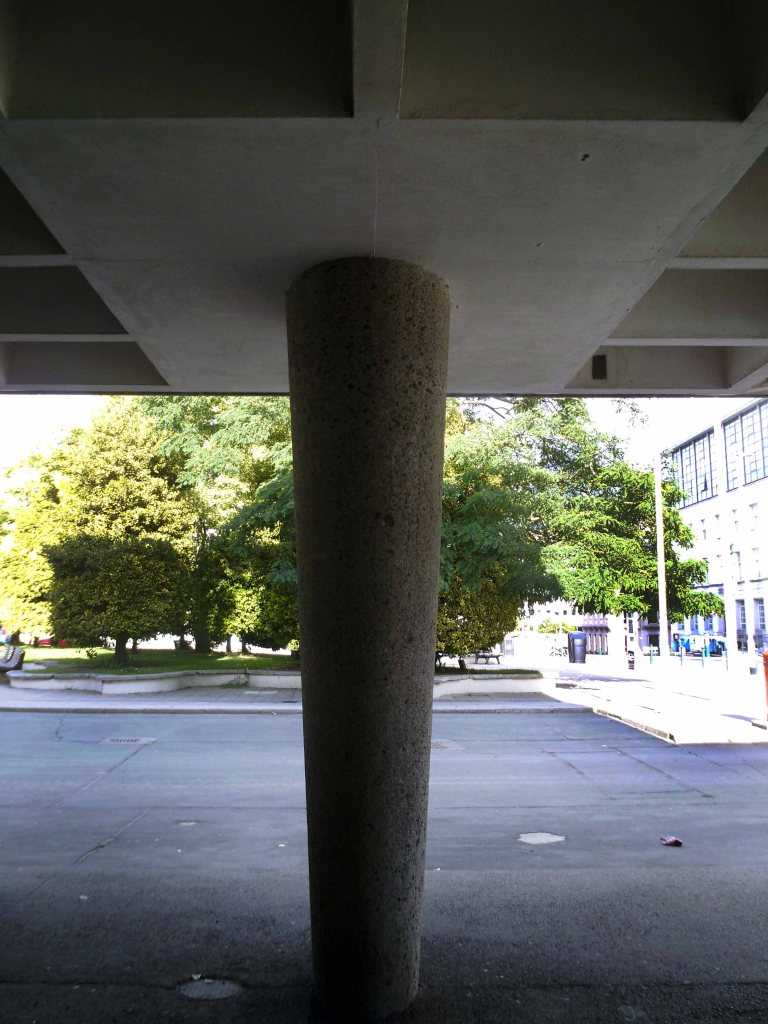
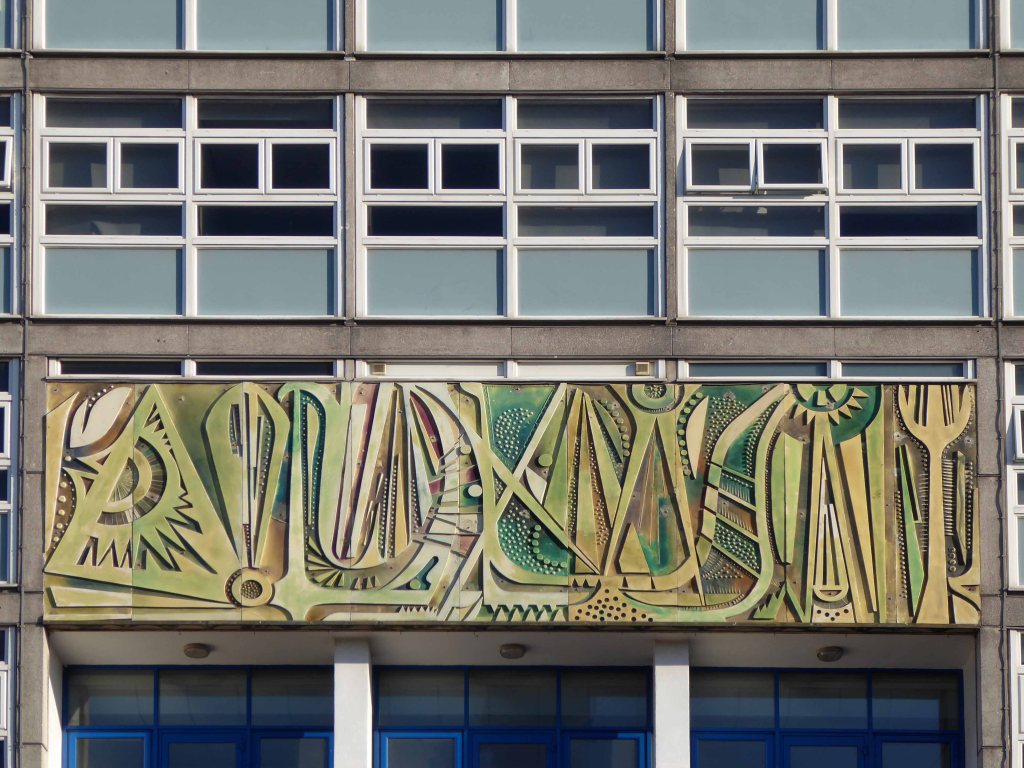
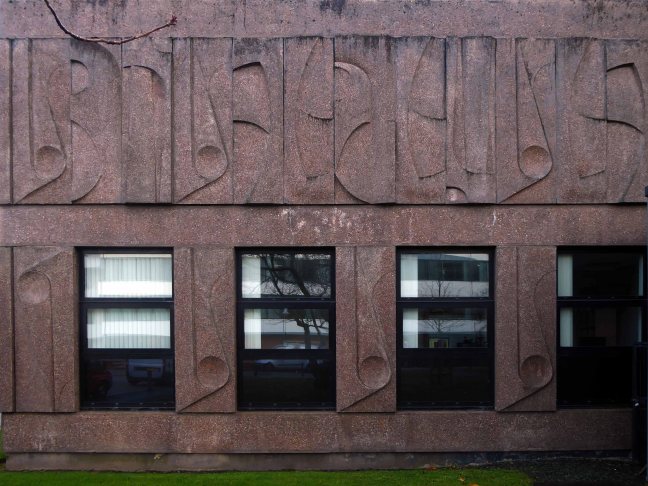
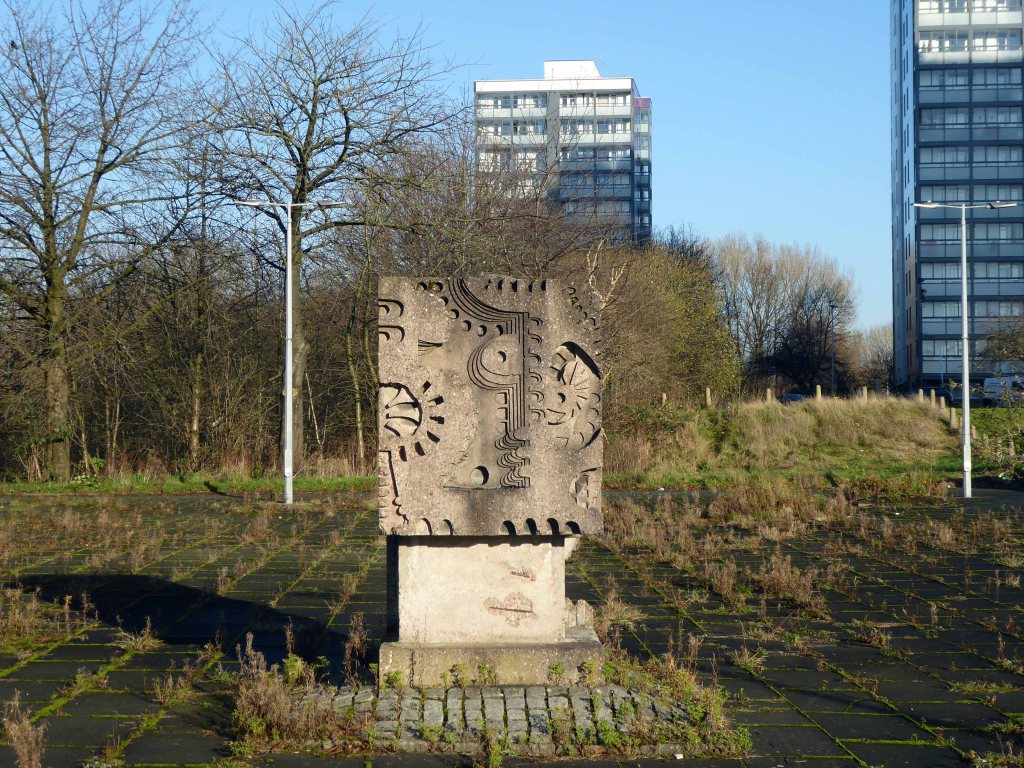
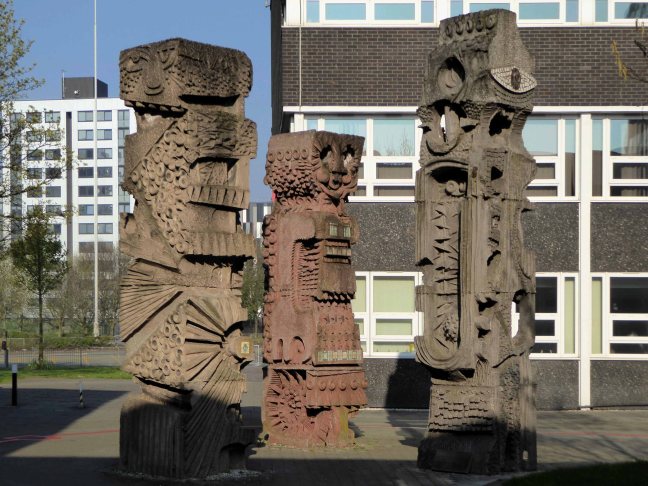
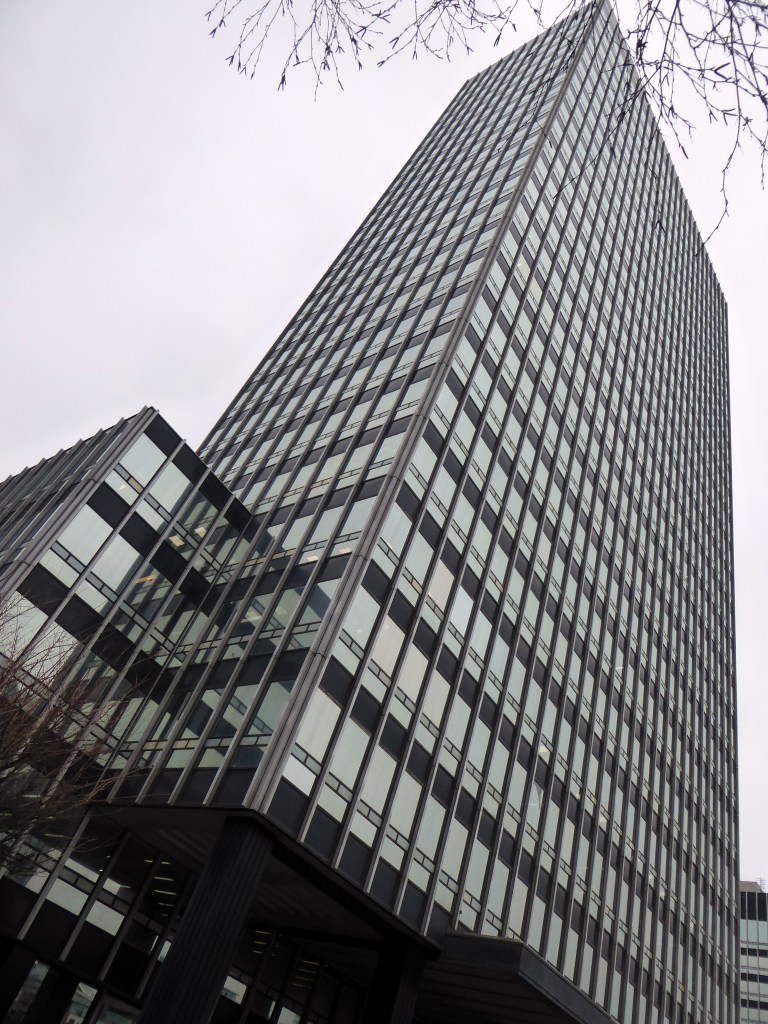
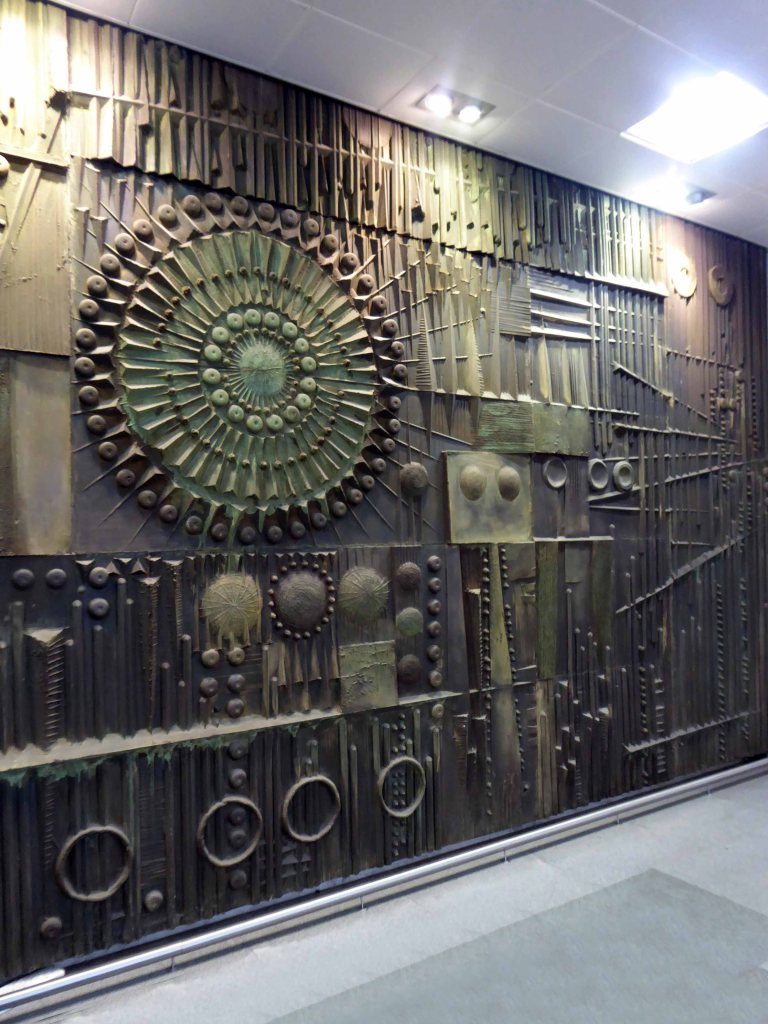
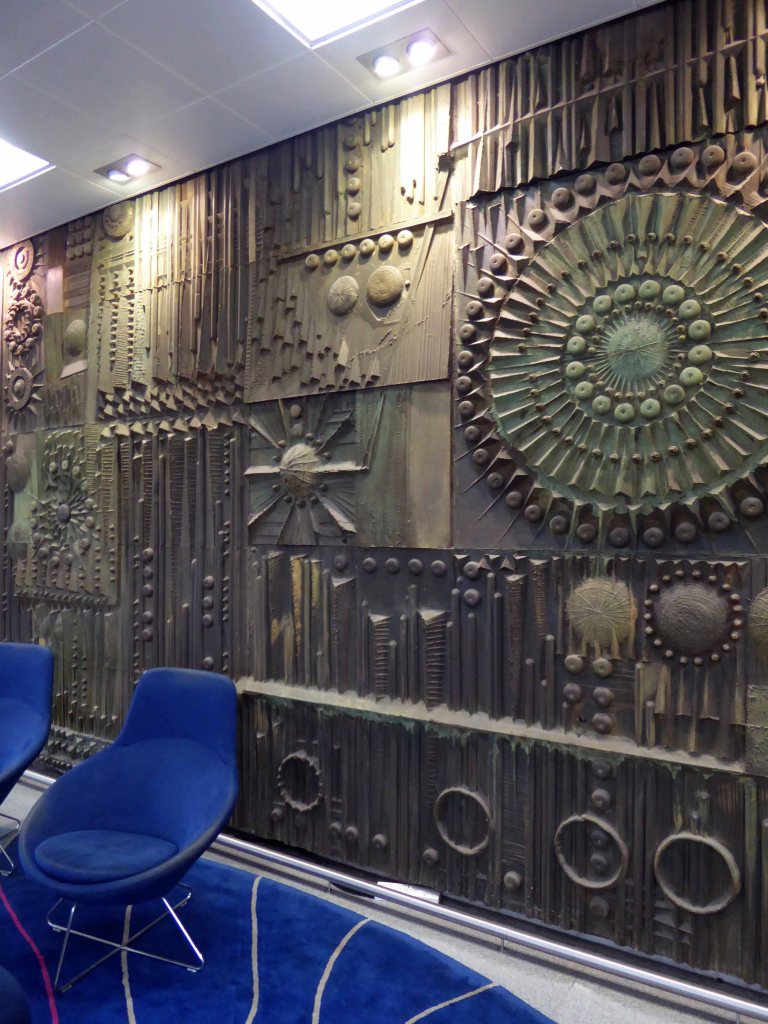
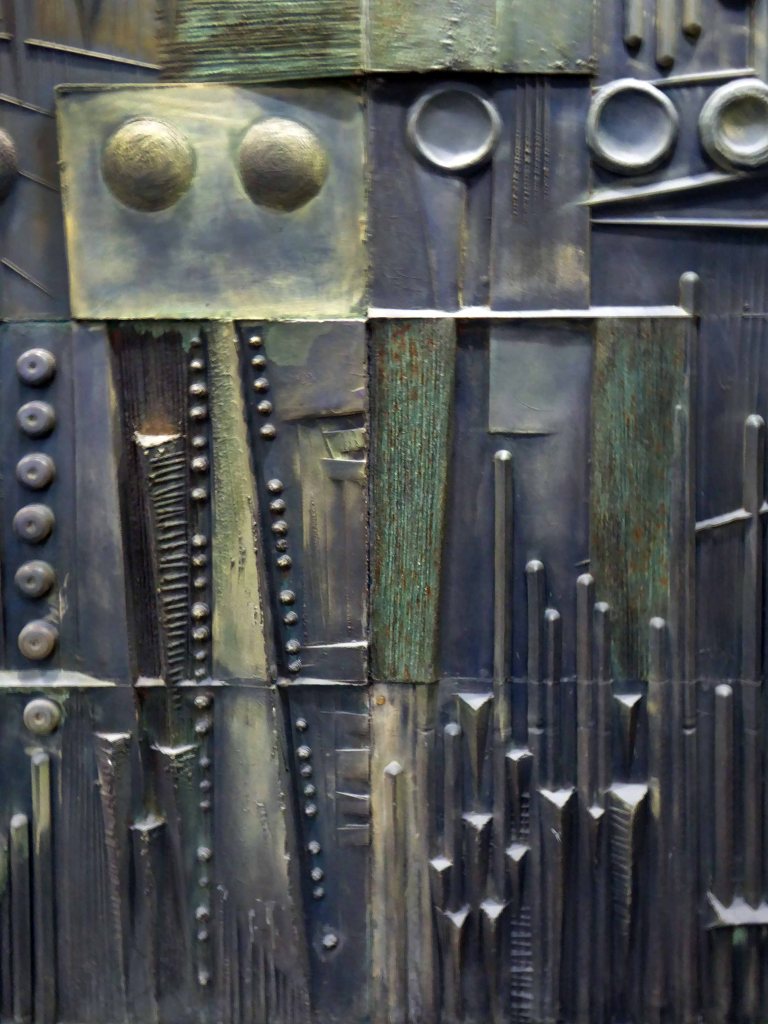
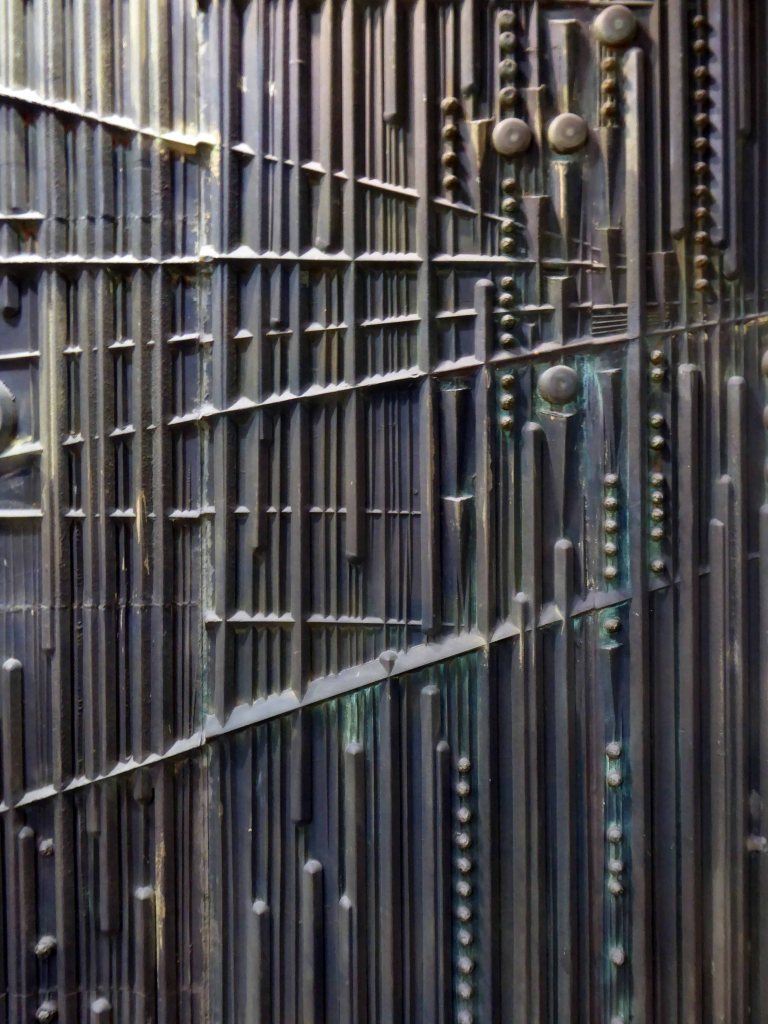
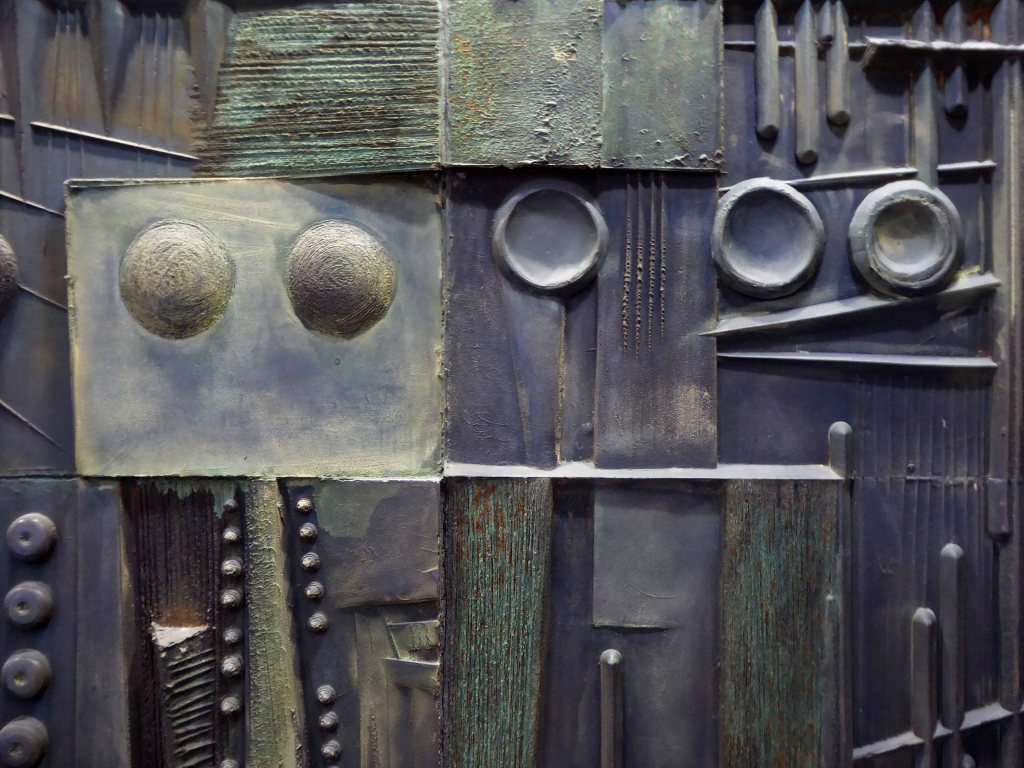
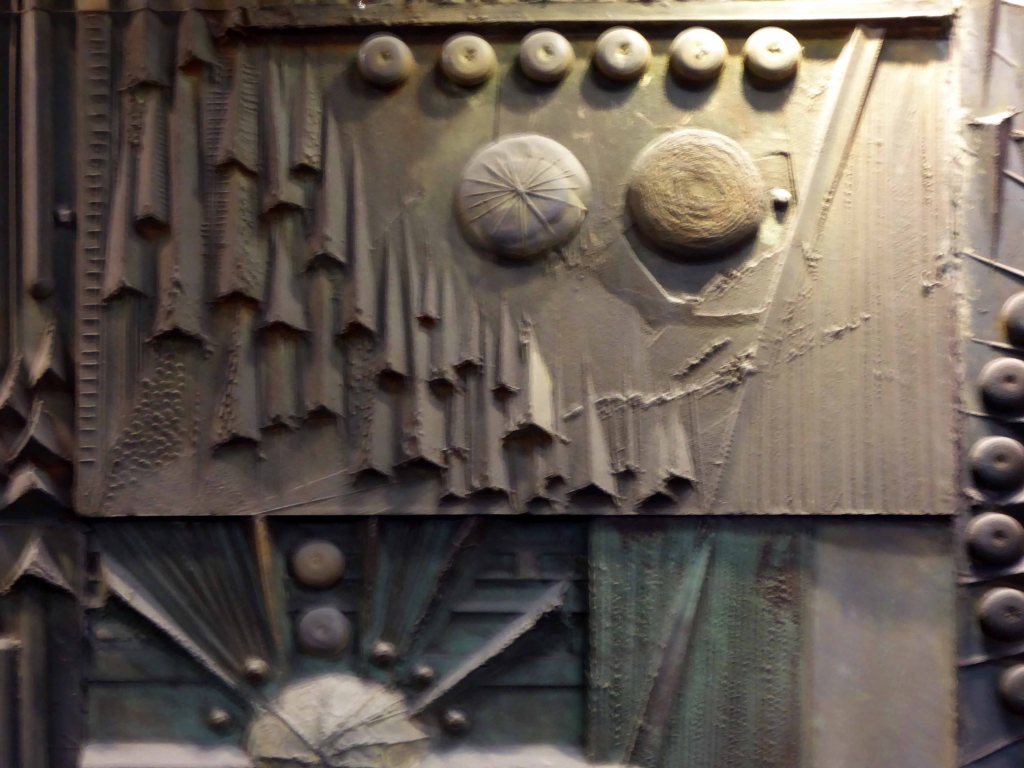
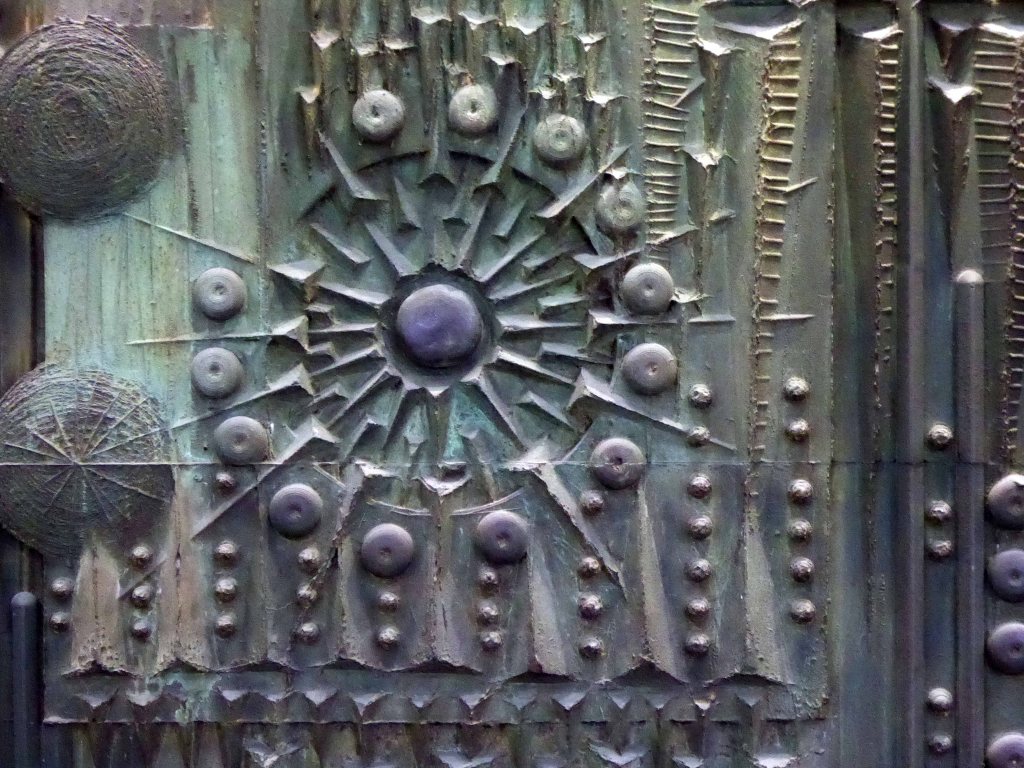
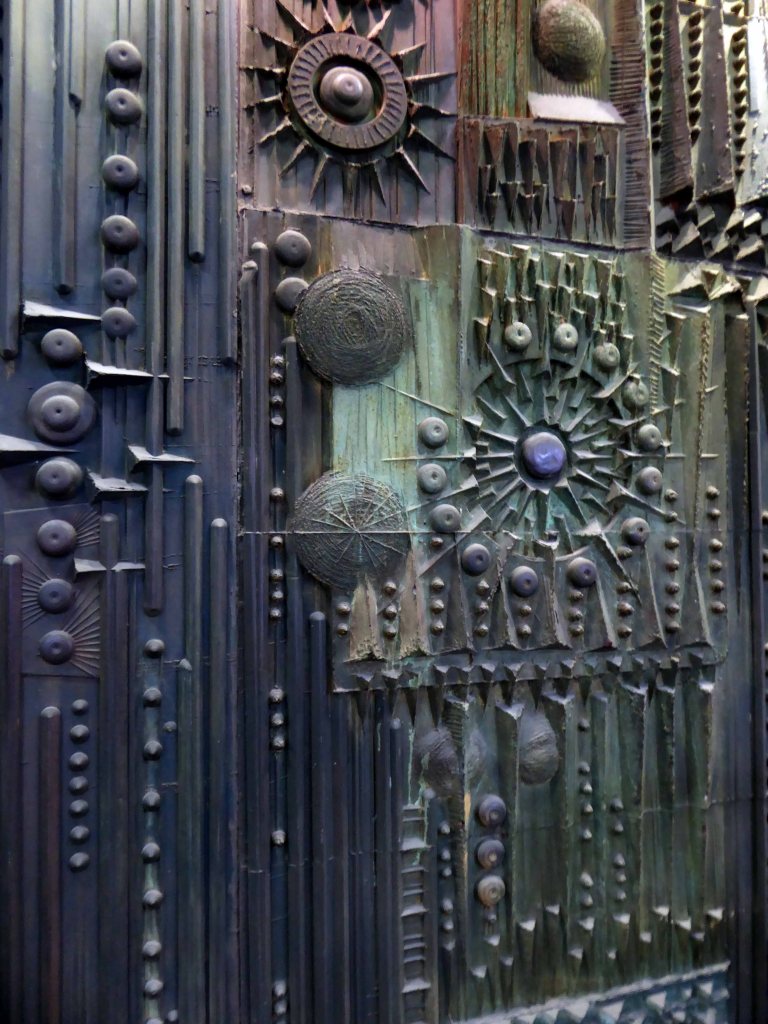
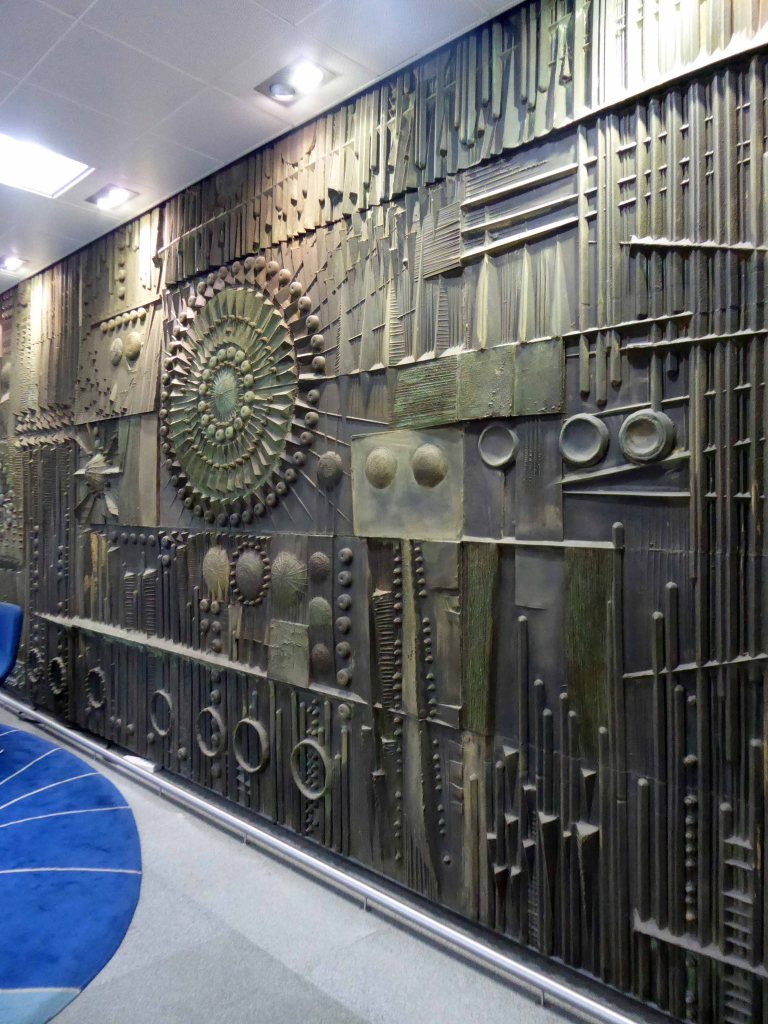
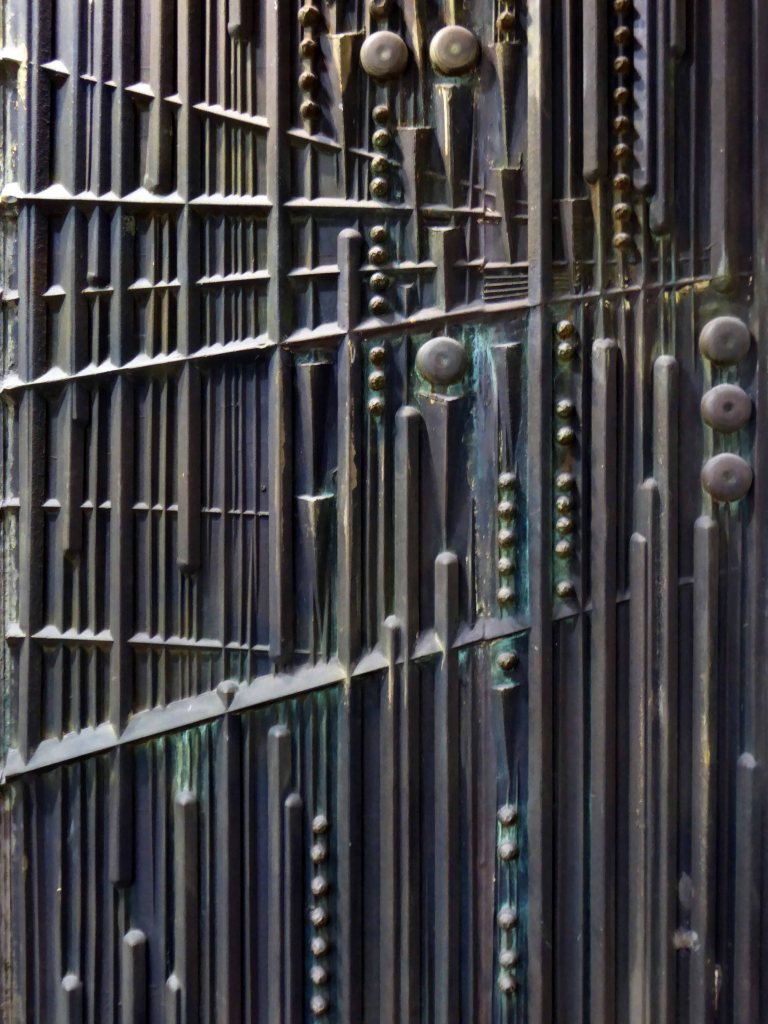
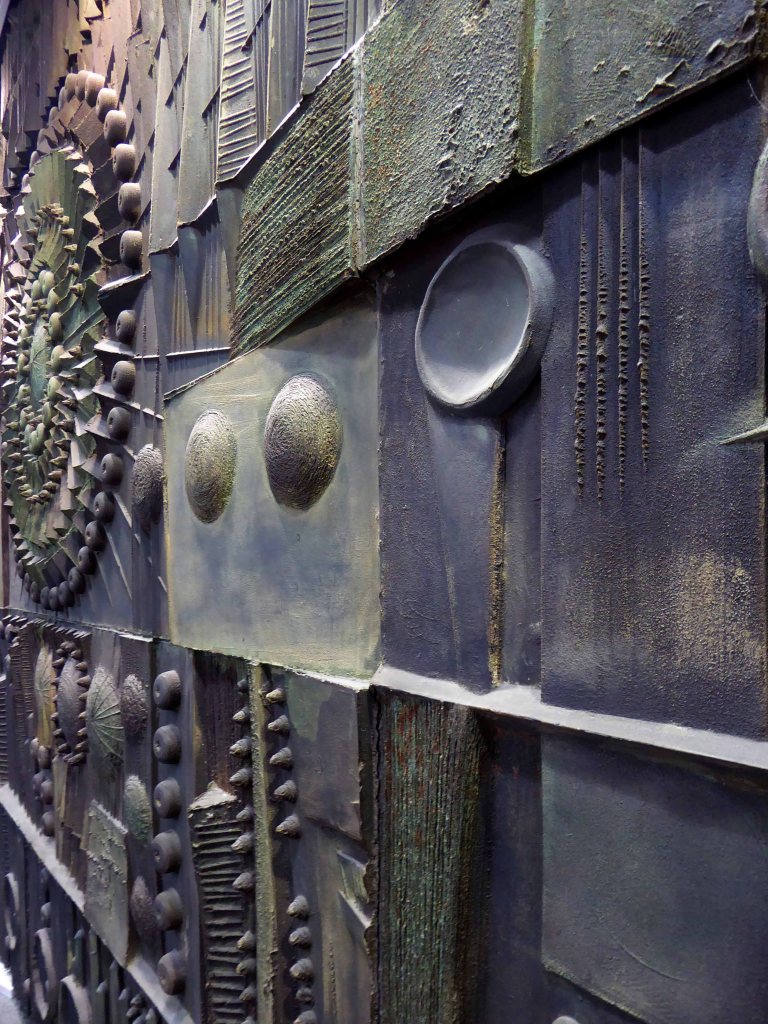
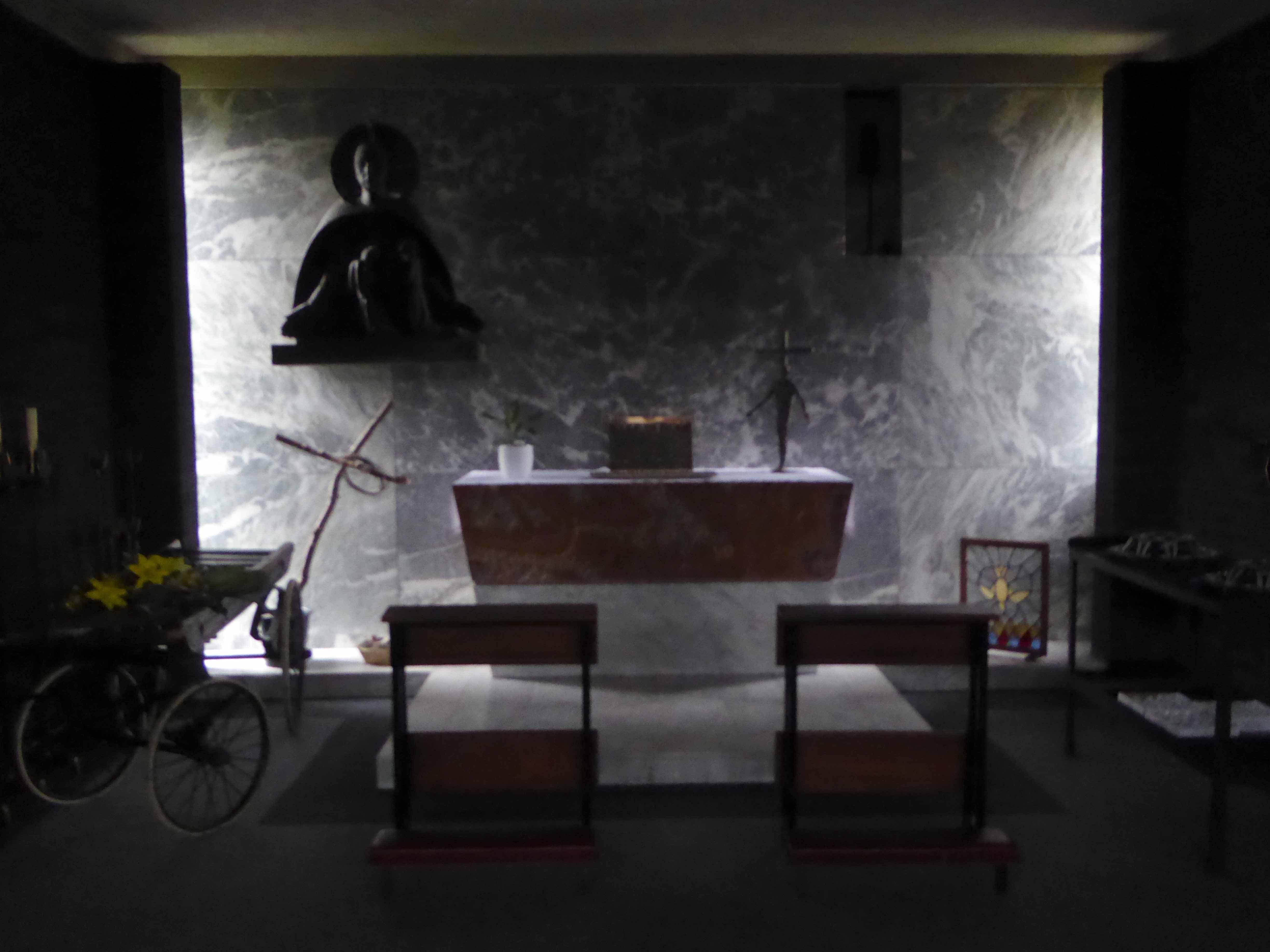
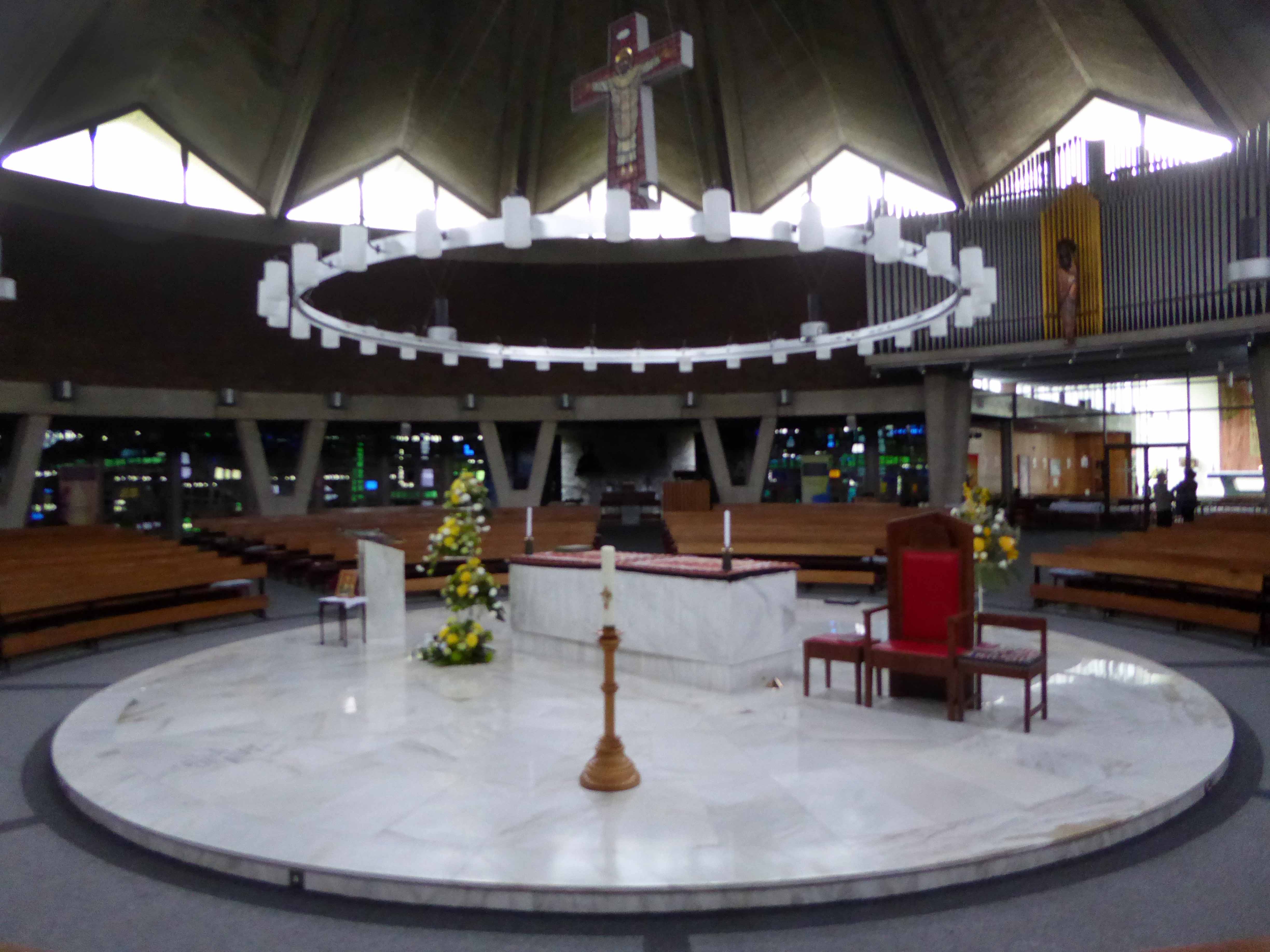
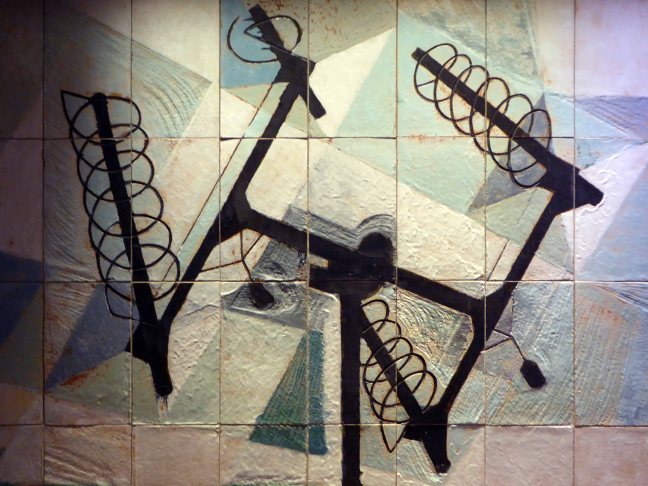
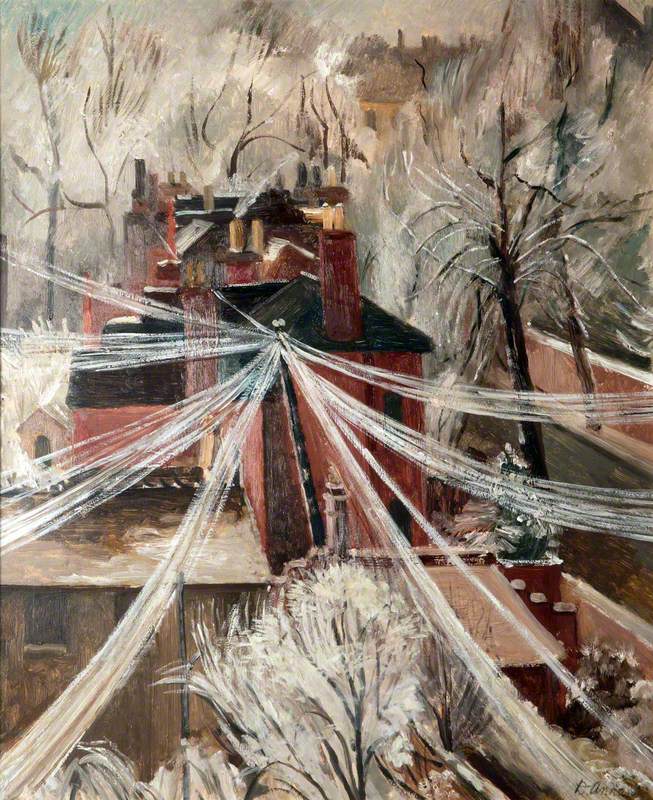
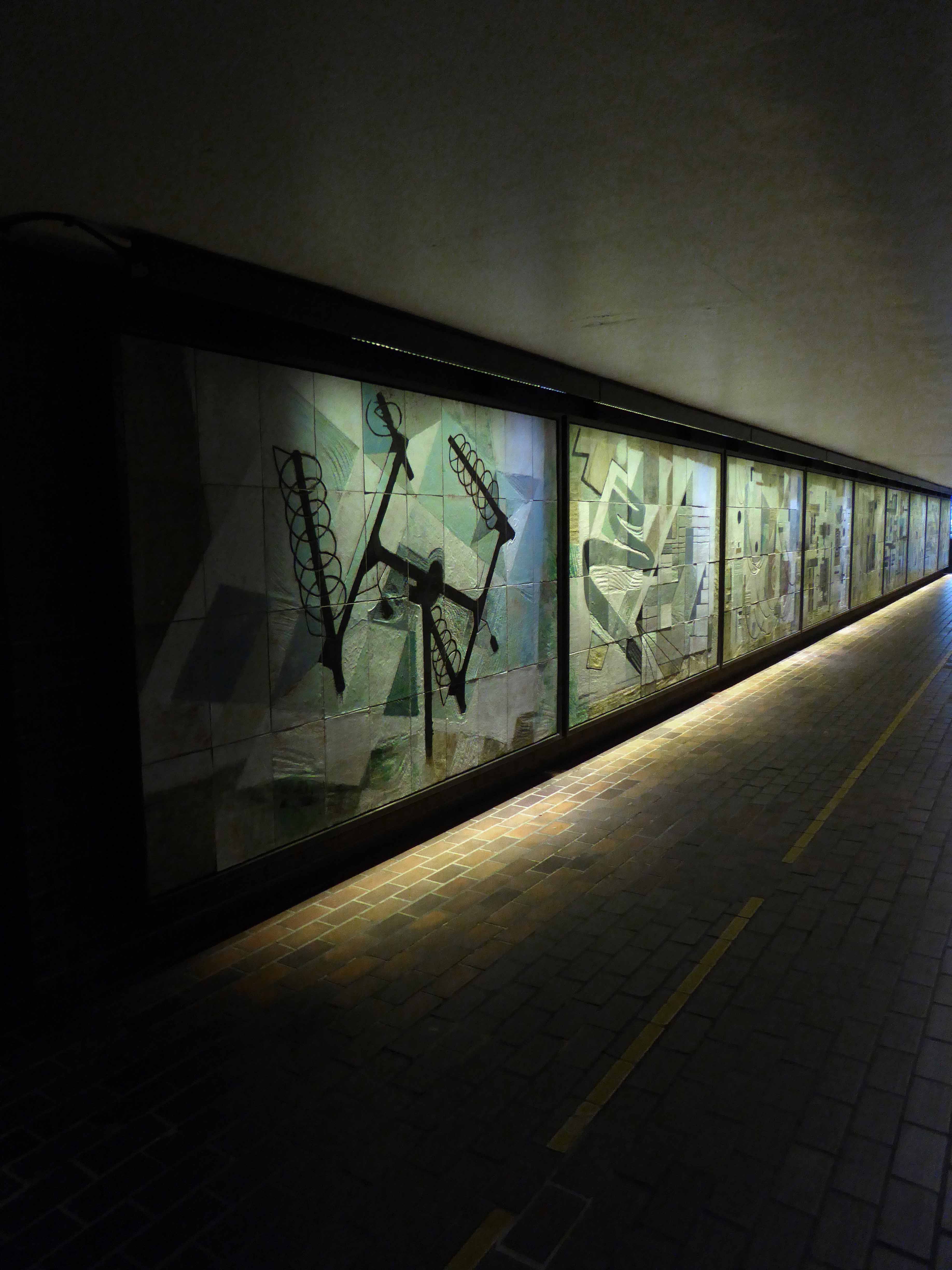
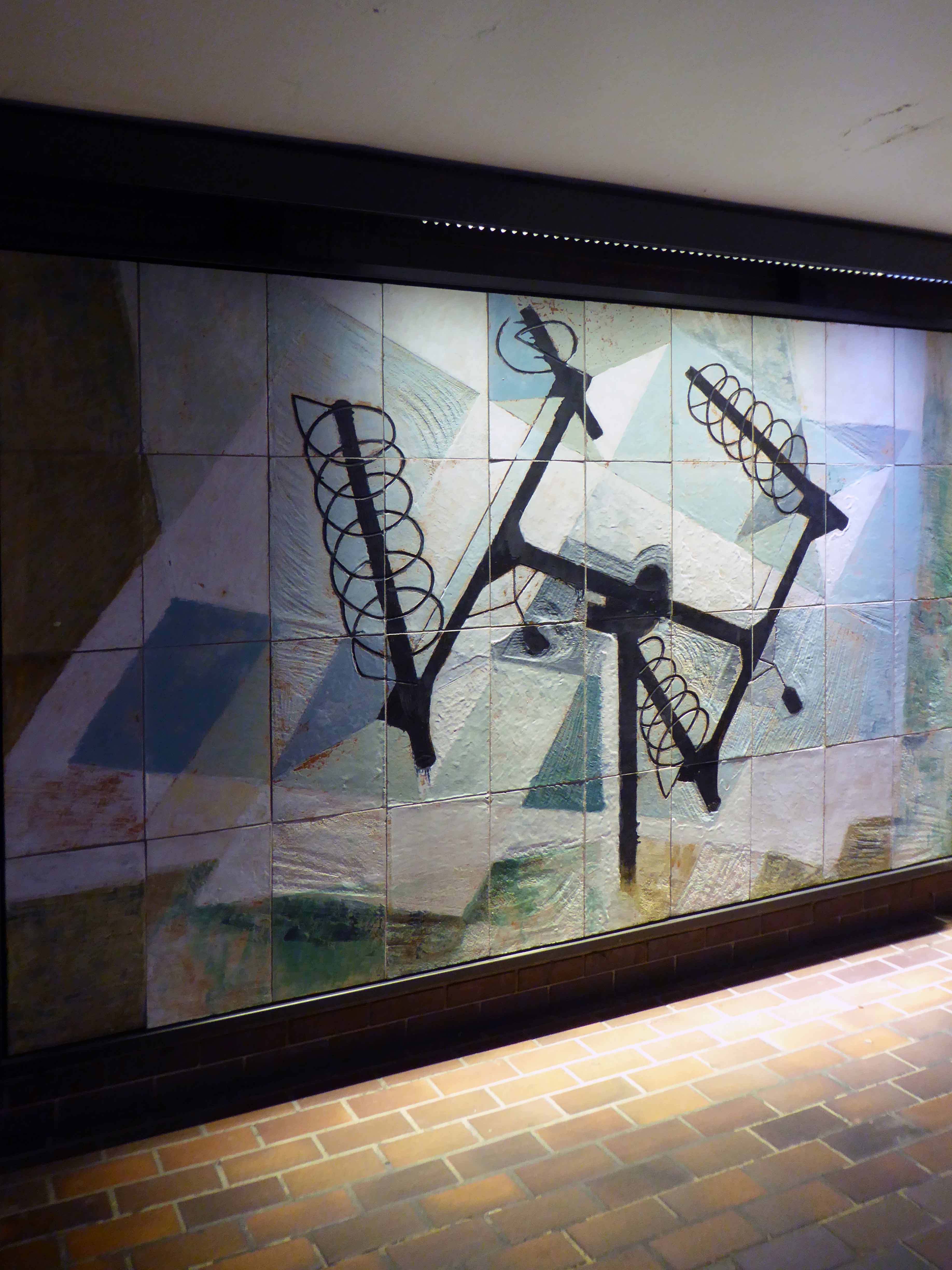
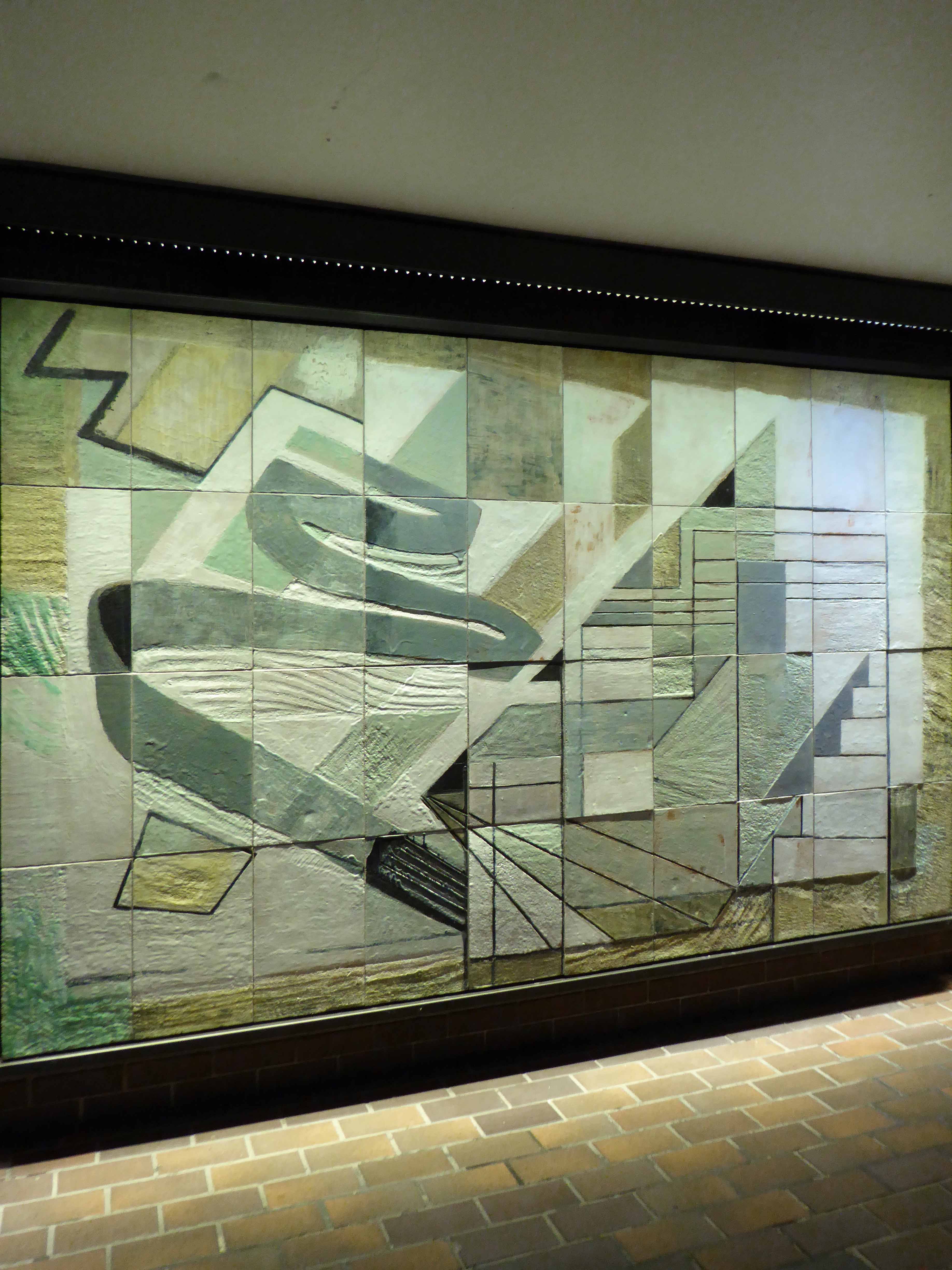
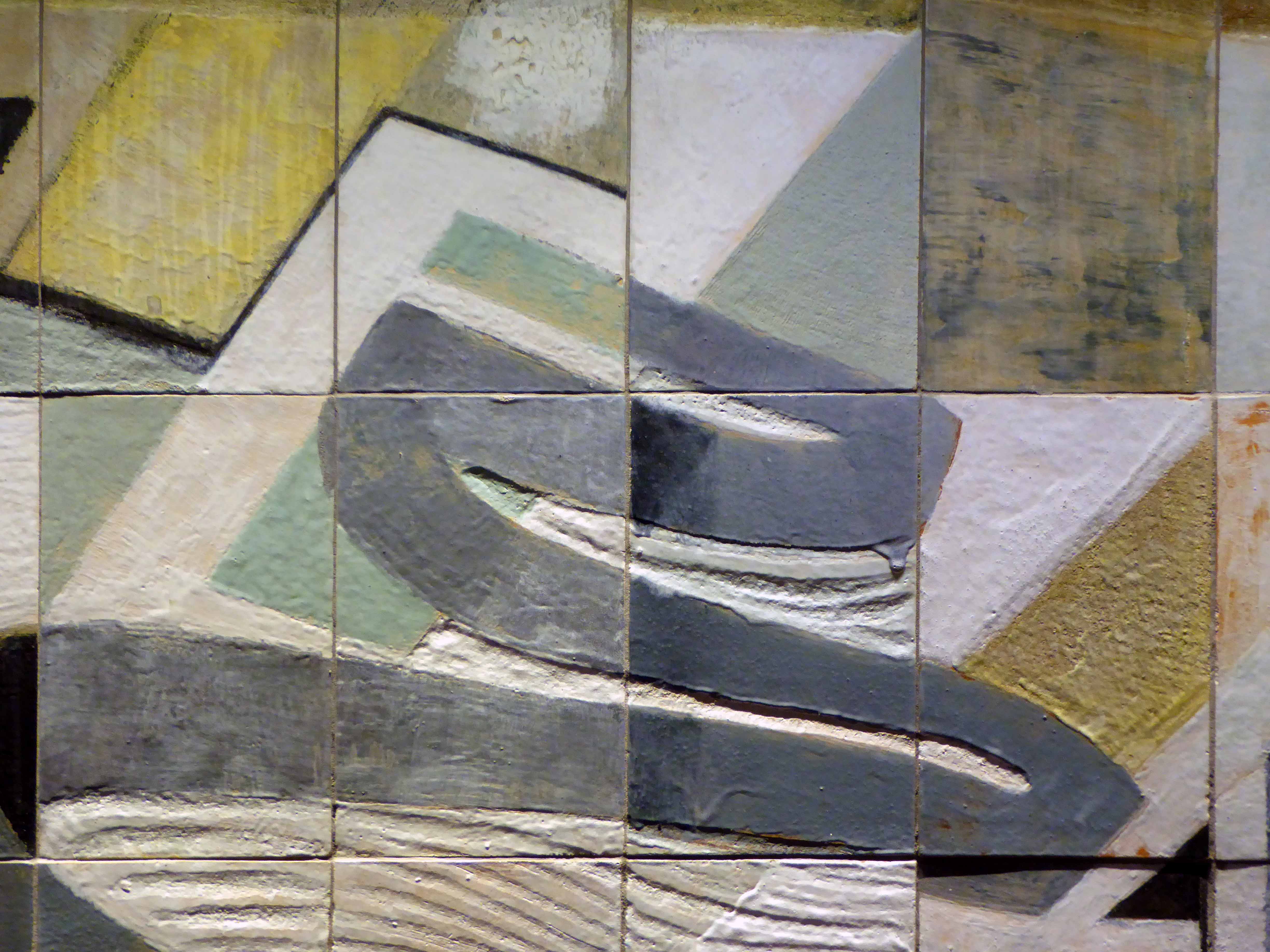
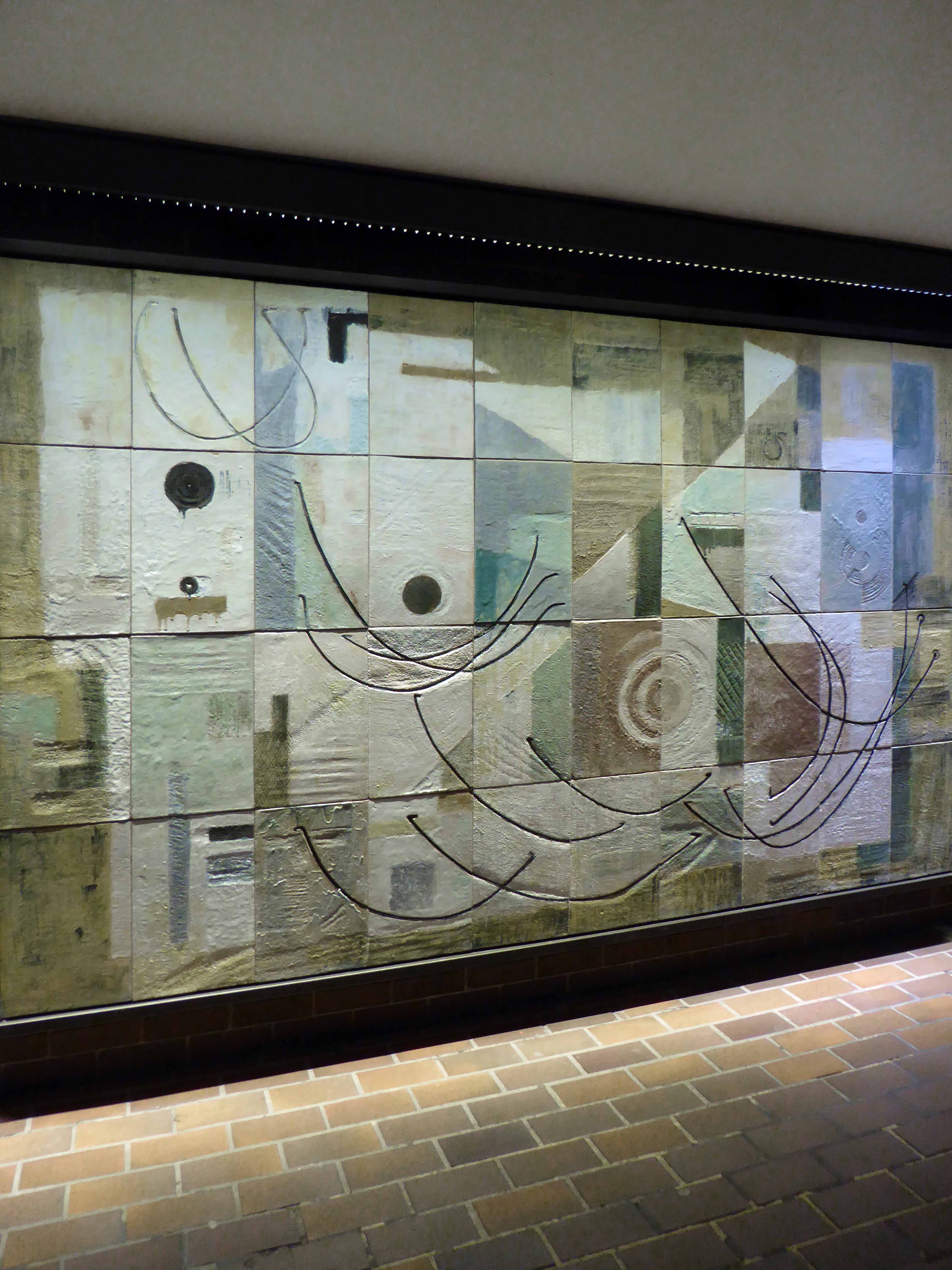
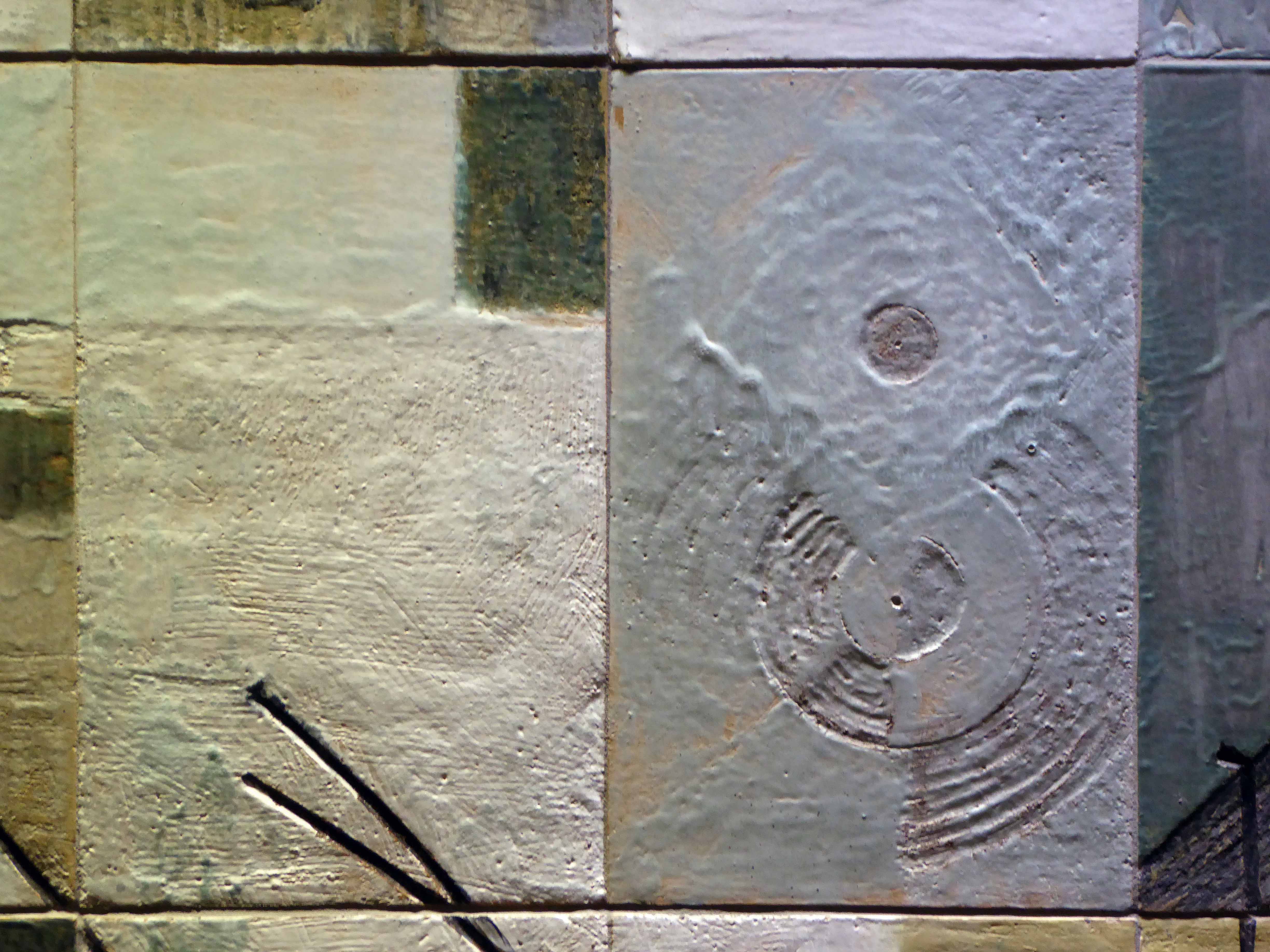
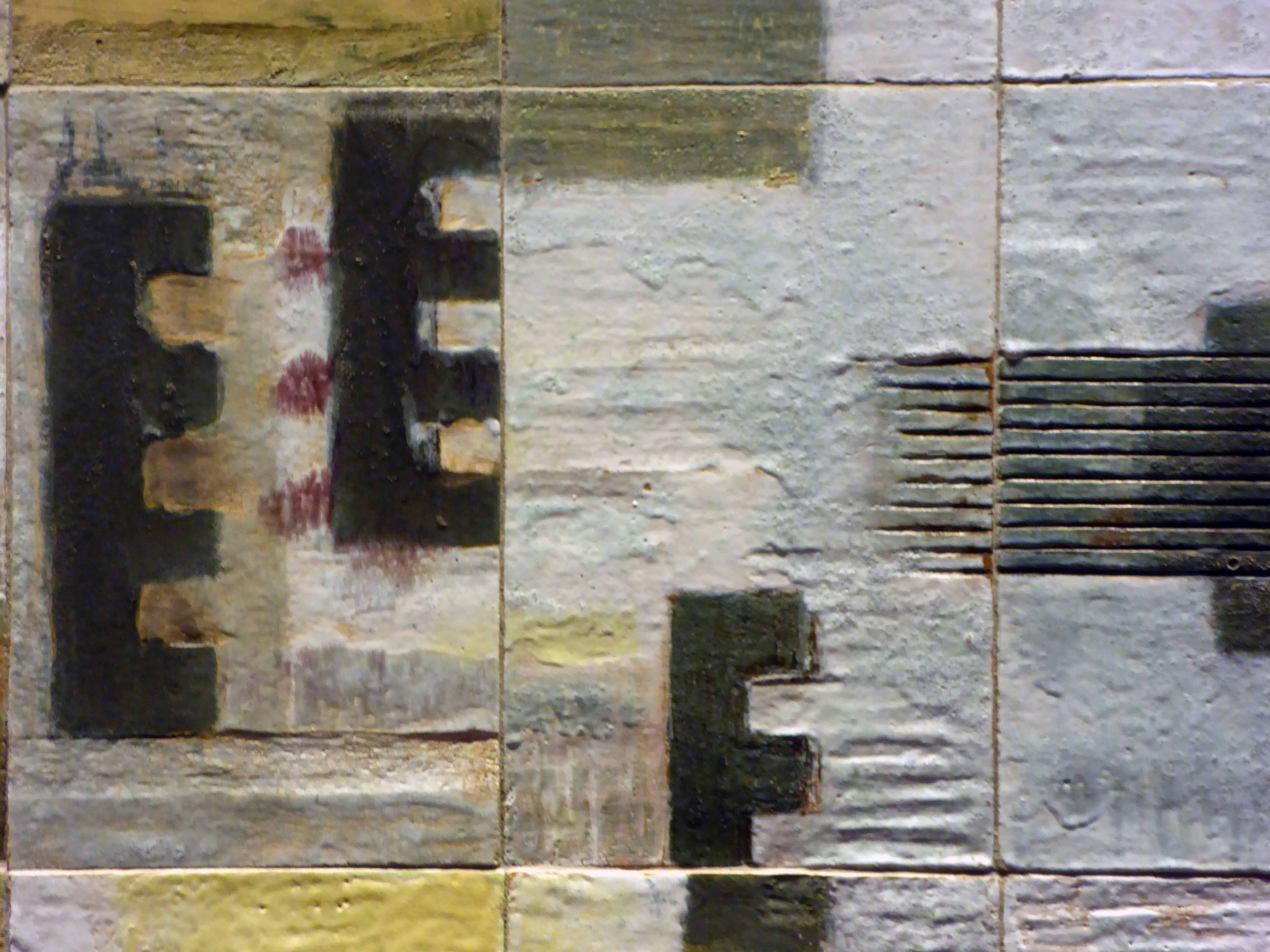
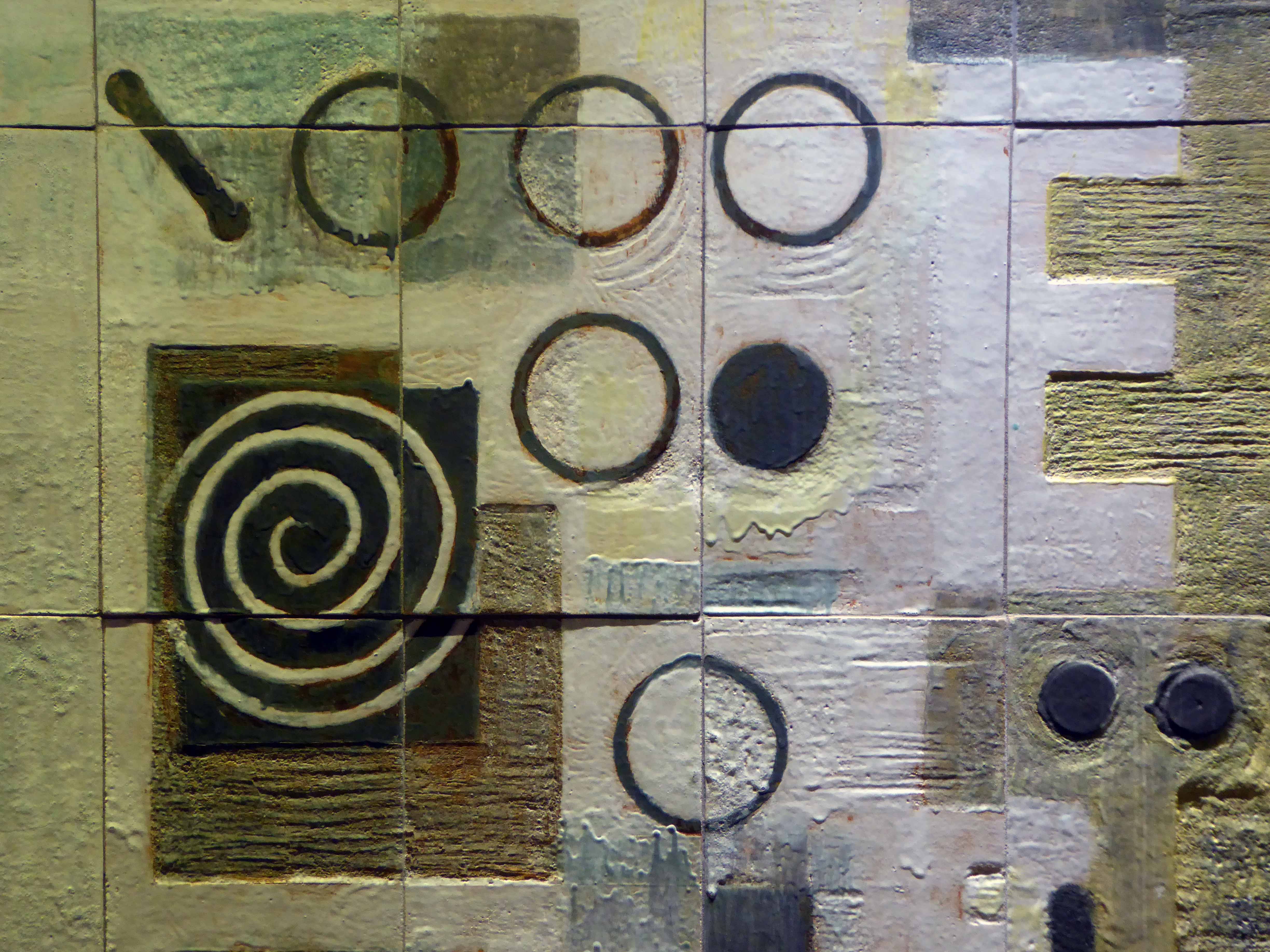
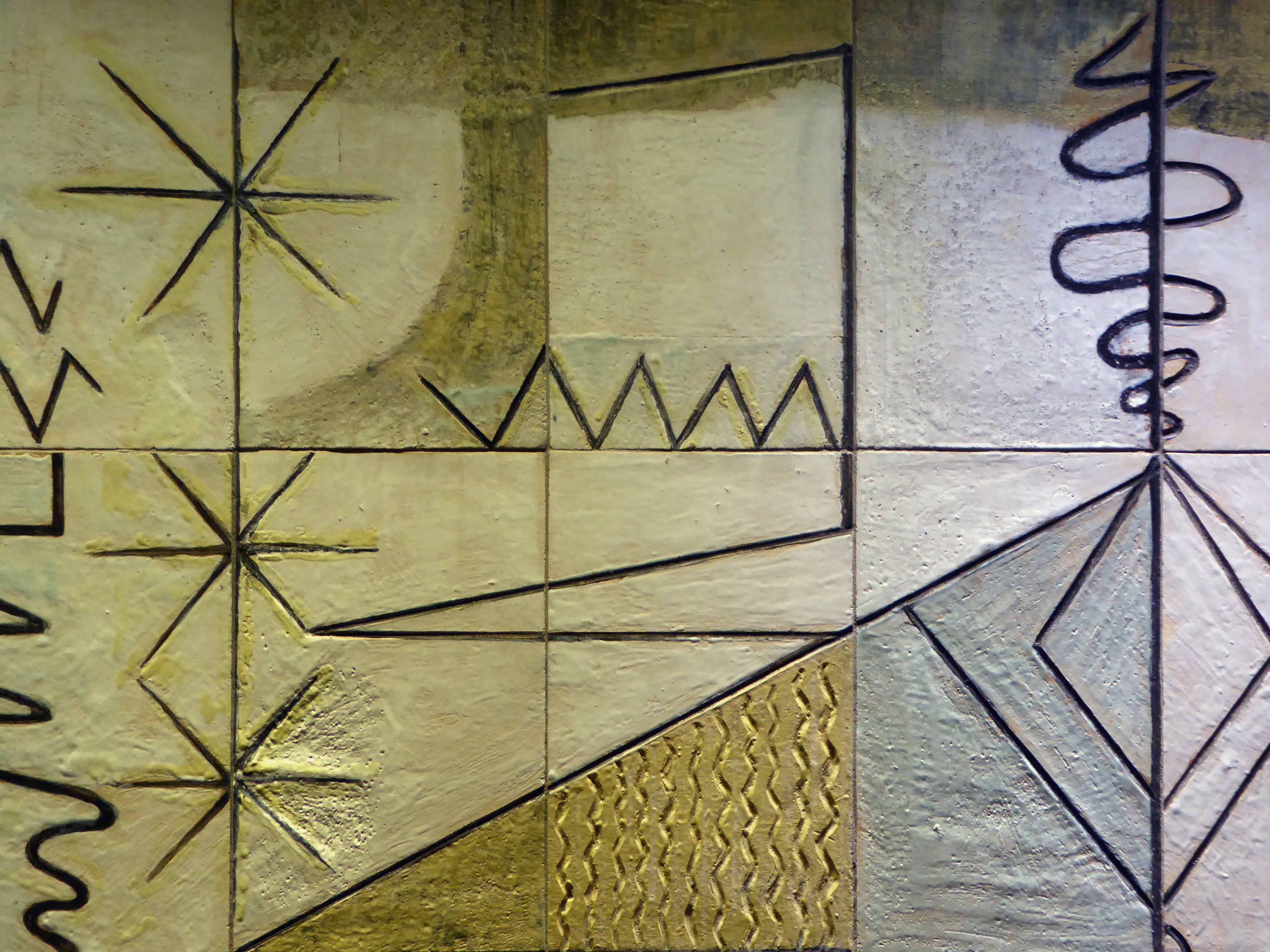
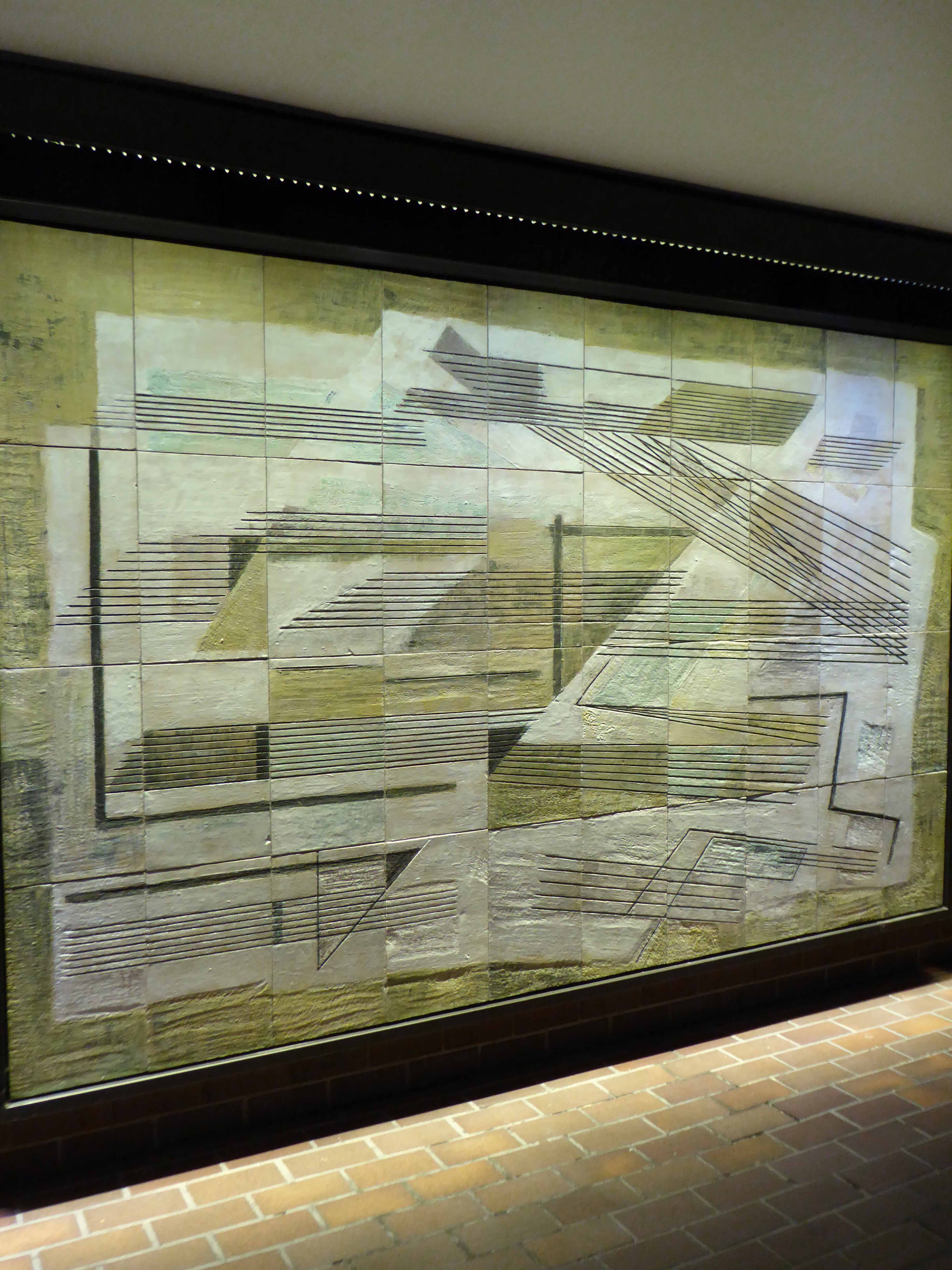
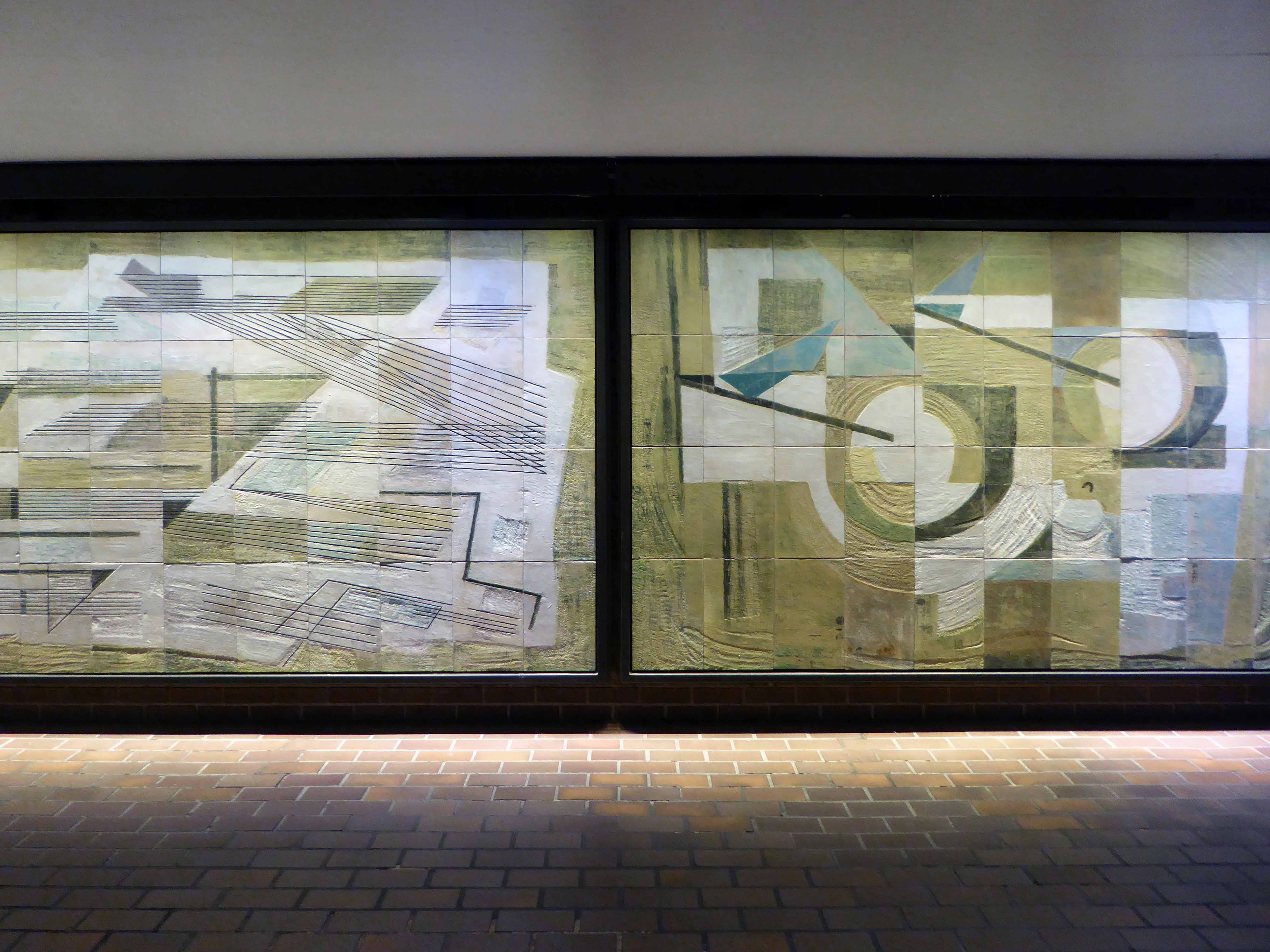
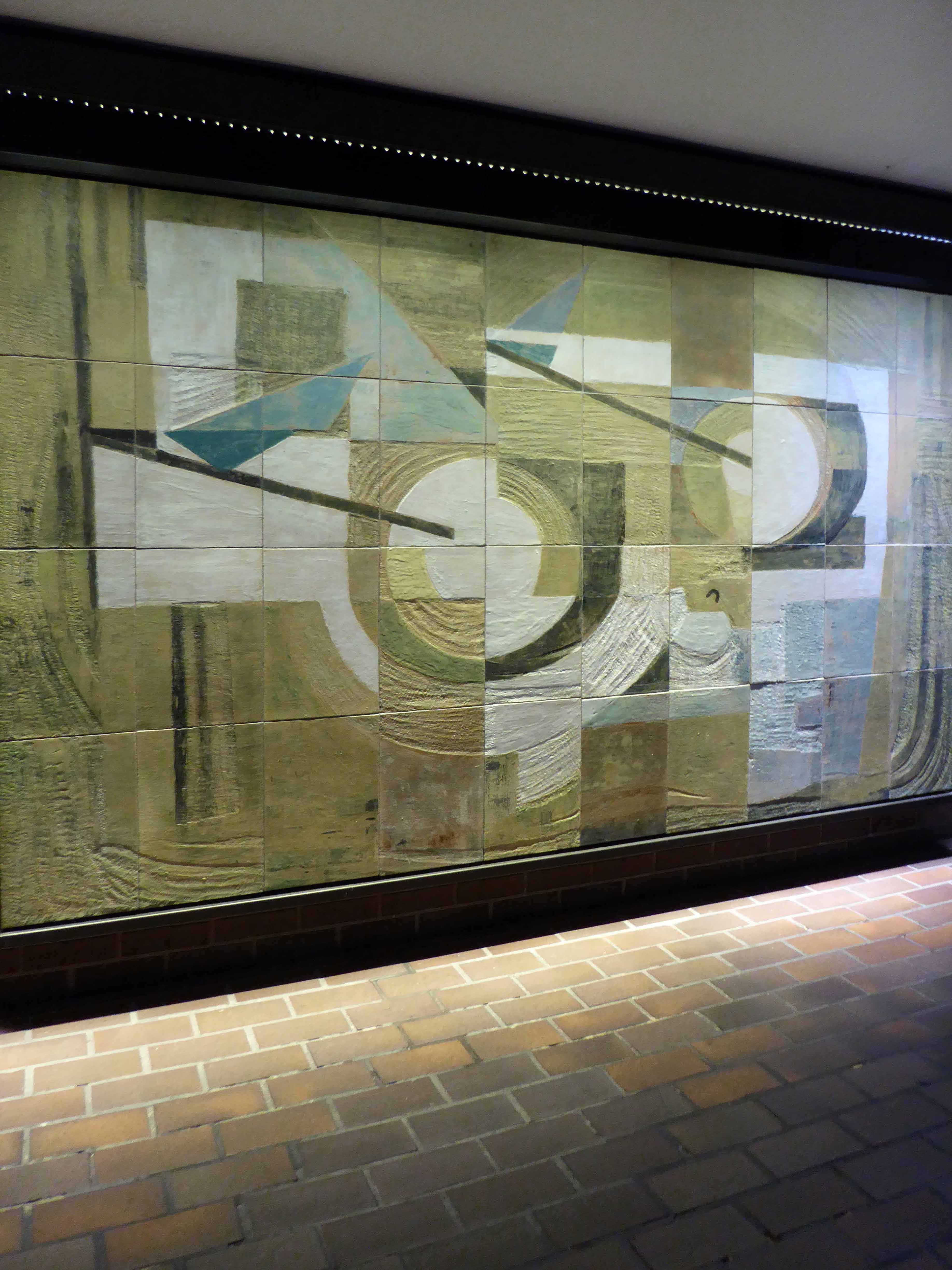
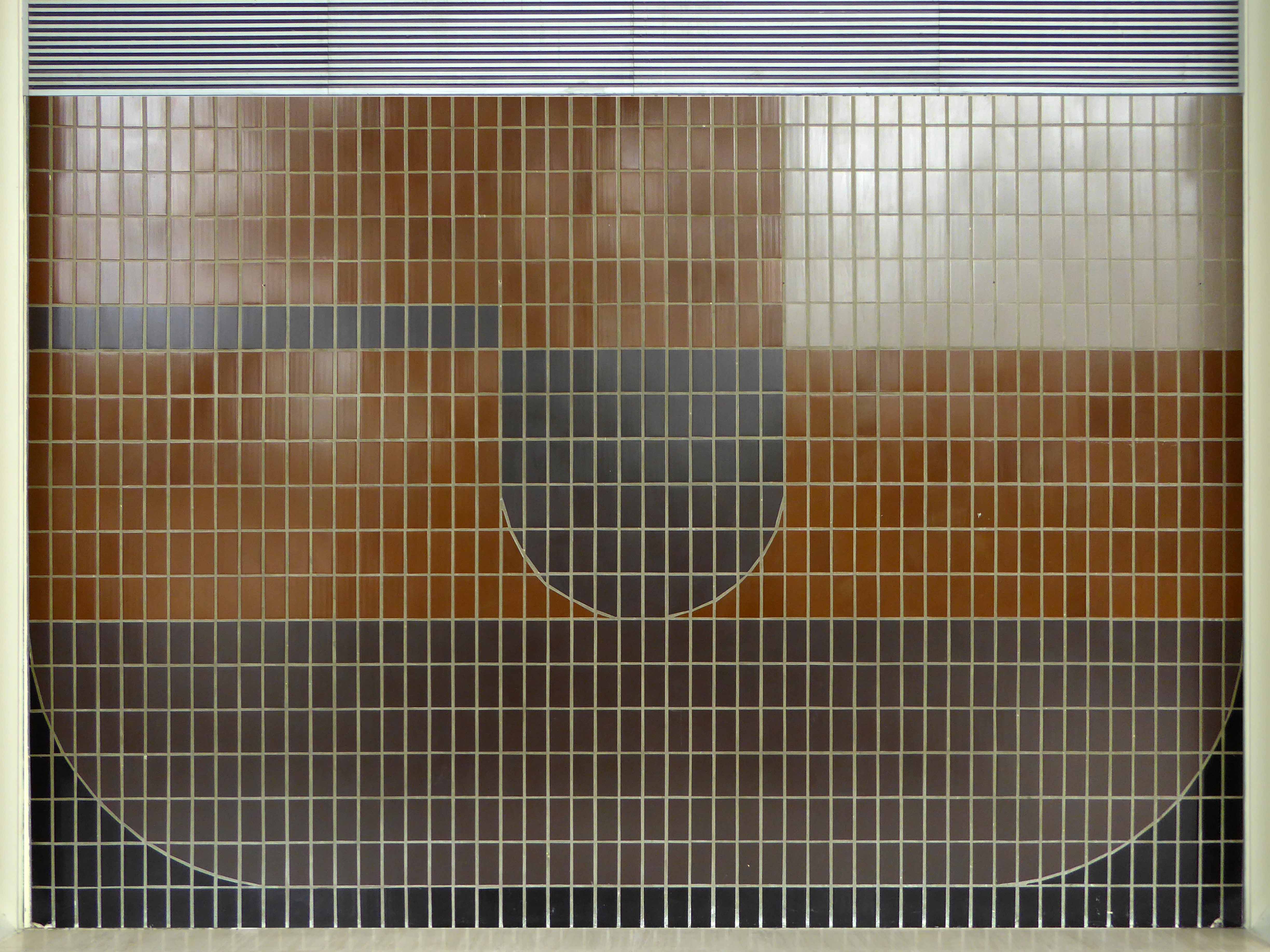
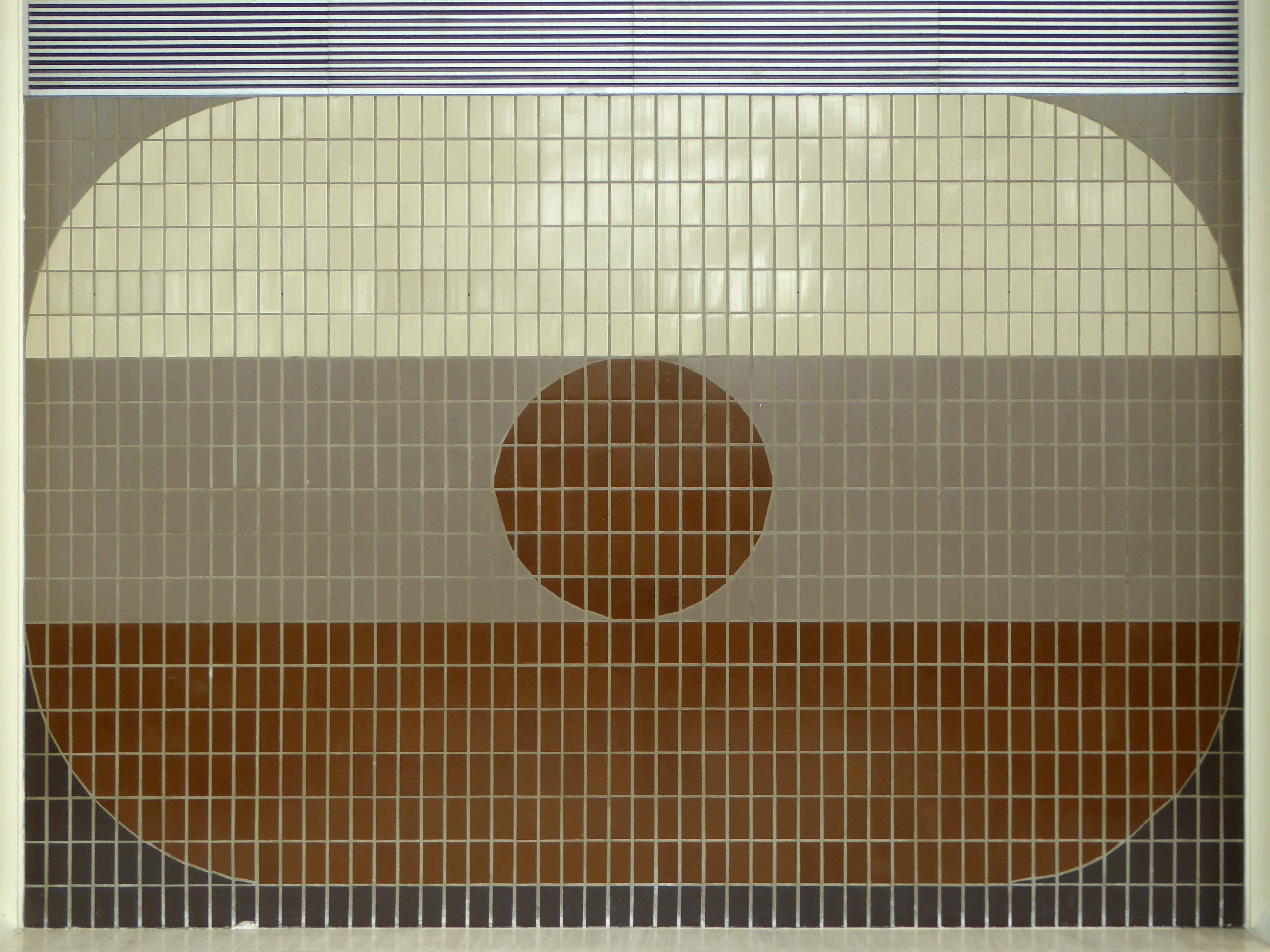
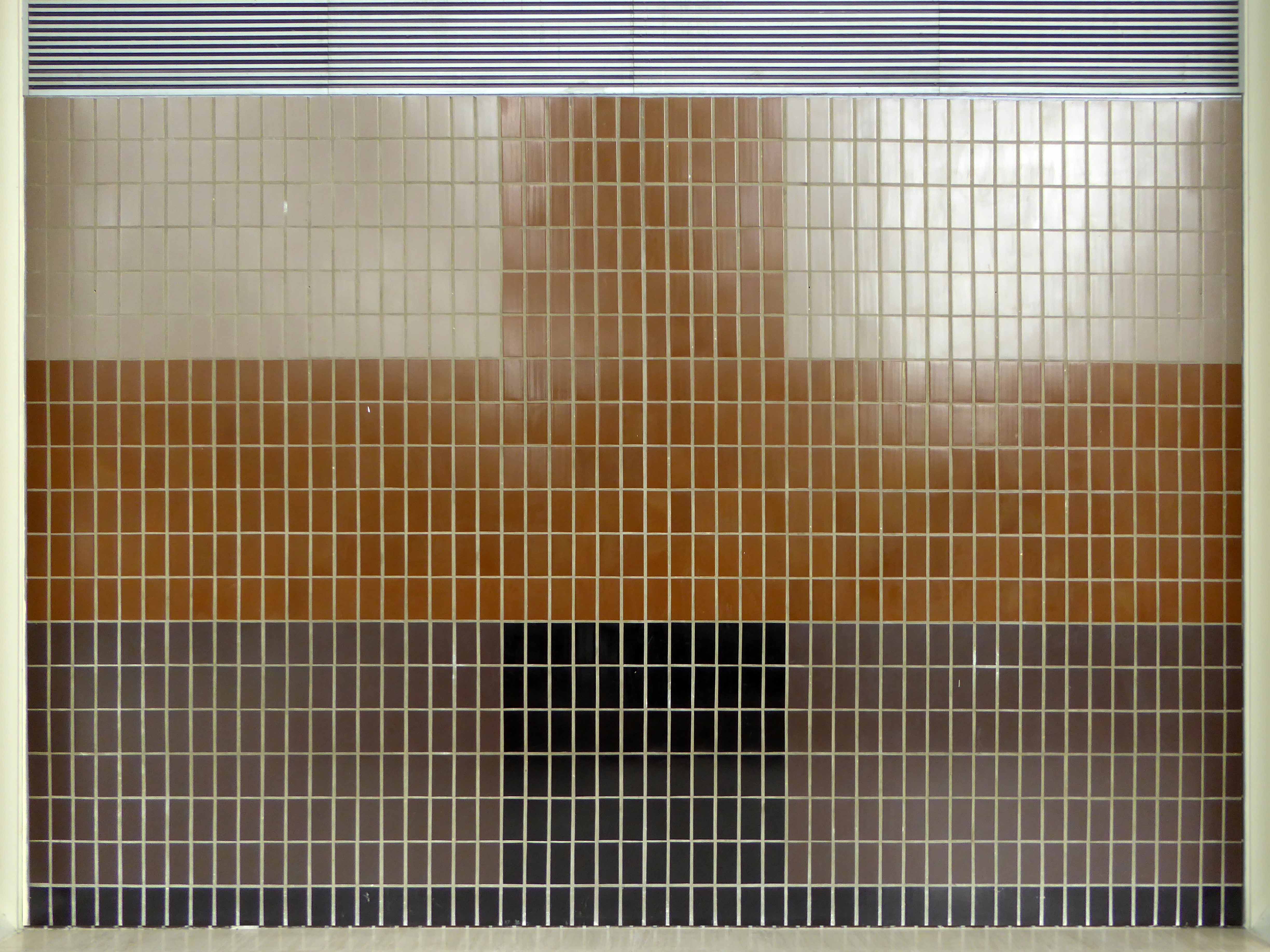
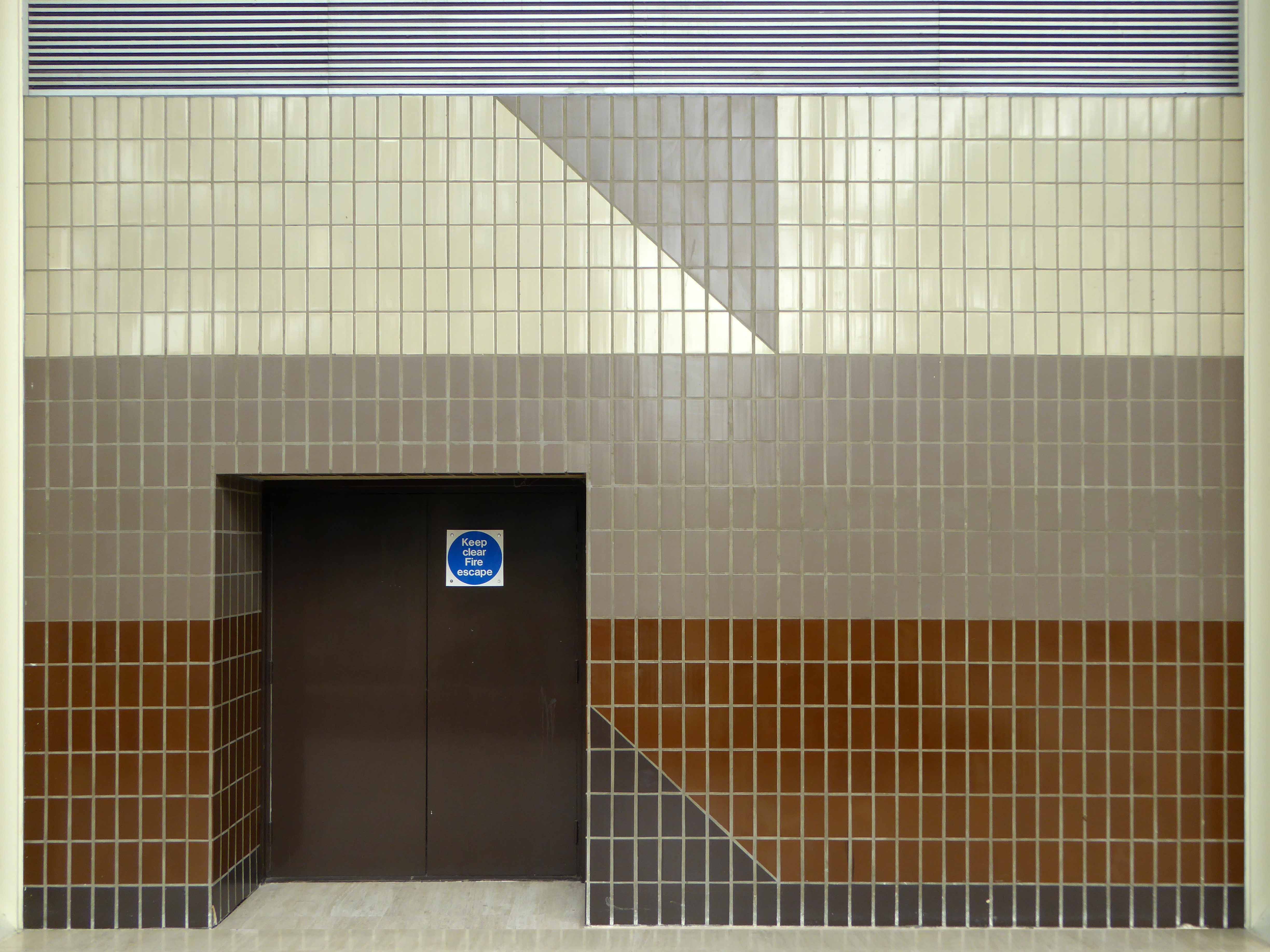
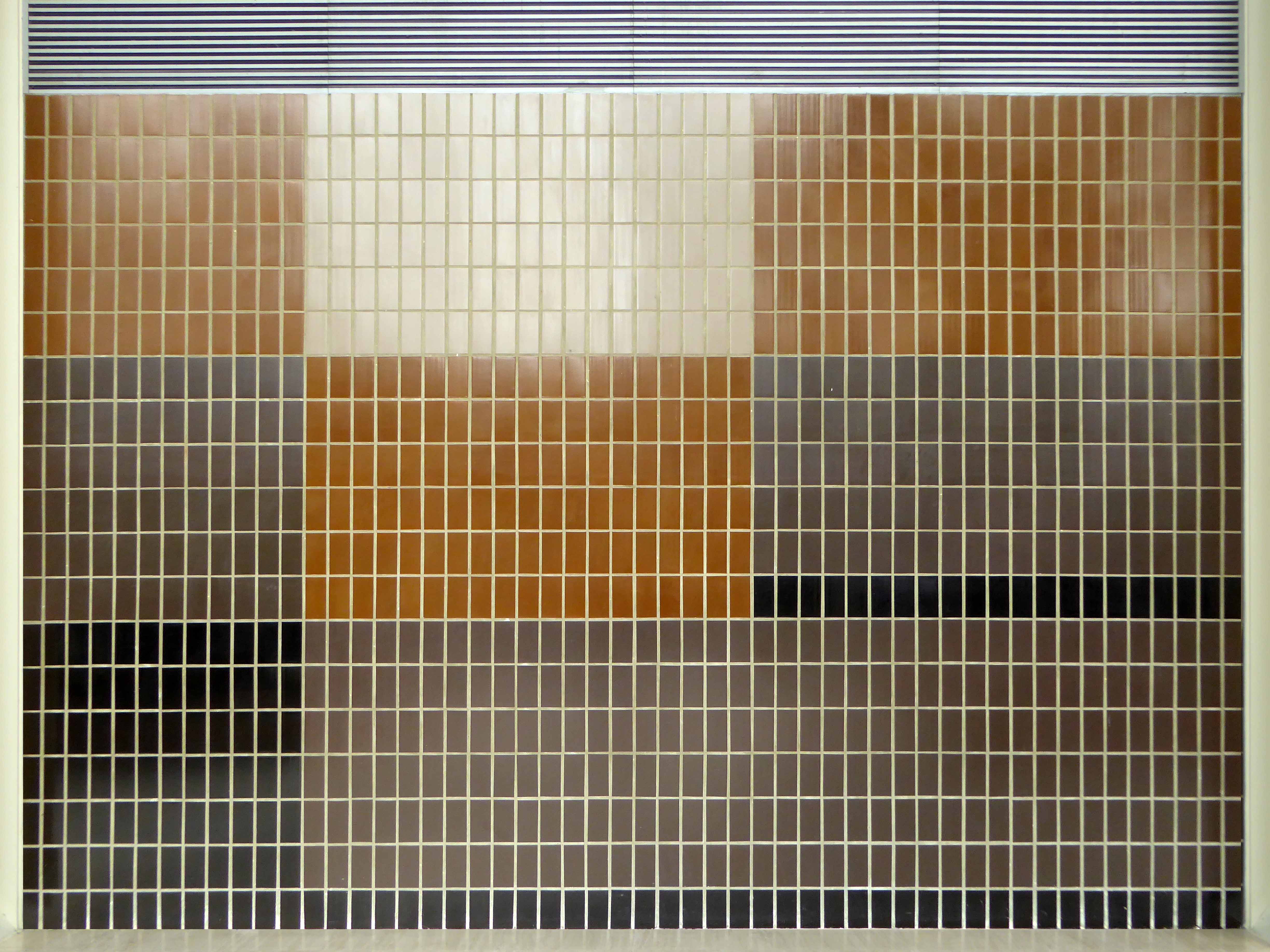
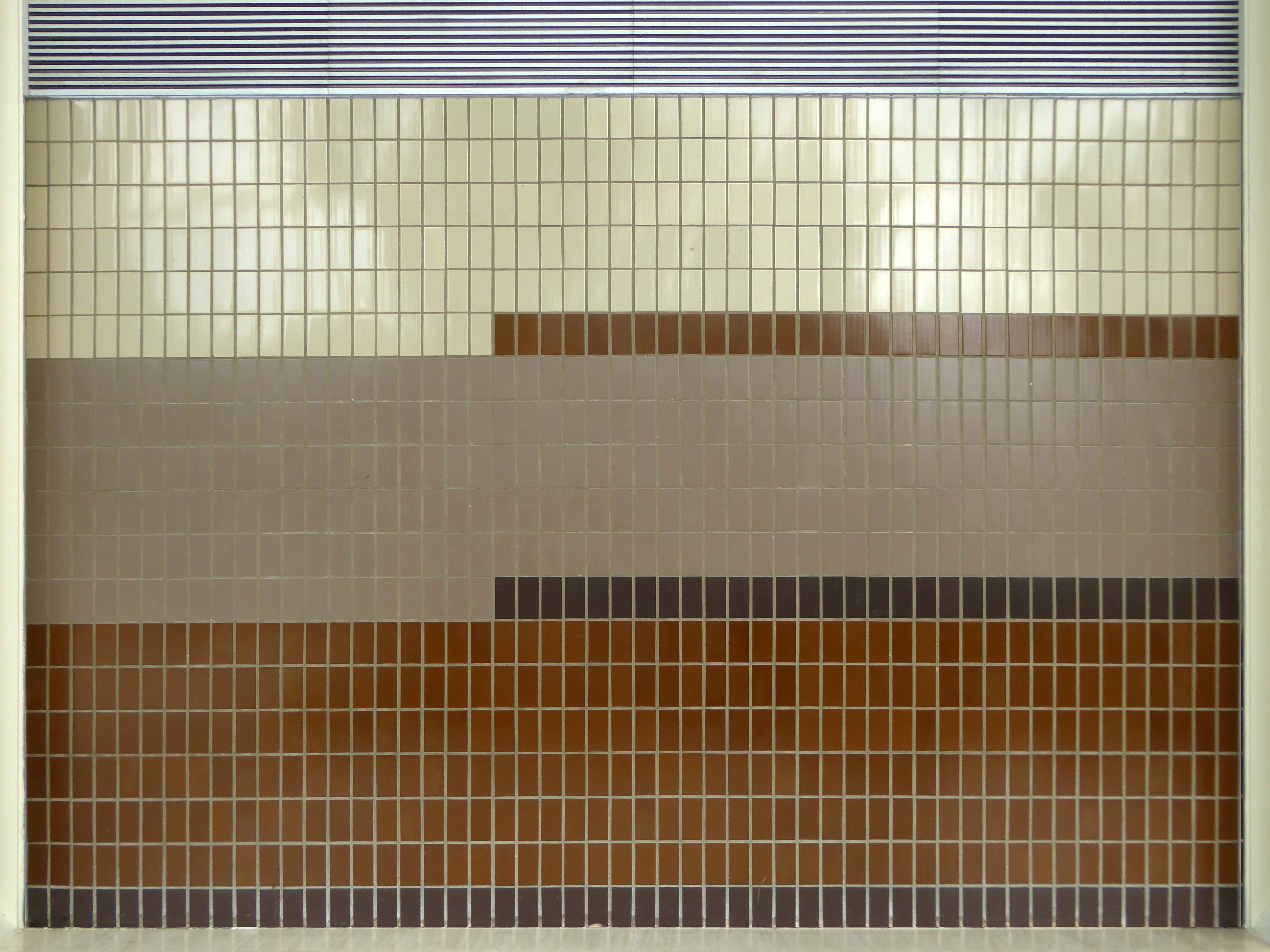
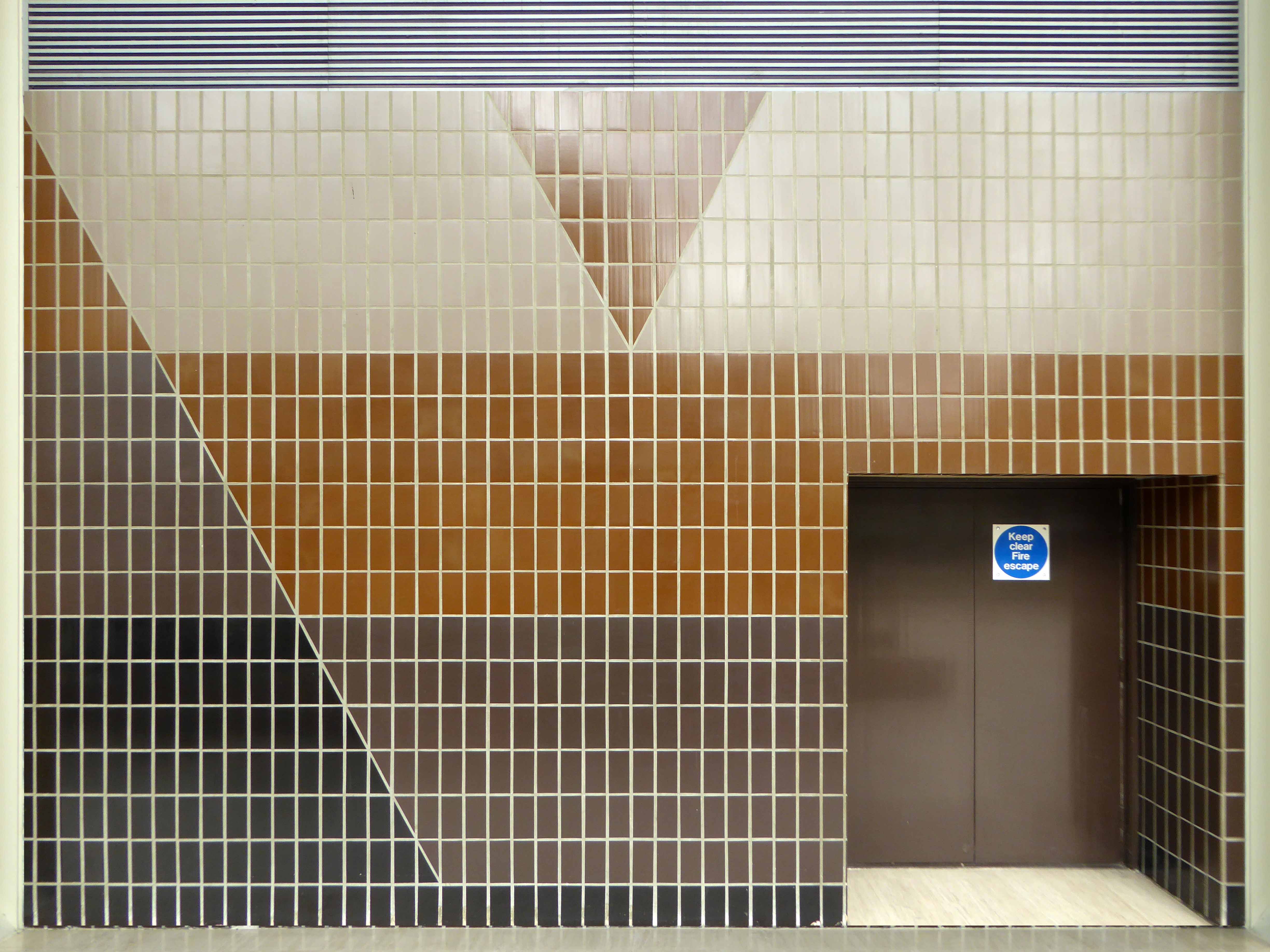
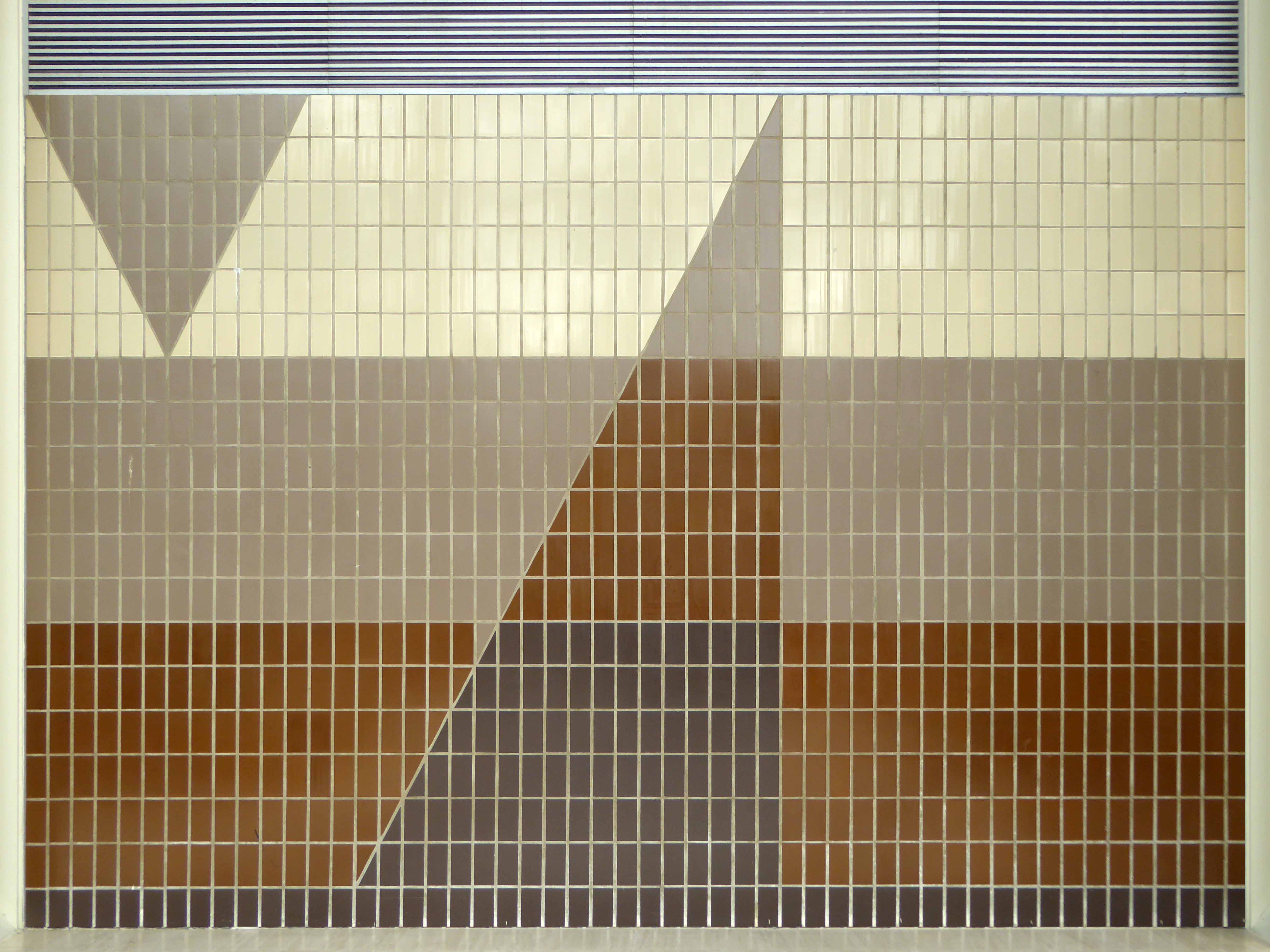
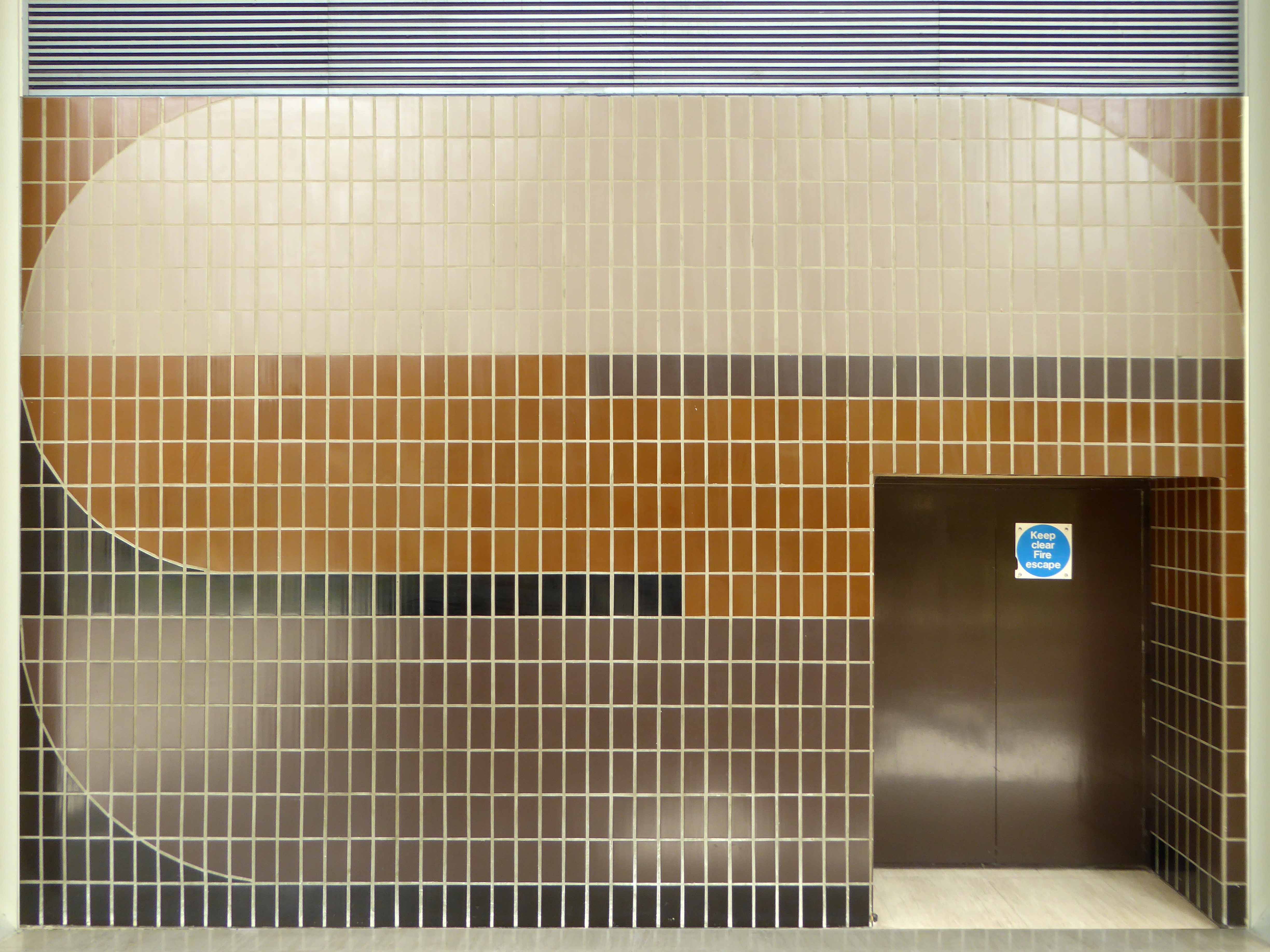
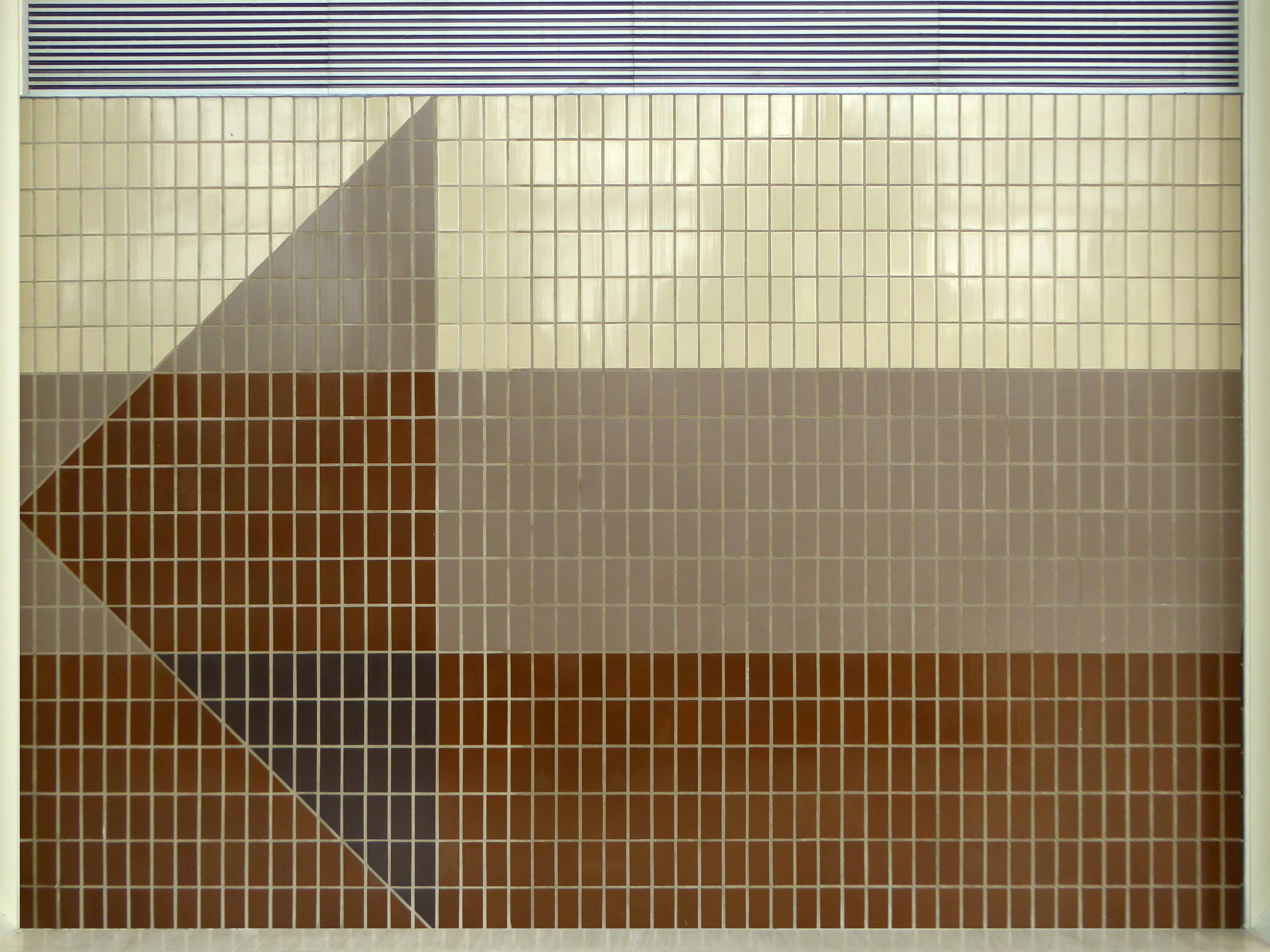
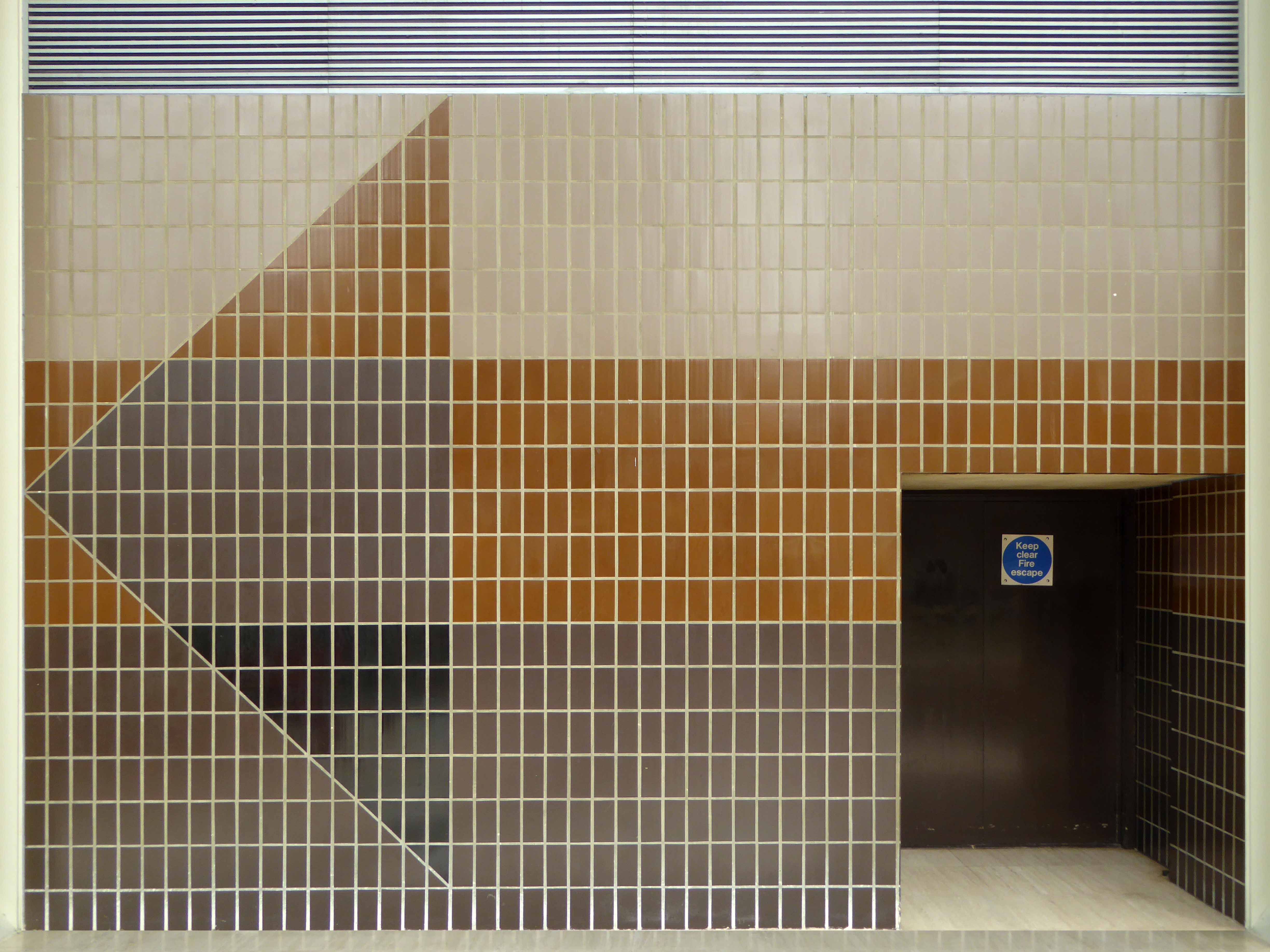
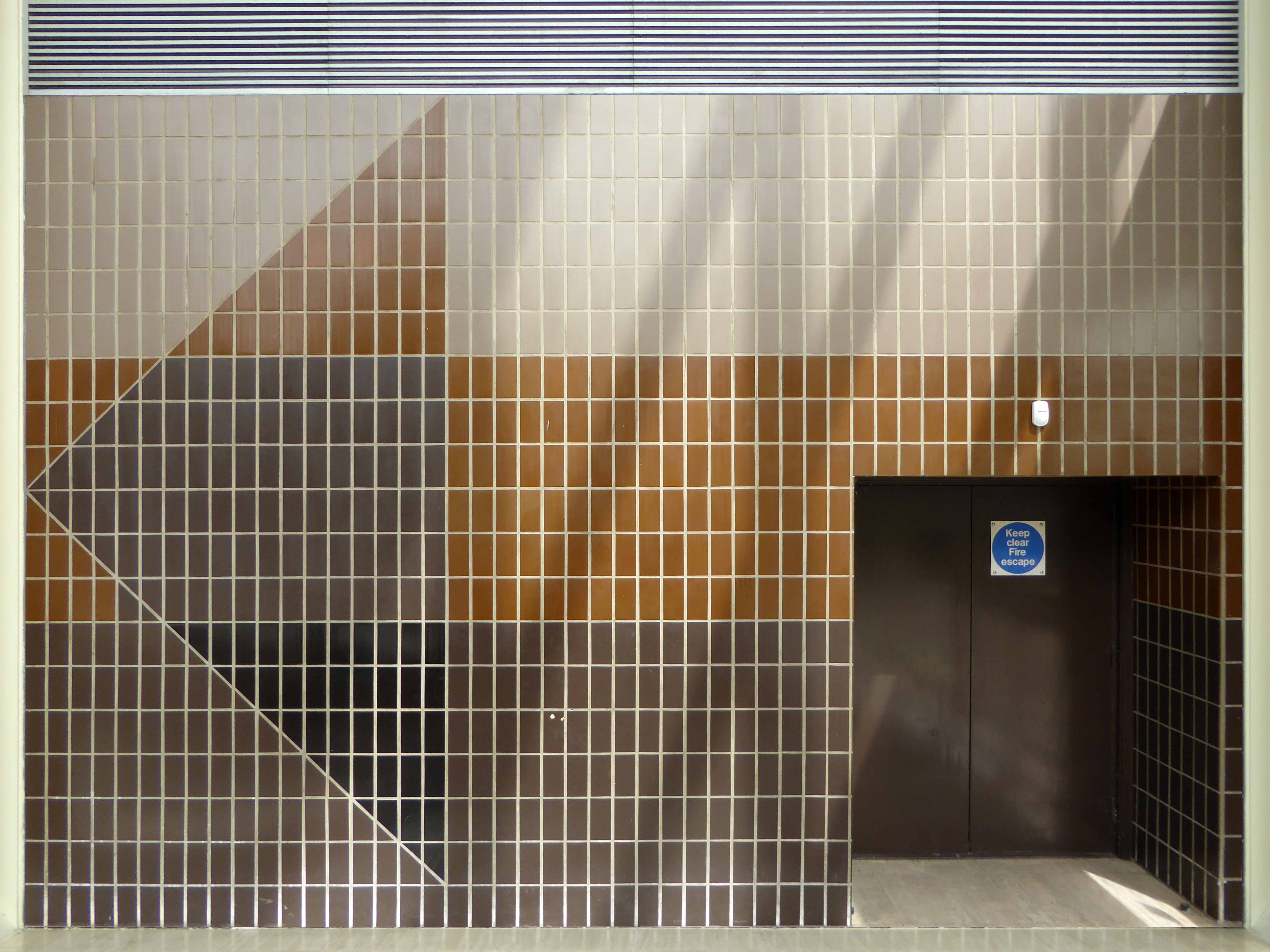
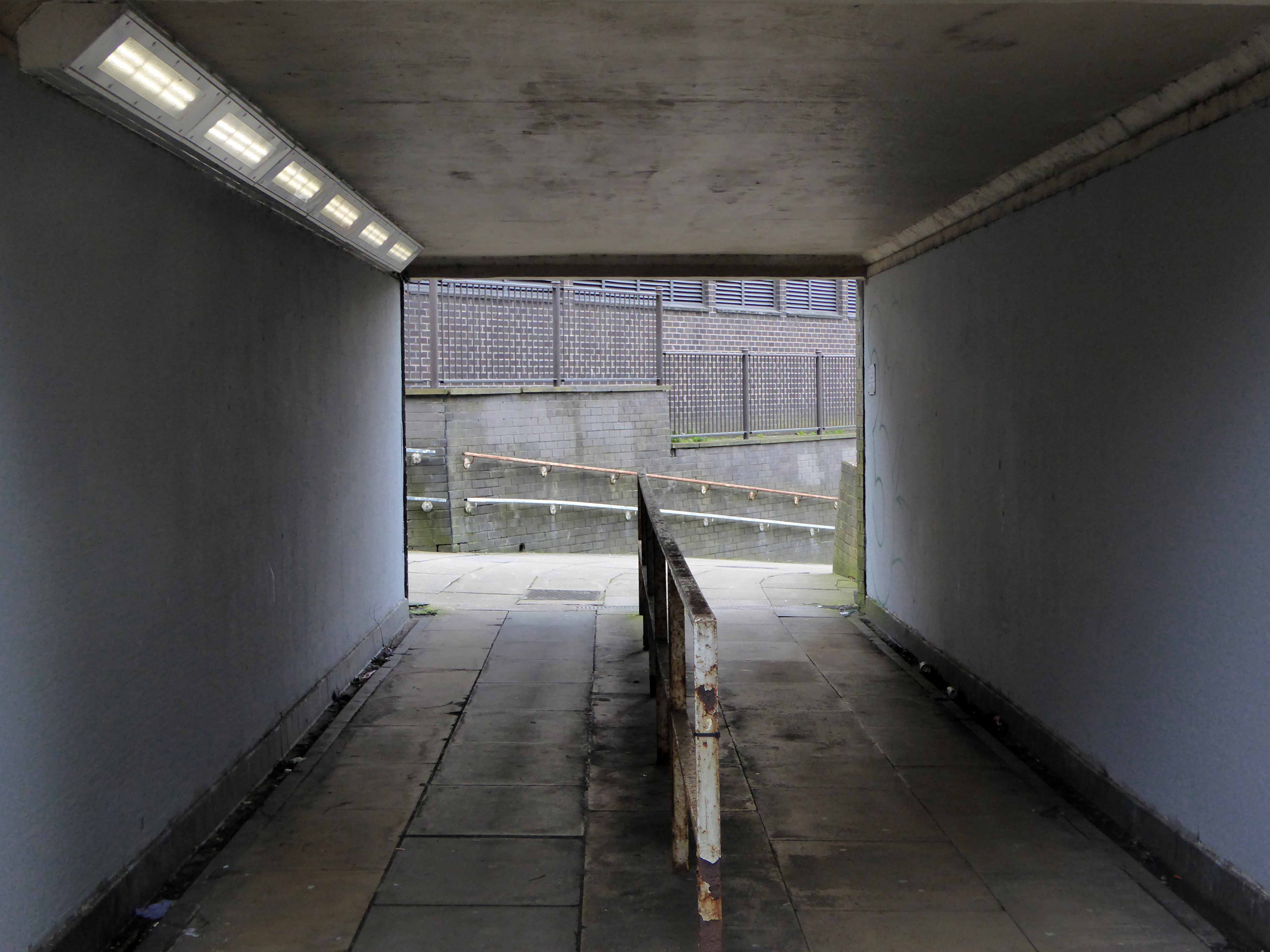
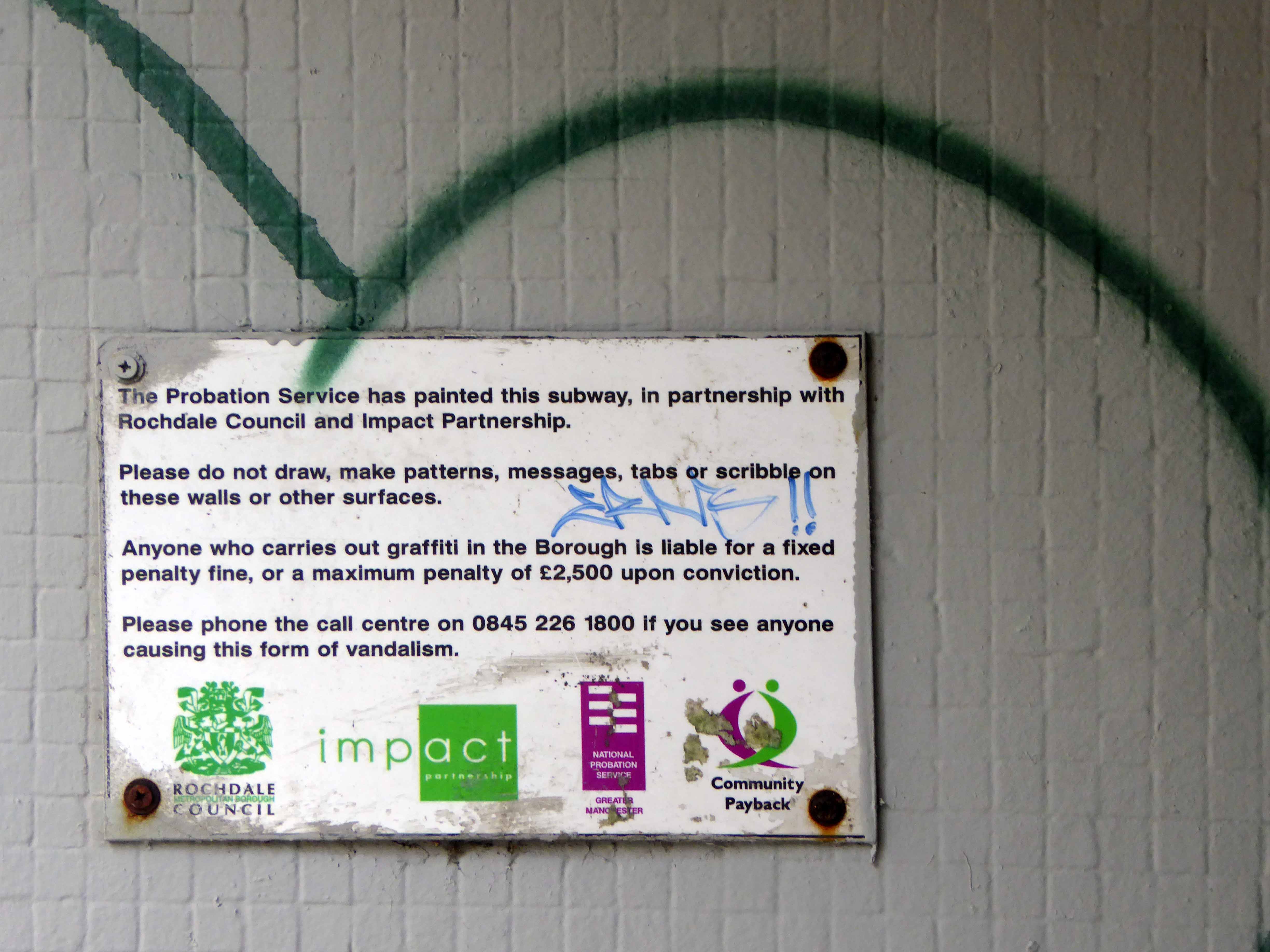
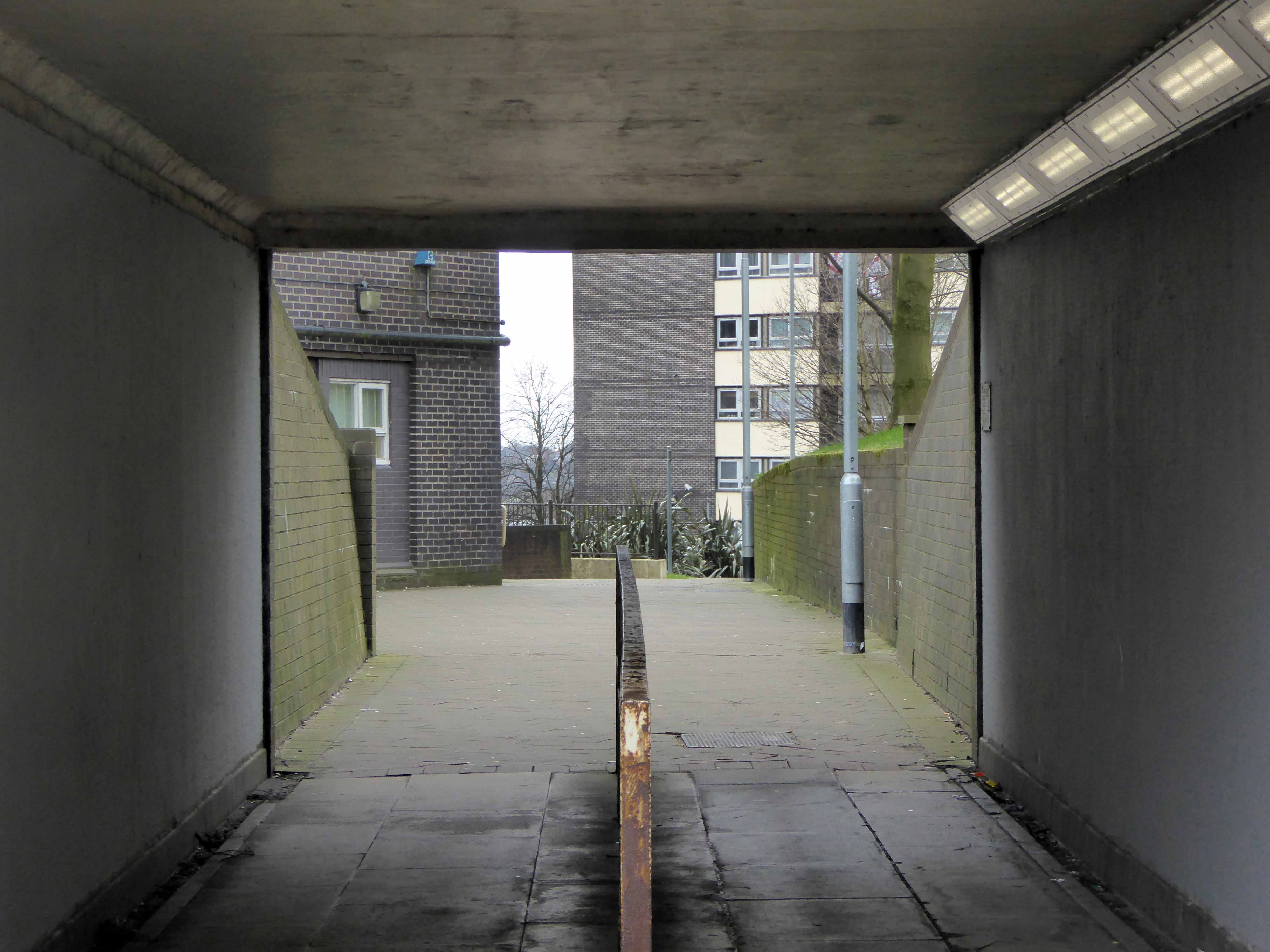
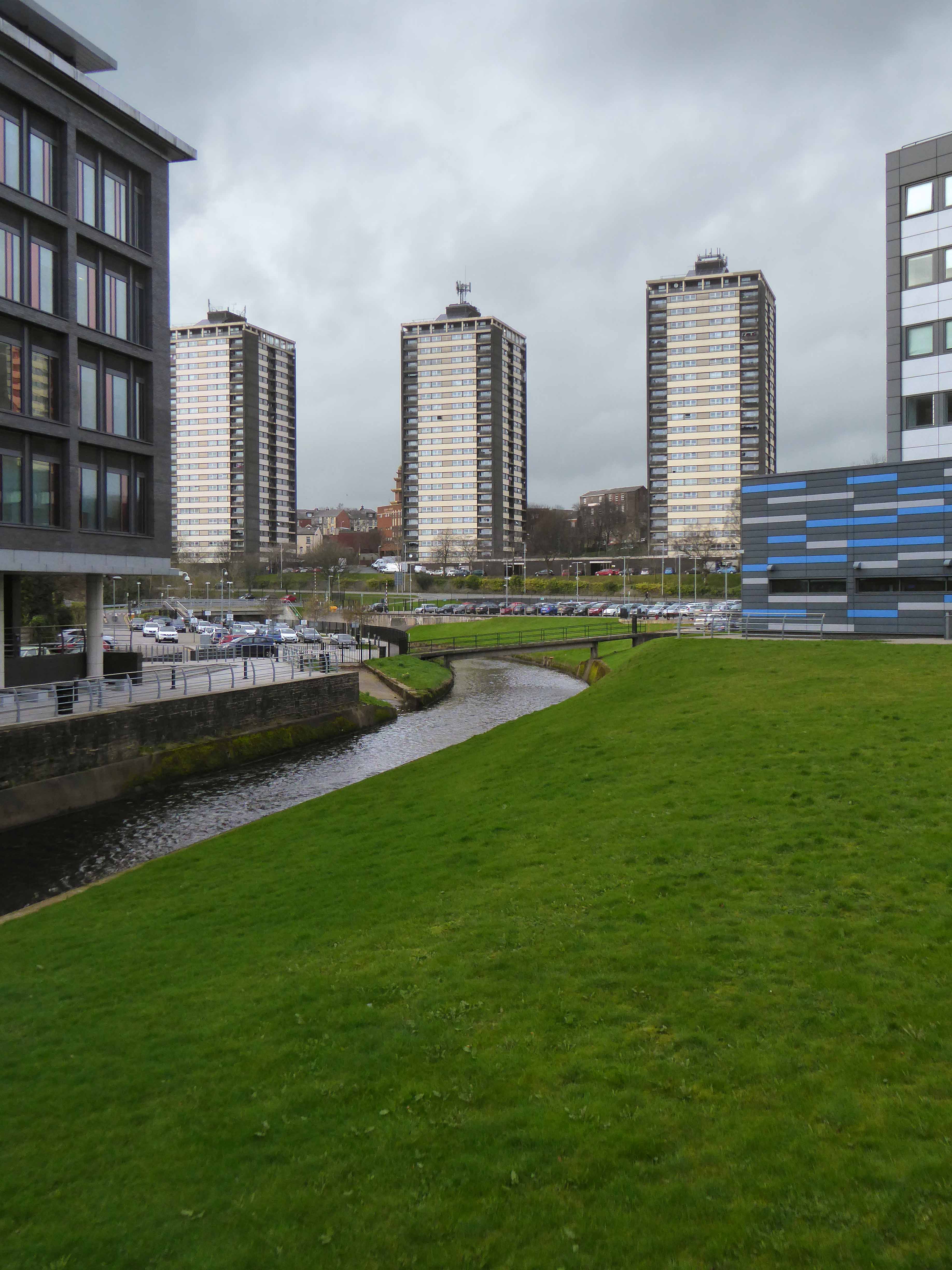
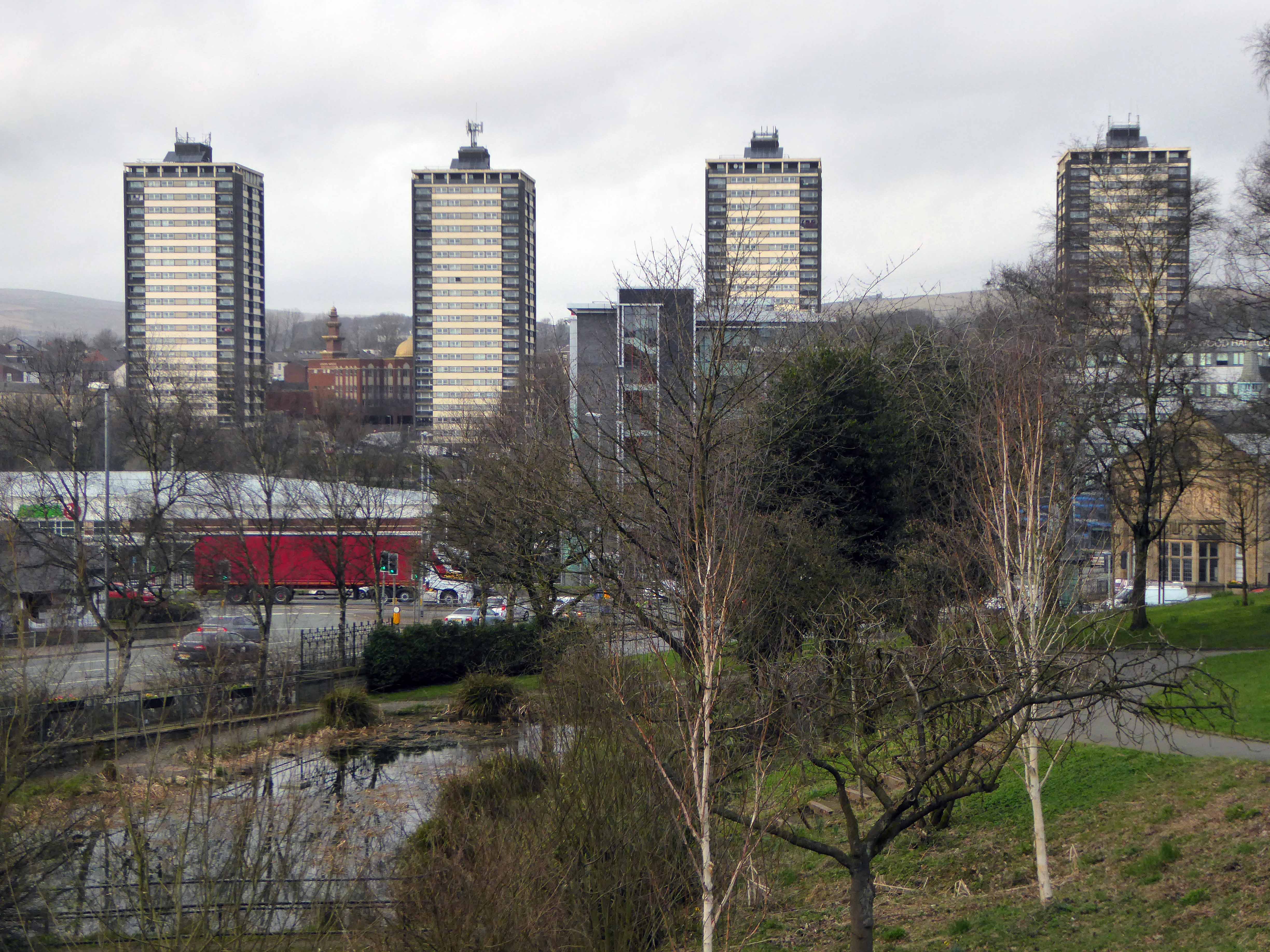
First there was the first, then secondly the second – this is the third and last underpass.
A fitting finish to the series as we pass through the final subterranean frontier out into the clear light of the South Yorkshire day.
Each one is a neglected gem of municipal modernism, the underpass a feature under threat, the pedestrian often subsumed by the drive to accommodate the motor car.
As of last Wednesday, we all seem to have tenuously hung on in there.
Oh we’ll hear the thunder roar, feel the lightning strike. At a point we’ll both decide to meet at the same time tonight.
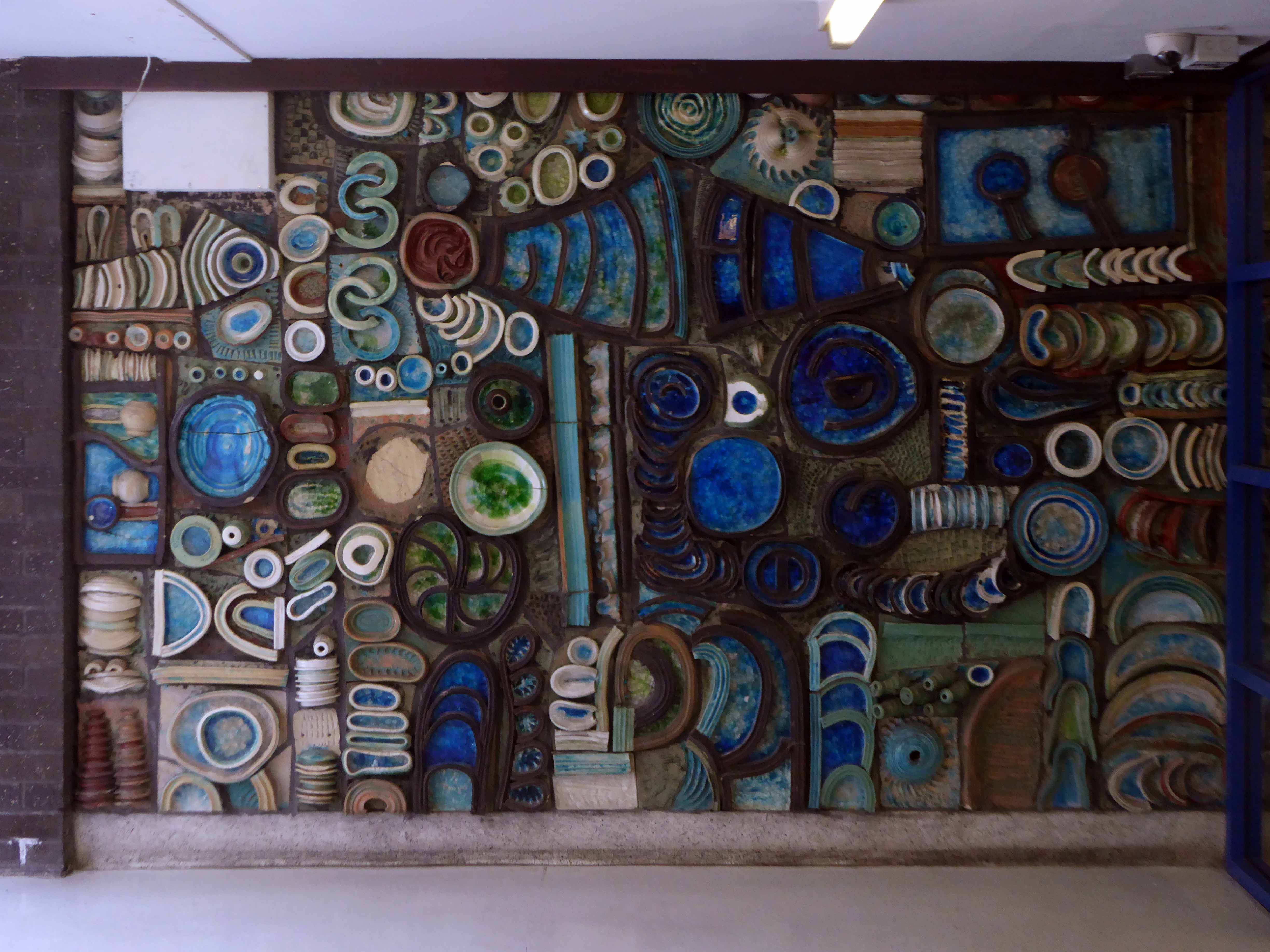
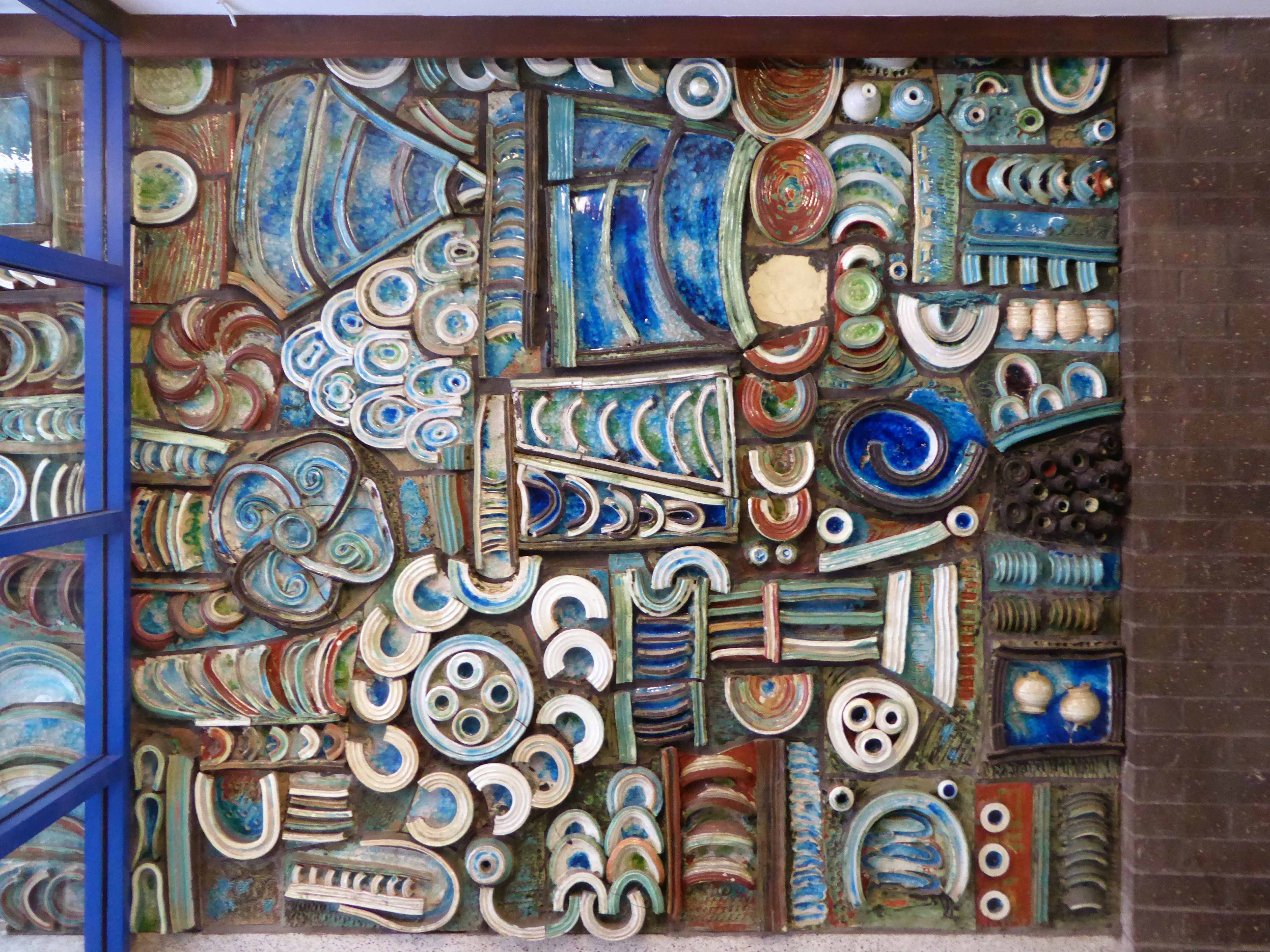
I had seen a photograph posted by Mandy Payne of an underpass in Rotherham – illustrating a delightful concrete relief.
Enlisting the assistance of friend and local resident Helen Angell, we set out on a mission to visit the roundabout in back of the big Tesco, which housed the three underpasses.
This is the first – painted white, well whiteish – more than somewhat disabused by the passage of time and the passage of users of the underpass.
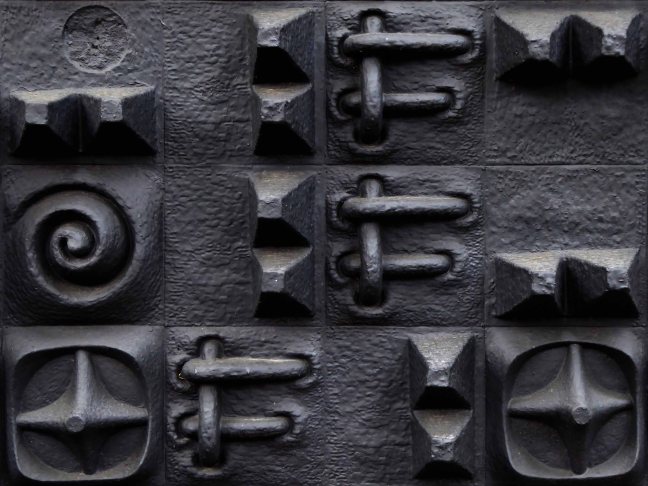
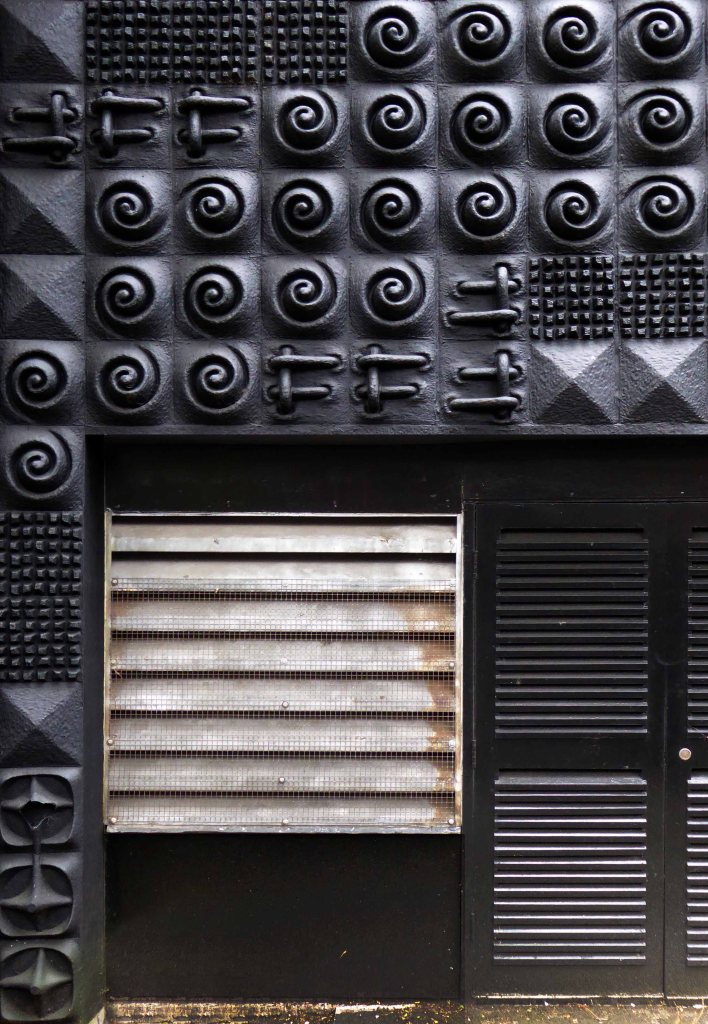
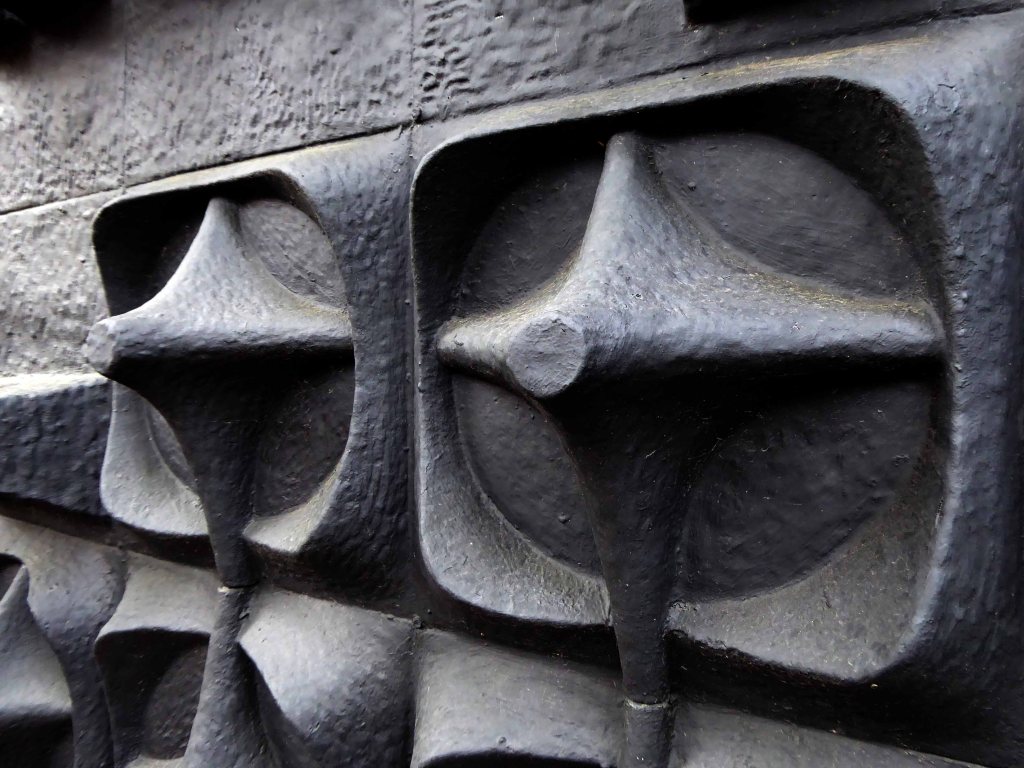
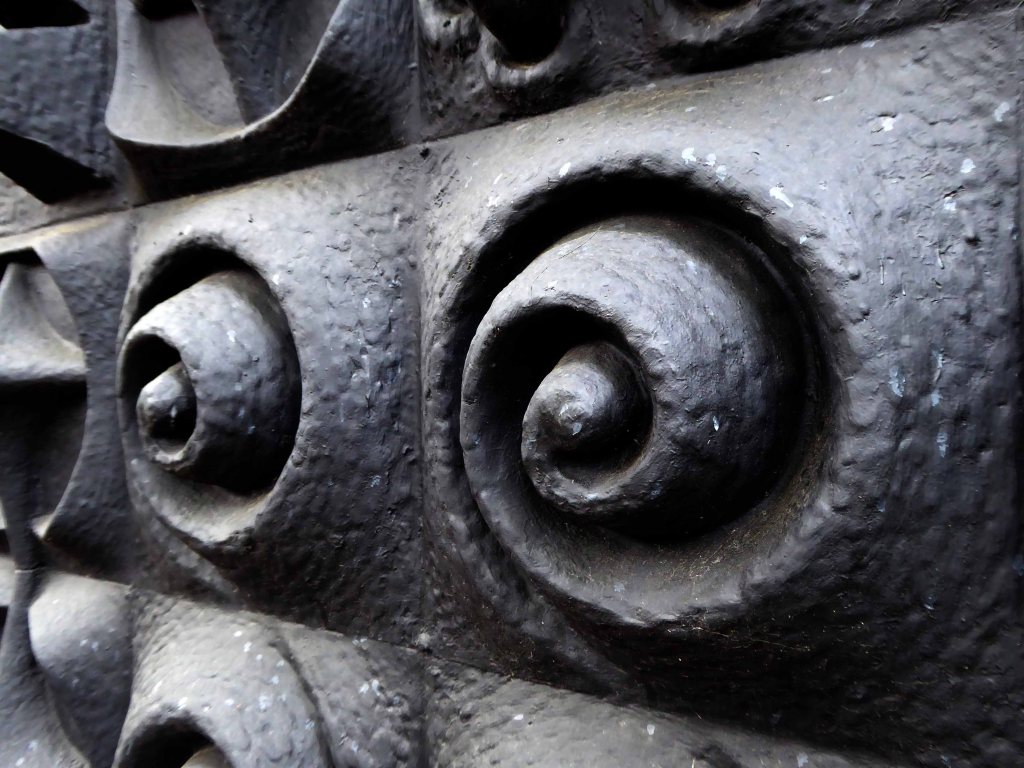
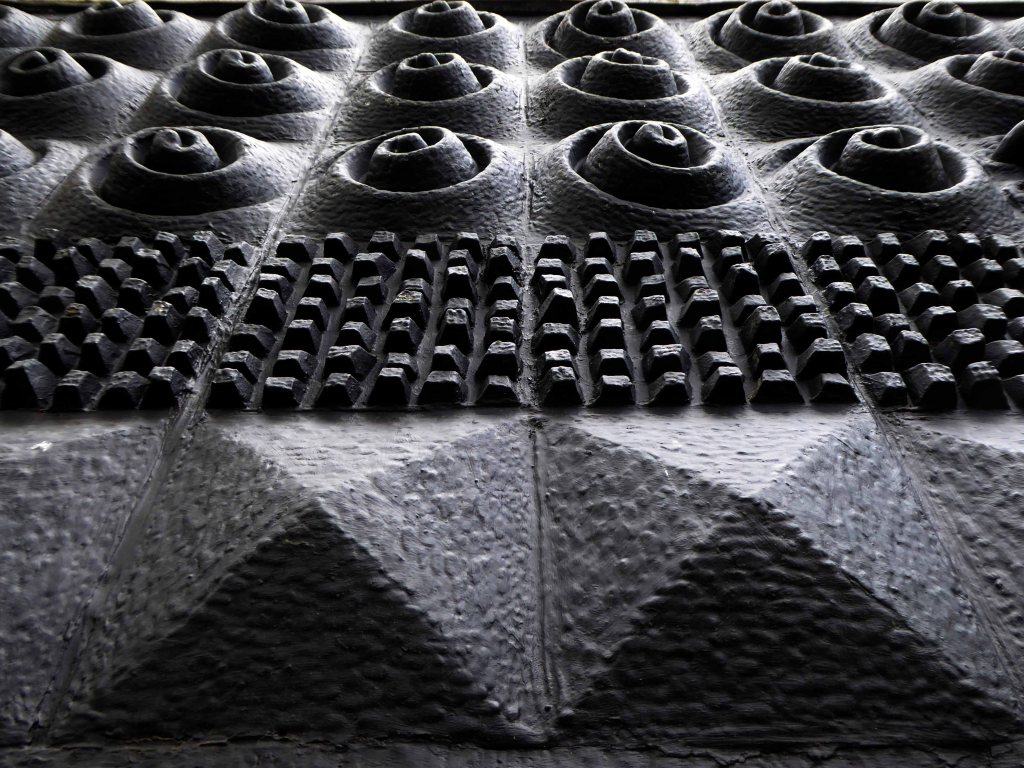
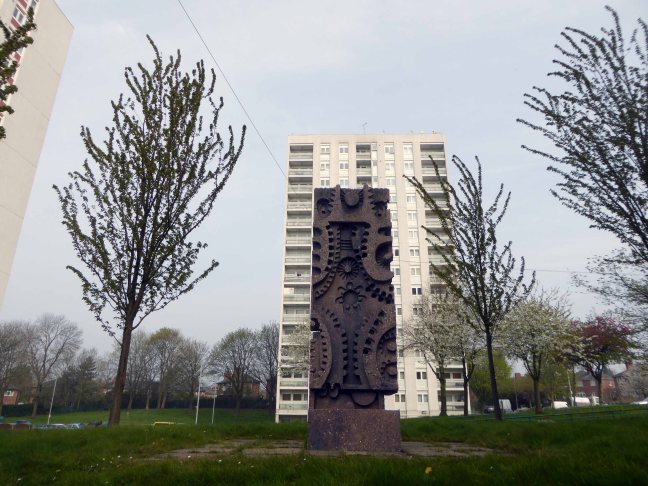
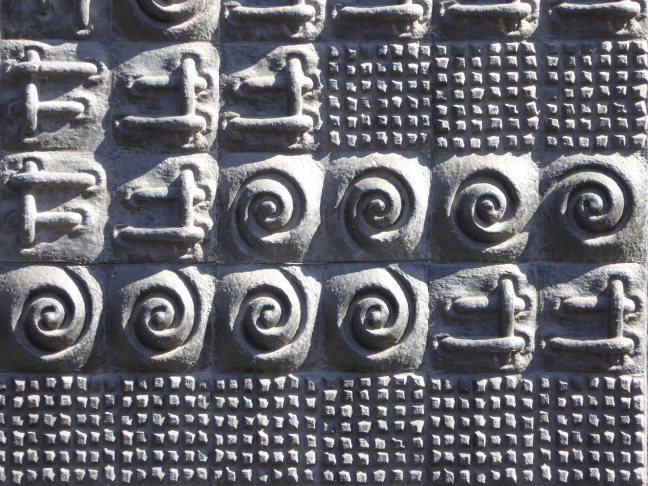
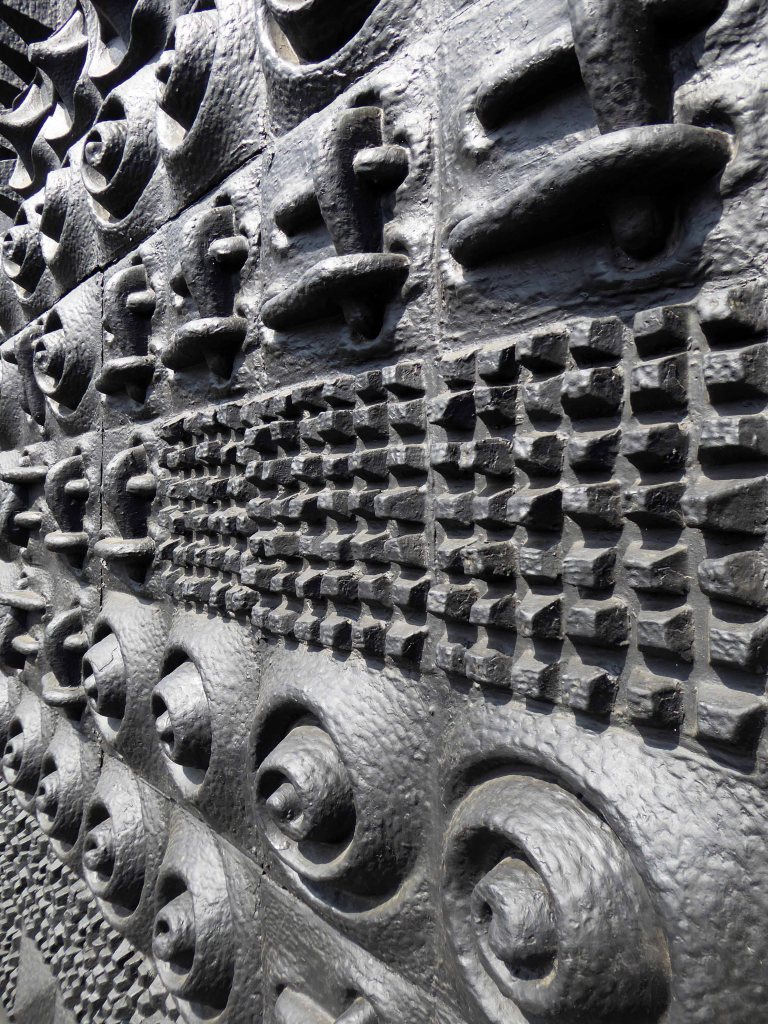
Brute and angular, incised and cursive and currently lacking authorship or attribution.
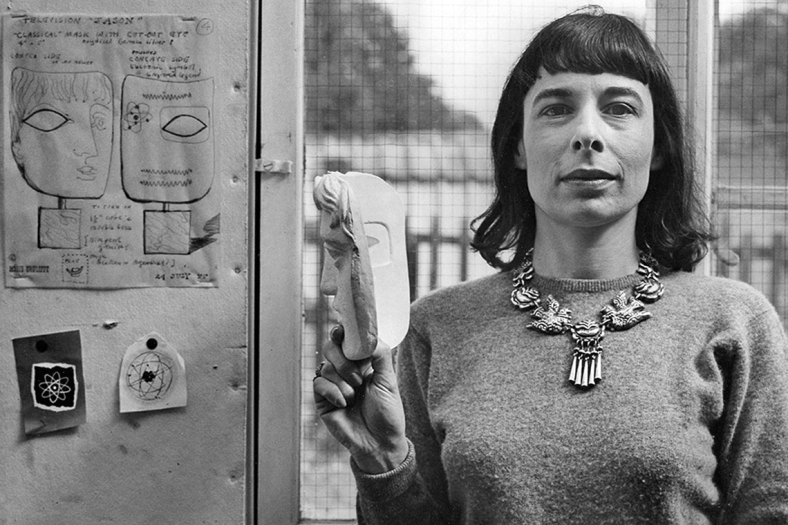
We have of course been here before visiting Mitzi Cunliffe and her work – Cosmos
Mitzi Solomon Cunliffe January 1st 1918 December 30th 2006
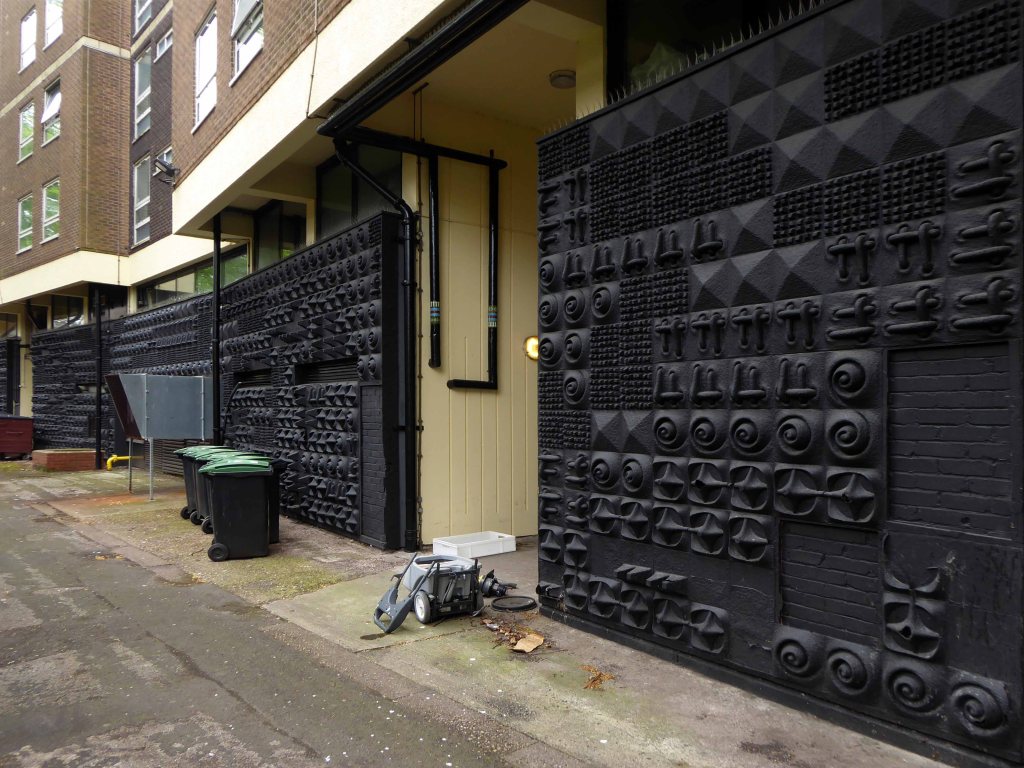
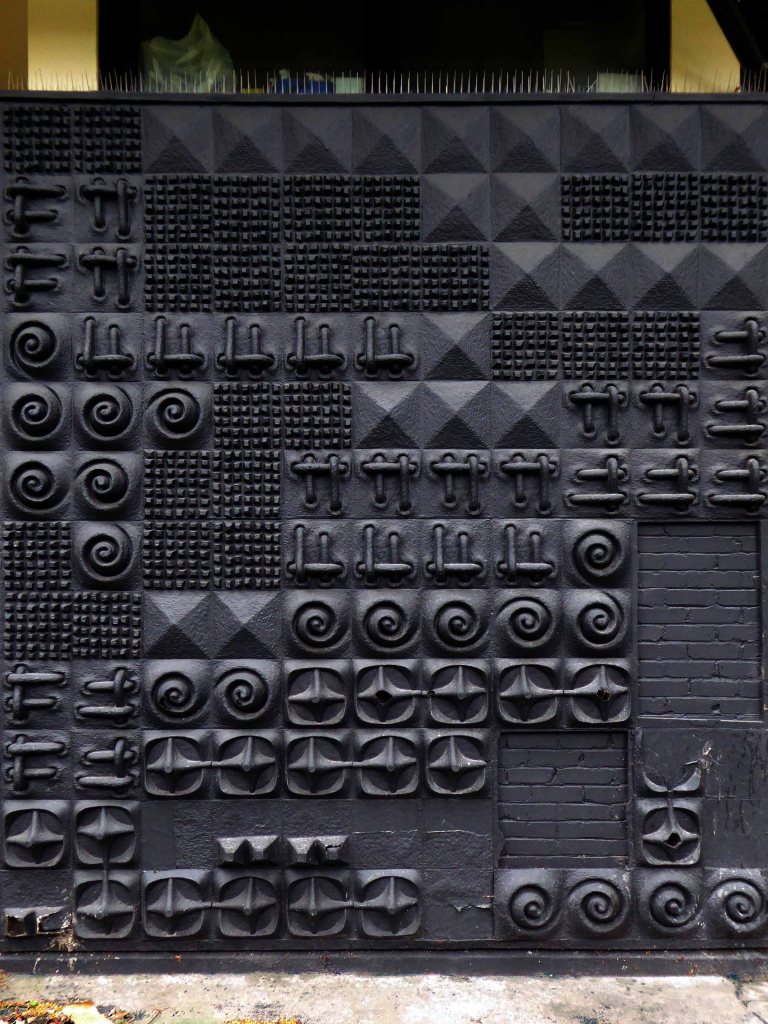
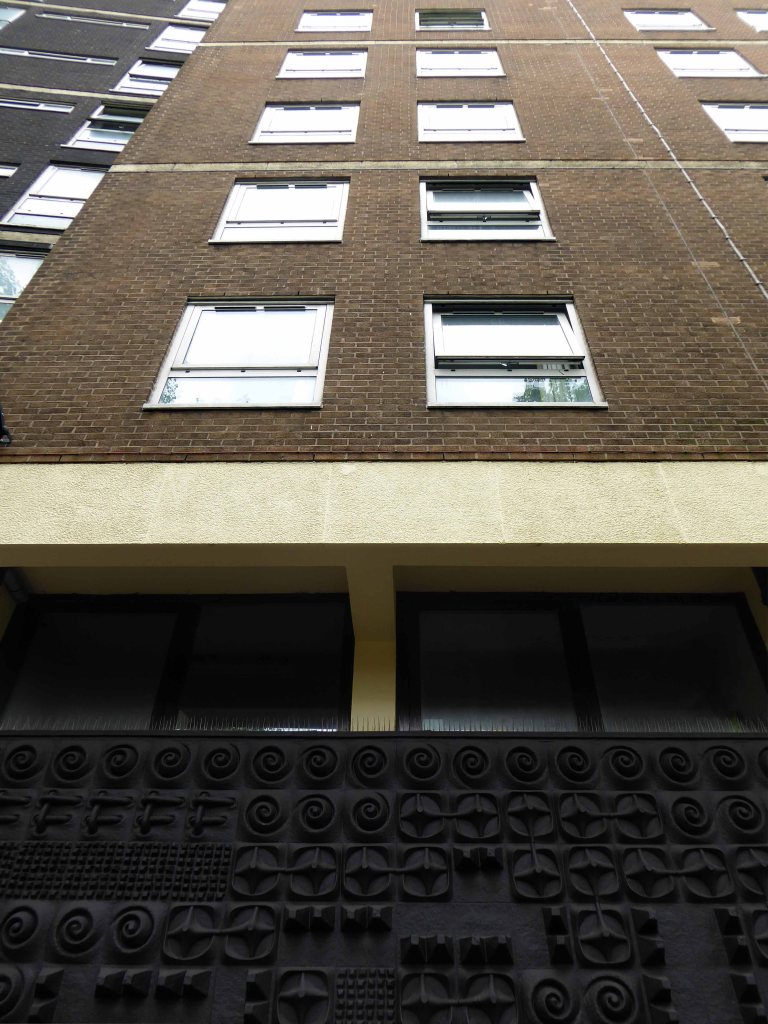
This time we are taking a peek around the back.
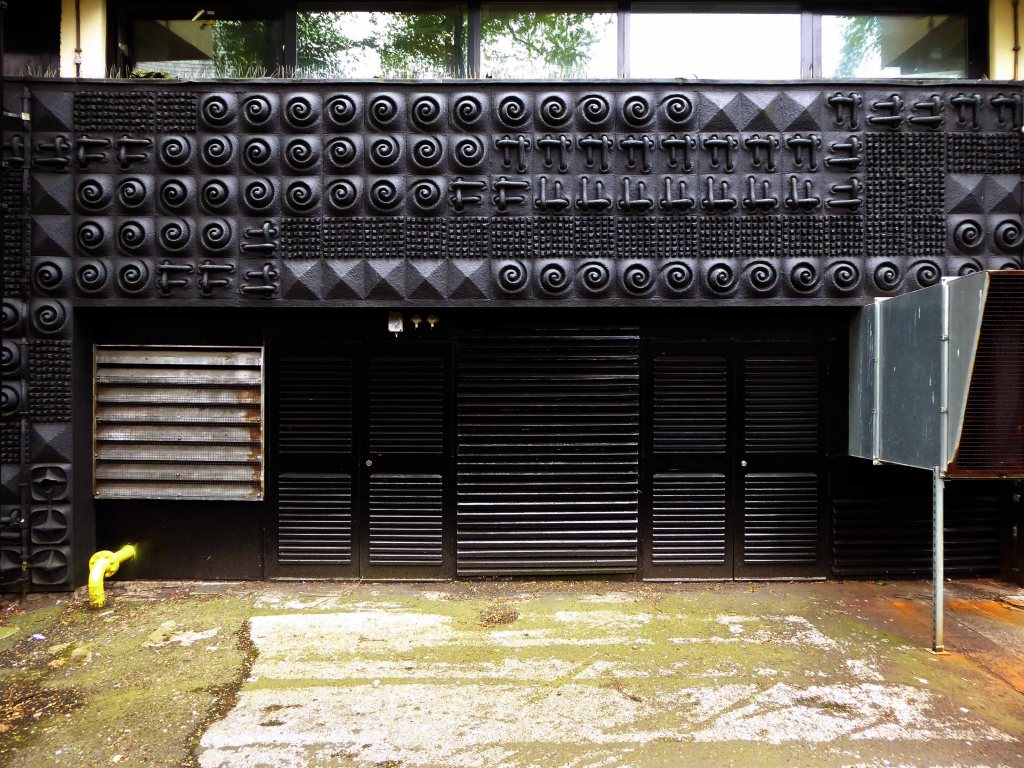
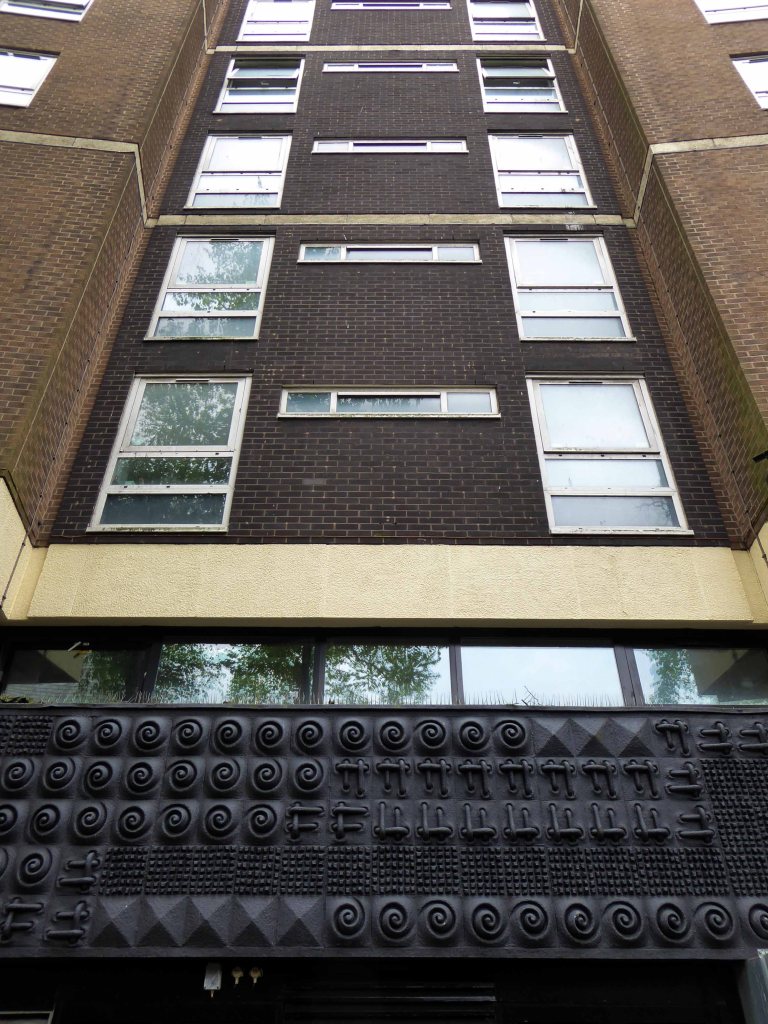
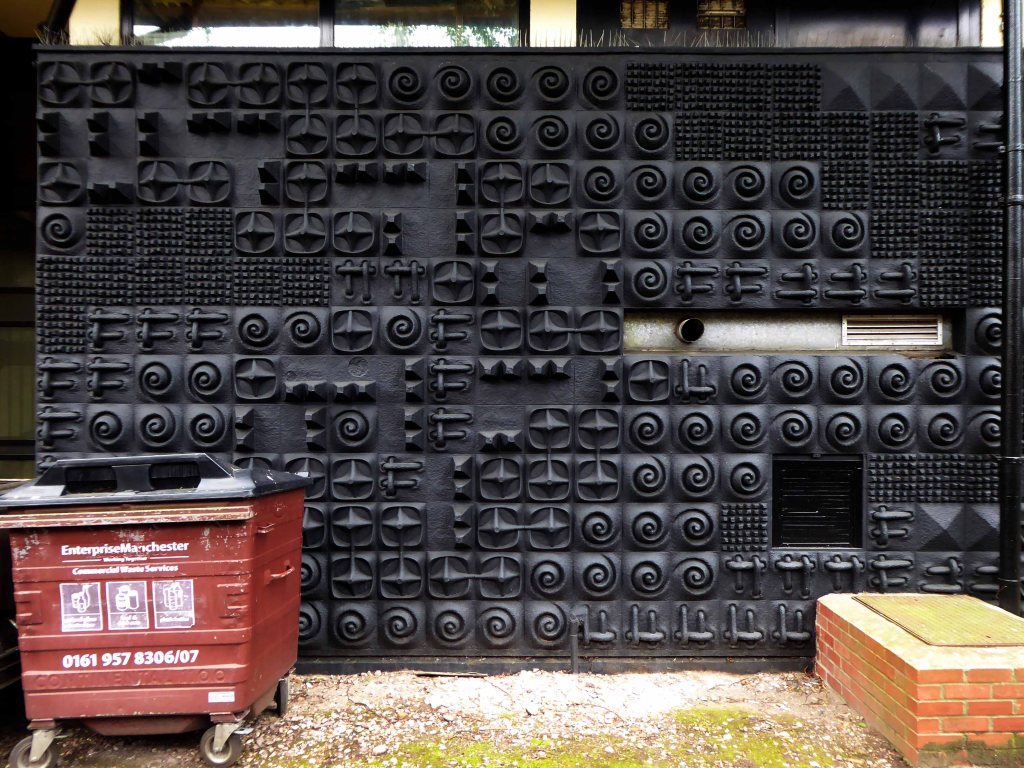
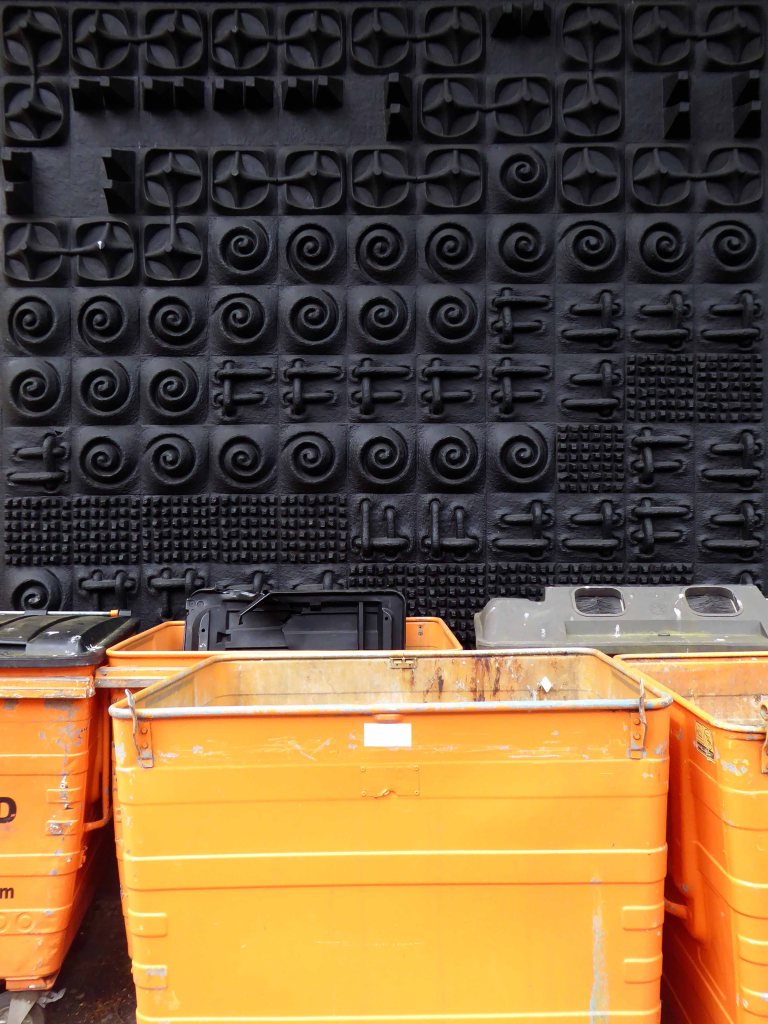
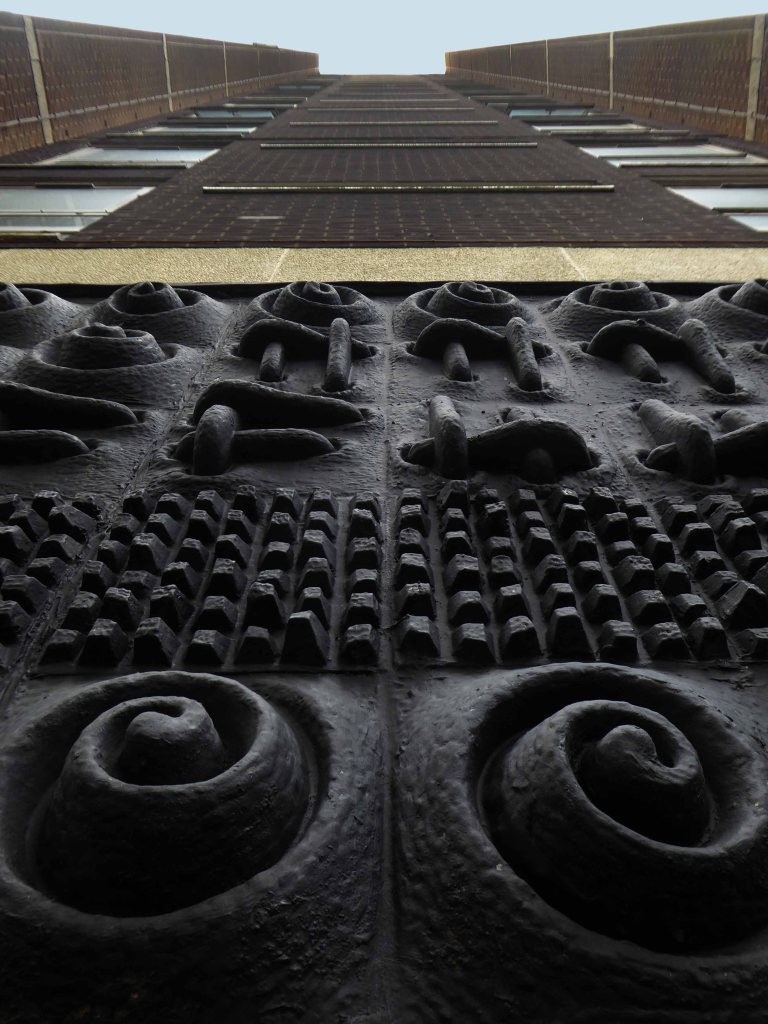
Having passed by on the top deck deck of the 42 on my way home to Stockport, I espied an extension of the sculpture to the rear of the tower.
I vowed to return!
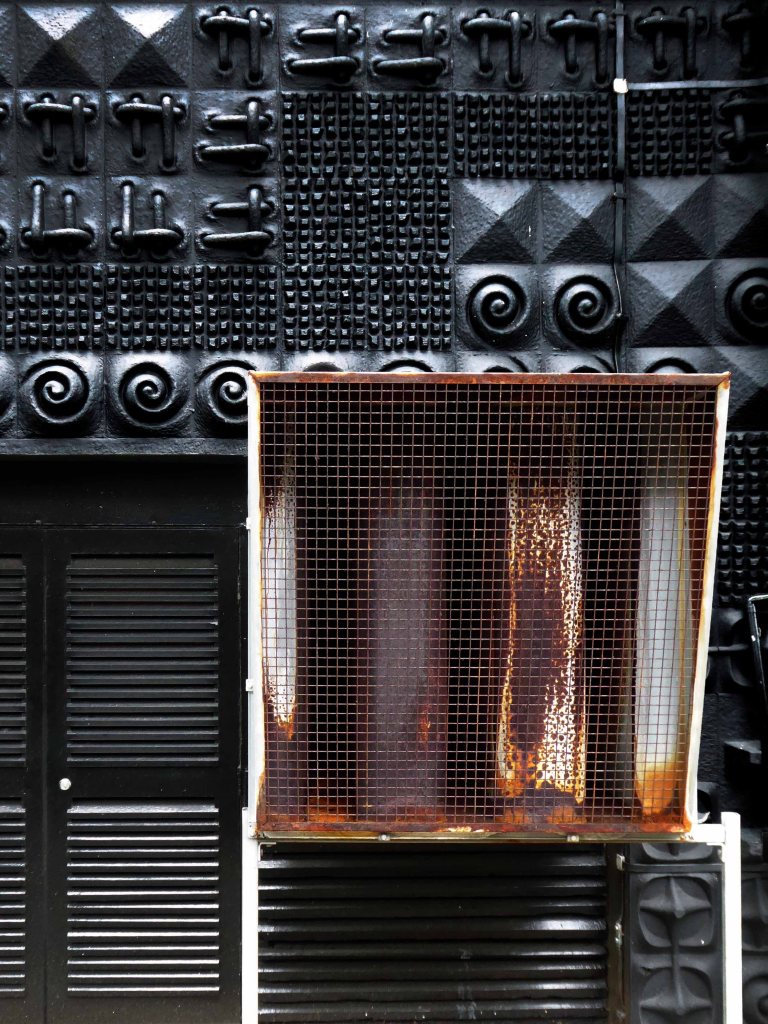
Fighting through extraction units, wheelie bins, hoppers, plus a disused and disabused vacuum cleaner, I found myself in the narrow service area, where I did my best to get back from the wall, hard against the chain link fence.
The things you do.
For some much needed light relief, air and open space I revisited the front face of the tower.
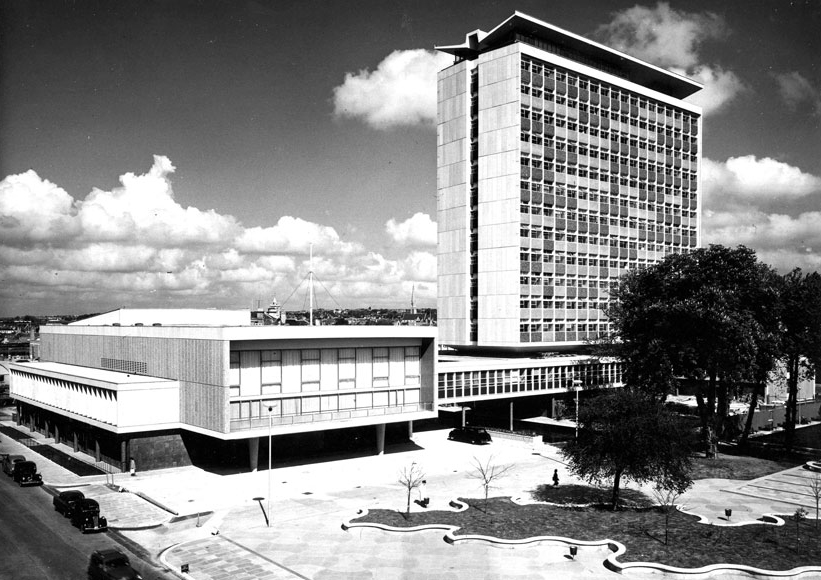
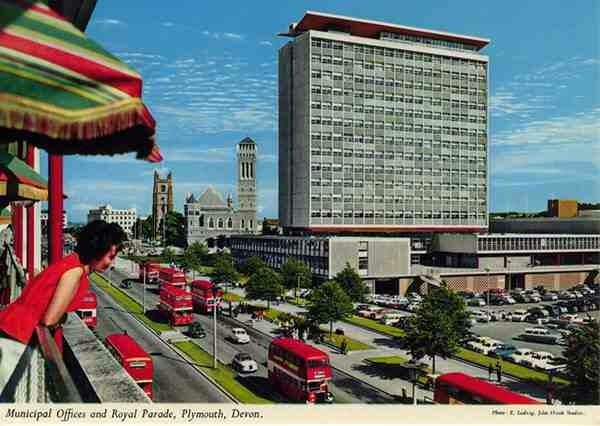
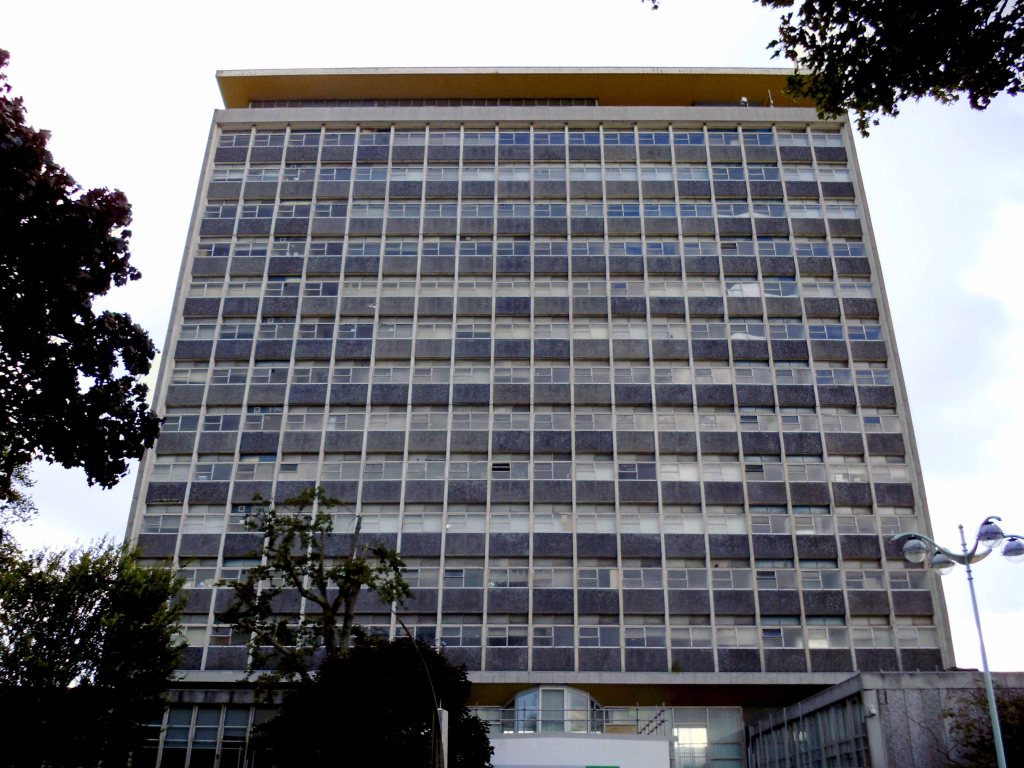
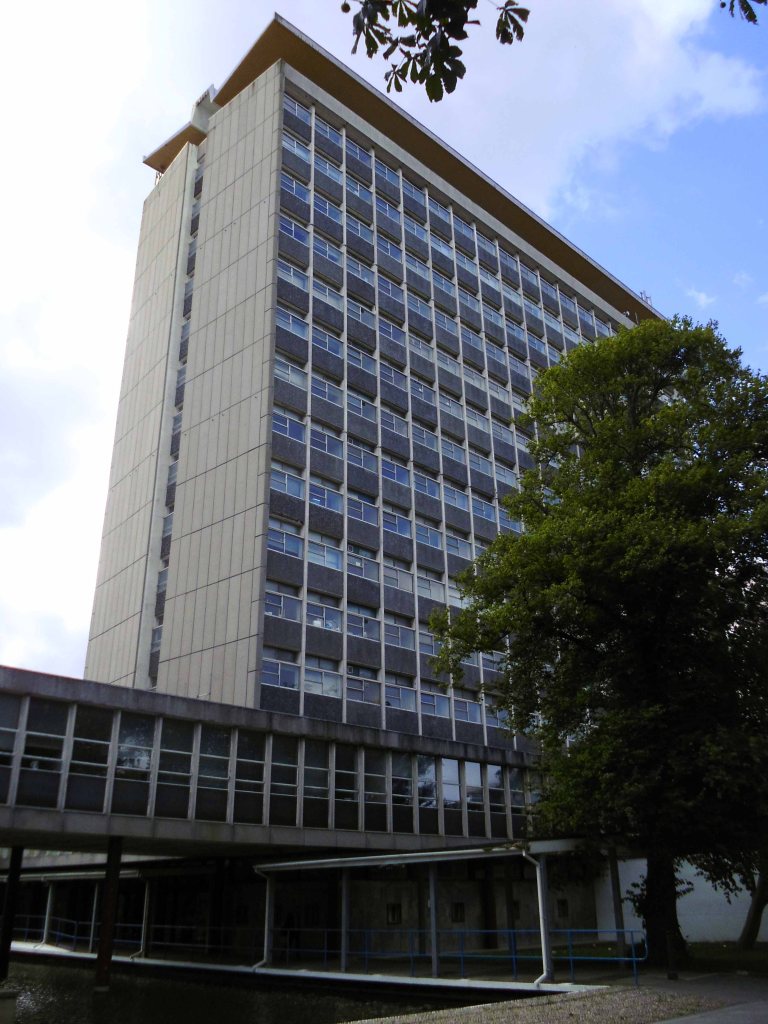
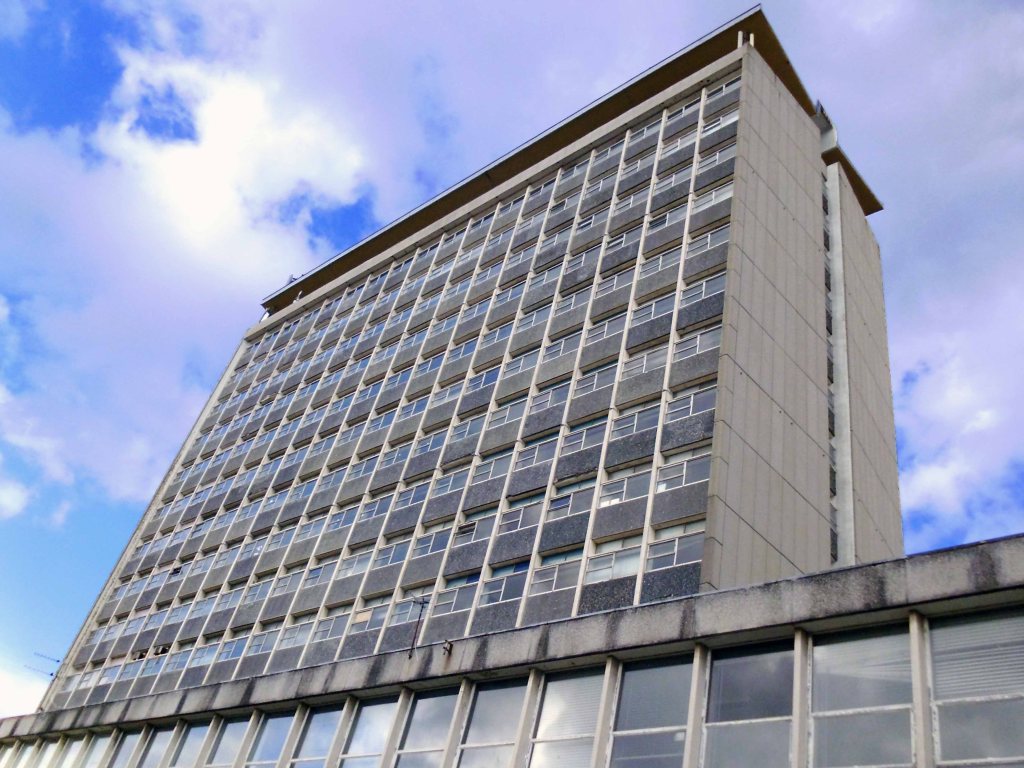
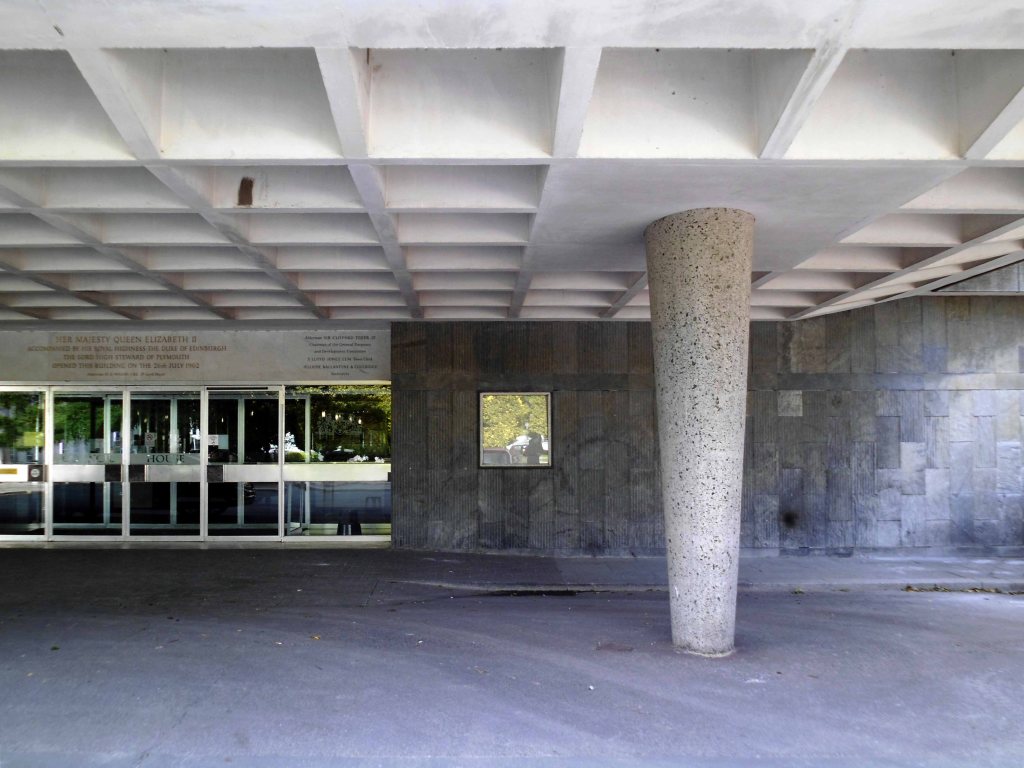
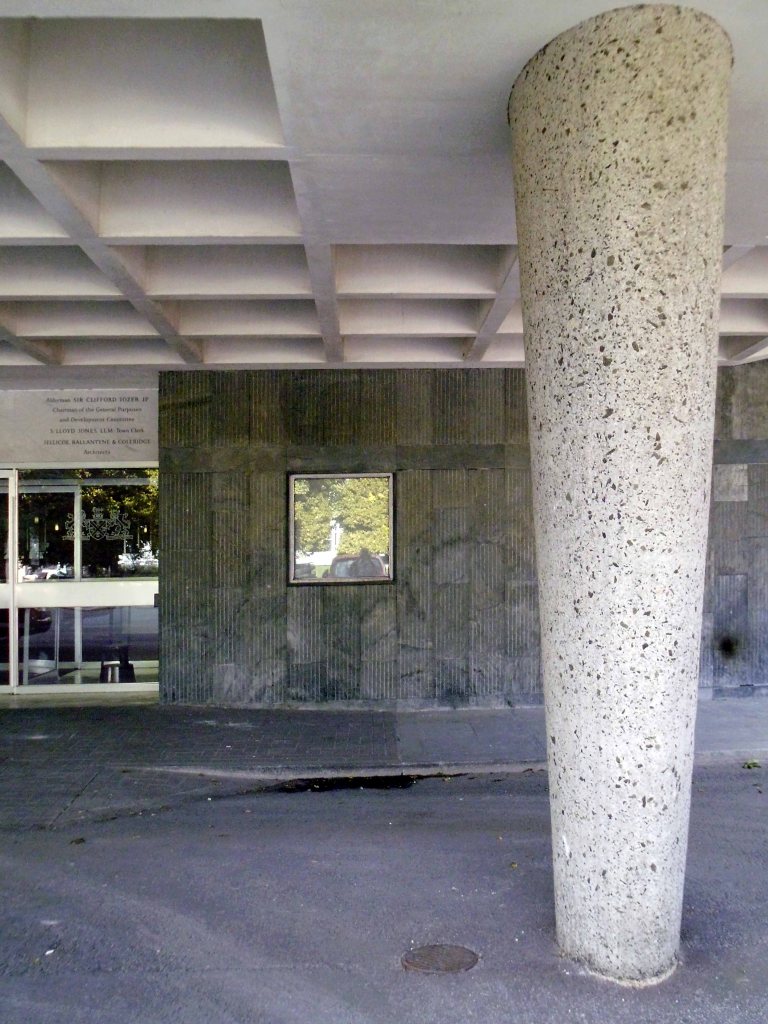
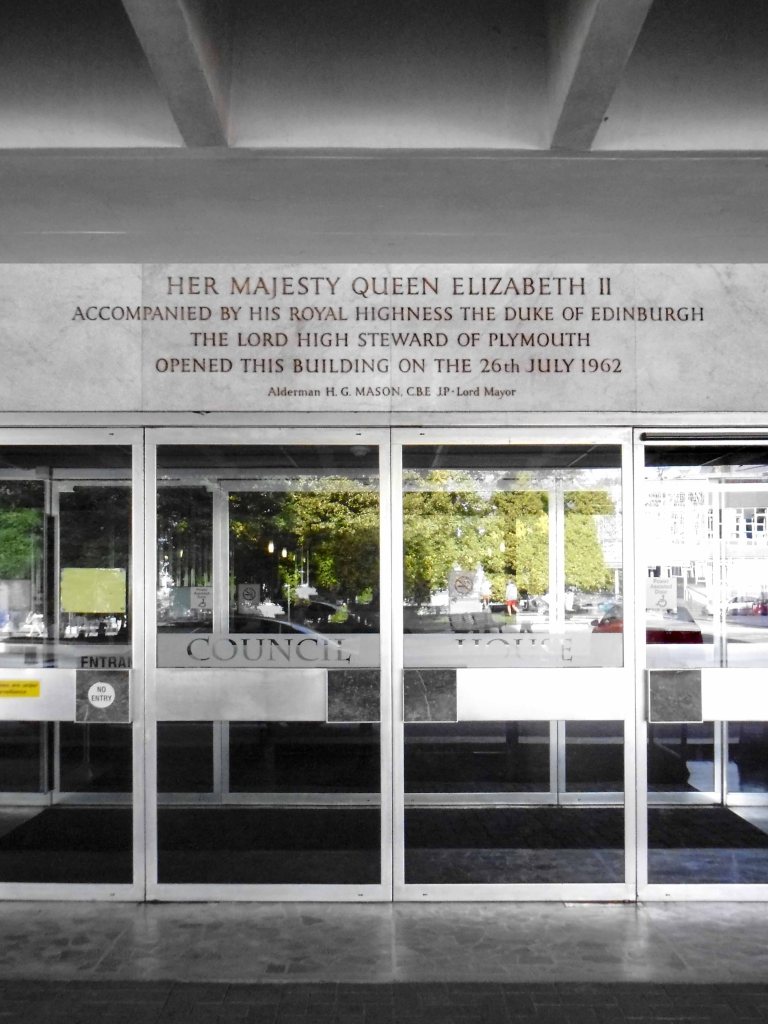
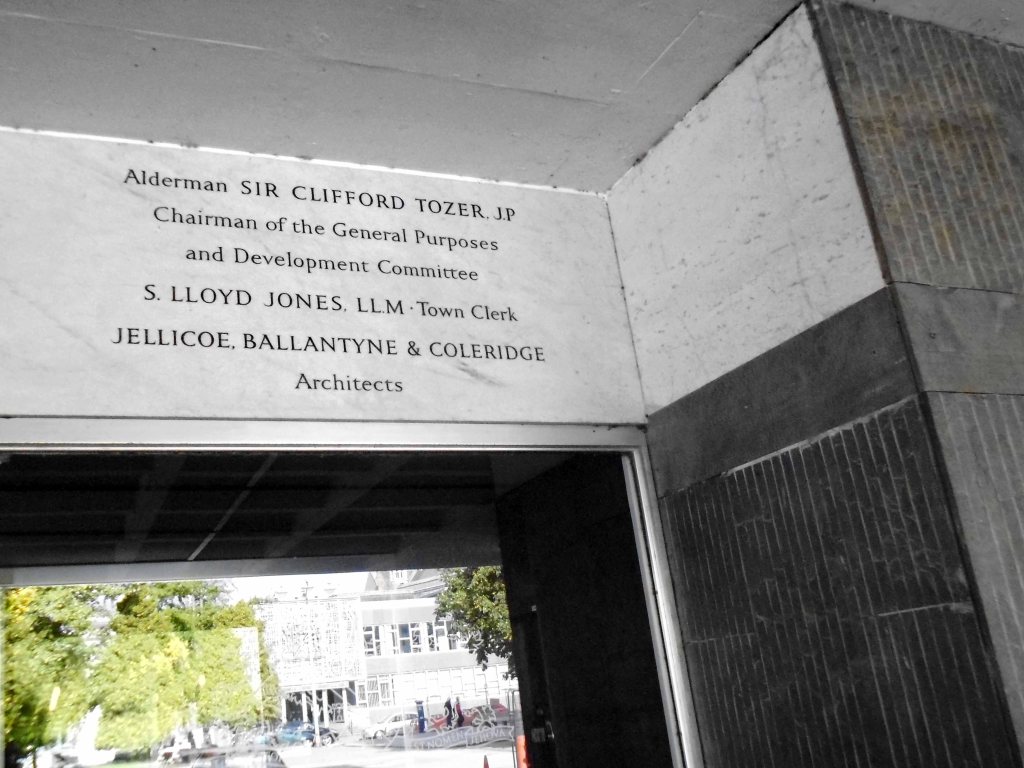
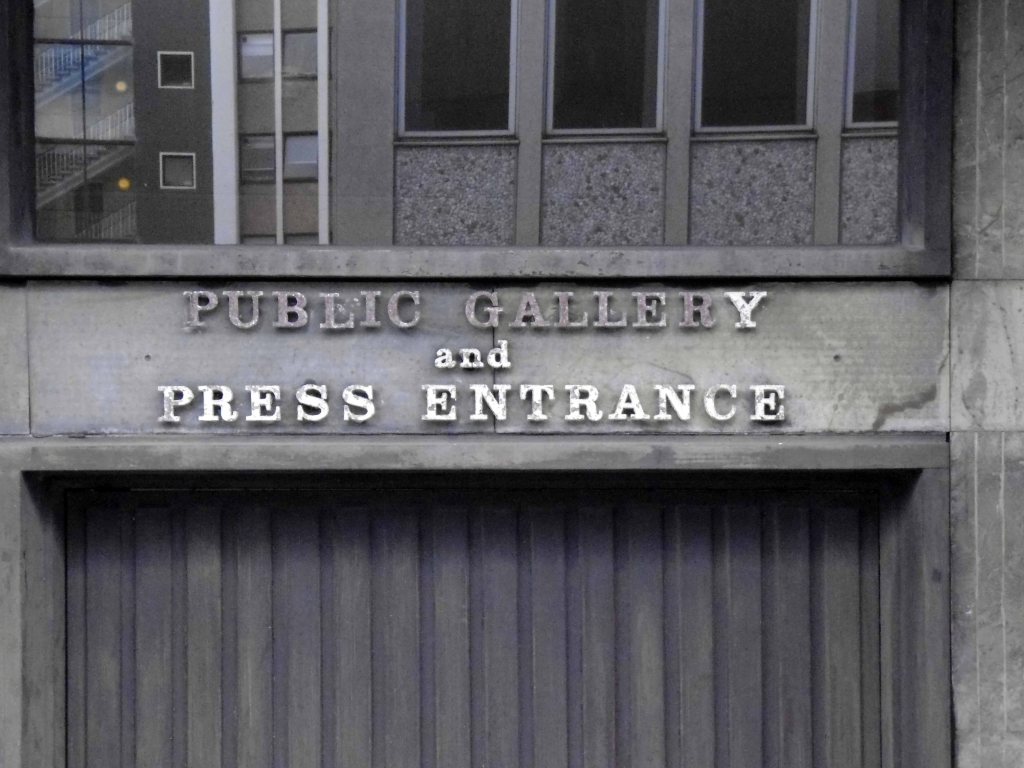
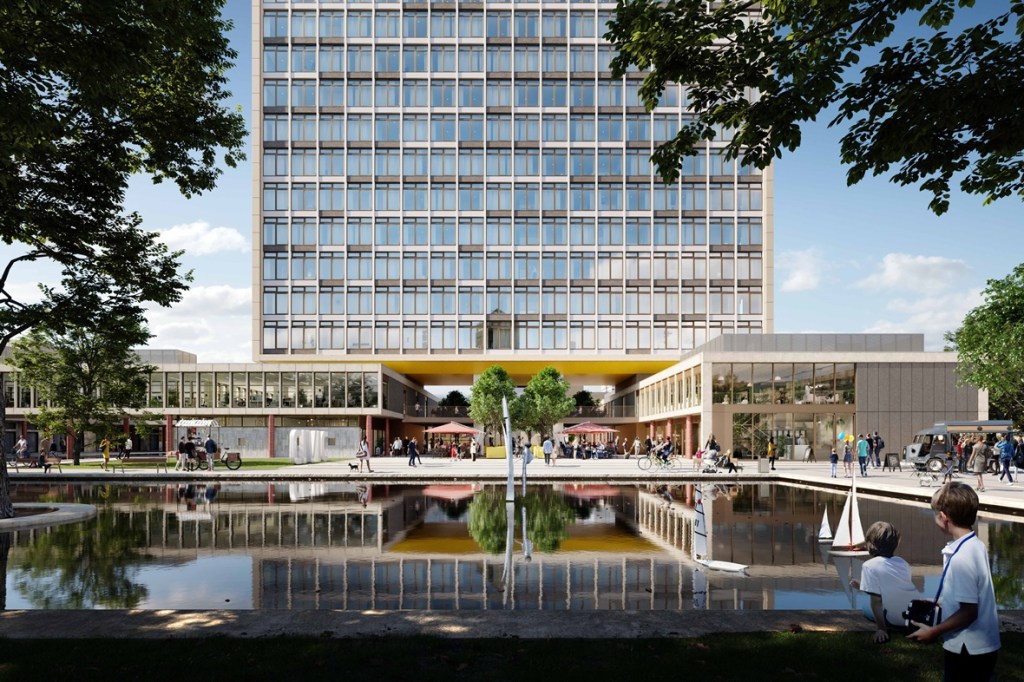
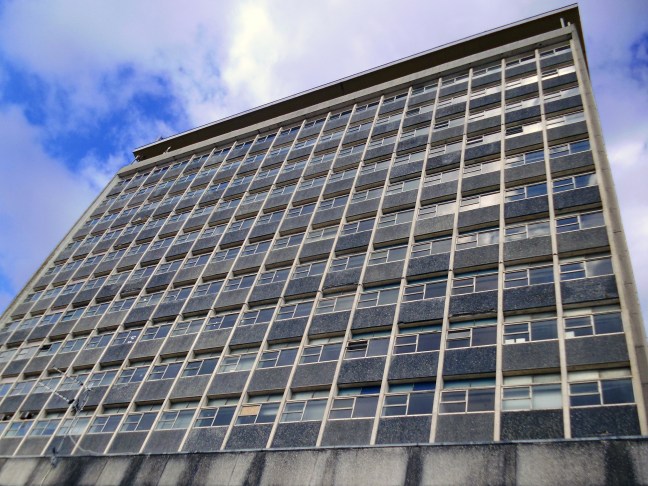
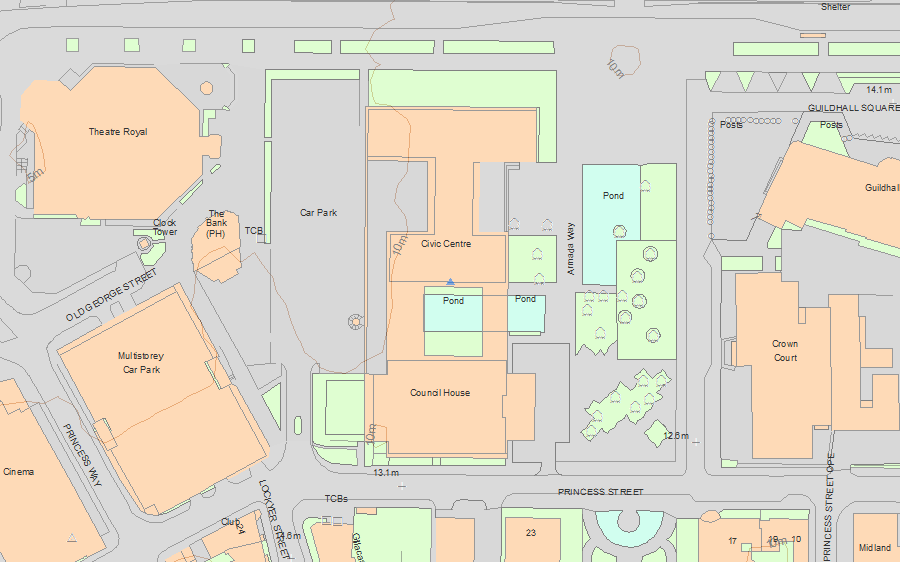
Council House former Civic Centre – Armada Way Plymouth PL1 2AA
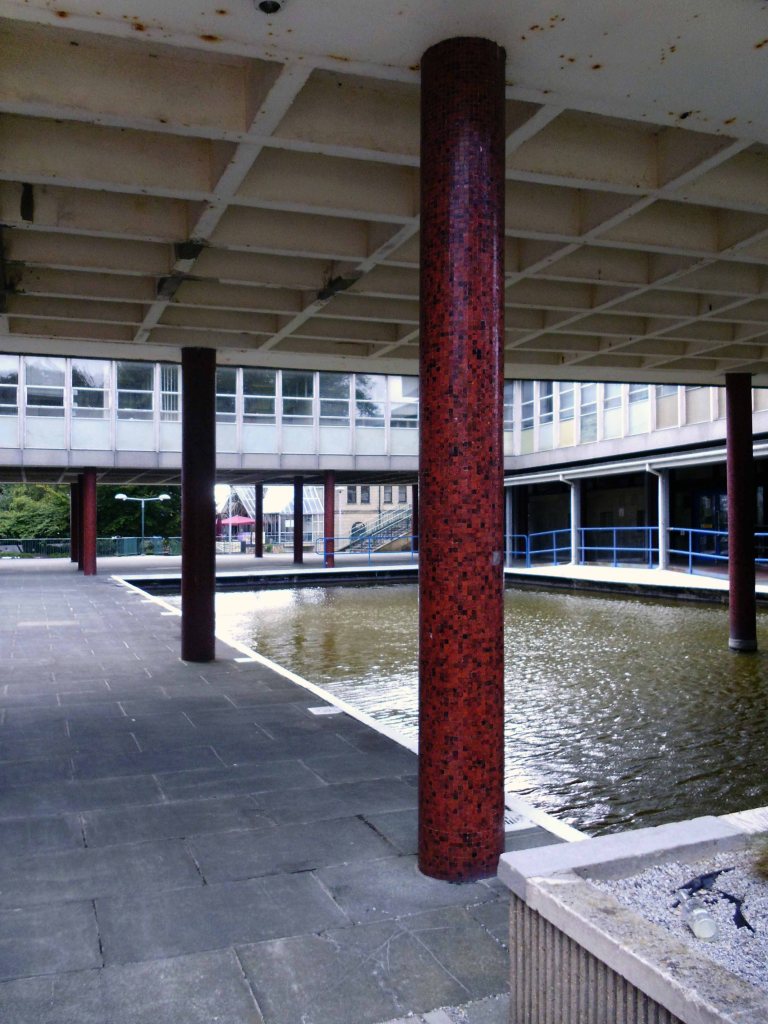
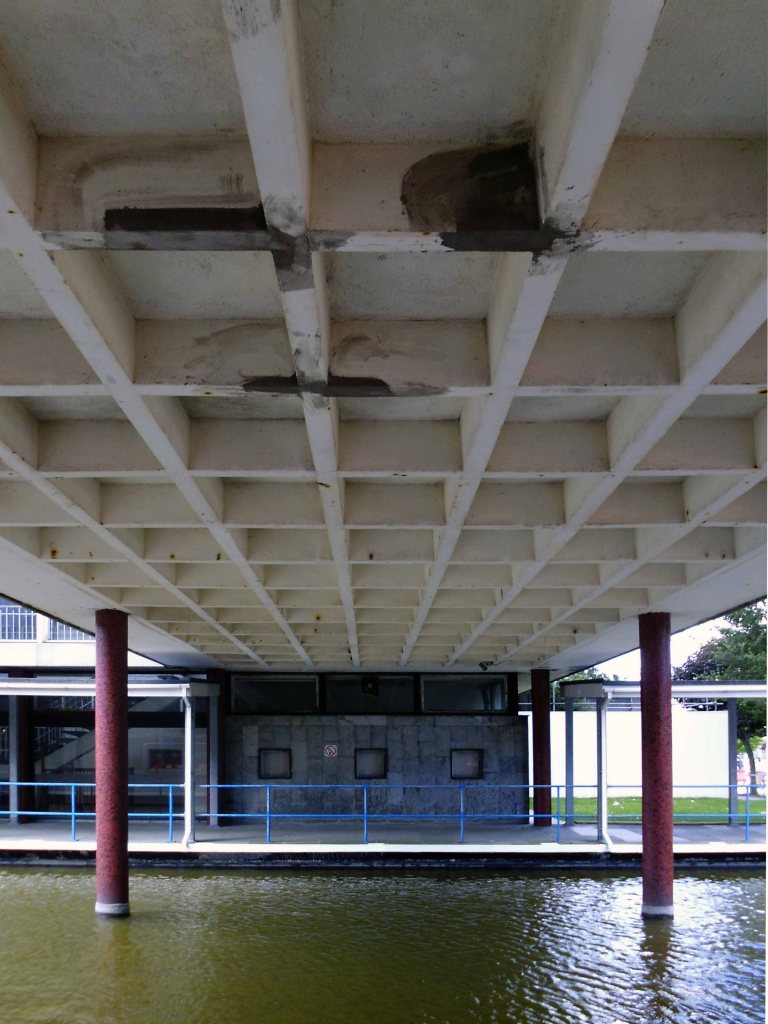
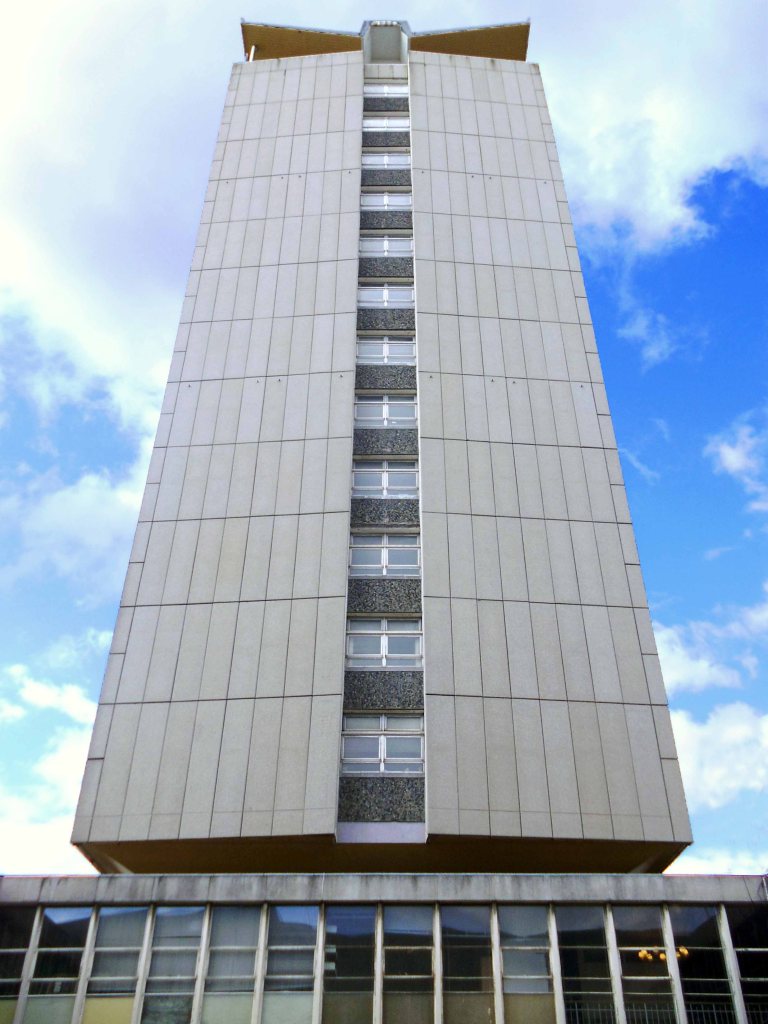
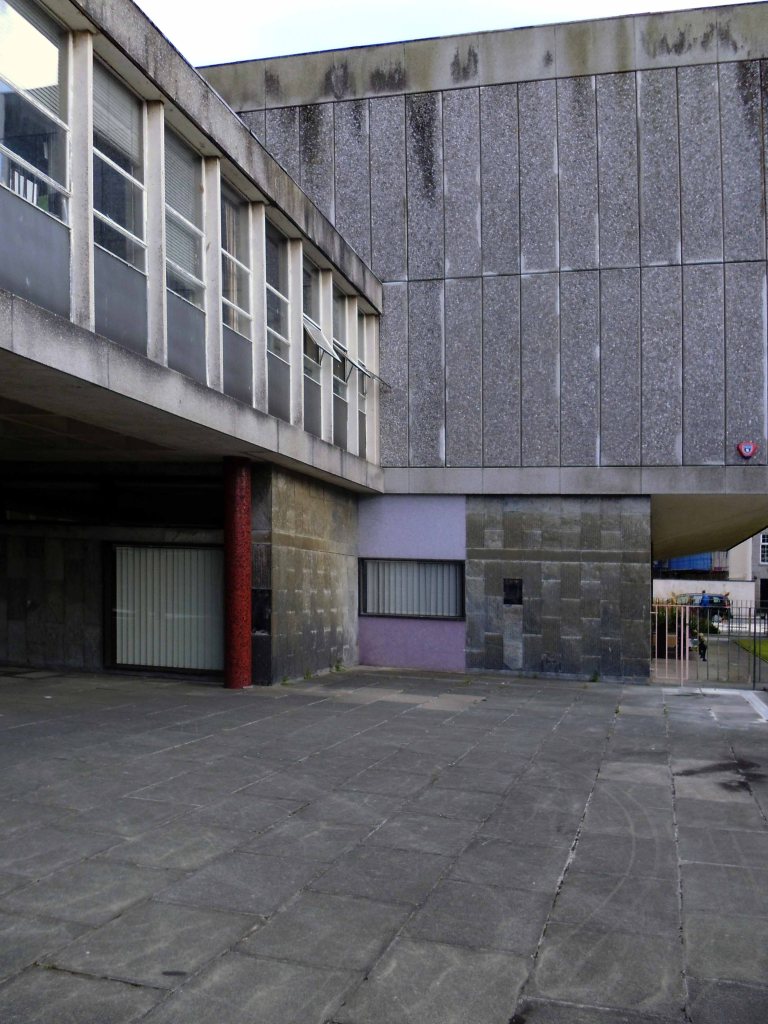
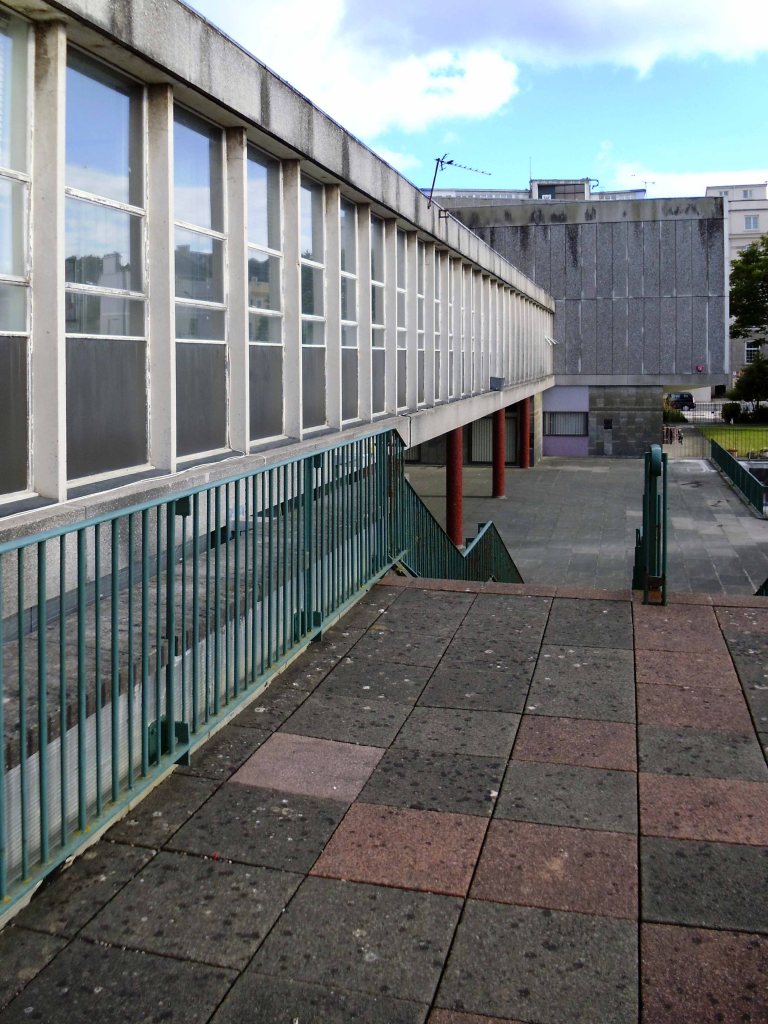
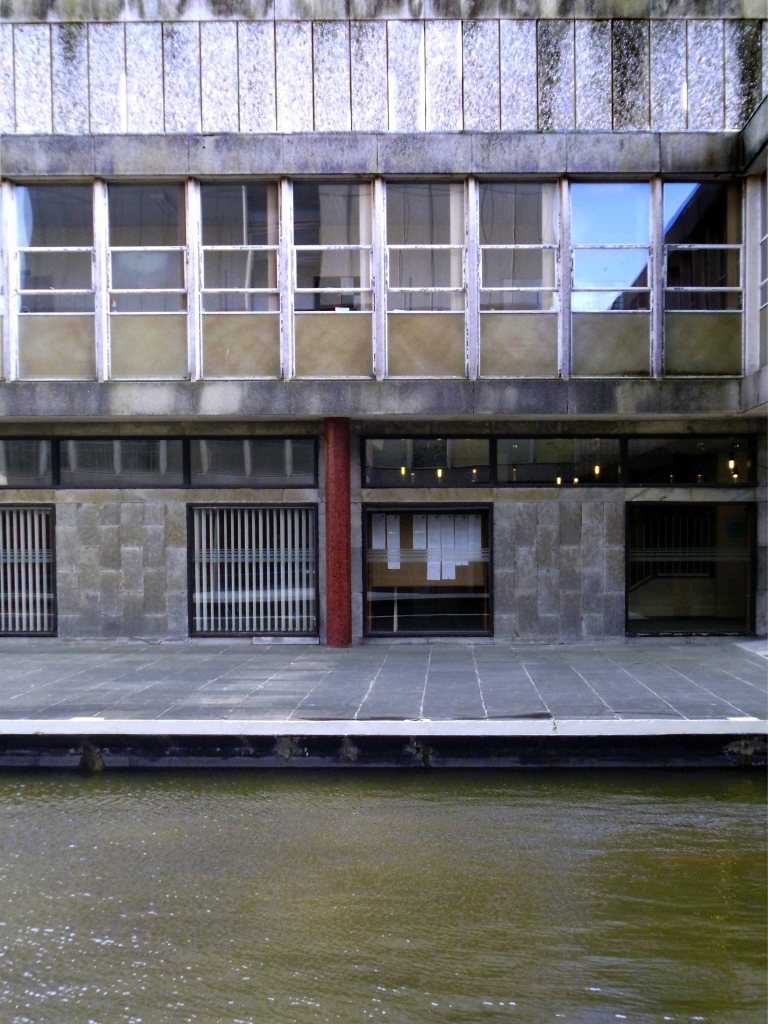
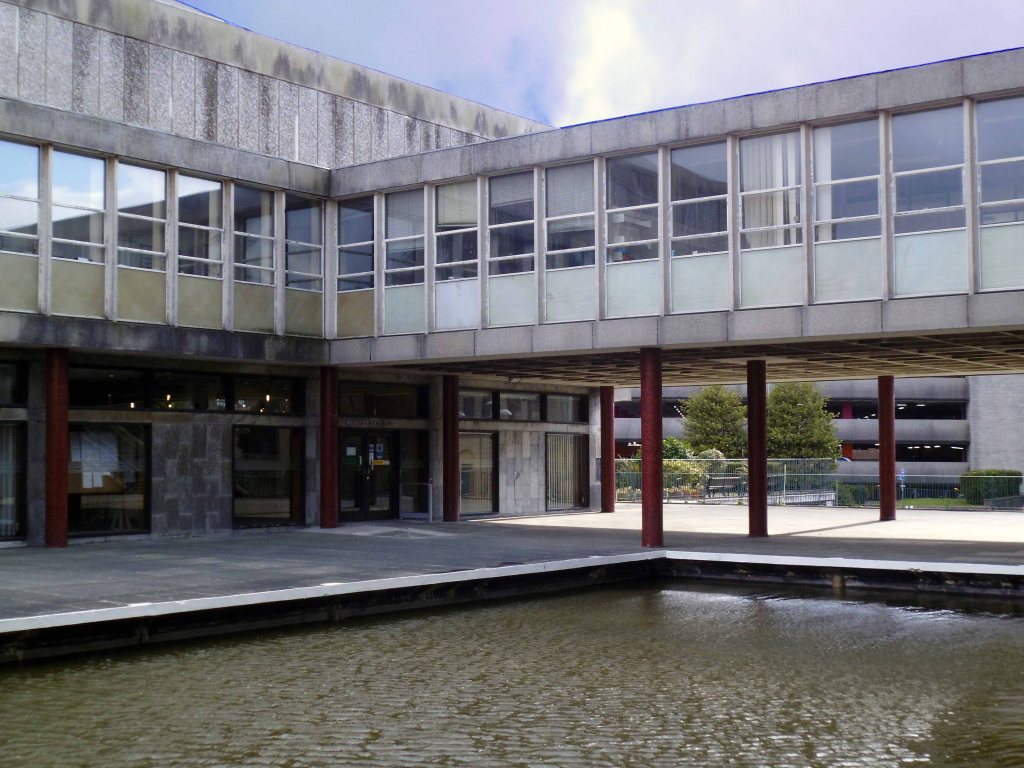
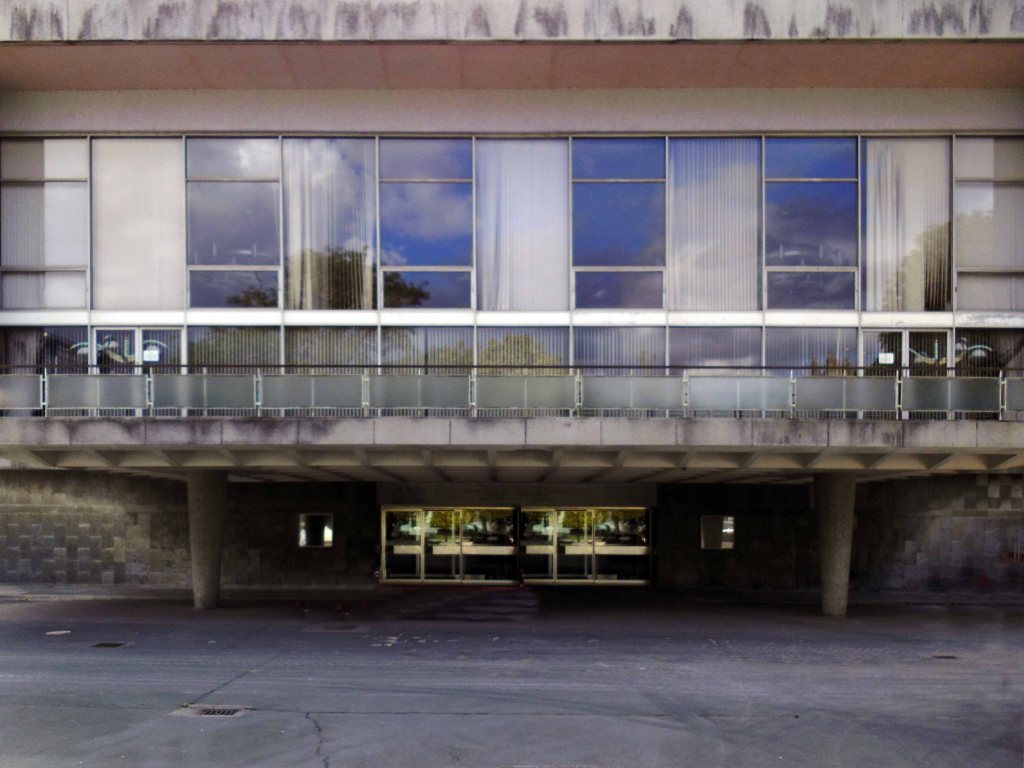
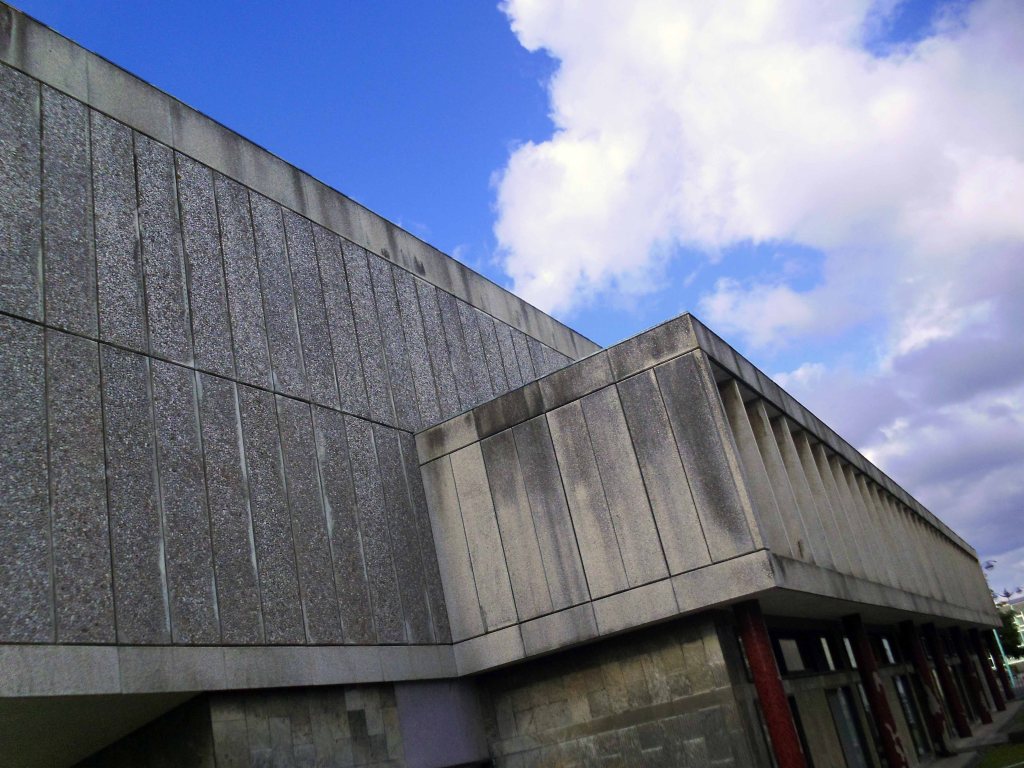
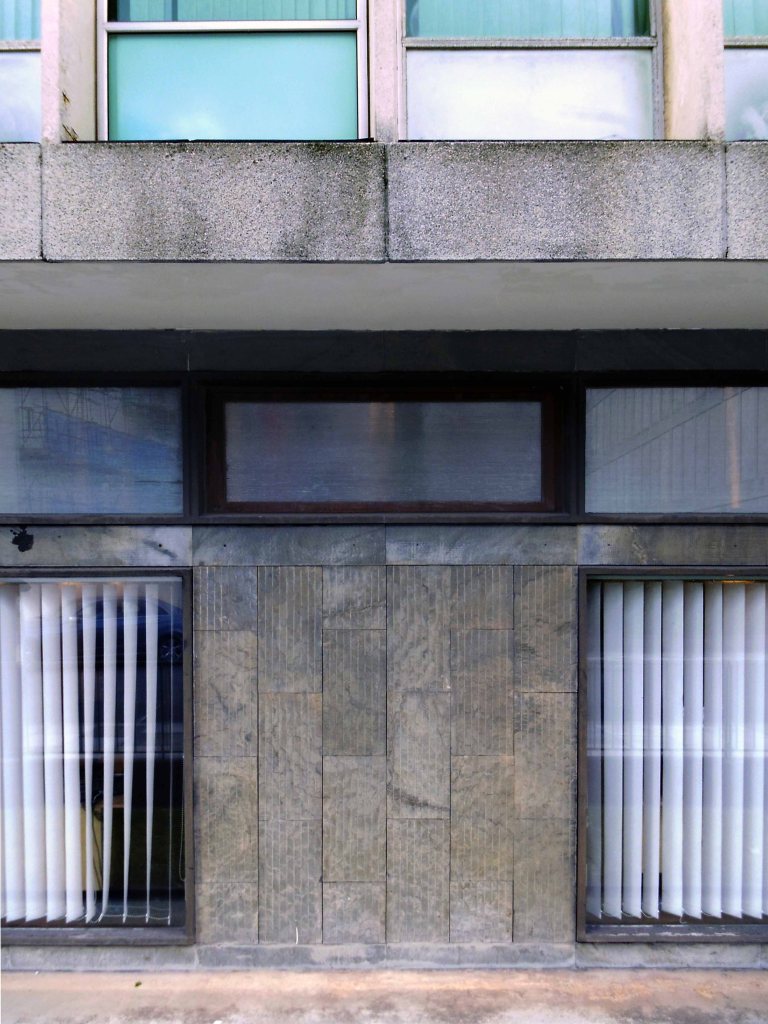
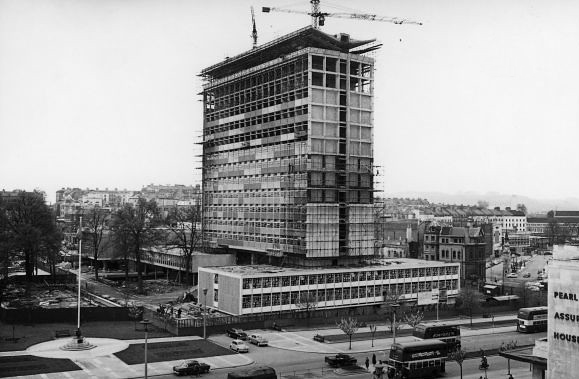
Former Civic Centre 1958-62 by Jellicoe, Ballantyne and Coleridge with city architect HJW Stirling. In-situ concrete structure with pre-cast aggregate panels. It comprises a fourteen storey slab block on a raised raft foundation which straddles a two storey block to the north and a bridge link to the two storey Council House to the south. The bridge link is elevated on pilotis to create an open courtyard with a reflecting pond, part of the designed landscape of the civic square.
I rode into town on my bicycle en route from Weston super Mare to Hastings one sunny afternoon in 2015. The pictures I took that day were largely left untouched, until today. I was prompted by an online postcard search to finally put them to some good use.
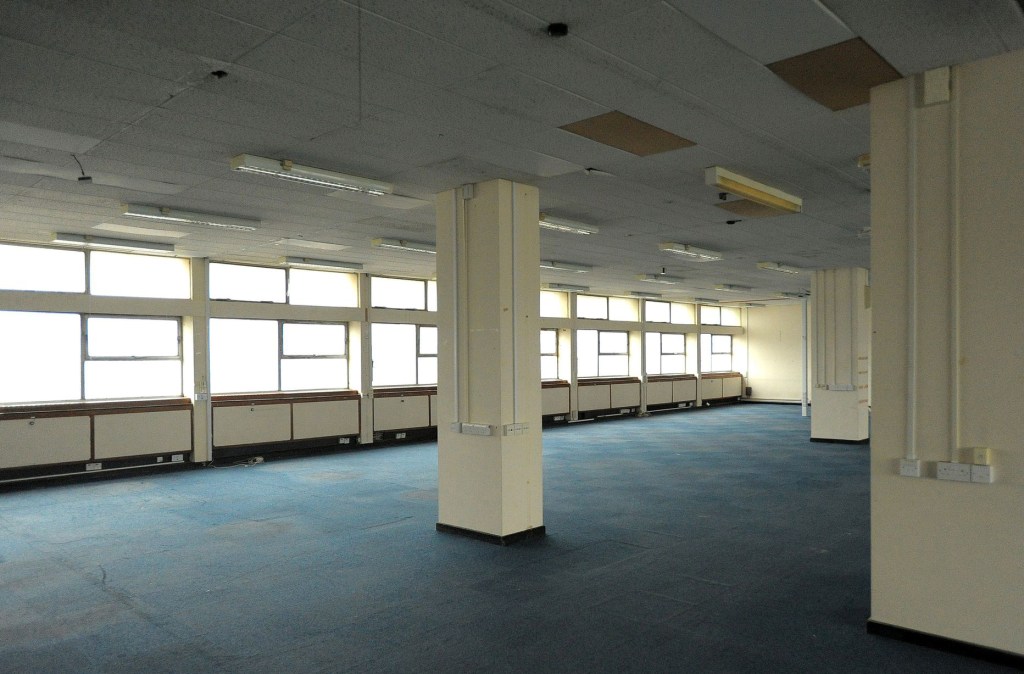
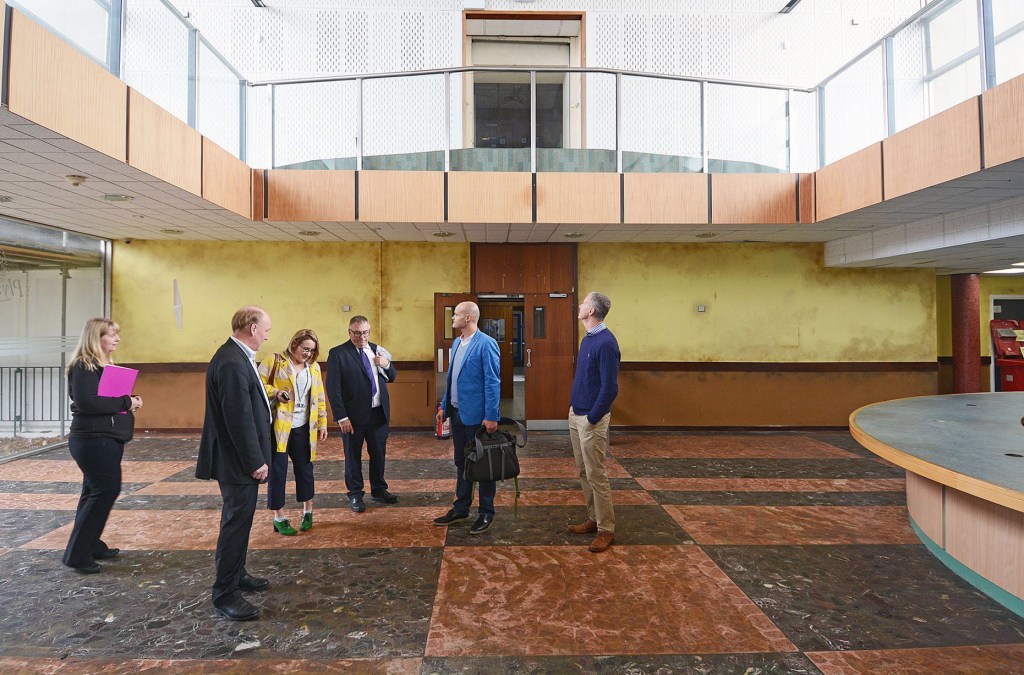
On the day of my visit the building was well and truly closed, and its future uncertain.
I took my time and explored the site, here is what I saw:
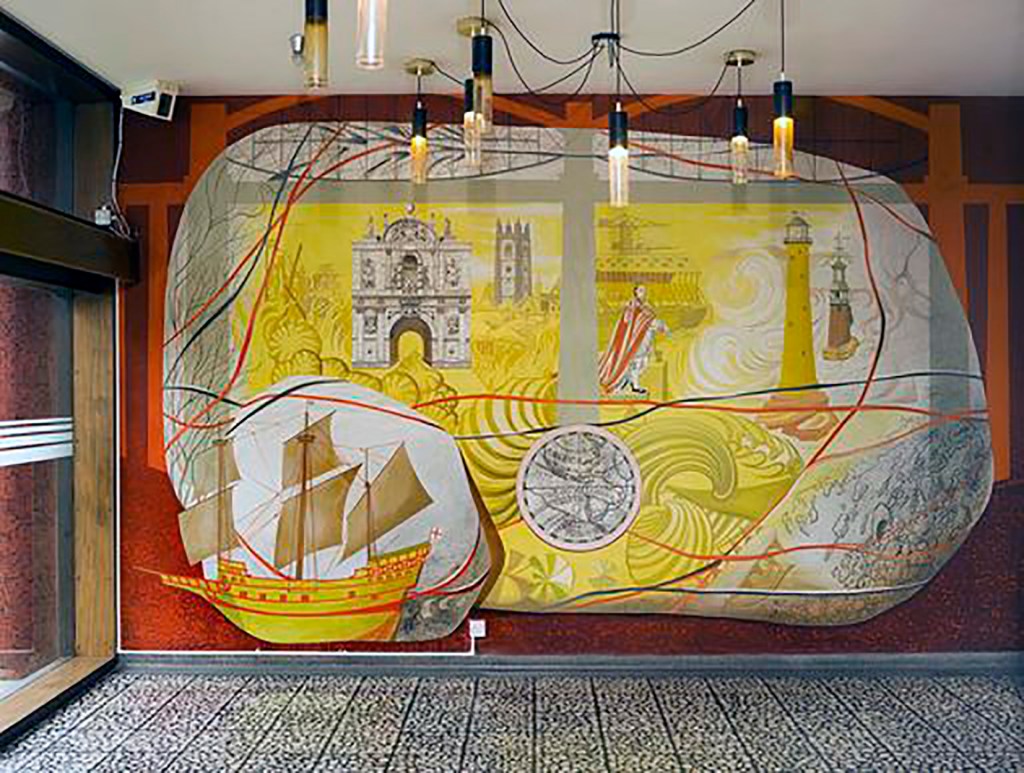
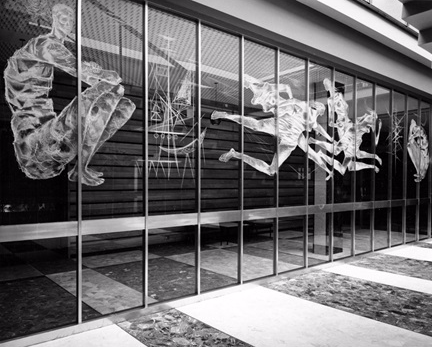
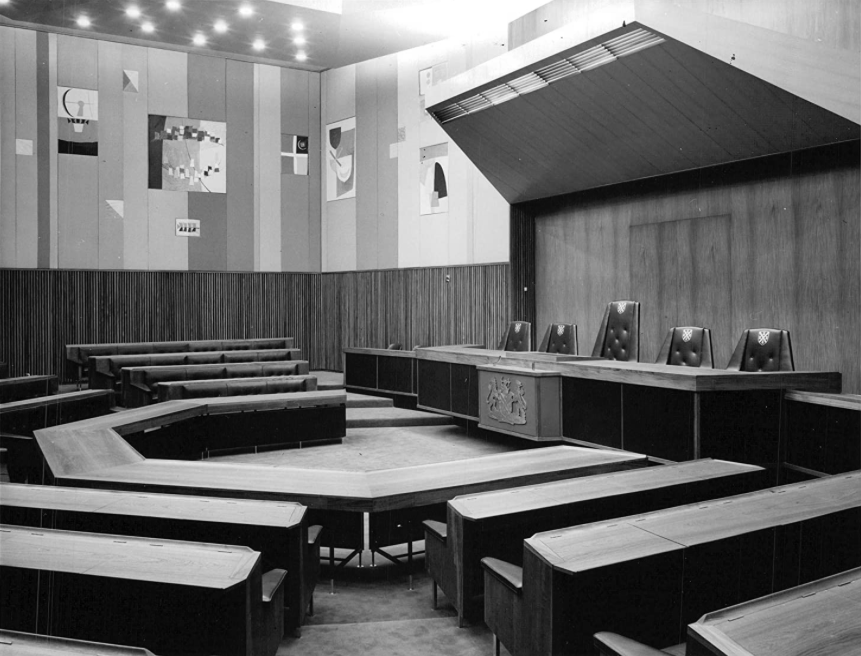
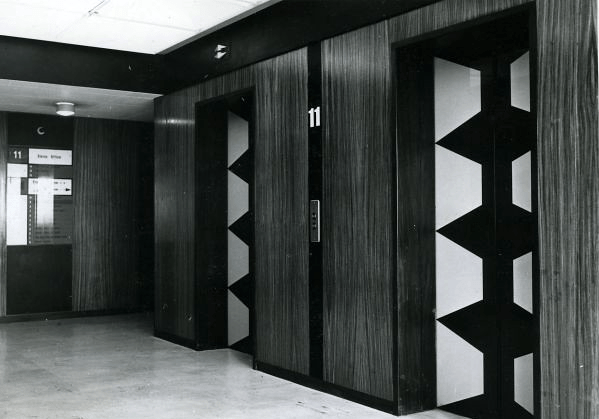
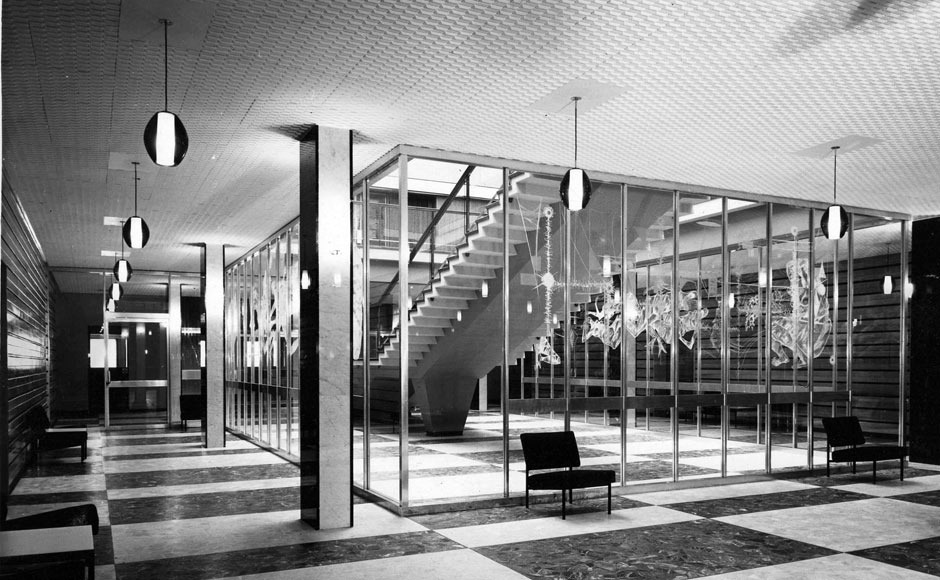
I subsequently found archival image of the interior – including examples of applied decorative arts.
Post War Buildings, Elain Harwood.
Plymouth Civic Centre, Royal Parade, Plymouth, Devon.
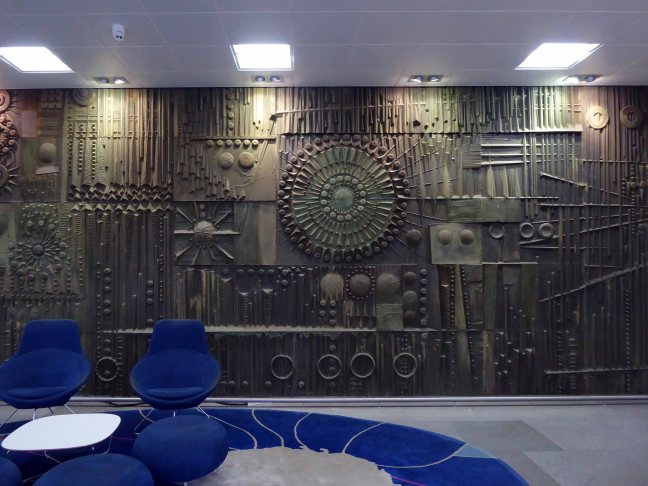
Interior, members entrance hall, detail of mural by Mary Adshead with light fittings by Chelsea glassware.
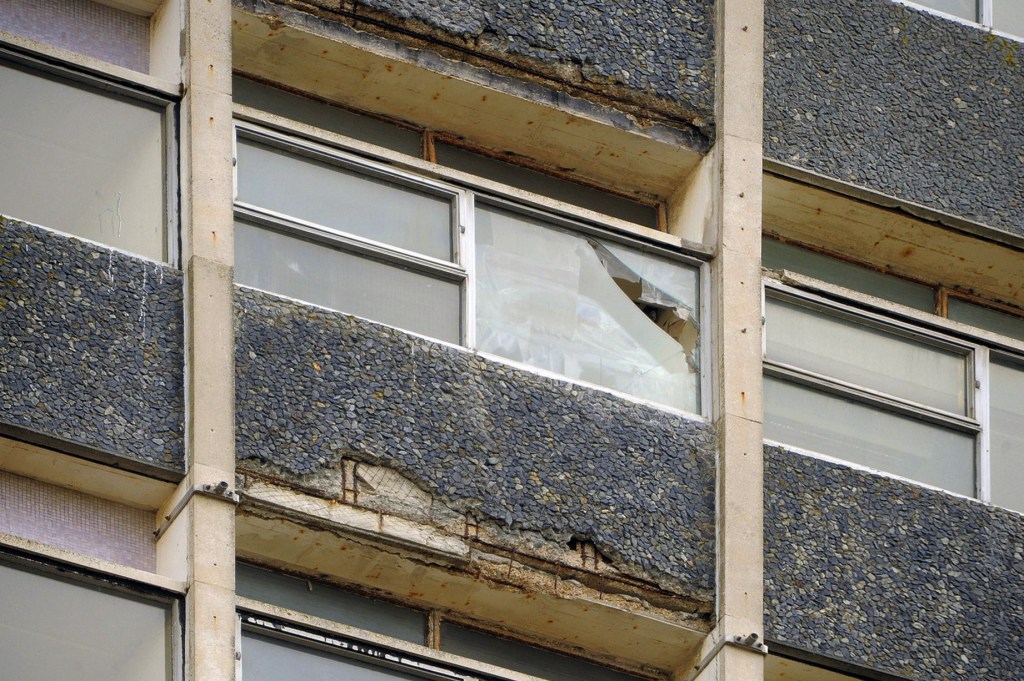
The building has suffered of late, from poor maintenance and general neglect.
Love it or hate it, it’s one of Plymouth’s most iconic post-war buildings – and it towers over the city centre. But the Civic Centre has been empty since 2015, with sad images revealing parts of the outside literally crumbling.
Today is the day Plymouth will finally discover what developer Urban Splash plans to do with the landmark 14-storey tower block it bought for £1.
Urban Splash are in the house – plans are to go ahead.
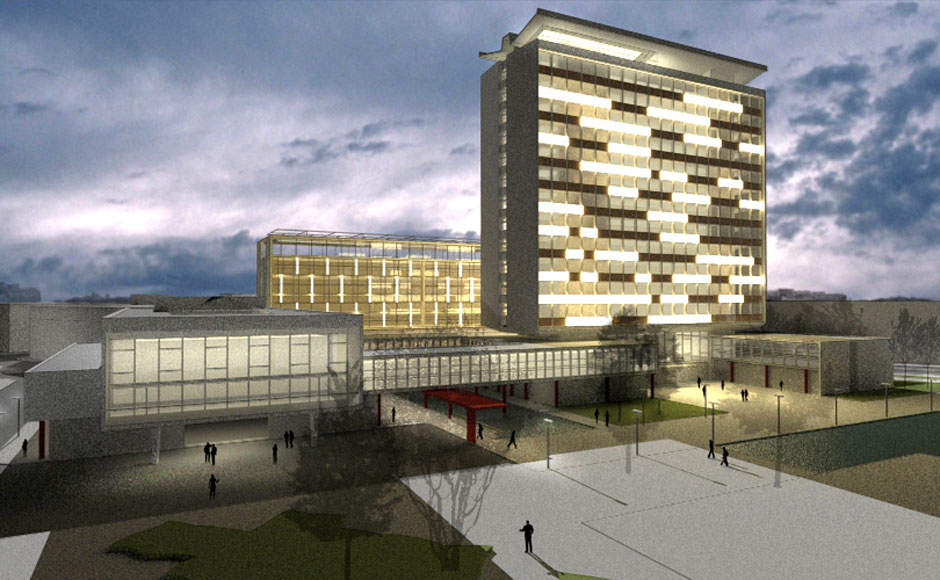
The proposal, by Gillespie Yunnie Architects, will see the 14-storey former council headquarters converted into 144 one and two-bedroom flats with the ground floors of the lower blocks providing about 4,600m² of office, retail and leisure space.
Unanimously approved last week, the scheme will open up the ground floor, making it ‘an active public space filled with outside seating for cafés, bars and restaurants’ and reuse the existing landscaped pools, while creating new pedestrian connections through the scheme from the Theatre Royal and Civic Square.
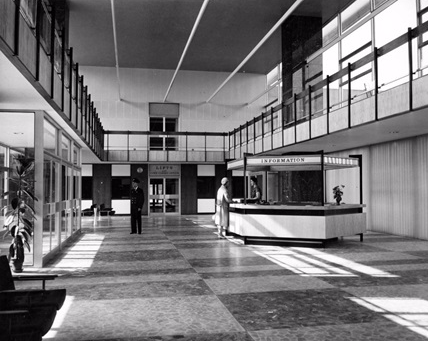
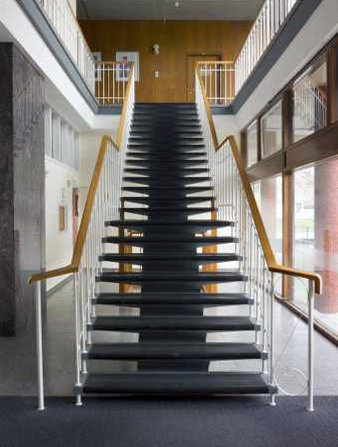
Today on my way elsewhere, in search of something or other, I walked into the lobby of the CIS.
I asked permission from the Receptionist to take a few snaps, was referred to the Head of Security, who referred me to the Receptionist, who ‘phoned Paul, who turned out to be Steve, who thought that it would be OK.
So I did – here are those very snaps, my thanks to the cooperative staff of the Cooperative Insurance Society.
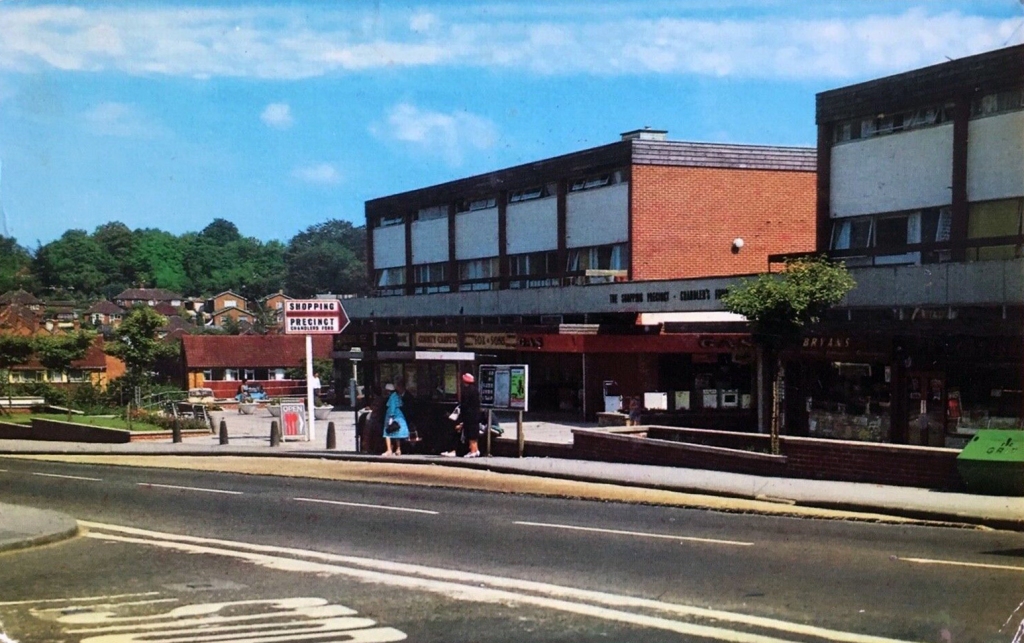
This time of year, with limited light and an inclement climate, it’s far easier to travel by picture postcard. Researching and searching eBay to bring you the finest four colour repro pictures of our retail realm.
We have of course been here before – via a previous post.
It is however important to keep abreast of current coming and goings, developments are ever so often overwritten by further developments.
Precincts my appear and disappear at will – so let’s take a look.
Set back from Beverley Road – we just about found this delightful Modernist gem. Tucked in amongst student accommodation and approximate to the Endsleigh College.
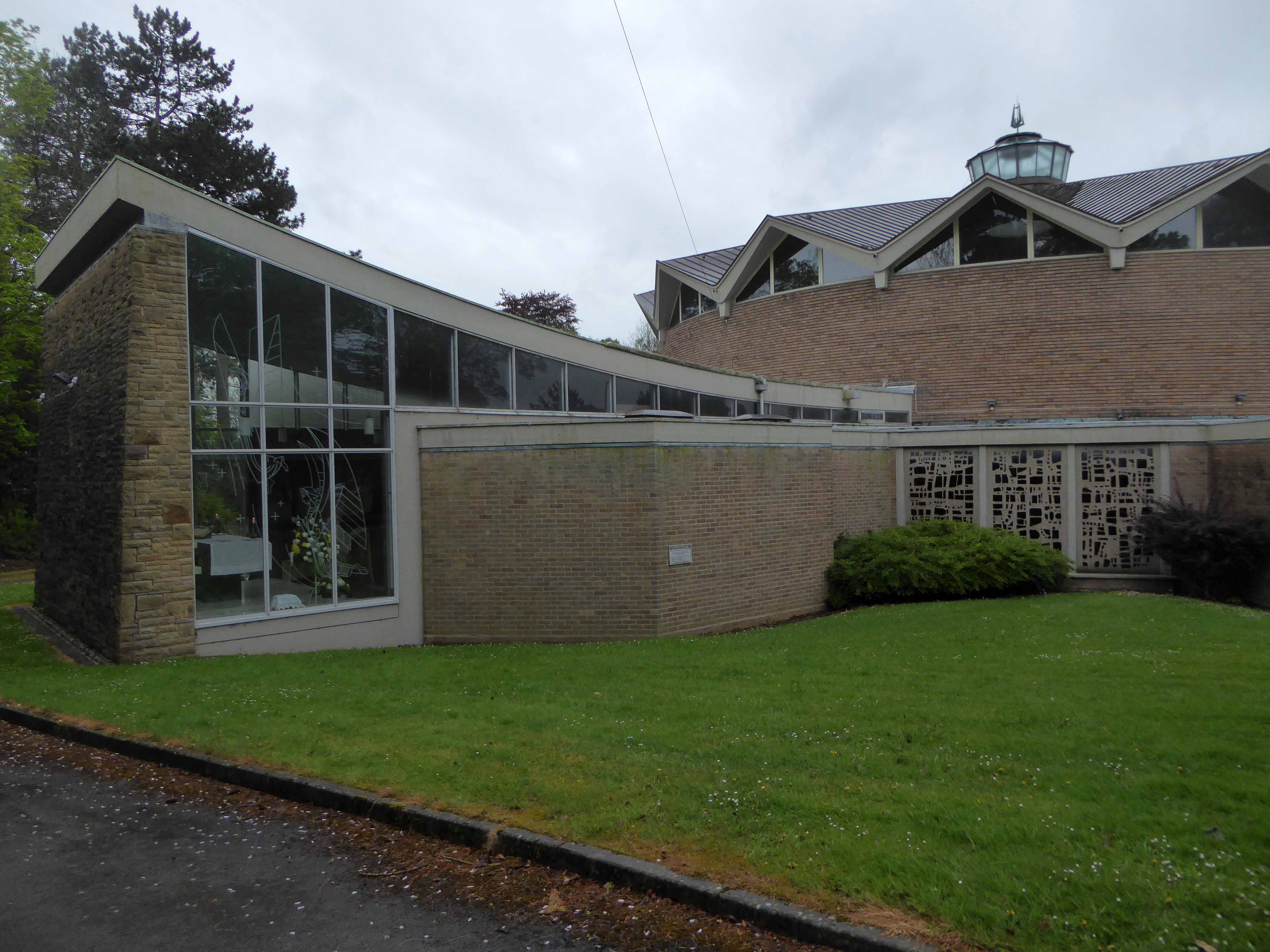
The church built in 1965 is fan-shaped in plan. Concrete portal frame with yellow brick infill. Shallow-pitched sheet metal clad roof. The main rear wall is flat and blind, with a parapet, and extends across the building at full height. From this wall the main body of the church radiates, three facetted bays to either side, with a saw tooth eaves line, then a projecting square block which houses the narthex and west gallery. The saw tooth eaves continue just above the entrance block to complete the fan shape. Attached to the other side of the main wall are the low, square projections of the side chapels and sacristies and a concrete framed bell tower with shallow pitched roof. The entrance block is clad is artificial stone, has a wide, glazed screen with central doors and a thin flat canopy.
We had arrived some twenty five strong as part of Manchester Modernist’s Hull Mooch – we were very warmly welcomed and left more than satisfied by the riches both within and without.
My thanks to Deacon Rev. Robert Shakesby
Above this an inset panel of decorative mosaic by Ludwig Oppenheimer Ltdof Manchester -the firm ceased trading in 1965. The facetted elevations have large glazed areas set in a bold concrete grid of mullions and transoms, tripartite in the centre with a border of smaller divisions. The bell tower is placed in the centre of the east wall and has a port cullis-like bell-opening facing west.
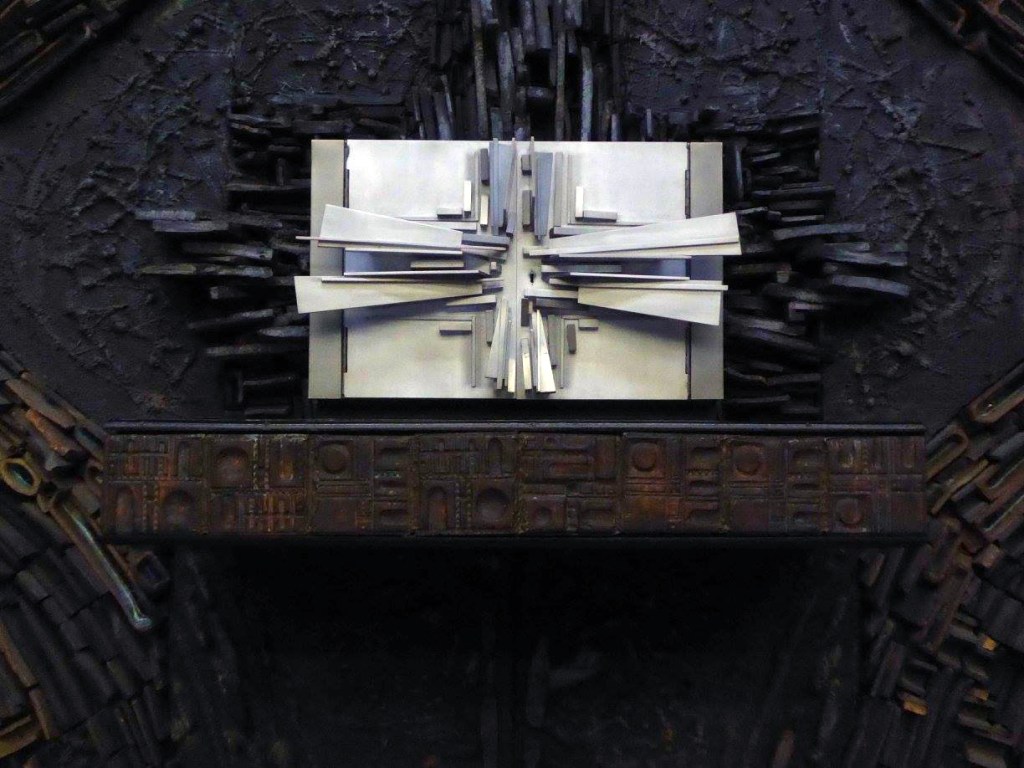
The mosaic is surrounded by decorative abstract panels in light relief
Let’s take a look inside.
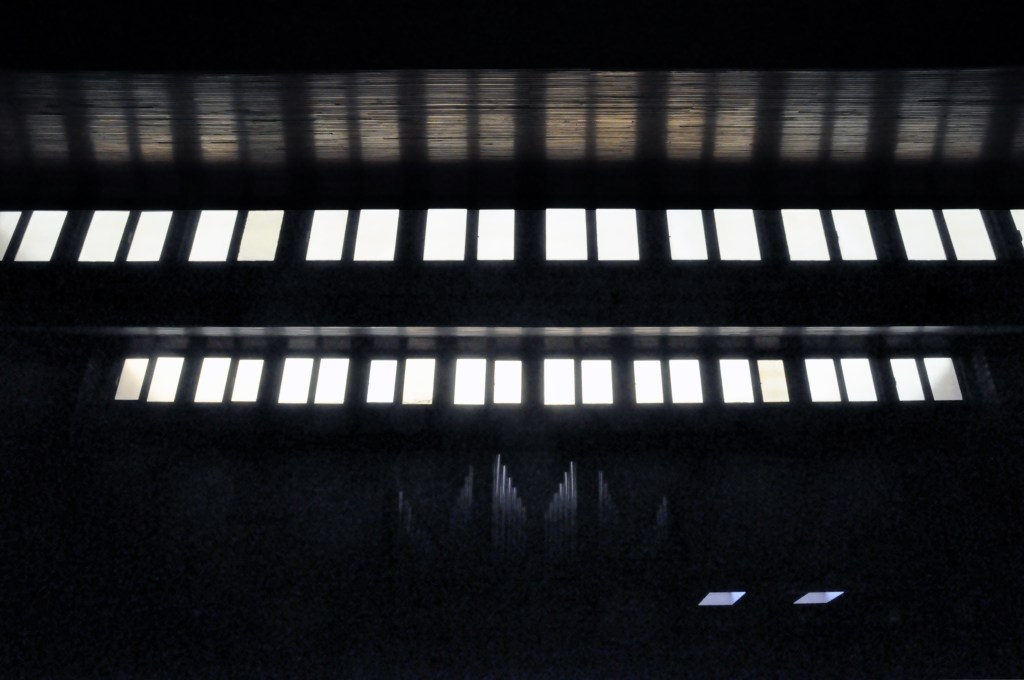
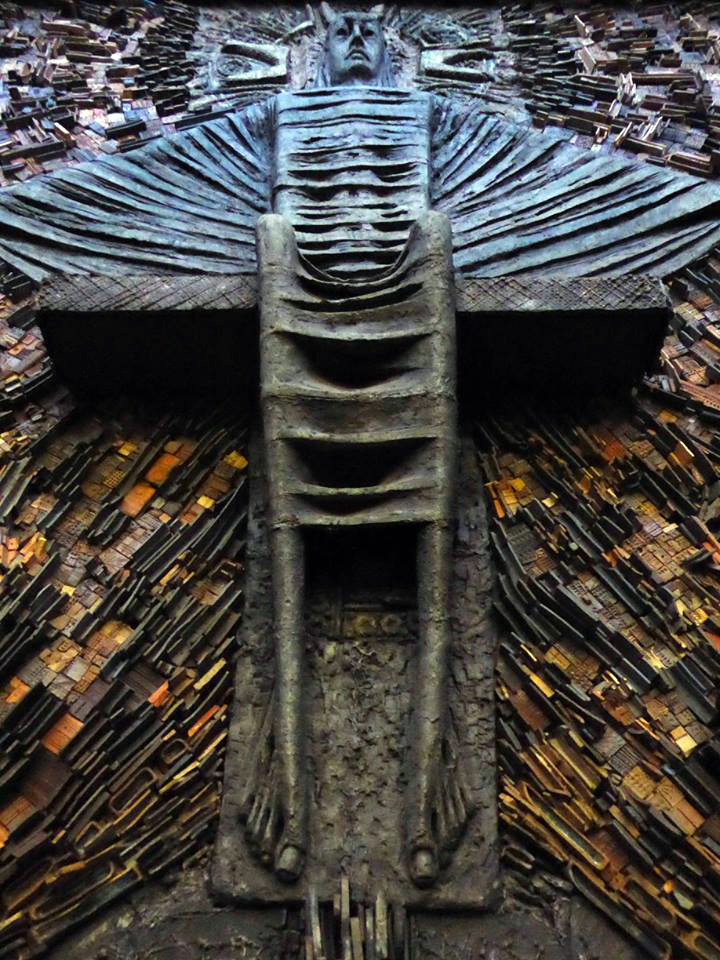
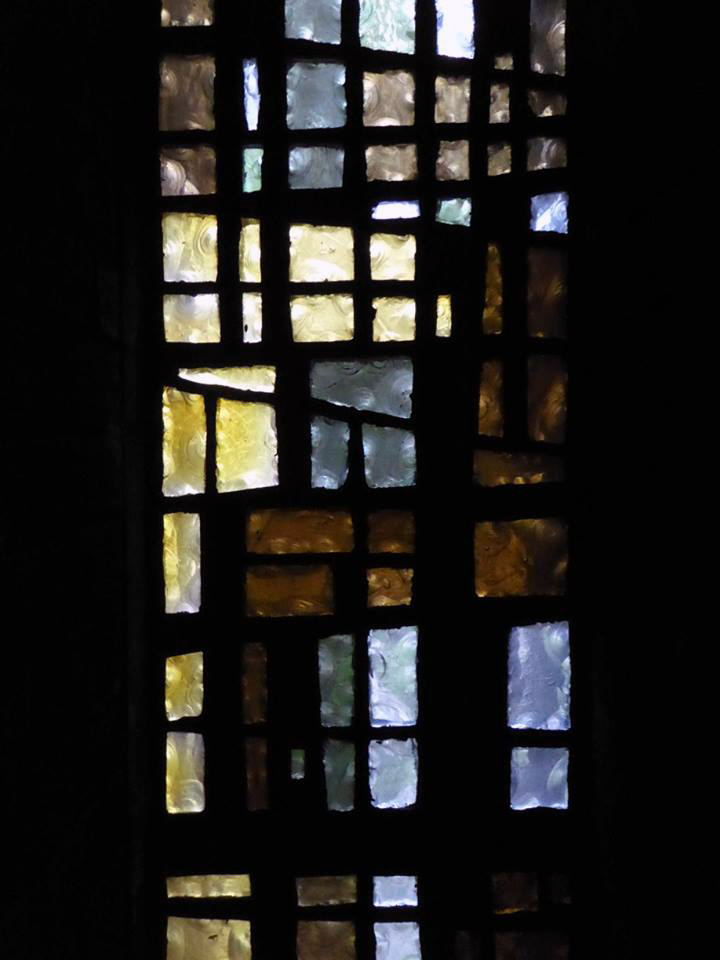
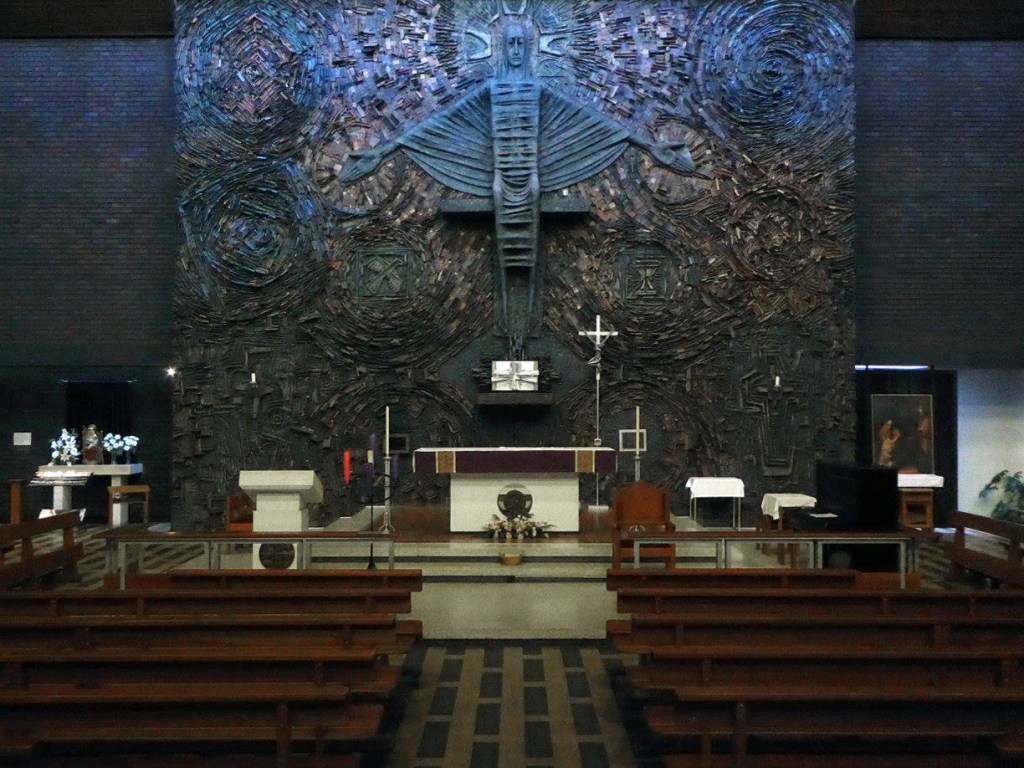
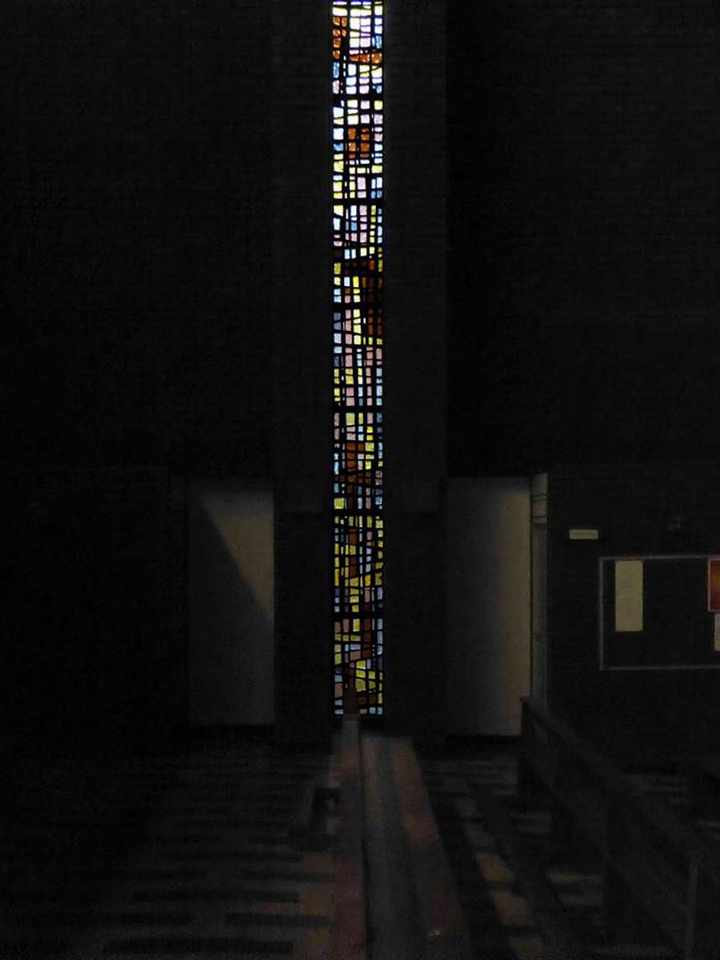
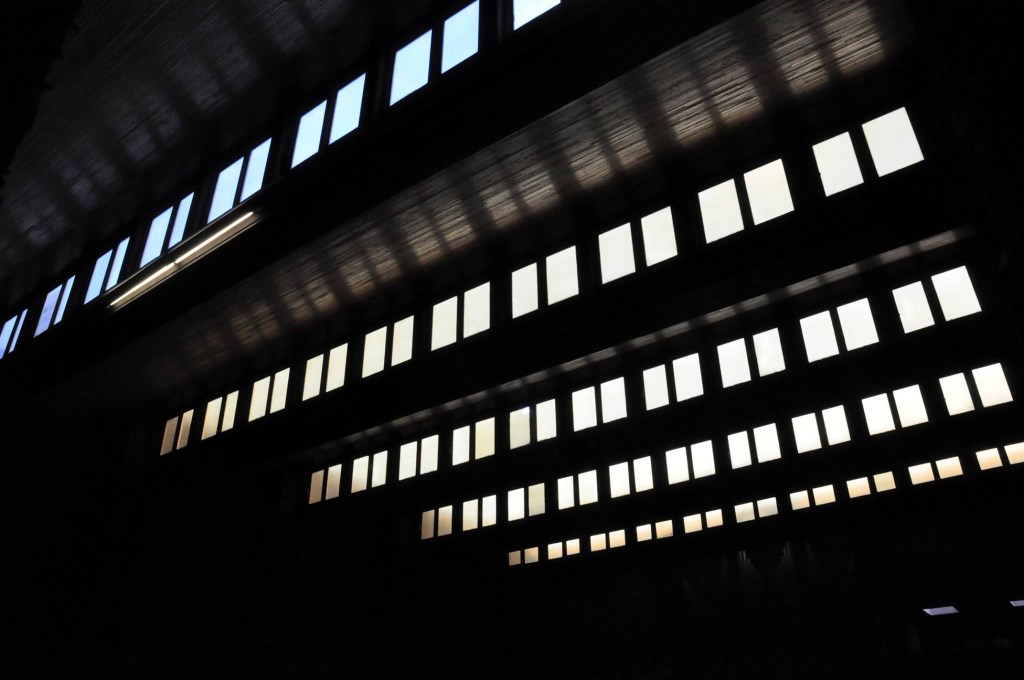
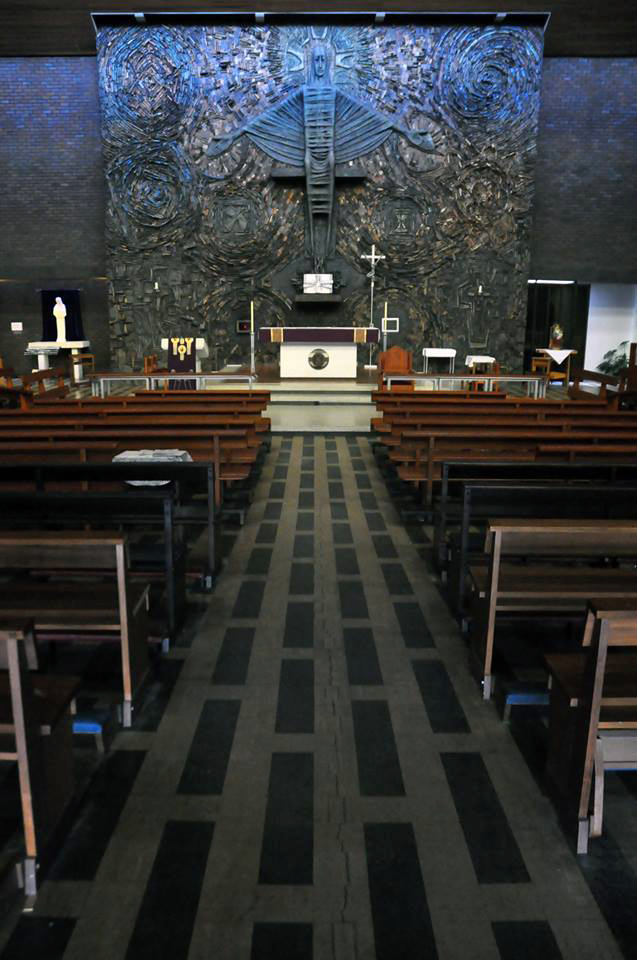
The interior is a light and spacious essentially single cell, with the shallow canted projection of the sanctuary – top lit by a row of seven small circular skylights, the low side chapels and the organ gallery. The concrete portal frame provides a dramatic grid radiating from the centre of the east wall. Sanctuary fittings in contrasting marbles, by Toffolo & Son of Hull, designed as a piece. Similar marble altar in the northeast side chapel. The chapels have subtle shallow-pitched arches. West gallery also with circular skylights. Organ pipes at either end arranged within a striking double-curve enclosure, like a grand piano in plan. Open-backed pews and original light fittings. Stained glass by Leo Earley of Earley & Co. of Dublin. Stations of the Cross, wooden relief panels set within integral frames, somewhat stark.
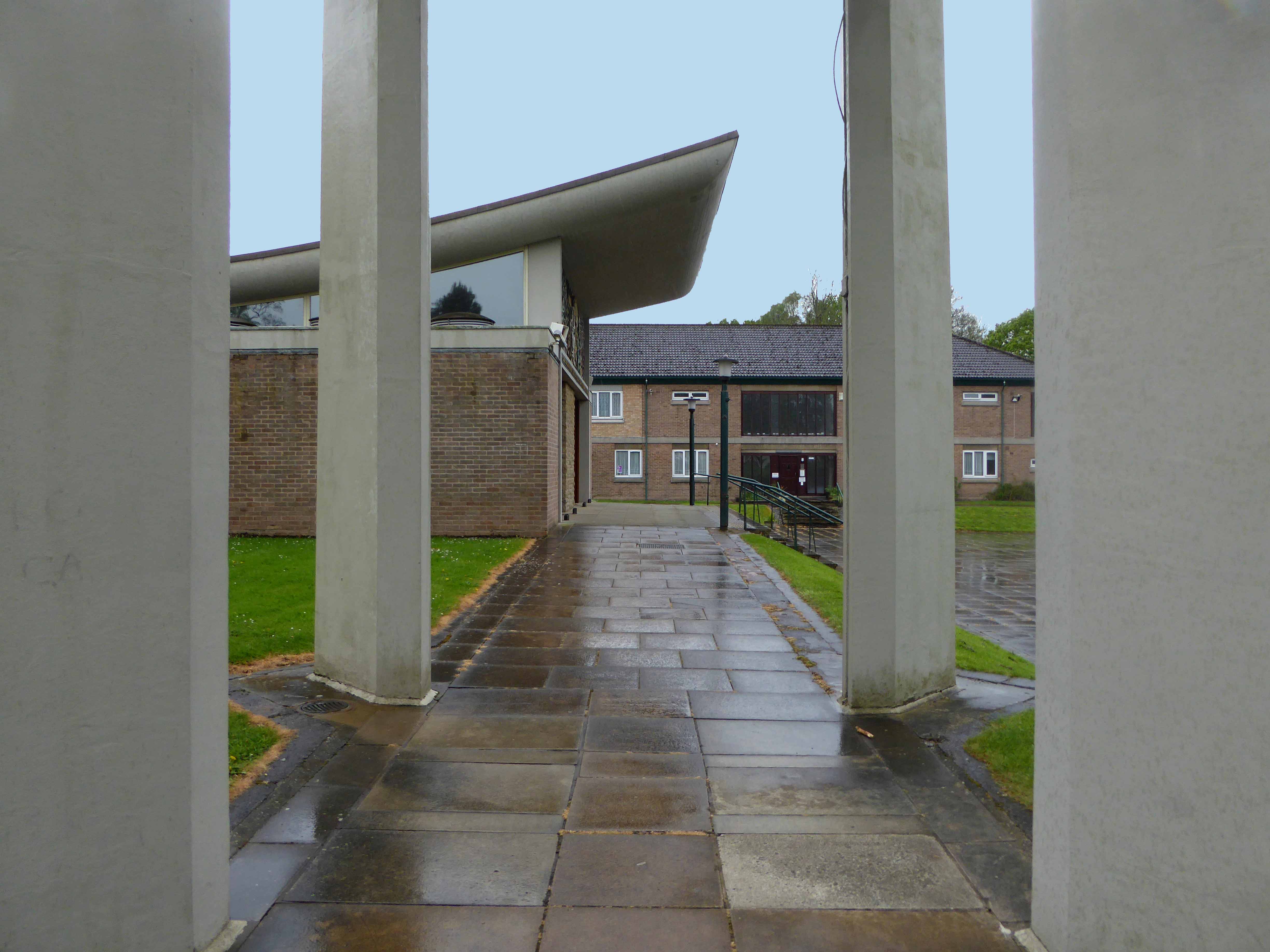
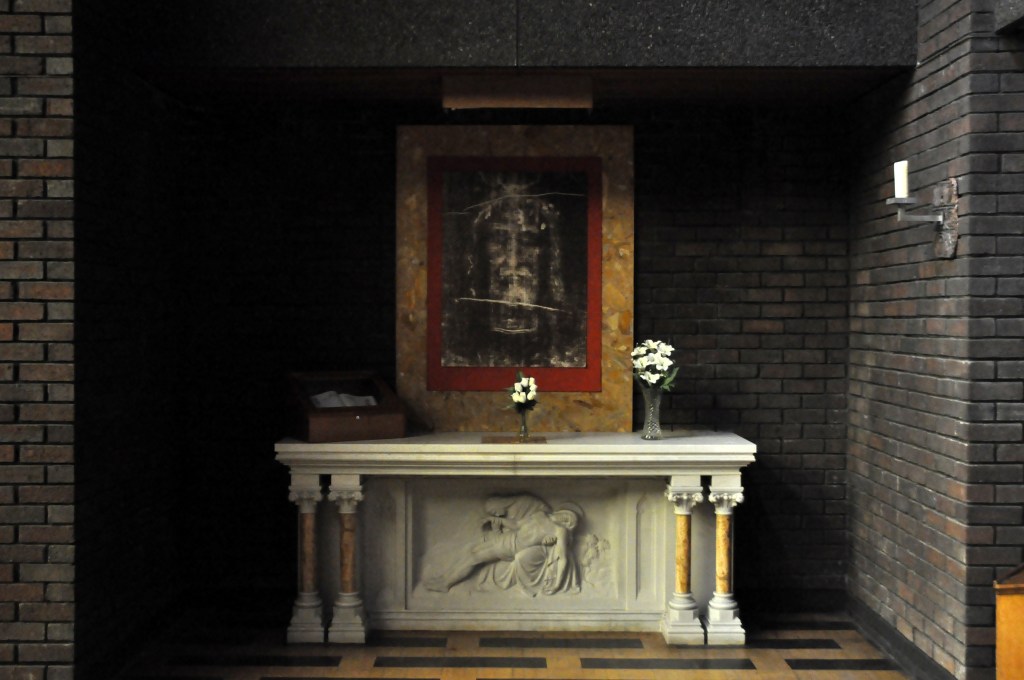
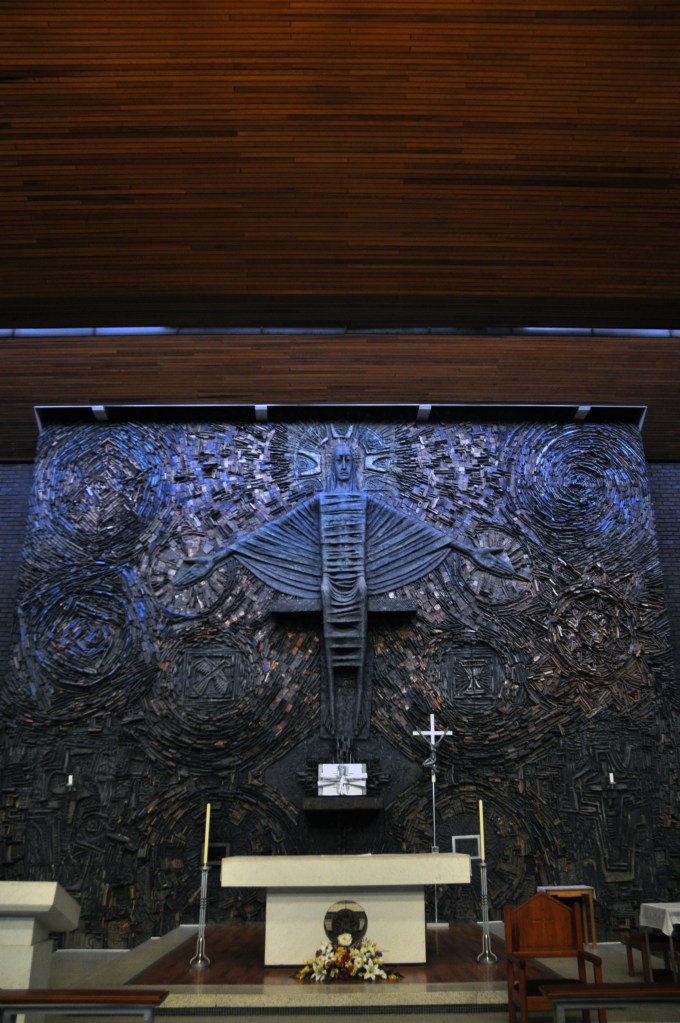
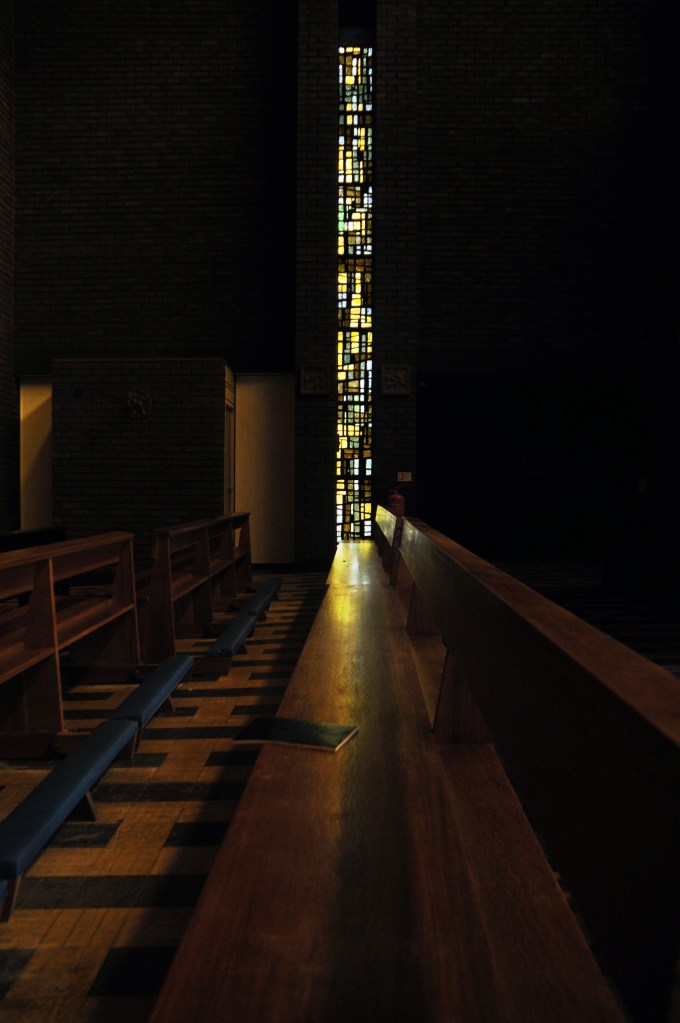
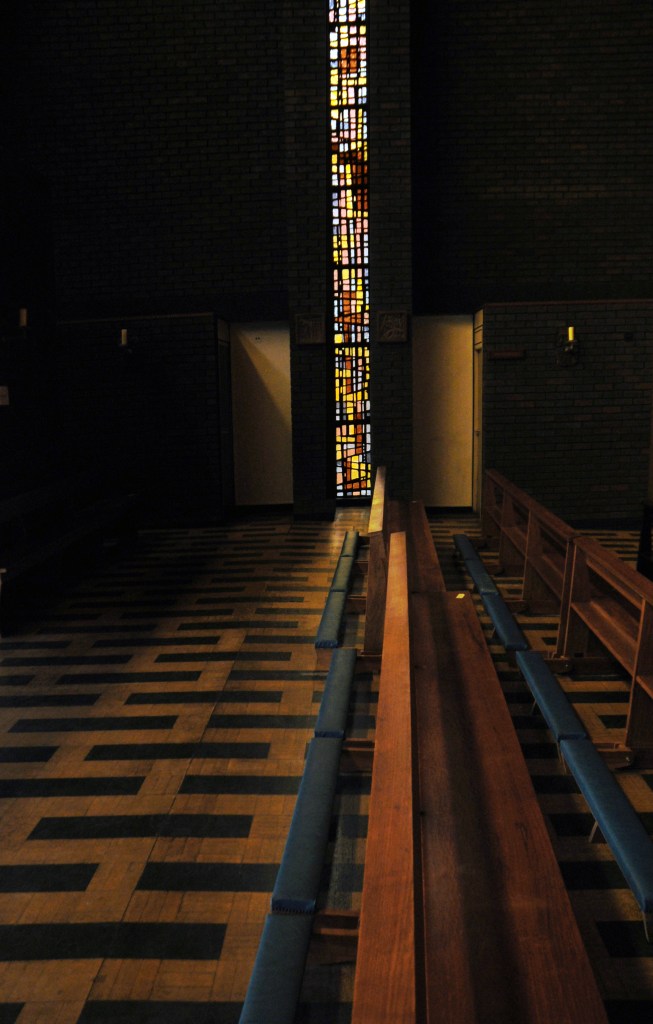
It never fails to surprise, turning the corner of a somewhat anonymous suburban street to find:
A building of outstanding importance for its architectural design, advanced liturgical planning and artistic quality of the fixtures and fittings.
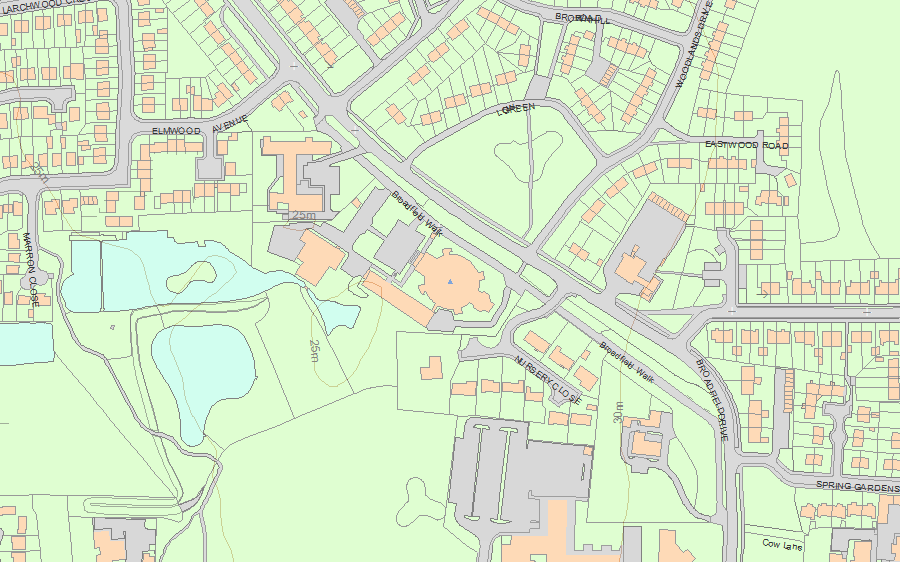
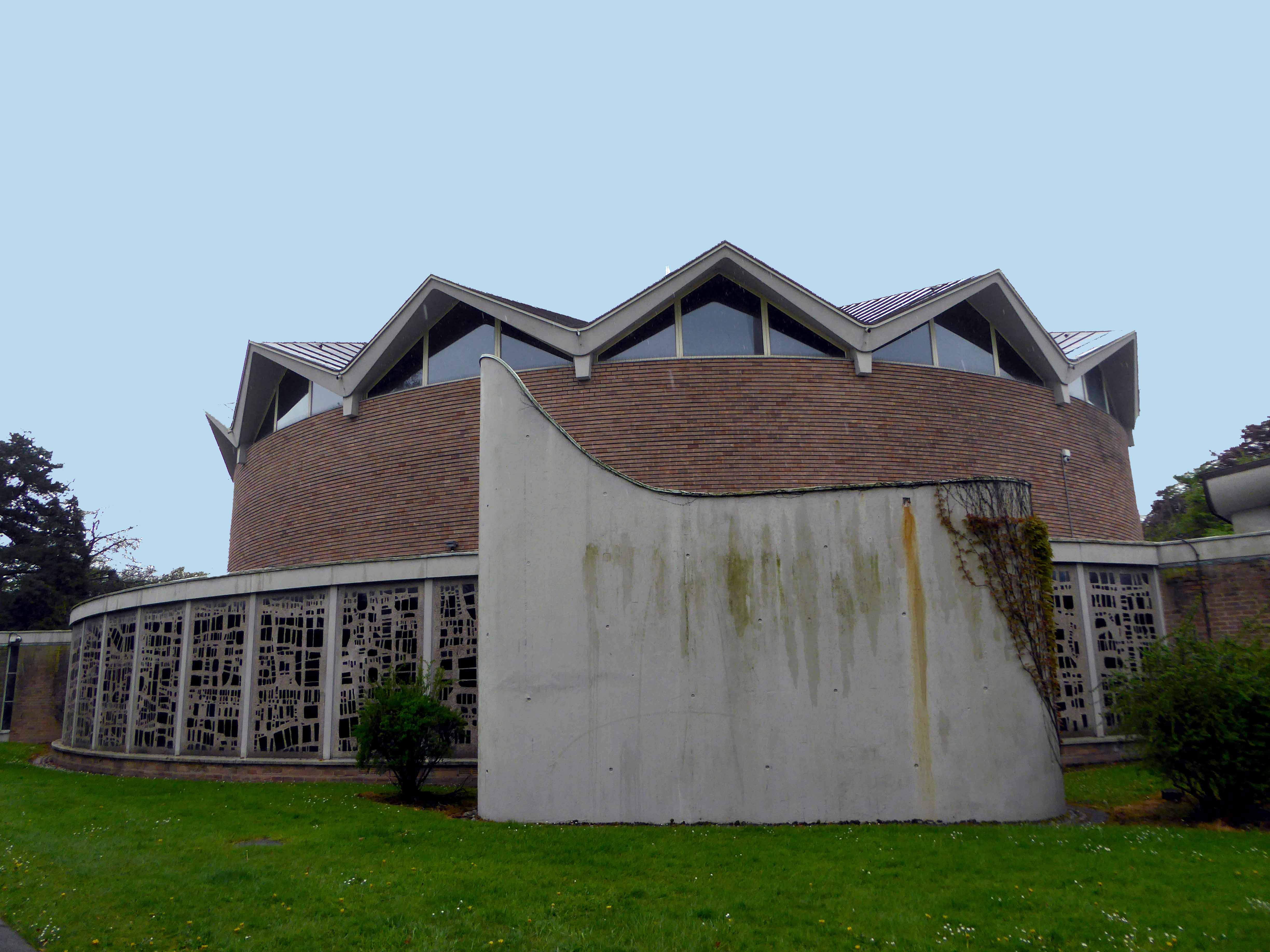
Broadfield Drive Leyland Lancashire PR25 1PD
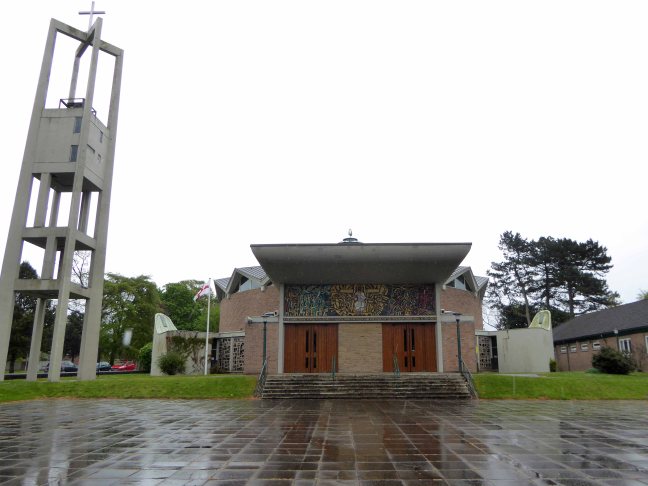
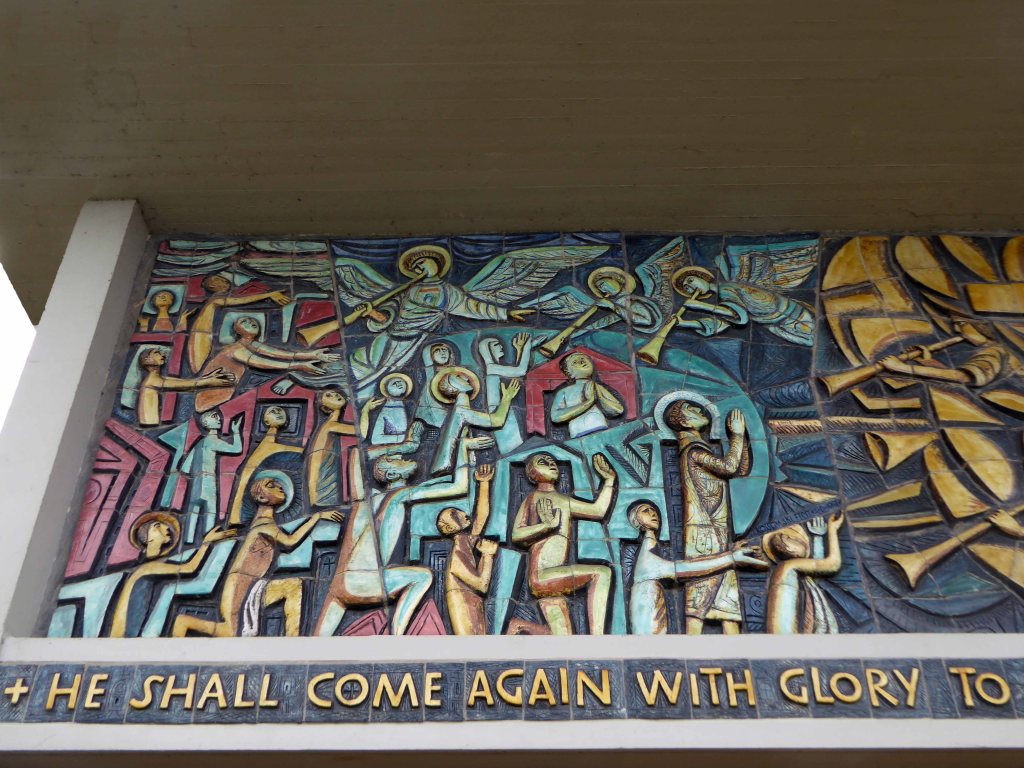
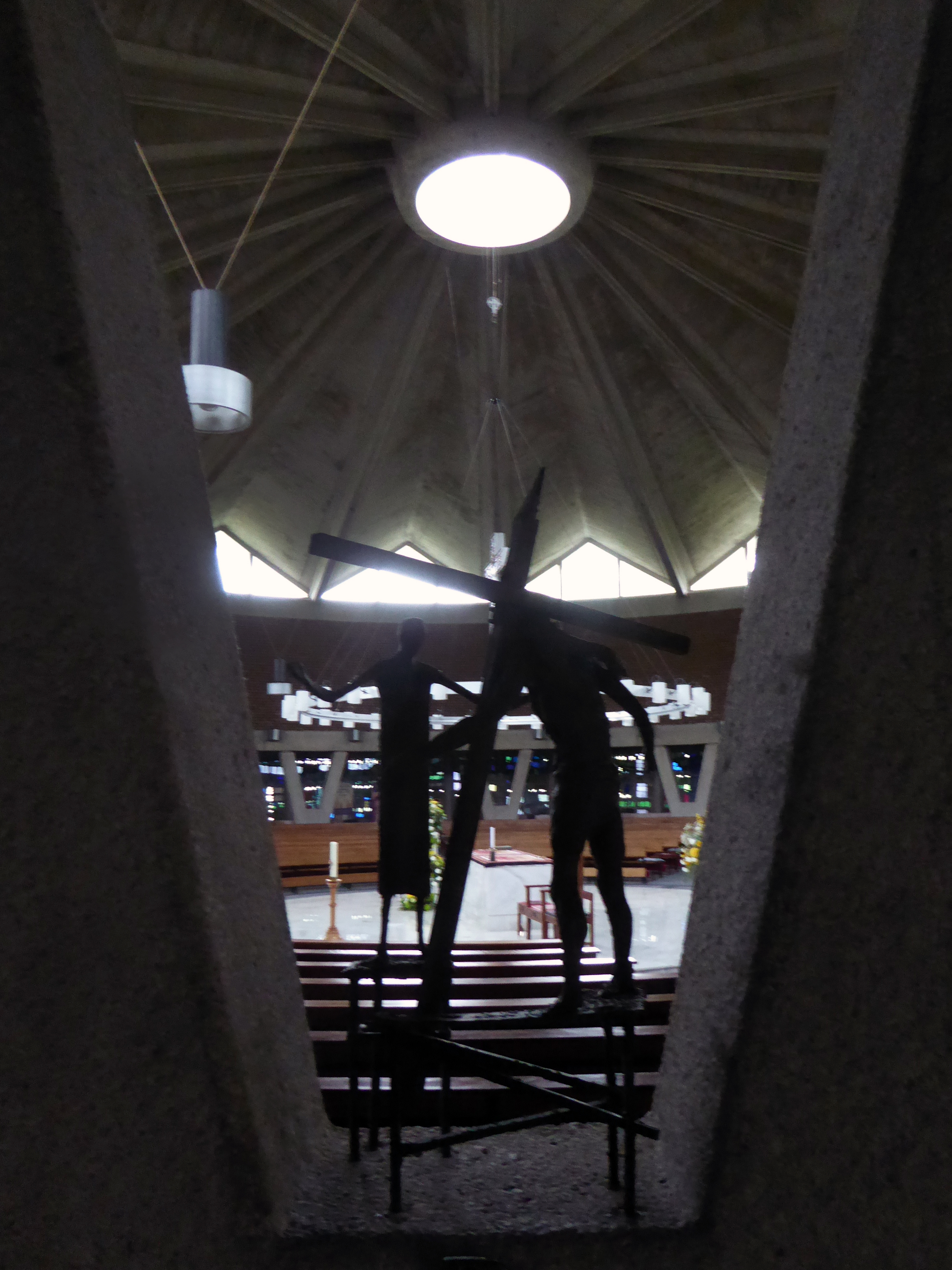
The Benedictines came to Leyland in 1845 and the first Church of St. Mary’s was built on Worden Lane in 1854. The Catholic population was small at this time, but had grown to around 500 by 1900. Growth was assisted by the industrial development of Leyland and after the Second World War the town was earmarked as the centre of a new town planned in central Lancashire. By the early 1960’s, the Catholic population was 5,000. Fr Edmund Fitzsimmons, parish priest from 1952, was a guiding force in the decision to build a large new church of advanced liturgical design, inspired by progressive continental church architecture of the mid 20th century. The church was designed by Jerzy Faczynski of Weightman and Bullen. Cardinal Heenan blessed the foundation stone in 1962 and the new church was completed ready for its consecration and dedication by Archbishop Beck in April 1964.
Pink brick, reinforced concrete, copper covered roofs, zig-zag to main space and flat to aisle. Circular, aisled plan with projecting entrance and five projecting chapels.
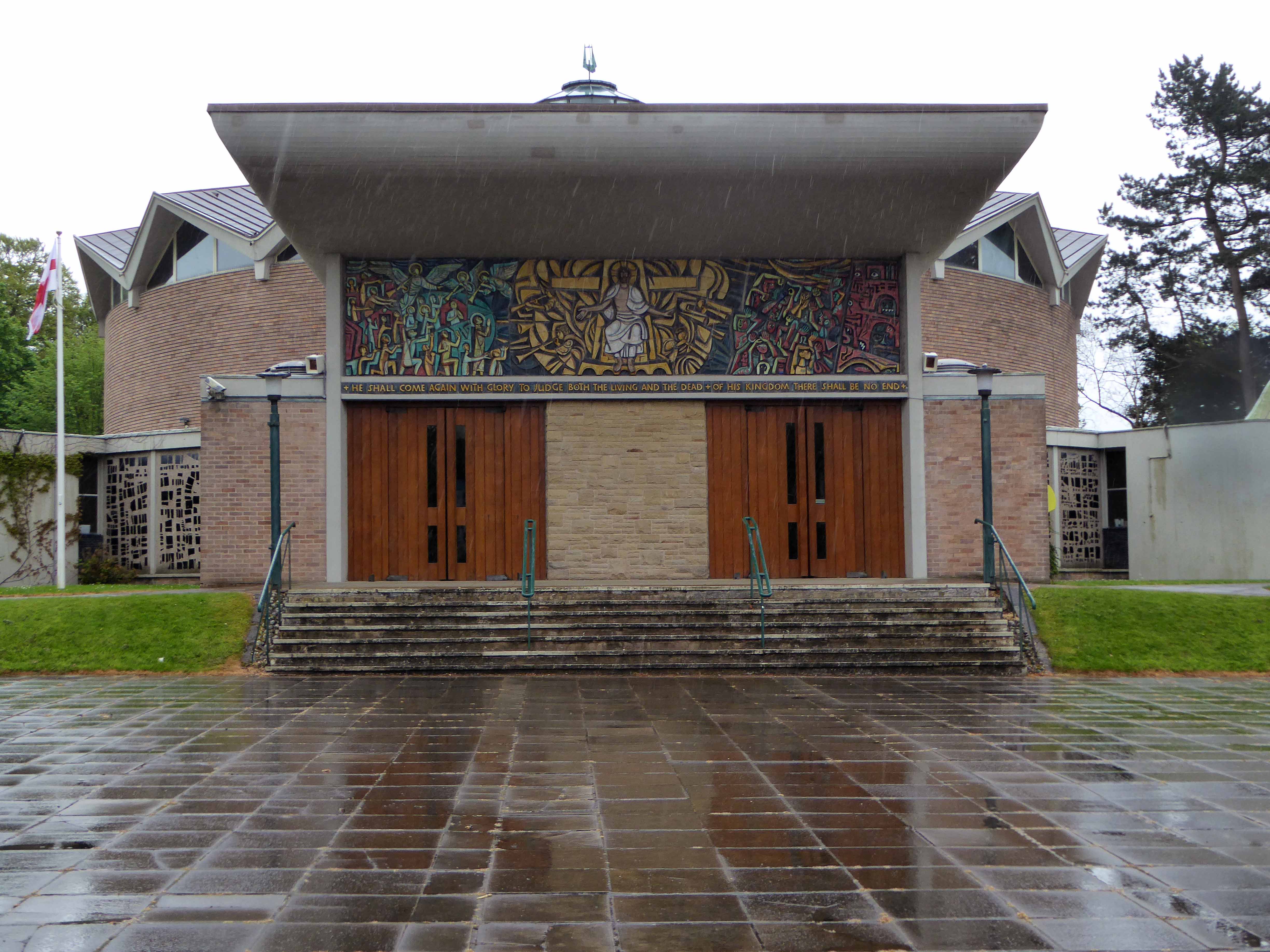
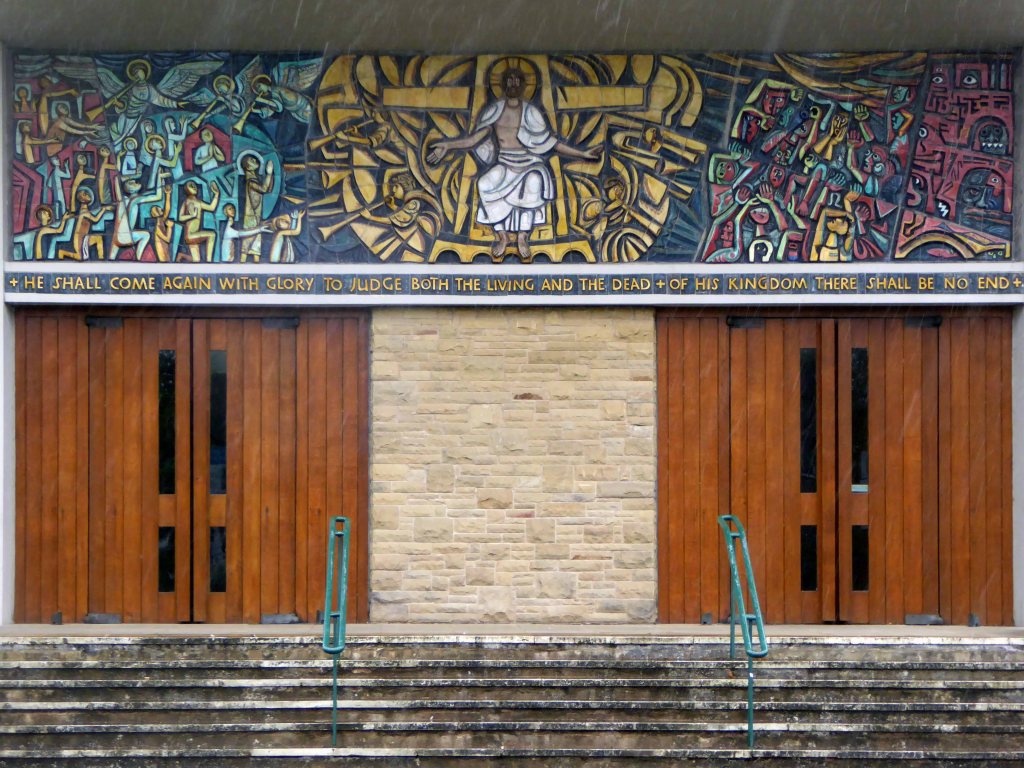
Central altar. Entrance in large projecting porch with roof rising outwards and the roof slab cantilevered above the doors, its underside curving upward.
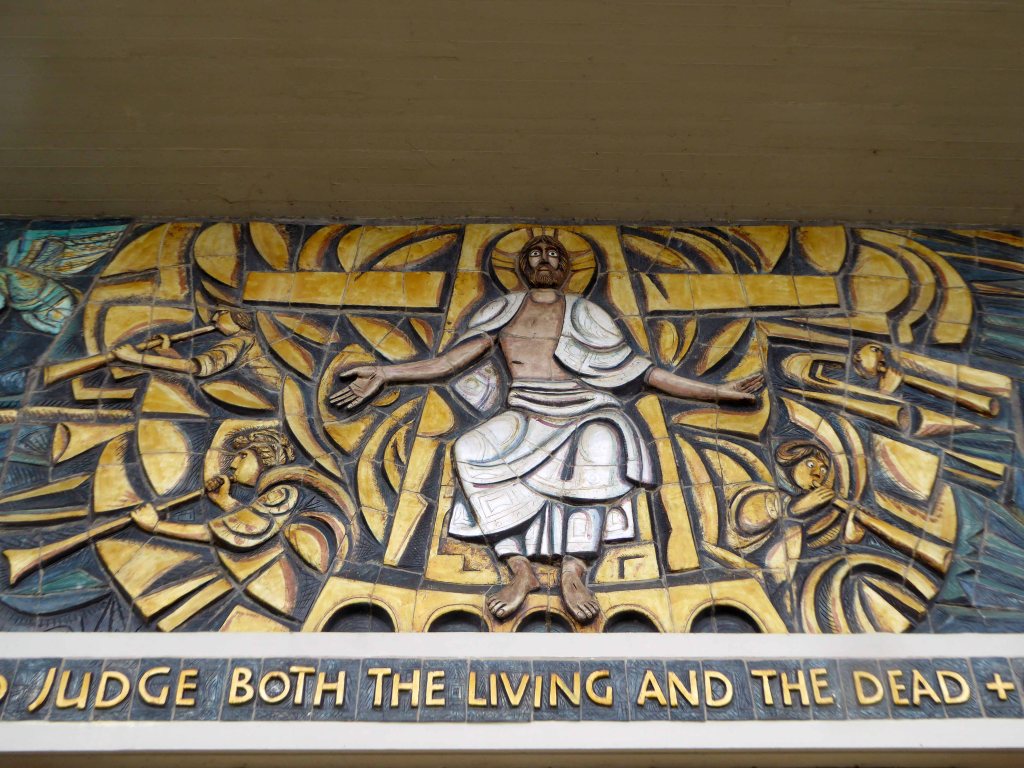
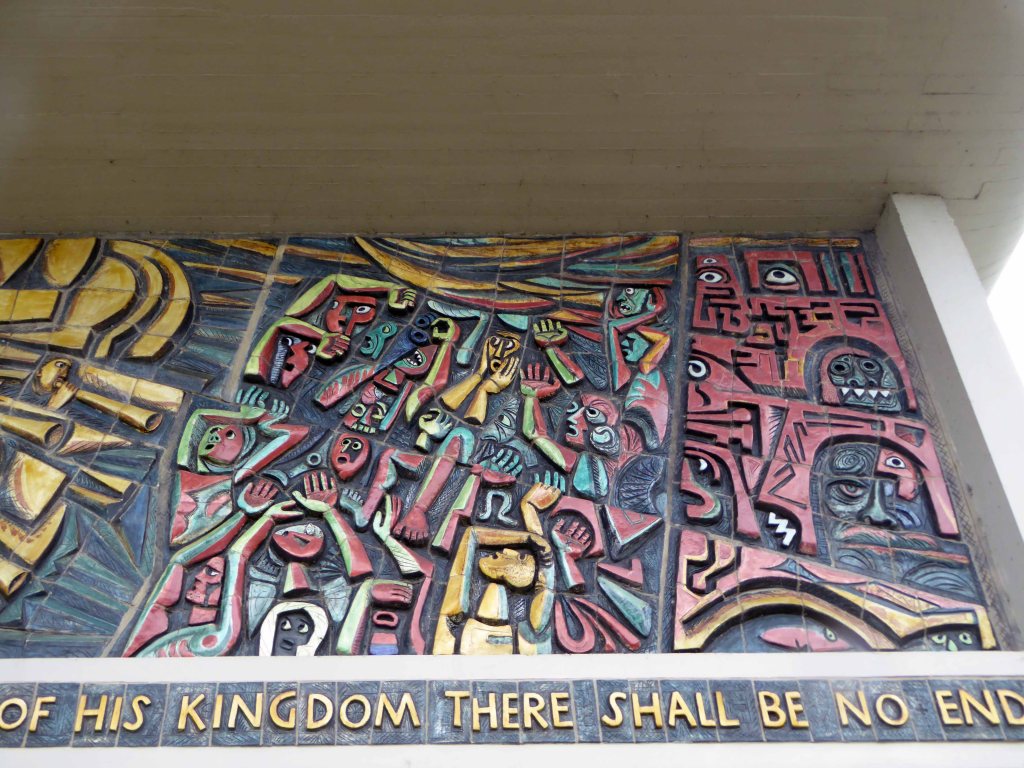
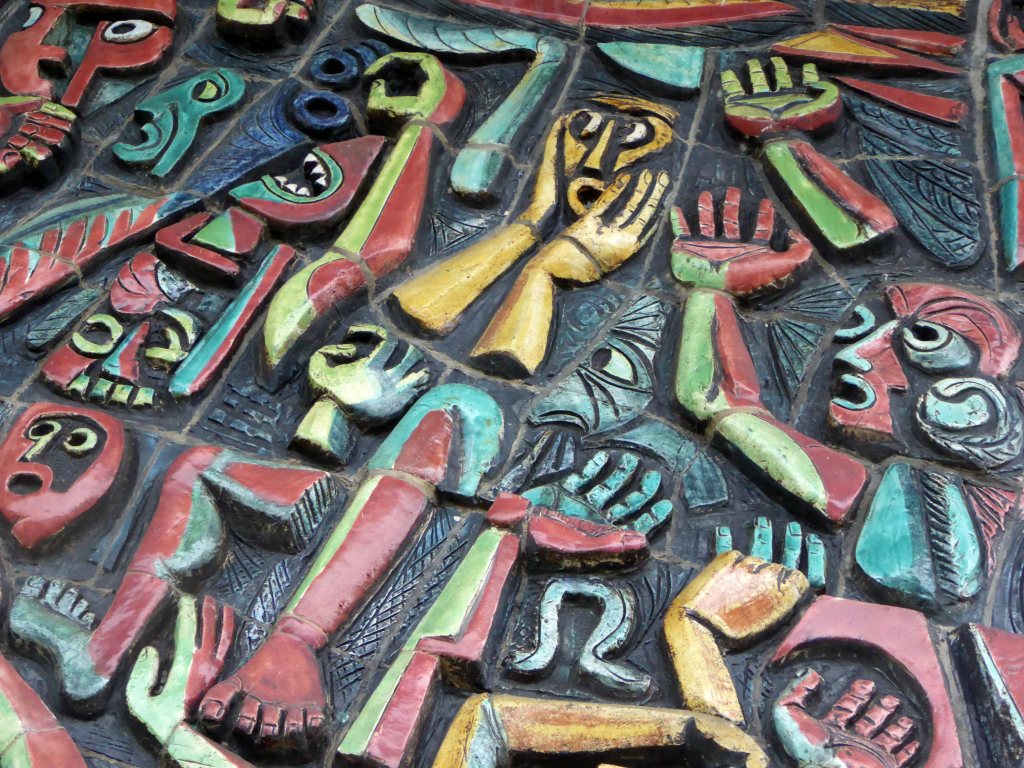
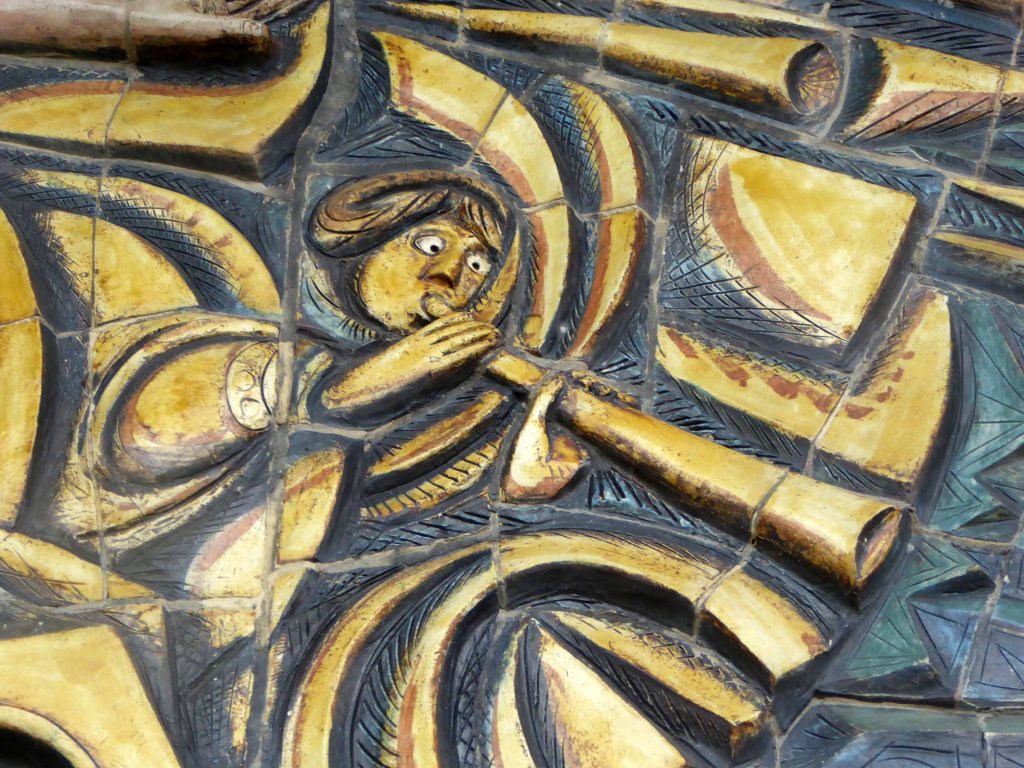
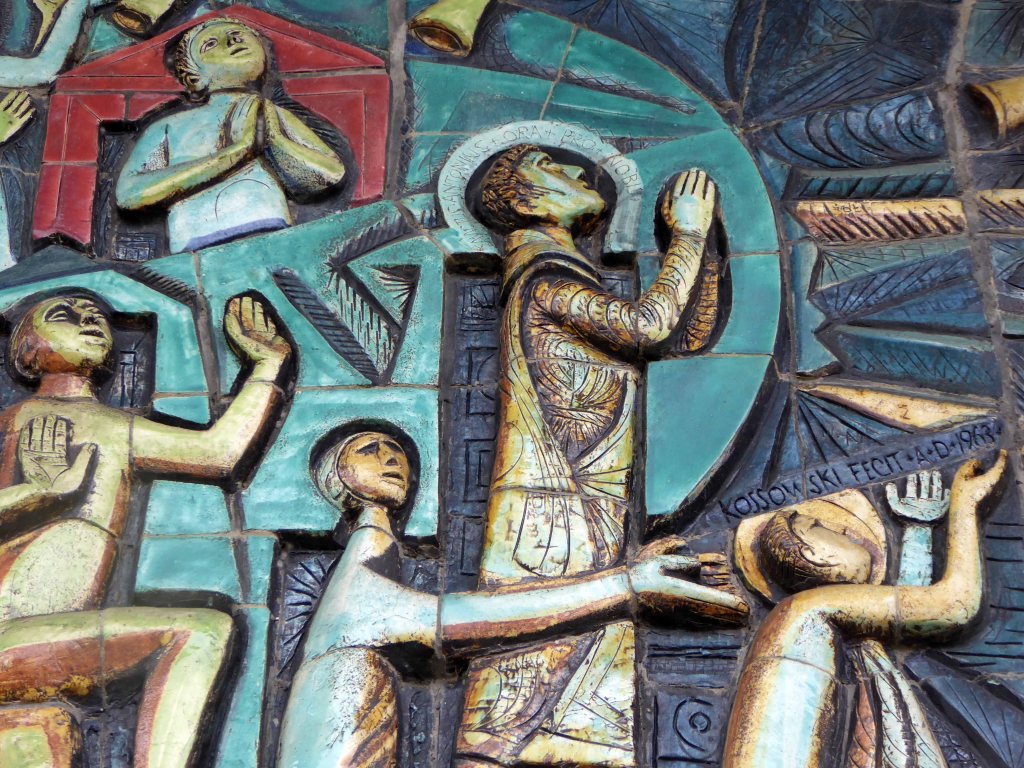
Large polychrome ceramic mural representing the Last Judgment by Adam Kossowski occupies the width of the porch above the two double- doored entrances.
Brick rotunda with projecting painted reinforced concrete chapels to left and right, of organic round-cornered form.
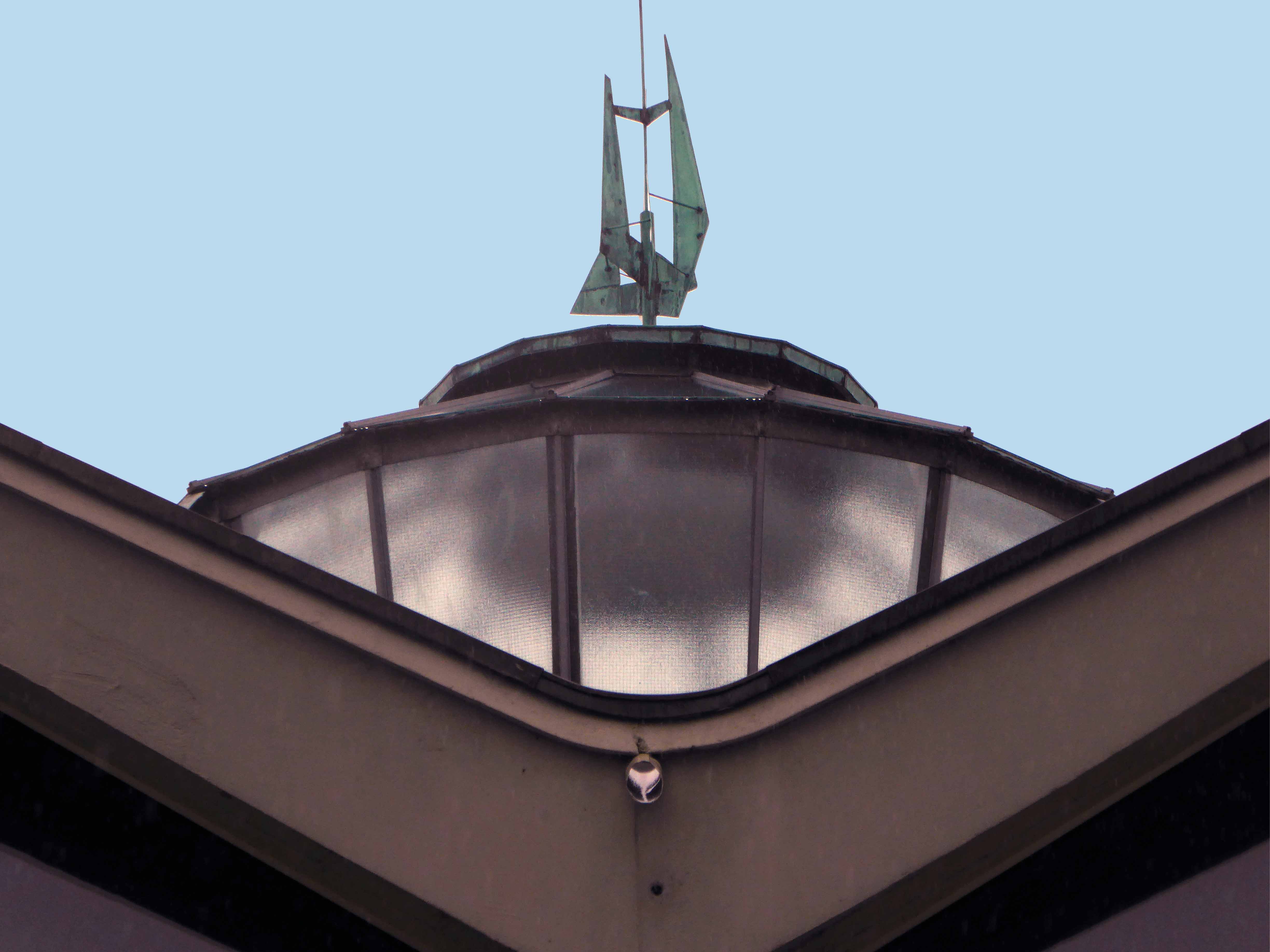
Folded radial roof above main space, leaning outwards to shelter triangular clerestory windows. Circular glazed light to centre of roof, its sides leaning outwards, culminating in a sculpted finial of copper or bronze.
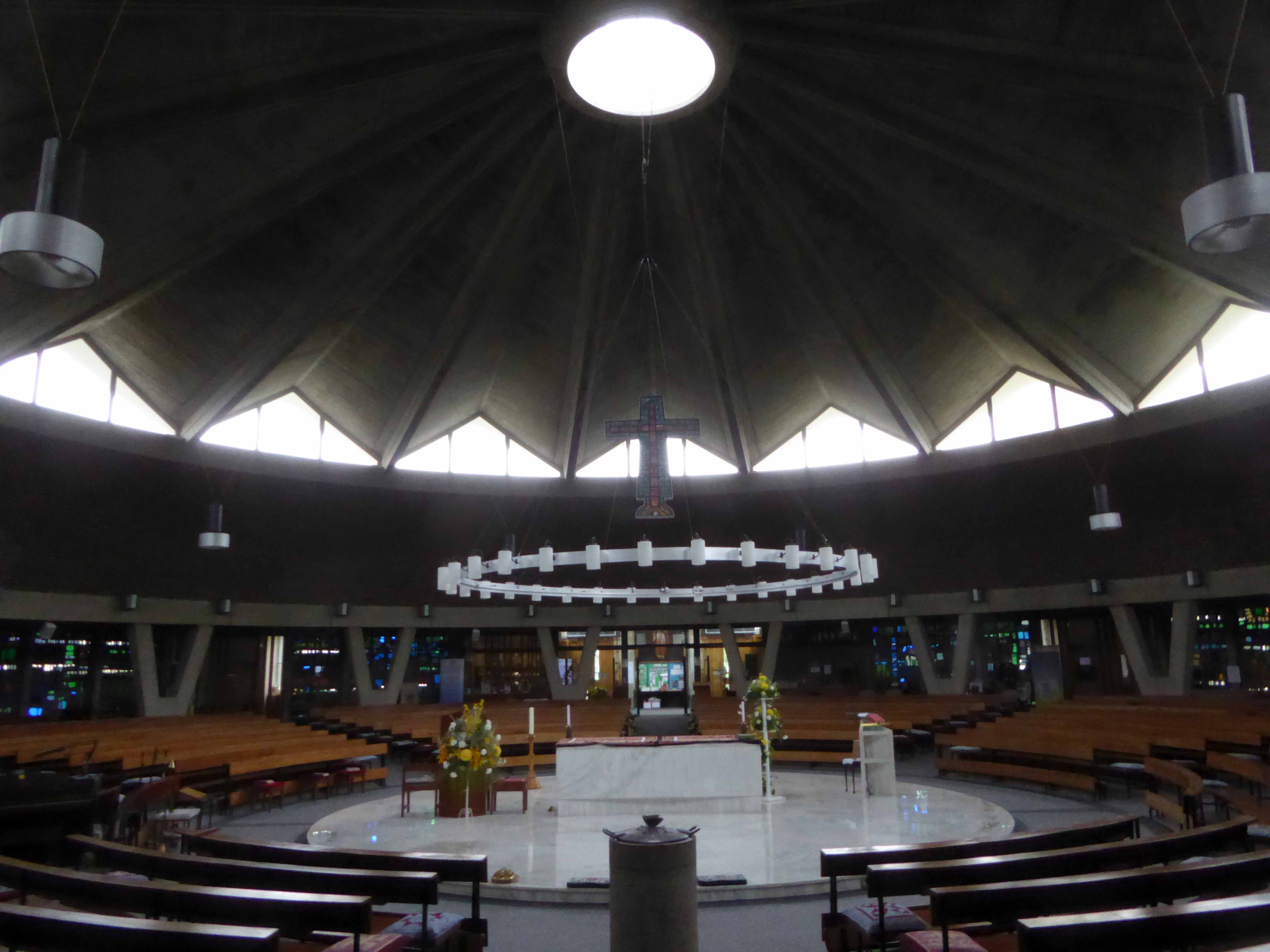
Internally, sanctuary is floored in white marble, raised by a step, and the white marble altar is raised by three further steps.
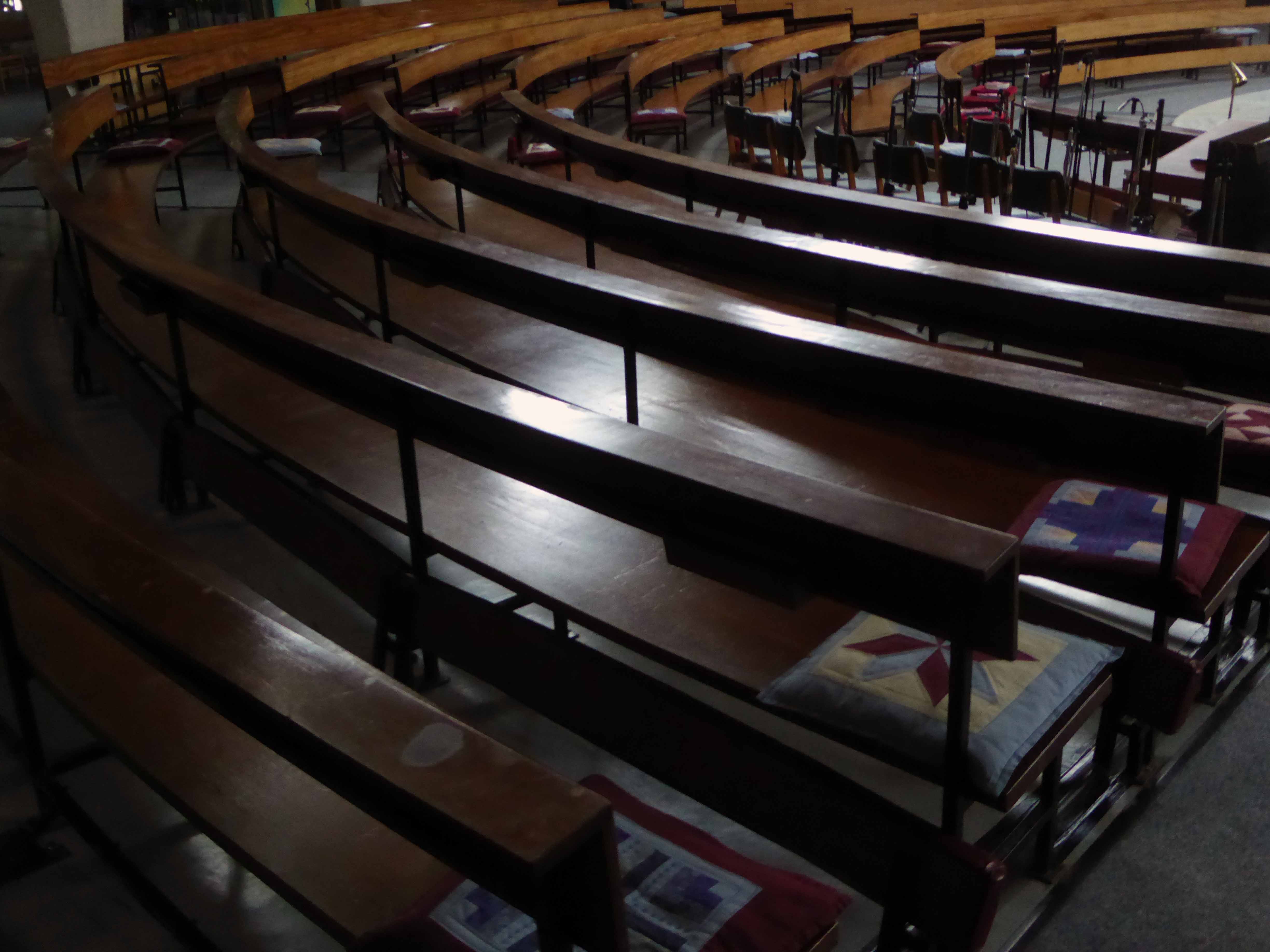
Fixed curved timber benches are placed on slightly raked floor.
`Y’ shaped concrete aisle posts, designed to incorporate the Stations of the Cross, sculpted by Arthur Dooley.
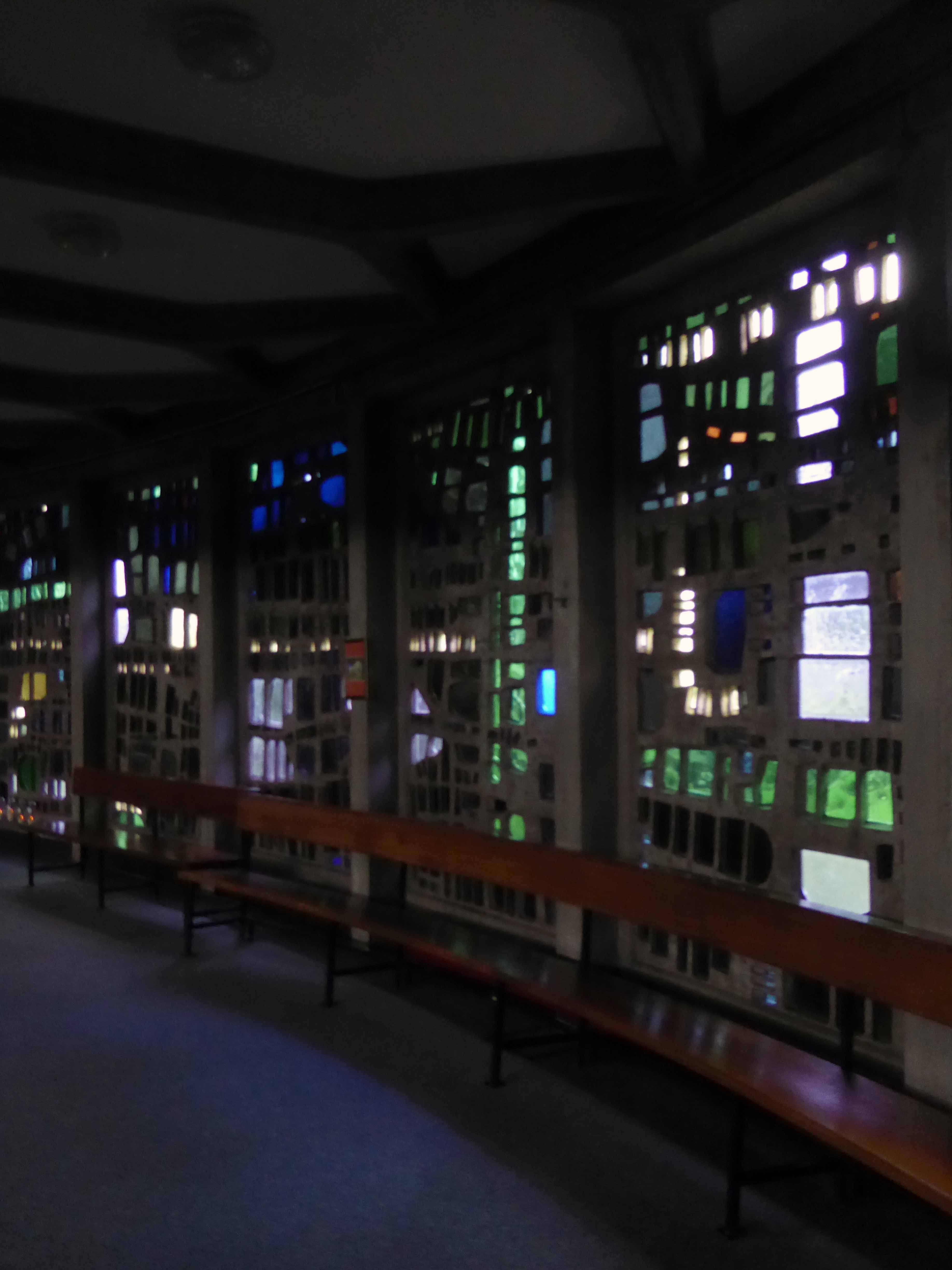
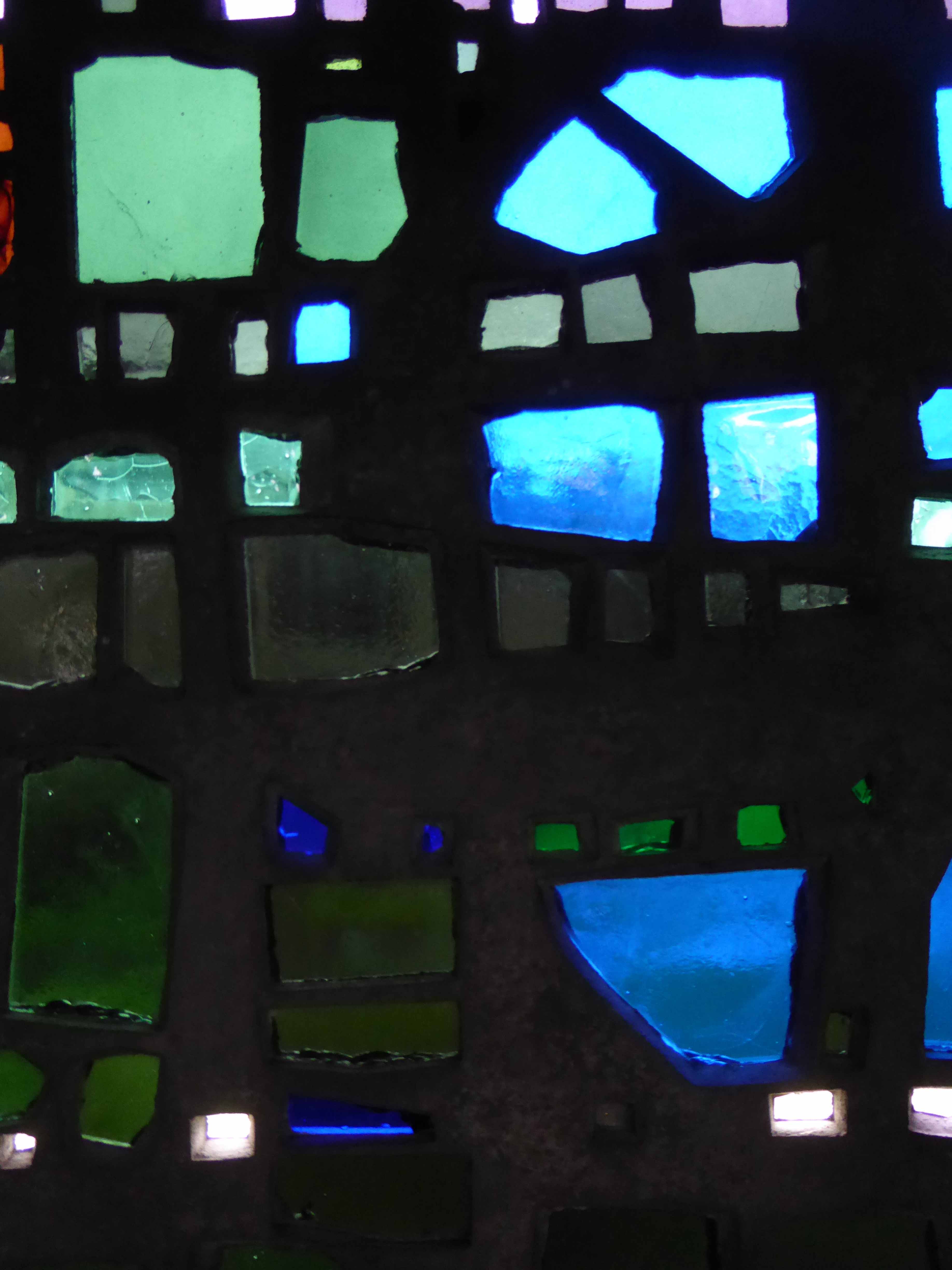
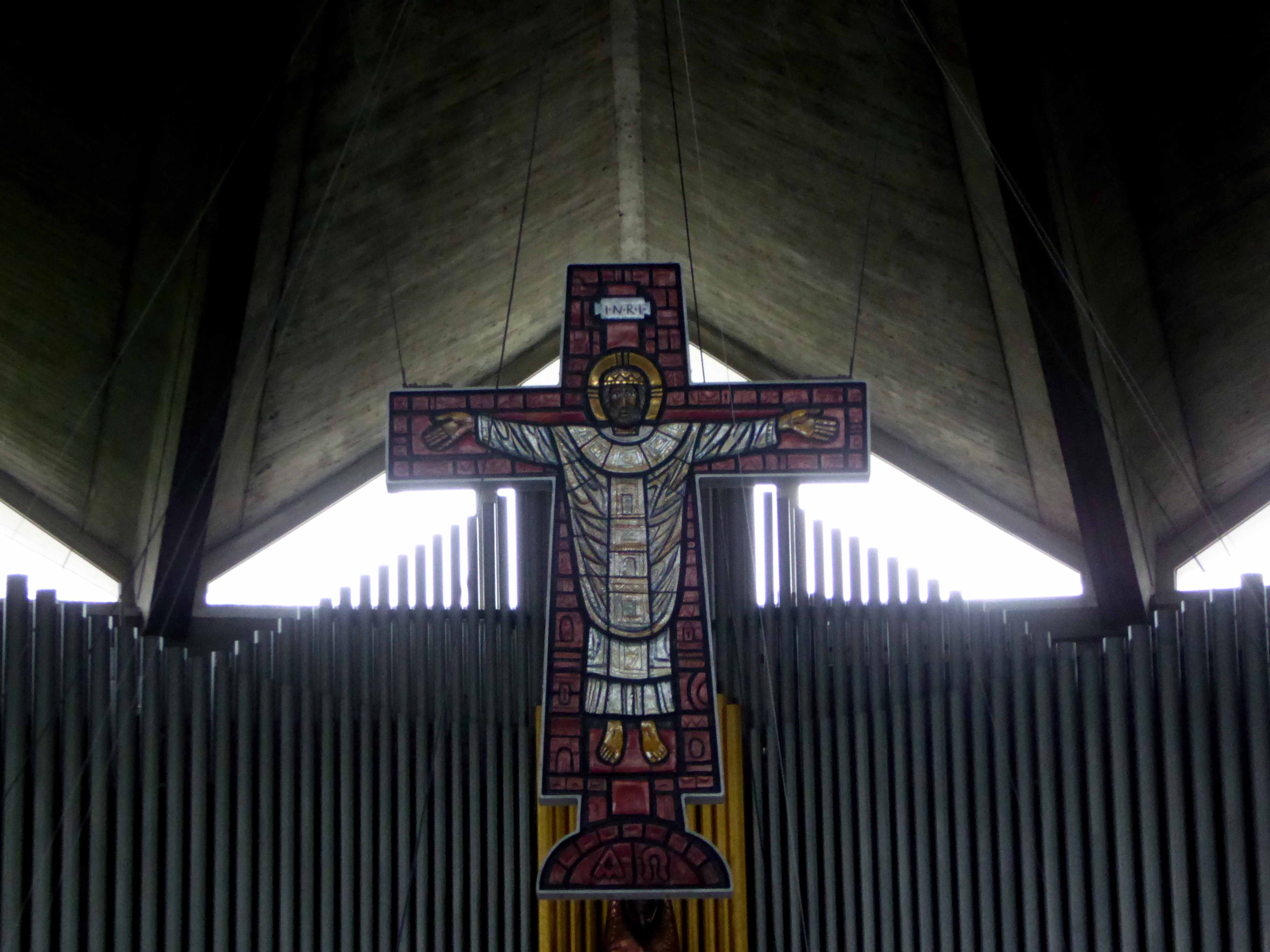
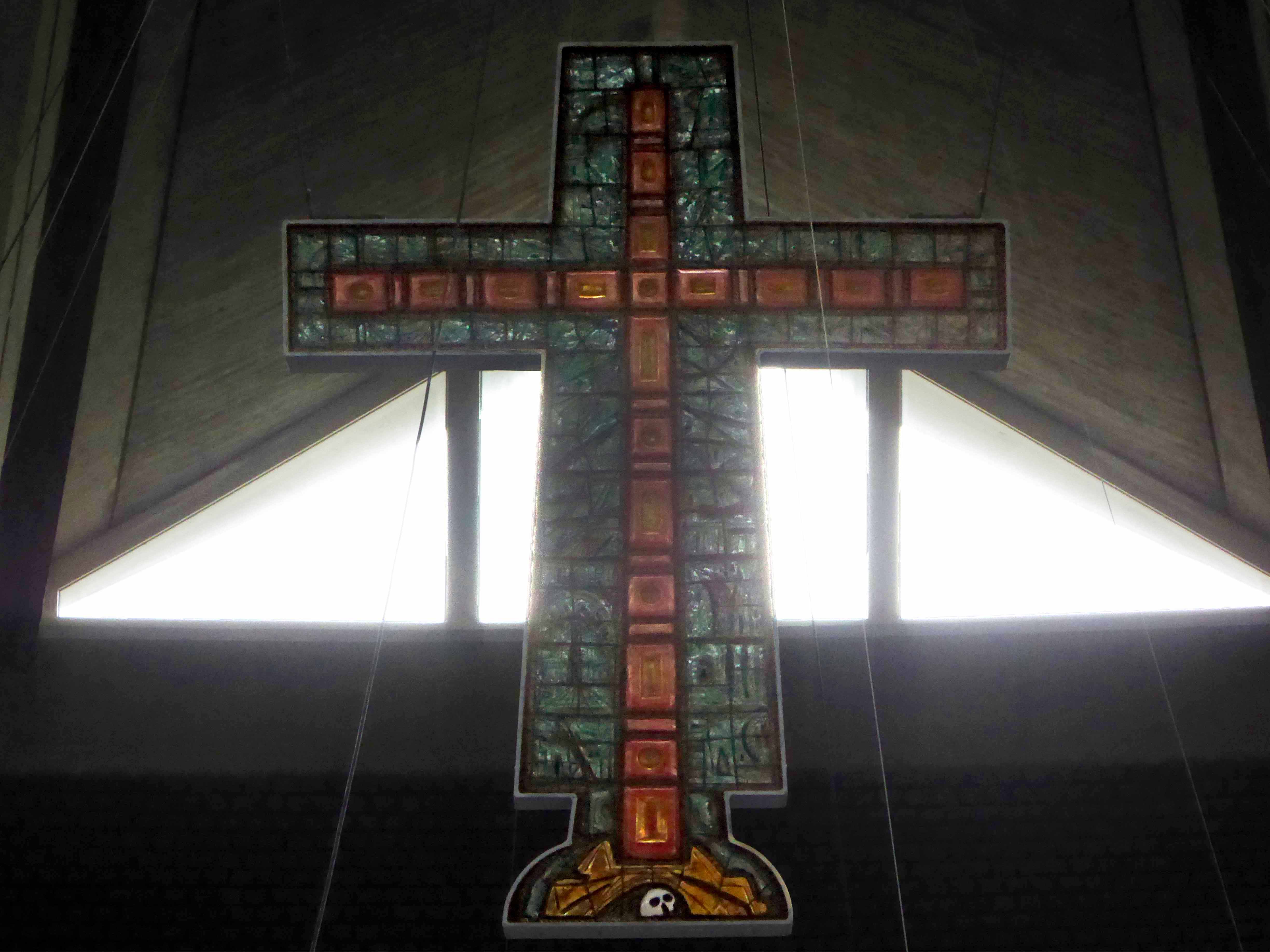
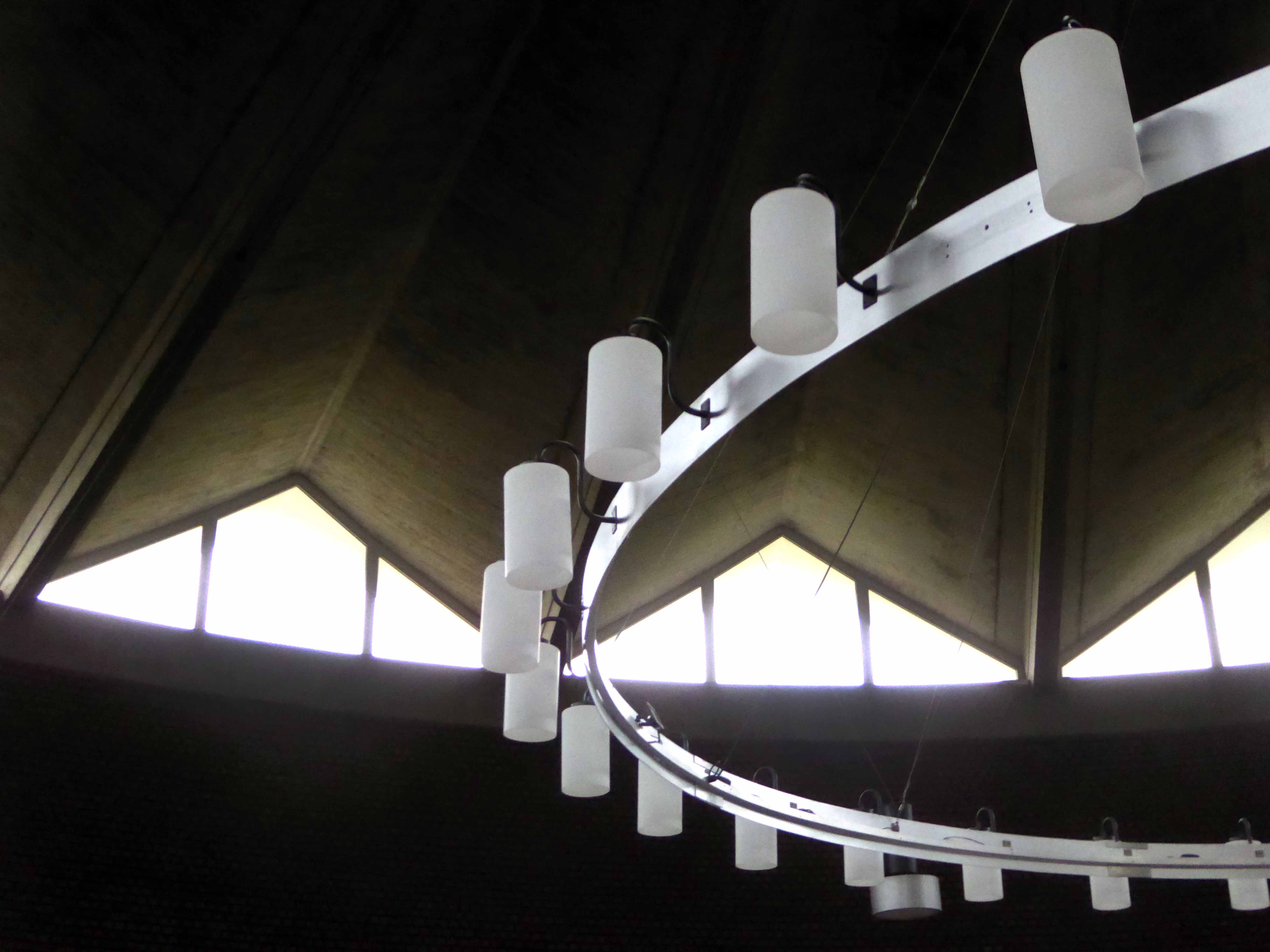
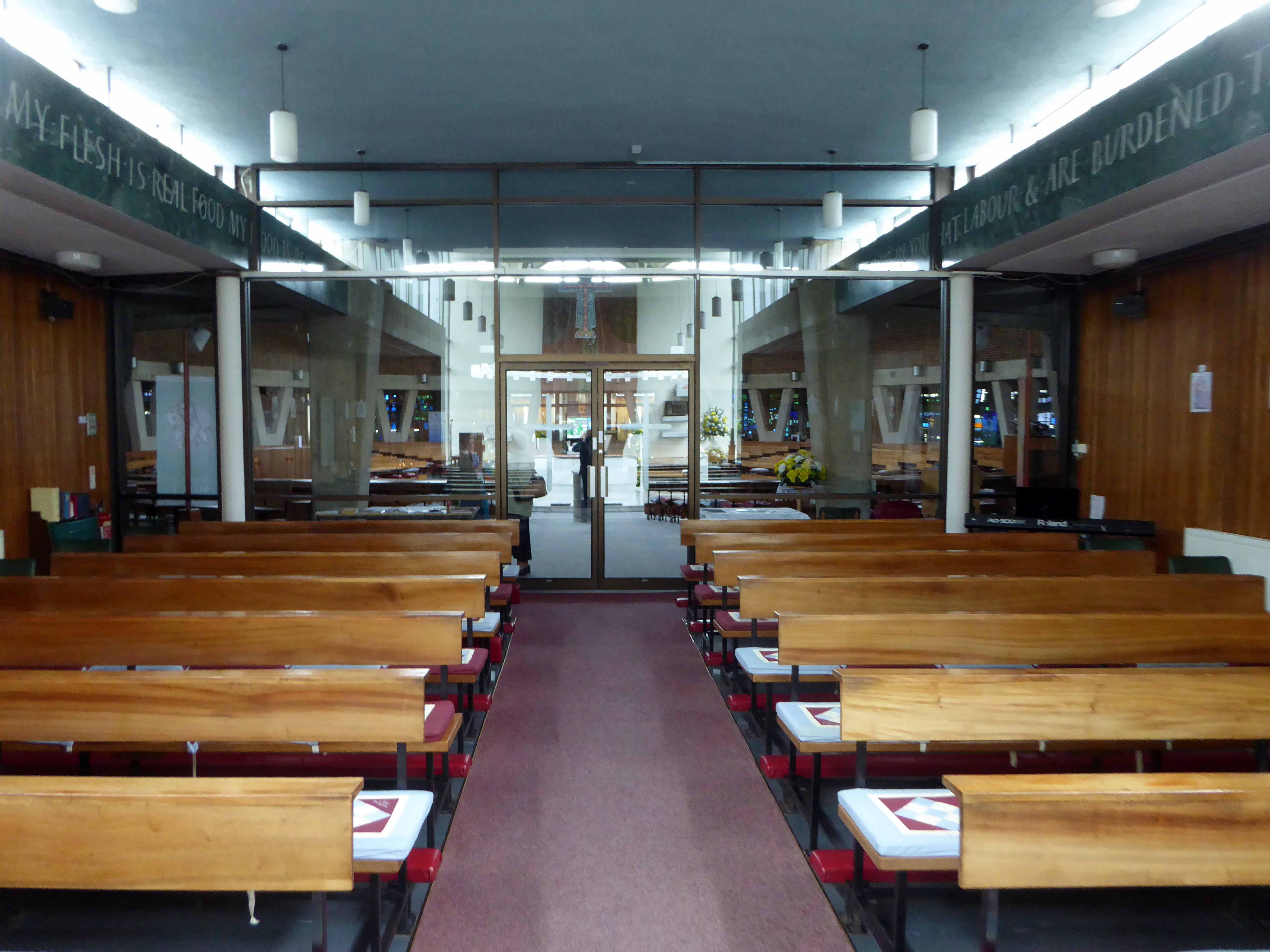
Above these the exposed brick drum rises to the exposed, board-marked concrete folded roof. The aisle walls comprise thirty-six panels of abstract dalle-de-verre stained glass, totalling 233 feet in length, by Patrick Reyntiens, mostly in blues and greens. The theme is the first day of Creation. Suspended above the altar is the original ring-shaped light fixture, and also Adam Kossowski’s ceramic of Christ the King.
Further original light fittings are suspended above the congregation.
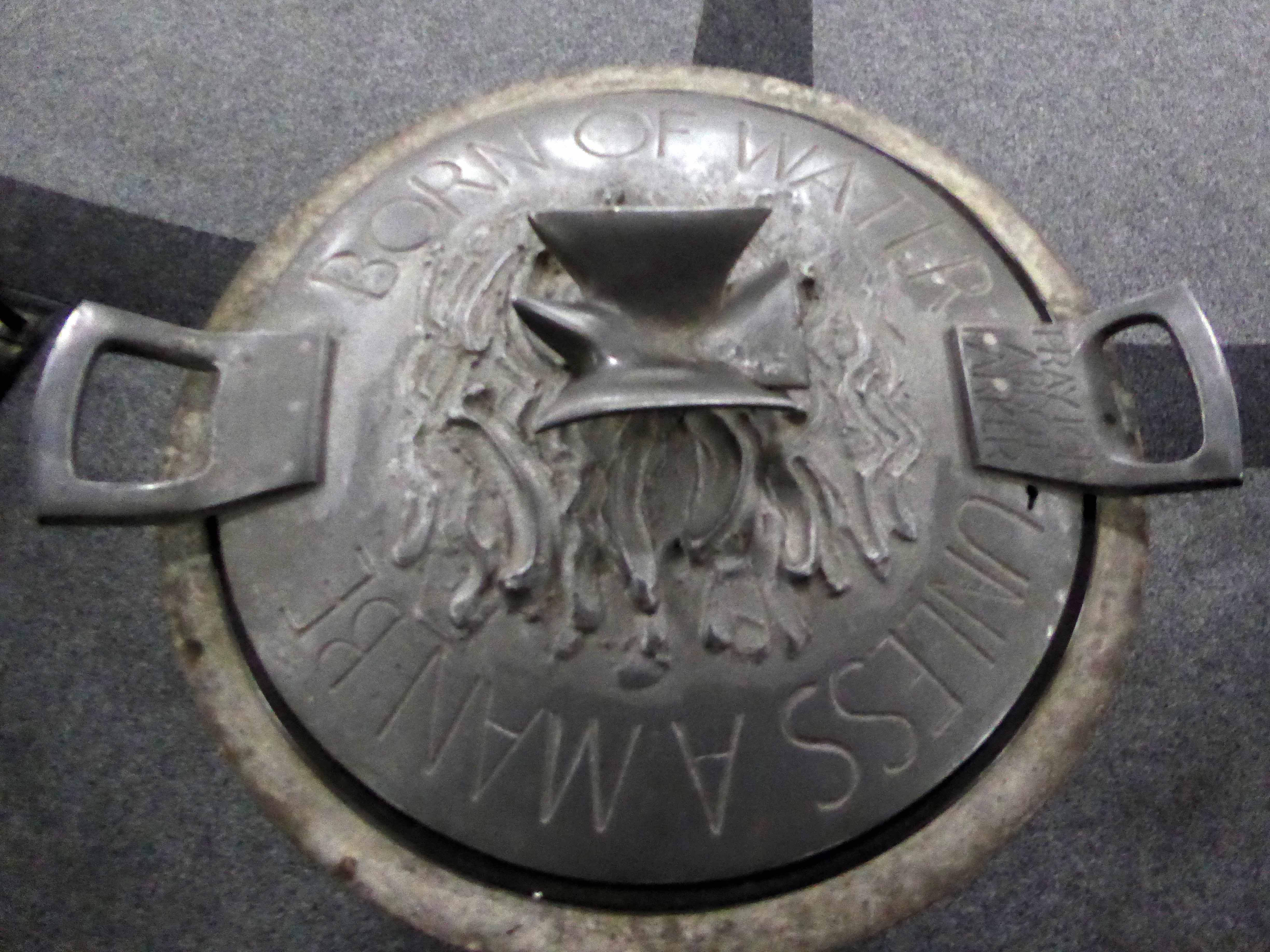
The font is placed in the narthex, in a shallow, marble-lined depression in the floor. It comprises a concrete cylinder with an inscribed bronze lid.
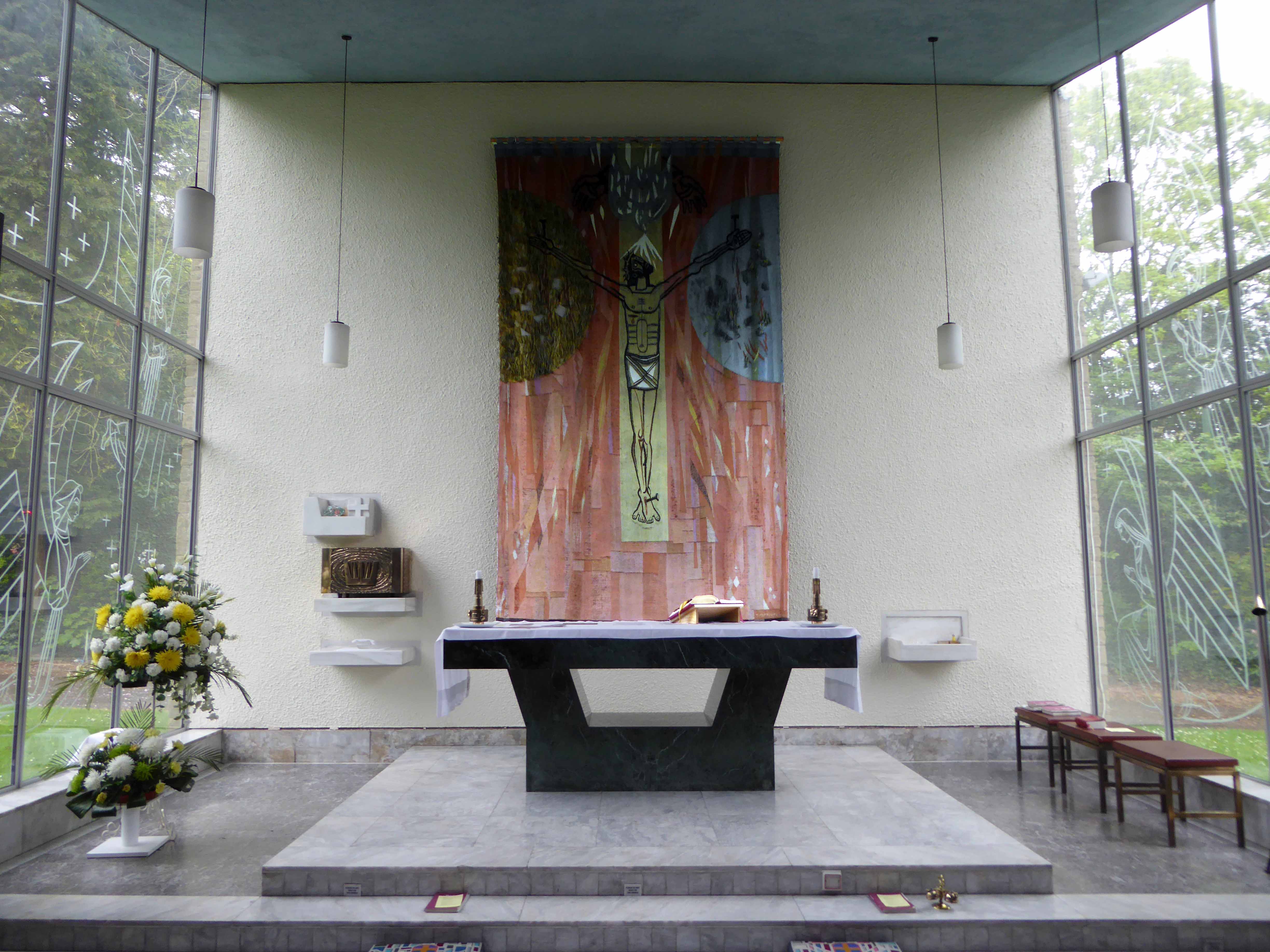
The Blessed Sacrament Chapel, with its rising roof slab, contains a green marble altar with in-built raking supports.
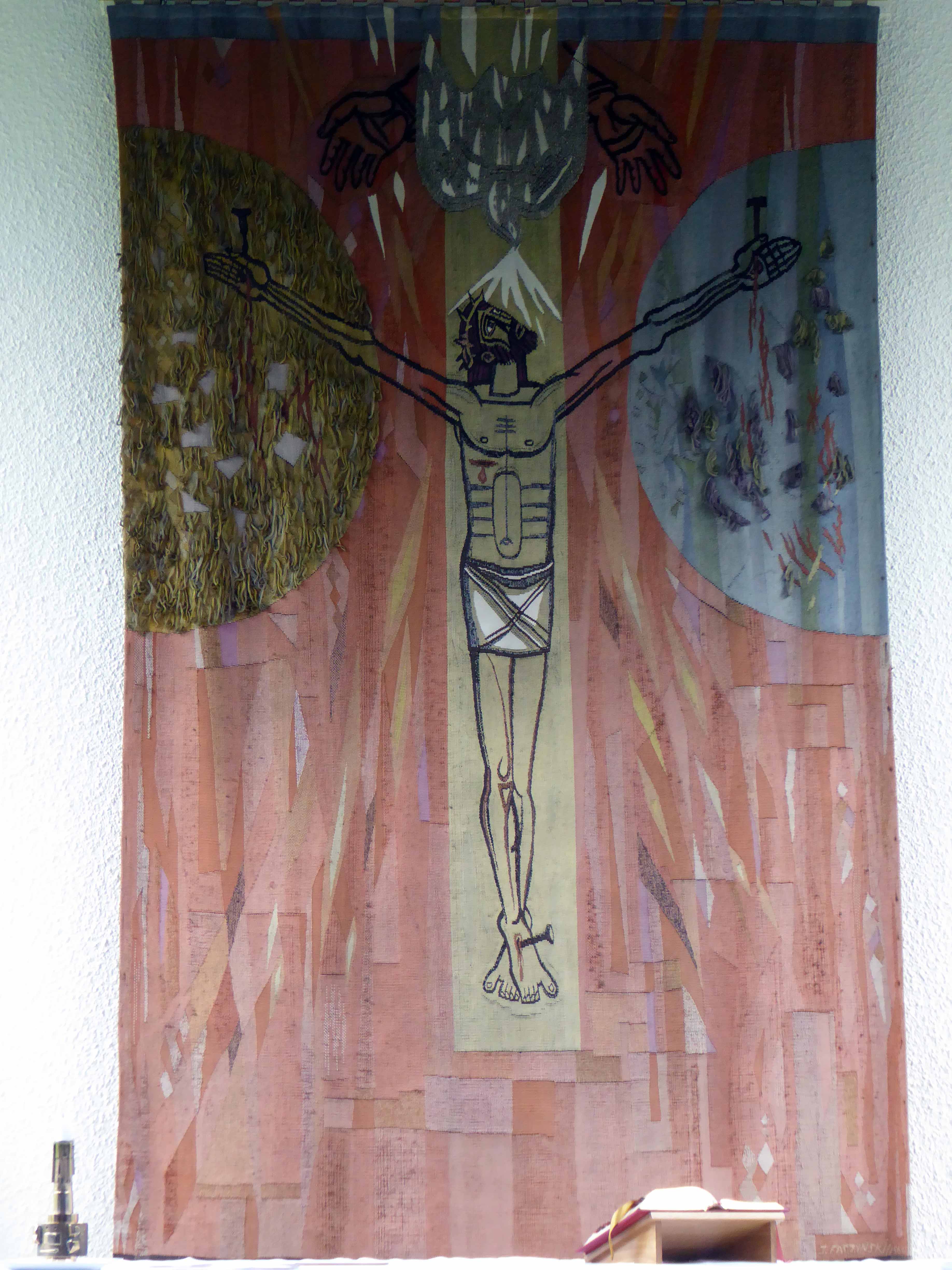
Behind it is a tapestry representing the Trinity, designed by the architect J. Faczynski.
Many thanks to Father John and the members of the congregation for the warm welcome that they extended to us on the day of our visit to their exceptional Grade II Listed church.
I’ve been to the Barbican before, wandering the walkways without purpose.
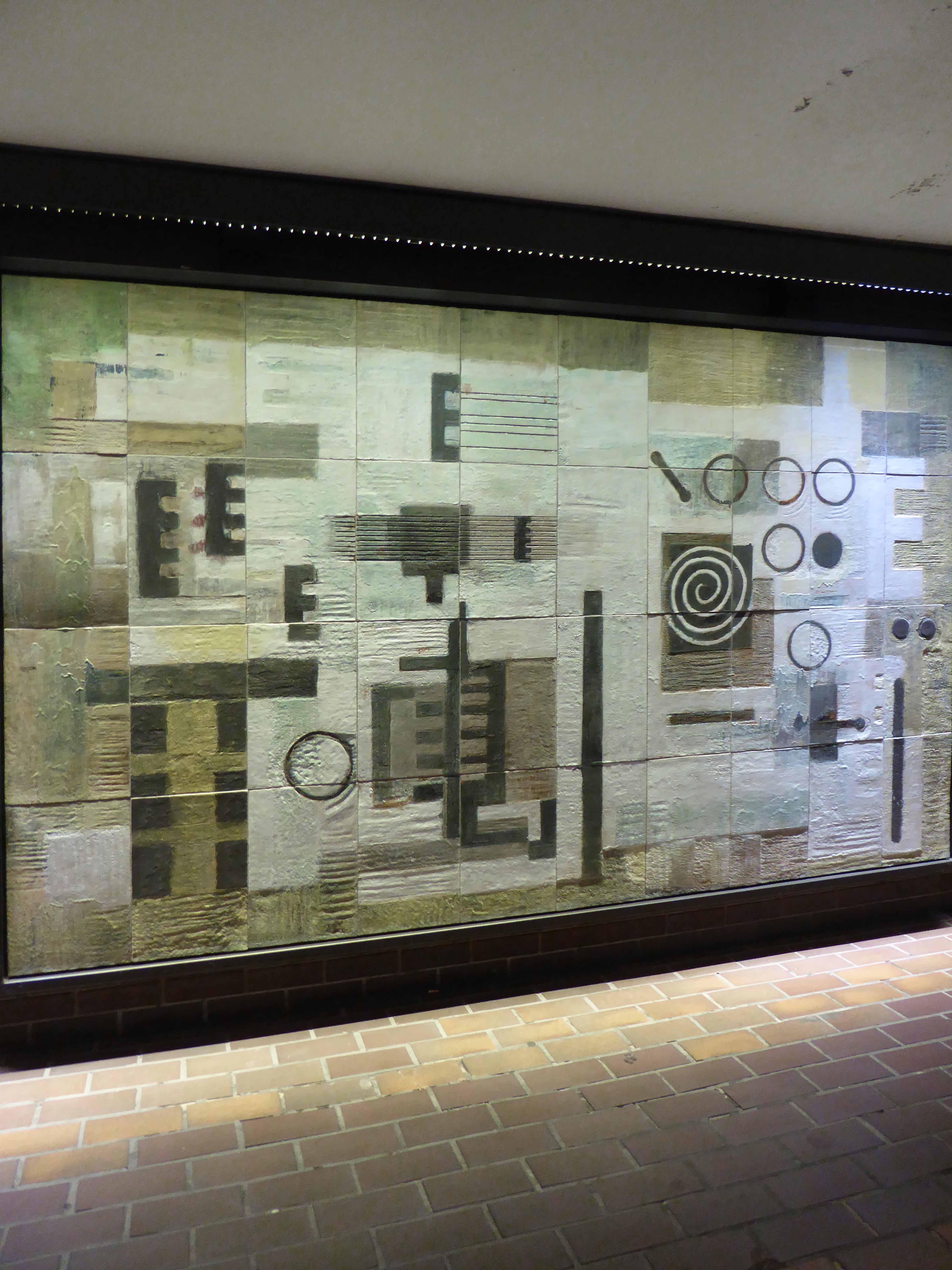
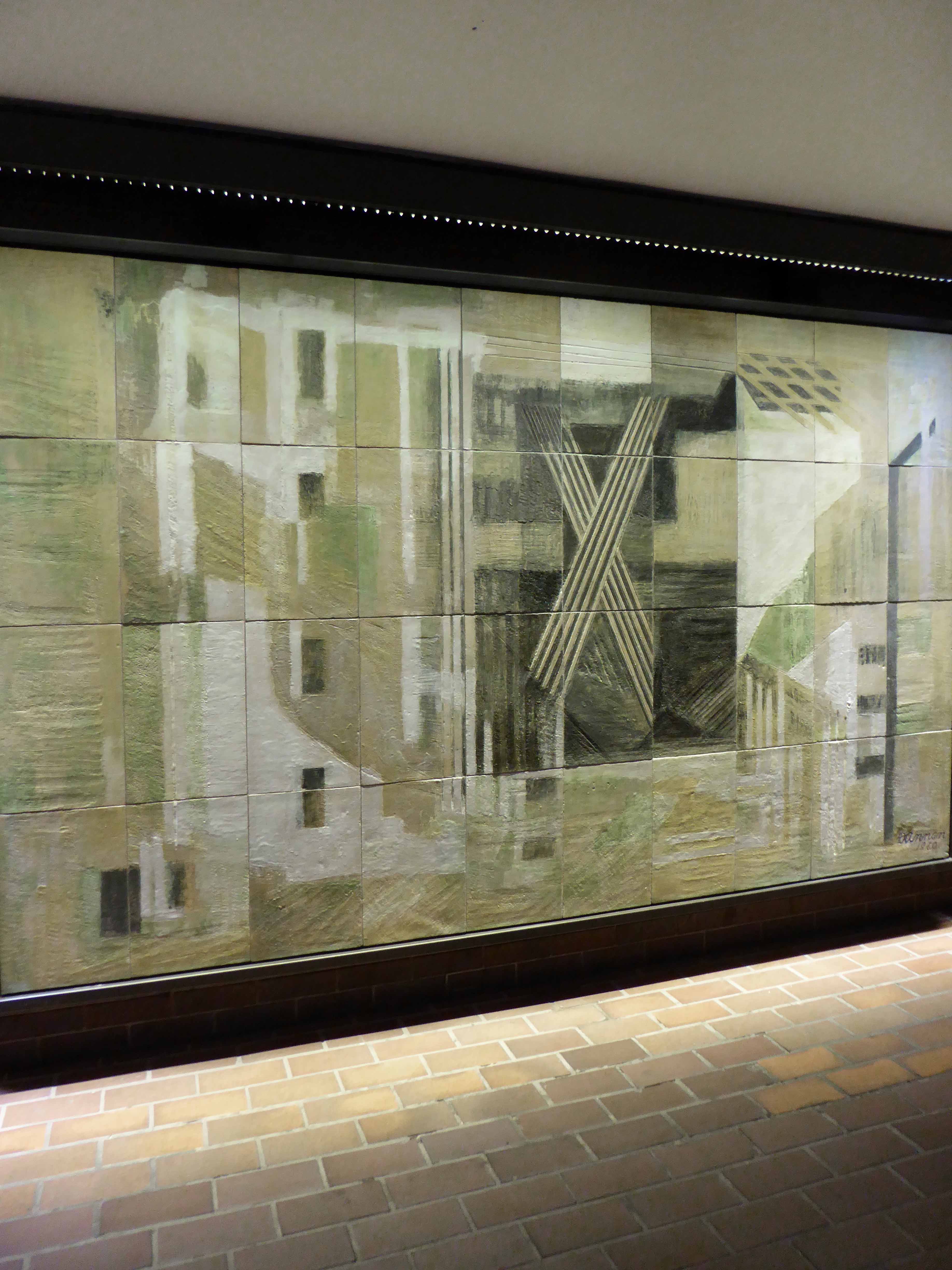
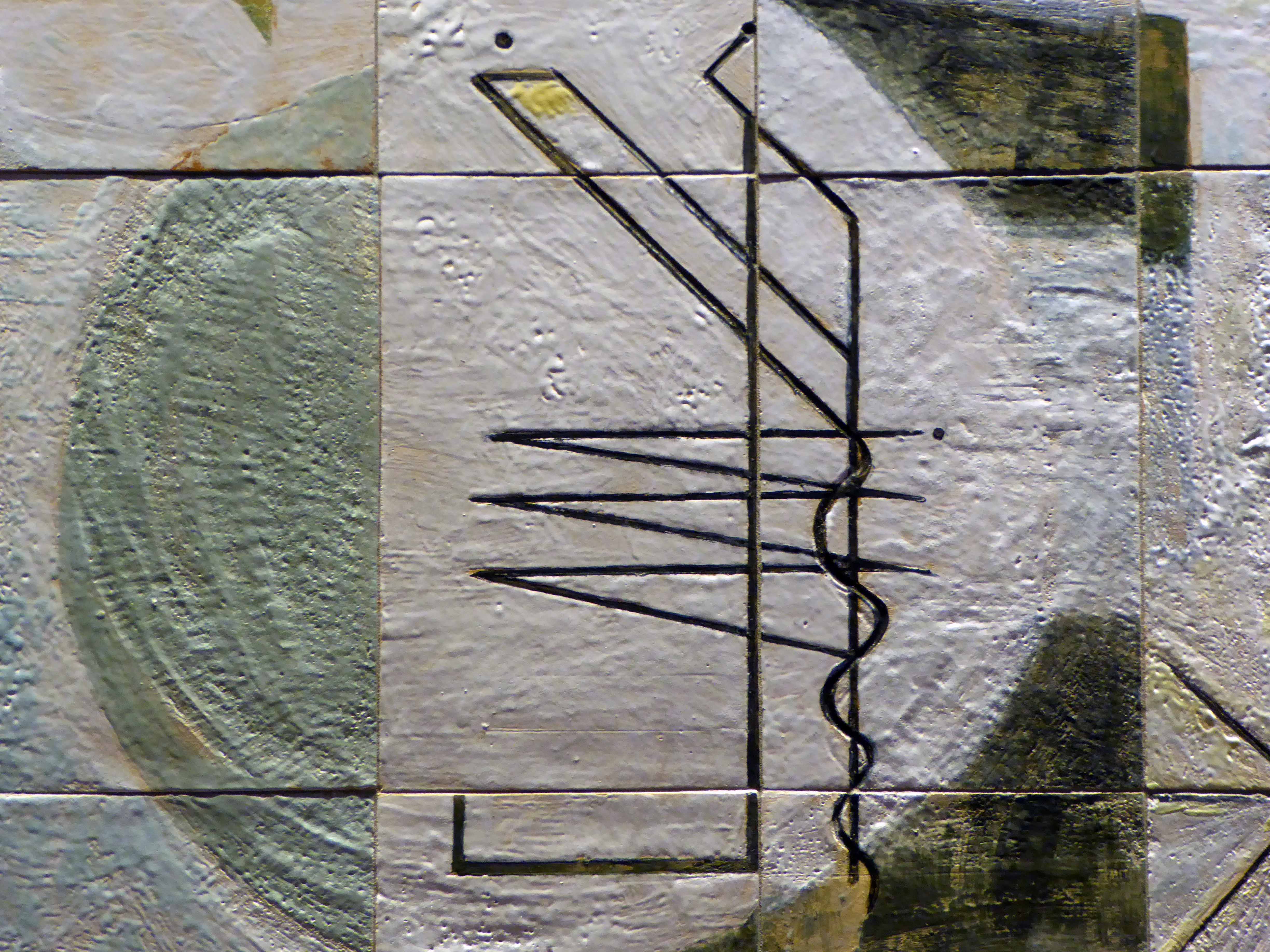
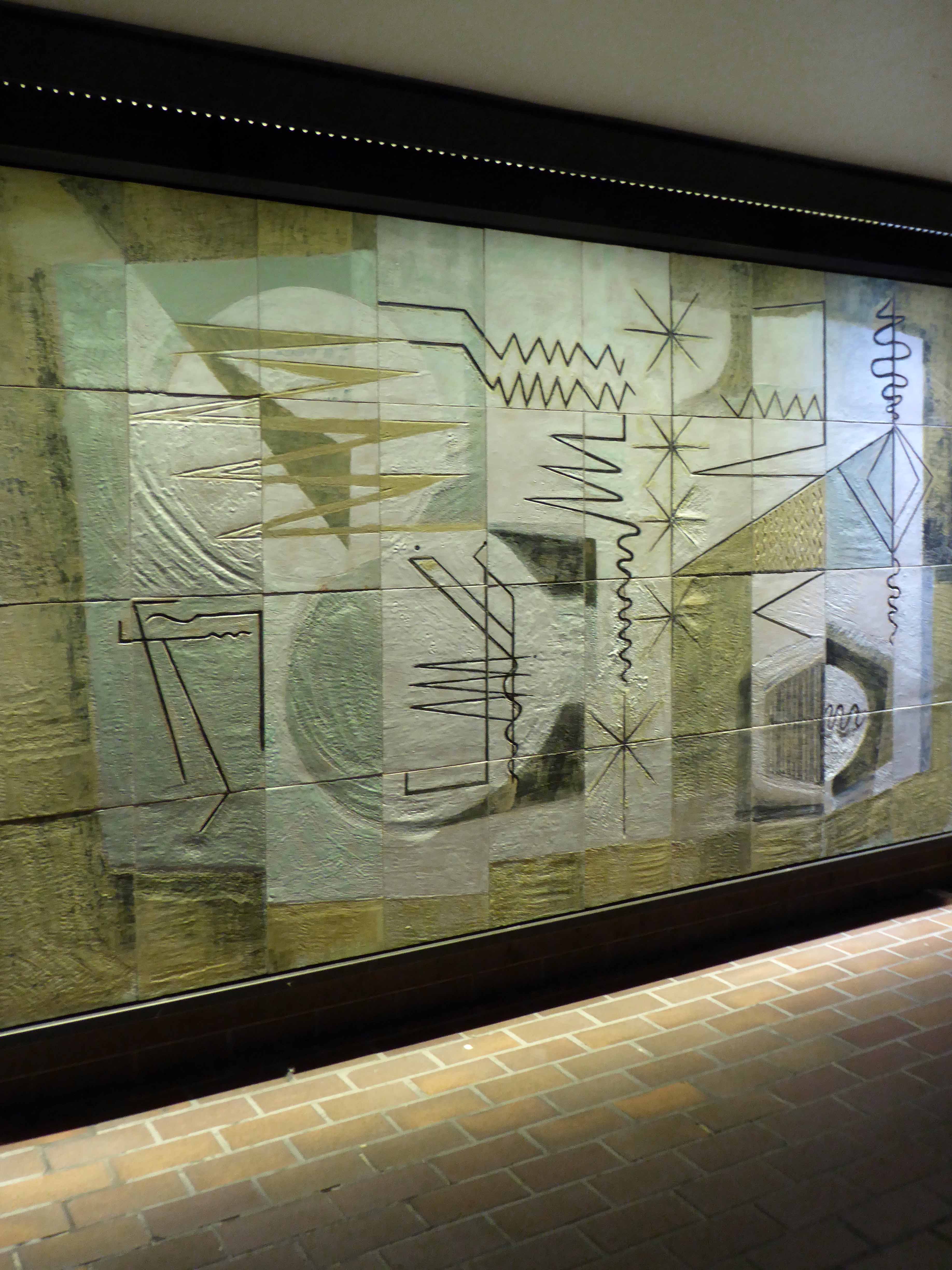
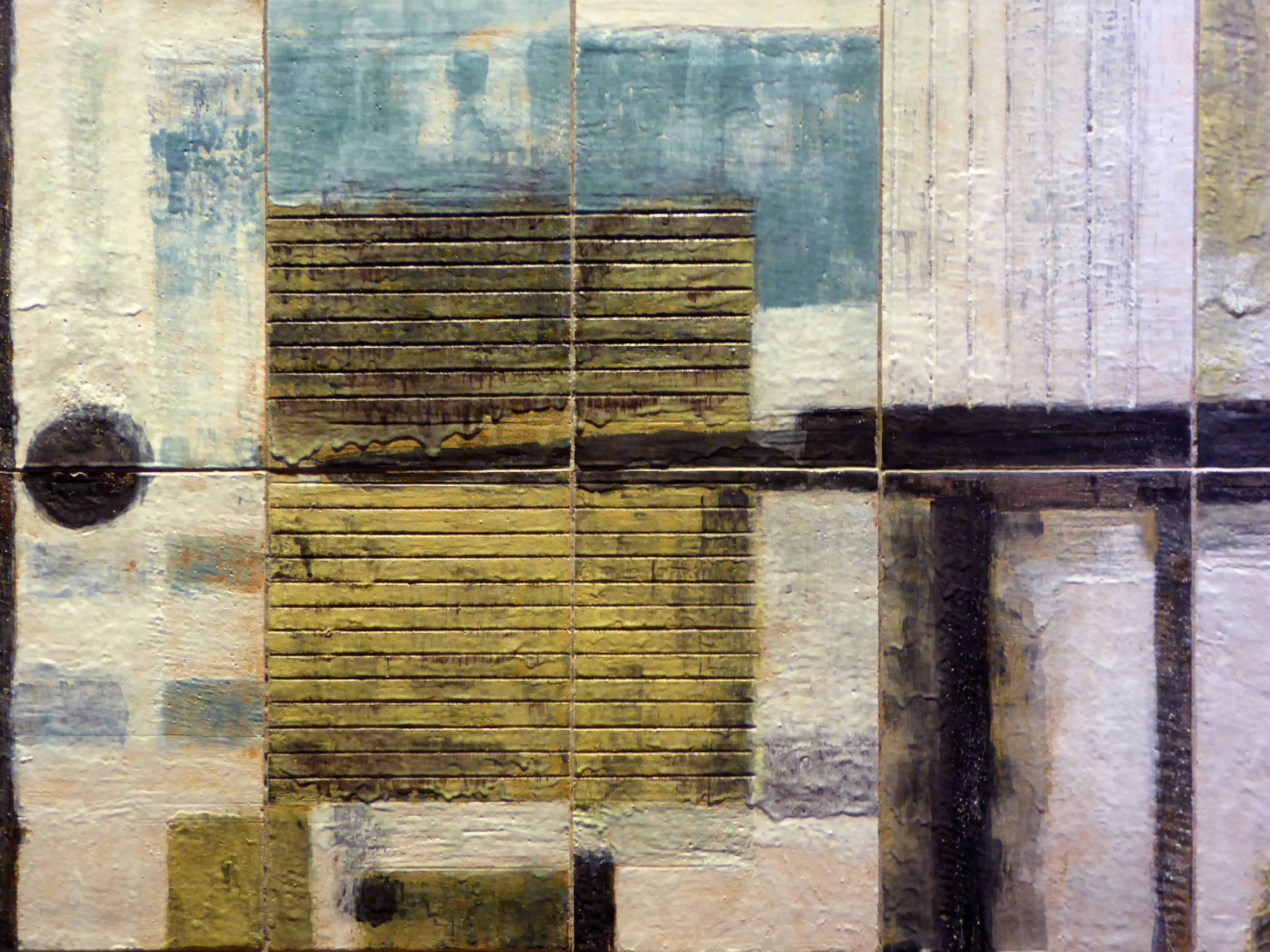
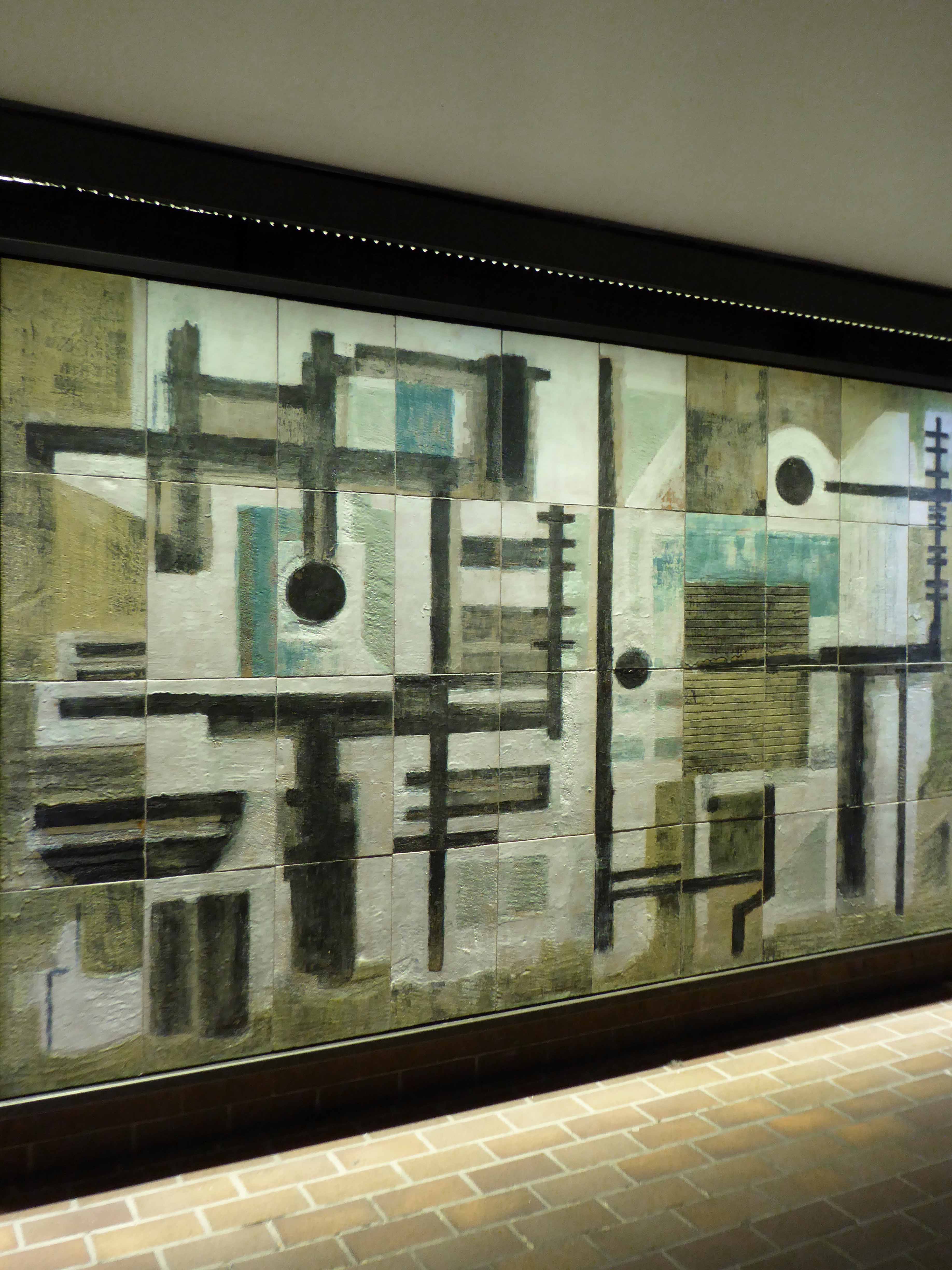
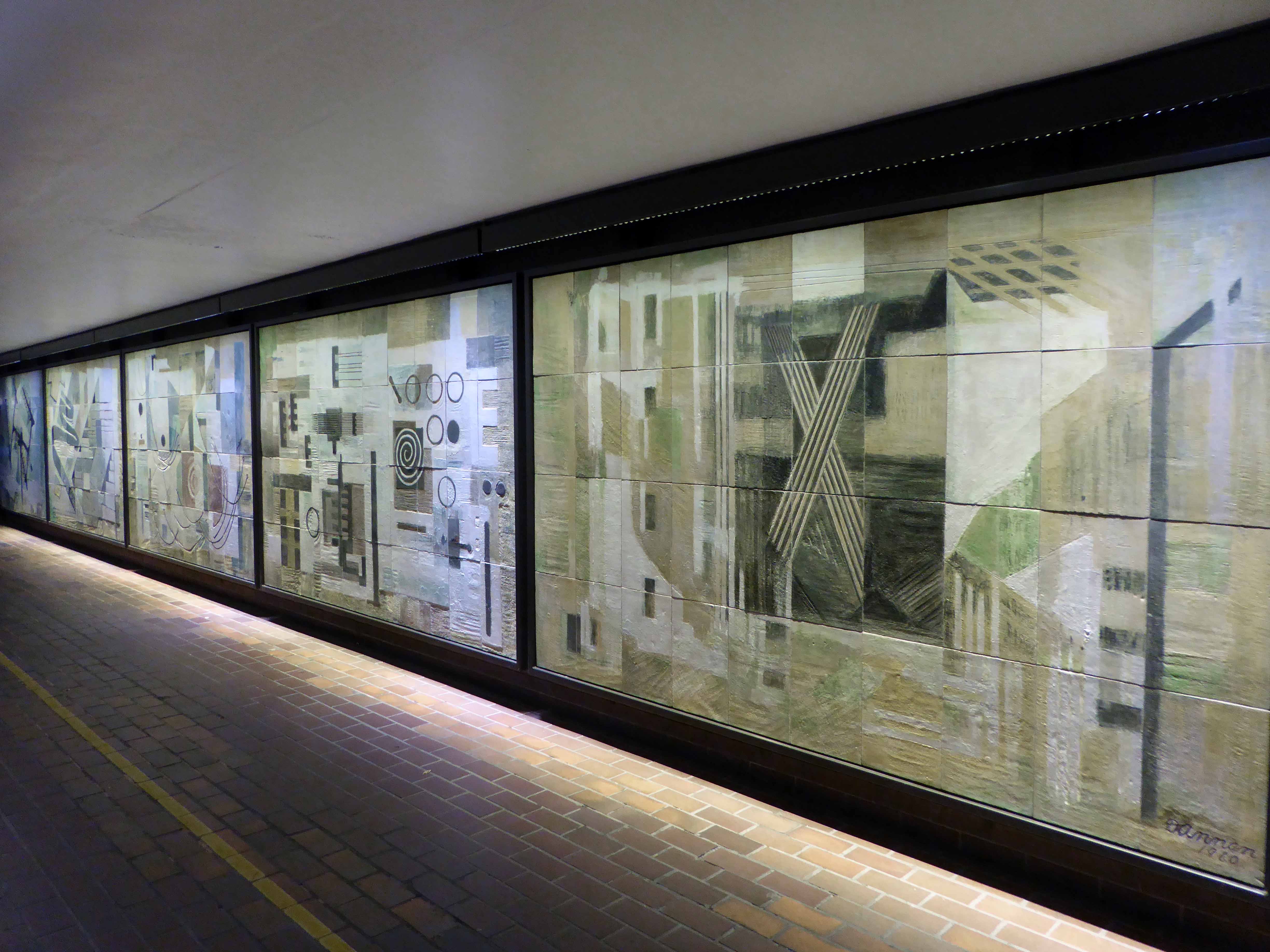
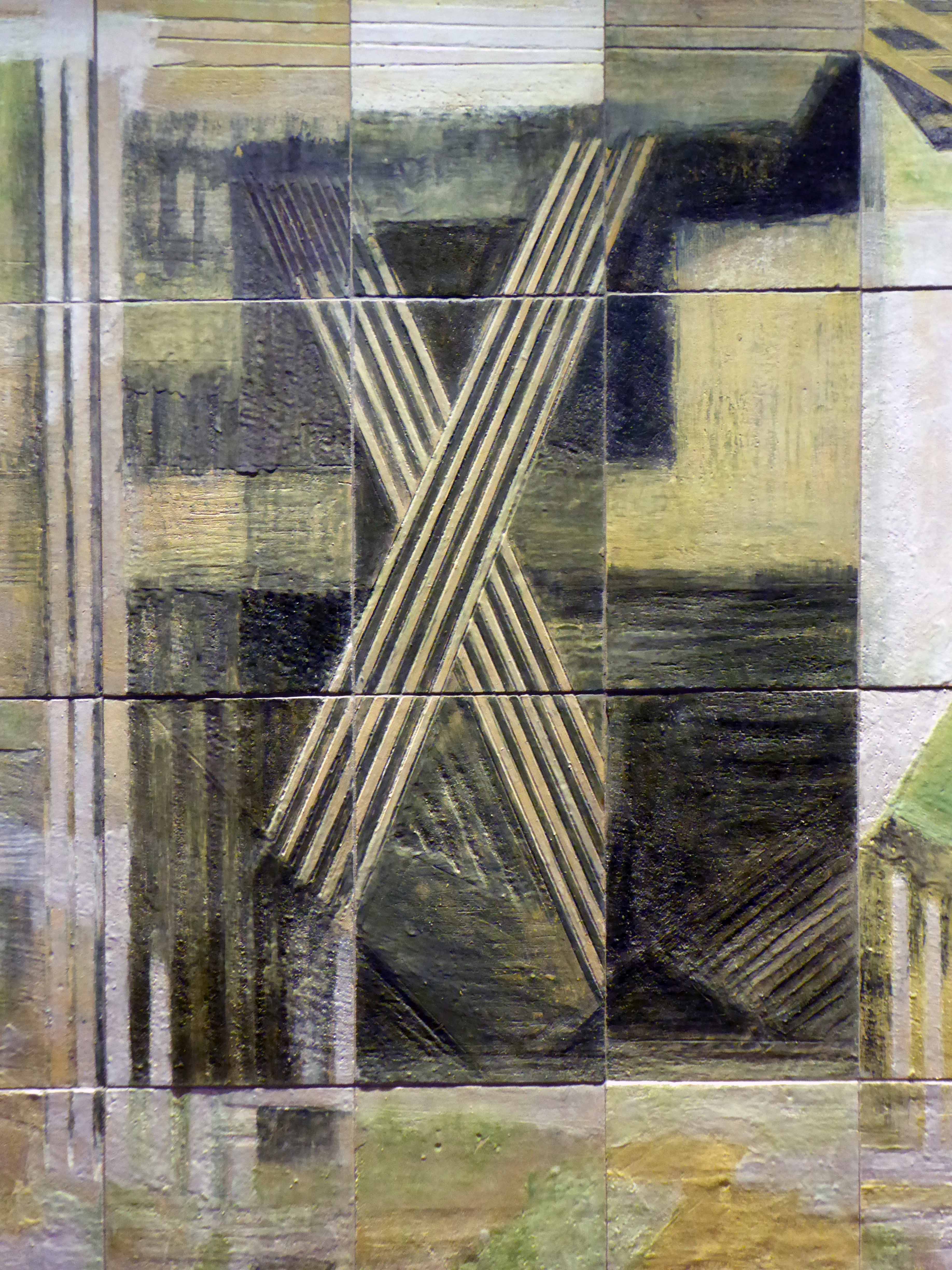
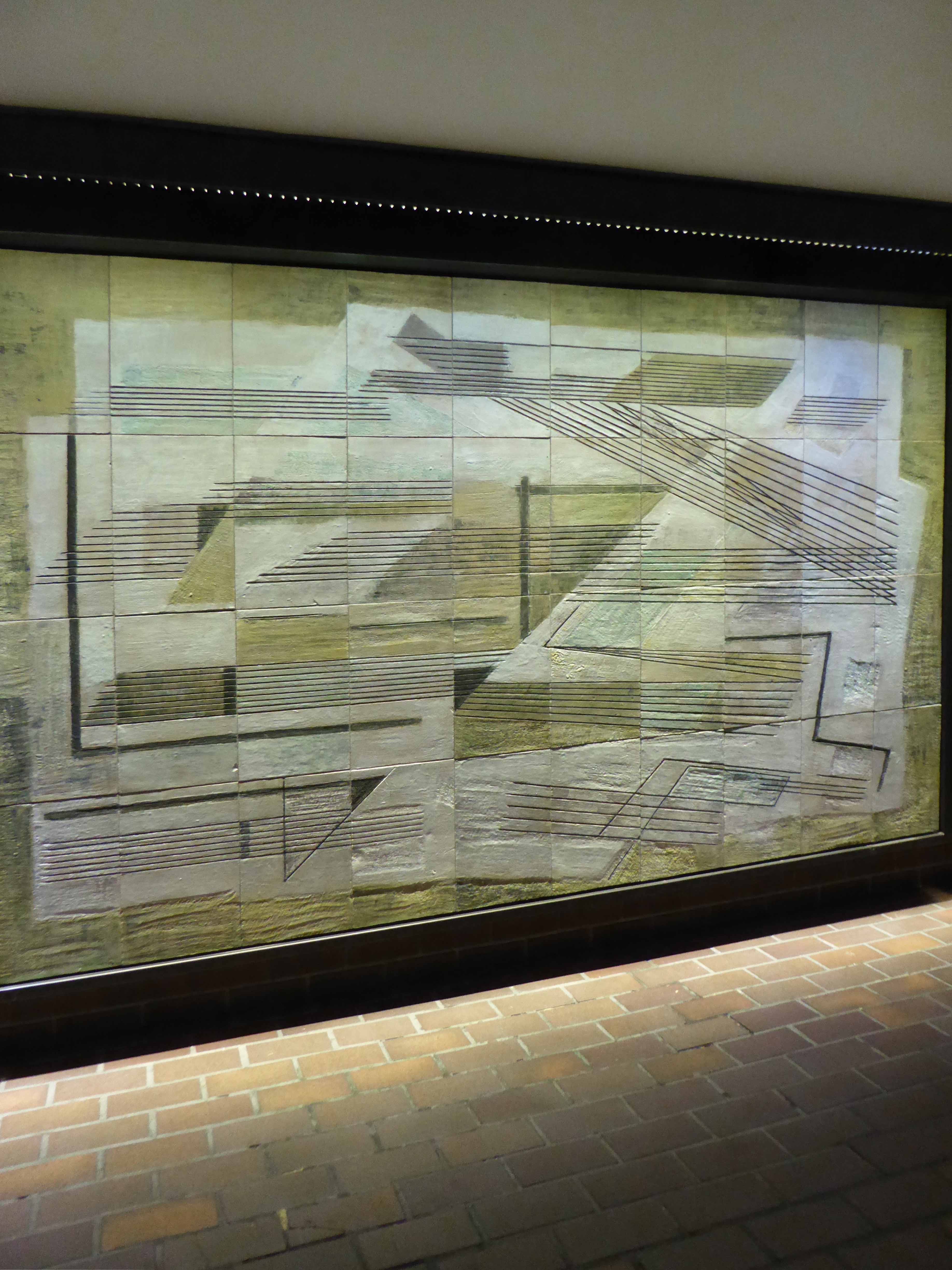
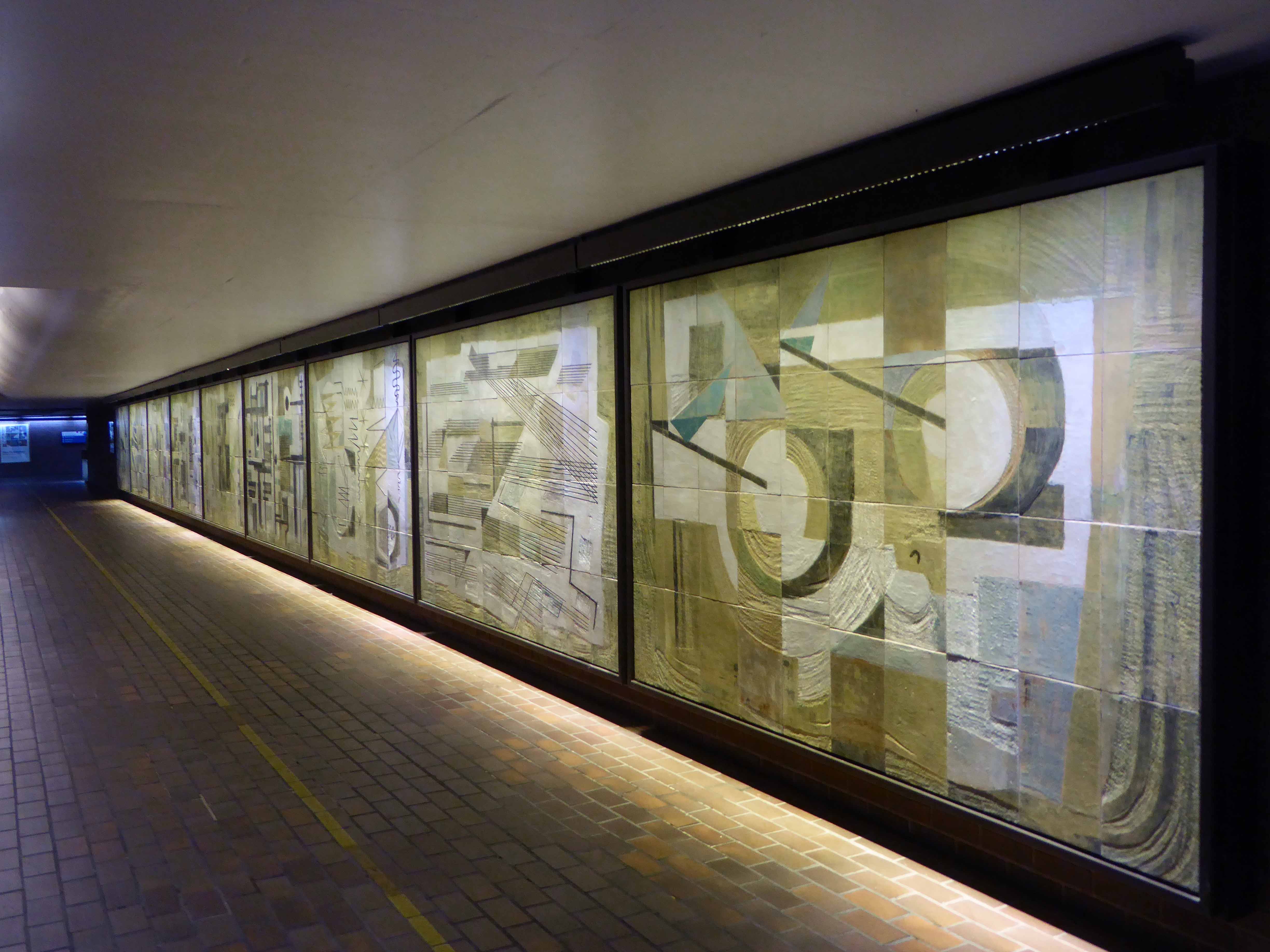
This is a whole new box of tiles, the search for a re-sited mural, a first time meeting with what would seem at once like an old and well-loved friend.
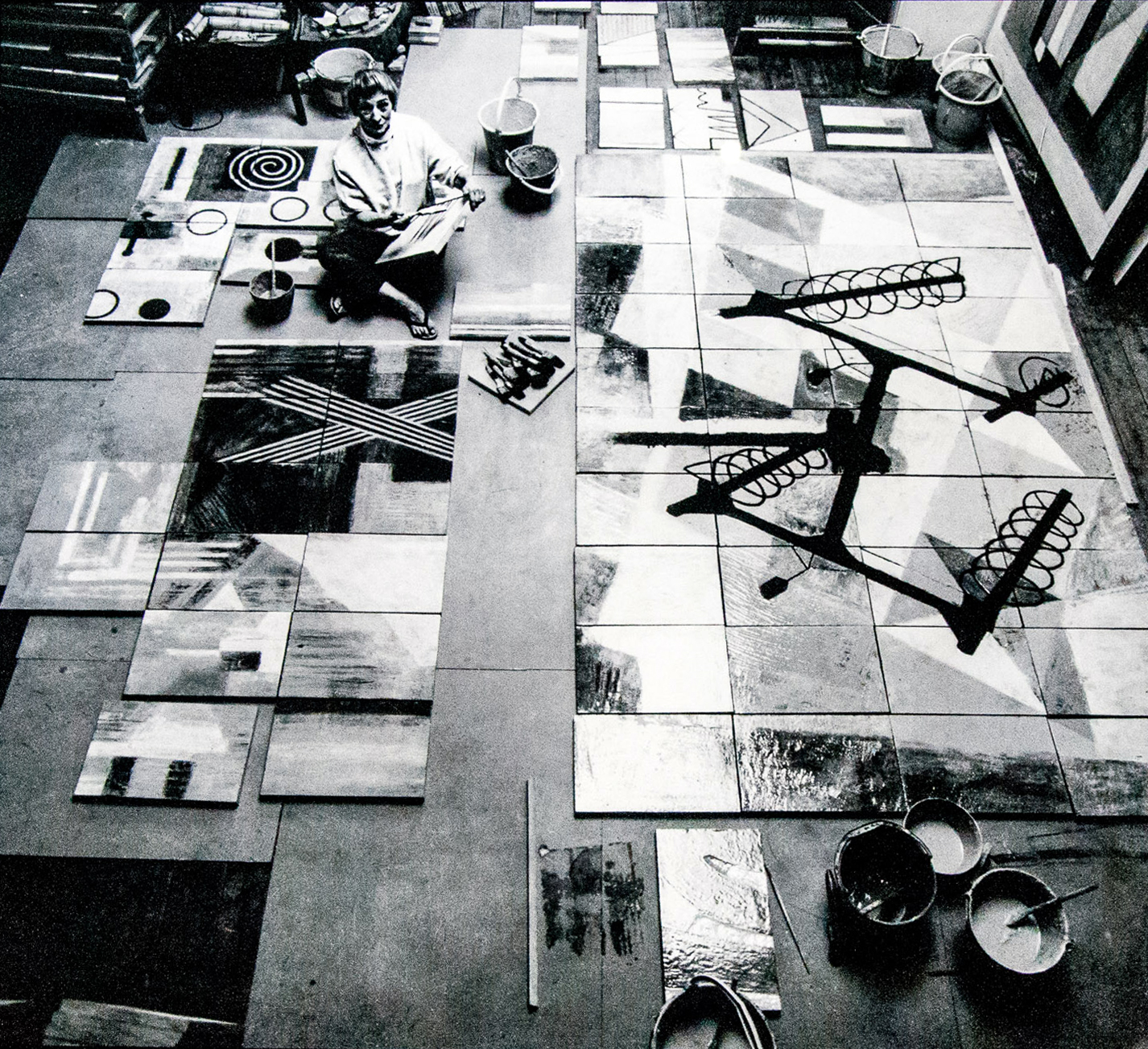
Dorothy Annan20 January 1900 – 28 June 1983
Was an English painter, potter and muralist, married to the painter and sculptor Trevor Tennant. She was born in Brazil to British parents and was educated in France and Germany.
Christmas 1944 – Manchester Art Gallery
Annan’s paintings are in many national collections, she is also known for her tile murals, many of which have been destroyed in recent decades. Only three of her major public murals are believed to survive, the largest single example, the Expanding Universe at the Bank of England, was destroyed in 1997.
Gouache Sketch
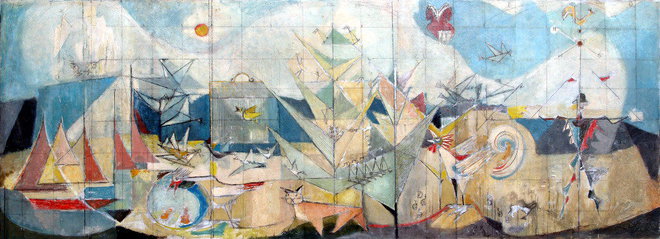
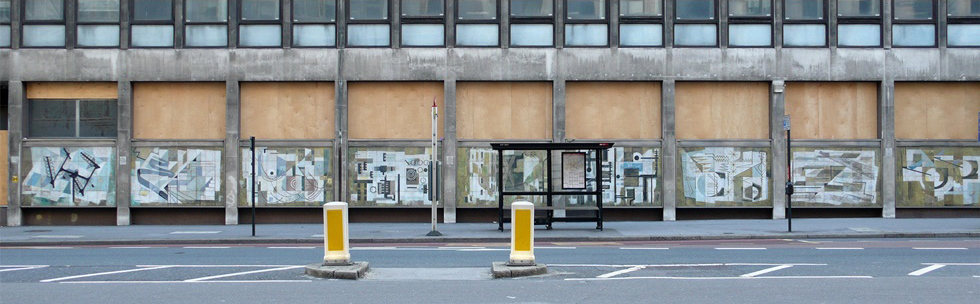
I was looking for her mural which illustrates the telecommunications industry – formerly of the Fleet Building Telephone Exchange Farringdon Road.
Michael Bojkowski
The murals were commissioned at a cost of £300 per panel in 1960. Annan visited the Hathernware Pottery in Loughborough and hand-scored her designs onto each wet clay tile, her brush marks can also be seen in the fired panels.
Charles Trusler
The building was owned by Goldman Sachs, who wished to redevelop the site and opposed the listing of the murals.
In January 2013, the City of London Corporation agreed to take ownership of the murals, and in September 2013 these were moved to a permanent location in publicly accessible part of the Barbican Estate. They are displayed in their original sequence within an enclosed section of the Barbican High Walk between Speed House and the Barbican Centre.
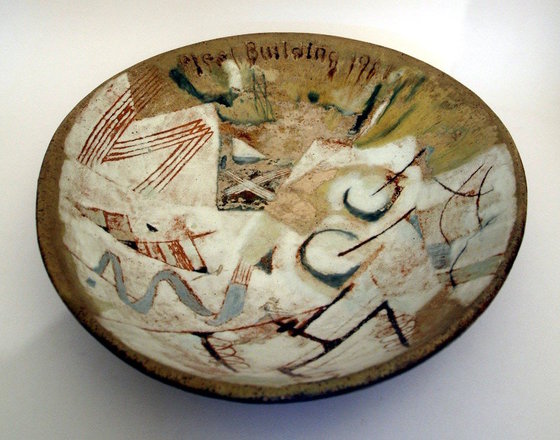
Commemorative Bowl
So following a discursive and somewhat undirected circumnavigation of the Center we were finally united – it only seemed polite to linger a while and take some snaps – here they are.
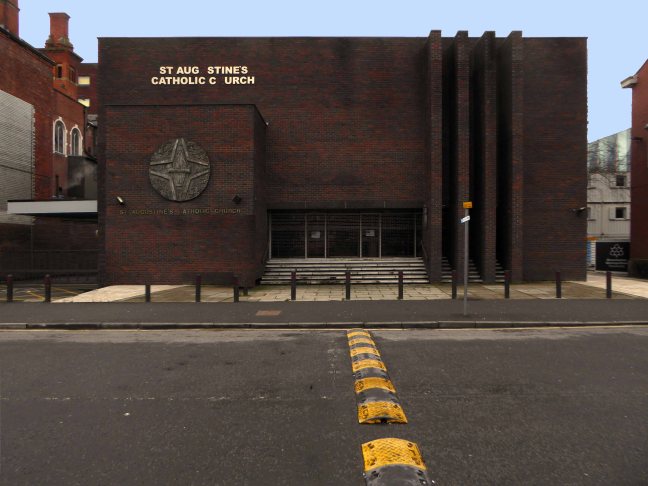
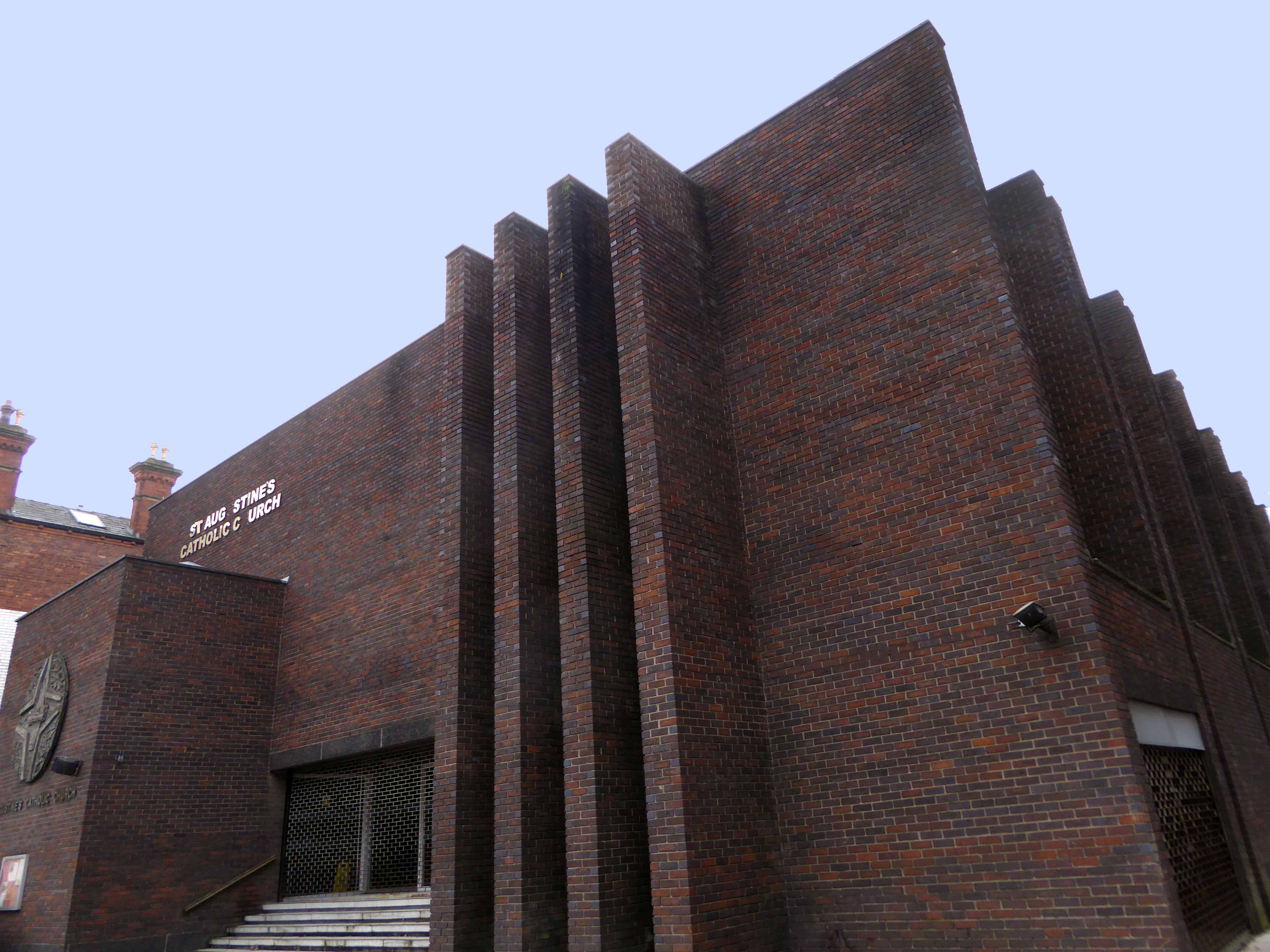
We have been here before on the west side of Grosvenor Square, between the former Eye Hospital and Registry Office on Lower Ormond Street, sits the solid stolid brick form of St Augustine.
The original St Augustine’s was one of the oldest Roman Catholic churches in Manchester, having been established at Granby Row in 1820. This church was sold in 1905 to make way for the Manchester Municipal Technical College, and a new church built on York Street. This church was destroyed in the Manchester Blitz of 1940. The present site previously housed a chapel of ease in a building bought from the Methodists in the 1870s. It had briefly been a separate parish, but in 1908 was amalgamated with St Augustine’s parish. After the War it was the only surviving church in the parish. The new St Augustine’s was built here with the help of a grant from the War Damage Commission, at a cost of £138,000, when it was clear that the original building was inadequate. The new building was opened in 1968 and consecrated in 1970.
Roman Catholic Church 1967-8 by Desmond Williams & Associates. Load-bearing dark brown brick construction with felt roofs supported on Vierendeel girders, with rear range in brick and timber cladding.
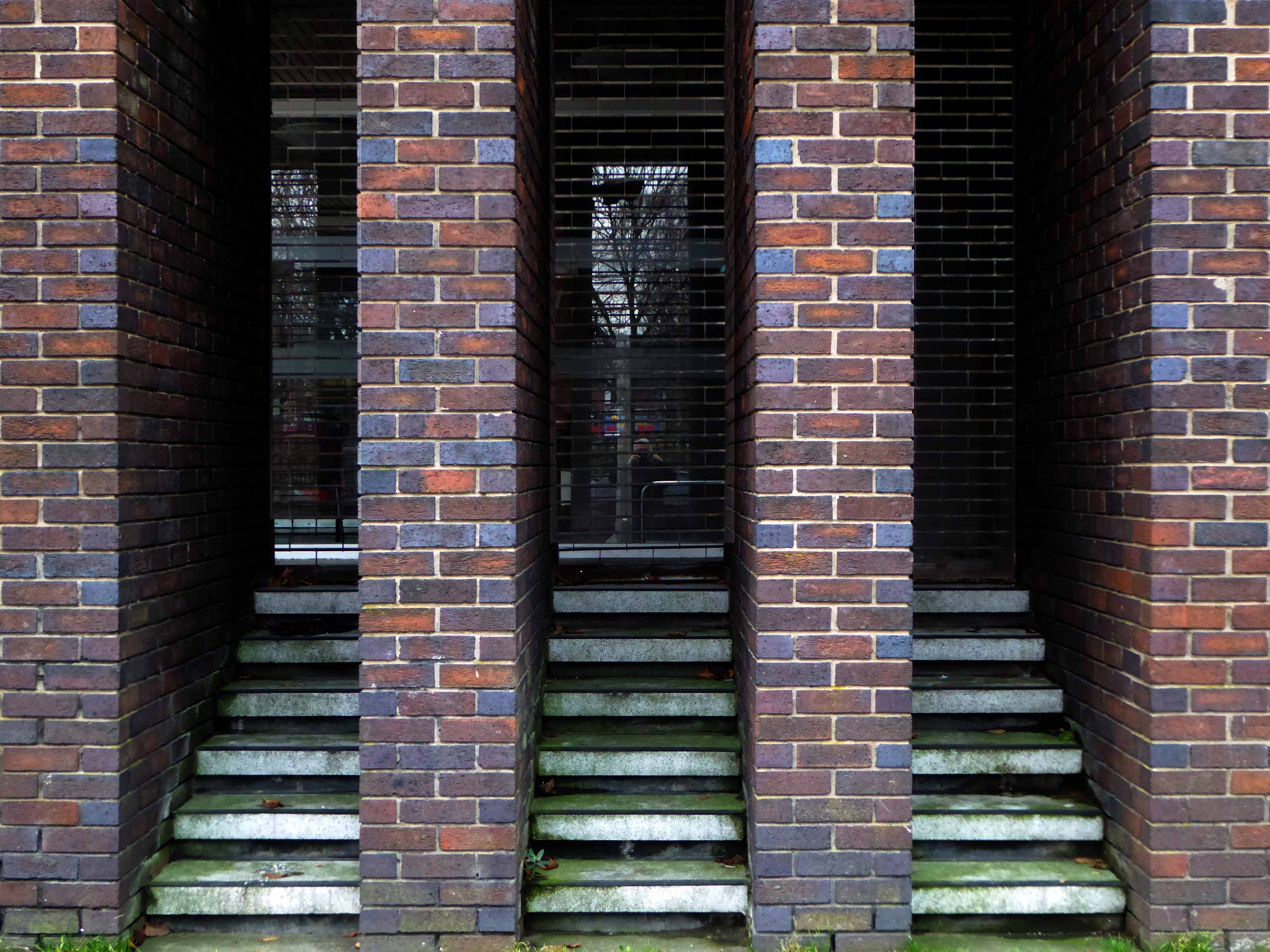
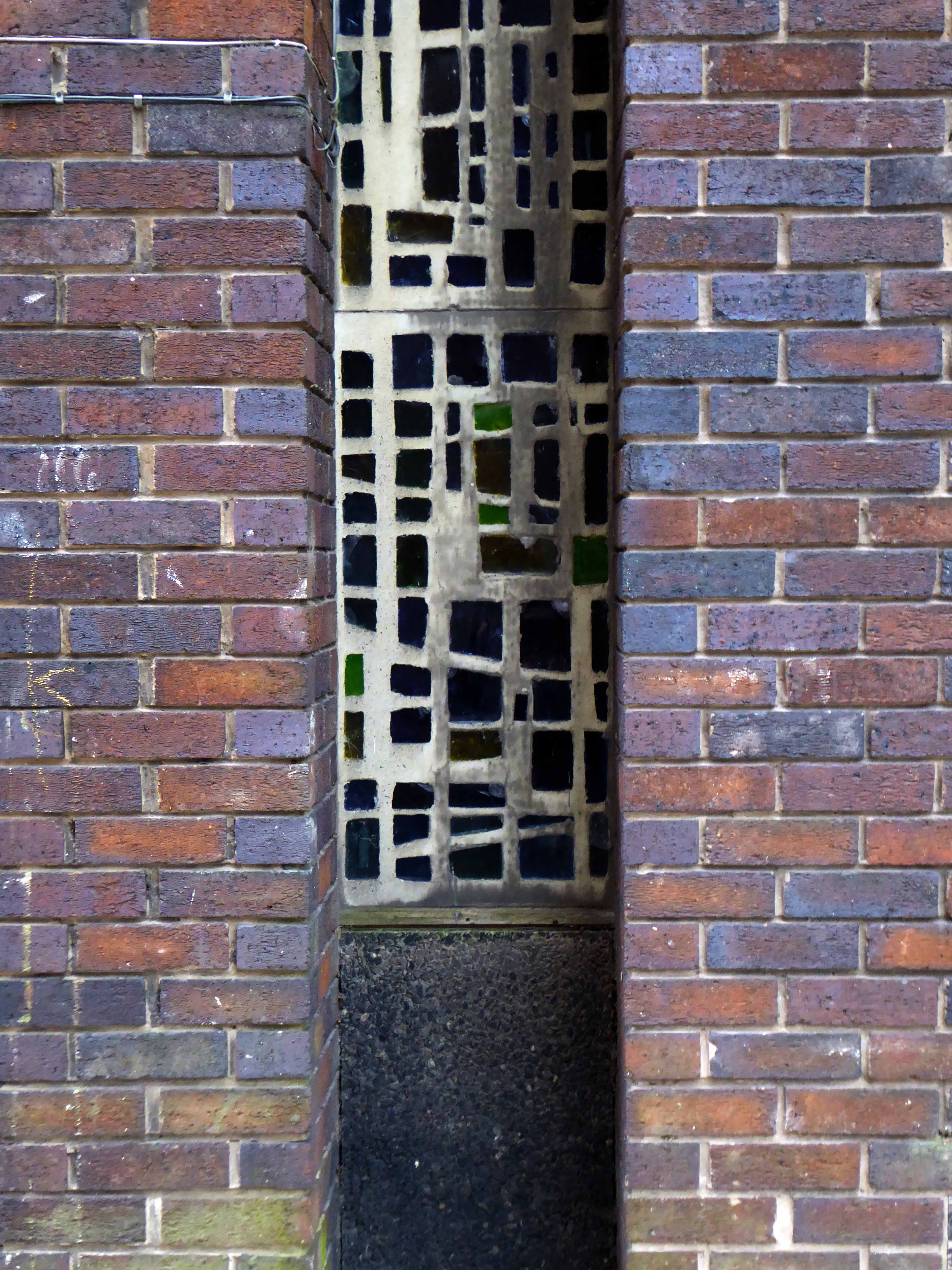
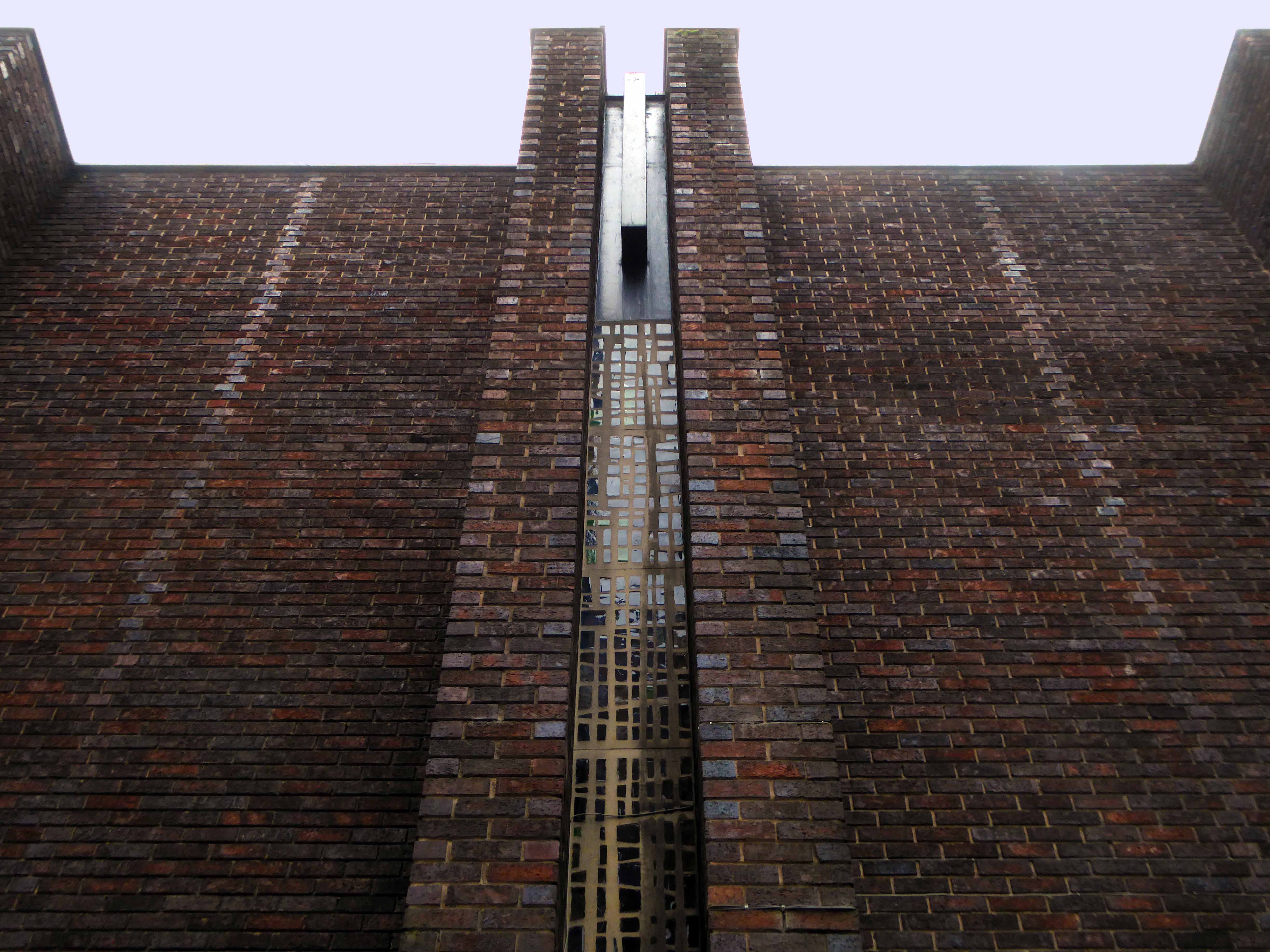
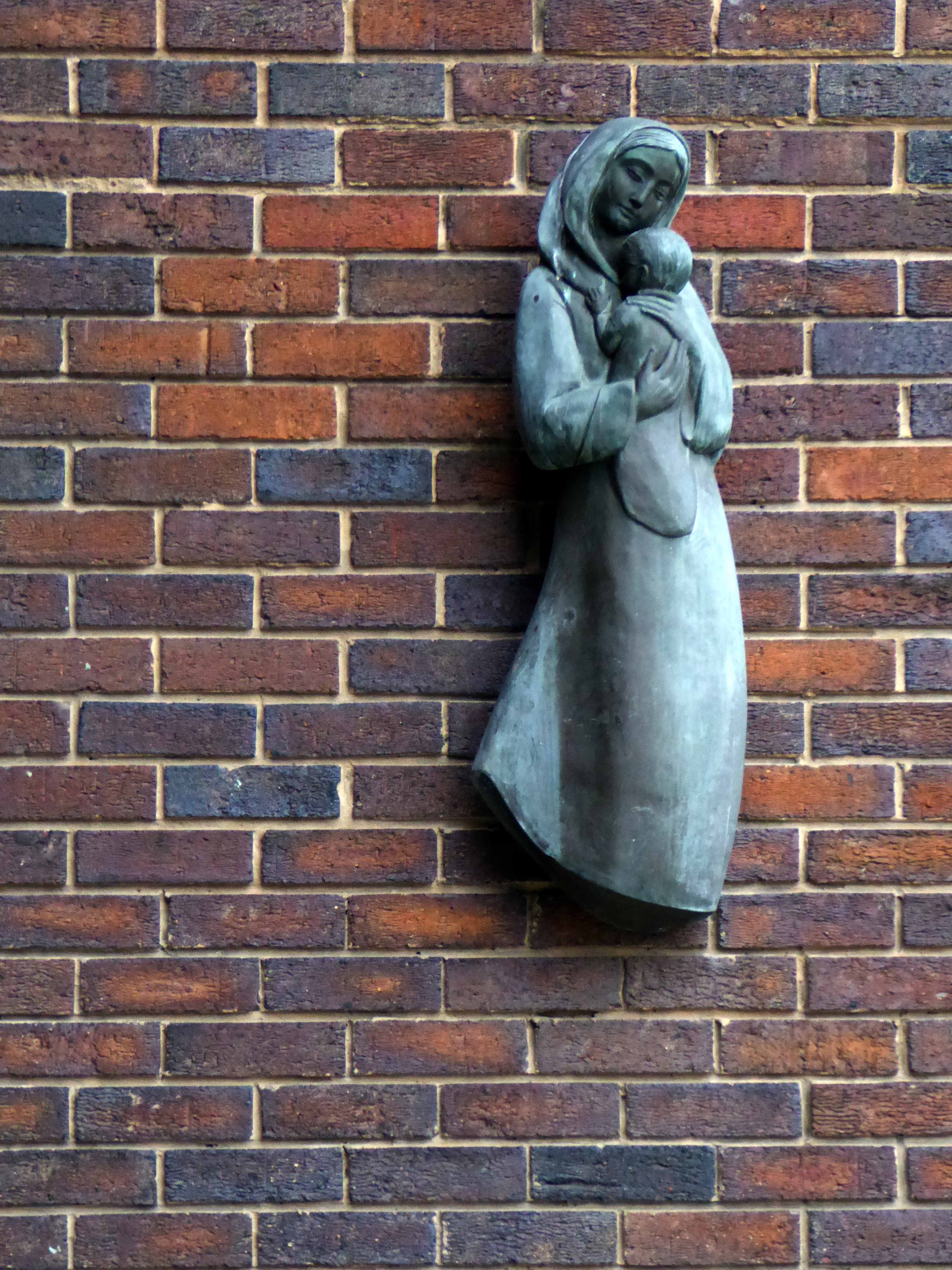
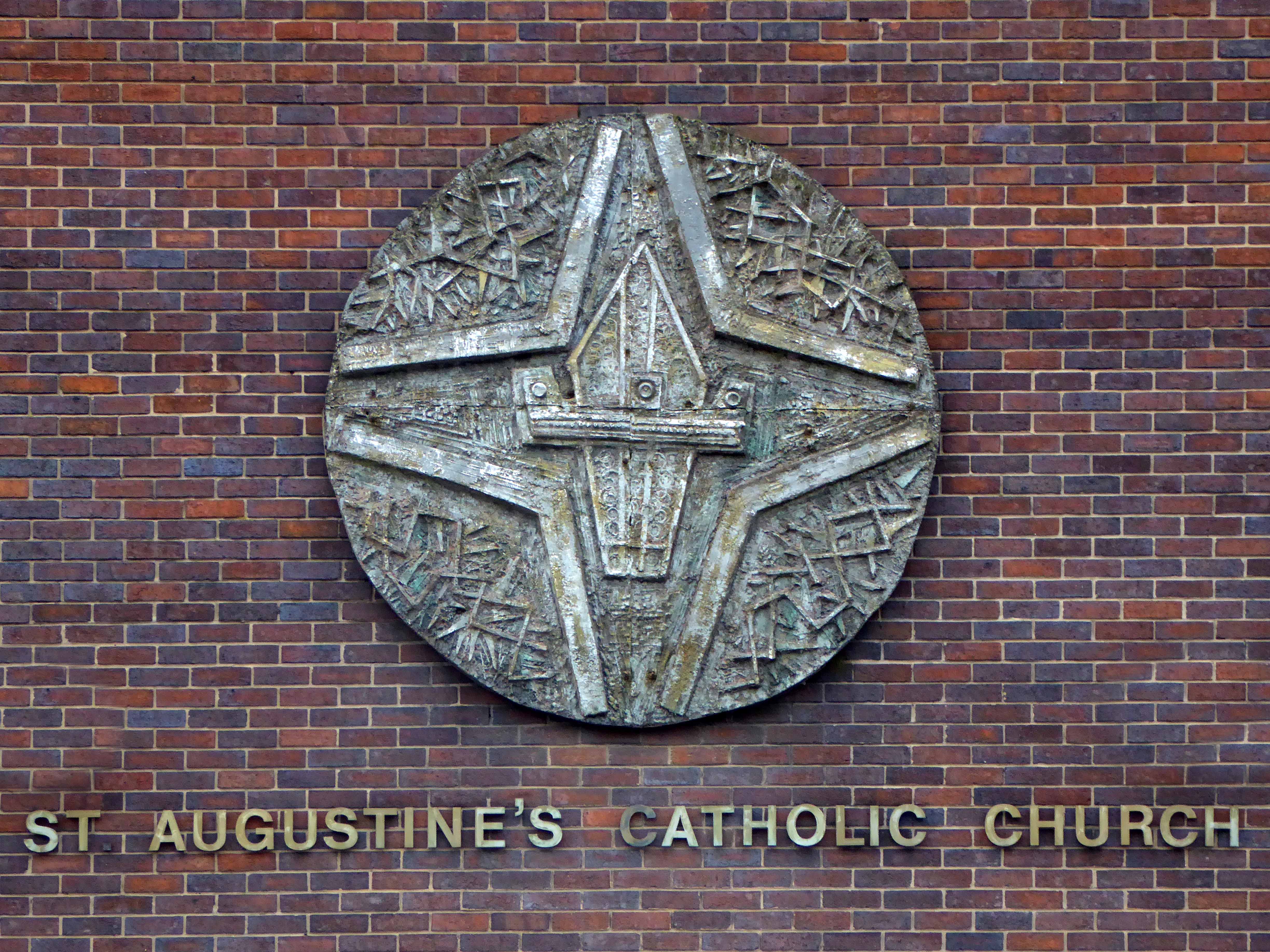
Body of church virtually square, with corridor at rear right leading to cross wing containing offices and accommodation. Windowless façade with floating service projection to the left and four full height brick fins to the right of wide recessed central entrance reached by low flight of steps. On the projection a ceramic plaque with star and mitre and on the inner face of the left hand fin a figure of the Madonna, both by Robert Brumby. Set back returns of 6 bays, divided by pairs of projecting slim brick piers. Openings between the pairs of piers filled with coloured chipped French glass. Secondary entrance beneath large cantilevered canopy in first bay of left hand return. Slender linking block containing sacristy. The rear presbytery range, containing first floor hall, meeting rooms, kitchen, chaplaincy offices and accommodation for four priests. Bell tower rising from parish rooms block.
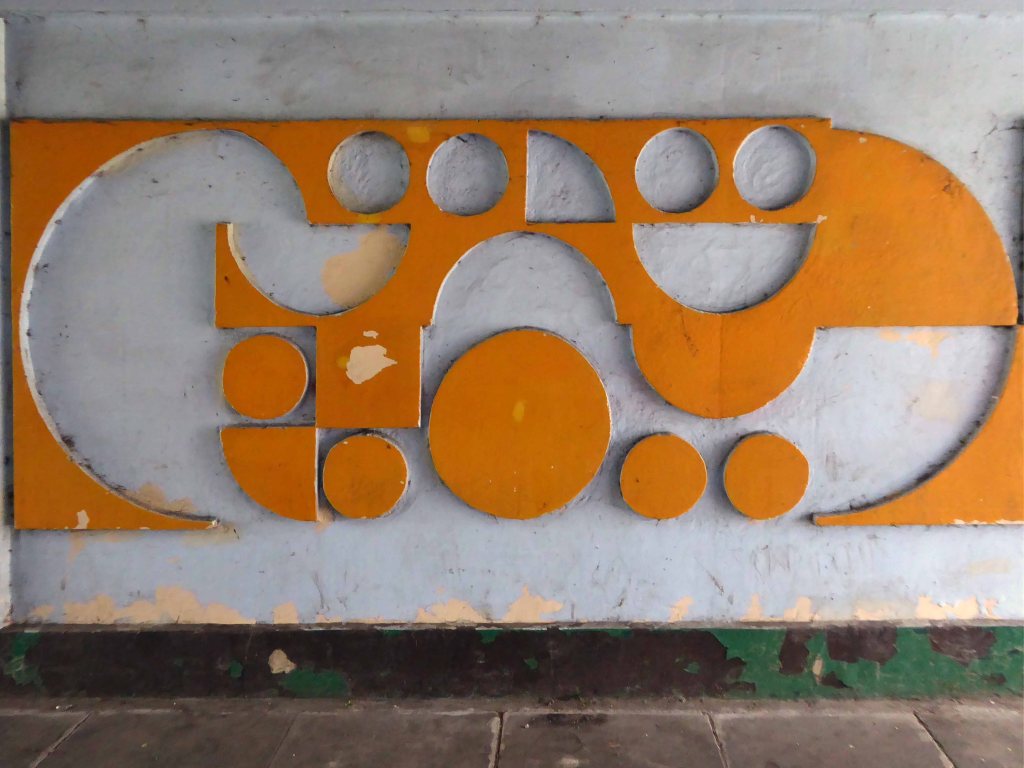
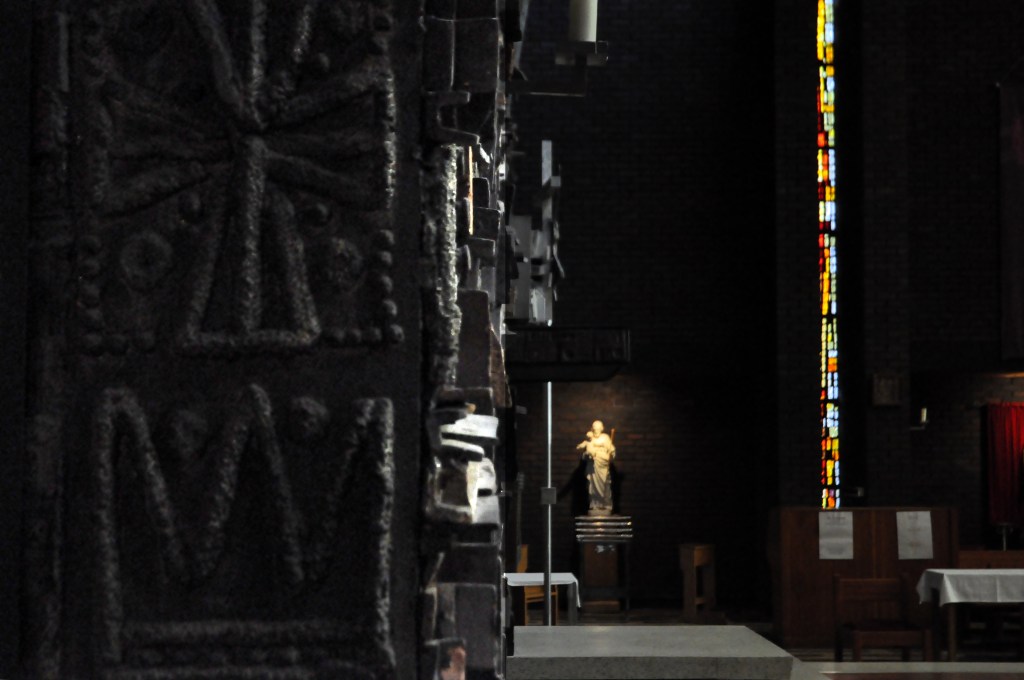
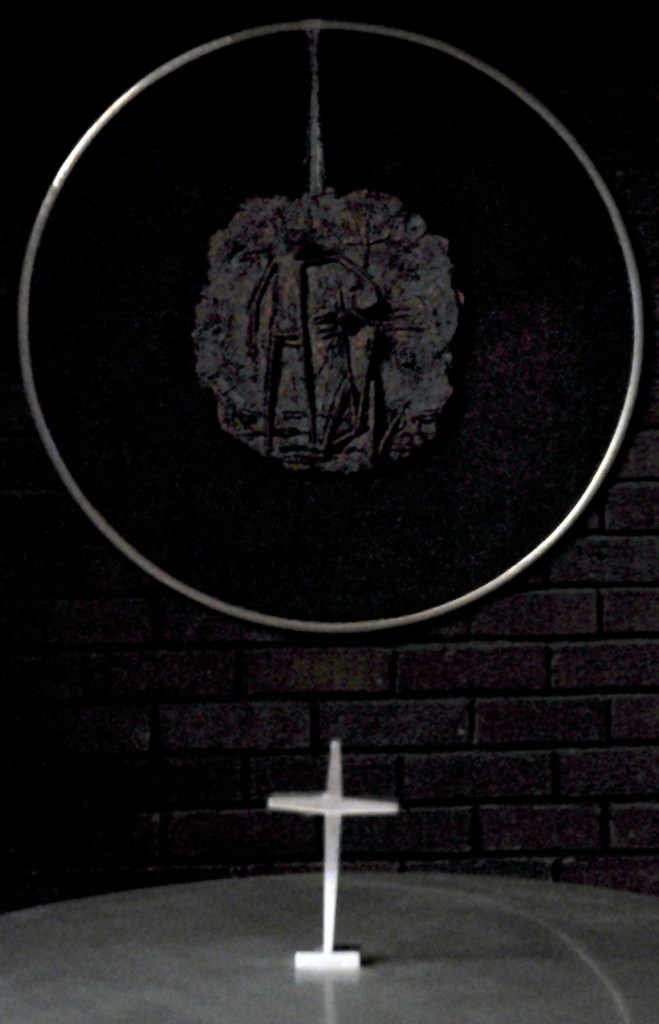
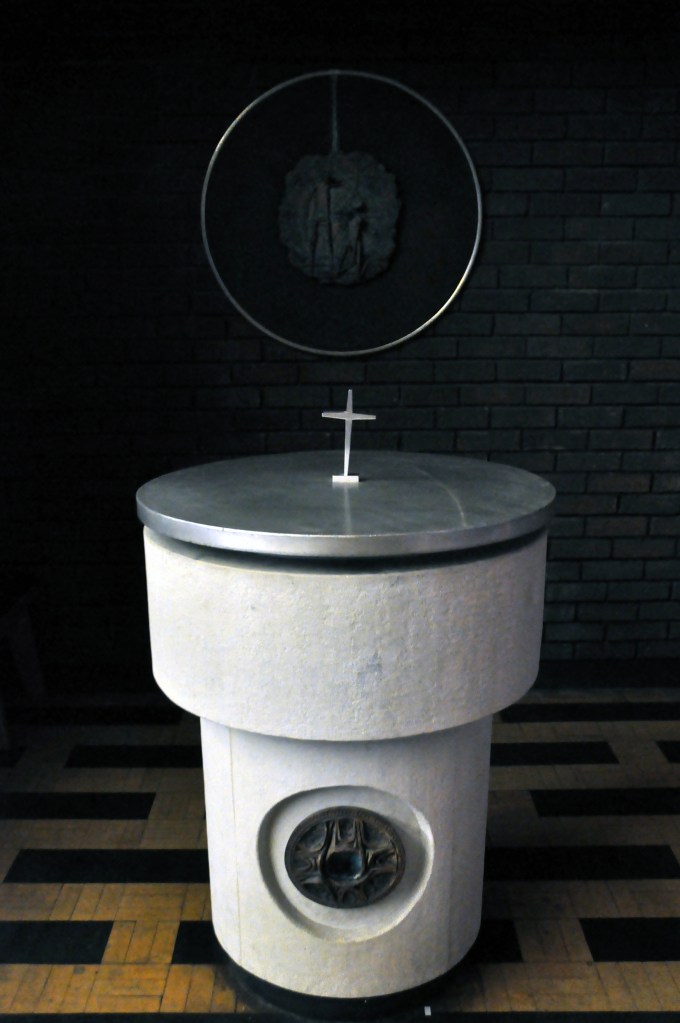
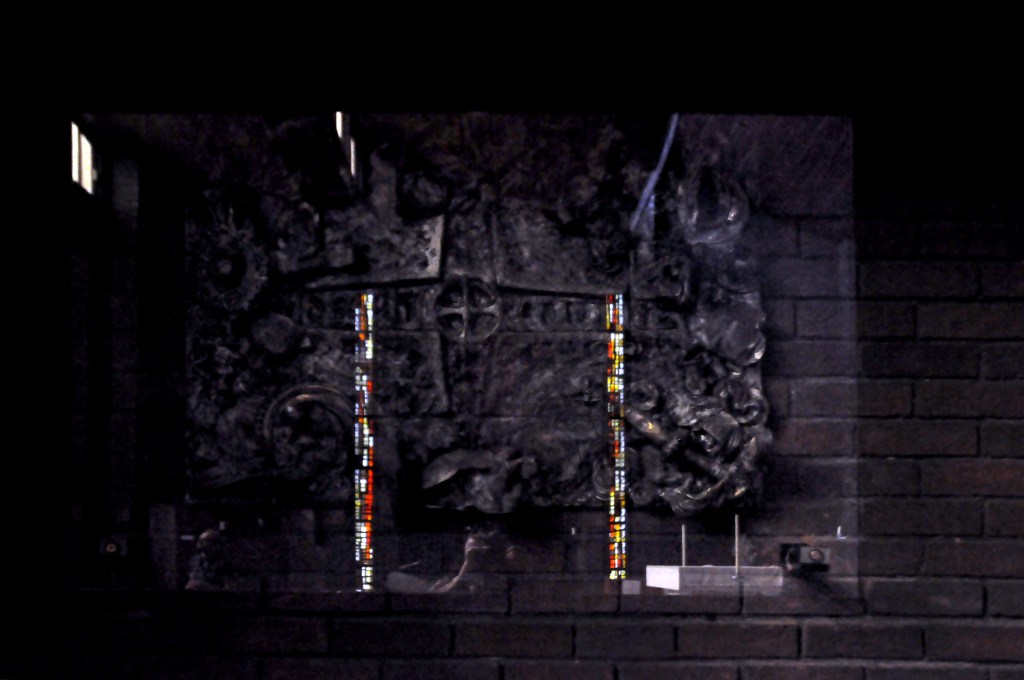
A simple box plan with ceiling of steel trusses clad with timber and clerestory north lights. Sanctuary of three stepped platforms with white marble altar set forward. Large ceramic reredos sculpture of Christ in Majesty by Robert Brumby of York. Bays containing either projecting confessionals or chapel recesses are divided by pairs of projecting slim brick piers. Fixed seating in angular U-shape surrounding Sanctuary. Side chapel to left. Narthex. West gallery above originally with seating, now housing organ. Unified scheme of decoration by Brumby including the external plaque and statue, holy water stoups, wall light brackets, circular font with ceramic inset and aluminium lid, altar table with bronze inset and, probably, Stations of the Cross sculptures. Also by Brumby, a memorial plaque fashioned from mangled plate, damaged in the Blitz, commemorating the earlier parish church which this replaced.
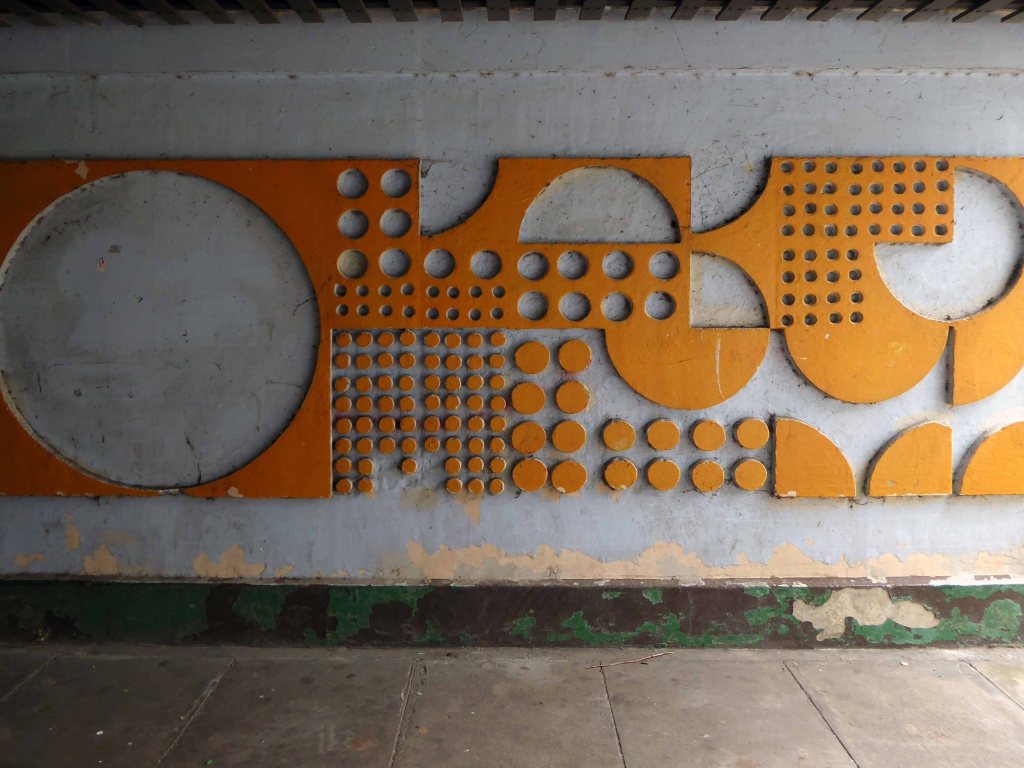
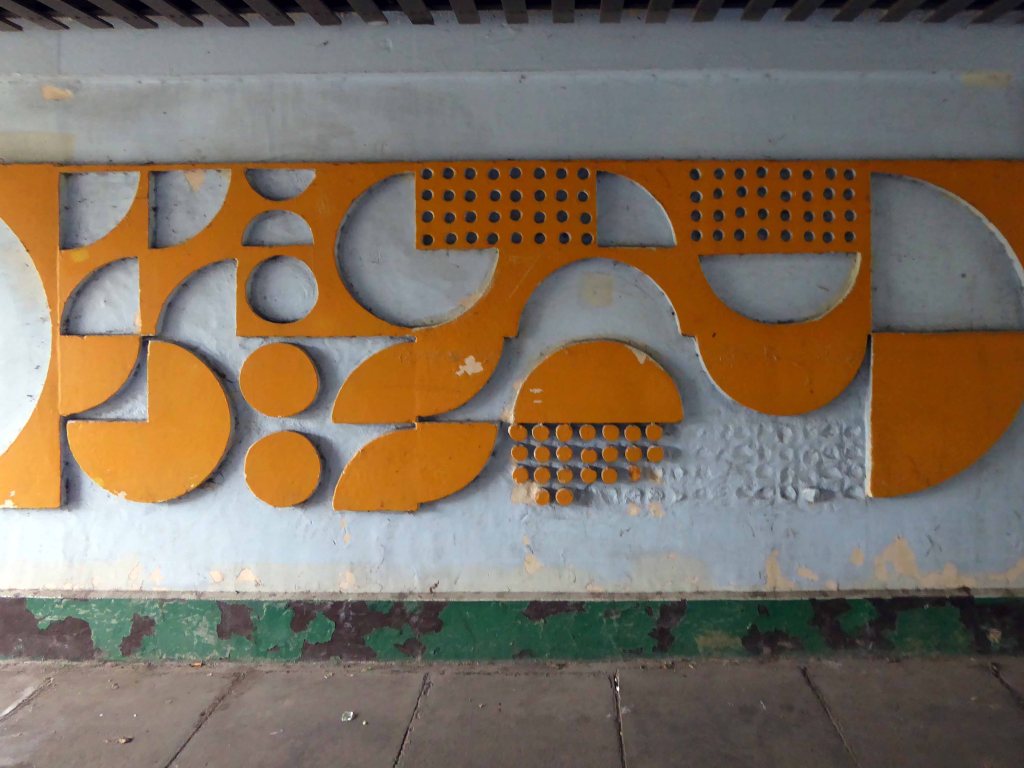
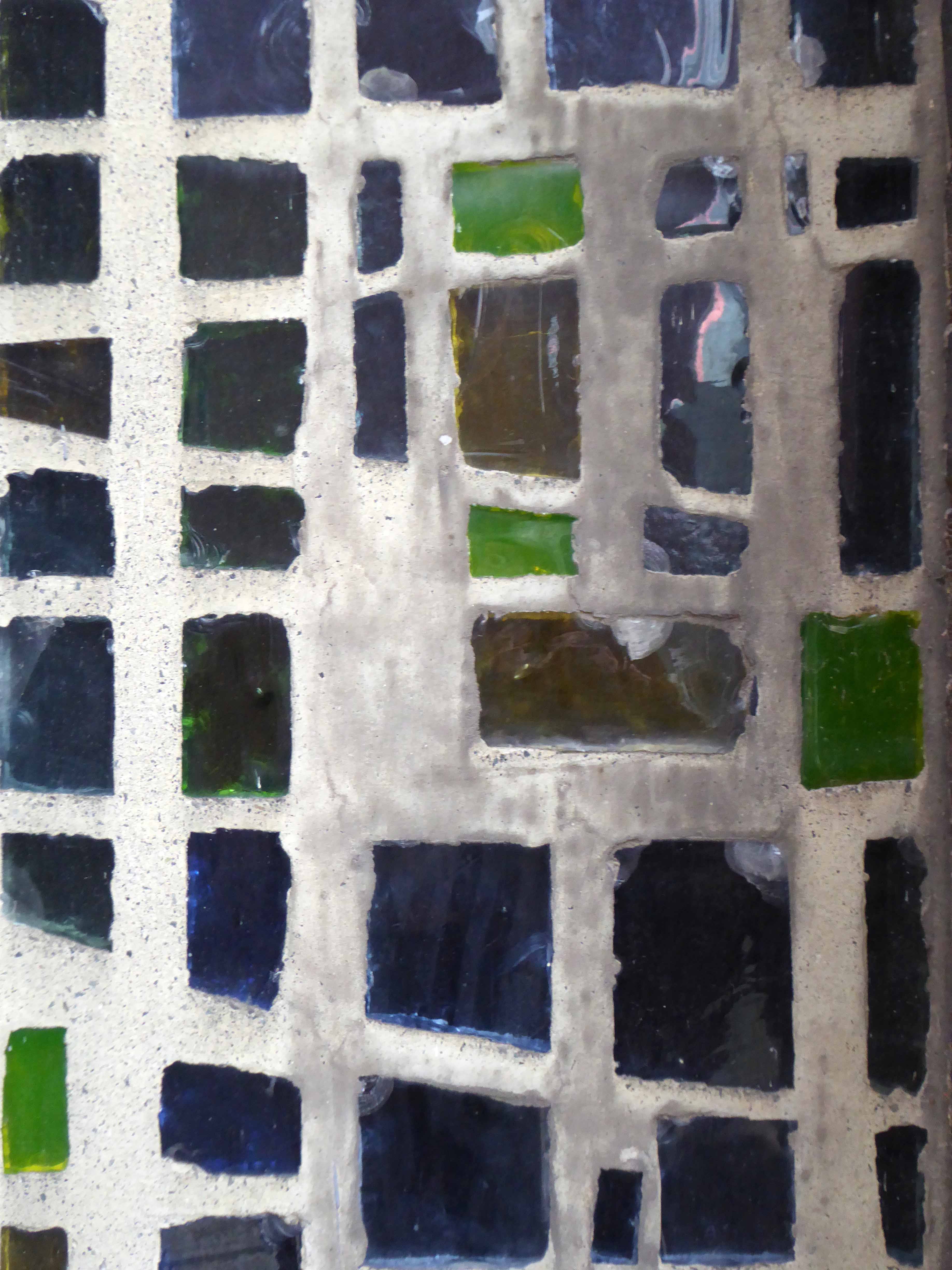
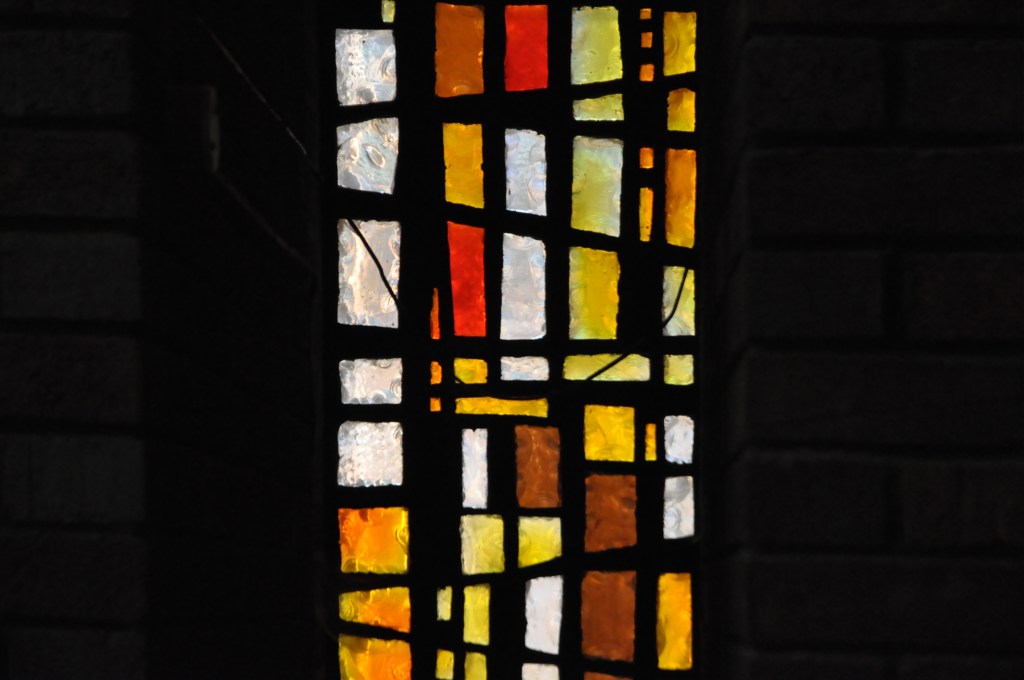
Of particular note are the stained glass windows.
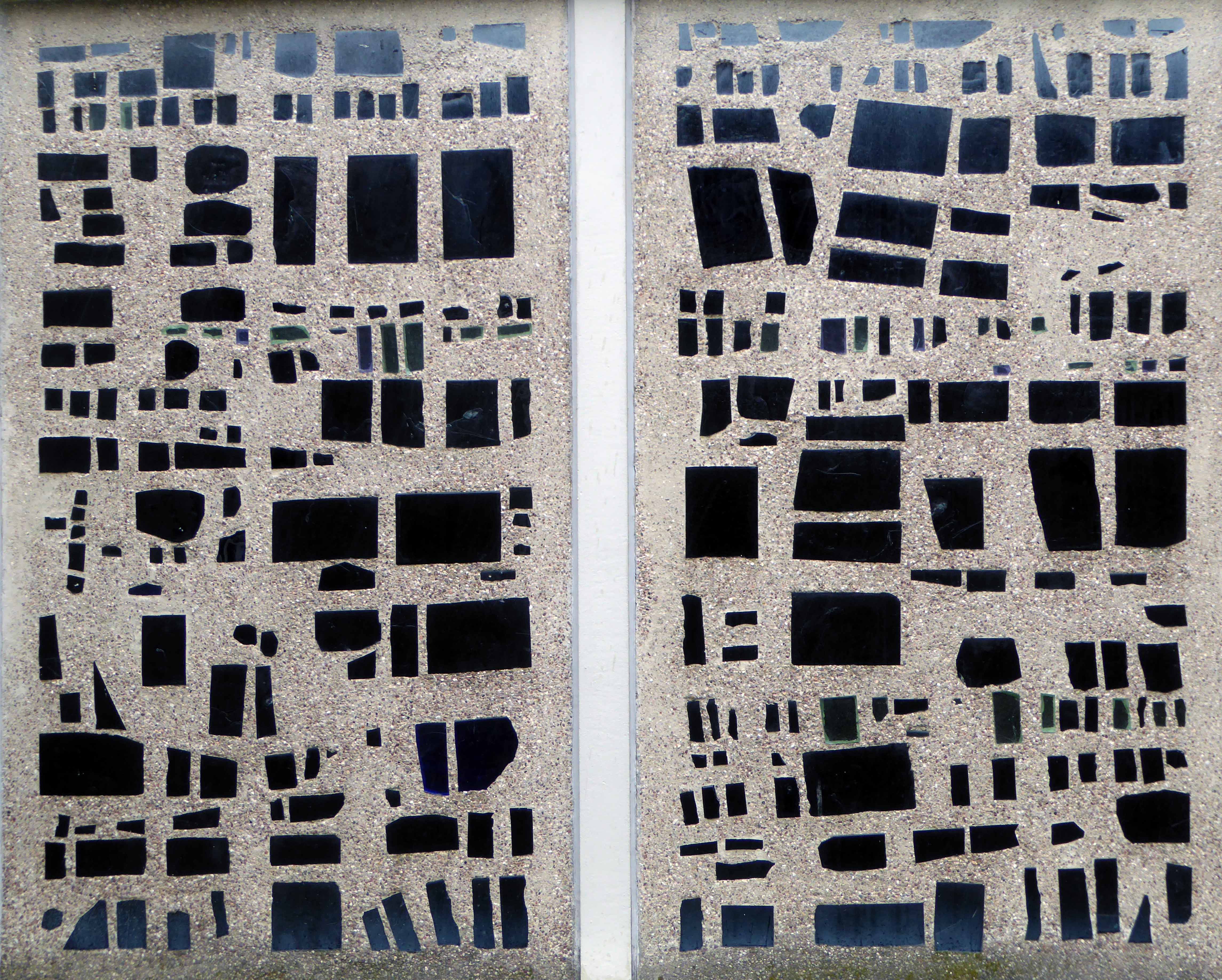
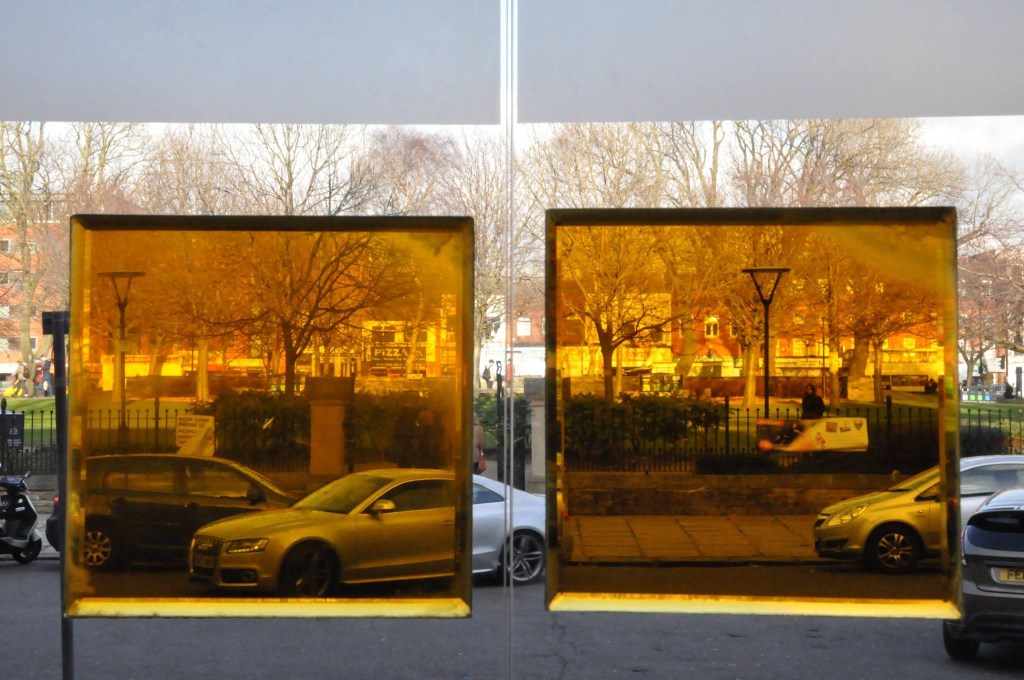
The internal atmosphere of the church is modified by the changes in light cast through the stained glass windows. The windows are of a colourful random and abstract design and ascend the full height of the walls between structural bays which themselves form enclosures to confessionals and stores. The pieces of coloured glass are suspended in concrete and were supplied by the now defunct Whitefriars company. The designer was a French artist, Pierre Fourmaintraux, who began working with Whitefriars in 1959, using the ‘dalle de verre’ (slab glass) technique that had been developed in France between the wars. His motif was a small monk variously painted upon, or cast into, the glass. In St. Augustine’s the motif is cast and highly stylised and can be found tucked away at the foot of each of the rear windows.
Antonio Fusciardi emigrated in the 1960s in search of a better life. He opened a number of businesses in Ireland. In 1965 he met Anna Morelli at an Italian wedding and romance blossomed. The couple married and set up home in Marine Parade, Eastbourne. They worked very hard in establishing the business and attributed their success to ambition, dedication and the family.
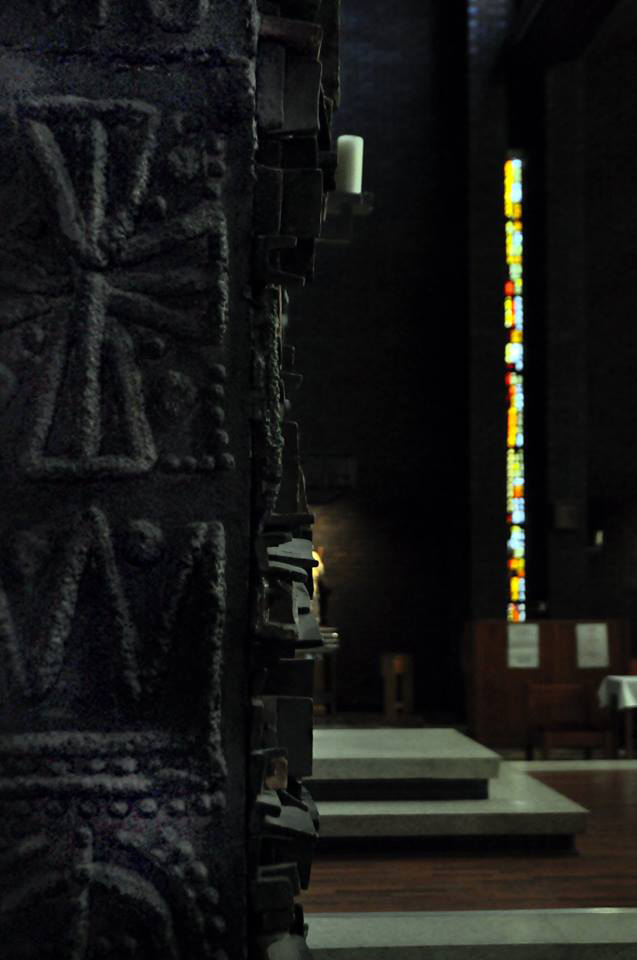
Mitzi Solomon Cunliffe January 1st 1918 December 30th 2006
American born, resident of Didsbury Manchester, sculptor and designer, responsible for, amongst other things, the BAFTA mask.
Her first large scale commission was two pieces for the Festival of Britain in 1951. One, known as Root Bodied Forth, shows figures emerging from a tree, and was displayed at the entrance of the Festival. The second, a pair of bronze handles in the form of hands, adorned the Regatta Restaurant. She created a similar piece, in the form of knots, in 1952 which remains at the School of Civic Design at Liverpool University, along with The Quickening in the rear courtyard.
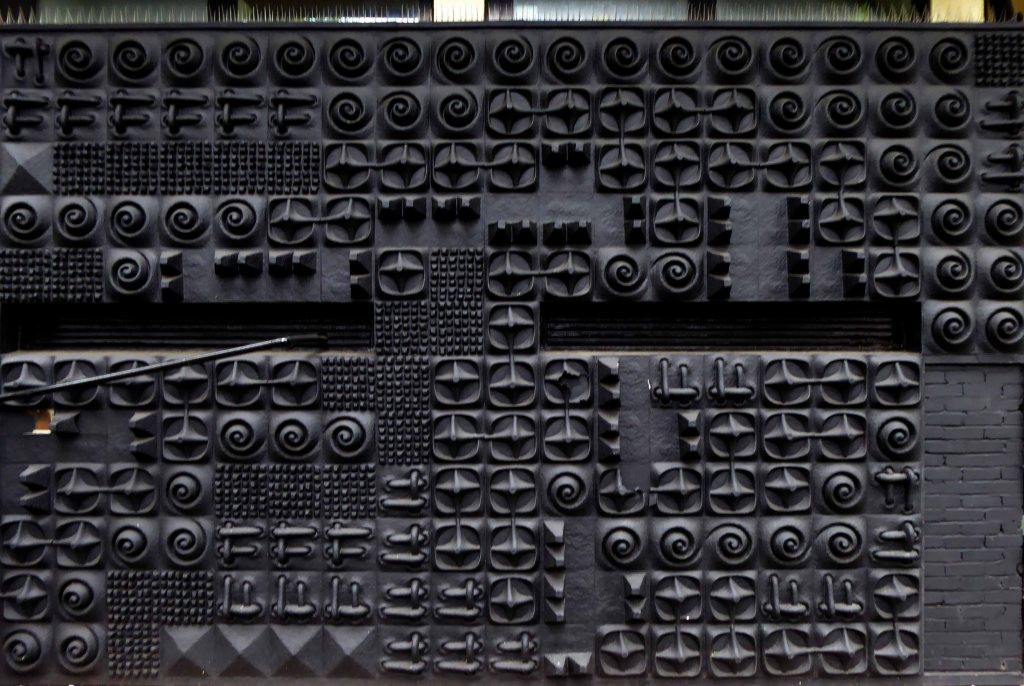
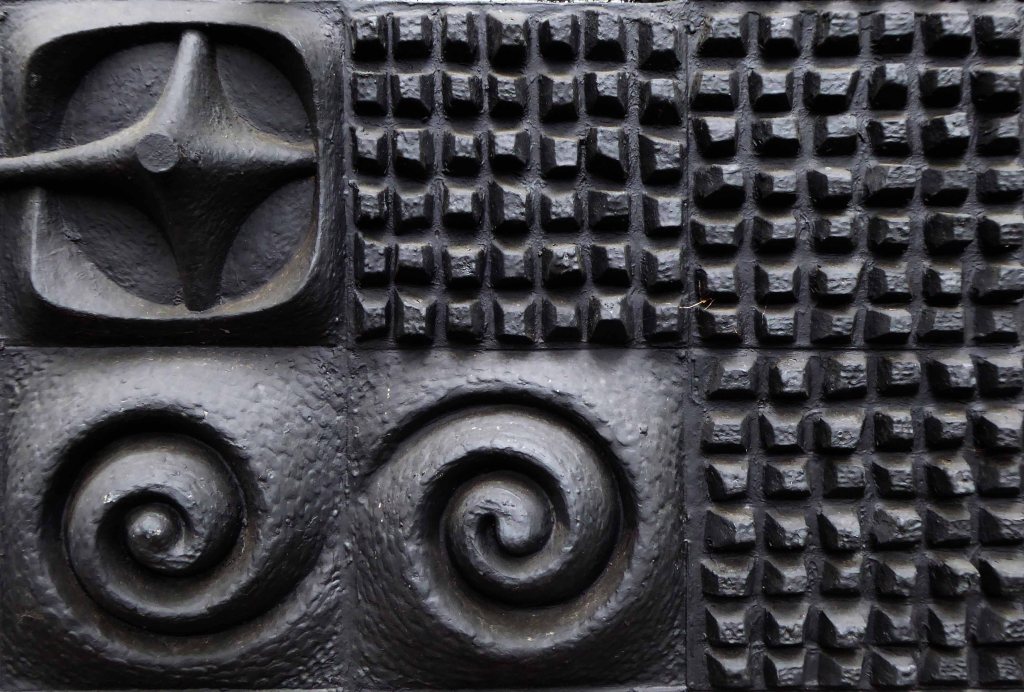
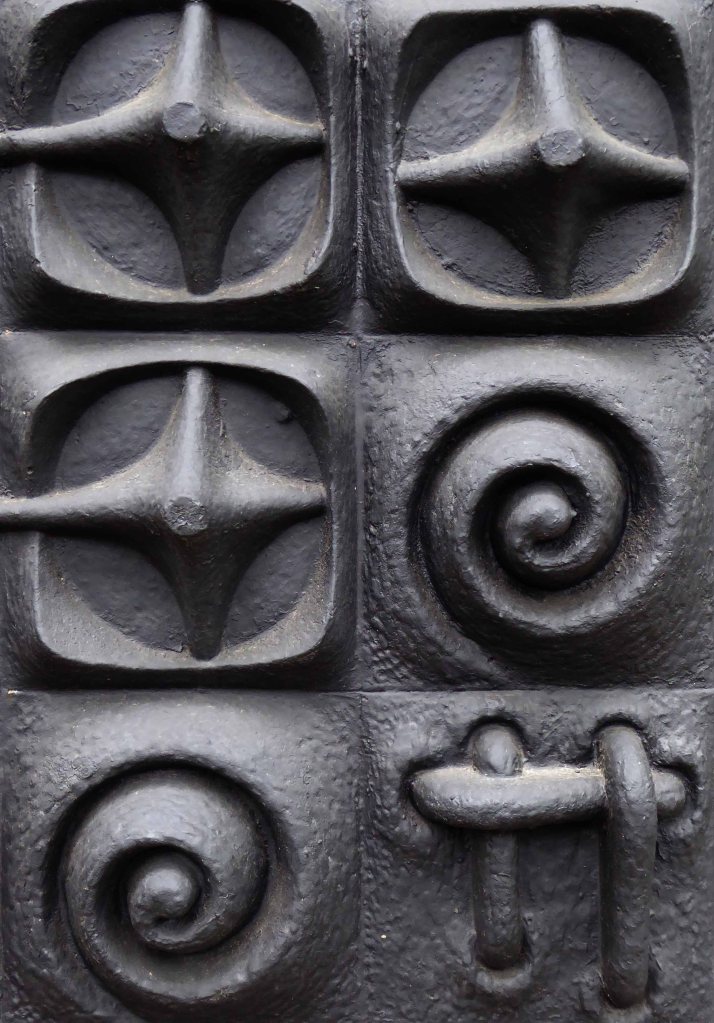
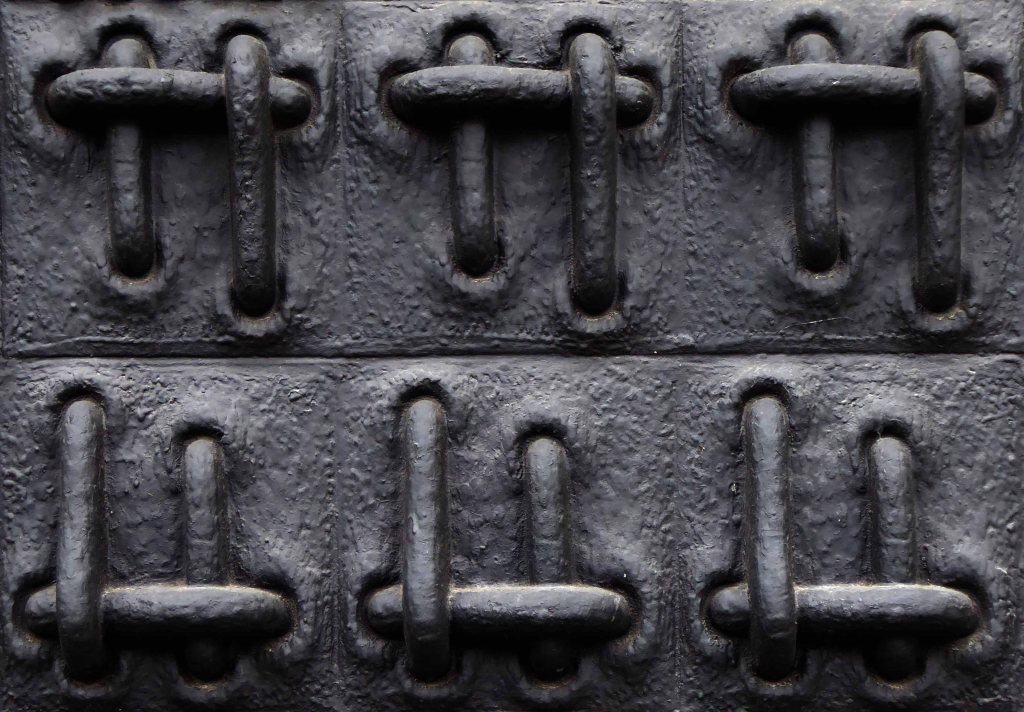
Cunliffe developed a technique for mass-producing abstract designs in relief in concrete, as architectural decoration, which she described as sculpture by the yard. She used the technique to decorate buildings throughout the UK, but particularly in and around Manchester.
Particularly this example of four modular panels named Cosmos, set in the wall of the student halls of residence in Owens Park, Fallowfield, Manchester.
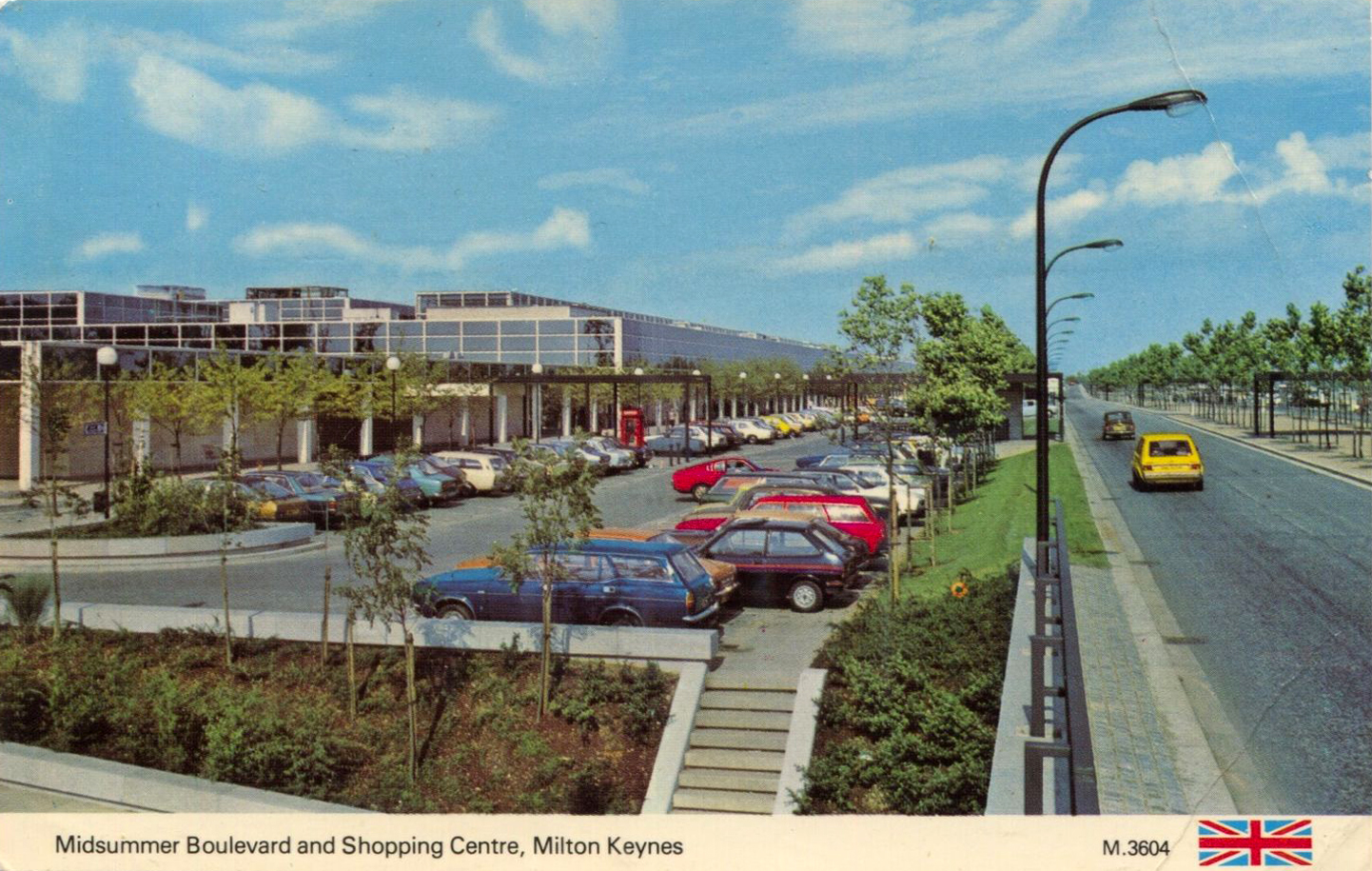
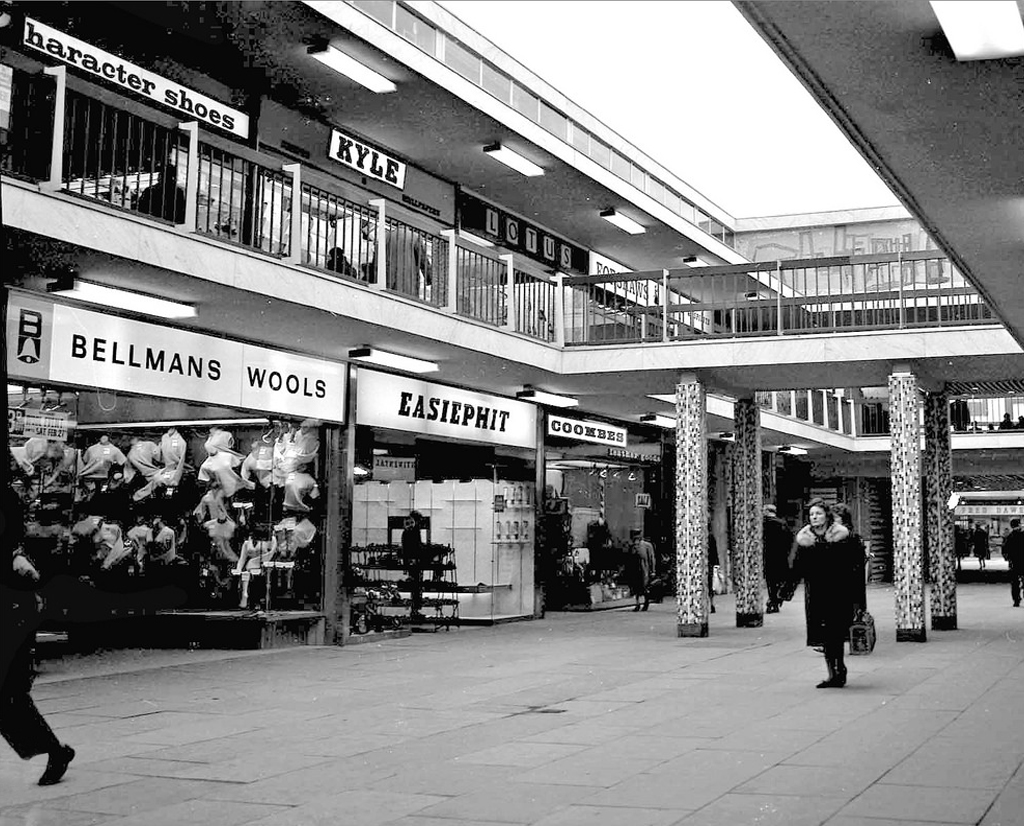
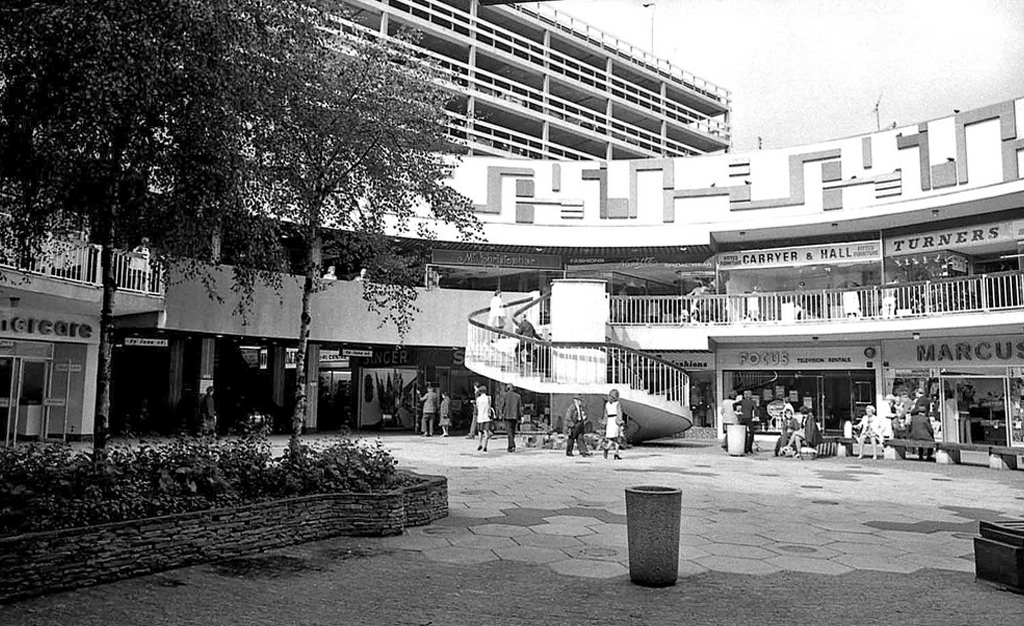
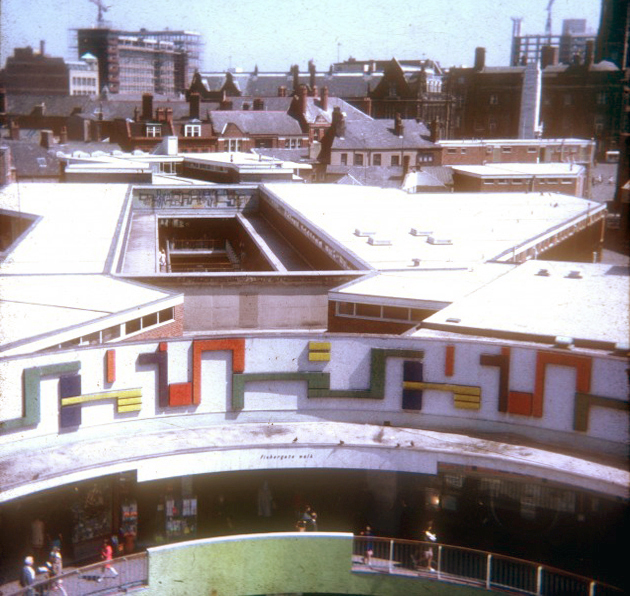
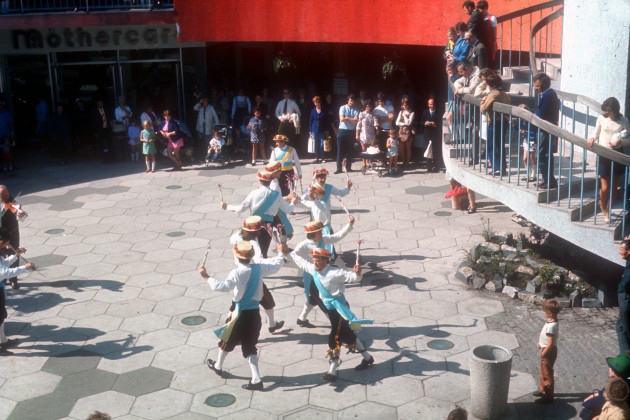
I was lured here, siren like, by an un-purchased eBay postcard – which precipitated a virtual four colour process printed journey around the shopping precincts of the UK.
It only seemed appropriate to finally arrive at MK Central in real life, by train from Stockport – walking at last wide-eyed and expectant, along the whole length and width of Midsummer Boulevard to centre:mk
The Milton Keynes Development Corporation began work on the Shopping Building in 1973. It was to be the largest building of Central Milton Keynes. It had a total length of over one kilometre and a maximum width of one hundred and sixteen metres . It was built at the highest point in the New City. The architects were Derek Walker, Stuart Mosscrop, and Christopher Woodward, who had been significant architects at the MK Development Corporation; and the engineers were Felix Samuely and Partners. The shopping area was opened on 25th September 1979 by Margaret Thatcher. The building’s sleek envelope accommodated one hundred and thirty shops and six department stores, arranged along two parallel day-lit arcades, each eight hundred meters long and planted with sub-tropical and temperate trees.
A big bad Miesian box of glass and steel that goes on forever and forever.
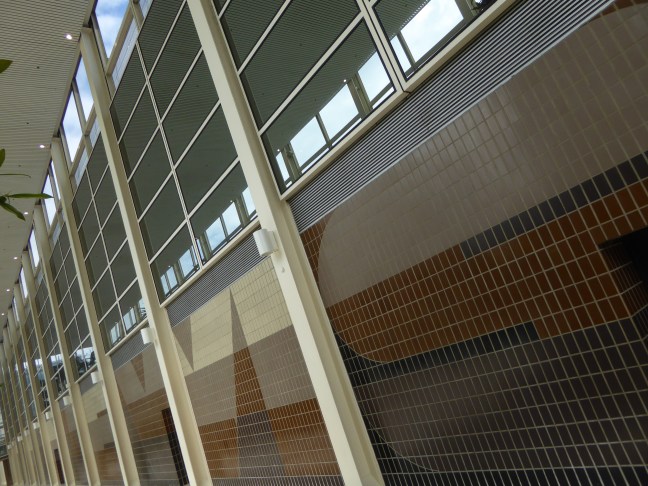
At the very far end of forever is the John Lewis store, to the right of the entrance there are a series of tiled panels – these are possibly the work of Lucienne and Robin Day
Way back when, when brown was the new brown, brown still is the new brown.
Fresh and crisp and even.
Bobbing up and down precipitously on low marble walls, from amongst the sub-tropical and temperate trees, I bring you these thirteen tiled panels.
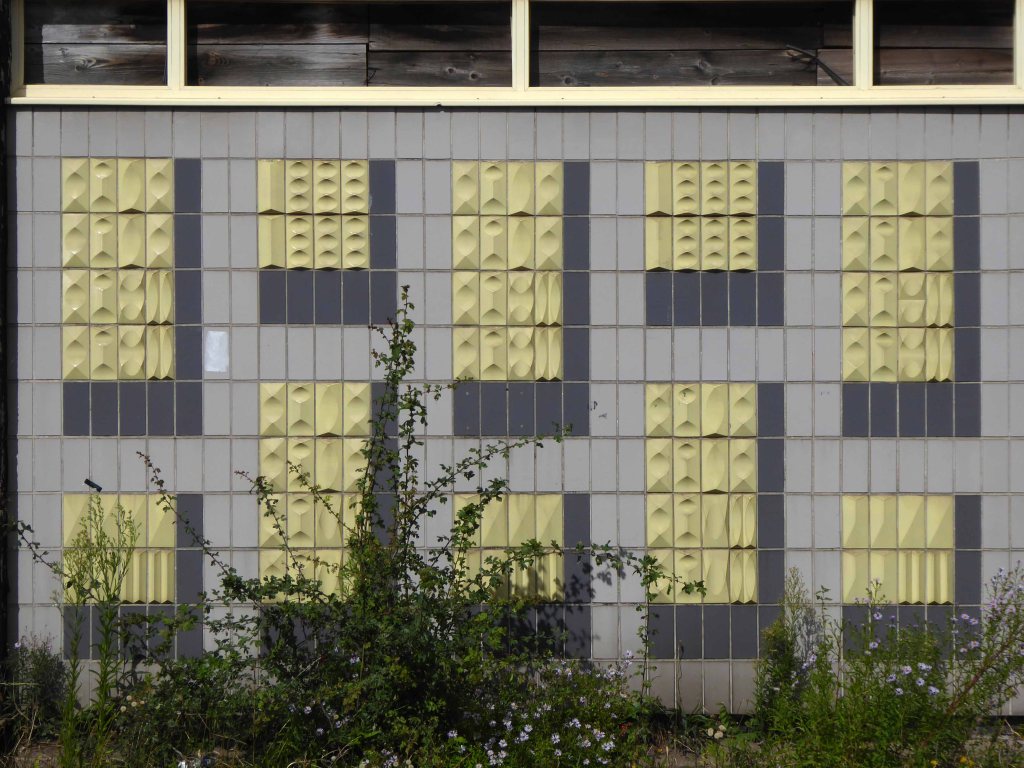
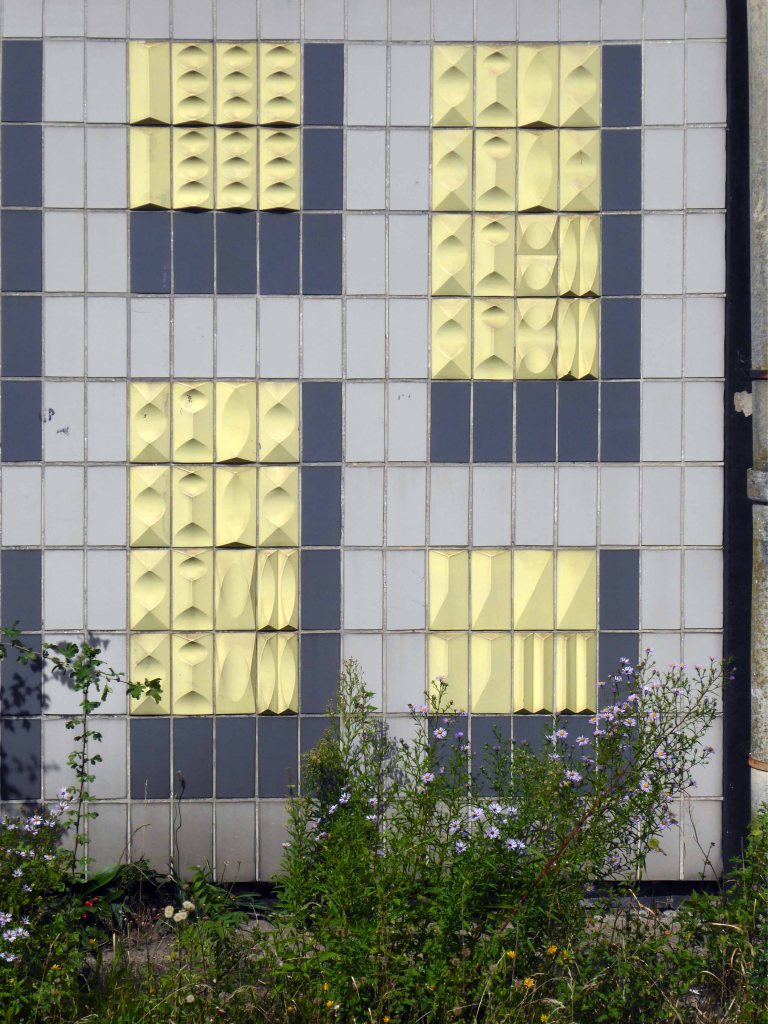
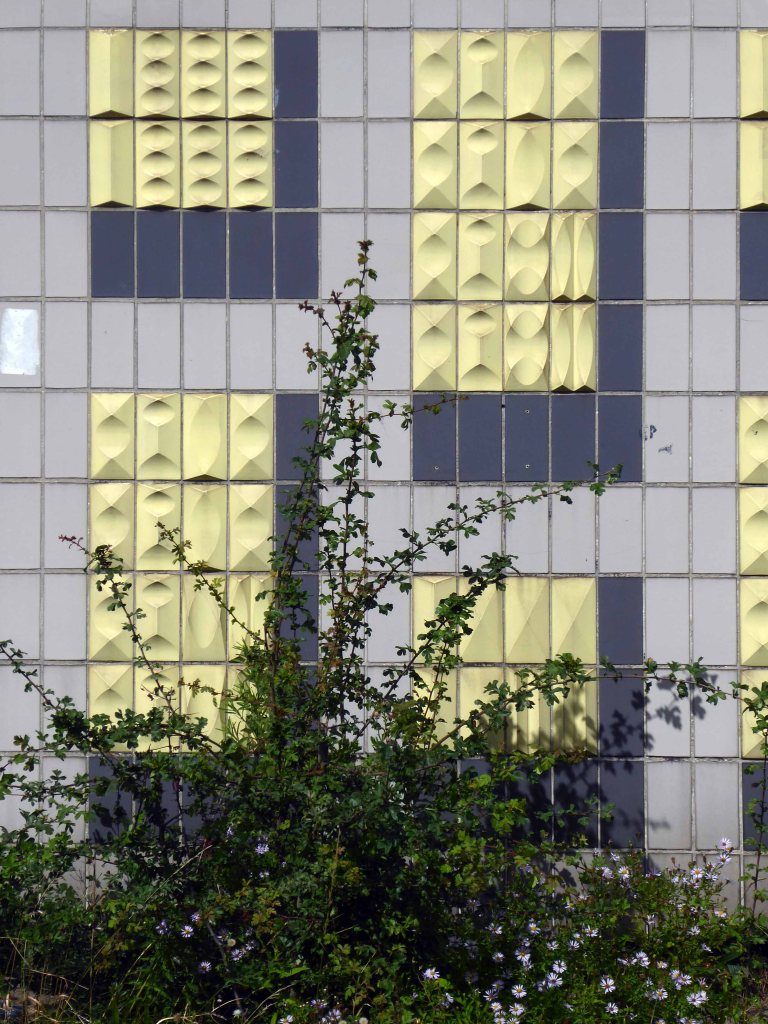
Working so close up and personal at altitude, photographing such large pieces in confined spaces, it’s not until you arrive home that you discover that together they spell:
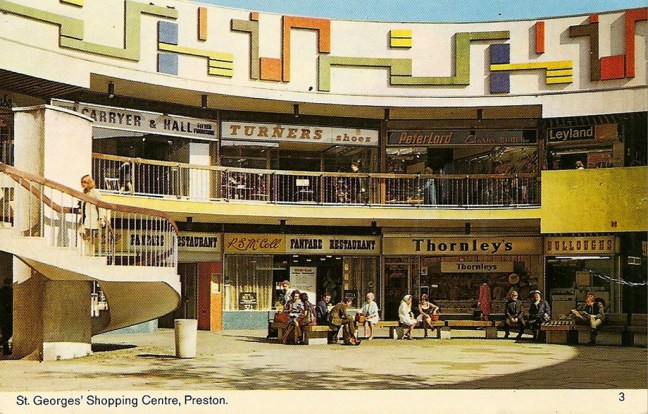
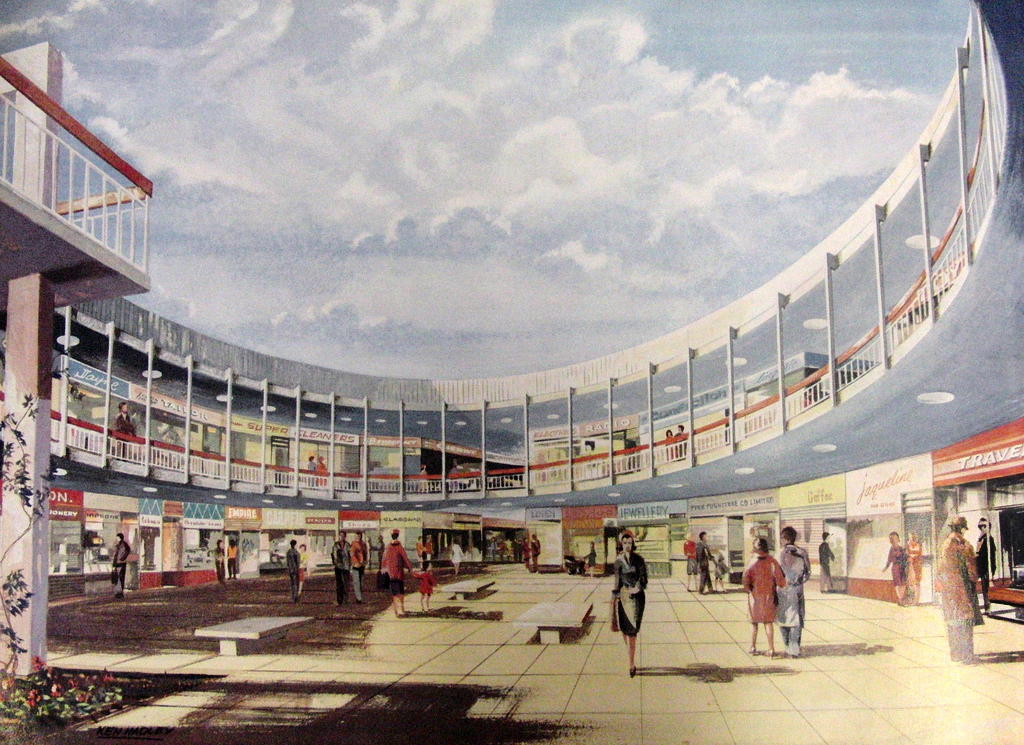
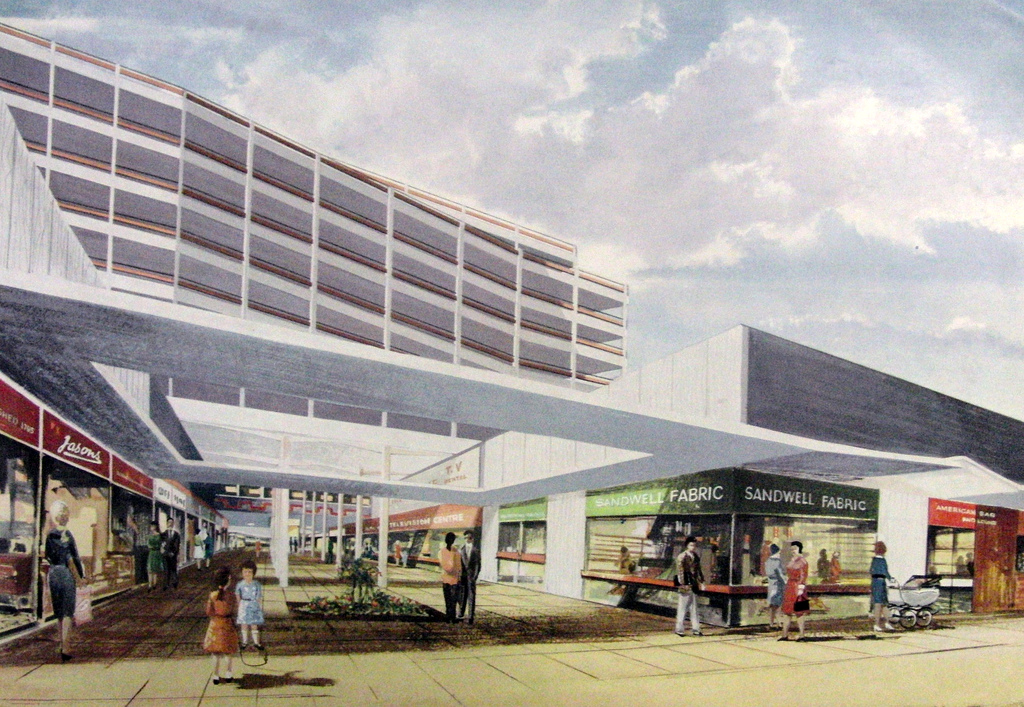
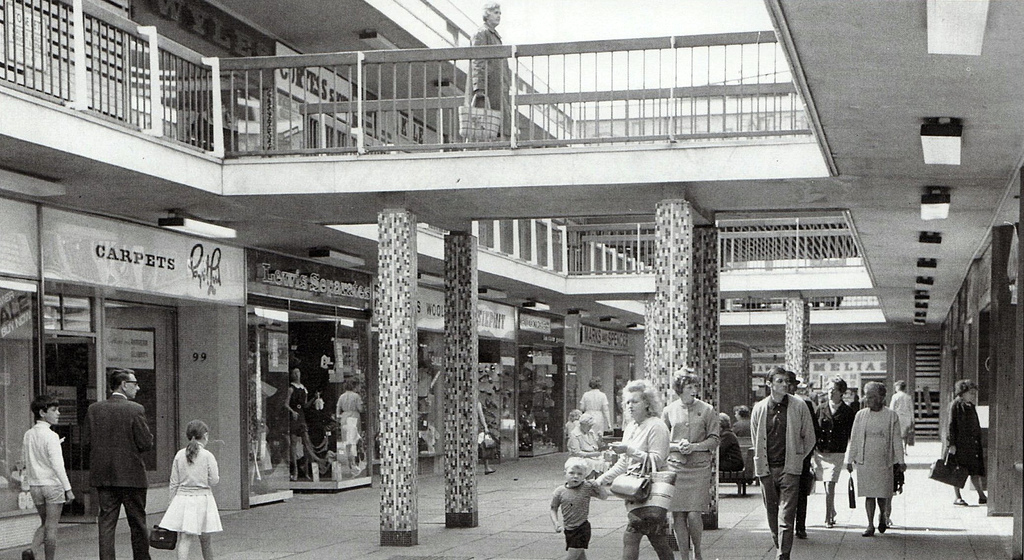
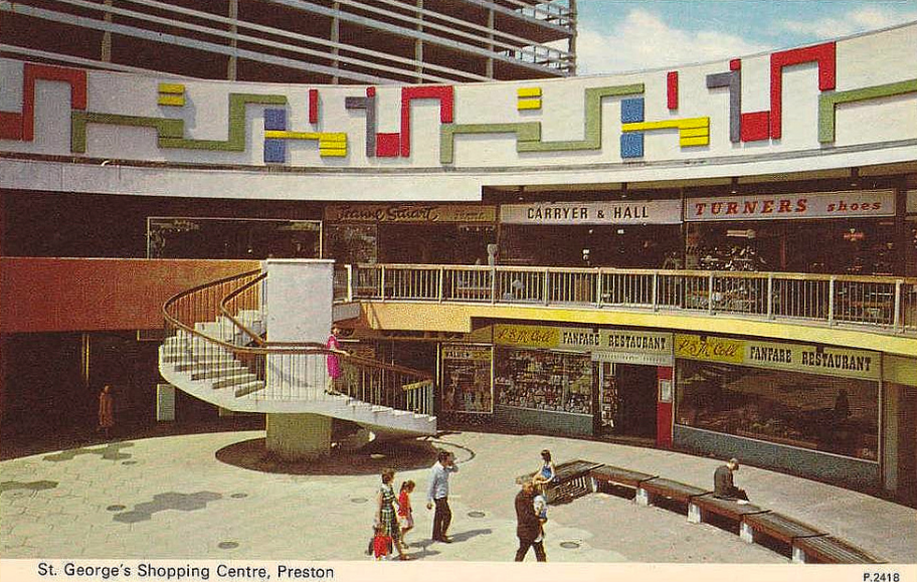
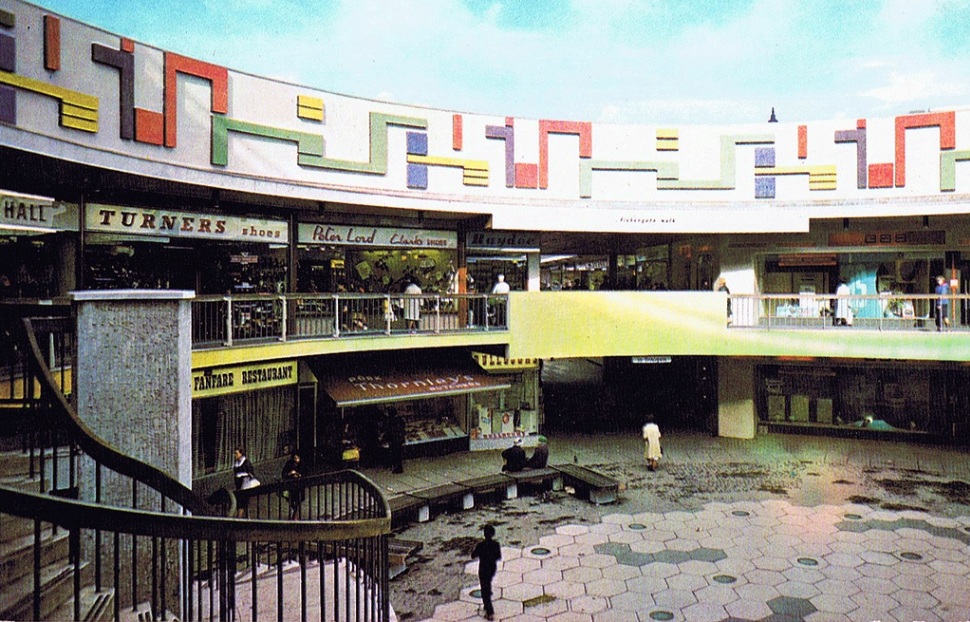
Once upon a time the future was shop-shaped and utopian, the Modernist reliefs a welcome relief from post-war doom and gloom, public decorative art was off the ration for good, or so it seemed. Small retail units, housed small local operators, their shiny well-washed fascias, glowing with graphic pride and diversity, slab serif and decorative script the order of the day.
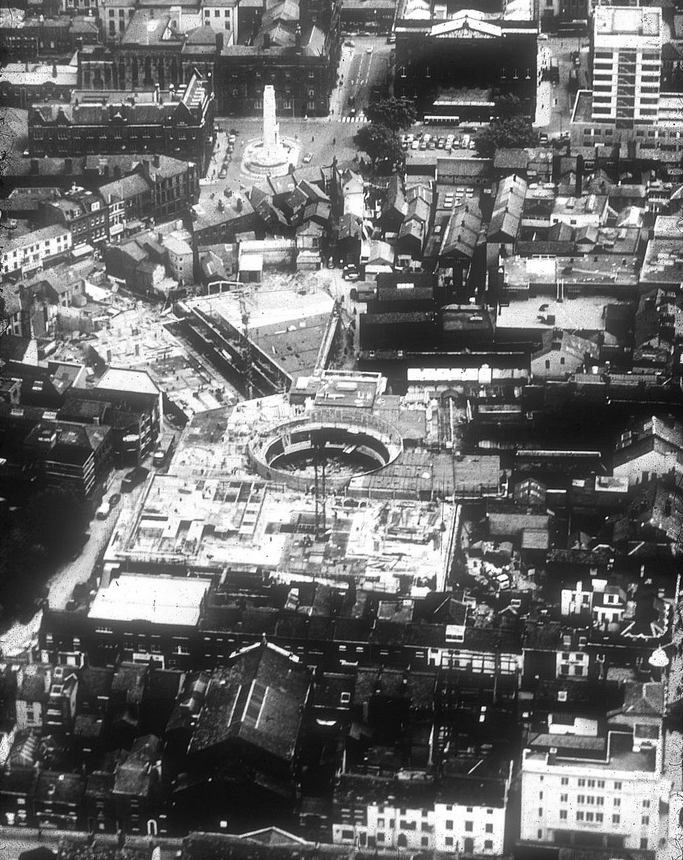
Architects J Seymour Harris and Partners envisaged a brave new water-coloured open-aired world for the grey austerity-tinted folk of Preston.
And lo it came to pass and underpass – the future was here yesterday.
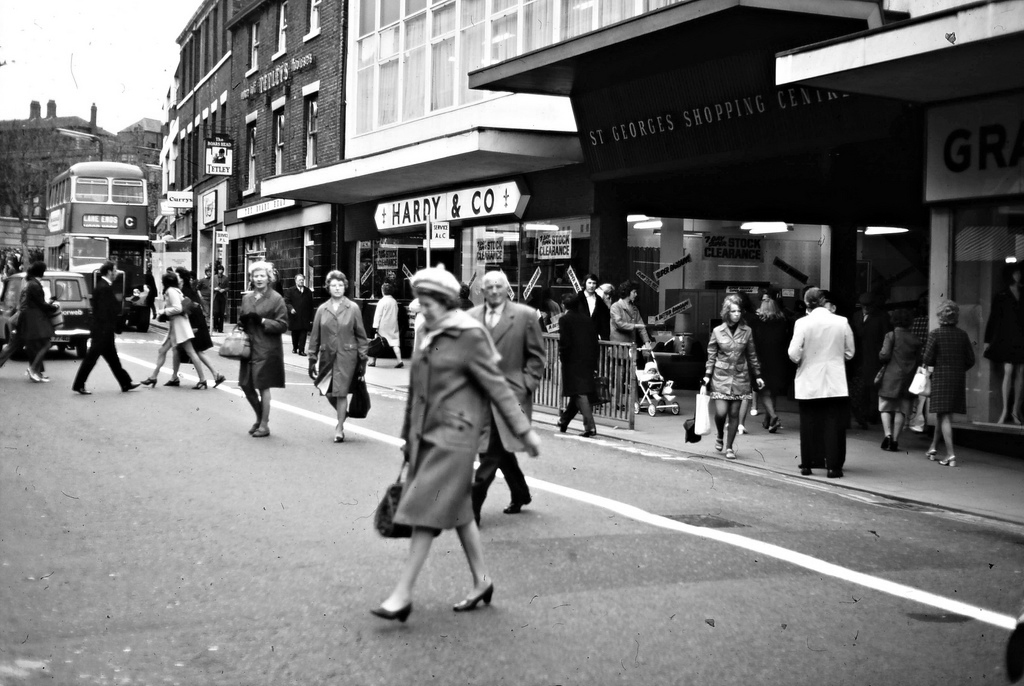
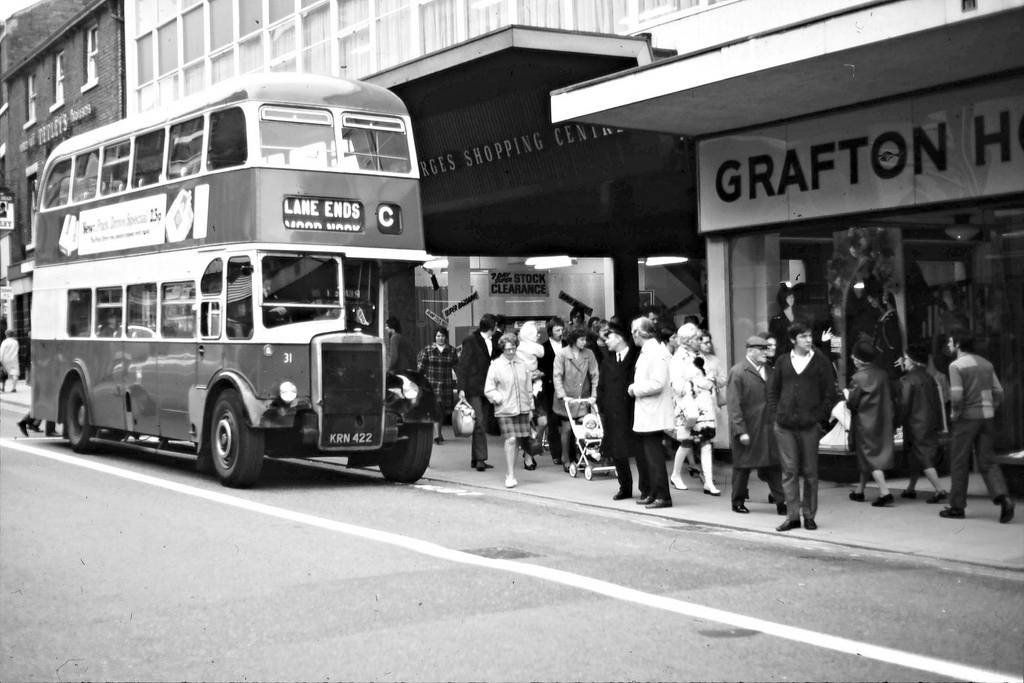
Get off the bus on Fishergate and walk right on in.
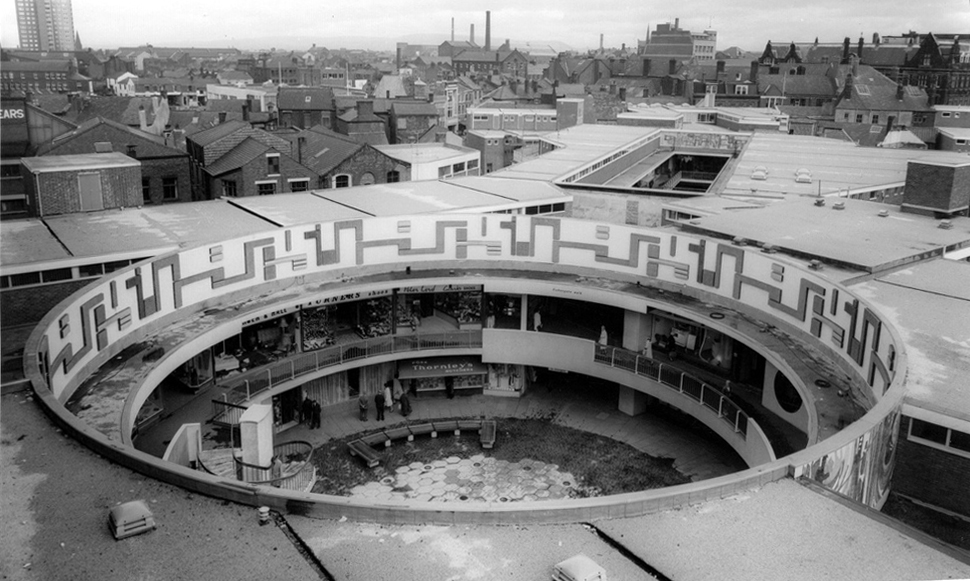
The shopping centre opened on 22 March 1966 as St George’s Shopping Centre.
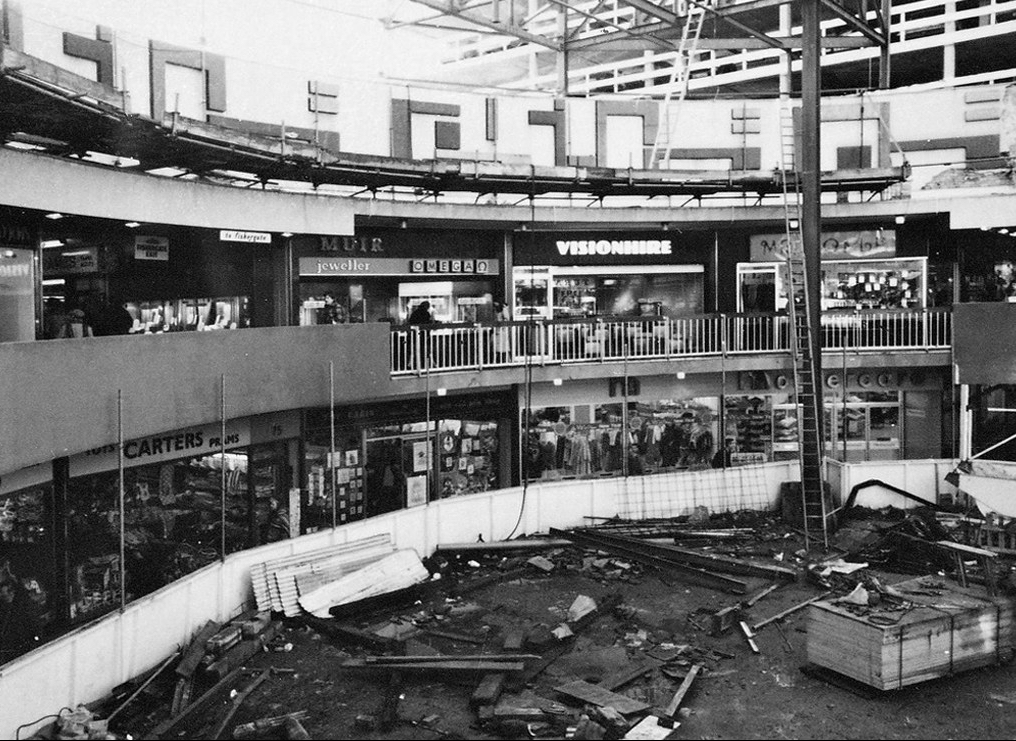
It was originally an open air centre, and was roofed over during refurbishment in 1981. It was further refurbished in 1999.
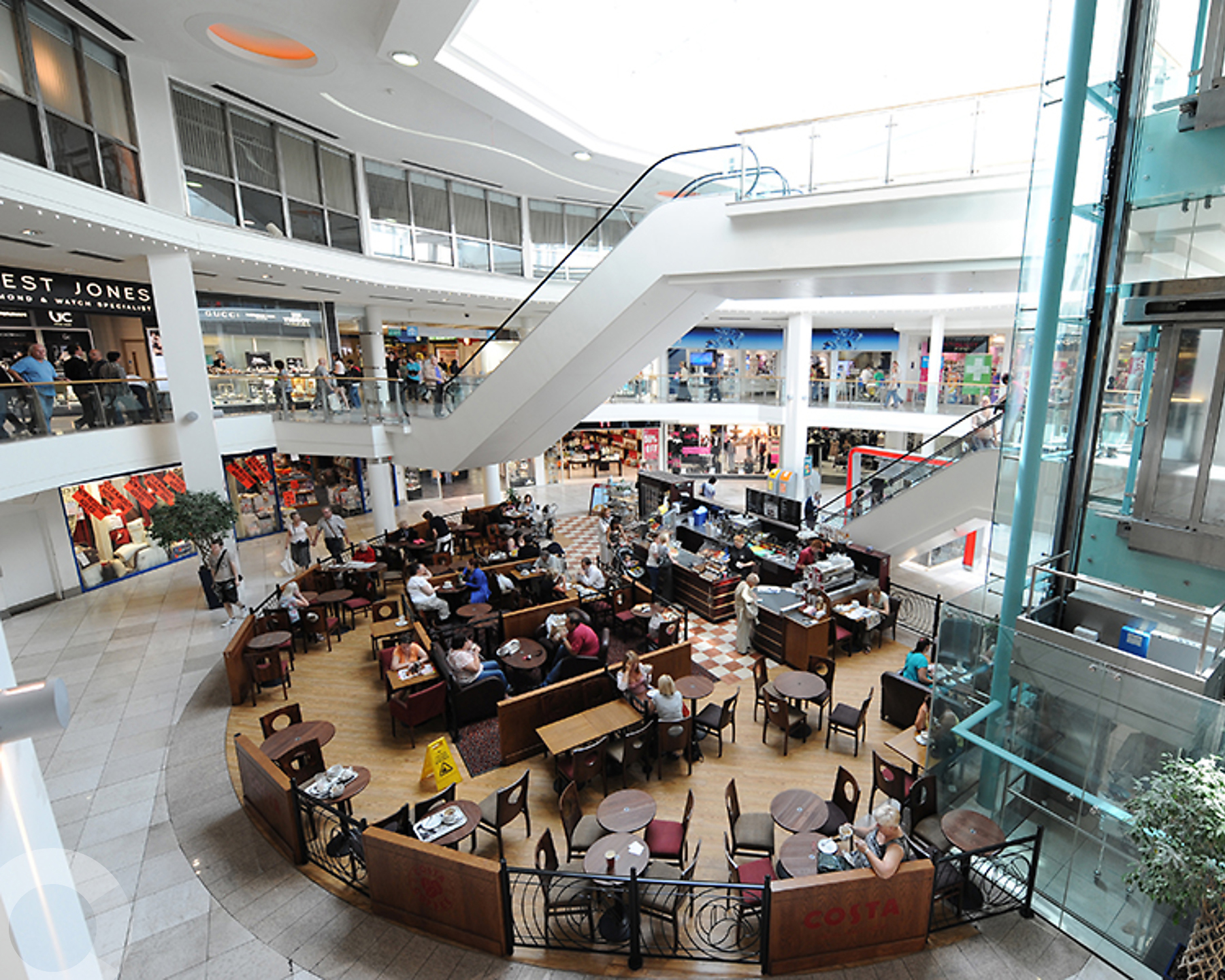
In May 2004, when The Mall Company took over the centre, they were greeted with an ageing shopping centre. The shopping centre was rebranded as The Mall, and a massive development scheme was planned. Small stalls, main shops, cafes, restaurants, toilets, and escalators were overhauled.
In March 2010, the shopping centre was acquired by Aviva Investors for £87 million. In September 2010, The Mall was rebranded under its original name St George’s Shopping Centre.
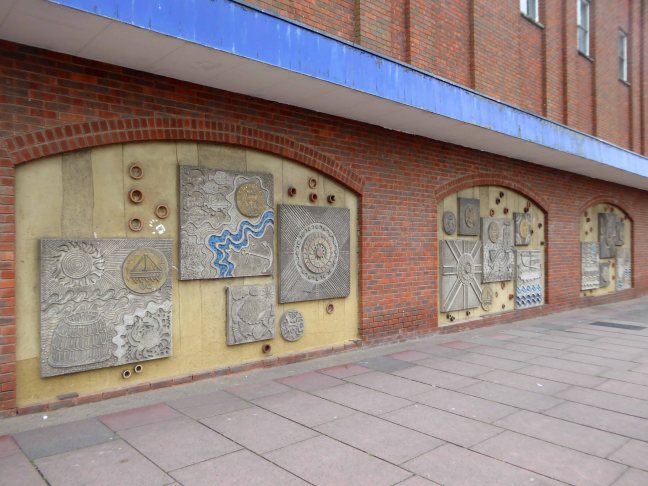
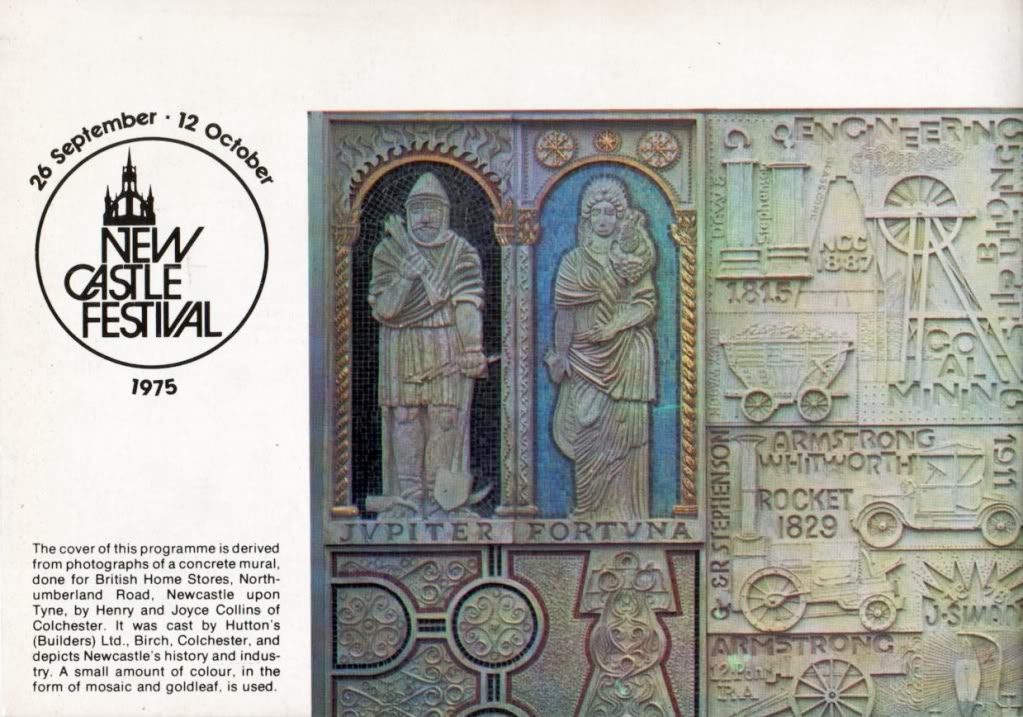
The third such public sculpture I have had the pleasure to visit following trips to Newcastle and the now defunct BHS in my hometown of Stockport.
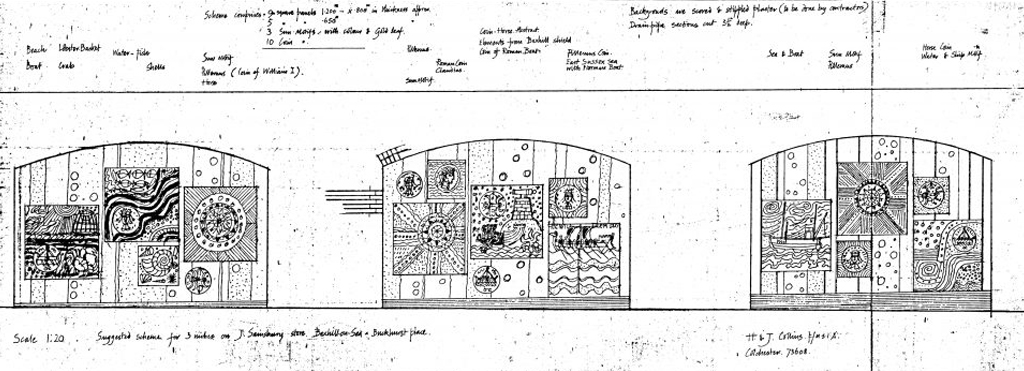
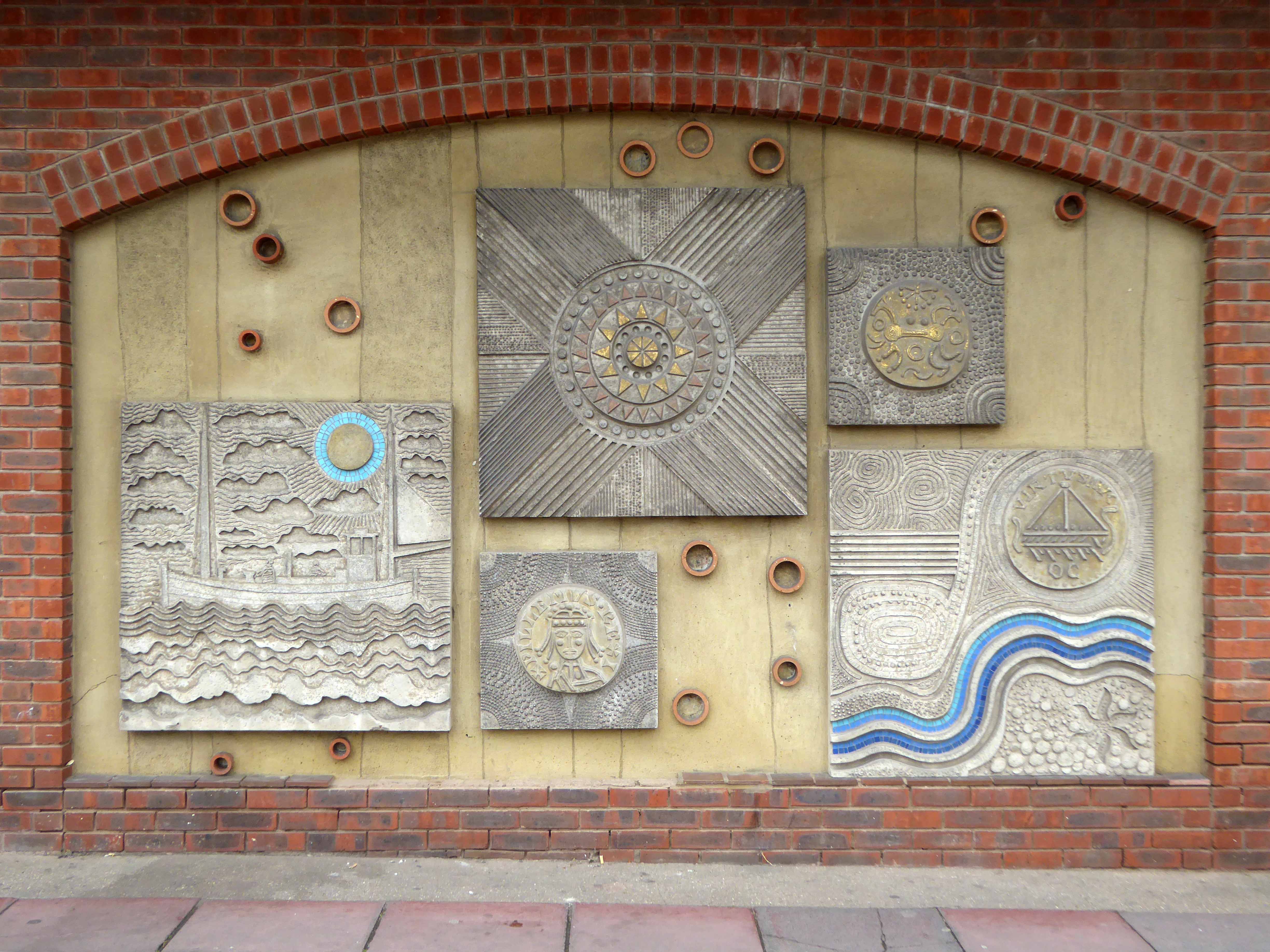
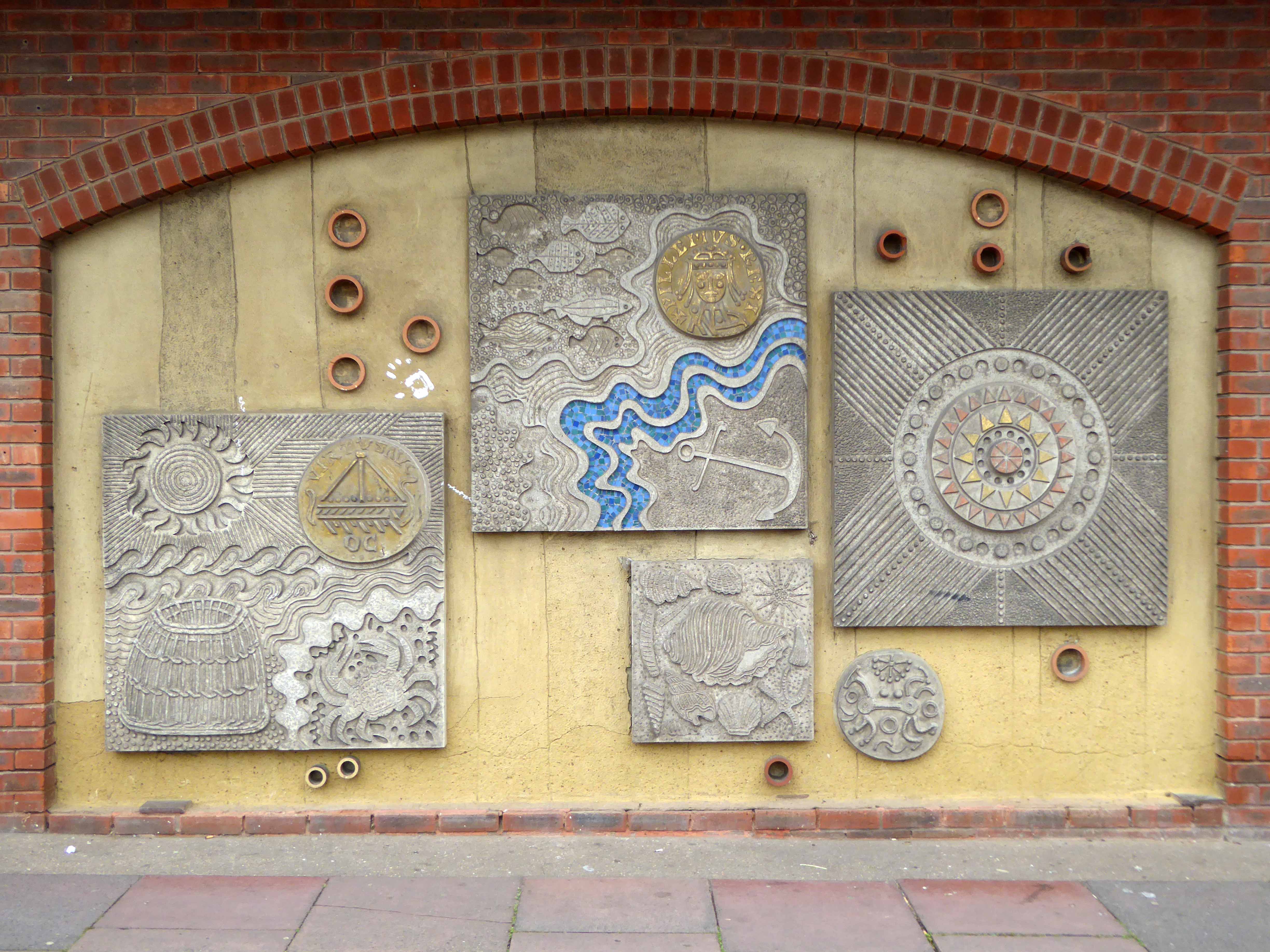
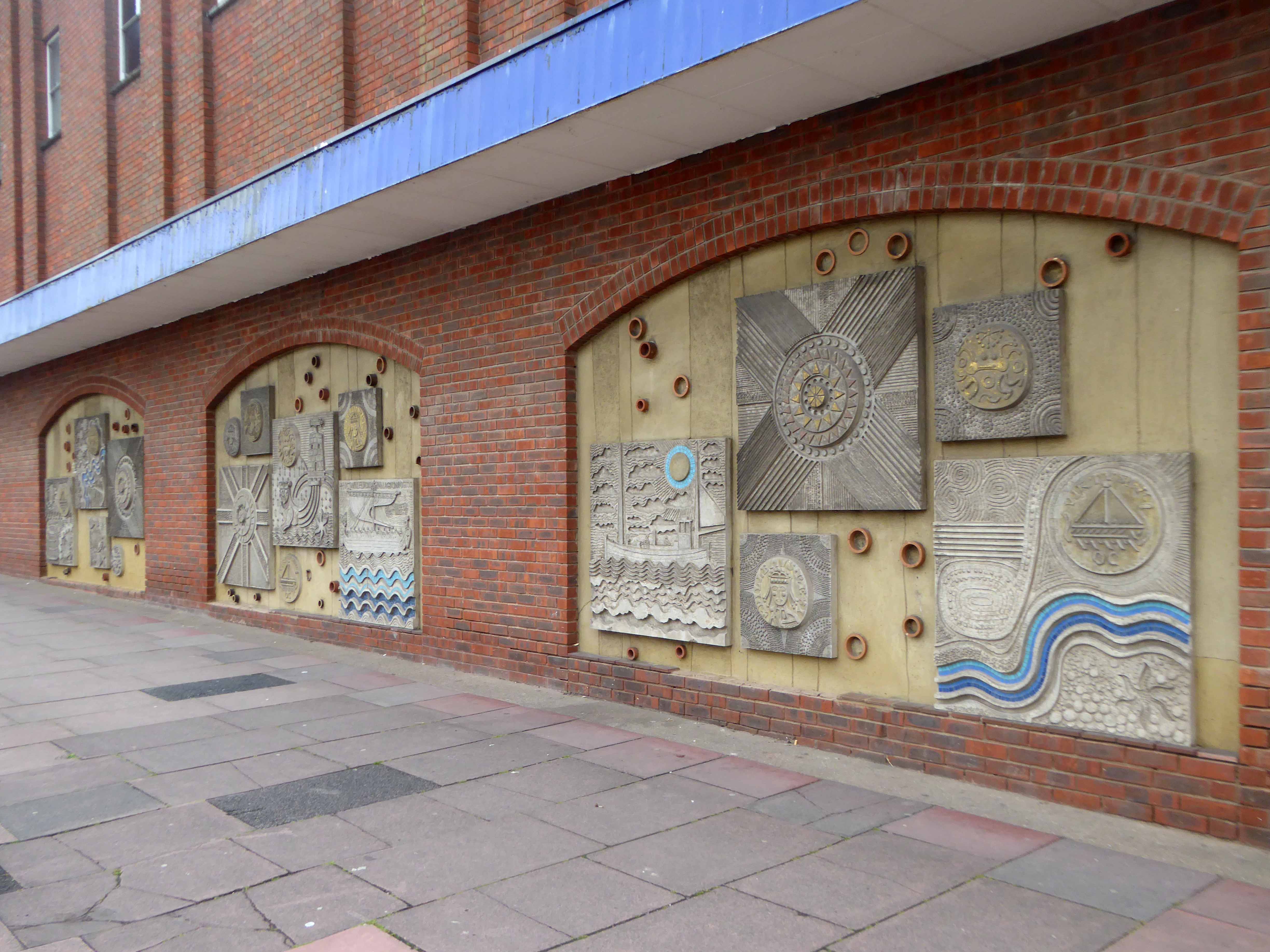
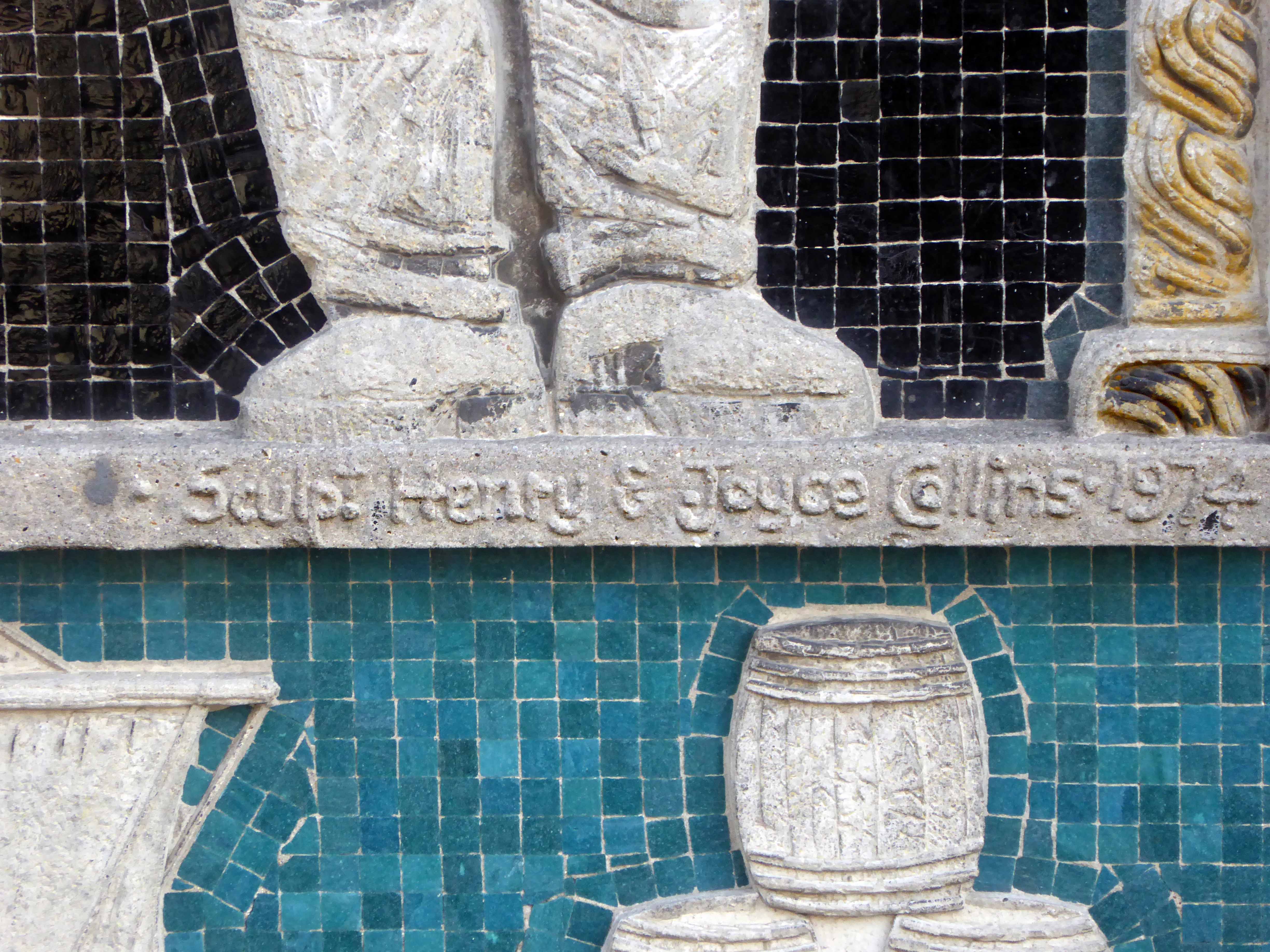
Henry William Collins and Joyce Millicent Pallot have a very special place in my heart, their lives’ work together gracing the Festival of Britain, GPO Tower and Expo 70, along with other retail outlets in Southampton, Gloucester, and Colchester. A distinctive style of bas relief in impressed concrete, ceramic terrazzo and simple modern motifs, drawn from local history and imagery.
Take a look around.
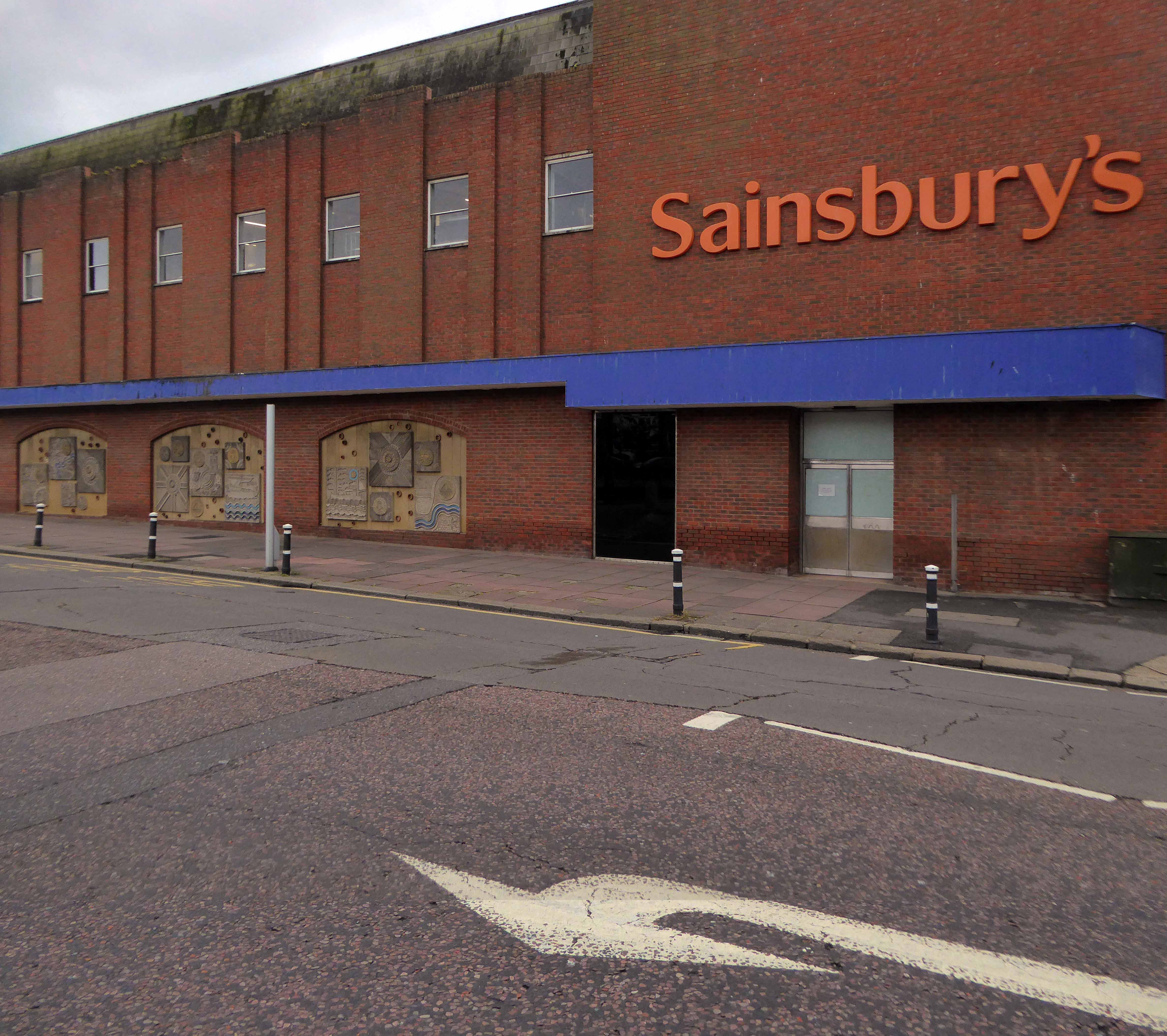
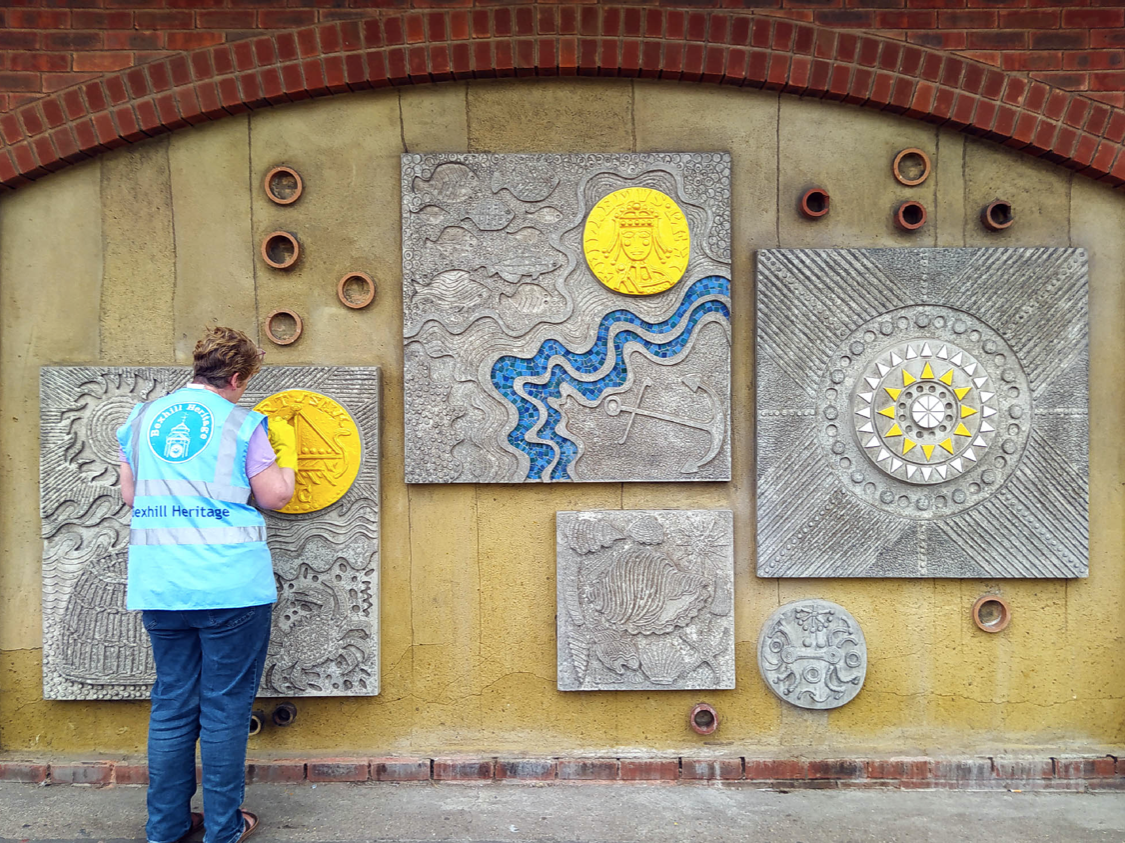
Great to see that the murals have been restored recently by Bexhill Heritage.
We here in Stockport have our own BHS murals, happily so does Newcastle.
The work of acclaimed artists Joyce Pallot and Henry Collins, they worked on a large number of murals and exhibition designs for amongst others, Jamestown Festival, USA; Brussels Exhibition; Expo 70; Japan; Shell Centre; GPO Tower, London; Grosvenor House, London; Ind Coope Ltd; Philips Business Systems; Sainsburys; British Home Stores; Cwmbran Arts Trust; Essex County Council and IBM, London.
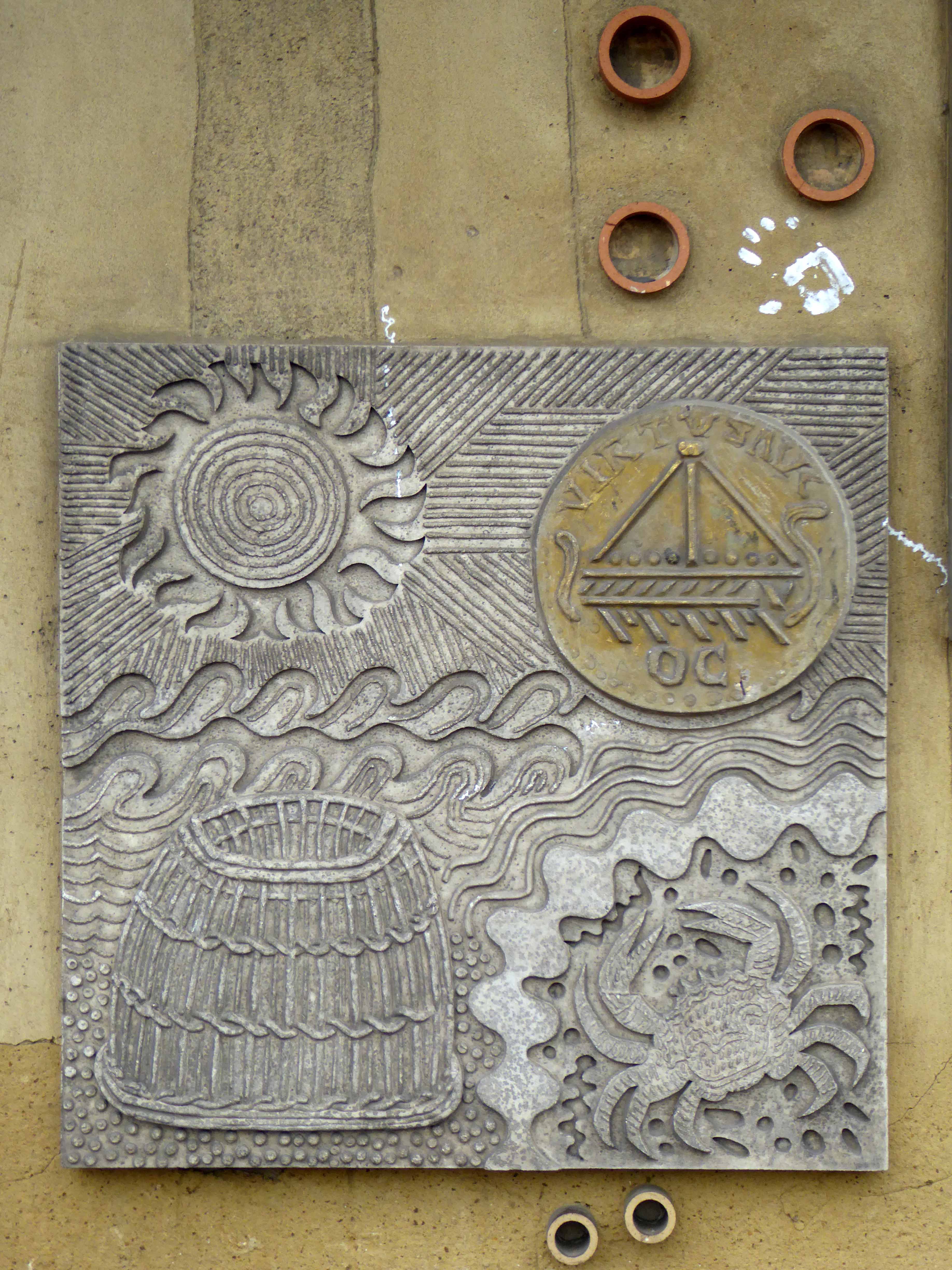
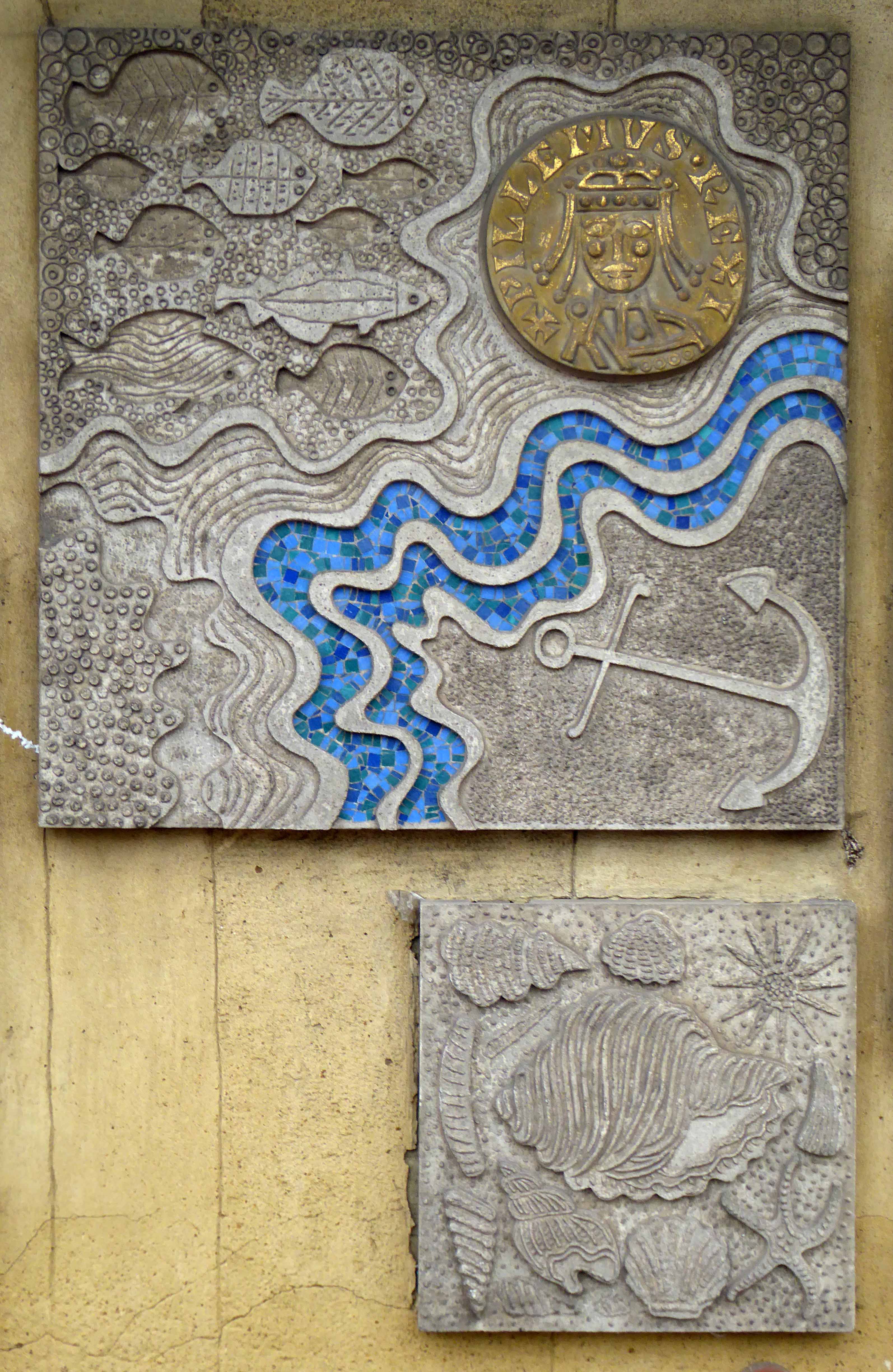
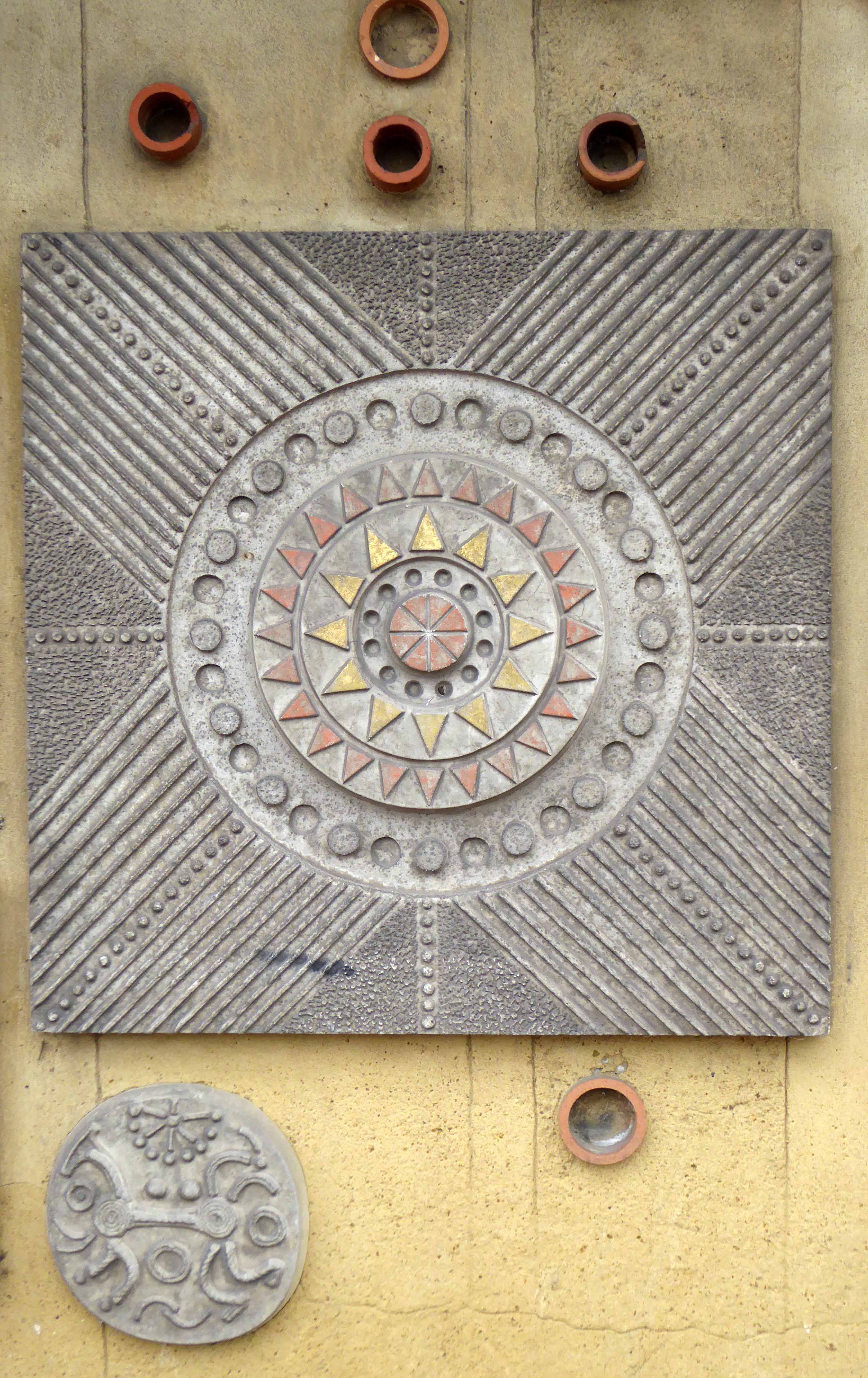
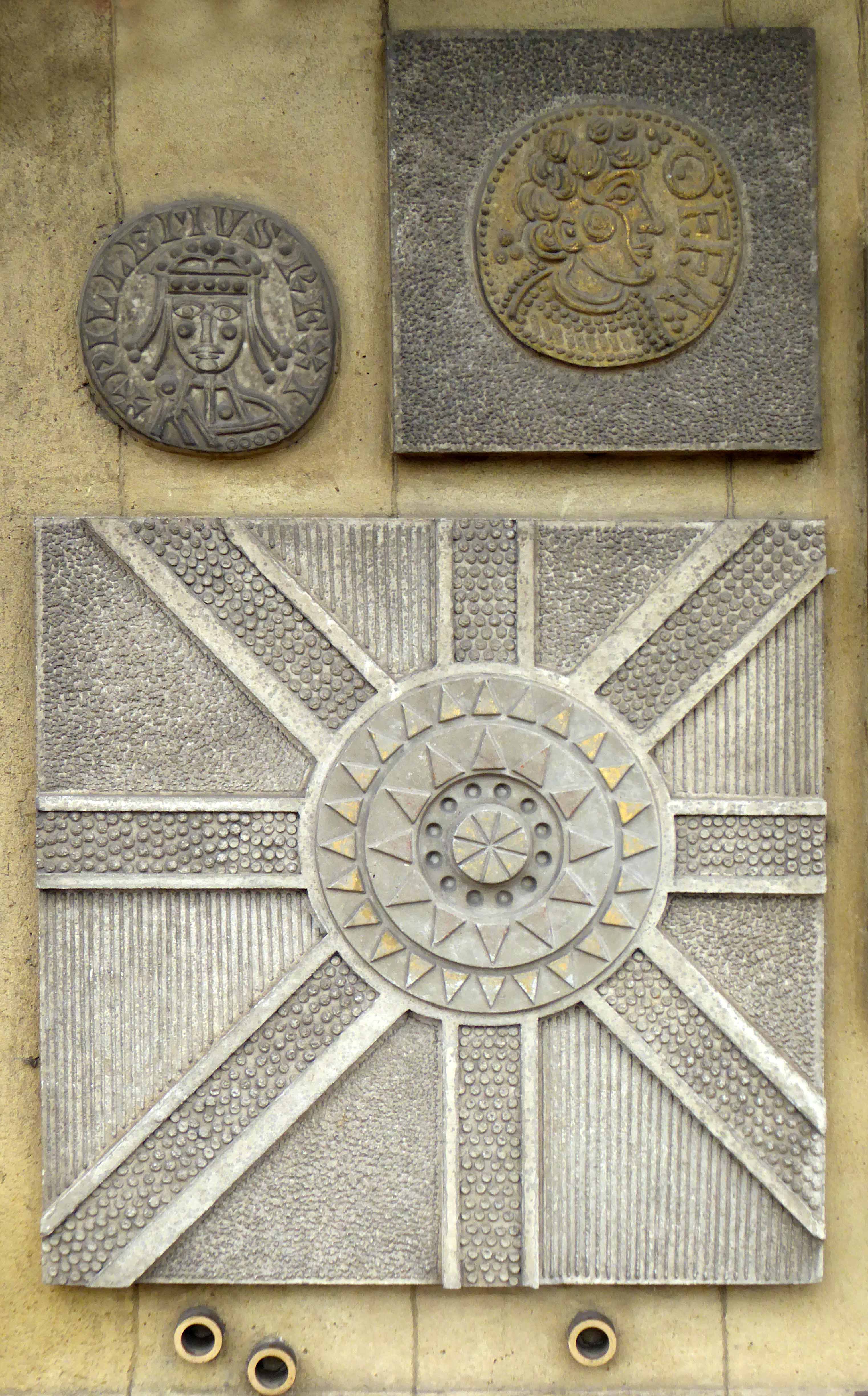
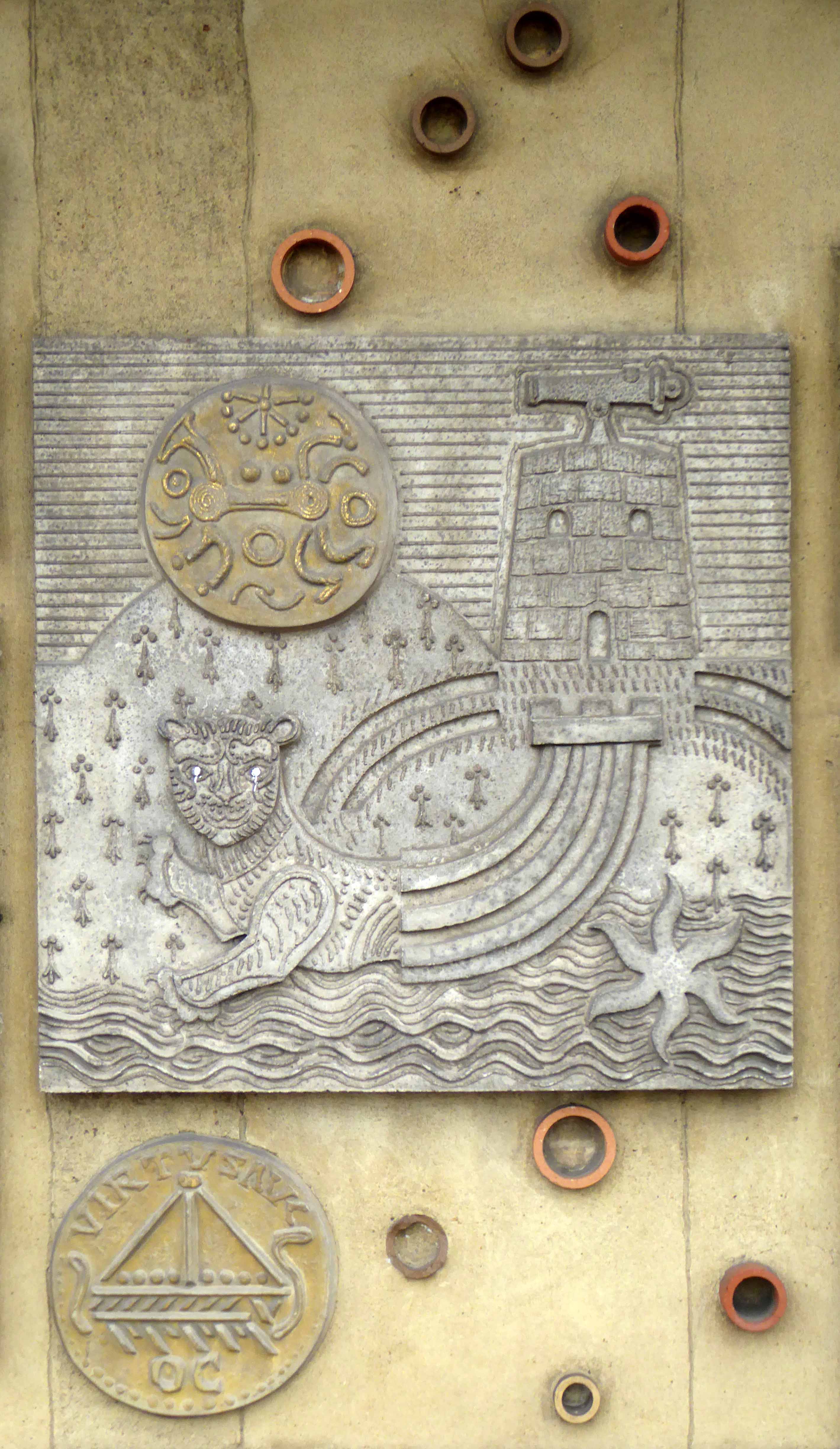
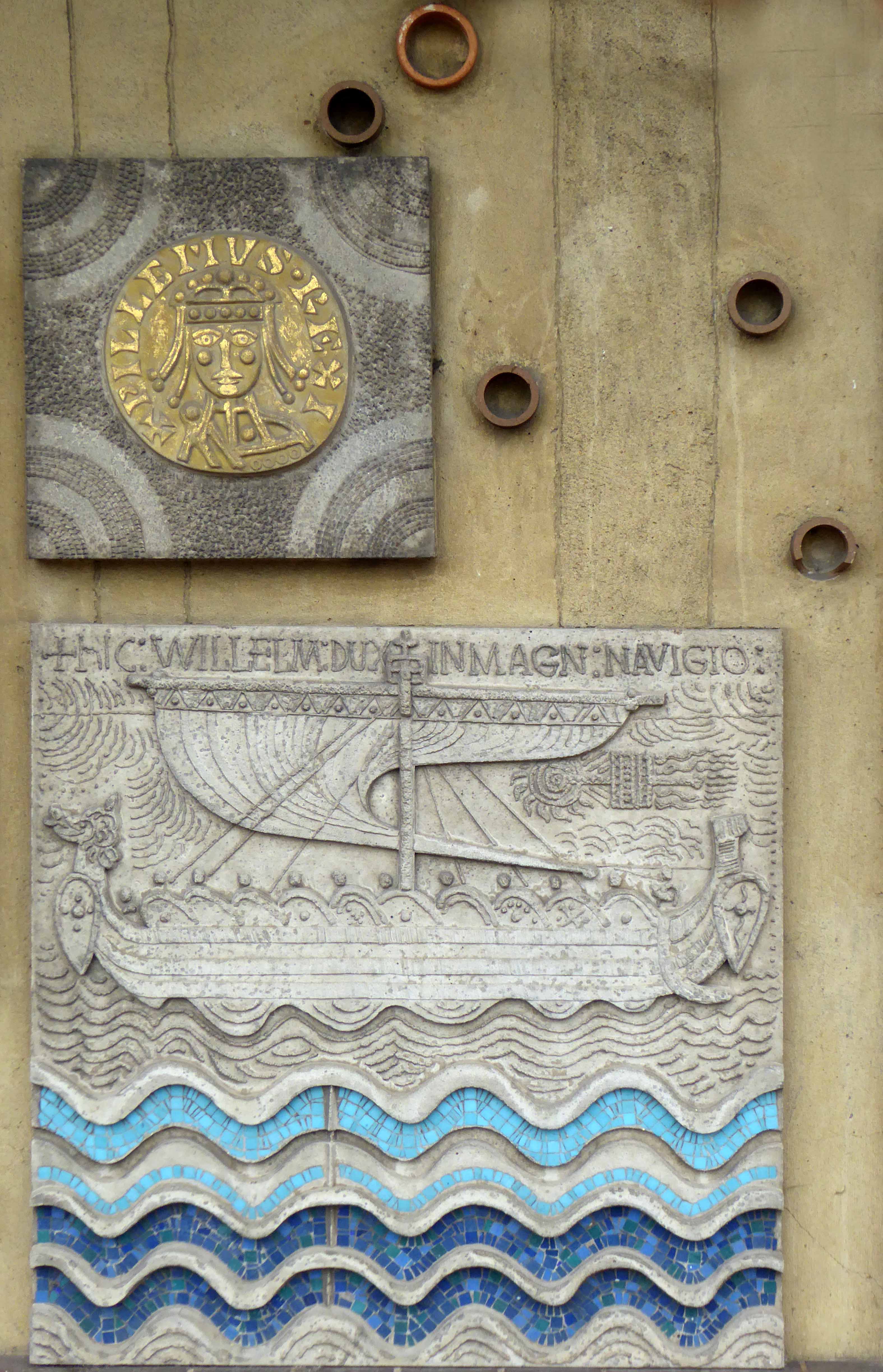
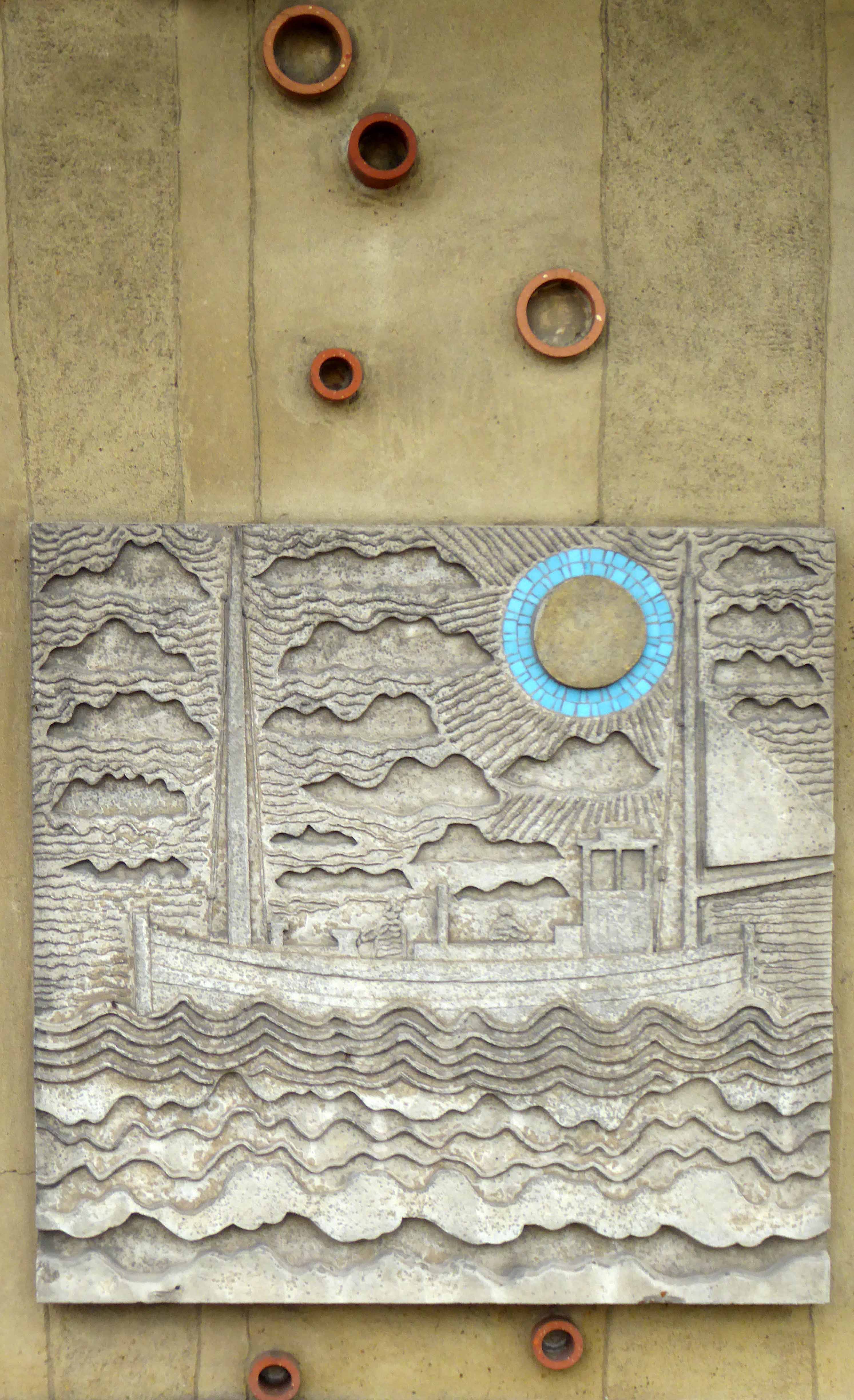
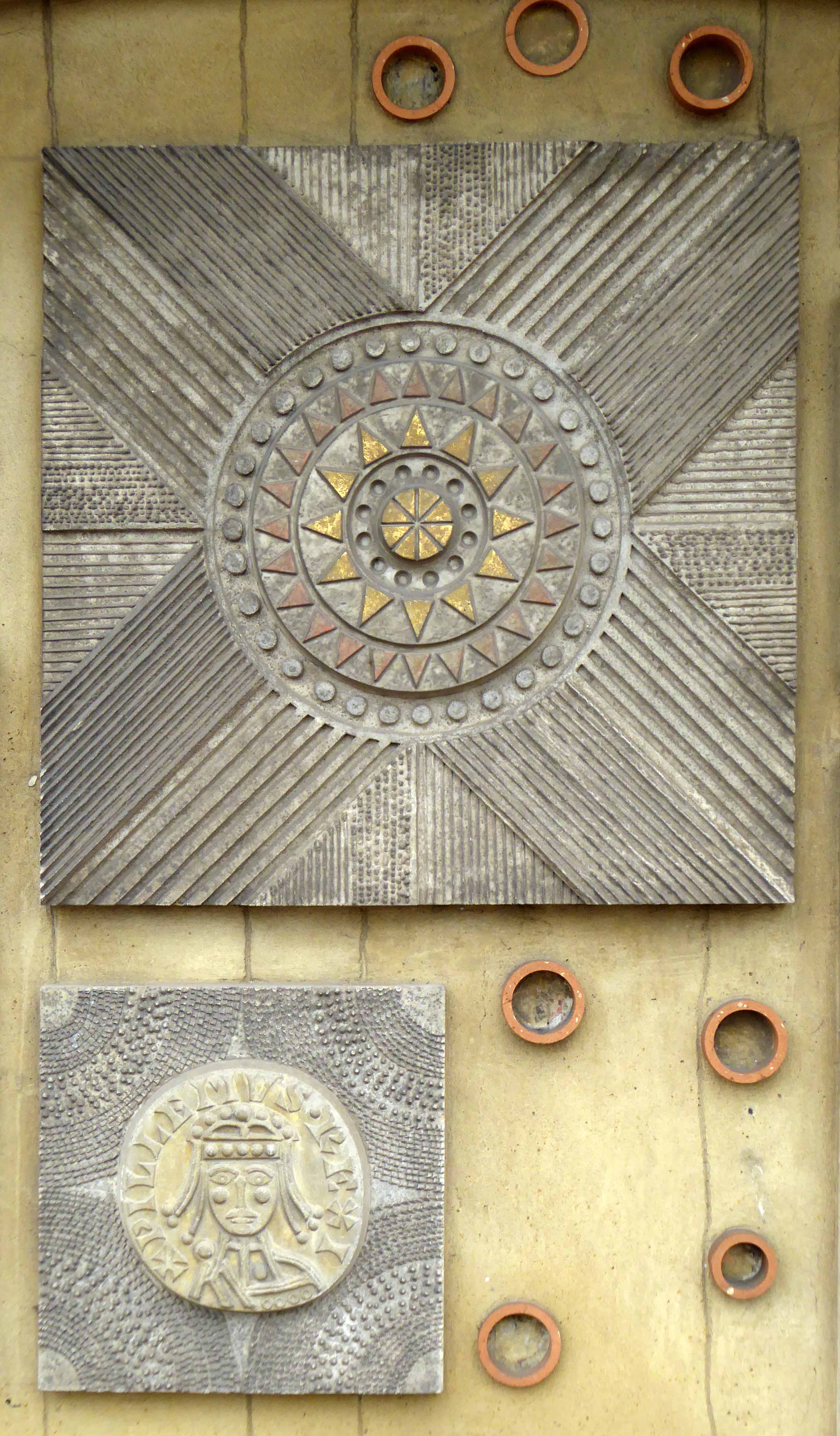
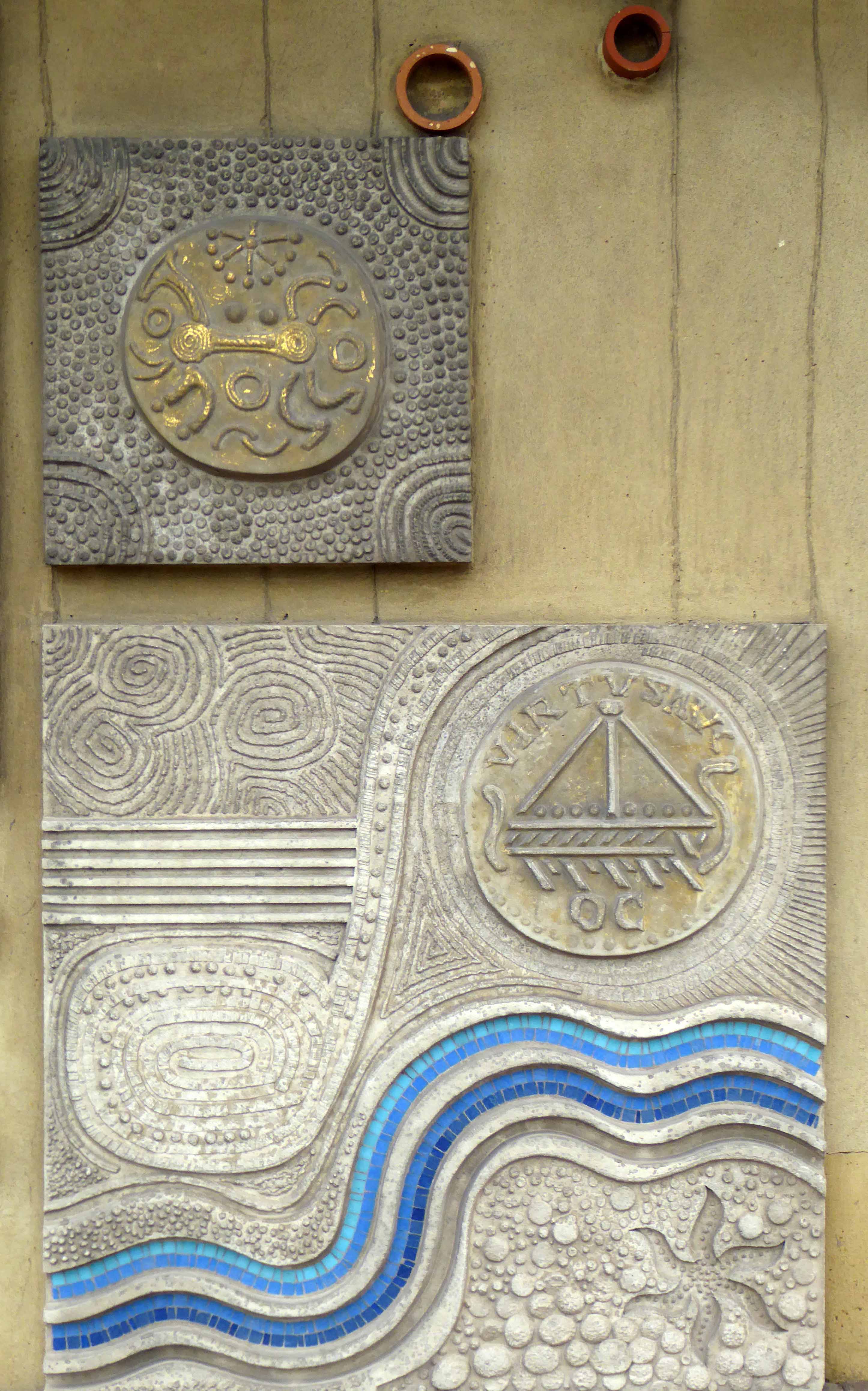
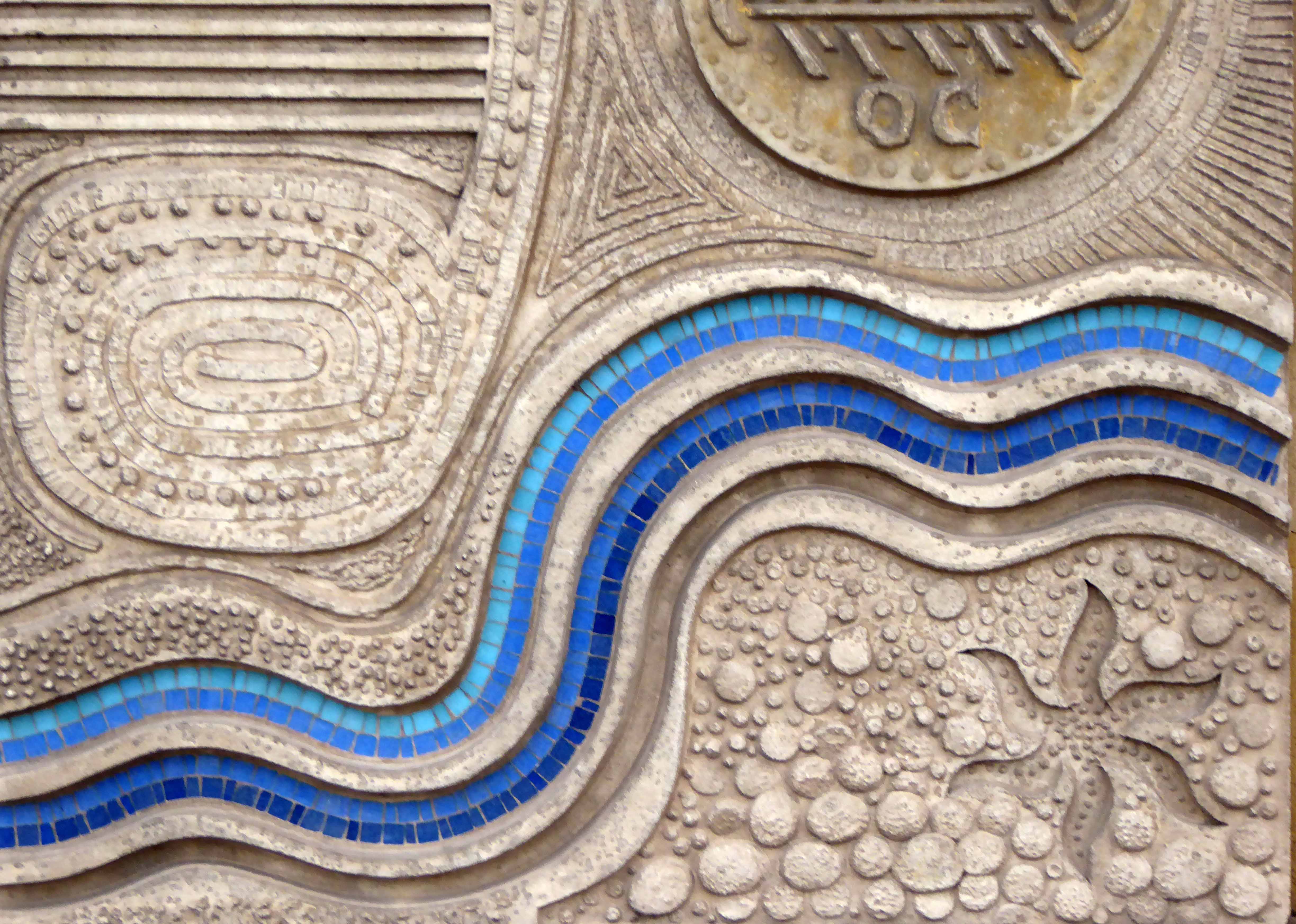
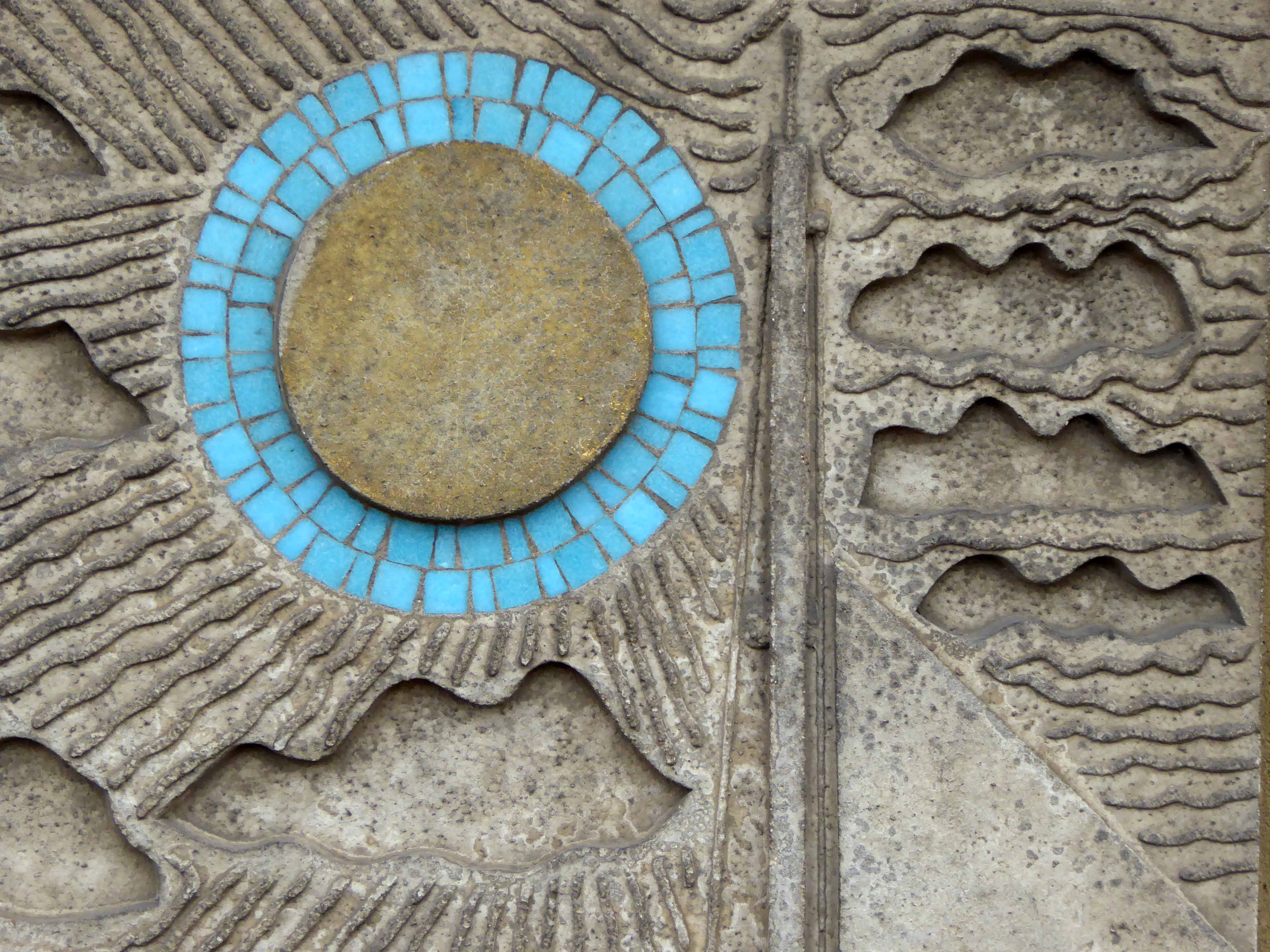
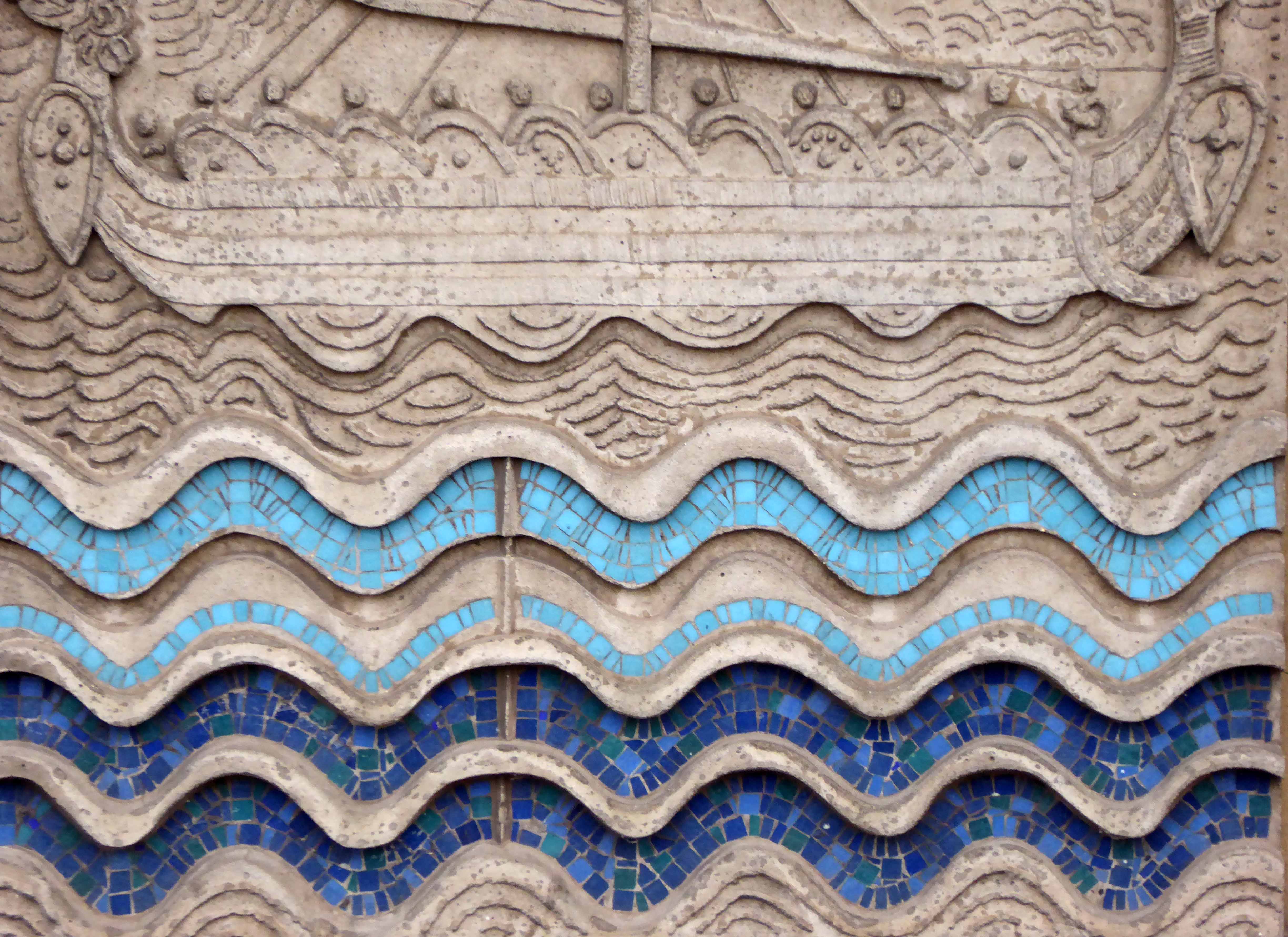
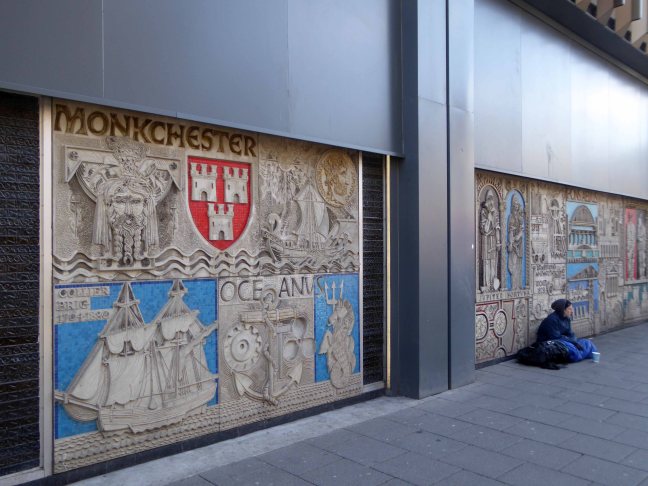
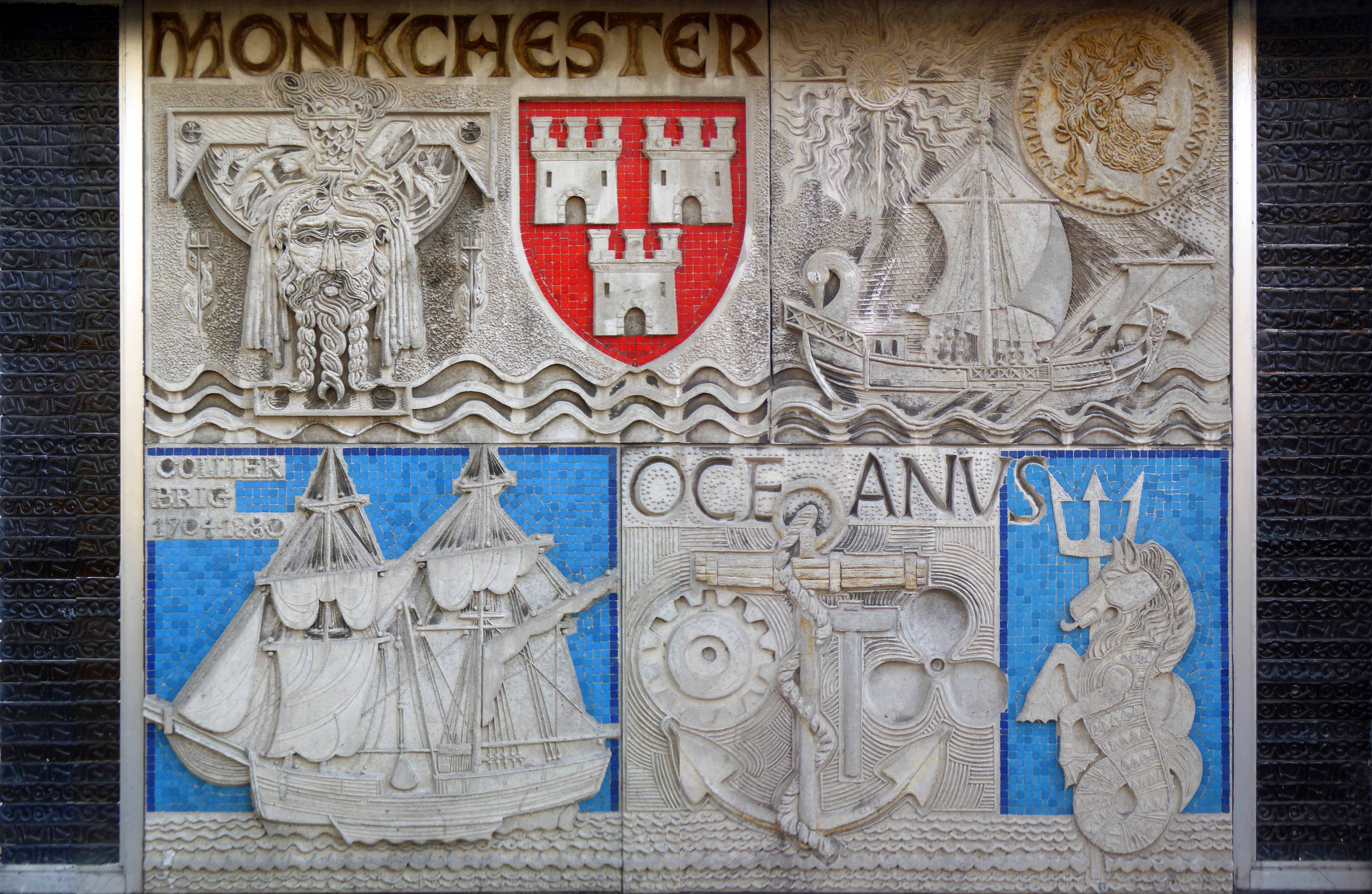
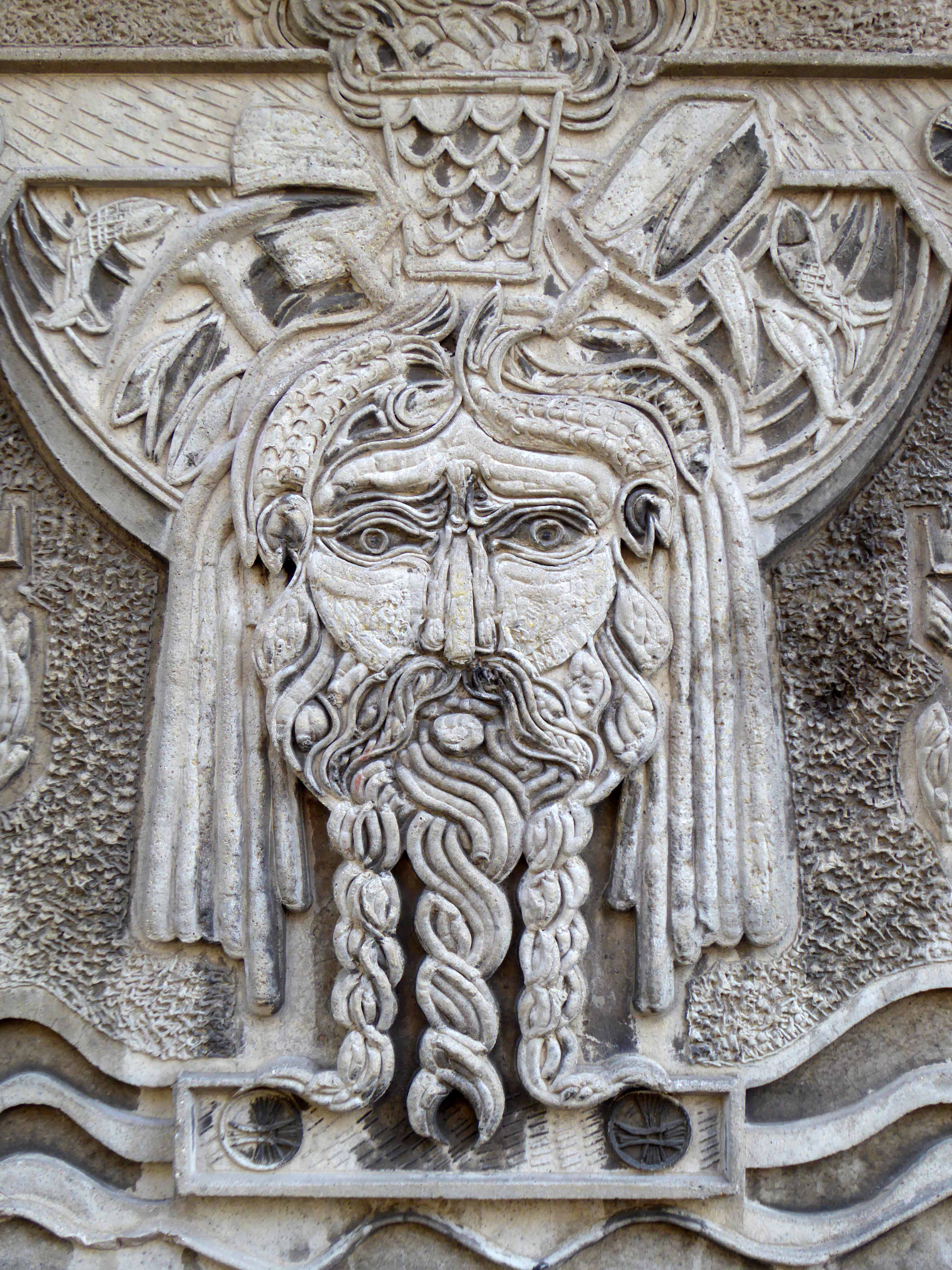
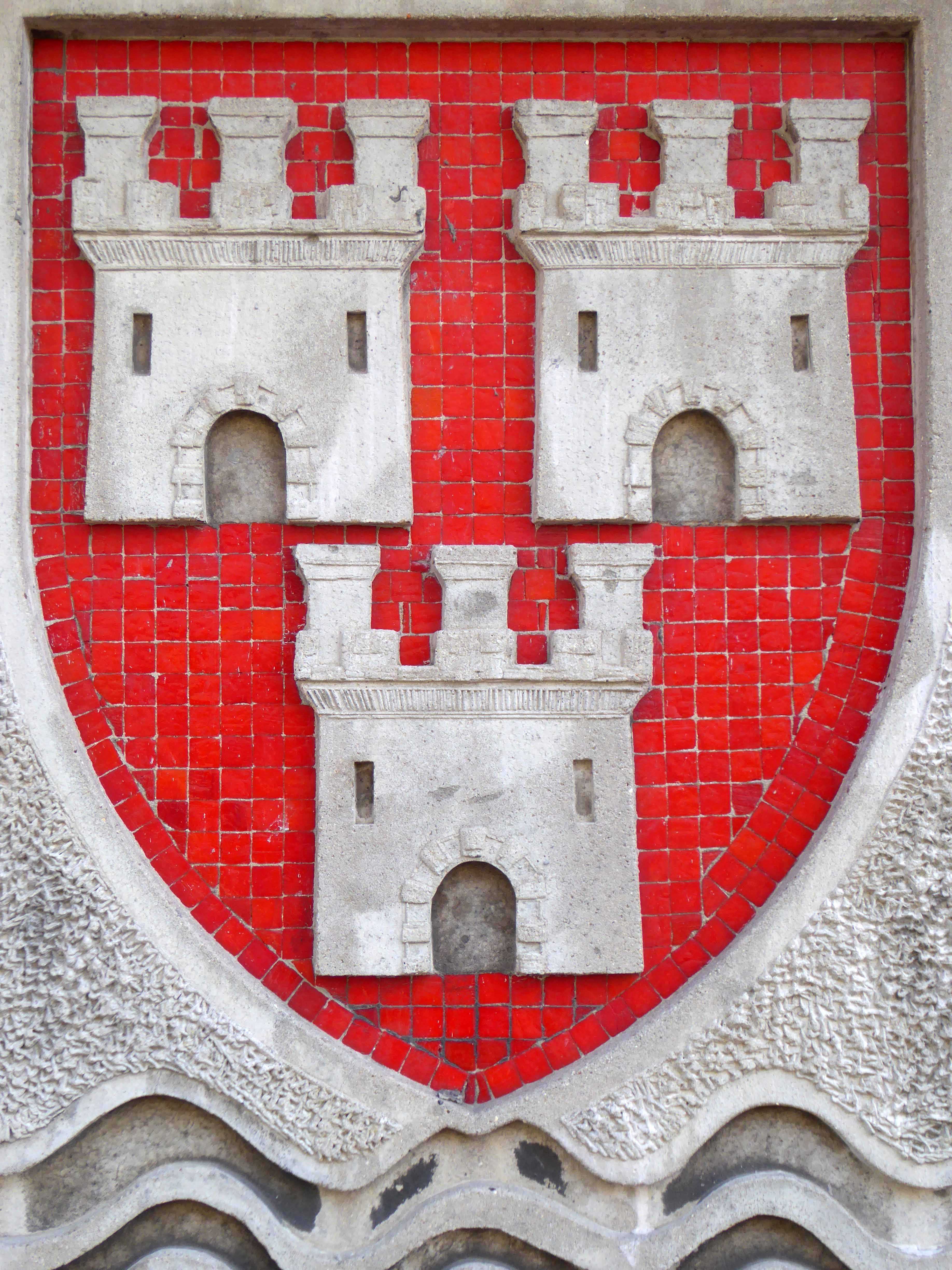
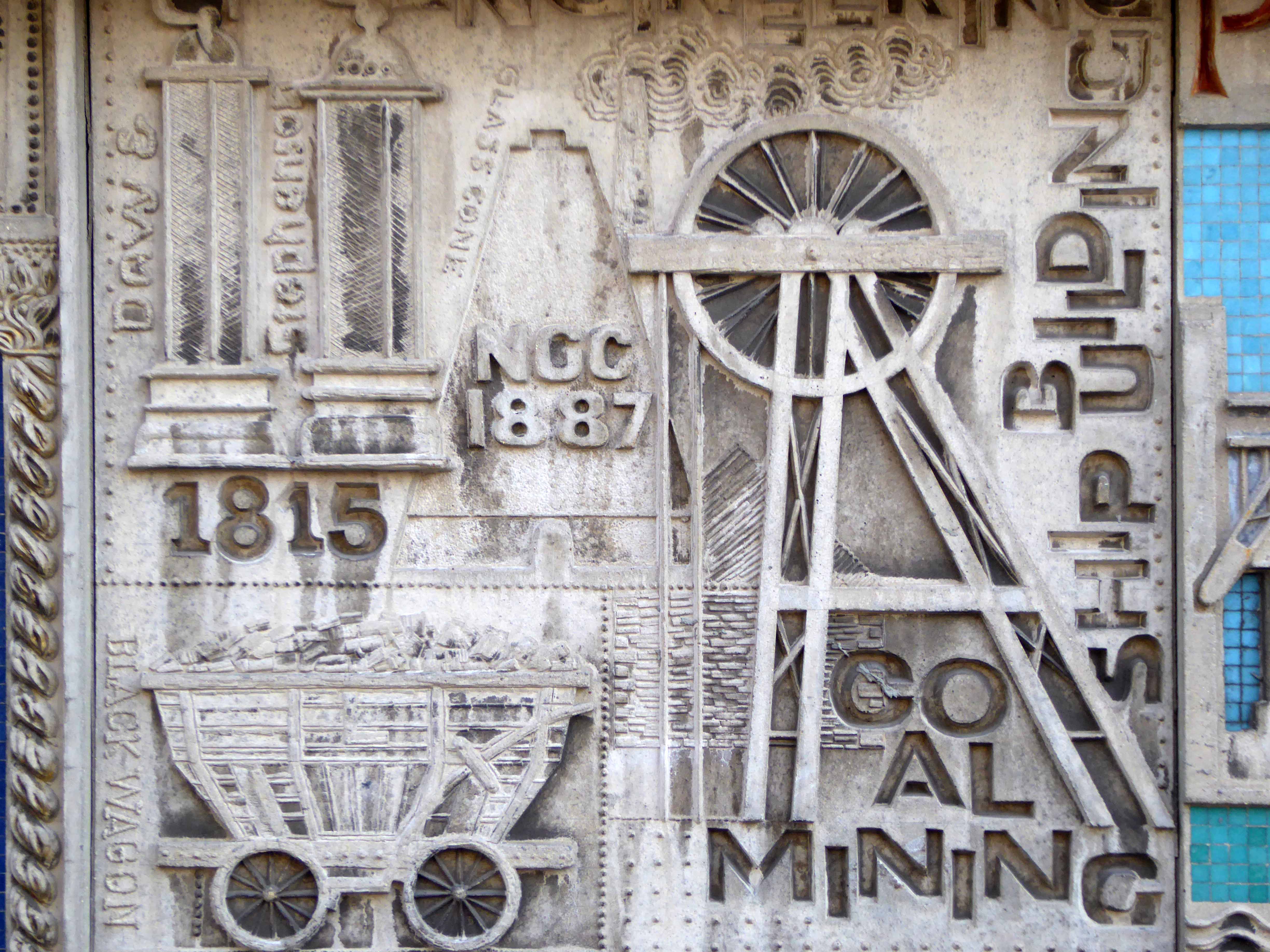
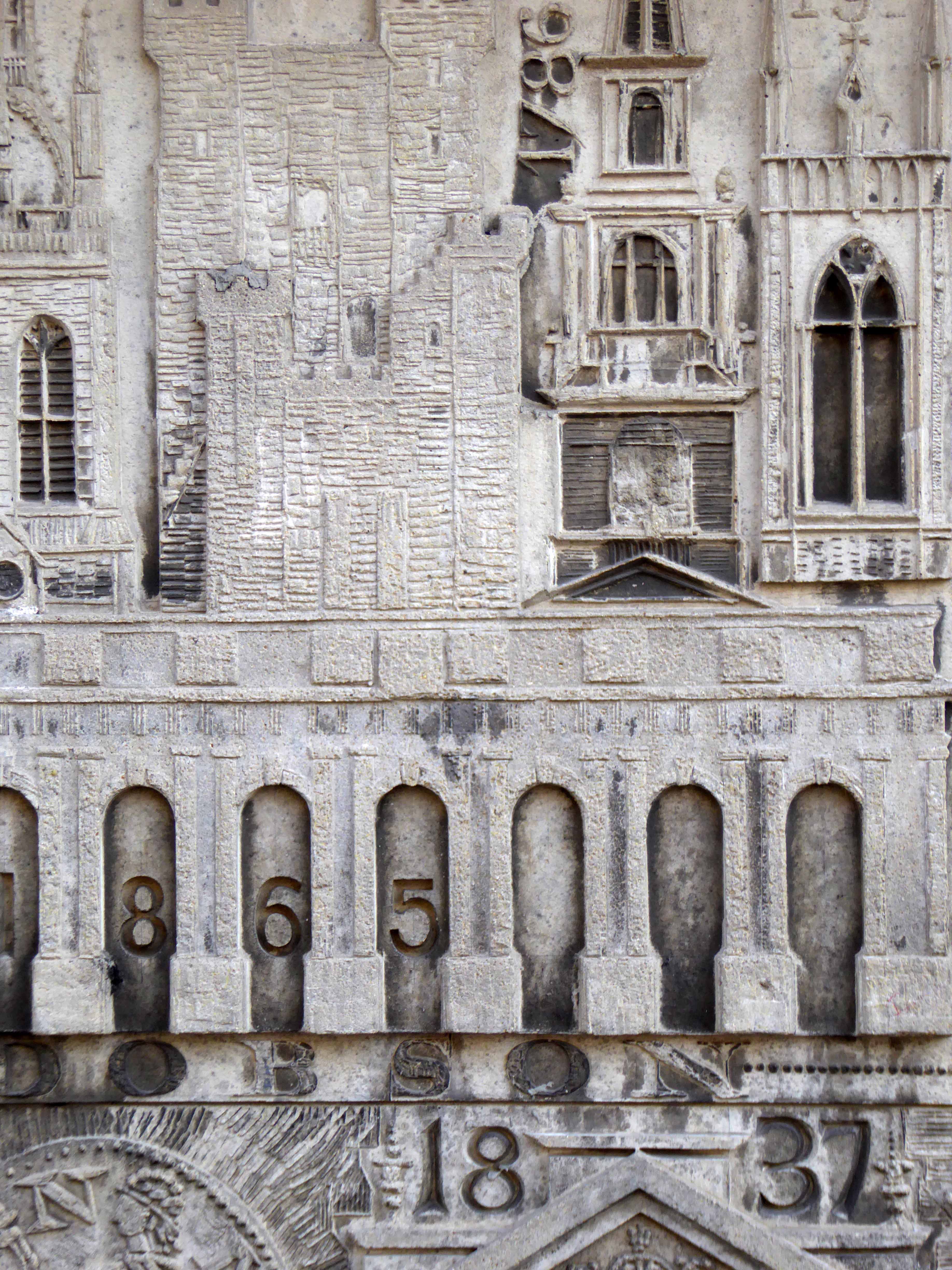
They never worked on the site itself, but used a regular contractor Hutton’s Builders Ltd Colchester, who cast the concrete in panels around four feet square. There are two relief panels, depicting events in the history of Newcastle. Highly stylised, the relief is moulded to a depth of 5cm and features some charming Geordie characters.
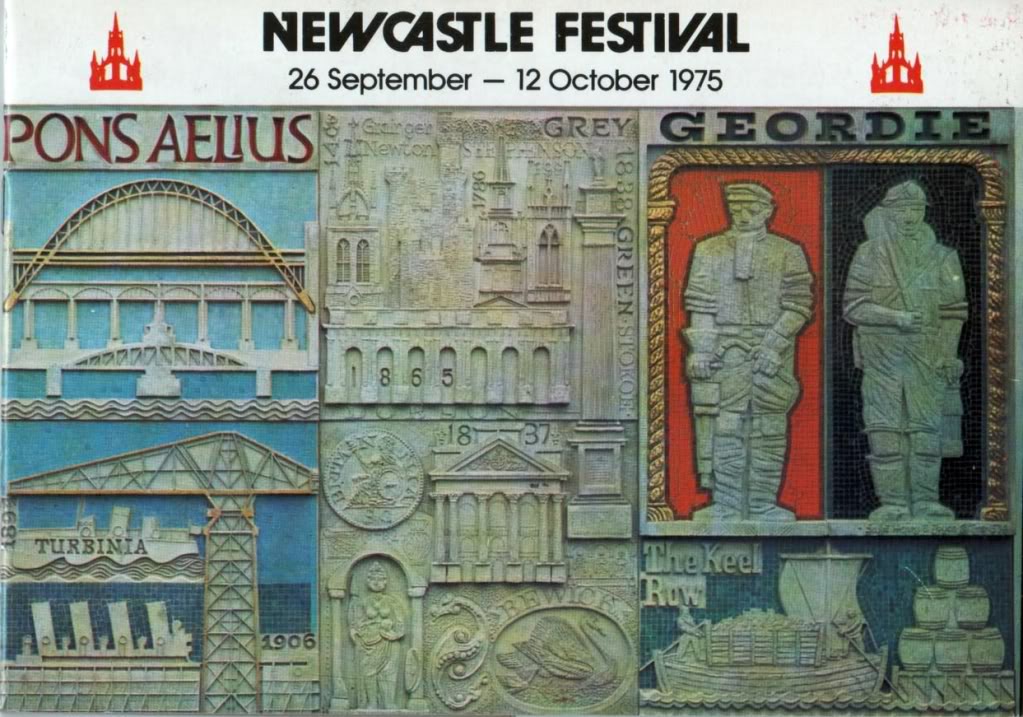
The left panel contains the following inscriptions and images Monkchester with Roman head and Newcastle coat of arms. Roman ship and golden coin. Collier Brig 1704-1880 with ship. Oceanus with anchor and seahorse with trident. The right panel contains the following inscriptions and images: Jupiter Fortuna with two figures. Engineering; Davy and Stephenson; coal mining ship building with images of same. G & R Stephenson; Armstrong Whitworth; Rocket 1829 with image of first steam engine. Armstrong 12 Pounder RA with image of gun. 1878 J.Swan Pons Aelius with bridges depicted below. Turbinia and image of ship. Various churches with names carved about including Grainger Dobson 1865; 1838 Green Stokoe; Bewick with a swan; a figure and Brigantia. Final section on far right has Geordie over two figures, then the Keel Row with a loading boat at the bottom.
The building was originally developed by C&A and it is thought that funding for the reliefs might have been provided by the store and/or Northern Arts. It became BHS which subsequently closed last year, the building is now occupied by Primark, C&A estates still own the site.
The mural illustrated the cover of the 1975 Newcastle Festival.
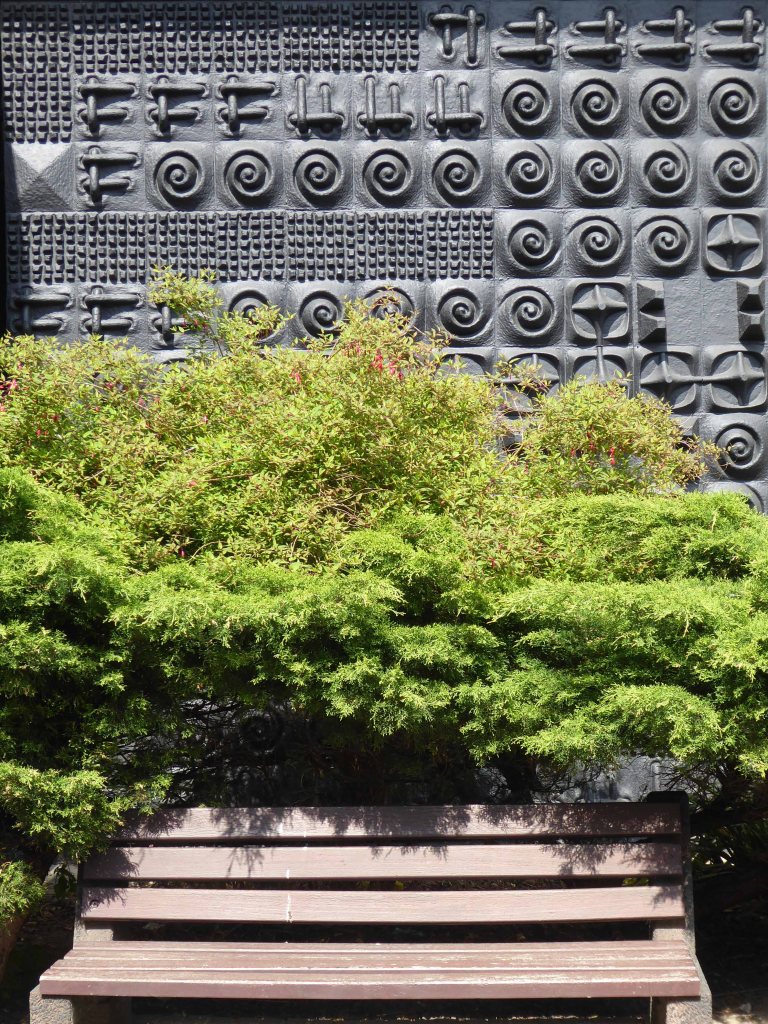
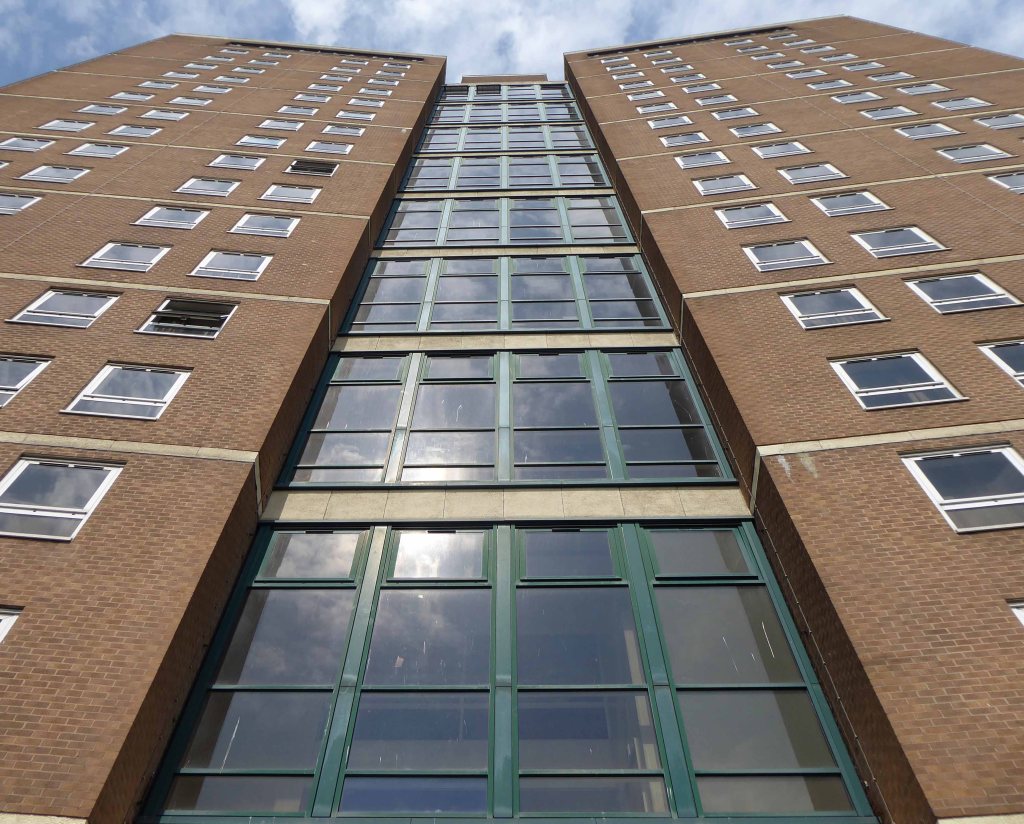
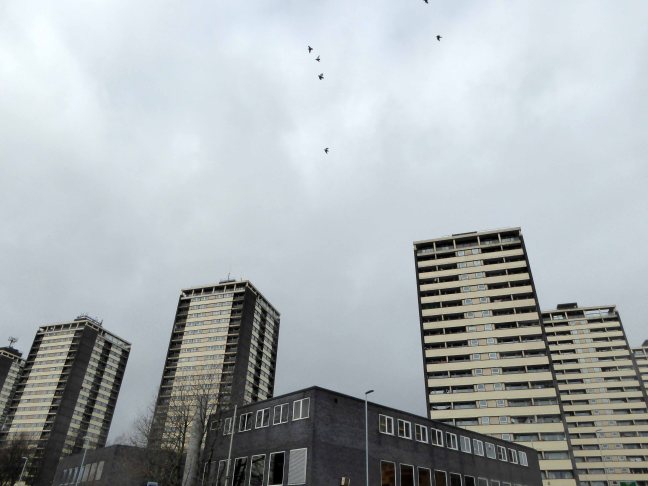
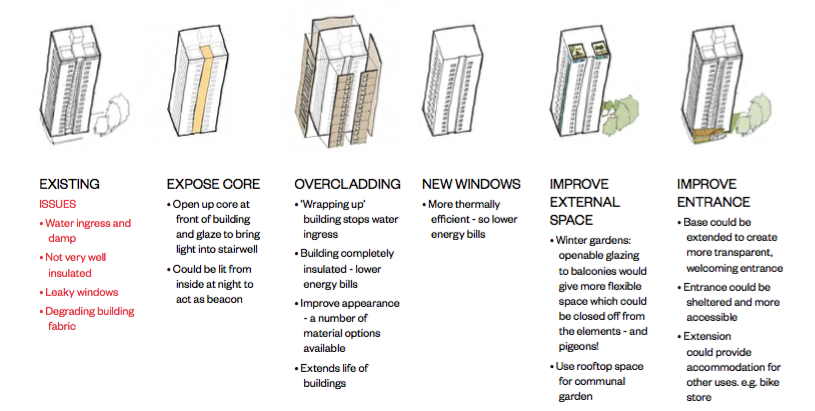
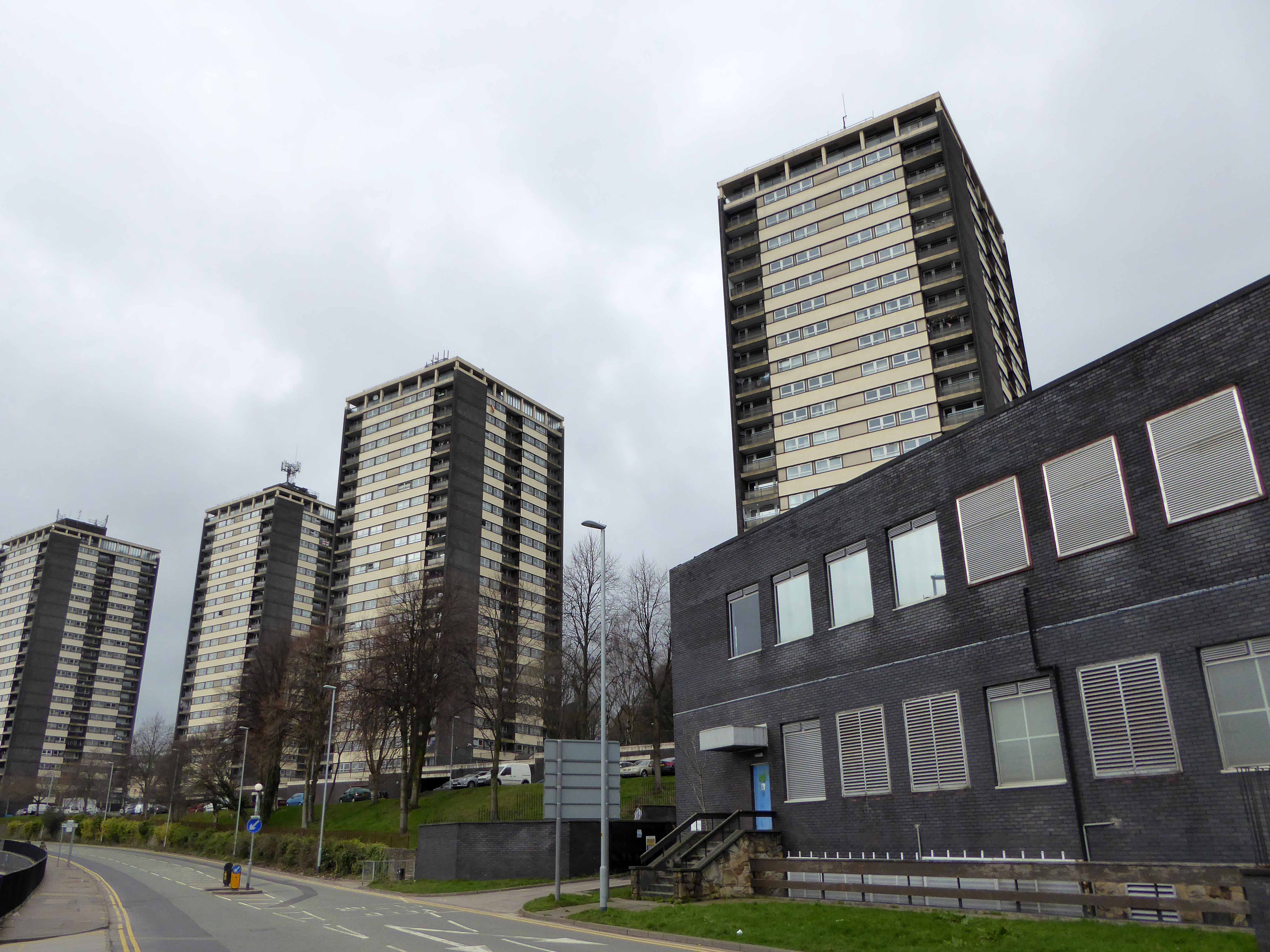
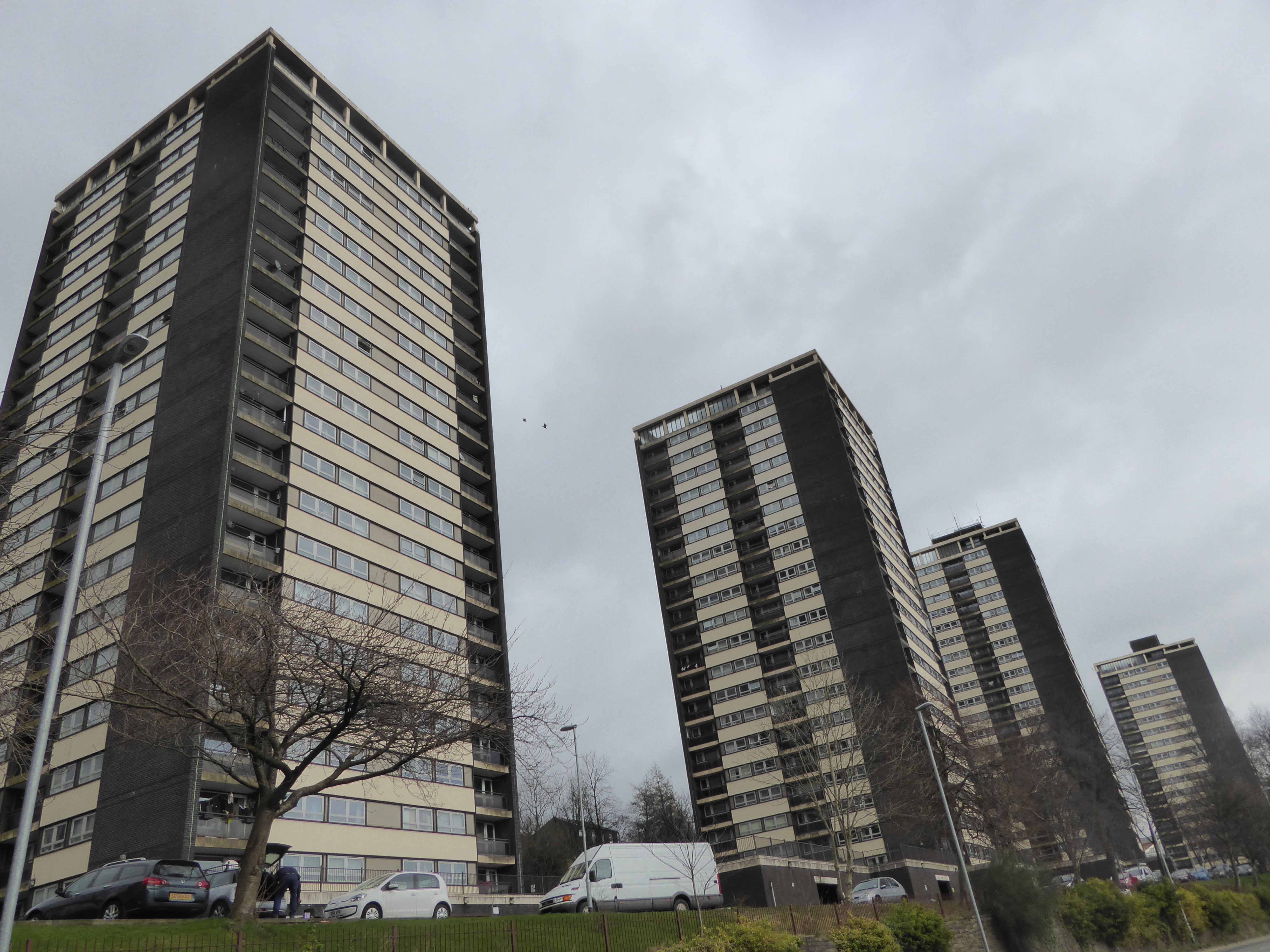
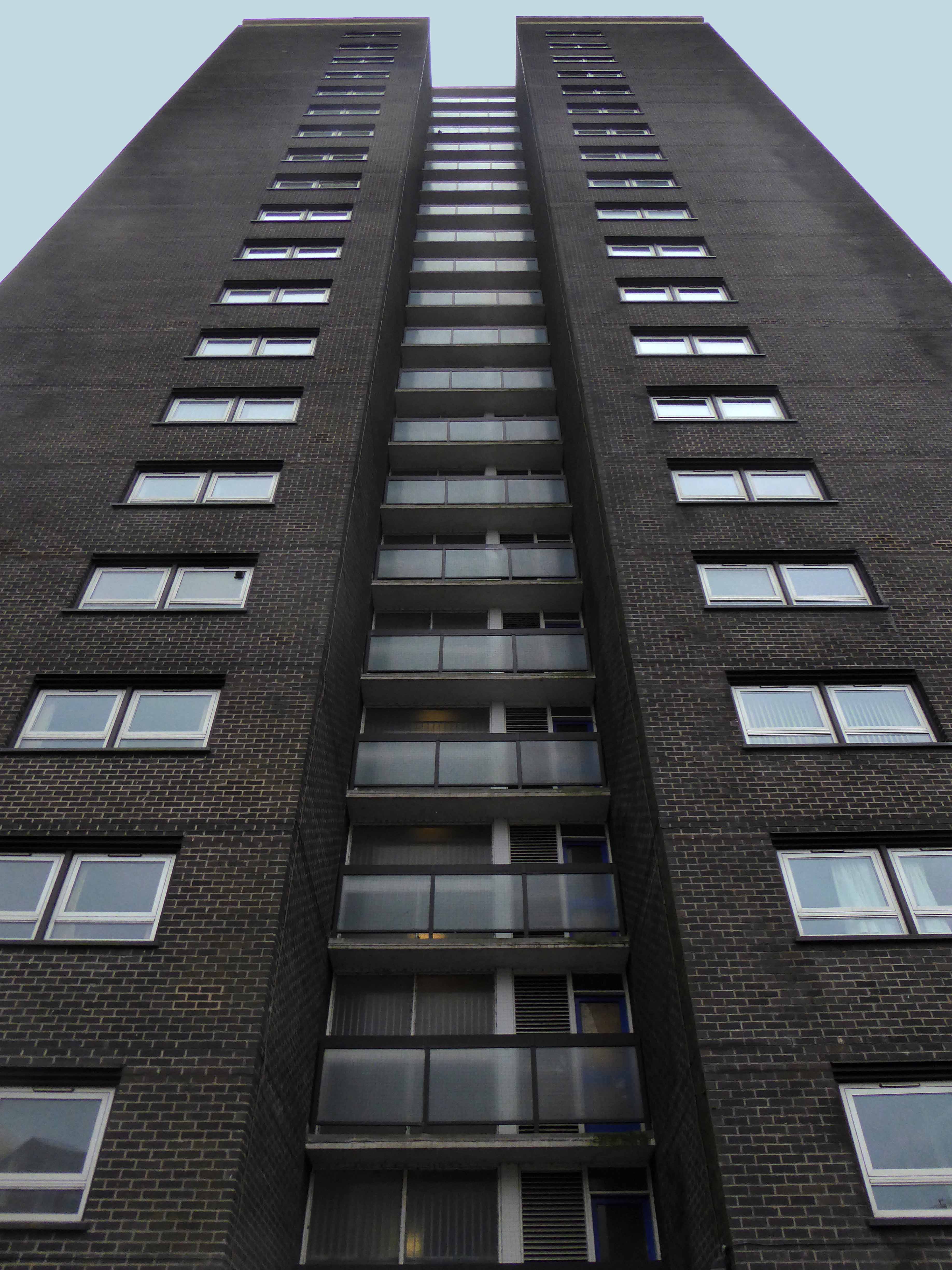
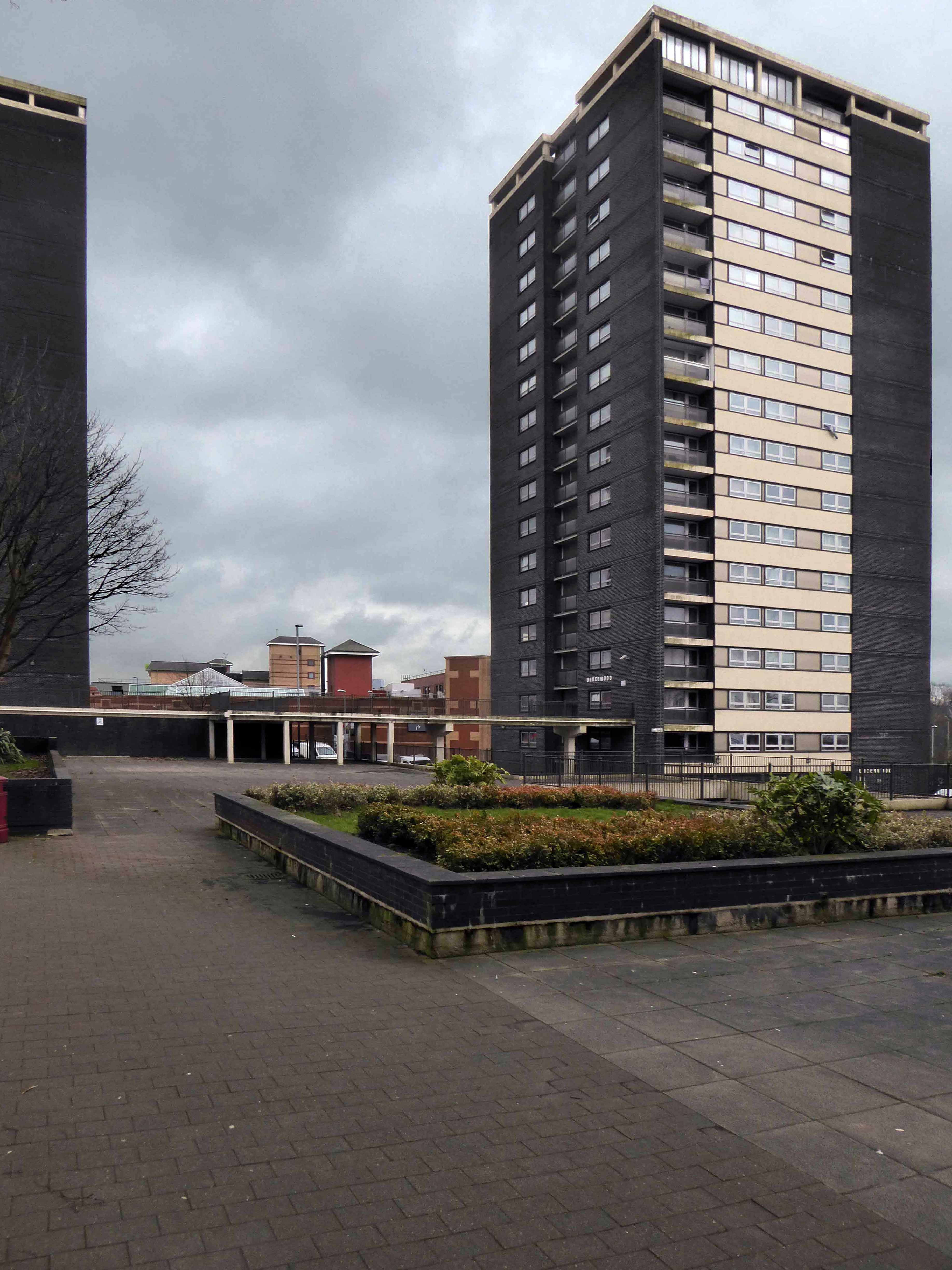
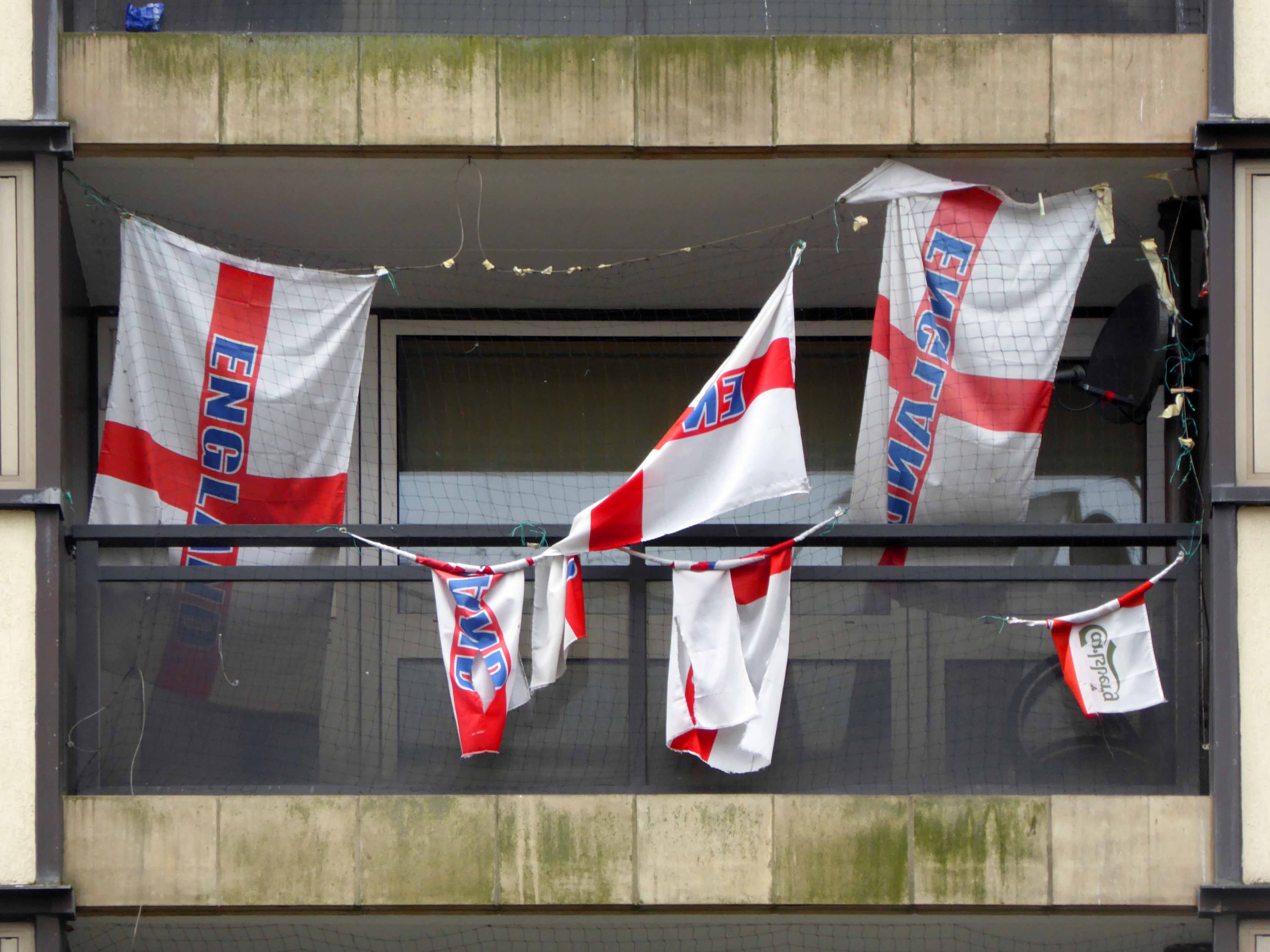
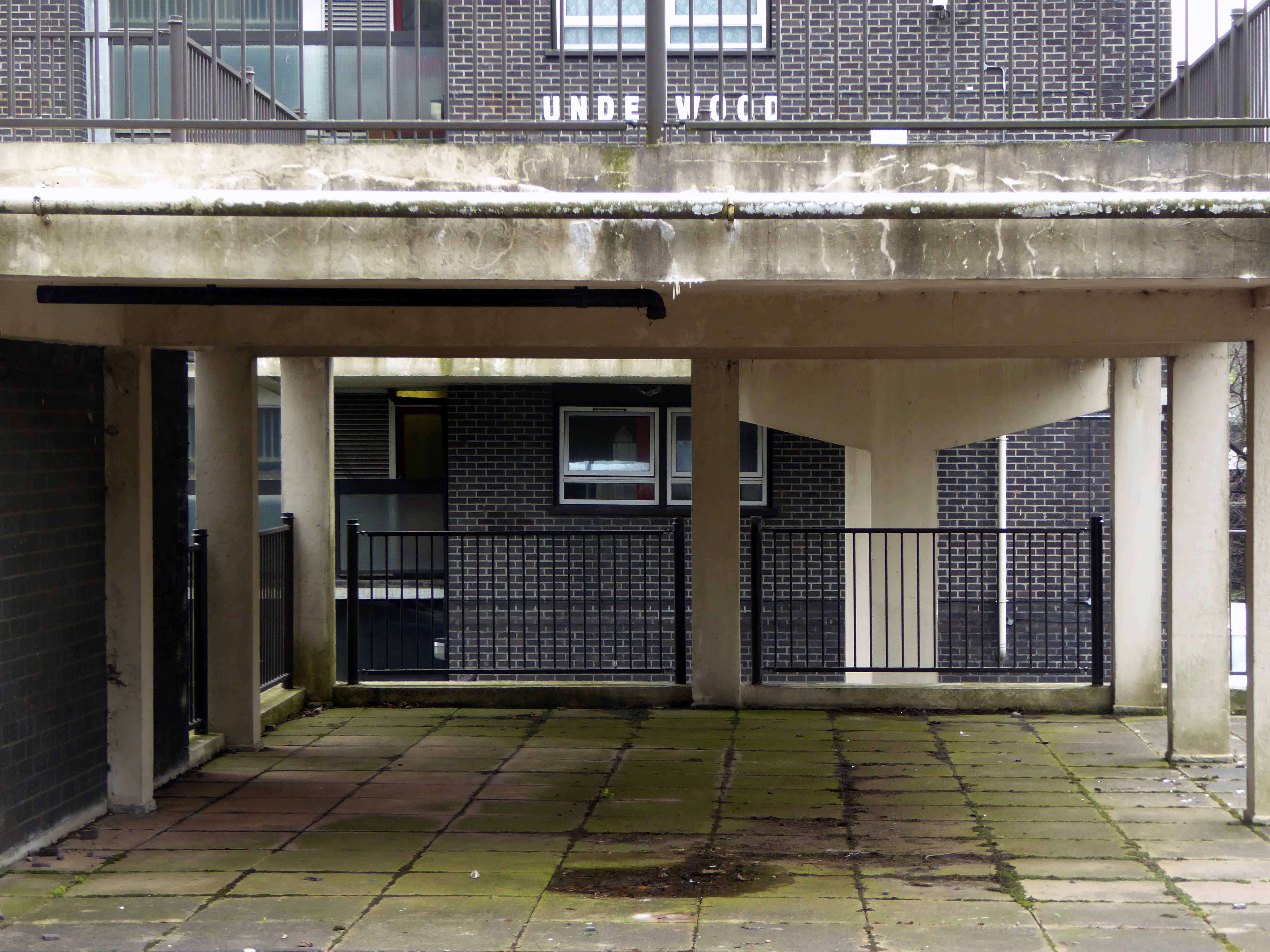
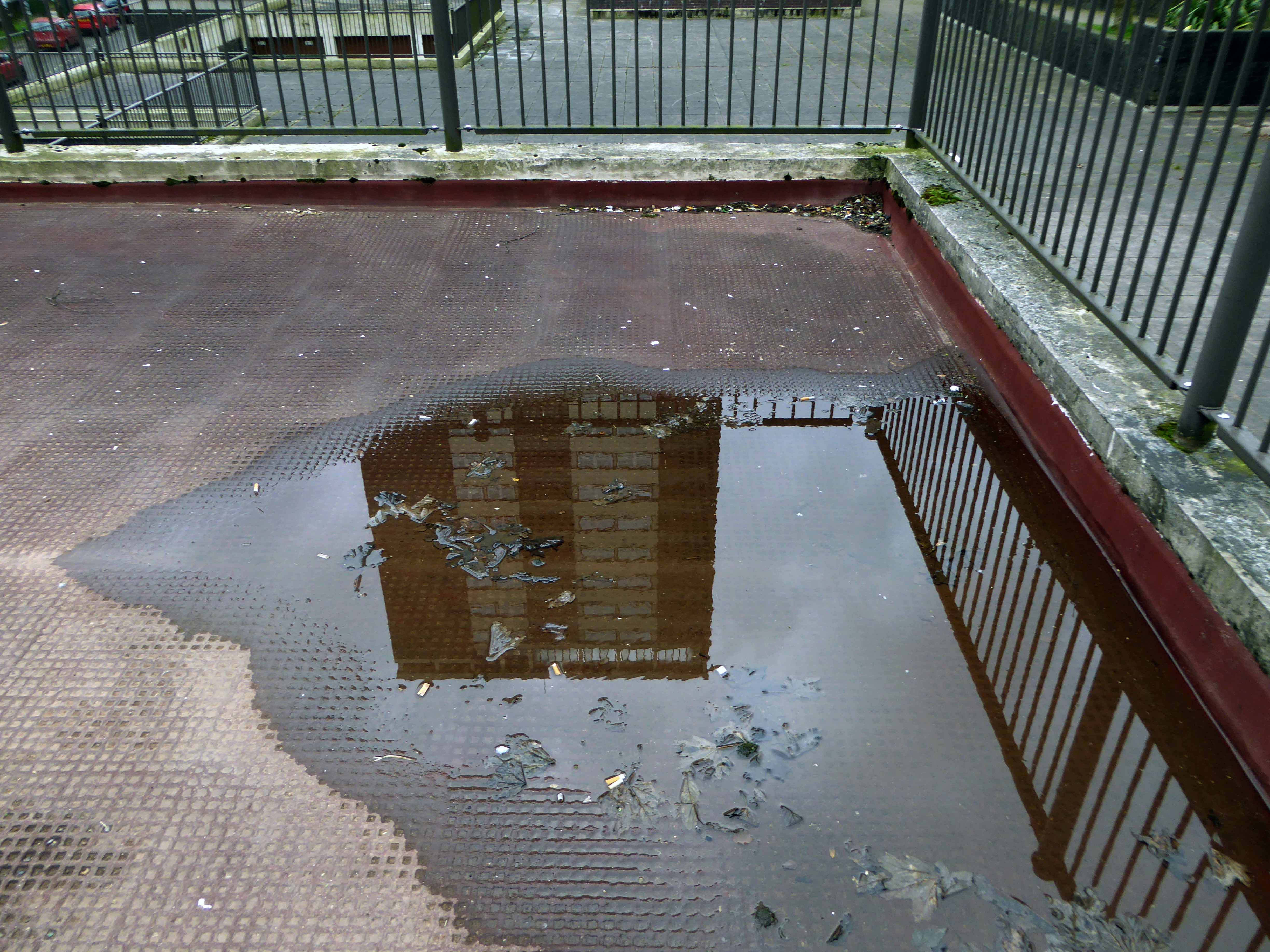
I’ve passed this way before, they’re hard to miss, seven substantial tower blocks towering over the town on College Bank.
But what goes up, may come down.
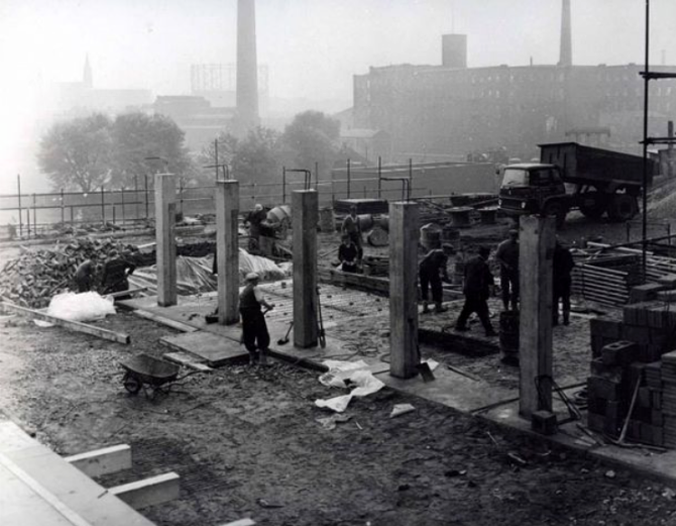
Construction in 1963
Demolition in 2017 is one suggestion – following years of poor maintenance, problems of heating and ingress, plus a whole host of other reasons outlined here.
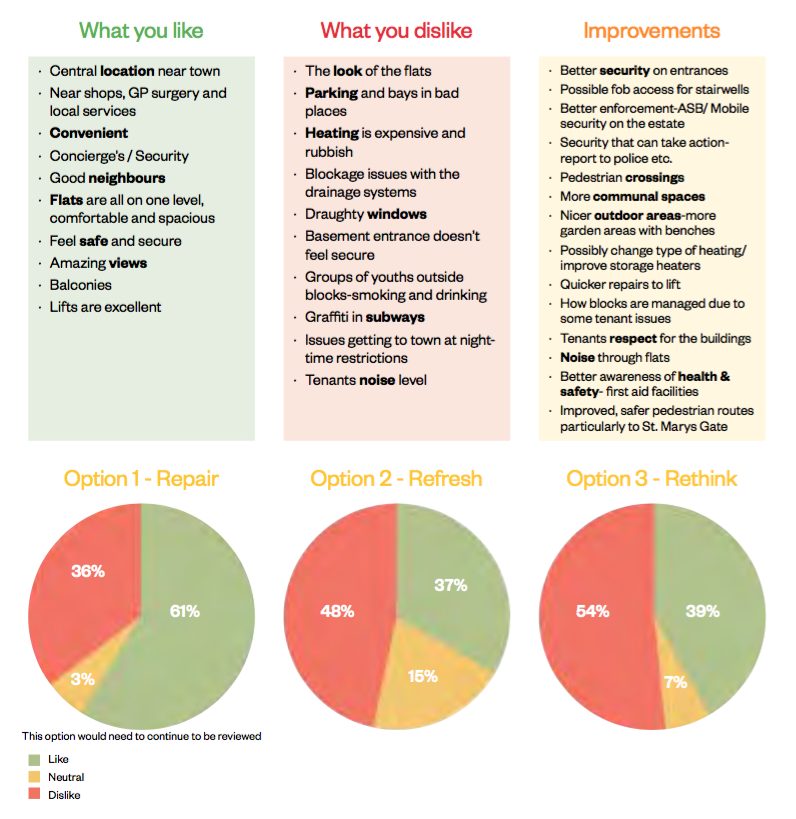
The housing trust in consultation with residents, have produced a tentative plan.
This may or may not include the demolition of one or more blocks. On the day of my visit, the tenants I spoke with understood that the blocks faced an uncertain future, and were rightly concerned by the rumours and conjecture. The majority would prefer to stay put, having lived there for several years, raising families and building homes.
Whatever the outcome I hope that the wishes of the residents are not overwhelmed by political expedience, or the will of the developer.
Sadly only one of the neon sculptures, remains illuminated – they may have been listed by Historic England, they have certainly given them a coat of looking at. I myself was approached whilst working away by a crack squad of precinct management, questioning my methods and motives. I reassured them I was a serious student of post-war architecture and they allowed happily to go about my business – assuring me that I was following in the footsteps of HE.
The elevated café, pierced screenwork, mosaics on the former Locarno, now Library and town clock are still every much in situ, Lady Godiva dutifully appearing on the hour, every hour with an ever attendant Peeping Tom for company.
The area is well-used bustling busy, with a smattering of empty units which are sadly typical of most provincial town competing for custom and prosperity on the high street.
Coventry city centre is a city centre, comprised of several interlocking post- war facets, realised over a thirty year period. This later addition The Bull Yard, the work of Arthur Ling and Terence Gregory, city architects and planning officers 1963-69.
It incorporates pedestrian walkways, retail, civic and car parking facilities with a crowded unease and grace. Much of the original detail survives, though not unusually, some more recent additions detract from the integrity of the scheme.
The site is graced by two major works by William Mitchell – the concrete facade and interior of the former Three Tuns public house.
And the sculpted panels on Hertford Street.
So we are left with a series of spaces that now seem slightly adrift, particularly the City Arcade, as both the earlier and more recent developments in the city compete for clients and customers.
To explore is to discover a work continually in progress, or regression, as the forces of heritage, commercial development, and civic planning pull each other this way and that.
There is an initiative for redevelopment for the area yet to find a satisfactory resolution.
Take a look.
Up on high we find Sir Guy and the Dun Cow by Alma Ramsey 1952.
Coventry Point architects: John Madin Design Group 1969/75
The Peeping Tom head and shoulders sculpture is currently located in Hertford Street, mounted high up over the entrance to the covered walkway. It was originally a public house sign. It is not known who made it. It was displayed sitting in the top corner window of the Peeping Tom Public house which was on the corner of Hertford Street and Bull Yard, not far from where it is now. It was moved when the road was being redeveloped in the late 1960’s and early 70’s.