
Tram Trip To Altrincham

The Trams

Cornbrook

Turn left out of the station, under the track and right onto Chester Road.
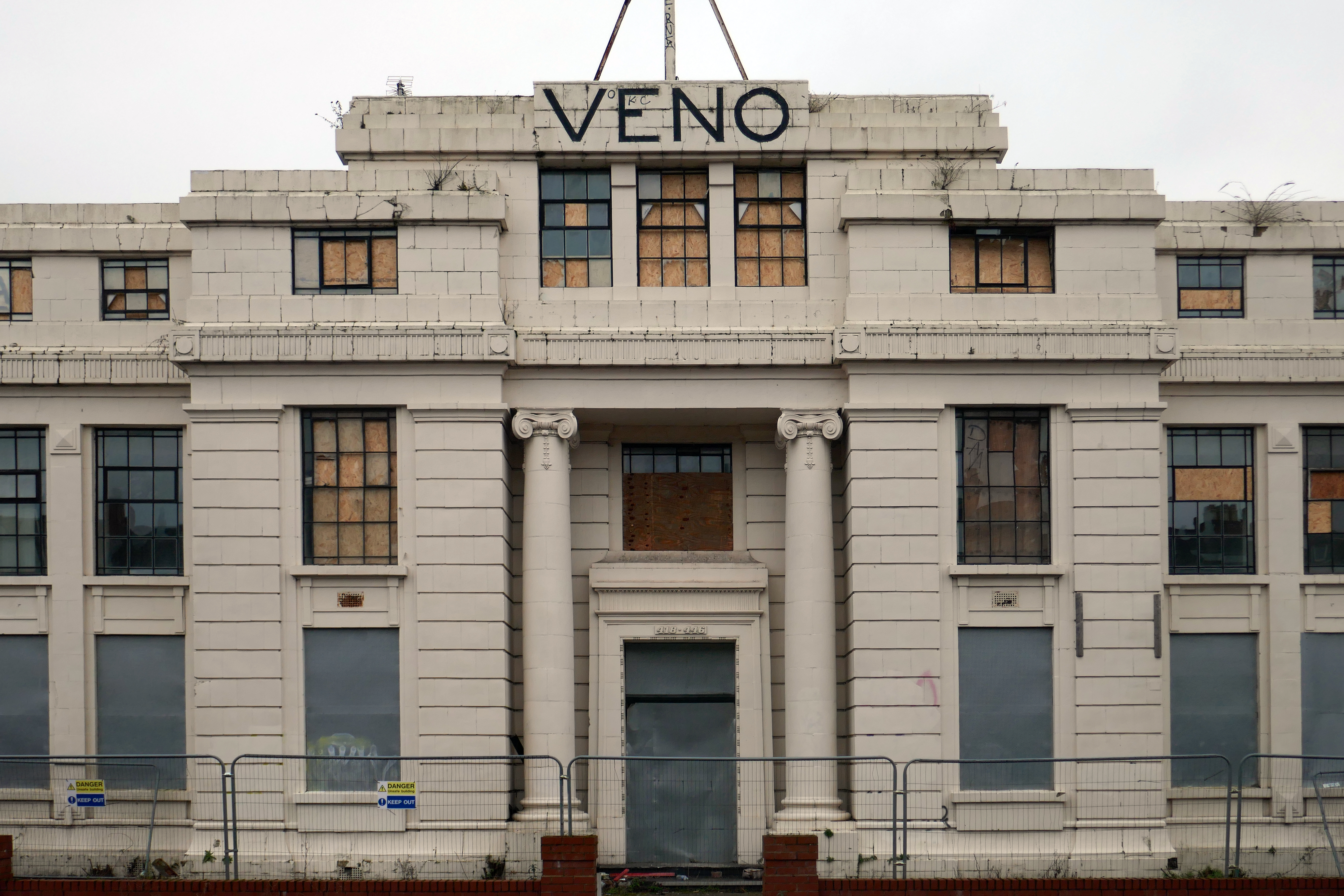
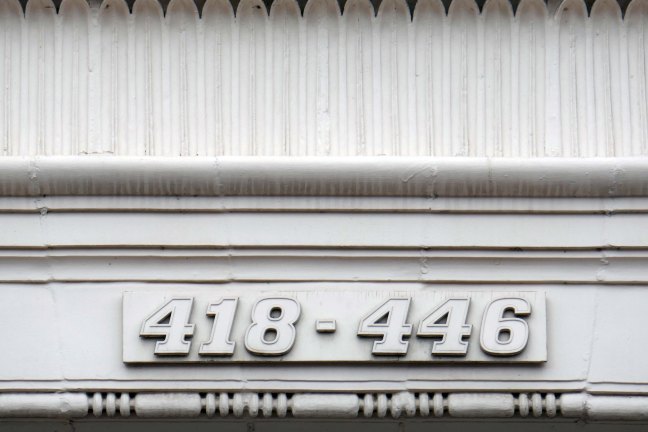
426 Chester Rd Old Trafford Stretford Manchester M16 9HD

The Veno building, was once a pharmaceutical company founded by William Henry Veno. He established a company in the US before returning to Britain and founded the Veno drug Company in Manchester in 1898. In 1925 the company was sold to Beecham Estate and Pills Ltd. In the 60s the building was under the name Progress House and was home to the Co-Operative Press Limited, later to become Trafford Press.

Derelict Places

The front elevation was originally in red brick, with a later faience facade applied.

Mr Veno was also responsible for Germolene.

Continue along Chester Road.

Westpoint 501 Chester Rd Old Trafford Stretford M16 9HU
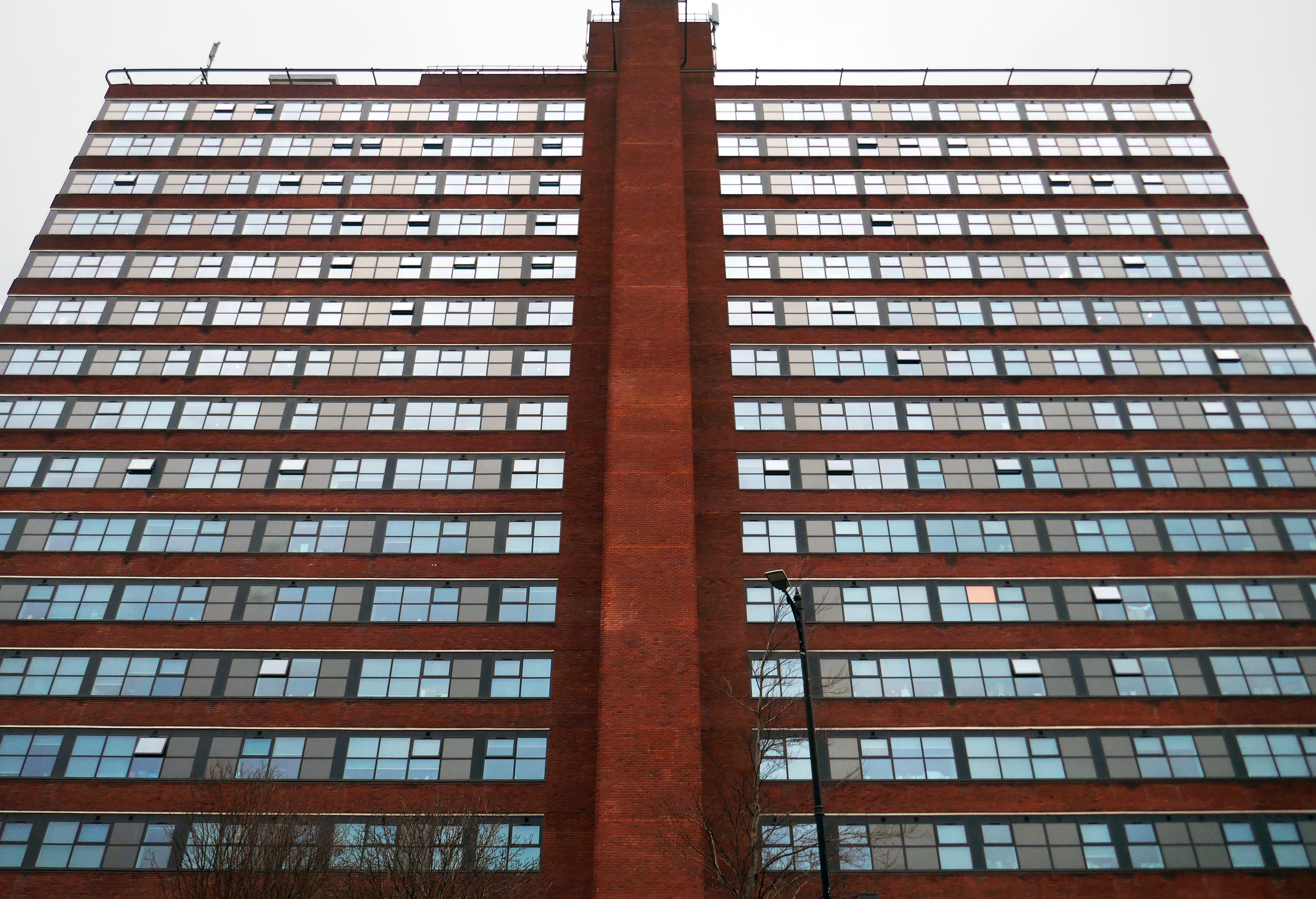
Located in the heart of Trafford, Westpoint provides residents with a modern and stylish living experience, with views over Manchester United’s football ground and the city centre. Featuring an on-site gym, co-workspaces and a residents’ lounge, Westpoint is one of our most popular buildings and utilises energy-efficient technologies that provide a sustainable living experience.

Trafford Bar

You have reached the next station on foot – rather than retreating to Cornbrook.

Turn left into Seymour Grove.

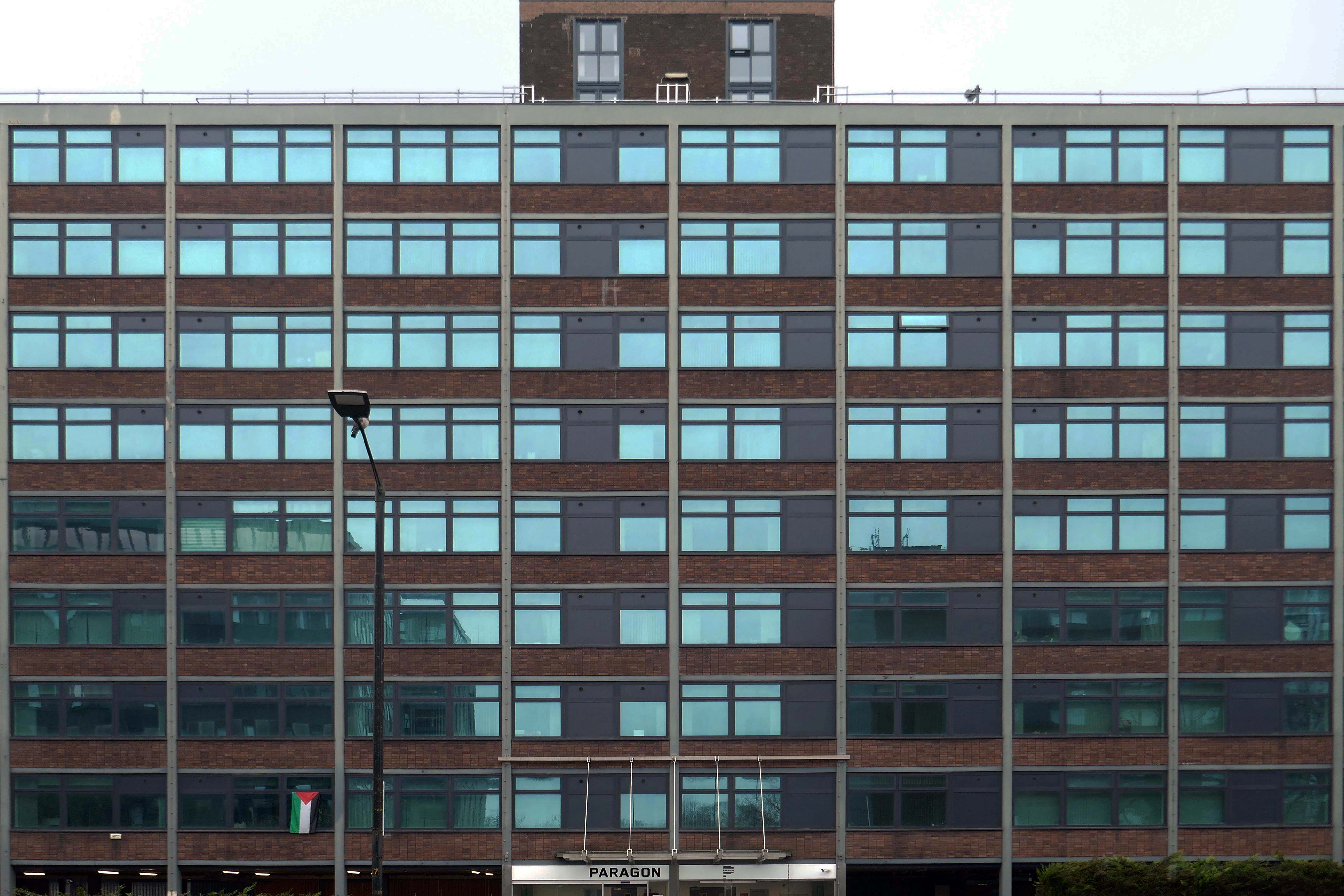
Paragon House 48 Seymour Grove Old Trafford Stretford M16 0YH

Paragon House is located in the heart of the Trafford Civic Quarter which benefits from a 5 minute drive into the centre of Manchester and only 3 minutes away from Trafford Bar Metrolink station. The Paragon House scheme involve the conversion and full scale refurbishment of an existing office building to create 115 one and two bed apartments.
Back to the station.

Old Trafford

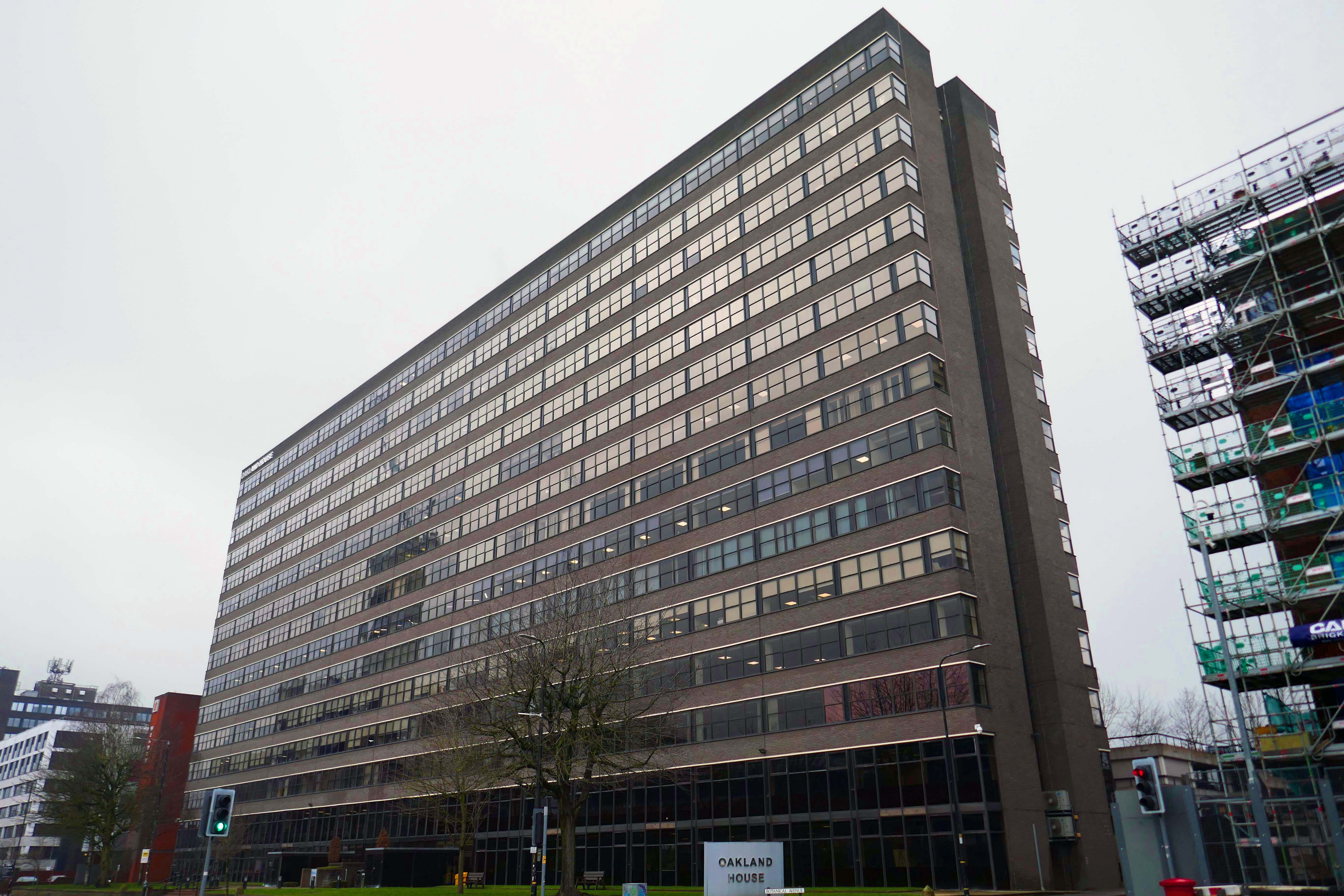
Oakland House 76 Talbot Rd Old Trafford London Stretford M16 0PQ

Oakland House is a landmark building providing high quality office space at the heart of Old Trafford. The property has an impressive entrance and reception area which includes brand new signage and contemporary seating, along with recently refurbished toilets and common areas throughout. The building also benefits from an onsite multi storey car park at the rear to provide an excellent car parking ratio as well as an onsite café.
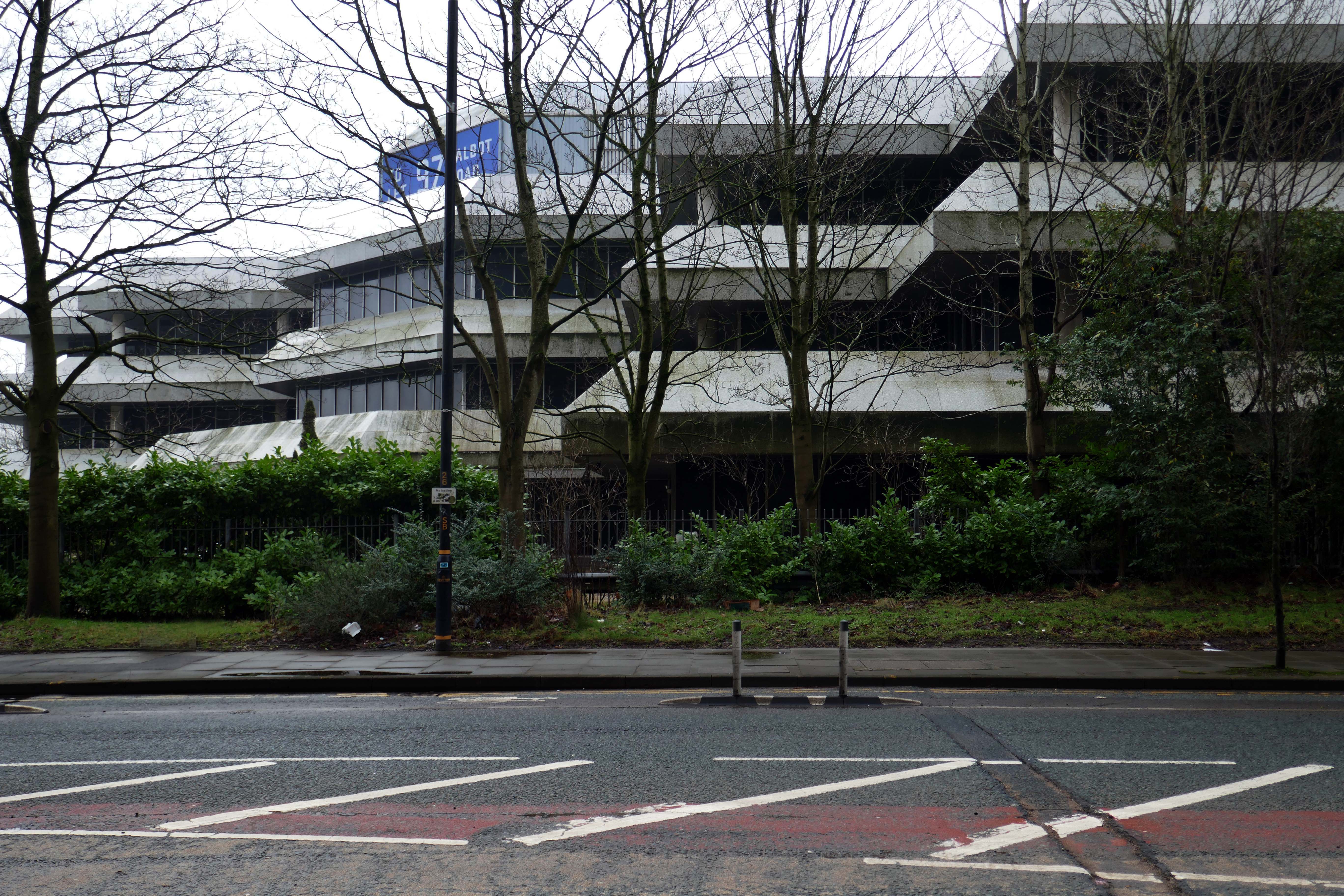
97 Talbot Road former British Gas HQ originally developed for Norweb in the 1980s.

The sitefeatures a two-storey 5,730 sq ft building, making it ideal as a training centre, as well as a separate storage/workshop facility.

A recent refurbishment upgraded the accommodation to provide excellent floor heights and communication infrastructure, collaborative working areas, a staff canteen, cycle stores, showers and a biomass boiler with back-up generator to ensure a constant energy supply in the event of a power loss.
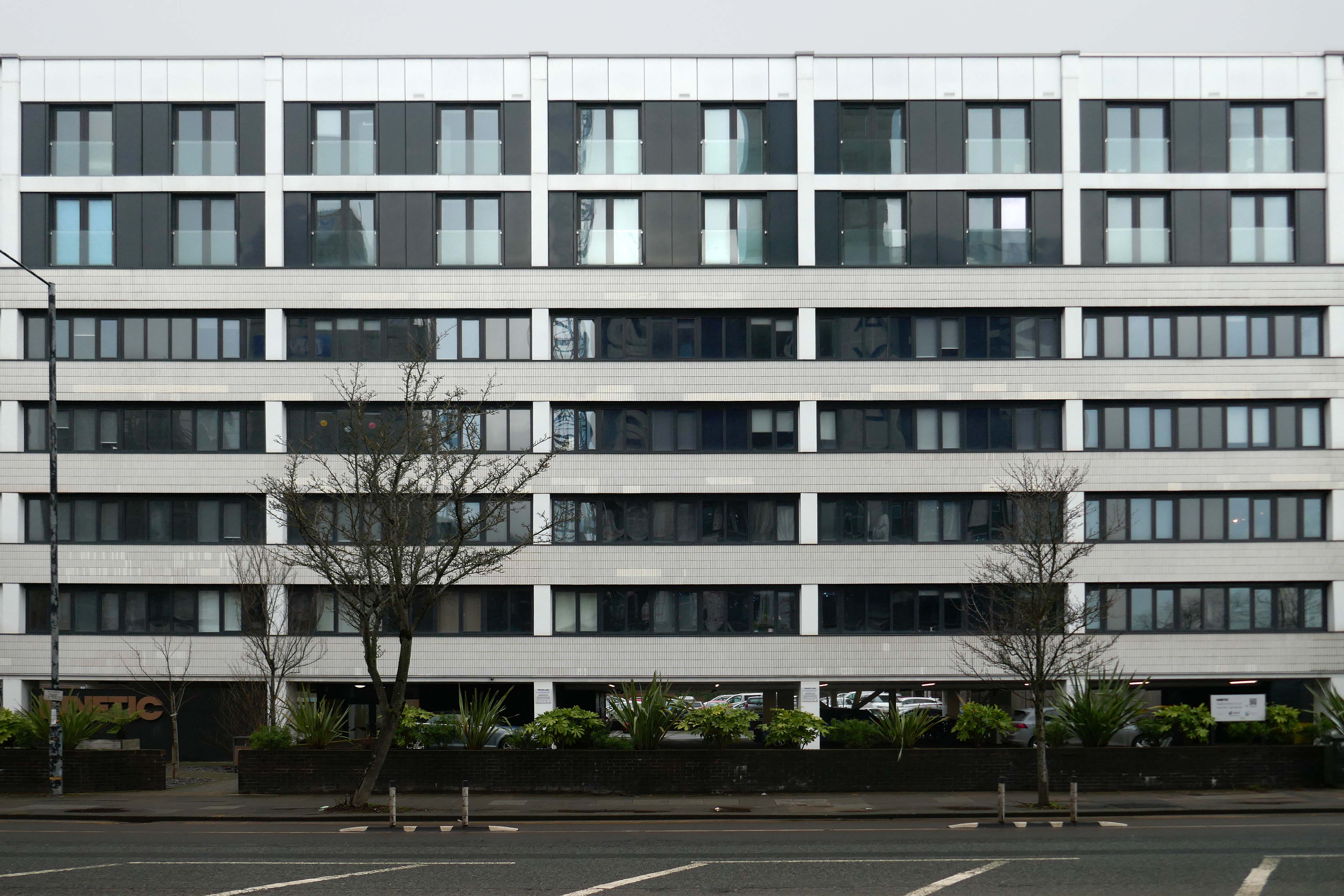
Kinetic Apartments 92 Talbot Rd Old Trafford Stretford M16 0GS

We identified a long abandoned office building with a perfectly located home on Talbot Road, close to Old Trafford Metrolink, and just minutes from the City Centre. Surrounded by celebrated suburbs, our development story in Trafford was born.
Trafford Town Hall Talbot Rd Old Trafford M32 0TH

Built 1933 with 1983 extension, designed by Bradshaw Gass & Hope of Bolton and built by the main contractor Edwin Marshall & Sons Ltd. Built of red Ruabon brick in Flemish bond on a steel frame, with gritstone dressings, and a mansard roof with slate on the lower part and plastic above. It has 2 storeys plus attic floor and basement, and is set in landscaped grounds with a sunken garden to the west. The 1983 extension is not of interest.
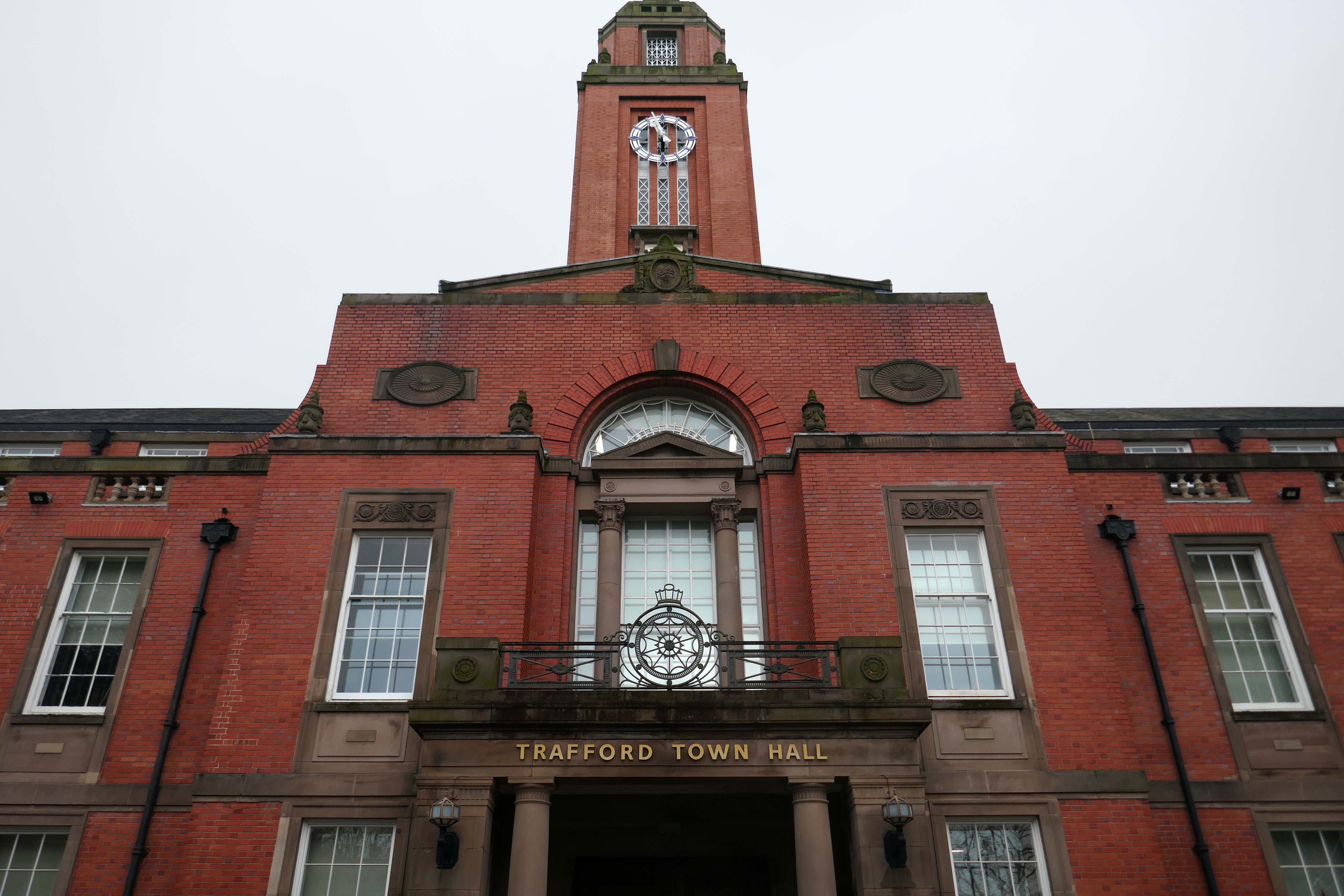
Grade II Listed

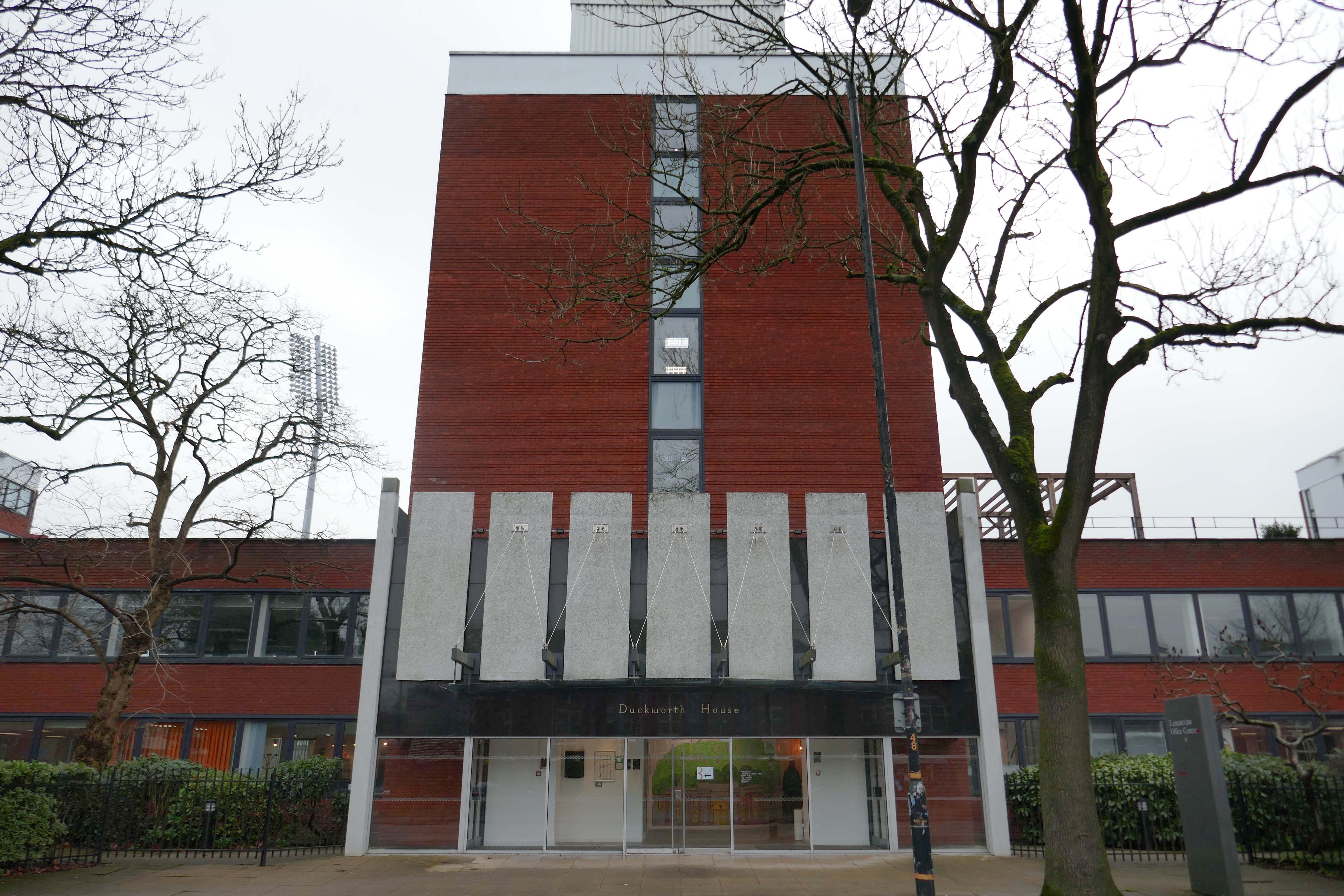
Duckworth House Bruntwood Works Lancastrian Office Centre Talbot Rd M32 0FP

Beautiful views across the Lancashire Cricket County Club and an exclusive roof garden promotes wellbeing and calm, brightening every day.

Located on Talbot Road, Lancastrian is a convenient 10-minute drive from Manchester and Salford via Chester Road. On-site parking is available for you and your visitors, and the Old Traff ord tram stop is less than half a mile away.
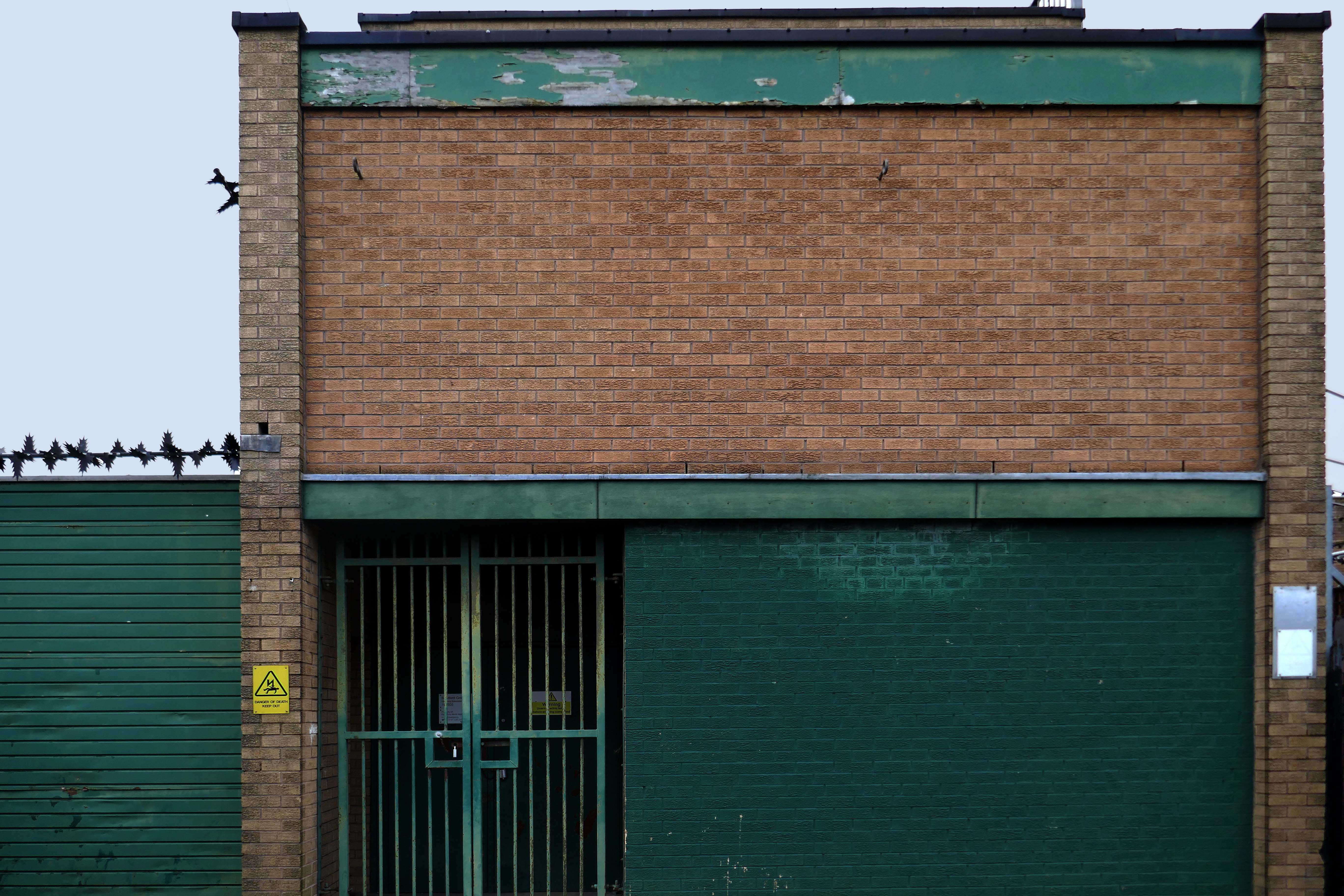
Electrical Sub Station Longford Road/Chester Road
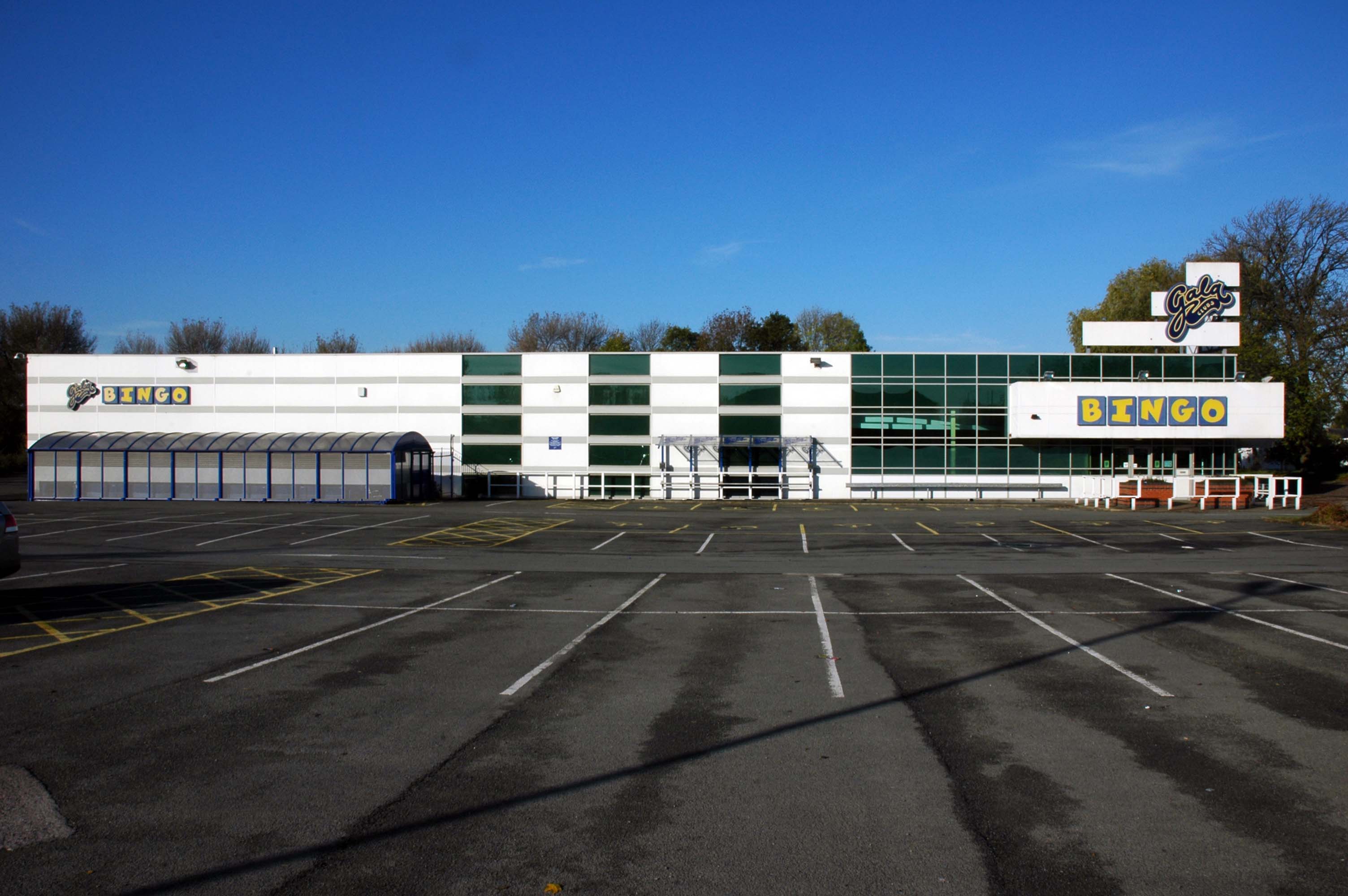
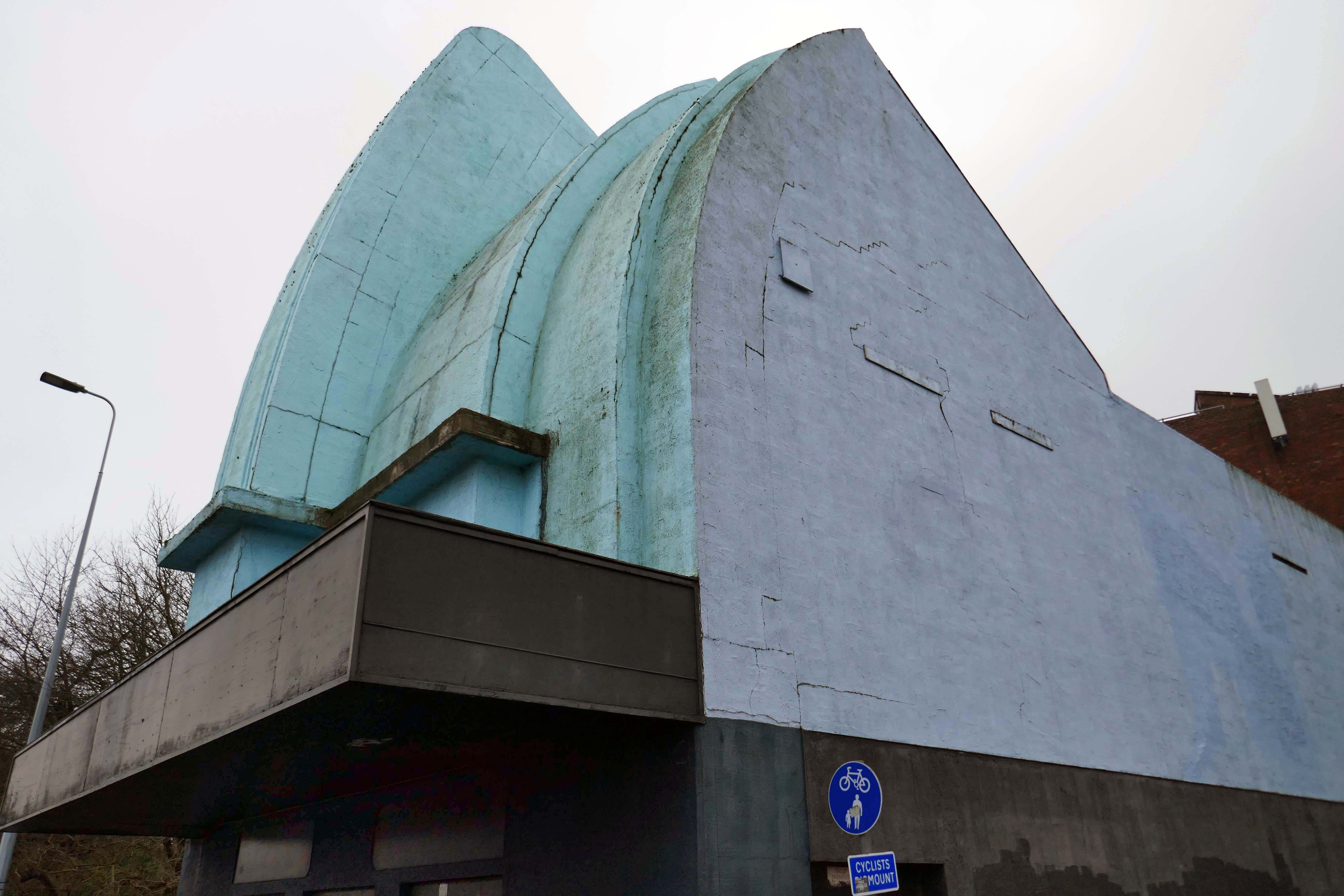
Stretford Essoldo junction of Edge Lane and Chester Road.

Keep walking down Chester Road.

The Longford Cinema was opened on 12th October 1936. Designed by Henry F Elder of Roberts, Wood and Elder of Manchester, it was operated by the Jackson & Newport Ltd. chain.

It was taken over by the Newcastle based Essoldo Chain in August 1950, and renamed Essoldo. It was closed in September 1965 and was converted into an Essoldo Bingo Club, later becoming a Top Rank Bingo Club.

This closed in the 1990’s.
A resource for those wishing to know about the building.

Grade II Listed 28th March 1994.

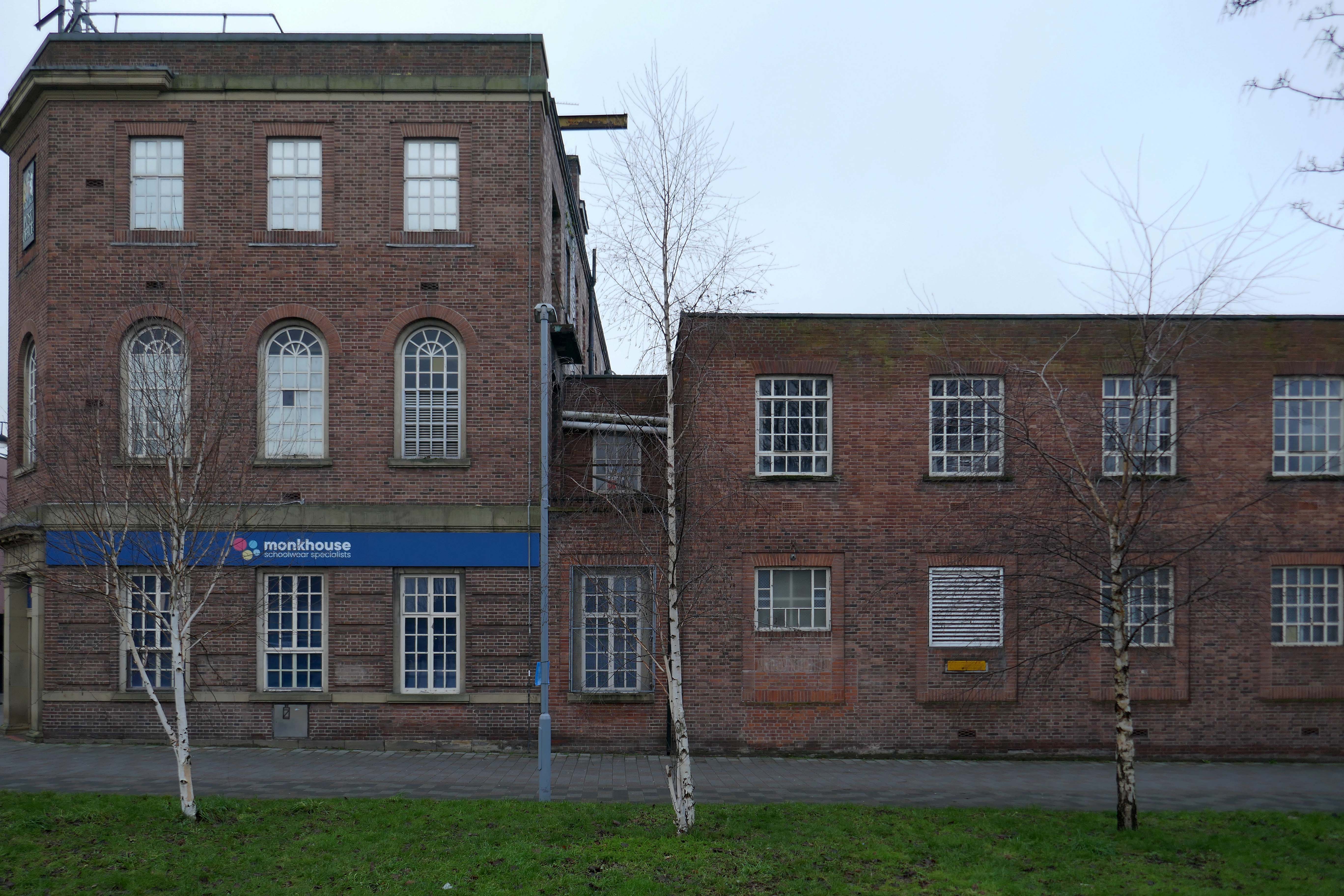
Stretford Post Office 1931 – Architect: Charles P Wilkinson
Stretford Arndale
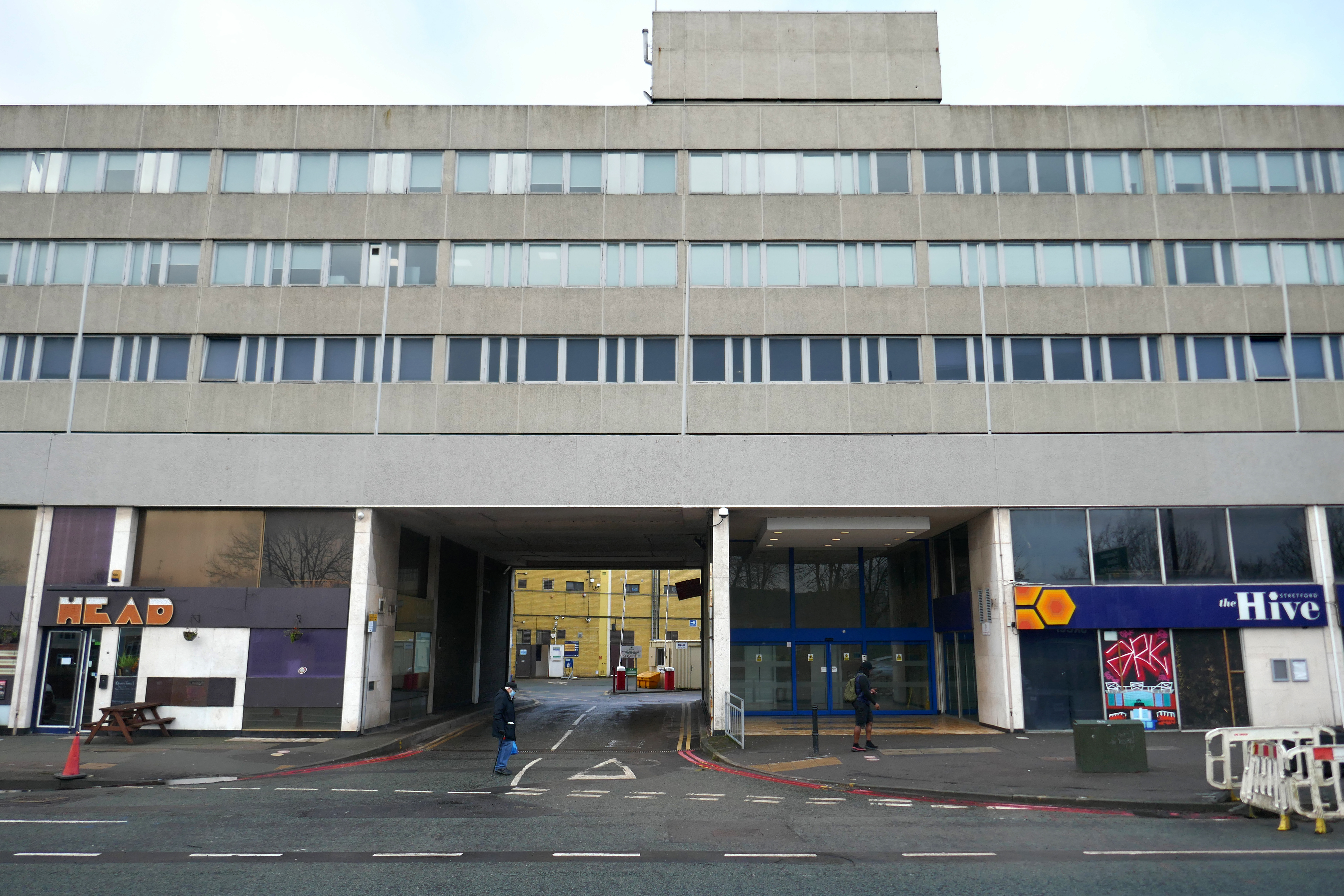
Stretford Mall has been at the heart of the town. Opened in 1969, it replaced the traditional shopping district centred around the former King Street. At the time of its opening, it was the sixth largest indoor shopping mall in the country. 

Stretford Mall, or the Arndale as it was known at the time, was opened six years ahead of the Manchester city centre location, and was the sixth biggest shopping mall in the country at the time.

Over the years the story that Mohammad Ali opened the centre has been ingrained into the fabric of the community, although he actually visited to promote malt-based bedtime drink Ovaltine!
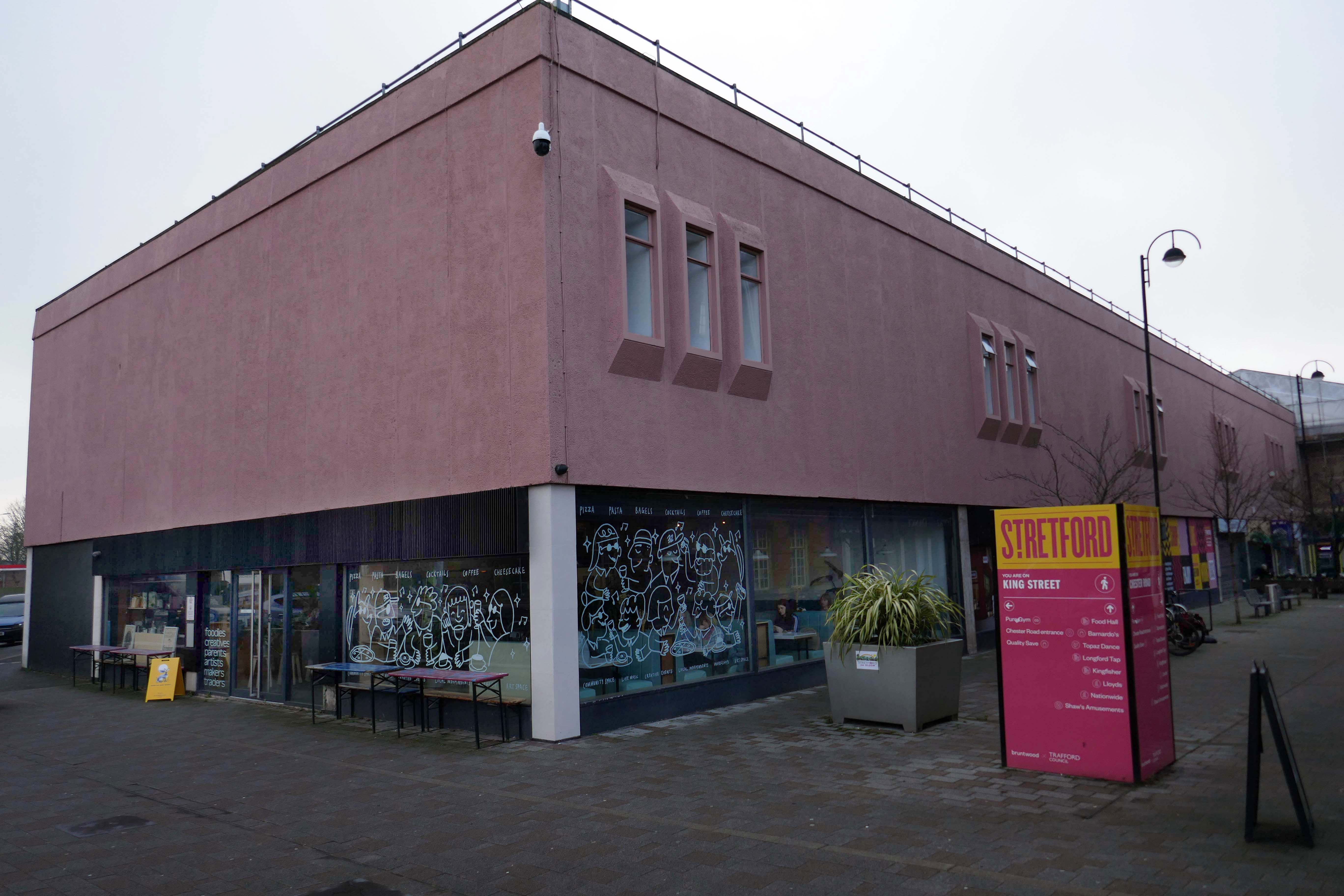
The masterplan proposes to reconnect the town centre. To integrate residents, parks, public transport and the canal with the existing shopping centre for a safer, cleaner and greener Stretford. A series of smaller projects will put this into action. Re-invigorating the 1969 shopping centre and high street, greening the centre, opening up routes along the canal and delivering up to 800 new homes.

FCB Studios

Stretford House Chapel Ln Stretford Manchester M32 9AZ
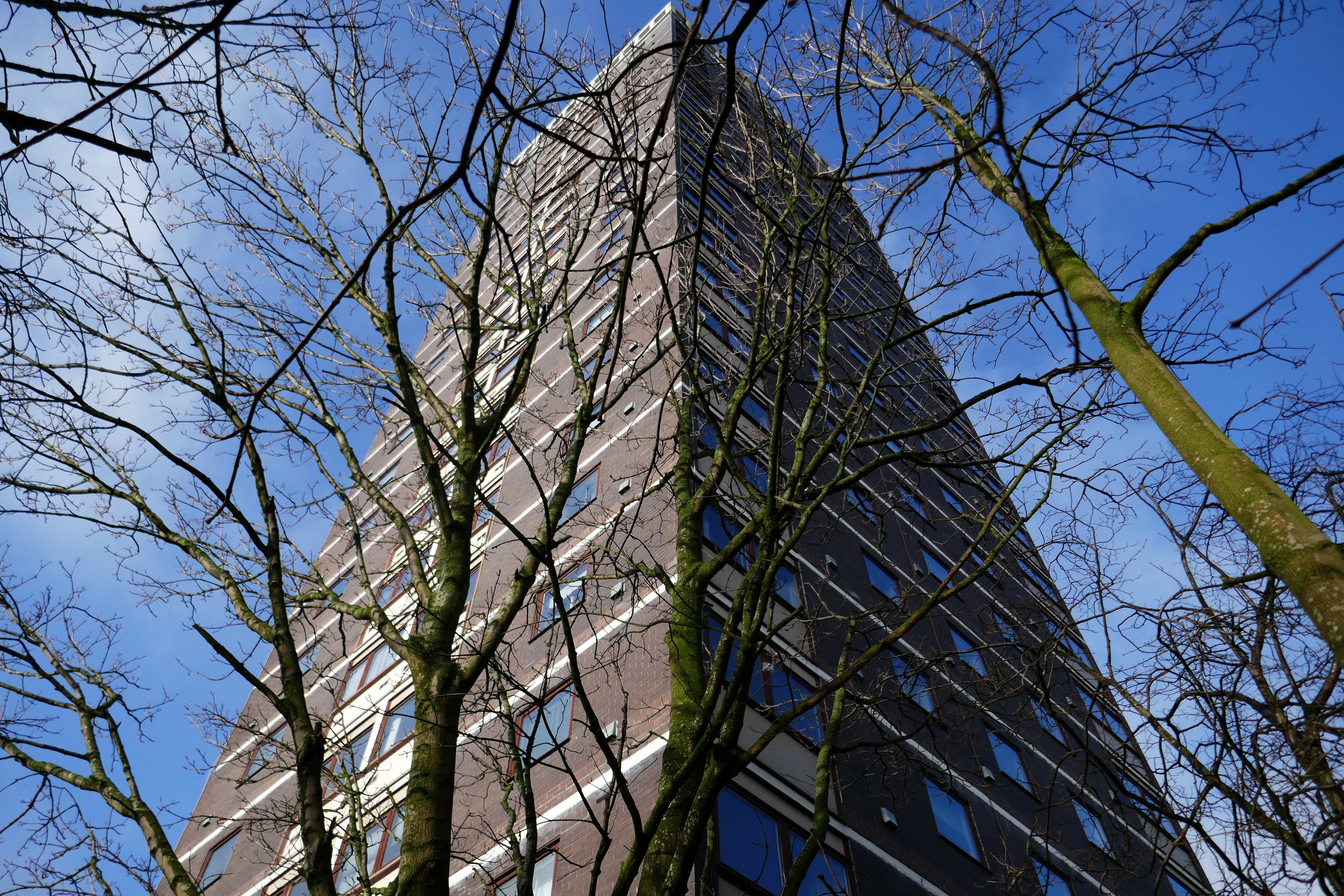
Completed in 1968 at twenty three floors, Stretford House on Chester Road was for many years one of Manchester’s tallest residential buildings. The architects Cruikshank and Seward are also known for some of the city’s ‘s best twentieth century architecture, including the Renold Building at UMIST.

The Modernist

Back to Stretford tram stop.

Dane Road

Turn left out of the tram stop onto Dane Road

Dalton House Cross Street Sale M33 7AR

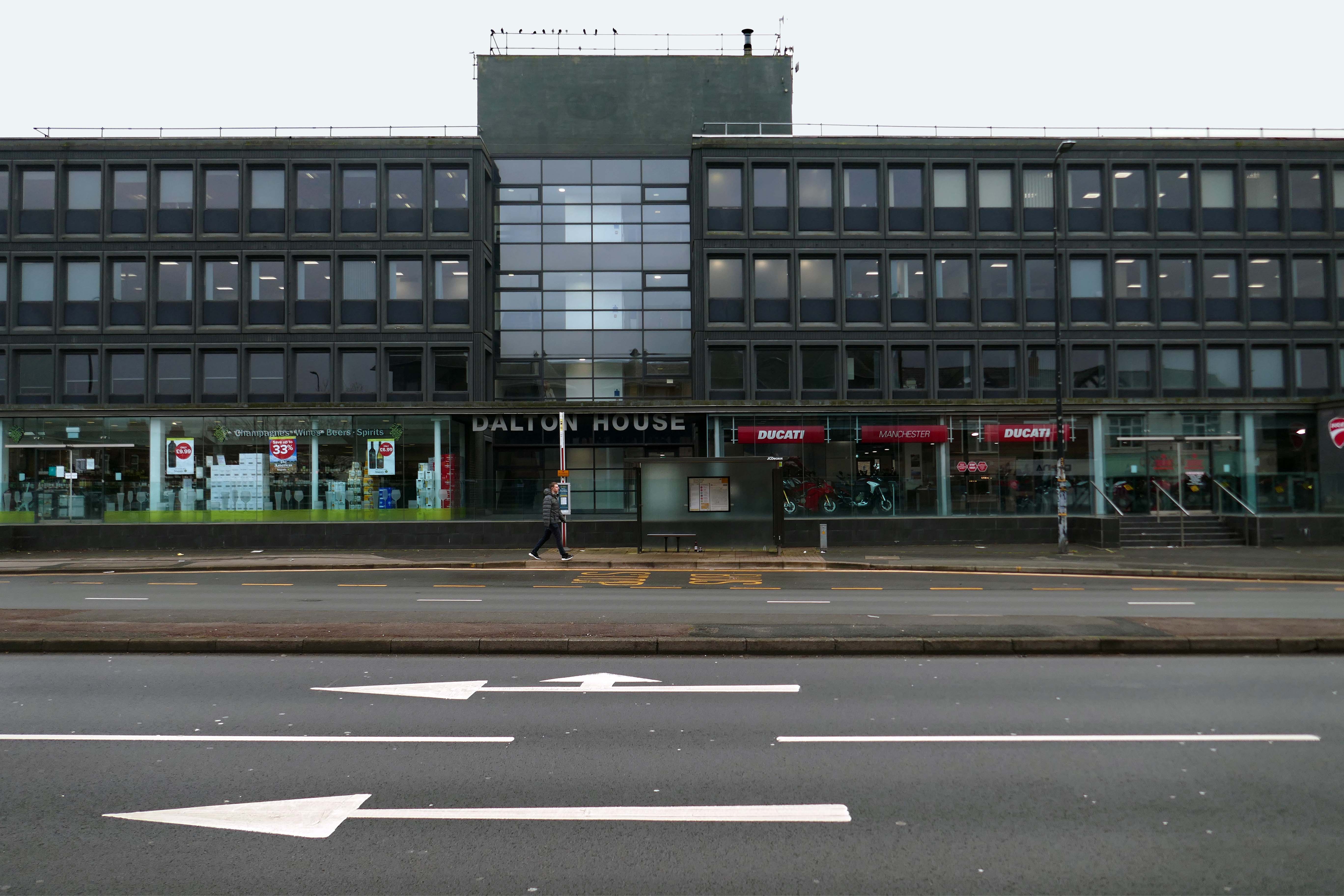
The building has been refurbished both inside and out and offers flexible floor plates, on-site car parking and a dedicated customer service team to ensure the smooth operation of the building. The ground floor of the building is occupied by two prominent retail units occupied by Majestic Wine and Ducati Motorbikes, with office accommodation on the upper 3 floors.
Manchester Offices

Continue walking along Cross Street.

Sale Pyramid/Odeon 22 Washway Road Sale M33 7QY

Designed by the famous British cinema architectural firm, Drury & Gomersall, the Pyramid Theatre is a classic example of an Egyptian-style cinema in Britain and had a 1,940 seating capacity.
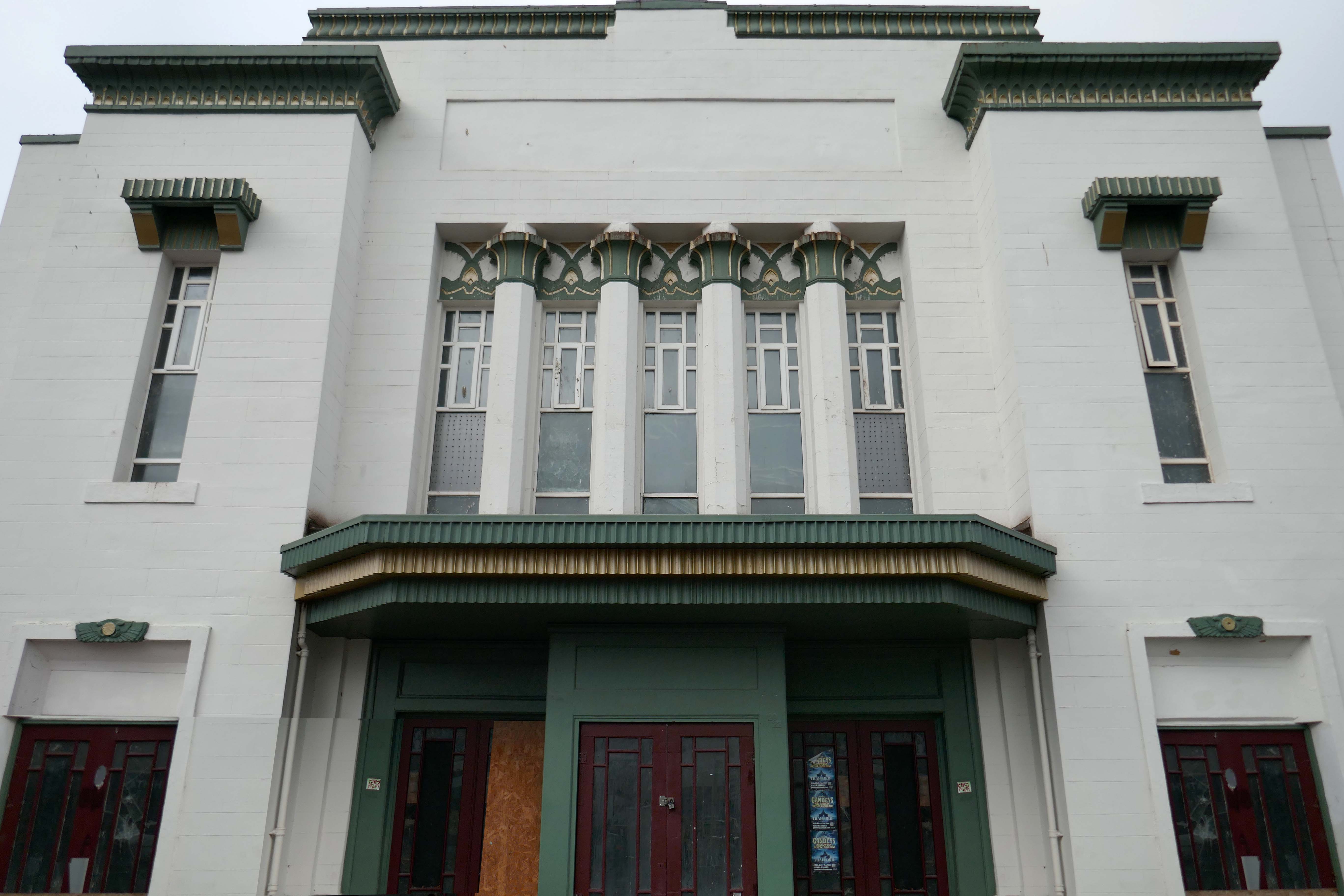
Modern Mooch

The Pyramid Theatre was designated a Grade II Listed building in November 1987.

The circumstances in which the Pyramid at Sale in Cheshire was built were far from simple. The scheme was instigated by local entrepreneur John Buckley, who, having spent £5,000 on the site and commissioned a striking Egyptian‑influenced design from Drury and Gomersall, was not going to be put off from erecting the building by such a minor detail as the refusal of a licence. The refusal was brought about by protests from local churches, the police and rival cinema owners.  The building was ready to open by the start of 1934, but still the local authorities refused to grant Buckley a licence to open his Egyptian dream palace. The disgruntled showman responded by organising a massive publicity campaign and a petition, which eventually garnered 18,853 signatures. This stratagem finally forced the hand of the urban district council, who claimed that they had refused the licence because they had no evidence that another cinema was needed. Now they had no such doubts, the licence was granted.

Architects of Greater Manchester

Further along Washway Road on the corner of Oaklands Drive.

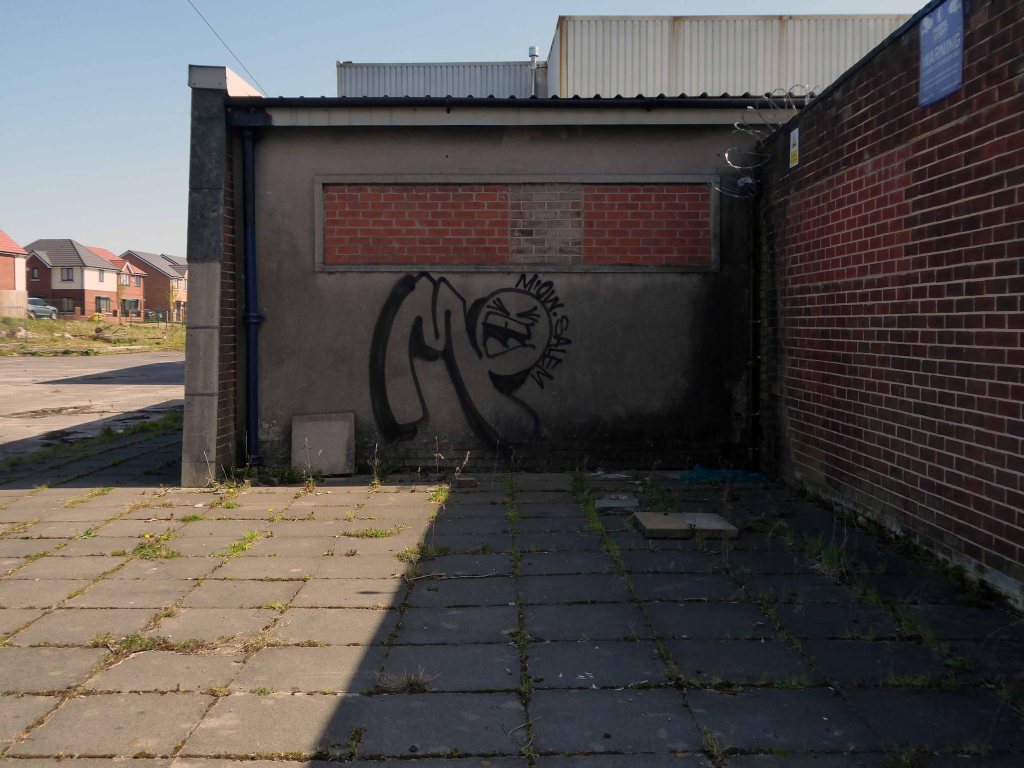
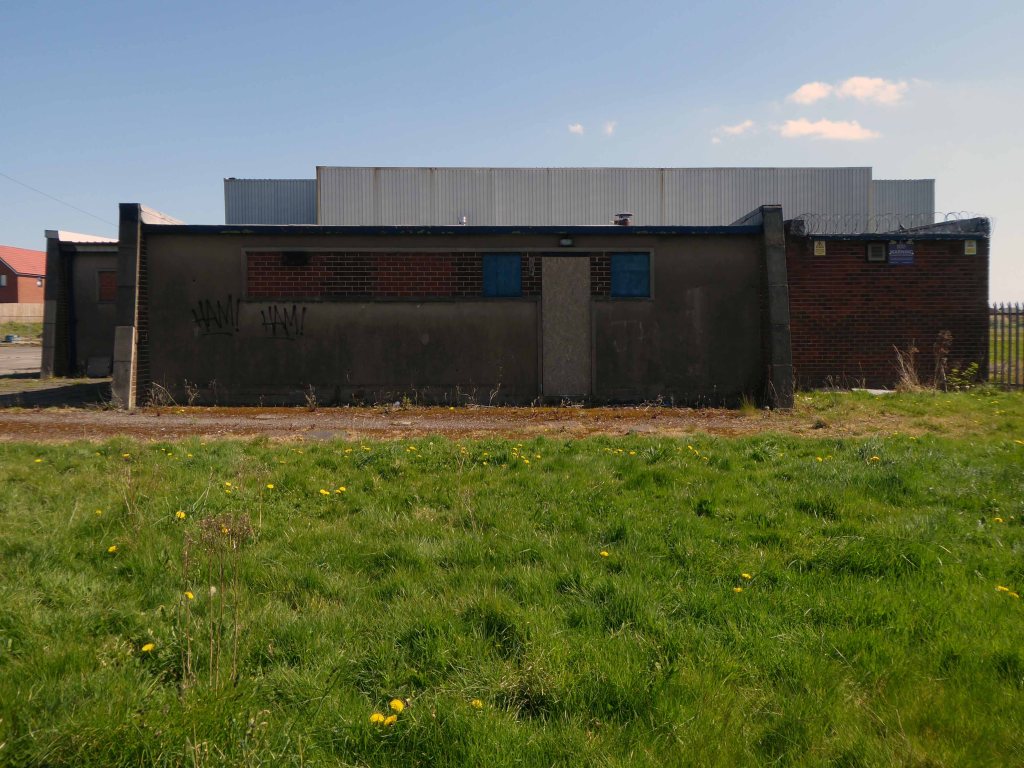
BT Open Reach Telephone Exchange.

The extension of 1966 is by Turner & Benson of Stockport overseen by the Ministry of Works NW.
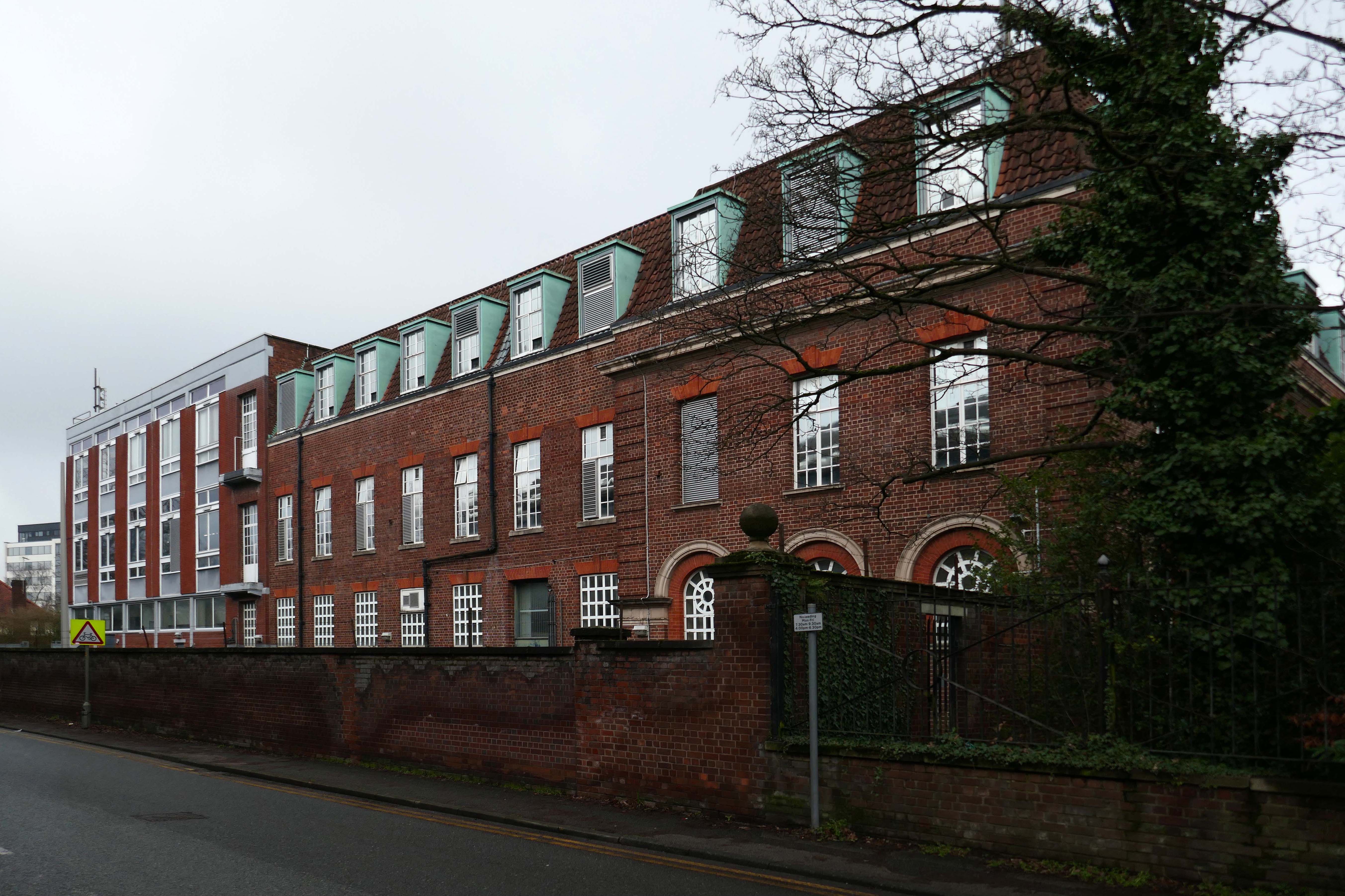
Further along Washway Road.

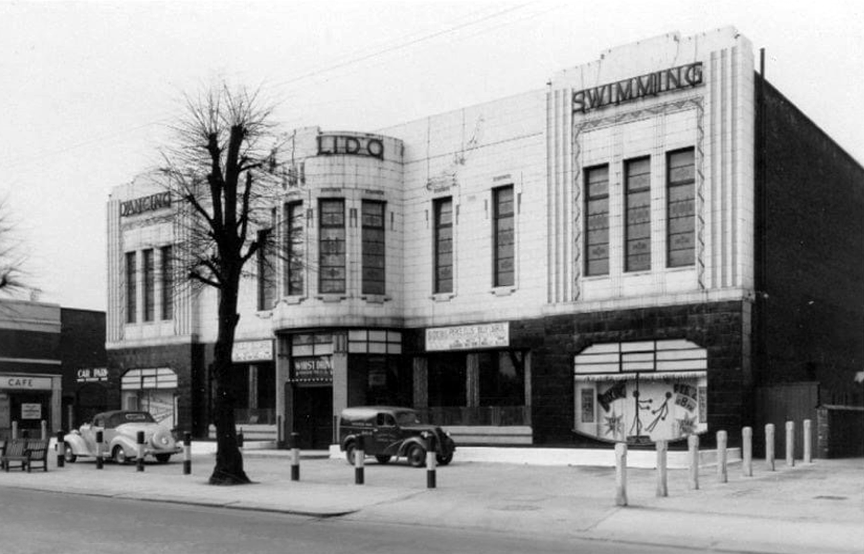
Sale Lido 1934-35 Architect: Arthur Edward Lancashire
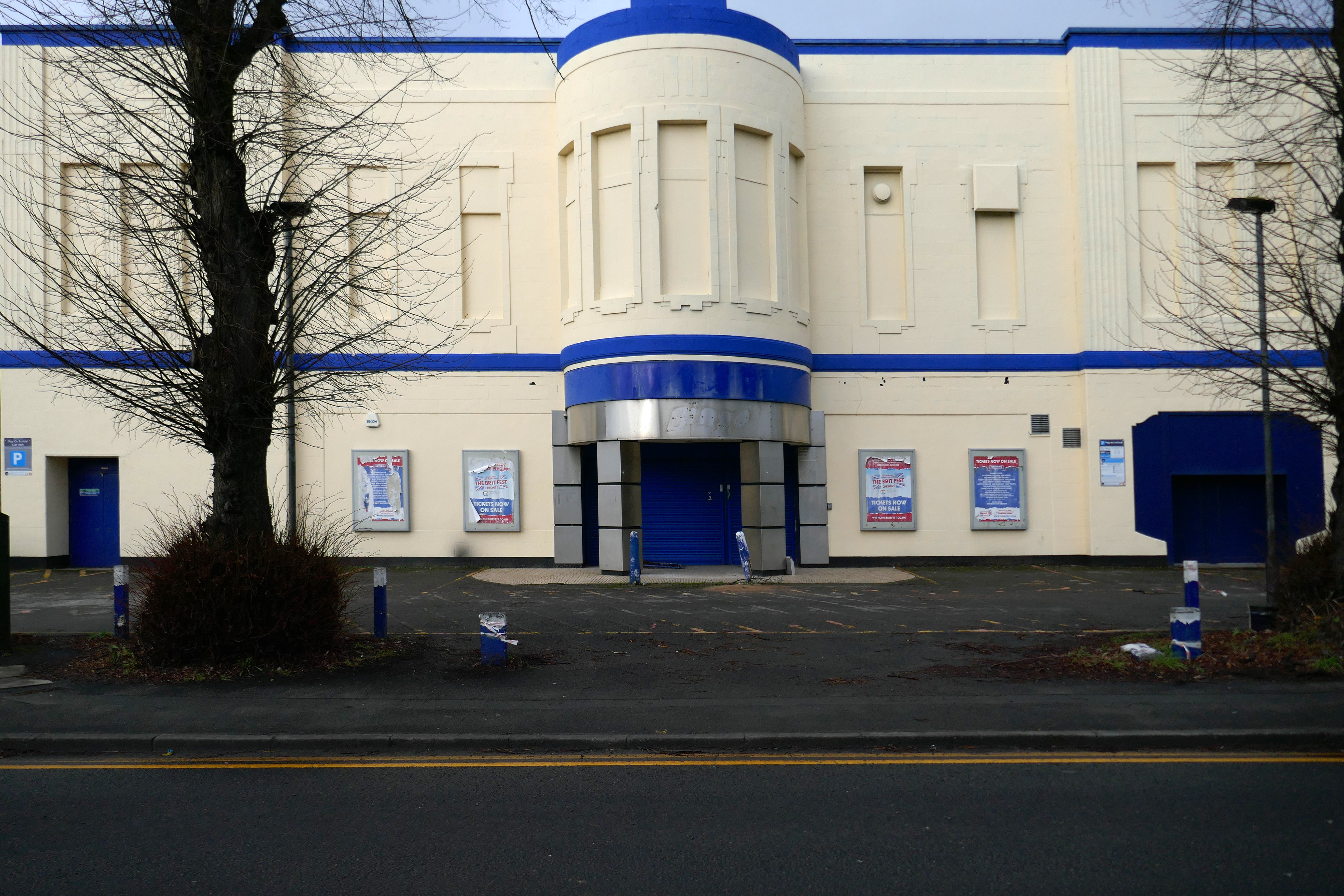
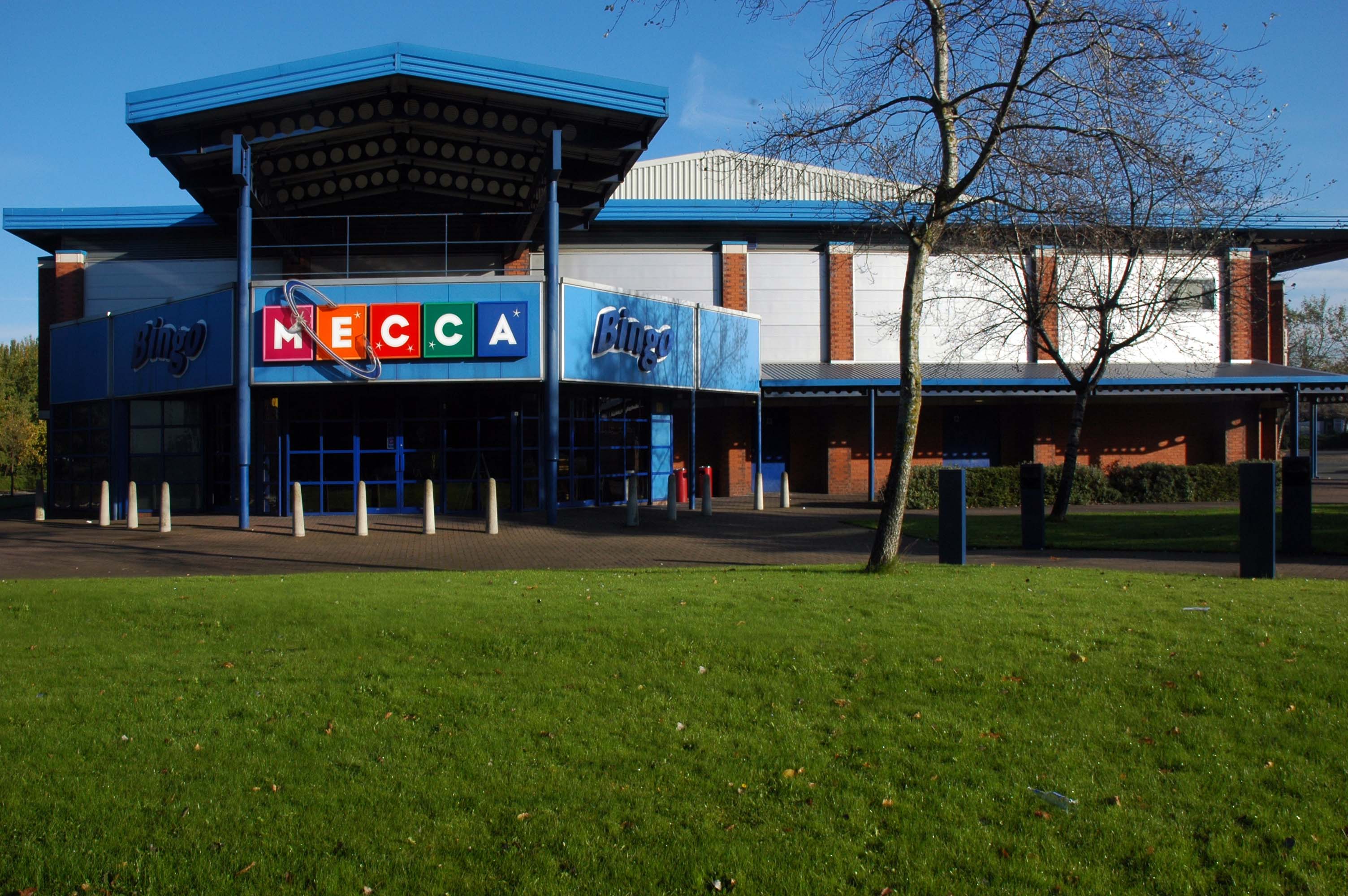
Opened on 10 July 1935, the Lido complex included a covered swimming pool, 130 feet long; domed solarium with facilities for natural and artificial sunbathing; café/restaurant; and lock-up shops. The pool could be covered over to form a dance floor during the winter months. The front elevation was clad in cream and green faience. In the sixties The Lido was taken over by Mecca and re-named the Locarno Ballroom, later Mecca Bingo since closed.

Architects of Greater Manchester

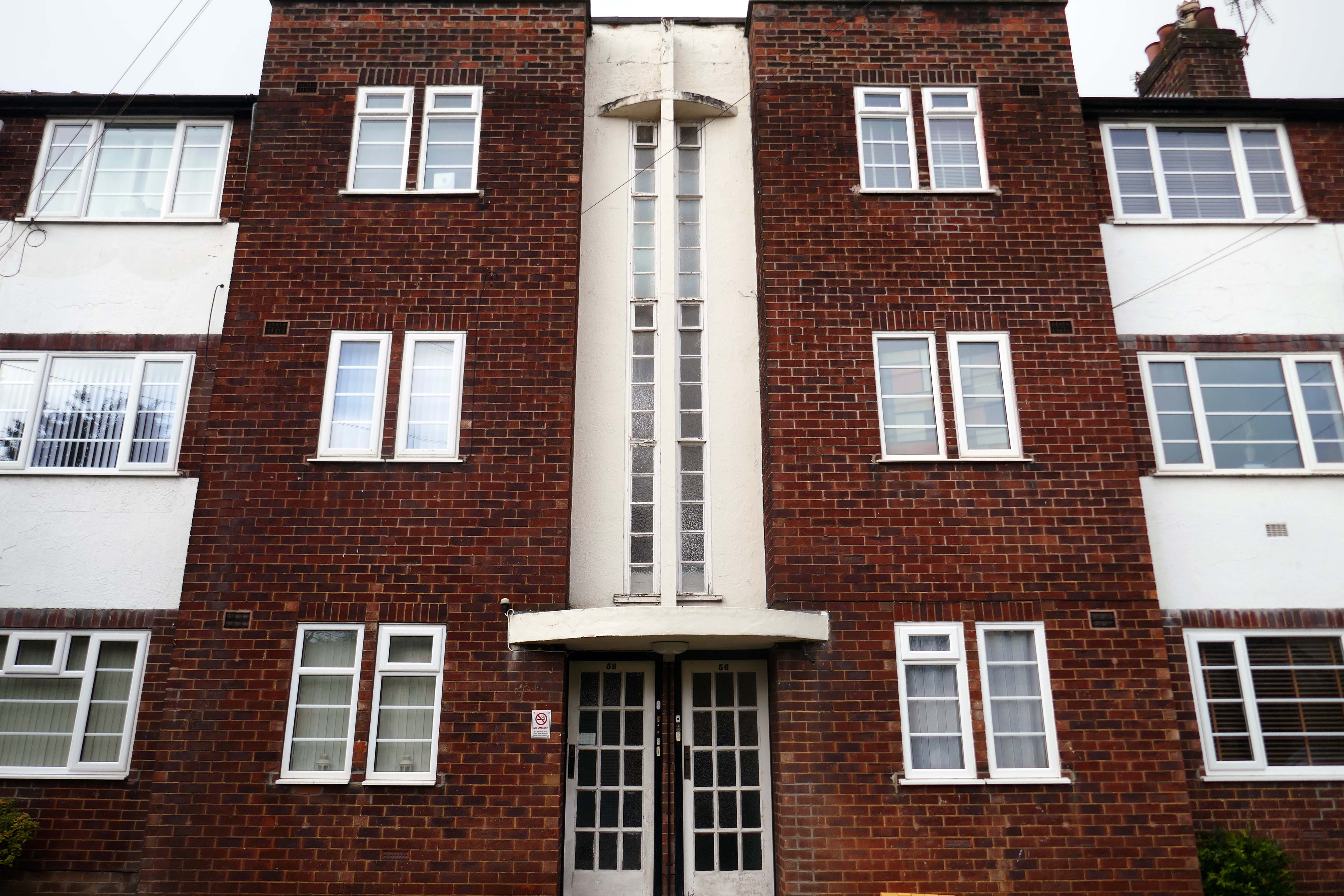
Back track to Sibson Road – where we find these inter-war homes.
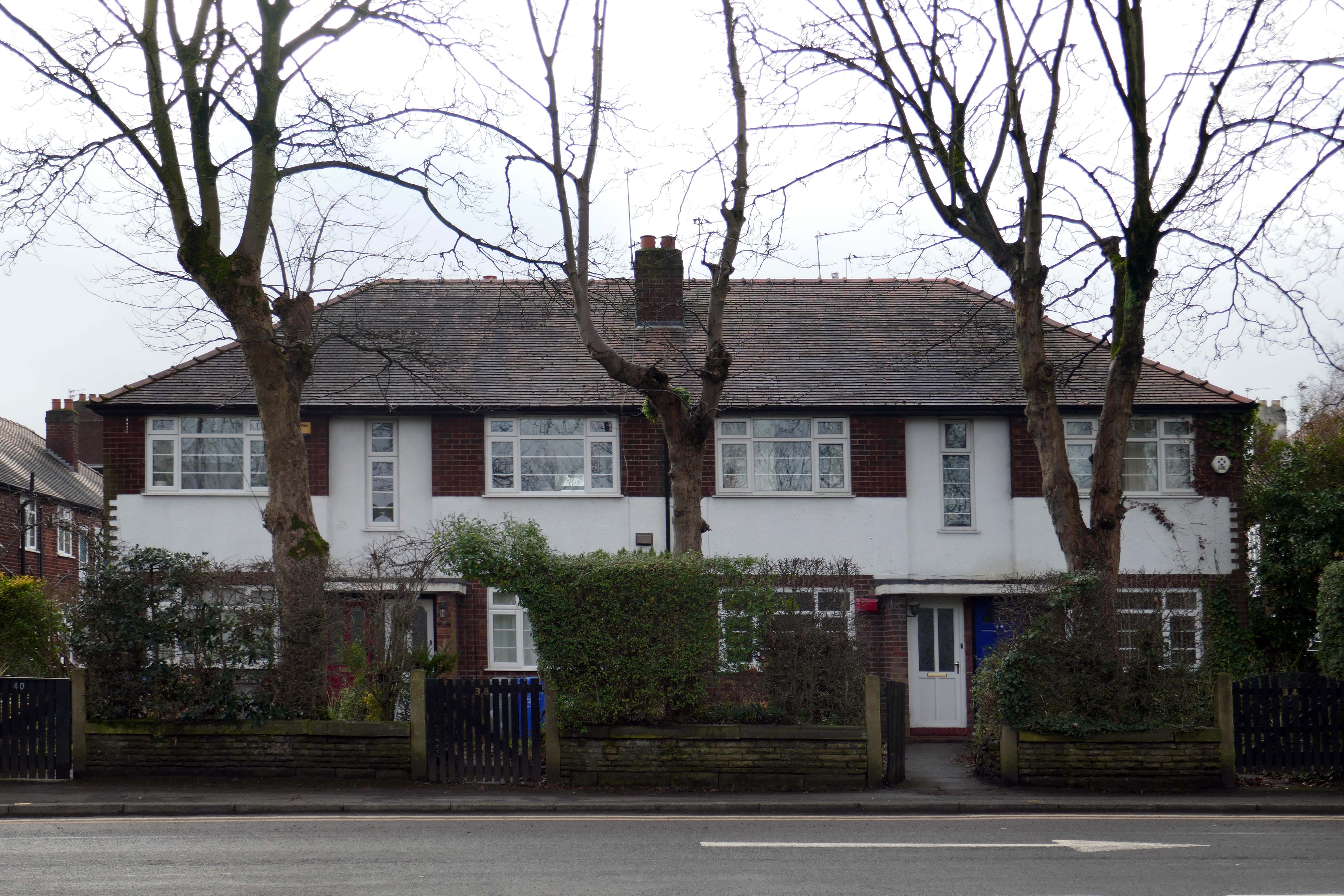
Turn right into Springfield Road where there are further inter-war homes.
Back tracking along Springfield Road to the Stanley Square Car Park.
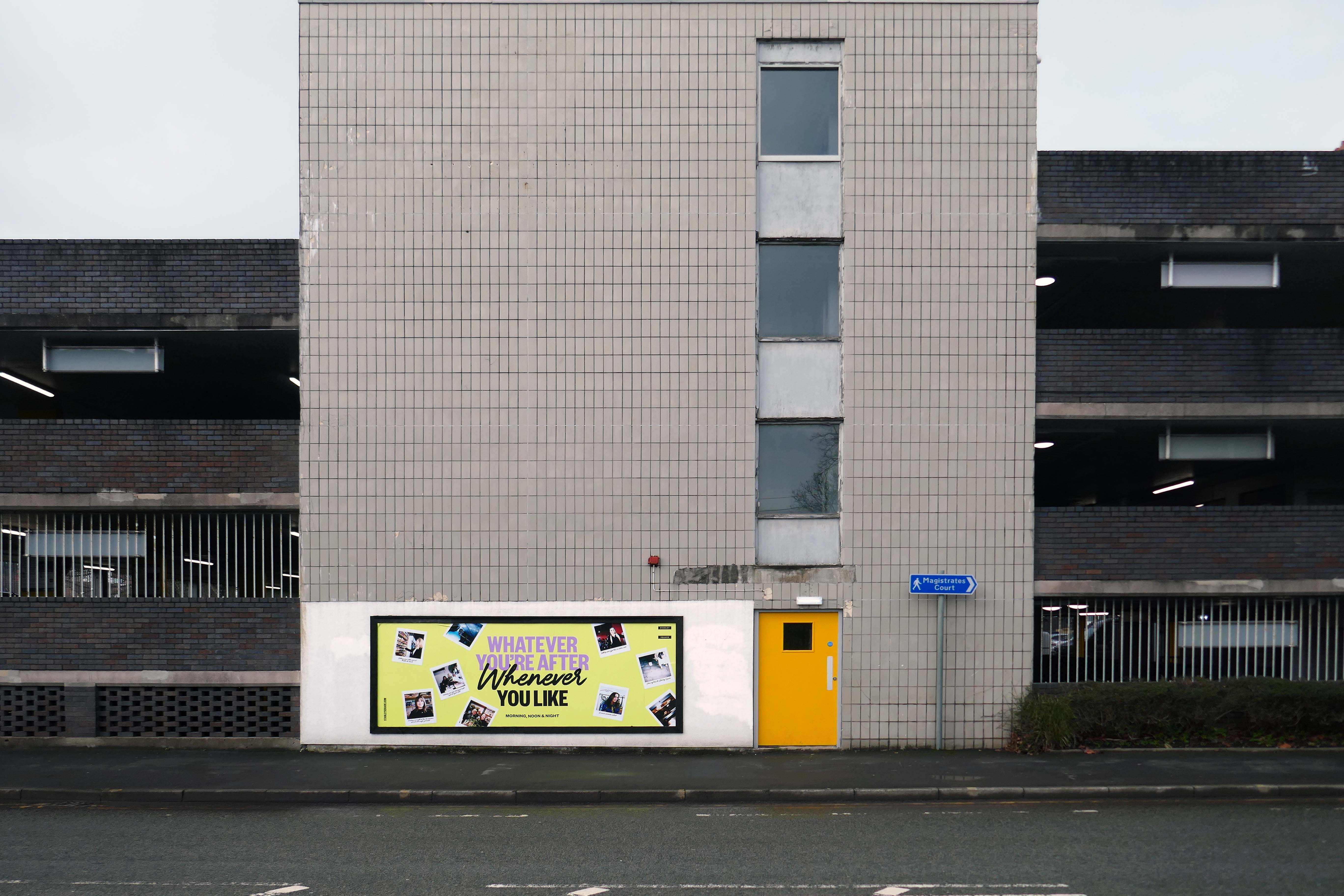
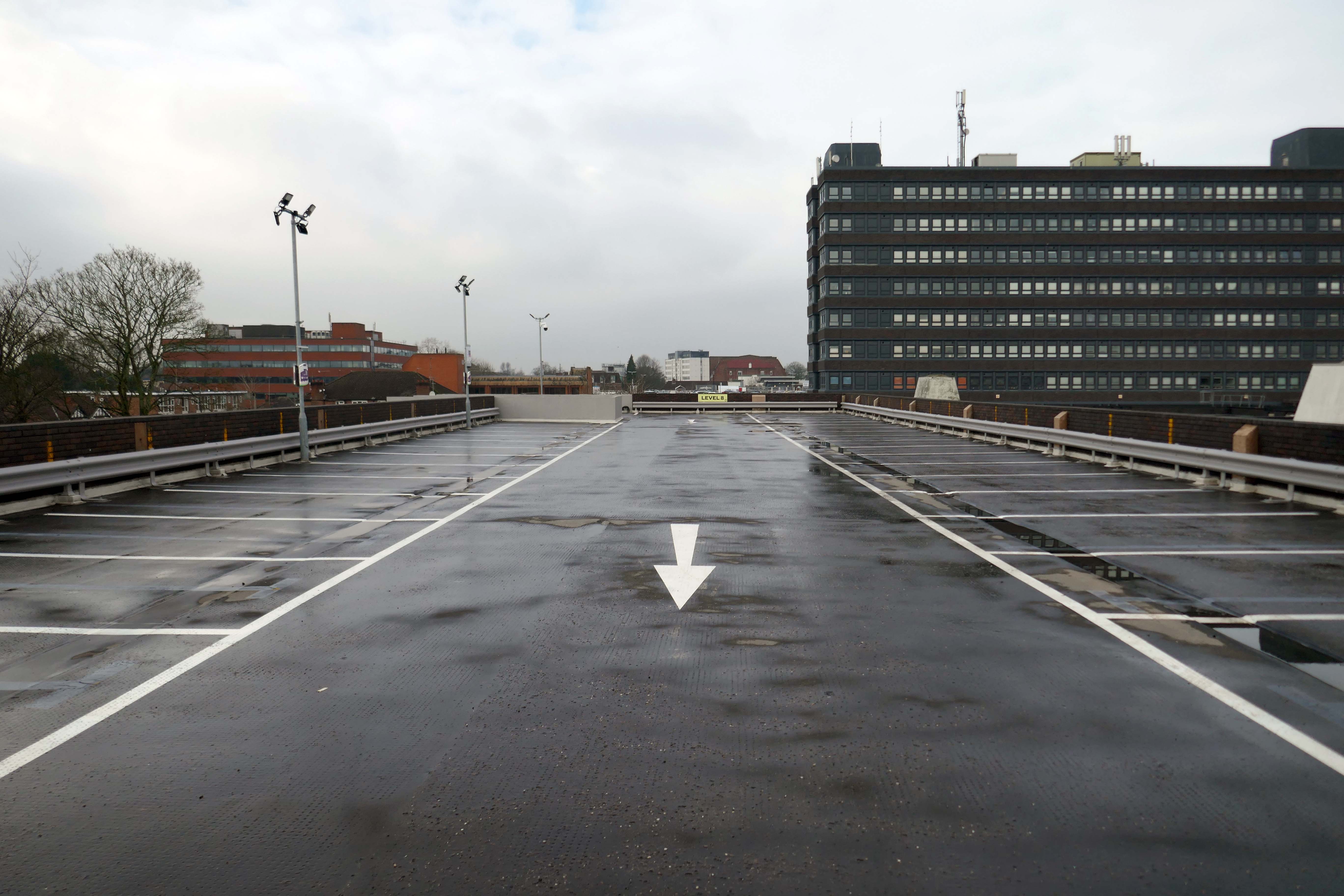
This sits atop and adjacent to the recently refurbished Stanley Square.

A Simpson Haugh design project
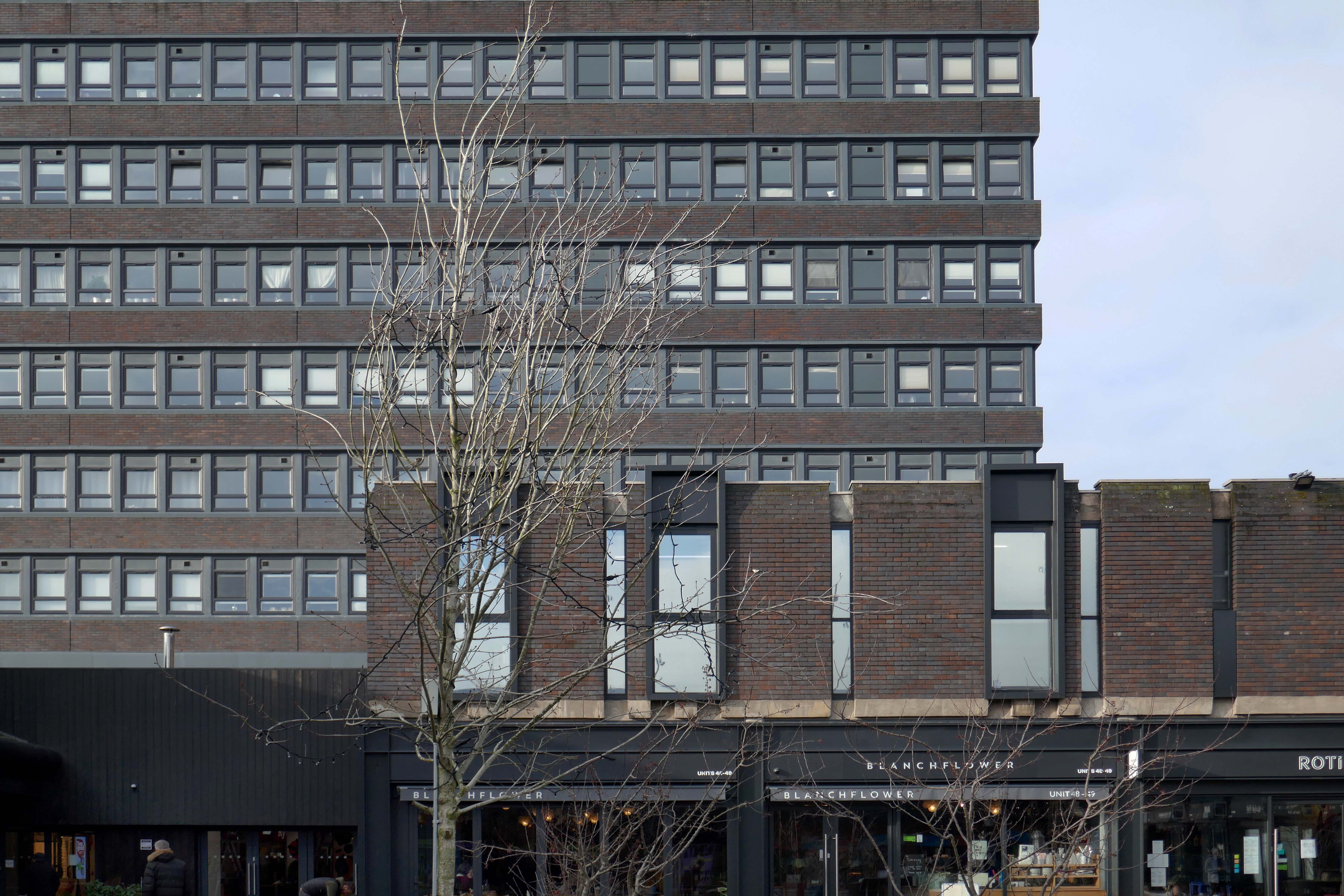
Dine at fan favourites, and remember, good times aren’t just for weekends. Whether you’re after a caffeine fix, bar to prop up or even a pop-up gallery space, we’ll keep you busy any day of the week.

And if shopping’s your bag, we have it all. You’ll find household names rubbing shoulders with indie traders, alongside a curated mix of nail bars, barbers, greengrocers and all sorts in between.

Stanley Square is a unique take on the traditional shopping centre. We’re creating an eclectic destination where a-bit-of-anything goes, and the people are pride of place. You’ll come for the culture, and come back for the community vibe.

Walking back toward Sale tram stop.

Sale Town Hall 1913-15 Architect: Charles Thomas Adshead
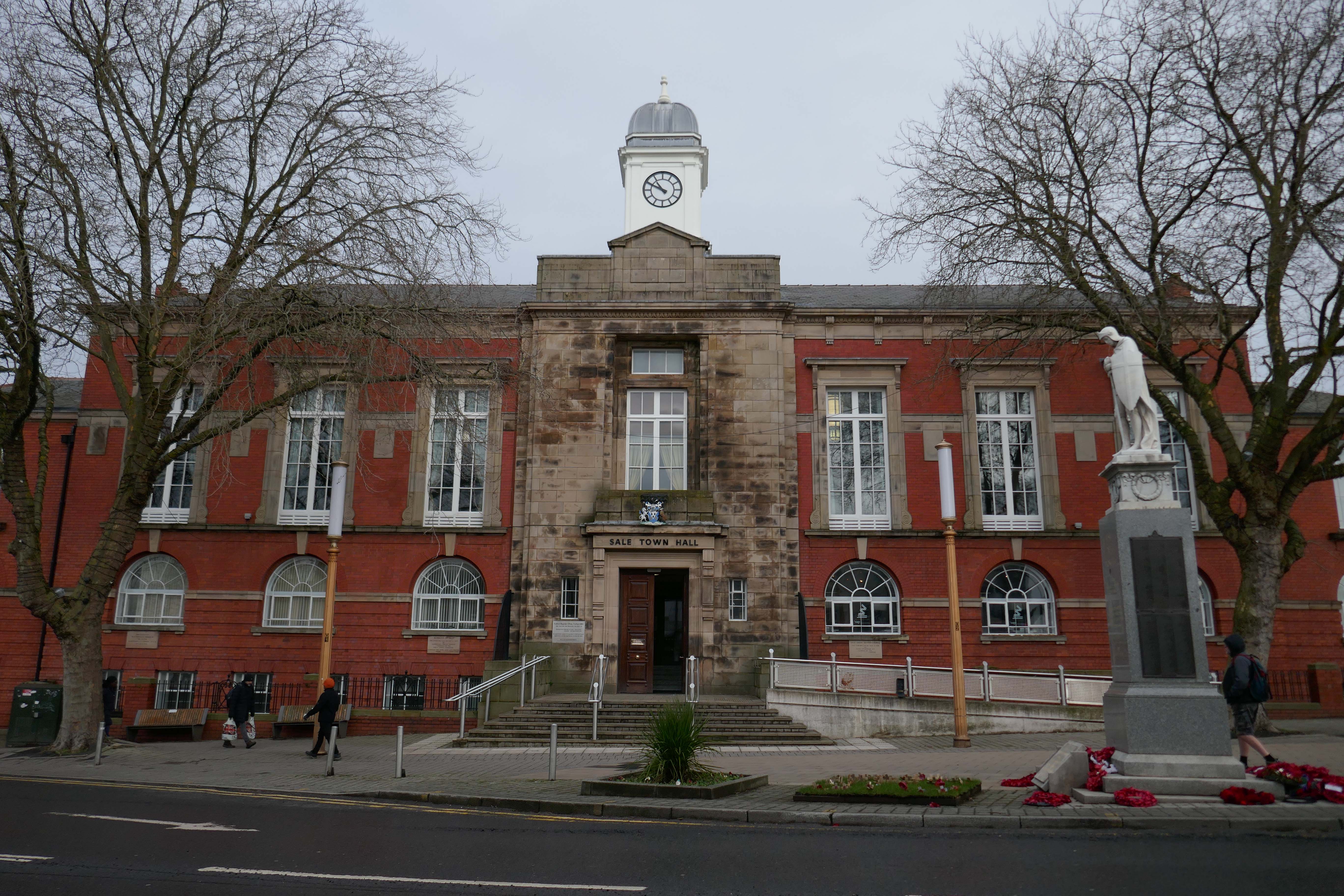
The building was hit by a series of German incendiary bombs on the night of 23 December 1940 during the Manchester Blitz, a part of the Second World War: there were no injuries but the building was badly damaged. A programme of restoration works, which included the installation of a new clock tower with cupola, was completed in 1952. 

Brooklands

Turn left onto Marland Road, then left onto Washway Road.

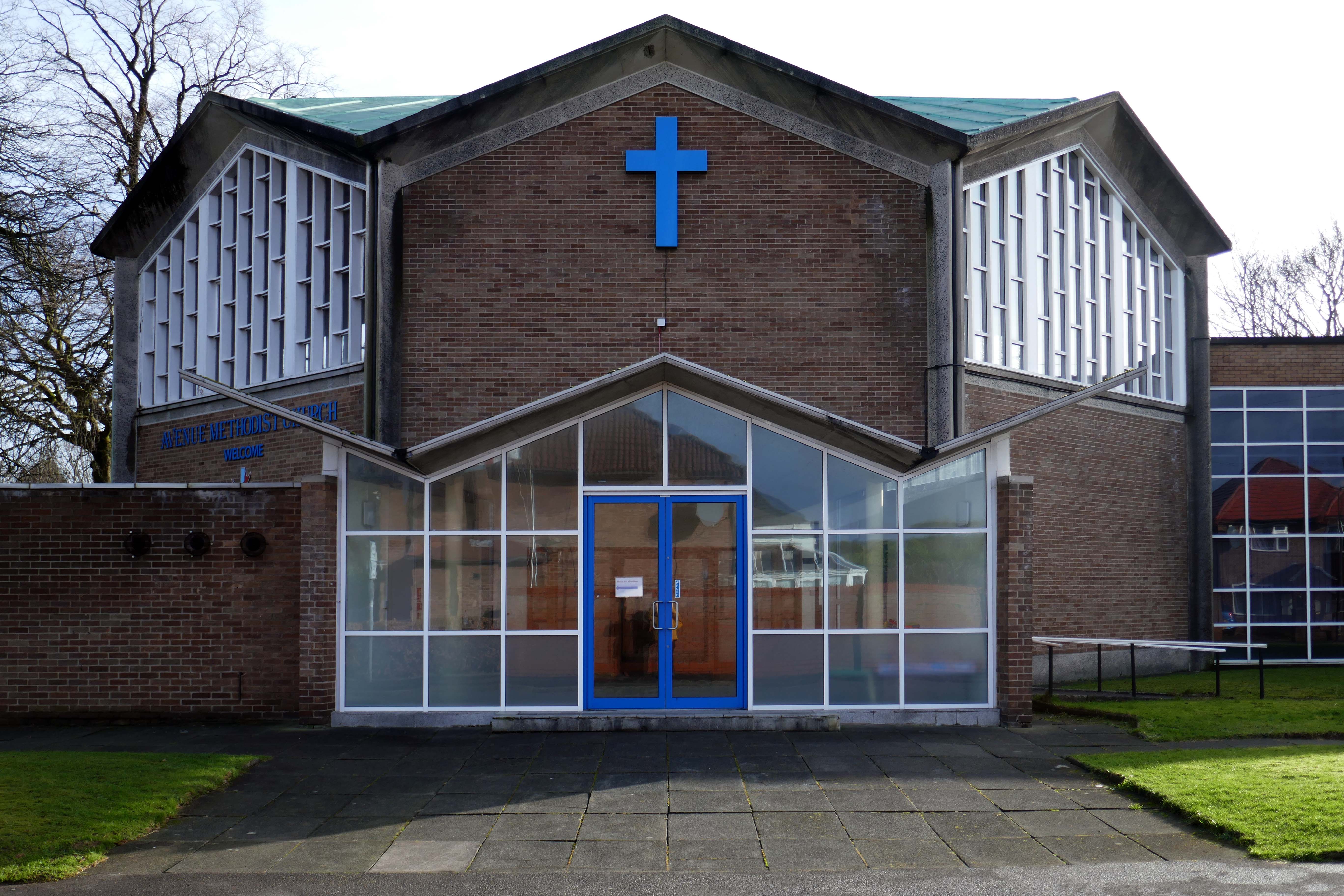
Turning right into The Avenue, where we find at Wincham Road Sale M33 4PL

Avenue Methodist Church 1963 Architects: Halliday and Agate.
Return to and continue along Washway Road turning left into Park Road.

Bridgewater House 90 Park Rd Timperley Altrincham WA14 5BZ
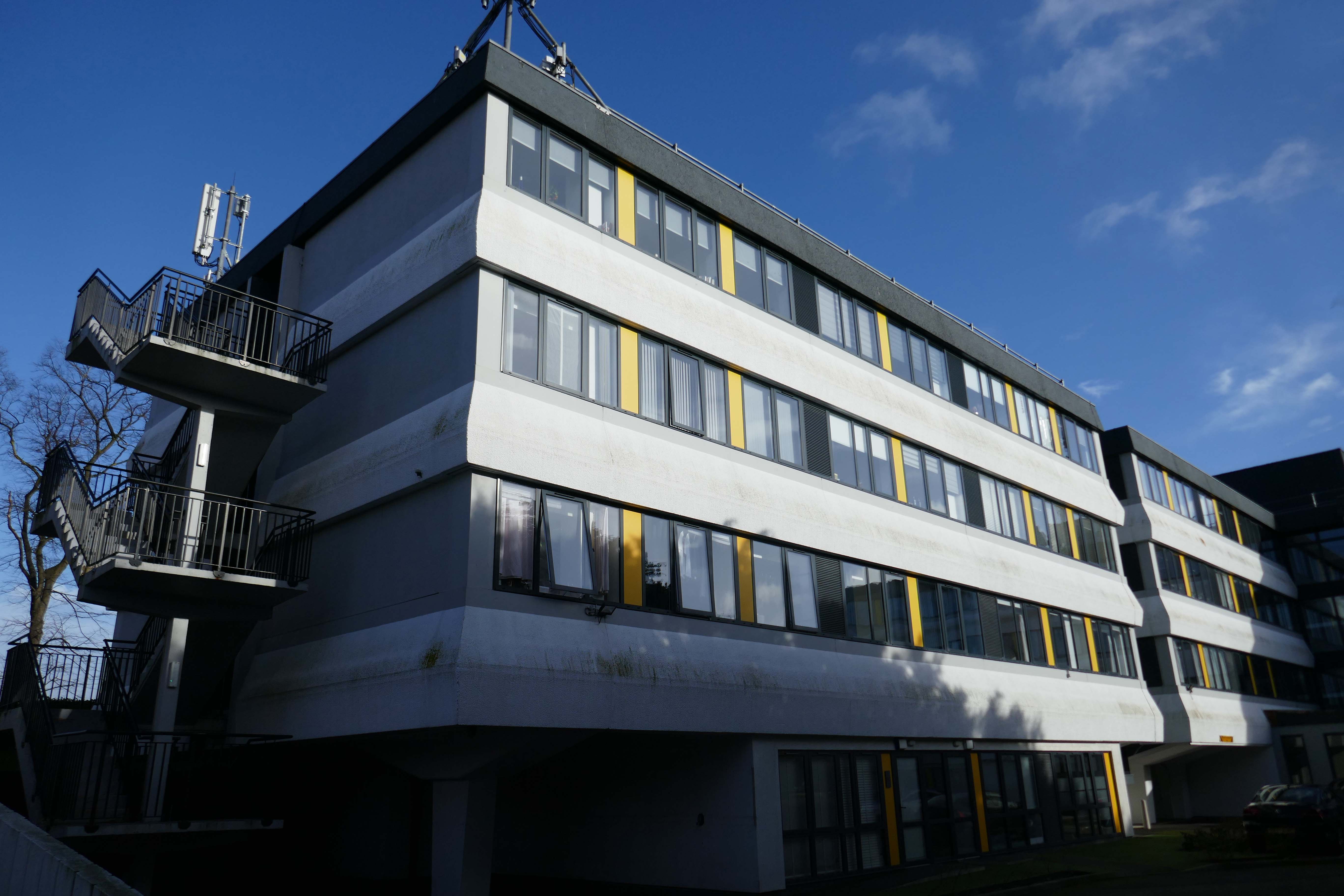
Bridgewater House is an urban village development of 55 luxury apartments in the heart of Timperley.

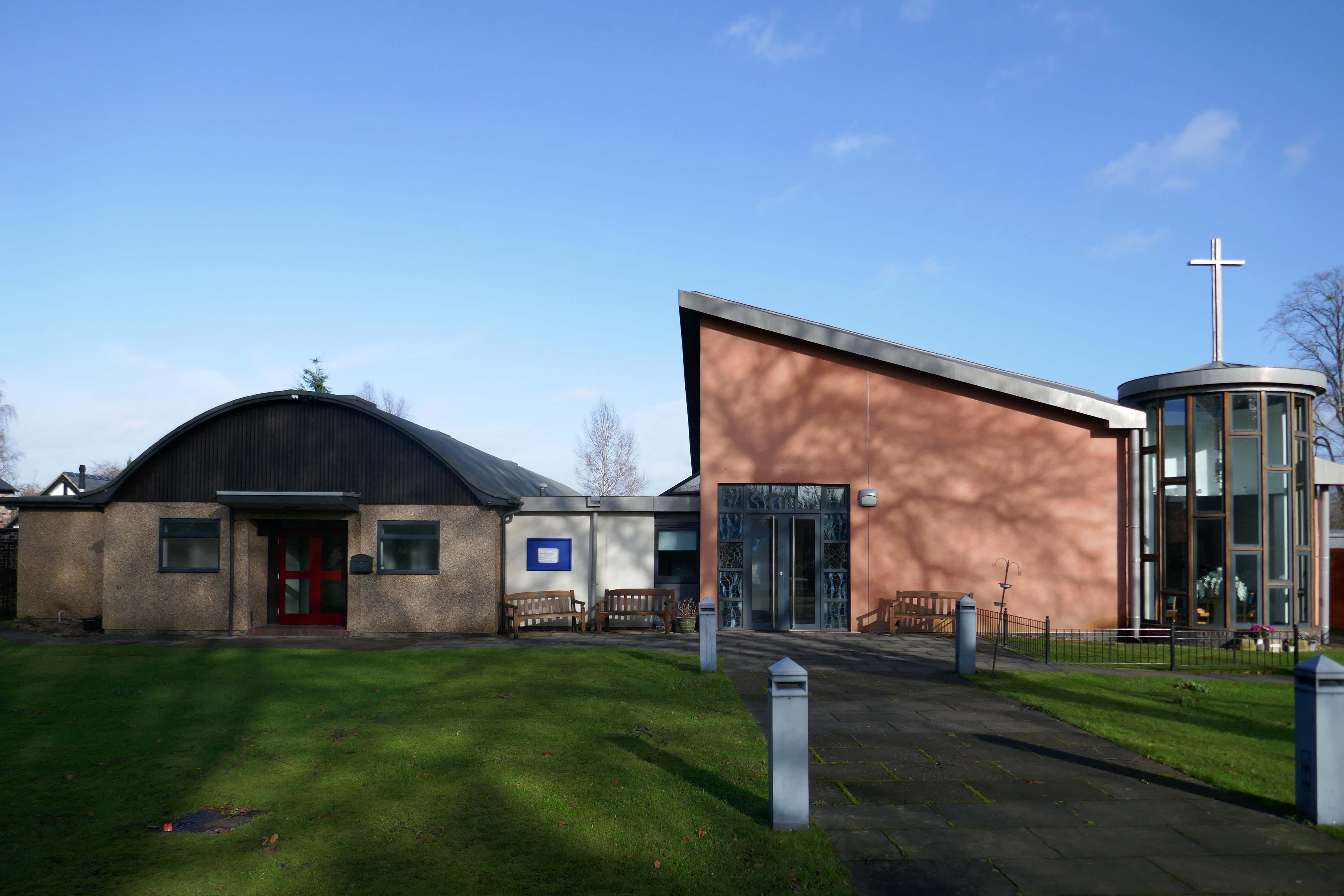
Continuing along Park Road to Holy Cross Church 2001 – 97 Park Rd Timperley Altrincham WA15 6QG

Architects: Nick Rank and Mark Pearce from the architects firm of Buttress Fuller Alsop and Williams 
Reverse along Park Road to Timperley tram stop.

Altrincham

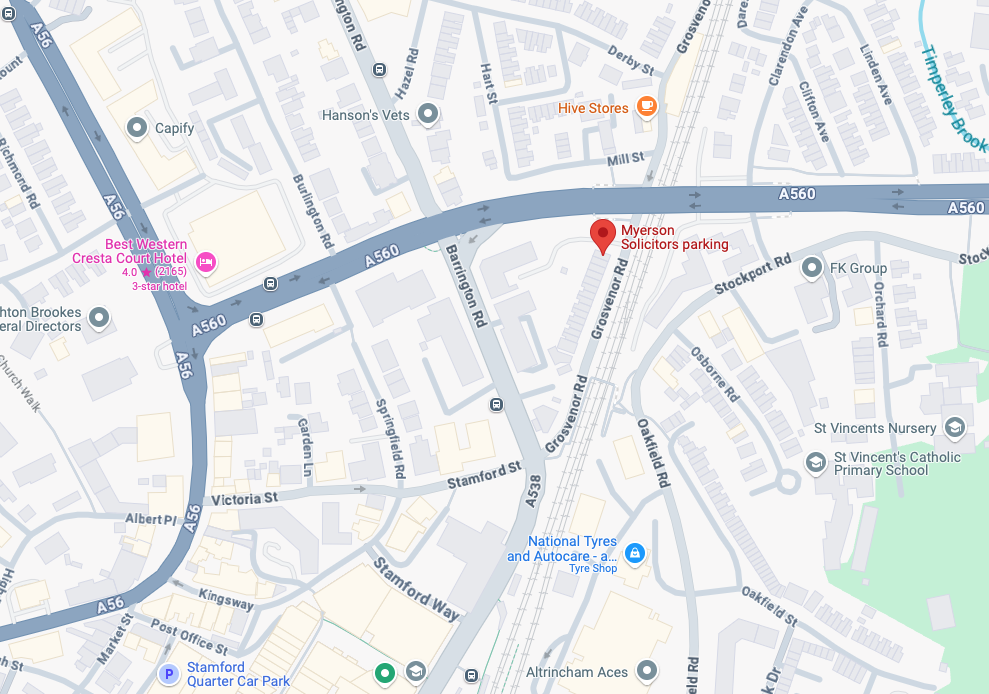
Turn right out of the station and along Barrington Road, turn right into Grosvenor Road.

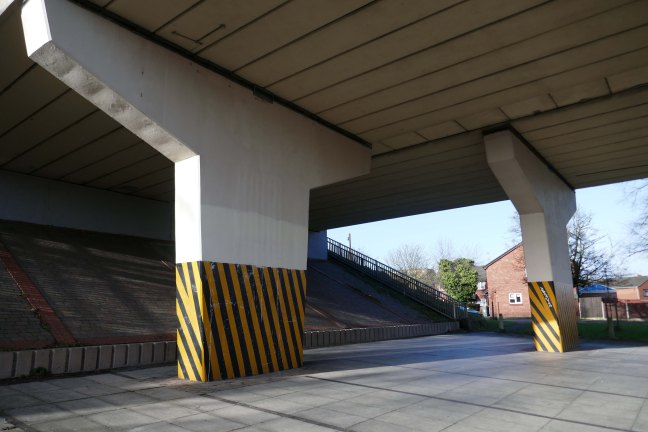
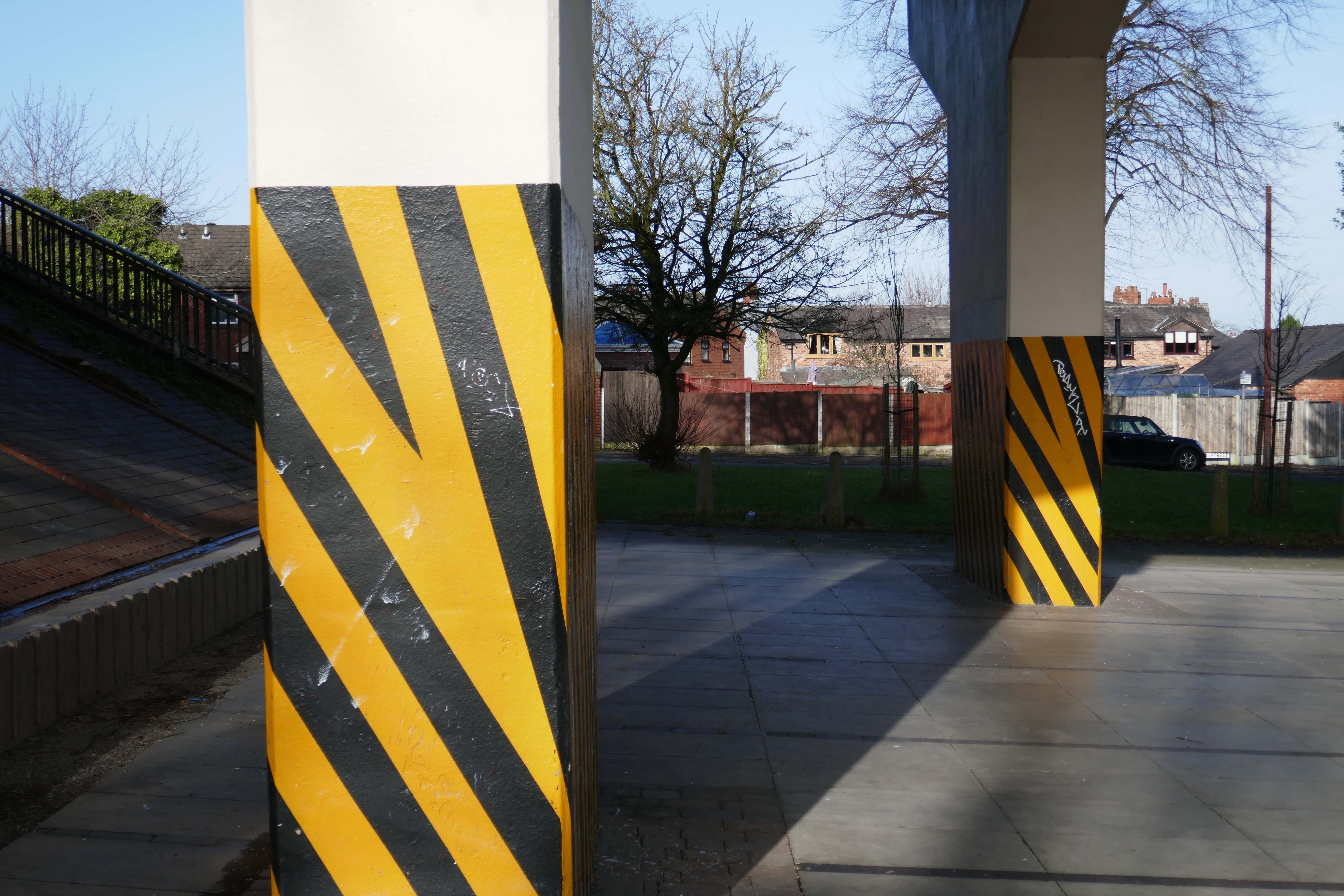
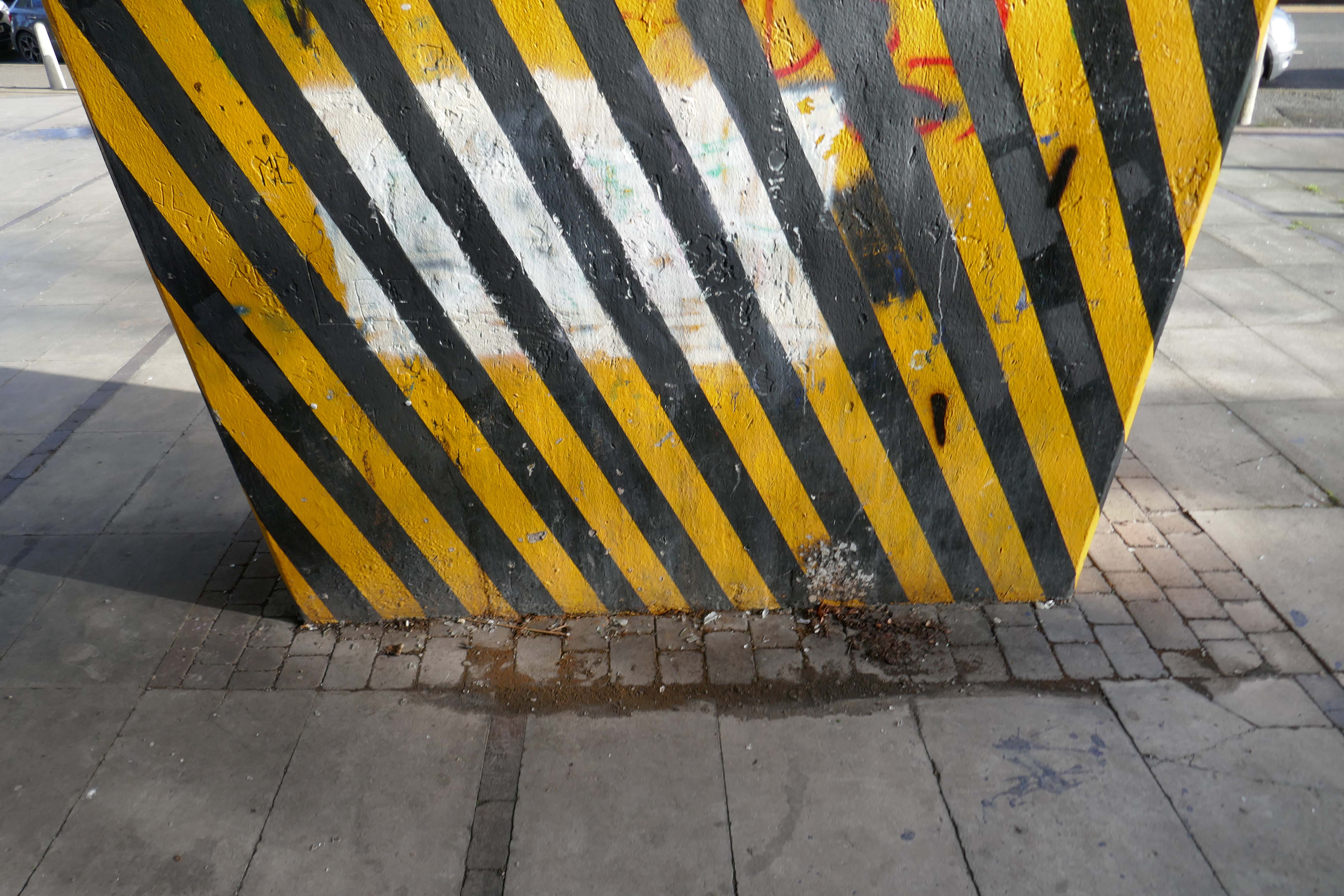
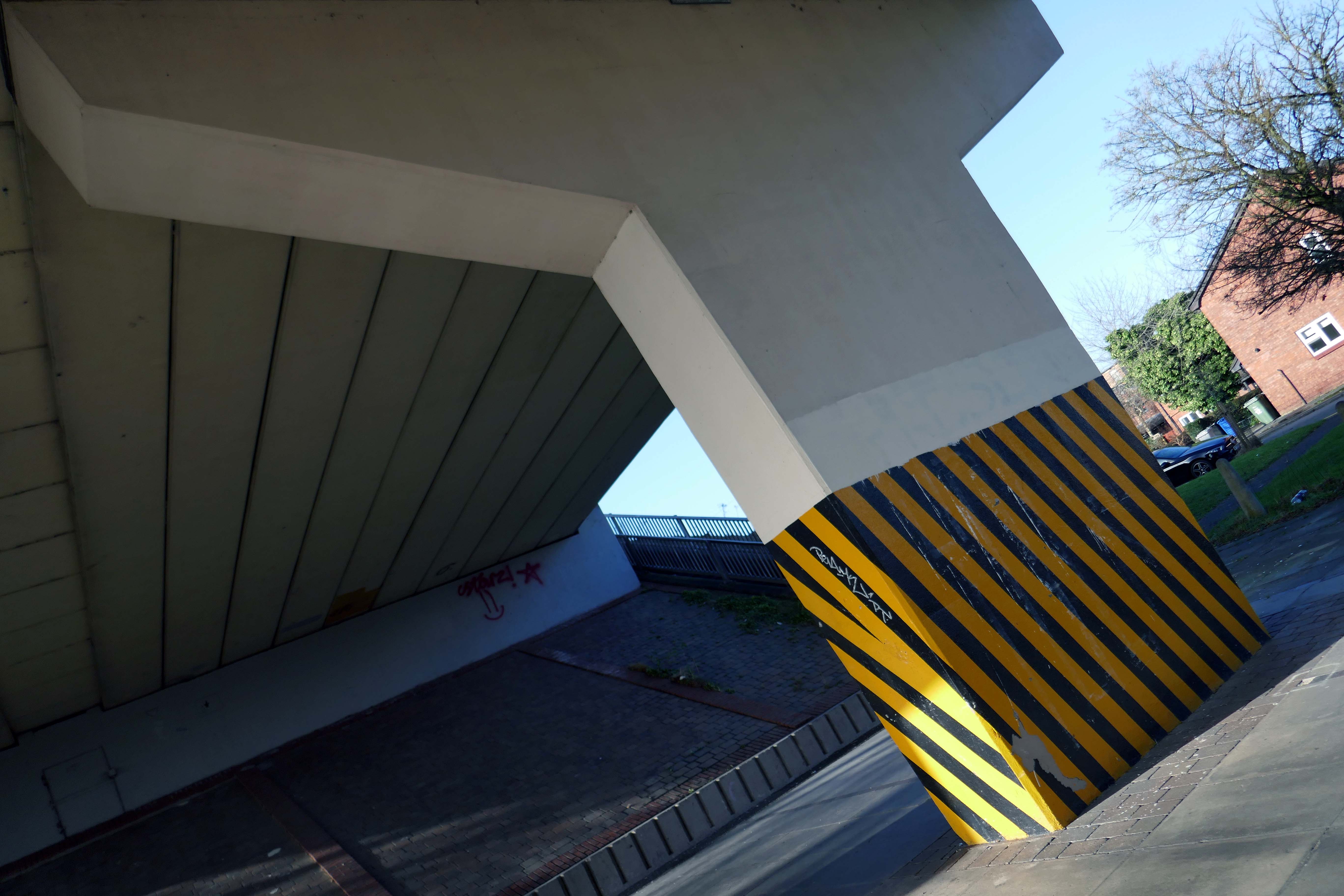
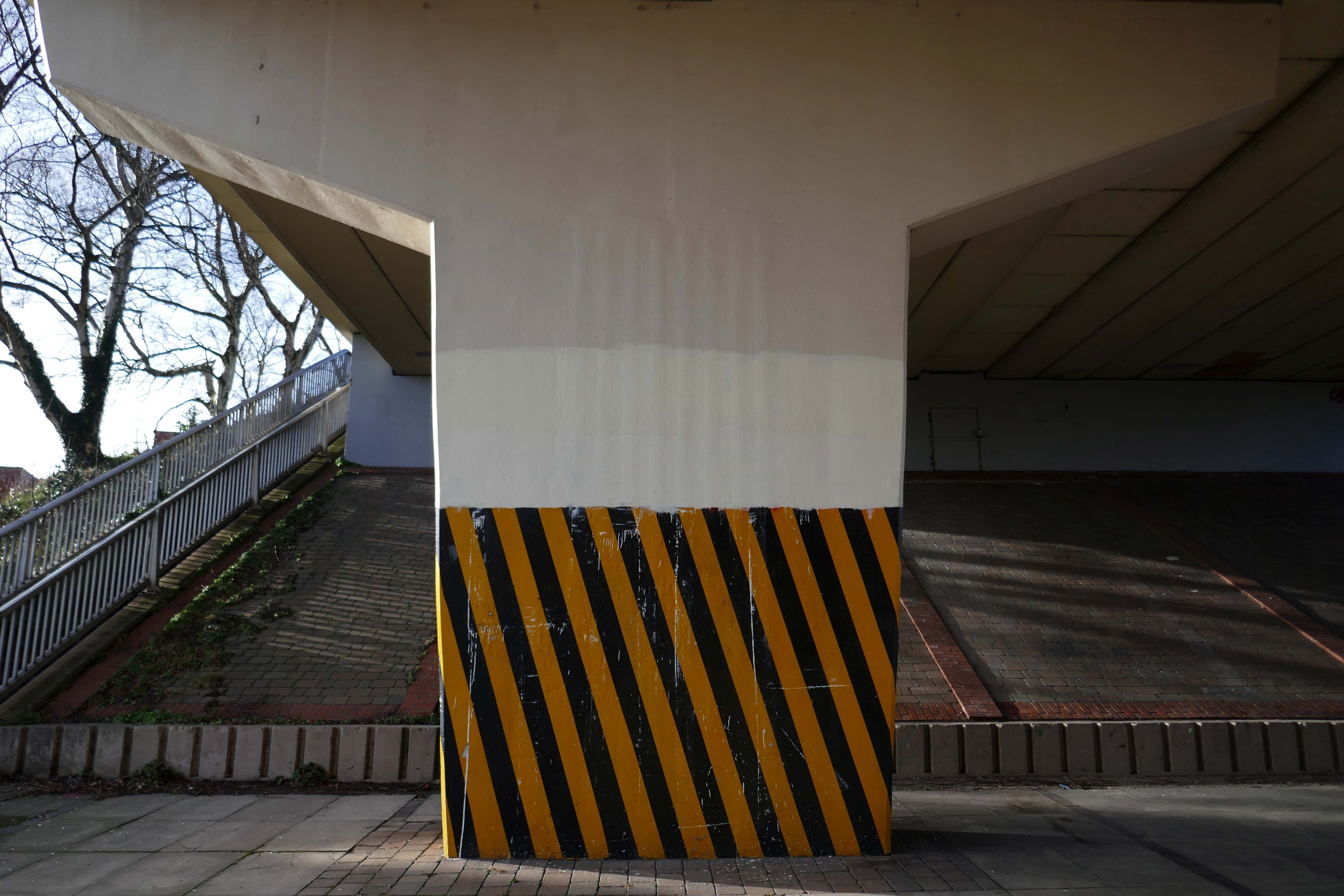
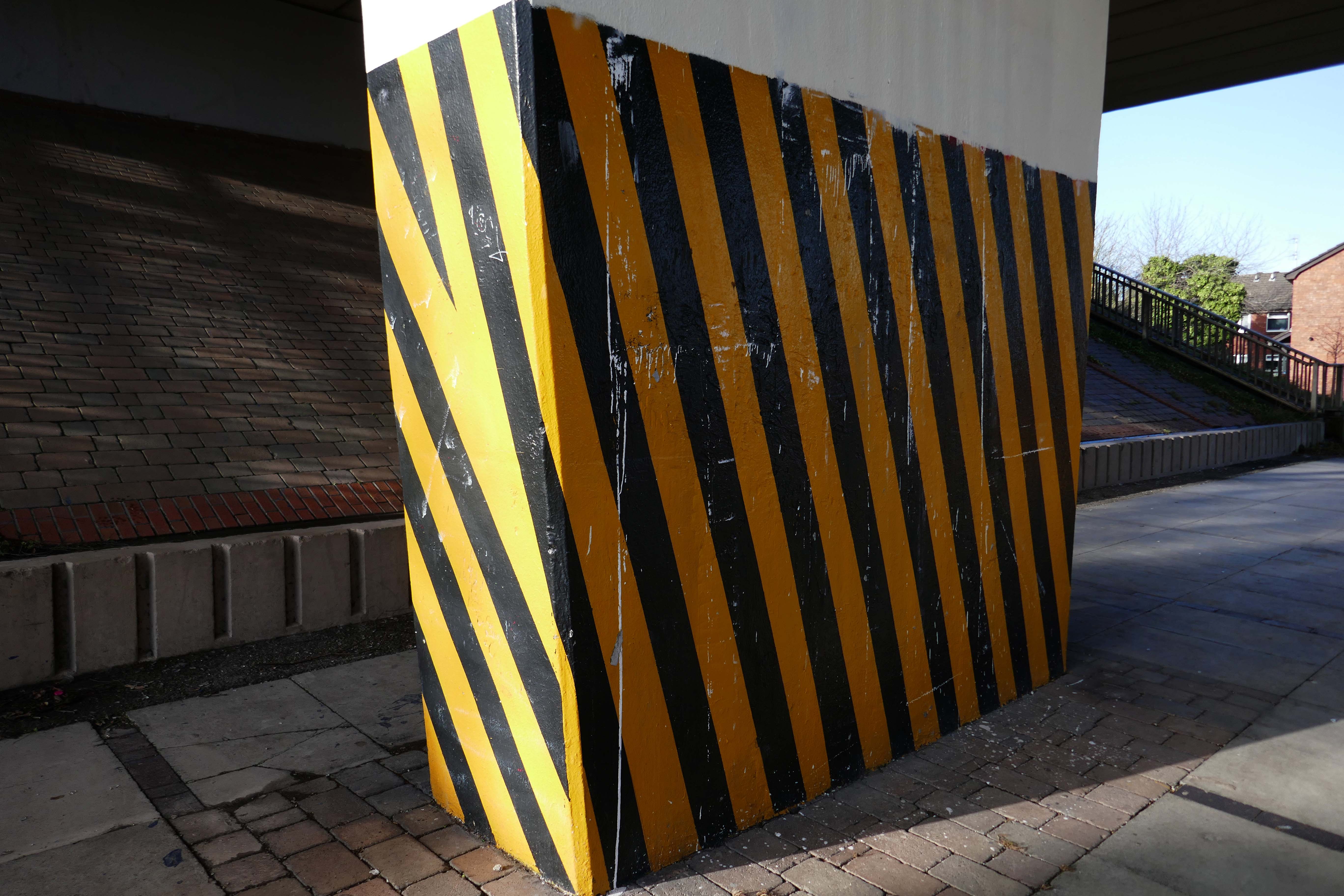
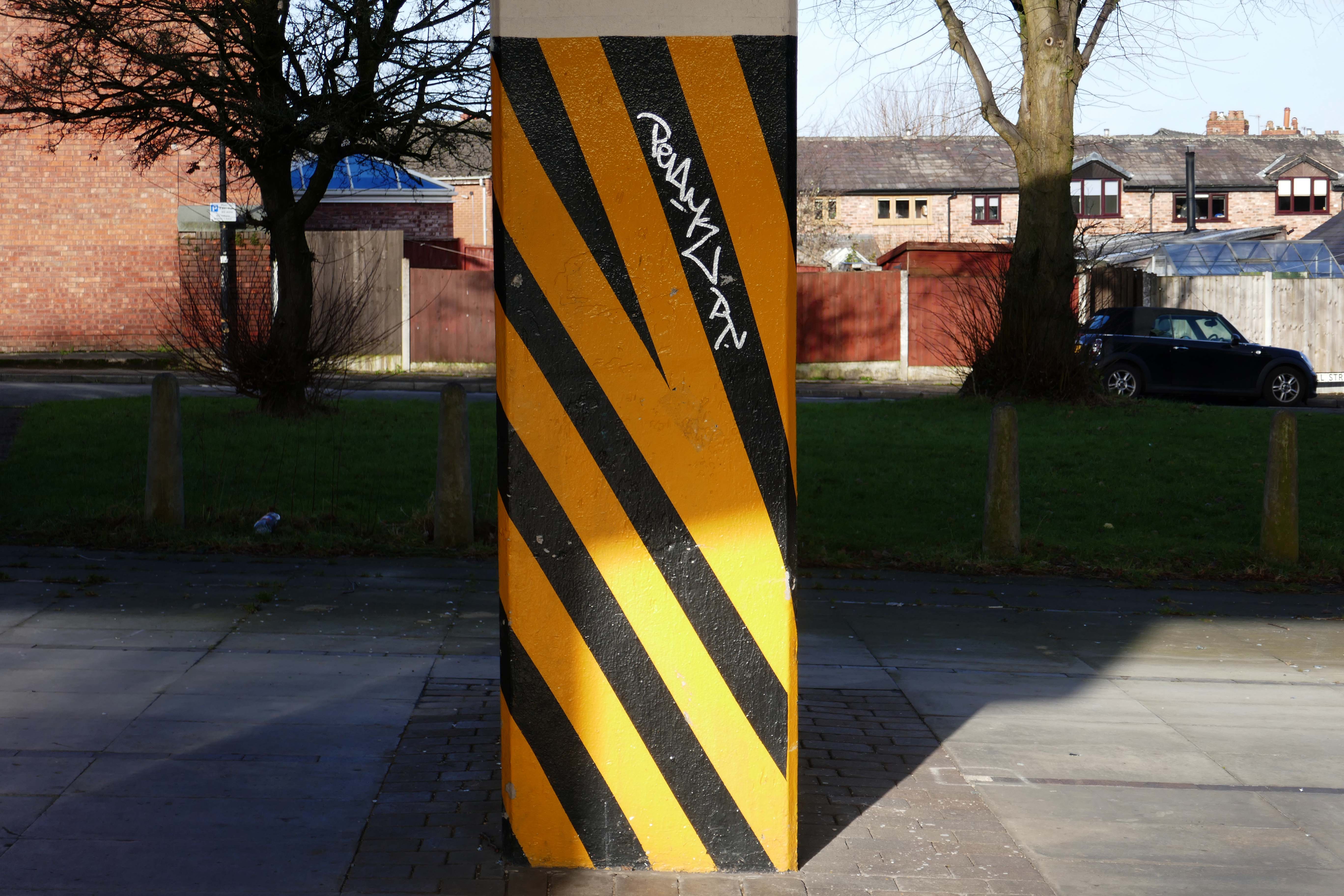
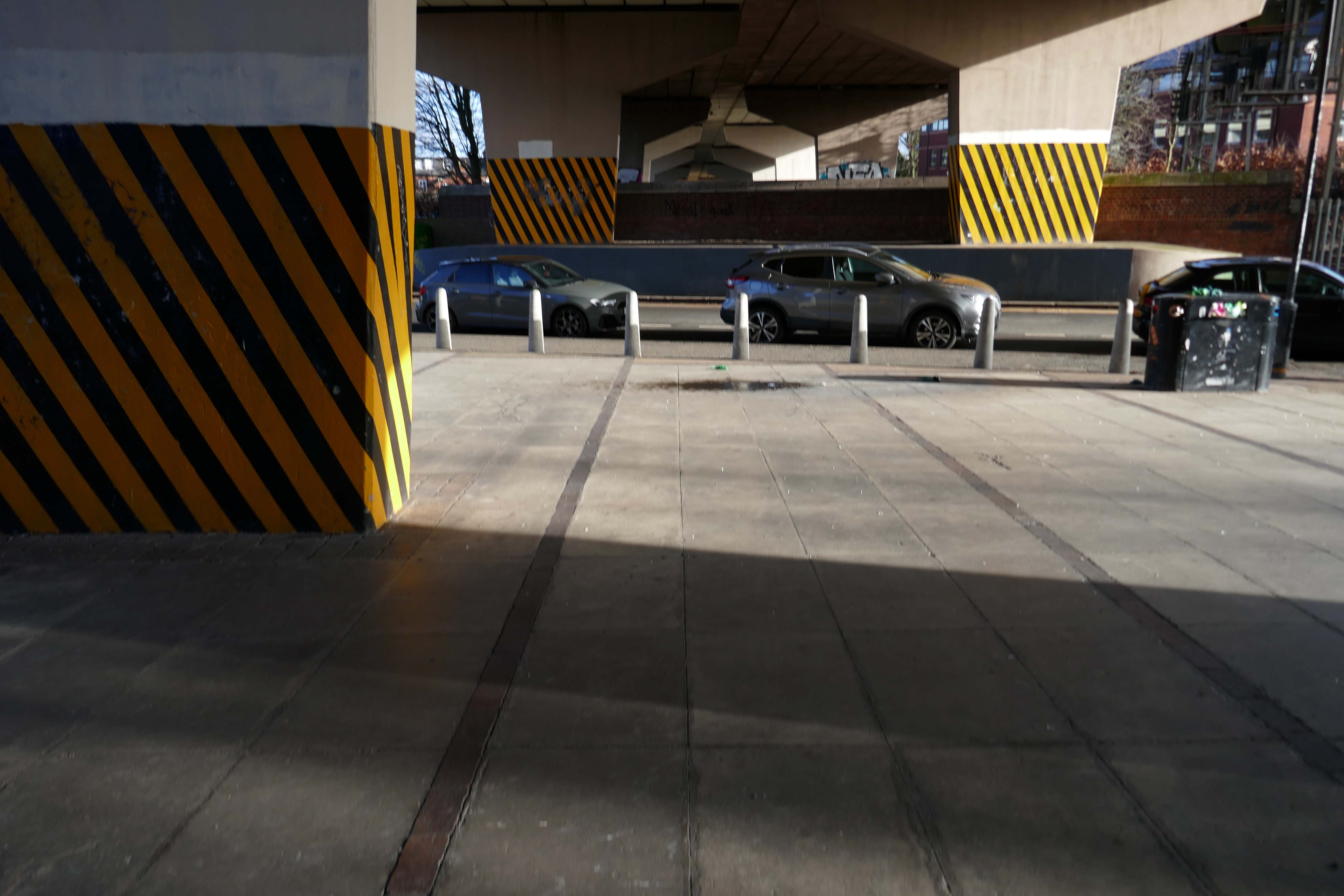
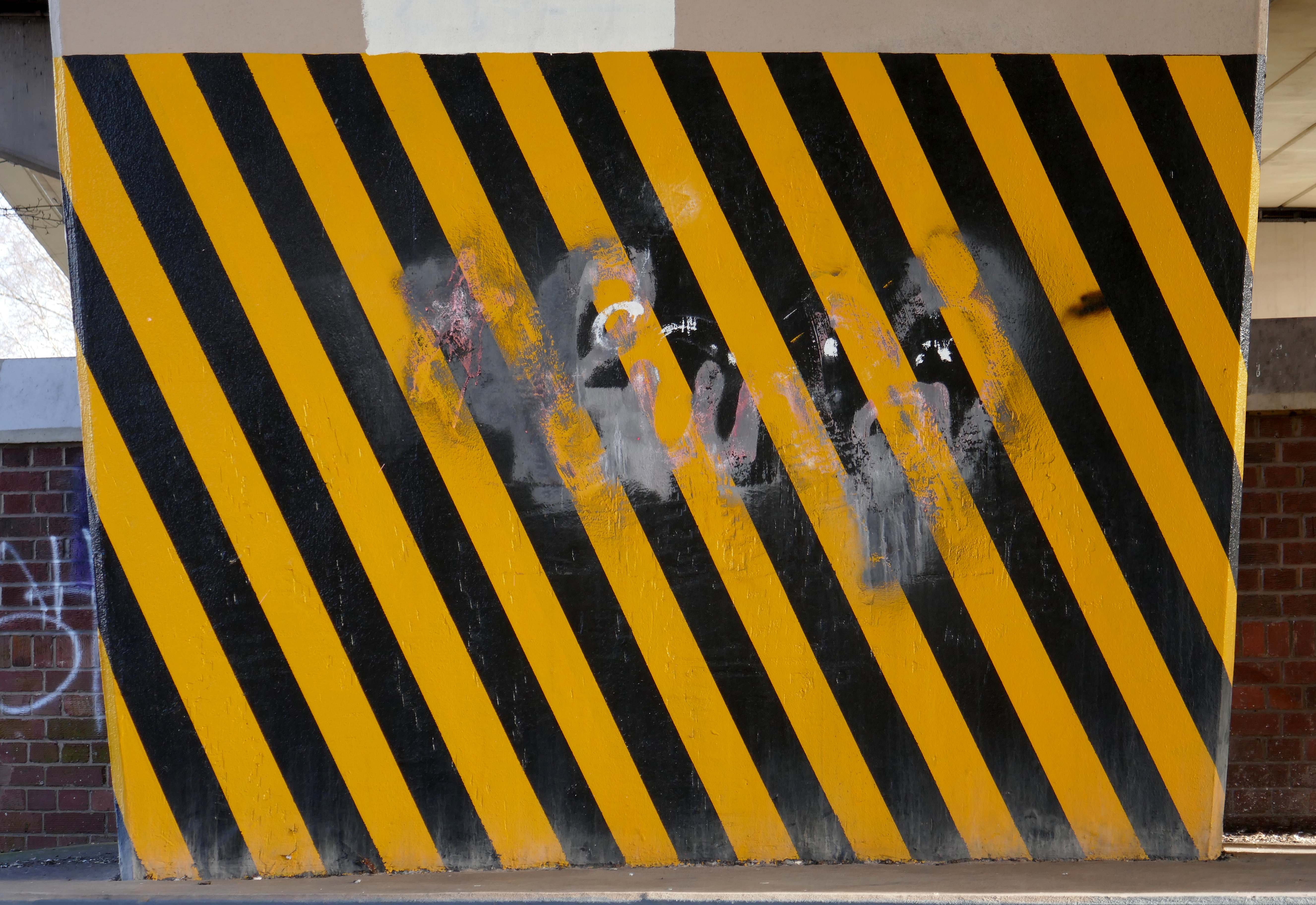
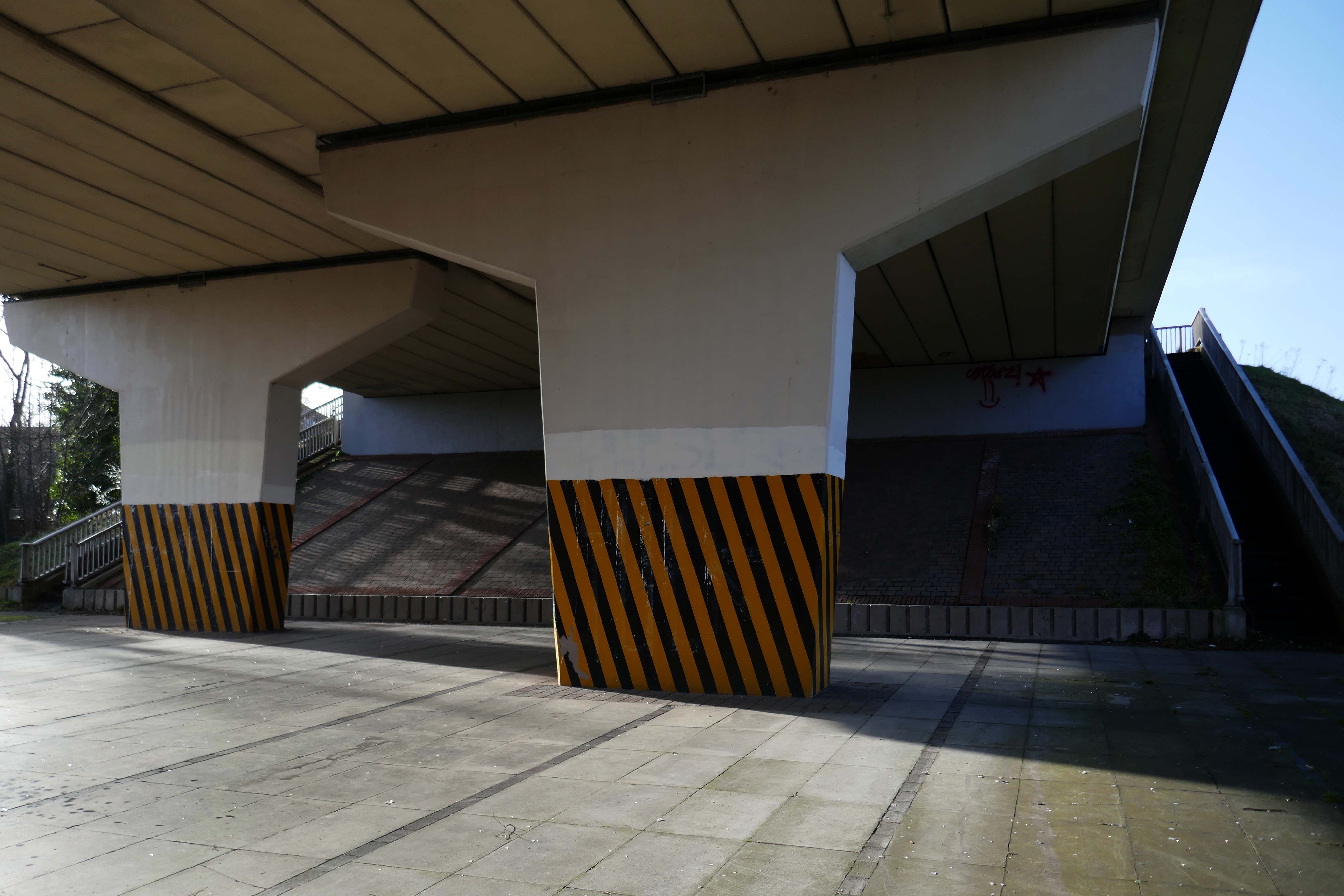
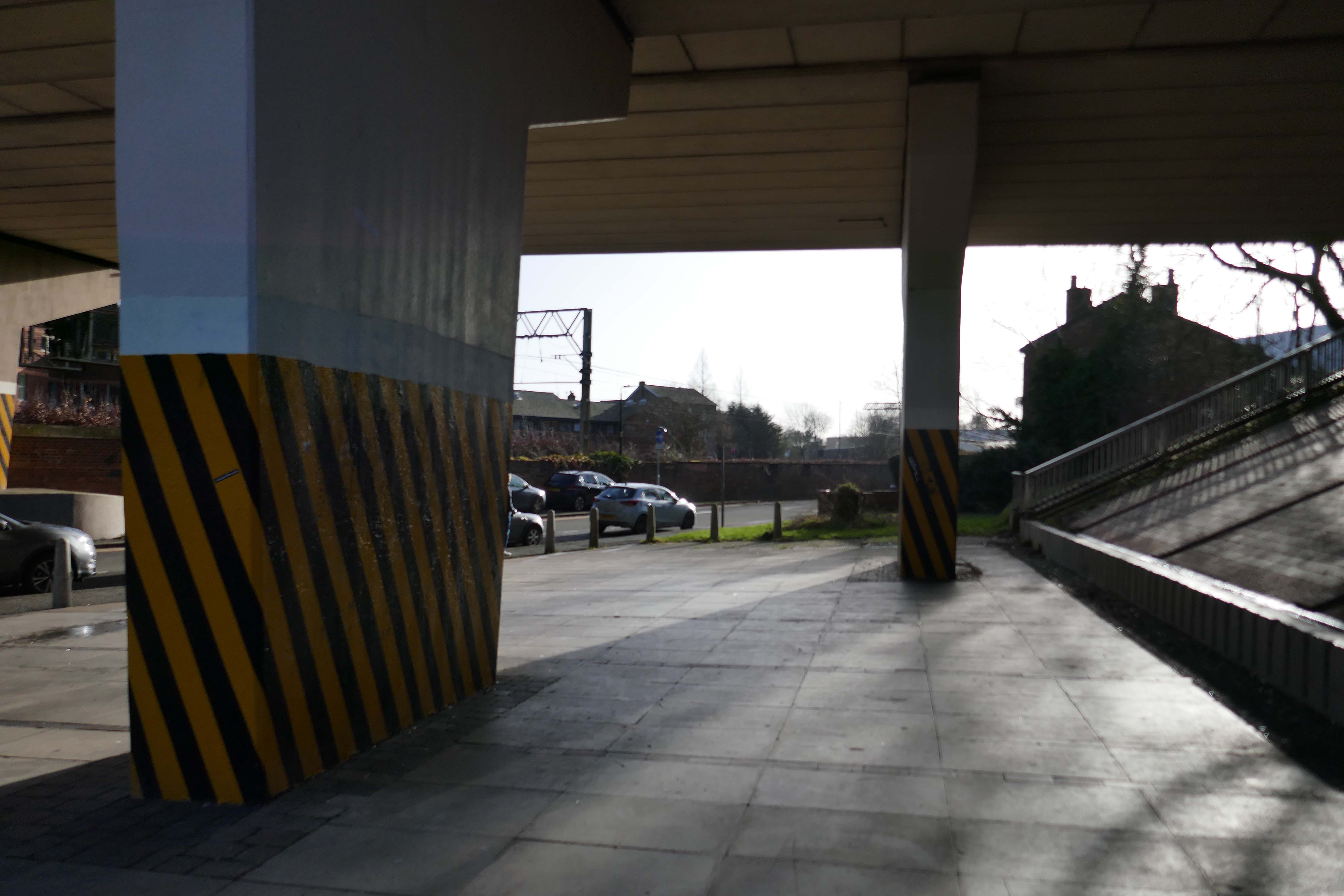
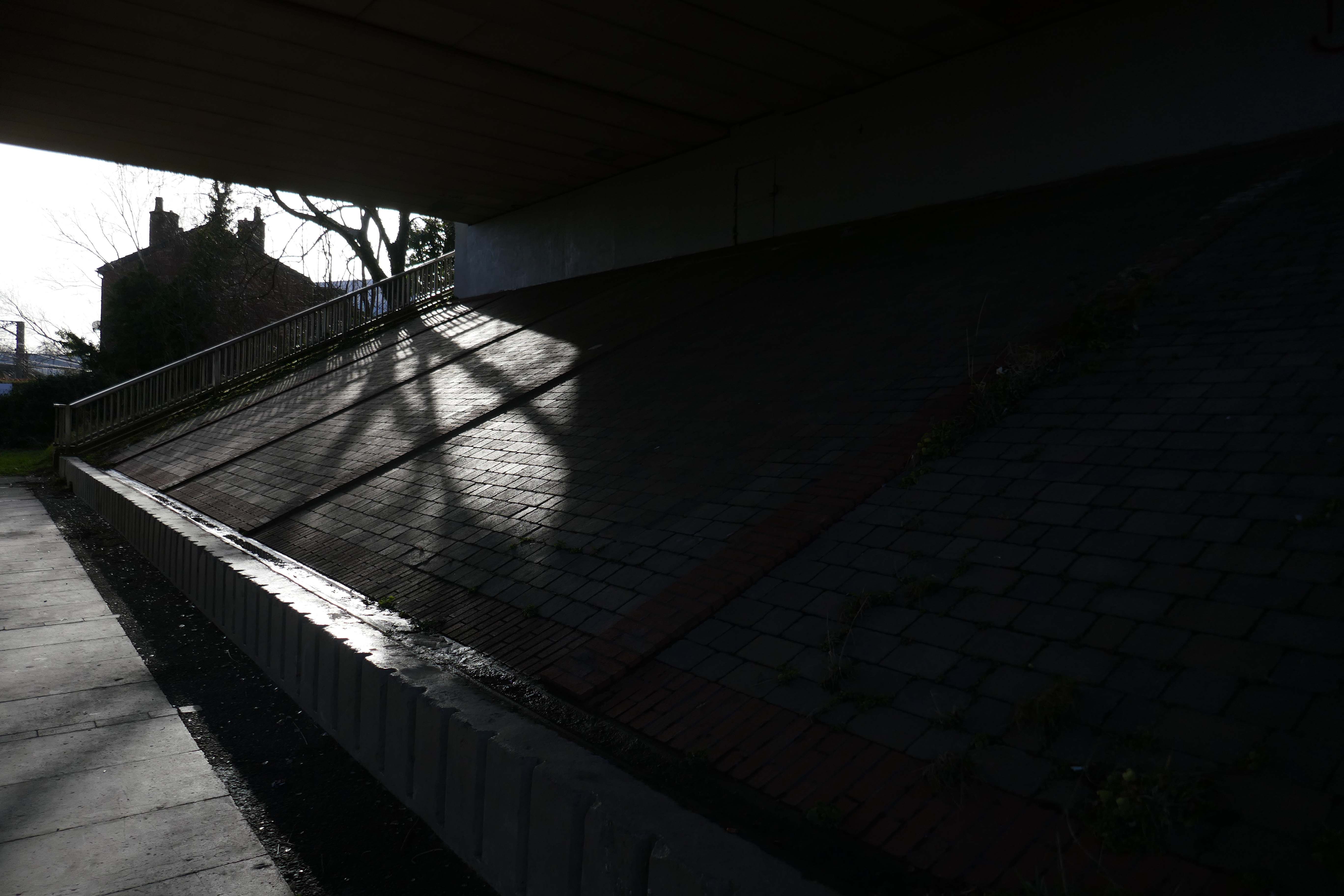
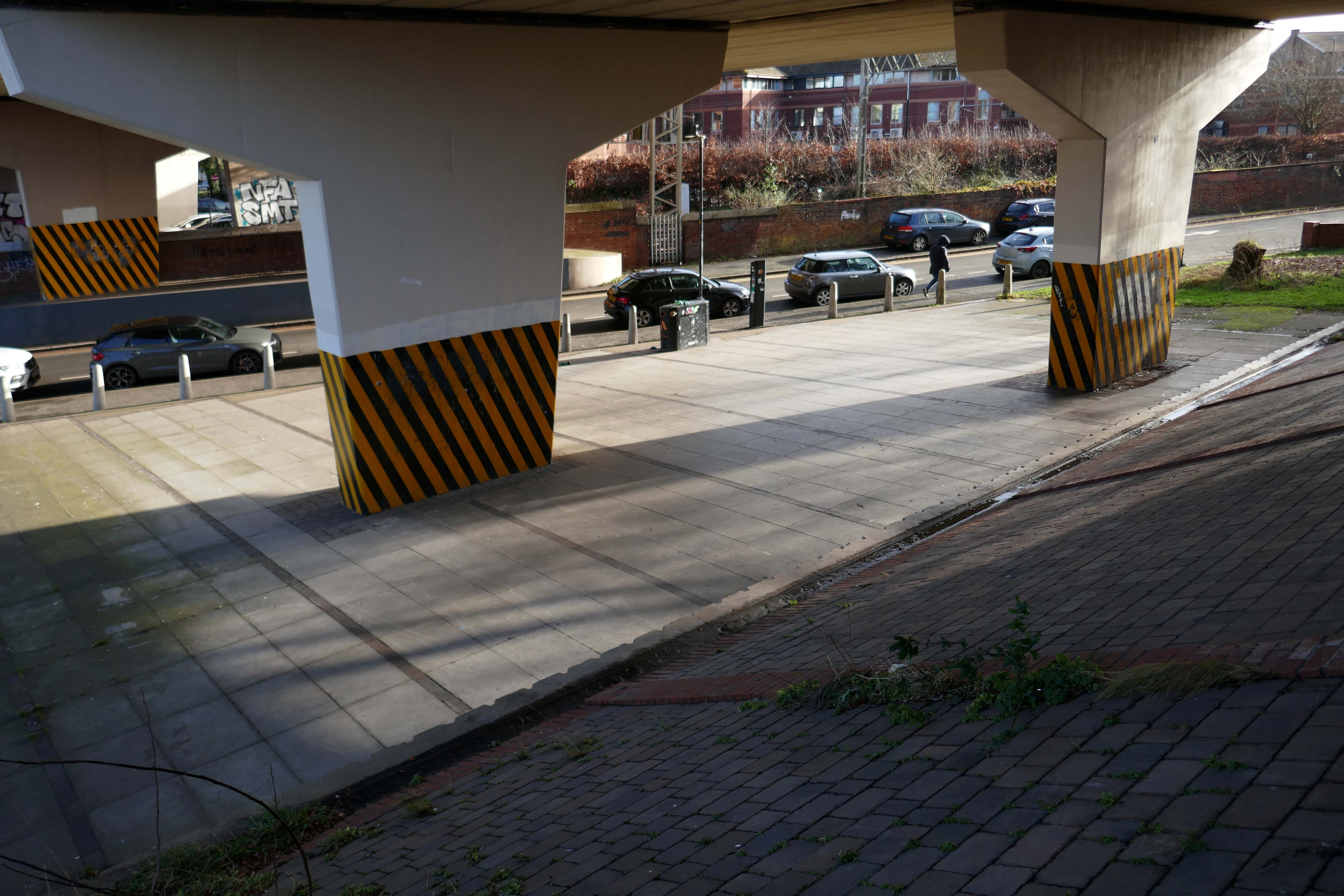
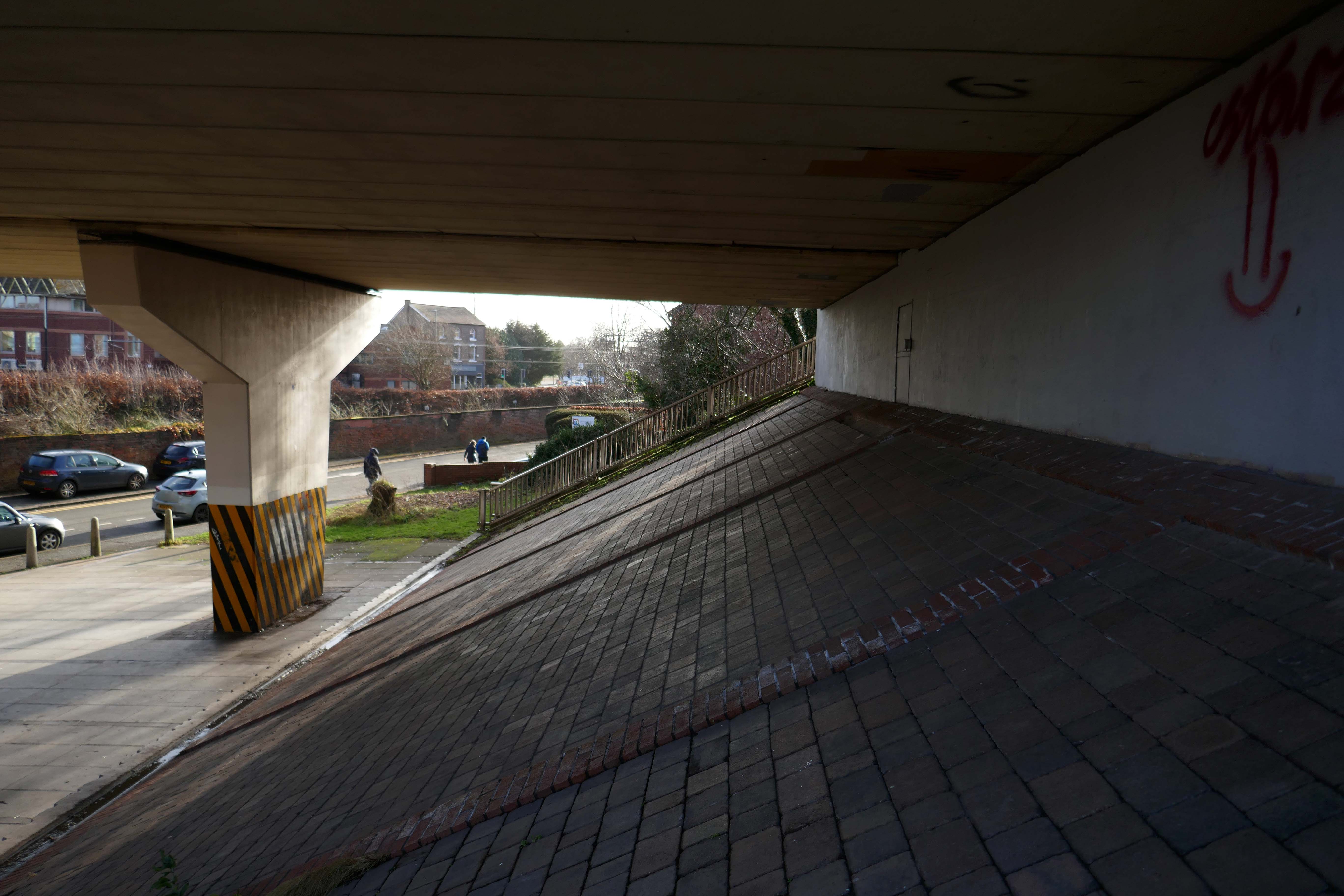
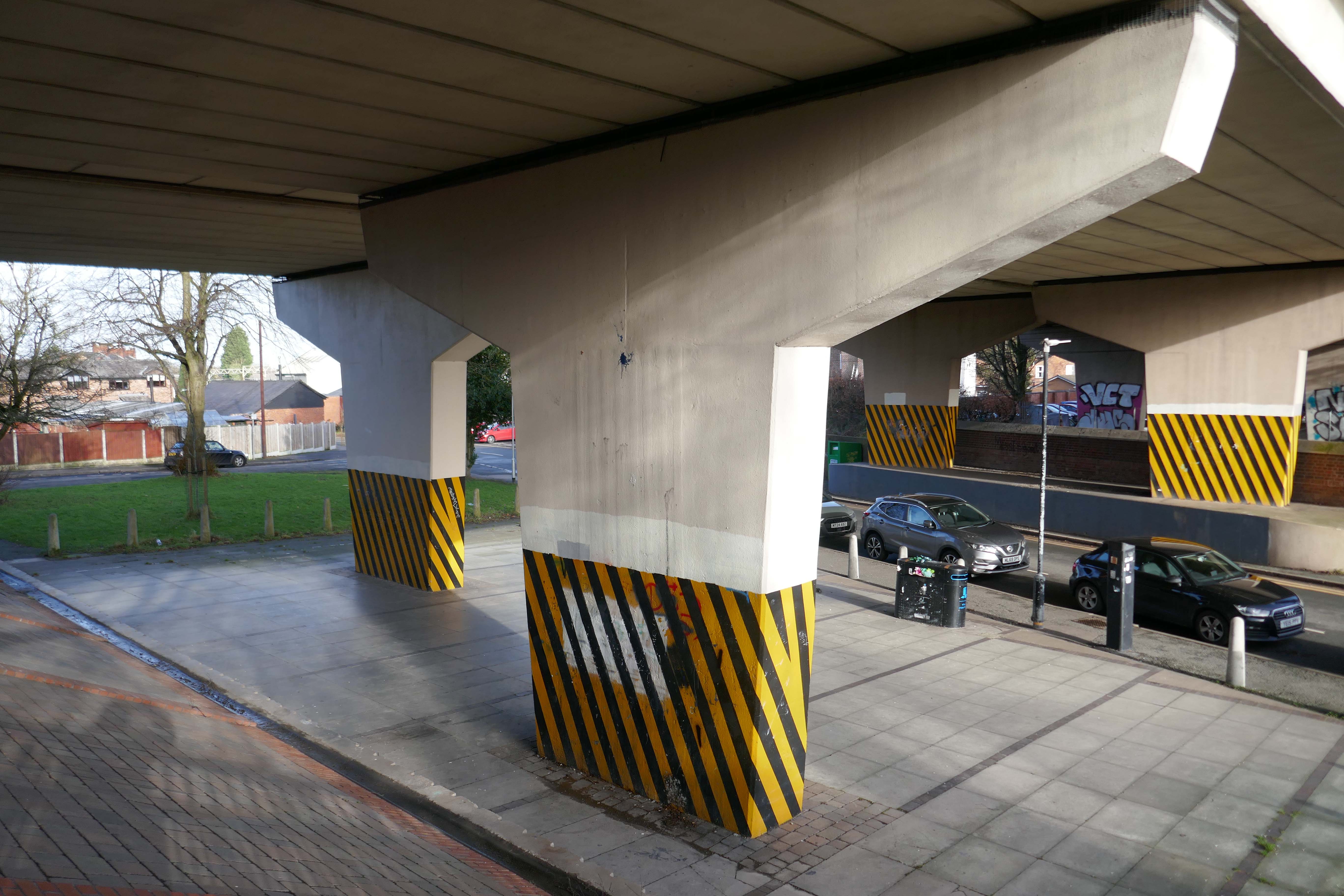
Beneath the A56 you will discover this concrete Haçienda Hazards.
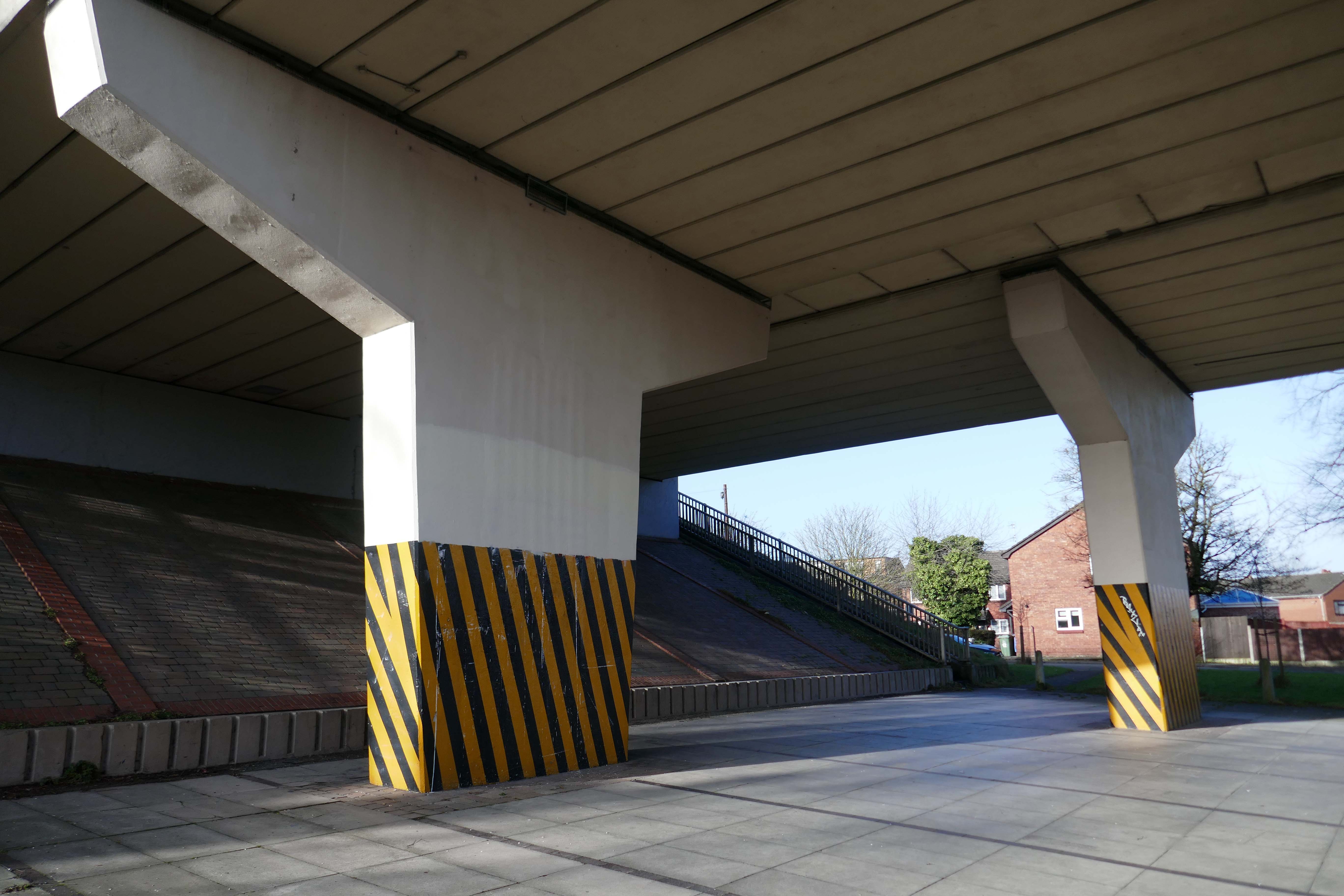
Take the wet steps to the right ascending to Woodlands Road.

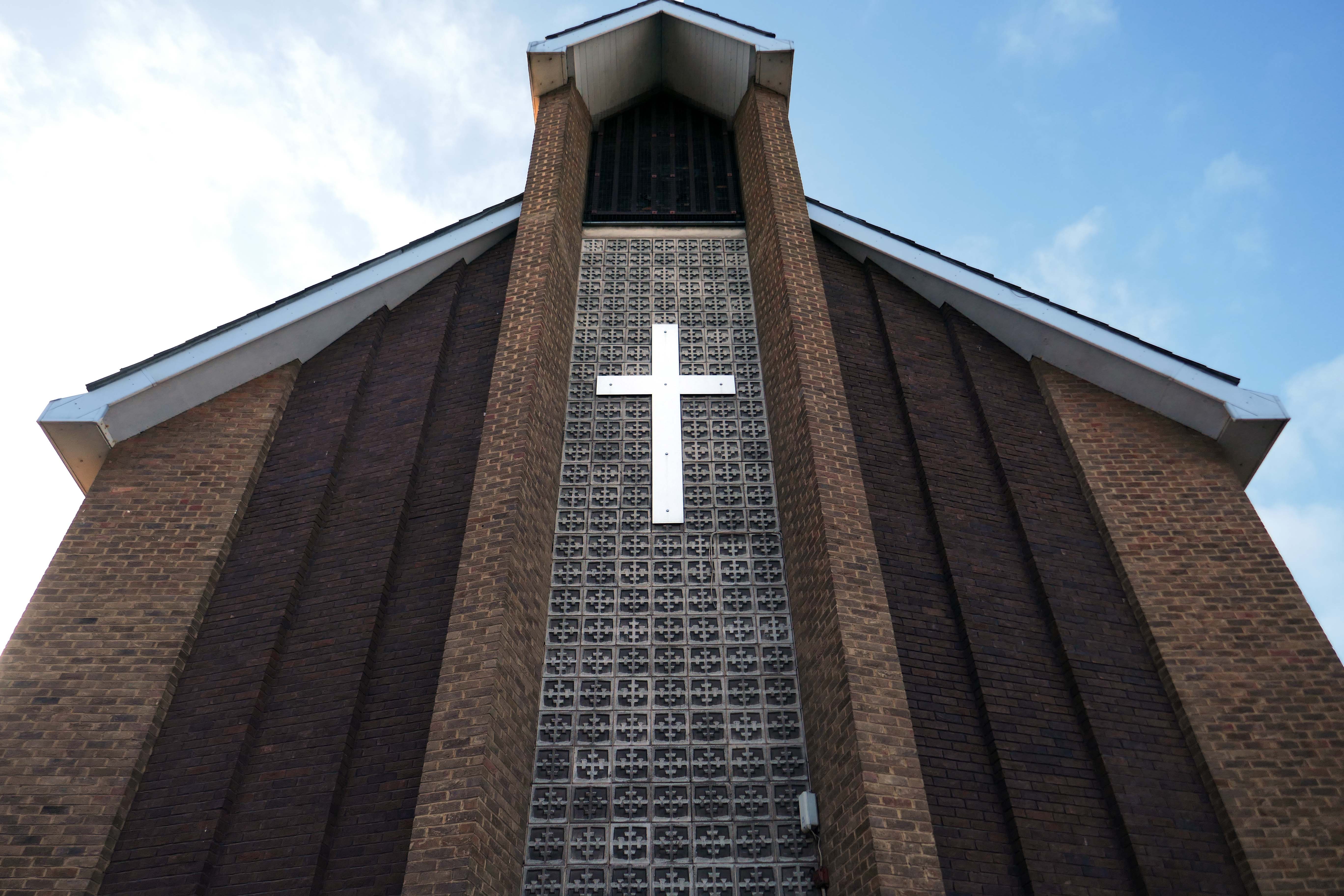
Where you will find the Altrincham Methodist Church.

Barrington Rd Altrincham WA14 1HF
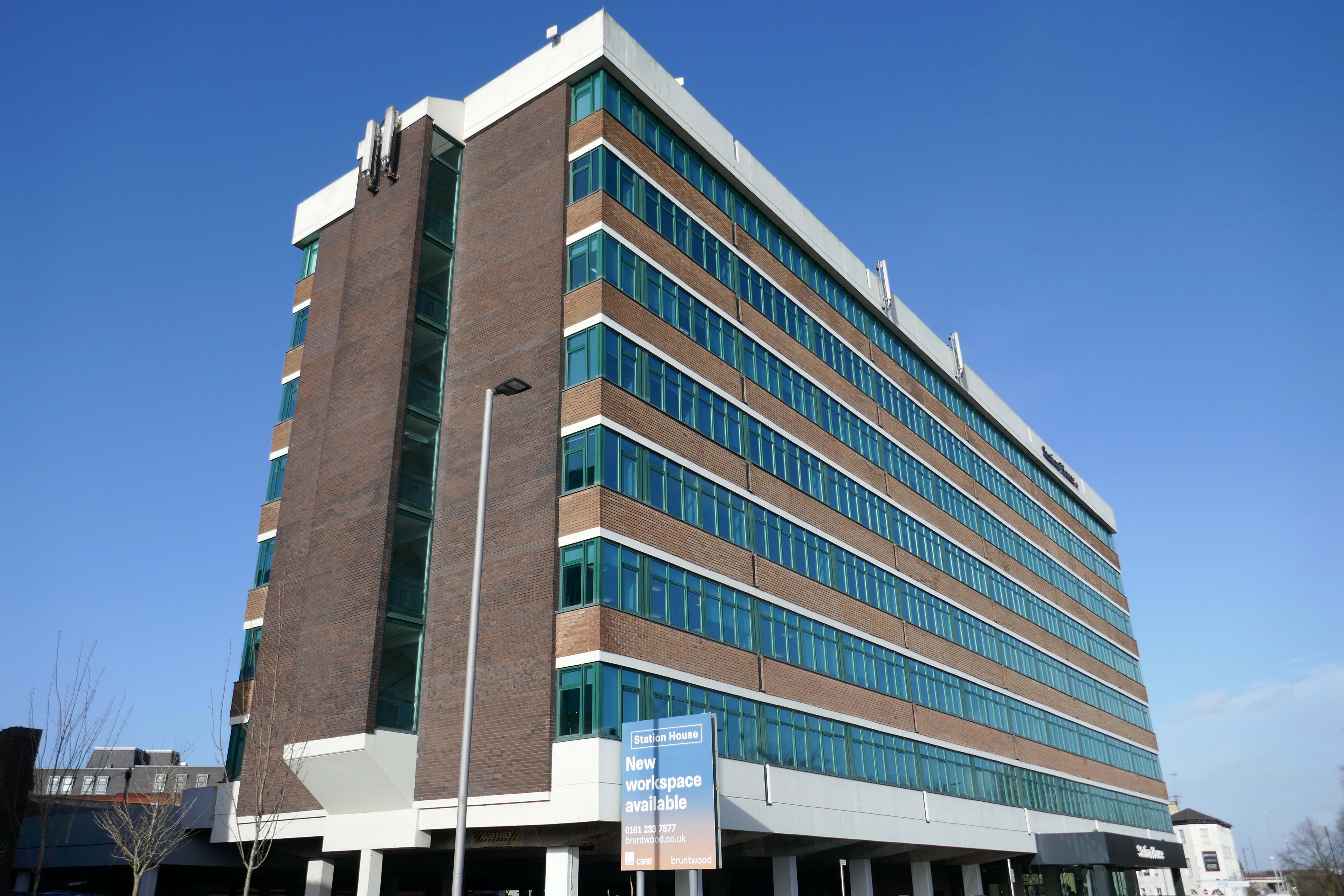
Continue along Barrington Road to Station House.

Stamford New Rd Altrincham WA14 1EP

Station House is a welcoming workspace in the centre of Altrincham situated adjacent to the Metrolink, rail and bus stations, and is just a couple of minutes walk from the retail amenities of the town centre. It boasts a newly refurbished reception and lounge area which is ideal for collaboration space. The building offers secure car parking, a manned reception and on-site building manager.
Manchester Offices

The Shopping Precinct of 1966-69 Architects: AH Brotherton & Partners.

This has been much reworked including the former Rackhams store, and the precinct rebranded as the Stamford Quarter

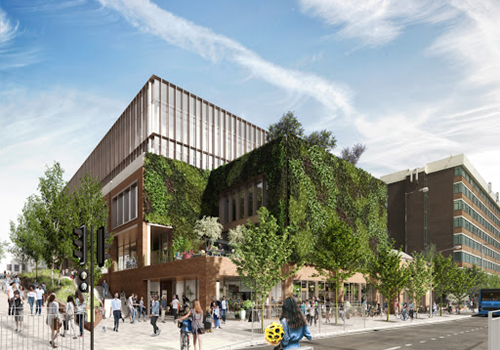
Bruntwood and Trafford Council have converted the building into Foundation, a 75,000 sq ft workspace and leisure destination in the town centre.
Place North West

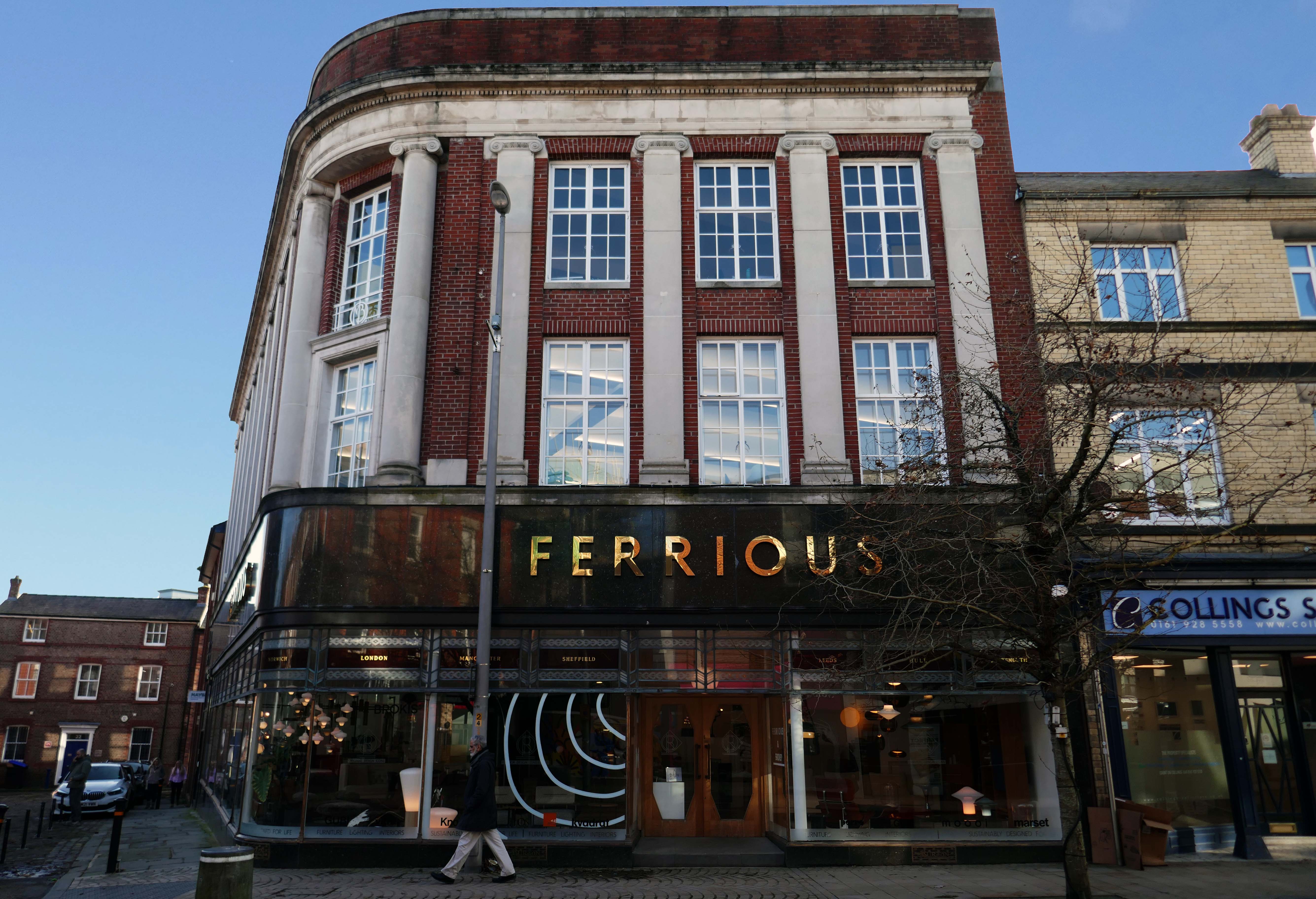
Continue along the road to Ferrious – housed in a former Burton’s.

47-49 Stamford New Road WA14 1DS

With the desire to have a more public face, Ferrious took on the present showroom in 2018 and after extensive restoration the new showroom opened in March 2019. Ferrious is still led by Jeremy and Paul and in 2021 it will be thirty years since they first joined forces. With those thirty years of experience, along with an incredible team of talented Interior Designers who live and breathe design, Ferrious will ensure every part of your experience, either long or short, is professional, enjoyable and filled with exceptional knowledge.
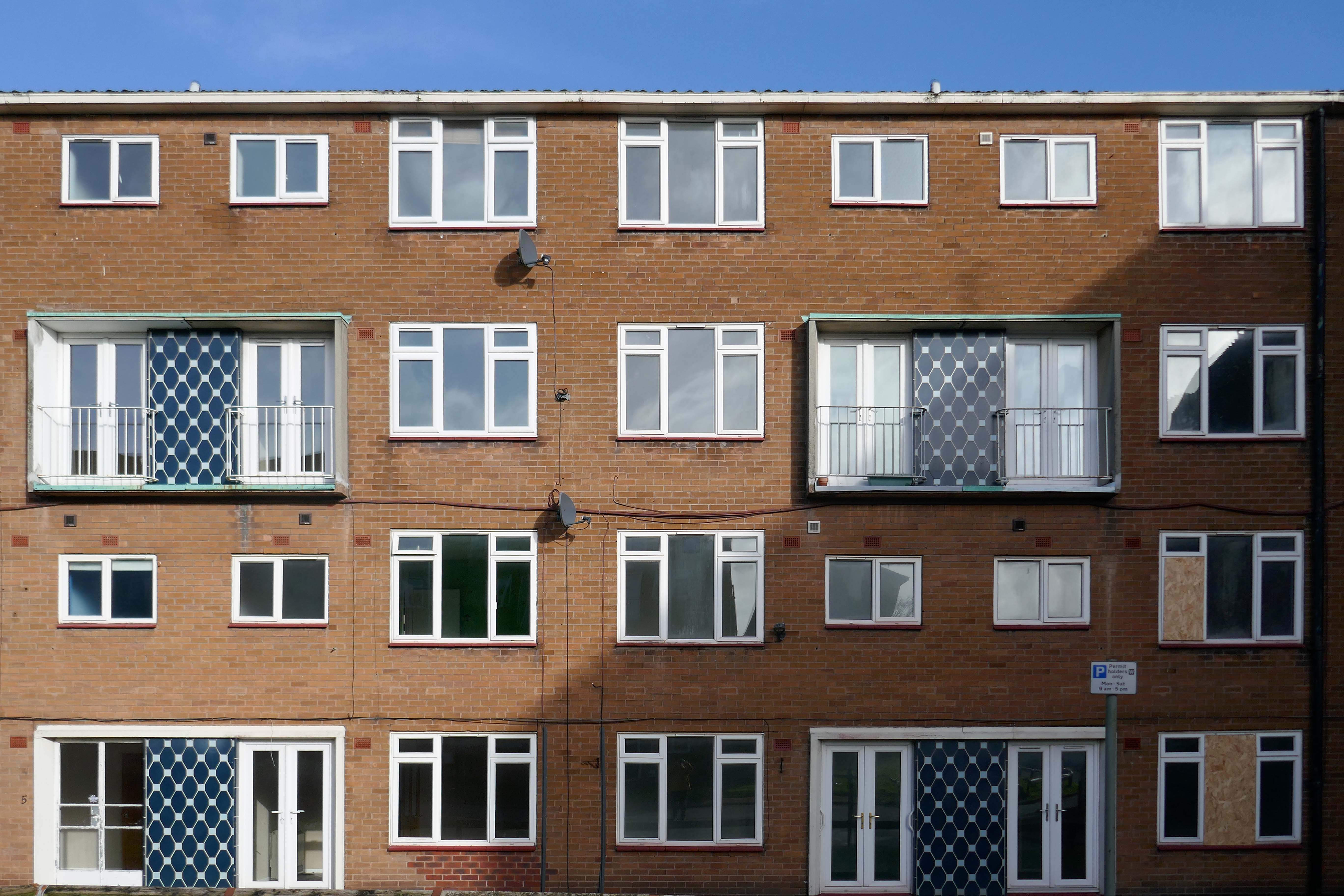
Turn right into Regent Road, then left into New Street, sadly these flats are due for demolition.

To make way for the new apartments and townhouses off New Street, Trafford Housing Trust will have to demolish six 1960s-era apartment blocks. The apartments have structural issues and need new windows and doors.
Place North West

Continue along New Street turn right along the Higher Downs, right again into Woodville Road.

Our destination the BT Open Reach Telephone Exchange.

4 Woodville Road WA14 2AF
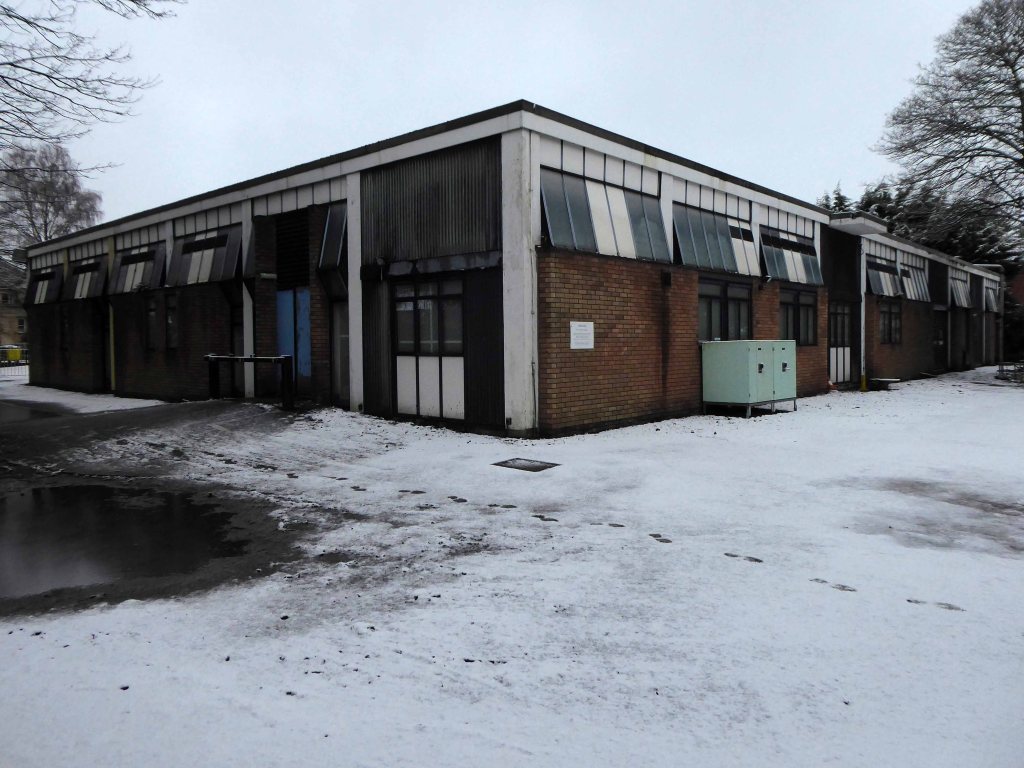
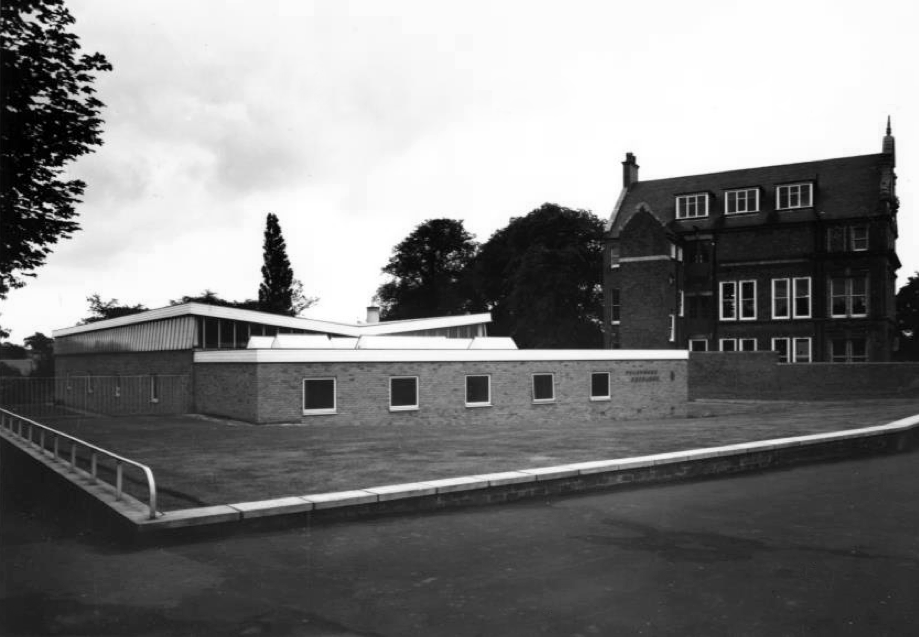
Joint Post Office and Ministry of Public Buildings and Works Research and Development Group – JRDG.

The JRDG’s aim for the Altrincham Telephone Exchange, was to ‘design a scheme based on a simple form of construction capable of erection within the ordinary resources of the normal run of building contractors, and entailing the minimum of maintenance and running cost’ [3]. The structural solutions were carefully evaluated with regard to both operational efficiency and the economy of layout and construction. The apparatus room was formed from a light streel frame, a simple timber joist roof and non- loadbearing cavity brick walls. The external walls to the ancillary accommodation were formed of loadbearing cavity brickwork, and the heating chamber and fuel store fitted with a concrete roof as a fire precaution. Continuous windows at high level on all sides of the apparatus room were designed to provide the best daylight conditions and the butterfly roof, designed to lead daylight into the centre of the apparatus room, formed a distinctive architectural feature. 
Lisa Kinch

Haçienda Hazards

Hawker Typhoon 1945

Health and safety regulations state that markings should be placed around obstacles or dangerous locations. This includes where any of the following present a risk:

  • people tripping or falling
  • objects falling
  • people or vehicles colliding with objects

These markings should be made up of alternating red and white or yellow and black stripes of equal size at a 45 degree angle. Barricade tape can be used to satisfy this requirement as long as the tape is “commensurate with the scale of the obstacle or dangerous location in question”

Wikipedia

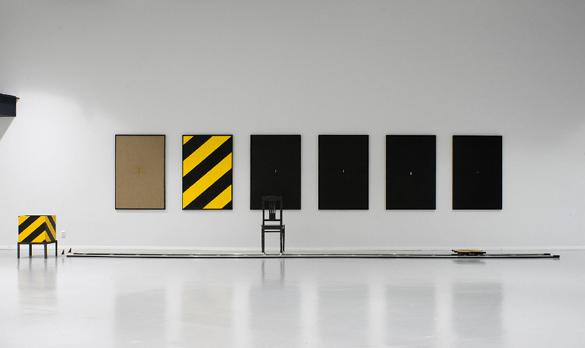
I hereby lay claim to this symbol, sign, icon, the combination of black and yellow, wherever it may appear, in this or any other world, in whatever shape, form, pattern or composition, be it civil or military. I hereby claim to be its originator and owner.

Leif Elggren 1977

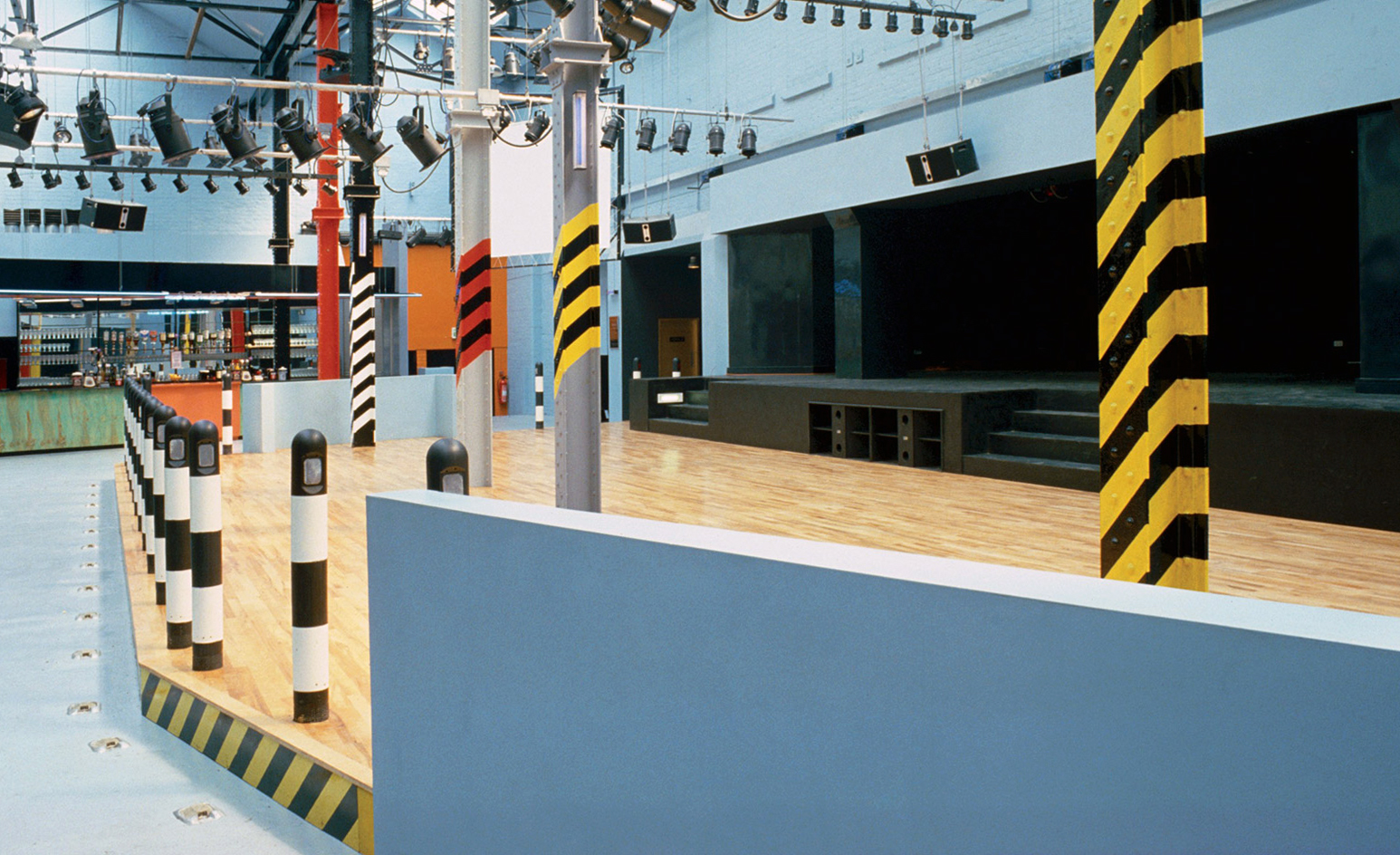
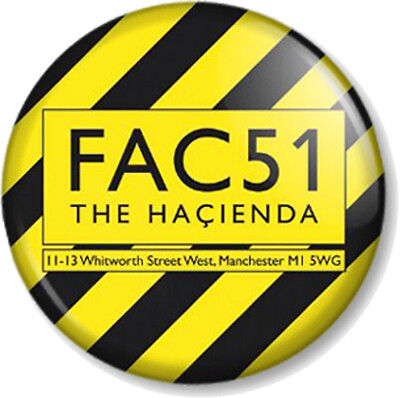
Designed by Ben Kelly, upon recommendation by Factory graphic designer Peter Saville, upstairs consisted of a stage, dance area, bar, cloakroom, cafeteria area and balcony with a DJ booth. 

The Haçienda was opened on 21 May 1982, when the comedian Bernard Manning remarked to the audience:

I’ve played some shit-holes during my time, but this is really something.

His jokes did not go down well with the crowd and he returned his fee.

Wikipedia

Meanwhile in 2019

The black and yellow stripes on Manchester City’s away shirts were meant to be an uplifting homage to Manchester’s cultural heritage, but the choice of design now risks becoming a chip on the team’s shoulders.

The team’s jersey is embroiled in a controversy after Ben Kelly, the man who originally designed the stripes for famed Manchester nightclub the Haçienda, complained in a recent interview to Gaffer magazine that he was not credited or consulted by the creators of the football apparel.

When Manchester City and Puma launched the team’s 2019/20 kit last July, they said in a press release that the uniform paid tribute to the “Madchester” years of the late 1980s and early 1990s, when the city in north-west England became a hub of alternative music and dance culture.
Guardian

The Estate of Pieter Cornelis Mondriaan has remained silent on such matters.

What the FAC51 is wrong with folk?

All of which leads me to Altrincham – on Grosvenor Road beneath the A56.

I negotiated the concrete pillars – not once colliding with these immense hazards.

Manchester Arterial – A57

The A57 was nearly a coast to coast route. It passes through three major city centres (Liverpool, Manchester, and Sheffield – with elevated sections in each) and several smaller ones, multiplexes with the A6 and the A1, follows the banks of two canals and negotiates the remotest part of the Peak District. In one city it part of it is a tram route, whilst in another its former route is also a tram route. After all these adventures, it sadly gives up just 40 miles short of the east coast, Lincoln apparently proving too big an obstacle.

The A57 crosses the River Irwell at Regent Bridge before entering its moment of motorway glory as the A57(M) Mancunian Way skirting the south of Manchester’s city centre on an elevated section and crossing the A56 and A34. This includes a half-completed exit that goes the wrong way up Brook Street – a one way street. The original A57 ran further north through the city centre along Liverpool Road (now the A6143) and Whitworth Street – B6469 as far as the A6 London Road which marked the start of a multiplex.

At the end of Mancunian Way, we reach a TOTSO, straight on being the short unsigned A635(M) and thence the A635 – for Saddleworth Moor, Barnsley and Doncaster whilst the A57 turns south, briefly multiplexing with the A6, and then branching off along Hyde Road. This section of road was extensively cleared for the westward extension for the M67, and consequently has seen a lot of redevelopment.

Sabre Roads

In 2014, having taken early retirement from teaching photography, I embarked on a series of walks along the arterial roads of Manchester.

See also Bury New Road and Cheetham Hill Road and Rochdale Road and Oldham Road and Ashton New Road and Ashton Old Road.

Hyde Road Stadium – Manchester

Hyde Road was a football stadium in West Gorton, Manchester, England.

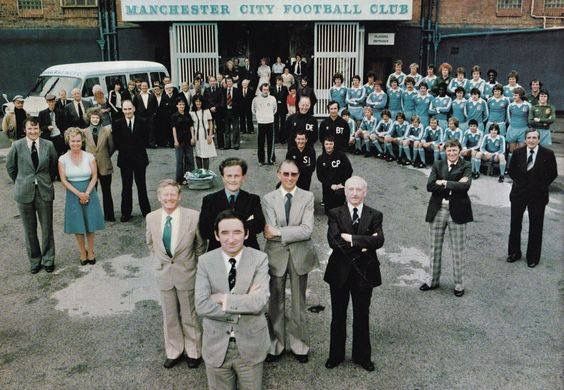
It was home to Manchester City FC and their predecessors, from its construction in 1887 until 1923, when the club moved to Maine Road.

Billy Gillespie on the ball.

Before its use as a football ground, the site was an area of waste ground, and in its early days the ground had only rudimentary facilities. The first stand was built in 1888, but the ground had no changing facilities until 1896; players had to change in a nearby public house, the Hyde Road Hotel.

As a Chester’s house, a condition of the club’s official link to the pub was that supporters and club officials and players would sup Chesters ales, and in return Stephen Chesters Thompson of the brewery helped finance stadium improvements.

The move of MCFC to Maine Road in 1923 following a fire at the Hyde Road ground, didn’t adversely affect the Hyde Road Hotel and it continued to serve the West Gorton community and the once-bustling Hyde Road thoroughfare.  

As late as the 1980s, renamed the City Gates, it was a popular watering hole before the match for supporters travelling in from East Manchester.  It was kitted out in all sorts of MCFC memorabilia and was run by George Heslop, City legend of the 1960s, after he’d had the Royal George in town.

Sadly, as the community around it was decimated, the pub struggled and its last hurrah was as the City Gates theme pub.  The business failed in 1989 and the pub sat empty and rotting for twelve years until it was demolished, despite a half-hearted fans campaign to save it.  Two keystones from the Hyde Road Hotel reside in the MCFC memorial garden and are all that remain of this significant Manchester pub.

Pubs of Manchester

Sadly one of many Hyde Road pubs to bite the dust

By 1904 the ground had developed into a 40,000-capacity venue, hosting an FA Cup semi-final between Newcastle United and Sheffield Wednesday the following year.

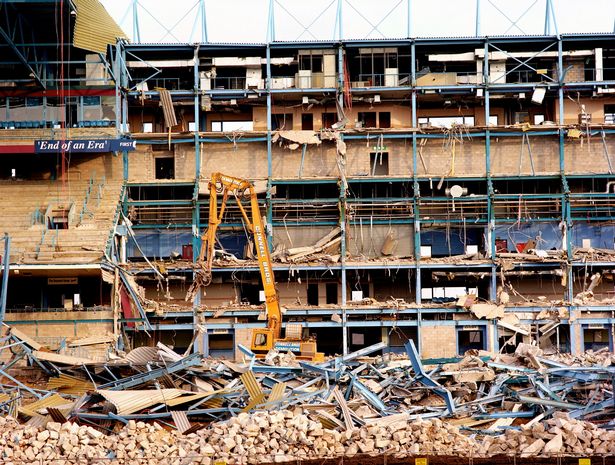
The stands and terraces were arranged in a haphazard manner due to space constraints, and by 1920 the club had outgrown the cramped venue. A decision to seek an alternative venue was hastened in November 1920, when the Main Stand was destroyed by fire. Manchester City moved to the 80,000-capacity Maine Road in 1923, and Hyde Road was demolished shortly afterward. One structure from the ground is still in use in the 21st century, a section of roofing which was sold for use at The Shay, a stadium in Halifax.

Maine Road – which in turn closed on May 11th 2003, City losing 1-0 to Southampton

City are now at home at the Etihad – formerly the Commonwealth Games Stadium.

The area was also home to the Galloway Boiler Works – you can see the employees of 1900 here.

The northeastern end of City’s stadium was known as the Galloway End.

Bennett’s Iron Foundry also occupied the site – excavation of which, is currently taking place.

Bilclam furniture now sells for big money.

The foundry employed some of the club’s players, and the Galloway Boiler Works, supplied some of the materials to develop the Hyde Road ground.

Chorlton History

I had always known the area as the Olympic Freight Depot – seen from the passing train.

I cycled by the other day and the containers are long gone – the site is being cleansed to a depth of two metres.

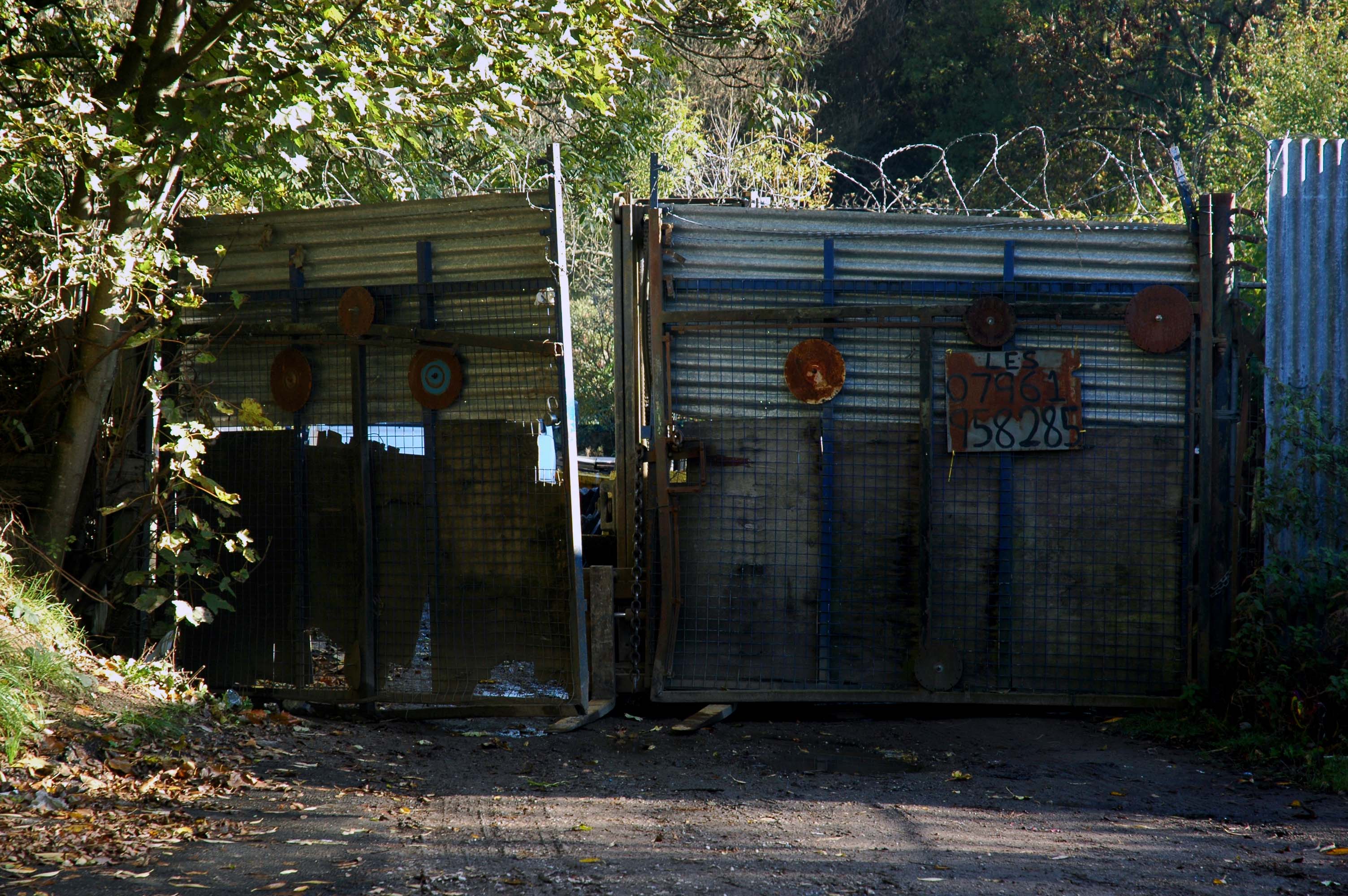
Loitering by the gates, I asked if I may take some snaps .

Please y’self – so I did.

So what’s next on the cards, for this little corner of local history – set twixt Bennett Street and Hyde Road?

New homes is on the cards – and on the hoardings.

Plans have been revealed for a 337-home development on the Olympic Freight depot in West Gorton.

Brought forward by Sheffield-based Ascena Developments, the planning application to Manchester City Council outlines proposals for 191 houses and 146 apartments, split across two blocks.

Alongside the homes, the development would include a 3,000 sq ft circular community centre and café, shop, and a unit which is earmarked for a chip shop.

Place Northwest

However:

Kellen Homes has been granted planning consent to redevelop the thirteen-acre Olympic Freight depot on Bennett Street in Manchester into 272 homes. 

The developer, owned by Renaker founder Daren Whitaker, lodged plans for the West Gorton scheme last year following the withdrawal of an earlier and larger scheme drawn up by Sheffield-based Ascena Developments. 

So no chip shop, I assume?

Place Northwest

The site will require significant remediation, impacting the scheme’s viability, the report states.

As a result, no affordable housing is proposed.  

Thanks.

Jaded Jubilee – June 4th 2012

On the day of HM Queen Elizabeth’s Diamond Jubilee I cycled around Ashton under Lyne.

Recording and commenting upon the material changes which had occurred, during her reign of some sixty years. In turn many of these things have in themselves disappeared from view.

Life is a series of natural and spontaneous changes.

Don’t resist them; that only creates sorrow.

Let reality be reality.

Let things flow naturally forward in whatever way they like.

Lao Tzu

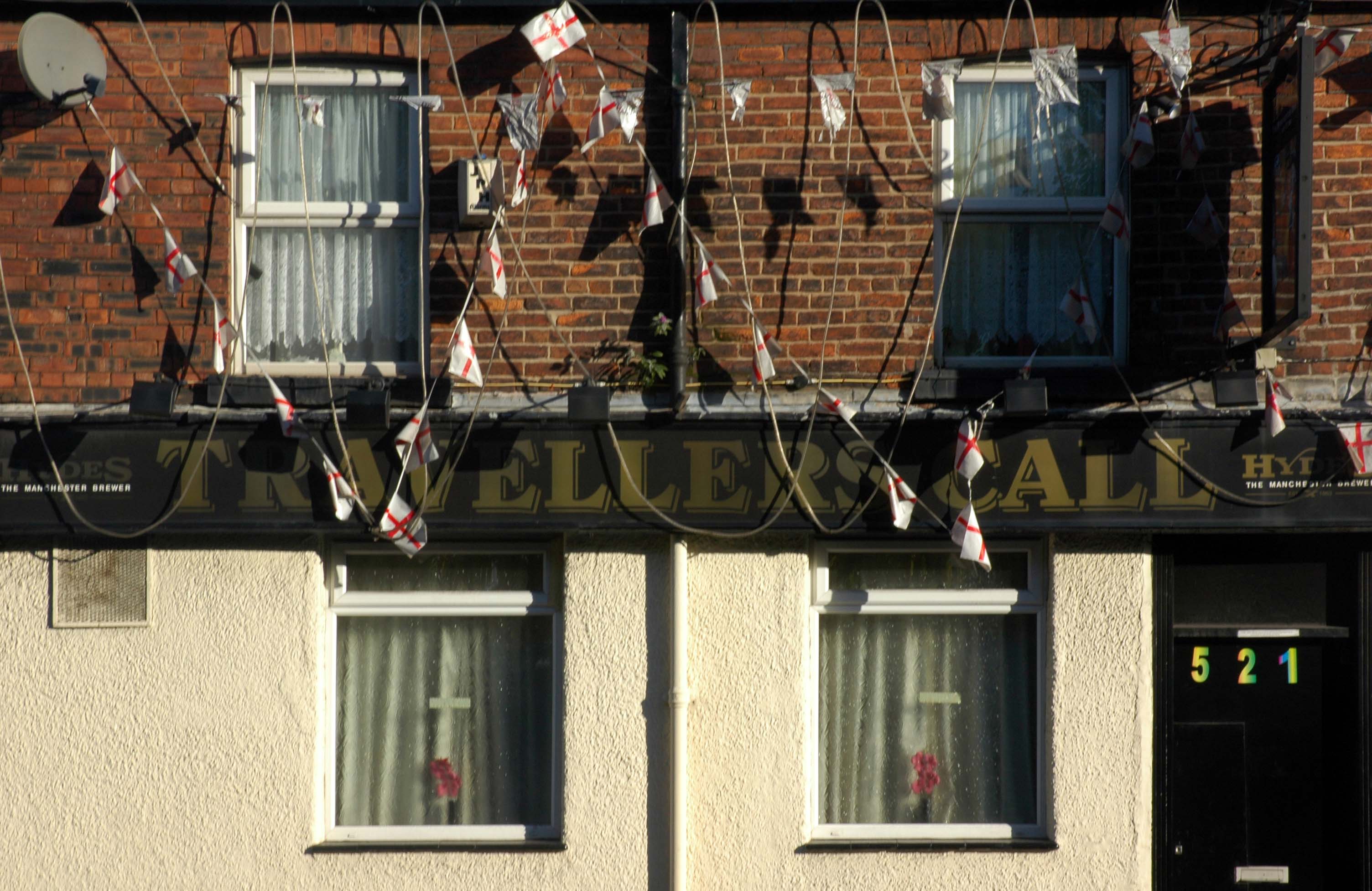
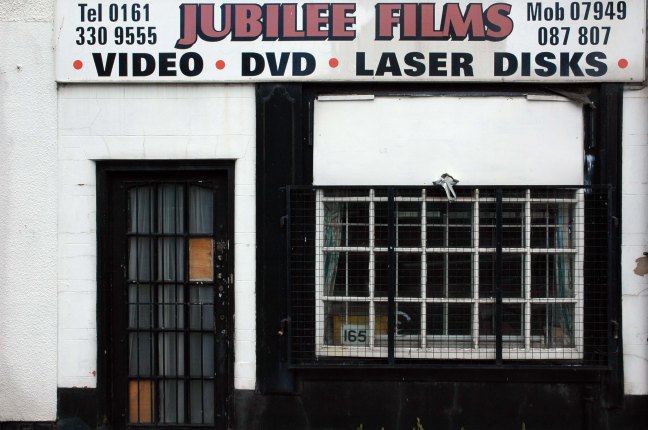
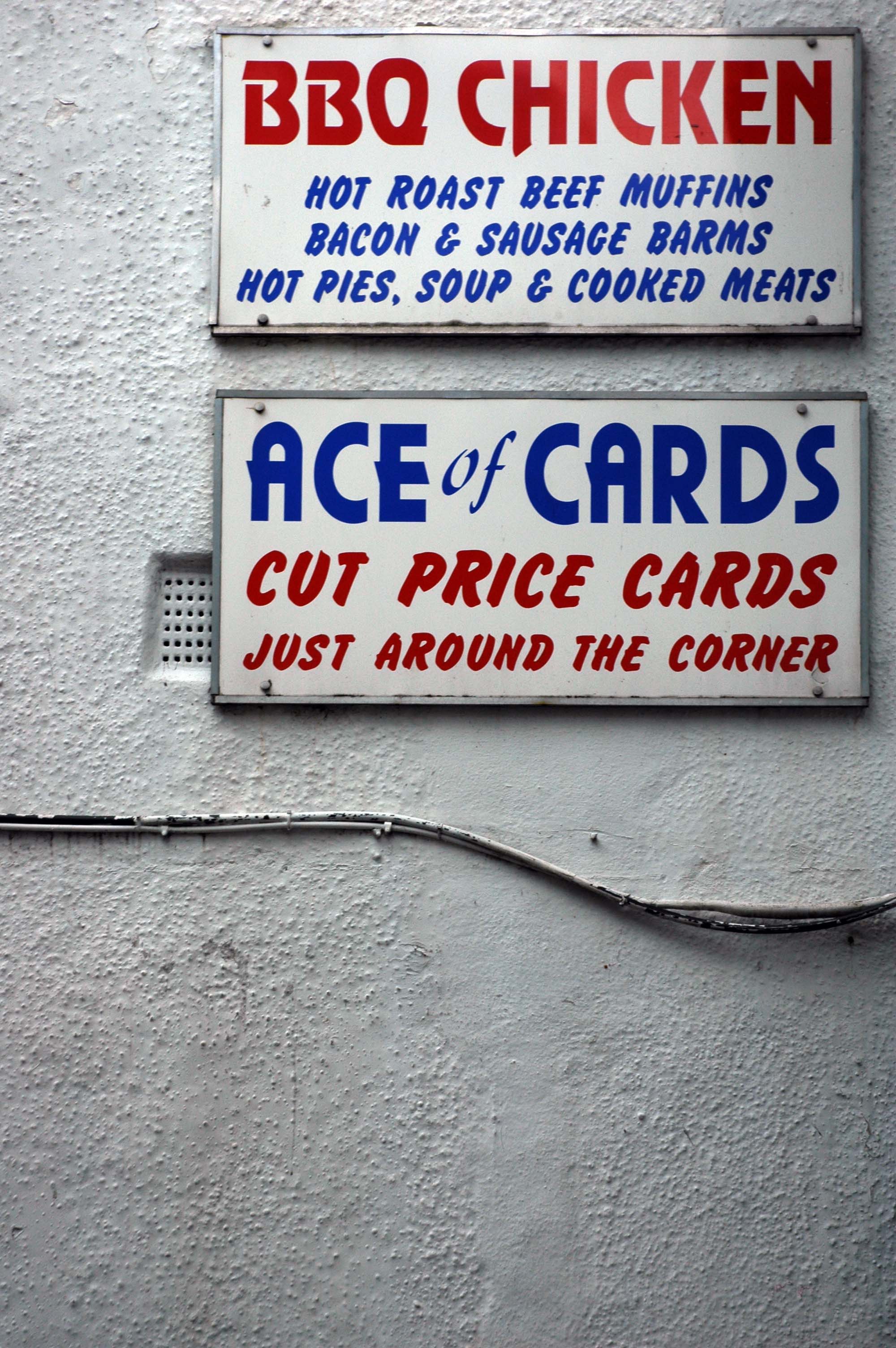
Celebrating the gradual decline in spelling – Gill Scot Heron meets Tameside, everyone’s a winner.

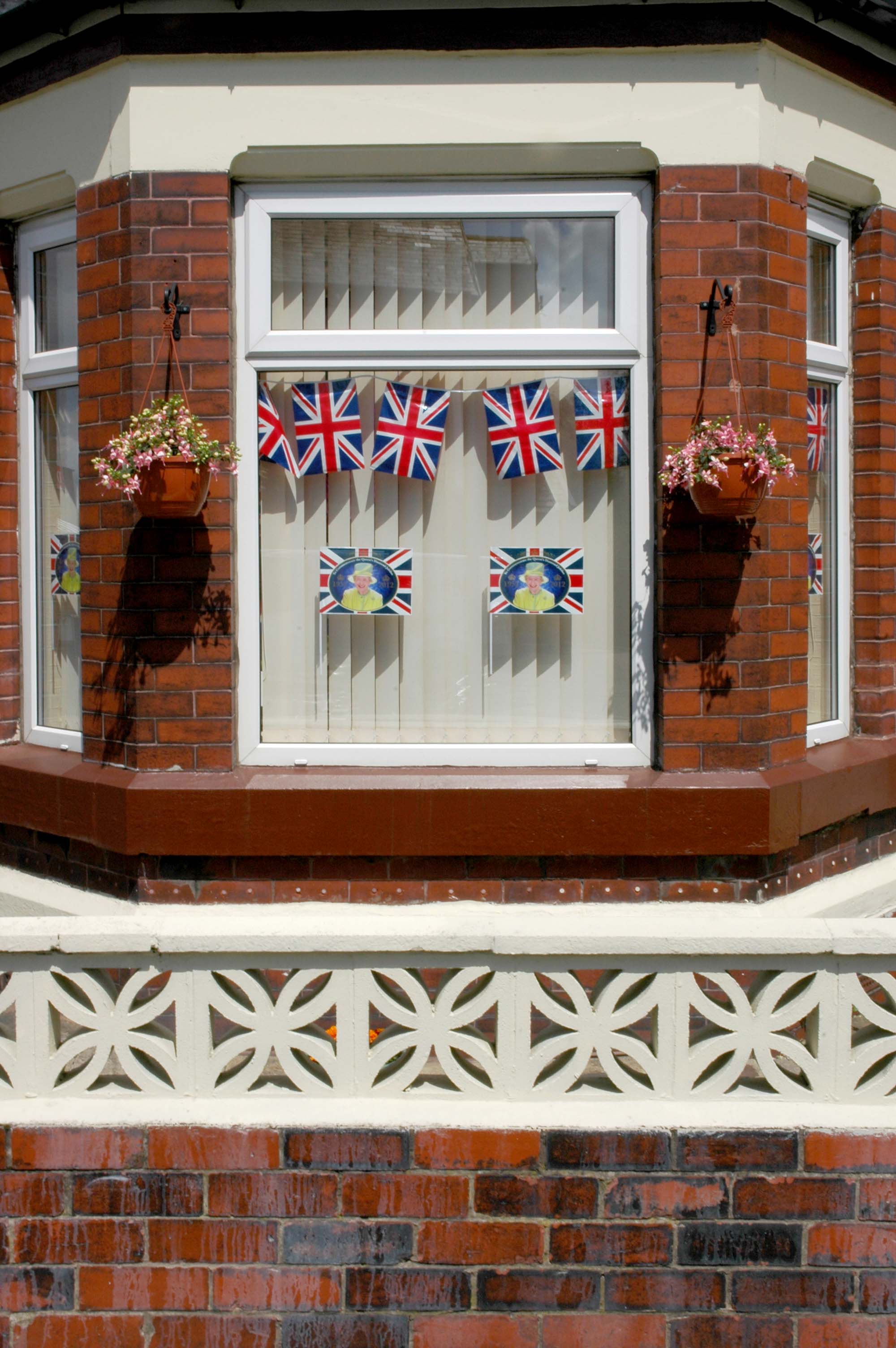
Celebrating the proliferation of California Screen Blocks, hanging baskets and vertical blinds.

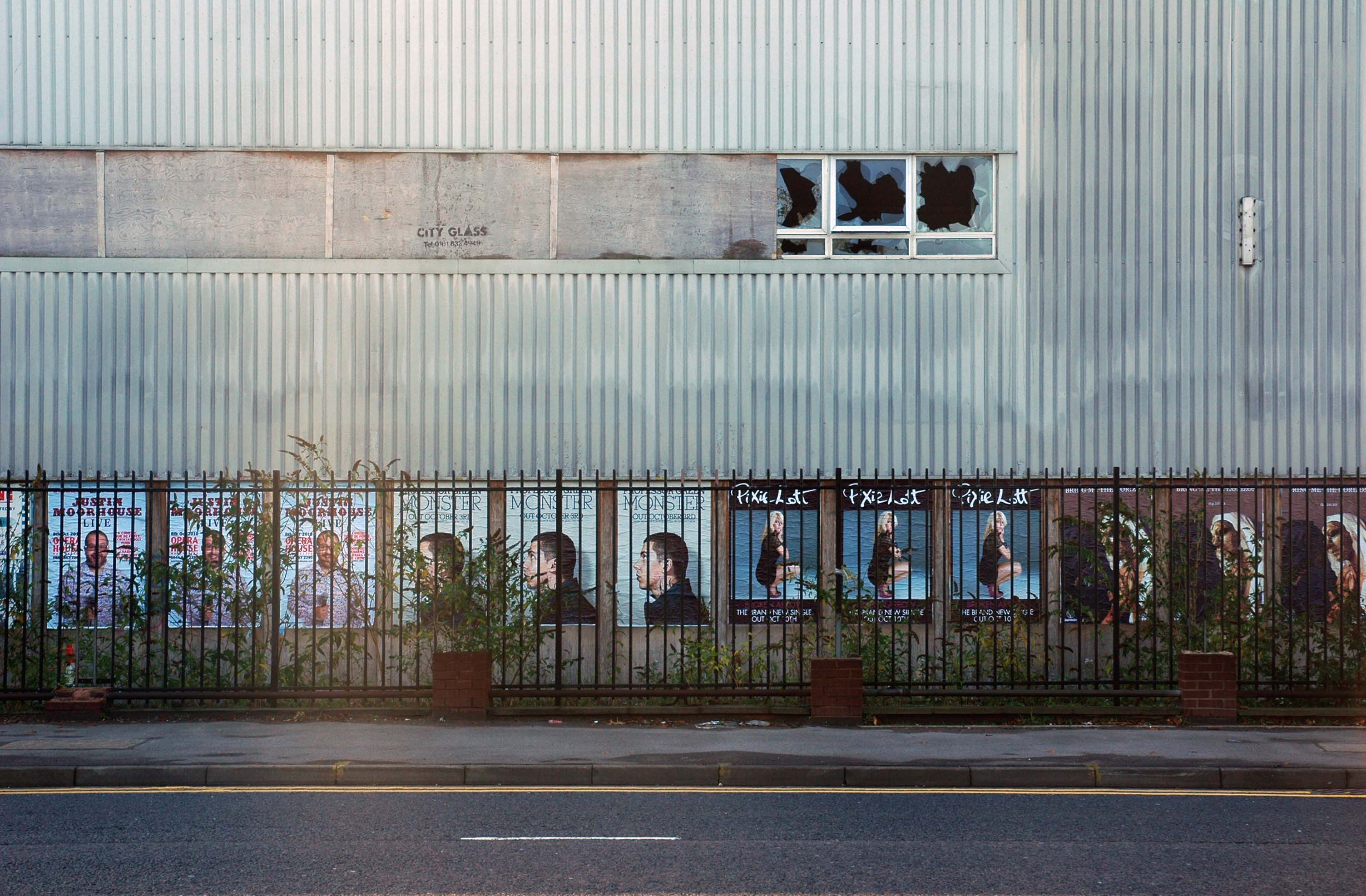
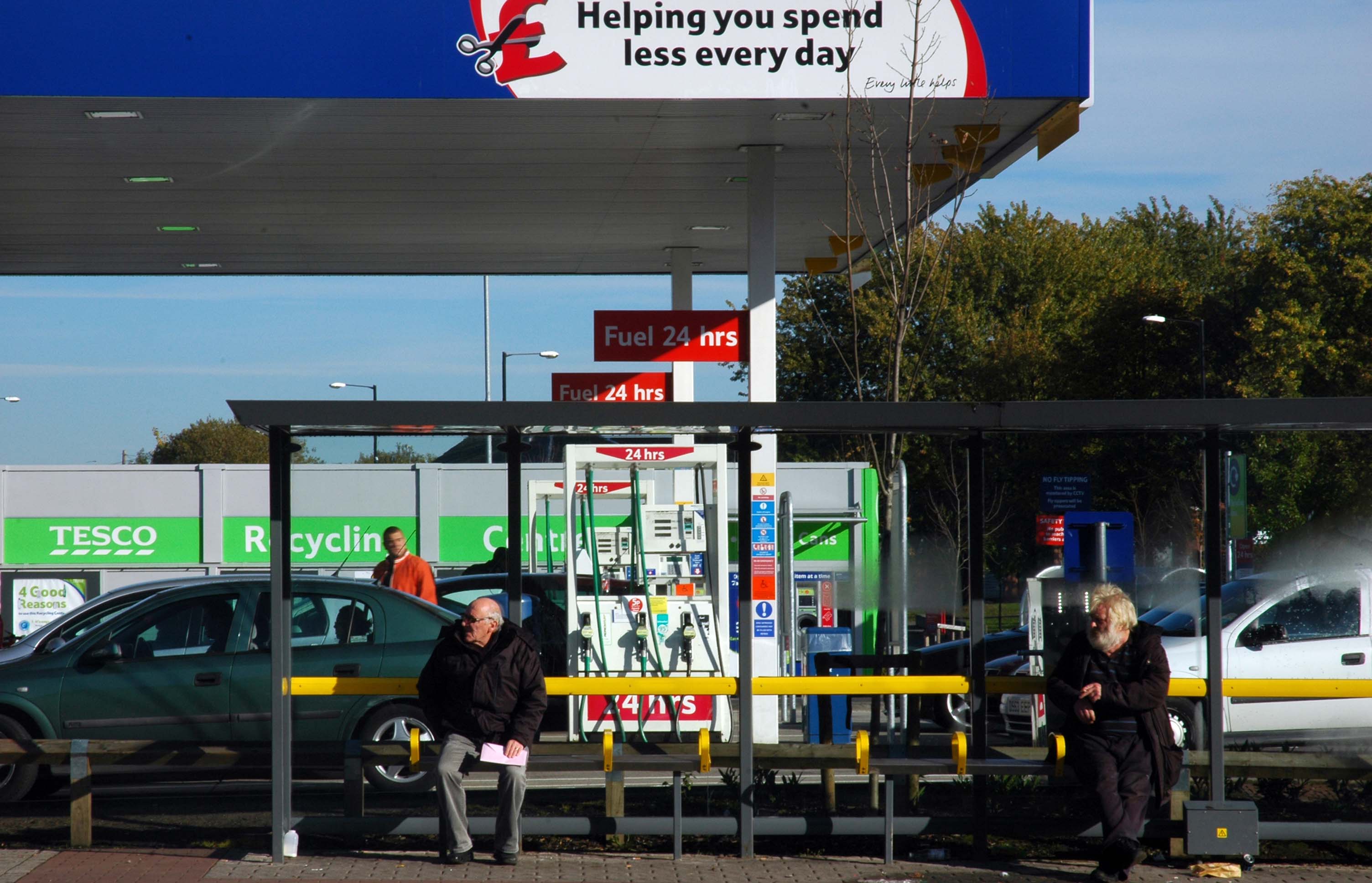
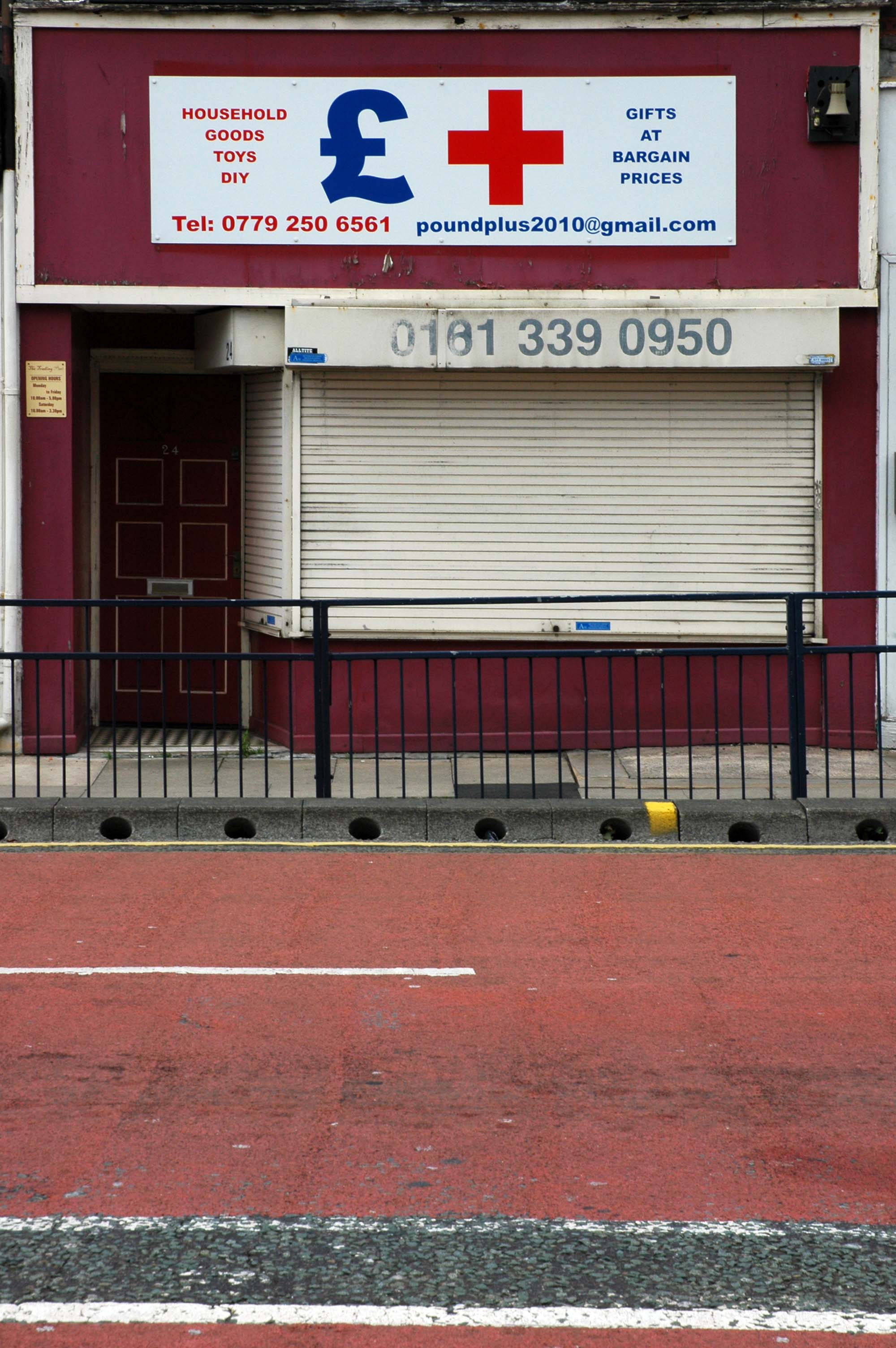
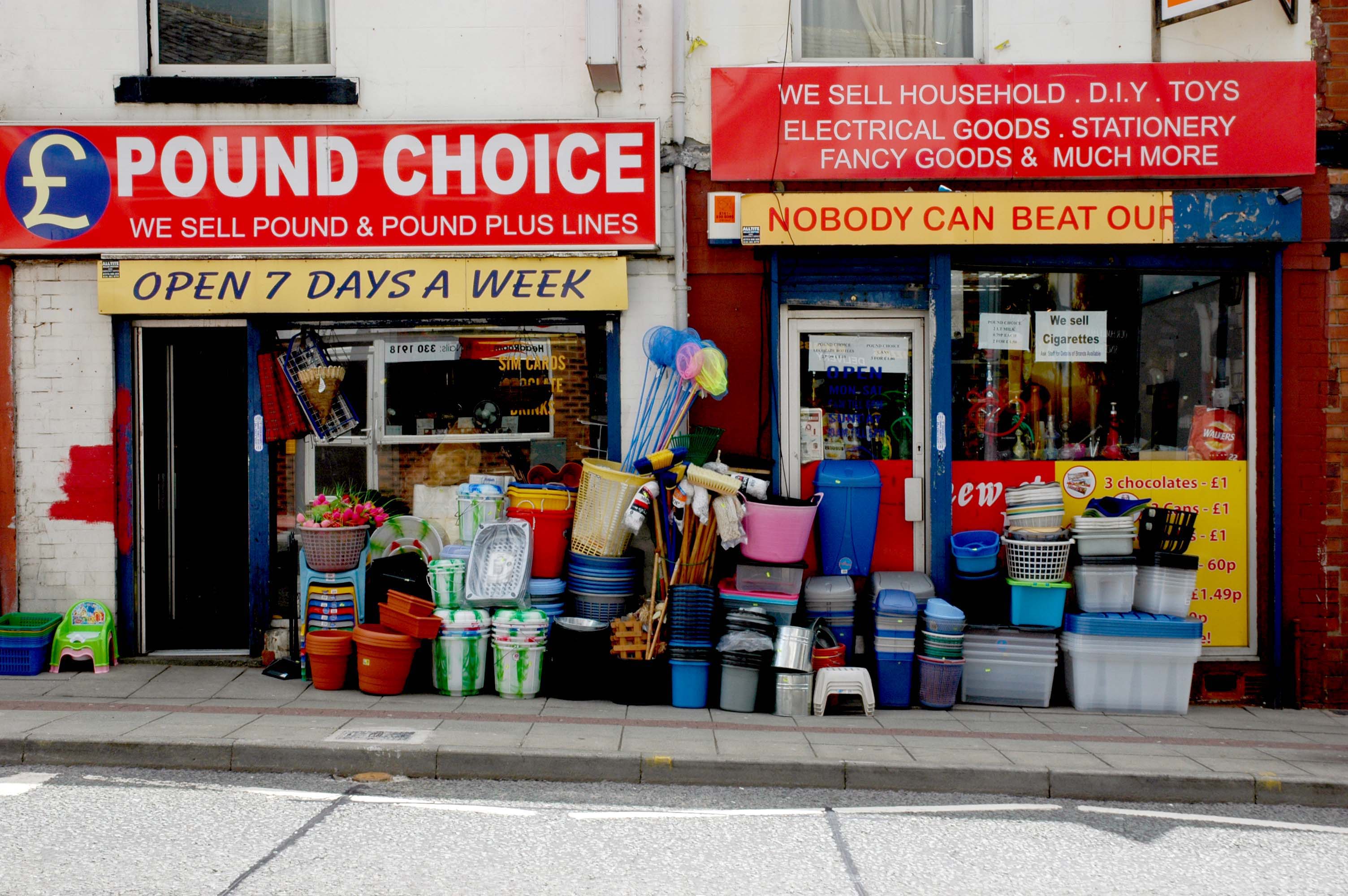
Celebrating the Pound Shop a profusion of road markings and pedestrian safety barriers.

Celebrating High Visibilty Workwear and the proliferation of the logotype

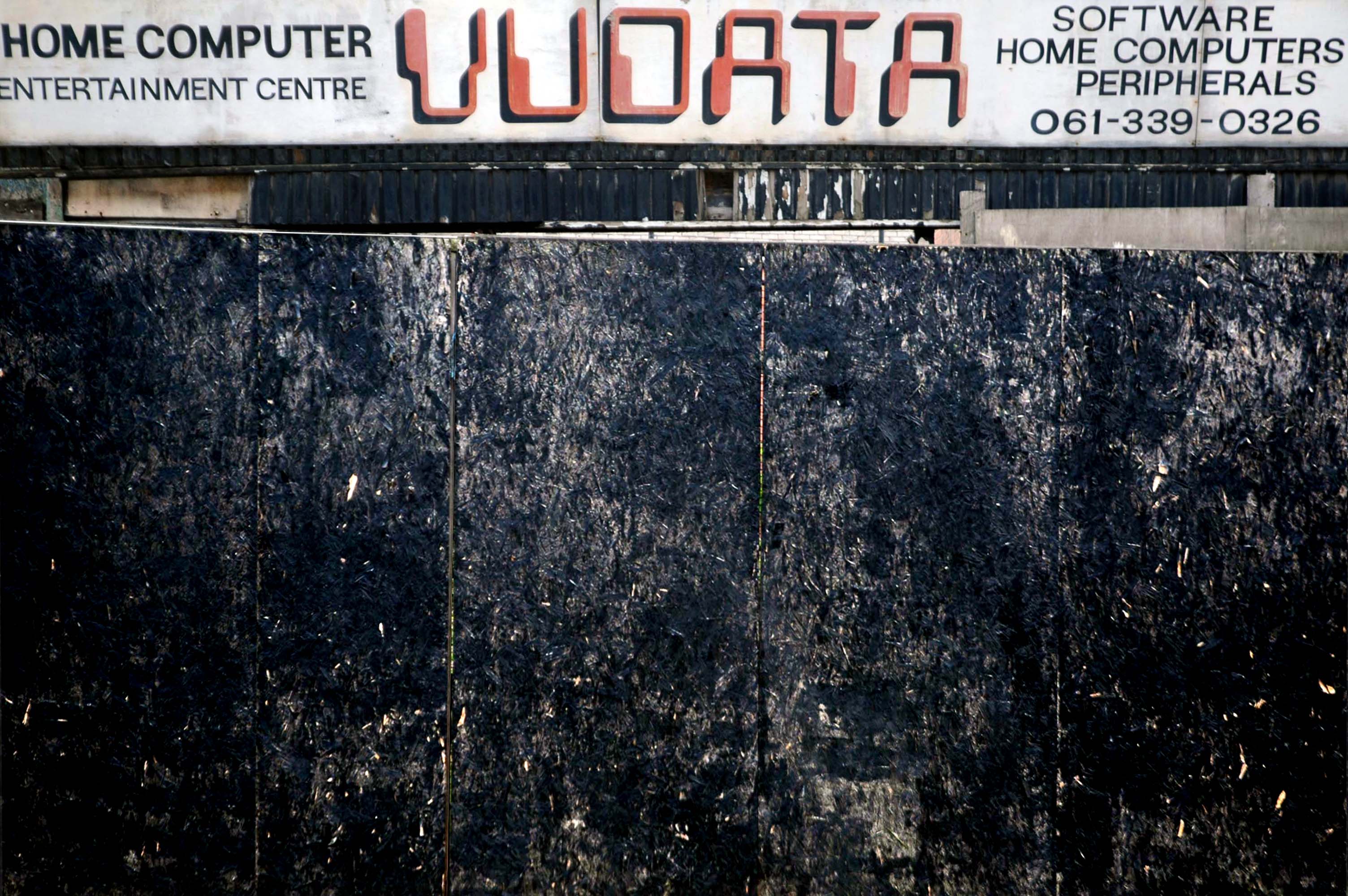
Celebrating advances in Information Technology and the decline of the retail sector.

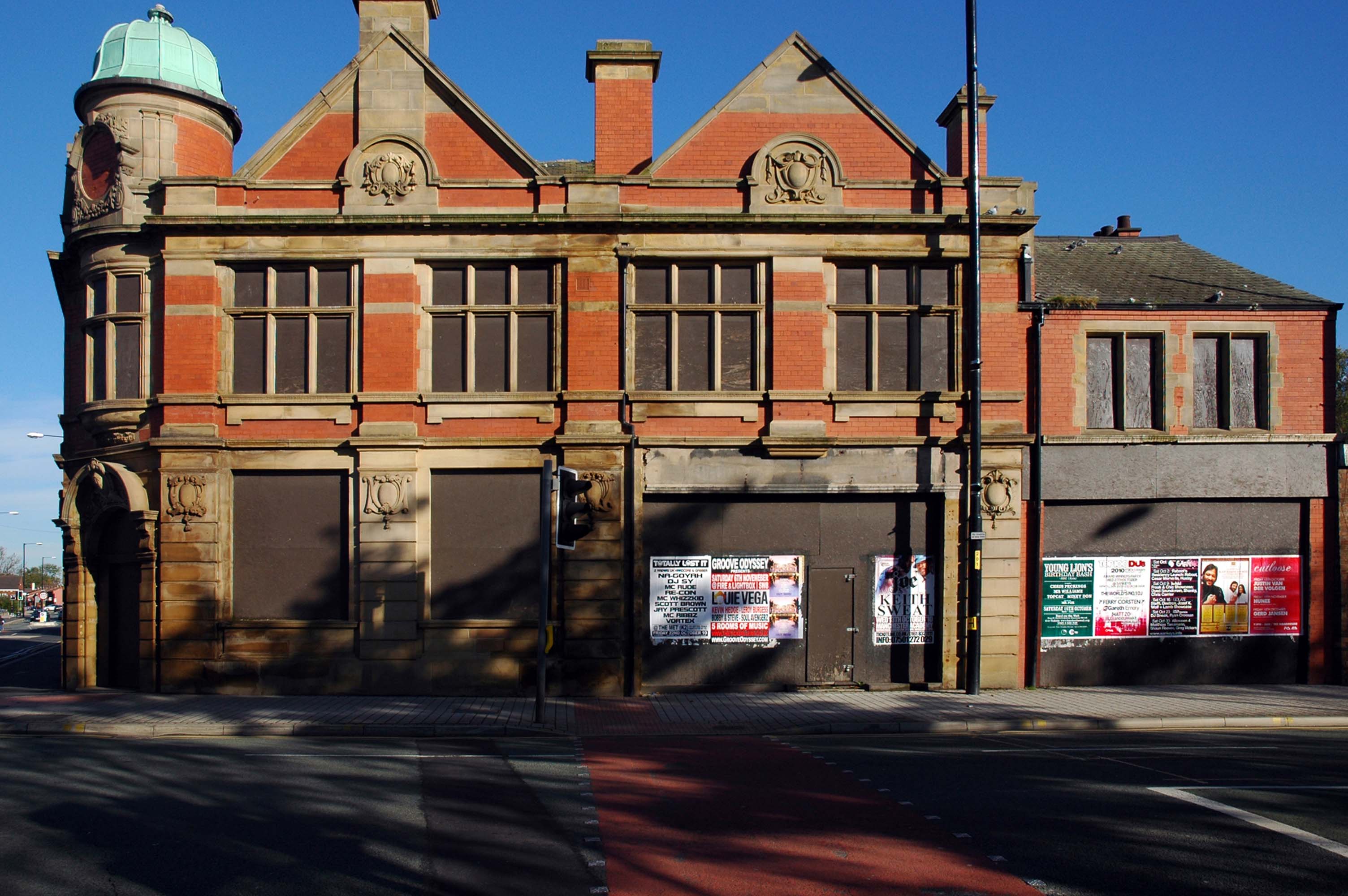
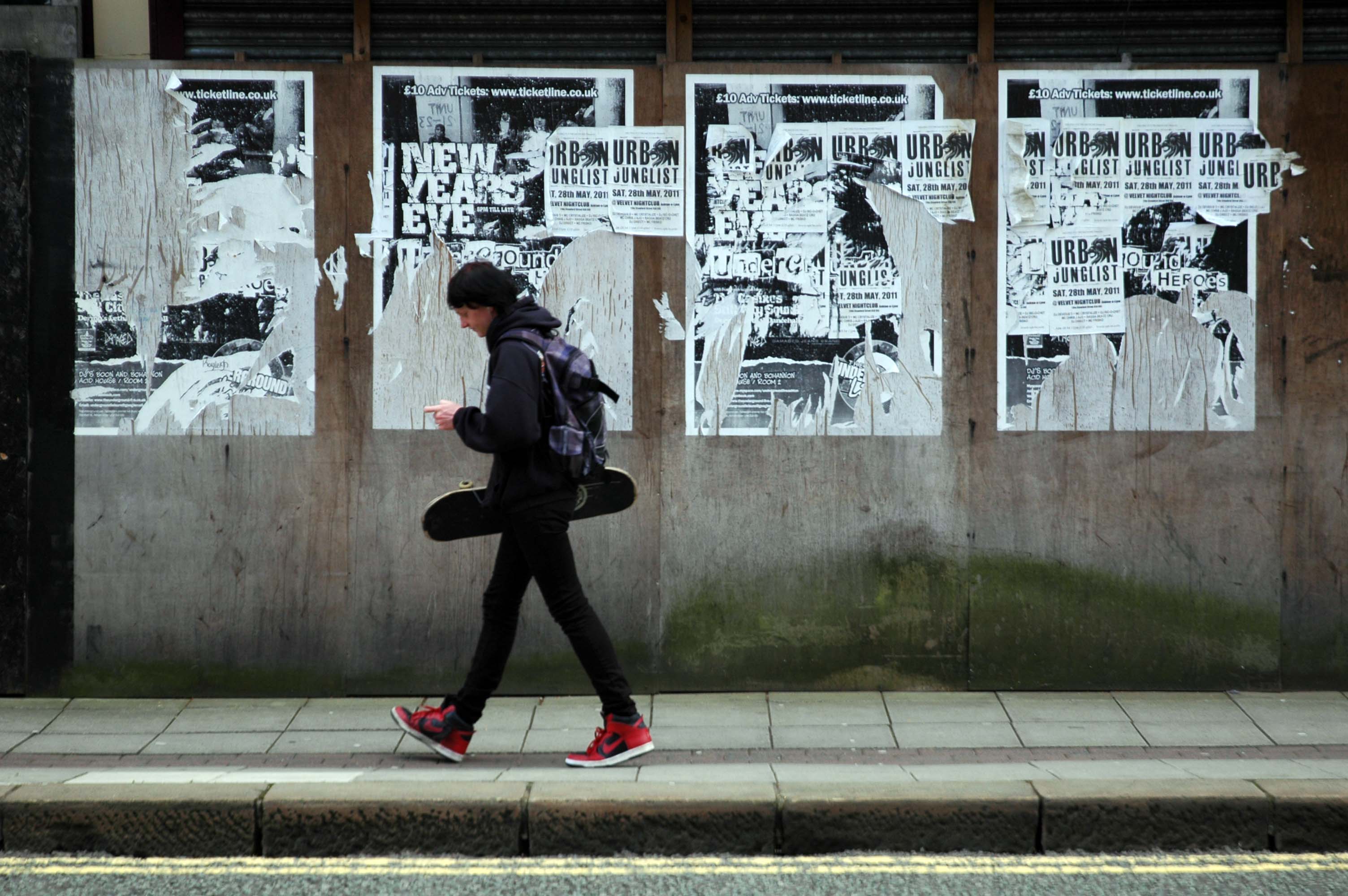
Celebrating advances in fly-posting, street skating, youth culture and musical diversity.

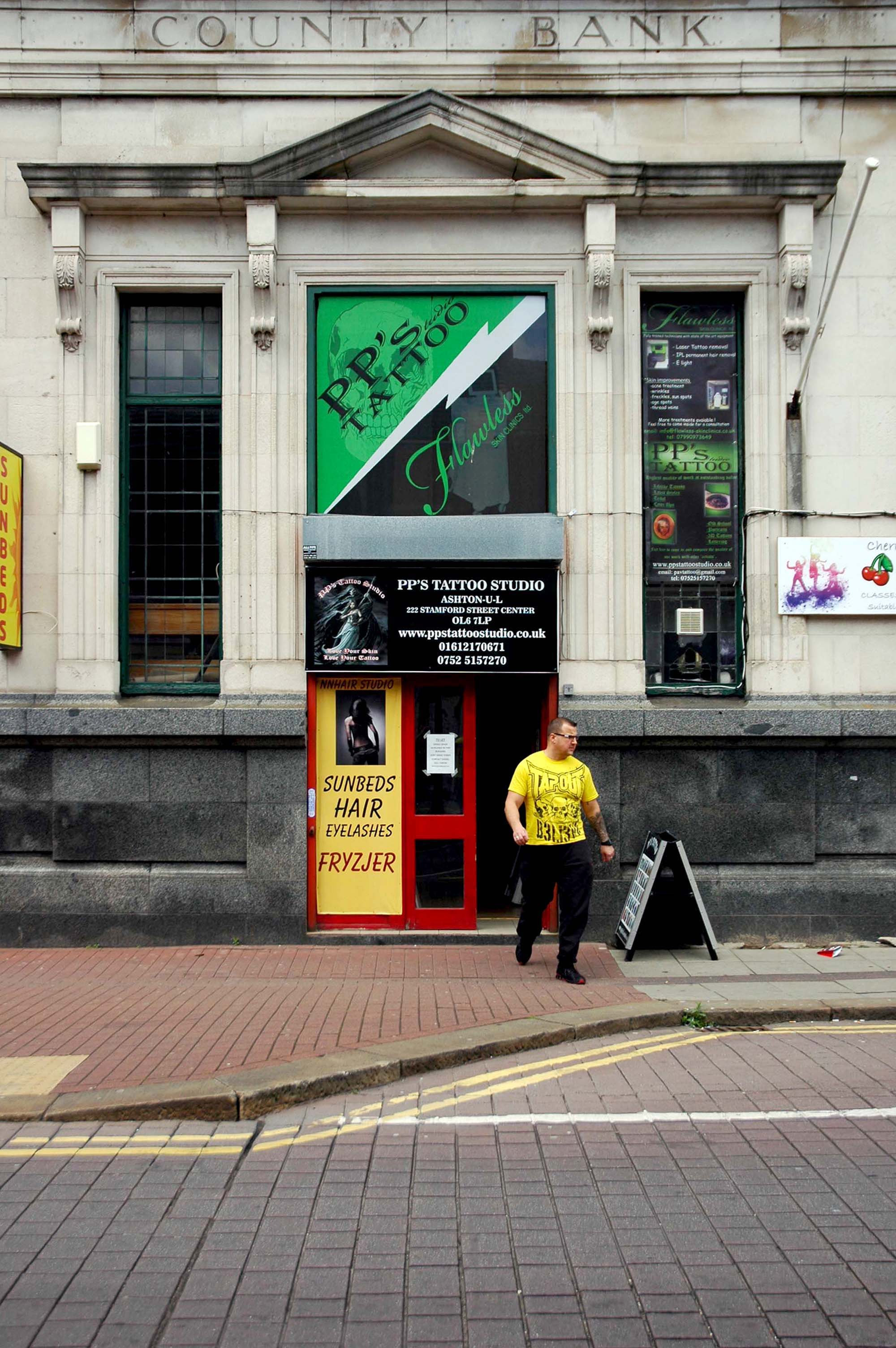
Celebrating the re-use of redundant banks, sun beds, tattooing and t-shirts.

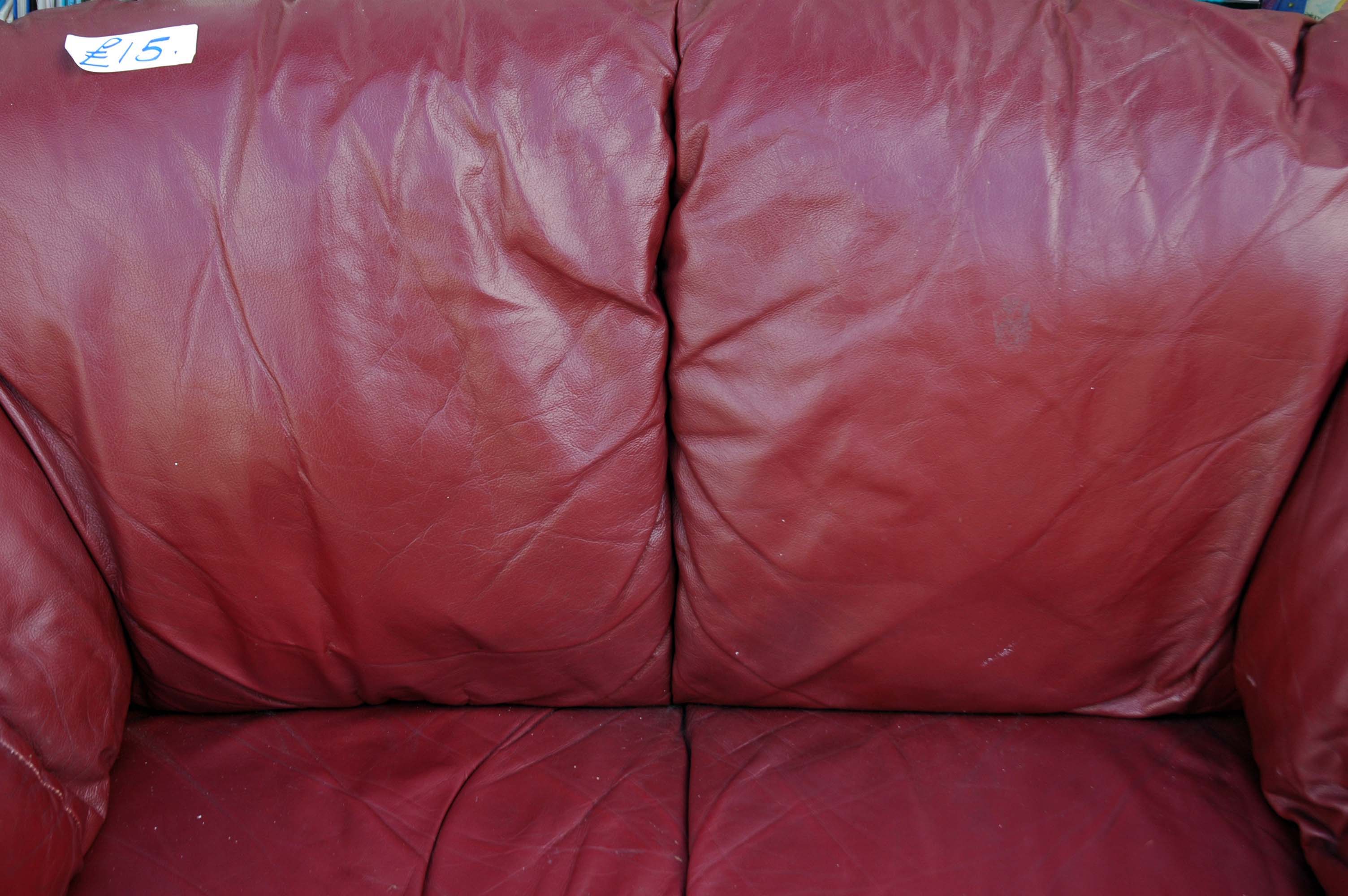
Celebrating advances in charity chop furniture pricing and the proliferation of leather sofas.

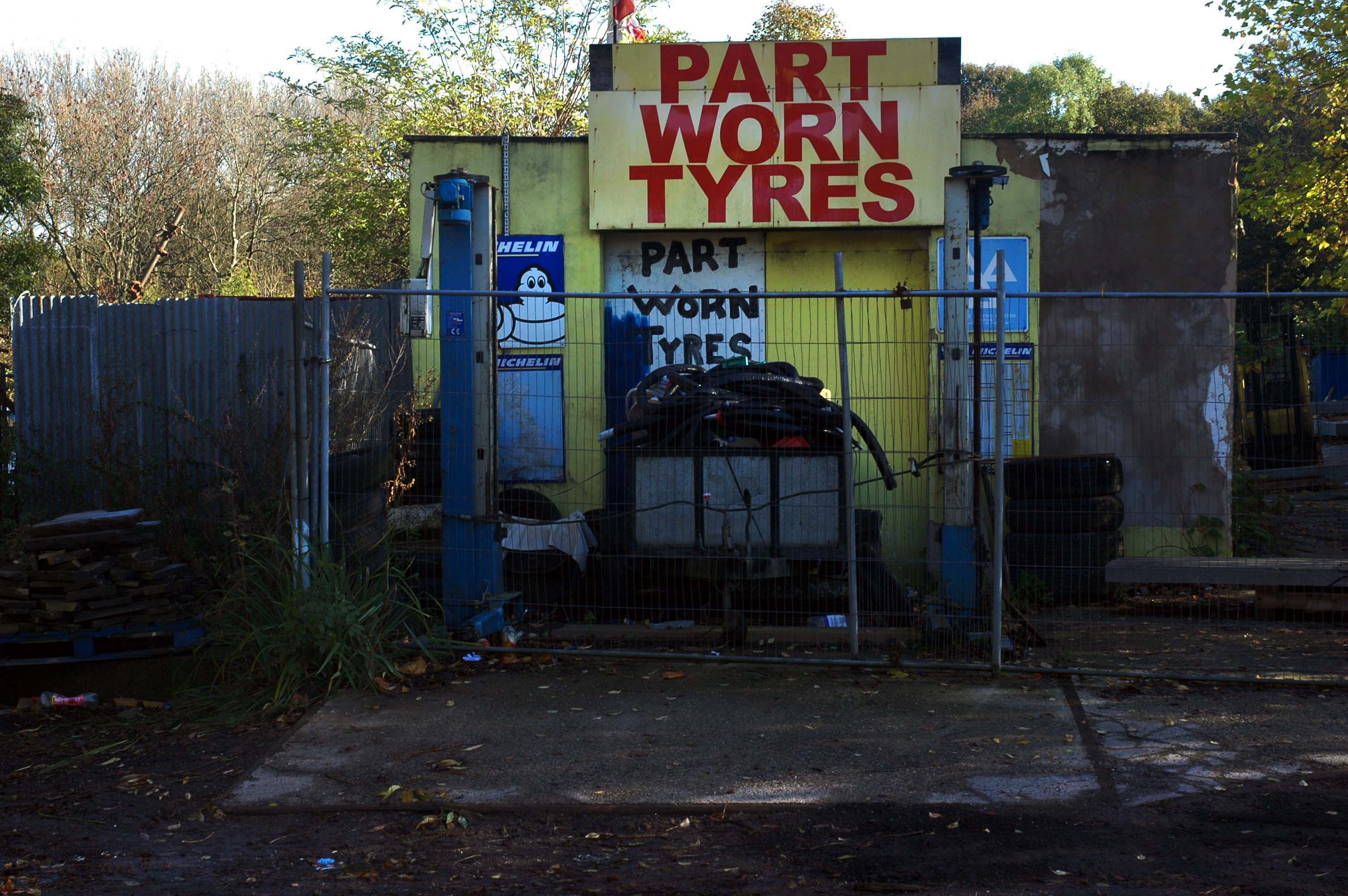
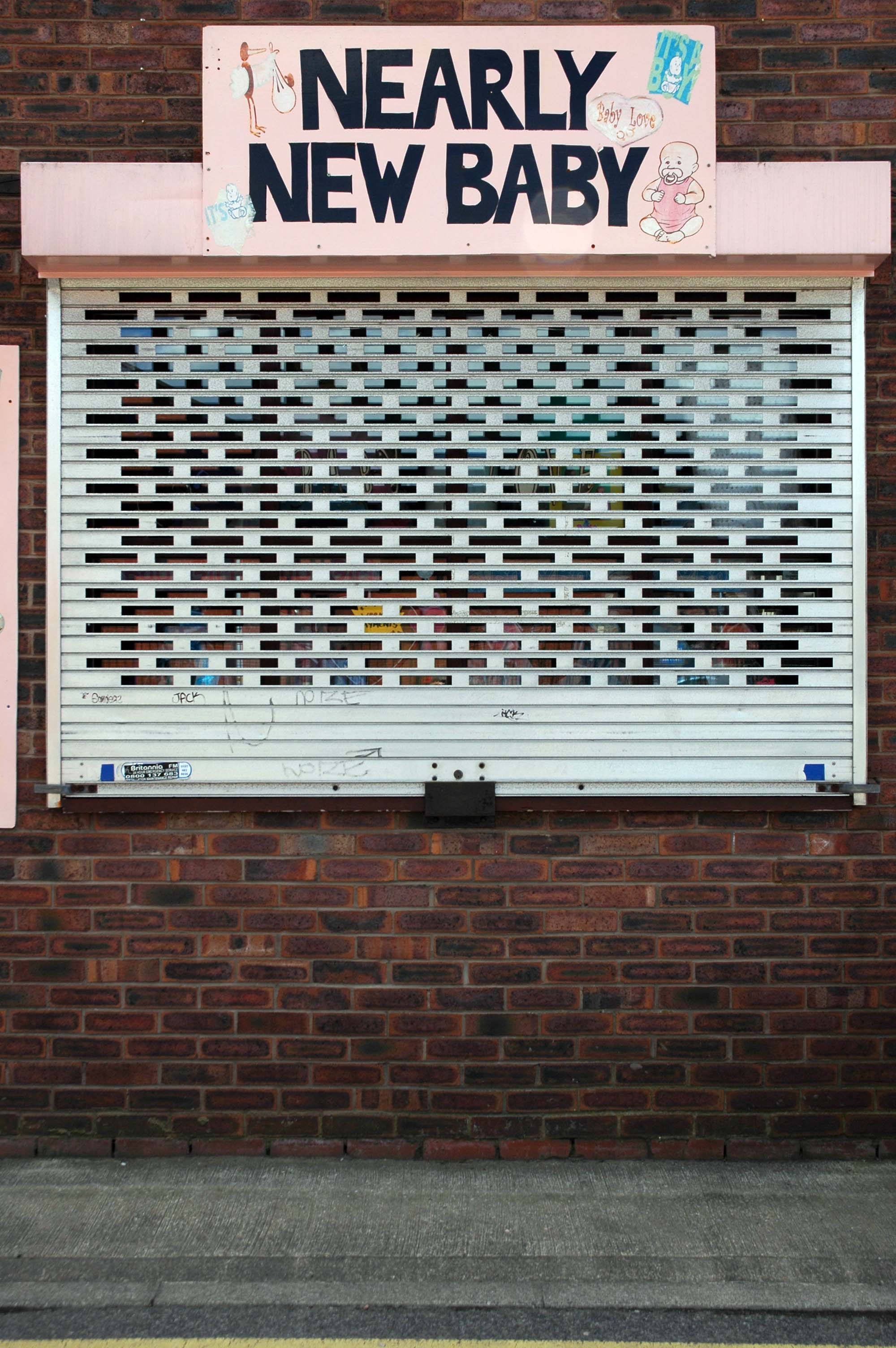
Celebrating the proliferation of the shuttered window, babies and home made retail signage.

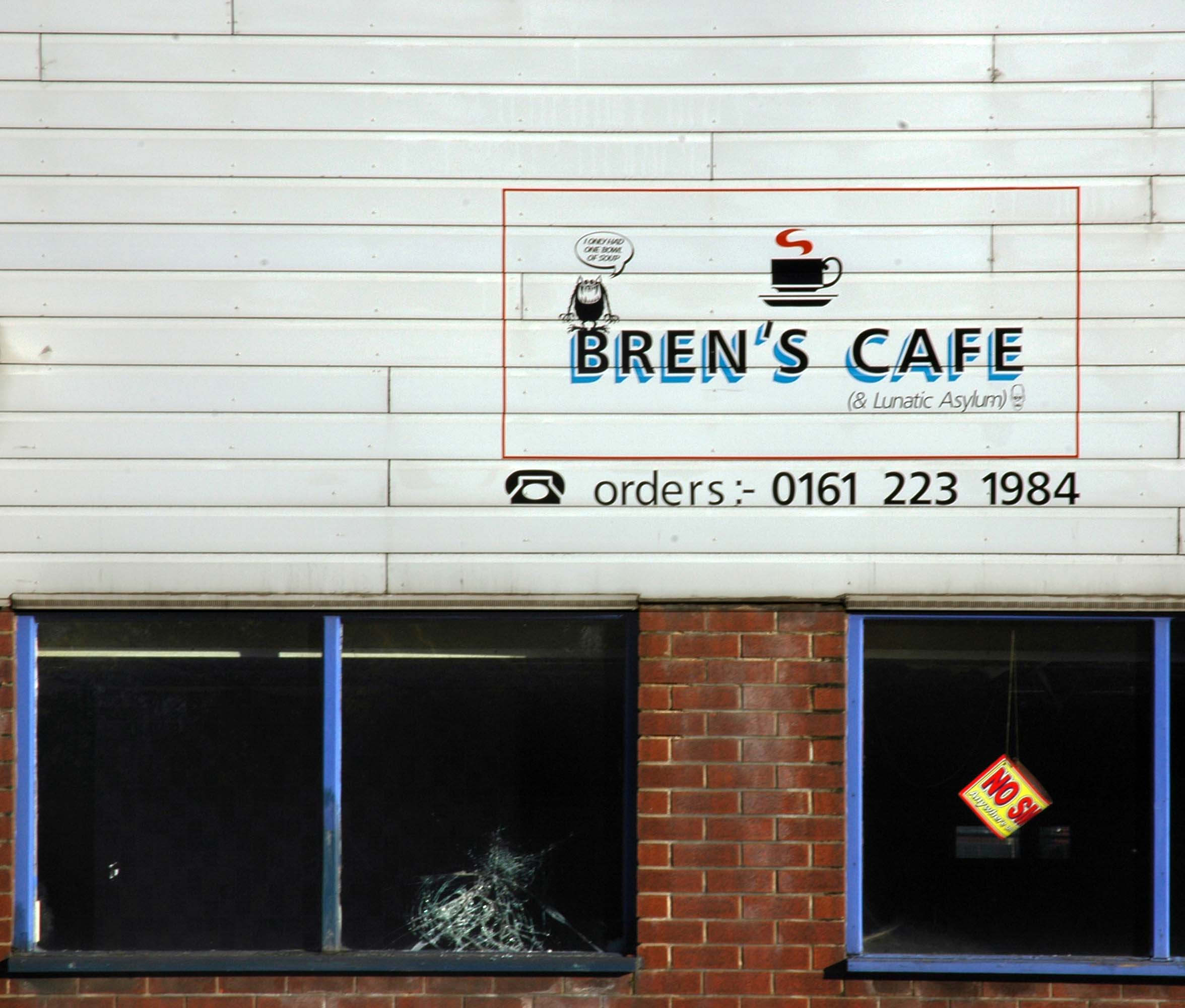
Celebrating niche marketing in the child-based, haircare market and developments in digitally originated vinyl signage.

Celebrating street art and British popular music and modern cuisine.

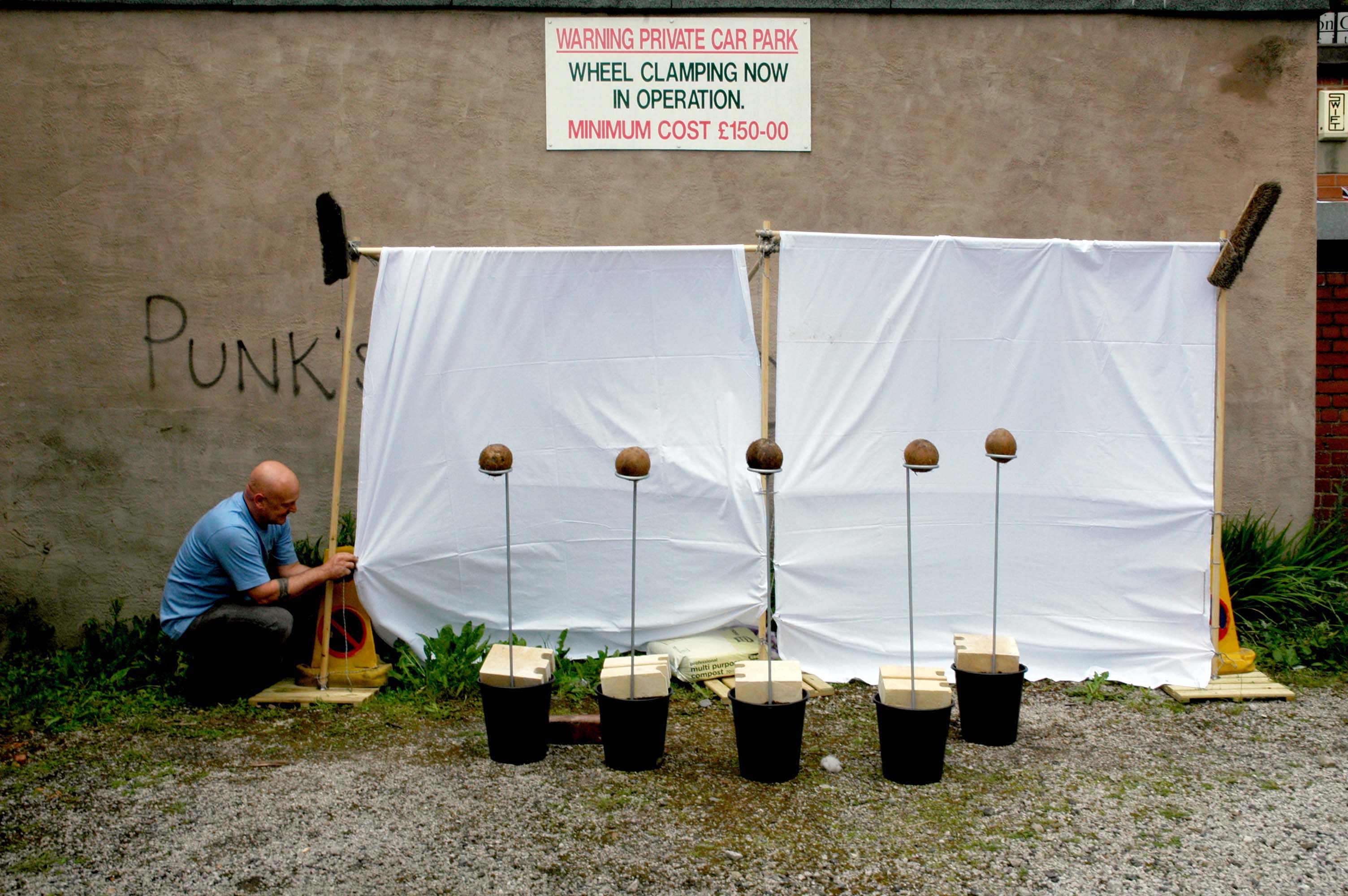
Celebrating Punk Rock, wheel clamping and British can-do!

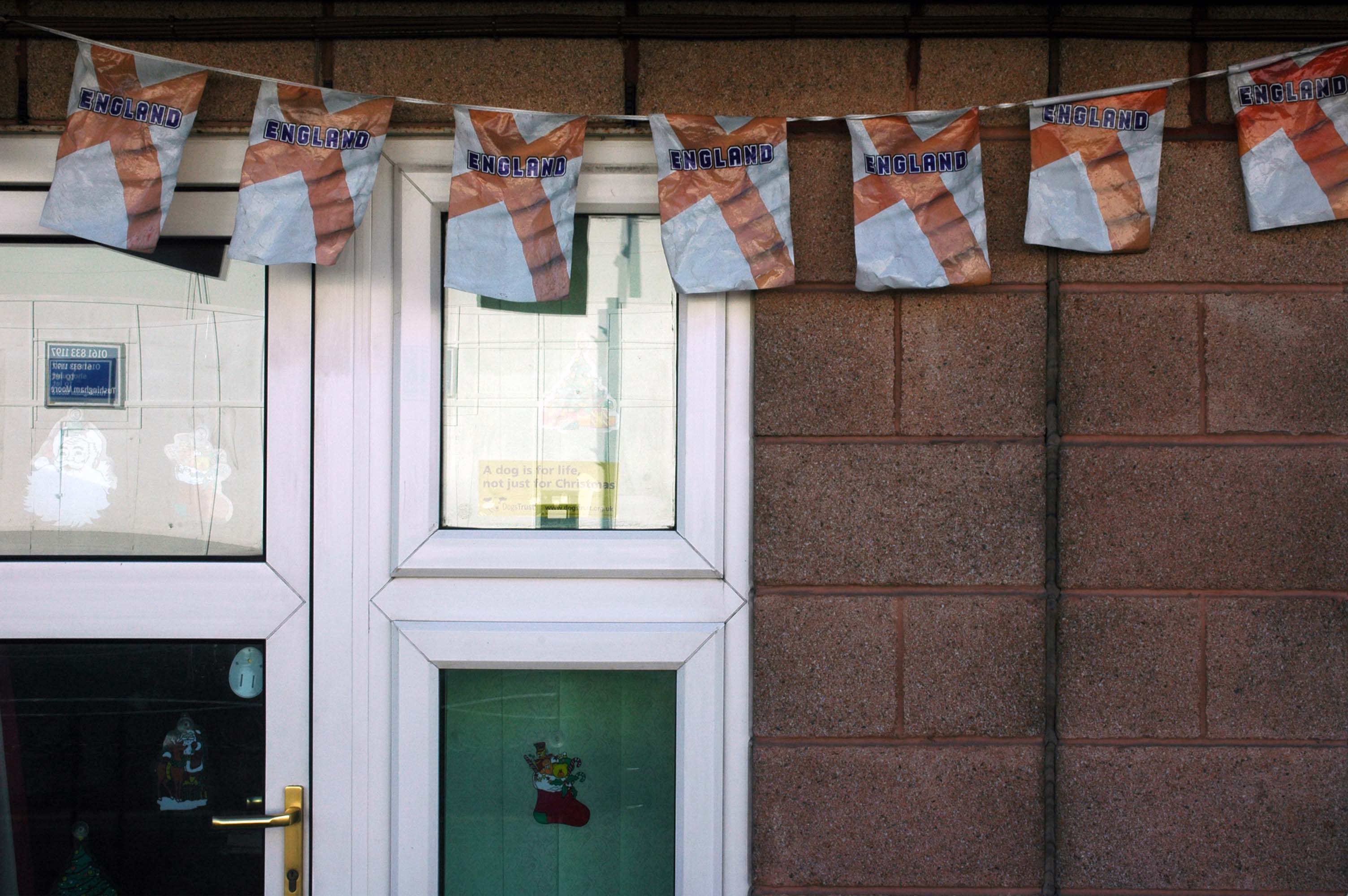
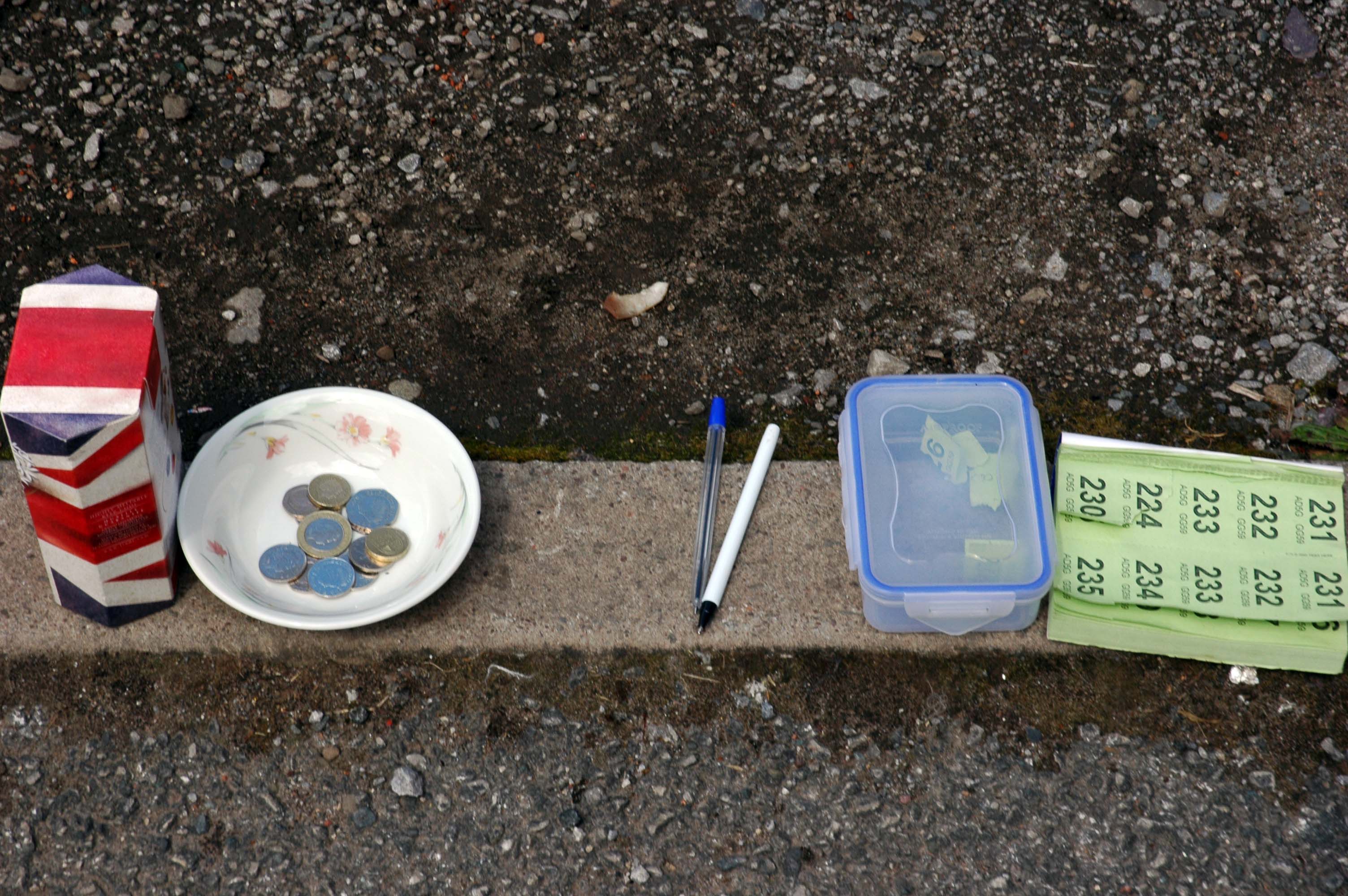
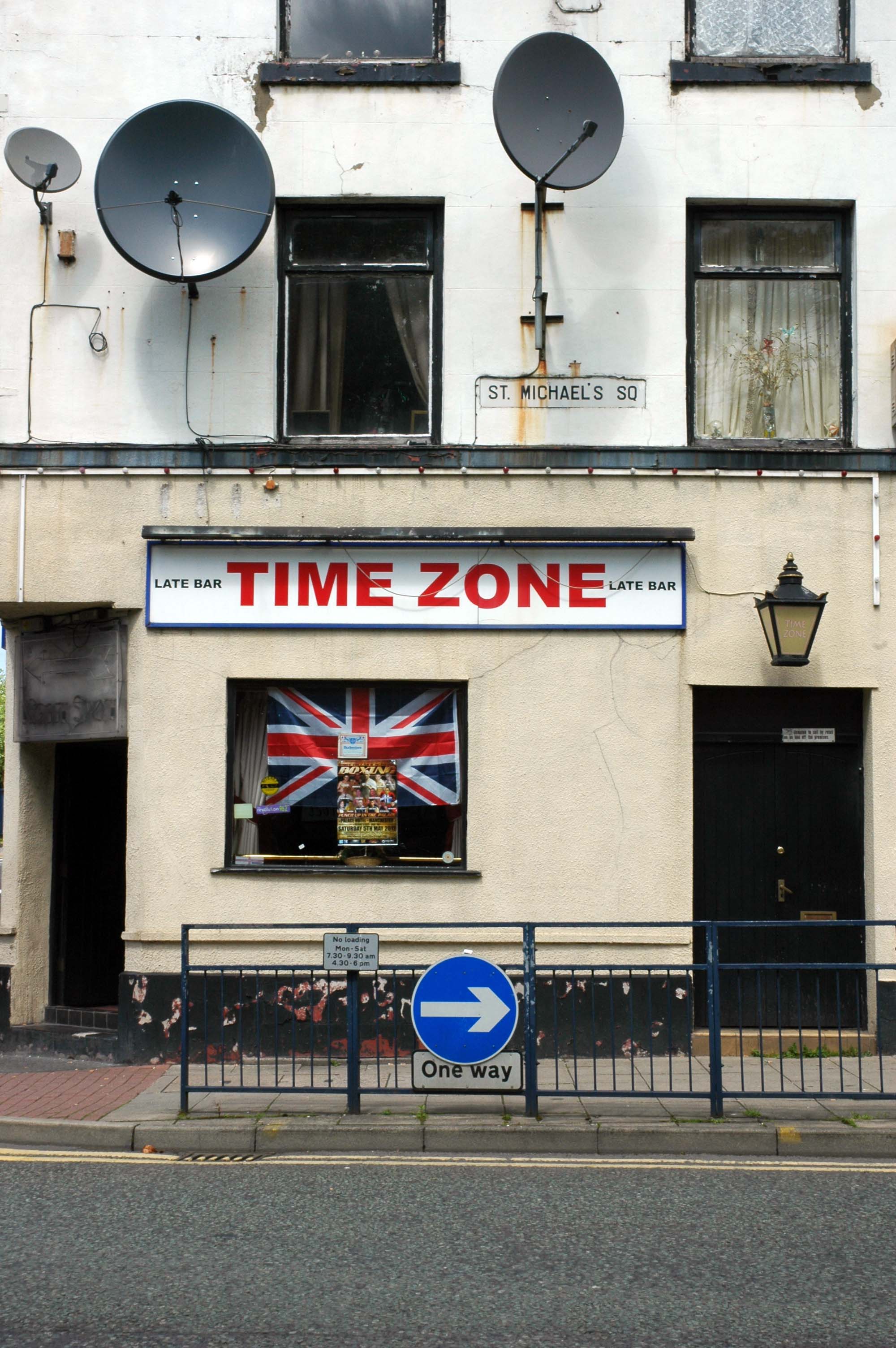
Celebrating the introduction of decimal coinage, raffle tickets, cheap biros, affordable imitation Tupperware, raffles and the Union Flag

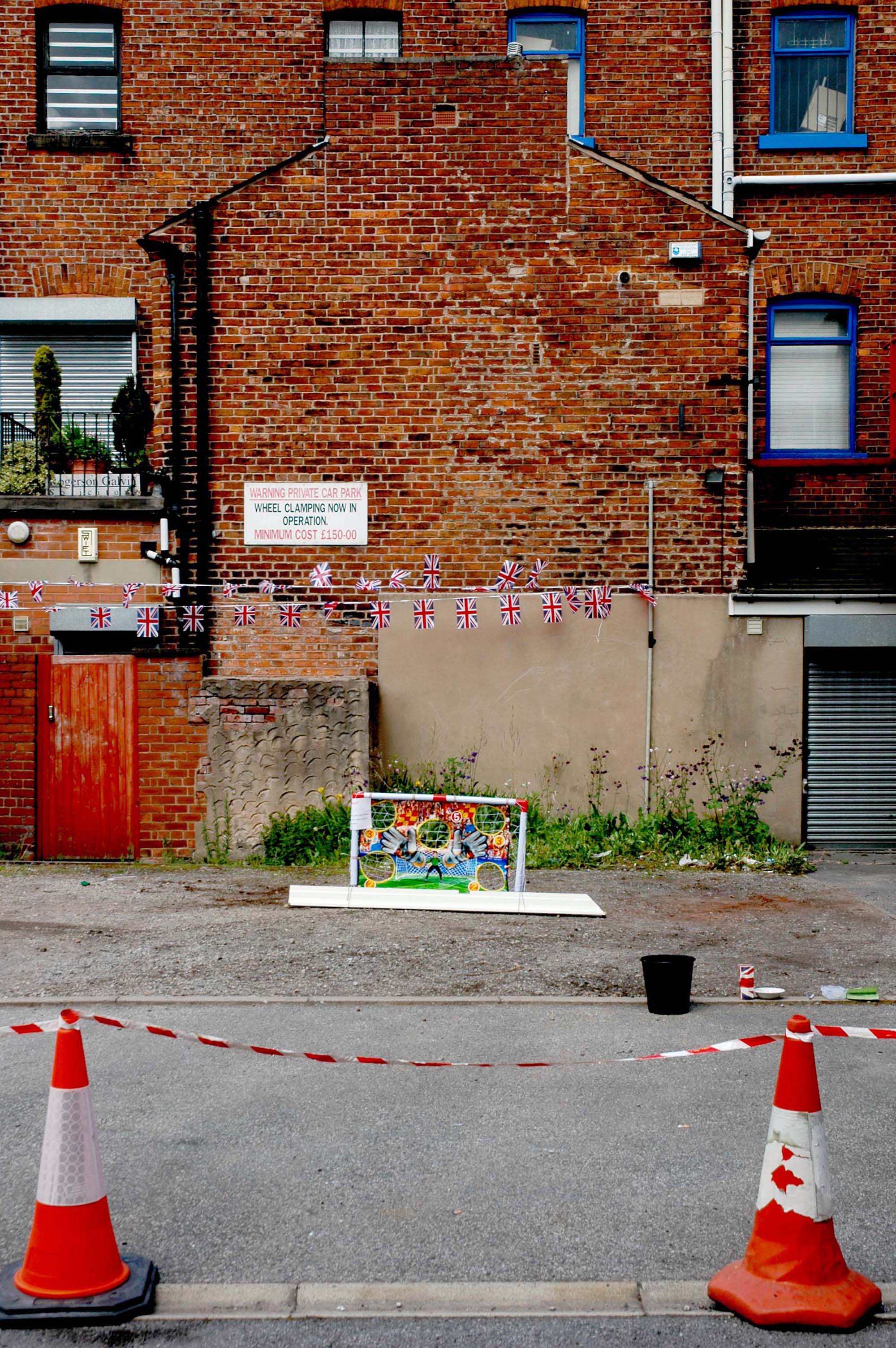
Celebrating the huge importance of Association Football, hazard tape, shuttered doors and the ubiquity of the traffic cone.

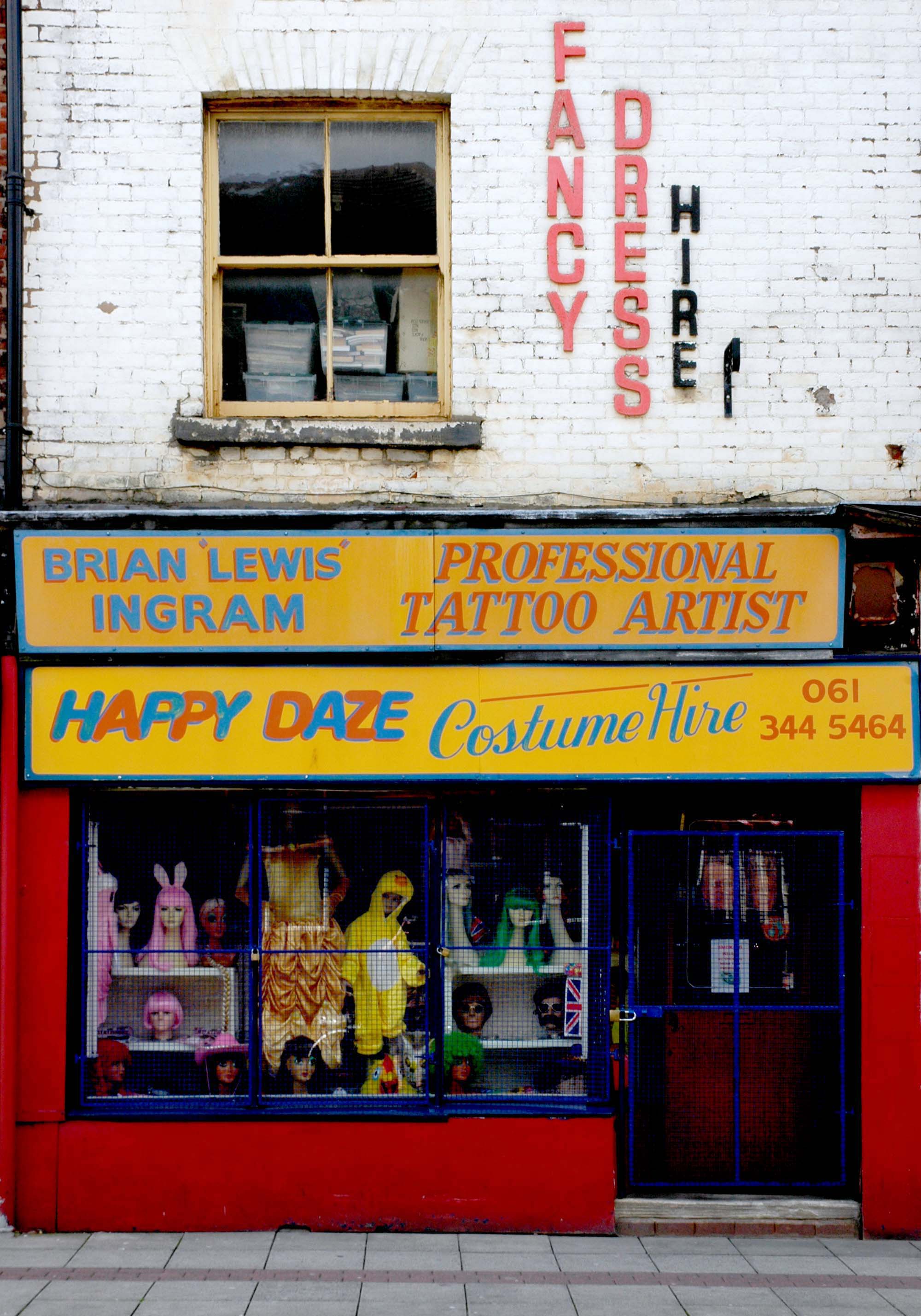
Celebrating the ever growing popularity of Fancy Dress.

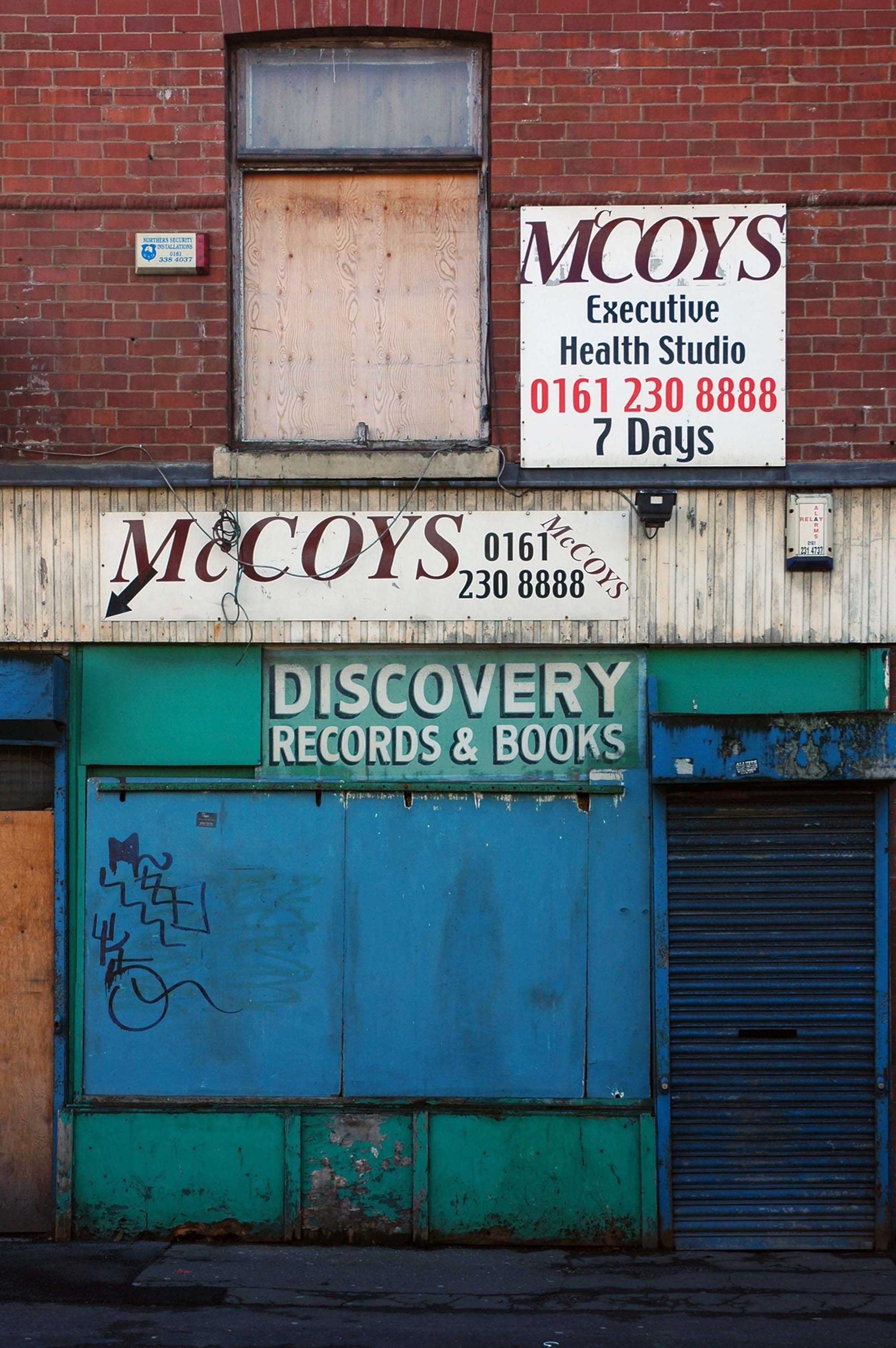
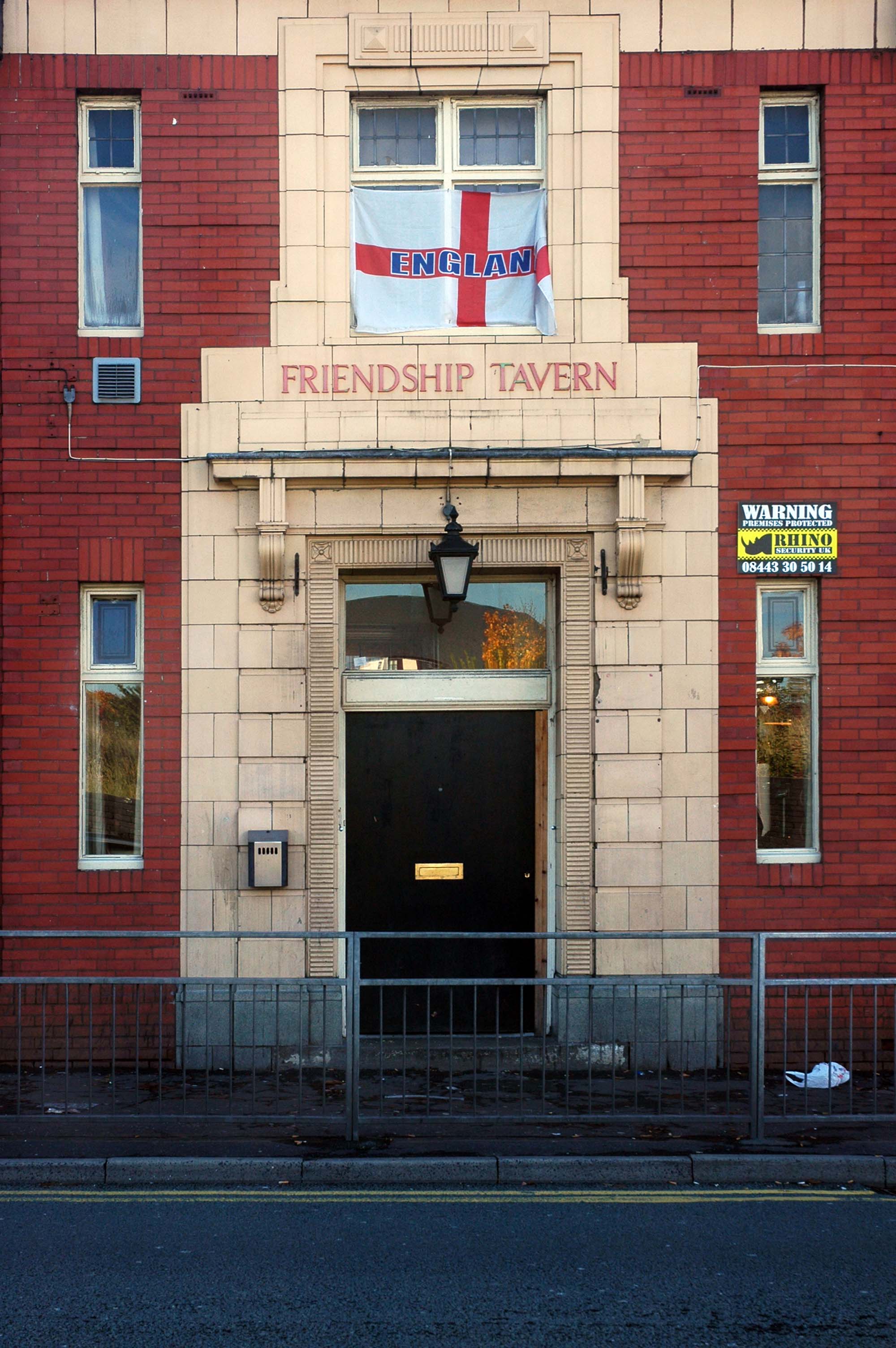
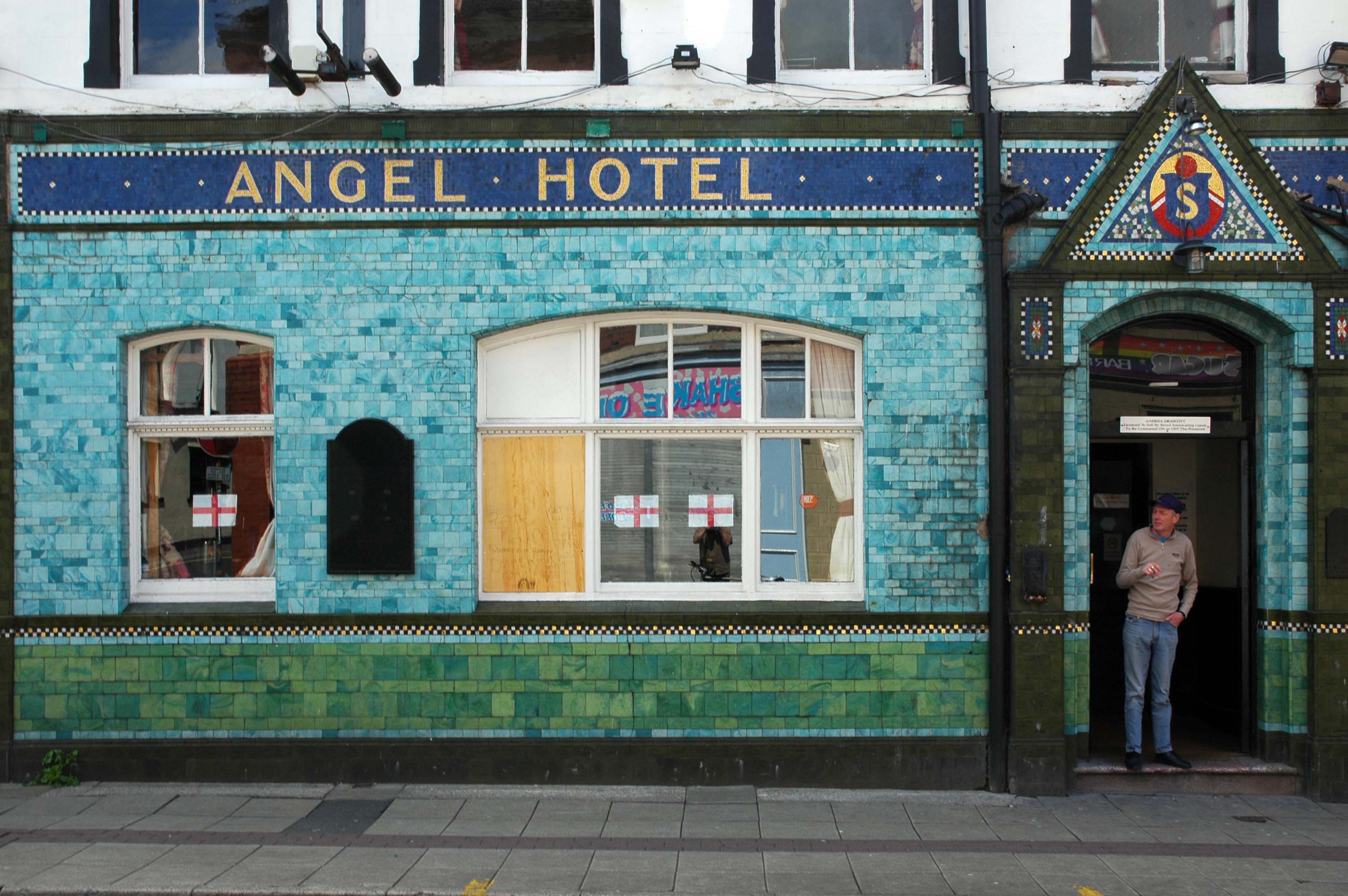
Celebrating pub tiles, the smoking ban, the use of plywood as an acceptable window replacement material and the current confusion regarding Britishness and Englishness.

Celebrating satellite telly, faux Victoriana and the development of the one way traffic system.

Celebrating plastics in the service of the modern citizen.

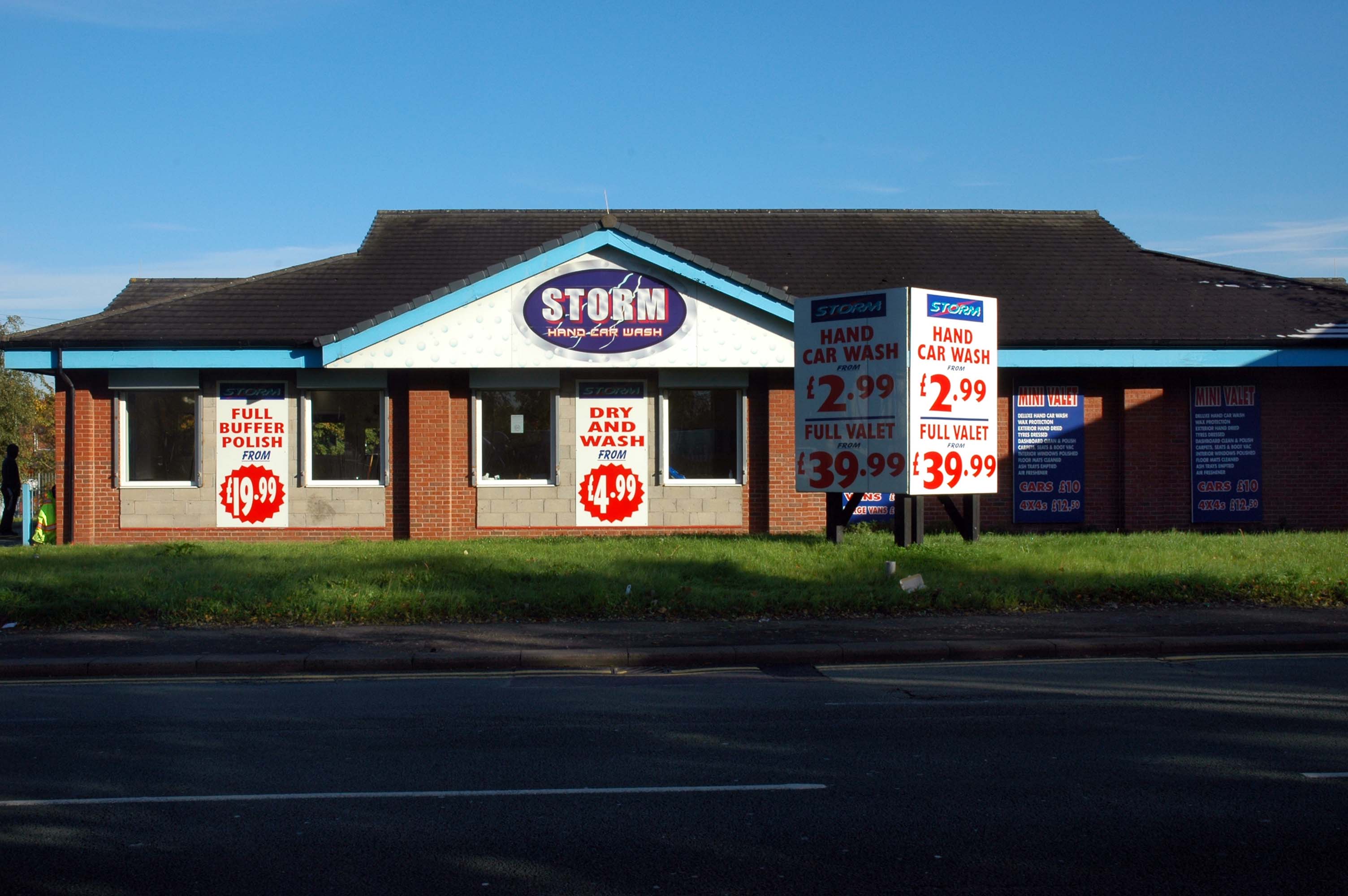
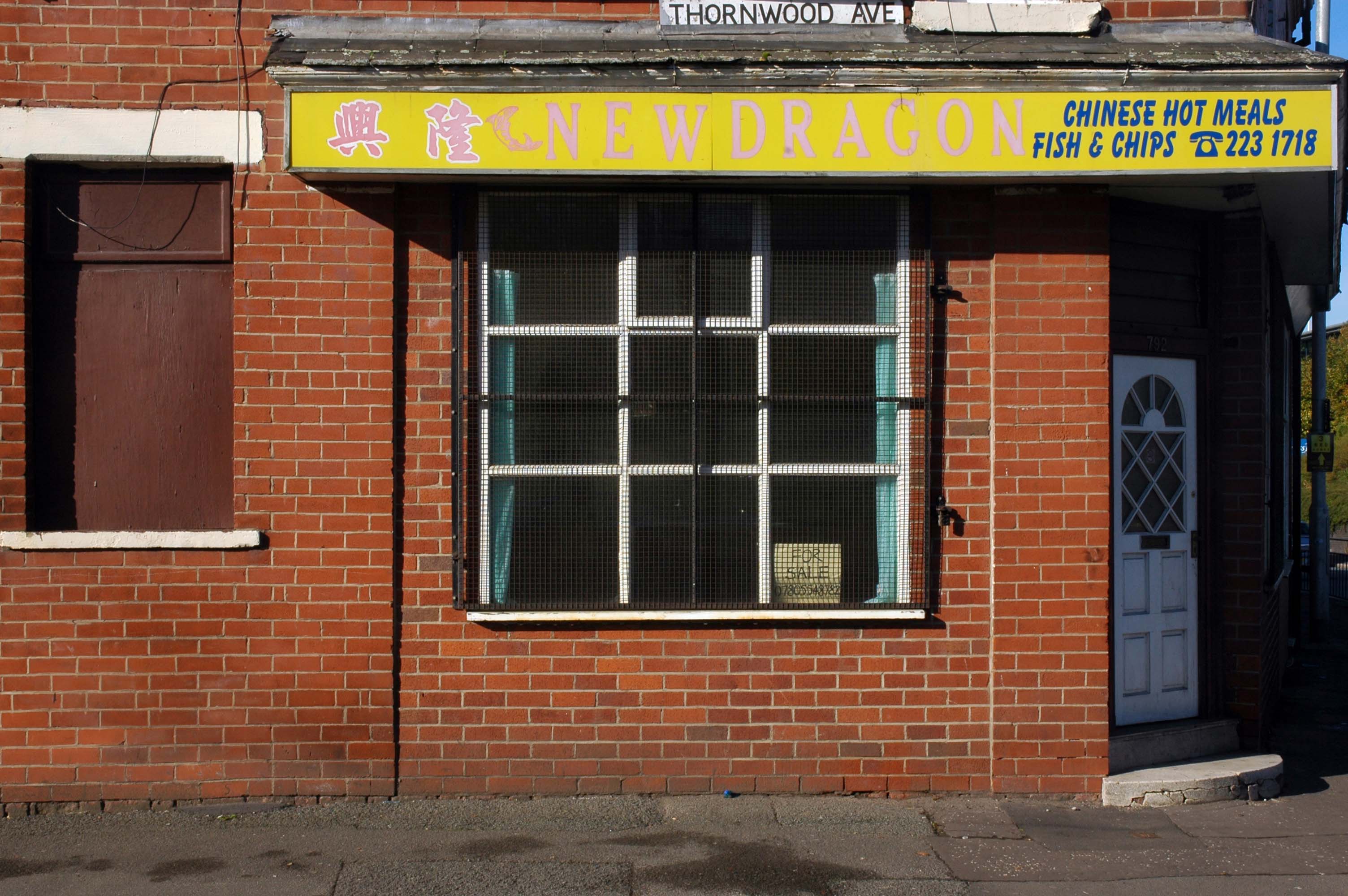
Celebrating laser-cut vinyl, adhesive lettering, regional cuisine and the imaginative minds of those who name our modern retail outlets.

Celebrating the welcome Americanisation of our youngster’s diet – Slush you couldn’t make it up!

Celebrating the welcome Americanisation of our youngster’s diet – Slush you couldn’t make it up!

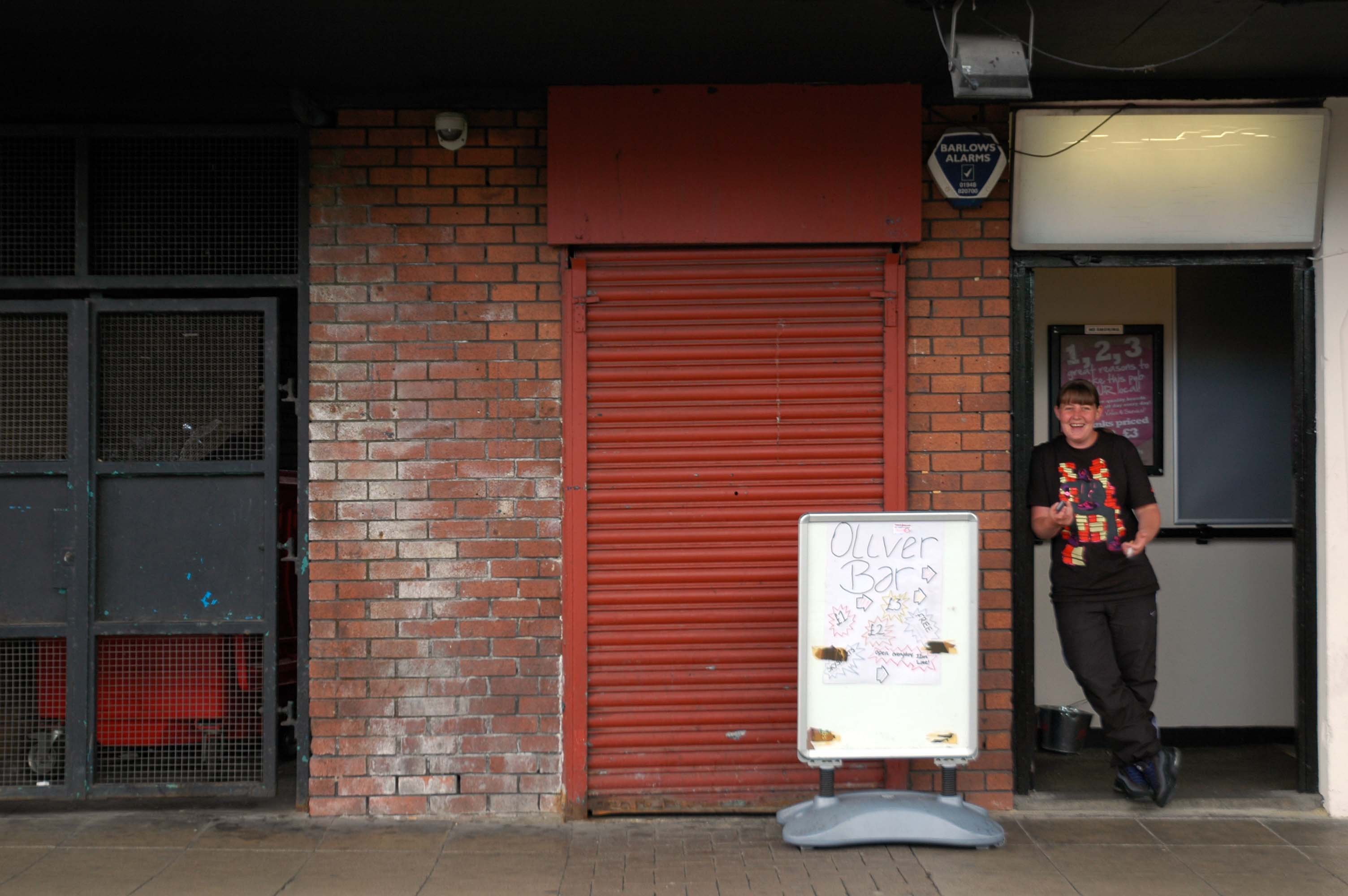
Celebrating the return of the £1 pint, here at Oliver’s Bar, formerly The Cavern, a superbly appointed Bass Charrington owned, underground pub. 

My thanks to Emma Noonan for kindly appearing in the doorway.

Celebrating our ever widening range of ethnic cuisine and the use of the ingenious A4 laser-written poster montage.

Celebrating the wide variety of vernacular tribute bands – Reet Hot Chilli Peppers?

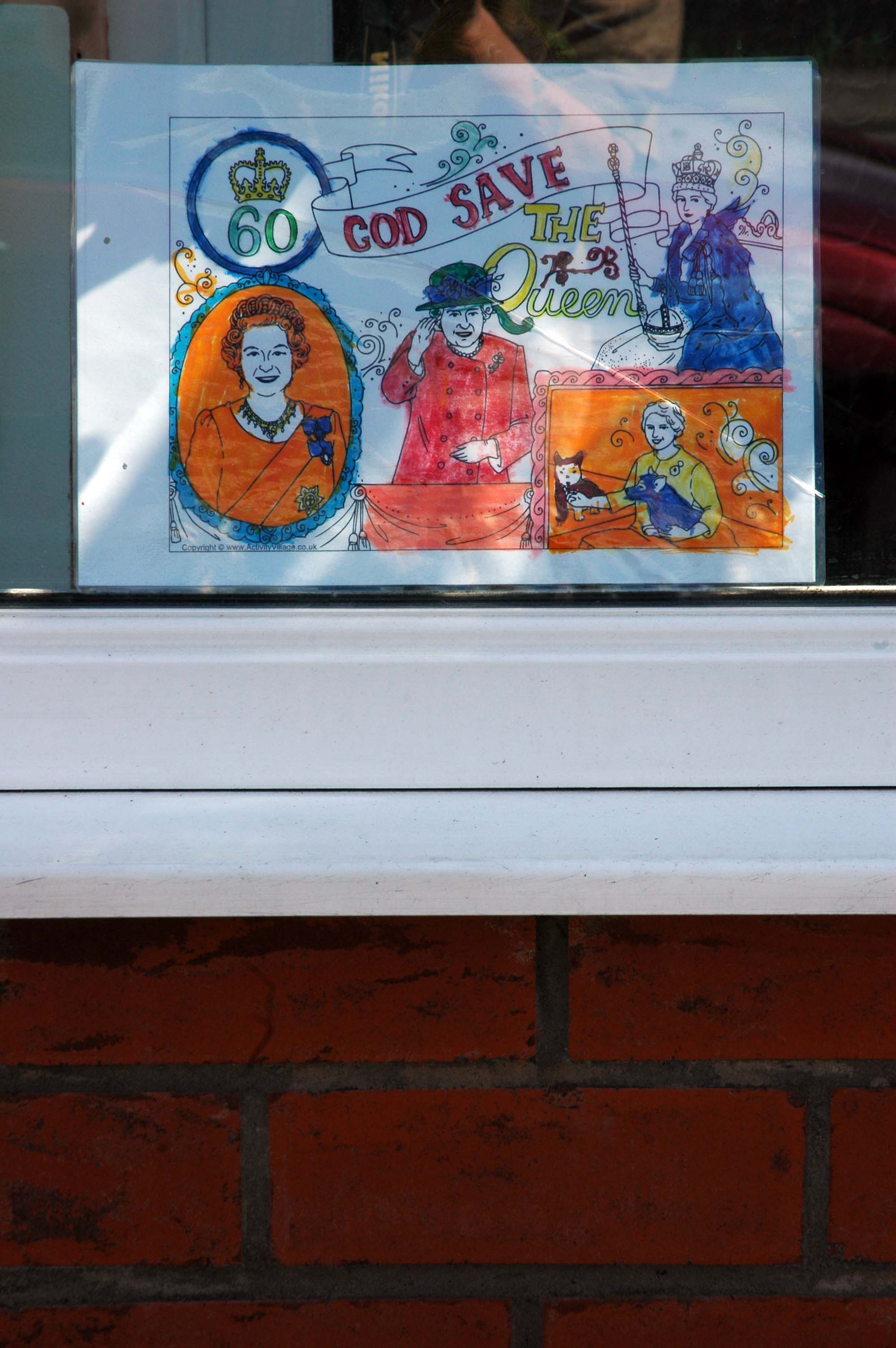
Celebrating the ever popular art of colouring-in and the wide availability of the felt tip pen.

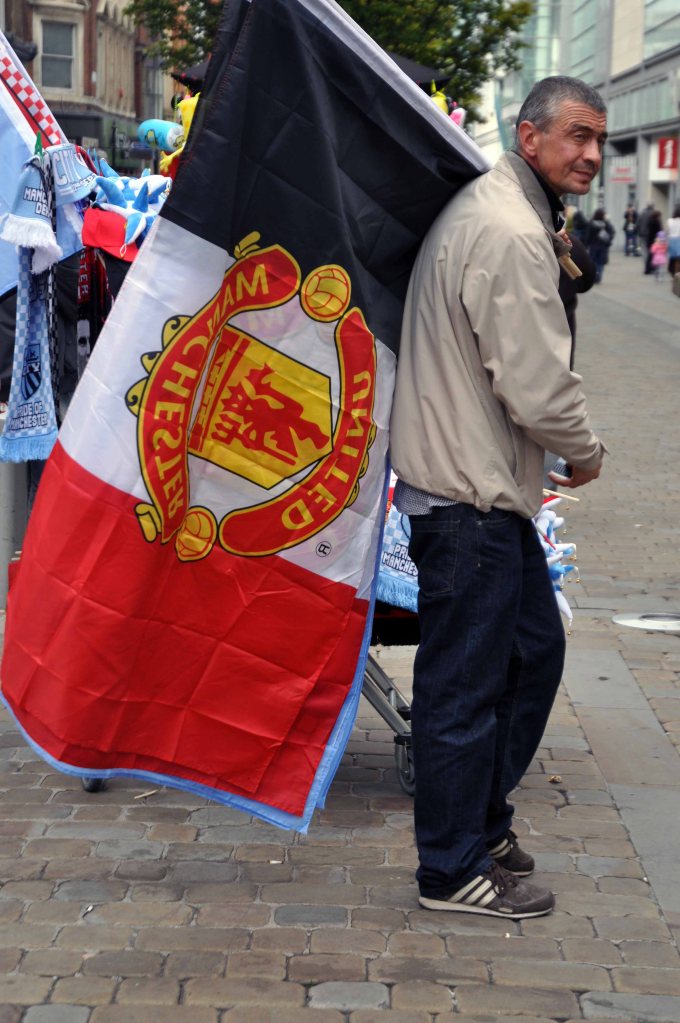
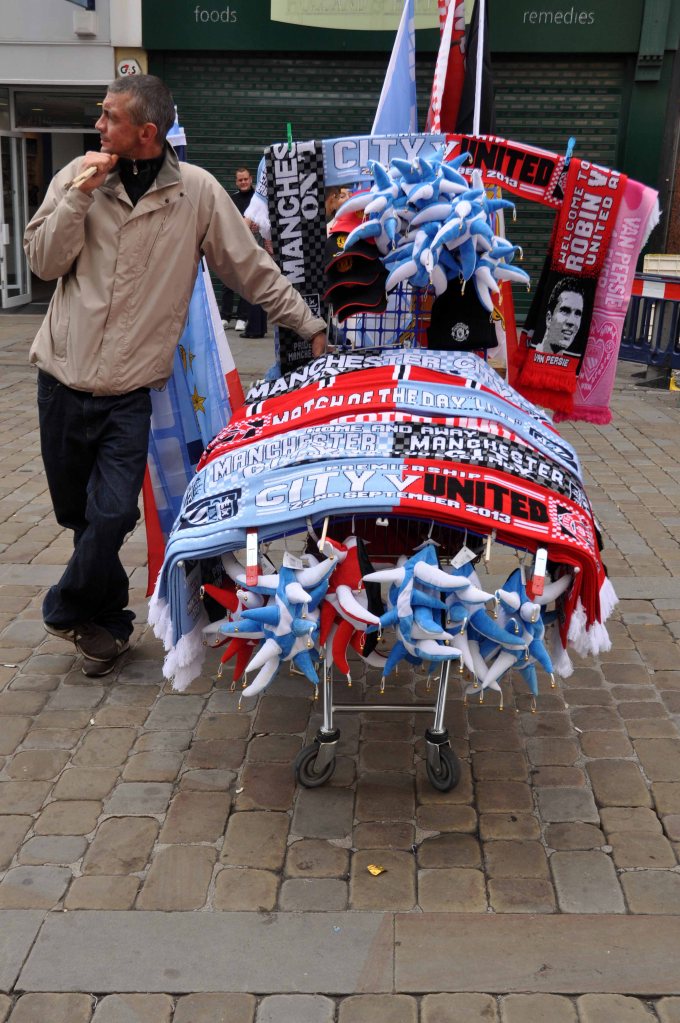
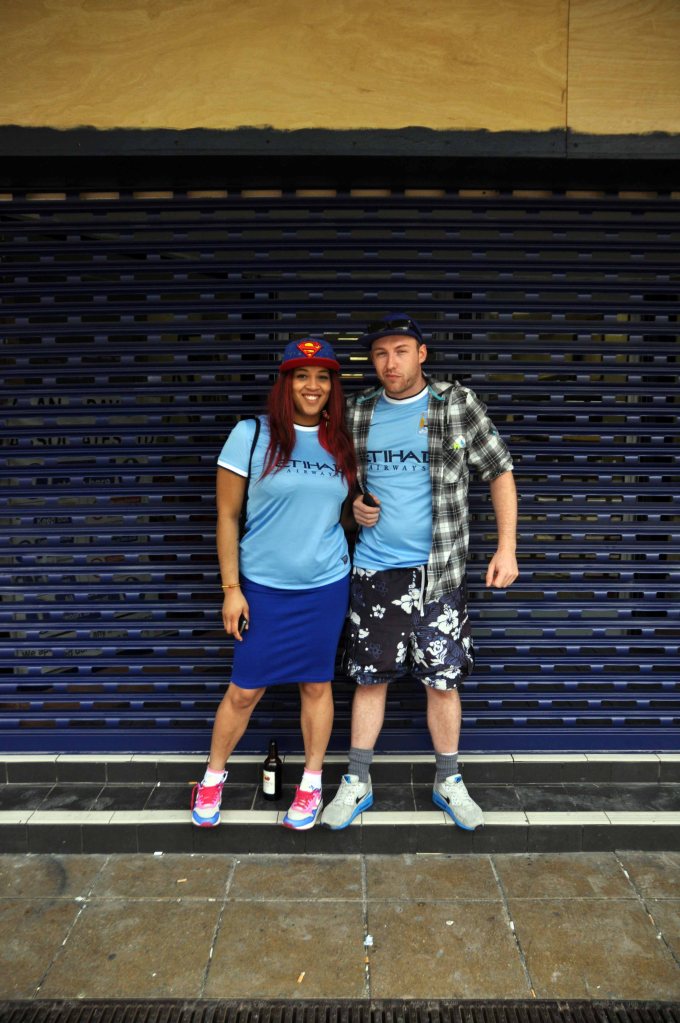
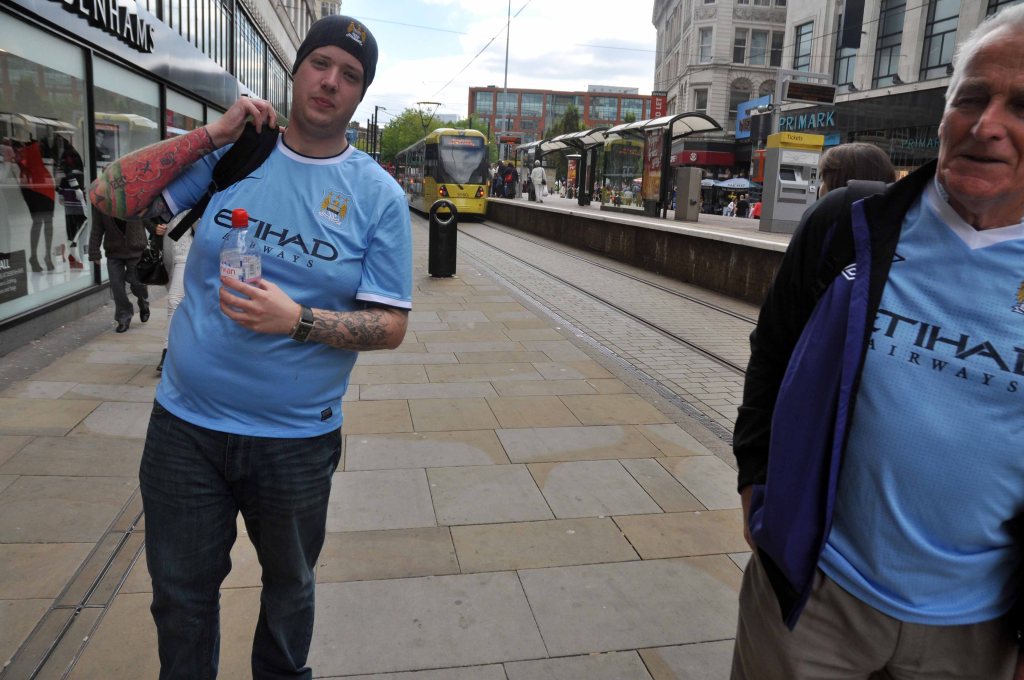
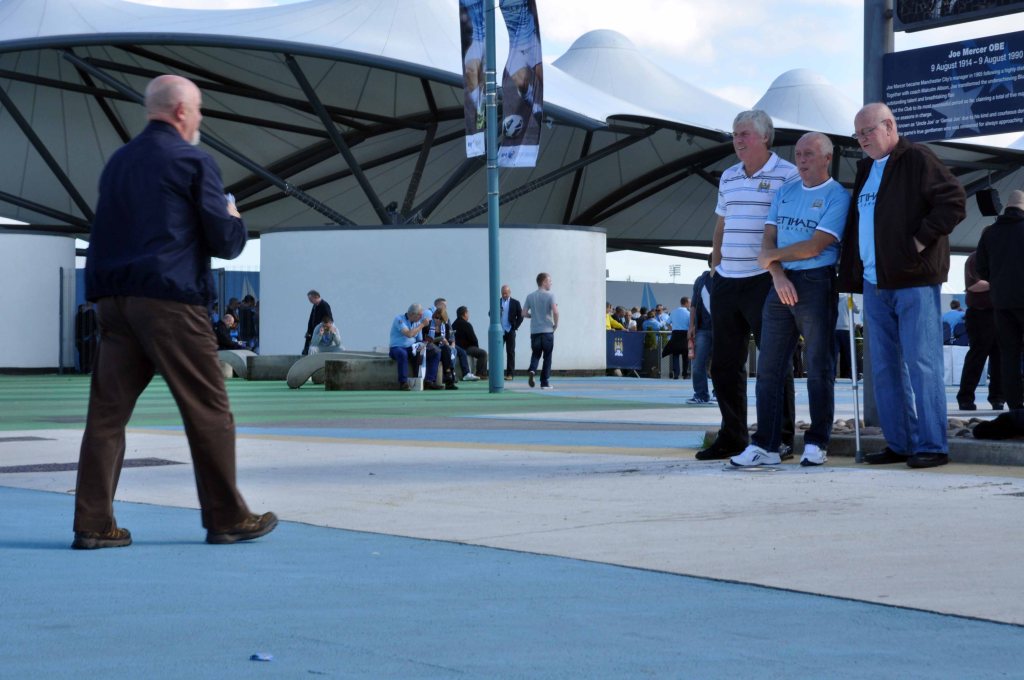
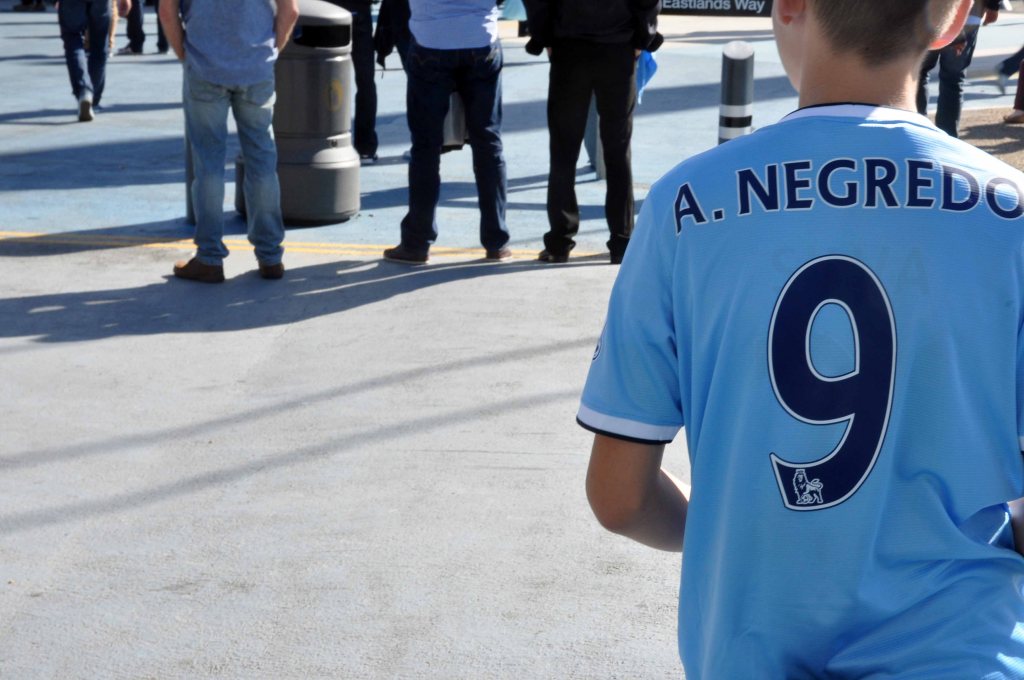
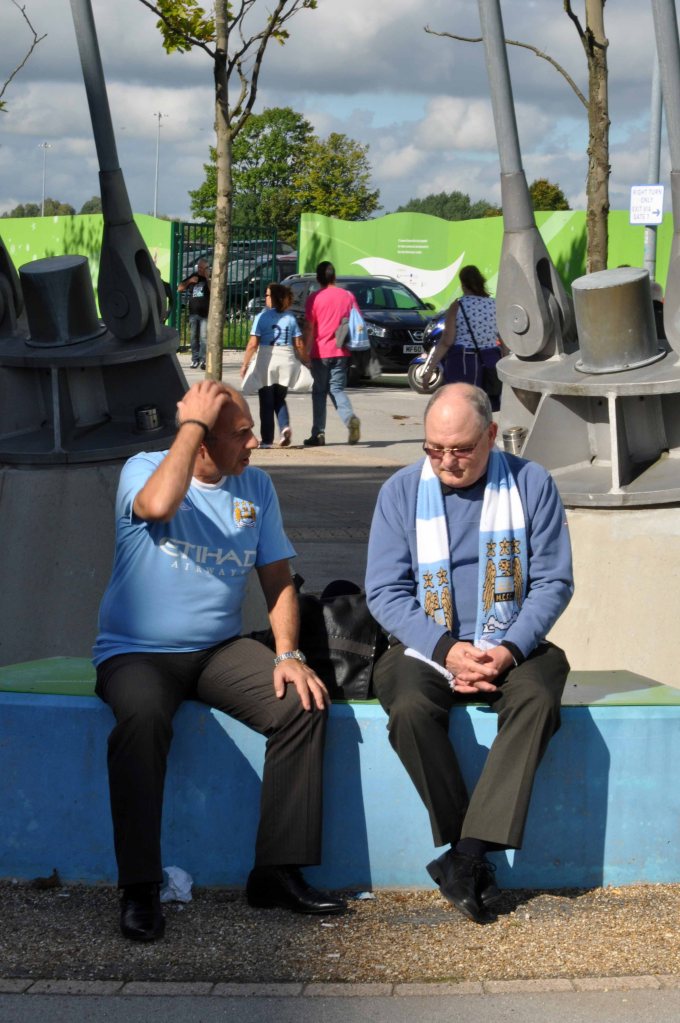
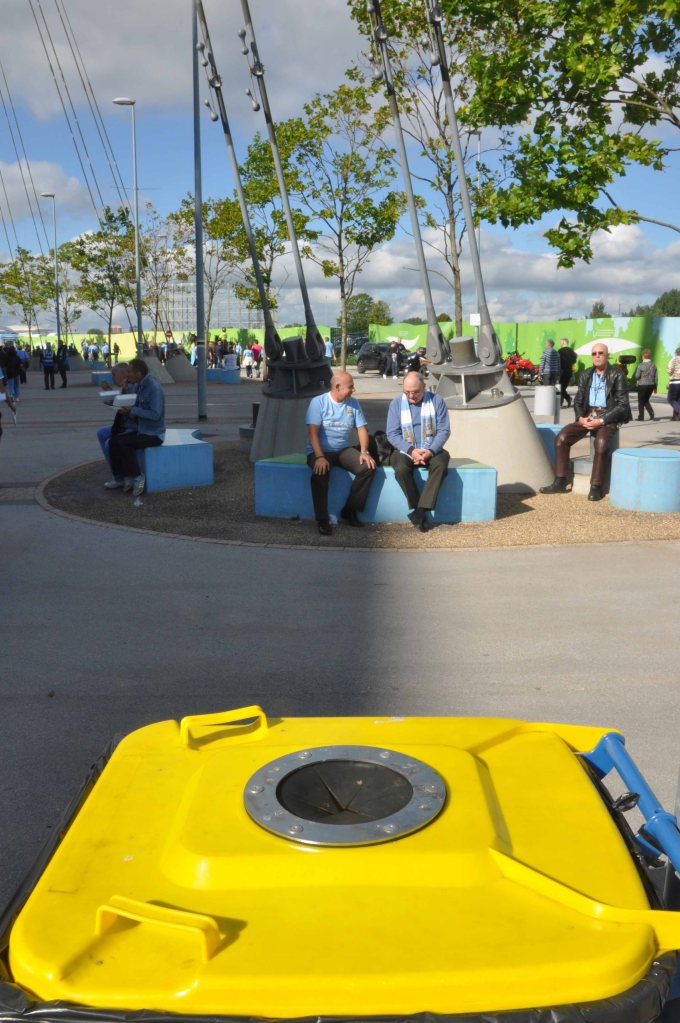
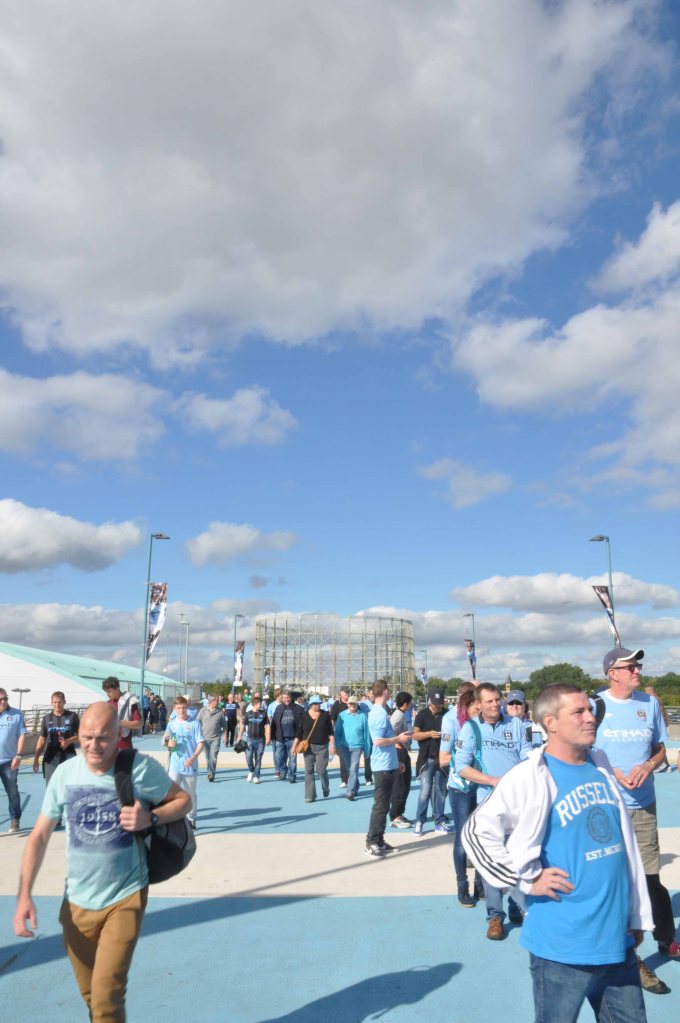
Derby Day 2013 – Etihad Stadium

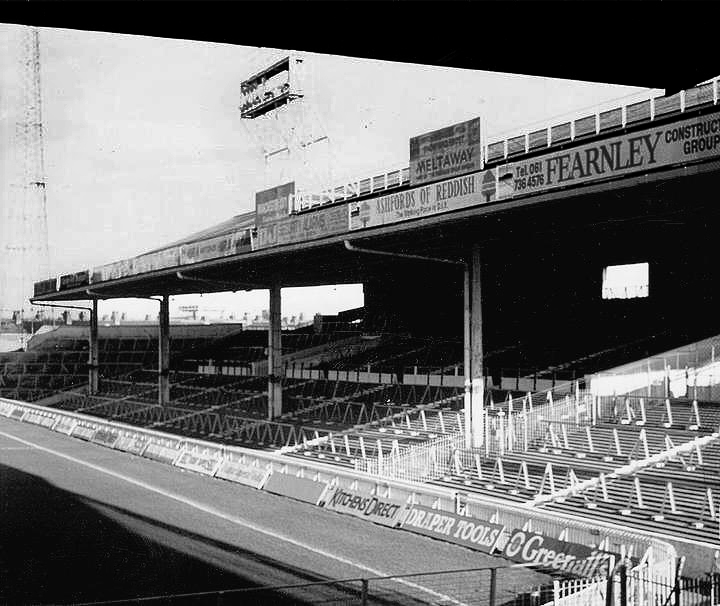
This is my first visit to a match day at the Etihad – having last watched City at Maine Road, from that uncovered corner enclave, the Kippax Paddock – the so called Gene Kelly Stand

Singing in the Rain

It all ended in ruins.

Demolished, the last ball kicked in anger Sunday 11th May 2003.

To the other side of the city and rebranded Eastlands, occupying the former Commonwealth Games Stadium.

Owners John Wardle and Thaksin Shinawatra came and went.

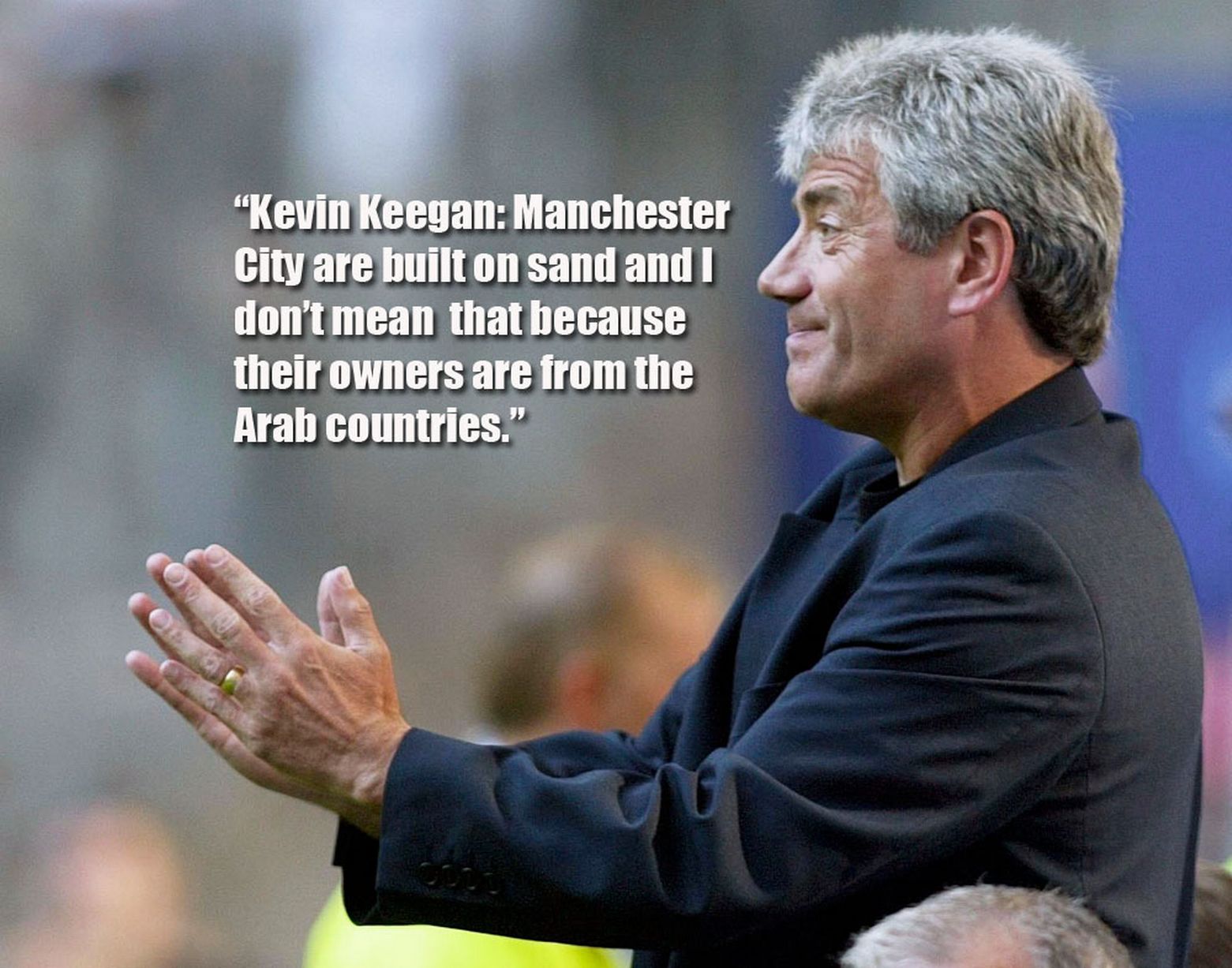
Since 4 August 2008, the club has been owned by Sheikh Mansour, one of football’s wealthiest owners, with an estimated individual net worth of at least £17 billion and a family fortune of at least $1 trillion.

A far cry from Peter Swales and his TV Repair shop on Washway Road.

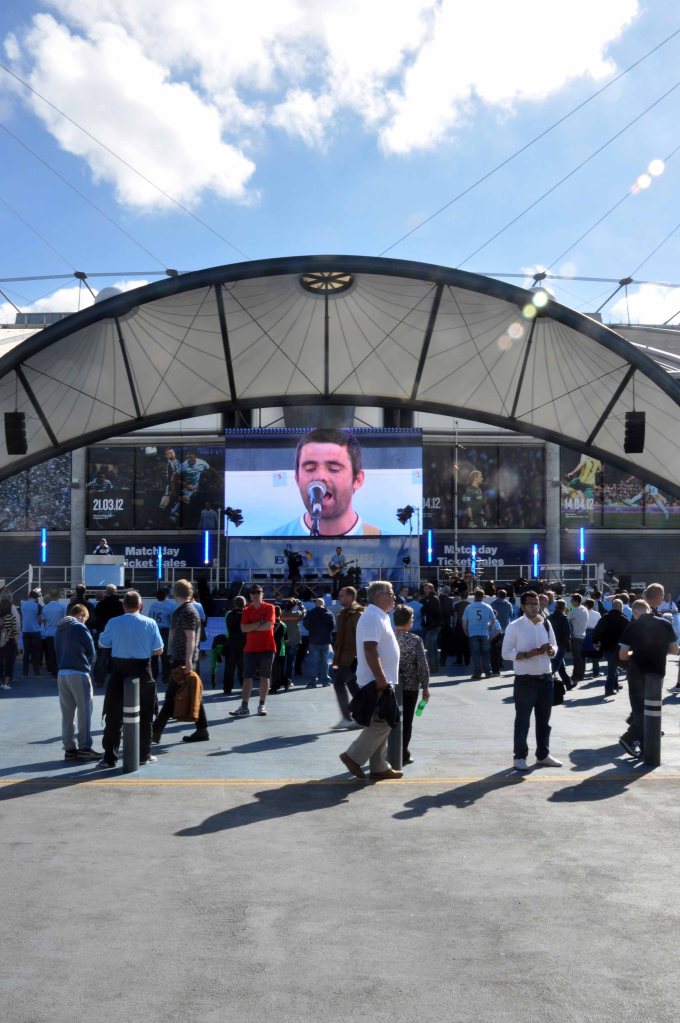
The game has changed, money is in motion, fans travel from every corner of the globe, fuelled by the Murdoch Dollar and the insatiable thirst for televised football.

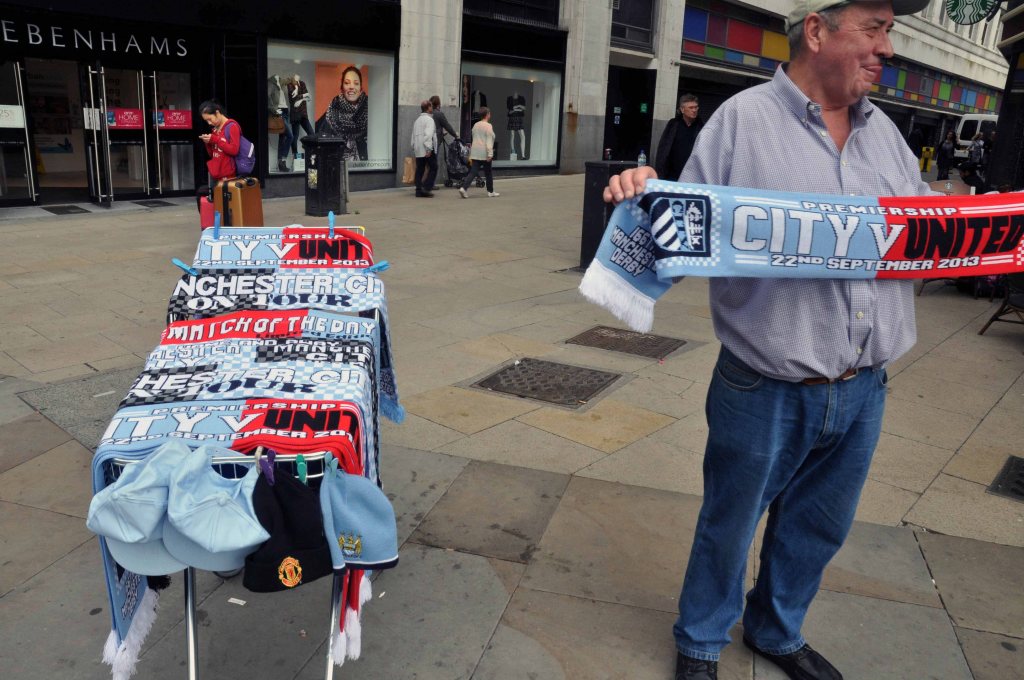
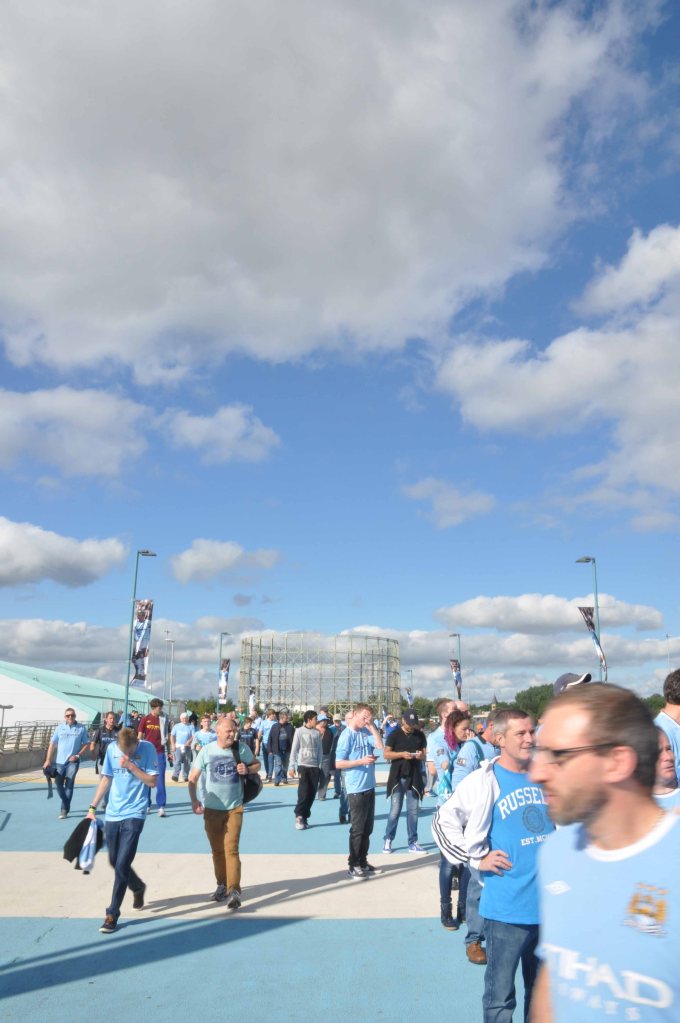
So it’s the 22nd September 2013 – I though I’d take a look around town first.

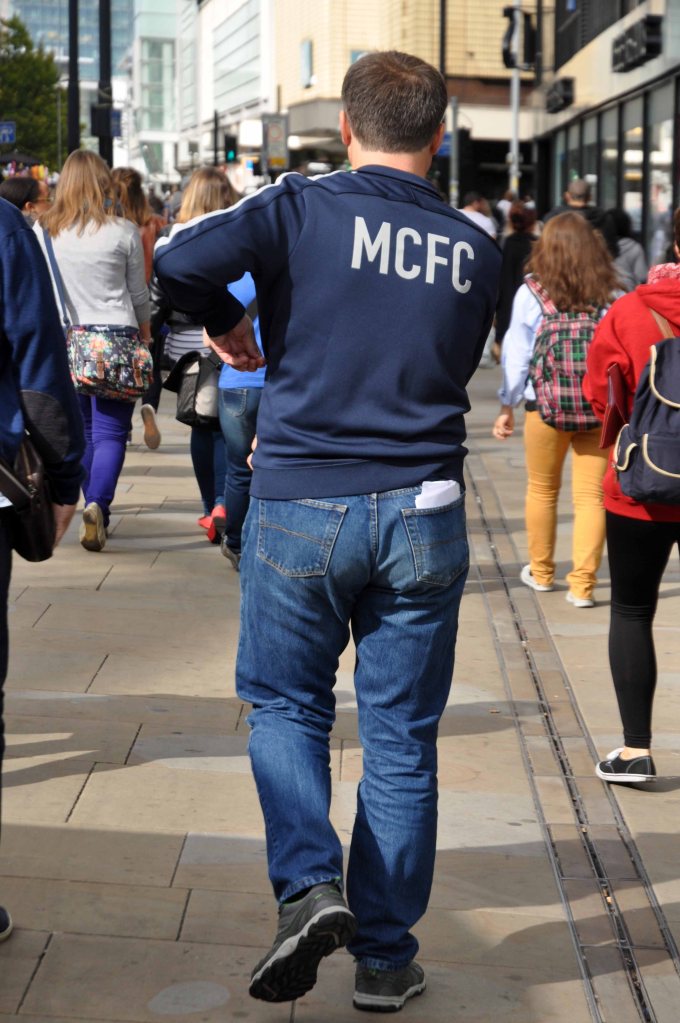
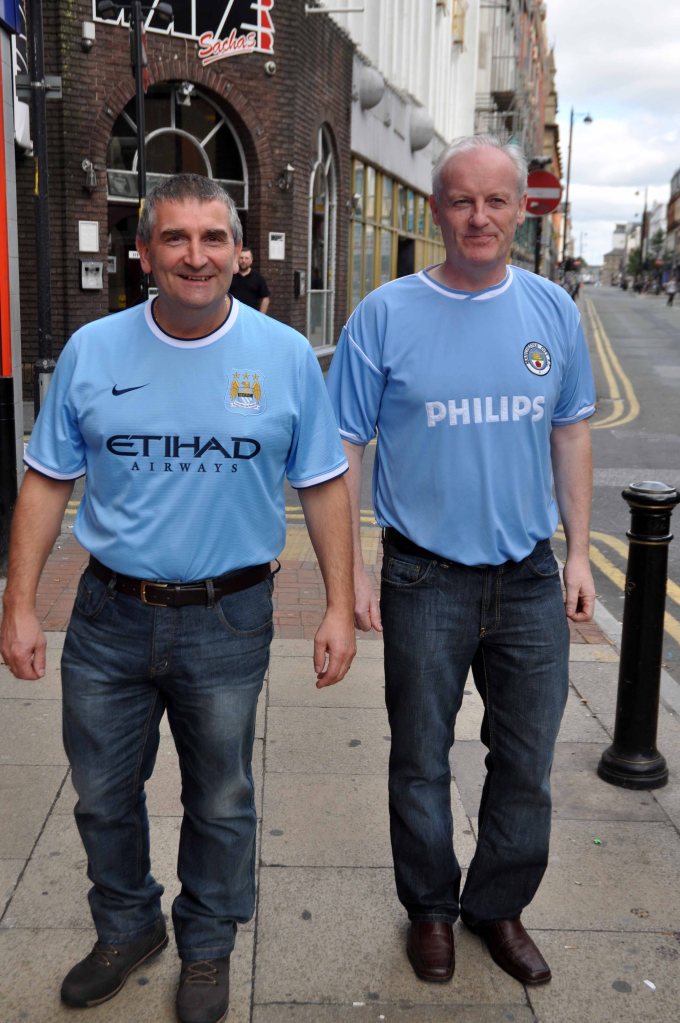
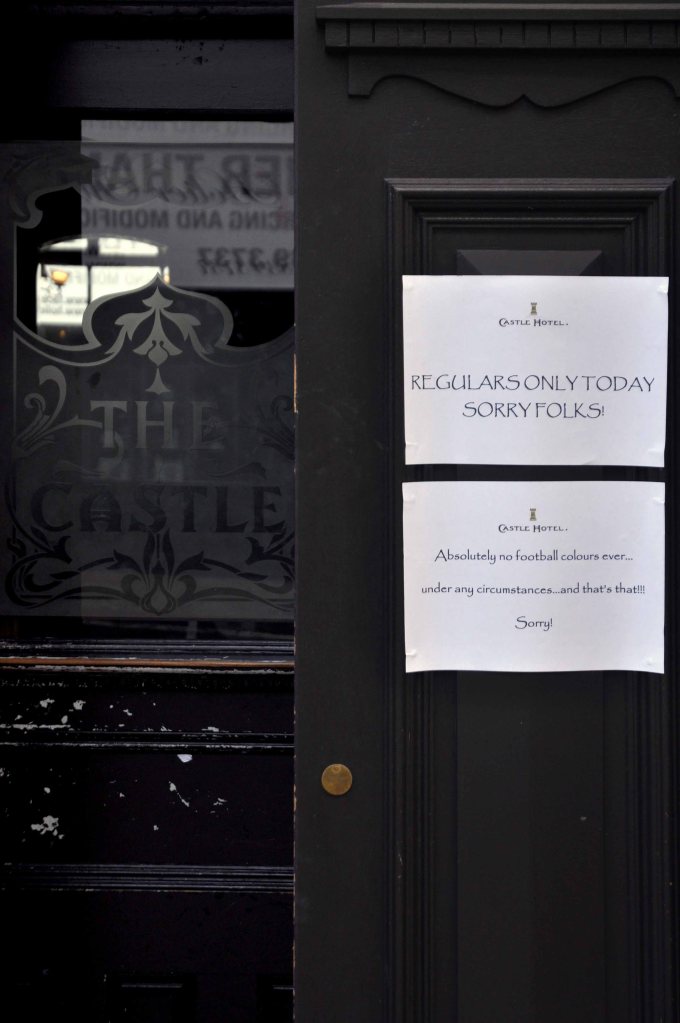
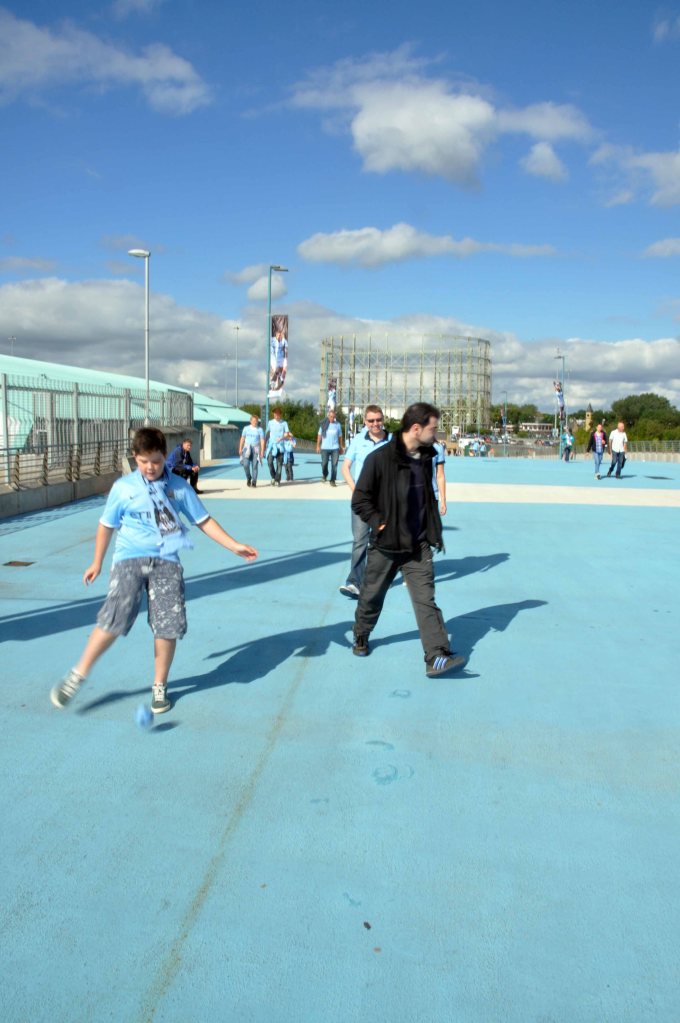
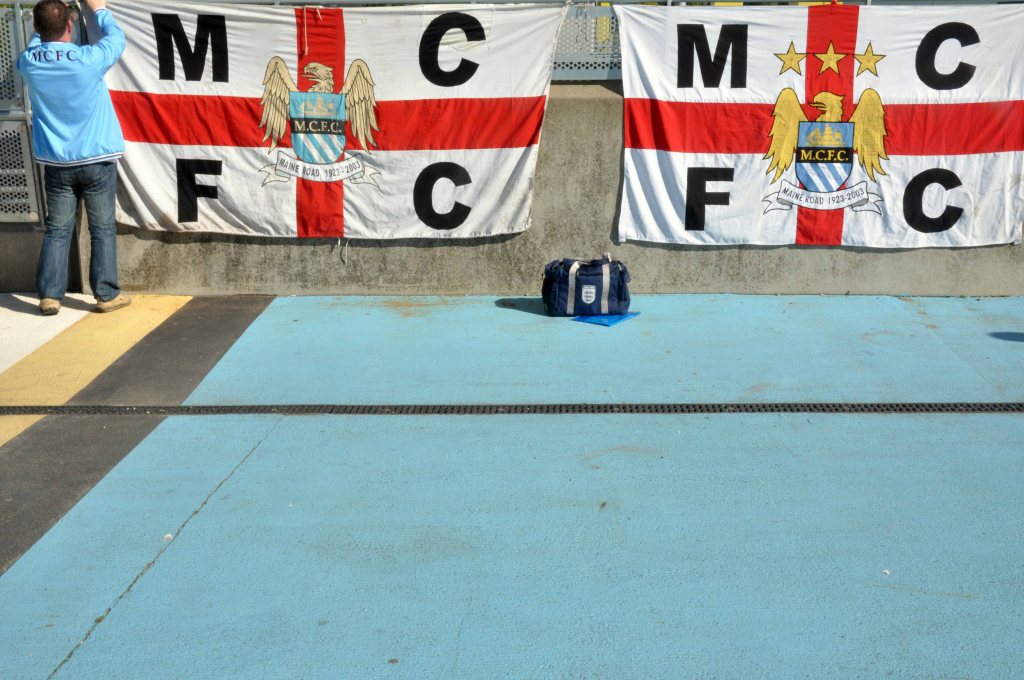
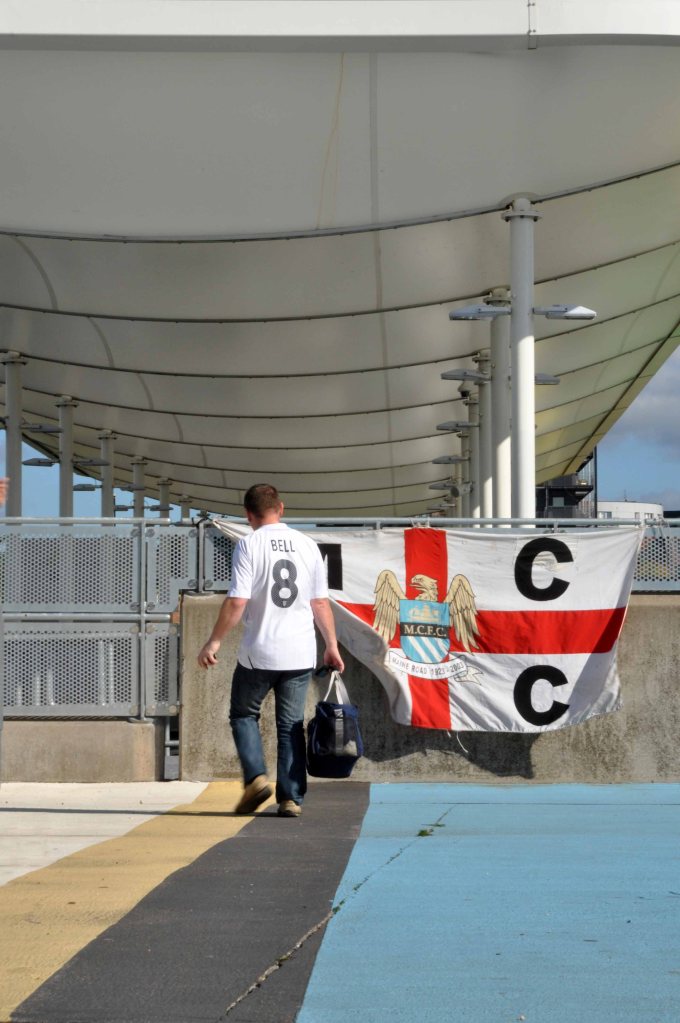
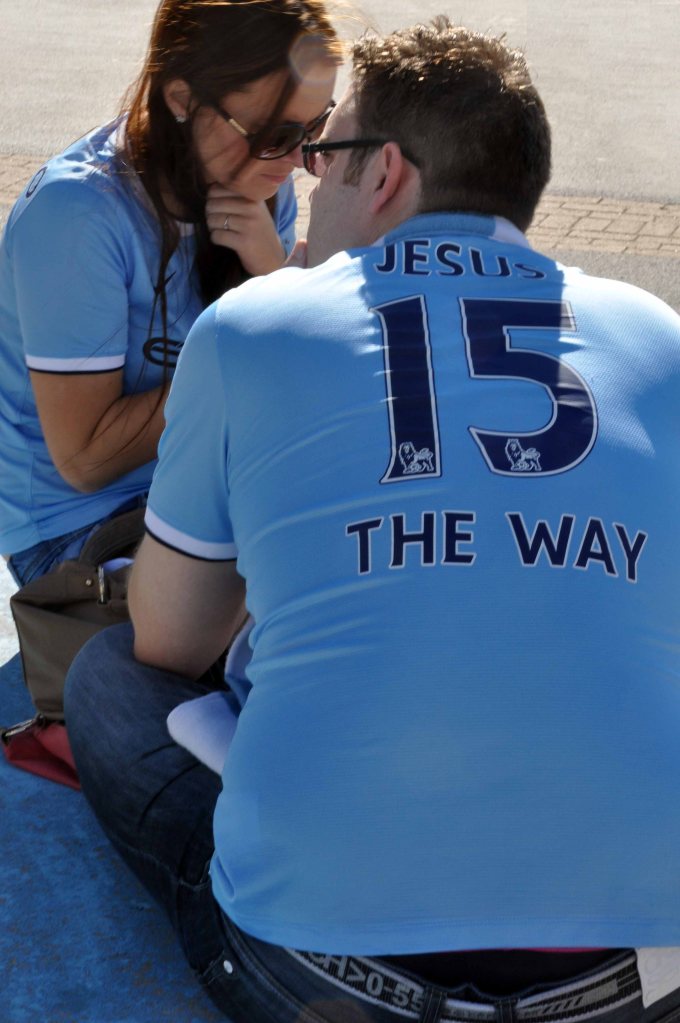
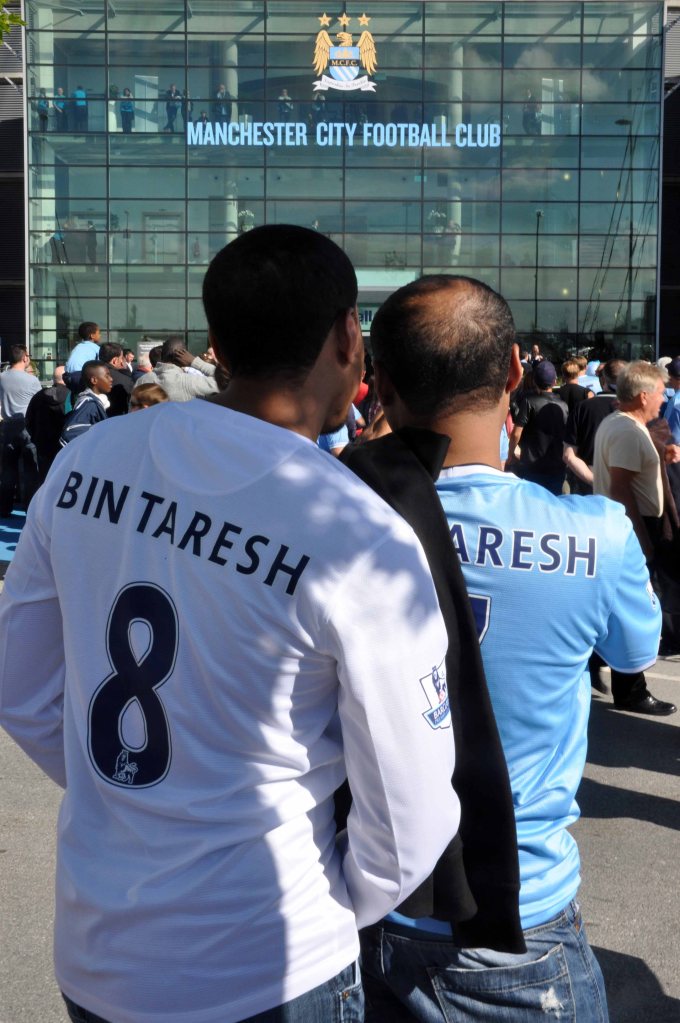
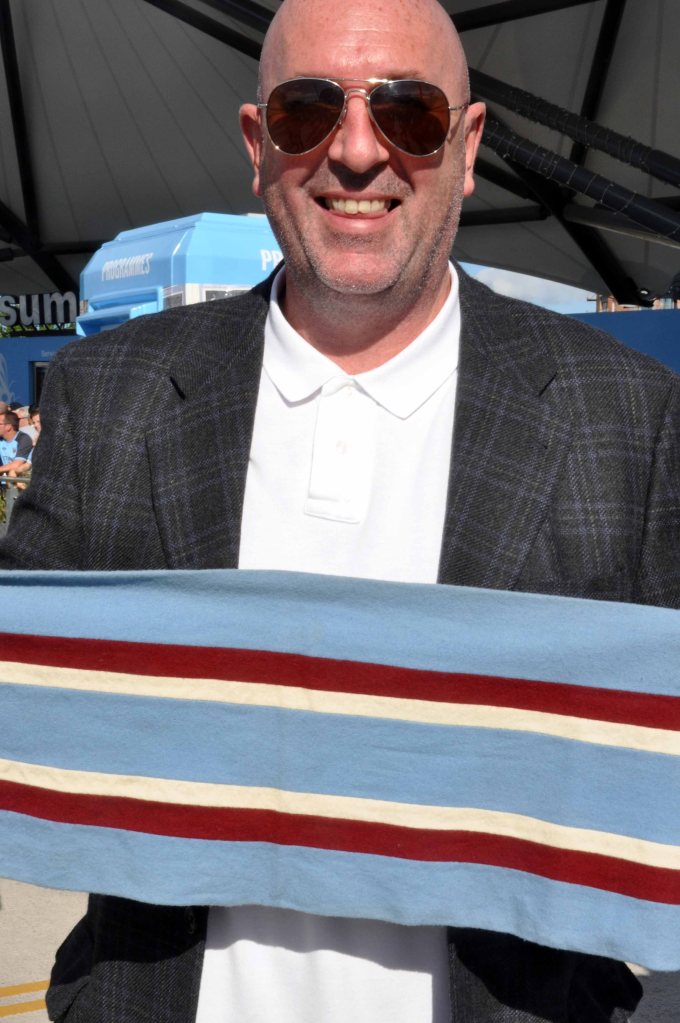
Kits and colours in abundance – though some of these colours can and will run.

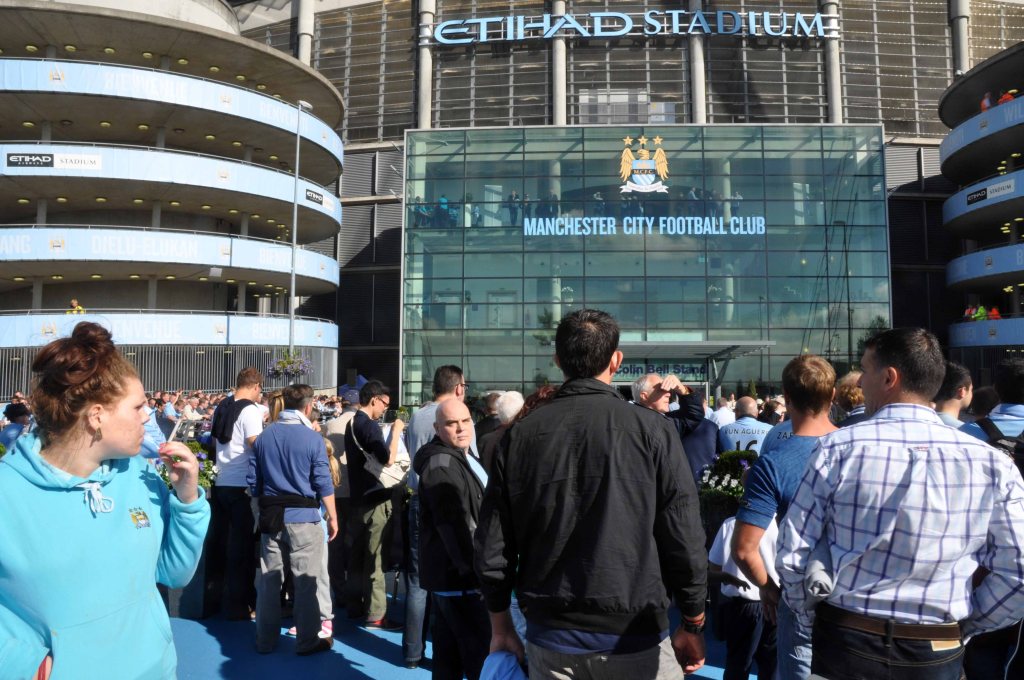
Off then to the Etihad and its the Pellegrini squad versus Moyes’ boys.

This is a world within a world as the Middle East seeks to lighten its carbon footprint, and put its size nines all over east Manchester.

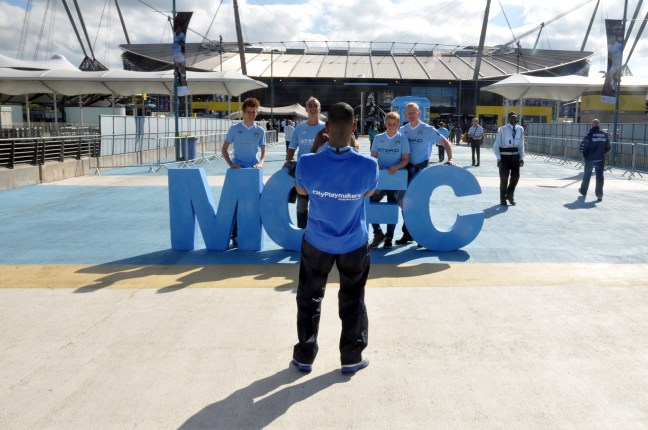
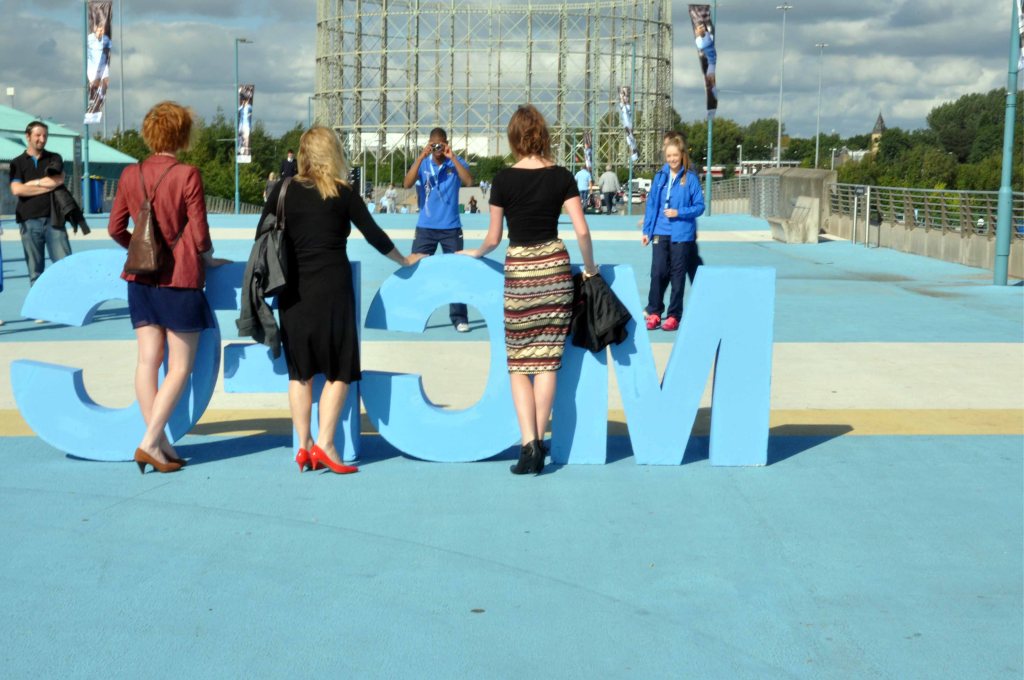
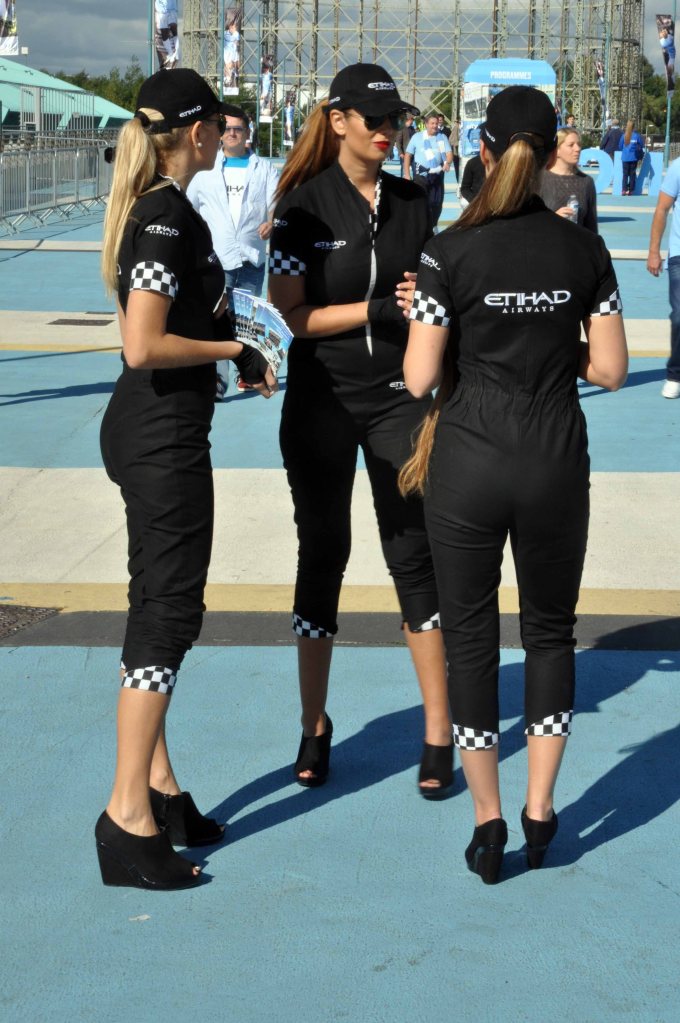
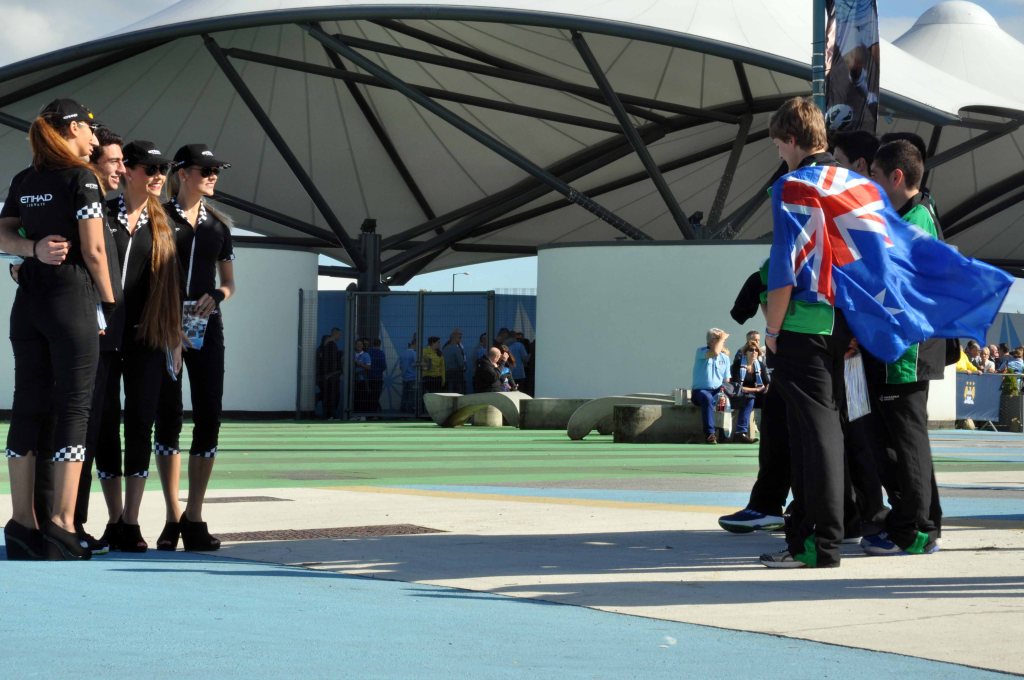
Corporate greeting on Joe Mercer Way, executive sweeteners, in the form of earthbound airline hostesses.

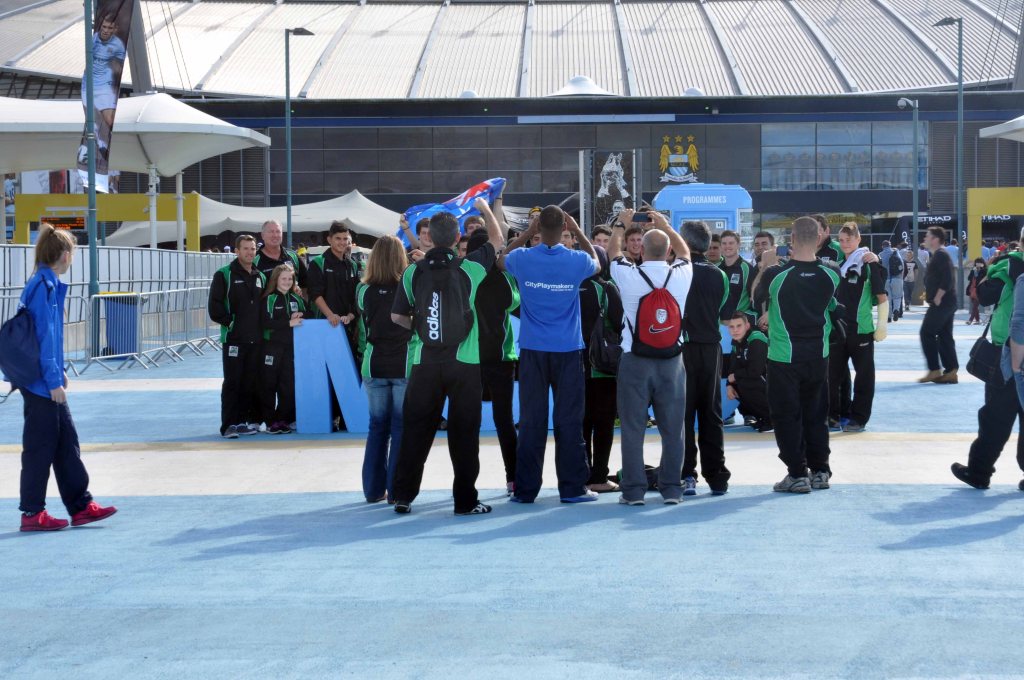
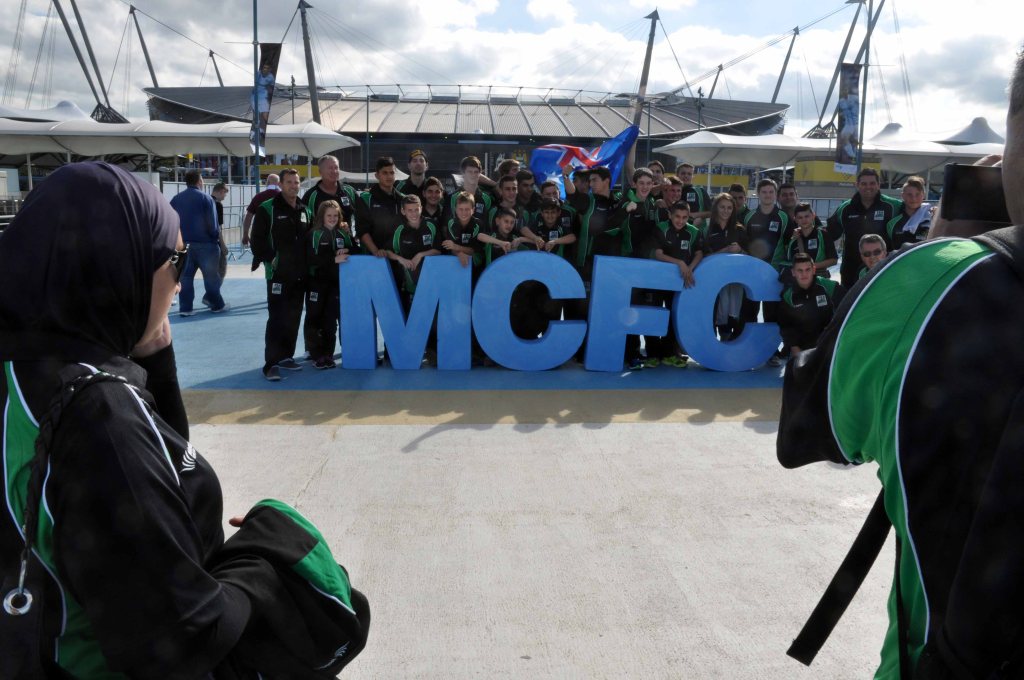
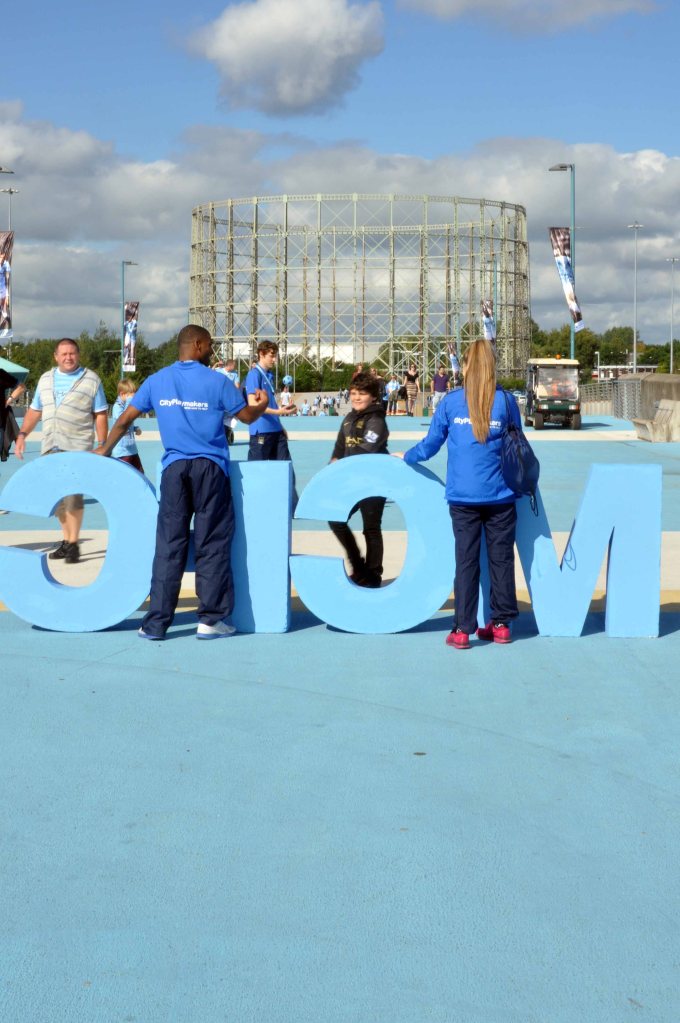
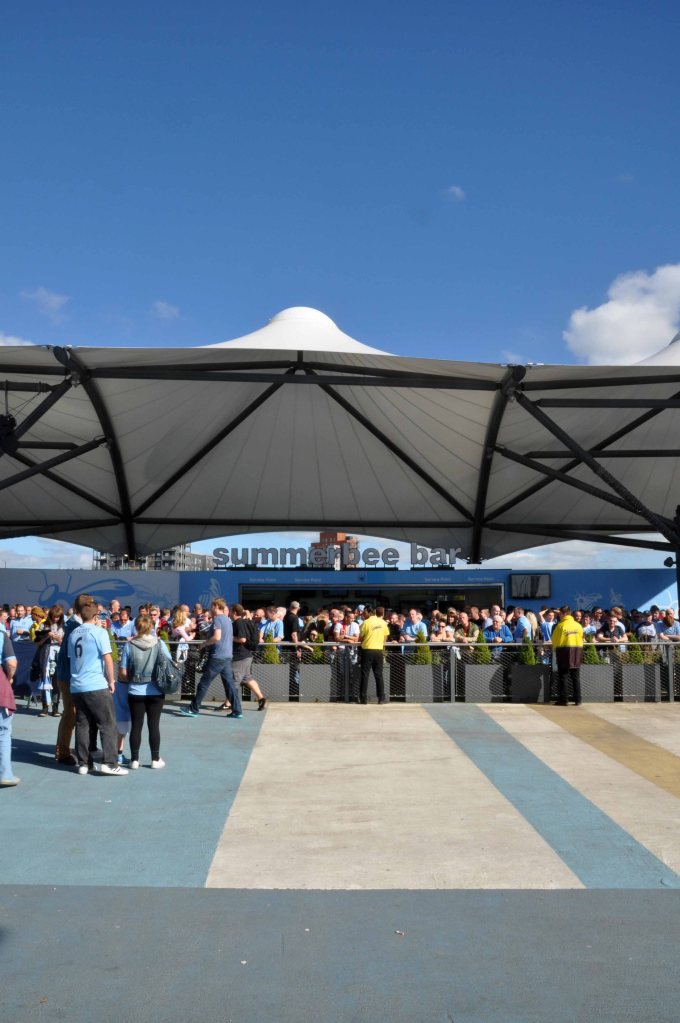
Groups from the Antipodes happy to embrace the jumbo blue letters – no boots, no hustling, no barging through swelling crowds, no menacing looks from beneath feather cut fringes.

No none of that any more.

I made my excuses and left.

Manchester City ensured David Moyes’ first derby as Manchester United manager ended in abject humiliation with a crushing victory at the Etihad Stadium.

In contrast to the despair of his opposite number, it was a day of delight for new City boss Manuel Pellegrini as he watched the rampant Blues make a powerful statement about their Premier League ambitions.

Sergio Aguero and Yaya Toure gave City a commanding half-time lead and any slim hopes of a United recovery were snuffed out by further goals from Aguero and Samir Nasri within five minutes of the restart.

BBC

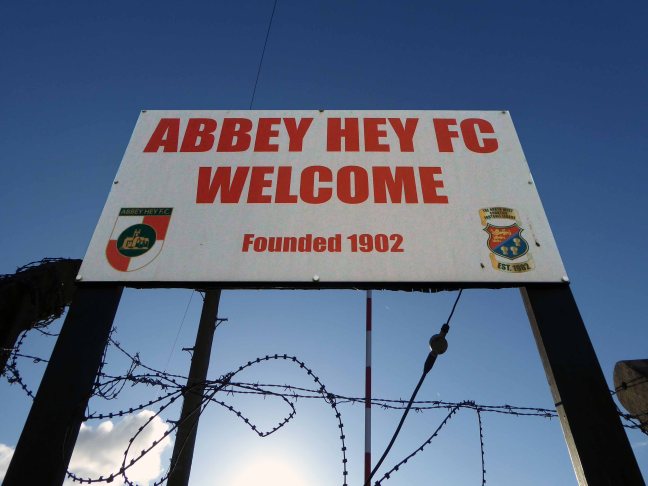
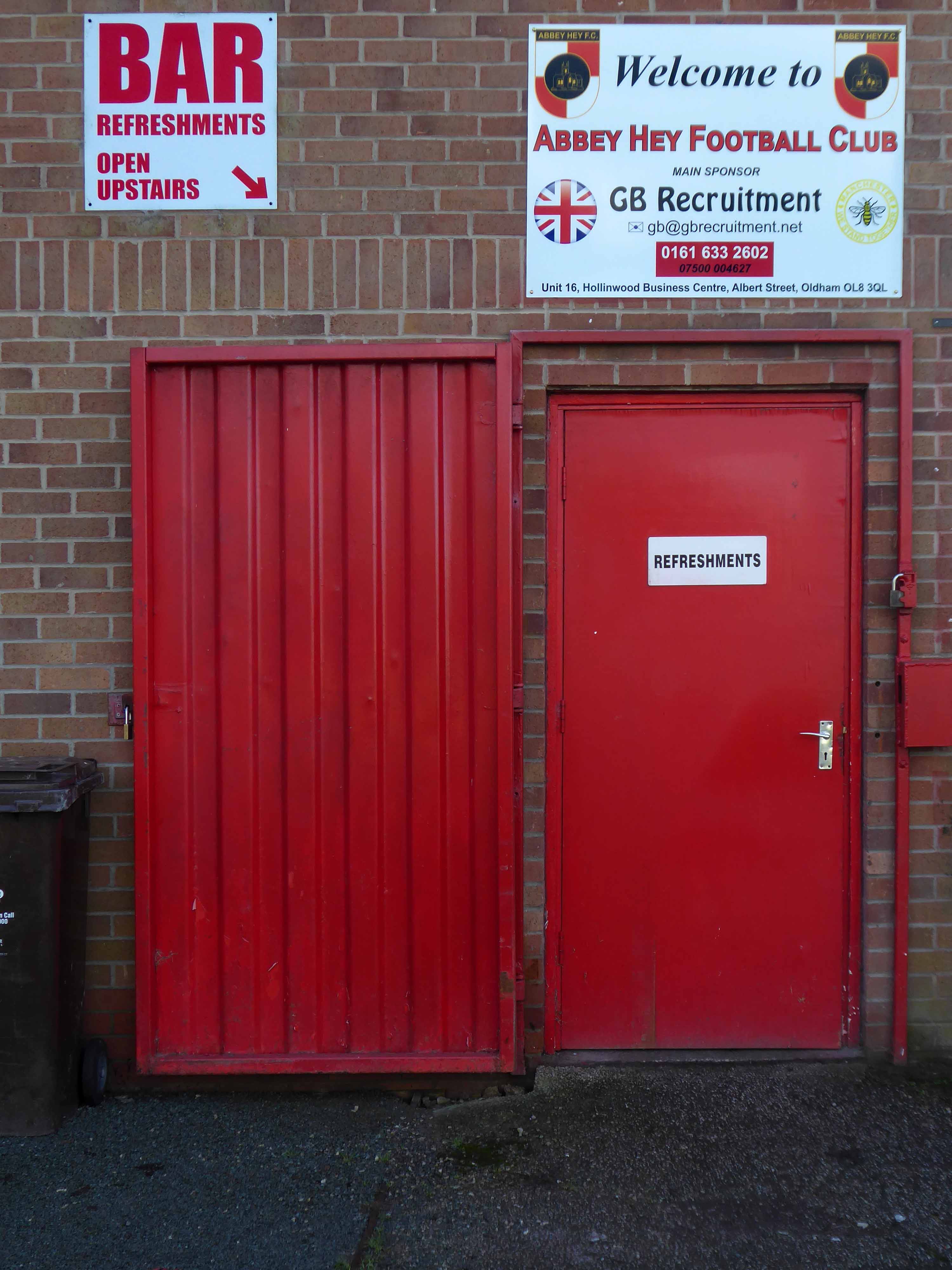
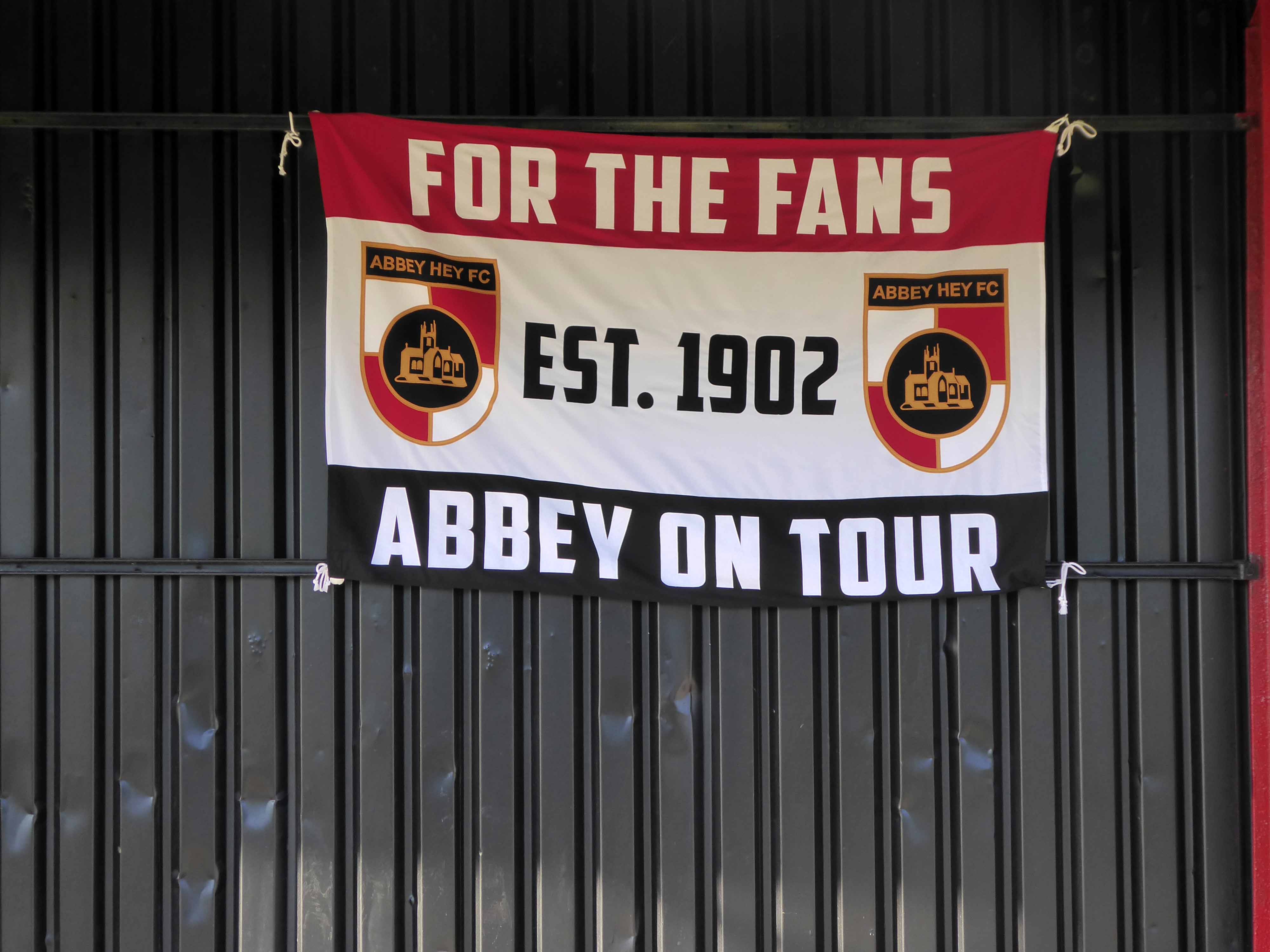
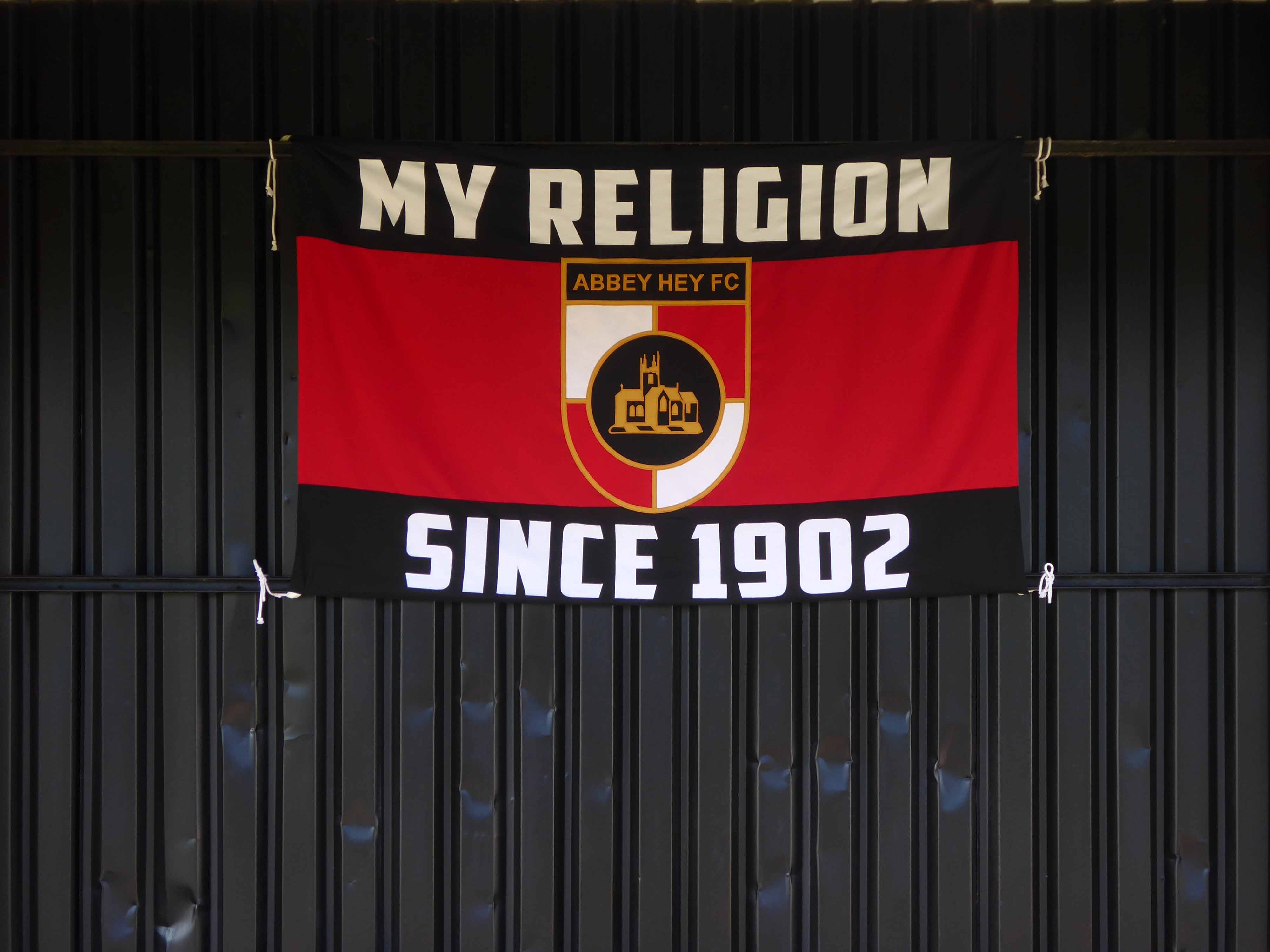
Abbey Hey FC – Manchester

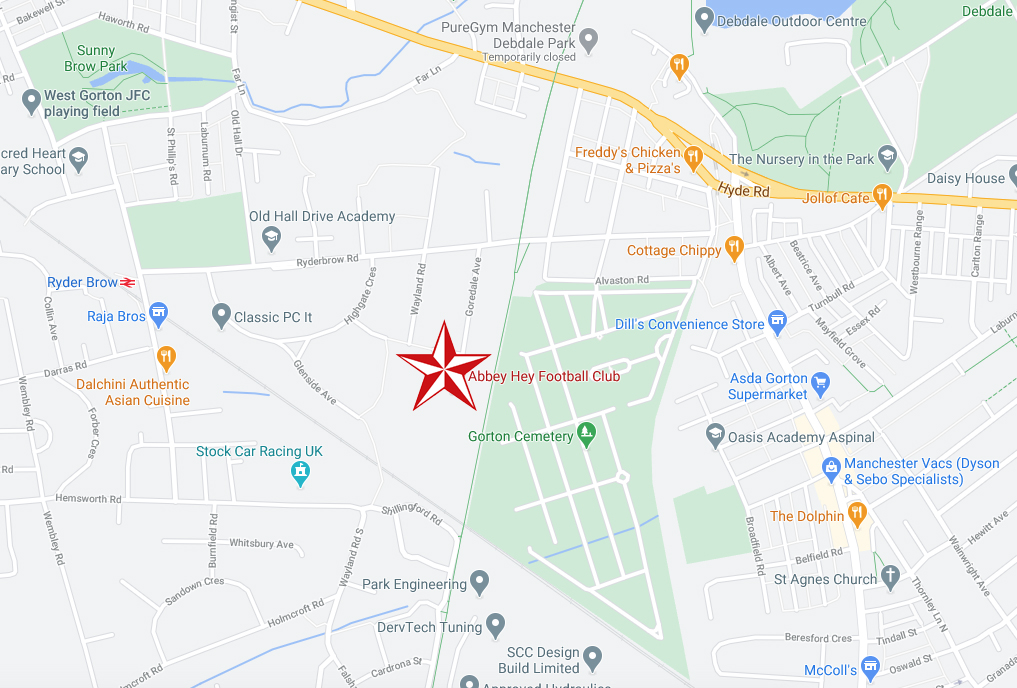
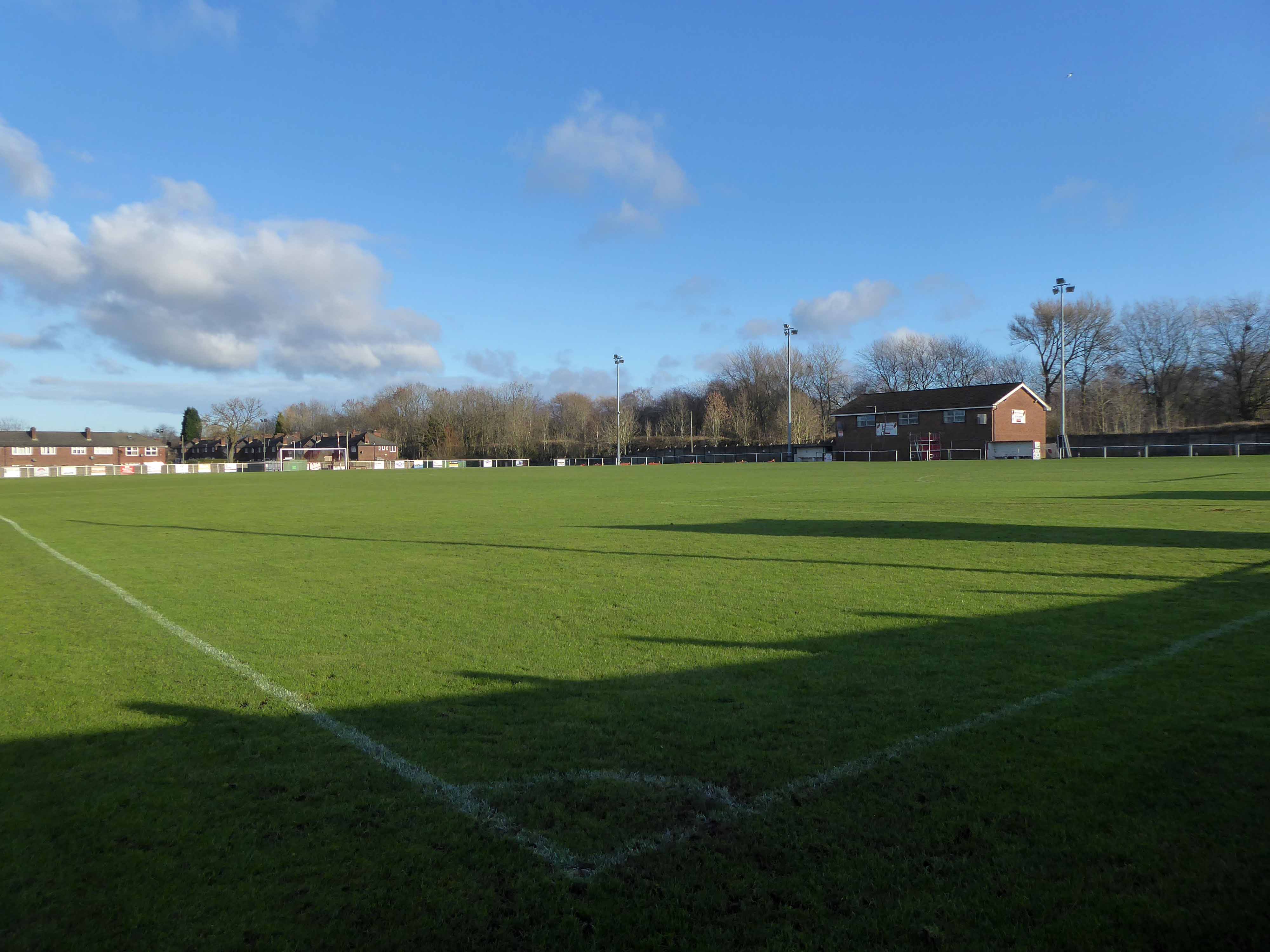
Abbey Stadium Goredale Avenue Gorton Manchester M18 7HD.

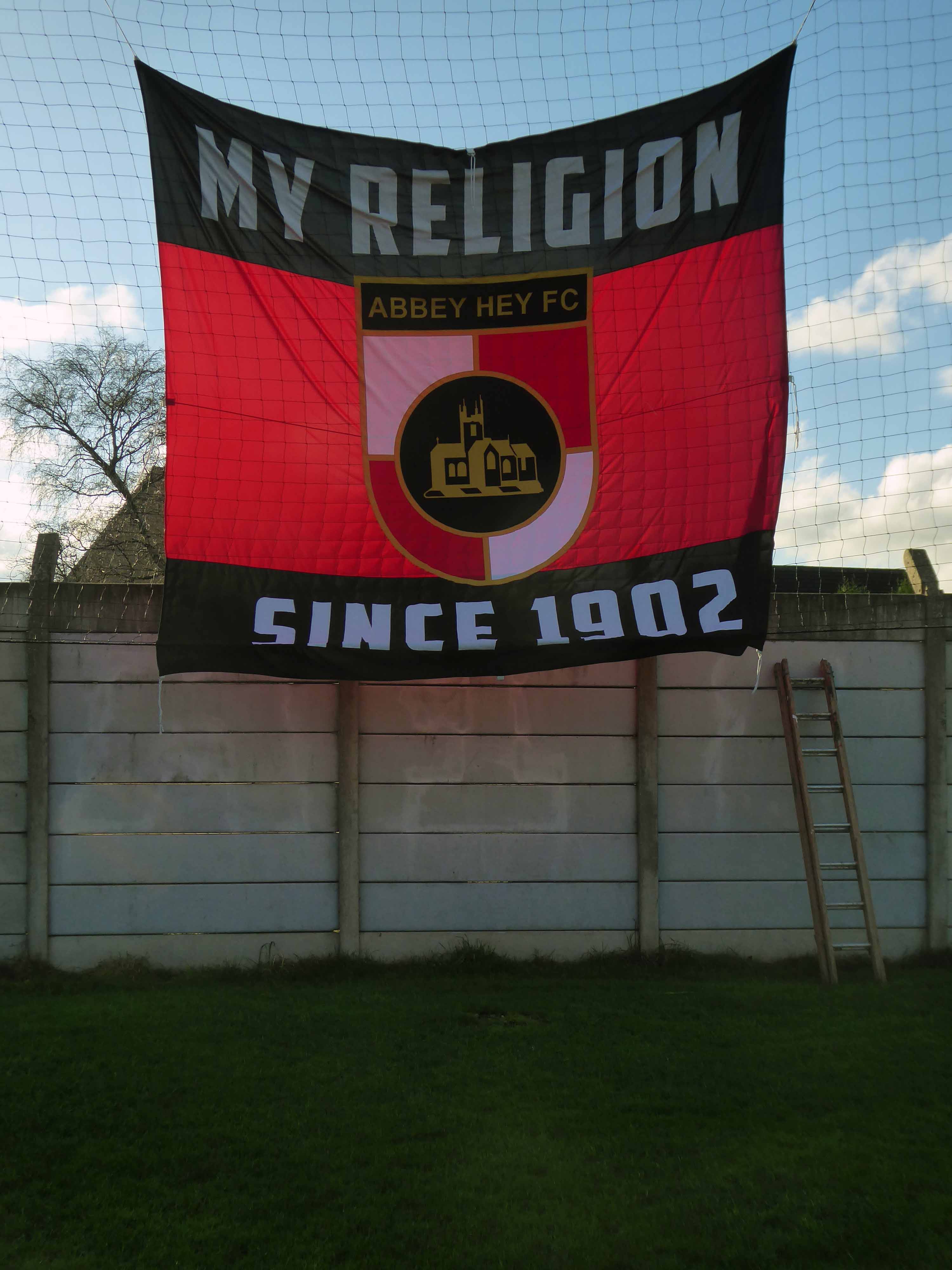
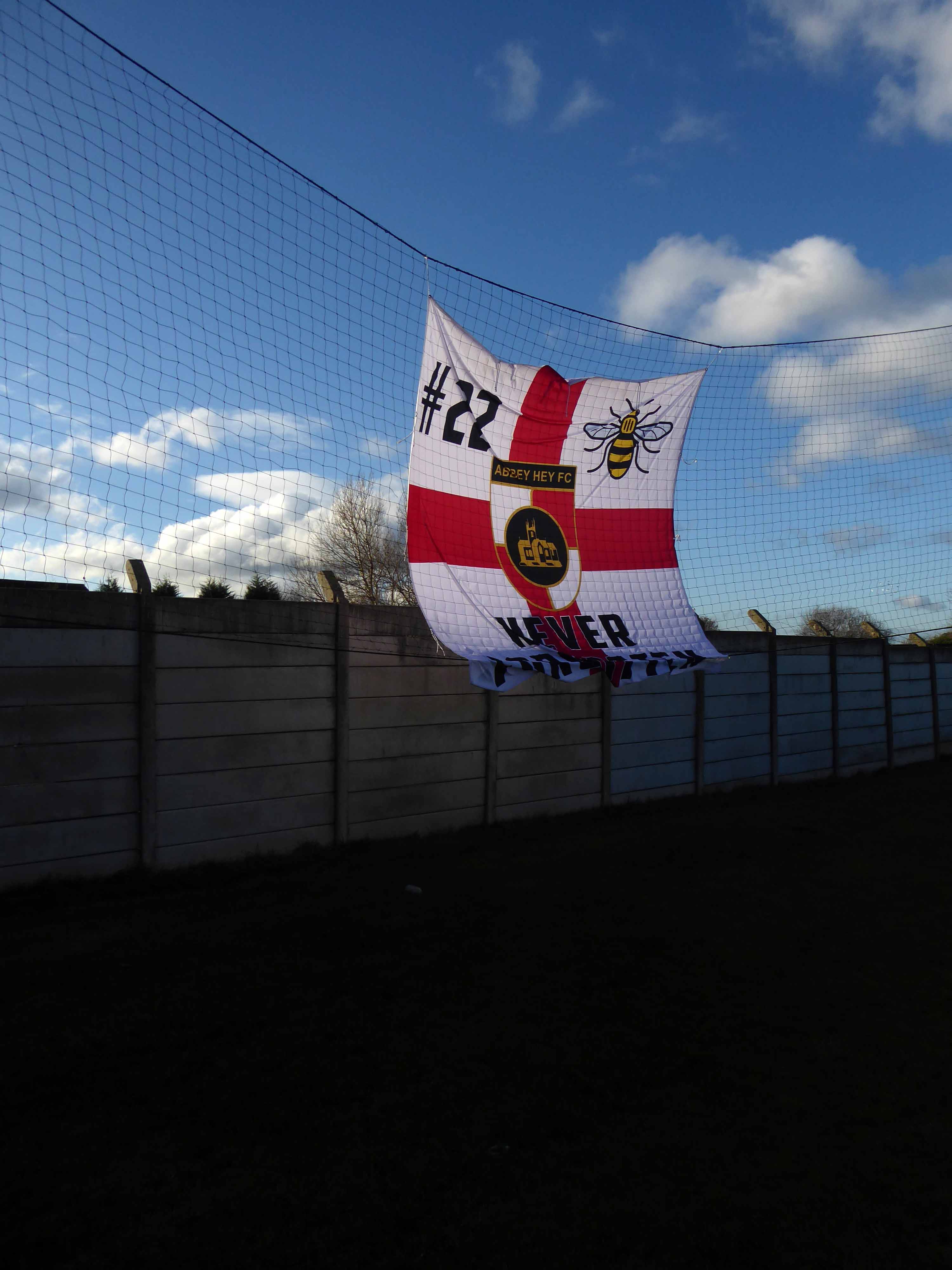
Abbey Hey FC was formed in 1902 in the Abbey Hey district of Gorton, some three miles away from the centre of Manchester. During their formative years and through the two World Wars, the club was disbanded and reformed on a number of occasions. Starting in the Church Sunday Leagues, they progressed through the Manchester Amateur Leagues during the intervening years but the club really came into it’s own in the 1960s after it took in the players of the Admiralty Gunning Engineering Department following it’s closure.
In 1978 with the club decided to apply for a position in the Manchester League, this meant that the club had to find an enclosed ground suitable for playing their home games. The nearest ground available at the time was in Chorlton at Werburghs Road.

In 1984 the club at last had their own home, improvements to the ground could only have been achieved by the hard work and dedication of the committee, who not only raised the money to carry out the improvements but also carried out 90% of the work themselves.

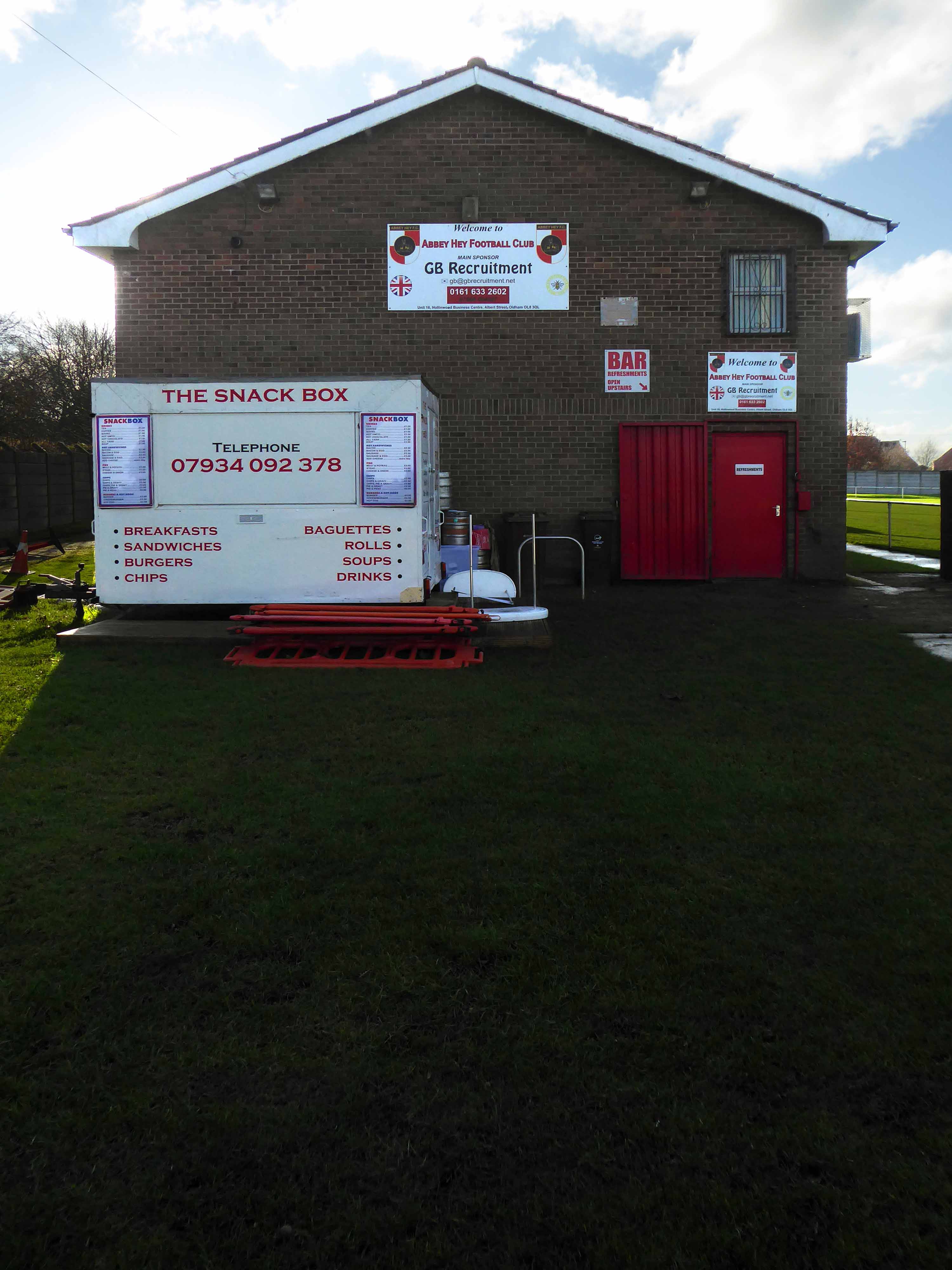
Promotion to the 1st Division meant that the club had to install floodlights. True to form, they designed, ordered, erected and wired them within a couple of months. The biggest job during the ground improvements was the building of the new clubhouse and dressing rooms. Planning permission was given with the majority of work once again being carried out by the club’s own members.

Abbey Hey FC History

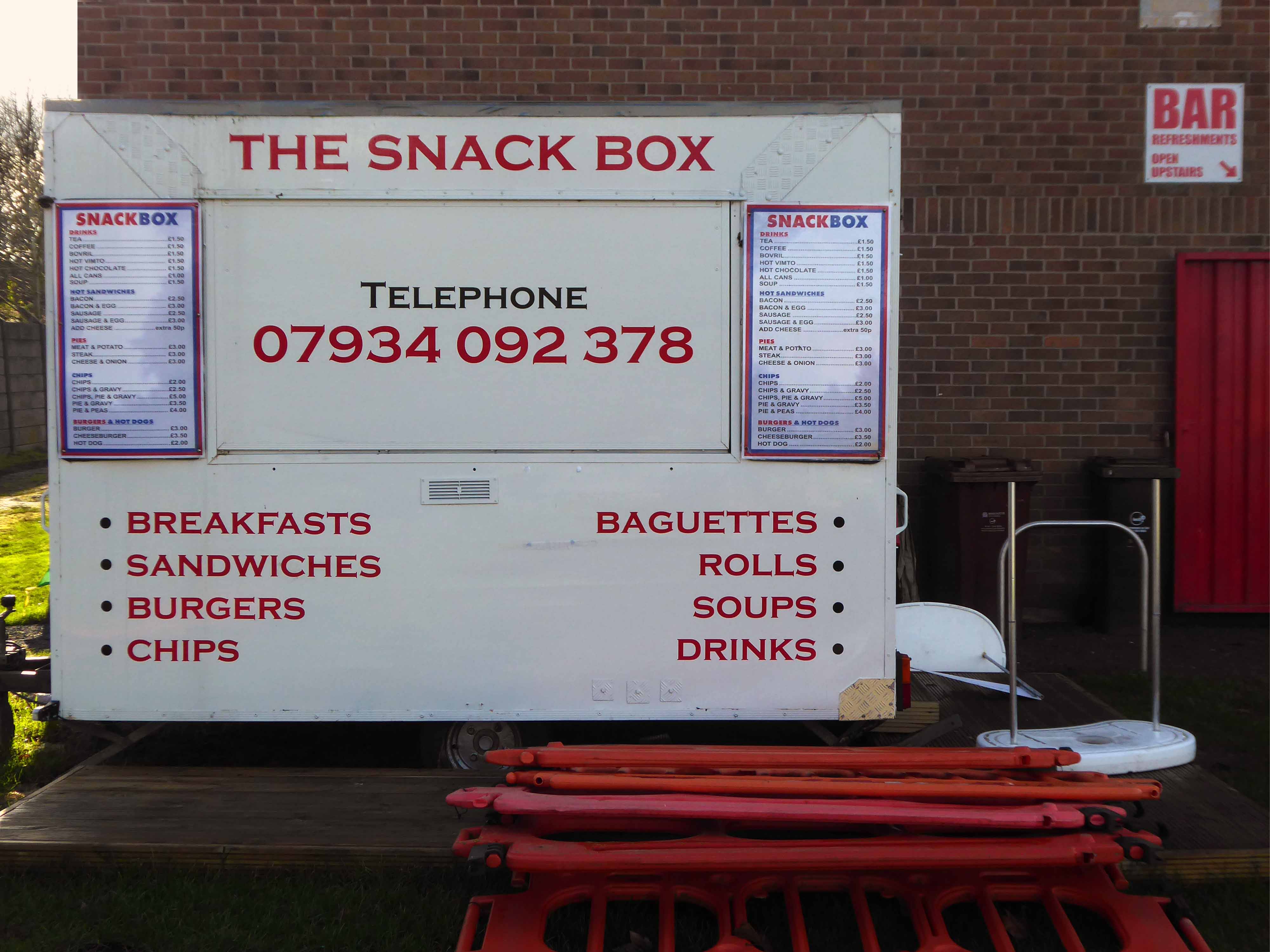
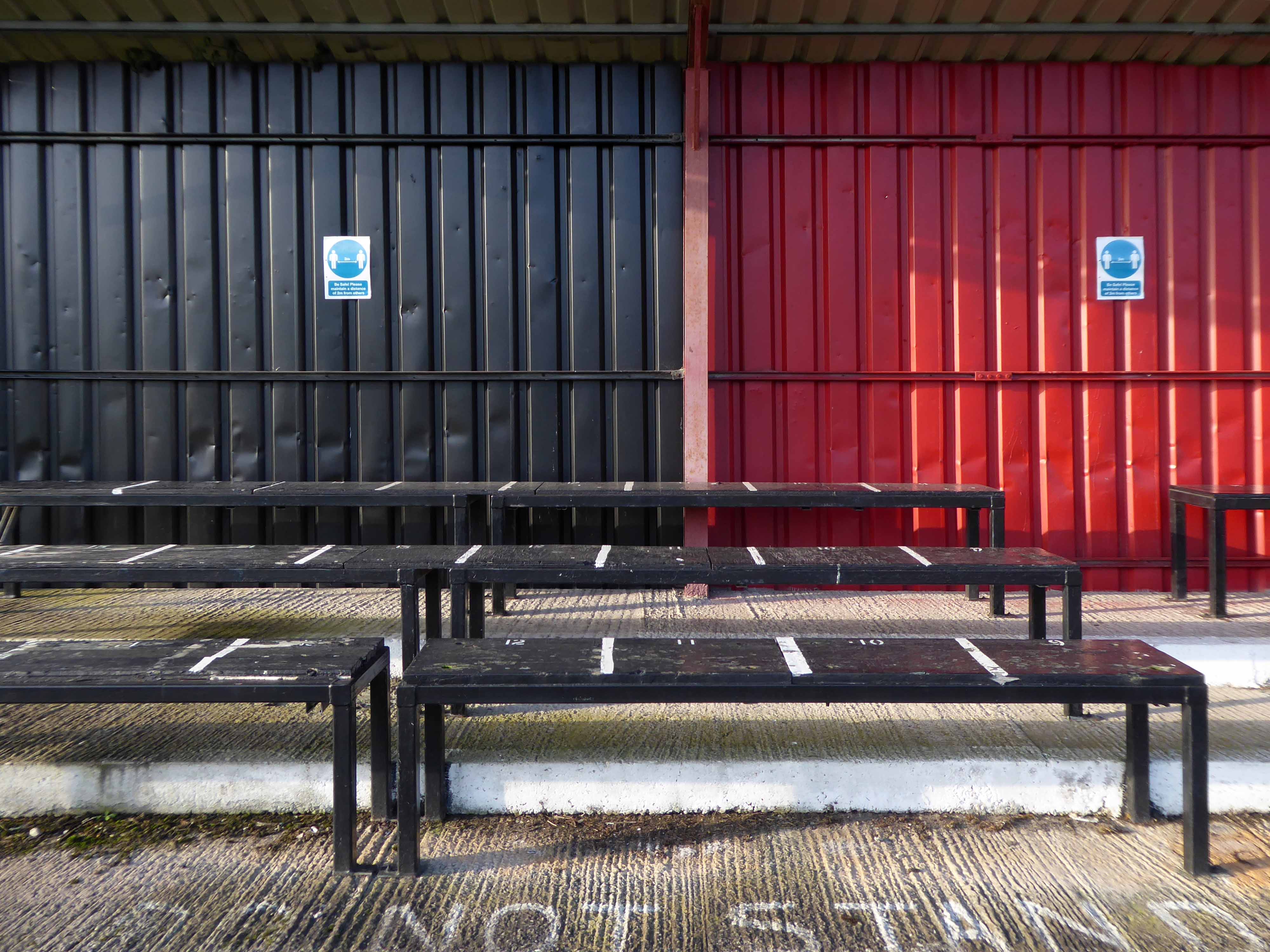
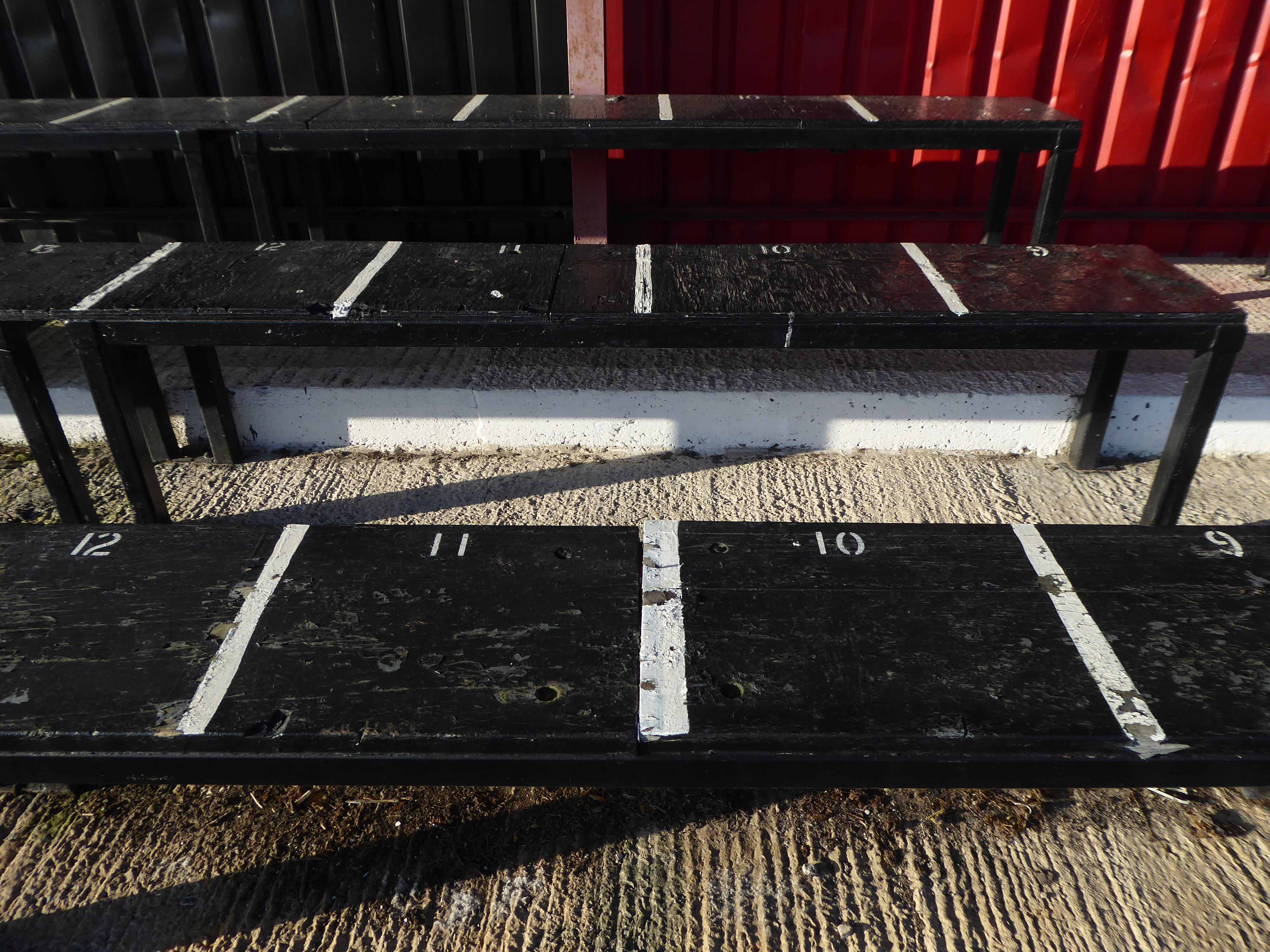
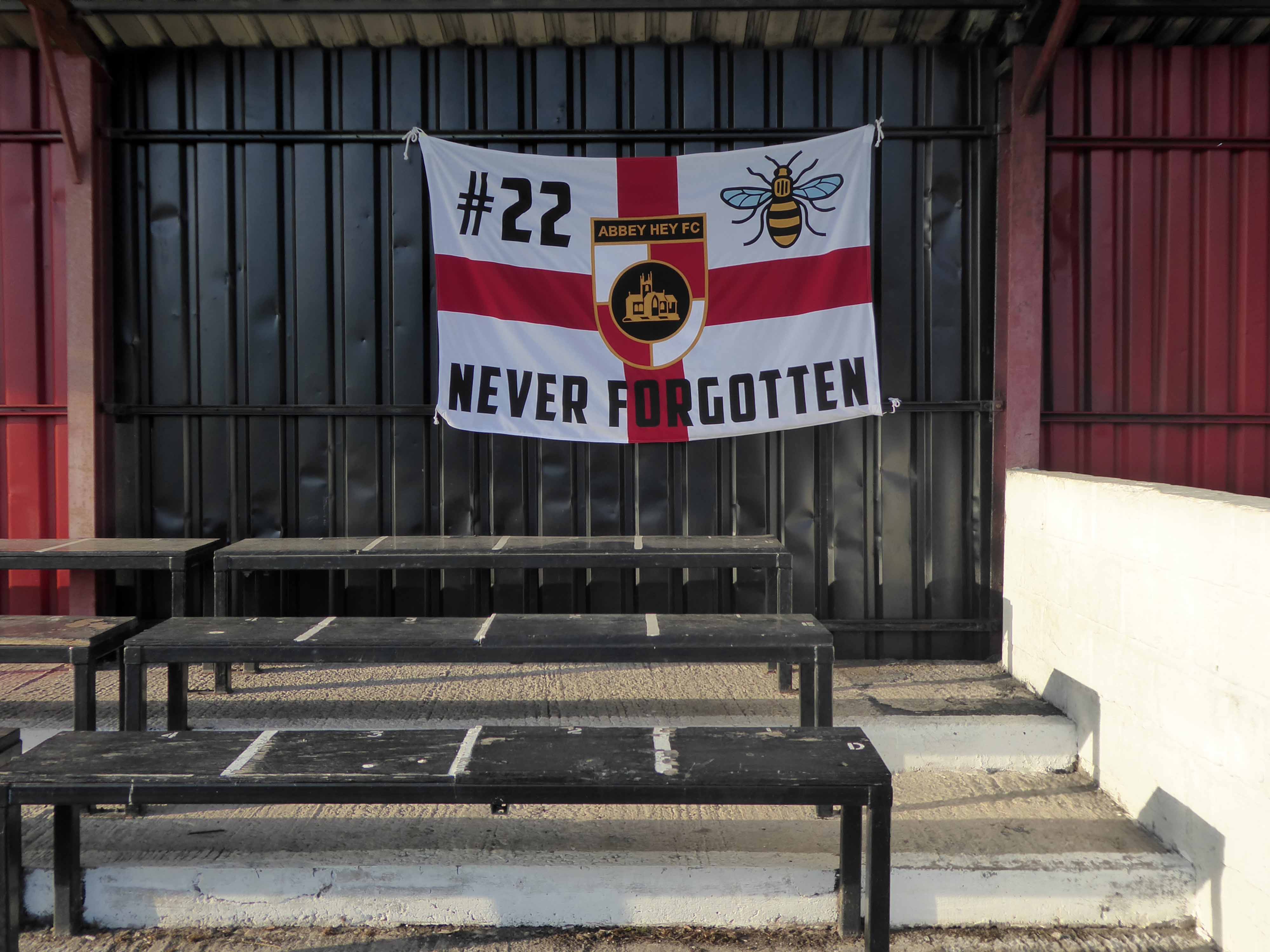
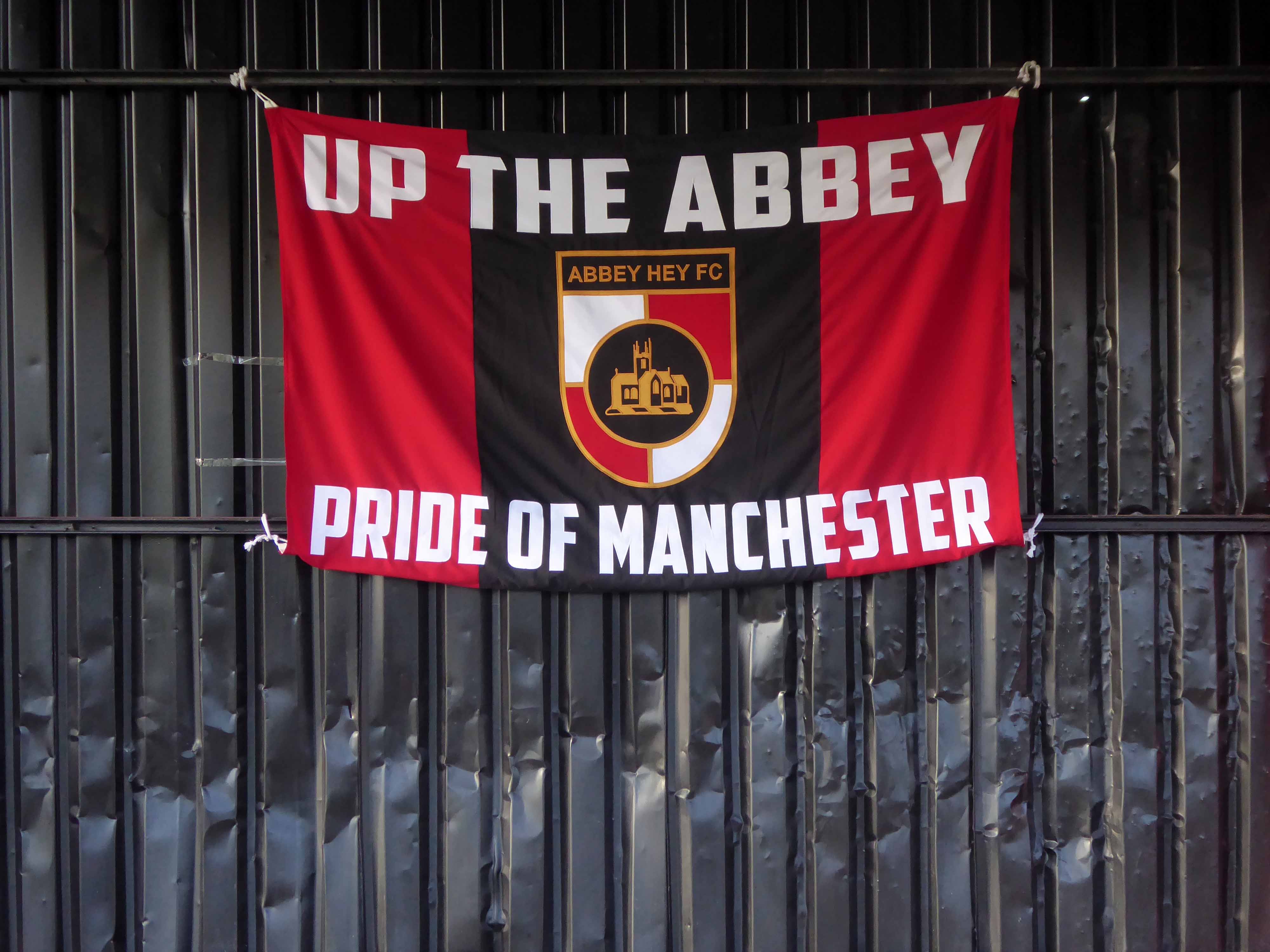
This is a story of persistence and commitment from members, managers and players – keeping a viable non-league football team alive at the centre of a Community.

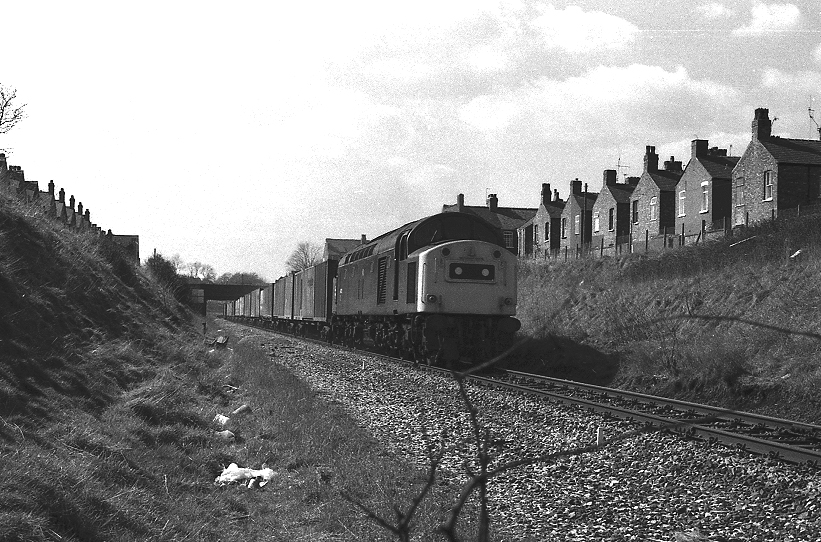
I have cycled by here for years, along the Fallowfield Loop – and worked down here in the Seventies when the rail link was still extant.

PhotoNeil Ferguson-Lee via Robert Todd and Levy Boy.

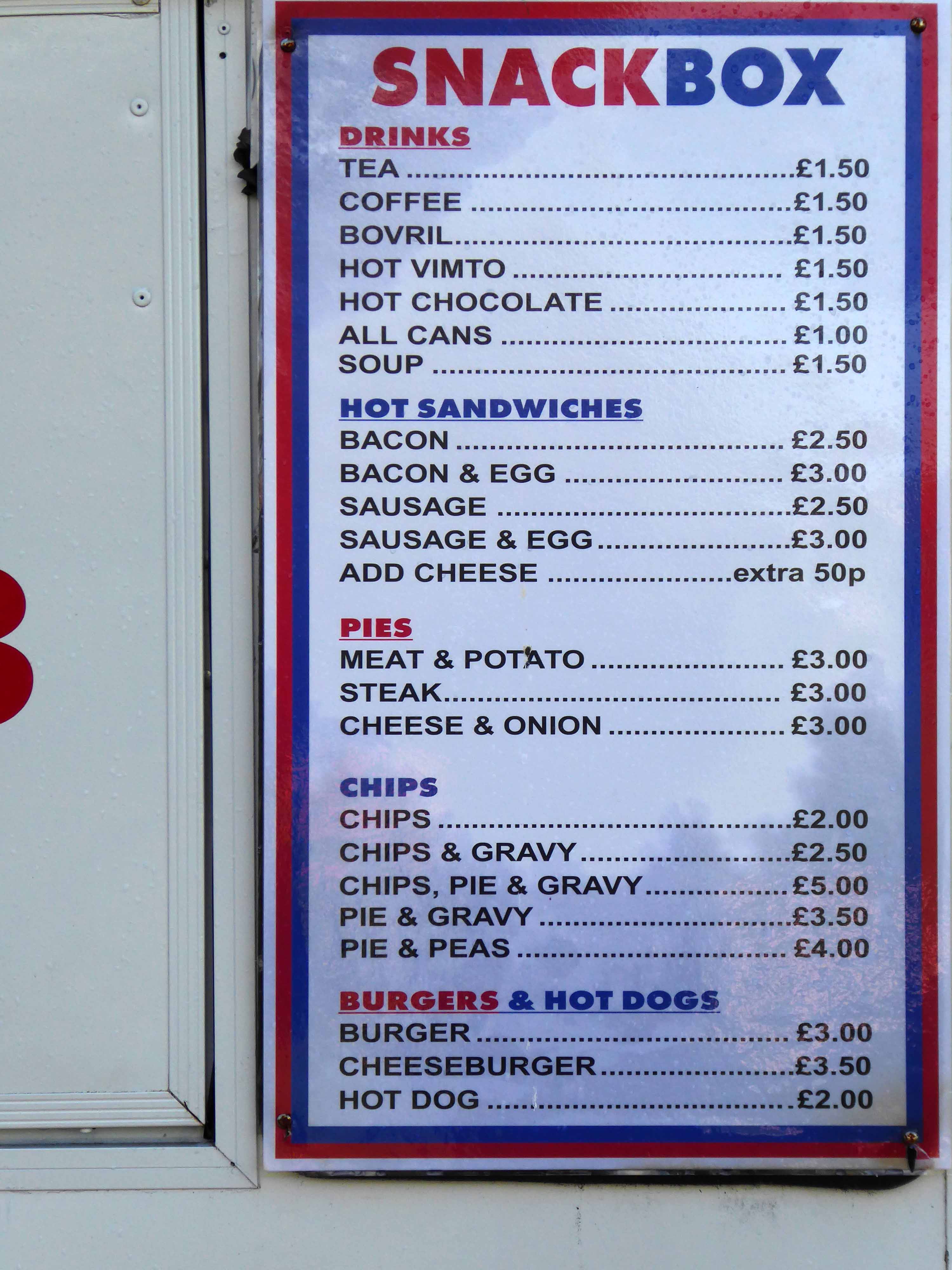
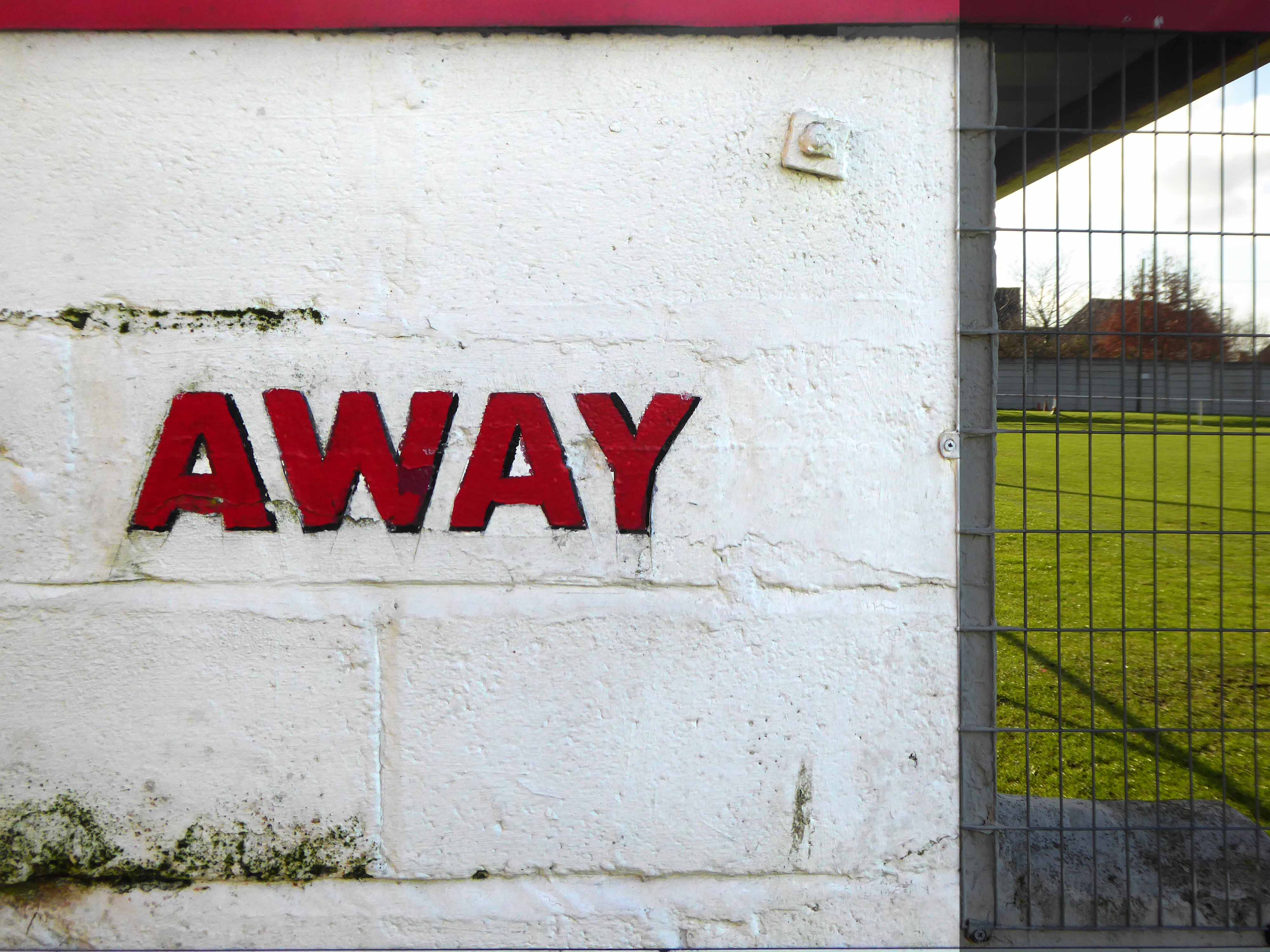
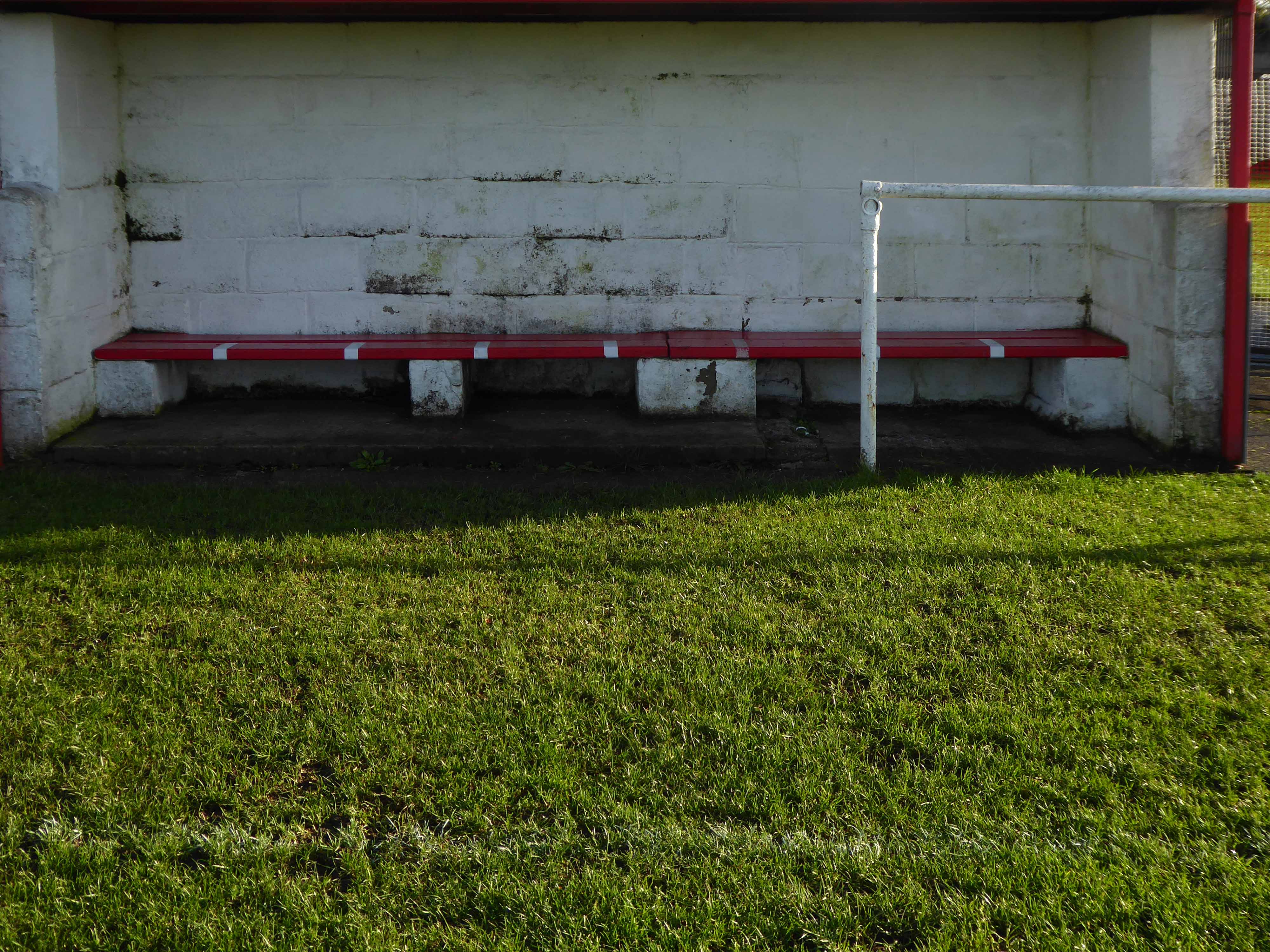
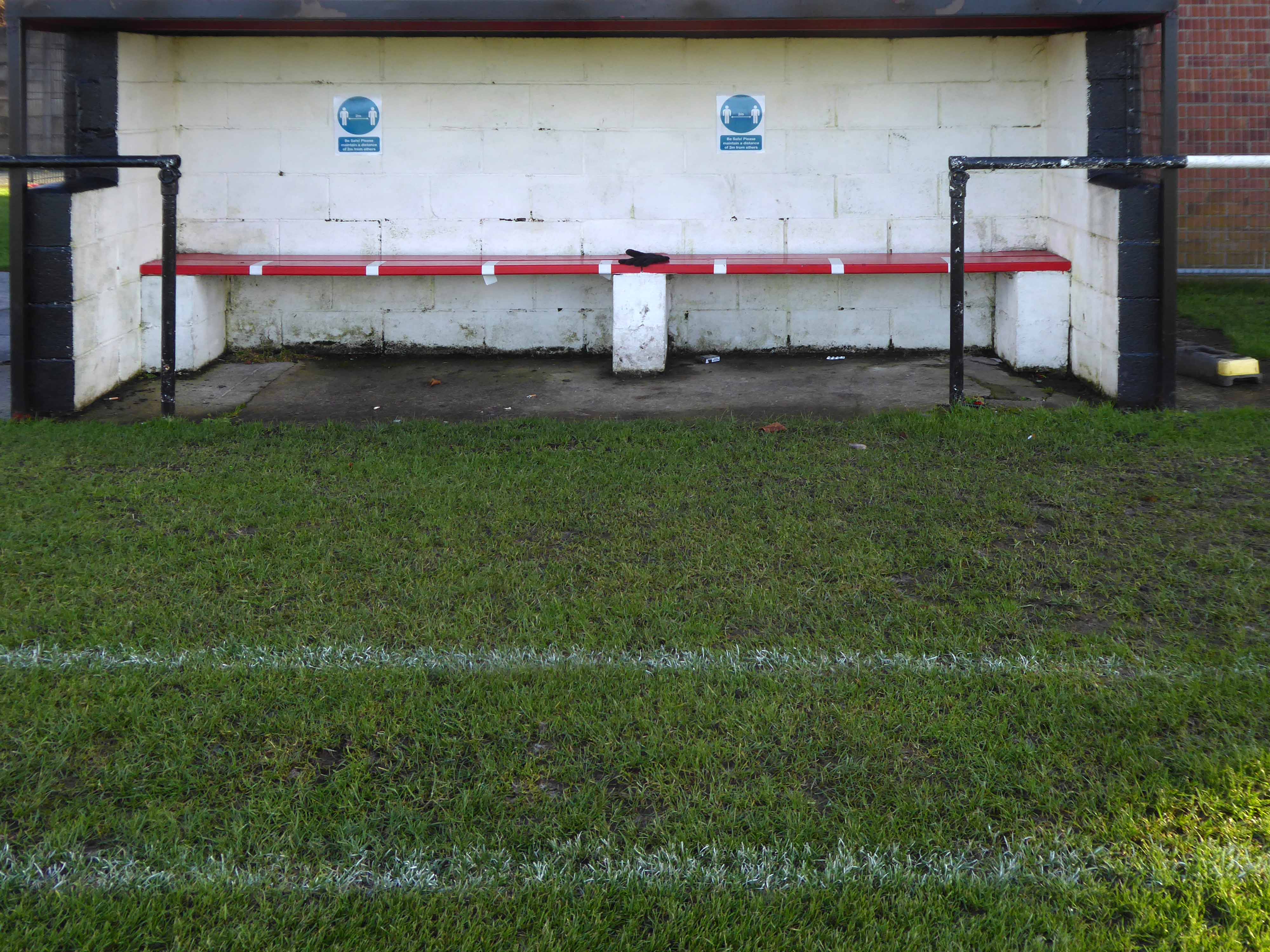
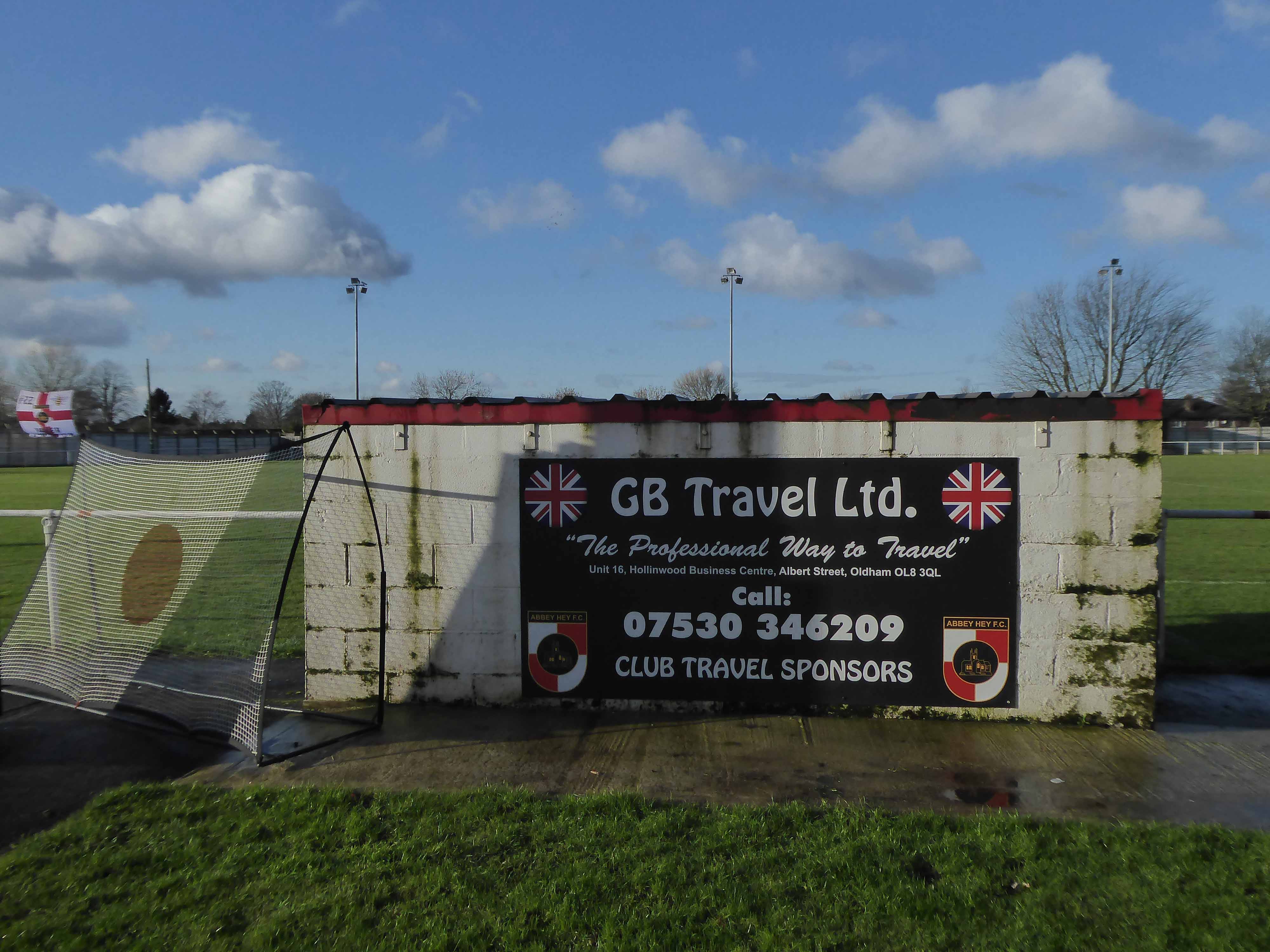
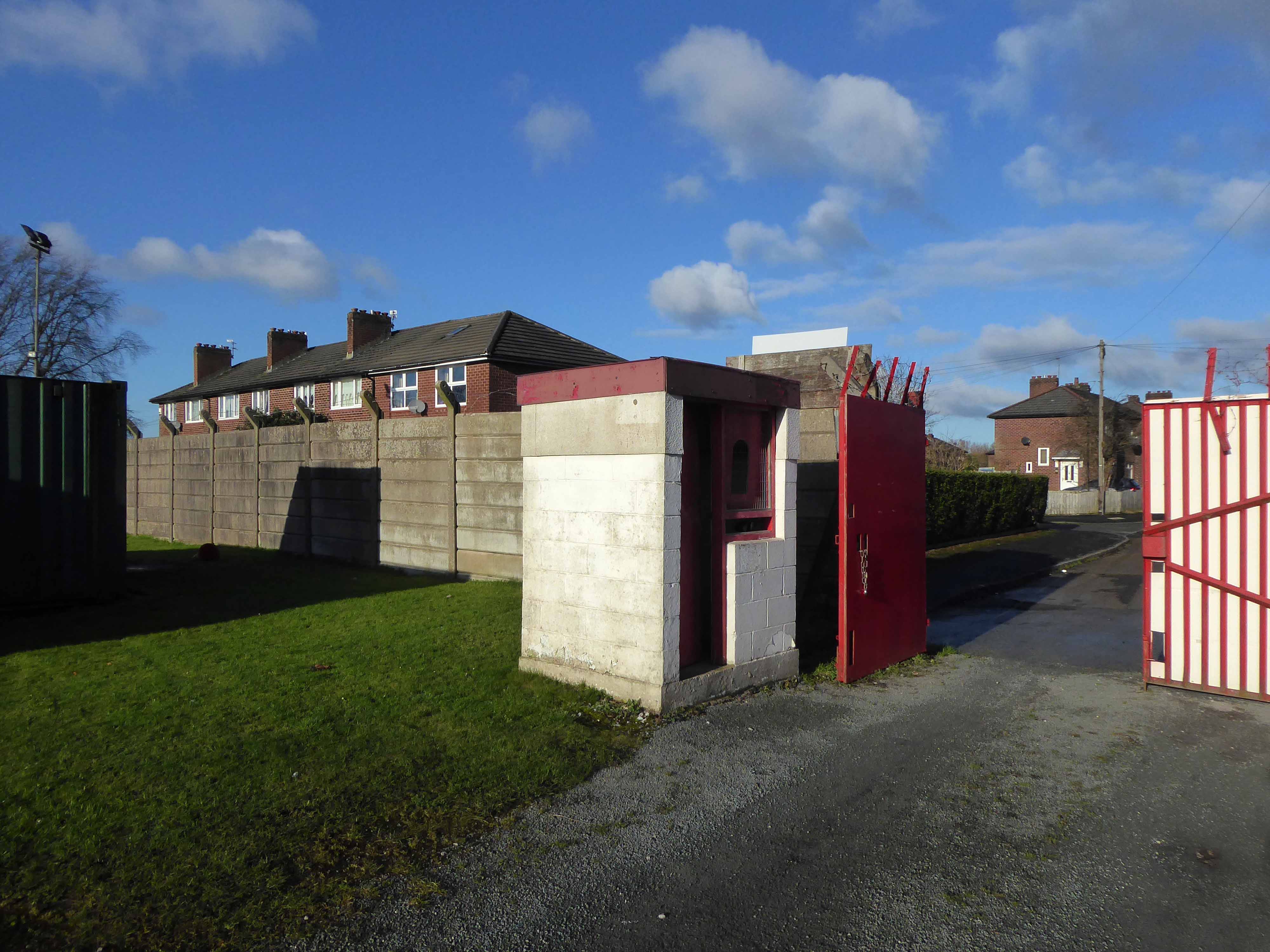
So today seeing the gates open, I decided to take a look around the ground – many thanks to groundsman Simon for taking the time to stop and chat.

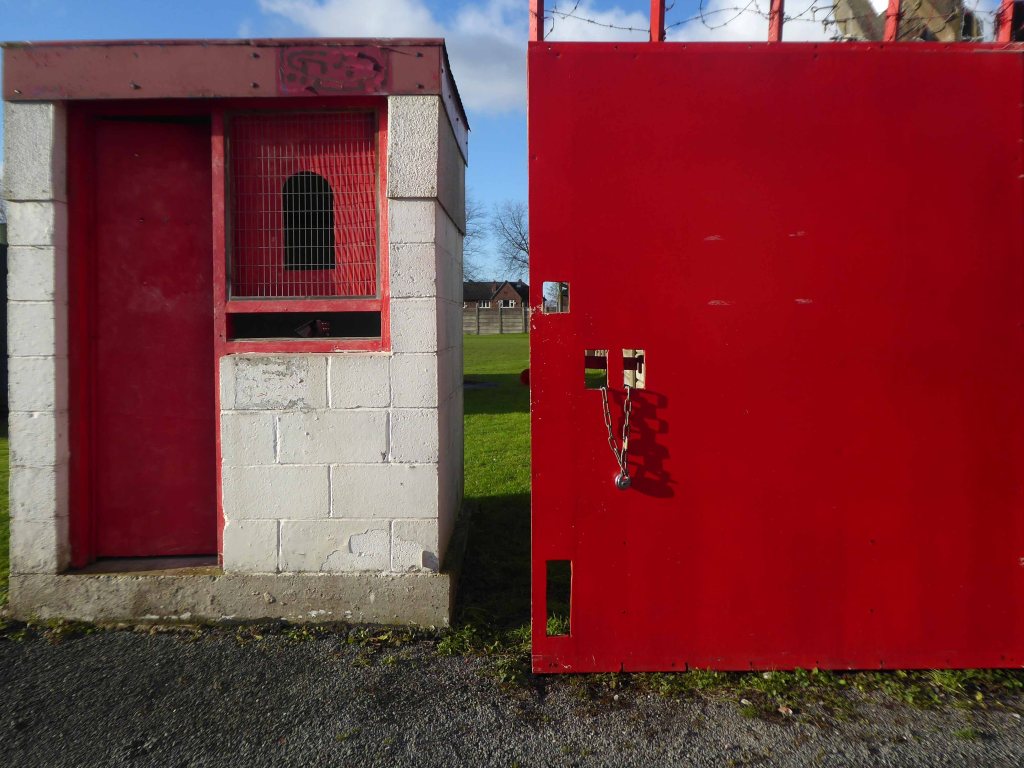
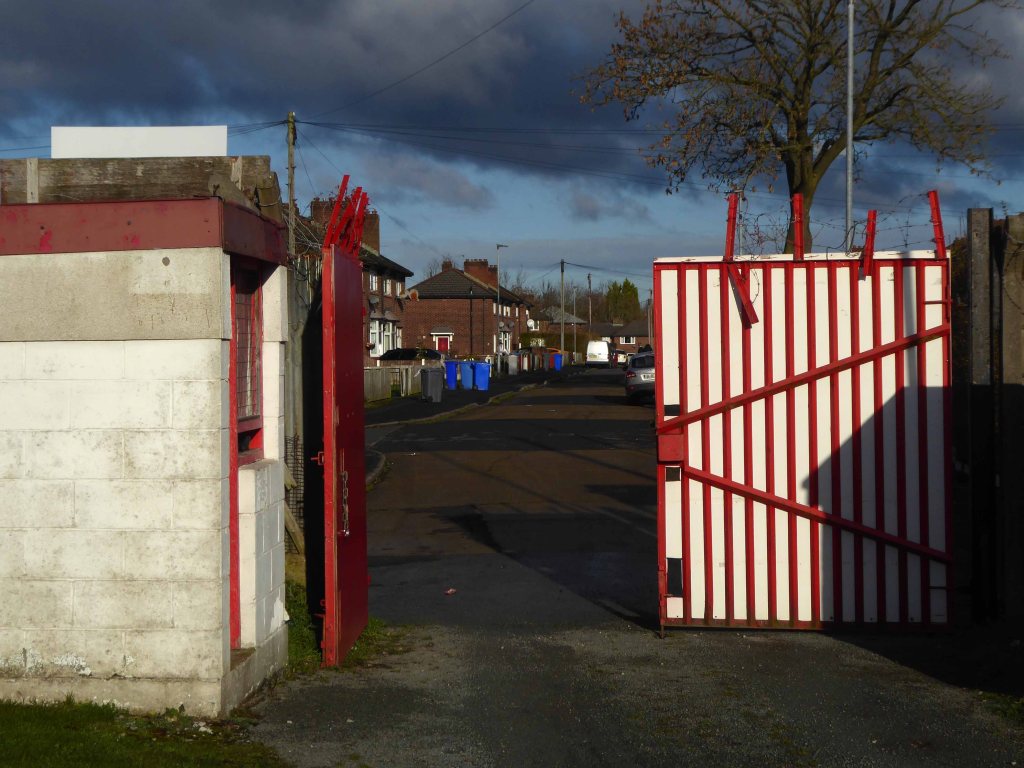
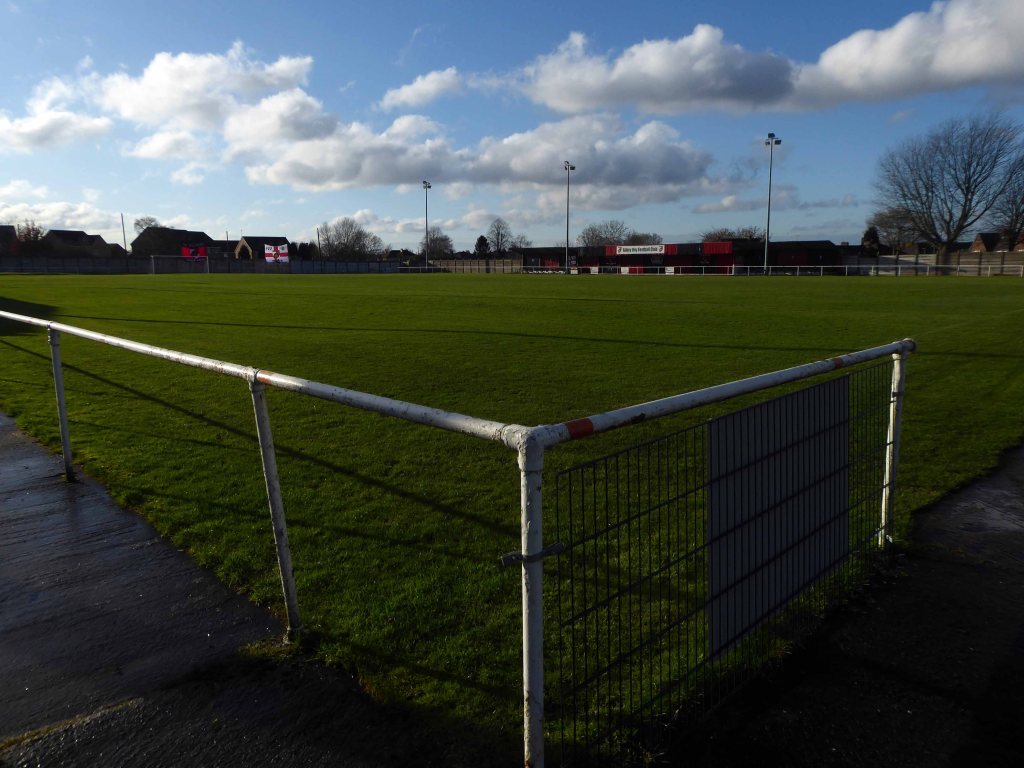
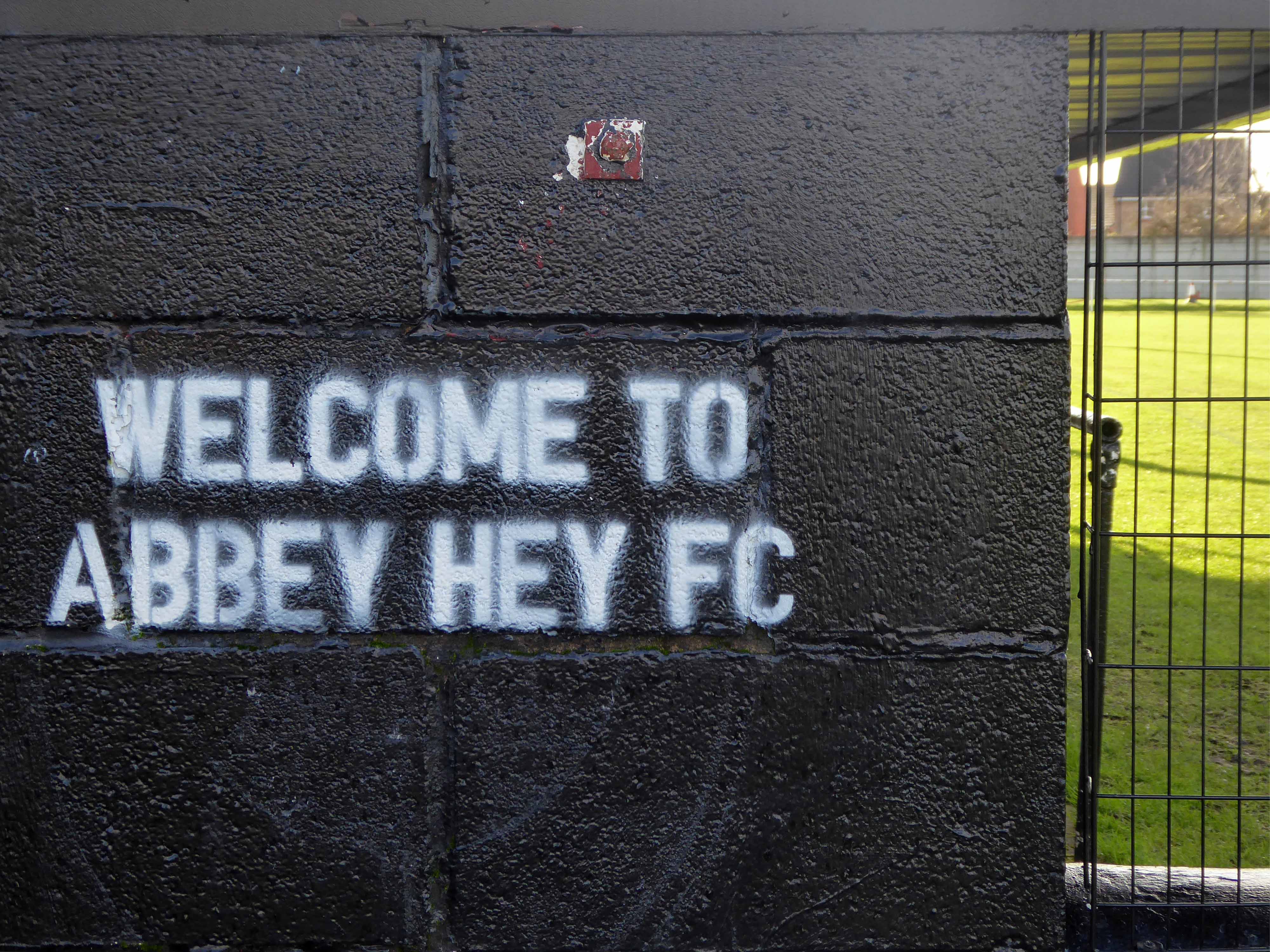
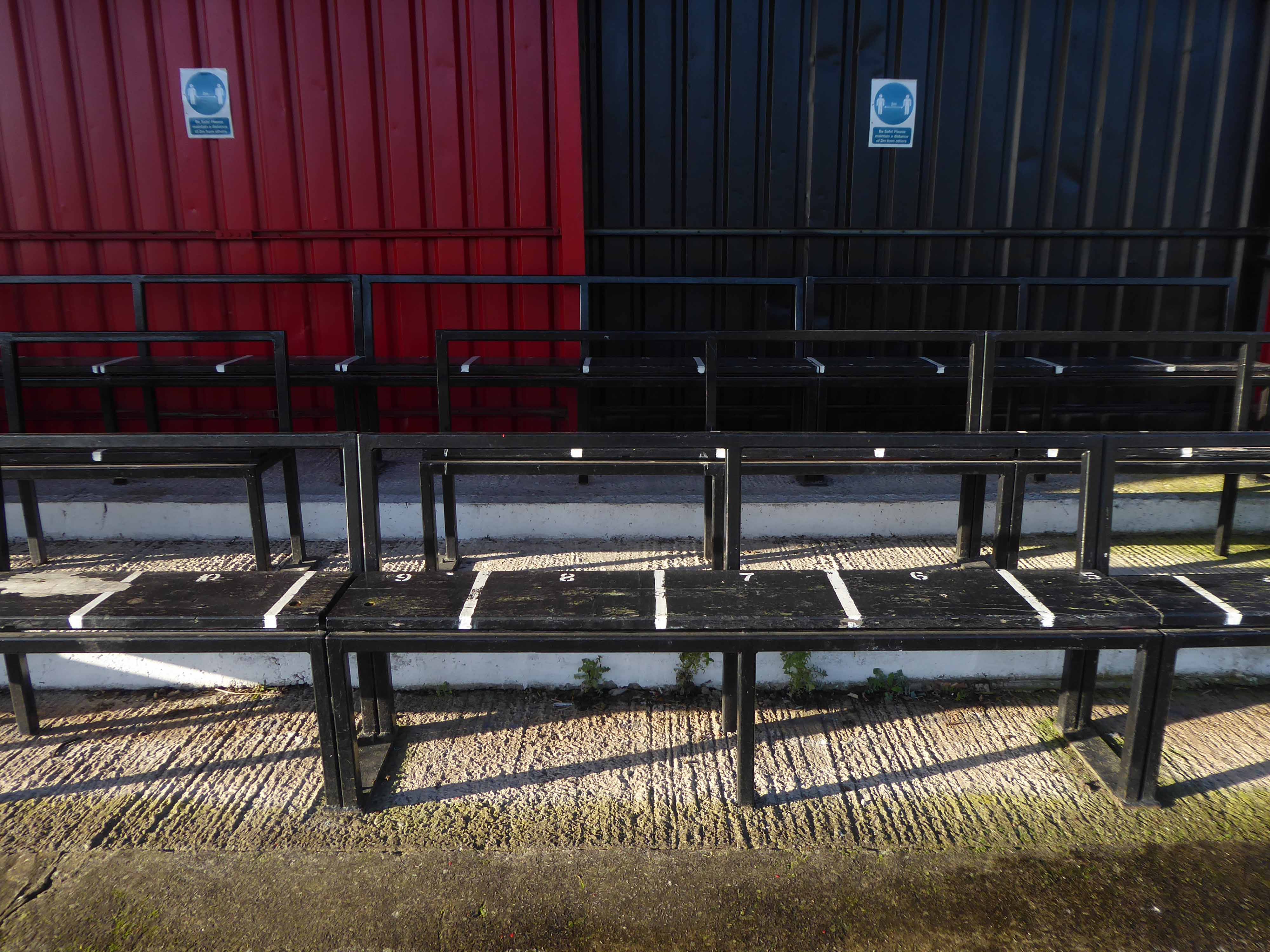
Everything is spick and span, the playing surface in excellent nick, and all the stands seat and fences standing smartly to attention, having had a fresh coat of paint.

So let’s take a look around:

I’ll be back to watch a match, just as soon as the rules and regulations allow!

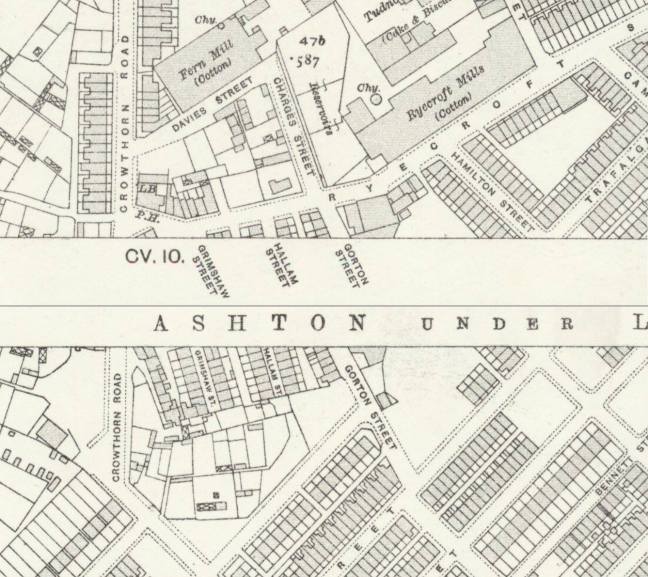
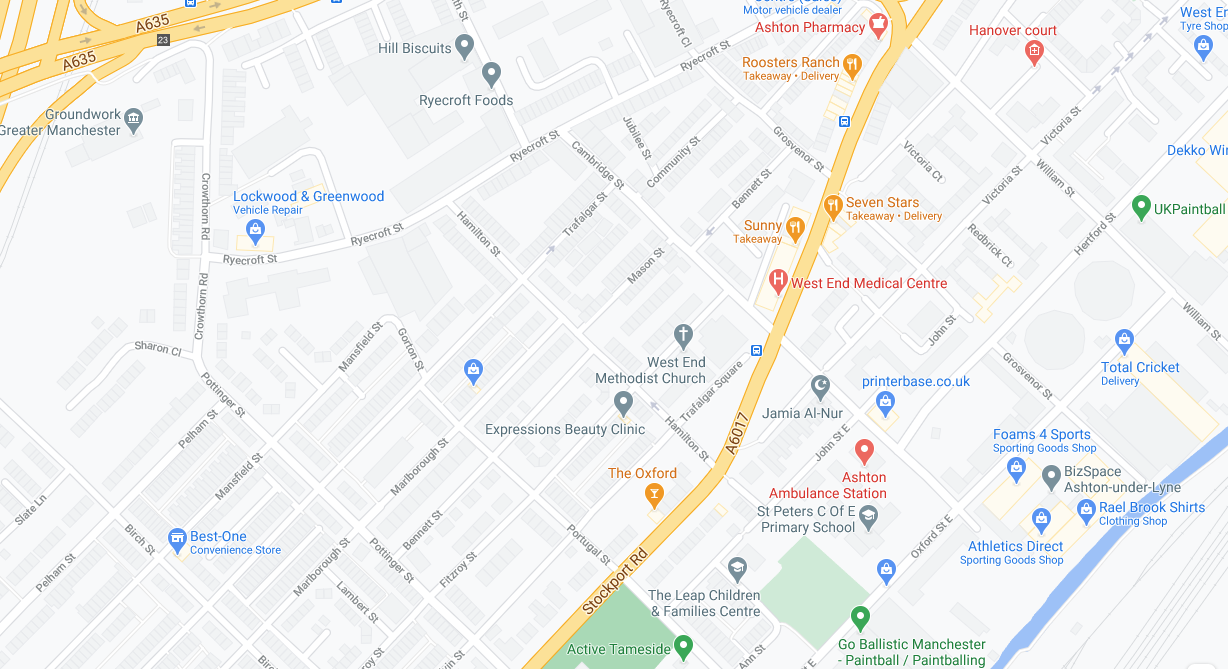
Hamilton Street – Ashton under Lyne

Prompted by Gillian and Adam’s – A Different North project, my thoughts turned once again to notions of the North, similar notions have been considered in my previous posts:

A Taste of the North and A Taste of Honey.

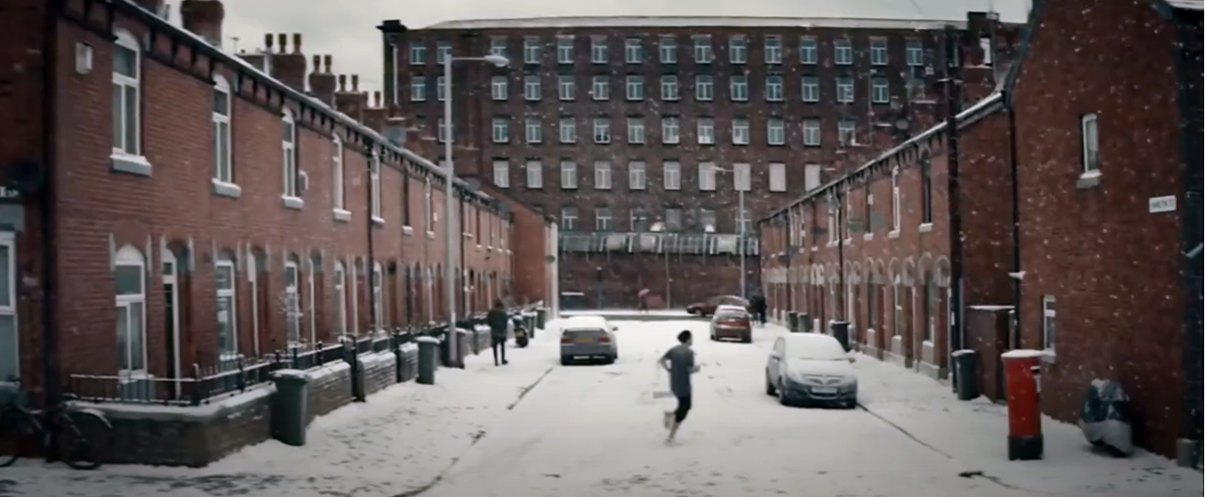
I recalled the 2016 season Sky Football promotional film, it had featured a street in Ashton under Lyne, it had featured Hamilton Street.

A street spanning the West End and the Ryecroft areas of the town, the town where I had lived for most of my teenage years. The town where my Mam was born and raised in nearby Hill Street, nearby West End Park where my Grandad I had worked, nearby Ashton Moss and Guide Bridge.

This is an area familiar to me, which became the convergent point of a variety of ideas and images, mediated in part by the mighty Murdoch Empire.
Here was the coming together of coal and cotton, an influx of population leaving the fields for pastures new.

In the film, Leytonstone London born David Beckham is seen running down the snow covered northern street.

A credit to our emergent mechanical snow generation industry.

According to snowmakers.com, it takes 74,600 gallons of water to cover a 200 by 200-foot plot with 6 inches of snow. Climate change is cutting snow seasons short, we make snow to compensate, more energy is spent making snow, more coal is burned, more CO2 is released.

The Inertia

It is to be noted that locally there has been a marked decline in snowfall in recent years, the Frozen North possibly a thing of the past.

The temperatures around the UK and Europe have actually got warmer over the last few decades, although when you are out de-icing your car it may not actually feel as though it has. Whilst this can not be directly link to climate change, it is fair to assume that climate change is playing a part.

The Naked Scientists

It is also to be noted that Sky Supremo Rupert Murdoch has described himself as a climate change “sceptic”.

Appearing arms raised outside of the home of a family clustered around the television, in their front room.

Filming the ad was great and the finished piece is a really clever way of showing that you never know what might happen in football, I always enjoy working with Sky Sports and I’m proud to be associated with their football coverage.
The Drum

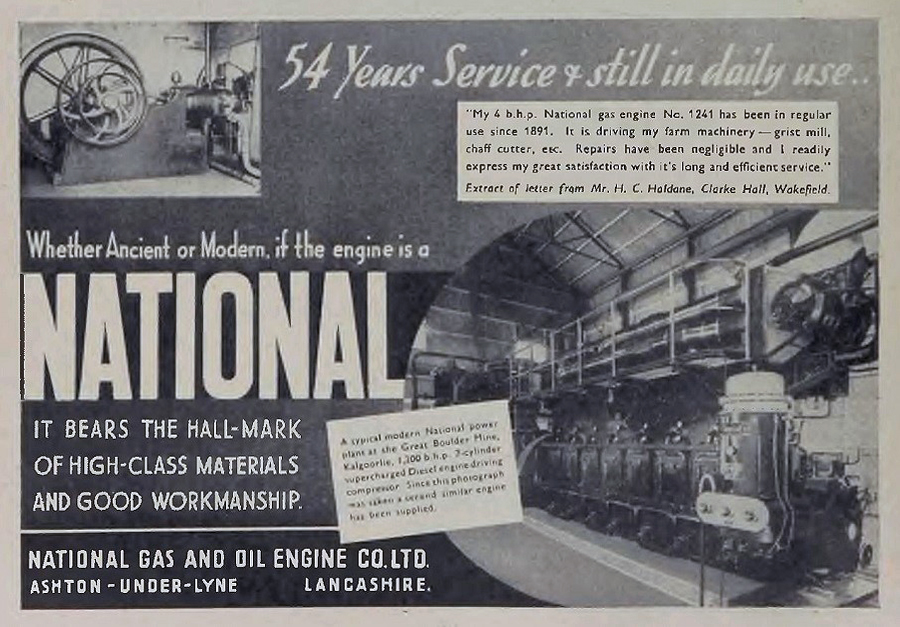
The area does have a football heritage, Ashton National Football Club played in the Cheshire County League in the 1920s and 1930s. They were sometimes also known as Ashton National Gas, due to their connections with the National Gas and Oil Engine Company based in the town.
Illustrative of a time when sport and local industry went hand in glove.

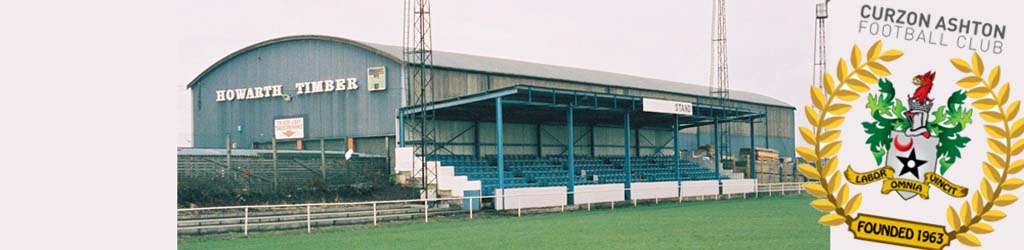
The National Ground was subsequently taken over by Curzon Ashton who have since moved to the Tameside Stadium.

Ashton & Hyde Village Hotels occupy the front of shirt sponsors spot on our new blue and white home shirt, while Seed of Speed, our official conditioning partners, feature on the arm, and Minuteman Press occupy the back of the shirt. Meanwhile, Regional Steels UK Ltd. are the front of shirt sponsors on our new pink and black away kit. 

Illustrative of a time when sport and local industry continue to work hand in glove.

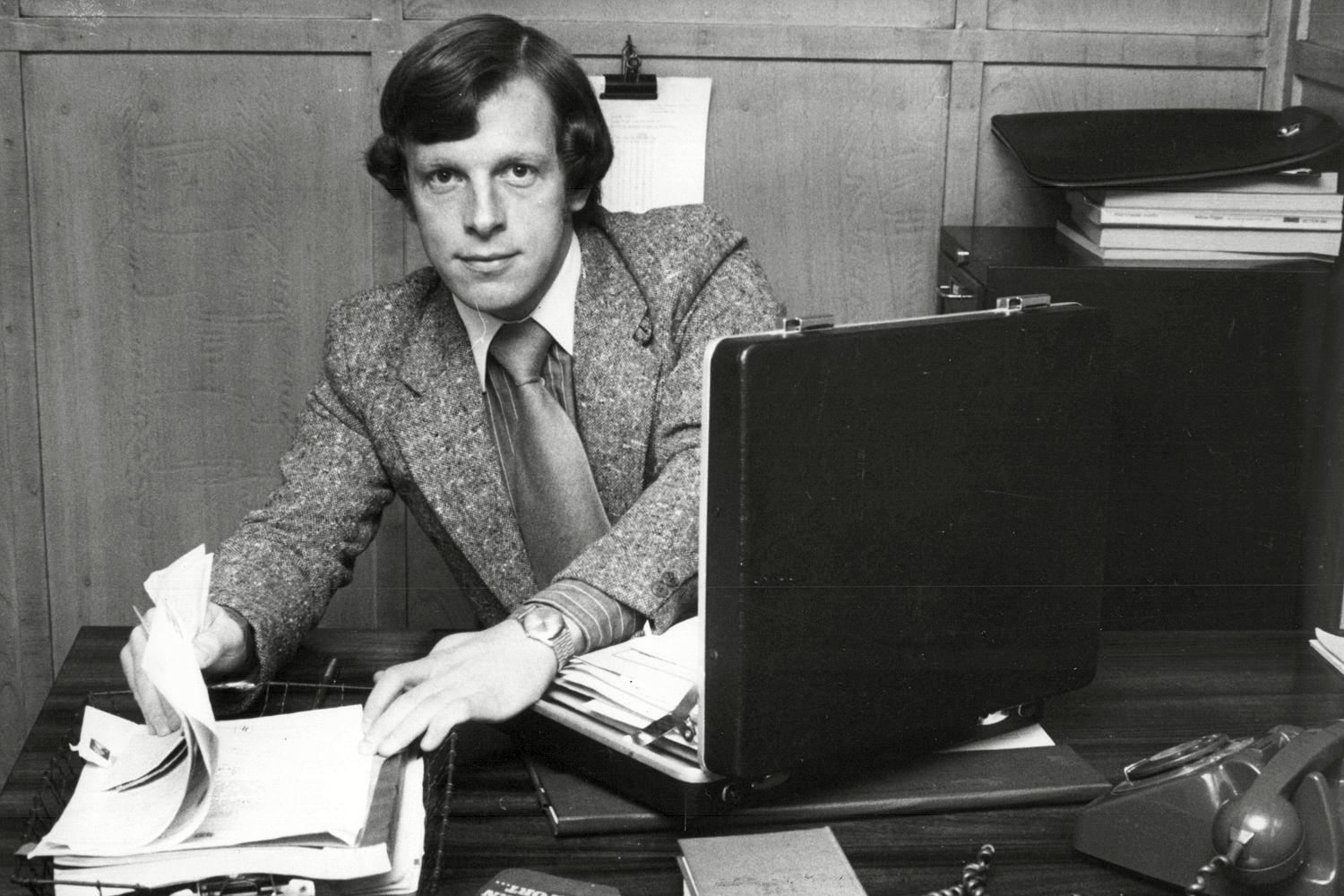
Local lad Gordon Alexander Taylor OBE  is a former professional footballer. He has been chief executive of the English footballers’ trades union, the Professional Footballers’ Association, since 1981. He is reputed to be the highest paid union official in the world.

His mobile phone messages were allegedly hacked by a private investigator employed by the News of the World newspaper. The Guardian reported that News International paid Taylor £700,000 in legal costs and damages in exchange for a confidentiality agreement barring him from speaking about the case.

News International is owned by our old pal Rupert Murdoch, the News of the World no longer exists.

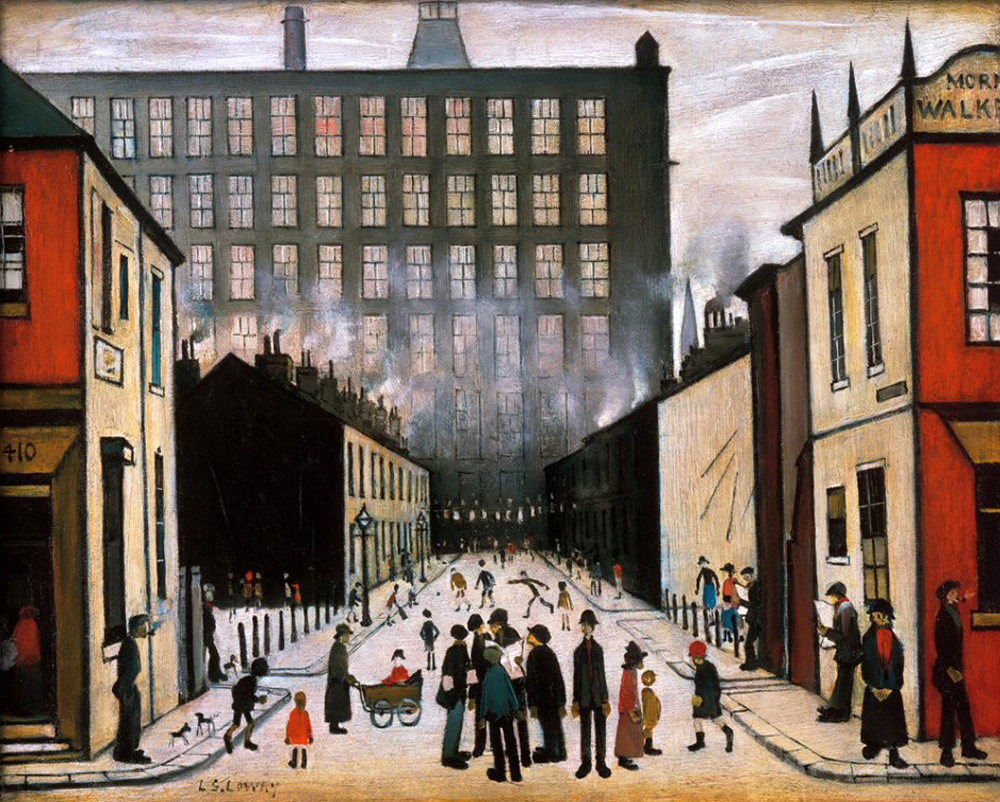
The view of Hamilton Street closely mirrors LS Lowry’s Street Scene Pendlebury – the mill looming large over the fierce perspective of the roadway. The importance of Lowry’s role in constructing a popular image of the North cannot be overestimated.

He finds a grim beauty in his views of red facades, black smoke and figures in white, snowy emptiness. He is a modern primitive, an industrial Rousseau, whose way of seeing is perhaps the only one that could do justice to the way places like Salford looked in the factory age.

The Guardian

For many years cosmopolitan London turned its back on Lowry, finally relenting with a one man show at the Tate in 2013 – I noted on the day of my visit, that the attendant shop stocked flat caps, mufflers and bottled beer, they seemed to have drawn the line at inflatable whippets.

Drawing upon other artists’s work, in a continuous search for ways to depict the unlovely facts of the city’s edges and the landscape made by industrialisation.

But Murdoch’s Hamilton Street is as much a construct as Lowry’s – the snow an expensive technical coating, Mr Beckham a CGI apparition. Our contemporary visual culture is littered with digital detritus, saving time and money, conjuring up cars, kids and footballers at will.

An illusion within an illusion of an illusory North.

Green screen chroma keyed onto the grey tableau.

Mr Beckham himself can also be seen as a media construct, for many years representing that most Northern of institutions Manchester United – itself yet another product of image manipulation, its tragic post-Munich aura encircling the planet, with an expensive Empire Made, red and white scarf of cultural imperialism.

David’s parents were fanatical Manchester United supporters who frequently travelled 200 miles to Old Trafford from London to attend the team’s home matches, he inherited his parents’ love of Manchester United, and his main sporting passion was football.

Mr B’s mentor was of course former Govan convener – Mr A Ferguson, who headed south to find his new Northern home, creating and then destroying the lad’s career, allegedly by means of boot and hairdryer.

Here we have the traditional Northern Alpha Male challenged by the emergent Metrosexual culture, celebrity fragrances, posh partner, tattooed torso, and skin conditioner endorsements.

It is to be noted that the wealth of the region, in part created by the shoemaking and electrical industries, have long since ceased to flourish, though still trading, PIFCO no longer has a local base.

The forces of free market monopoly capitalism have made football and its attendant personalities global commodities, and manufacturing by and large, merely a fanciful folk memory.

Hamilton Street would have provided substantial homes to workers at the Ryecroft Cotton Mills.

Ryecroft Mill, built in 1837,was the second of a series of four mills built on the site, the first was built in 1834. In 1843, over 10,000 people were employed in Ashton’s cotton mills – today there are none.

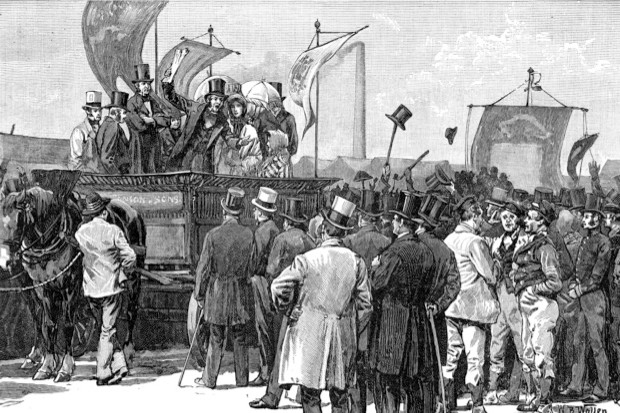
This industrial growth was far from painless and Ashton along with other Tameside towns, worked long and hard in order to build the Chartist Movement, fighting to establish better working conditions for all.

The tradition of political and religious non-conformity runs wide and deep here, the oft overlooked history of Northern character and culture.

Textile production ceased in the 1970s and the mill is now home to Ryecroft Foods, a subsidiary of Weetabix.

Ashton like many of Manchester’s satellite towns created enormous wealth during the Nineteenth and Twentieth centuries. The workers of Ashton saw little of that wealth, the social and economic void left by the rapid exodus of the cotton industry to the Far East, is still waiting to be filled, in these so called left behind towns.

Photo Ron Stubley

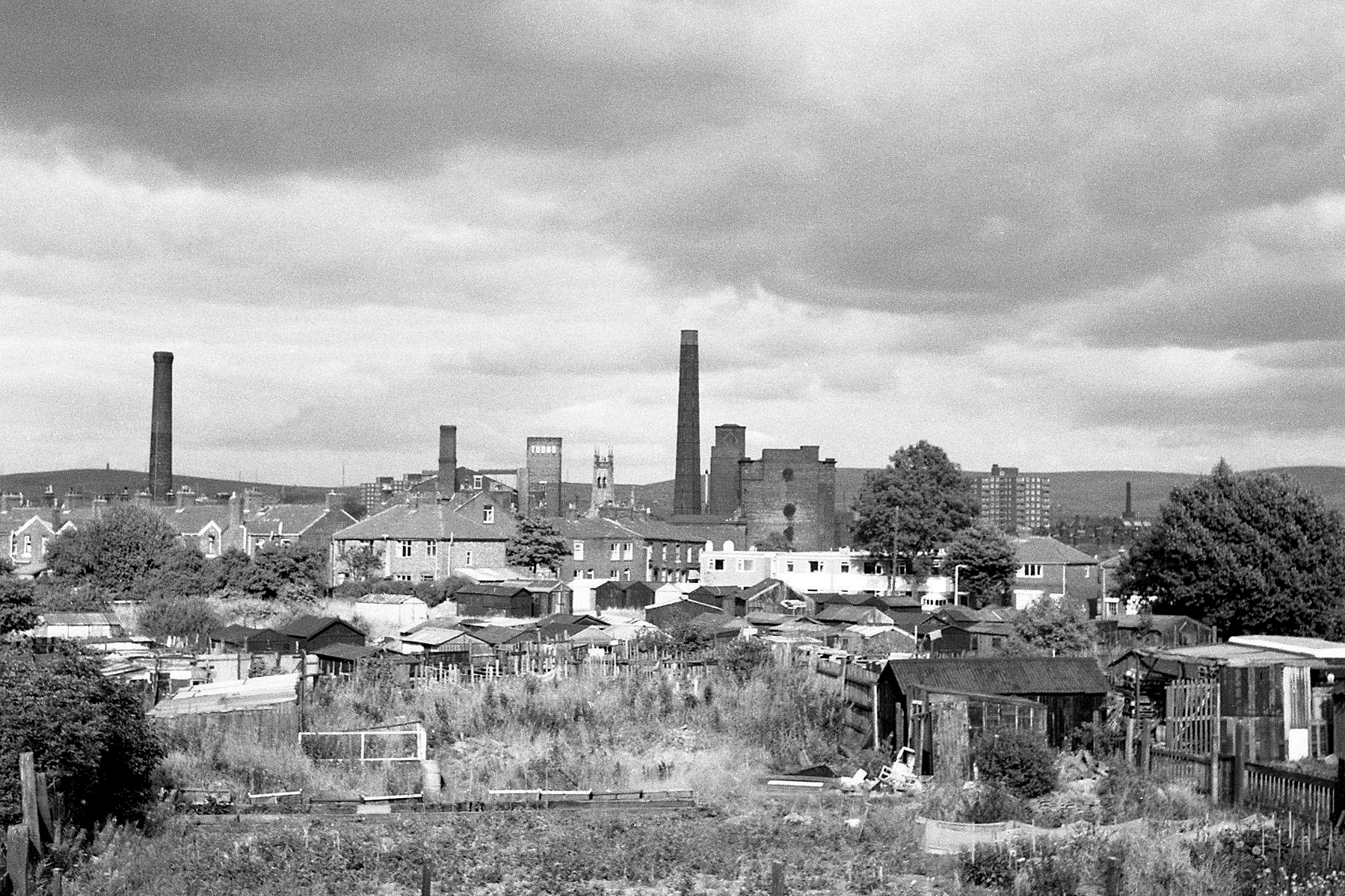
Here is a landscape nestled in the foot of the Pennines, struggling to escape its past and define a future.

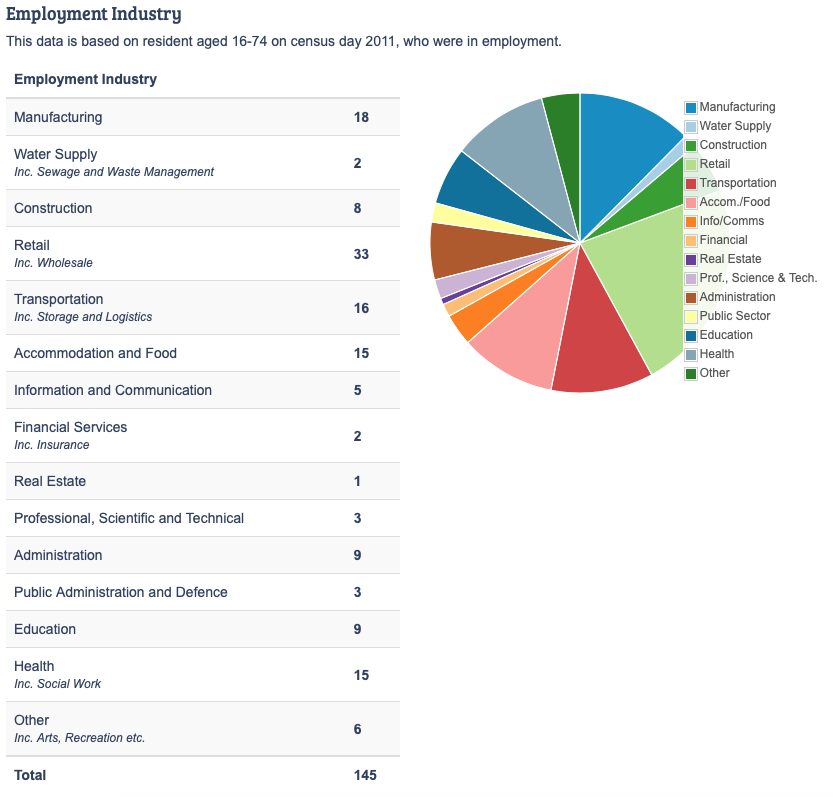
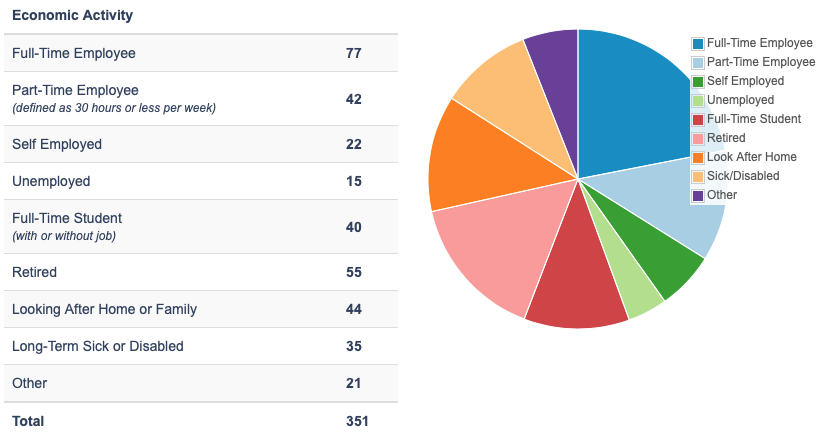
Census 2011

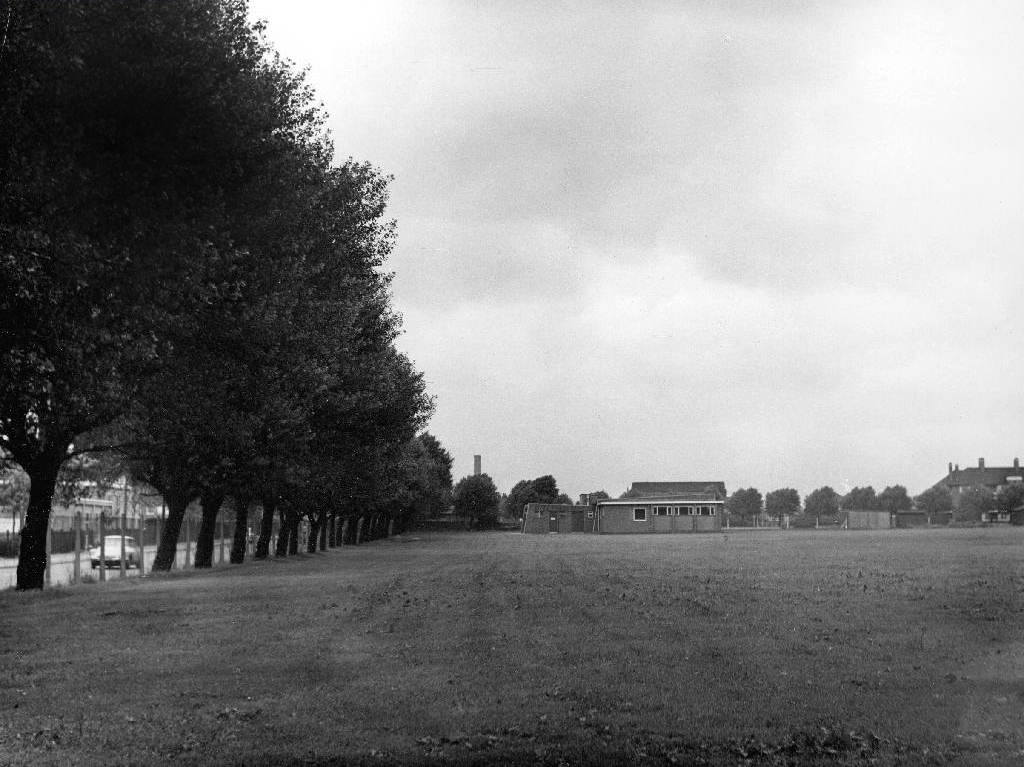
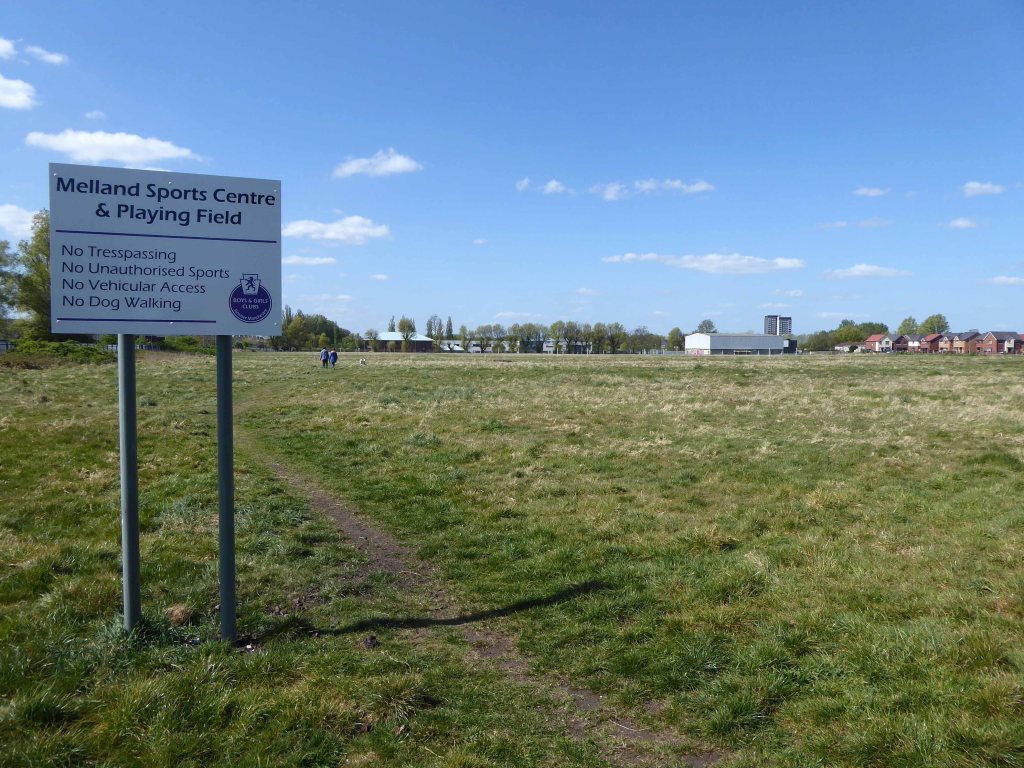
Mellands Playing Fields – Mount Road

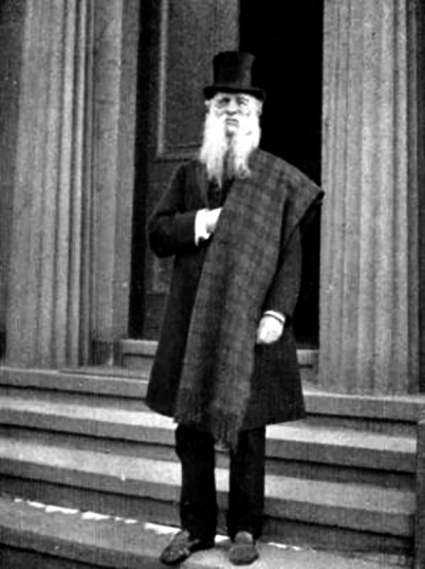
Does it all begin here with Frederick Melland?

His zeal for play-grounds and open spaces was always great, and only a few years ago he took part in an agitation for the acquisition of a new park.

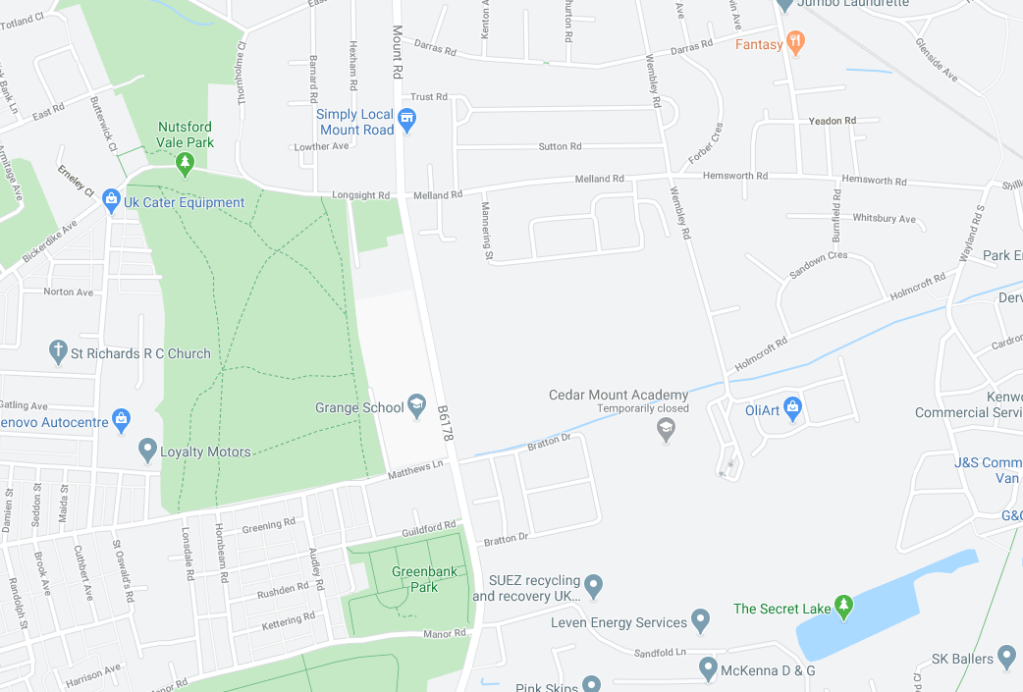
Seen here at the centre of the contemporary map – an empty space with no indication of its current use, or past status – drawn a blank.

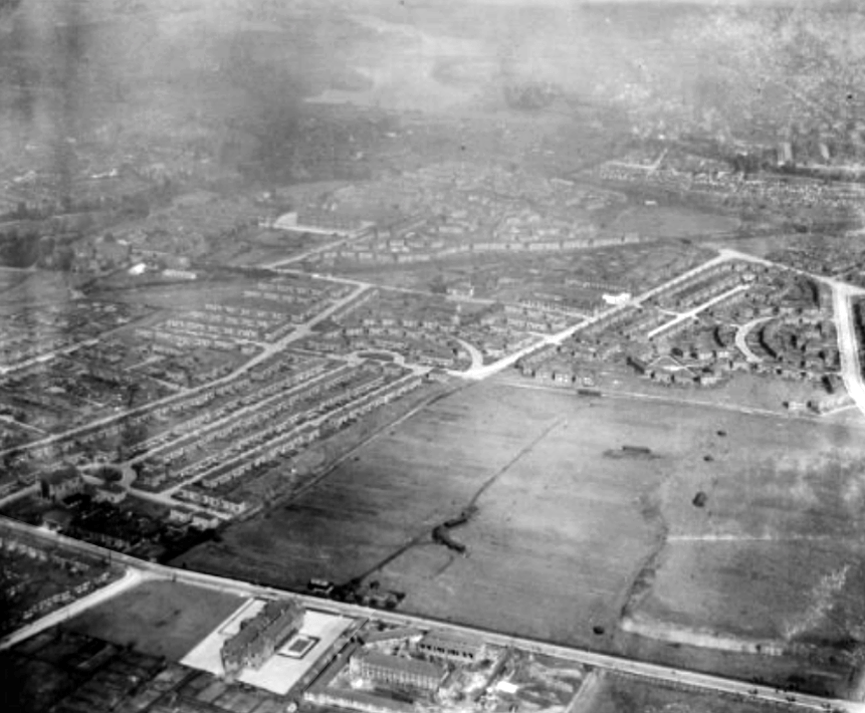
It’s here in an aerial photograph of 1931.

Photograph – Britain From The Air

Surrounded by newly built social housing.

Melland Road 1965

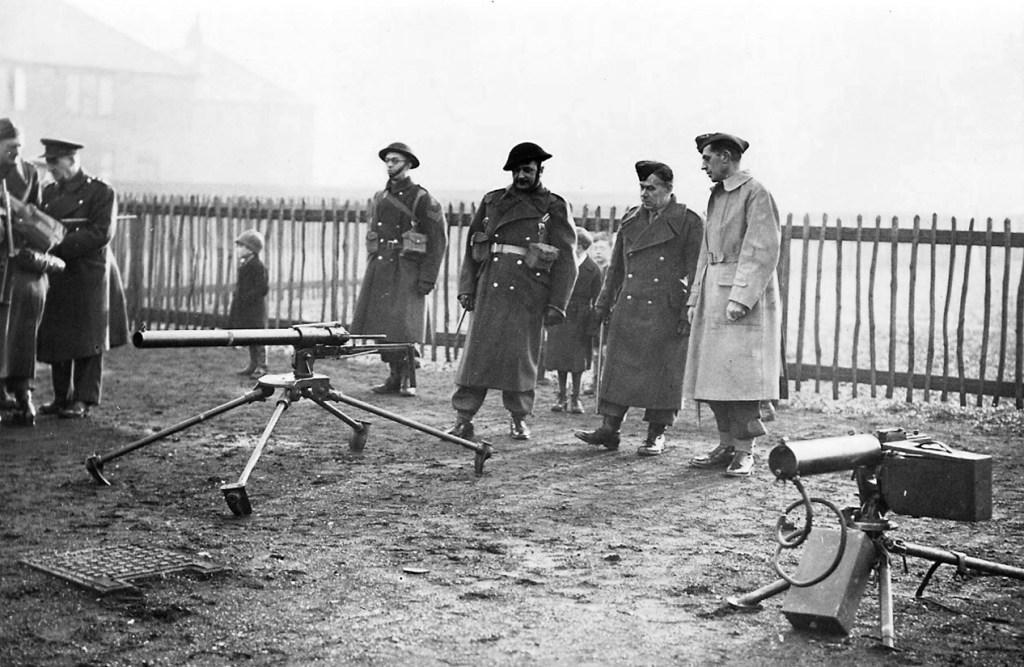
Levyboy’s website informs us of the fields’ wartime uses:

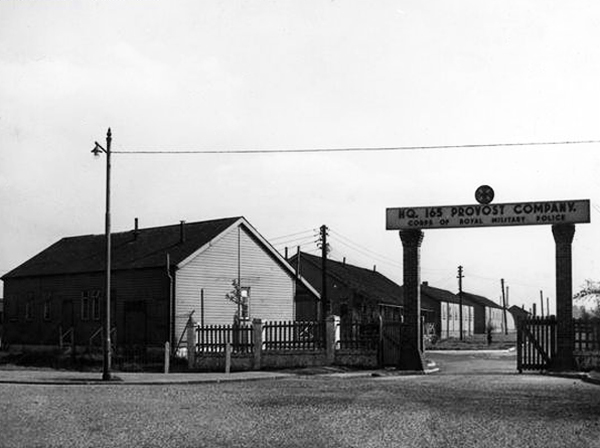
As a Military Police and POW Camp
The 48th Battalion Manchester Home Guard used the facilities 

Photograph Brian Wood

I remember from the 60’s onwards the fields in use for amateur football – pubs, clubs, schools and works all supplying teams to the plethora of leagues across the city.

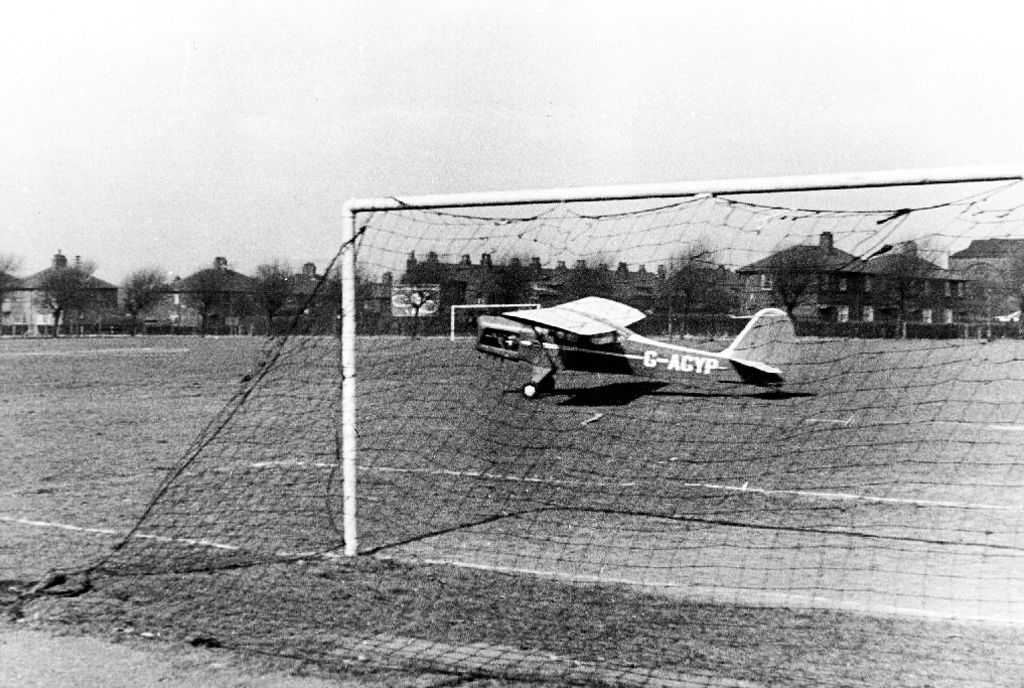
Auster Aircraft of Airliners forced to land at Melland Playing Fields whilst towing banner 1961
1963

Archive photographs – Local Image Collection

The pitches and the sports centre built in 1978 are now closed.

On my previous visit in 2015 the facilities were still open.

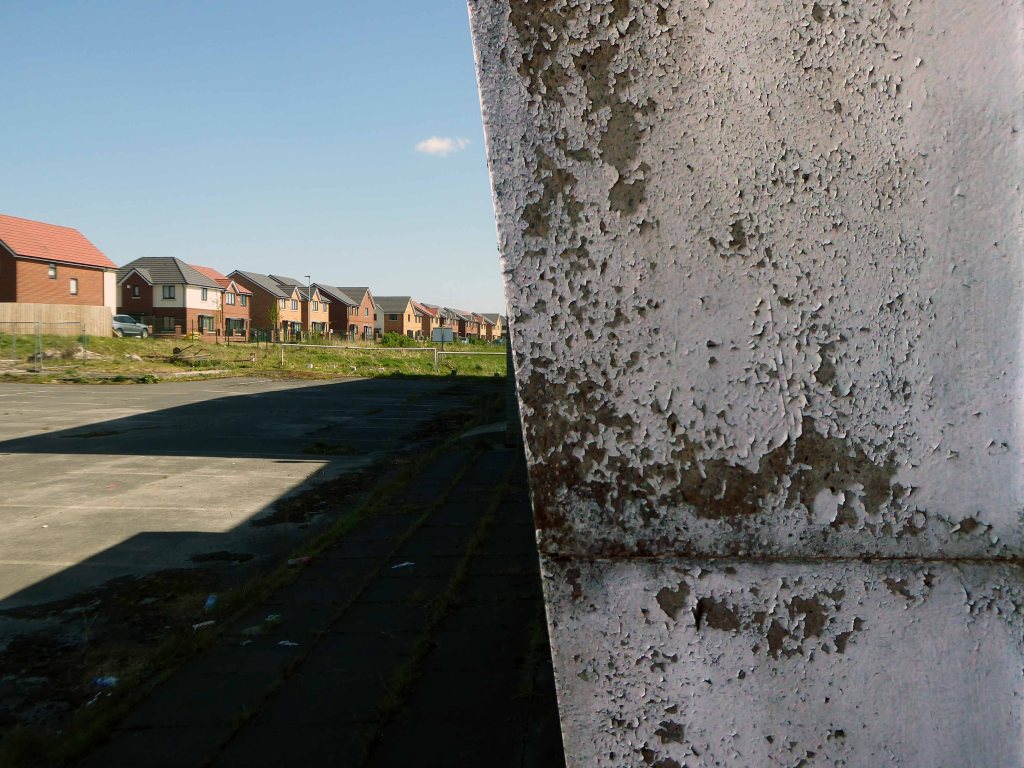
New housing has been built on the northern edge.

Gorton has received significant regeneration and investment over recent years as have nearby areas including Levenshulme. This is an aspirational, exciting new development and Arkwright Place has something for everyone – from first time buyers to growing families and downsizers – with a huge range of beautiful homes on offer.

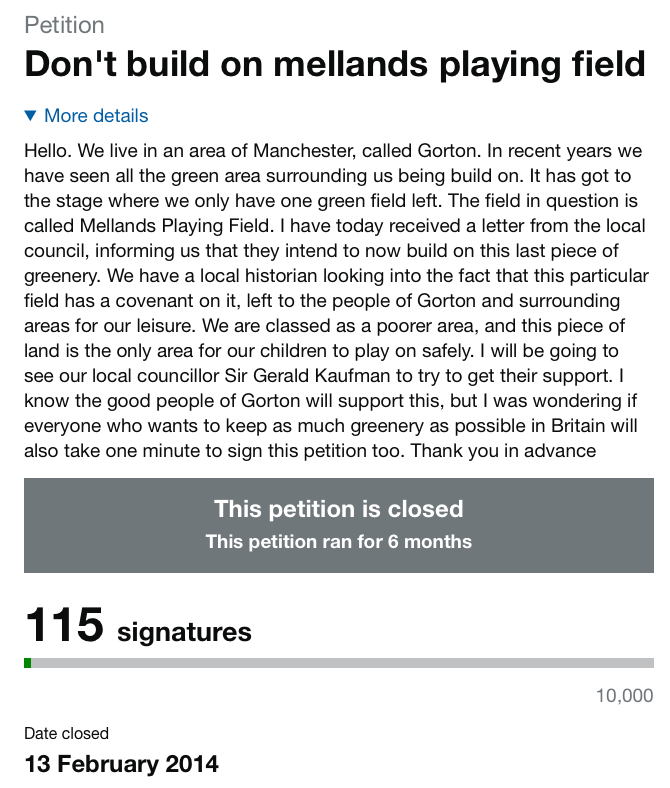
A local campaign was organised to preserve the open space:

At present the fields are fenced and secured – though gaps have been made to allow access for strollers.

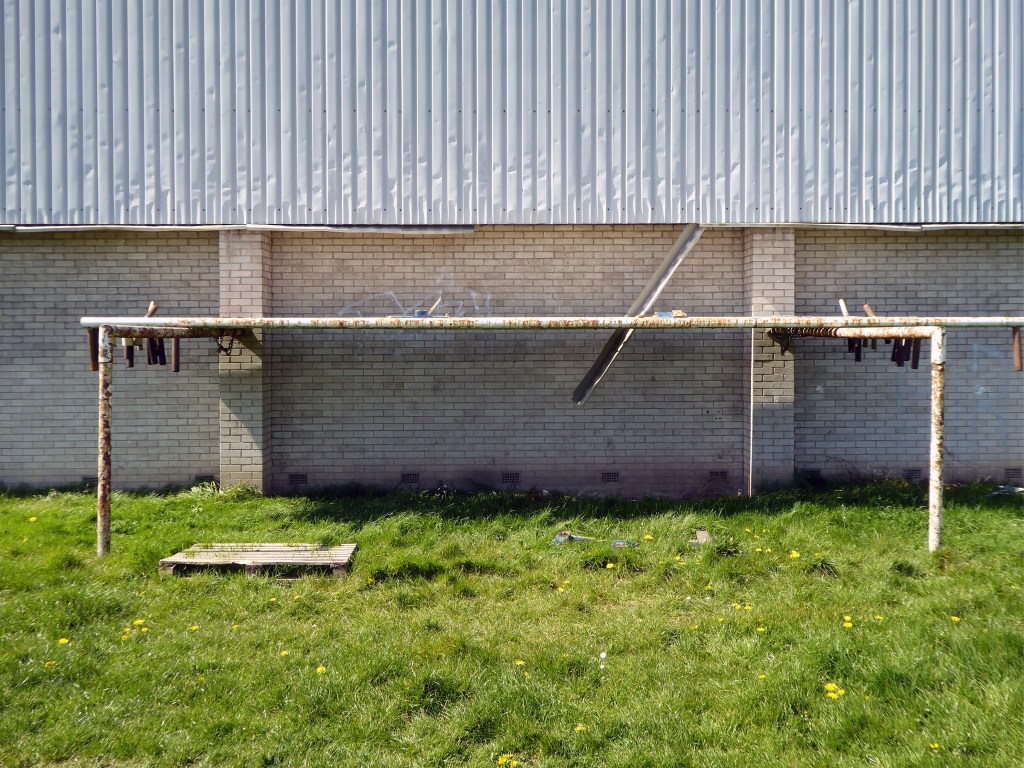
The goalposts still stand though currently without crossbars.

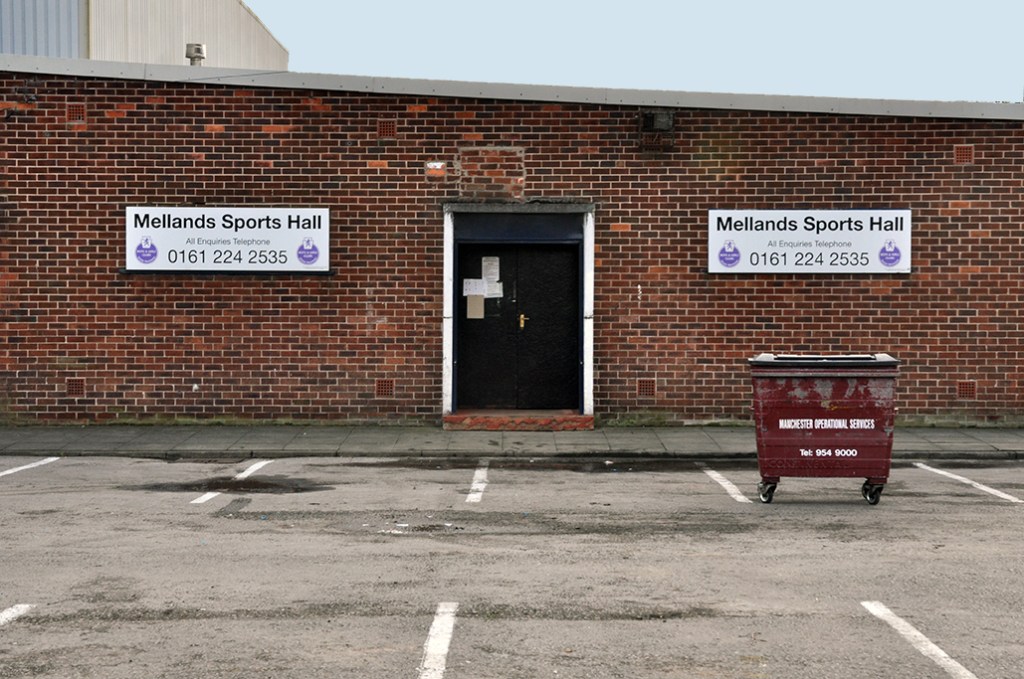
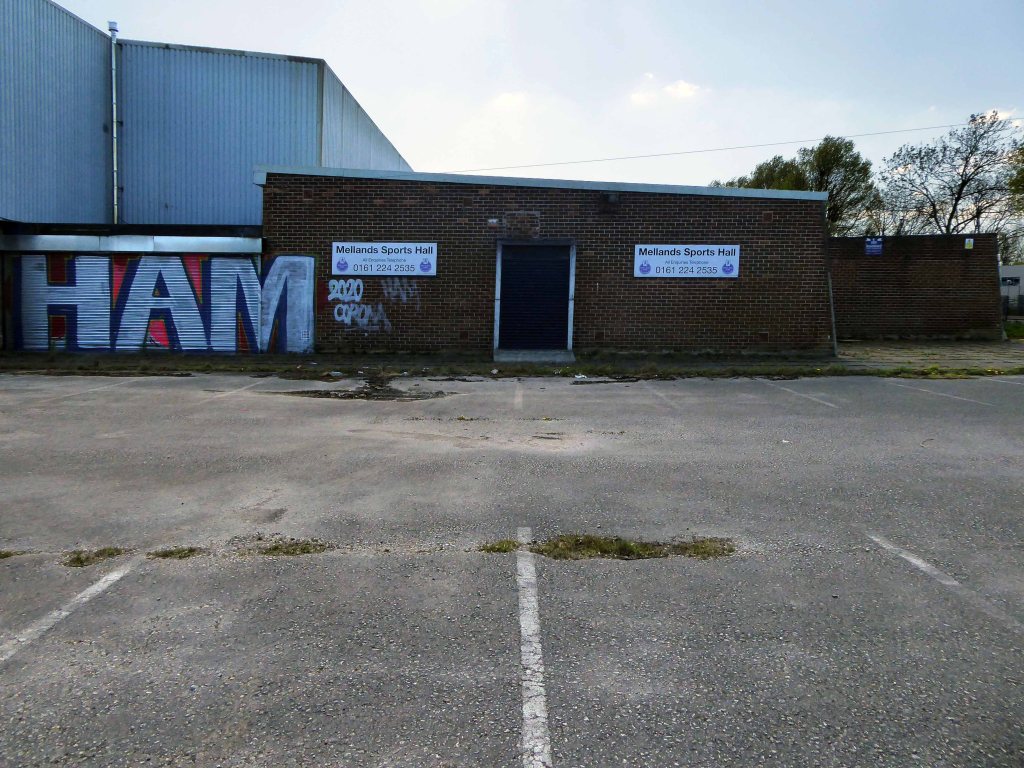
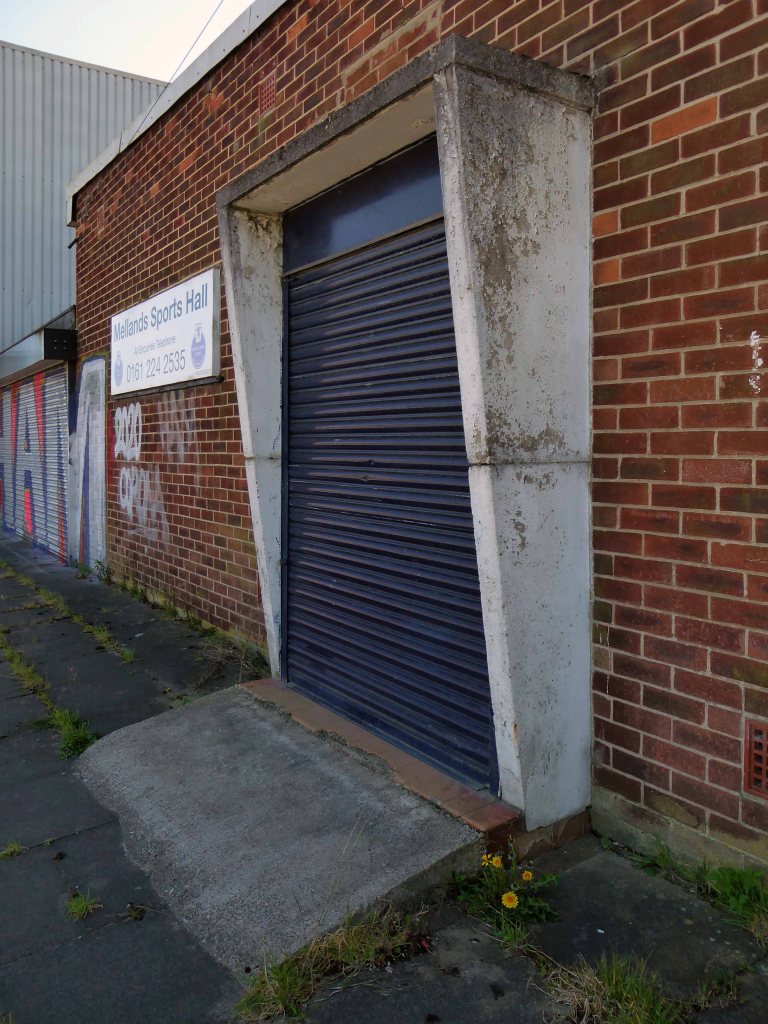
Which are stored by the Sports Hall.

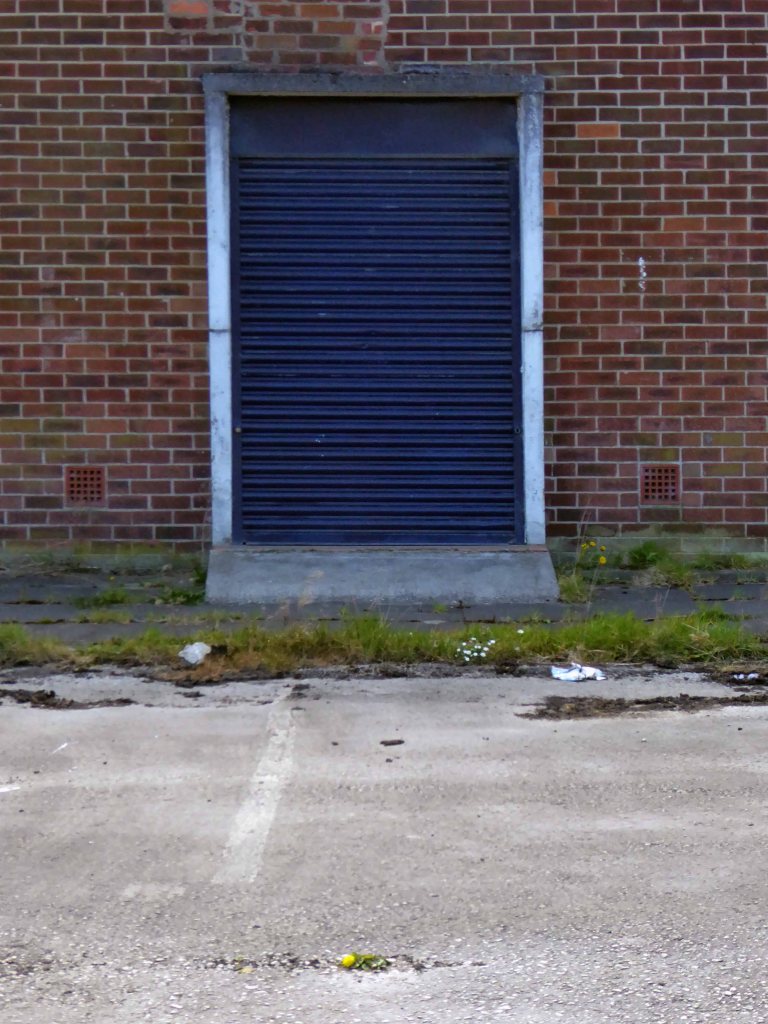
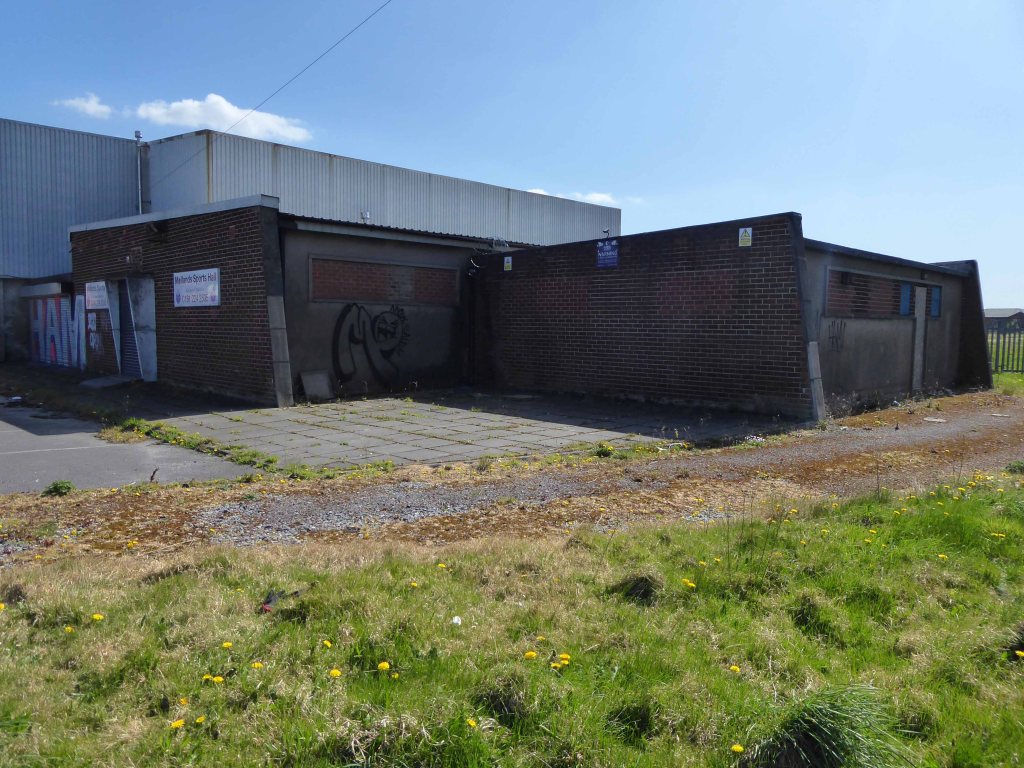
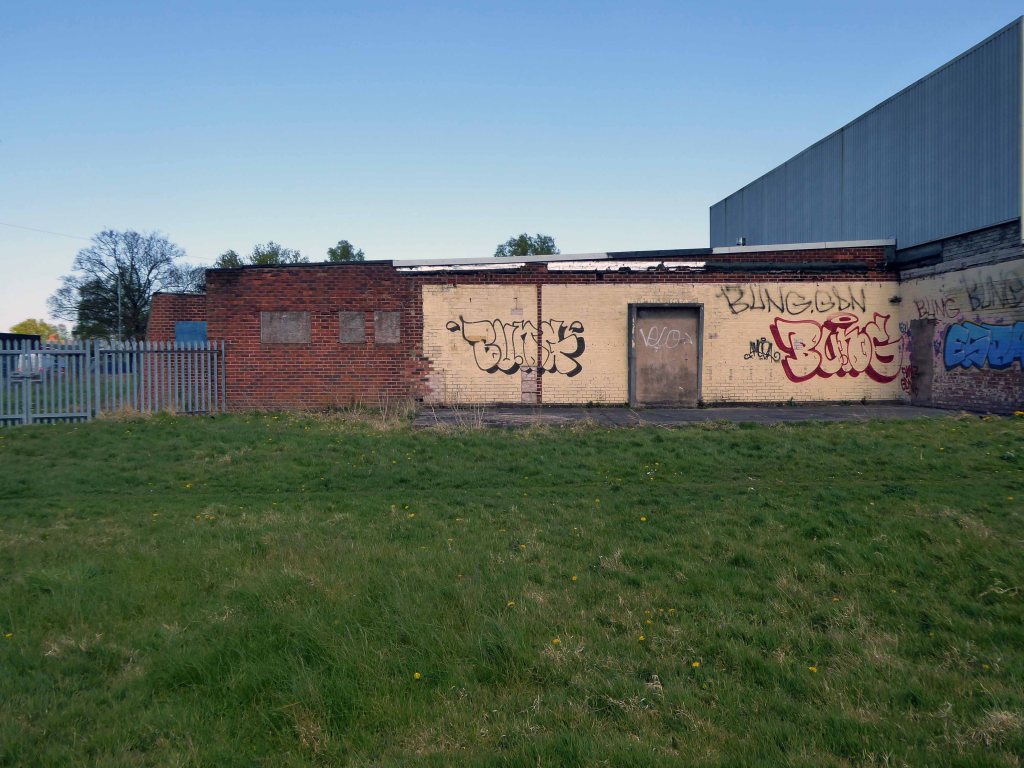
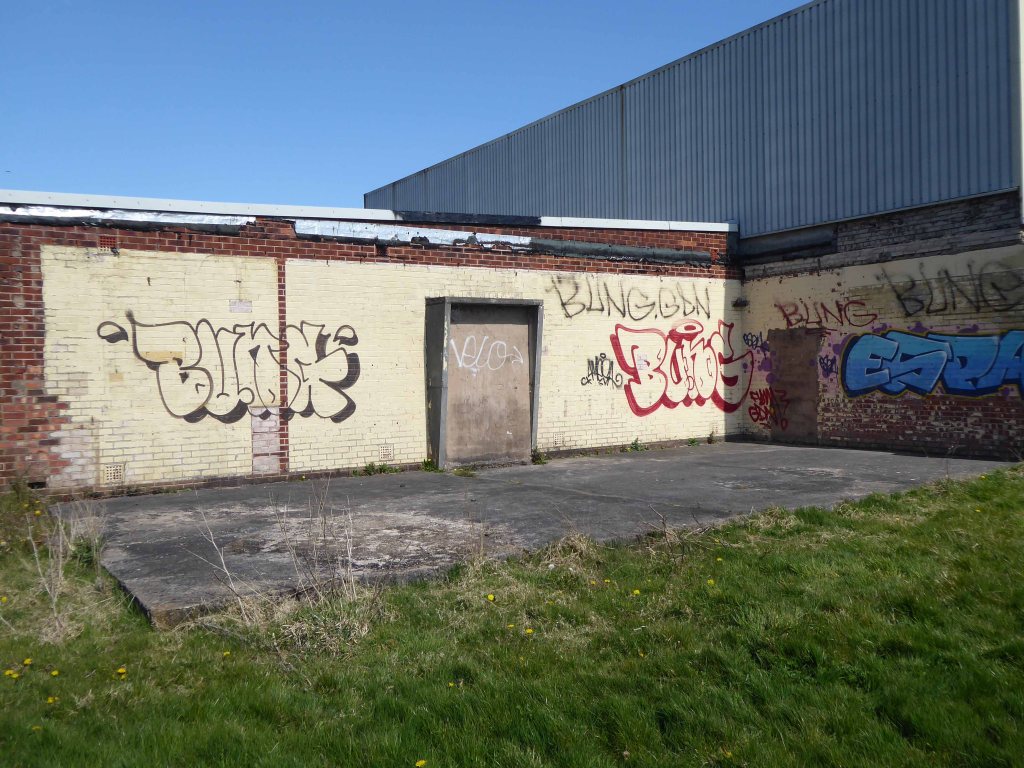
The buildings are mothballed – awaiting what?

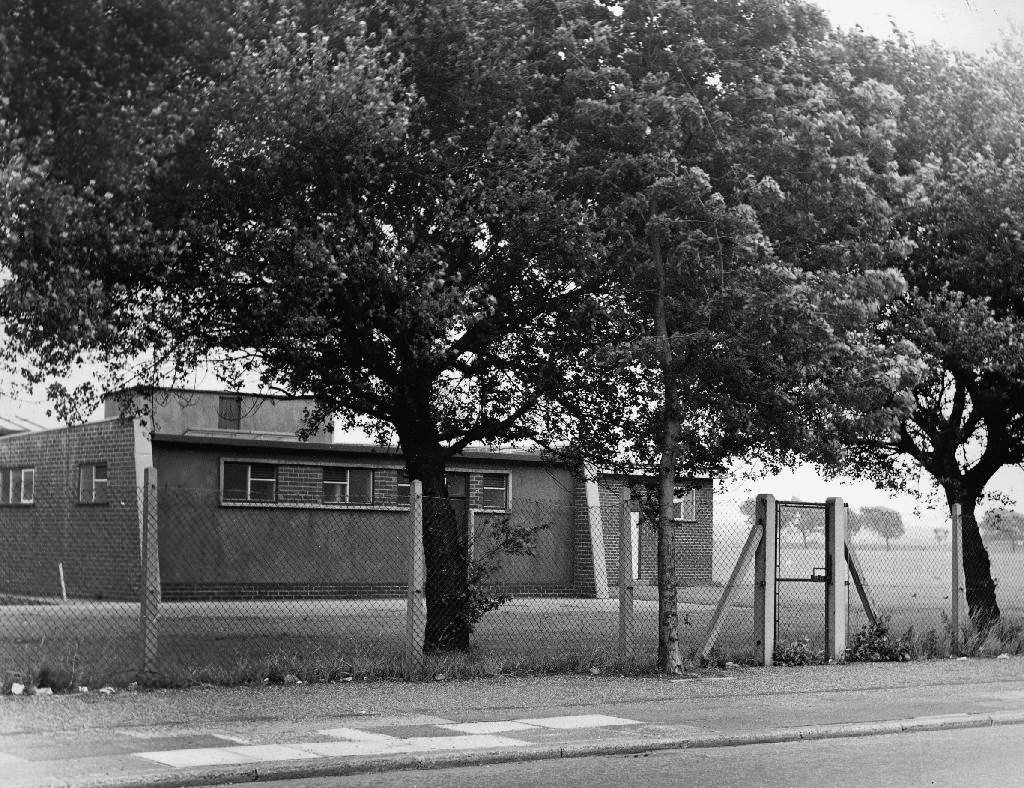
For me the concrete and brick functionalist changing rooms are a thing of beauty and seem to have been a part of my life for quite some time, as I cycled back and to – on my way to work.

Ten Acres Lane – Manchester

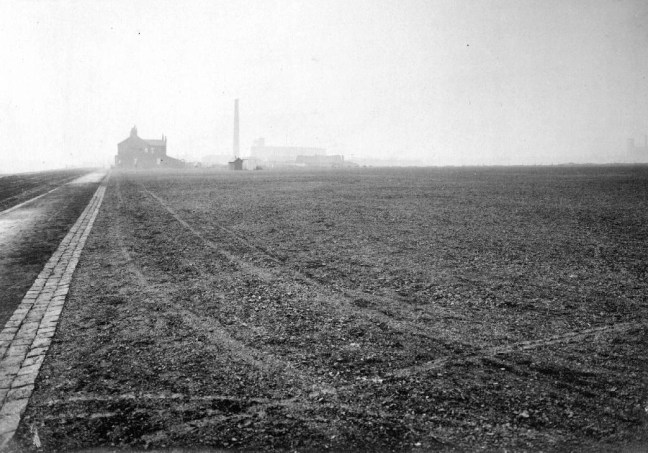
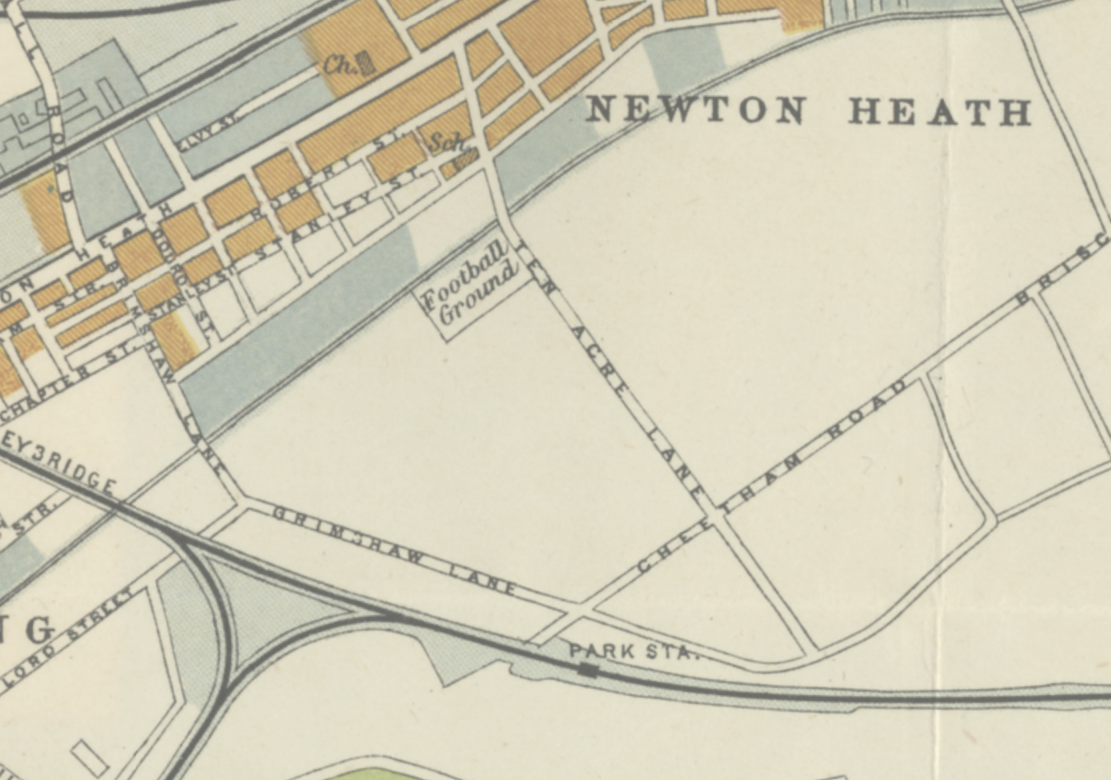
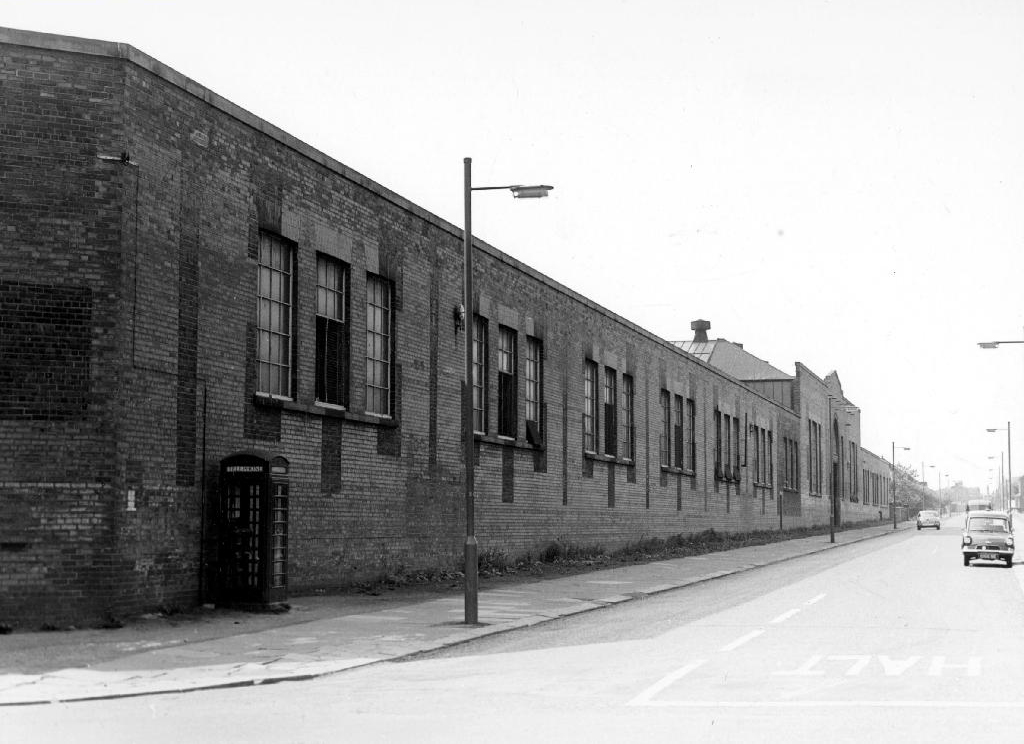
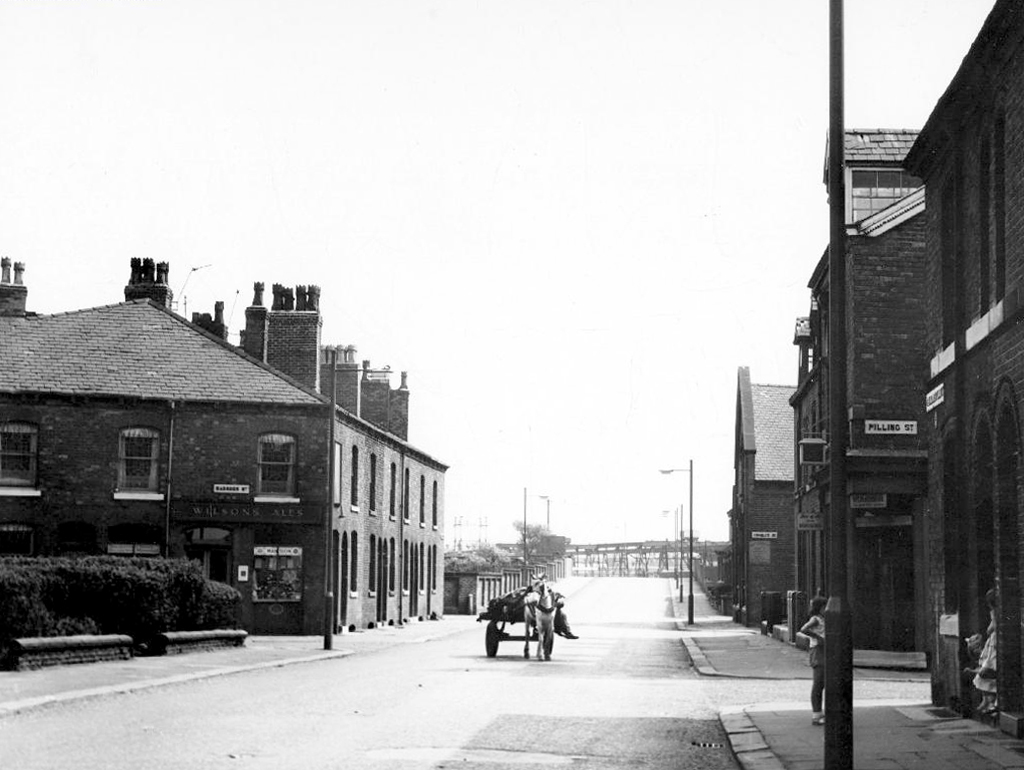
Ten Acres Lane 1904 running south from Oldham Road – not quite crossing under the Ashton and Stalybridge Railway.

I was propelled by the vague memory of an Ashton Lads football match way back in the 1970s – my dad Eddie Marland managed the team in the Moston and Rusholme League.

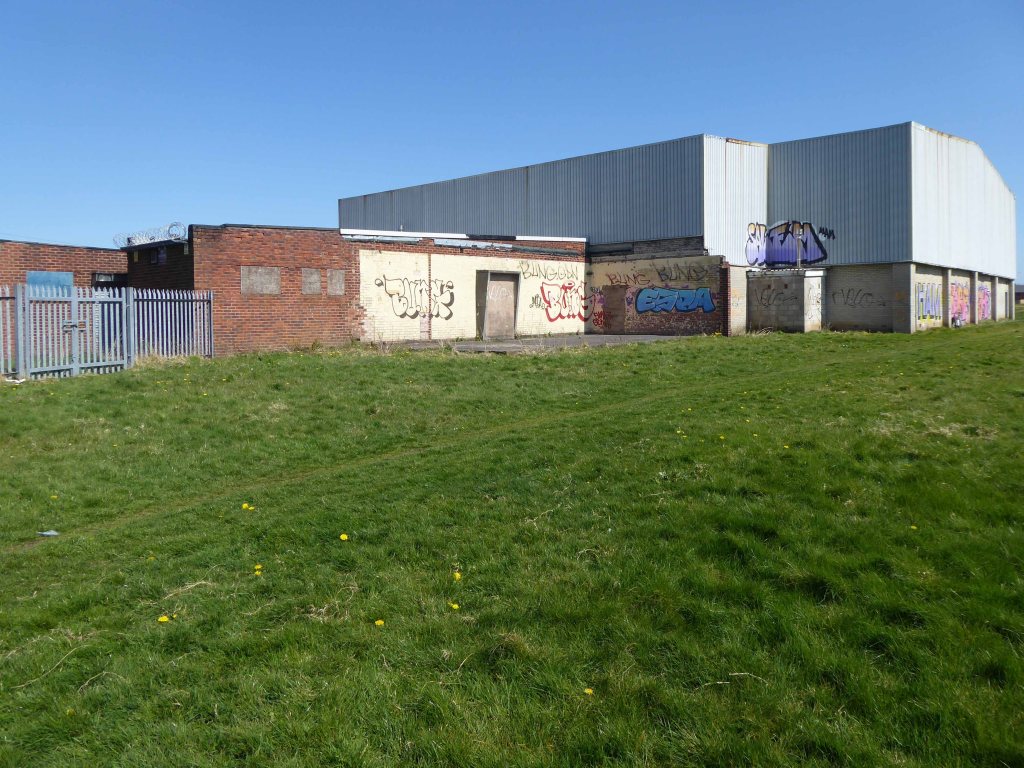
There was land given over to recreation from 1900, the area is famed for its links to the inception of Manchester United and almost but not quite became home to FC United.

The Recreation Grounds in 1900.

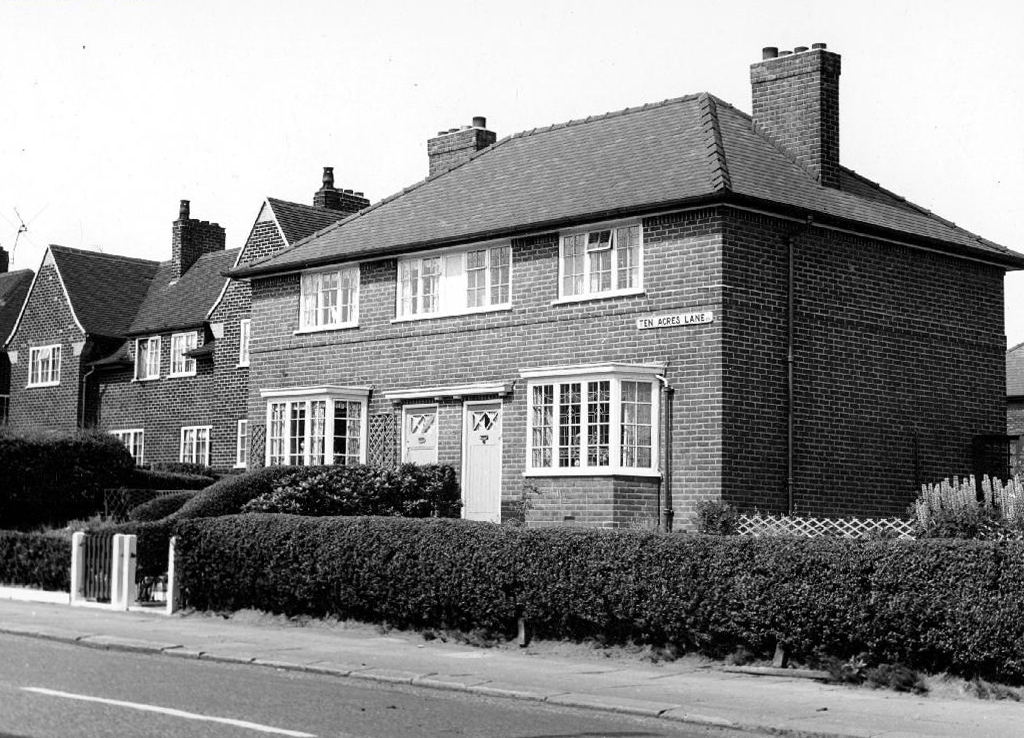
To the left of the inter-war housing in 1963.

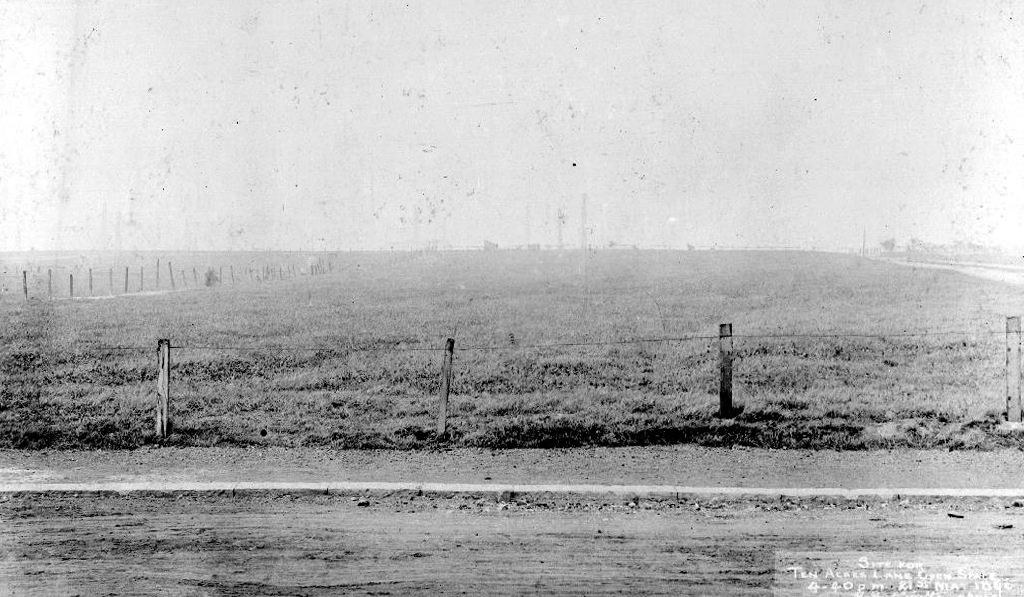
So I took a trip back in time along the lane – courtesy of the Local Image Collection.

In 1896 the area was largely farmlan

Baguley Fold Farm – occupying land adjacent to the Medlock Valley.

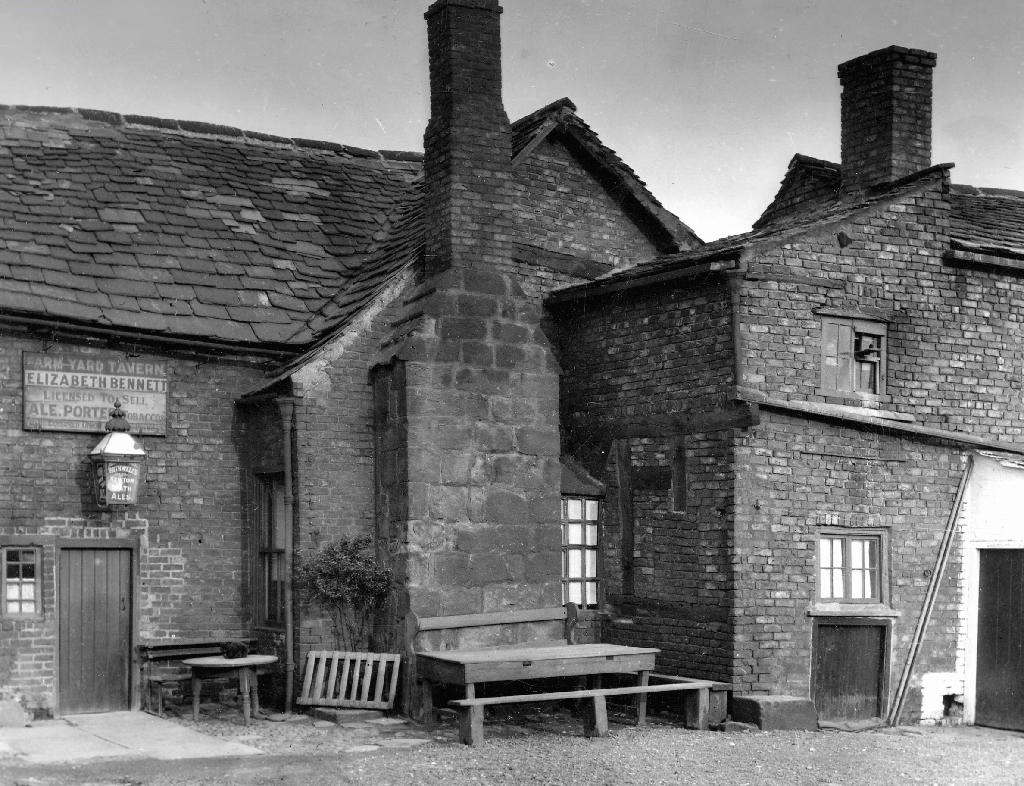
Farm Yard Tavern closed in 1917 a Rothwell’s pub supplied from Heath Brewery on Oldham Road.

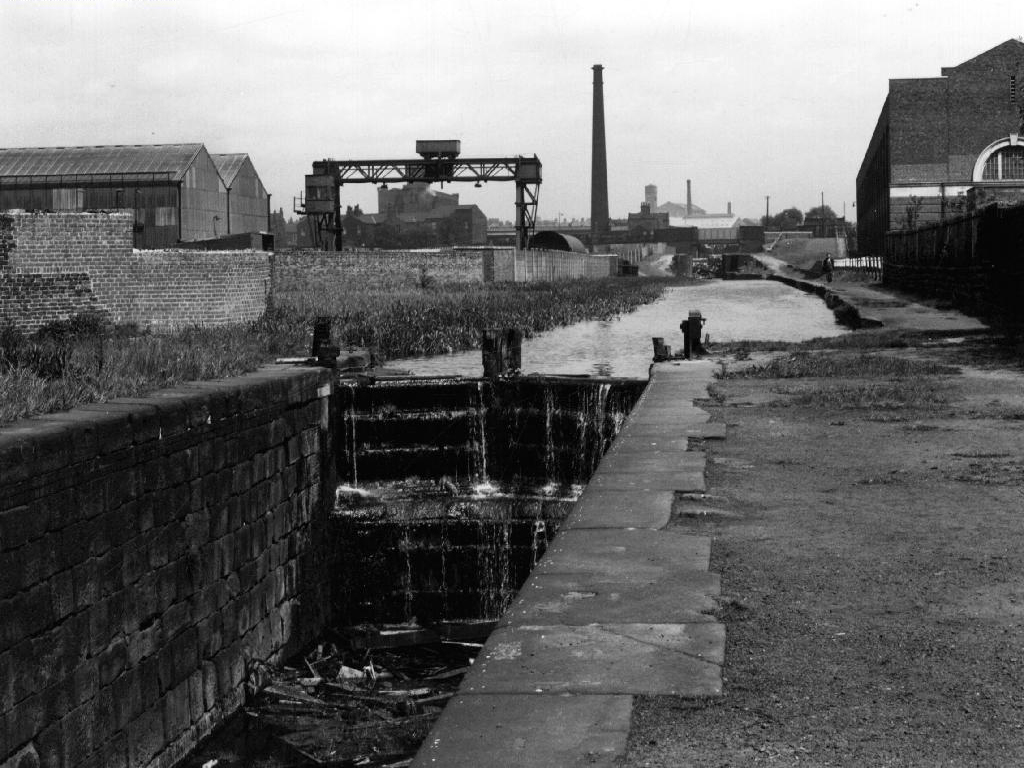
This was an area dominated by the Rochdale Canal and criss-crossed with rail links.

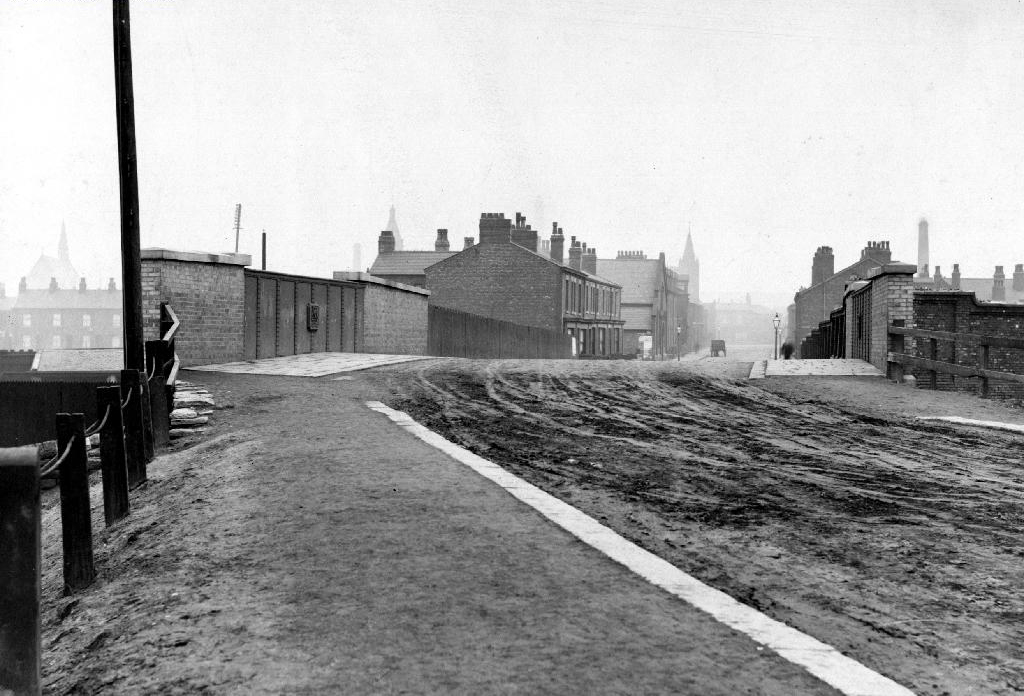
The canal bridge 1904.

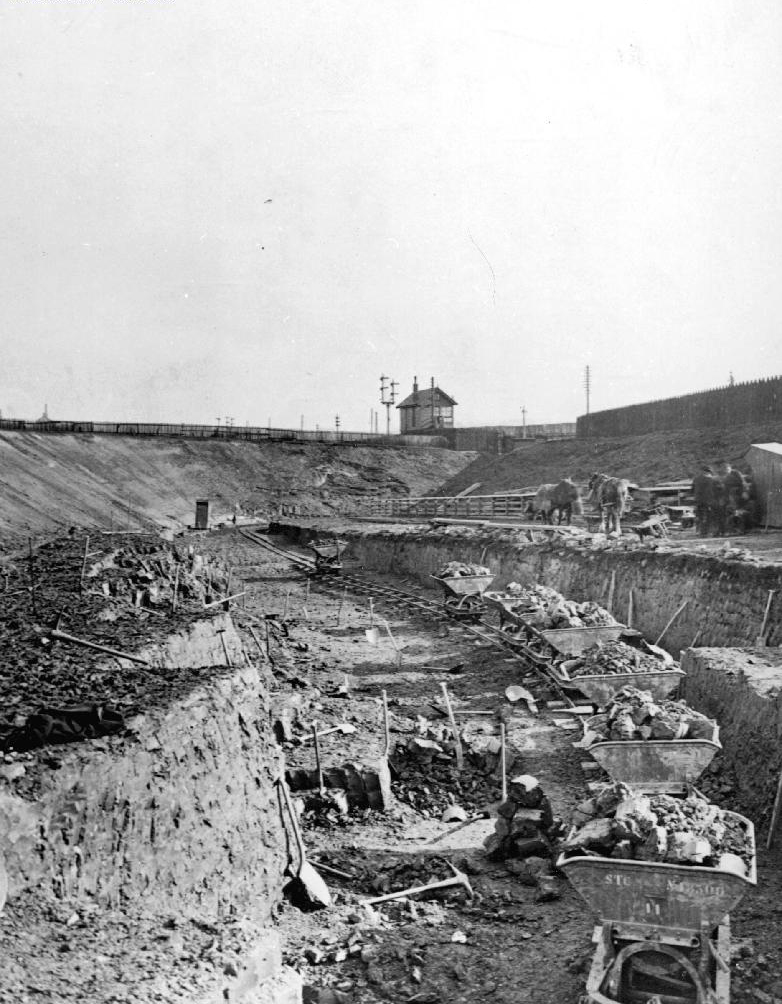
Construction work 1920.

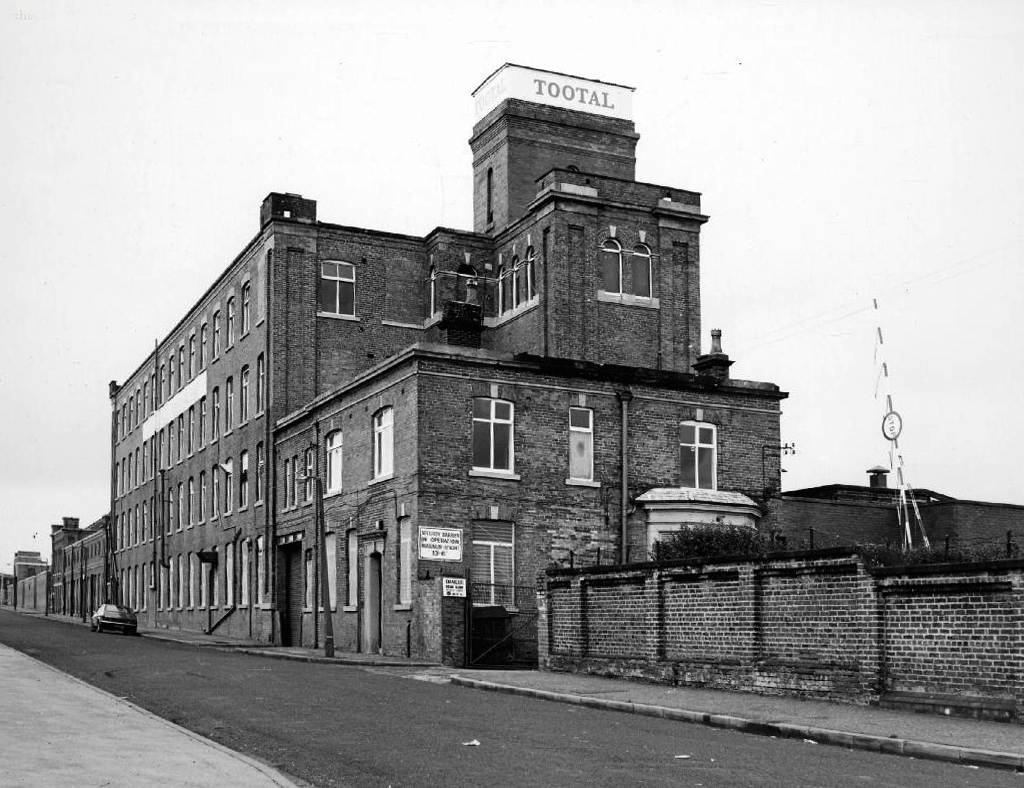
Tootal’s Mill.

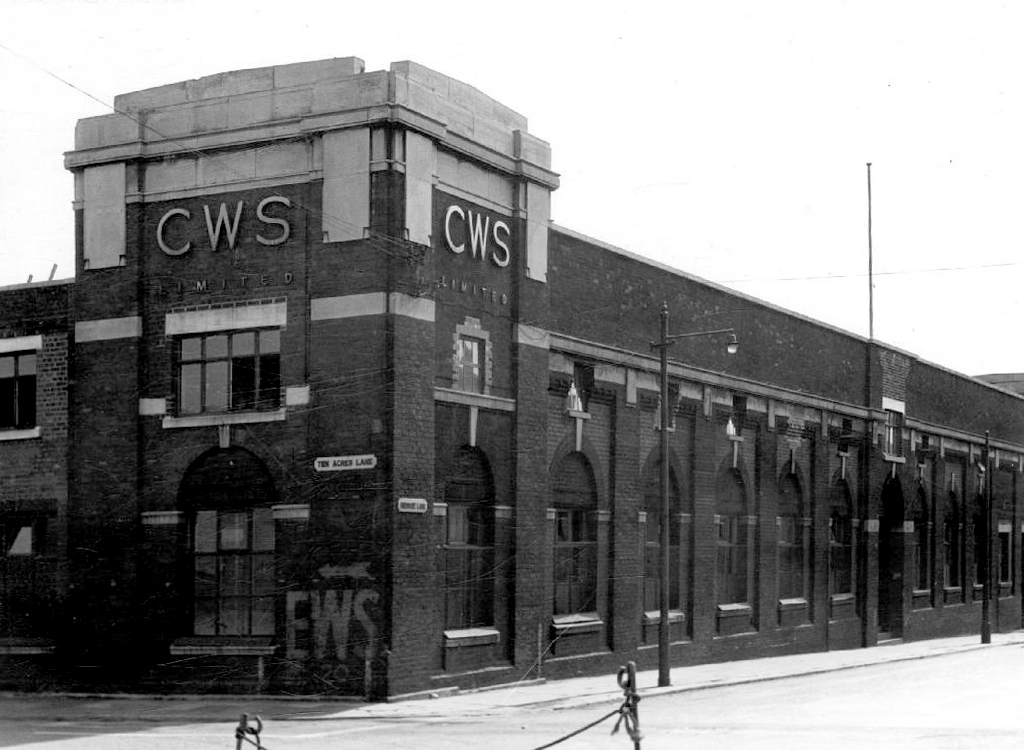
CWS warehouse and works corner of Briscoe Lane.

Mather And Platt’s adjoining the Rochdale Canal.

The area was also home to Jackson’s Brickworks.

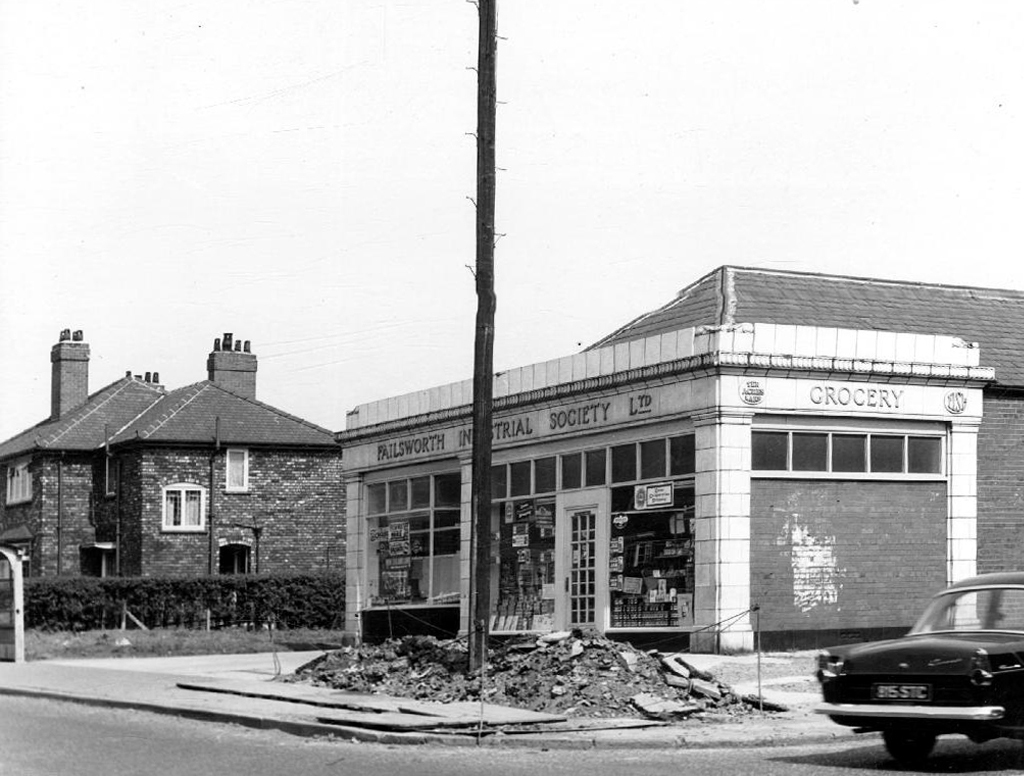
There was a Co-op shop.

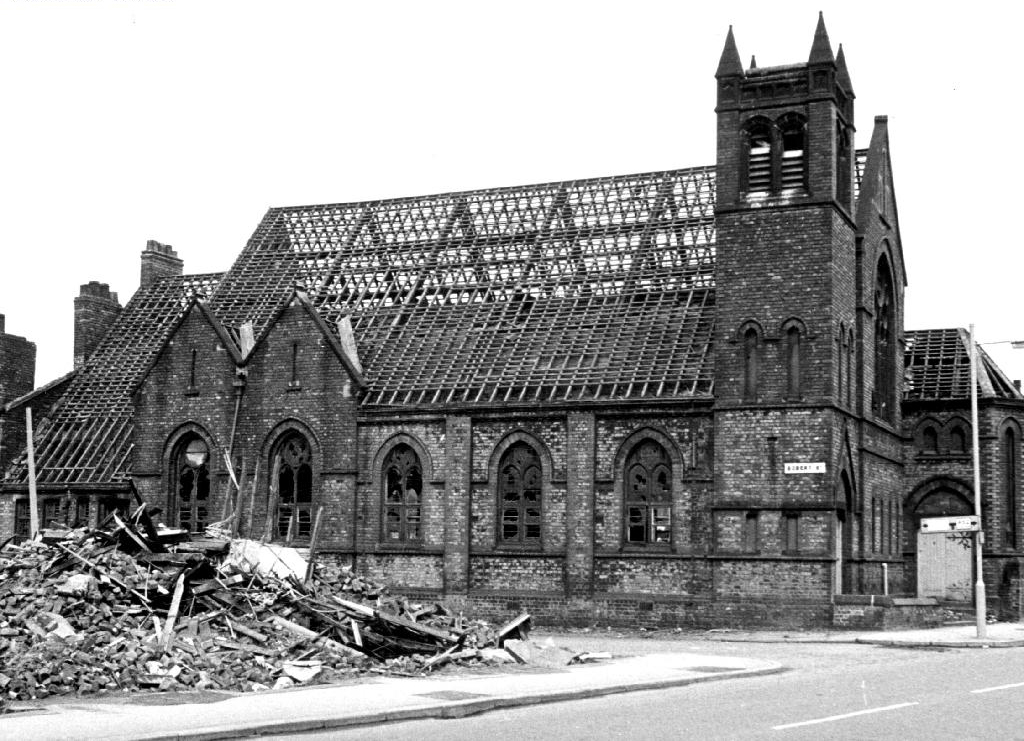
Going going gone St Paul’s Church seen here in 1972.

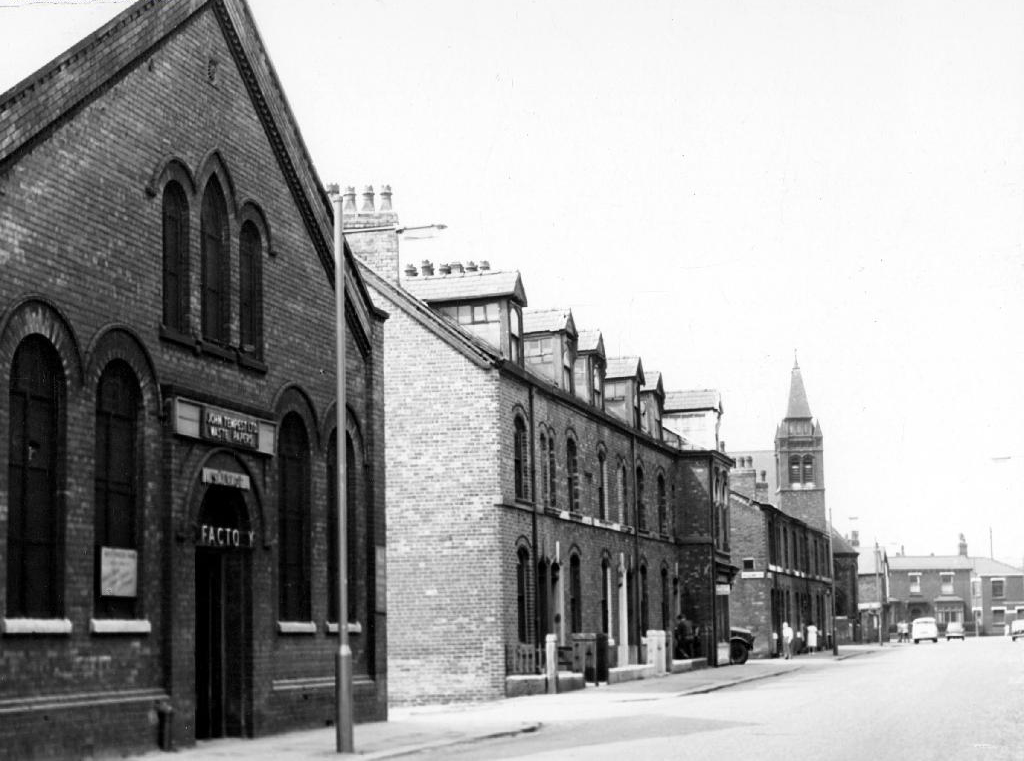
Victorian terraces and inter-war social housing – homes for a large industrial work force.

Many of the sights and sites above are still extant though their appearance and uses have changed along with the times. Manchester inevitably continues to from and reform for good or ill.

Sadly the old Rec the Moston and Rusholme League and my dad are all long gone – though it’s just as well to remember them all fondly, as we travel through our familiar unfamiliar city.

Heaton Norris Park – Stockport

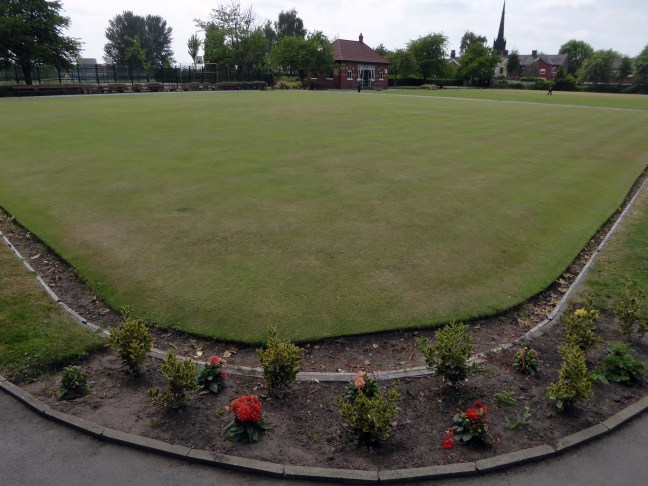
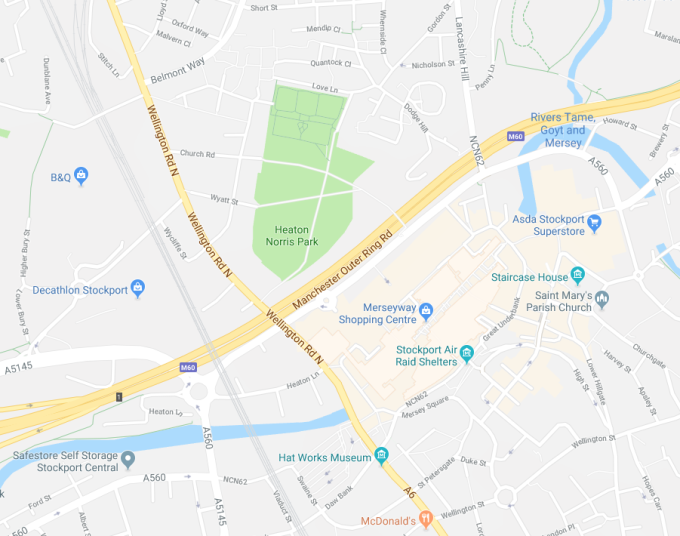
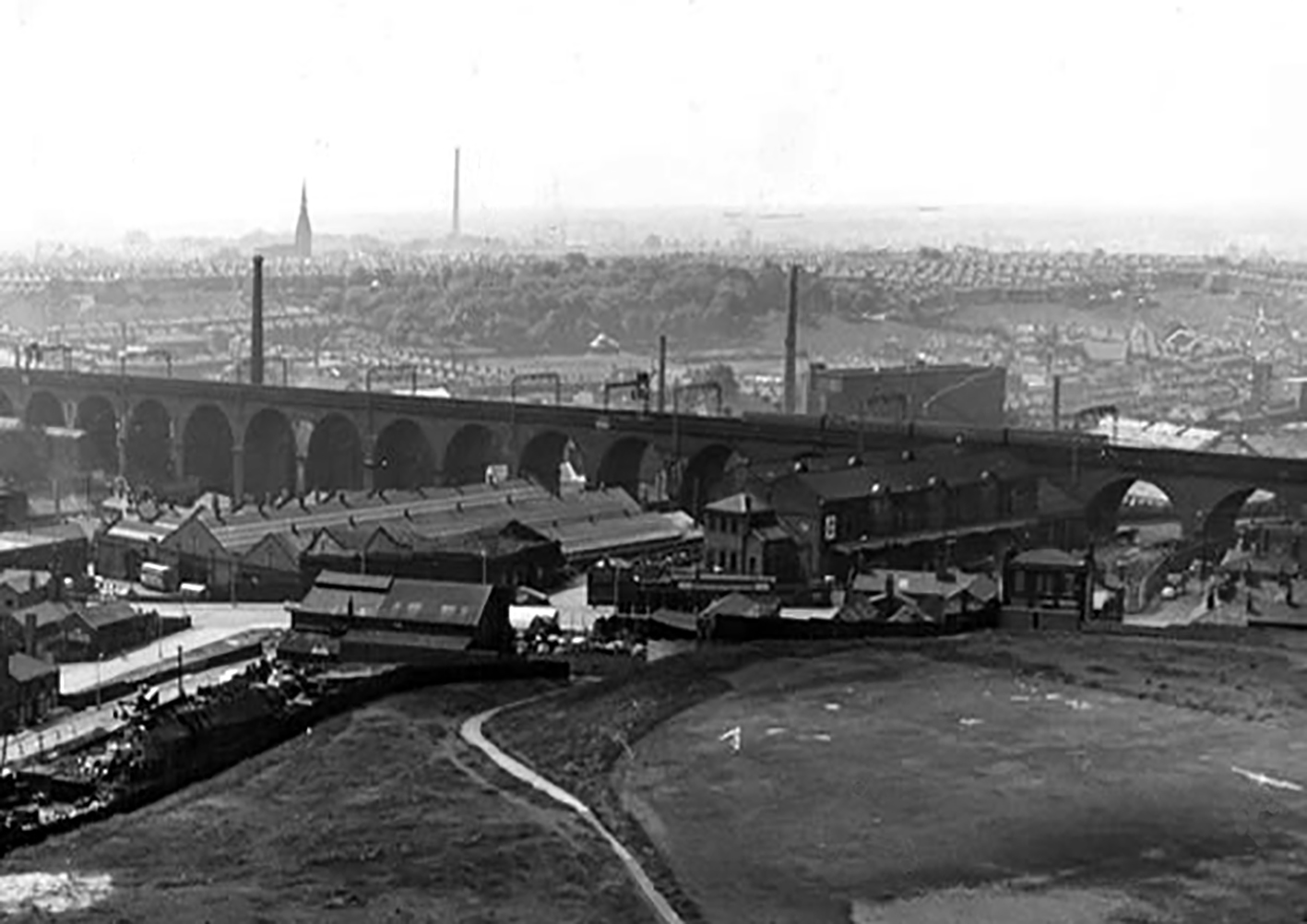
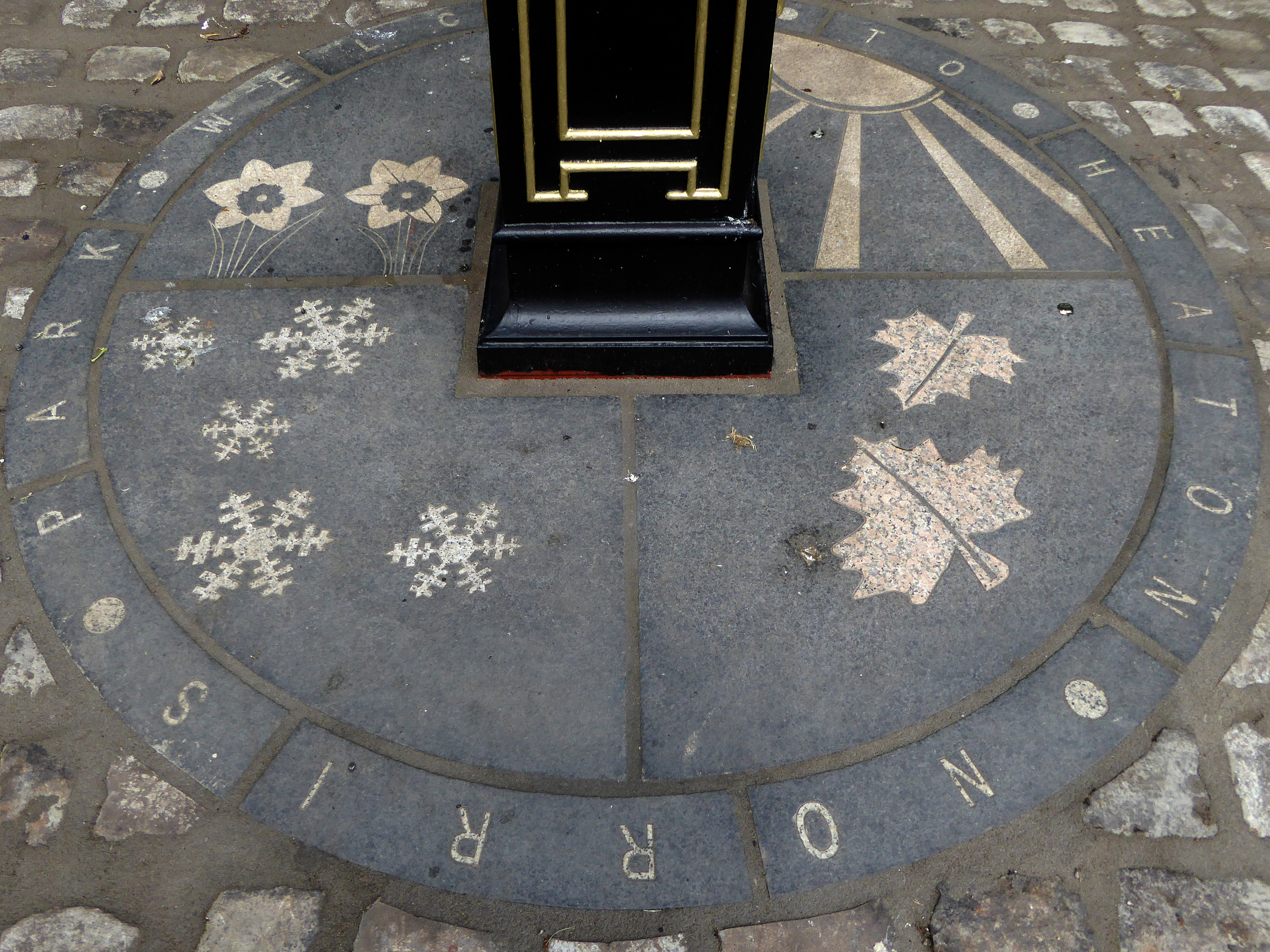
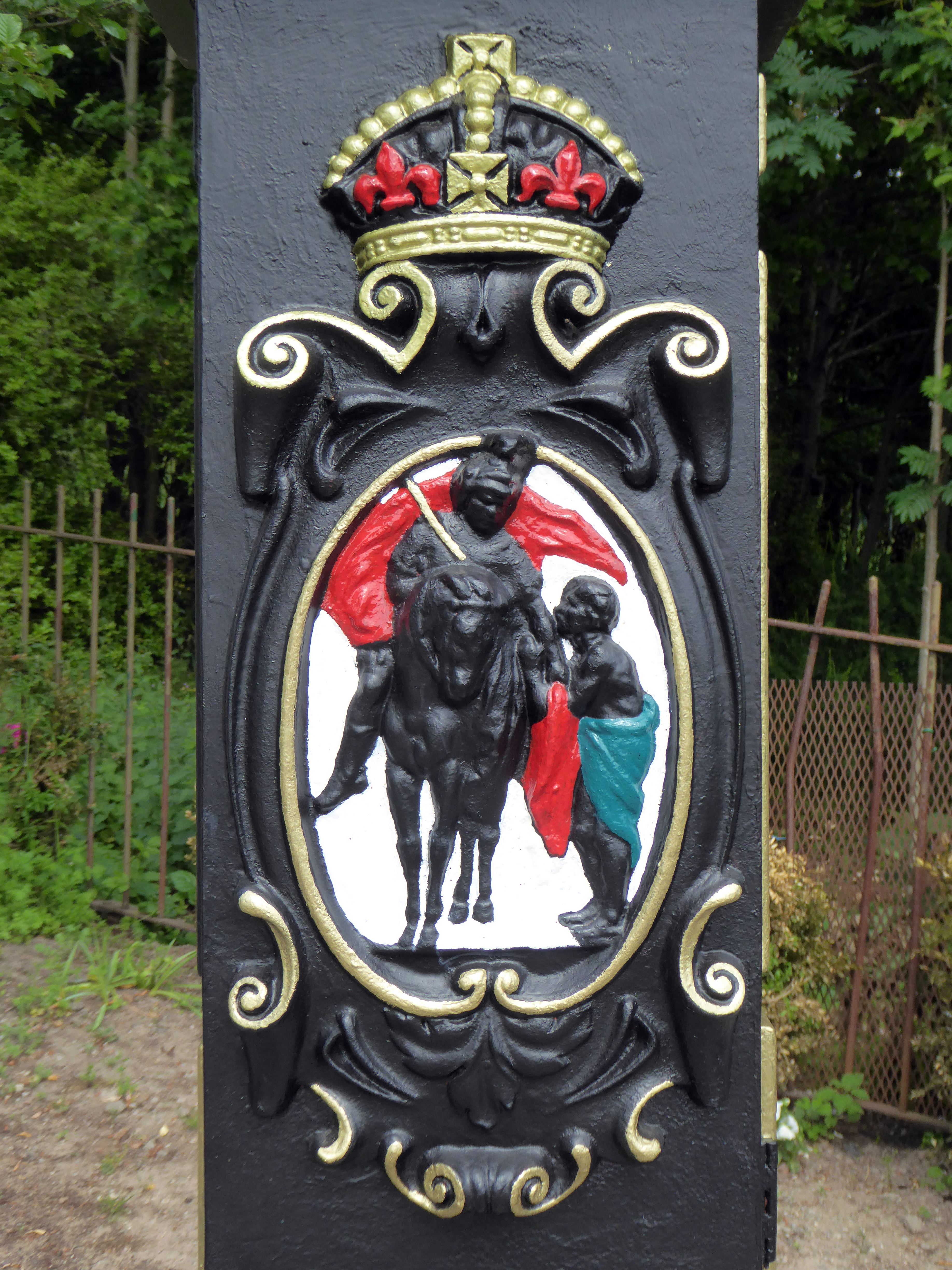
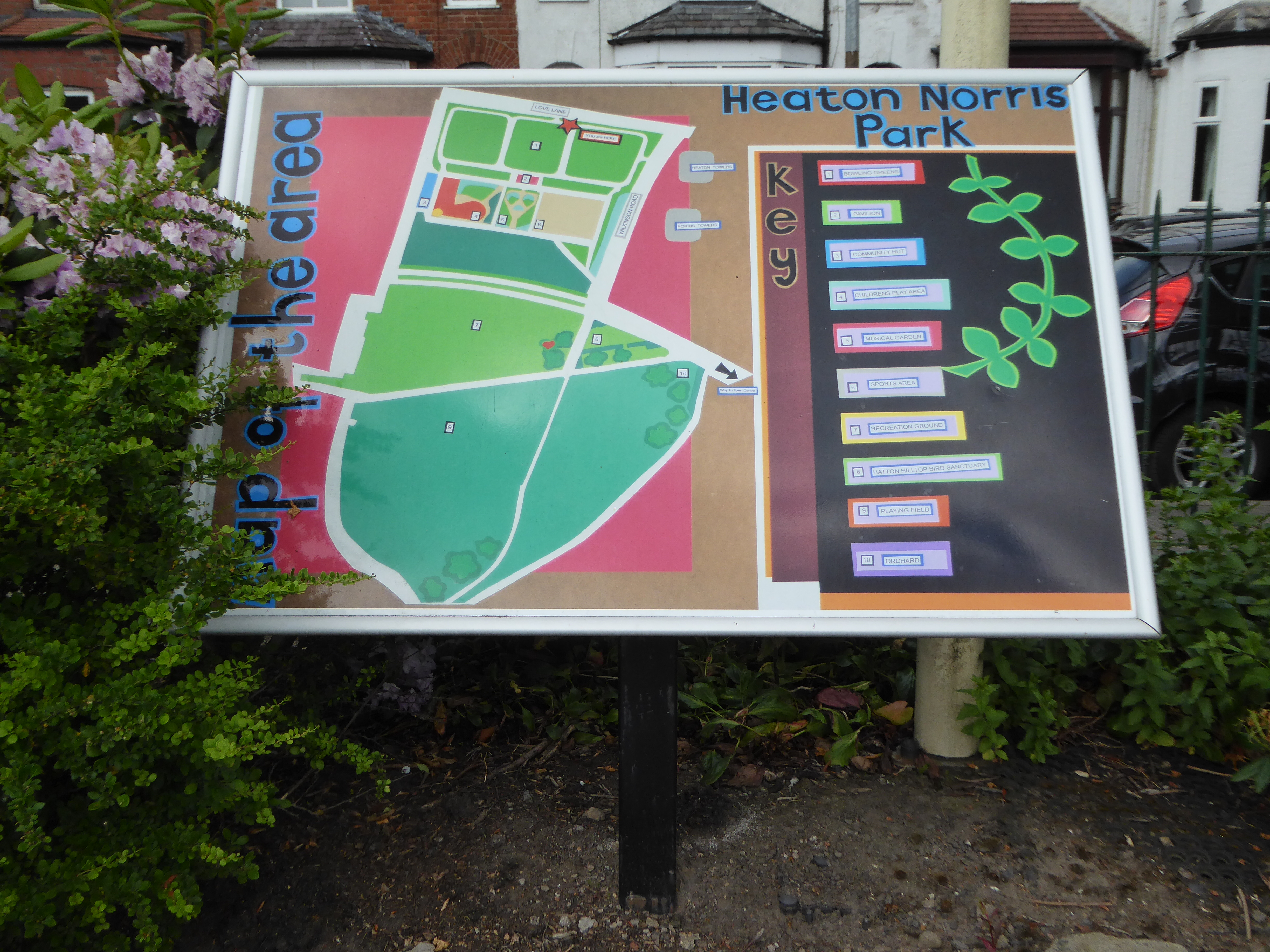
Heaton Norris Park’s elevated position gives stunning views of the Stockport town centre skyline and of the Cheshire plain. The central position of the Park means that it is a green retreat for shoppers and local residents. Also it is within easy reach of the Stockport town centre. The land for this park was acquired by public subscription and as a gift from Lord Egerton. Work on laying out the site as a public park began in May 1873, and it was formally opened on June 5th 1875. Since then it has undergone a number of changes. The construction of the M60 has shaved several acres off the park’s size.

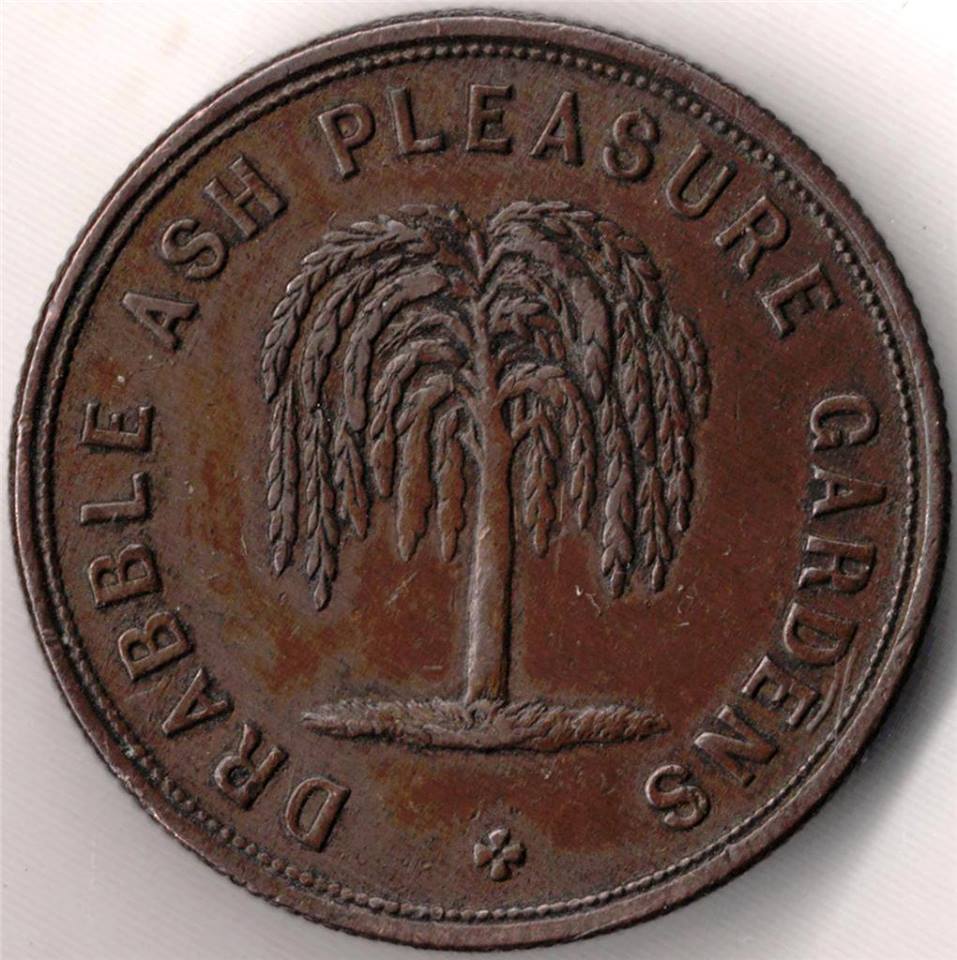
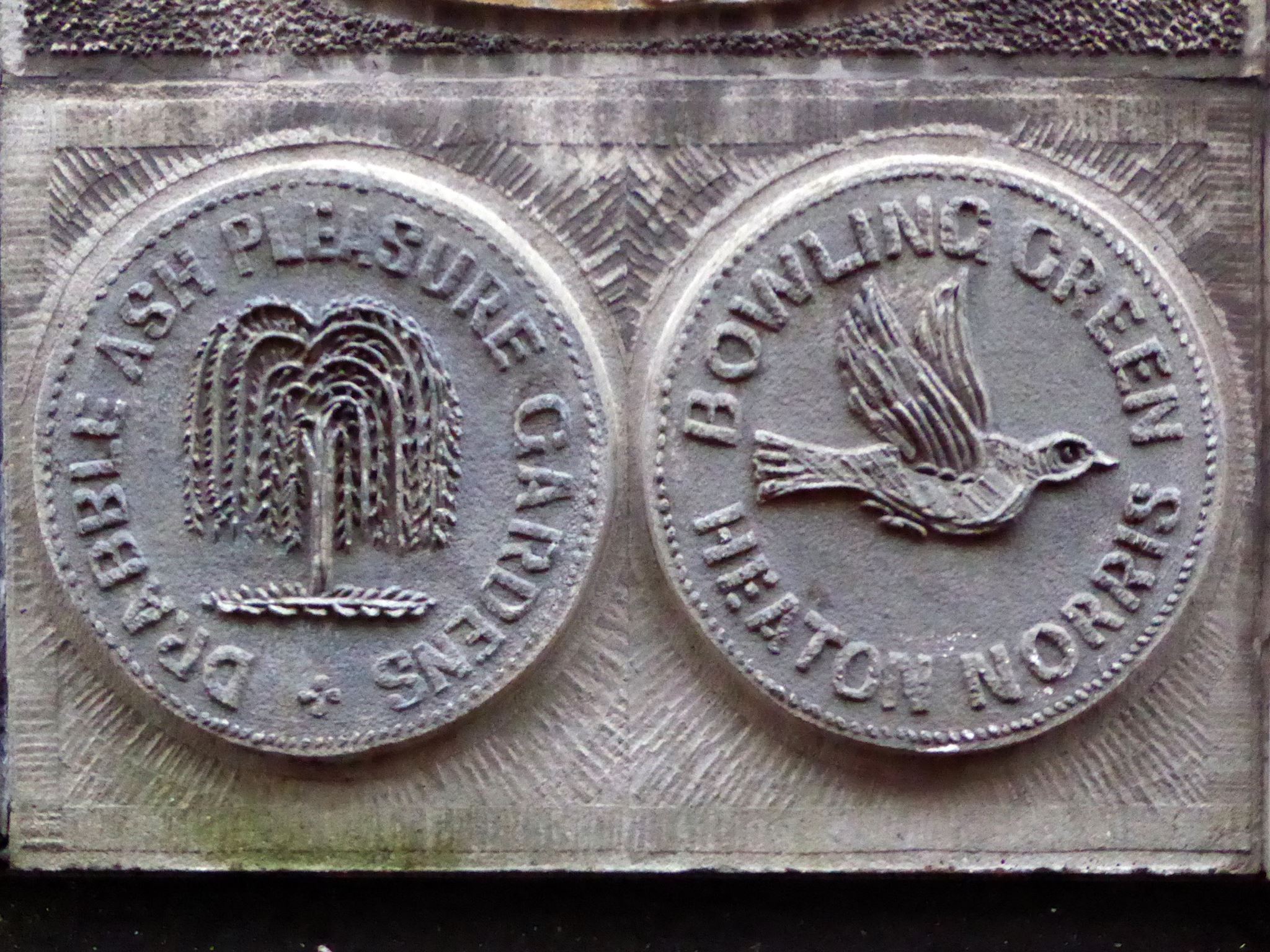
The park is predated by the nearby Drabble Ash Pleasure Gardens – entrance strictly by token only, as commemorated on the BHS Murals in Merseyway.

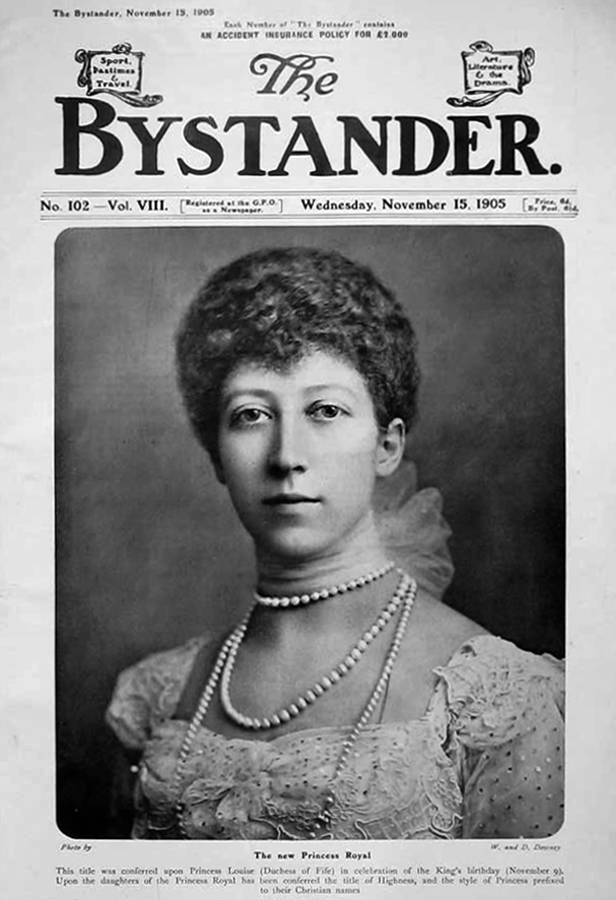
5 November 1905 – Edward VII declares his eldest daughter The Princess Louise, Duchess of Fife, the Princess Royal.

He also orders that the daughters of Princess Louise, Lady Alexandra Duff and Lady Maud Duff are to be styled as Princesses of the United Kingdom of Great Britain and Ireland with the style Highness.

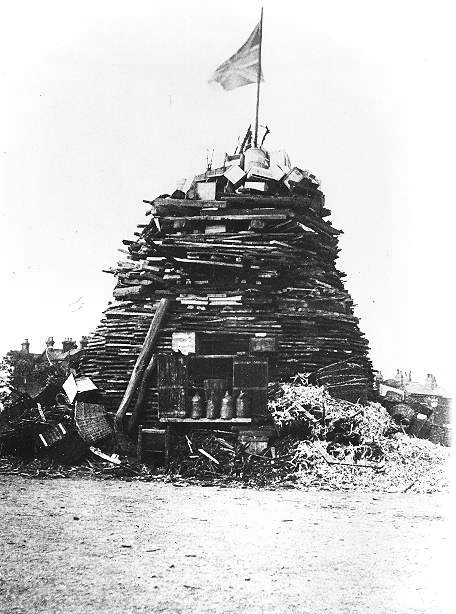
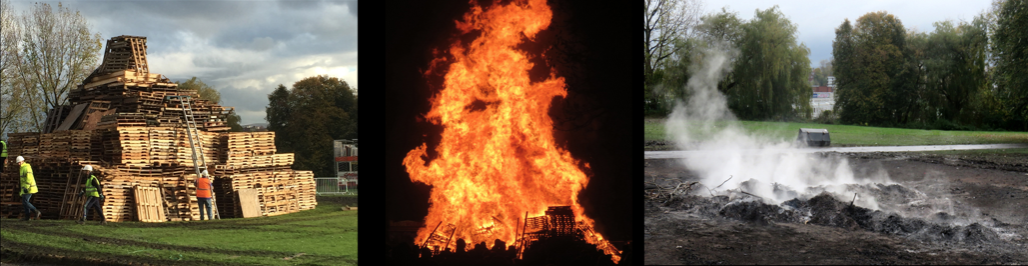
So they built a big bonfire on bonfire night at Heaton Norris Park – sometimes they still do.

Picture courtesy of ©Phil Rowbotham

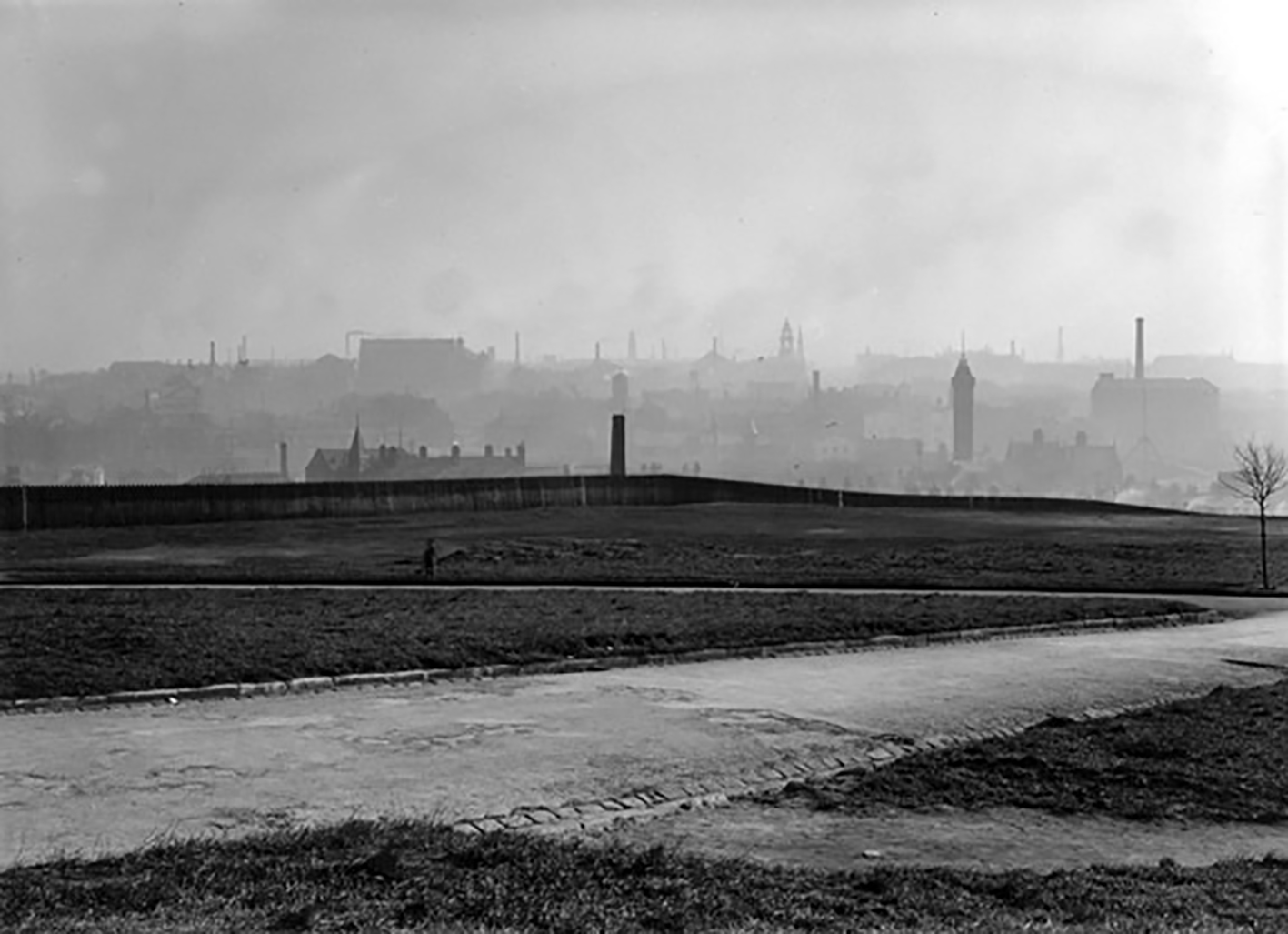
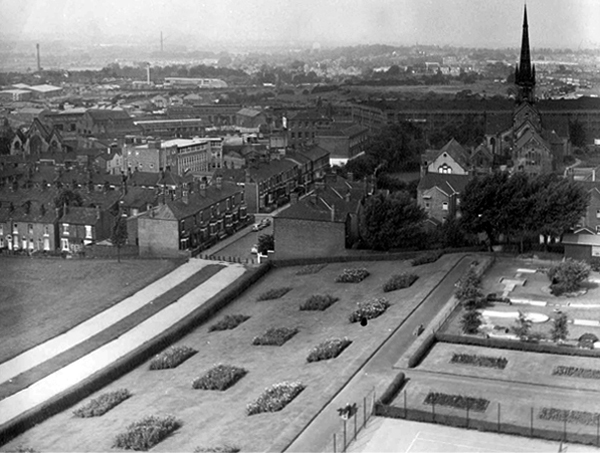
In 1935 the area seems to be little more than windswept cinders and thin forlorn grass, traversed by broad uneven paths – overlooking the dark industrial mire below.

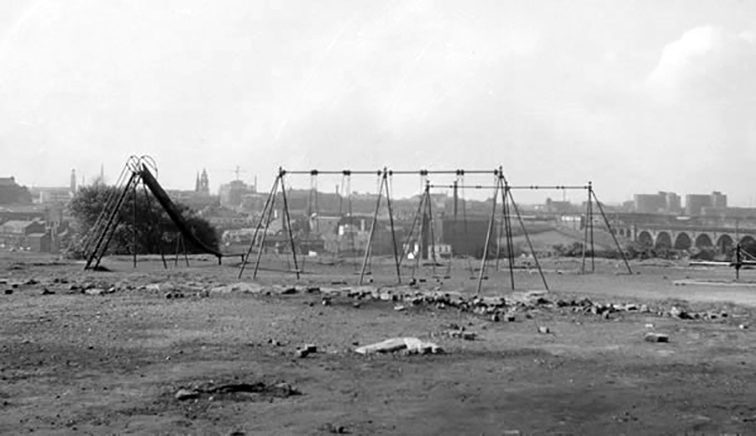
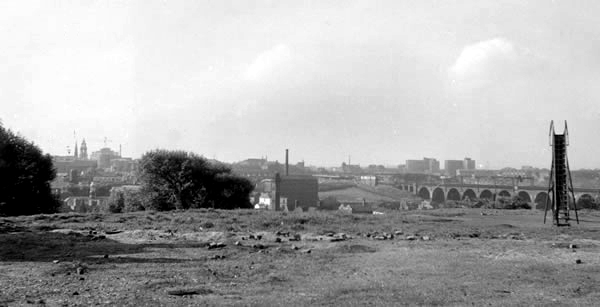
Into the 1960s and although now there is the provision of a children’s play area, the park is still in need of a little more care and attention, the immediate surroundings a dense dark warren of industrial activity and terraced housing.

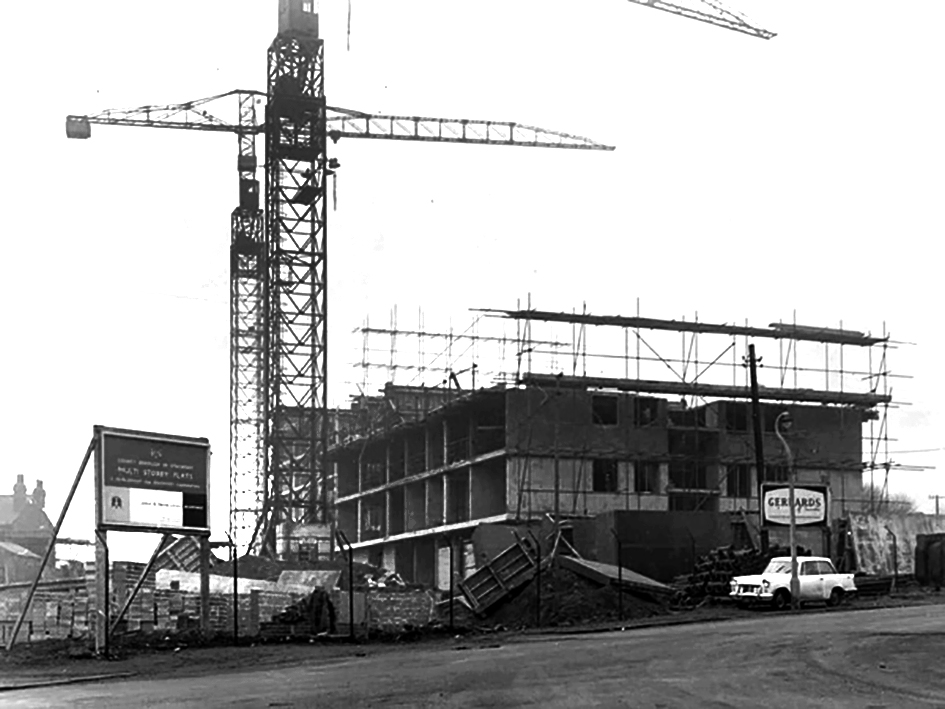
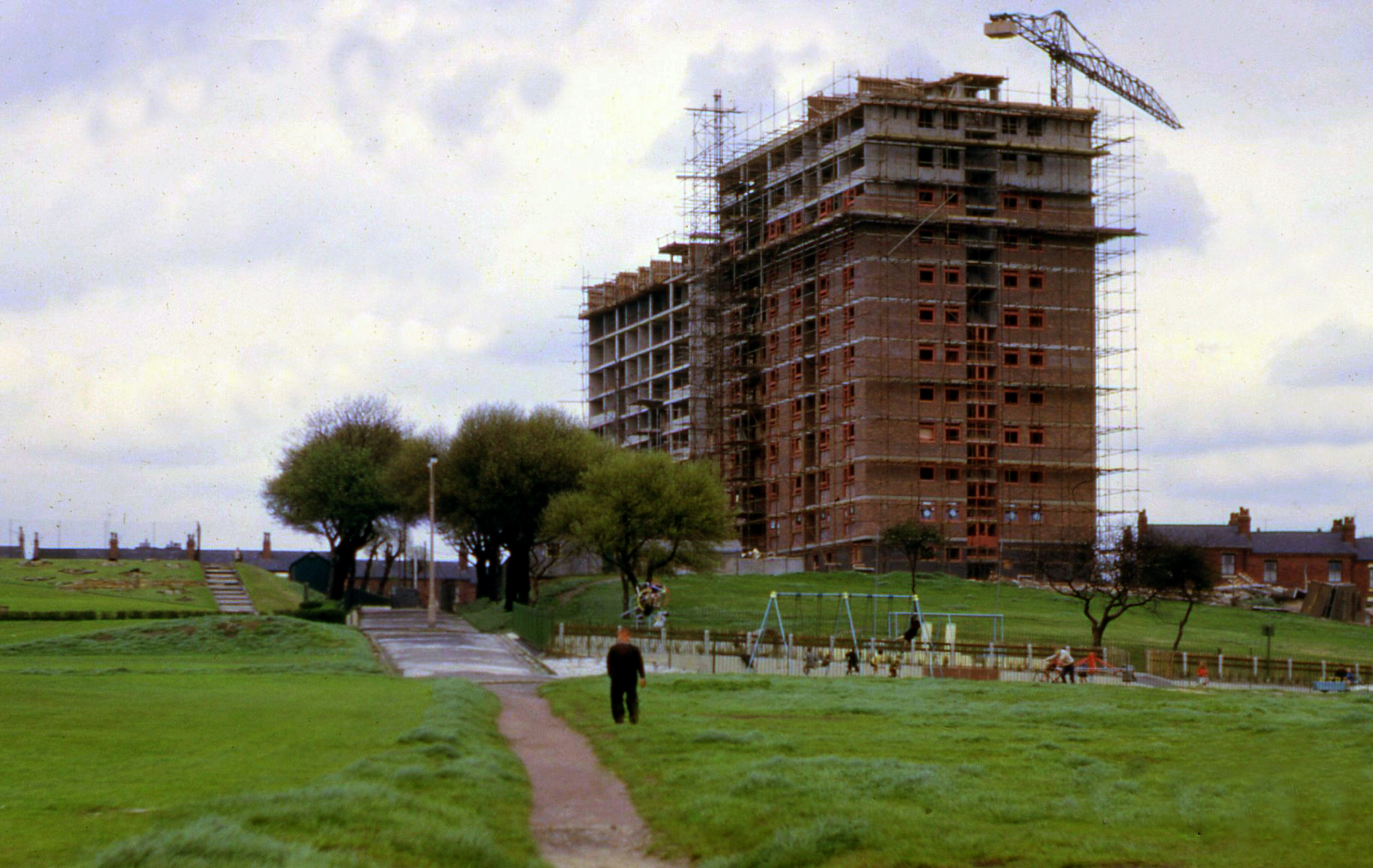
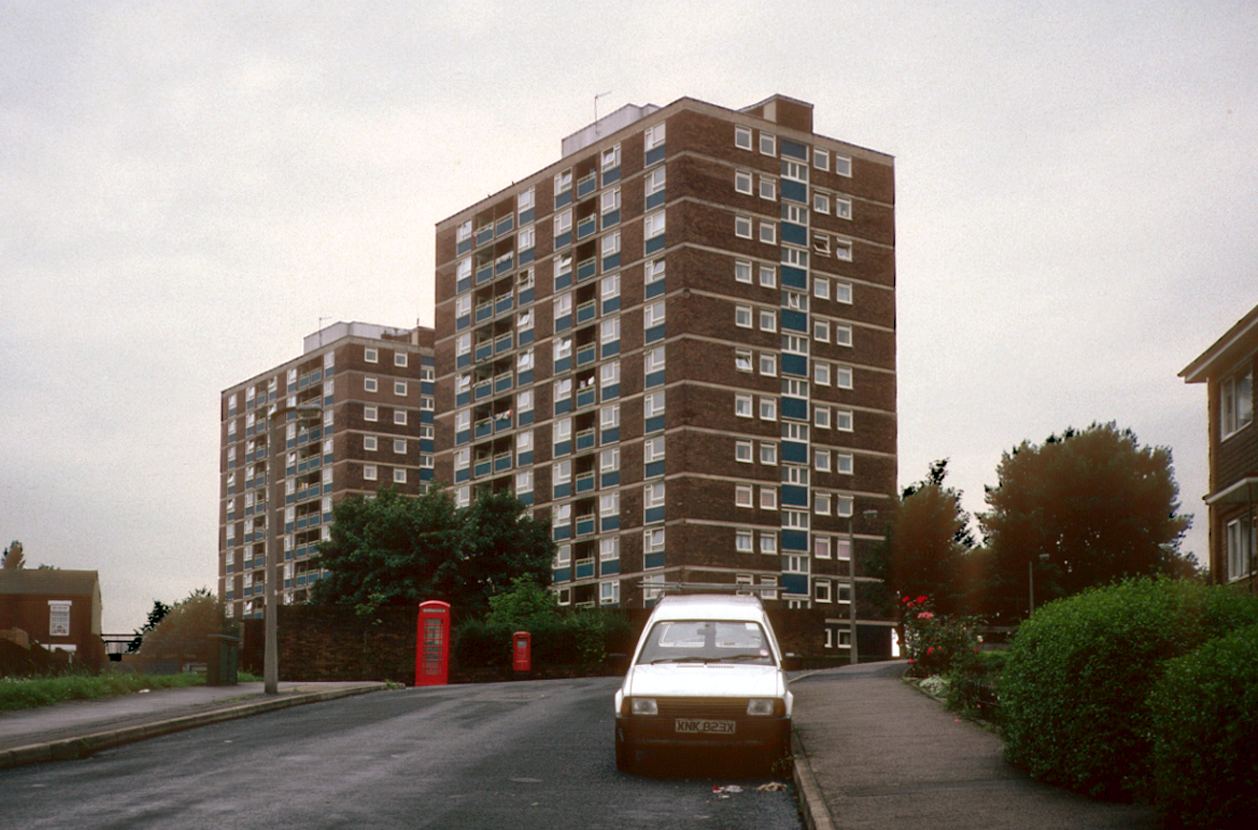
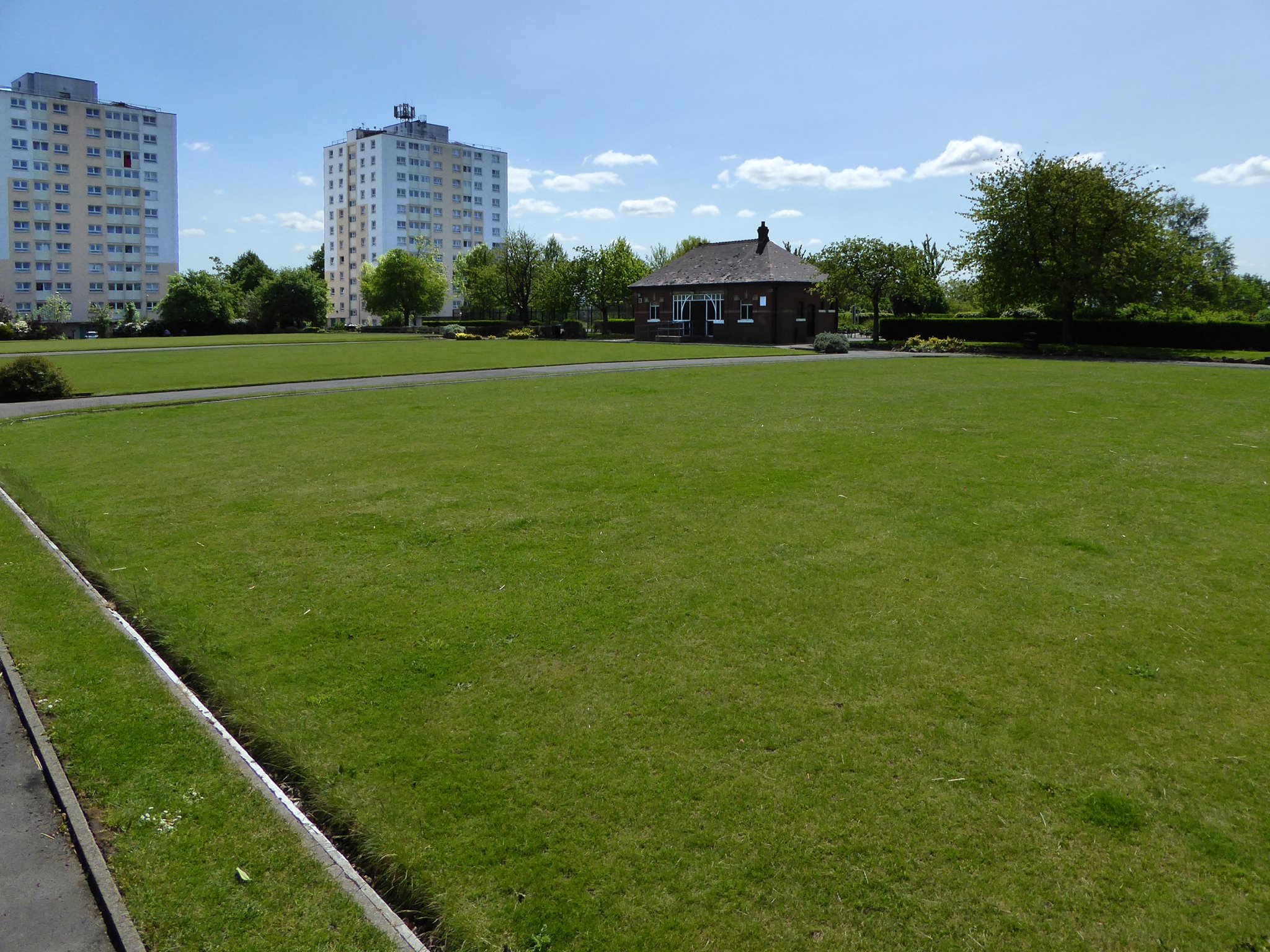
In 1968 the construction of two twelve storey Stockport County Borough Council residential blocks begins, alongside the recreation grounds, Heaton and Norris Towers, creating 136 new homes.

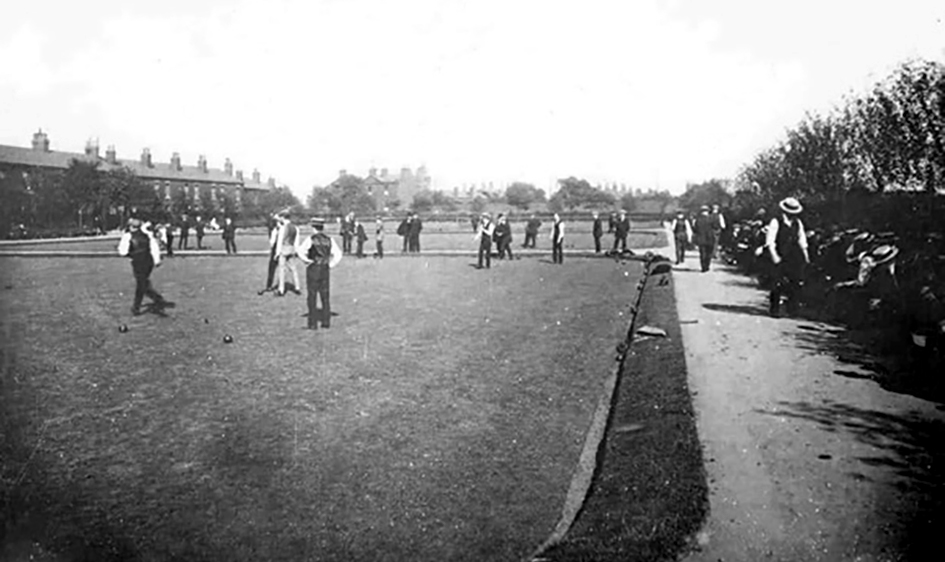
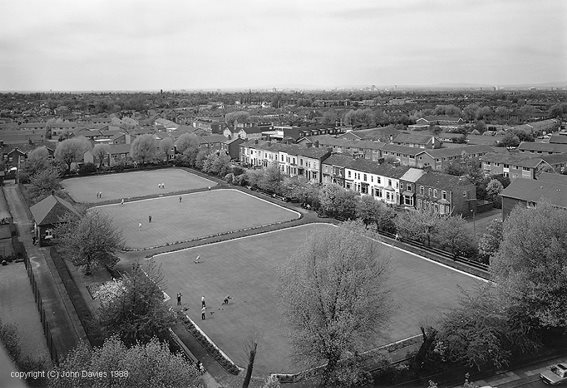
The 1970s sees the banked gardens bedded out with summer flowers and a crazy golf course on the edge of the bowling area. Both of these features are now a thing of the past, the future financing, care and maintenance of our parks is always precarious, especially during times of central government funding cuts and enforced austerity.

© John Davies

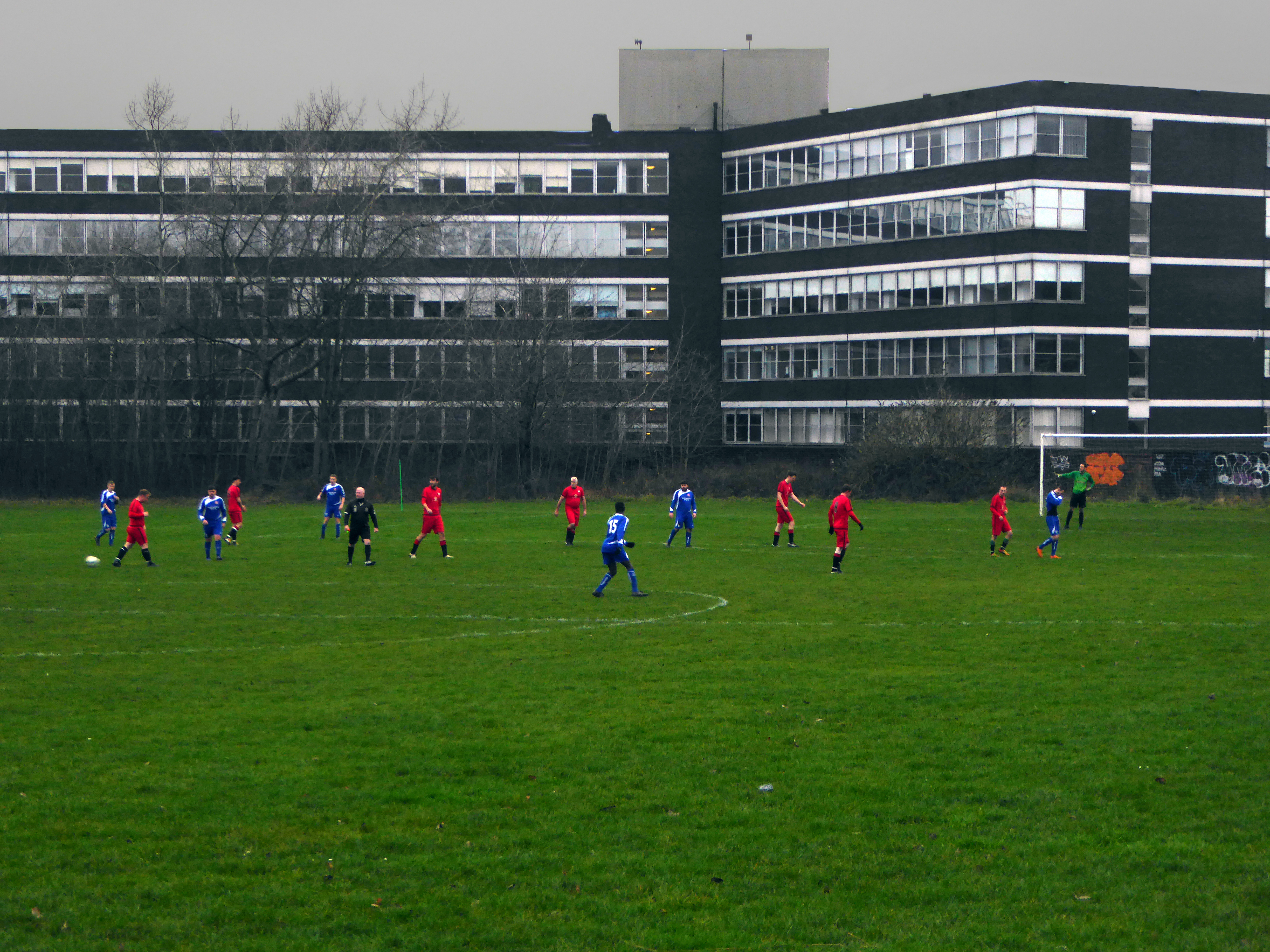
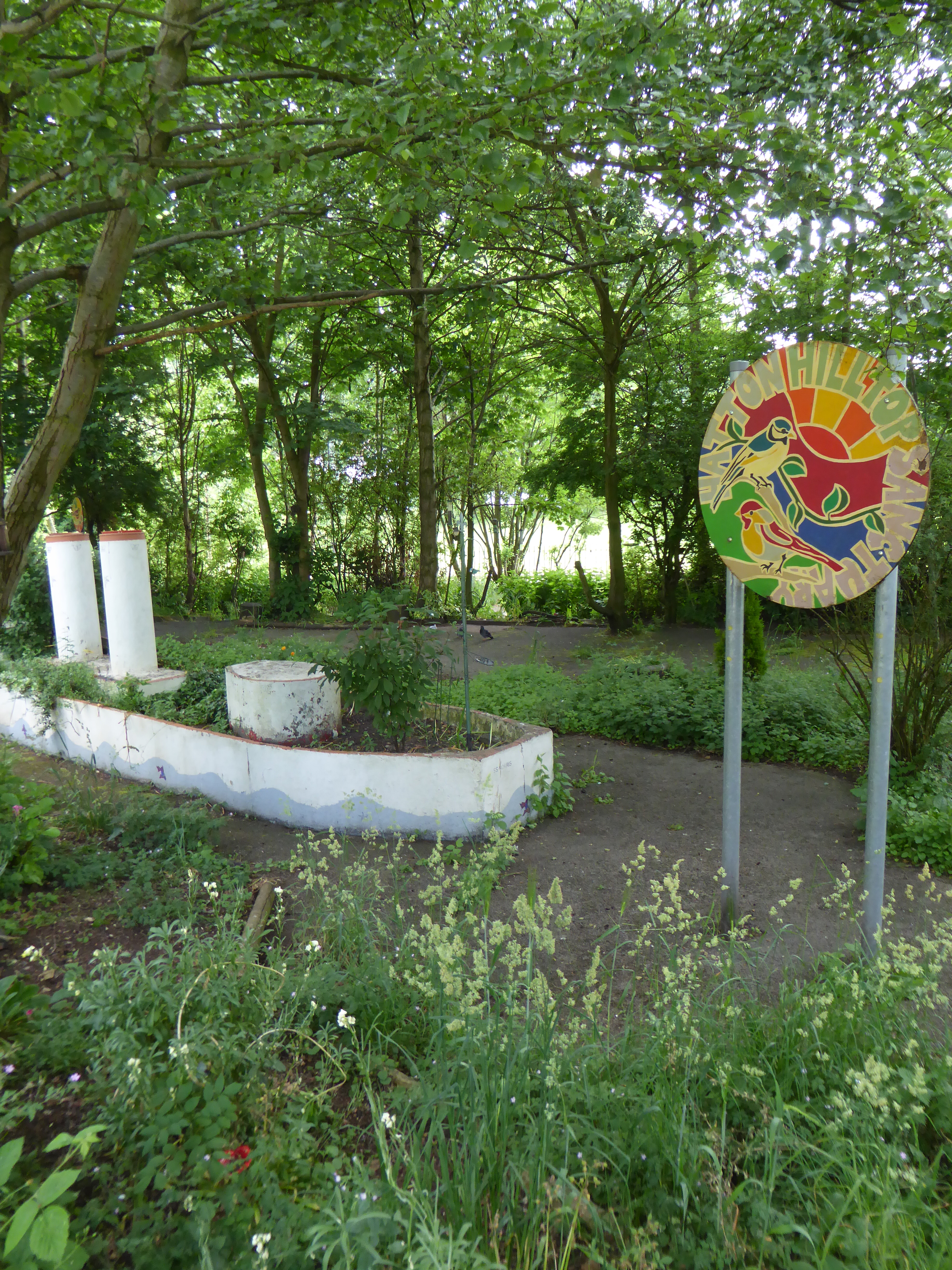
The park now has a Friends group to support it, along with I Love Heaton Norris. The area is cared for and used by all ages and interests children’s play, bowls, tennis, conservation area, football, picnic and floral areas – somewhere and something to be very proud of, social spaces for sociable people.

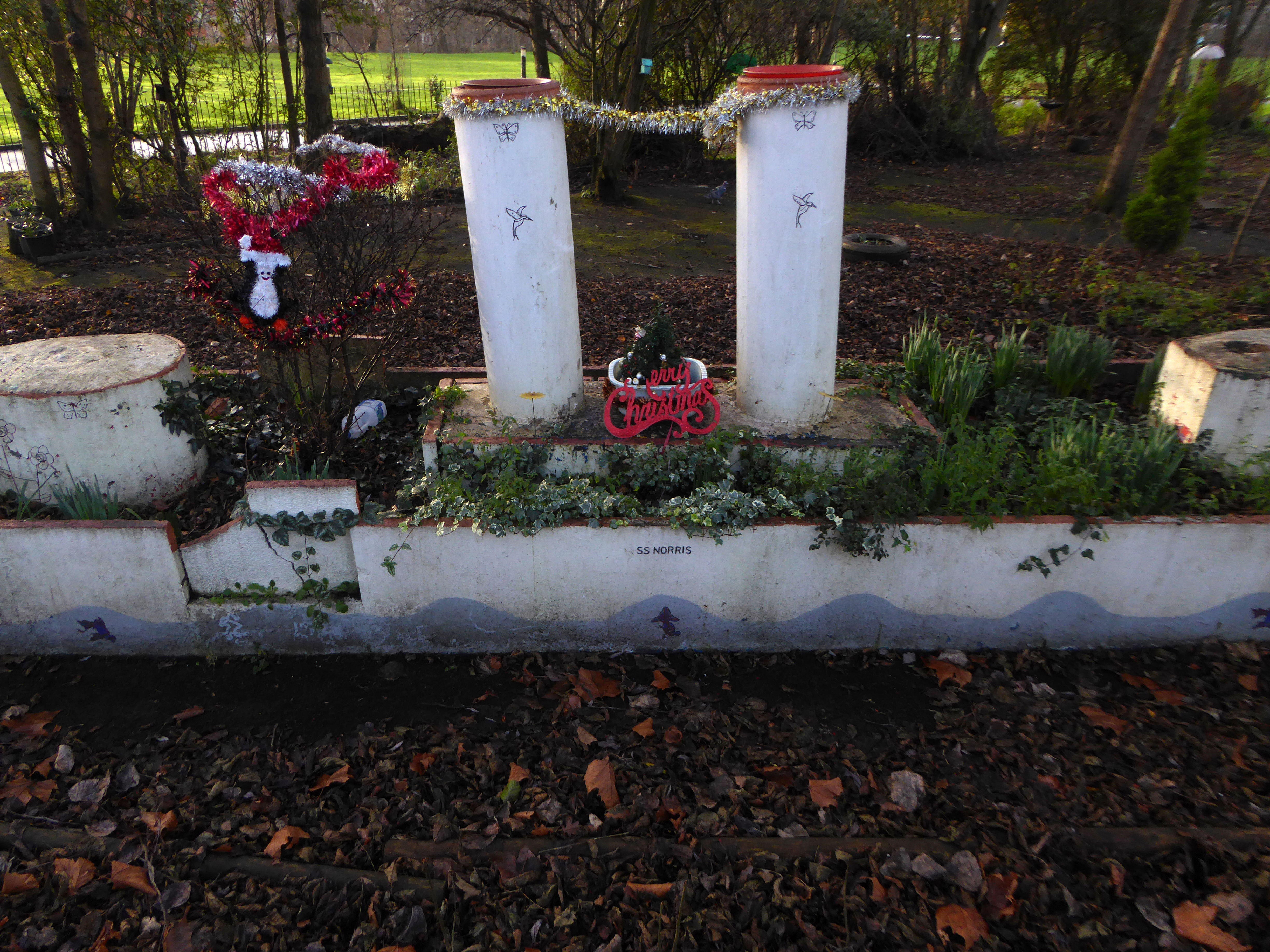
And much beloved of Natalie Bradbury the SS Norris concrete boat.

Take a walk over the concrete bridge or along Love Lane and treat yourself to a day in the park

Archive photographs Stockport Local Image Archive