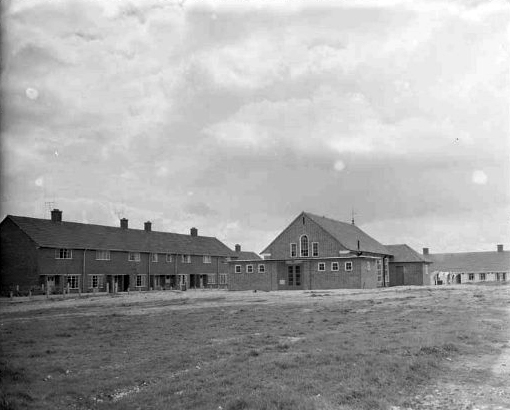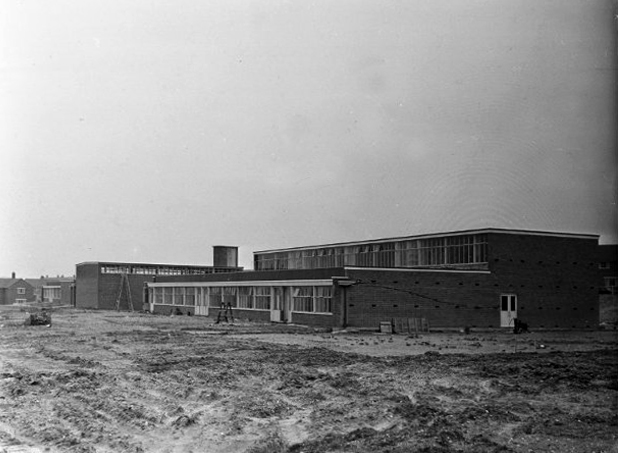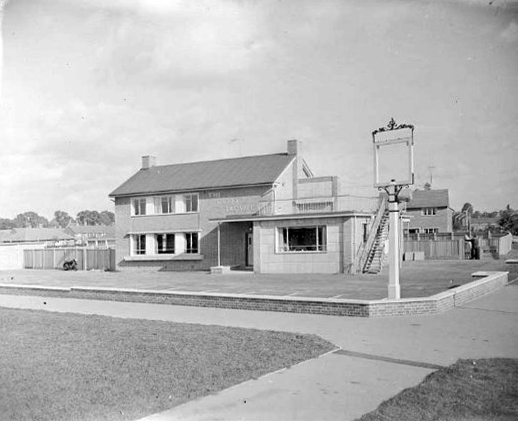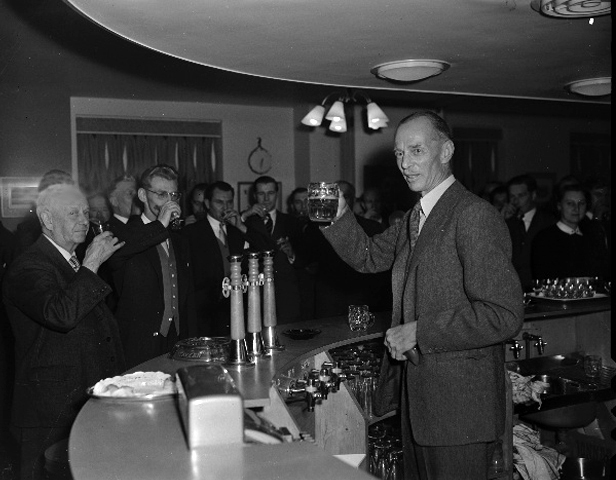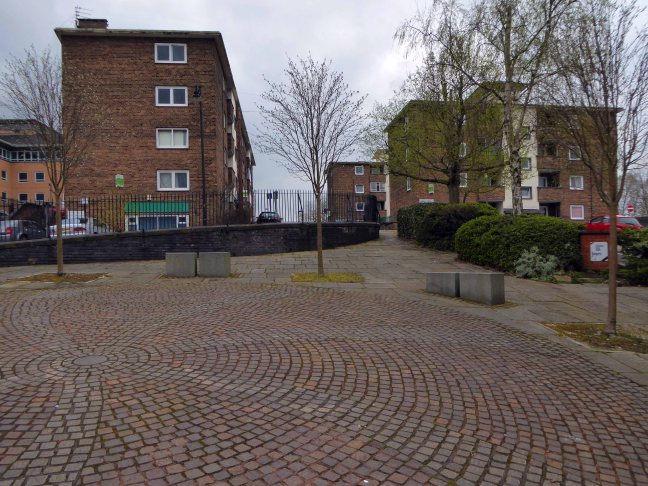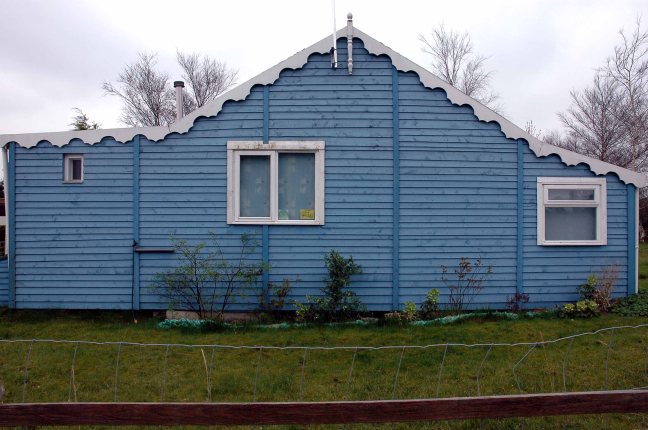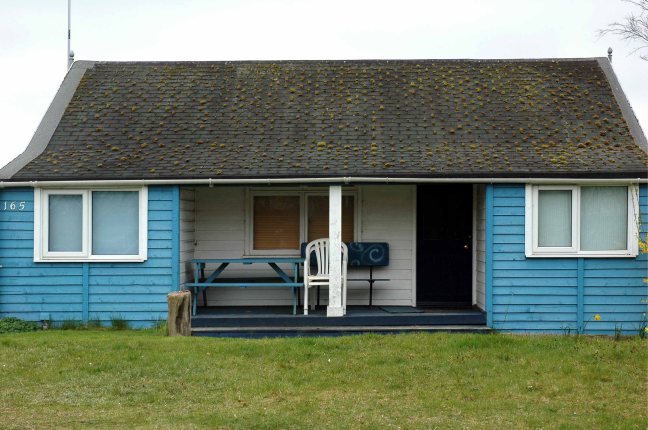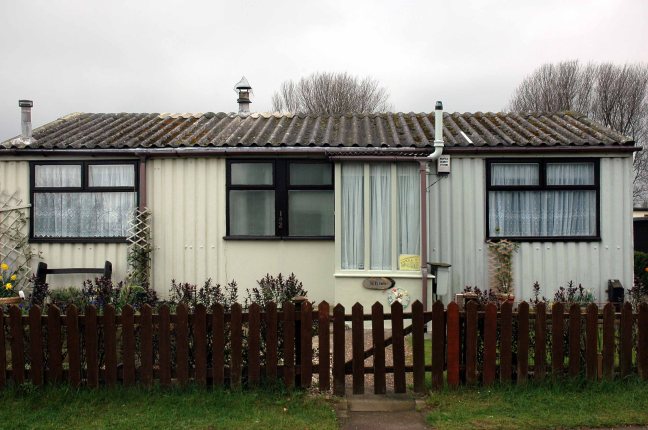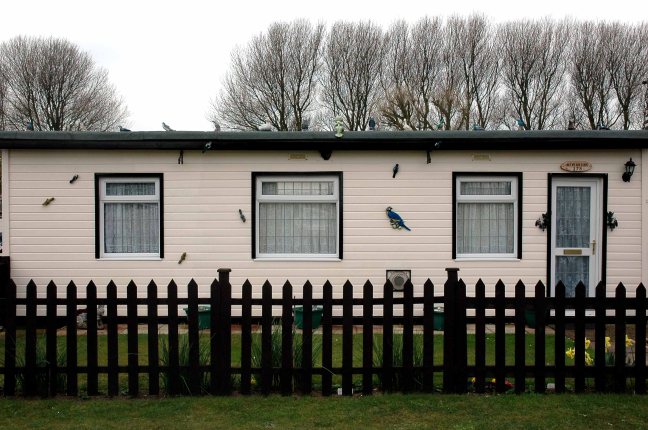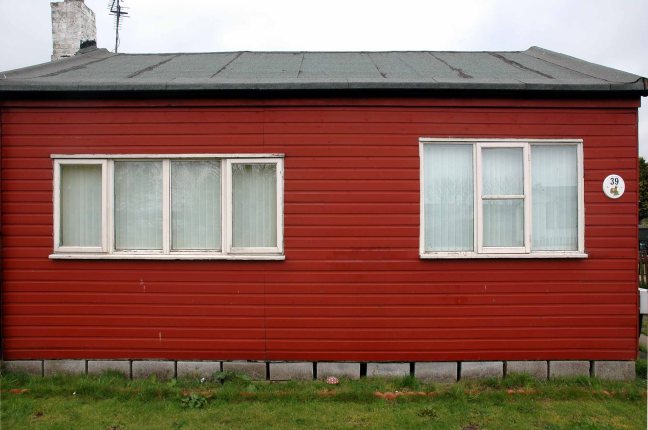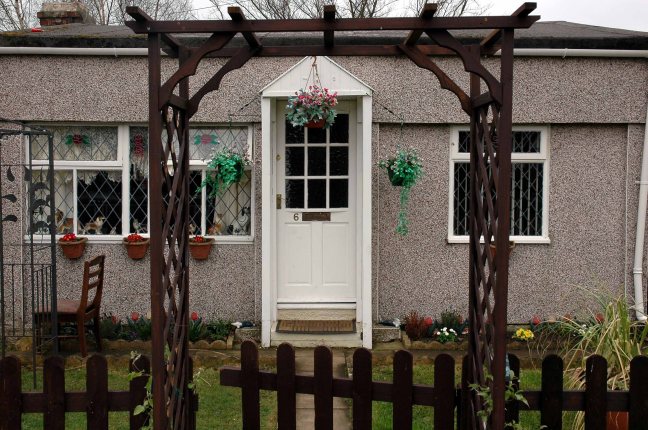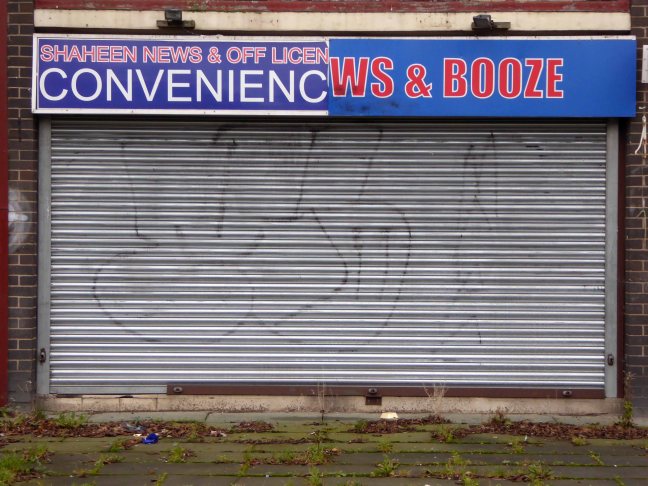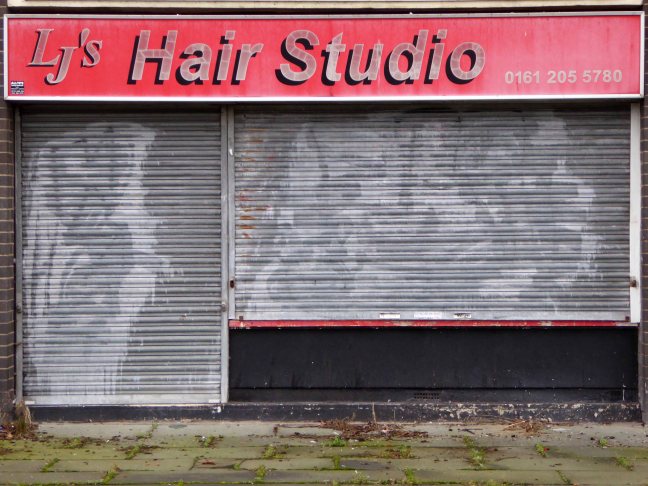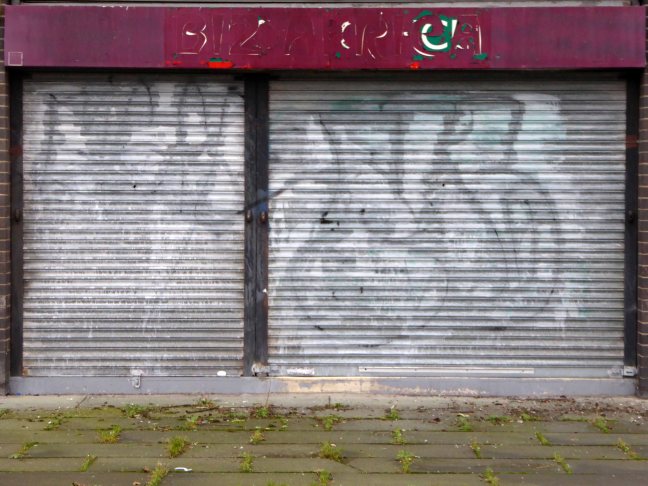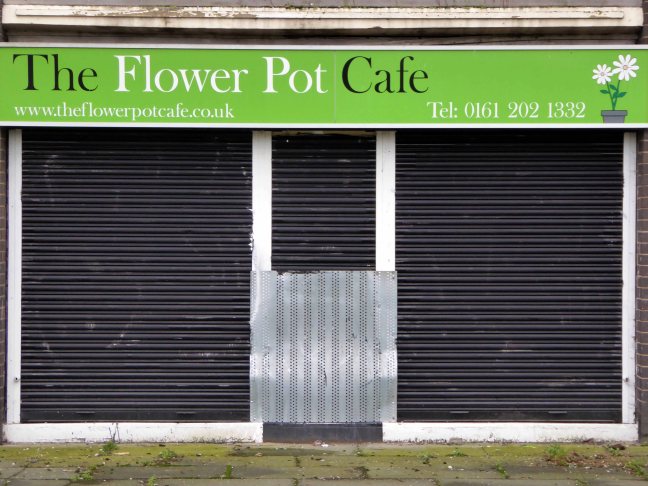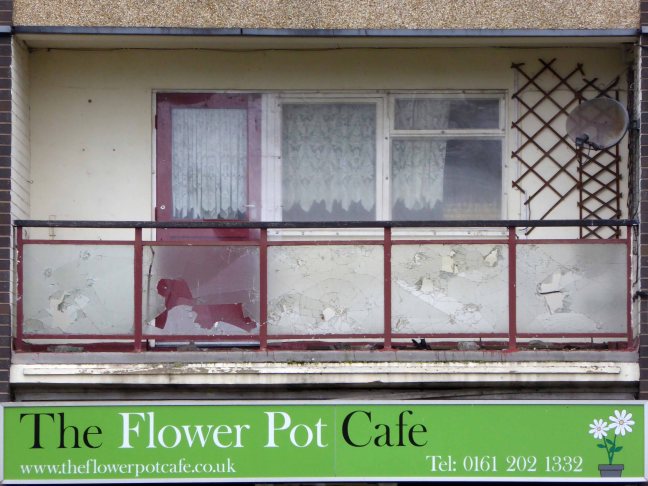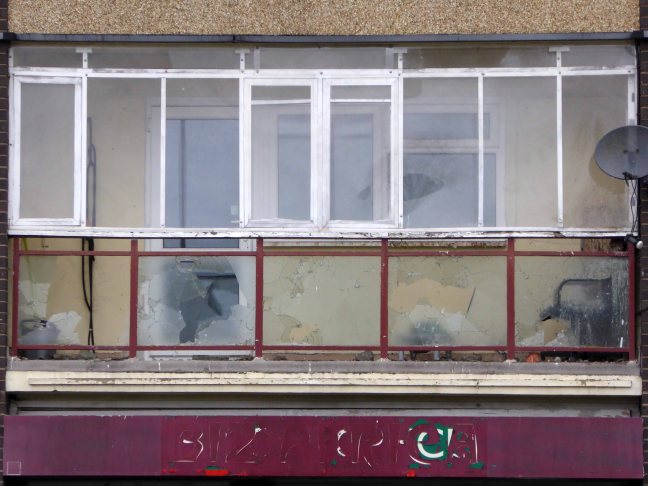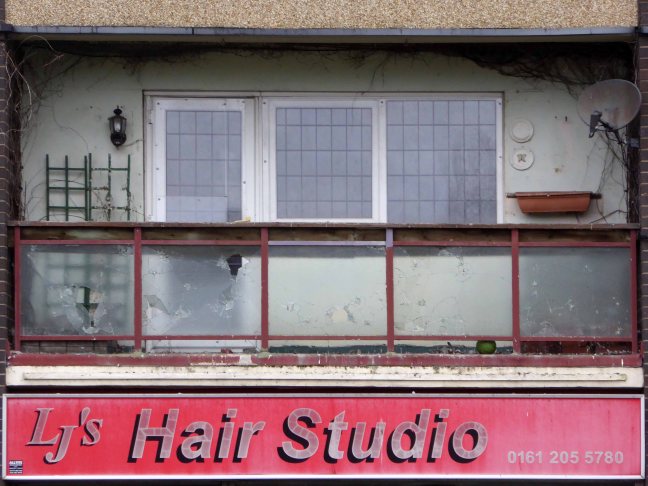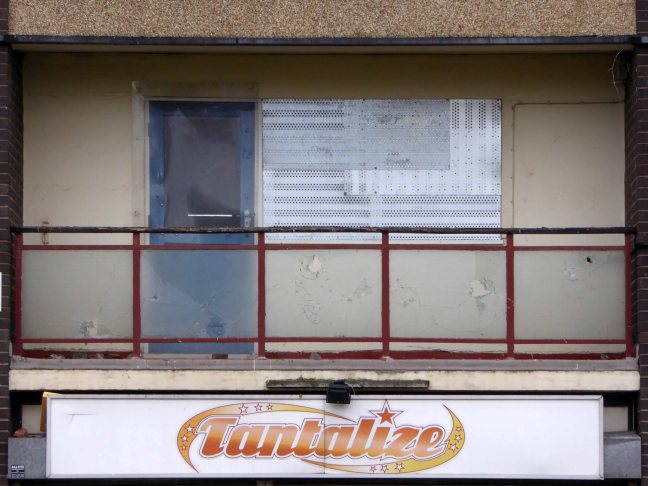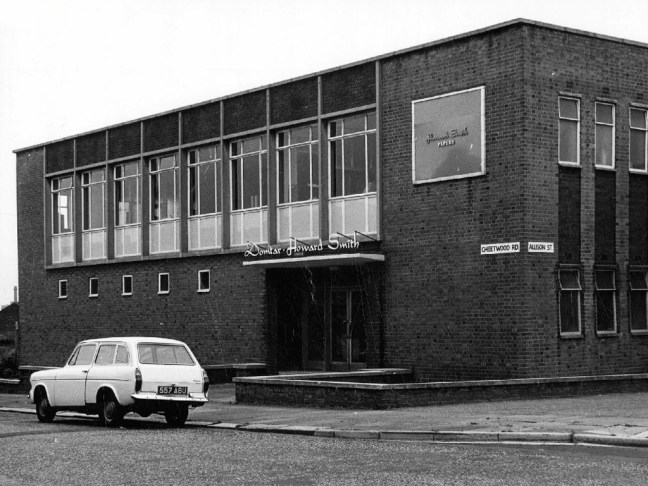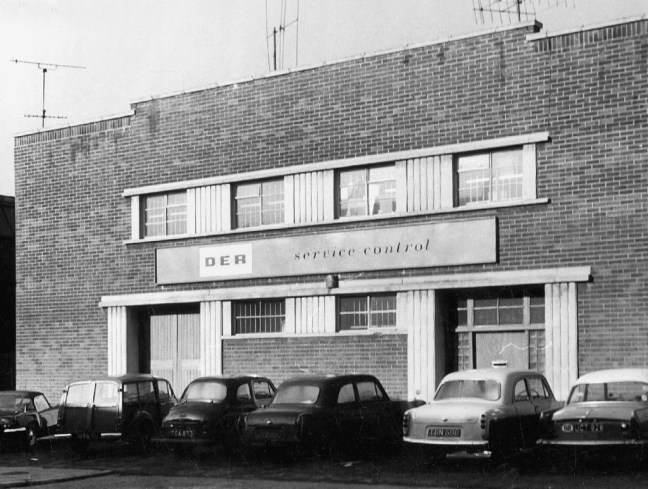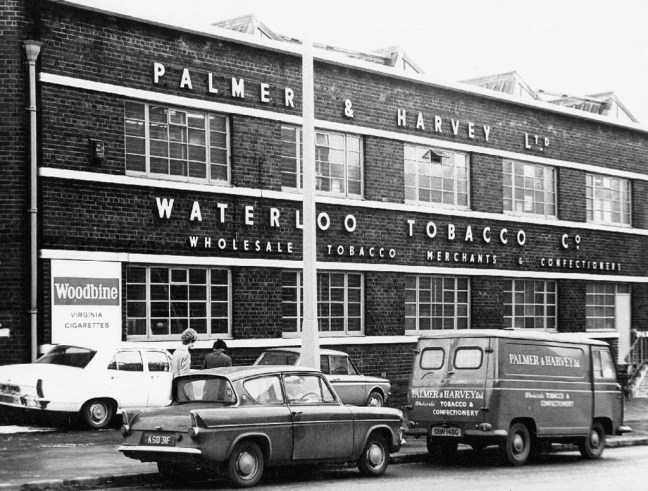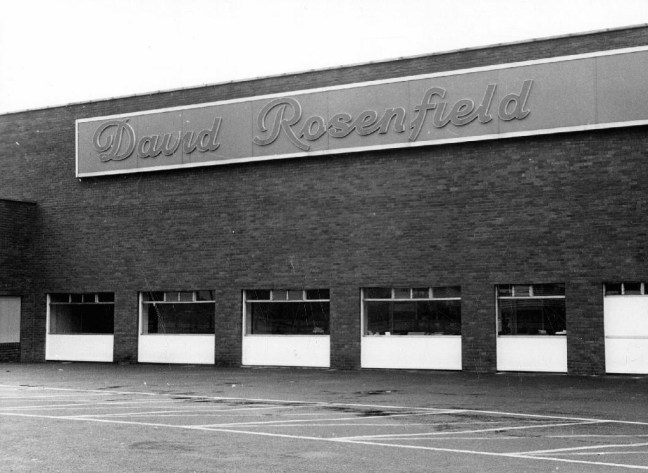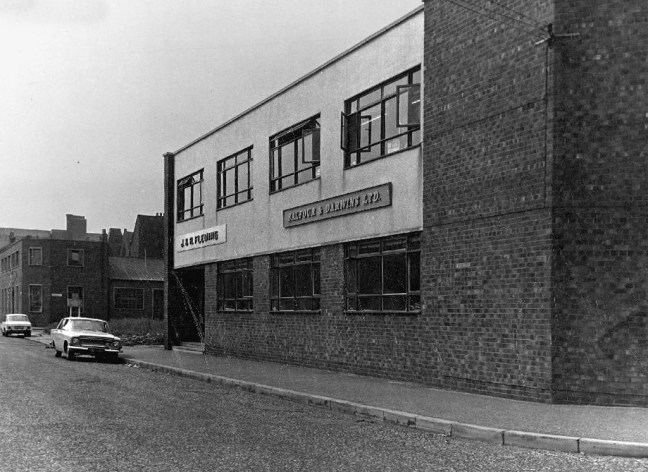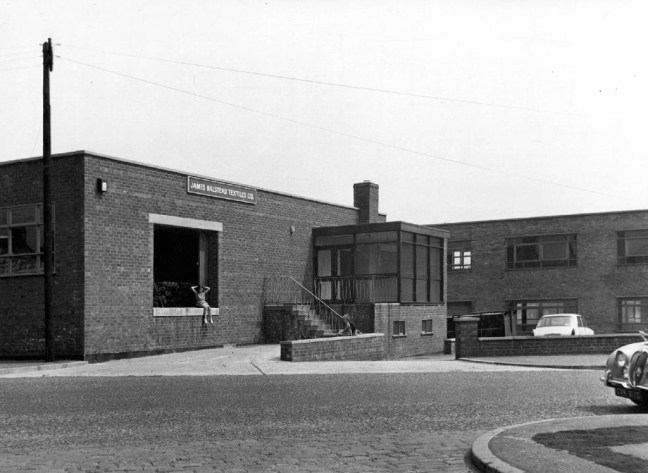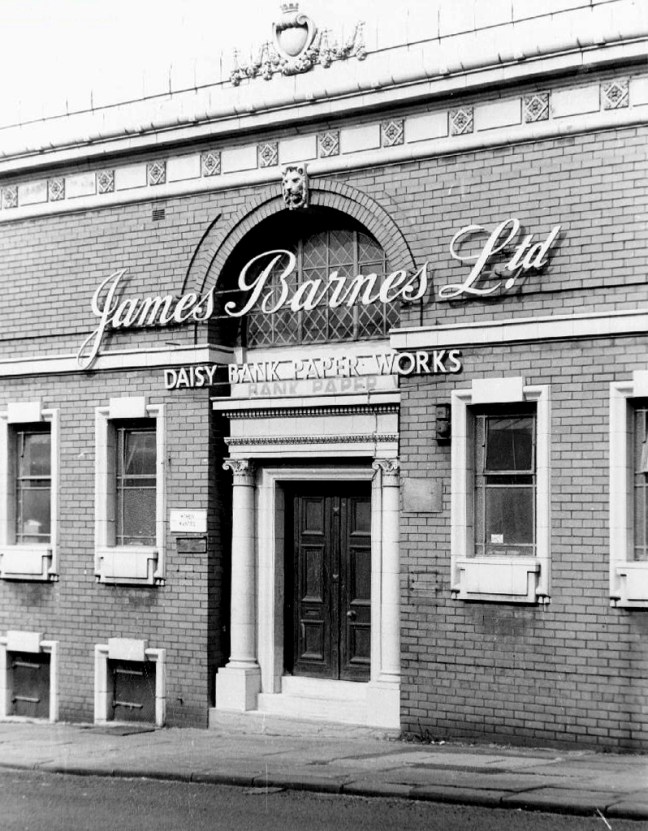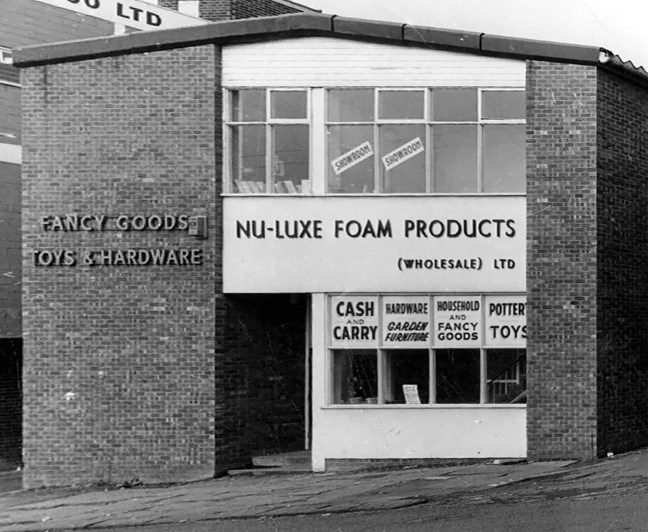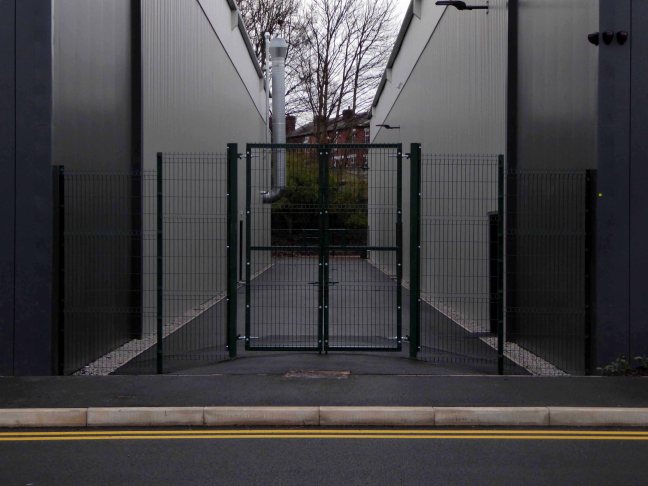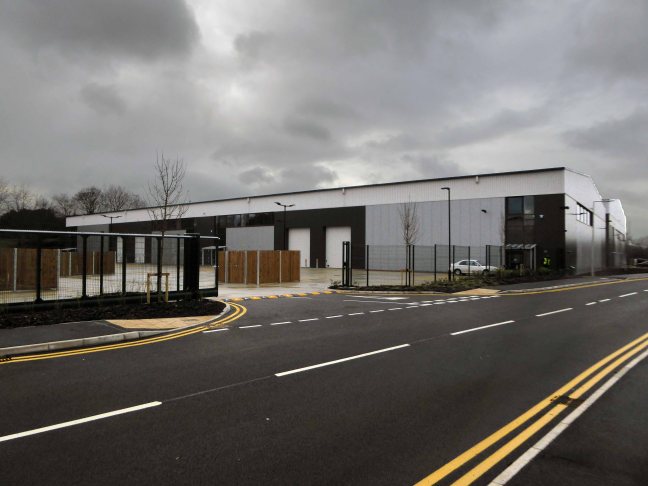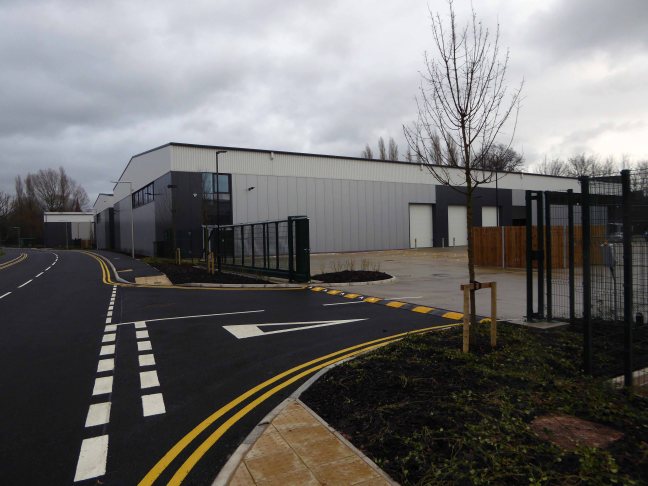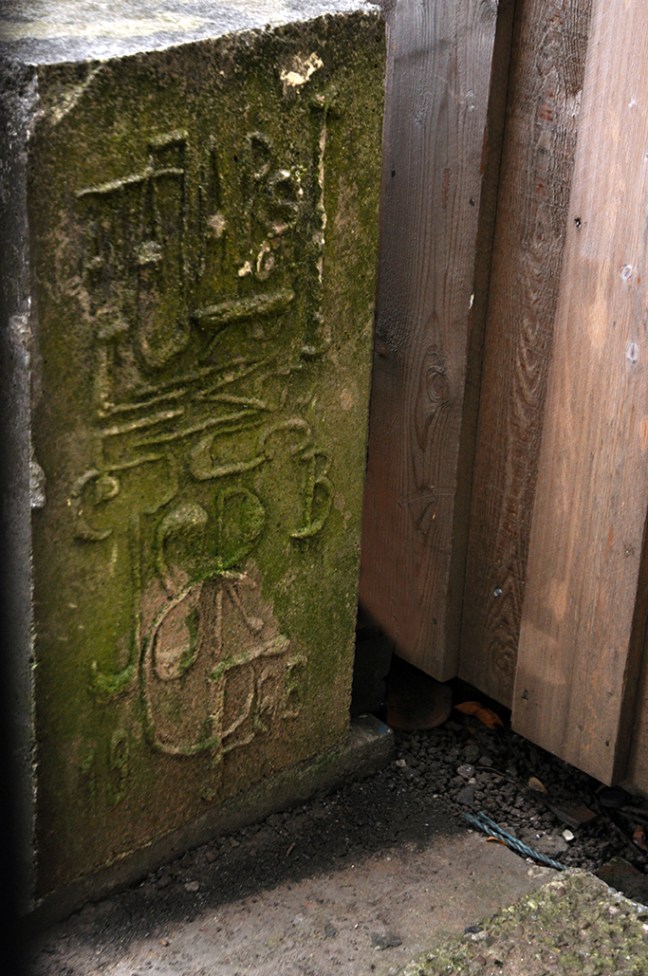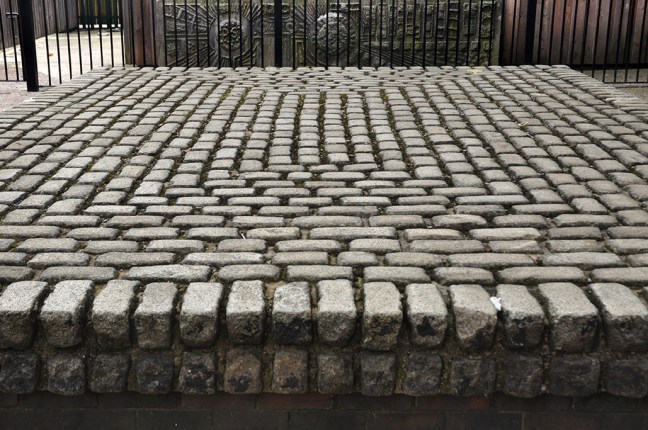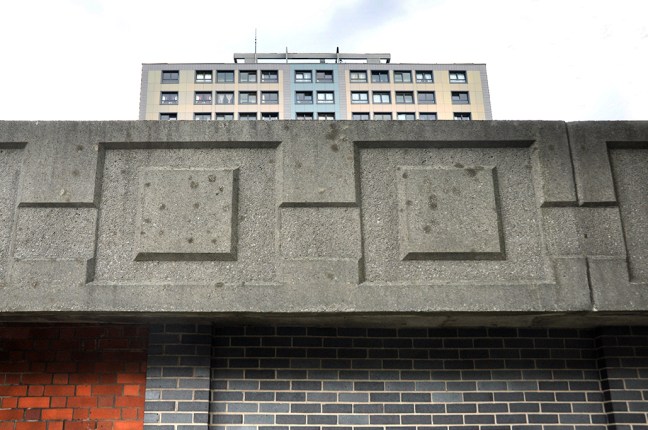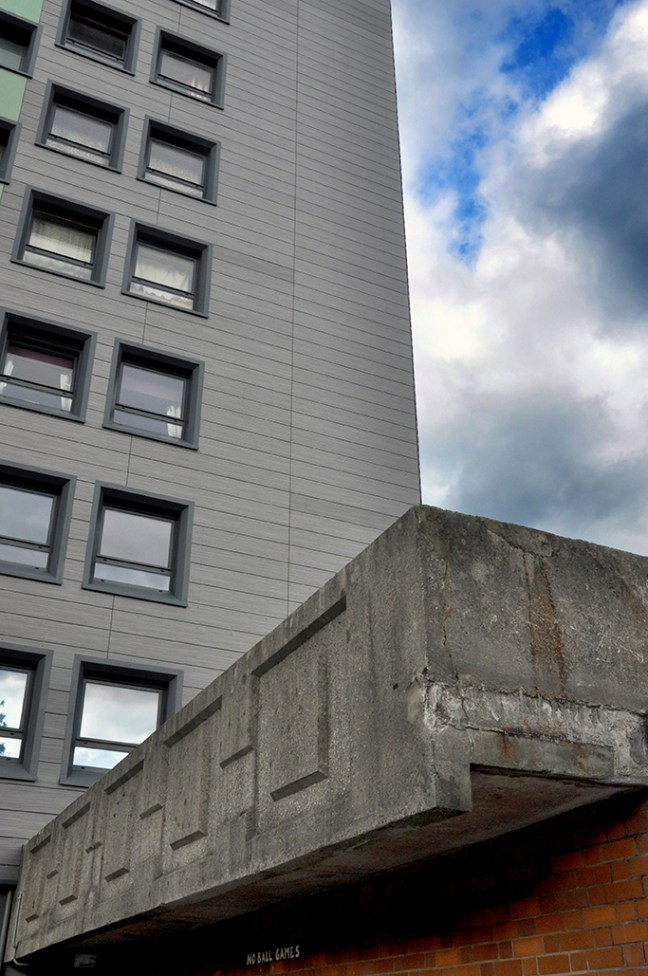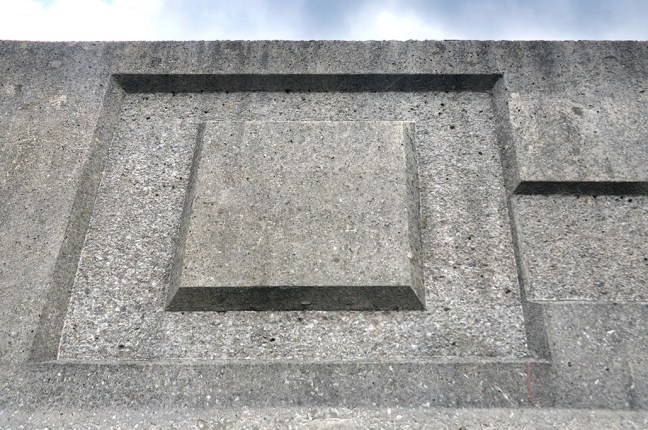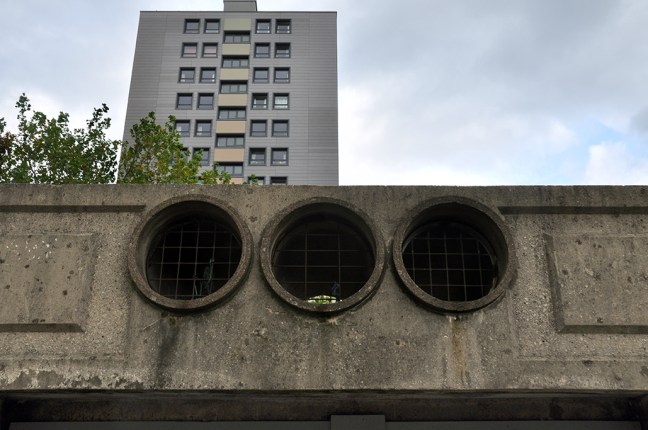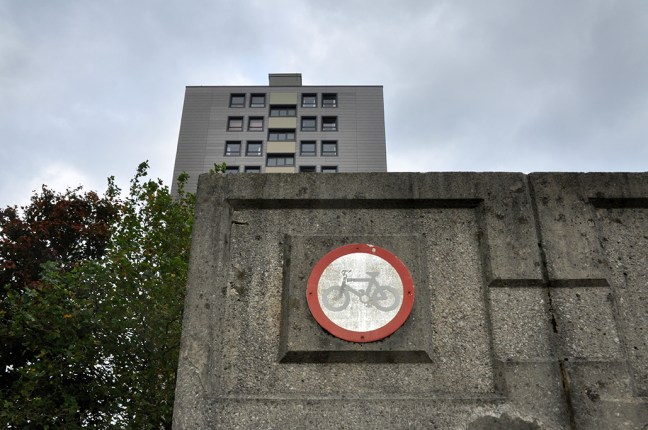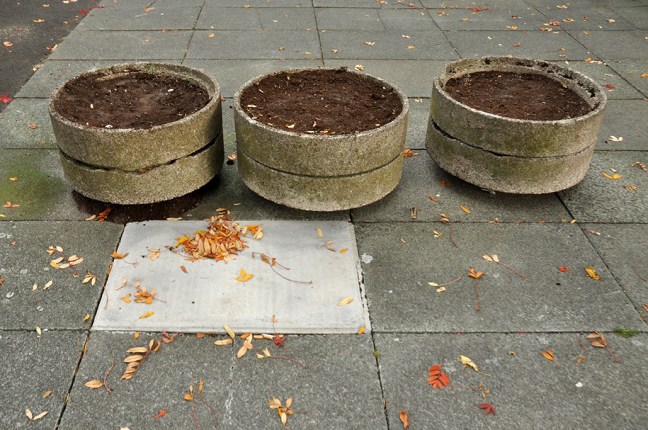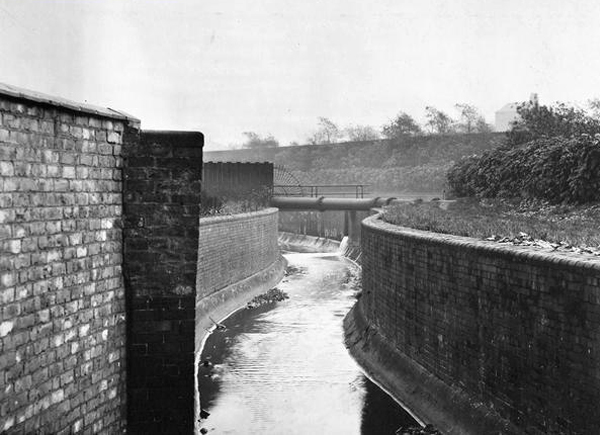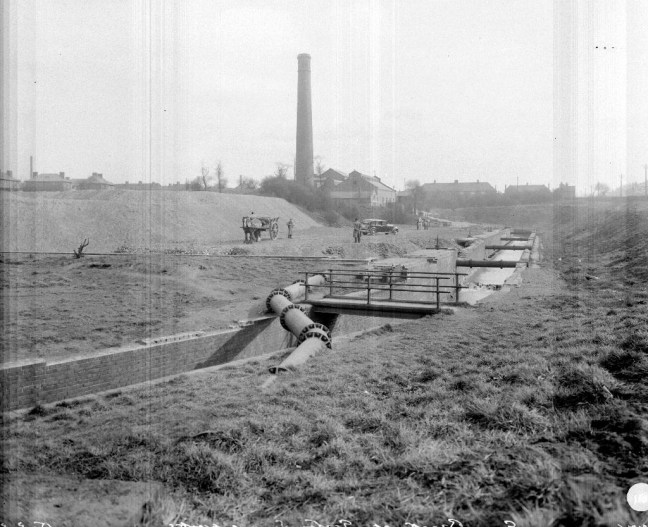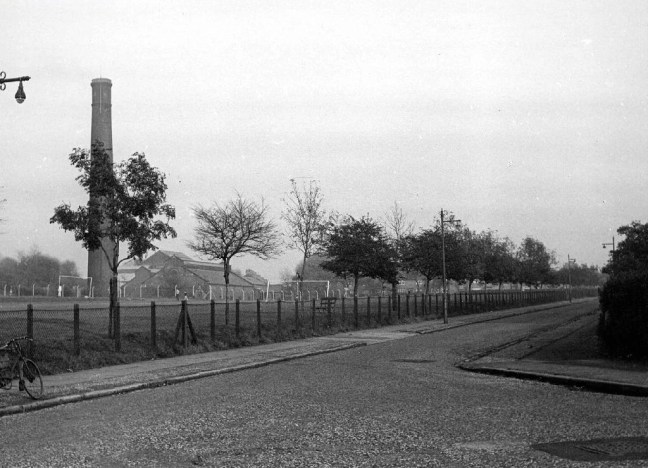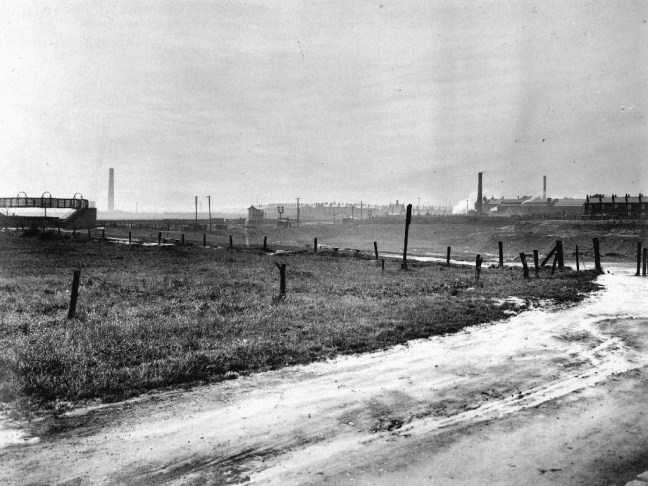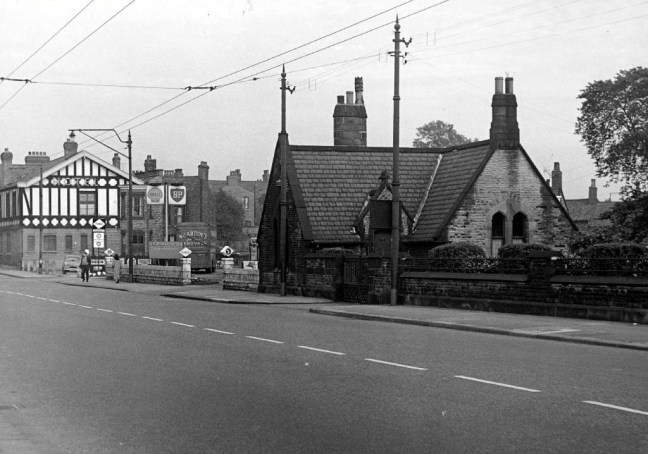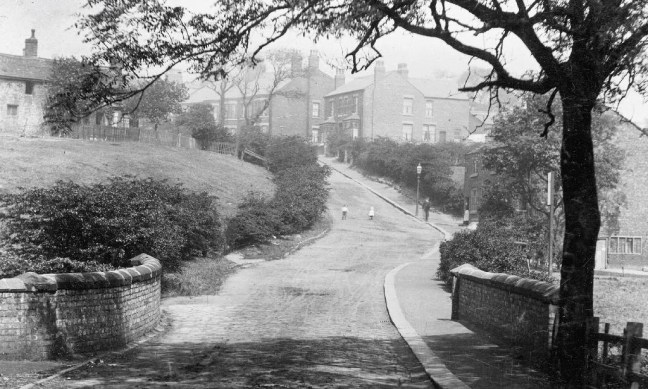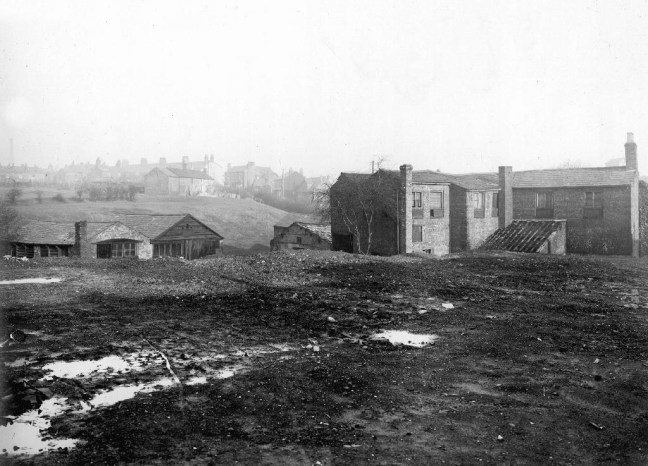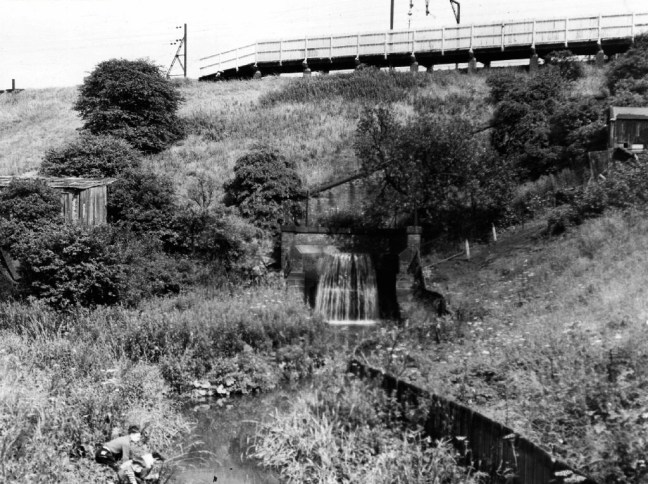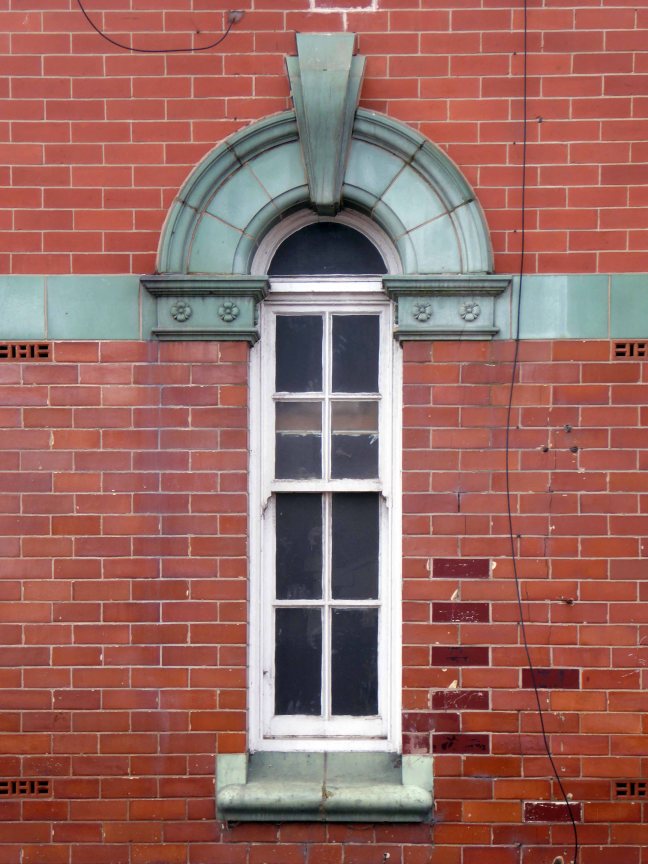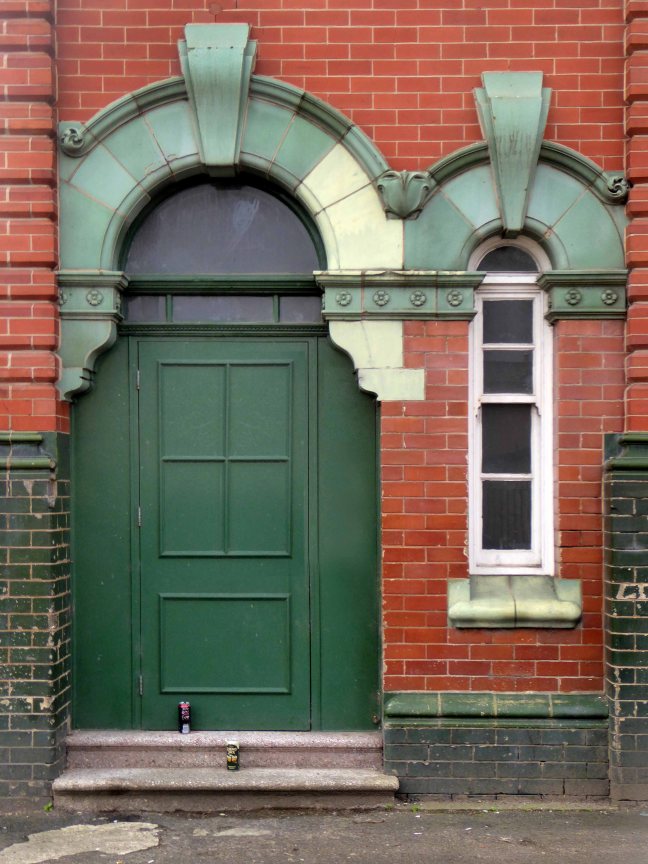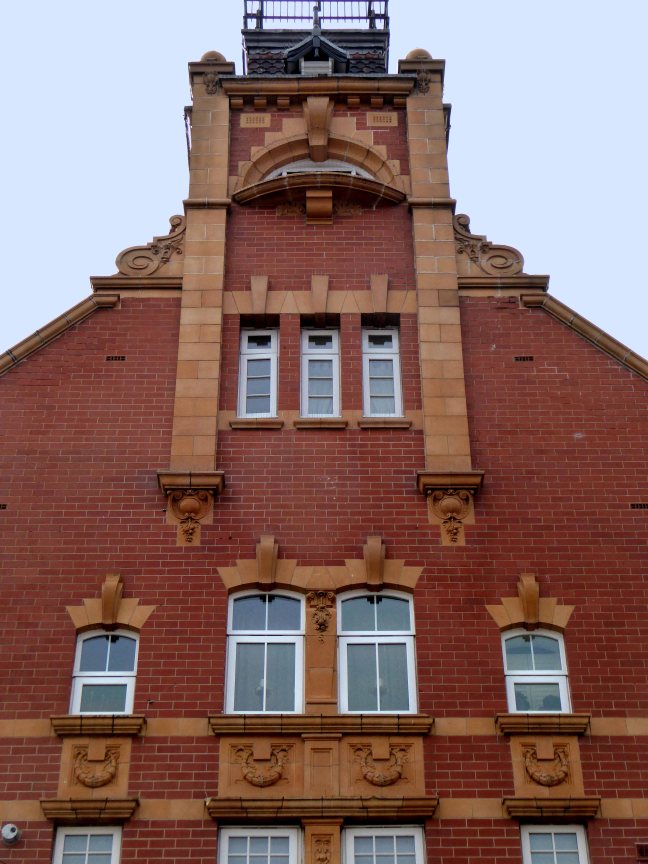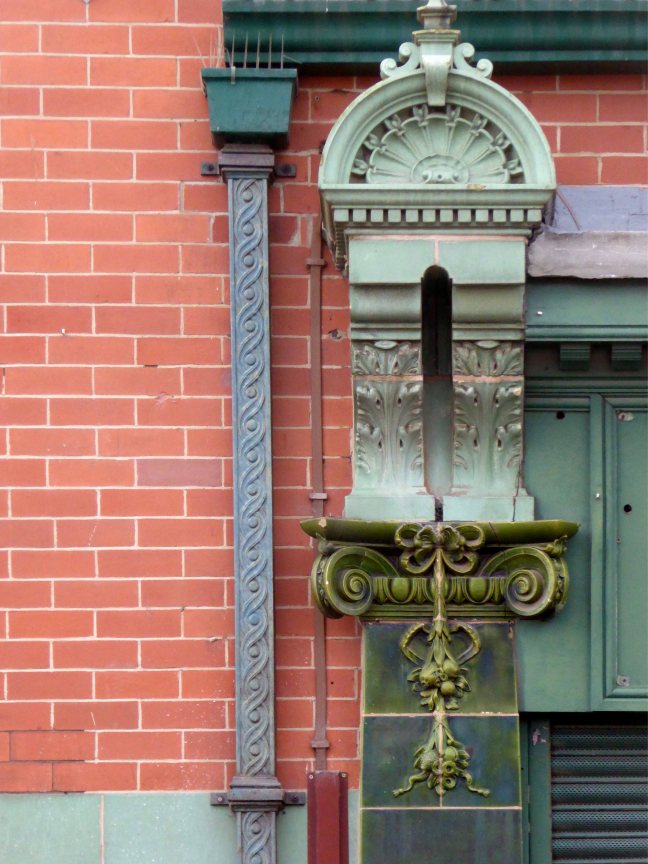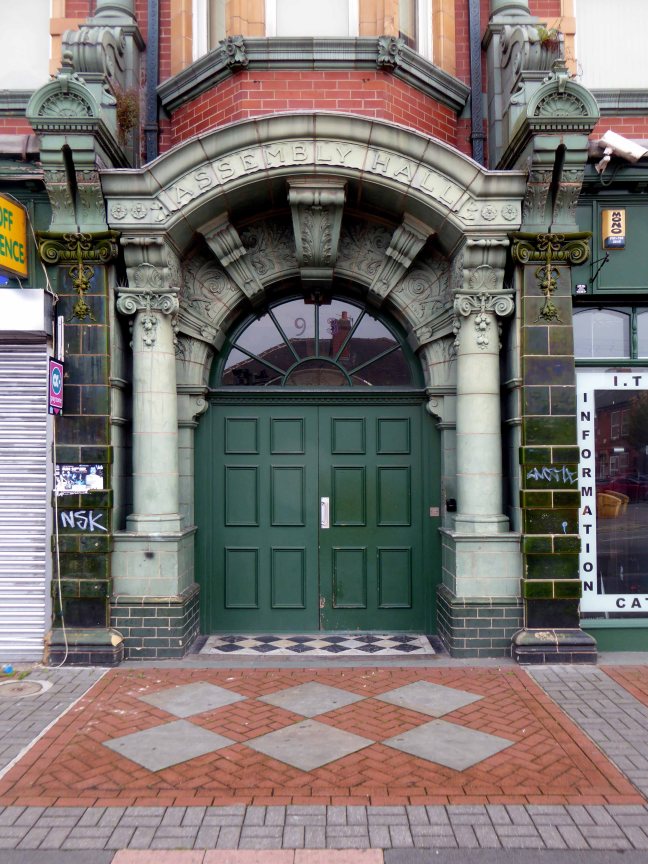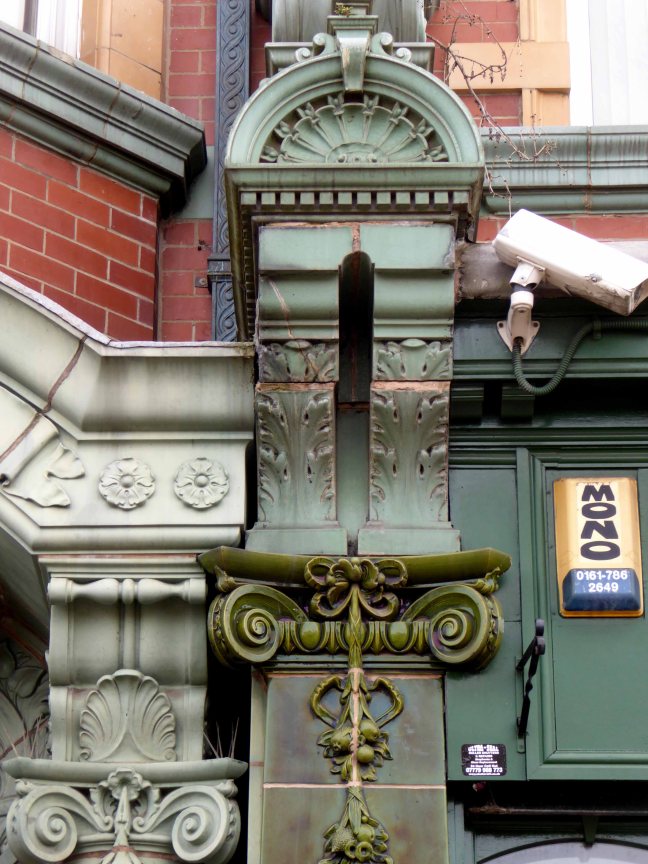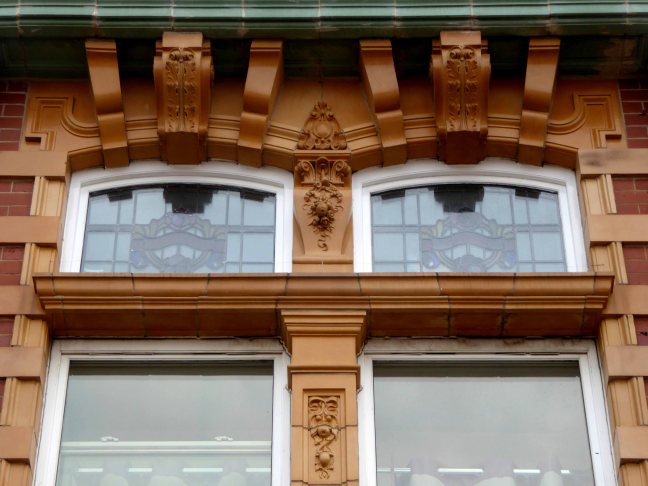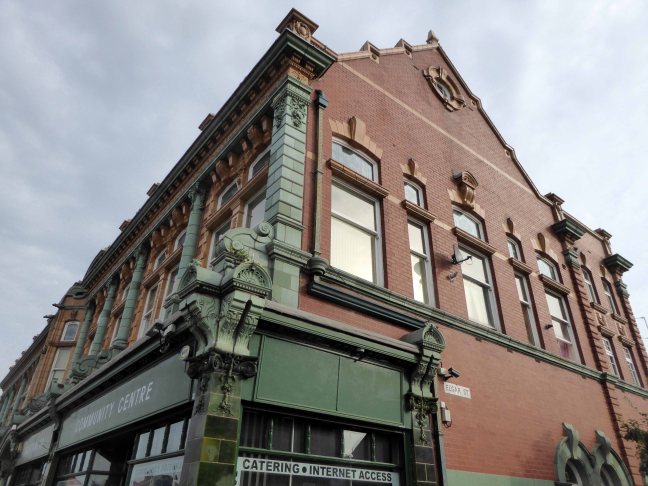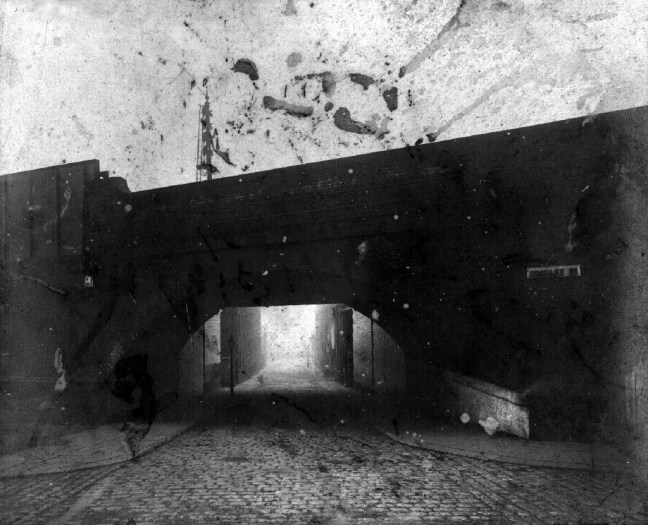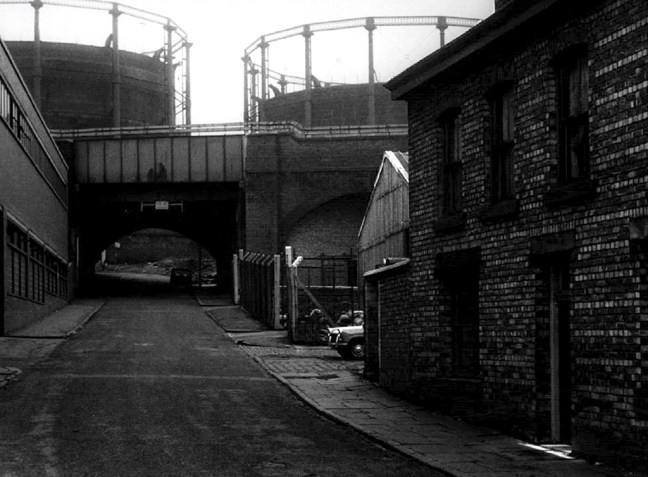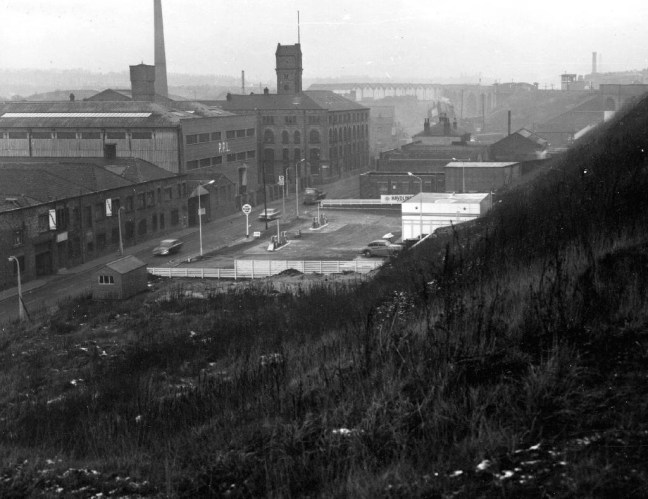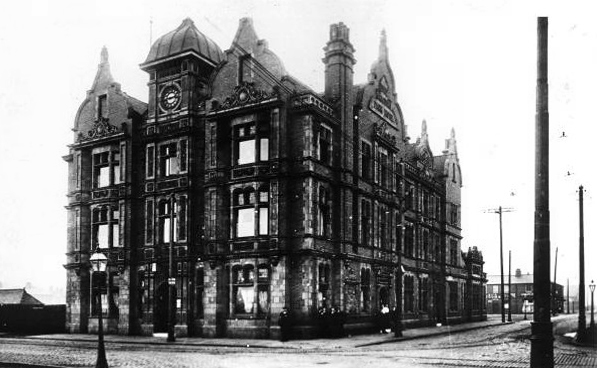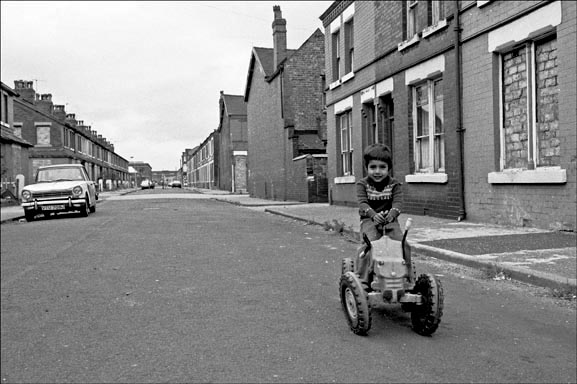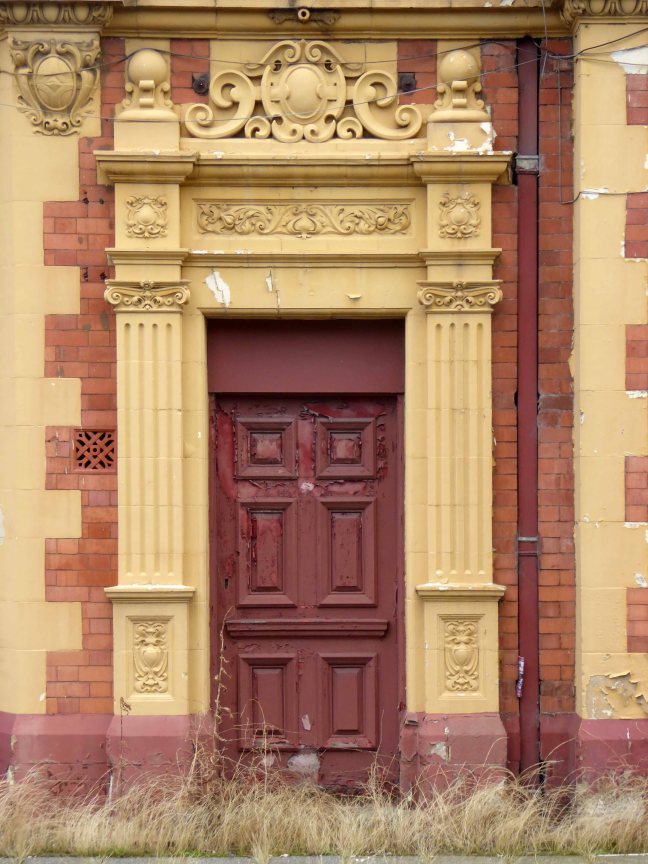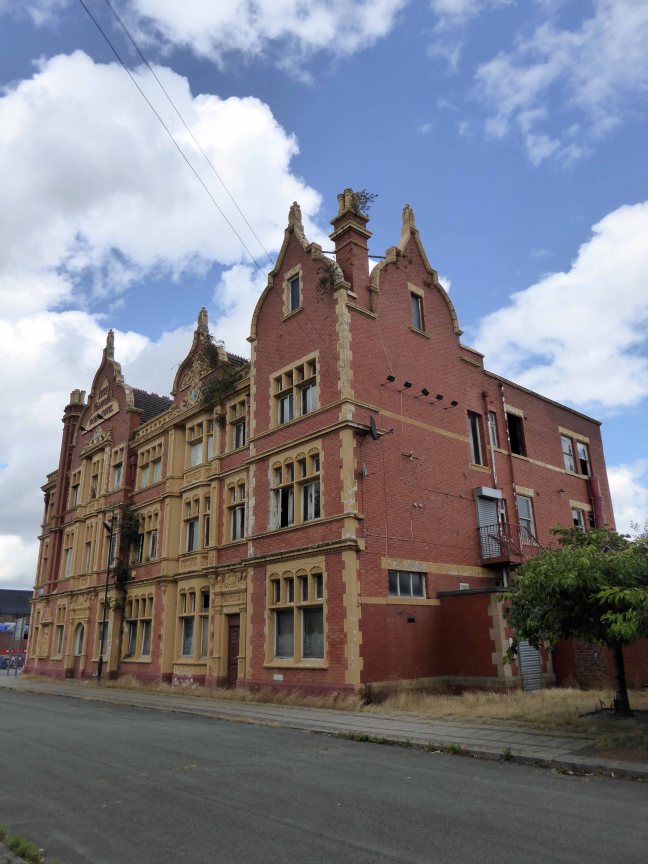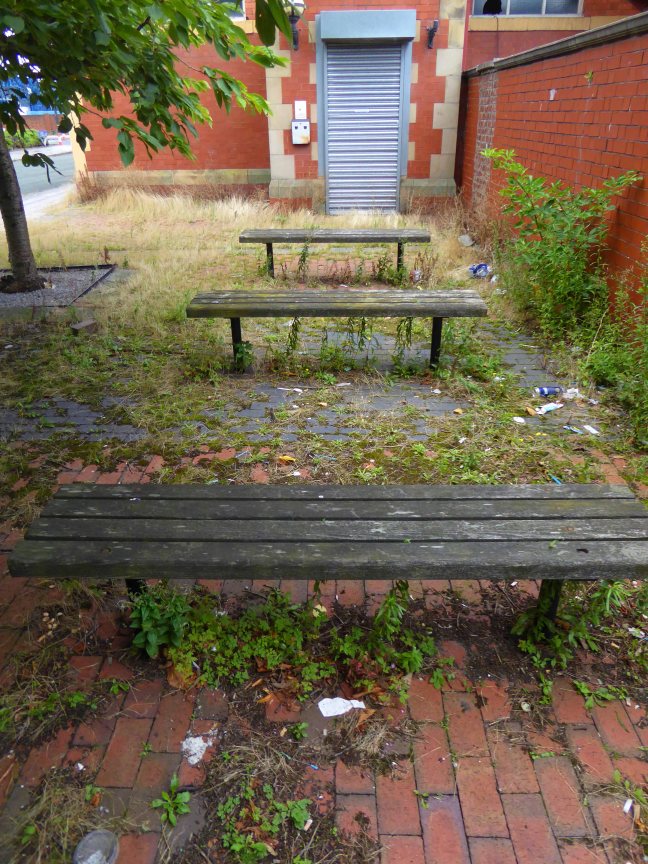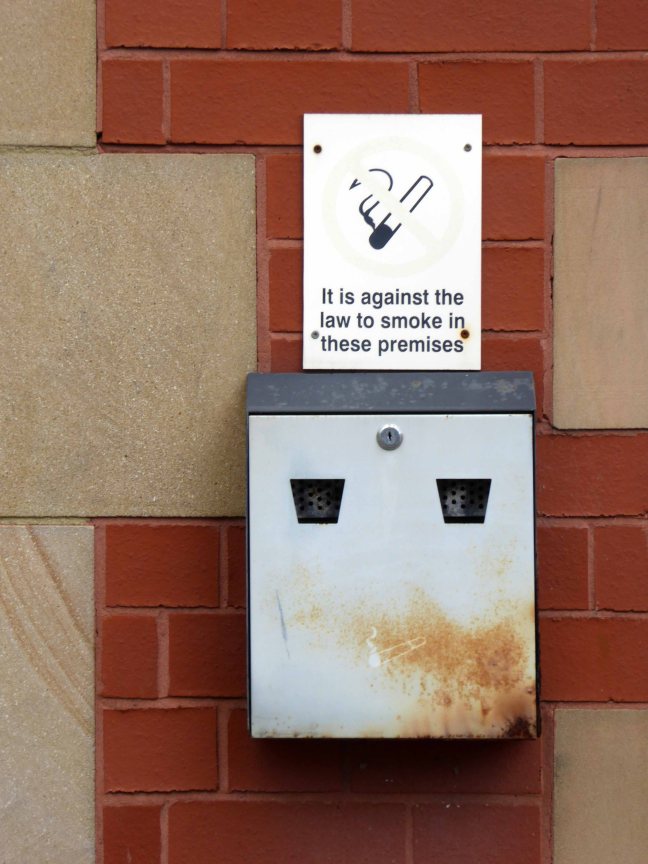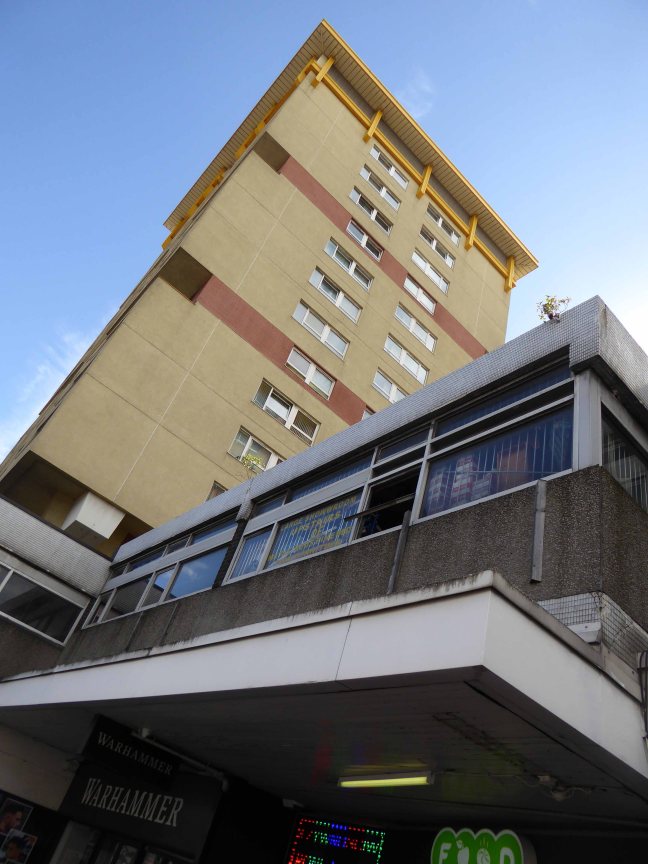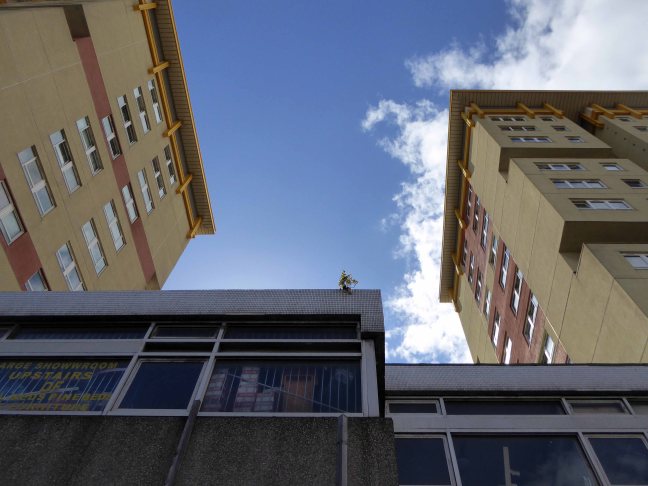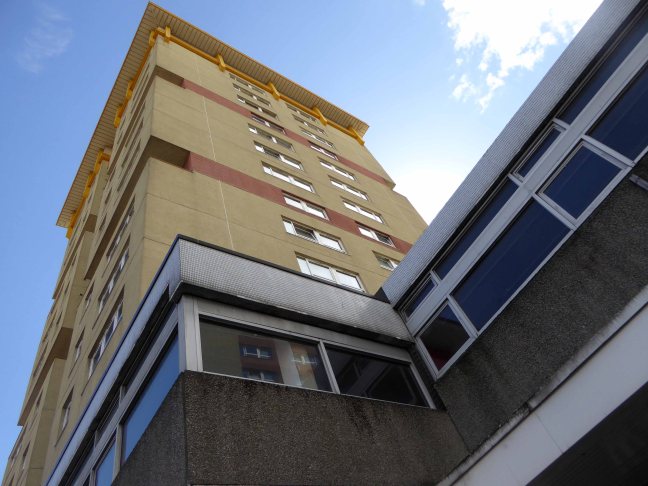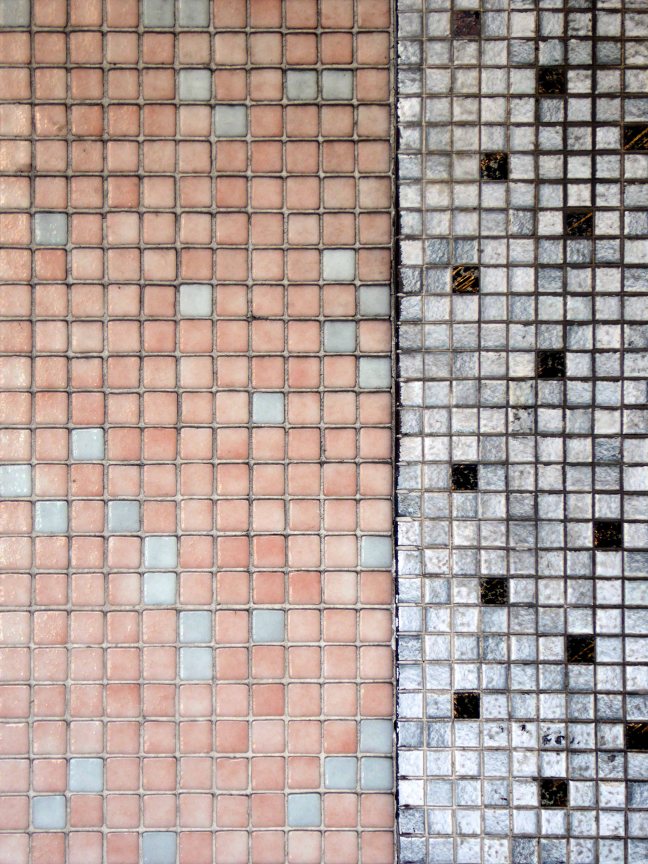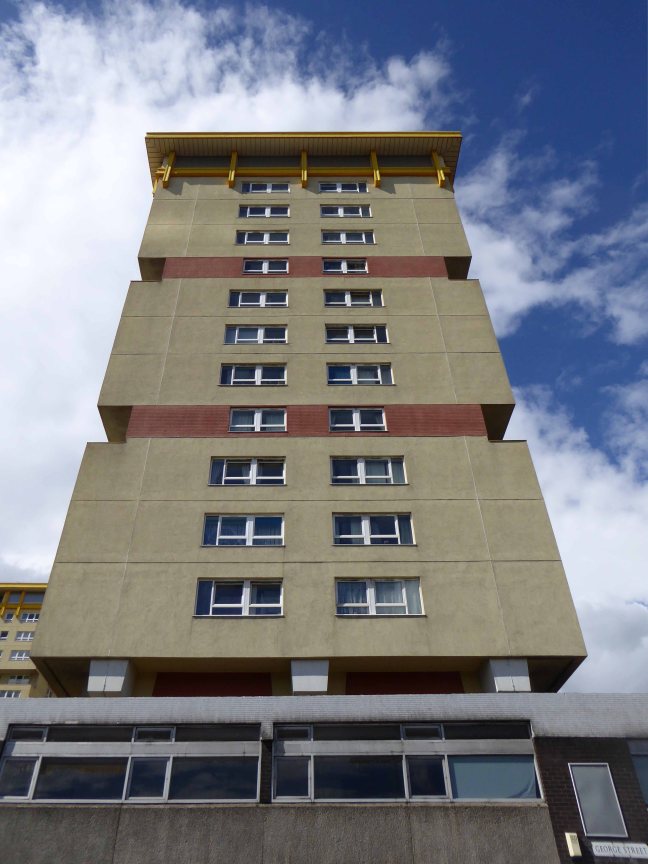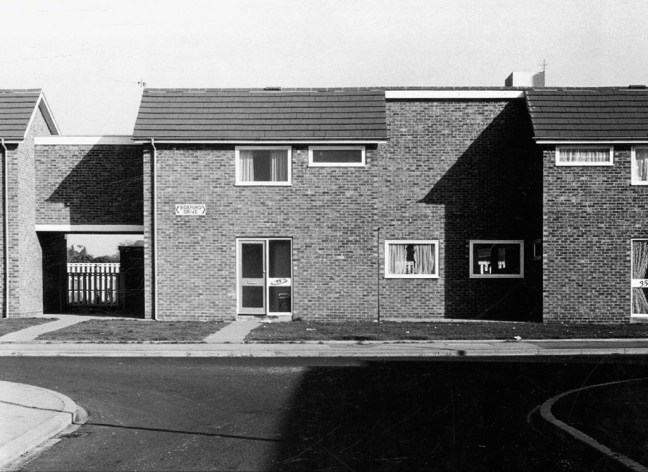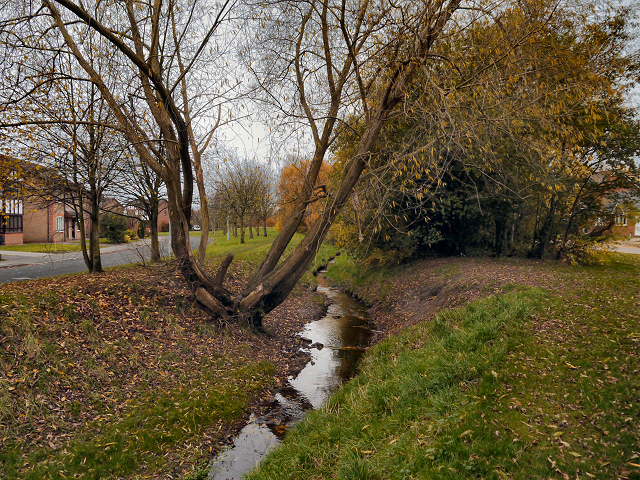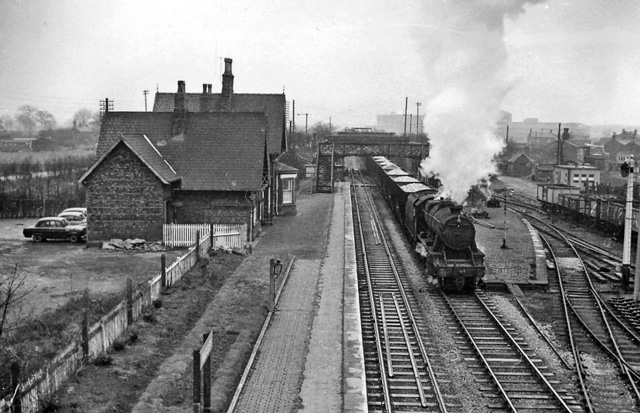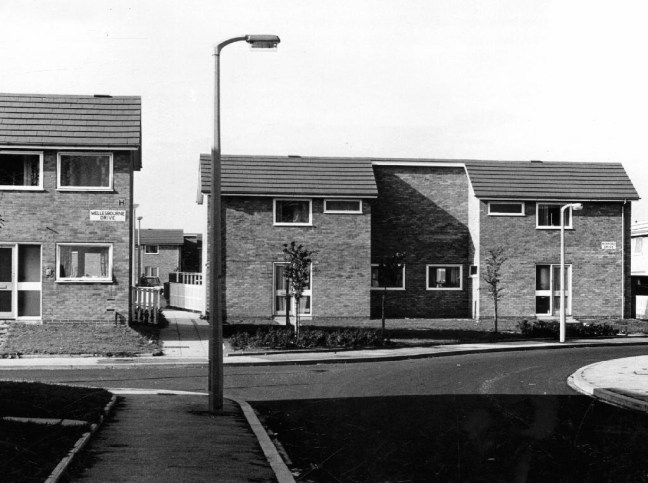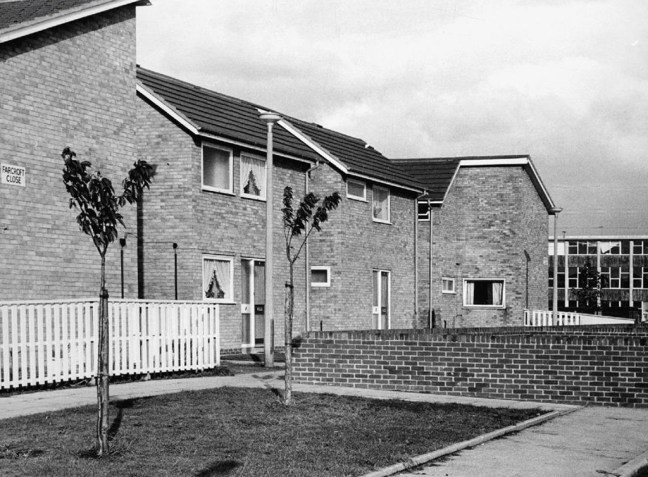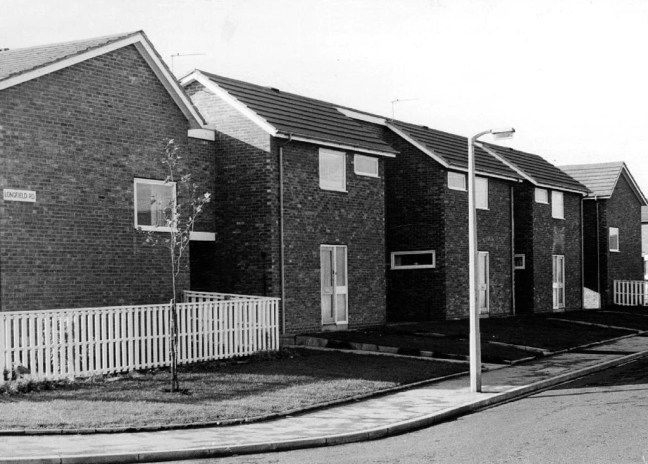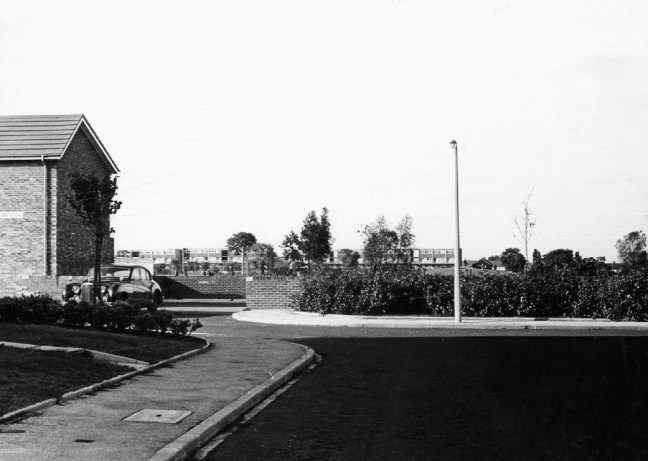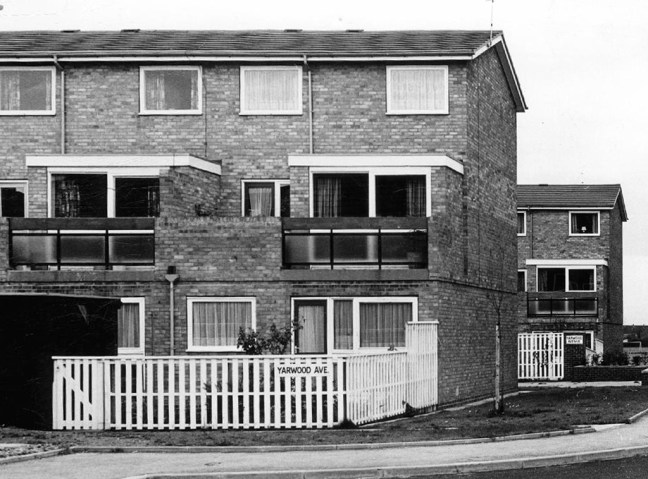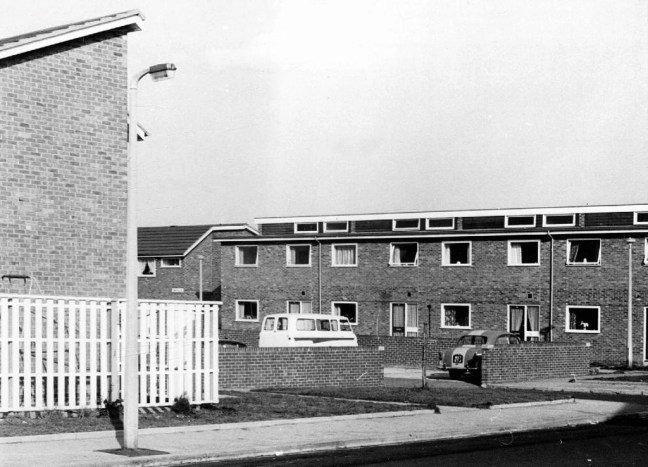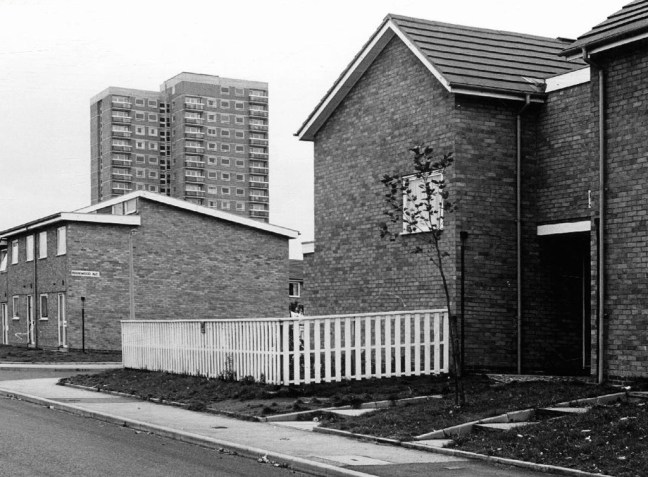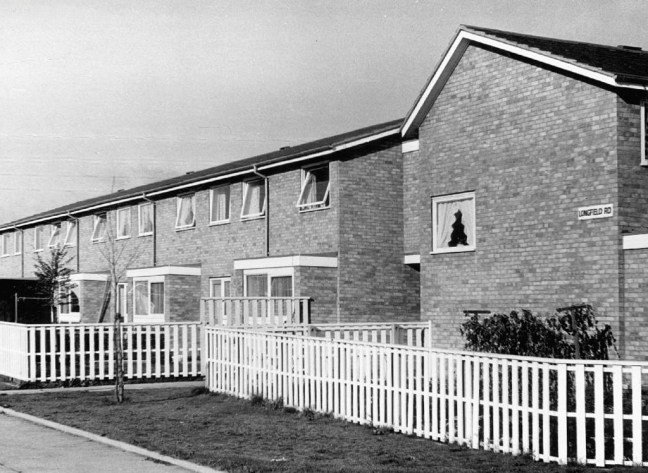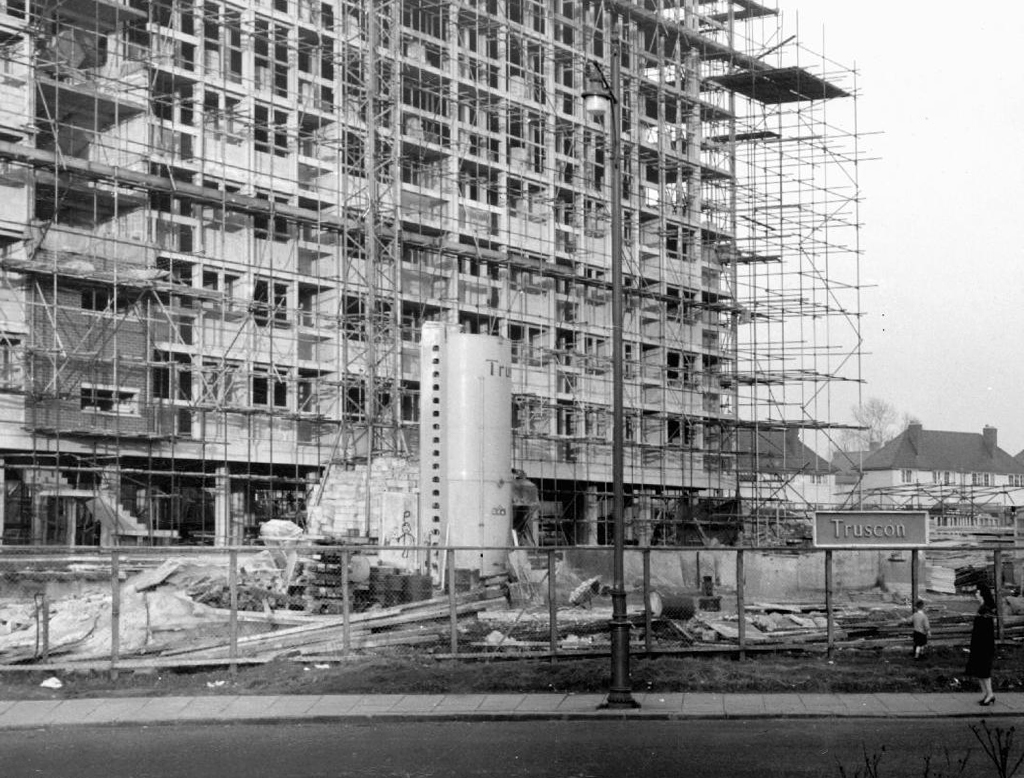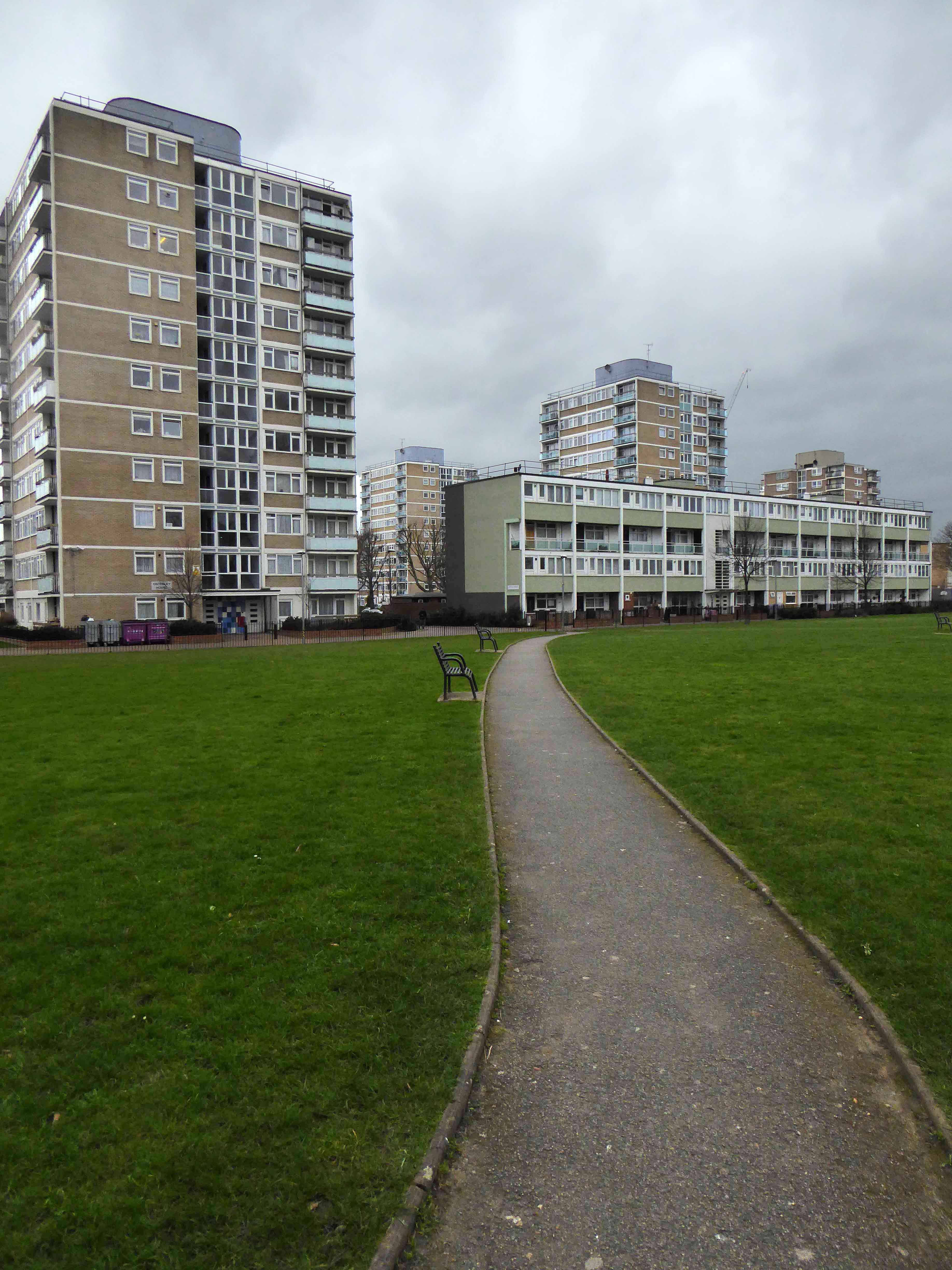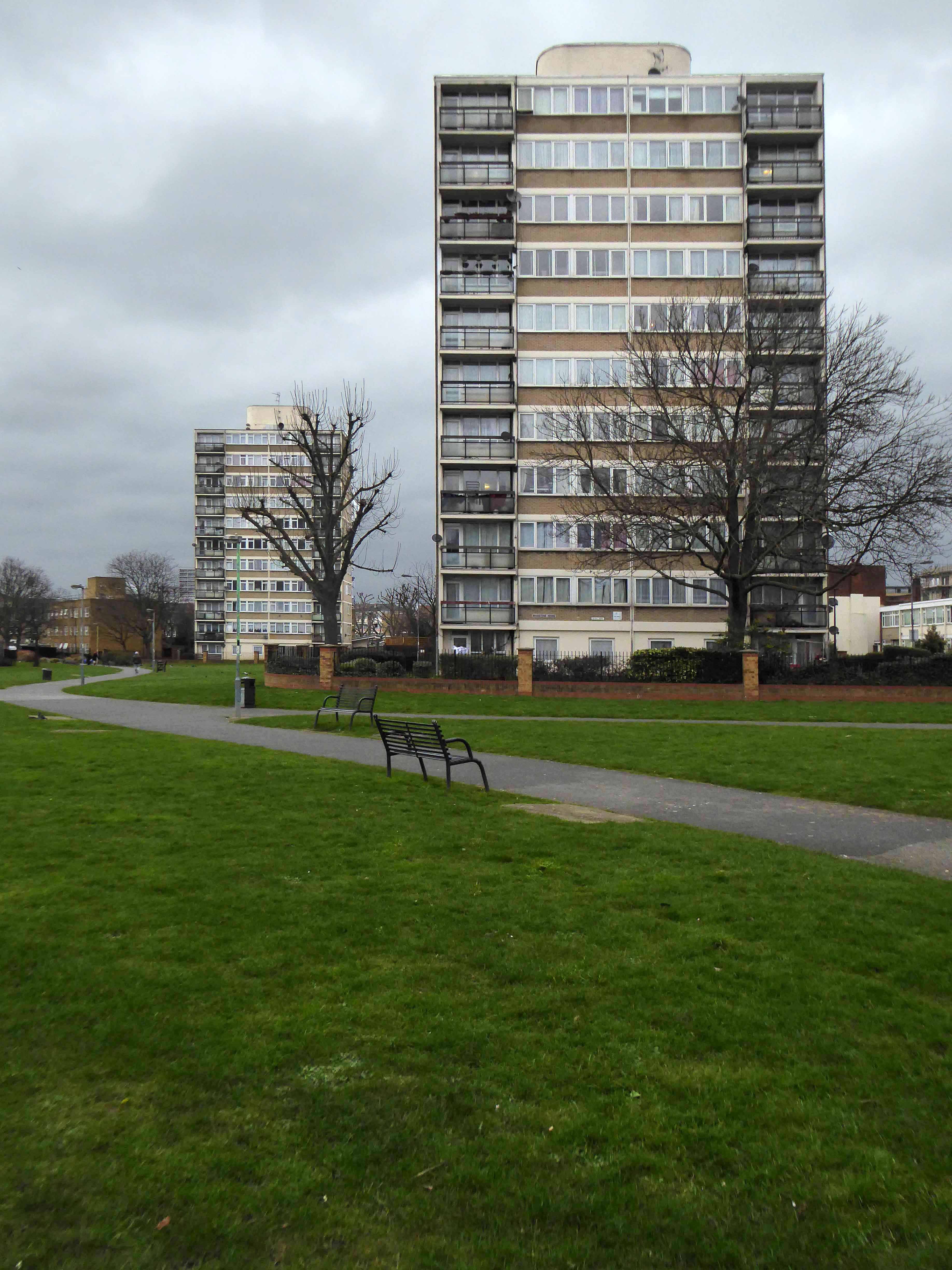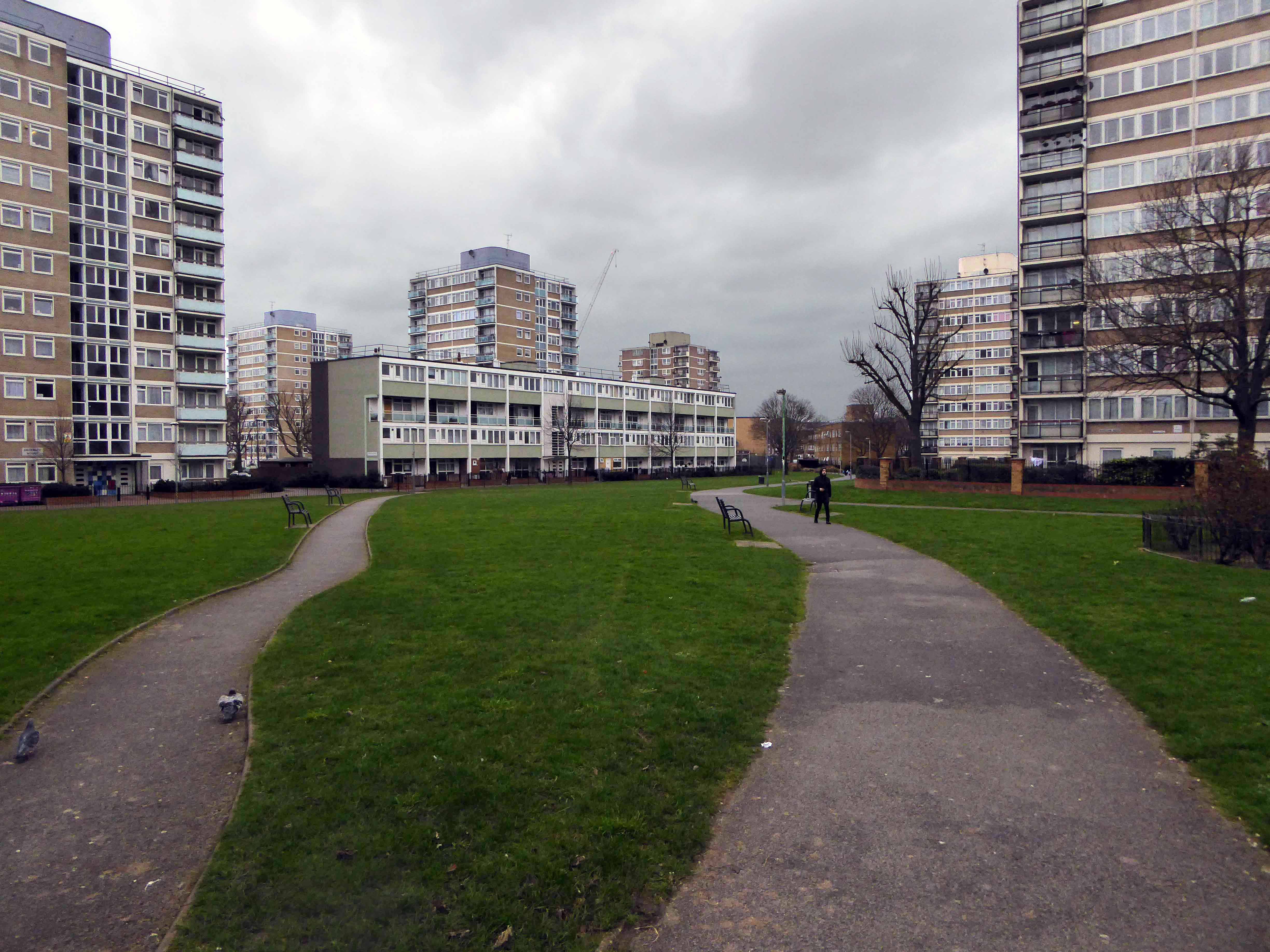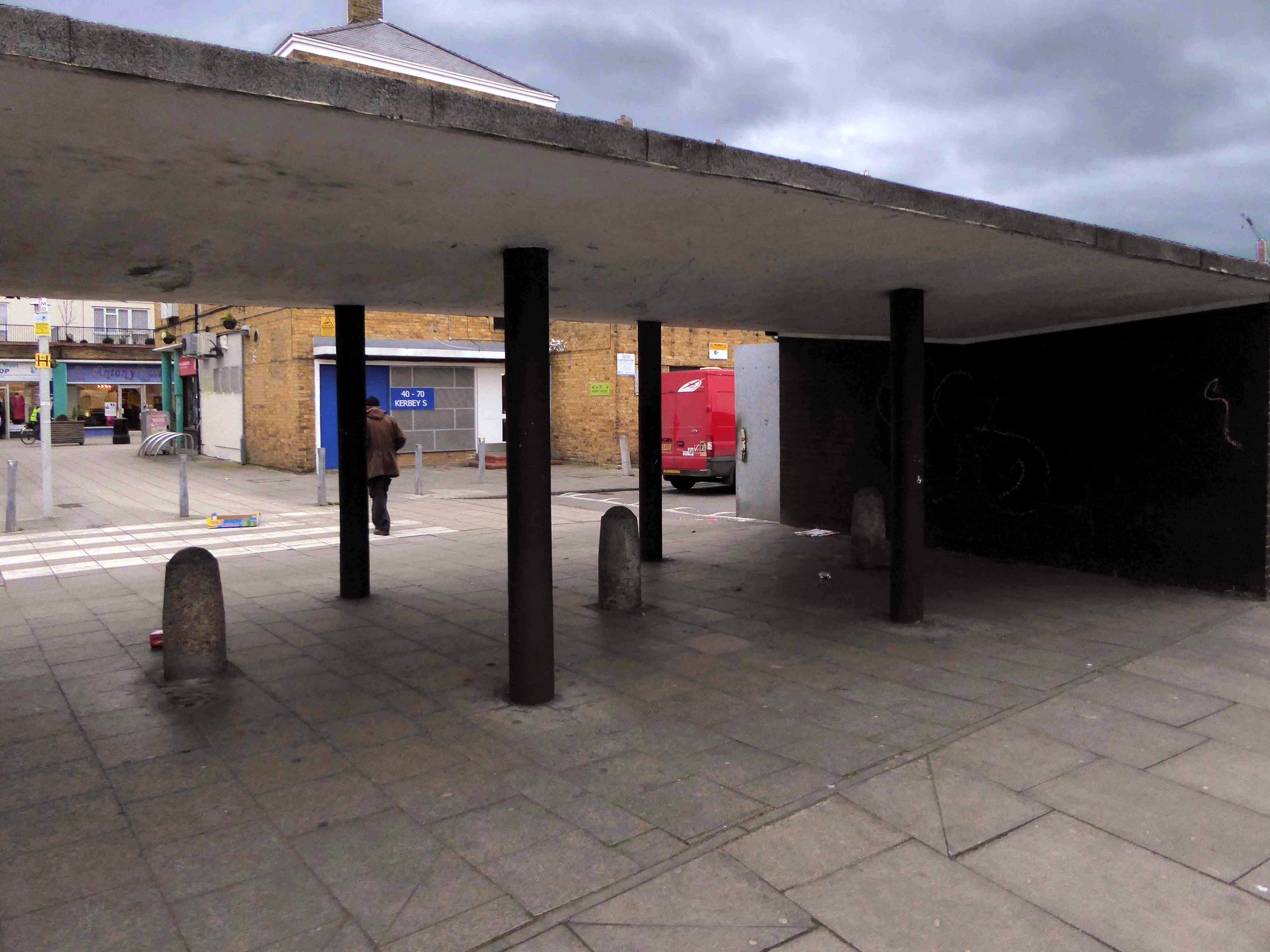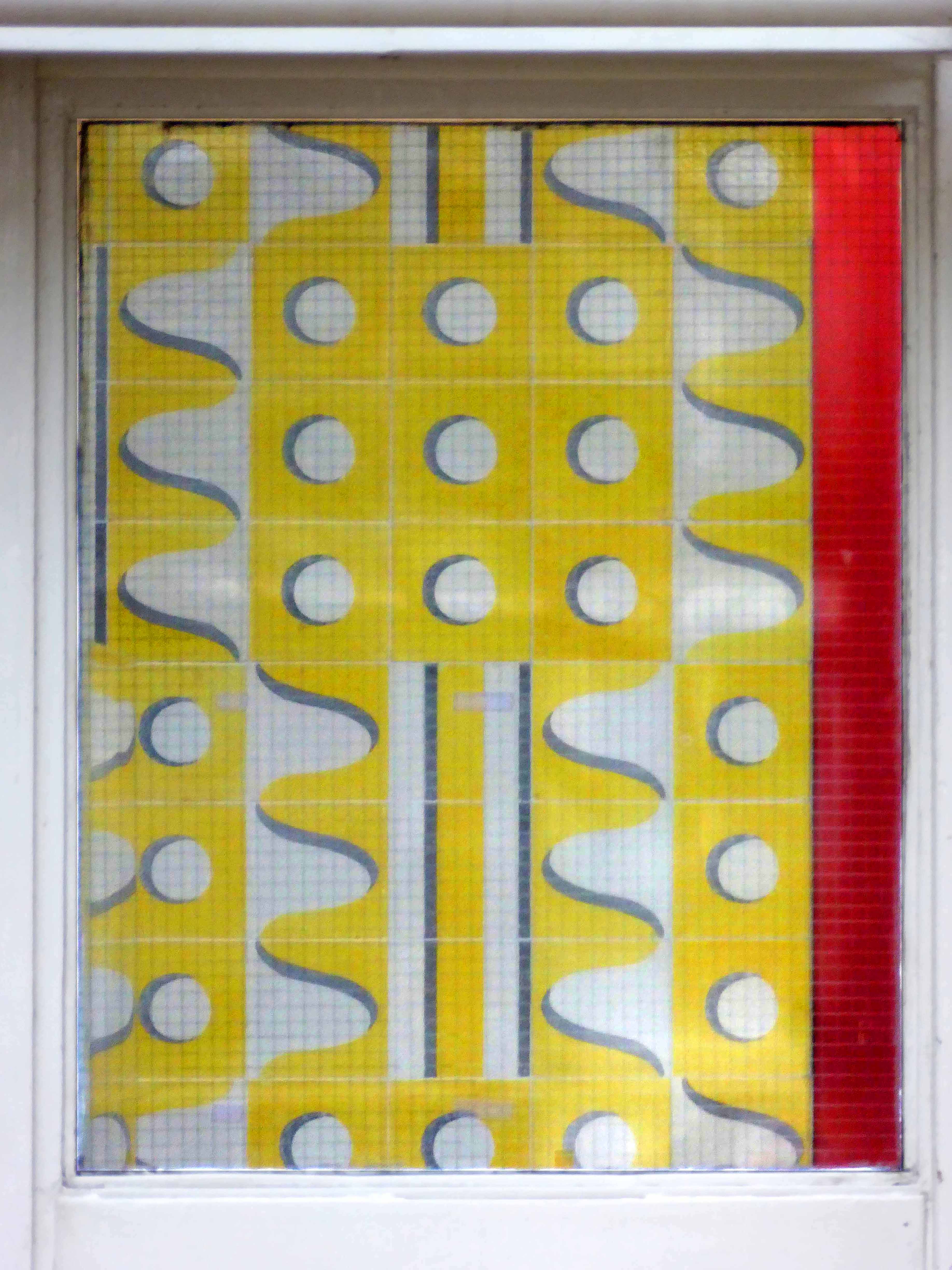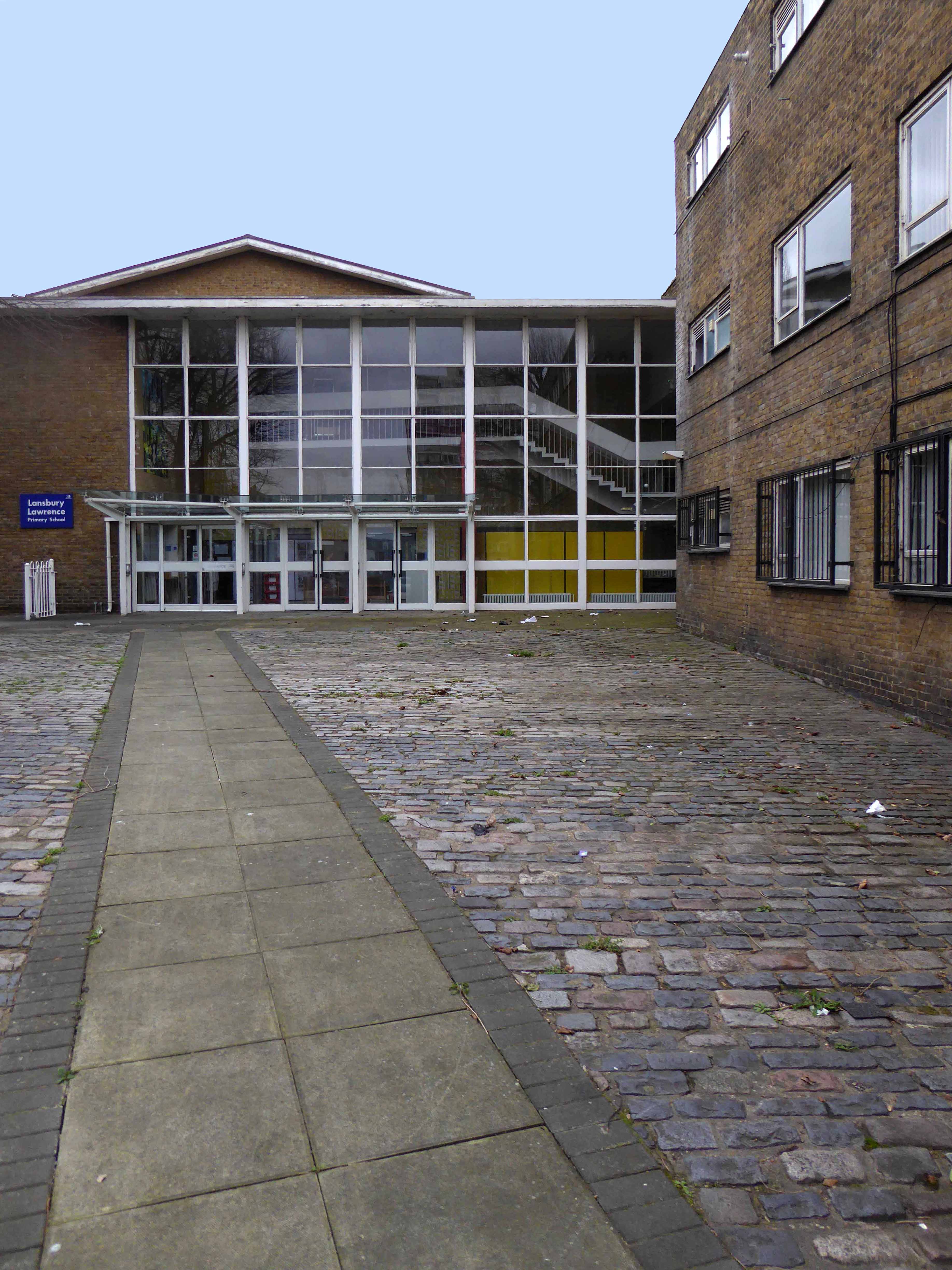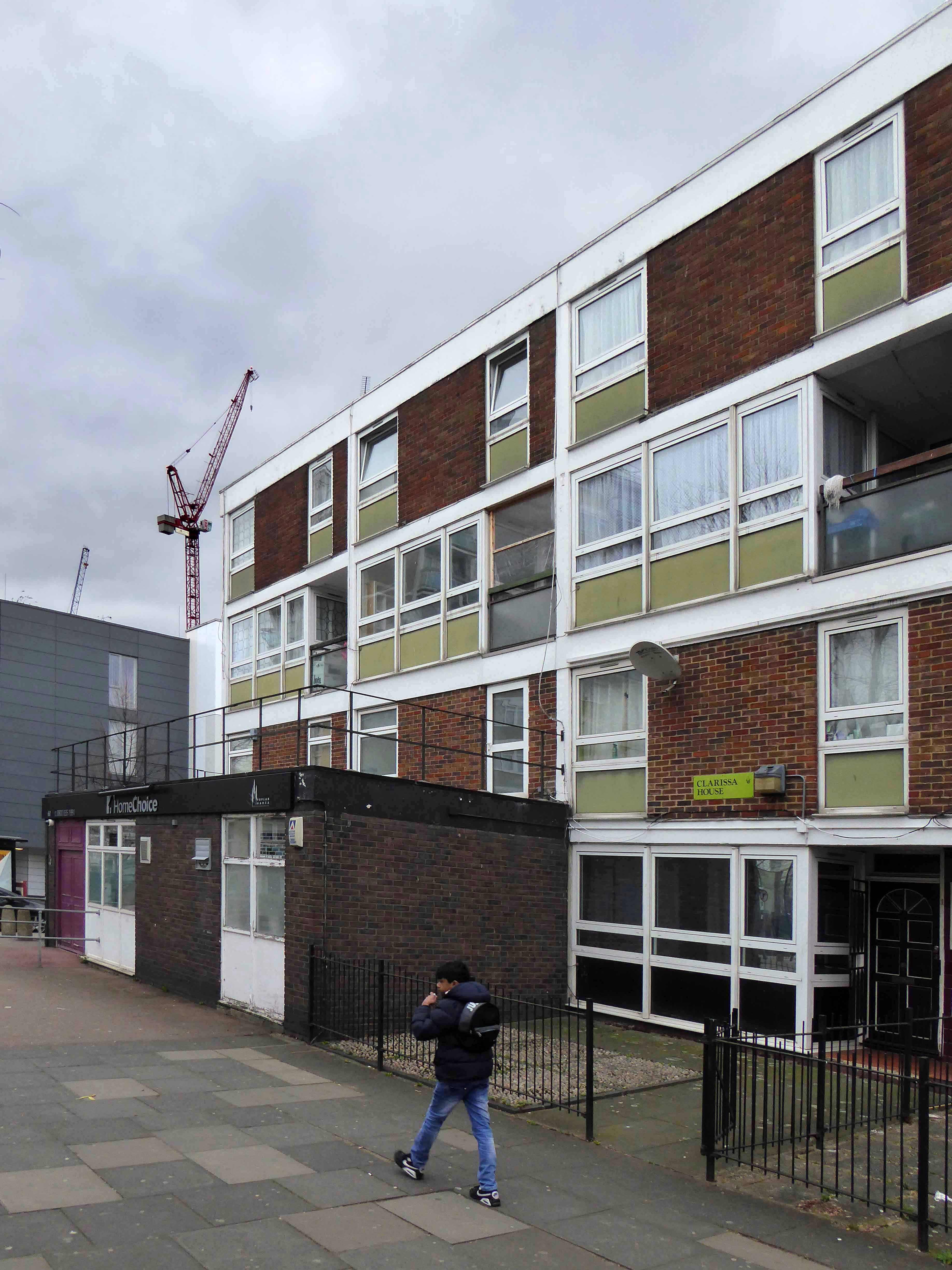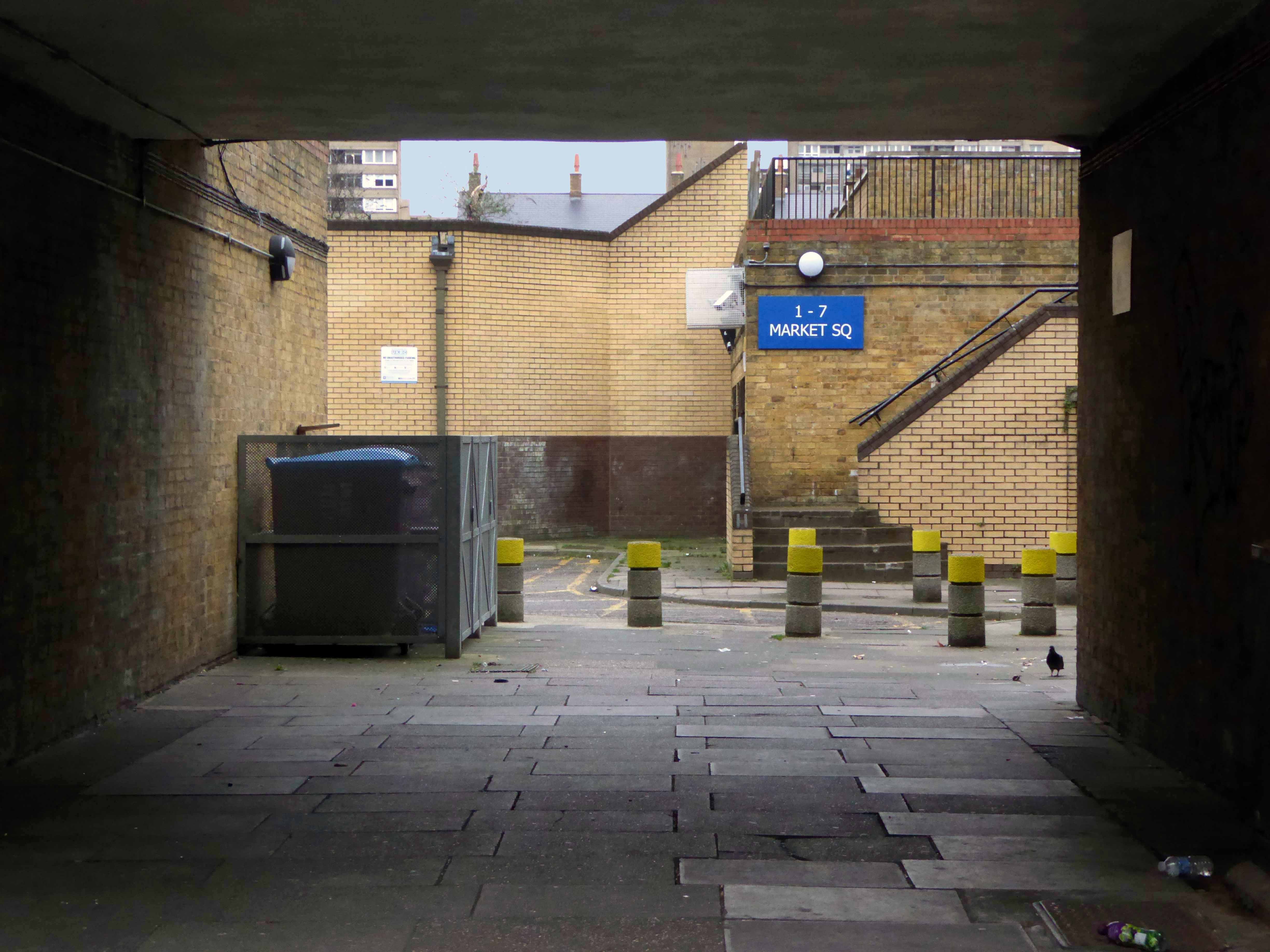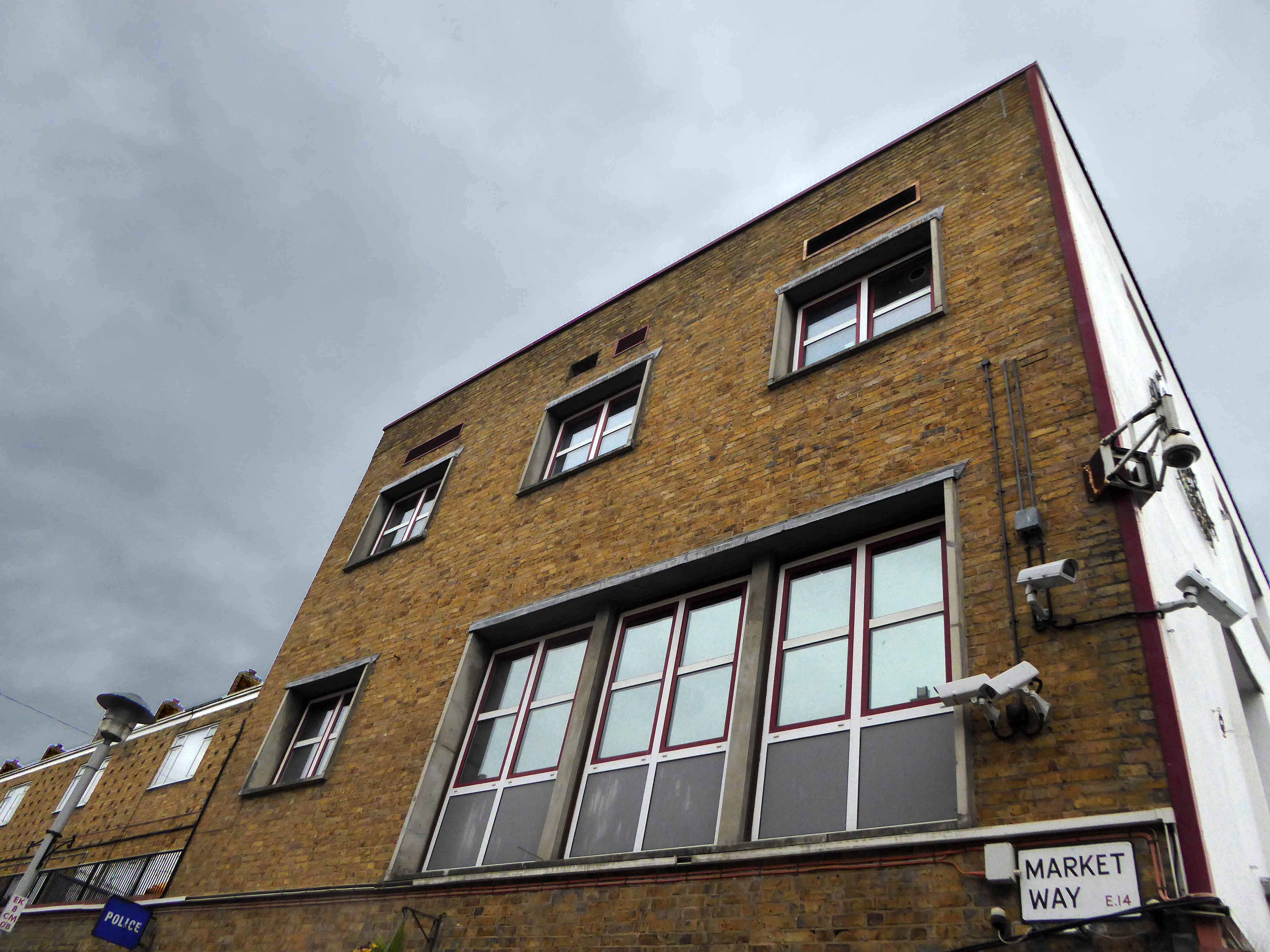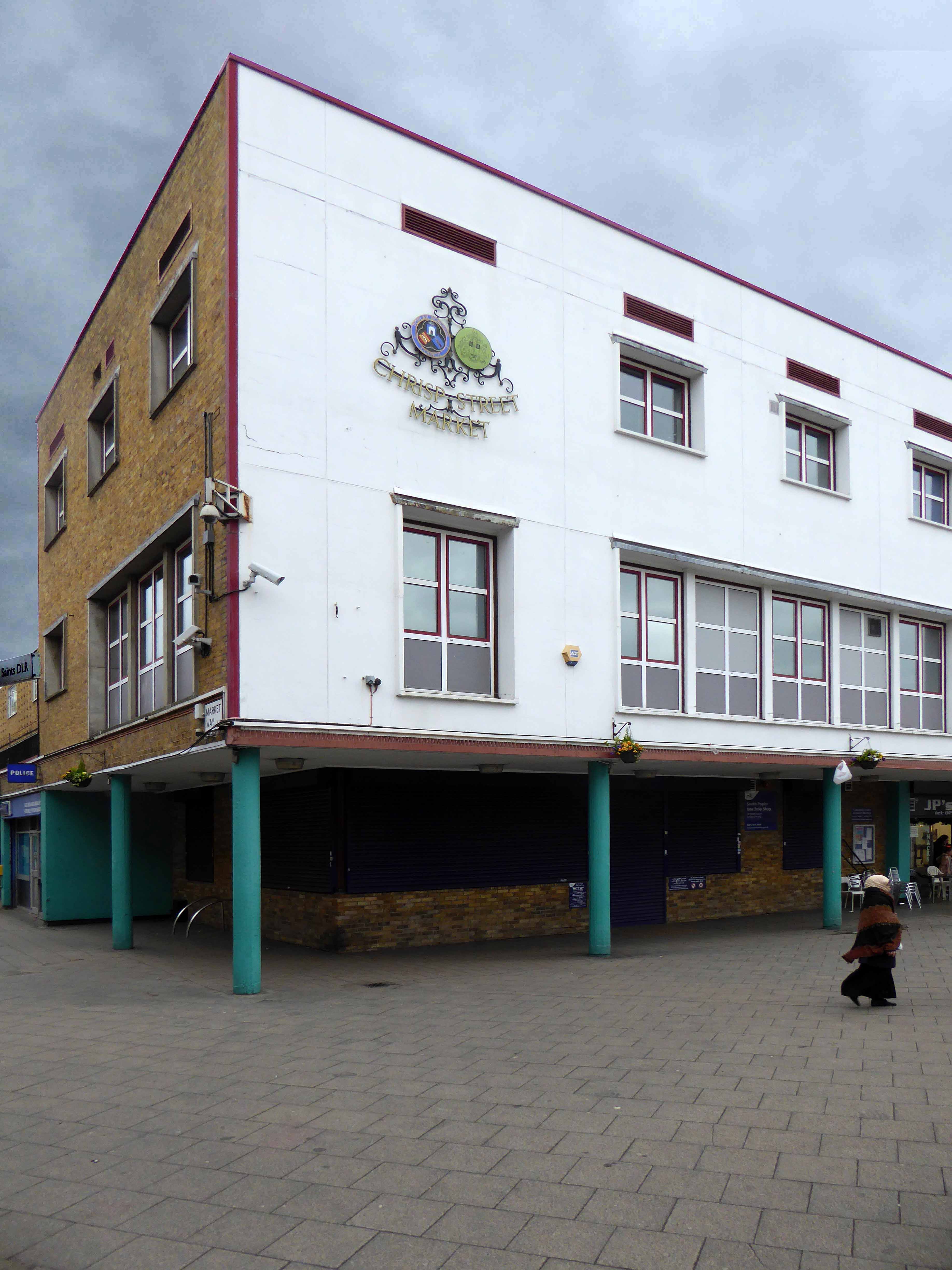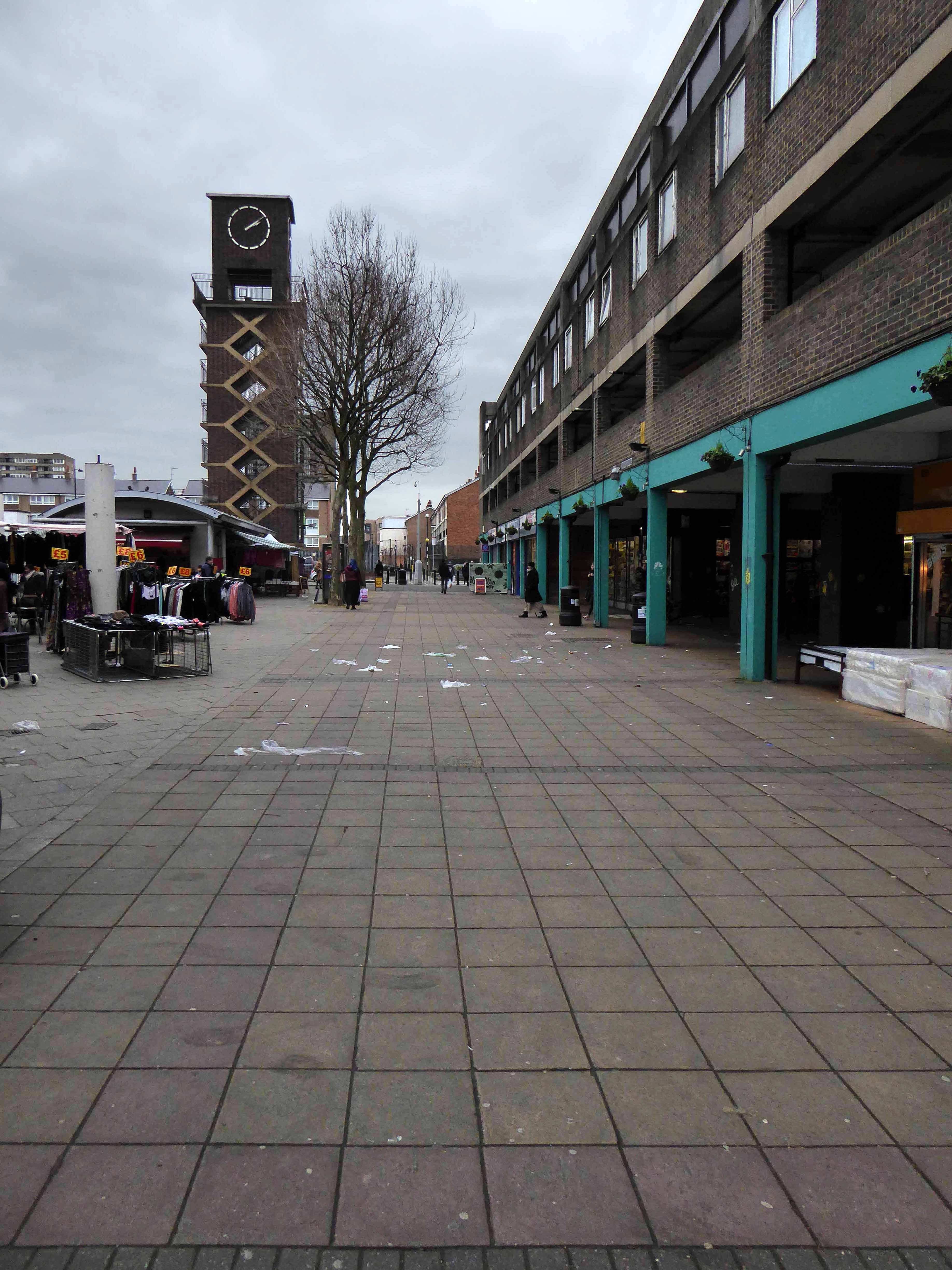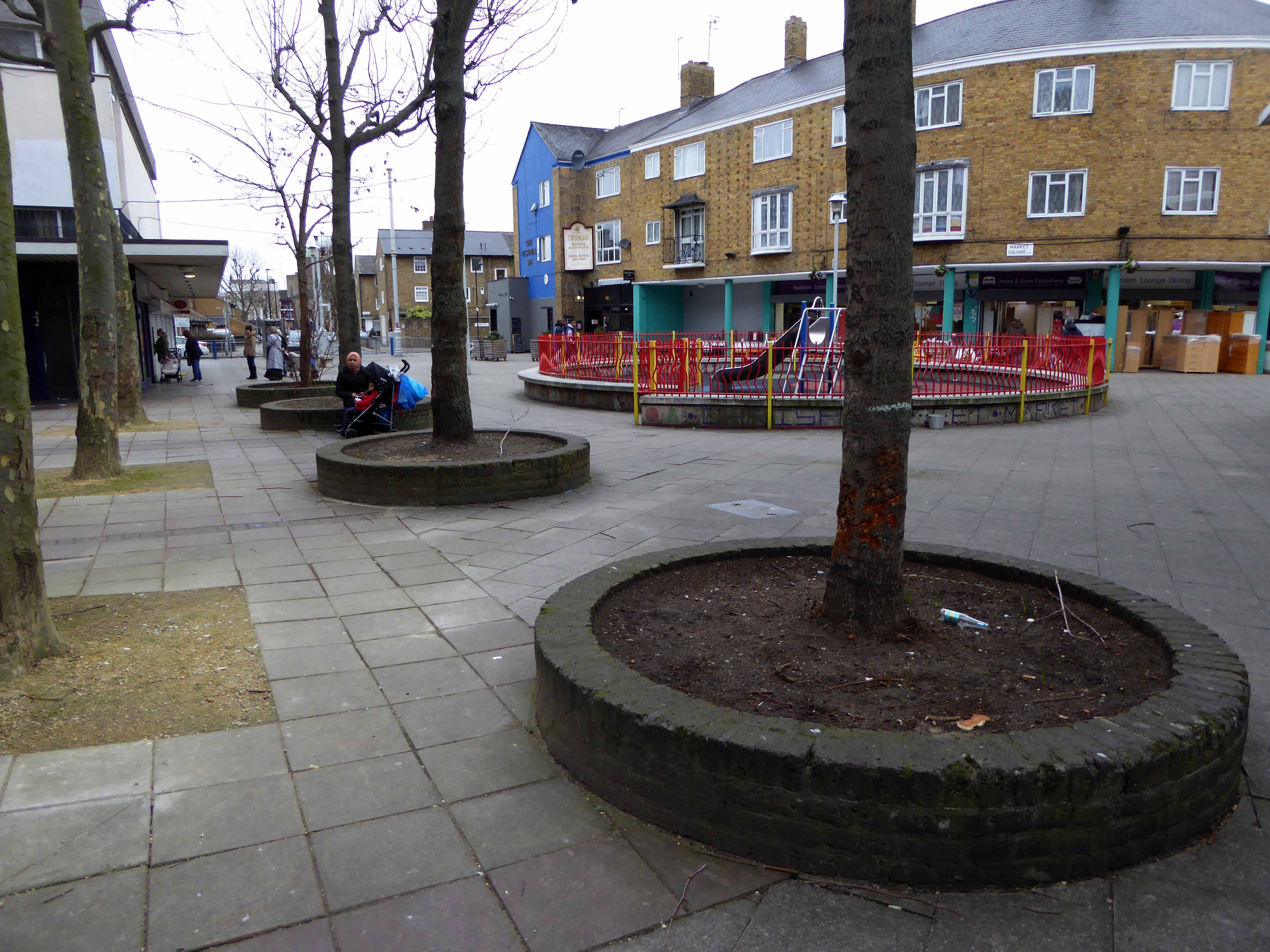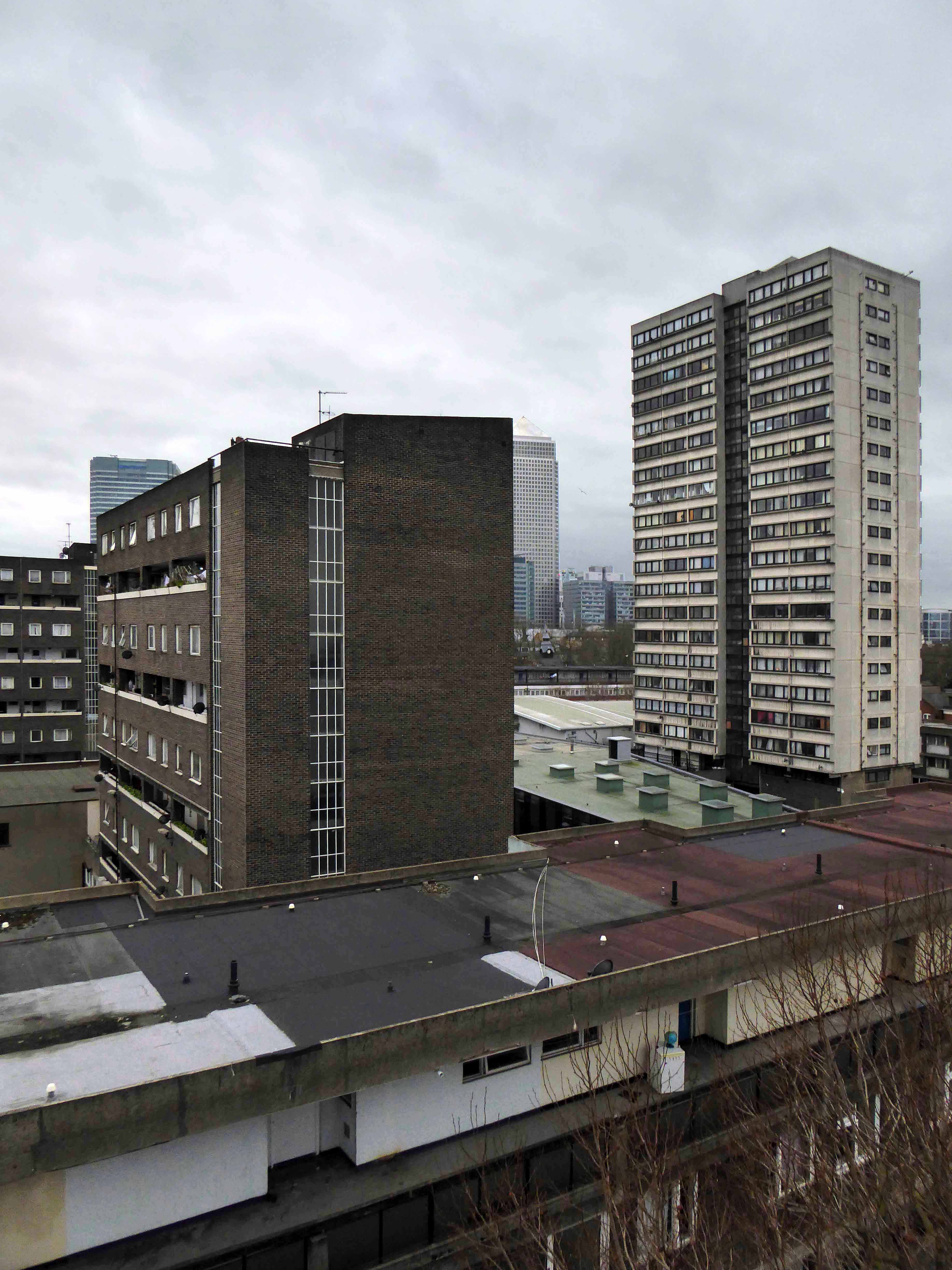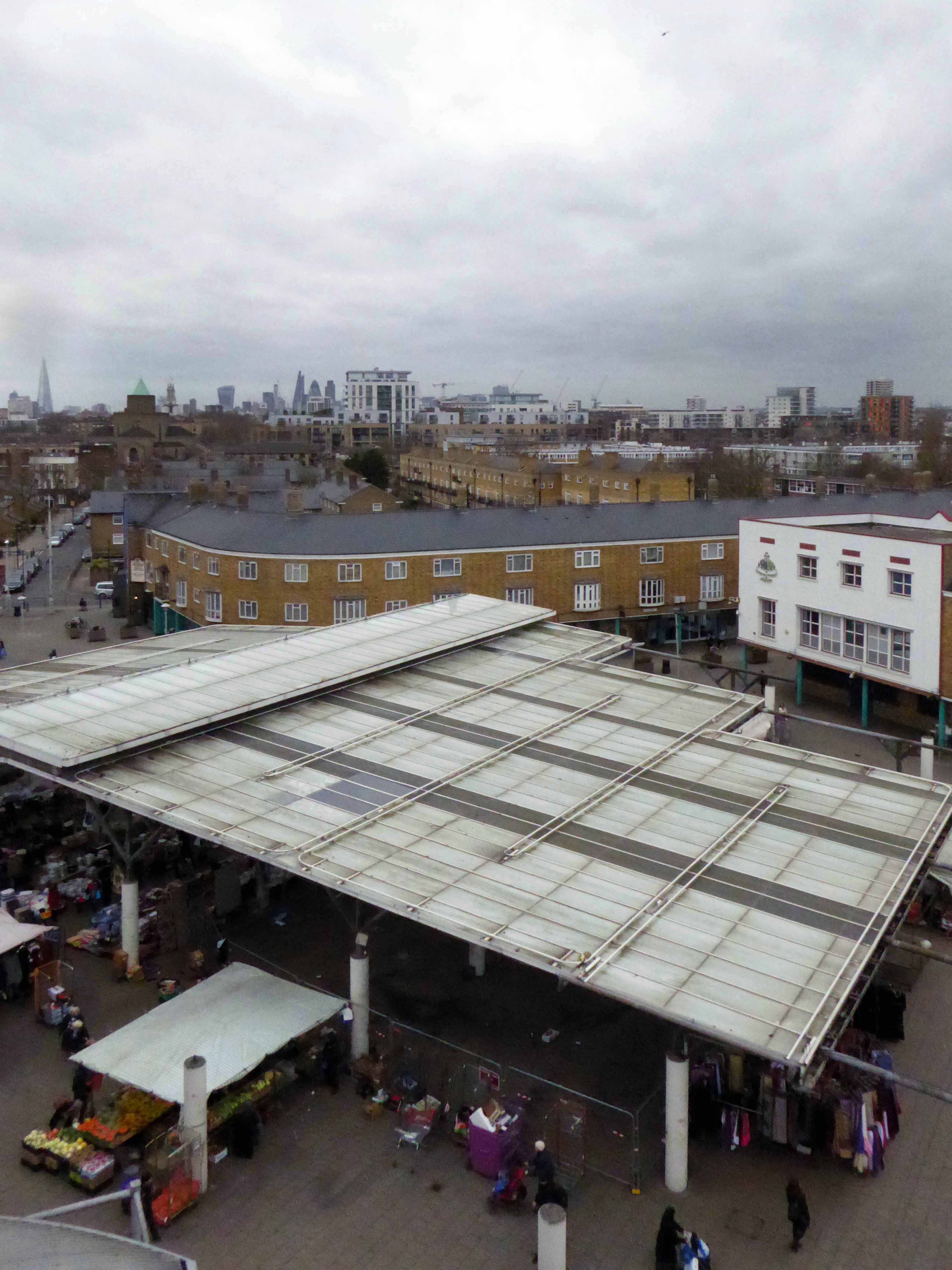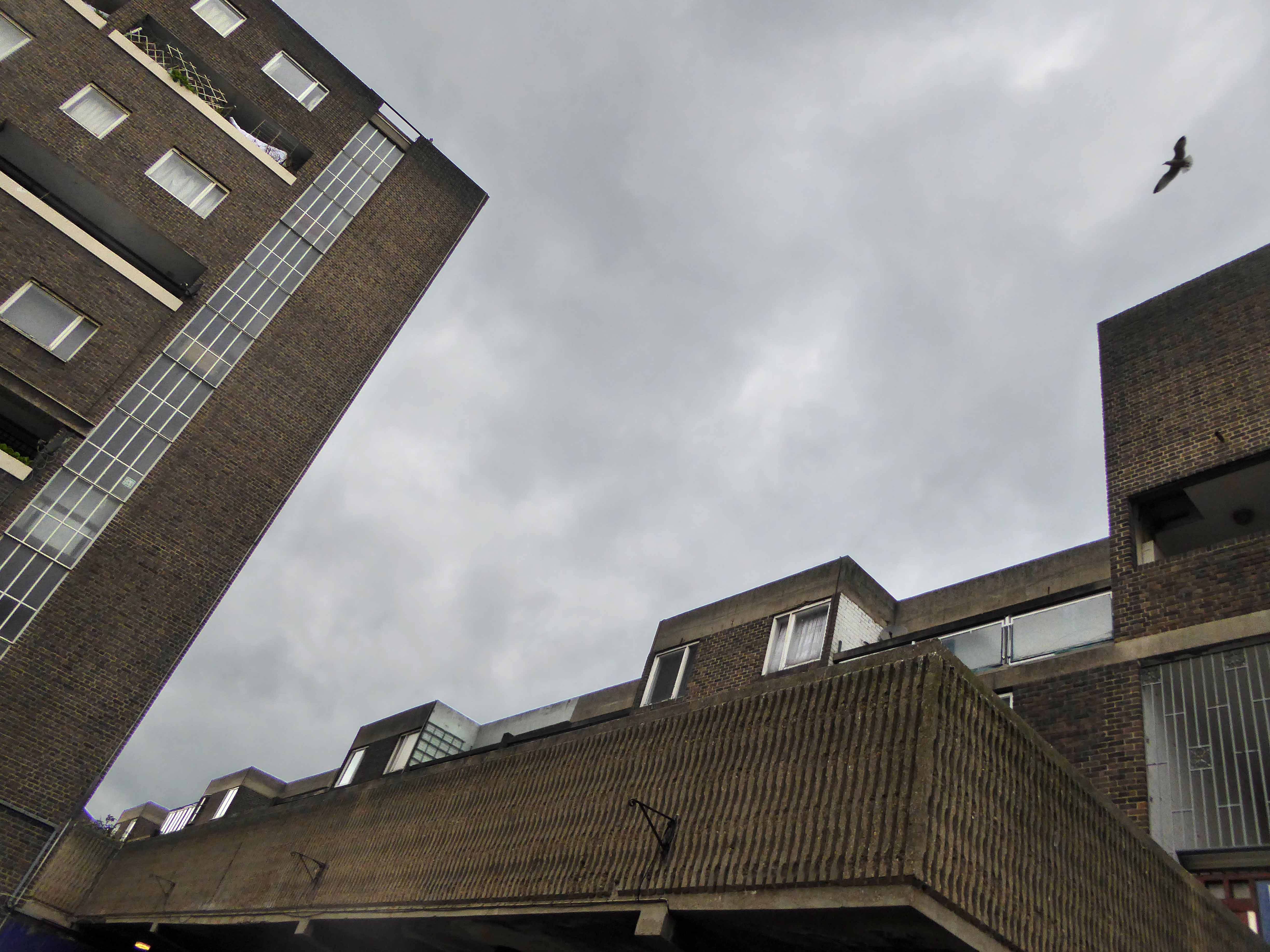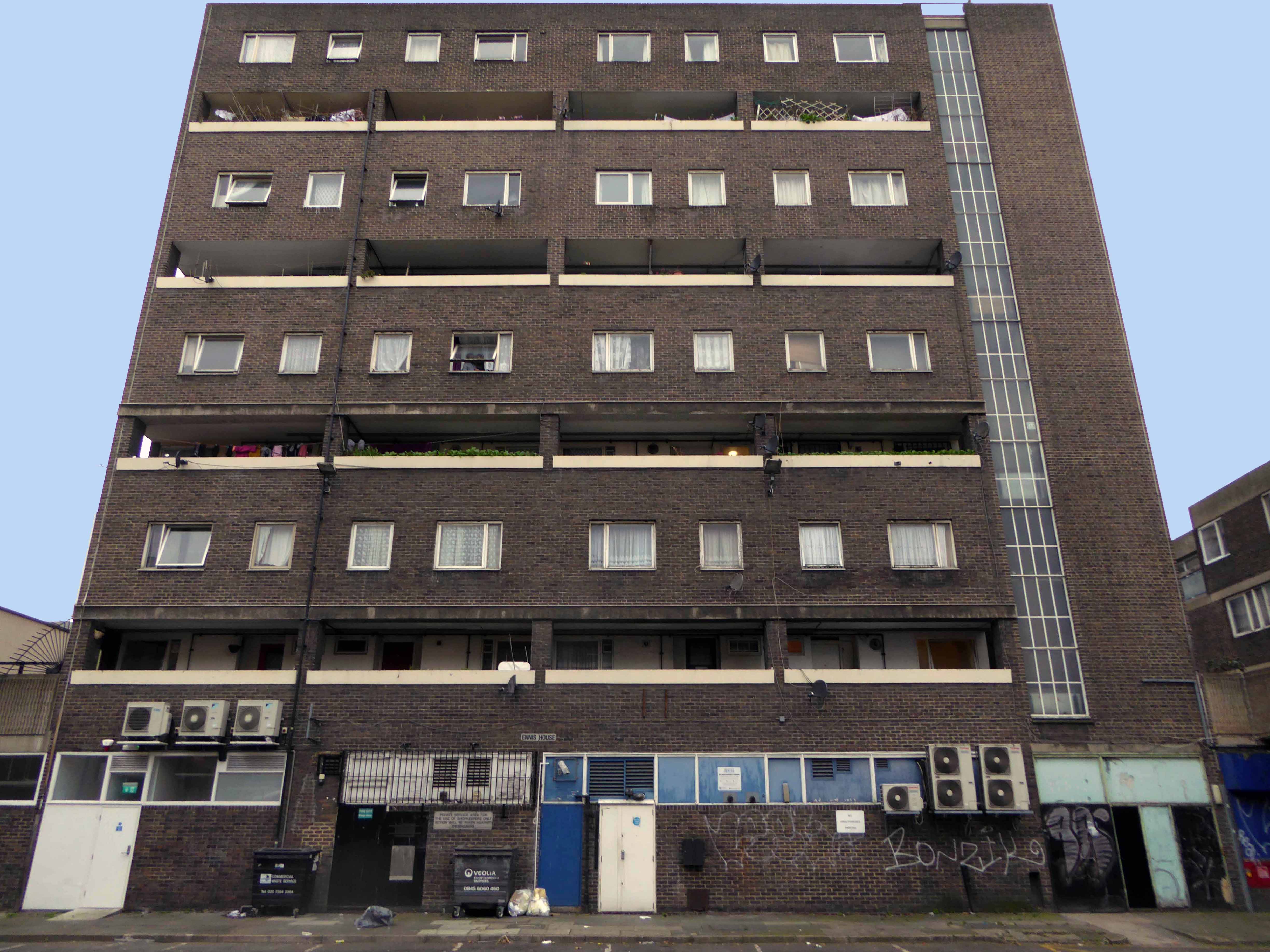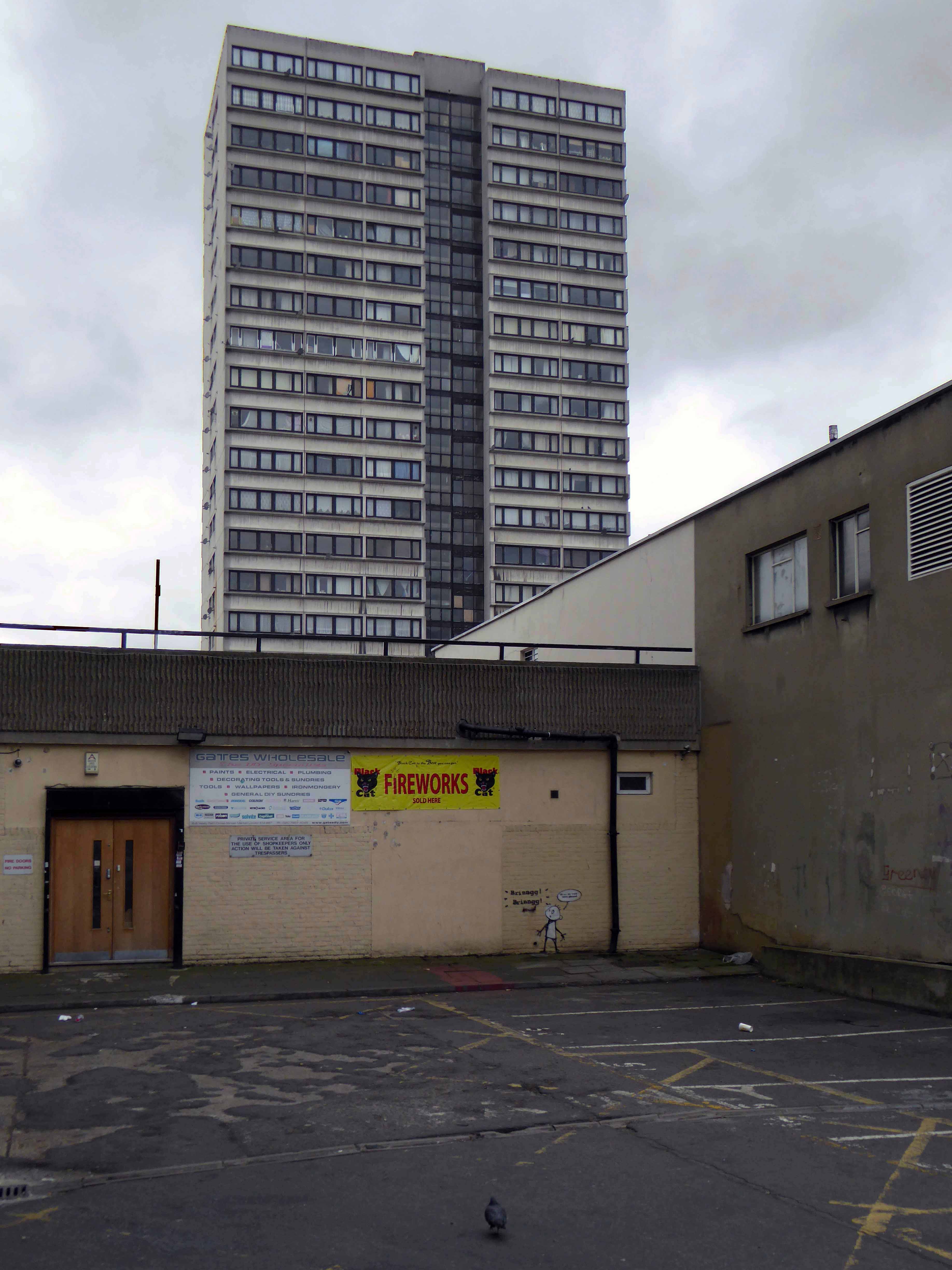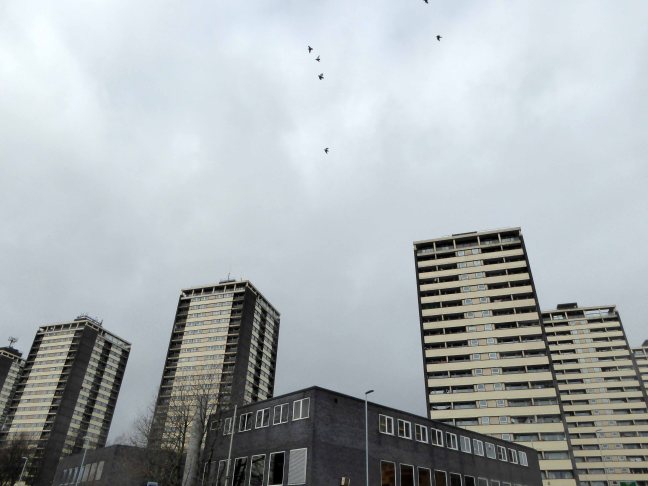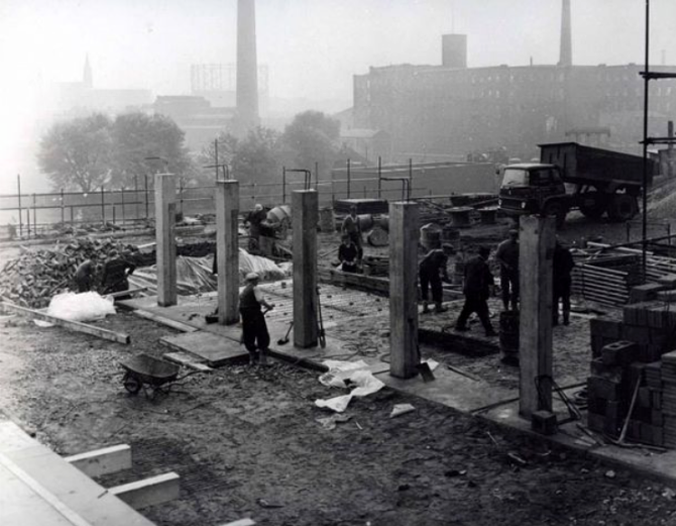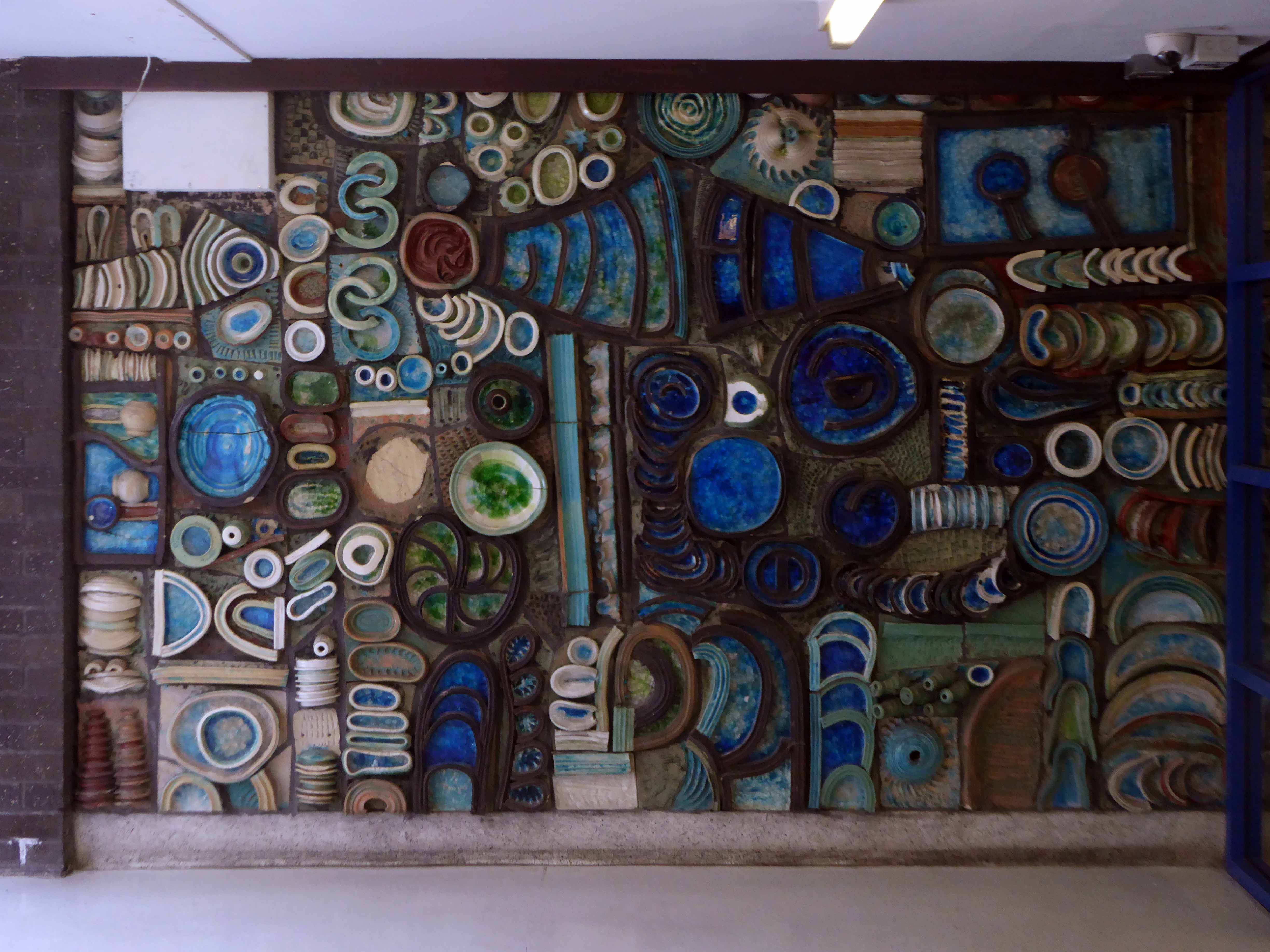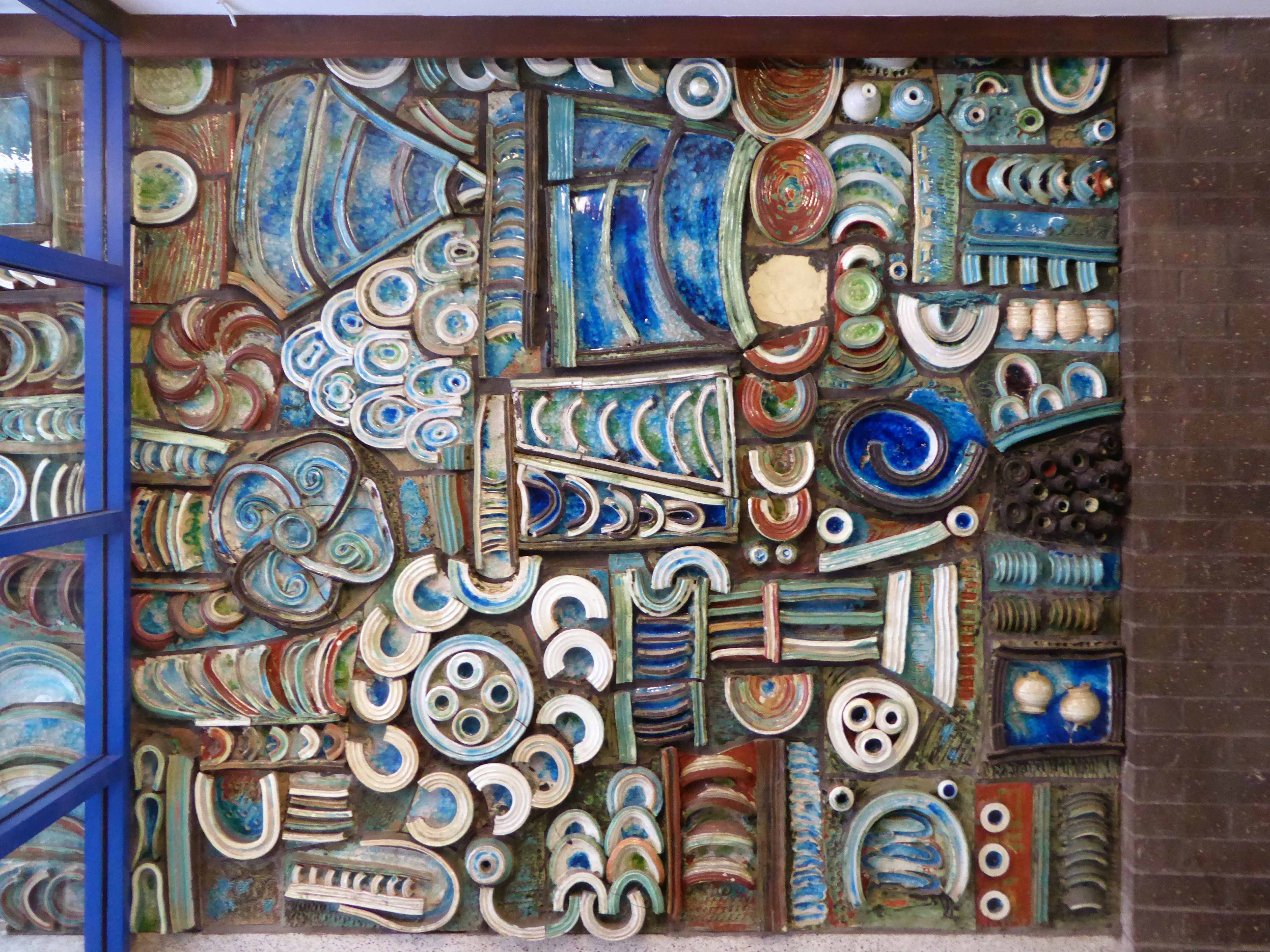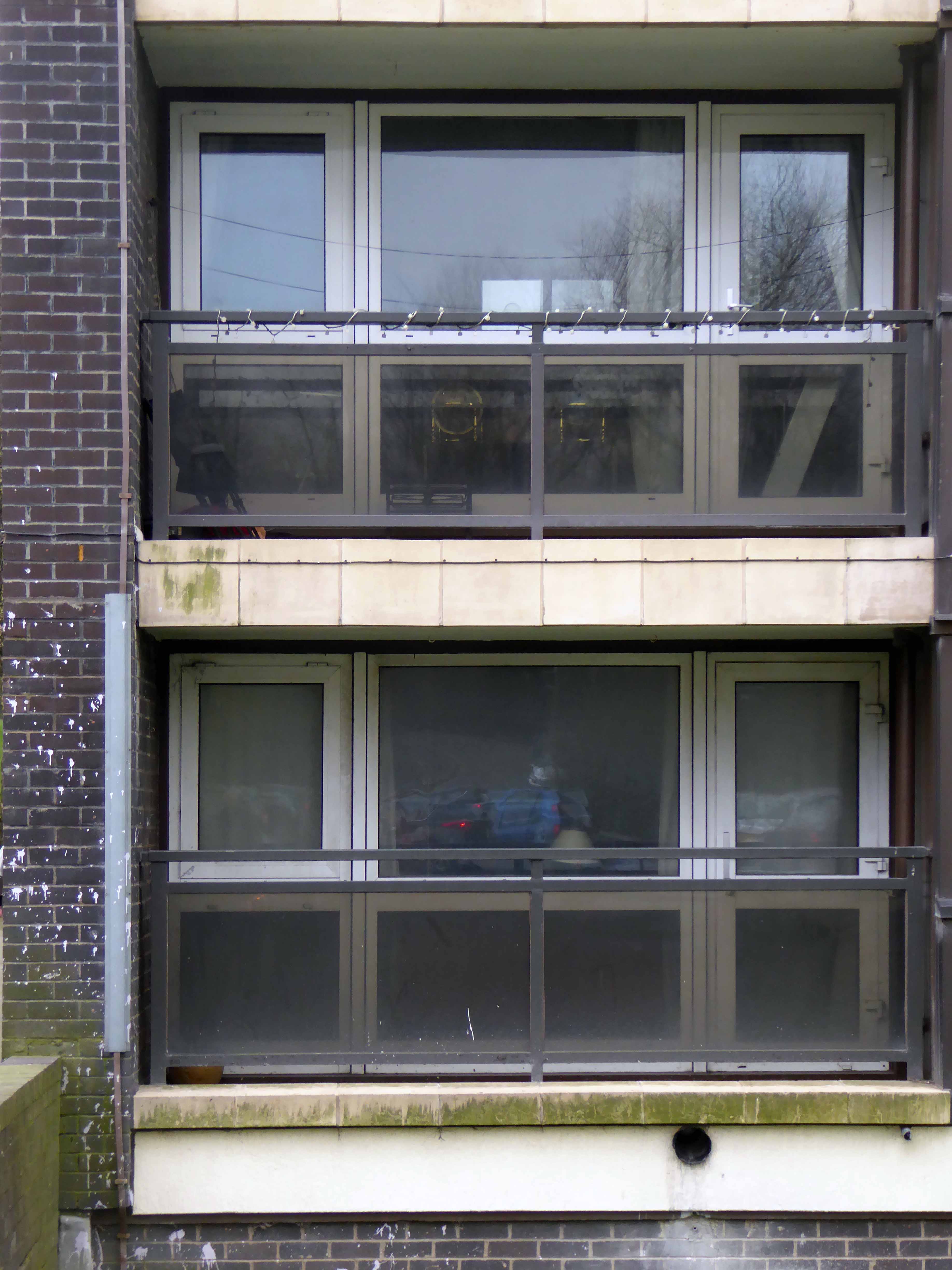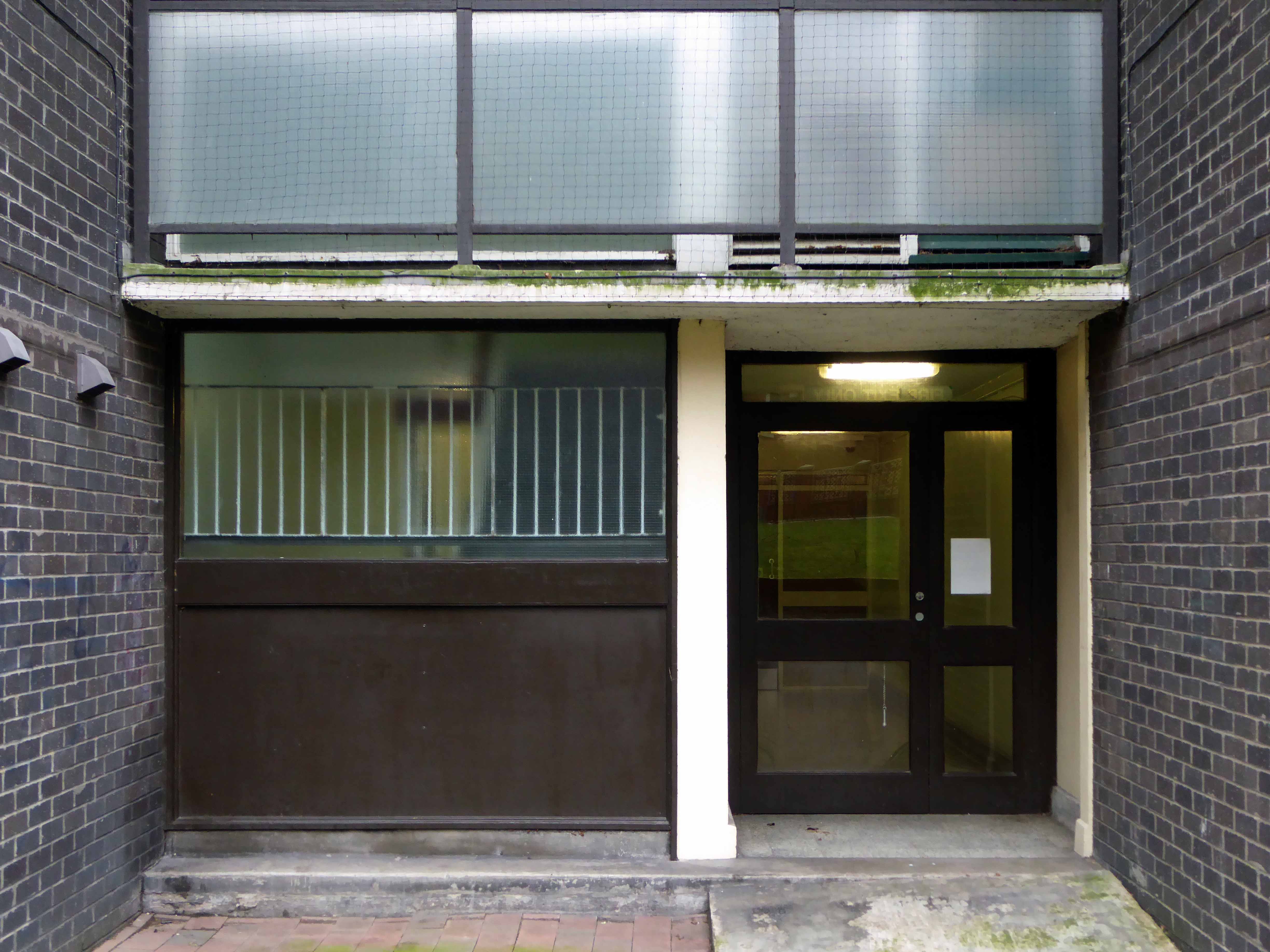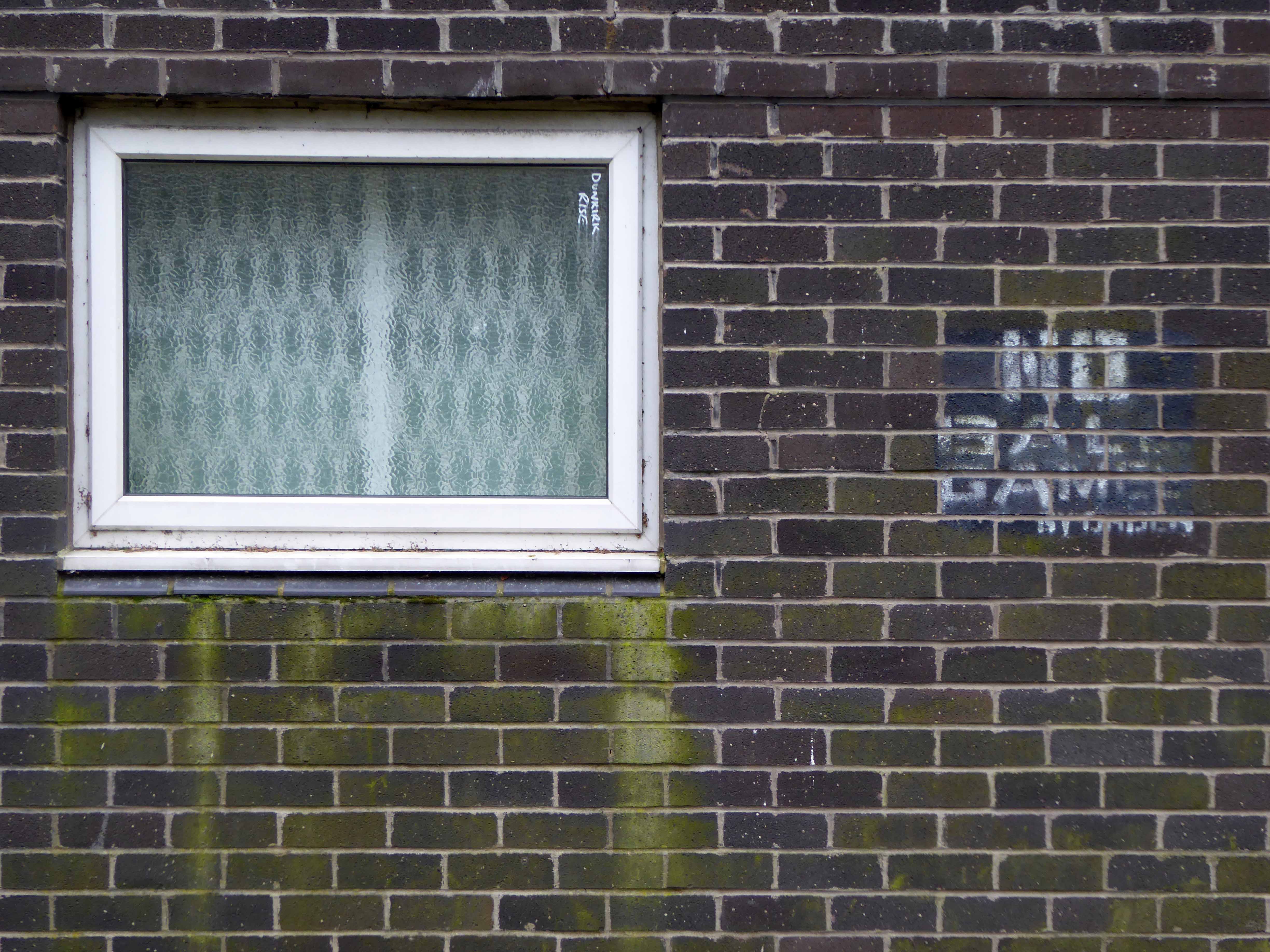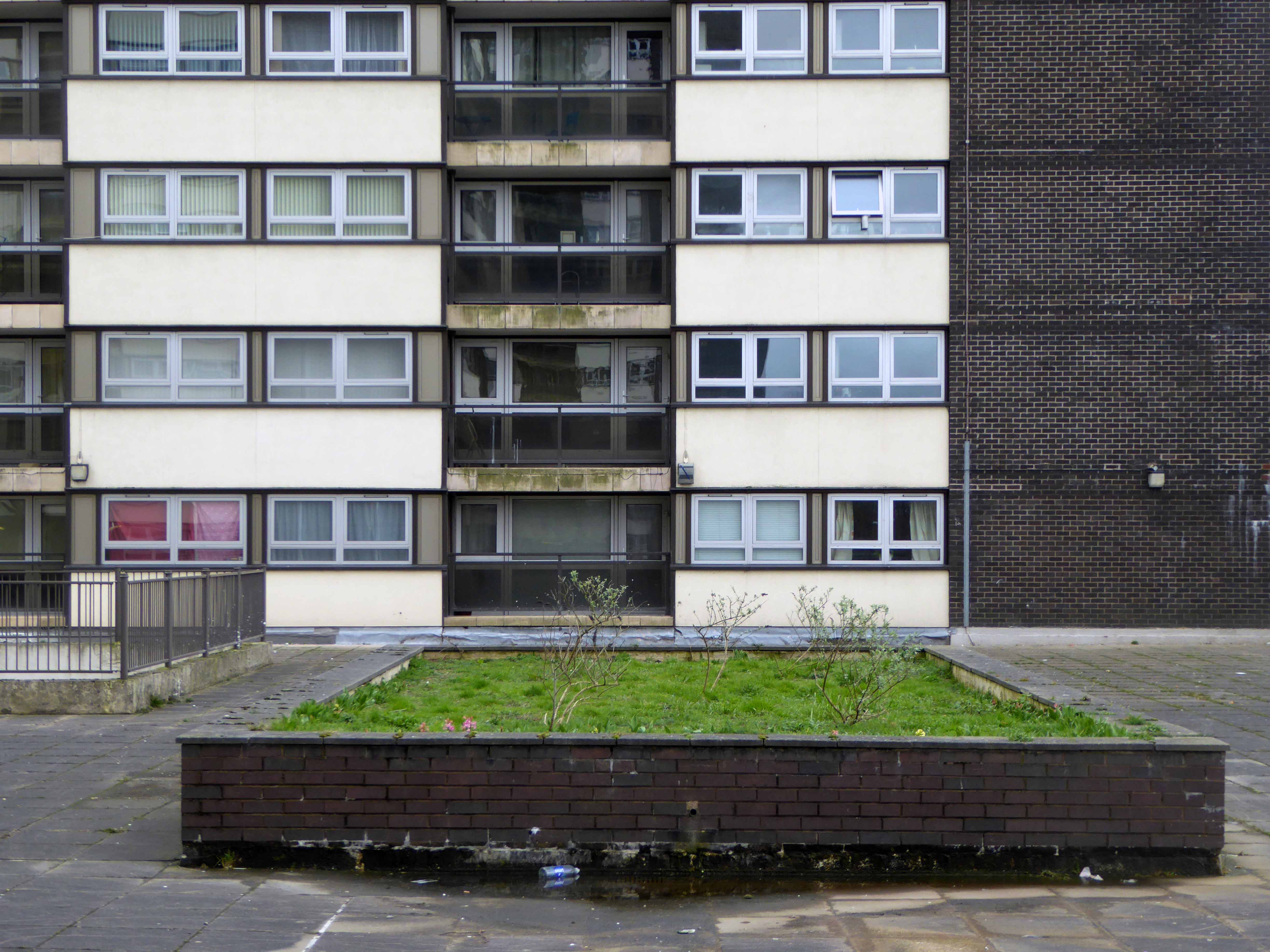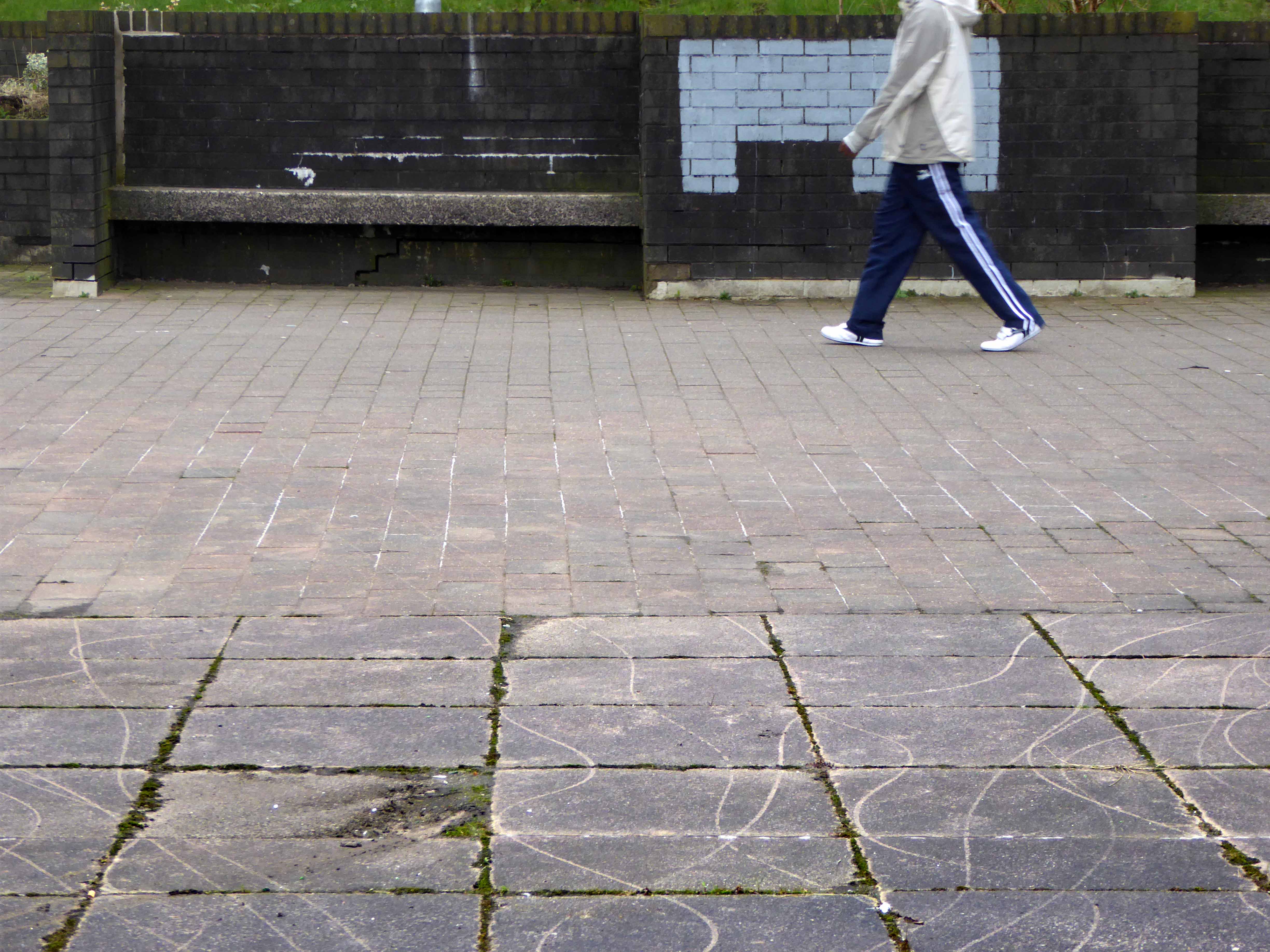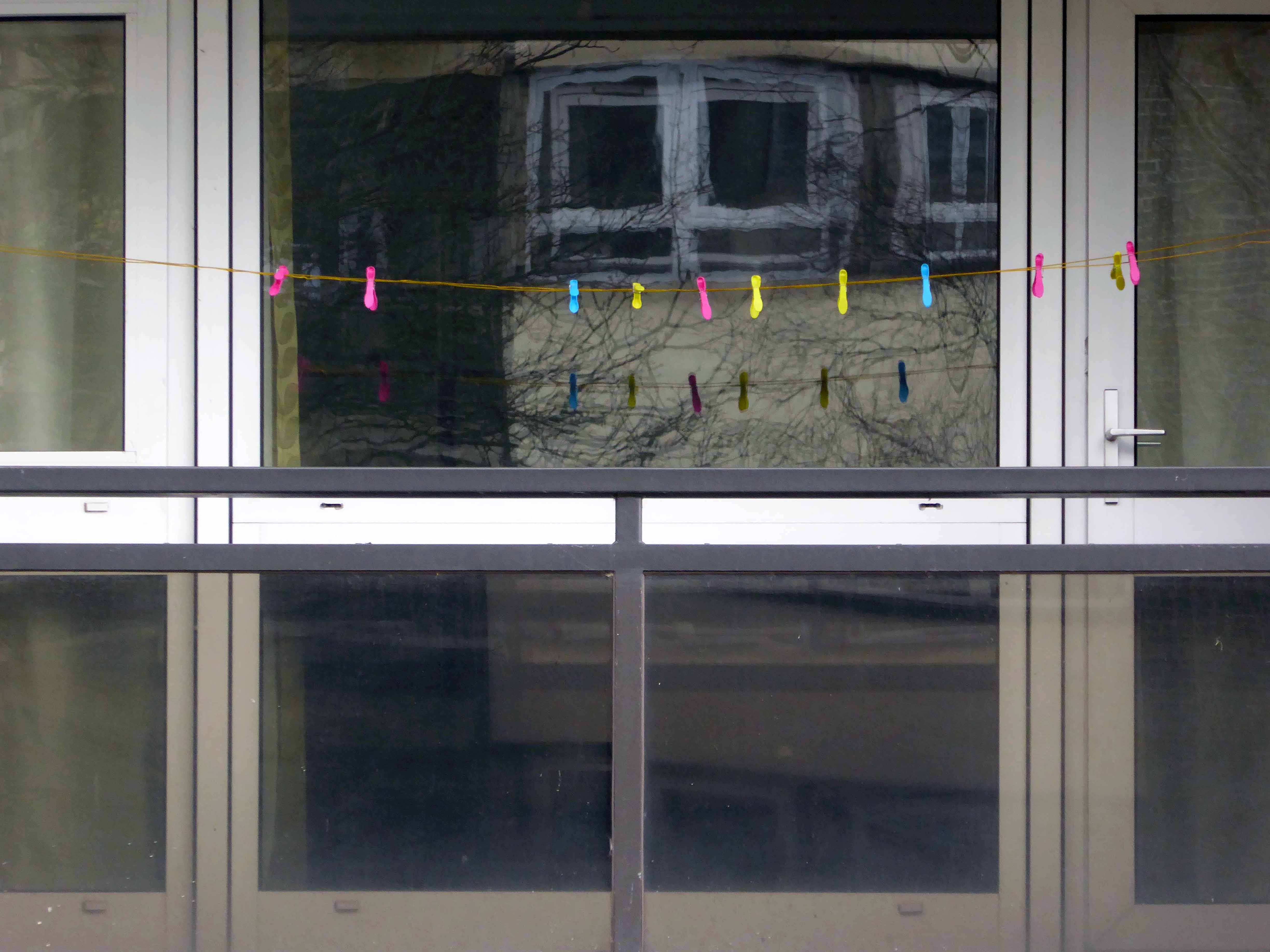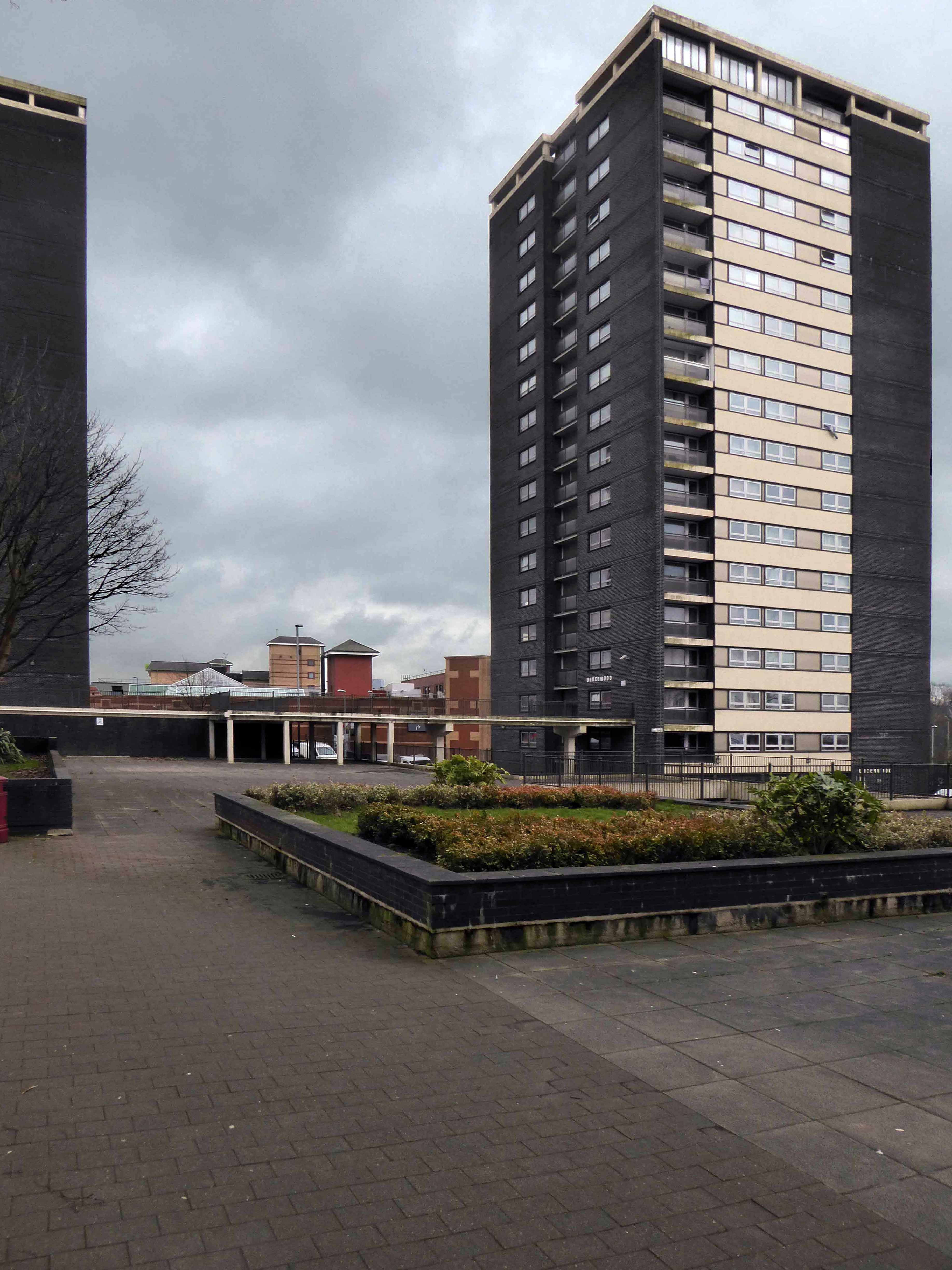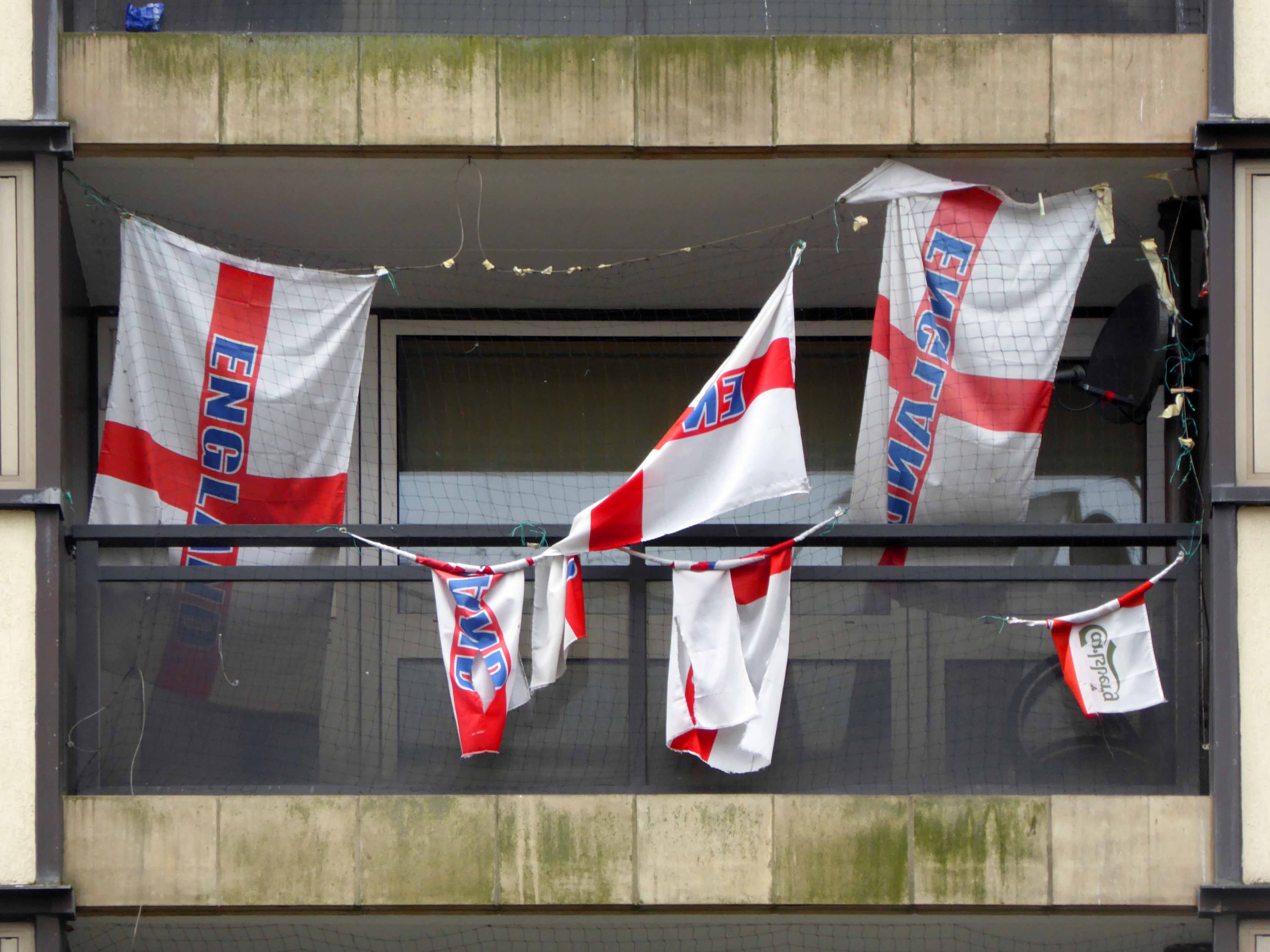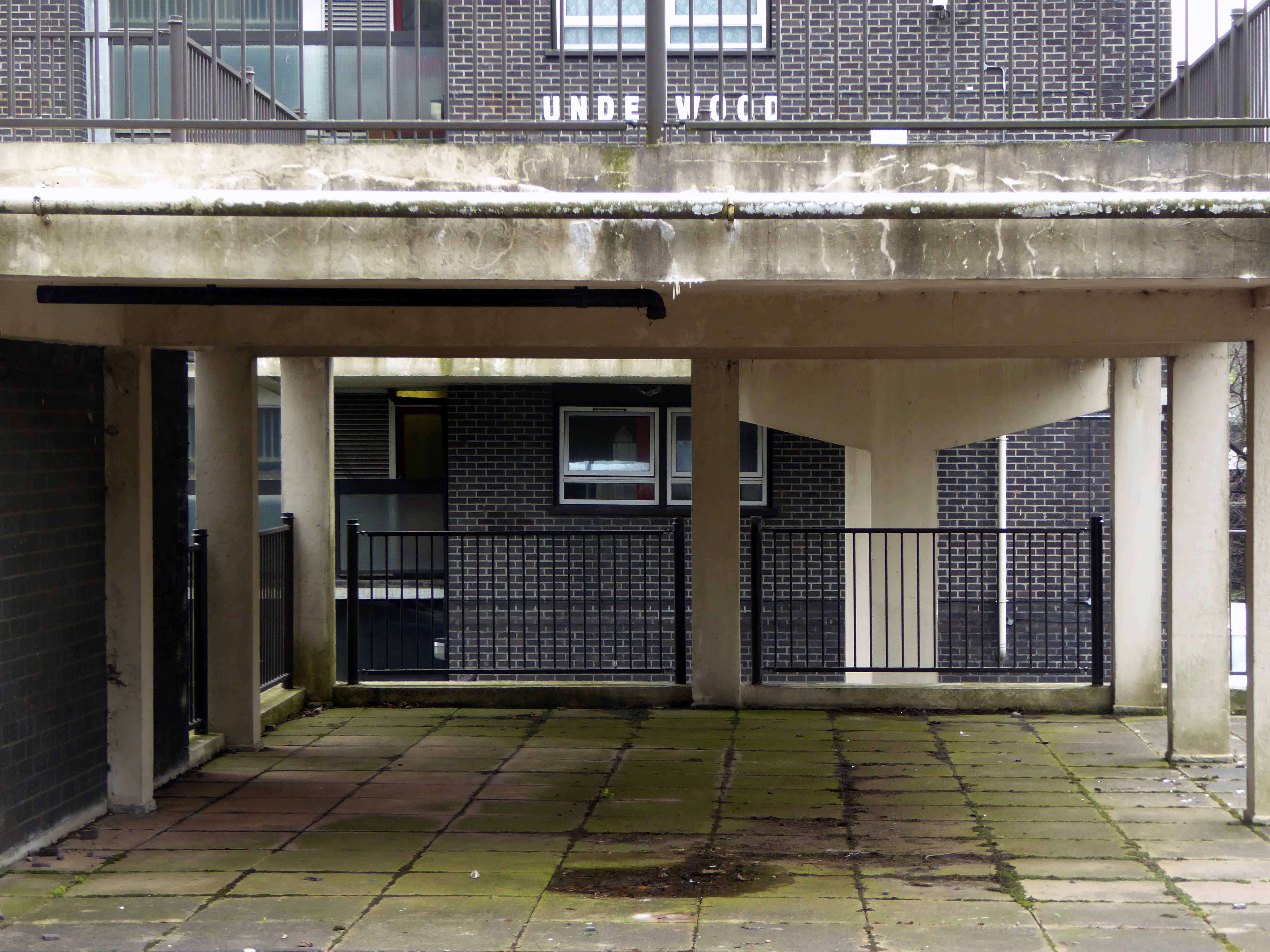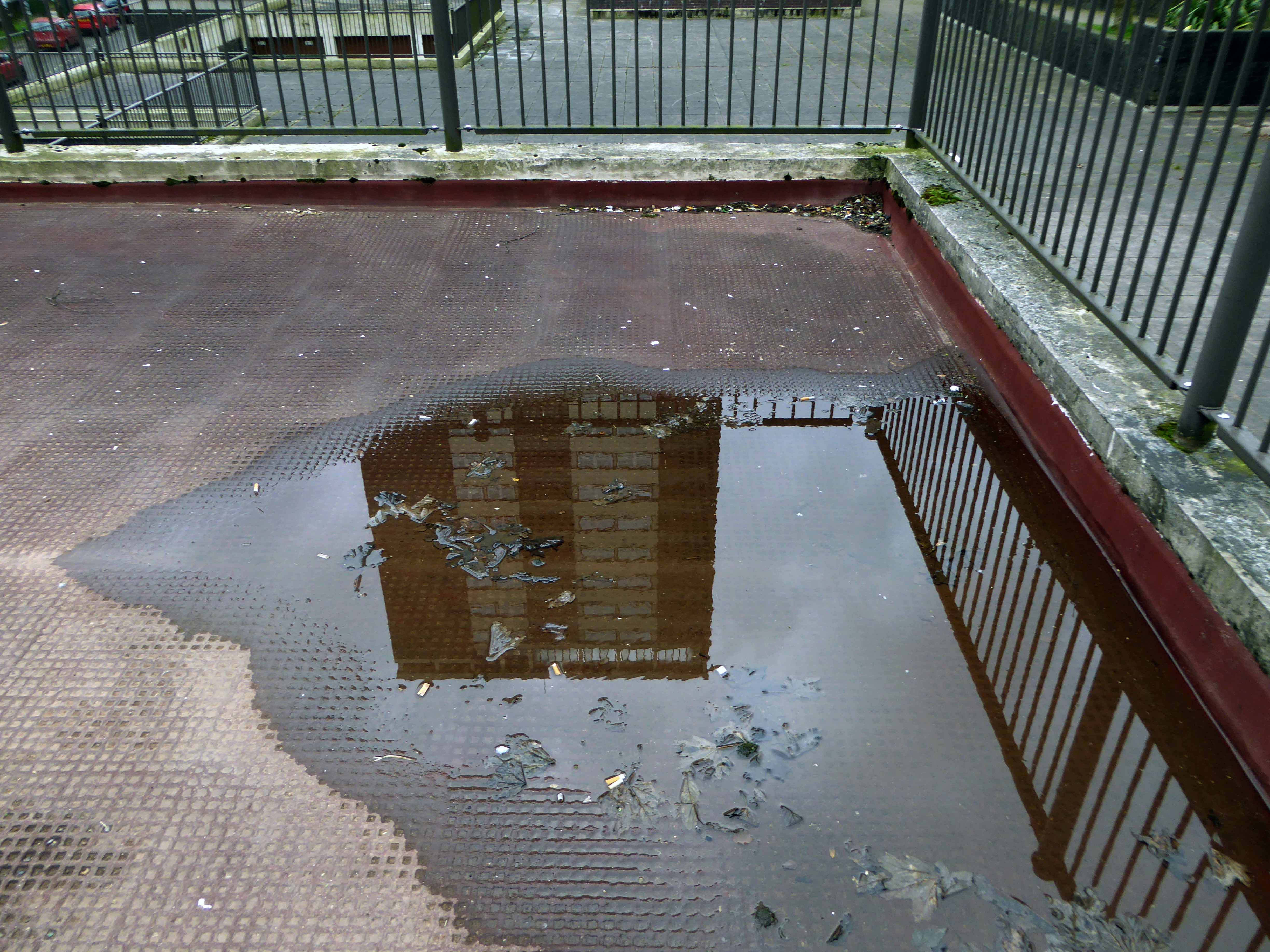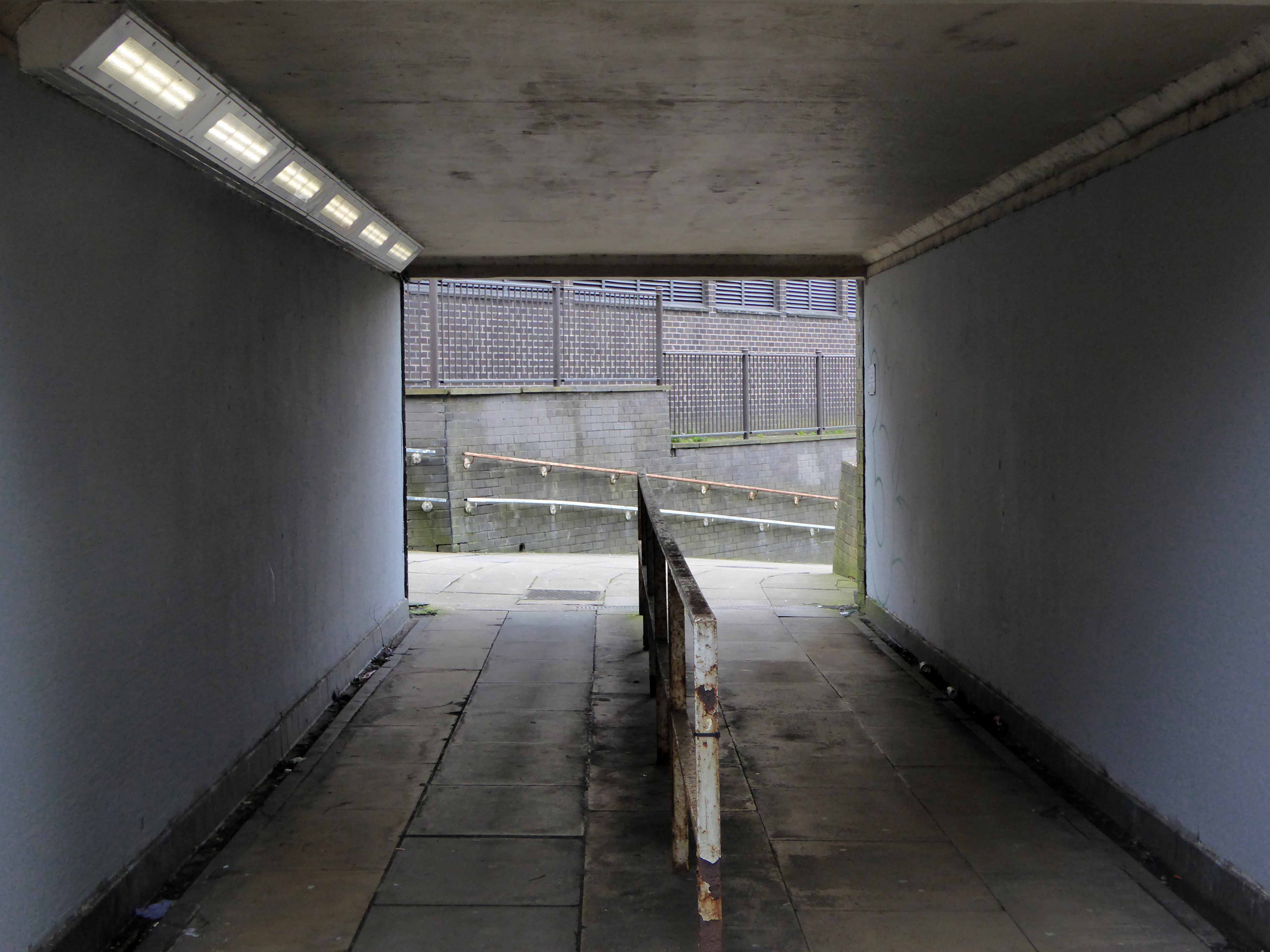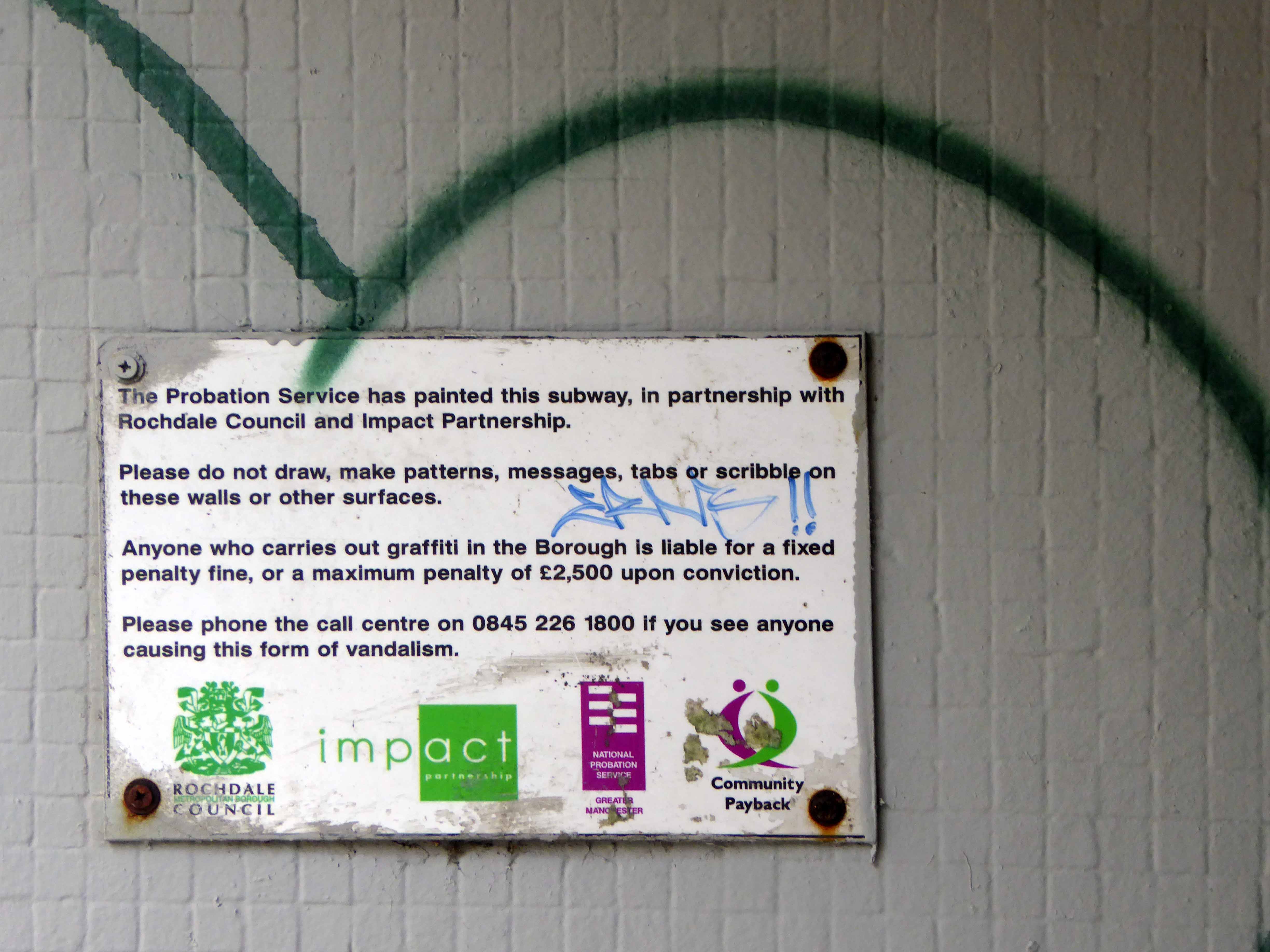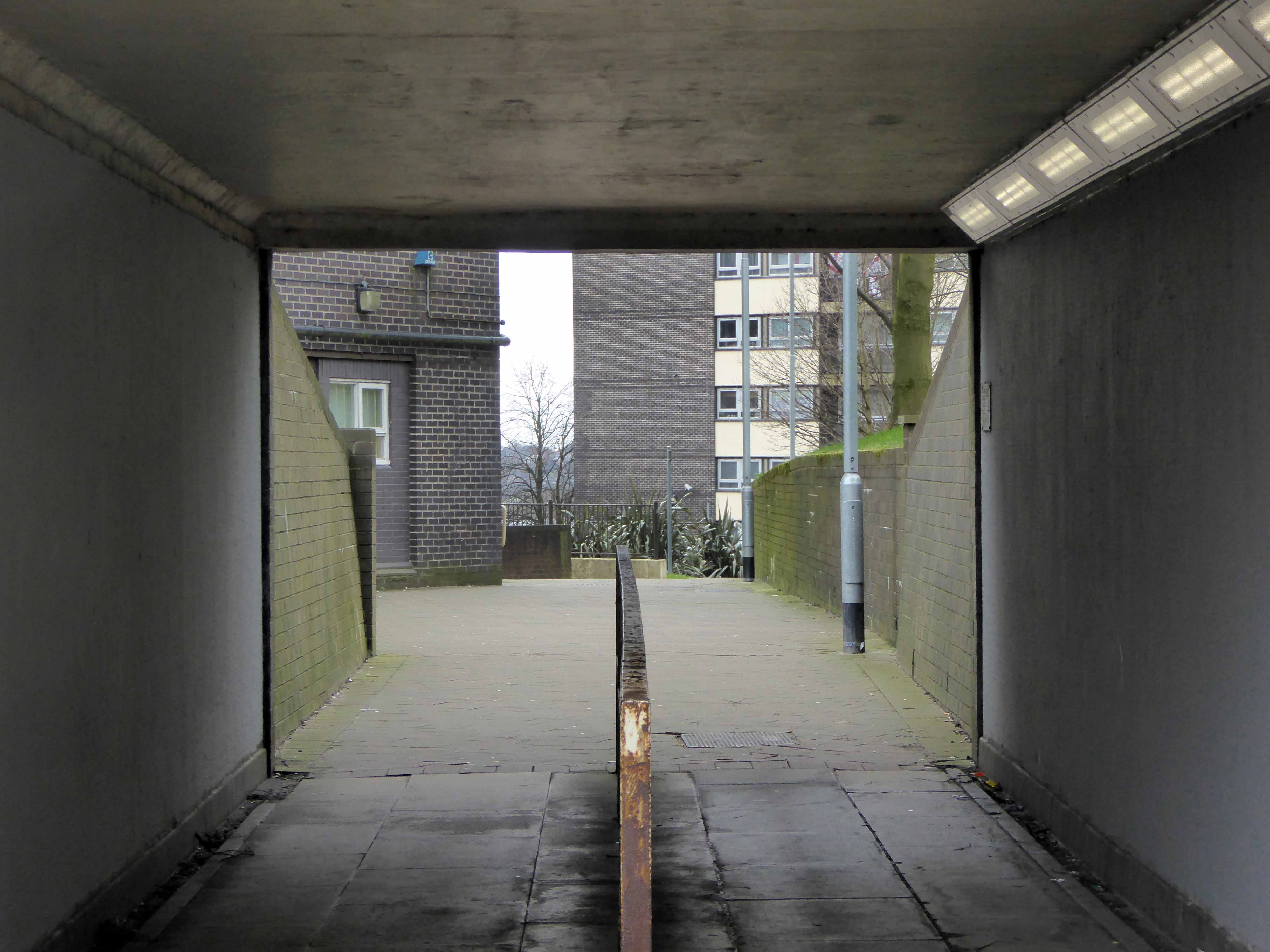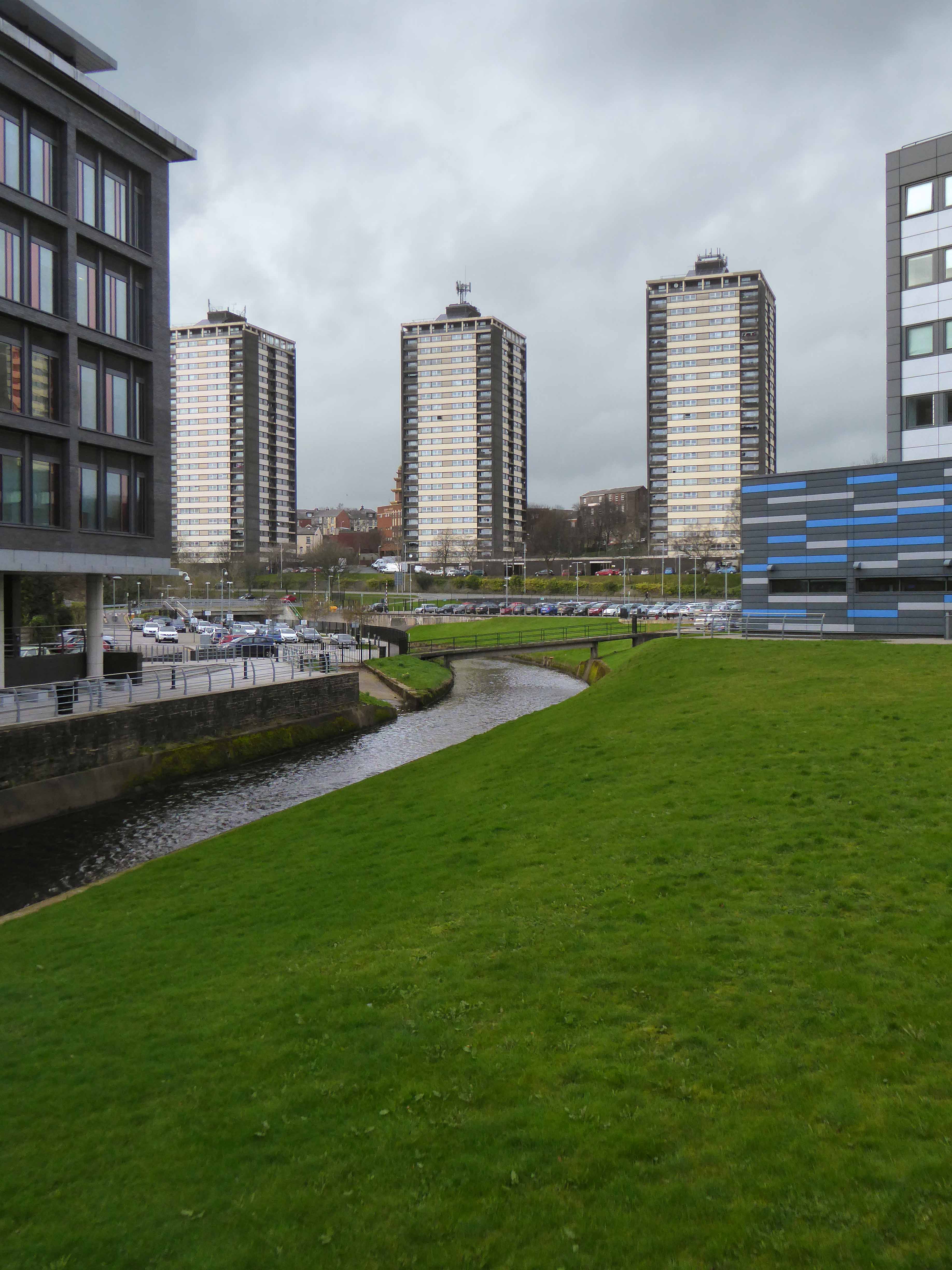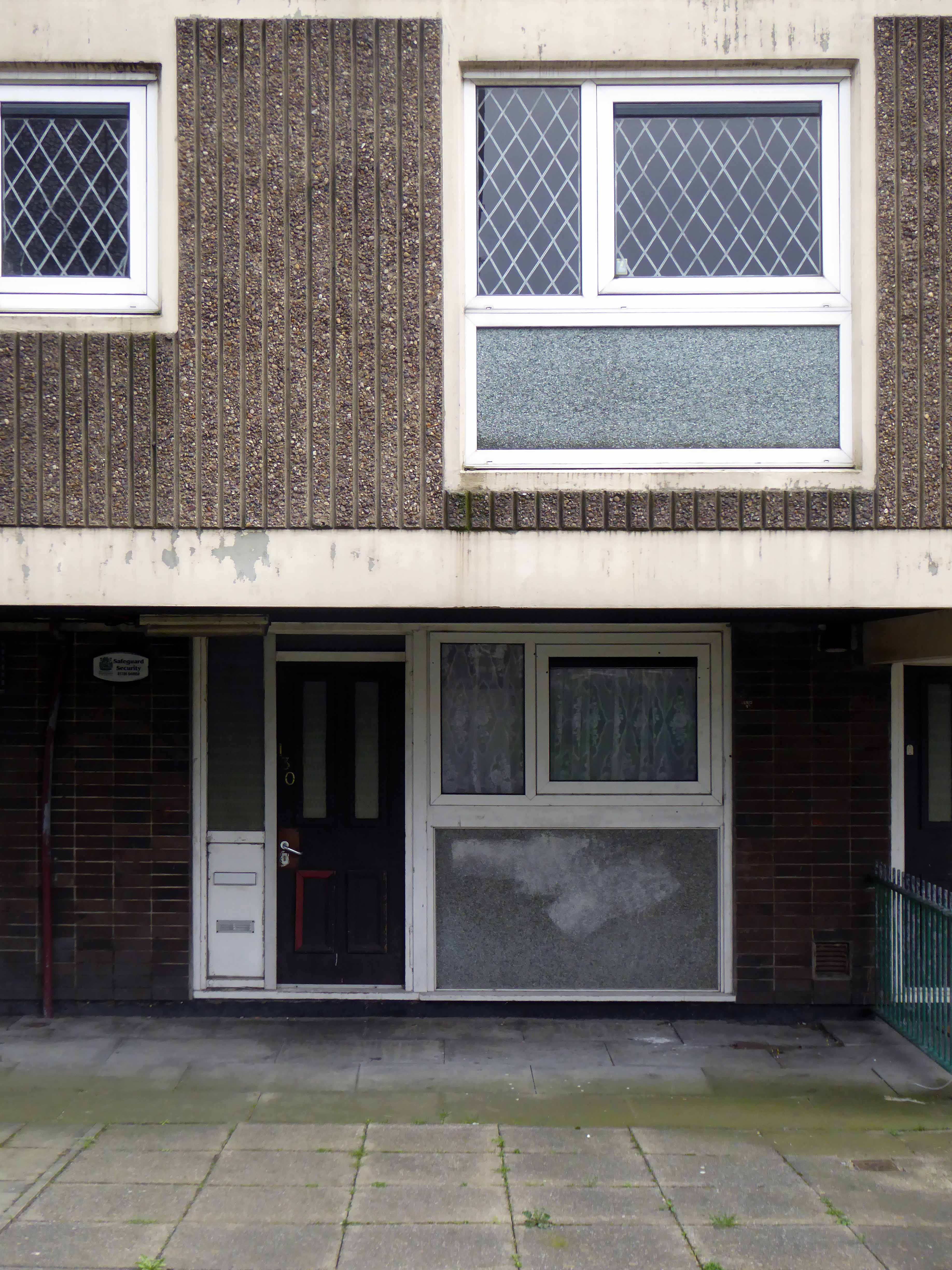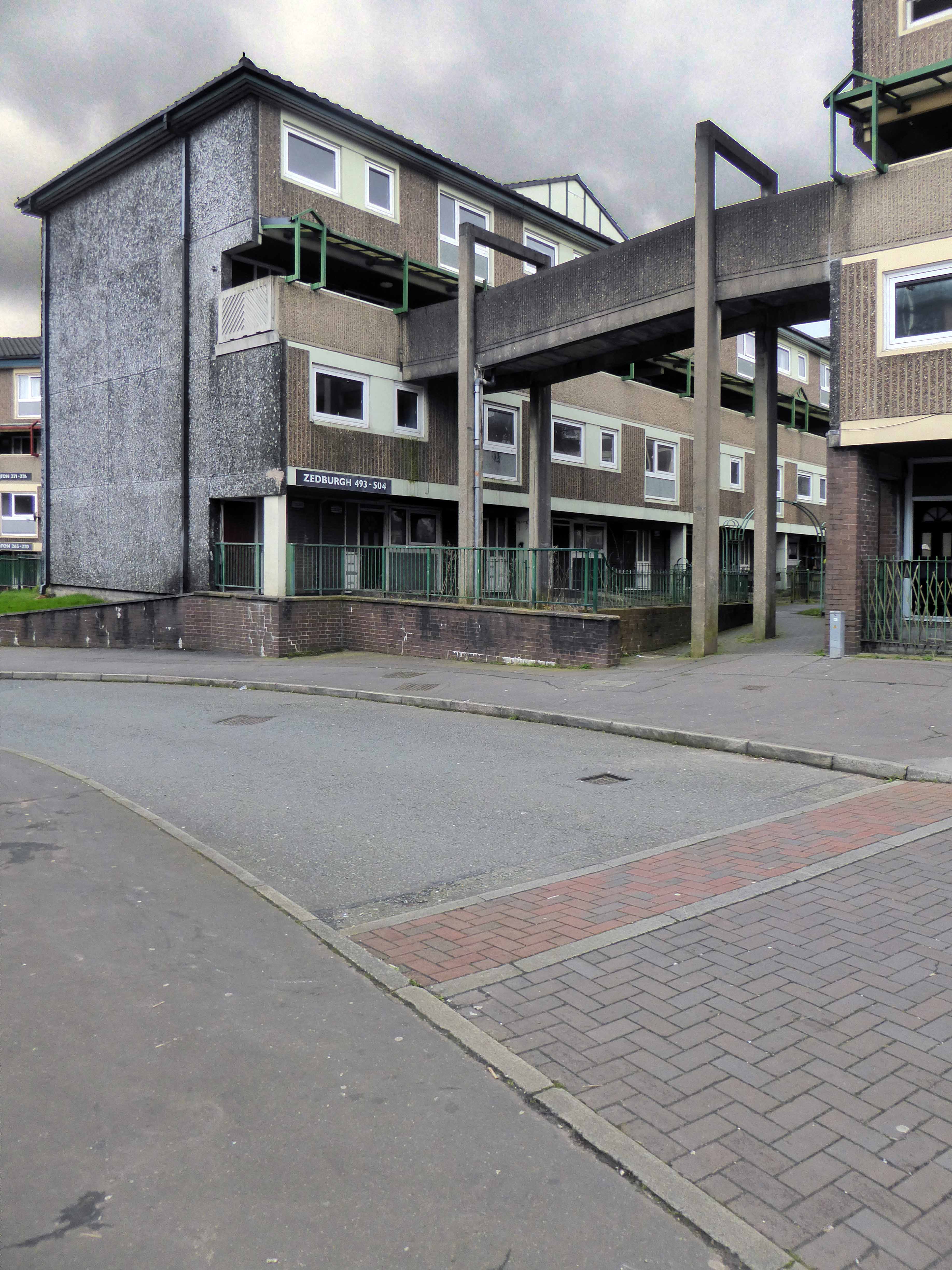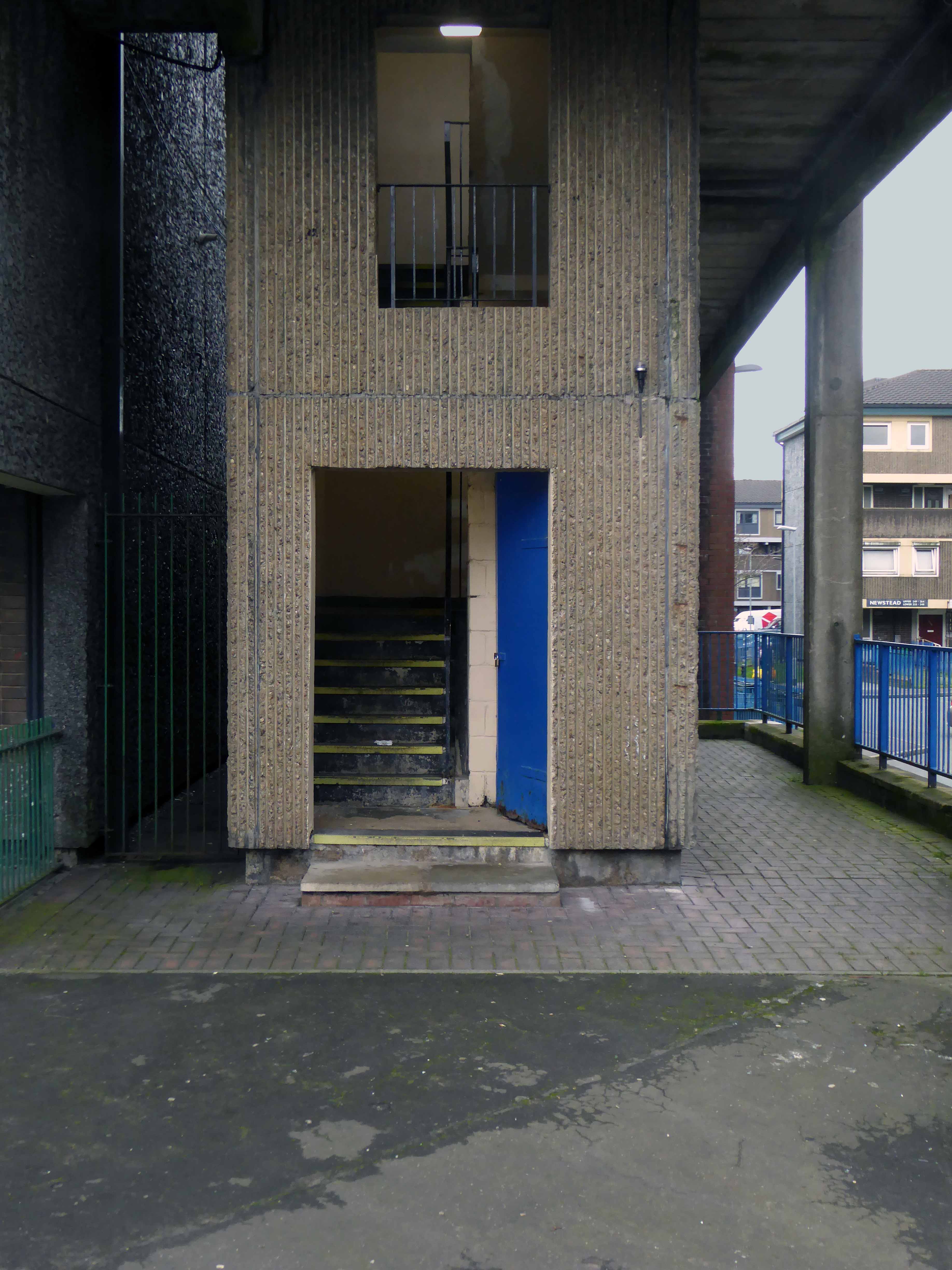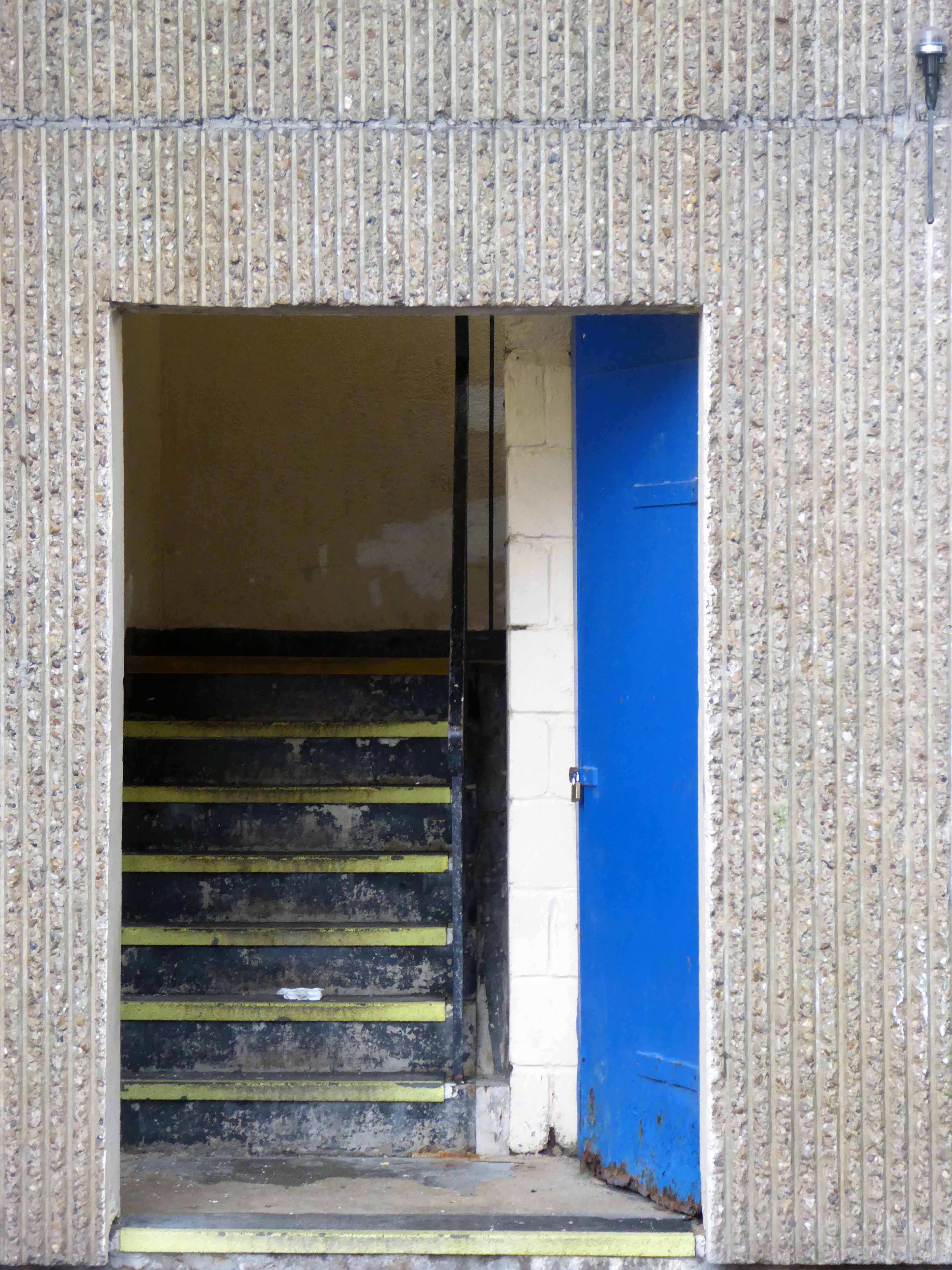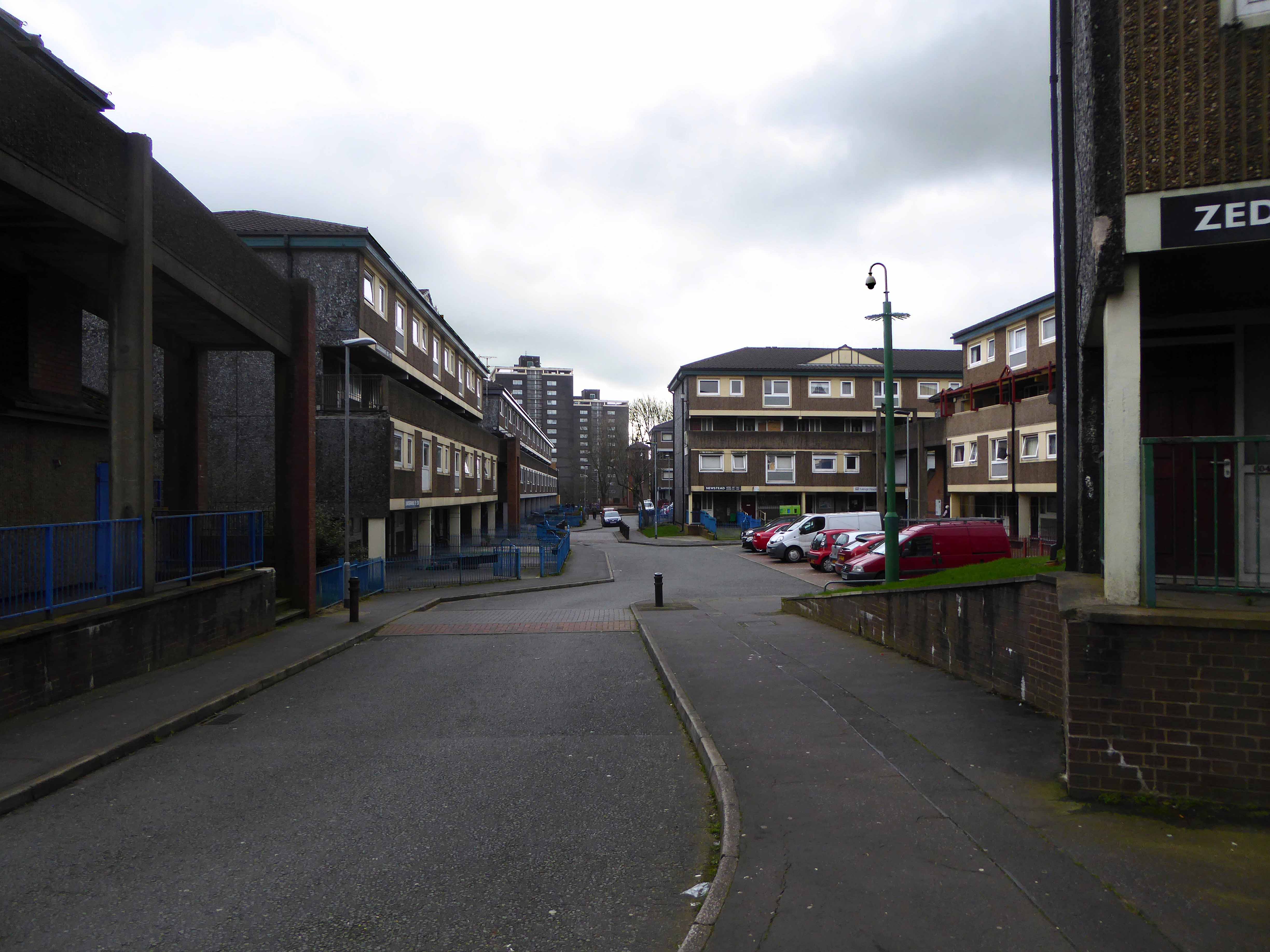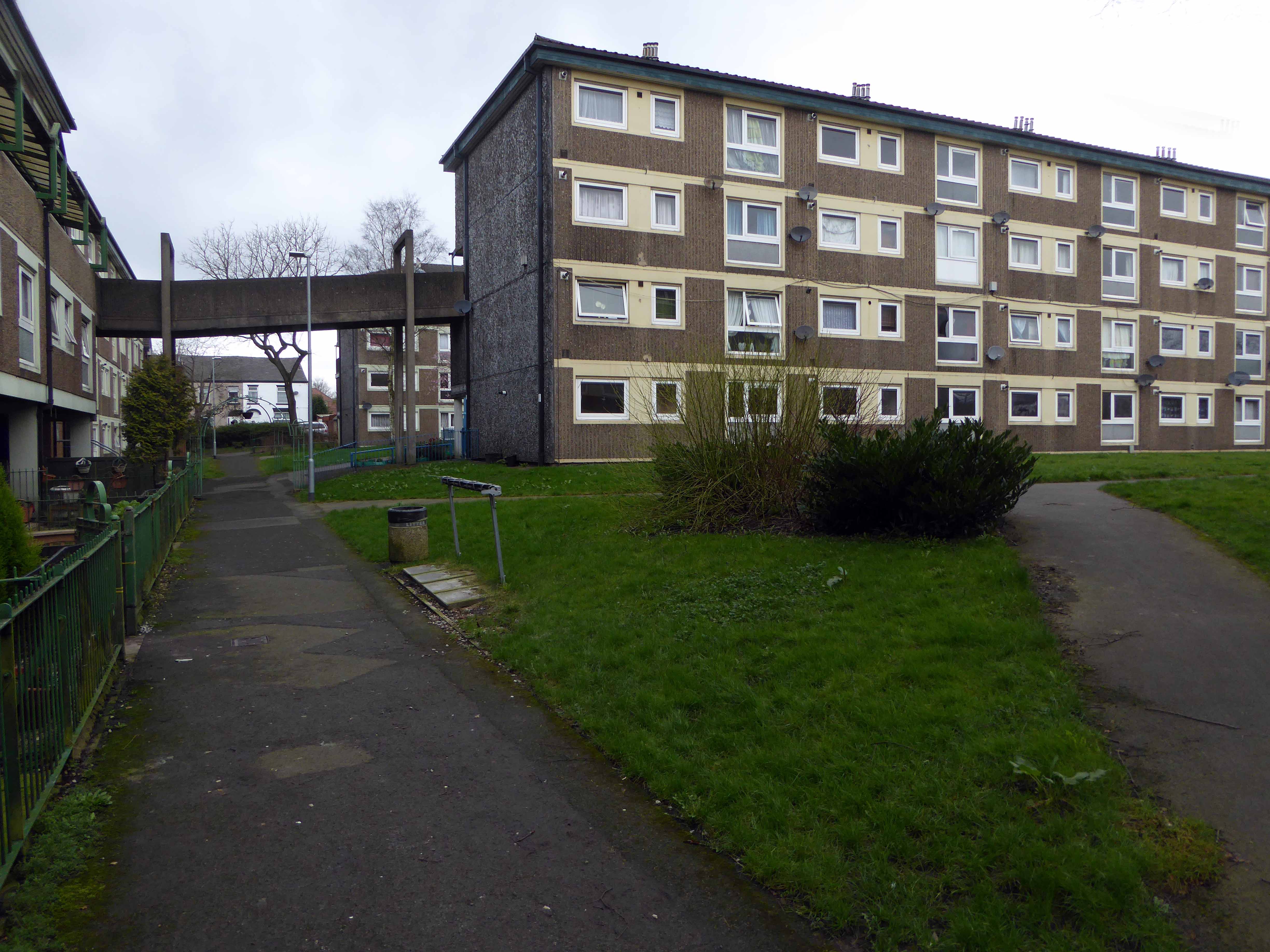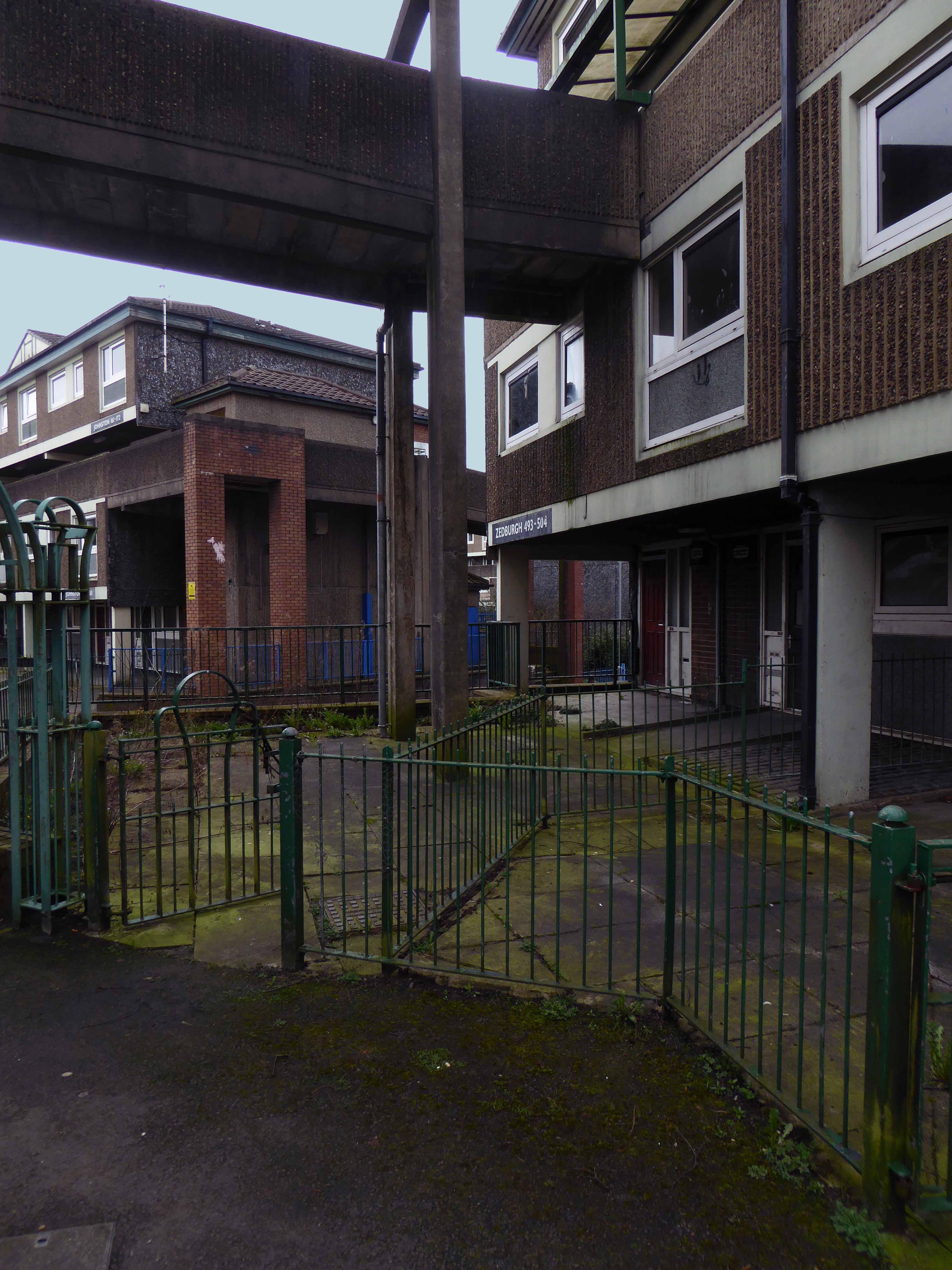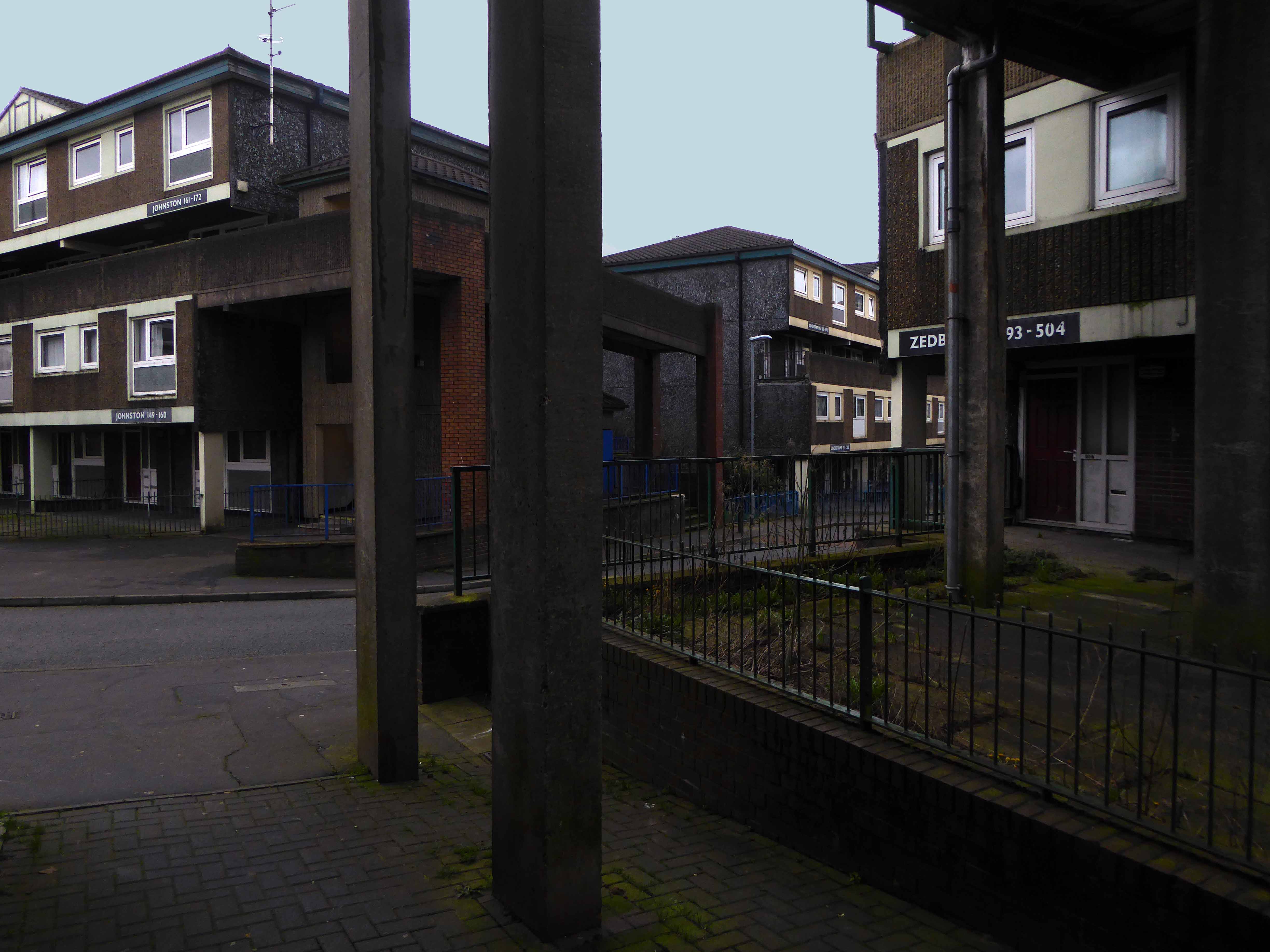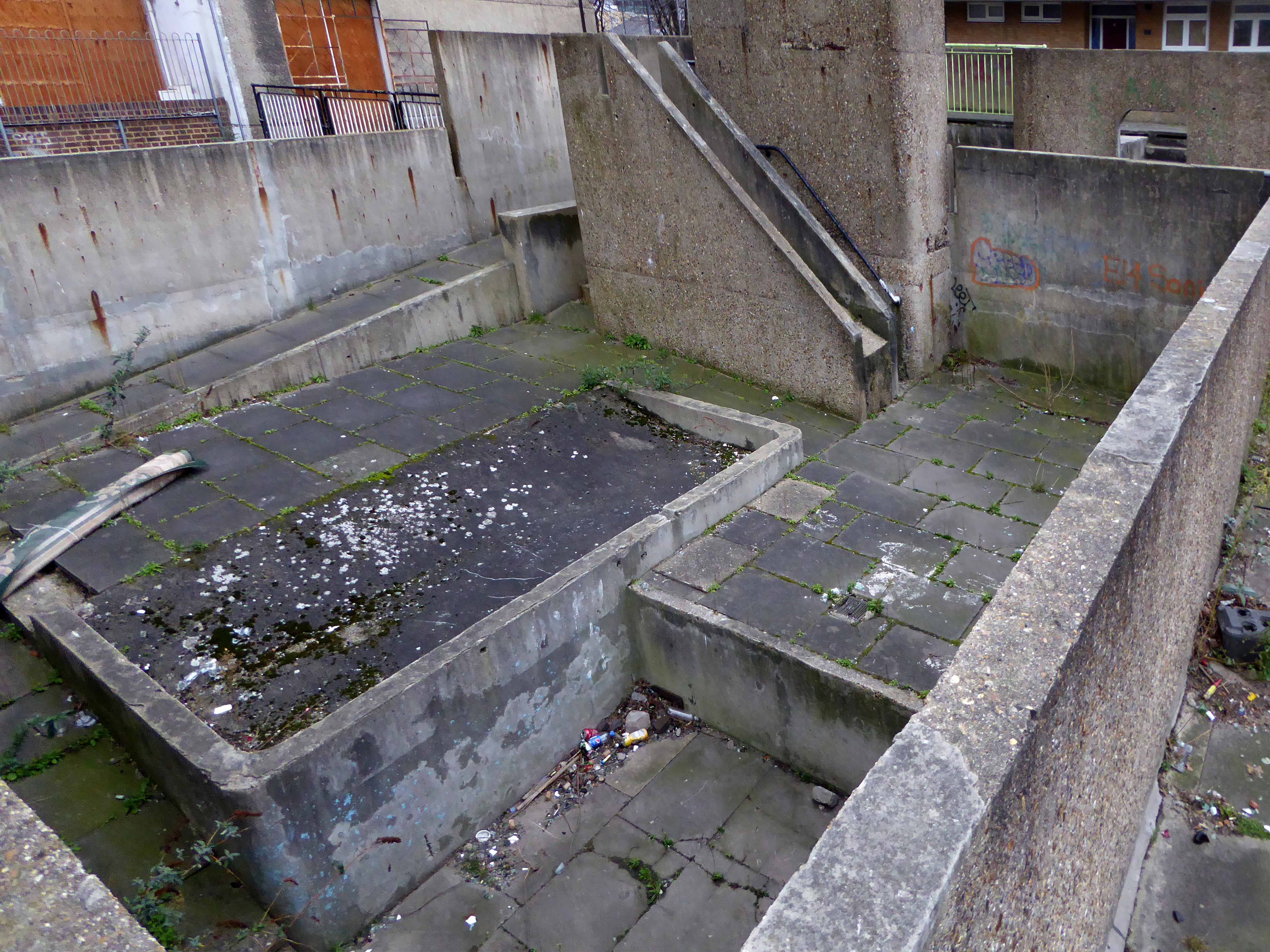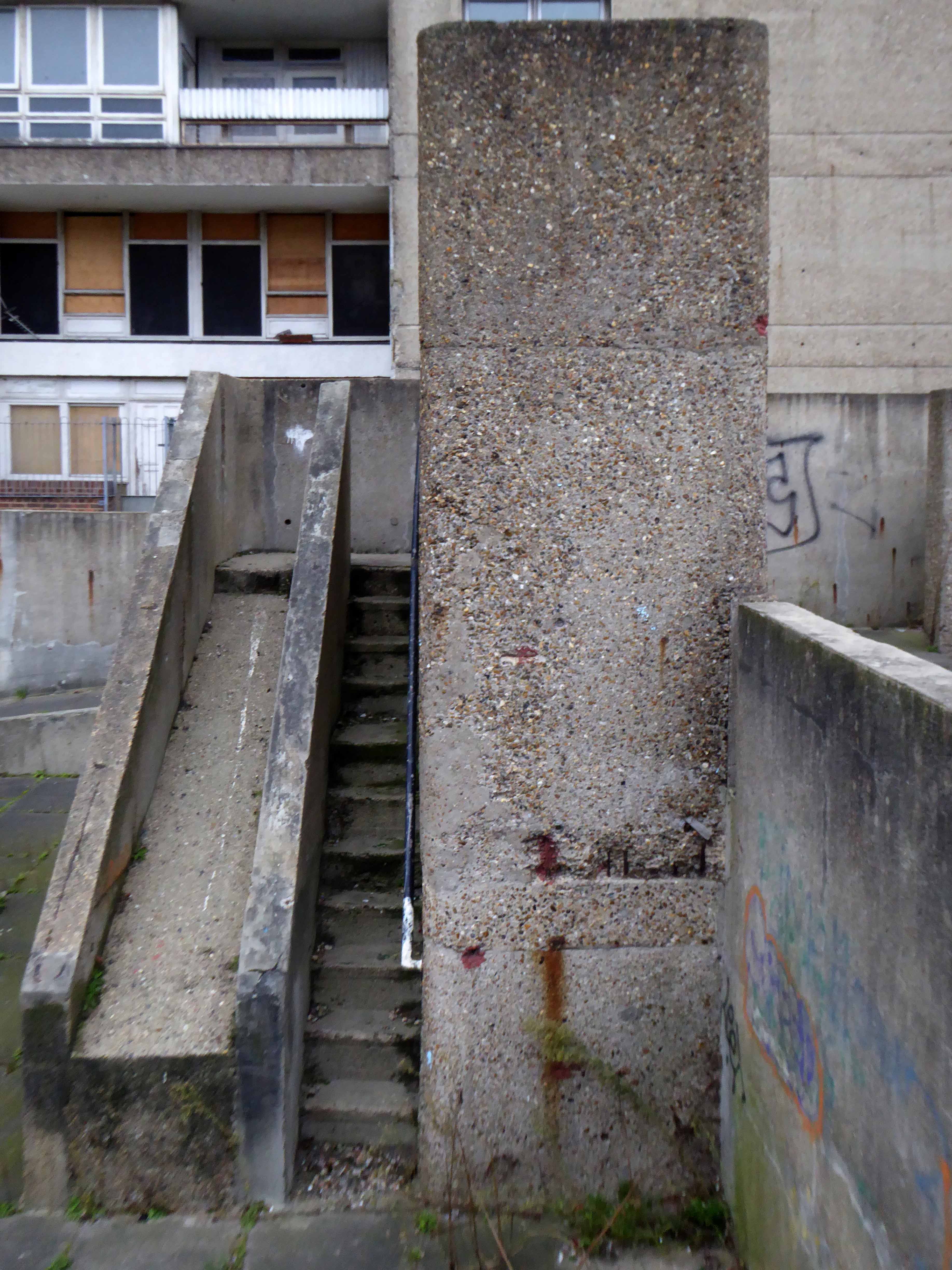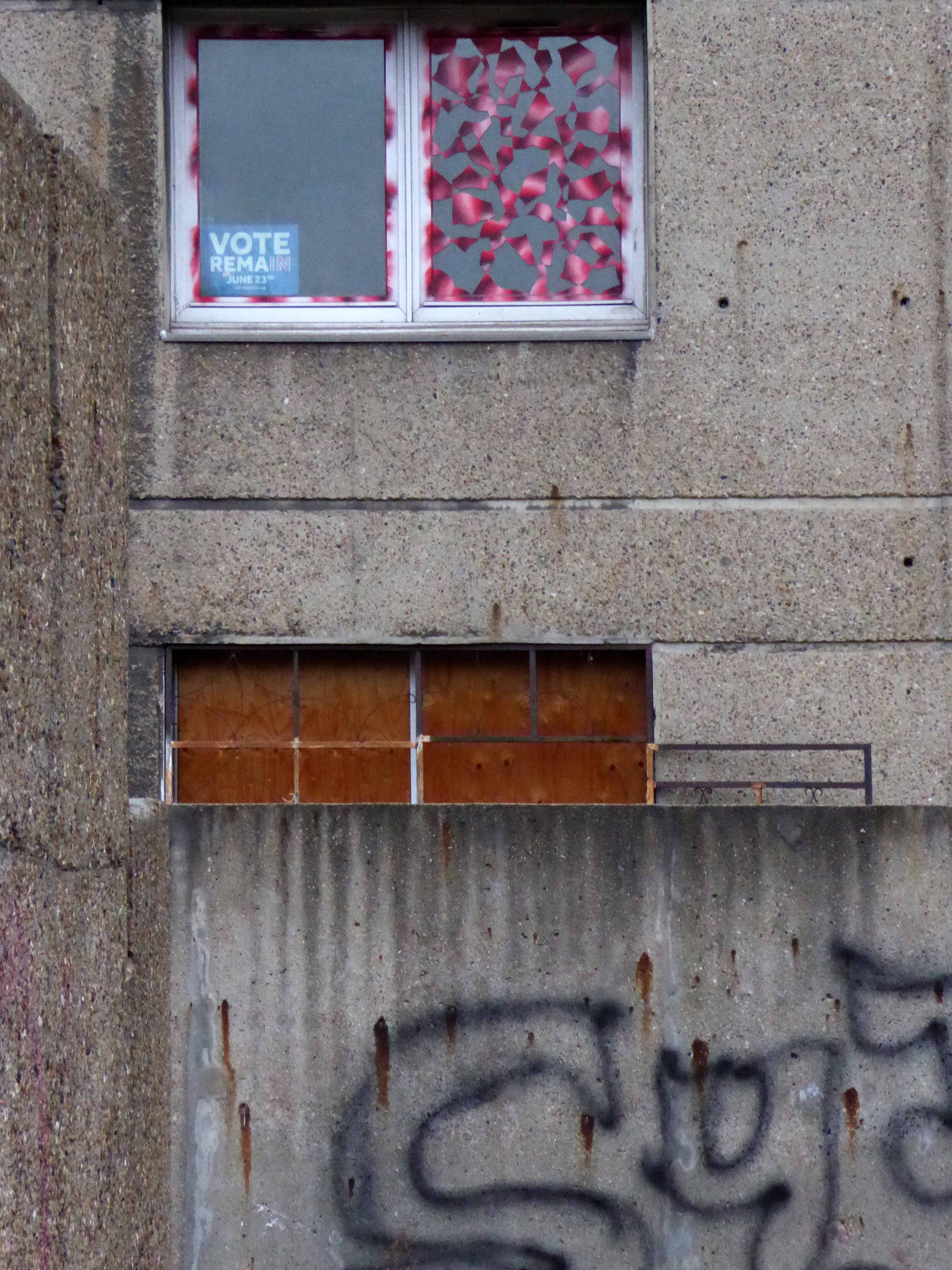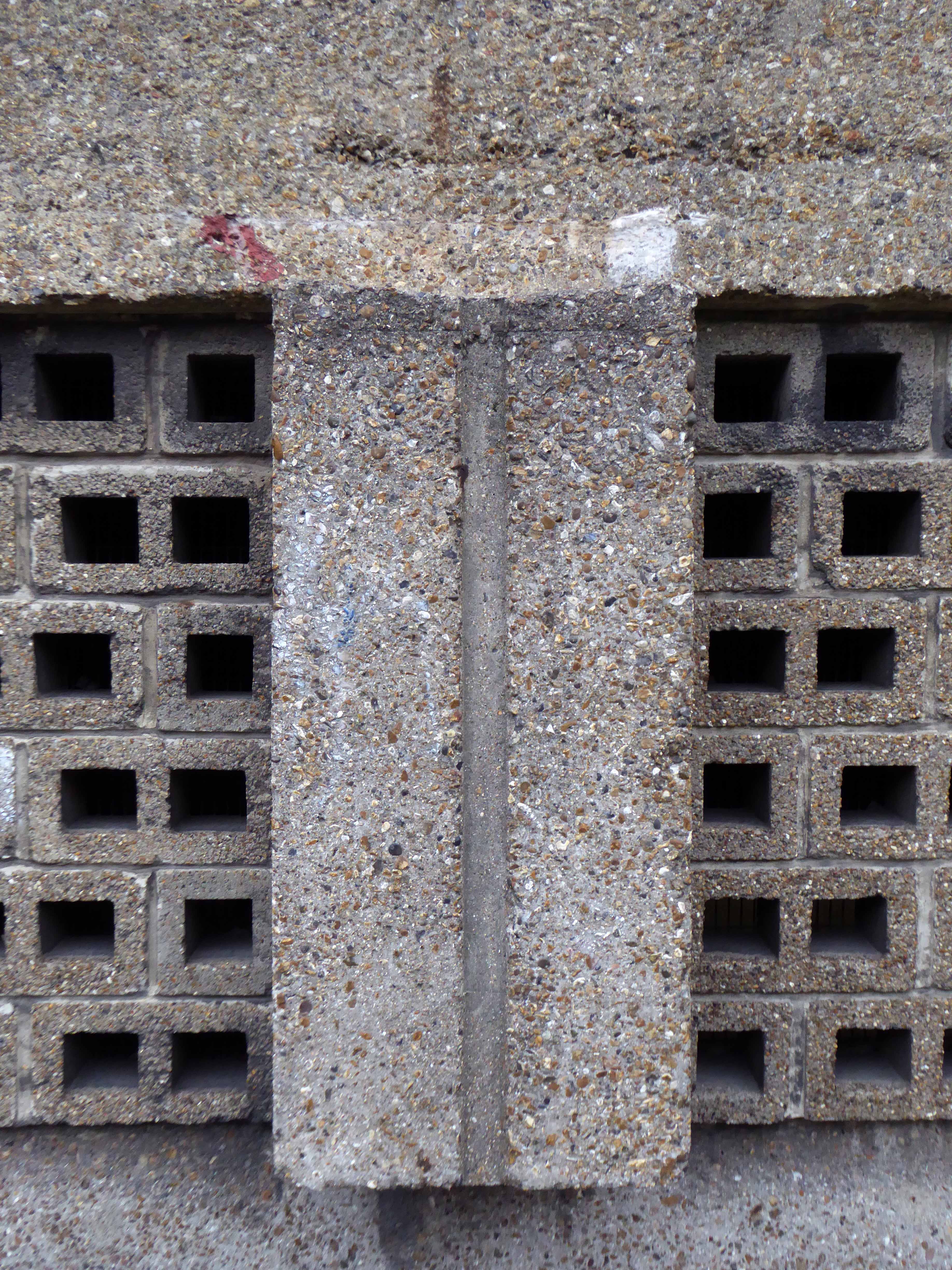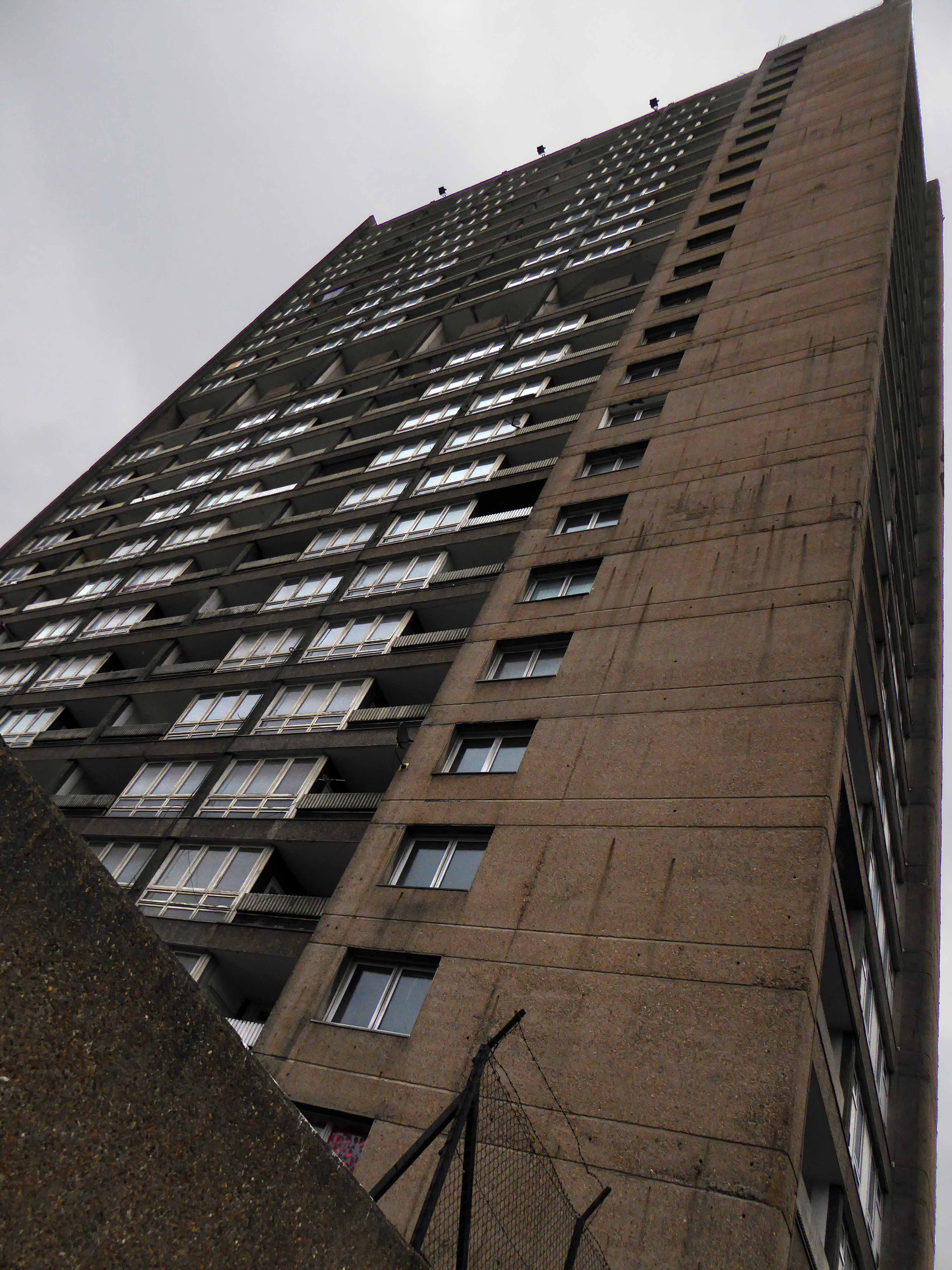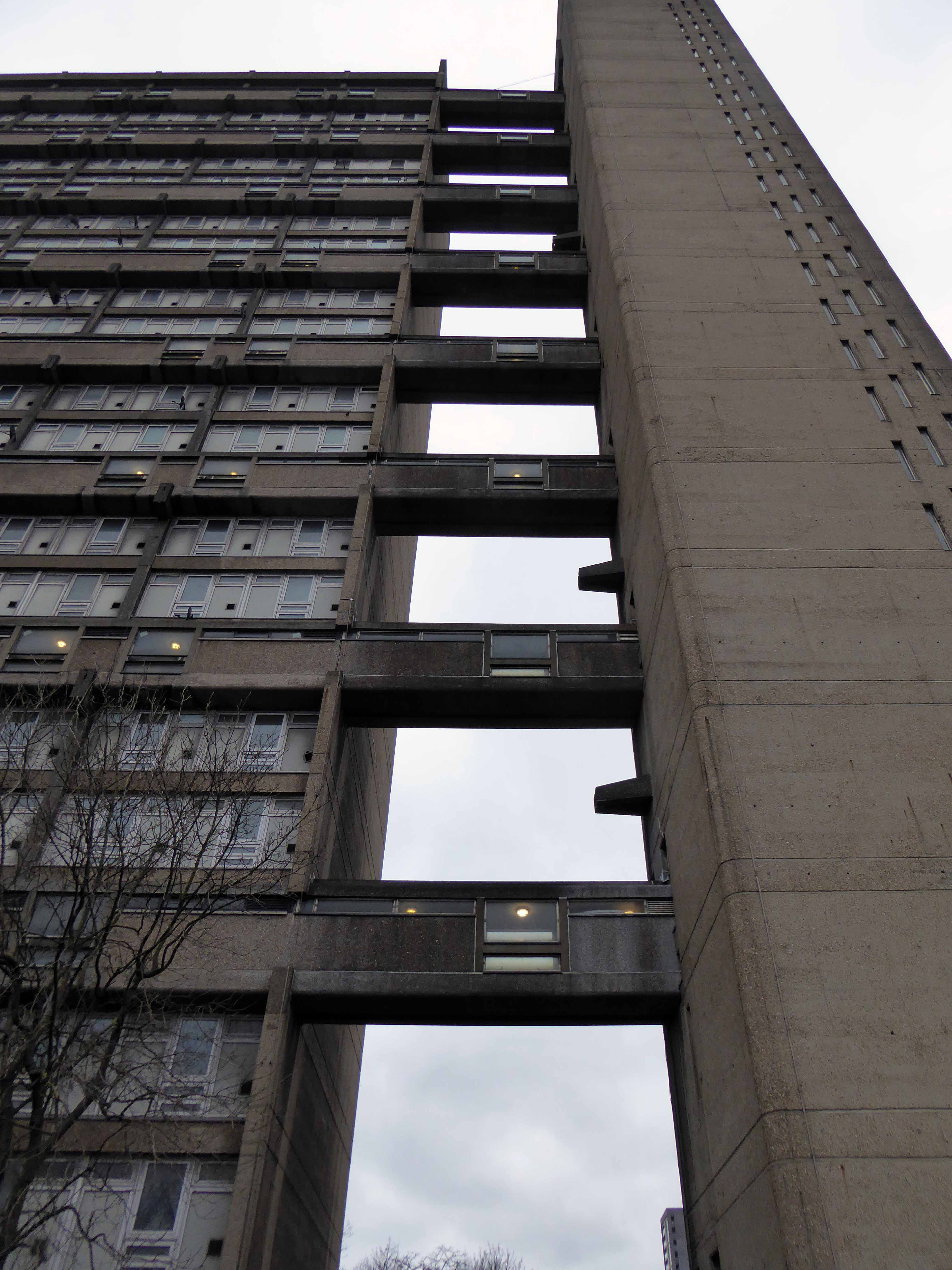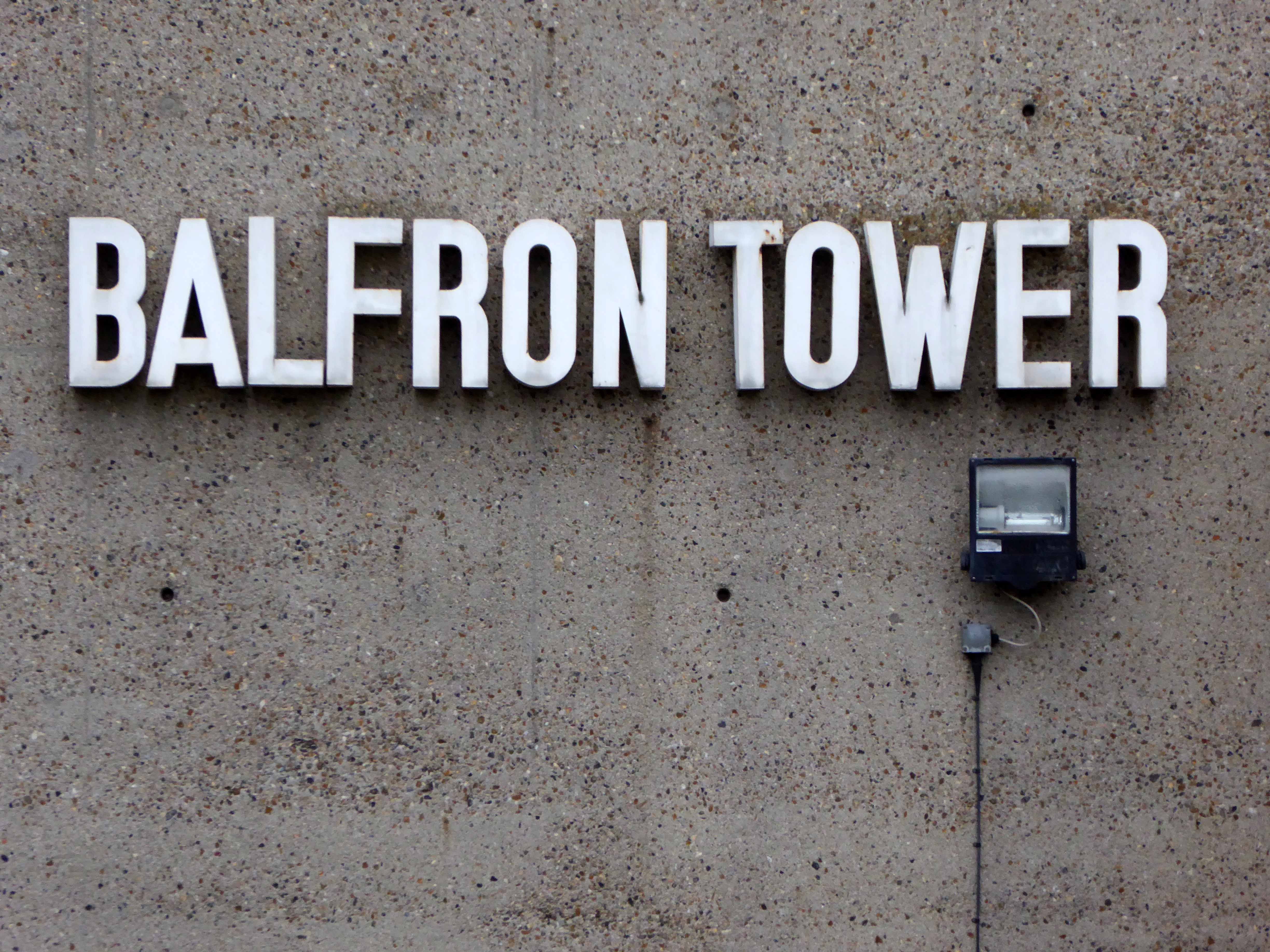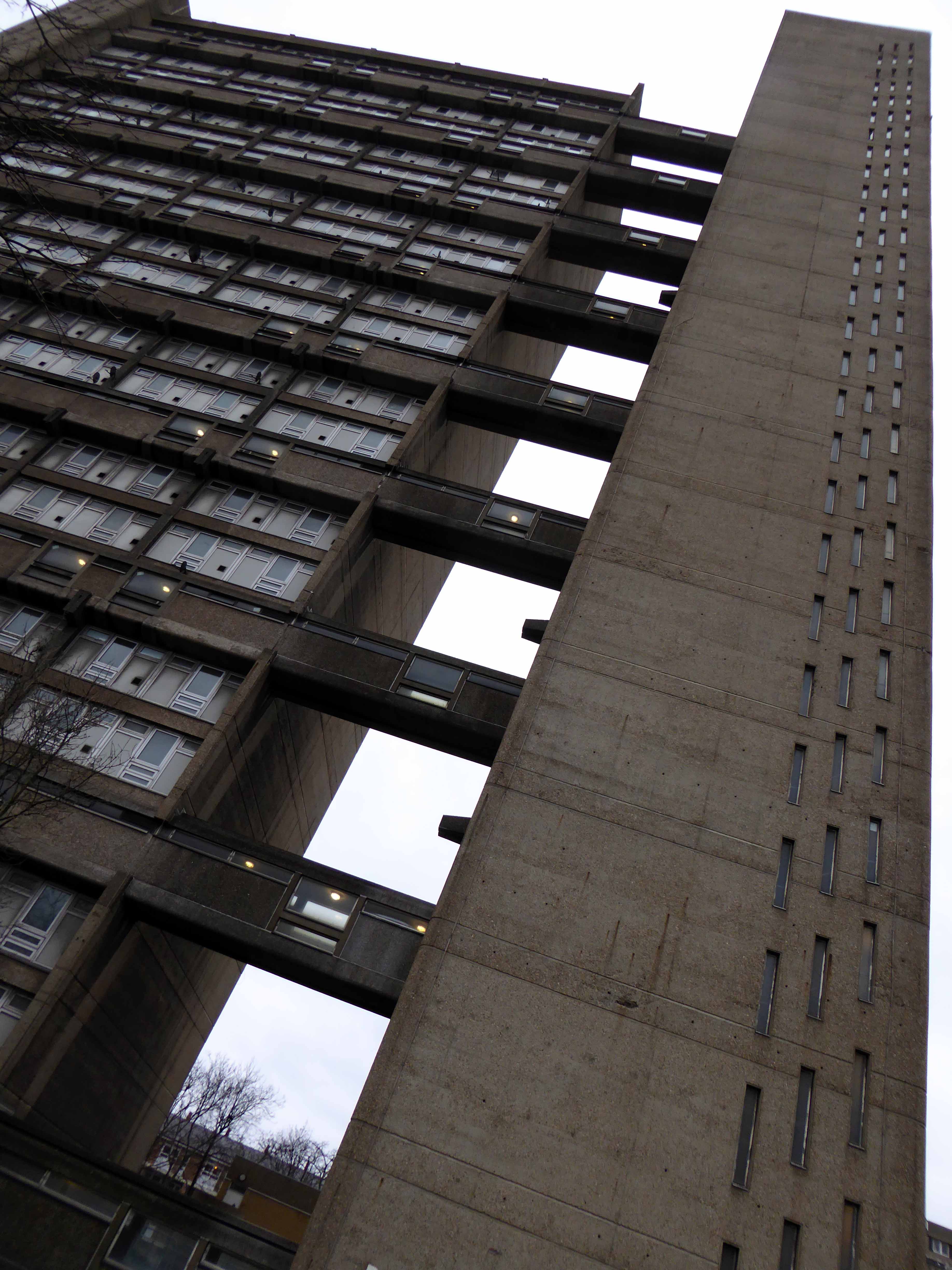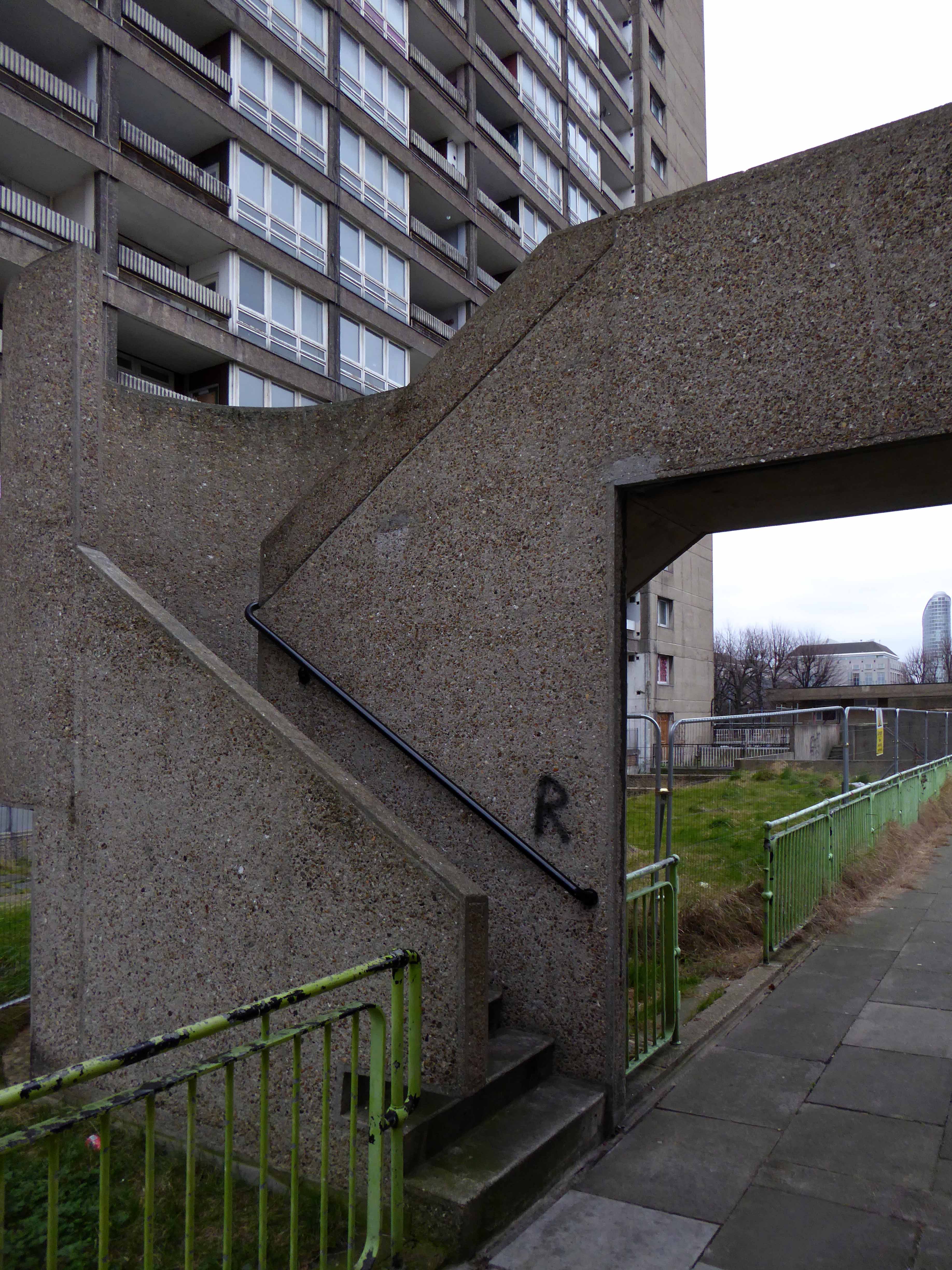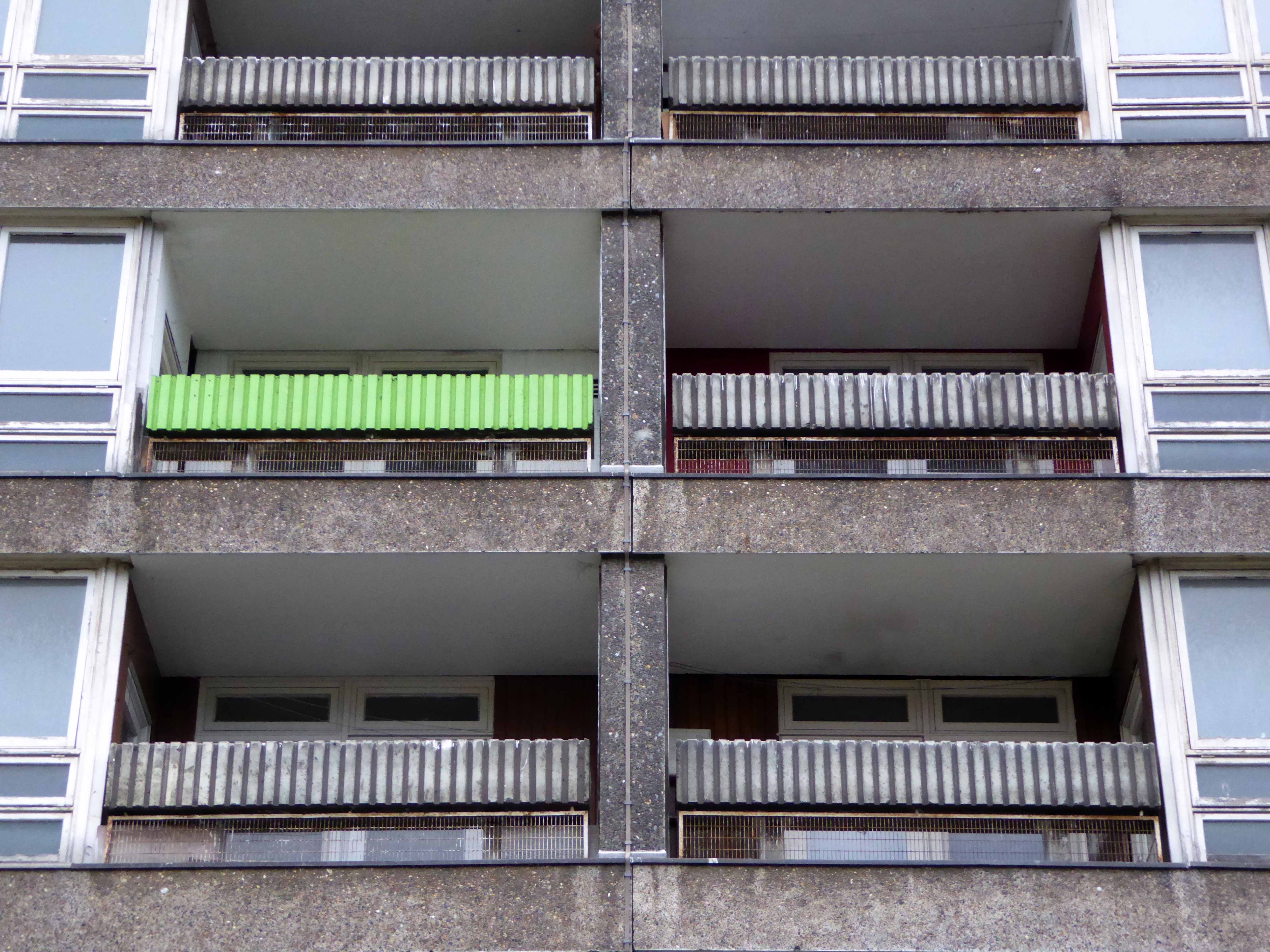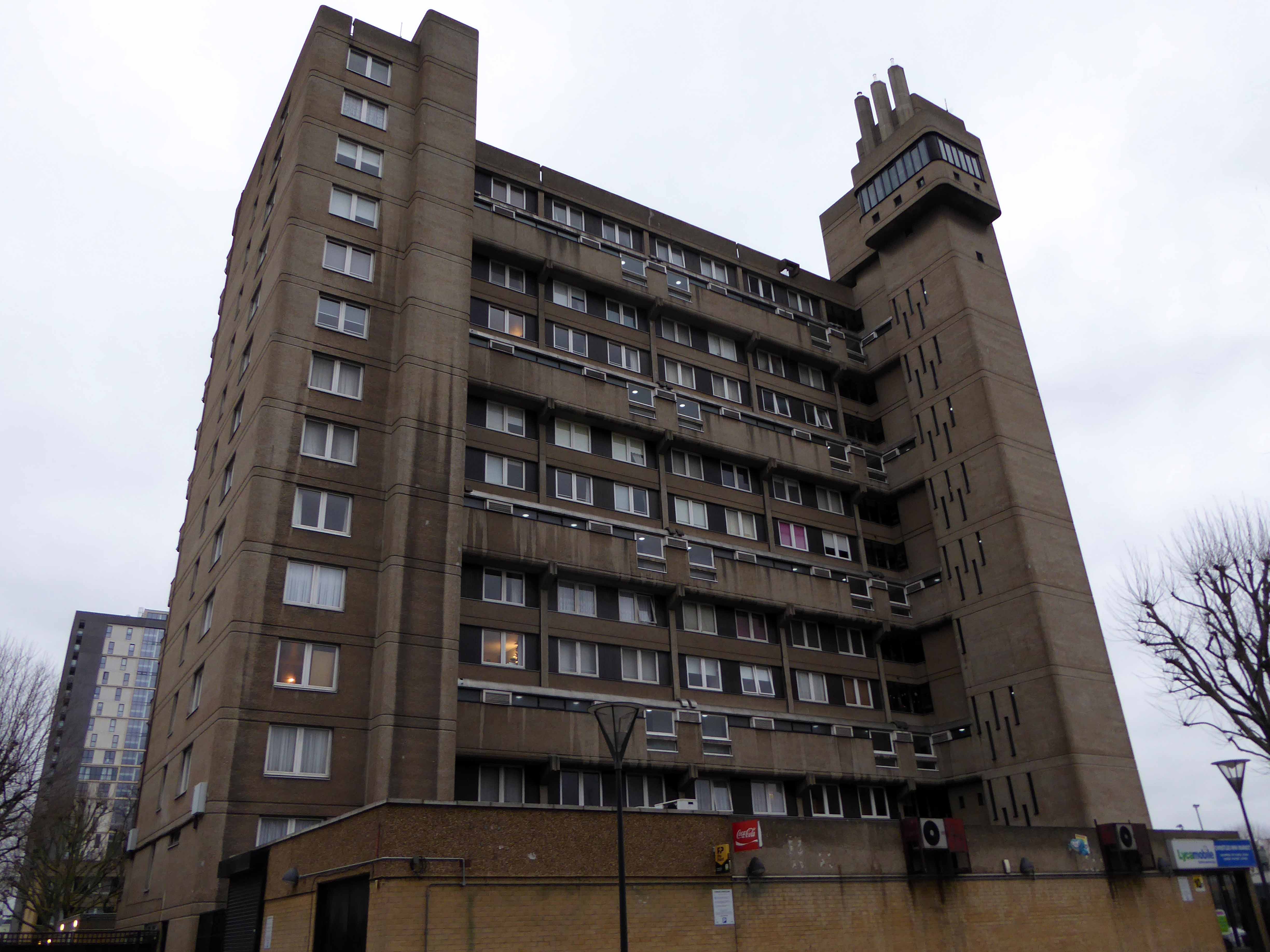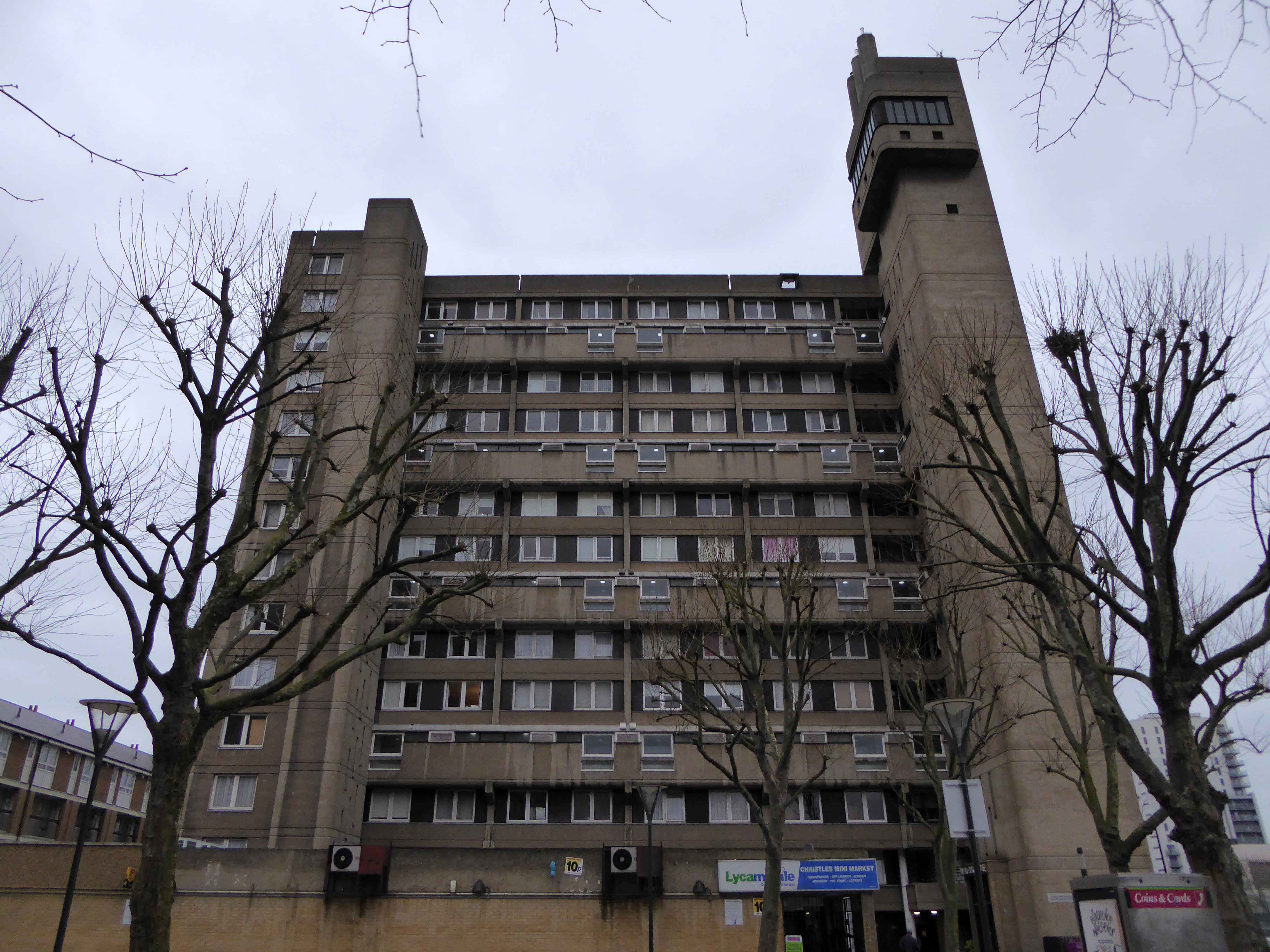
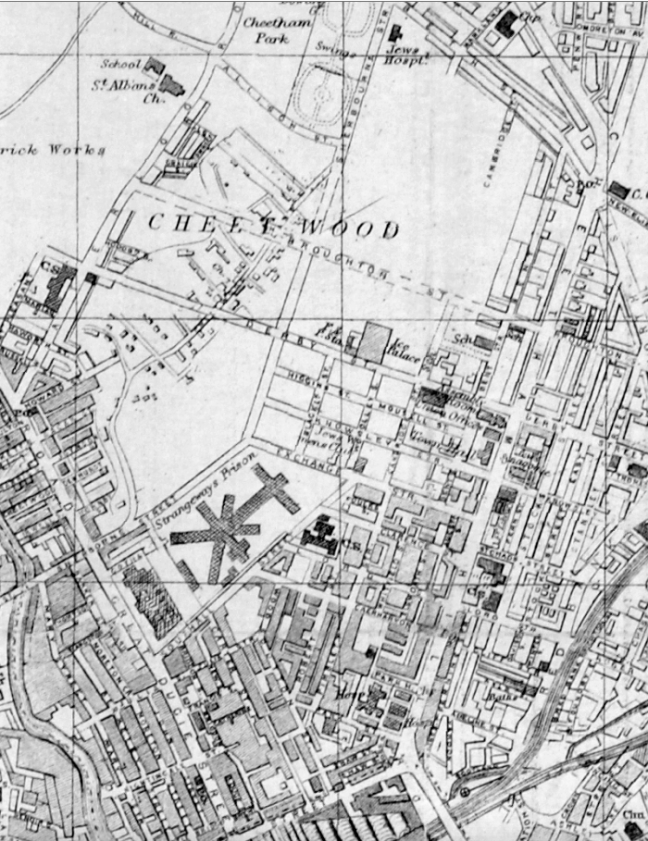
Strangeways Manchester #1

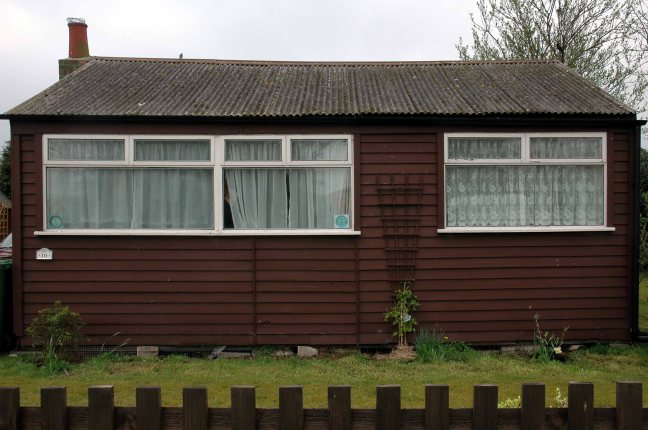
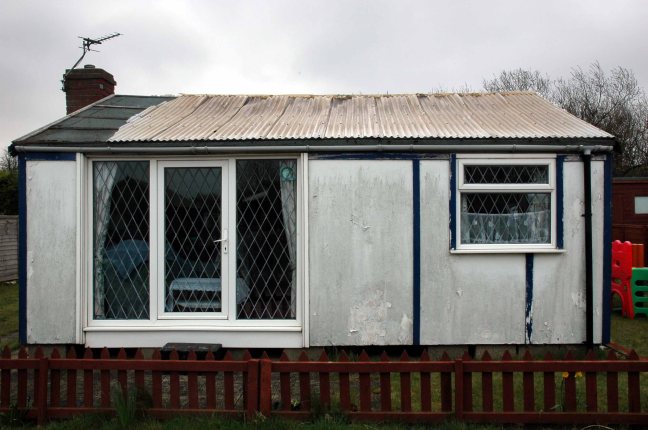
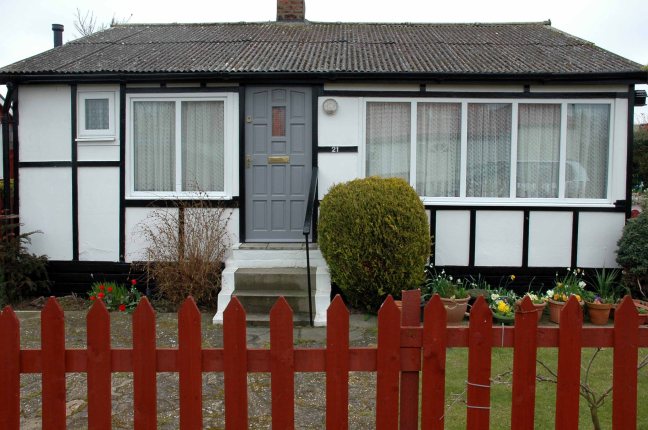
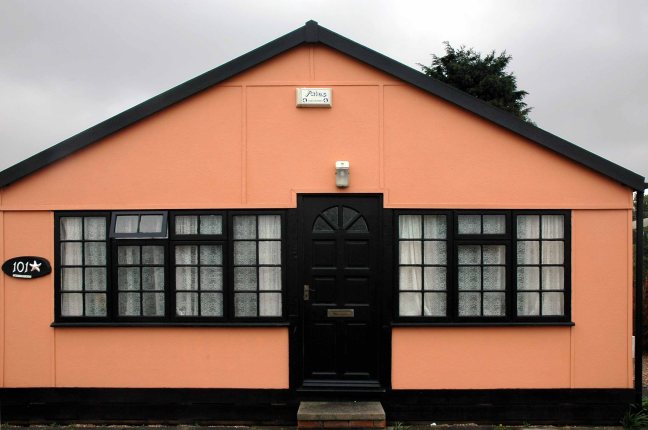
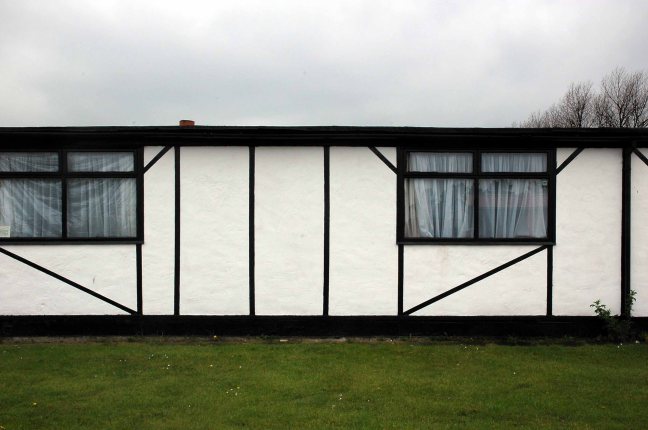
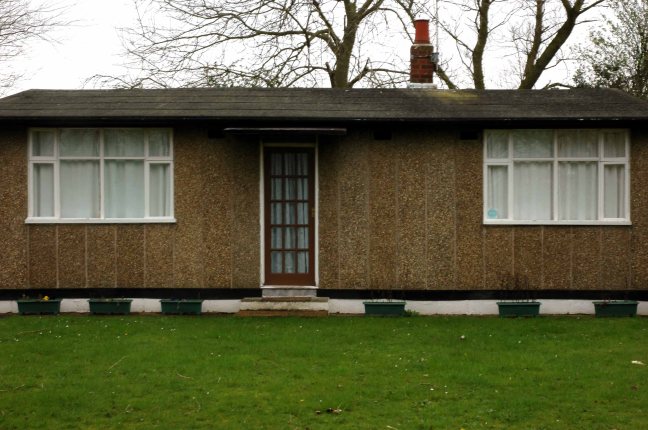
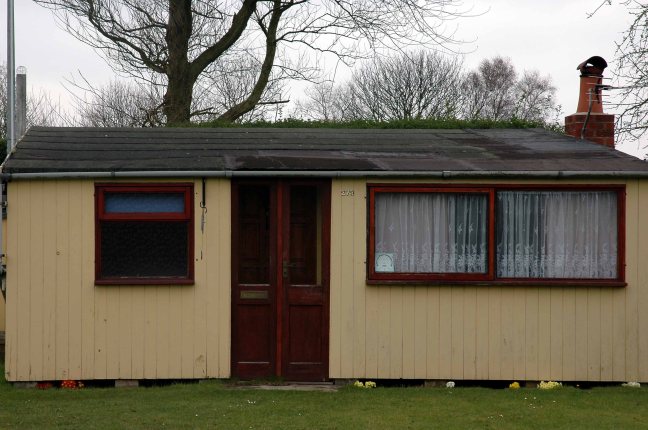
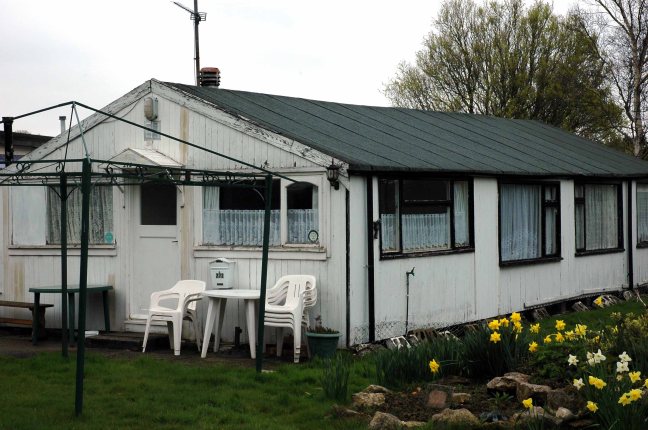
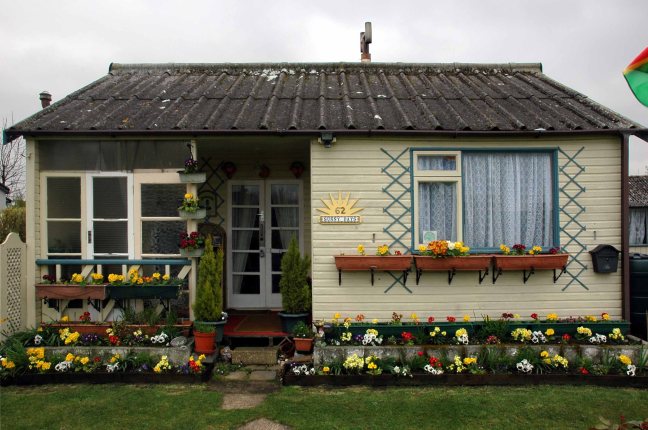
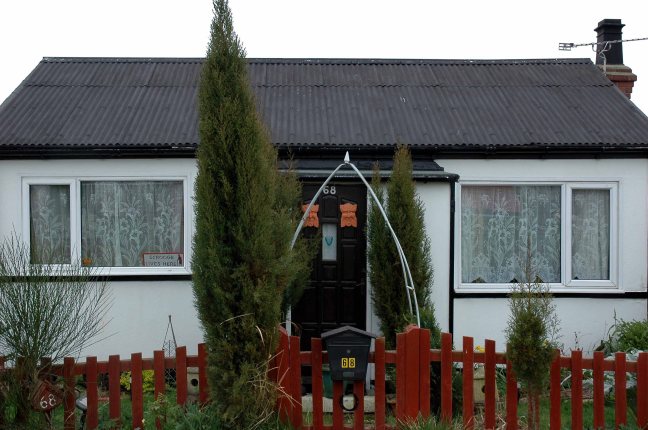
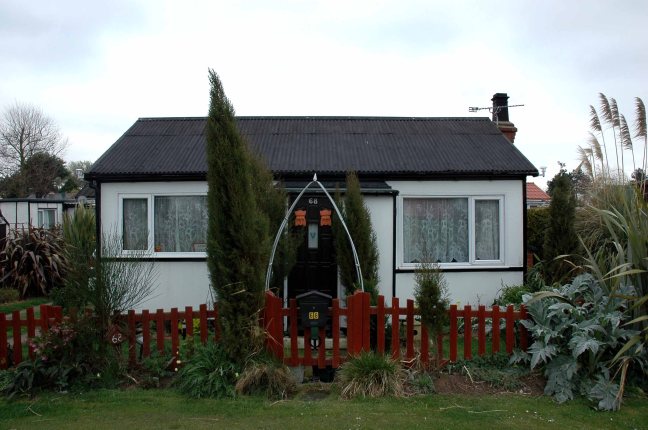
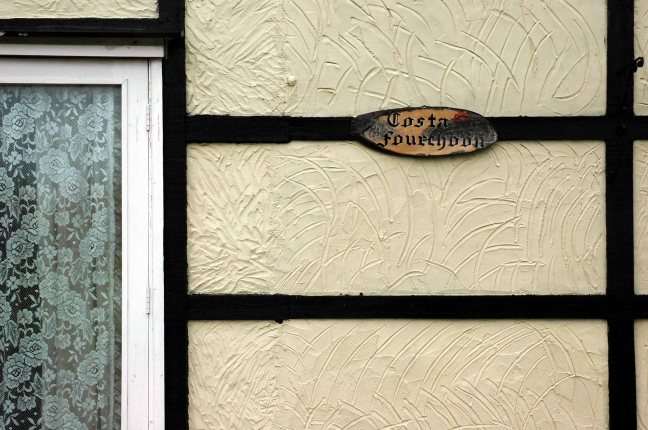
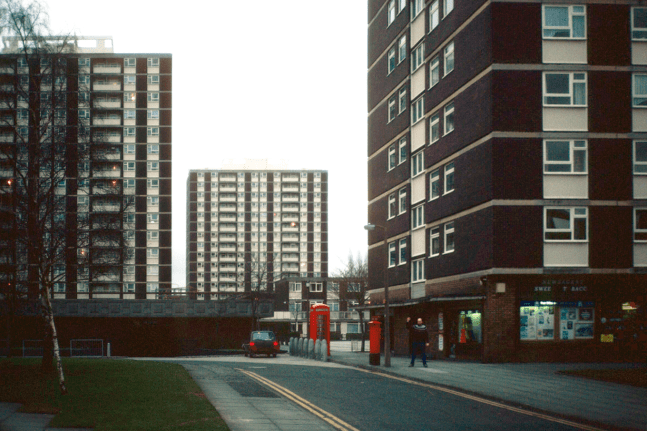
Strangeways?

– How strange.

The Strangeways family themselves are certainly recorded in antiquity at the site, although the name appears differently over time; Strongways in 1306, Strangewayes in 1349 and Strangwishe in 1473. In the late 1500s in records at Manchester Cathedral the surname is spelt Strangwaies.

My thanks to Thomas McGrath for his – Long Lost Histories: Strangeways Hall, Manchester

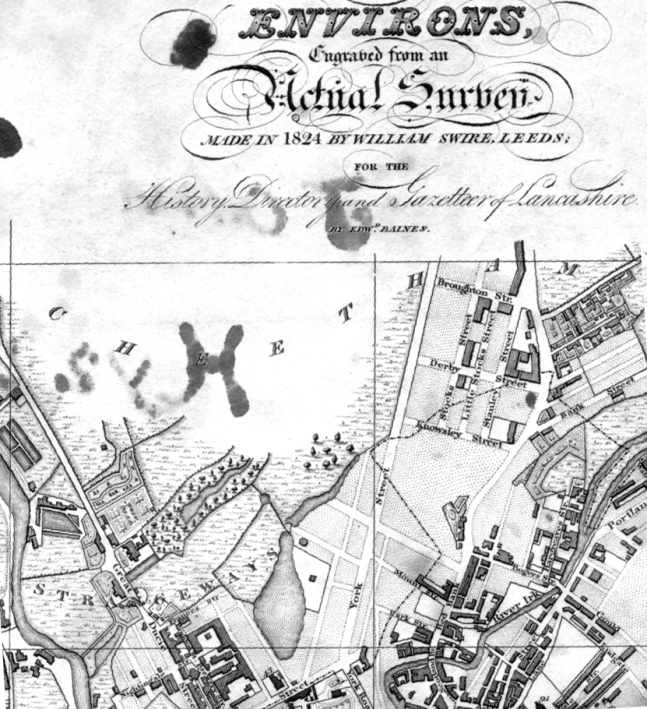
Before panopticon prisons entered the public imagination, and incarceration was the order of the day for the disorderly, it was all fields around here – with the odd house or baronial hall.

Screen Shot 2018-02-04 at 15.08.30

Swire’s map of 1824

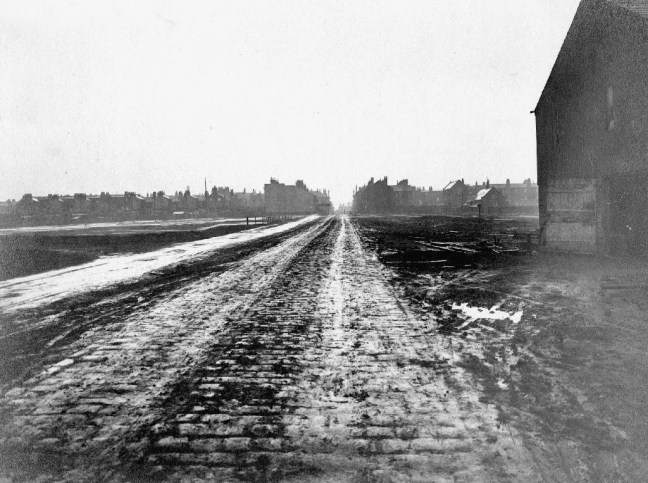
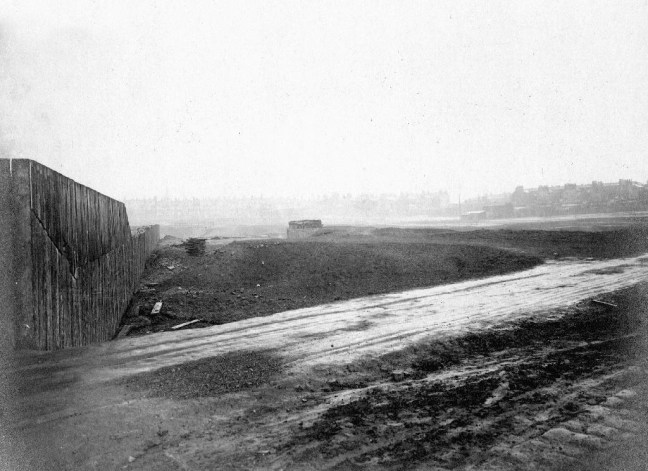
Strange days, over time the prison is built, the assizes appears and disappears and tight groups of tired houses cluster around the incipient industry. The fiefdom’s of old become tie and tithe to successions of industrial plutocrats.

webmedia.php copy

webmedia.php

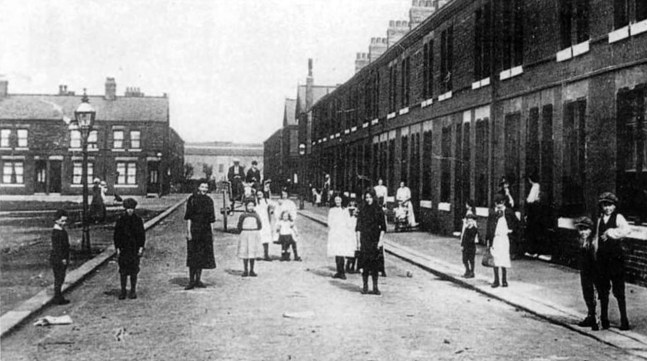
Broughton Street 1910Photograph J Jackson

Screen Shot 2018-02-04 at 15.10.54

Kelly’s map of 1920

The area becomes the centre of the city’s rag trade, a large Jewish Community, the largest outside of London, grows up around Strangeways, Cheetwood and Cheetham Hill – houses, mills, wholesale, retail, warehouse, ice palace, beer-house, brewery. The area is home to several of Joe Sunlight’s inter-war industrial developments – his Jewish family were named Schimschlavitch, his father a cotton merchant. The family emigrated to England in 1890 and settled in Manchester.

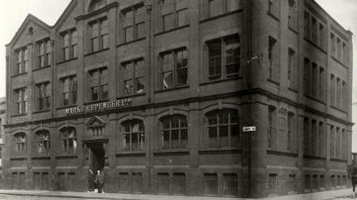
So much for Joe Soap – the area was also the location for local lads, Karl Marx, and Marks & Spencer.

v0_medium

Derby Street 1901 – 1924

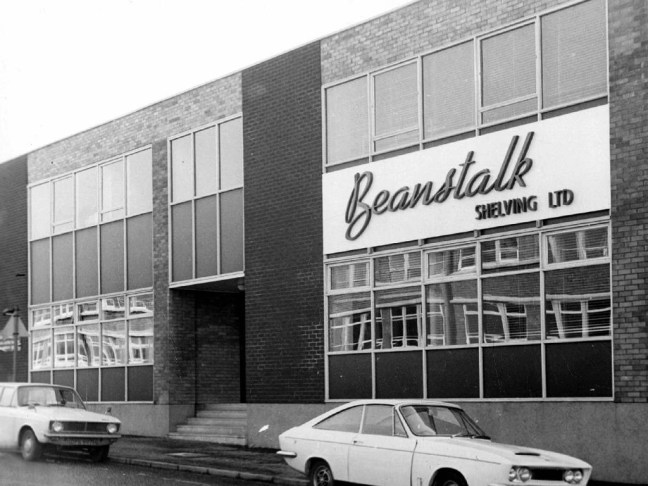
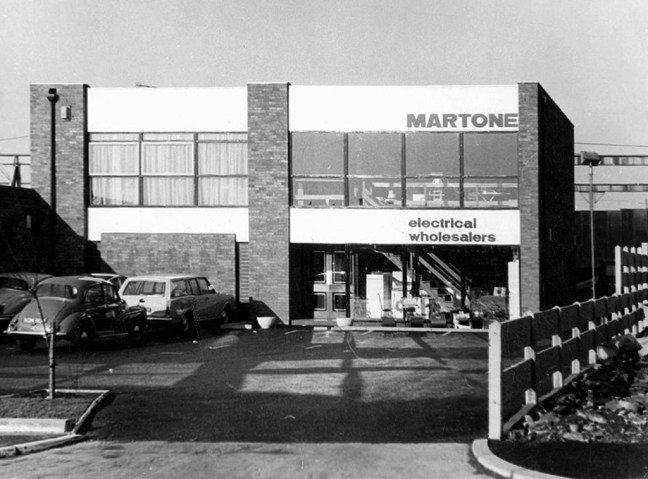
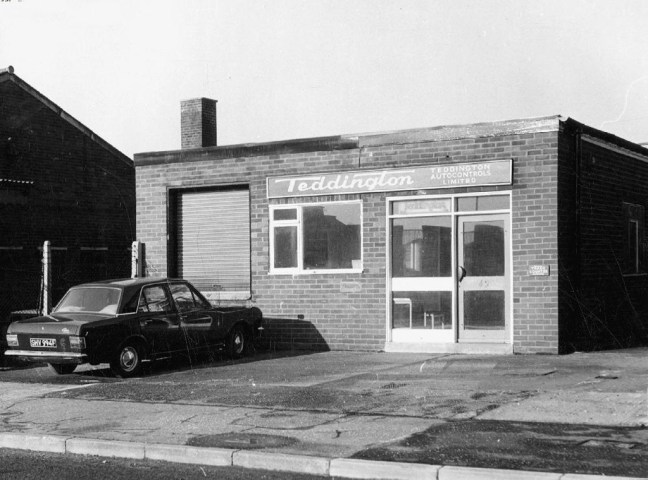
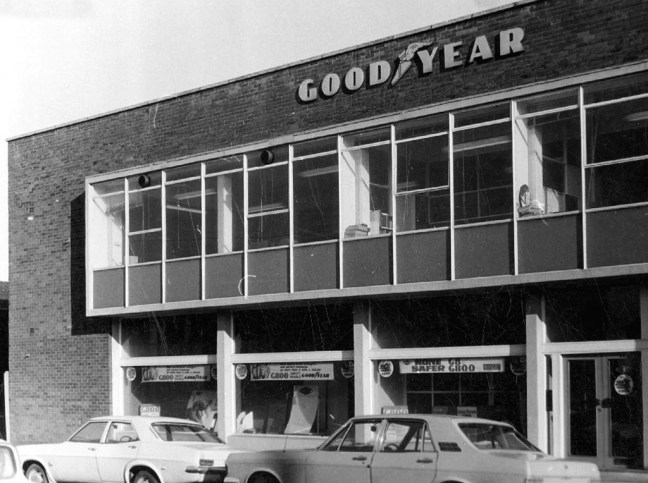
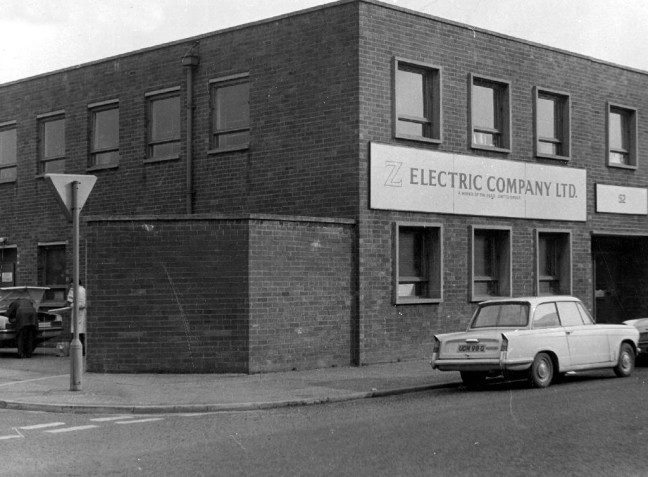
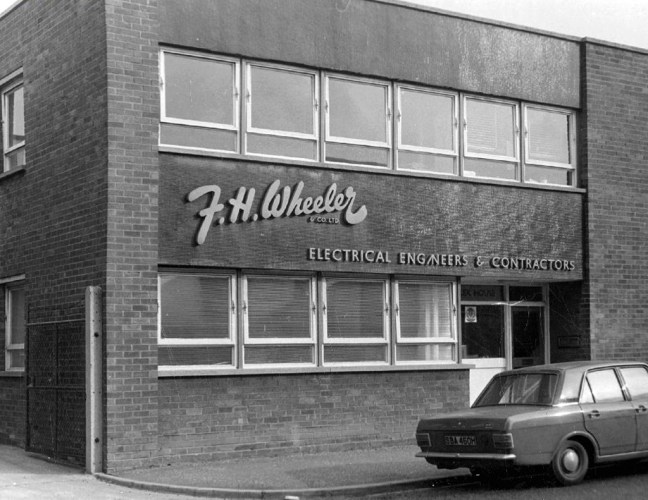
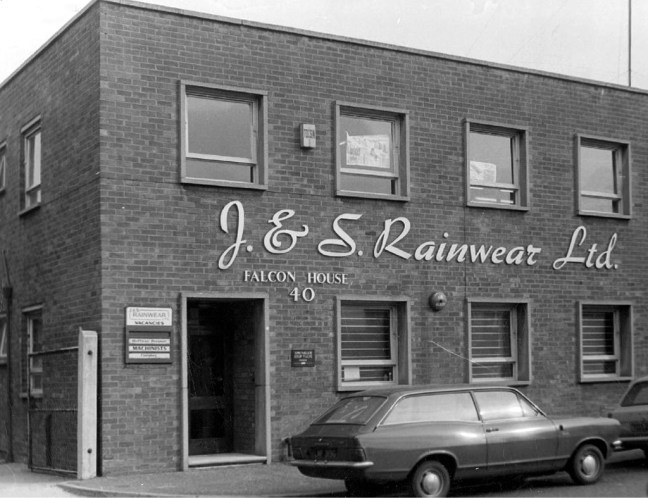
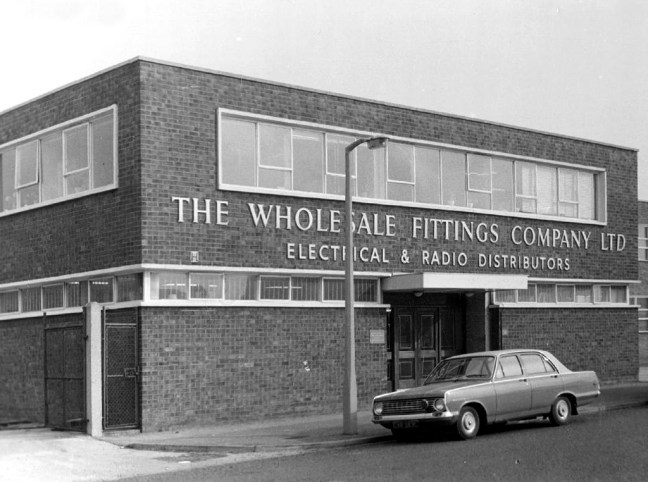
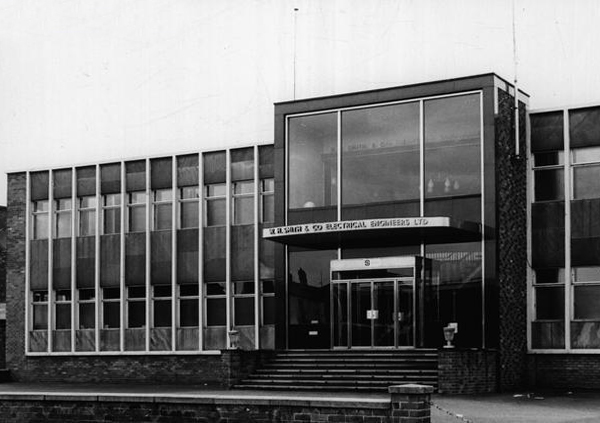
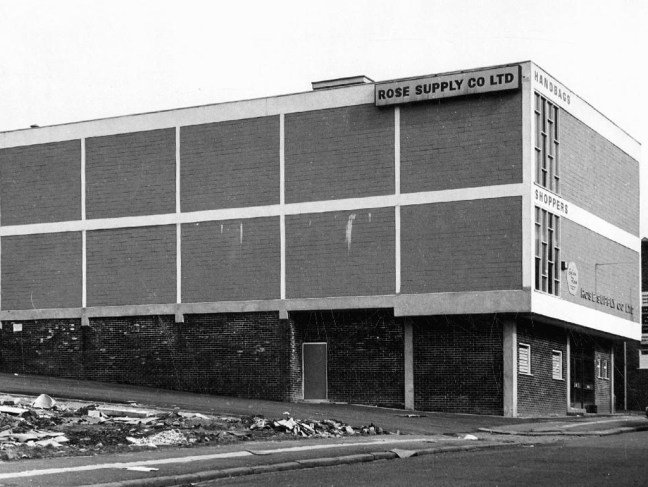
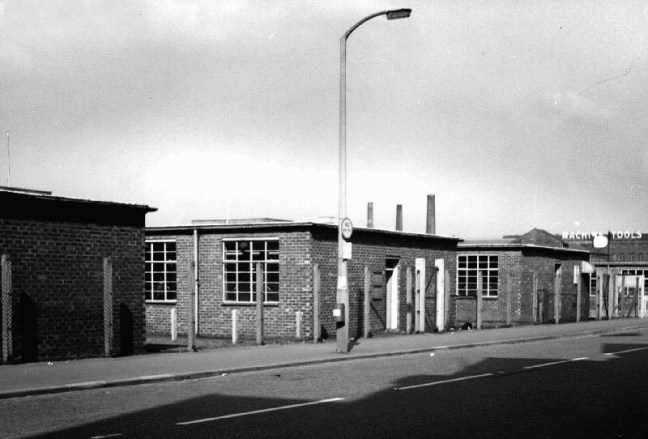
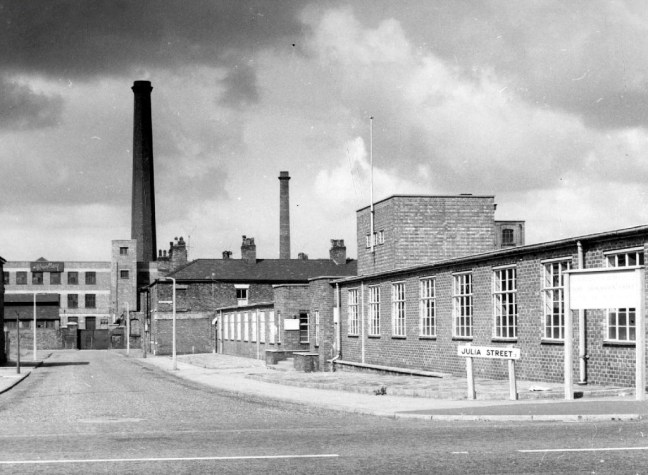
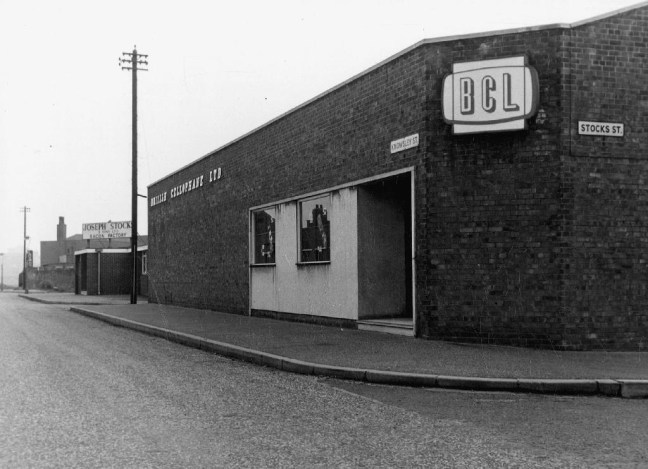
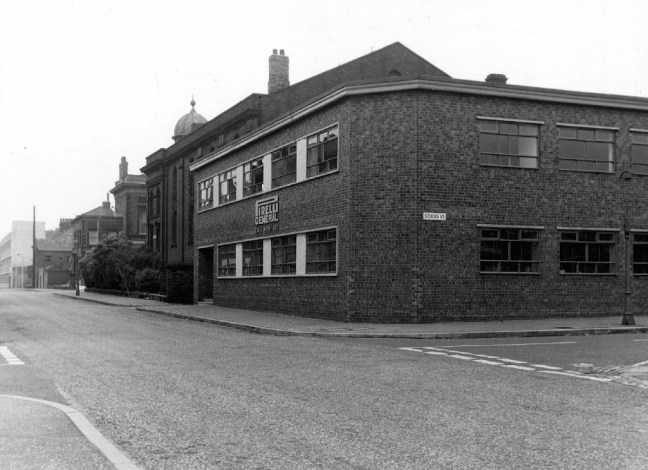
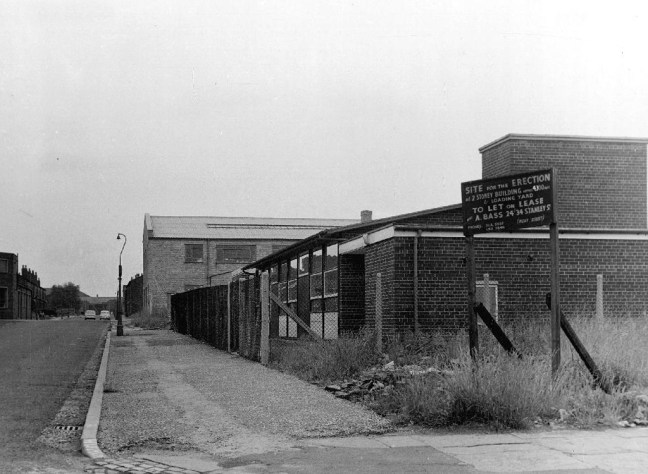
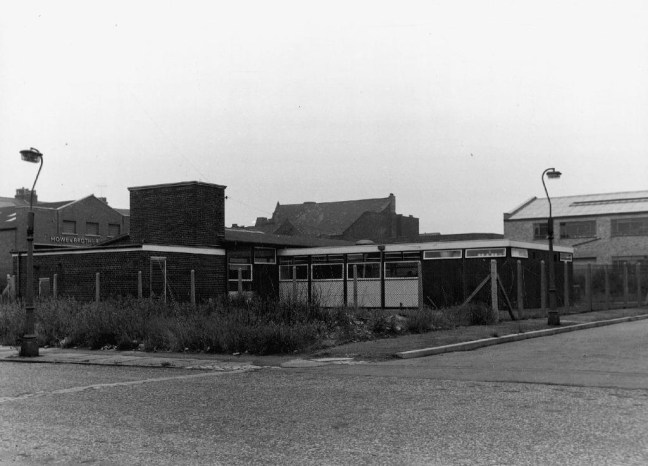
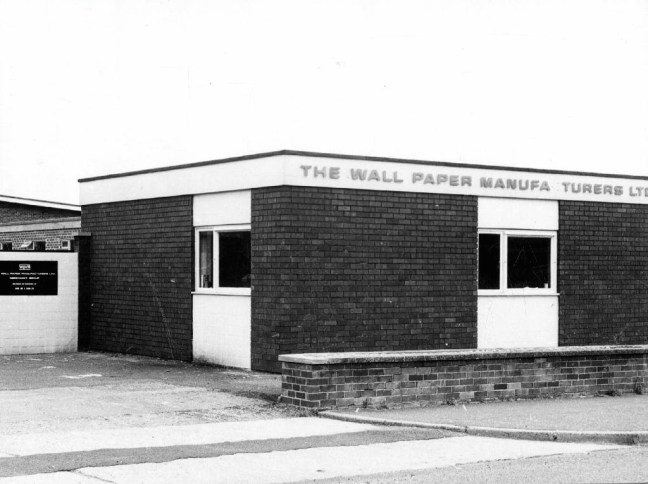
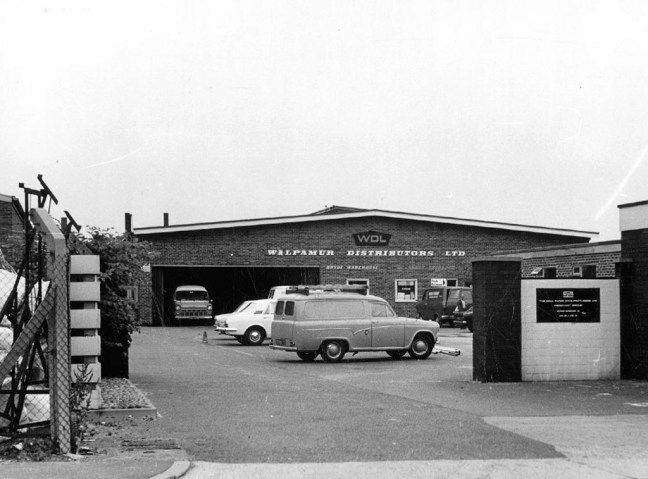
Further developments took place with the building of the Cheetwood Industrial Estate – a postwar group of flat-rooved, blocky brick and concrete utilitarian units.

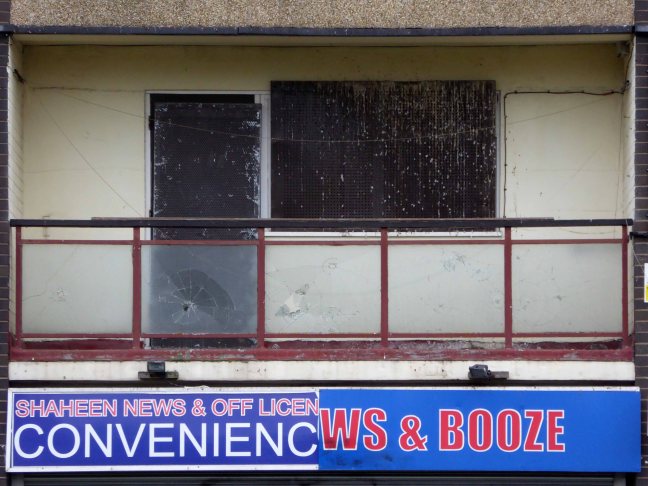
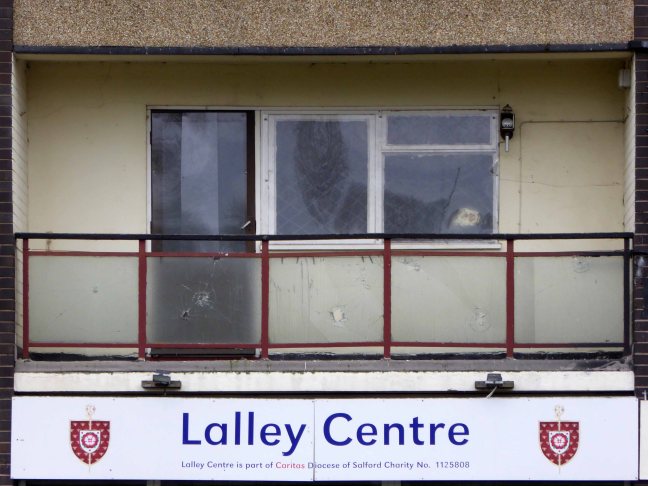
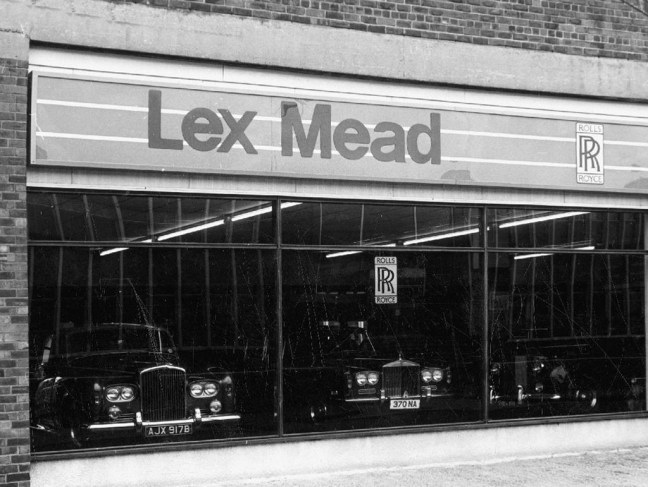
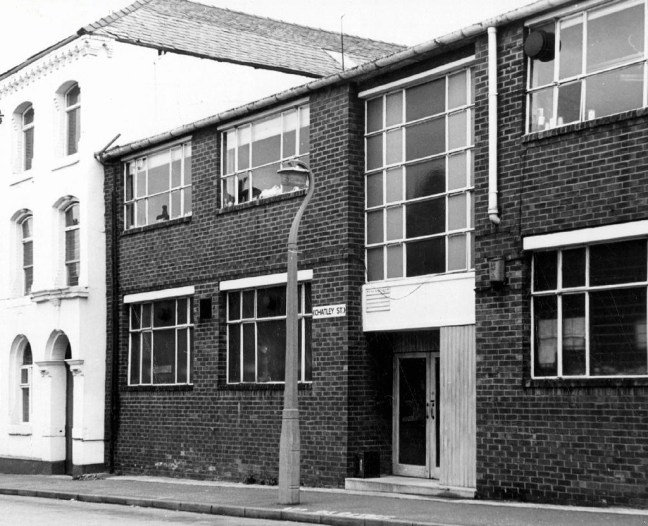
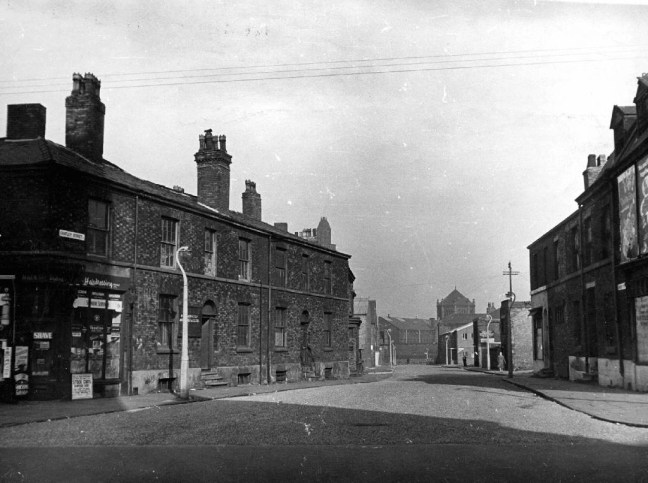
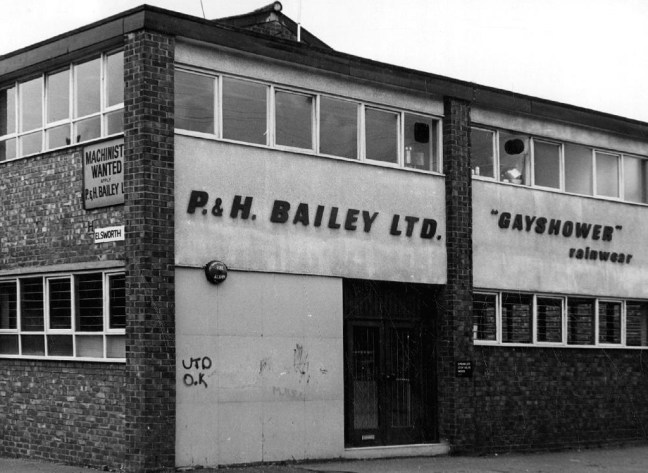
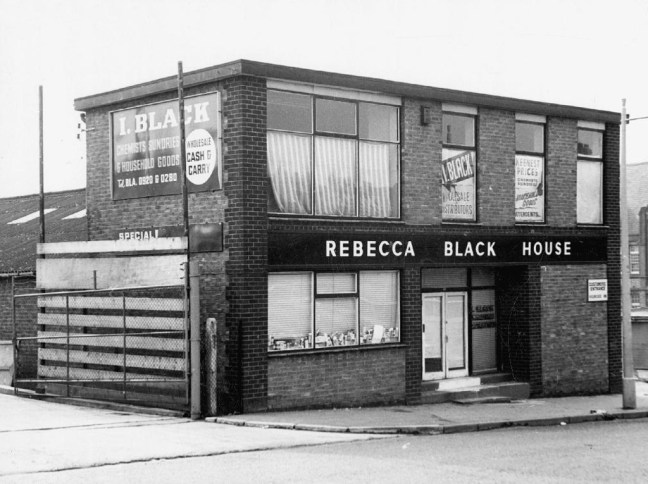
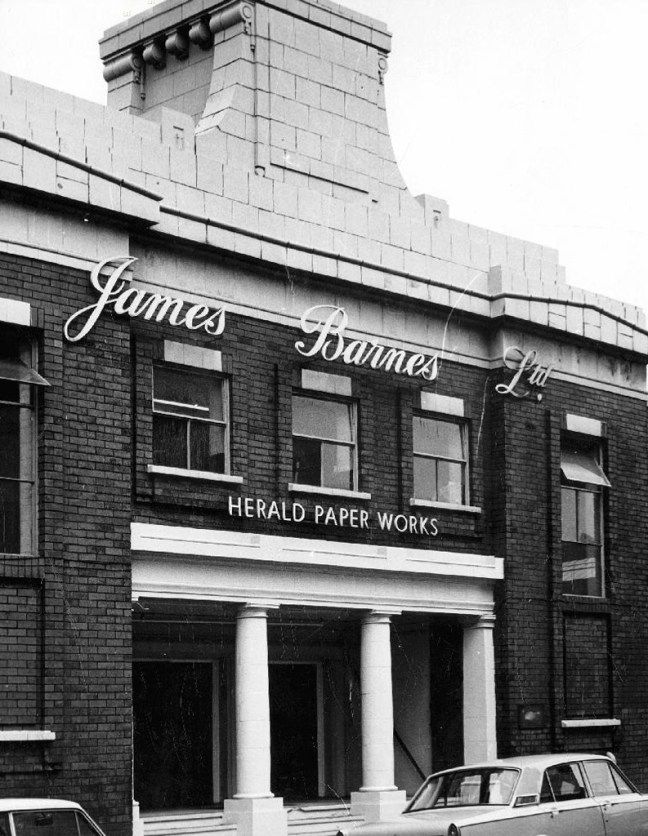
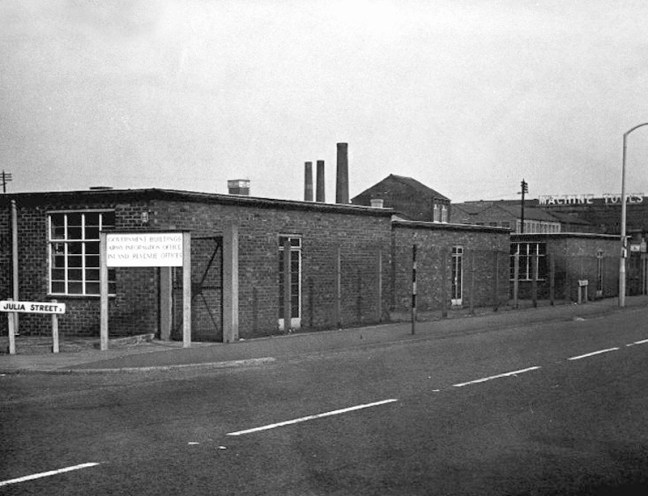
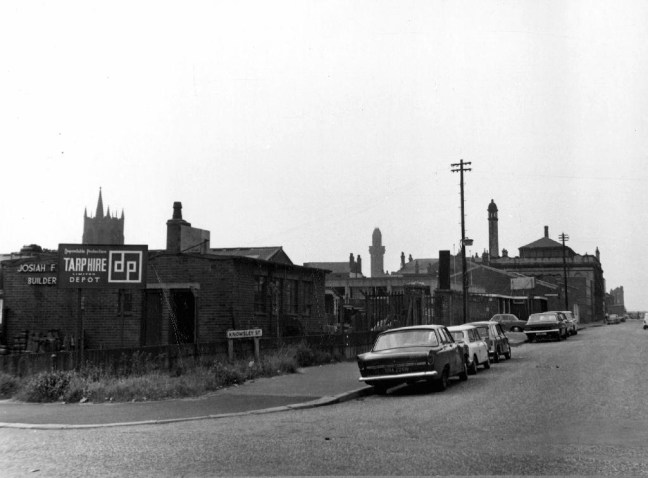
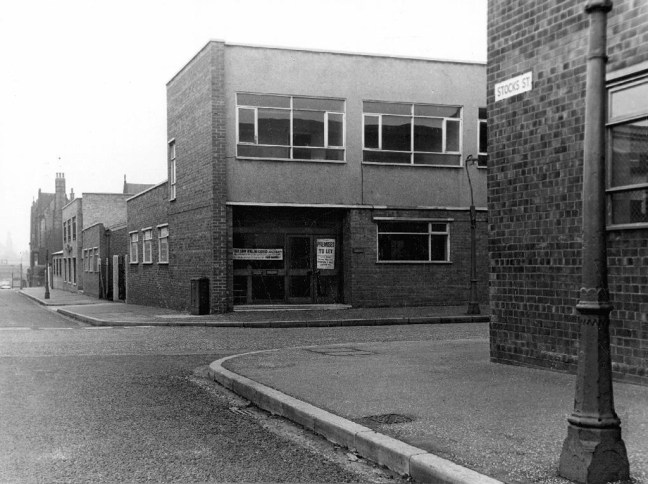
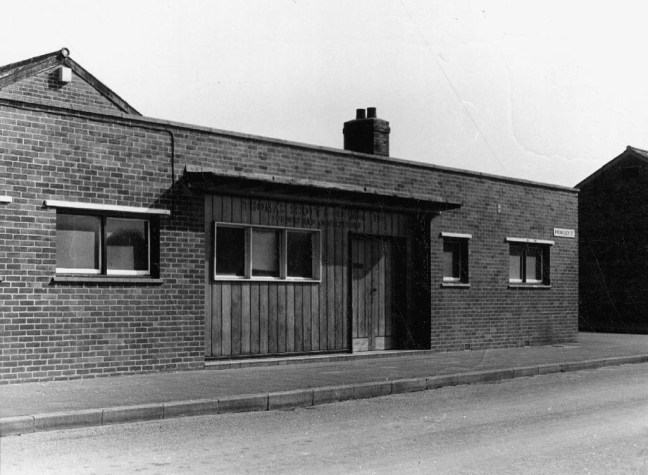
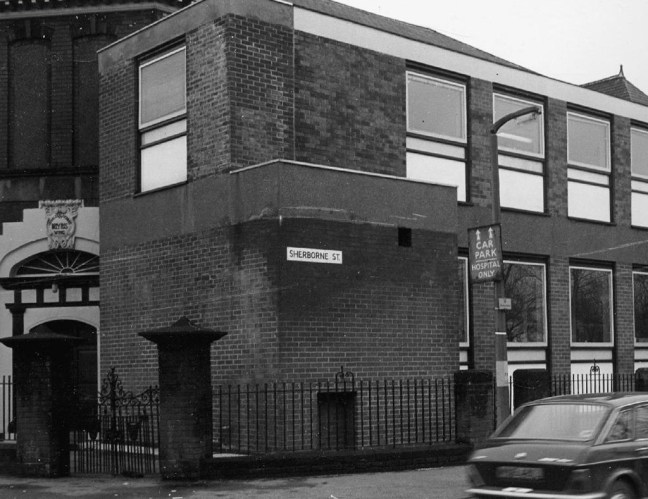
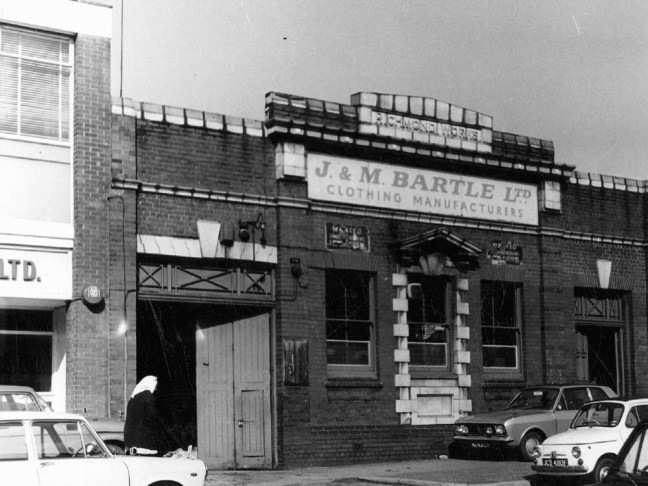
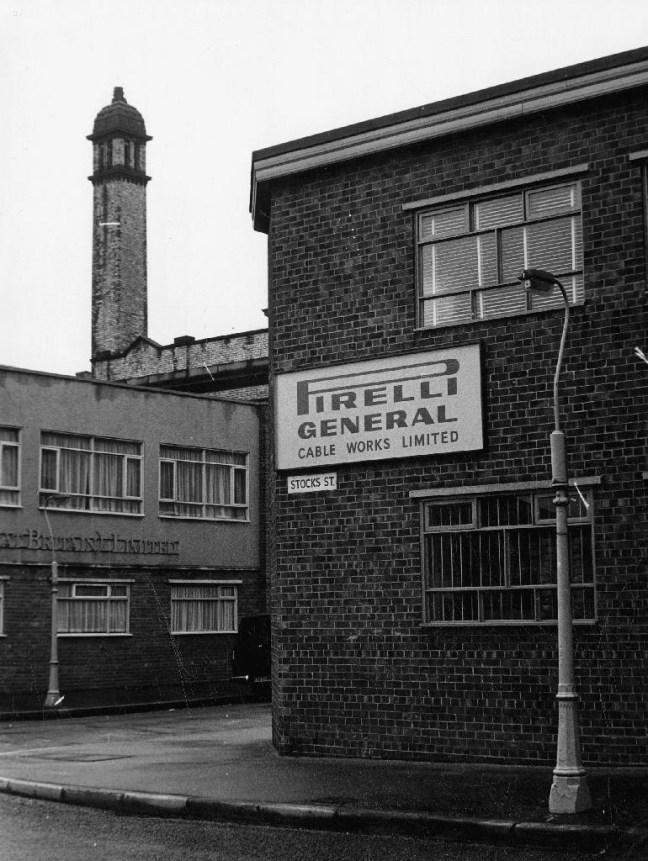
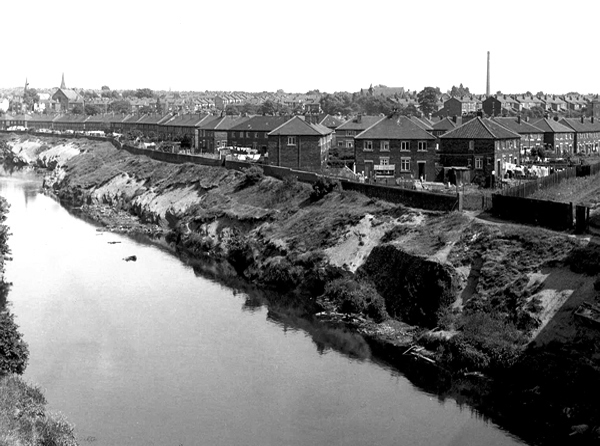
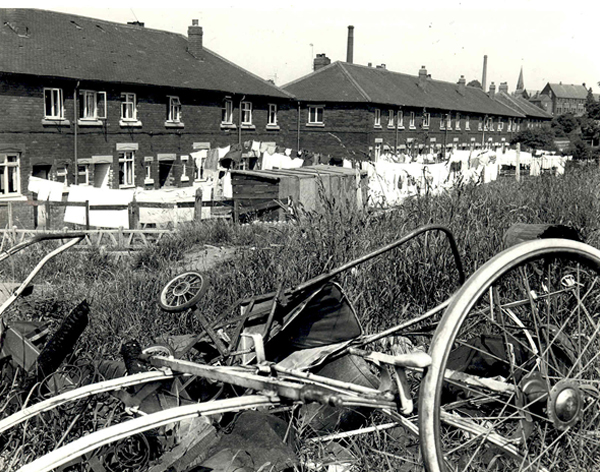
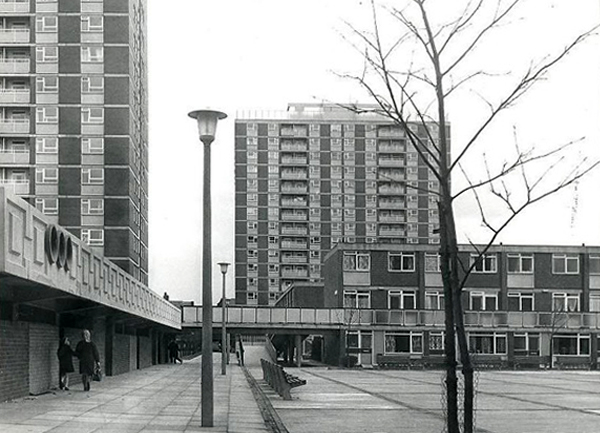
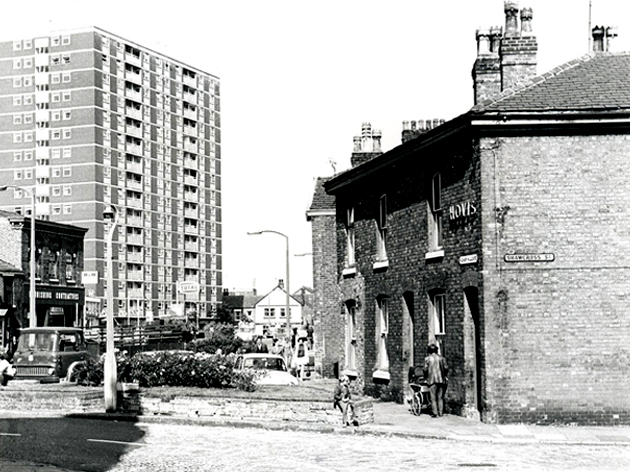
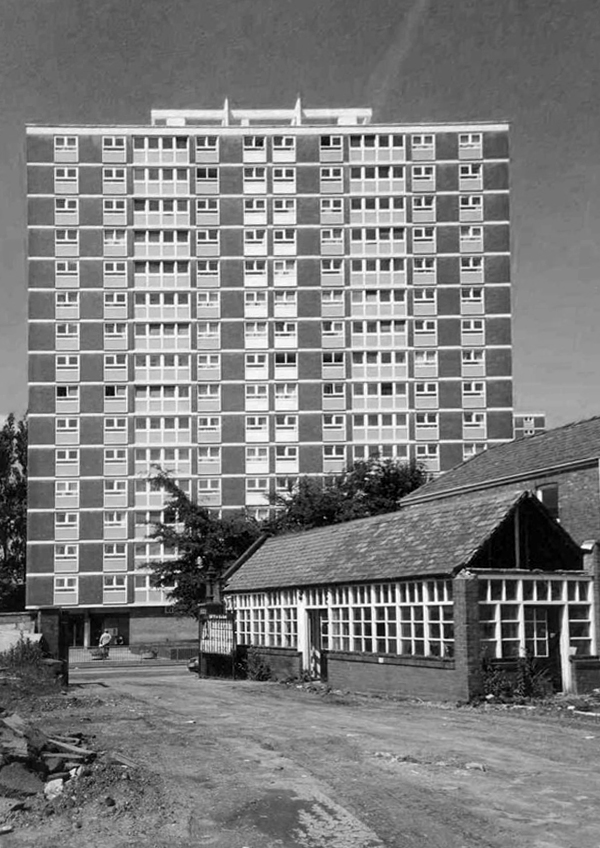
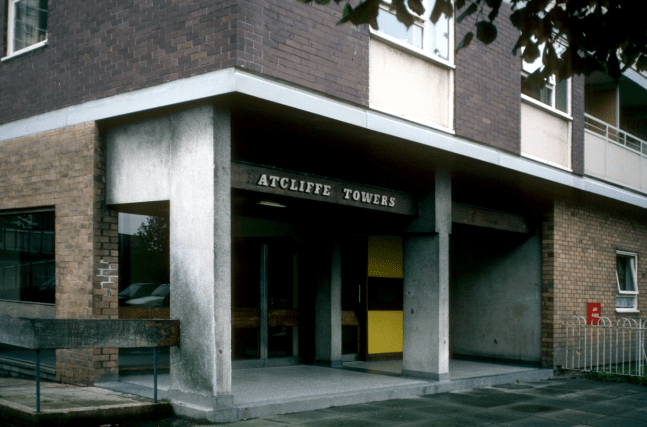
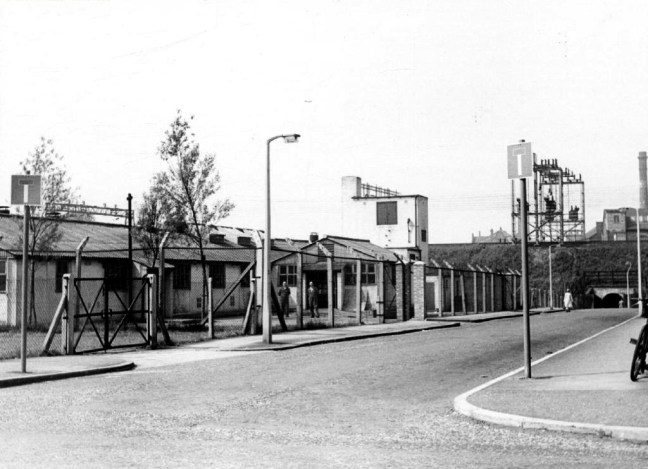
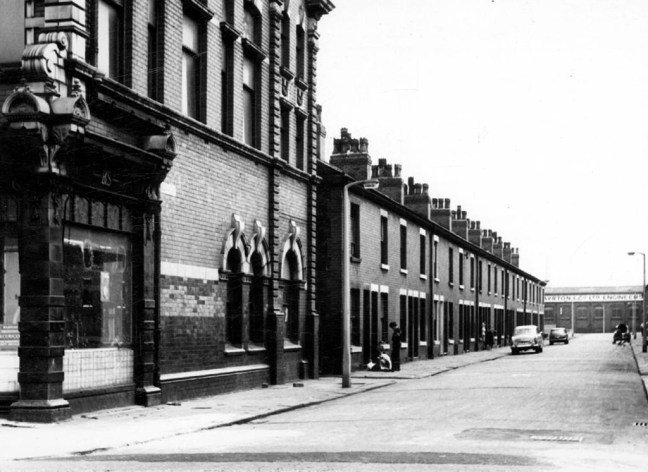
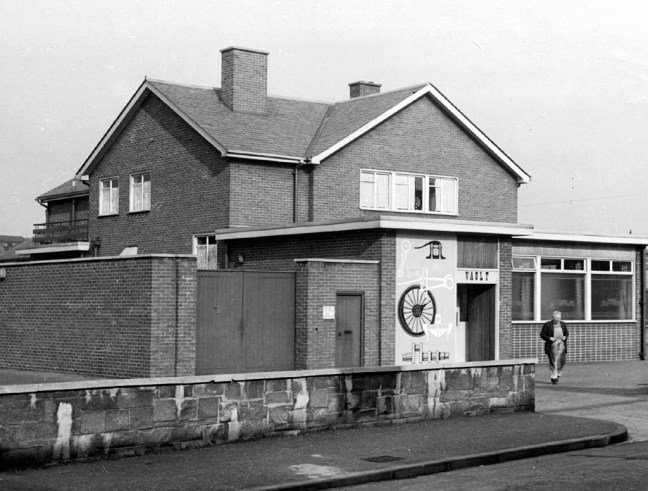
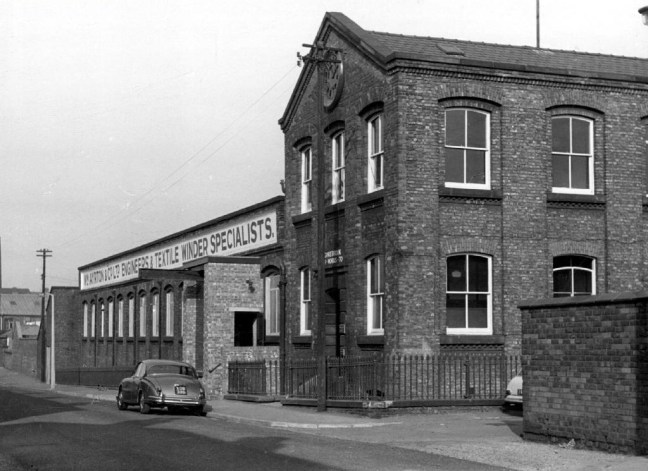
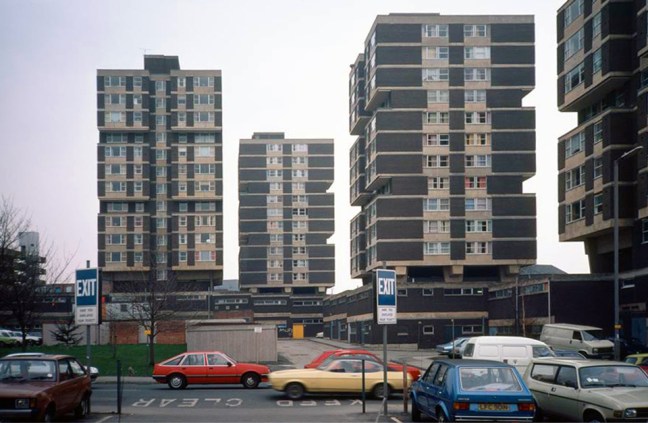
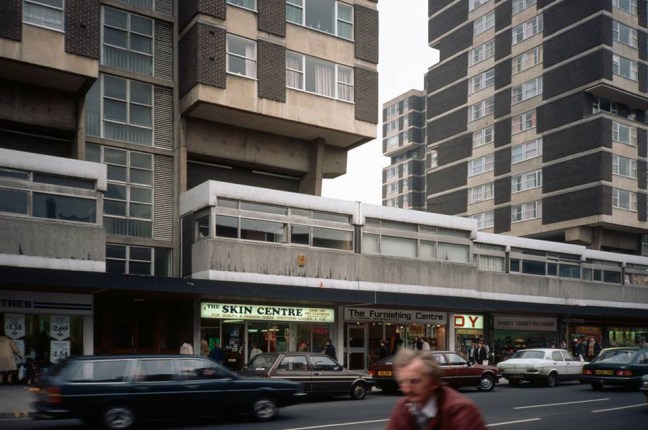
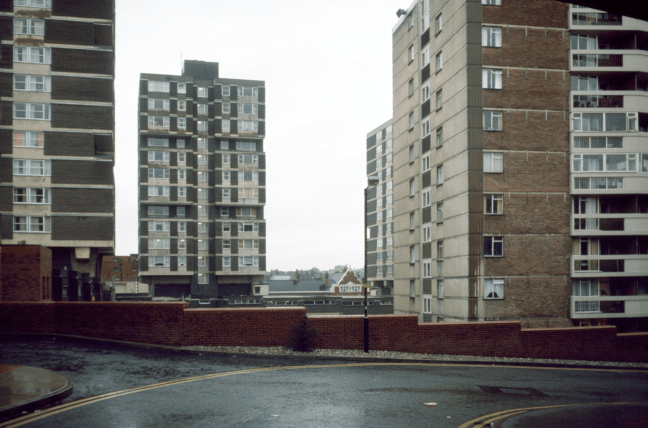
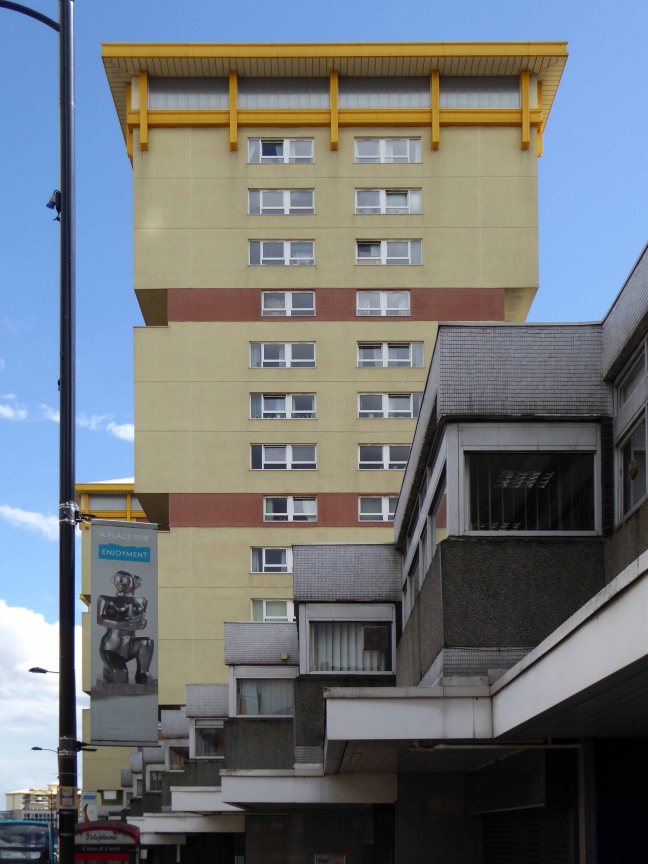
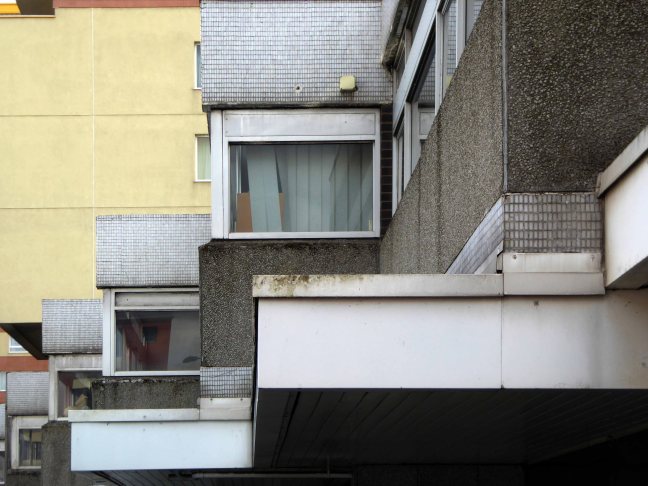
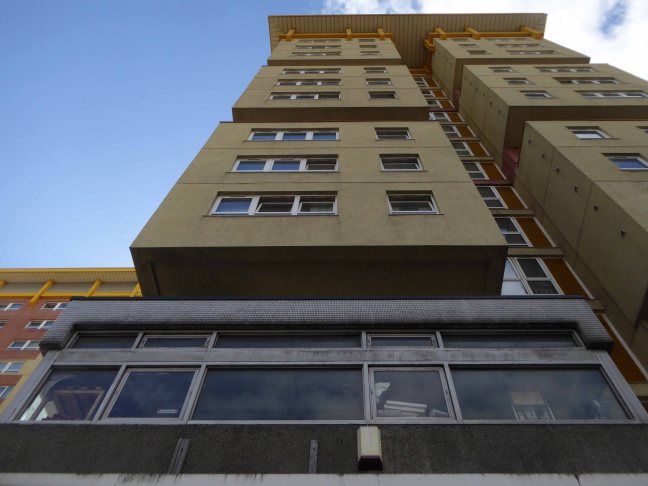
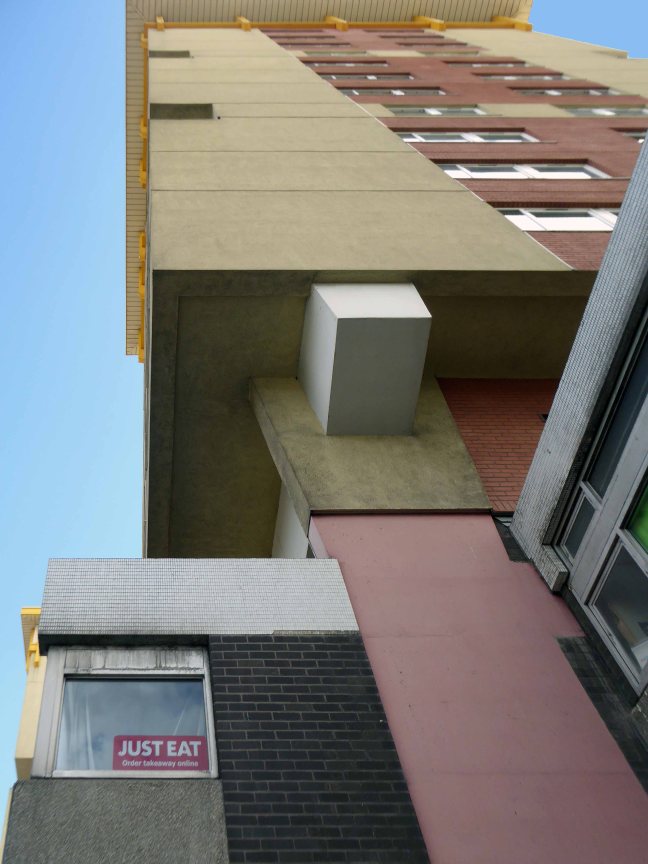
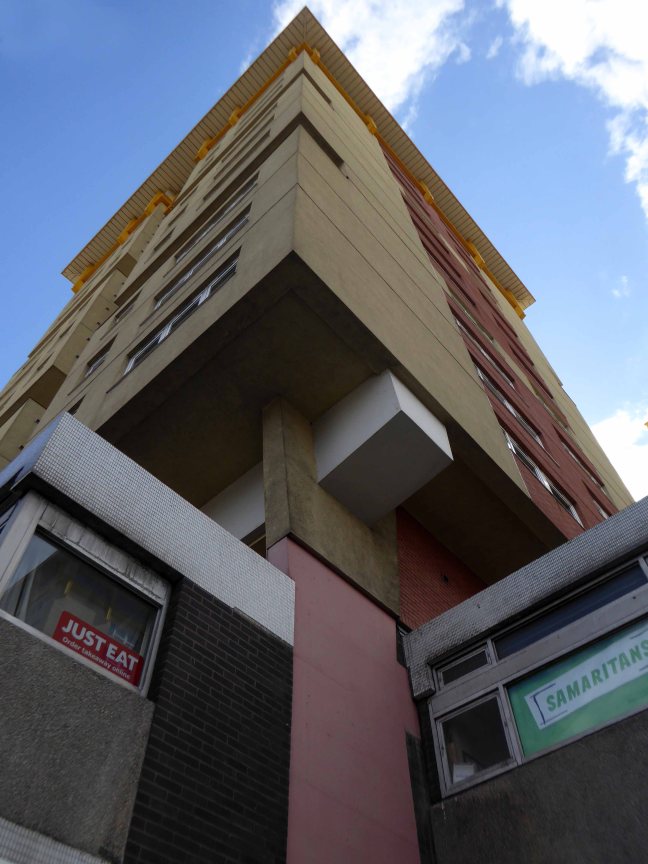
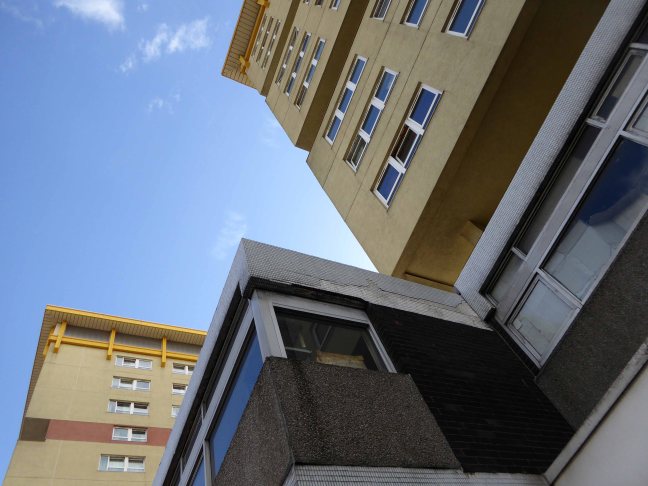
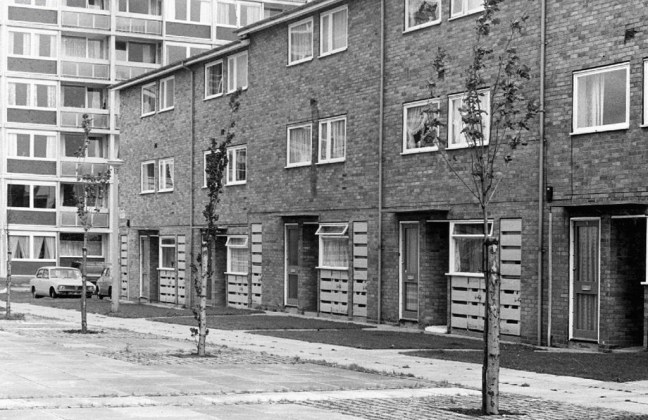
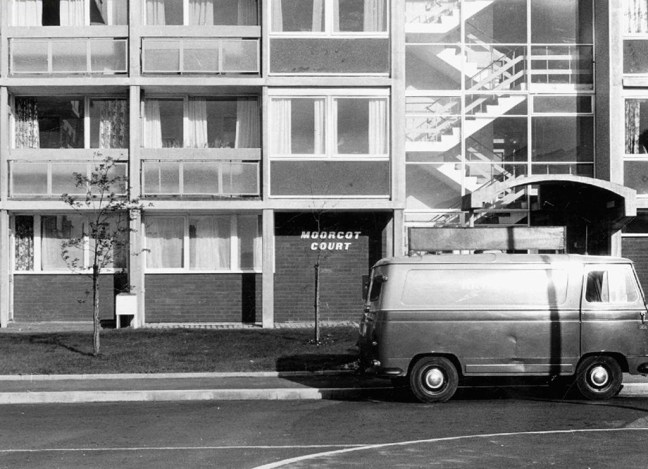
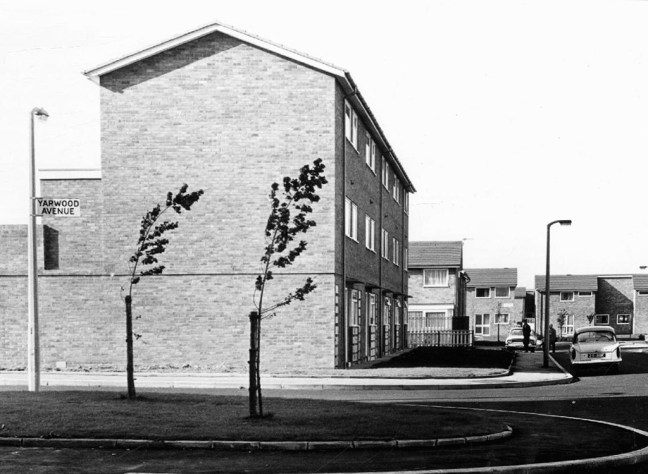
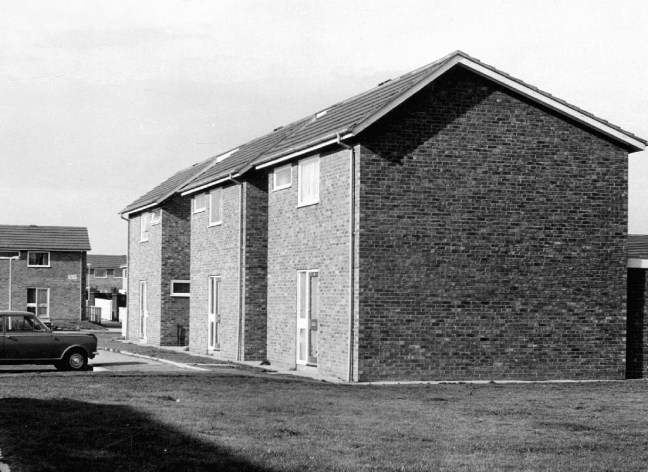
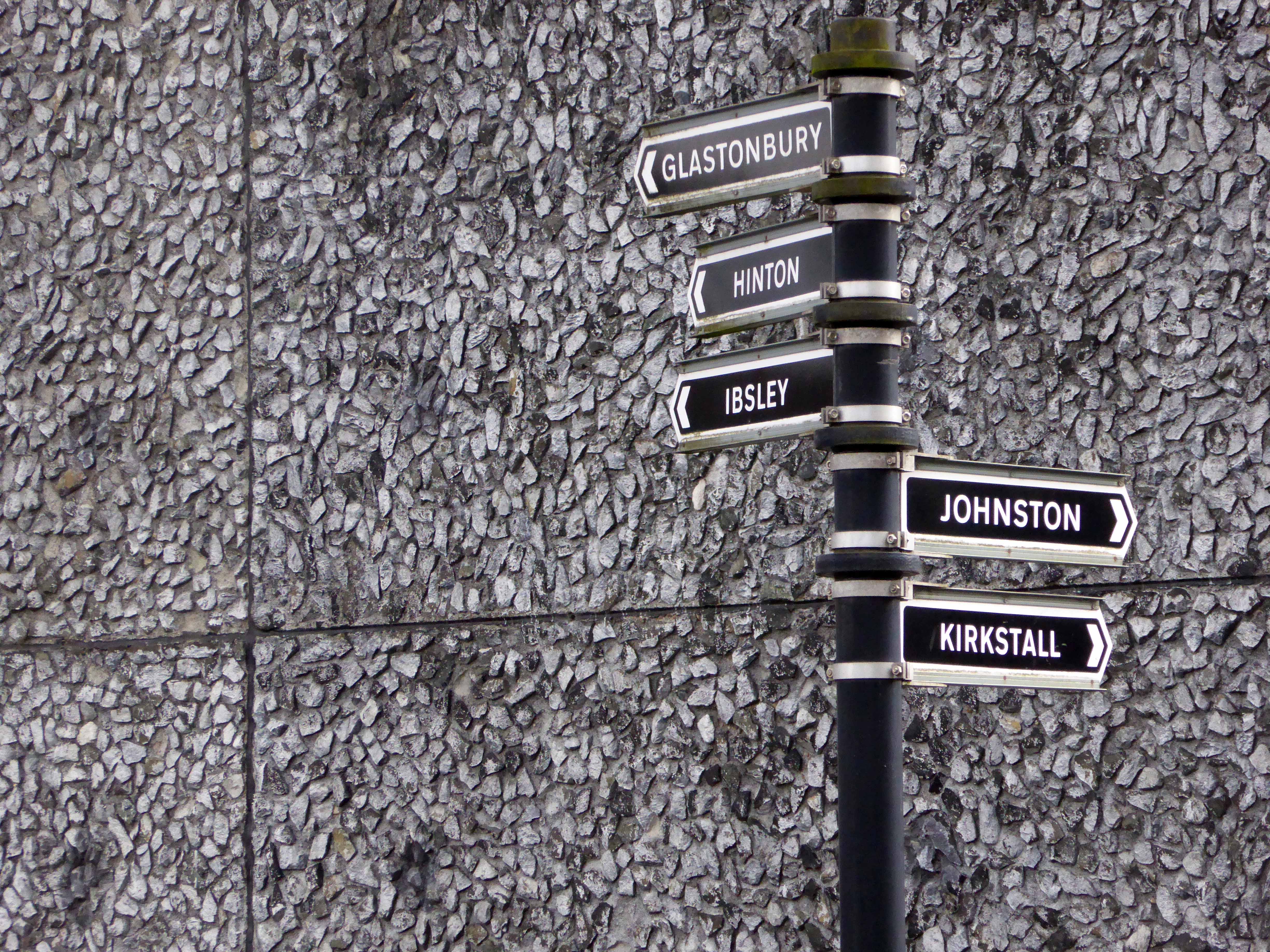
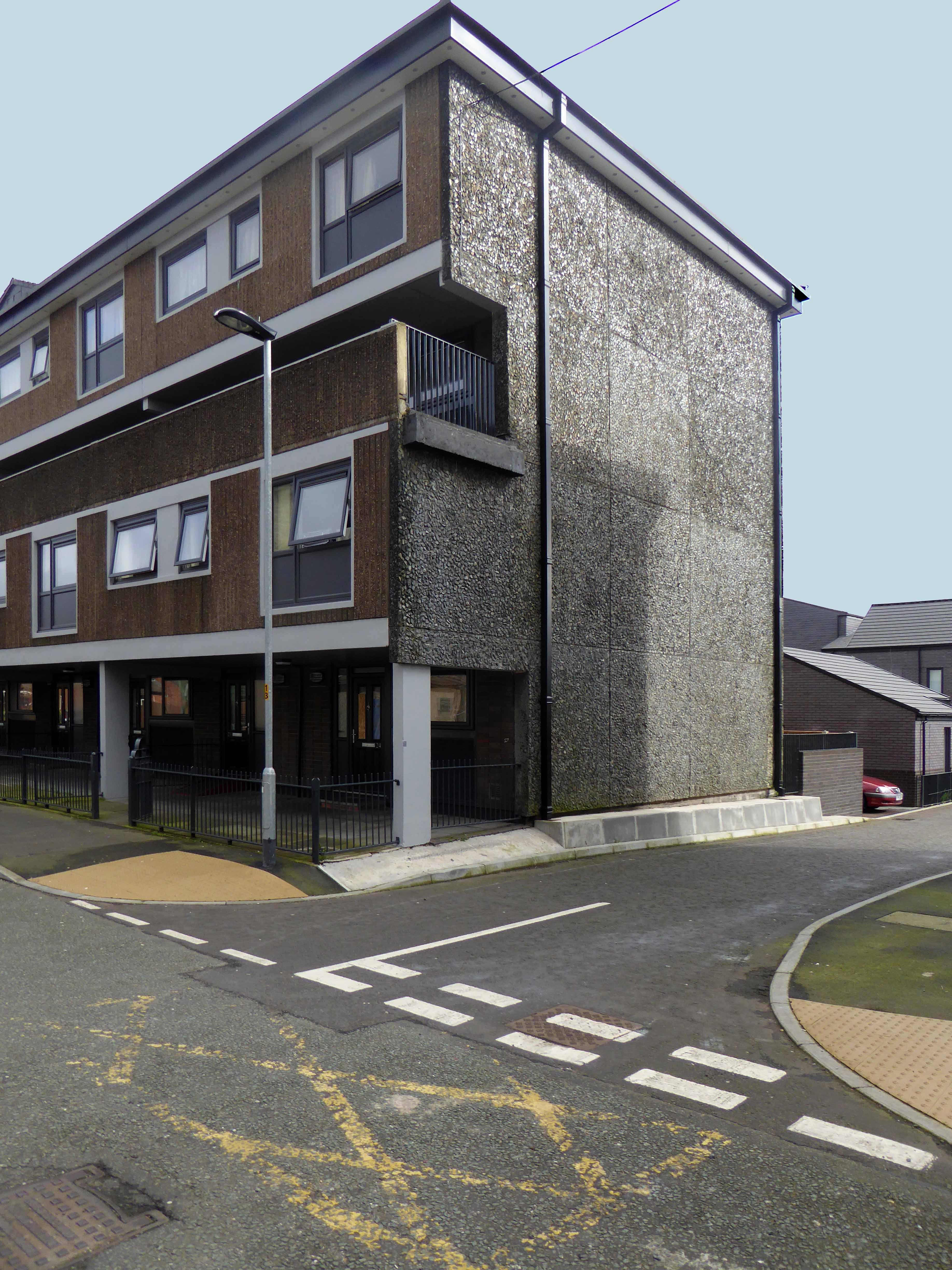
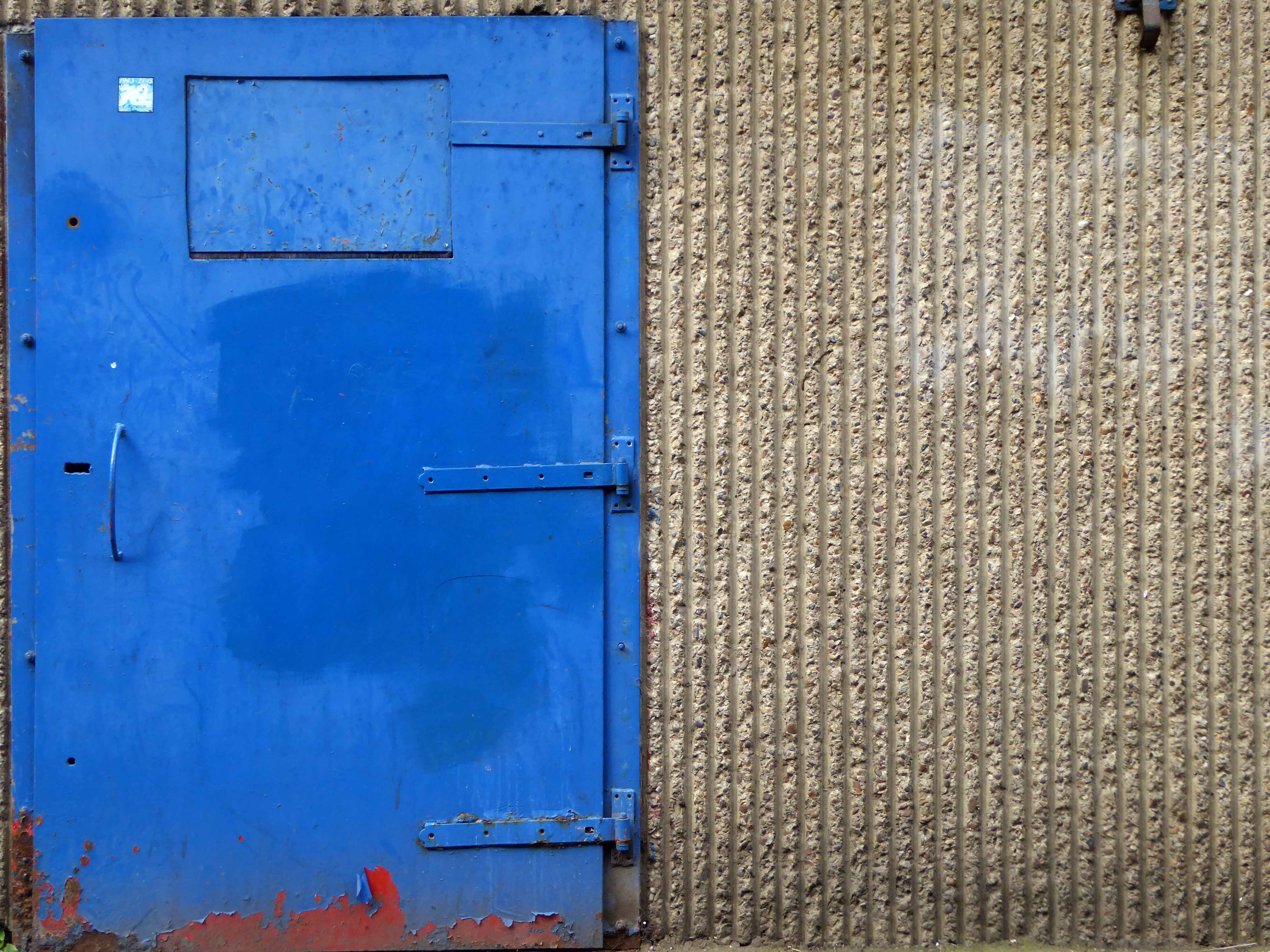
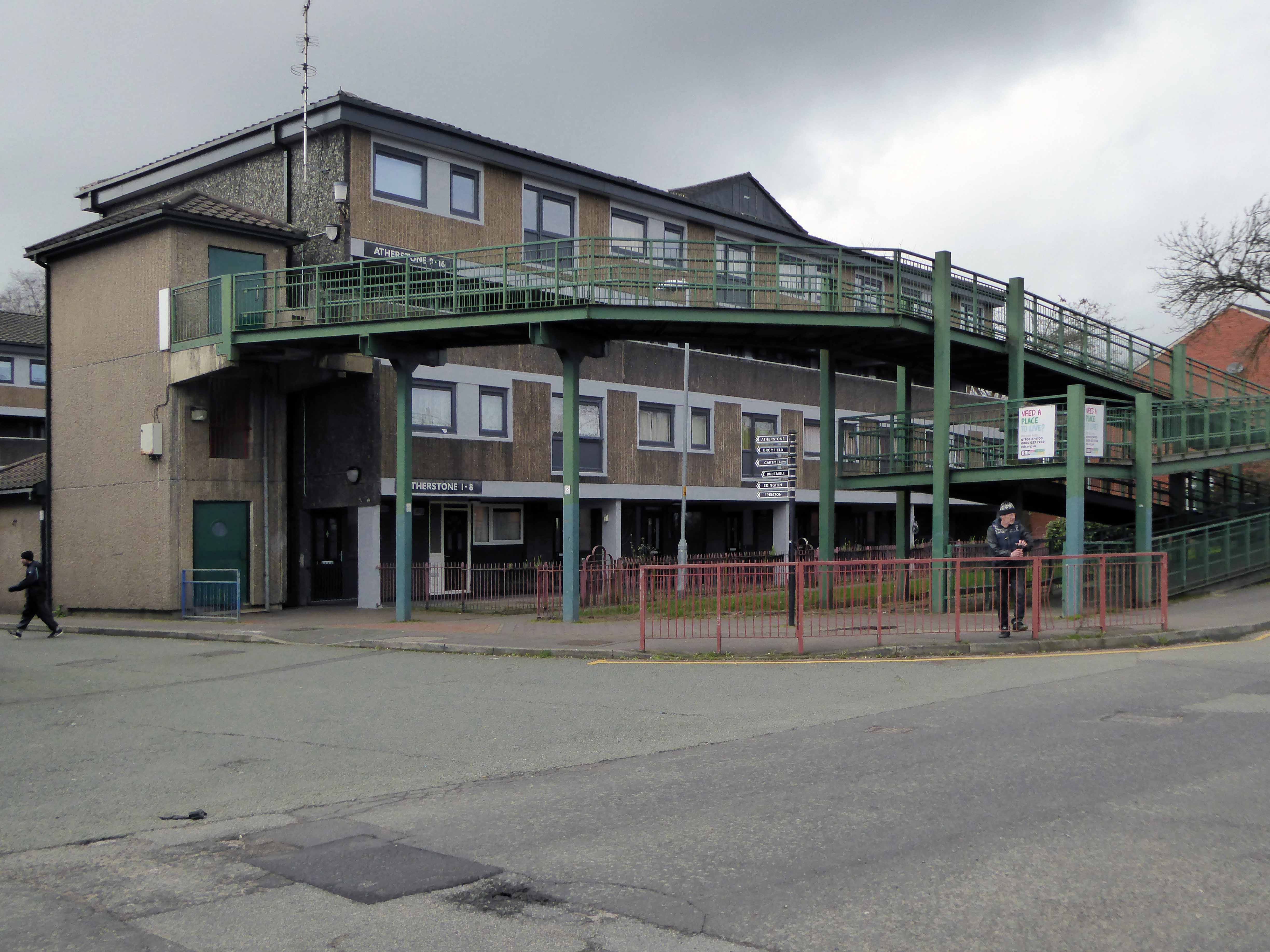
So let’s take a look at the ever so strange streets of Strangeways, in that period of change during the latter part of the Twentieth Century, when manufacturing, retail, repair and distribution were almost, just about to disappear in a puff of globalisation, economic depression and Thatcherism. Where Jack and Jill the lads and lasses, traded, ducked, dived, wheeler dealed from Cortinas, Transits and low milage, one owner, luxuriously leather-seated and walnut-dashed Jags. A vanishing or vanished world, where however briefly – Manchester went architecturally mod.

webmedia-1.php

webmedia-7.php

webmedia.php

Bent Street

webmedia-4.php

webmedia-6.php

webmedia-7.php

webmedia-9.php

webmedia-13.php

Broughton Street

webmedia-1.php

webmedia.php

Carnarvon Street

webmedia-1.php

webmedia-2.php

webmedia.php

Chatley Street

webmedia-5.php

webmedia-9.php

webmedia-10.php

webmedia-4.php

Cheetwood Street

webmedia-3.php

webmedia-5.php

webmedia-8.php

webmedia-9.php copy

webmedia-11.php

webmedia-12.php

webmedia-18.php

Derby Street

webmedia-1.php

webmedia-2.php

webmedia.php

Julia Street

webmedia-1.php

webmedia-2.php

webmedia-3.php

webmedia-5.php

webmedia-6.php

webmedia-8.php

webmedia.php

Knowsely Street

webmedia.php

webmedia-8.php

webmedia-5.php

webmedia-3.php

Sherbourne Street

webmedia.php

Stocks Street

All archival photographs from the Manchester Local Images Collection


Gorsey Bank – Stockport #3

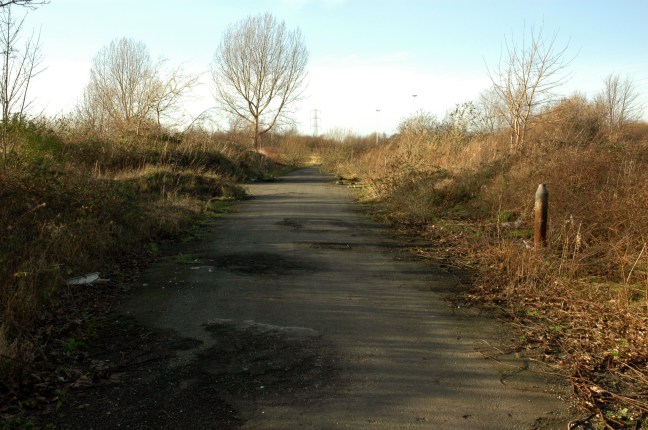
Once there were homes – 200 homes tucked between the M60, River Mersey and A560 Stockport Road.

2253


I’ve been here before, many times, seen those homes demolished and the site returning  to nature, brambled and overgrown, as the long standing lampposts disappeared for scrap, the kerbs covered in thick grass and moss.

DSC_0011 copy

Then the diggers arrived, the trees felled and the site cleared – no longer any trace remained of the lost homes of Gorsey Bank.

P1100079 copy

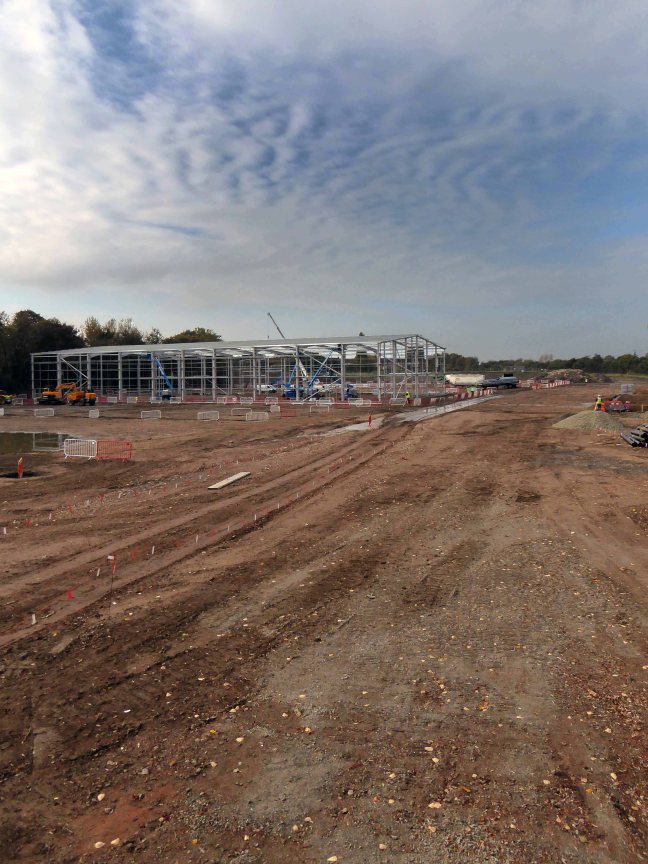
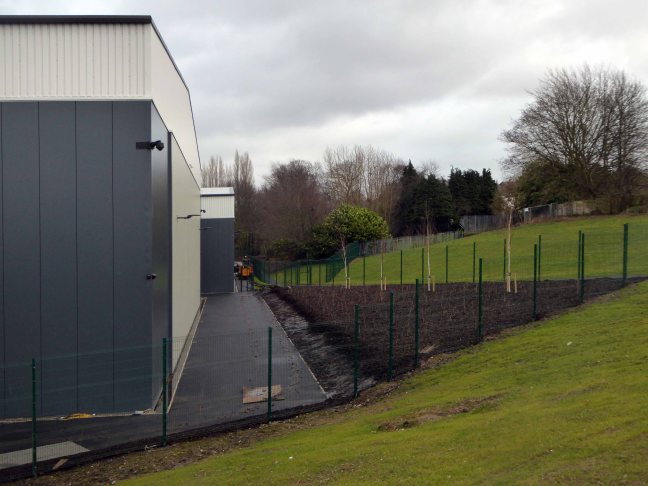
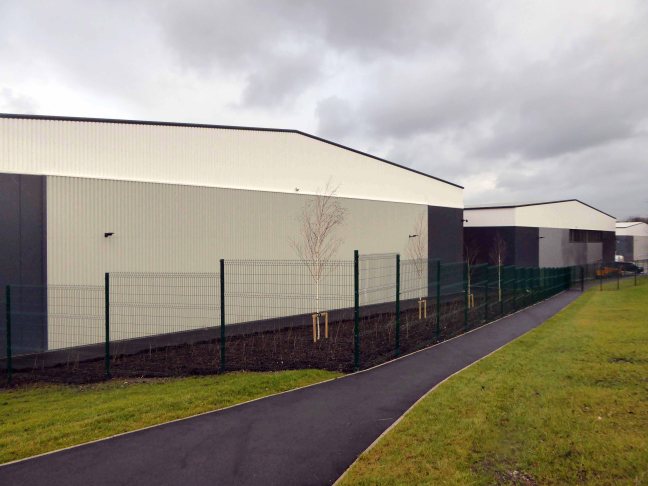
Building commences, steel erected, fences, roads and paths instated.

P1110236 copy

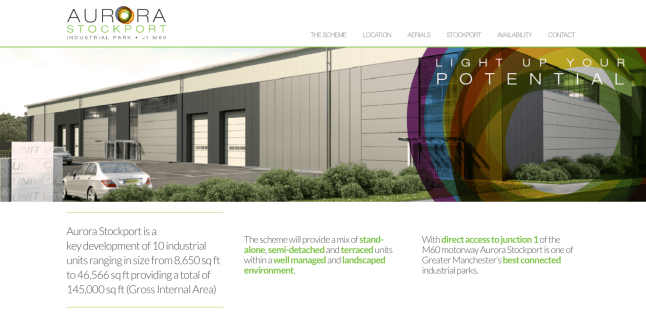
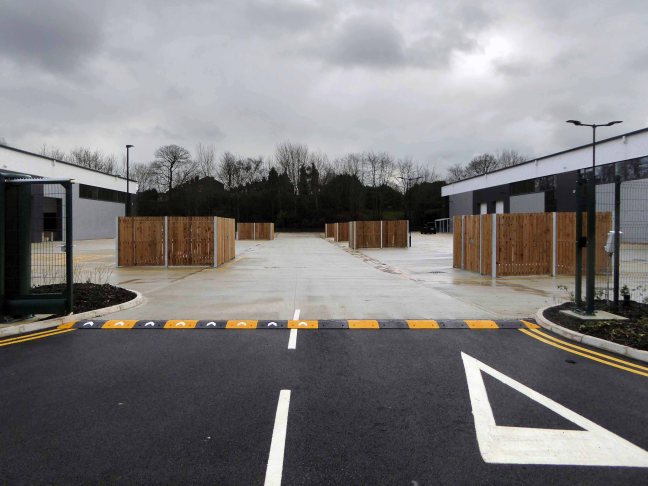
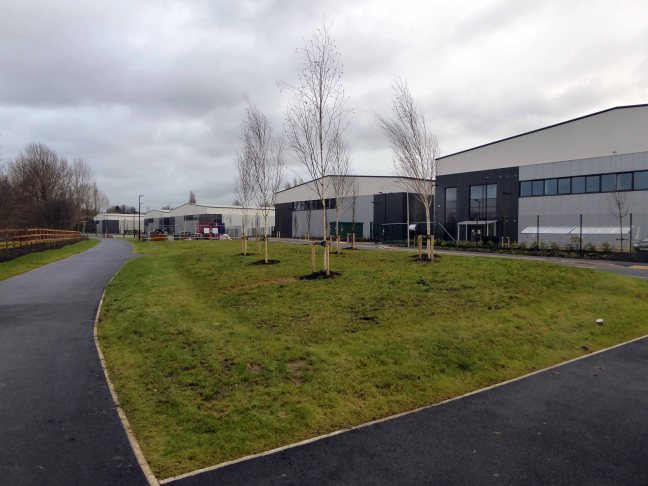
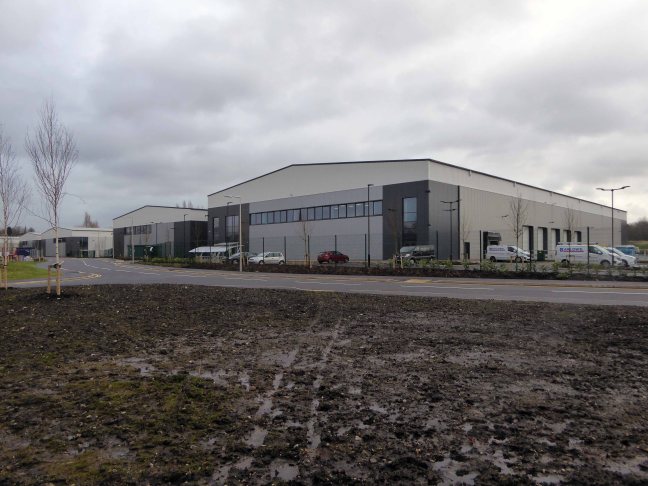
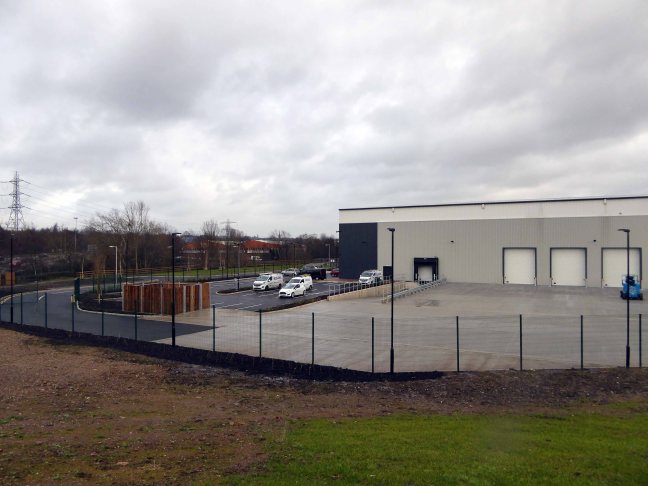
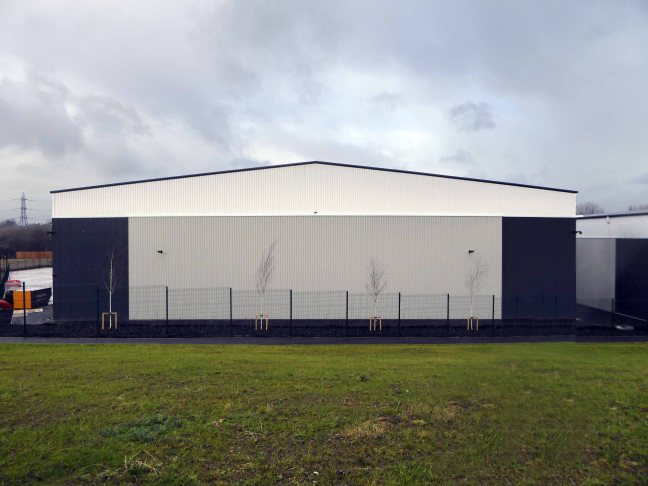
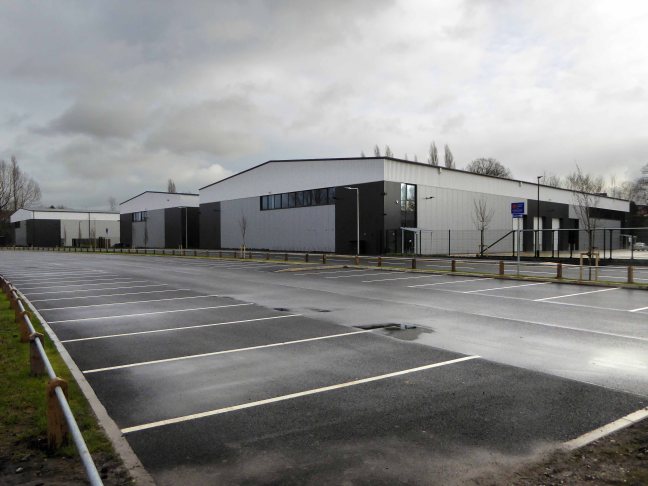
Welcome to the Aurora Industrial Park – open for business.

Screen Shot 2018-01-22 at 15.38.37

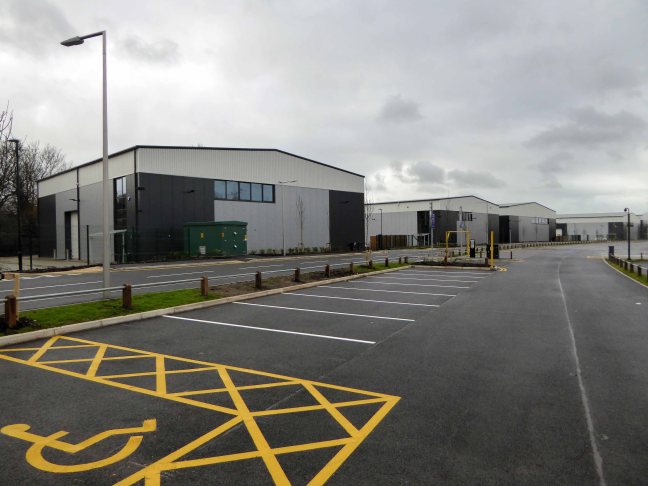
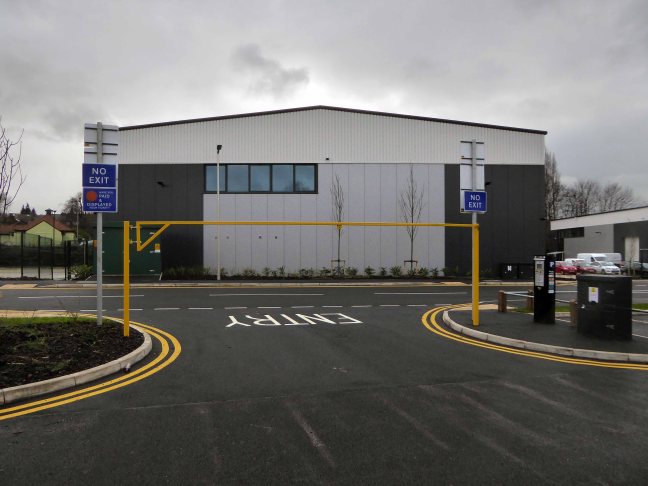
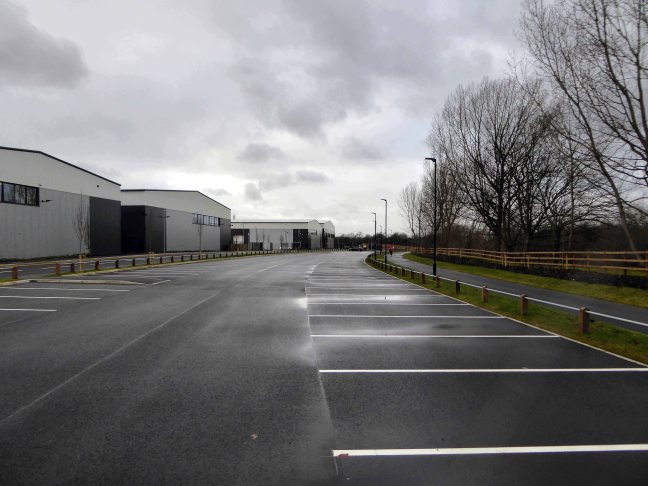
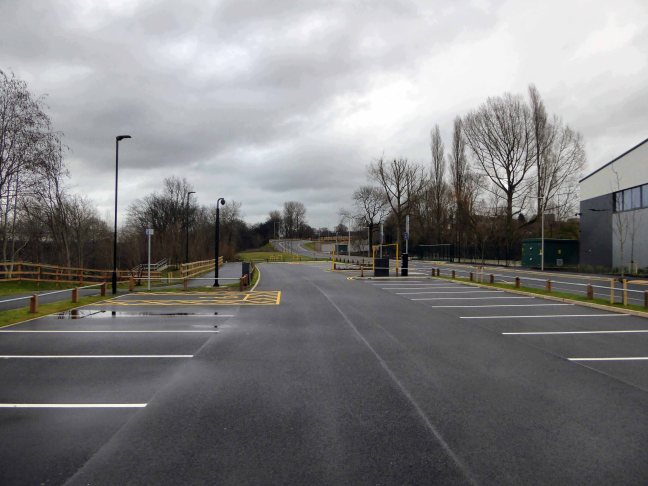
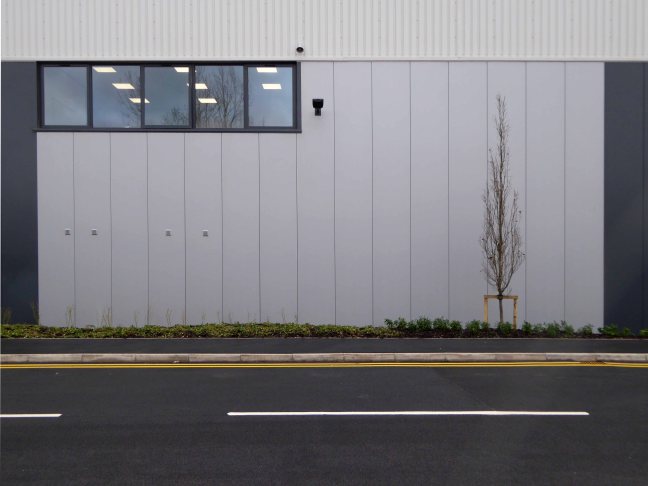
Emerging from the houses, the undergrowth, the Mersey clay and sandstone – a shiny new assemblage of state of the art industrial sheds. I’ll  wander by from time to time, listen to the ghostly chatter of busy neighbours, going about their business.

Wait for the trees and brambles to take over again.

P1220877

P1220878

P1220882

P1220884

P1220885

P1220887

P1220889

P1220892

P1220893

P1220894

P1220899

P1220901

P1220905

P1220906

P1220908

P1220909

P1220911


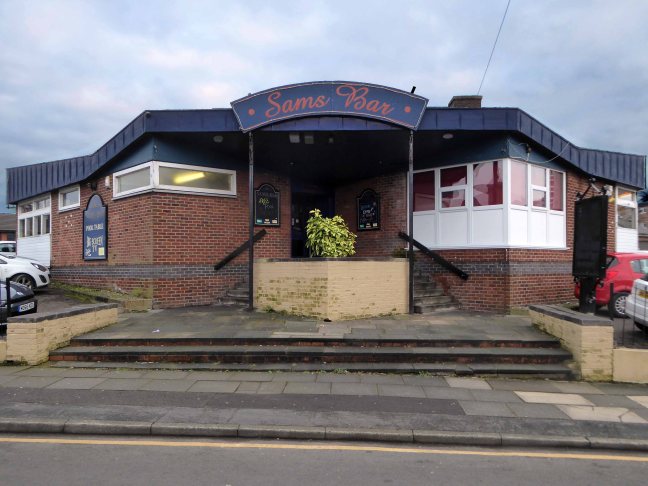
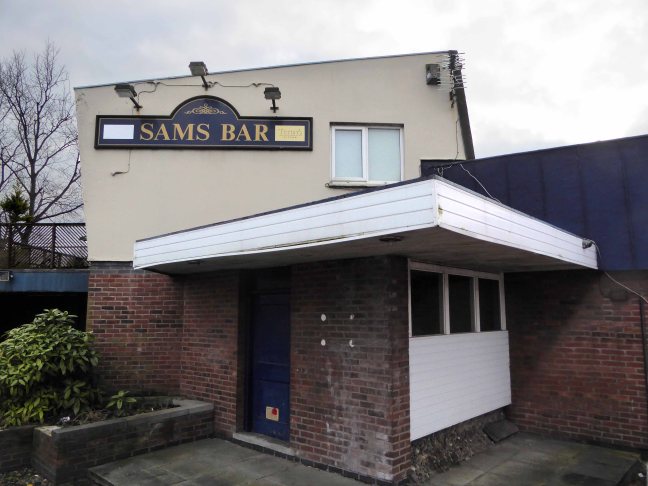
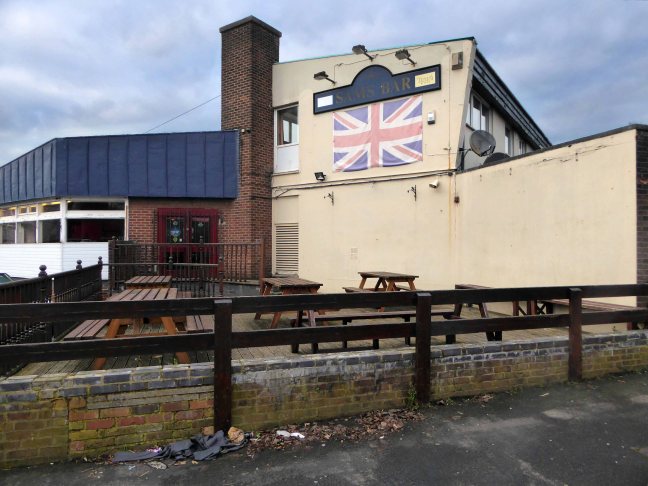
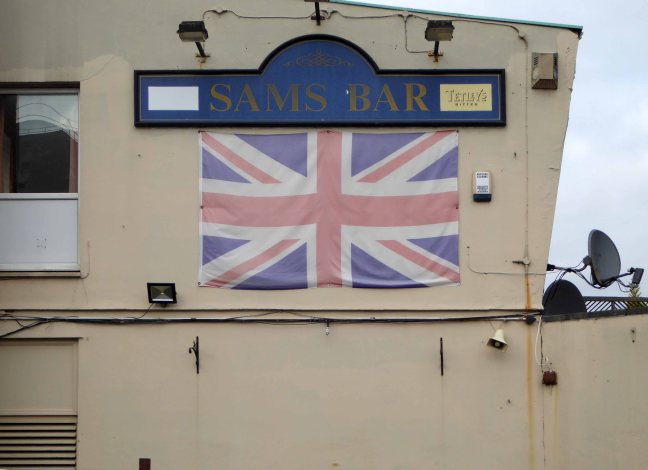
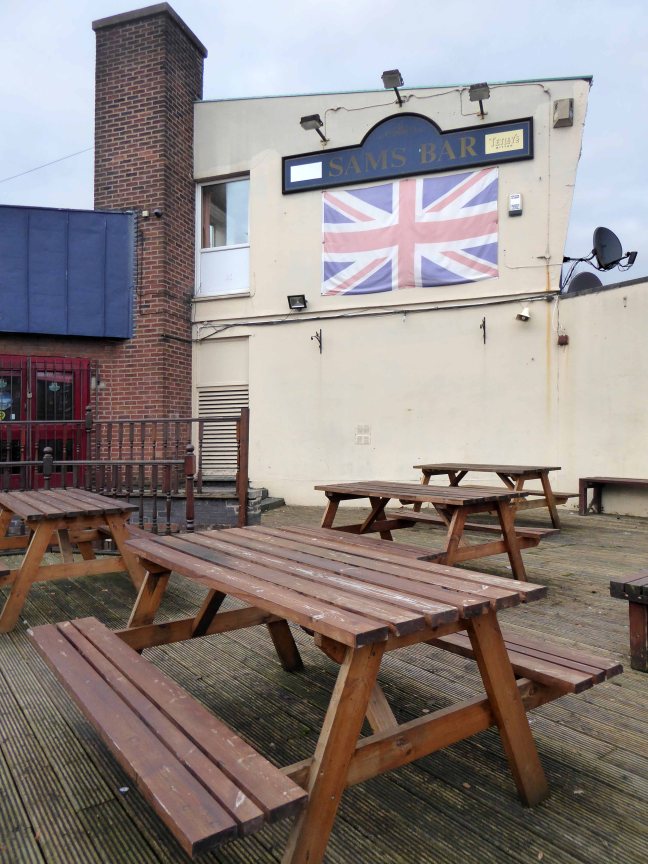
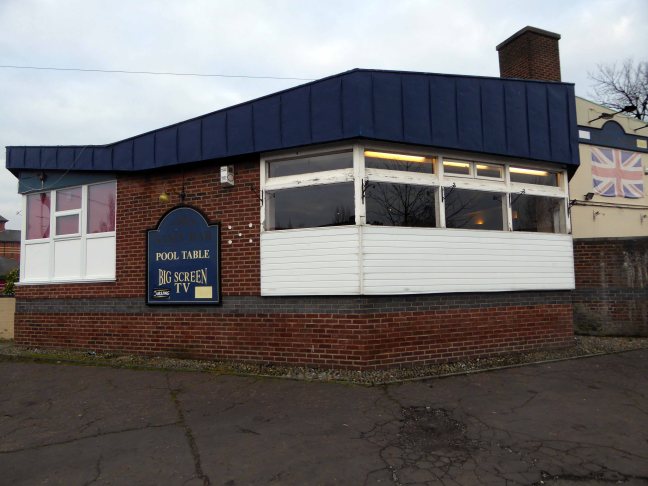
Sam’s Bar – Wigan

Screen Shot 2018-01-15 at 14.12.16

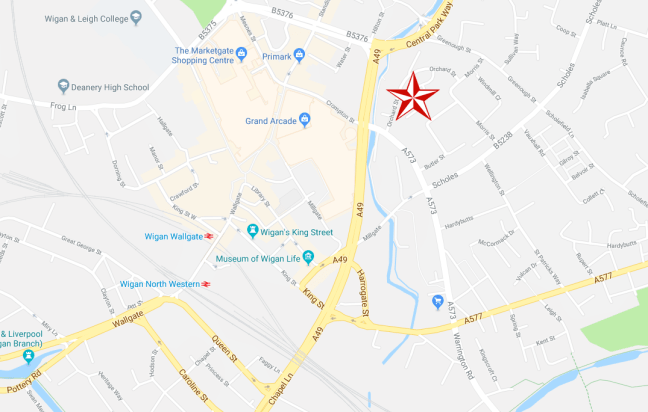
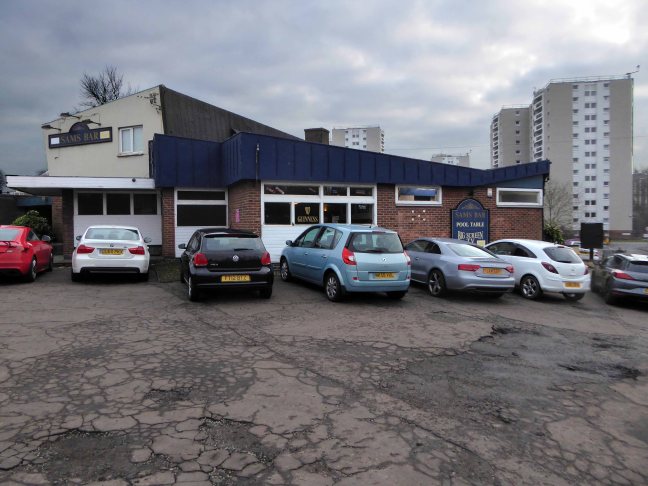
Sam’s Bar – Orchard St, Wigan WN1 3SW.

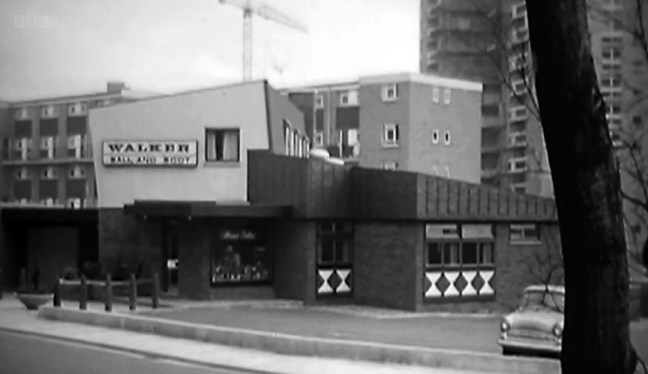
Once there was The Ball and Boot – oval or round, no dubbin required.

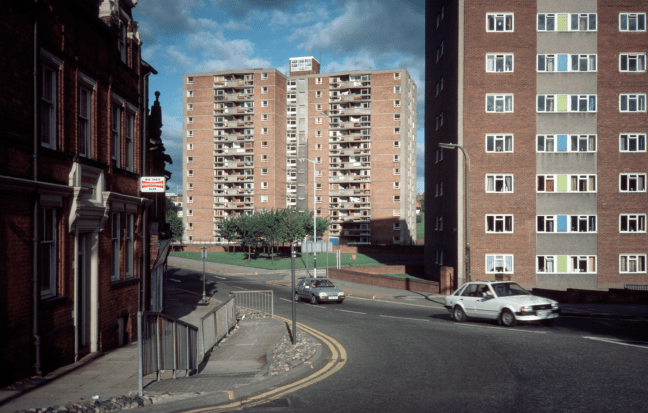
A Tetley Walker pub on the edge of the then new Scholes Estate – seen here in 1987.

Screen Shot 2018-01-15 at 14.18.18

Photograph Tower Block

This is the one and only photograph of its former black and white self.

zv7qdp2s

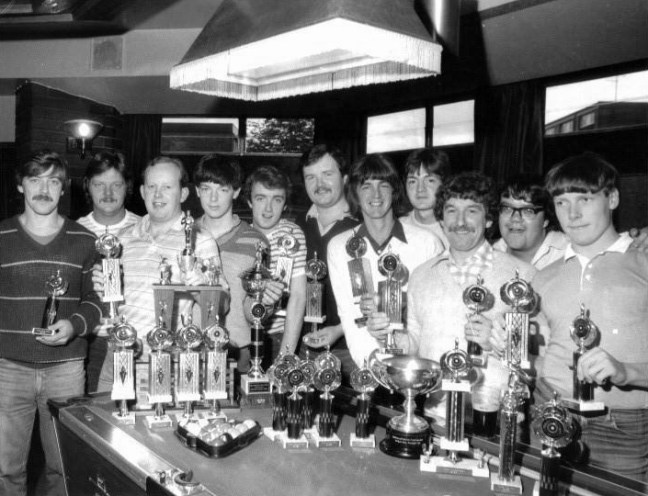
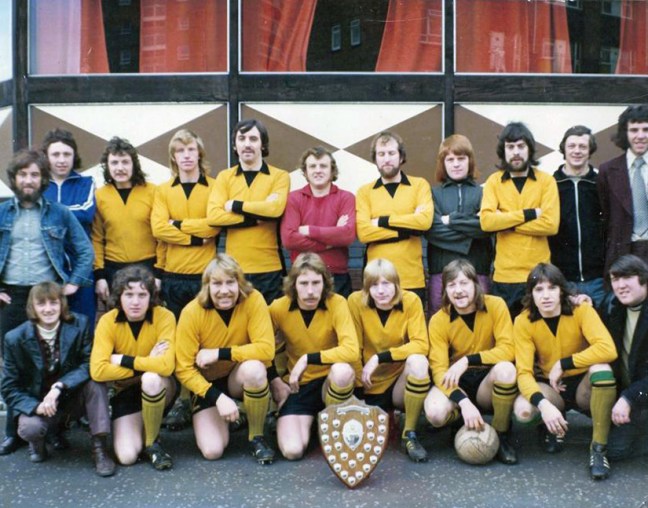
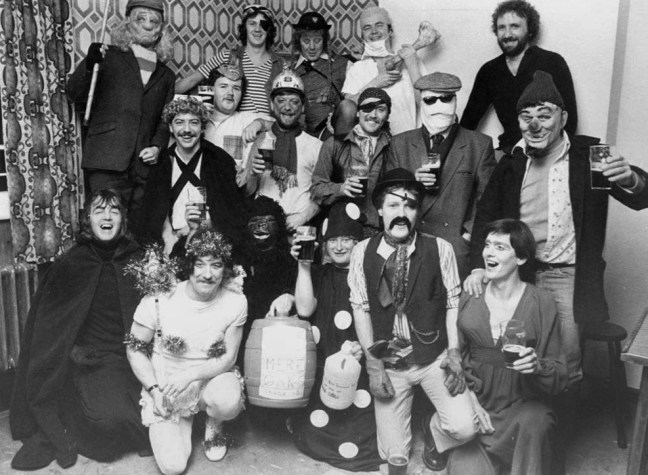
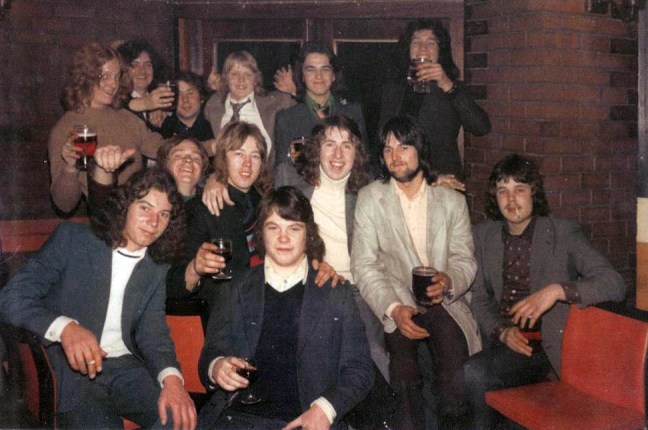
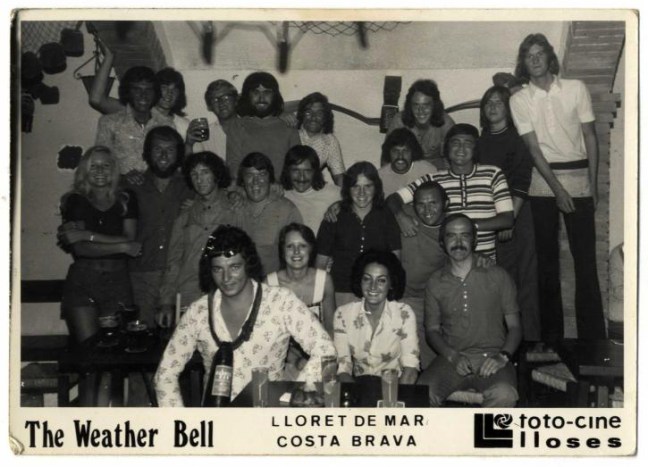
Though an internet search revealed a rich heritage of pool, football, fancy dress and trips to Lloret De Mar, for the lads and lasses of Lower Scholes.

o1e83y61

obiabruu

g7z7ihyd

umvkgs1y

awqzc8a8

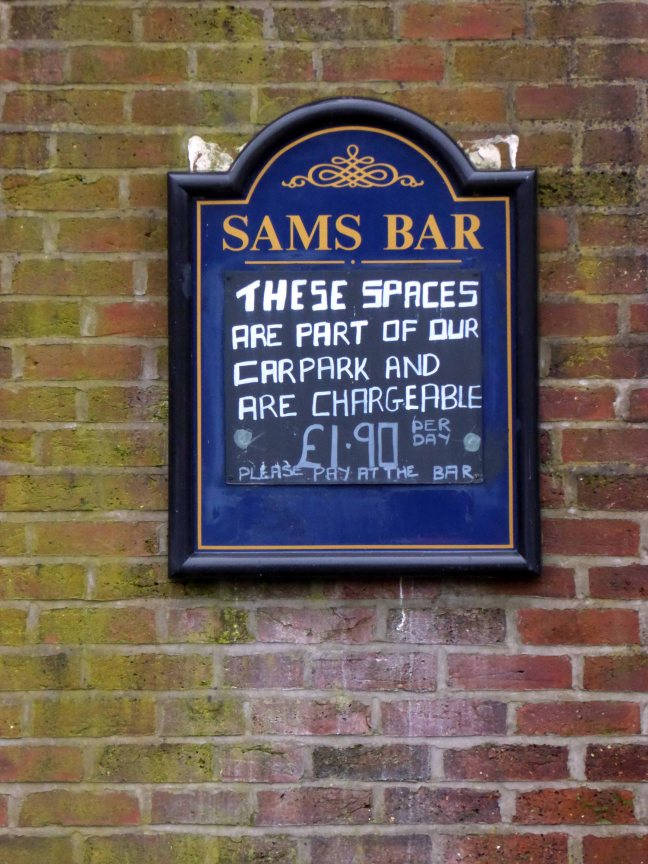
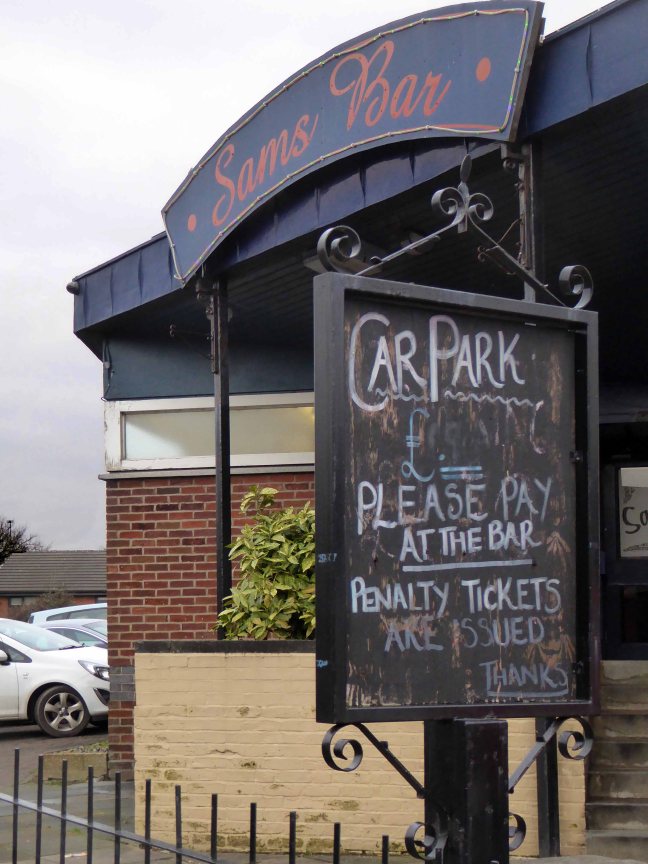
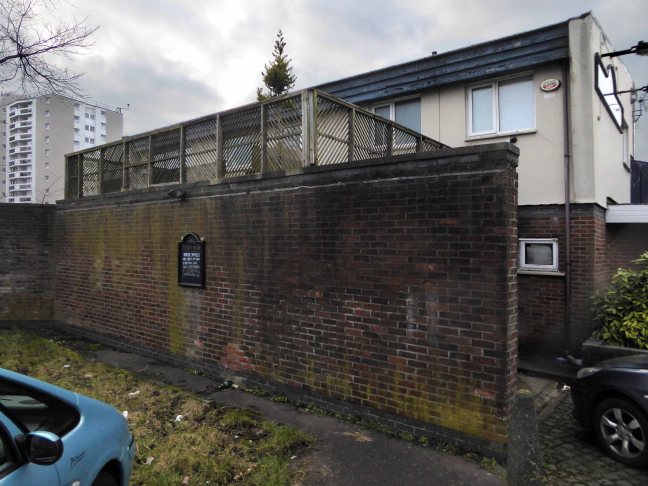
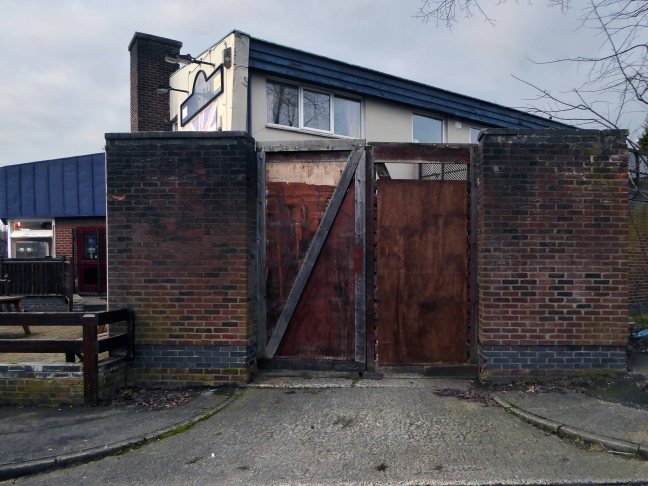
The pub now named Sam’s Bar, has retained its jolly jumble of modernist volumes and angles – though having lost the harlequin panels and off licence. Mid-morning the lights were on and the pub was surrounded by cars taking advantage of the £1.90 a day parking.

P1220736

The online reviews seem to divide opinion as to the quality of the current provision.

This pub is not a nice place to visit. If your not a regular you get leered at all night, the people and staff are absolutly terrible. You will wait at the bar all night waiting to get served, whilst all the regulars get their drinks. Then and only then will you get yours. You will see a fight at least once a night. Karaoke is only for those of us who are blessed with the ability to sing – they wont let you up again if not. This pub needs knocking down it’s a menace to society, out of 10 a big fat 0.

Solid, dependable and well-run. Friendly bar staff and regulars, local and national newspapers, rugby league memorabilia, jukebox, pool table, and very fair prices. Has been my local for years, ever since I got tired of the landlord turnover at the Cherries. I’ve never seen anyone refused a go at karaoke, including me, and I can’t sing, and rarely pick a song anyone likes. So you carry on spouting tripe, and I’ll carry on drinking at Sam’s Bar Scholes.

Beer in the evening.

You’ll have to swing by and judge for y’self – my own karaoke tune of choice as ever:

In The Ghetto.


P1220729

P1220731

P1220733

P1220735

P1220738

P1220740

P1220741

P1220742

P1220744

Mottram Street Flats – Stockport

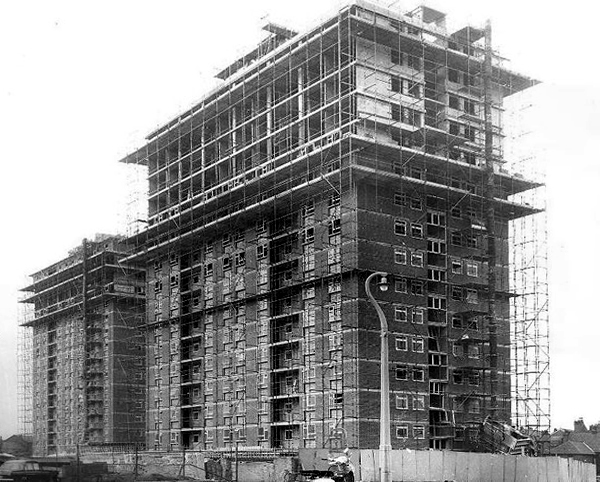
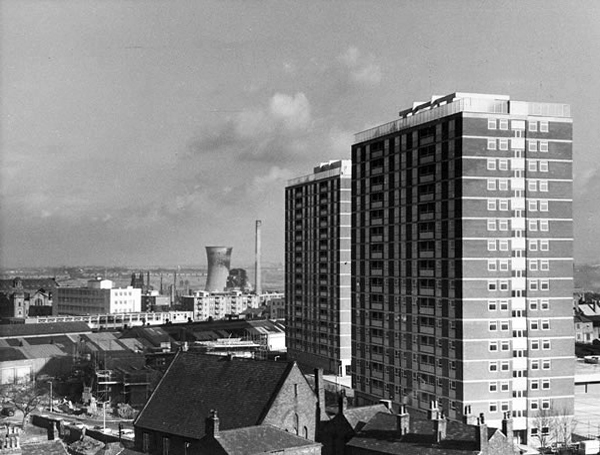
A post-war northern town, facing the problems of bomb damage, poor quality housing, and the pressing need for new homes.

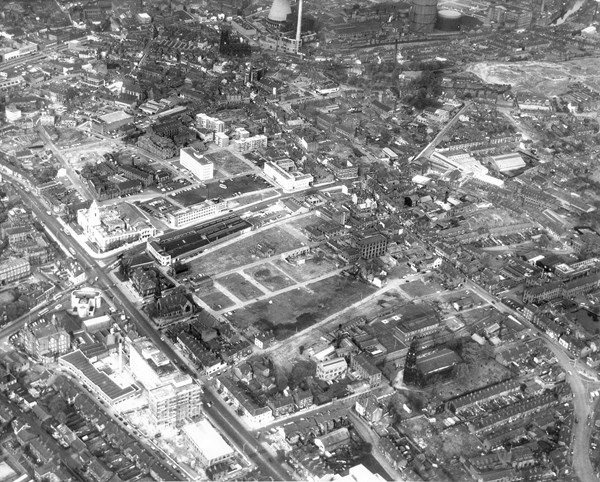
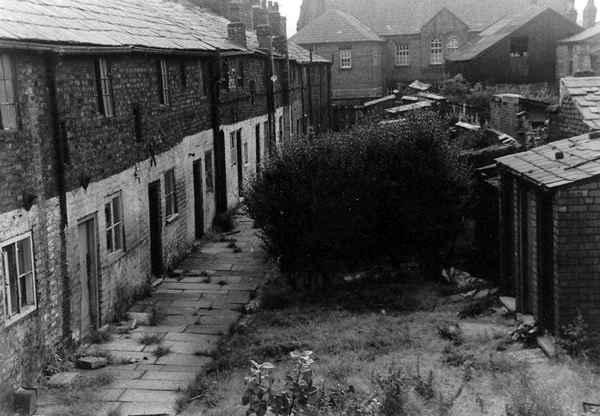
In 1963 there seemed to be space and the will to build, the site at the centre of the image flanked by ageing Victorian terraces and industry.

5060

1960a

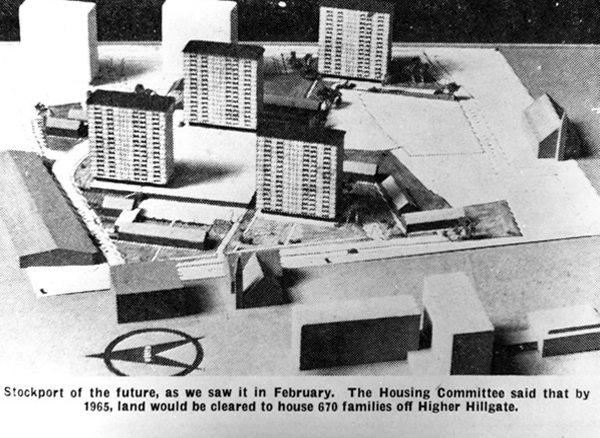
Soon to become the Mottram Street Development.

31117

5061

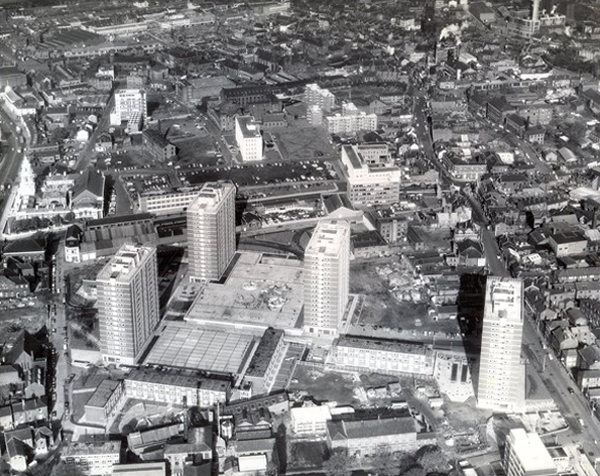
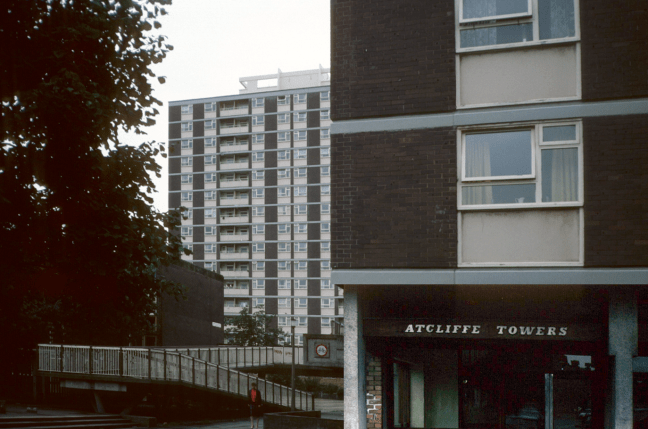
Back in 1965 these were the highest housing tower blocks in Greater Manchester.

The work of borough architects John Rank and Clifford Fernley.

1348

123

1351

1352

1353

34249

47177

1960’s Photographs from the Stockport Image Archive

Screen Shot 2017-10-22 at 14.01.33

Screen Shot 2017-10-22 at 14.02.34

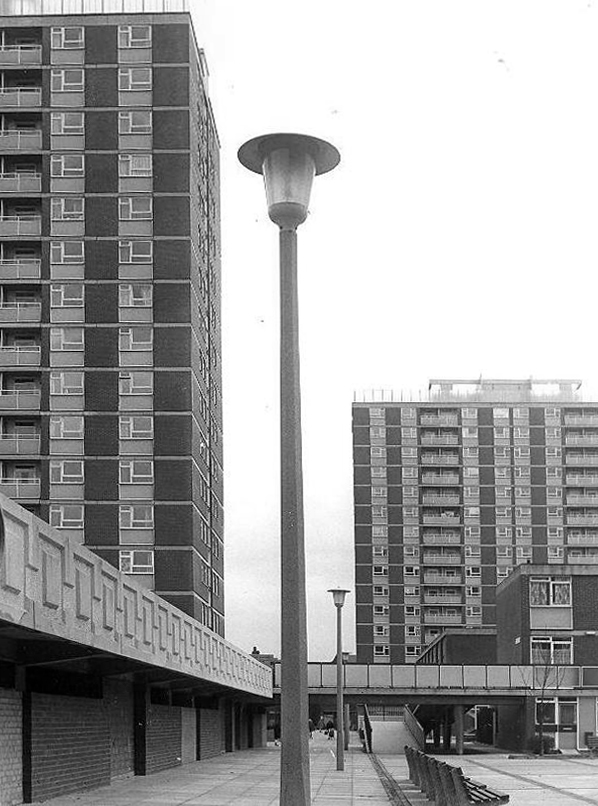
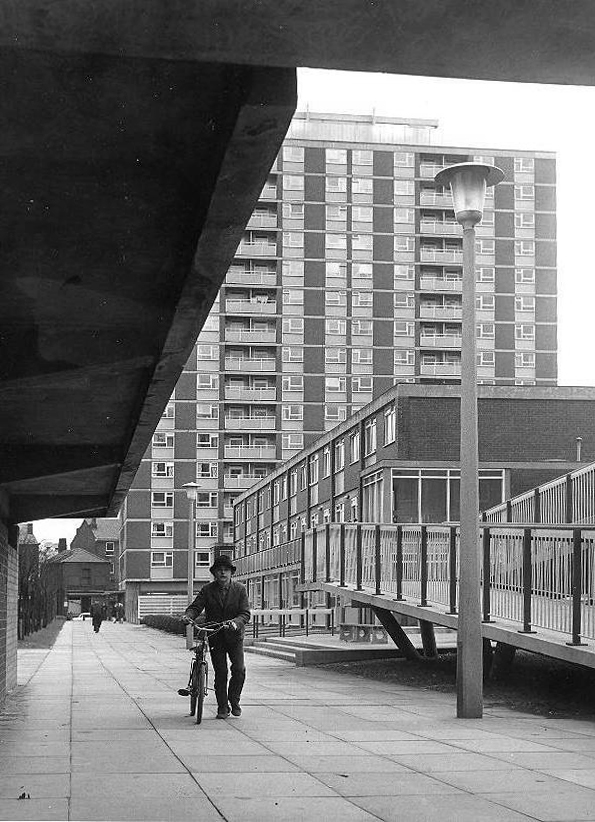
1980’s photographs from The Tower Block

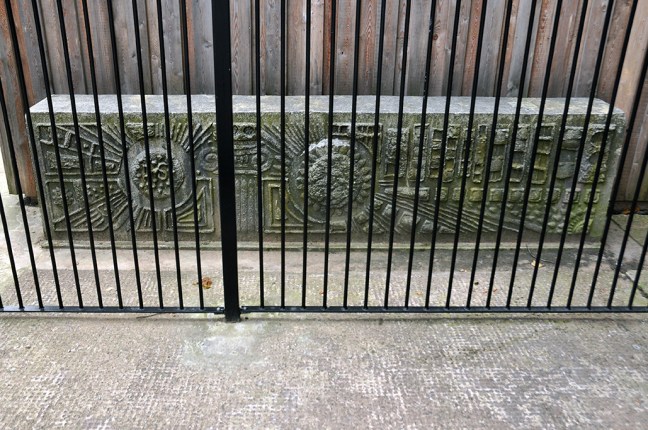
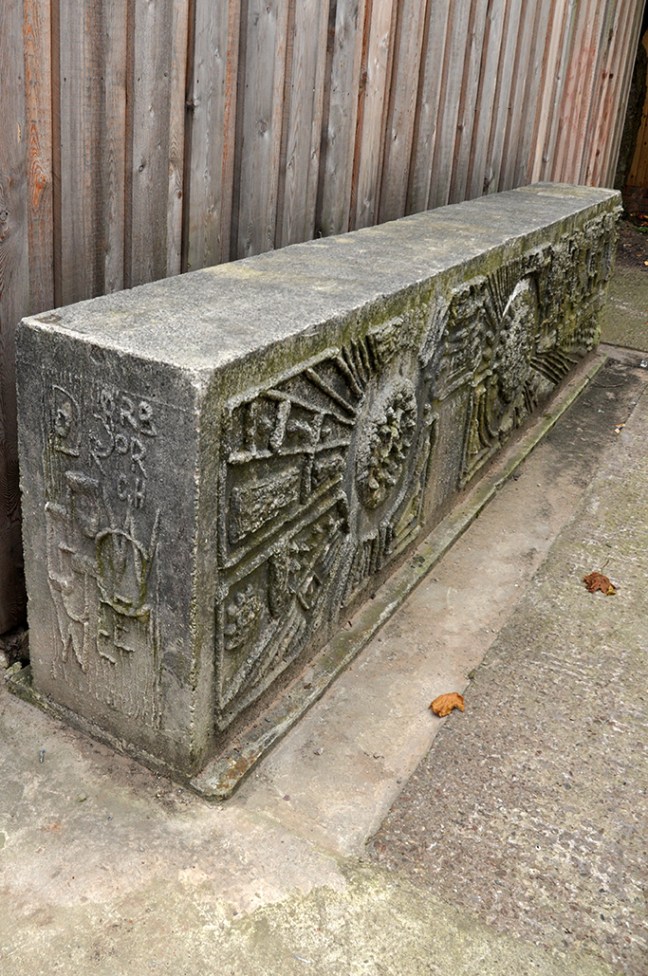
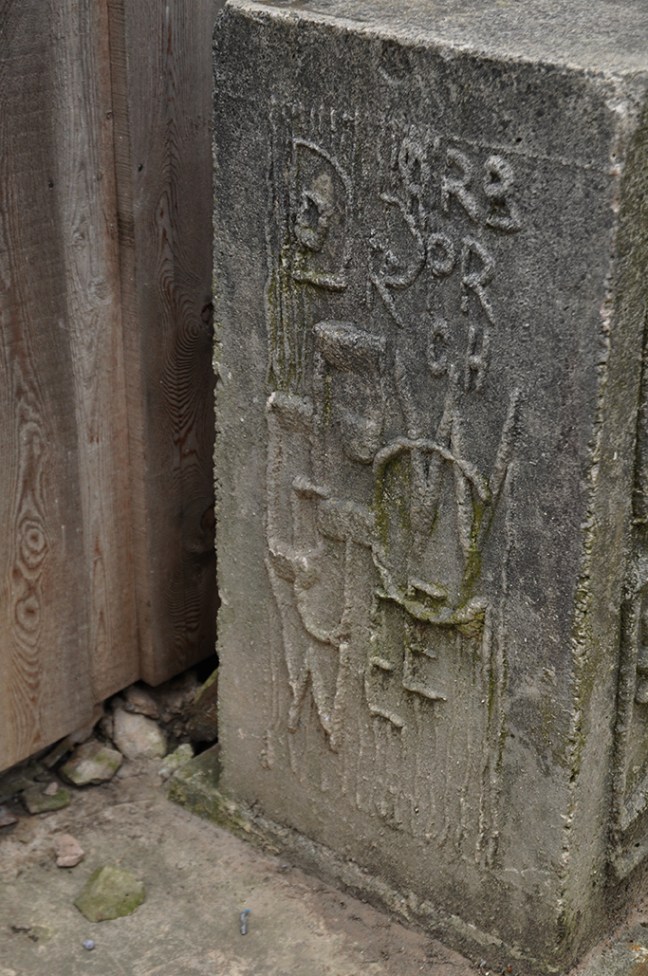
Typically they incorporated concrete street furniture, sculptural and decorative detail, in keeping with the age.

Like many other developments of the period they have subsequently been clad, fenced, painted and secured beyond recognition.

There was a raised concrete play area, of which nothing has survived.

A little of their original character however has prevailed – a William Mitchellesque fallen obelisk, along with some panelling and planters.

The monolith was designed by Peter Shuttleworth, a newly qualified architect at Stockport Council

Curious to see public art behind bars

– would that they were removed.

DSC_0038 copy

a new relief copy

DSC_0032 copy

DSC_0033 copy

DSC_0037 copy

DSC_0039 copy

DSC_0046 copy

DSC_0047 copy

DSC_0048 copy

DSC_0049 copy

DSC_0050 copy

DSC_0051 copy

DSC_0030 copy

Gore Brook – A History

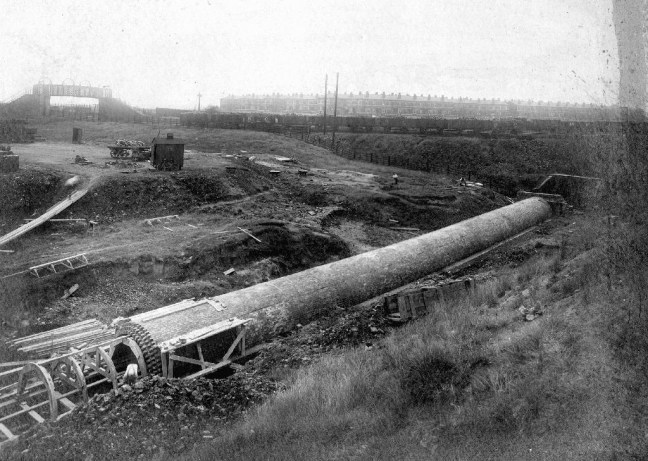
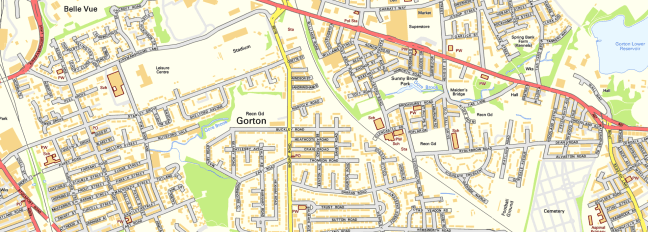
To begin at the beginning, well actually to begin in the middle and walk to the current beginning. The Gore Brook flows from the Lower Gorton Reservoir and from there onwards to meet the Chorlton Brook in the west, though I should imagine that prior to the construction of the waterworks, it was fed by more distant moorland waters.

gore map

Manchester being on the eastern edge of the Lancashire Plain and the western edge of the Pennines is riddled with rivers, rivers which now wriggle in an under and overground web, across heavily developed urban areas. Following the Industrial Revolution former meadow, common and farmland was overwritten by factories, housing and roads, the rural character of the rivers and brooks soon becoming darkened and polluted by the surrounding industries.

I was lead here by my search for a lost pub The Garratt on Pink Bank Lane, then drawn in further by this site The Red Path of Longsight.

The Red Path is a pedestrian link between Pink Bank Lane and the Gorton boundary at Buckley Road. It roughly follows the course of Gore Brook. The original footpath, running from Buckley Road to the bank of the brook, was made using black cinders. It was probably made in the 1940s to provide access to the allotments located on either side. In the early 1950s , a concrete bridge was laid across Gore Brook and the footpath extended to Pink Bank Lane. This section used red bricks in it’s construction, probably supplied by Jacksons brickworks . Crushed bricks were then used as a topping to make the path smoother and fill in any cracks. The thoroughfare soon became known as the Red Path.

So wide eyed and mapless I bowled up at Brook Terrace, just off Stockport Road Longsight, in search of The Gore and its source.

stockport rd 1911

stockport road

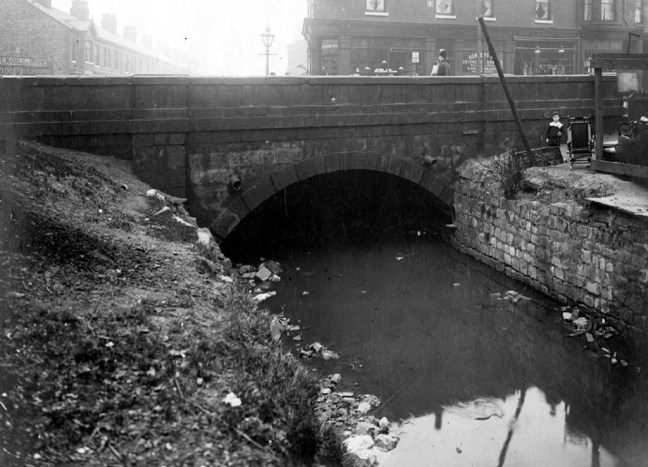
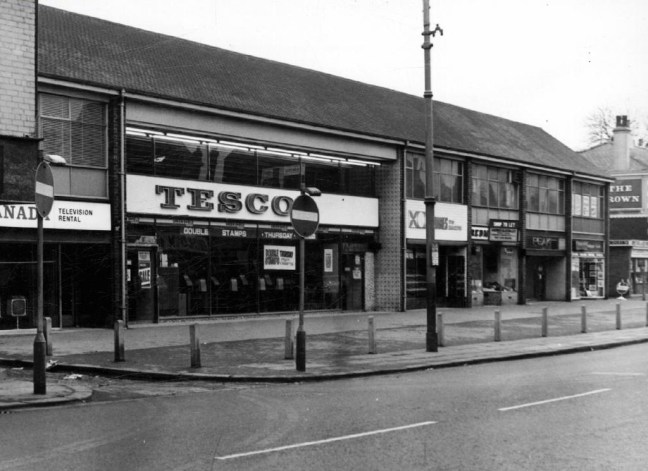
In the early 1900’s the river was still open and bridged, here at Stockport Road, later culverted and covered – anticipating the arrival of Tesco’s and Granada TV Rentals.

beneath

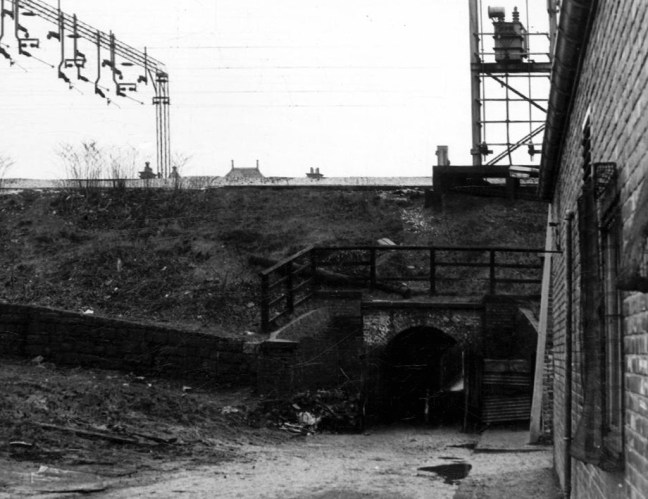
From there we pass under the railway along Brook Terrace and into Parry Road.

brook

The underpass is still there and very much in use, as is Stanley Grove School – the Manchester Central Schools’ Kitchens are long gone, along with the food filled, insulated aluminium cases, that fed the hungry mouths of many, with semolina, pink custard, meat pies and lumpy mash.

parry 64

kitchens 1965

Onwards to Elgar Street and still no sign of the river, hidden beneath our feet, the corner of Northmoor Road, can be seen on the corner, no longer distributing dividends, but now providing social housing.

elgar

We arrive at Pink Bank Lane, a rich mix of terraced homes, flats and factories – and the long lost Garratt, and the long lost Gore.

garratt

pink bank 64

Though the lazy, lazy river has been confined in a brick lined wind, to meet the ever pressing needs of the Gorton Sewage Works.

sewage 1910

sewage works 38

The river then hugs the edge of Annie Lea Playing fields on Buckley Road, until it disappears again as it meets Mount Road, the playing fields are still open ground – the Manchester Cleansing Department, seen on the left – is no more.

annie lea

Here on Knutsford Road we see the construction of the tunnels and culverts, the footbridge to the left spanning the railway, is still there.

knutsfrod 1907

1907

knutt 1911

1911

knut 1914

1914

Finally we see The Gore reemerging clear, clean, wide, proud and resplendent in Sunny Brow Park, where it is still maintained as a decorative, duck-filled lake.

sunny 1907

1907

sunny1910

1910

sunny 1964

1964

Briefly underground again and into the back of Far Lane, skirting the Brookfield Church graveyard.

far 1920

1920

far 1937

1937

fa 64

1964

Then tunnelling under Hyde Road at the back of the church lodge, appearing once again alongside Tan Yard Brow.

webmedia-1.php

ty 1904

1904

tan yard 1922

1922

tan yard brow 1964

1964

The manmade waterfall continues to cascade, the Fairfield to Old Trafford railway is now the Fallowfield Loop, Manchester Cycleway, young lads no longer mess about in wellies and torn Tek Sac jeans on the bank, the Tannery no longer tans.

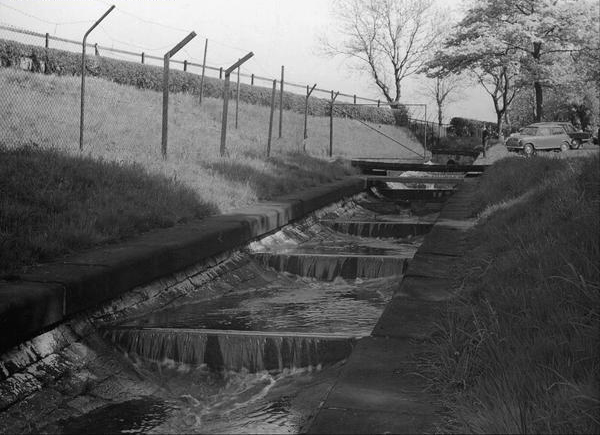
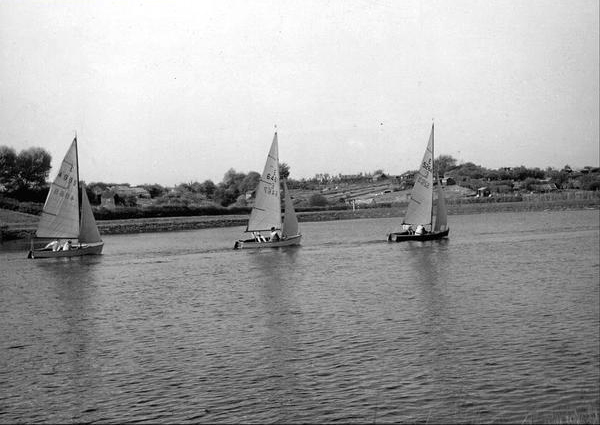
Then we end our journey by the broad expanse of the Lower Gorton Reservoir, implausibly dotted with jolly yachts, and home to a now absent stepped outflow stream. Look up to the east, and there you’ll see the moors, you could go further.

deb 66

deb

All archive photographs from Manchester Local Image Collection.


Northmoor Road Co-op – Manchester

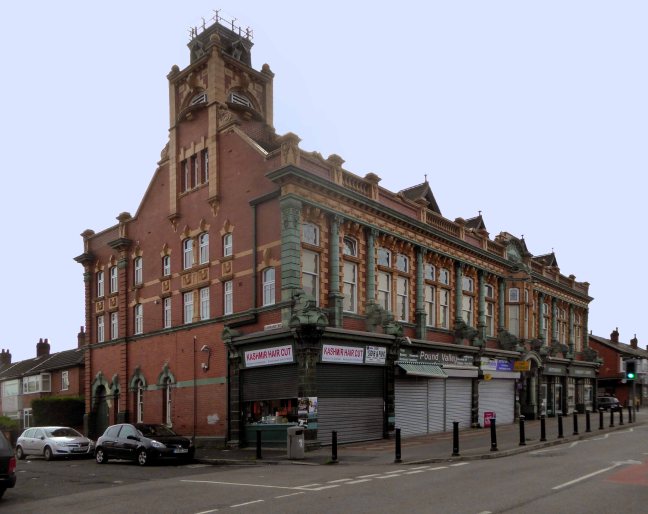
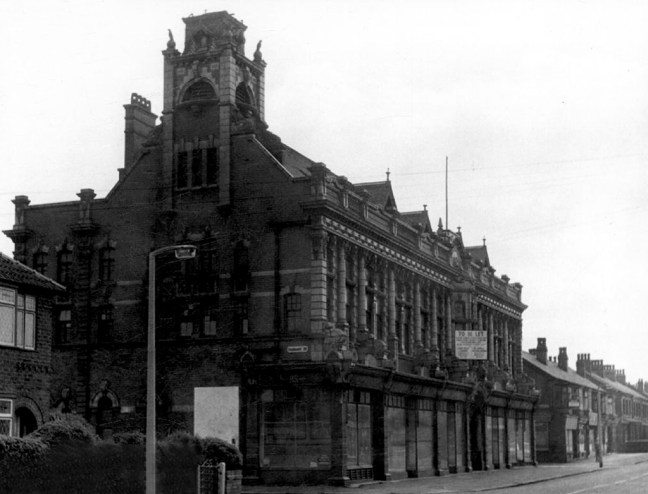
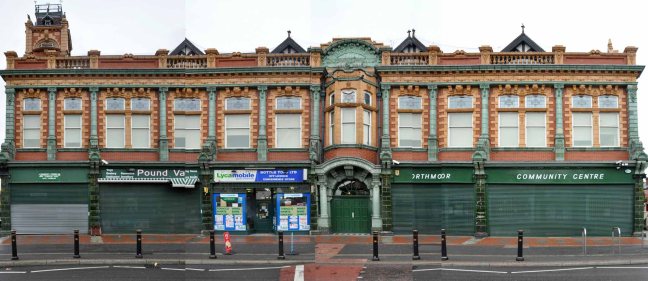
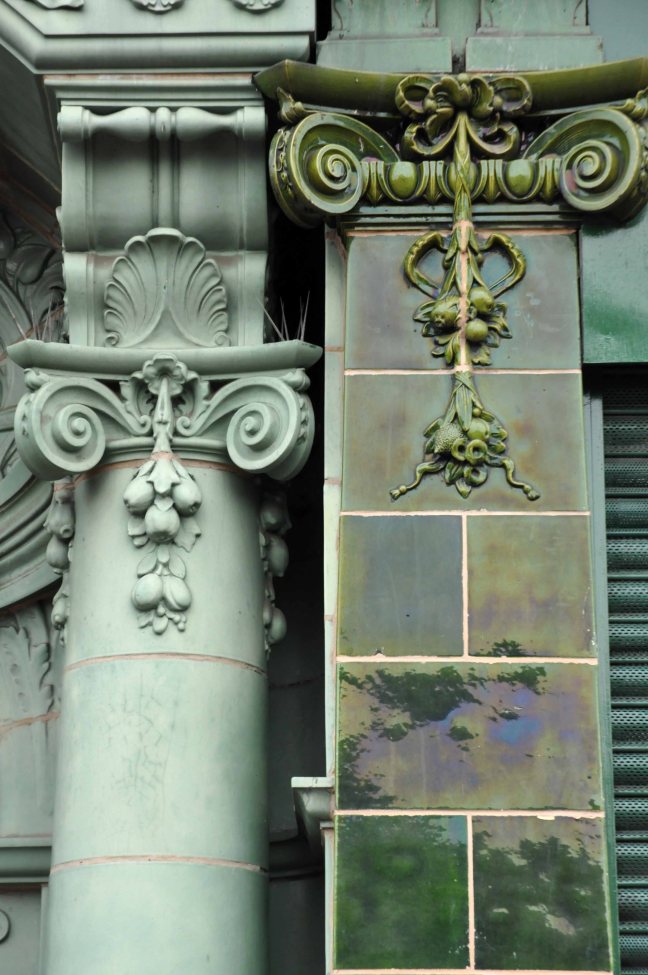
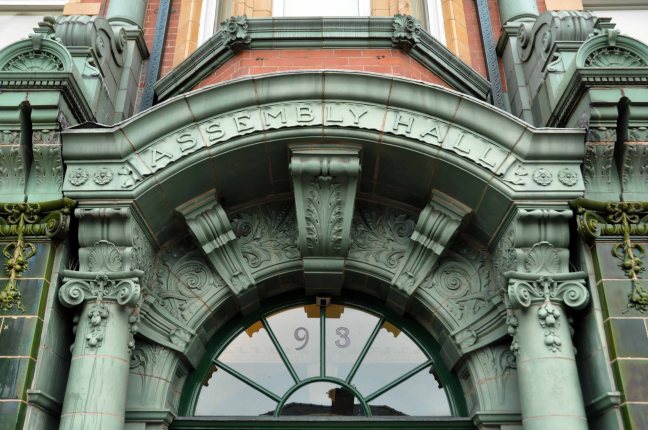
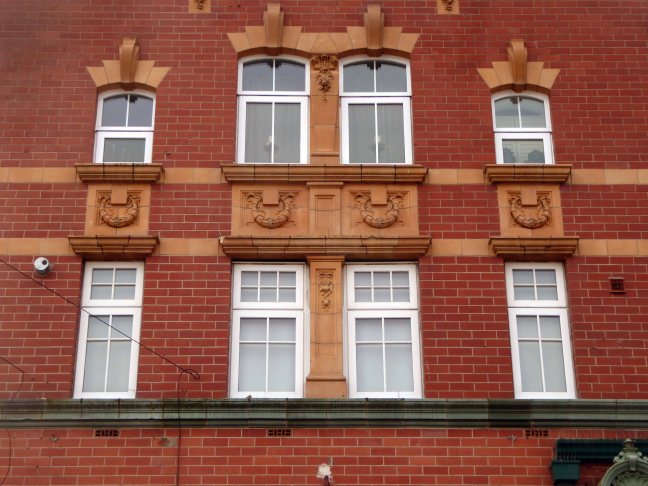
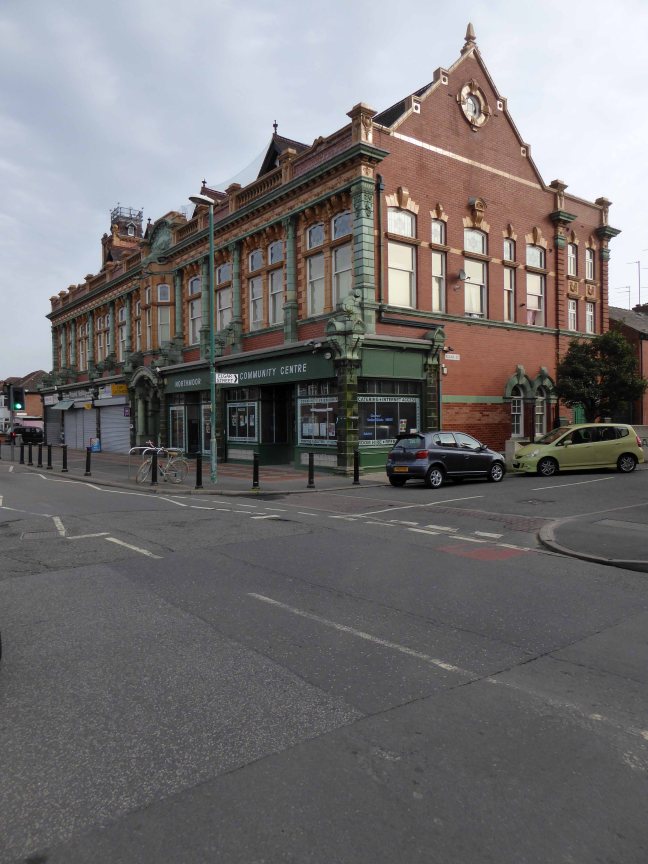
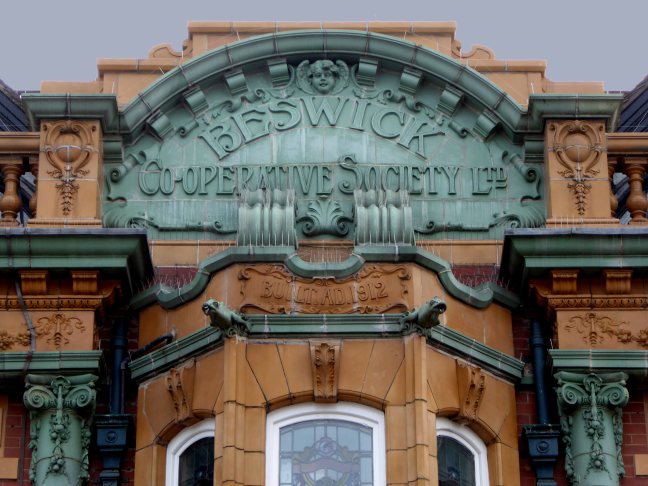
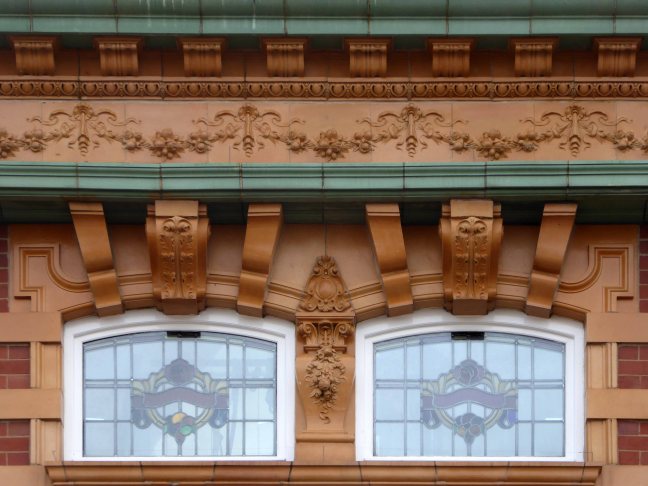
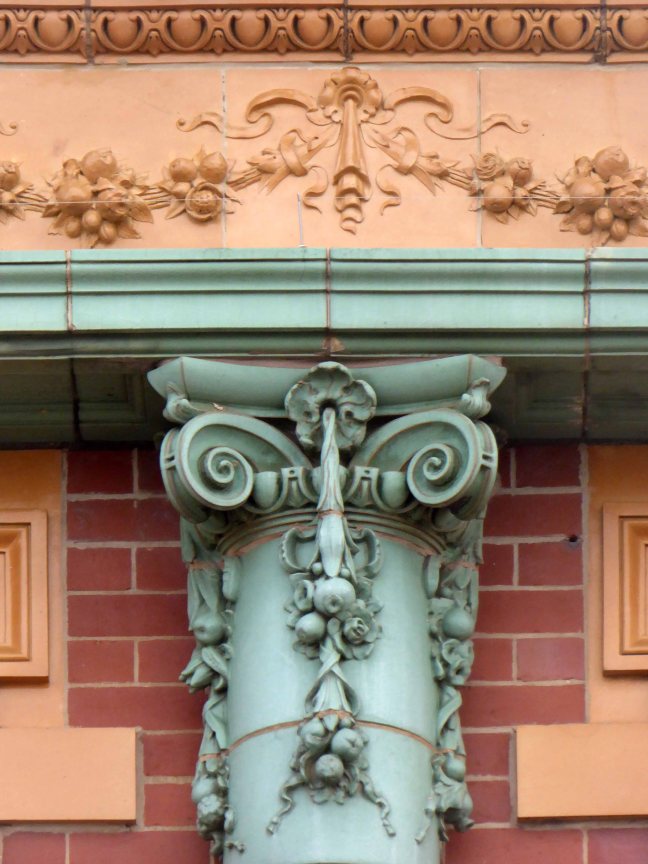
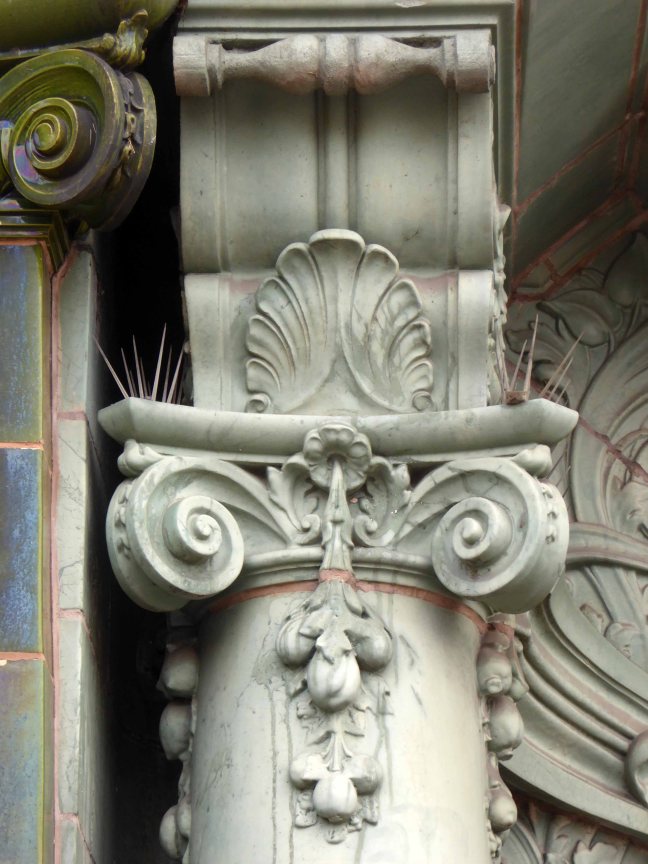
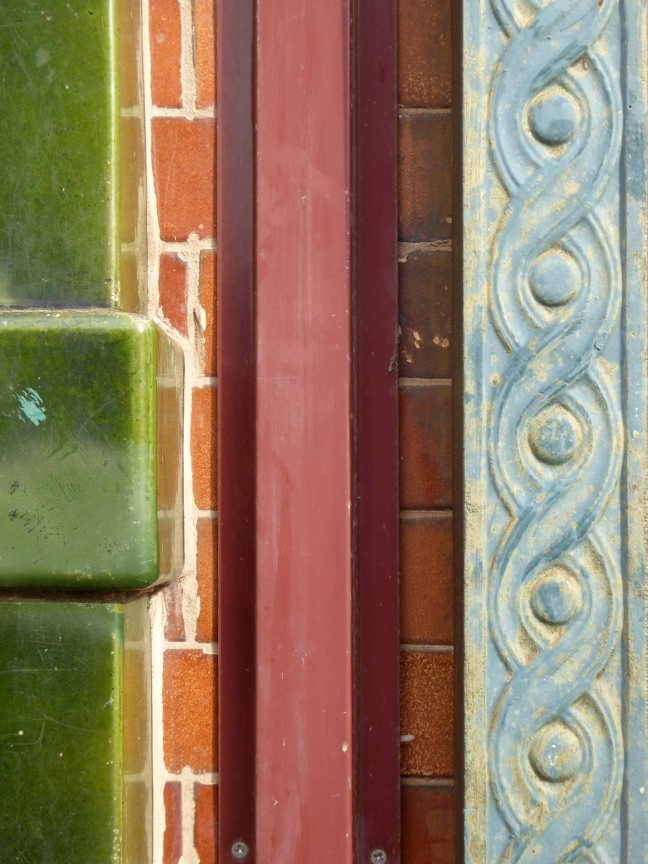
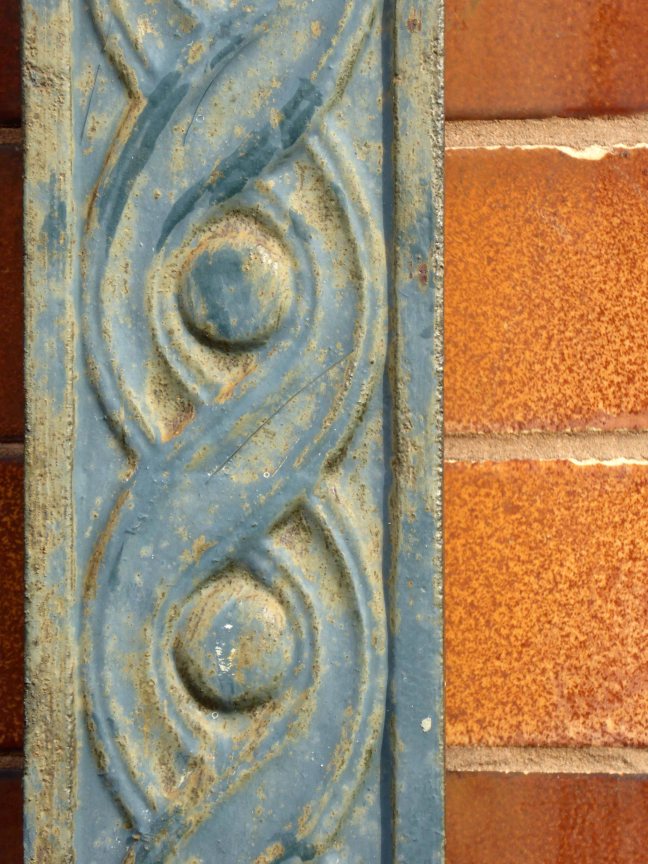
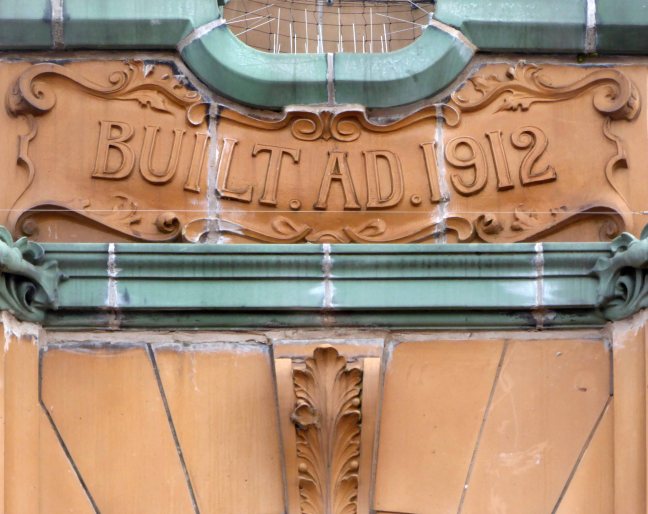
Cooperative Society shops and meeting hall. Dated 1912; altered. Red brick with liberal dressings of green and buff glazed terracotta, red tiled roof with geometrical patterned band and cockscomb ridge tiles. Rectangular plan. Edwardian Baroque style. Two storeys and attic, 11 bays; projected ground floor with dark green Ionic pilasters between the shops and a central recessed porch with dark green surround, light green Ionic columns and segmental open pediment ; inverted voluted brackets linking ground floor pilasters to alternate pedestals of 1st-floor colonnade, which has Ionic semi-columns with festoons and a thin cornice, all in matching light green terracotta; swagged frieze of buff terracotta with buff modillions to a green cornice; brick parapet with buff terracotta balustrades and triangular dormers in alternate bays, interrupted in the centre by a green segmental pediment with raised lettering “Beswick Cooperative Society LTD”. Tall segmental-headed windows at 1st floor including a canted bay in the centre with parapet lettered “Built AD 1912”, and coupled windows in the 2nd, 3rd, 10th and 11th bays, all with elaborate surrounds of buff terracotta including quoined jambs, moulded transoms and enriched keystones; and stained glass in the upper lights. Square Baroque-style turret at left gable.

Grade II Listed

The building itself was originally designed for commercial use with a department store on the ground floor boasting five departments including a butchers, shoes and boots, a drapery and a grocery. On the first floor there was a meeting room that was large enough to host dances with live music. Its inaugural event was an exhibition by the Co-operative Workers Society that also included a recital by the C.W.S. orchestra of Balloon Street; it was reported to have been a great success. It was also used for community events such as the Crowcroft Bowls Club prize-giving ceremony in 1914.

Northmoor Road was called North Road at the time the building was in use as a co-operative and was developed between 1899 and 1930’s. Its most famous resident was J.R.Tolkien who lived here between 1926 and 1947.

North moor Community Association

1965

1965 Manchester Local Image Collection

Northmoor Rd copy

Now home to Great Places Housing

This is such a substantial building exuding an opulent retail grandeur that easily leaves your local Tesco Local in the deep dark ignominious shade. From a time when the expanding Cooperative movement provide for most of the areas material needs – though the Beswick Society was disliked for its aggressive territorial ingress, outside of any recognised geographic constriction.

Externally it is still substantially as was – clearly visible from the nearby Stockport Road and continuing to command the street with degree of grace.

Go take a walk, take a look!

DSC_0019 copy

northmoor d copy

P1200038

P1200039

P1200040

P1200041

P1200042

P1200044

P1200045

P1200046

P1200047

P1200048

P1200049

P1200050

P1200052

P1200053

P1200054

P1200055

P1200056

Bromley Street Manchester

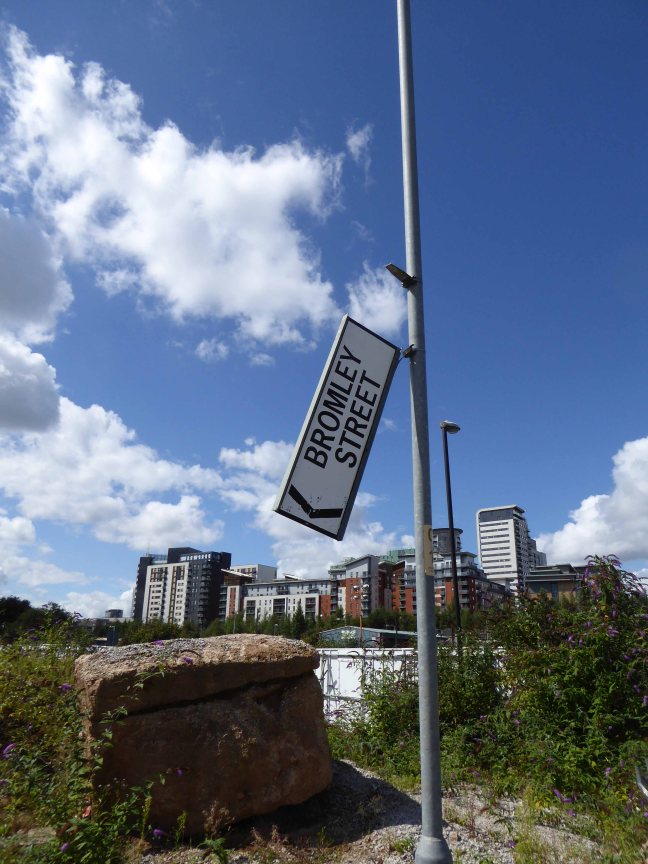
Bromley Street – its northern tip joining with Dantzic Street in the valley of the River Irk, so far so very bucolic, so very, very nice, the street that was going places, tucked cosily beneath the shade of the old L&Y bridge.

webmedia-5.php

The south bank of the Irk is here very steep and between fifteen and thirty feet high. On this declivitous hillside there are planted three rows of houses, of which the lowest rise directly out of the river, while the front walls of the highest stand on the crest of the hill in Long Millgate. Among them are mills on the river, in short, the method of construction is as crowded and disorderly here as in the lower part of Long Millgate. Right and left a multitude of covered passages lead from the main street into numerous courts, and he who turns in thither gets into a filth and disgusting grime, the equal of which is not to be found – especially in the courts which lead down to the Irk, and which contain unqualifiedly the most horrible dwellings which I have yet beheld. Below it on the river there are several tanneries which fill the whole neighbourhood with the stench of animal putrefaction. The view from Ducie Bridge, mercifully concealed from mortals of small stature by a parapet as high as a man, is characteristic for the whole district. At the bottom flows, or rather stagnates, the Irk, a narrow, coal-black, foul-smelling stream, full of debris and refuse, which it deposits on the shallower right bank.

So said Mr Friedrich Engels.

“Not only the blackest but the most sluggish of all rivers” – was surrounded by road, rail, dwelling and factory, high density industrialisation through most of the last century.

webmedia-1.php

Then all of sudden along came a series of events, that saw a shift away from inner-city manufacturing, the outsourcing of all sorts and the demolition of homes. The area and the city became a pale shadow of its former self. Help however was at hand, the boom in buy to let, overseas investment and an ever expanding professional middle class, eagerly  paddled up the murky Irk, emulating the massed forces of 7th Cavalry and the Lone Ranger combined – hurrah!

Screen Shot 2017-08-16 at 15.19.42

If you earn a minimum of £300,000 a year, have a net worth in excess of £3m and want an exceptional mortgage service that is designed to suit your individual needs, get in touch.

160317_DSR_MEN_Angelgate

What have you got to lose?

It’s the gravy train as thick, dark and rewarding as the very inky Irk itself!

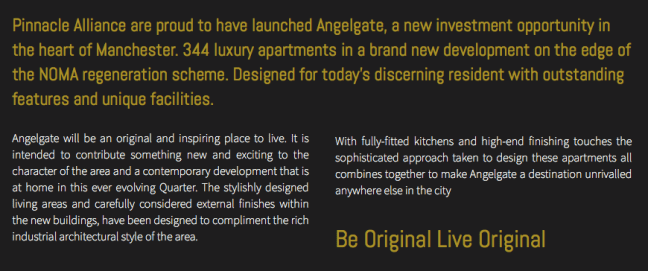
The stylishly designed living areas and carefully considered external finishes within the new buildings, have been designed to compliment the rich industrial architectural style of the area.

A development that even Mr Friedrich Engels himself would be proud of.

But wait, all is not rosy in the digitally constructed flower box garden, that you may see before you, in our online presentation and brochures.

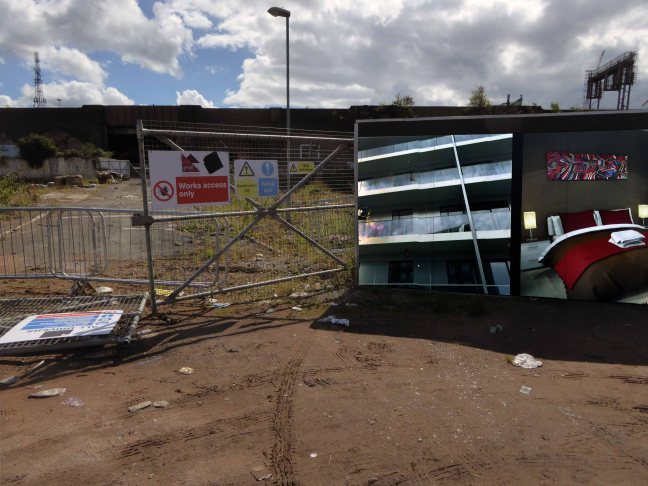
Pinnacle Alliance plans to build 344 luxury apartments on a site near Dantzic Street, as part of the ‘Northern Gateway’. Dozens of investors have paid up to £350,000 for the off-plan apartments in the proposed scheme. But two years since many first paid out for their home, no work has actually begun on the £30m scheme.

The dispute has led to a demonstration in Hong Kong, where around 50 buyers took to the streets over Christmas urging local authorities to take up their concerns. And in an unusual twist, protestors even recorded their own campaign song – to the tune of Jingle Bells – criticising Pinnacle.

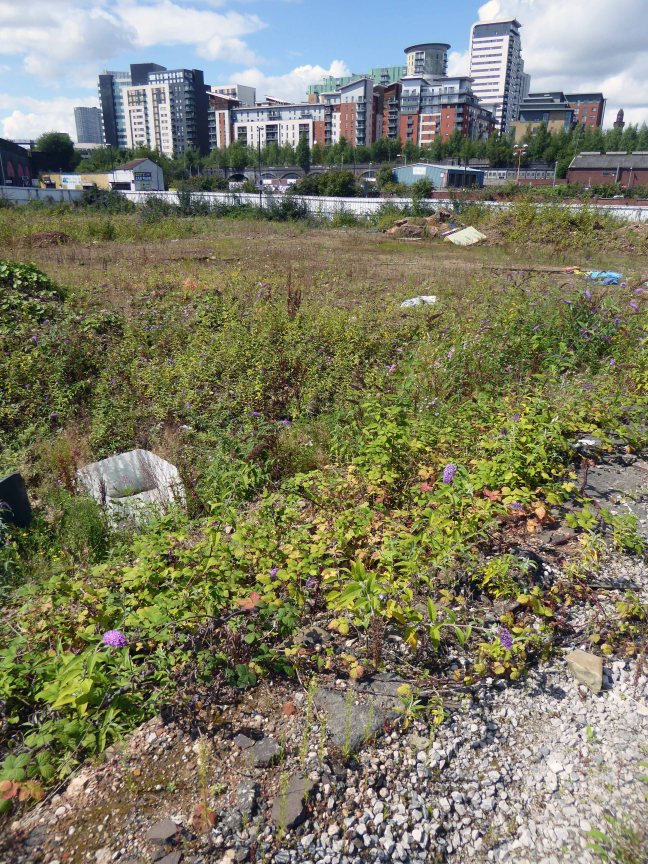
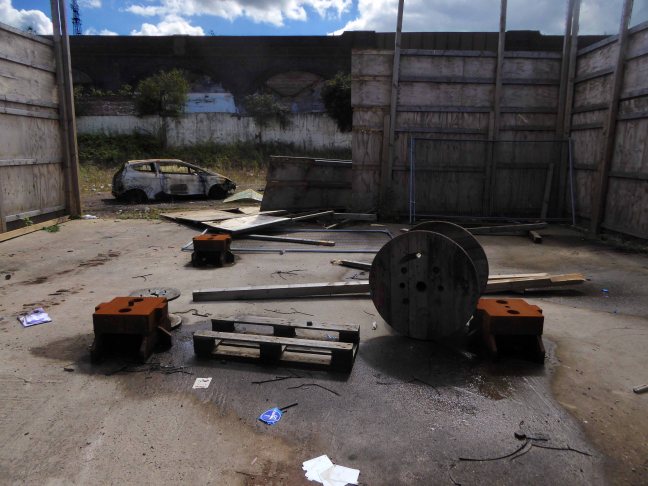
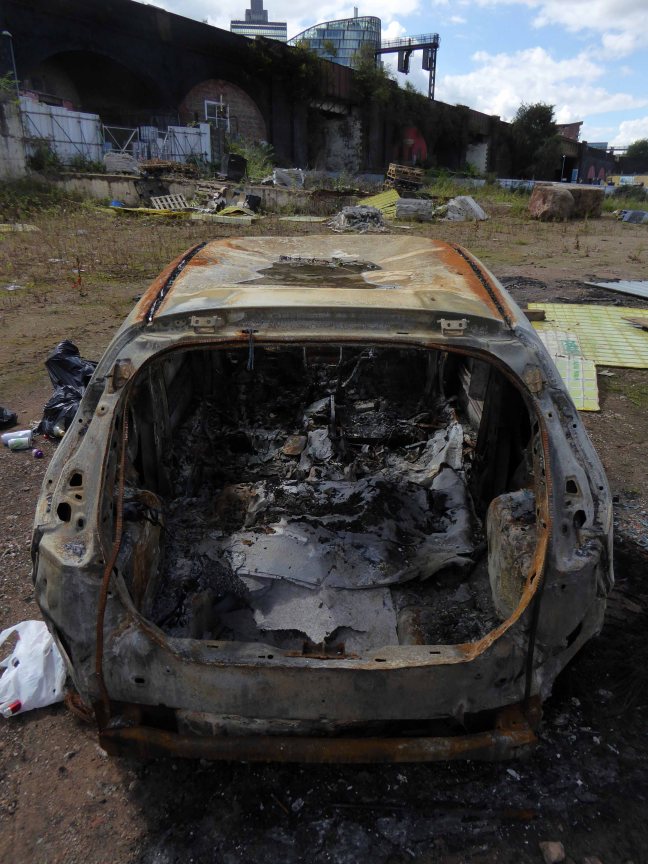
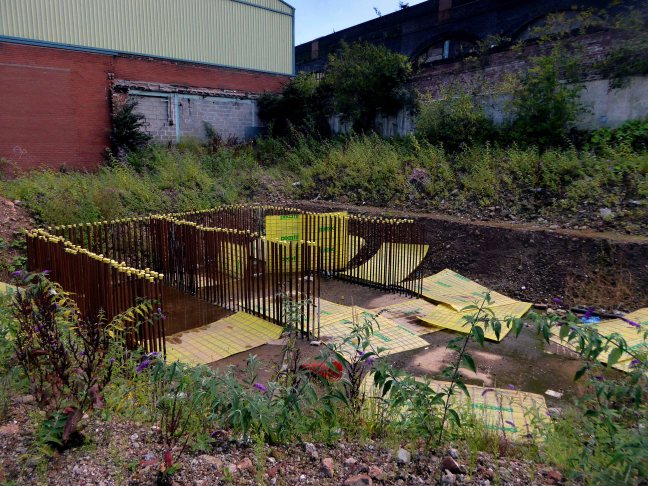
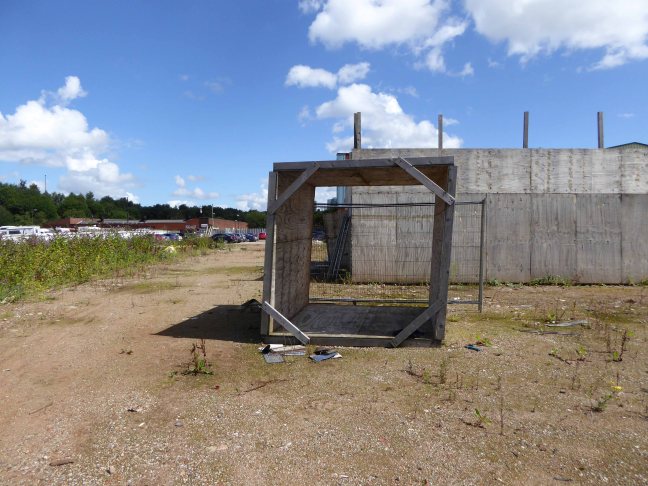
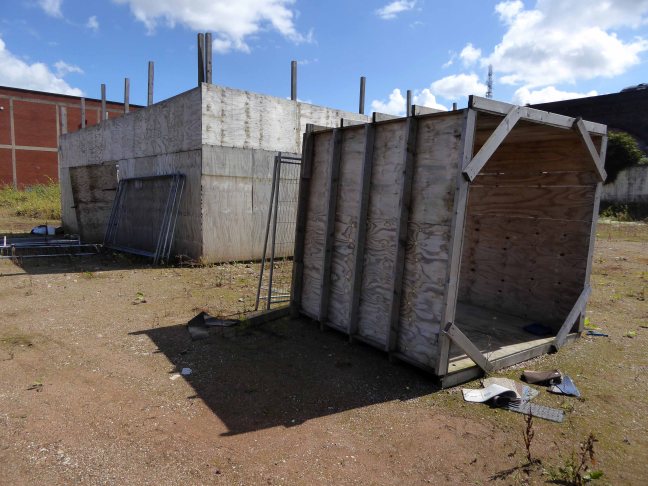
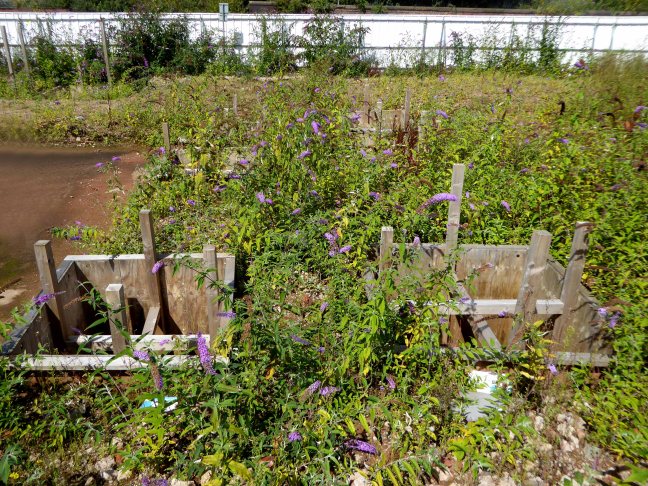
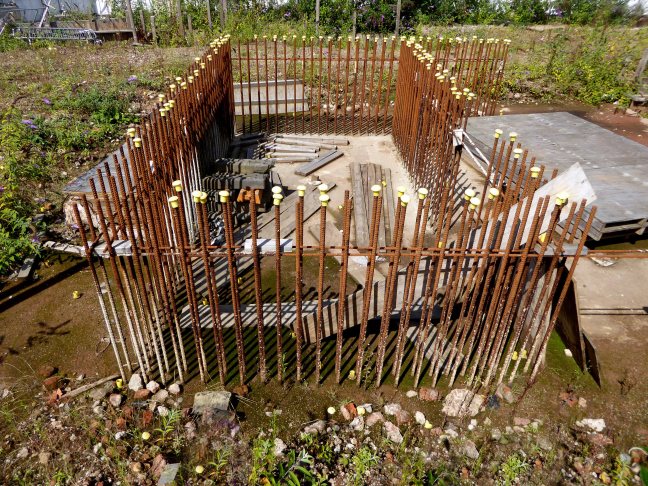
On the day of my visit the site was home to several jackdaws, the charred husk of a burnt out car, hastily discarded childrens’ toys, the most curious of plywood constructs and a sense of anything and everything, ceasing to make any sense whatsoever.

This stunning development will be an original and inspiring place to live.

P1190415

P1190418

P1190419

P1190420

P1190424

P1190428

P1190429

P1190432

P1190438

P1190440

P1190441

P1190442

P1190444

P1190445

P1190446

P1190447

P1190448

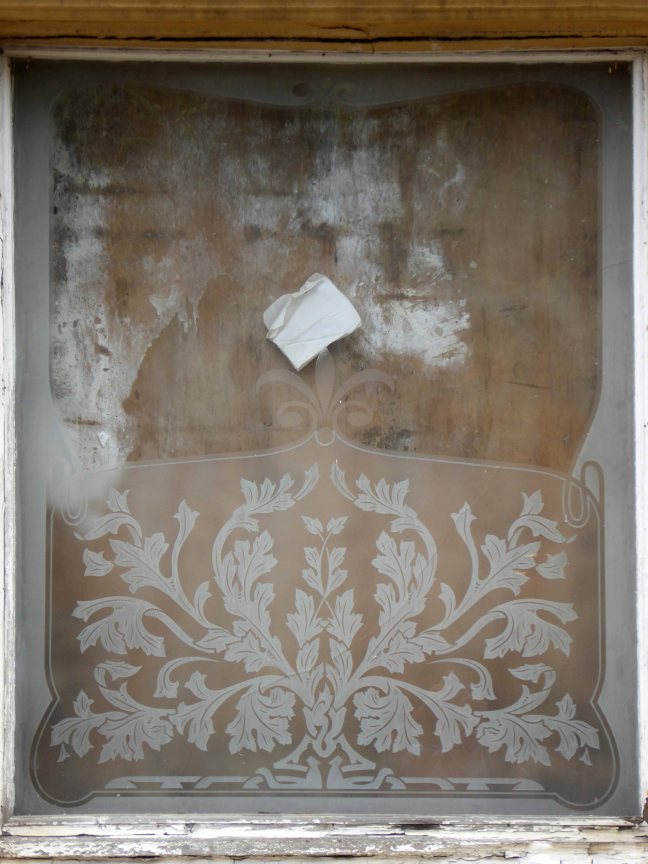
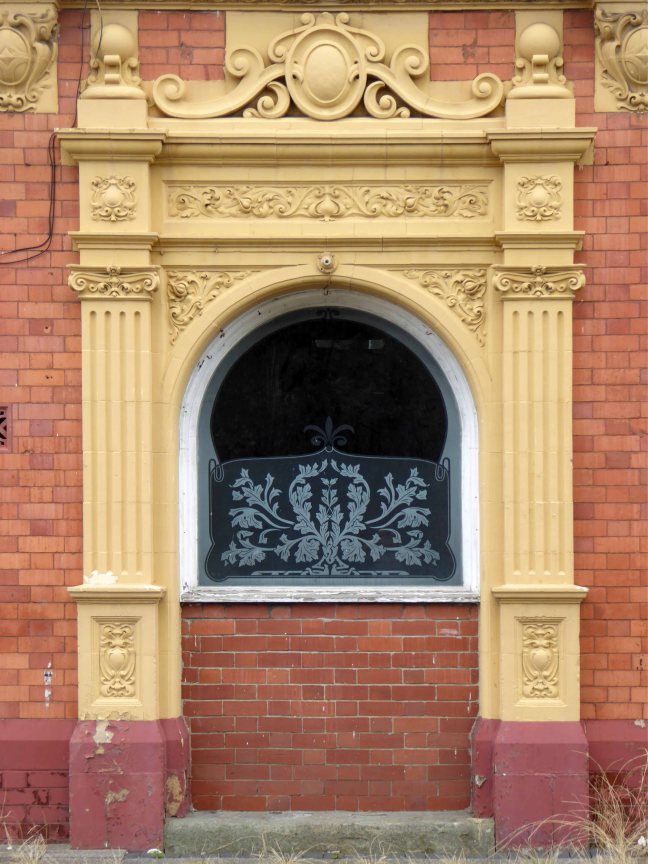
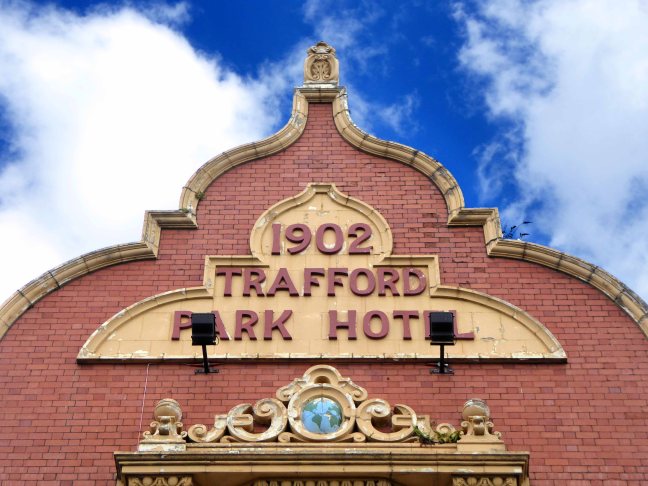
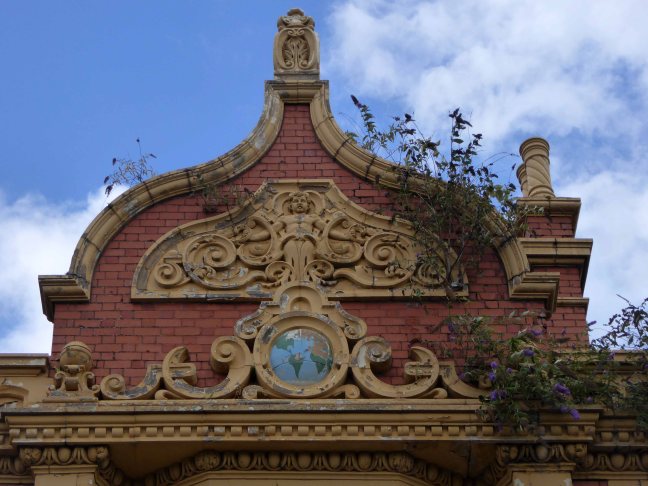
Trafford Park Hotel

It takes a whole corporation to raise a village:

The first American company to arrive was Westinghouse Electric, in 1899, and purchased 130 acres on two sites. Building work started in 1900, and the factory began production of turbines and electric generators in 1902. By the following year, British Westinghouse was employing about half of the 12,000 workers in Trafford Park. Its main machine shop was 899 feet long and 440 feet wide; for almost 100 years Westinghouse’s Trafford Park works was the most important engineering facility in Britain.

In addition to the factory Westinghouse built a village for his workers on the American style grid system of avenues and streets.  The community had shops, eating rooms, a dance hall, schools, a church, and a cinema.

Eleventh_avenue_trafford_park_1910

And where there is people there is almost inevitably pubs, as sure as night shifts follow day shifts.

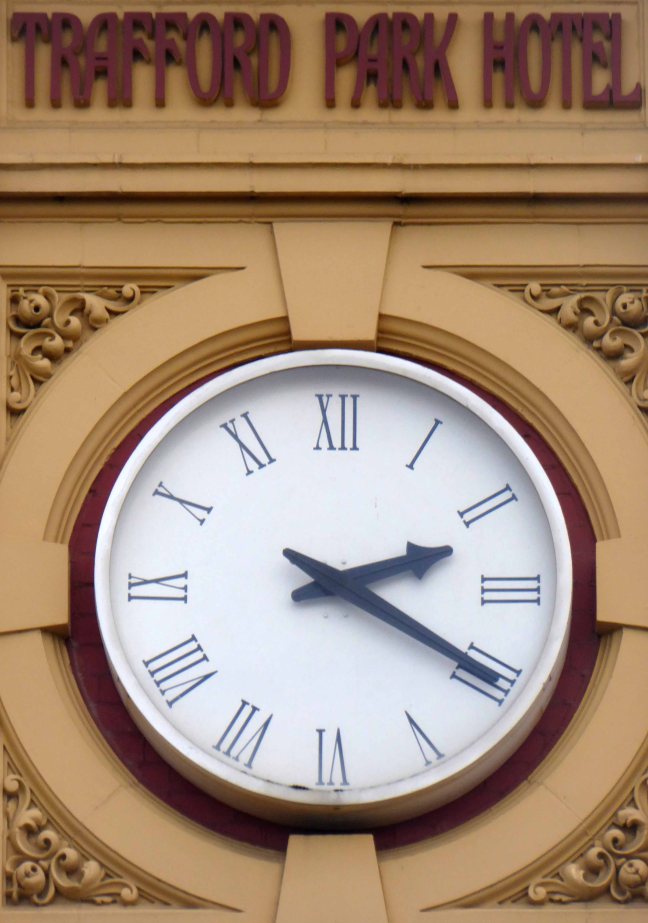
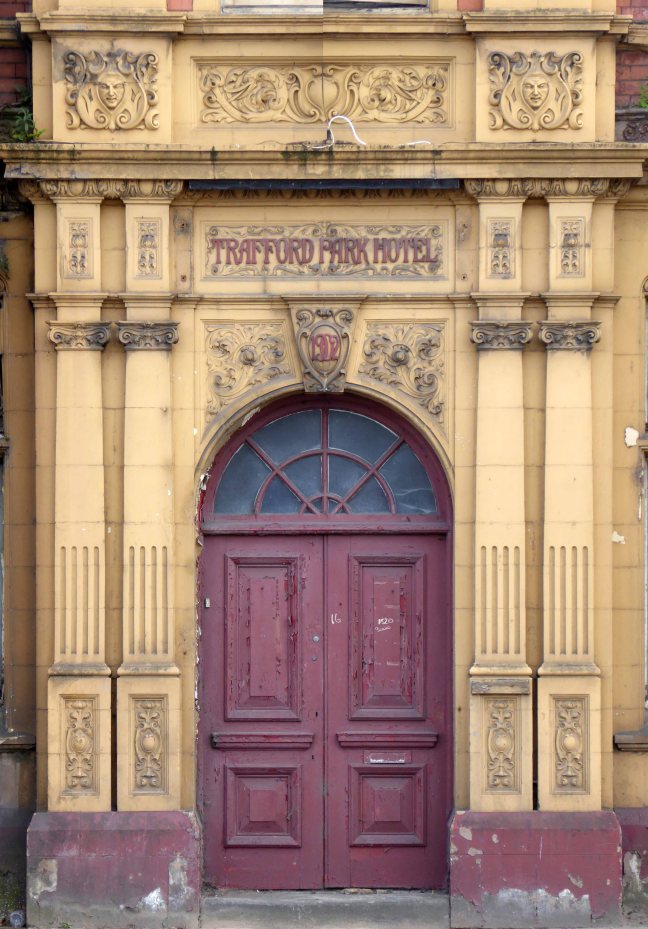
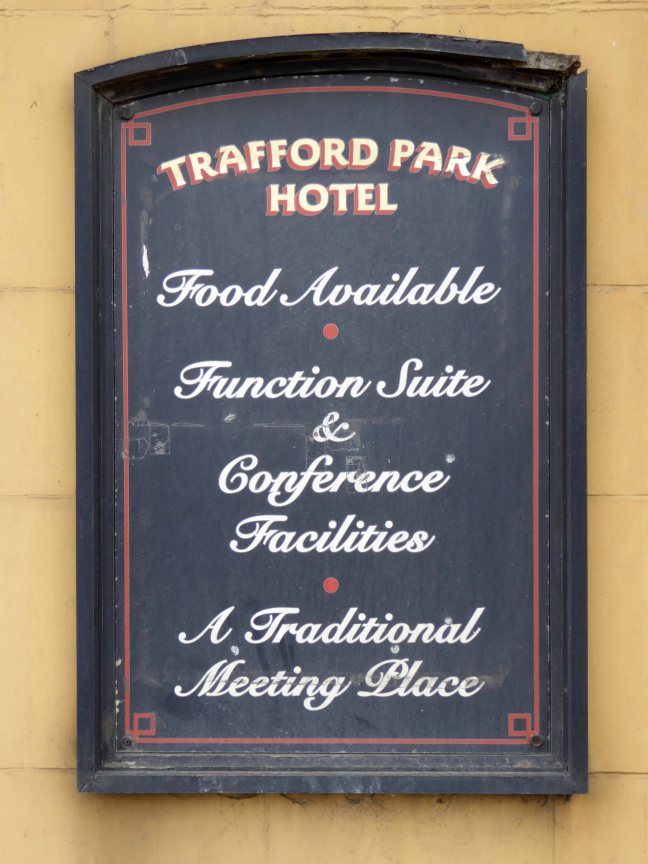
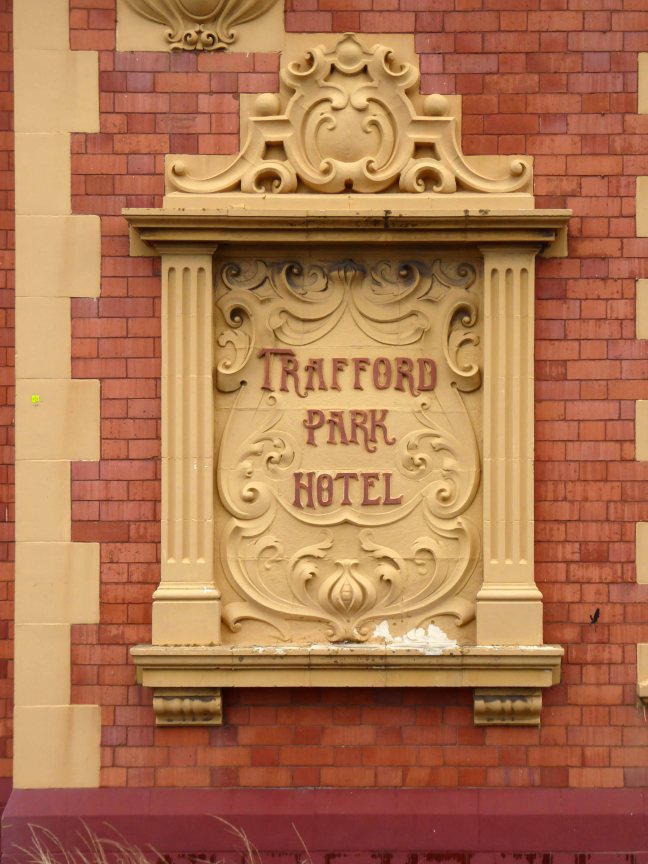
Trafford Park Hotel

Built in 1902 to keep the Trafford Park industrial dust down, quenching the thirst of the workers employed in the world’s first and largest industrial estate – get in and get outside a pint or two.

Speed headlong through the years and by 1984, a mix of industrial and economic decline and the general move away from the urban mix of housing and factories, the end is in sight for most of the Village’s homes.

Untitled-3

Photograph Nigel Richards

Move a little further along the line and by 2009 and the pub is closed, temporarily home first to a marijuana farm, and subsequently squatters.

Paul, 46, originally from Chew Moor, Bolton, was left homeless in May when his house was repossessed after he lost his job as a mechanical engineer. He found The Freedom Project through its Facebook group and was invited to move in to the Trafford Park Hotel. He said: “The group is apolitical – it’s about freedom of expression, activity and thought.” Enterprise Inns have taken members of The Freedom Project to Salford County Court where a judge gave the brewery an order for possession of the building. 

Enterprise Inns declined to comment.

It takes a whole judicial system and corporate clout to deny a man home.

In February 2017 pub was sold for £900,000, though on the day of my August visit there were few signs of the planned conversion to flats or hotel.

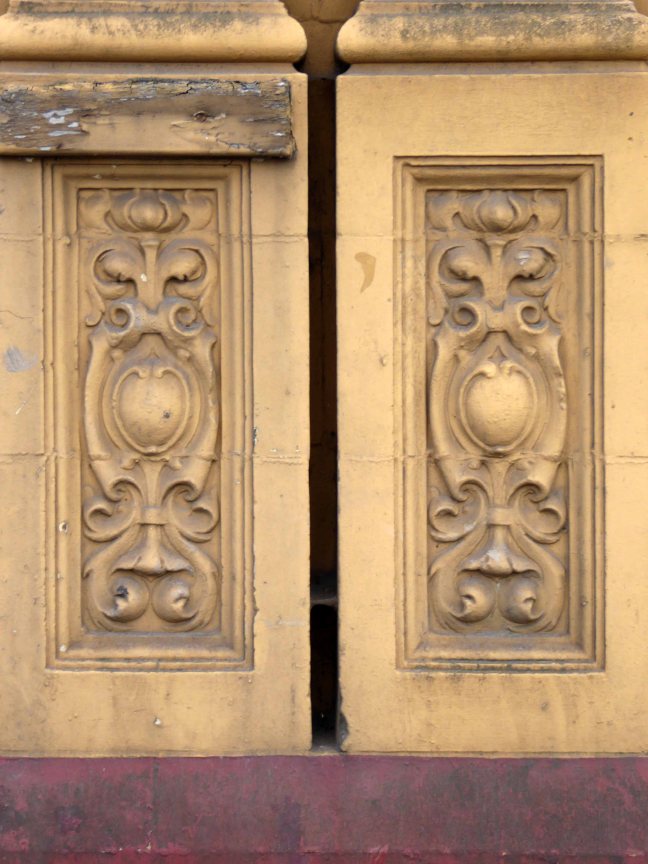
One day time will be called on time itself, in the meantime take a walk down the Avenue and feast your eyes on a Grade II  listed terracotta and brick behemoth.

P1180834

P1180832

P1180836

P1180837

P1180838

P1180839

P1180840

P1180841

P1180842

P1180843

P1180844

P1180845

P1180847

P1180848

P1180849


P1180860

P1180861

P1180862

P1180852

Tudor House – Wakefield

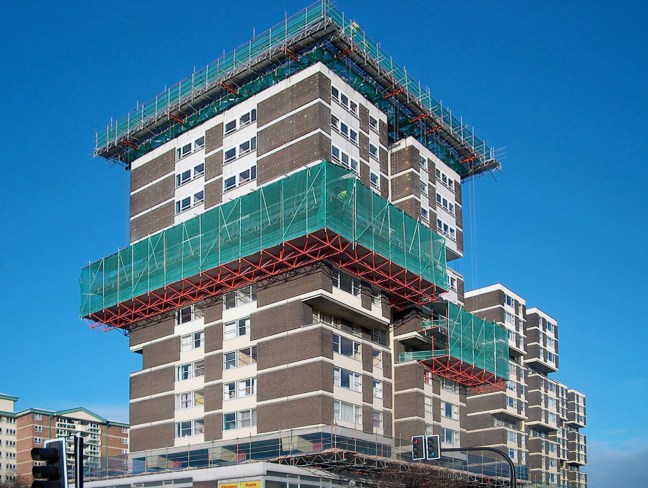
You wouldn’t ever want a bad case of the cladding, the triumph of the expedient over the purist aesthetic. We all may wish to be warm, dry and free from unwanted ingress, whilst exercising a degree of discernment and restraint, regarding the manner in which we are clad.

In Wakefield and in local authorities throughout this fair land there seems to have been a distinct lack of discernment and restraint, regarding the manner in which modern tower blocks are clad.

Cloaking concrete in coloured surfaces better suited to Toytown than our town.

Four twelve-storey H-plan tower blocks built as public housing as part of the central area development of lower Kirkgate. The blocks rise out of other low-rise development. Each block contains 44 one and two-bedroom flats, providing 176 dwellings in total. The consulting architects for the development were Richard Seifert & Partners. Construction is of concrete frame with brick infill panels. The blocks were approved by committee in 1964.

Tudor House aka Lower Kirkgate Comprehensive Development area as was:

13669171_10154435787311600_6732873241408697456_n

13873008_10154435787336600_5185297045755258748_n

Screen Shot 2017-08-01 at 13.37.59

Photographs Tower Block

Ain’t it funny how time and integrity slips away?

wakefield_flats2l

wakefield_flats3l

Photographs Alan White Design

Gone the bold flat roofed, cuboid contrasting concrete and brick towers, whilst confusingly the ground floor retail development remains untouched.

P1180757

P1180759

P1180760

P1180761

P1180762

P1180763

P1180765

P1180766

P1180767

P1180768

P1180769

P1180770

Bideford Drive – Baguley

Baguley is derived from the Old English words Bagca, badger, and Leah, wood.

Historically in Cheshire, Baguley is mentioned in the Domesday Book of 1086, it was incorporated into Manchester in 1931.

It has a Brook though babble heard I none, it had a Station now long gone.

3223992_1f0fdafd

EPSON scanner image

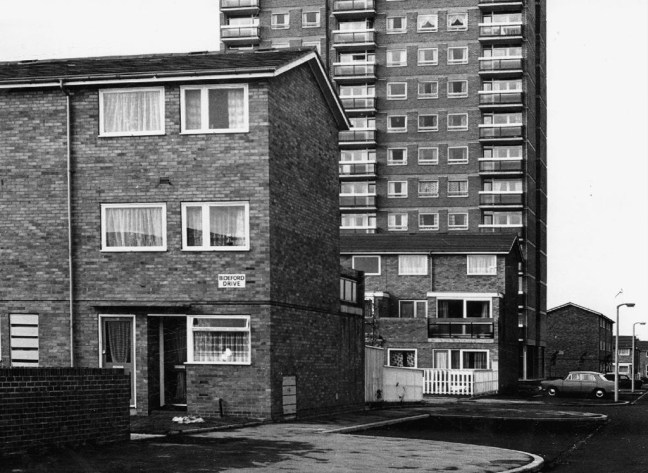
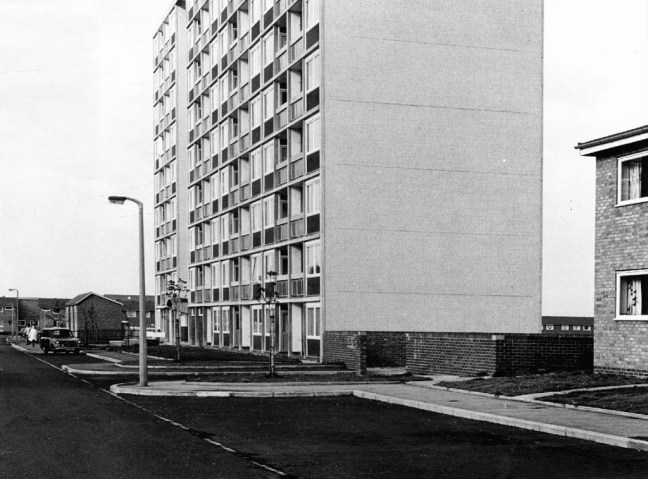
I idled by on my bike to snap the homes around Bideford Drive, which I dutifully did. My curiosity suitably aroused I perused the Manchester Local Image Archive, in search of clues. Planned in 1969 complete in 1971 main contractor Laing architects the City Office.

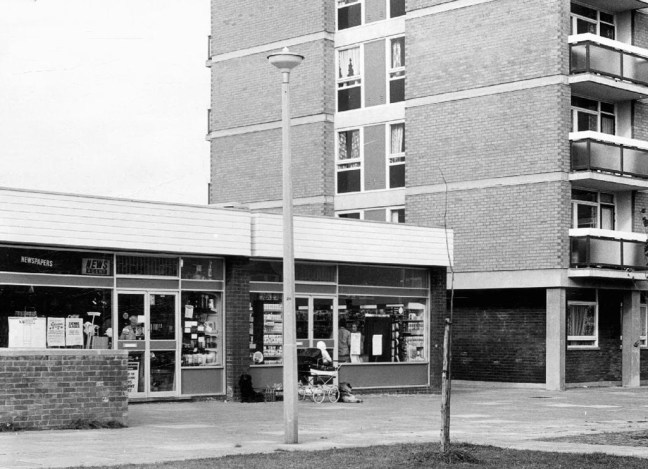
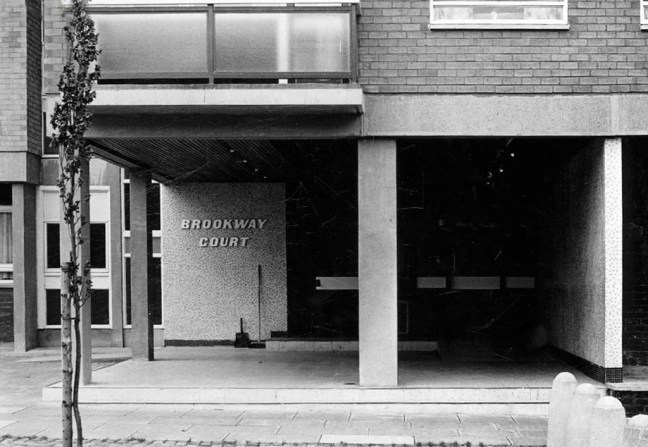
A rich mix of scale and typology, two differentiated blocks, tower and slab, short rows of compact terraces, open spaces, shops, car parking and limited planting. The interlocking geometries, paths and walkways make it an intriguing and entertaining estate, full of small surprises and ideas – these pictures are of 1971.

There is a sharply attenuated and clean feel in the air, optimism on a largely overcast day, a totality – planned integration – homes and architecture of distinction.


webmedia-2.php

webmedia-3.php

webmedia-4.php

webmedia-5.php

webmedia-6.php

webmedia-7.php

webmedia-8.php

webmedia-9.php

webmedia-10.php

webmedia-11.php

webmedia-12.php

webmedia-13.php

webmedia-14.php

webmedia-15.php

webmedia-16.php


webmedia.php


St Luke The Physician – Manchester

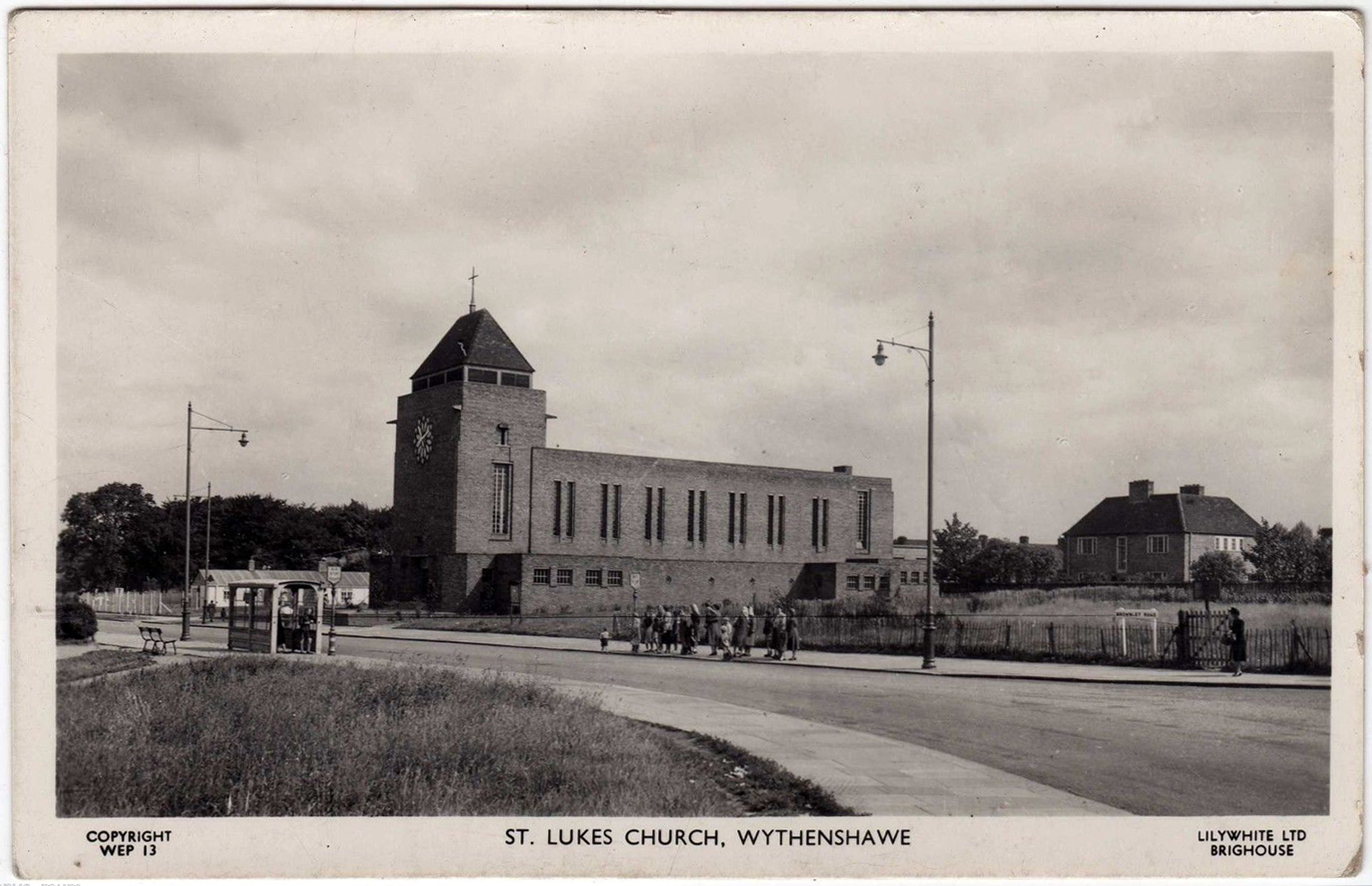
Cycling around Wythenshawe one sunny day yesterday, in search of friends old and new, I found myself beside myself, beside St Luke’s.

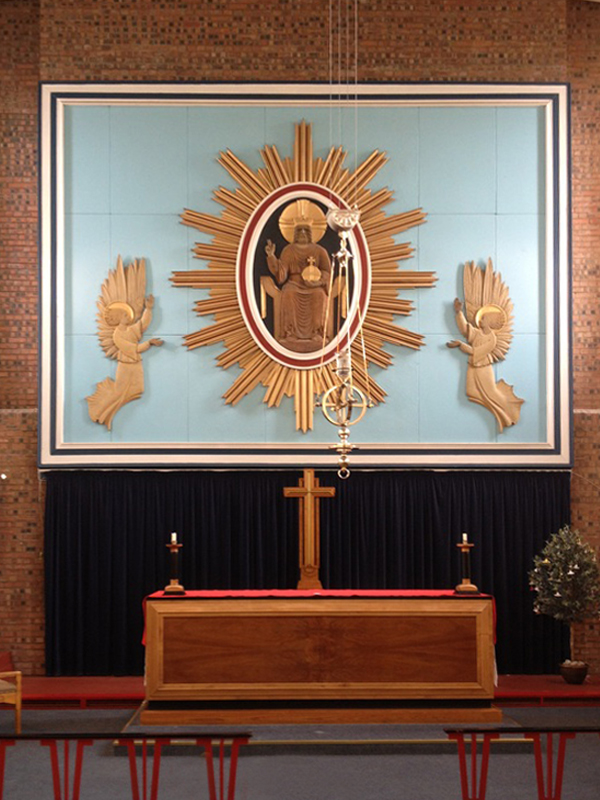
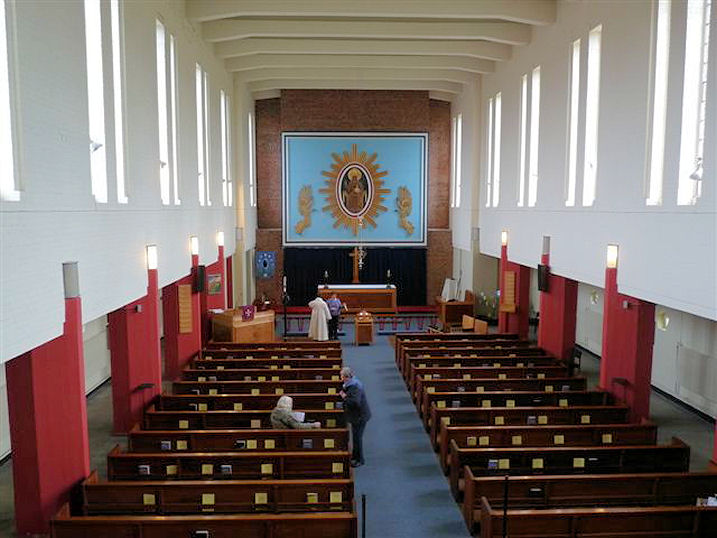
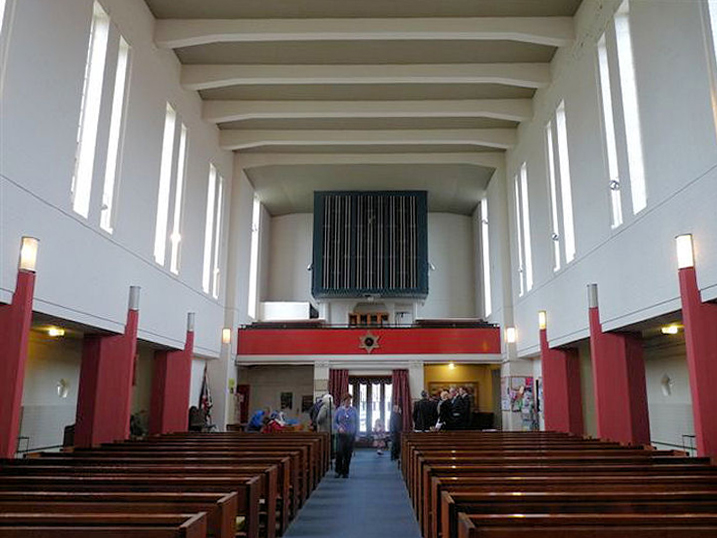
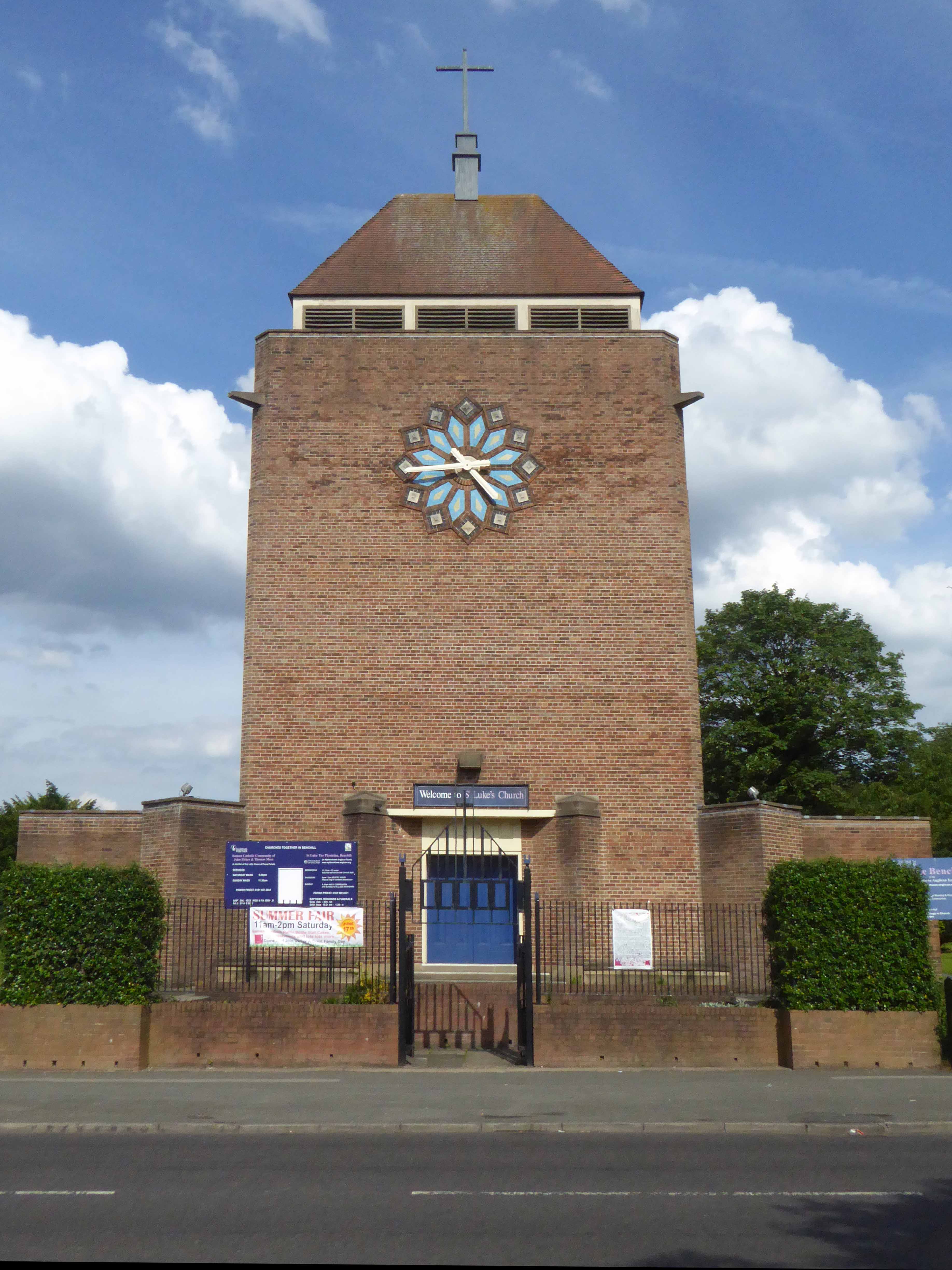
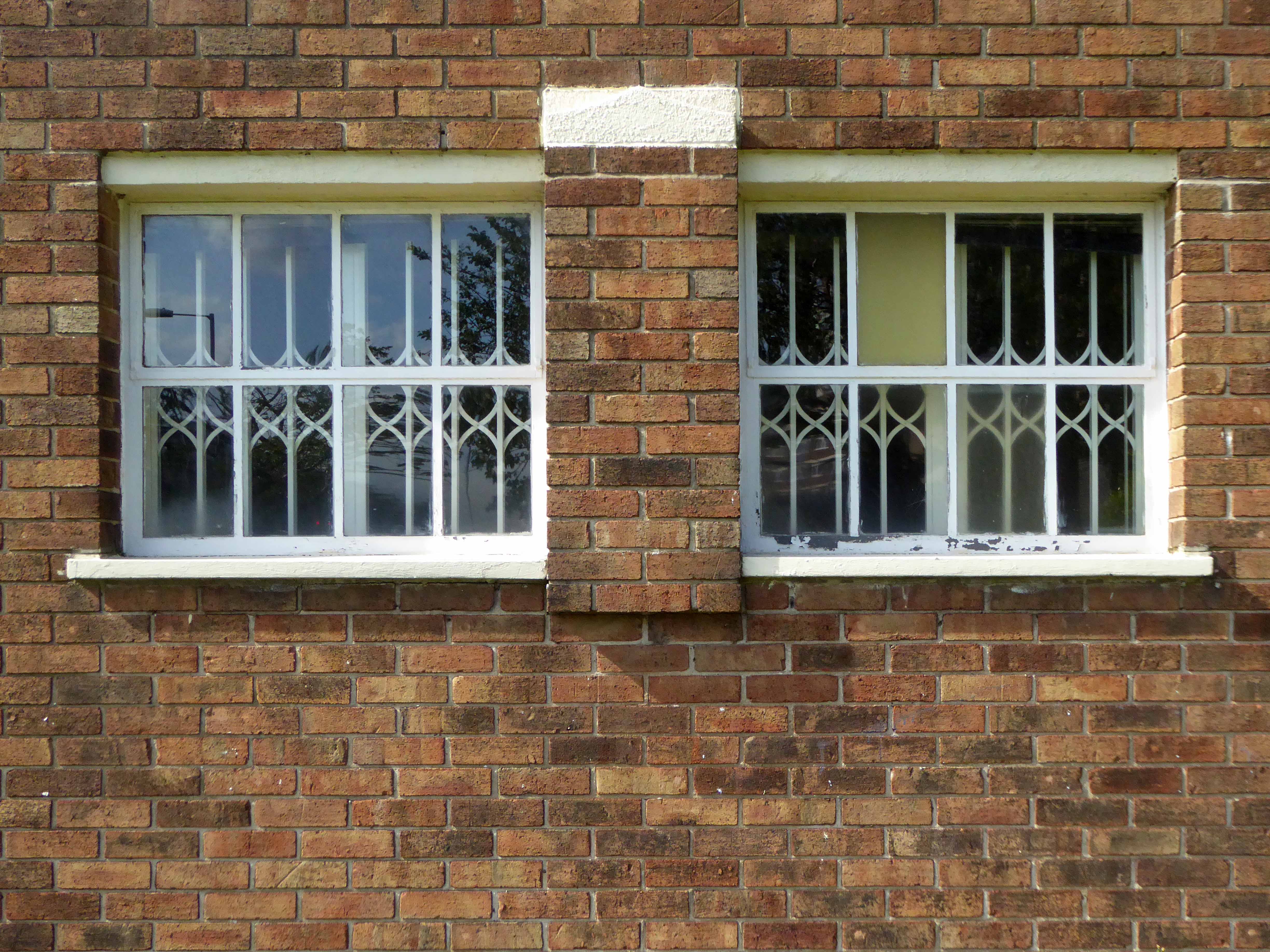
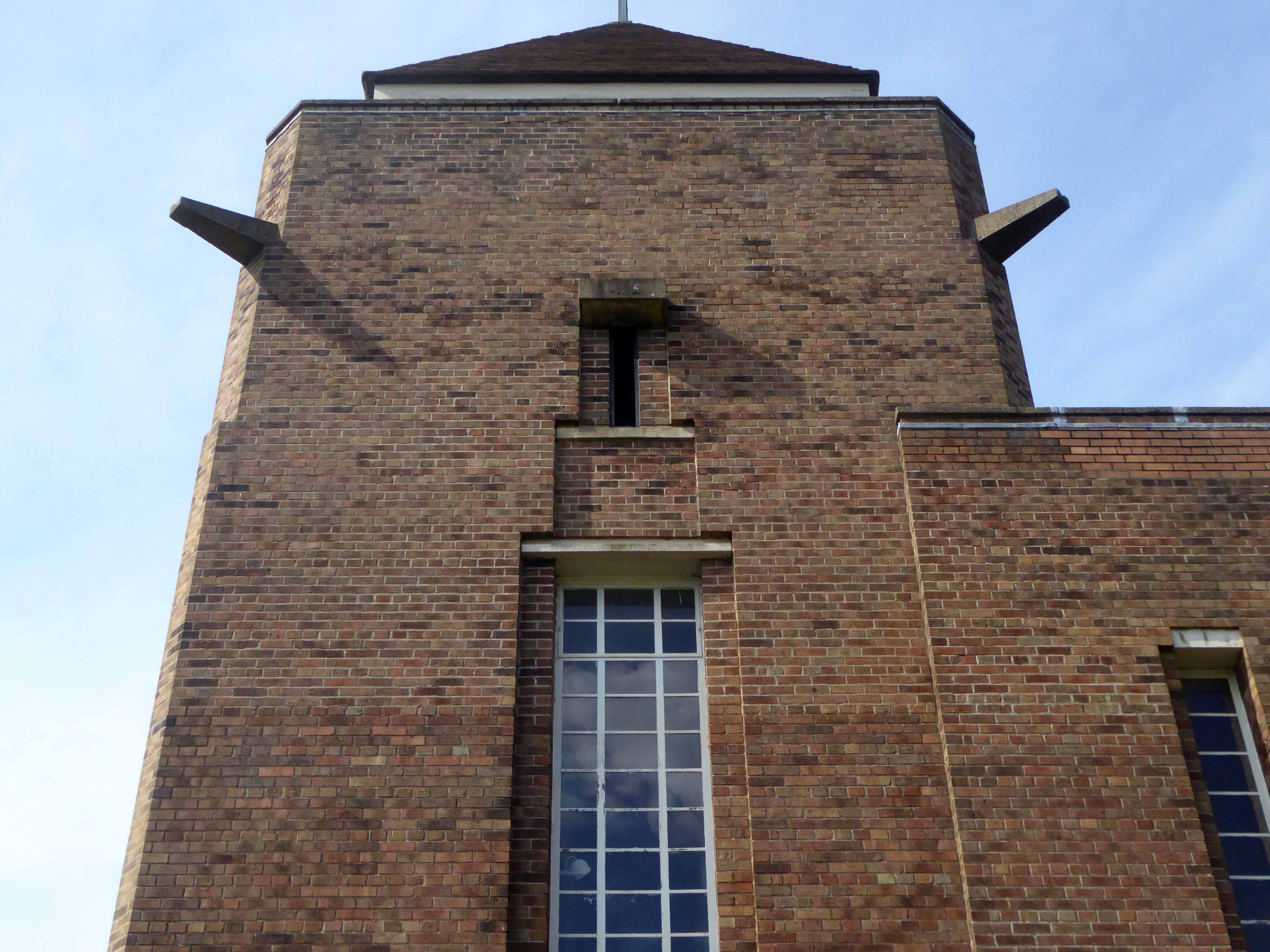
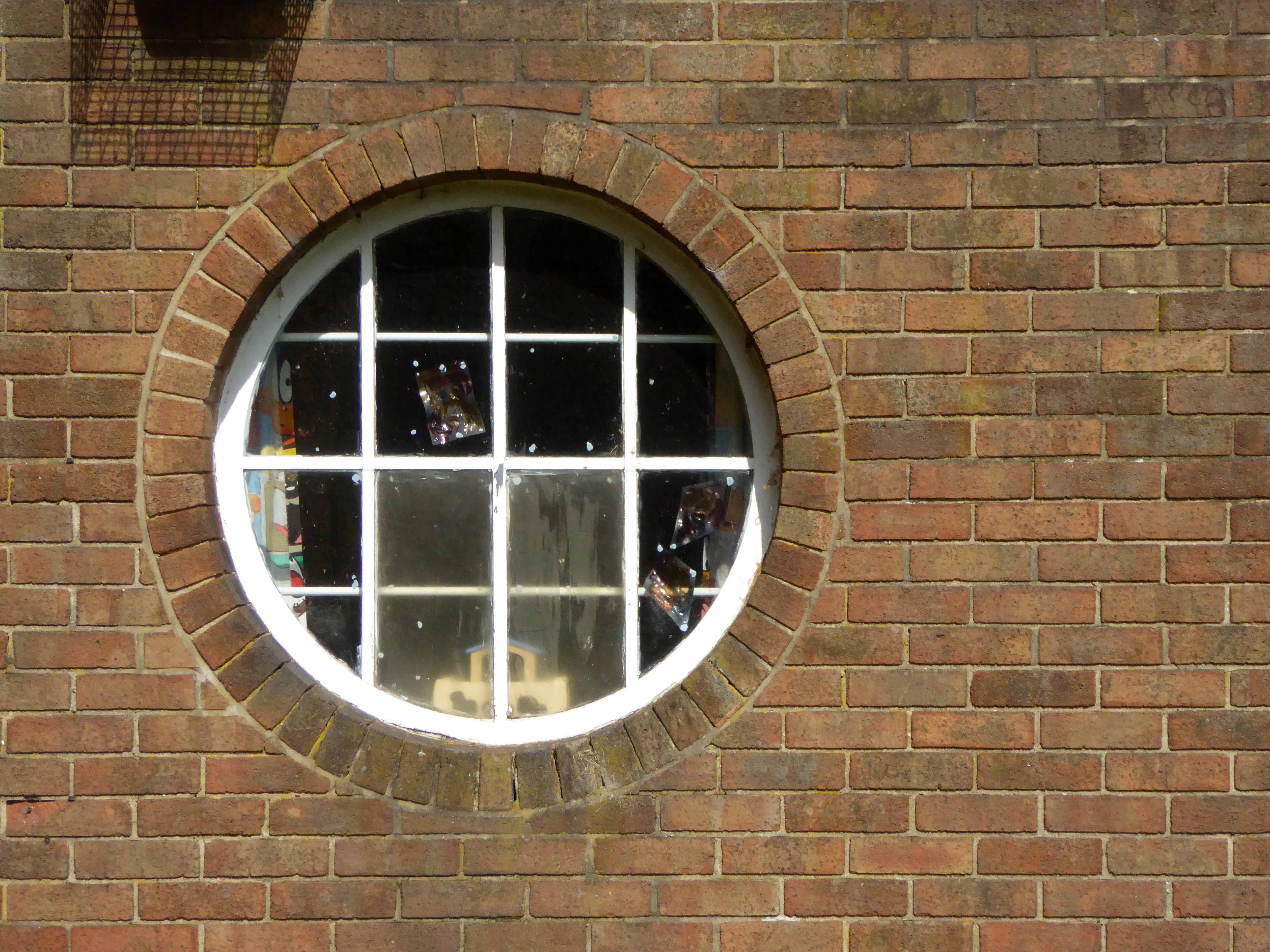
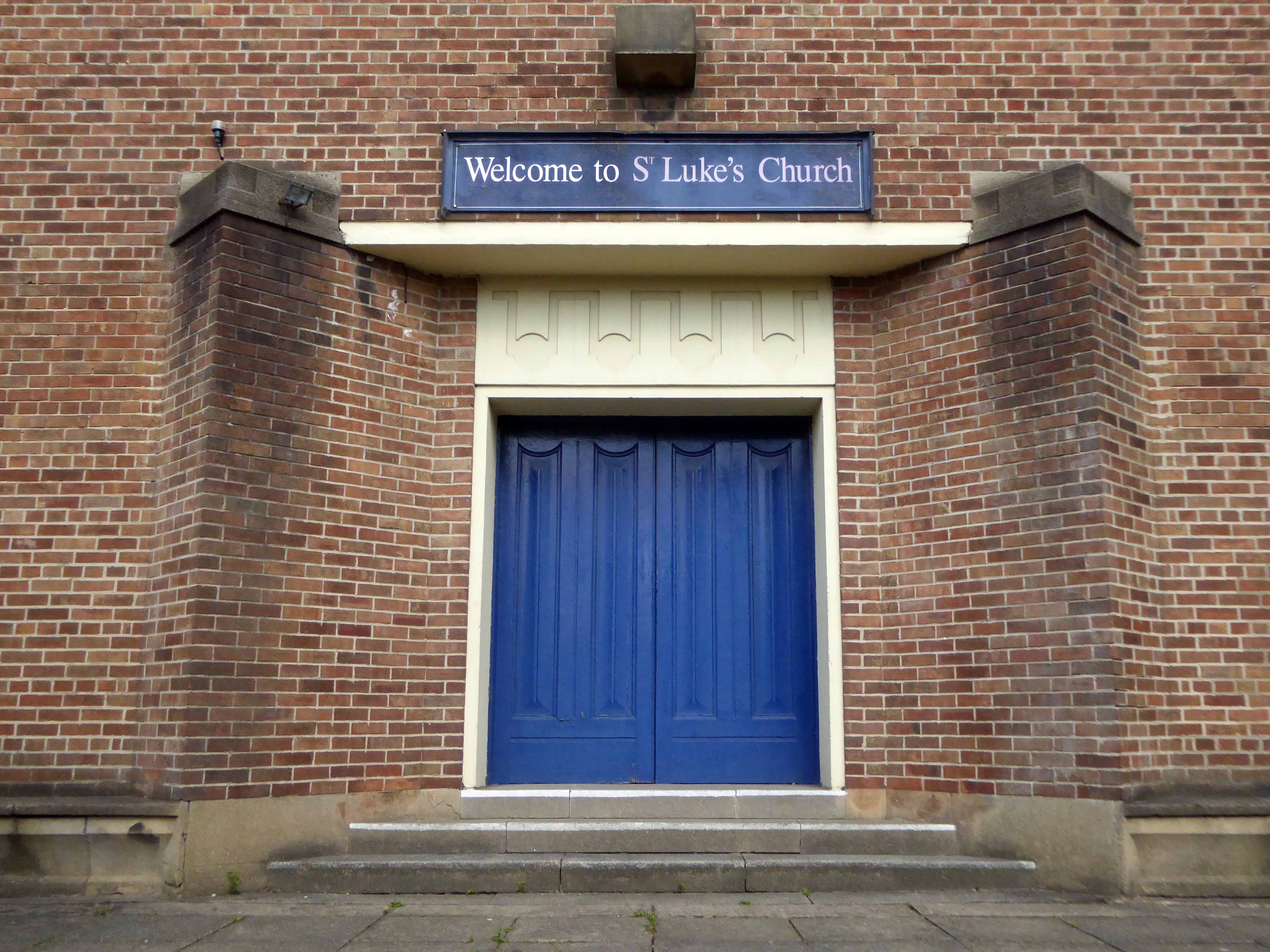
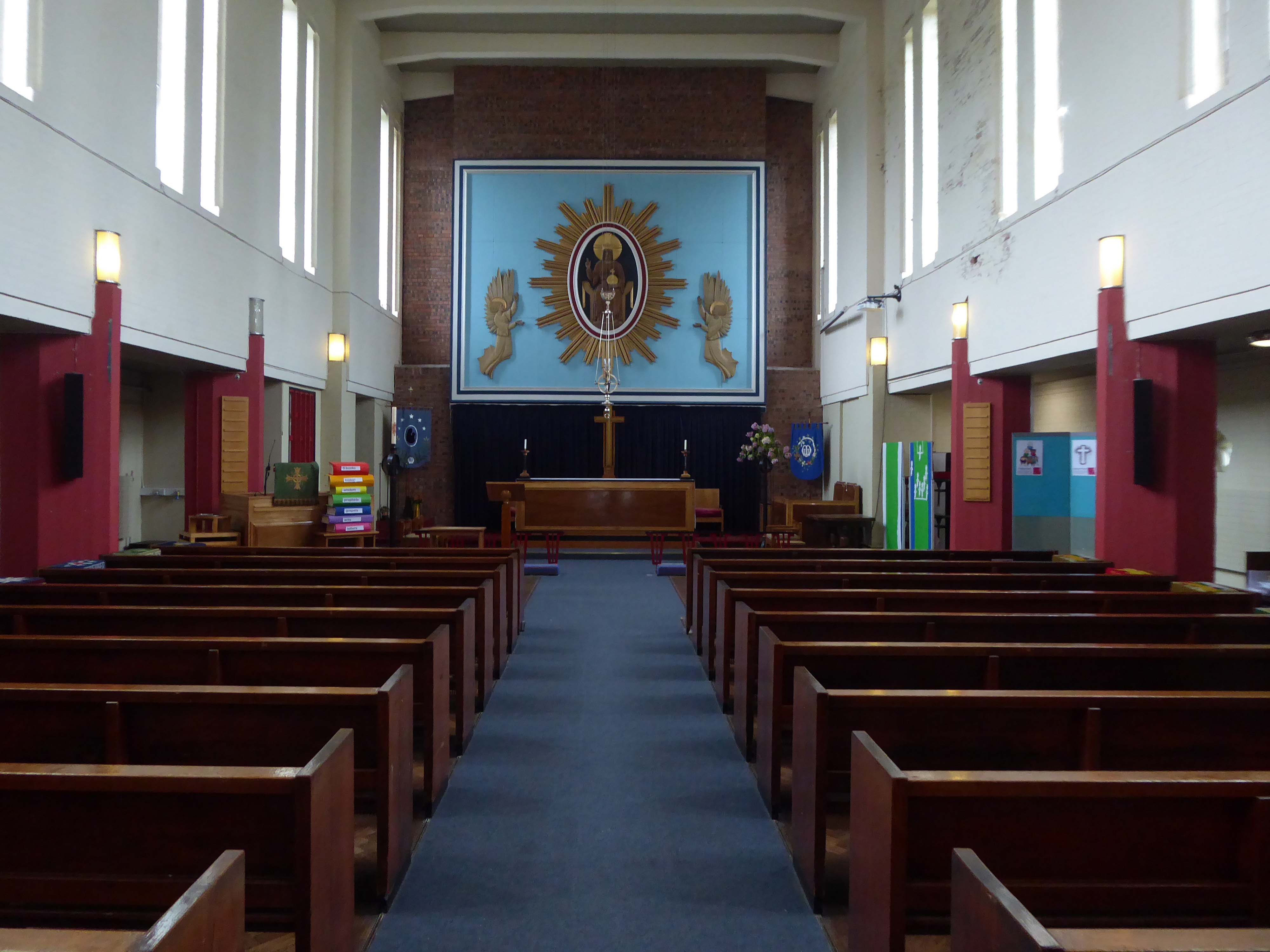
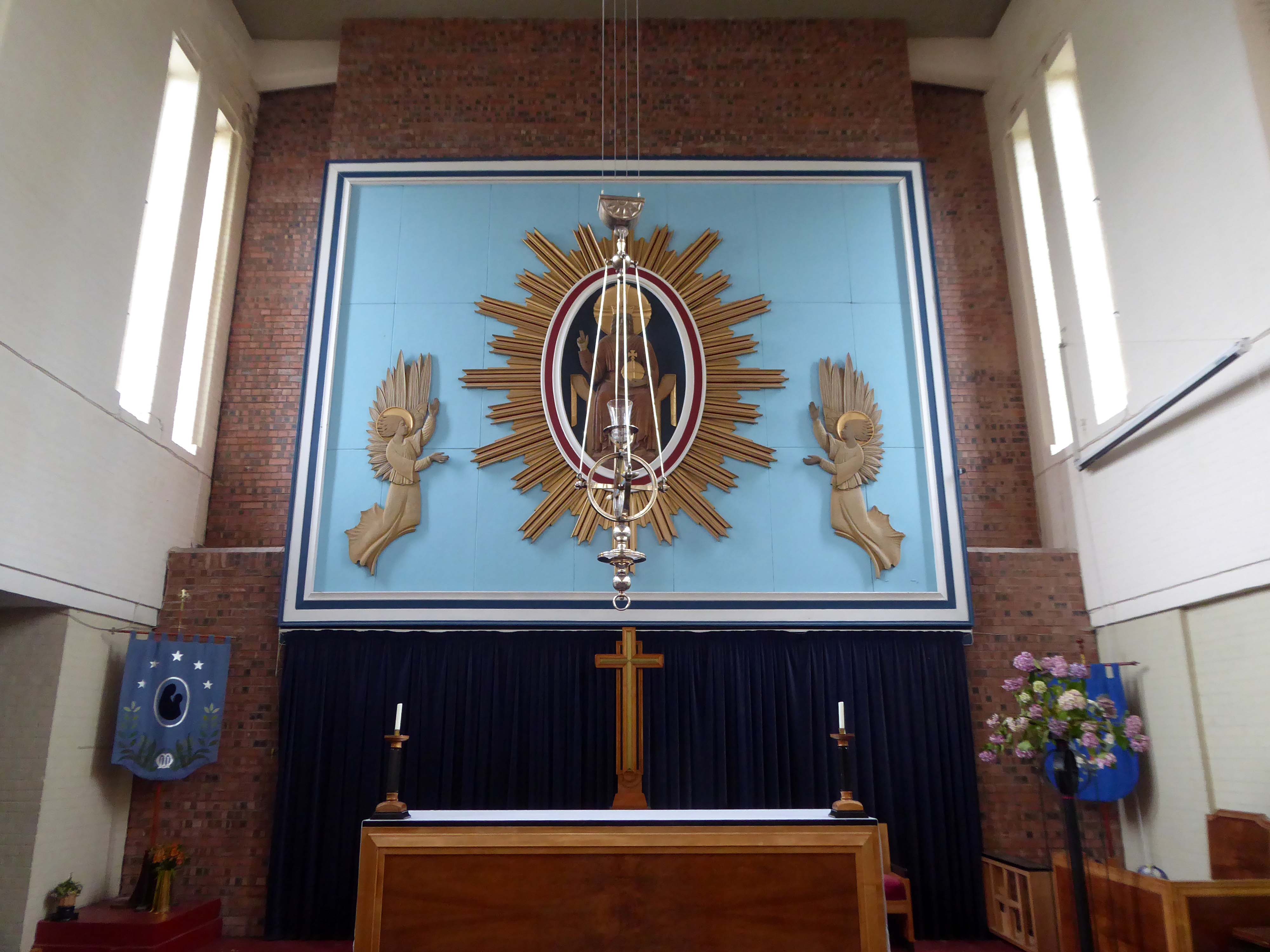
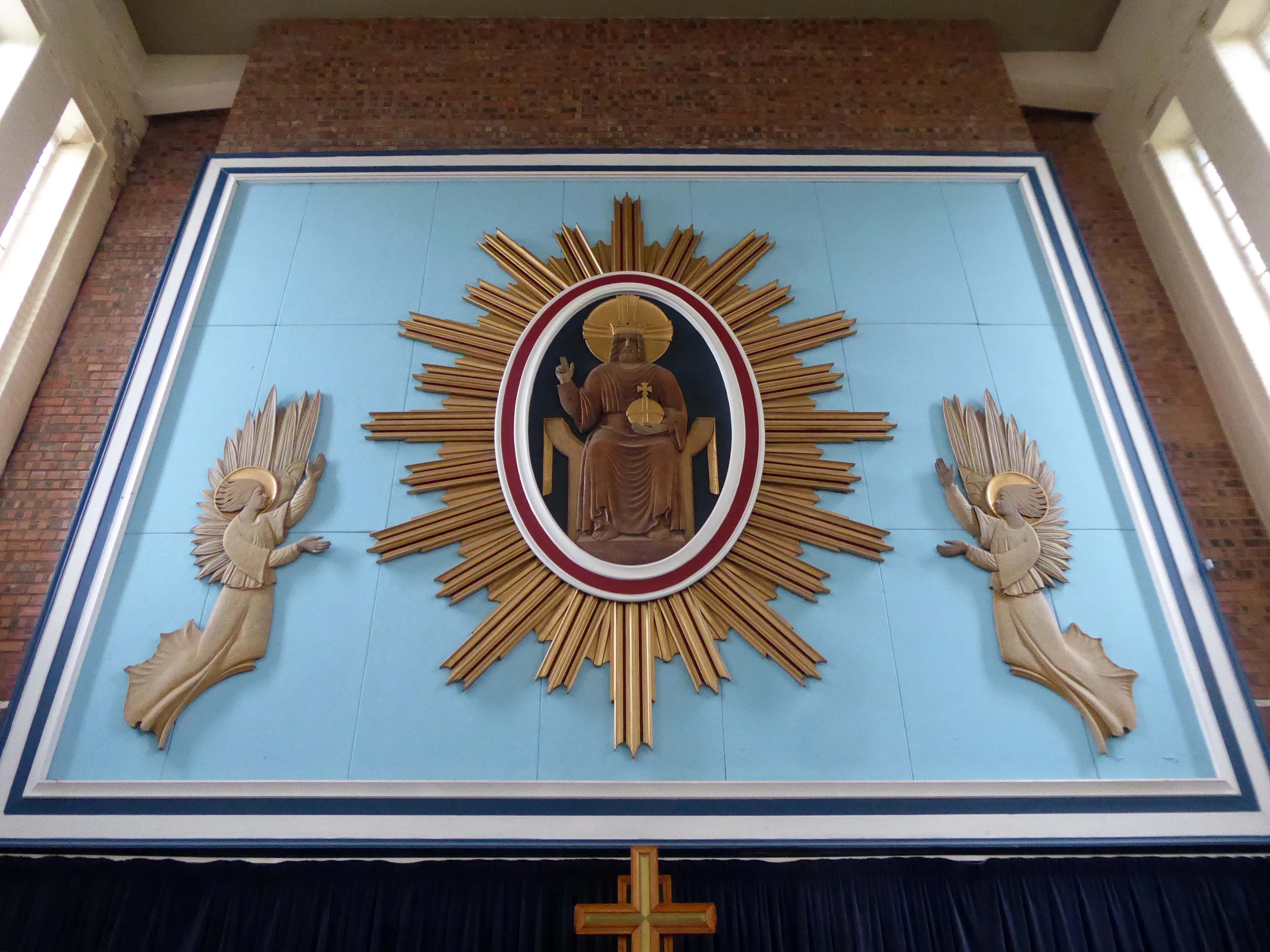
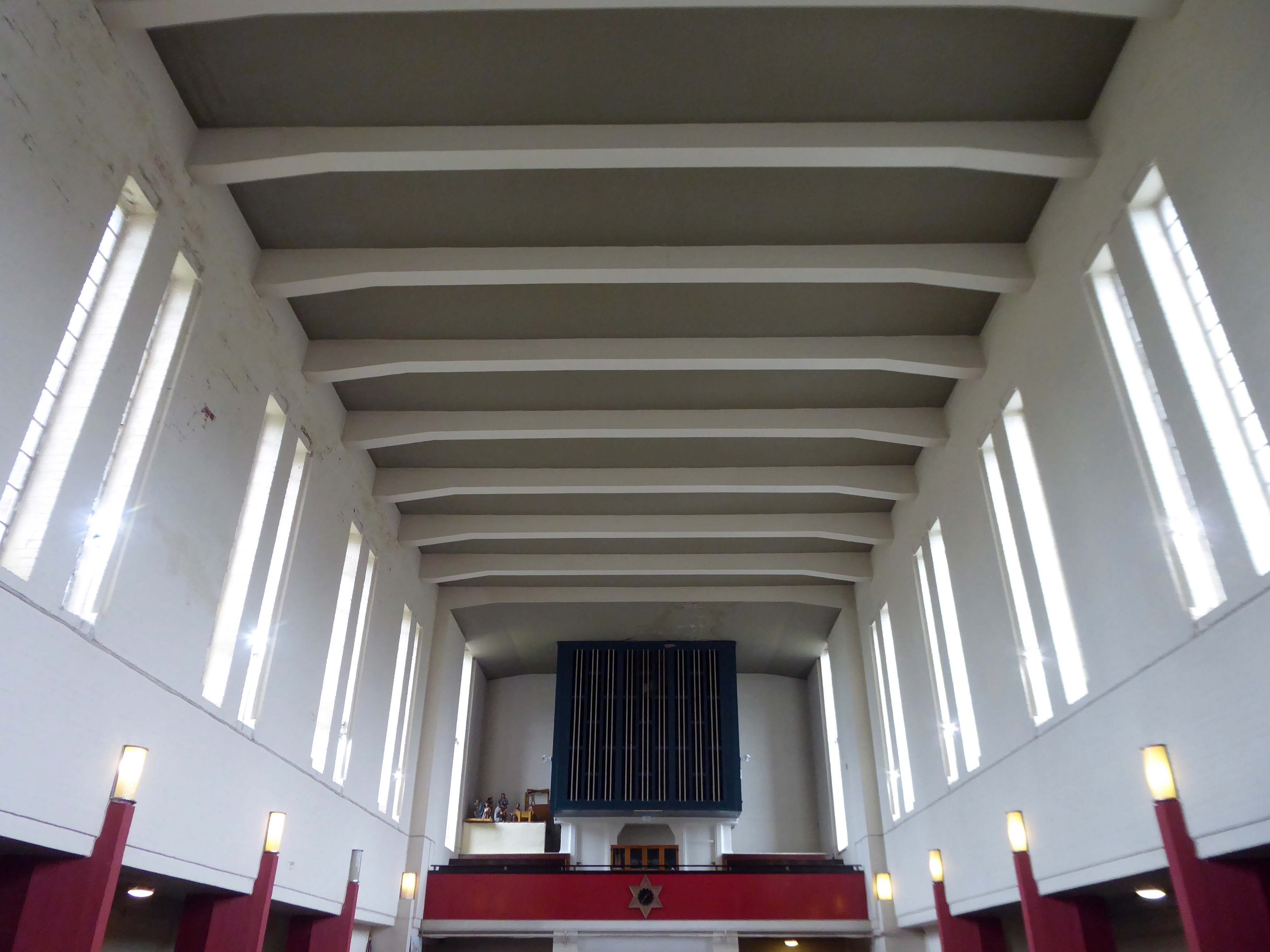
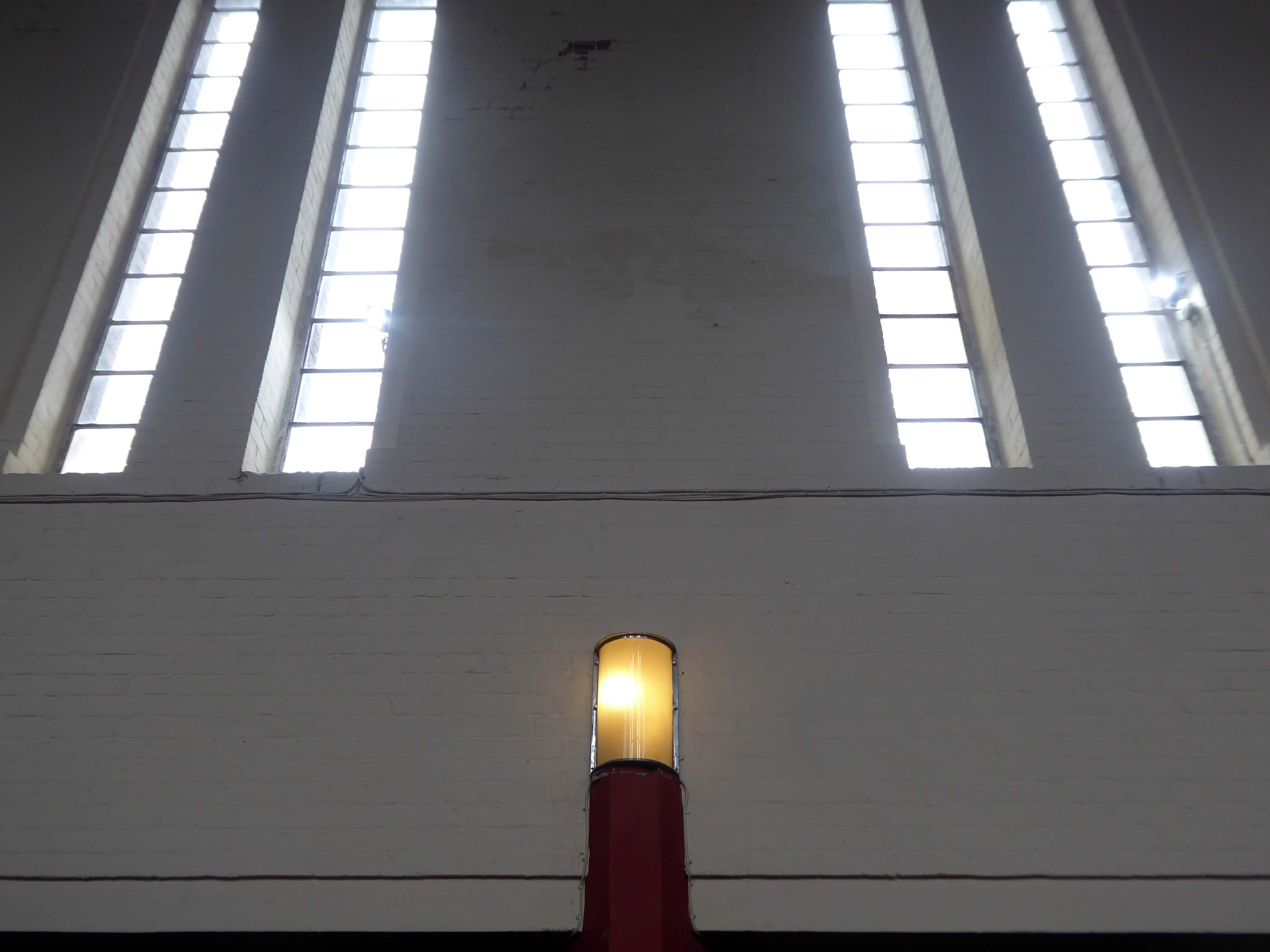
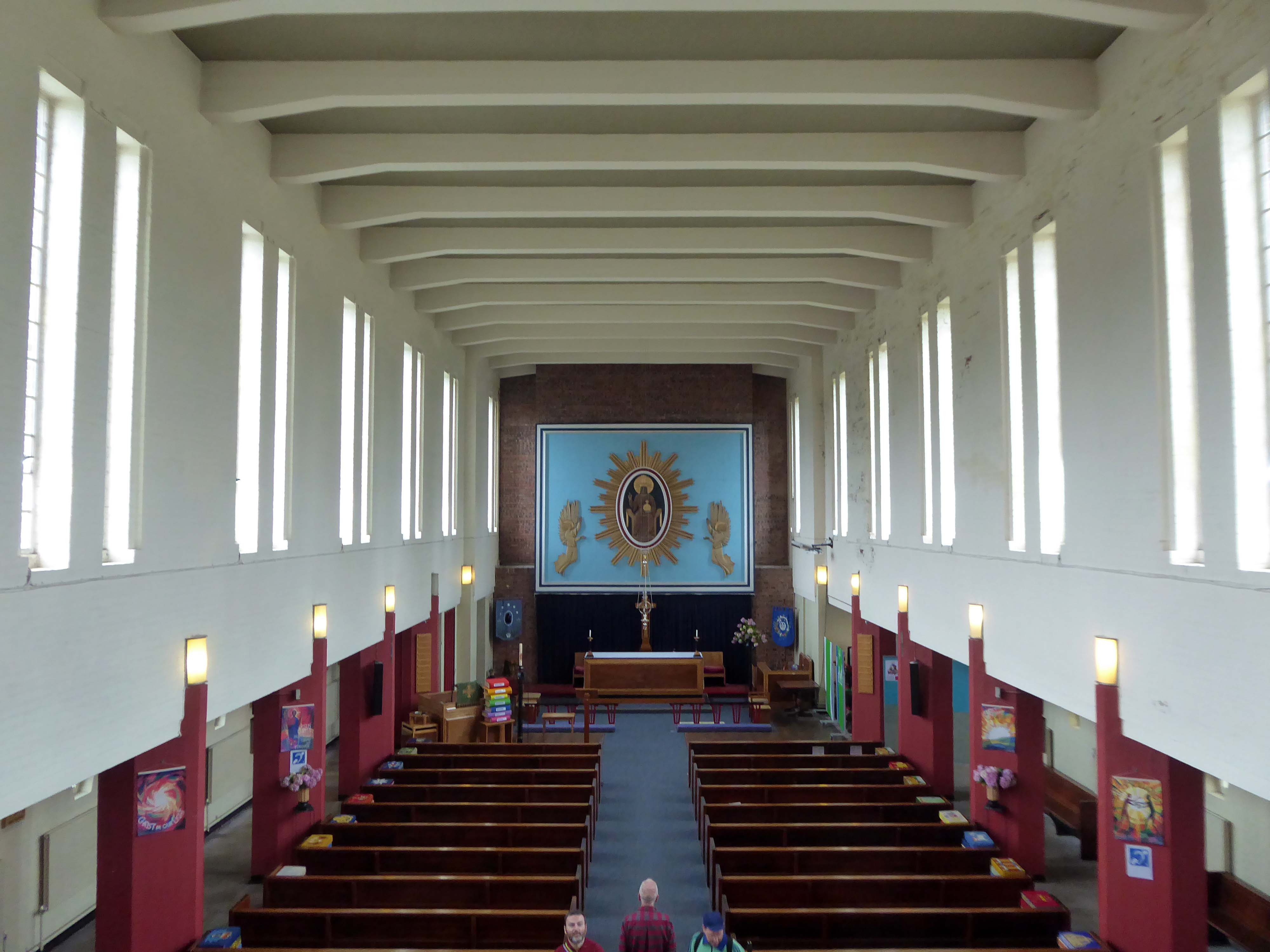
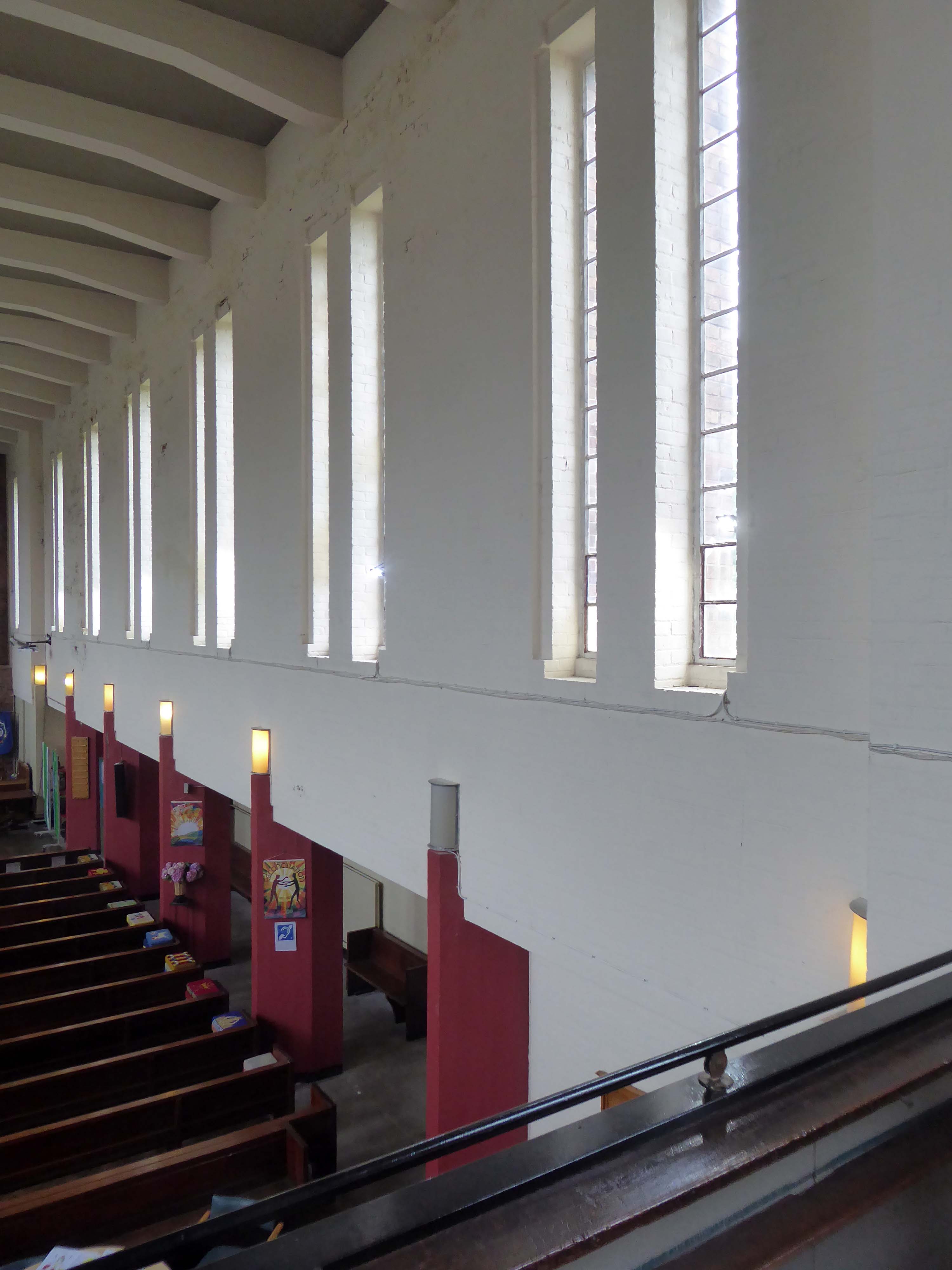
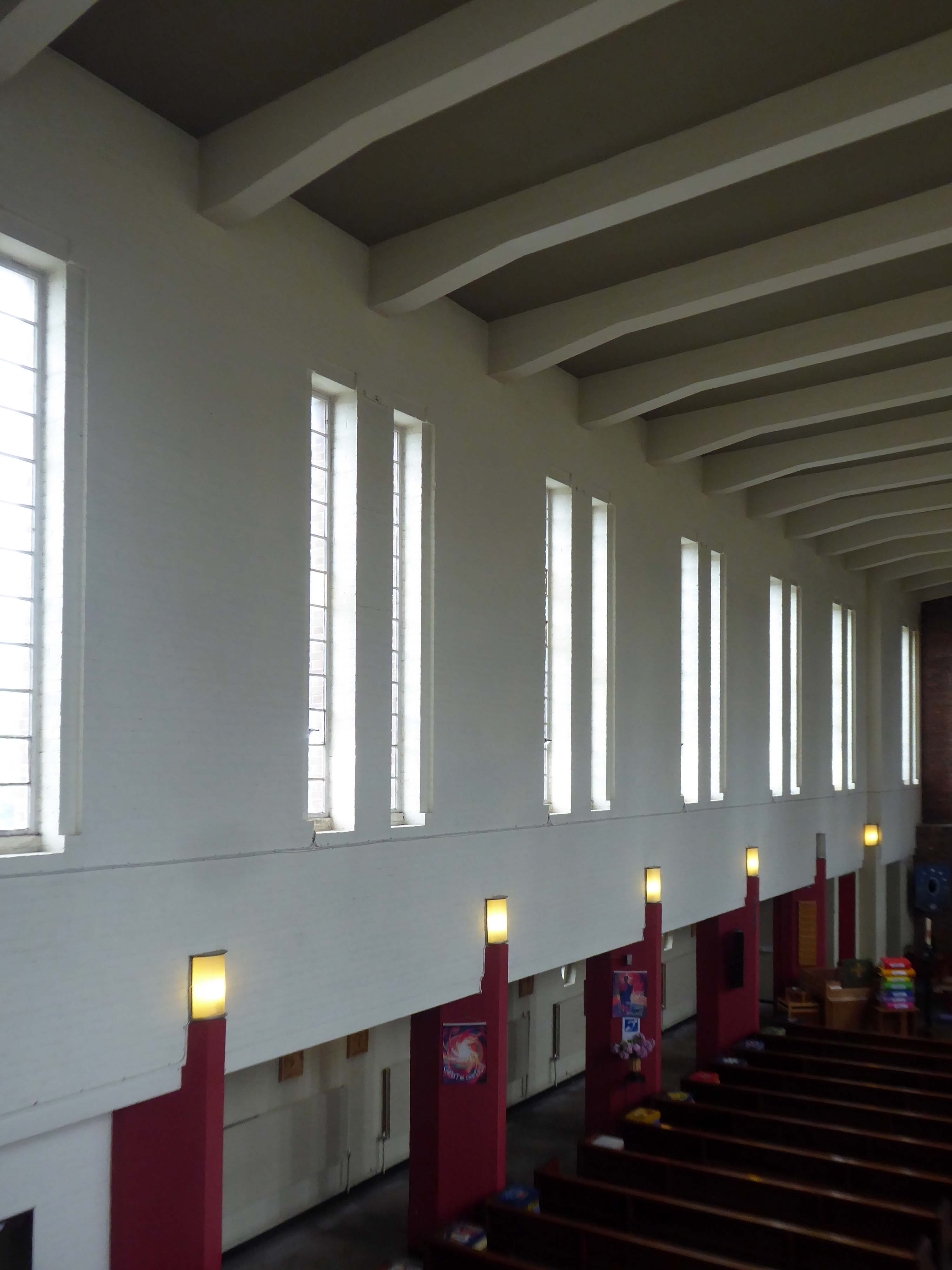
1938-9 by Taylor and Young. Light brown brick in English garden wall bond (roof concealed). Modern functionalist style. Nave with west tower, north and south aisles with porches and side offices, short chancel. Rectangular tower to same width as nave, with short triangular buttresses flanking a square-headed doorway, plain wall except for very large geometrical-floral clock, parapet and very low set-back louvre stage with steeply-pitched hipped roof. Flat-roofed aisles have projected triangular west ends flanking tower, a projected porch at each end of north aisle and corresponding projected offices to south aisle, and very small star-shaped windows with pentagonal surrounds. Nave has 7 pairs of tall square-headed lancets. Short one-bay chancel has concrete cross in place of east window. Interior: basilican character, with low passage-aisles, chamfered piers terminating with lights, flat concrete-beamed ceiling; side-lit chancel with relief figures of angels. 

Grade II listed Historic England

Those are the facts – the fabulous thing is the clock, a playful lesson in geometry, surface and colour, and it keeps time as well.

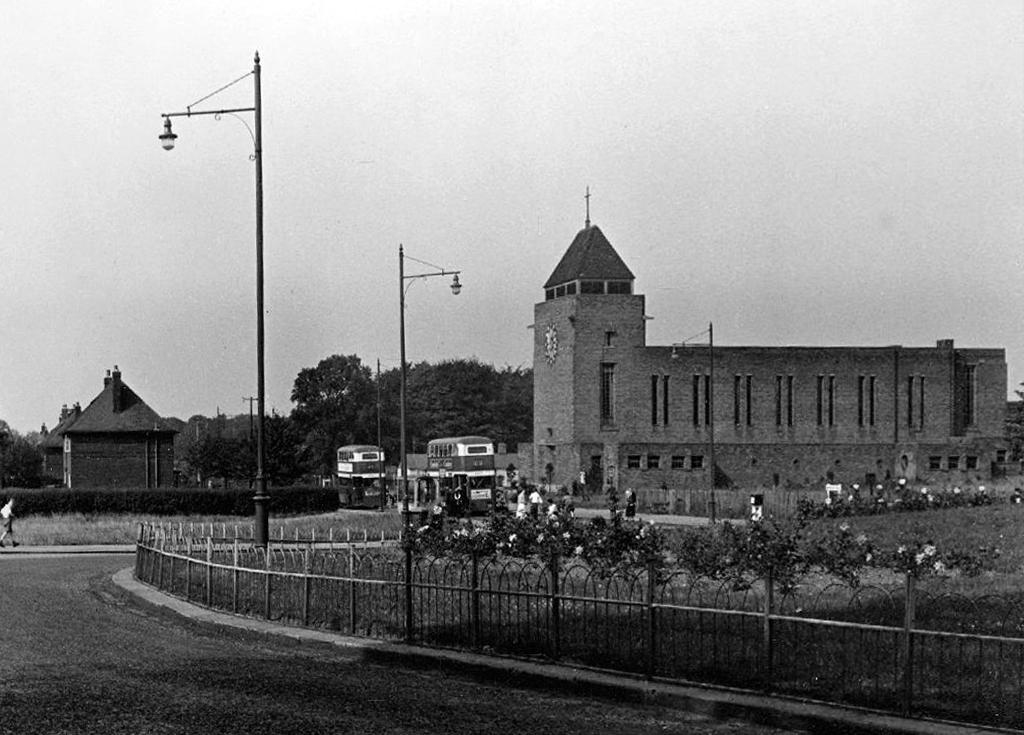
Wythenshawe is awash with modern churches and this pale brick giant is hard to miss dominating the Brownley Road junction, built to serve the then ever expanding housing estate to the south west of Manchester.

webmedia.php

Brownley Road flats

$_57

webmedia-1.php

Manchester Image Archive

I love the playful touches which offset the monolithic volumes of St Luke’s – go ahead take a look inside:

6176760_orig

luke_int

luke_int1

And out:

P1170366

P1170367

P1170368

P1170369

P1170370

P1170371

P1170372

P1170373


P1170380

P1170381

P1170382

As we cycled by on Friday 12th July 2024 – as we were on the Yuri Gagarin ride, we noticed that the church was open.

The parishioners in attendance, were more than happy to allow us to look around this magnificent interior, many thanks for your hospitality.


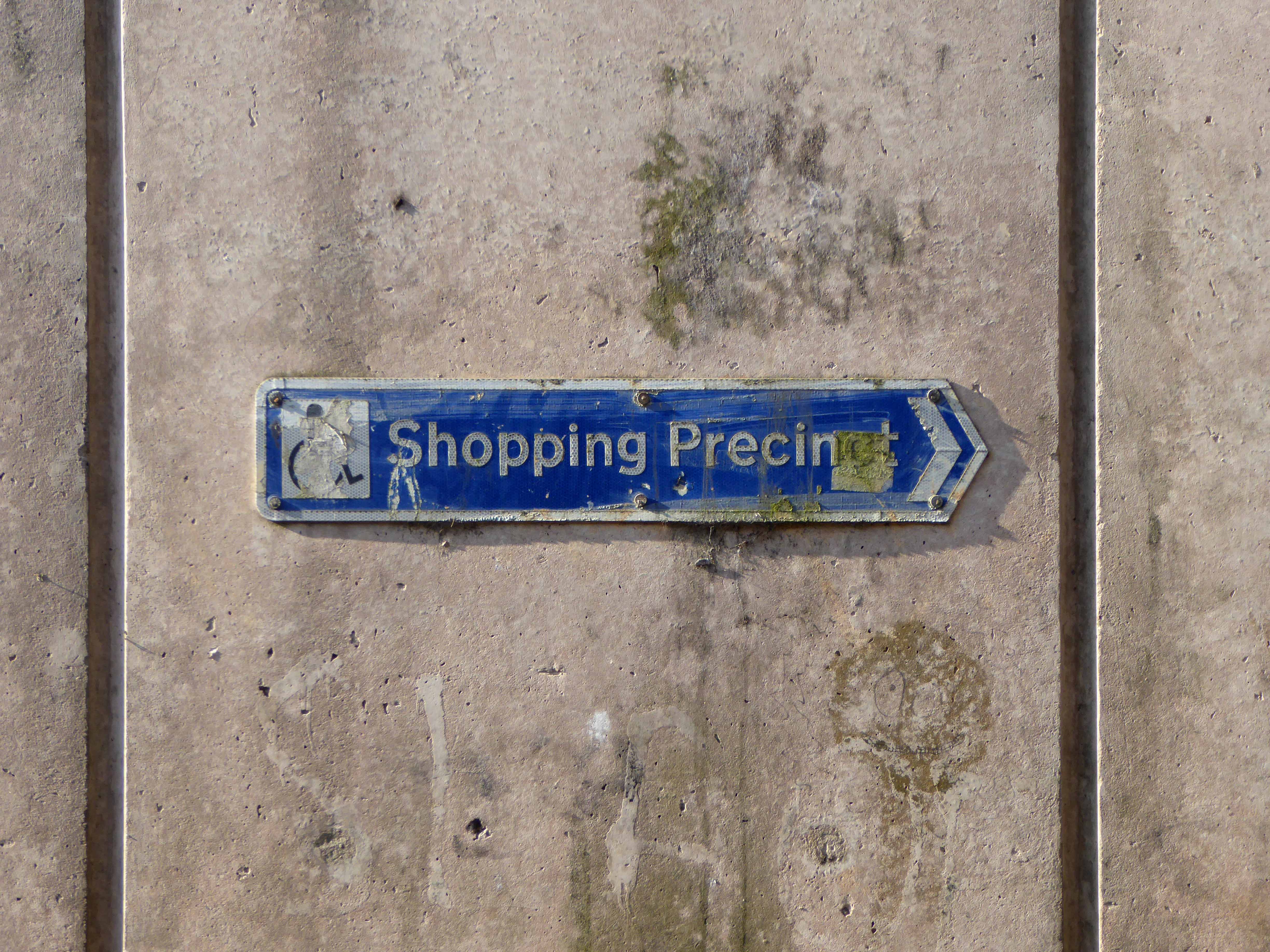
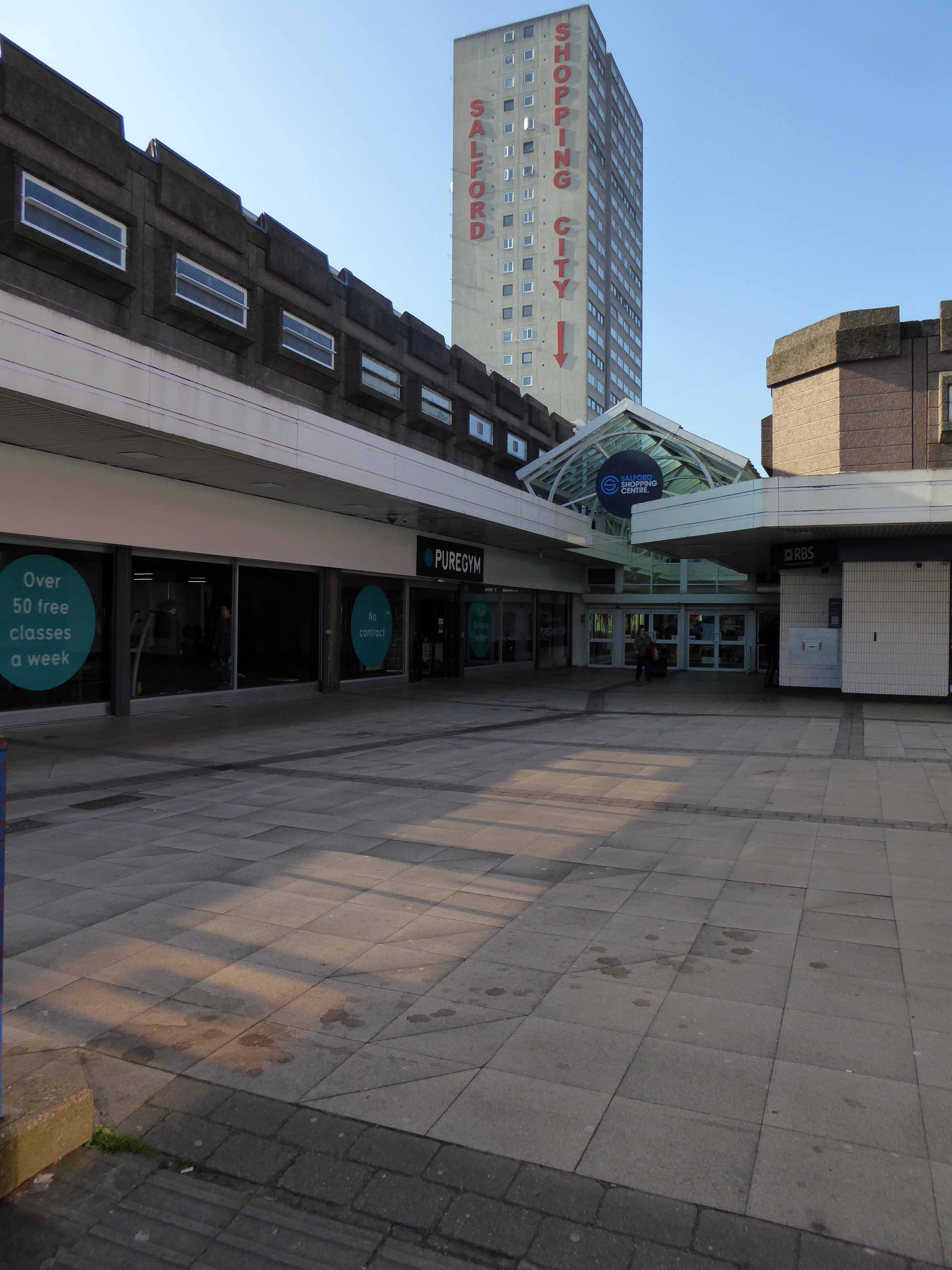
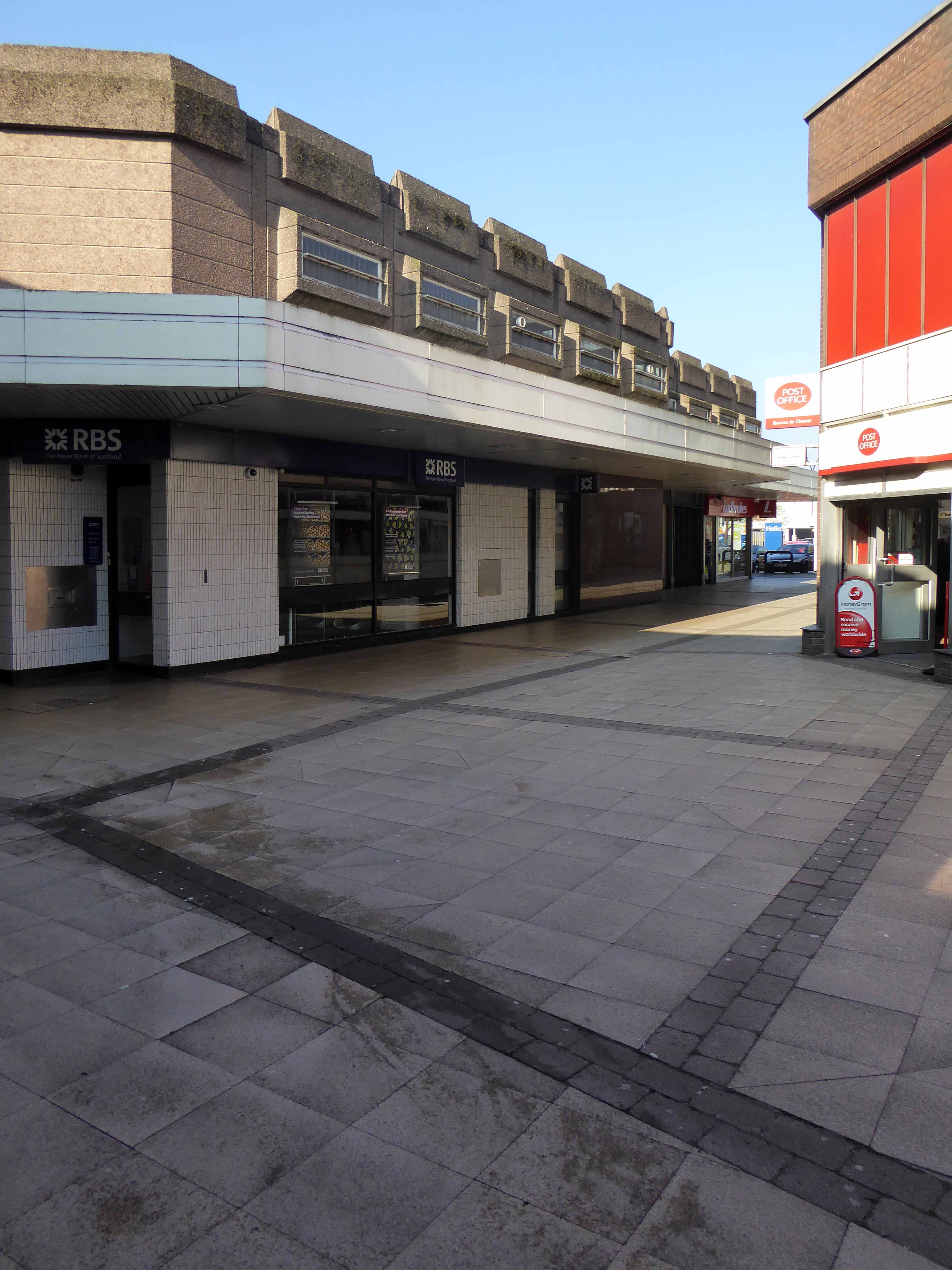
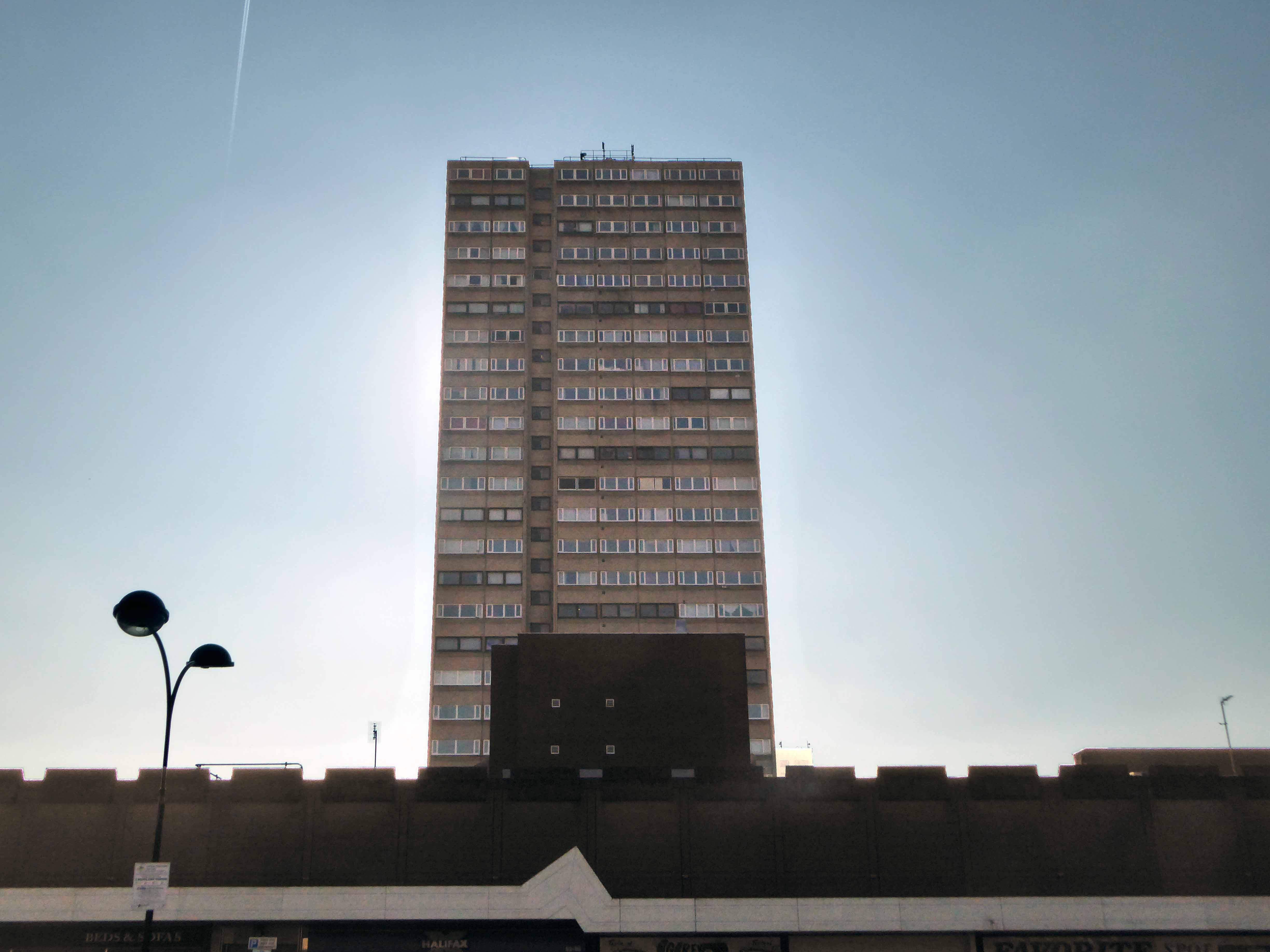
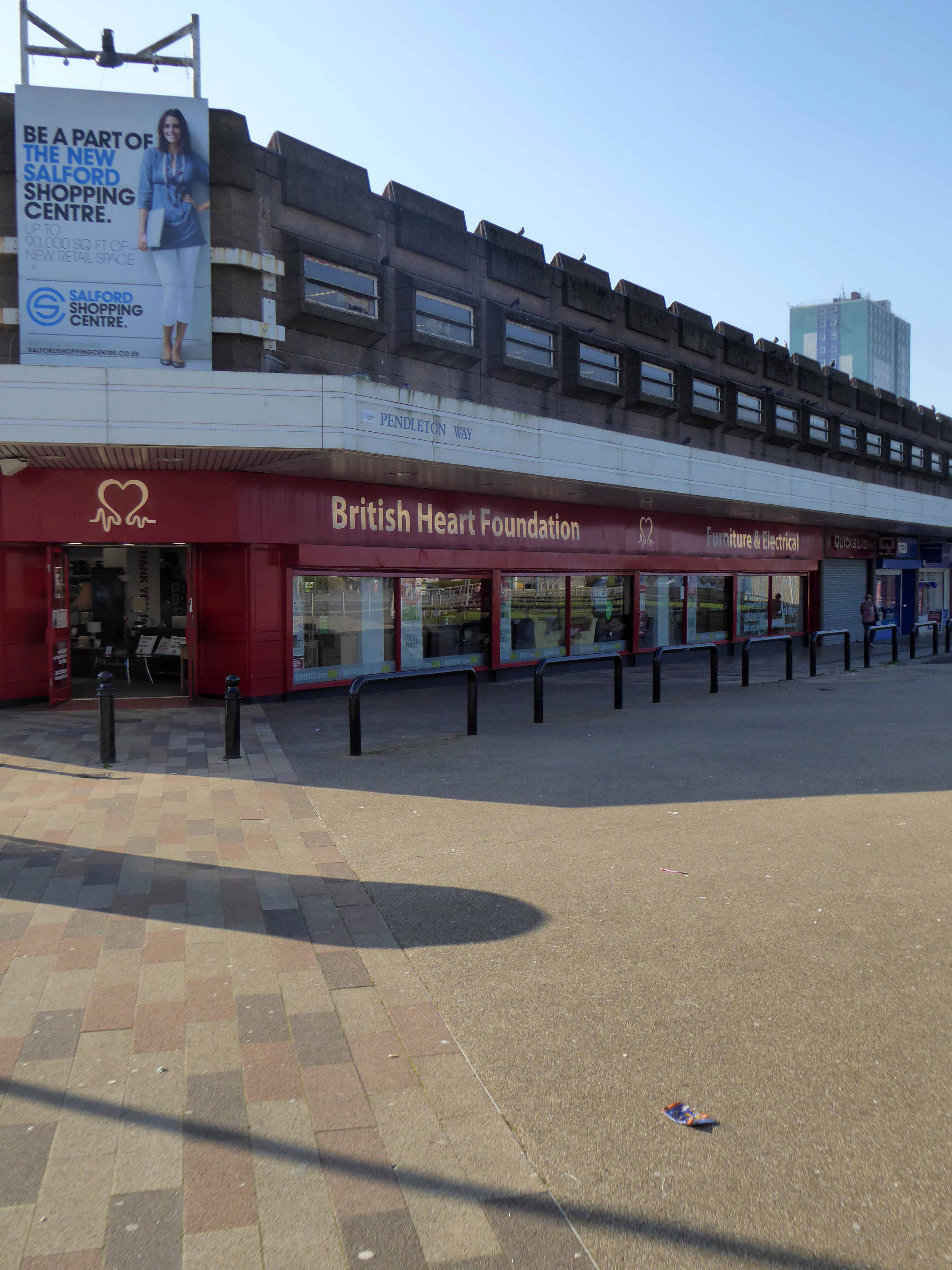
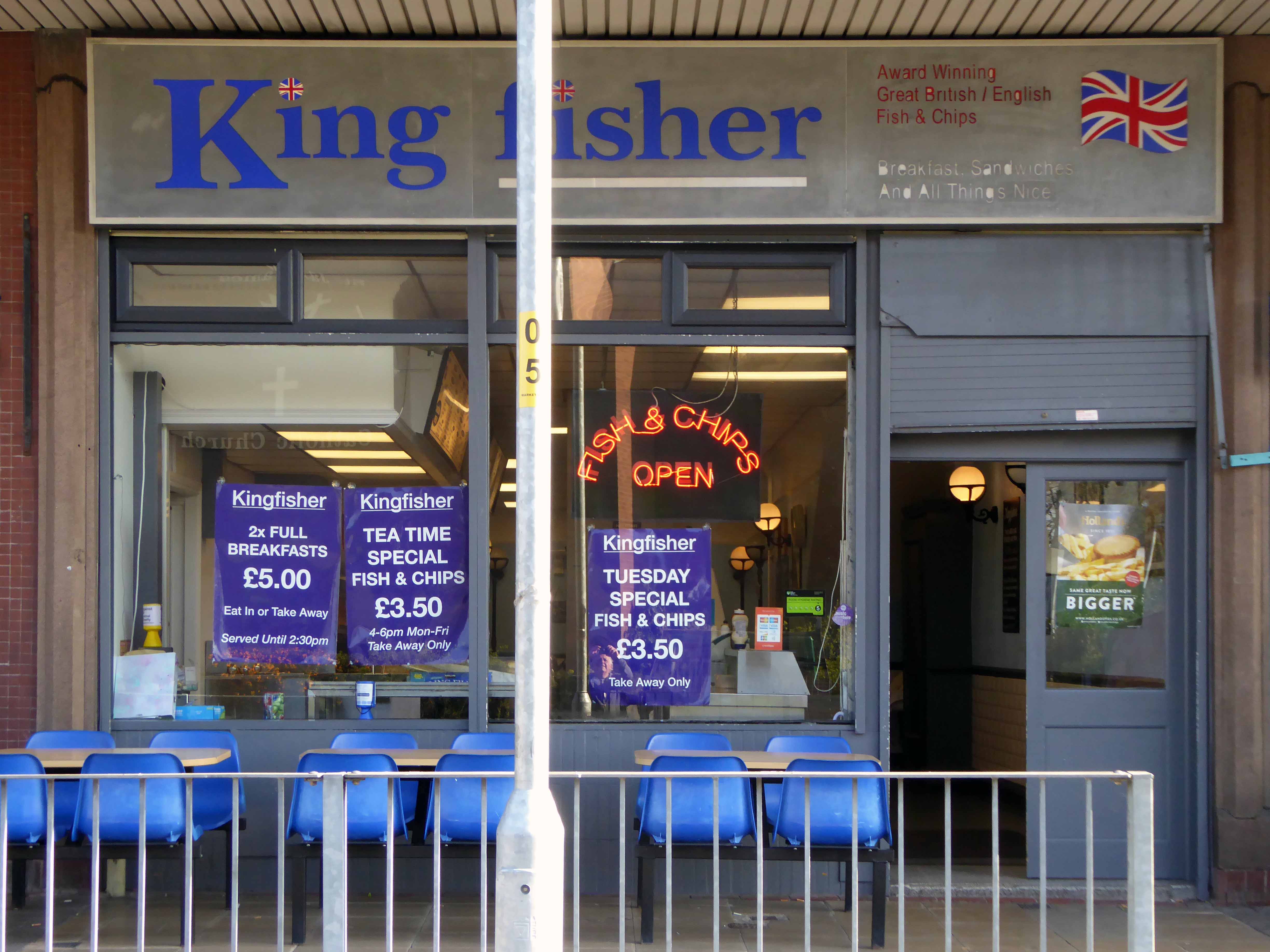
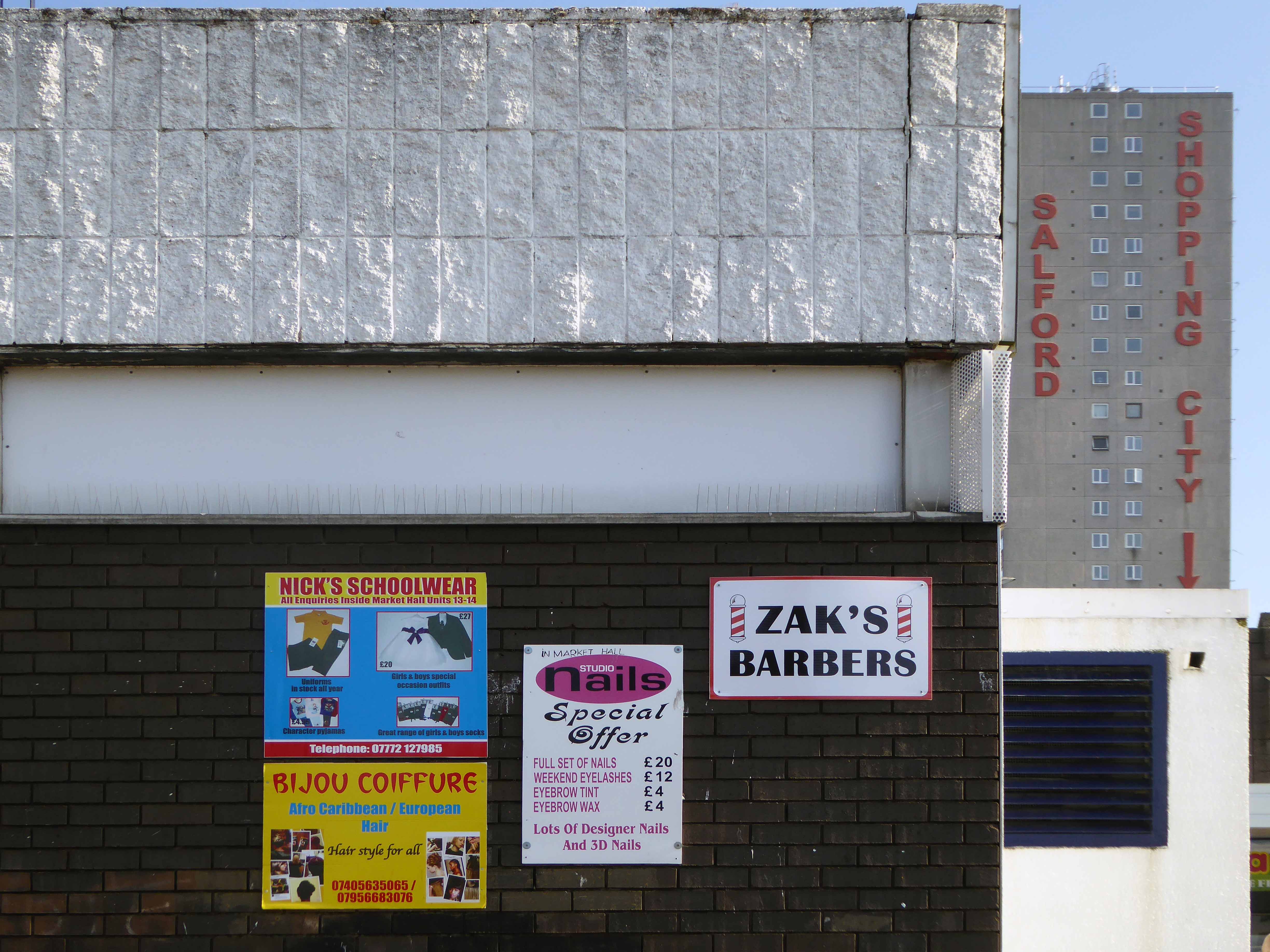
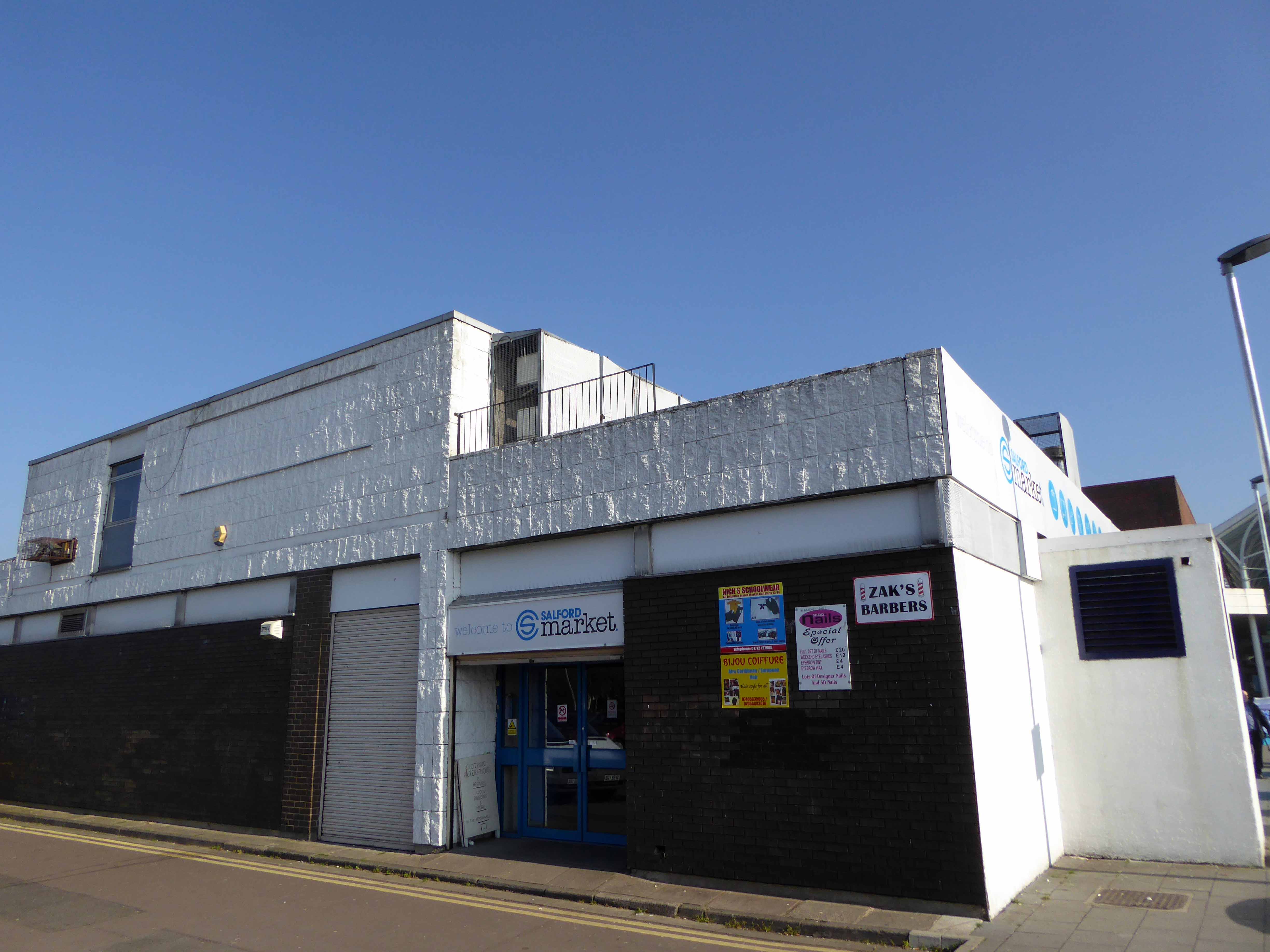
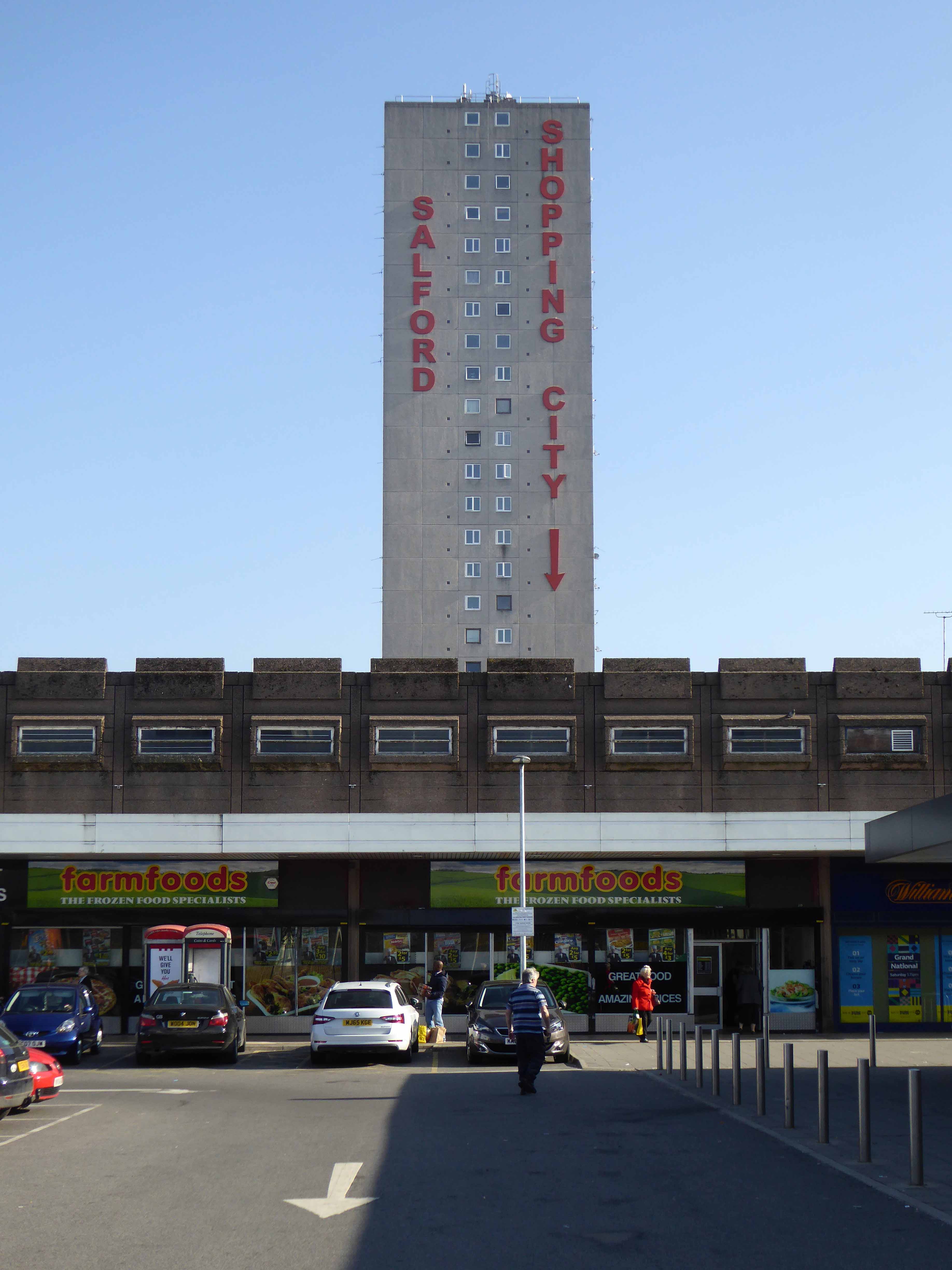
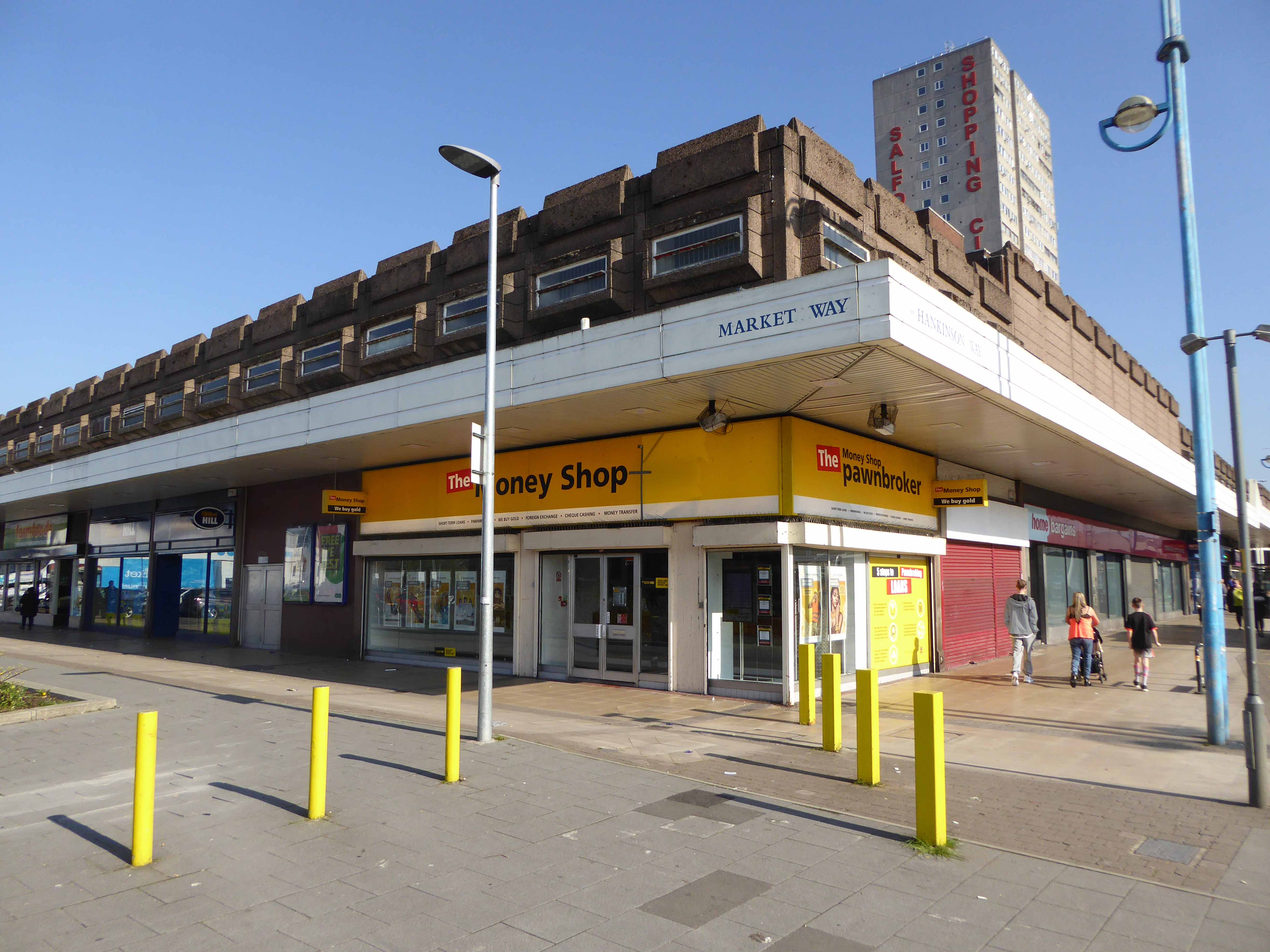
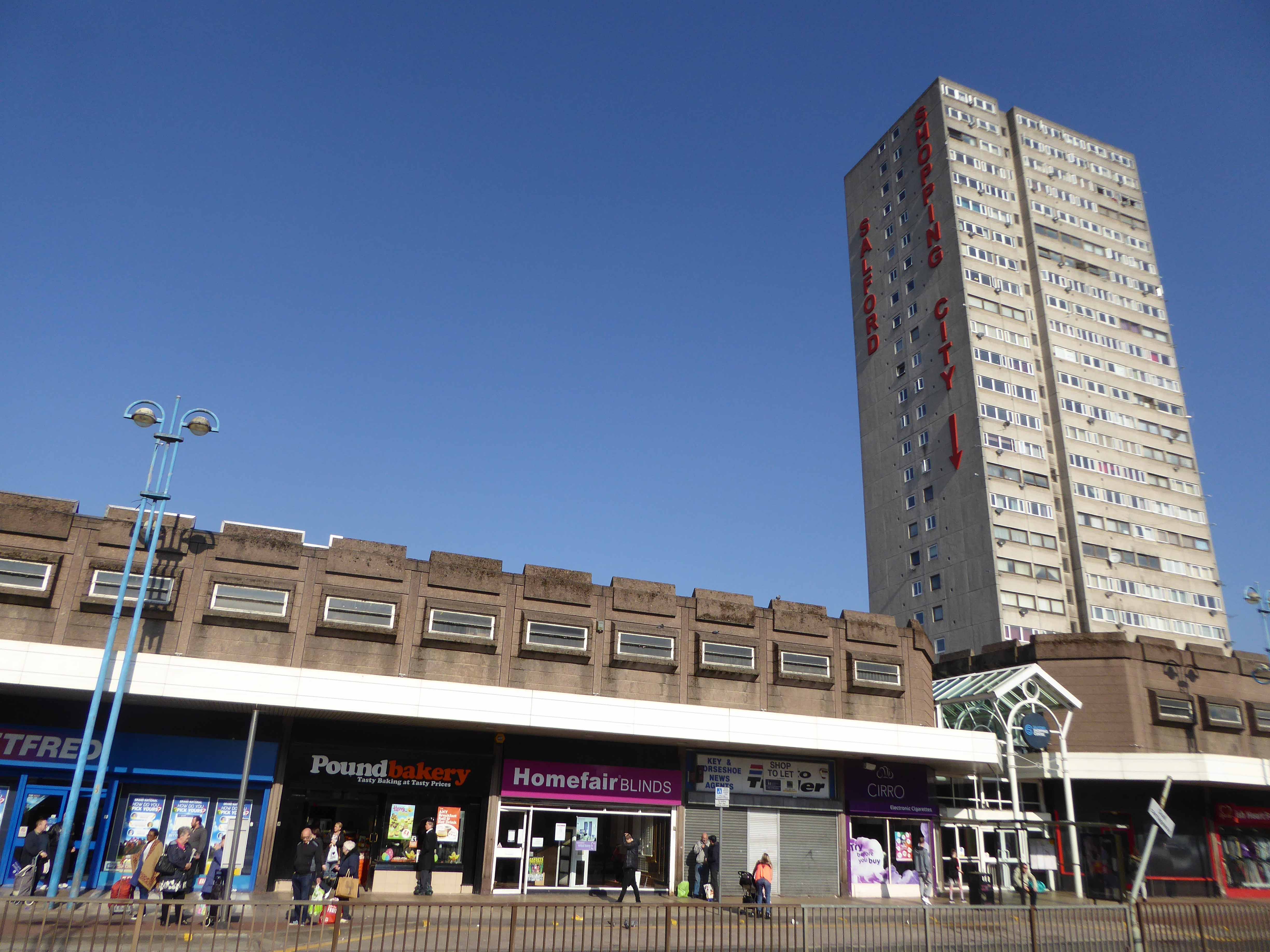
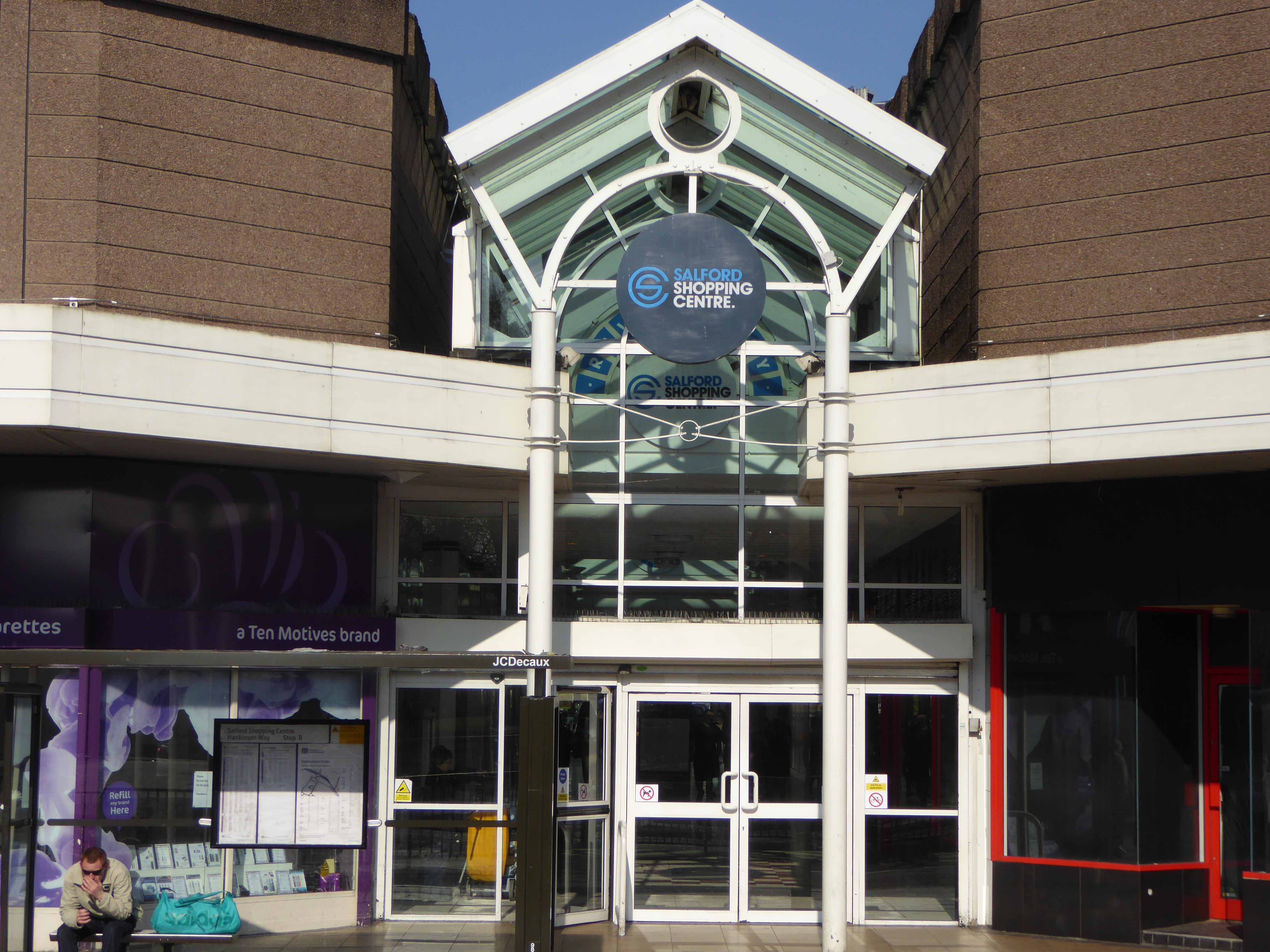
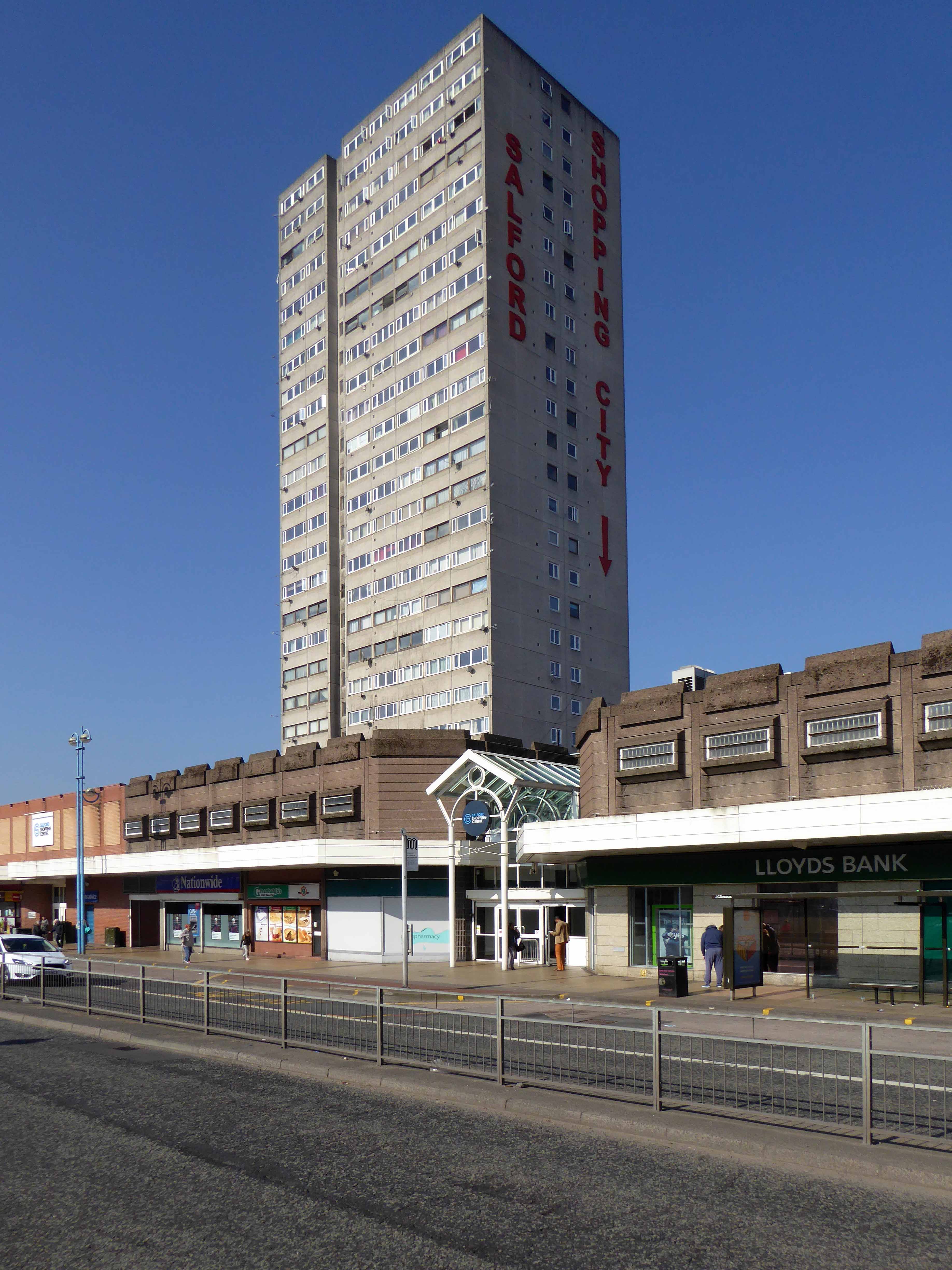
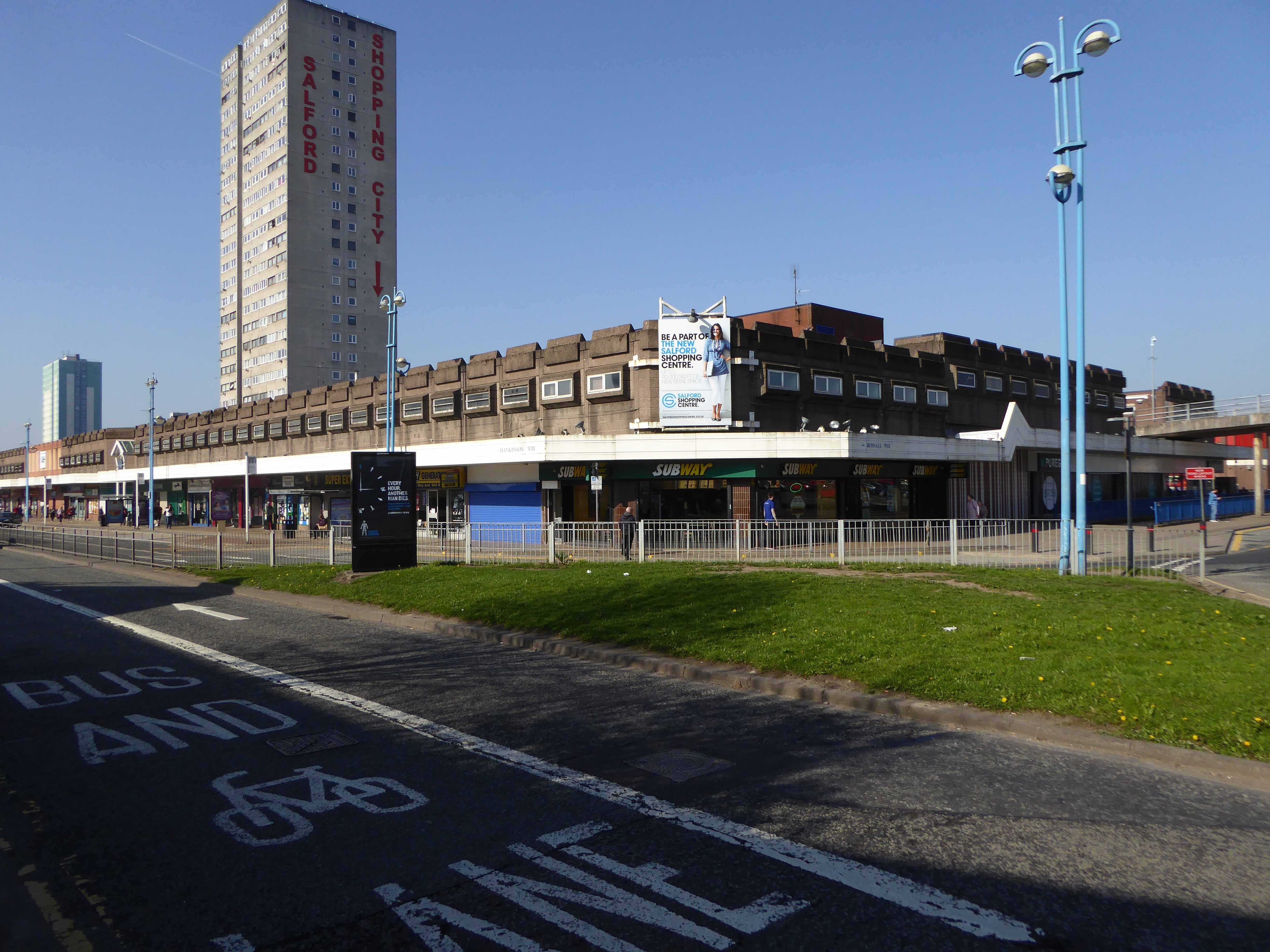
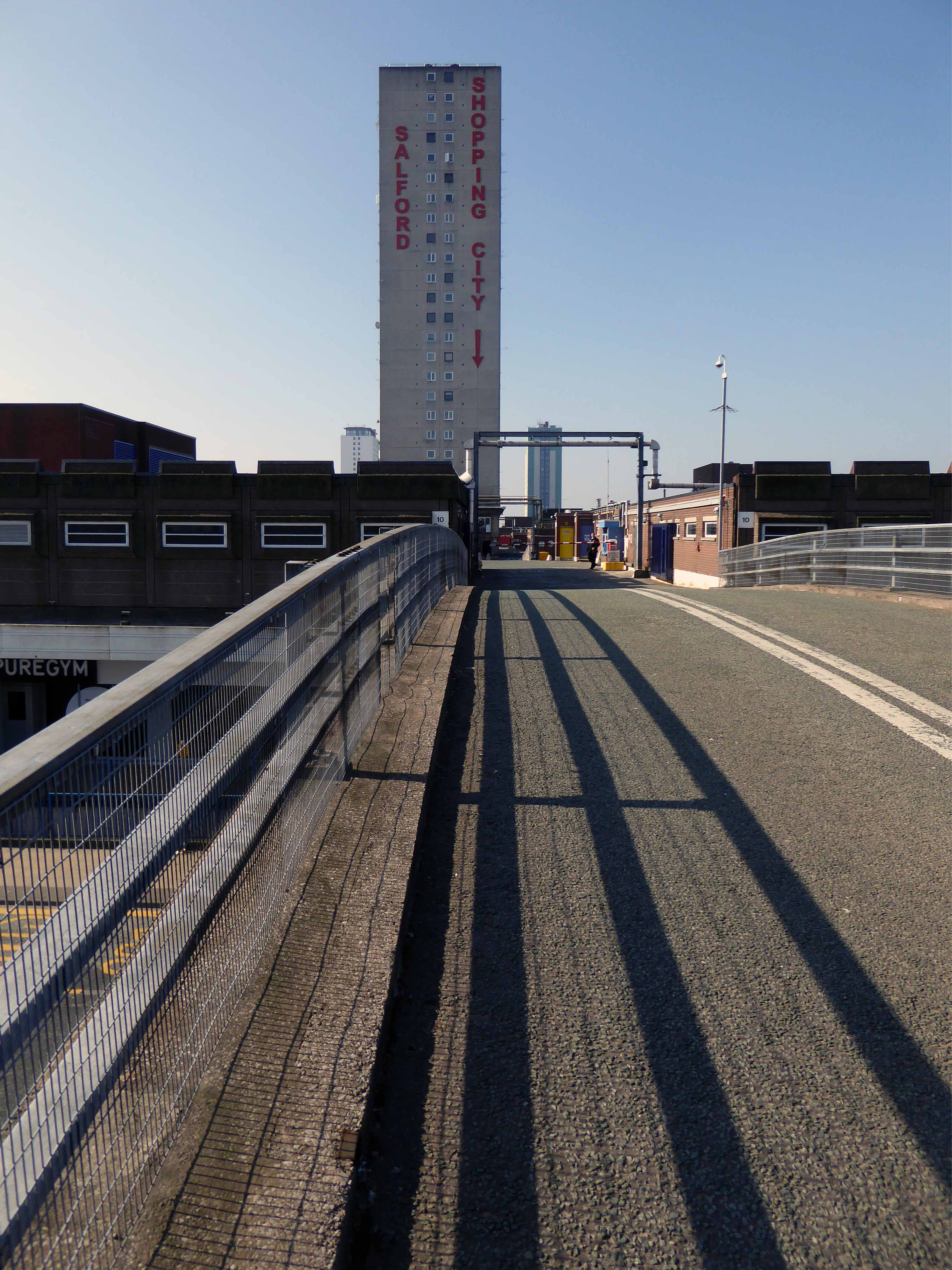
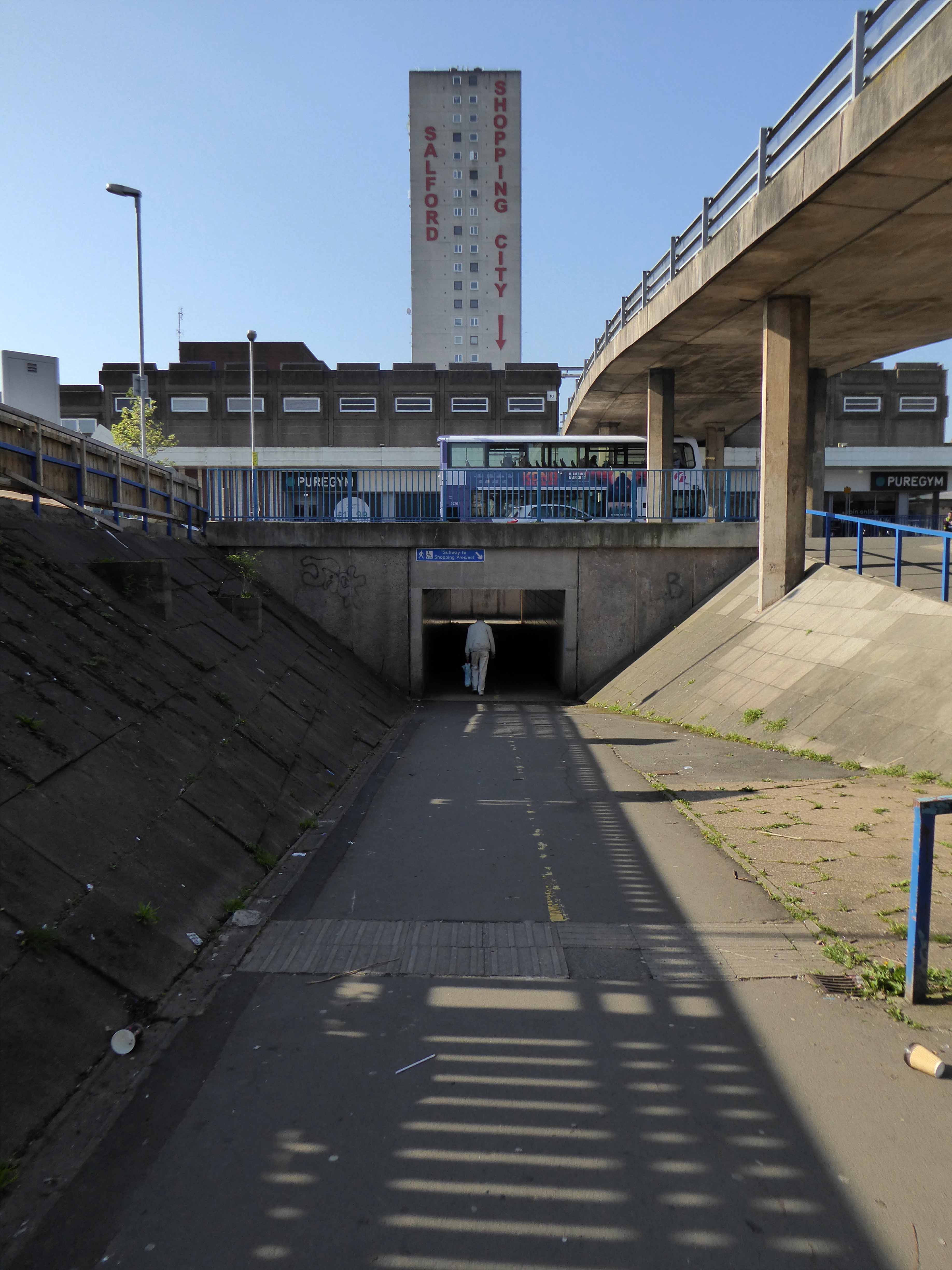
Salford Shopping City

The construction of the shopping centre and surrounding areas continued and on 21 May 1970 the new Salford Market officially opened. From 1971 onwards new shops inside the precinct itself began to open.

However, due to a lack of funds and a political scandal which saw chairman Albert Jones jailed for eight months construction of Salford Precinct was halted. The site had only 95 shop units compared to the proposed 260, the hotel and two storey car park were never built.

In 1991 the building was refurbished at a cost of £4 million, this included the installation of roofs across various walkways, making large swathes of the centre undercover. The shopping centre which at the time was known as Salford Precinct was renamed Salford Shopping City.

On 9 August 1994 the Manchester Evening News reported that Salford City Council was planning on selling off Salford Shopping City to raise money for local housing repairs, these plans split the ruling Labour Party council, one councillor telling the press that it would be like selling off the family silver.

In 2000 Salford Shopping City was eventually sold to a private company for £10 million in an effort to cut the council’s deficit. It was then later sold in March 2010 to Praxis Holdings for £40 million, the company stated that it wanted to invest in the precinct and link it to the new food superstore.

This is a tale of our times – 60s and 70s redevelopment designed and built in the rampant spirit of free enterprise and uber-buoyant consumerism, falling foul of an economic downturn, subsequent unemployment and shrinking retail spending. Property is ping-ponged between local authority and speculative developers.

Following the riots of 2011 pledges were made regarding the future of the site, plans are still afoot, as yet to be rendered corporeal. Although the area has benefitted from an influx of students and a refurbishment of housing stock, there is pressure on the prosperity of the precinct from thriving retail developments in nearby Manchester and the Trafford Centre.

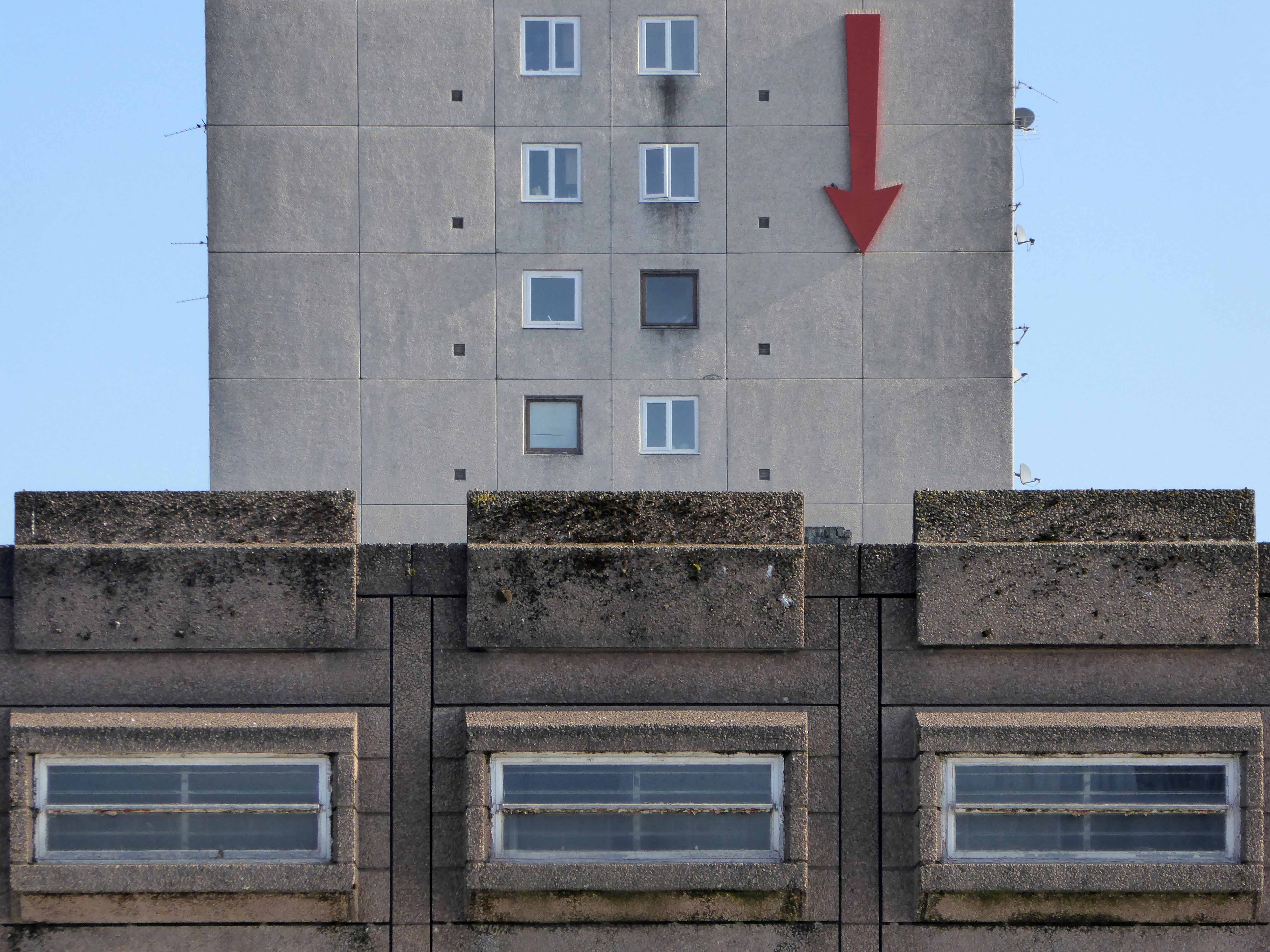
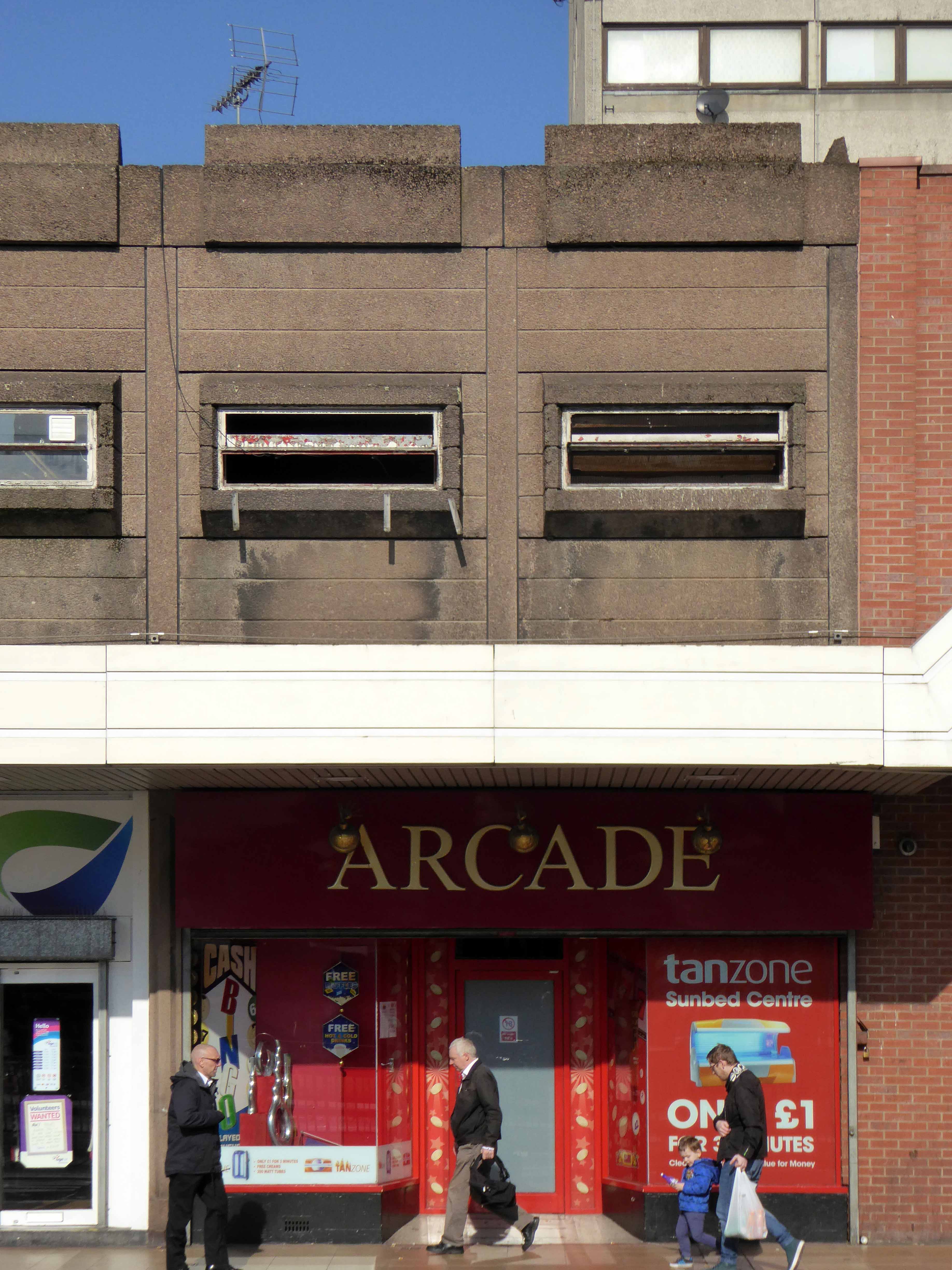
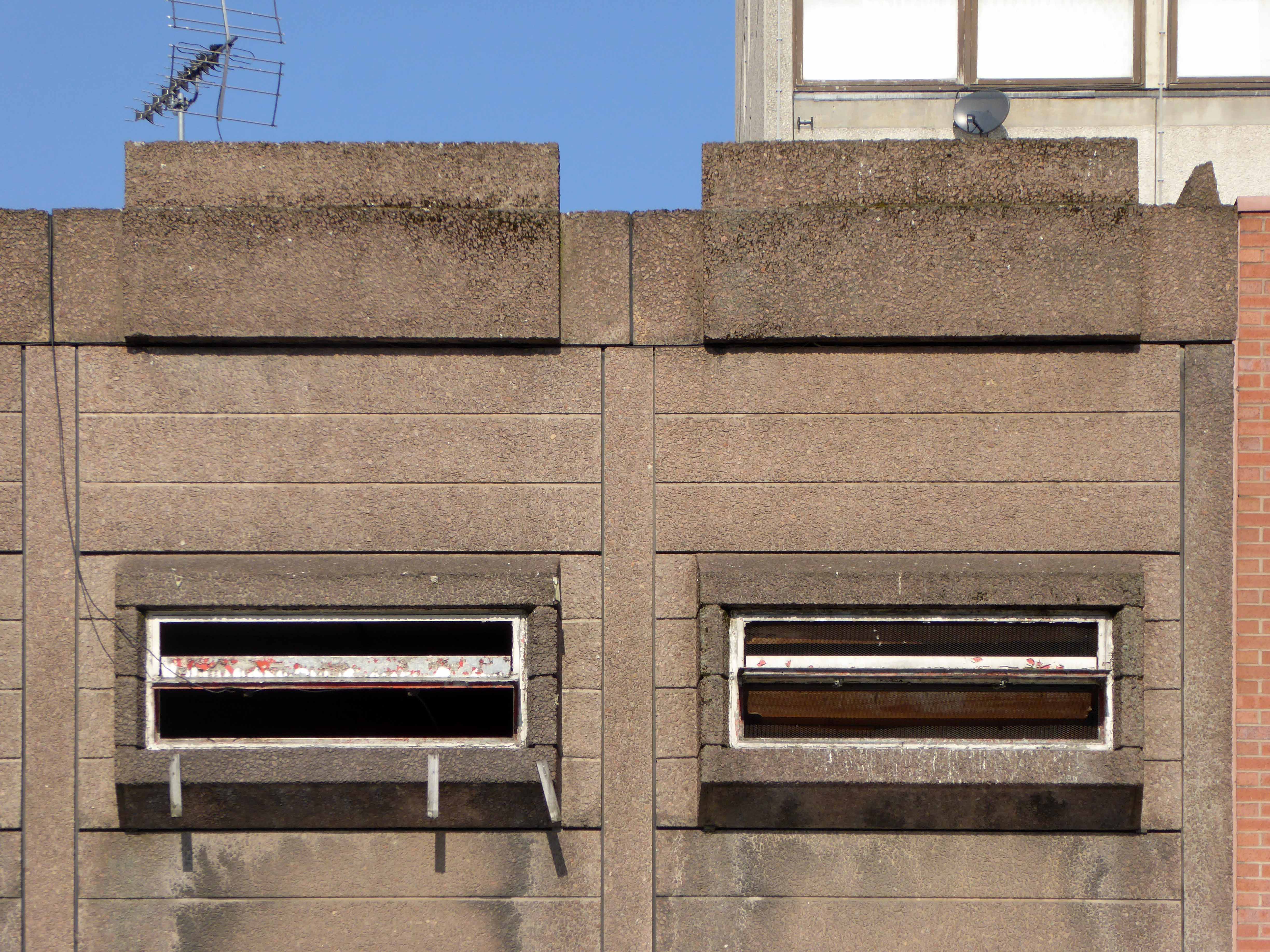
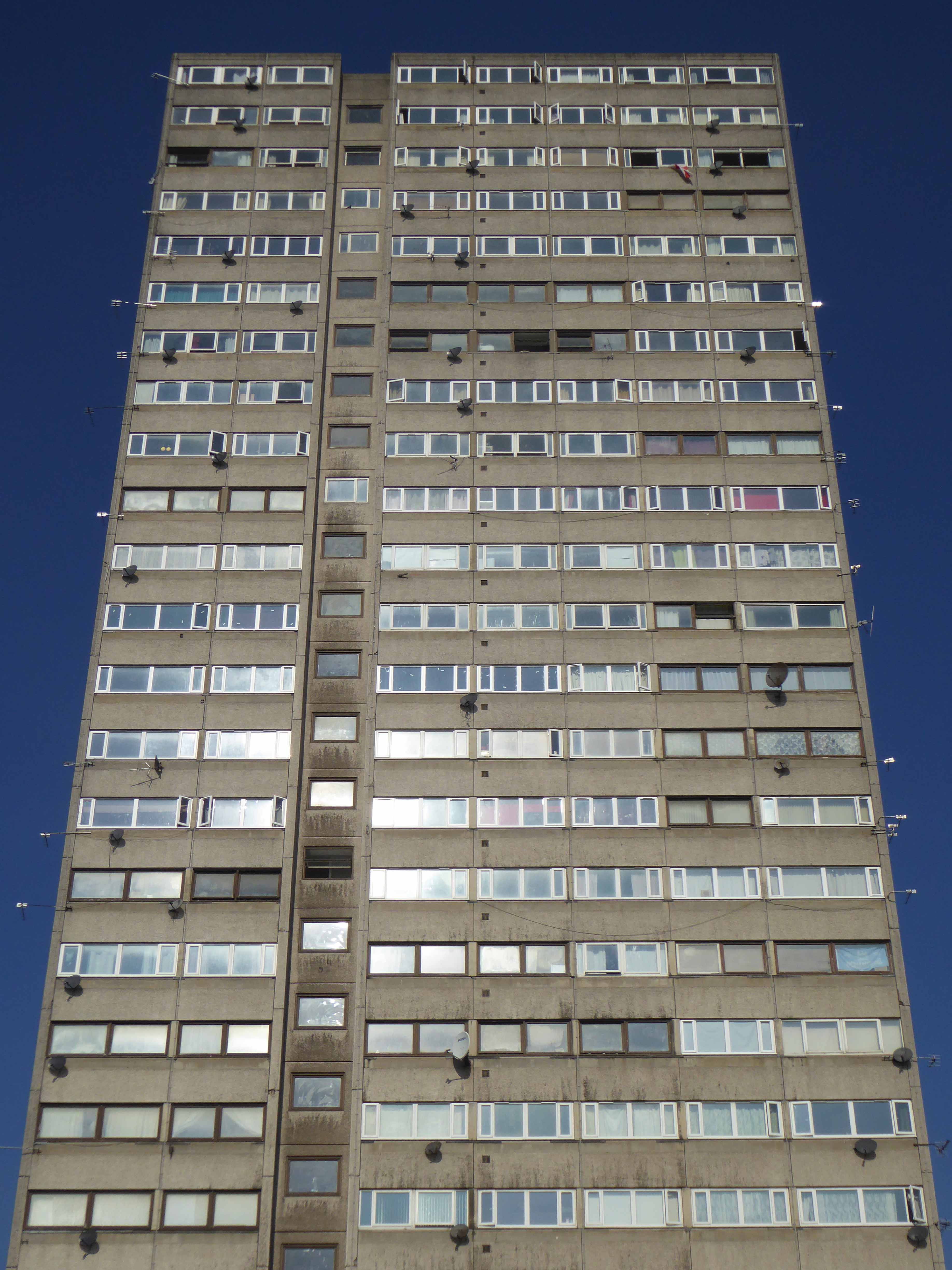
The architectural core of the site has been retained, including the 23 storey Briar Court residential tower, though diluted by more recent additions, misguided post modern detailing that threatens the integrity of full many a post war development.

P1140819

P1140823

P1140827

P1140828

P1140832

P1140834

P1140835

P1140836

P1140837

P1140839

P1140840

P1140843

P1140855

P1140856

P1140857

P1140858

P1140861

P1140864

P1140865

P1140868

P1140869

P1140870

P1140871

P1140872

P1140873

P1140874

P1140875

P1140876

P1140878

P1140879

P1140881

Lansbury Estate – London

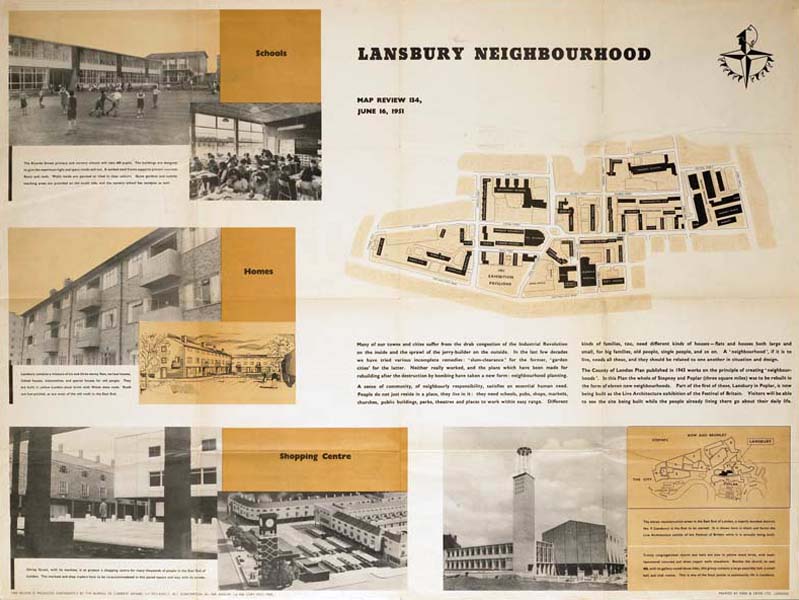
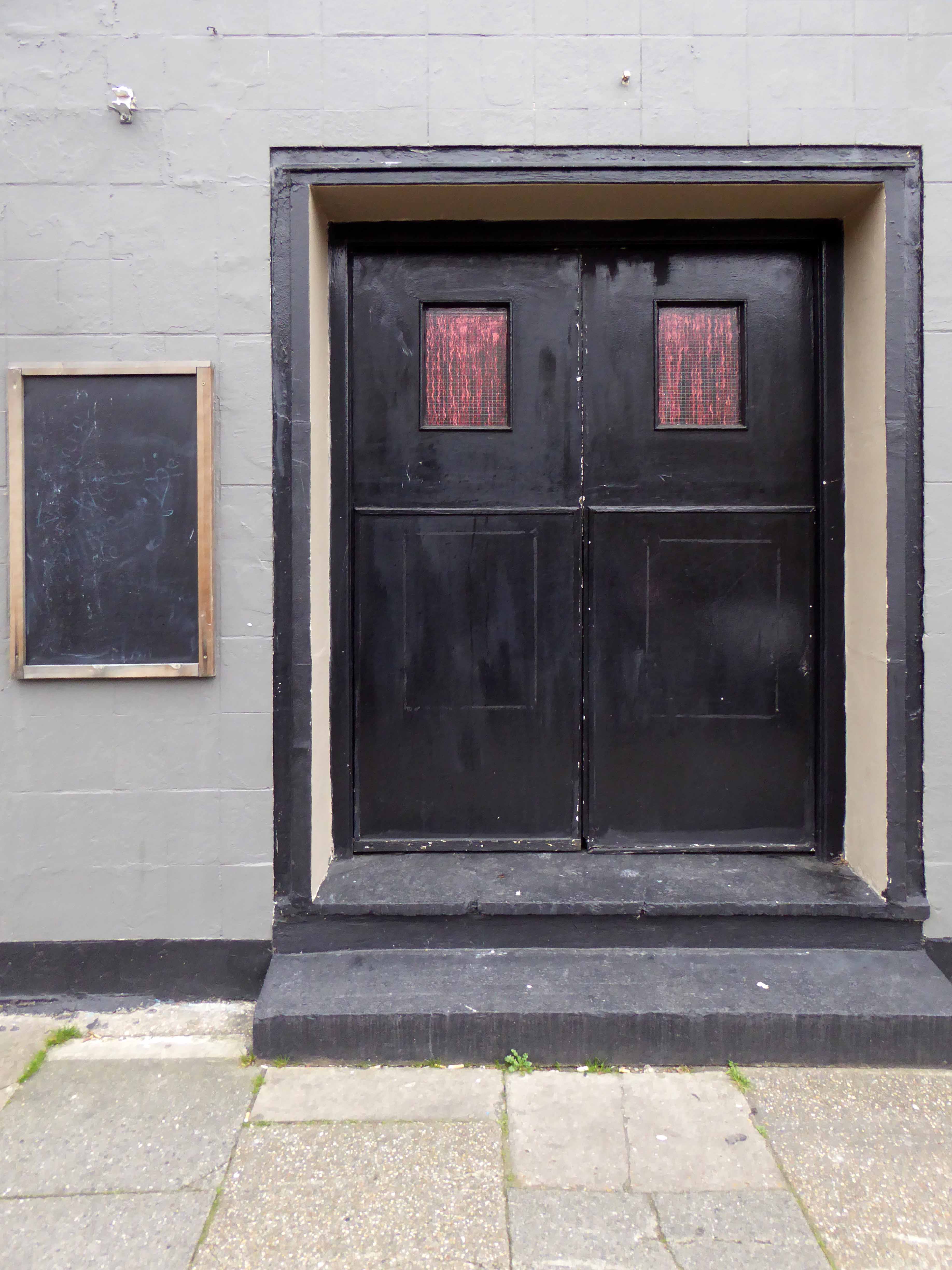
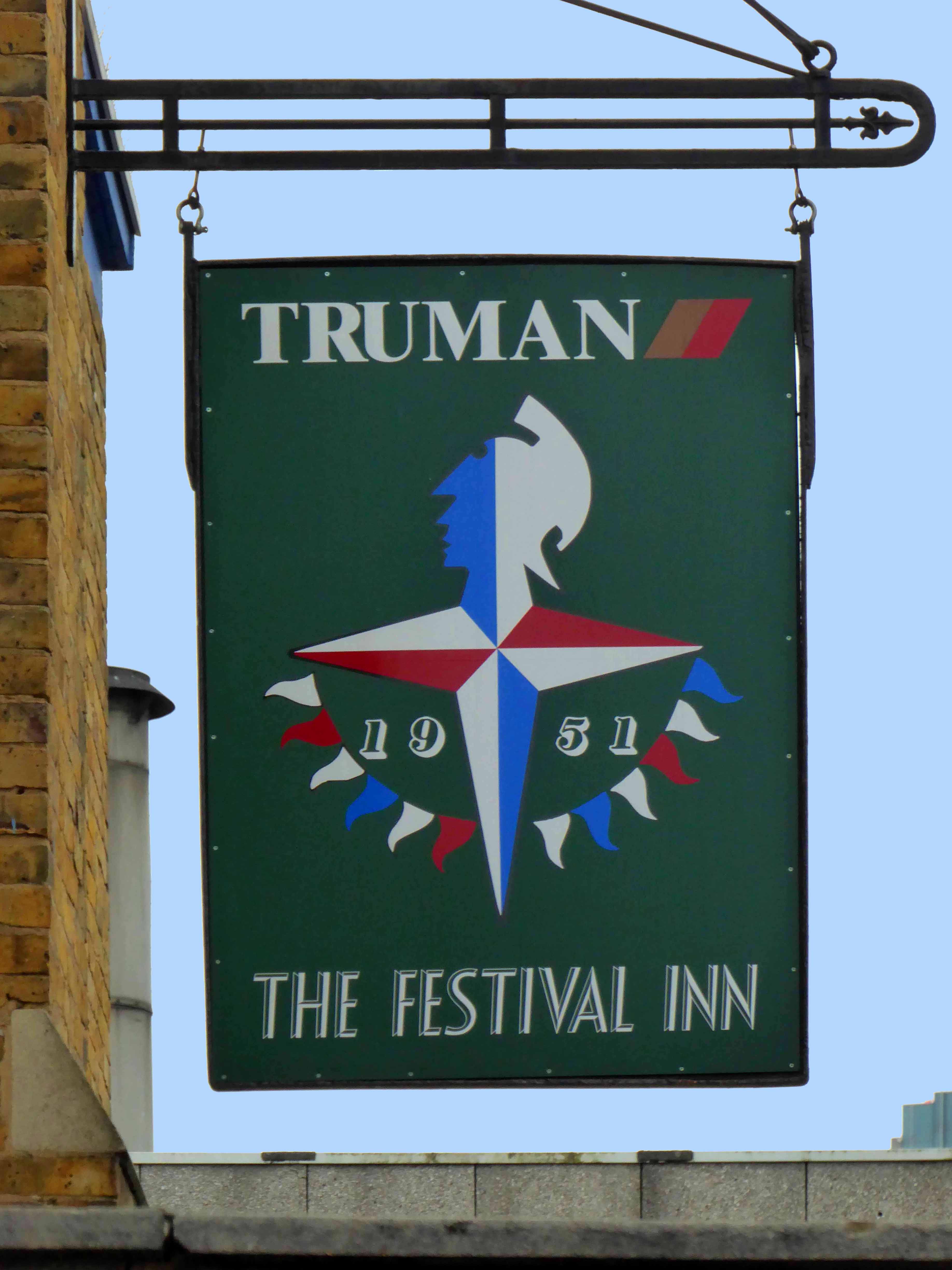
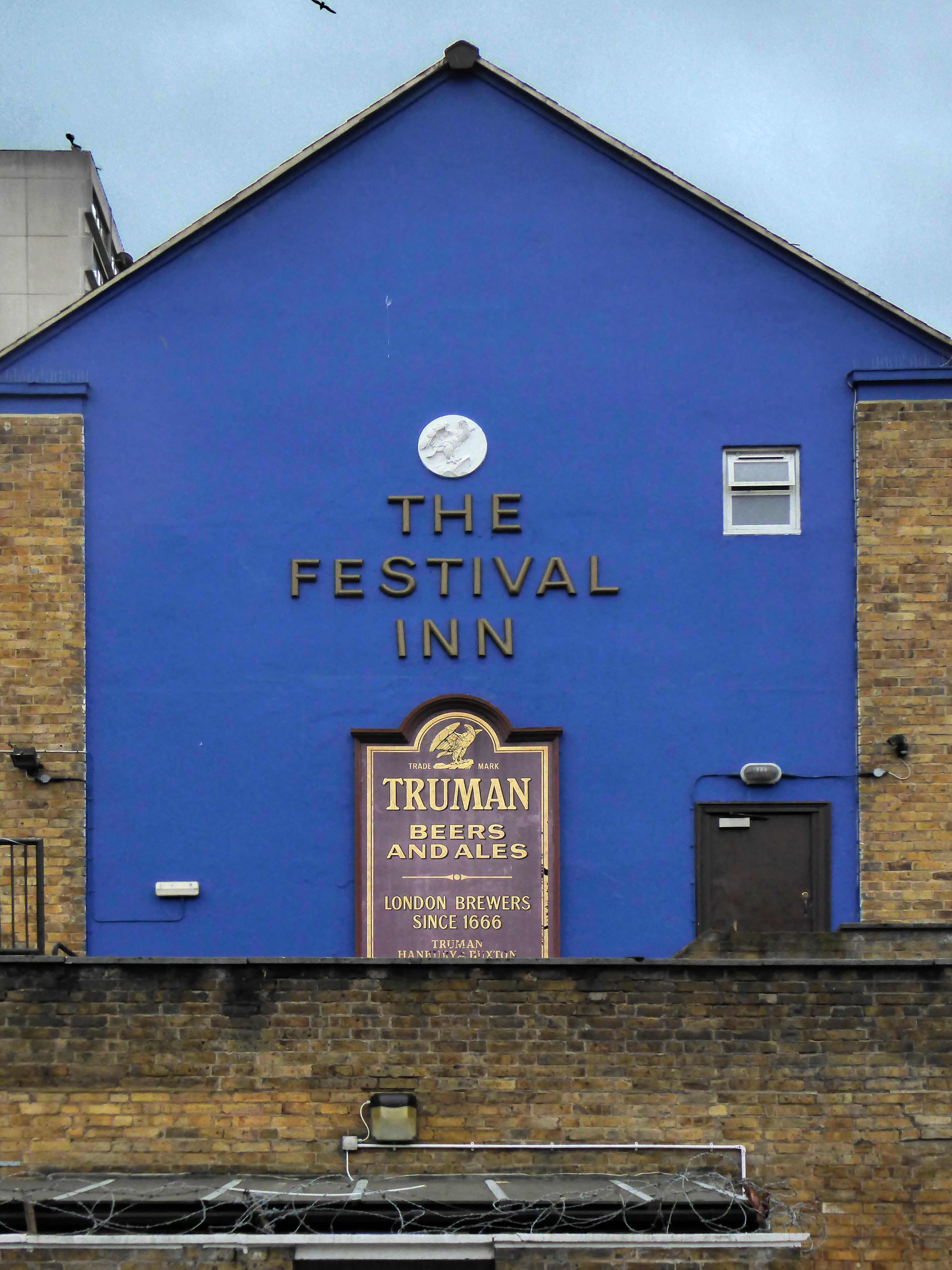
The Lansbury Estate, to the north of East India Dock Road, is the most important, largest and best-known council estate in Poplar. It demonstrates the different trends in post-war council house design and layout. The interest of the estate lies as much, if not more, in the story of its planning and construction, as in what was actually built. This is especially true of its first phase, which formed the basis of the Live Architecture Exhibition in the 1951 Festival of Britain.

lansbury-neighbourhood-map-1951


Originally outlined in the 1943 plan for London, replacing the bomb damaged homes of displaced dockers, the estate has weathered well enough, though changes in demographics, the ever greater engulfing tide of gentrification and the containerisation of all ports, brings a fresh set of challenges and changes.

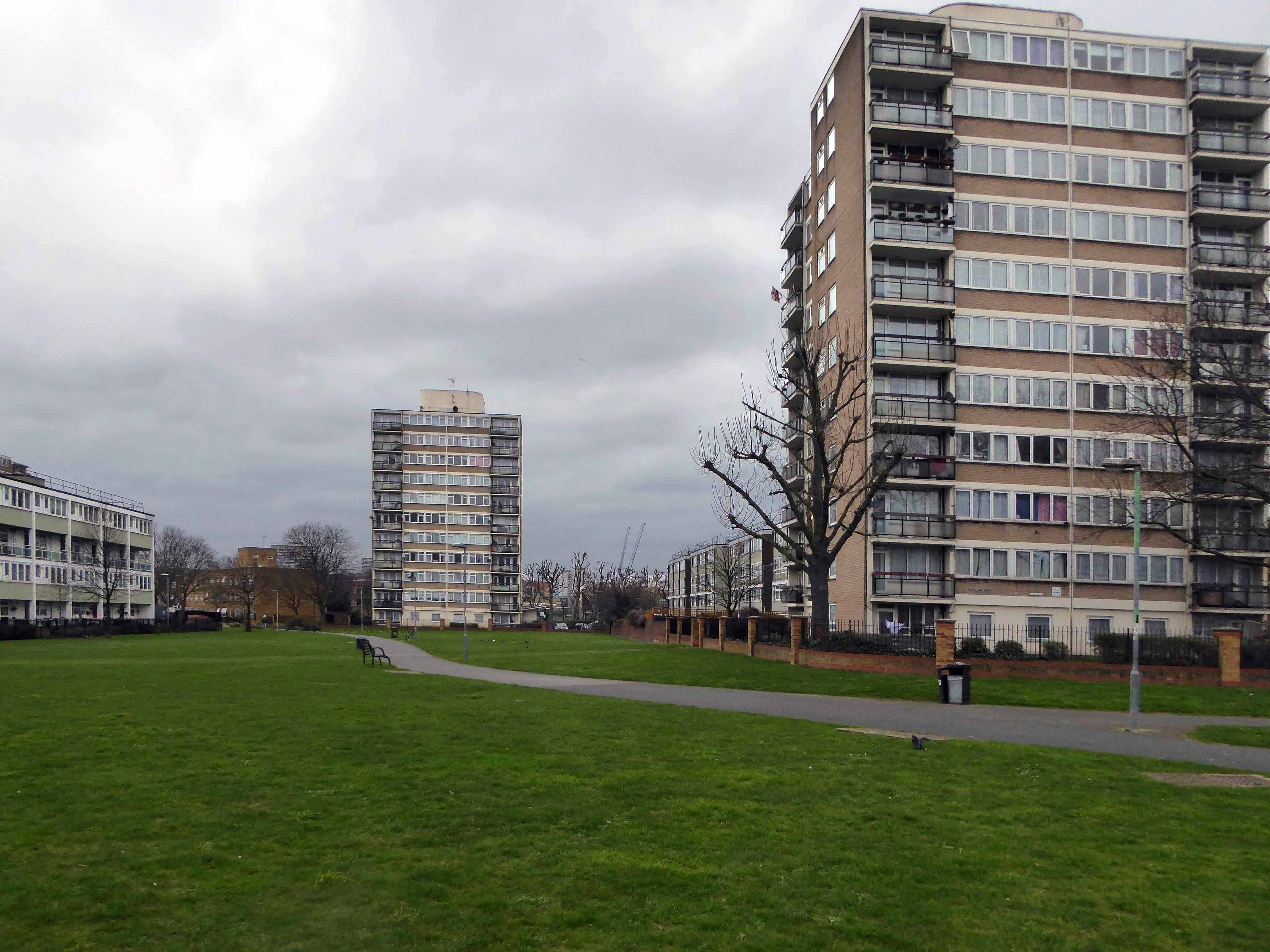
Go east – I visited the V&A Micro Museum, which has become a focus for residents’ and visitors’  memories and projections of a certain uncertain past and future. Arriving by the Docklands Light Railway, I was immediately drawn towards my destination, by the prominent Lansbury Tower, its clock patiently ticking away the time to and from 1951. Welcomed by staff and fellow travellers at the Chrisp Street Market site we began our tour at the heart of the Festival area – further details of which can be found here at Municipal Dreams.

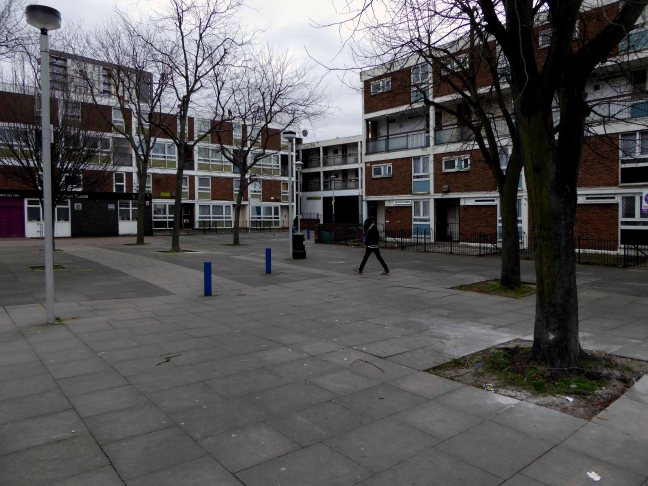
A mix of market, shops, Festival pub, warm cream London brick terraces and low rise, later tower blocks, schools, churches and open grassed communal areas. On a cold and getting colder late winter’s day, a smattering of residents went purposefully about their business.

Life goes on.

Next time everything’s going to be different.

P1130822 copy

P1130821 copy

P1130820 copy

P1130819 copy

P1130818 copy

P1130817 copy

P1130815 copy


P1130812 copy

P1130811 copy

P1130810 copy

P1130809 copy

P1130807 copy

P1130806 copy

P1130805 copy

P1130803 copy

P1130800 copy

P1130796 copy

P1130794 copy

P1130793 copy

P1130788 copy

P1130786 copy

P1130785 copy

P1130784 copy

P1130783 copy

P1130781 copy

P1130769 copy

P1130767 copy

P1130754 copy

P1130753 copy

P1130751 copy


Seven Sisters – Return to Rochdale

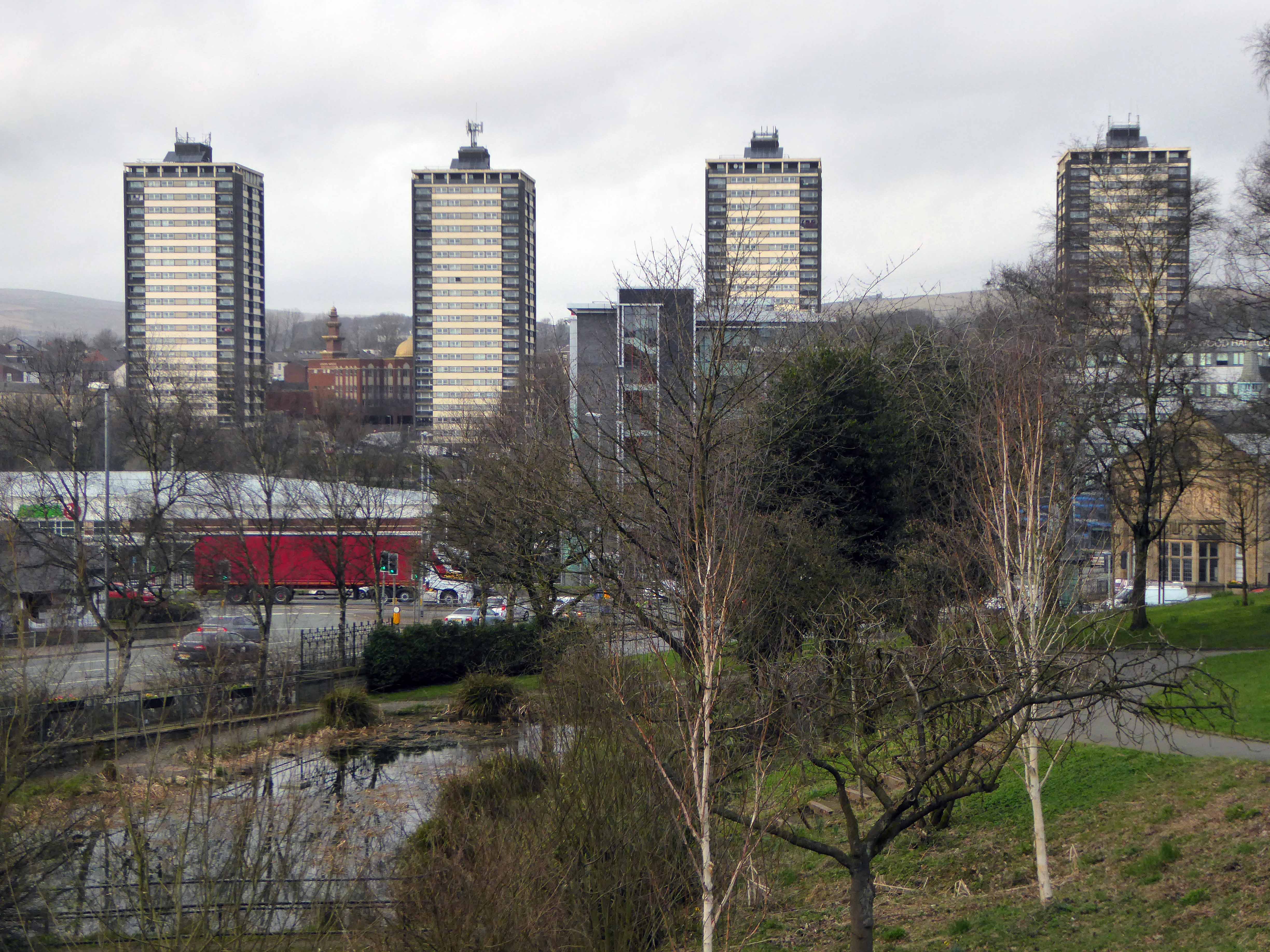
I’ve passed this way before, they’re hard to miss, seven substantial tower blocks towering over the town on College Bank.

But what goes up, may come down.

Screen Shot 2017-03-23 at 13.53.11

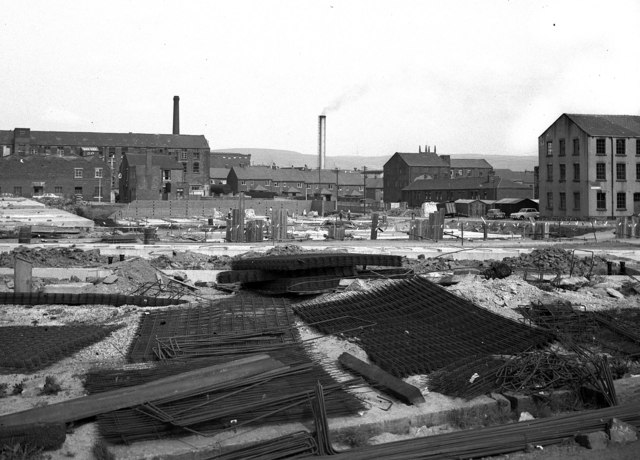
Construction in 1963

Demolition in 2017 is one suggestion – following years of poor maintenance, problems of heating and ingress, plus a whole host of other reasons outlined here.

Screen Shot 2017-03-23 at 13.50.02

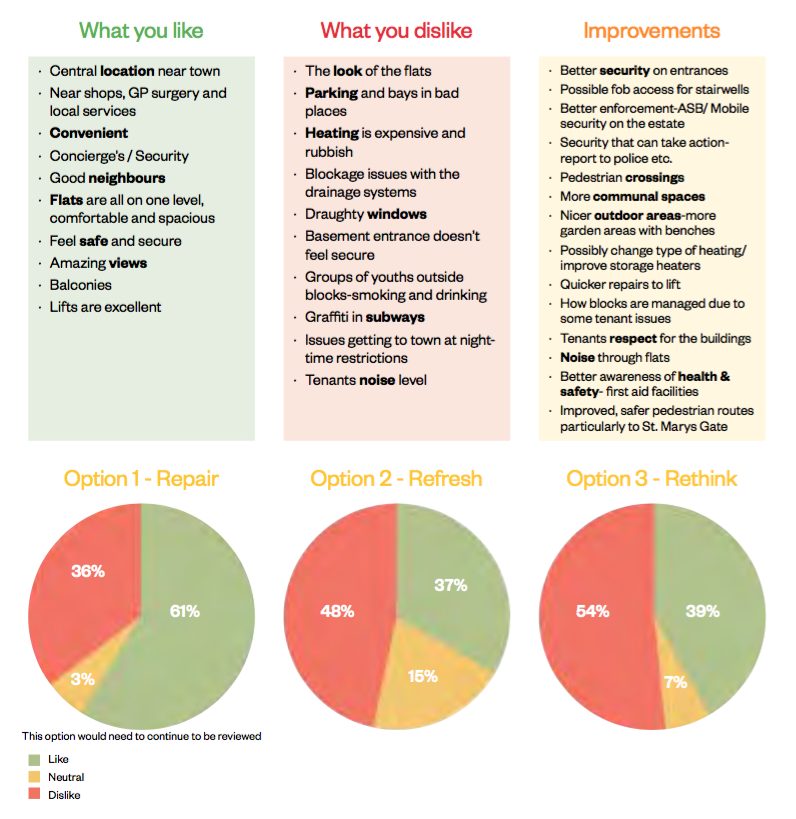
The housing trust in consultation with residents, have produced a tentative plan.

Screen Shot 2017-03-23 at 13.50.49

This may or may not include the demolition of one or more blocks. On the day of my visit, the tenants I spoke with understood that the blocks faced an uncertain future, and were rightly concerned by the rumours and conjecture. The majority would prefer to stay put, having lived there for several years, raising families and building  homes.

Whatever the outcome I hope that the wishes of the residents are not overwhelmed by political expedience, or the will of the developer.

Take a look for yourself.

P1140328 copy

P1140335 copy

P1140337 copy

P1140339 copy

P1140340 copy

P1140346 copy

P1140347 copy

P1140348 copy

P1140350 copy

P1140351 copy

P1140353 copy

P1140355 copy

P1140356 copy

P1140358 copy

P1140362 copy

P1140370 copy

P1140372 copy

P1140374 copy

P1140444 copy

P1140445 copy


Lower Falinge – Rochdale

Walking between College Bank flats and St Patrick’s church you and I will almost inevitably pass through Lower Falinge.

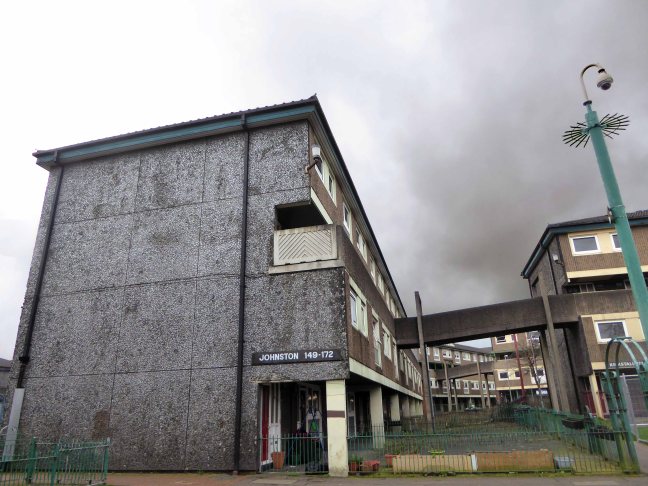
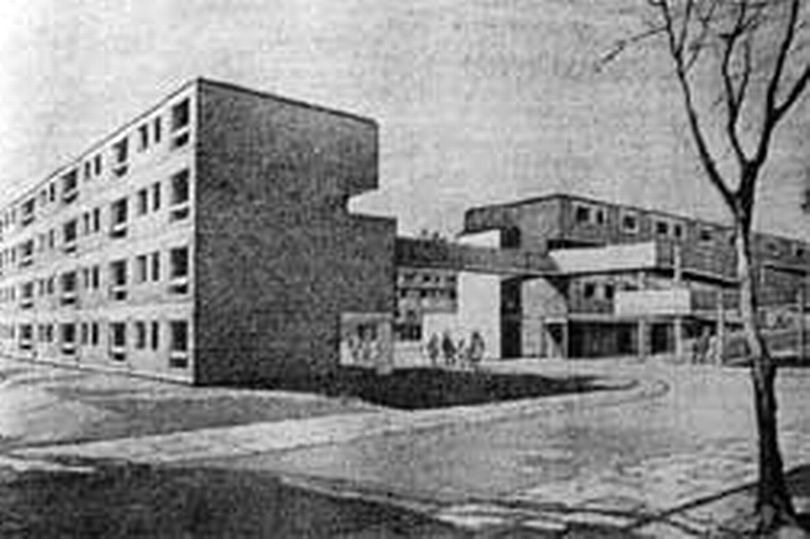
In April 1967 Rochdale Council’s Estates Committee considered a proposal to build 750 dwellings in four-storey deck access flats in the Falinge area. By November the £1,810,000 scheme for the area bounded by Spotland Road, Hudson Street and Toad Lane was given the thumbs up.

C_71_article_515340_body_articleblock_0_bodyimage

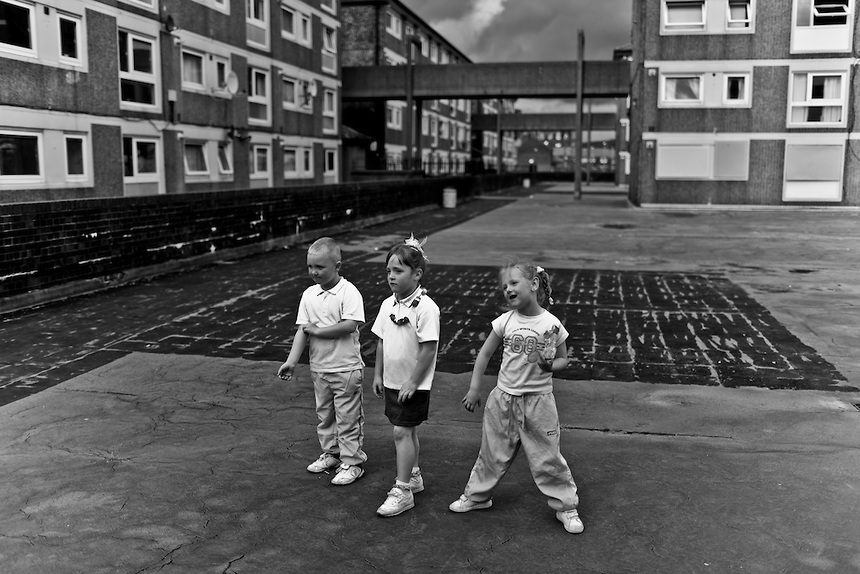
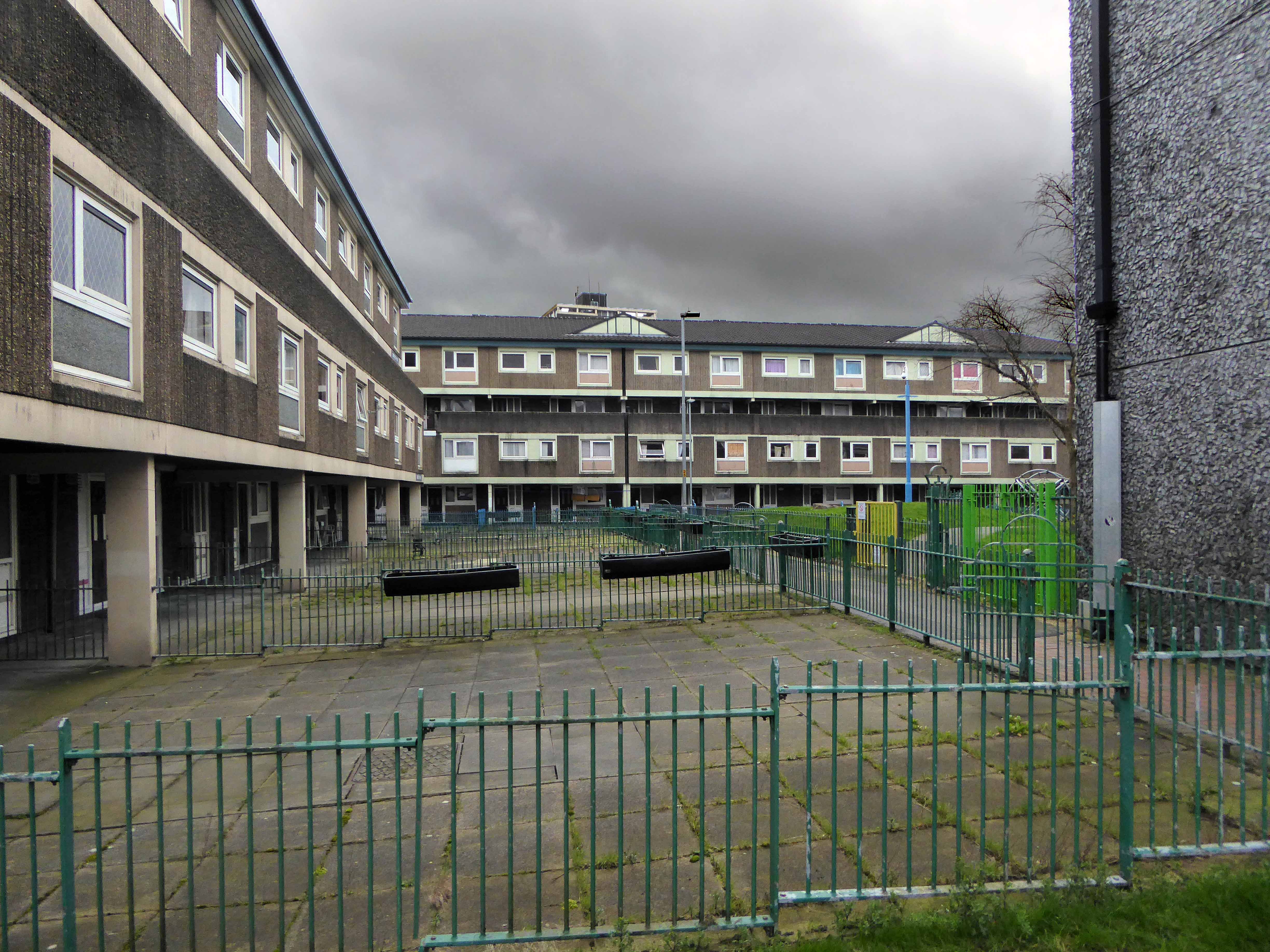
The four-storey development was to provide 527 dwellings with deck access, ramps and overheard walkways. It was planned so people could walk from any point in the area to another without having to return to ground level. Work began in early 1968 and was completed in three stages. More recently they have been up-graded and now have pitched roofs. Freehold Flats were built in the early 1970s. Eleven of the eventual 19 blocks were occupied by August 1971. 

Redevelopment_in_Falinge,_Rochdale,_Lancashire_-_geograph.org.uk_-_1395299

Built at a time when full employment was a tangible reality rather than a fondly recounted folk memory, the area was buoyant and relatively prosperous.

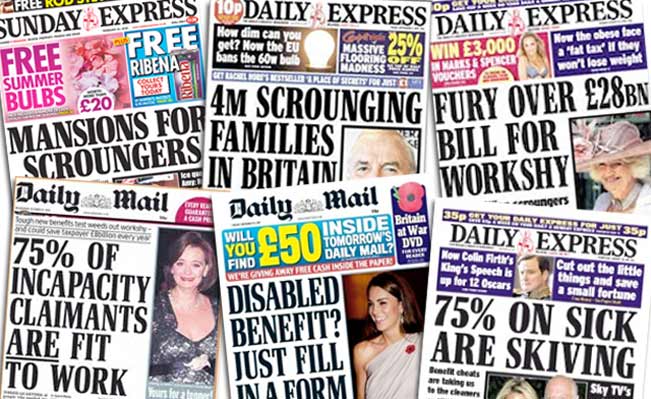
Time, the free market, and casualised labour has not been kind to Lower Falinge and many other post-industrial estates. The Thatcherite press conveniently badges the residents as scum, scroungers and frauds, a carefully conceived sleight of hand, transferring responsibility onto those careless enough to become the victims of an uncaring economic system.

scroungers_headlines_lg

Demonising and dividing working people regardless of ethnicity, ability, sexuality or ability – the equal opportunities abuser.

A few years ago there was even a national news story about a Falinge café serving fry-ups with a can of Stella for £2.50, this was untrue.

So Lower Falinge and its like become the convenient exemplar for the inconvenience of Broken Britain, a PR device to whitewash the very dirty hands that authored its very dirty demise. Those very dirty hands that have no viable solution to a very real problem, of resolving poor peoples’ uncertain futures.

Meanwhile the journalists form a disorderly queue to file the next in line, online assessment of an awful situation devoid of resolution, short of revolution.

2008826_152139

2016126_162425

Transferred from local authority control to charitable trust, forever shape shifting its hard lines to a softer, home made, fluffier image as limited resources, chase limited opportunities, all around the deck access landings.

Life goes on, we live in hope or Lower Falinge.

Limbo-5880

Mishka Henner

The estate is now post-post modern, acquiring another veneer of refurbishment over the now tarnished green of the cover all, all purpose un-repurposed steel railings.

P1140380

P1140381

P1140382

P1140383

P1140384

P1140385

P1140386

P1140387

P1140388

P1140397

P1140399

P1140401

P1140403

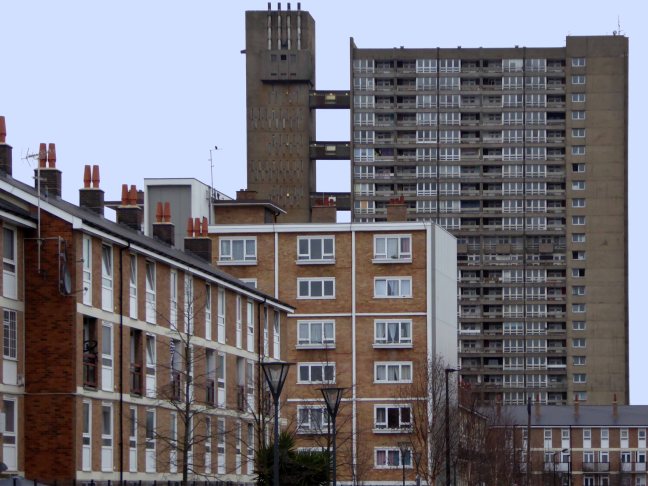
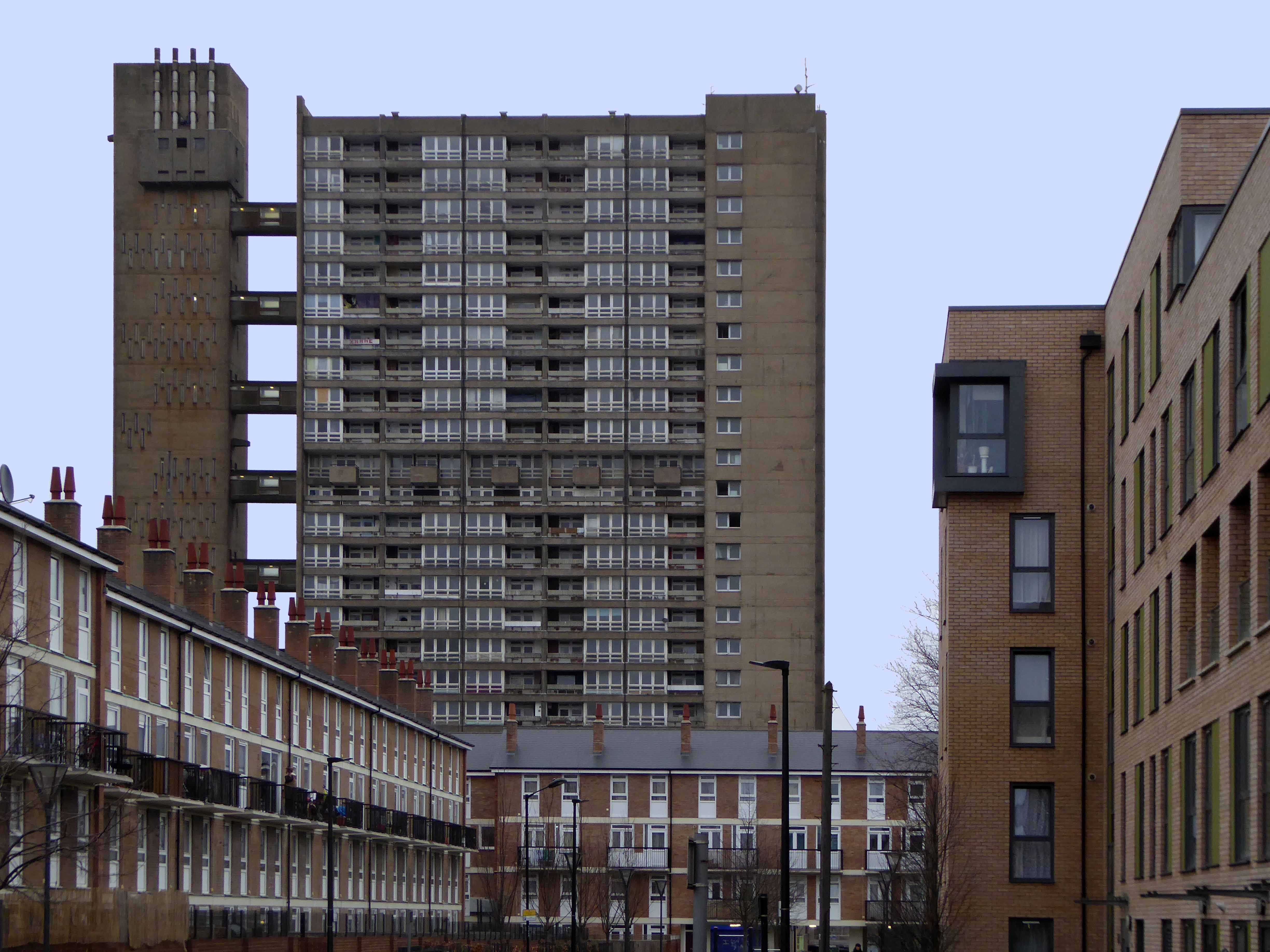
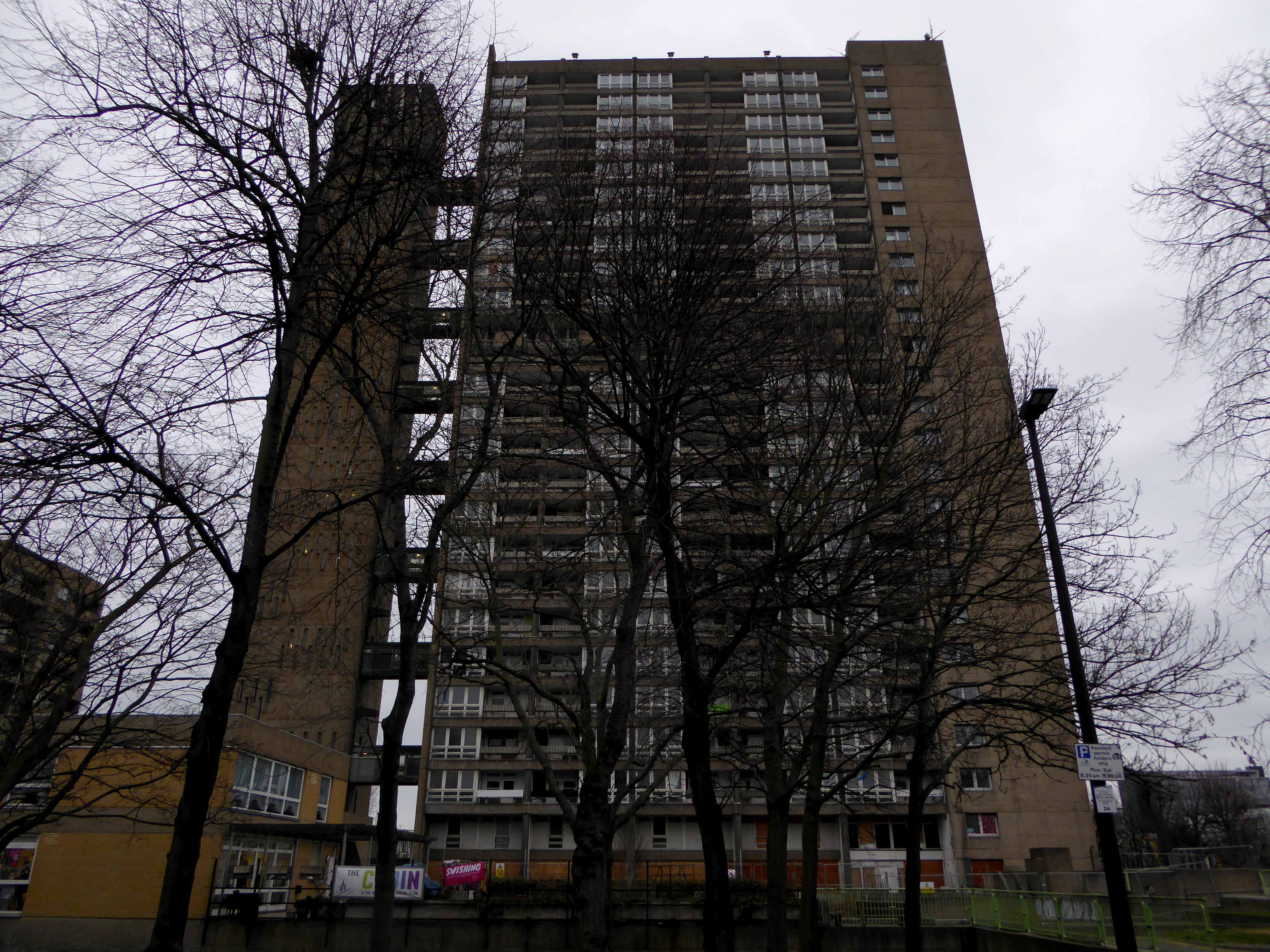
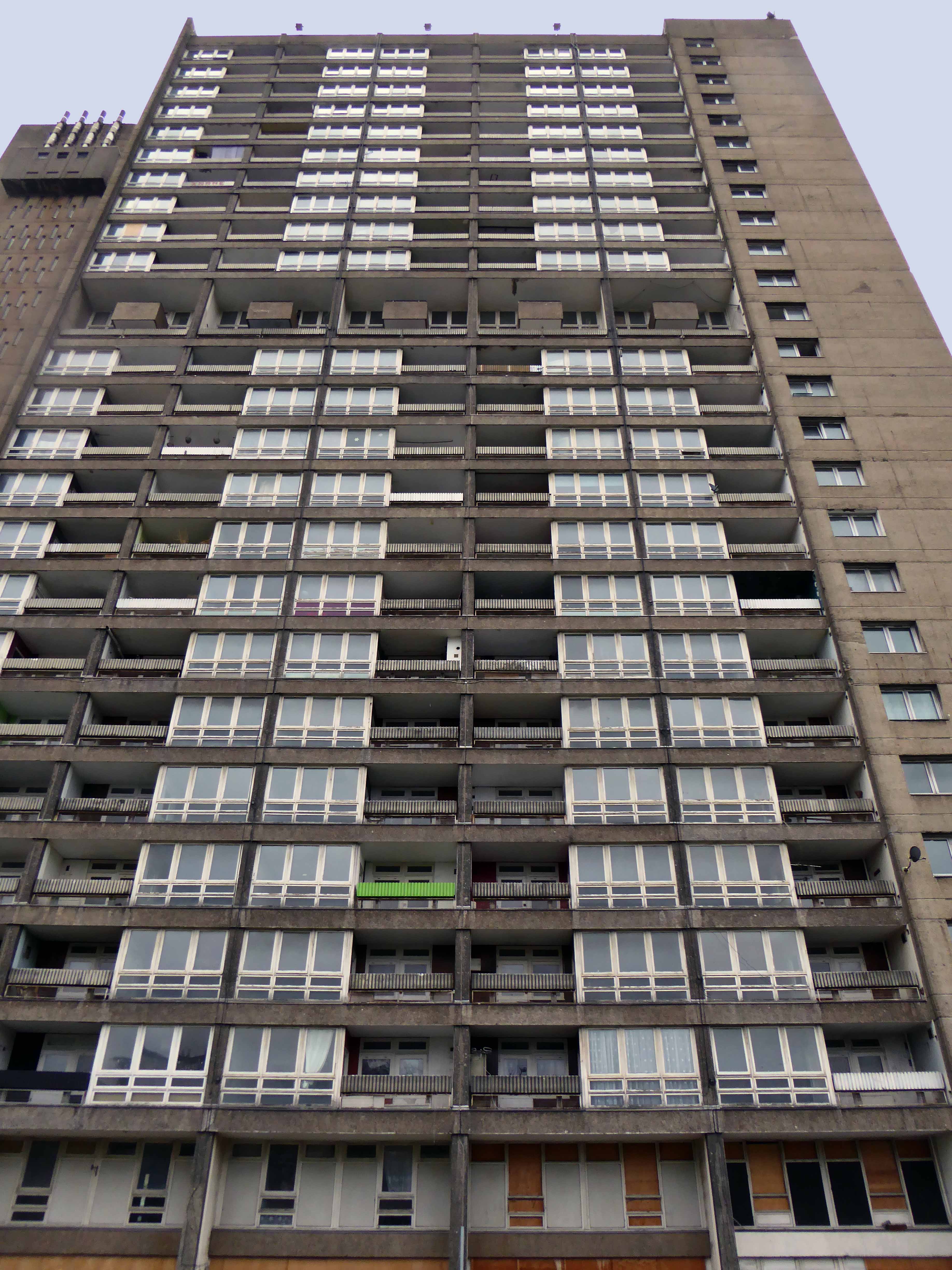
Balfron Tower London

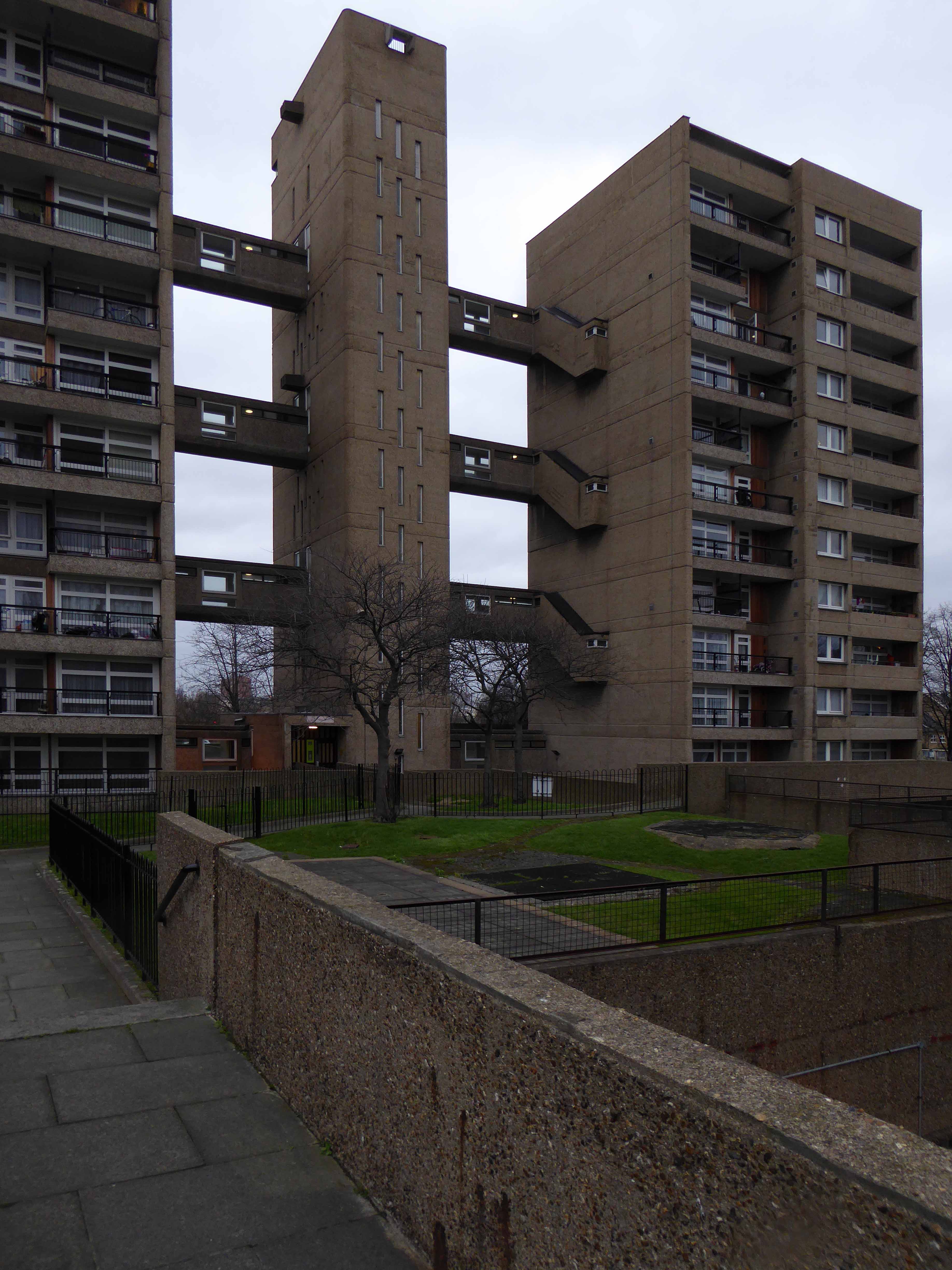
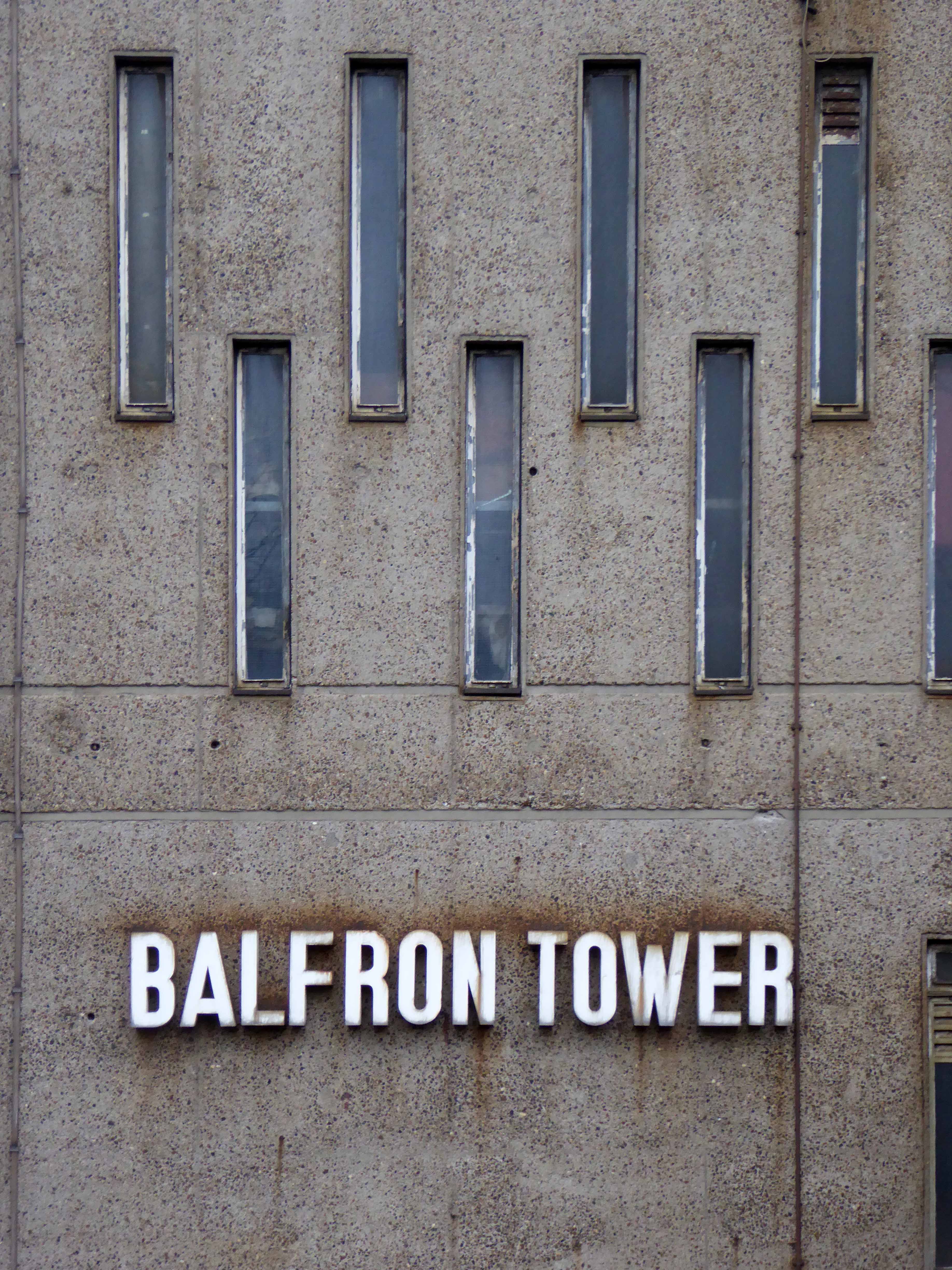
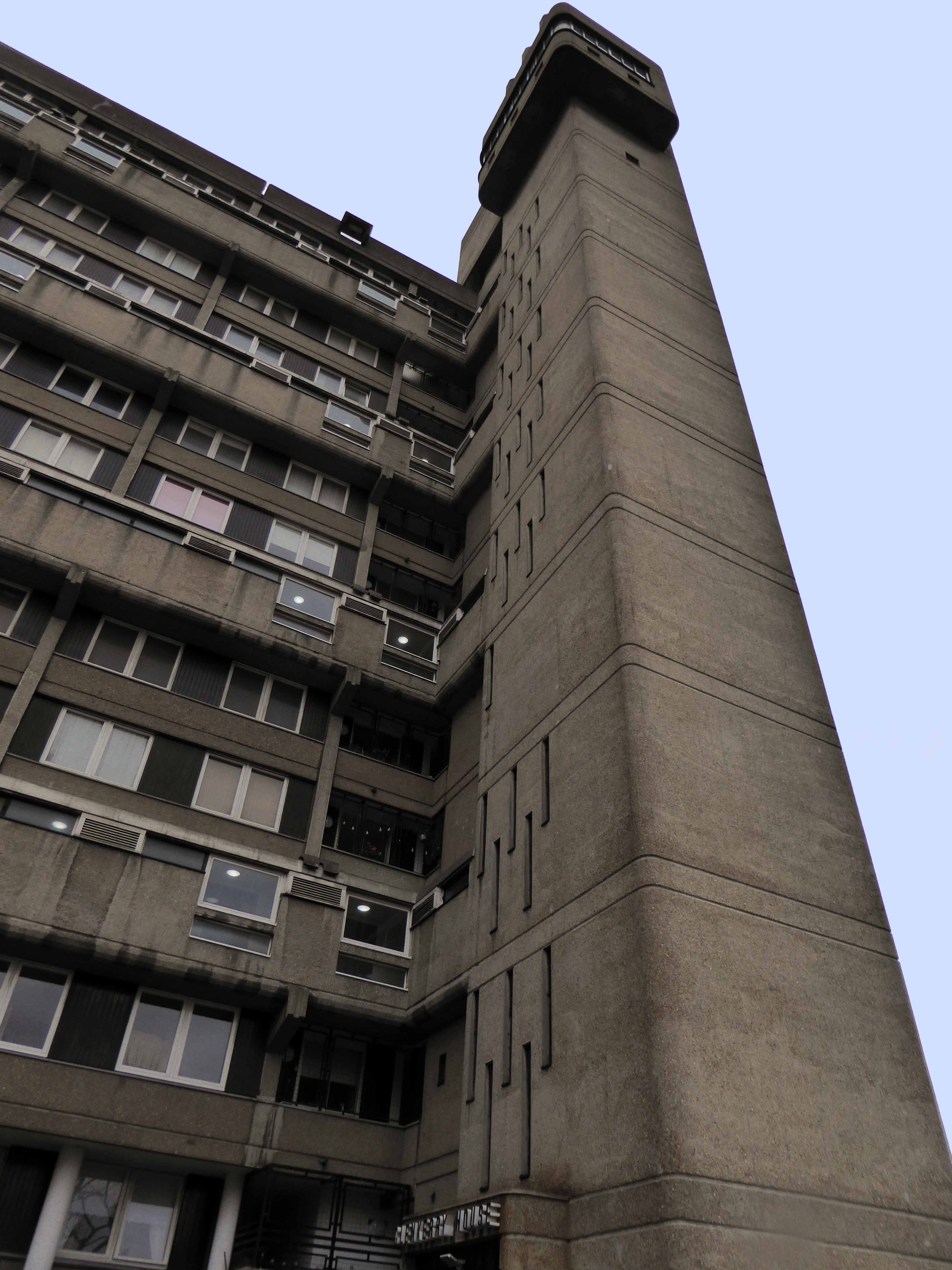
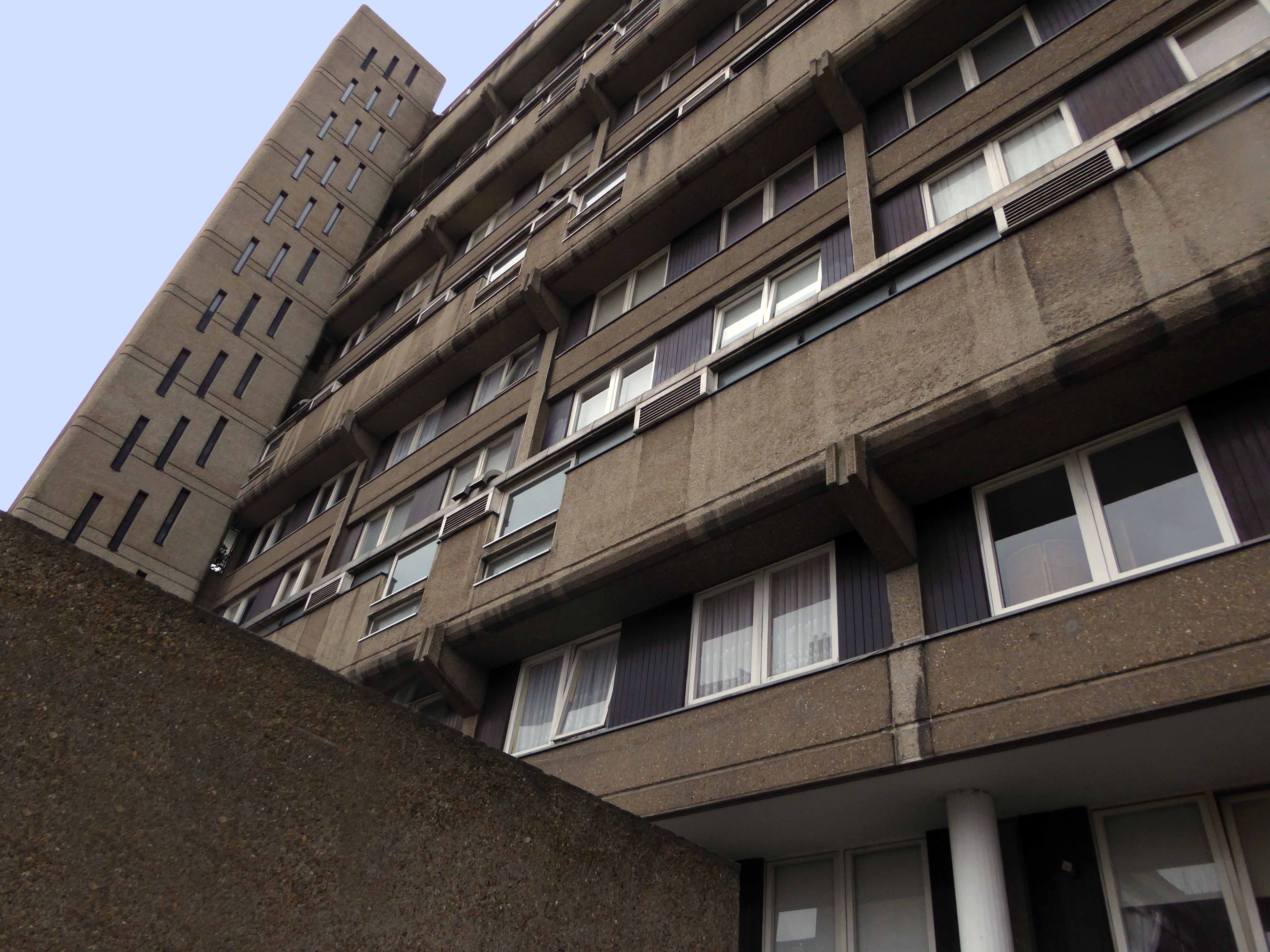
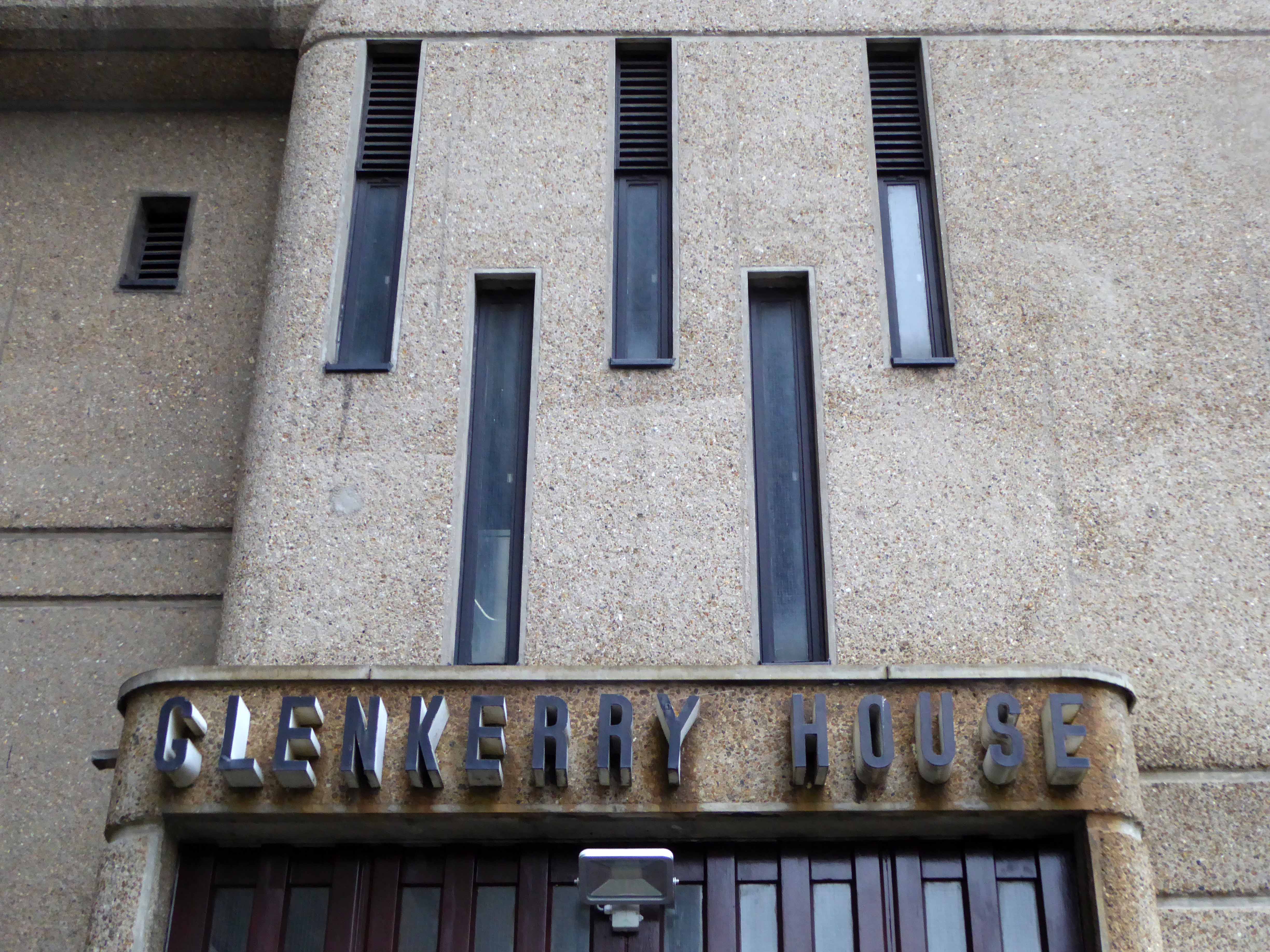
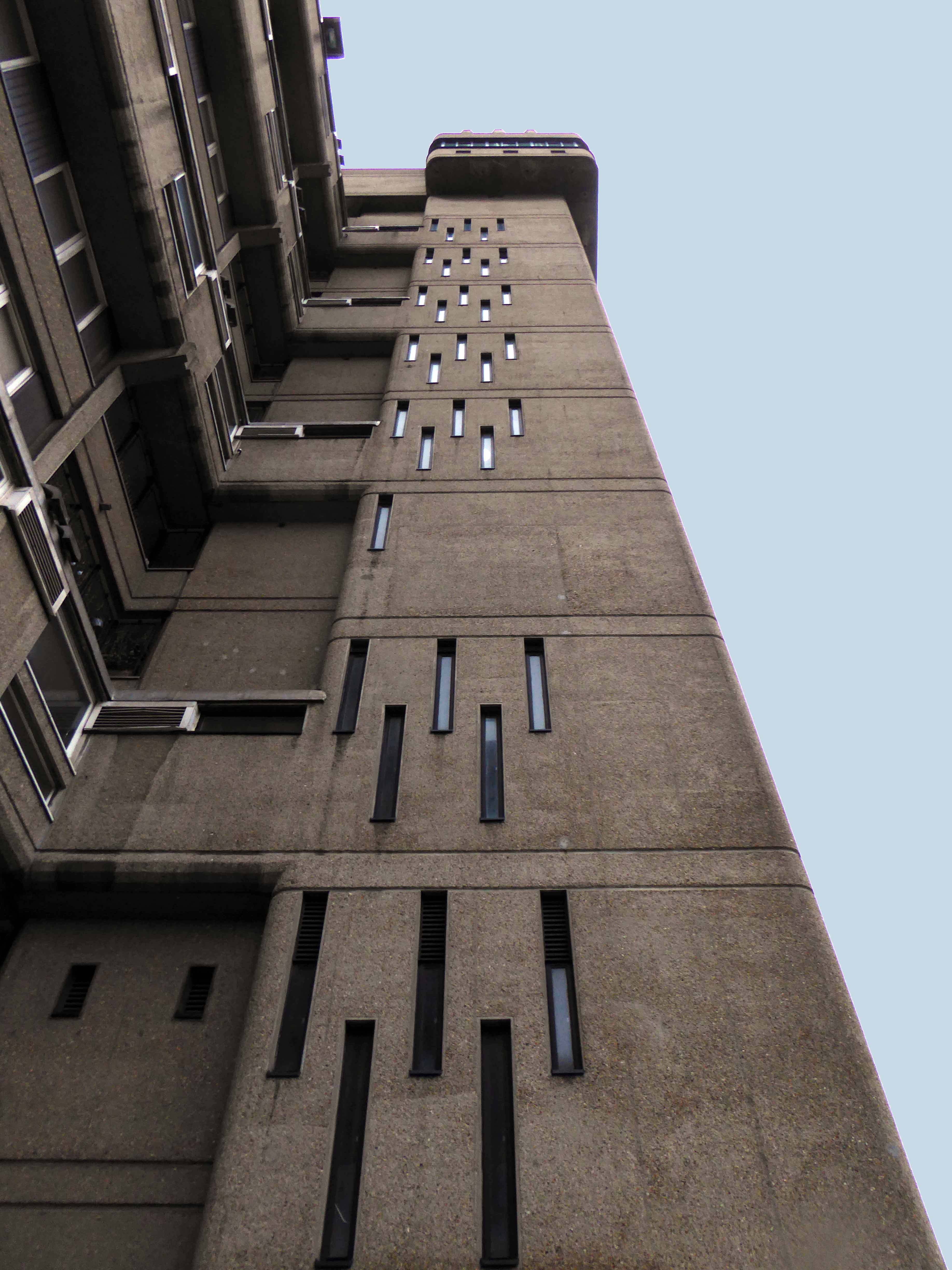
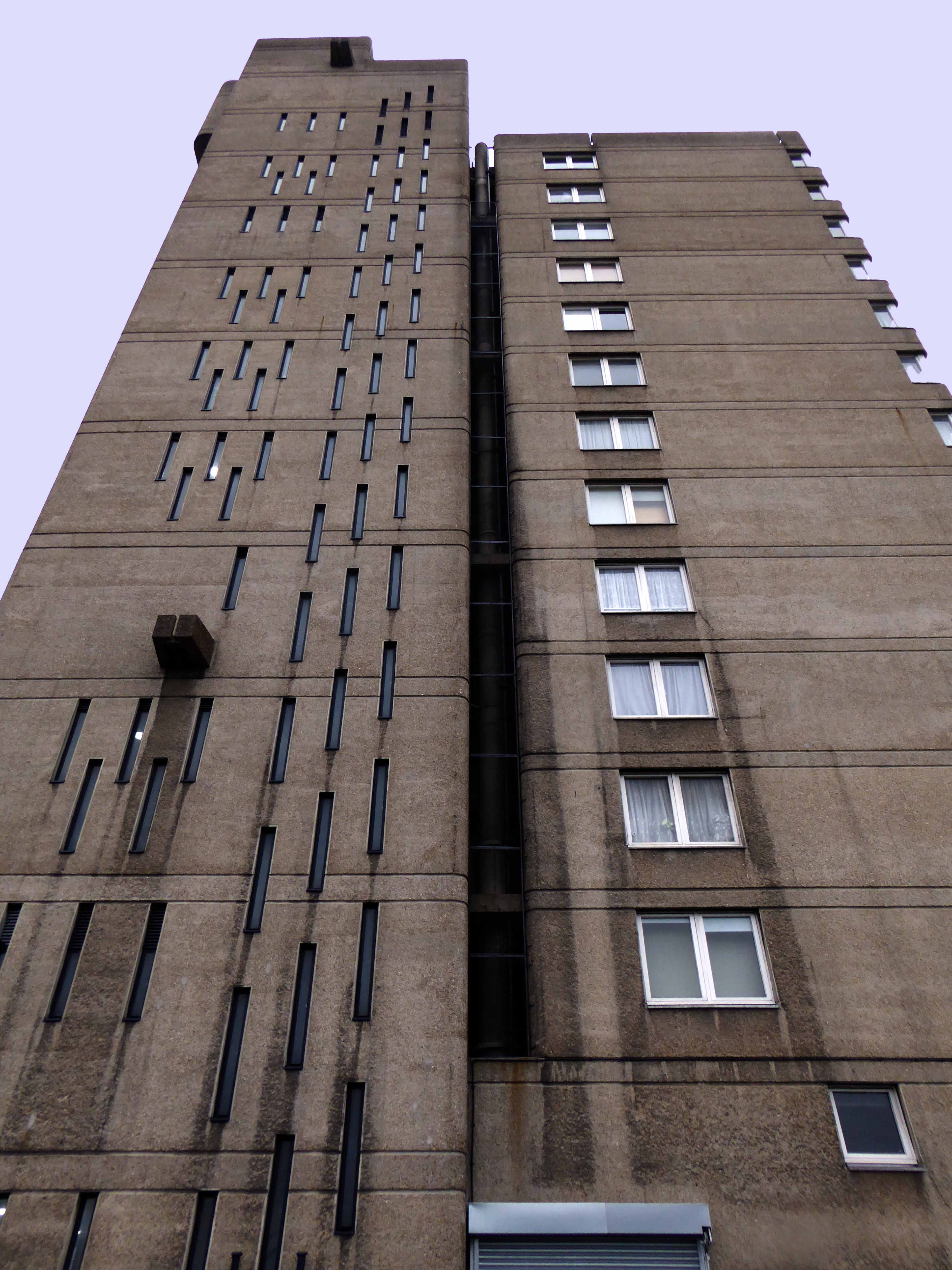
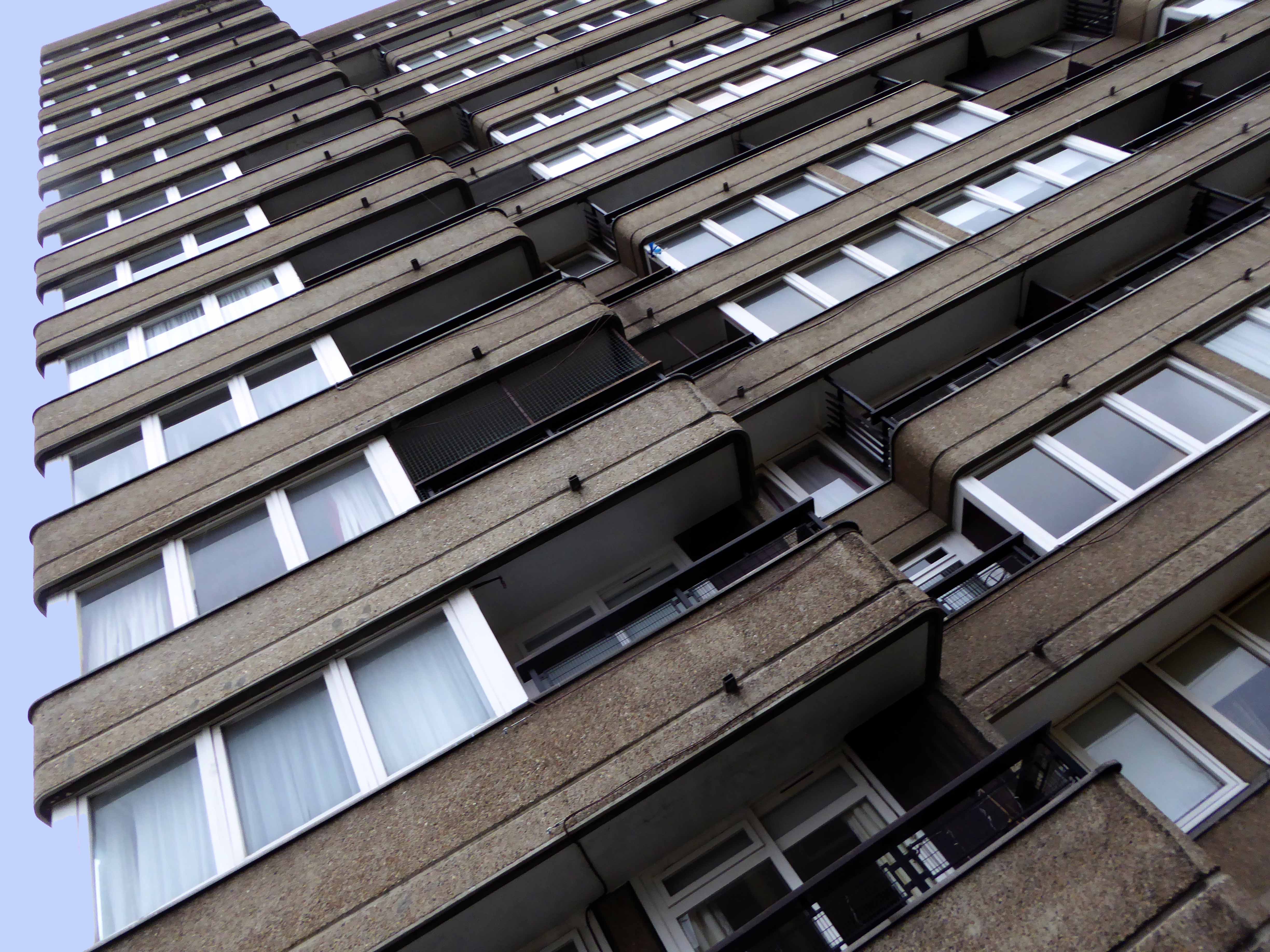
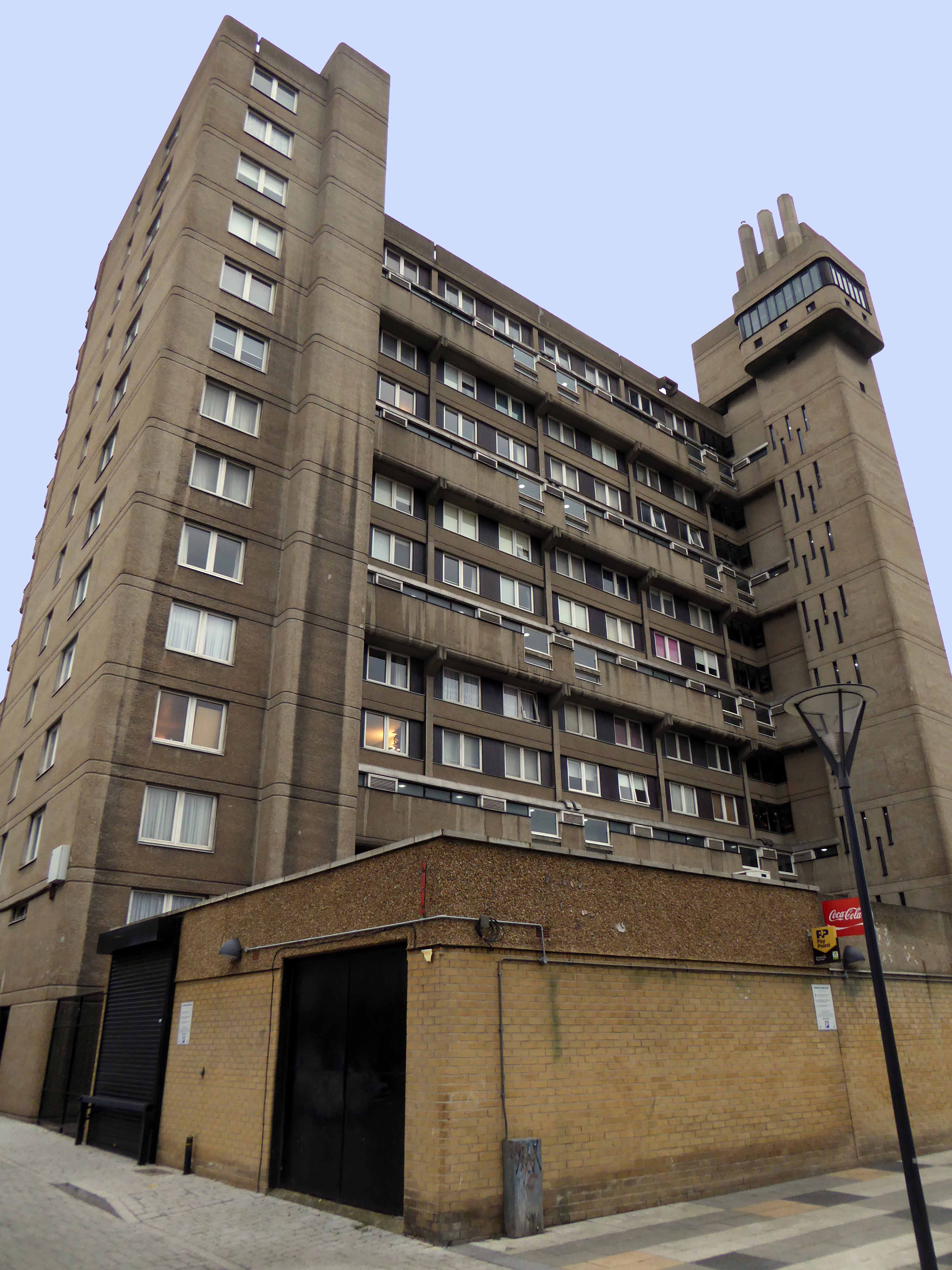
The Balfron Tower Conservation Area was designated in October 1998 around the two residential blocks designed by Ernö Goldfinger for the London County Council in the 1960s. The Conservation Area boundary protects the listed Balfron Tower and Carradale House, and other buildings in the ‘Brownfield Estate’, including Glenkerry House, a community centre, shops and associated low-rise housing development.

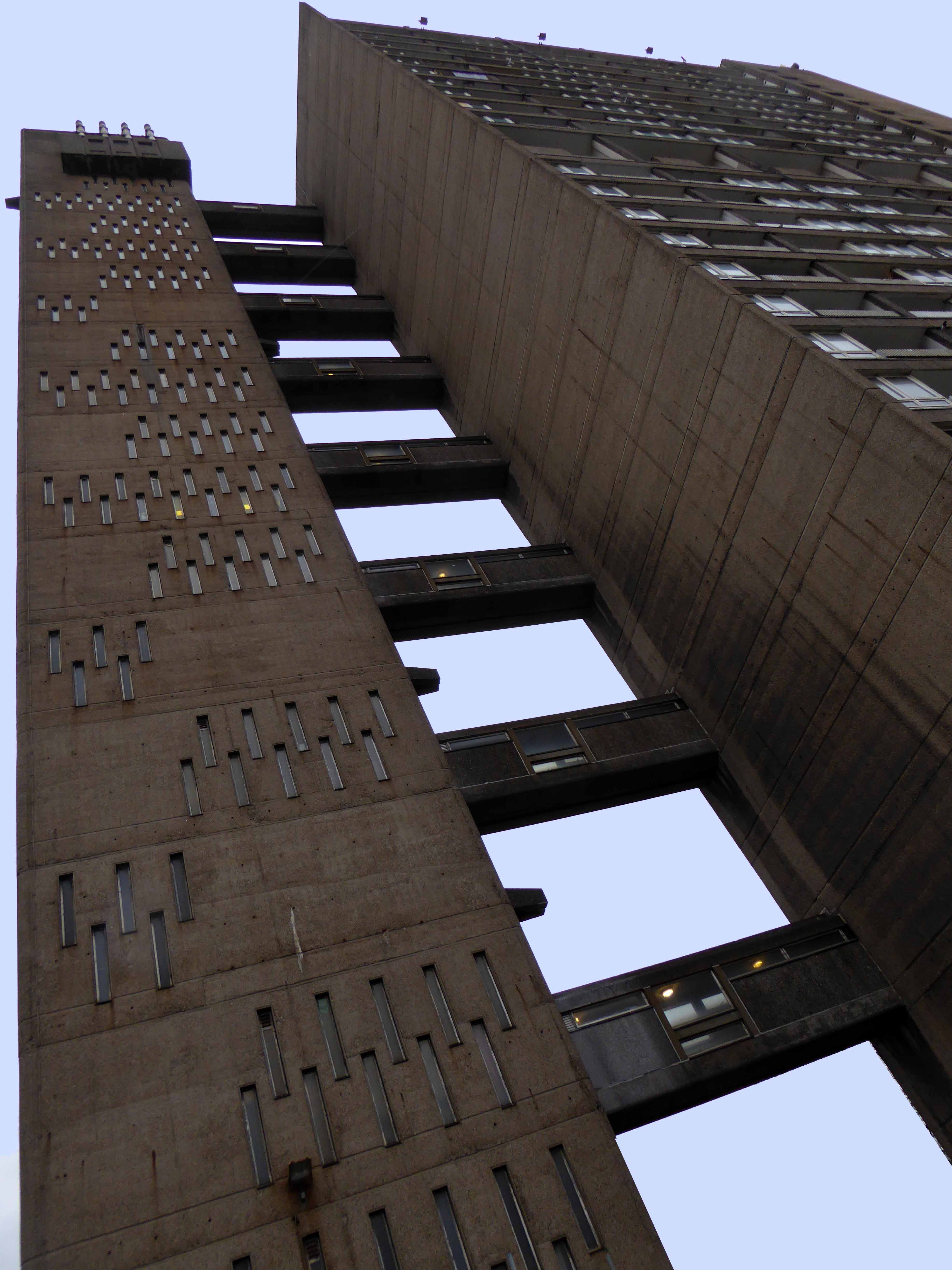
The 27-storey Balfron Tower is Goldfinger’s first public housing project, and a precursor to his better known Trellick Tower in North Kensington. The neighbouring Carradale House and Glenkerry House sit within the landscaped areas developed at the same time. The Brownfield Estate, also known as the East India Estate, is now recognised as a fine example of planned 1960s social housing. Considered to be exemplary examples of the post-war housing schemes, Balfron Tower and Carradale House were listed in 1998 for their cultural & architectural merit.

This was my first visit, to a key building in the short history of modernist post war housing, currently something of a sleeping giant, awaiting Prince Charming’s kiss.

What will it awake to?

Tower Hamlets are mid consultation, as evidenced in this here document.

On an overcast and ever darkening afternoon, the rain cutting in on a chill wind, set against a slate grey sky, its surfaces and volumes were ever so slightly forlorn.

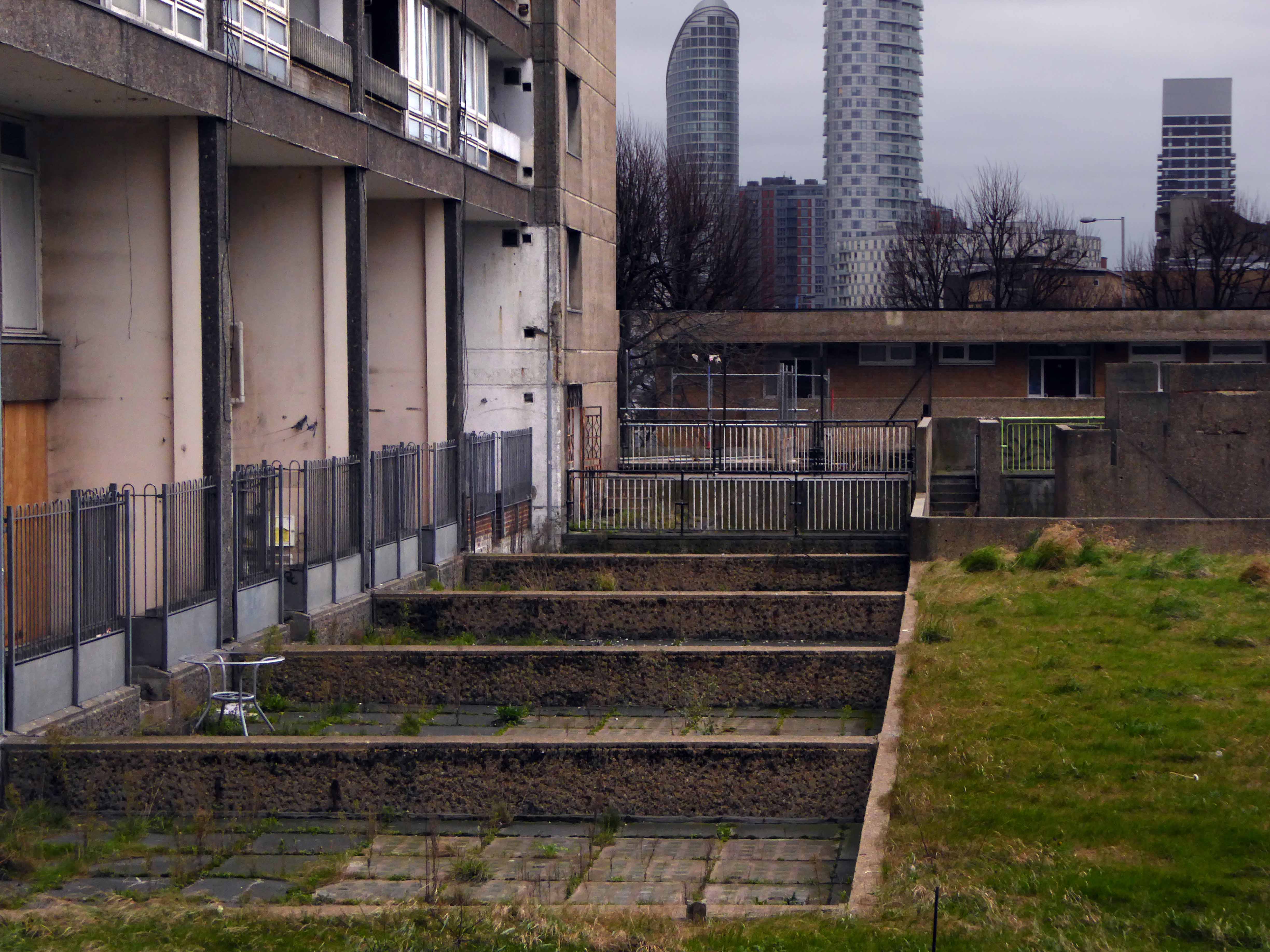
There is much to be done by way of regeneration, with the attendant issues of heritage, funding, gentrification and inevitably who lives where and why?

Everything you may care to almost know is here.

I walked around the area and took these pictures.

p1130830-copy

p1130831-copy

p1130832-copy

p1130833-copy

p1130834-copy

p1130835-copy

p1130836-copy

p1130837-copy

p1130838-copy

p1130839-copy

p1130840-copy

p1130841-copy

p1130842-copy

p1130843-copy

p1130844-copy

p1130845-copy

p1130846-copy

p1130847-copy

p1130848-copy

p1130849-copy

p1130850-copy

p1130851-copy

p1130852-copy

p1130853-copy

p1130854-copy

p1130855-copy

p1130857-copy

p1130858-copy


p1130860-copy

p1130861-copy

Hastings – Model Village

Blimey, I remember the castle and the hamster wheel thing. It was, in those days, as close to you would get to an adventure play park, it was on the same site that is now held by Clambers and it was all outdoors. The Castle, the Hamster Wheel, an army zip slide, seesaws, roundabouts and I think there was a small paddling pool. The Castle stunk of wee, probably where kids couldnt be bothered to get to the toilet. I remember it even had towers that you could go up .

Next to the play park was a putting course and you use to pay where the bowling green hut is now. Then the other side was a crazy golf course and you purchased the tickets from the model village hut. We had some great times up there . We use to spend the morning in the museum and then a snack and a drink at a very small cafe that was just below White Rock Road, in Cambridge Road (since gone) and then off to the putting, the play park and then the crazy golf, in that order 
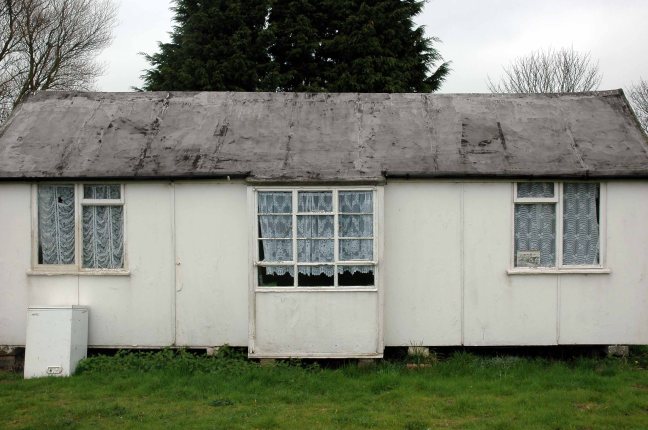
Can you imagine kids being allowed out to do that now ? We were 12 years old in 1973 and use to catch the 433 bus from the Fortune of War (well thats what we called the bus stop anyway) in Priory Road, to the Oval and back.
Happy days 

The Hastings Model Village took three years to build and opened on 19th February 1955. Designed by Stanley Deboo, it featured models of classic Sussex houses including oast-houses and timber-framed houses.

Sadly the Model Village was forced to close in December 1998 after vandalism caused £5,000 worth of damage. It was replaced by a miniature golf course built by Chris Richards.

The model village was replaced by a lazer maze style gaming centre in 2011, but still some of the original model village foundations remain at the site to this day.

 I love model villages, the real rendered diminutive in tiny eye bite size pieces. I have a particular affection for lost model villages, and particularly lost model villages which I have never visited. Having discovered a set of vintage images at the Vintage Village – I set out on a virtual journey by postcard, into a collective unconscious, previously uncollected.
space
model-village-1
model-village-2
 space
Here are the mechanically retrieved lost remnants of a lost world.
spacescreen-shot-2017-02-18-at-10-04-23spacescreen-shot-2017-02-18-at-10-10-16
space
 spacescreen-shot-2017-02-18-at-10-03-09
spacescreen-shot-2017-02-18-at-10-09-53
spacescreen-shot-2017-02-18-at-10-08-29
spacescreen-shot-2017-02-18-at-10-07-28
spacescreen-shot-2017-02-18-at-10-06-44
spacescreen-shot-2017-02-18-at-10-06-23
spacescreen-shot-2017-02-18-at-10-06-09spacescreen-shot-2017-02-18-at-10-05-20
spacescreen-shot-2017-02-18-at-10-05-04spacescreen-shot-2017-02-18-at-10-03-37
spacescreen-shot-2017-02-18-at-10-01-54
spacescreen-shot-2017-02-18-at-10-01-05
spacescreen-shot-2017-02-18-at-10-00-29

Barmouth Street – Bradford Manchester

Once again I am following in the footsteps of Rita Tushinghan and the Taste of Honey film crew, this time my research has lead me to Barmouth Street, Manchester.

screen-shot-2017-02-11-at-14-42-03

To the east of the city centre, Bradford Park School was the scene of the opening scene, Jo’s netball match. The school is now long gone, now the site of a much enlarged public park, as can be seen from the map above.

Shelagh Delaney, author of the original play on which the film was based, can be seen fleetingly in this opening scene, appearing momentarily over the games teacher’s shoulder.

screen-shot-2017-02-11-at-14-43-12

I have found one archive image of the school, as the scholars prepare for the annual Whit Walks, this along with many other community traditions and conventions, have all but disappeared from the streets of the city.

webmedia-php

This was once a tight knit community, surrounded by industry, full employment and a short lived period of post-war growth and optimism.

A corner shop on very corner, though by the time I worked as a Mothers Pride van lad in the late sixties, many were already on their last legs. A lethal cocktail of closing factories, incipient supermarkets, and an urban renewal programme, which lead to slum clearance, would change the character of the area forever.

screen-shot-2017-02-08-at-11-59-09

screen-shot-2017-02-08-at-11-59-38

screen-shot-2017-02-08-at-12-02-21

screen-shot-2017-02-08-at-12-03-37

screen-shot-2017-02-08-at-12-04-58

screen-shot-2017-02-08-at-12-05-23

screen-shot-2017-02-08-at-12-06-37

screen-shot-2017-02-08-at-12-00-28

I am indebted to the photographic work of T Brooks who seems to have spent much of the mid Sixties documenting the streets, his pictures are now kept here in the Manchester Image Archives. Sadly I have found no further reference to him or his images, but have nothing but admiration for all those who pass unnoticed amongst us, camera forever poised.

Central to the social and sanitary life of that that community were the Barmouth Street Baths and Washhouse, where citizens would swim, wash, dry, iron, chat convivially, and surprisingly – play bowls.

screen-shot-2017-02-08-at-12-08-14

screen-shot-2017-02-08-at-12-14-20

screen-shot-2017-02-08-at-12-17-35

screen-shot-2017-02-08-at-12-16-24

screen-shot-2017-02-08-at-12-15-54

Now long gone, along with the provision of local authority nursery care. There were similar low level pre-fabricated buildings dotted all over the city. Built quickly and cheaply, to provide for a growing population, of largely working-class families, with no shortage of work opportunities.

screen-shot-2017-02-08-at-12-07-54

screen-shot-2017-02-08-at-12-08-53

This was a time of great social change, a time which the film attempts to anticipate -a more diverse, and hopefully more tolerant time, a time of possibilities and opportunities for all.

A Taste of the North

Where is the North and what does it look like?

It’s up there somewhere isn’t it, a dark elsewhere, a mythological other place.

I was curious, searching for clues.

I began in a nearby place in a faraway time, my first reference point, the film adaptation of Shelagh Delaney’s play A Taste of Honey.

Set in Salford by Salford born teenager Shelagh.

A  teenager becomes pregnant by a black sailor. She leaves her feckless mother and her flashy new boyfriend to set up her own home. She moves in with a young gay man, who helps look after her as she faces an uncertain future.

I have compiled a series of photographs of the film’s locations. 

poster2

The film’s release in 1962 broke new ground in terms of its matter of fact depiction of contentious and sensational subject matter. My interest in this instance rests with the visual image of the North that it created.

a_taste_of_honey_1961_film_woodfall_film_productions_mm

Larkhill Road Edgeley Stockport

Shot almost entirely on location in black and white by cinematographer Walter Lassally, we are treated to dark treeless vistas, cobbled streets, industrial areas almost perpetually in decline, bleak canals and terraced homes.

As shown in these archive images of the 1950s, illustrating locations that would subsequently be used in the film adaptation.

There is a comprehensive list of locations here at Reel Streets

cambrian-street

Cambrian Street Holt Town Manchester

gas

Phillips Park Gasworks Manchester

Director Tony Richardson was a product of the British Free Cinema movement, which had previously produced short, sharp documentary and drama work, driven by a leftist outlook and using a restless, immediate approach, aided by the new lightweight cameras and faster film stocks. This is an ethos and methodology that would be carried over into the feature productions of the Woodfall Films company.

bfi-00m-nn0.jpg

Rochdale Canal Manchester

The film was shot in the flat, low, even light of the Winter which heightened the mildly desolate character of the landscape, though ostensibly Salford set many of the locations are in nearby Manchester and Stockport. An early long and free flowing title sequence and establishing shot, is a bus tour around Central Manchester, a city centre which at the time was still graced by a thick accumulation of dark industrial emissions and miasma.

screen-shot-2017-02-03-at-19-44-30

A soot blackened Queen Victoria mute and imperious in Piccadilly Gardens, the freshly blooming cranes of post-war renewal tentatively appearing in the background.

screen-shot-2017-02-03-at-20-30-43

The skyline punctuated by factory chimneys, the tight huddled streets of terraced houses chuffing billowing great grey clouds of smoke – a view familiar in the work of LS Lowry.

a-taste-of-honey-new-4

Barton Bridge

lr-taste-of-honey-msc-swing-bridge

Trafford Swing Bridge

taste-of-honey

Stockport Rail Viaduct

taste_of_honey_01

Phillips Park Gasworks

screen-shot-2017-02-03-at-20-05-24

The location of the home that Jo sets up was ironically the stage set workshop of the Royal Court Theatre (the very theatre where the play was developed and produced) in London – that most northern of cities.

There is a brief respite from this milieu, through a picture in picture sequence based on the image of a suburban bungalow – which along with the coming age of mass motor car ownership, offers the promise of escape.

screen-shot-2017-02-03-at-20-34-51

screen-shot-2017-02-03-at-20-37-15

A giddy day trip to Blackpool represents the temporary release from a contrasting and constricting world, a trip which for Jo emphasises the divide between Mother and her lover.

screen-shot-2017-02-03-at-20-35-56

So we the viewers are left with a cloudily clear, black and white world, a pervasive construct that the North and Manchester is eagerly beginning to casually shuffle off.

Where streets are no longer paved with Eccles Cakes and whippets are hip.

Identity through landscape and location can both define and constrain, but that landscape, its representation, and the identity that it produces are all mutually mutable.

Take some time to watch and rewatch the film, freeze frame where are we?

Who are you?

Semi Detached – Warrington

I was walking back from St Stephen’s Church recently, when I chanced upon a small group of two storey, flat roofed, semi detached social houses.

They were blessed with that post war functionalist brick and concrete chic.

Part of a larger development of homes in the Longford area of the town.

screen-shot-2017-01-31-at-15-33-18

An area which is one of the most socially deprived in the country, with more than its fair share of problems, crack and weed would once have been pressing matters for the Borough Highways Department – these days they are more likely to attract the attention of the boys and girls in blue.

screen-shot-2017-01-31-at-17-17-47

And to cap it all the area is prone to frequent flooding.

longford-flooding

There are signs of hope as the housing association and council embark on a multi million pound refurbishment of the estate including:

Replacing fencing around bungalows.

On the day of my visit the chill January streets seemed quiet and ordered, and I was enchanted by the mismatched pairs of semis that I encountered.

p1130204

p1130205

p1130206

p1130207

p1130208

p1130209

p1130210

p1130212

p1130213

p1130214

p1130215

p1130216

p1130218

p1130219

p1130220