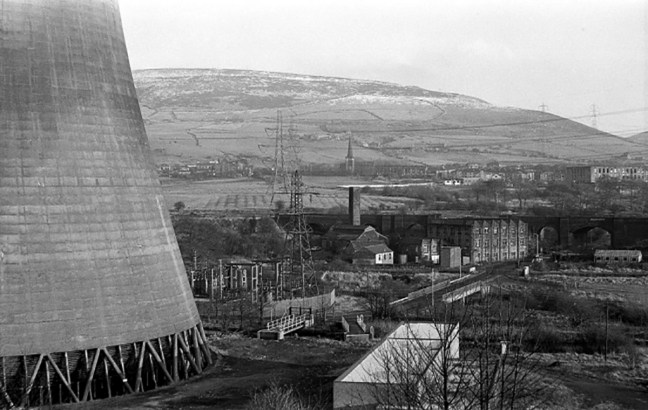
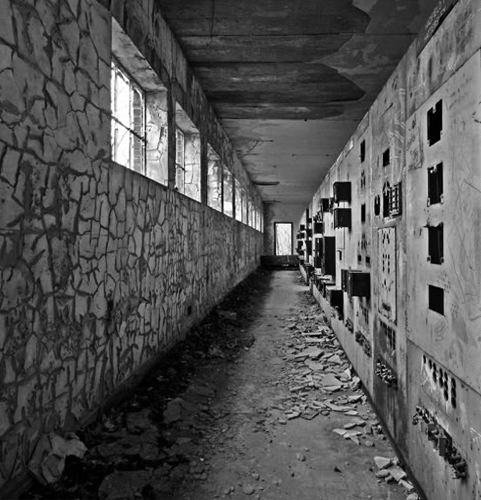
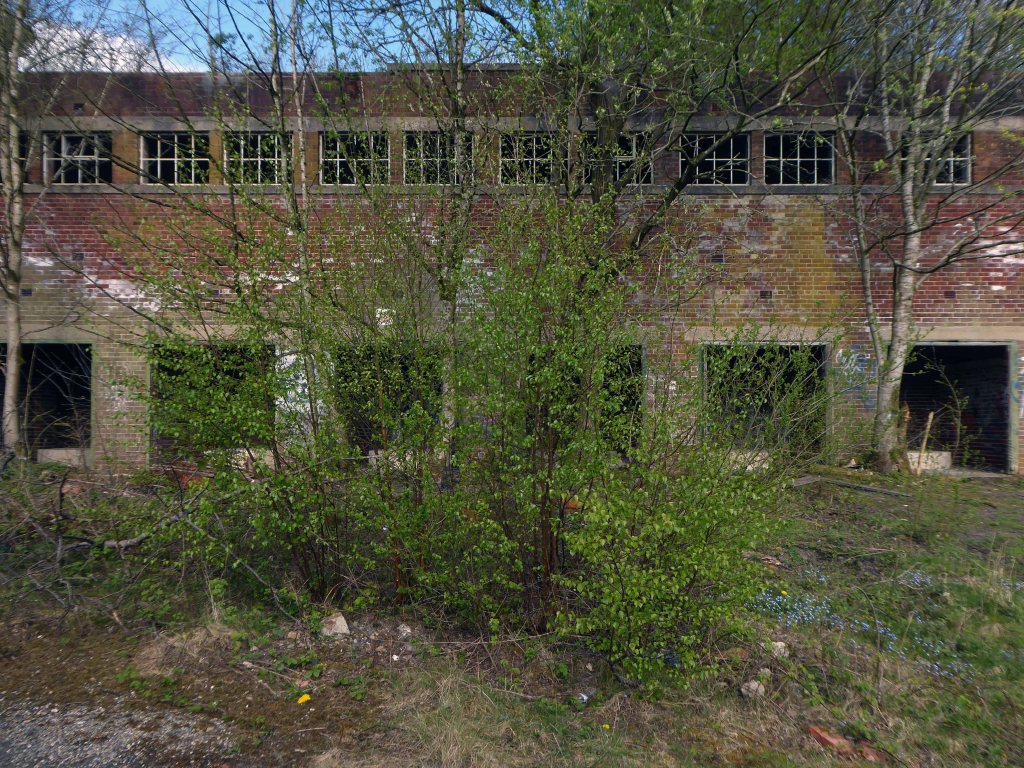
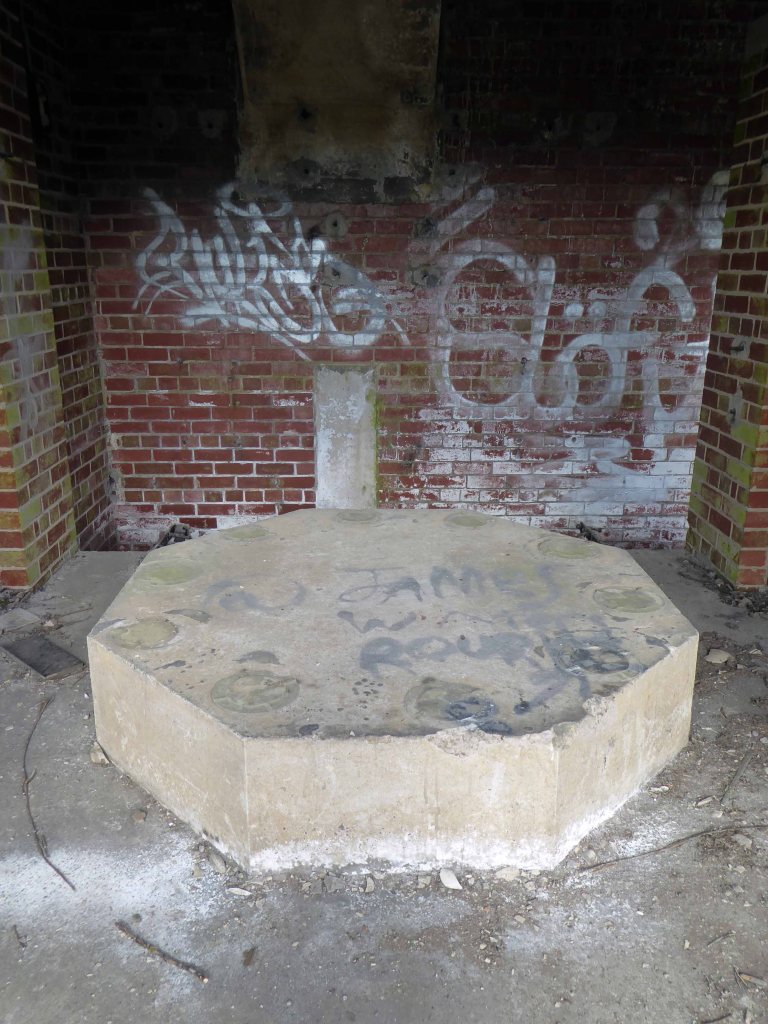
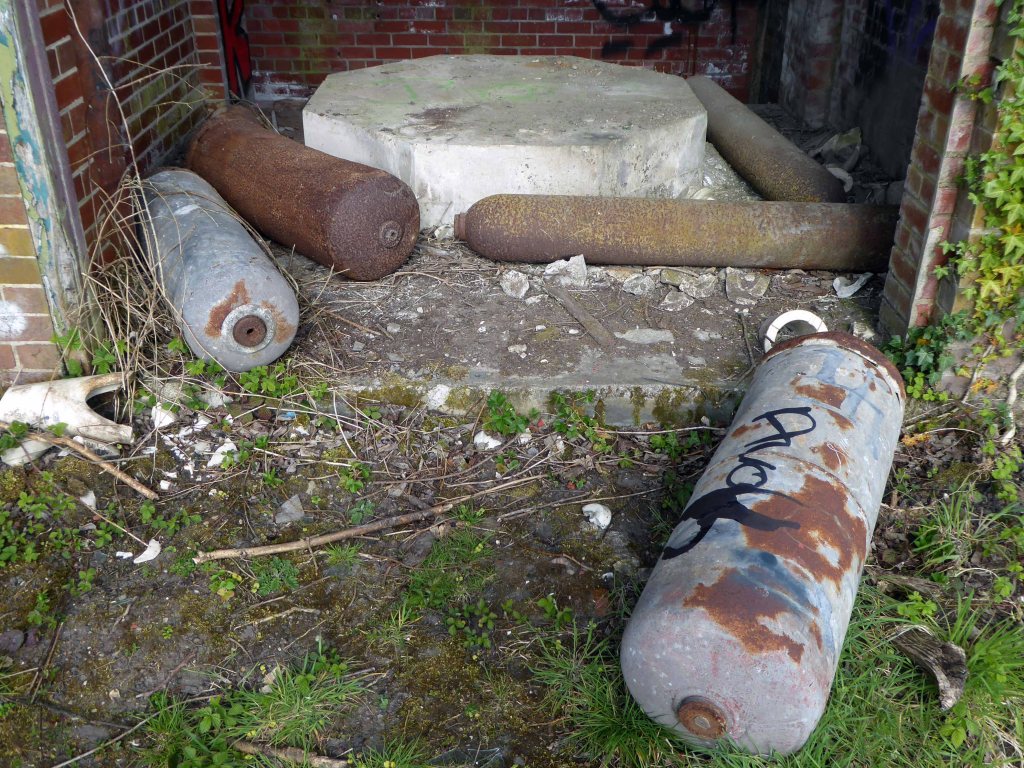
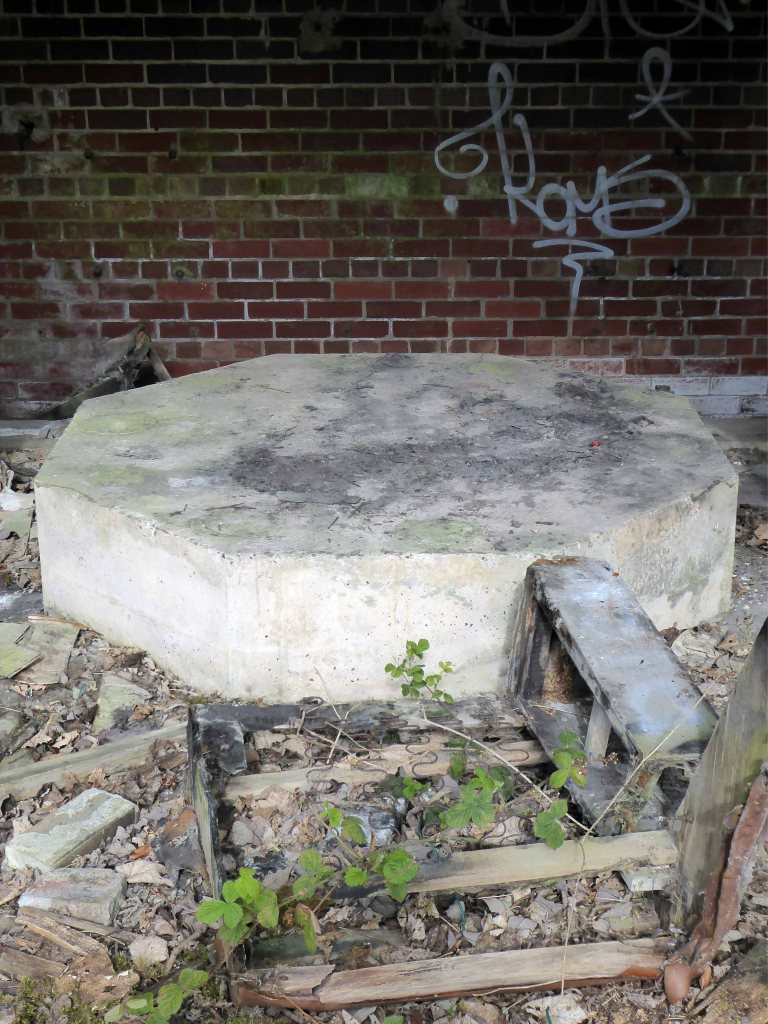
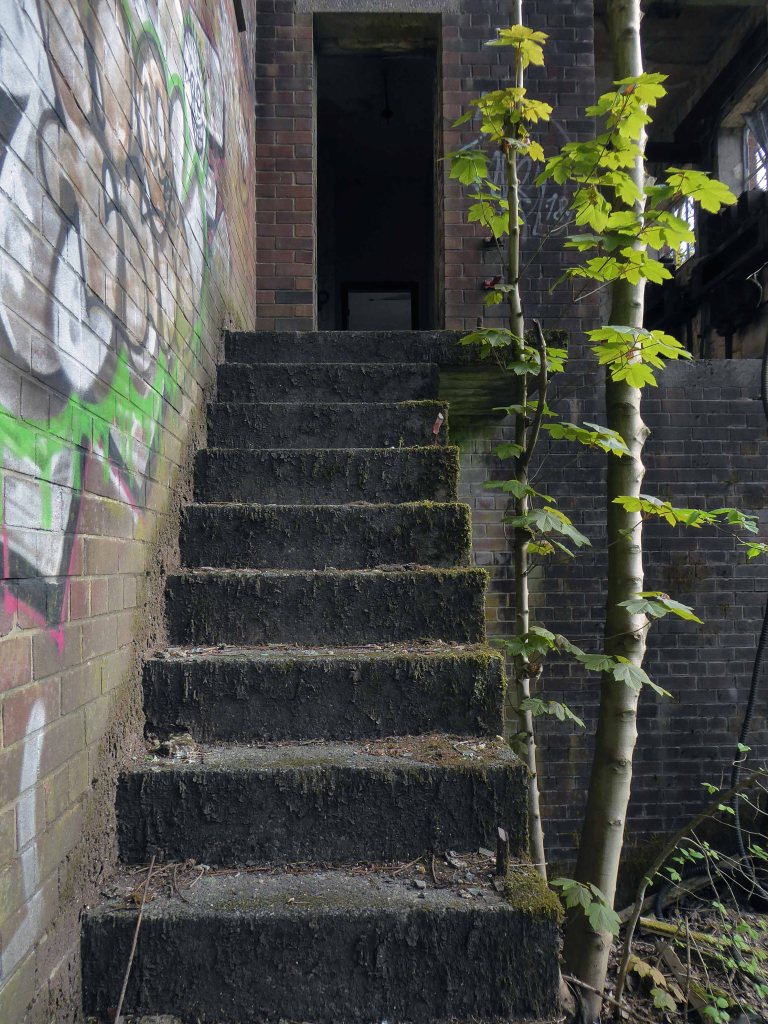
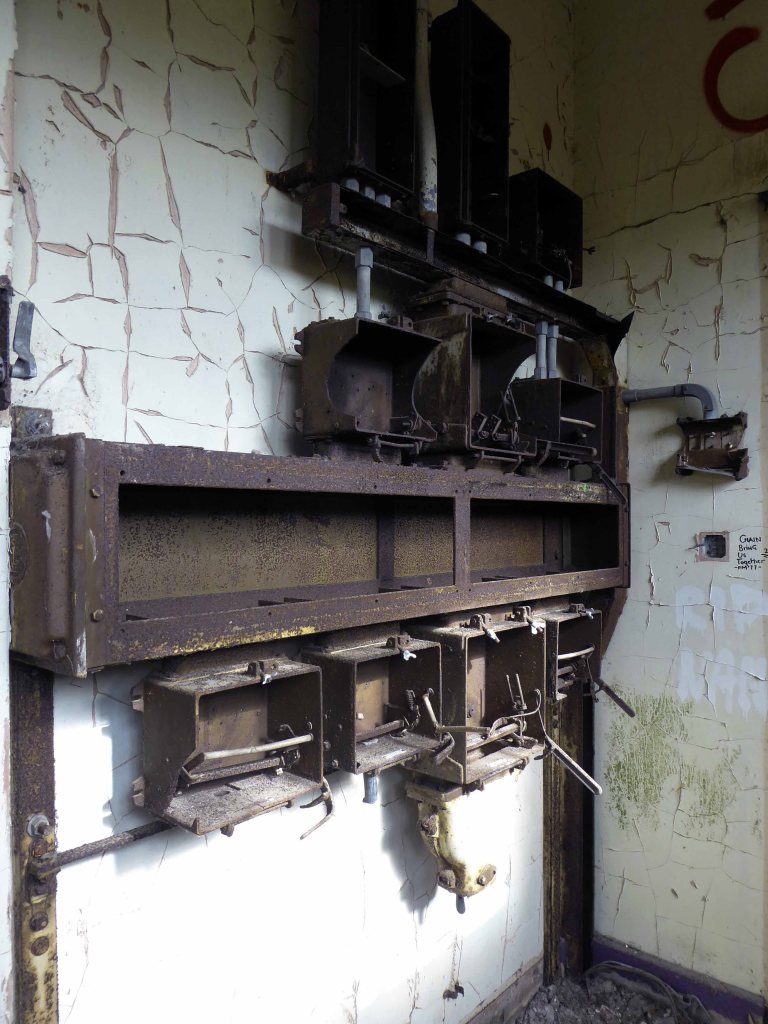
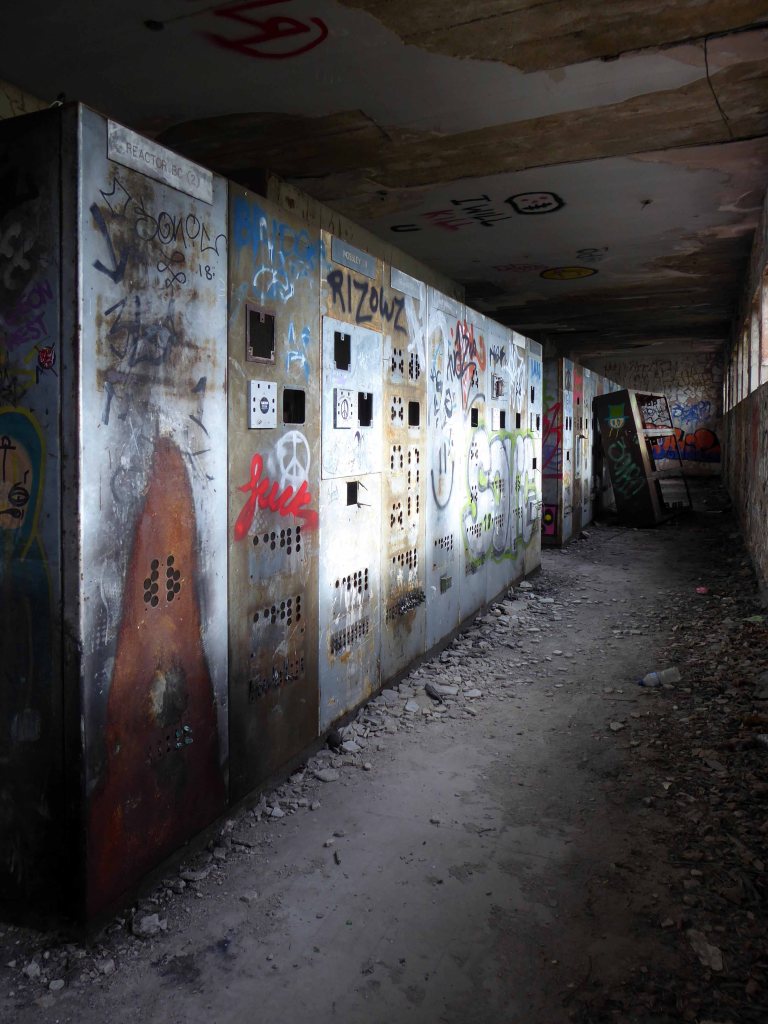
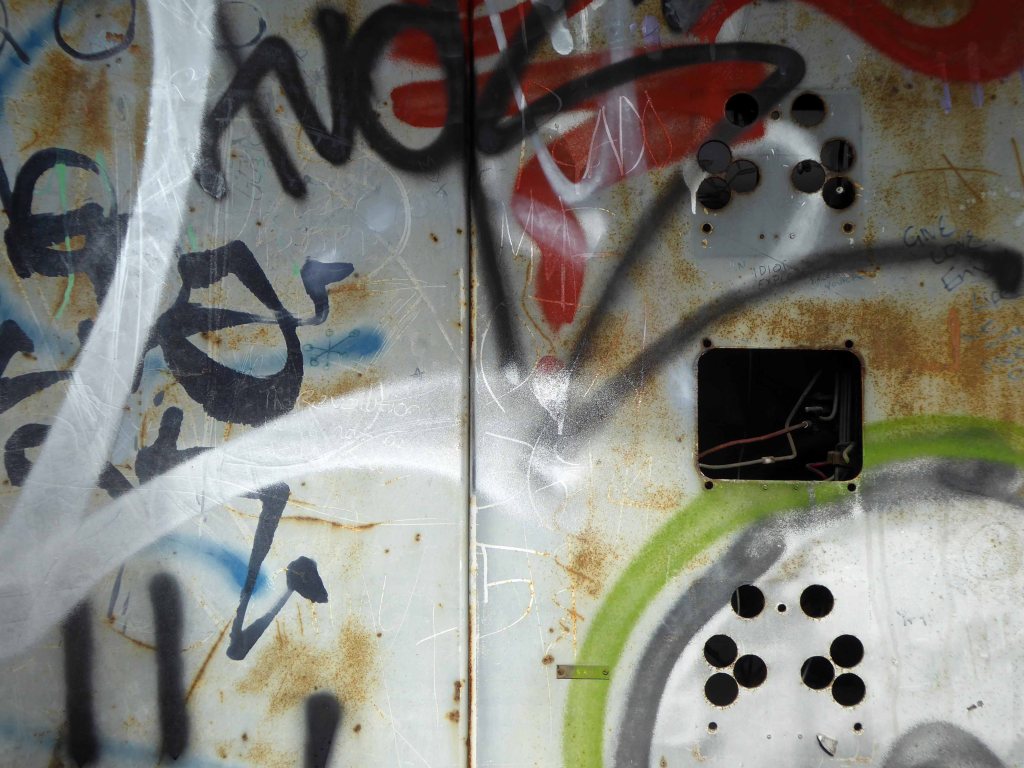
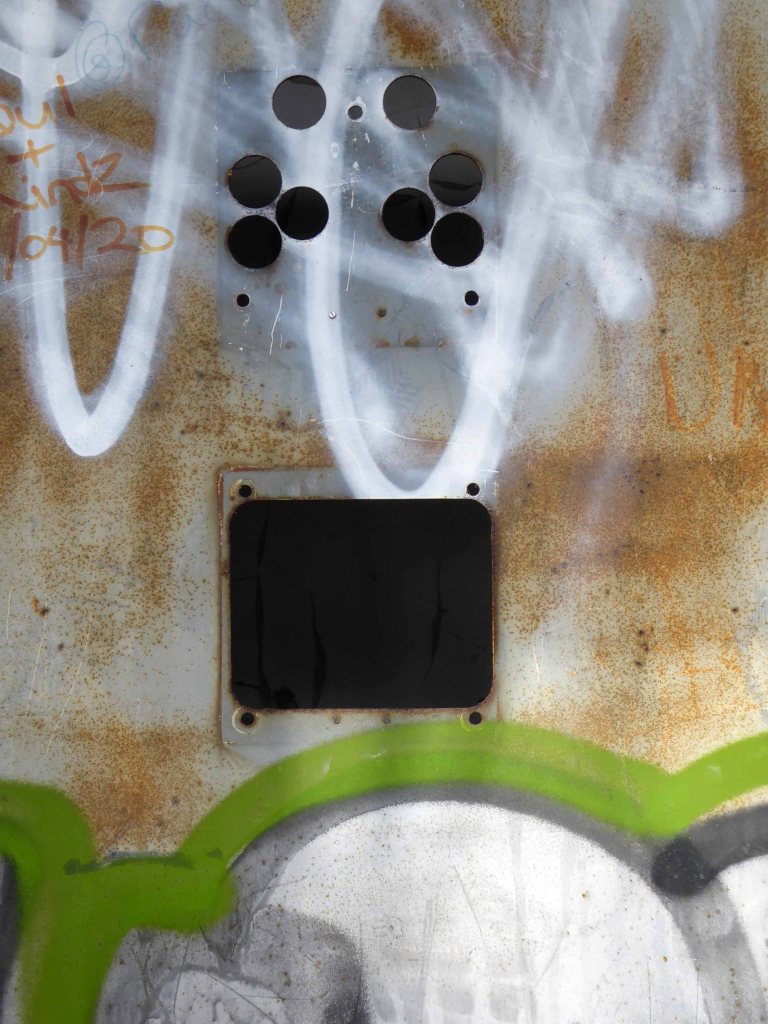
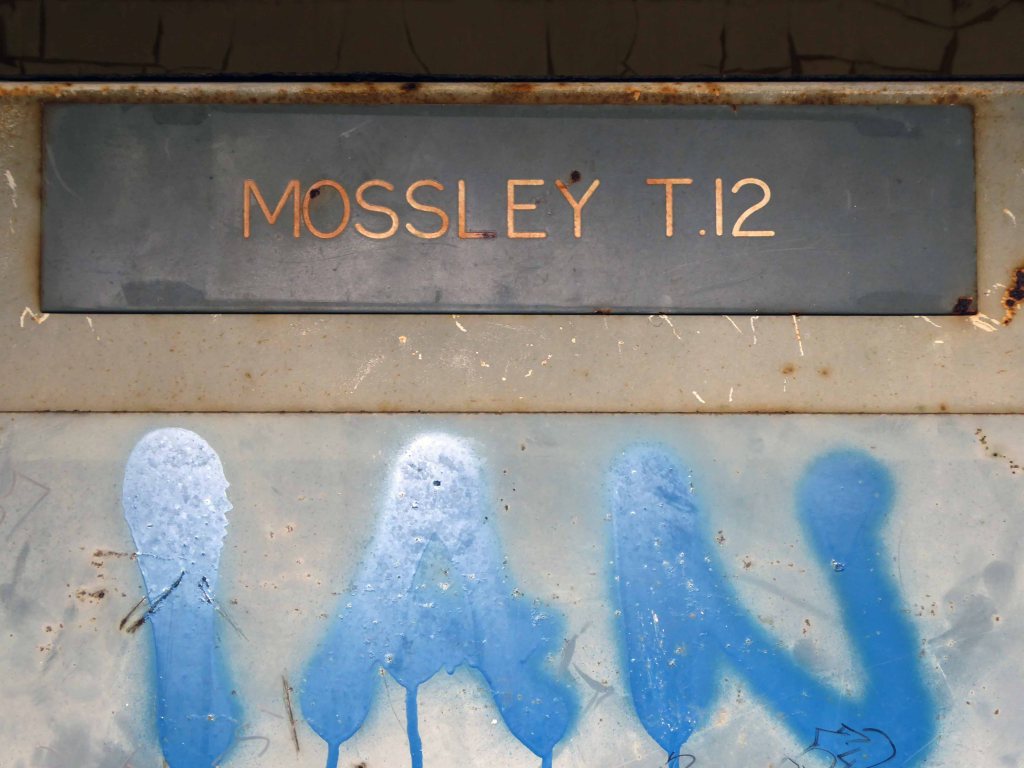
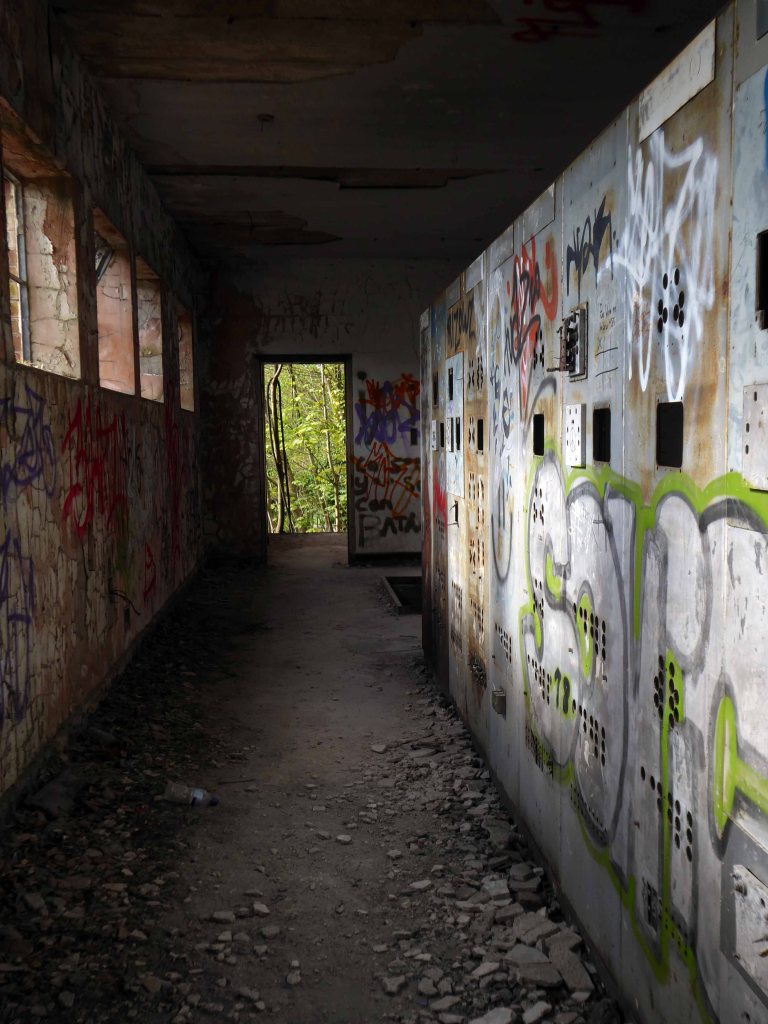
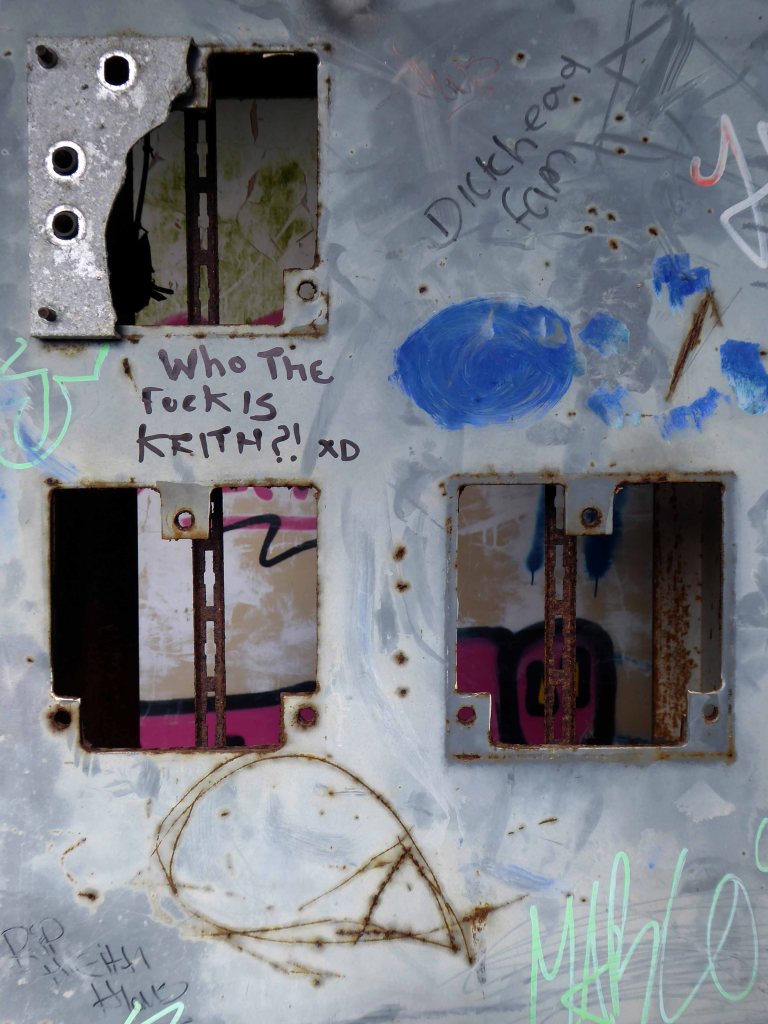
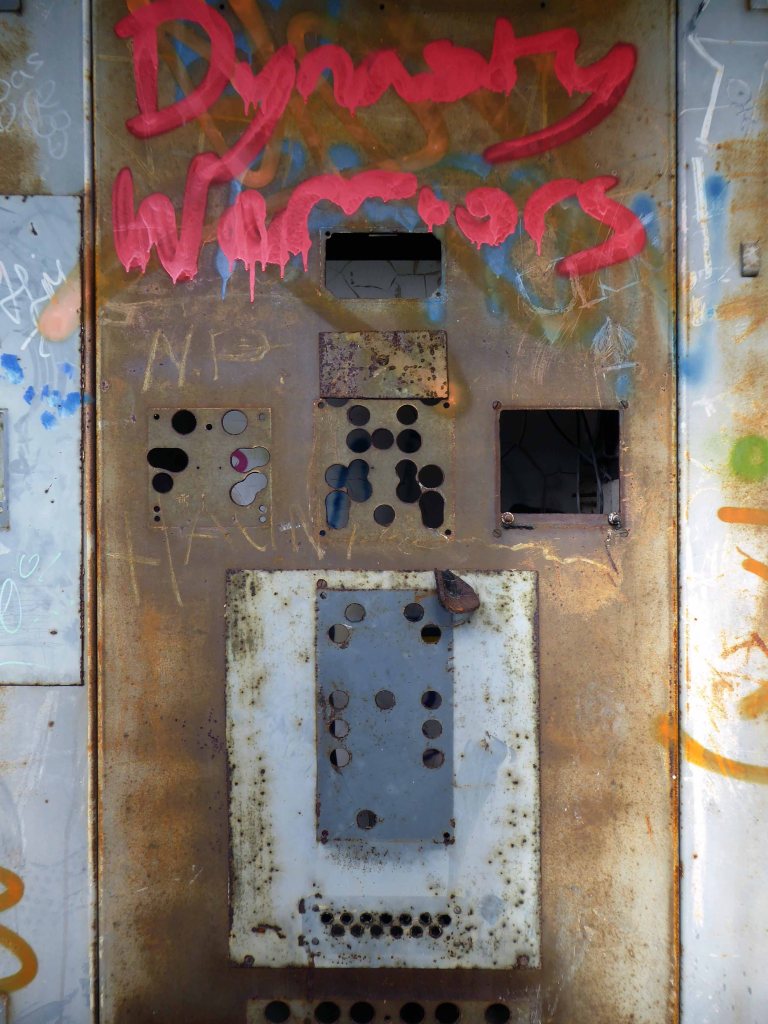
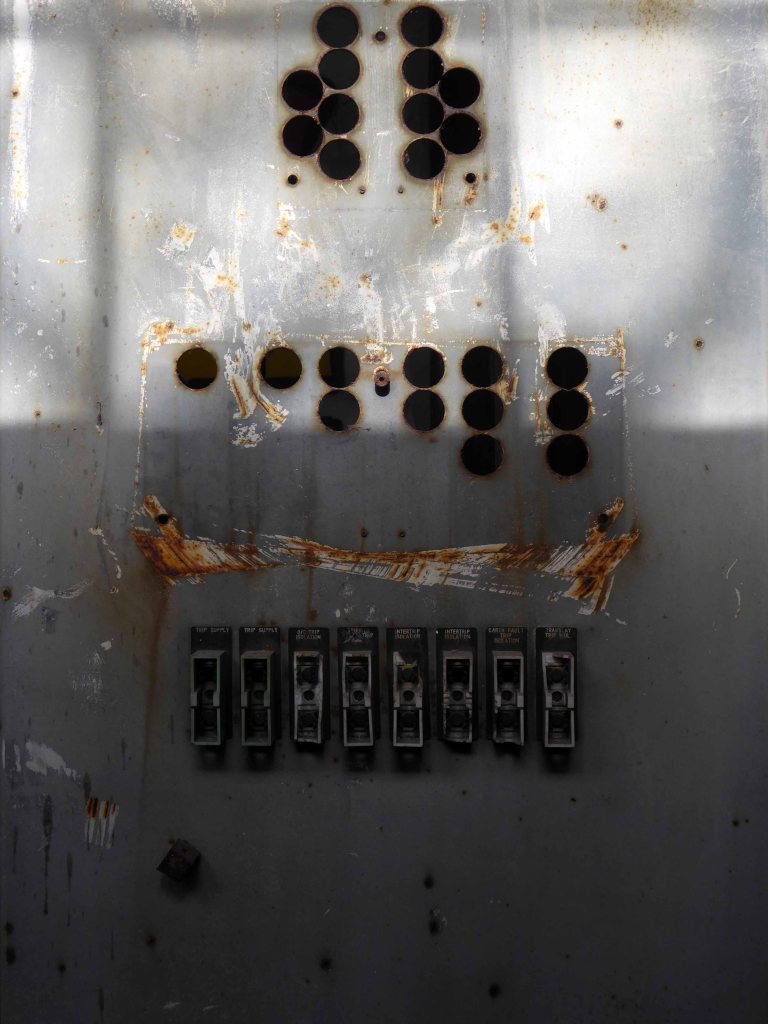
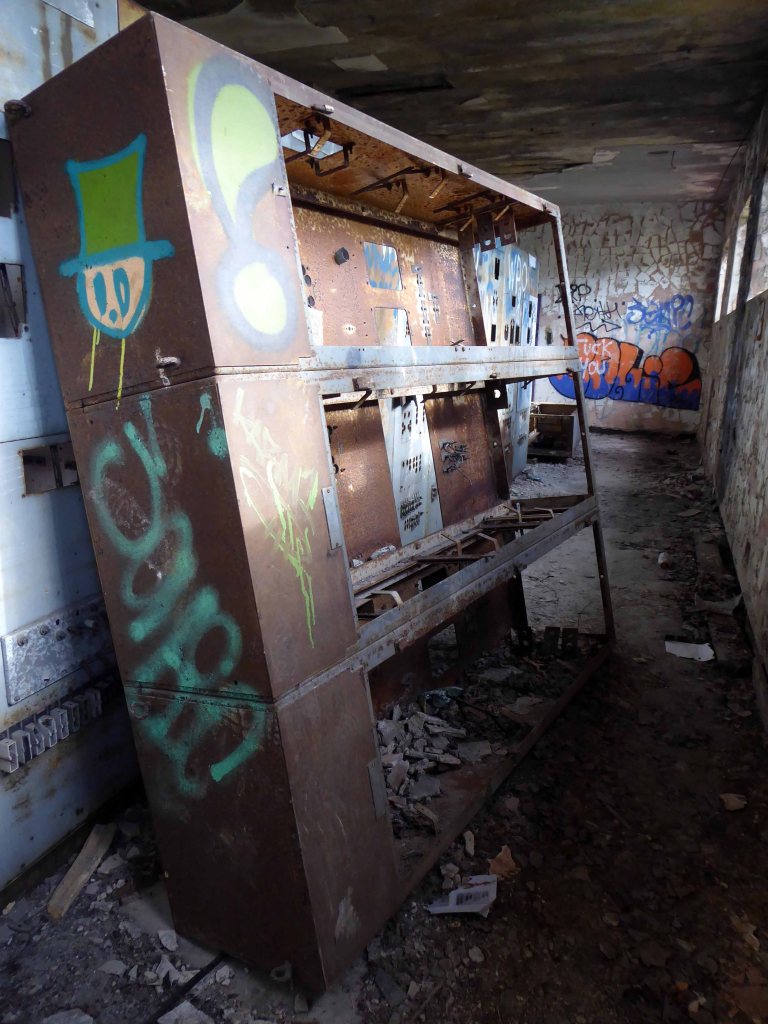
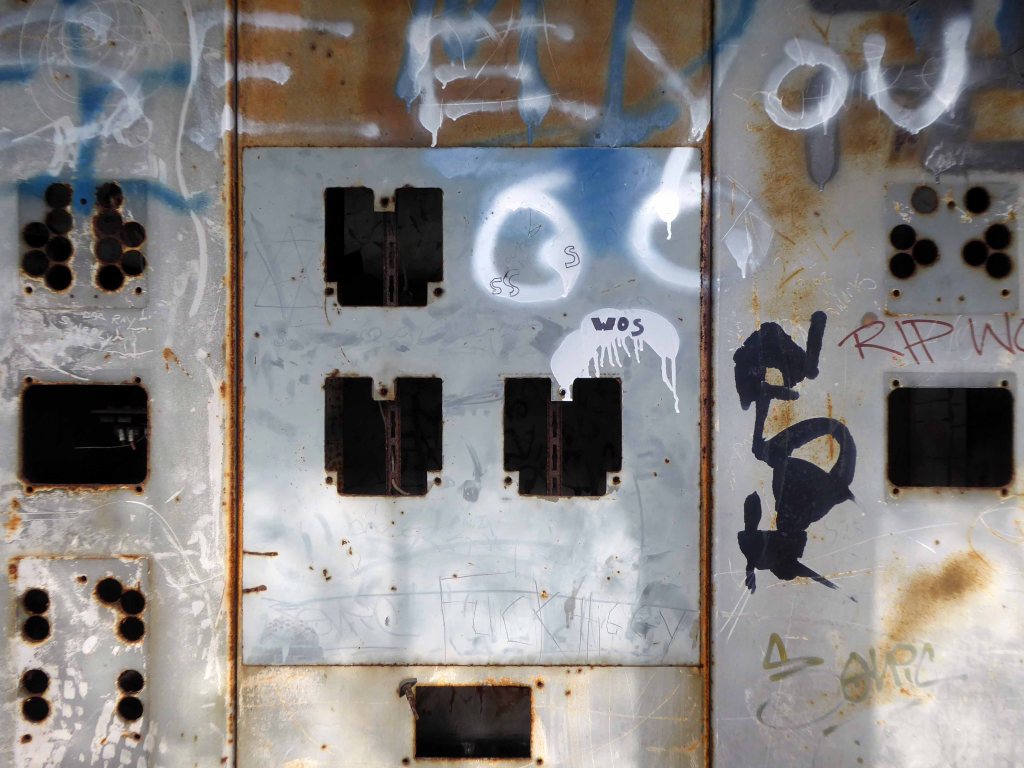
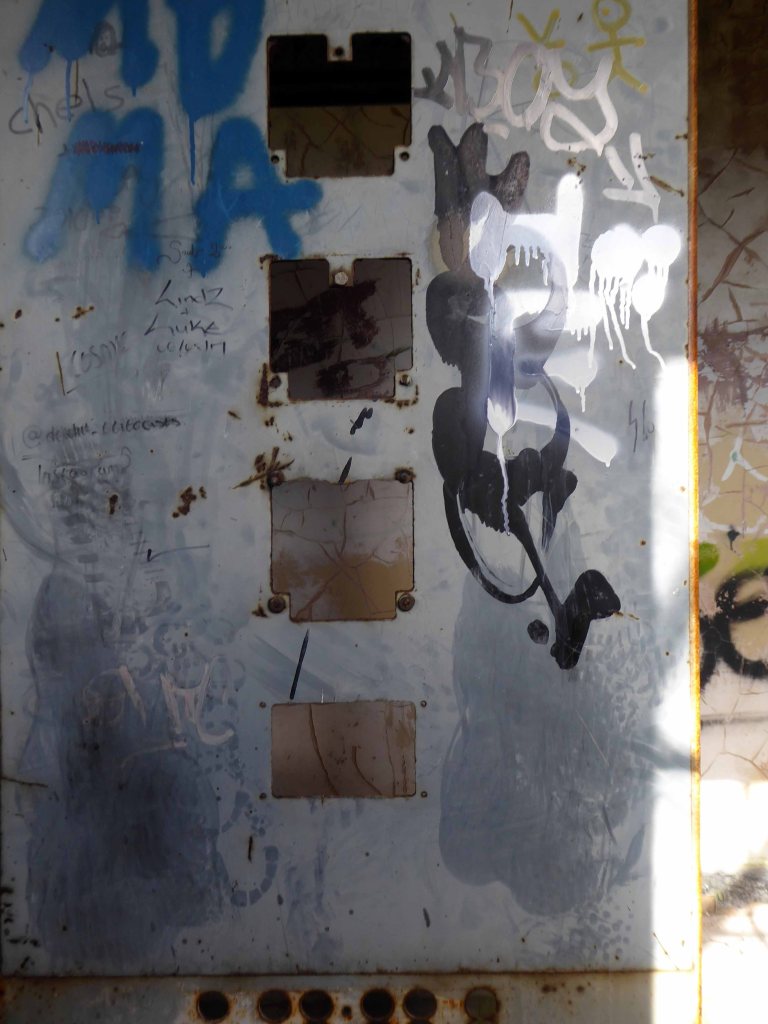
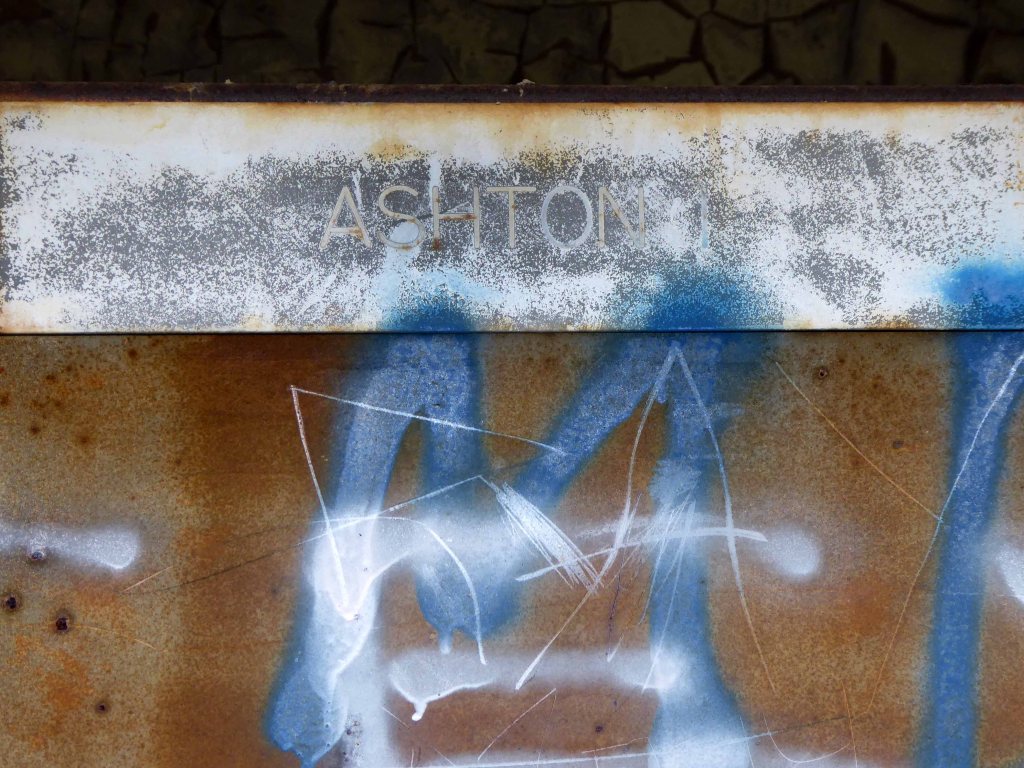
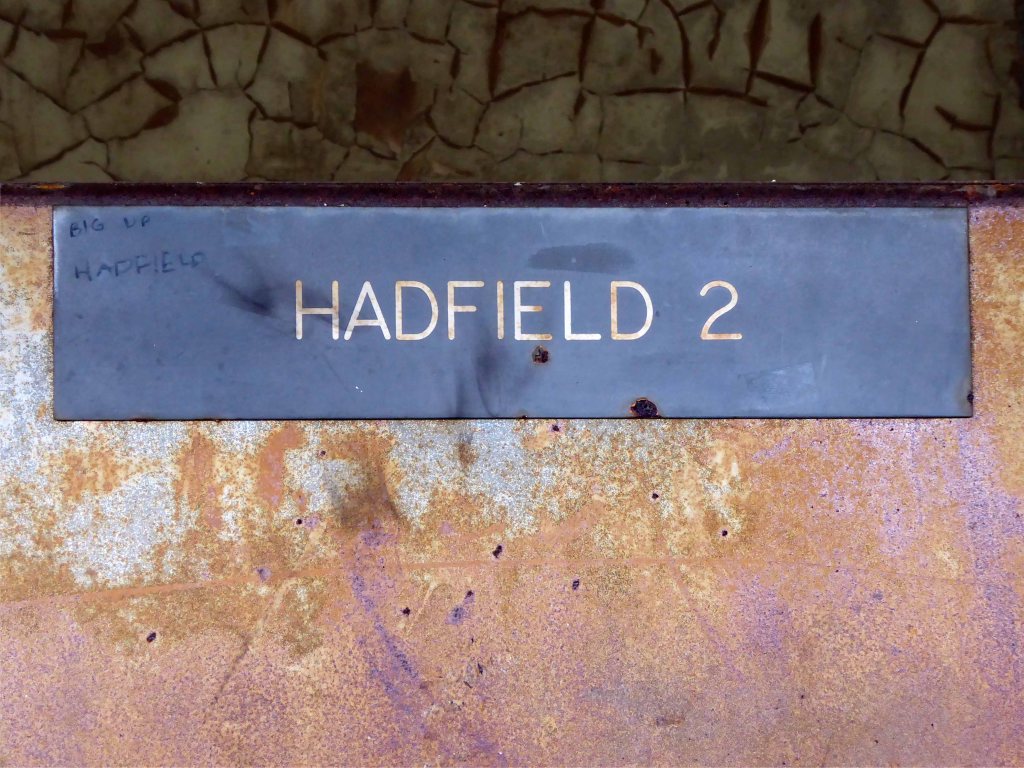
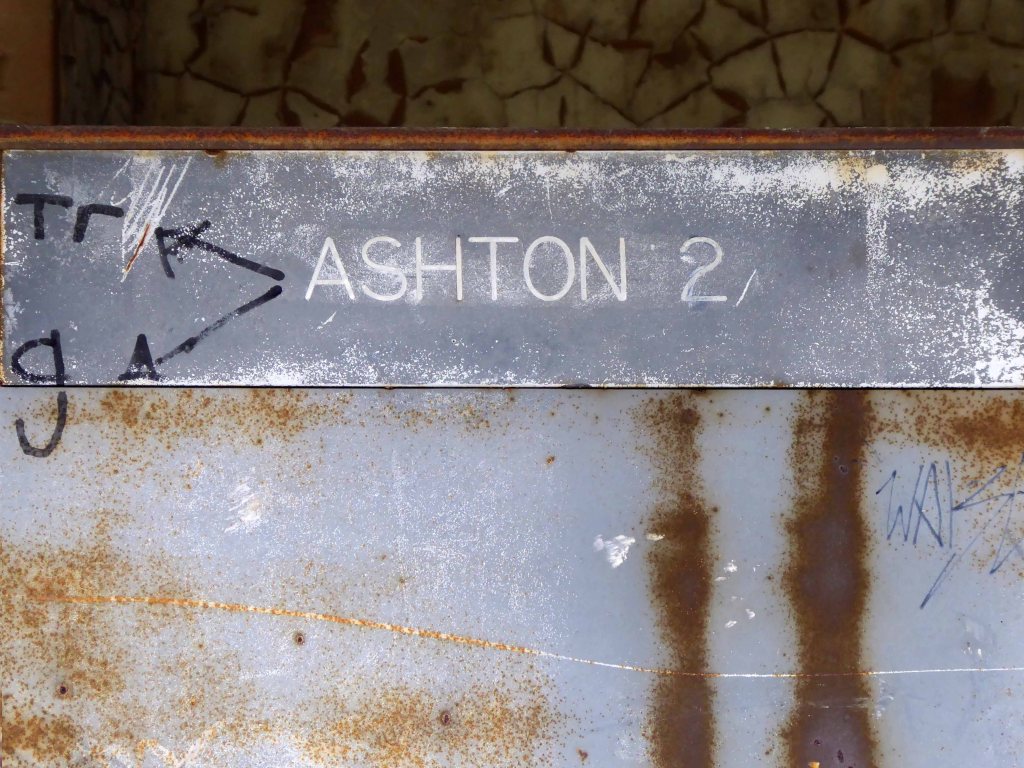
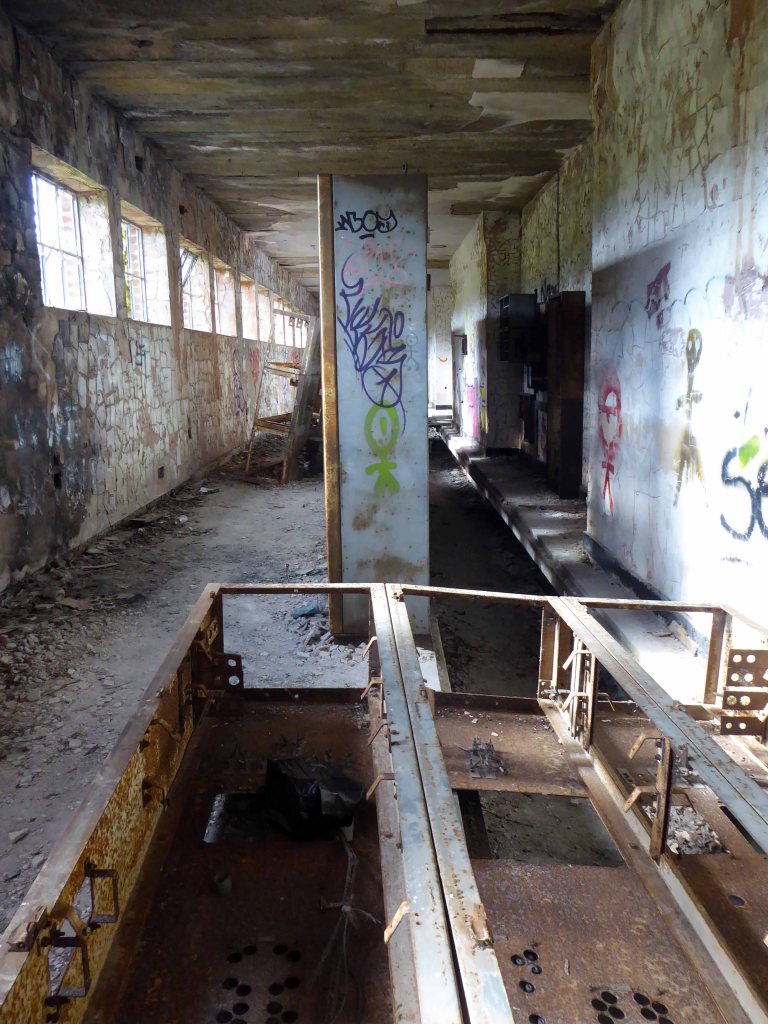
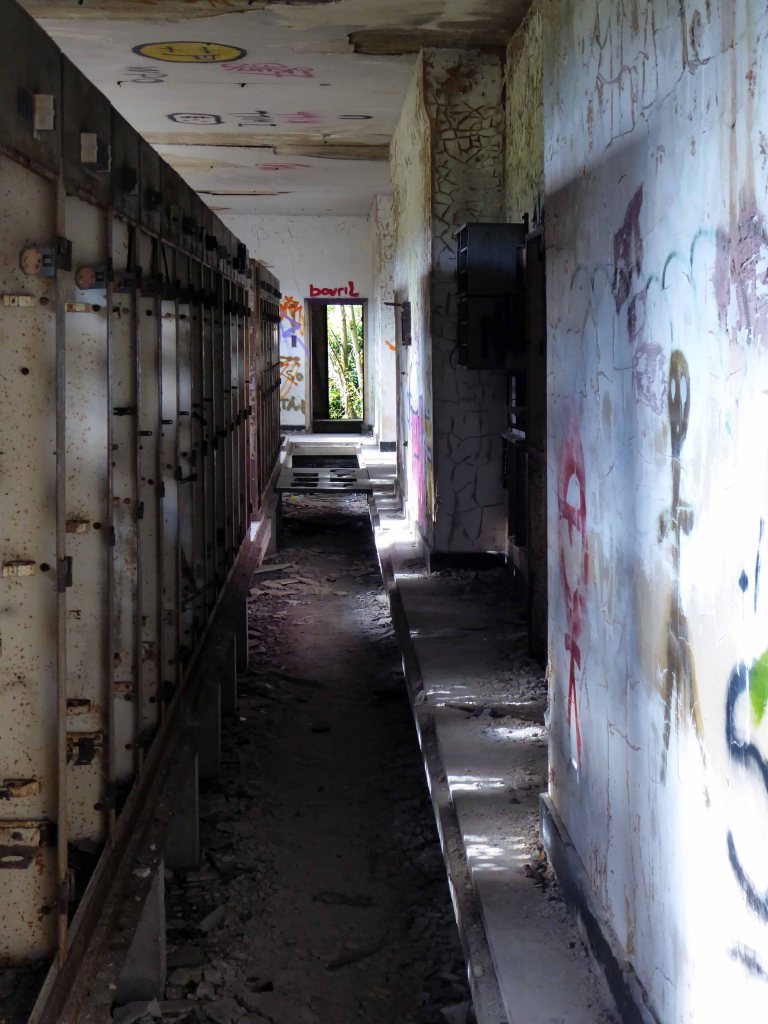
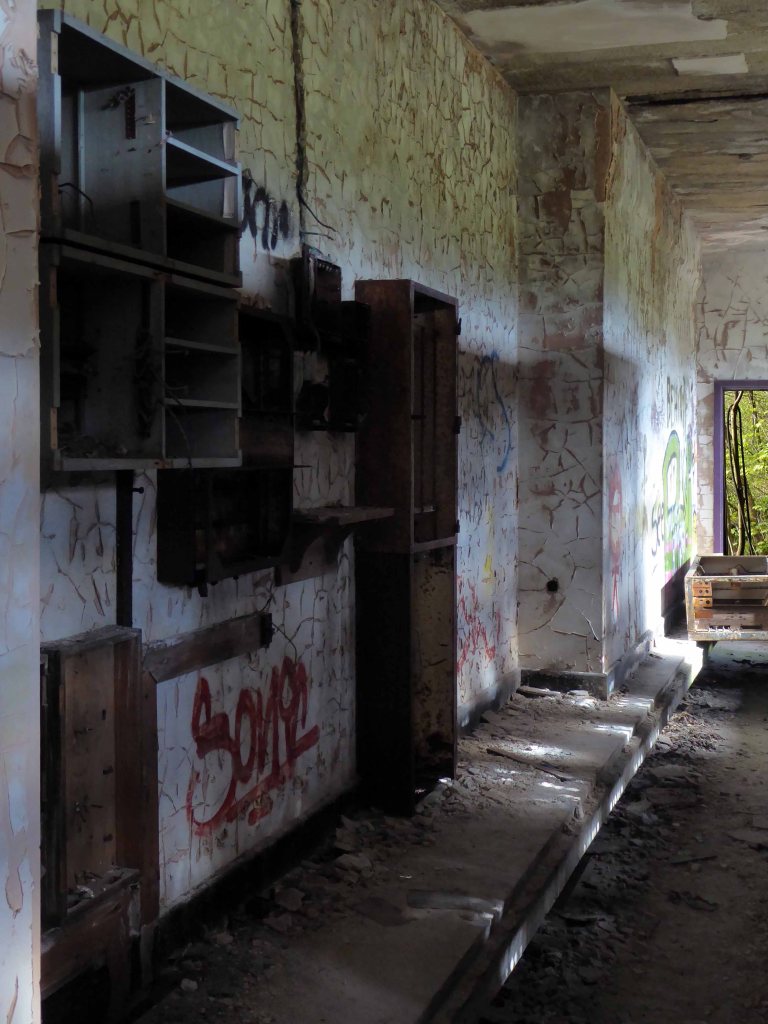
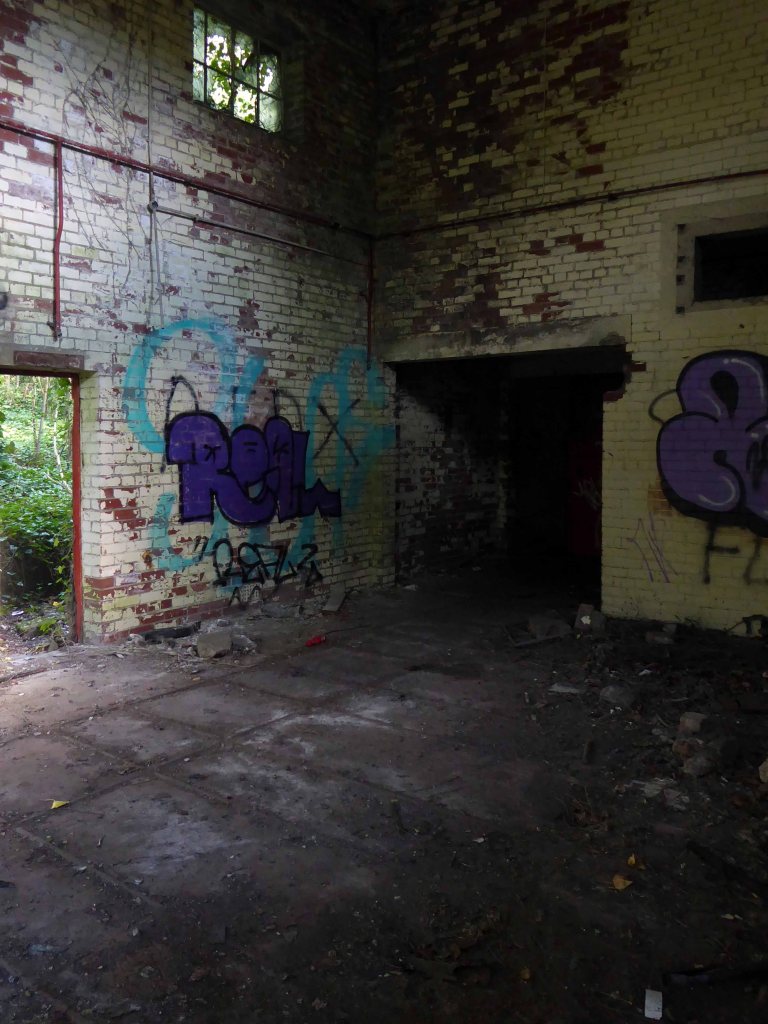
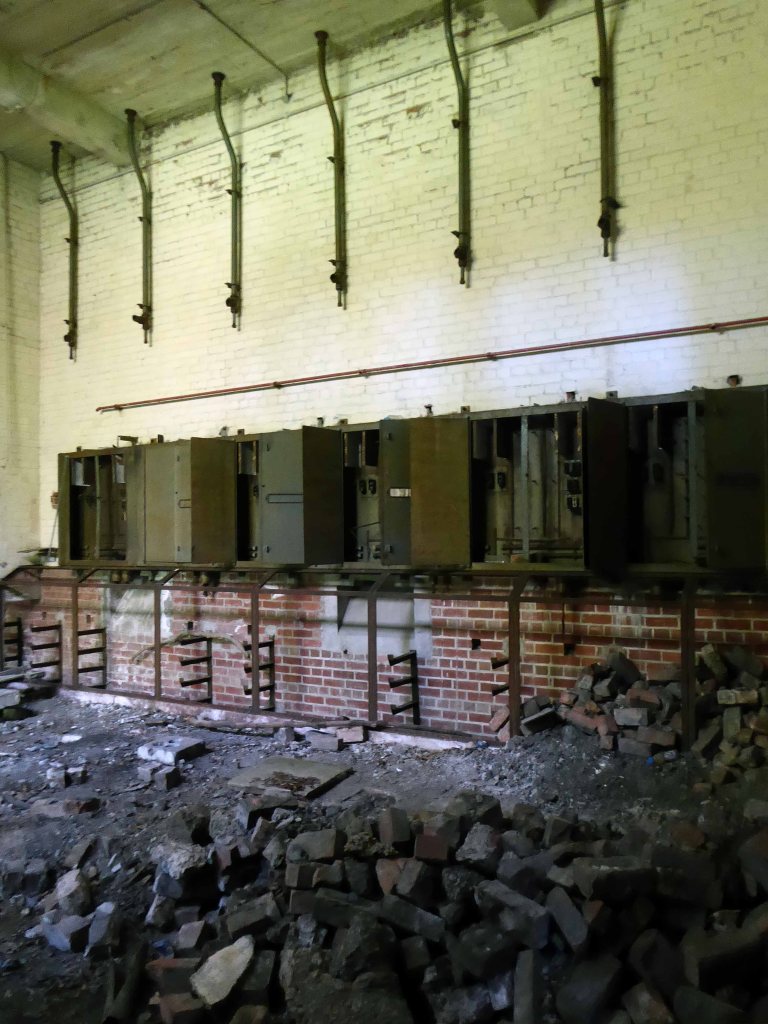
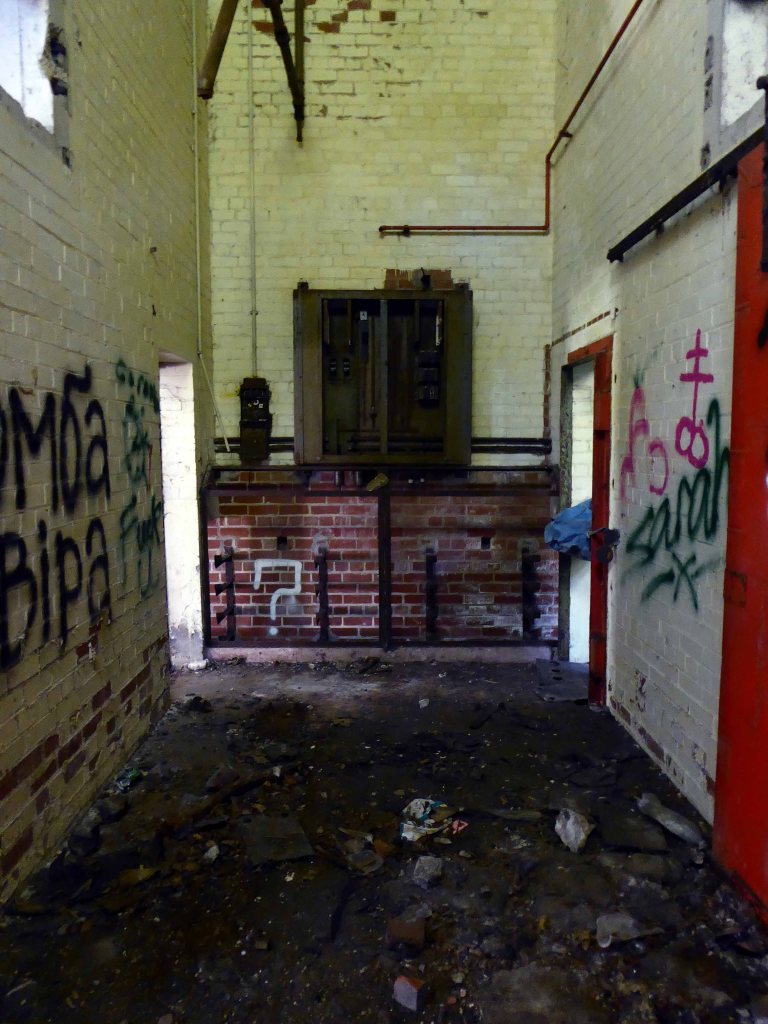
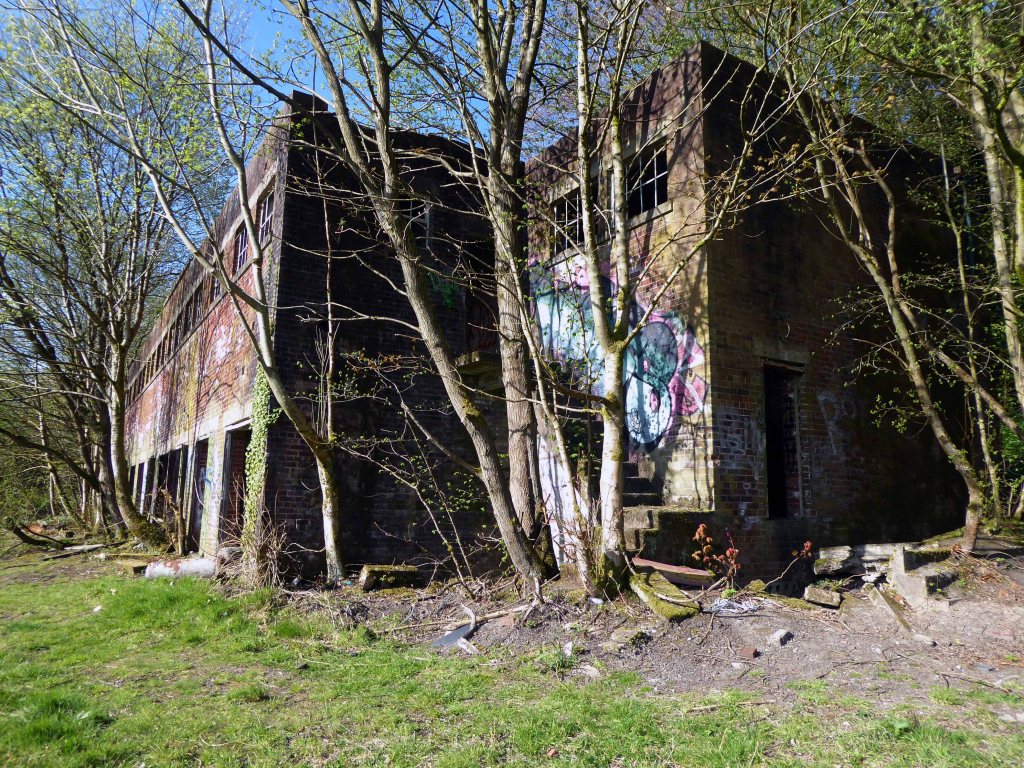
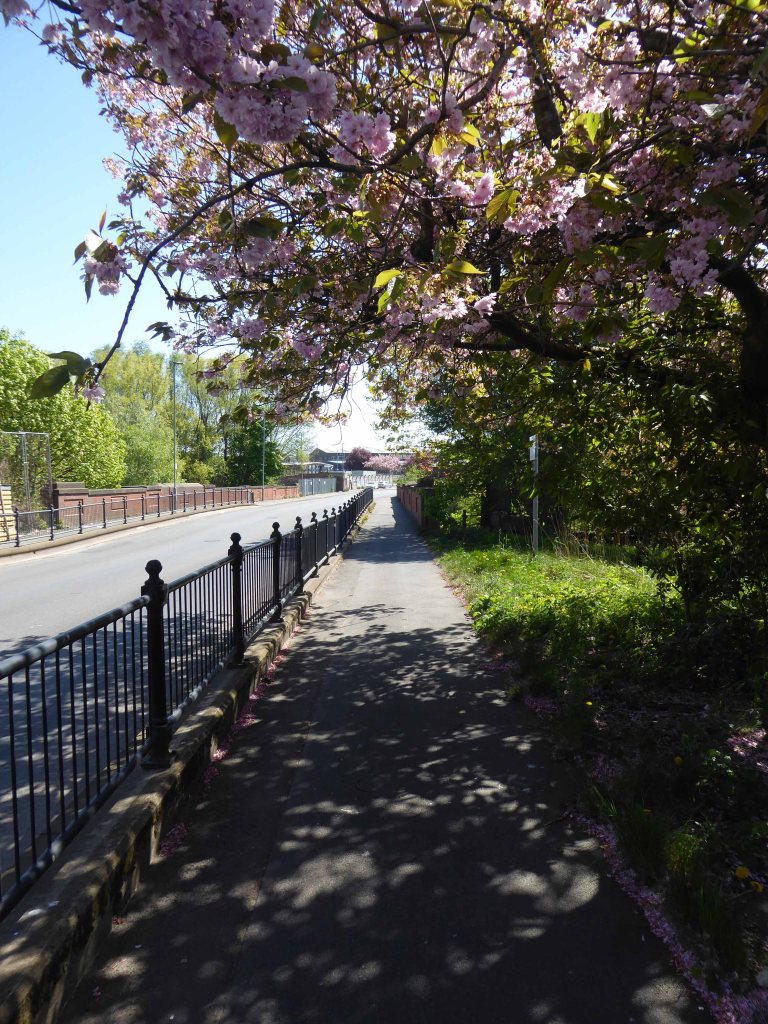
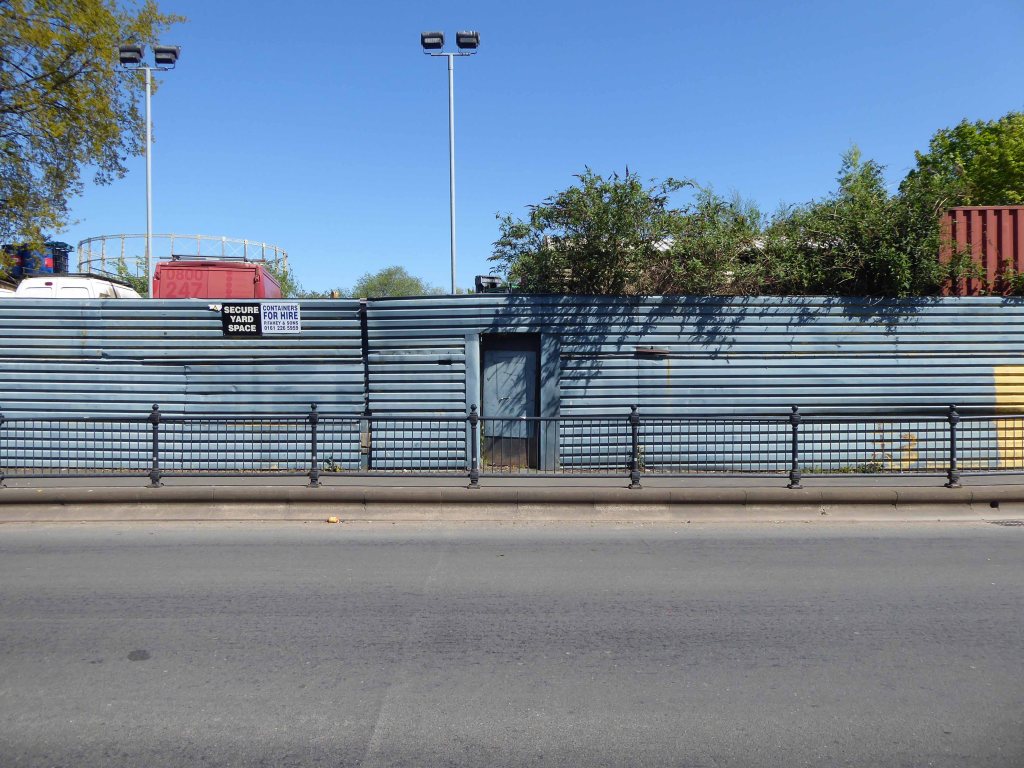
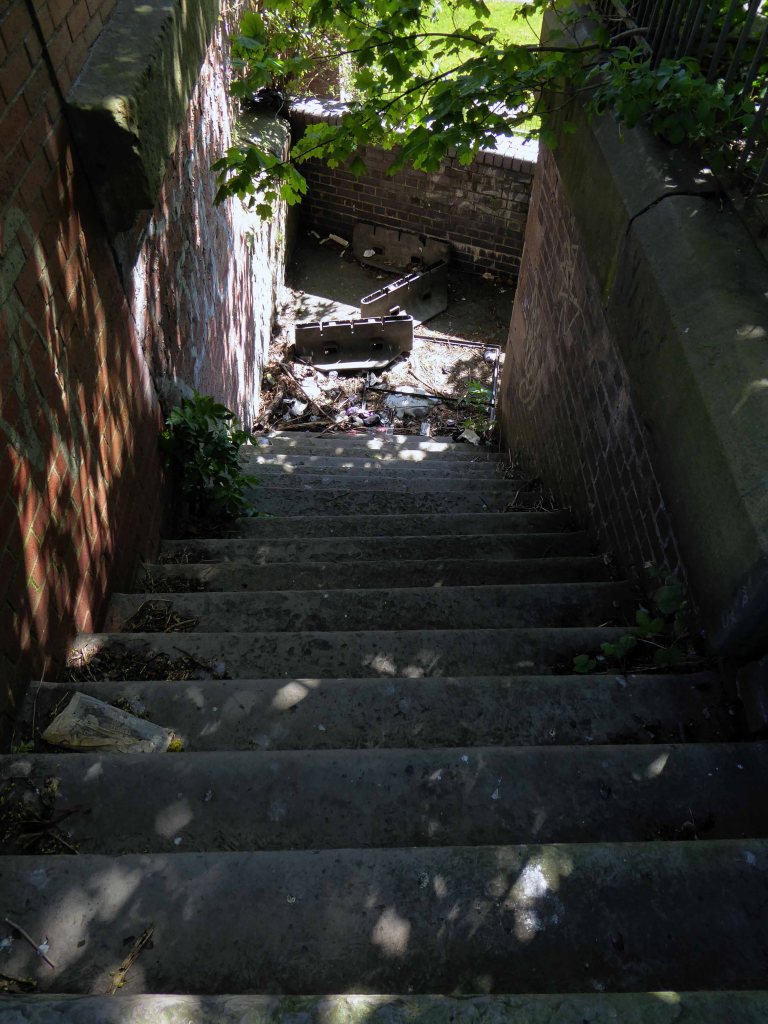
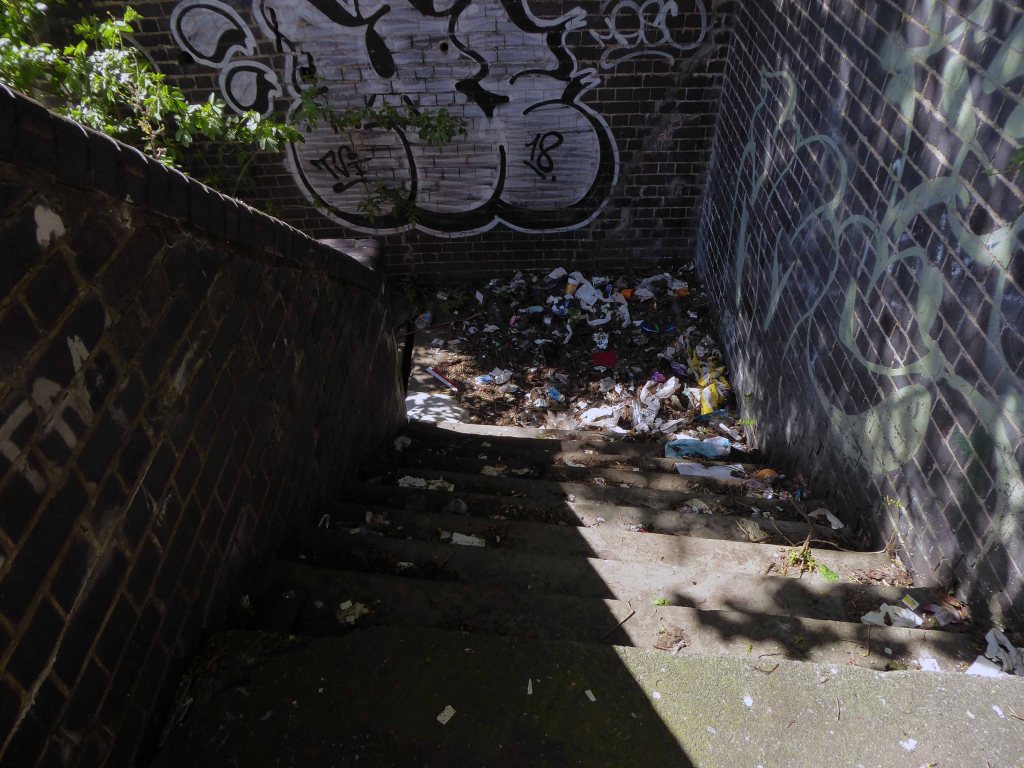
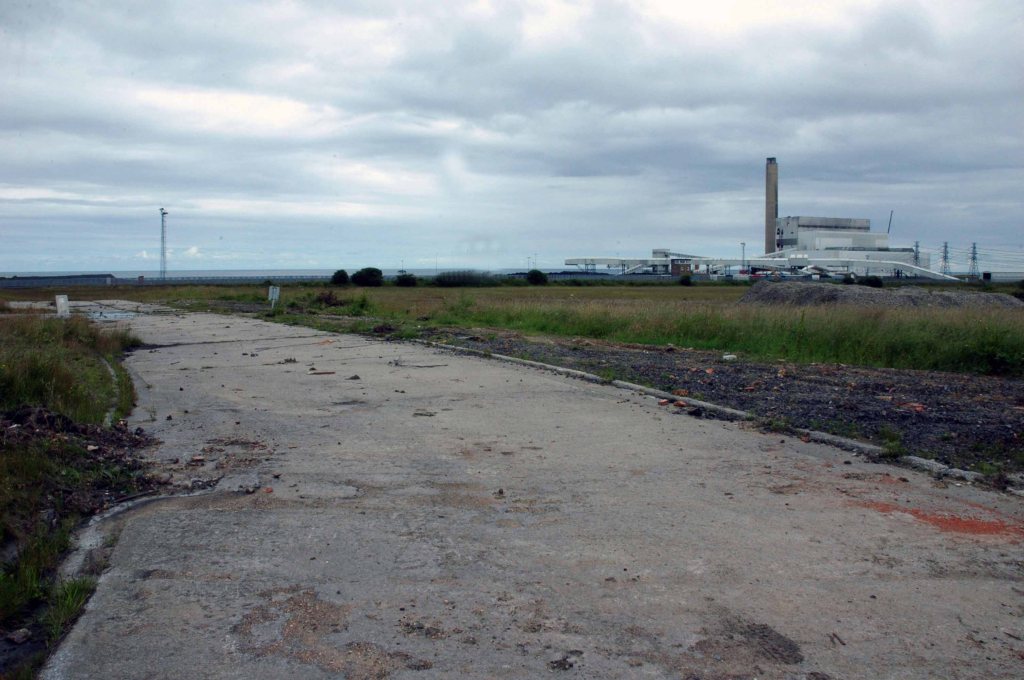
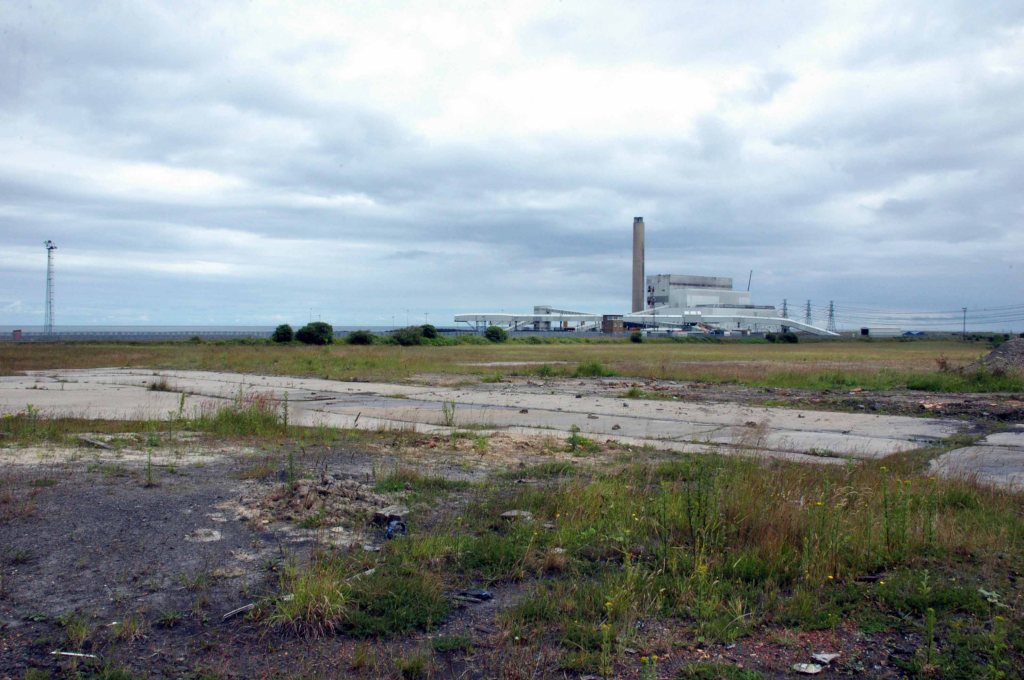
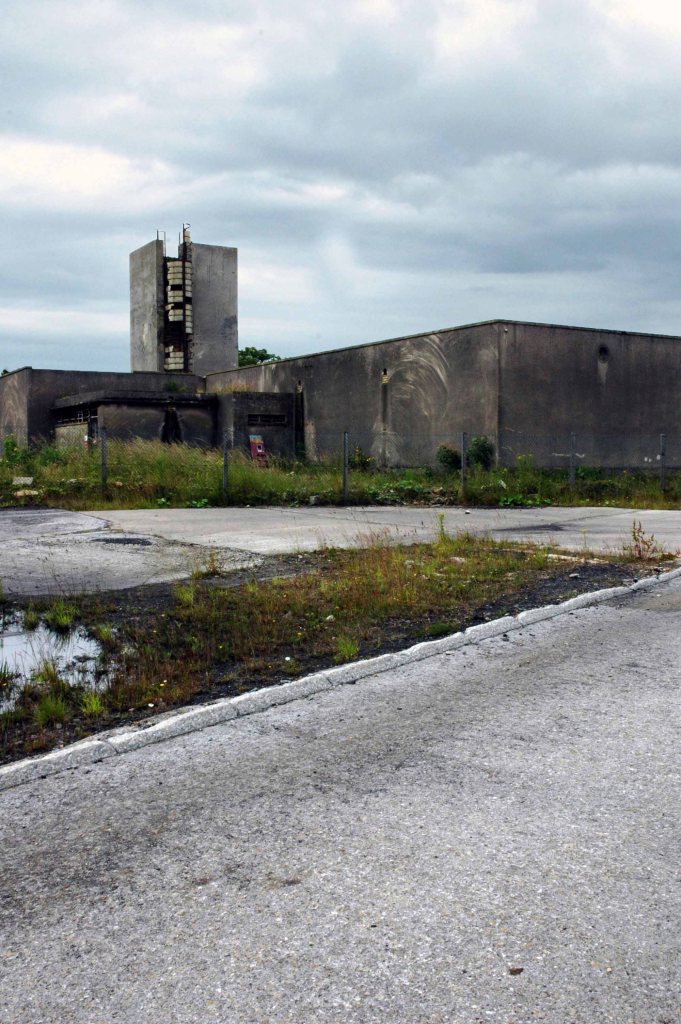
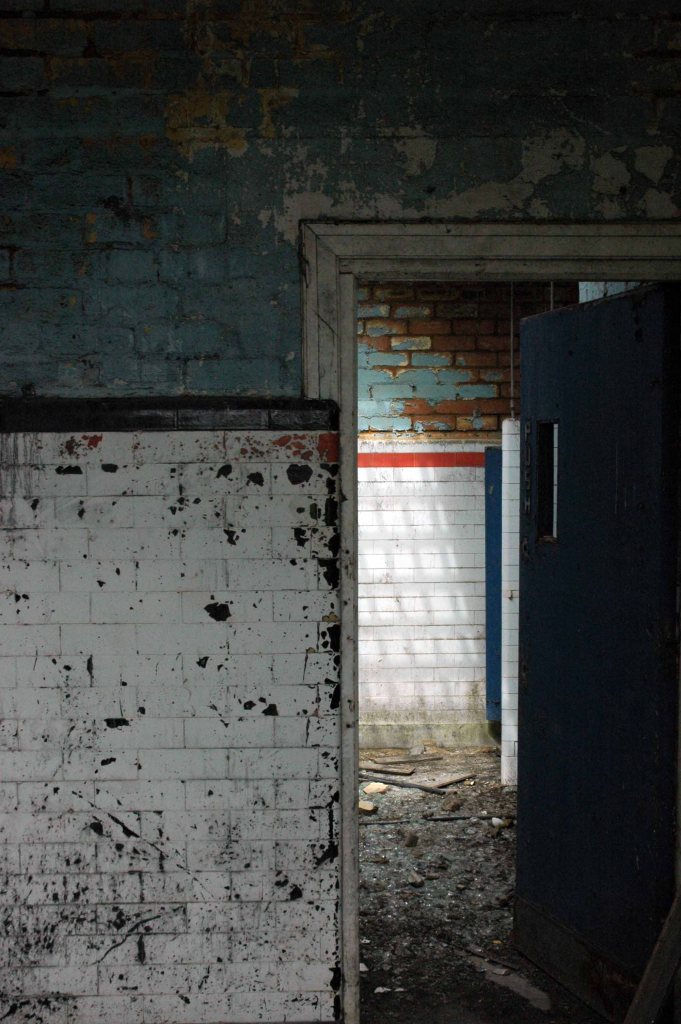
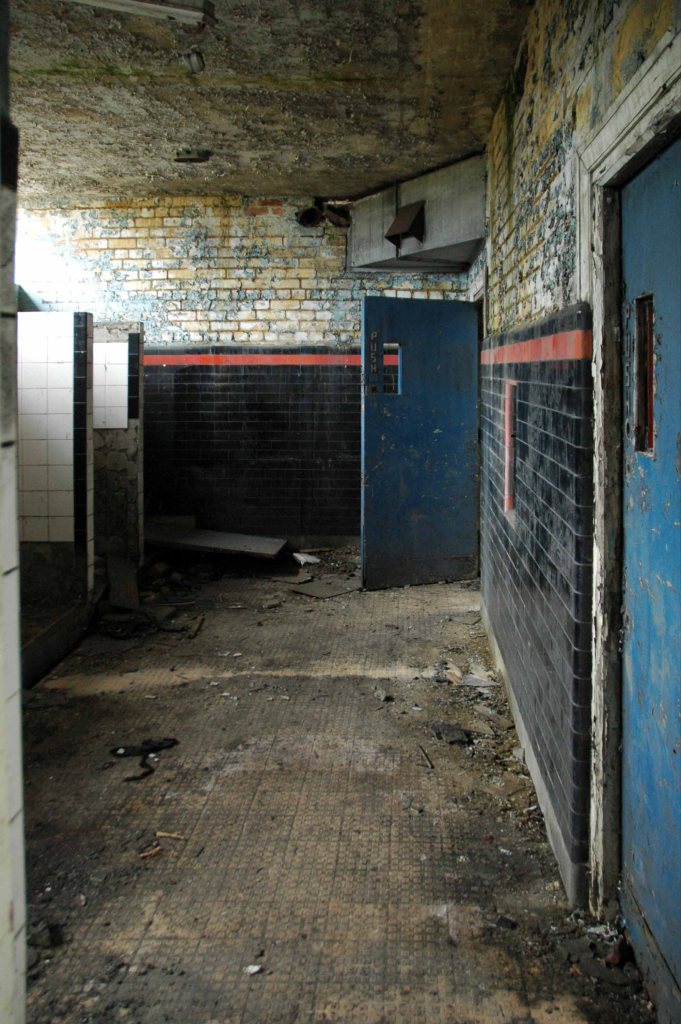
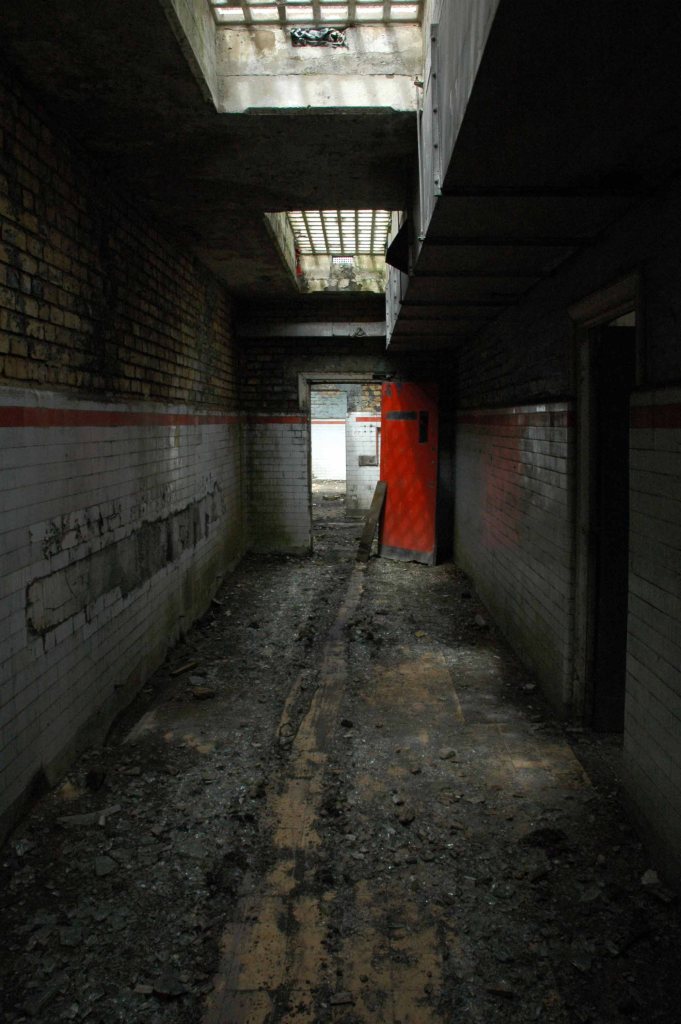
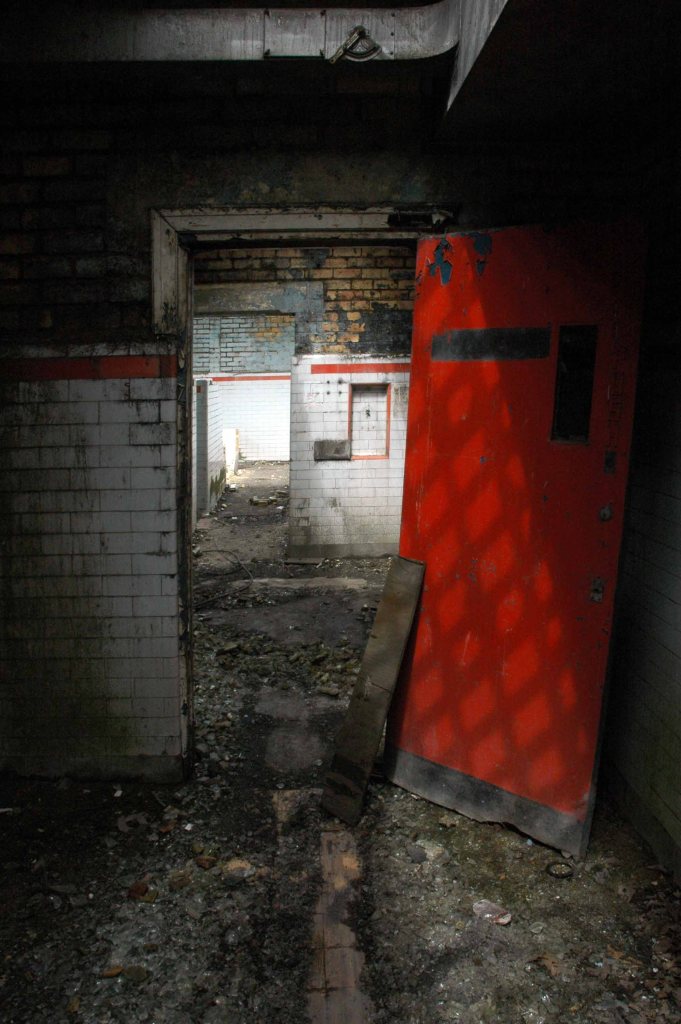
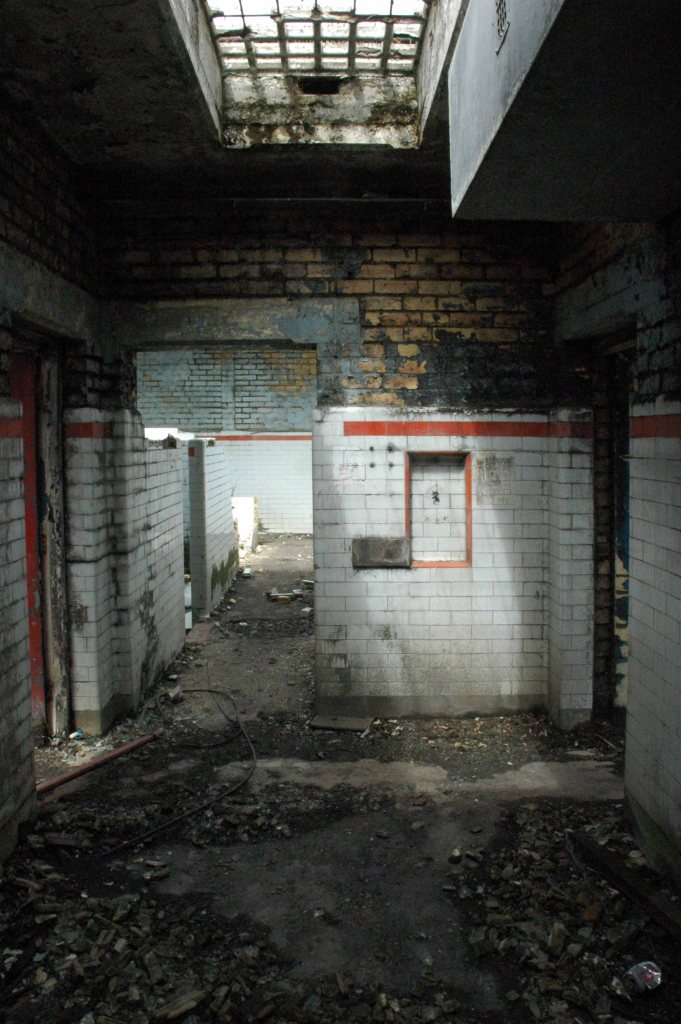
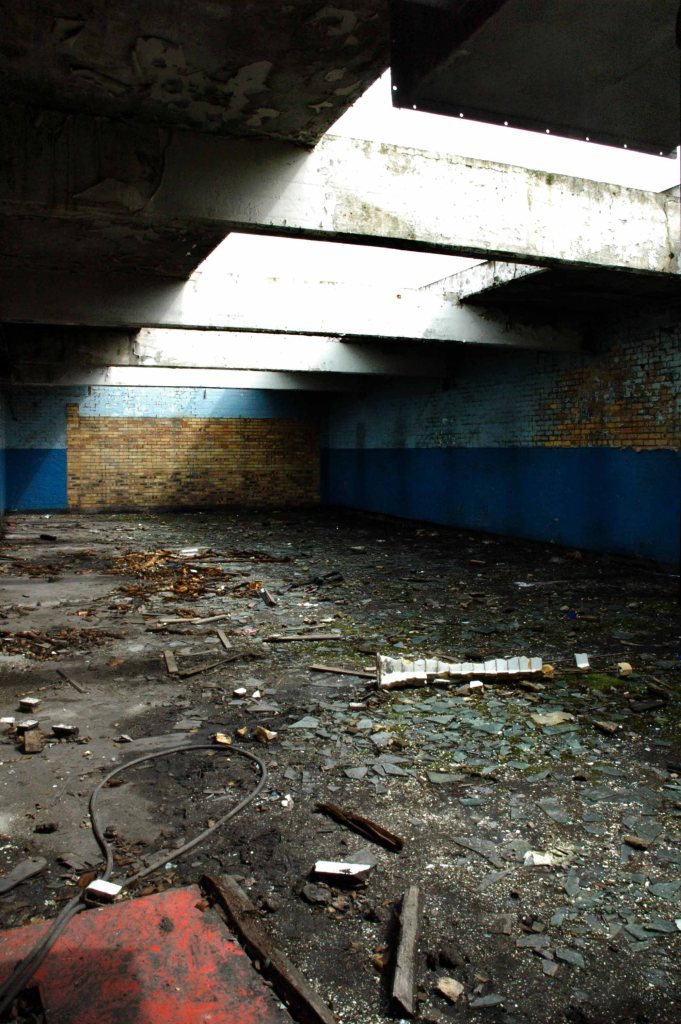
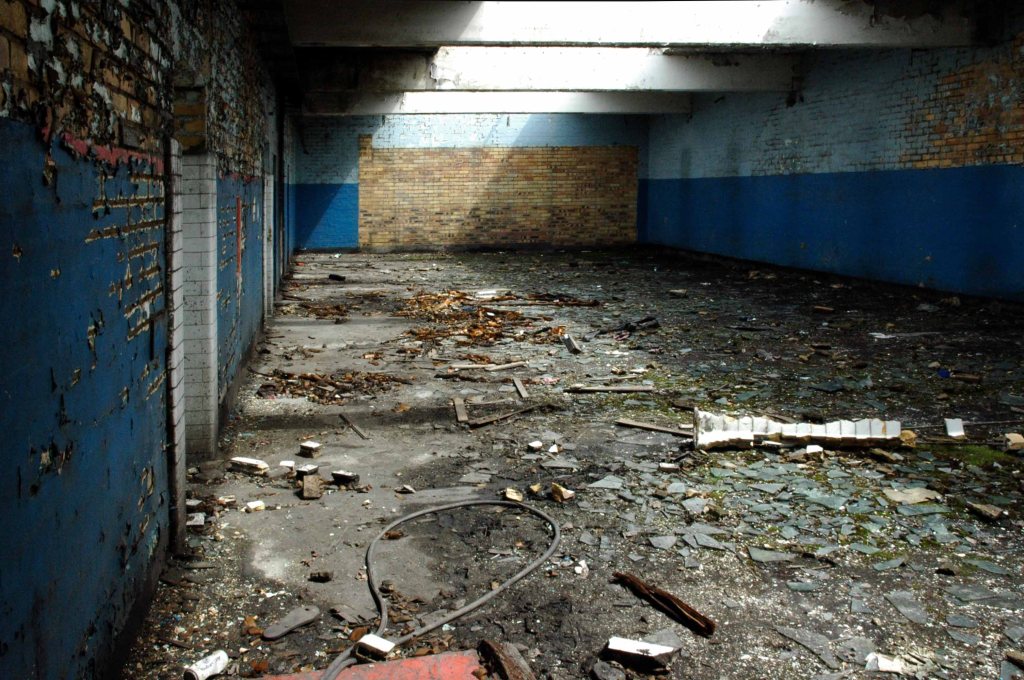
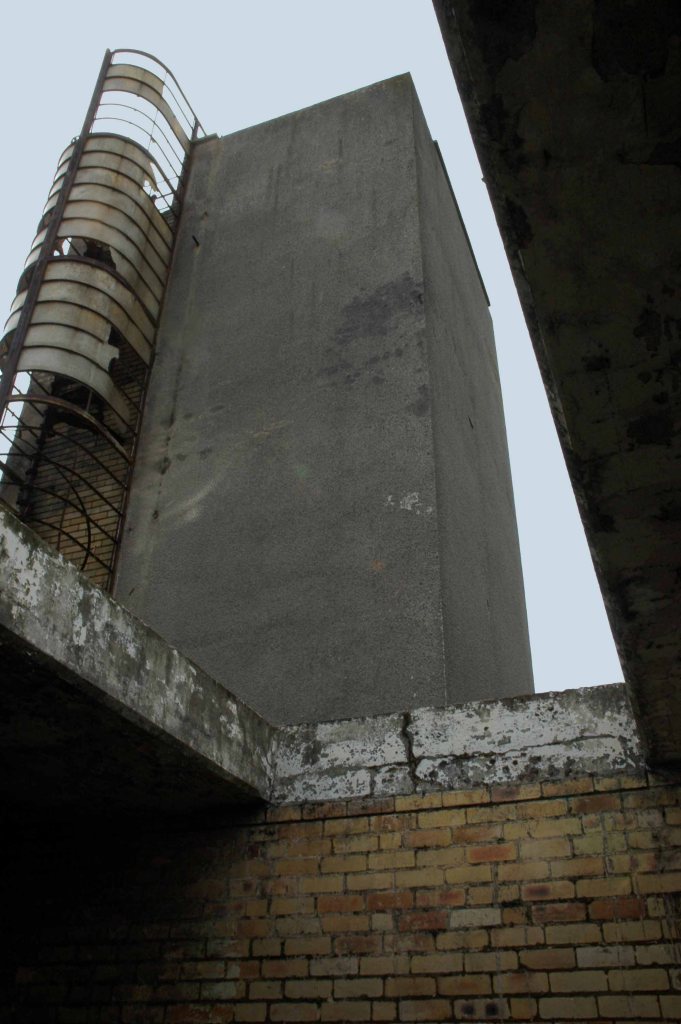
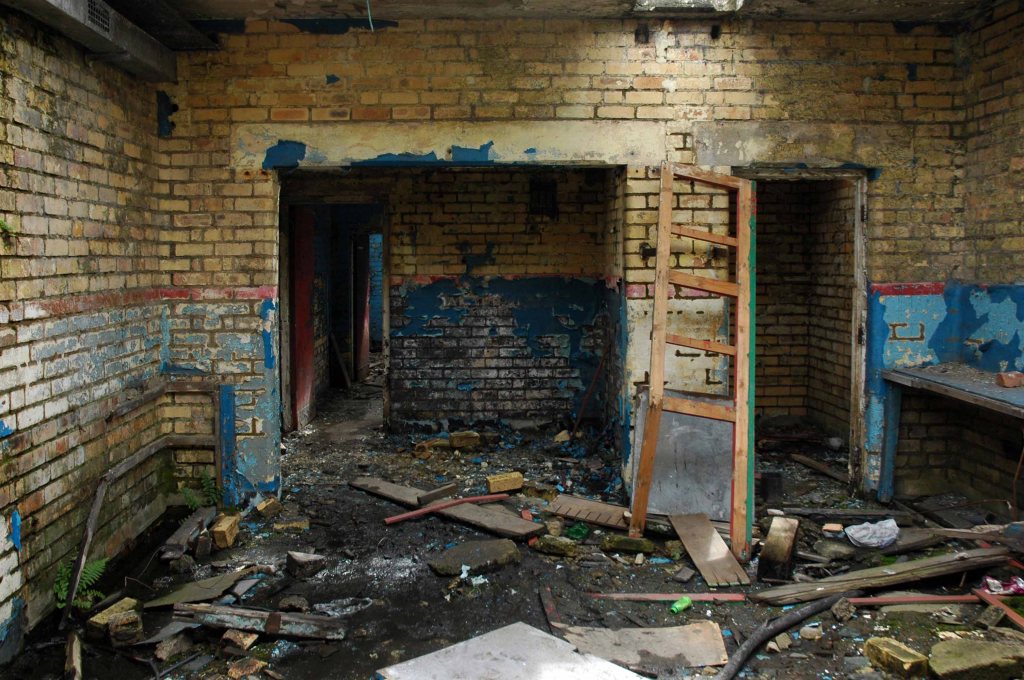
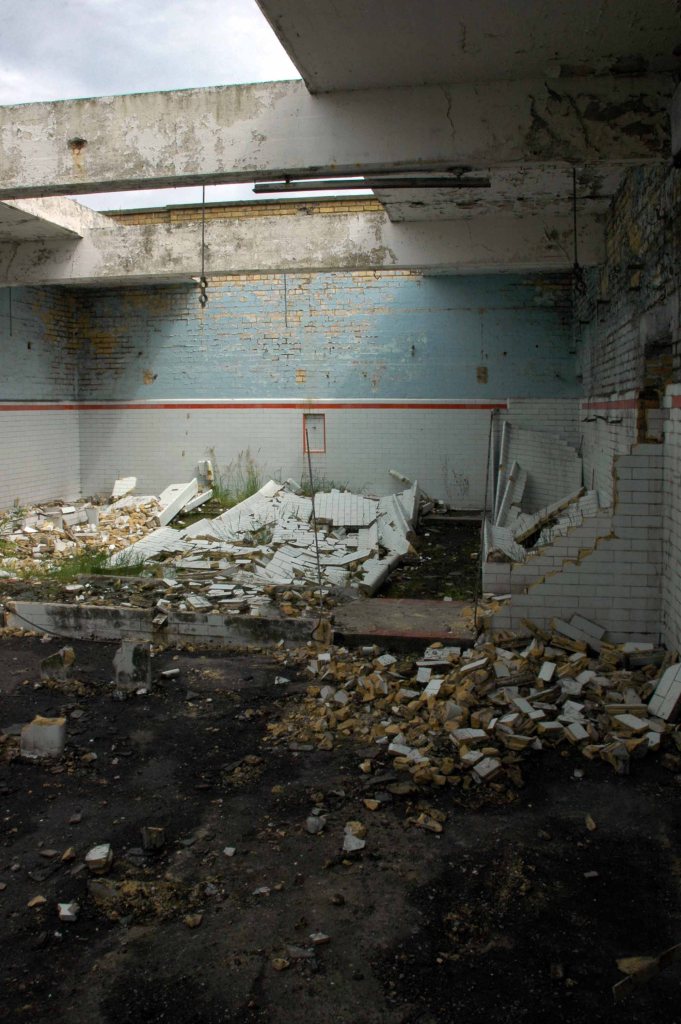
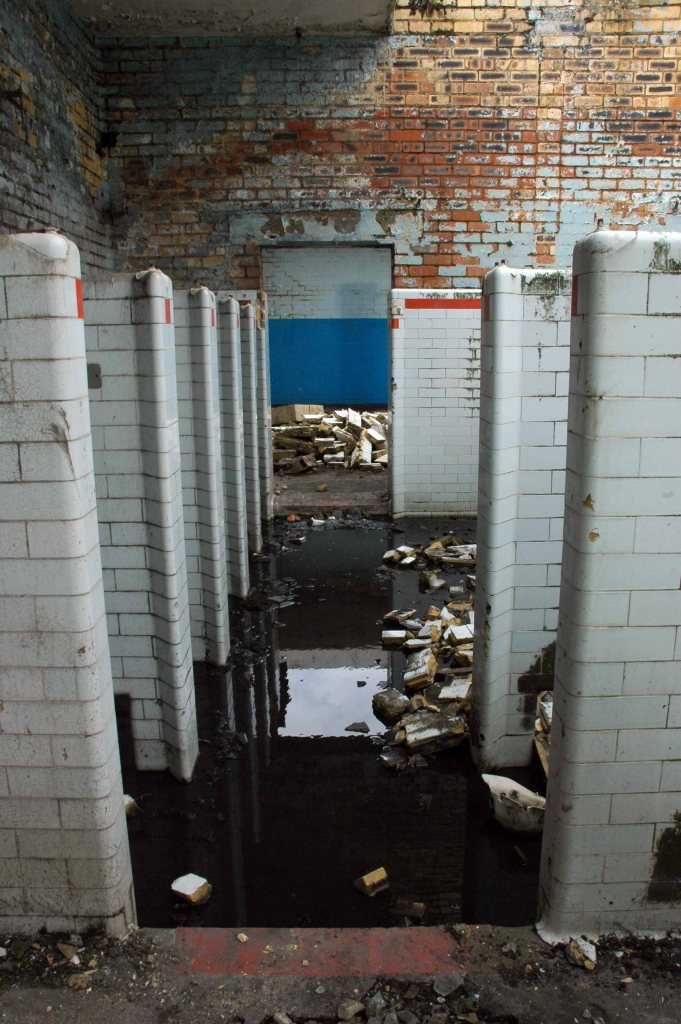
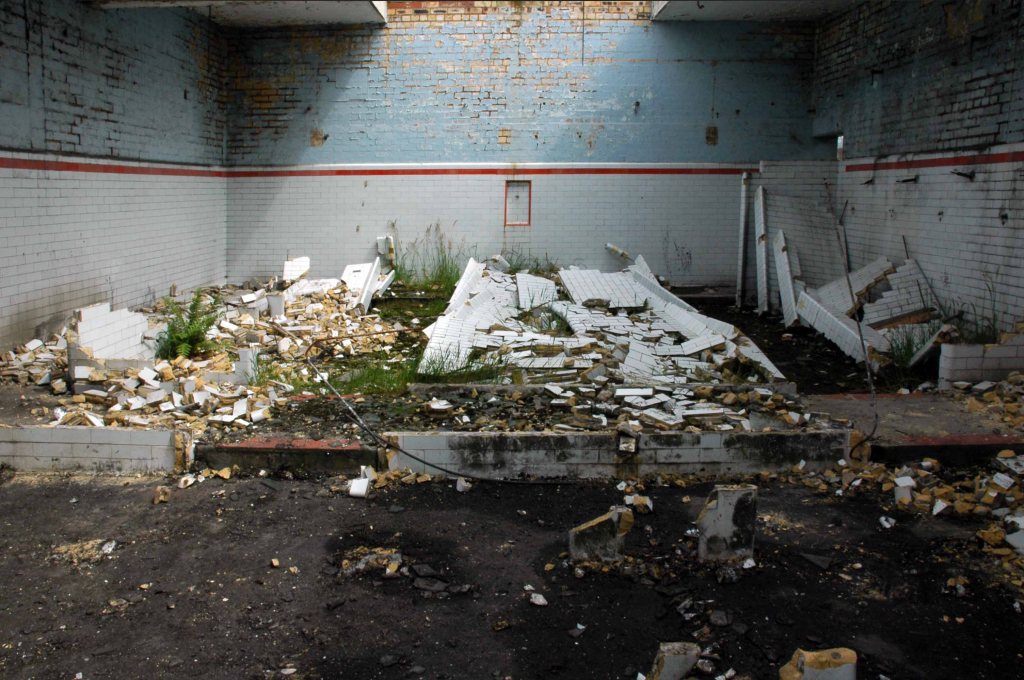
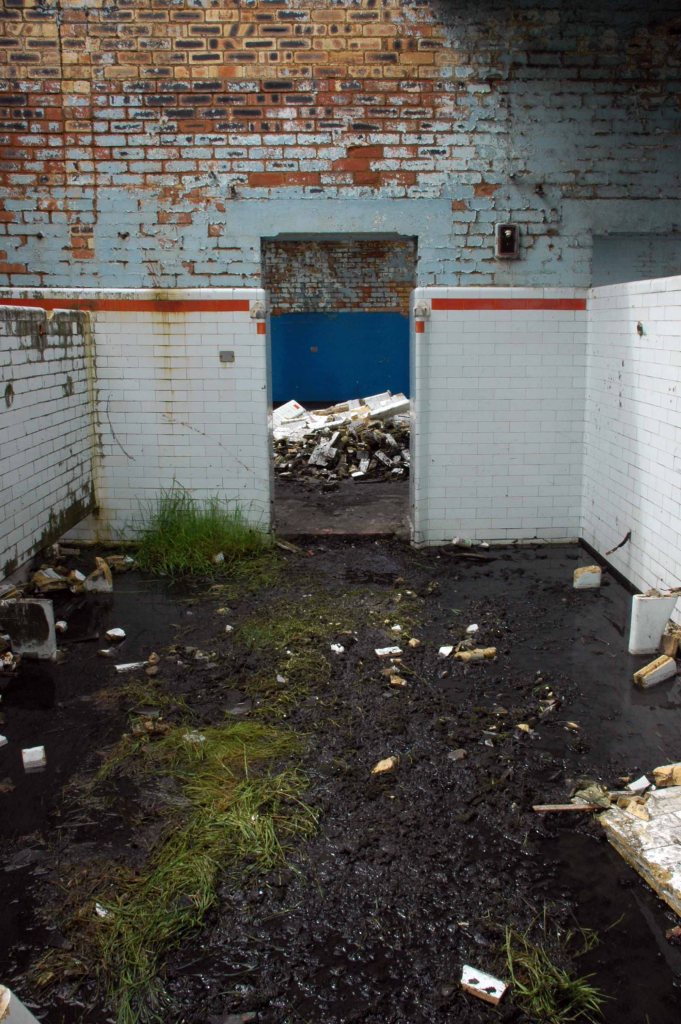
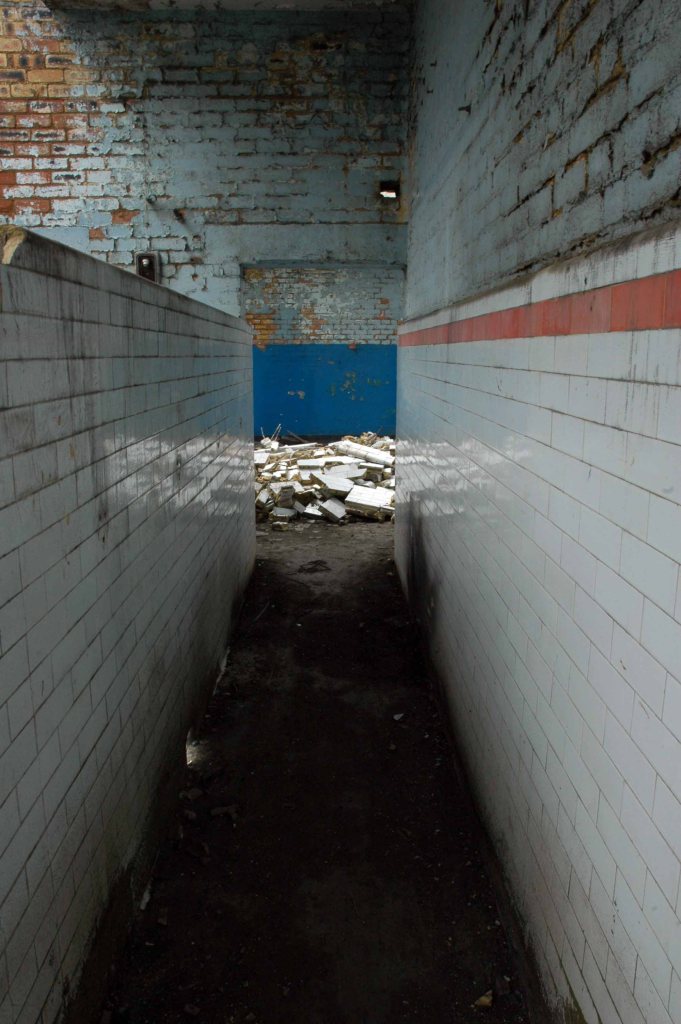
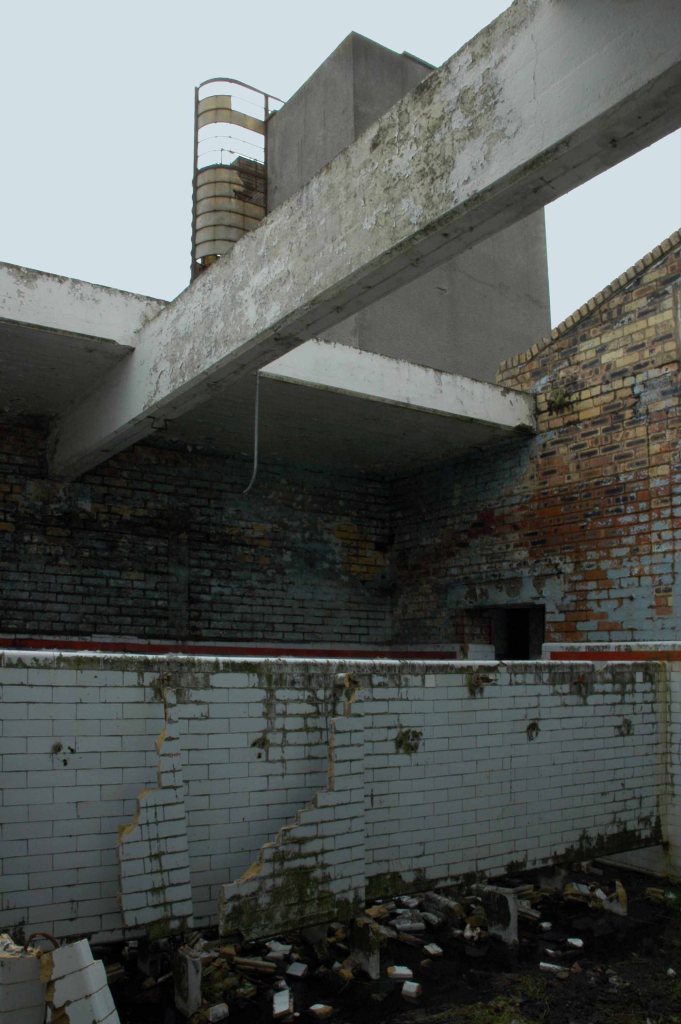
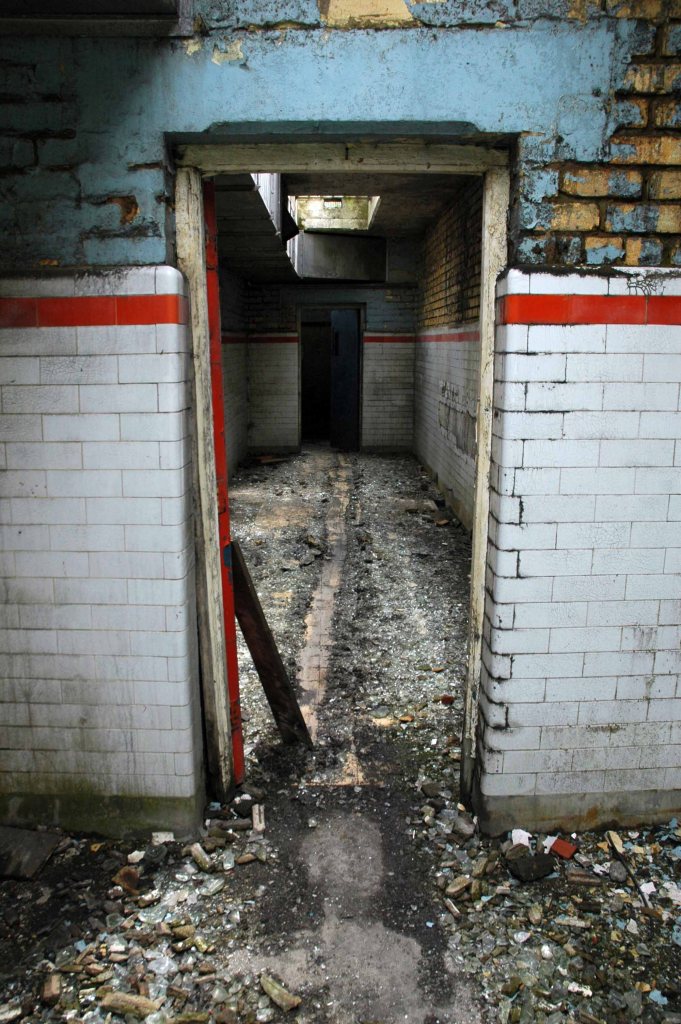
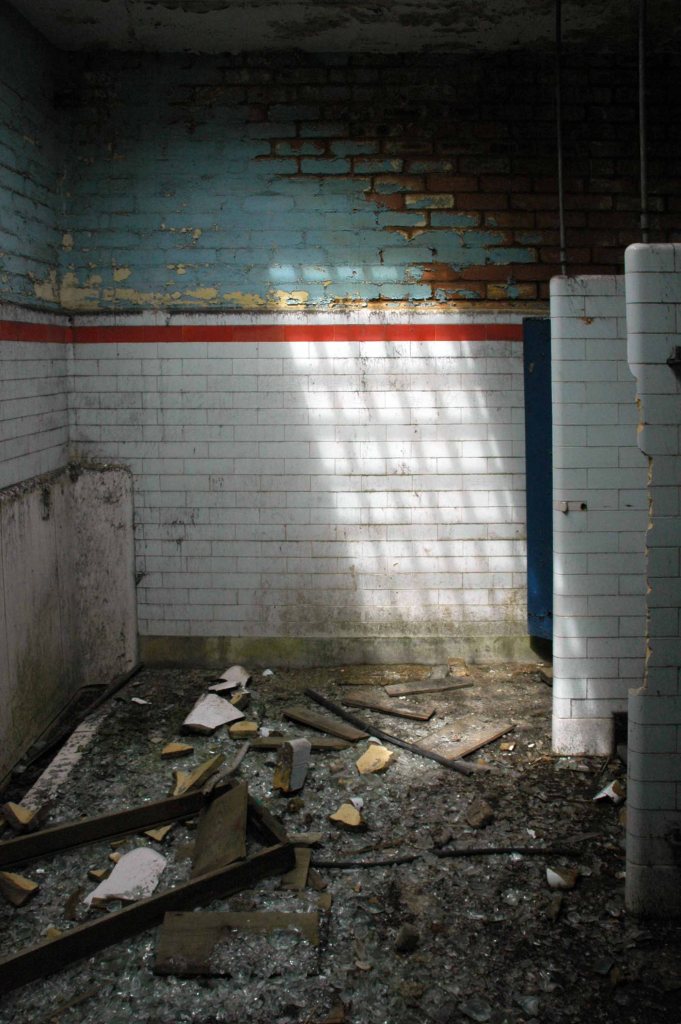
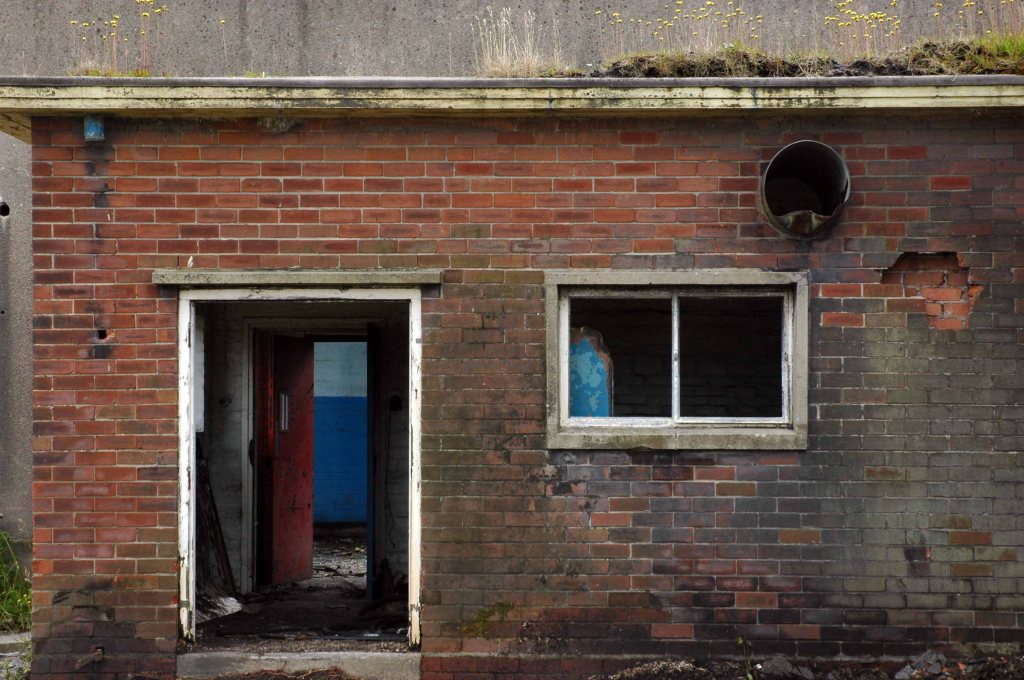
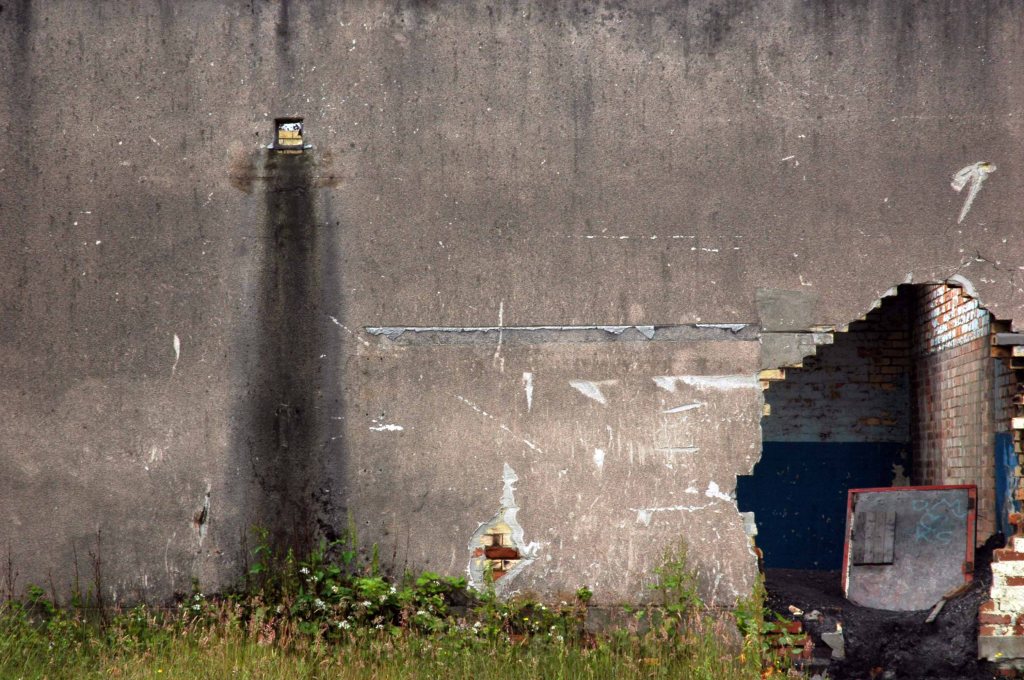
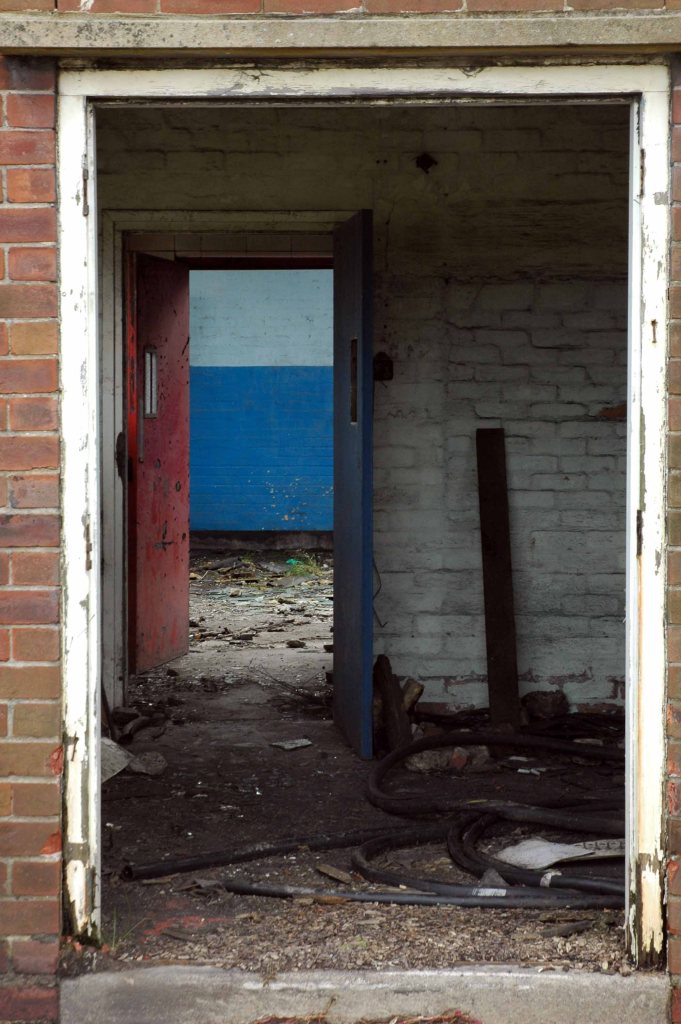
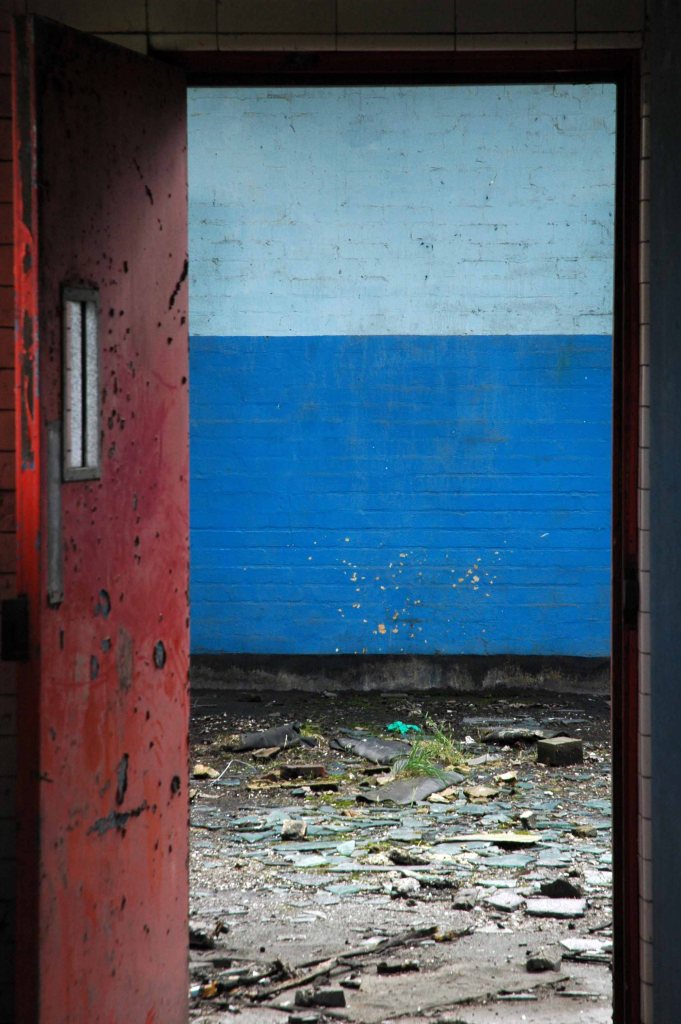
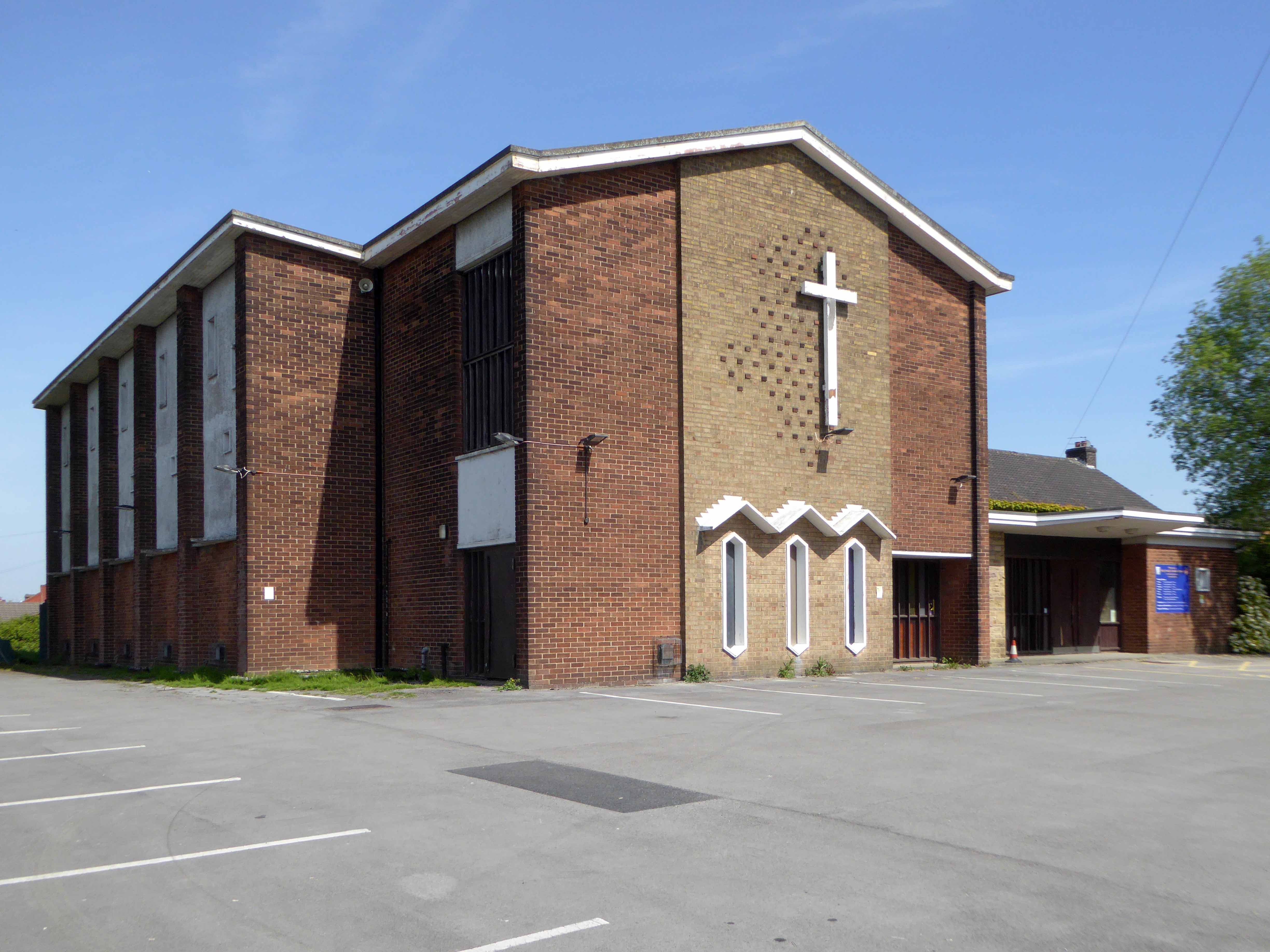
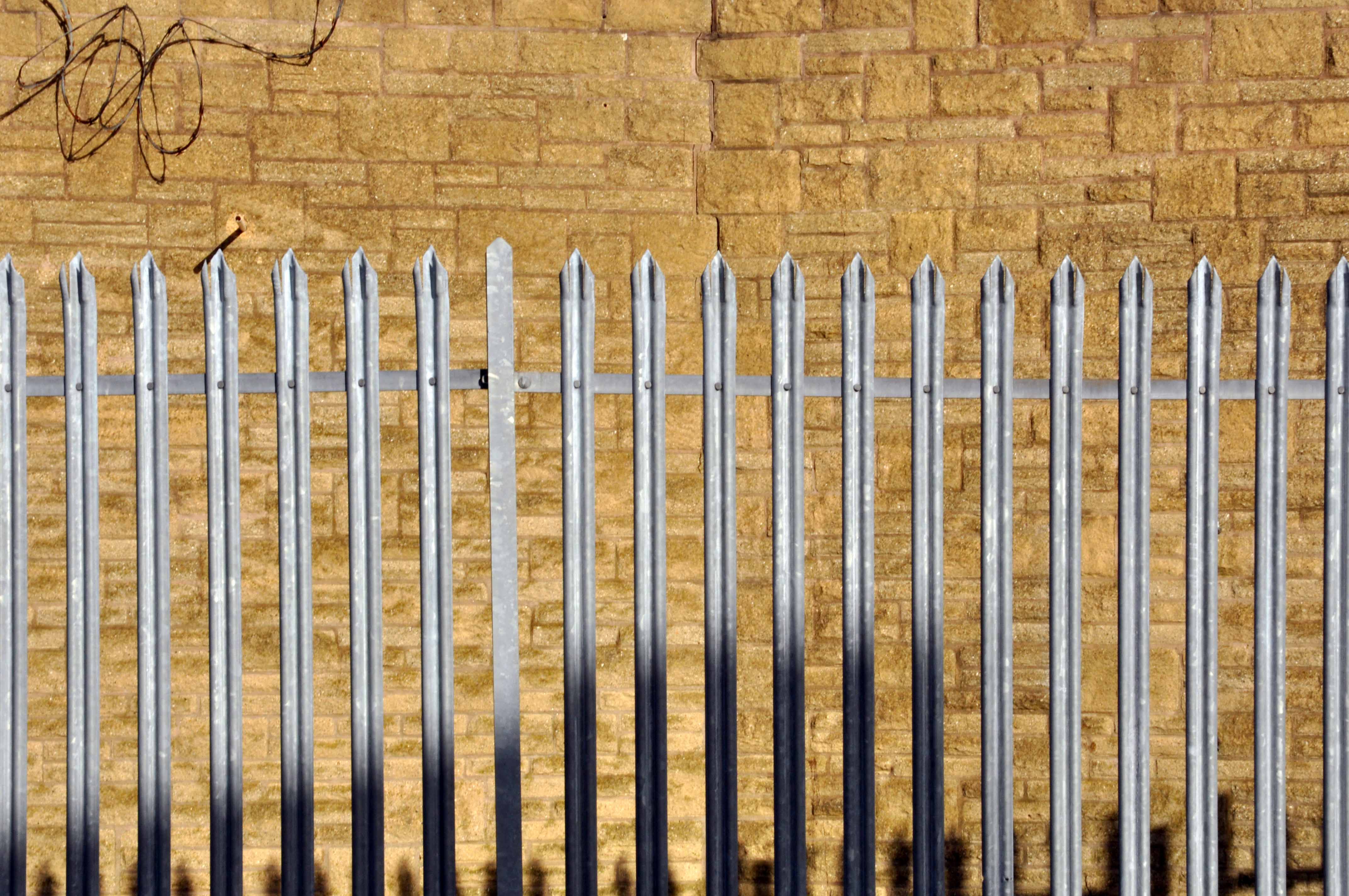
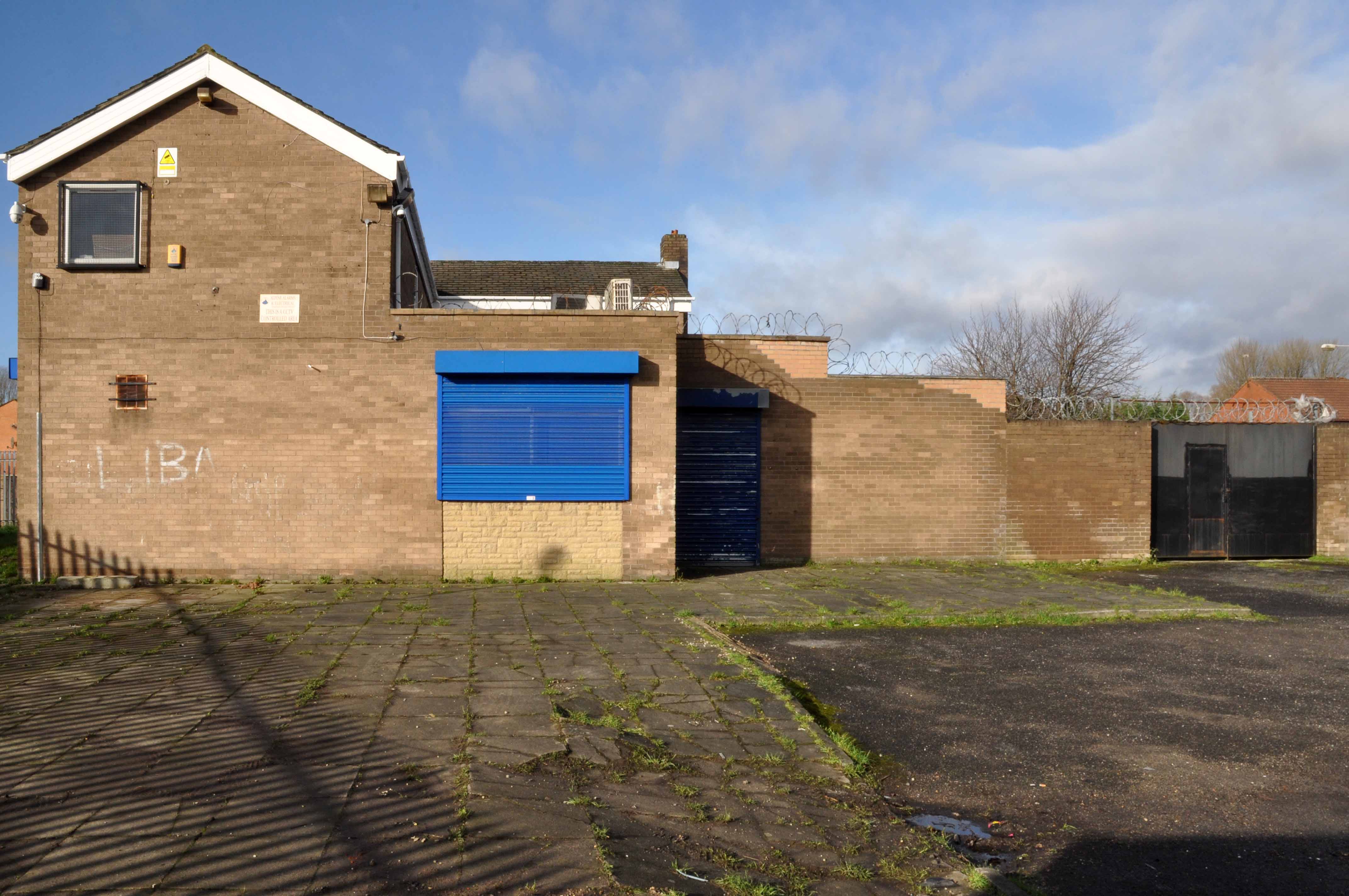
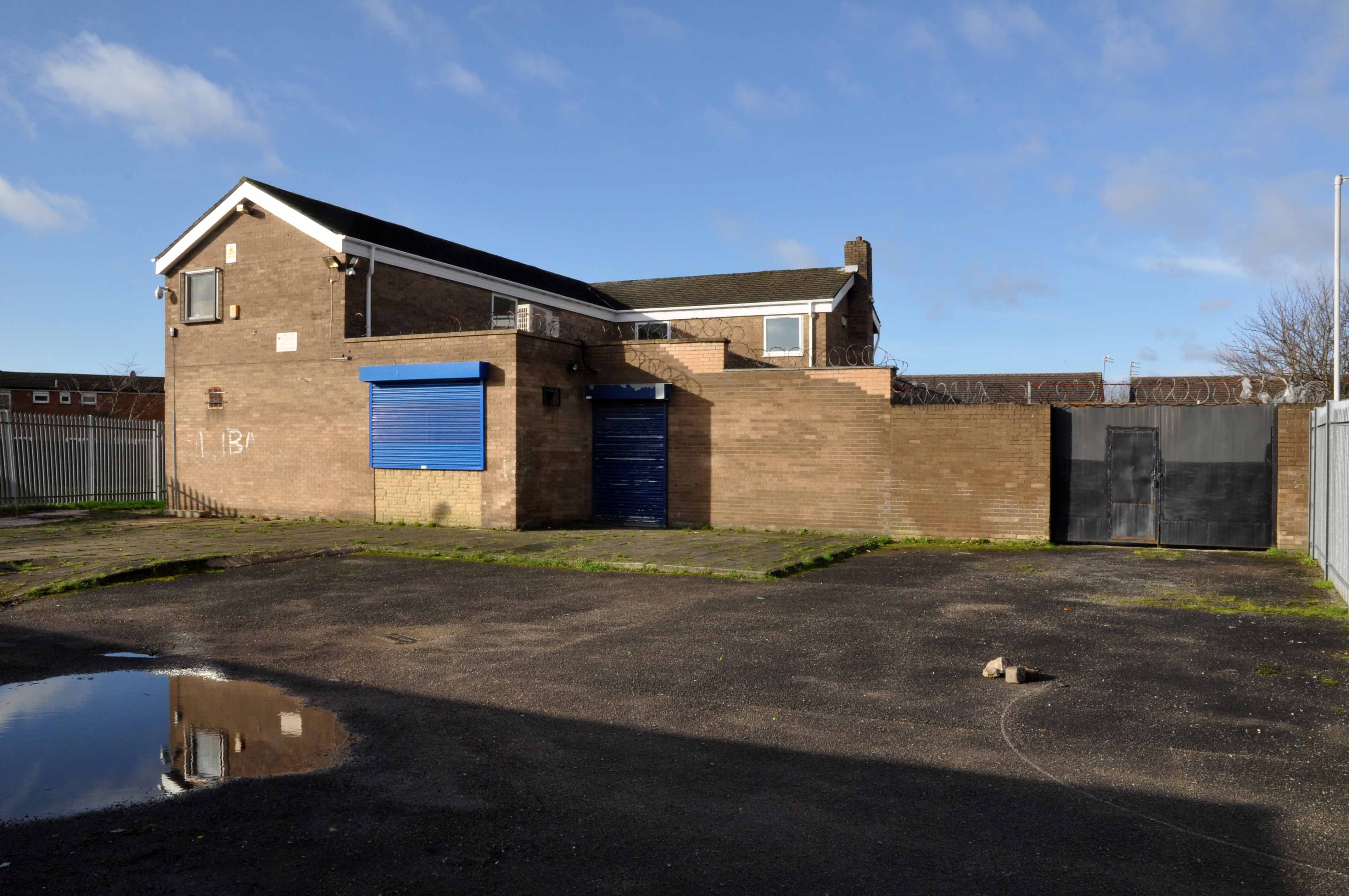
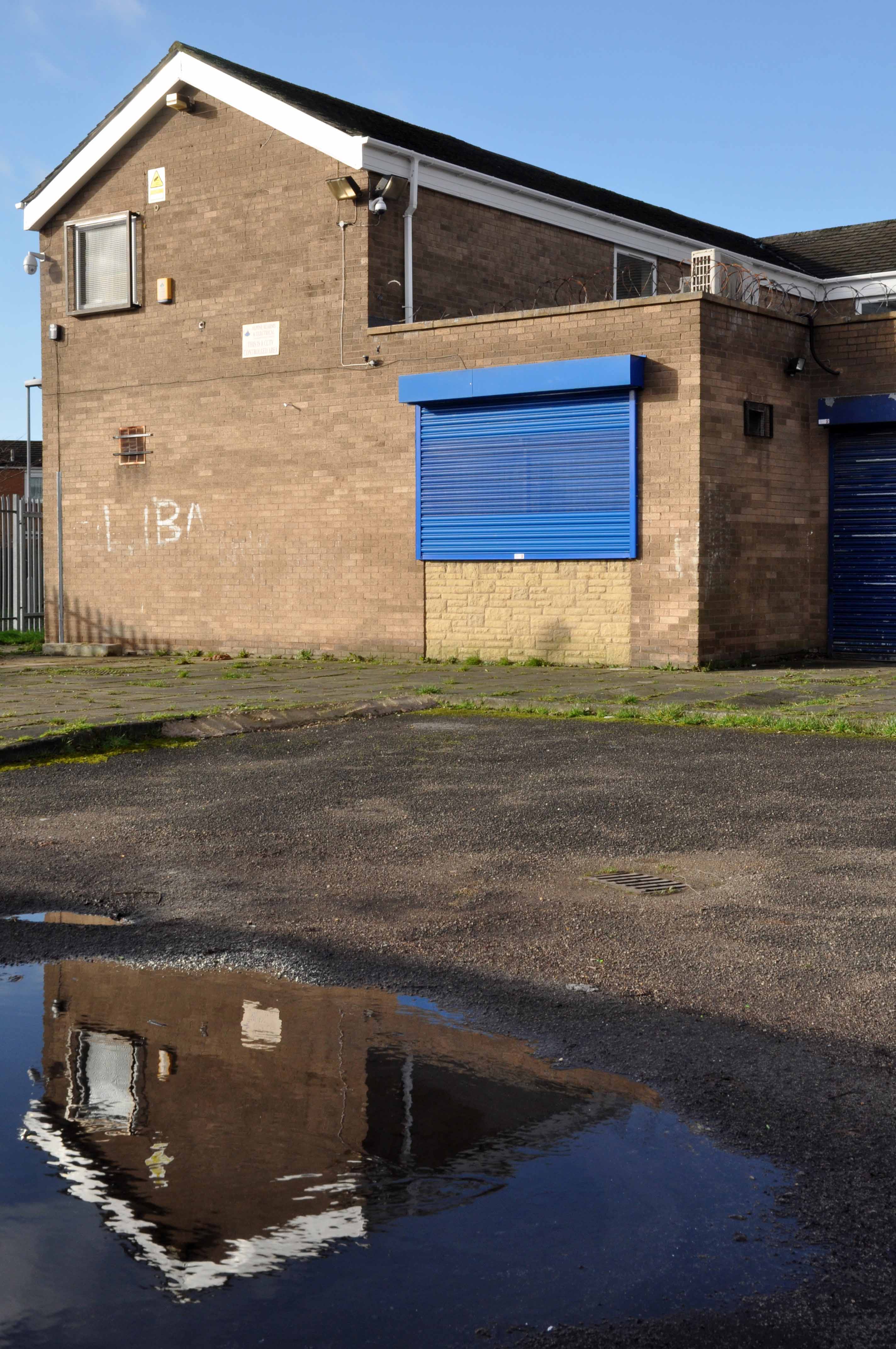
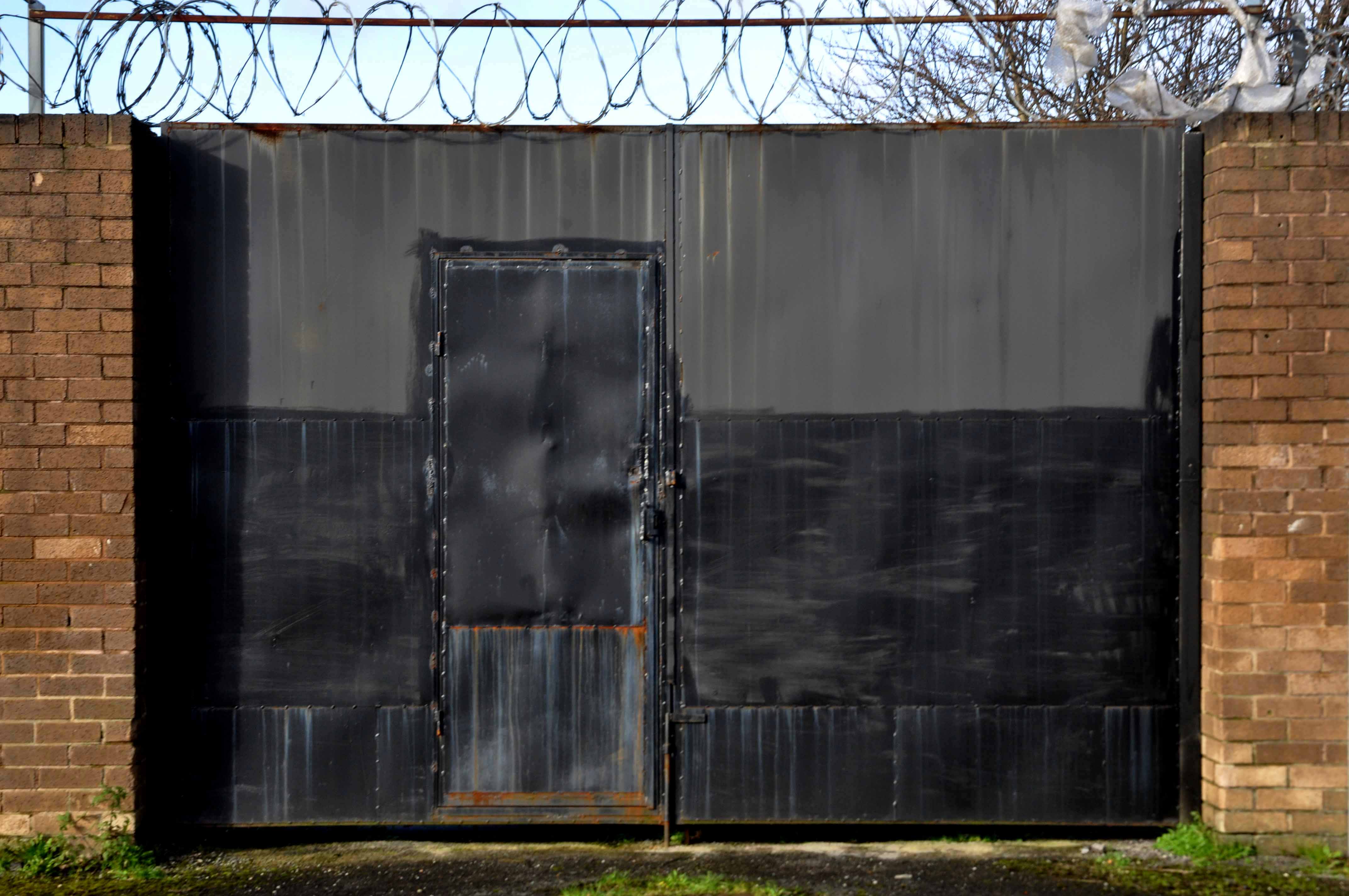
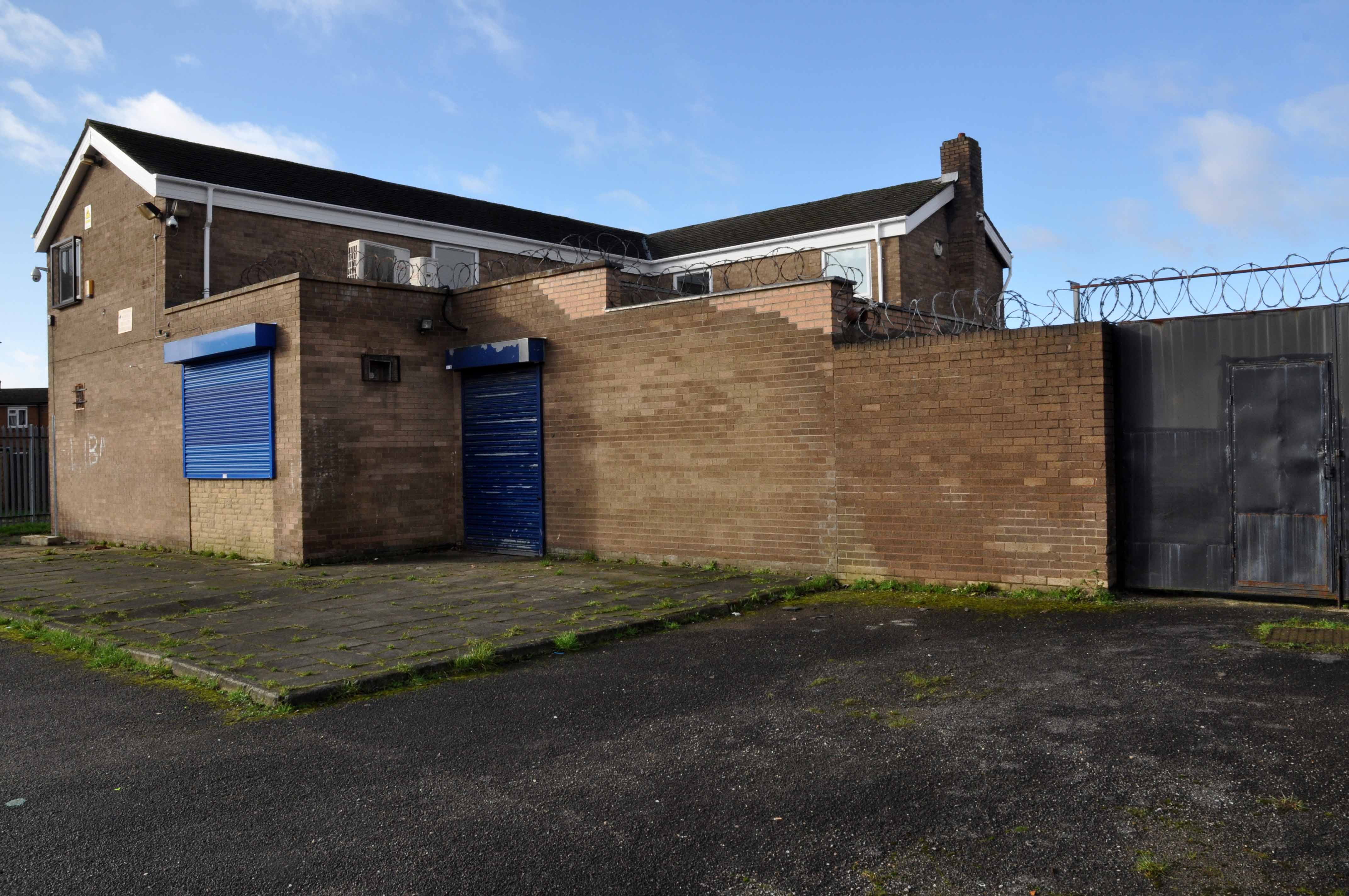
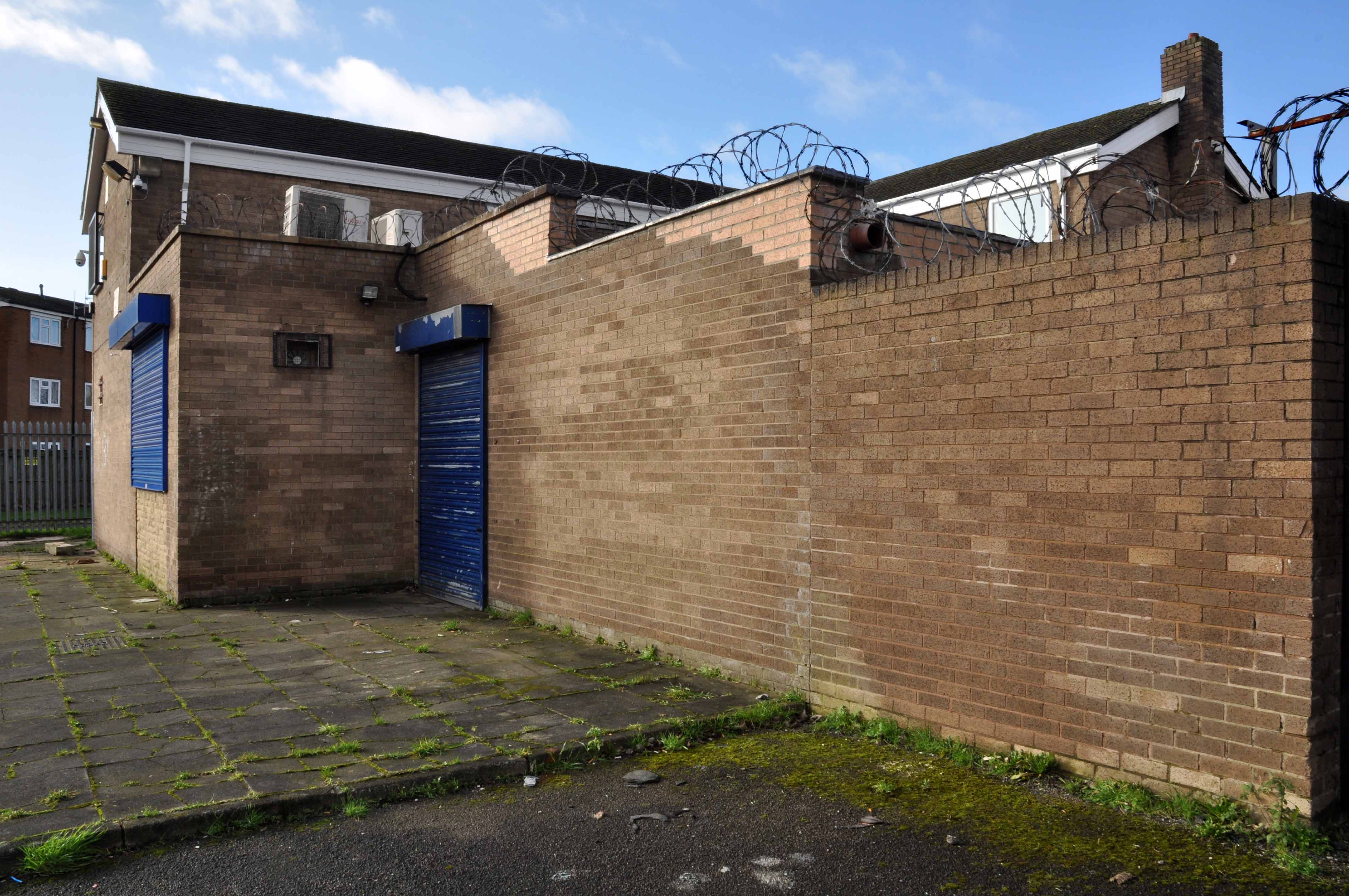
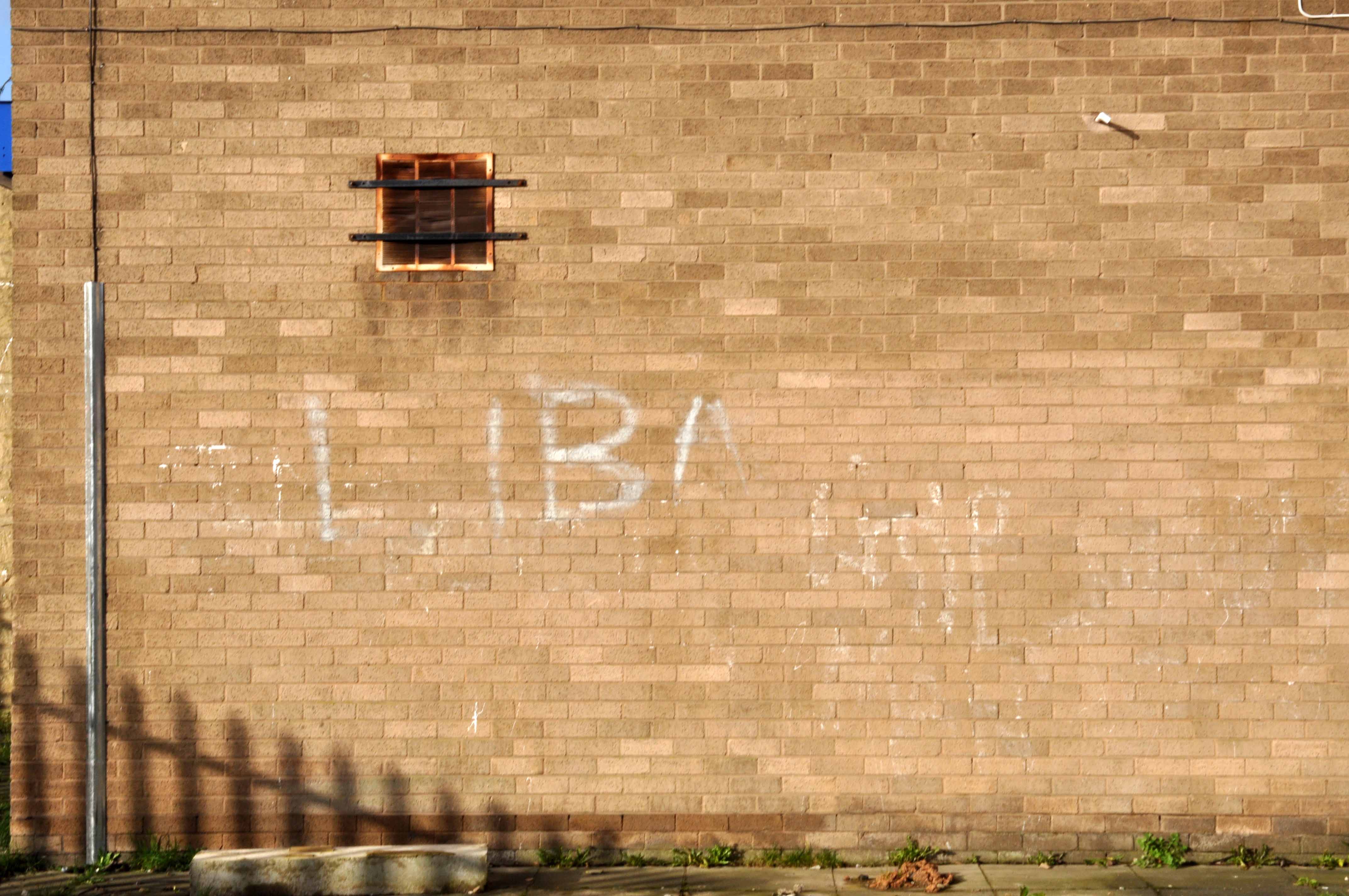
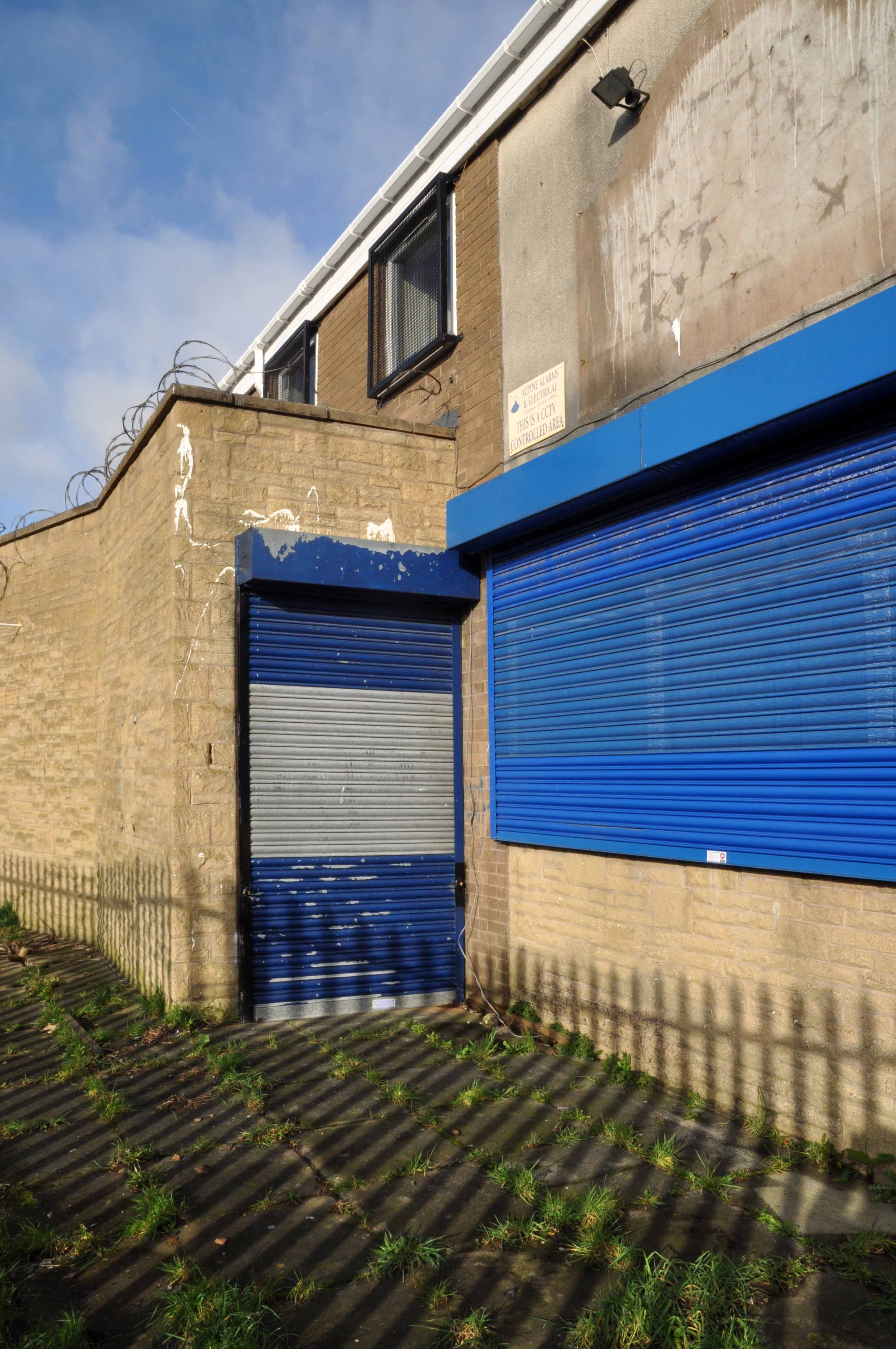
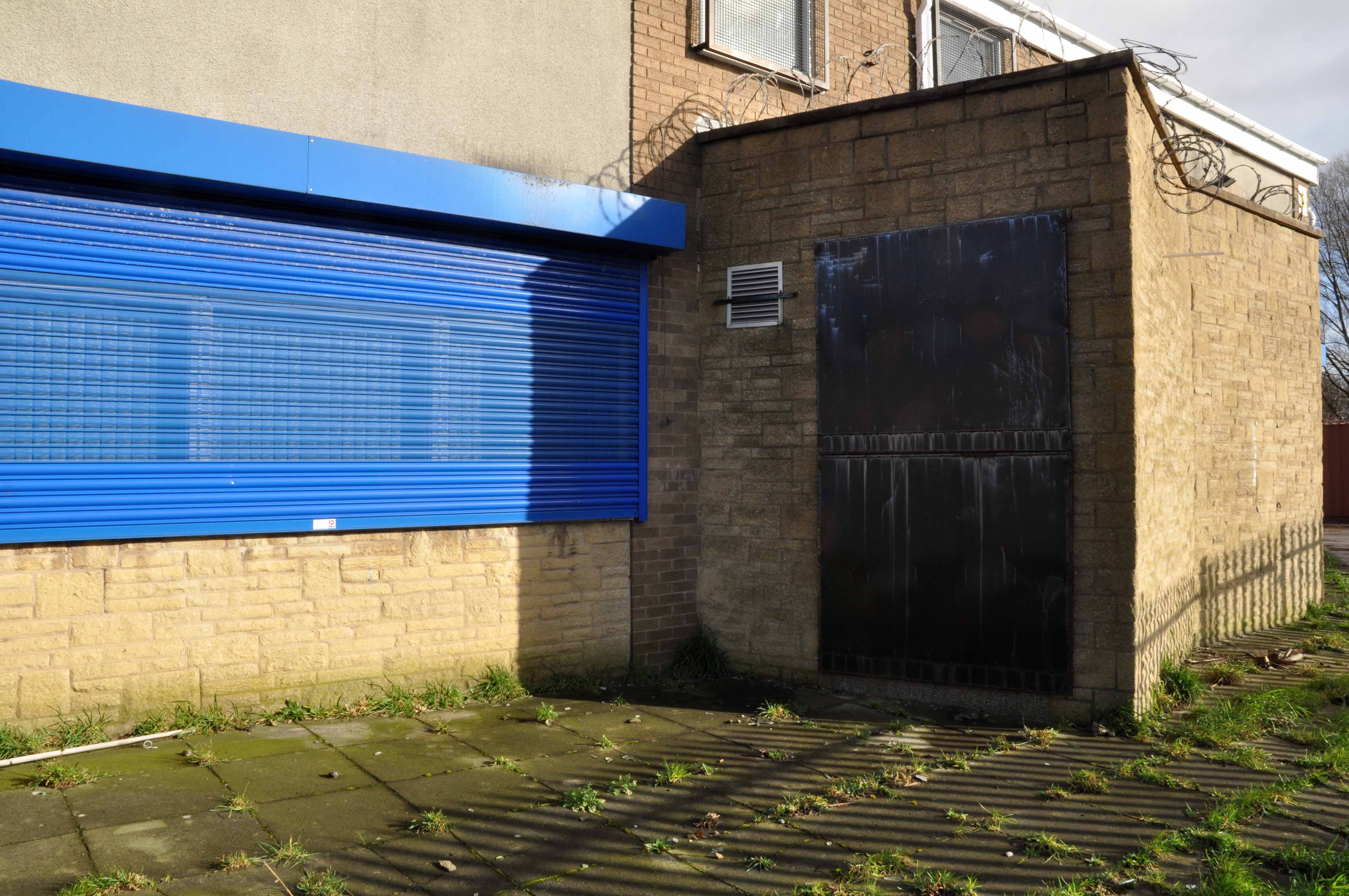
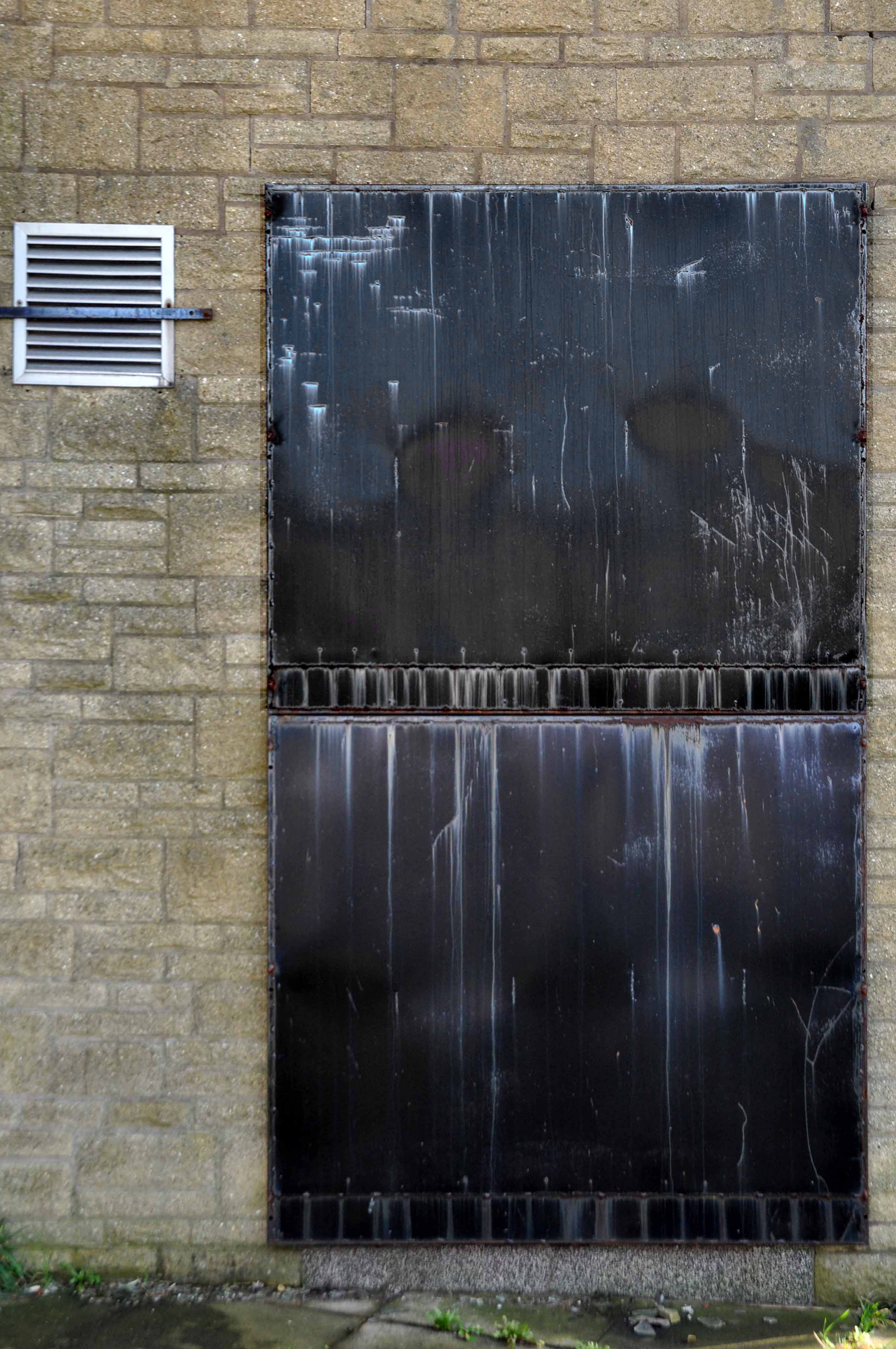
I’m back here to day in search of an abandoned control centre at the long gone Hartshead Power Station.
The station was opened in 1926 by the Stalybridge, Hyde, Mossley and Dukinfield Transport and Electricity Board.
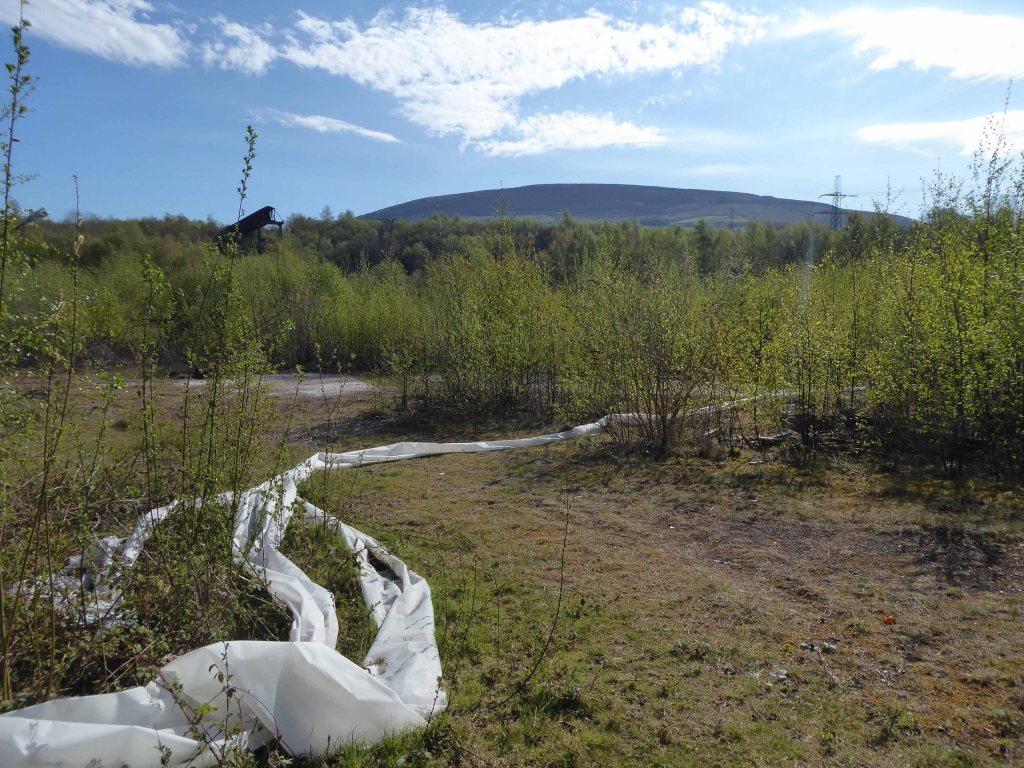
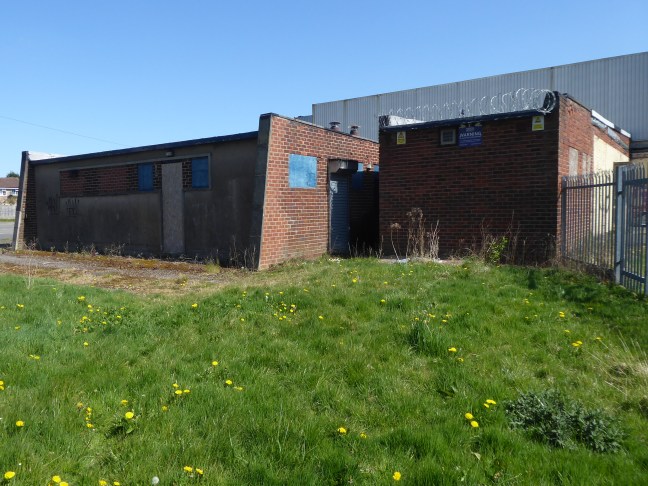
The station was closed on 29 October 1979 with a generating capacity of 64 megawatts. It was demolished during the late 1980s, although part of the site is still used as an electrical substation.
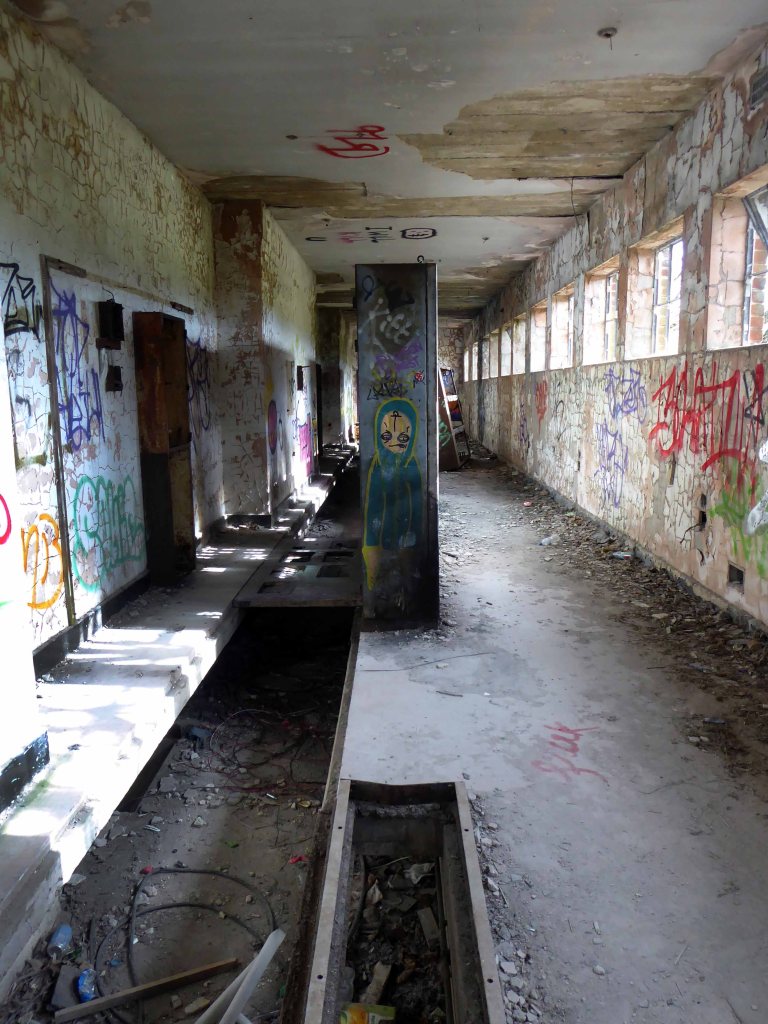
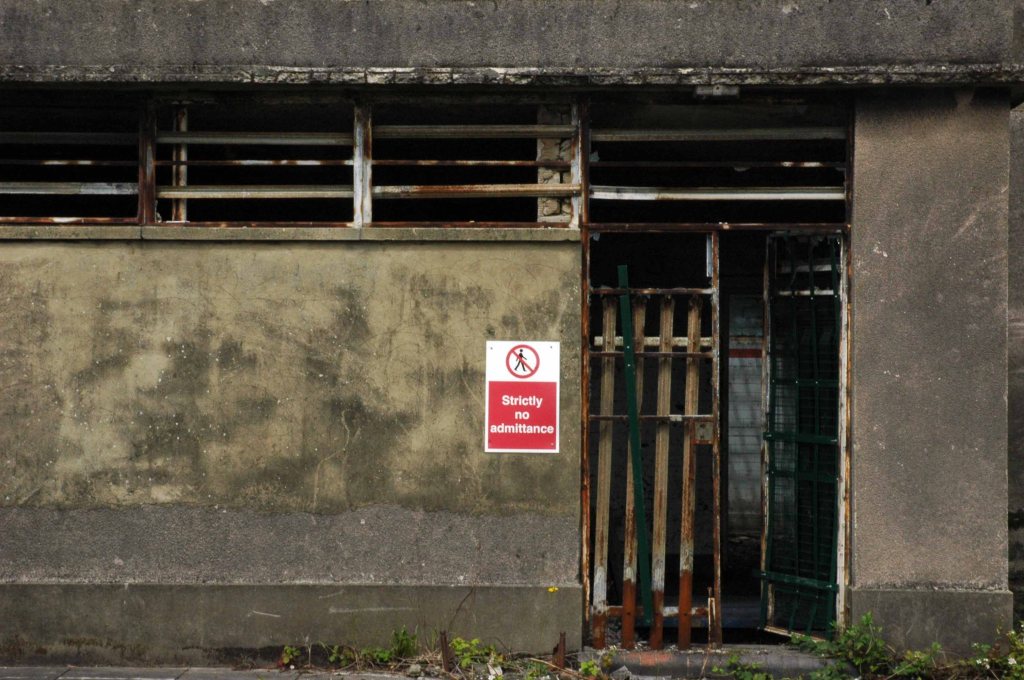
First glimpsed on an urban exploration site, I had awaited an opportunity to slip through the fence and take a look around – here’s what I found.
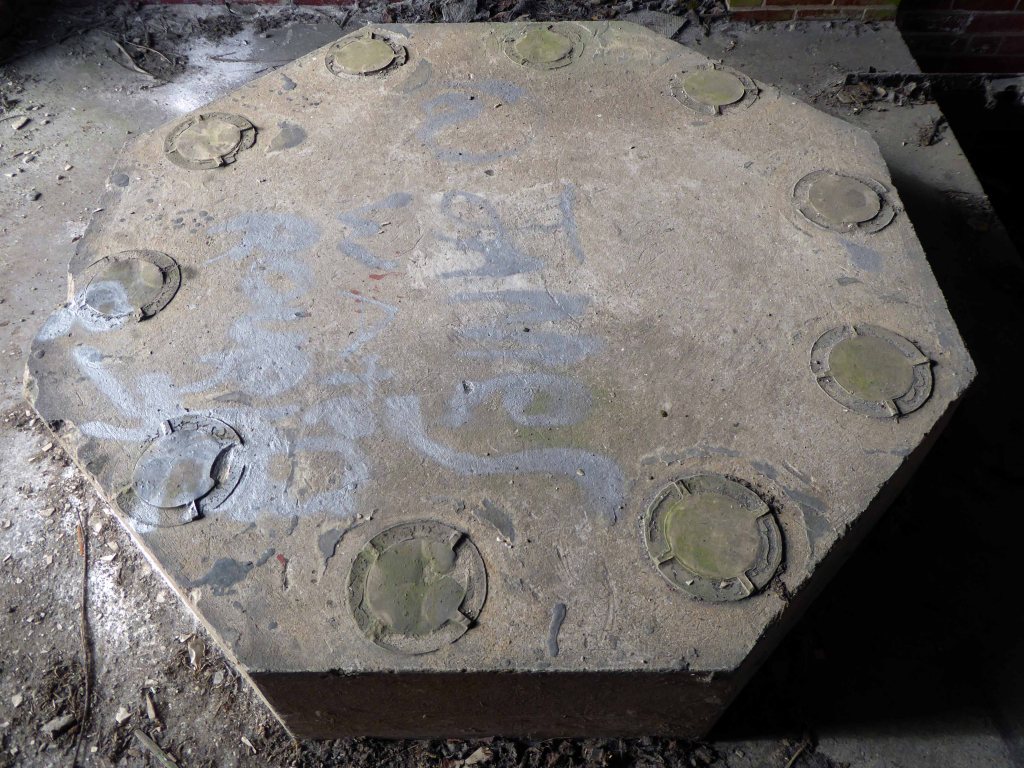
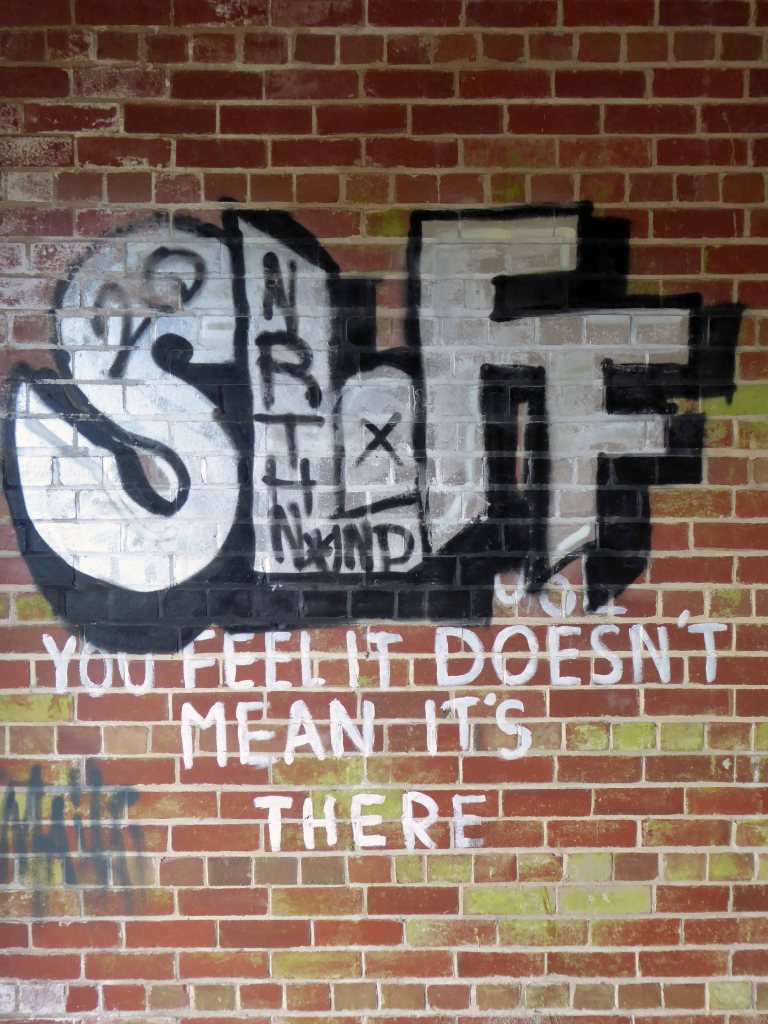
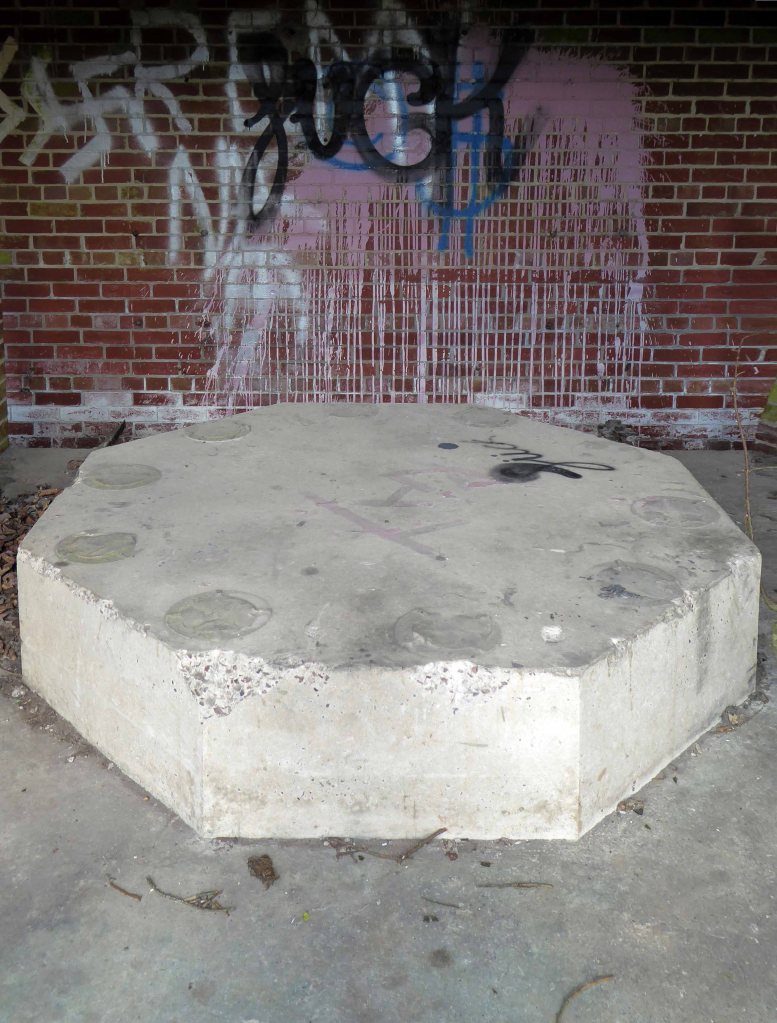
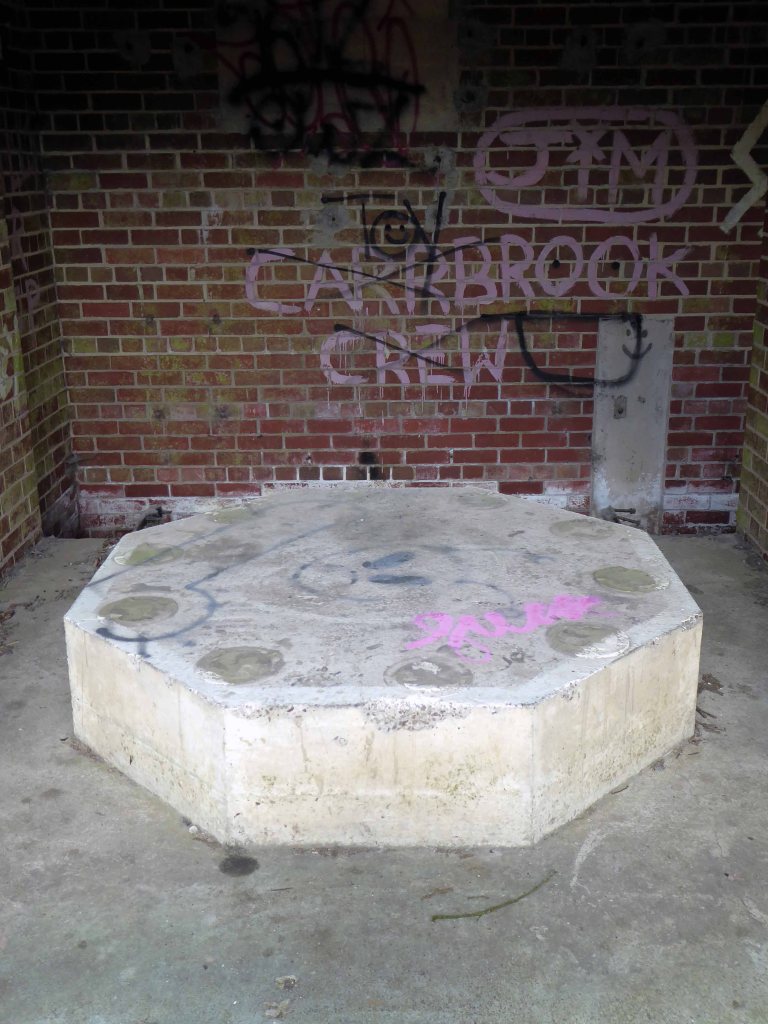
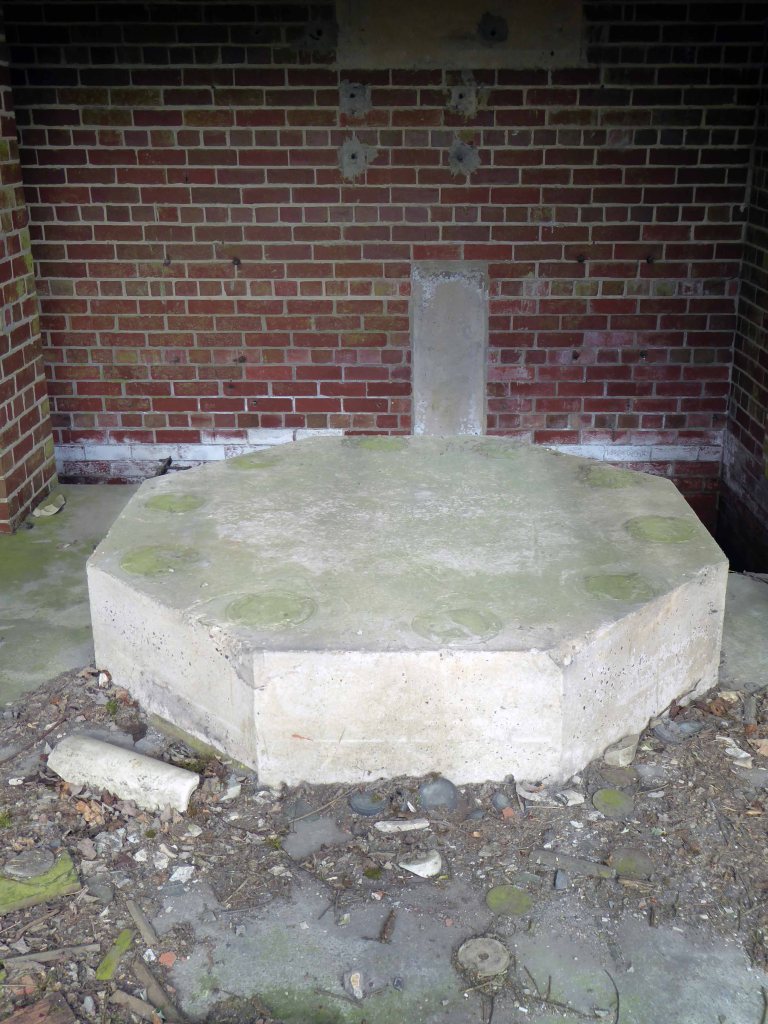
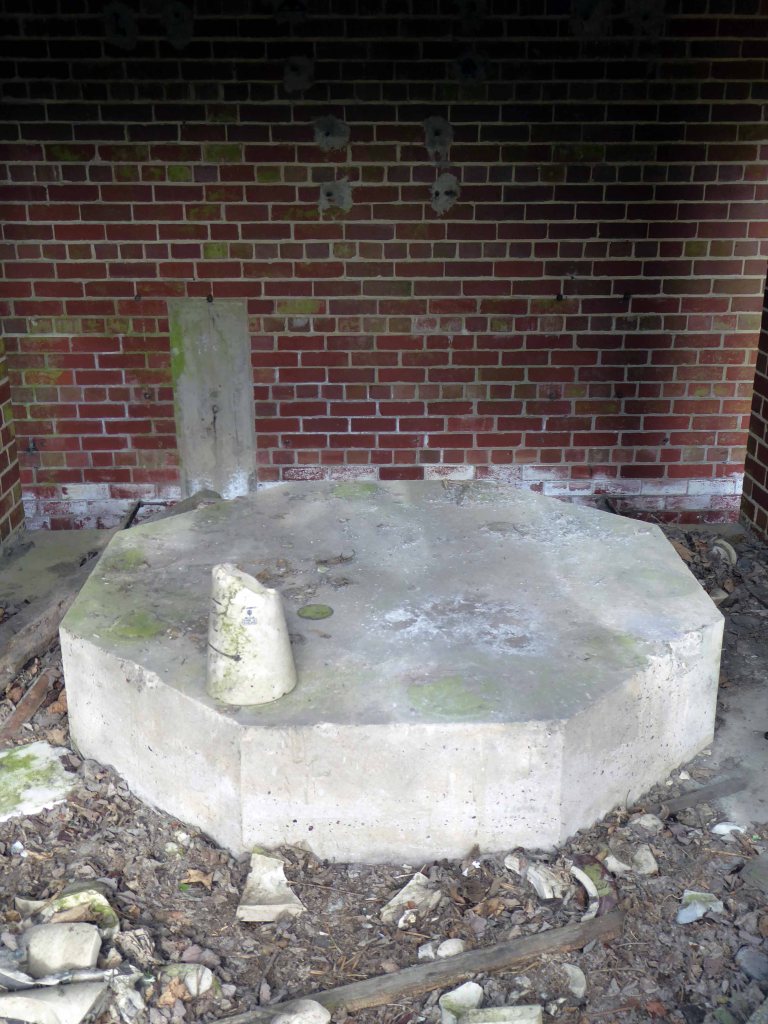
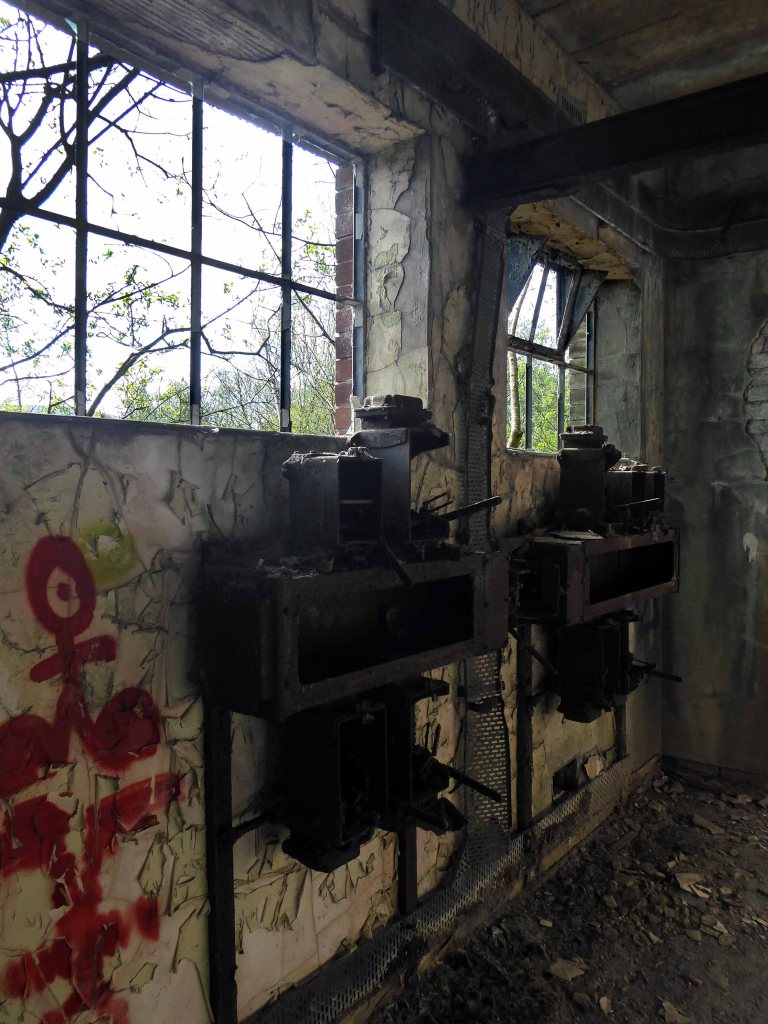
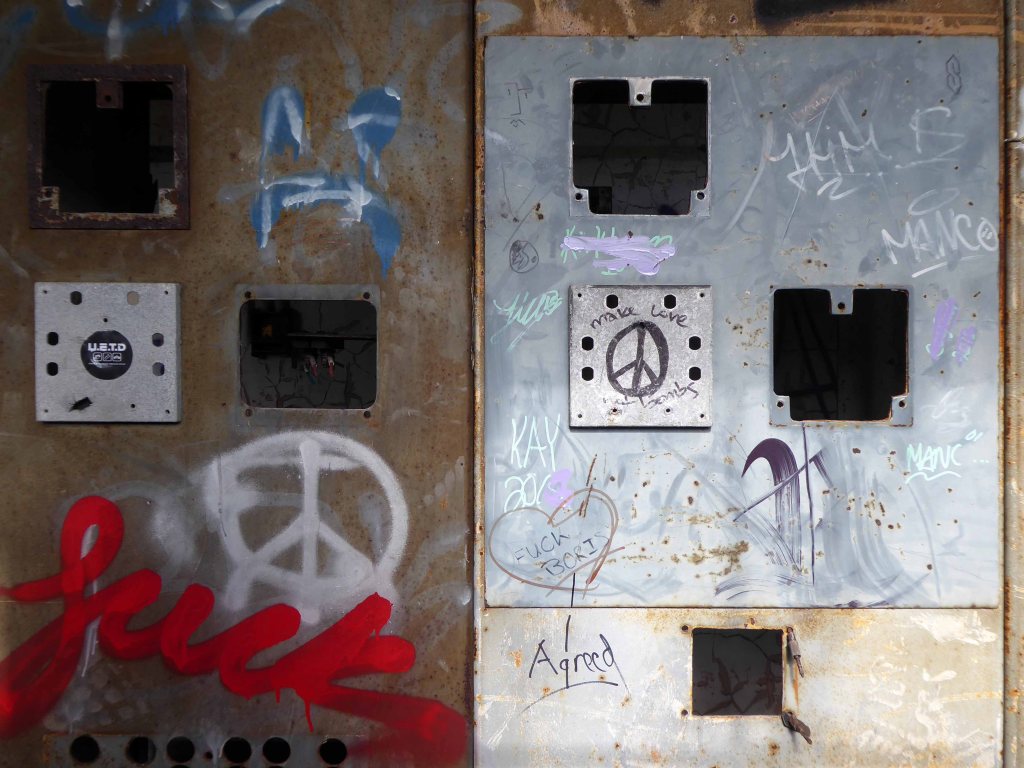
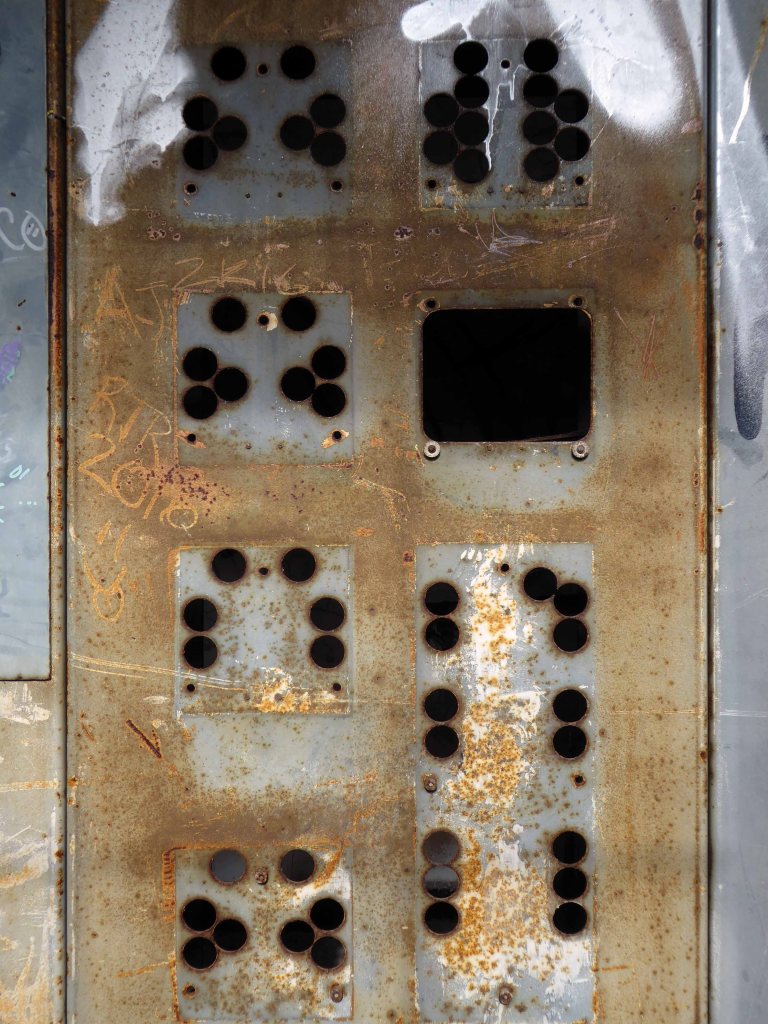
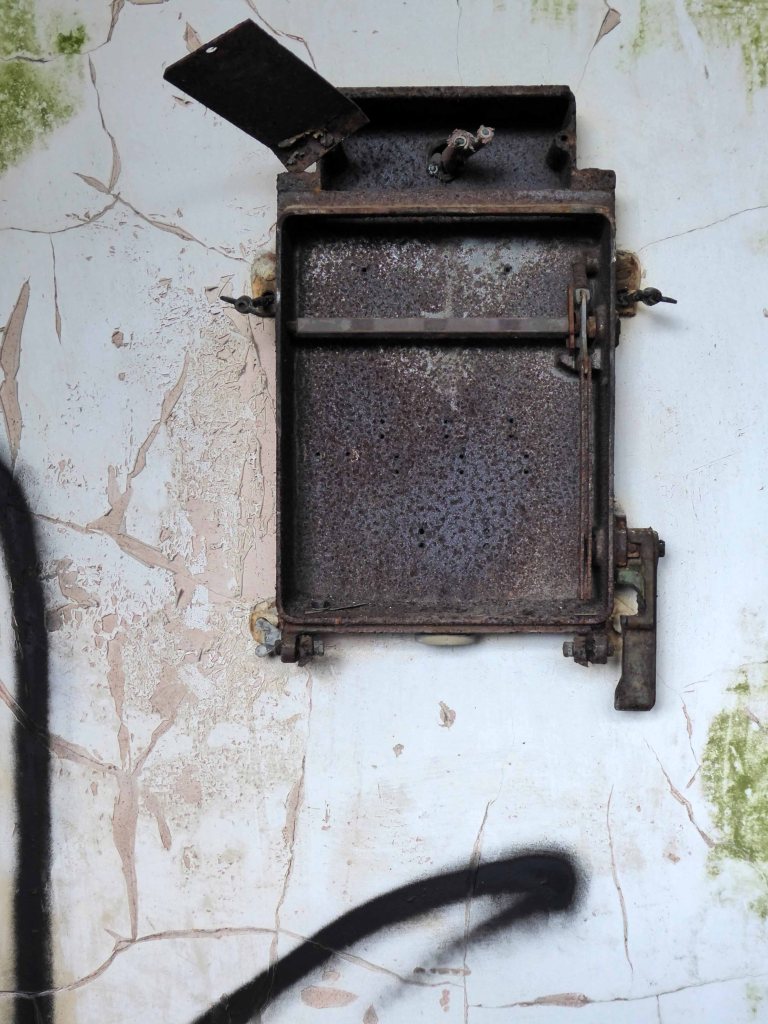
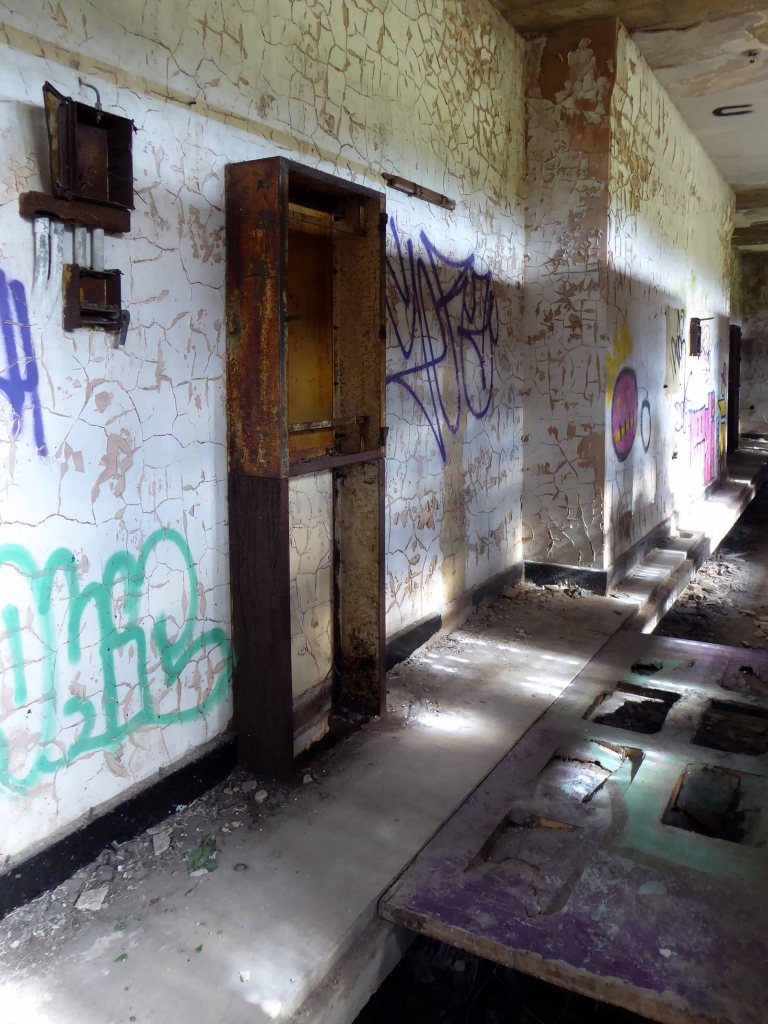
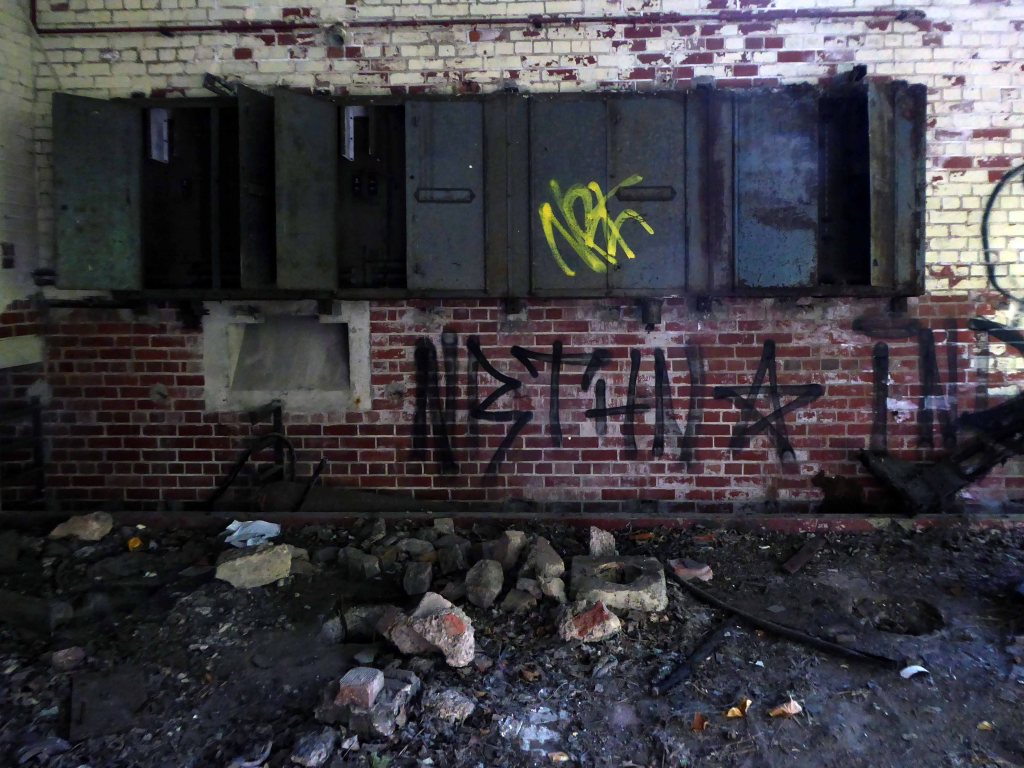
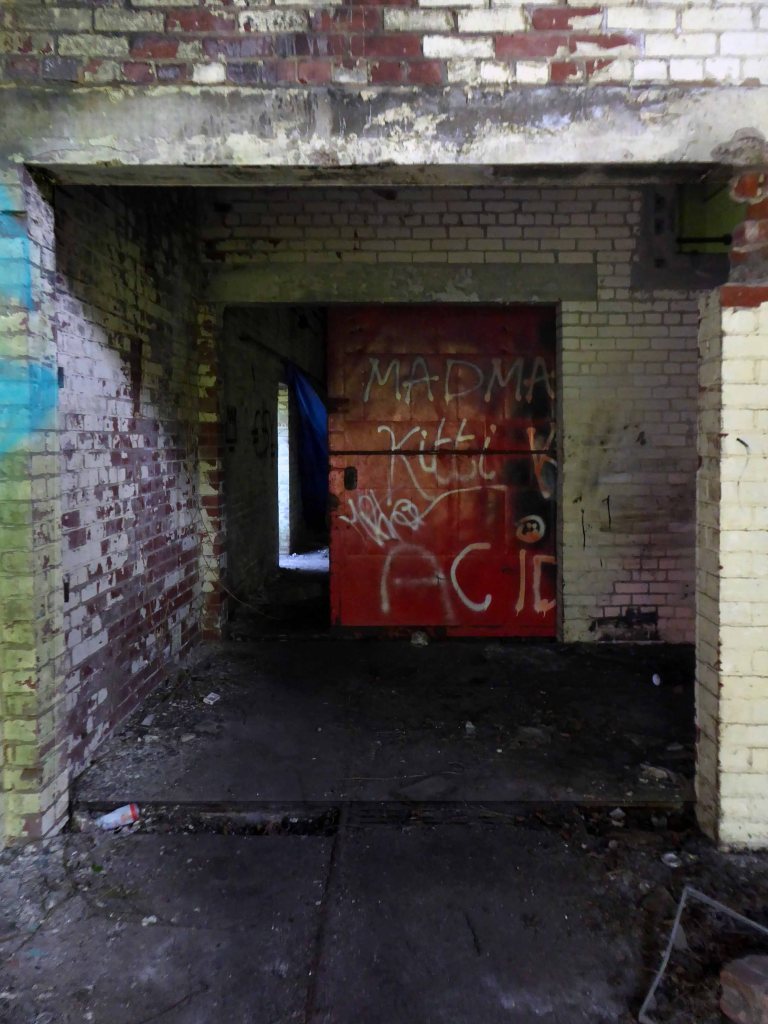
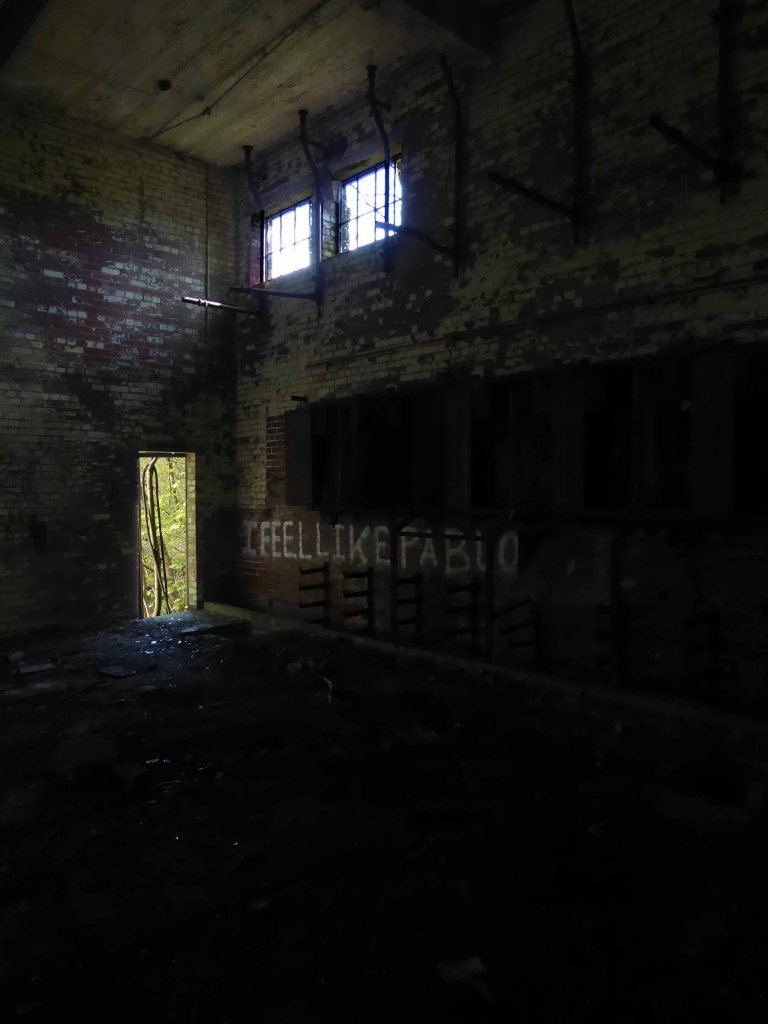
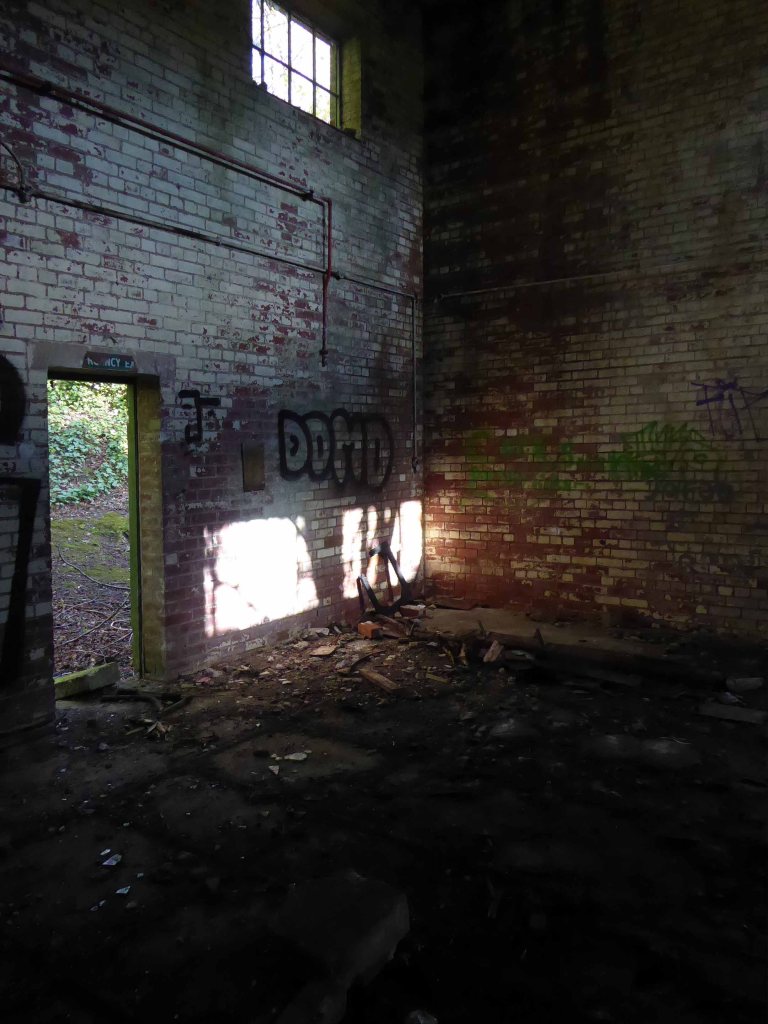
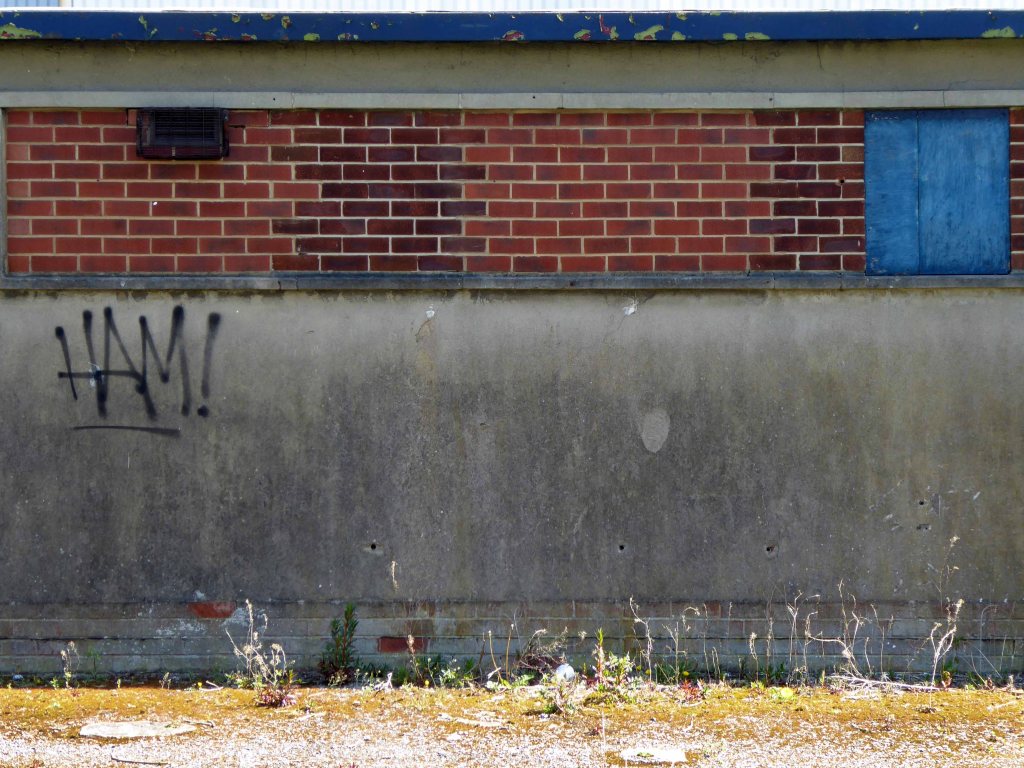
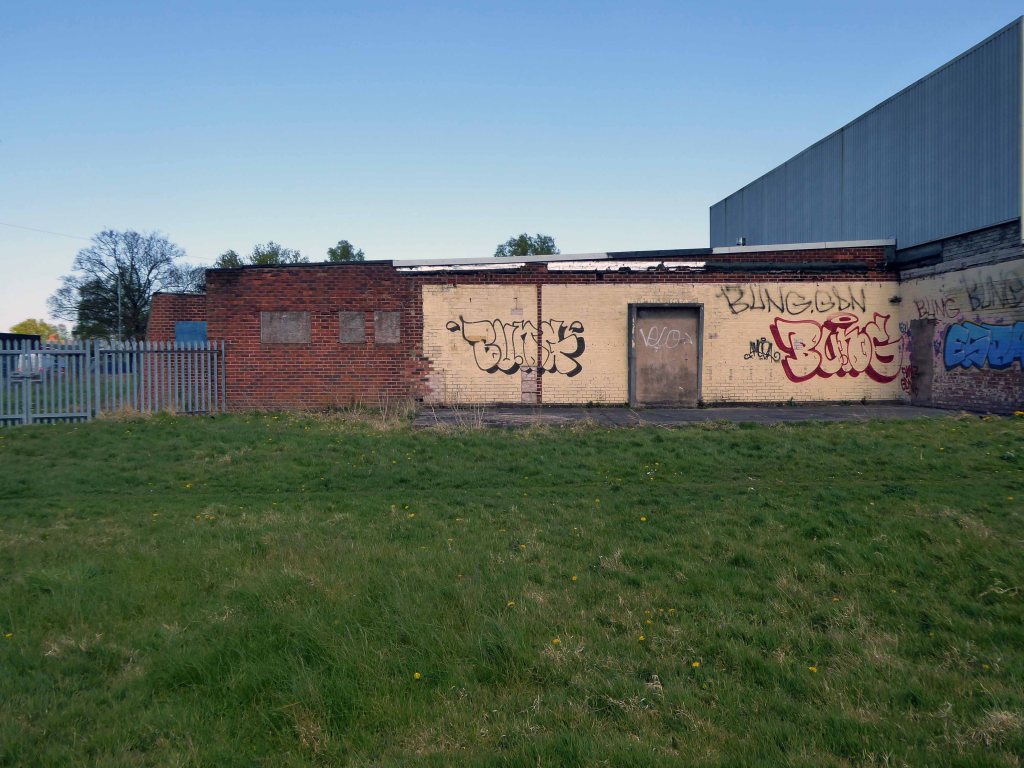
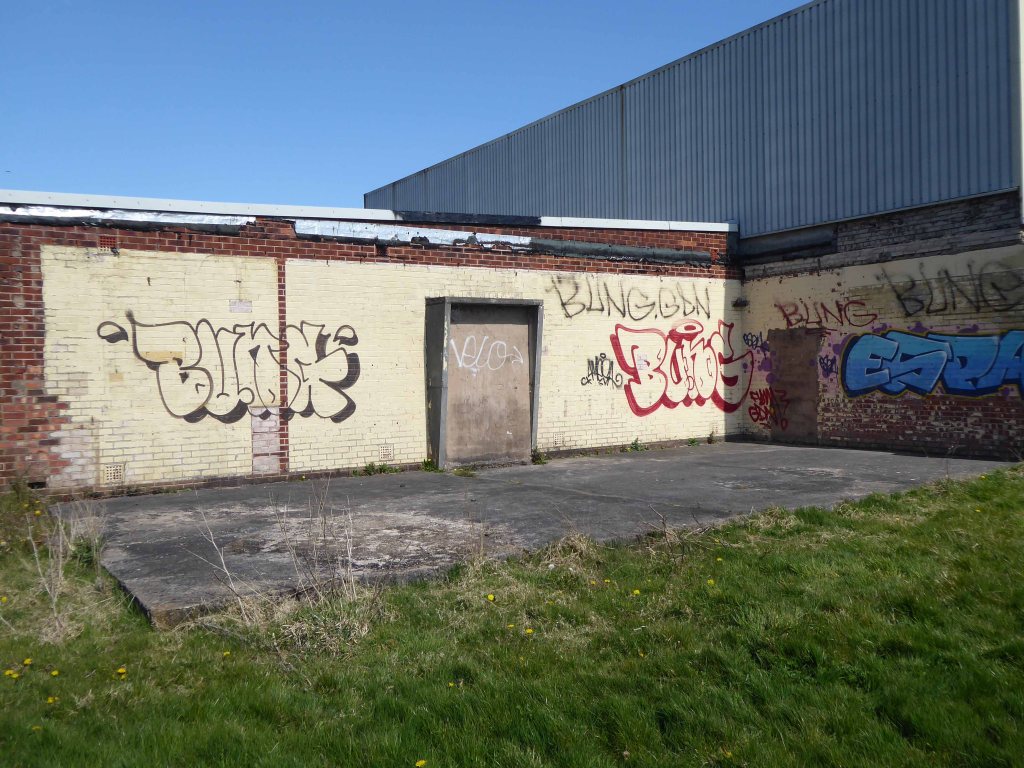
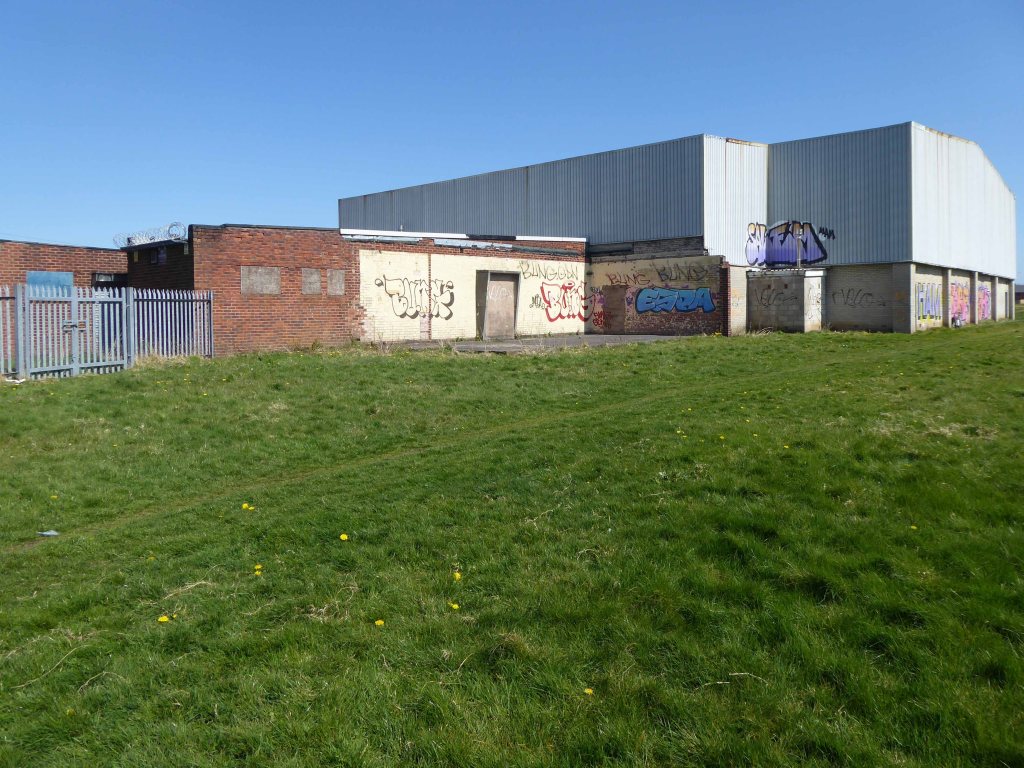
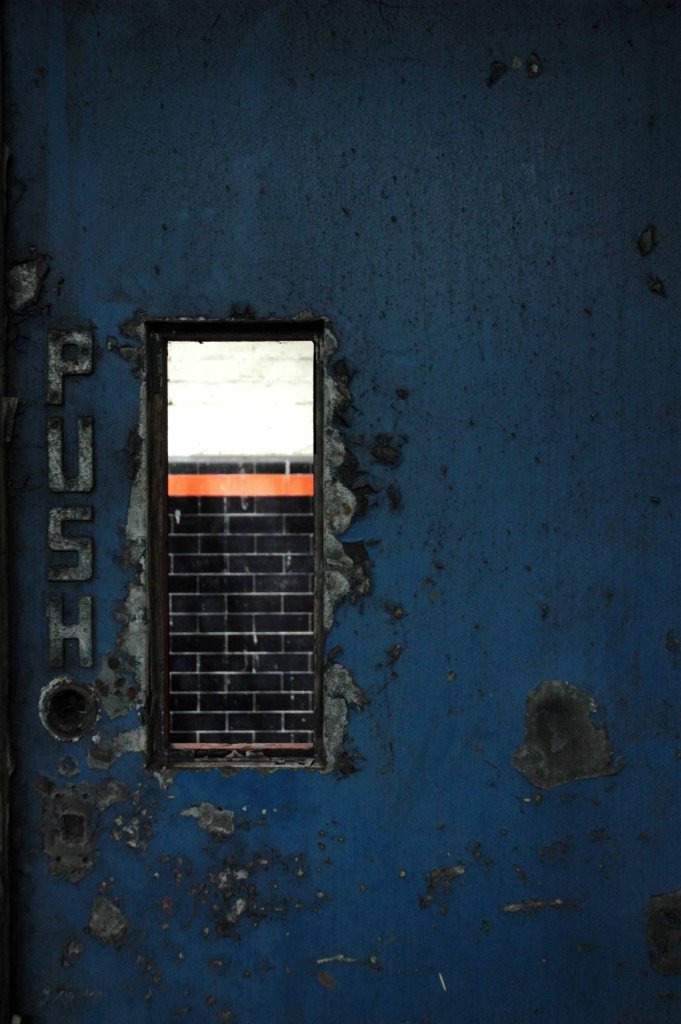
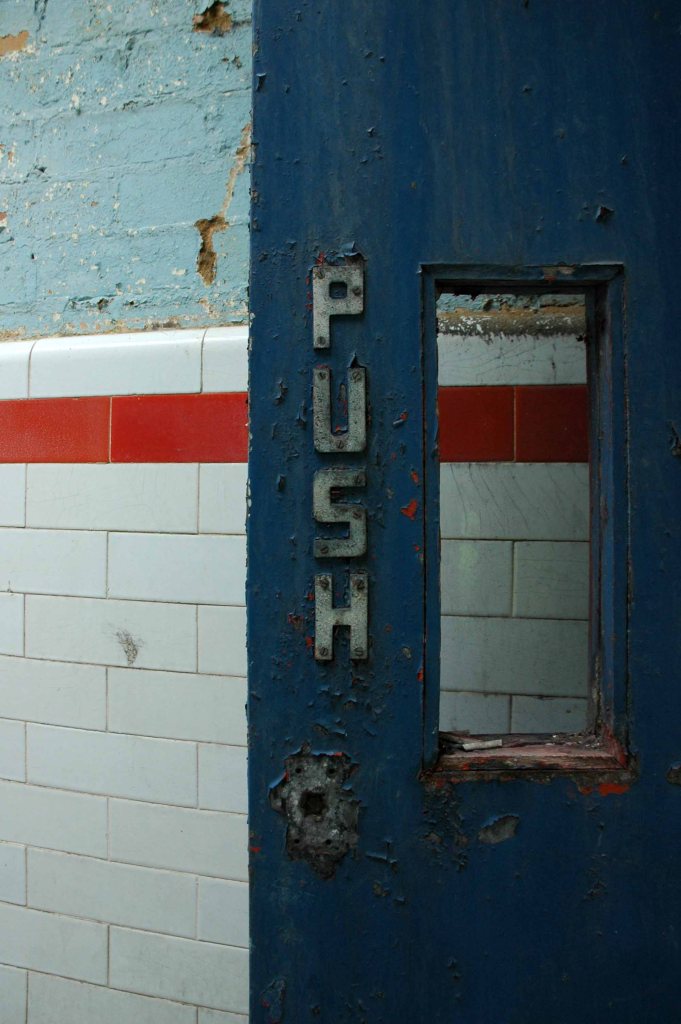
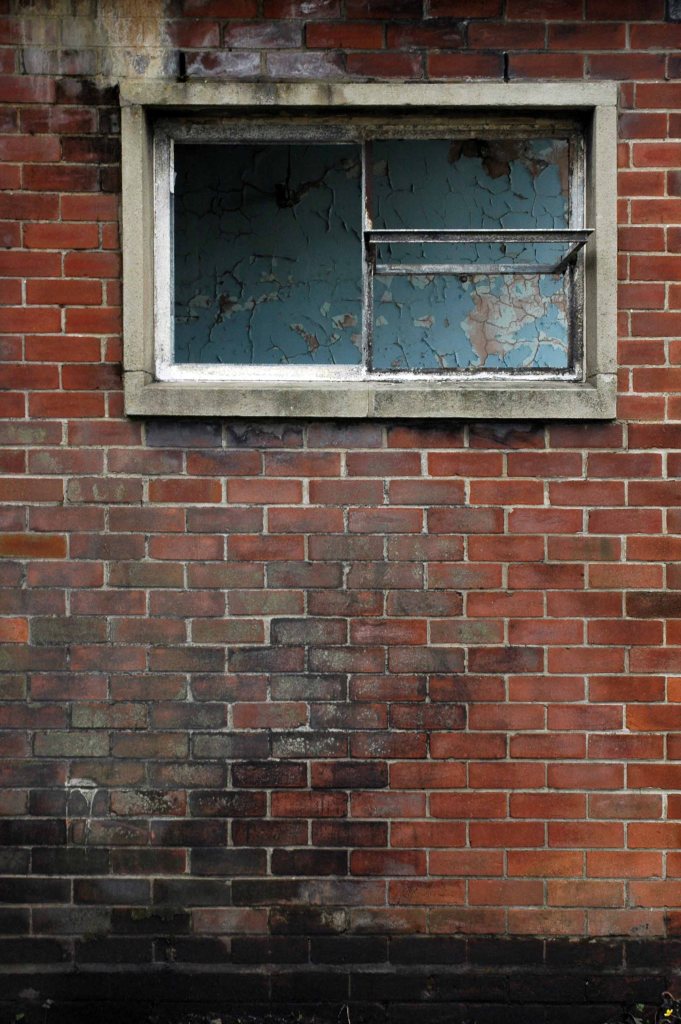
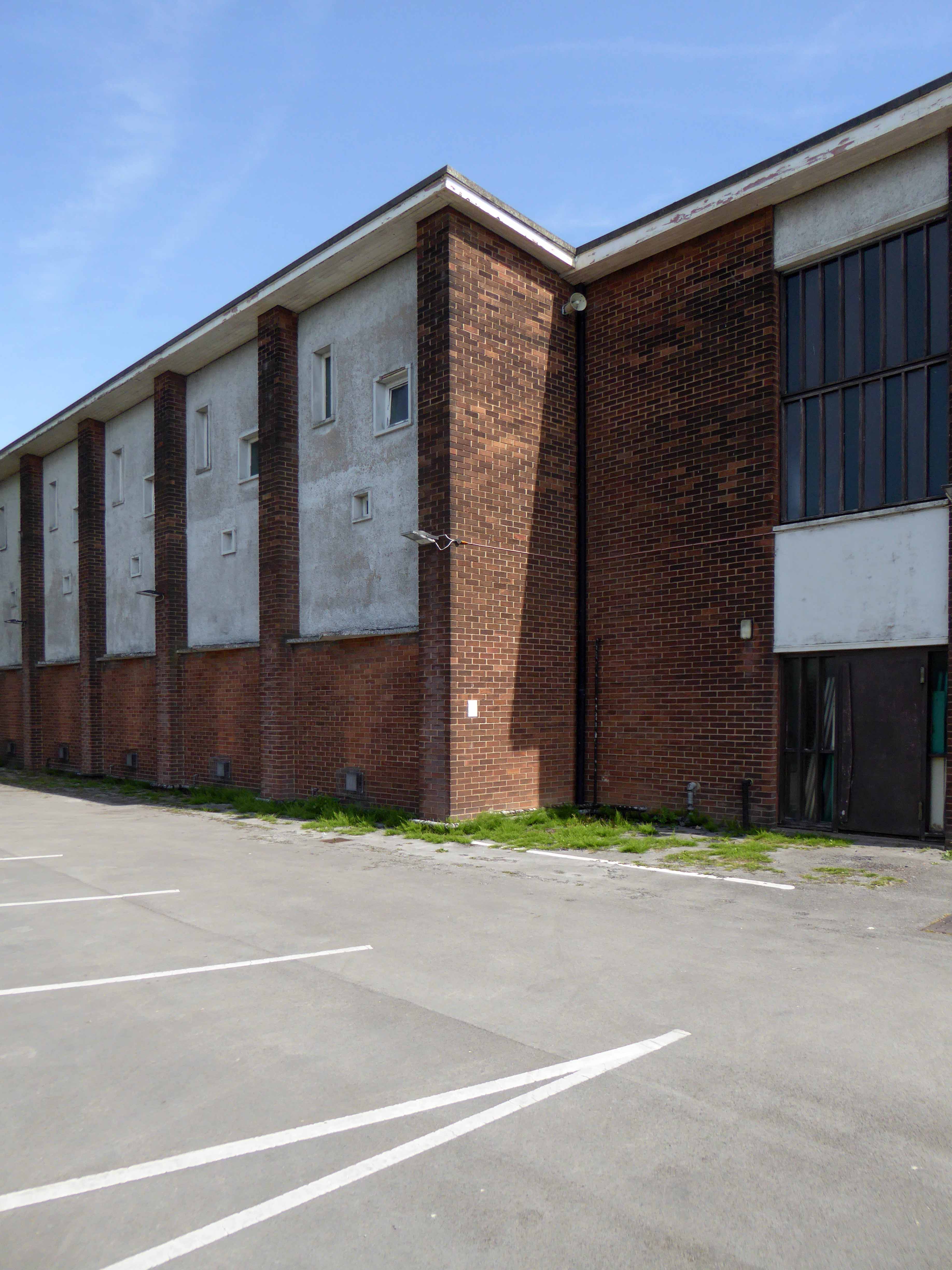
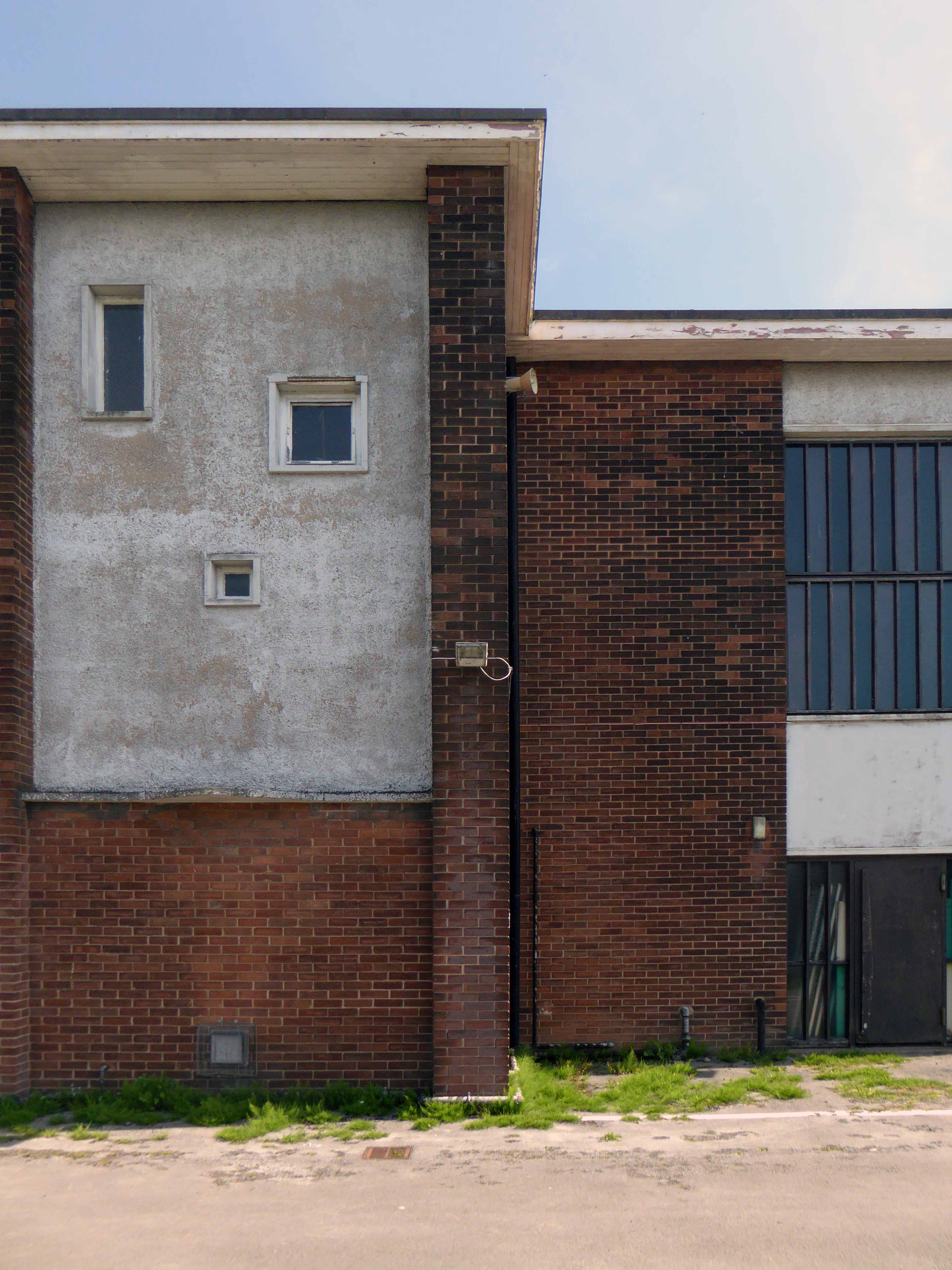
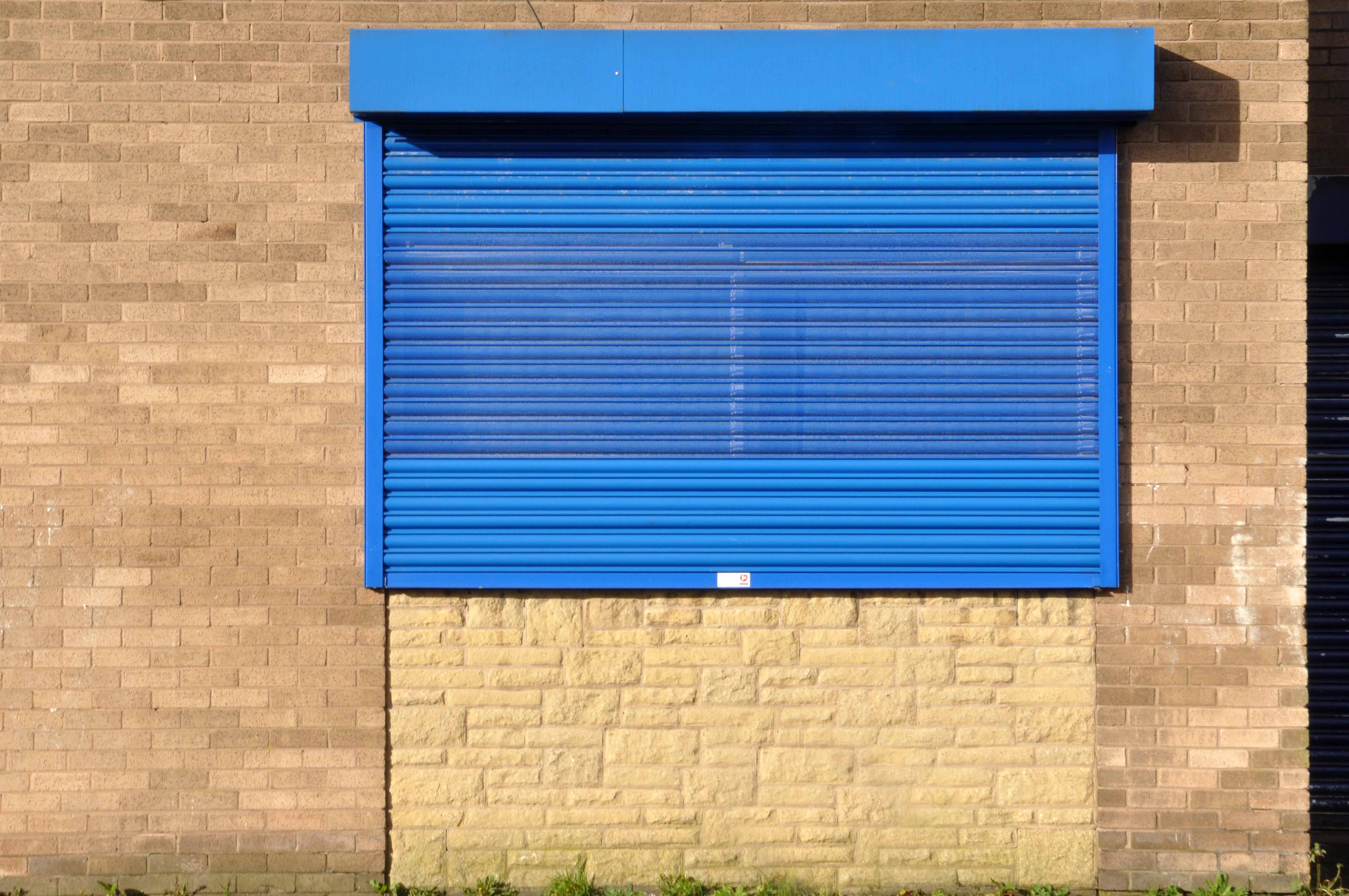
Most of the valuable equipment stripped out leaving and empty shell, covered in layers of the taggers’ interventions.
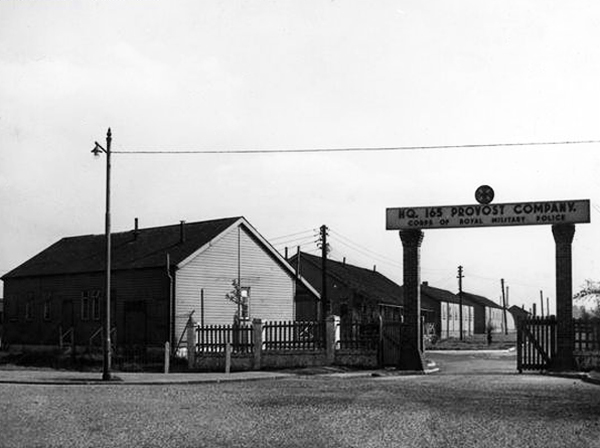
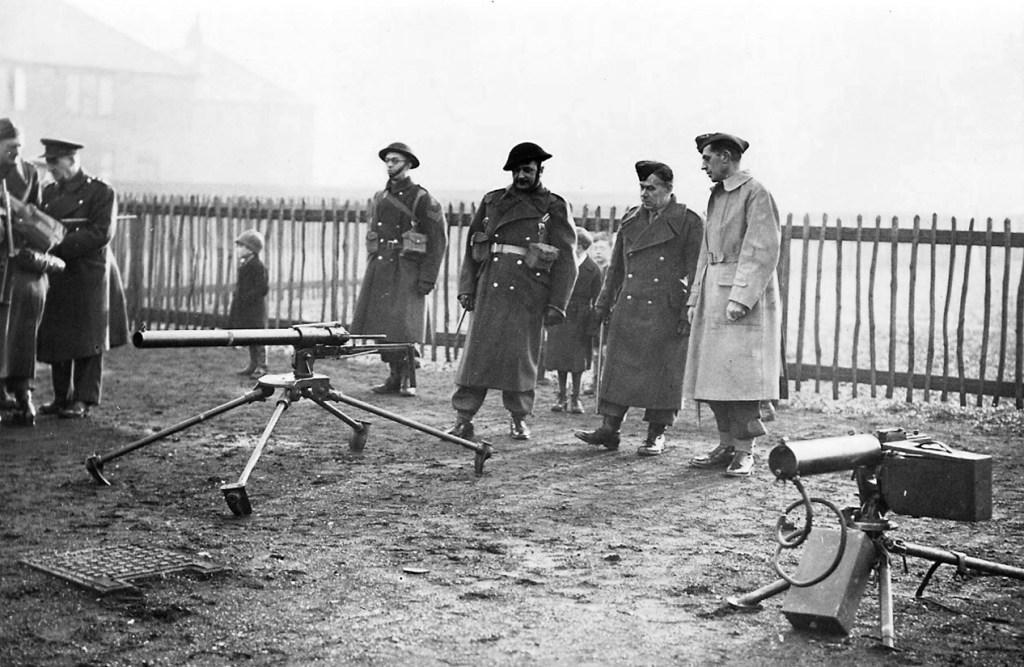
As a Military Police and POW CampThe 48th Battalion Manchester Home Guard used the facilities
Photograph Brian Wood
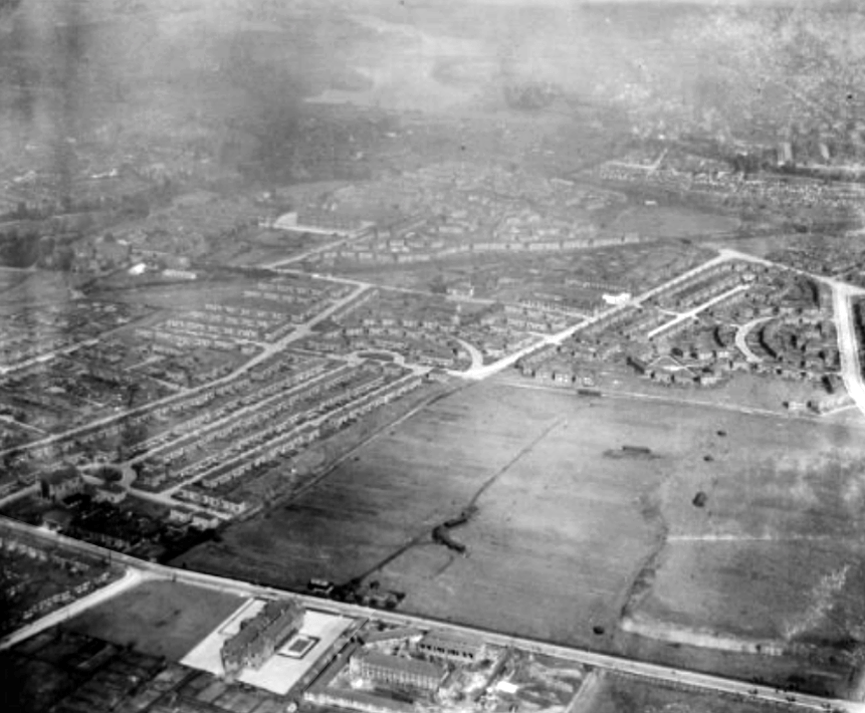
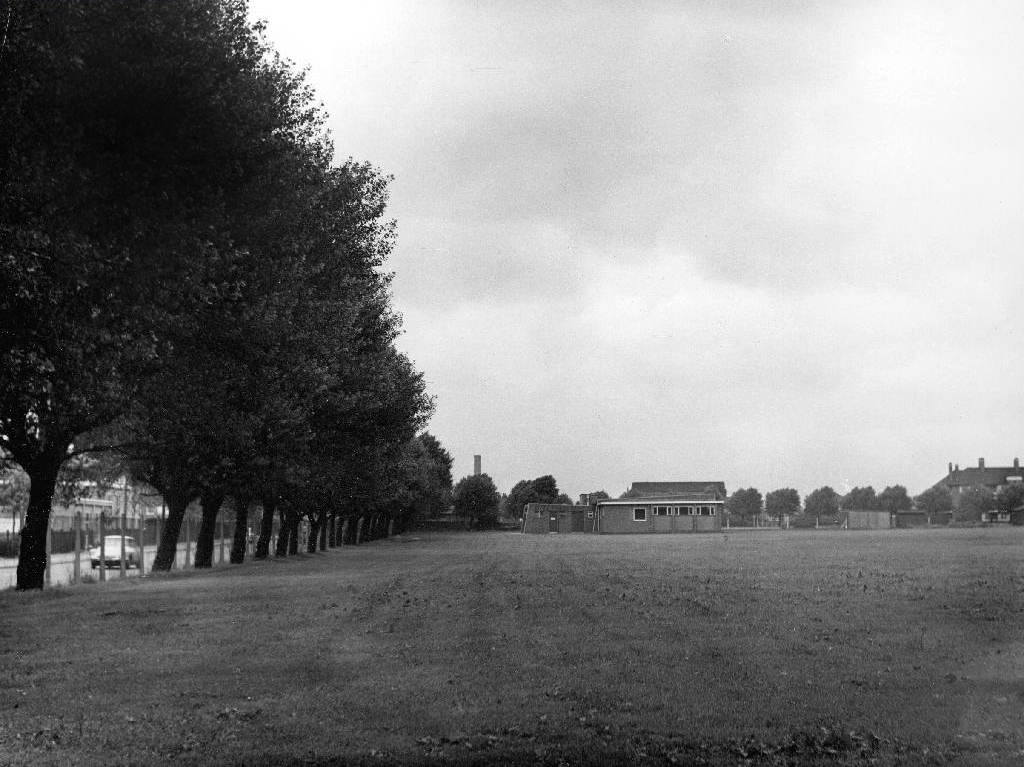
I remember from the 60’s onwards the fields in use for amateur football – pubs, clubs, schools and works all supplying teams to the plethora of leagues across the city.
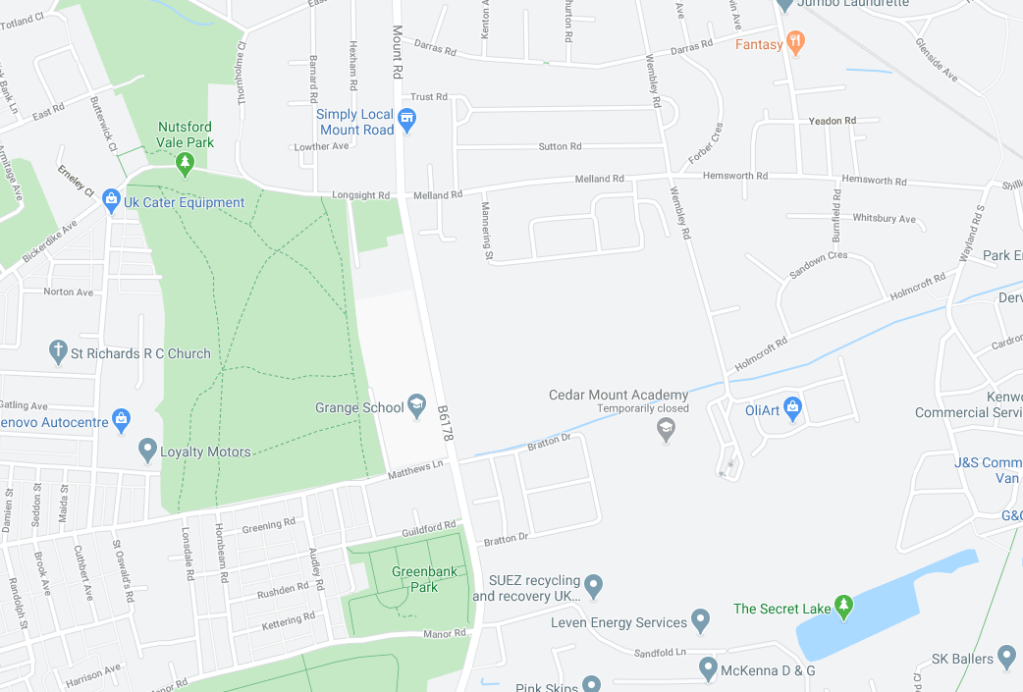
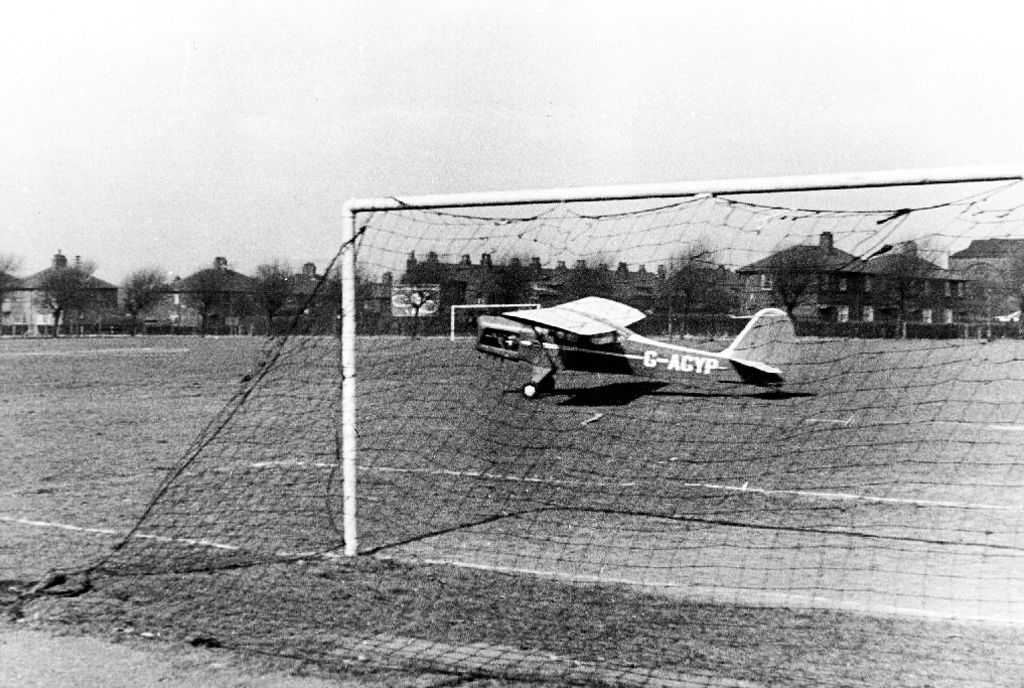
Auster Aircraft of Airliners forced to land at Melland Playing Fields whilst towing banner 19611963
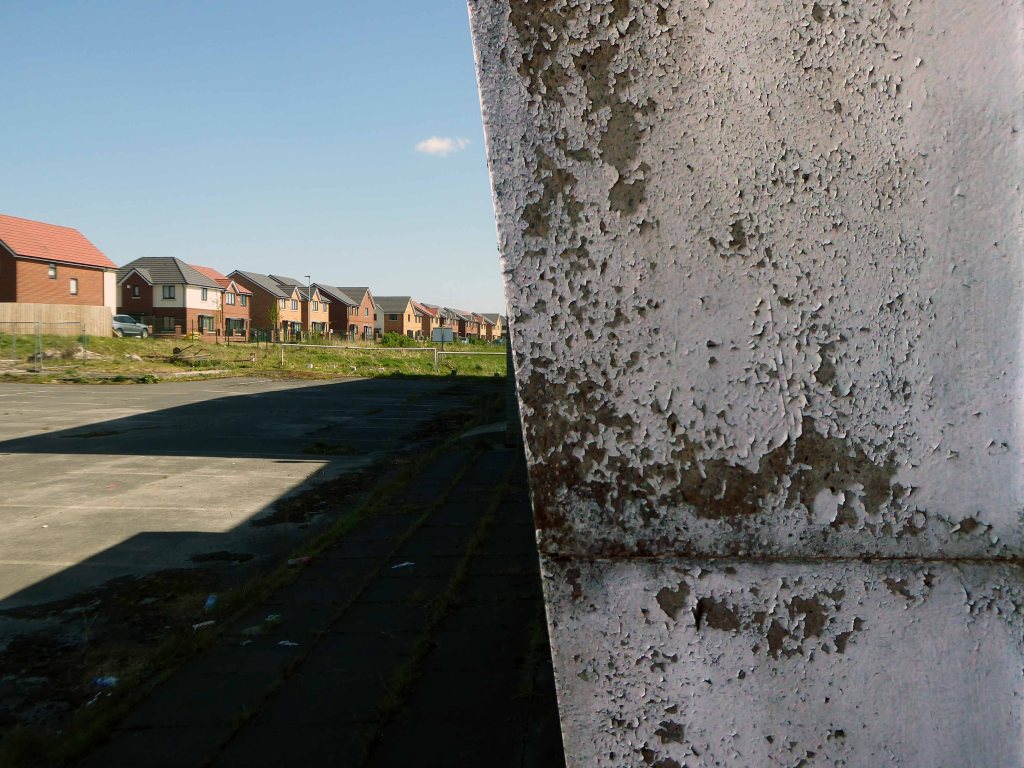
Gorton has received significant regeneration and investment over recent years as have nearby areas including Levenshulme. This is an aspirational, exciting new development and Arkwright Place has something for everyone – from first time buyers to growing families and downsizers – with a huge range of beautiful homes on offer.
A local campaign was organised to preserve the open space:
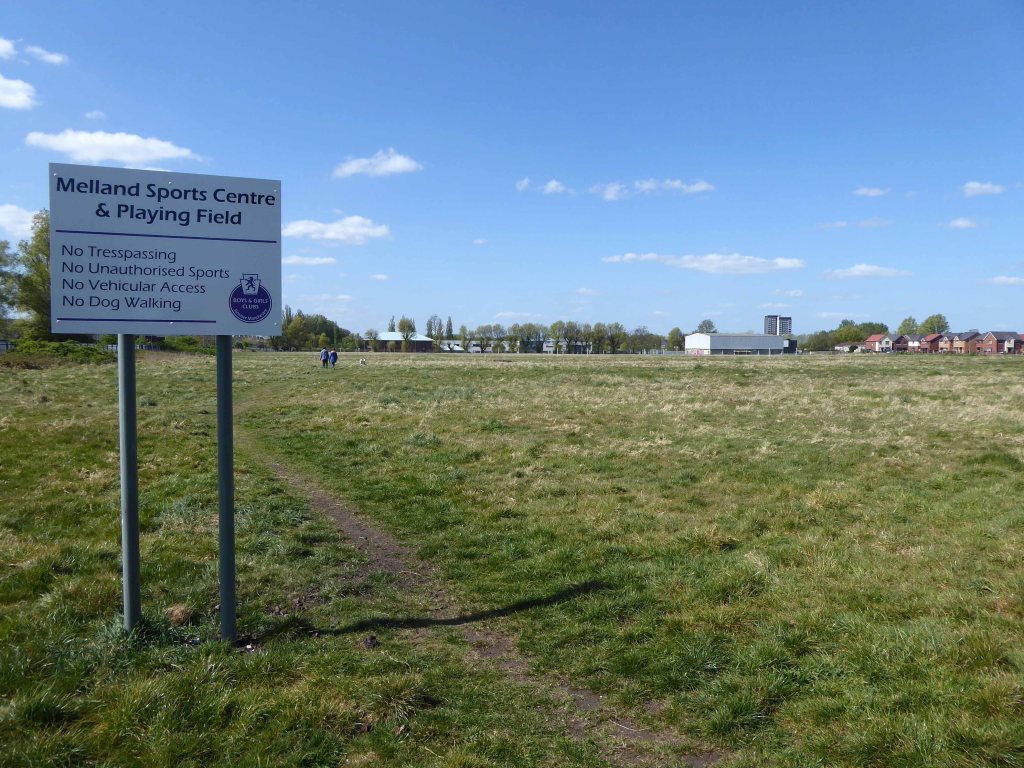
At present the fields are fenced and secured – though gaps have been made to allow access for strollers.
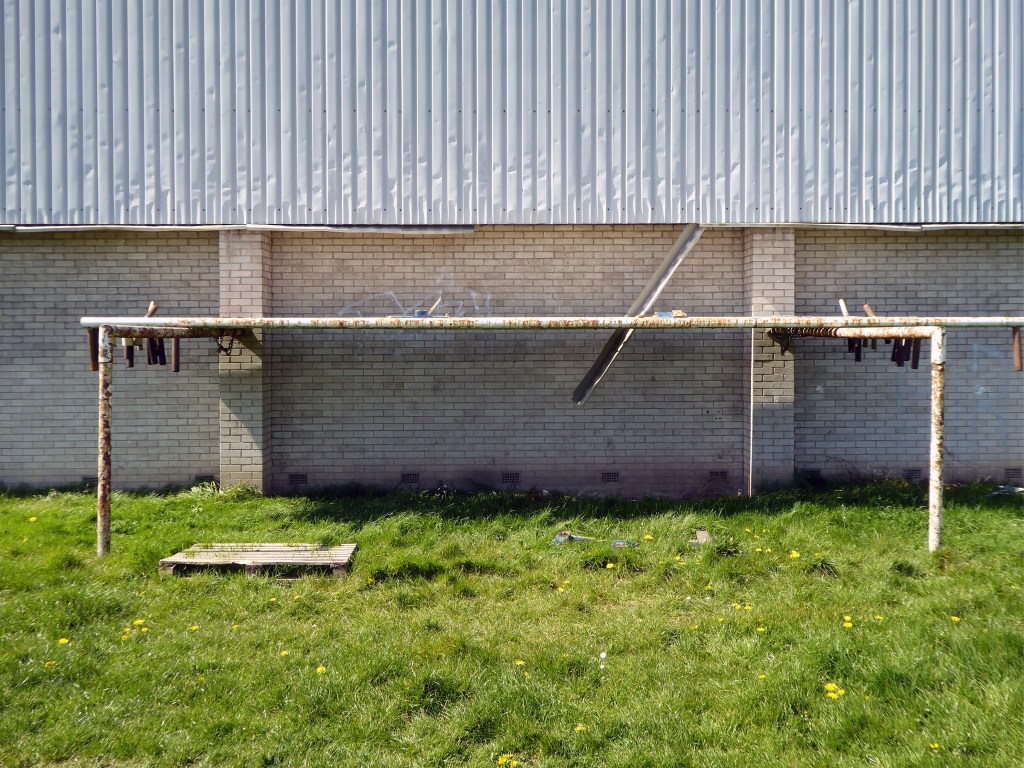
The goalposts still stand though currently without crossbars.
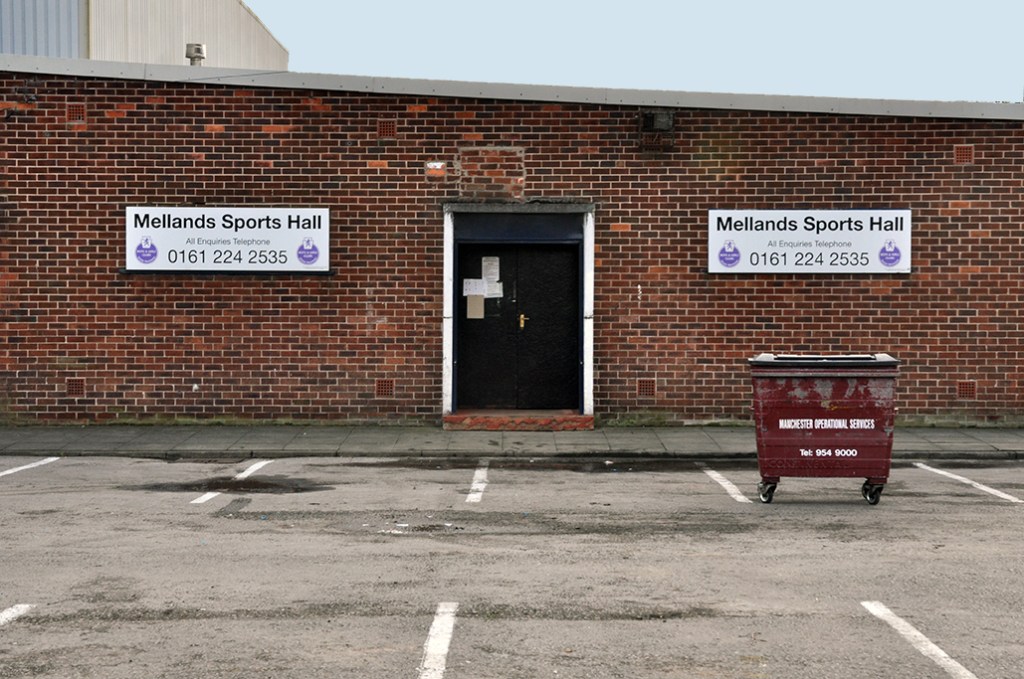
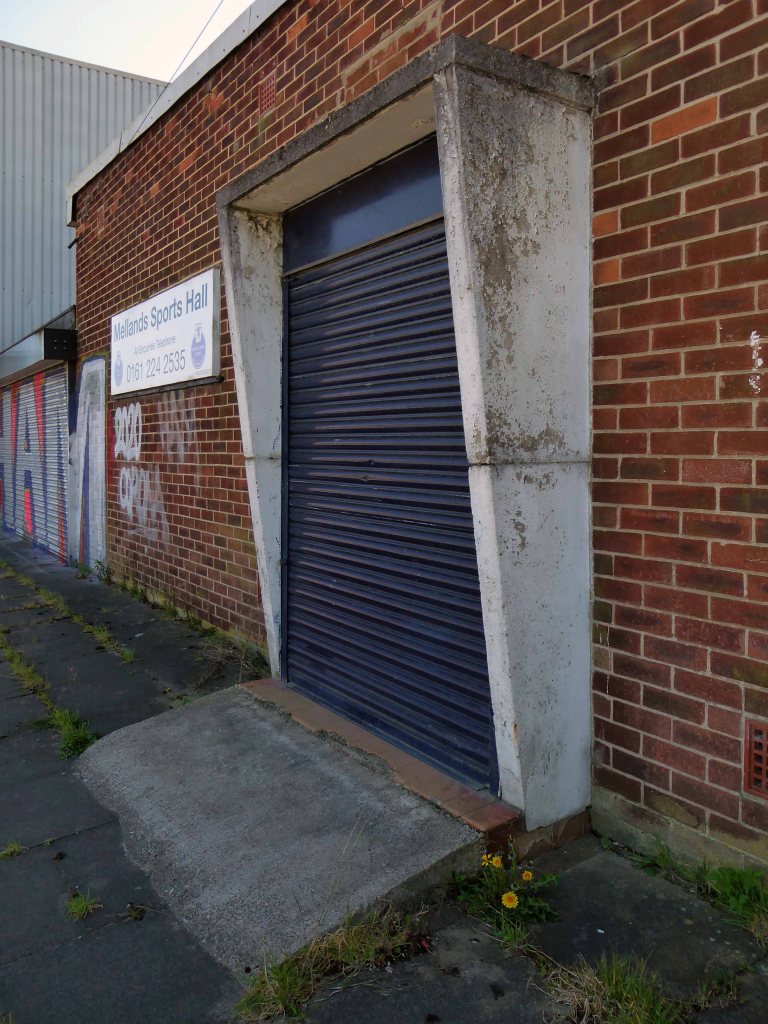
Which are stored by the Sports Hall.
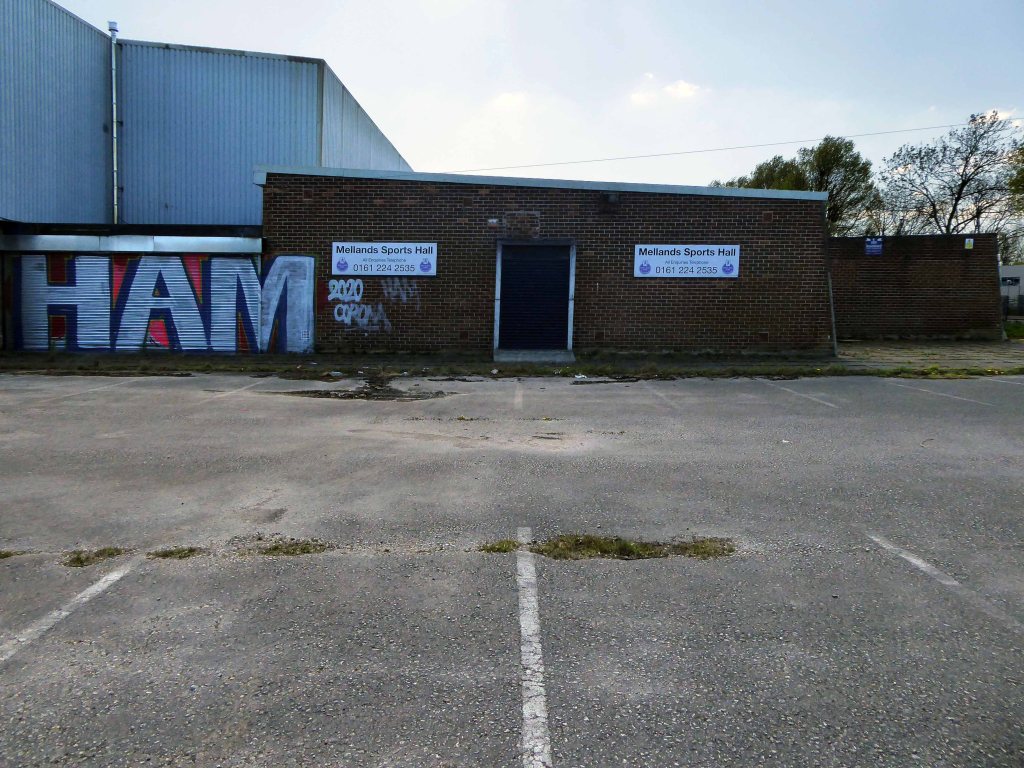
The buildings are mothballed – awaiting what?
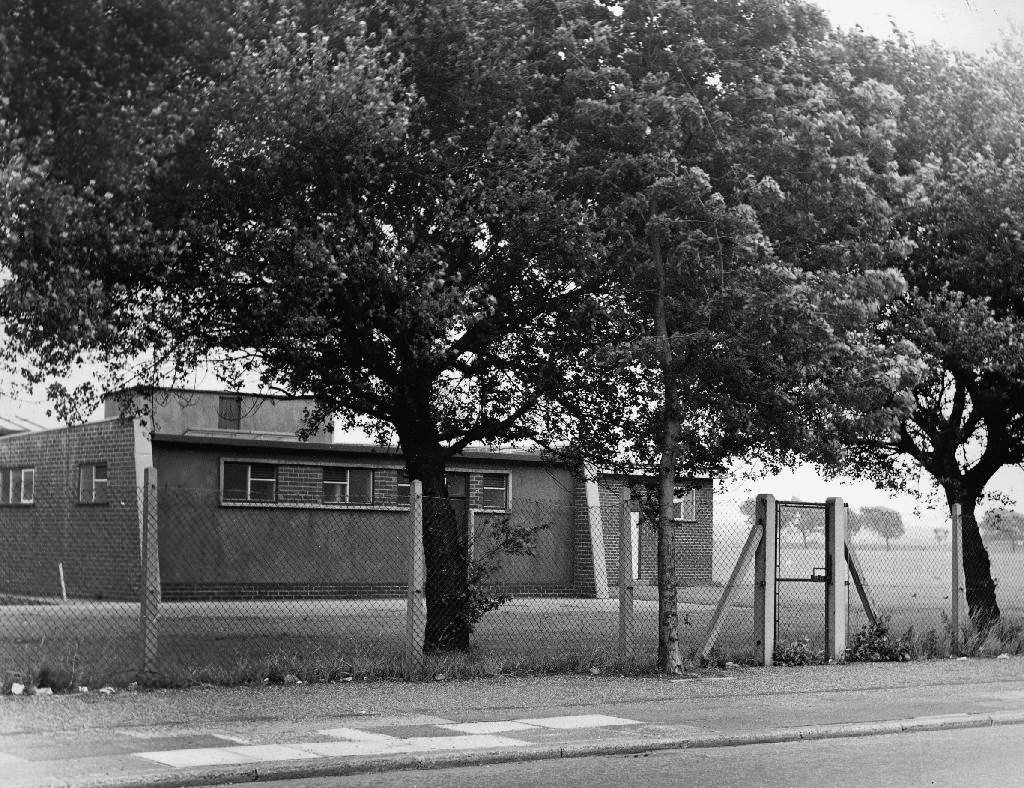
For me the concrete and brick functionalist changing rooms are a thing of beauty and seem to have been a part of my life for quite some time, as I cycled back and to – on my way to work.
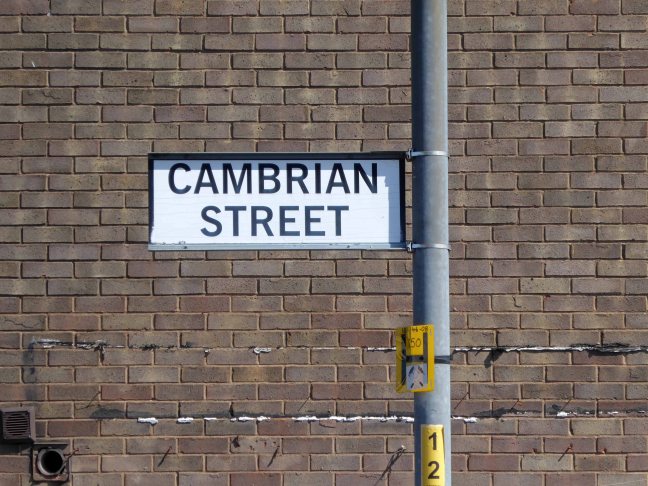
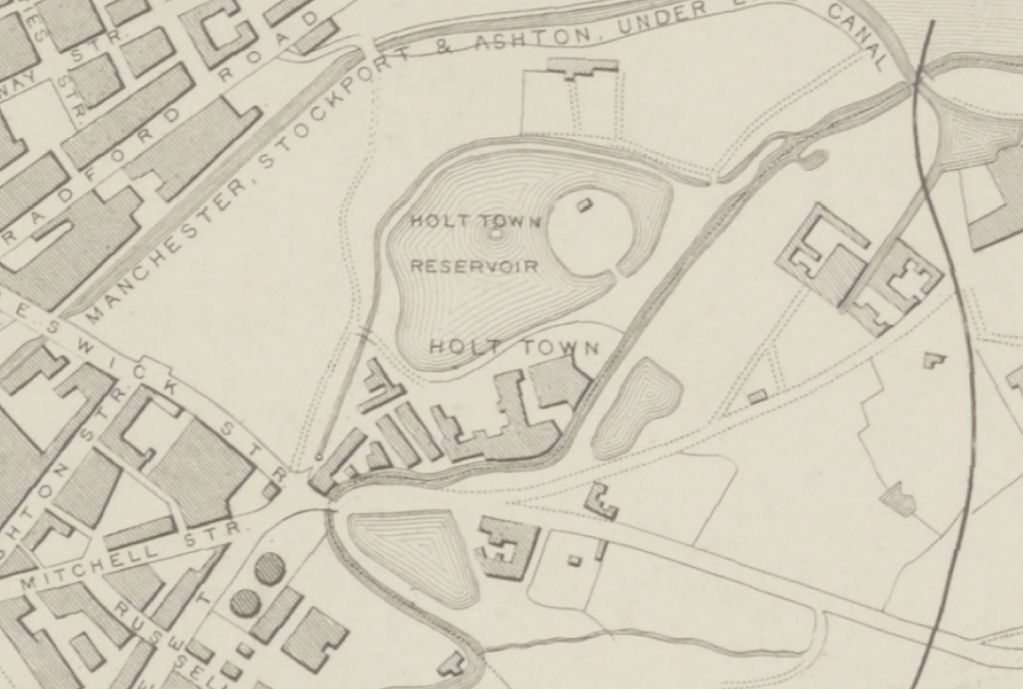
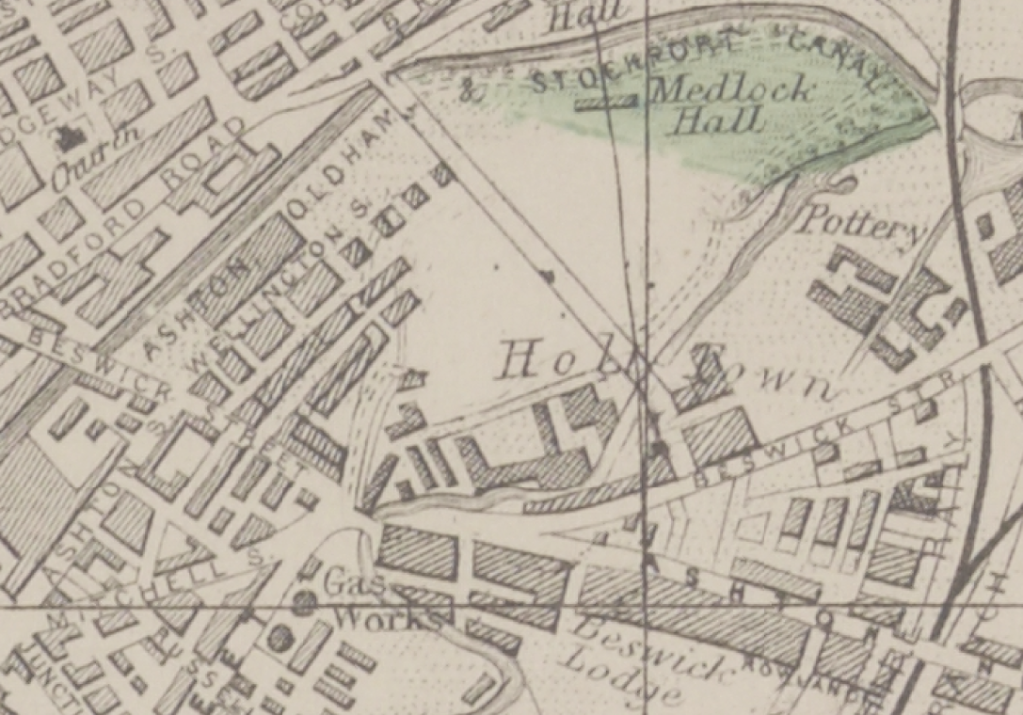
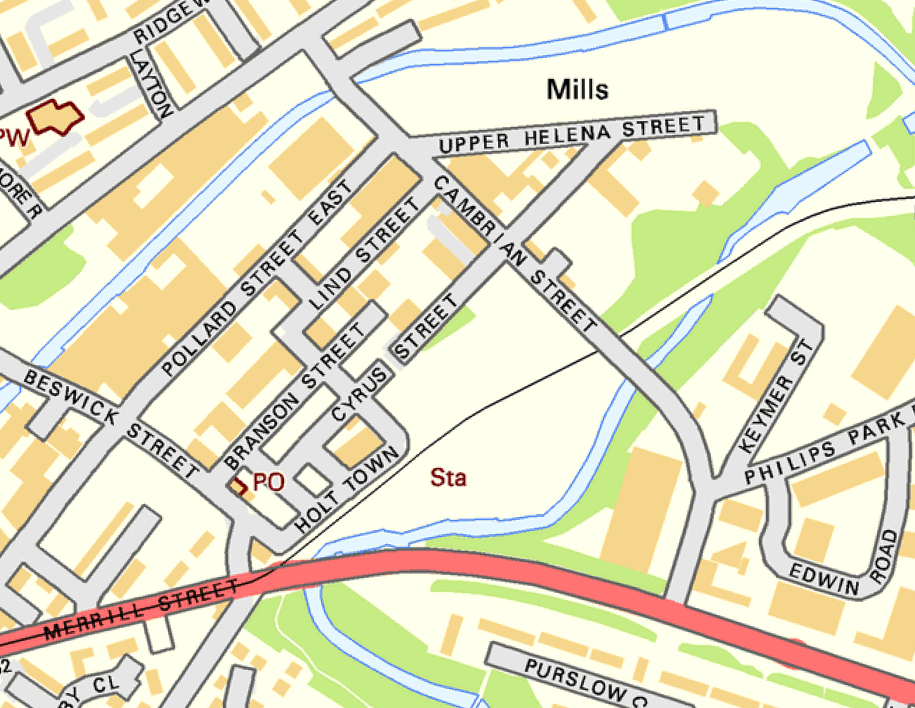
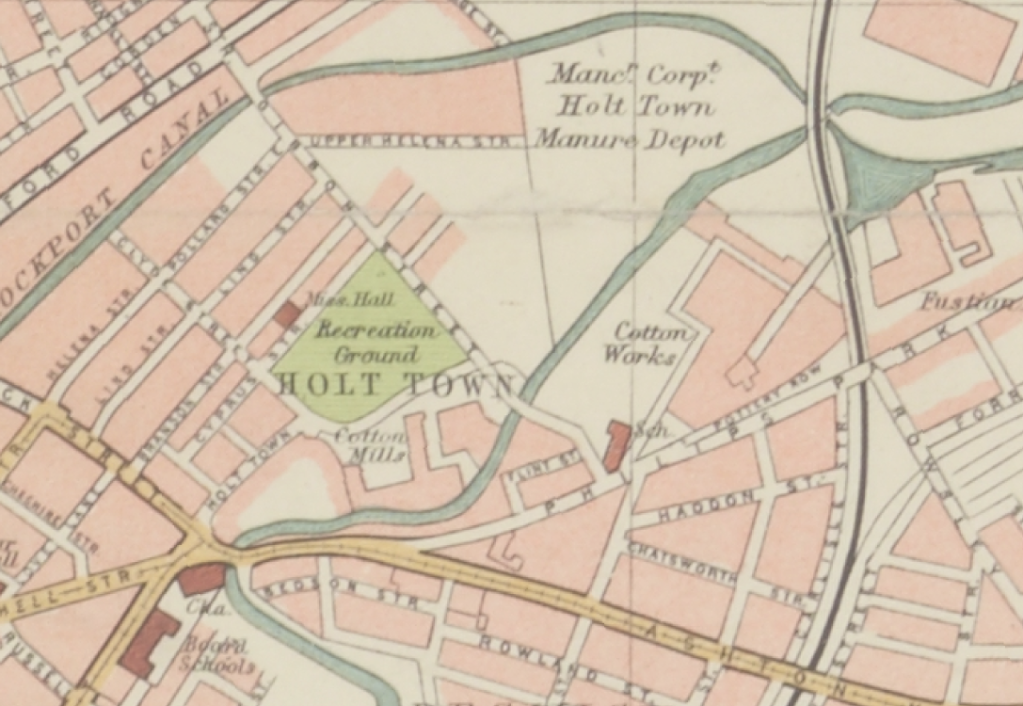
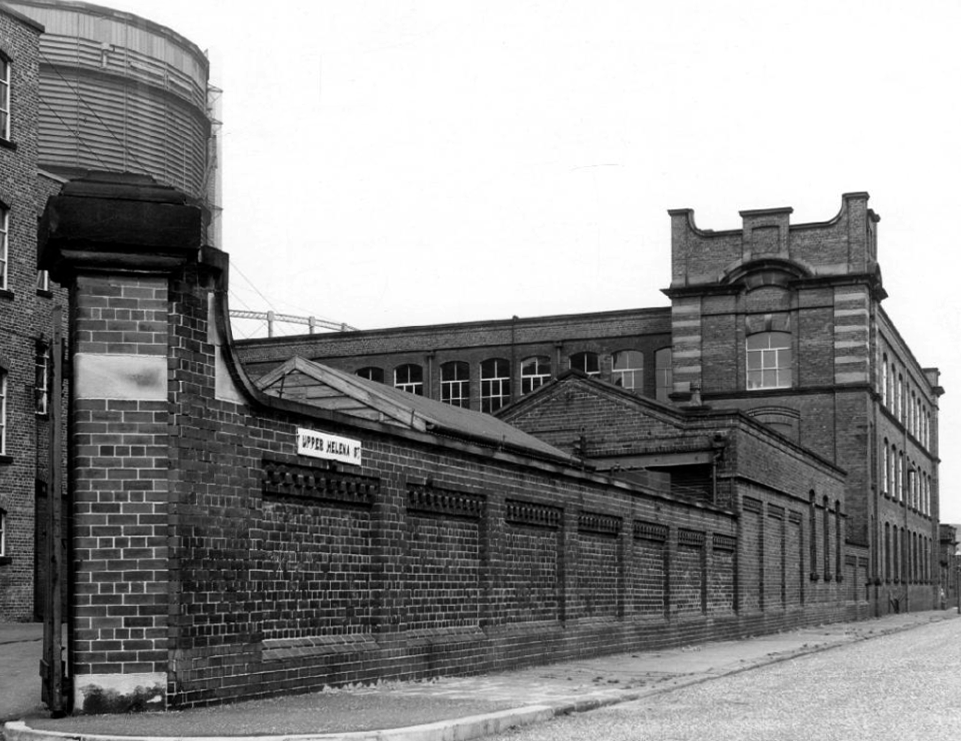
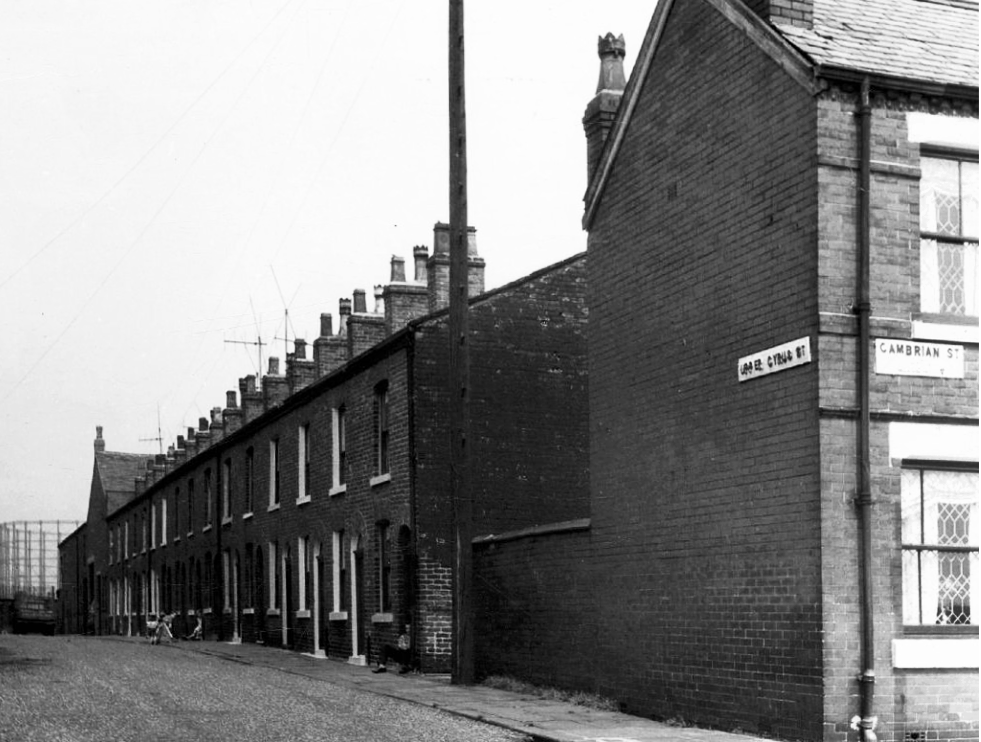
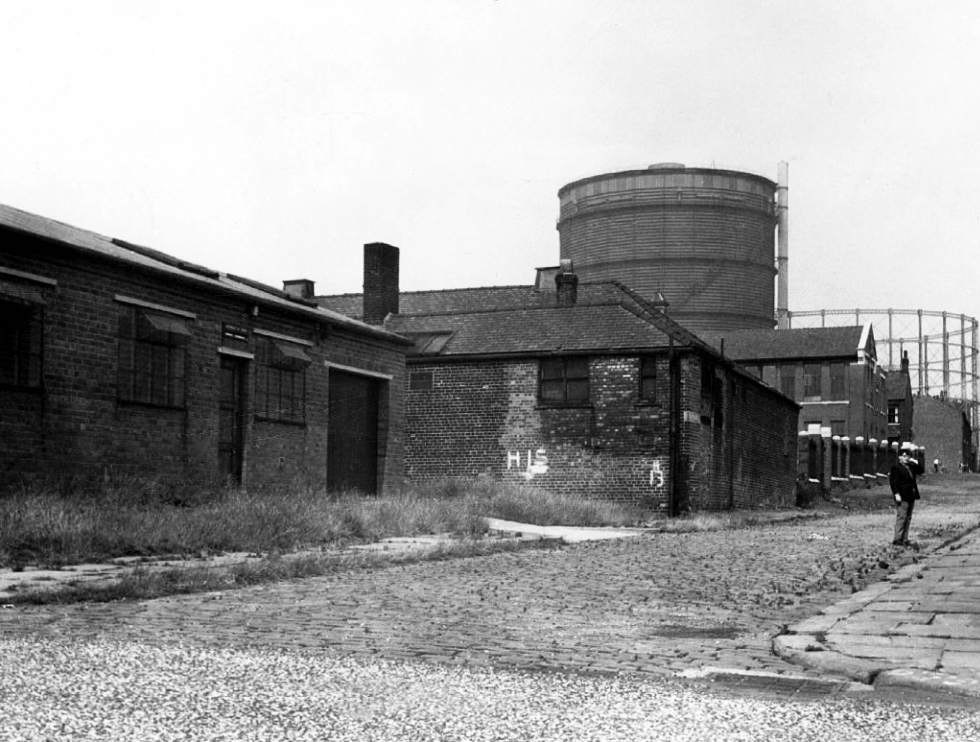
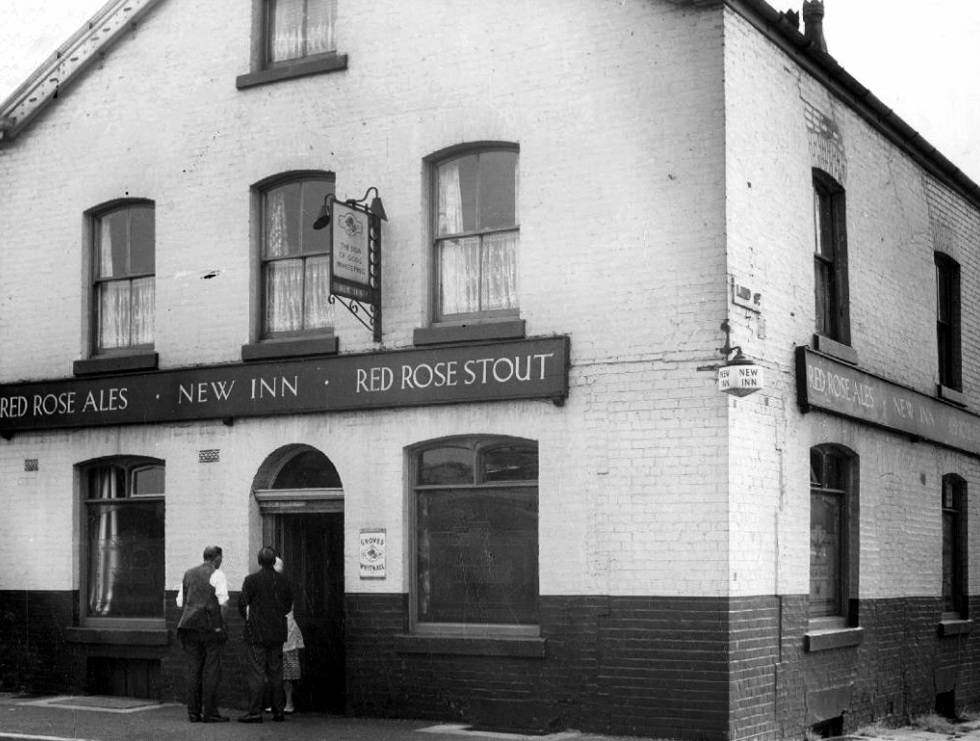
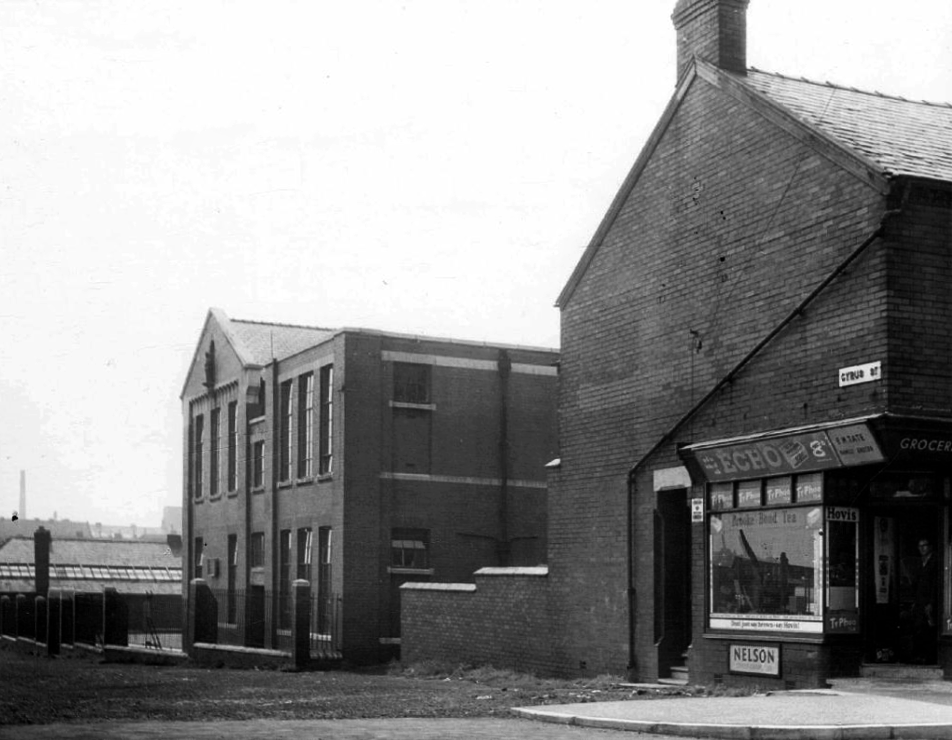
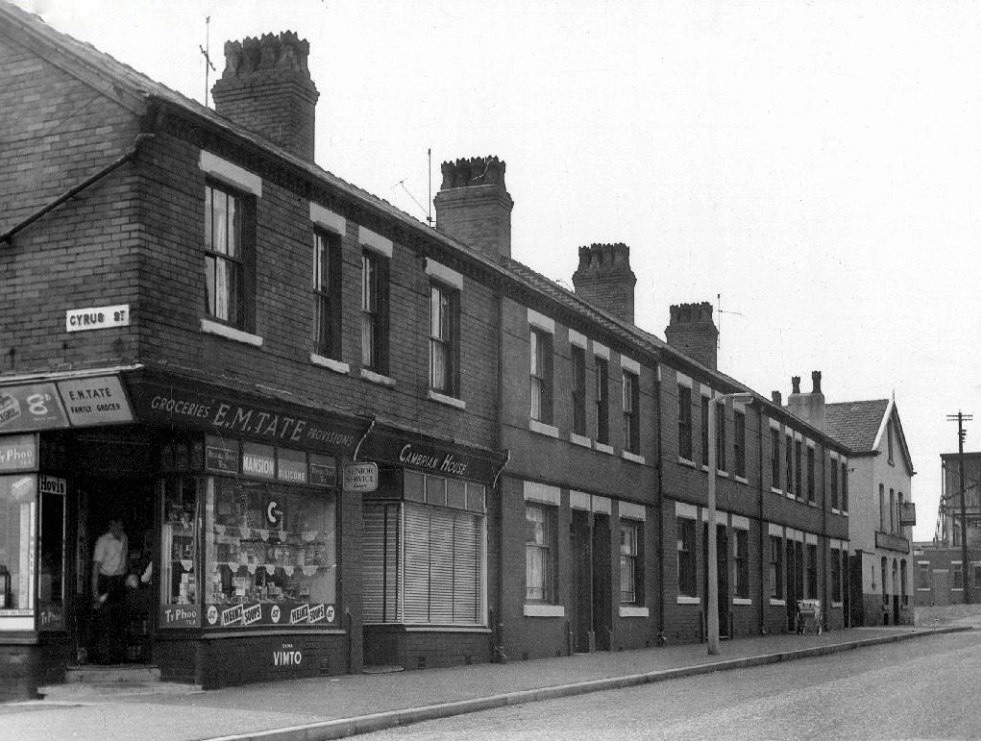
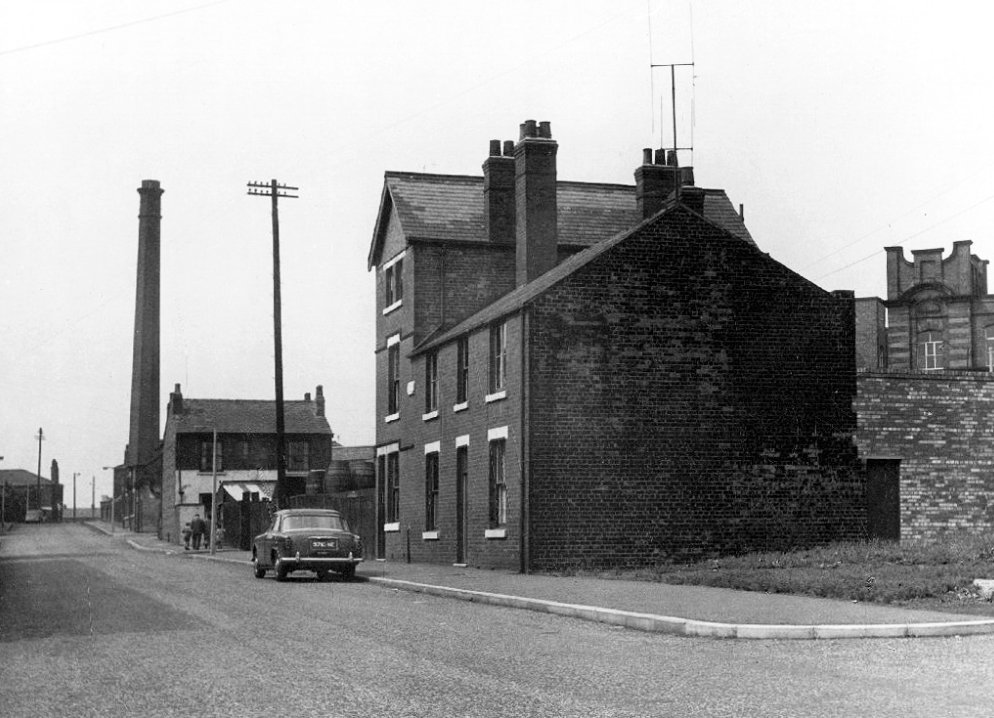
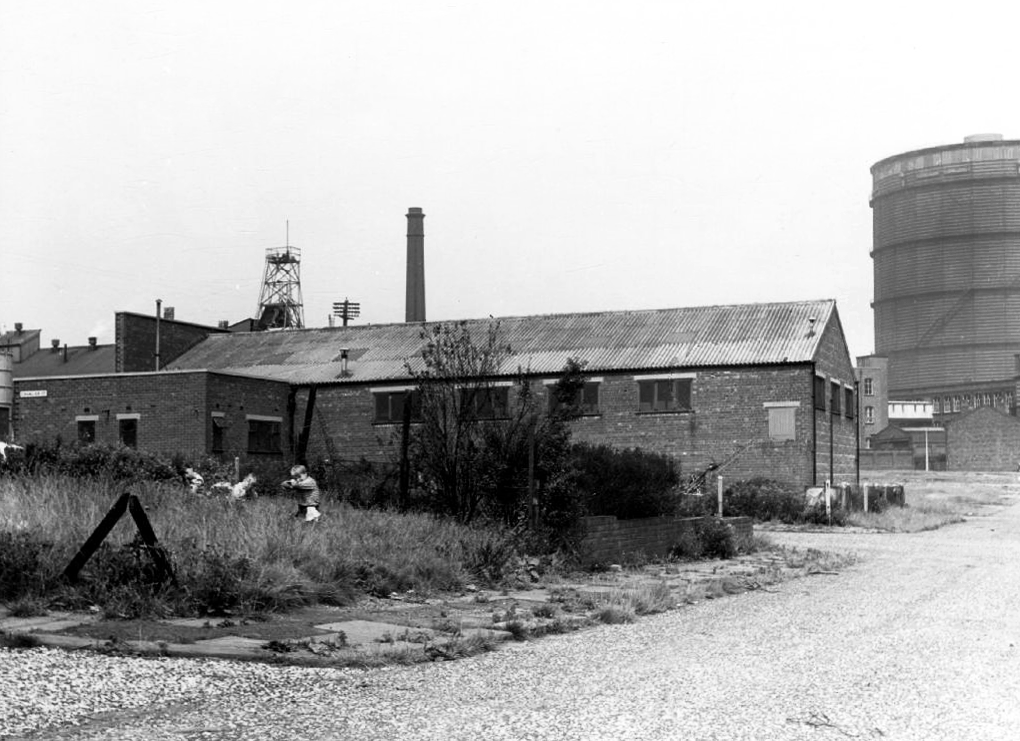
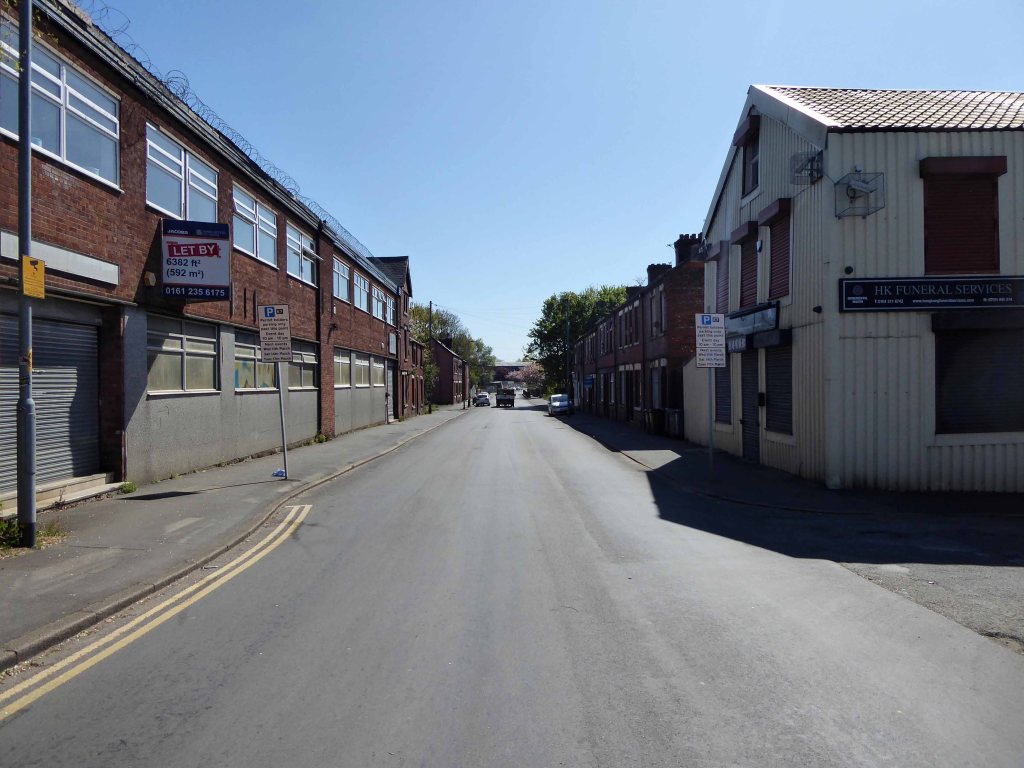
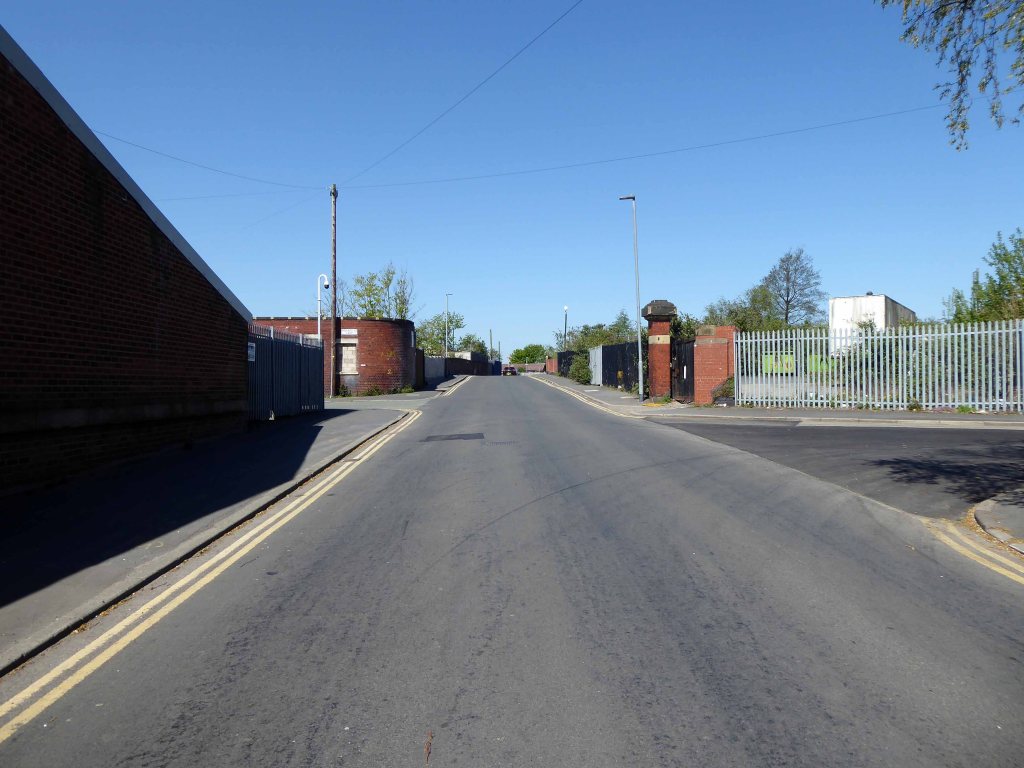
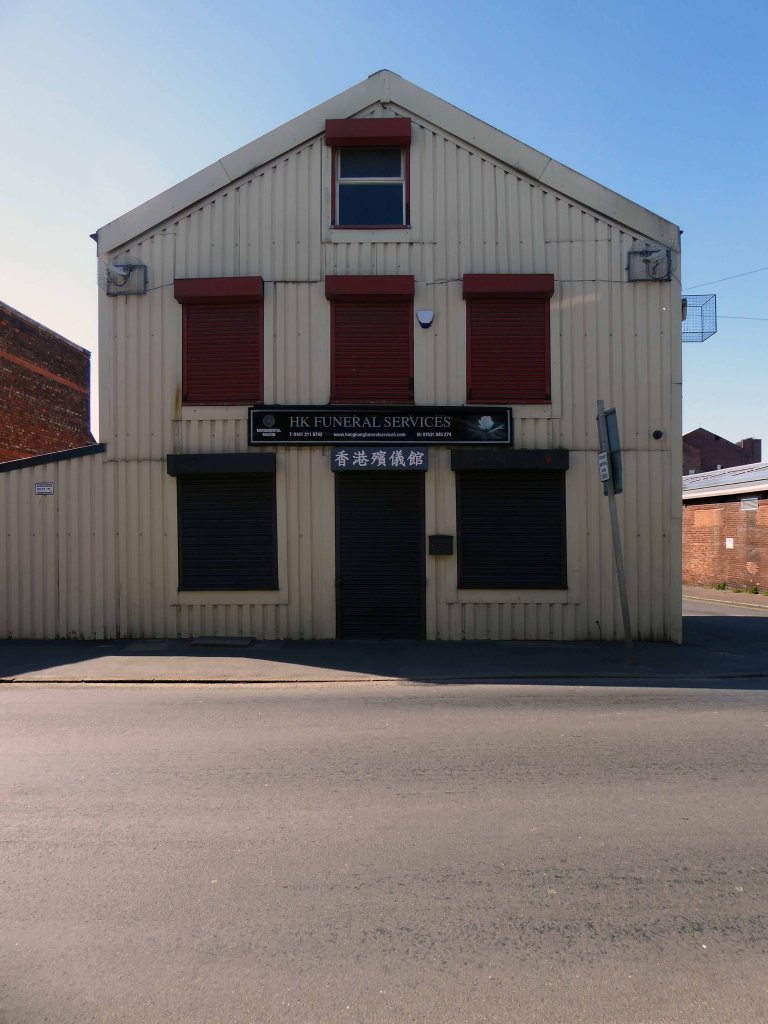
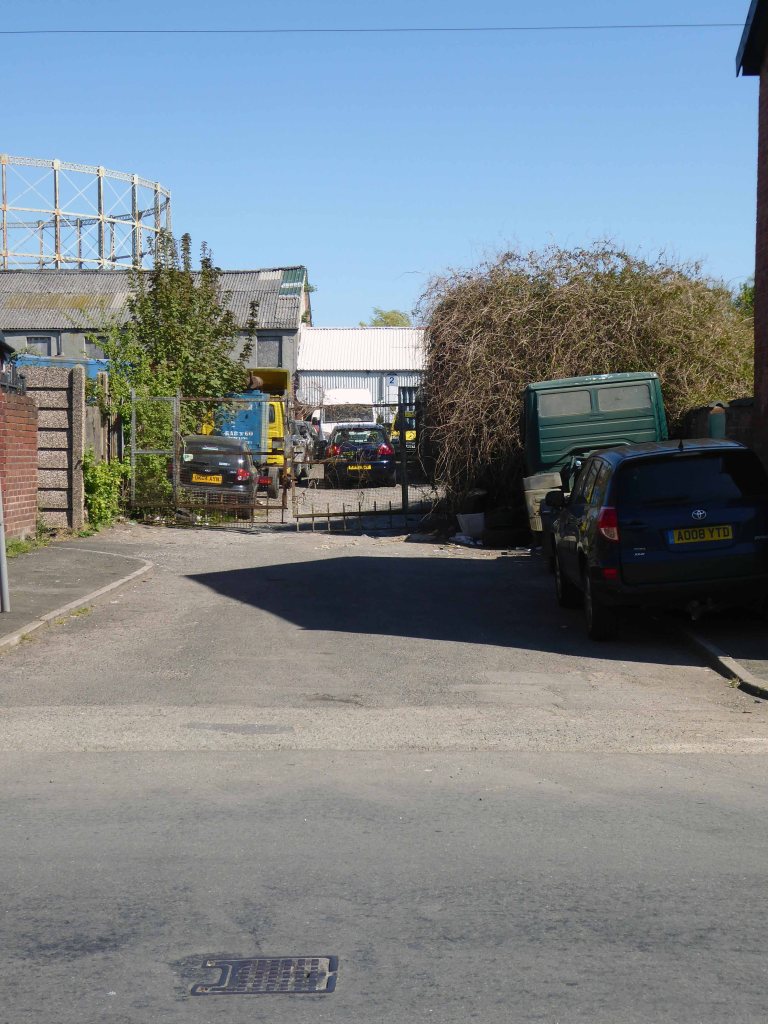
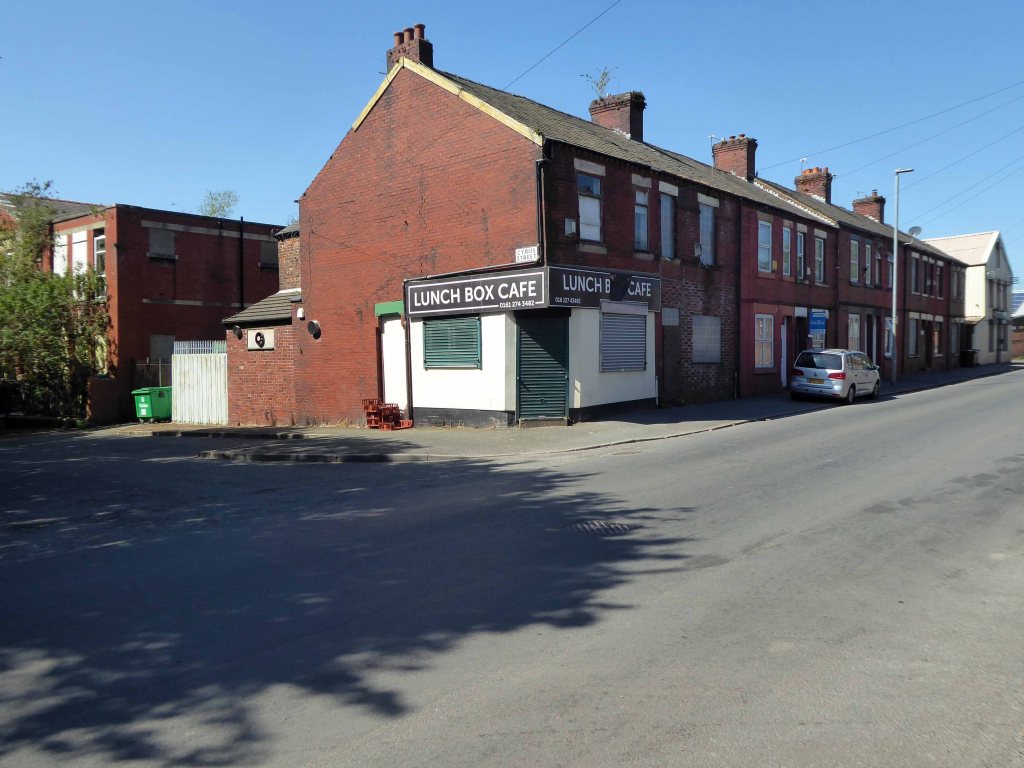
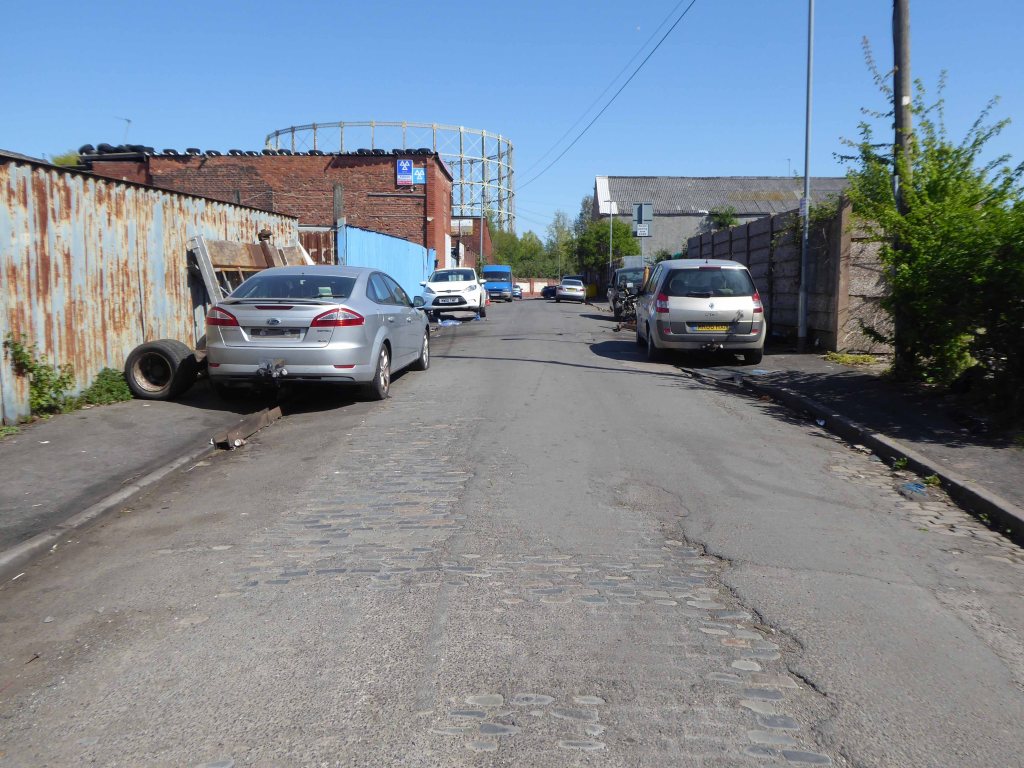
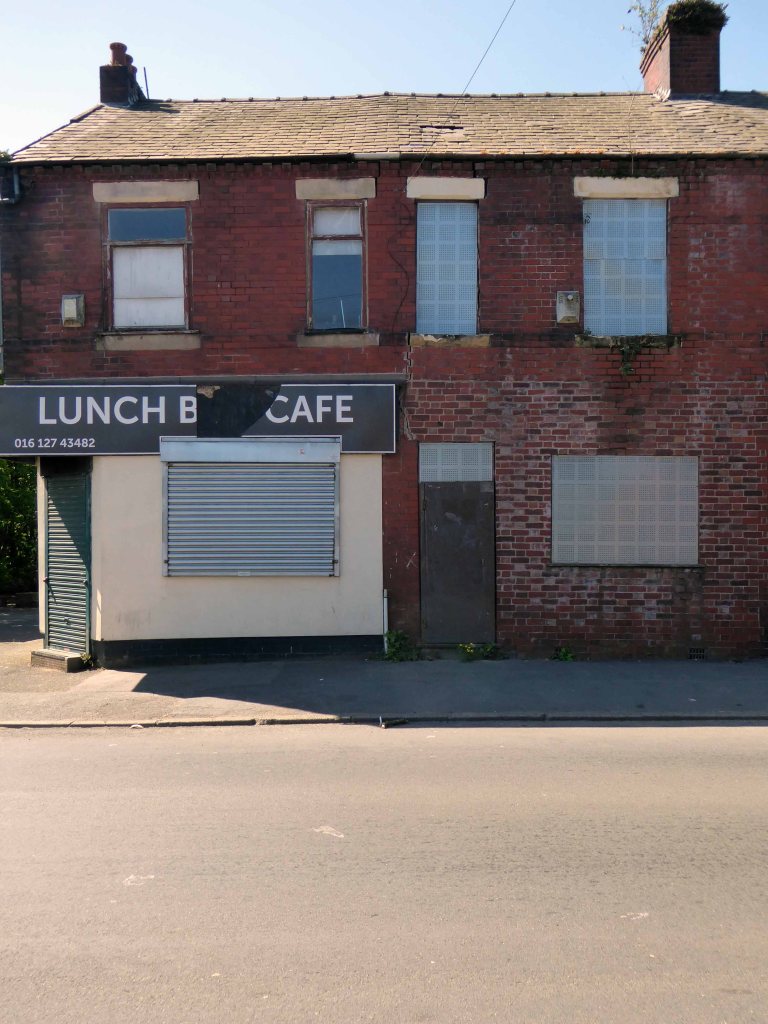
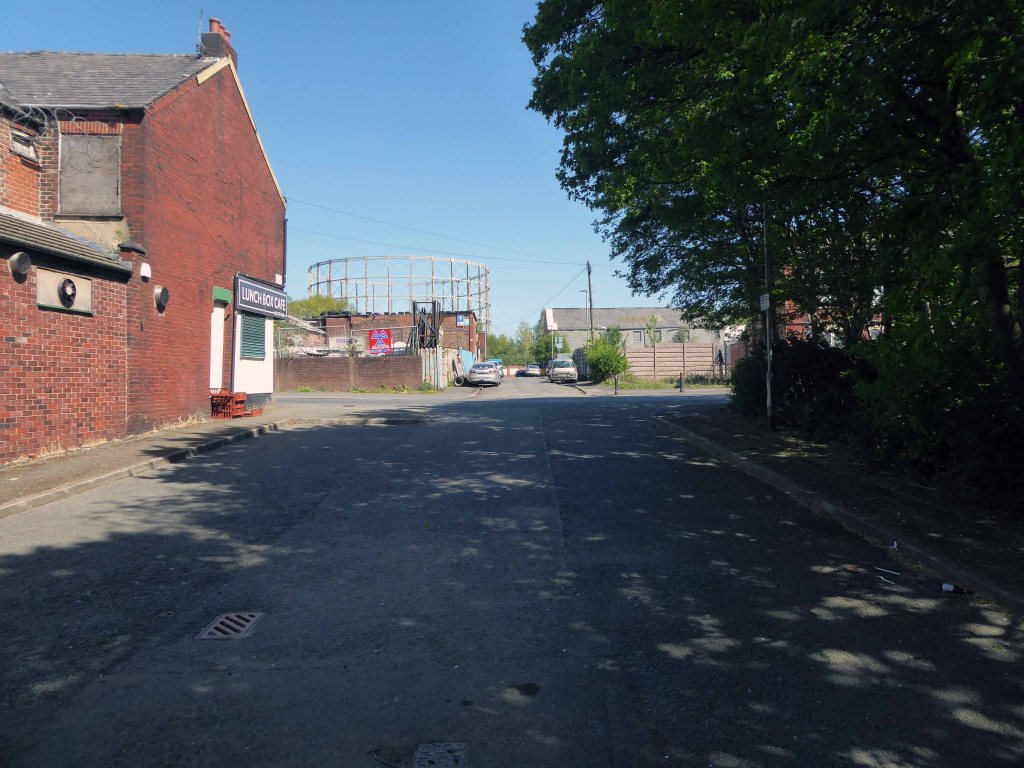
Nothing now remains of this mill complex on Upper Helena StreetThe homes on Upper Cyrus Street are long goneCyrus Street now over grown and Big Bertha demolishedThe New Inn now the Hong Kong Funeral HomeSt Annes School and the shop now closedIt had become the Luchbox Café now also closedStill standing
The area was my playground. Holt Town was always a but scary, there were old factories along the opposite side with wartime helmets in. A scrap yard under the arch. I remember sucking up mercury off the floor with a straw obviously from a spillage, no thoughts of danger, I’m alright now. The Seven Wonders, as we knew it, River, canal, railway, road, waterfall all crossing each other, not sure why? A fantastic industrial area to grow up in. The Don Cinema at the top corner at Mitchell Street and Ashton New Road.
I could go on.
Philip Gregson
Time’s up for the tiny urban cowboys.
Let’s see what’s going on.
Former football fieldUpper Cyrus StreetLind StreetUpper Helena StreetPollard StreetLanstead DriveCyrus StreetSt Annes SchoolCyrus StreetDevil’s StepsRiver Medlock
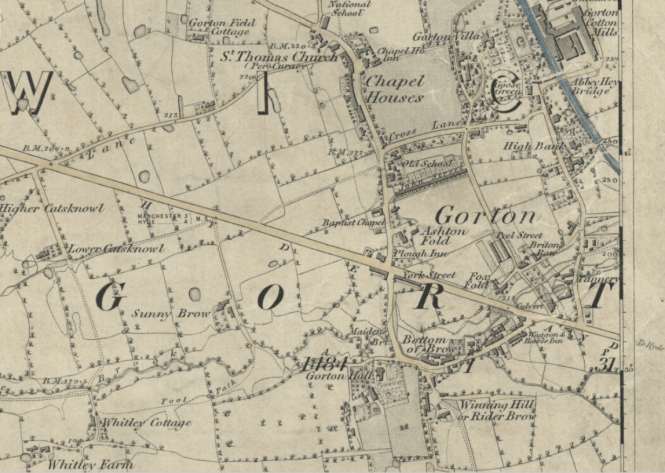
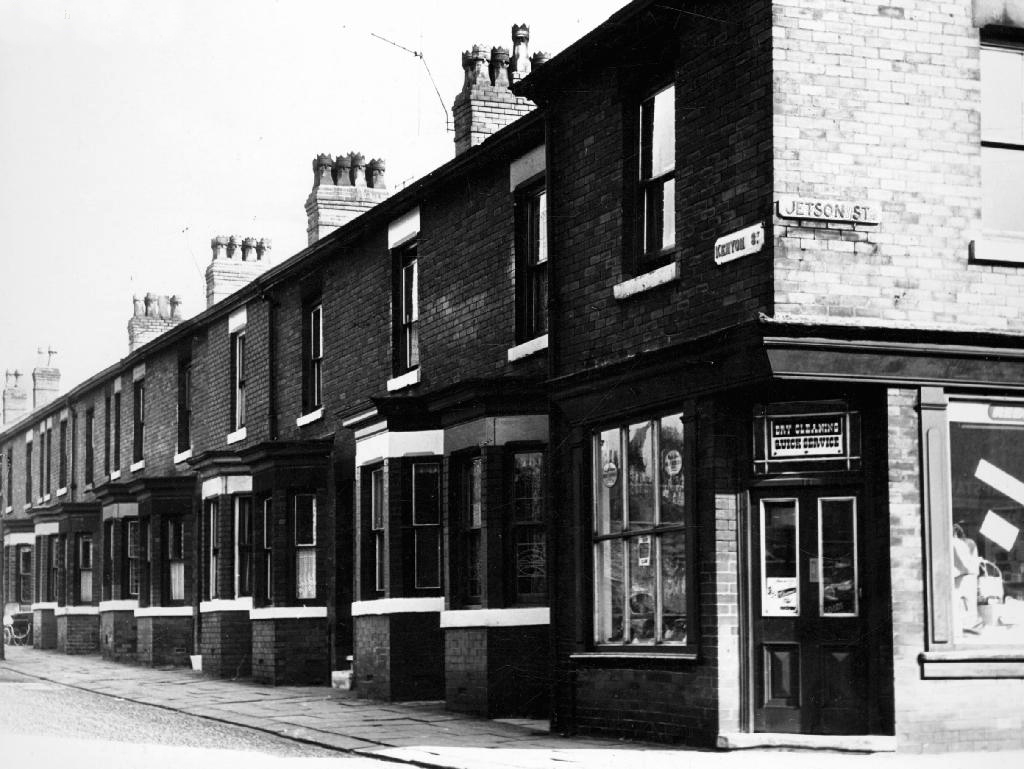
We are travelling backwards and forwards in time – firstly back to 1845 when the street was yet to be built, before the Industrial Revolution created the need for workers’ homes, to house the workers from the newly built workplaces, which also did not yet exist.
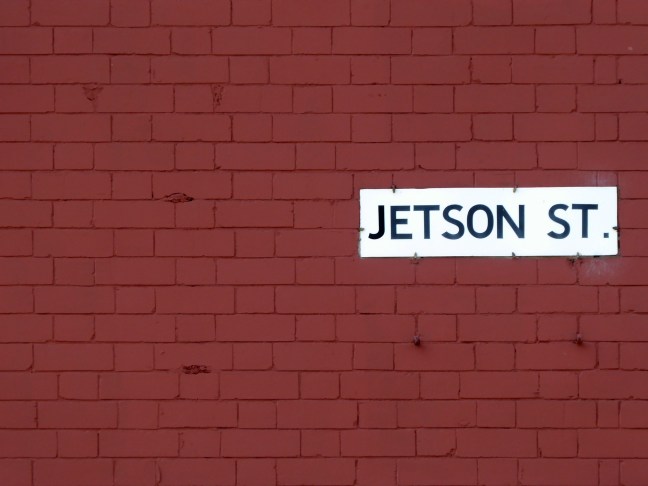
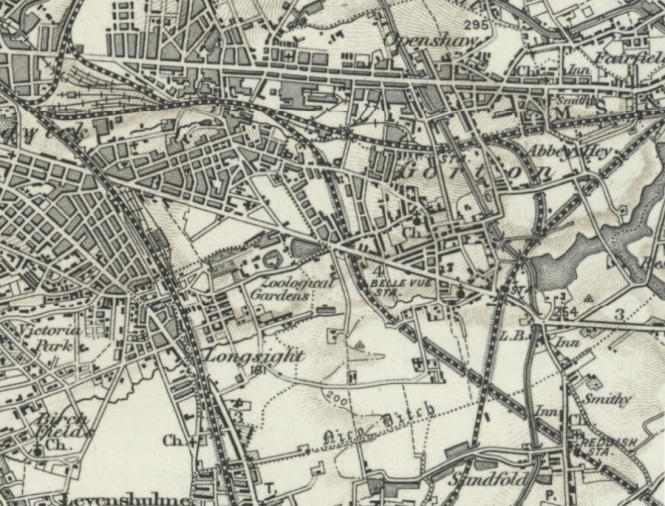
A little further forward to 1896 when Jetson Street has emerged fully formed from the fields, along with rail, road, amusement and industry.
1896
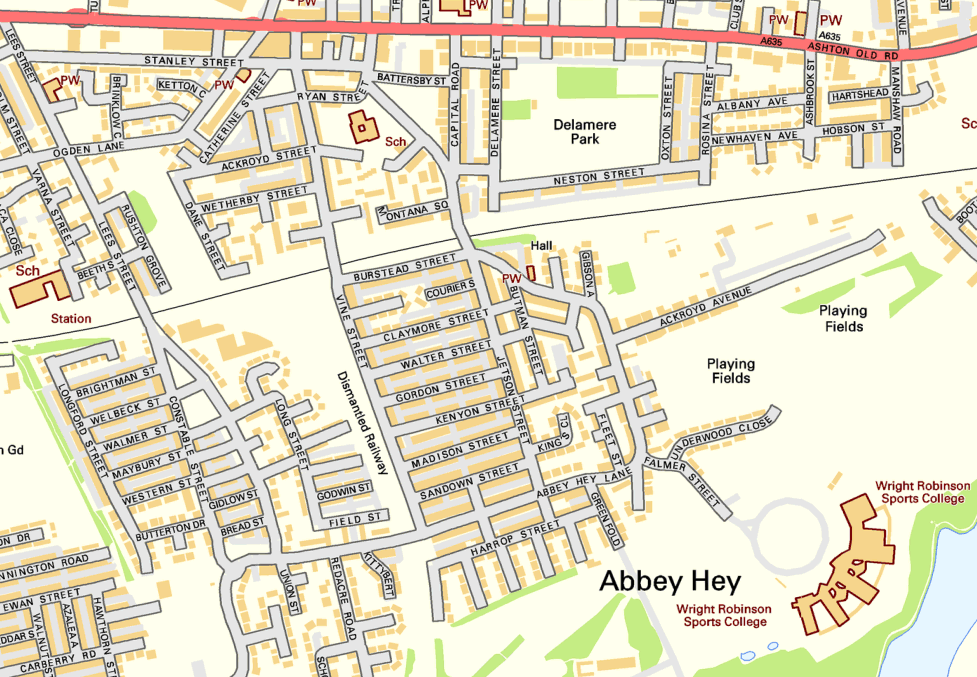
Fast forward to today and it’s all almost still there – though most of the work and the majority of the amusement has evaporated into a cloud of post-industrial, Neo-Liberal economic stagflation.
So why am I here – fast forward to the fictional future!
As a kid I watched as the Jet Age emerged before my very square eyes, giving the street a certain cosmic charm – I was curious.
I have searched online – this seems to be the one and only Jetson Street in the whole wide world – I searched online for its origins.
The name Jetson means Son Of Jet and is of American origin.
Which quite frankly seems unreasonably glib.
The name Jetson is from the ancient Anglo-Saxon culture of the Britain and comes from the names Judd and Jutt, which are pet forms of the personal name Jordan. These names are derived from Jurd, a common abbreviation of Jordan, and feature the common interchange of voiced and voiceless final consonants.
The surname Jetson was first found in Hertfordshire where they held a family seat from very ancient times, some say well before the Norman Conquest and the arrival of Duke William at Hastings in 1066 A.D.
Which quite frankly seems unreasonably obscure.
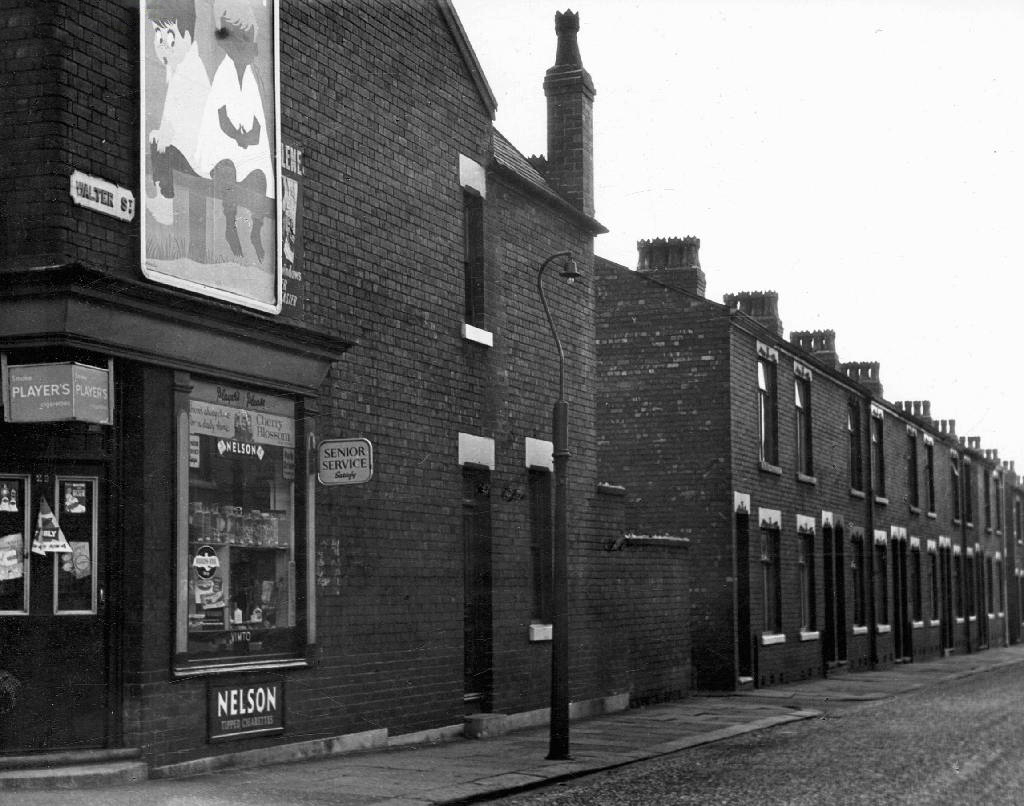
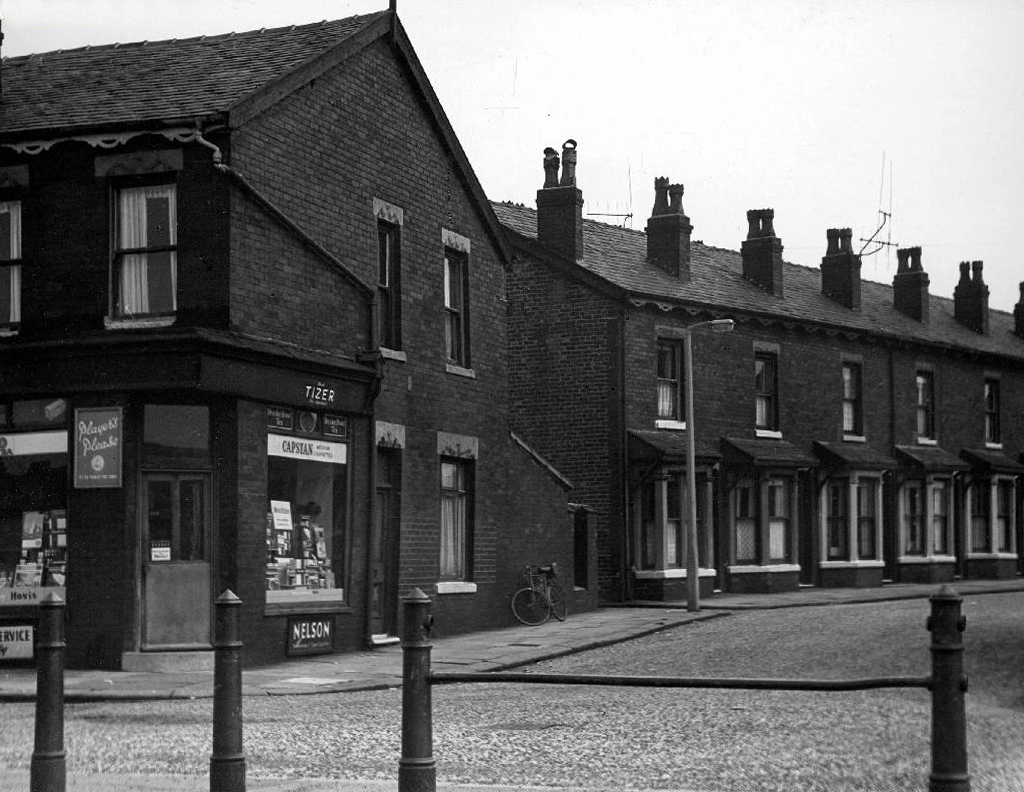
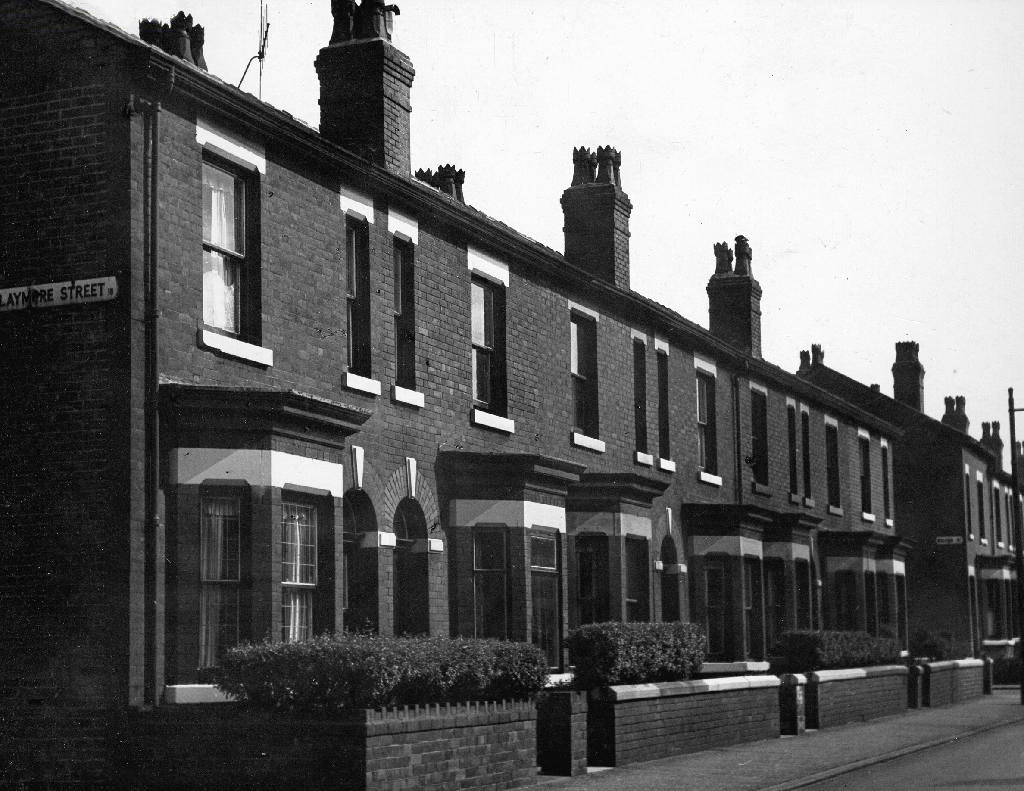
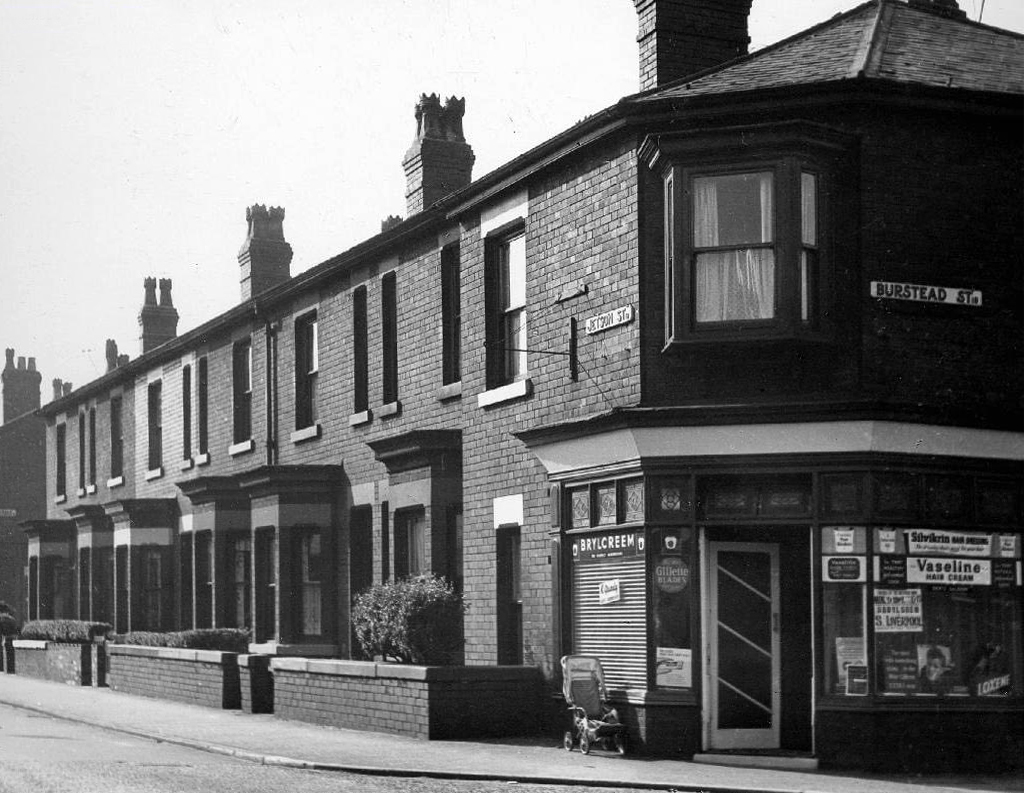
Let’s jet back to 1964.
T Brooks wandered these streets taking thousands of photographs for the Manchester Corporation, possibly the housing or highways departments – they all still exist here on the Local Image Collection.
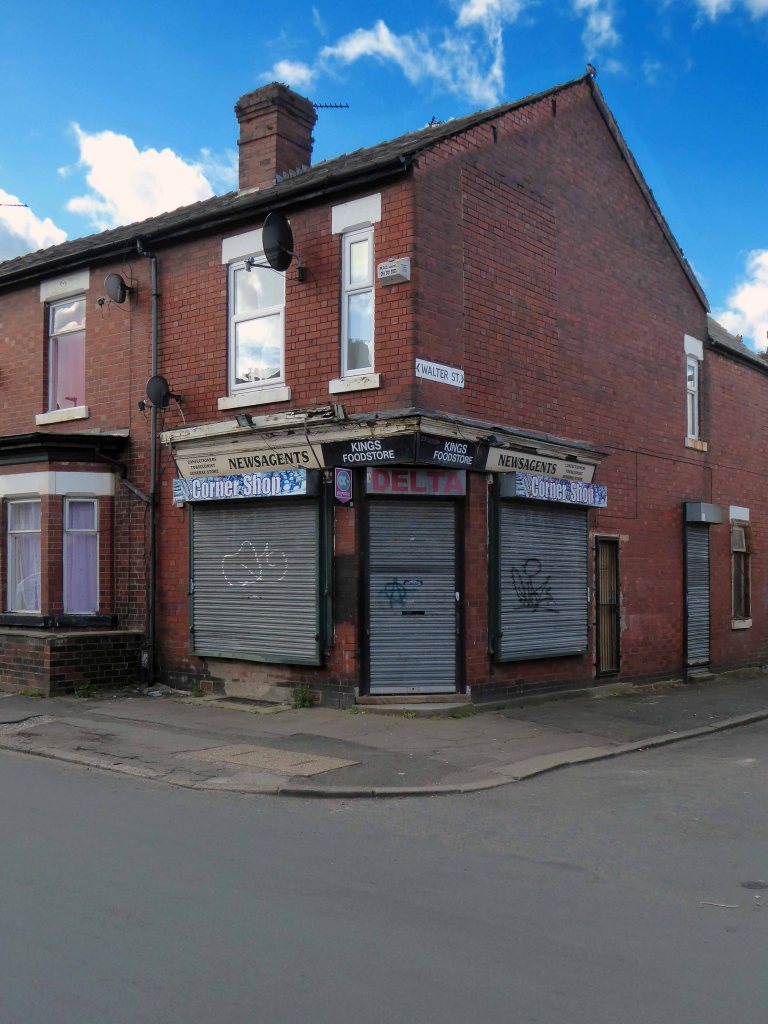
This was a world of corner shops on ever corner, settled communities full-employment, neatly ordered rows of sturdy brick-built homes.
I follow in his hallowed footsteps, what if anything remains of this world – fast forward to 2015 my first fleeting visit.
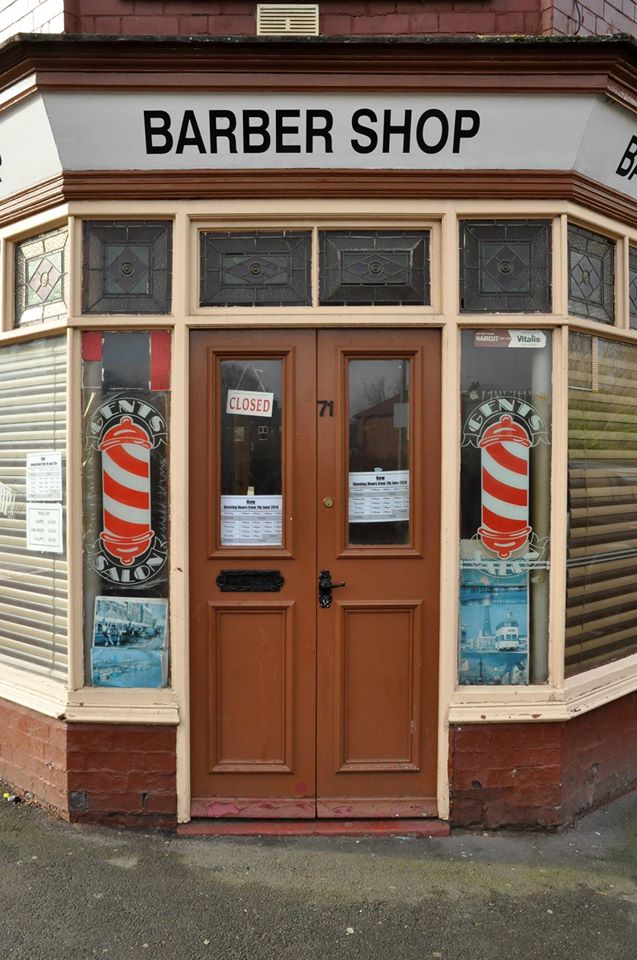
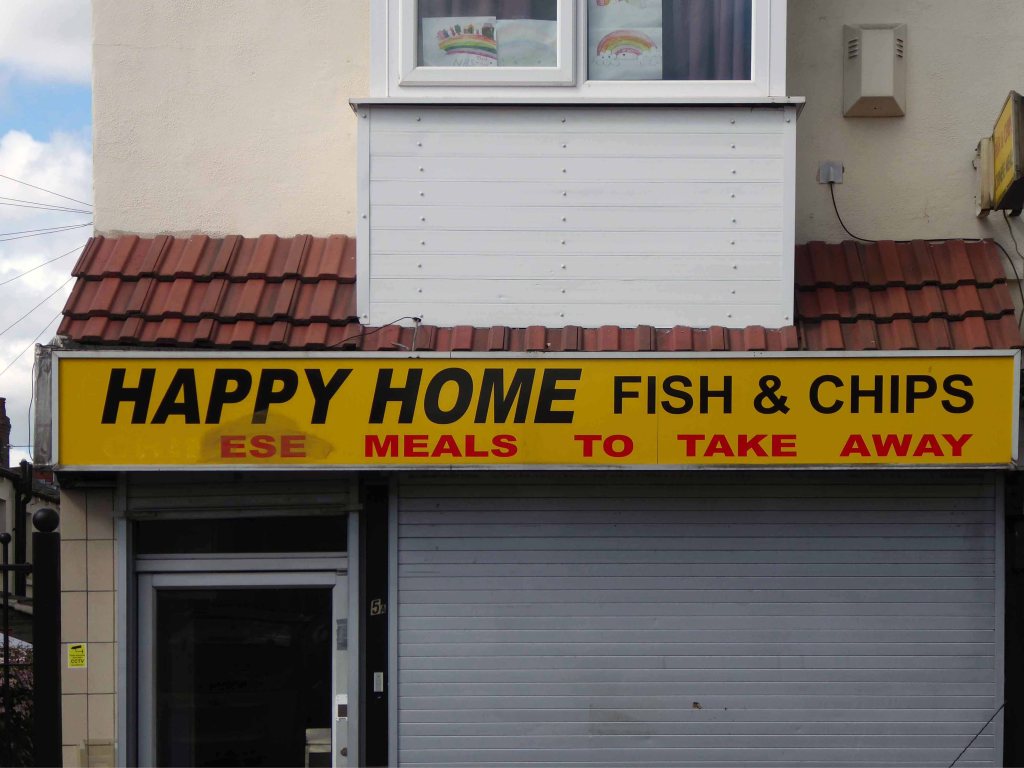
Now trading as Happy HomeA barber shop no more
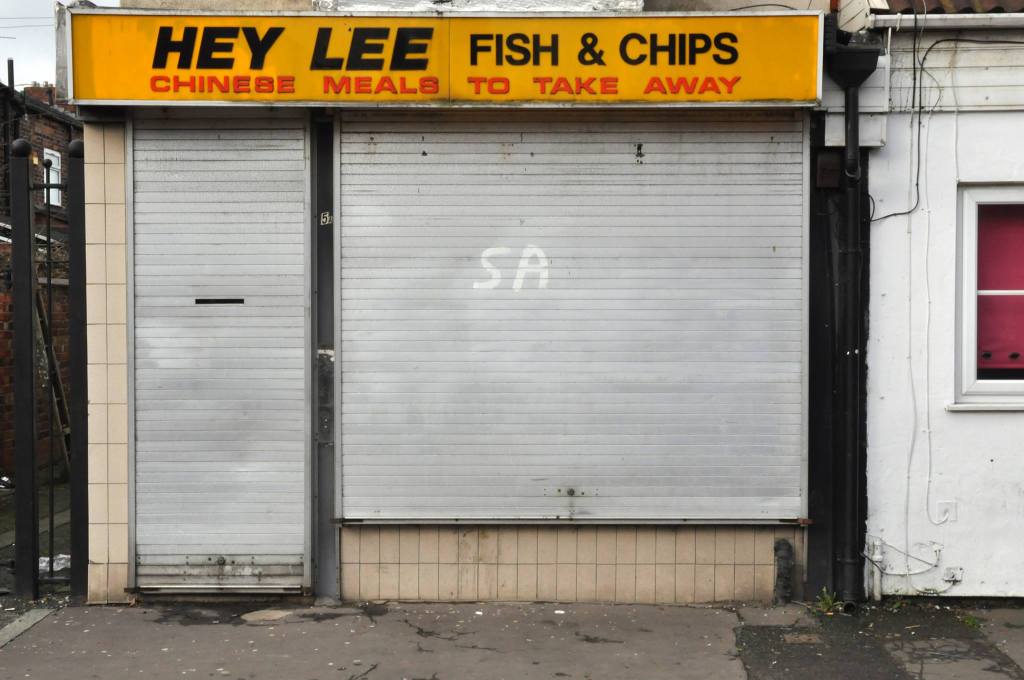
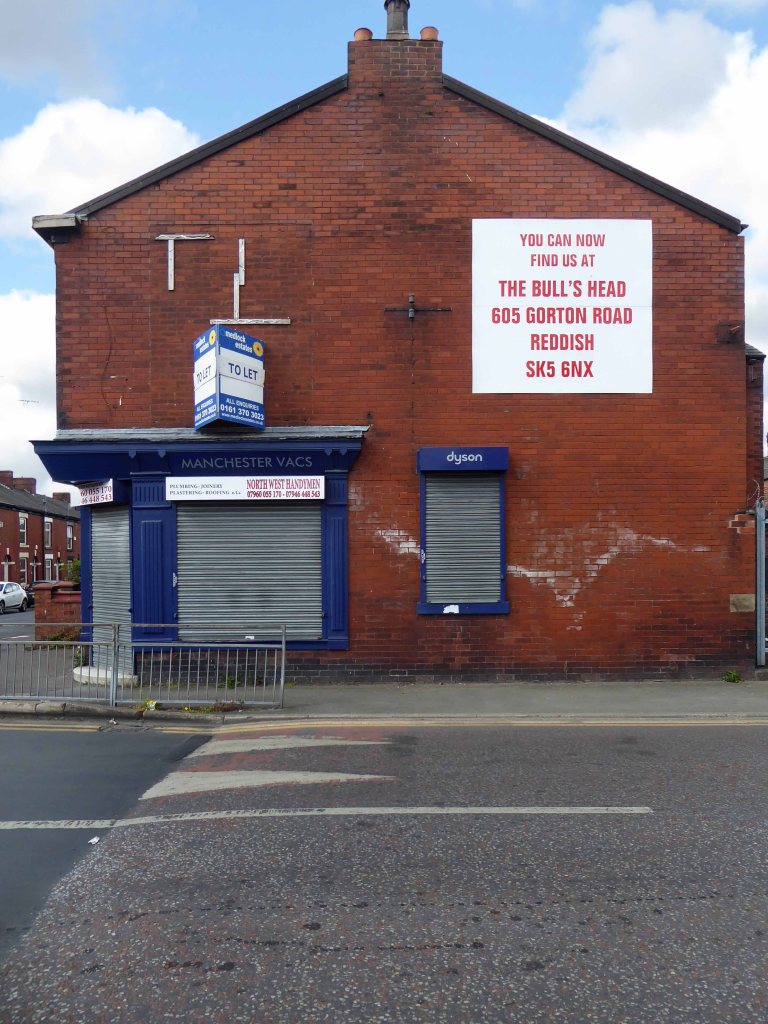
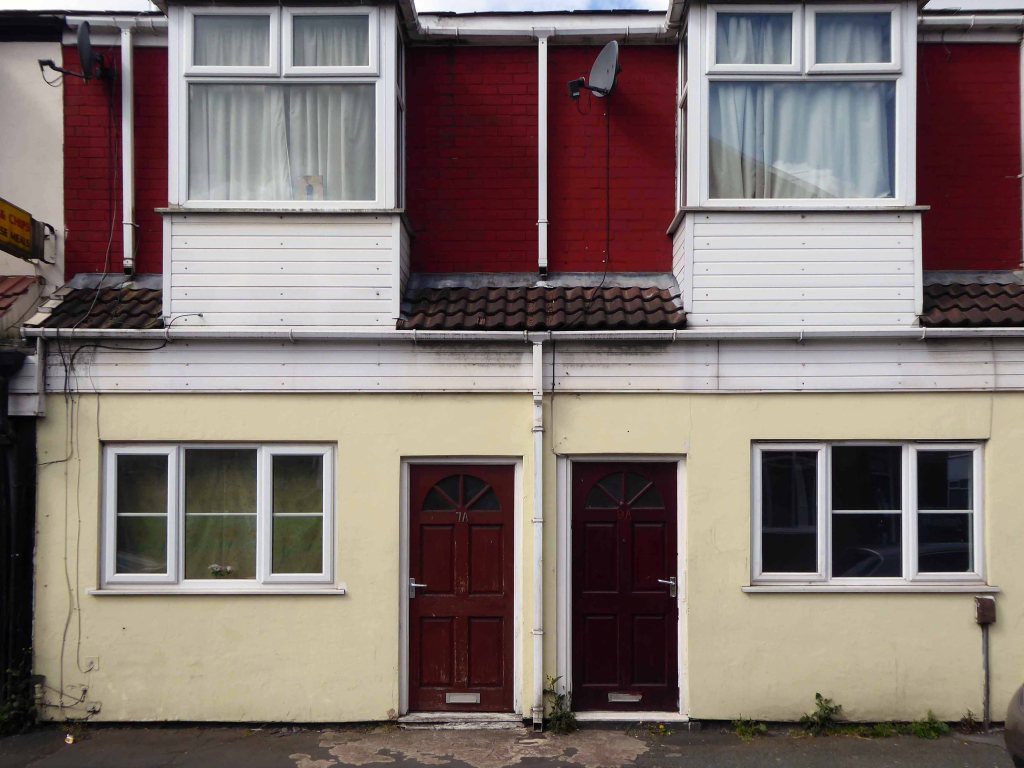
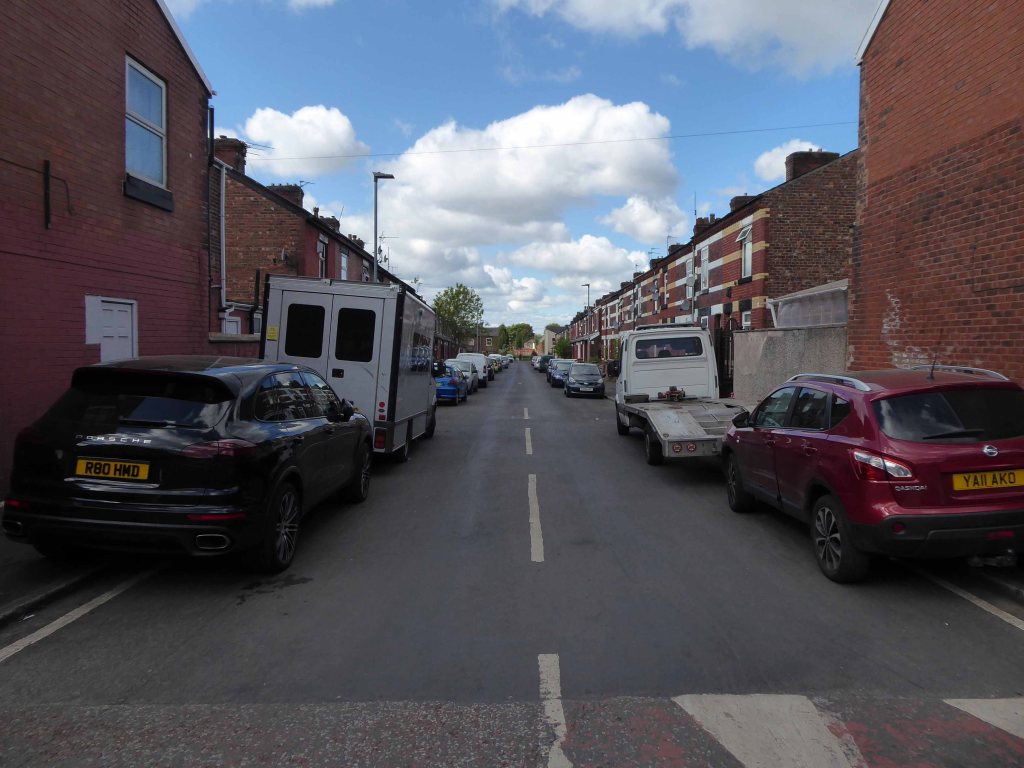
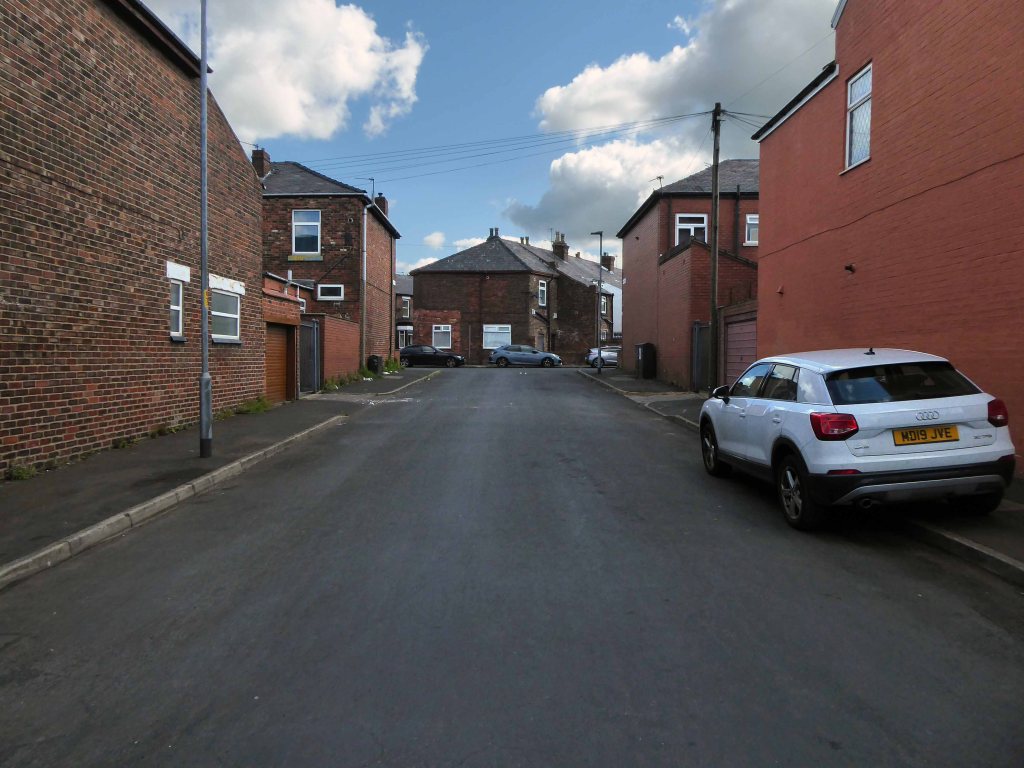
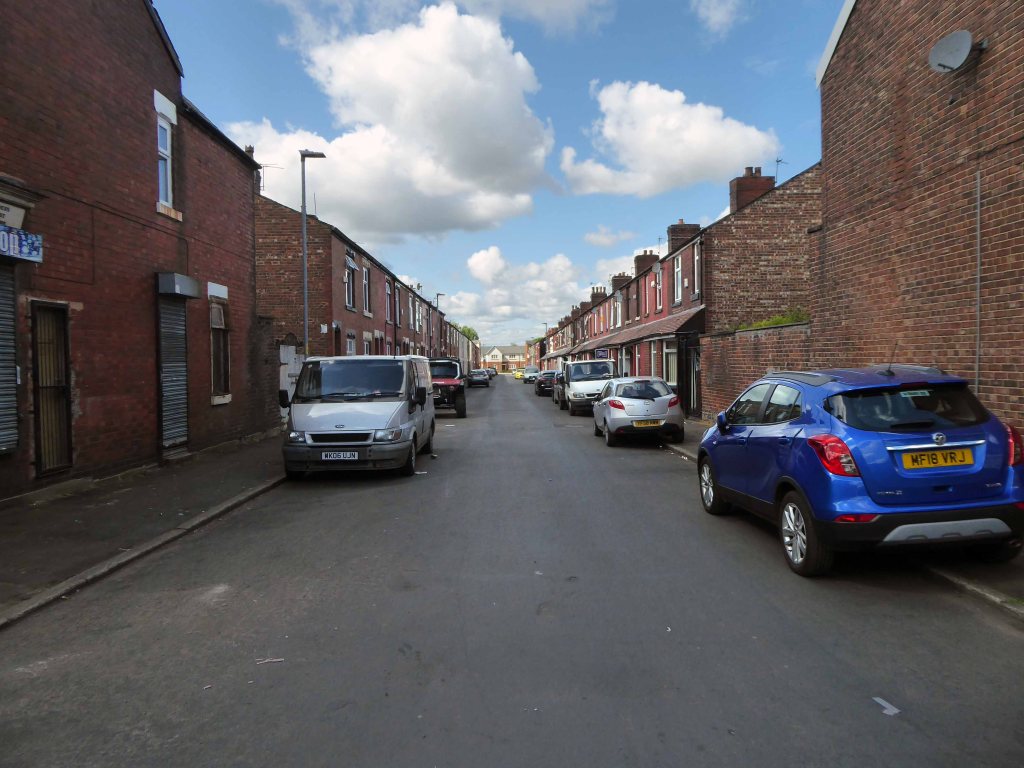
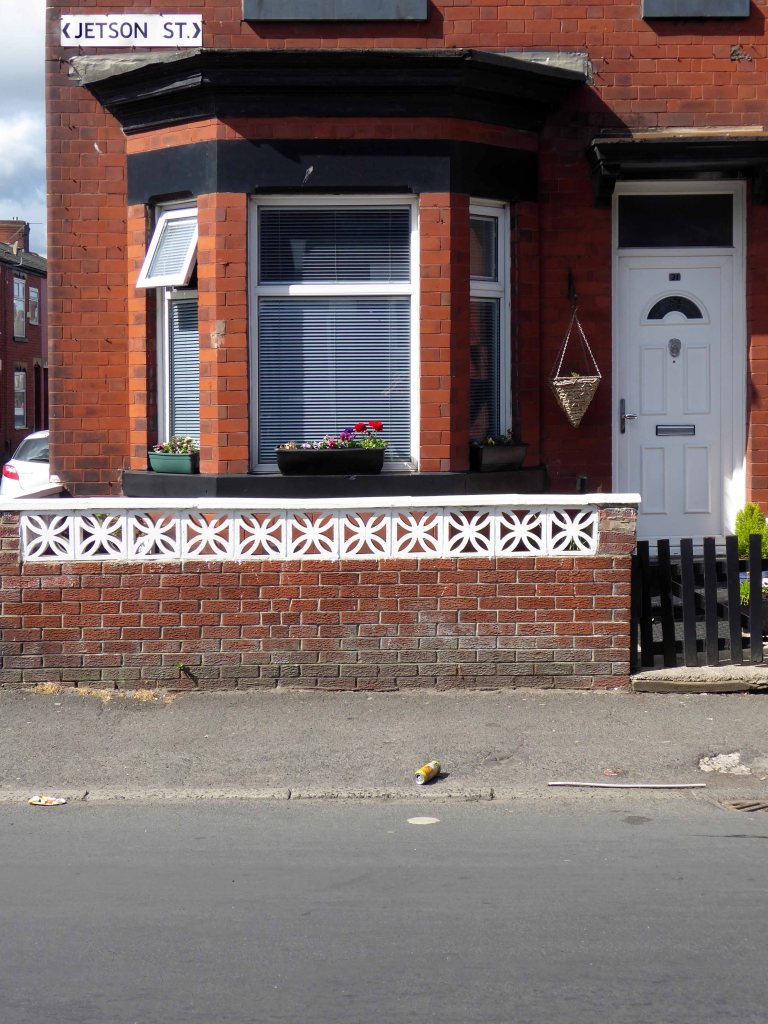
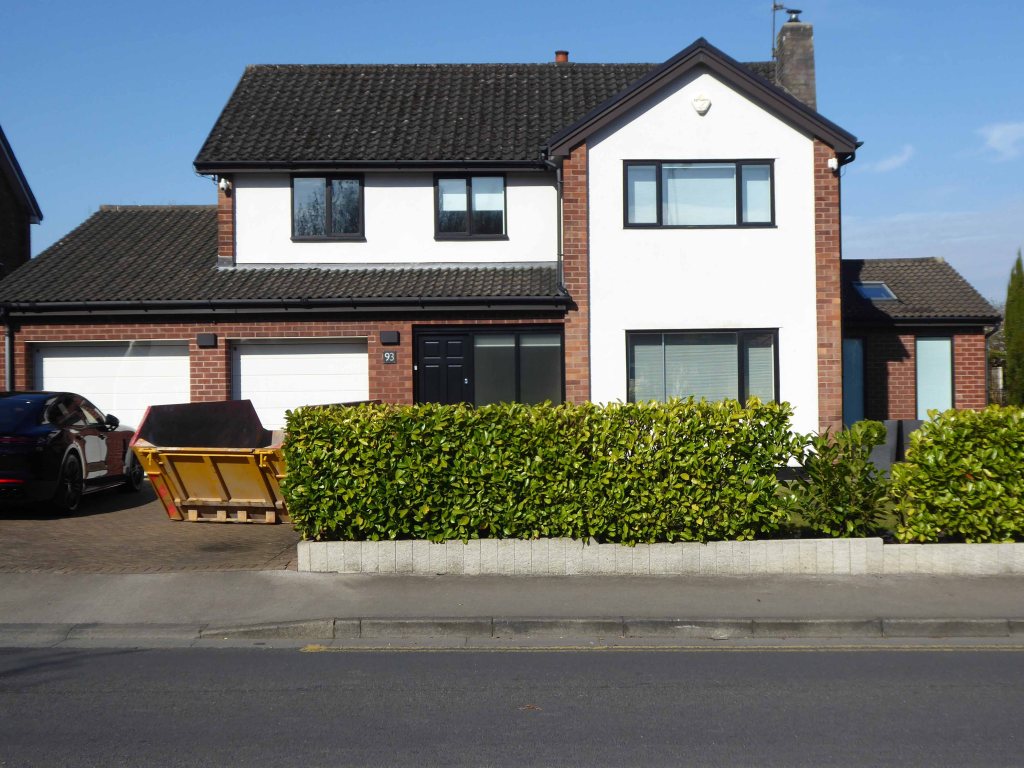
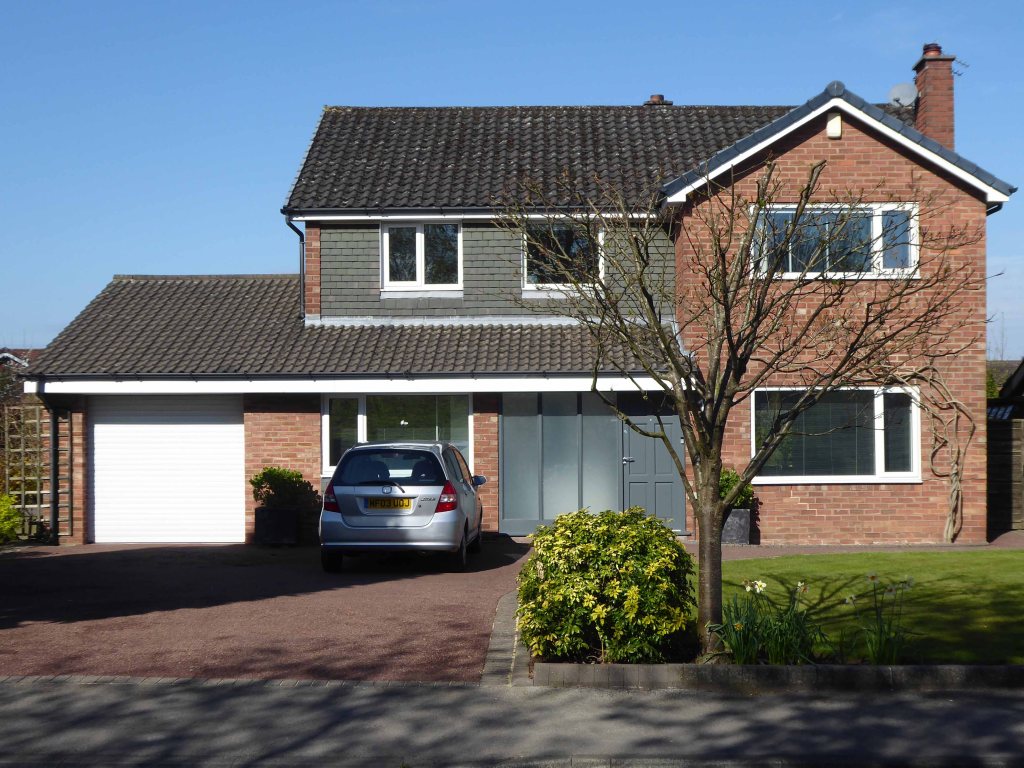
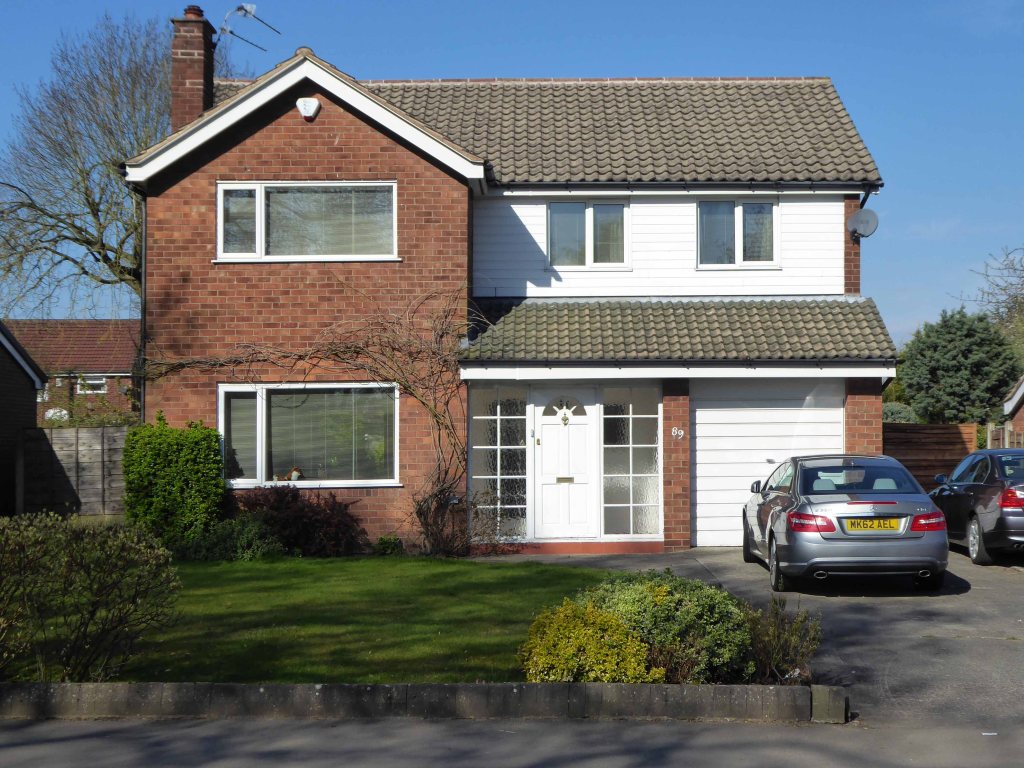
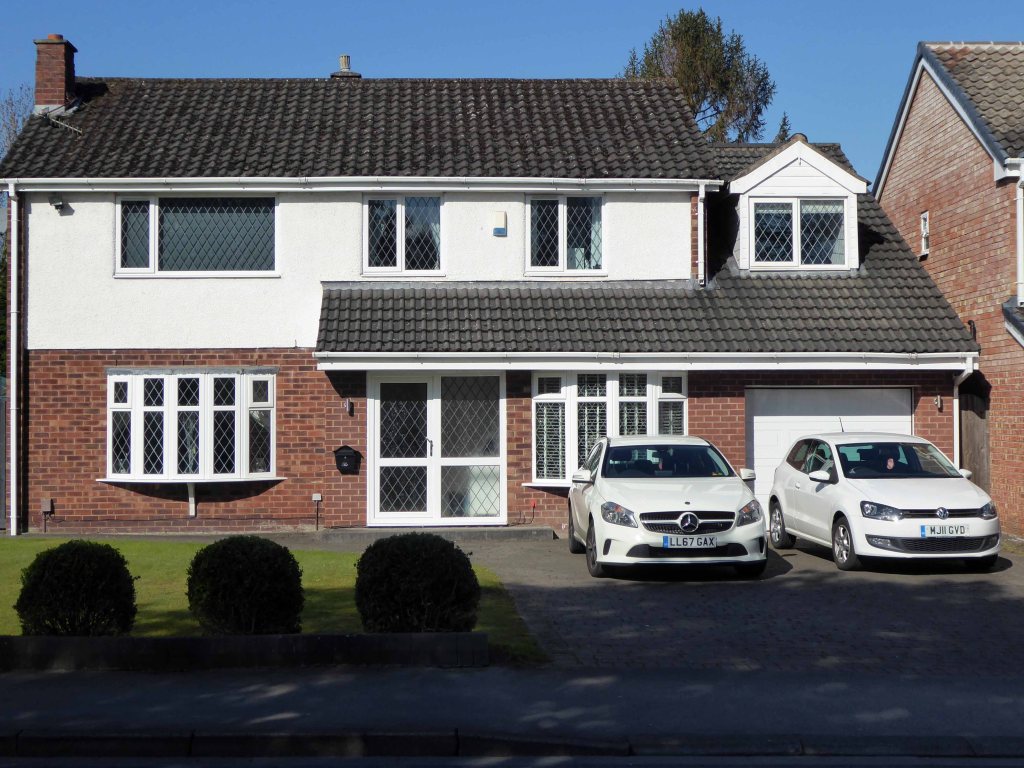
The area now has a richer racial mix – having recently become home to many African and Eastern European families. The architectural consistency of the houses has been swamped by render, window frame replacement, addition and extension, and the arrival of a plethora of motor cars. The majority of shops now long gone, as the once pedestrian community spread their retail wings and wheels elsewhere.
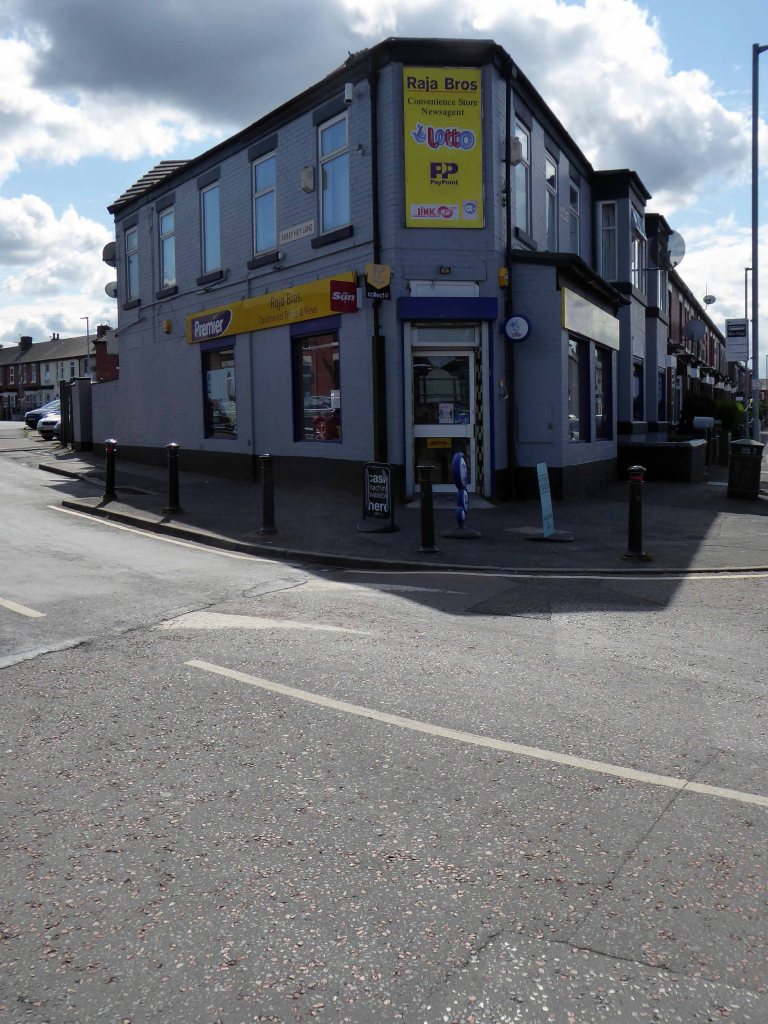
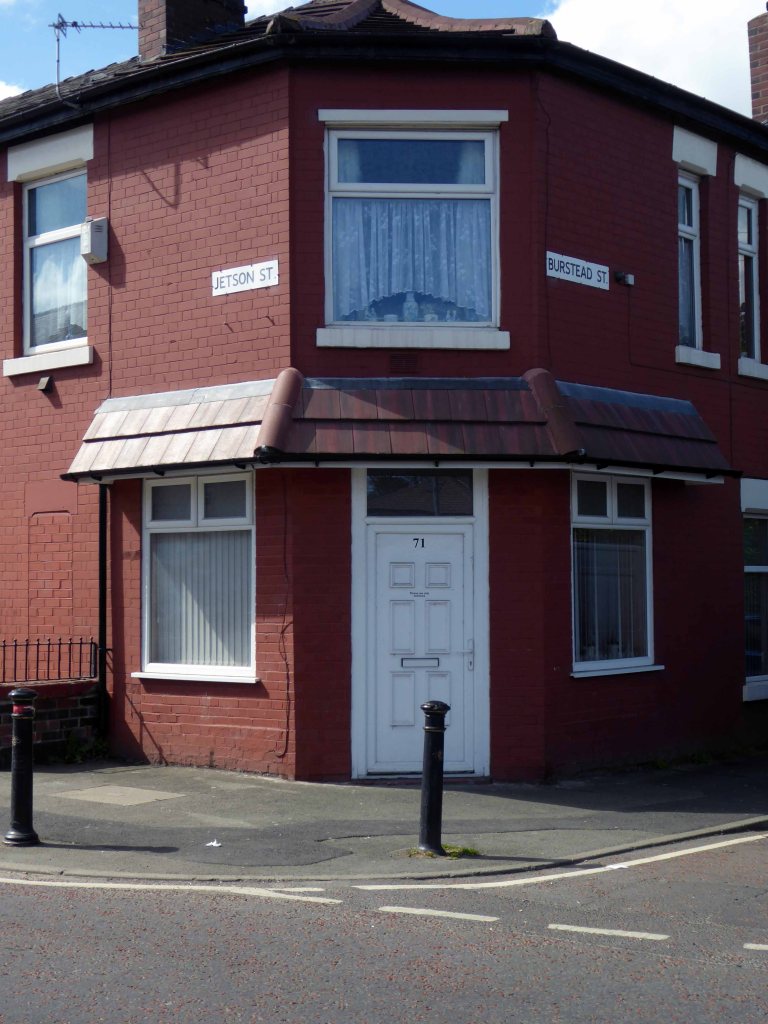
Jetson Street – NorthSandown StreetKings CloseMadison StreetKenyon StreetKenyon StreetSign of the timesGordon StreetJetson Street – NorthJetson Street – SouthWalter StreetWalter StreetClaymore StreetClaymore StreetCourier StreetThe only remaining front doors and tiled porch every other having been given over to the allure of uPVC and the enclosed doorwayMy on street correspondent congratulated the Raja Brothers on the sound service they had provided during these difficult times.Where the barbers wasBurstead StreetAbbey Hey Lane
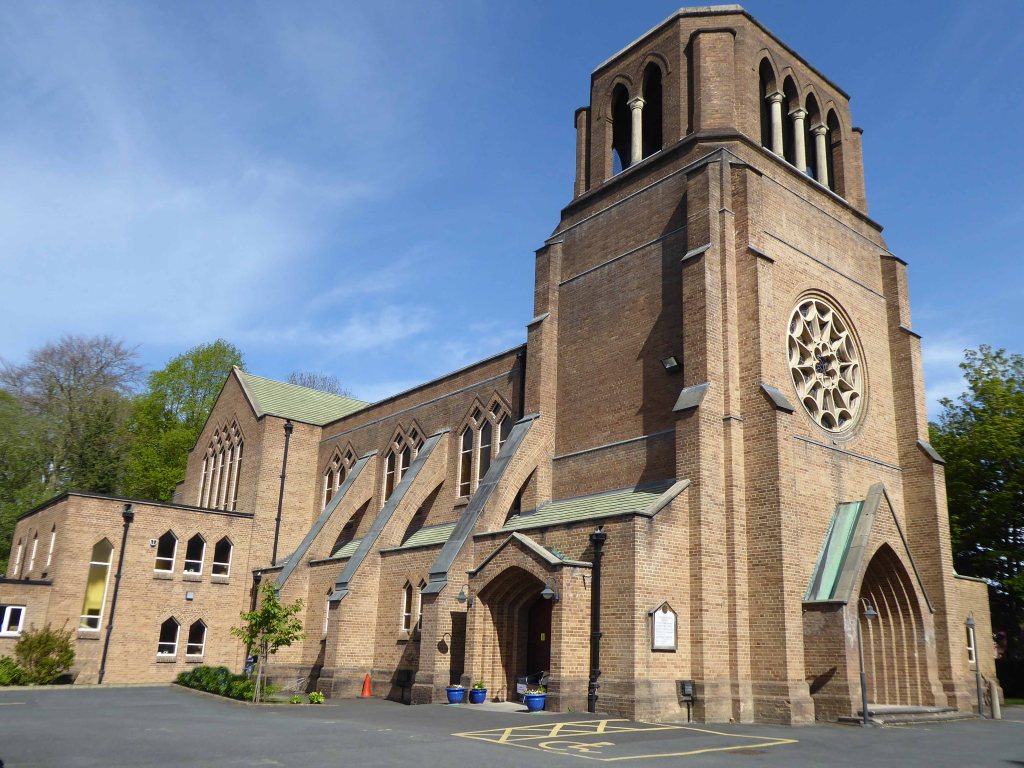
The magnum opus of the architect Arthur Farebrother, who was a parishioner. The church is executed in monumental style and has a powerful and little-altered interior which owes a debt to Dom Paul Bellott’s design for the Benedictine Abbey of Quarr, Isle of Wight.
The parish was formed in 1958 and fundraising for building a church started almost immediately. The church was designed by Arthur Farebrother, a parishioner, and the contractors were Browns of Wilmslow, a craft firm with a high reputation particularly for woodwork and carving. The building was finally opened in 1964.
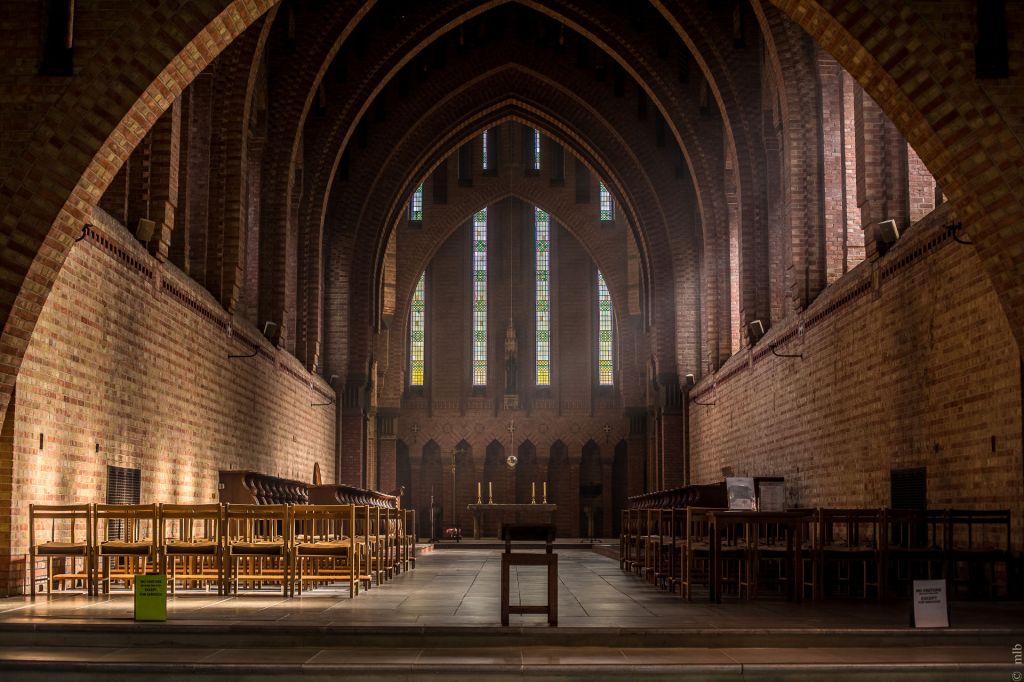
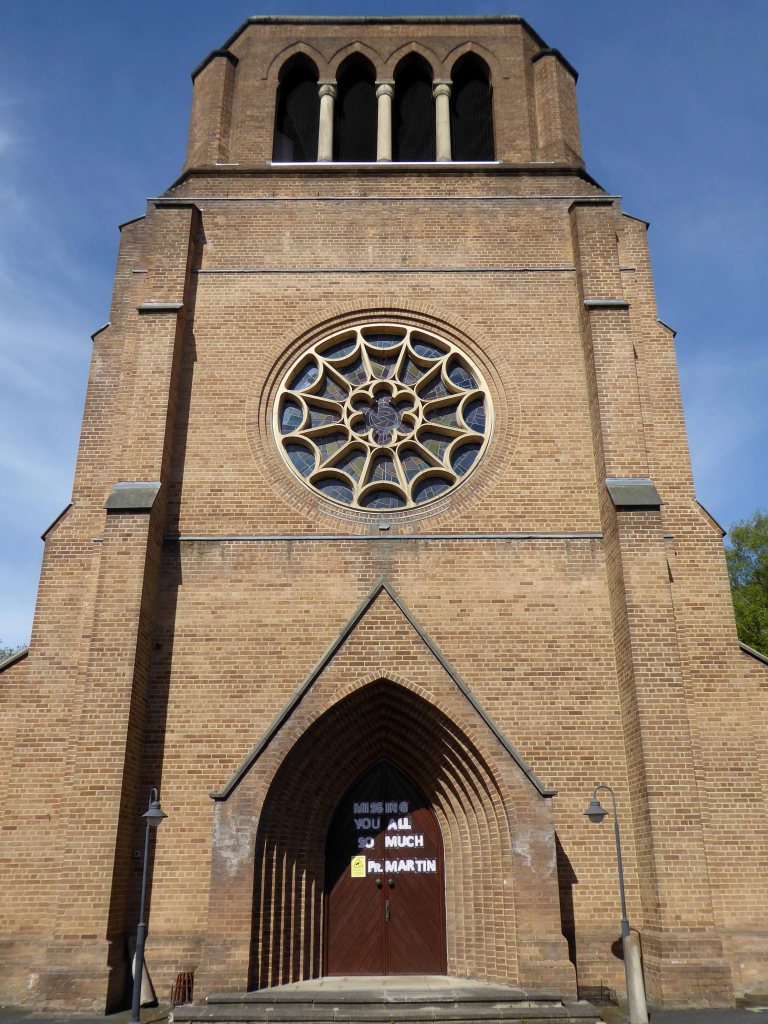
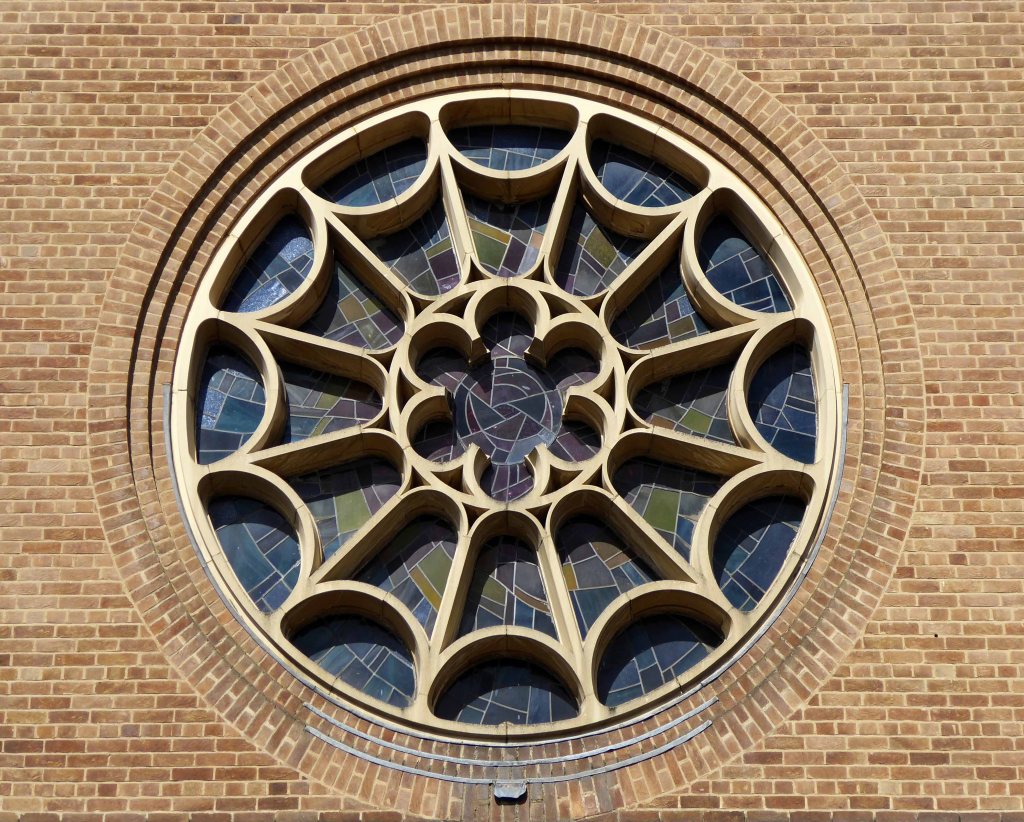
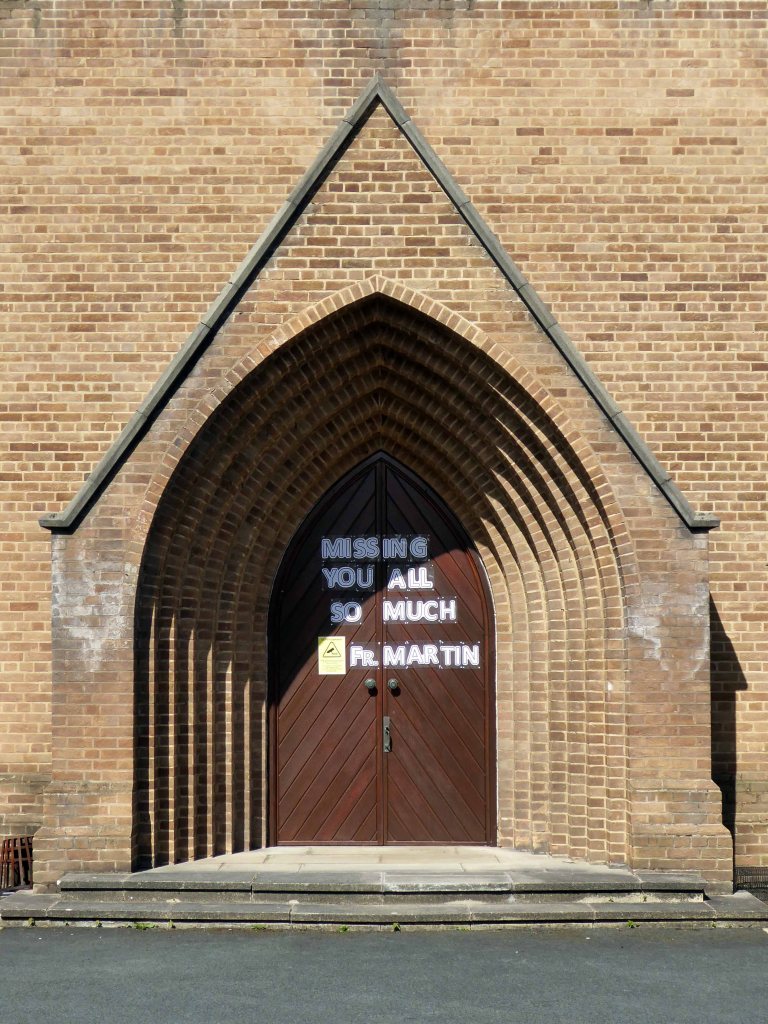
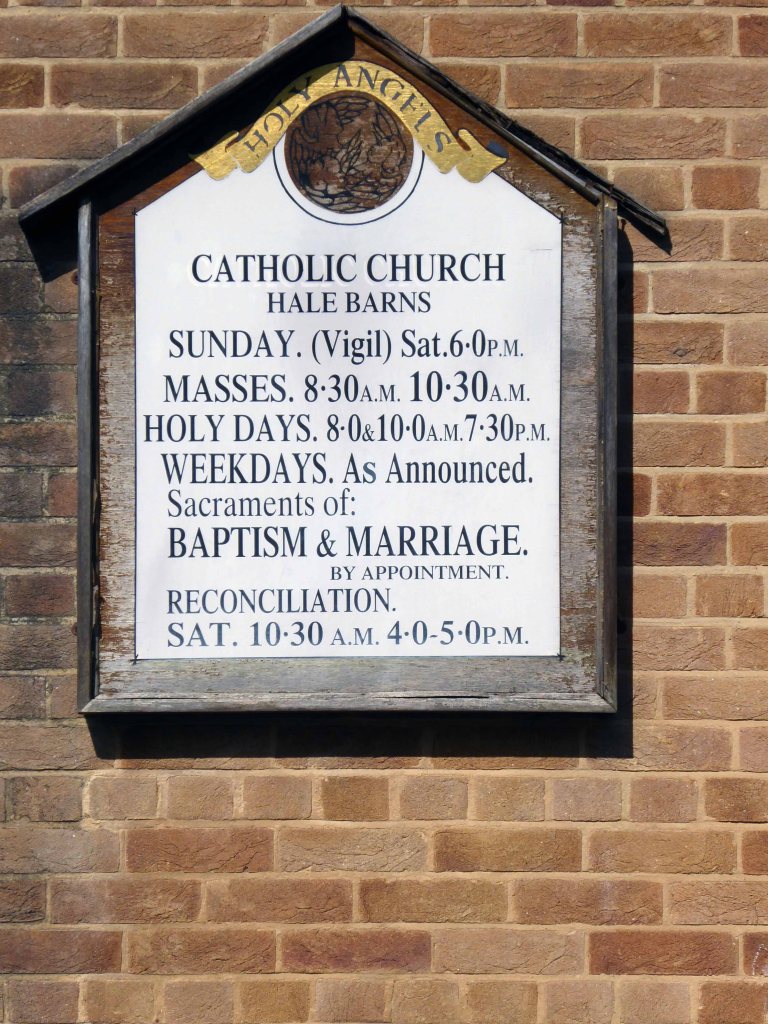
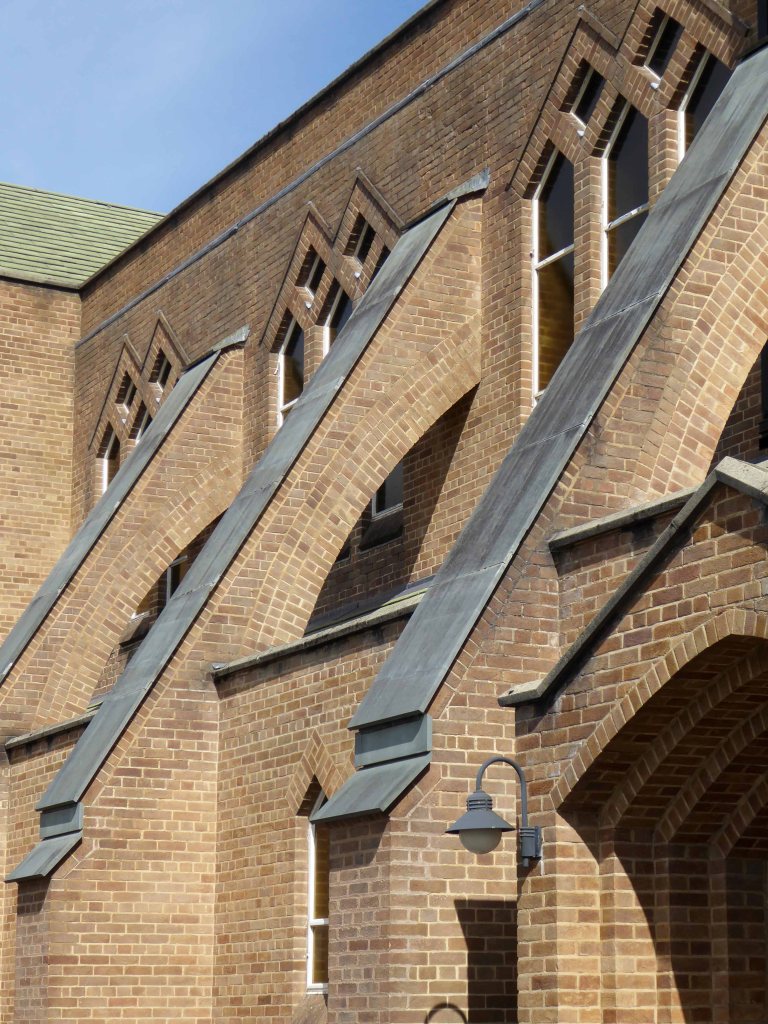
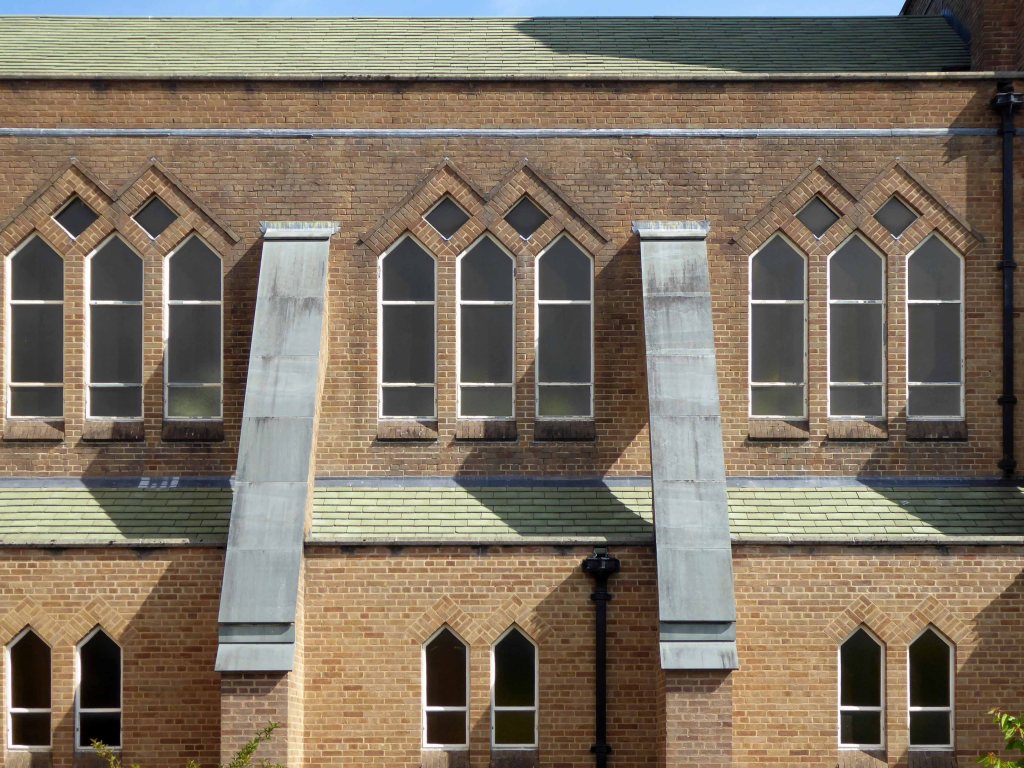
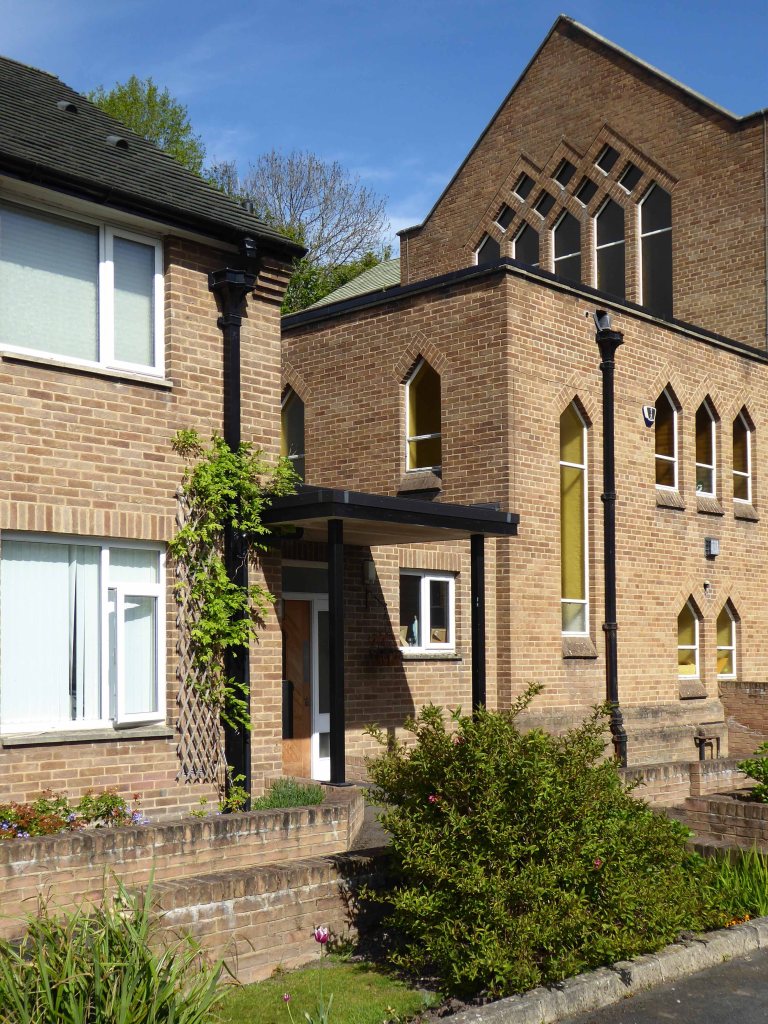
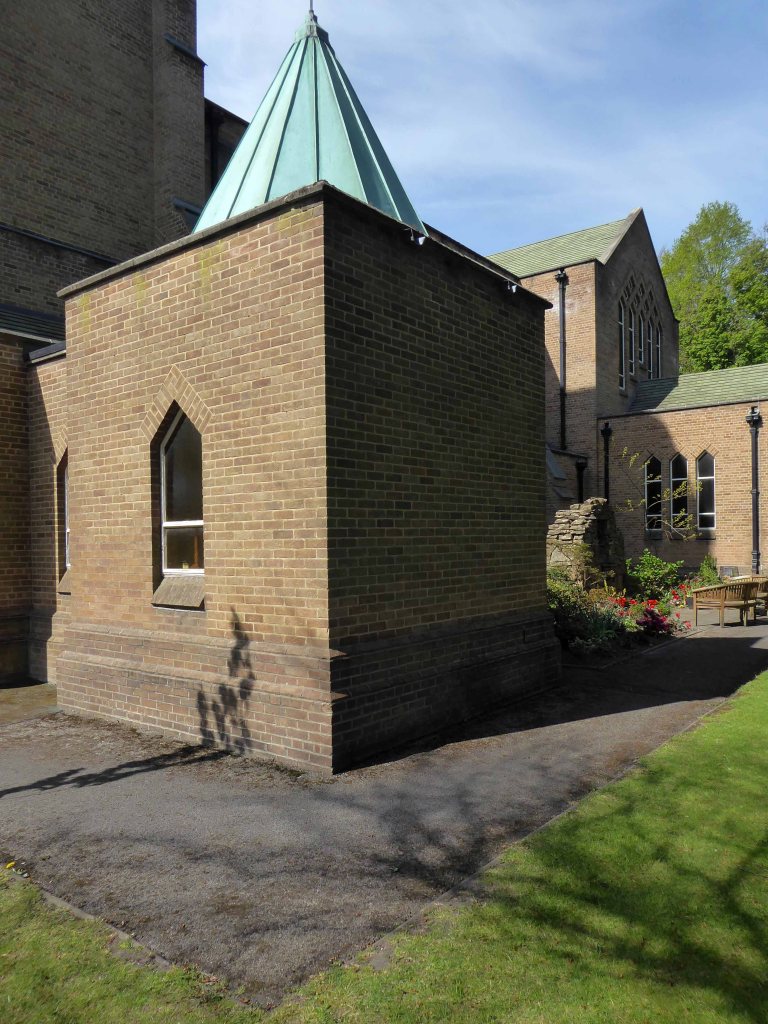
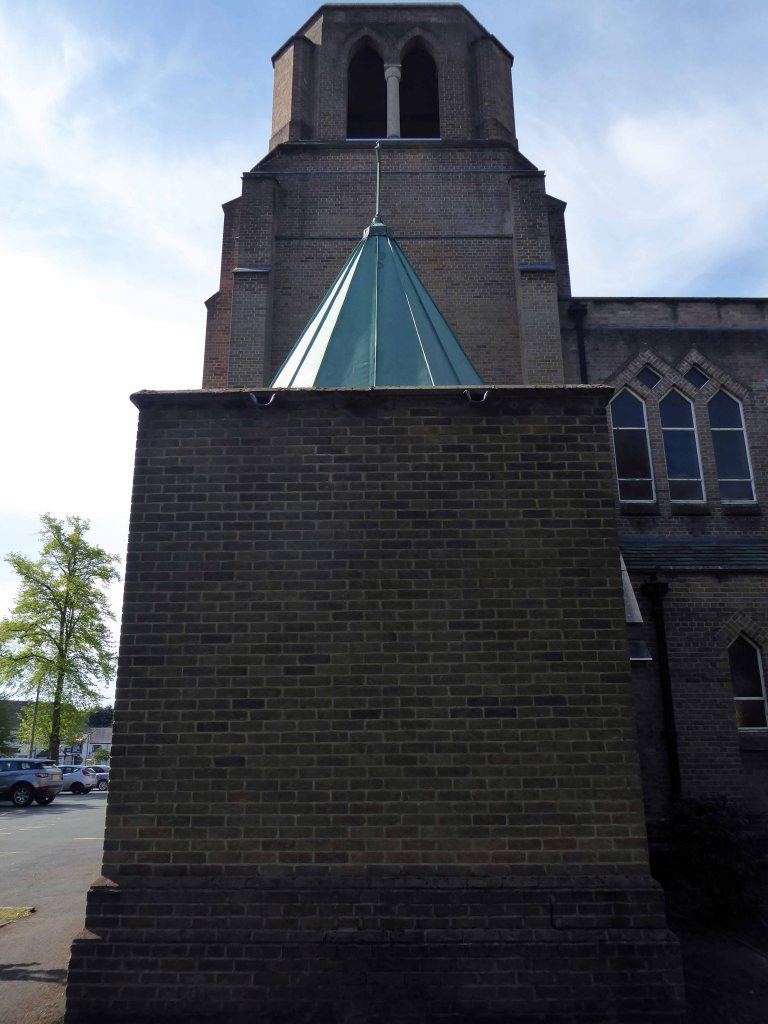
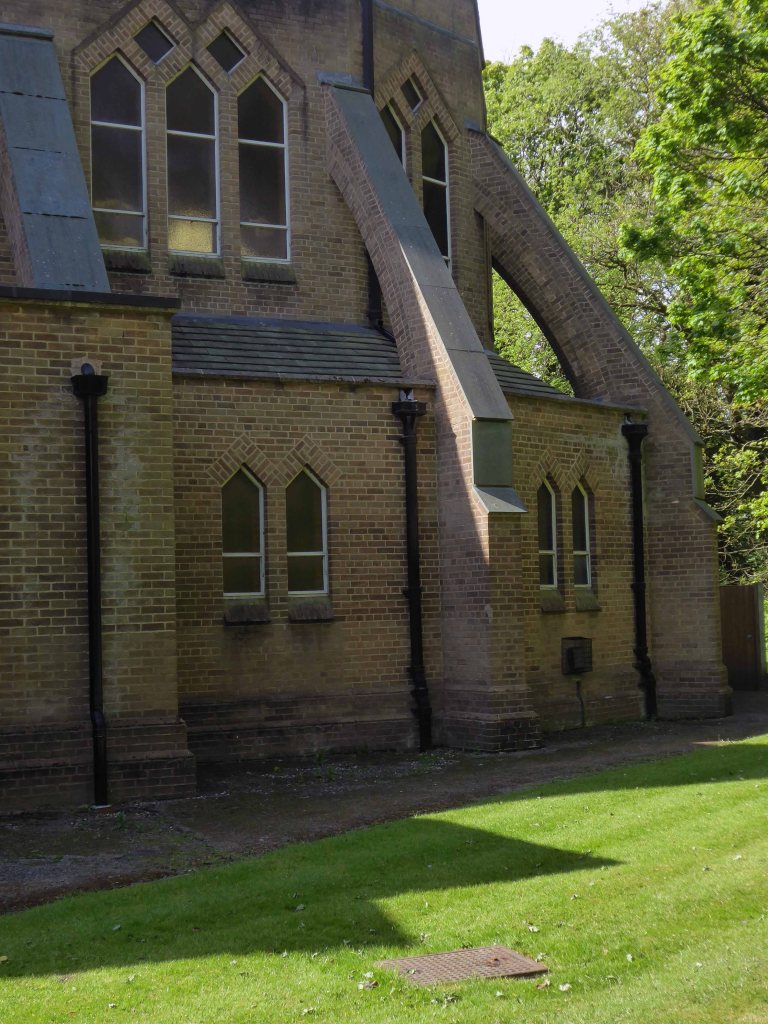
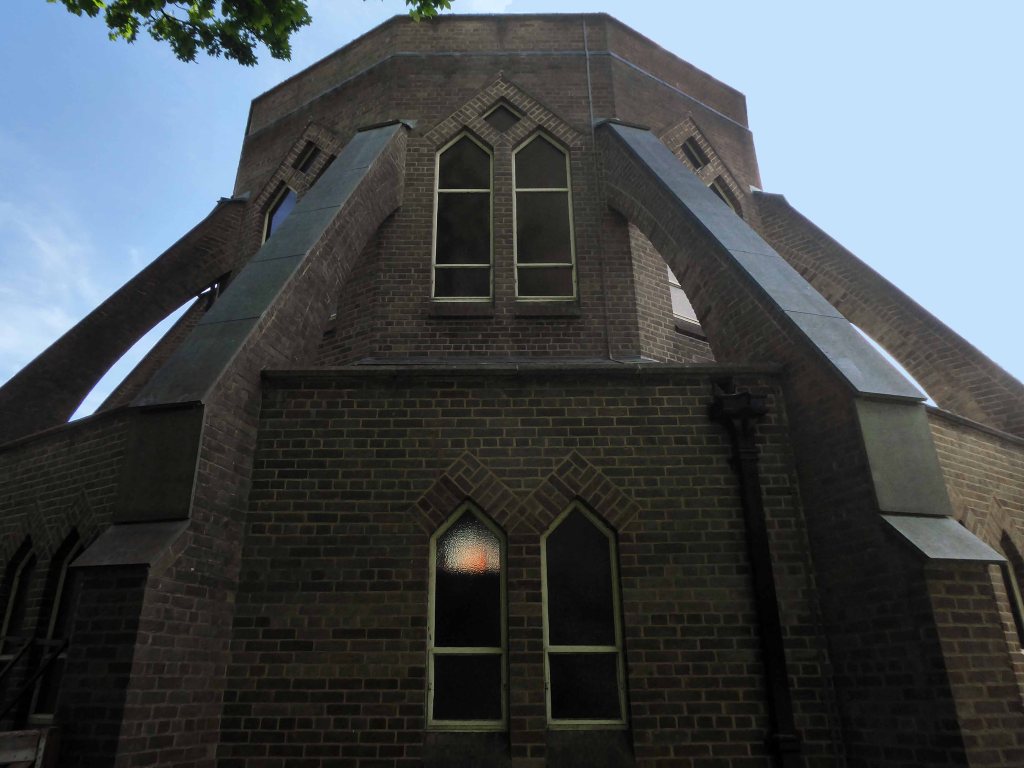
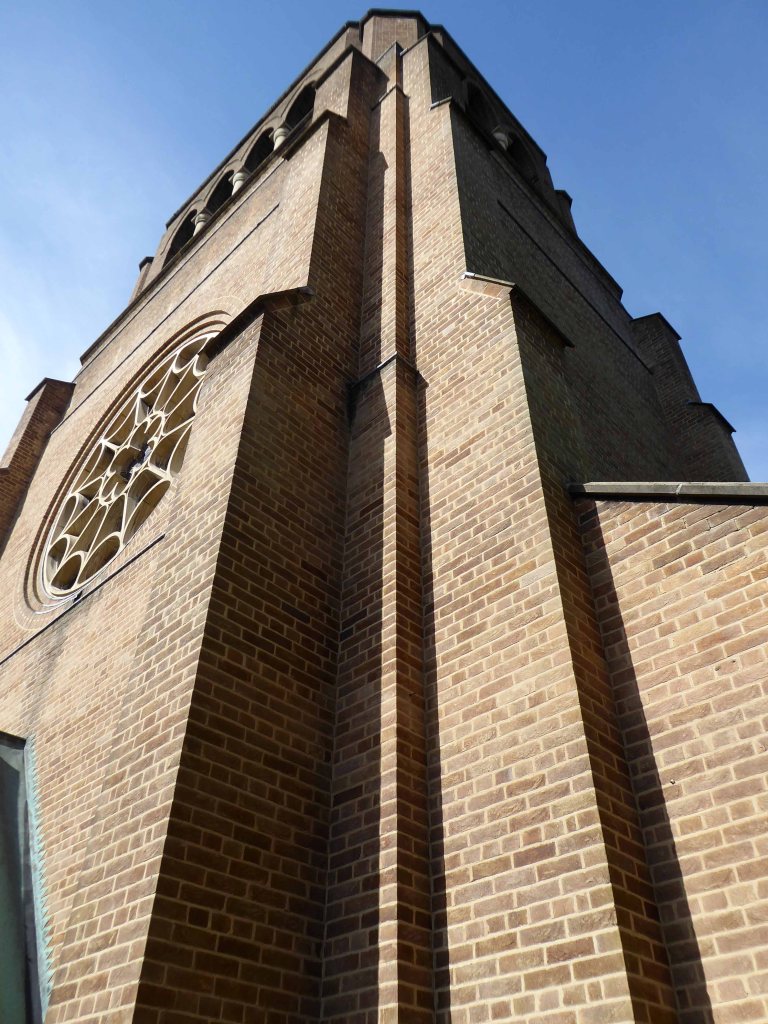
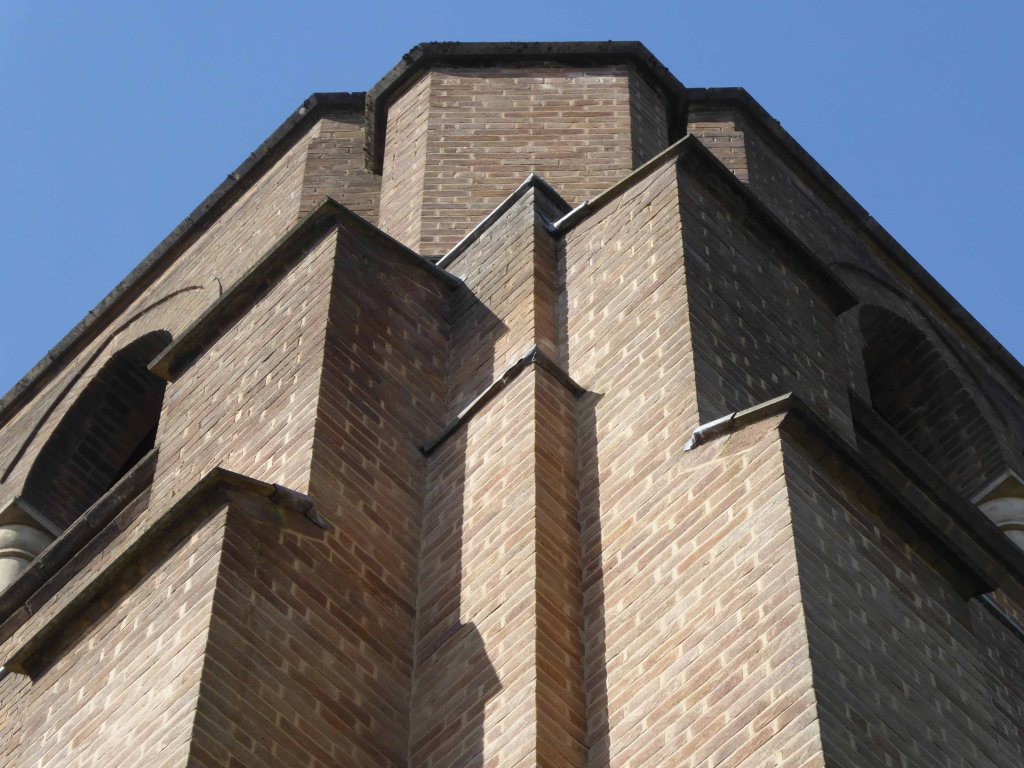
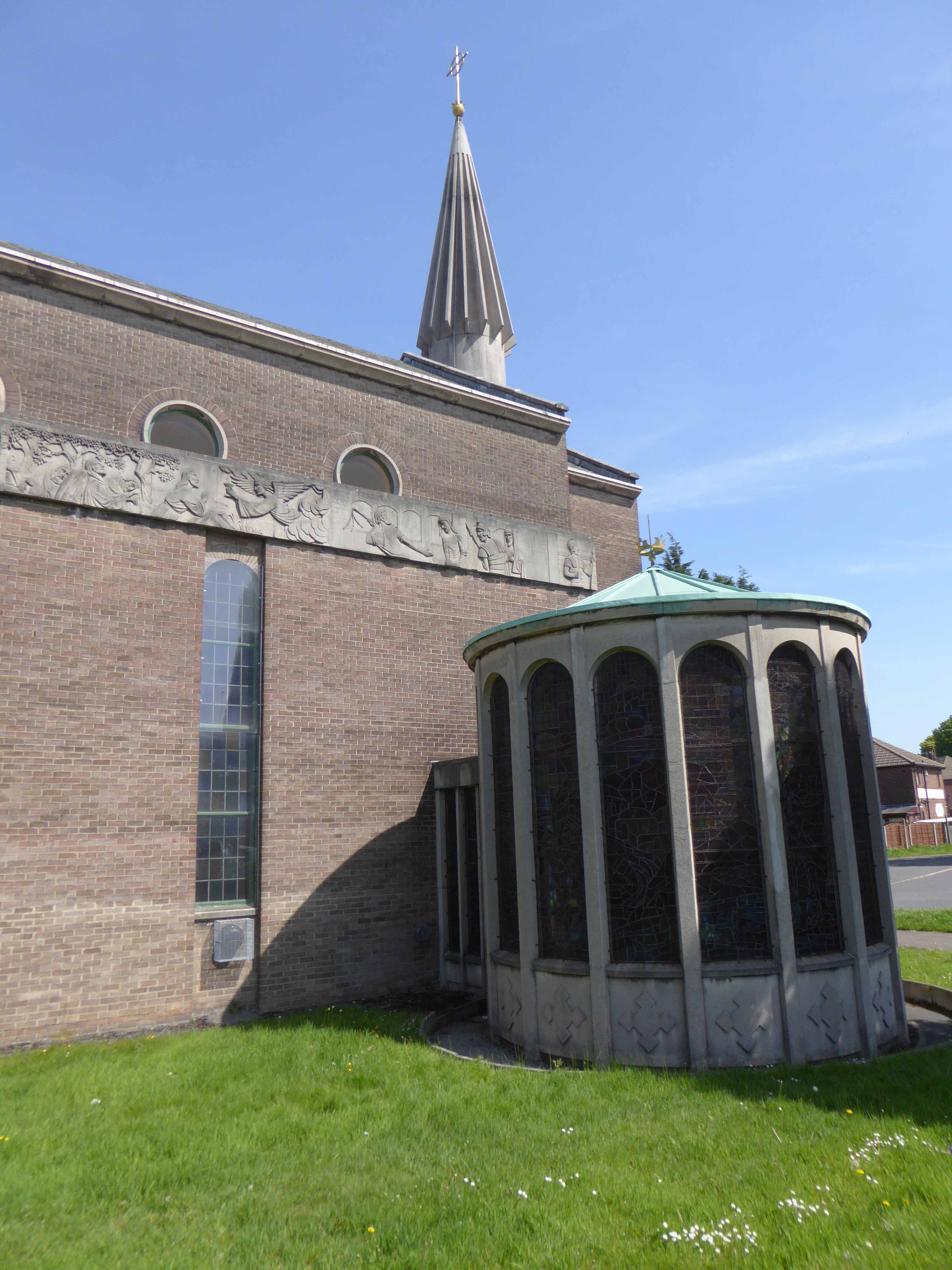
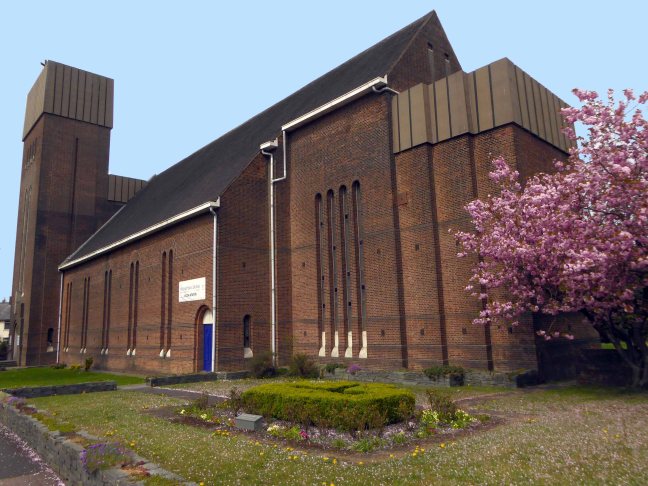
Holy Angels is a building of great presence, of pale brick executed in free early Gothic style with Romanesque overtones. It has a powerful pylon-like west tower, transeptal chapel, attached southwest baptistery with a conical copper-clad roof, and a plain presbytery attached on the north side. The interior is dominated by the powerful brick arches which continue into the ceiling as vaulting. Narrow processional aisles and ambulatory. The north side confessionals are framed by a timber surround. Elevated forward altar with choir seating around in an arc. The simple modern furnishings are probably original.
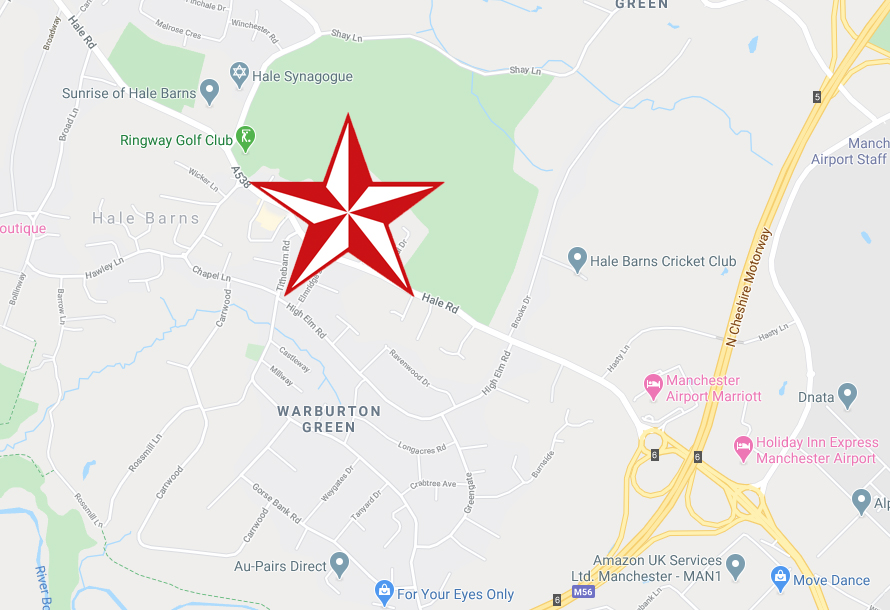
I was in search of All Saints just along the way in Hale Road, but came upon Holy Angles looming large on the corner.
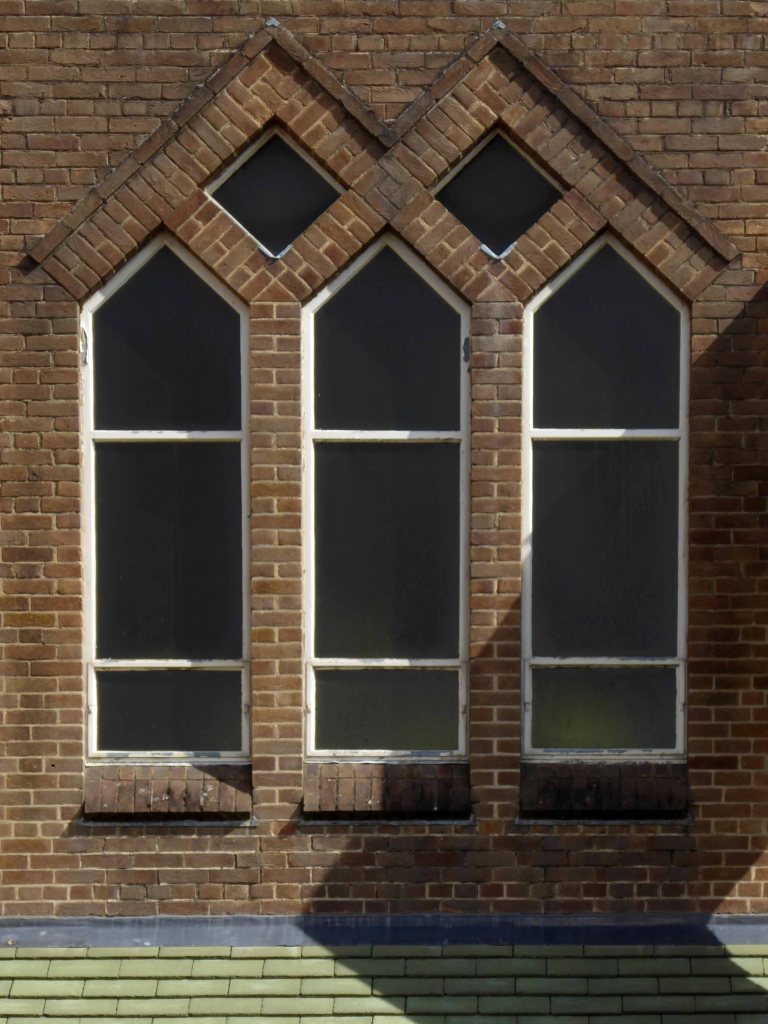
A commanding essay in pale brick, though referencing architecture of the Middle Ages, it has a transitional modernity in its angular Arts and Crafts details.
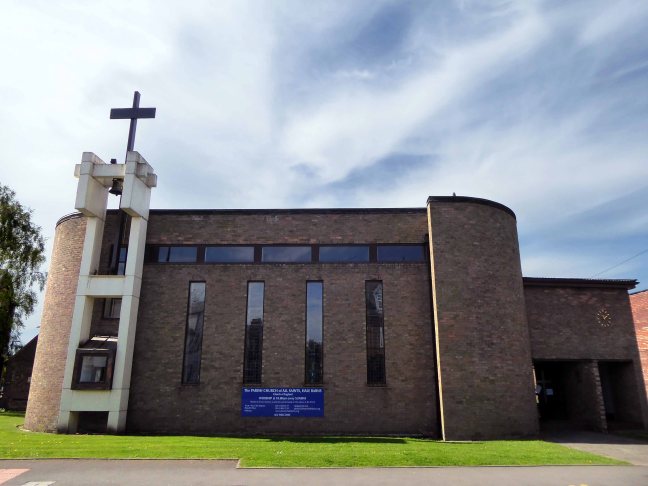
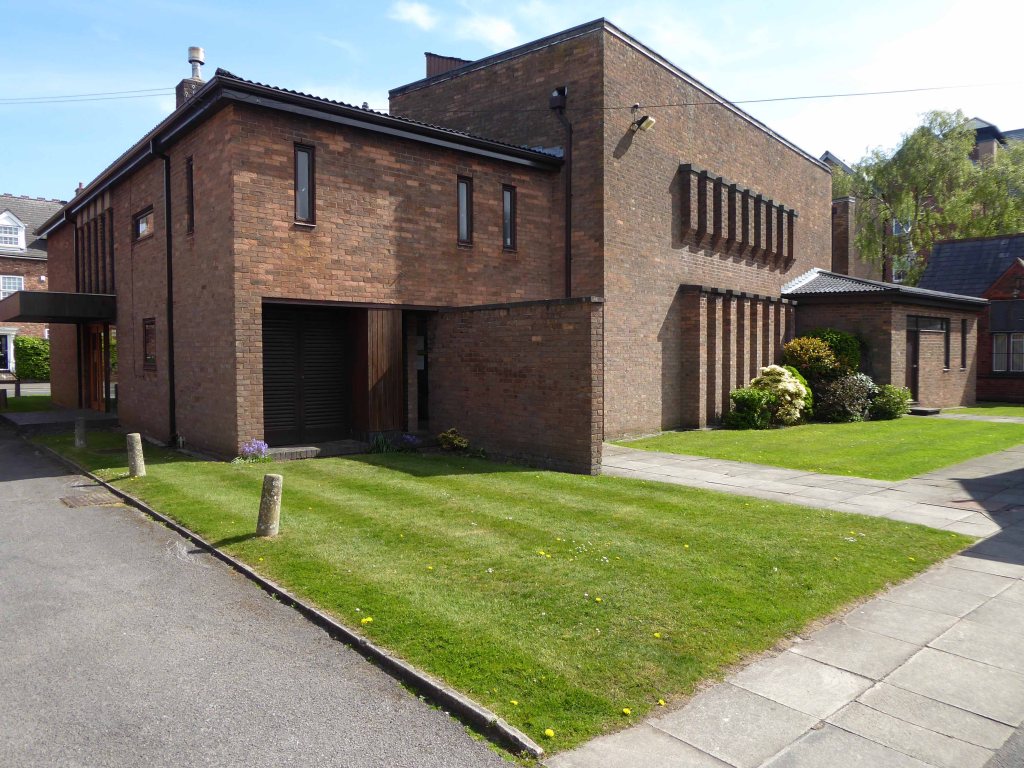
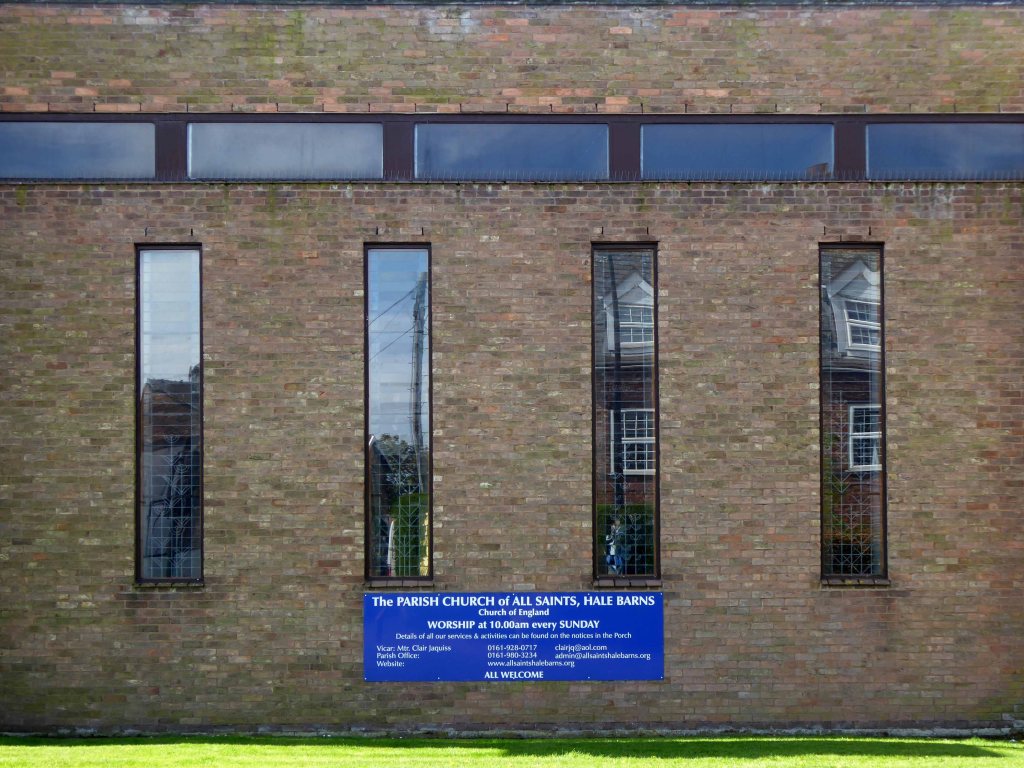
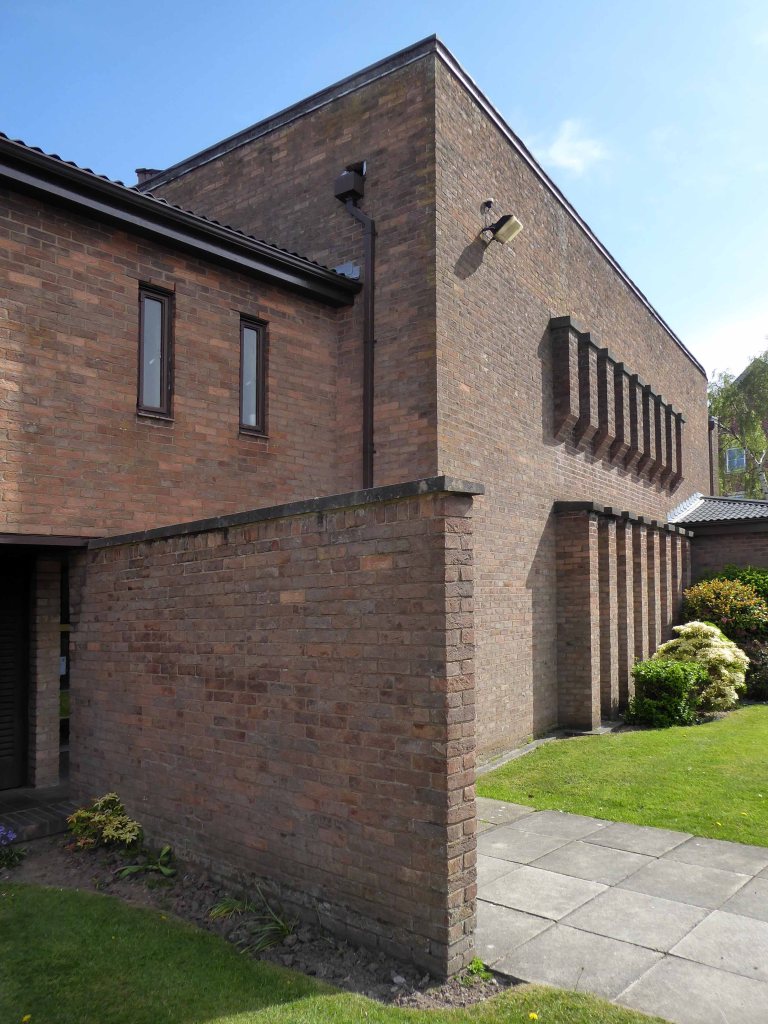
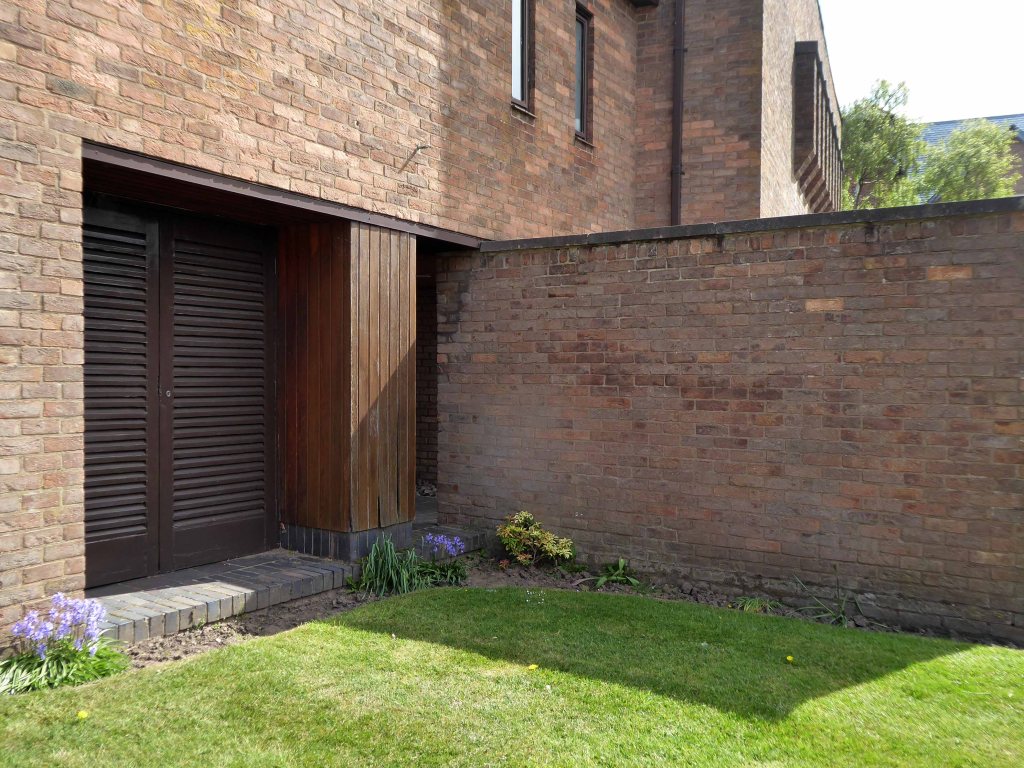
As Hale Barns grew in the 1950s and 1960s it was clear that the small daughter church was less than adequate in terms of size and facilities, and under the leadership of the Rev Fred Cox, the then Vicar, a new church was planned for the site. Designed by Brian Brunskill, All Saints Church was consecrated in 1967.
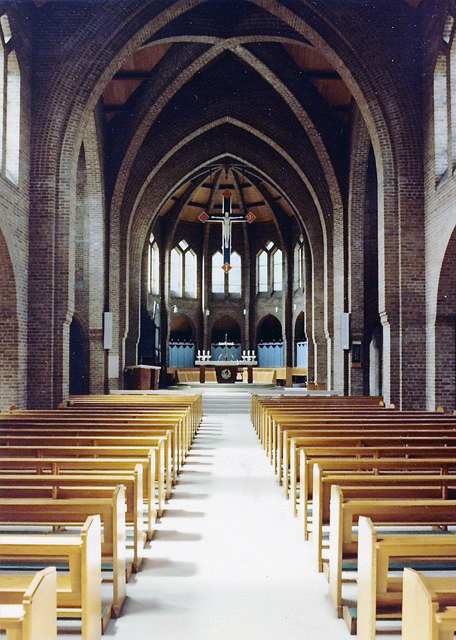
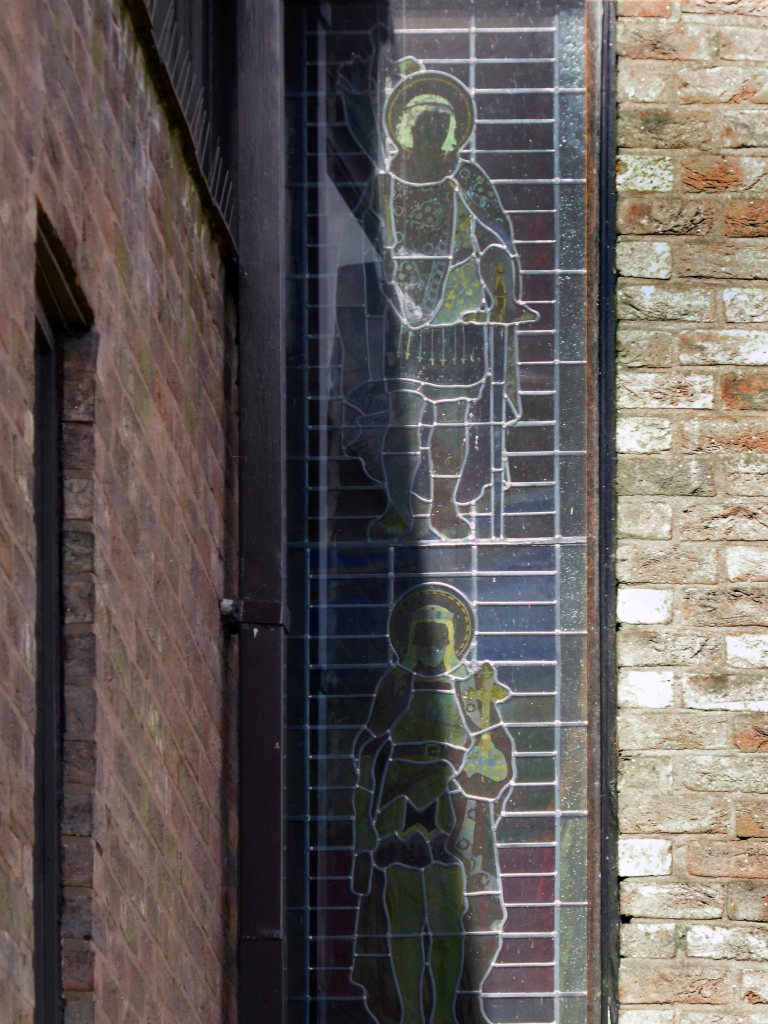
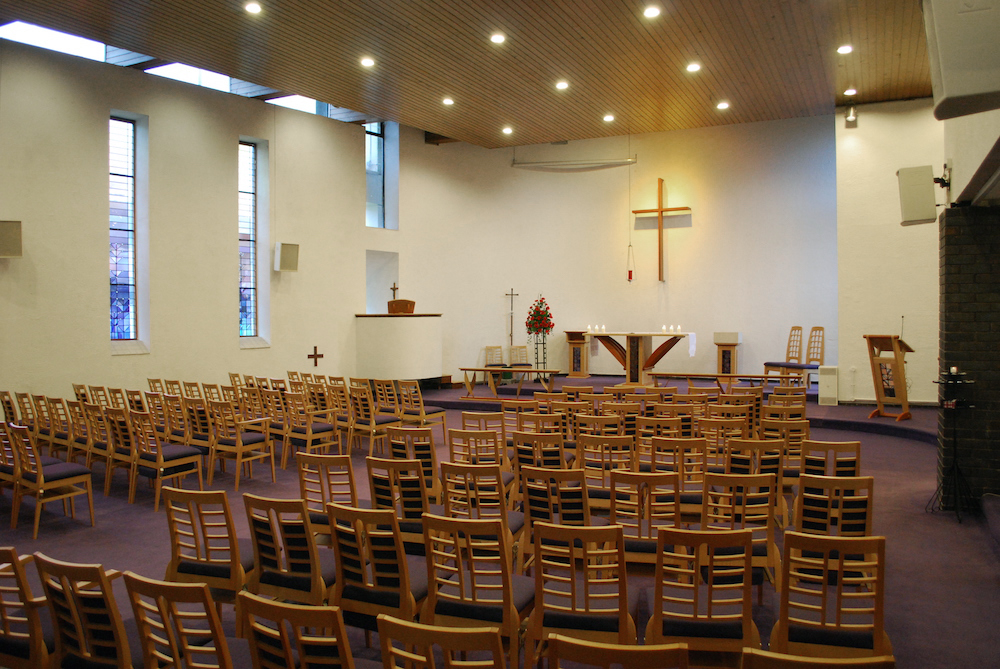
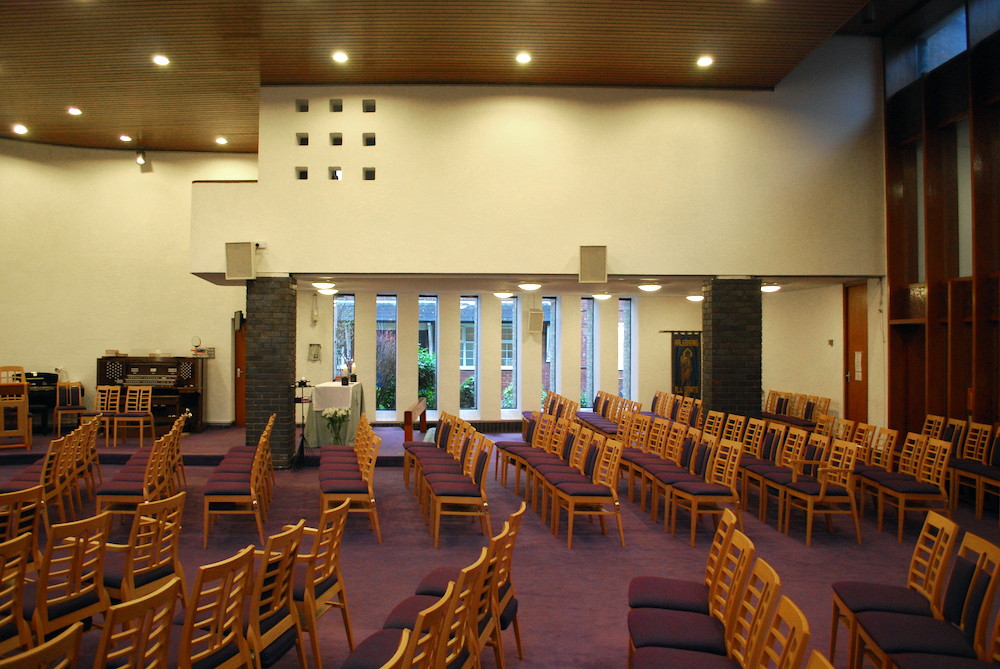
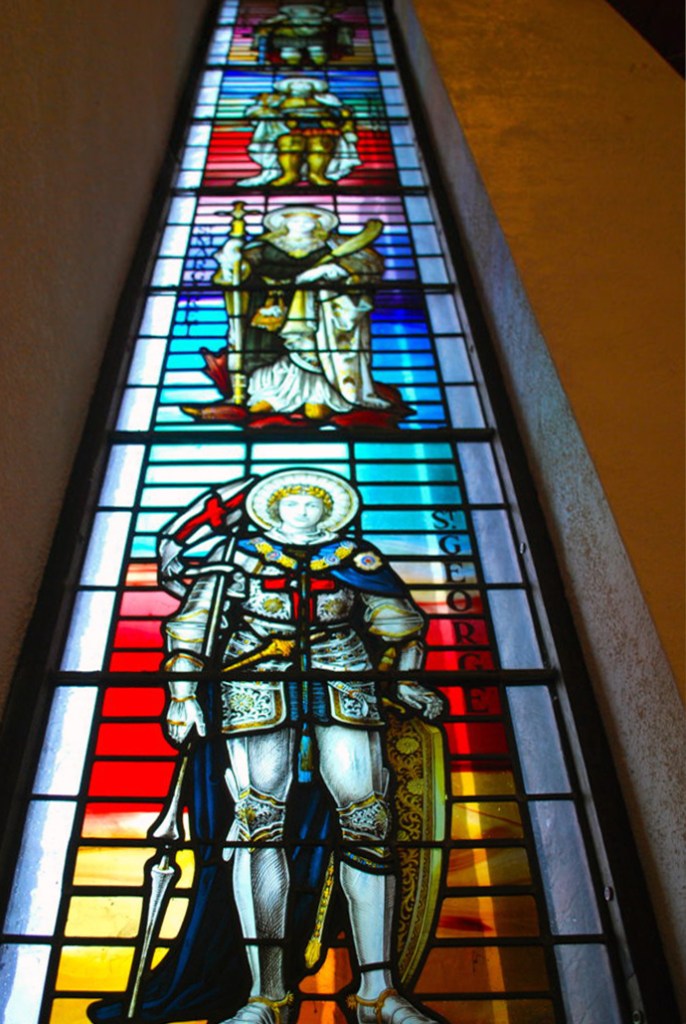
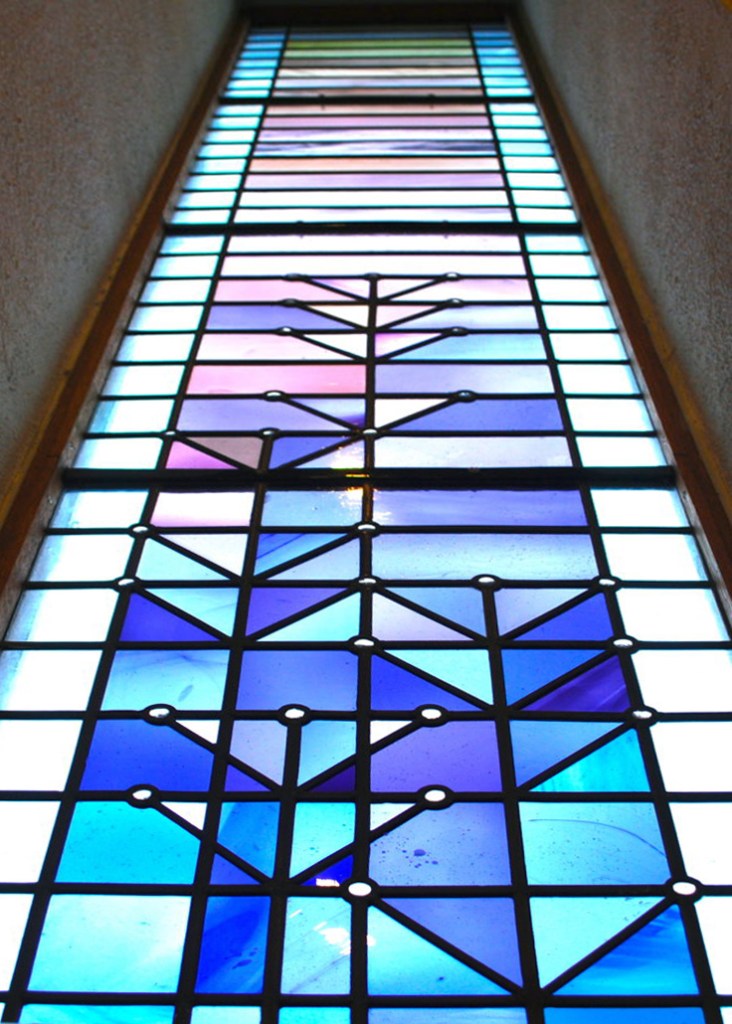
Outside it can seem a rather stark building, of brown brick, set back from the busy Hale Road but inside it is full of light and space. The influence has clearly been that of the French architect Le Corbusier, and there is a wonderful interplay of curved and straight walling. At first there was no stained glass, but in the early 1980s glass by the Japanese artist Sumiko was installed in the north windows. This includes a stylised tree-of-life design. In the baptistry there is some Victorian glass brought from St Mary’s Church.
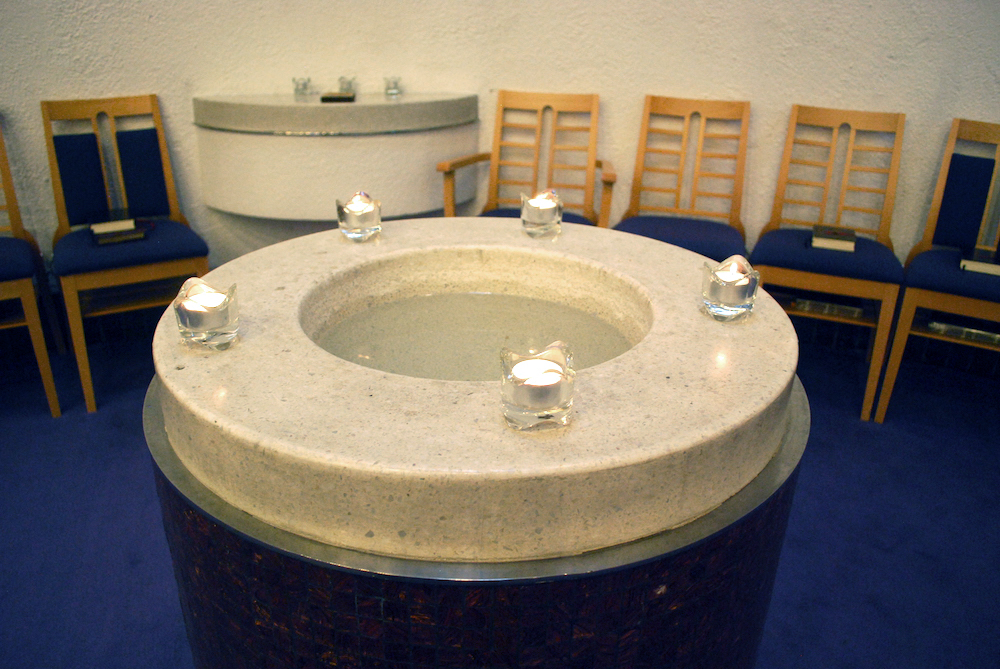
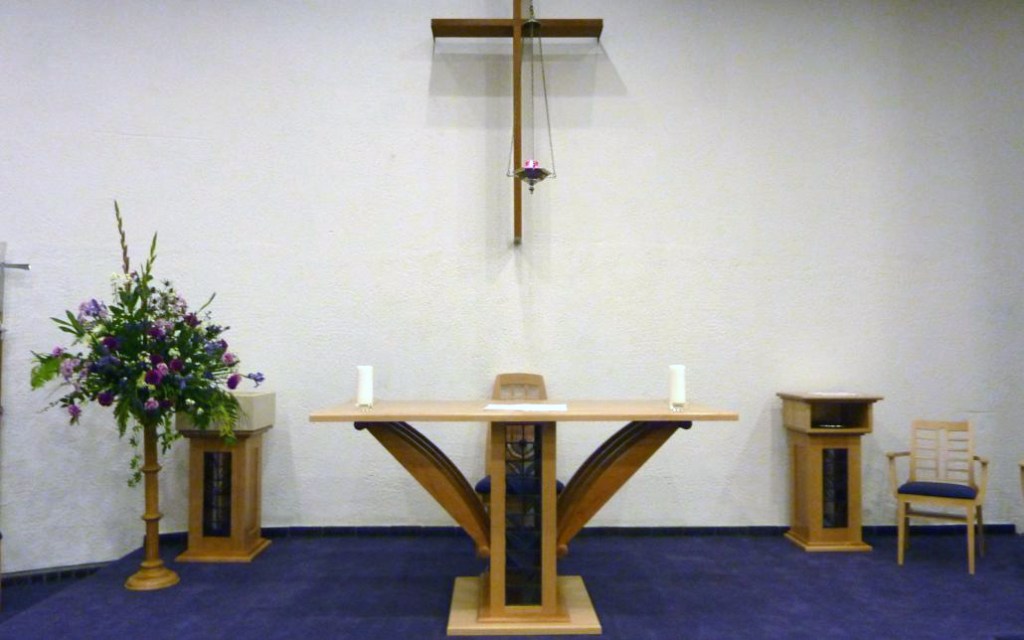
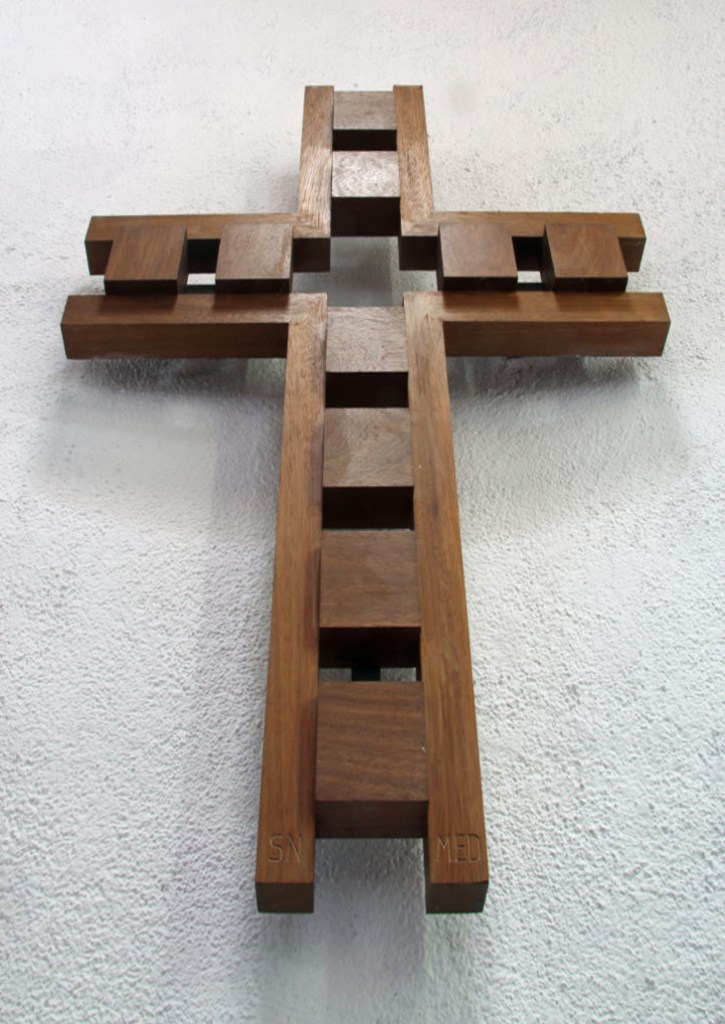
In 2009 a radical and daring re-ordering of the building was completed. The church was carpeted and new furniture of high quality, designed and made by Treske, woodcarvers of Thirsk, North Yorkshire, was installed. The tree-of-life design in the 1980s glass has been echoed in the glass inserts to the Lectern and High Altar and also in the metal uprights of the Altar Rail. All the fittings are moveable, giving a flexible space. This flexibility give opportunities to explore how the building itself can enrich worship at different seasons of the Church’s year.
My first time in Hale Barns – hence my first visit to All Saints.
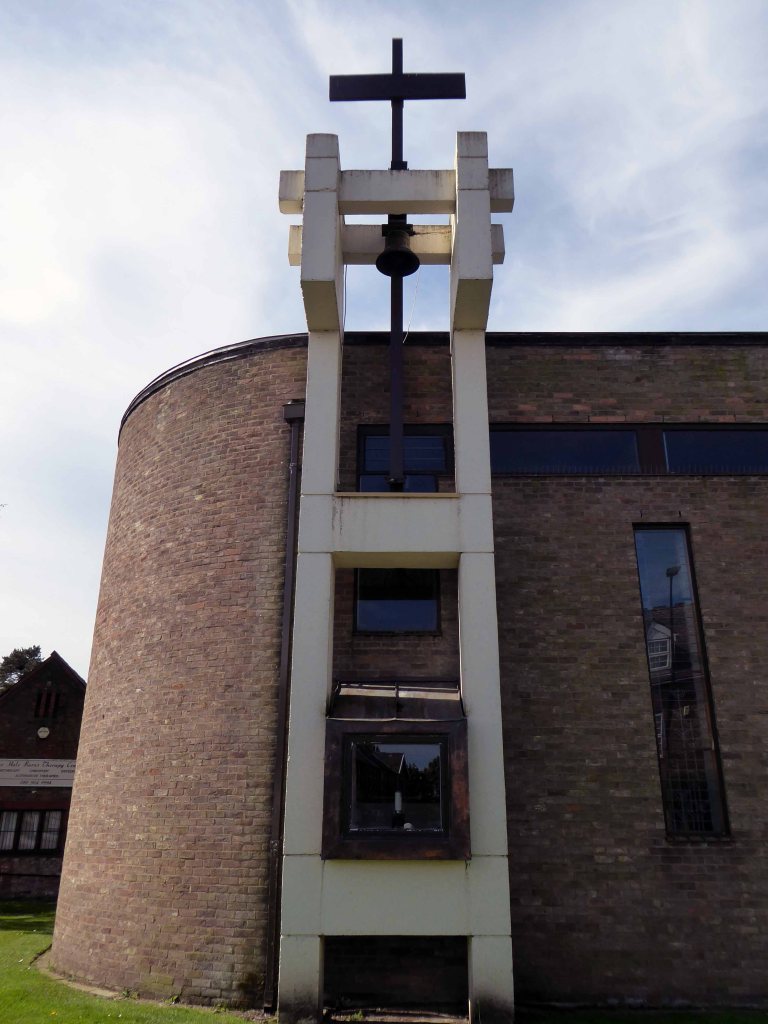
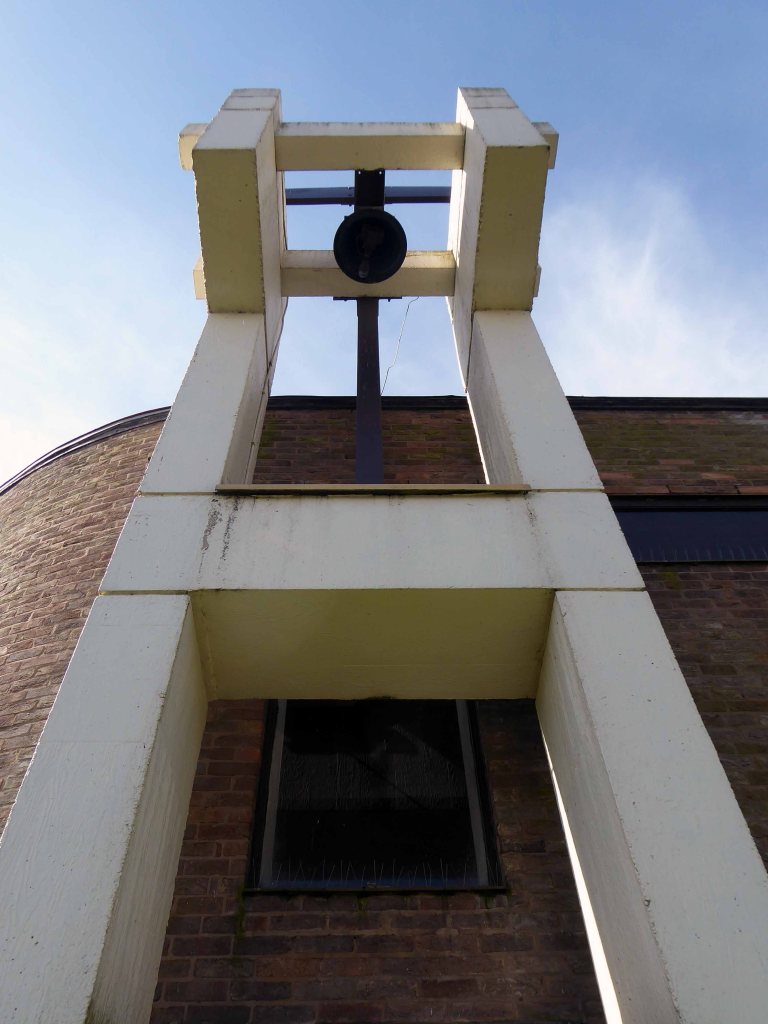
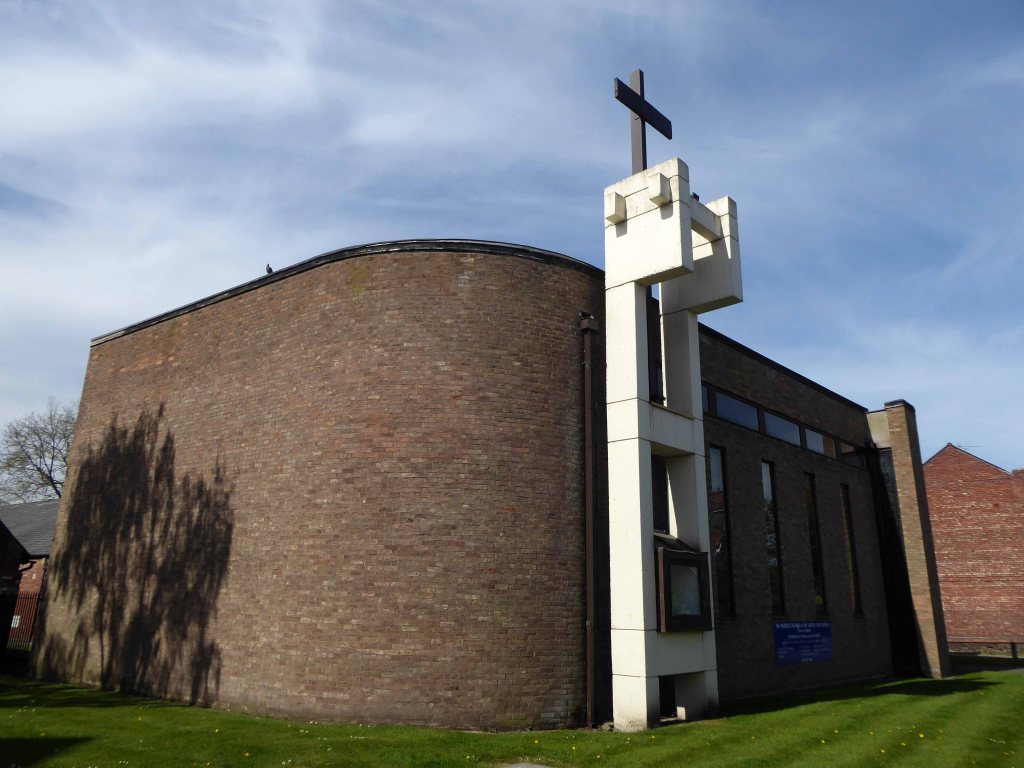
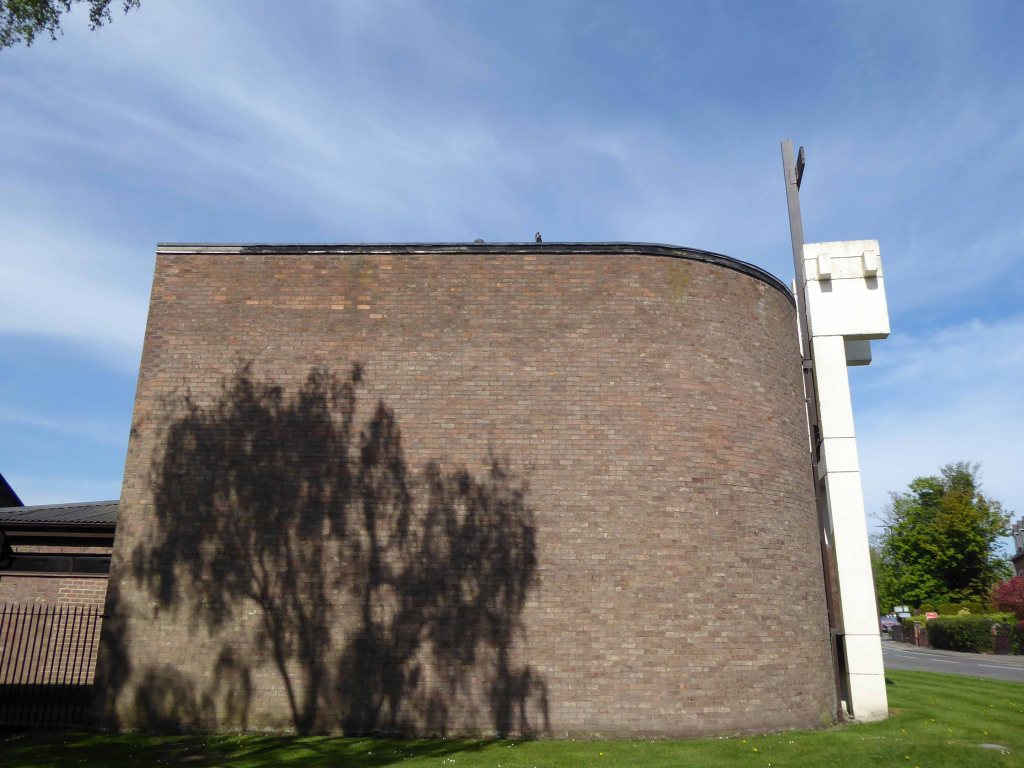
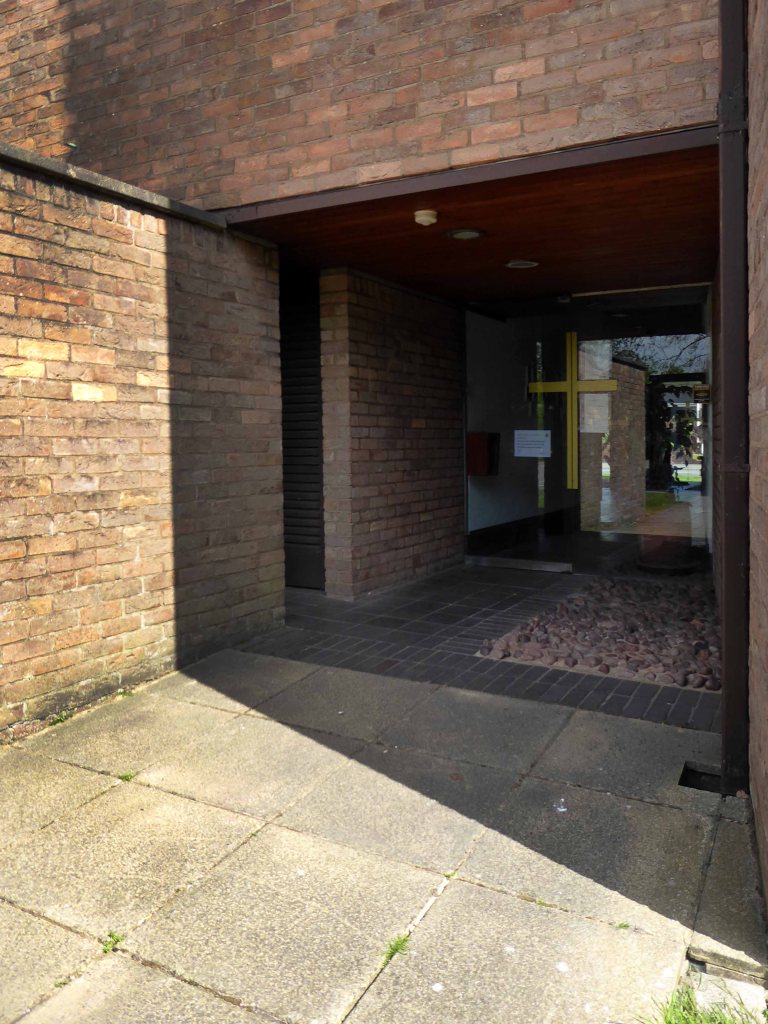
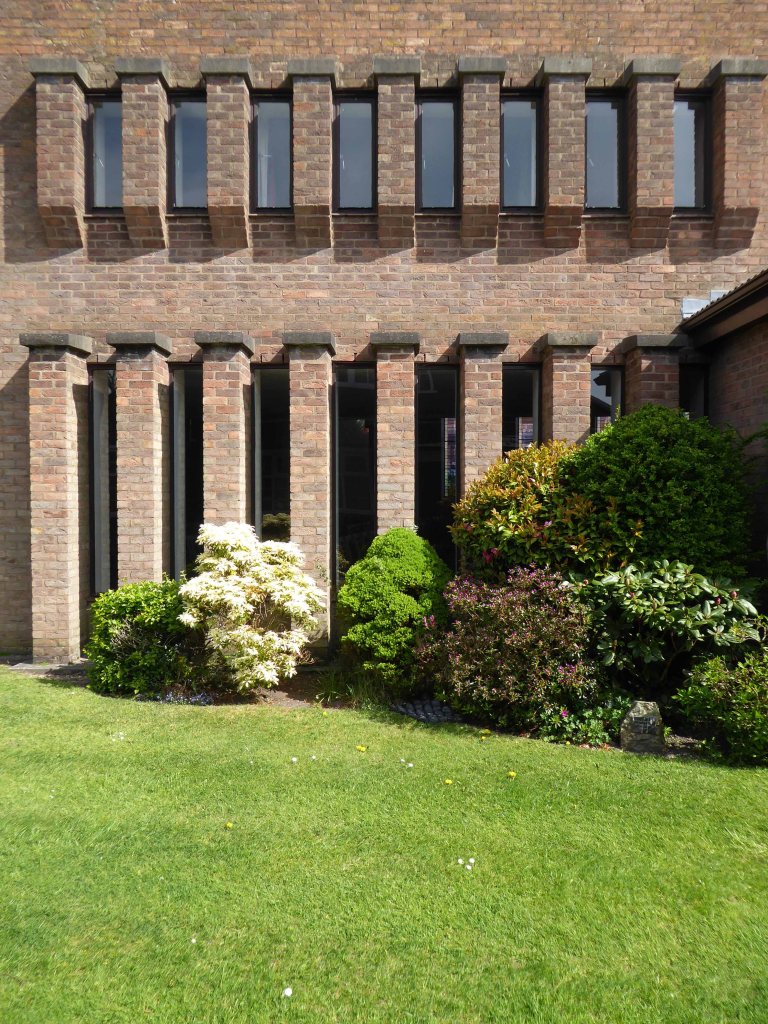
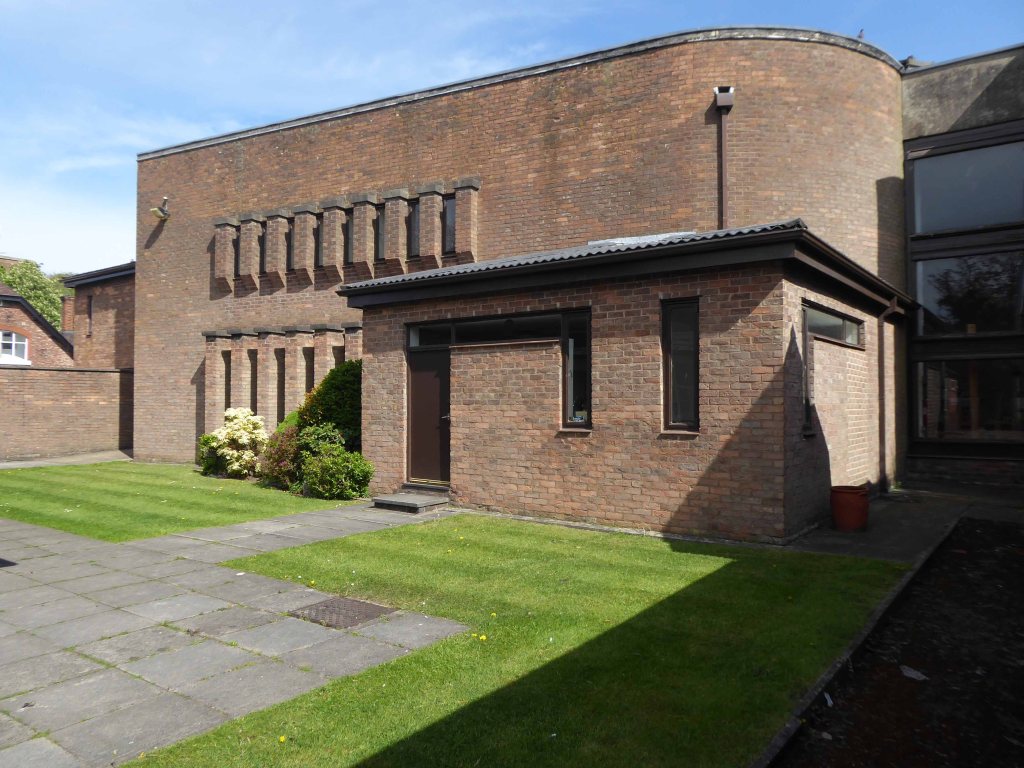
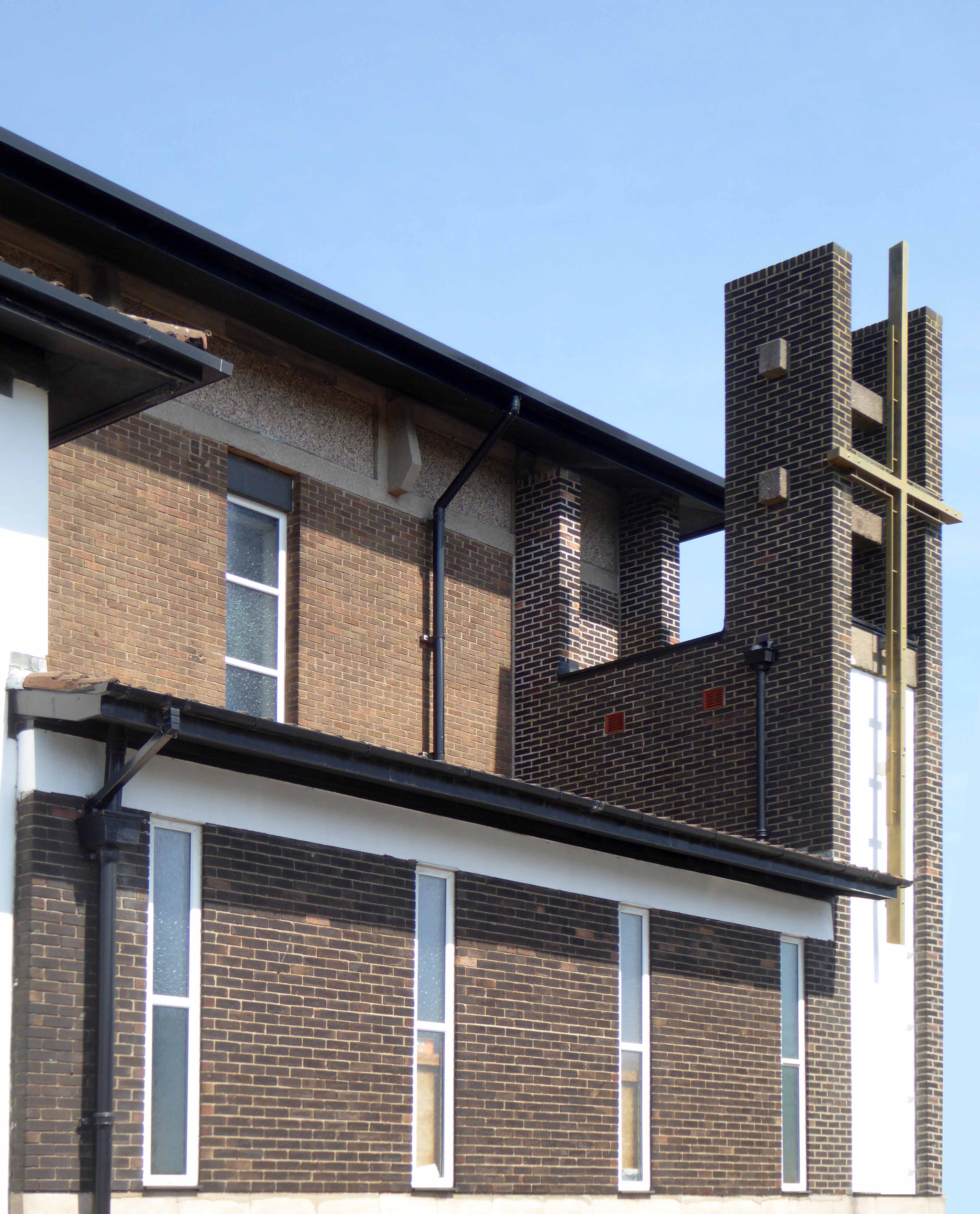
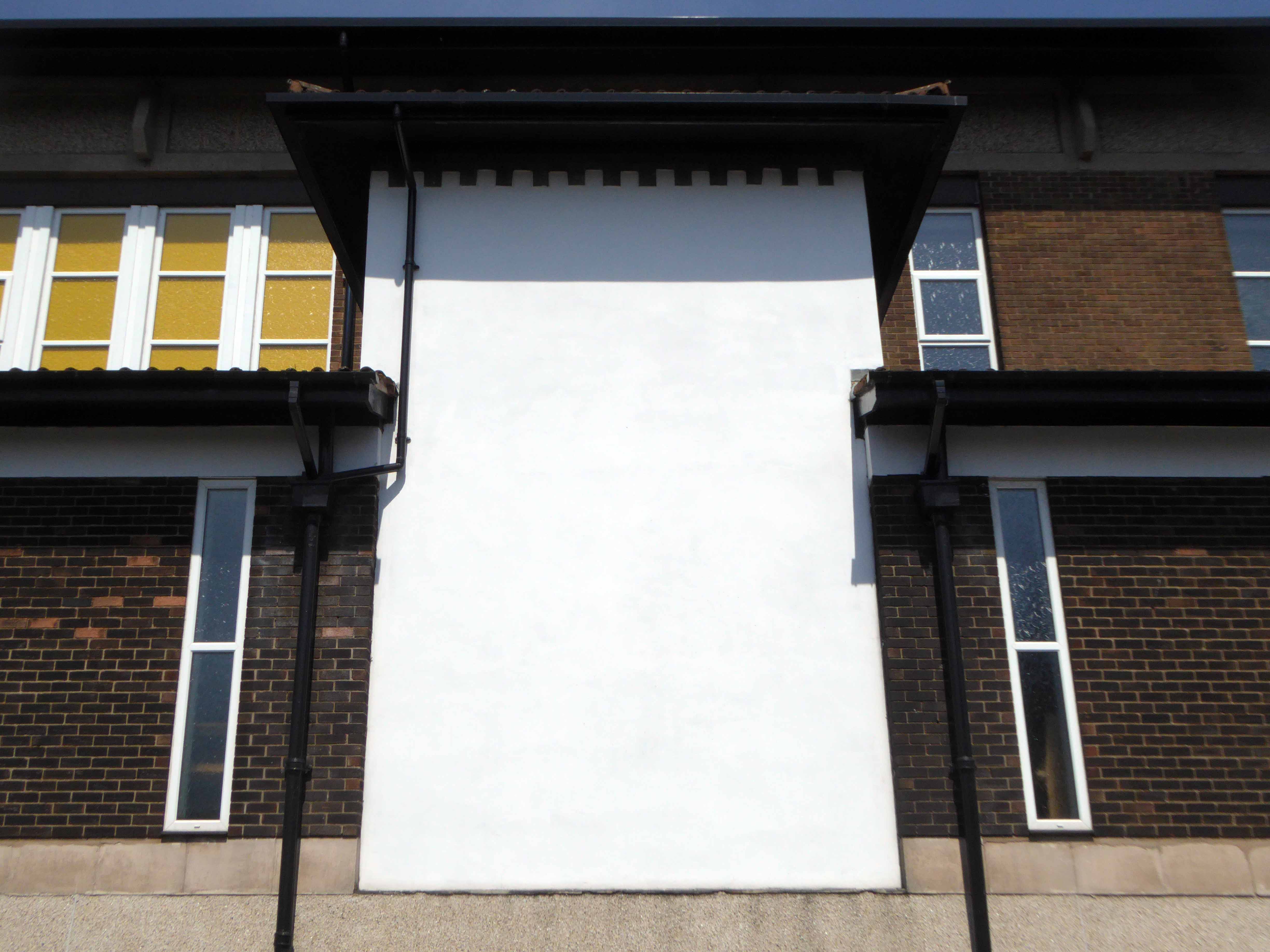
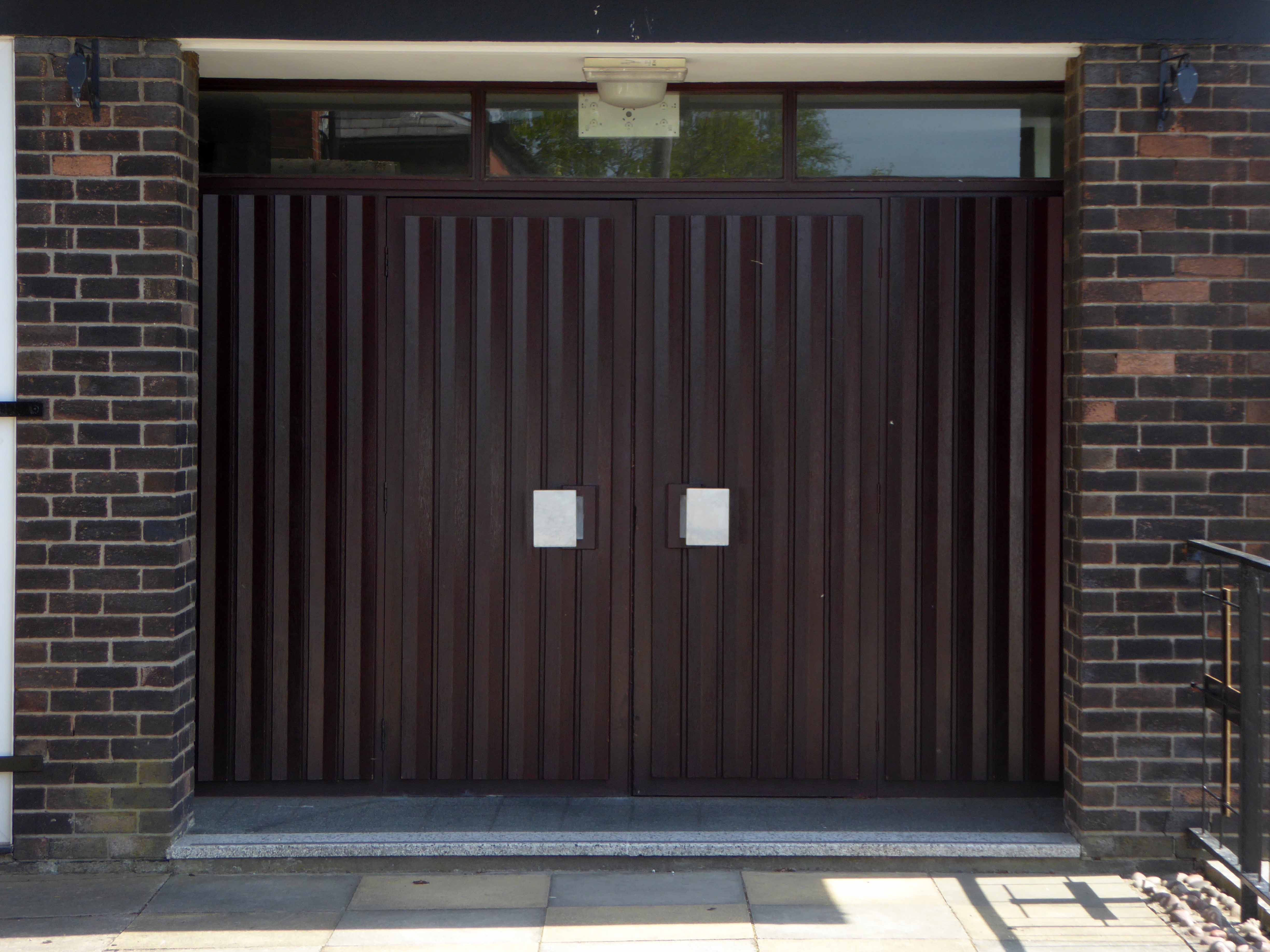
Small in scale, but large in ambition – a wonderful exercise in the calm controlled use of brick, rich in small details, along with an expressive mix of warm curves within a rigid grid.
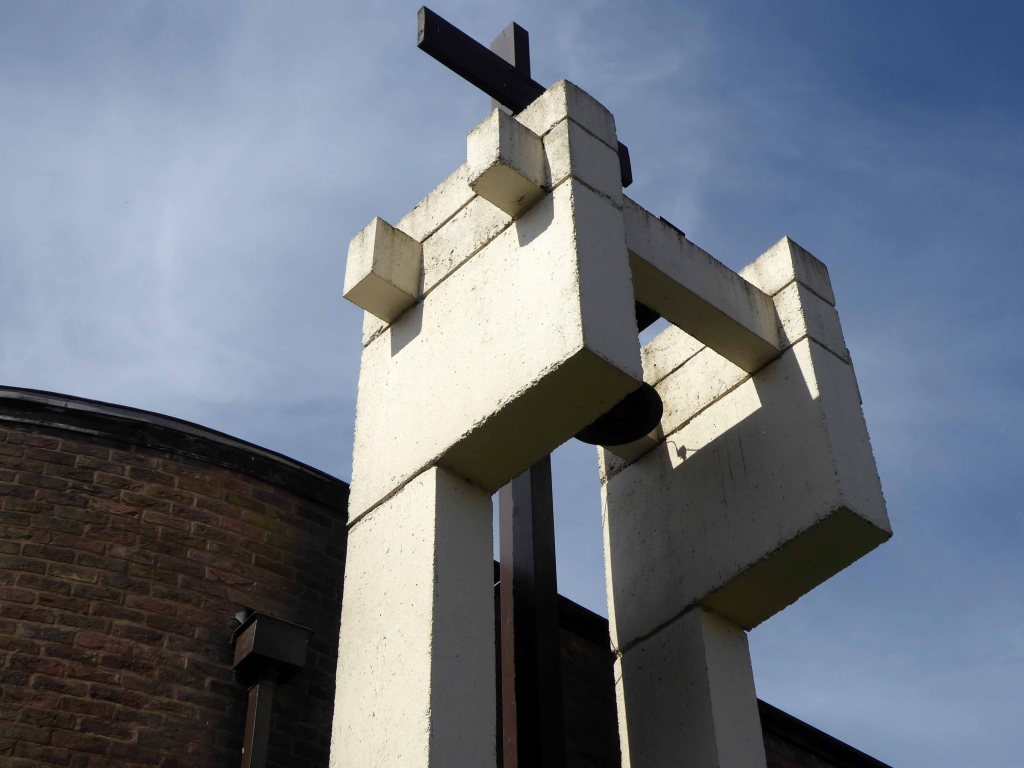
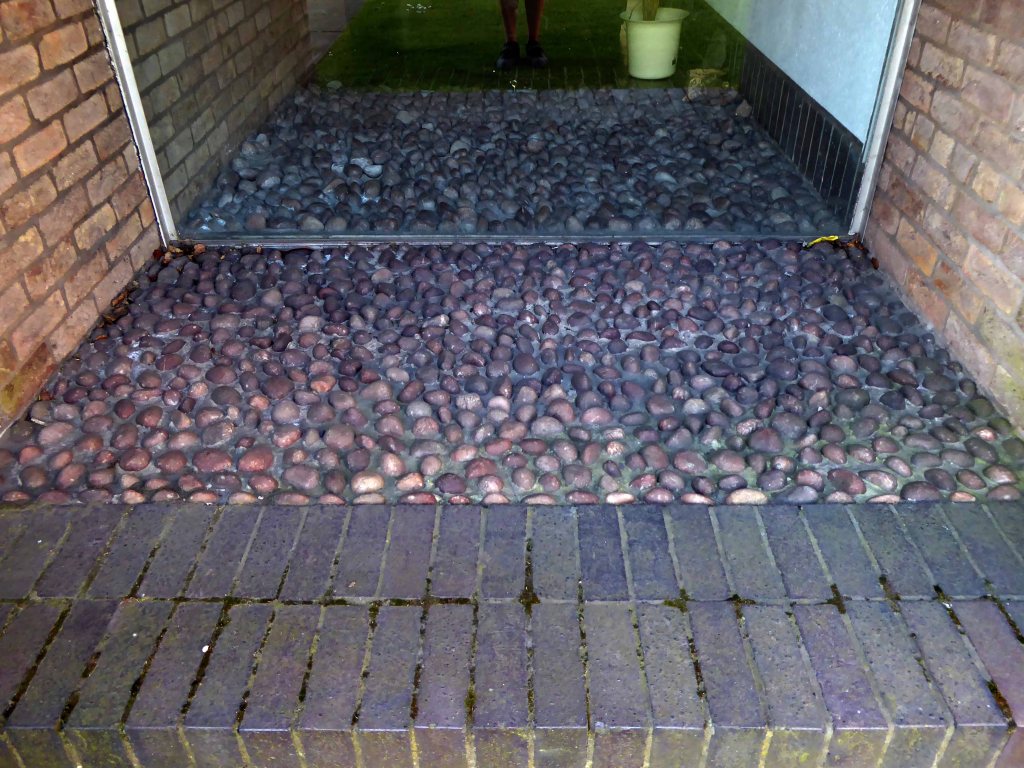
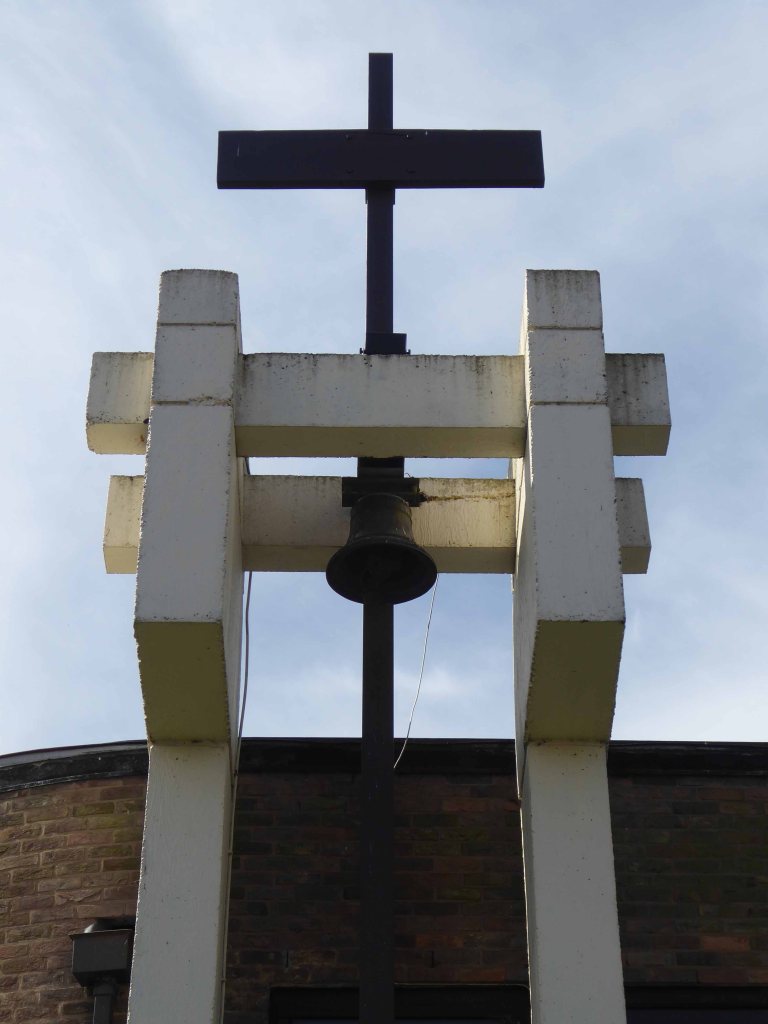
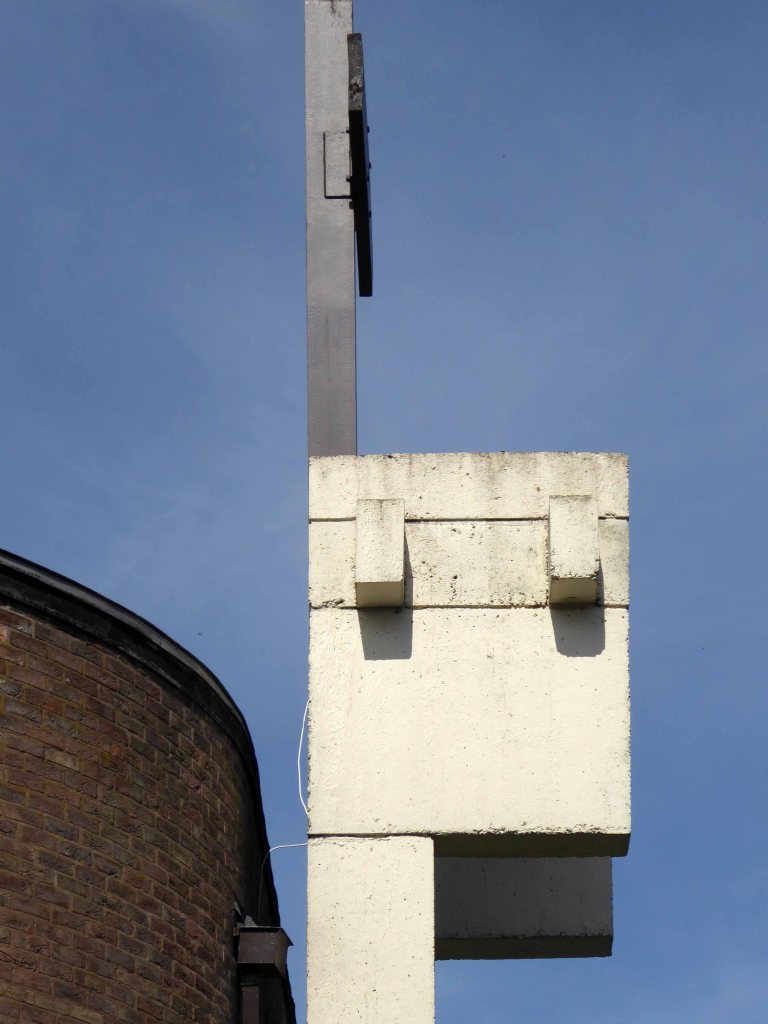
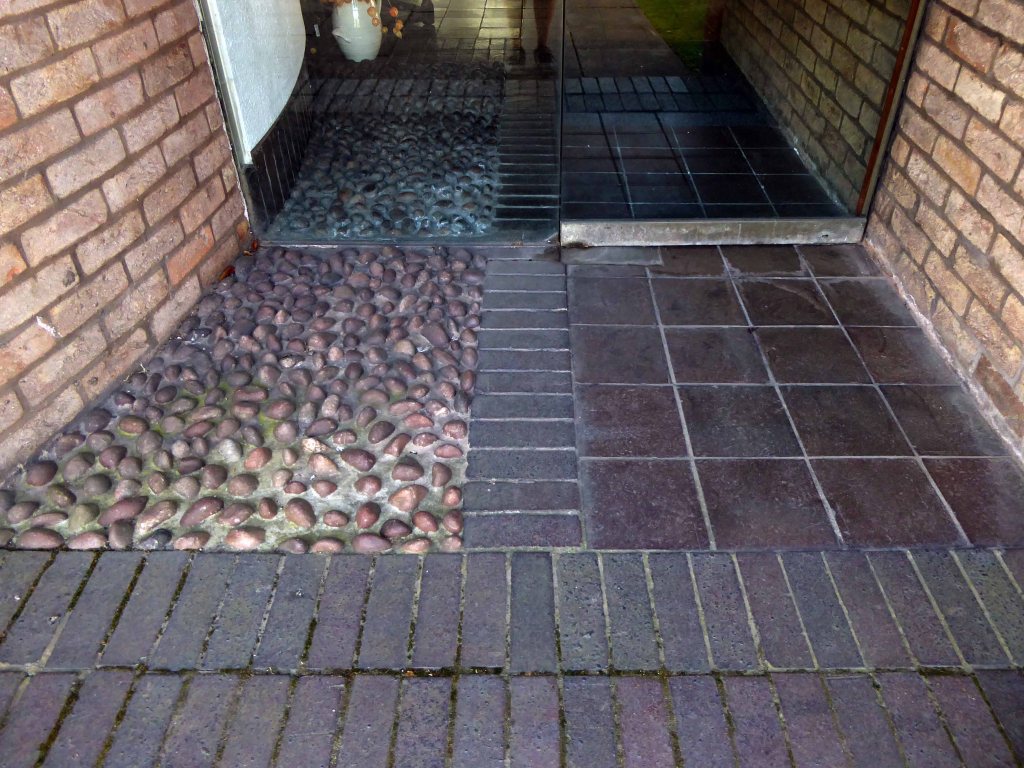
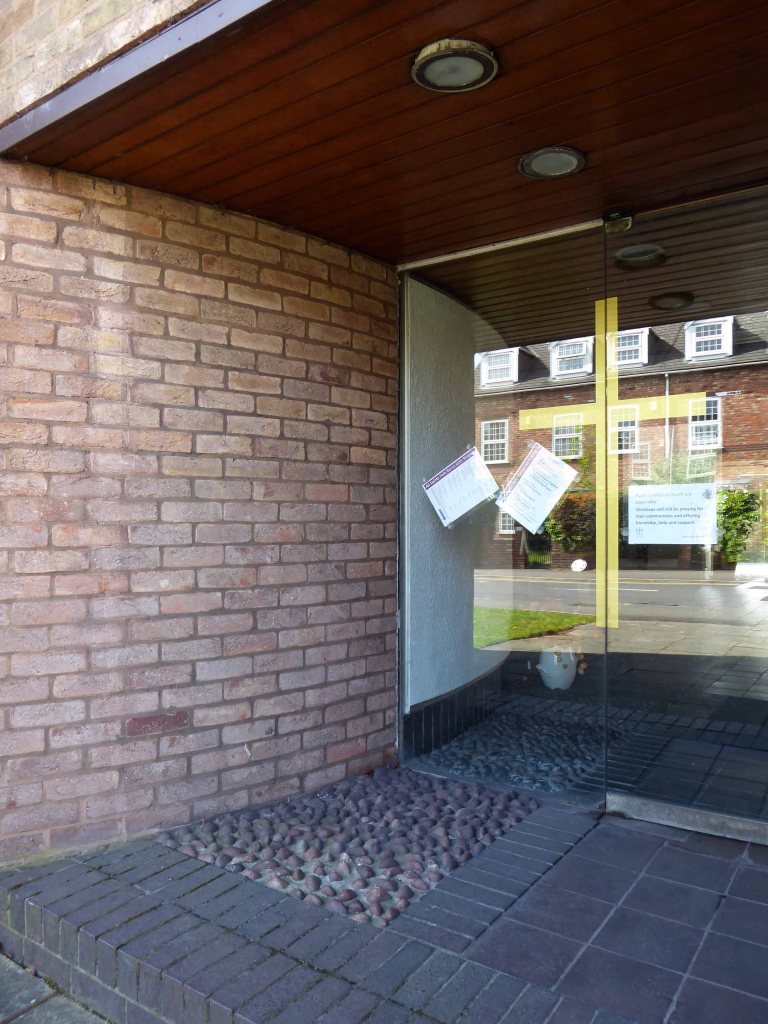
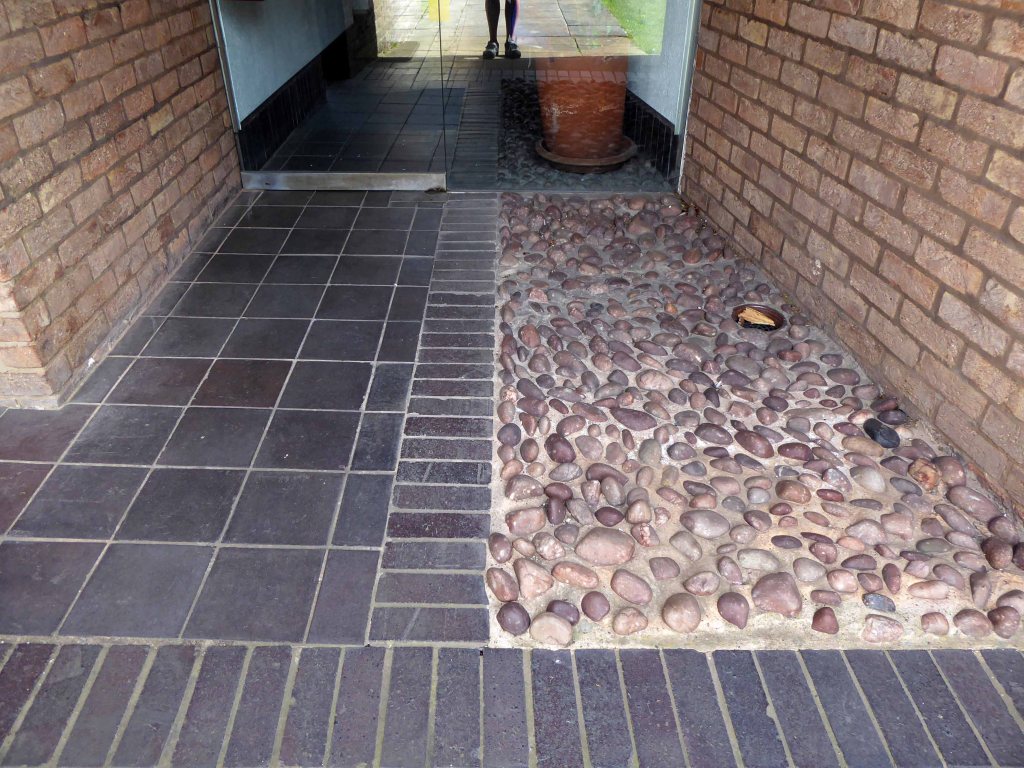
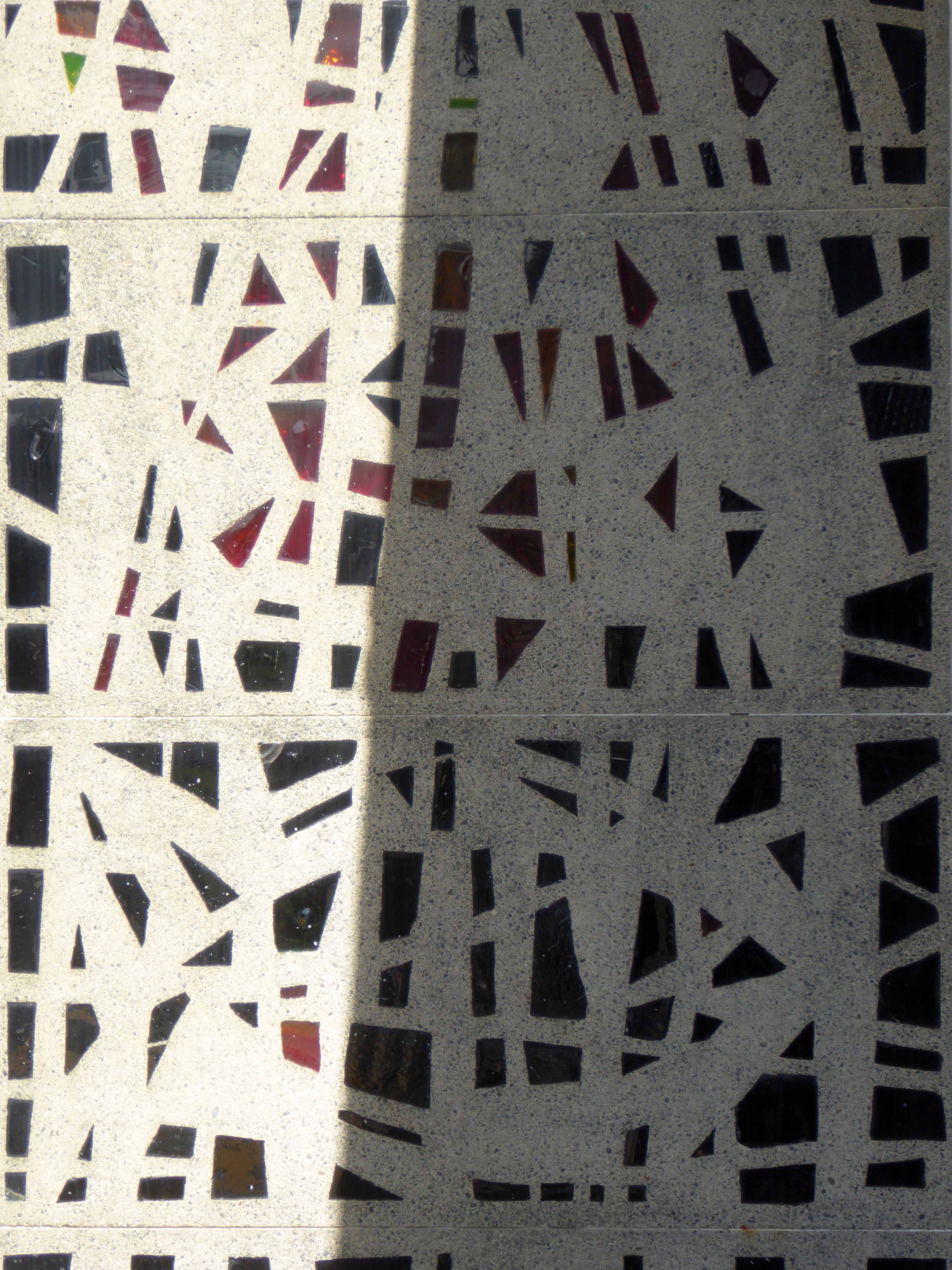
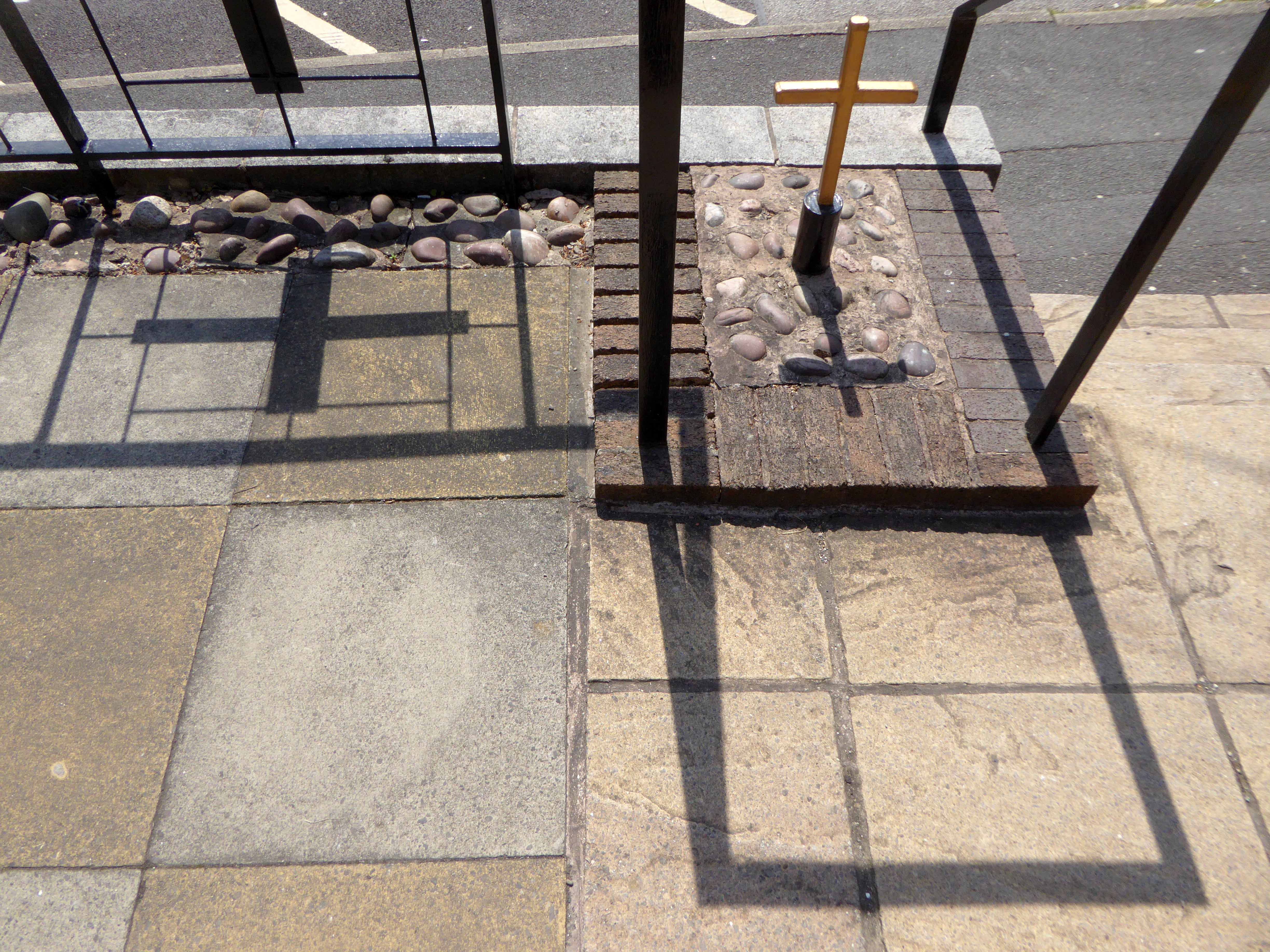
Of particular note is the sculptural concrete bell tower, the exterior use of pebbles in the porch which flow into the interior space, along with a discrete palette of grey tiling.
It demands to be circumnavigated – fresh surprises await around each turn, simple hard landscaping of flags, softer restrained planting and open areas of lawn, so very well tended.
Let’s take a look around.
Here are some images of the reworked interior taken from the All Saints gallery.
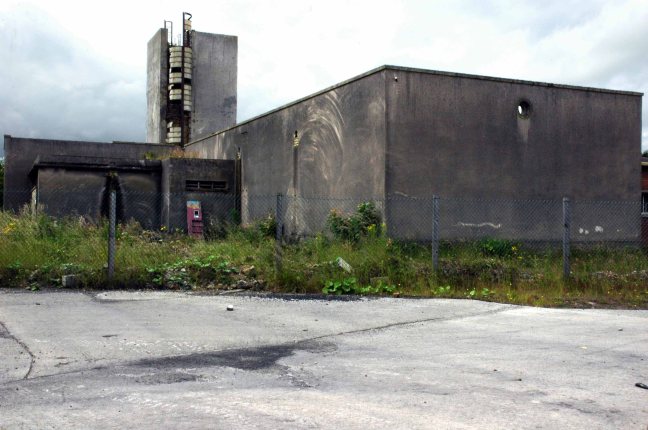
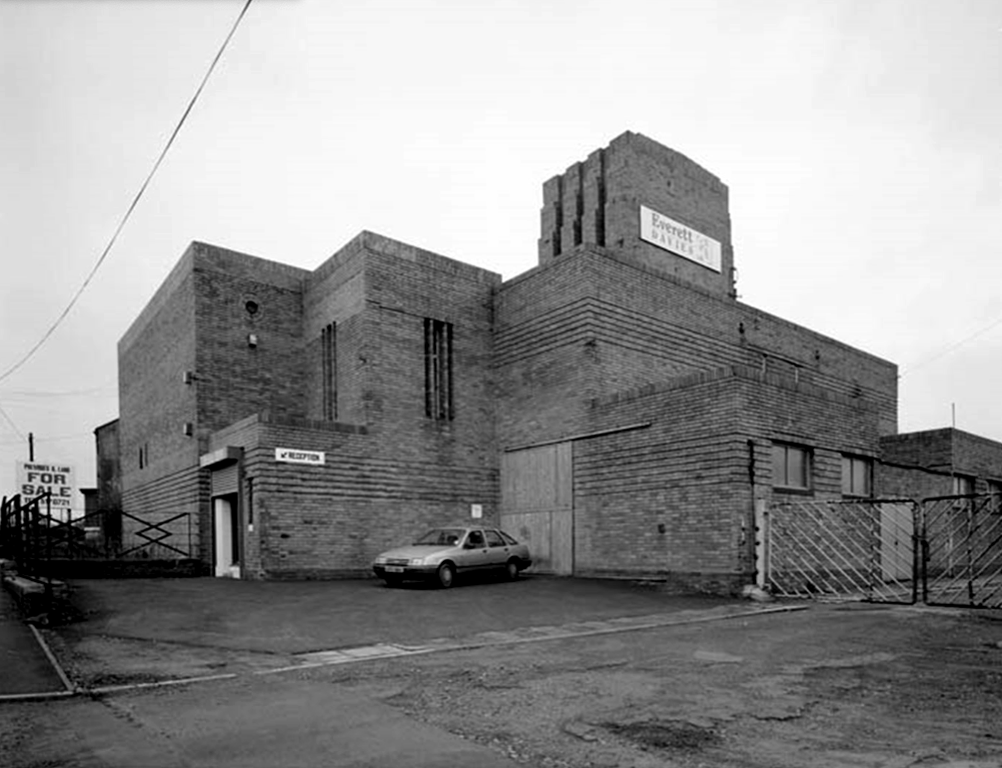
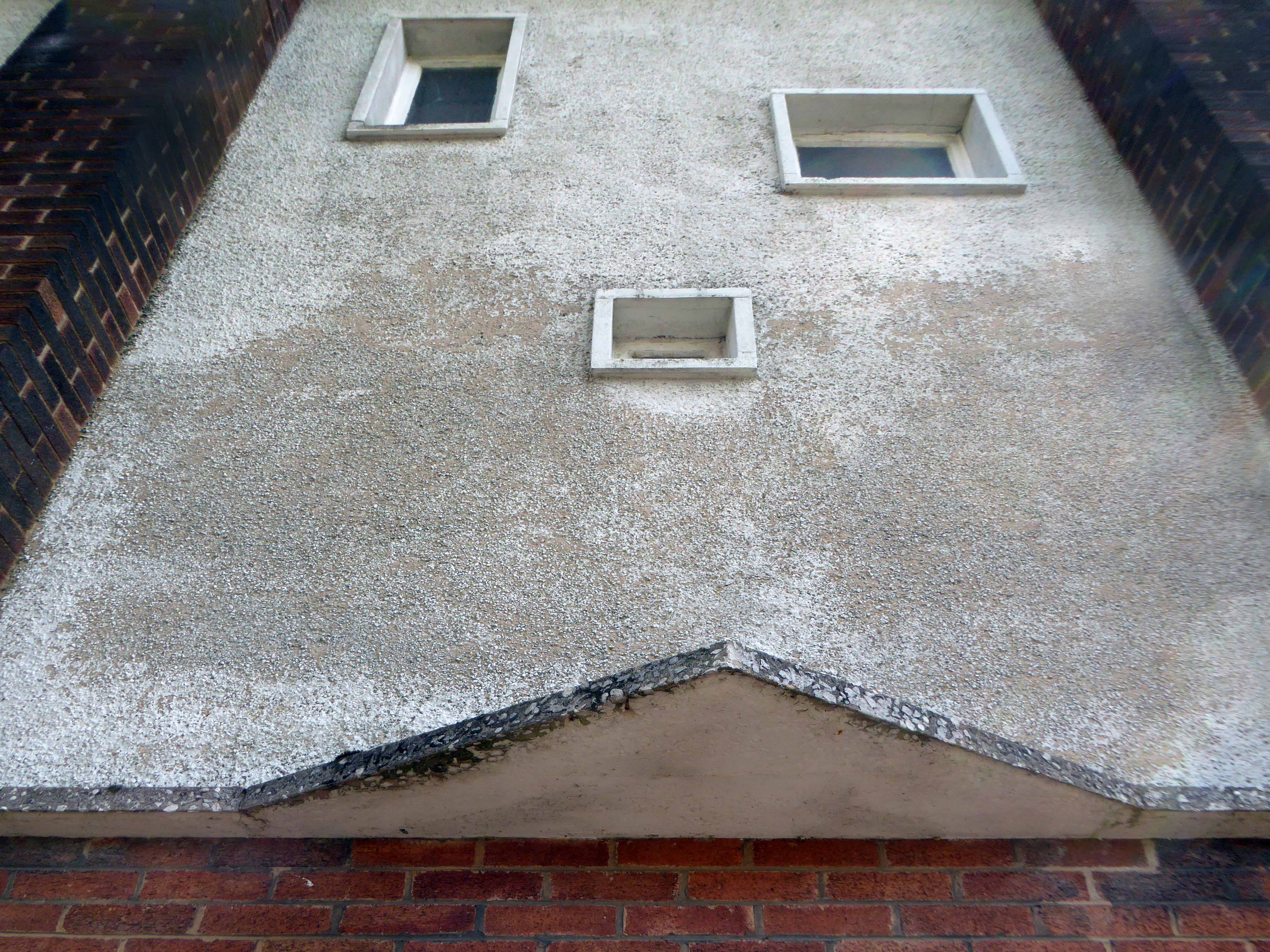
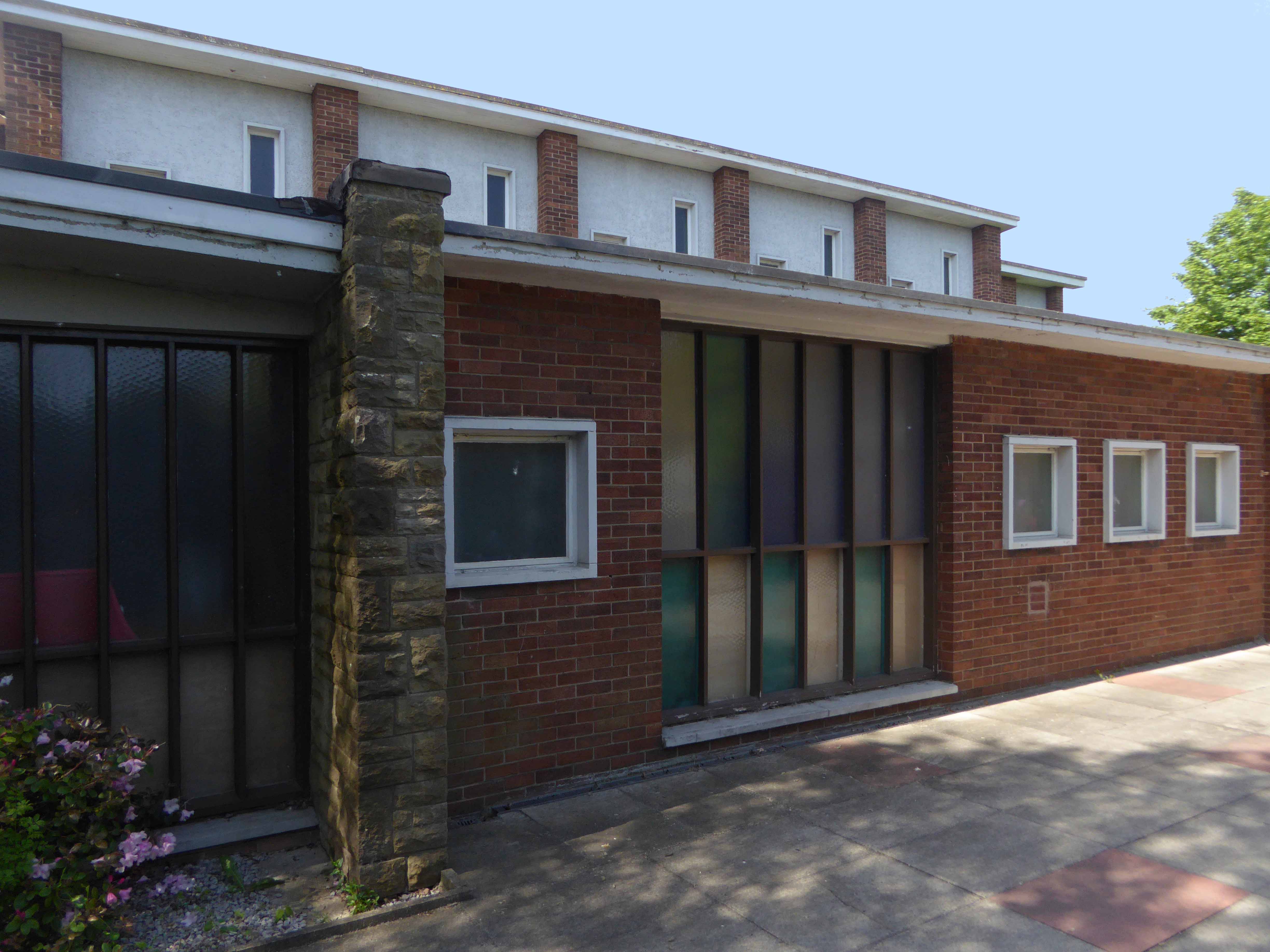
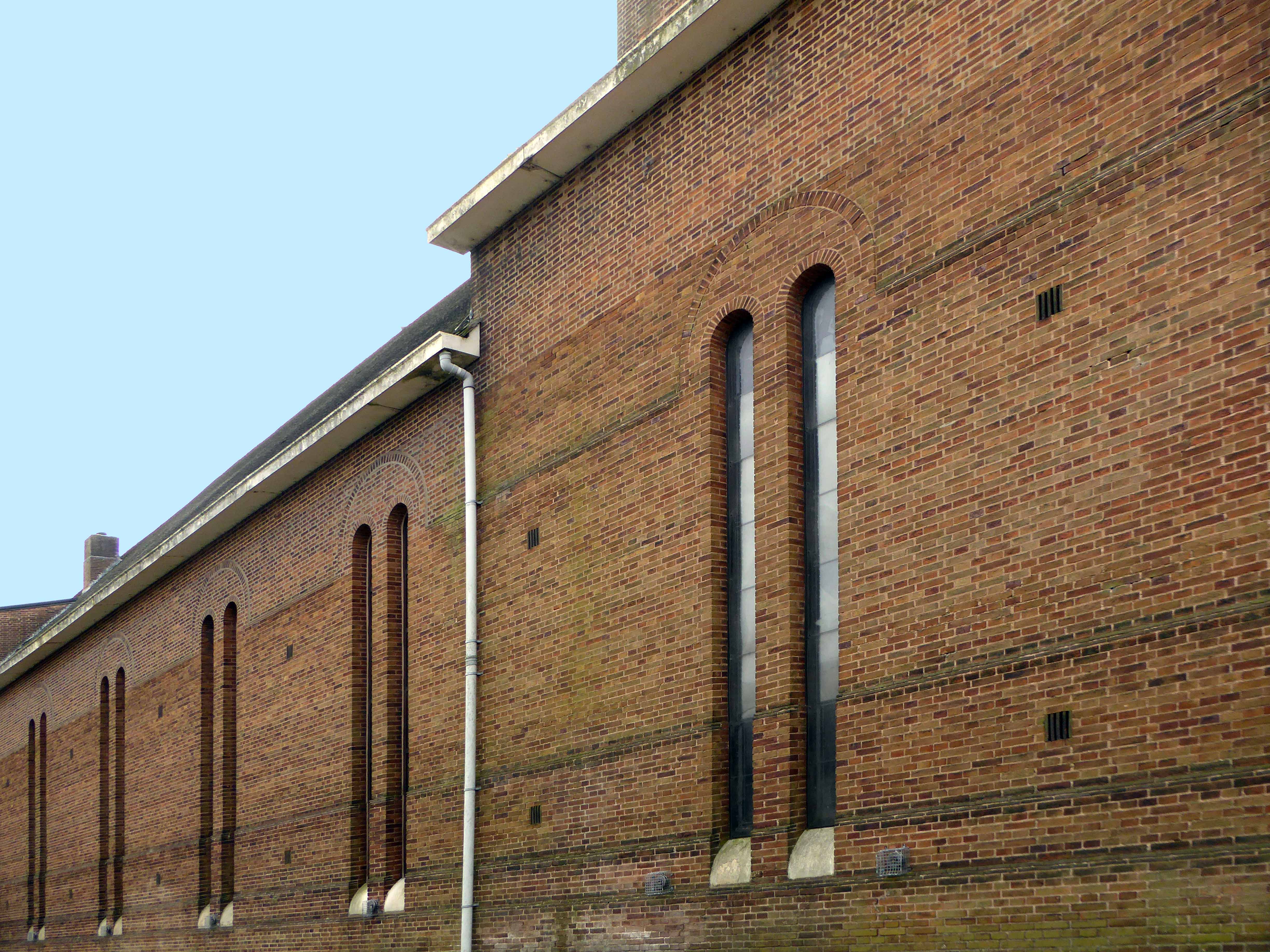
Pebbledashed over white brick. Roofs part concrete slab, part glazed behind parapet. Irregular plan, Modern Movement style. Group of blocks of varying height round tall central tower with rounded, glazed stair turret. Walls mainly sheer, with plinth and slight roof projection.
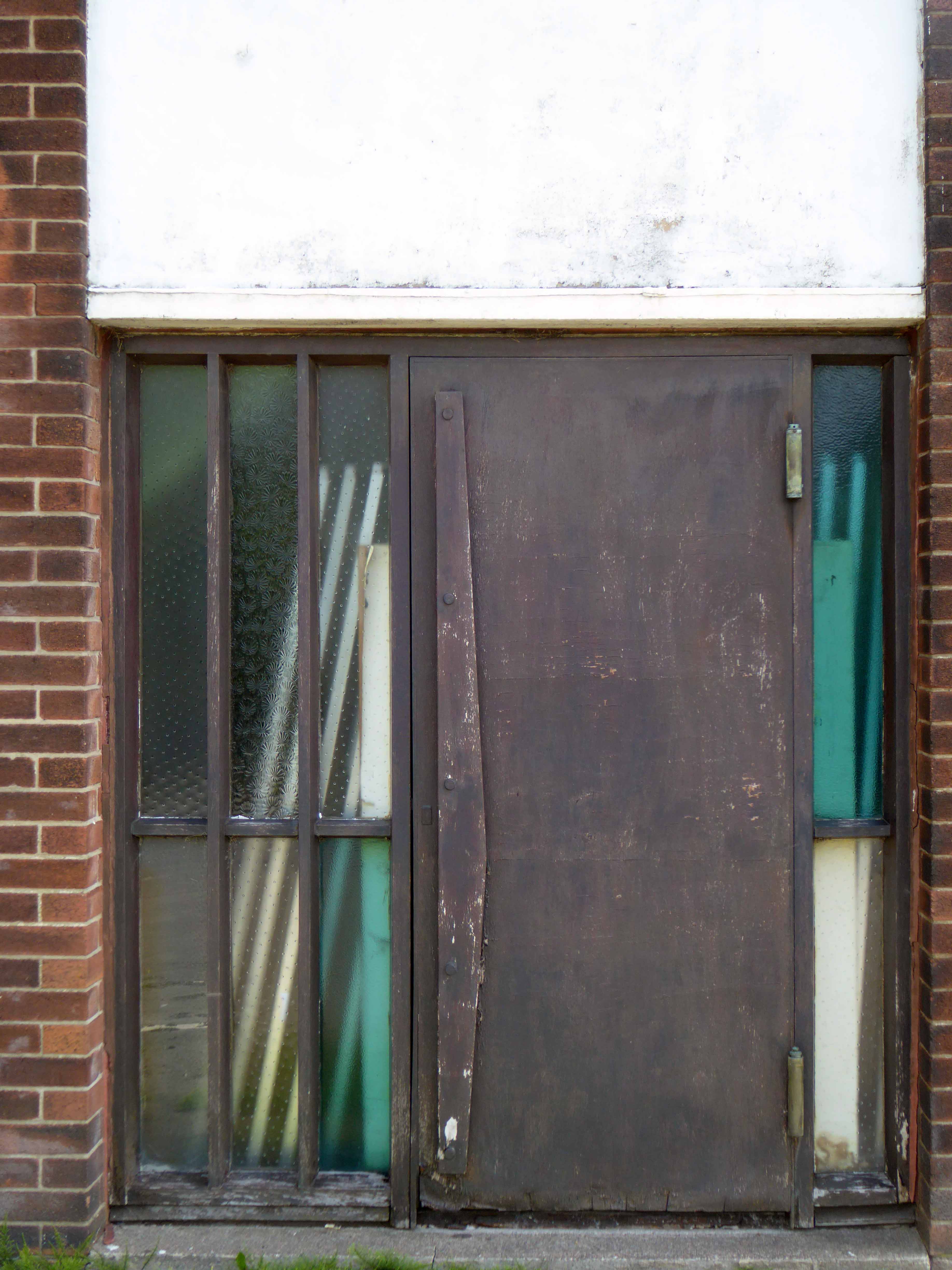
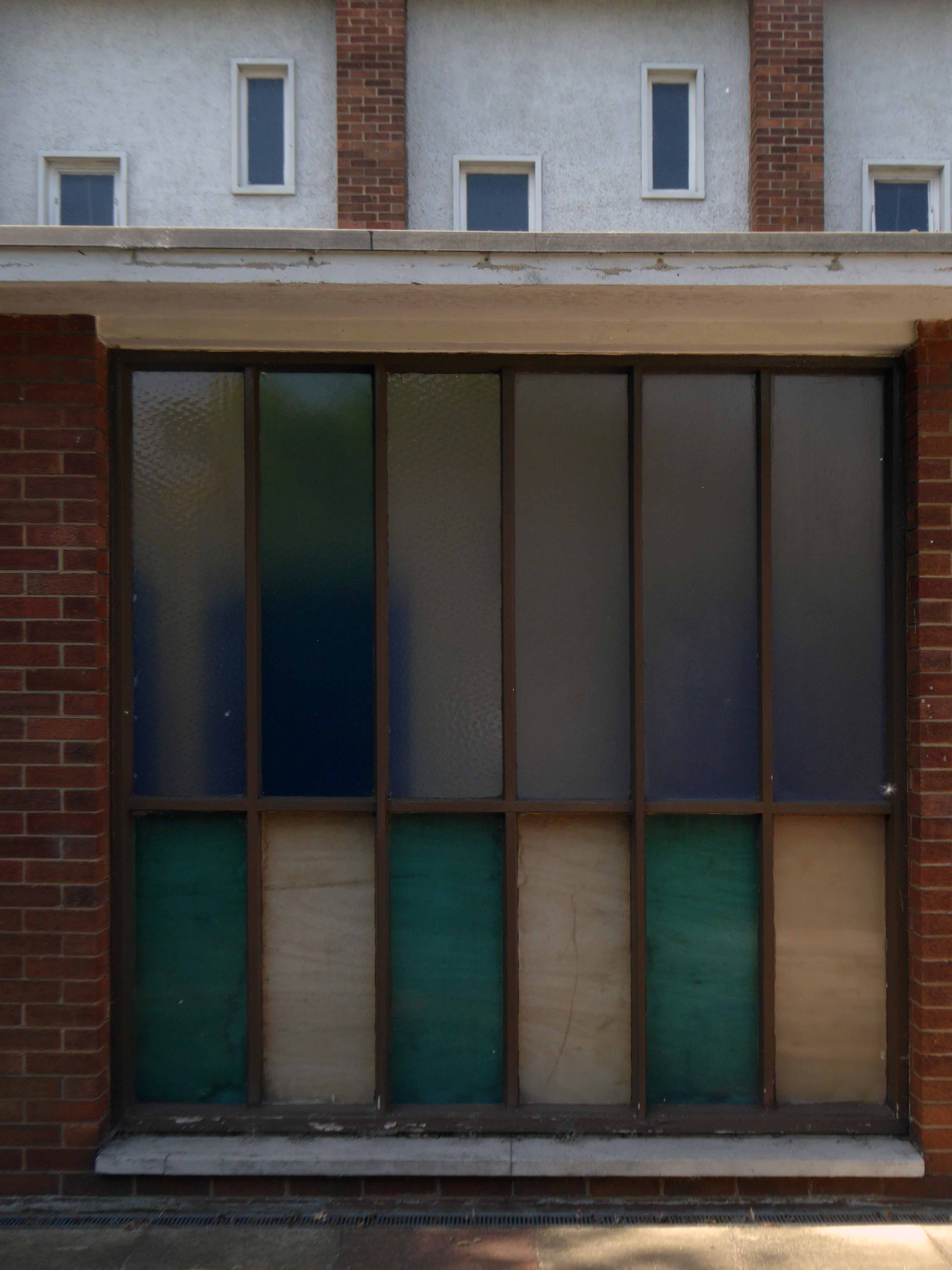
Long block on east of tower has central south projection with glazed, banded steel double door under high strip of windows beneath eaves overhang. Taller storeroom to west has similar doors in 2 recessed banded glazed bays; and abuts on south-east corner of tower. Similar double doors in base of tower. Large lower south-western canteen wing abuts on west side of tower and has banded glazing around two sides above a projecting sill. Slightly-projecting 3-bay office section to north has steel cross casements; on its return another casement and a door with hollow-chamfered jambs and flat hood. Taller bath block behind. Wave pattern on rainwater heads.
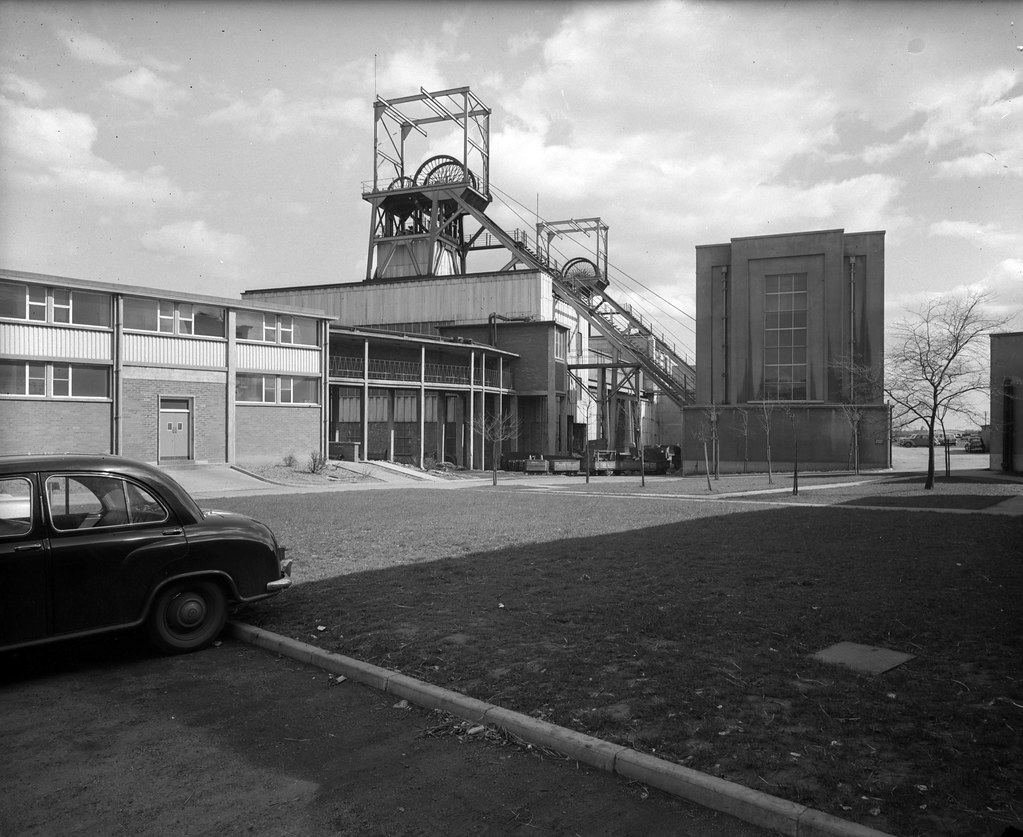
This is the youngest colliery in the neighbourhood, having commenced operations for the Ashington Coal Co Lt. in 1934. The shafts, which are situated comparatively near to the coast, are two in number, and both were sunk to the High Main seam level, which is 486 ft from the surface. The downcast No. 1 is 18 ft in diameter and is used for coal-raising on two shifts per day, and the upcast, which has a diameter of 15 ft, is used for ventilation and emergency man riding only.
The seams being worked are the High Main, the Diamond, the Main, and the Yard. Each of these seams shows practically the same nature of roof and floor as throughout the two neighbouring collieries and the distance between the seams is also comparable. They are, of course, found at slightly greater depths at Lynemouth, the Yard seam, for example, being 660 ft. below the surface near to the shafts, as compared with some 300 ft. at Ellington.
It was one of Britain’s largest collieries until it was closed in 1994.
I was cycling the coast in July 2012 and happened by, seeing the tower of the baths from an adjacent path, passing by the faded signage.
Into the raw expanse of a now empty post-industrial landscape.
And on towards the bath house.
I am not by nature an urbex urban explorer, simply an explorer.
Entering the open site, I was well aware of the significance of the building and its history – working lives that had constructed the baths, entered and left through those very same doors.
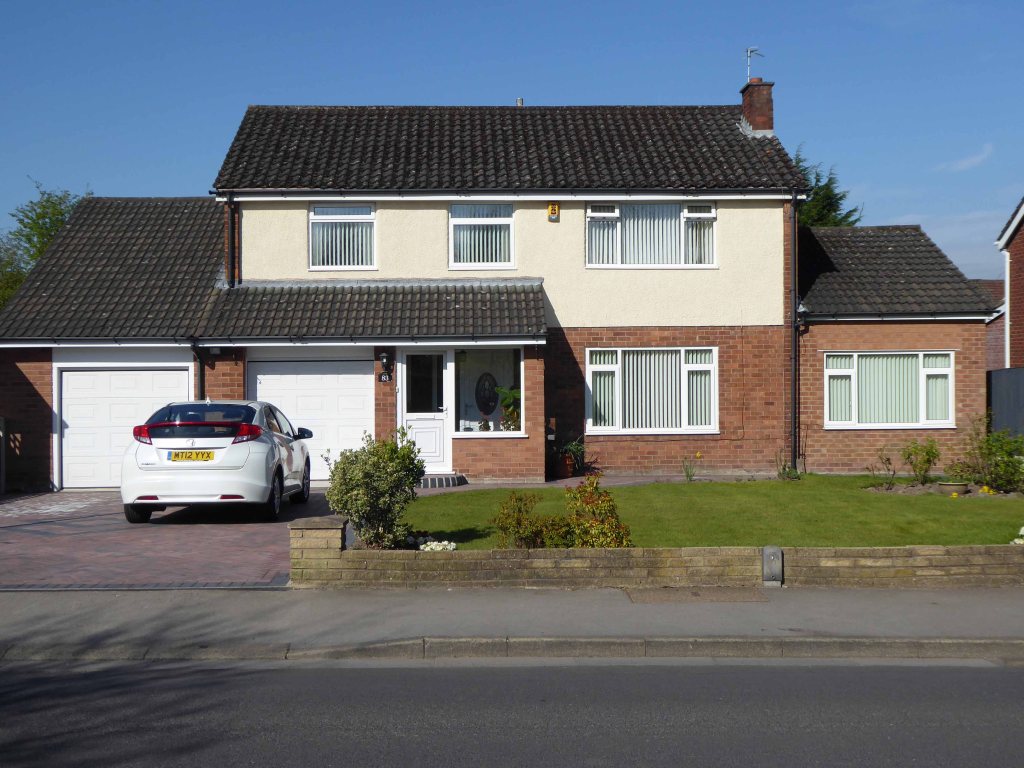
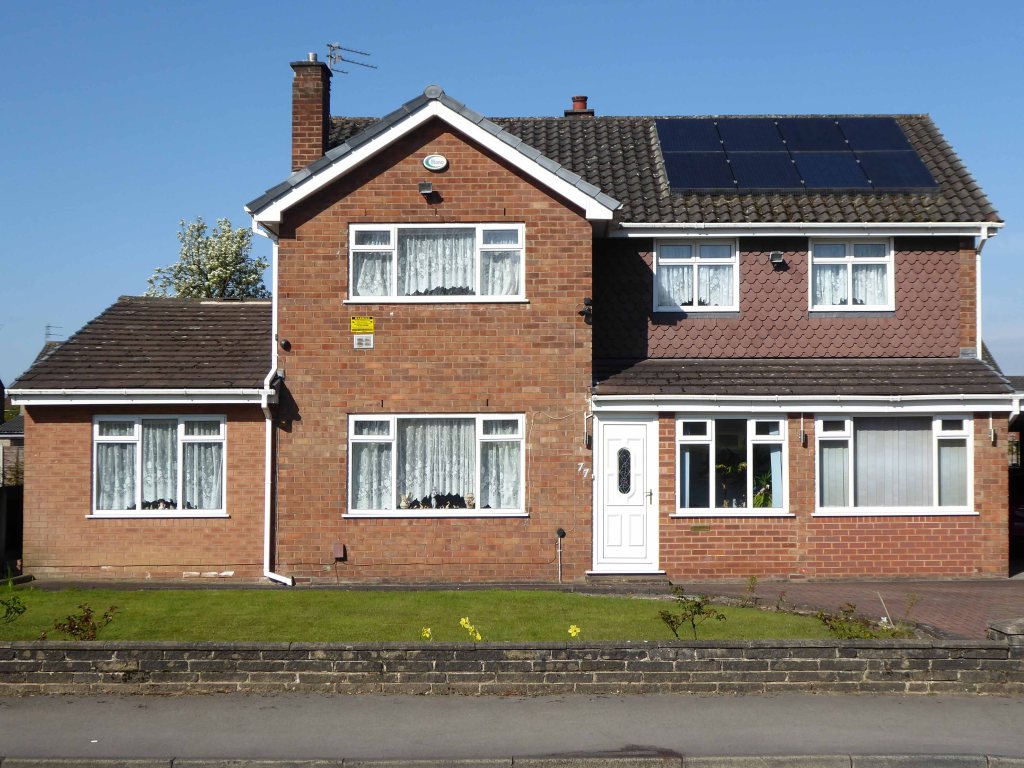
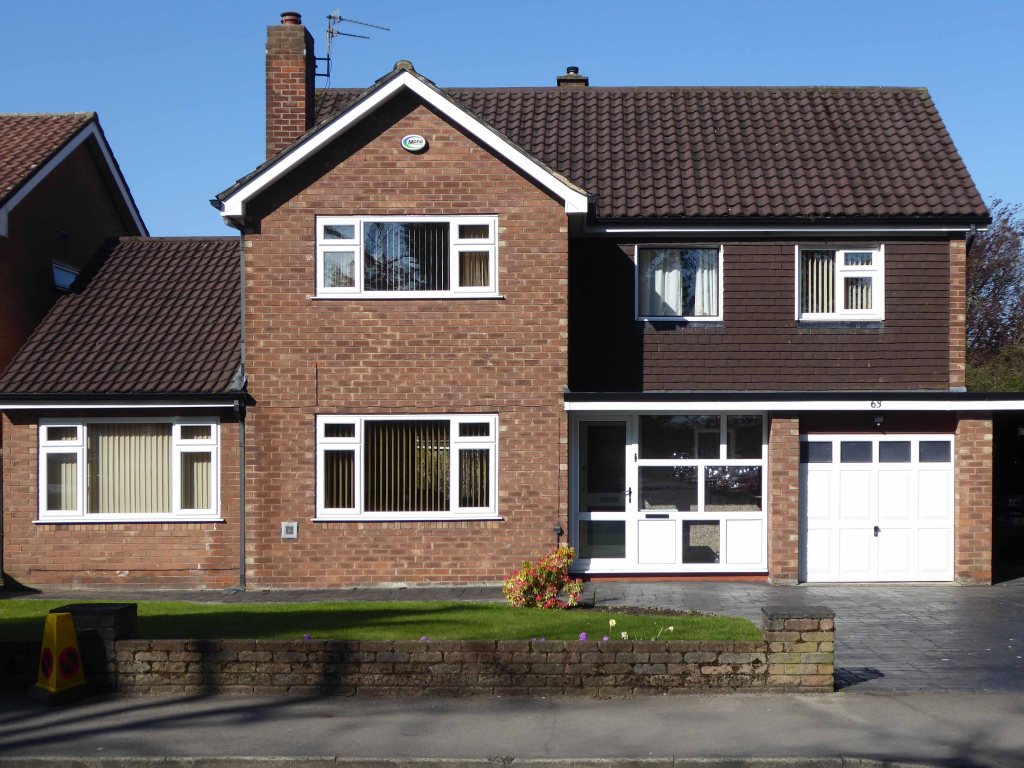
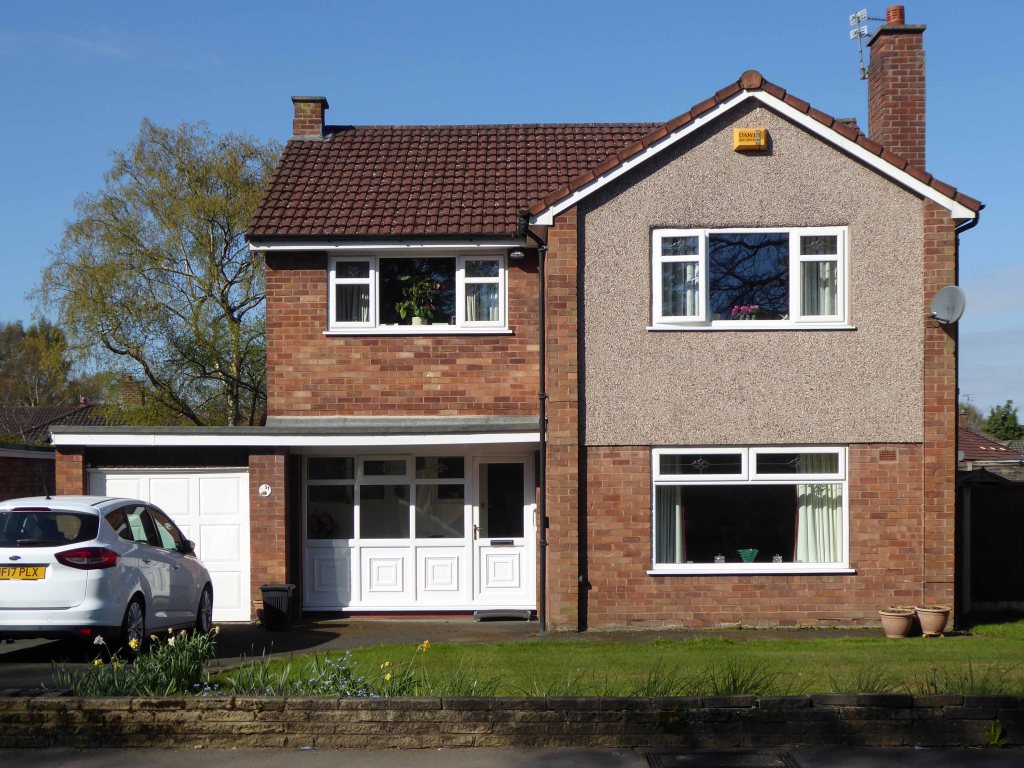
We begin our journey through bricks and mortar, domestic fashions and fads, time and tide in Rainham.
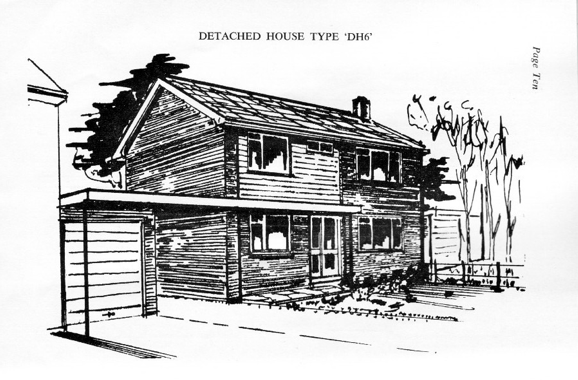
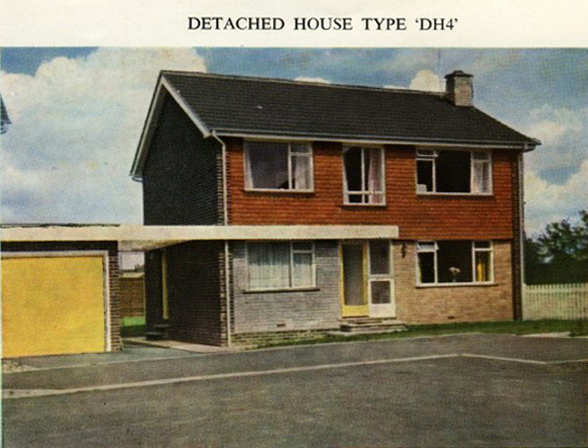
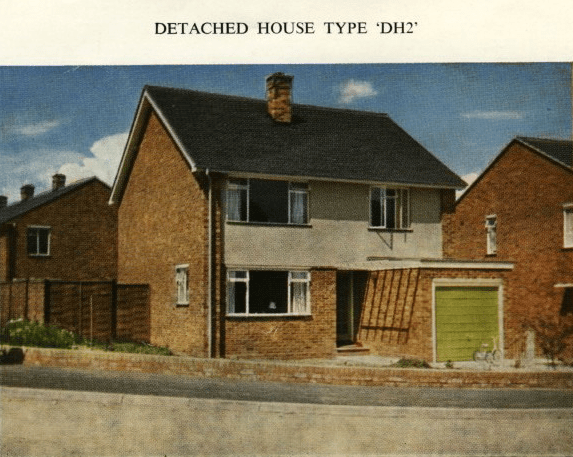
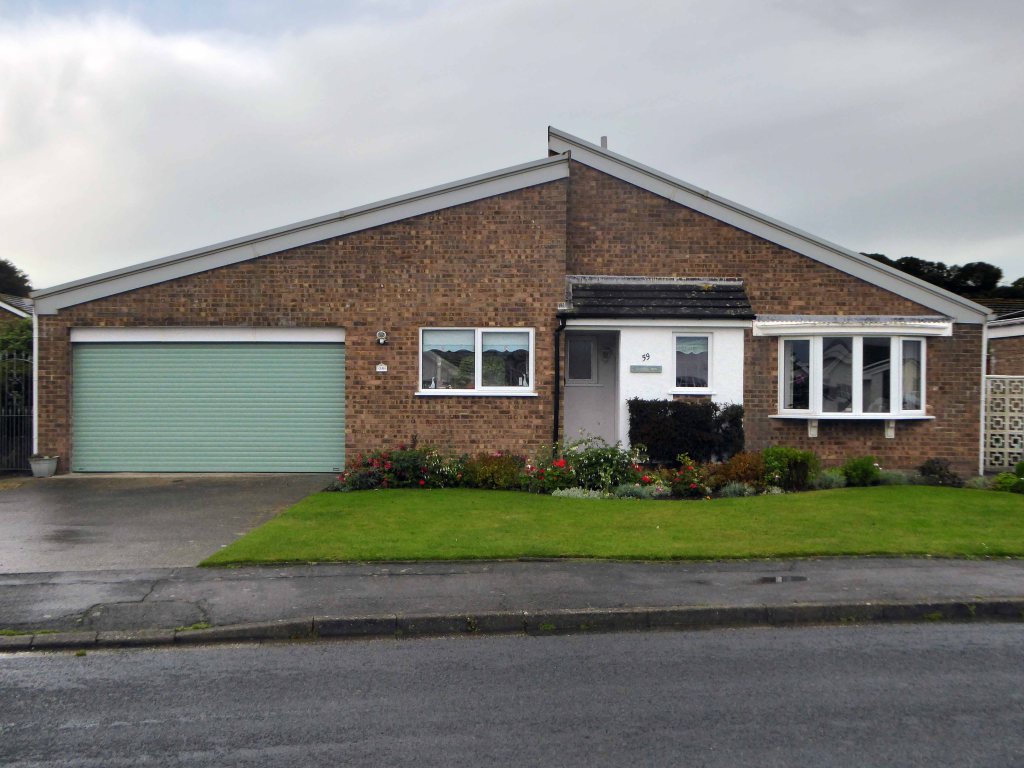
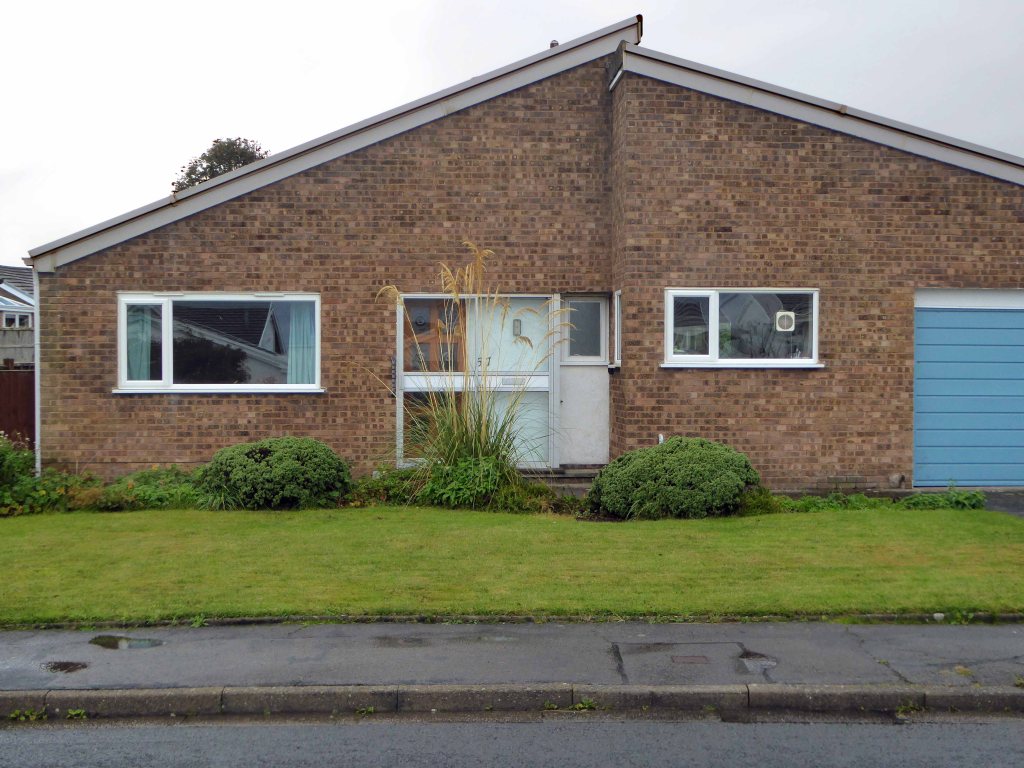
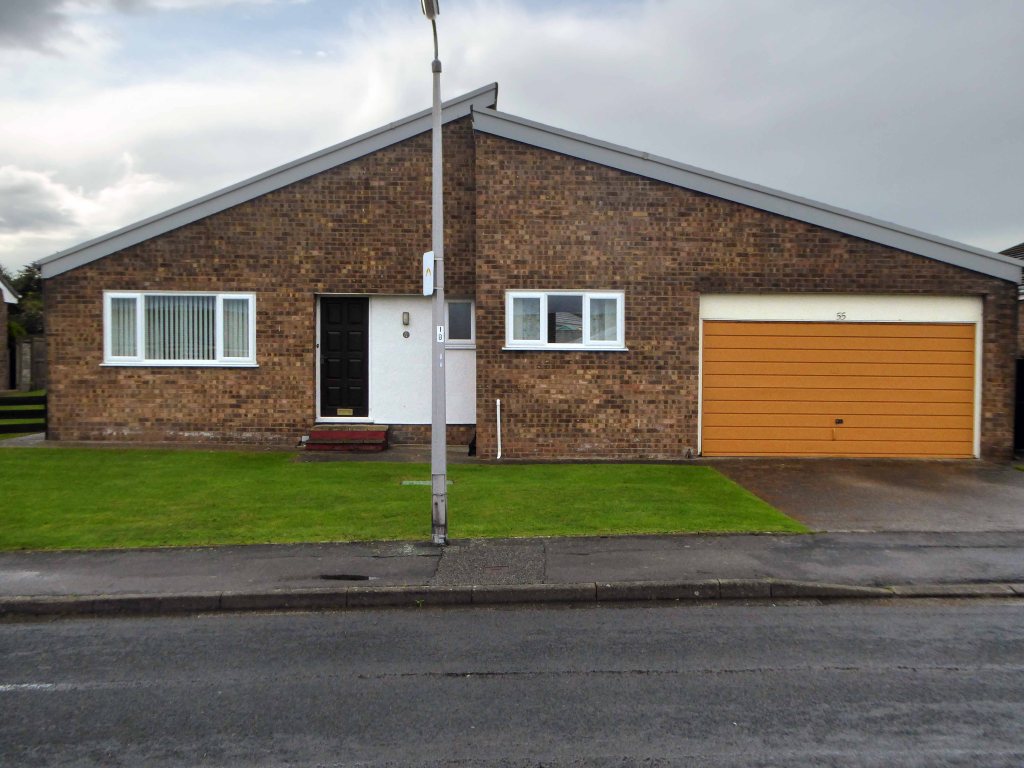
Ward’s Construction, along with many others throughout the country, offer the aspirational suburbanite an opportunity to own the very latest in modern design.
Large open plan rooms lit by large open glazed windows, quality cladding – mixing traditional materials with go ahead get it now design. Double fronted, remote garage, modest manageable, grassed gardens.
For those on slightly more limited means the DH2 offers affordable modernity, along with everything you would expect from a Ward’s Home.
Homes of distinction.
Fast forward to April 2020 – St Ann’s Road Heald Green Cheshire
Baby it happens when you’re close to me My heart starts beating – hey a strong beat. Oh I can’t leave you alone Can’t leave you alone
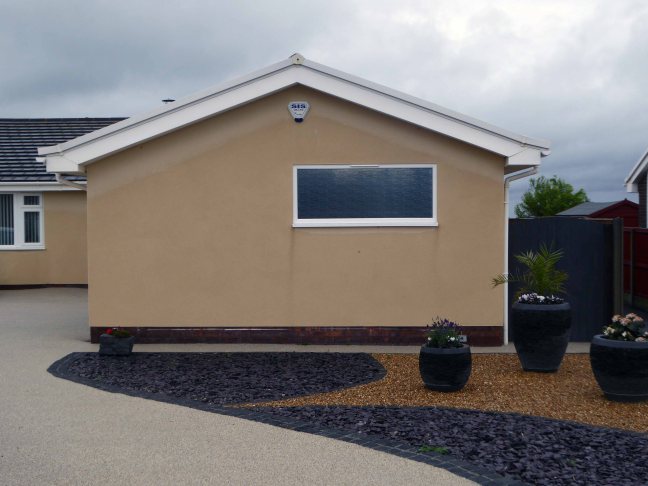
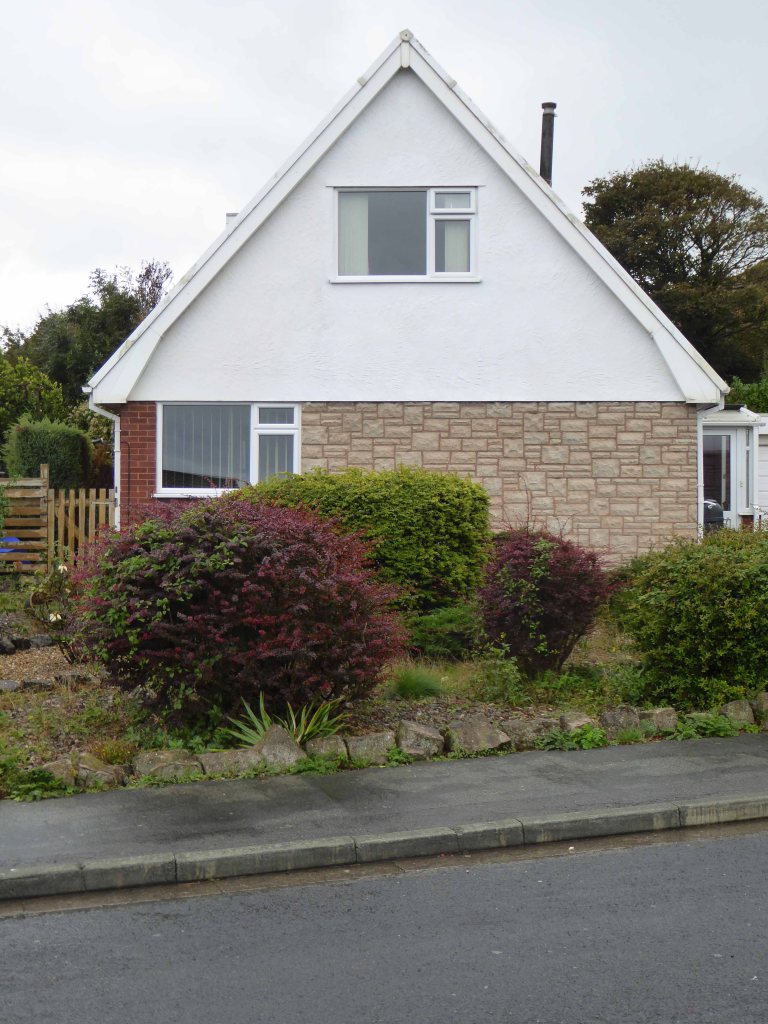
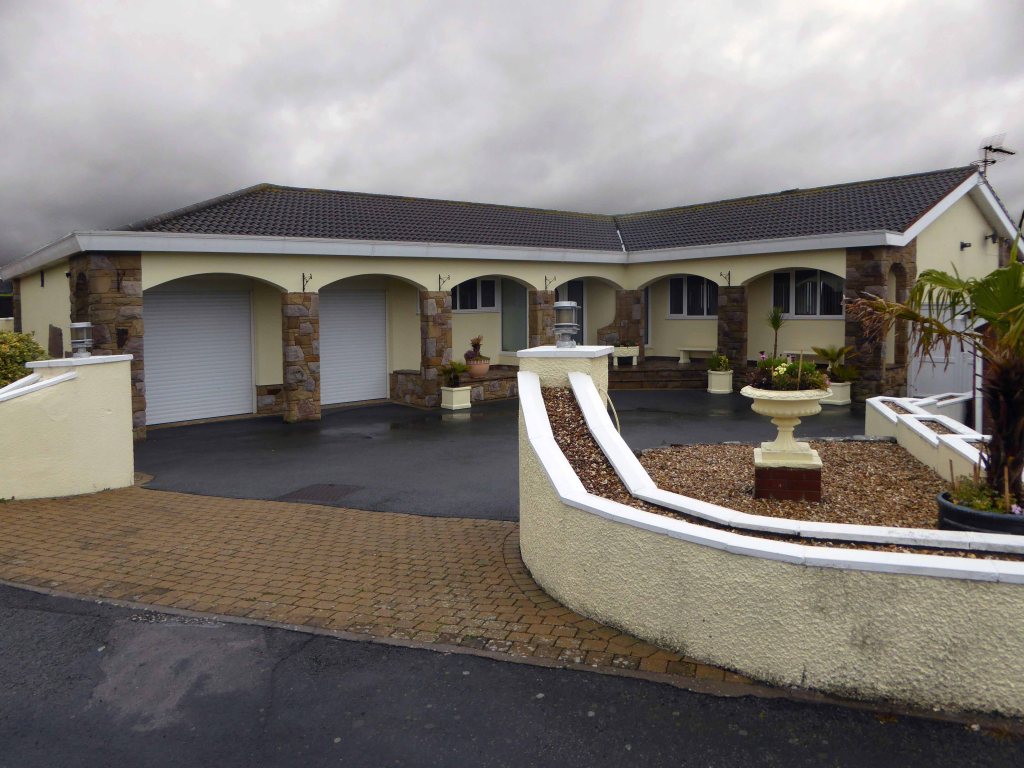
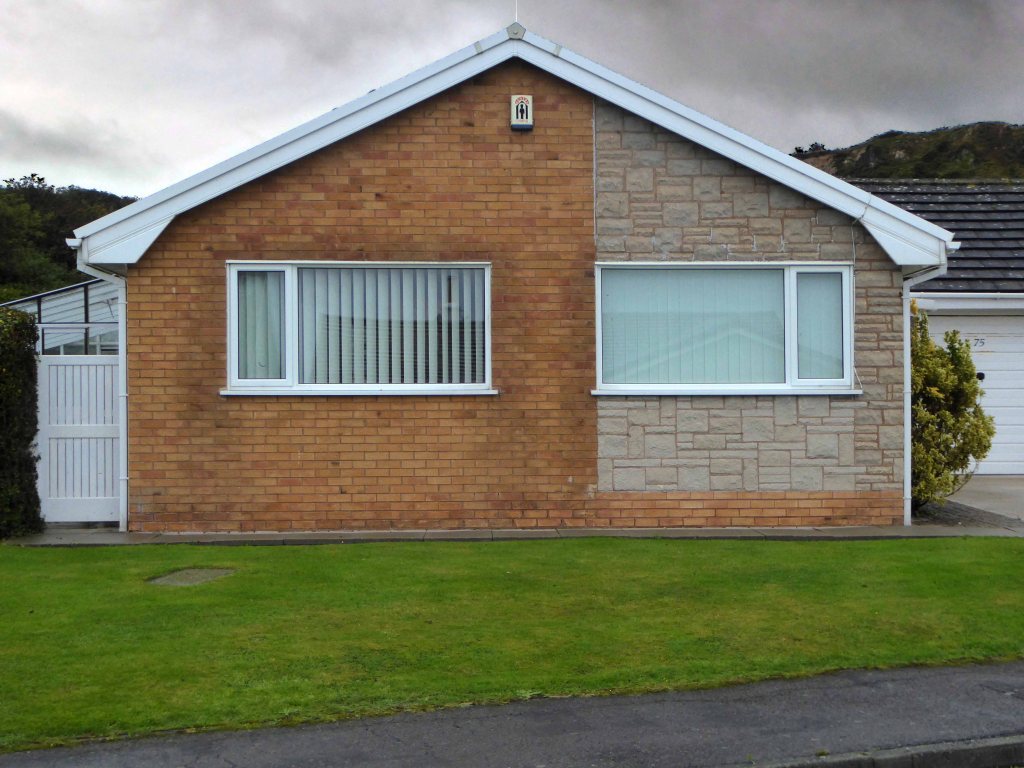
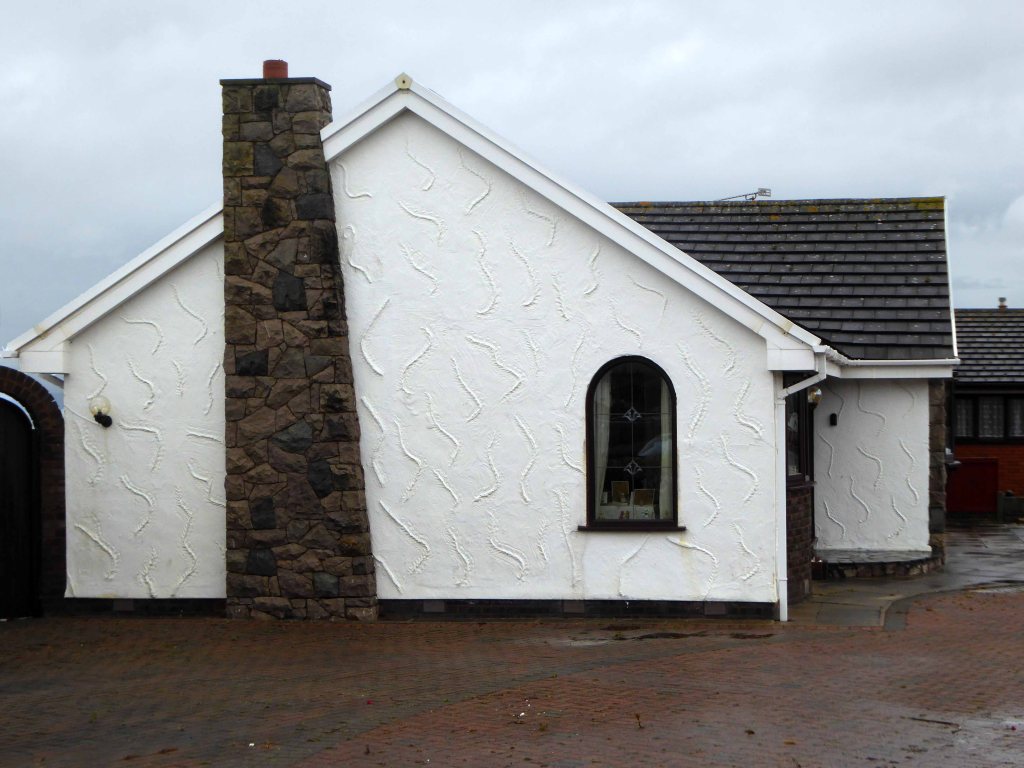
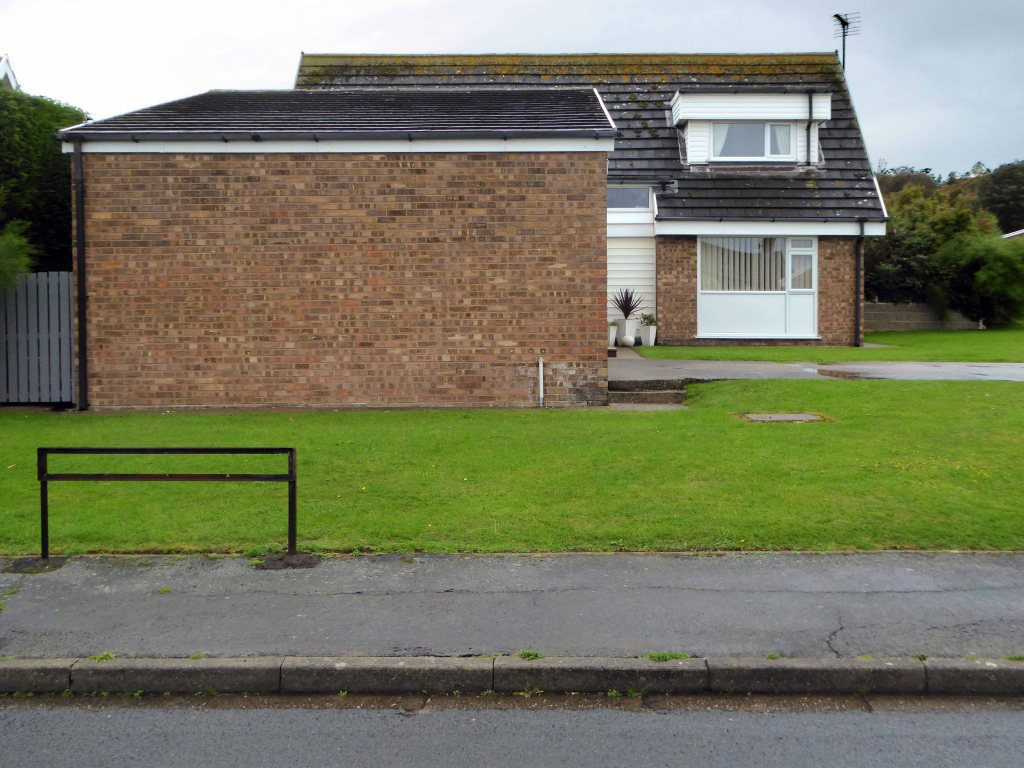
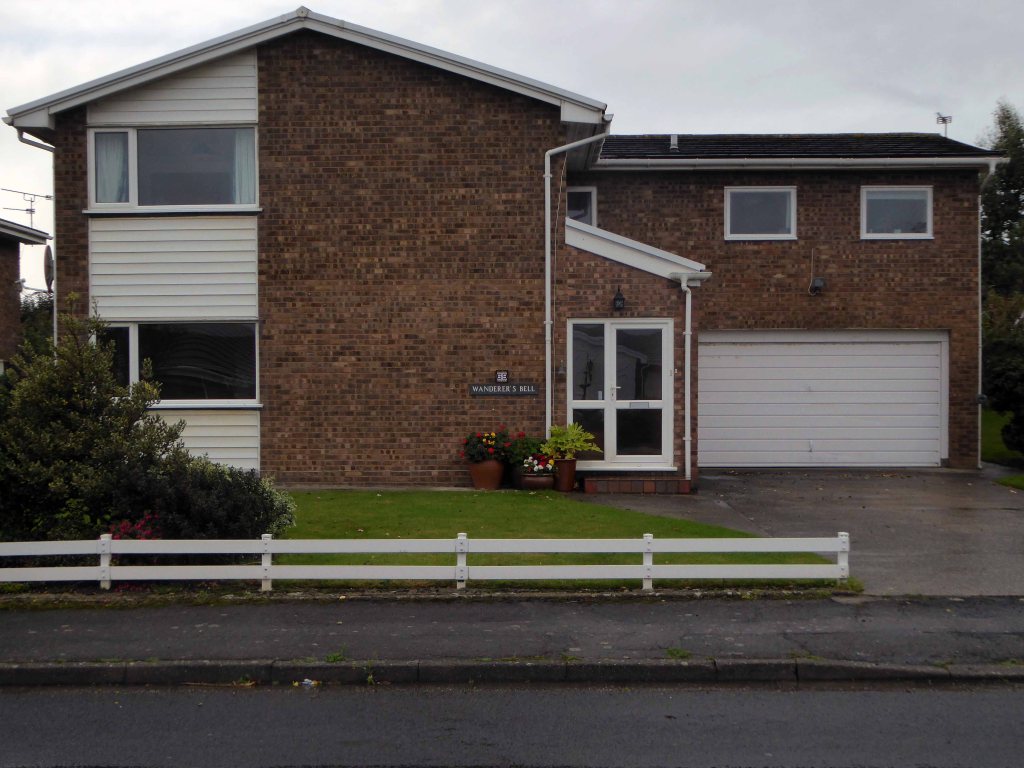
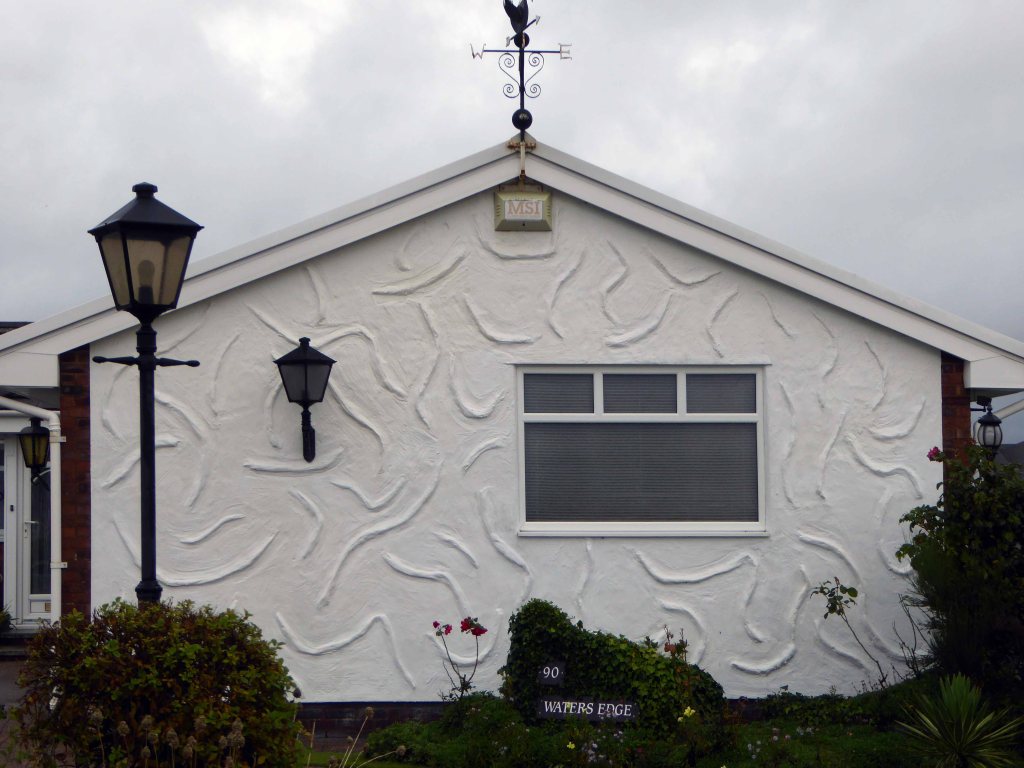
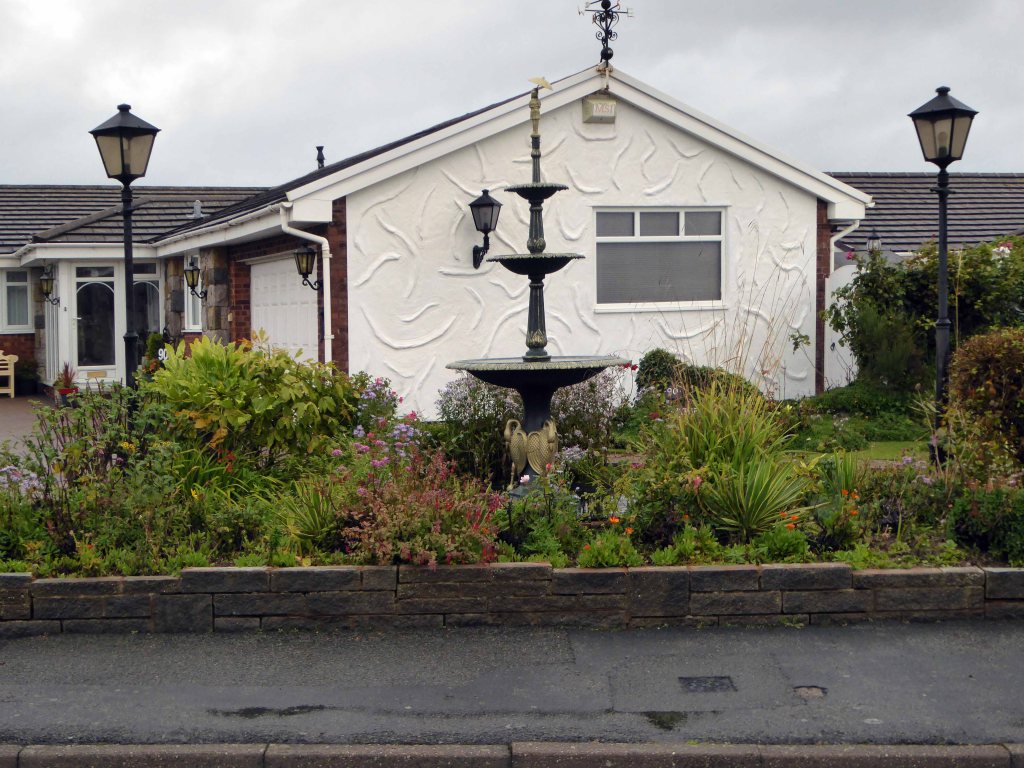
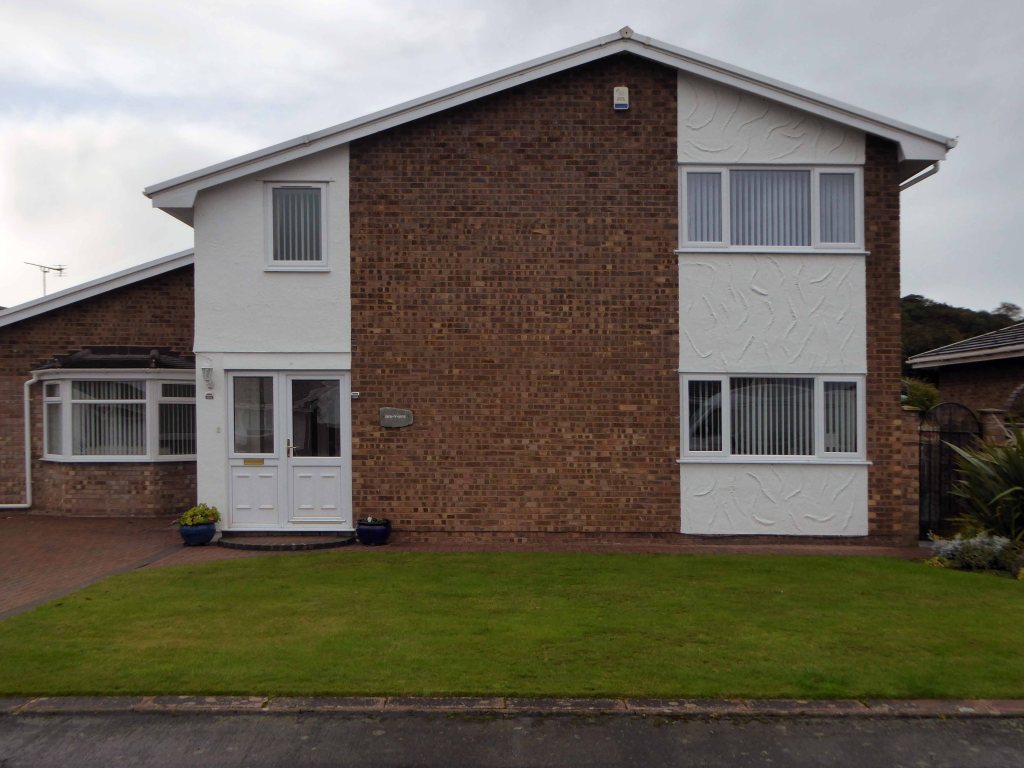
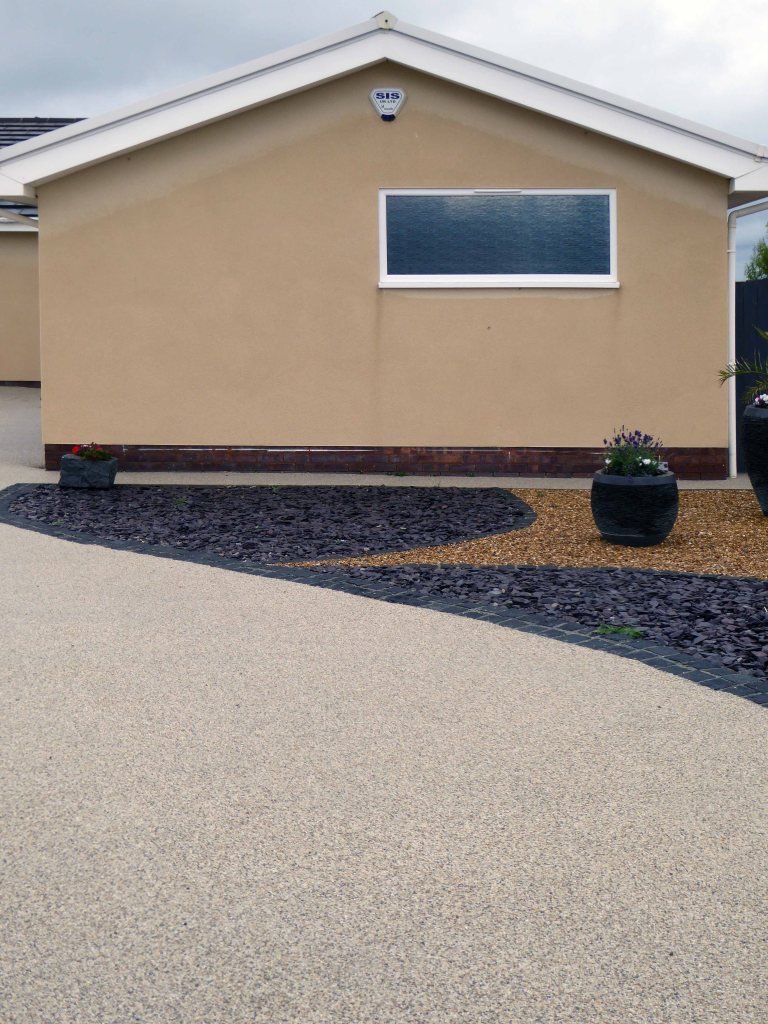
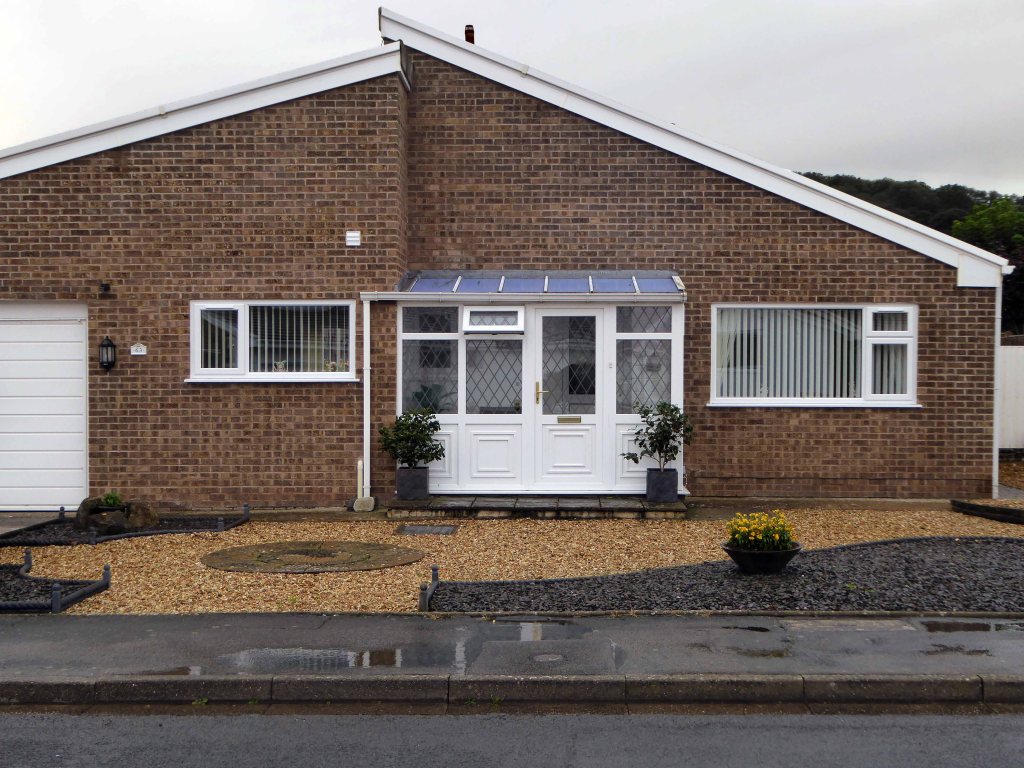
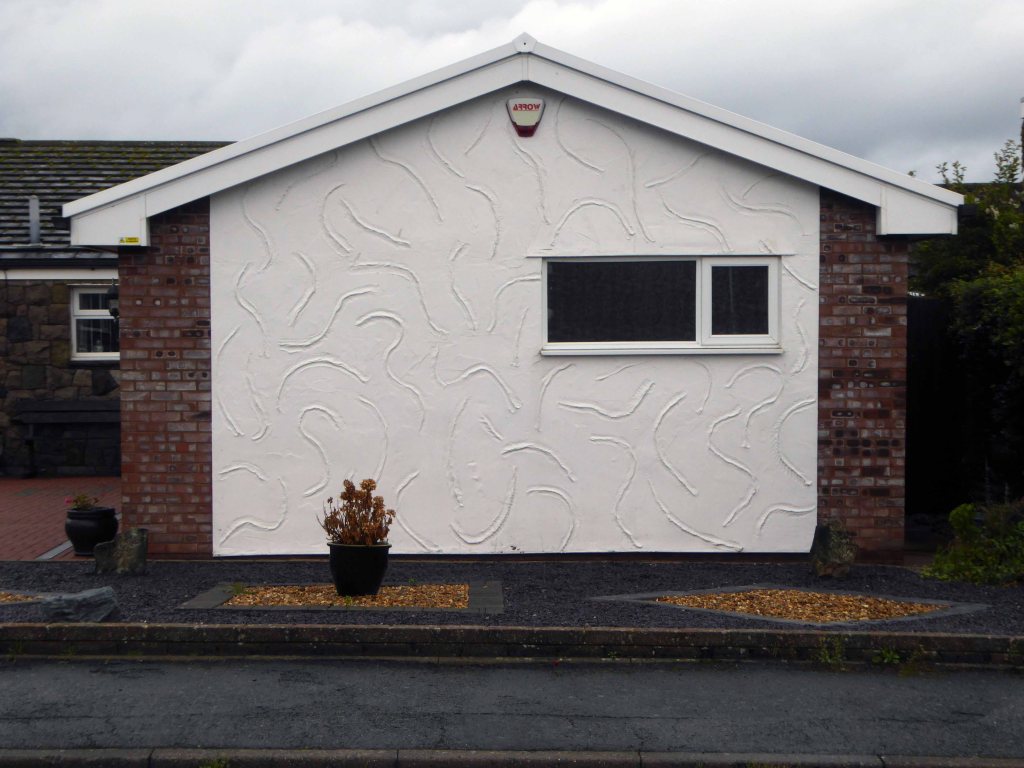
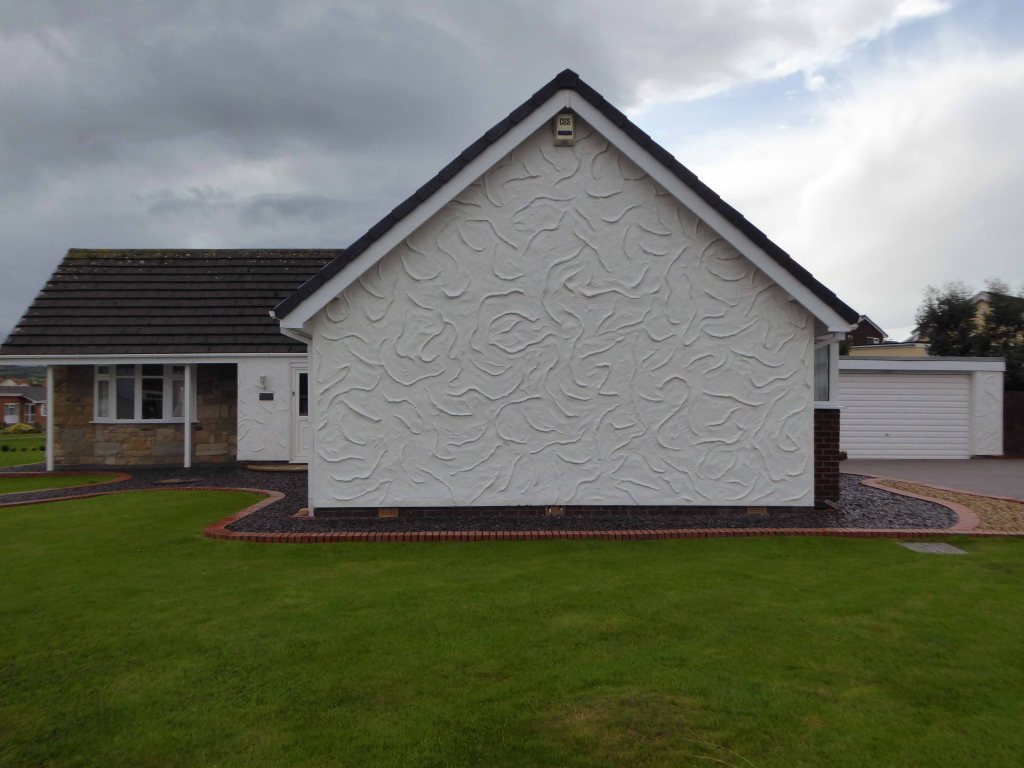
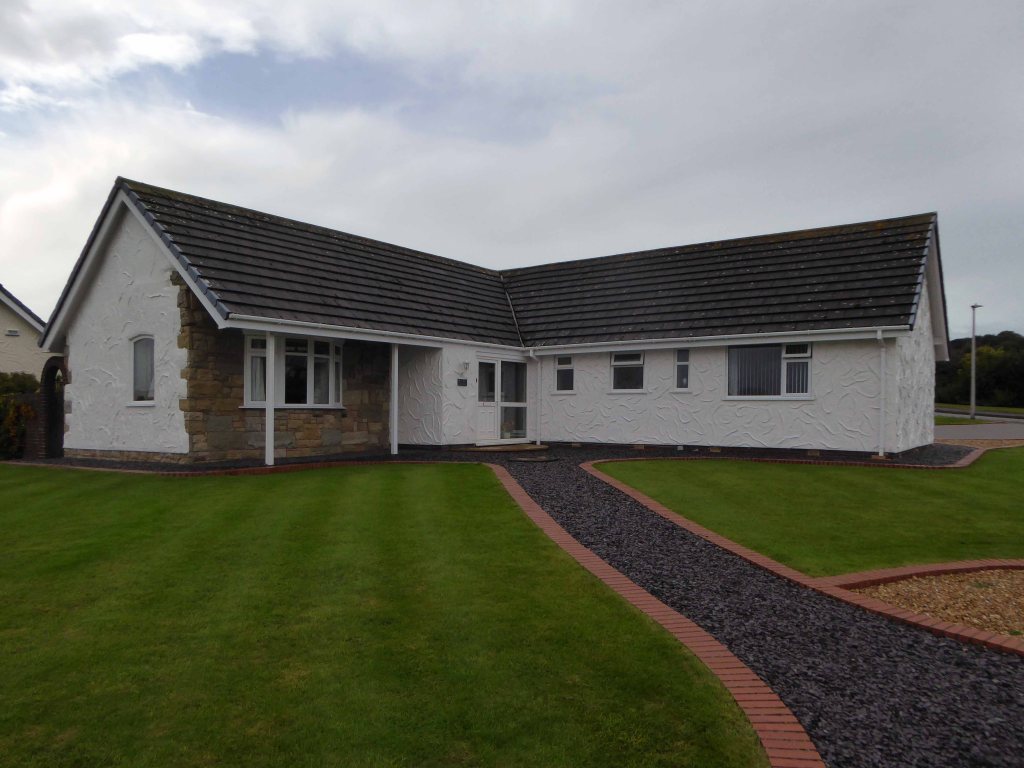
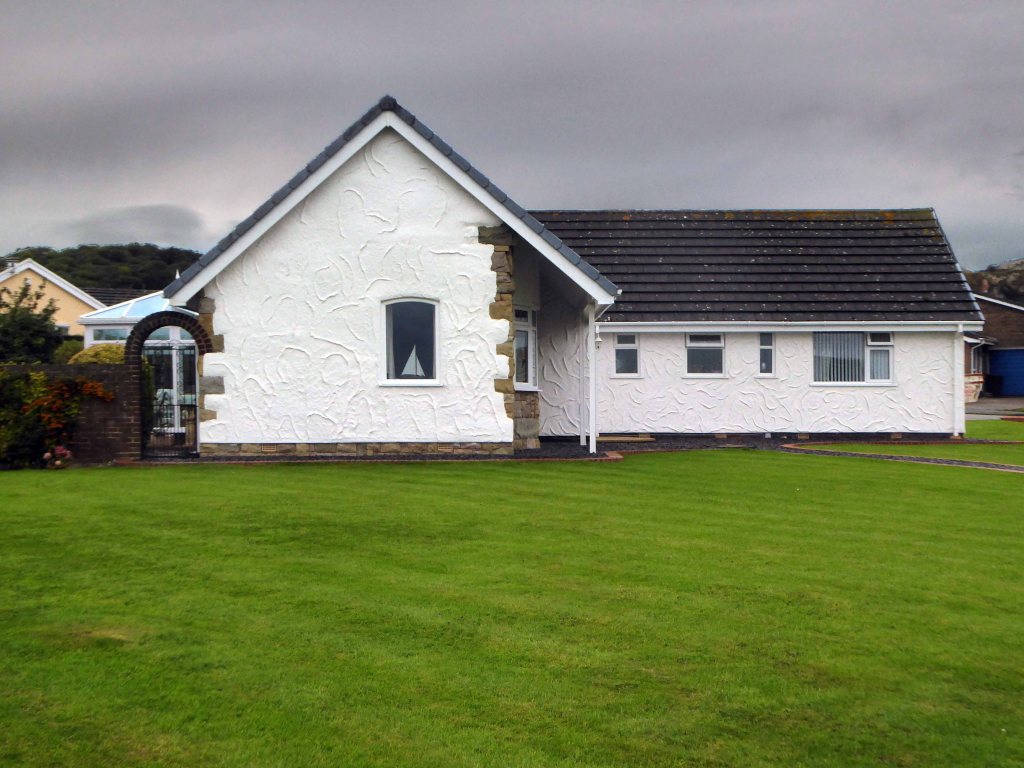
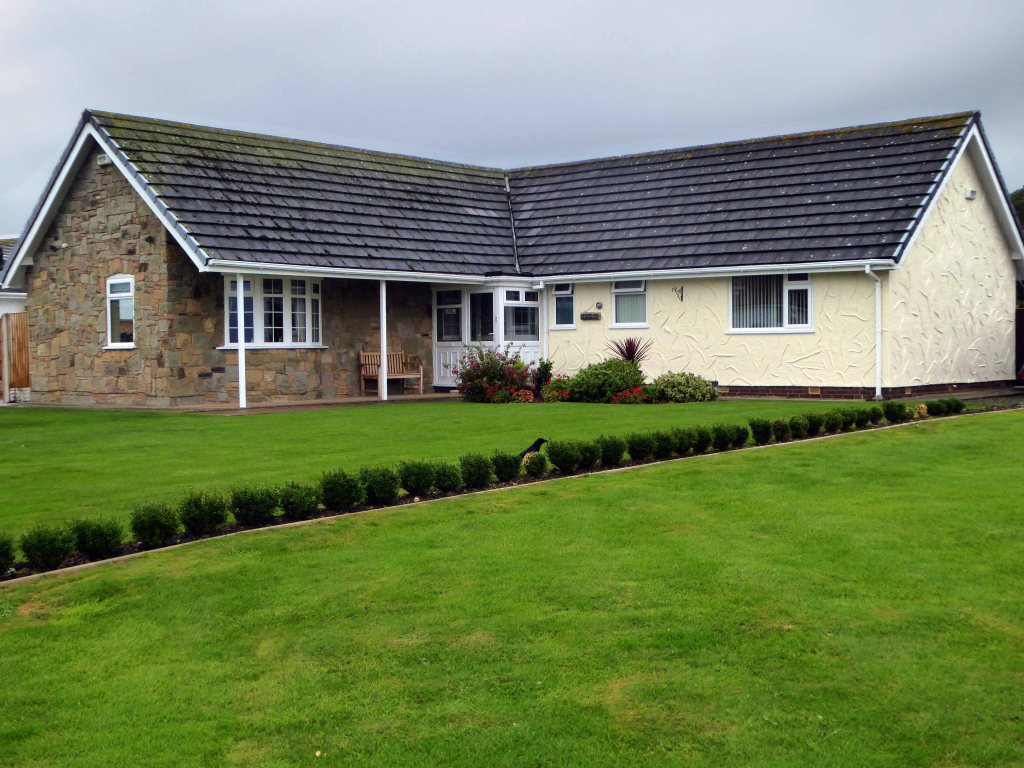
I walk over the Little Orme and there you are so well behaved – trimmed topped and tailed polished window washed windswept so sub-urbane.
Nothing ever happens here or does it?
The highly popular singing duo Anne Ziegler and Webster Booth retired to a small bungalow in Penrhyn Bay.
It provided a location for an episode of Hetty Wainthropp Investigates.
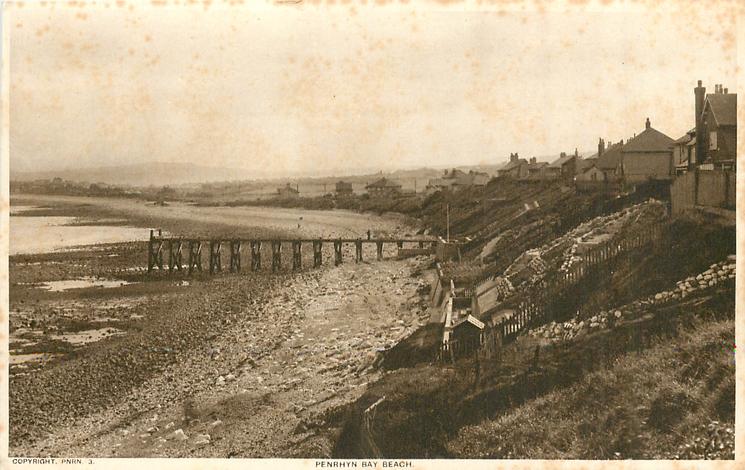
Originally a small farming community, Penrhyn Bay came to rely heavily on the employment opportunities of the limestone quarry operating since the mid-19th century, and served by its own narrow gauge railway, but quarrying ceased in 1936.
However, Penrhyn Bay expanded rapidly in the 20th century to become a desirable suburb of Llandudno – my you’re a hot property.
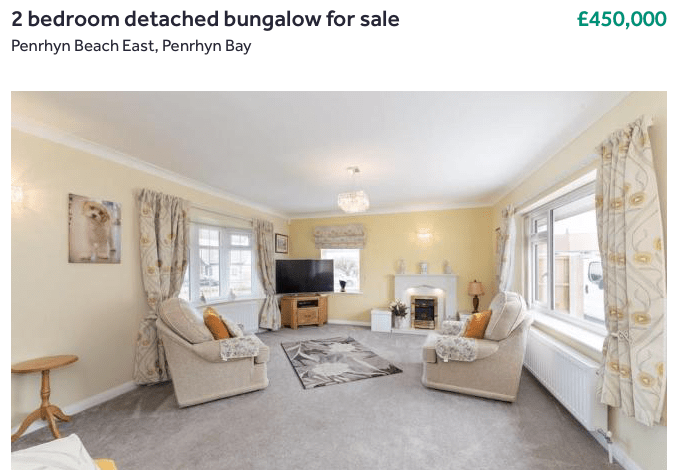
Almost half a million pounds and counting as the ever mounting mountain of retiring and retired knock upon your over ornate uPVC doors.
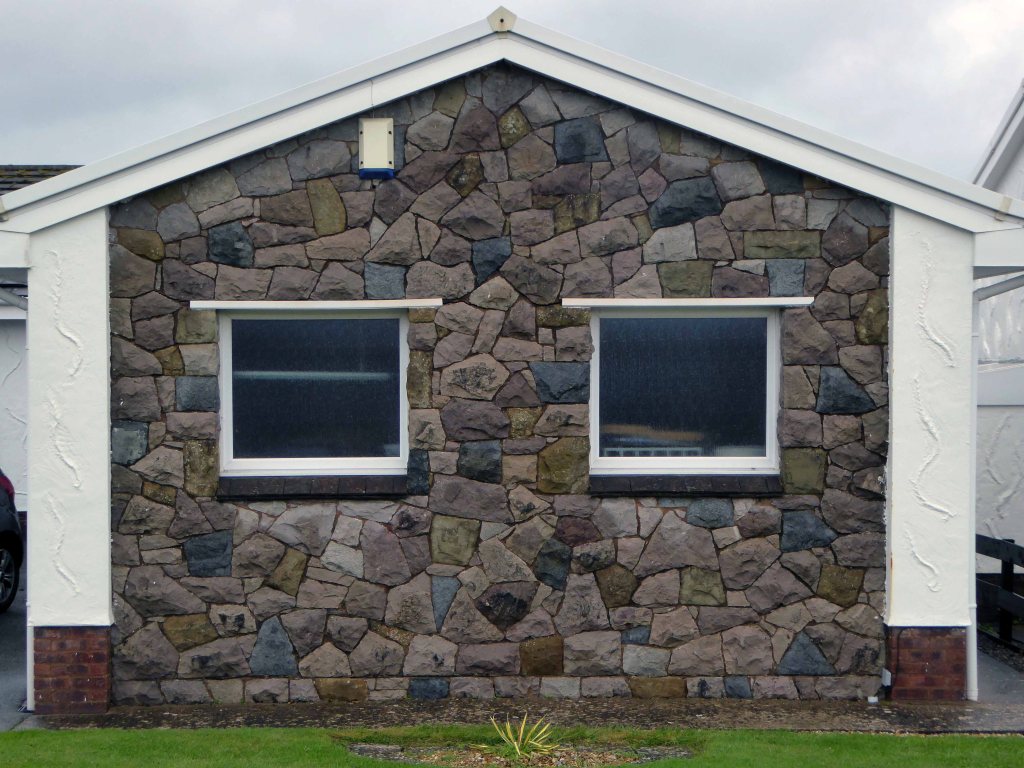
So here we are, as the rain clears and the sun almost breaks – your carefully rendered and stone clad walls, not quite awash with a golden midday glow.
Just like Arnie and General McArthur I’ll be back – I shall return.
One fine sunny Monday morning I set out cycling to Ashton-under-Lyne to buy an enamel pie dish. Almost inevitably I was pushed and pulled in a variety of unforeseen directions, incautiously distracted and diverted serendipitously – towards Droylsden.
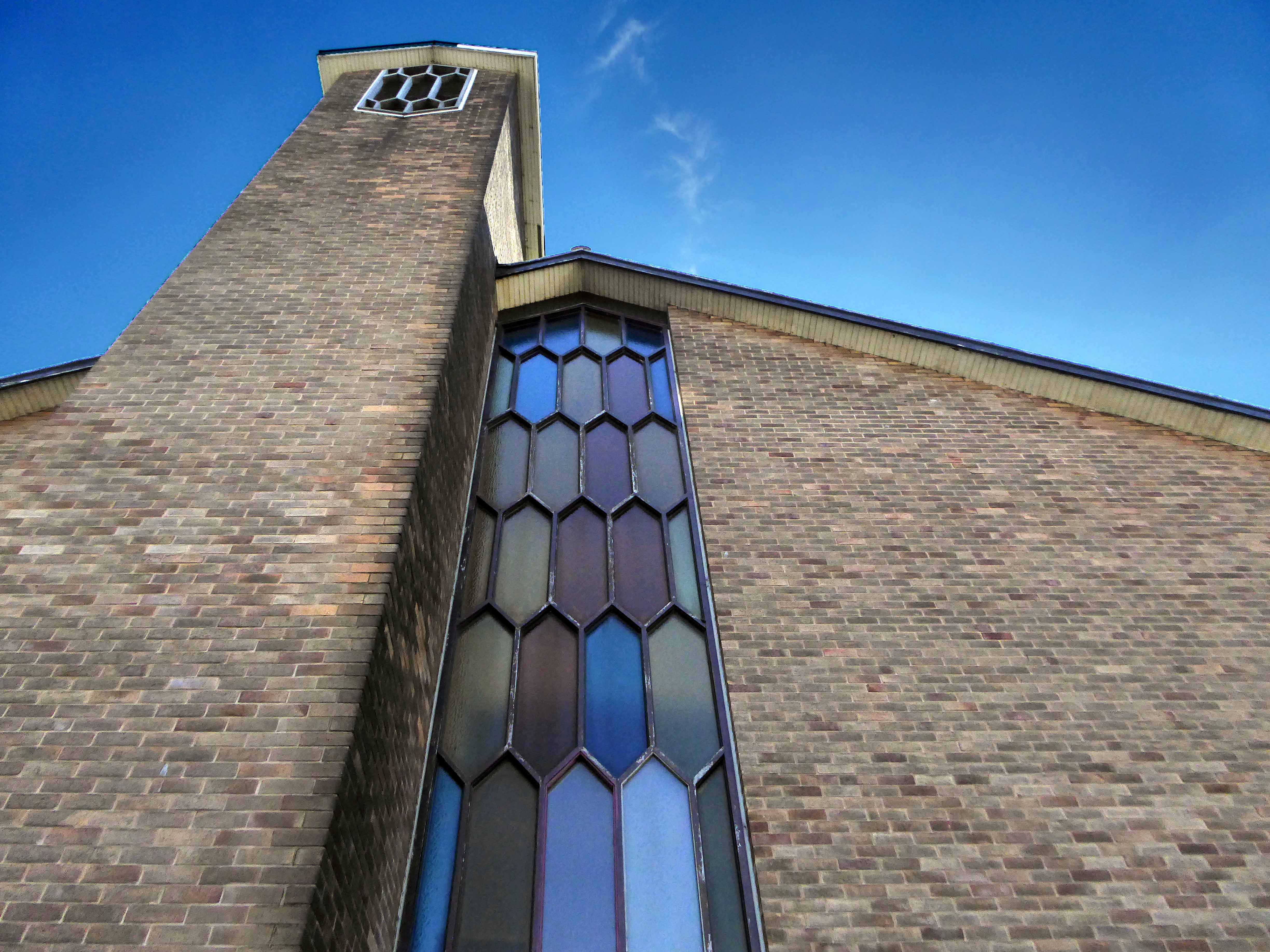
Idly pedalling down Greenside Lane looking this way and that I was drawn magnetically to a pitched roof tower, towering over the red brick semis. Rounding the corner I discovered the delightful St Stephen’s RC church, stood high and proud on a grassy corner, glowing golden in the March sunlight.
I leaned my bike against the presbytery wall and with the kindly bidding of a passing parishioner, I went inside.
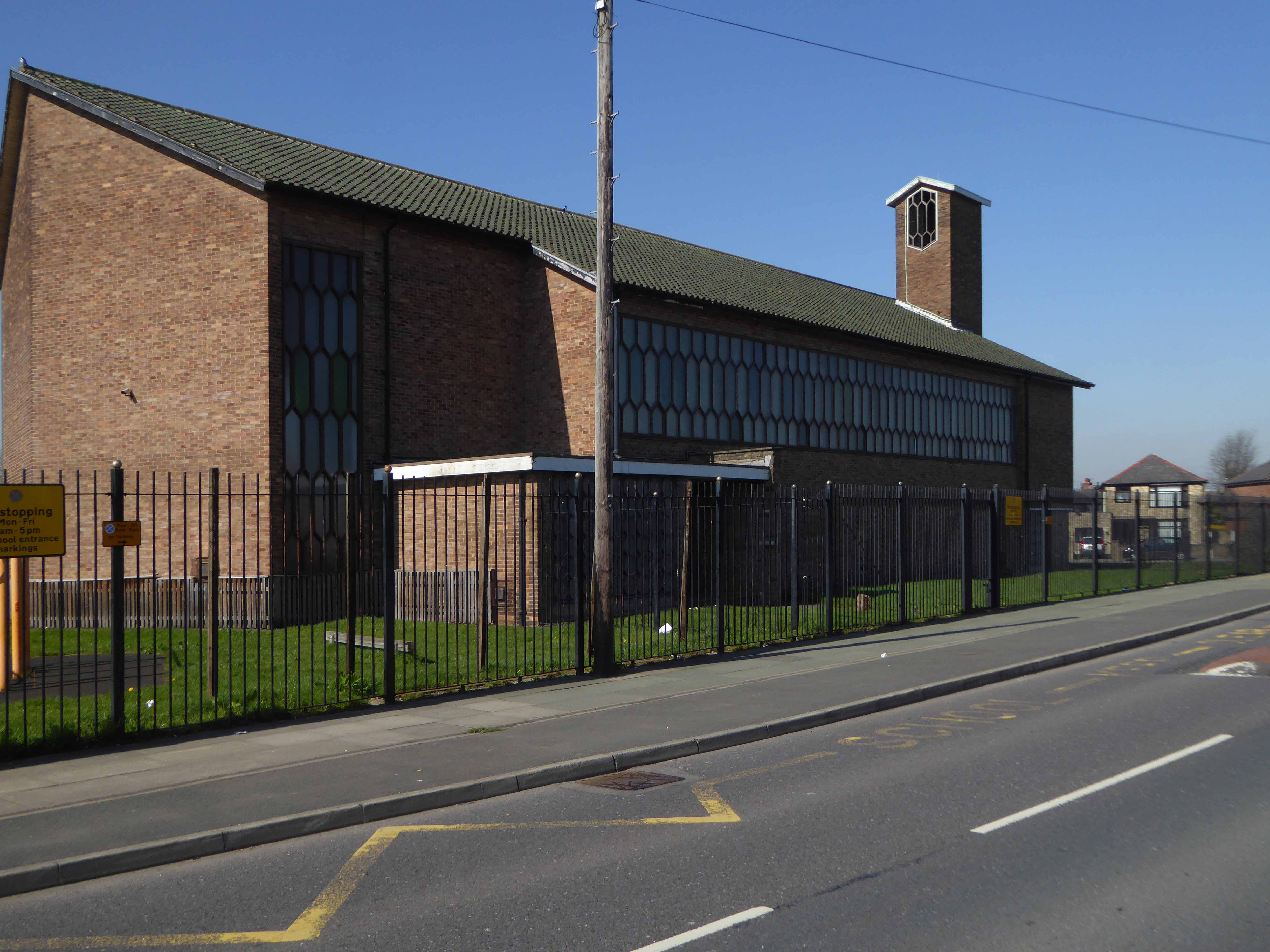
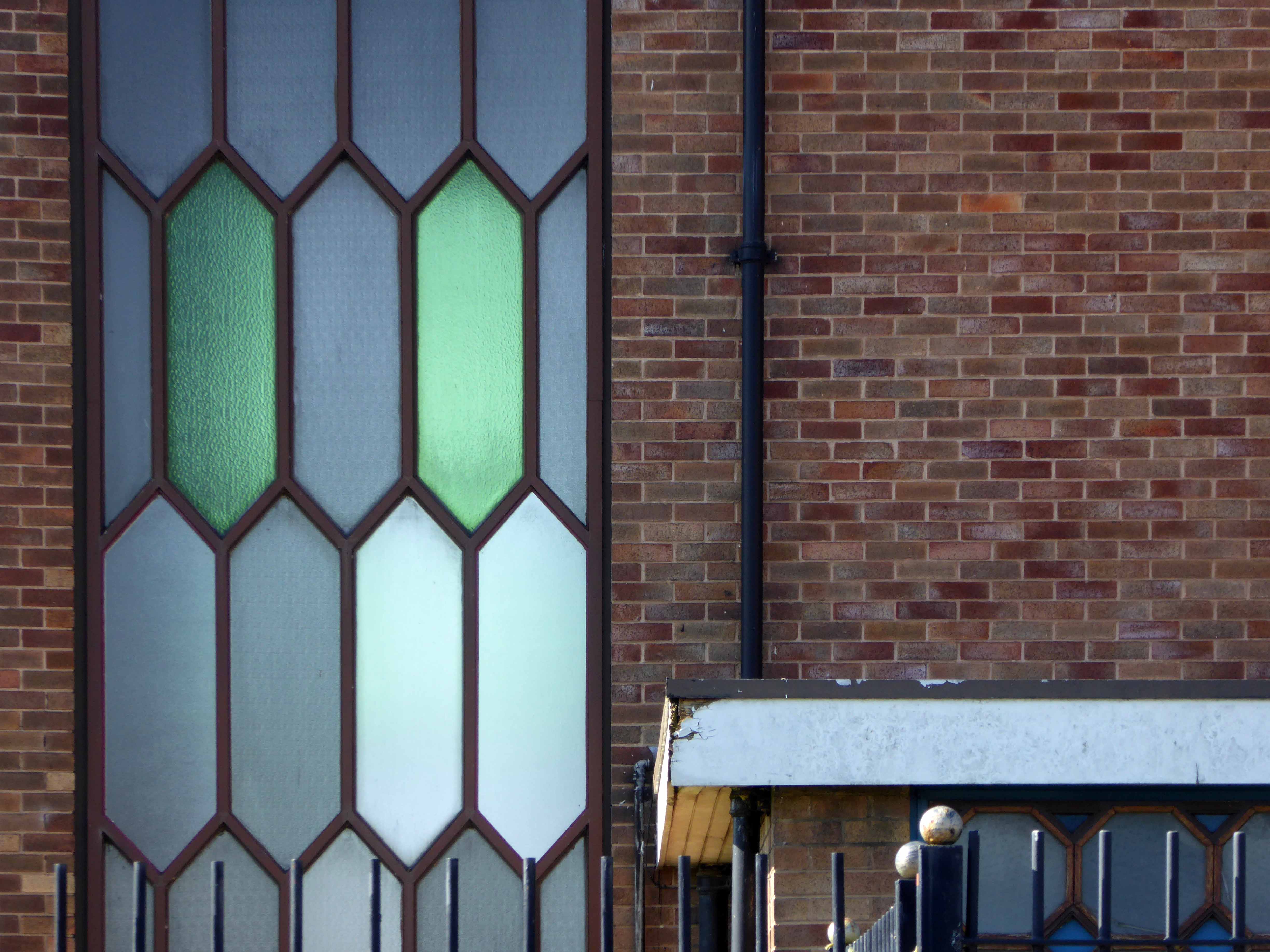
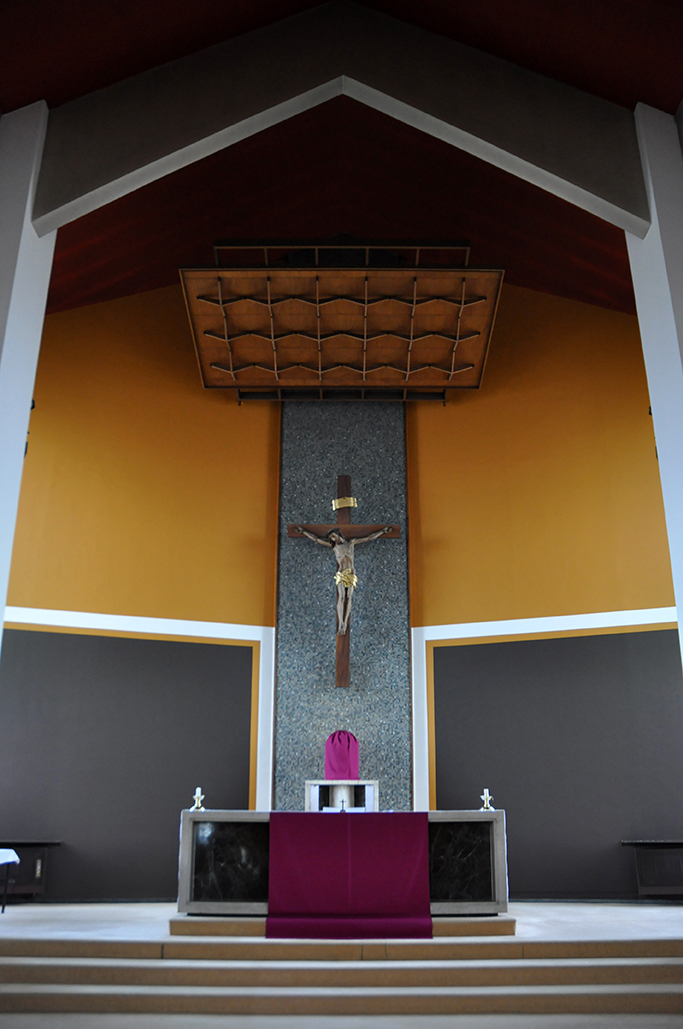
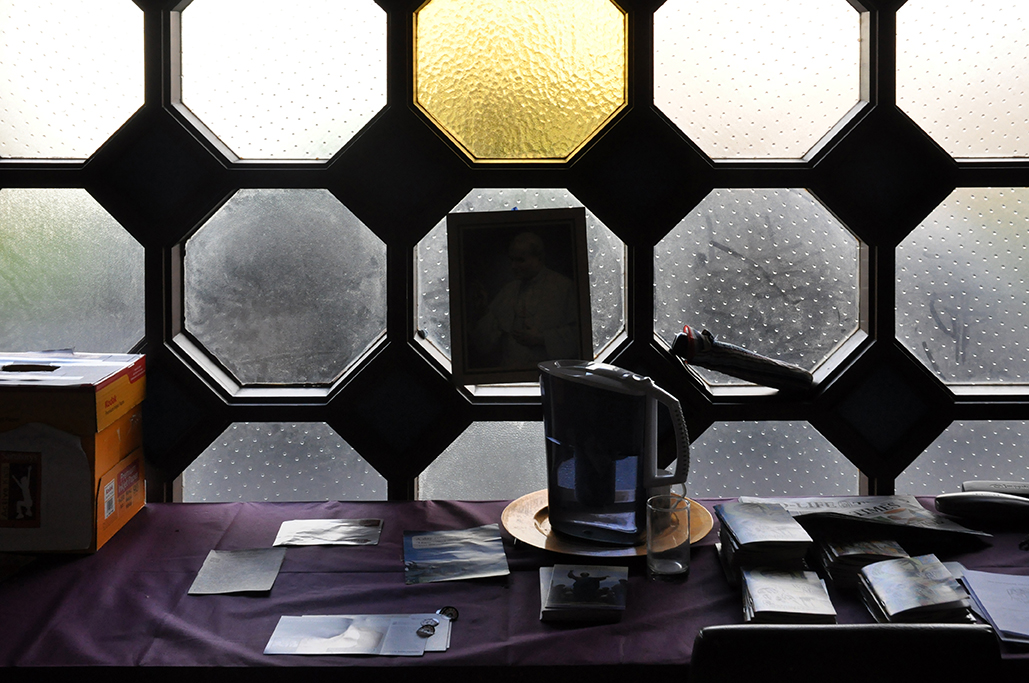
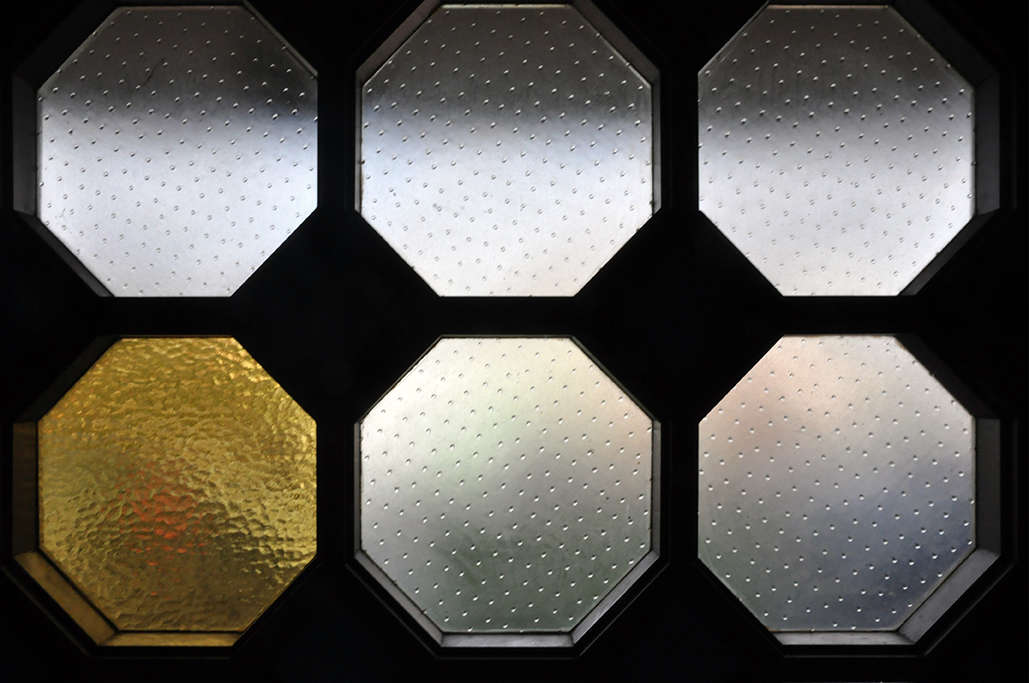
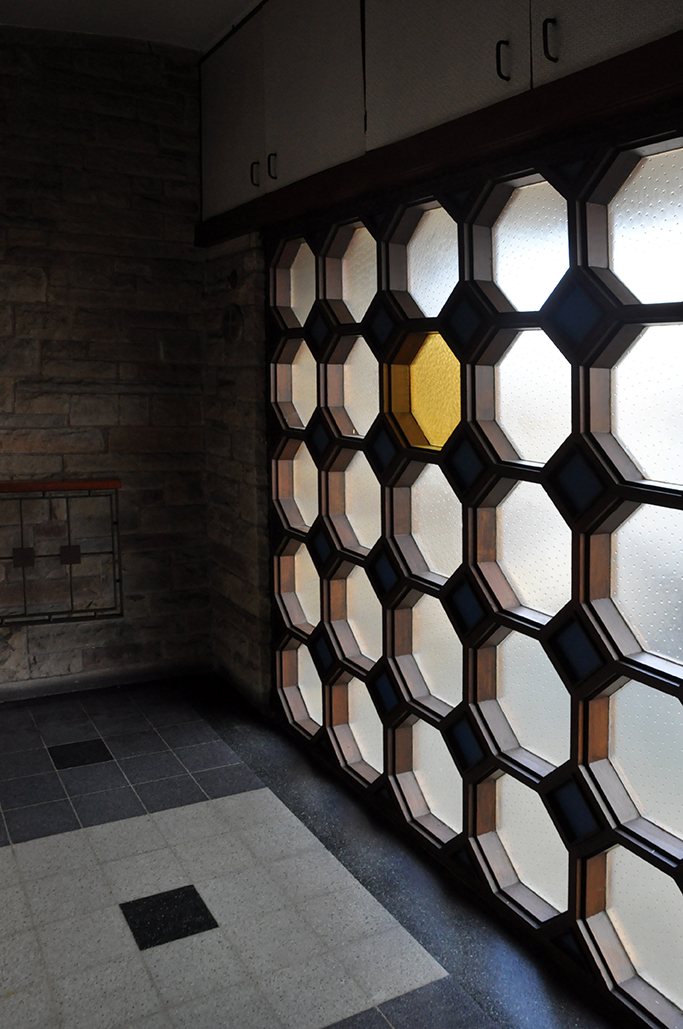
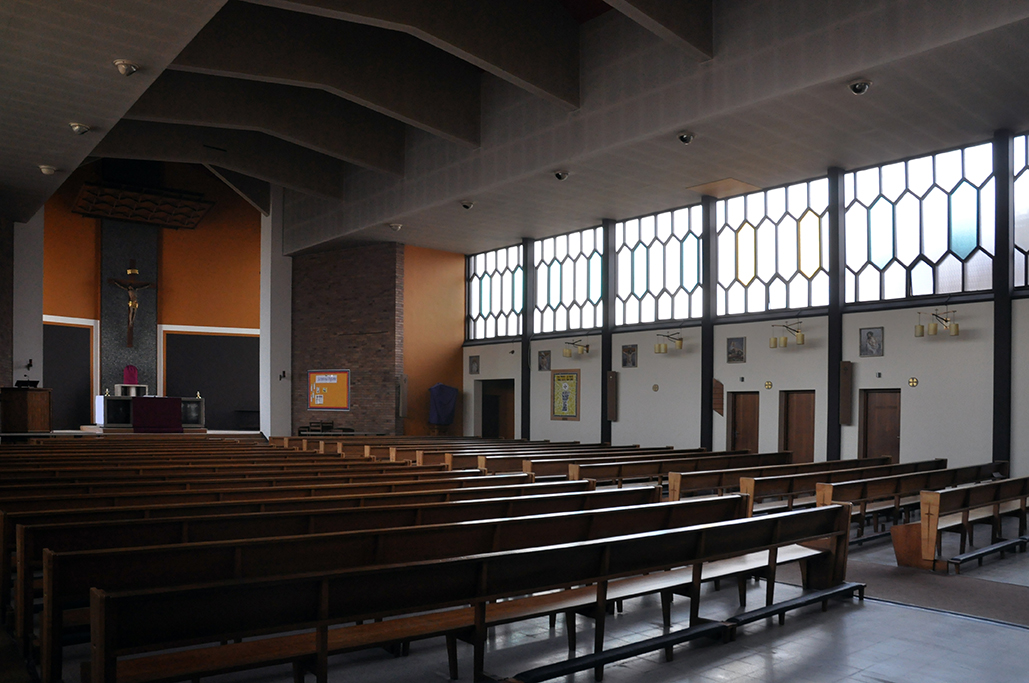
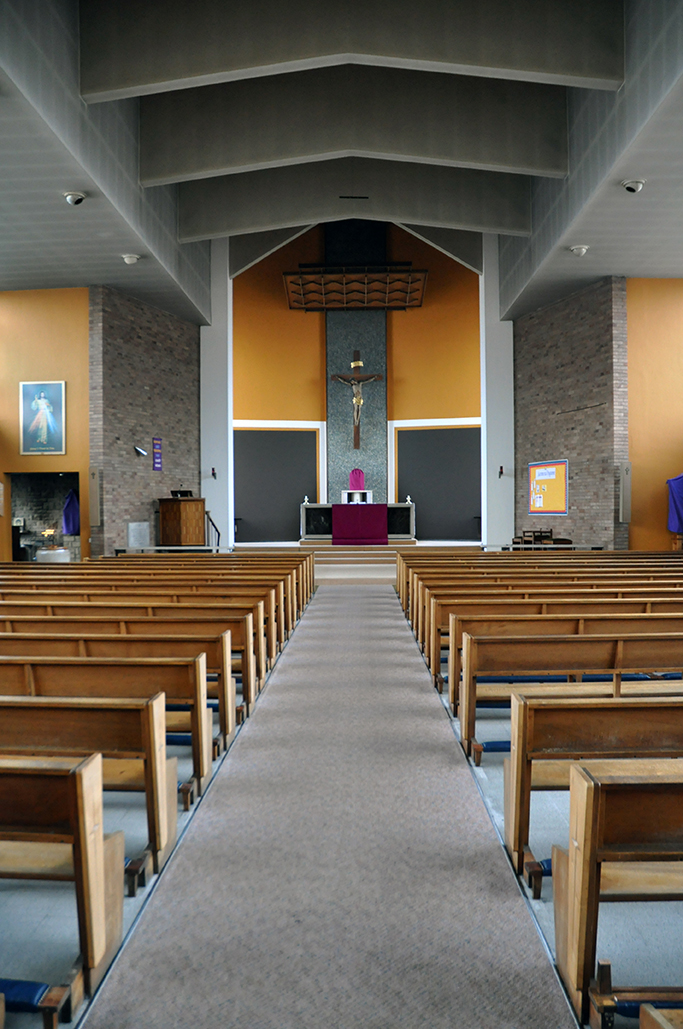
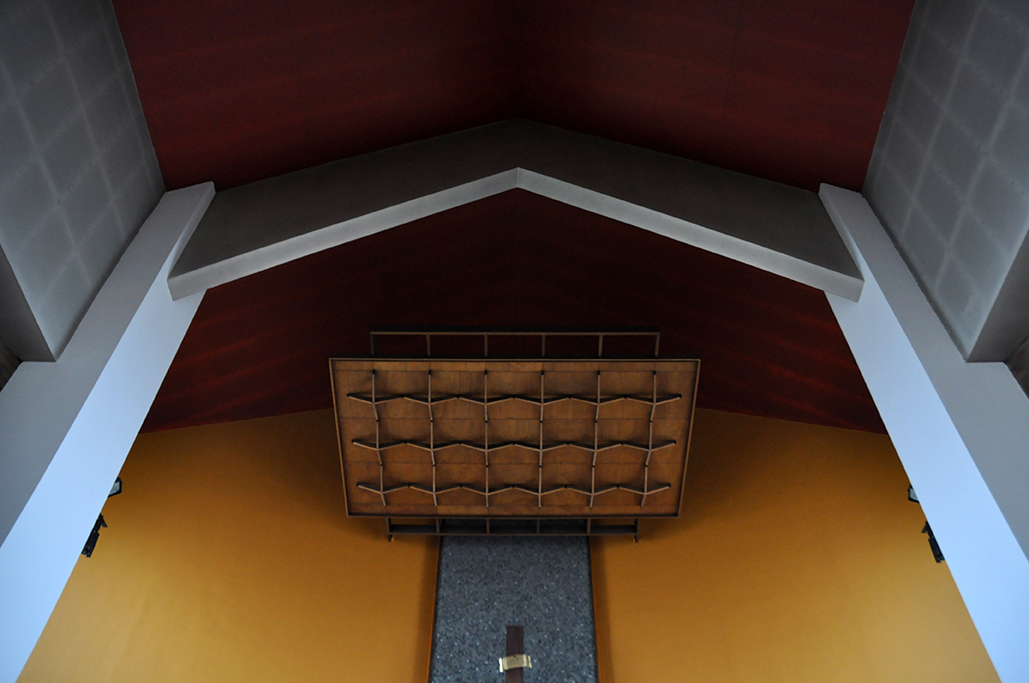
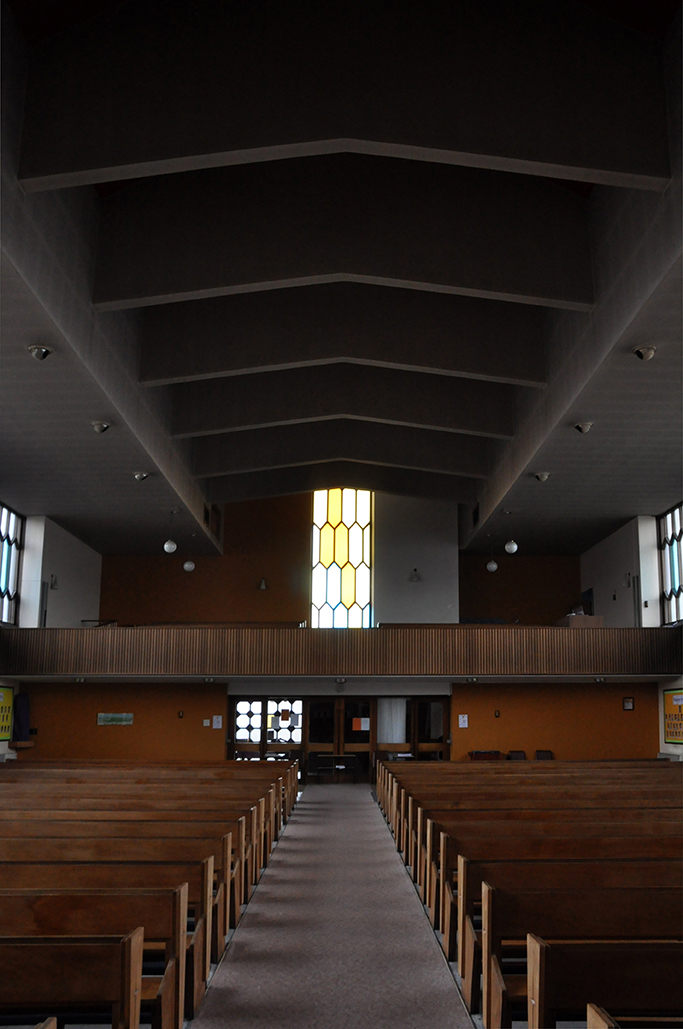
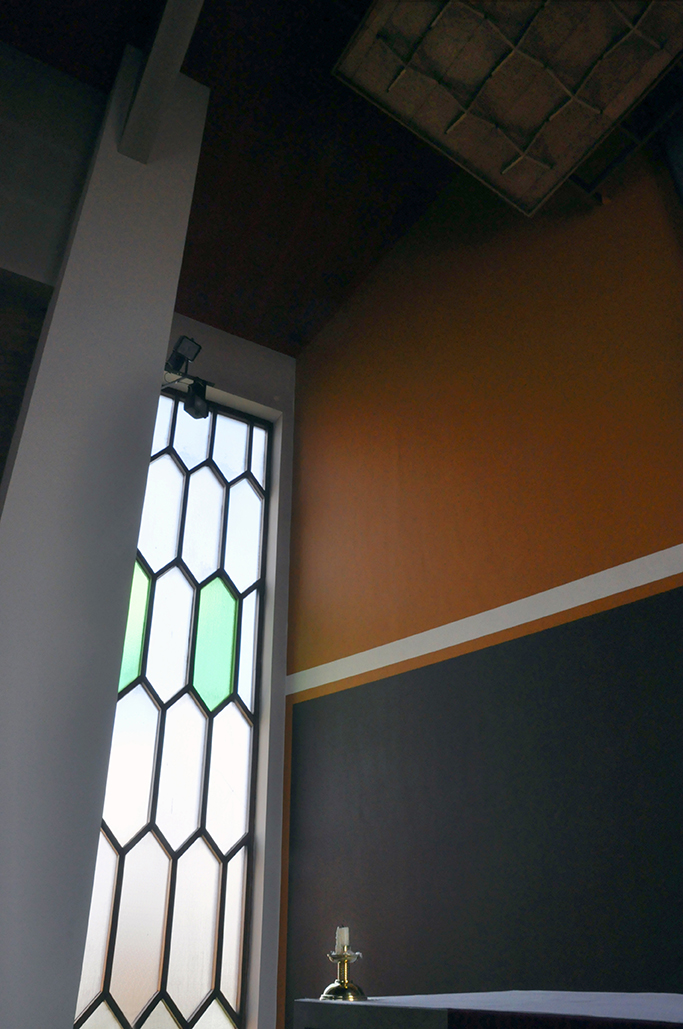
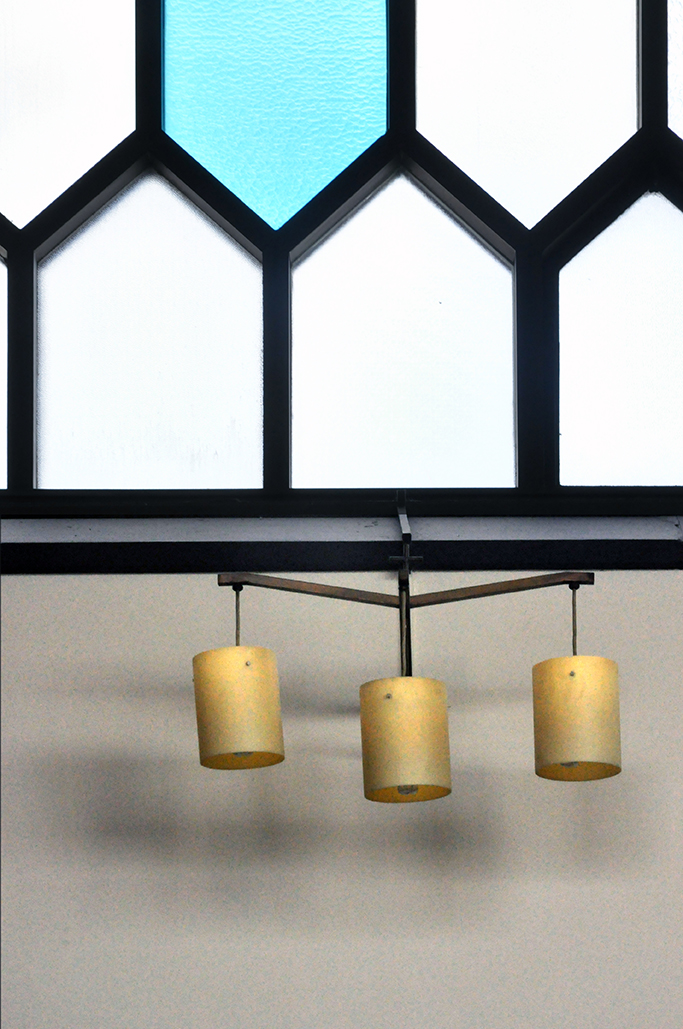
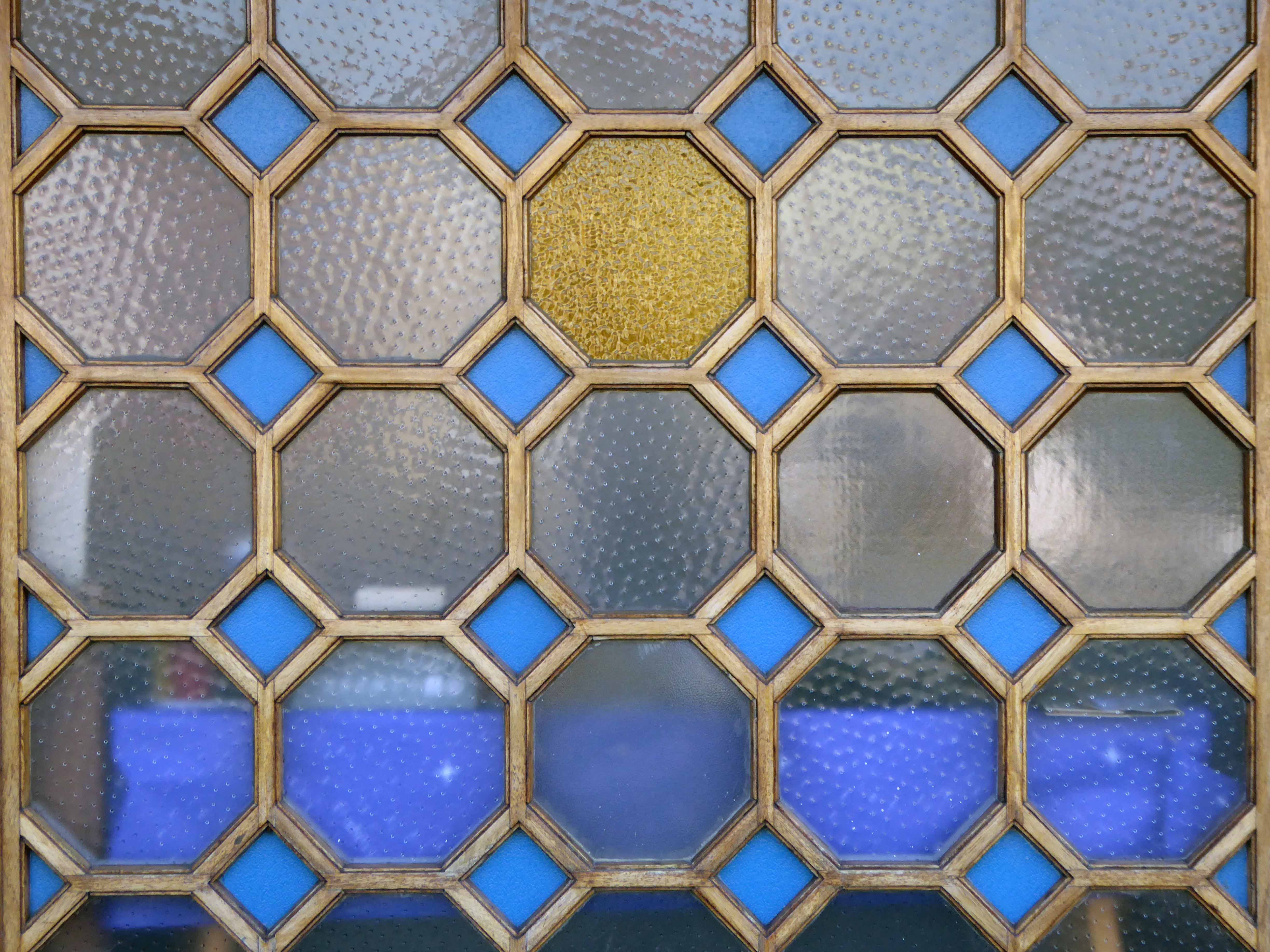
Thanks to Father Tierney for his time and permission to snap the interior. It was a calm space, the large open volume side lit by high octagonal honeycomb modular windows. The elegant plain pitched concrete gambrel roof beams a simple engineered solution.
The church and attached presbytery were built from designs by Greenhalgh & Williams in 1958-9, the church being consecrated on 12 May 1960. A reordering took place, probably in the 1960s or 70s, when the altar rails were removed and the altar moved forward. Probably at the same time, the font was brought into the church from the baptistery.
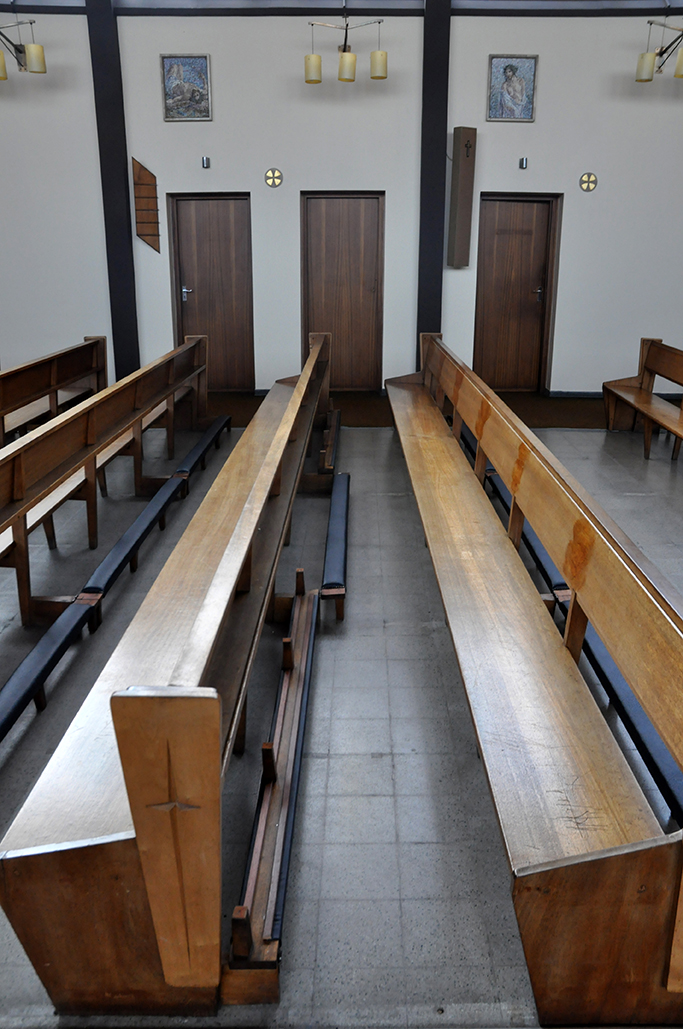
The altar and apse beautifully restrained in colour form and choice of materials. The design and detailing on the pews so warm and understated.
I was loathe to leave.
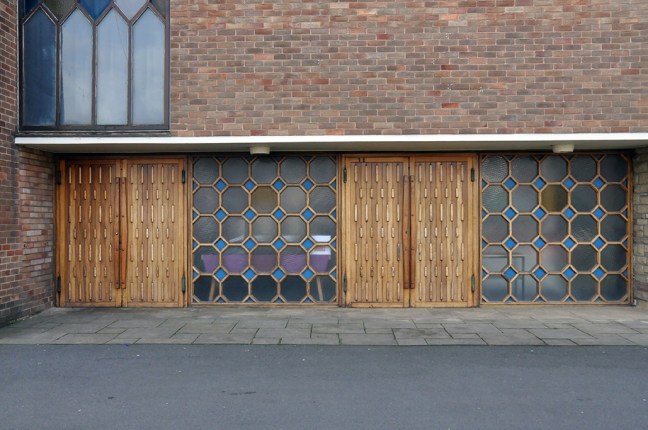
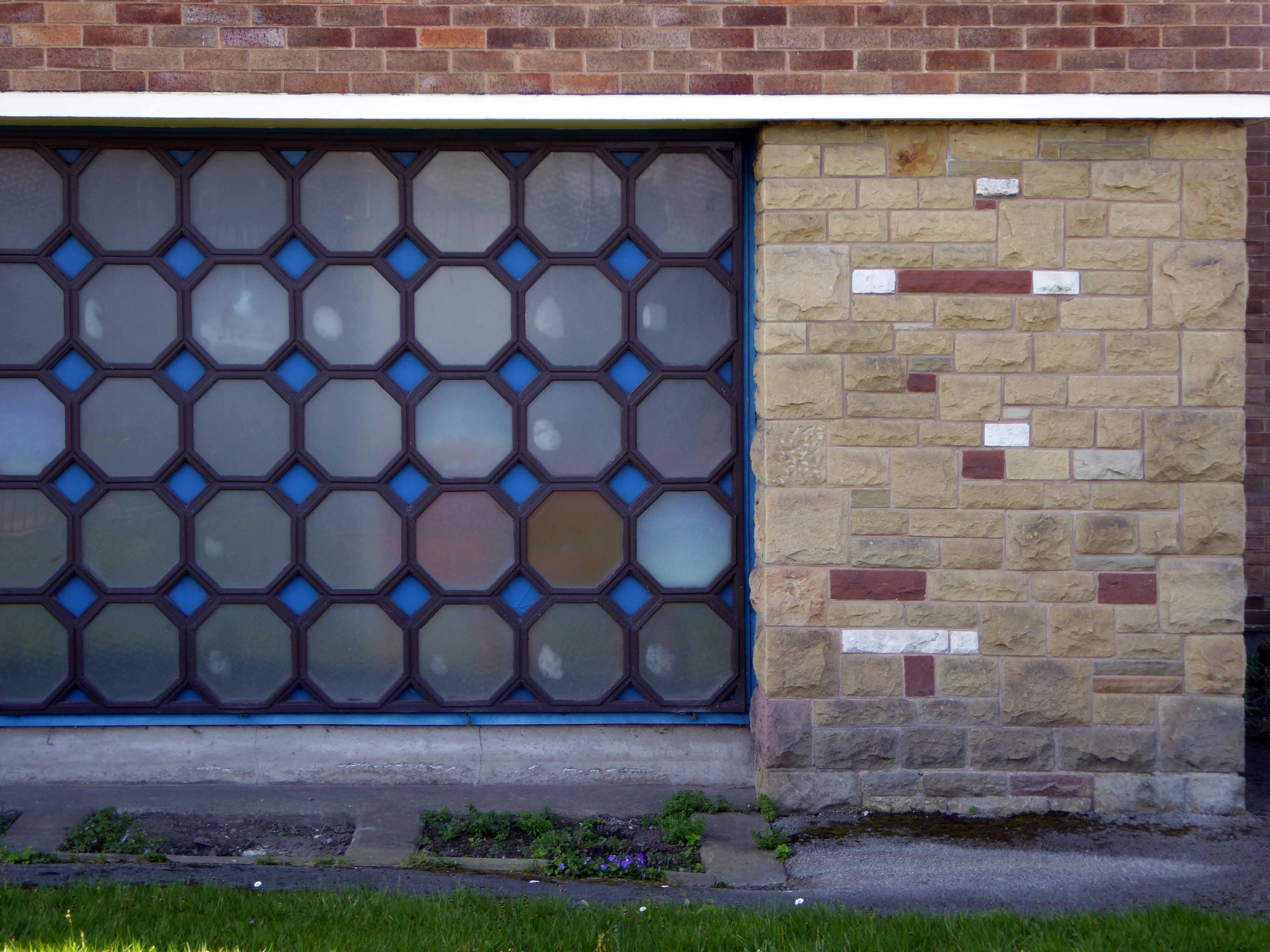
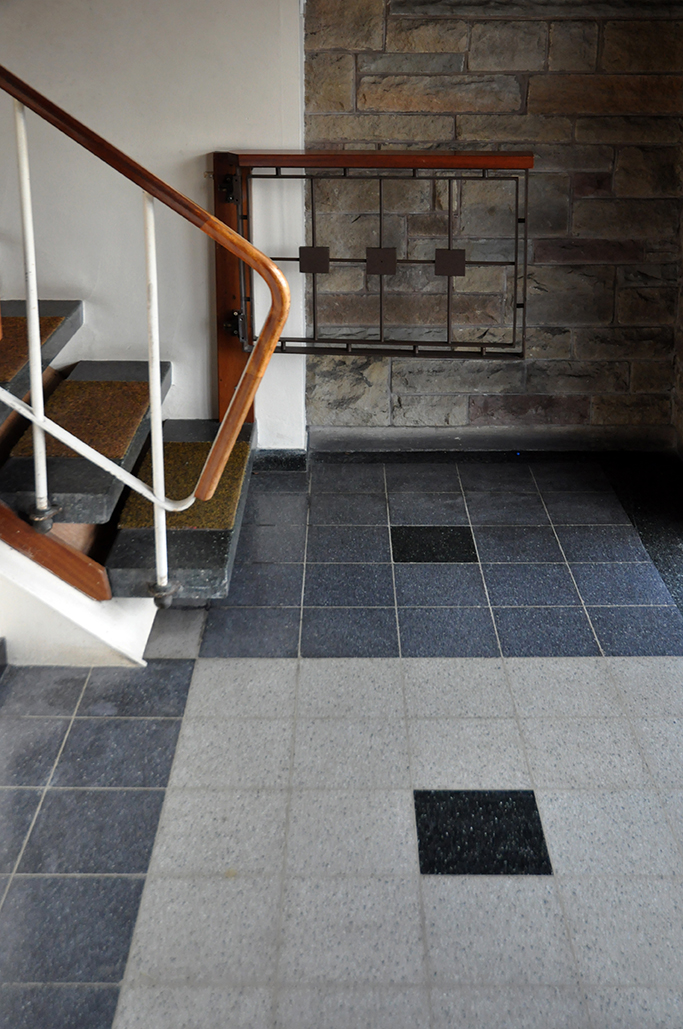
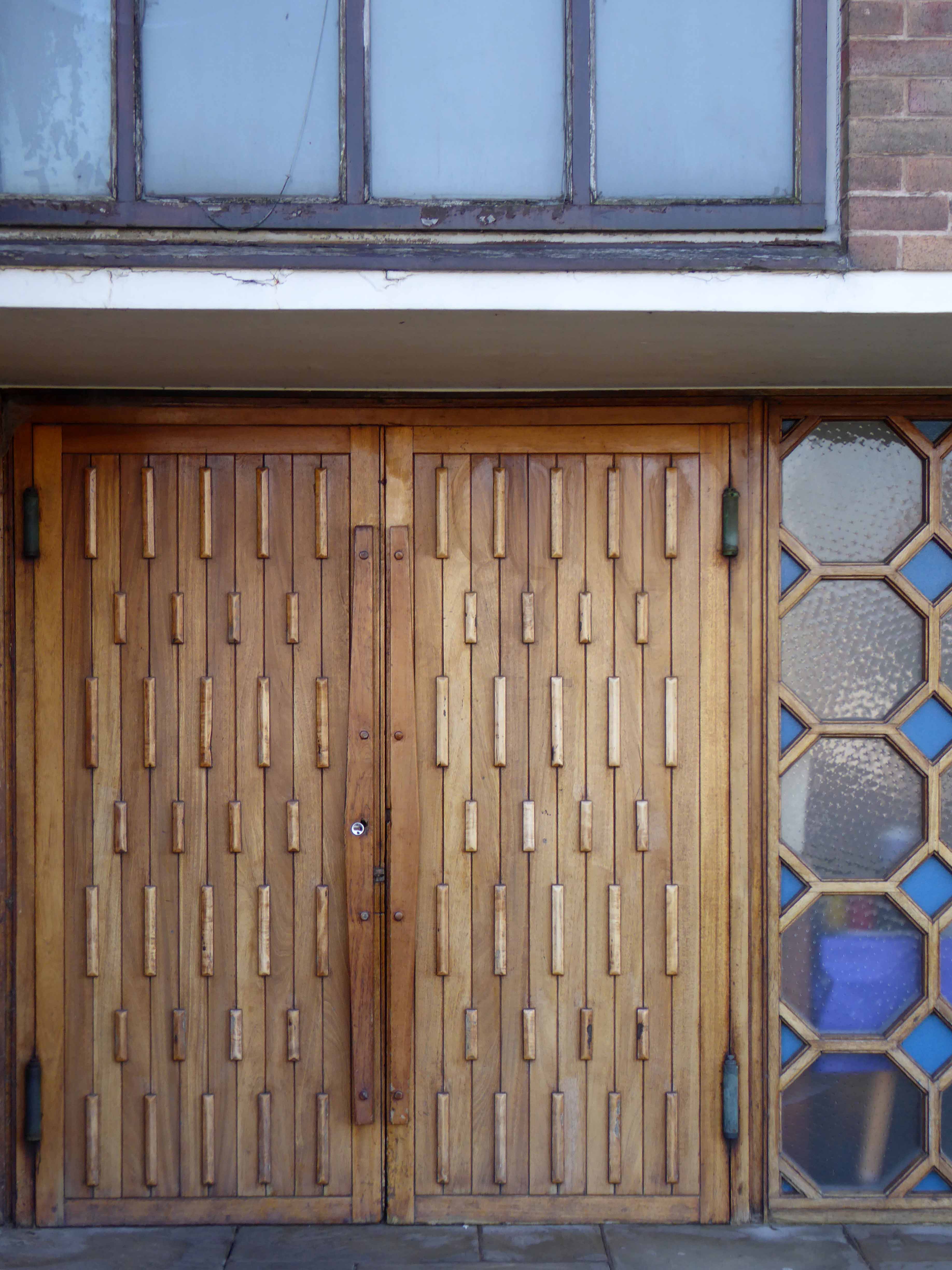
The exterior does not disappoint, the repetition of modular window shapes, the integration of doors, brick and mixed stone facing.This is a building of elegant grandeur, well proportioned, happily at home in its setting.
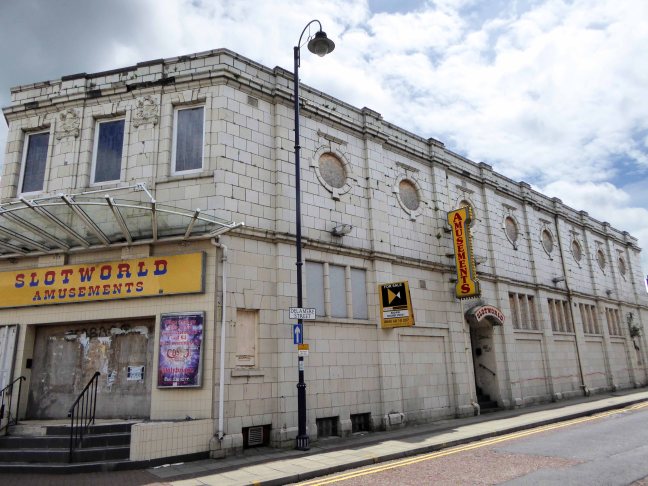
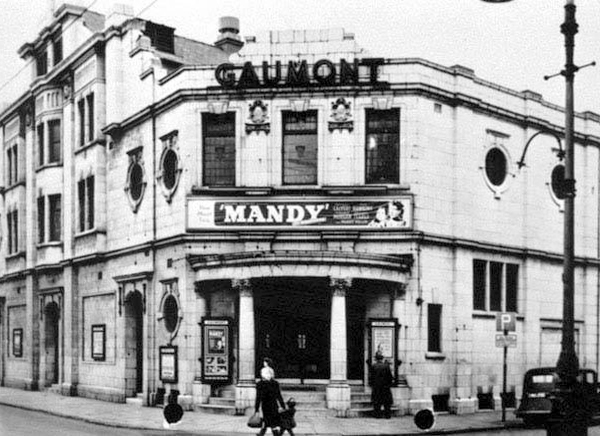
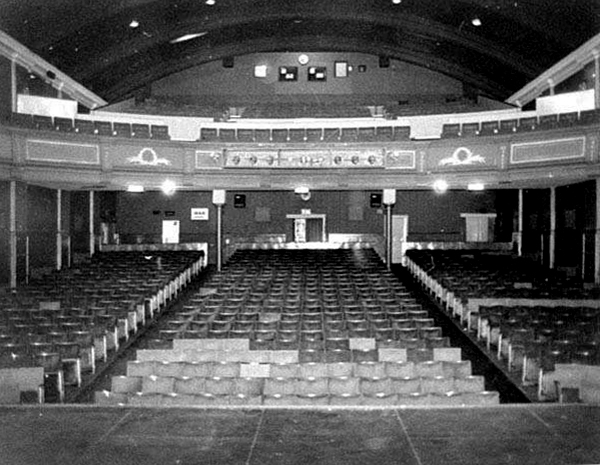
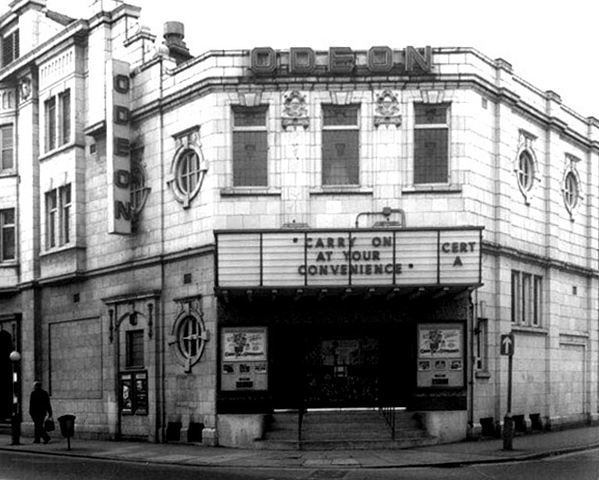
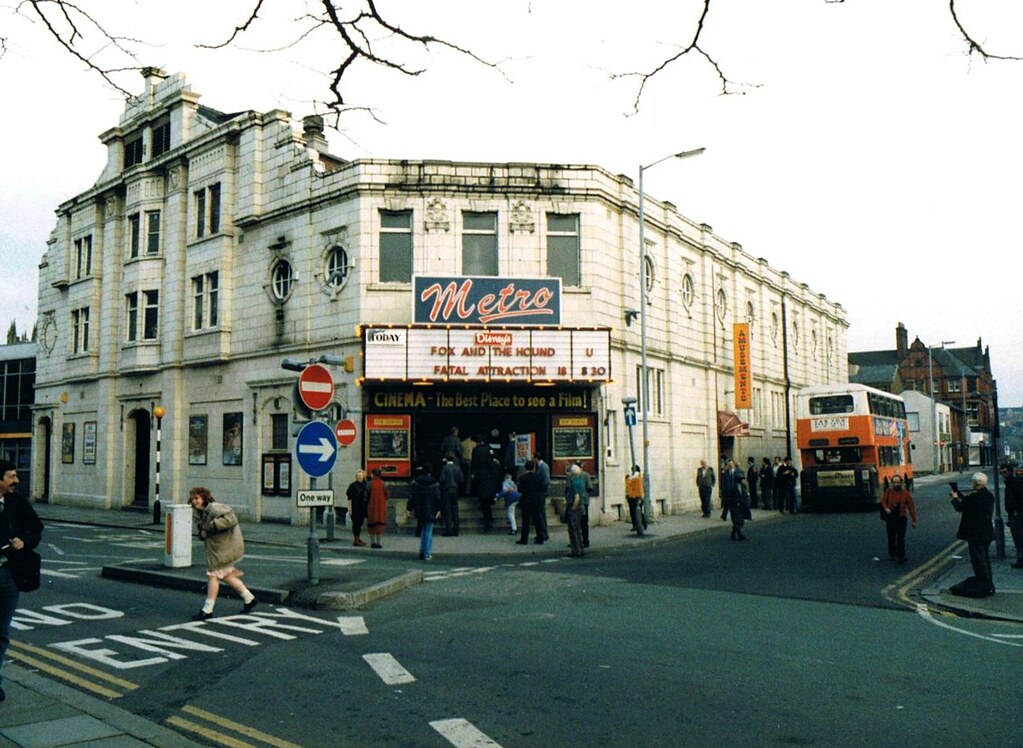
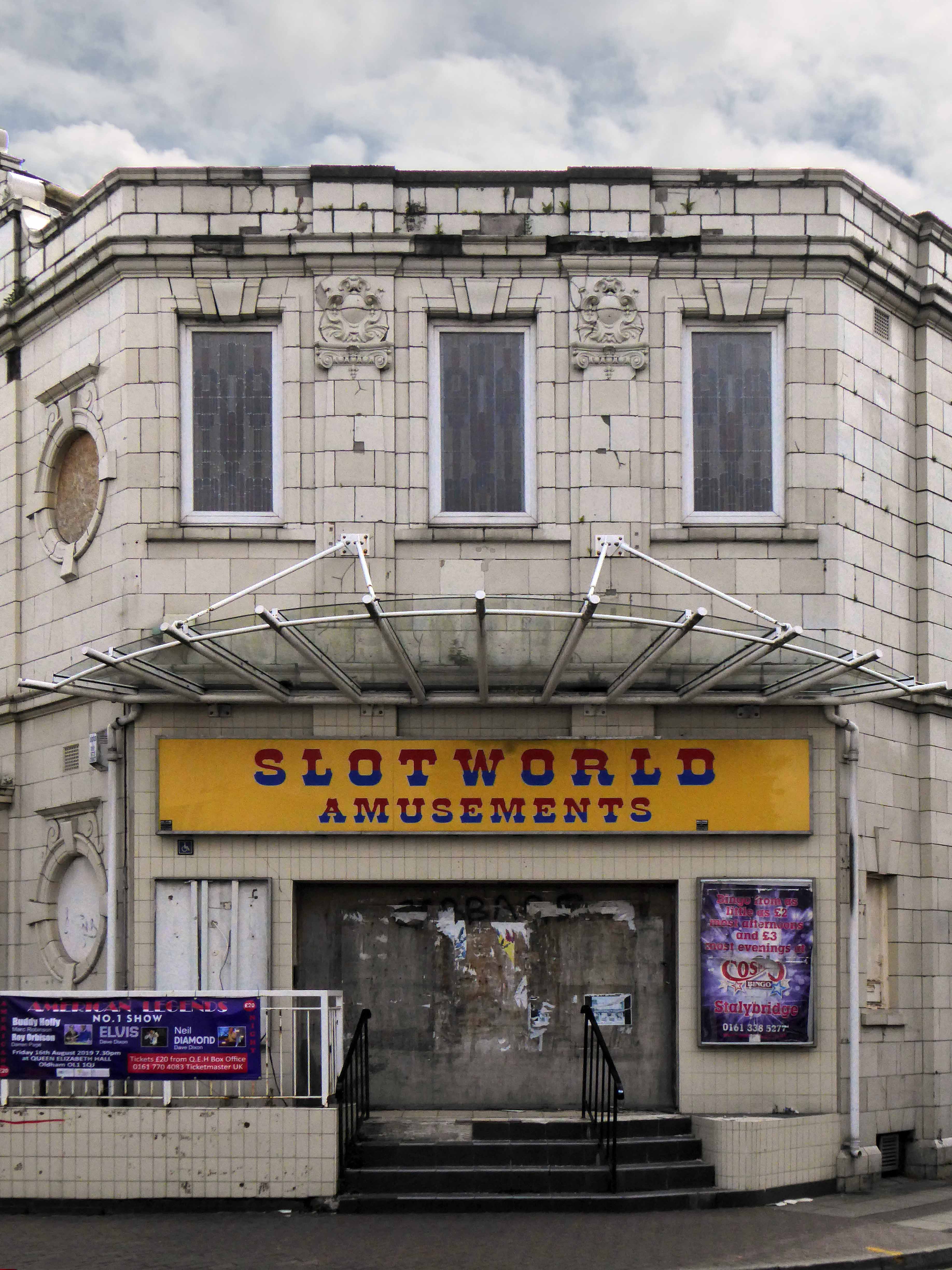
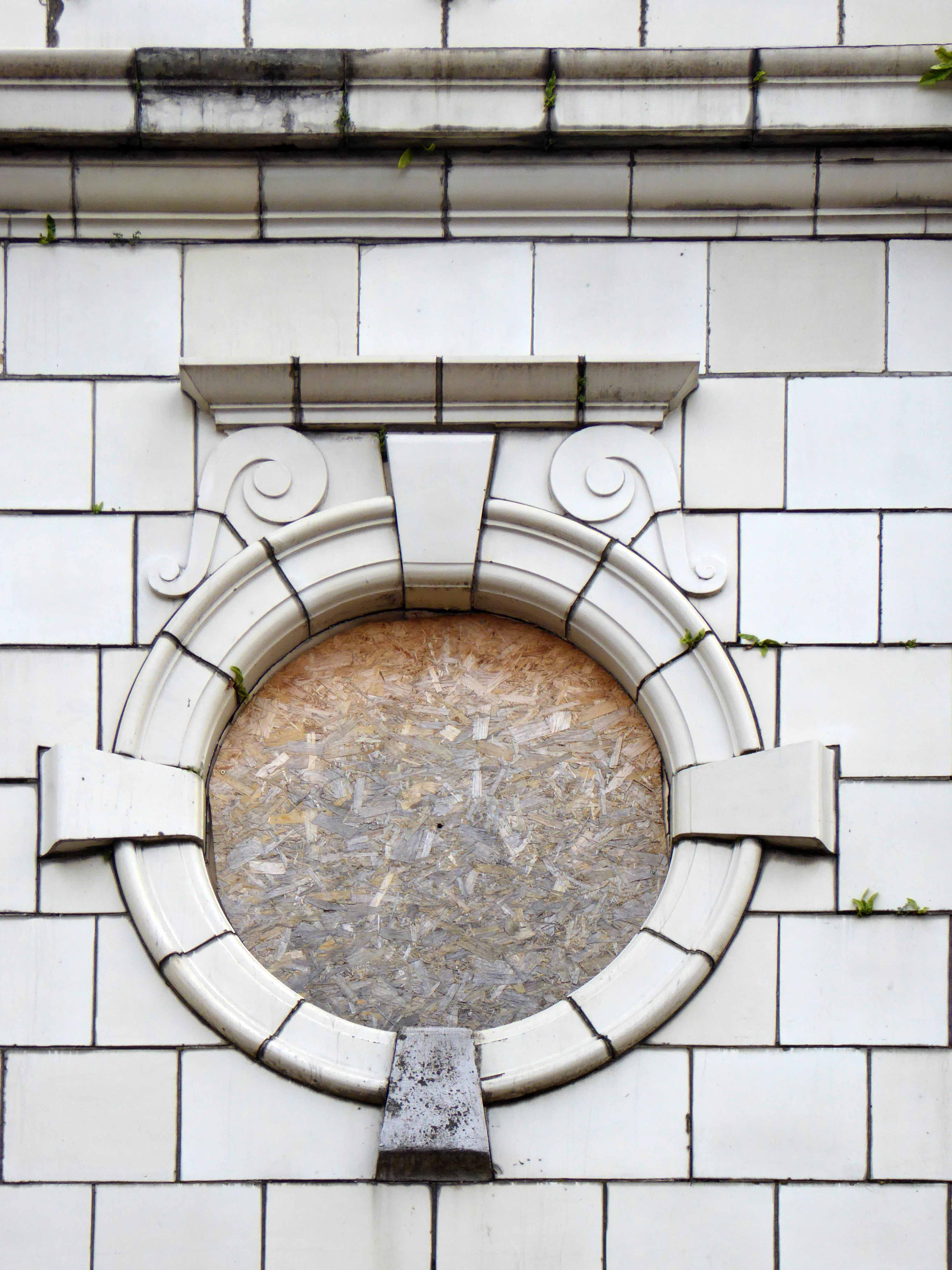
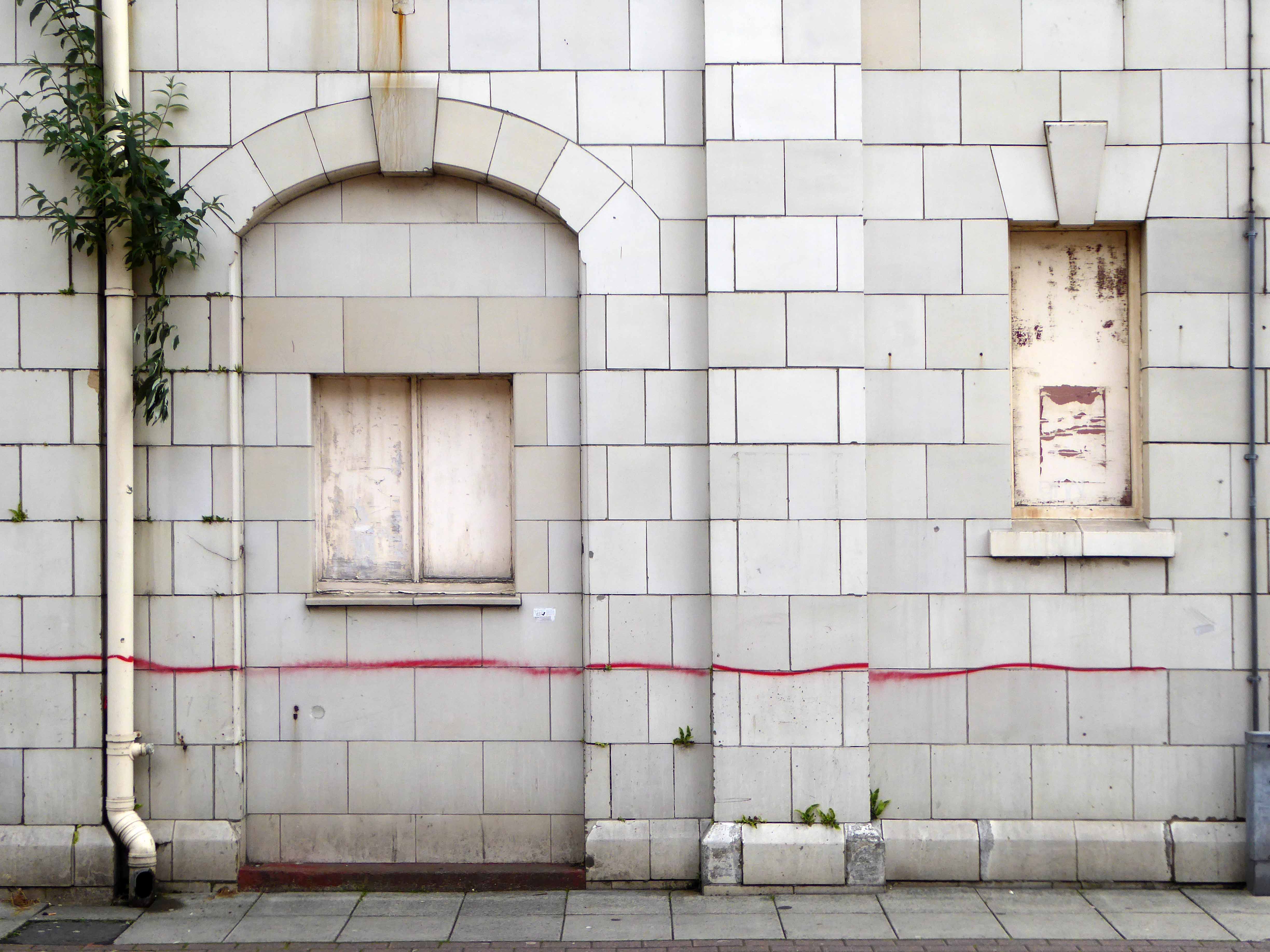
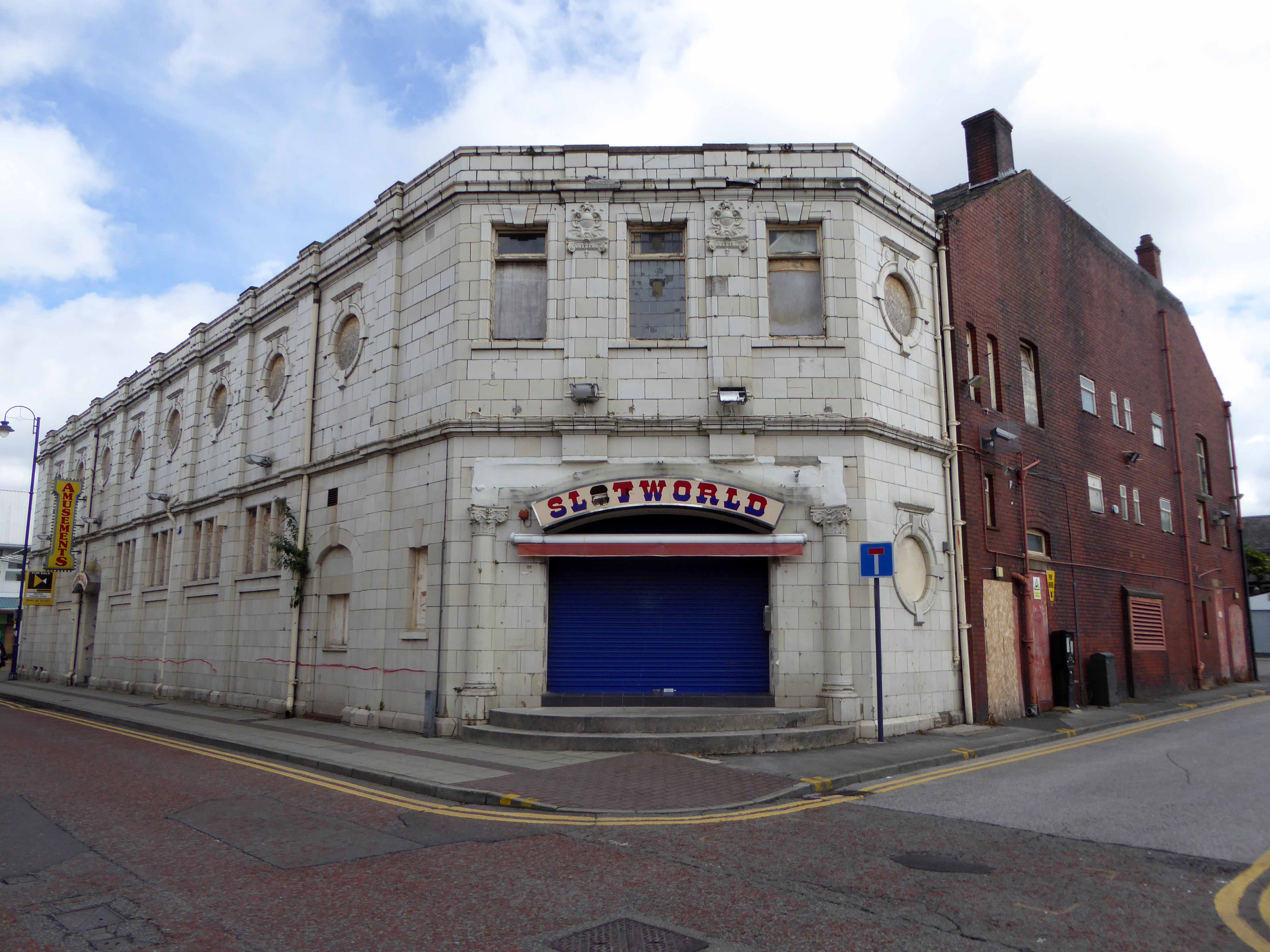
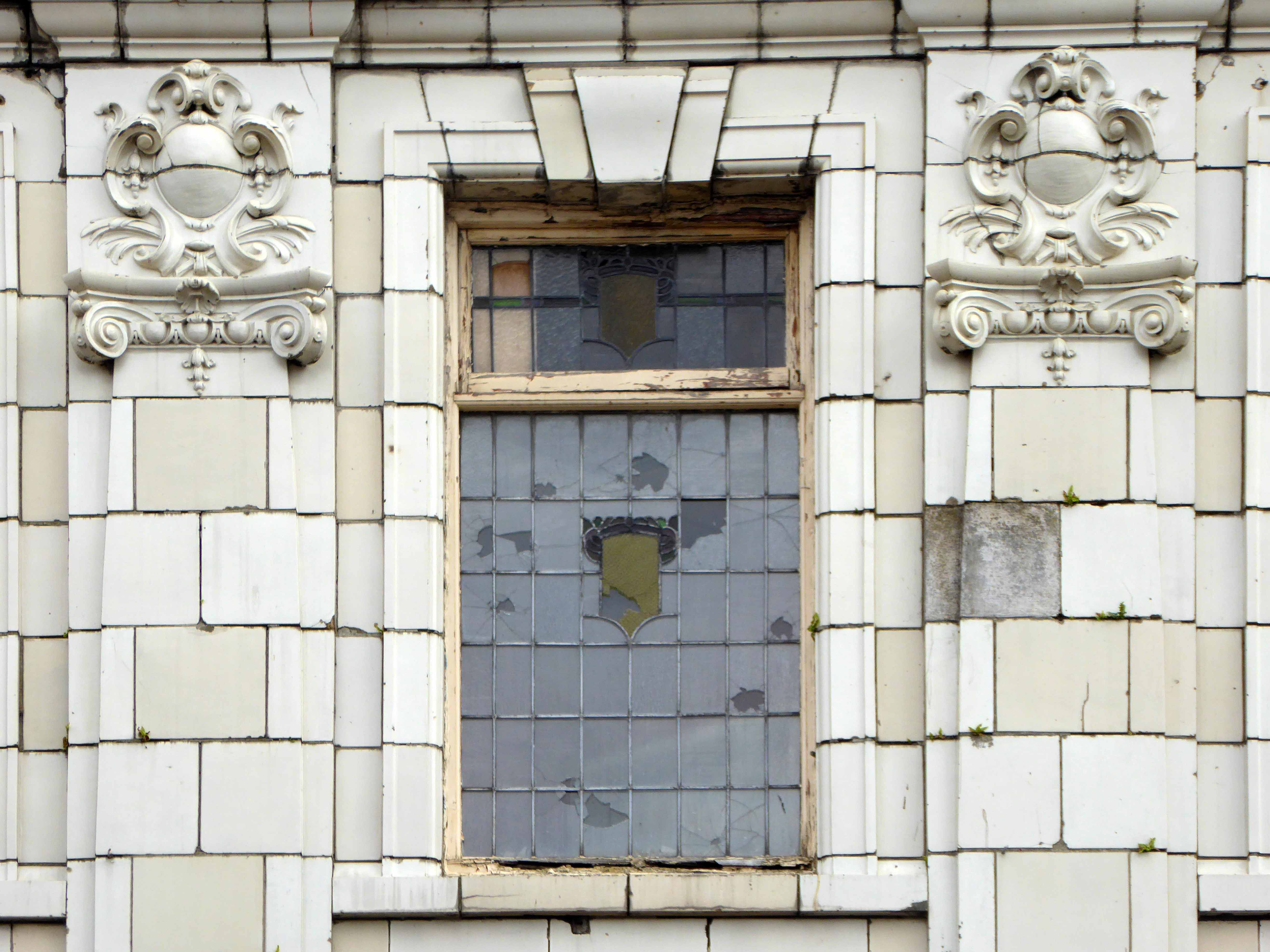
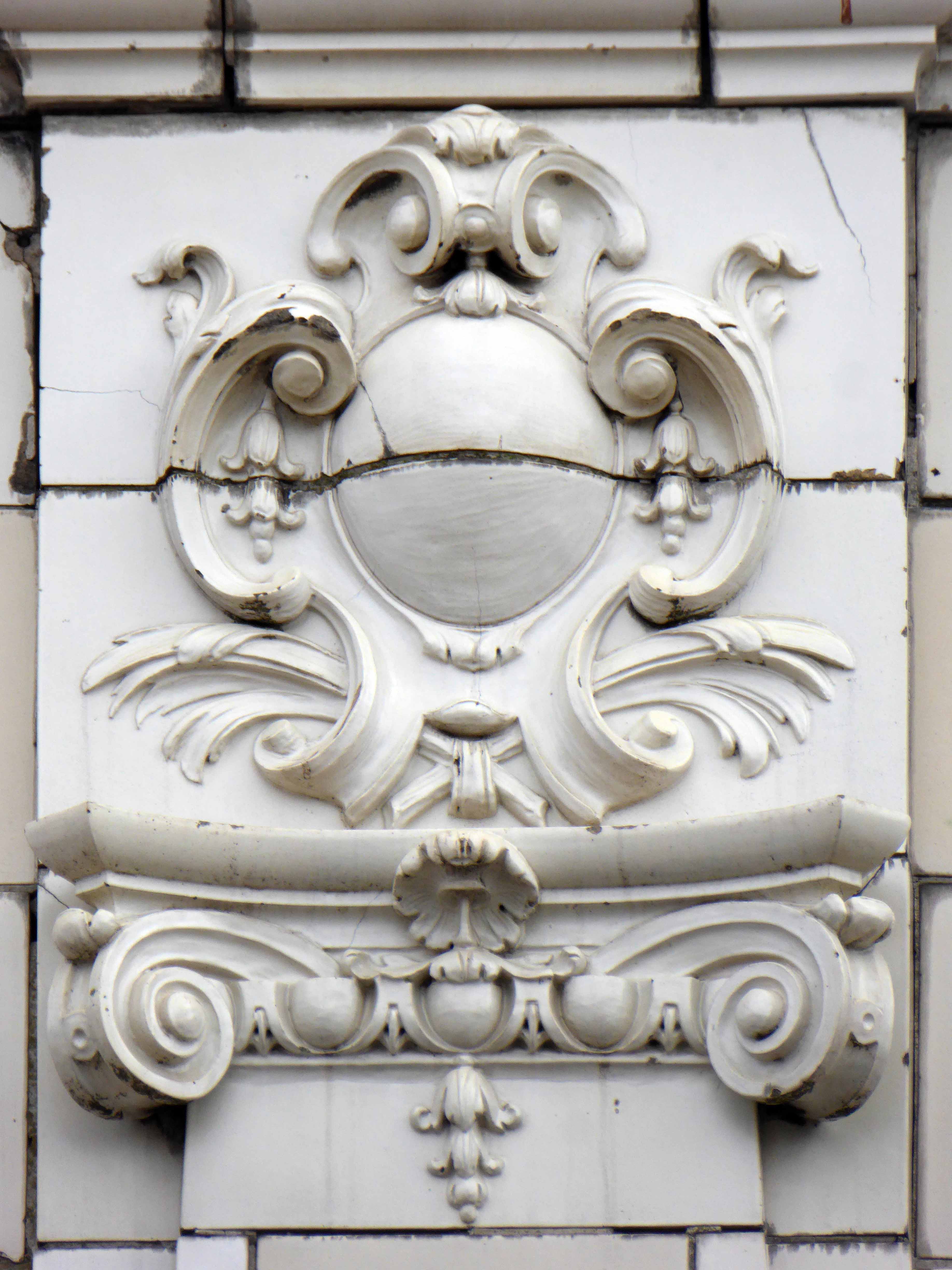
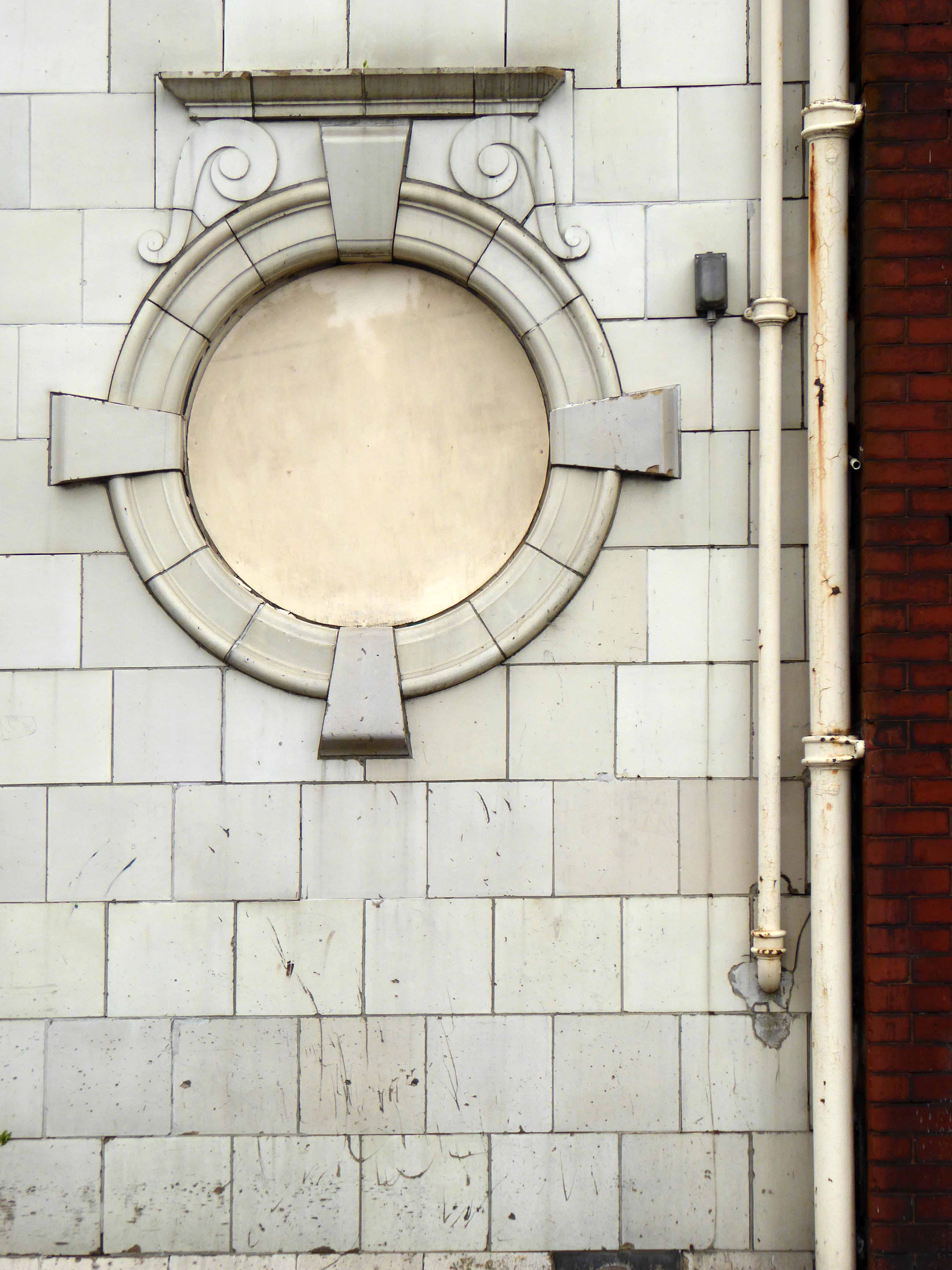
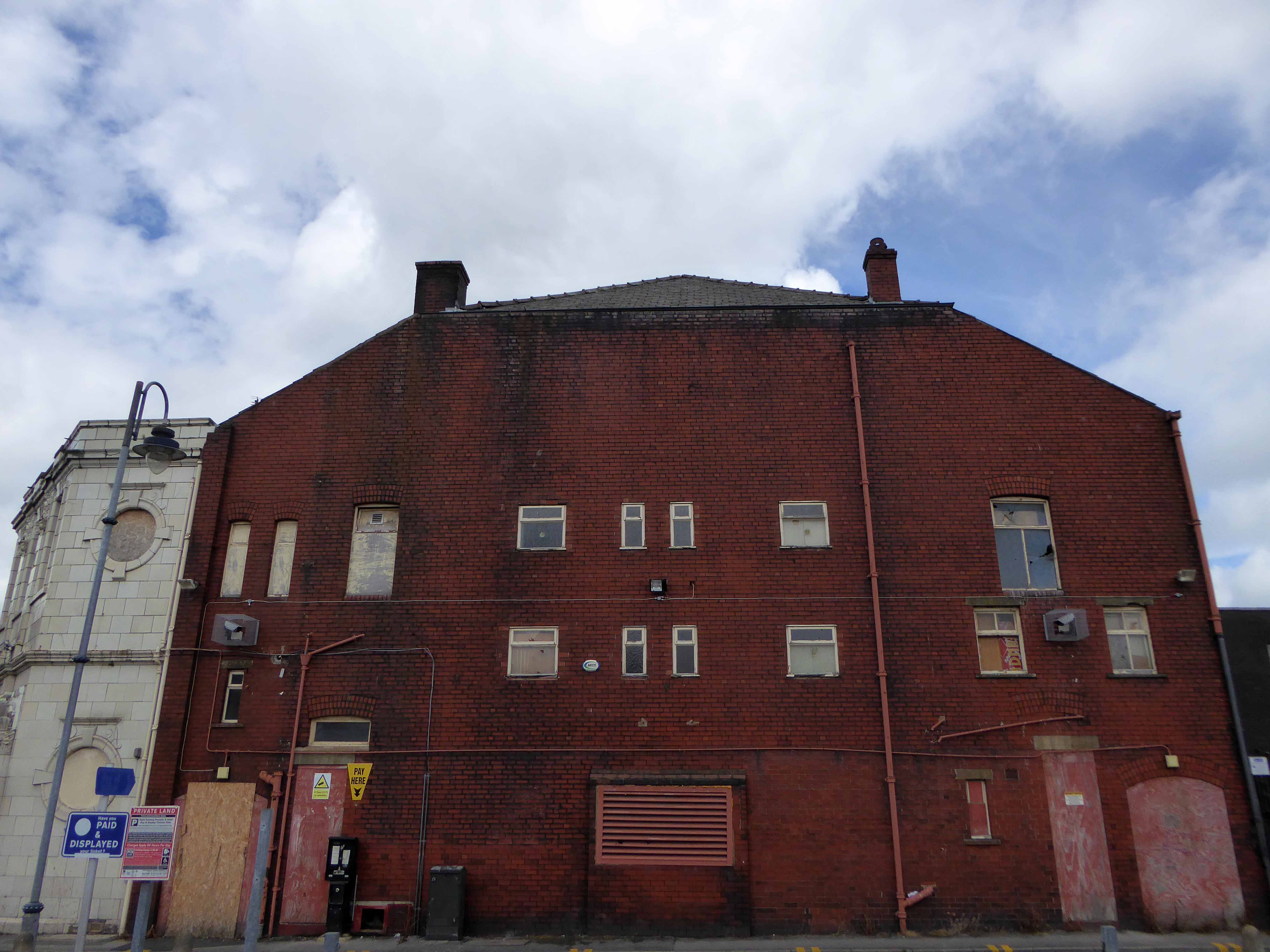
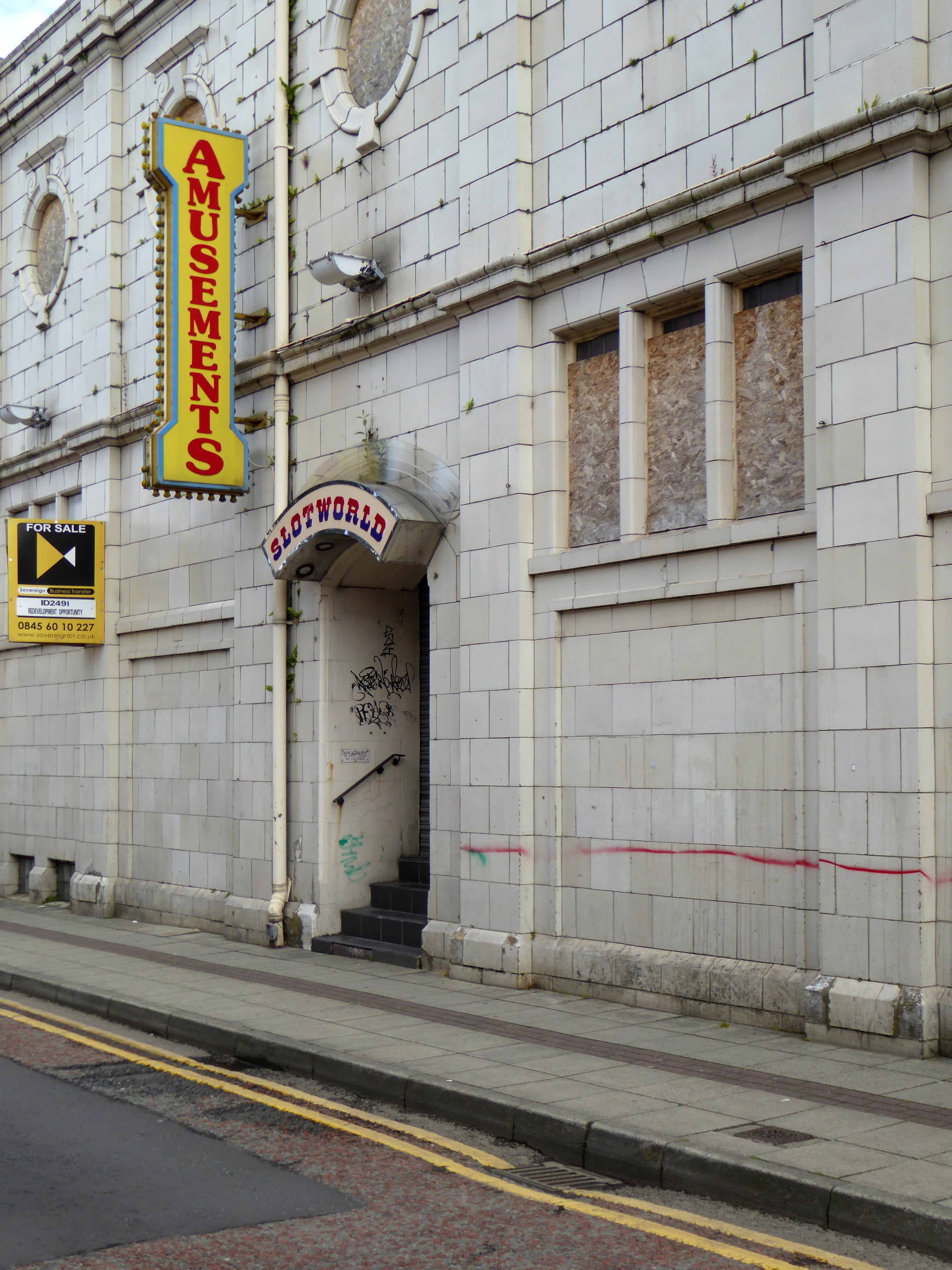
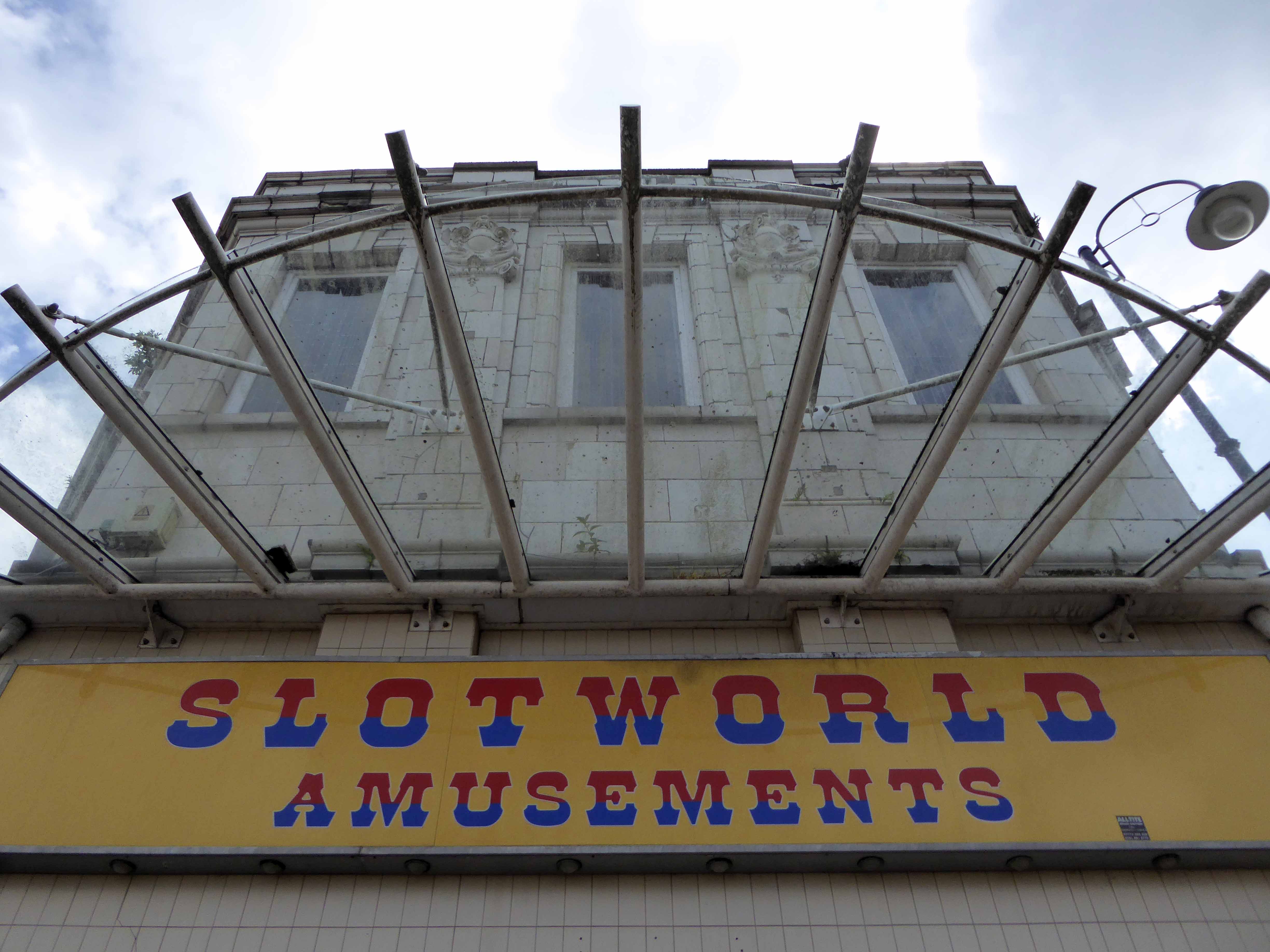
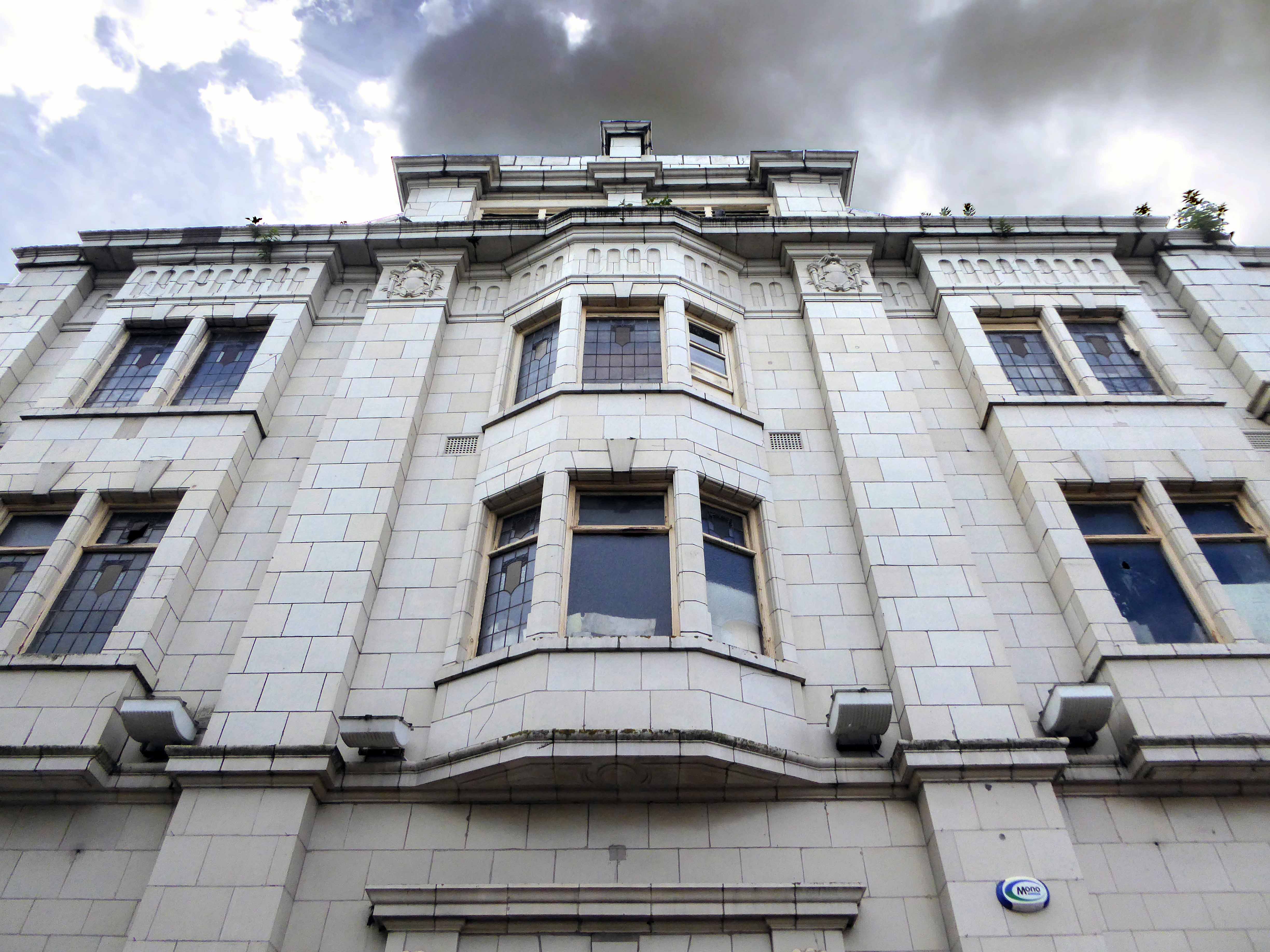
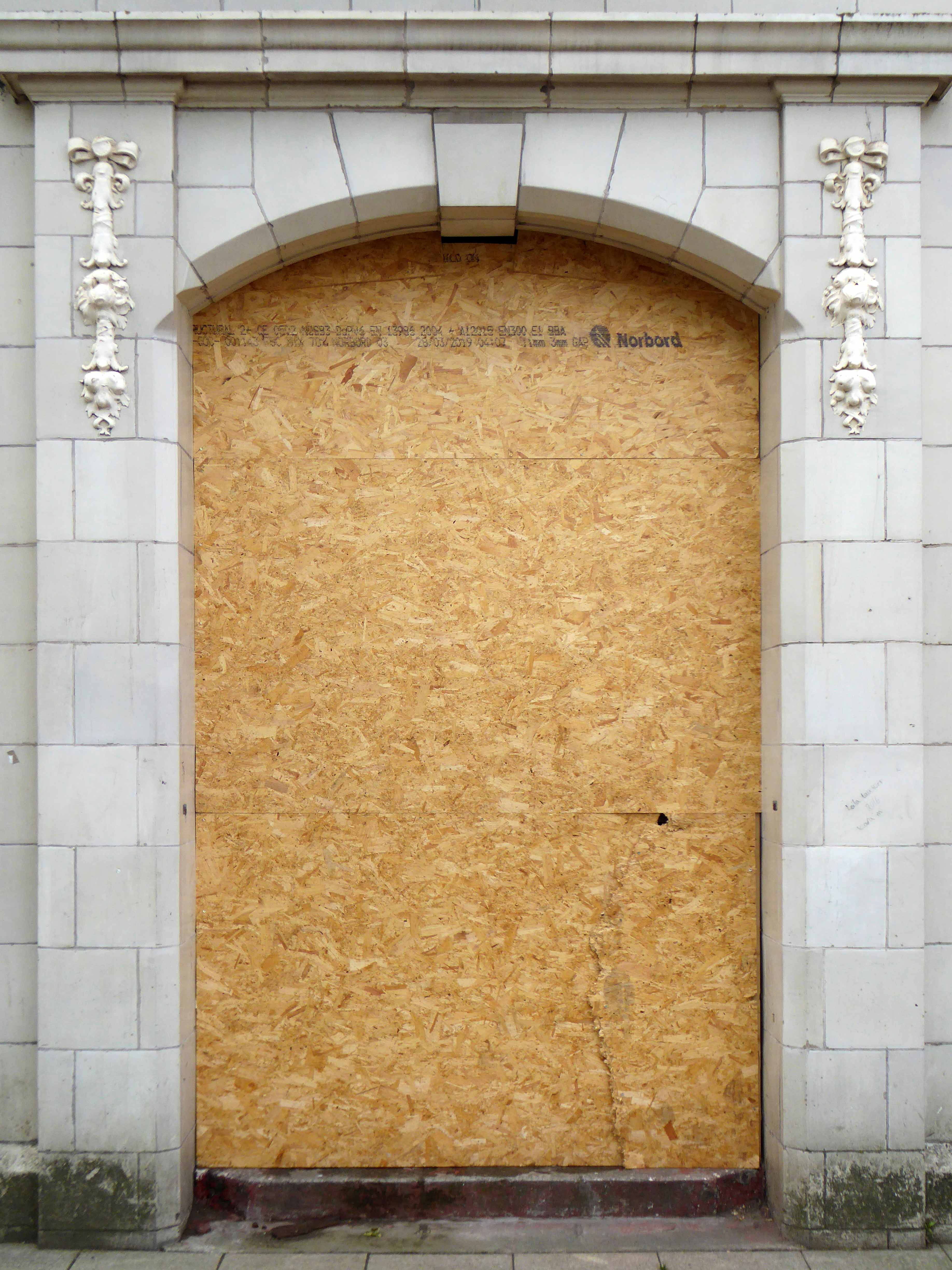
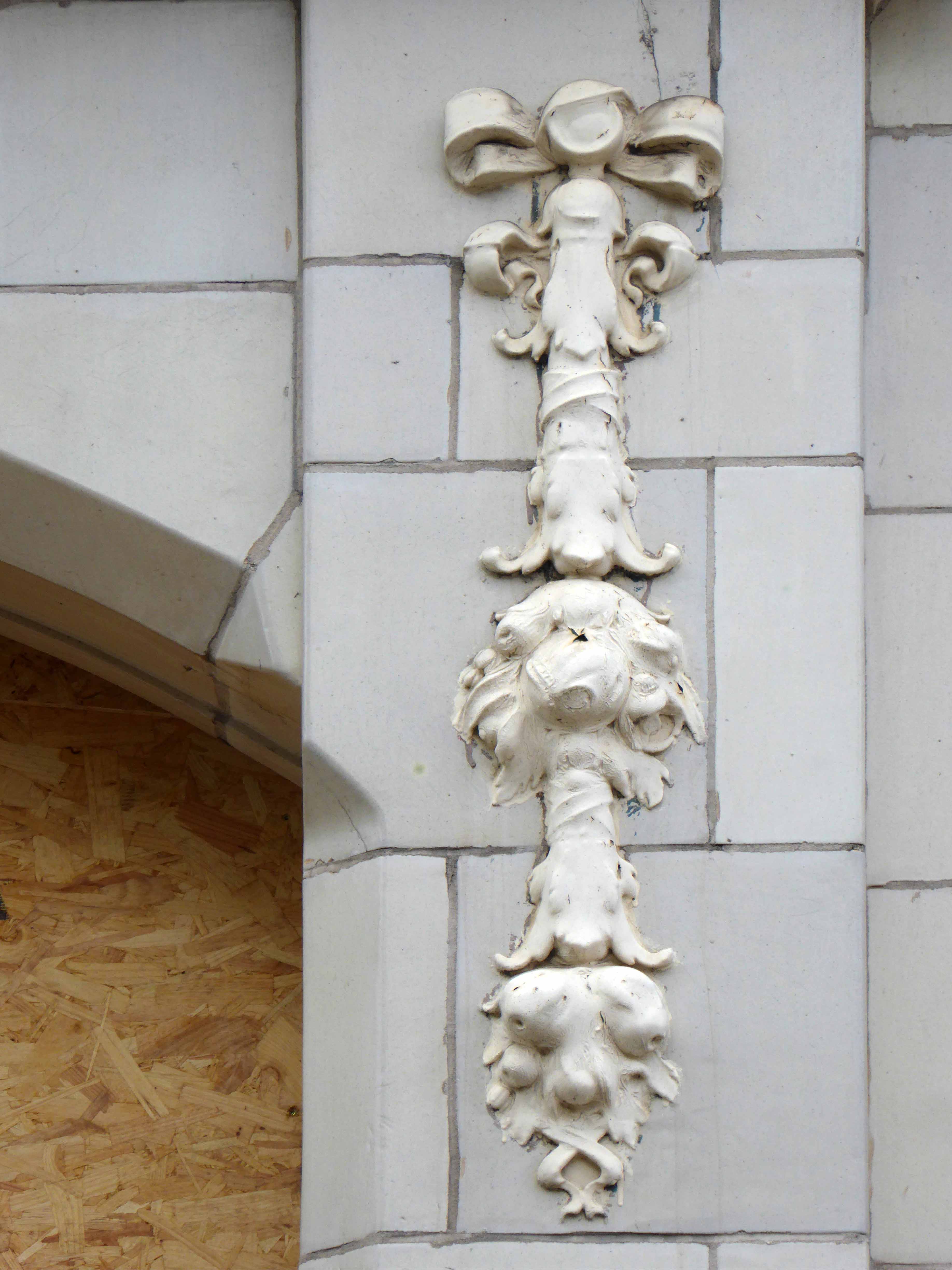
Opened 22 April 1920 with “The Forbidden City” and designed by Arnold England, the Majestic Picture House was part of the Provincial Cinematograph Theatres circuit. With 1,233 seats in stalls and balcony and a splendid facade faced in white faience tiles on two sides of the building on its prominent town centre corner site of Old Street and Delamere Street, the cinema was a great success.
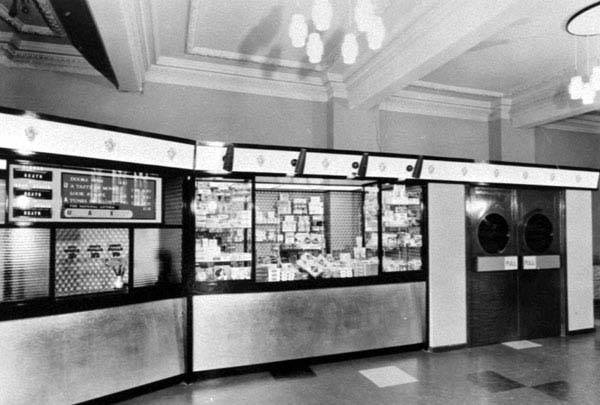
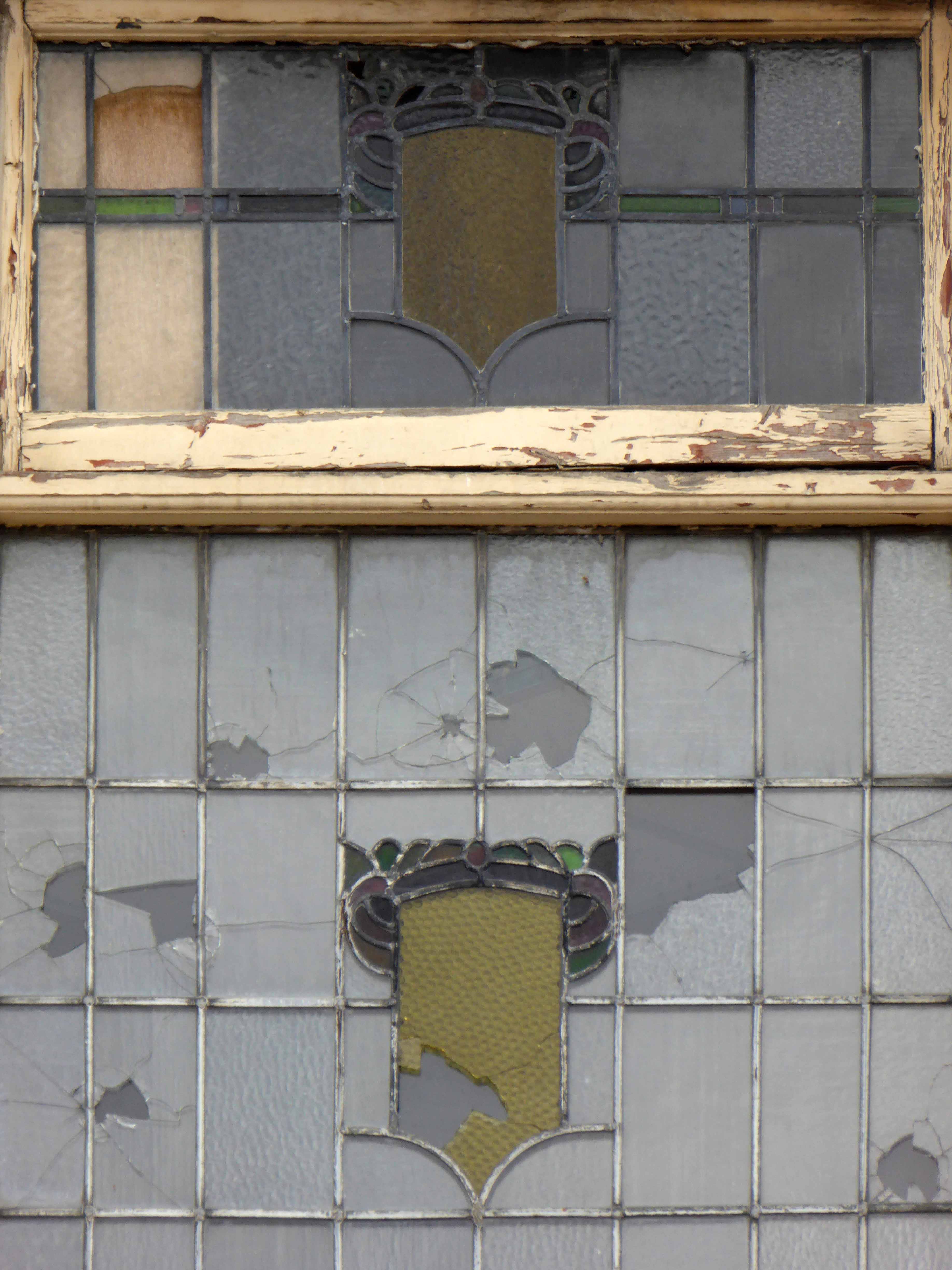
It had an oak panelled foyers which had beautiful coloured tapestry’s on the walls. The interior was in a Georgian style and it was equipped with a pipe organ and a seperate tea room and cafe which were located on the upper floor.
It passed, with all the other PCT houses to Gaumont British Theatres in 1929, but it was not until 12th July 1946 that it was renamed Gaumont. The Majestic Picture House was renovated in July 1936, with new seating installed and a re-recoration of the foyer and auditorium. A new Compton 3Manual/6Rank organ was installed that was opened by organist Con Docherty.
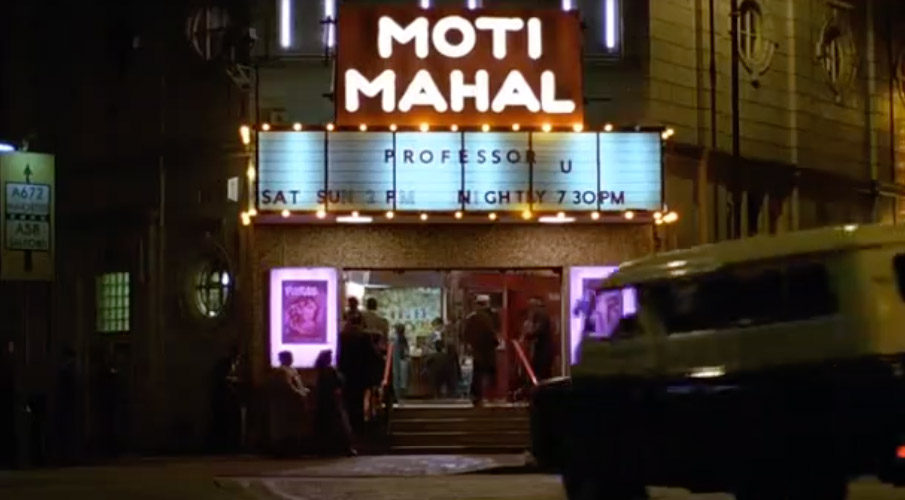
Later being merged into the Rank Organisation, the Gaumont was re-named Odeon on 11th November 1962. It was eventually sold to an independent operator who renamed it the Metro Cinema from 6th November 1981.
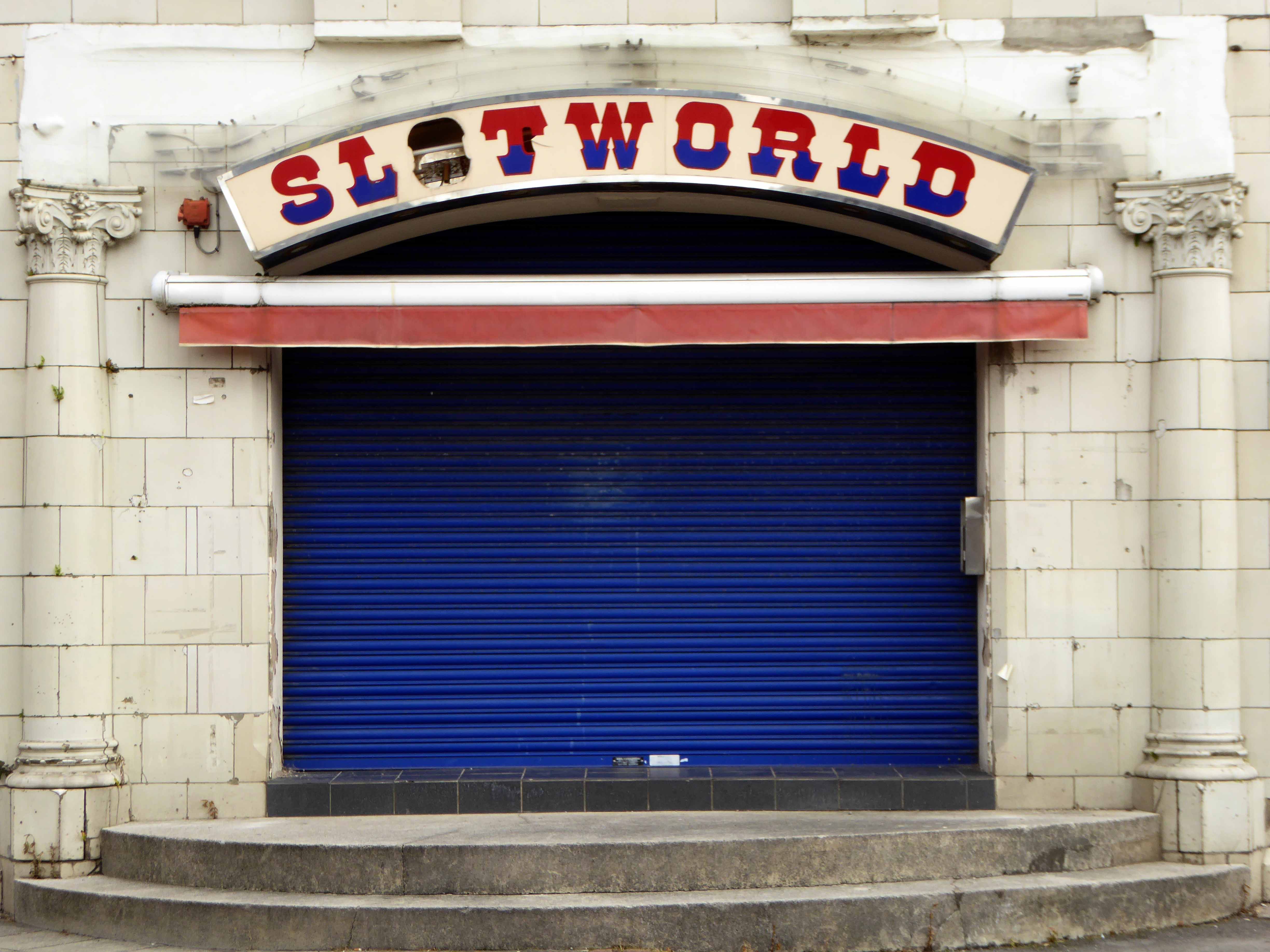
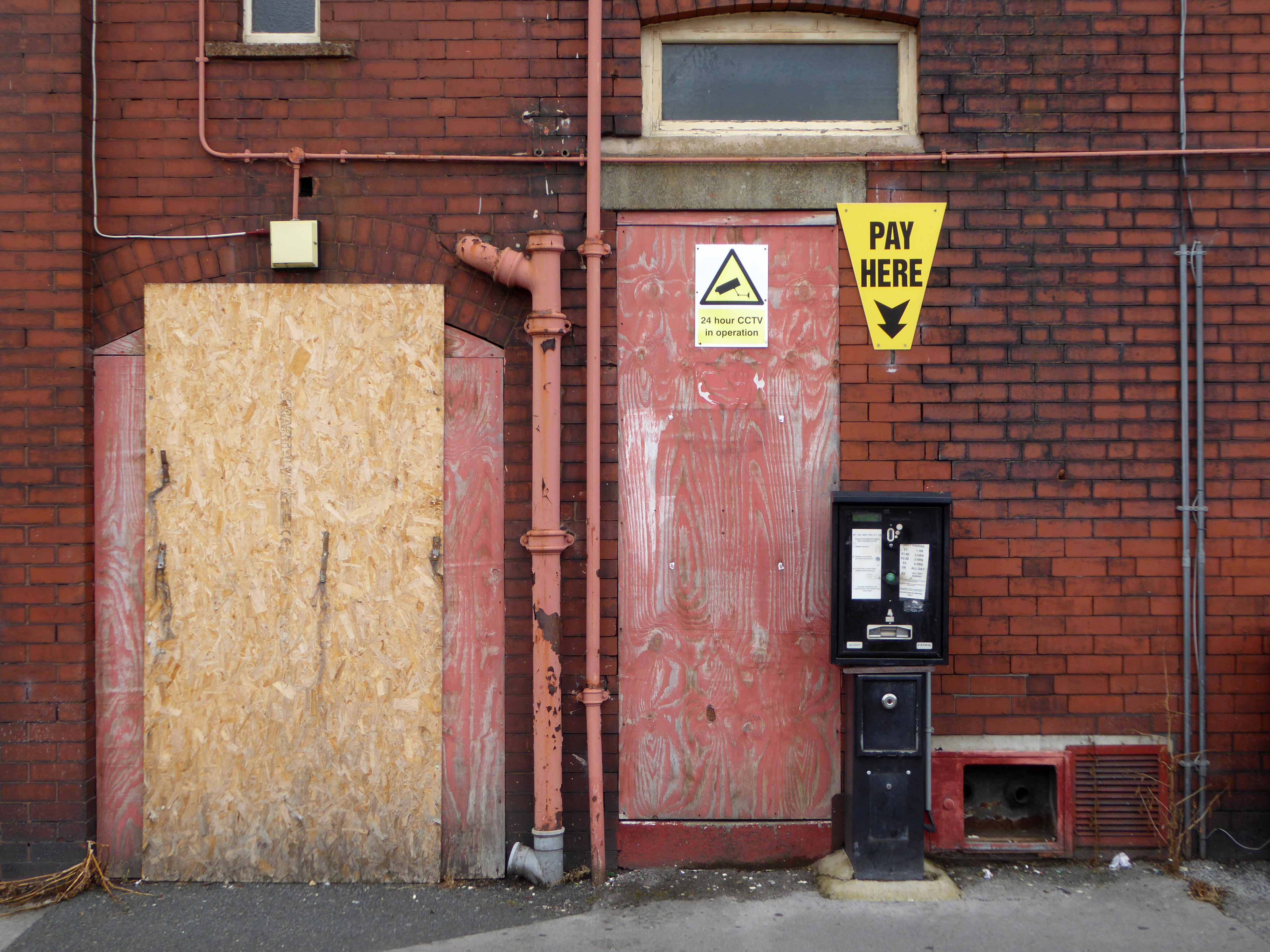
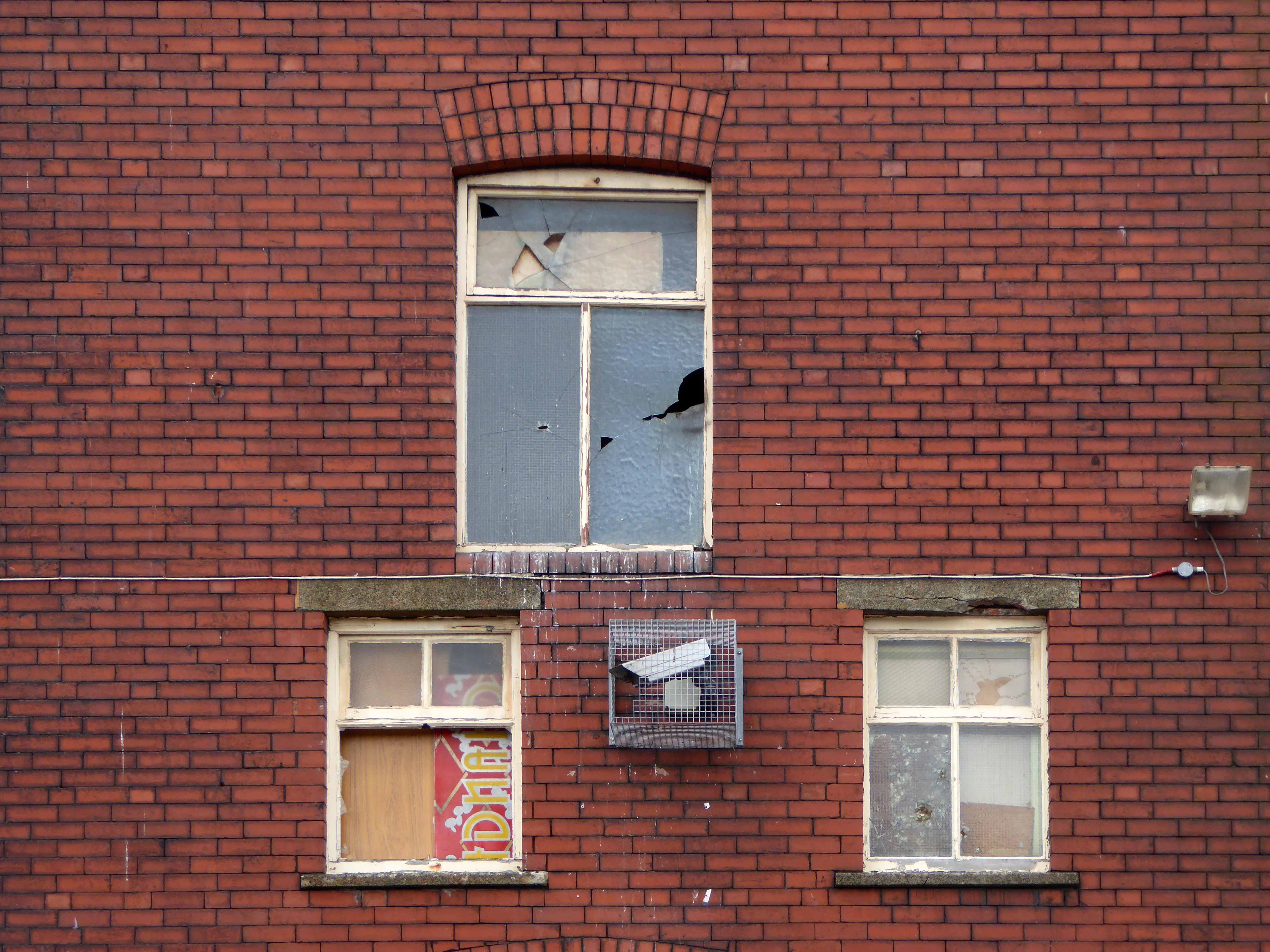
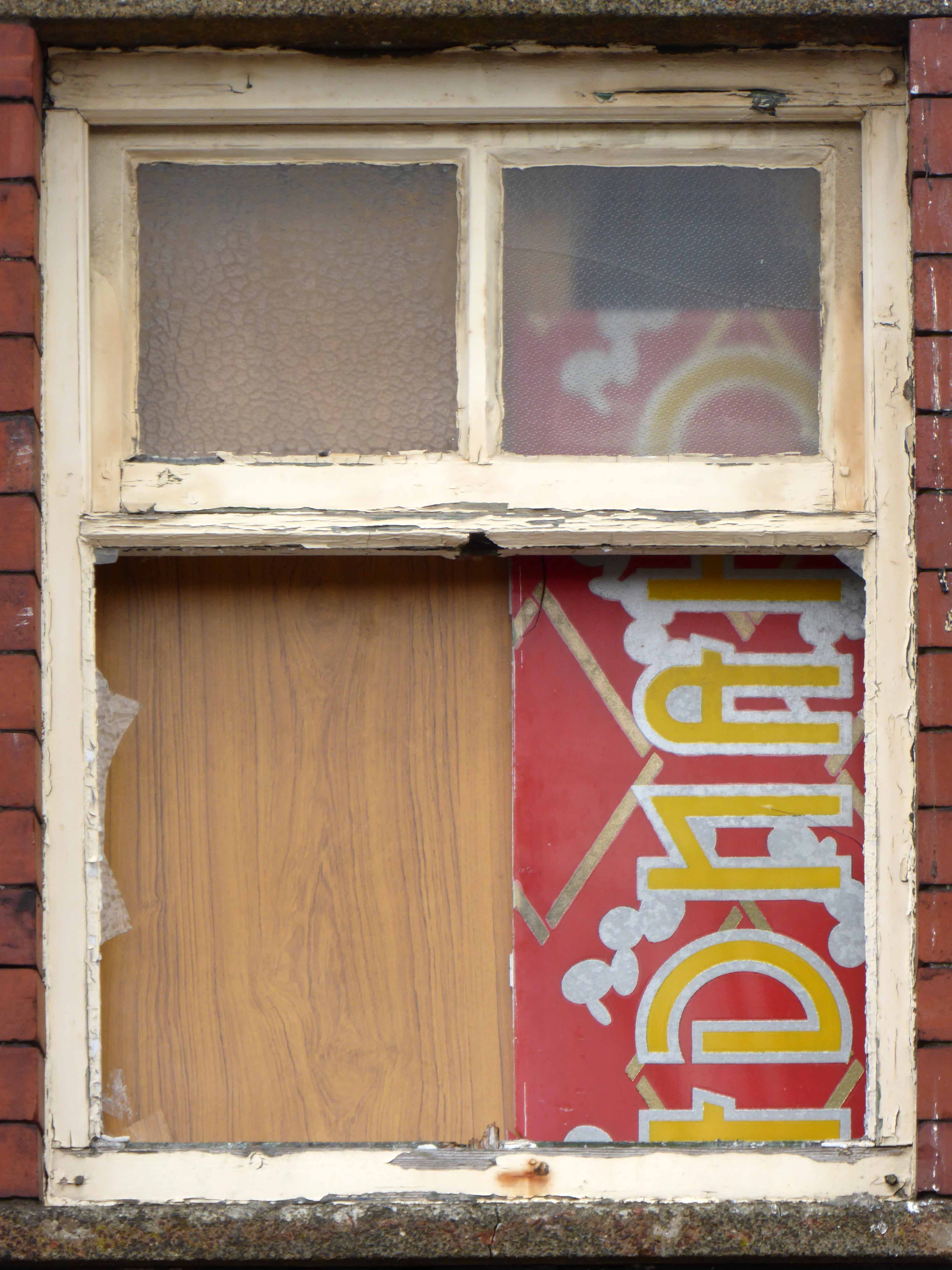
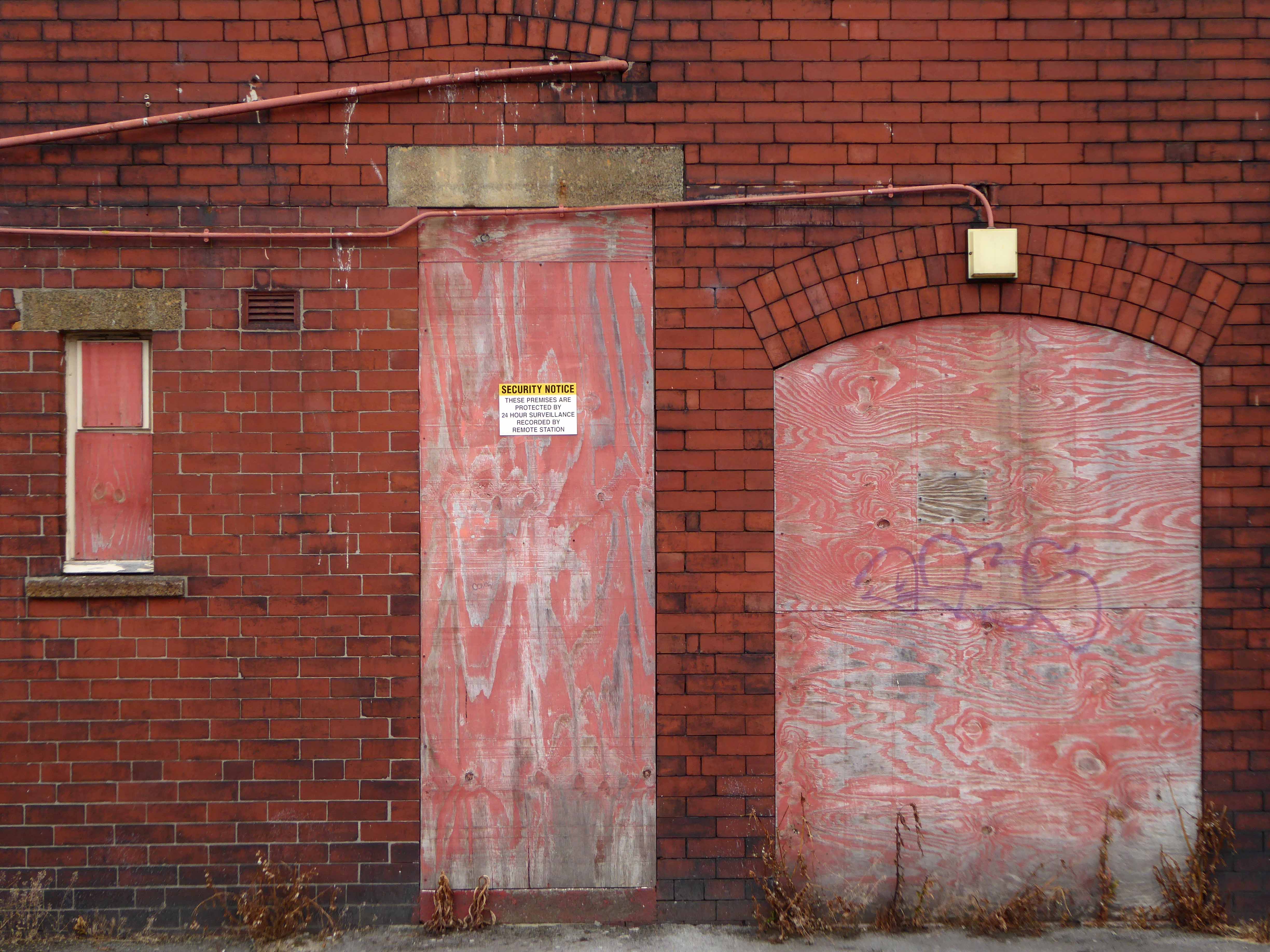
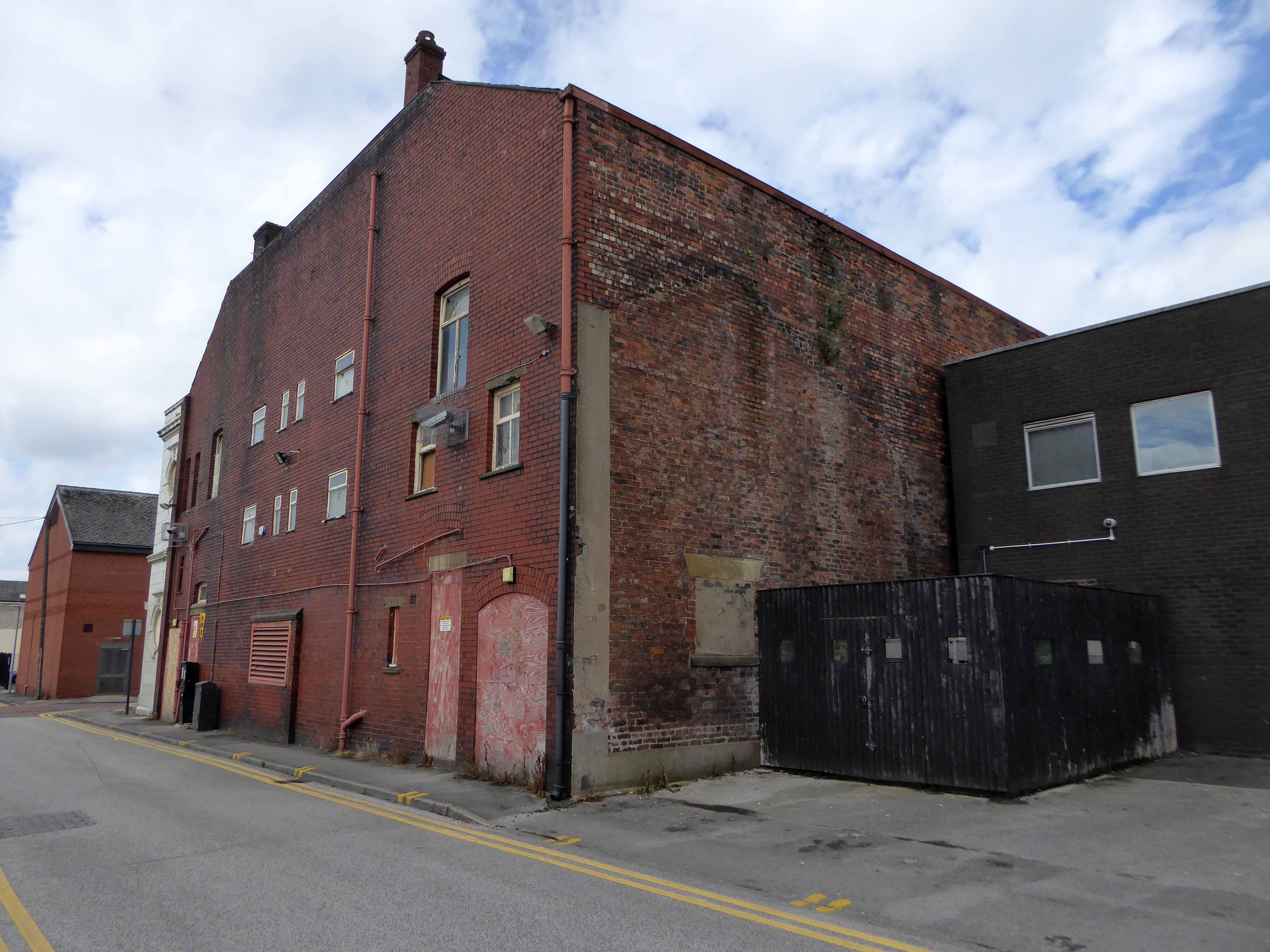
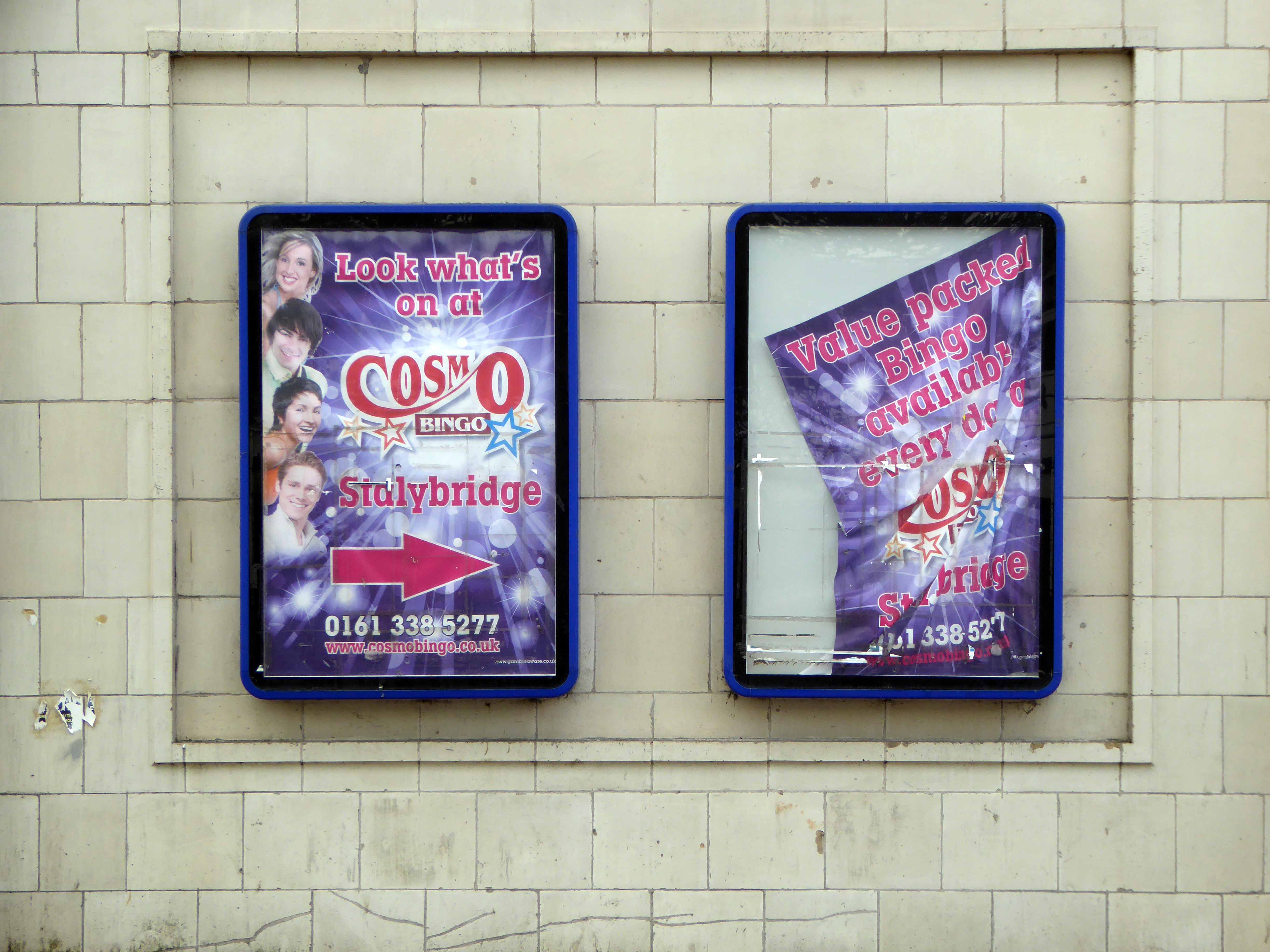
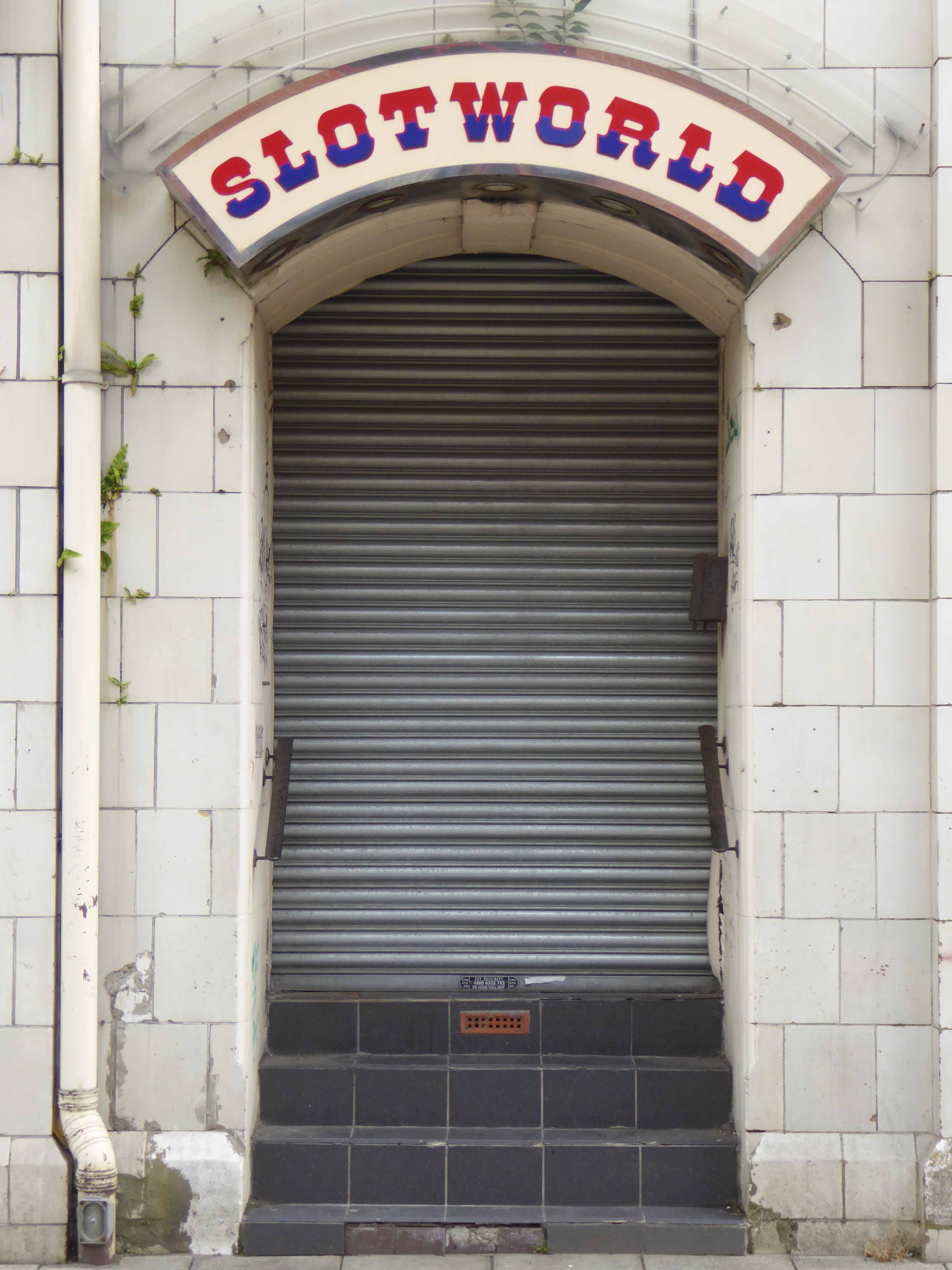
With capacity now down to 946 seats, the Metro Cinema continued as a single screen operation until the middle of 2003, sometime after a multi-plex had opened in the town. In 2008 (with seats and screen intact) the building was unused except for the long foyer area, linking the front and back elevations of the Metro, which was a Slotworld Amusement Arcade. By 2011, the entire building had been stripped out and stood empty and unused.
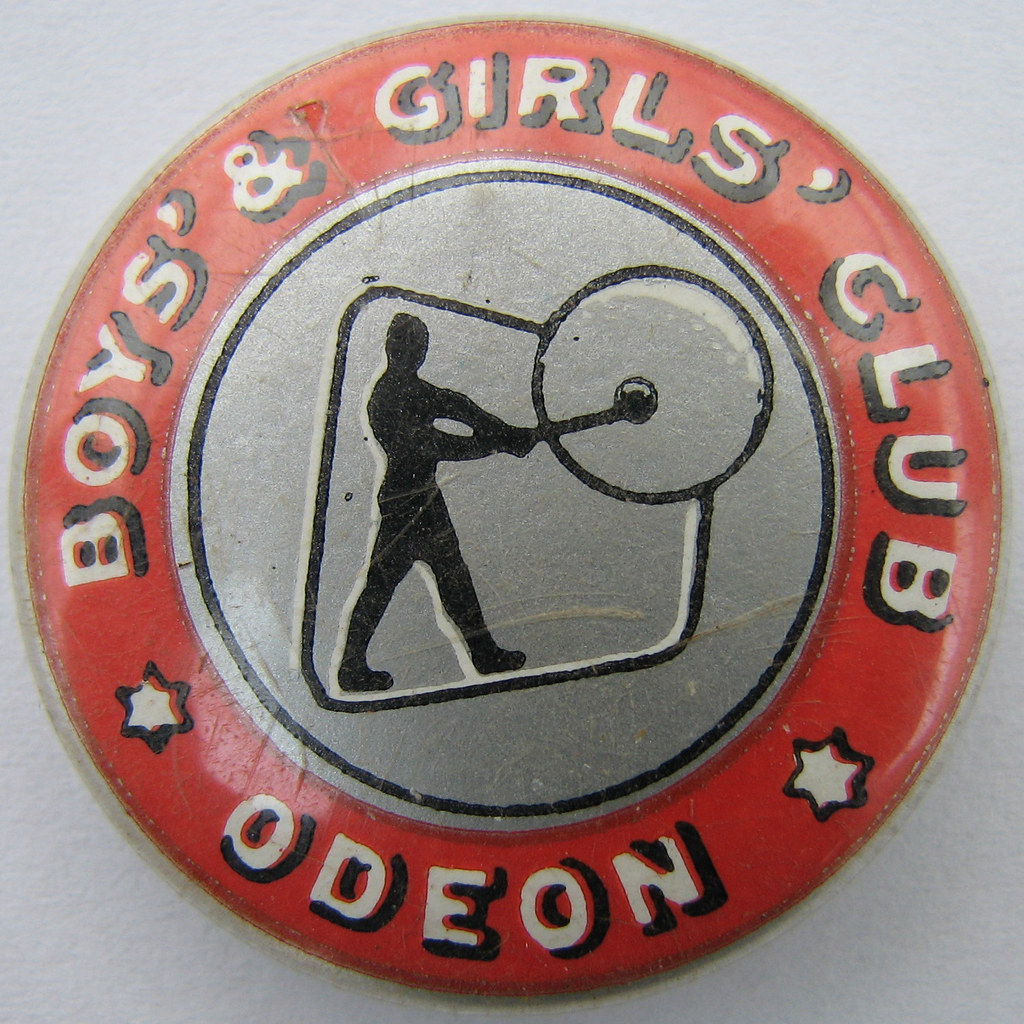
It was my local cinema as a lad – attending Saturday morning matinees as a member of the Odeon Boy’s and Girls club. Hundreds of the nosiest kids. regularly warned by the manager that the film would be stopped if the raucous behaviour continued.
Now it’s just an empty shell, superseded by multiplex and latterly a lost Slotworld.
Unlisted unloved sitting at the heart of the town – too late for the last picture show.
All in a day’s work cycling around north Manchester searching out and snapping five churches in a day.
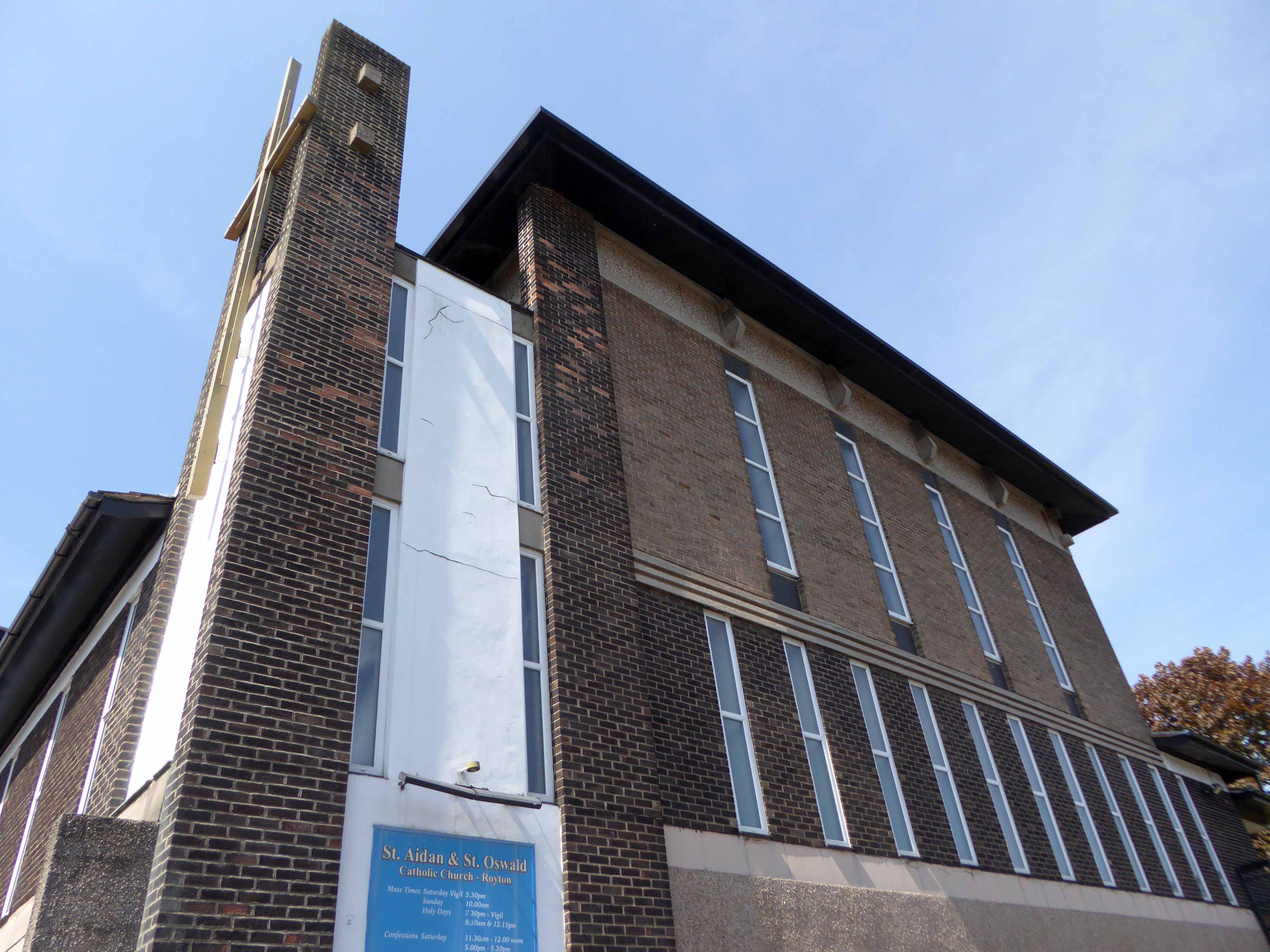
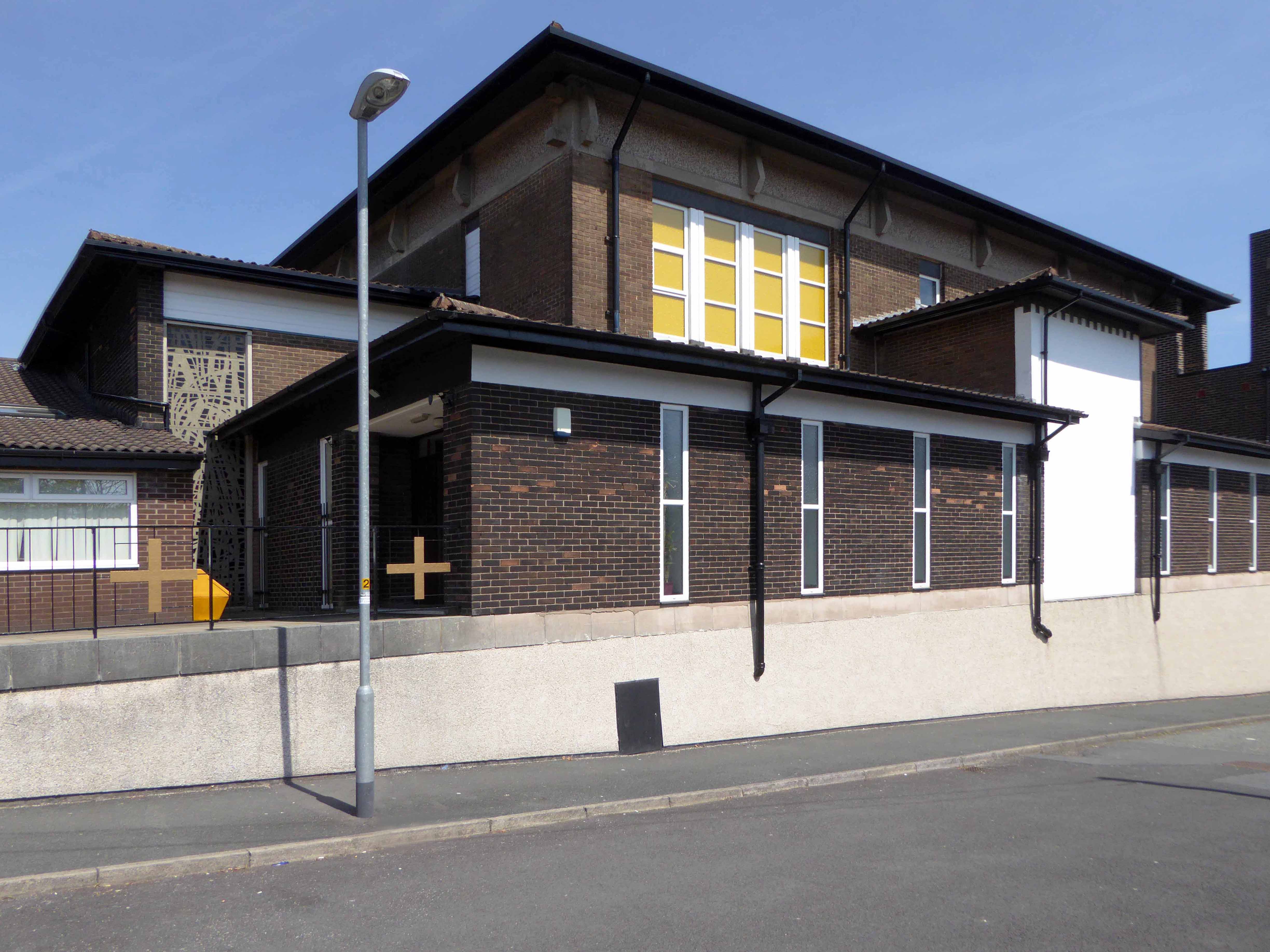
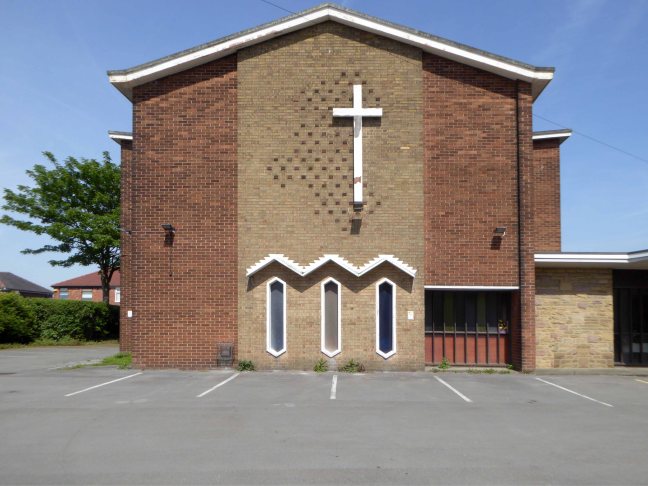
This just happens to be one of my favourites, tough and uncompromising, monumental and modern – set hard against a main road.
A simple brick, concrete and glass construction, an immovable mass with strong vertical accents.
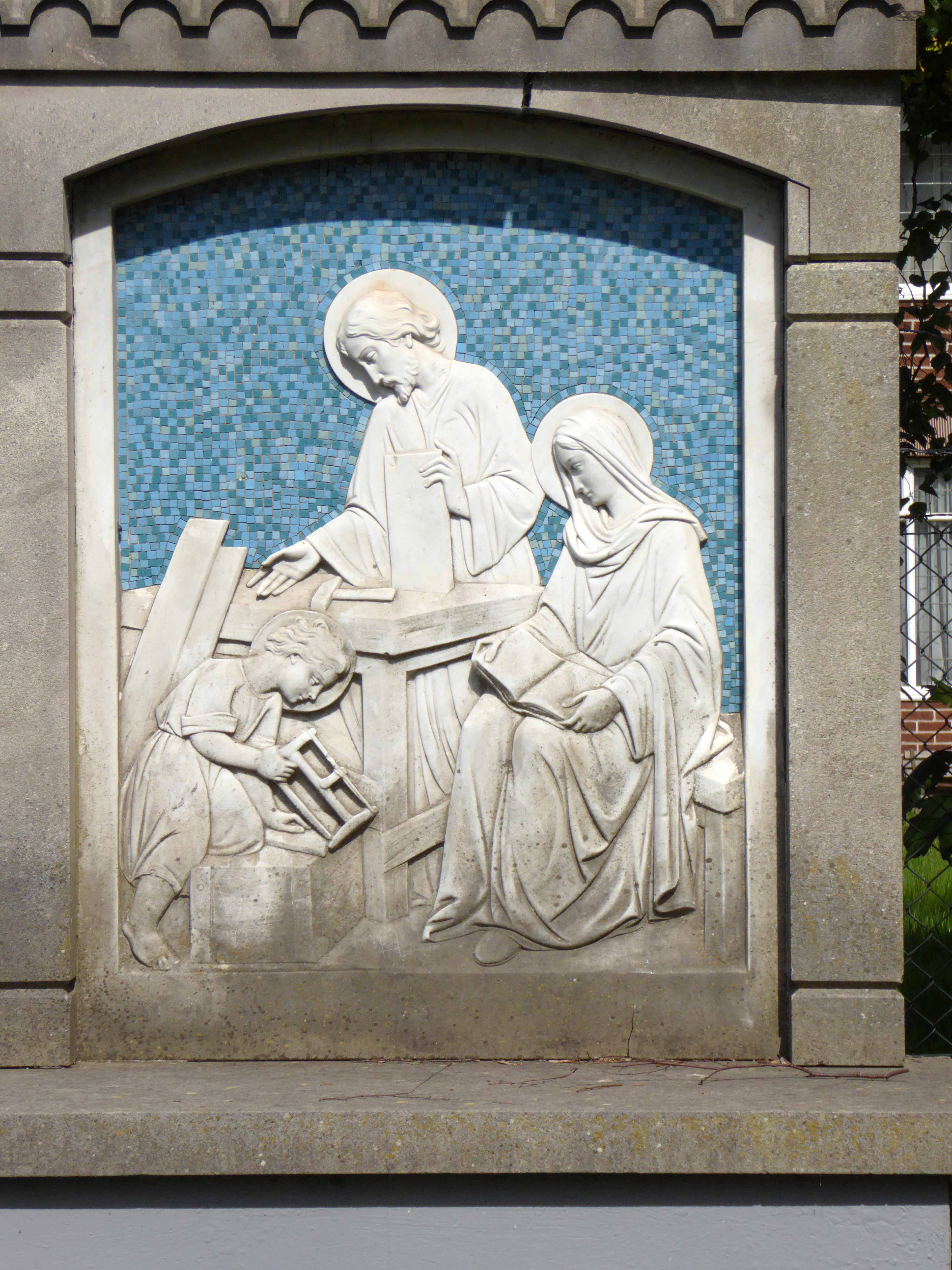
Though over time it has lost its colourful mosaics and concrete relief – gains a pitched roof and obtrusive gutters and drainpipes along the way.
My thanks to Andrew Spence for the info and photo.
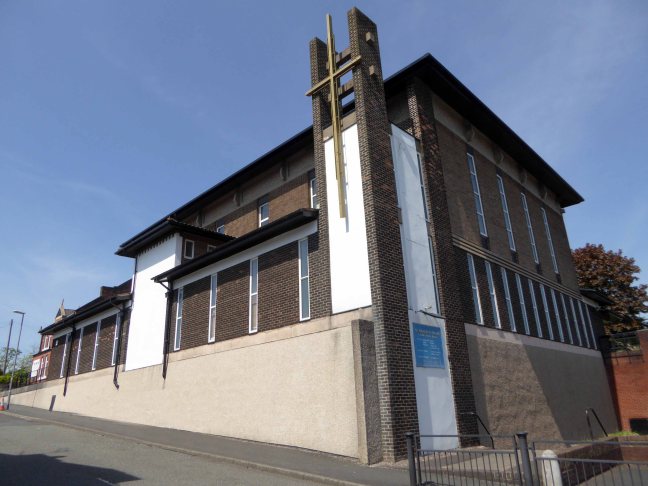
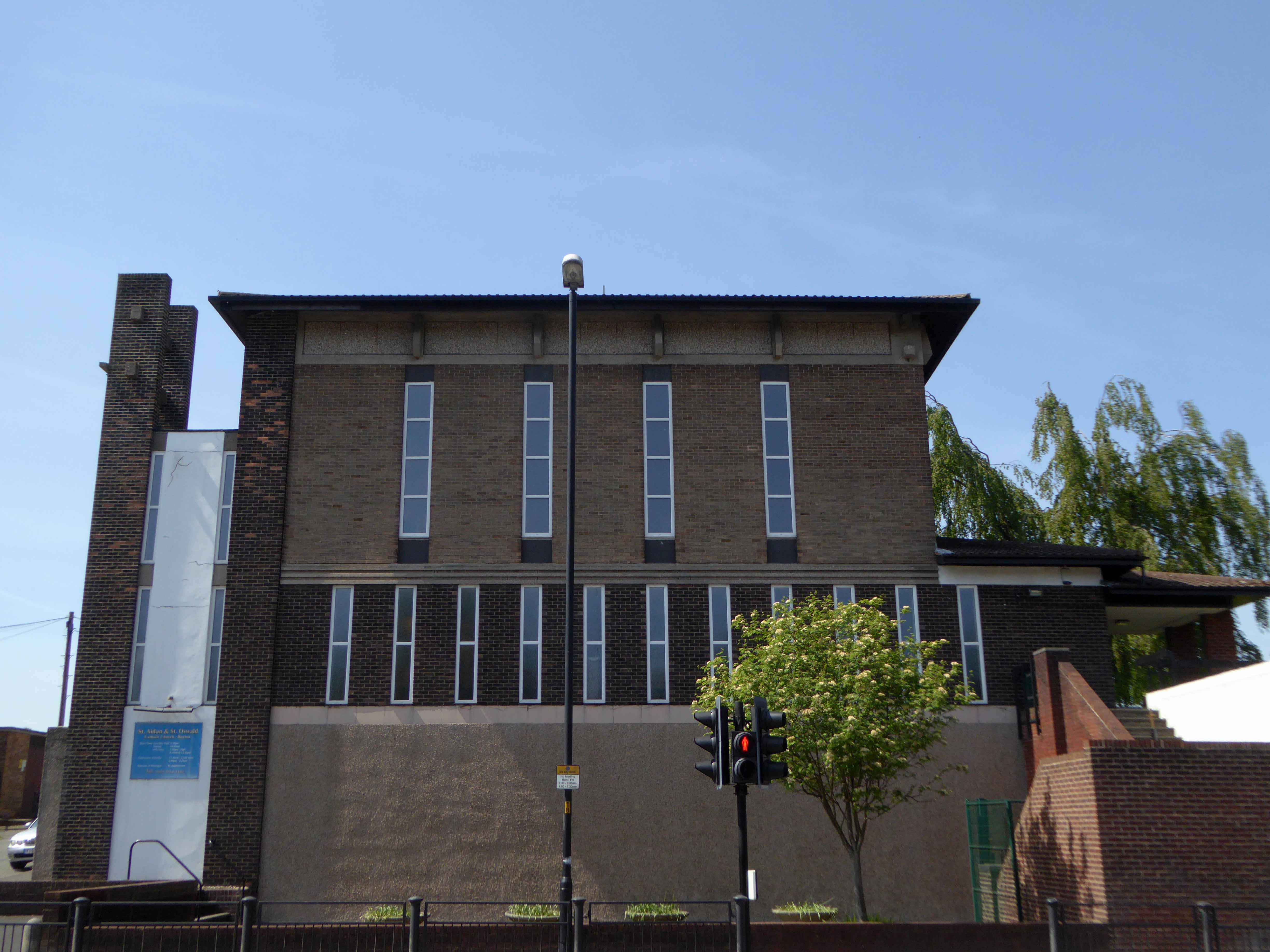
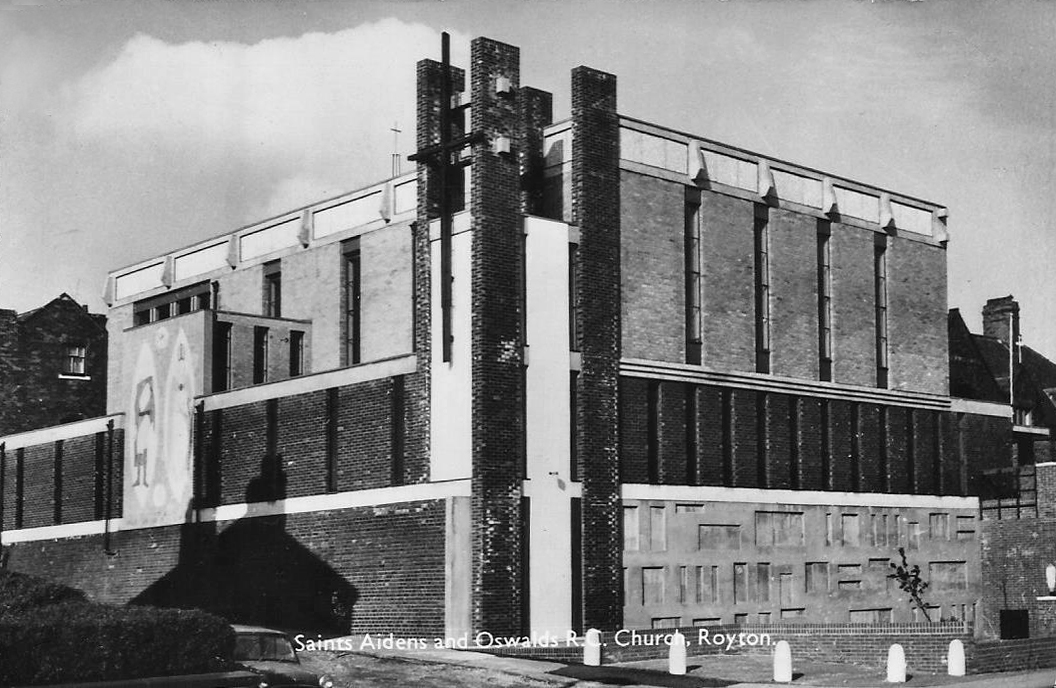
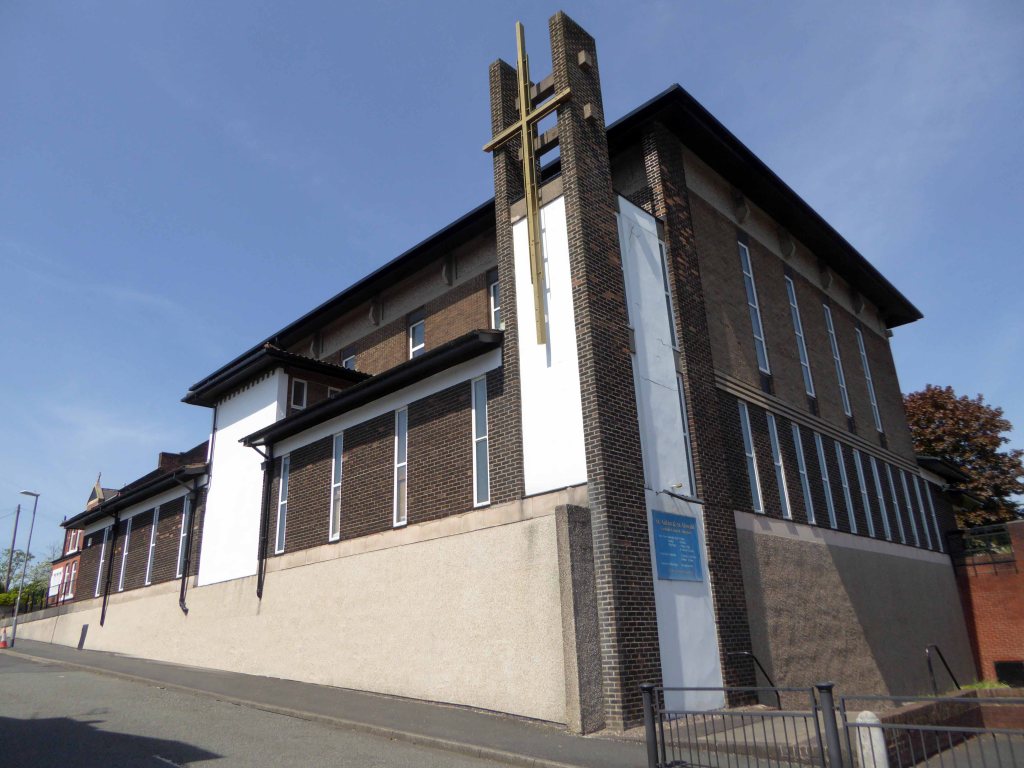
In 1964, Fr Edward Glyn commissioned Massey & Massey of Warrington to design a new larger church in place the previous church, to be built on the same site. The foundation stone was laid on 10 April 1965 by Bishop Holland. R. Partington & Sons Ltd were the contractors and the building cost around £48,000.
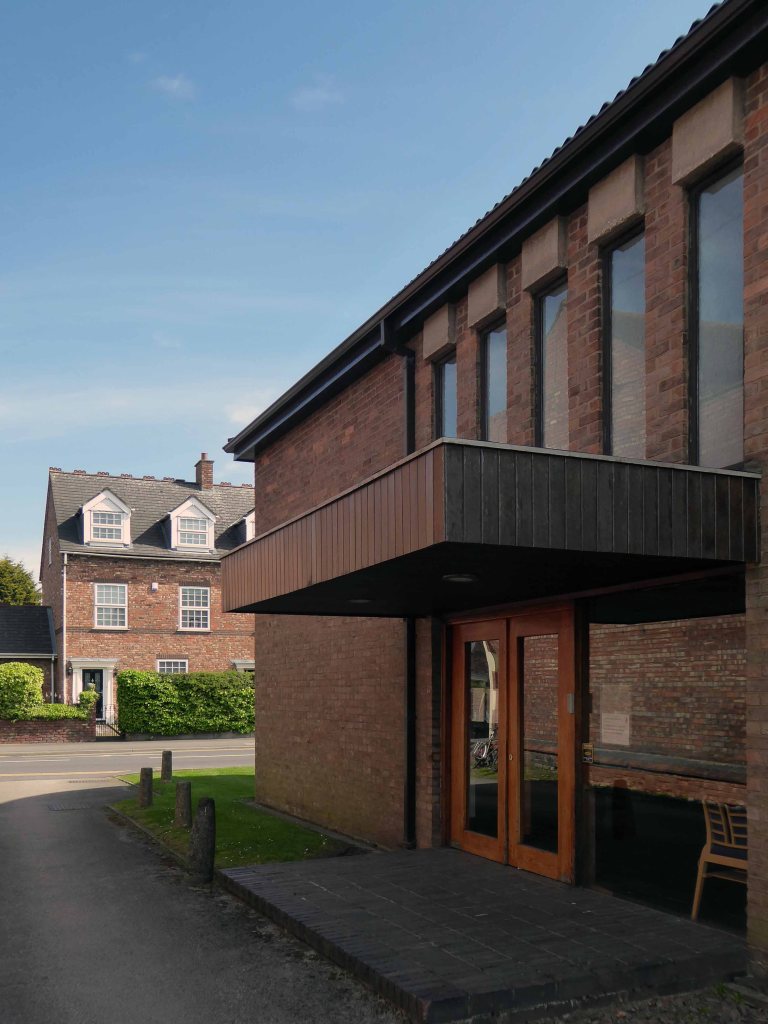
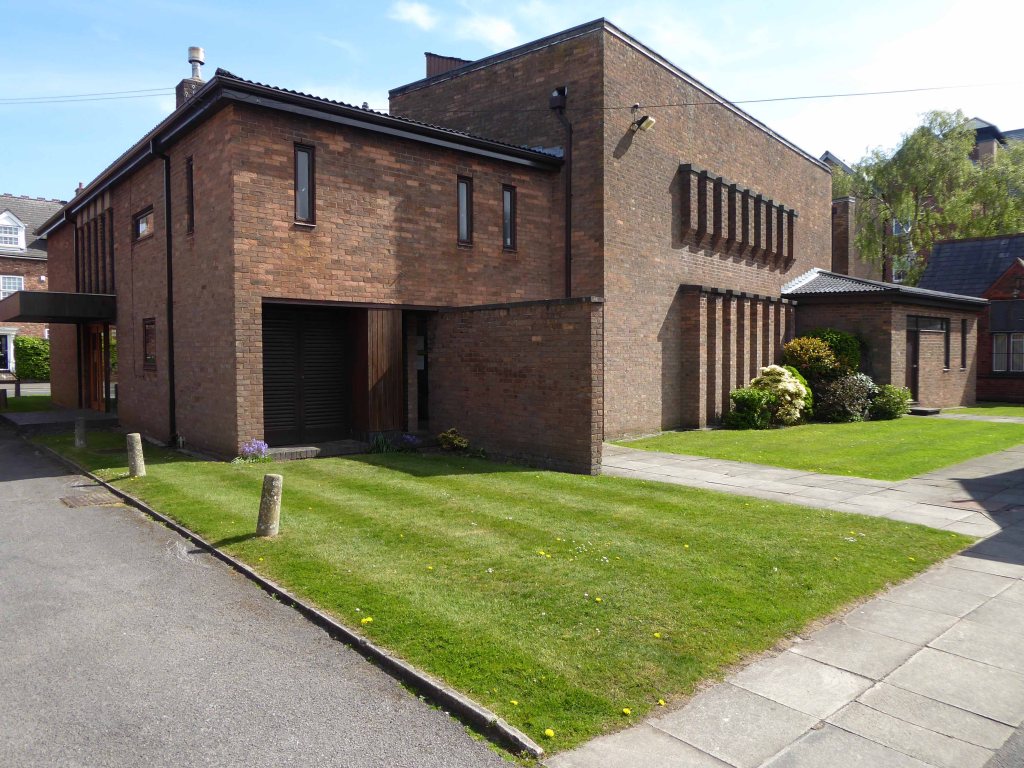
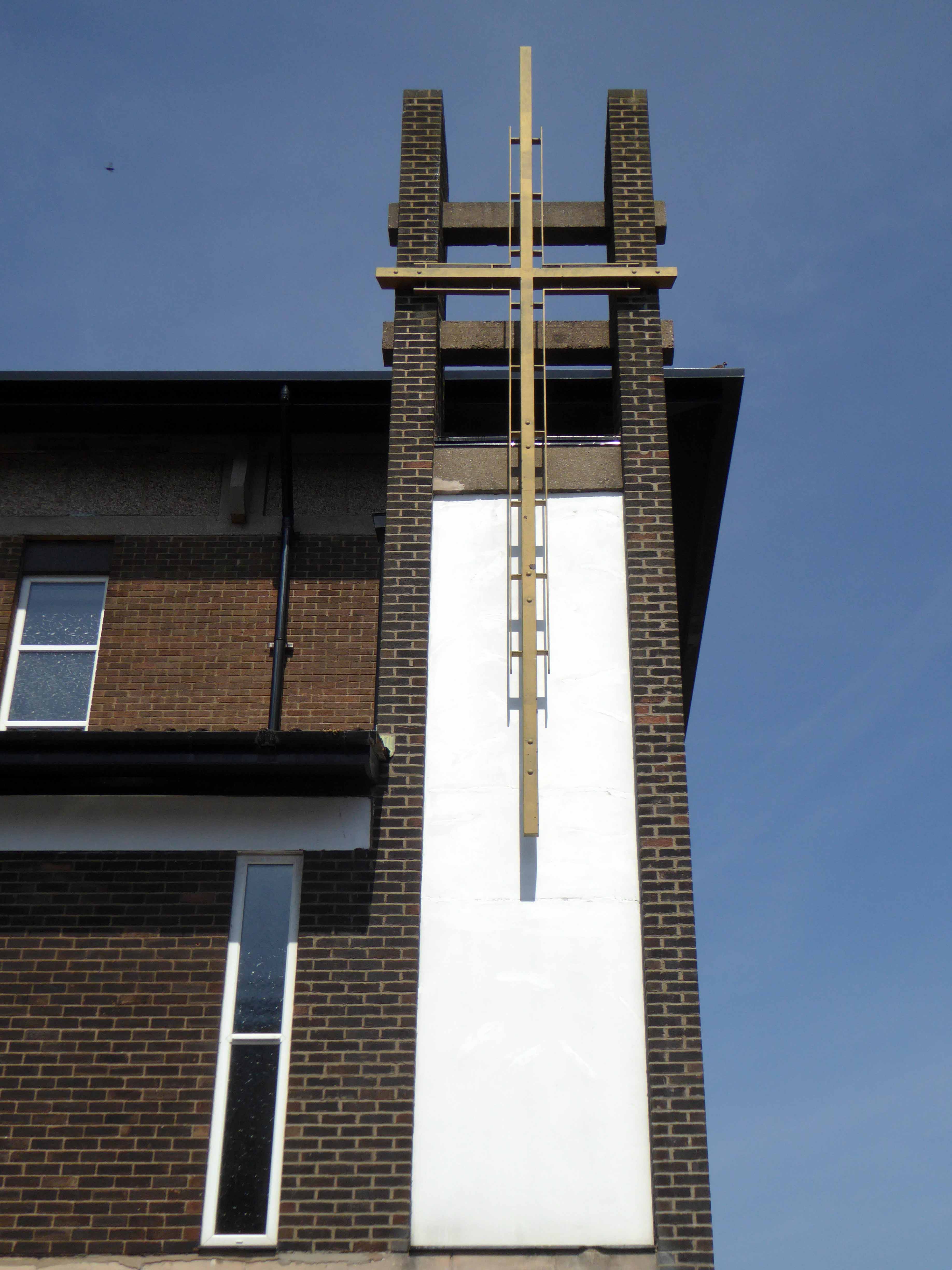
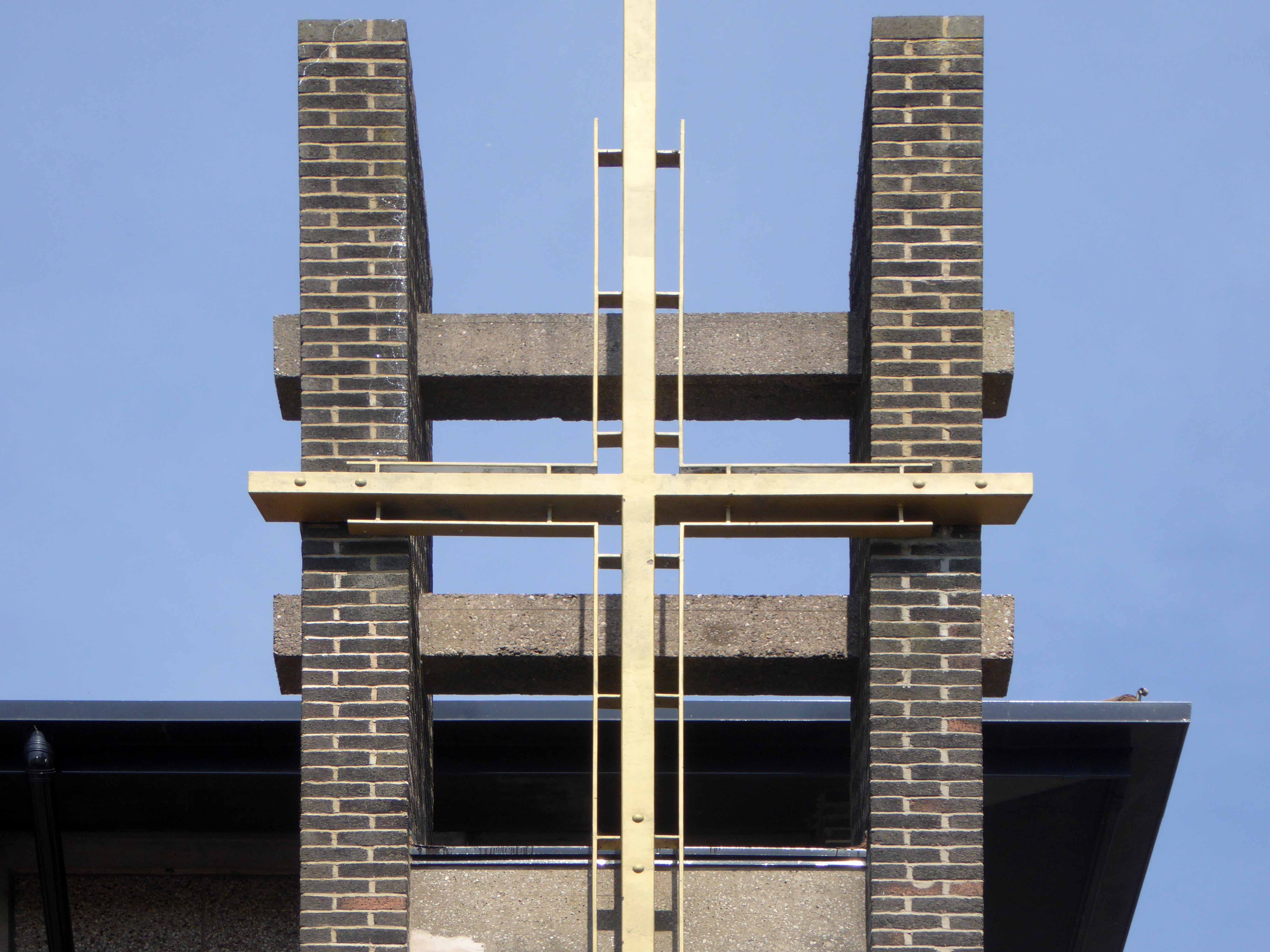
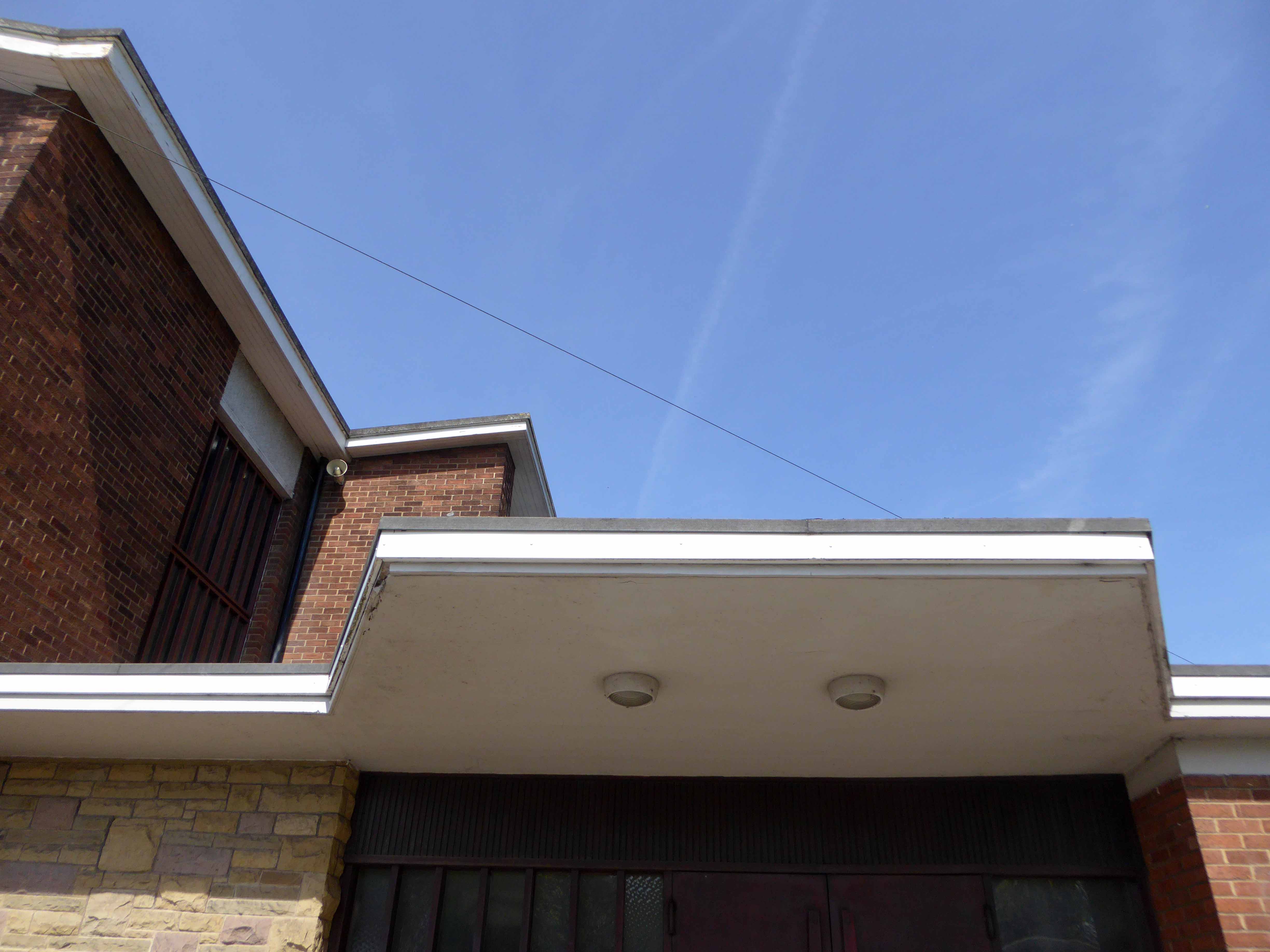
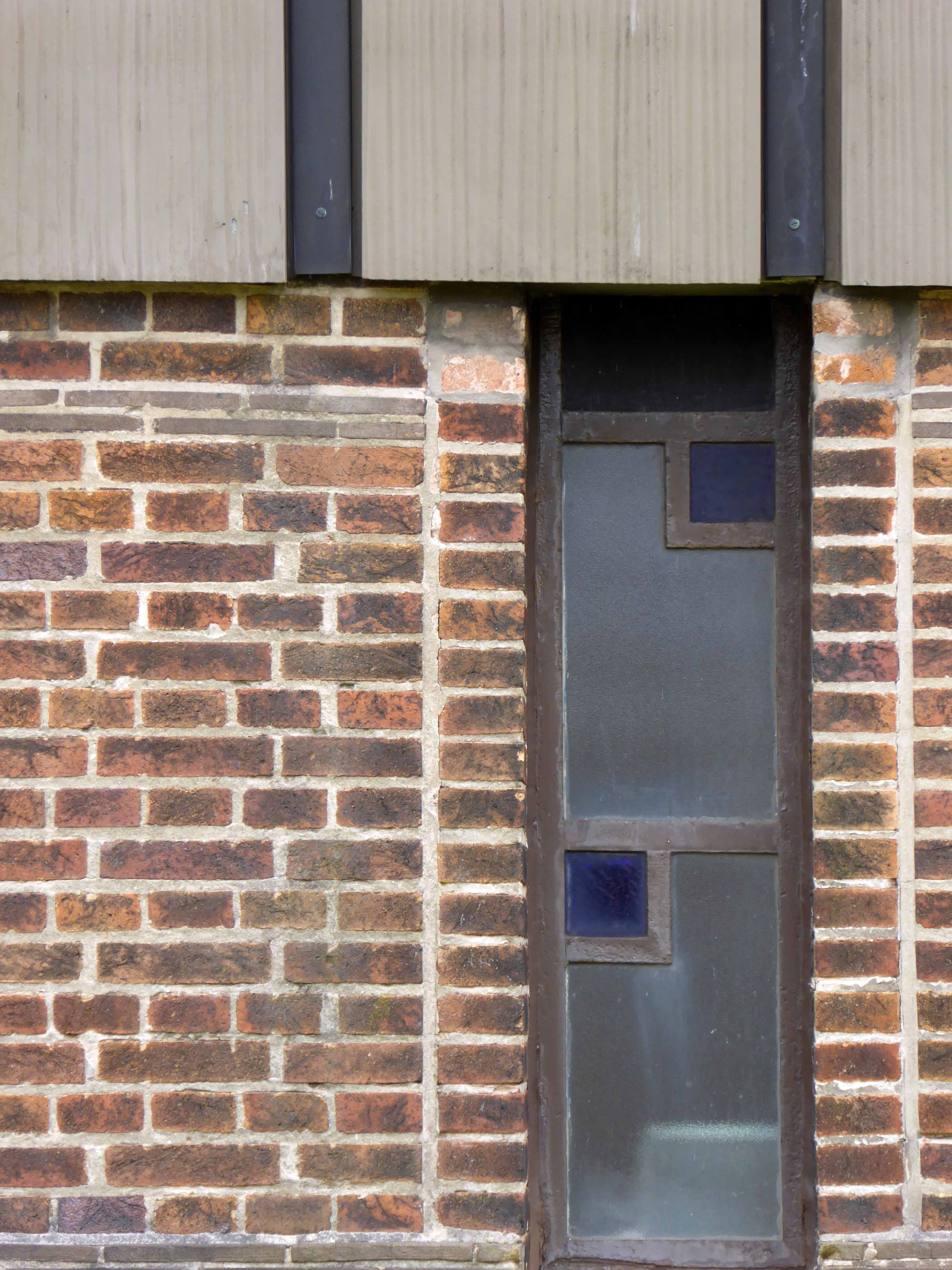
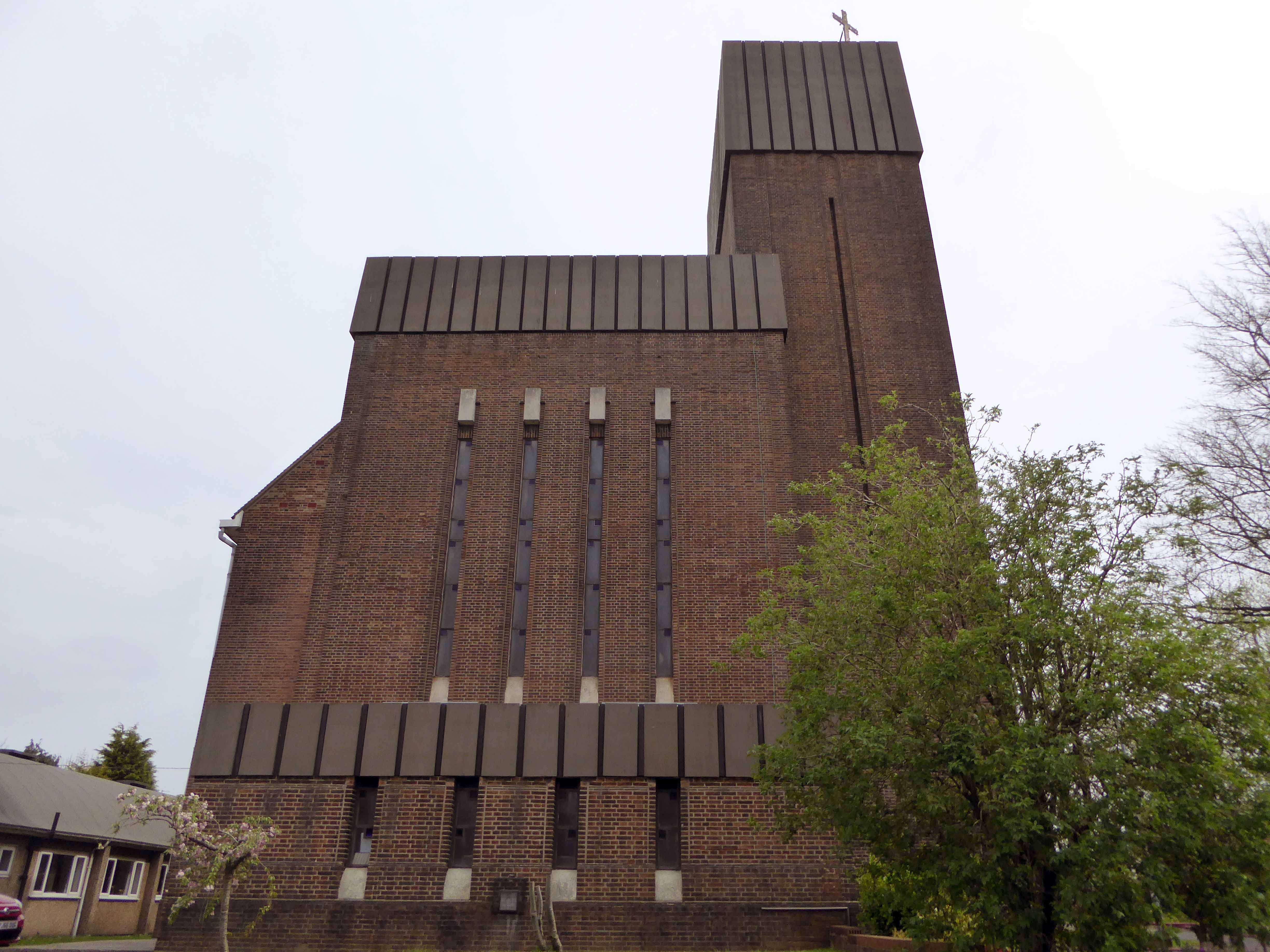
The church is concrete- framed and faced in brick, with dark red brick to the flat-roofed aisles and buff brick to the upper part of the nave. Tall brick piers connected by concrete beams form a vertical accent on the northwest corner, carrying a steel cross.
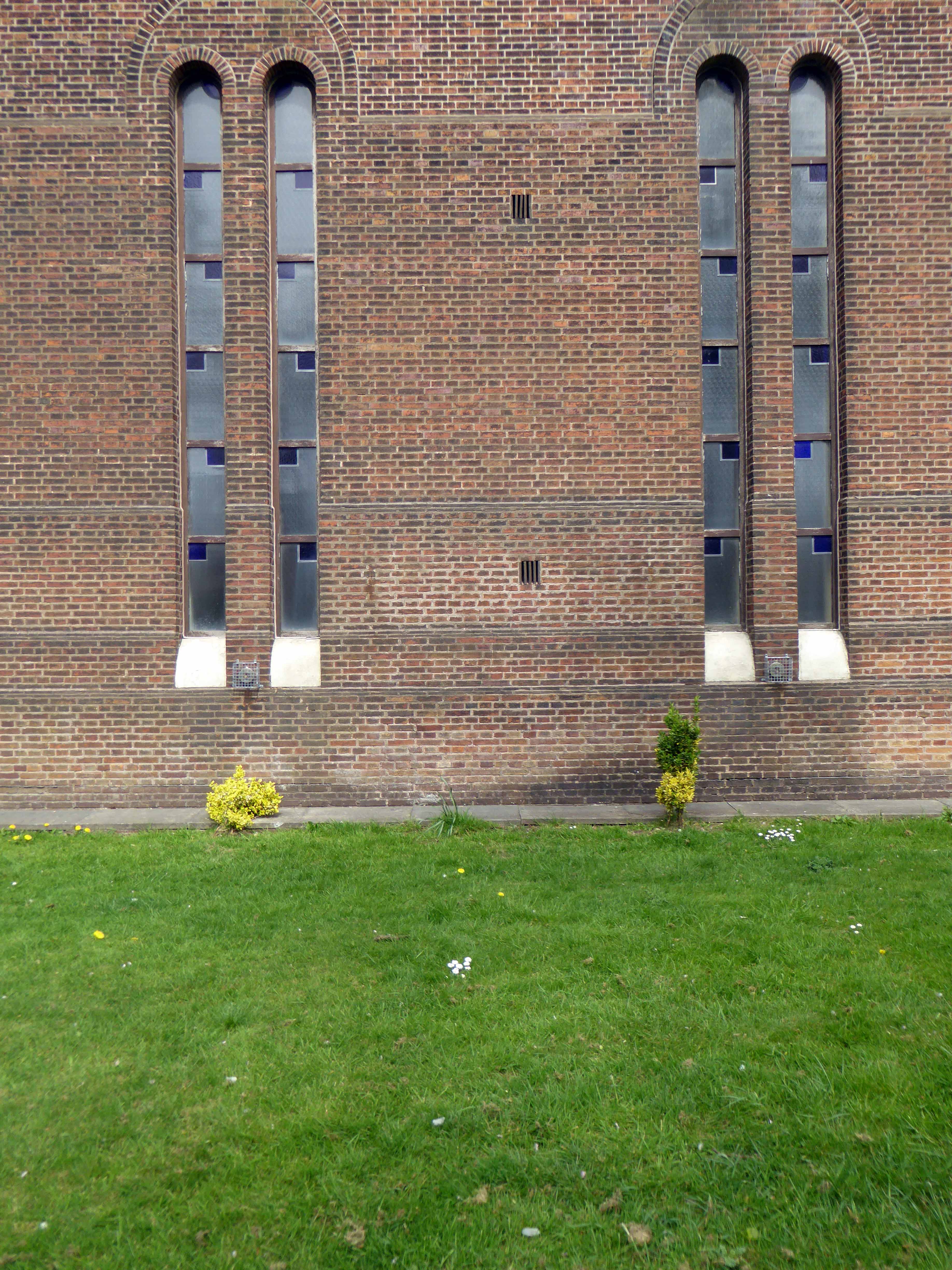
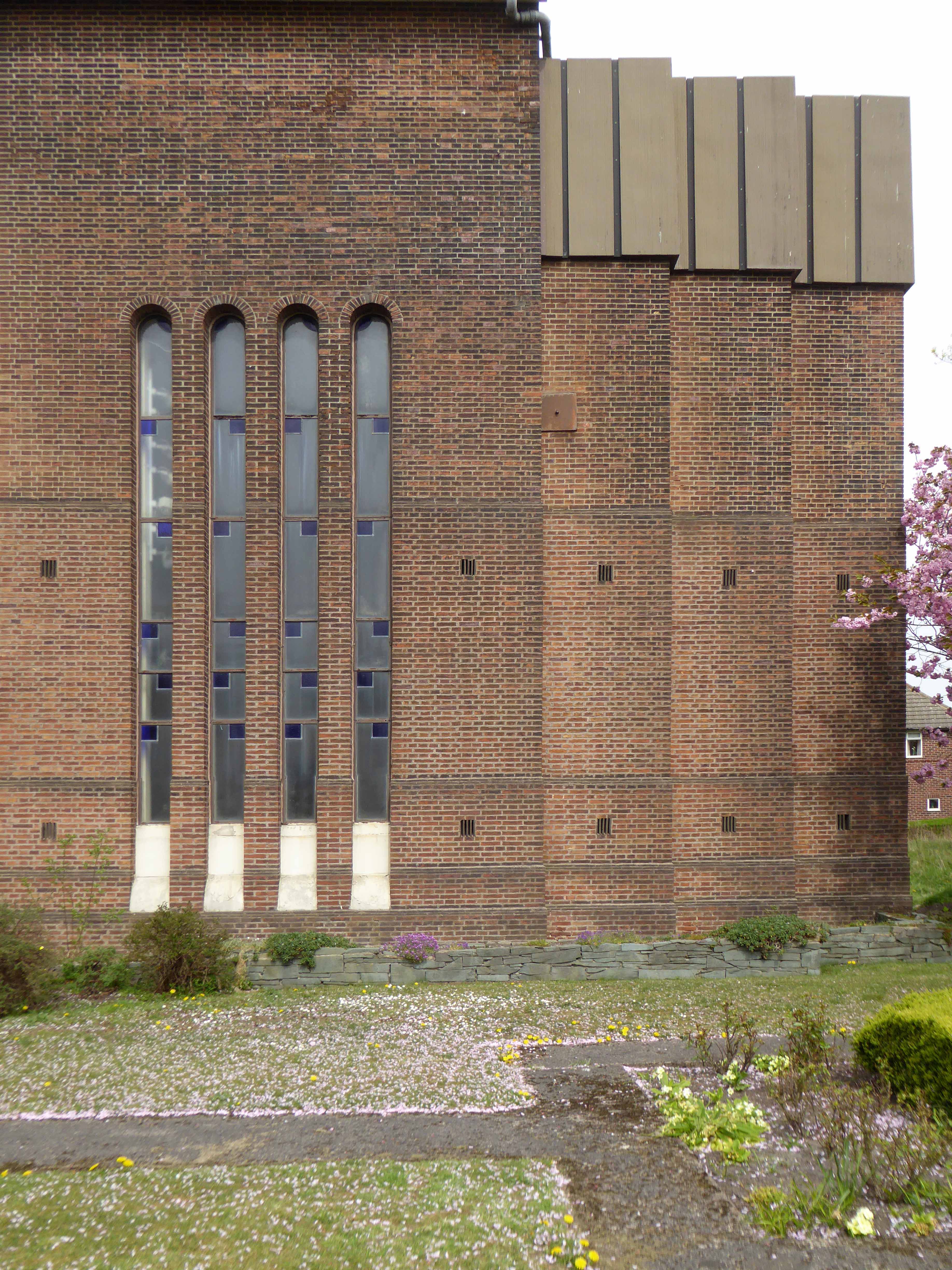
The shallow-pitched roof is laid with concrete tiles, on deep eaves (originally the roof was flat). Windows are now mostly uPVC, with some stained glass; the six-bay nave is lit by tall narrow windows at clerestory levels, with similar narrow lights to the aisles.
The railway station was built in 1849 replacing a temporary structure constructed a year earlier. It was rebuilt in its present form in 1933 and has had several slight modifications since that date, most notably in 2006, when the new interchange and connection to Frenchgate Centre opened.
The front elevation is realised in a typical inter-war brick functionalist style.
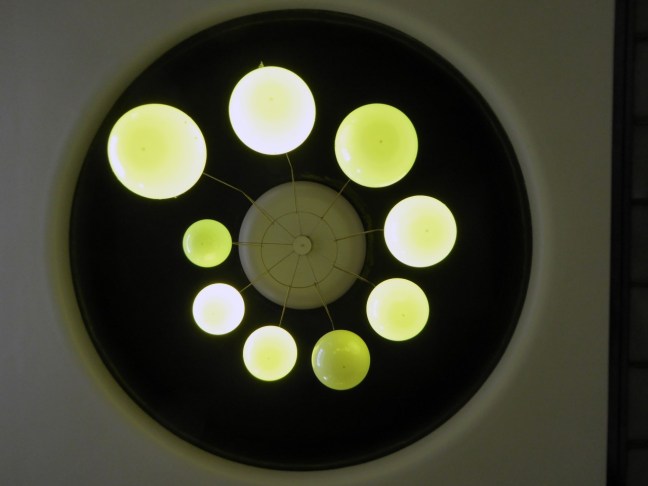
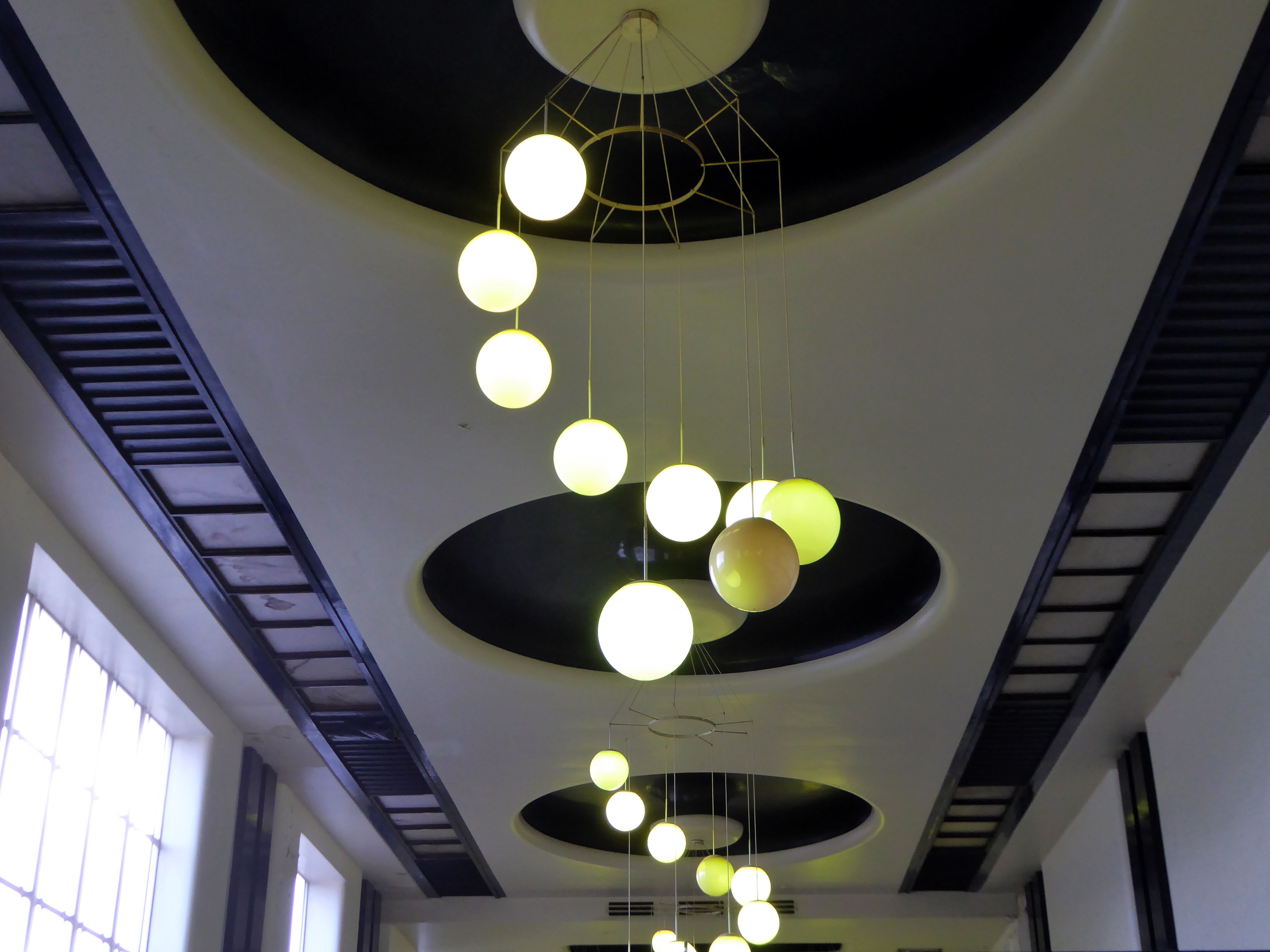
Of particular note are the lobby lighting fixtures and clock, the booking hall and offices are listed Grade II.
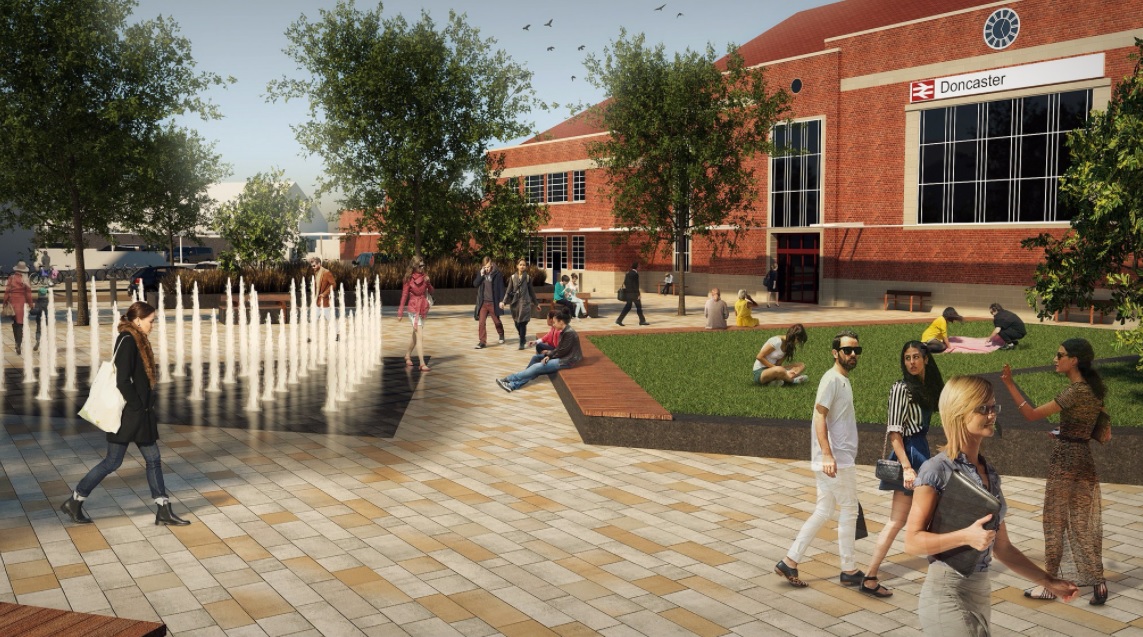
There are plans to redevelop the station approach replacing the current car parking with a pedestrianised piazza.
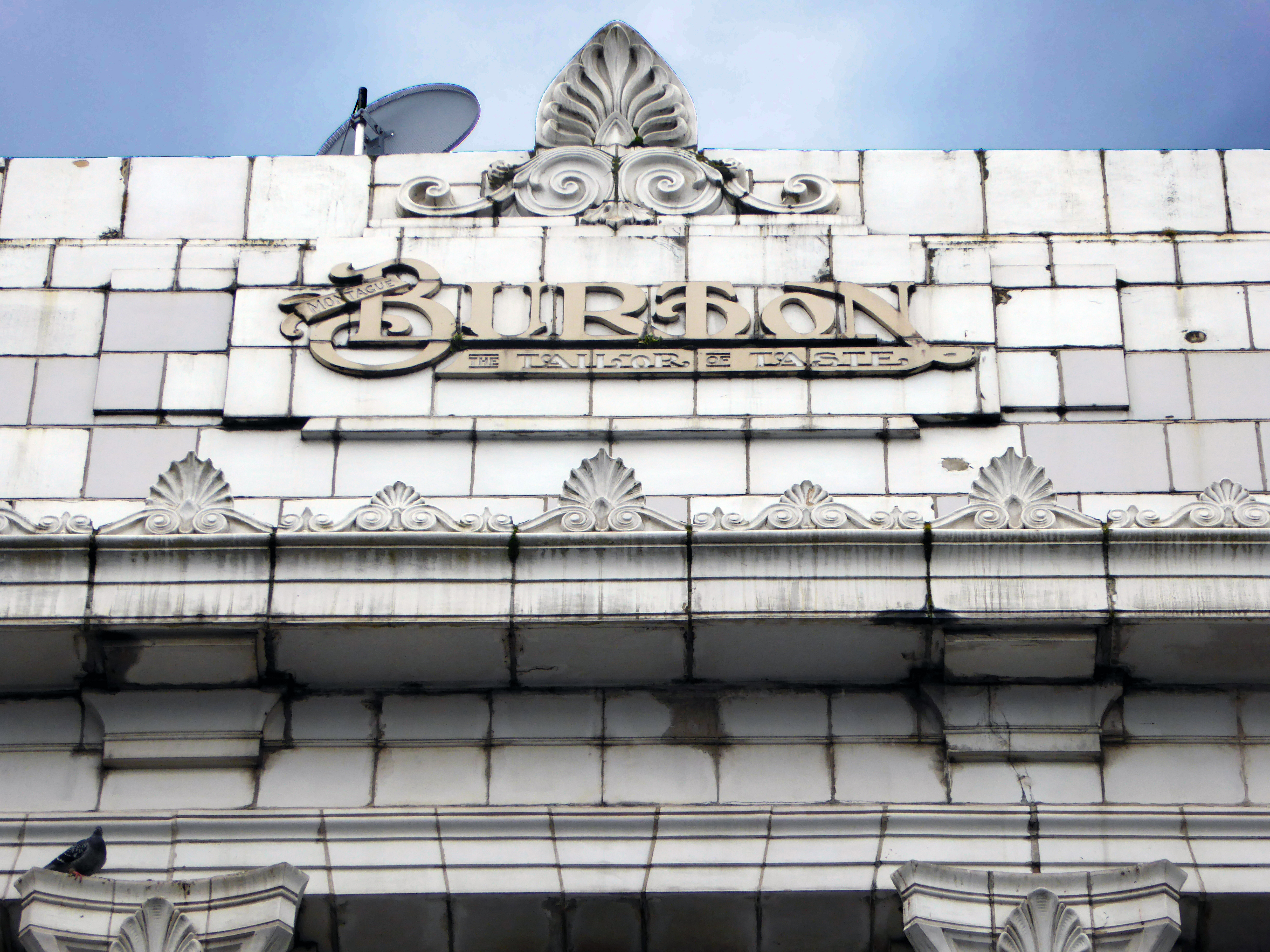
The High Street boast a former branch of Burton’s with its logo intact.
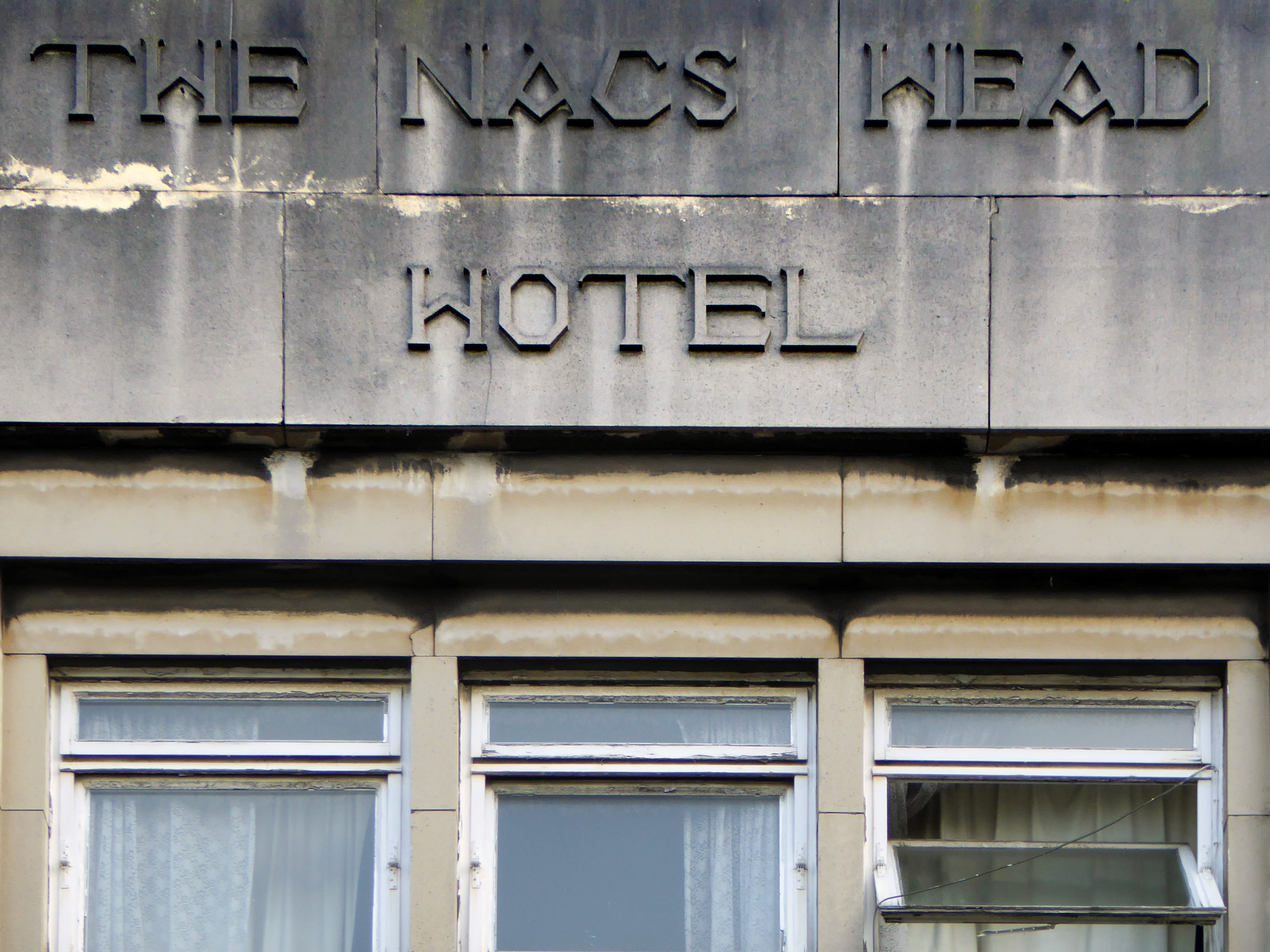
An intriguing Art Deco shop frontage – combining a menswear outlet with a pub.
Further along an enormous Danum Co-operative Store in the grandest Deco manner – 1938-40. Designed by T H Johnson & Son for the Doncaster Co-operative Society Ltd.
Currently partially occupied with no access to the glass stairways.
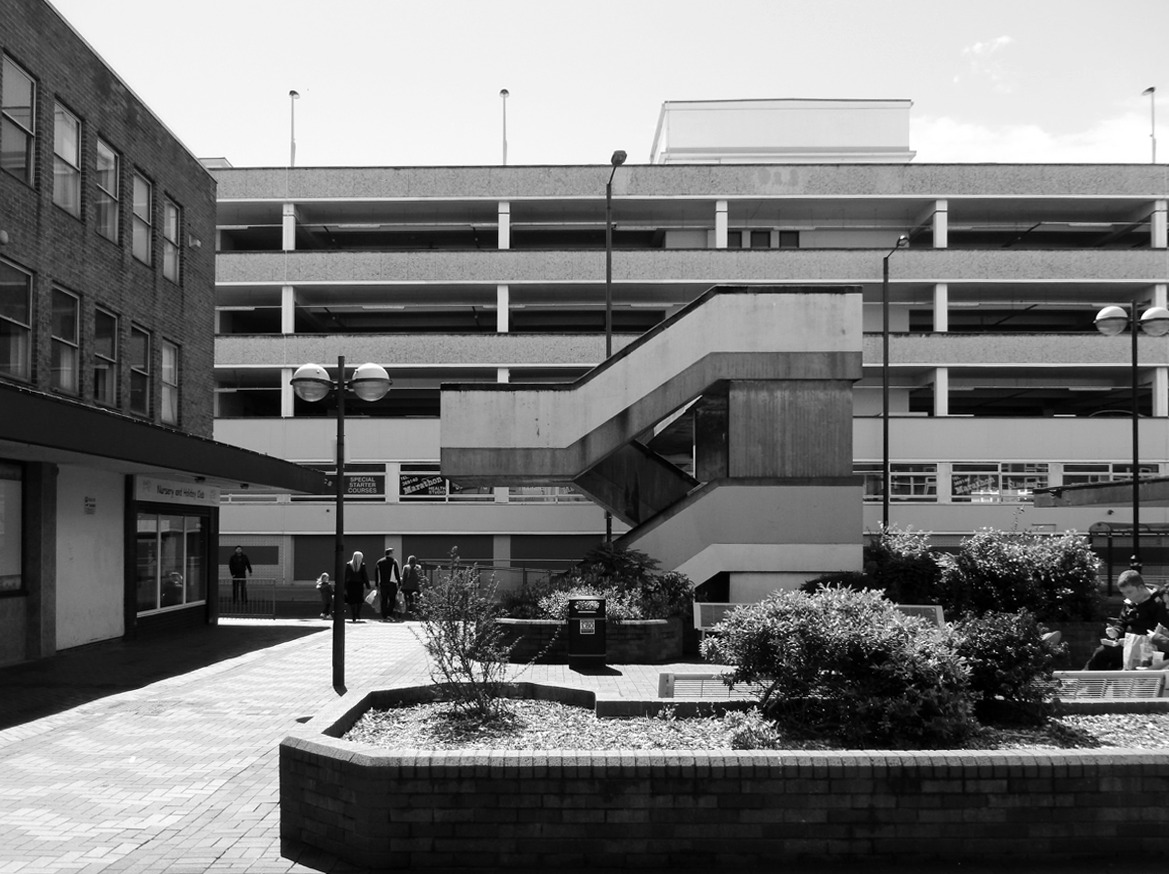
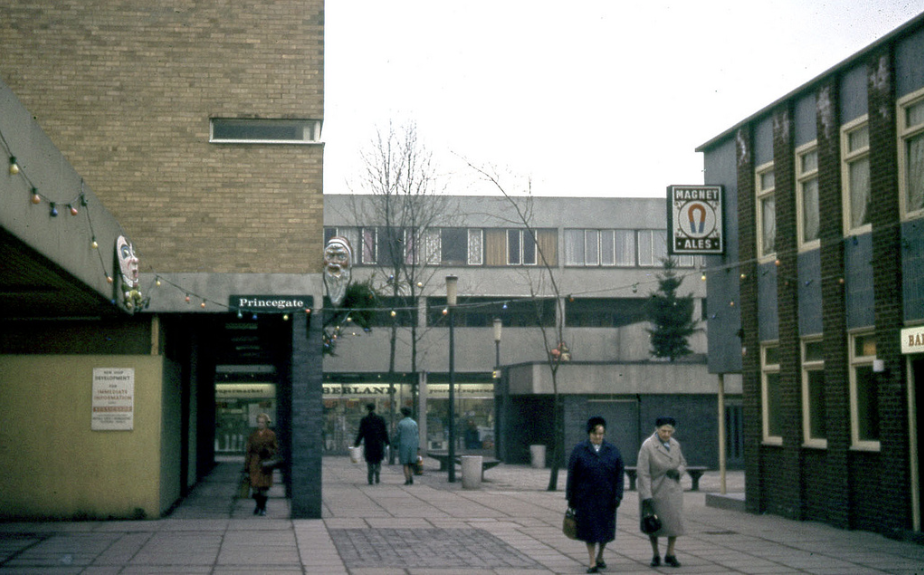
Following the development of the Frenchgate Centre the Waterdale Centre sunk into a slow decline.
And the Staff of Life has lost a little of its estate pub period charm, following successive typographic makeovers and paint jobs.
From 1949 onwards plans were afoot to develop the Waterdale area of Doncaster – civic buildings, courts, educational provision and the like, WH Price the Borough Surveyor at the helm. In 1955 Frederick Gibberd was appointed to oversee the site, though many of his designs were unrealised, his Police Station and Law Courts opened in 1969.
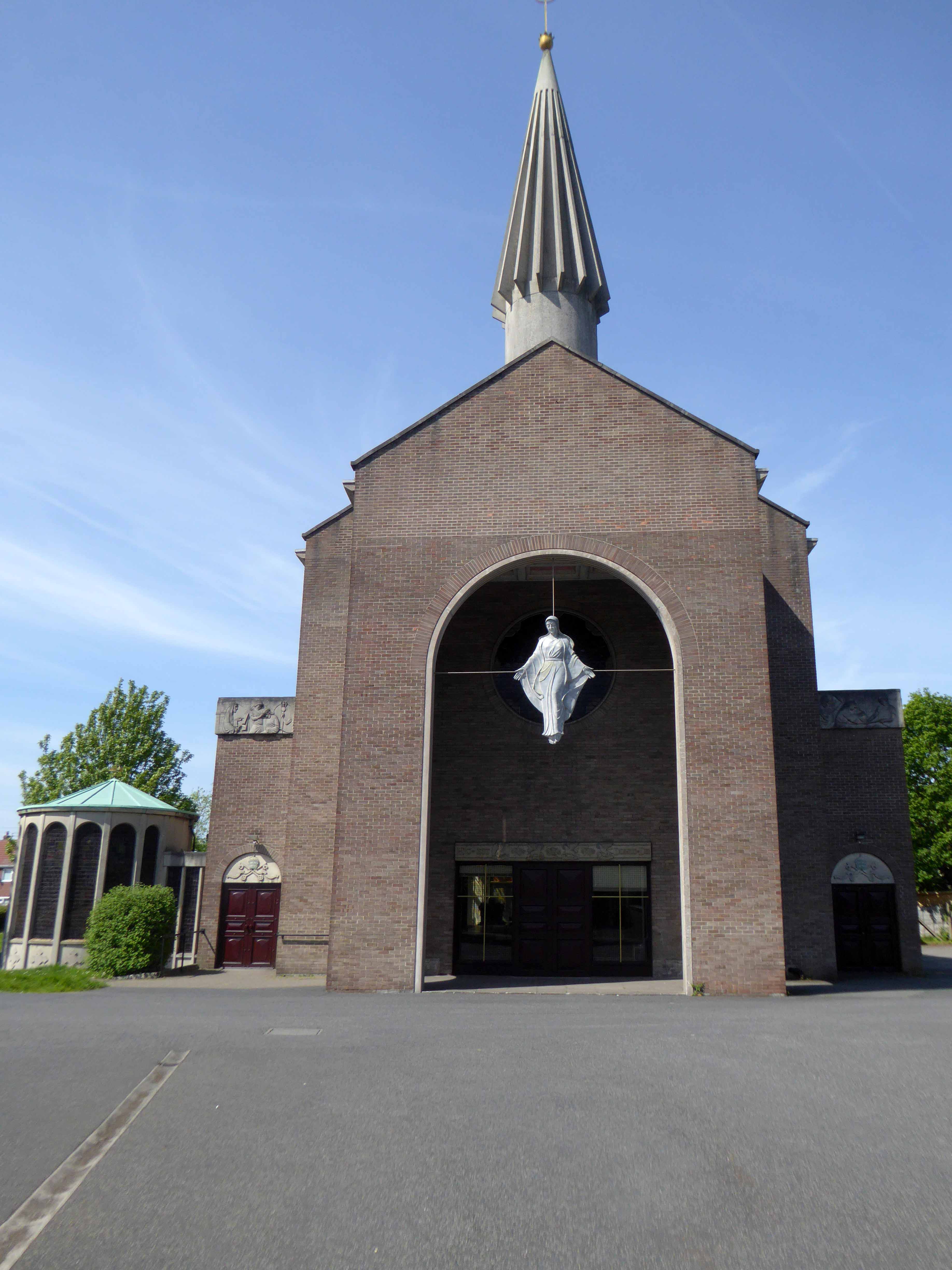
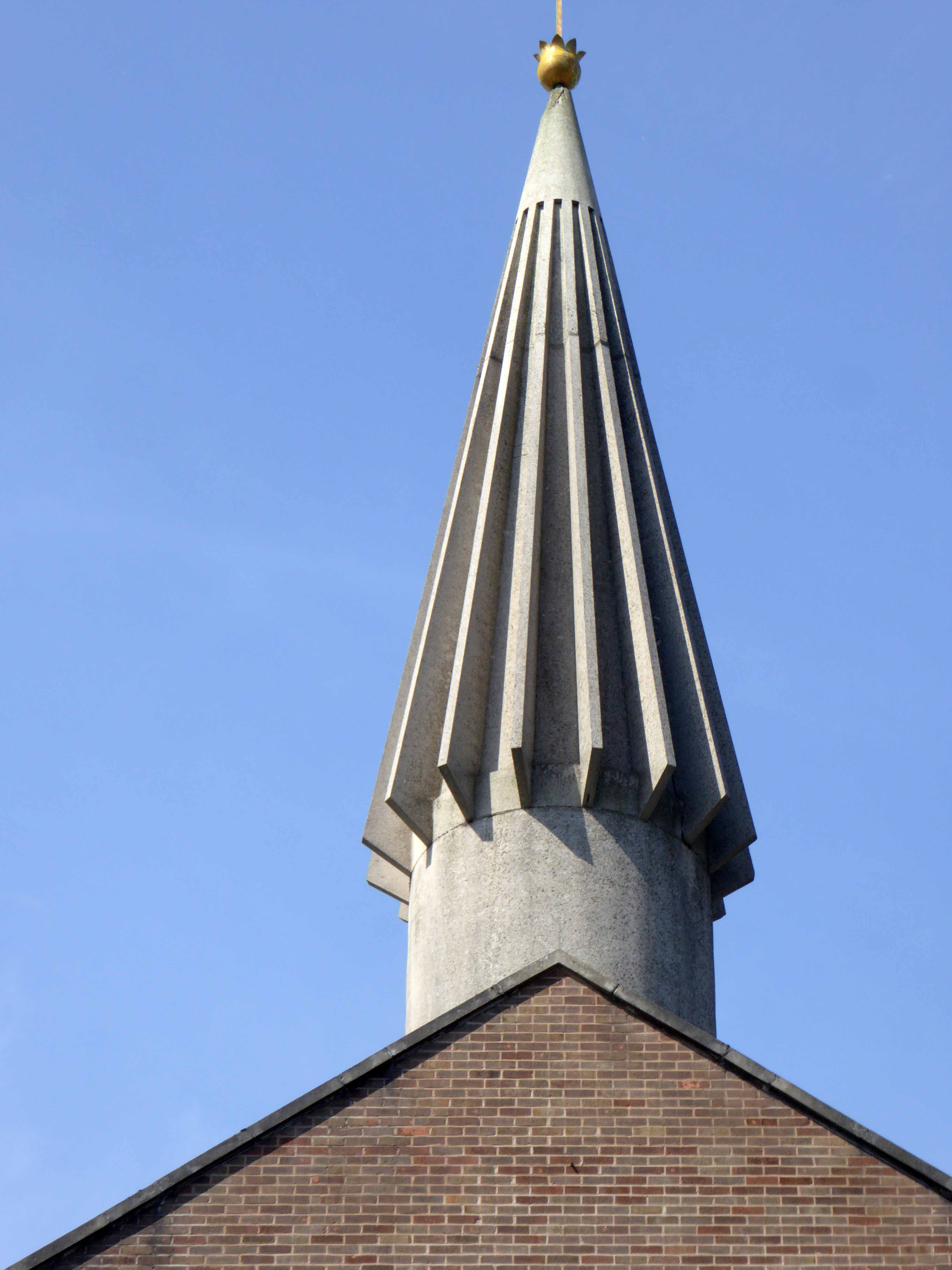
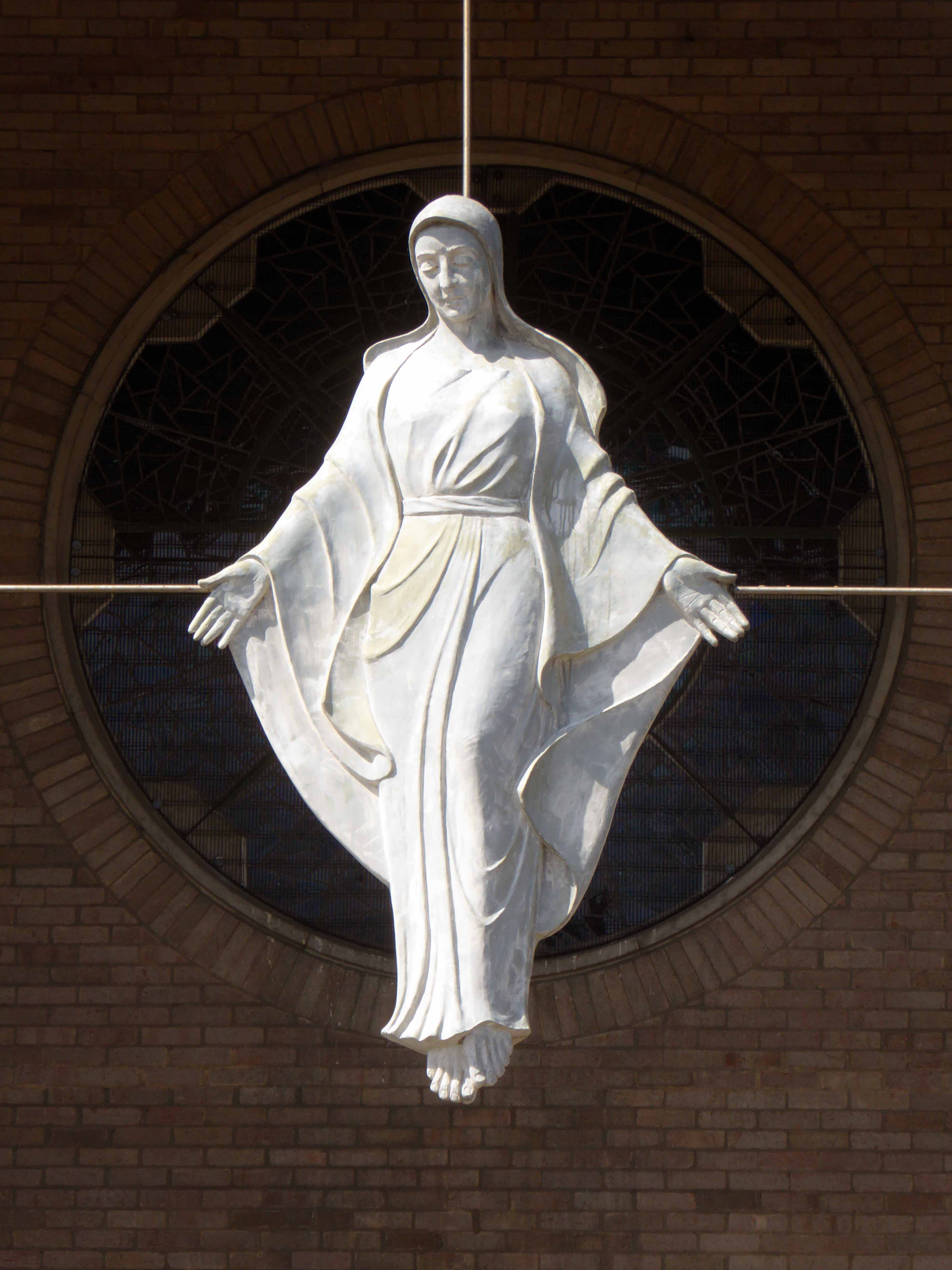
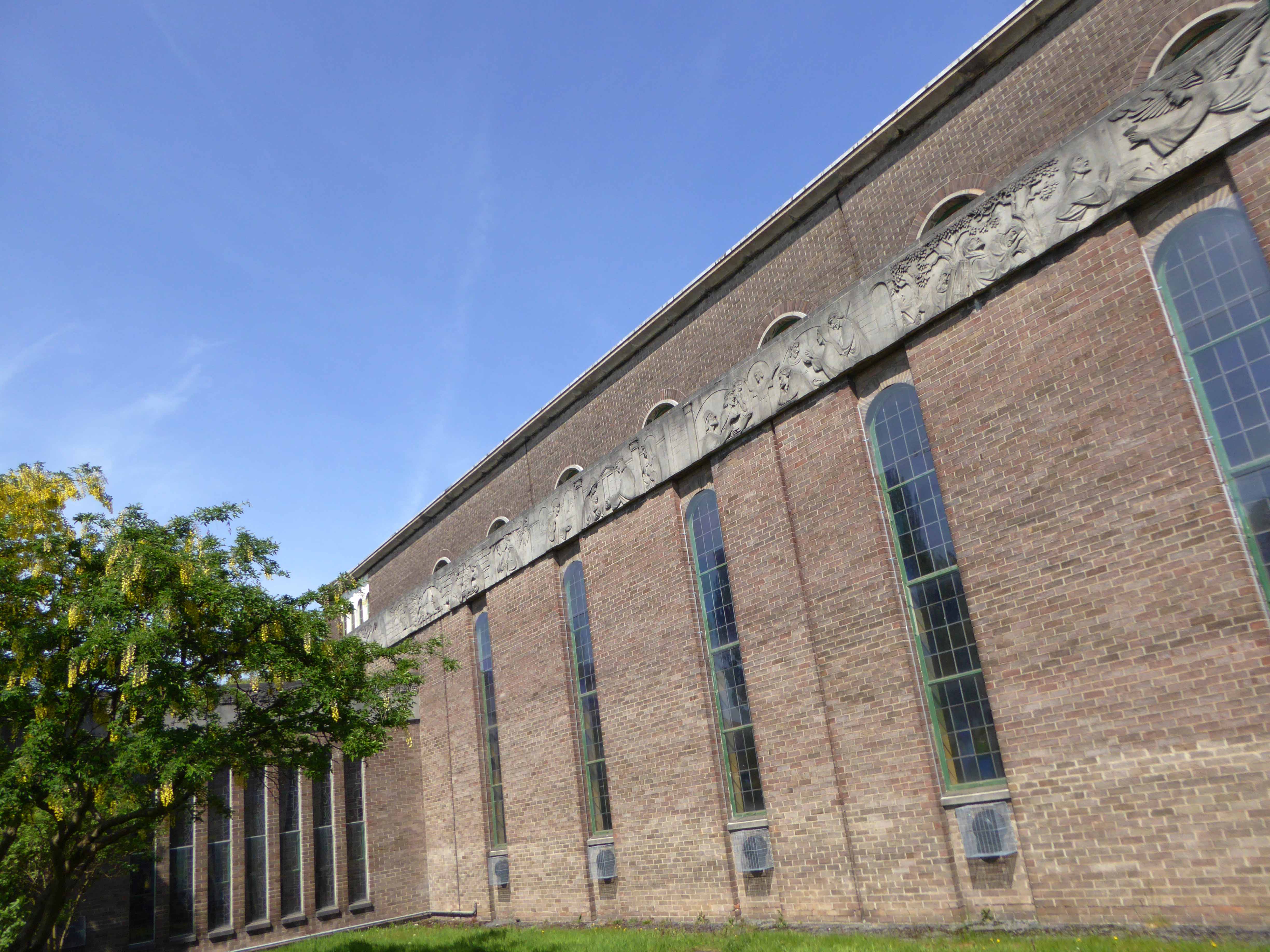
A church of the early 1960s, built before the Second Vatican Council on a traditional basilican plan. The design is striking and unusual, with an interesting combination of Gothic, classical and modern architectural motifs. The architect, Tadeusz Lesisz of Greenhalgh & Williams, is a little known figure but a designer of some interest. The church exhibits a scheme of sculpture, stained glass and mosaic on Marian themes, mainly by local designers, and retains almost all of the original furnishings and fittings in little altered state. It also retains furnishings from the late-nineteenth-century predecessor church.
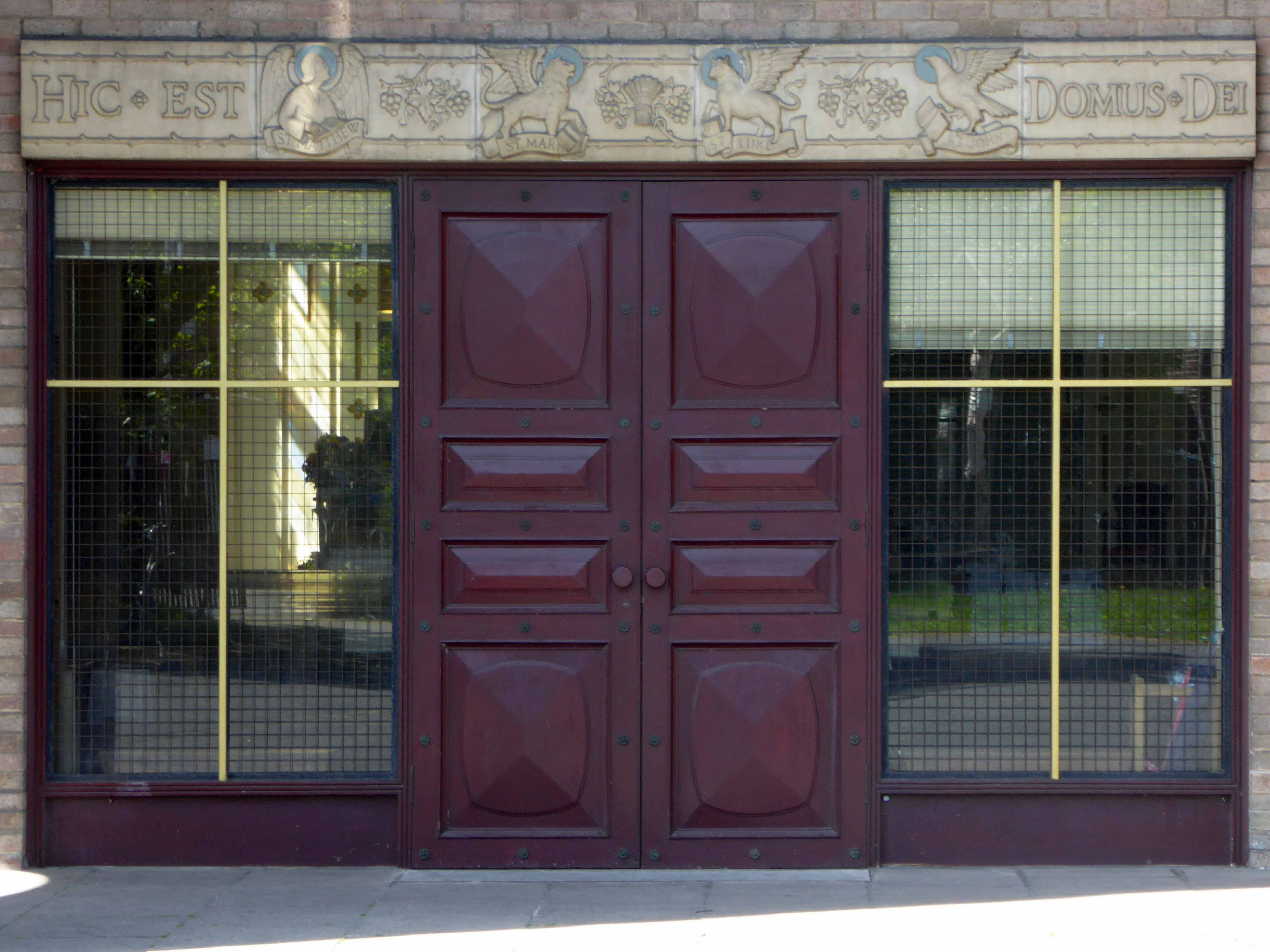
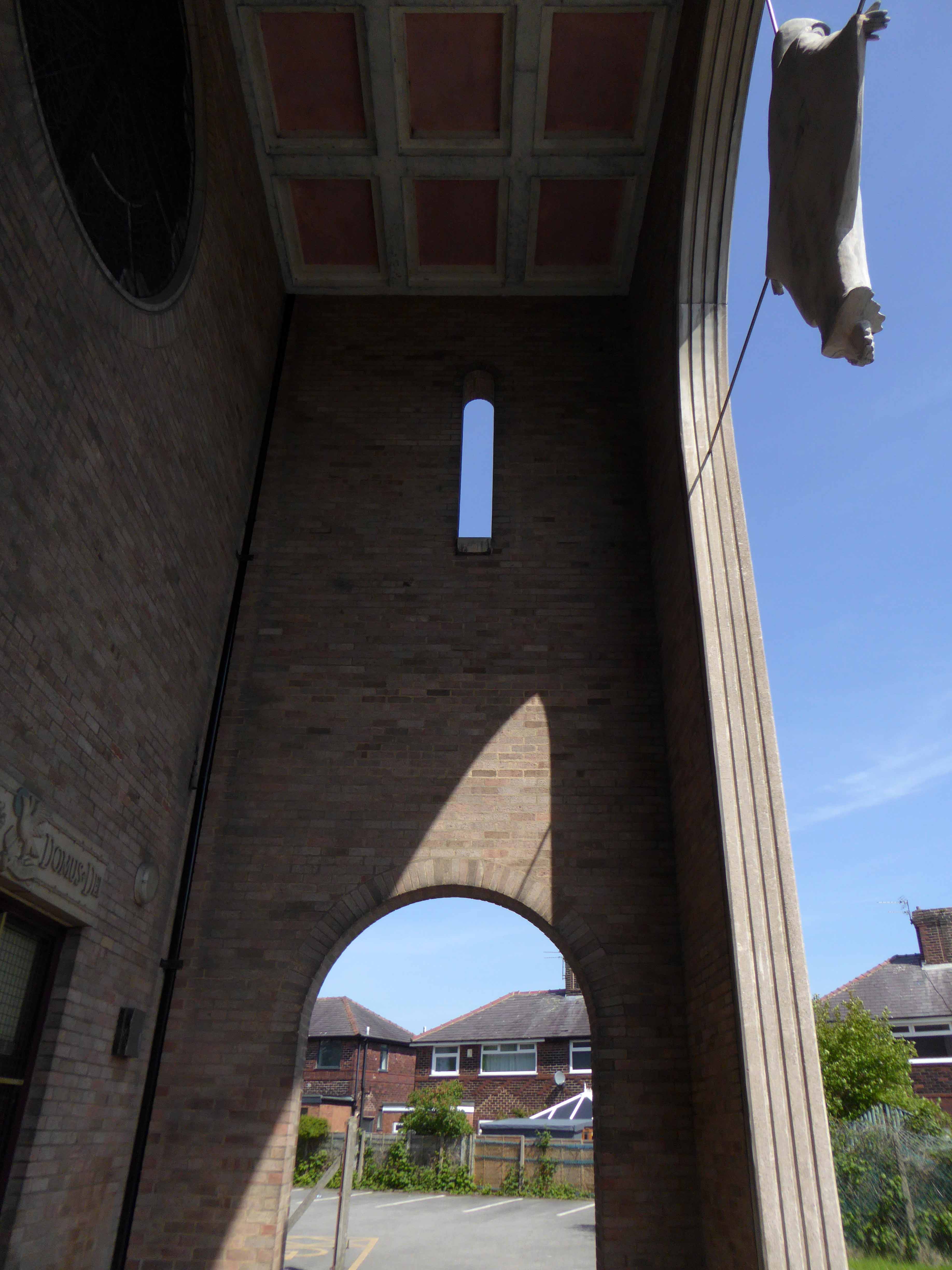
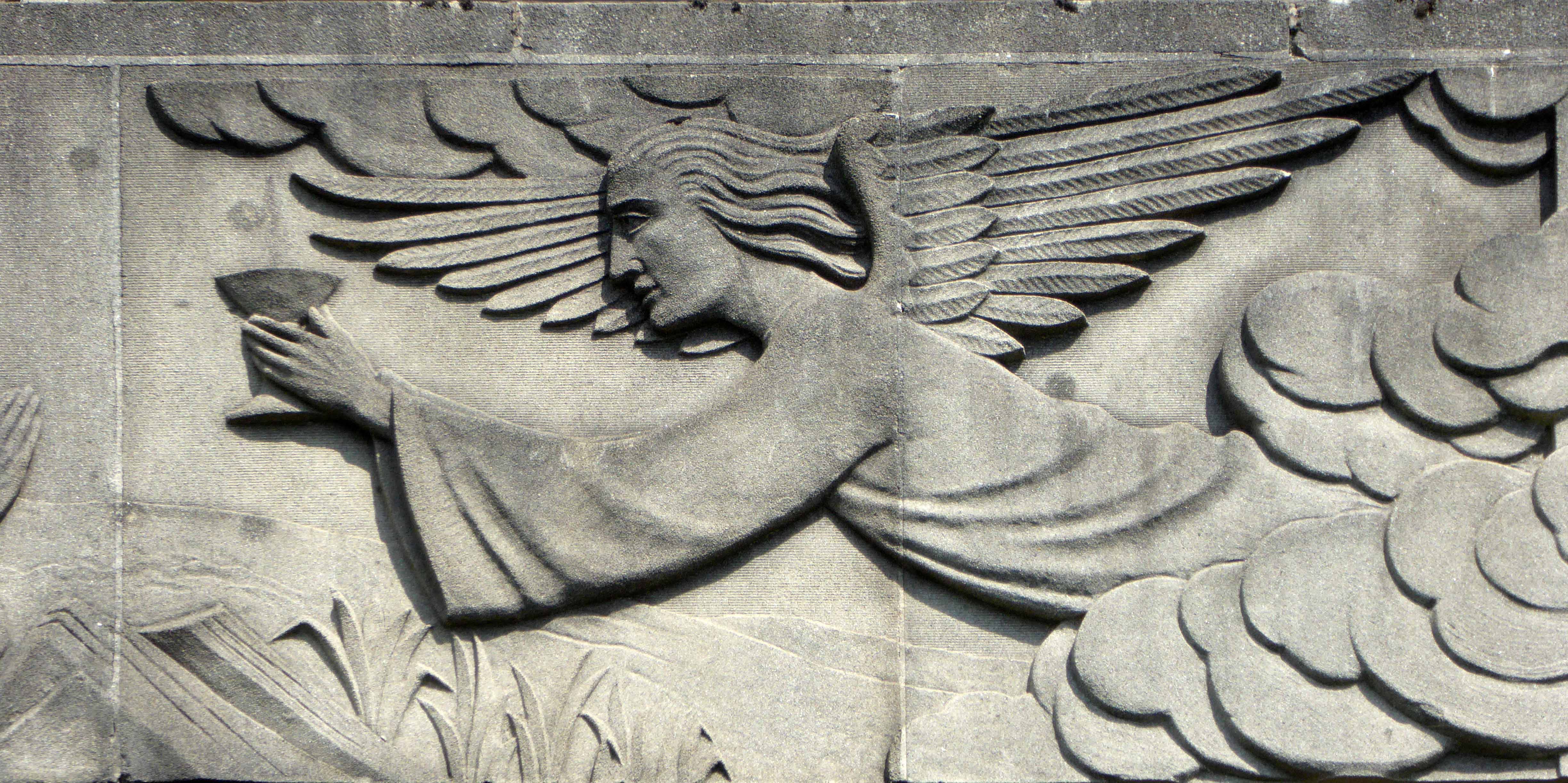
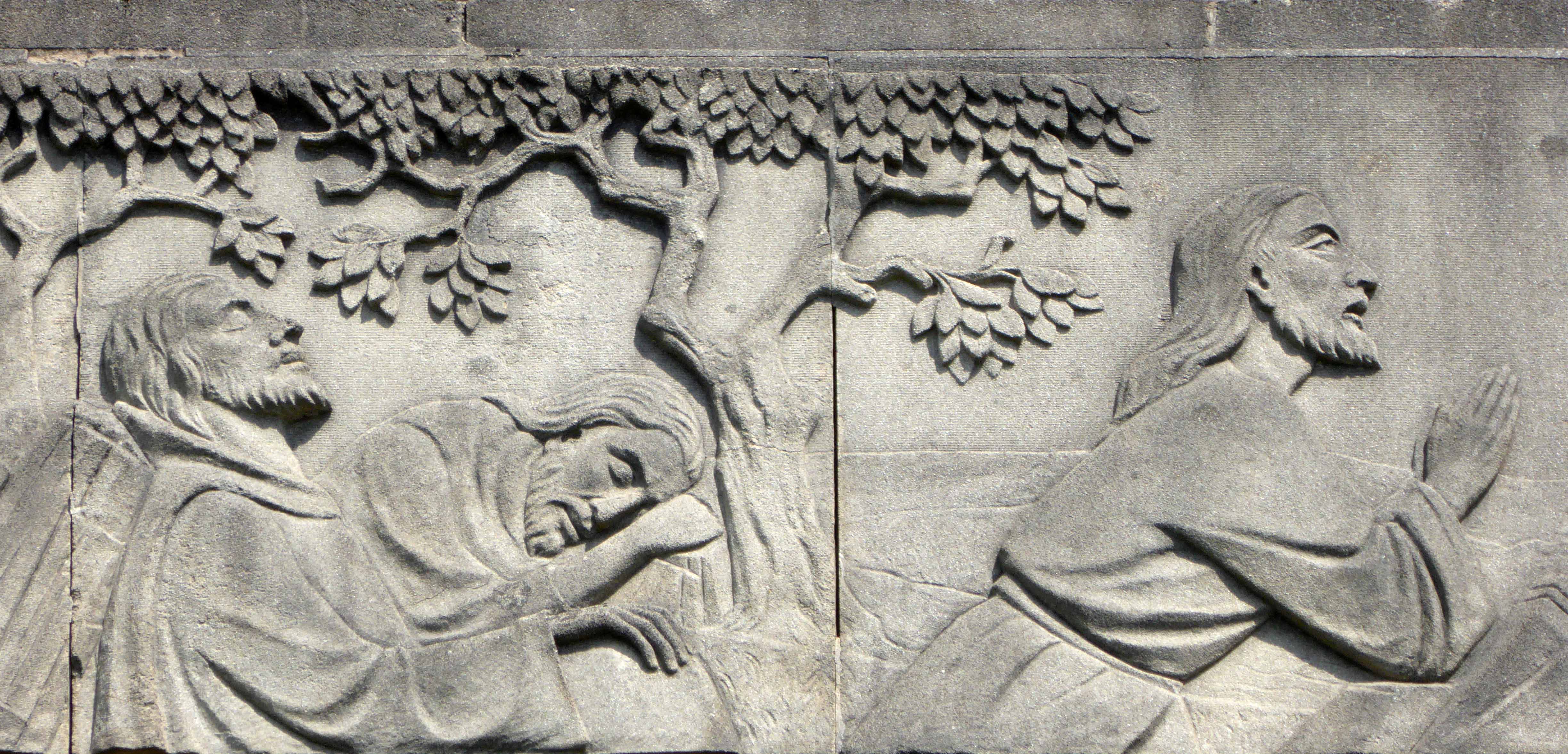
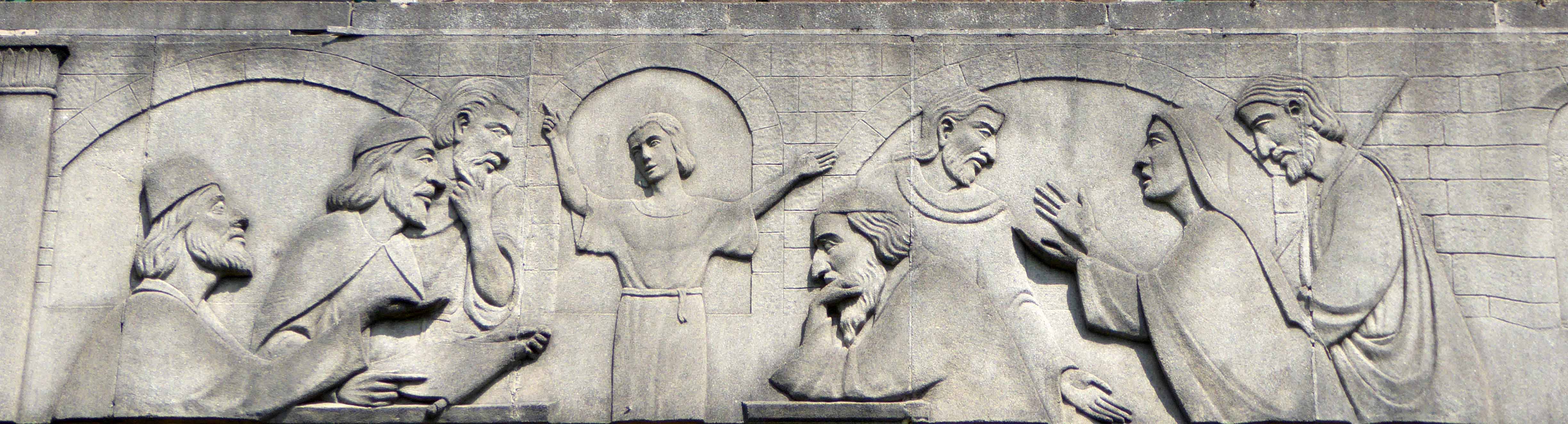
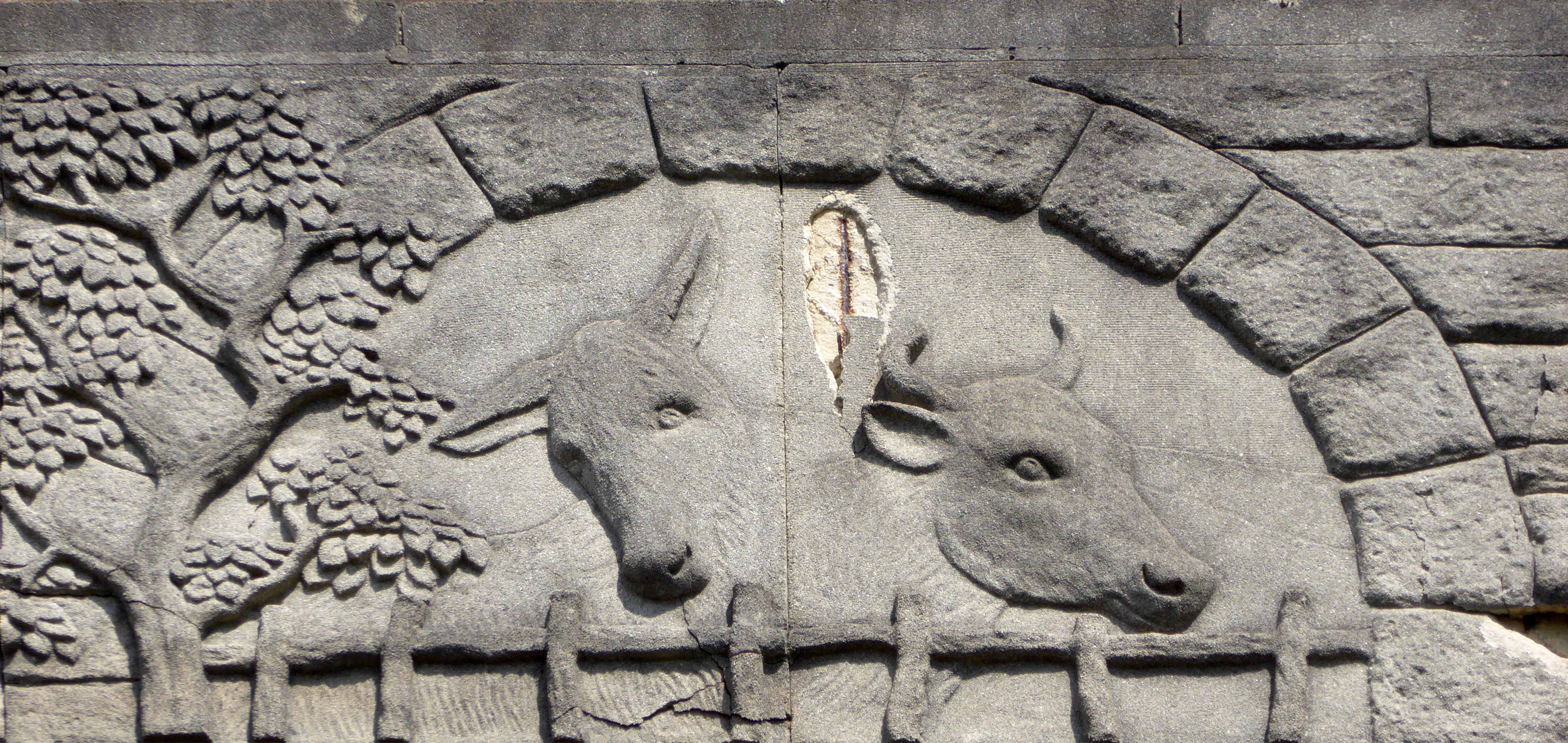
The west front is very striking, the broad entrance arch enclosing a suspended aluminium figure of the Virgin by E.J. Blackwell of Manchester, who also executed the moulded artificial stone friezes.
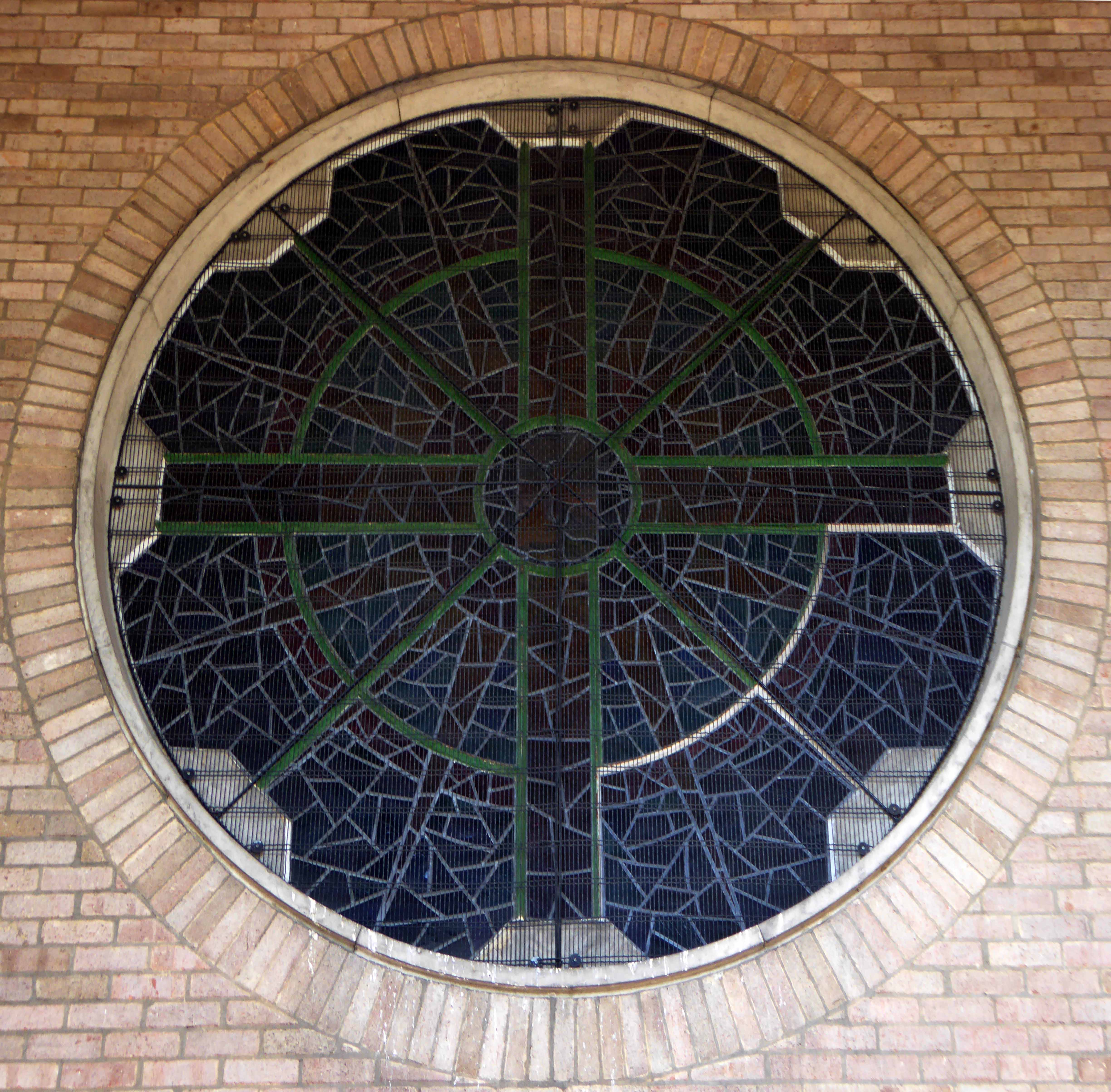
The stained glass is by Charles Lightfoot, much of it to the designs of the architect, some incorporating glass from the previous church.
A typical example of a post-war church built to serve a growing residential suburb; it retains some attractive ‘Festival of Britain’ features and fittings.
The church was built to seat 360, with room for fifty people in the Lady Chapel. The architect was Geoffrey Williams of Greenhalgh & Williams, the builder Whitworth, Whittaker & Co Ltd of Oldham, and the cost £27,140. Bishop Beck blessed the foundation stone on 7 December 1957, and the church was formally opened in 1958.
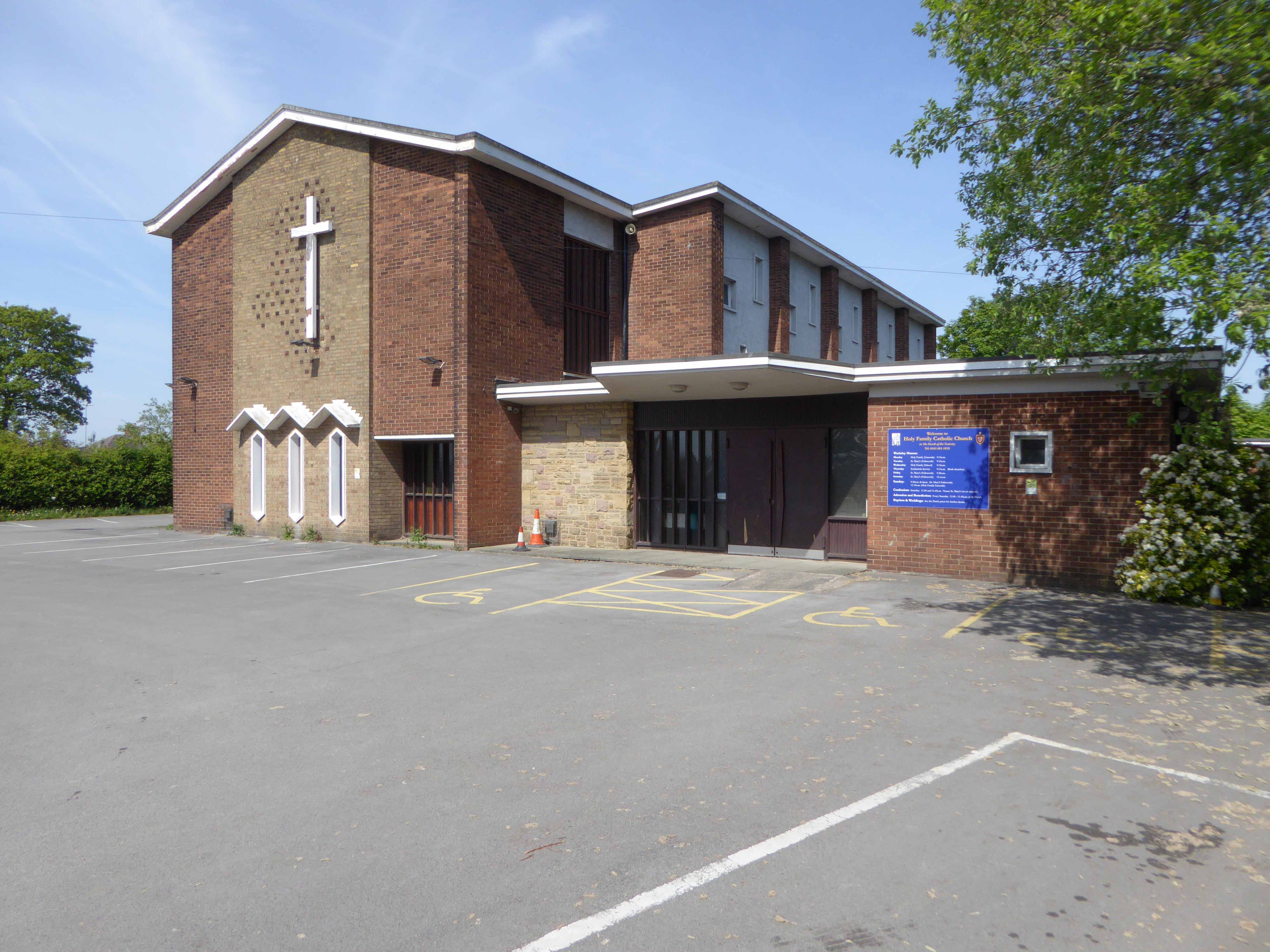
It’s a long straight uphill Roman road to Holy Family.
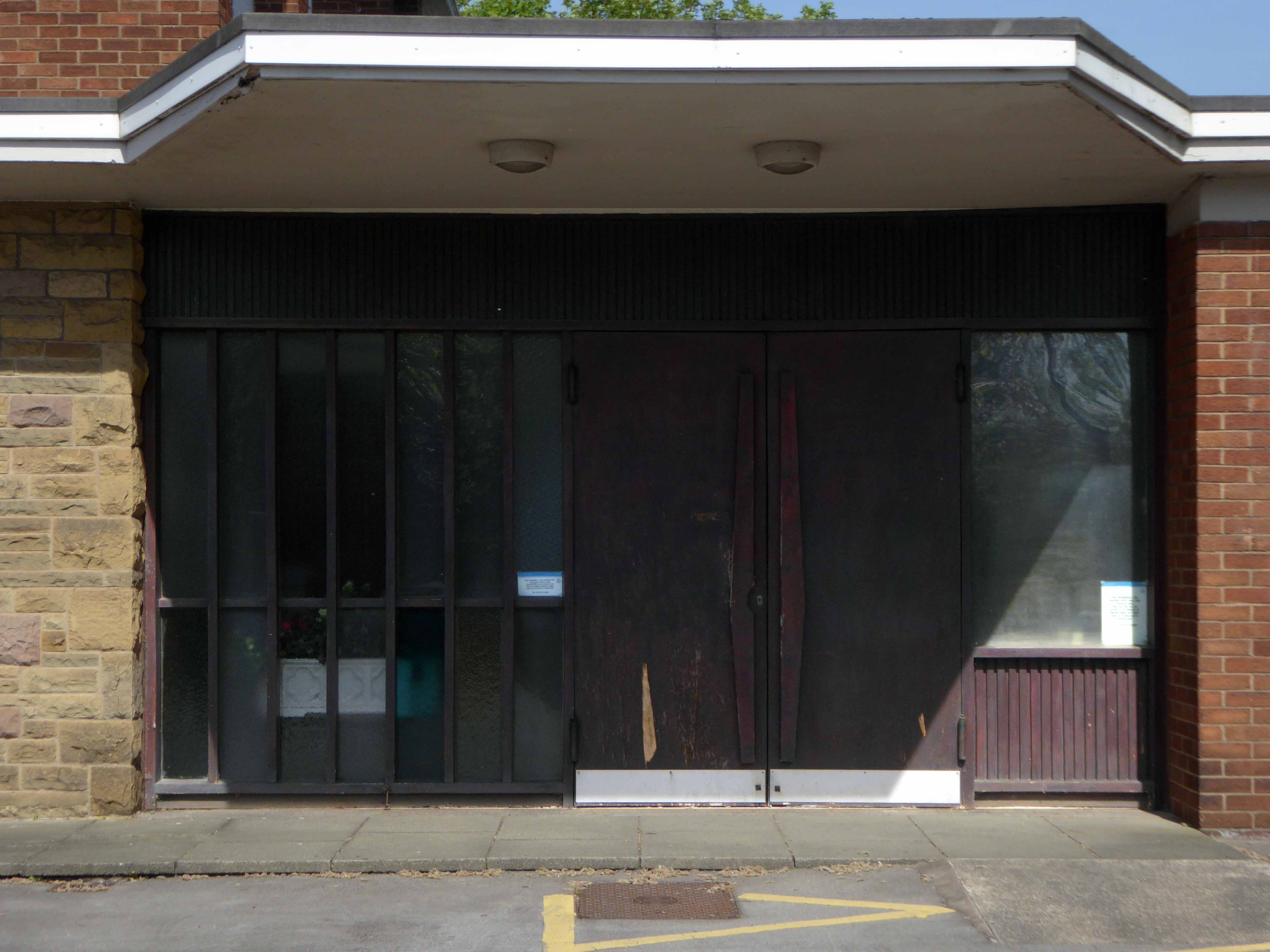
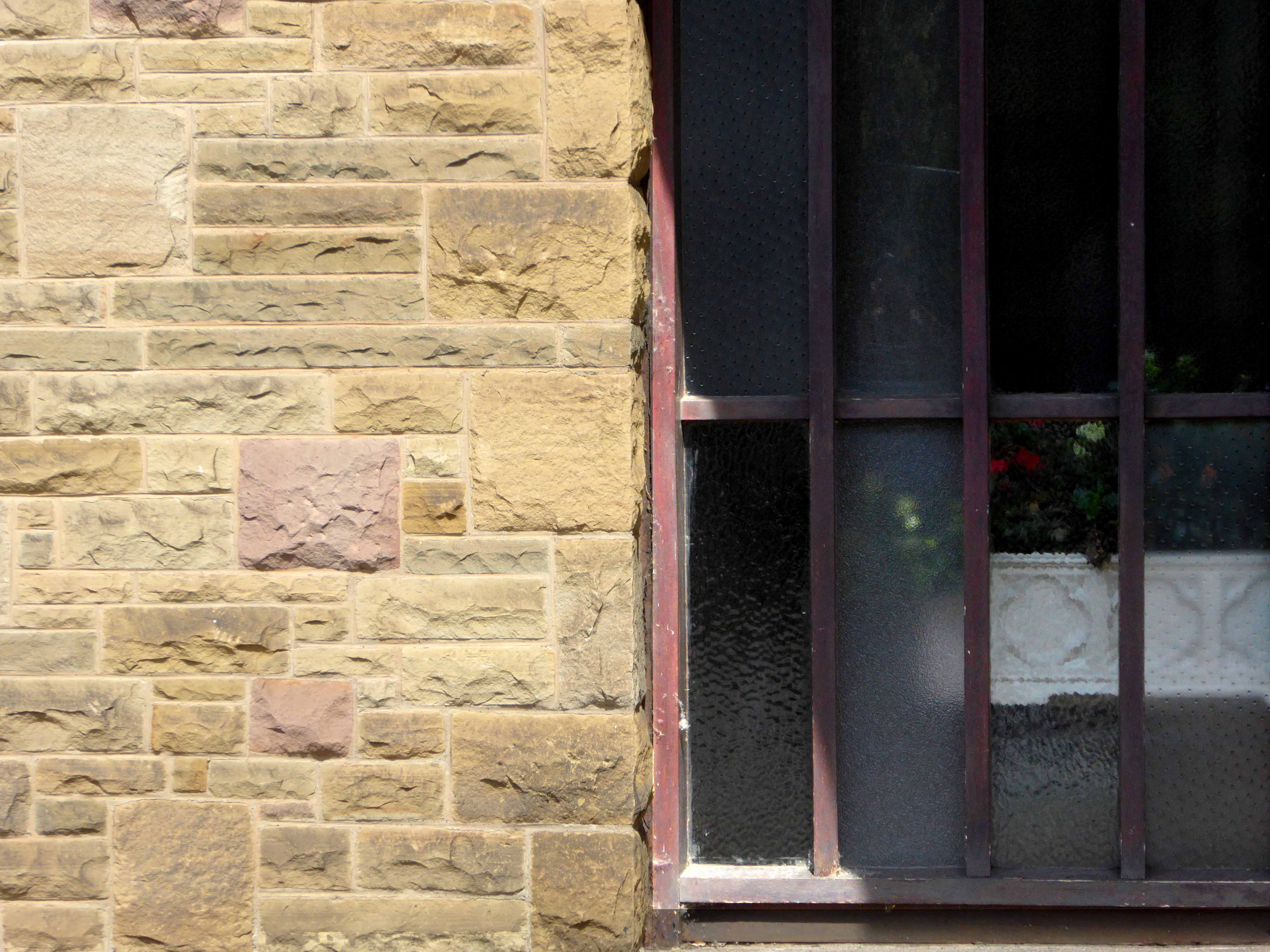
Well worth the effort to visit a well kept suburban church, constructed with load bearing walls faced in brown and buff bricks and steel roof trusses. The shallow-pitched roof was originally clad in copper but is now felted, flat roof areas are concrete.
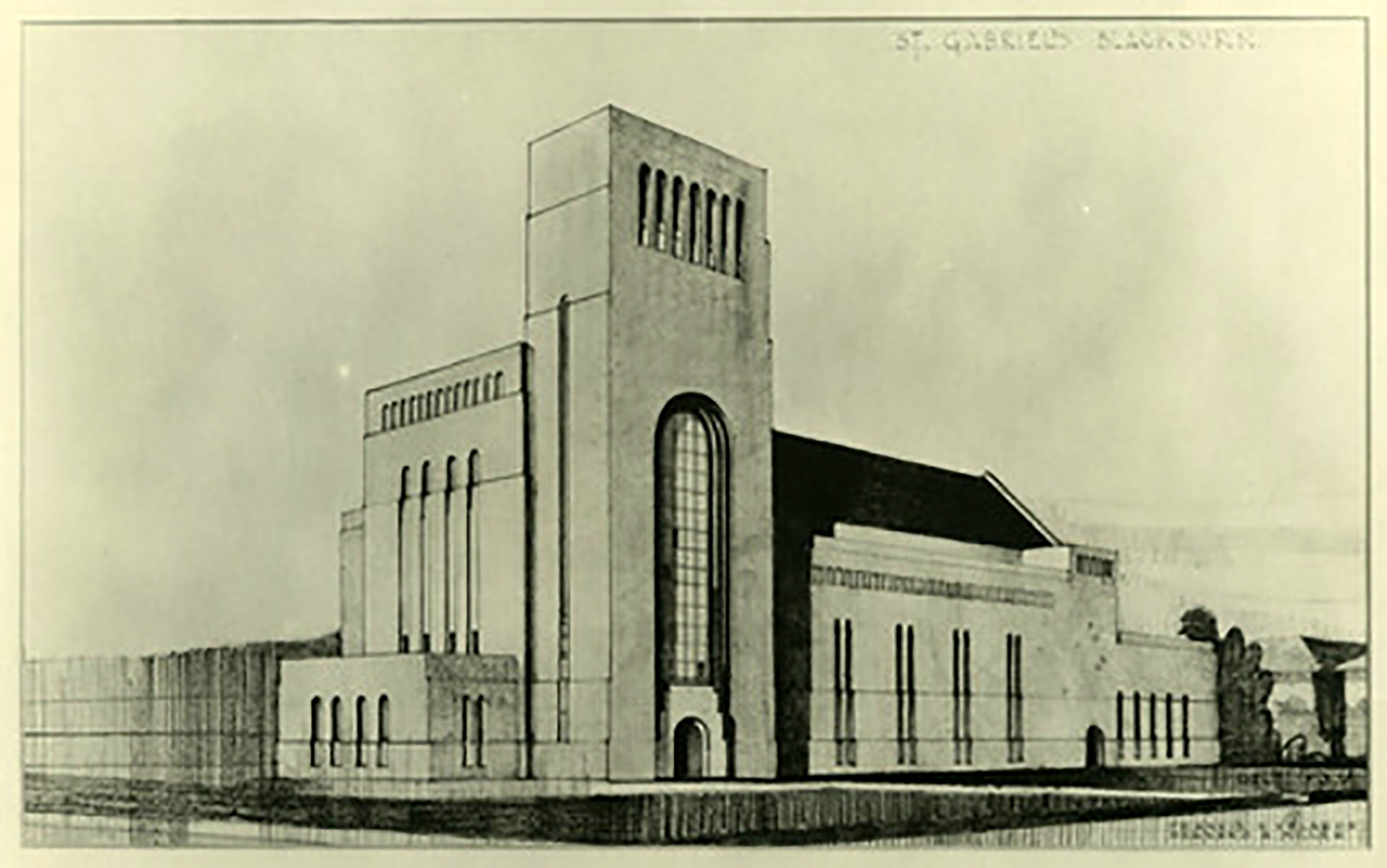
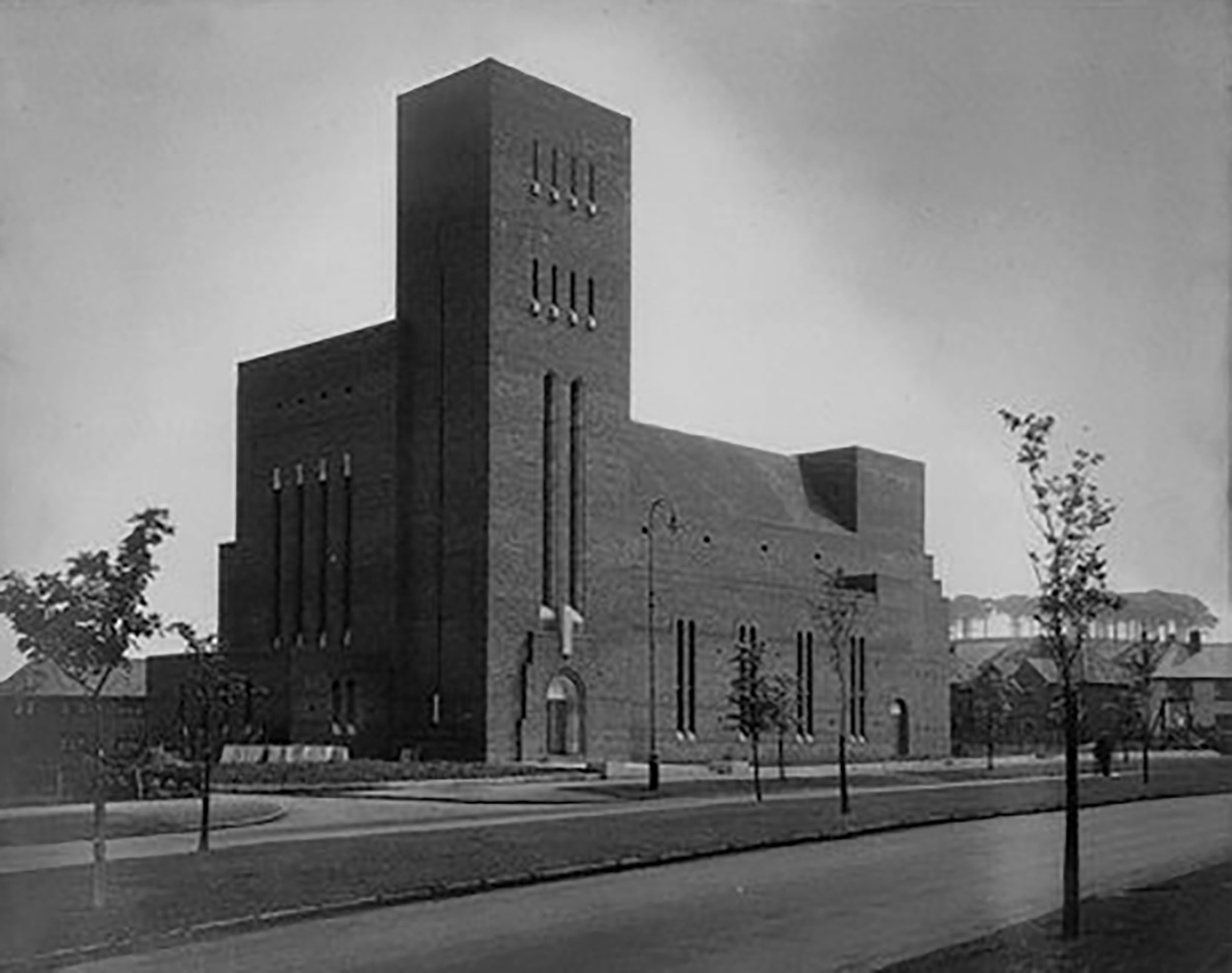
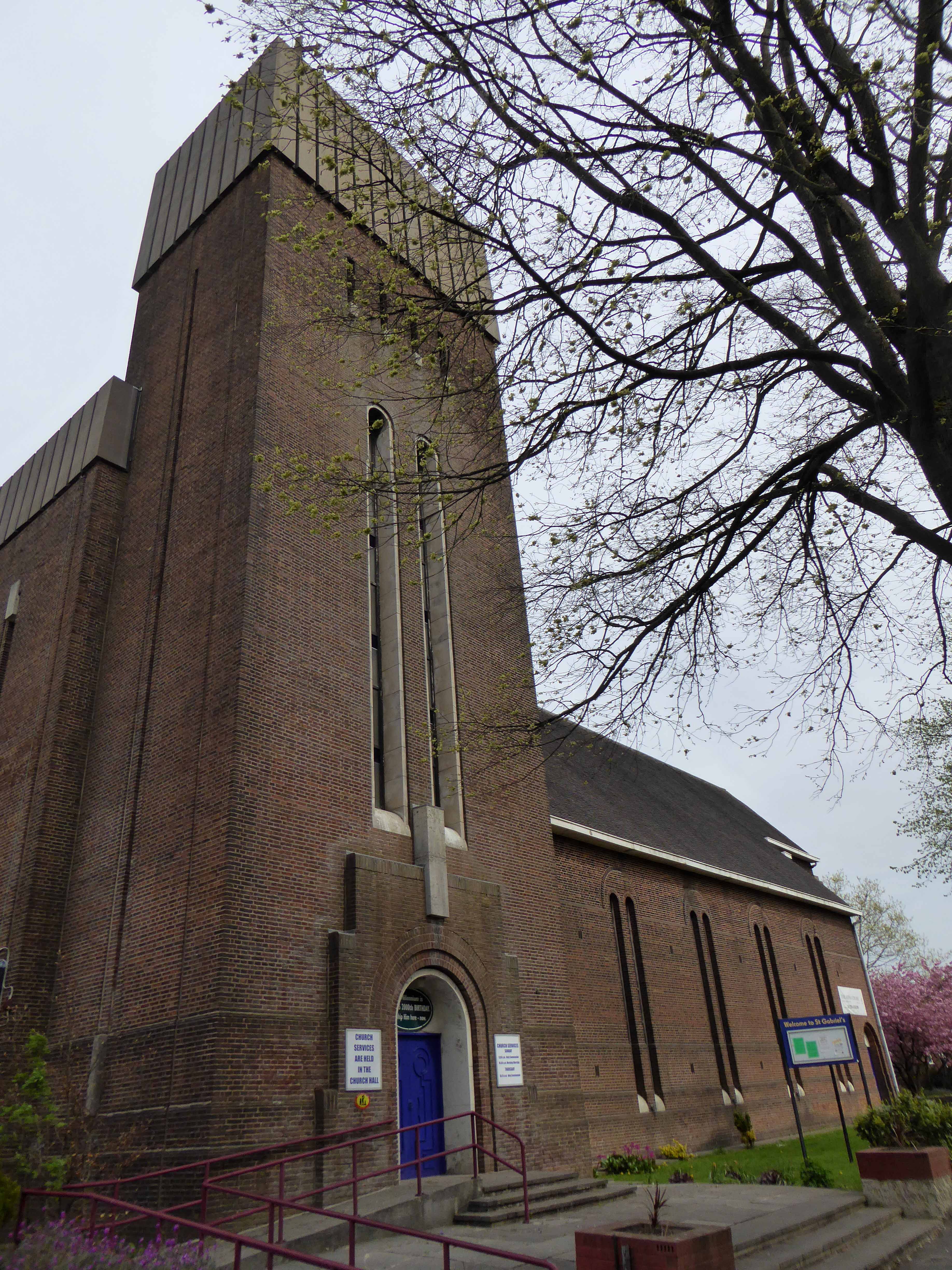
The original design of Liverpool architect F.X. Velarde attracted so much attention when St Gabriel’s opened in 1933.
“The new building… marks a new departure from the accepted ecclesiastical style and is unique in this district,” said the old Blackburn Times when it was consecrated on April 8, 1933, by the Bishop of Blackburn, Dr P.M. Herbert.
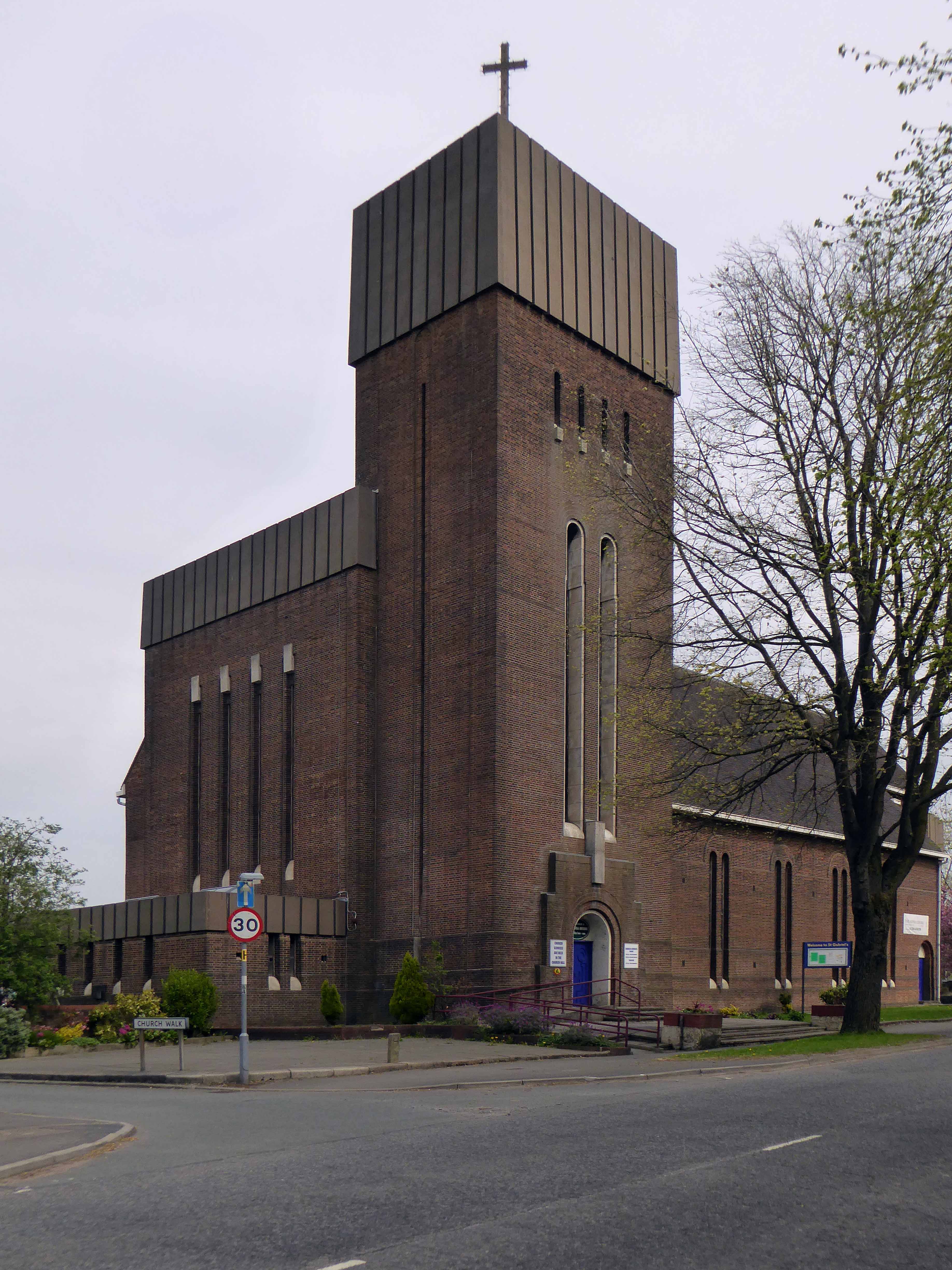
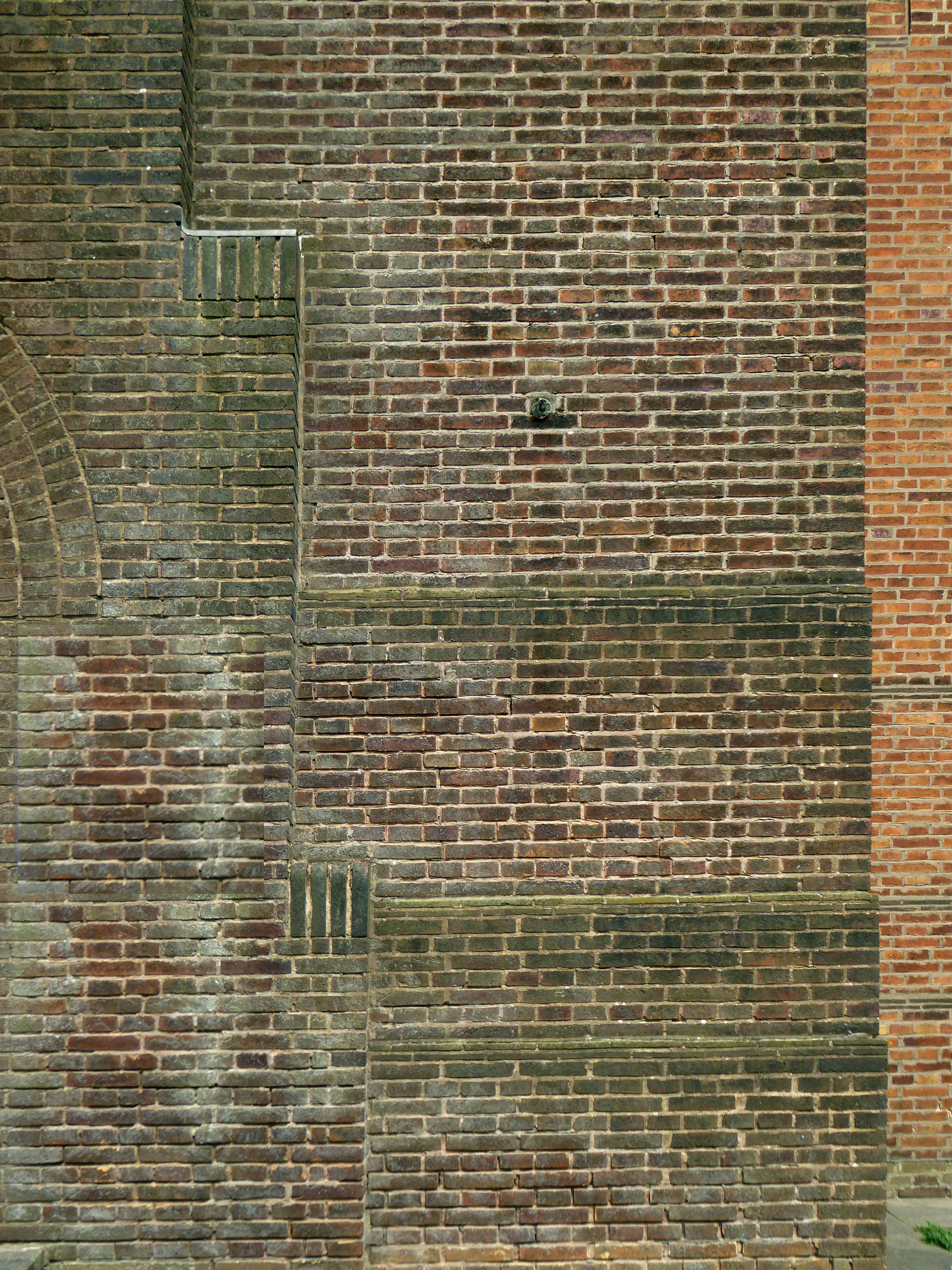
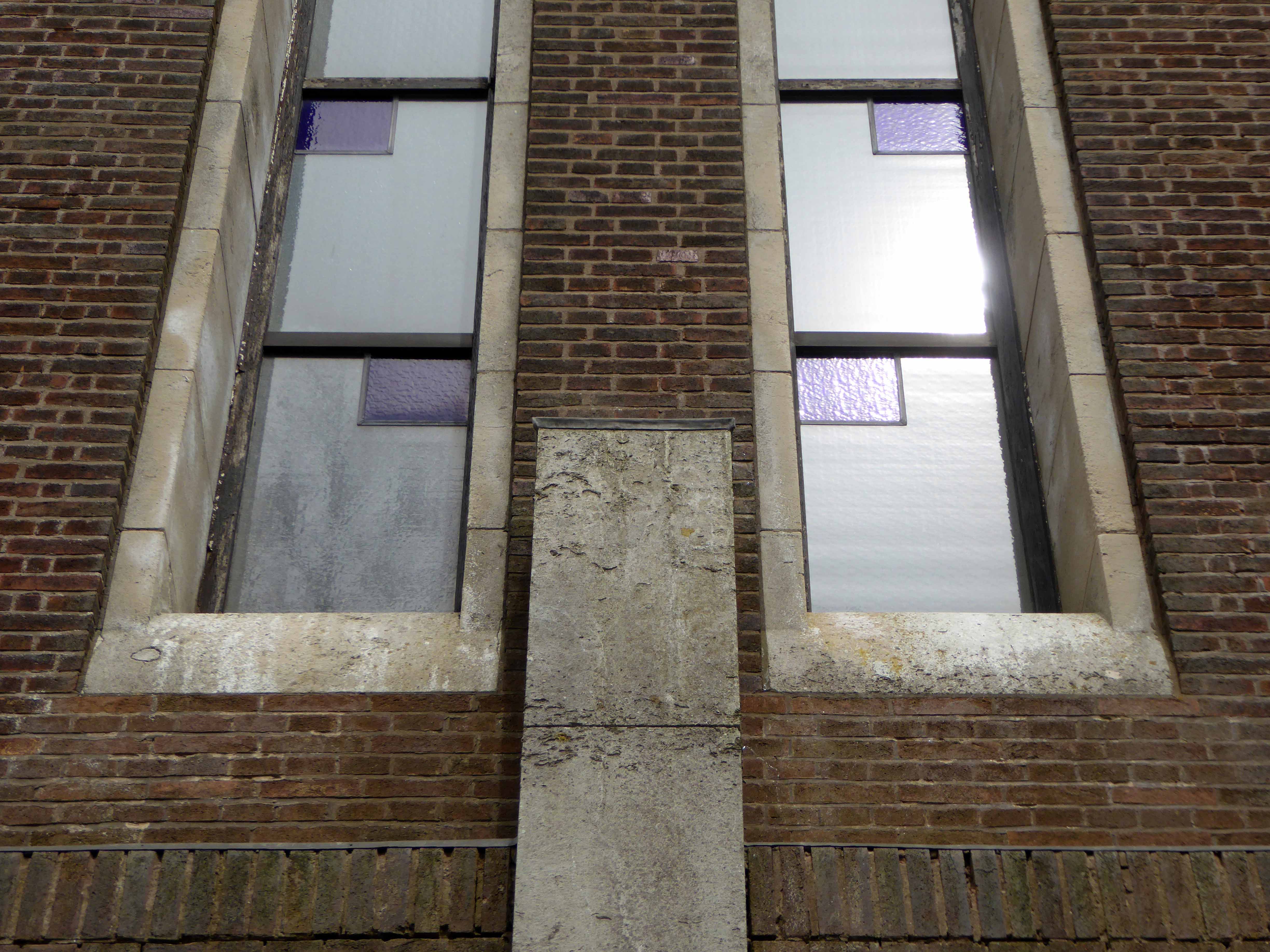
But this is a church which throughout its life has been fraught with settlement cracks, repairs and redesign – it’s original towers truncated and clad, flat roofs pitched and timbers replaced.
For 34 years ago, the landmark building was facing possible demolition — with the parish confronted with a then-immense bill of £15,000 for repairs. The crisis was due to serious damage to the roof timbers caused by water penetration.
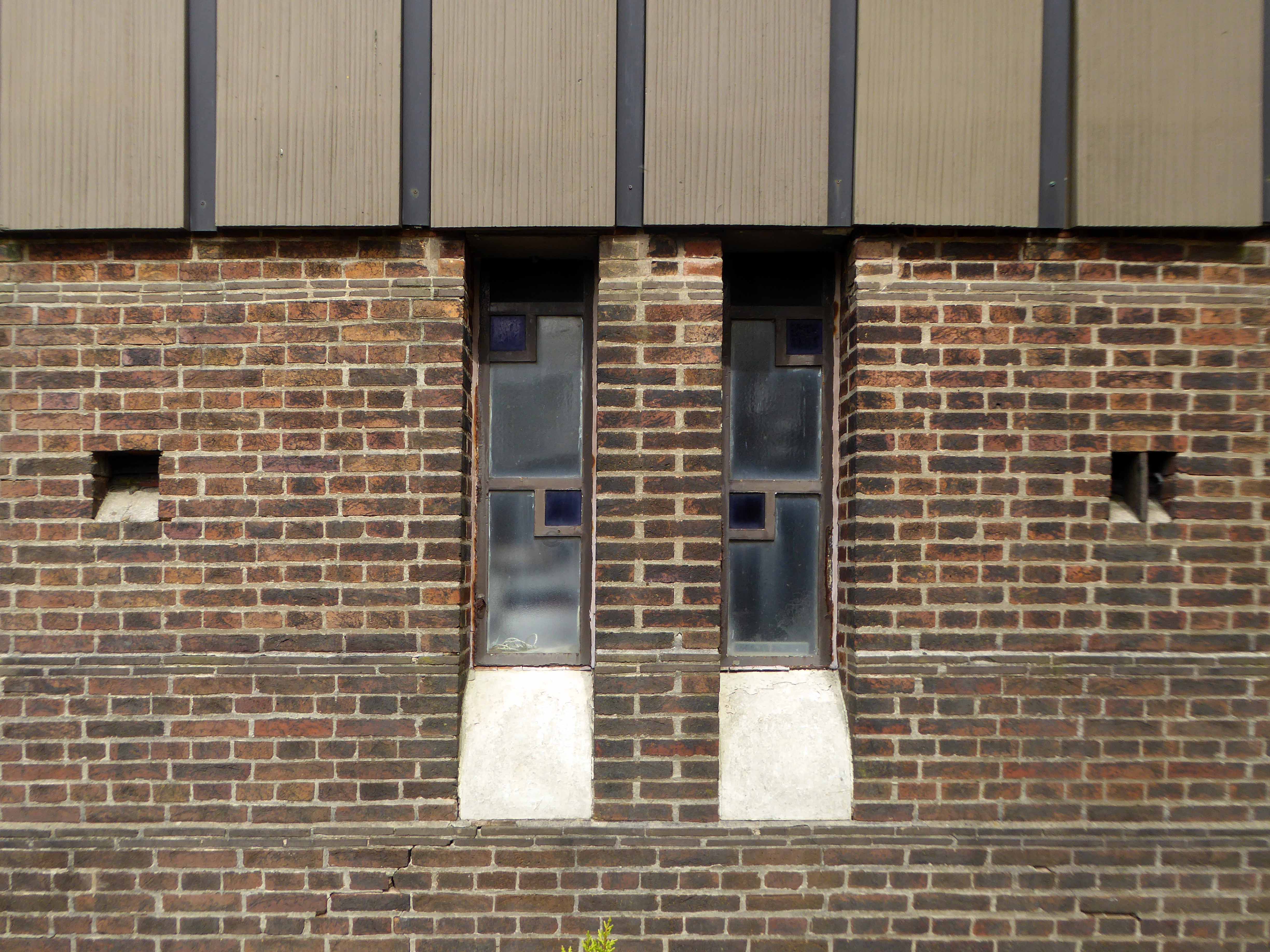
Eventually, it took £40,000-worth of refurbishment inside and out lasting until 1975 to save St Gabriel’s — at considerable expense to its original appearance. The main tower was shortened by six feet and later clad at the top with glass-fibre sheathing while the east tower was removed altogether and its flat roofs were made into pitched ones to deal with the rotting roof timbers and problems of settlement.
In fact, the difficulties that its design and construction posed were recognised much earlier in 1956 when the church, which had cost £20,000 to build, was found to be in urgent need of repairs that would cost more than £1,500. For an inspection by the Diocesan Architect found that major defects in the flat roof could have serious consequences unless they were given early attention and portions of the parapet wall were found to have large cracks due to settlement while half the building’s brickwork needed pointing.
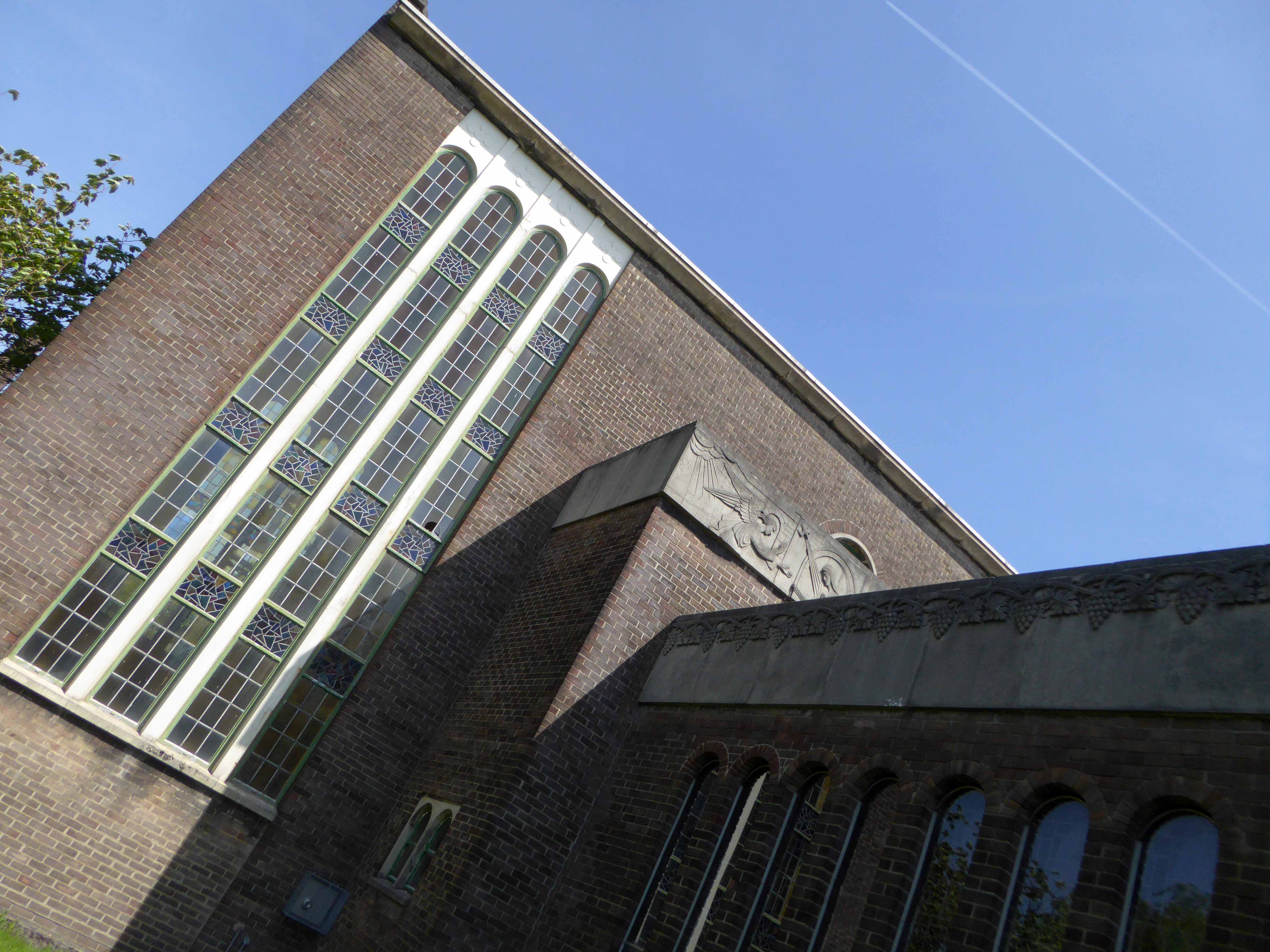
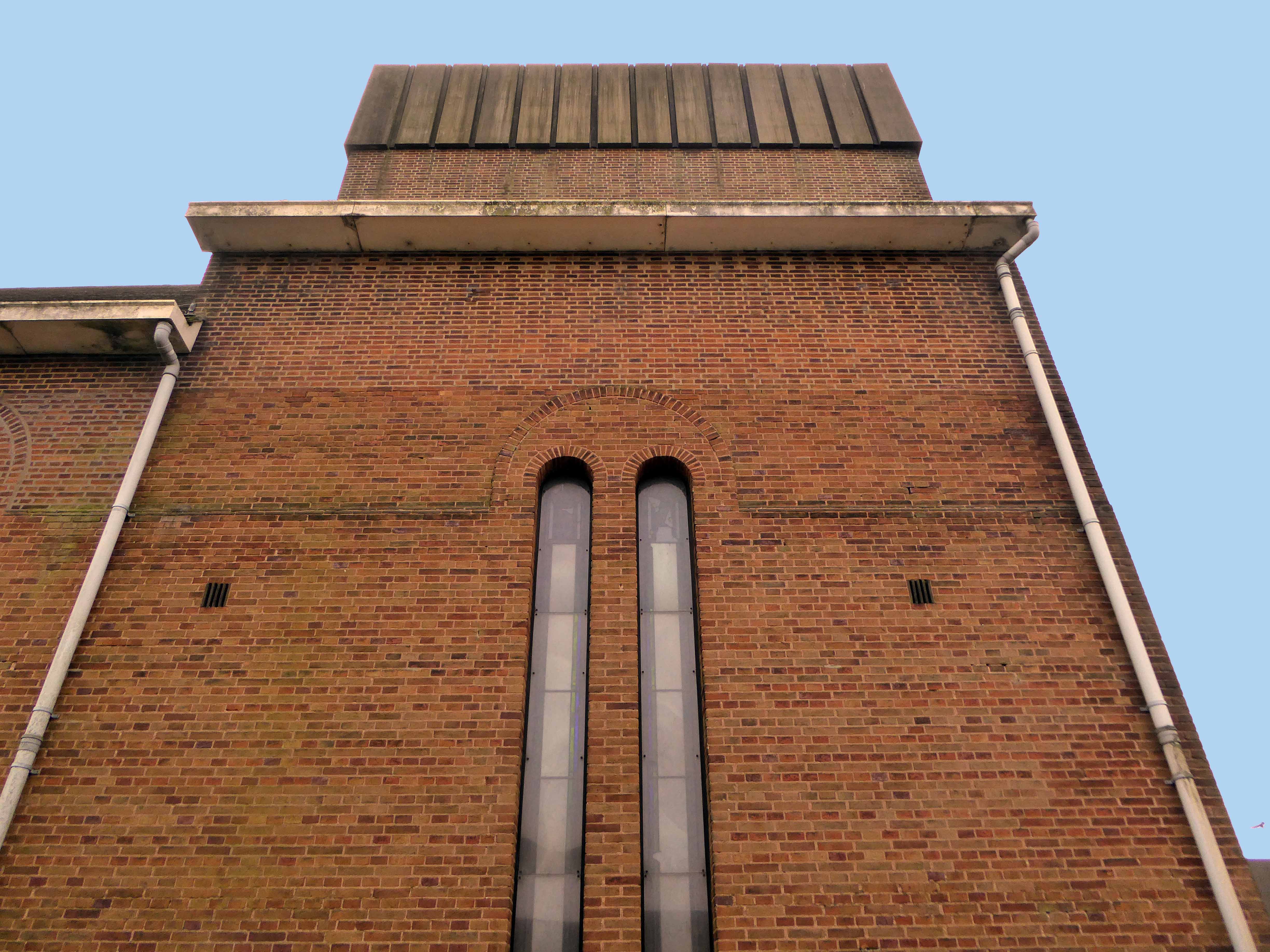
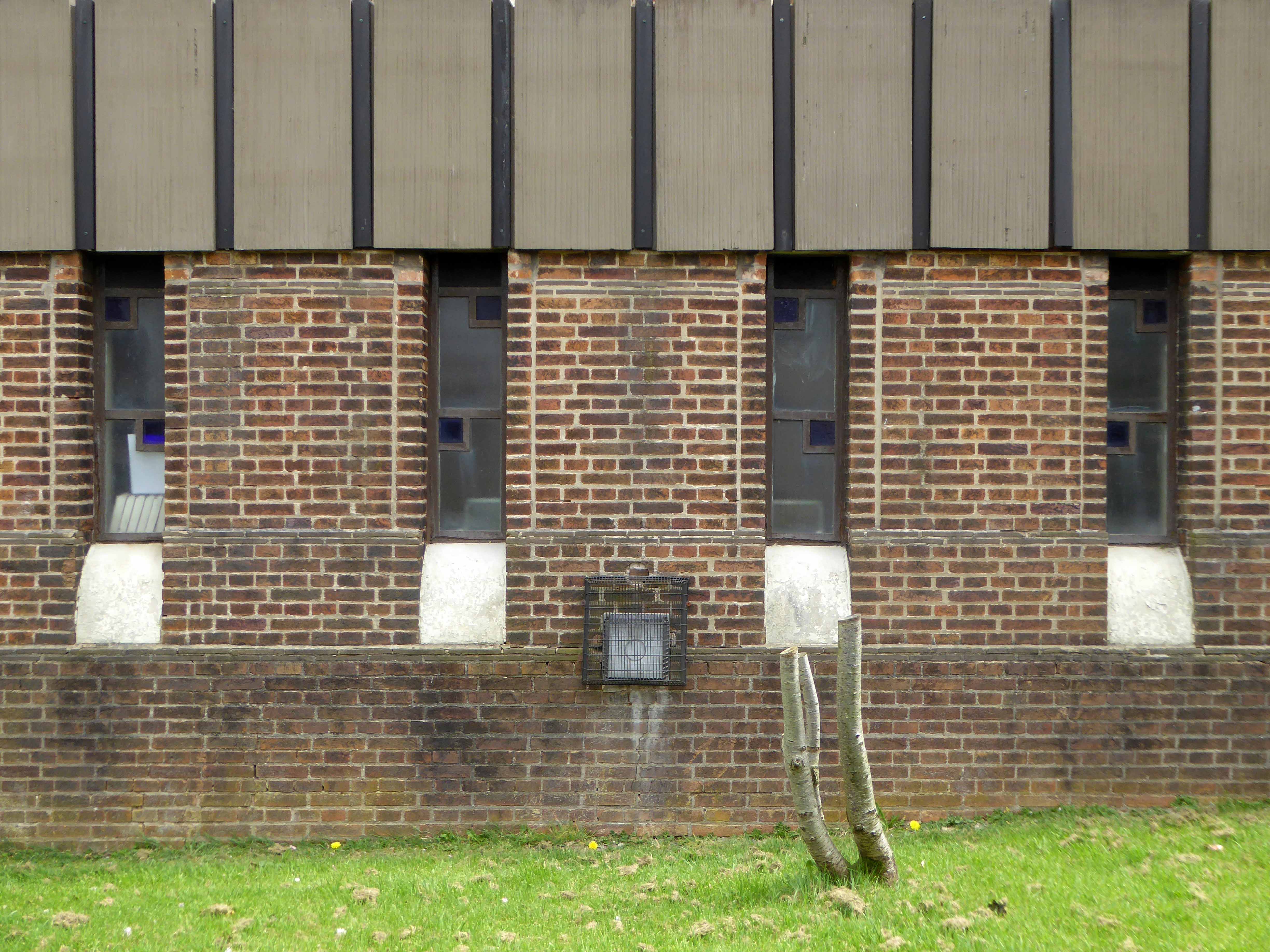
And so it now stands forlorn and unused – services are now held in the adjacent church hall. A series of interlocking monumental interwar functionalist brick clad slabs, once thought to resemble a brewery or cinema, now awaits its fate. Though it remains a thing of wonder in both scale and detailing, well worth a wander around if you’re passing.
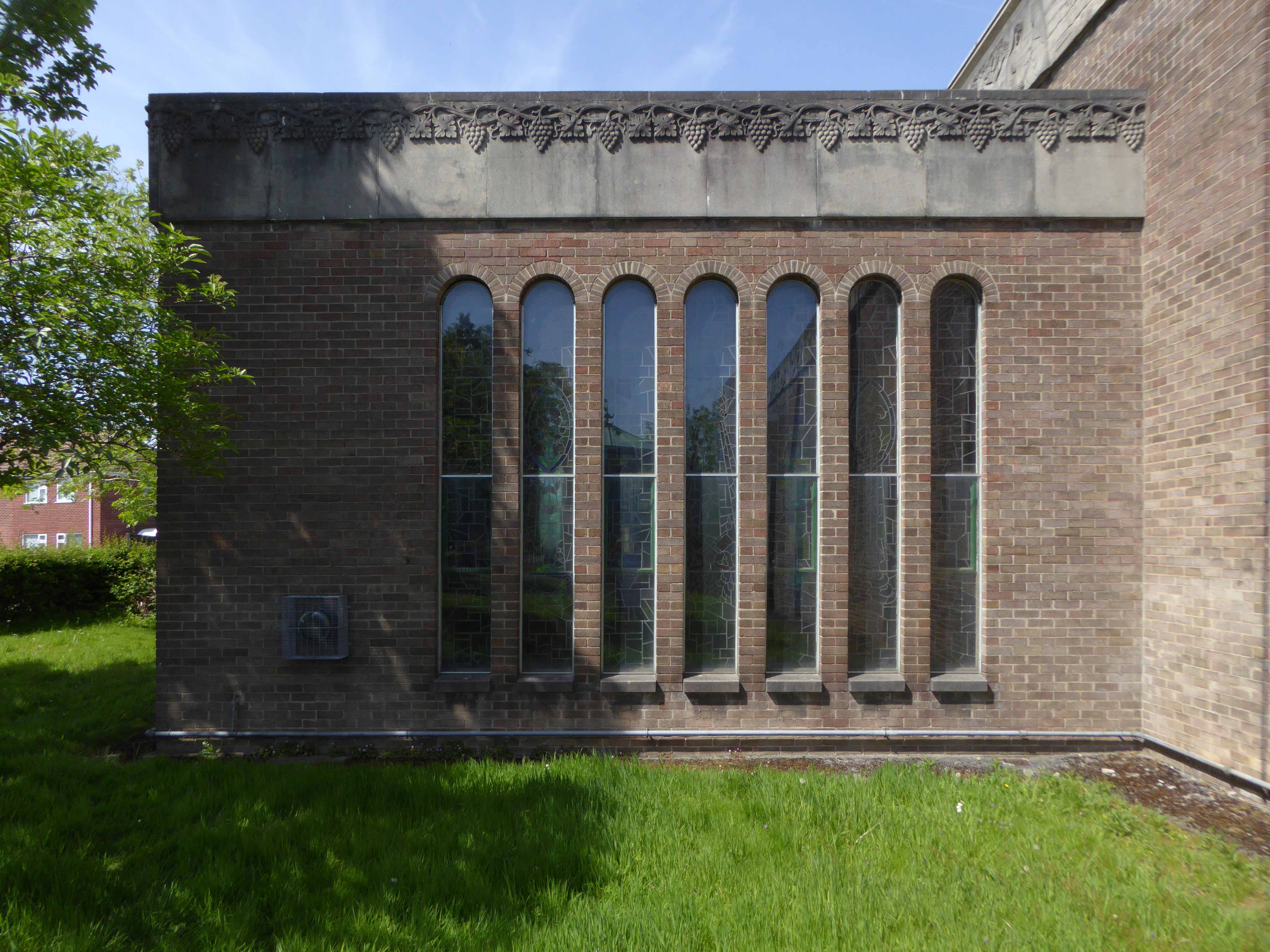
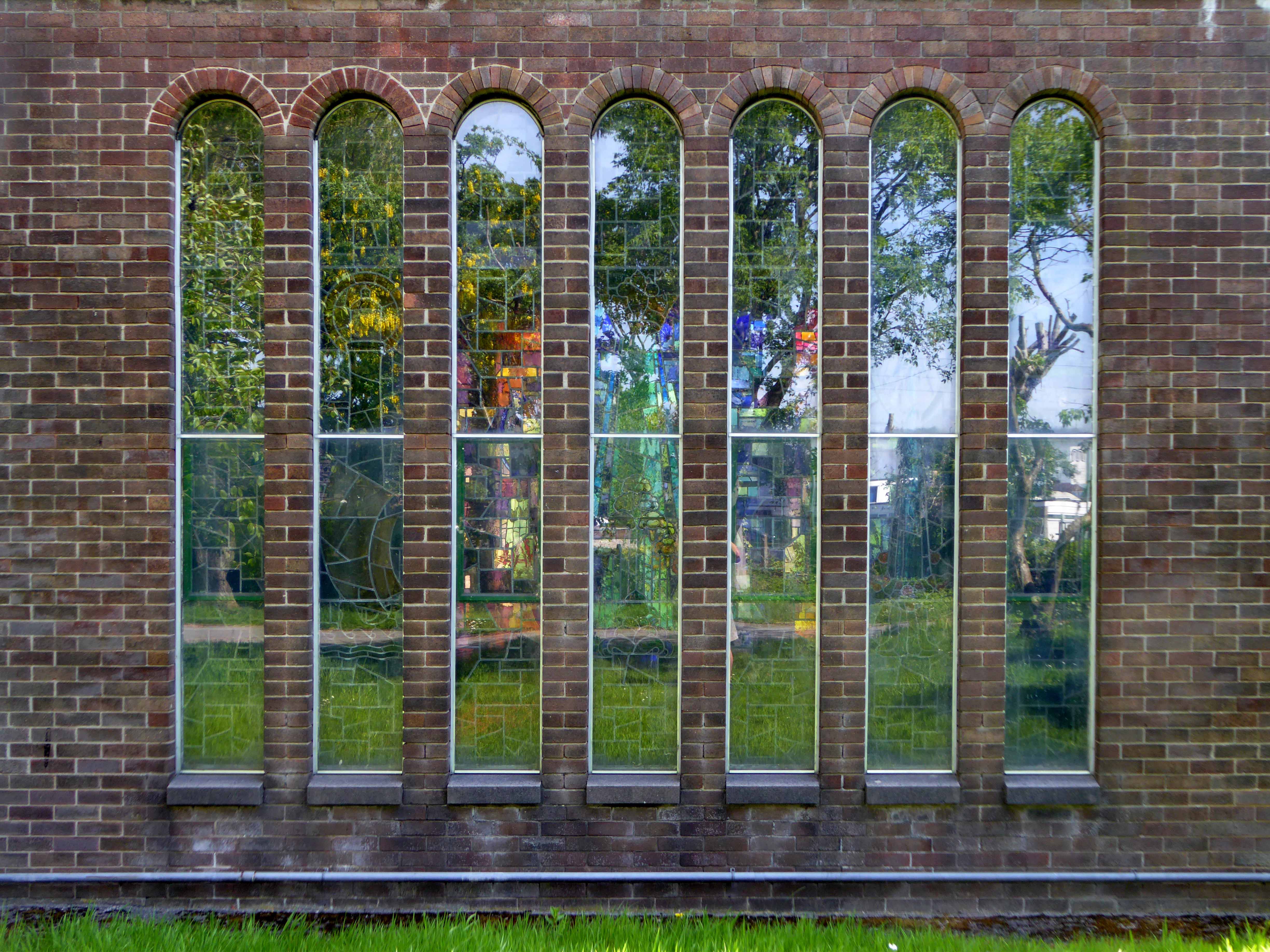
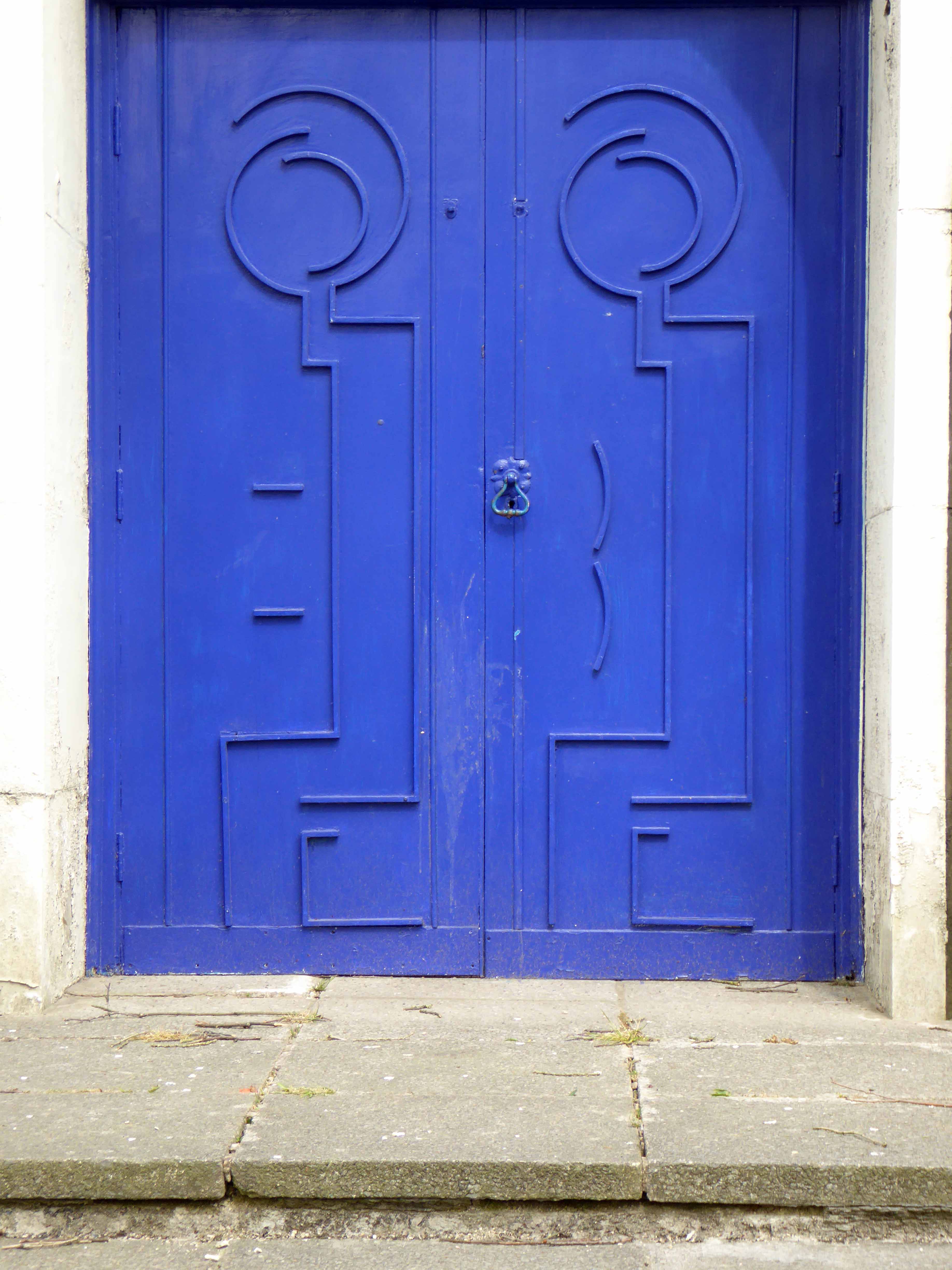
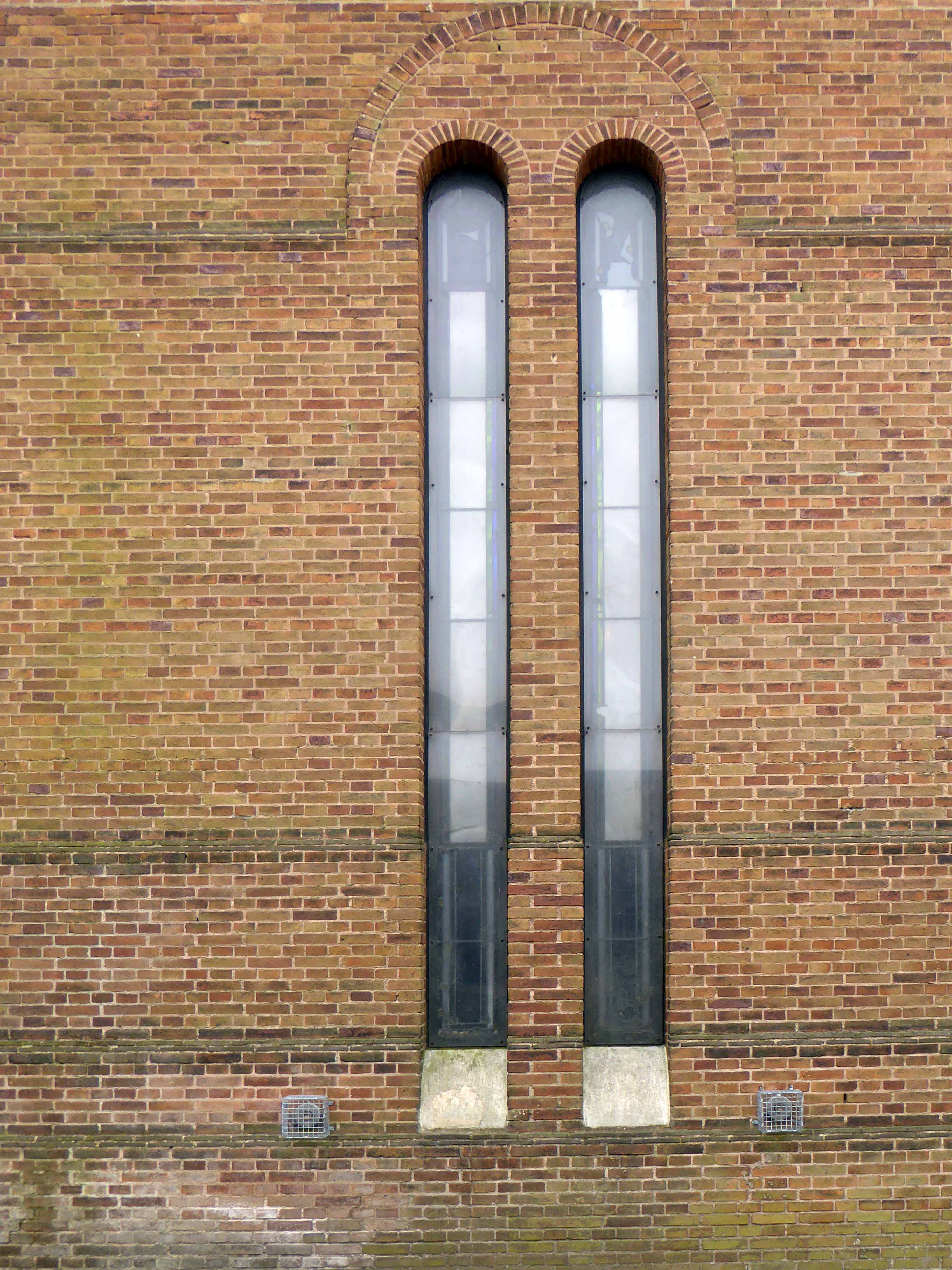
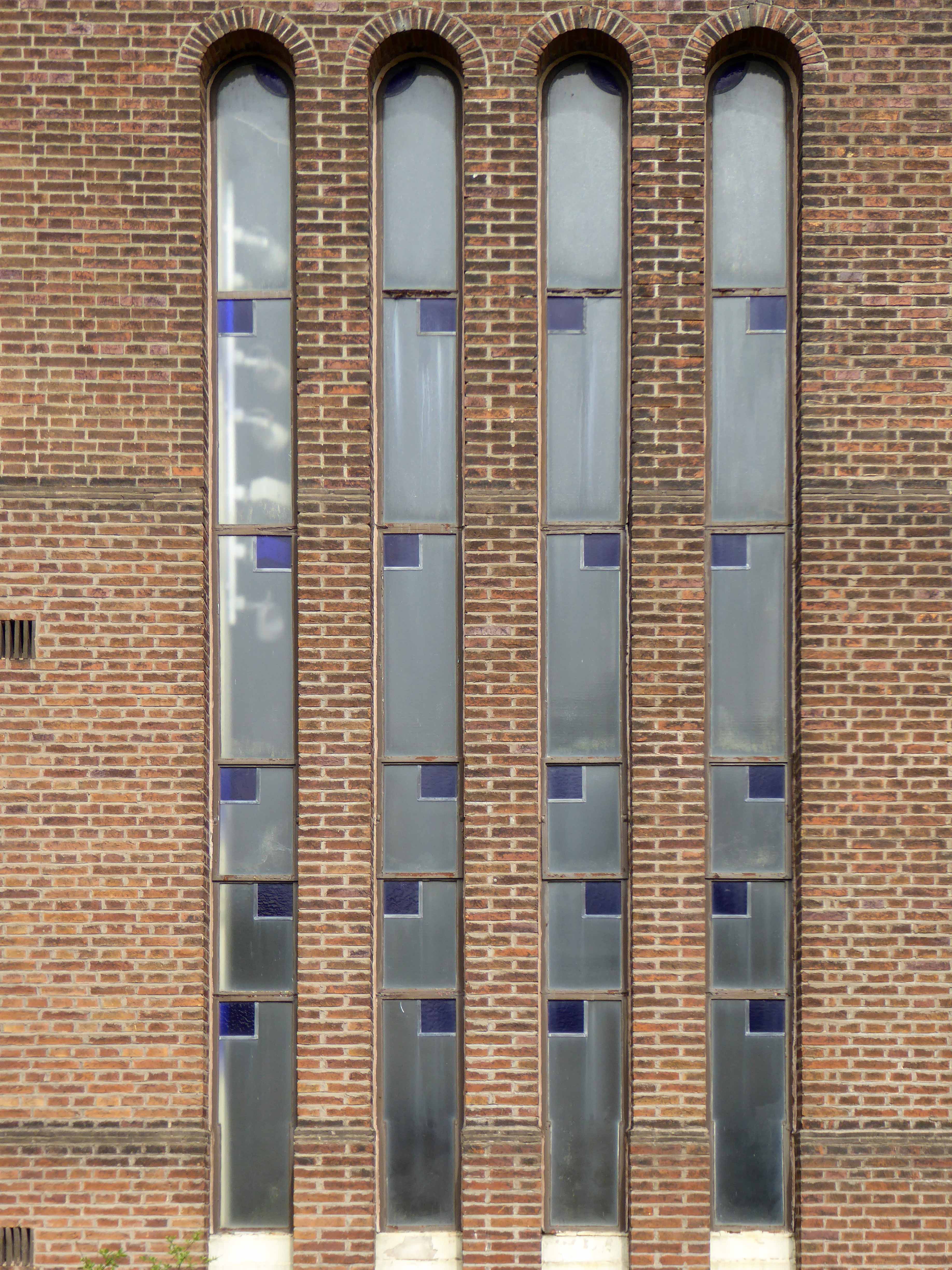
Its tall slim arched windows reaching towards the heavens, Deco detailed doors firmly closed.
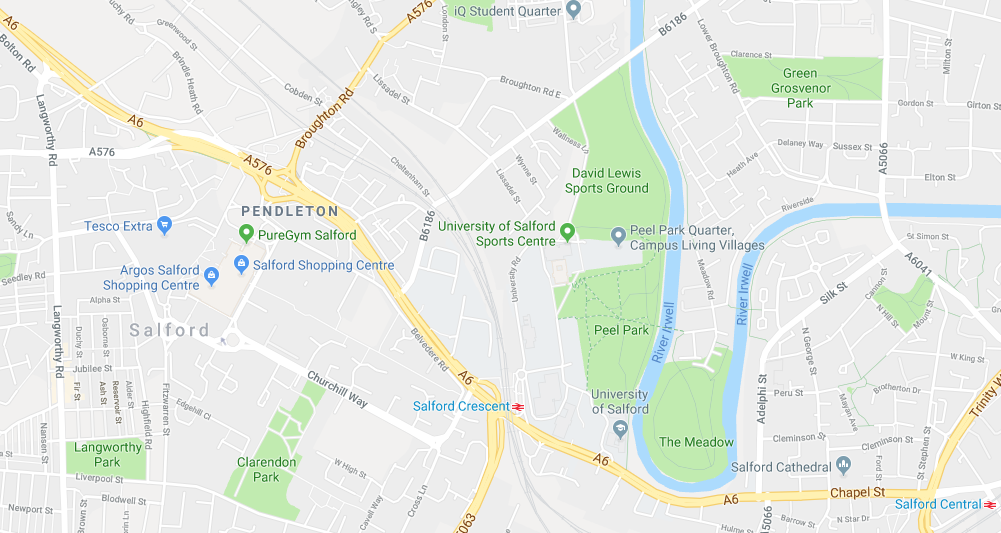
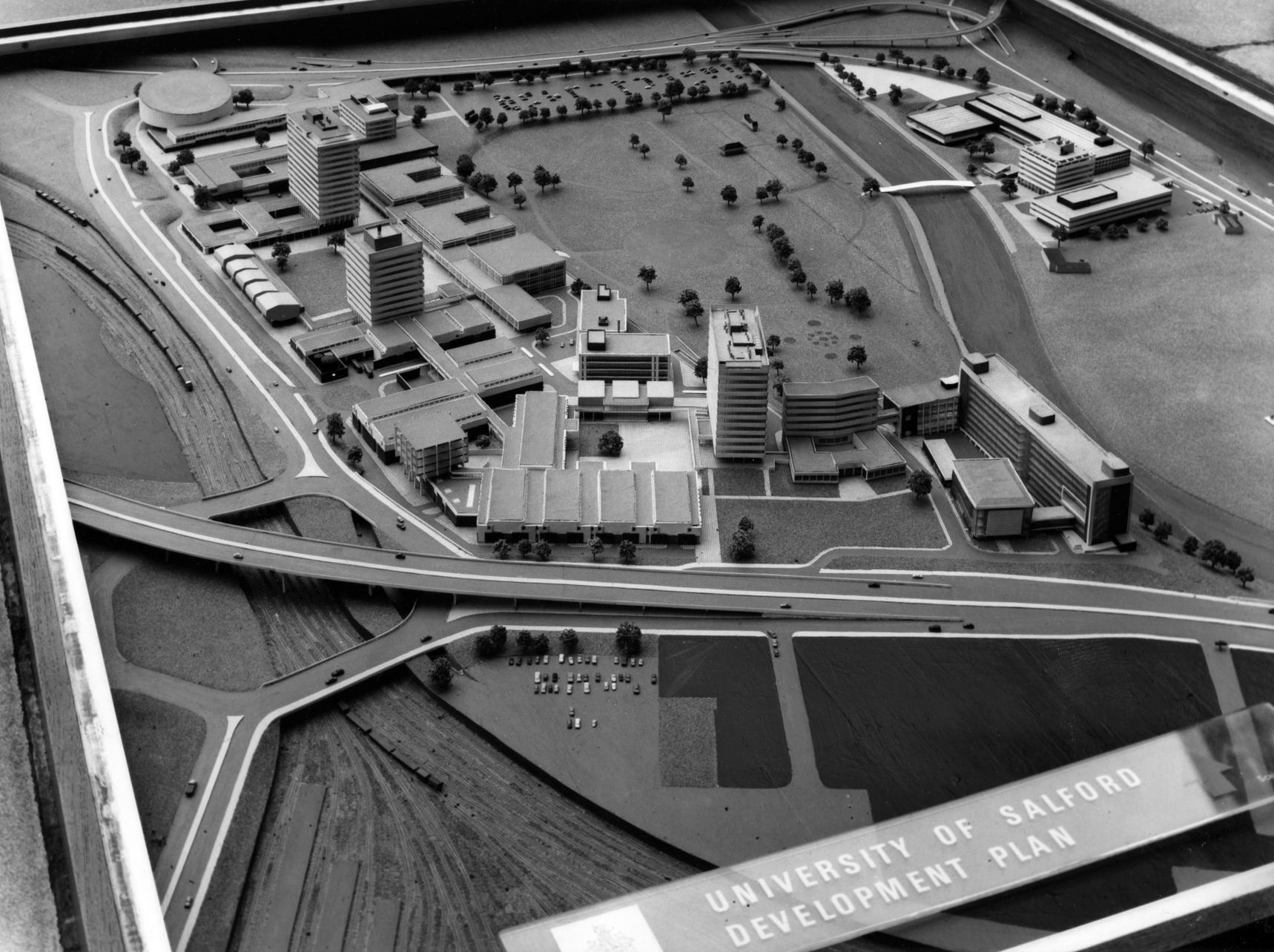
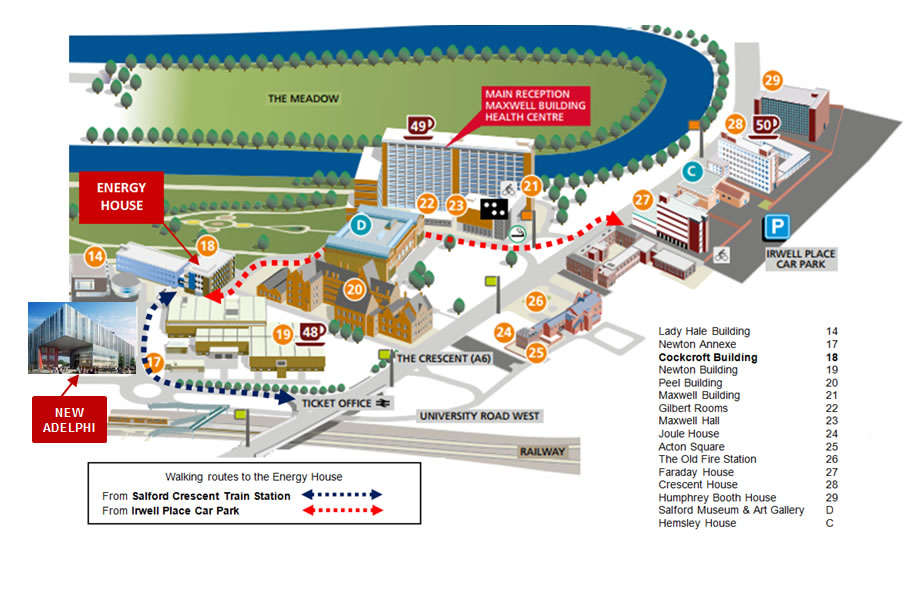
So here we are hard by the River Irwell, Peel Park and the A6.
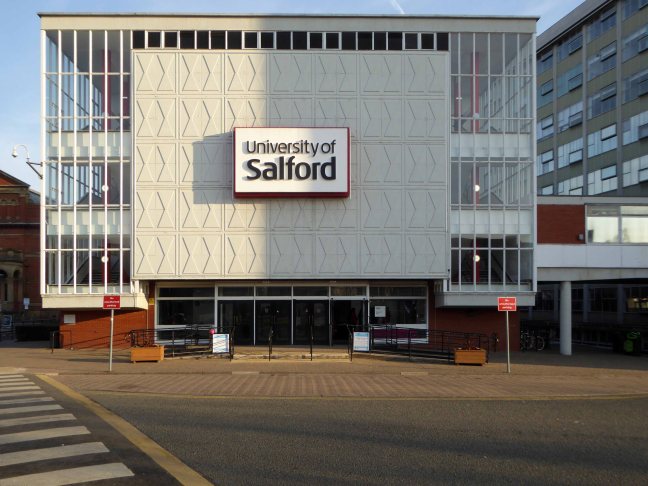
The Royal Technical Institute, Salford, which opened in 1896, became a College of Advanced Technology in 1956 and gained university status, following the Robbins Report into higher education, in 1967.
A new dawn – fired by the white hot heat of British Technology – including the unrealised demolition of the Victorian College, Art Gallery and Museum buildings.
The Maxwell Building and Hall forms the older portal to the campus site.
They were built between 1959 and 1960 to a design by the architect C. H. Simmons of the Lancashire County Architects Department.
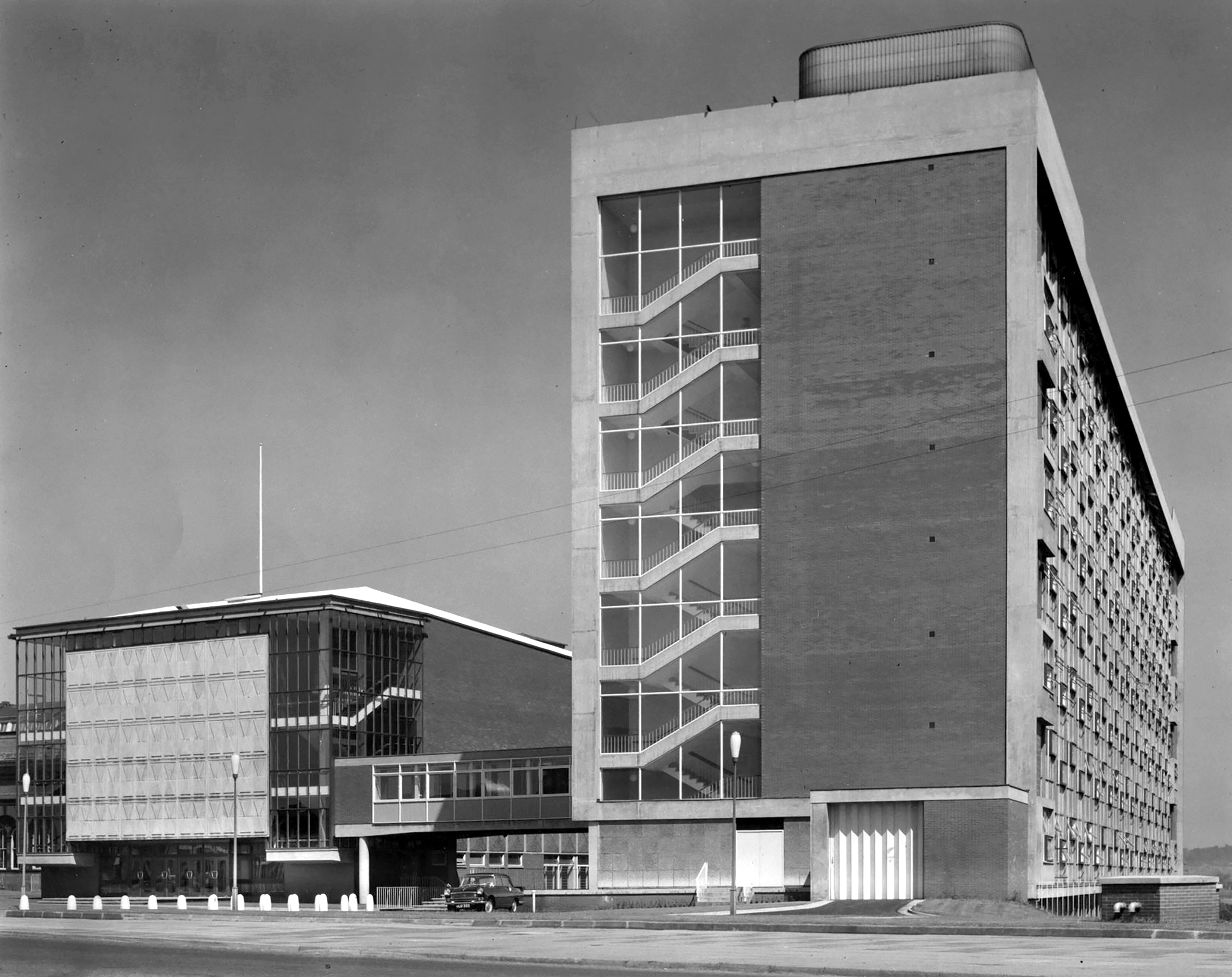
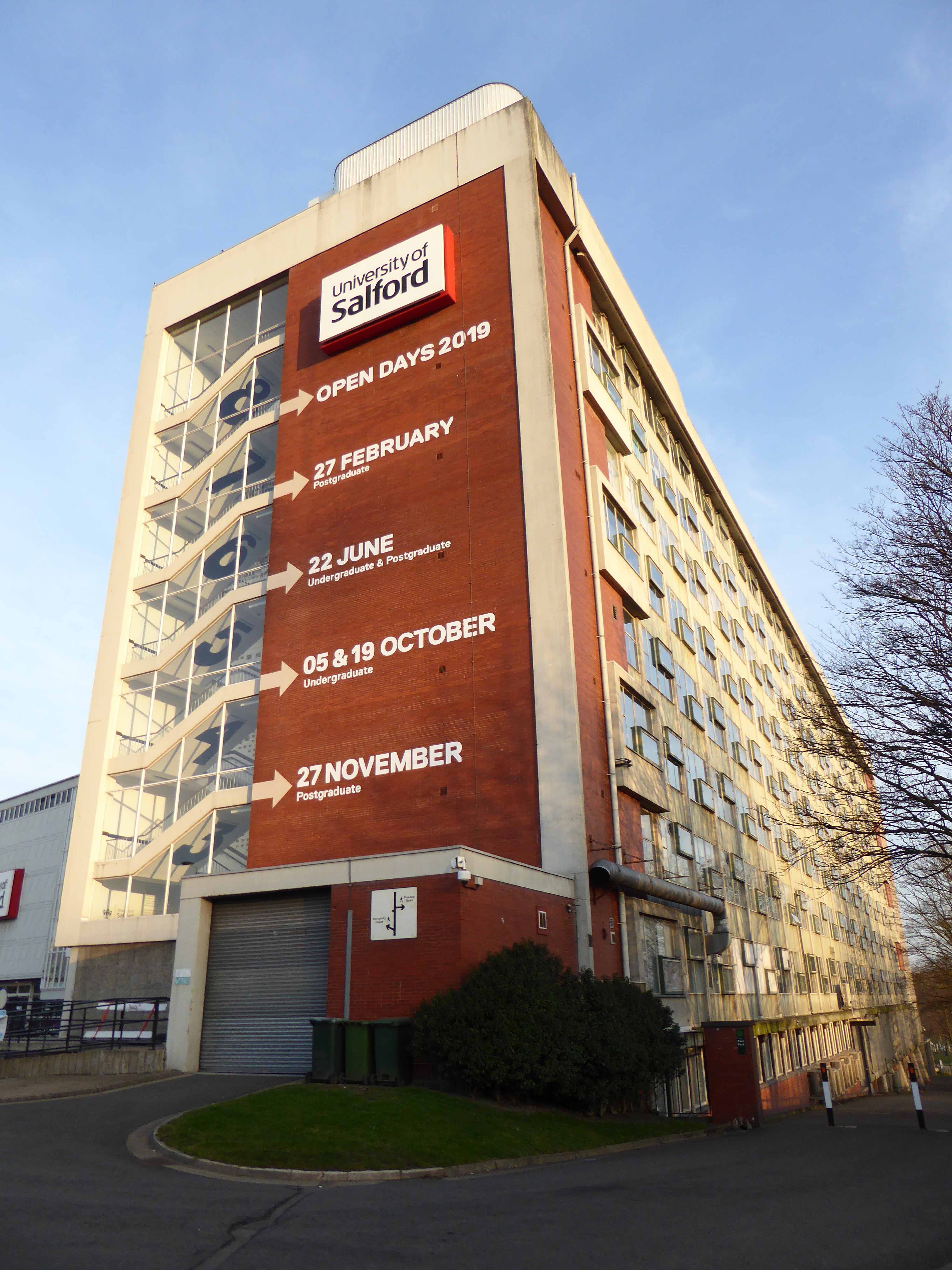
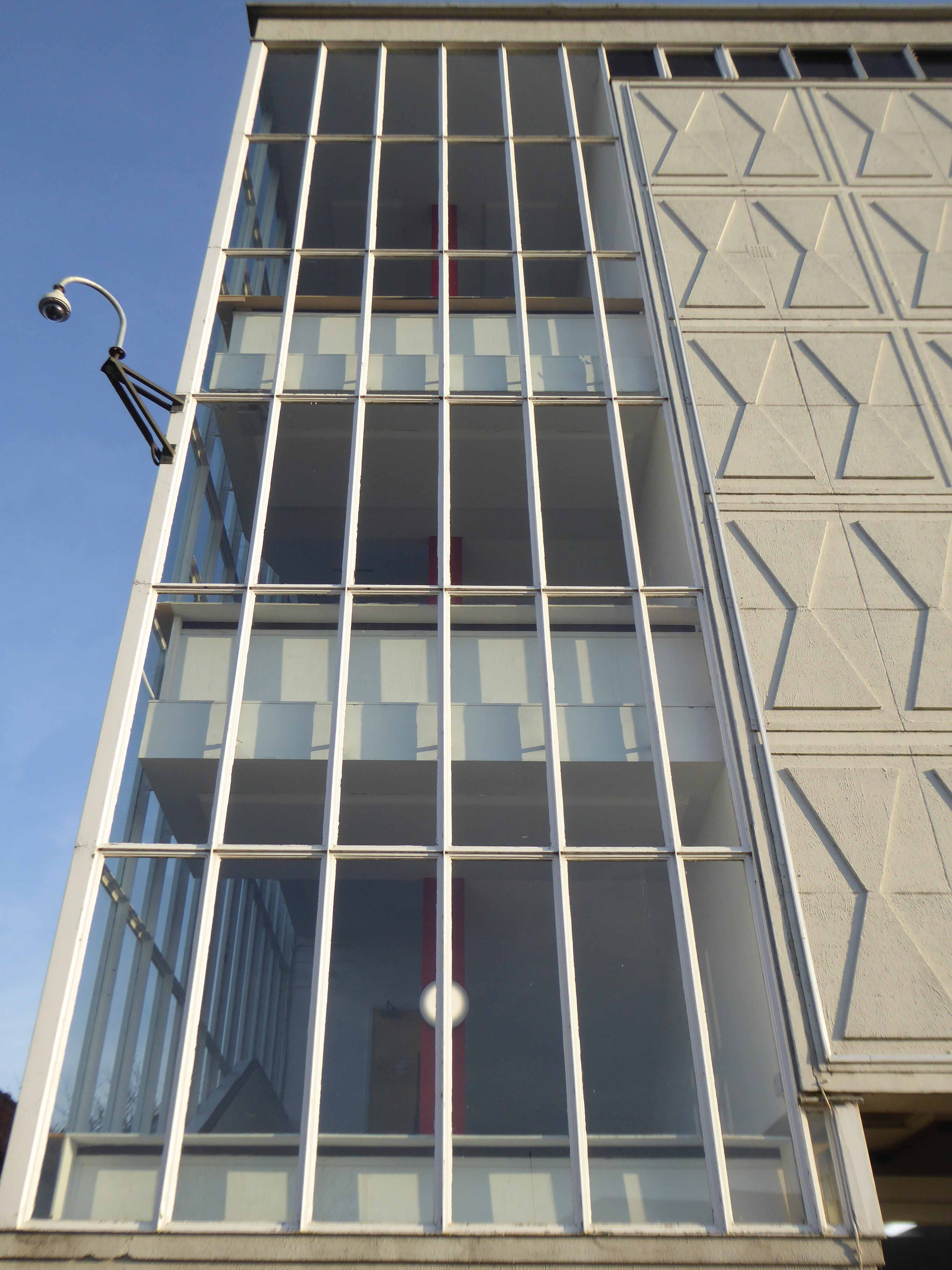
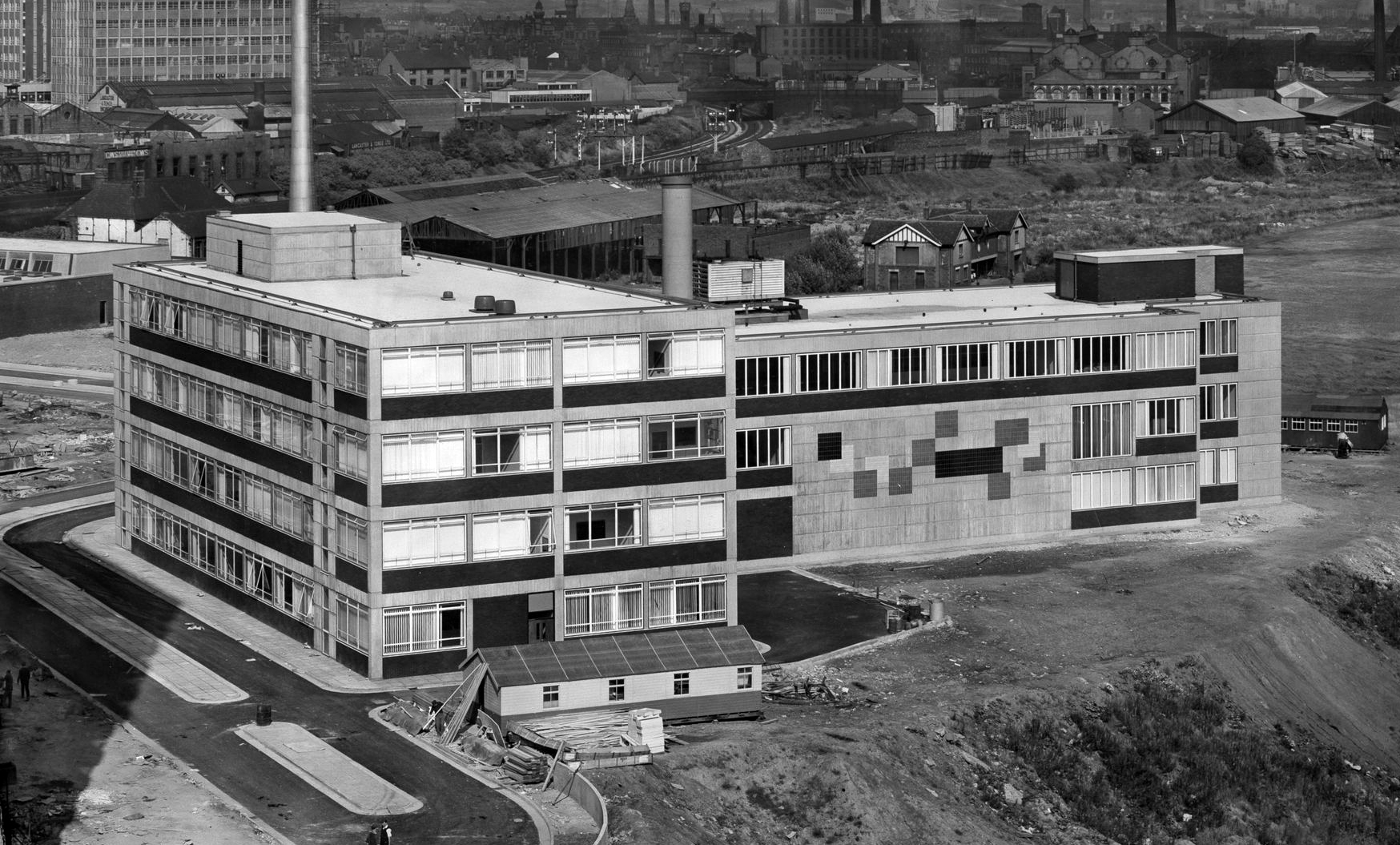
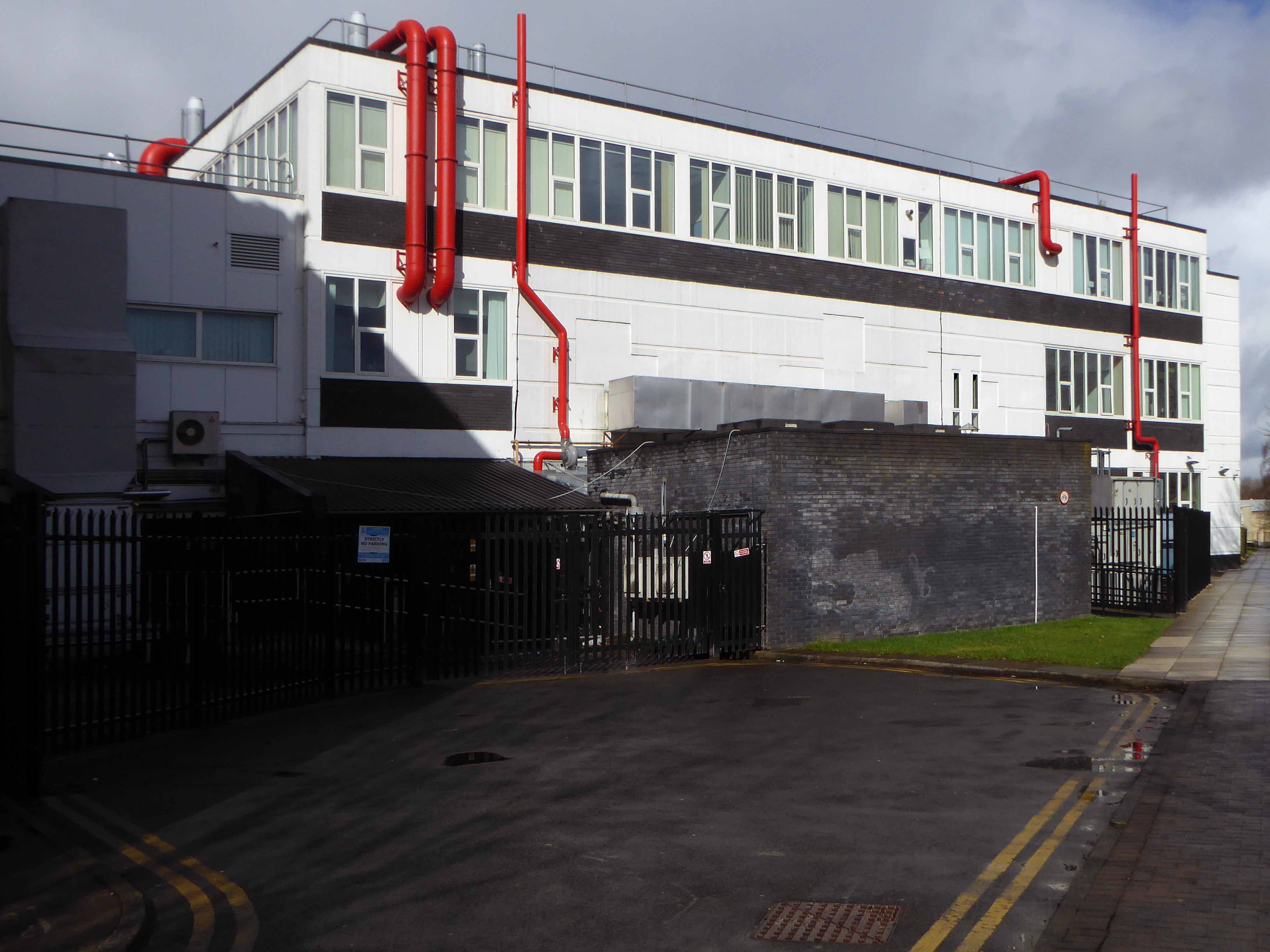
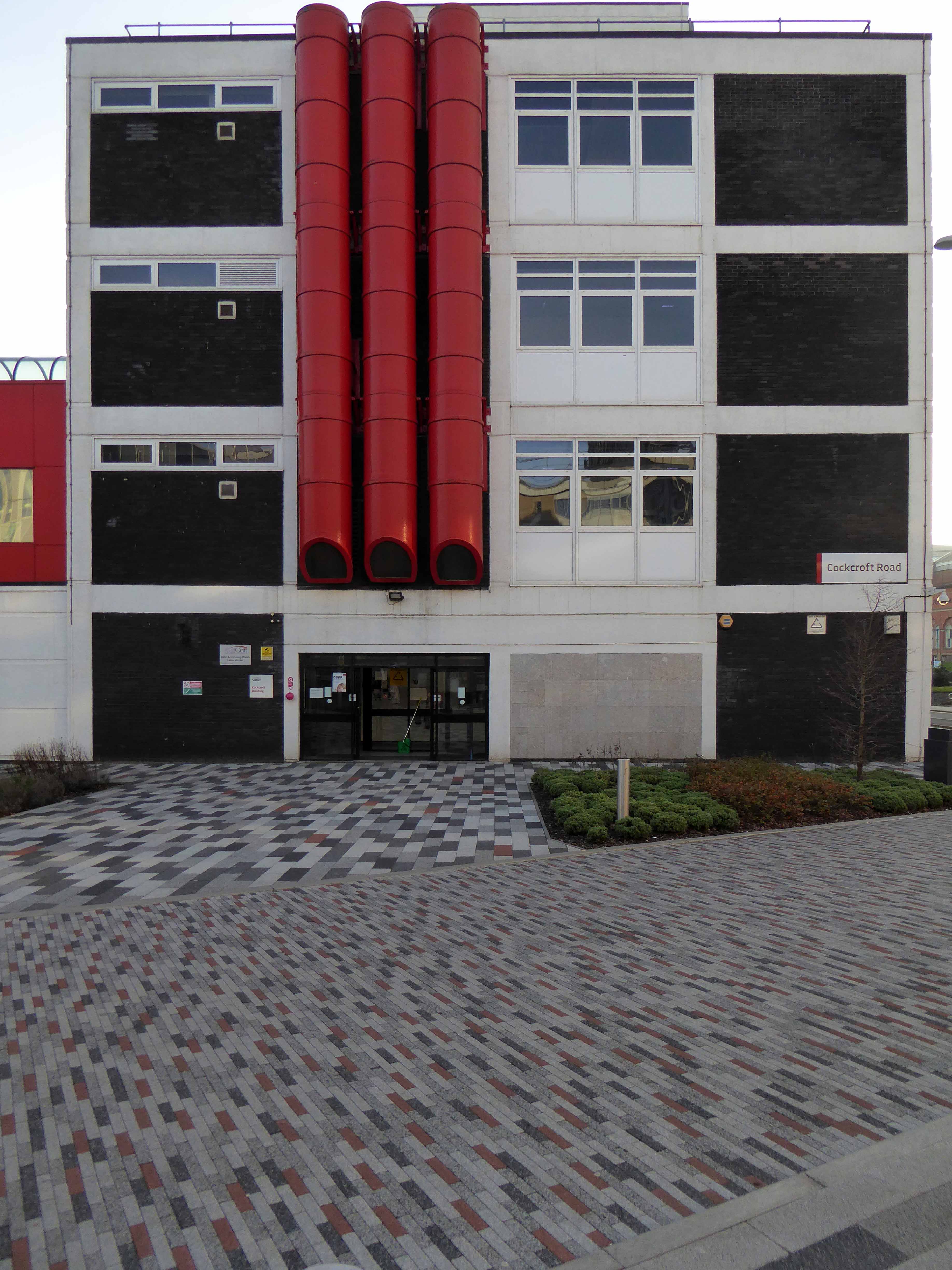
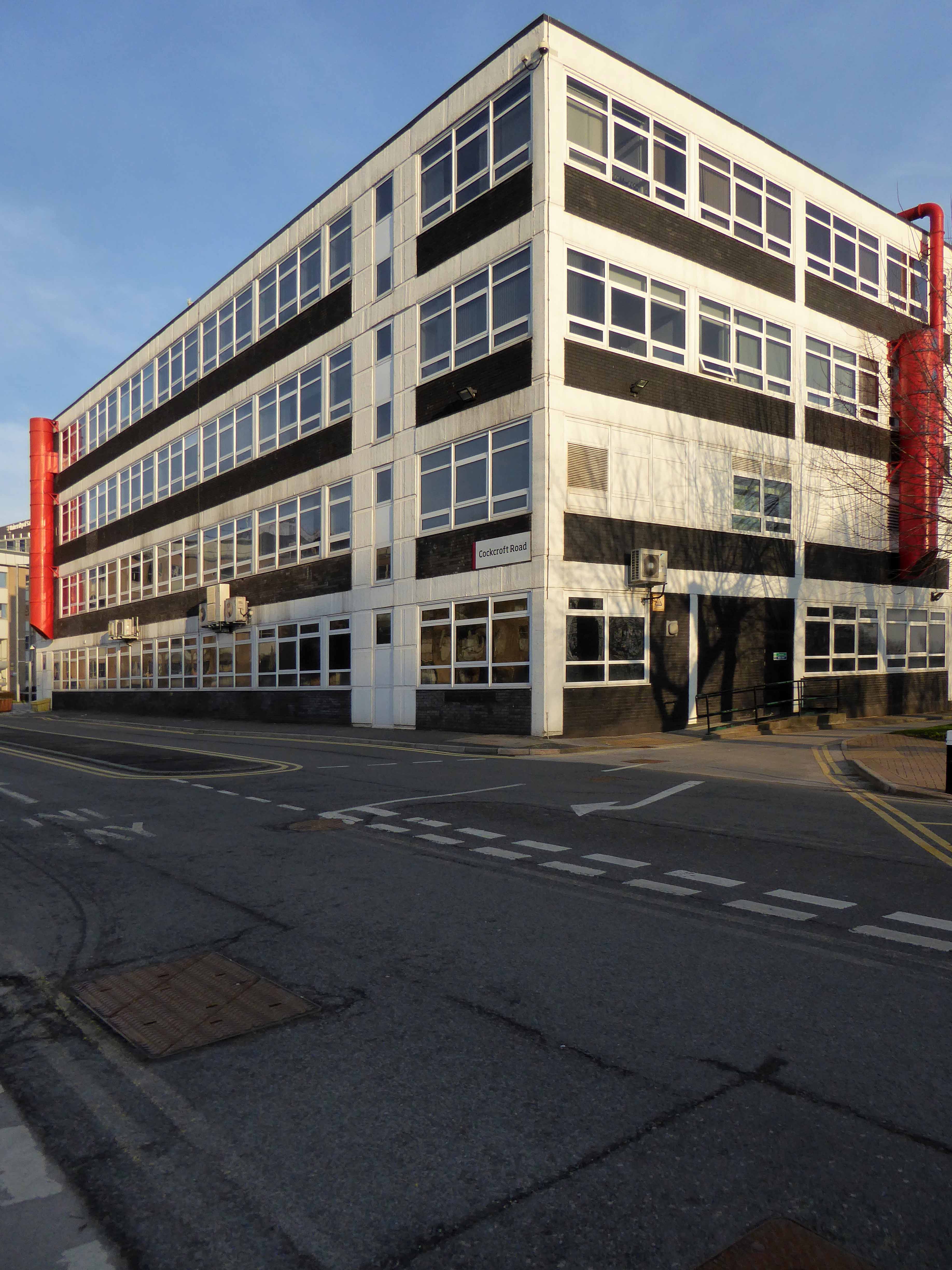
In back of the Maxwell complex is the Cockcroft Building.
Sir John Douglas Cockcroft OM KCB CBE FRS 27 May 1897 – 18 September 1967 was a British physicist who shared with Ernest Walton the Nobel Prize in Physics in 1951 for splitting the atomic nucleus, and was instrumental in the development of nuclear power.
The concrete relief to the east fascia of the northern block of the building is now sadly obscured by the addition of intrusive infrastructure.
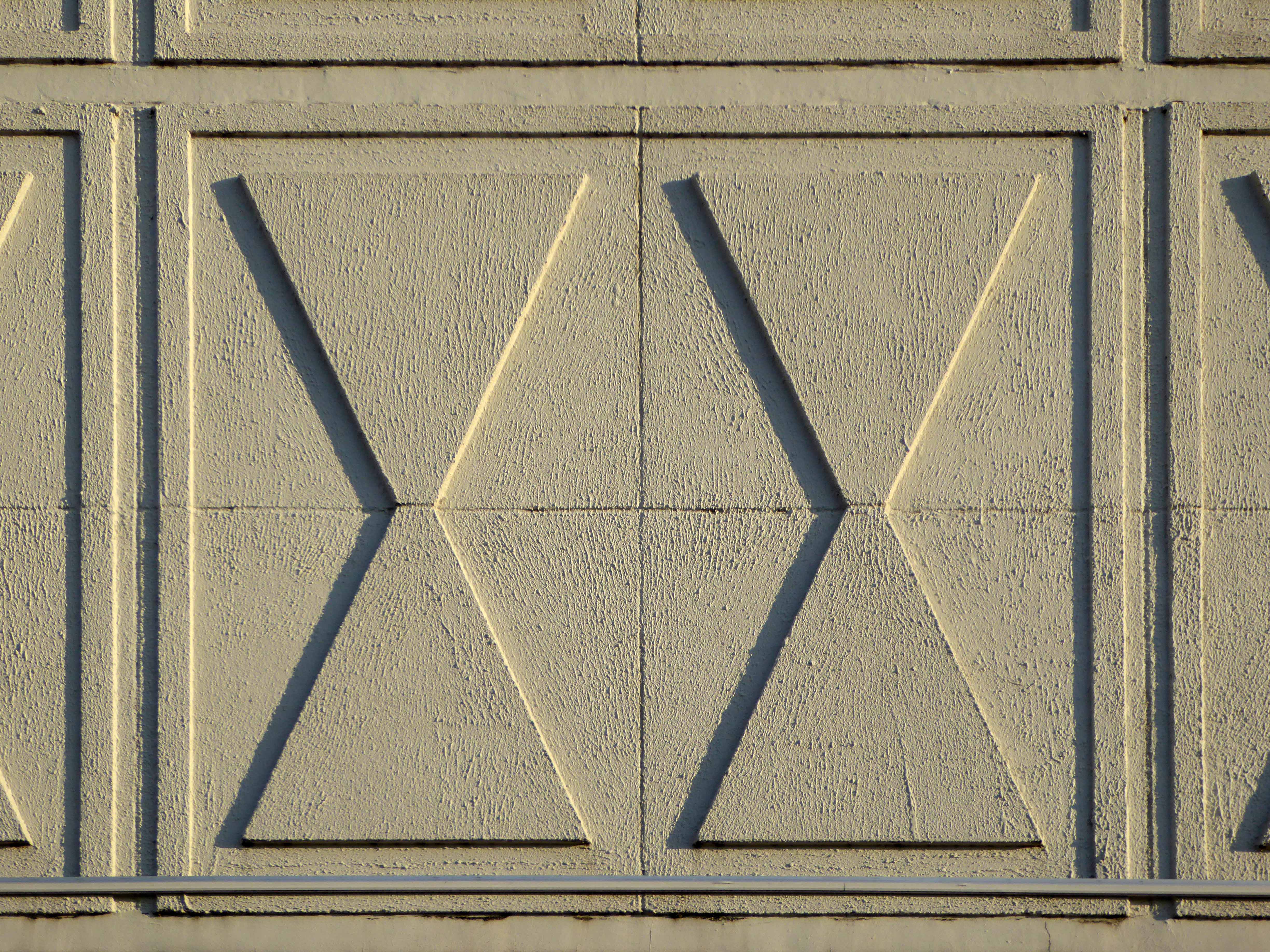
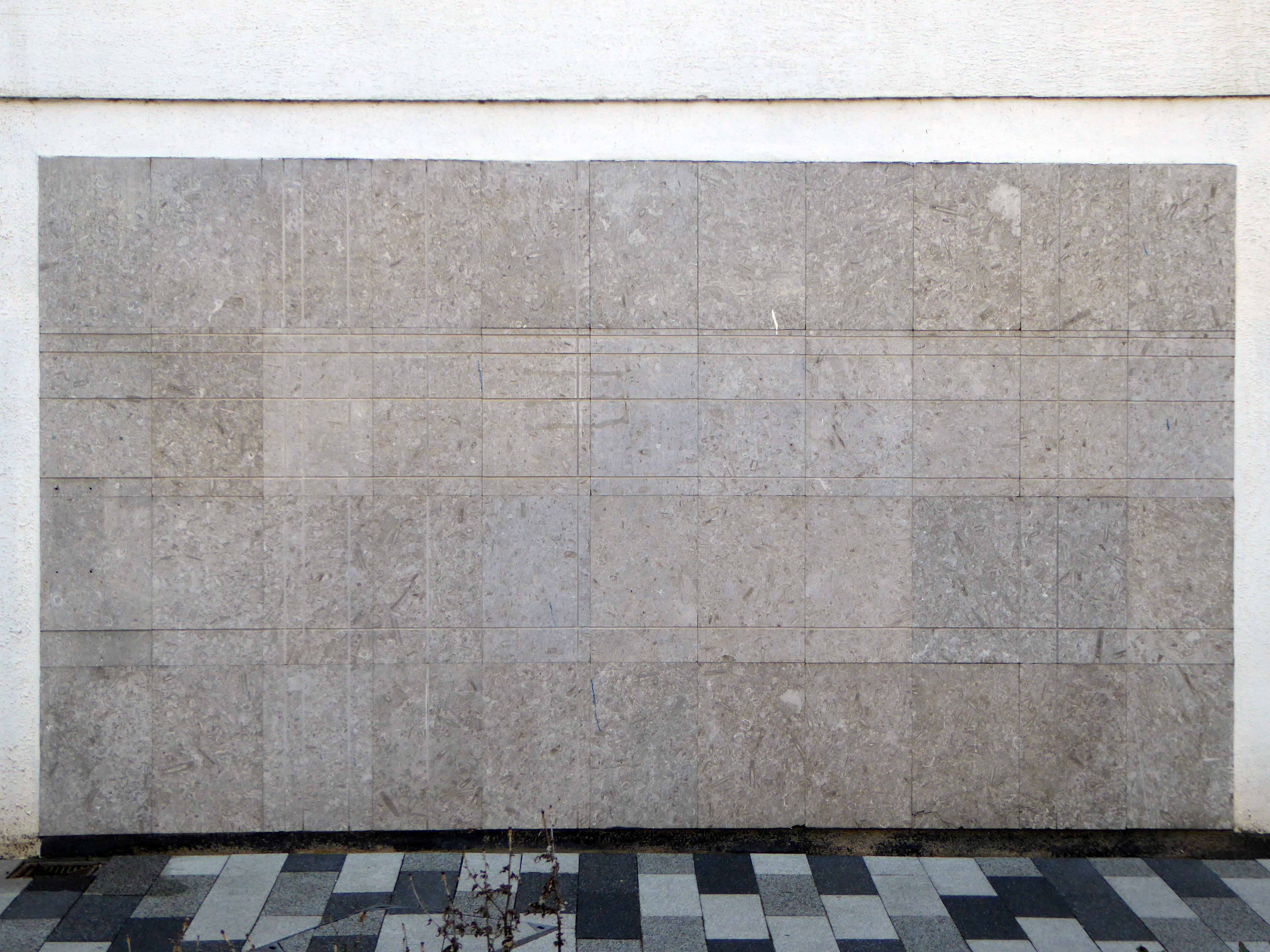
This incised block of limestone tiles laden with fossilised remains is a curious delight.
Just around the corner the Chapman Building.
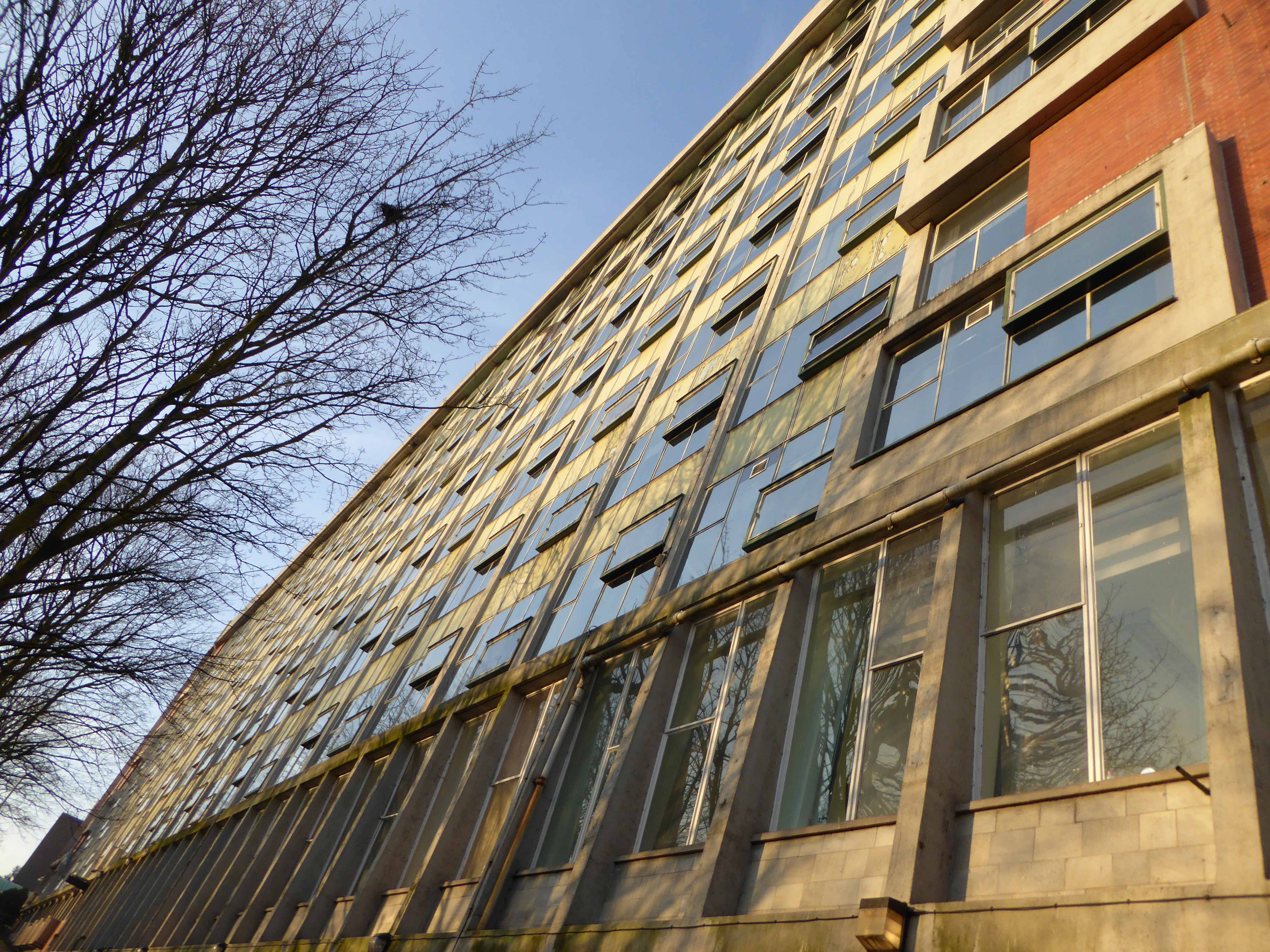
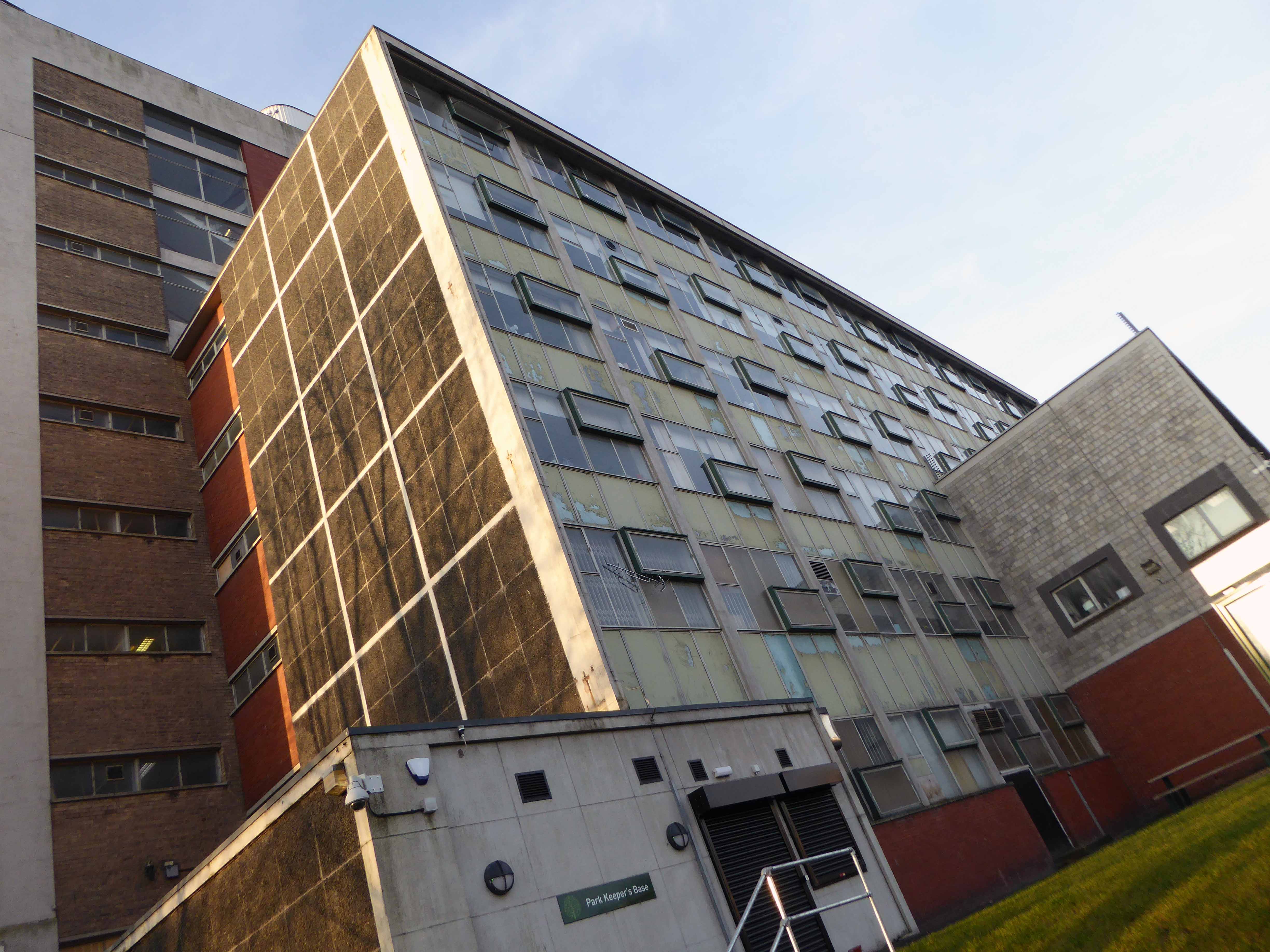
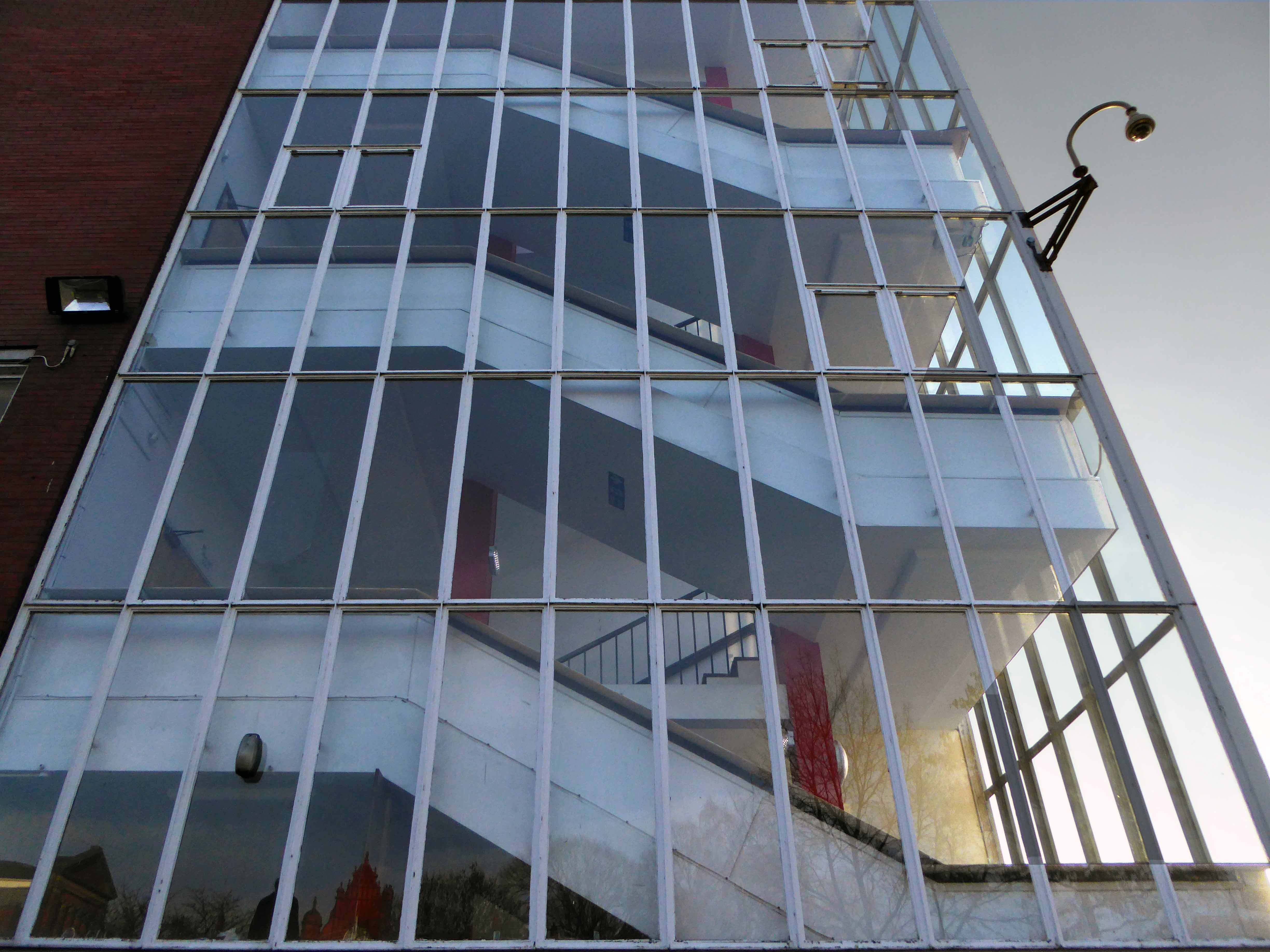
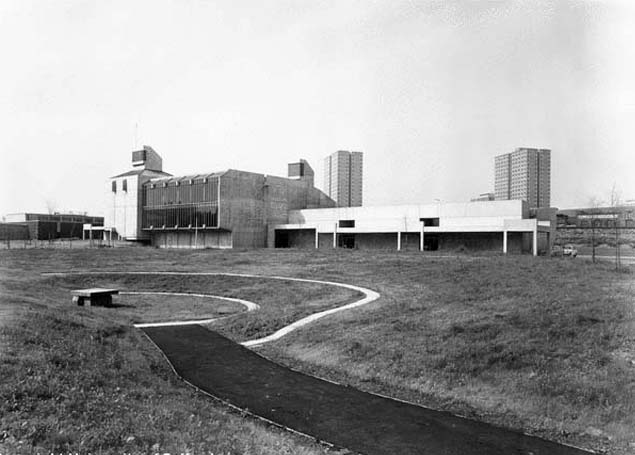
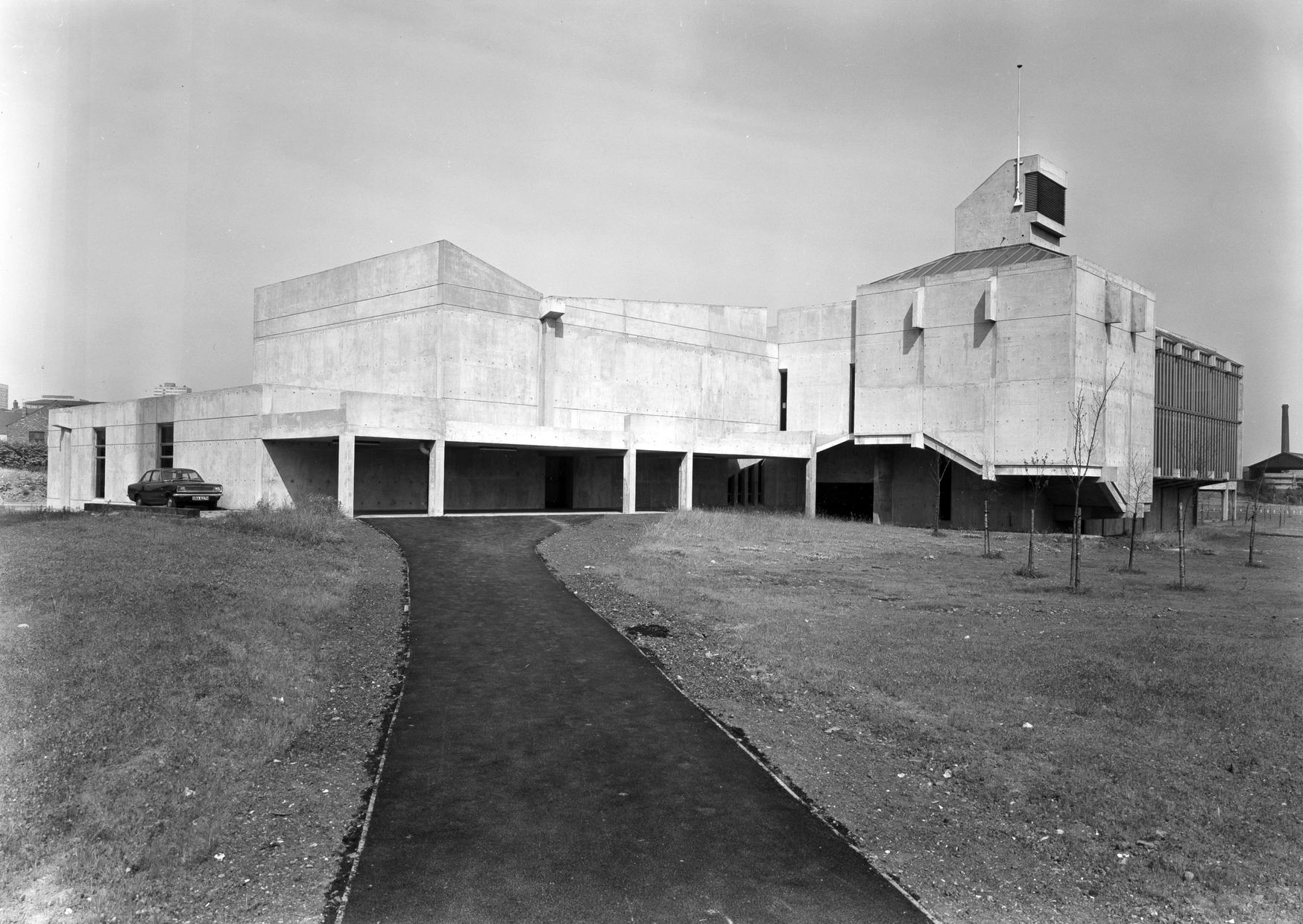
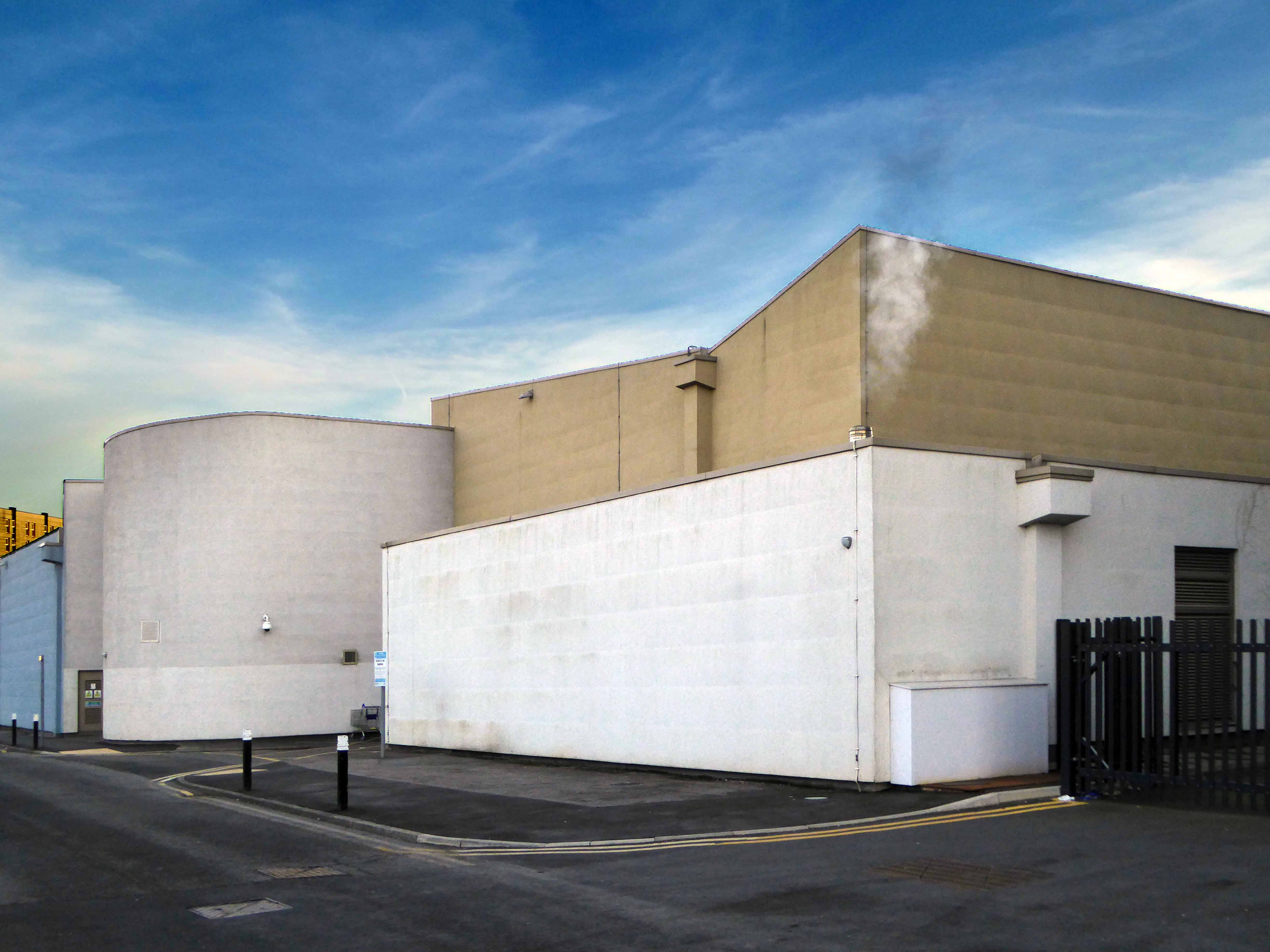
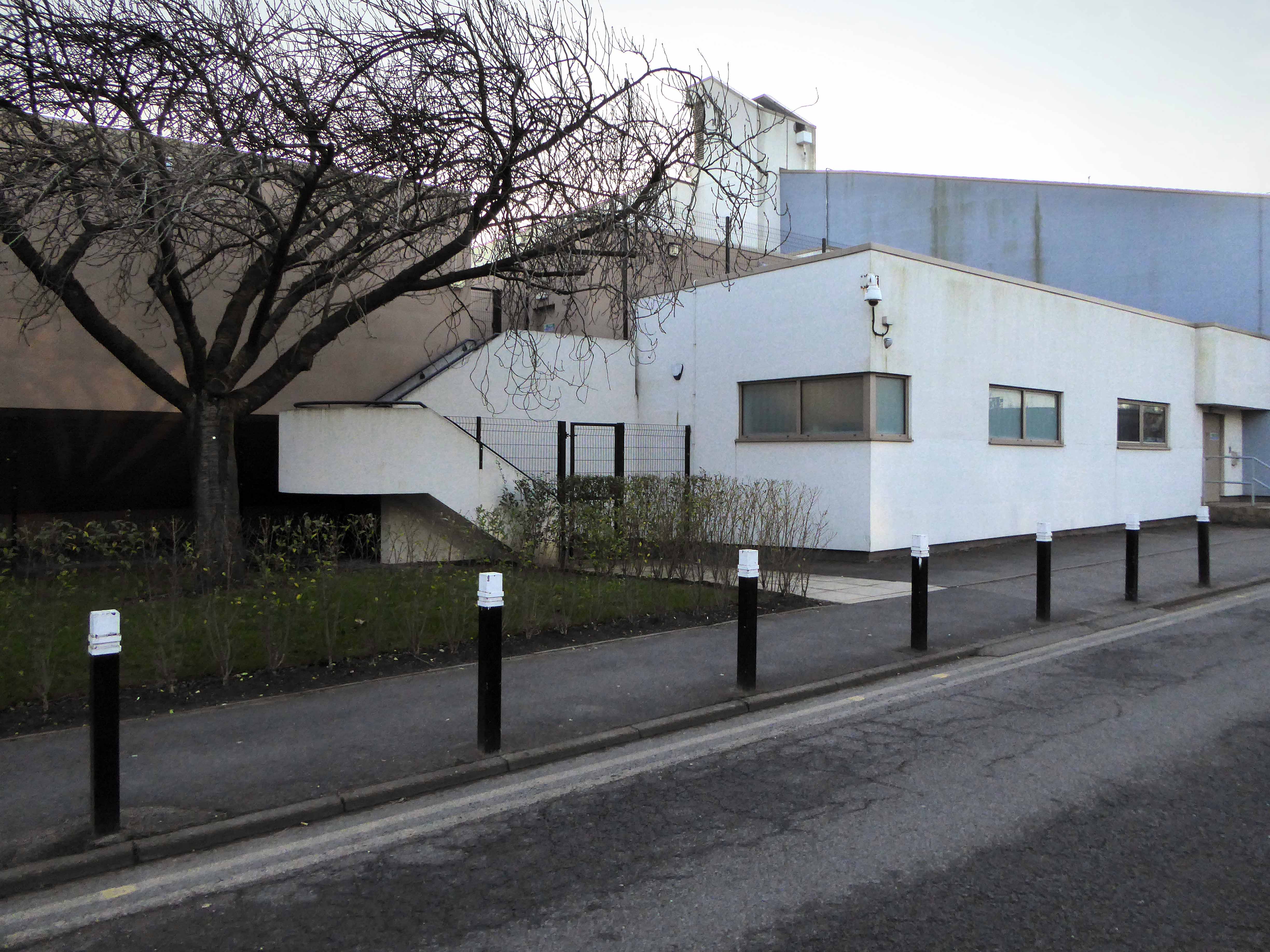
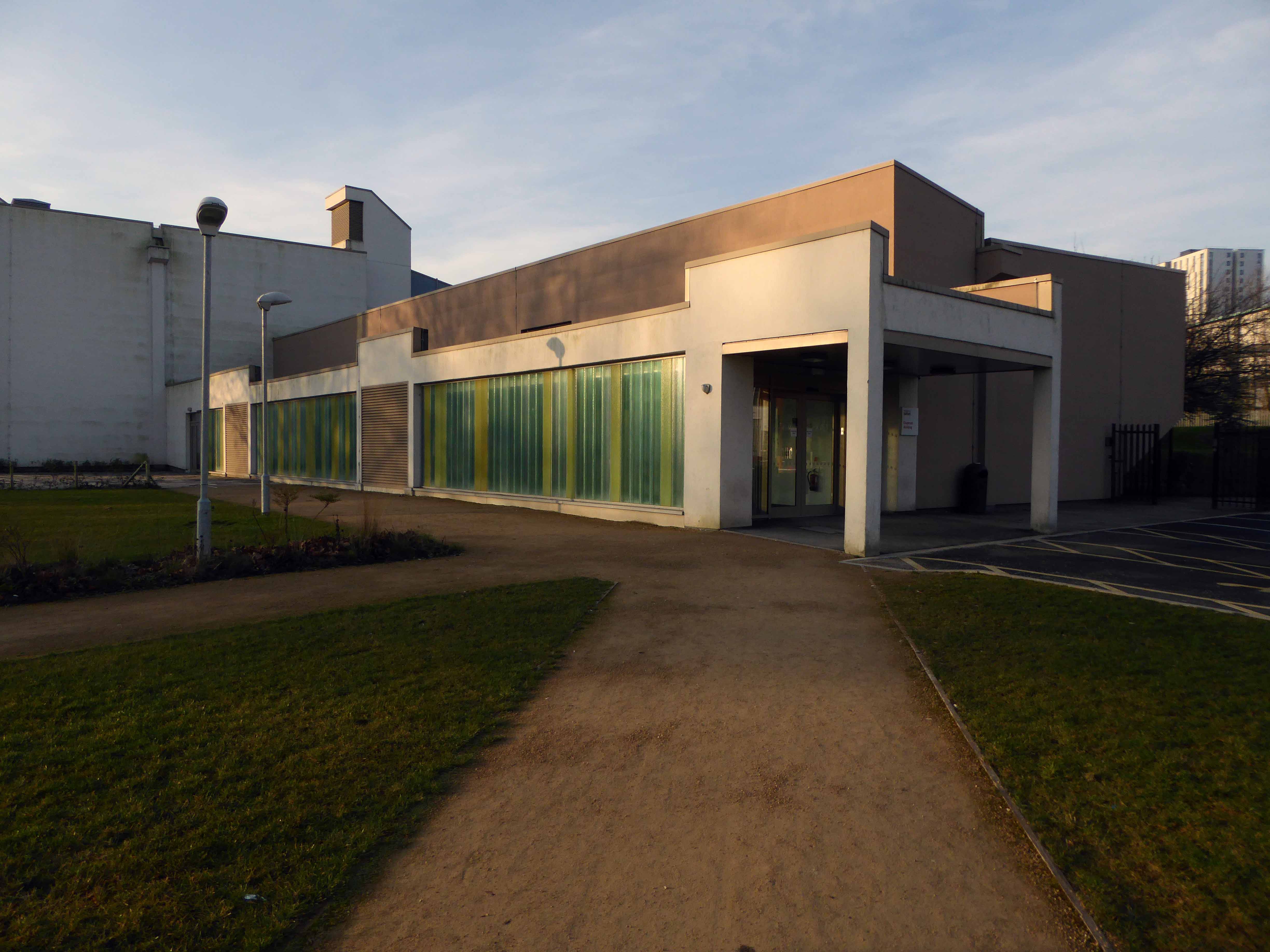
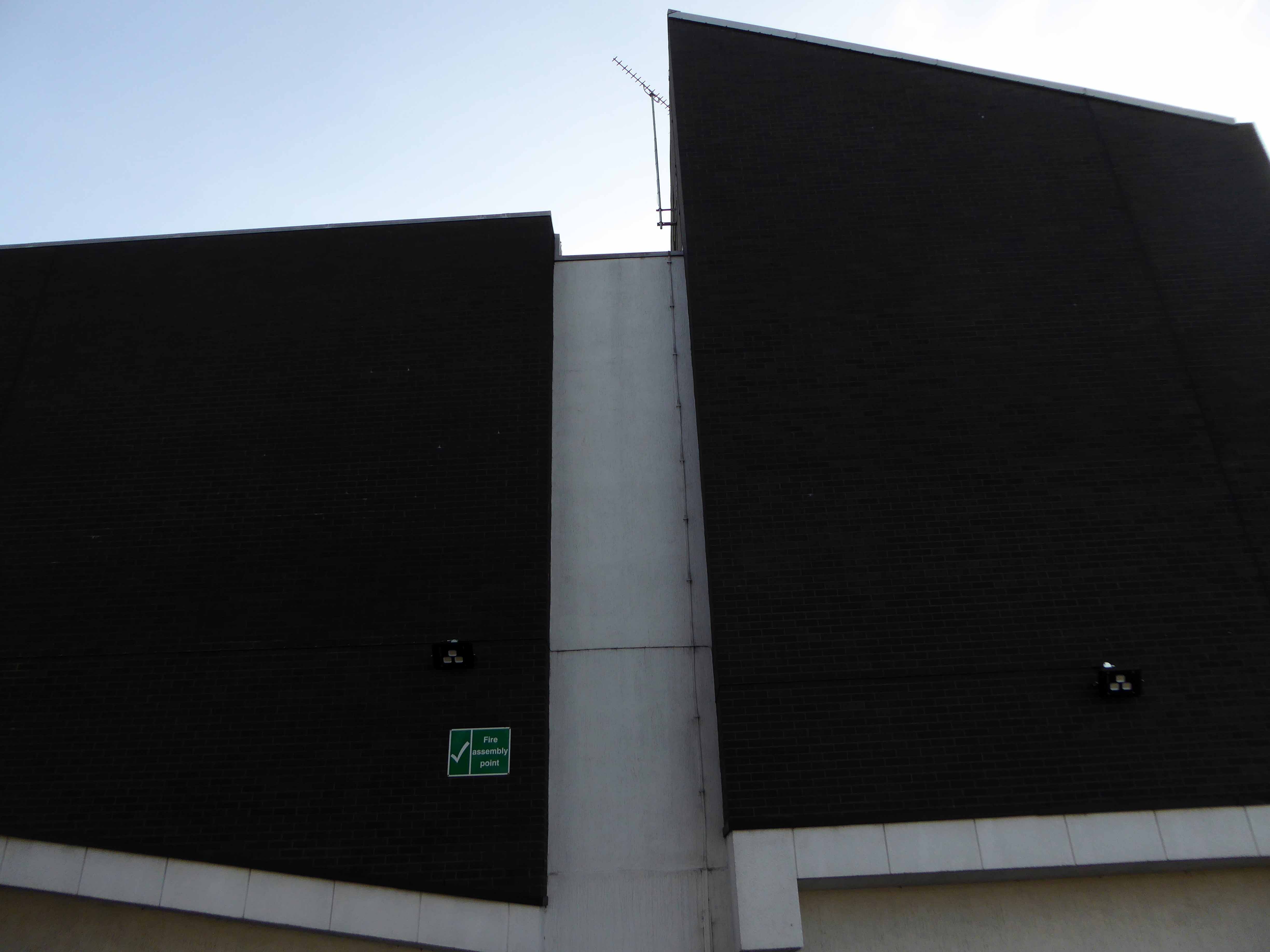
This latter day piece of brutalism is buried within the campus of the University of Salford. It was designed by W.F. Johnson and Partners of Leamington Spa, as a lecture theatre block and gallery. It sits with its long axis running parallel to the railway behind. The series of grey volumes, occasionally punctuated by colourful floods of red and green trailing ivy, hang together in a less than convincing composition. The orientation and access to the building seem confused and detached from any cohesive relationship to the rest of the campus, but there is something perversely attractive about the right essay in the wrong language. The reinforced concrete building contained five lecture theatres, communal spaces, an art gallery, AV support areas and basement plant rooms. Following a major refurbishment in 2012, several additions were made to the exterior and its total concrete presence somewhat diminished. It still houses lecture theatres and a number of other learning and social spaces.
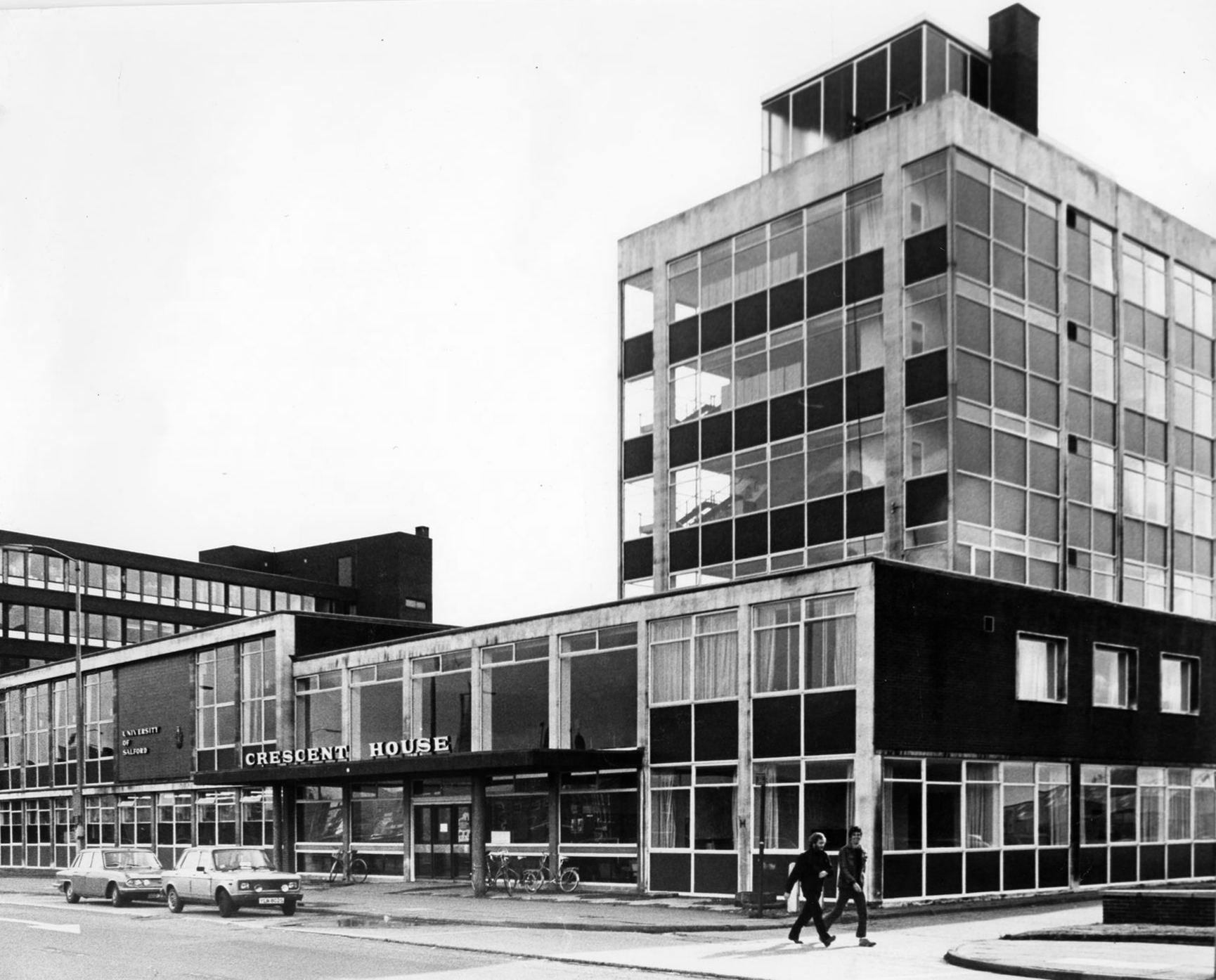
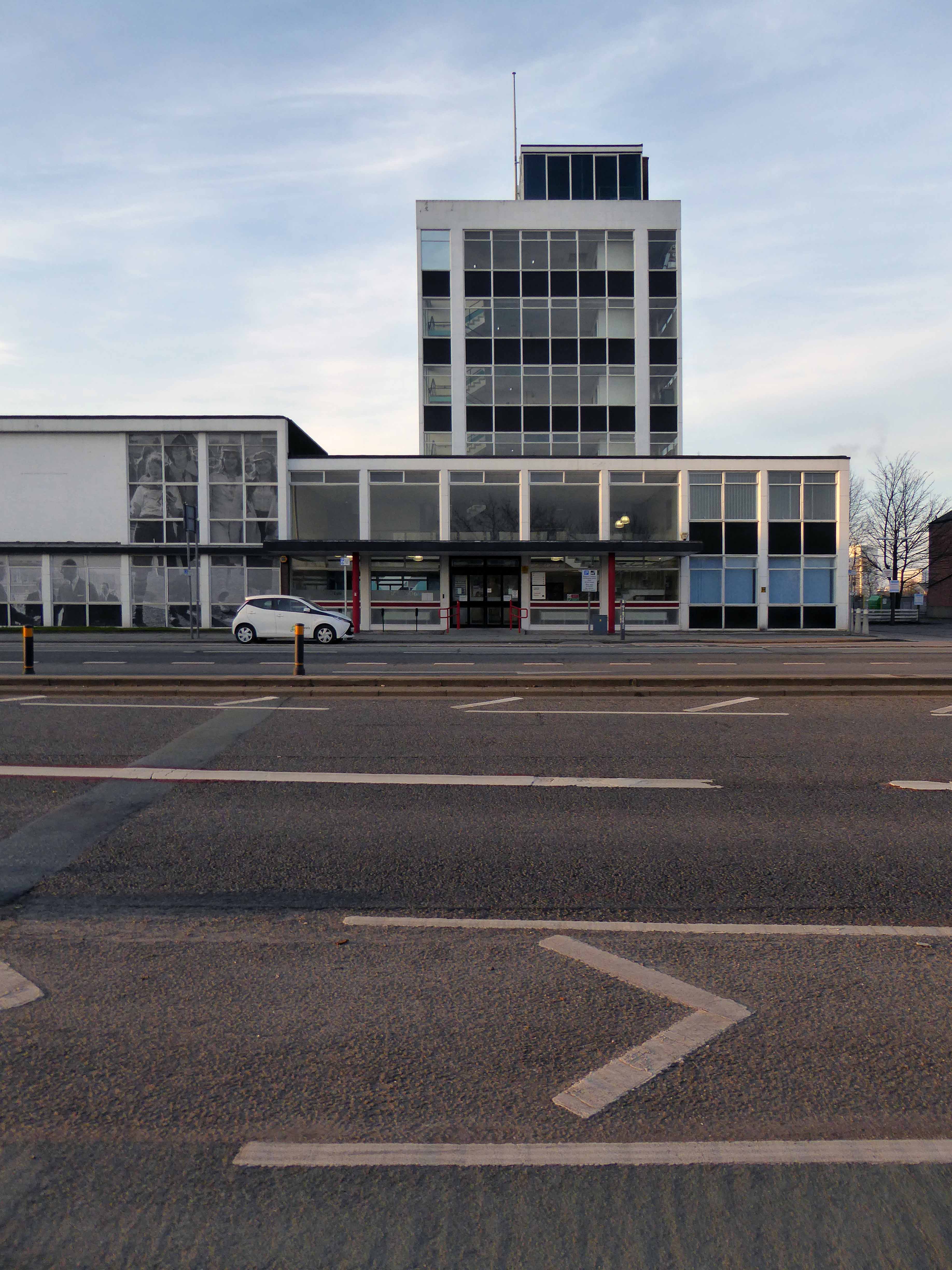
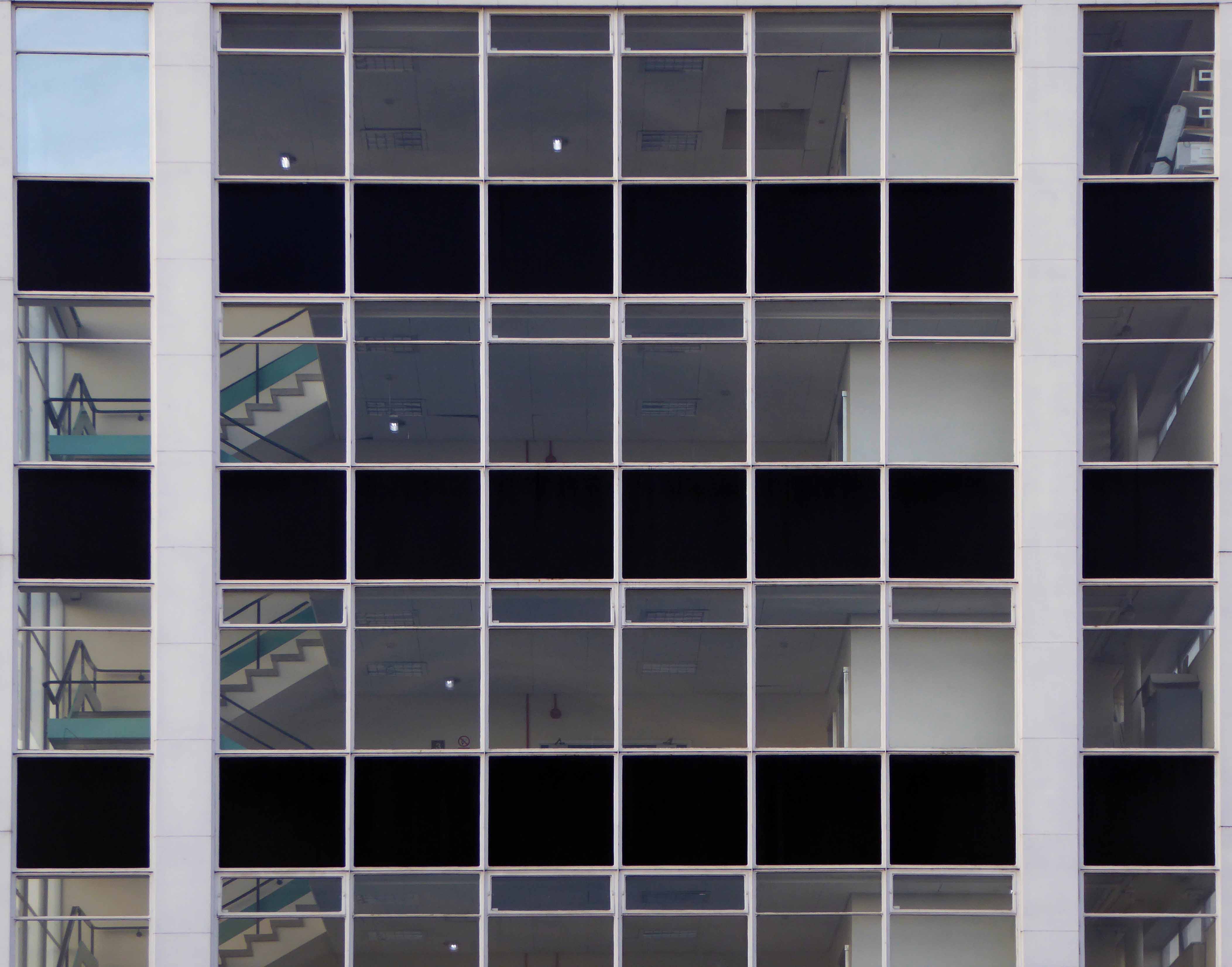
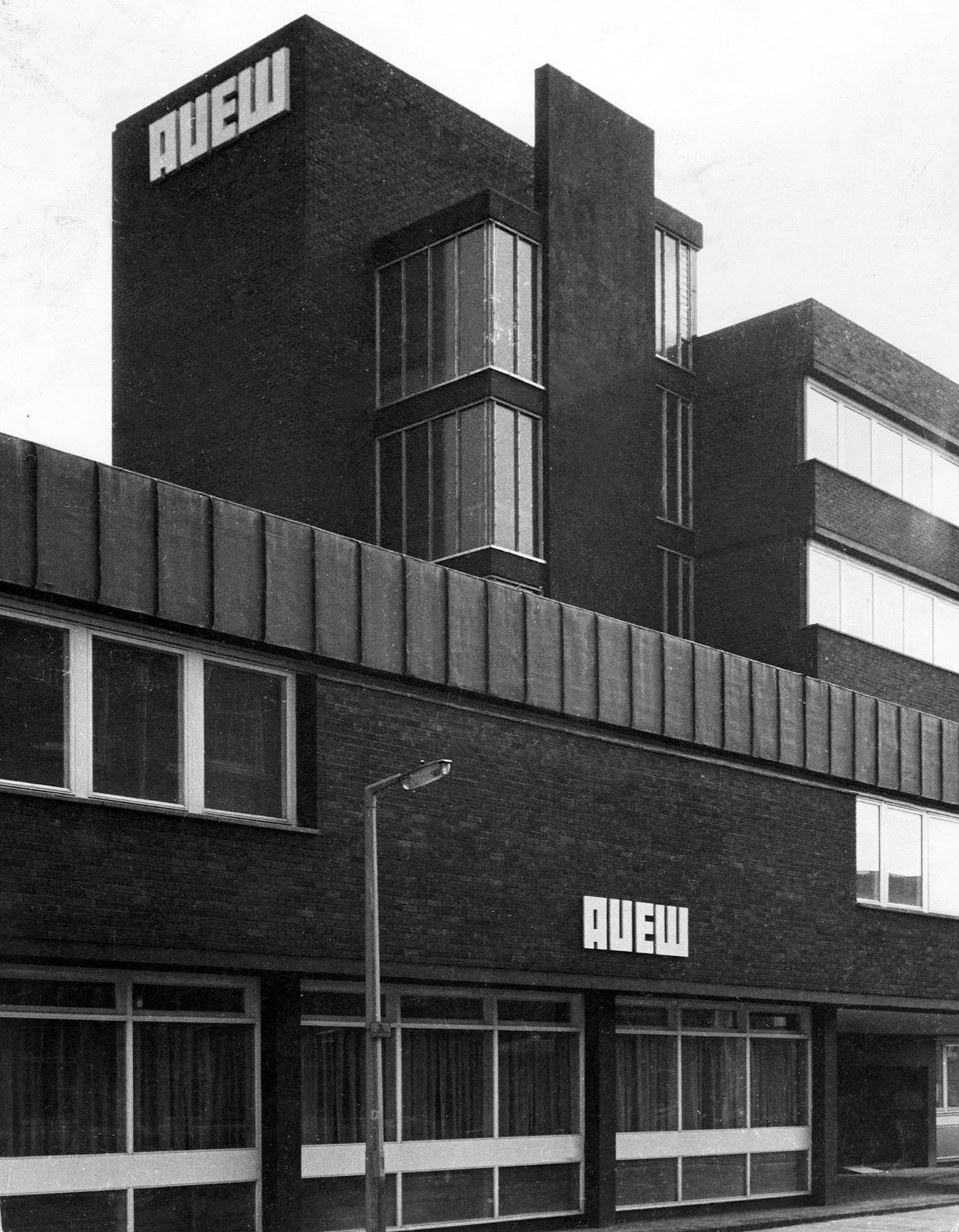
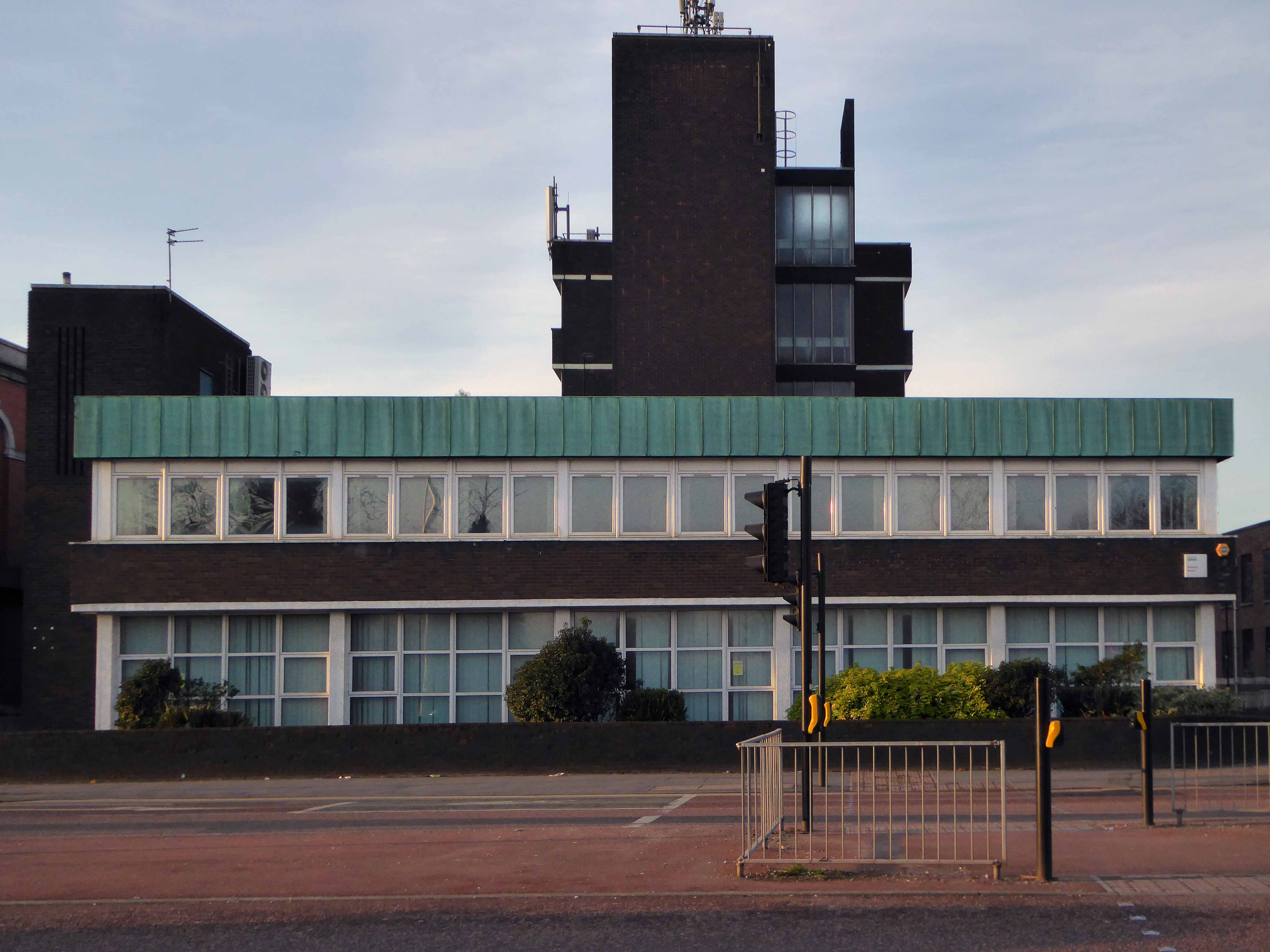
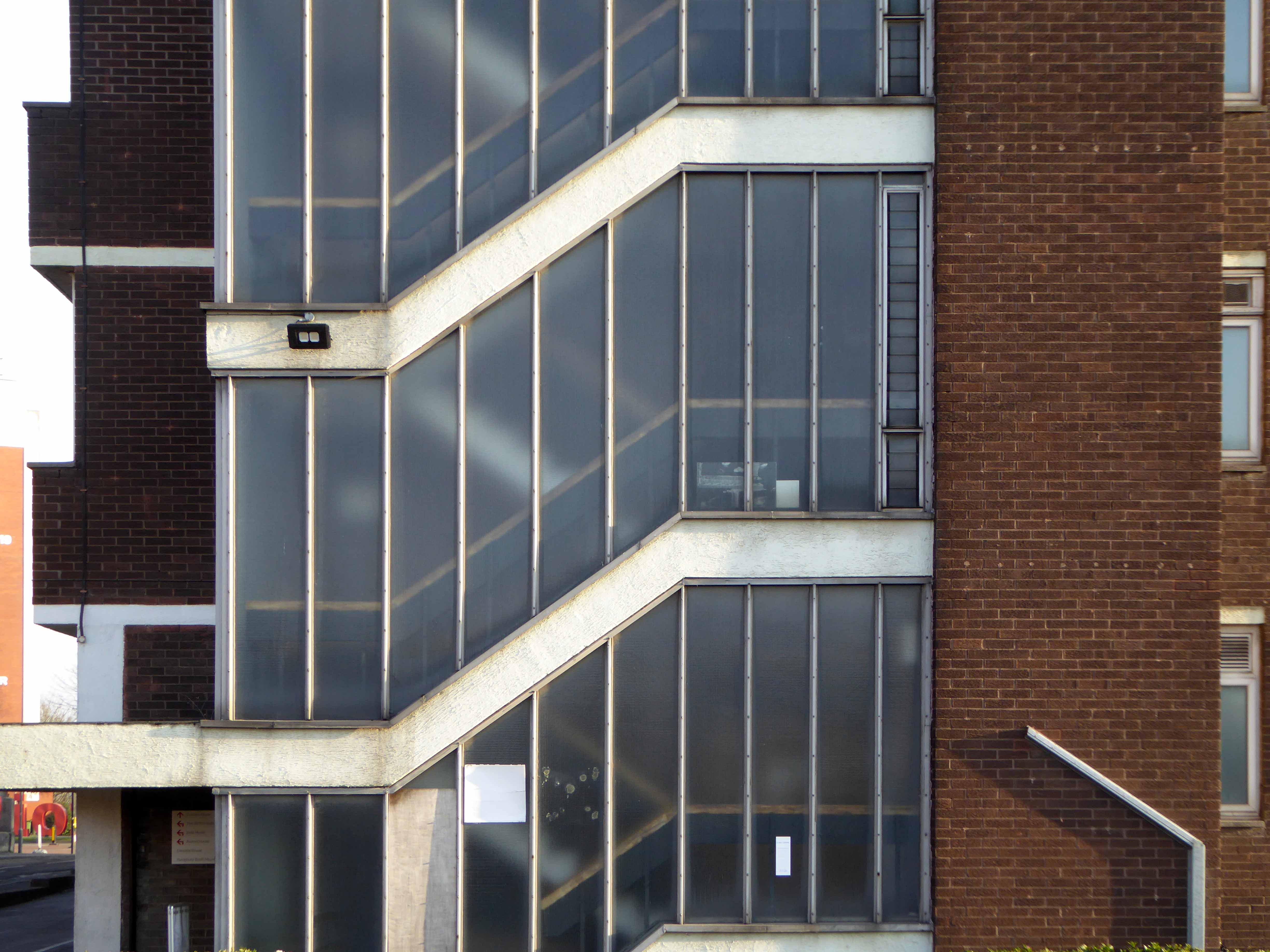
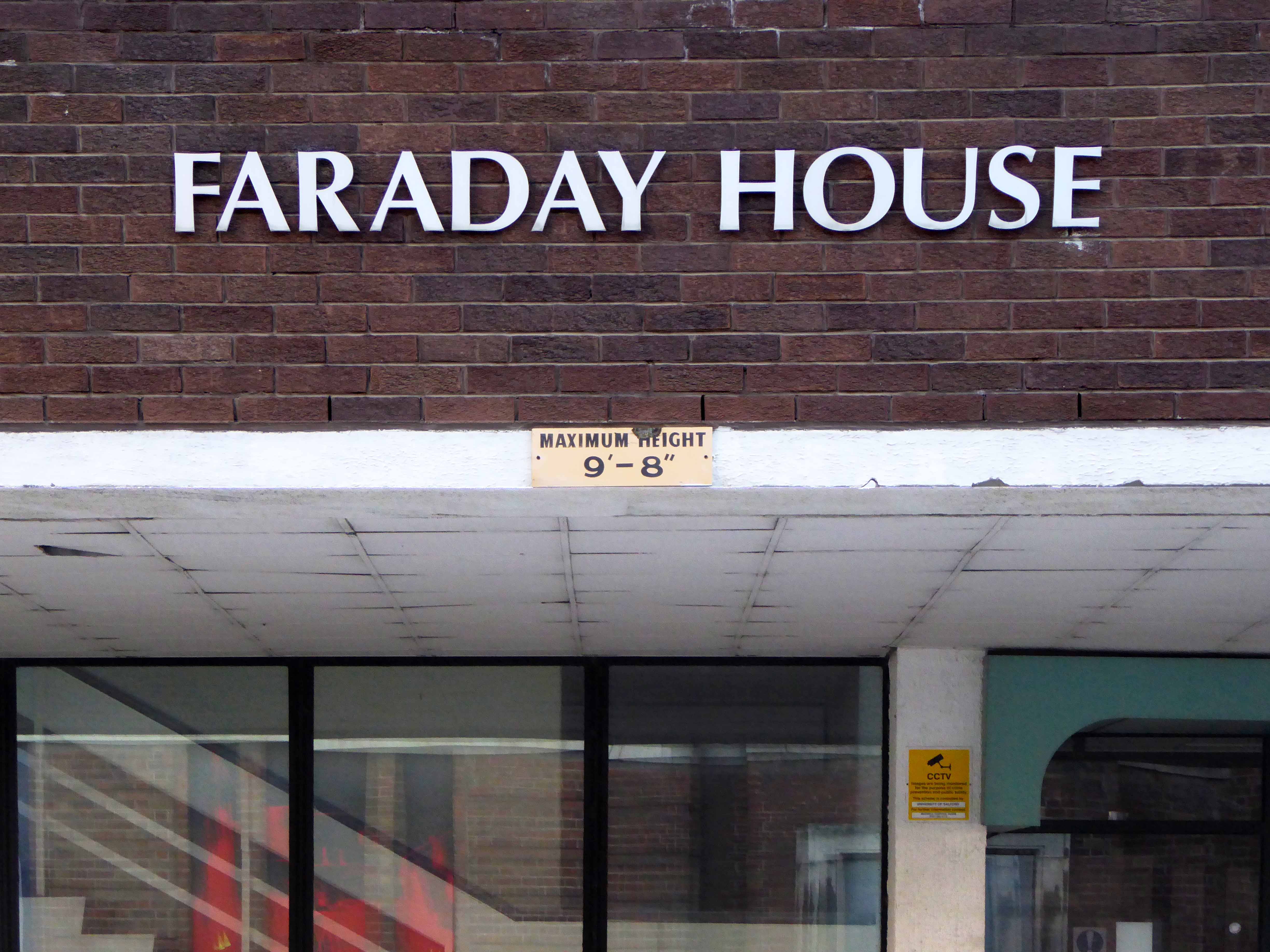
Across the wide and wider A6 are Crescent House and Faraday House – formerly home to the AUEW Amalgamated Union of Engineering Workers, ceded to the University in the 1970s
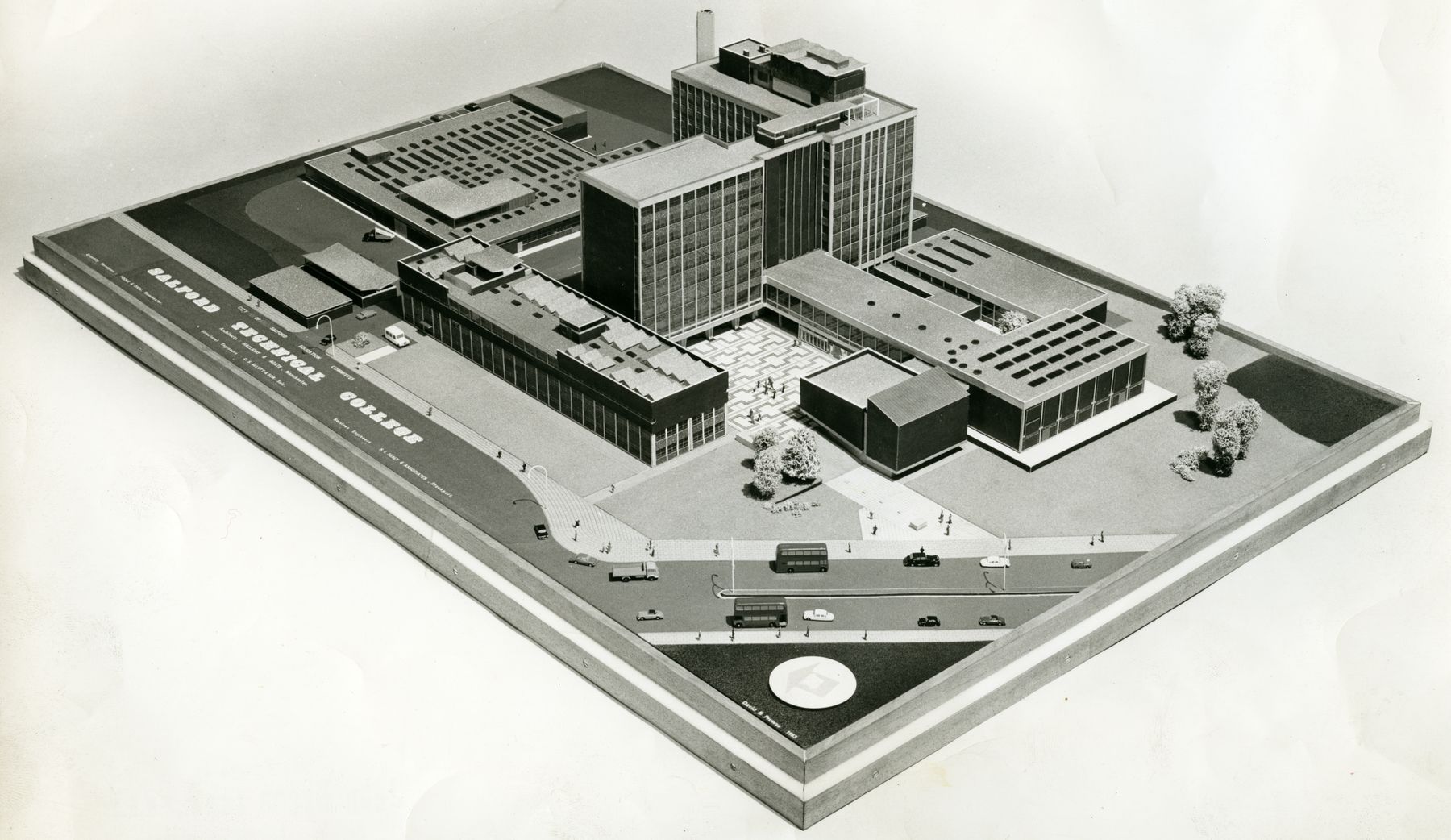
Let’s shimmy along to the former Salford Technical College site.
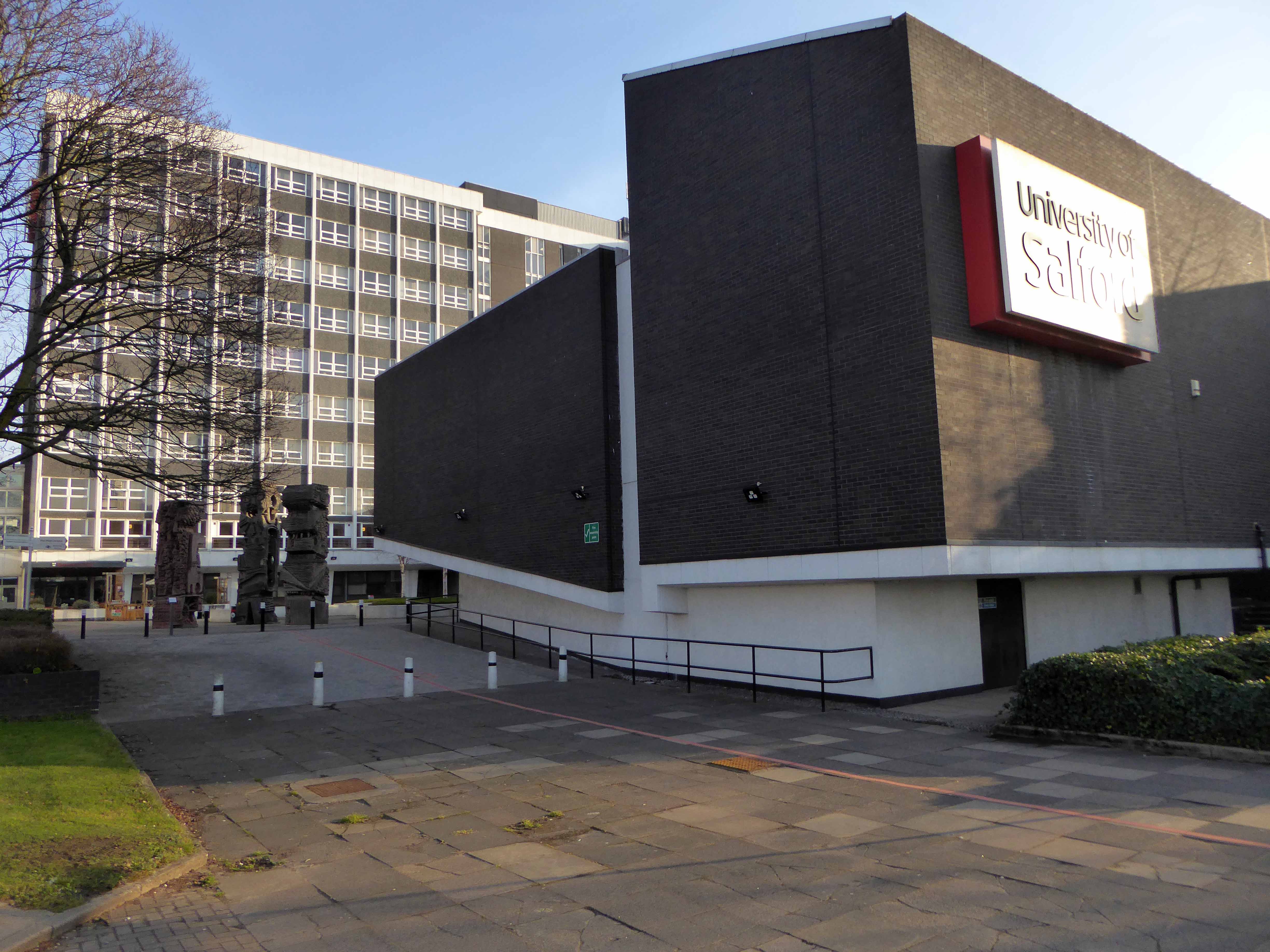
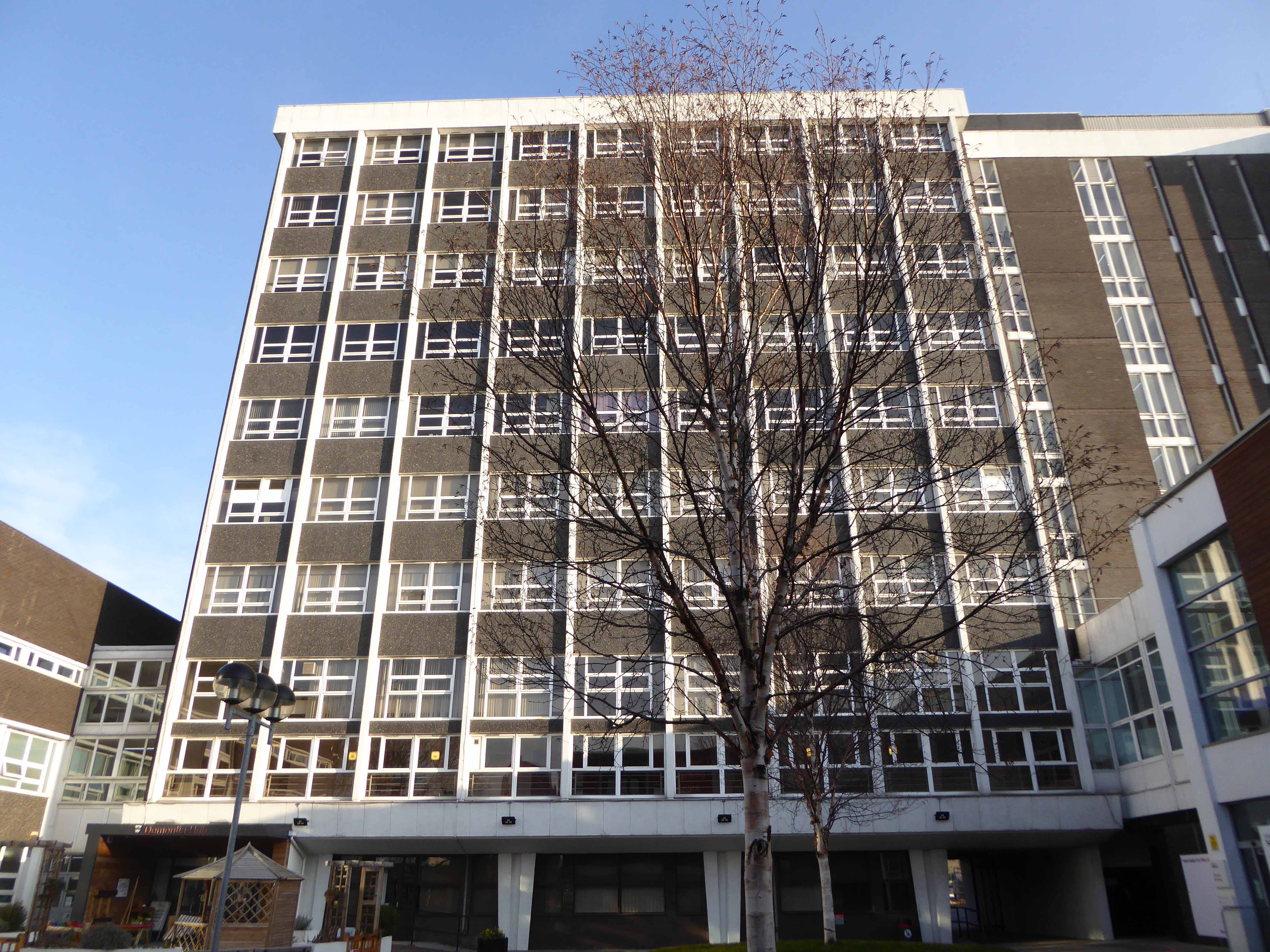
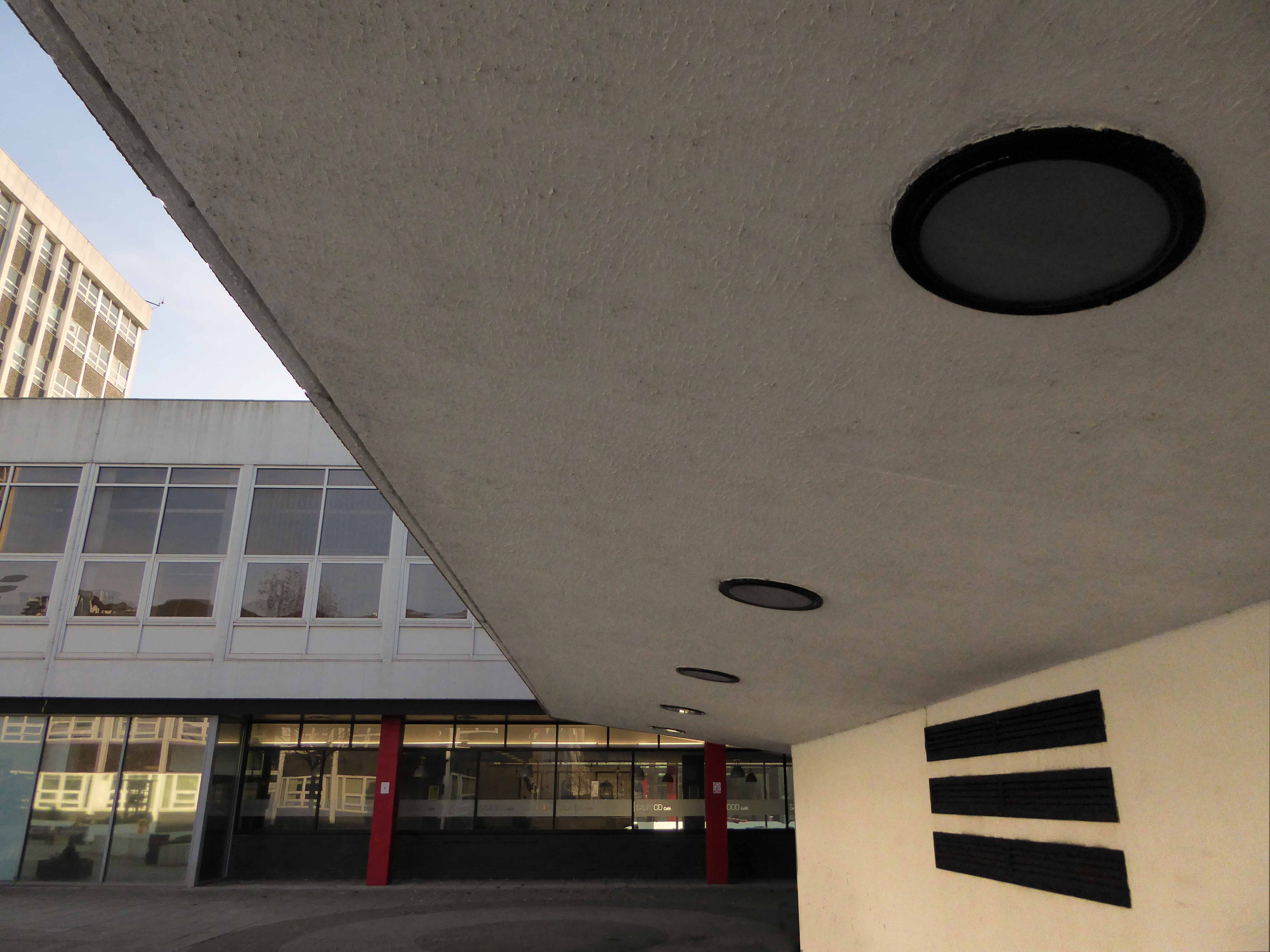
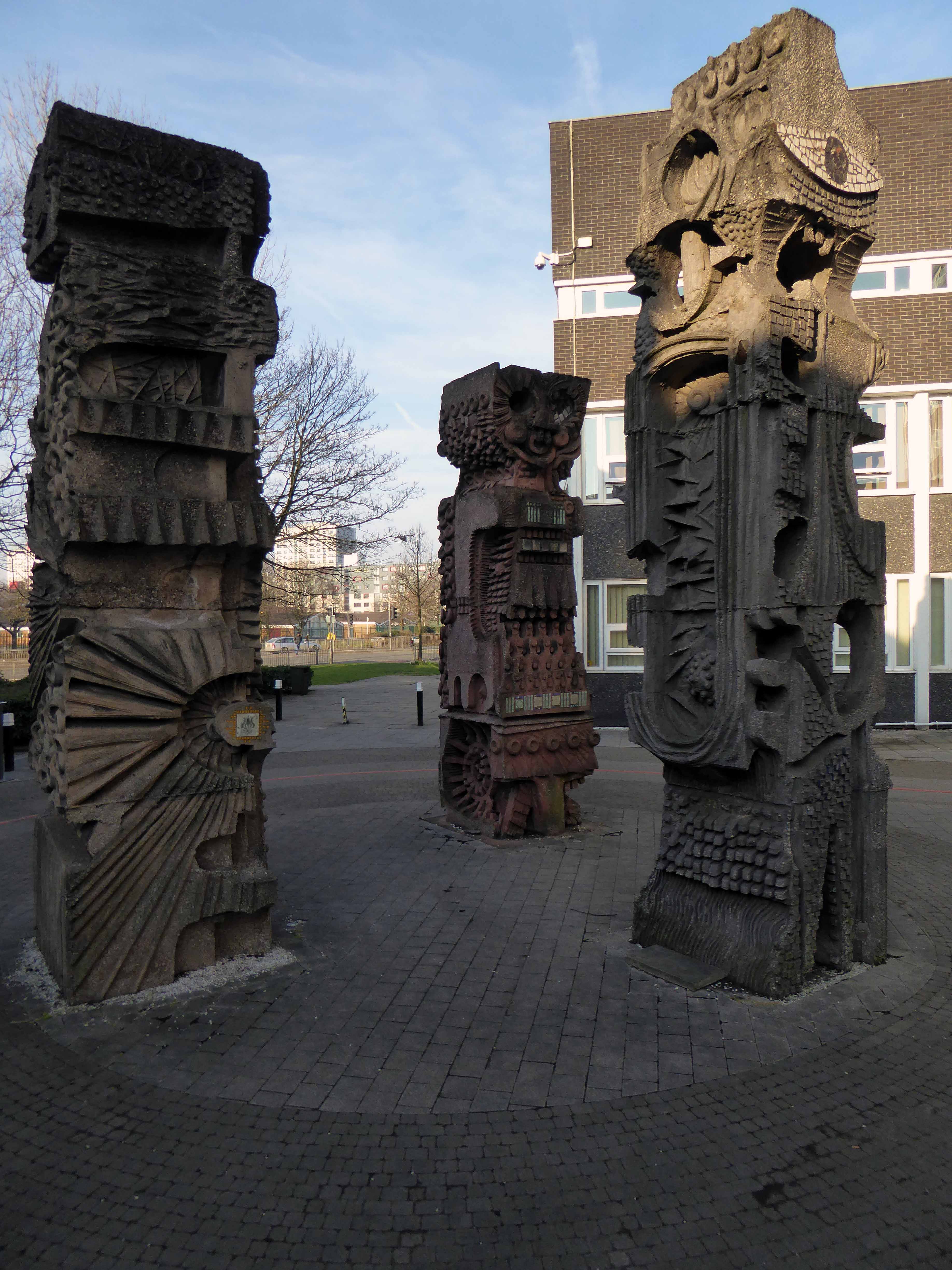
Now the part of the University of Salford, this grouping is probably the most significant work by Halliday Meecham during this period. The blocks wrap to almost enclose a courtyard and they step up in height towards the rear of the site. To the front is a lecture theatre block in dark brick. The multi-storey elements are straightforward in their construction and appearance and have had their glazing replaced. Perhaps the richest elements here are the three totemic structures by artist William Mitchell, which were listed at Grade II in 2011. Mitchell was actively engaged with the experiments of the Cement and Concrete Associations during the 1960s and produced a wide variety of works for public and private clients; other works regionally include the majority of the external art and friezes at Liverpool Metropolitan Cathedral and the Humanities Building at Manchester University. These textured concrete monoliths appear to have an abstract representation of Mayan patterns and carry applied mosaic. They were made on site using polyurethane moulds. There is another Mitchell work hidden behind plasterboard in the inside of the building.
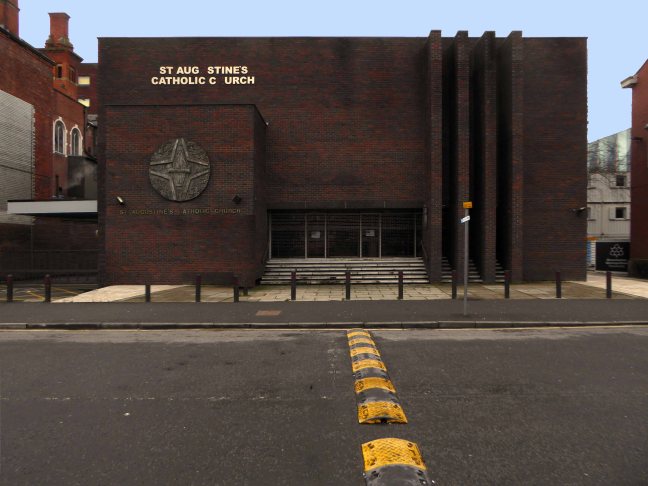
We have been here before on the west side of Grosvenor Square, between the former Eye Hospital and Registry Office on Lower Ormond Street, sits the solid stolid brick form of St Augustine.
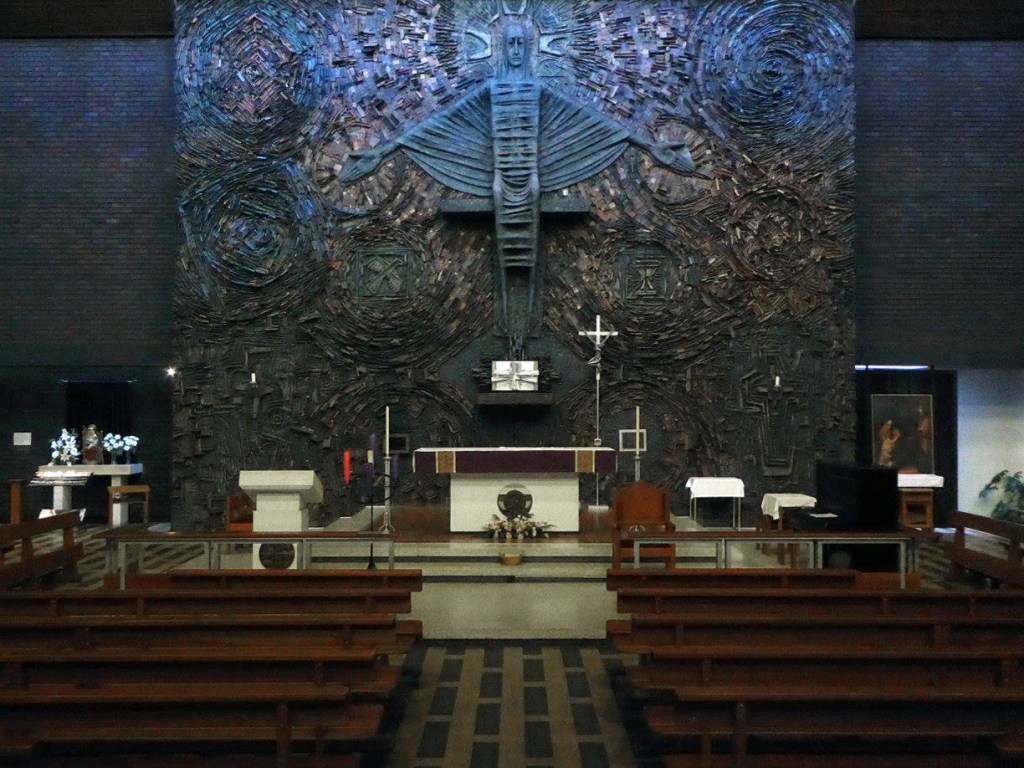
The original St Augustine’s was one of the oldest Roman Catholic churches in Manchester, having been established at Granby Row in 1820. This church was sold in 1905 to make way for the Manchester Municipal Technical College, and a new church built on York Street. This church was destroyed in the Manchester Blitz of 1940. The present site previously housed a chapel of ease in a building bought from the Methodists in the 1870s. It had briefly been a separate parish, but in 1908 was amalgamated with St Augustine’s parish. After the War it was the only surviving church in the parish. The new St Augustine’s was built here with the help of a grant from the War Damage Commission, at a cost of £138,000, when it was clear that the original building was inadequate. The new building was opened in 1968 and consecrated in 1970.
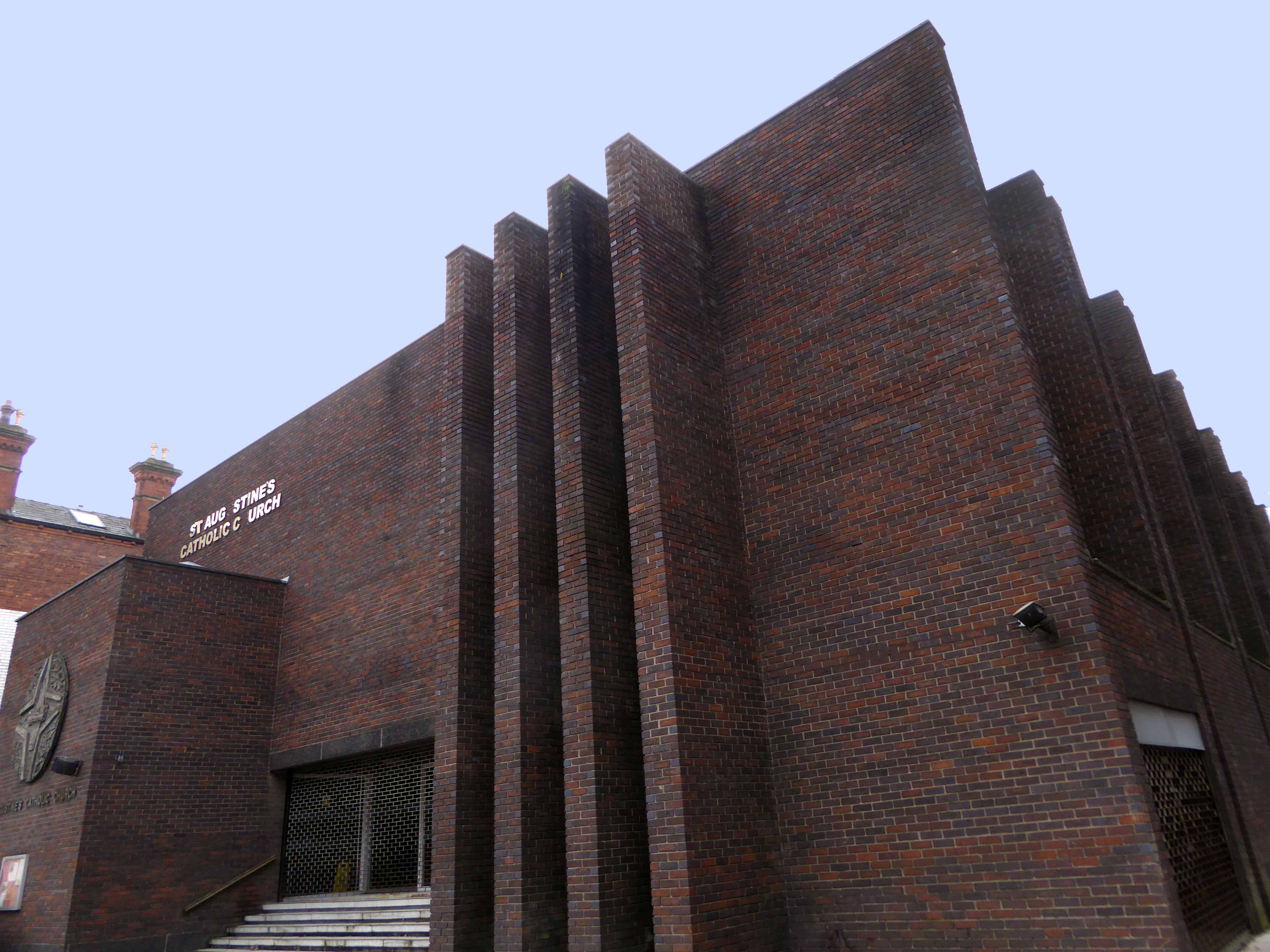
Roman Catholic Church 1967-8 by Desmond Williams & Associates. Load-bearing dark brown brick construction with felt roofs supported on Vierendeel girders, with rear range in brick and timber cladding.
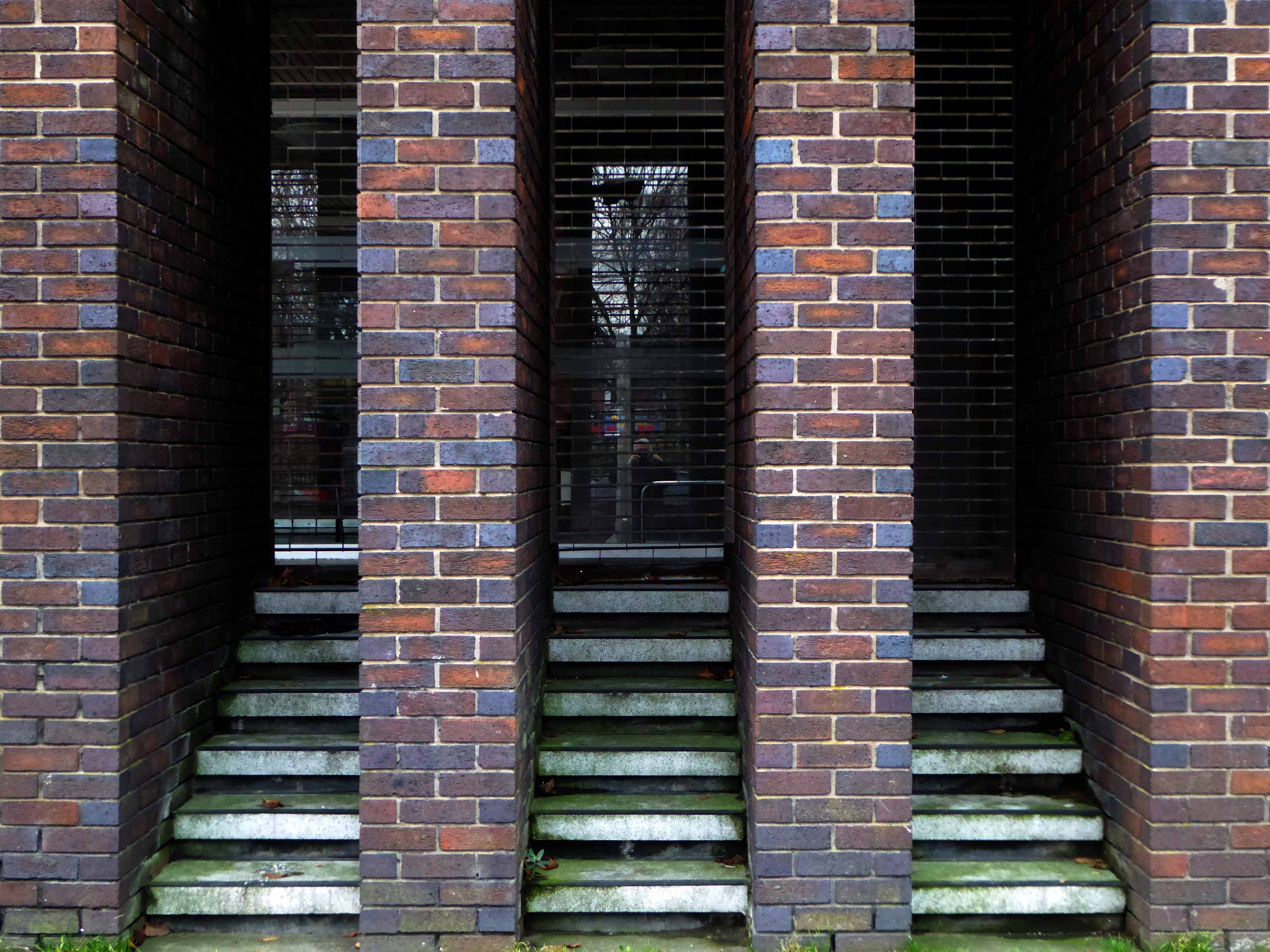
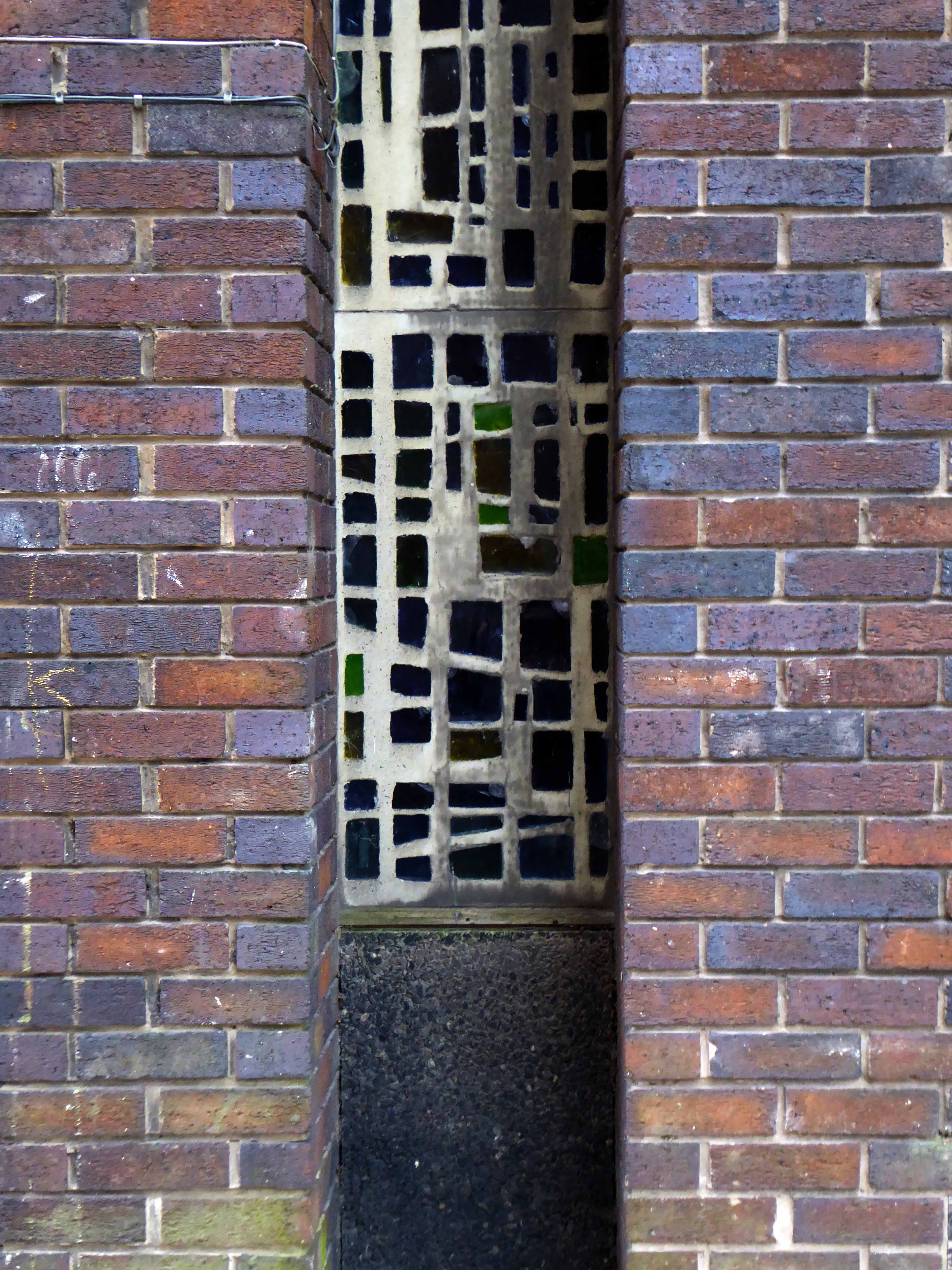
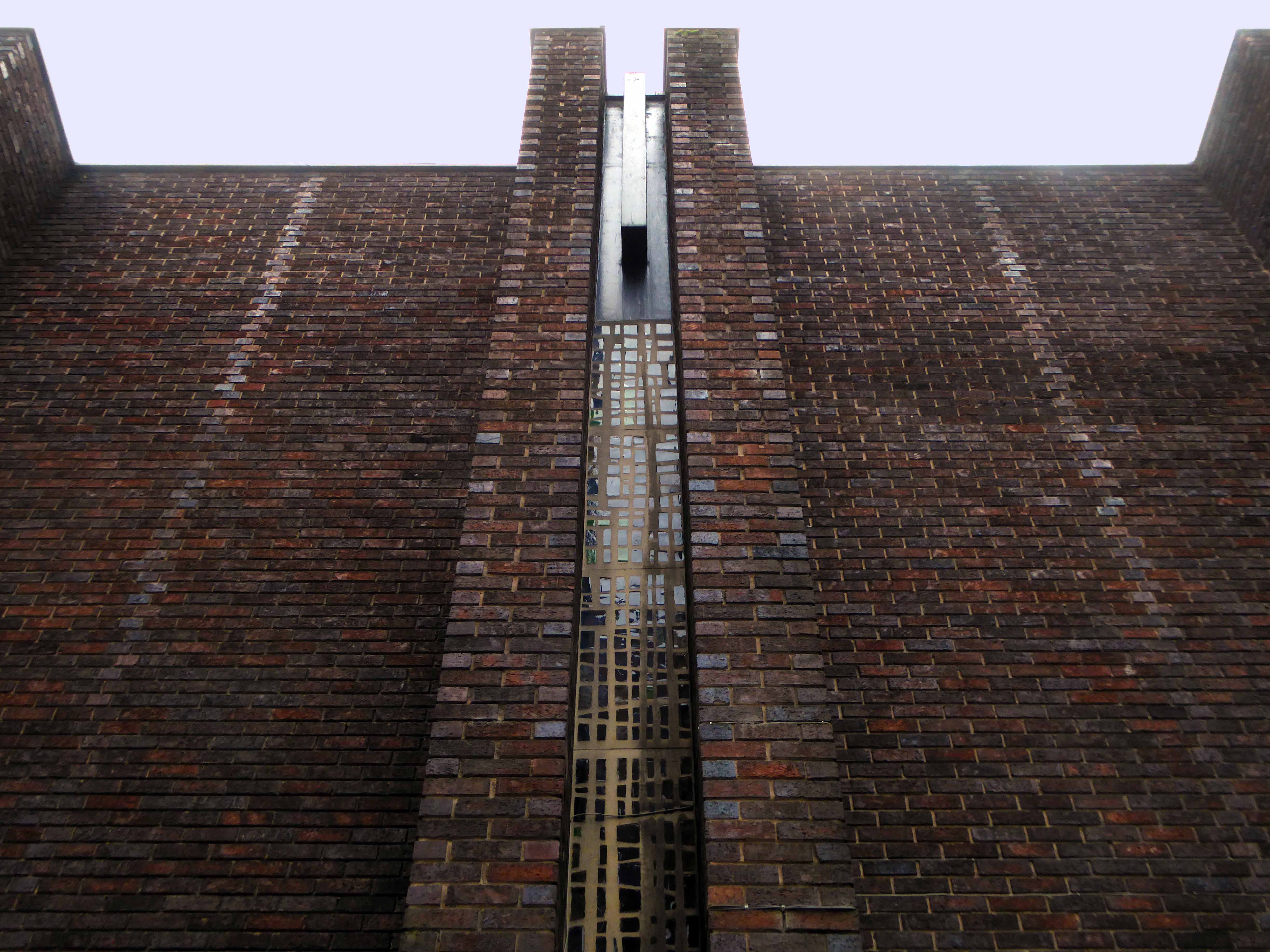
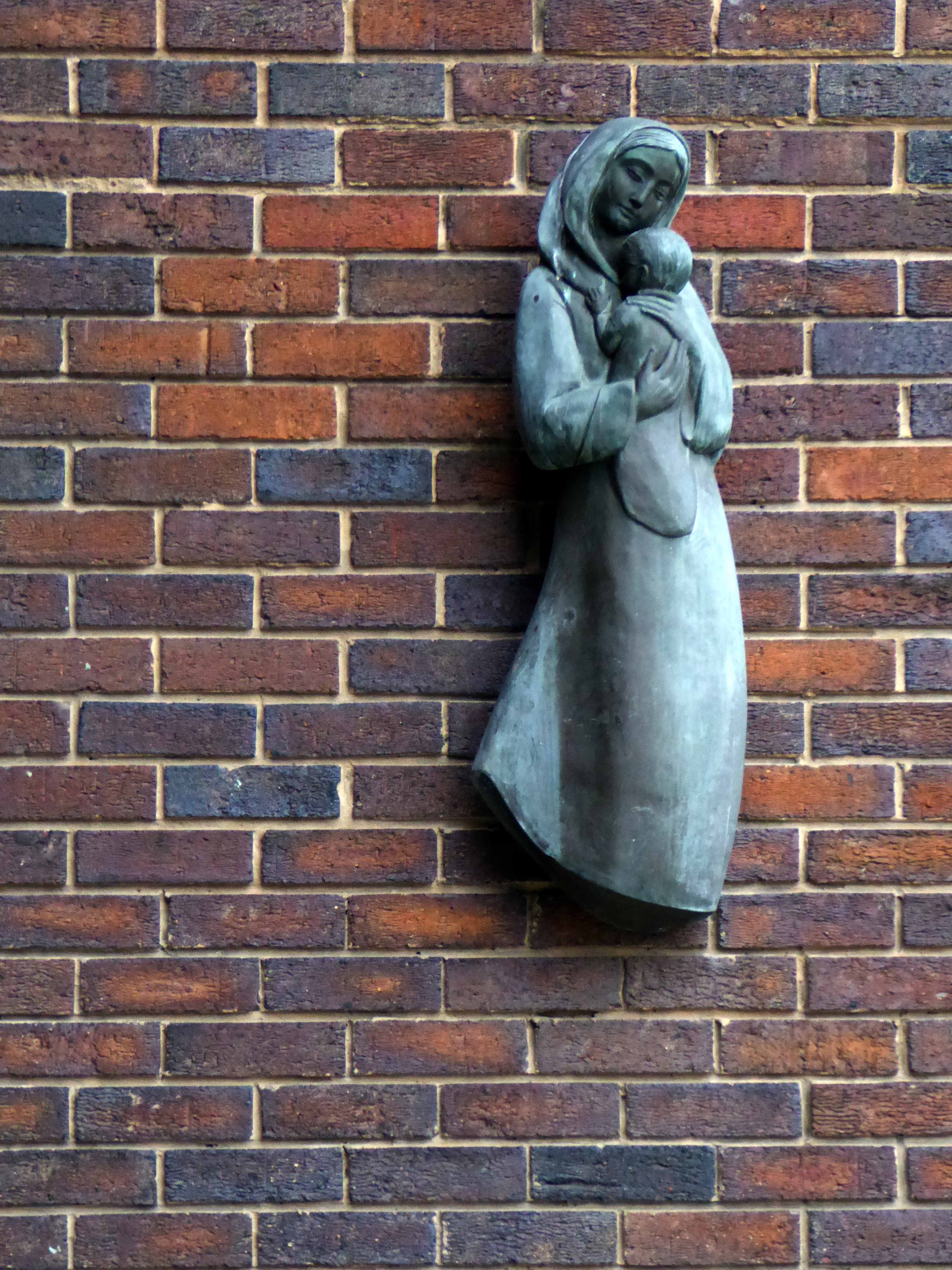
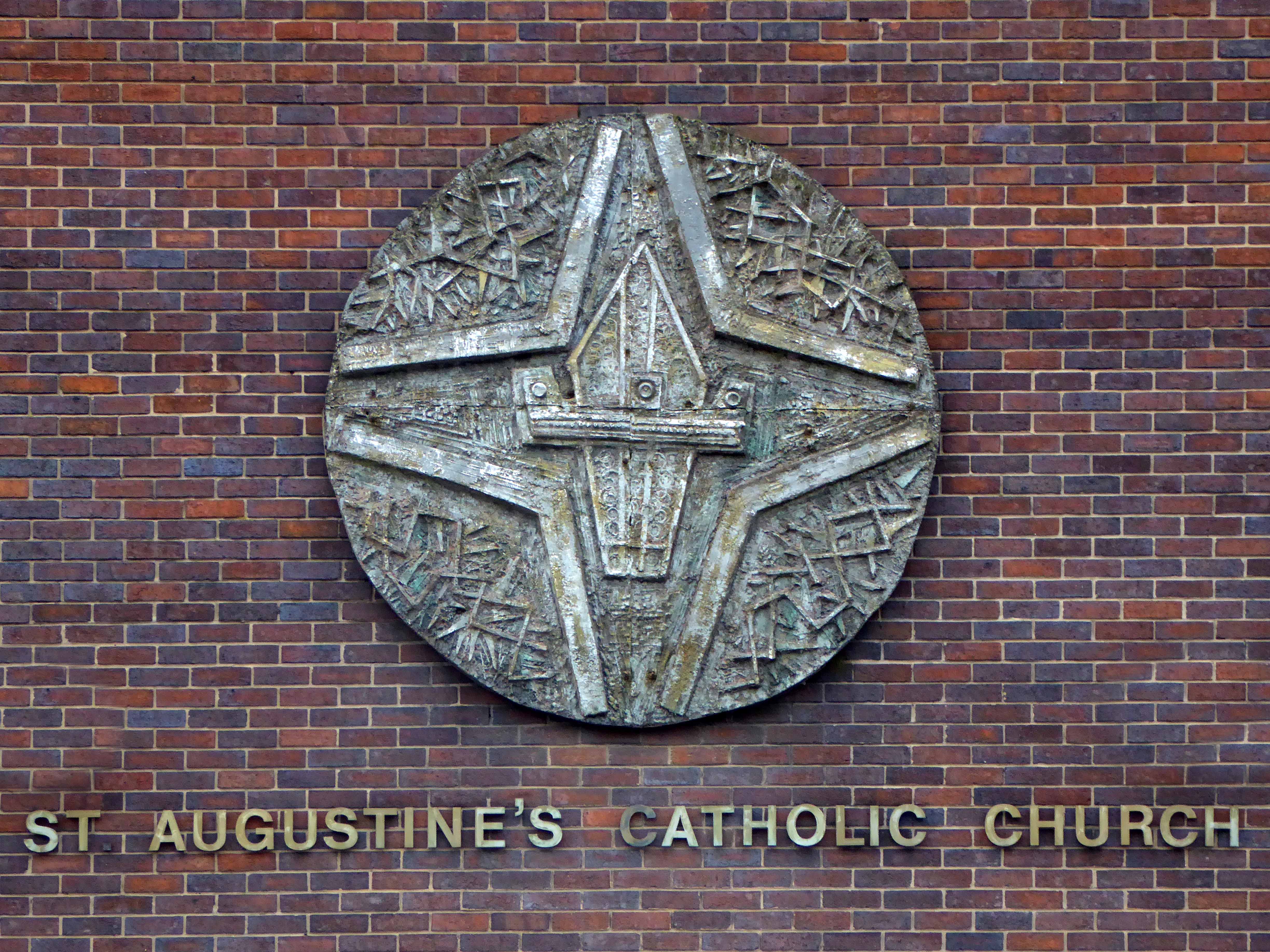
Body of church virtually square, with corridor at rear right leading to cross wing containing offices and accommodation. Windowless façade with floating service projection to the left and four full height brick fins to the right of wide recessed central entrance reached by low flight of steps. On the projection a ceramic plaque with star and mitre and on the inner face of the left hand fin a figure of the Madonna, both by Robert Brumby. Set back returns of 6 bays, divided by pairs of projecting slim brick piers. Openings between the pairs of piers filled with coloured chipped French glass. Secondary entrance beneath large cantilevered canopy in first bay of left hand return. Slender linking block containing sacristy. The rear presbytery range, containing first floor hall, meeting rooms, kitchen, chaplaincy offices and accommodation for four priests. Bell tower rising from parish rooms block.
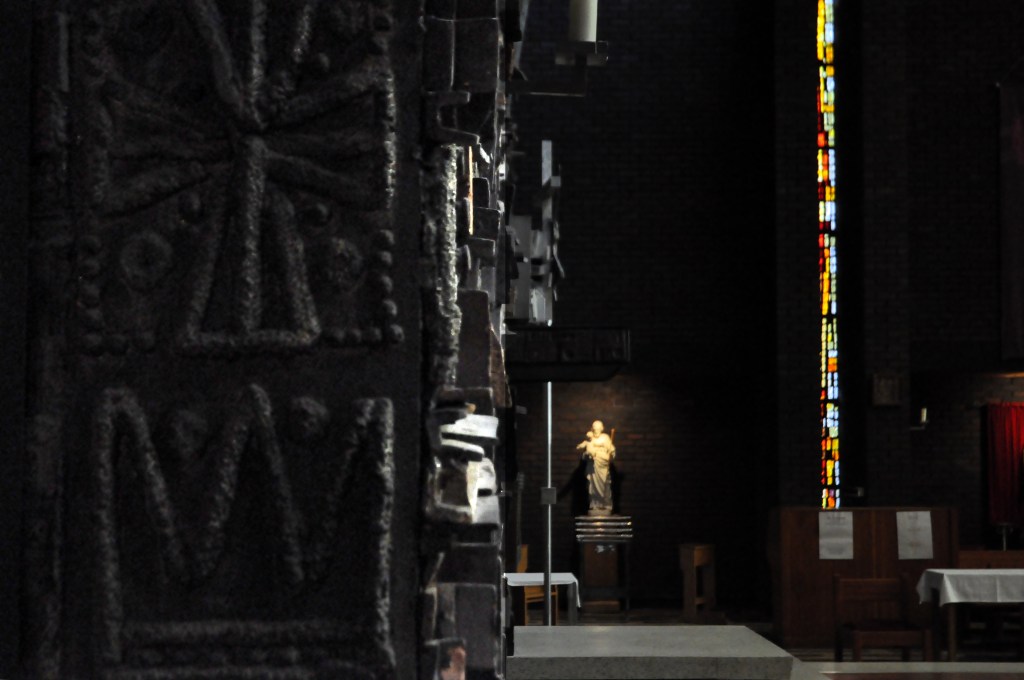
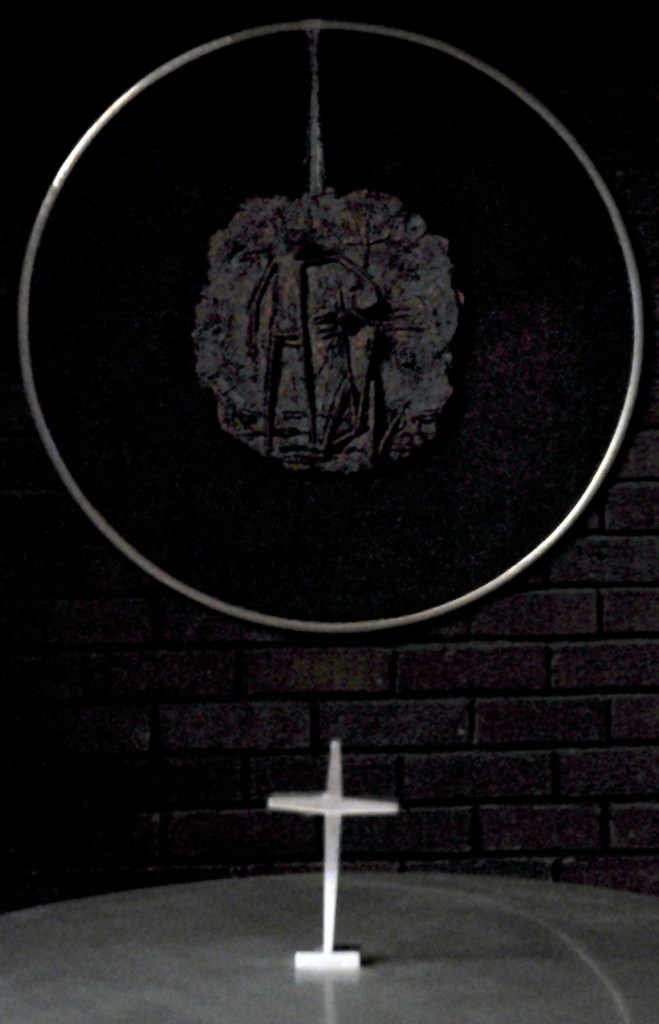
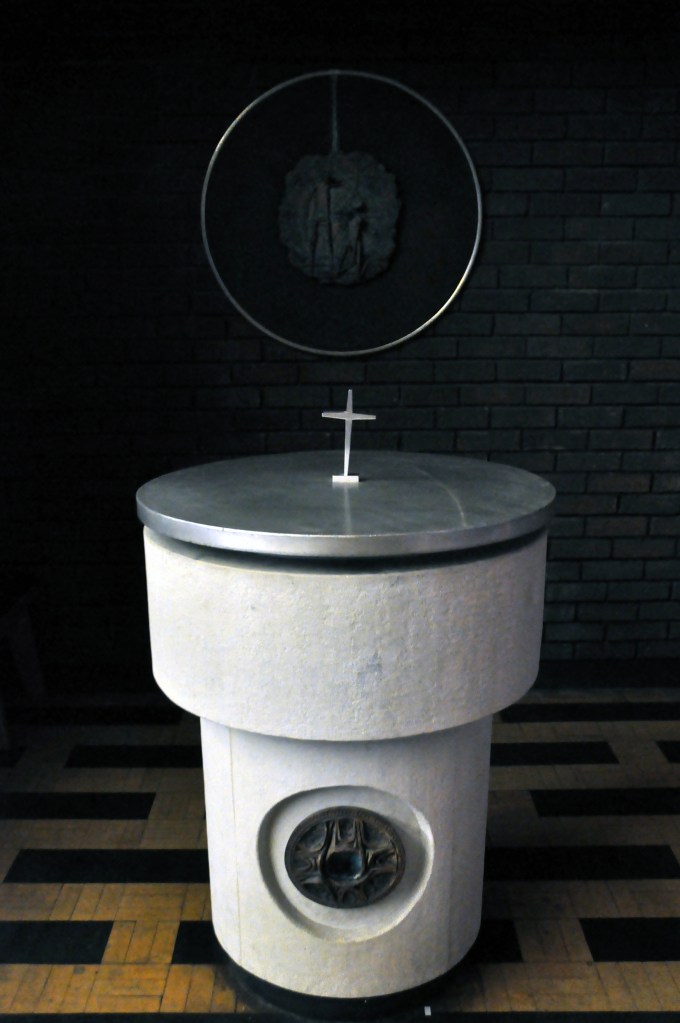
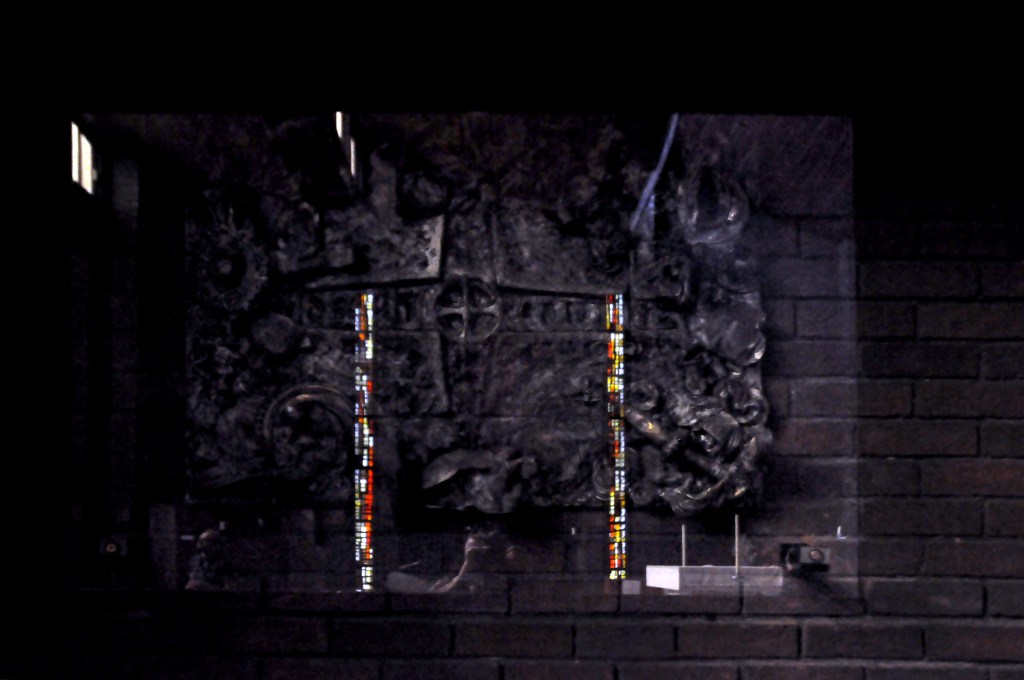
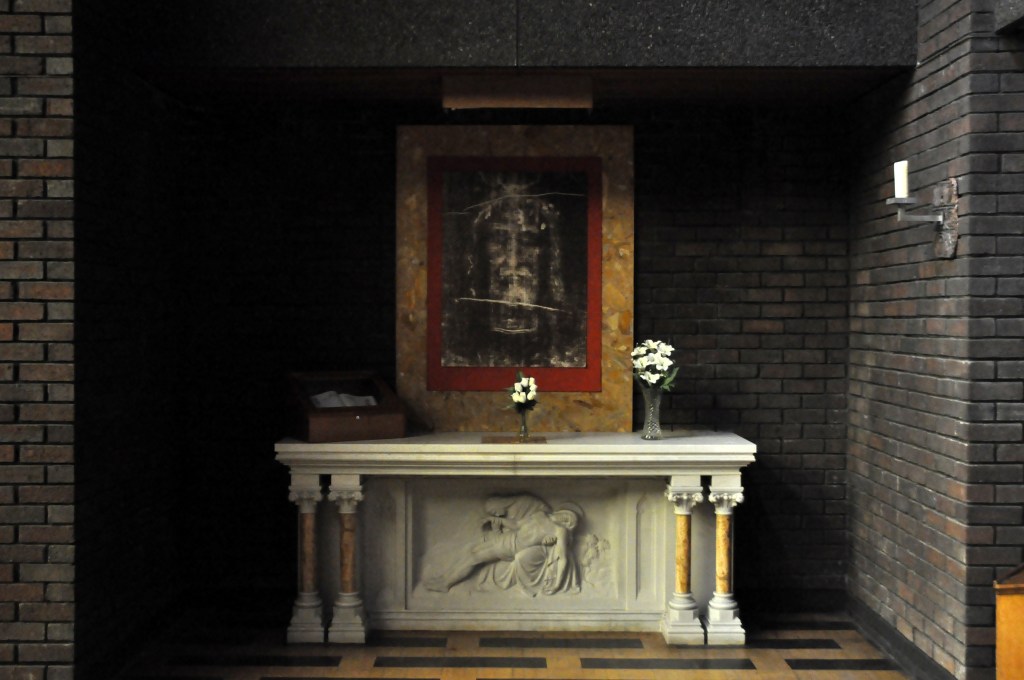
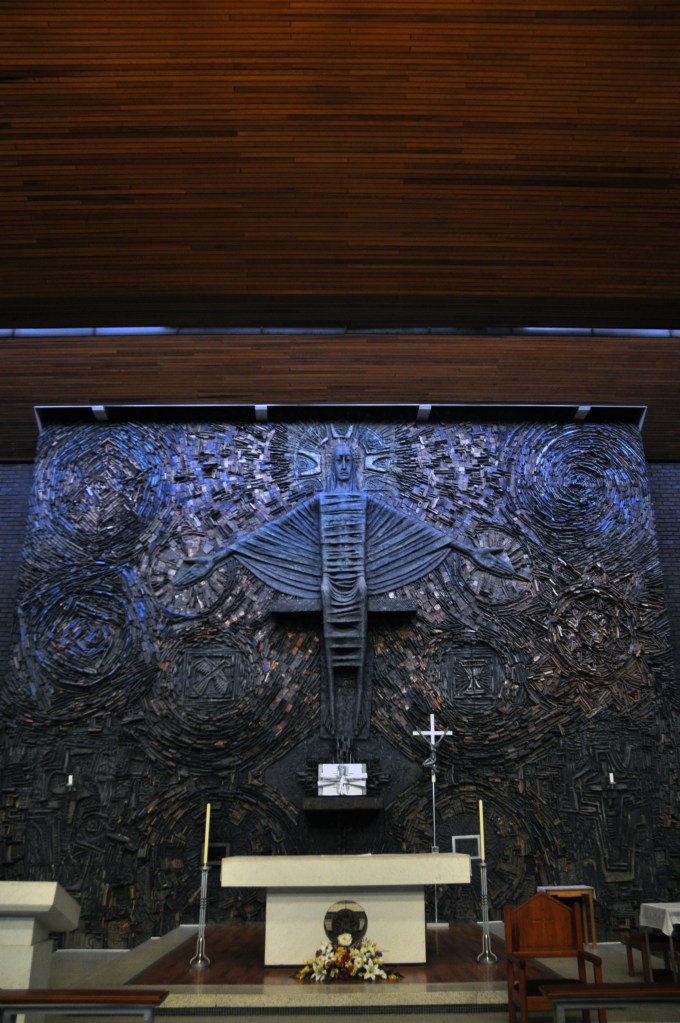
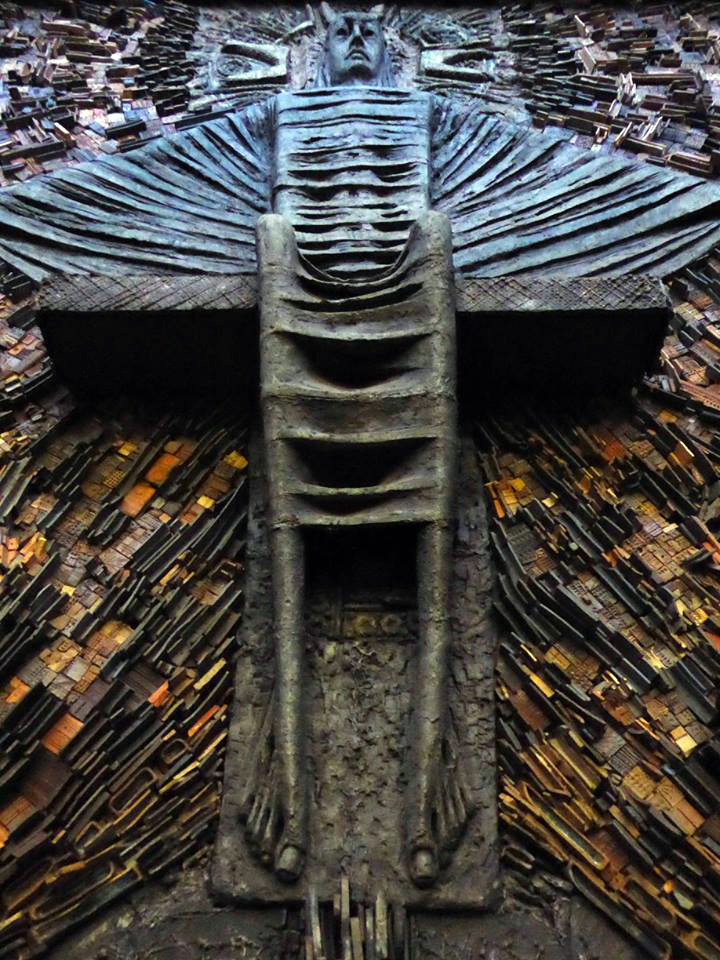
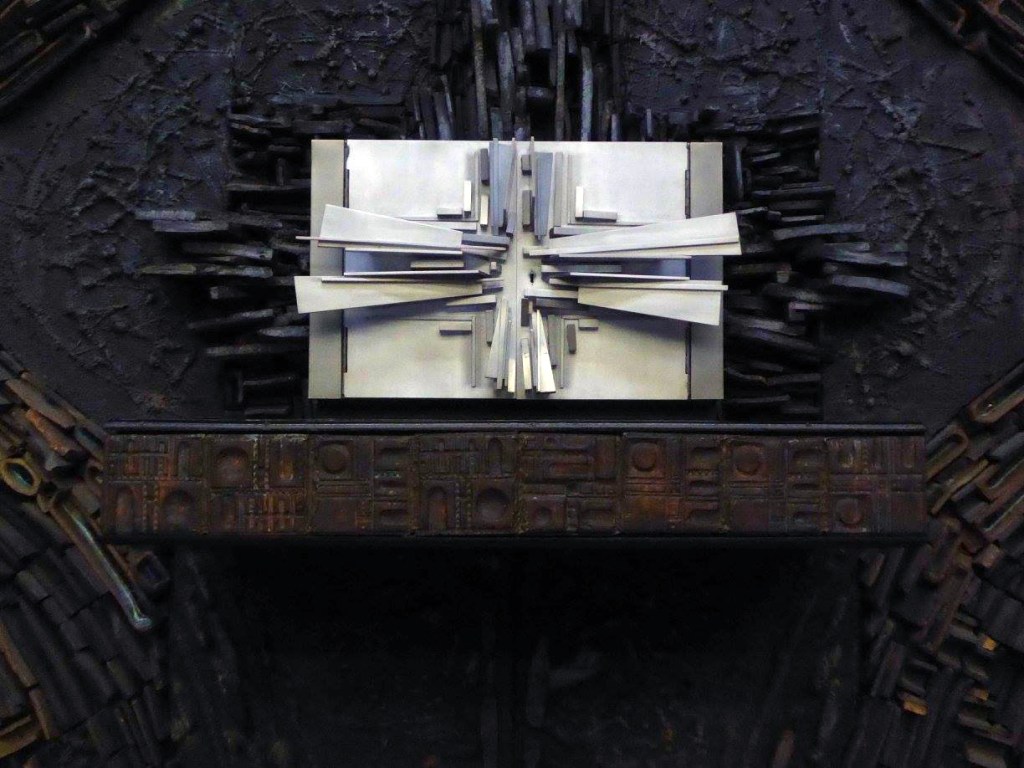
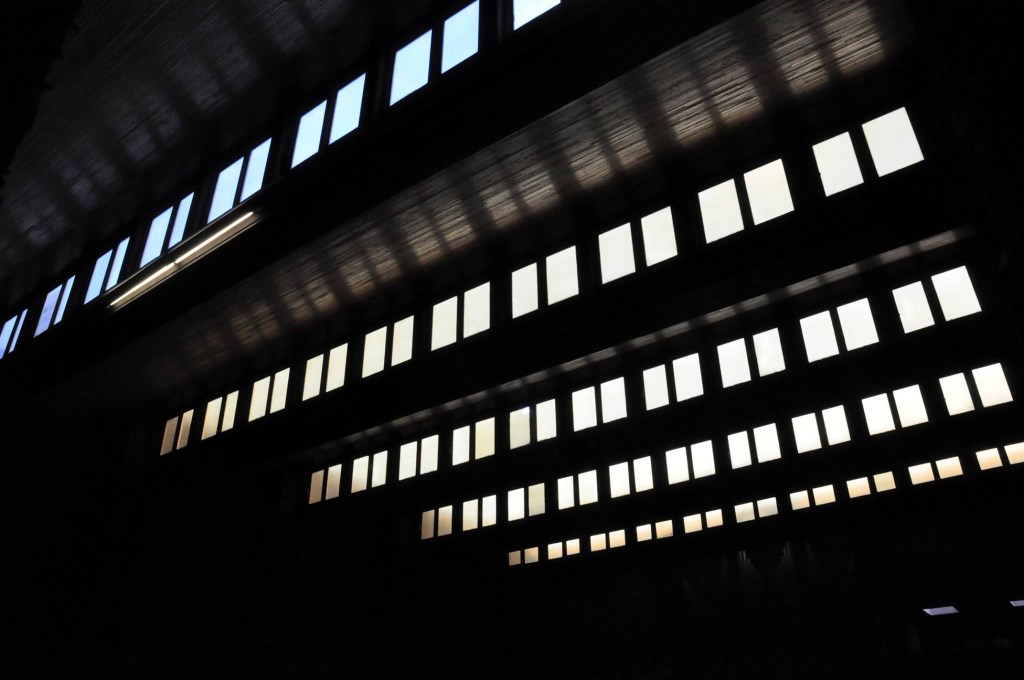
A simple box plan with ceiling of steel trusses clad with timber and clerestory north lights. Sanctuary of three stepped platforms with white marble altar set forward. Large ceramic reredos sculpture of Christ in Majesty by Robert Brumby of York. Bays containing either projecting confessionals or chapel recesses are divided by pairs of projecting slim brick piers. Fixed seating in angular U-shape surrounding Sanctuary. Side chapel to left. Narthex. West gallery above originally with seating, now housing organ. Unified scheme of decoration by Brumby including the external plaque and statue, holy water stoups, wall light brackets, circular font with ceramic inset and aluminium lid, altar table with bronze inset and, probably, Stations of the Cross sculptures. Also by Brumby, a memorial plaque fashioned from mangled plate, damaged in the Blitz, commemorating the earlier parish church which this replaced.
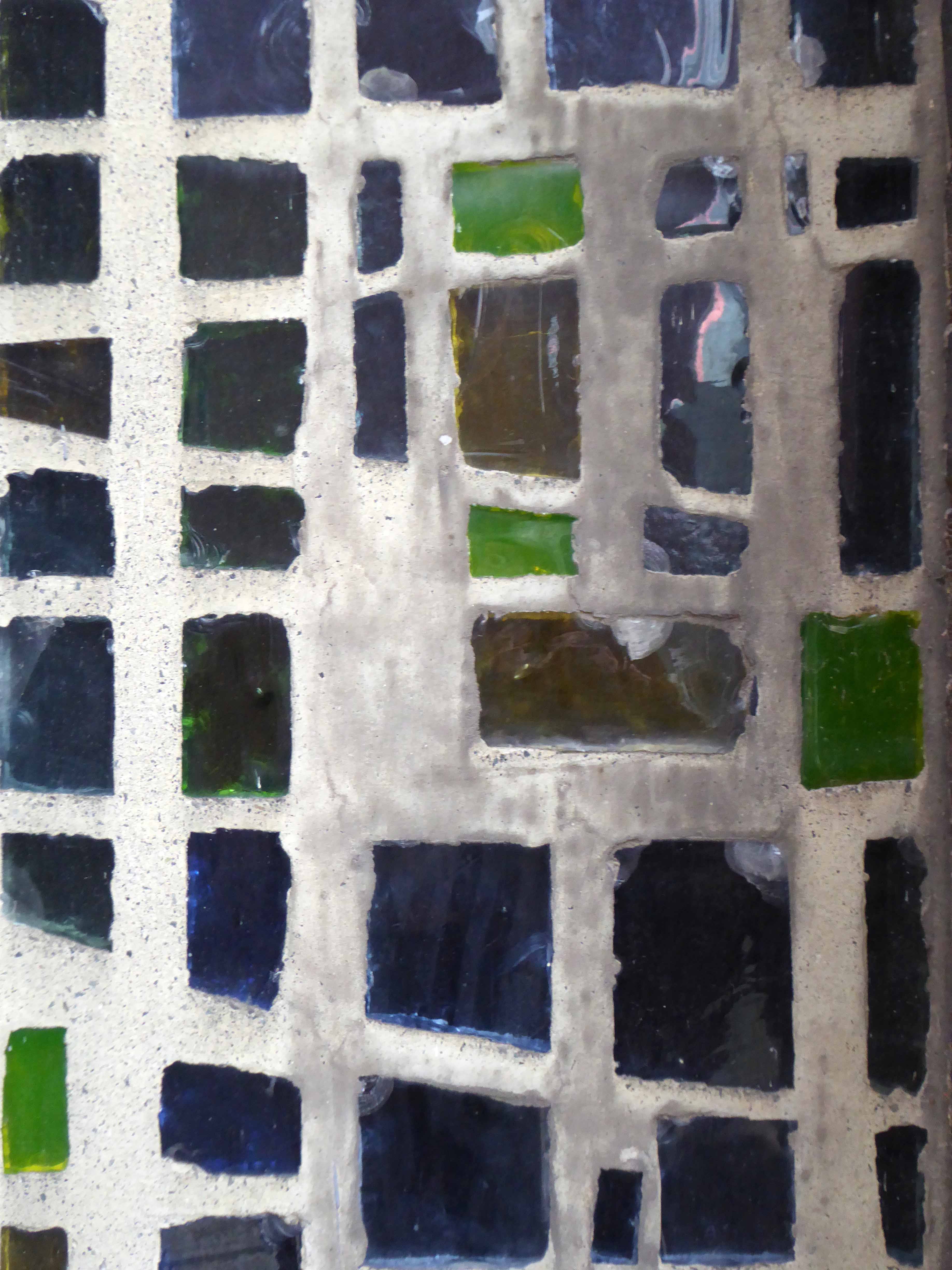
Of particular note are the stained glass windows.
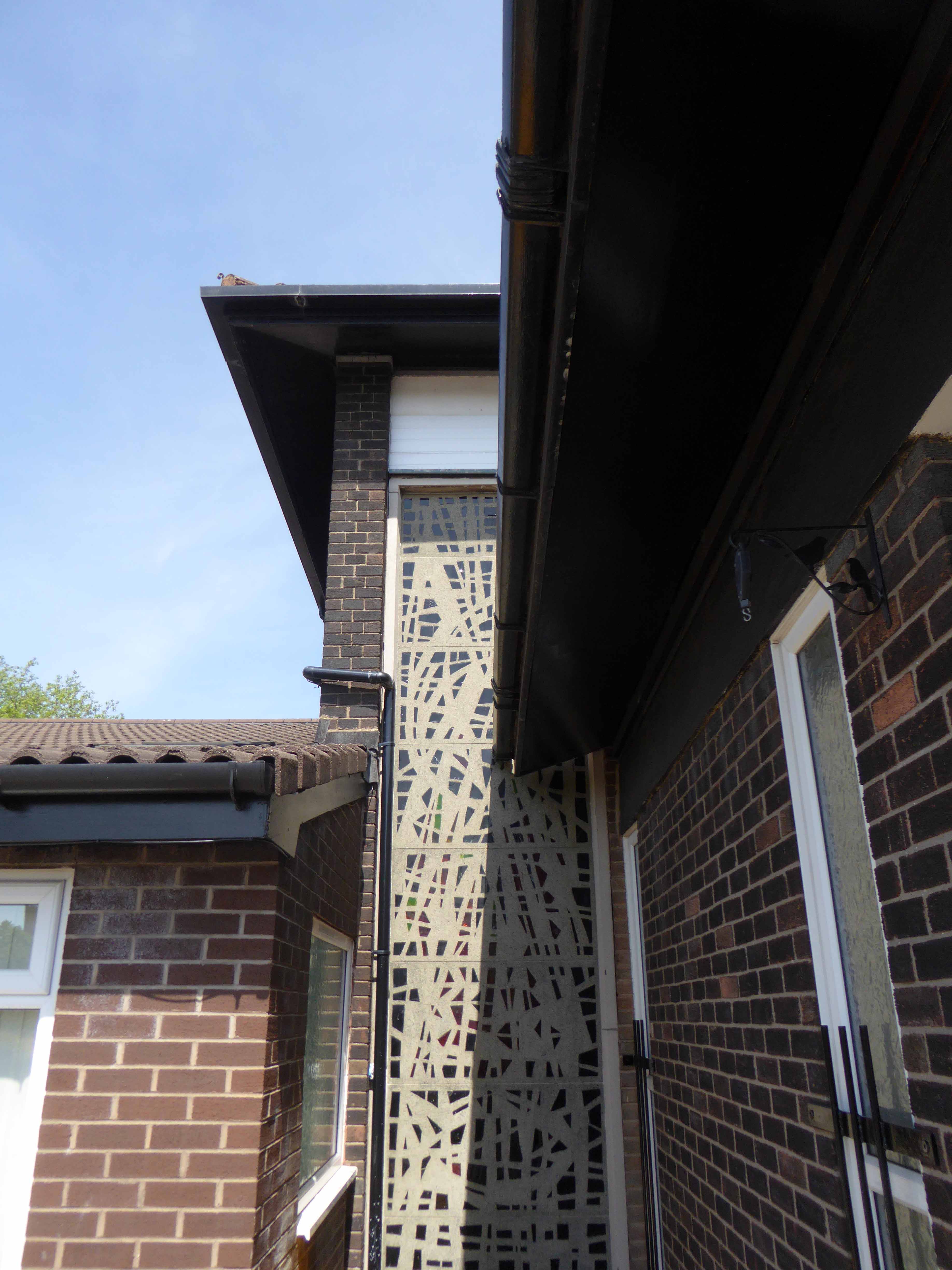
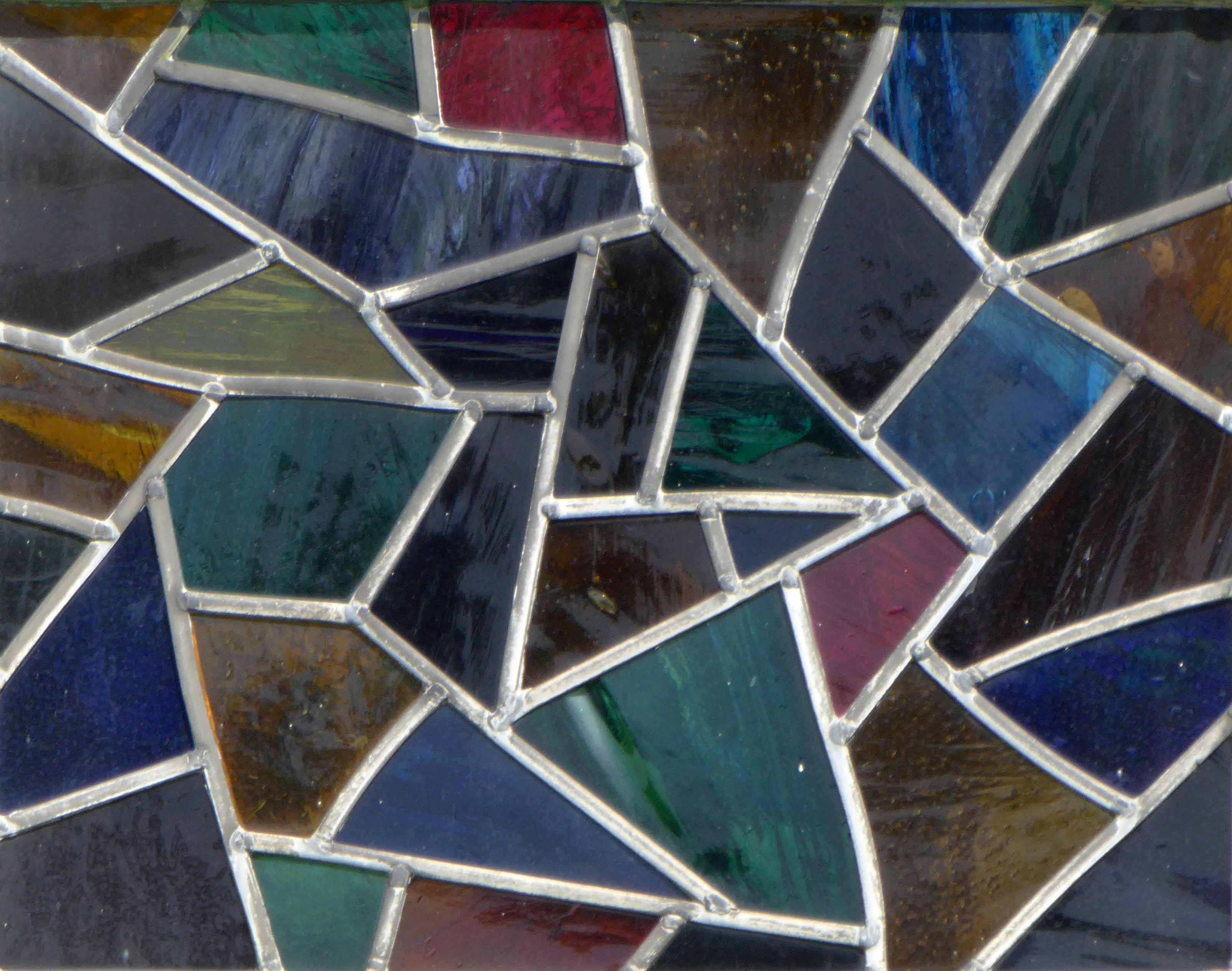
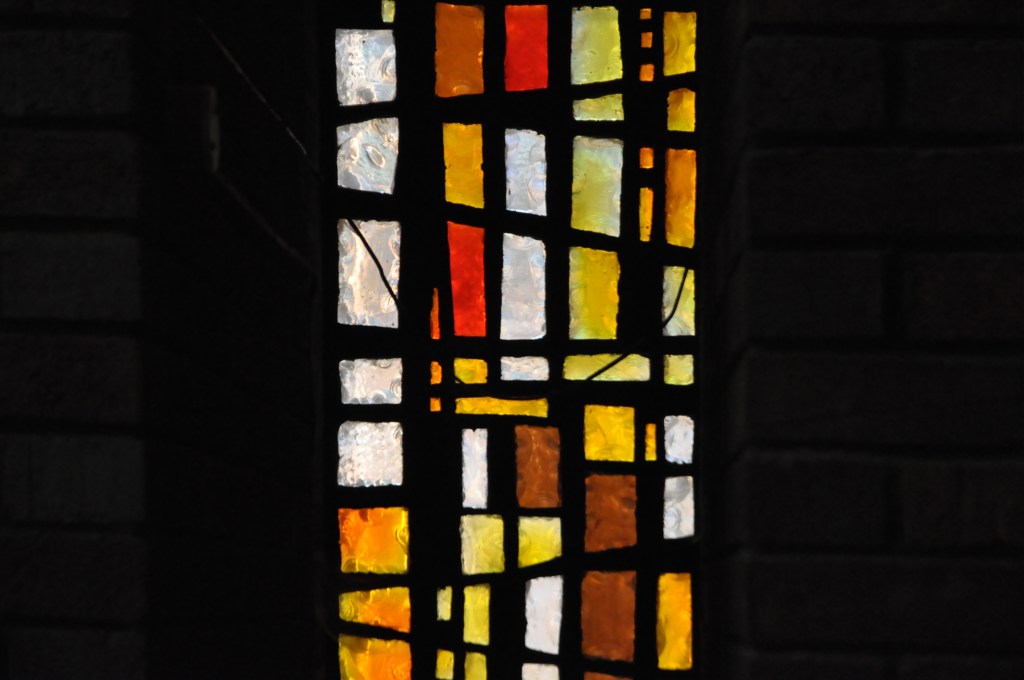
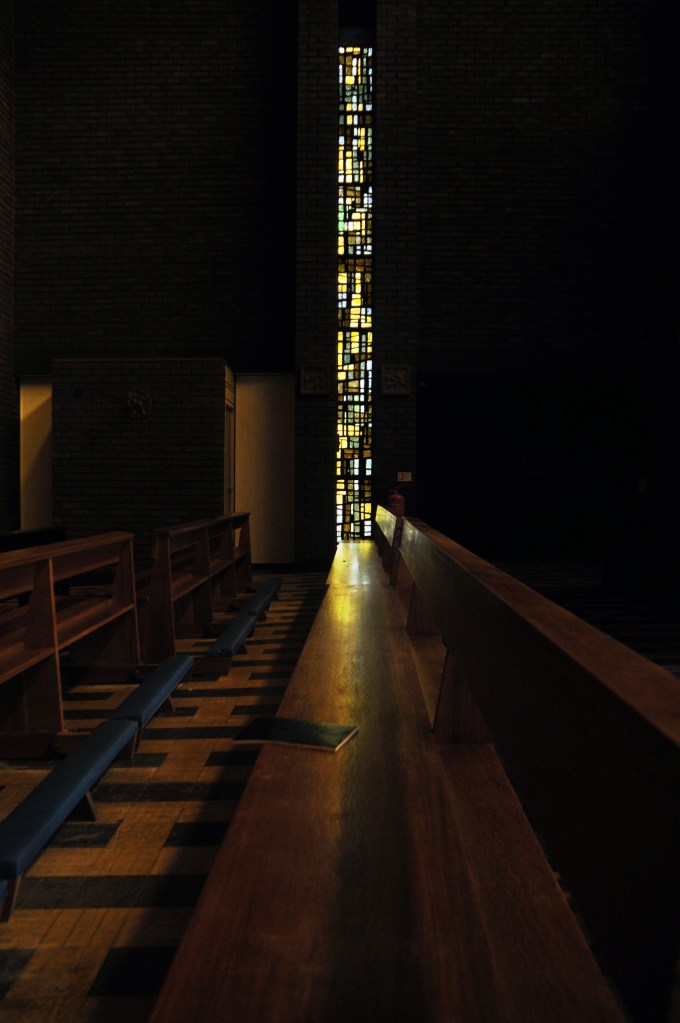
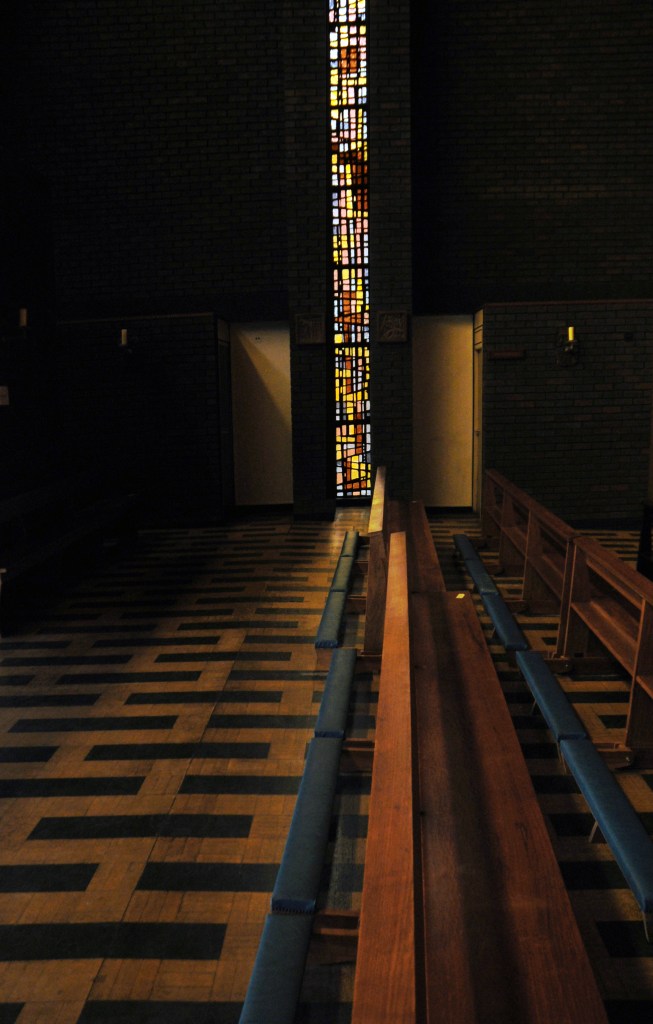
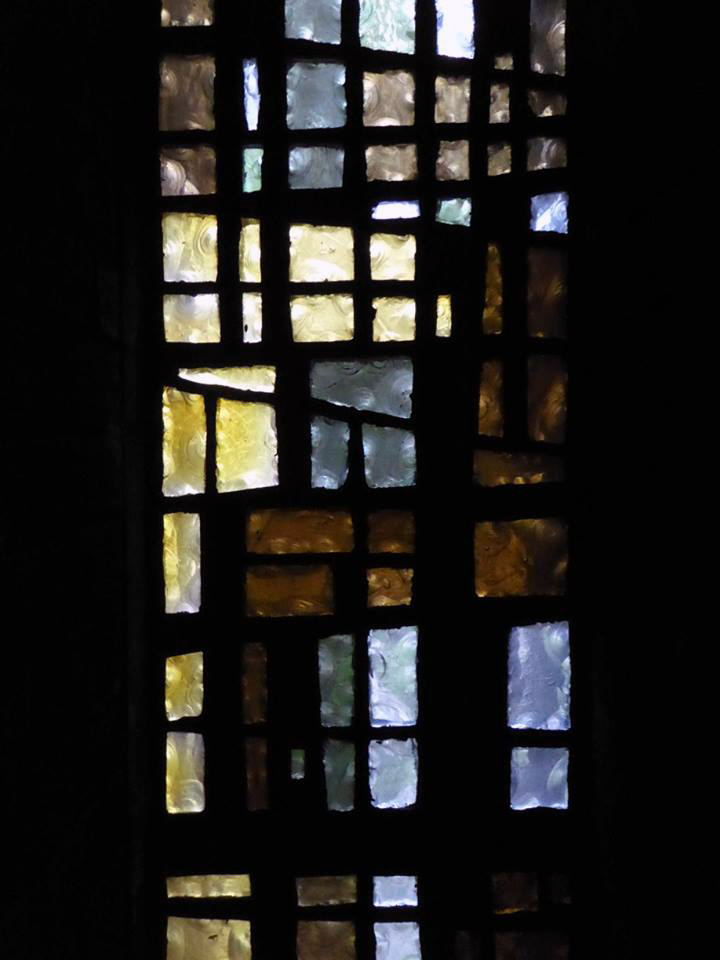
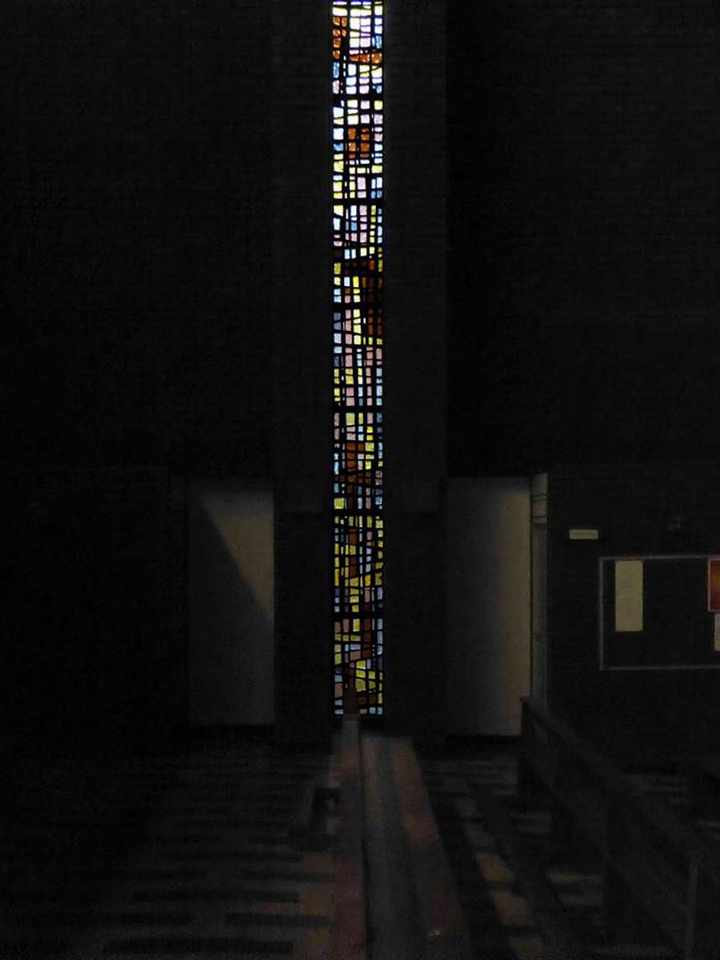
The internal atmosphere of the church is modified by the changes in light cast through the stained glass windows. The windows are of a colourful random and abstract design and ascend the full height of the walls between structural bays which themselves form enclosures to confessionals and stores. The pieces of coloured glass are suspended in concrete and were supplied by the now defunct Whitefriars company. The designer was a French artist, Pierre Fourmaintraux, who began working with Whitefriars in 1959, using the ‘dalle de verre’ (slab glass) technique that had been developed in France between the wars. His motif was a small monk variously painted upon, or cast into, the glass. In St. Augustine’s the motif is cast and highly stylised and can be found tucked away at the foot of each of the rear windows.
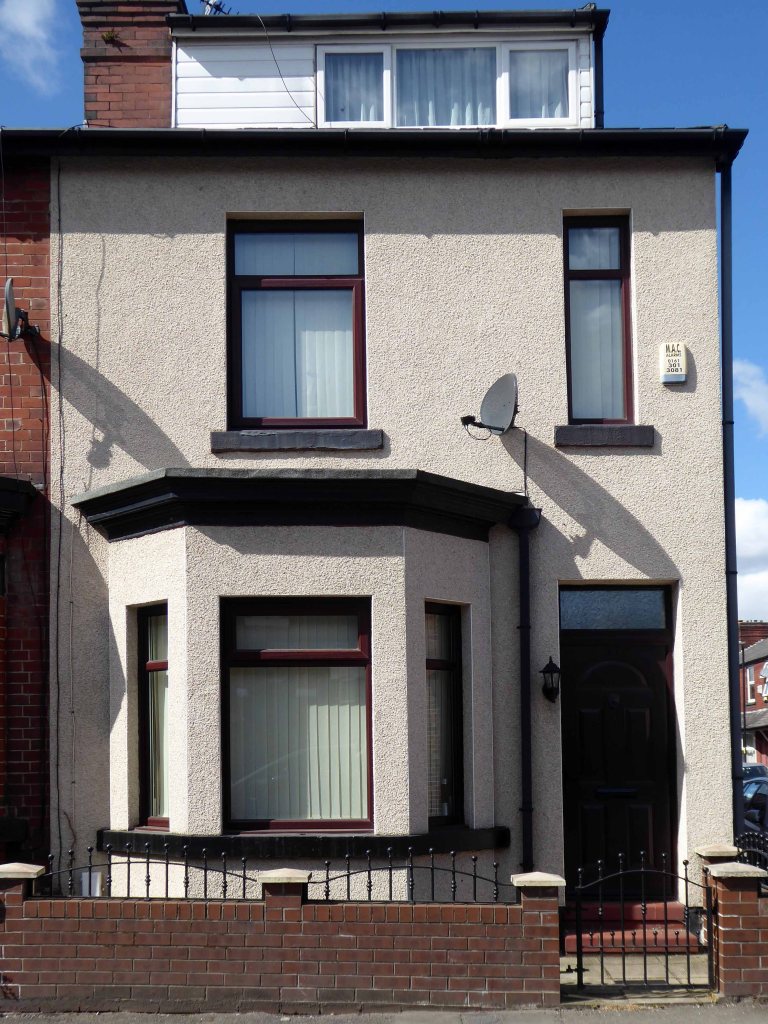
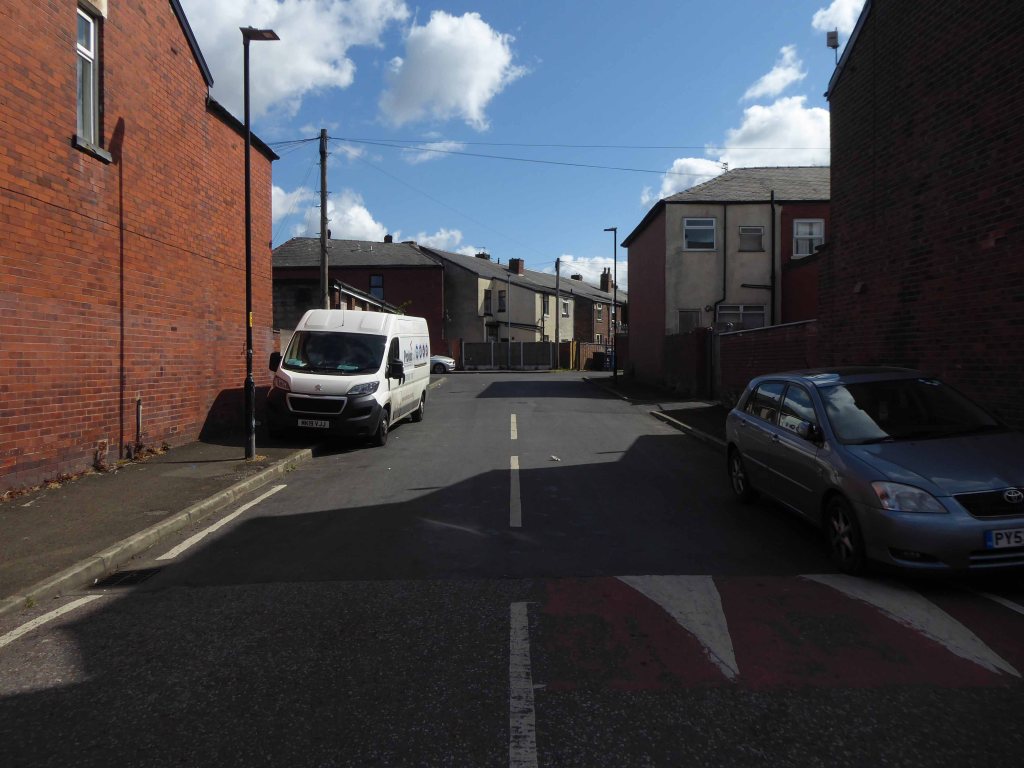
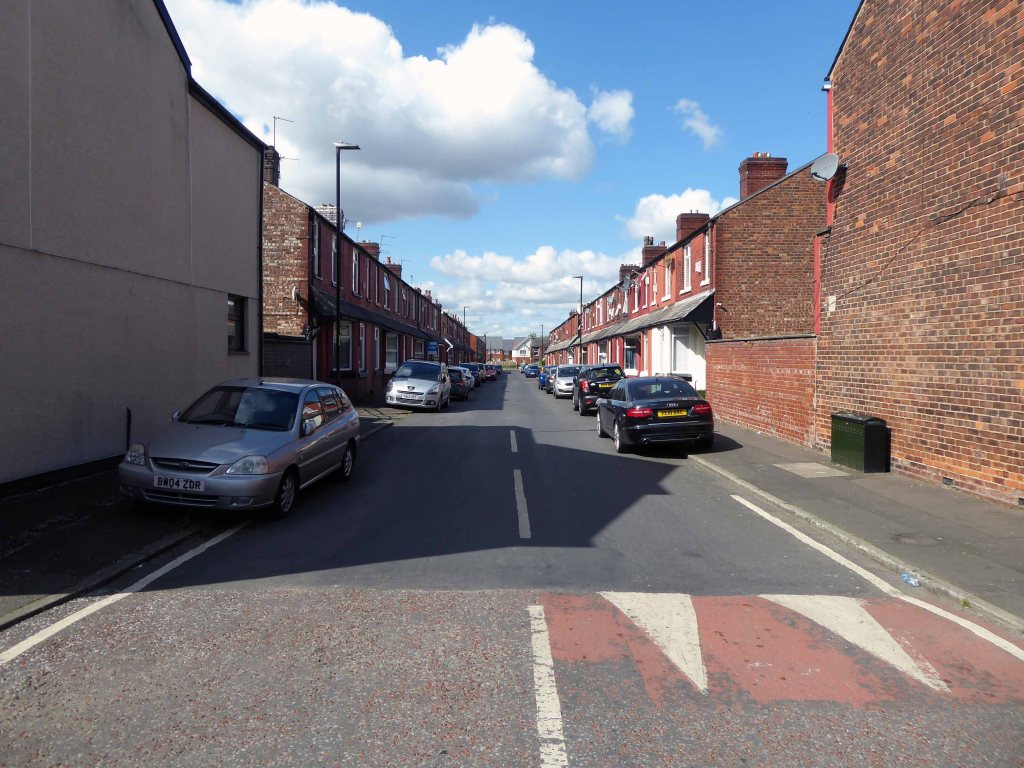
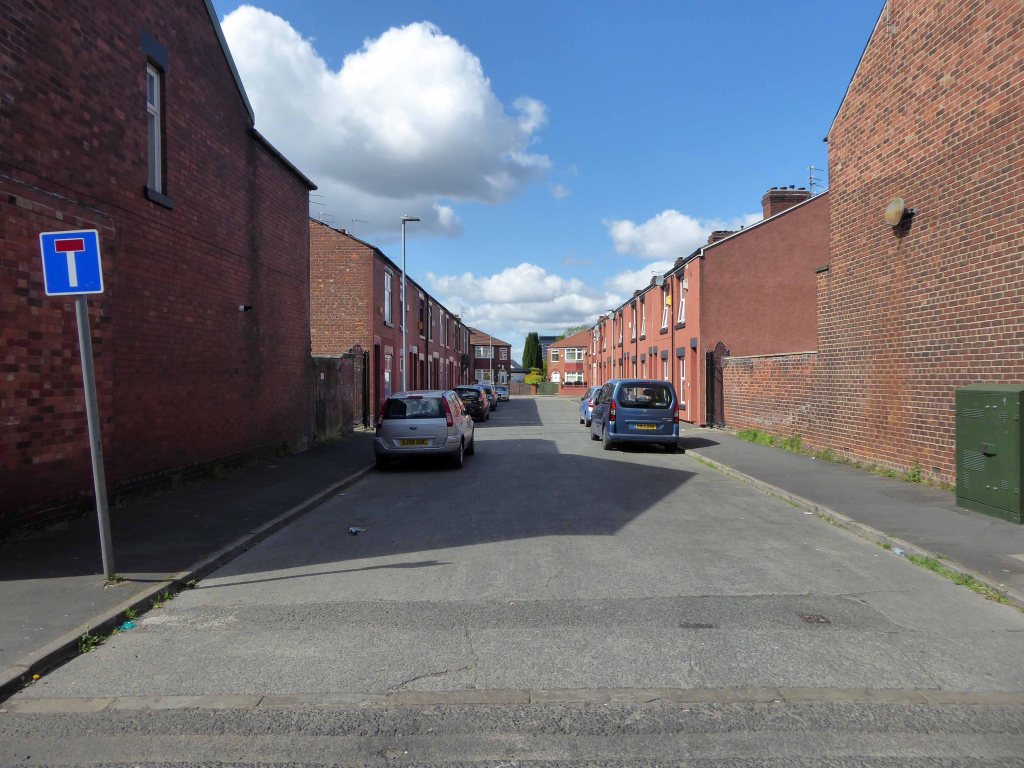
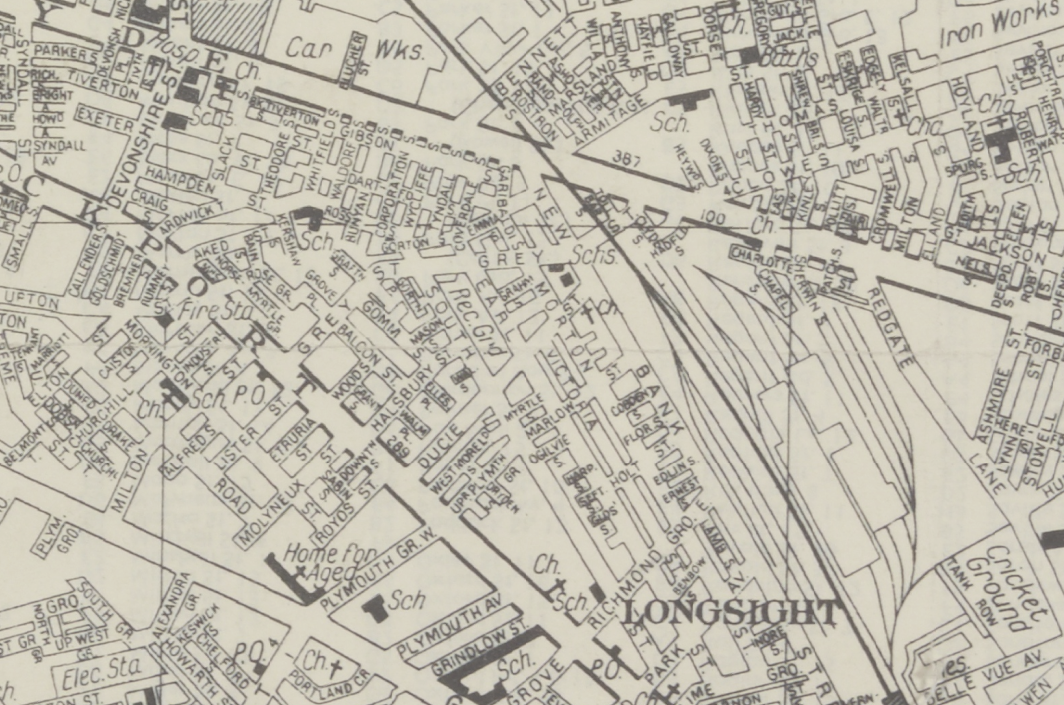
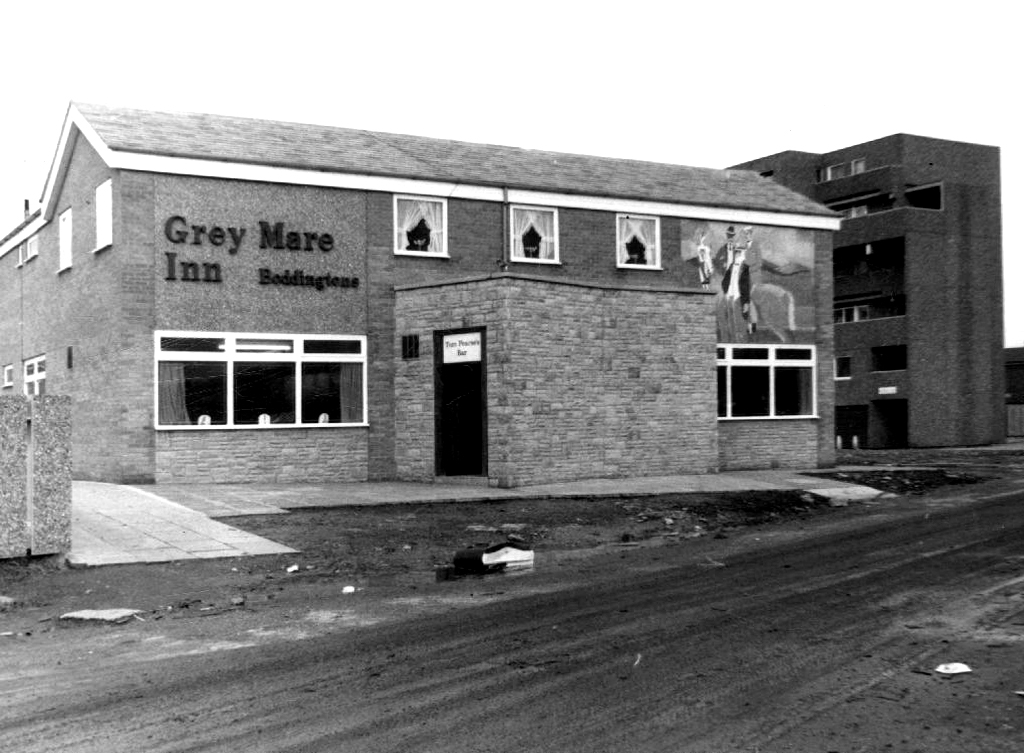
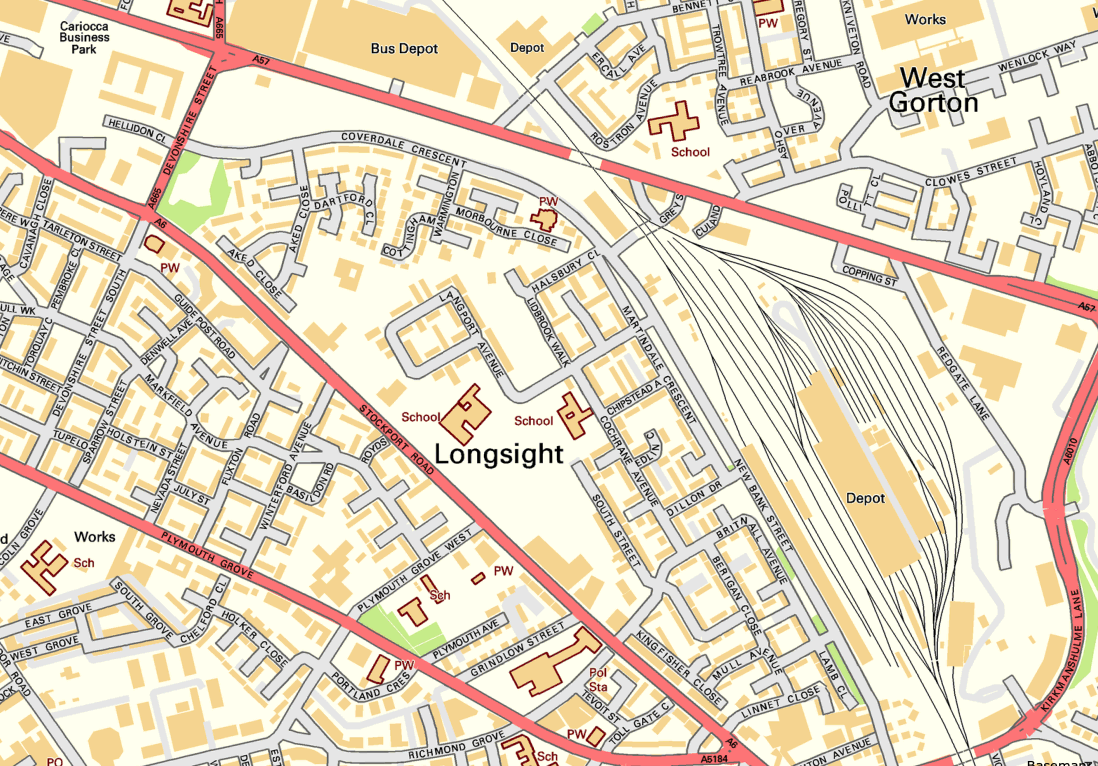
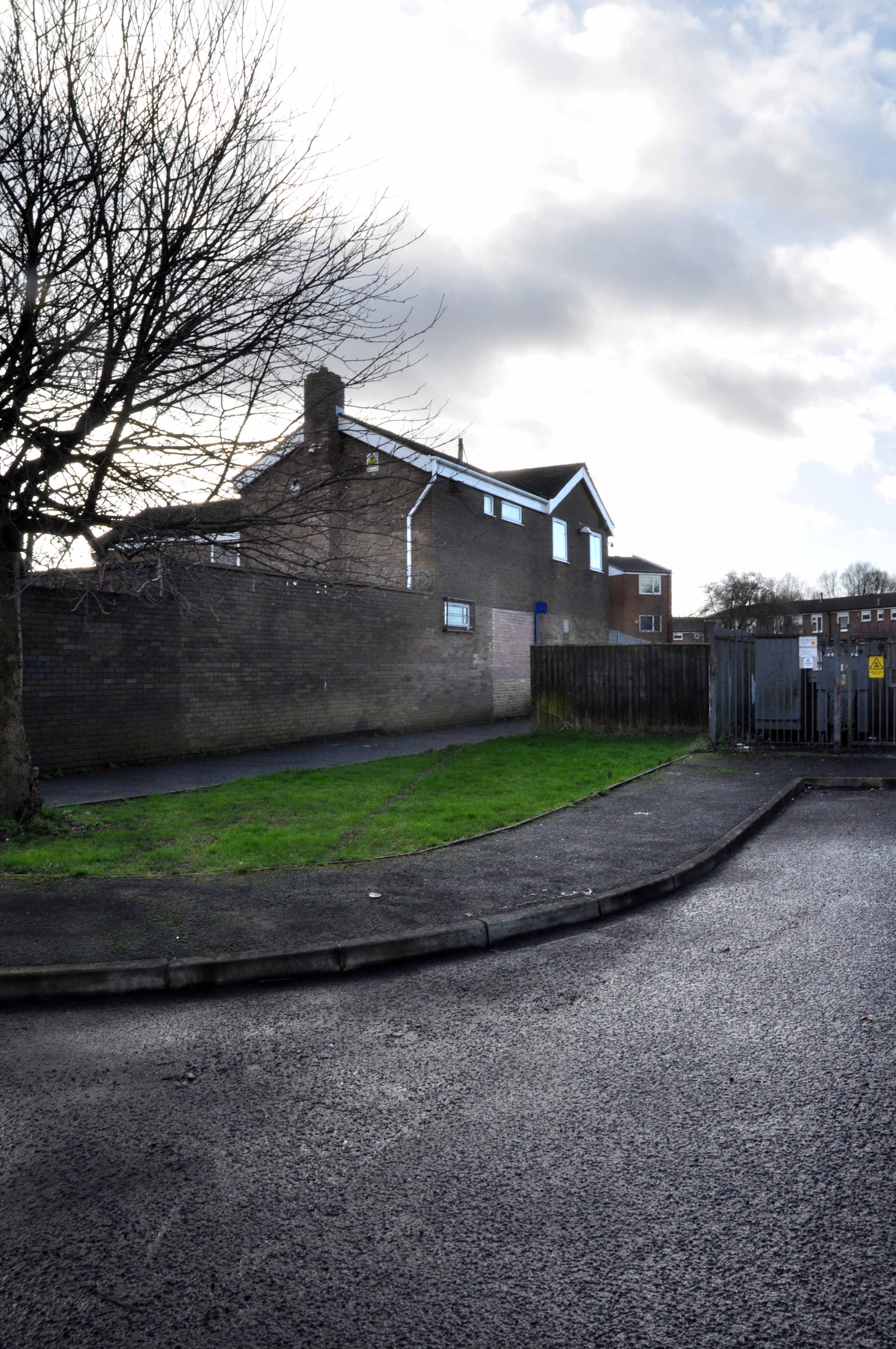
Exeter Close/Warmington Drive Manchester Longsight M12 4AT
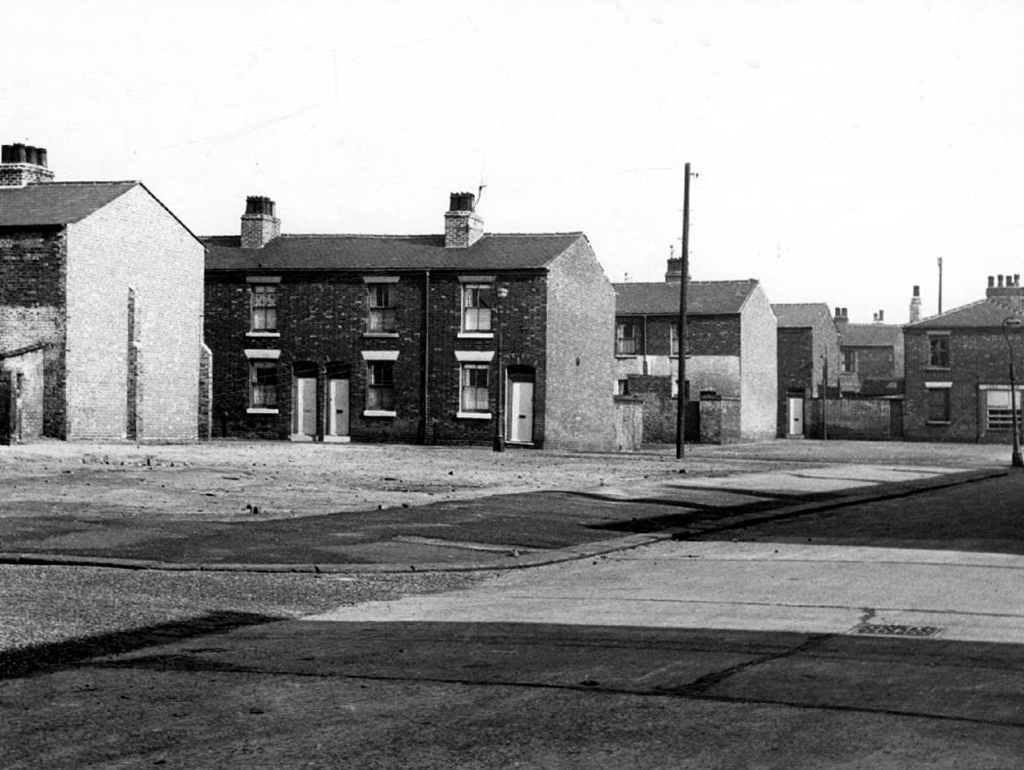
Once there was this.
Once there was that.
Then there wasn’t.
That’s just the way of it.
A dense web of streets awash with back to backs, jobs for all – in conditions perceived to be unfit for purpose.
Of a total of 201,627 present dwellings in Manchester, some 54,700, or 27.1 per cent., are estimated to be unfit. A comparison of slum clearance action taken by six major local authorities, Manchester, Leeds, Birmingham, Liverpool, Sheffield and Bristol, shows that for the five years ending 30th June, 1965, Manchester was top of the league, both in compulsory purchase orders confirmed and the number of houses demolished or closed.
Manchester’s figures -13,151 houses demolished or closed .
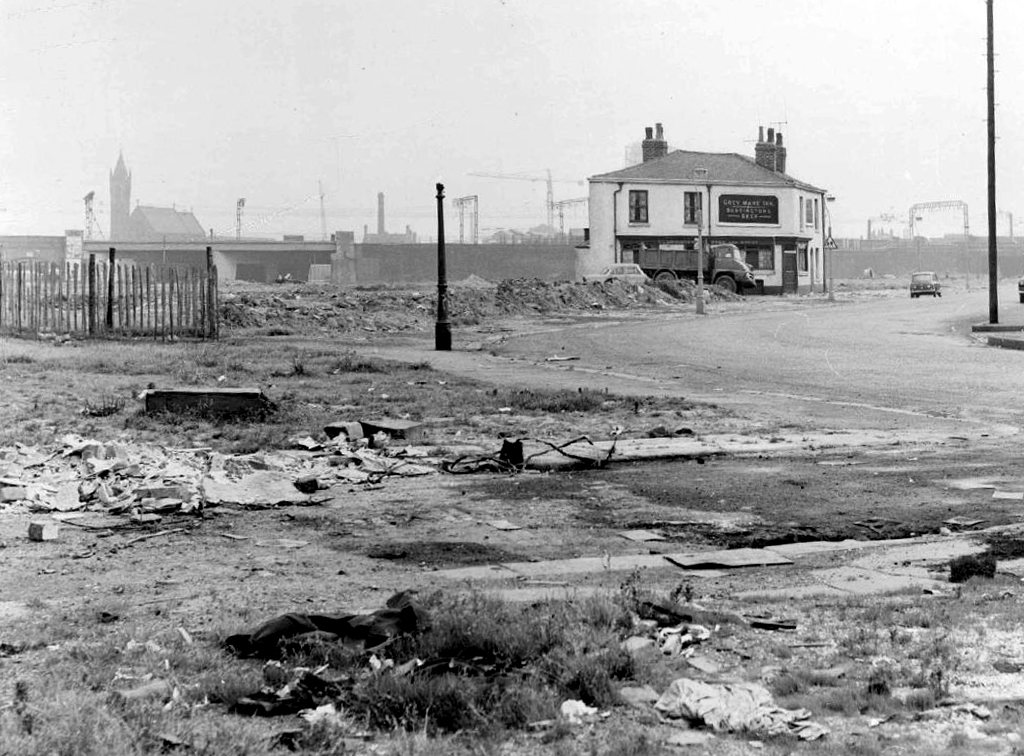
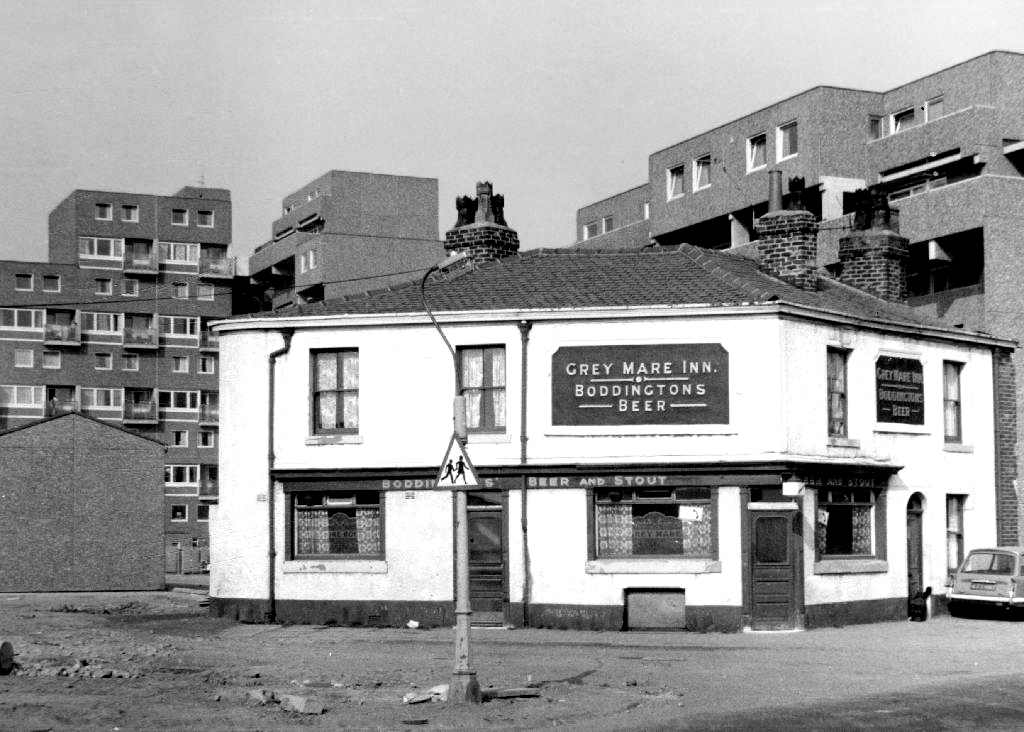
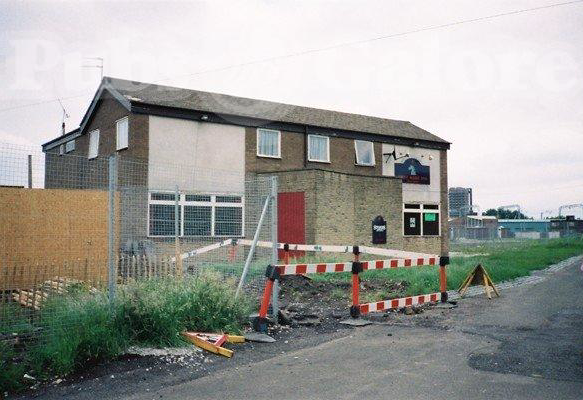
Whenever mass slum clearance was carried out, the pubs tended to remain, often for just a short time because – the story goes – demolition workers refused to touch them, as they wanted somewhere to drink during and after their shift.
This vision of municipal modernity was short lived, the estate was demolished in the 1980s and the new Coverdale Estate was constructed on the site in 1994.
















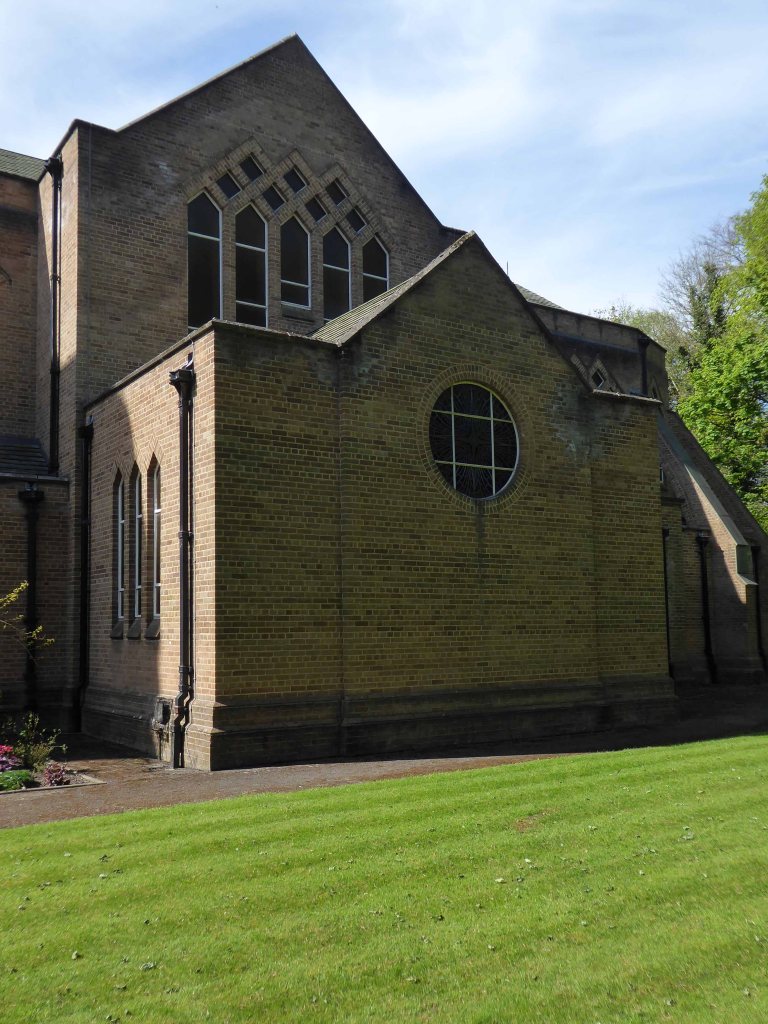
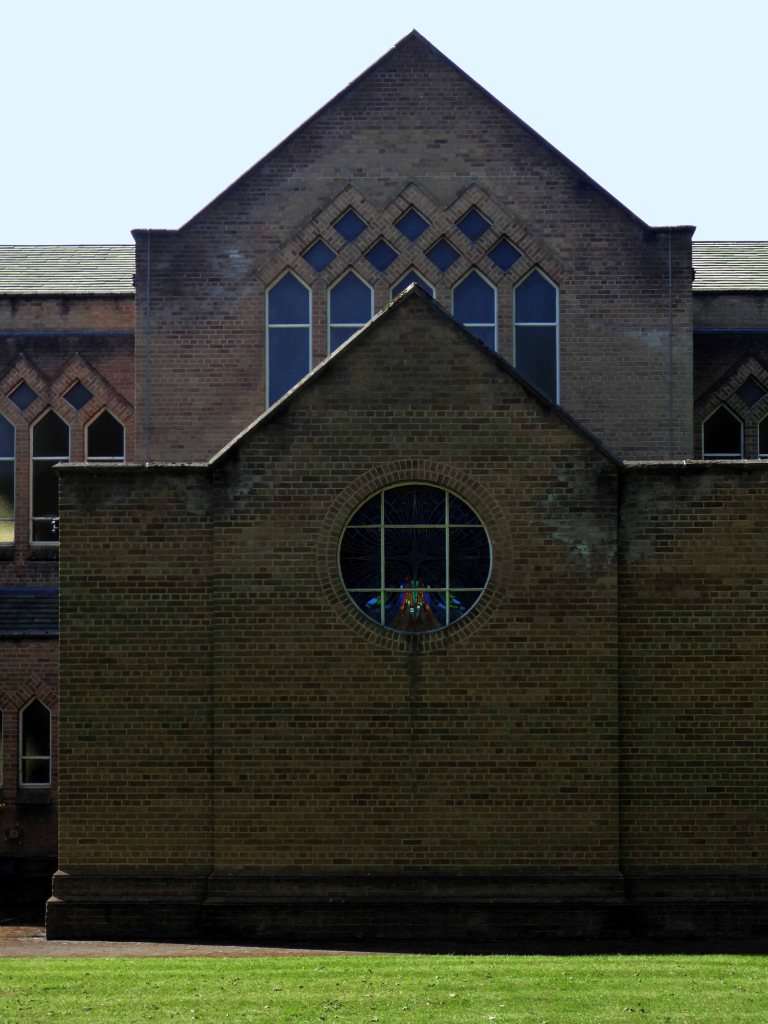
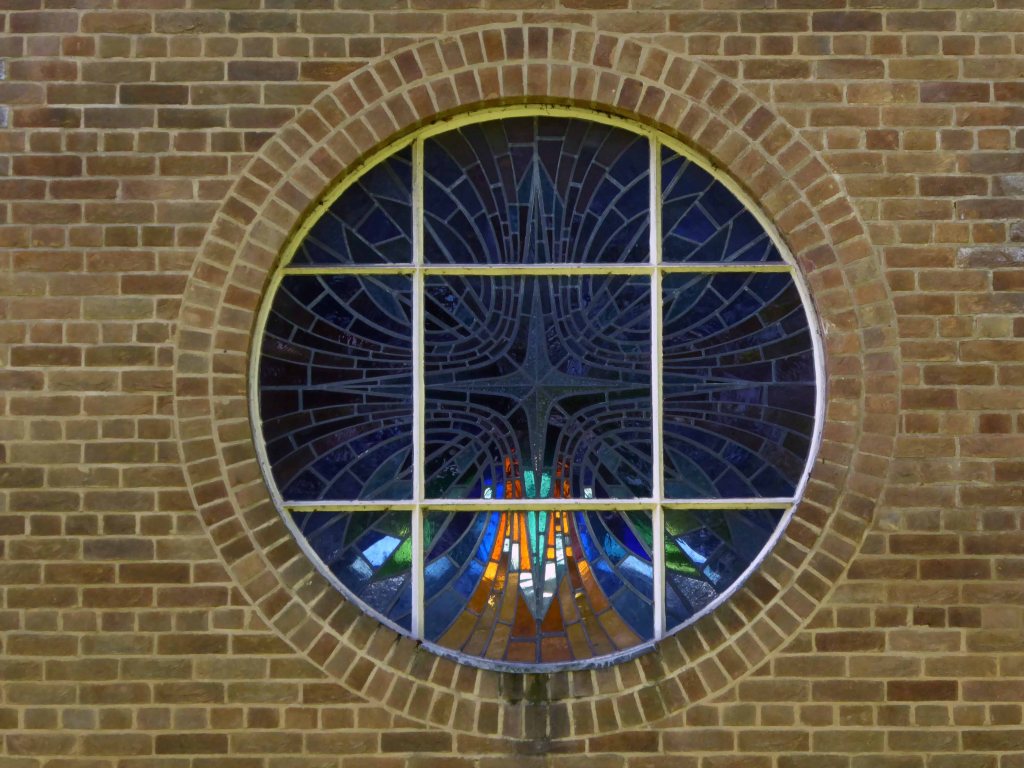
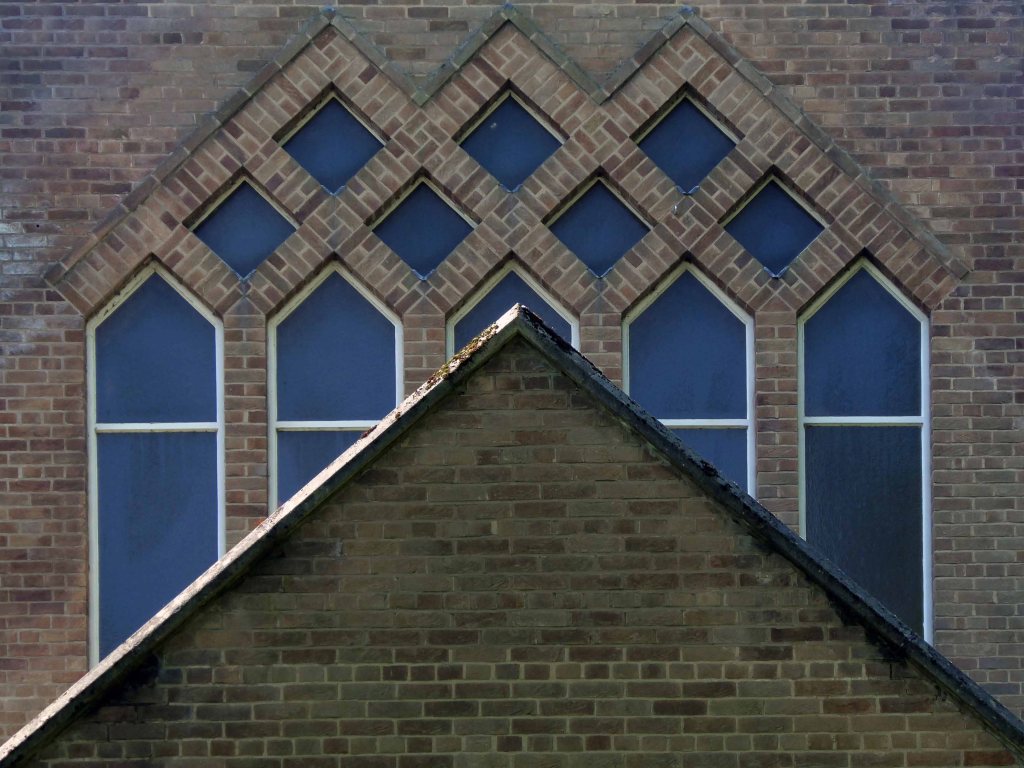

















 Modern Mooch