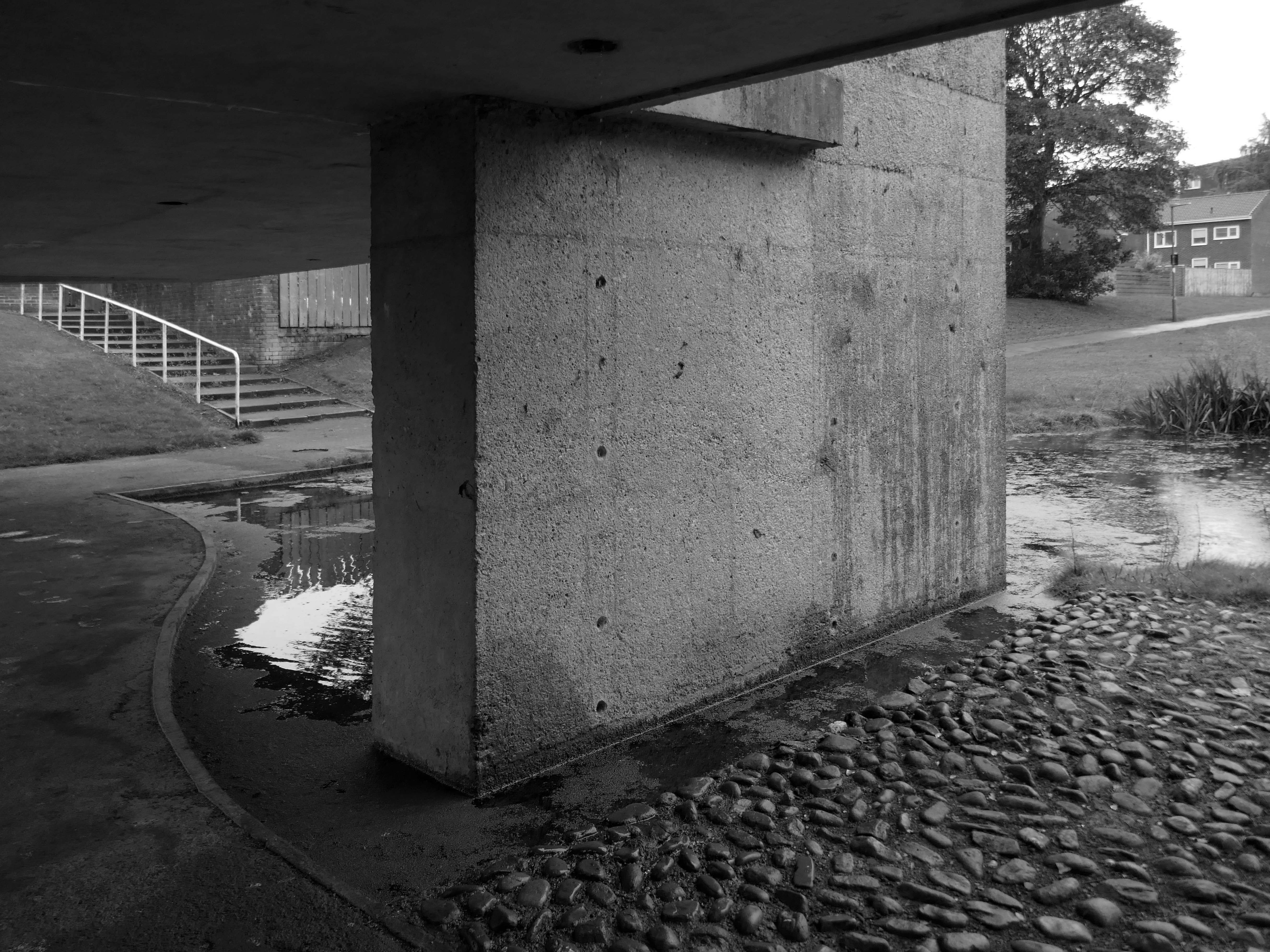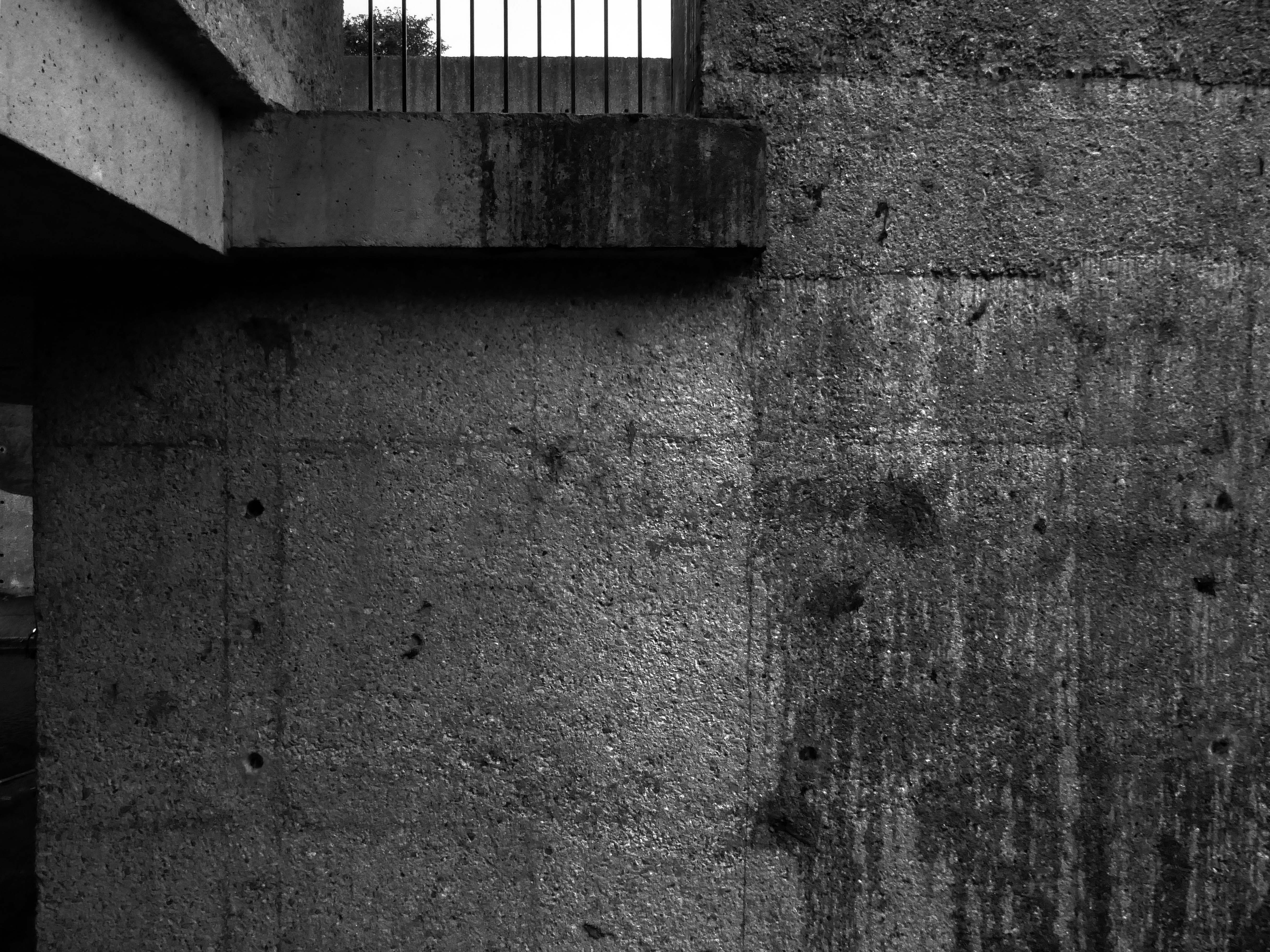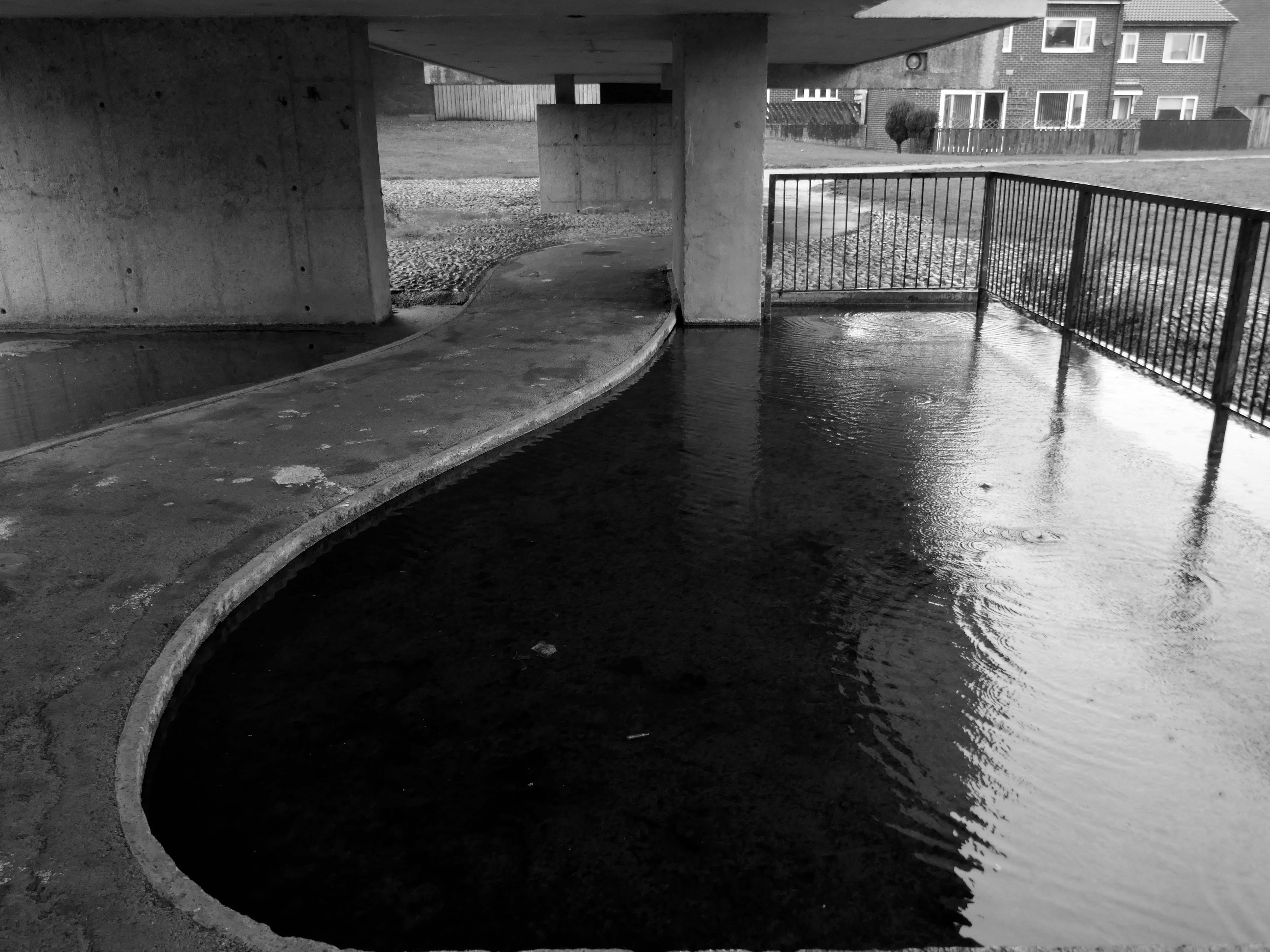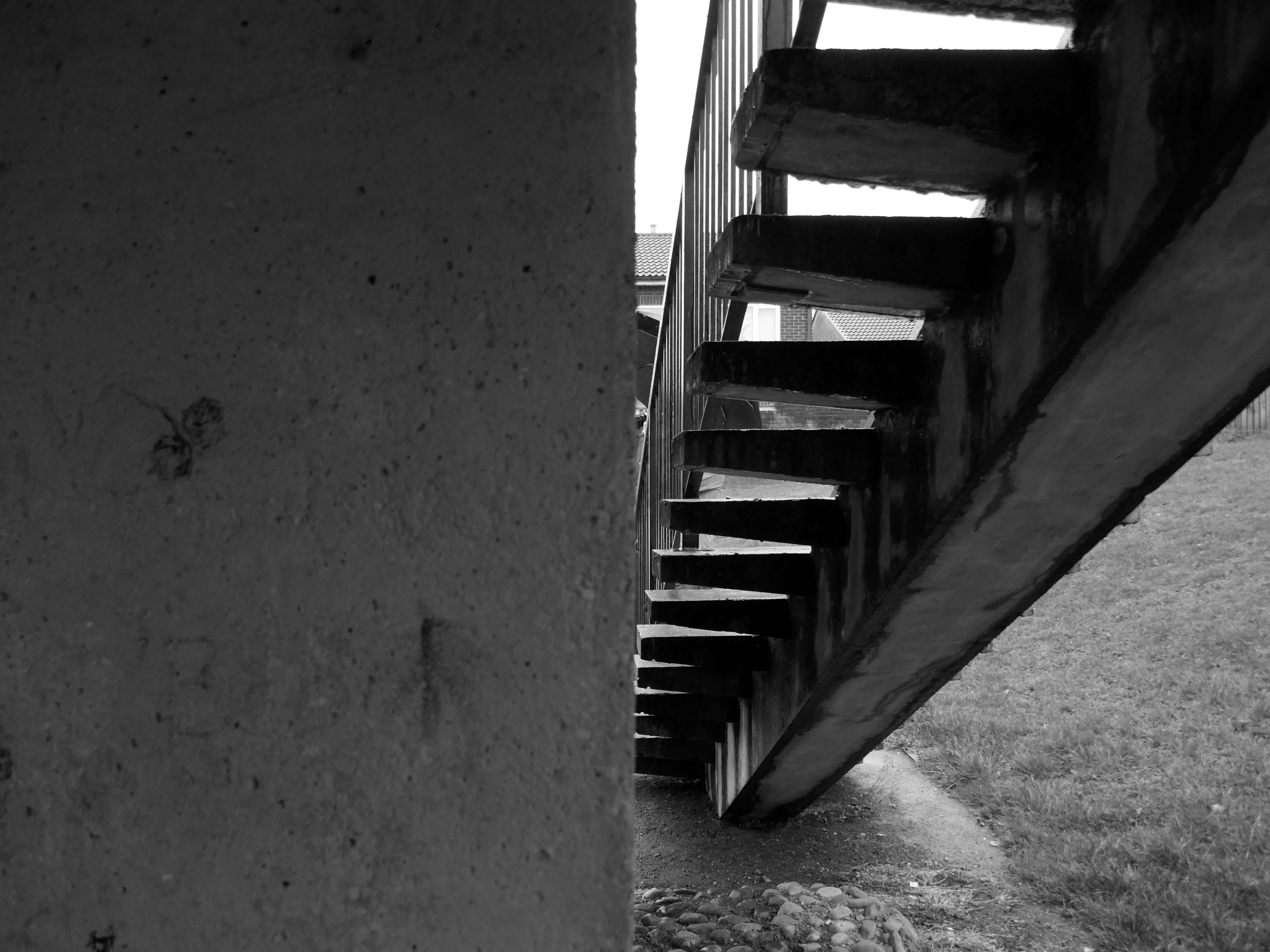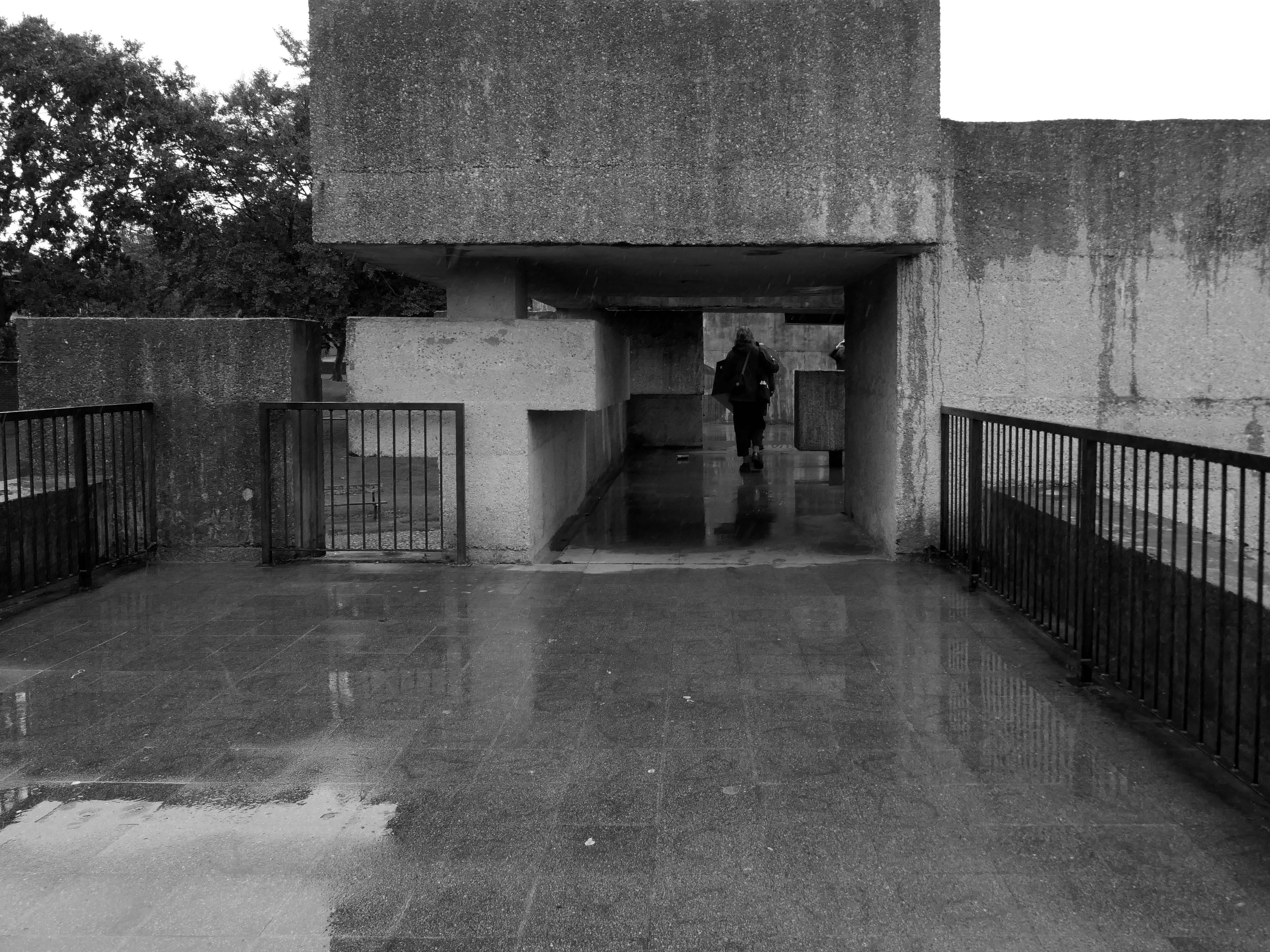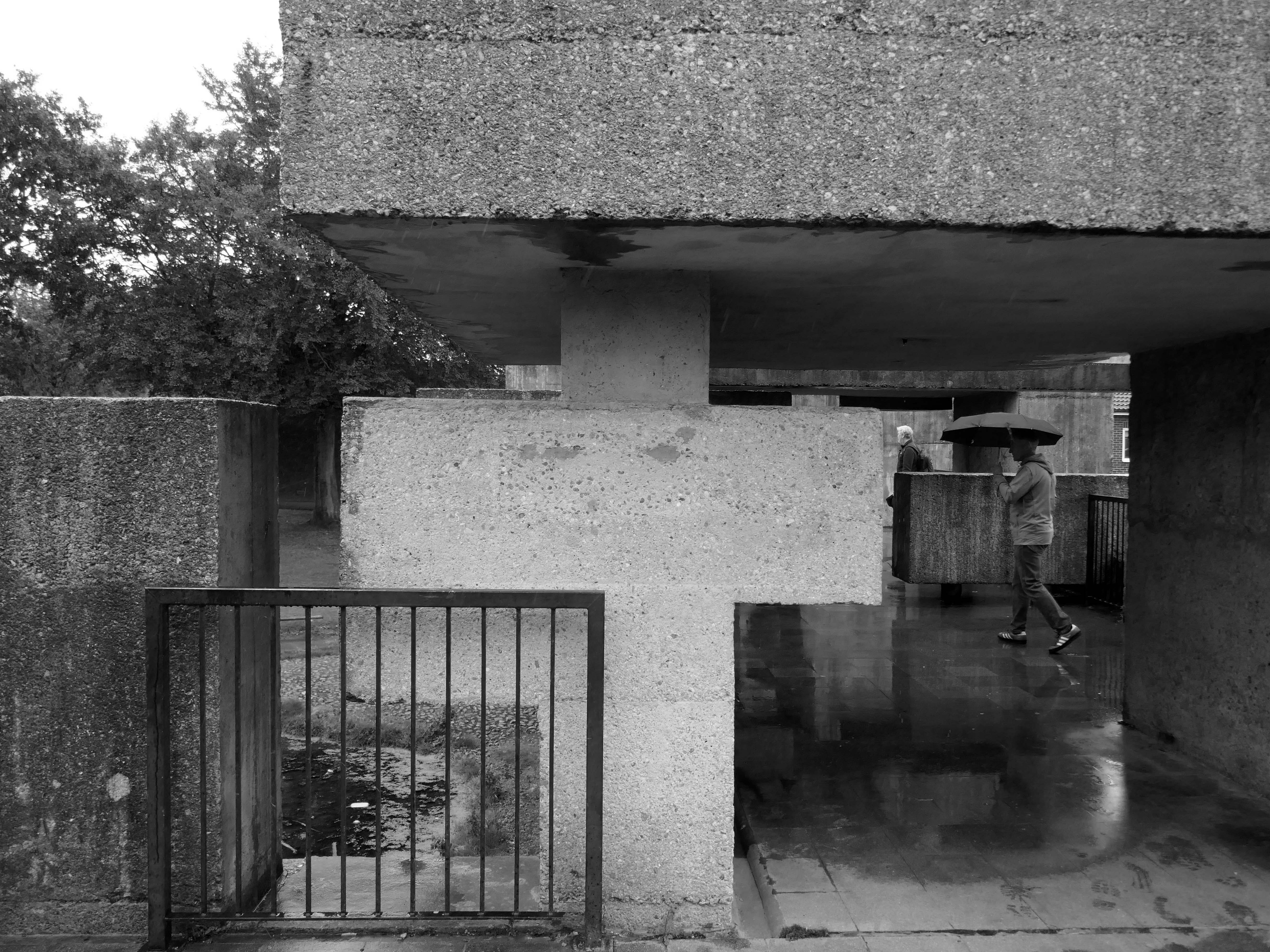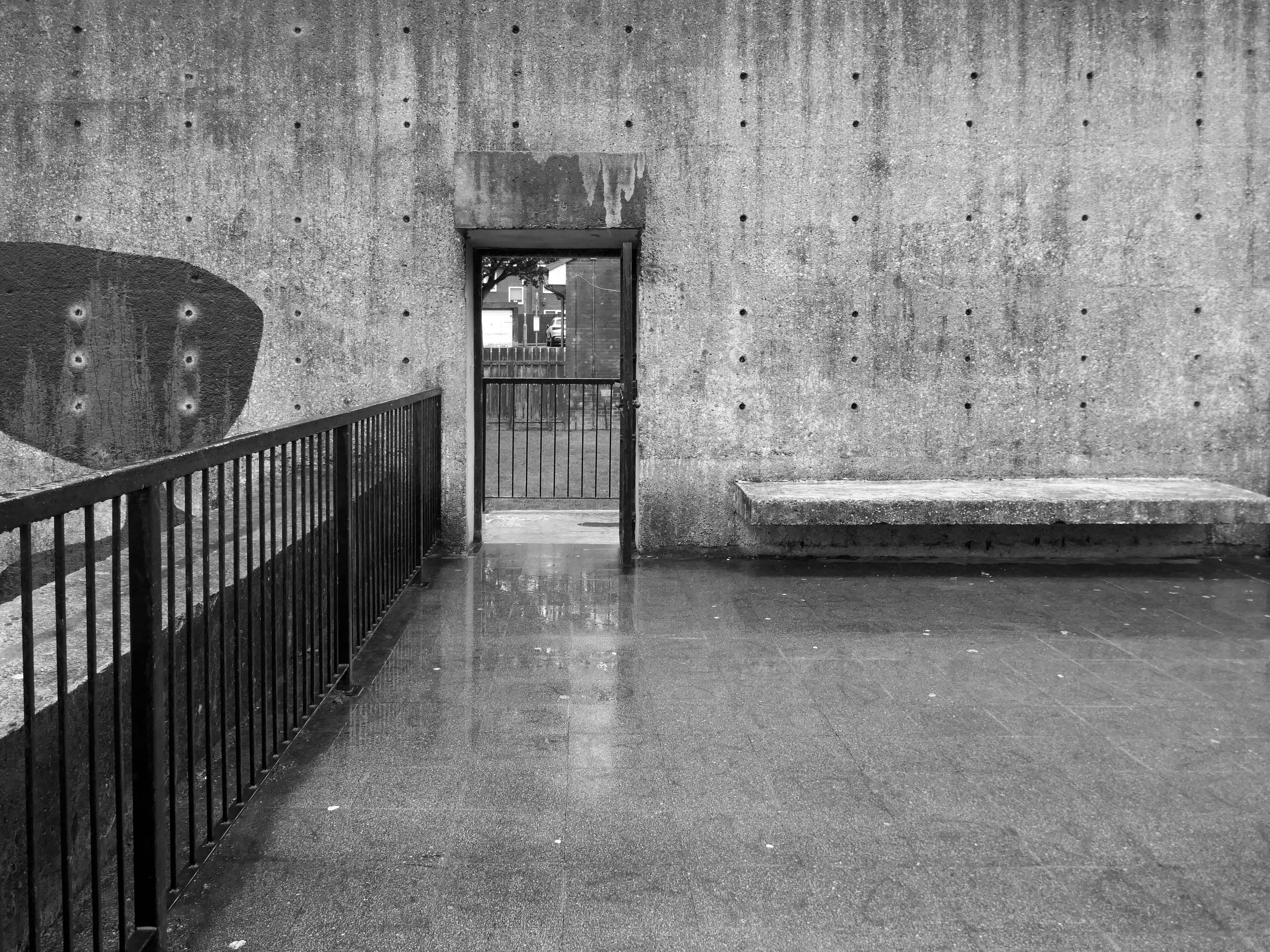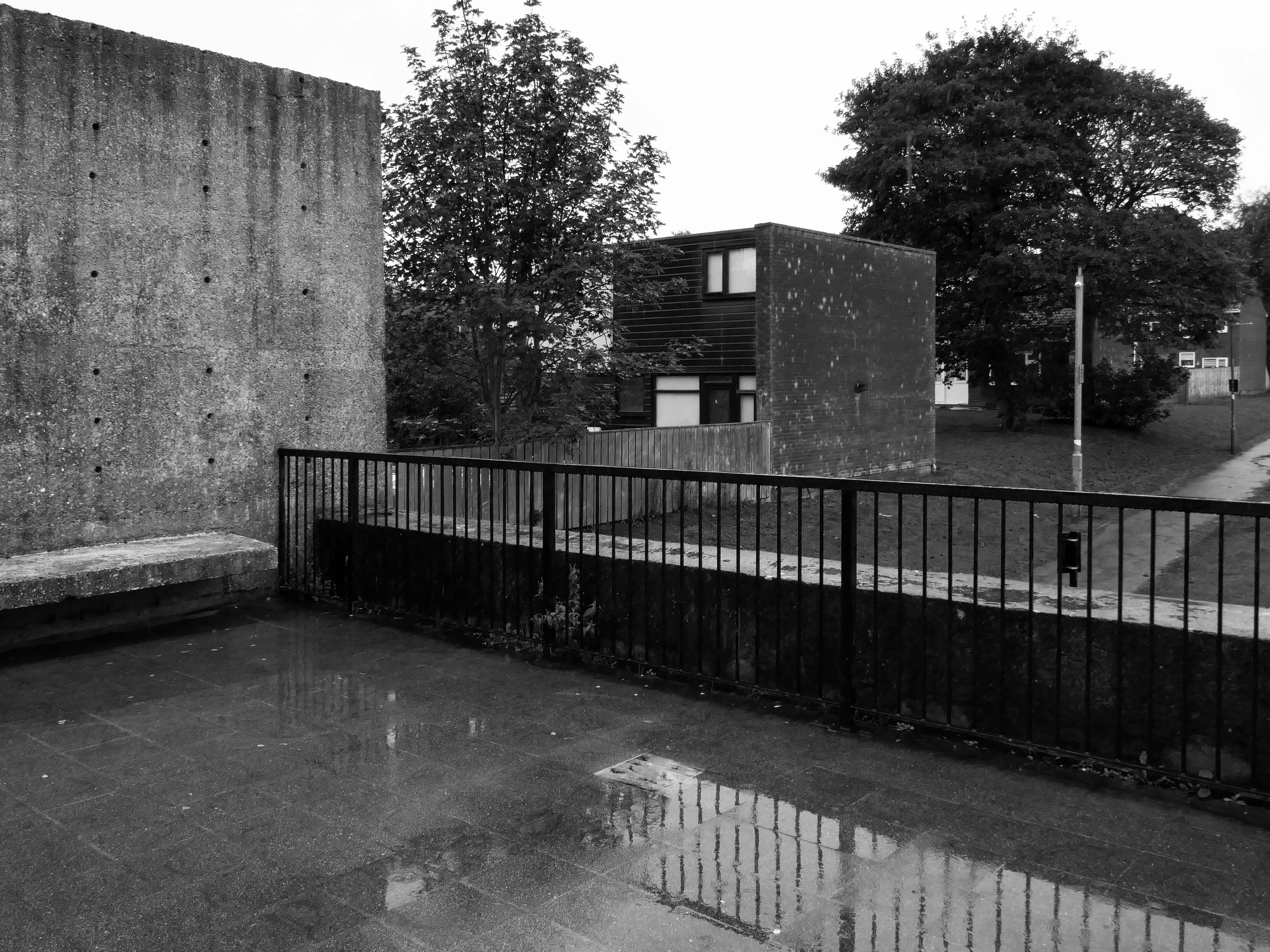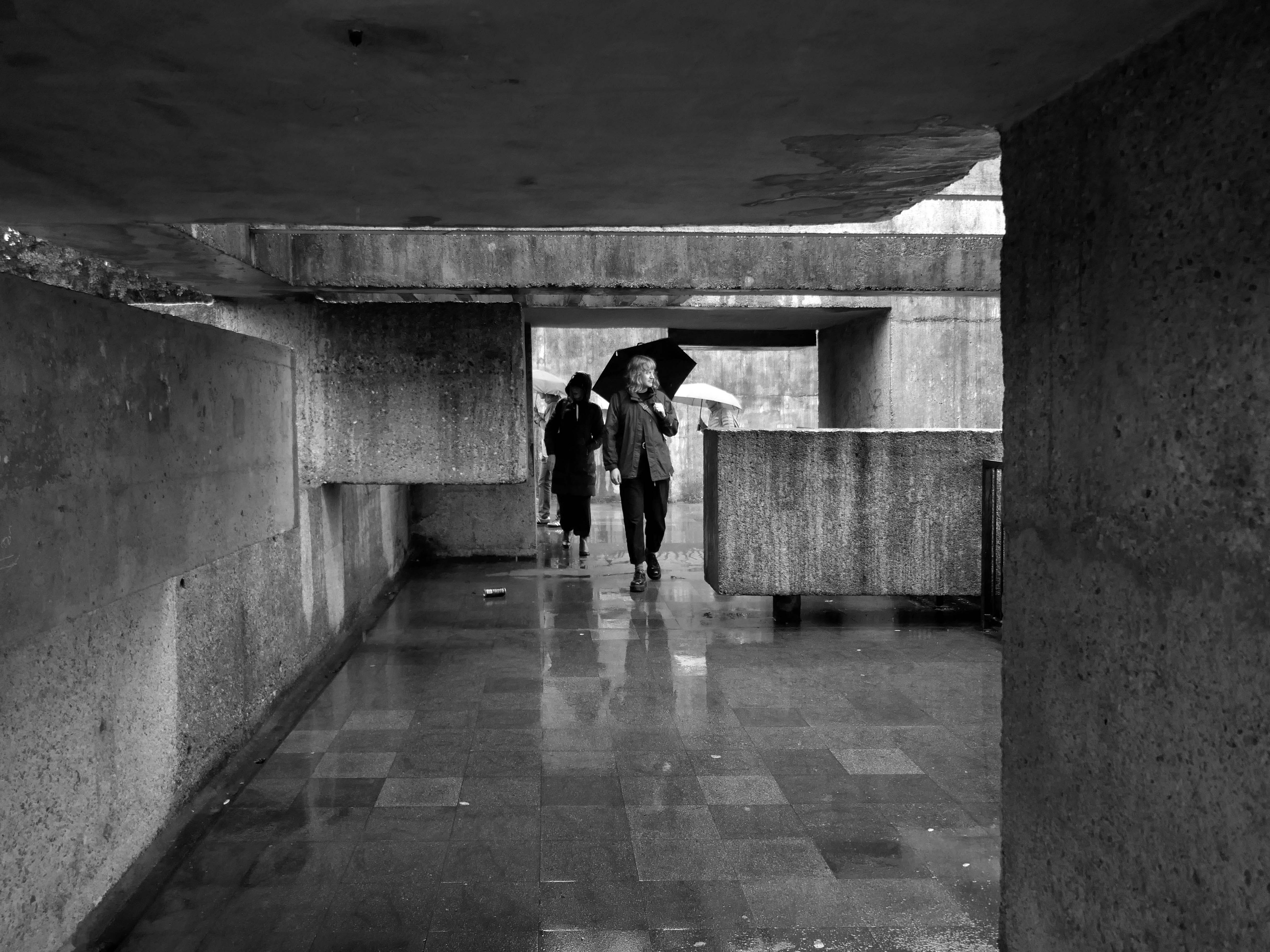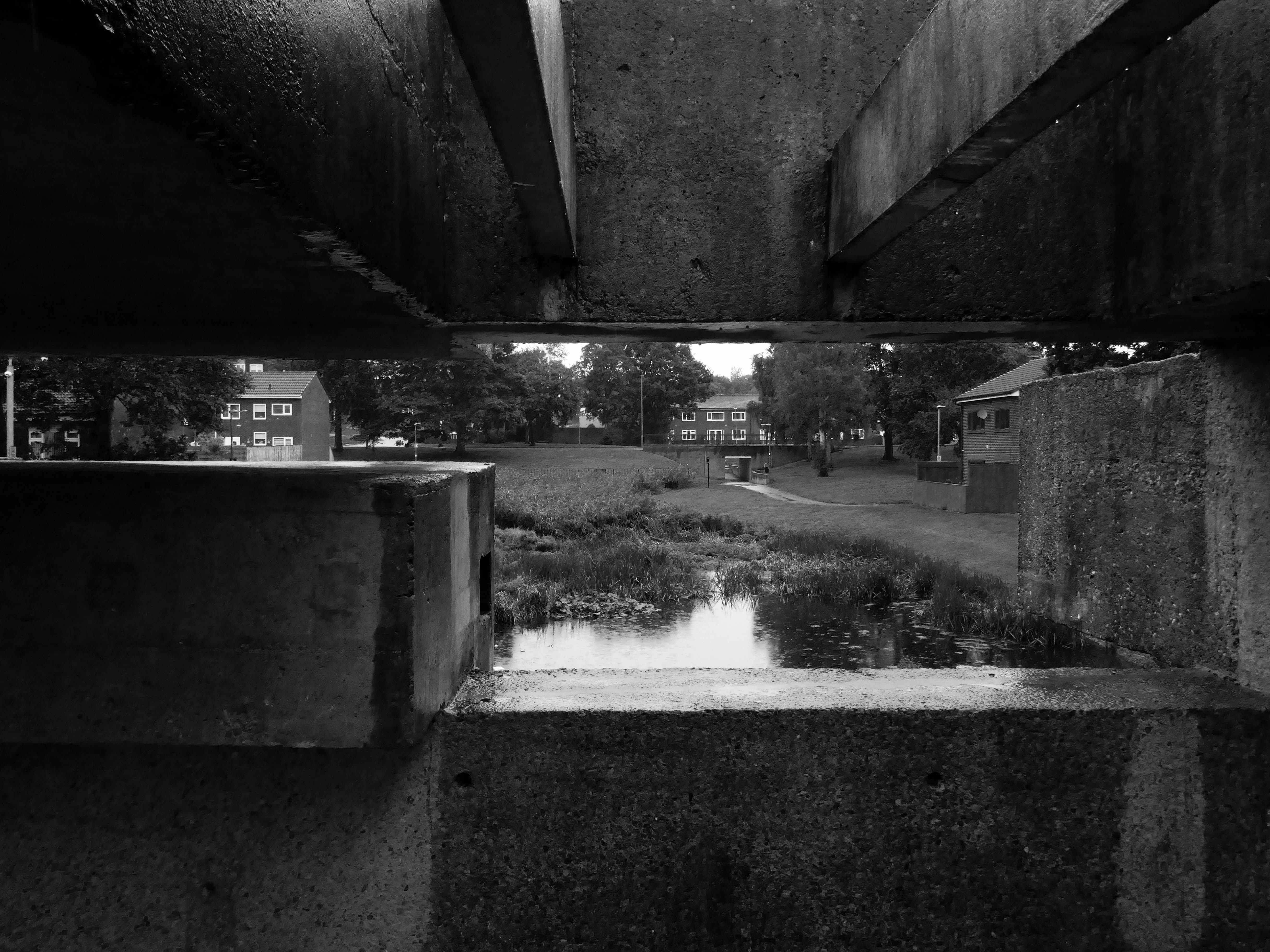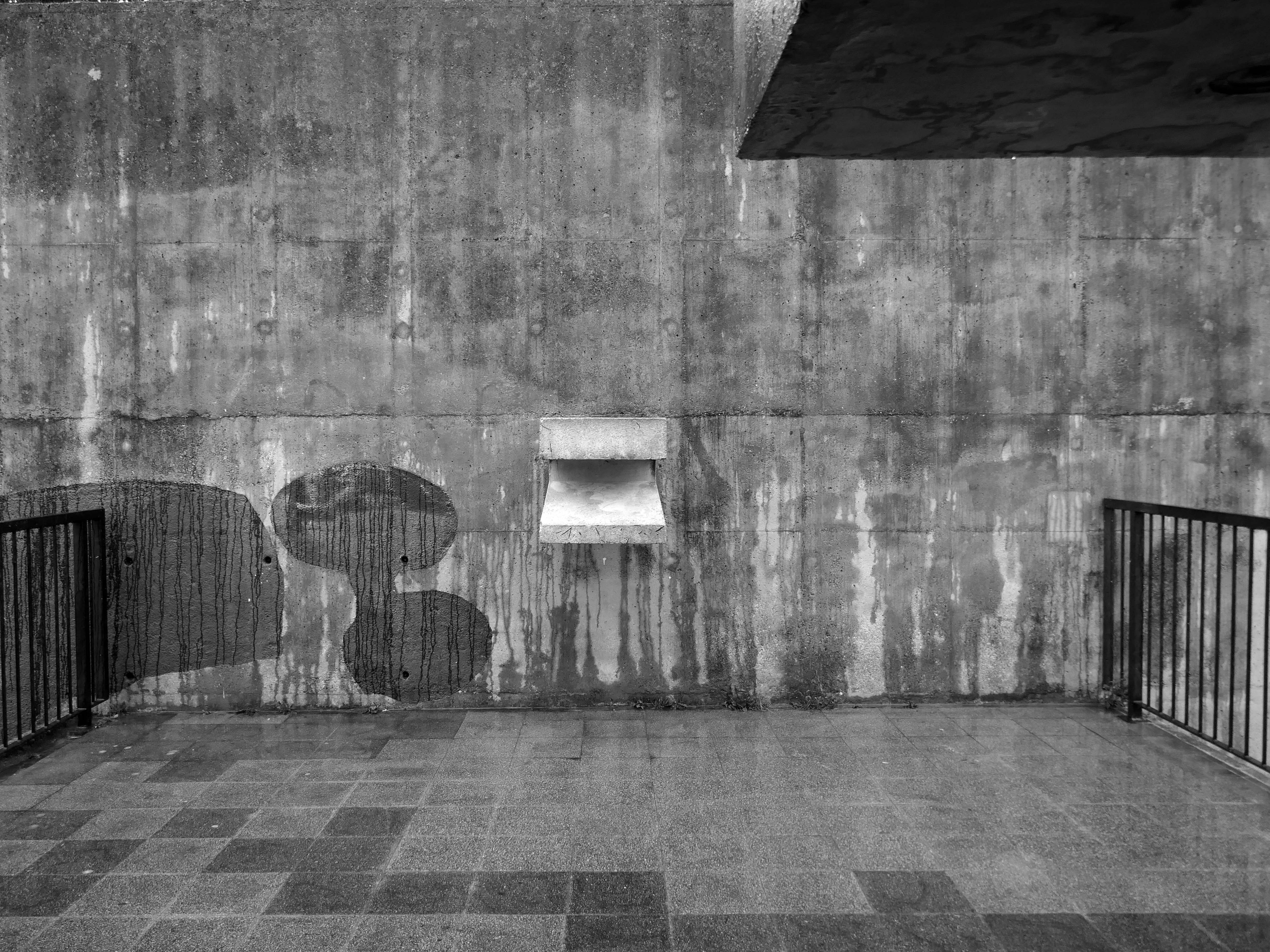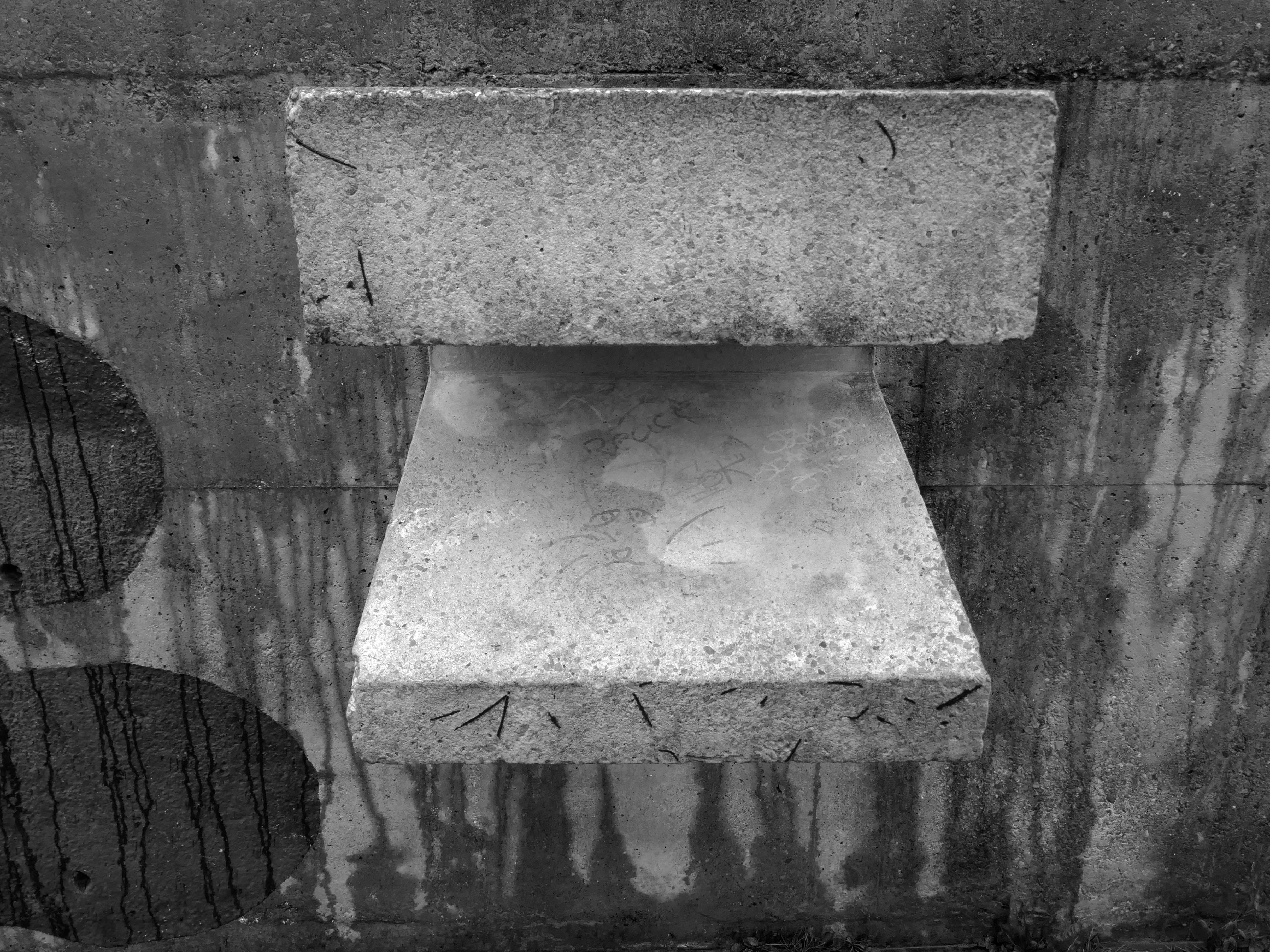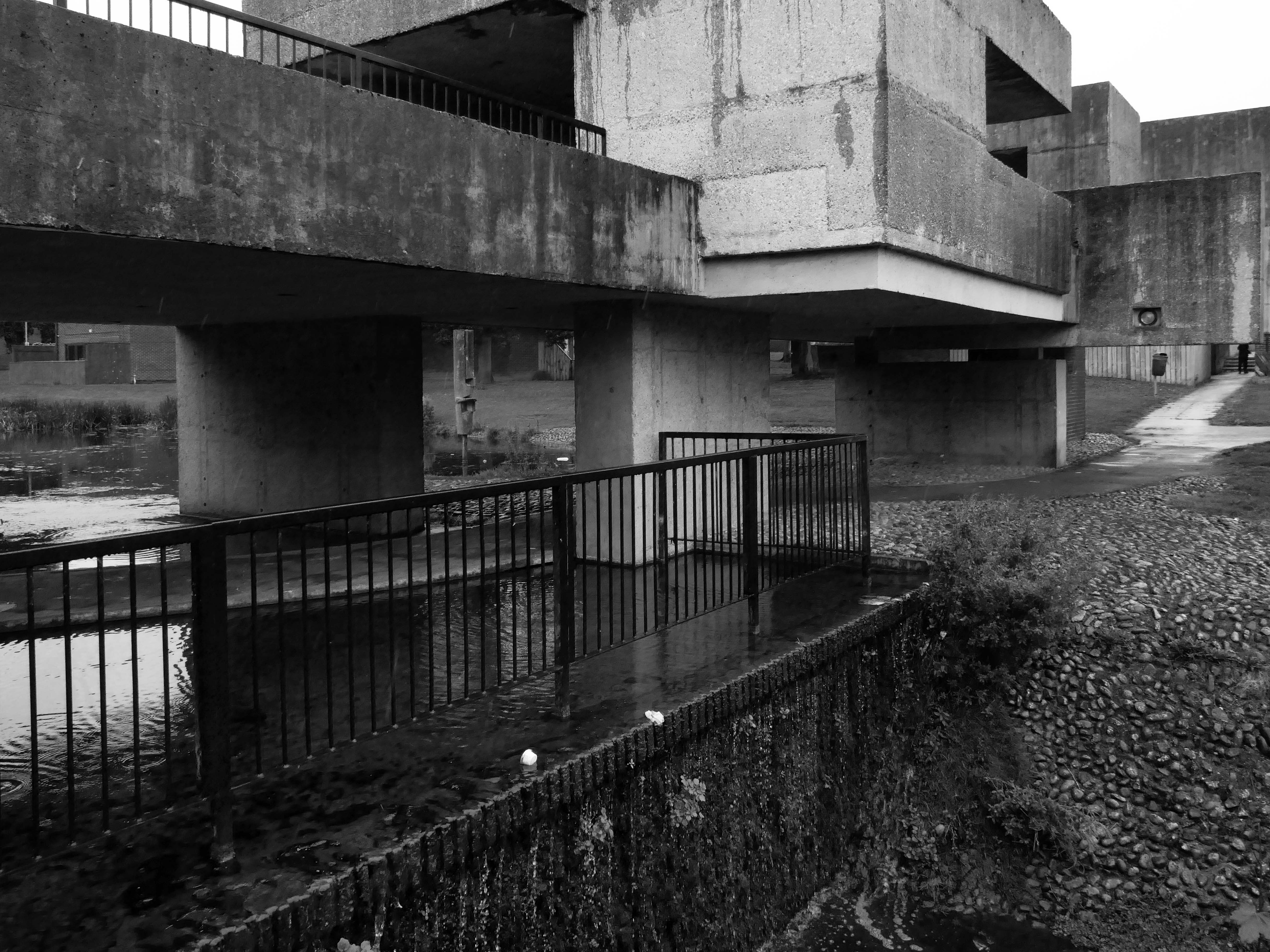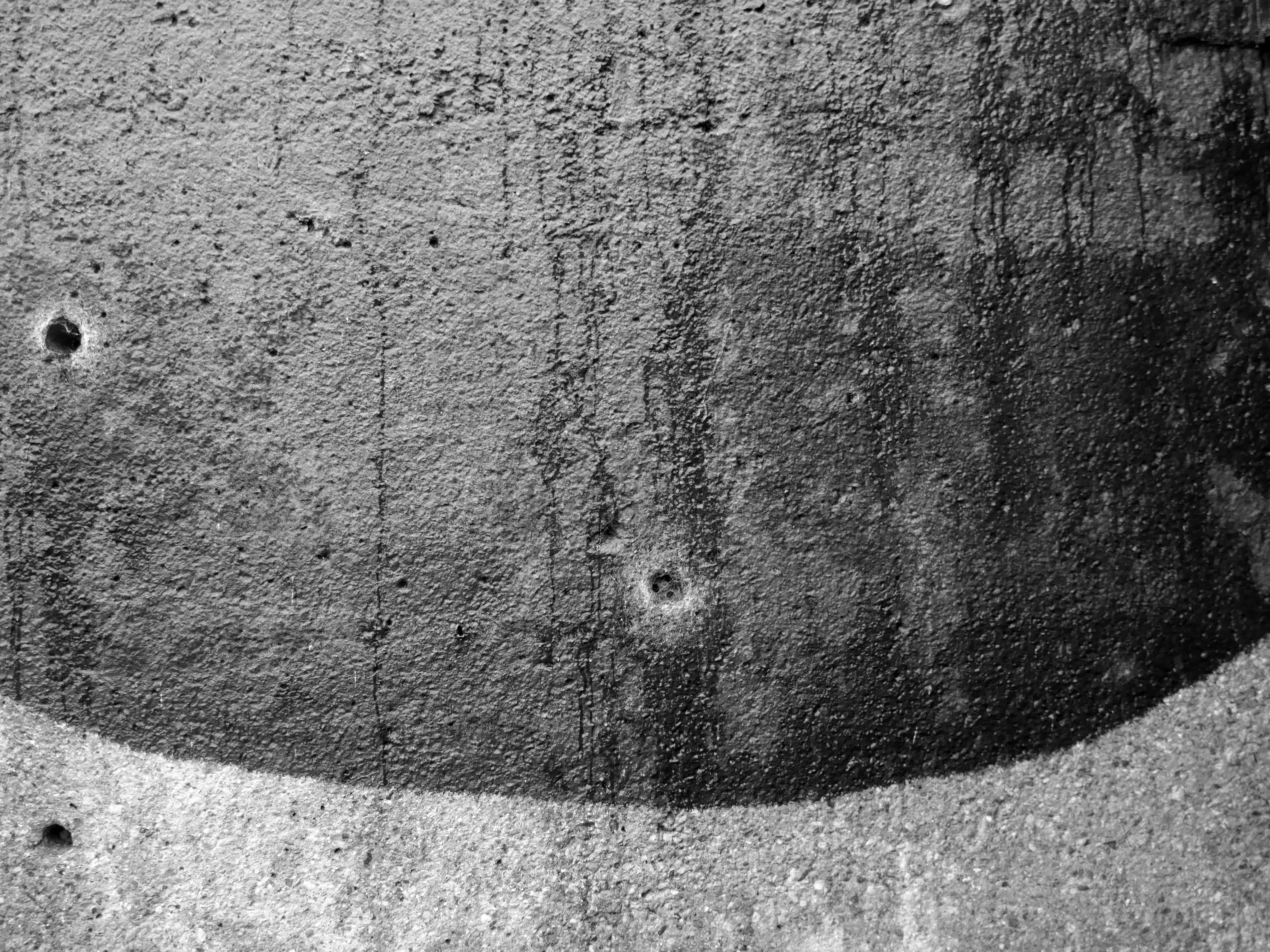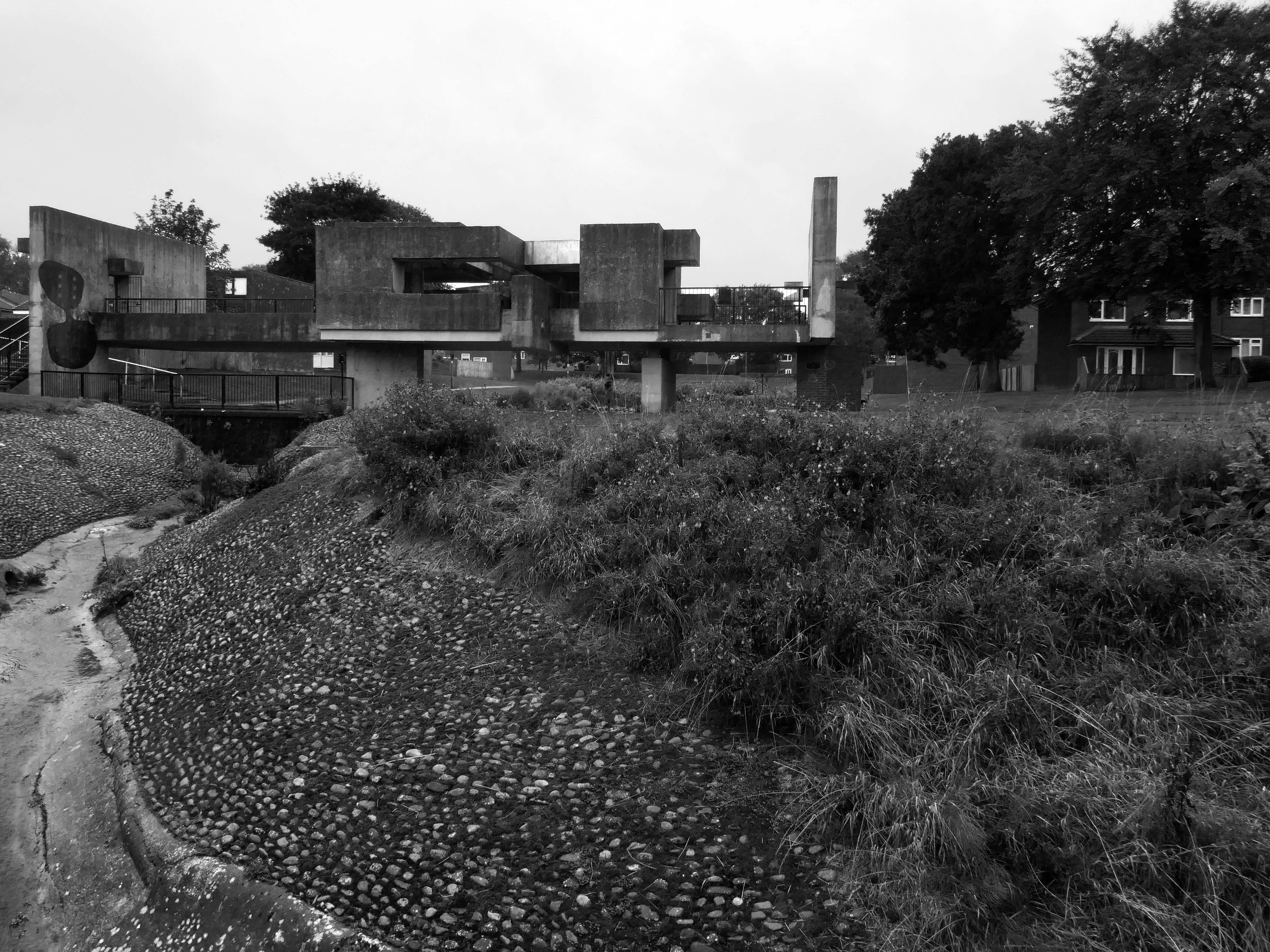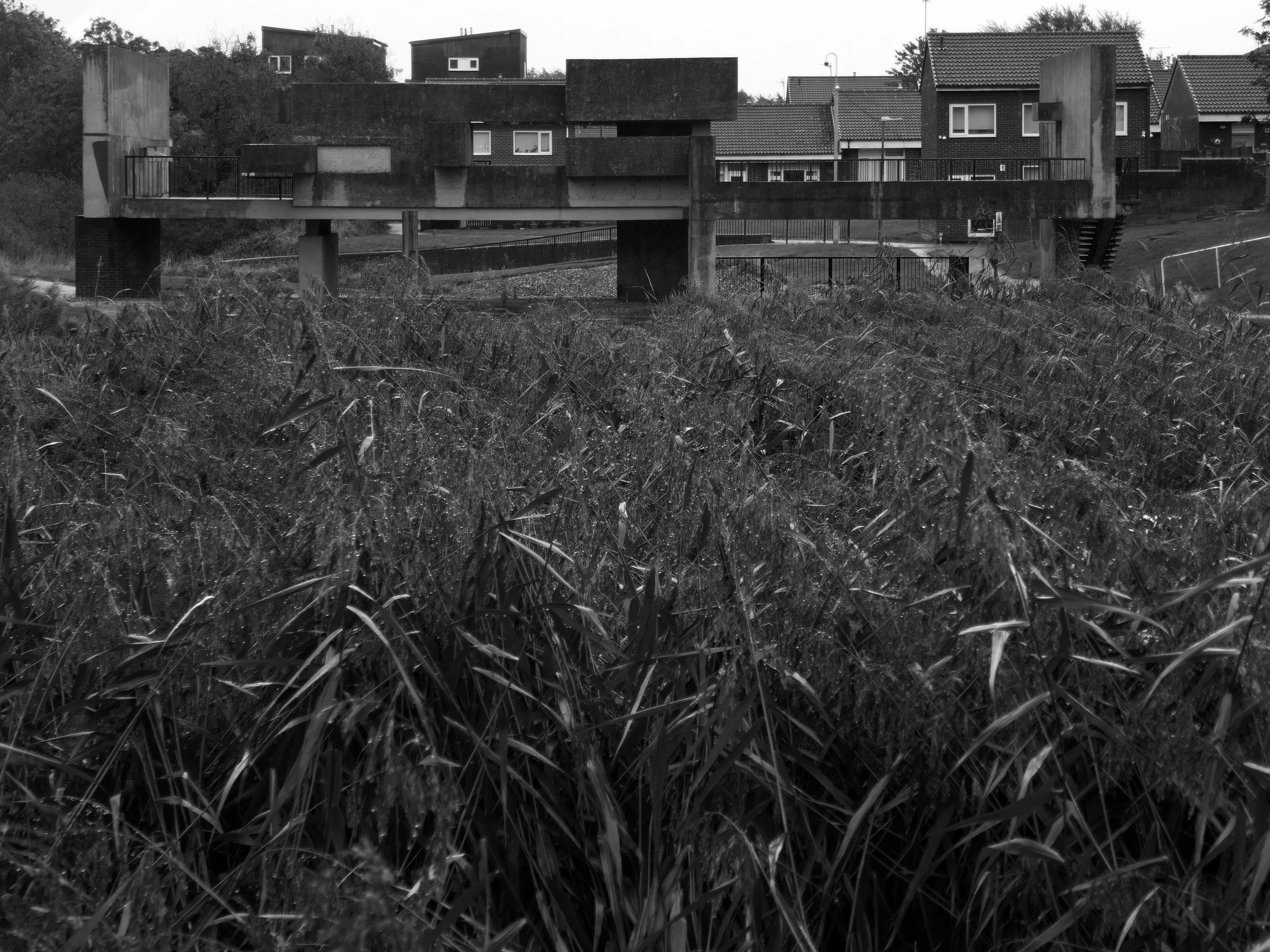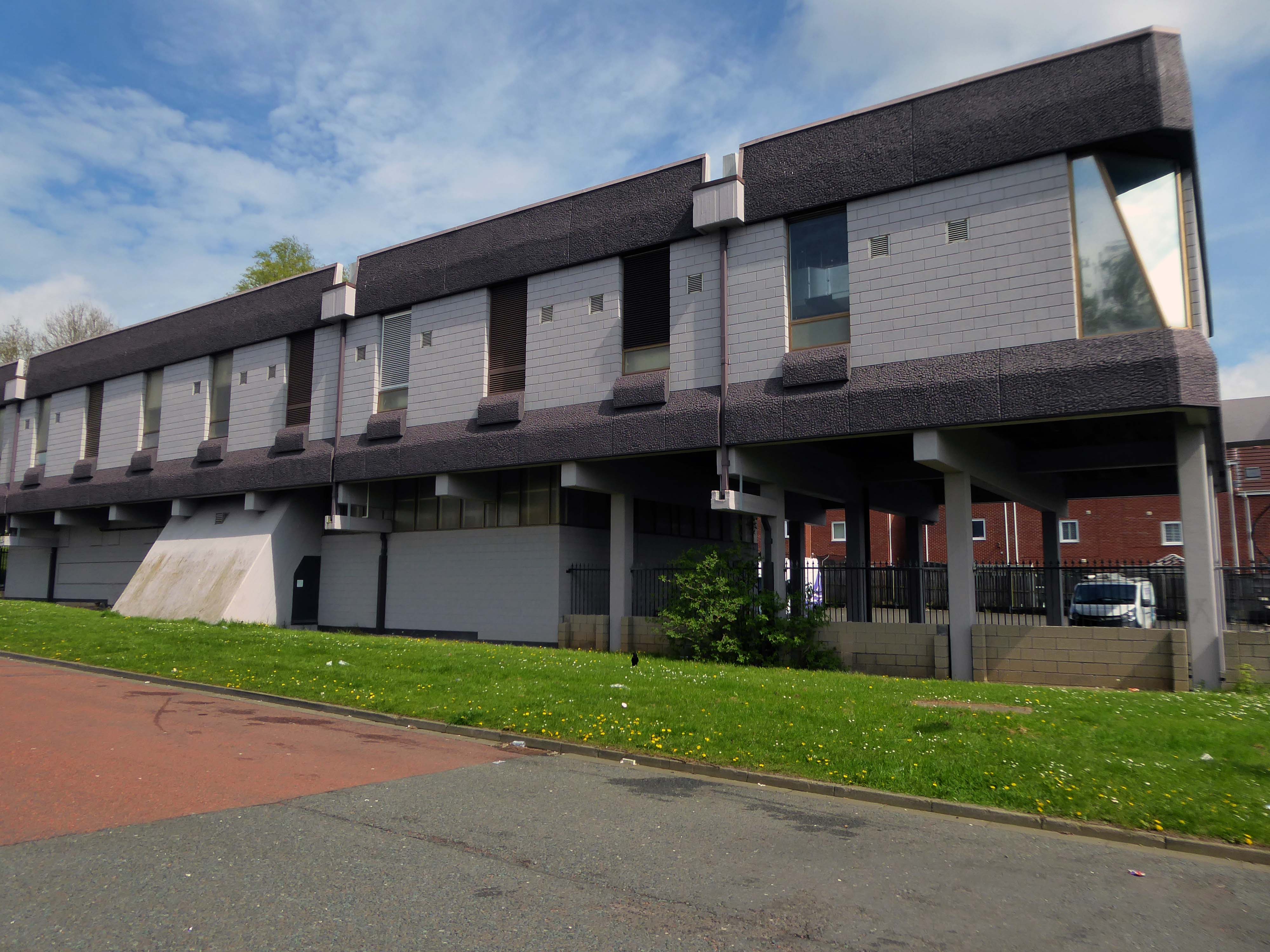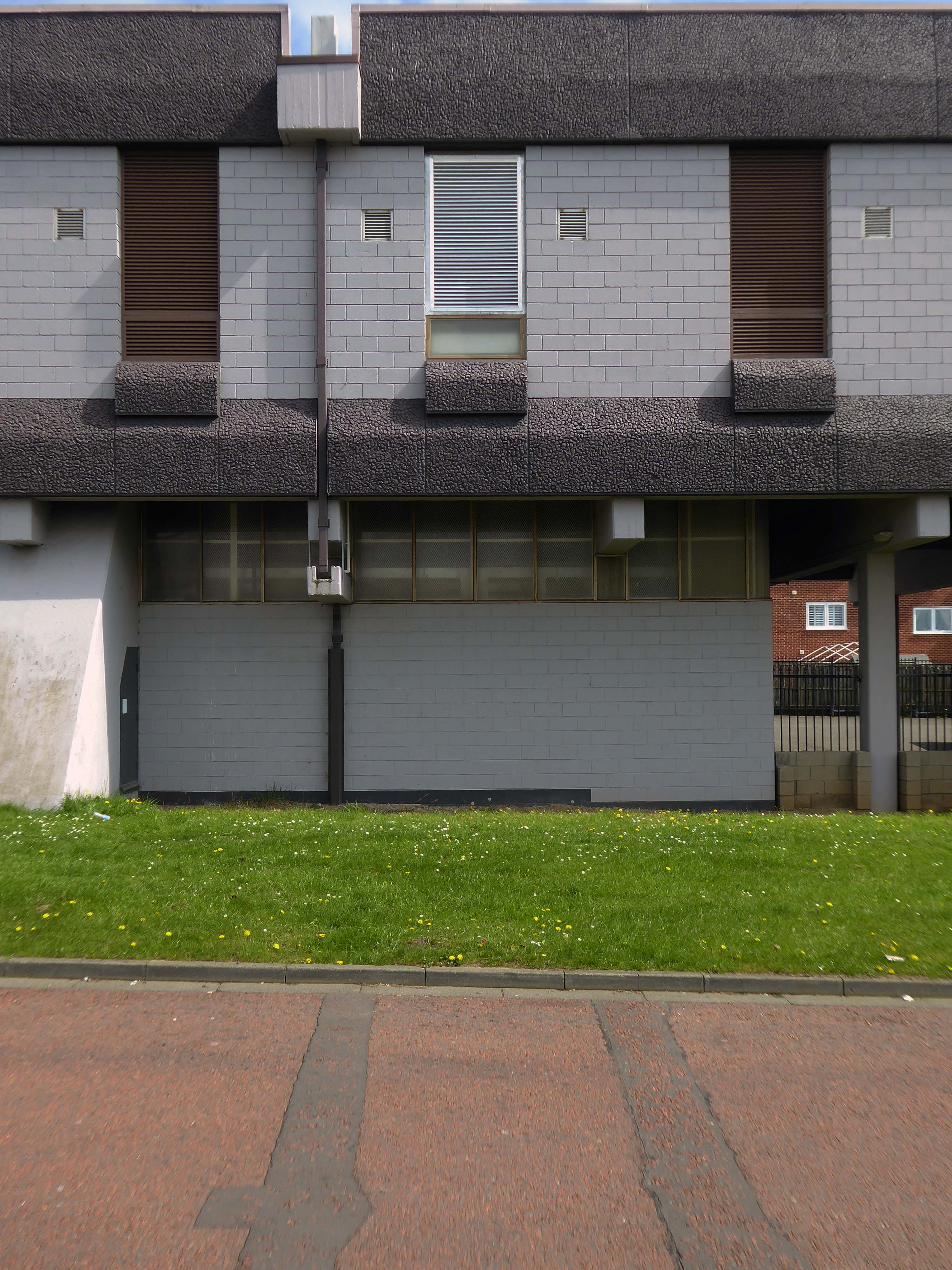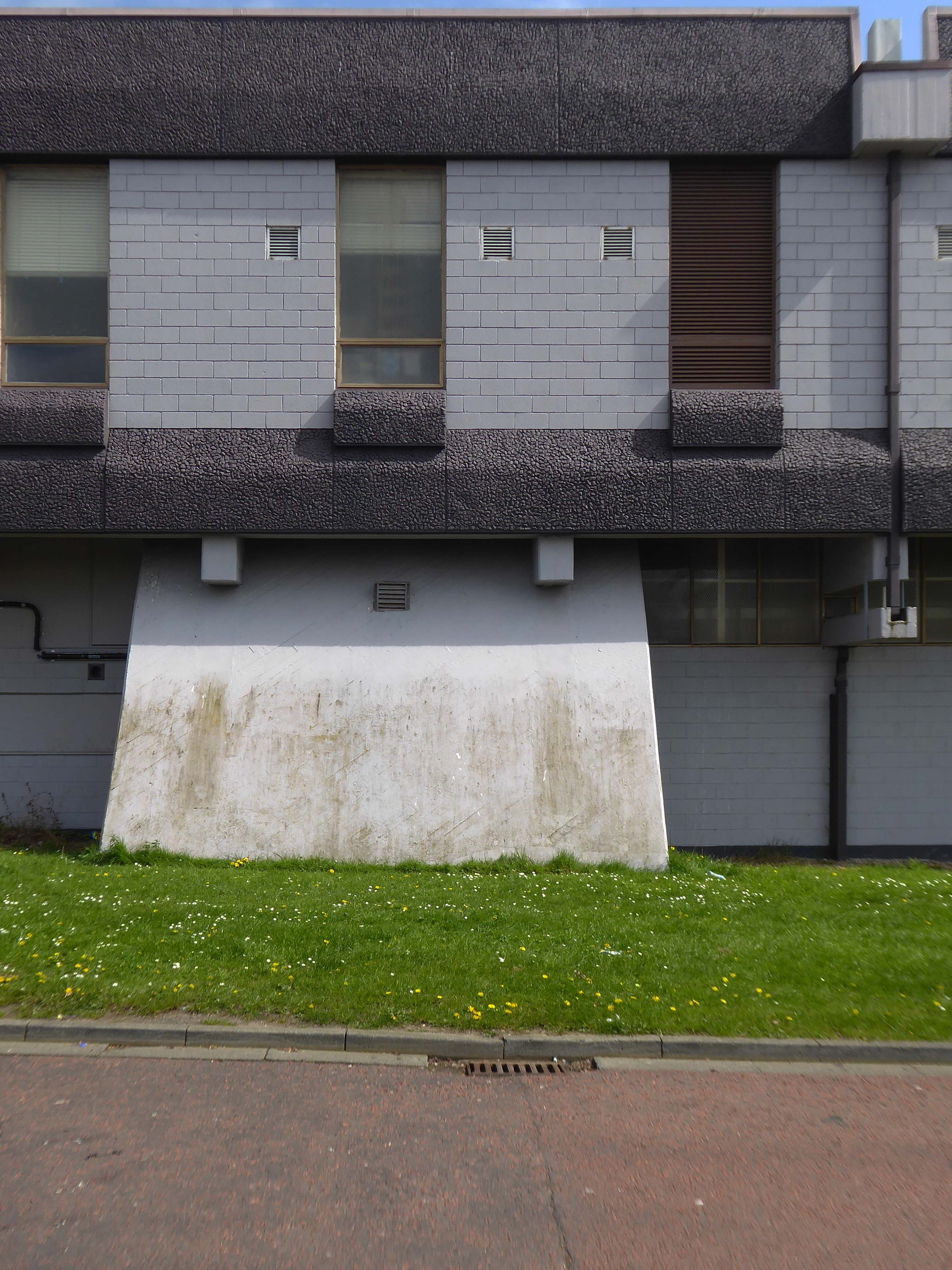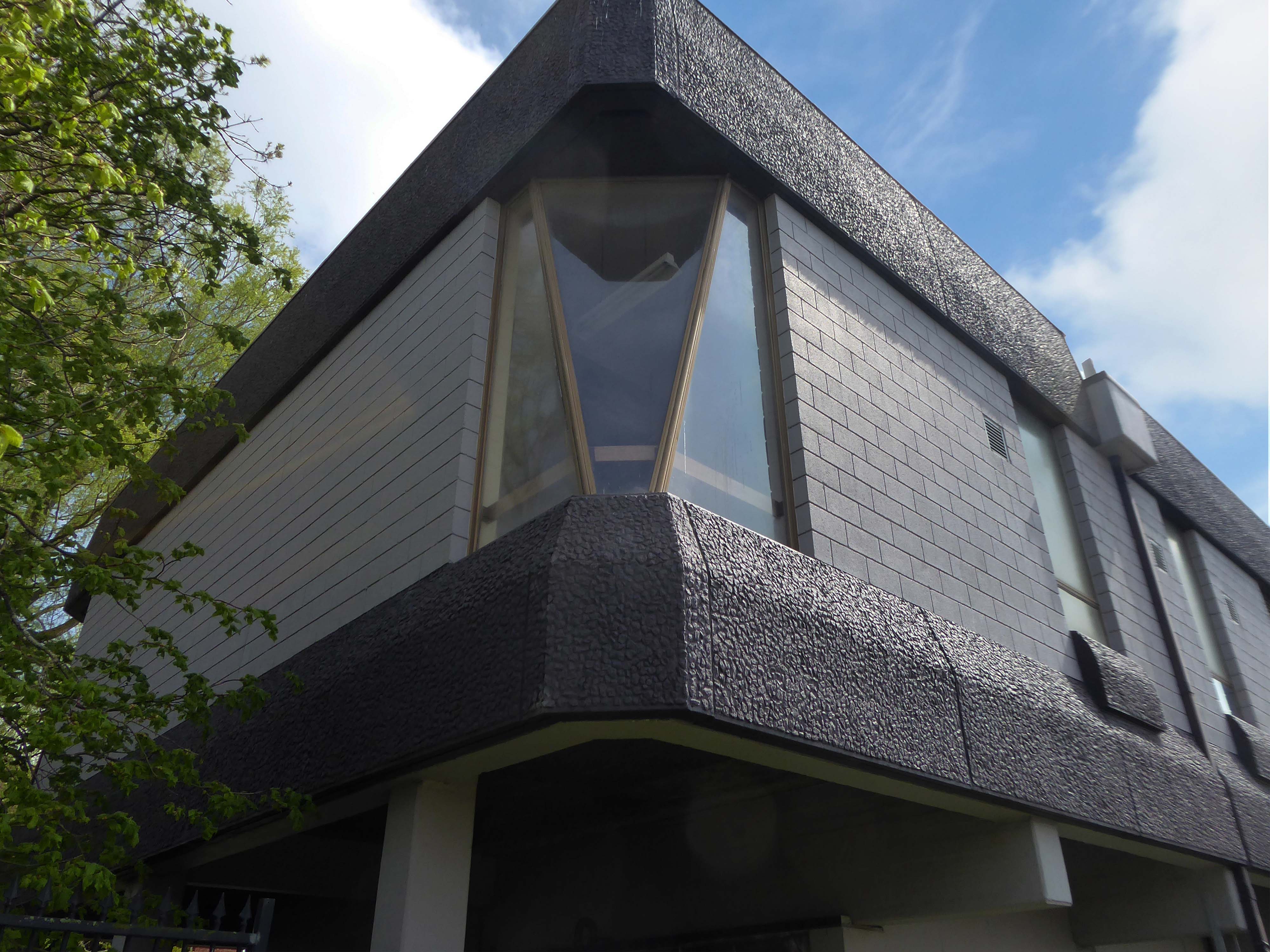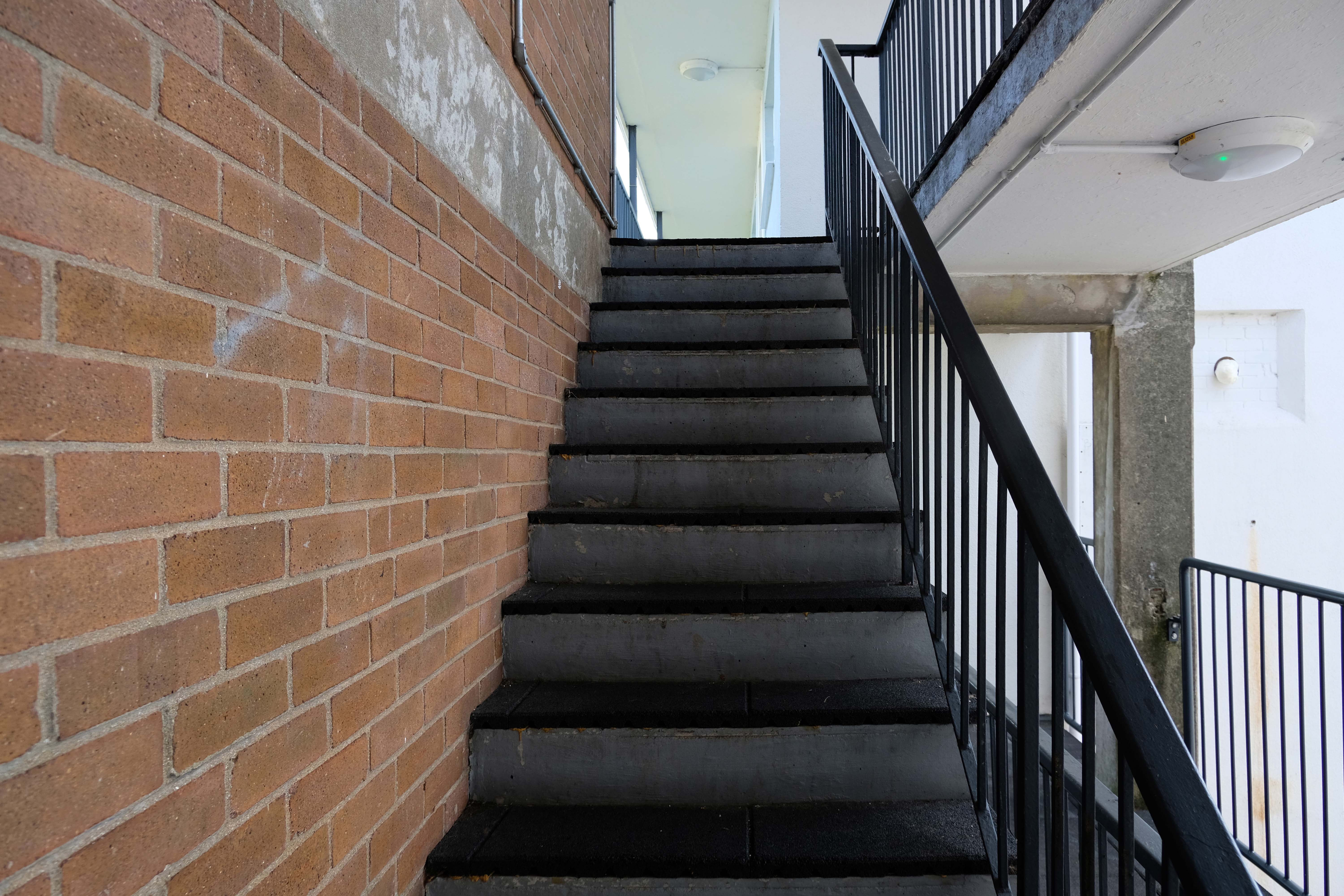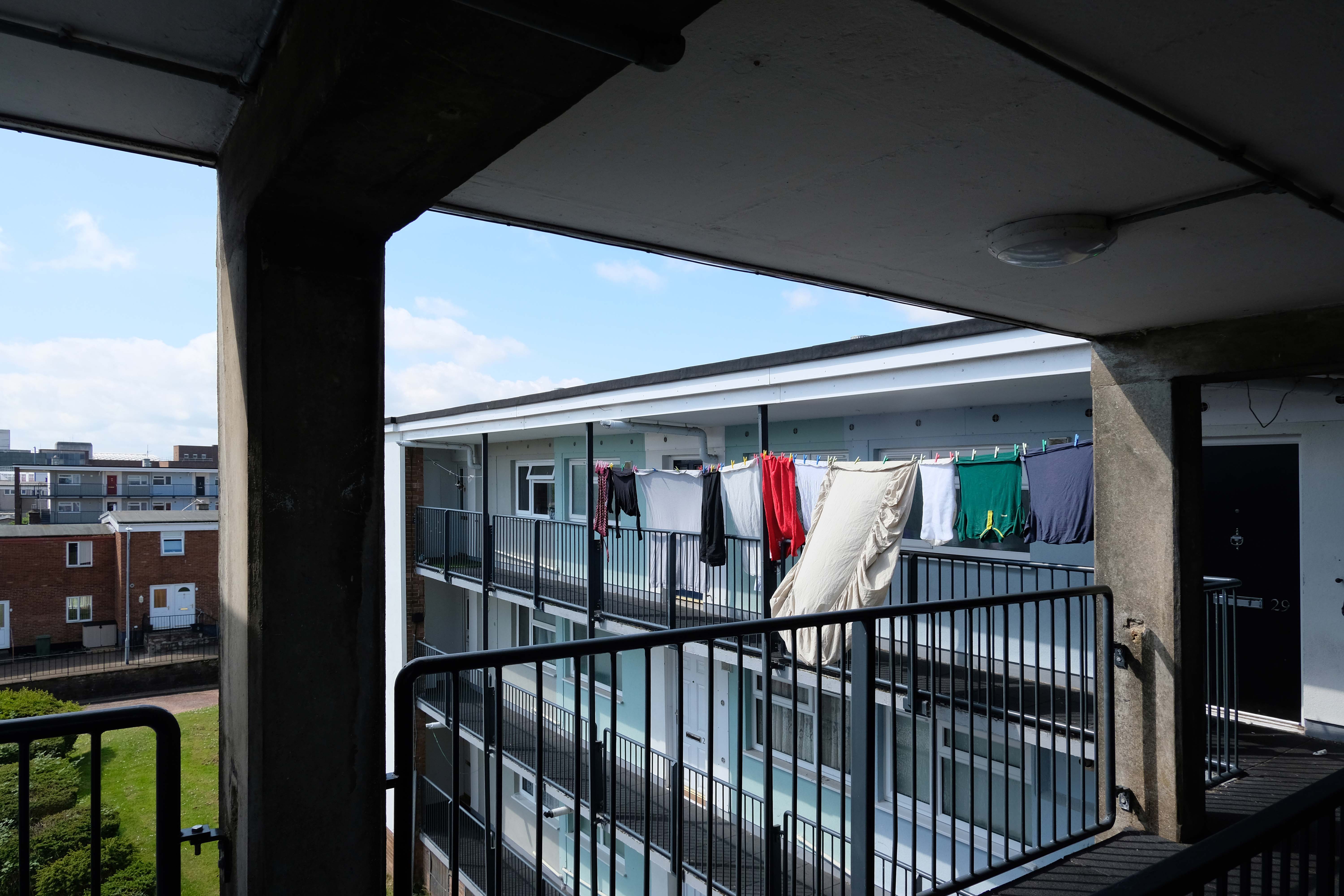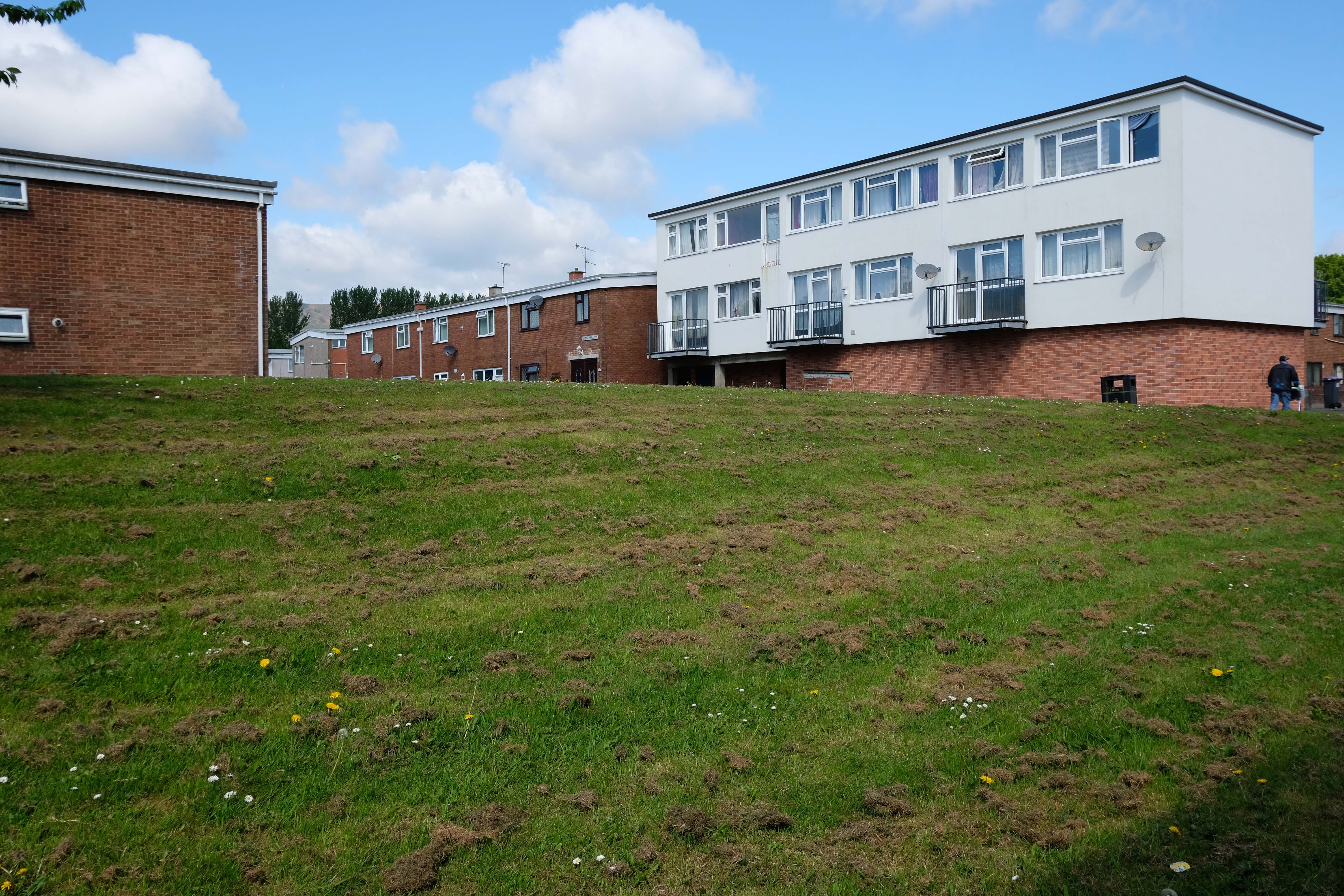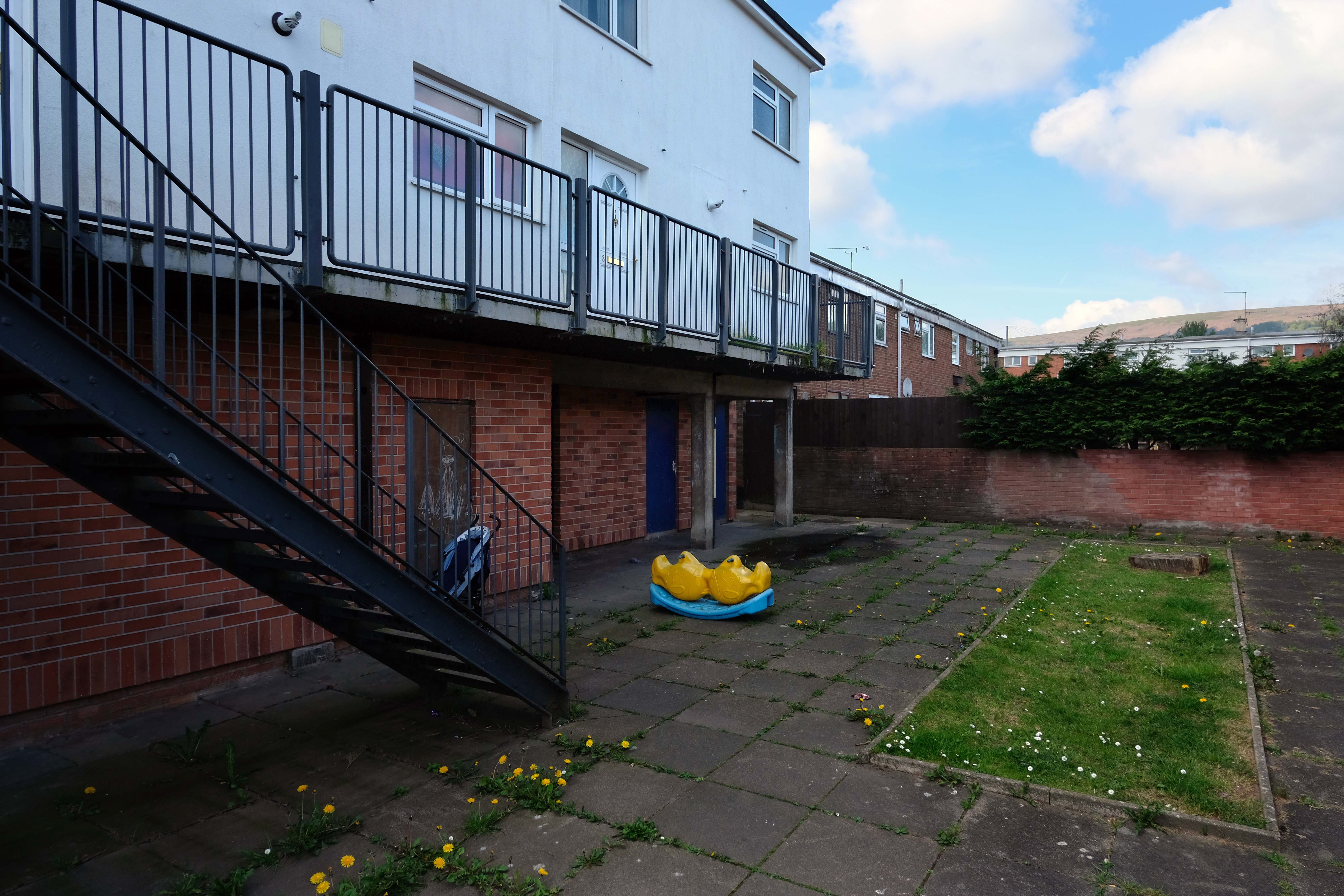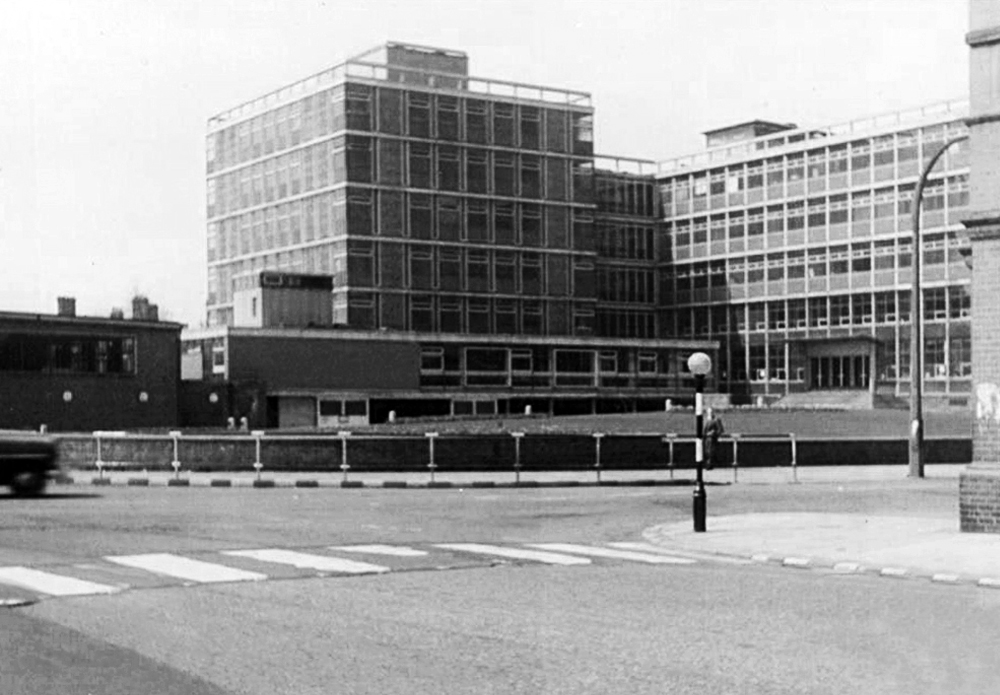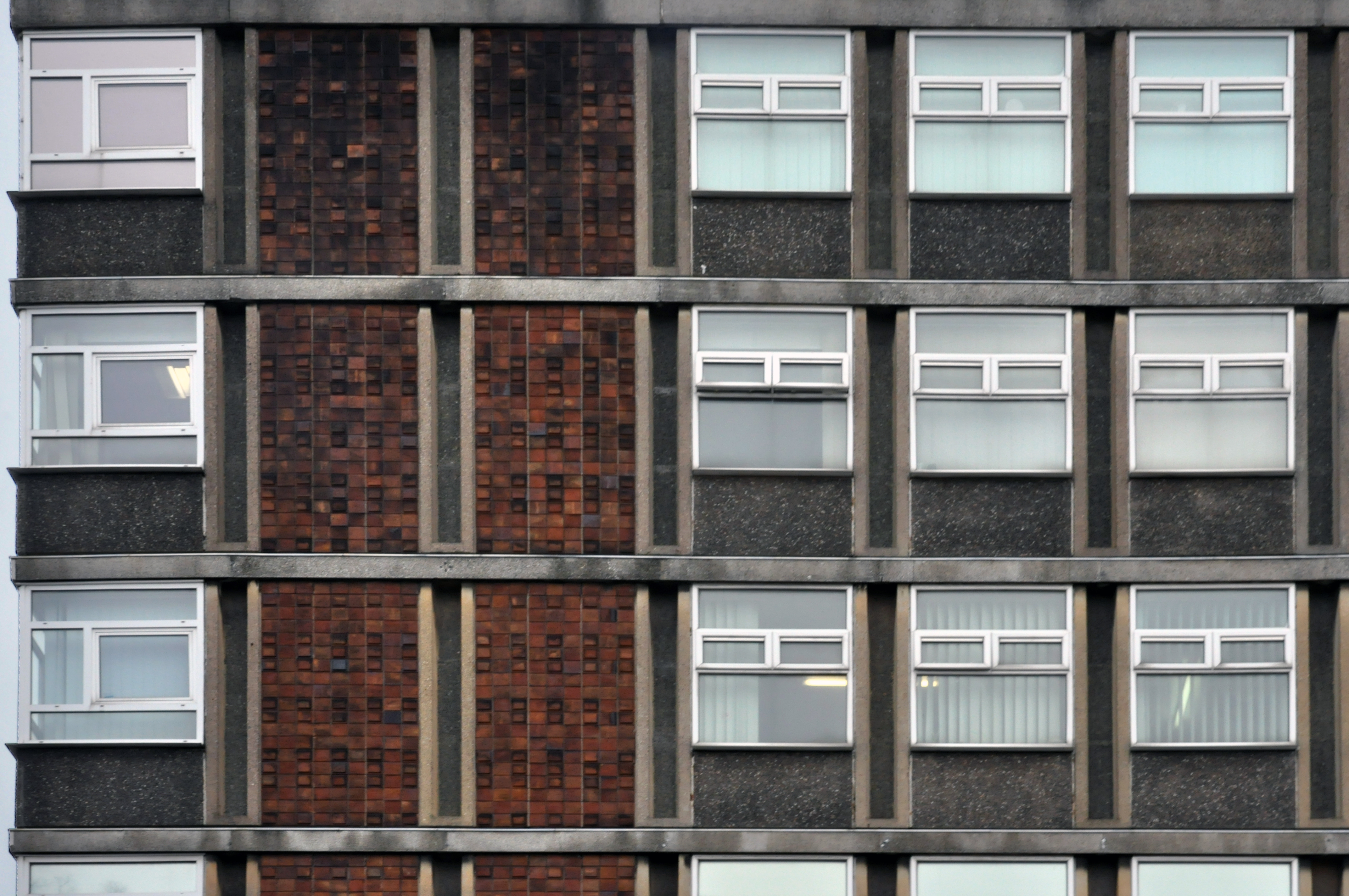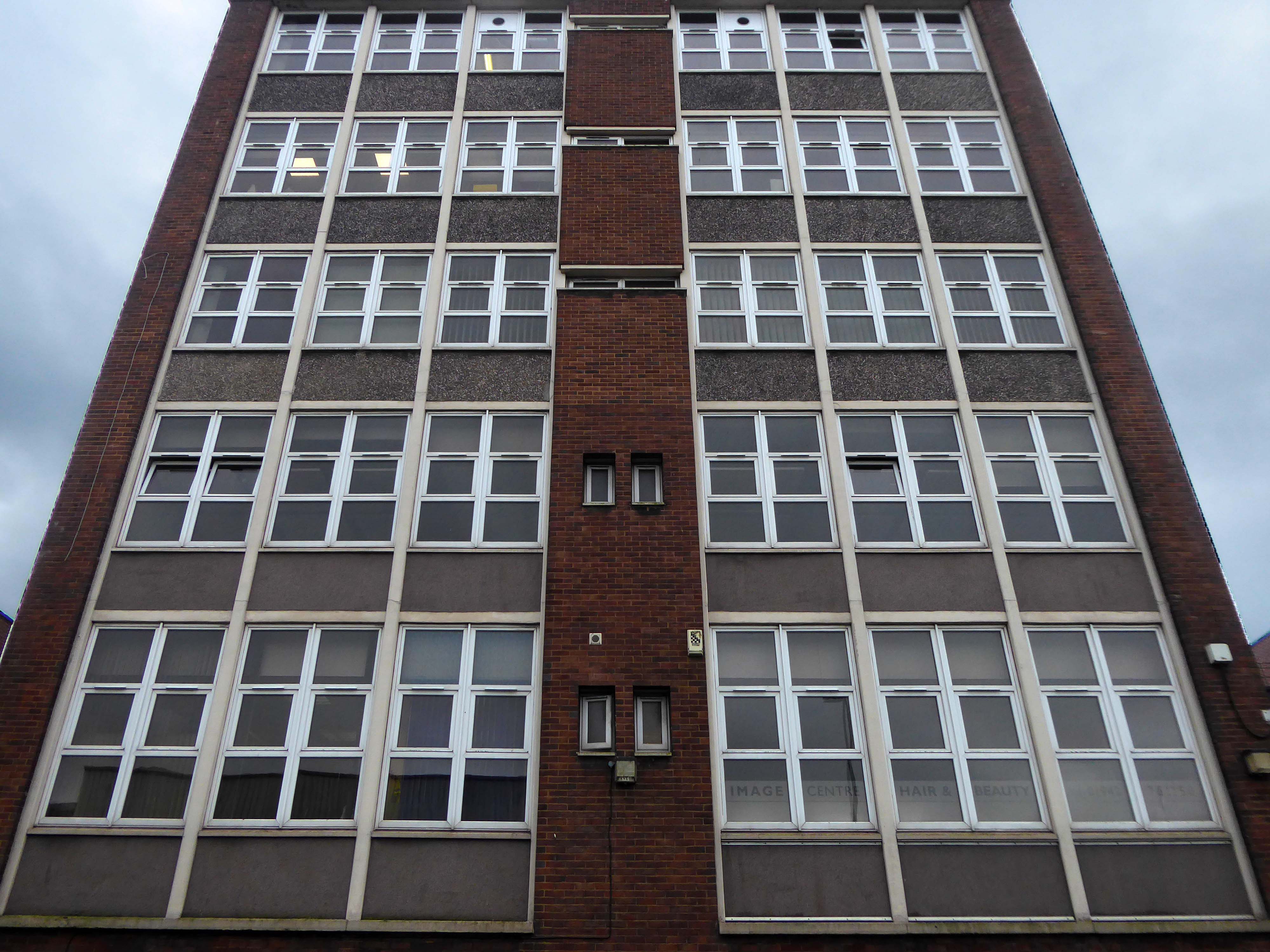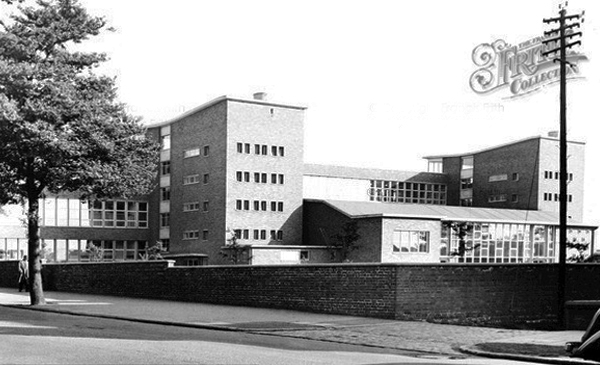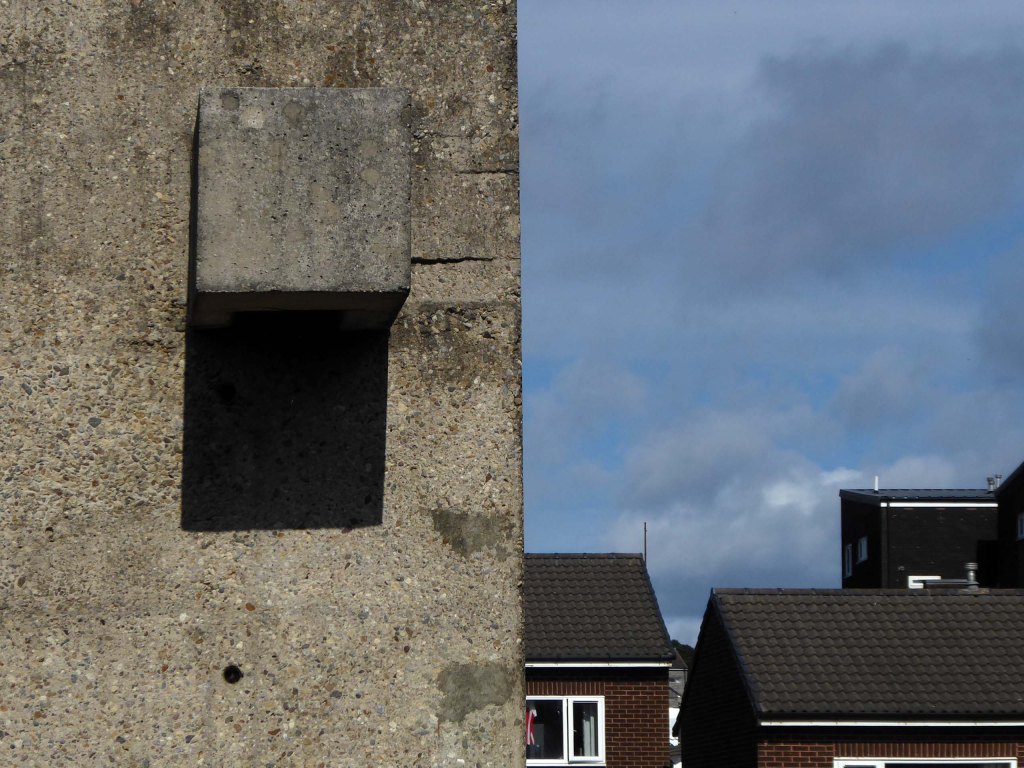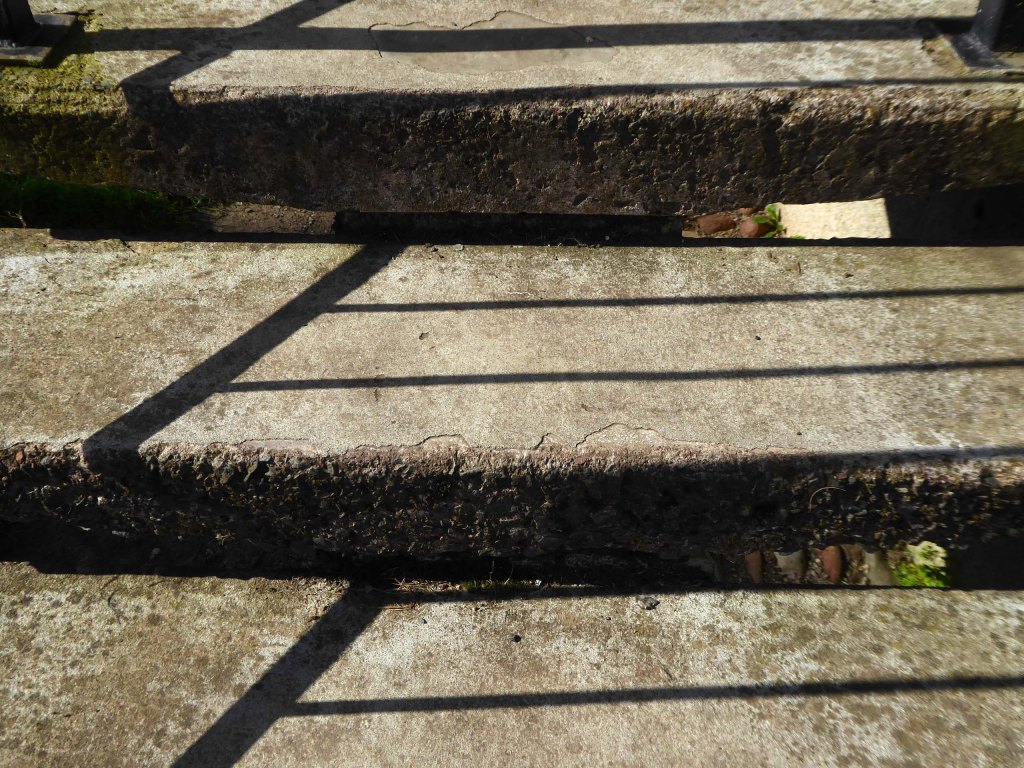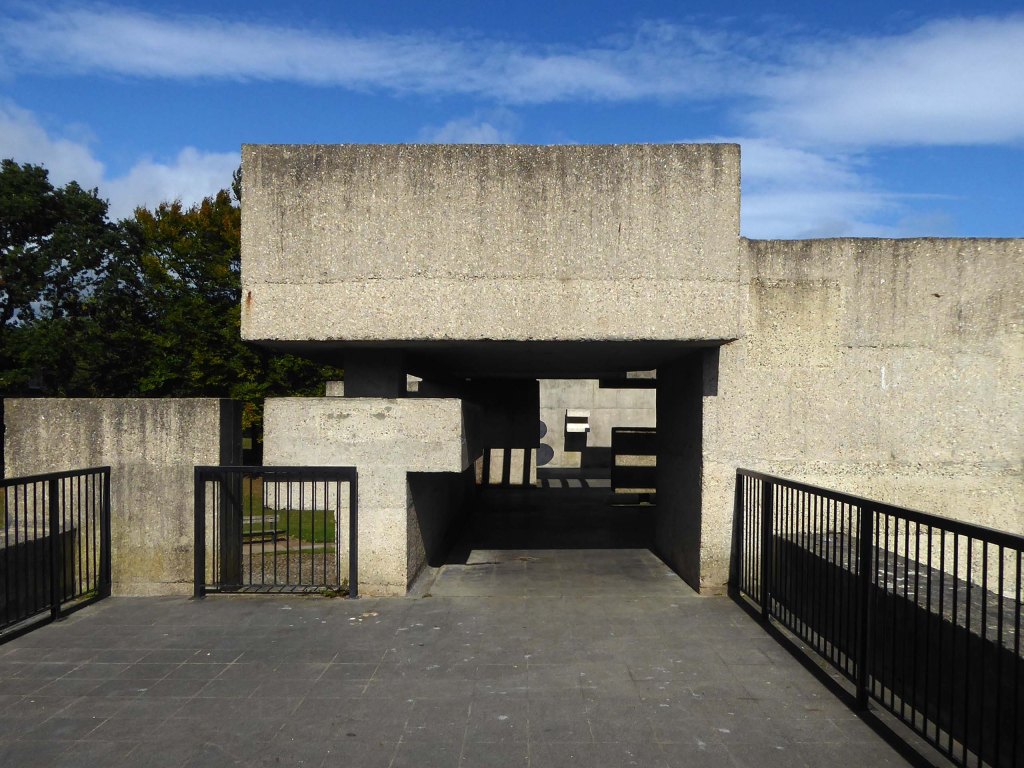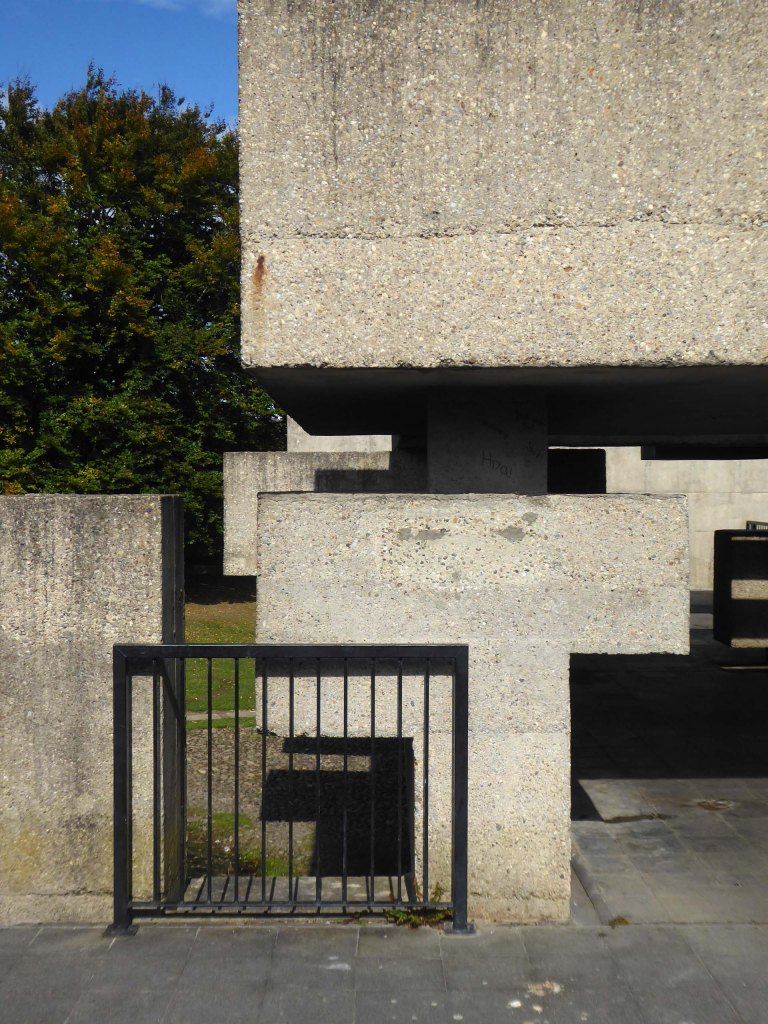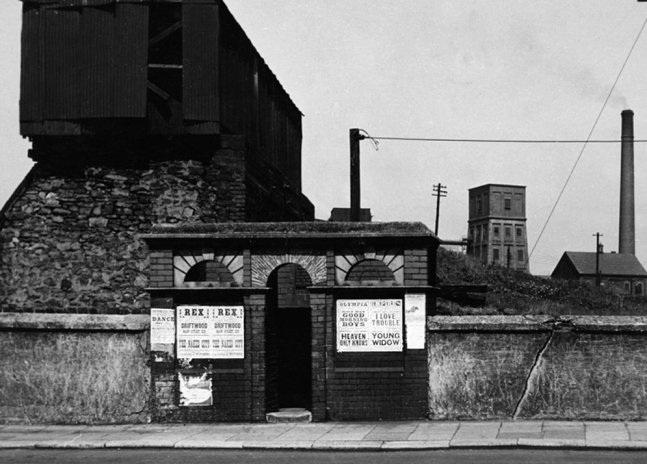
Peterlee Housing History

The case for founding Peterlee was put forward in Farewell Squalor by Easington Rural District Council Surveyor CW Clarke, who also proposed that the town be named after celebrated Durham miners’ leader Peter Lee.  A deputation, consisting mostly of working miners, met the Minister of Town and Country Planning to put the case for a new town in the district. The minister, Lewis Silkin, responded by offering a half-size new town of 30,000 residents. The subsequent new residents came largely from surrounding villages in the District of Easington.

Peterlee Development Corporation was founded in 1948, first under Dr Monica Felton, then under AV Williams. The original master plan for tower blocks of flats by Berthold Lubetkin was rejected as unsuitable for the area’s geology, which had been weakened by mining works, and Lubetkin resigned in 1950. George Grenfell Baines’ plan was accepted, and construction quickly began, but it was of poor quality. Williams invited artist Victor Pasmore to head the landscaping design team.

Wikipedia

Berthold Lubetkin chats with miners of the east Durham coalfield.
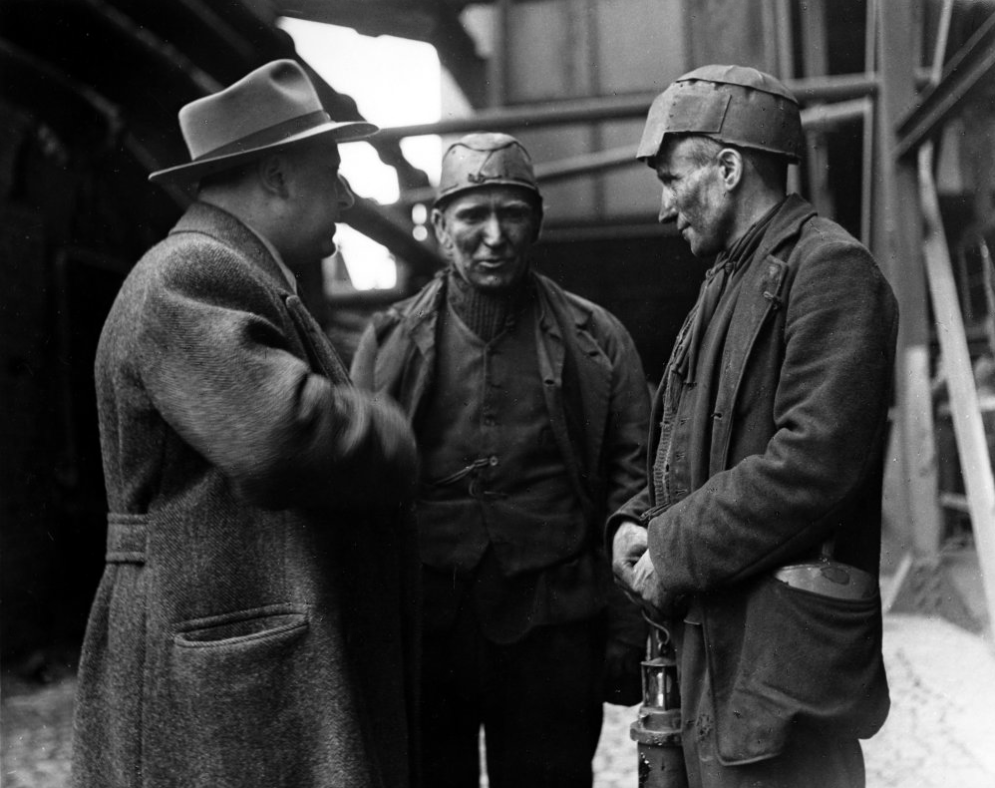
RIBA pix 1948
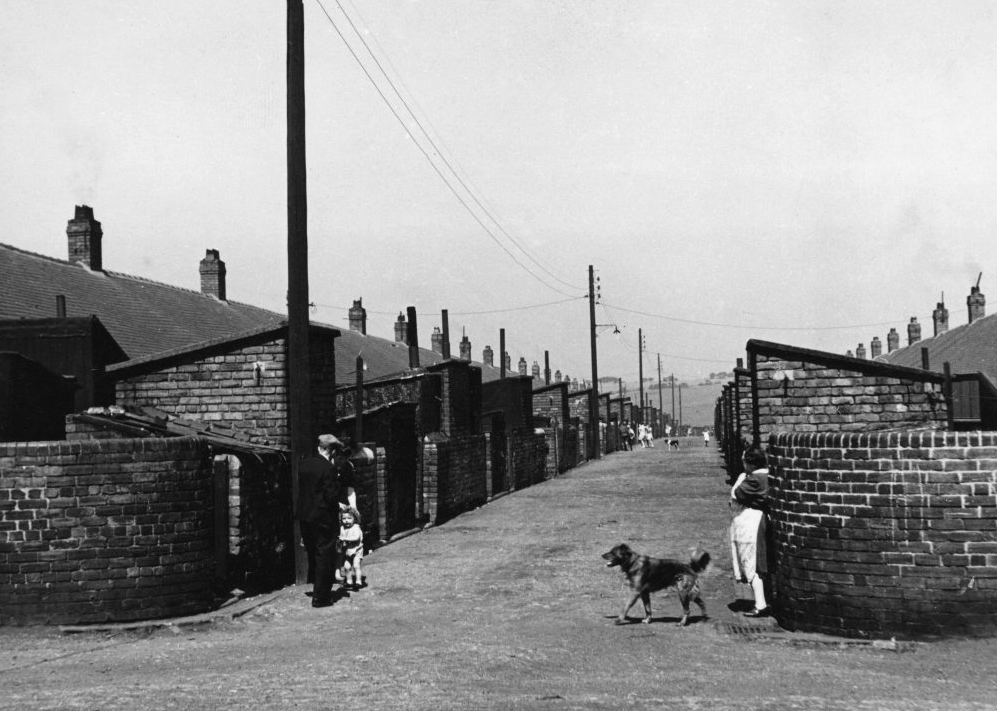
The backs of terraced miners’ housing – RIBA pix 1943

Sunny Blunts

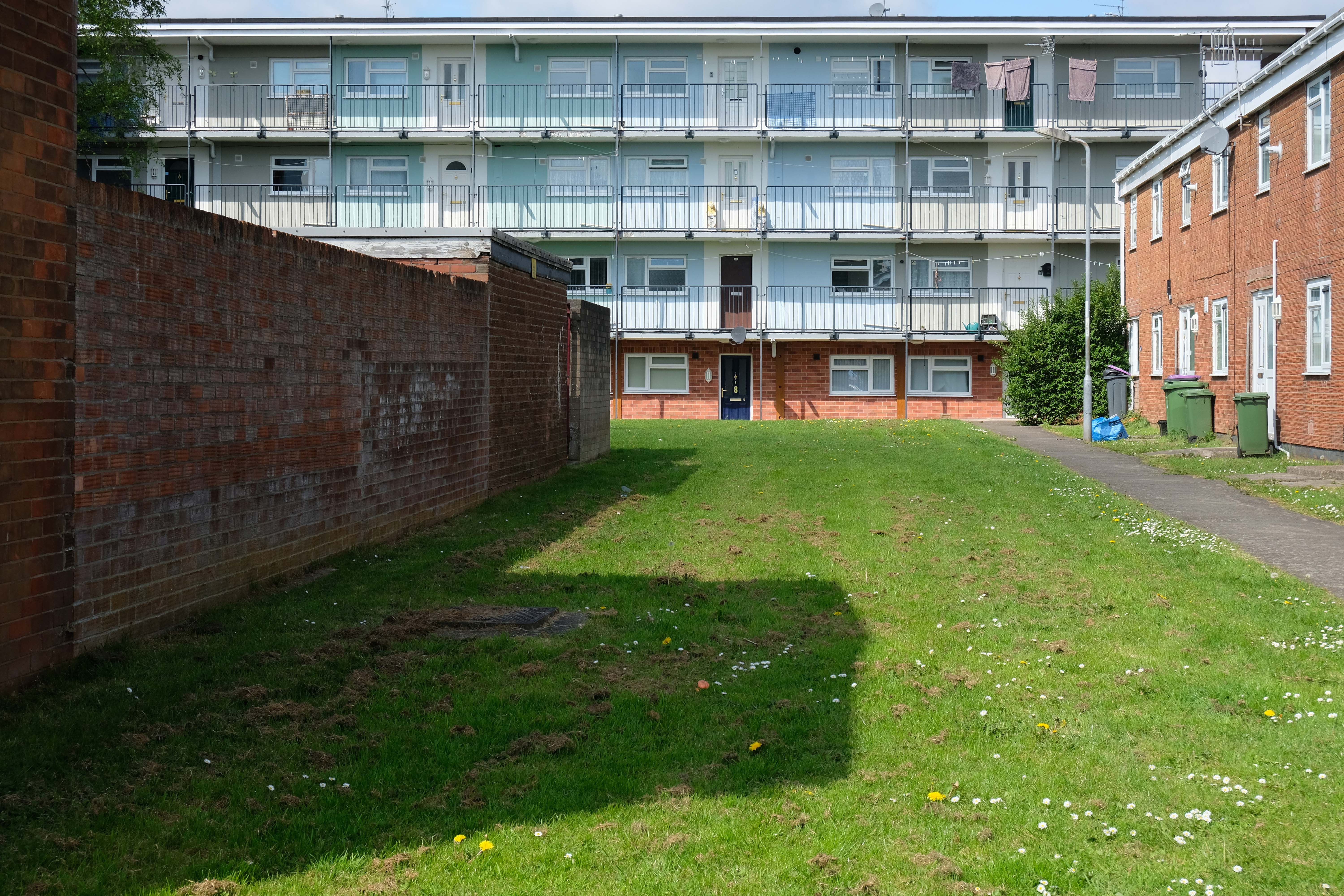
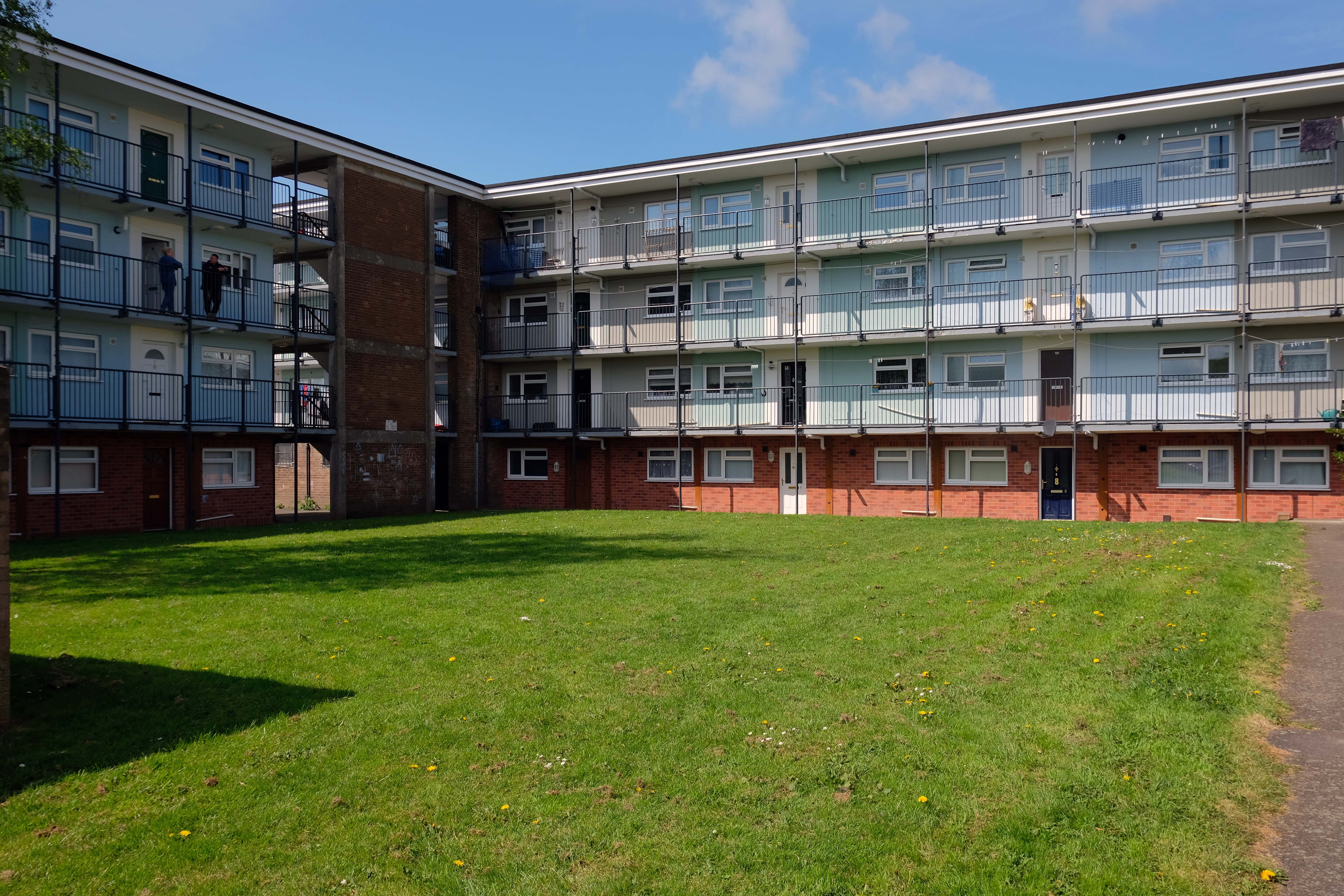
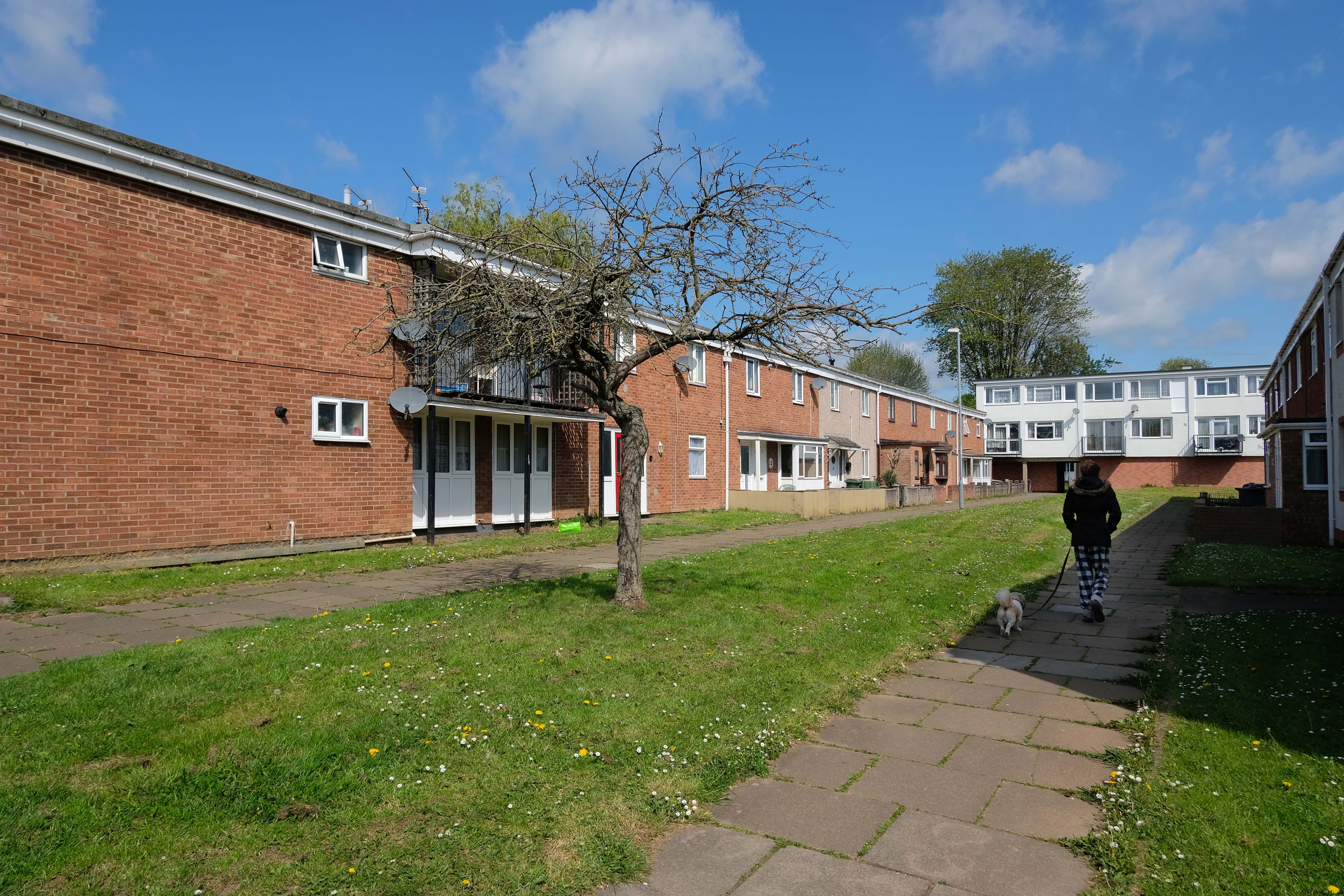
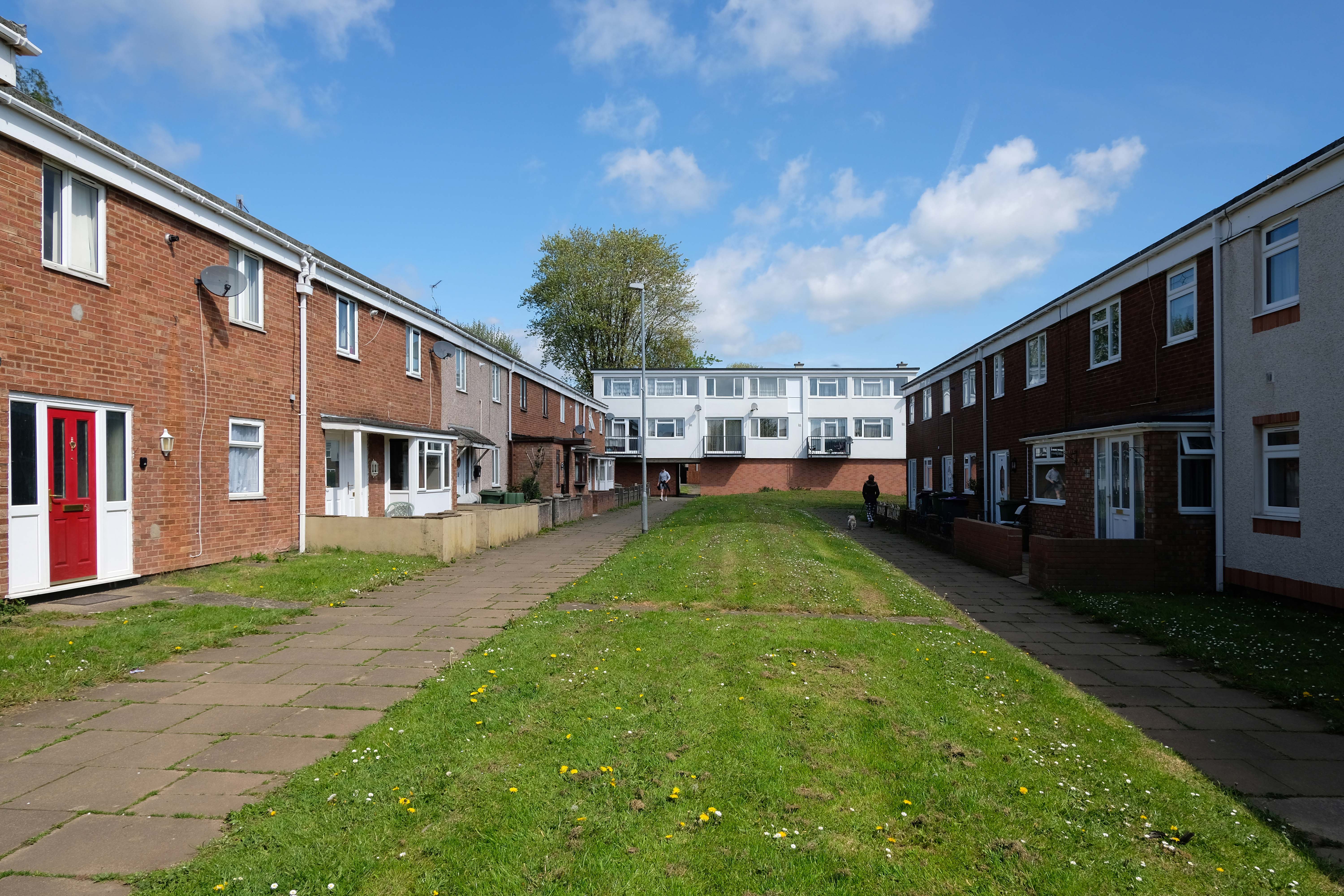
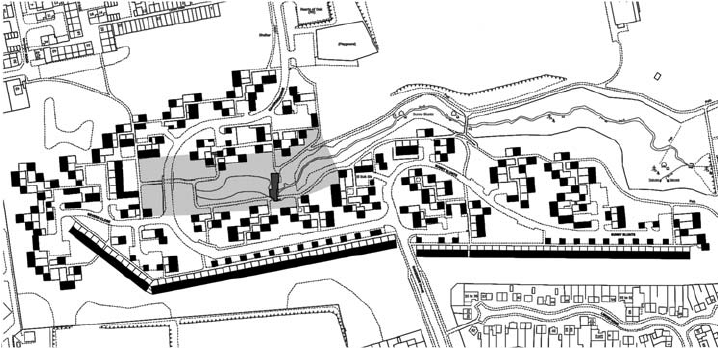
The long and narrow site intersected by a sloped ravine necessitated a new design approach for the layout of the road system and housing in Sunny Blunts. Rather than imposing a grid system as before, the roads follow the natural contours of the landscape so become curvilinear. The housing is then arranged in asymmetric patterns – a deconstructed grid system is one way of describing it.
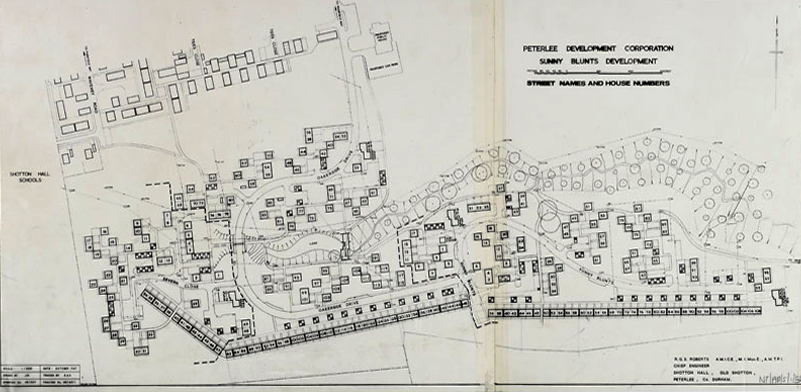
One of the oddities of Sunny Blunts is the way the houses are rotated 180 degrees in relation to the conventional streetscape where enclosed gardens are normally at the rear of the houses. At Sunny Blunts the front door opens into the garden, while the backdoor opens out onto public realm space, often directly onto grassed areas, which because of how the houses are arranged forms small communal gardens isolated from road traffic for safe places to play. Peterlee at this time had a very high percentage of young families.
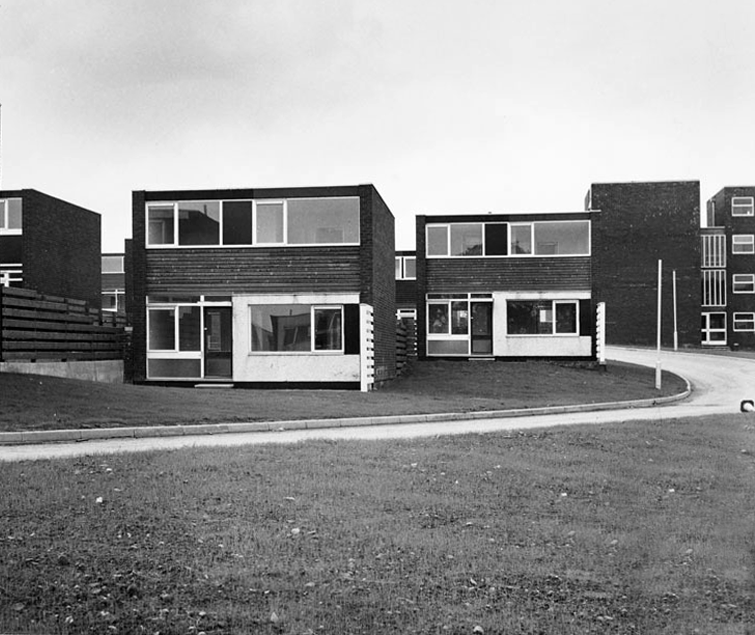
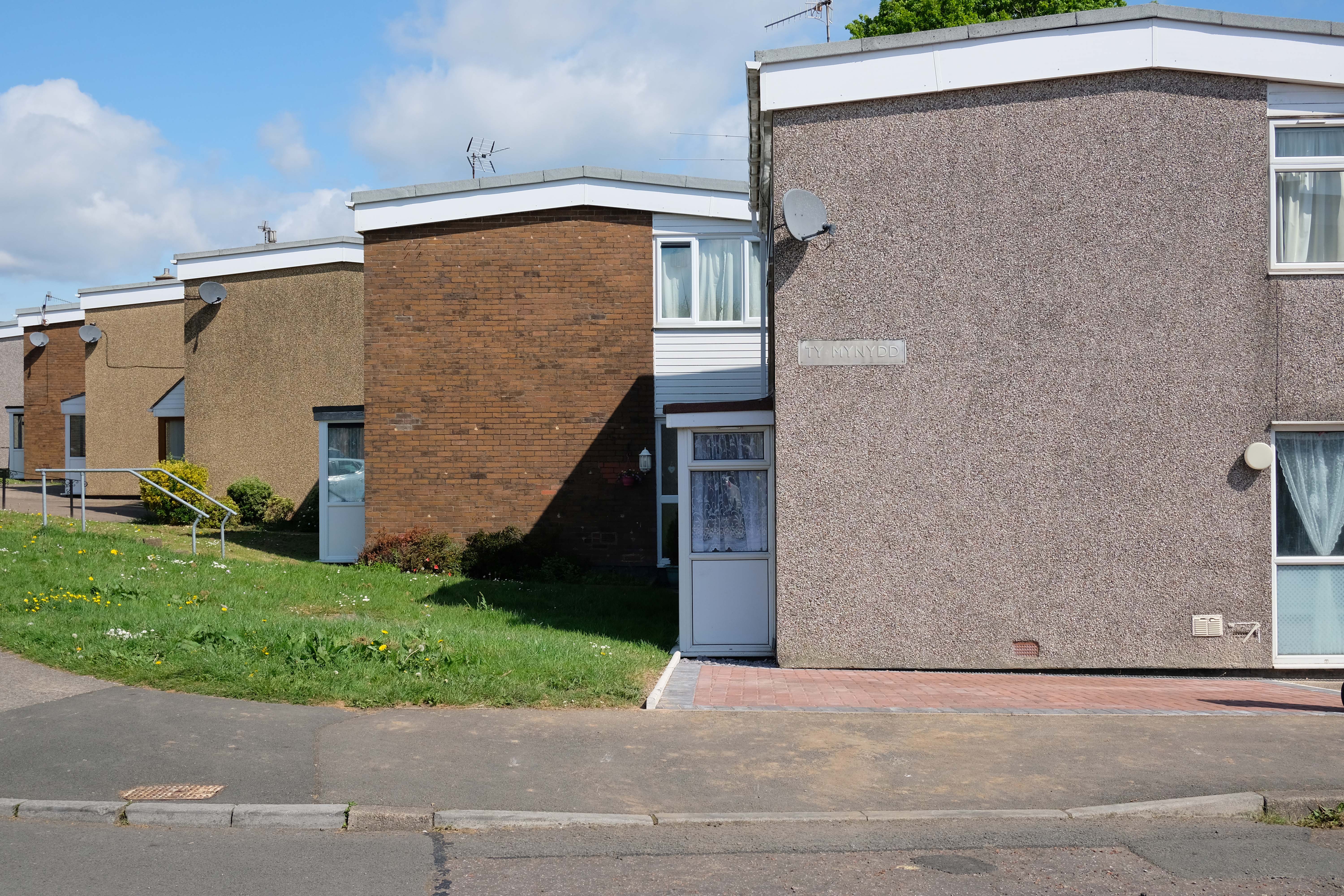
Sunny Blunts is also where the now infamous Crudens houses were introduced – along with the Howletch area. Crudens owned the British rights to the Skarne building system, where prefabricated concrete walls and floors are bolted together to form the frame of the house. The system reduced building costs by 10% per house unit, though at Sunny Blunts this saving was then absorbed by the costs of remedial work required to make many of the houses habitable for residents to move in. This still didn’t fully resolve issues with water ingress in some cases.
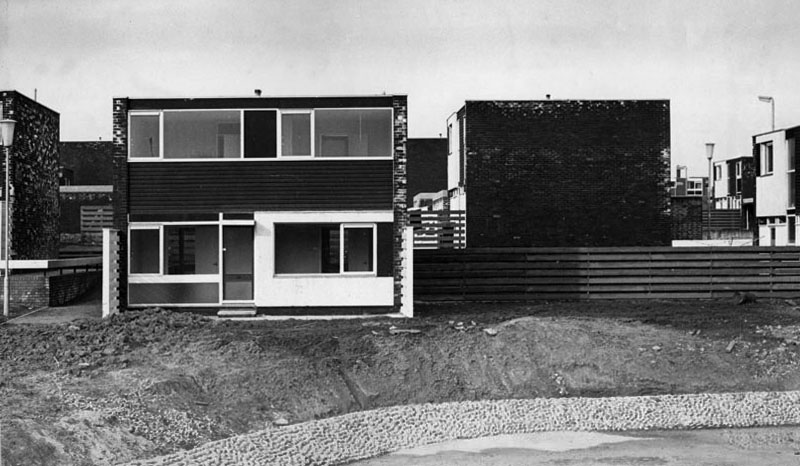
After the completion of Sunny and Howletch the Development Corporation reverted back to using more traditional building methods.
Peterlee History

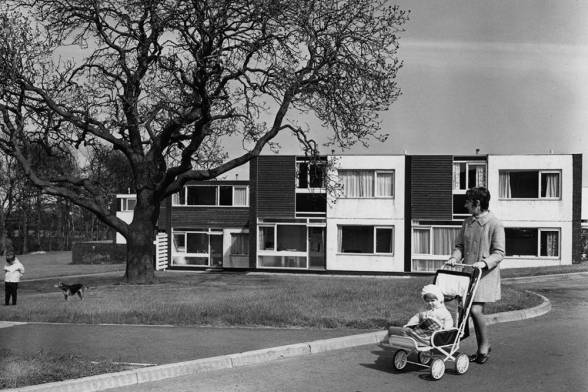
The Peterlee Development Corporation initially employed the Russian modernist architect Berthold Lubetkin to design the new town. Appointing a renowned Modernist architect such as Lubetkin demonstrated the importance that was placed on innovative design. Lubetkin initially planned to build a modern town of high-rise towers and walkways in the sky. However, his plan was rejected because towers of such height could not be built on land that had been mined. 

After Lubetkin’s resignation in 1950 a new architect, Grenfell Baines, was employed to work on the development of Peterlee. After further dissatisfaction with the plans, Victor Pasmore was invited to collaborate on a new scheme for the south west area of the town in 1955. Pasmore’s role was to work alongside the architects to add imagination to a project that could potentially get weighed down with the restrictions of building regulations. That Pasmore – one of the most influential abstract artists in Britain at the time – was given such a vital role in the development of Peterlee demonstrates the central role art played in urban design after the war.

Kingsley Chapman Blog

Chapel Hill

As well as appearing in the Chapel Hill area, this house style was also introduced in parts of Acre Rigg, along Manor Way, and in the early phases of the South West Area. These were designed and built in the early 1960’s when Roy Gazzard was Chief Architect. The three story blocks of flats with their distinctive butterfly roof design that were introduced in the same areas of the new town can also be credited to Gazzard.
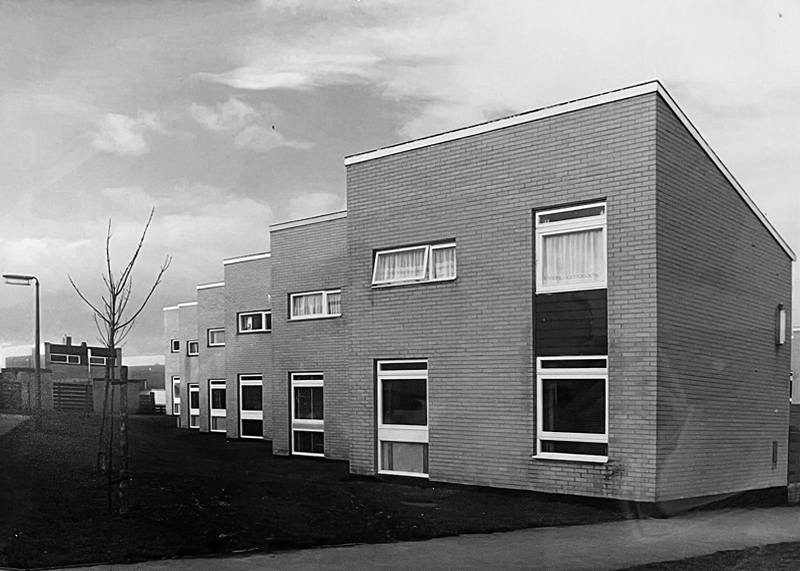
Roy Gazzard left Peterlee Development Corporation in June 1962 and went on to become Chief Architect at Killingworth in North Tyneside.

The footpath running between a group of two-bedroom houses.
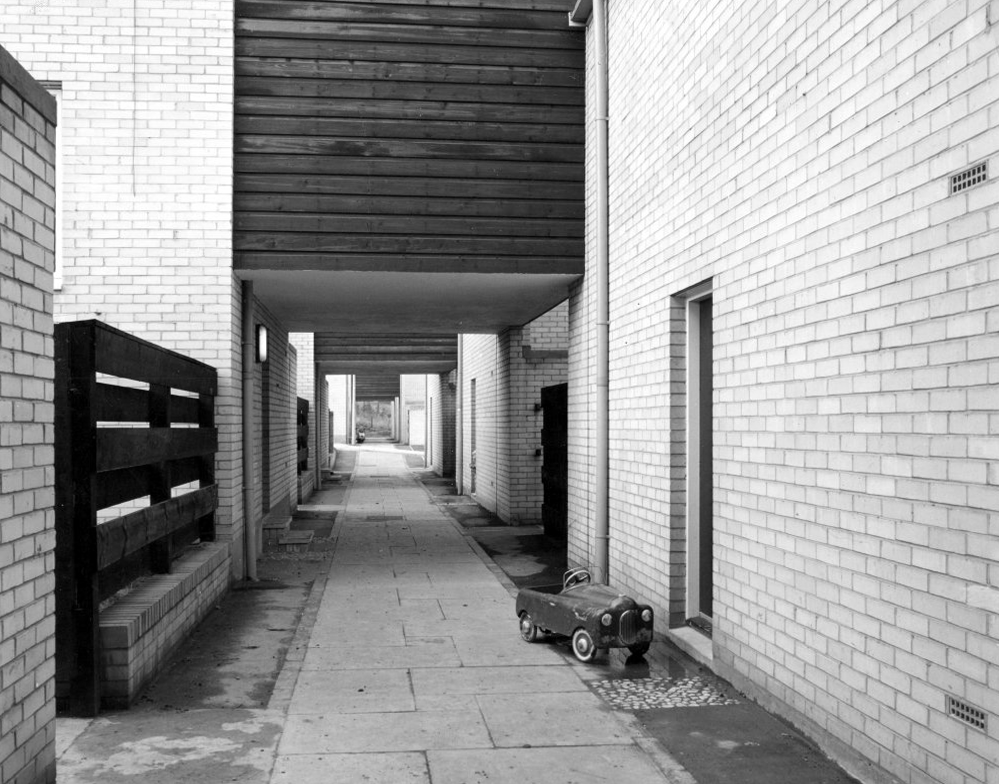
RIBA pix
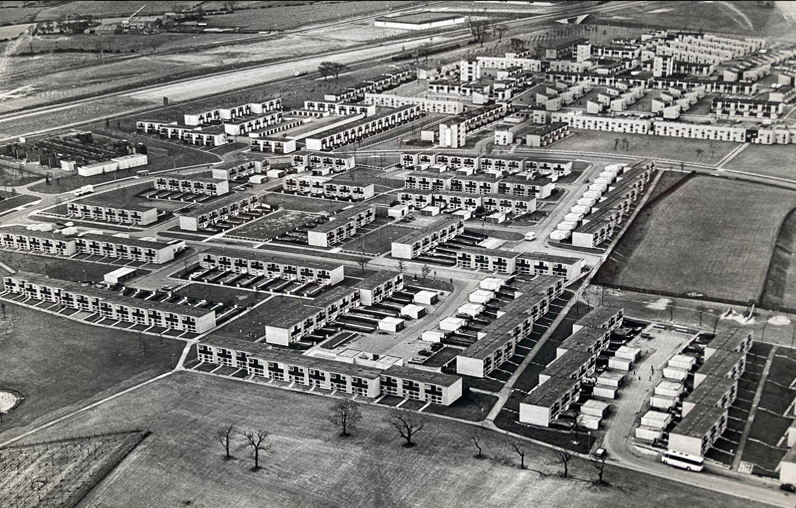
Acre Rigg

Essington Way is the main spine road running north from the town centre to Thorpe Road which connects Easington Village and Colliery, with Horden and Sunderland Road. East of Essington Way is the North East Quadrant . West is Acre Rigg which was built in five phases from 1956-1966. The early phases of Acre Rigg share a similar character to that of the earlier North East Quadrant. The later phases built in the 1960s contrast sharply, drawing on the design approached developed in the South West Area under the guidance of artist Victor Pasmore.

Howltech

The contract to build the Howletch area was awarded to Crudens, who owned the British franchise for the Swedish designed Skarne building system.

The Crudens houses were constructed using prefabricated concrete sections bolted together to form the frame of the building. The gable end walls were then rendered with brick, with non-loadbearing glass, wood, and rendered panel sections forming the front and rear elevations of the houses.
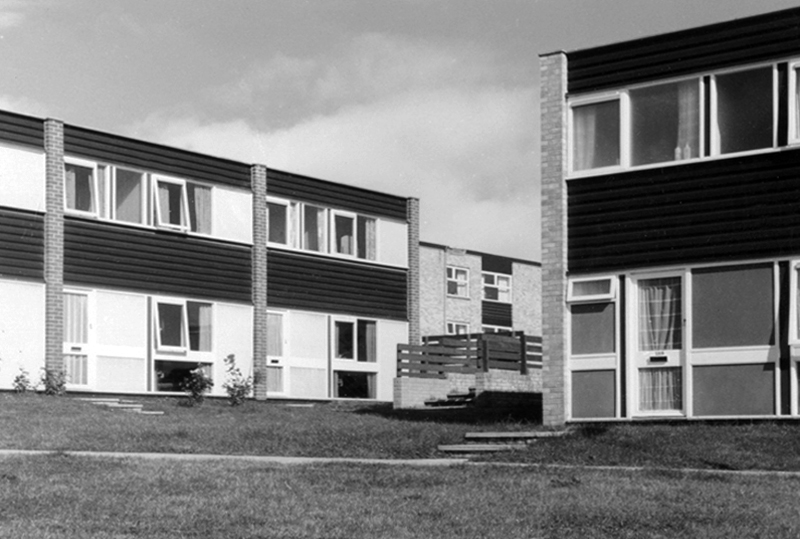
In the foreground of this aerial photo is Old Shotton Hall, which at this time was the headquarters of Peterlee Development Corporation after it was refurbished in 1948 by Architect Planner Berthold Lubetkin. In 1976 the Development Corporation moved its headquarters to Lee House in the town centre. It is now the offices of Peterlee Town Council.
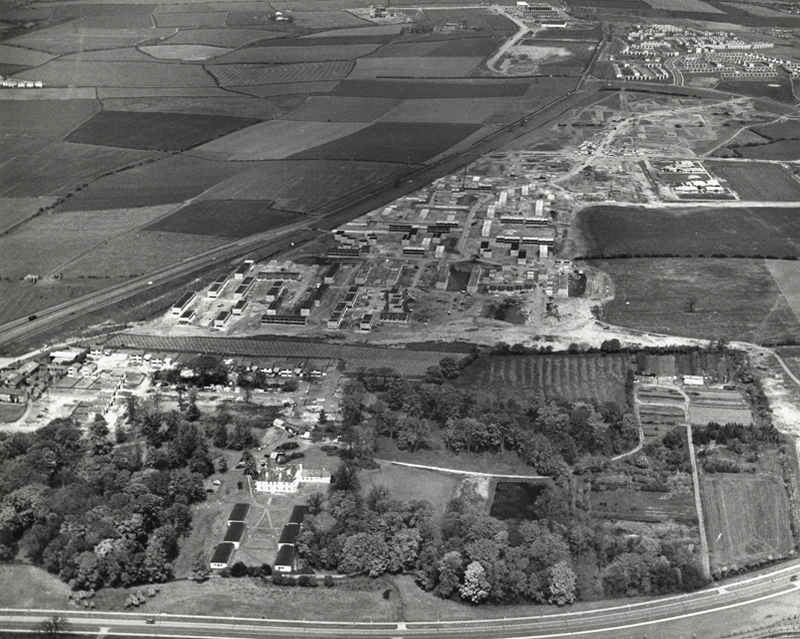
North East Quadrant

After the departure of Berthold Lubetkin, Grenfell Bains was drafted in as Architect Planner to develop the new Master Plan and oversee development of the North East Quadrant. Bains at the time filled the position at Newton Aycliffe, another of the first wave new towns located 20 miles south west of Peterlee.
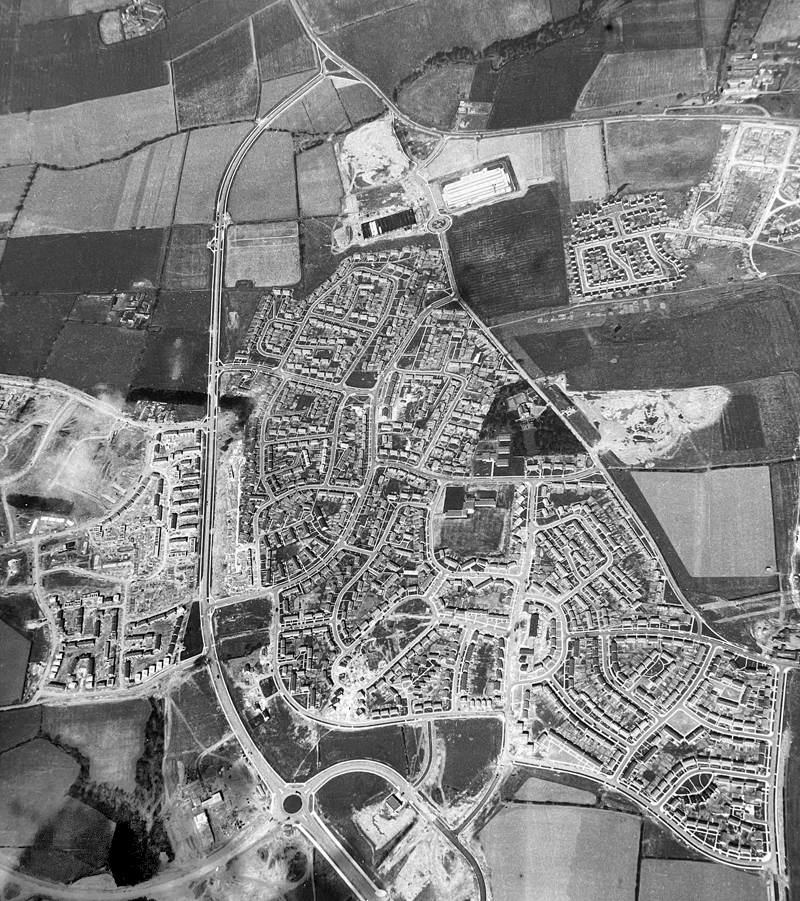
1956

As the dates of these aerial photographs testify, building work was already well underway in the North East Quadrant by the time the Peterlee Master Plan was published in September 1952. Indeed, as surviving residency agreements and rent books also testify, houses in this part of Peterlee were already occupied, such were the pressures on the Development Corporation to have something tangible to show for their efforts.
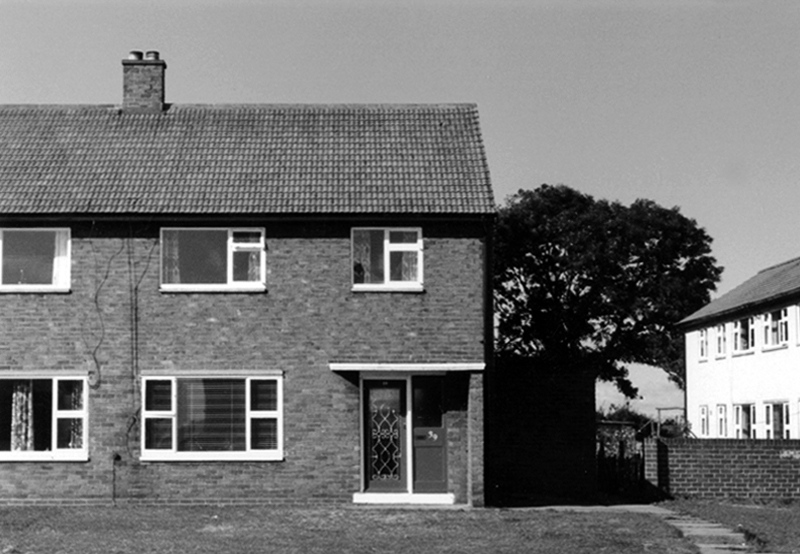
Thorntree Gill

Thorntree Gill was the first phase of residential development completed in Peterlee. It was home to the towns first residents, who began moving in in 1951. The road layout is that designed by Architect Planner Berthold Lubetkin for his ‘Hundred Houses’ scheme , though the houses eventually built differed dramatically from what Lubetkin had envisaged.
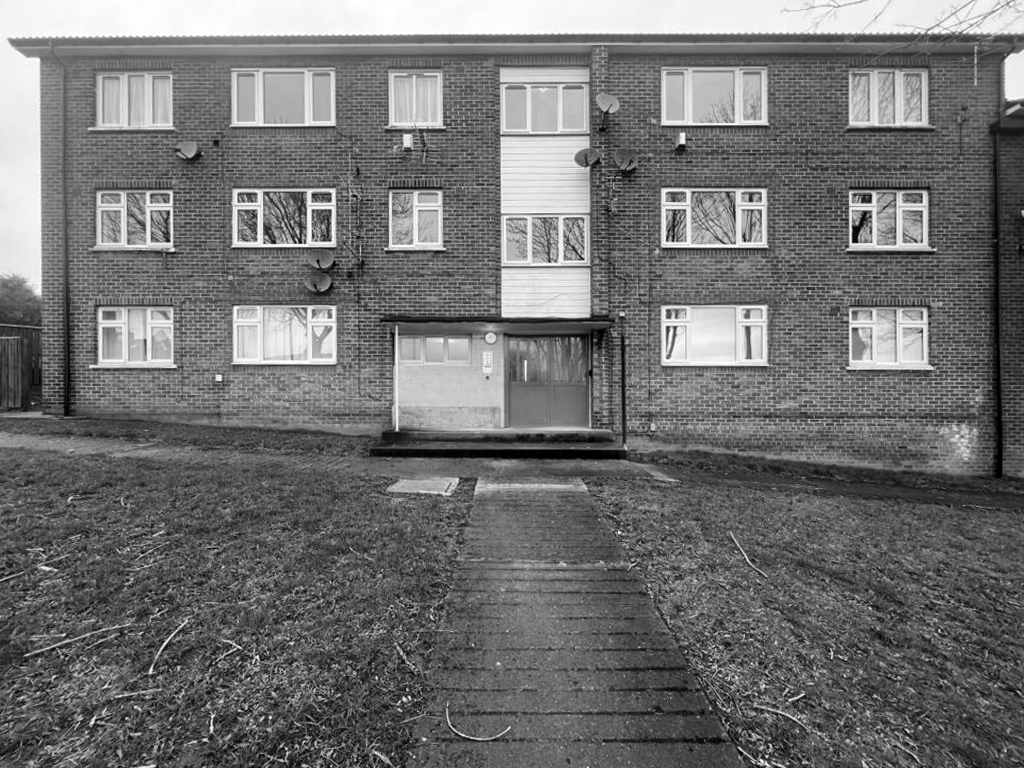
South West I and II


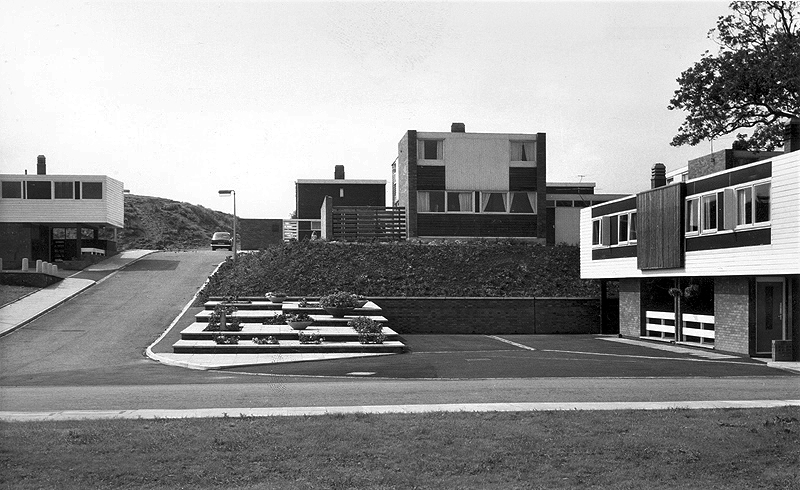
In the first phase of the South West Area, Victor Pasmore – Consulting Director of Urban Design, Frank Dixon – Building Architect and Peter Daniels – Landscape Architect, settled upon an orthogonal layout system – roads and houses set at right angles to form a grid pattern.

Three bedroom semi-detached cantilever house on Avon Road.
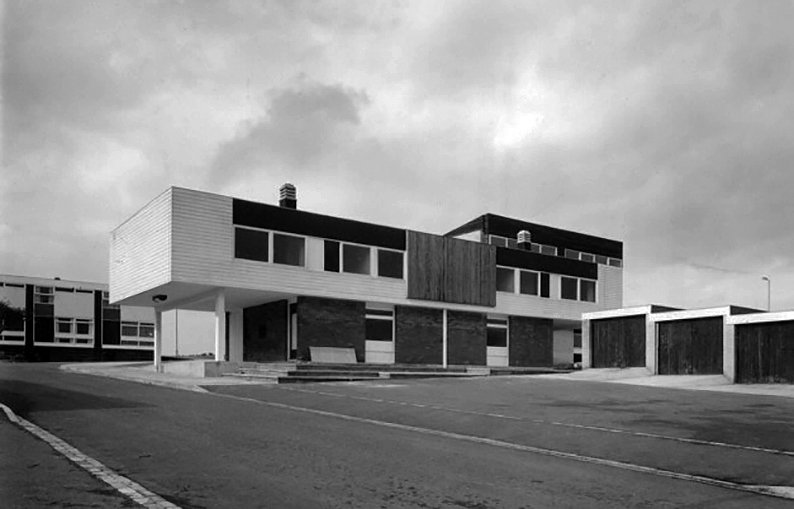
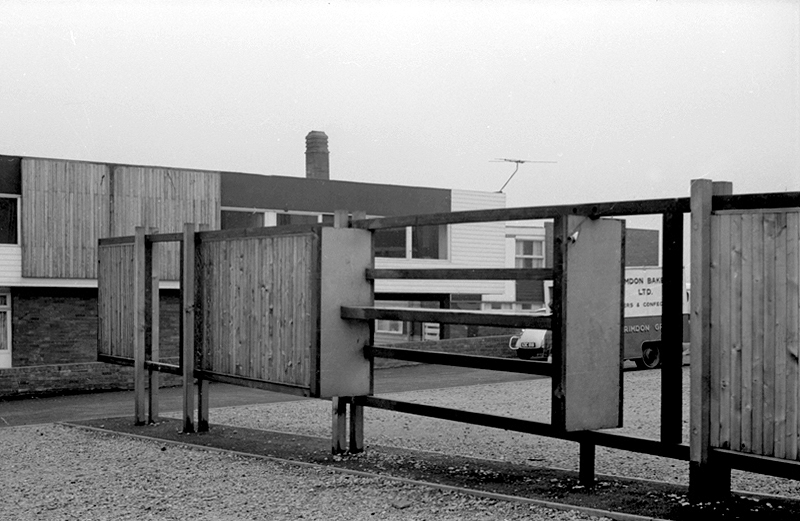
Screen partition on Thames Road.
Dart Road
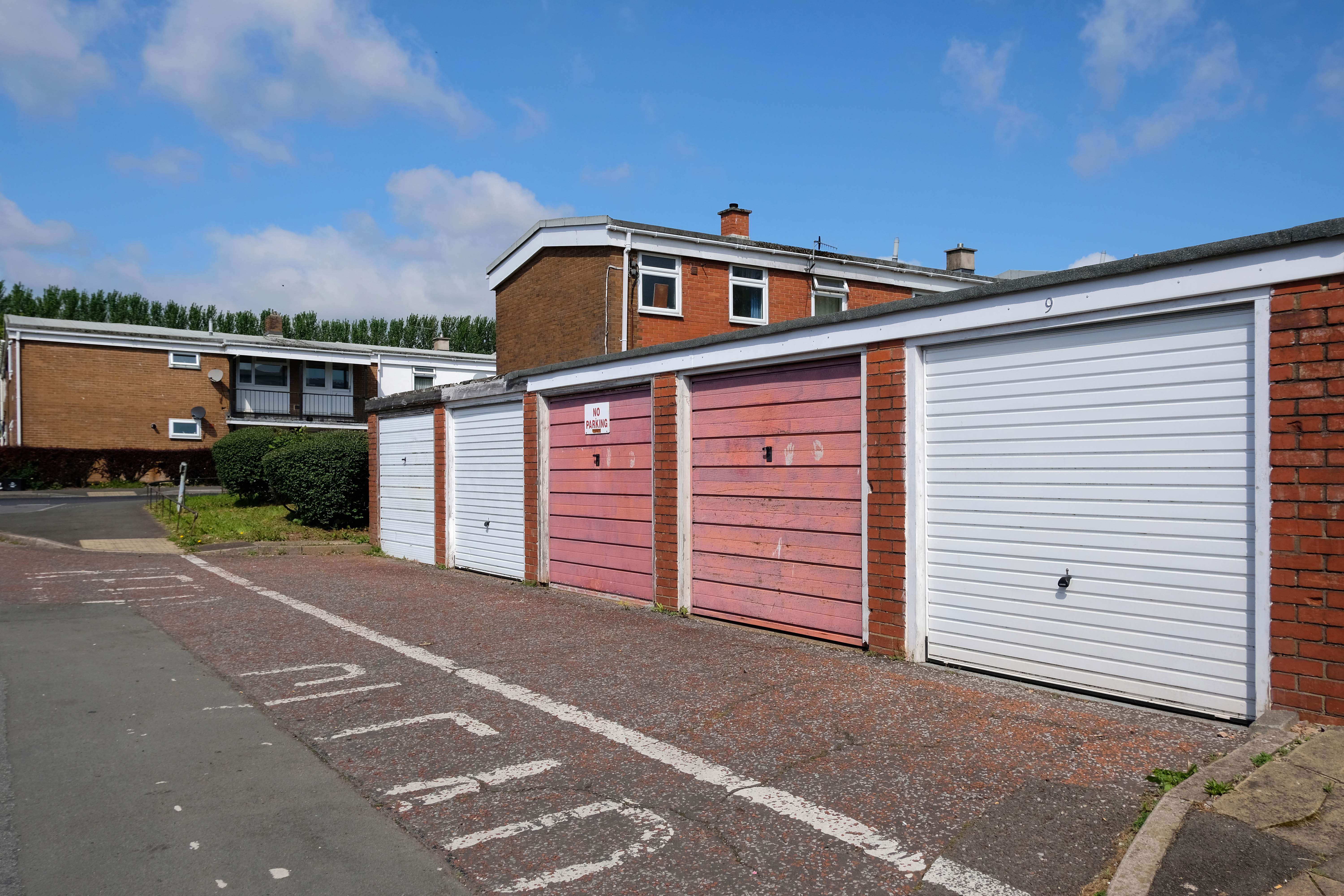
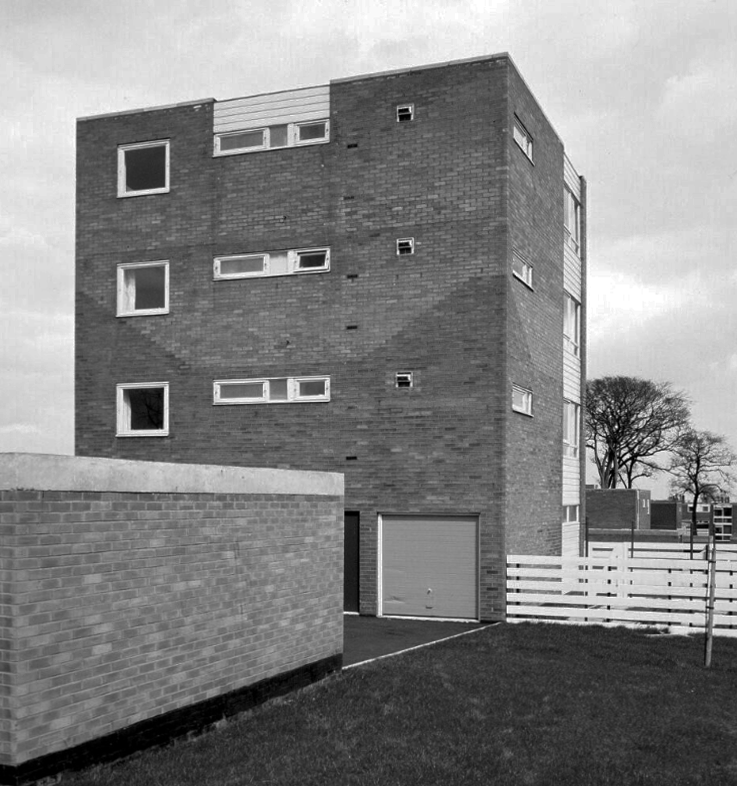
A stub block of single-bedroom flats over garages.
RIBA pix

South West III and IV

The road and housing layouts in the South West III and IV areas extend the orthogonal grid pattern introduced in the South West I and II areas.

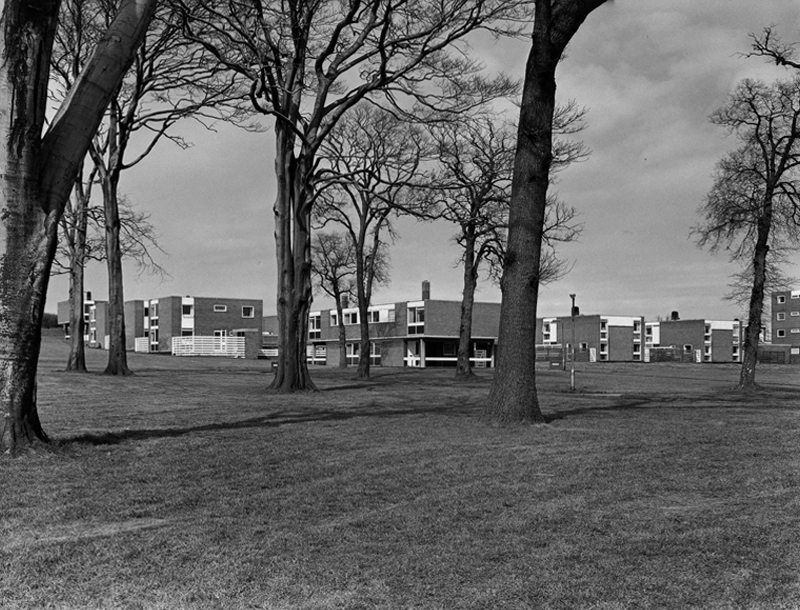
The presence of existing mature trees is a feature of South West III which helps give the area an identity that is distinctive from South West I and II. This distinctiveness is further enhanced by the choice of building material.

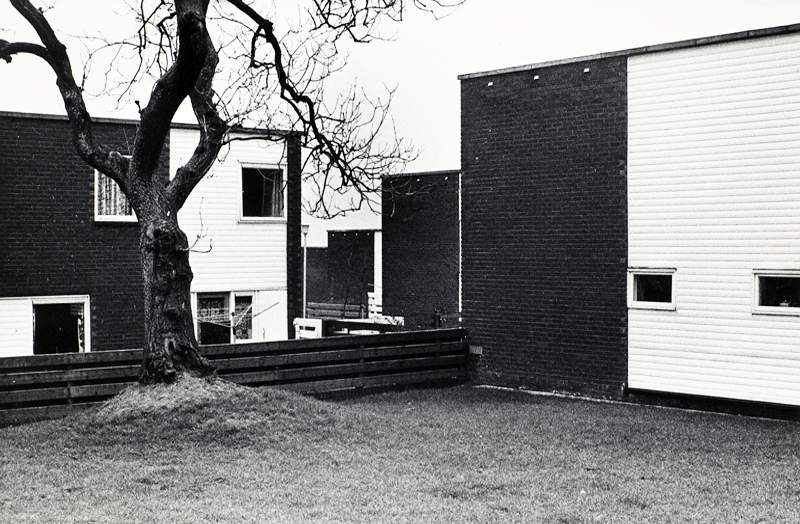
The South West III and IV areas were built with cured lime brick, with black dye added to a material that is naturally white, creating symbolic reference to a coal face. The visual effect was then sharpened with white panelling. When the dye added to the bricks began fading to a pale grey colour through exposure to the elements, the intended symbolism uncannily started to mirror the fate of the coal industry across the east Durham area.

Welland Close seen from Passfield Way
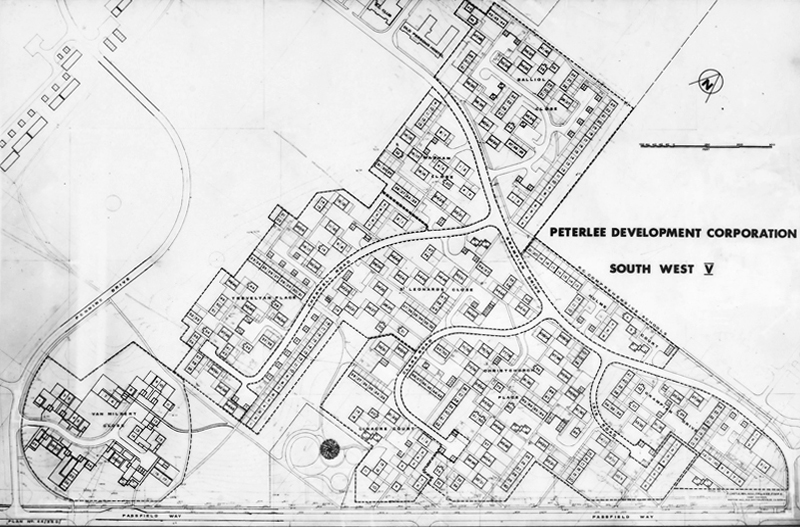
South West V

The South West V Area is approximately twice the size of Sunny Blunts. This final phase of development therefore provided Victor Pasmore with the opportunity to expand the new layout system without the constraints presented by the Sunny Blunts site.

Though the basic cubic house unit is retained in South West V, the detailing in the house elevations is much simpler and closer in feel to the South West III and IV Areas.
This is an an abridged version of the material to be found on Peterlee History – intended as an accessible guide to visitors wishing to explore the town.

Additional photographs can be found on RIBA pix.
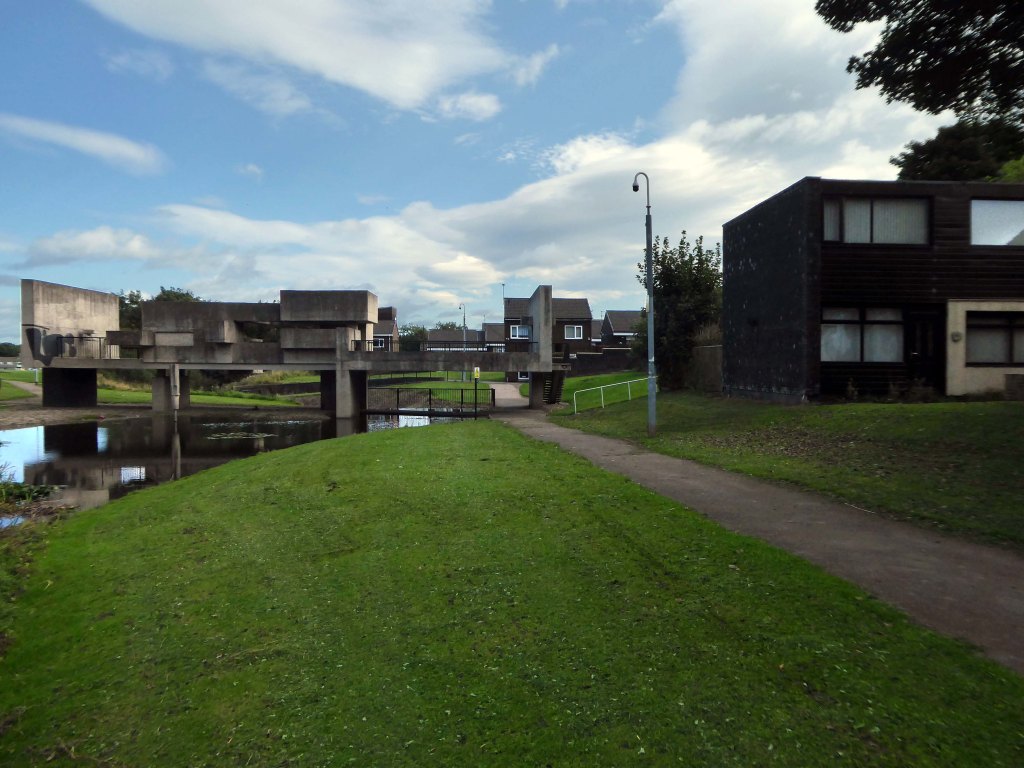
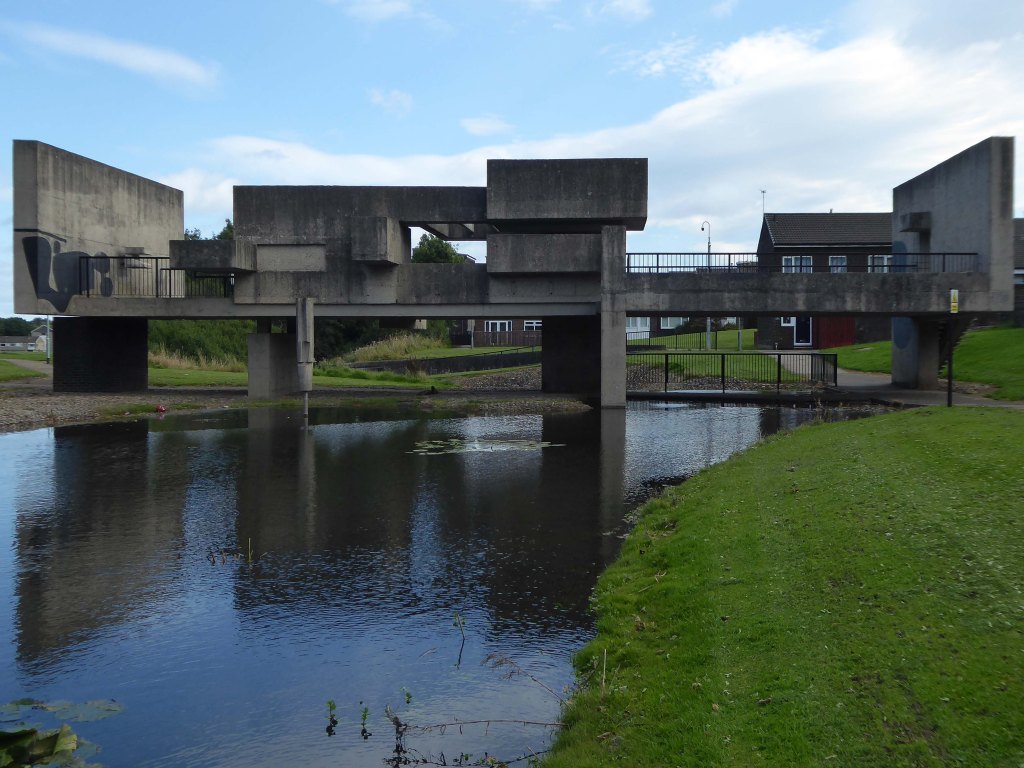
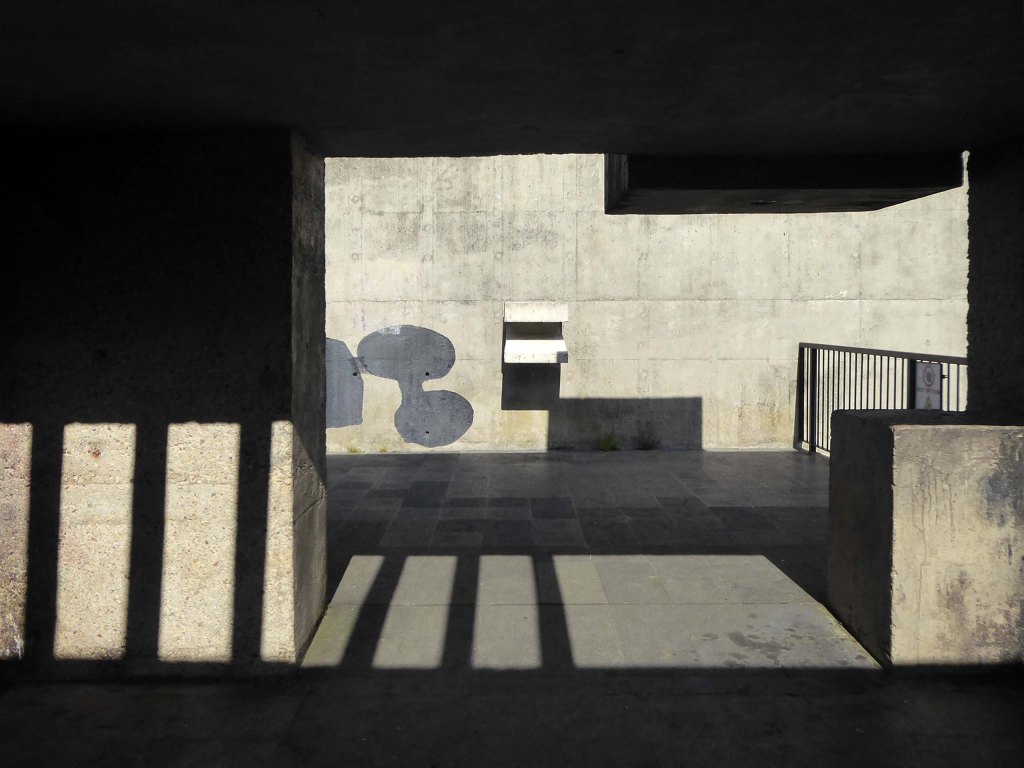
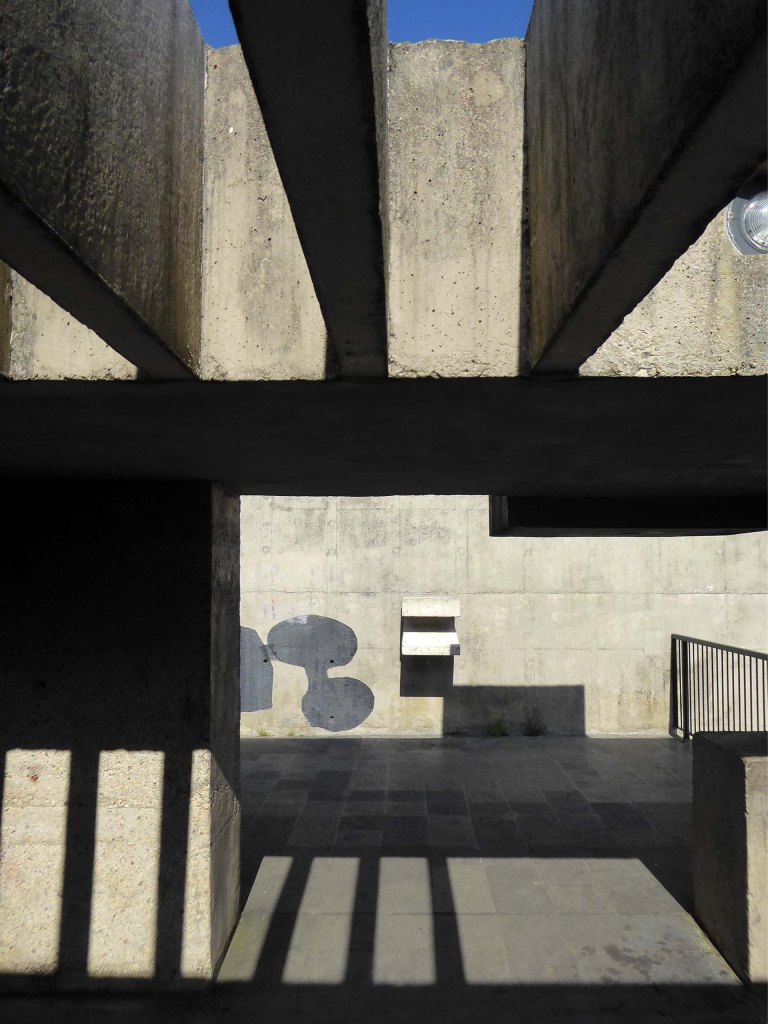
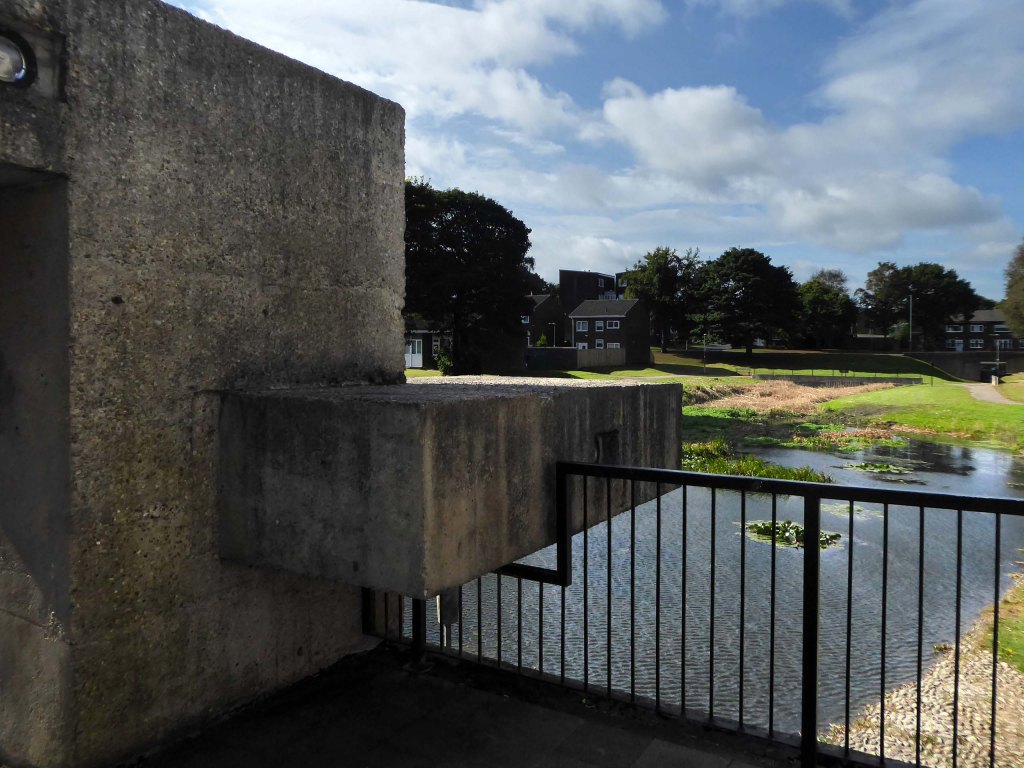
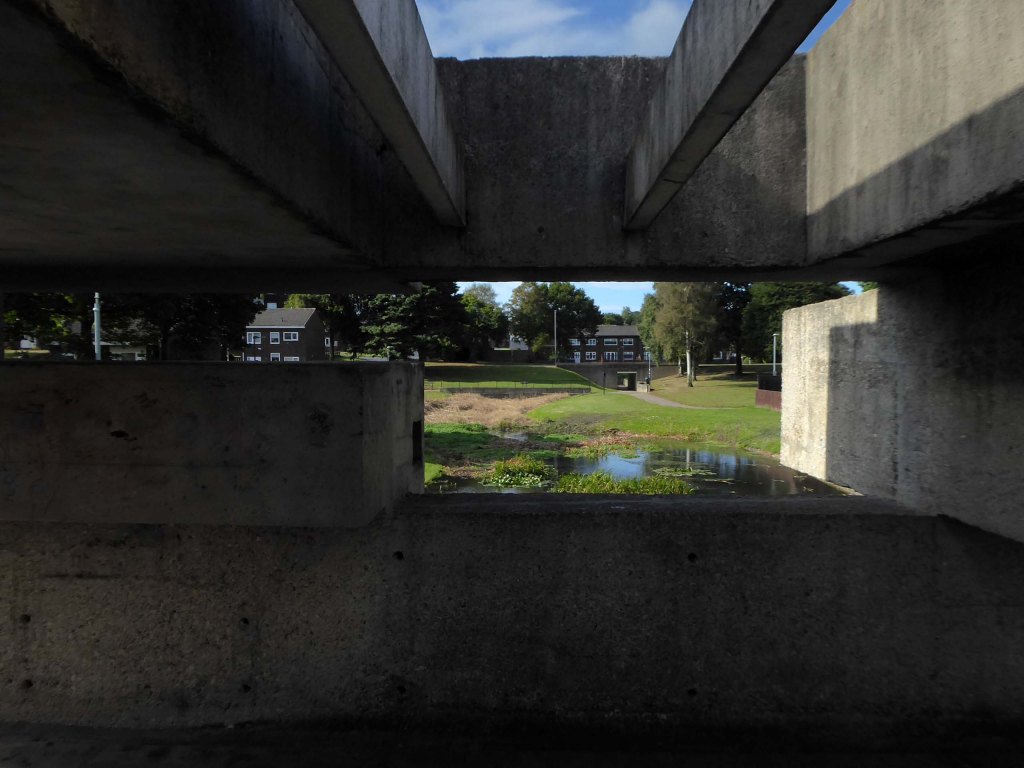
Apollo Pavillion – Peterlee 2025

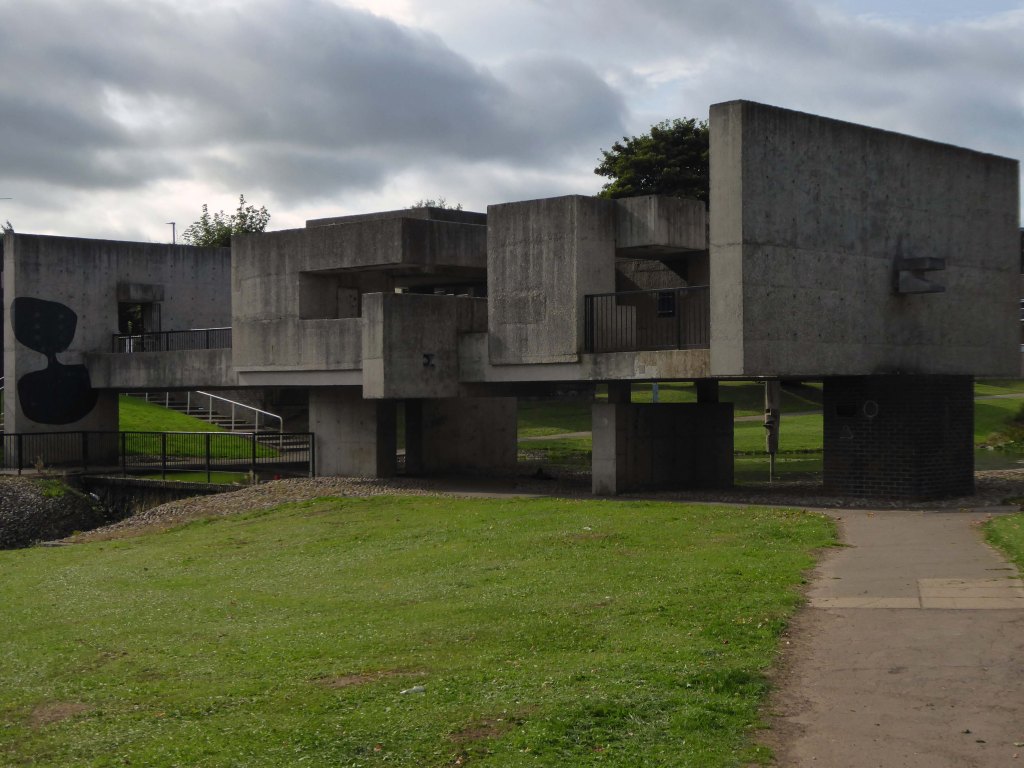
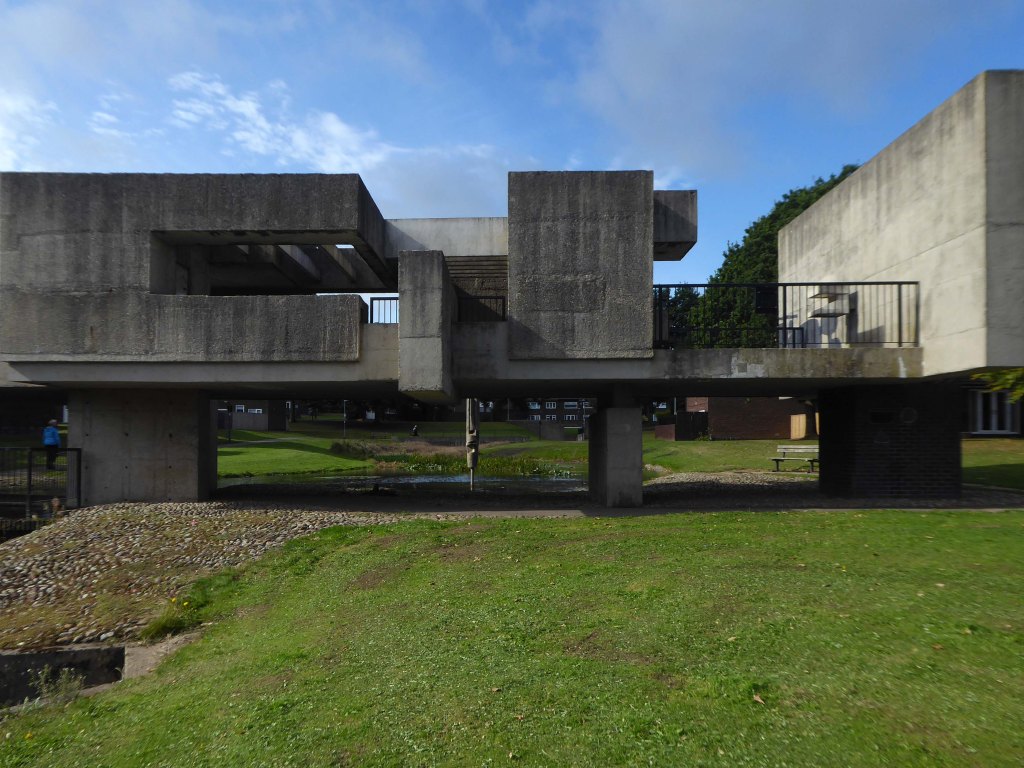
Apollo Pavilion Oakerside Drive Peterlee County Durham

Second time around for the Victor Pasmore Pavilion – having been here in 2021.

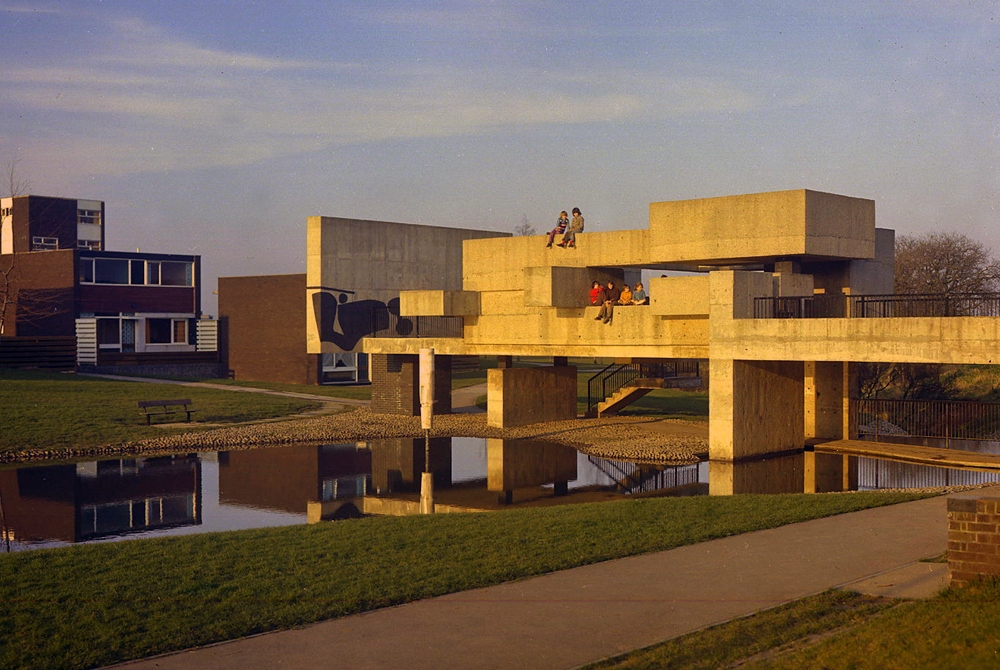
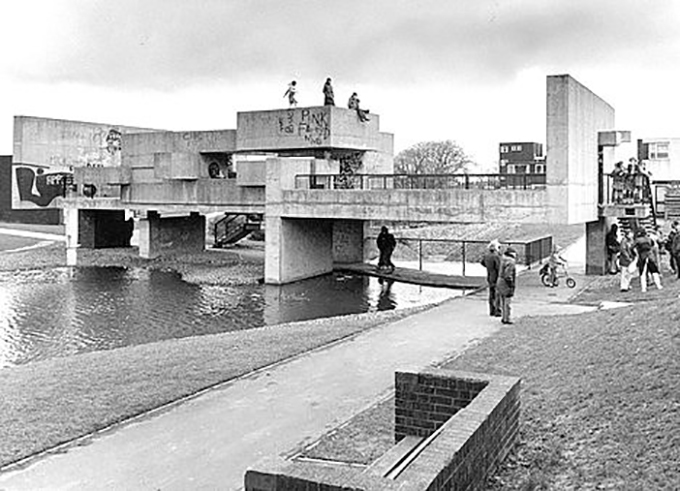
Children sitting on the Apollo Pavilion 1973 © The Pasmore Estate

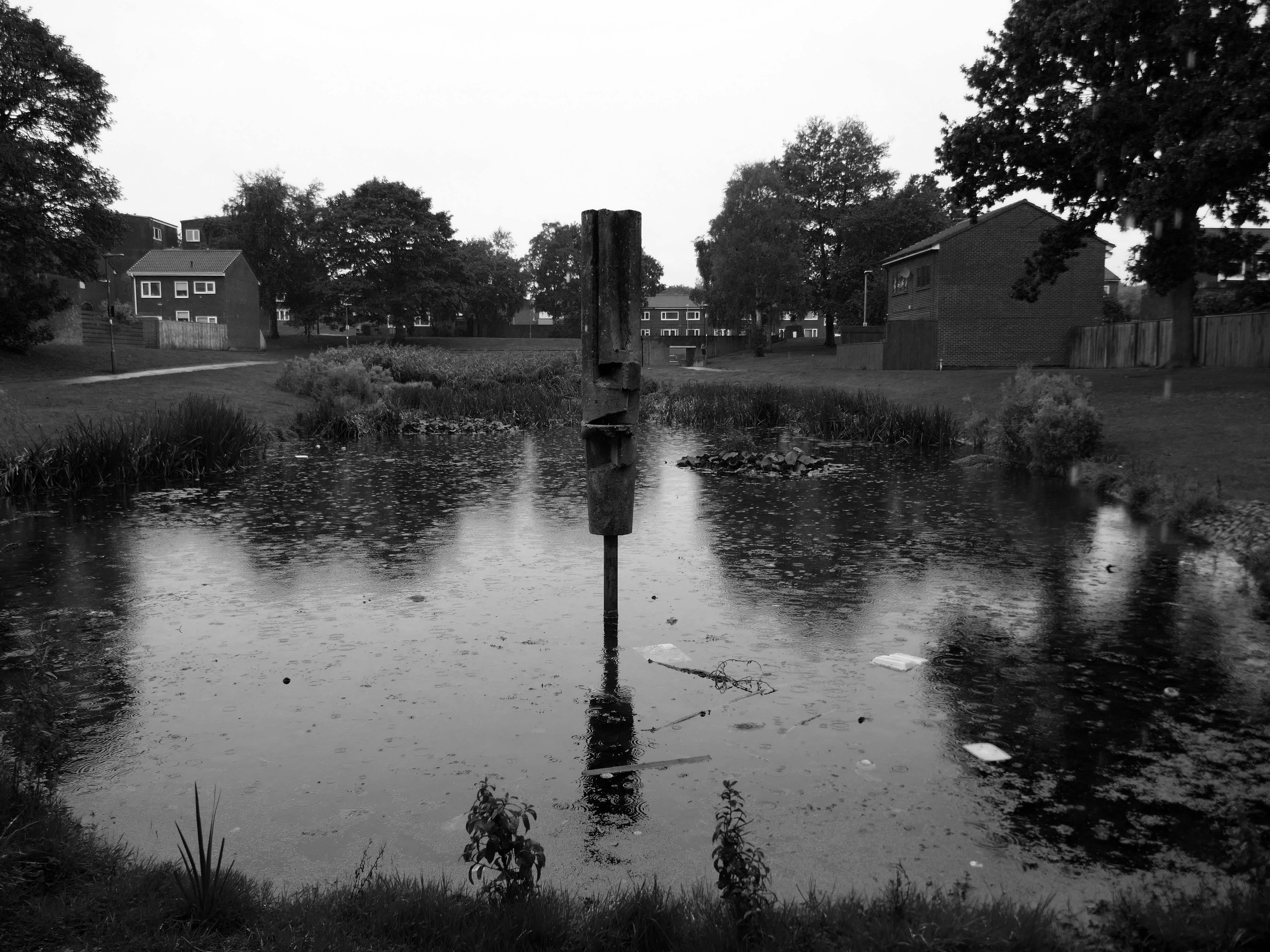
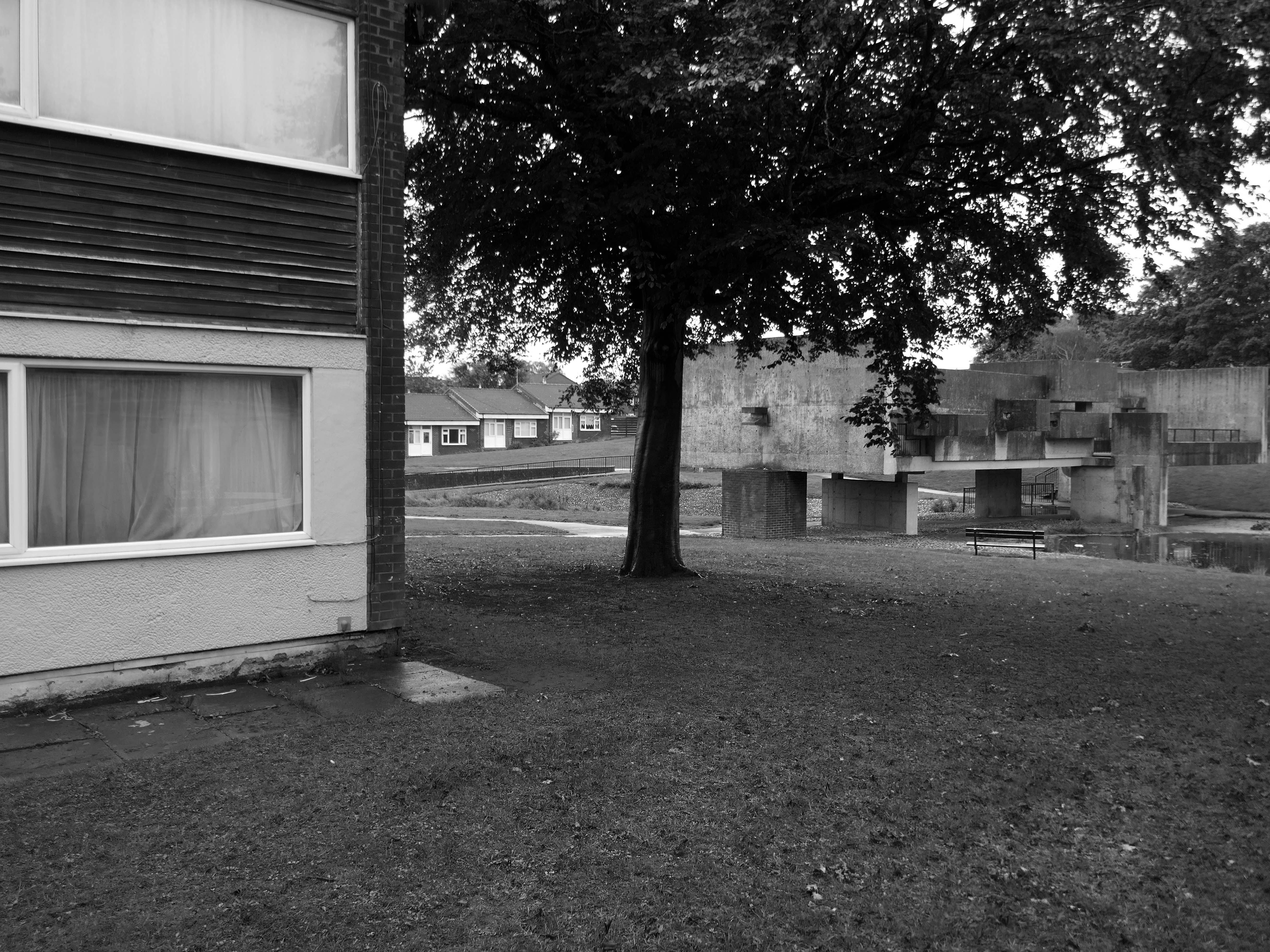
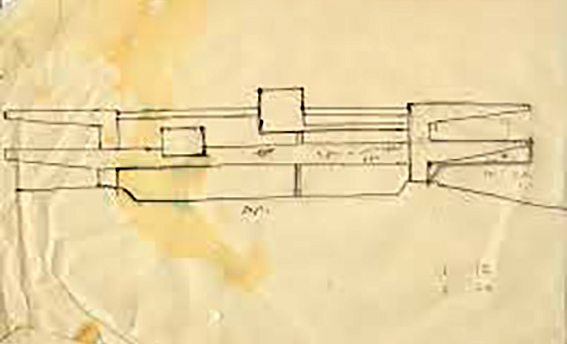
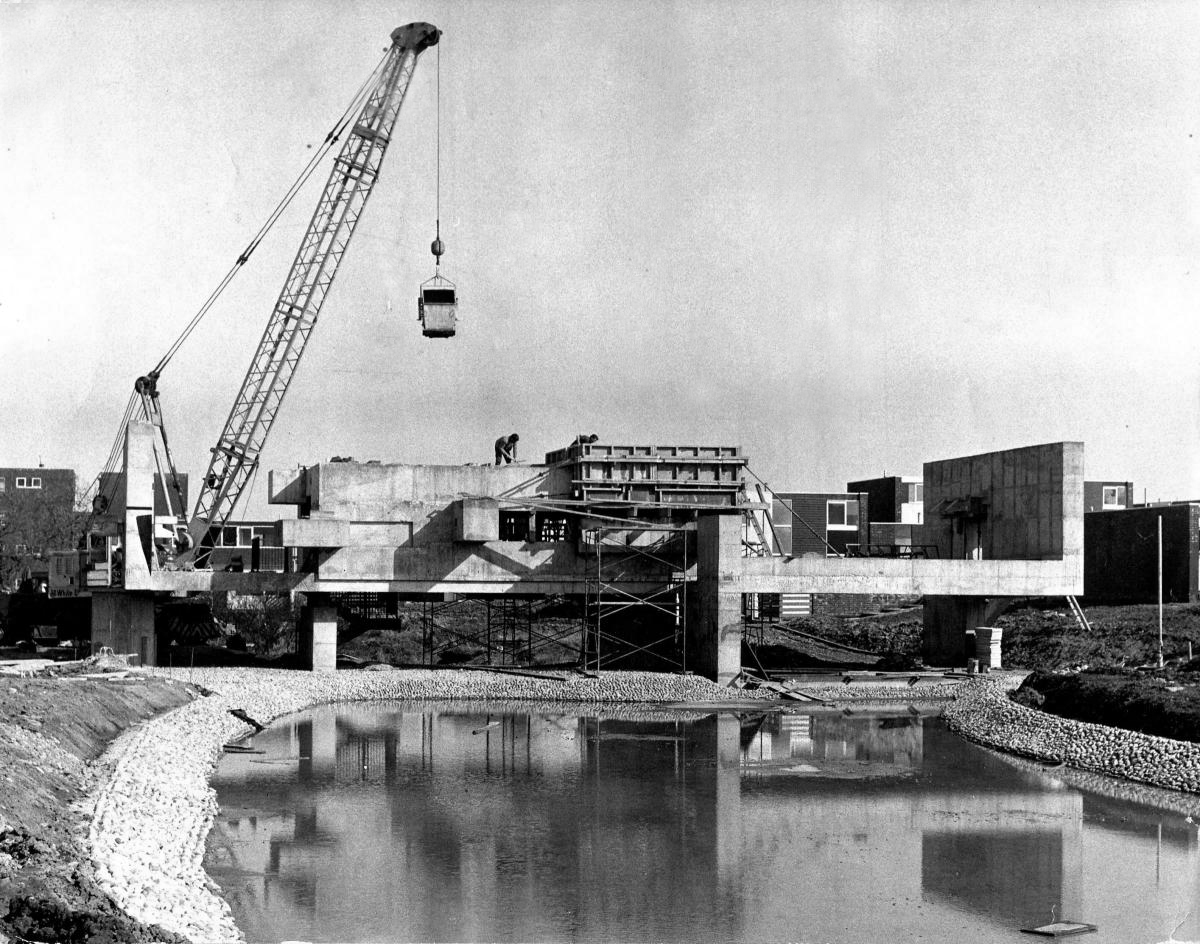
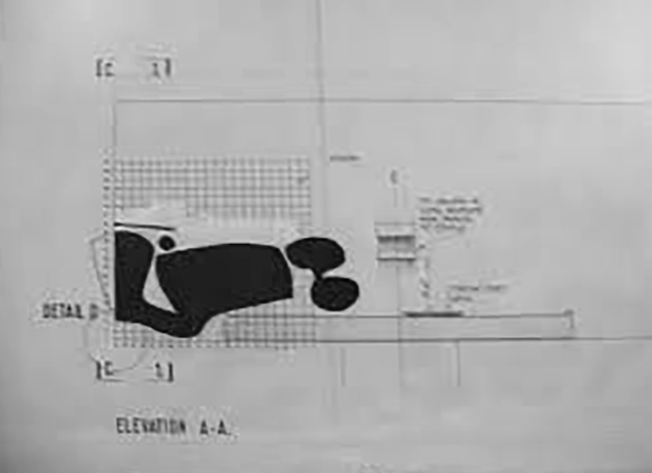
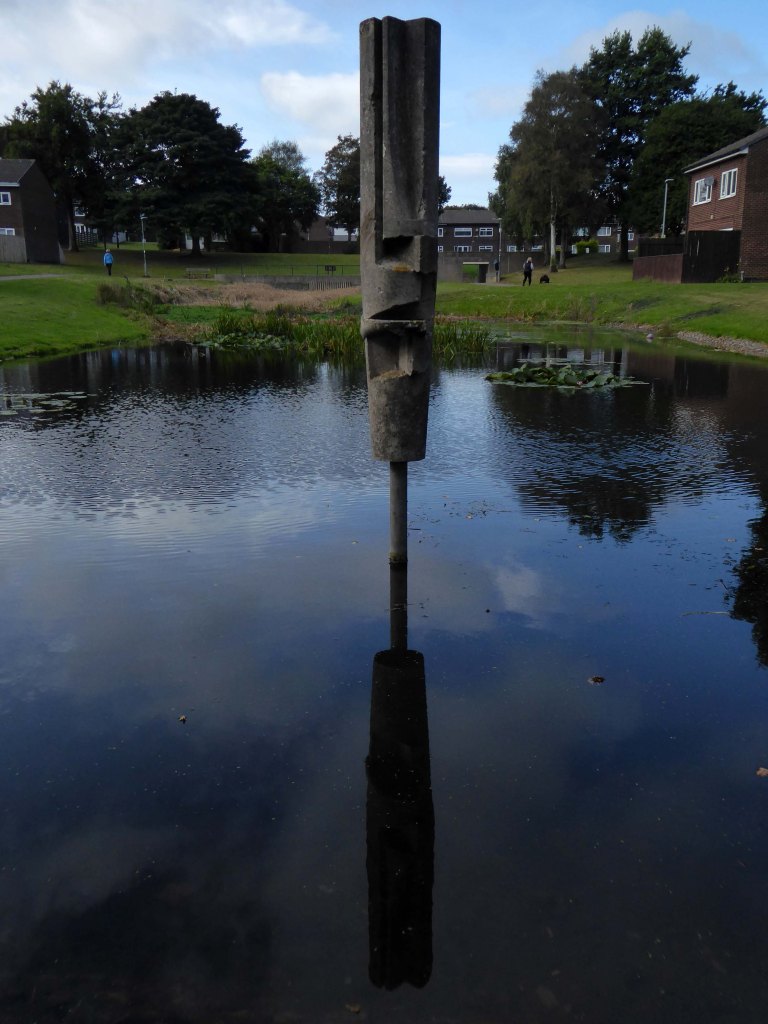
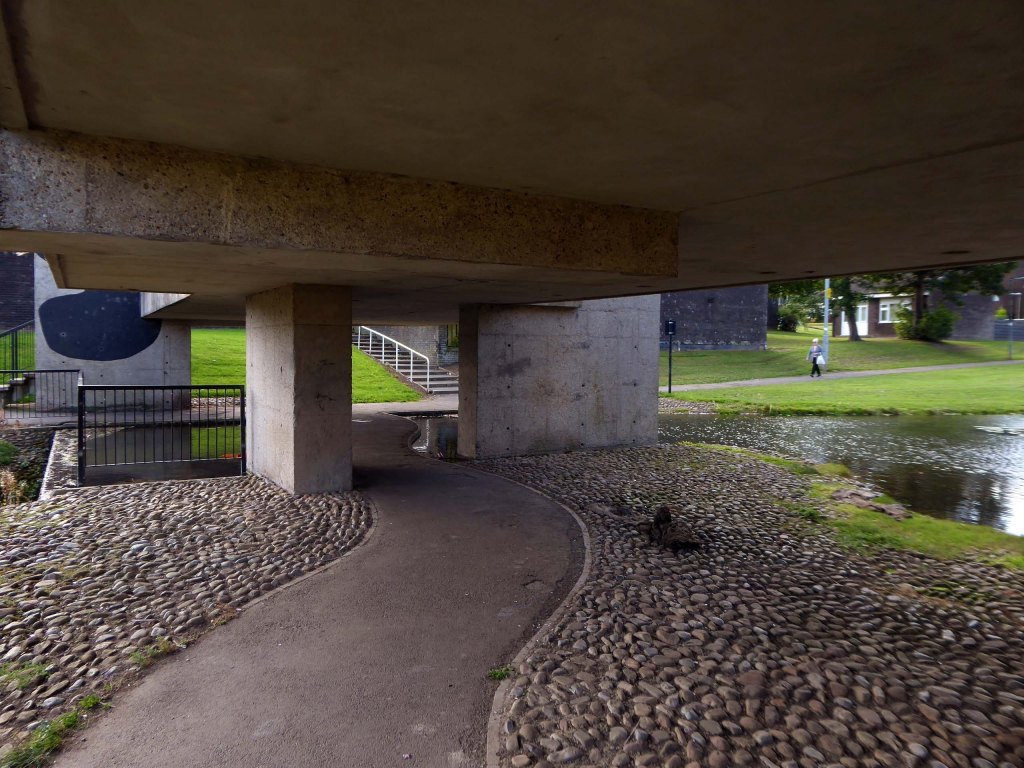
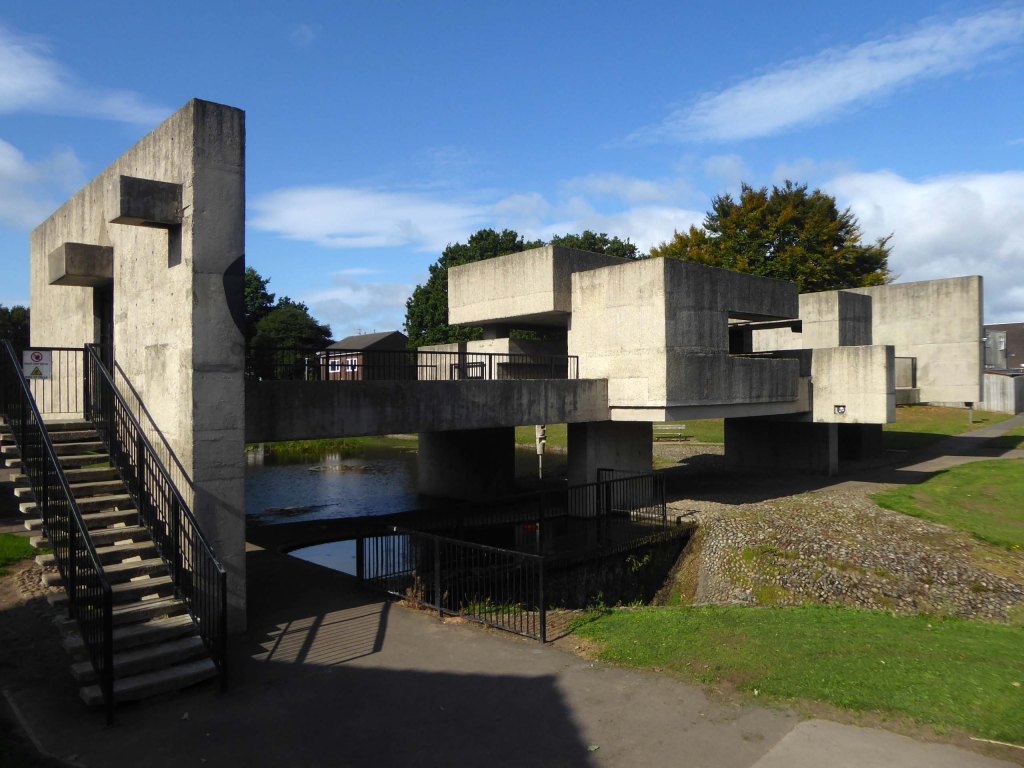
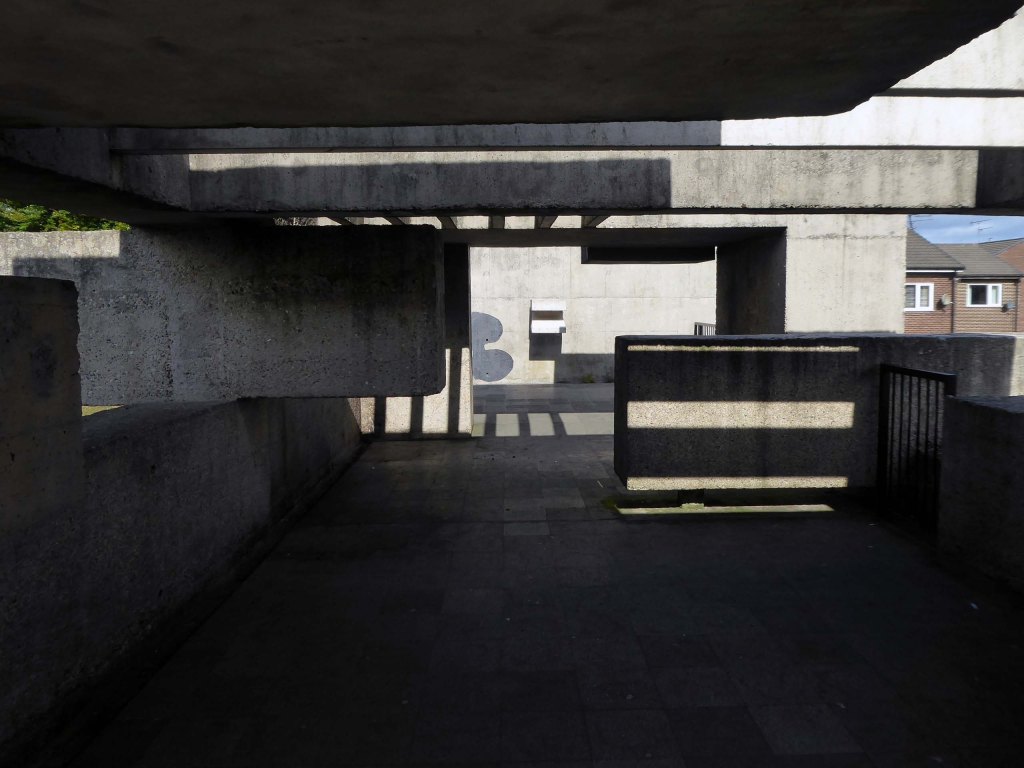
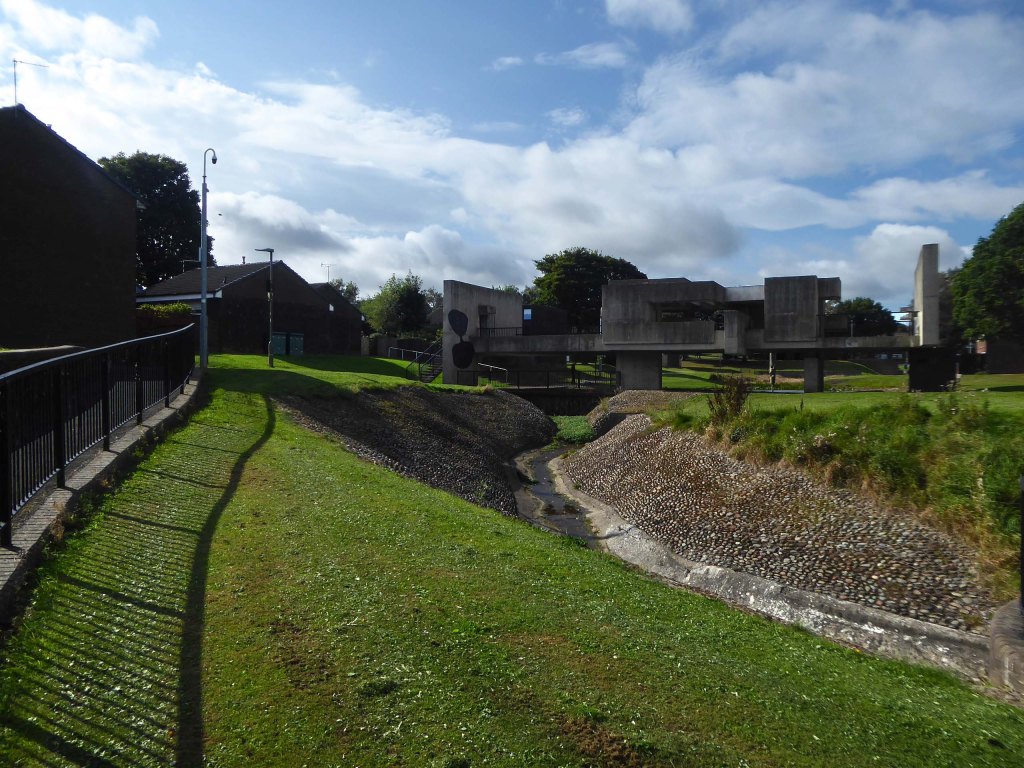
The idea for the Apollo Pavilion was the culmination of Victor Pasmore’s involvement with the planning and design of the new town of Peterlee in County Durham which began in 1954 with his appointment by AV Williams, the General Manager, as a consultant architectural designer to the Corporation. The brief was to inject a new initiative into the new town’s design, which had been limited by practical and financial constraints. The early departure of Berthold Lubetkin from the original design team, and the limitations imposed by building on land subject to underground mining, had led to a deterioration in the quality of the architecture being produced at Peterlee.

Peterlee Gov

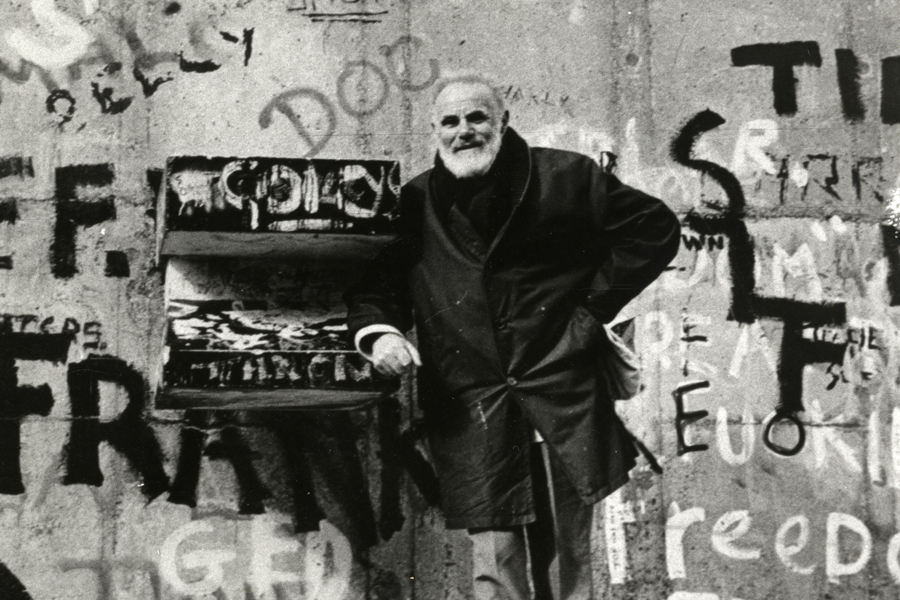
Victor Pasmore in front of the grafitti-covered Apollo Pavilion © Durham Record Office

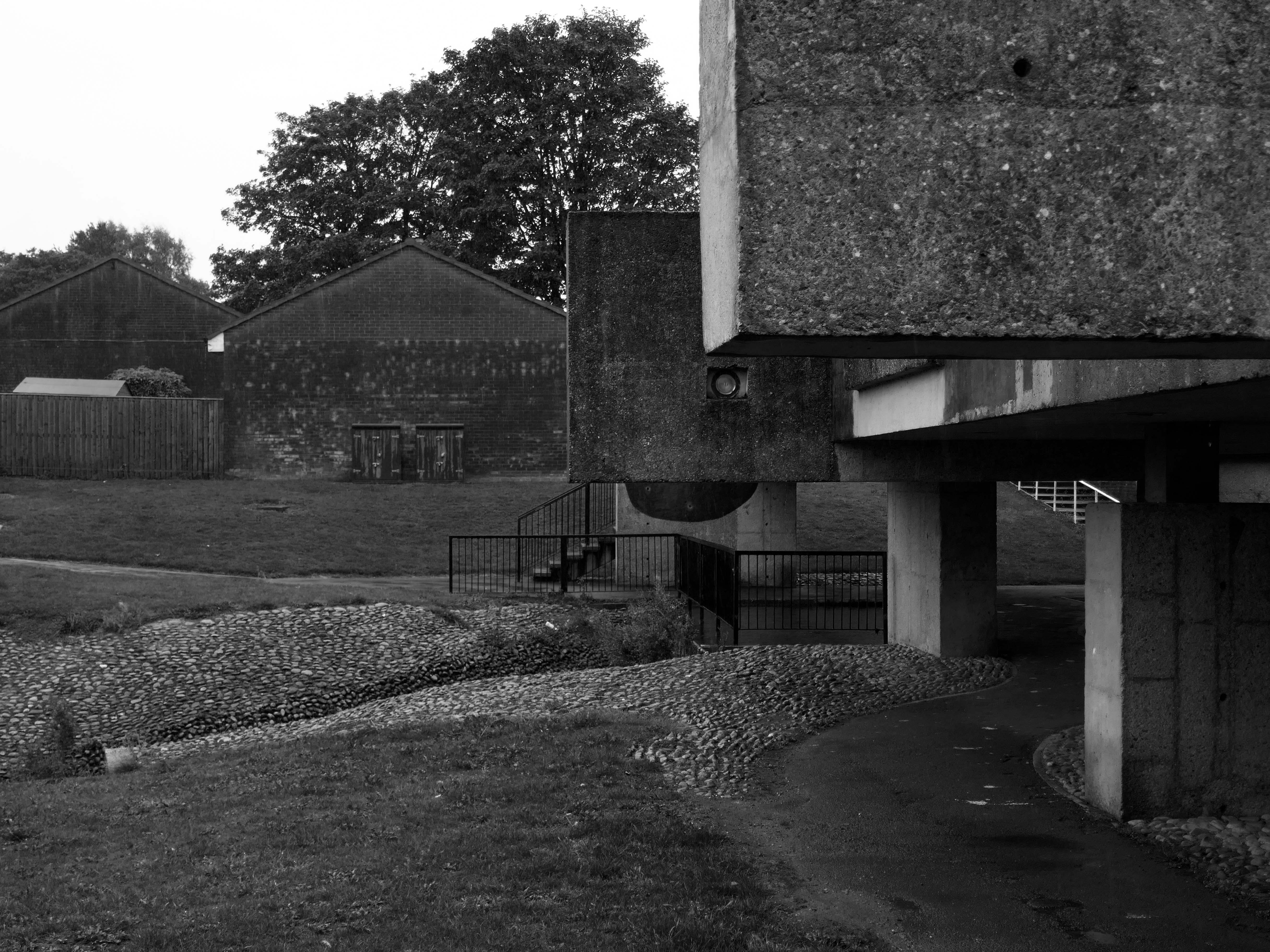
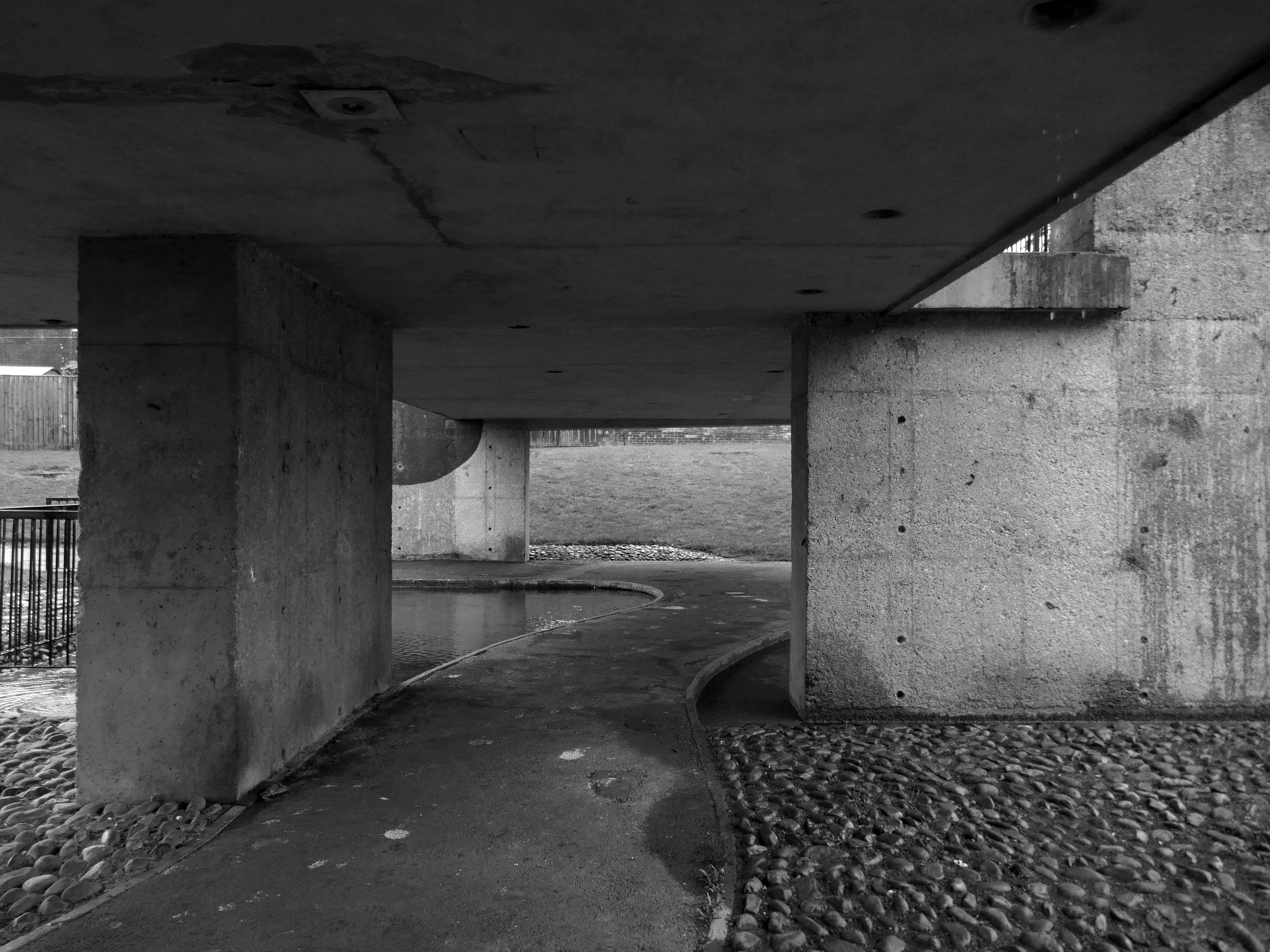
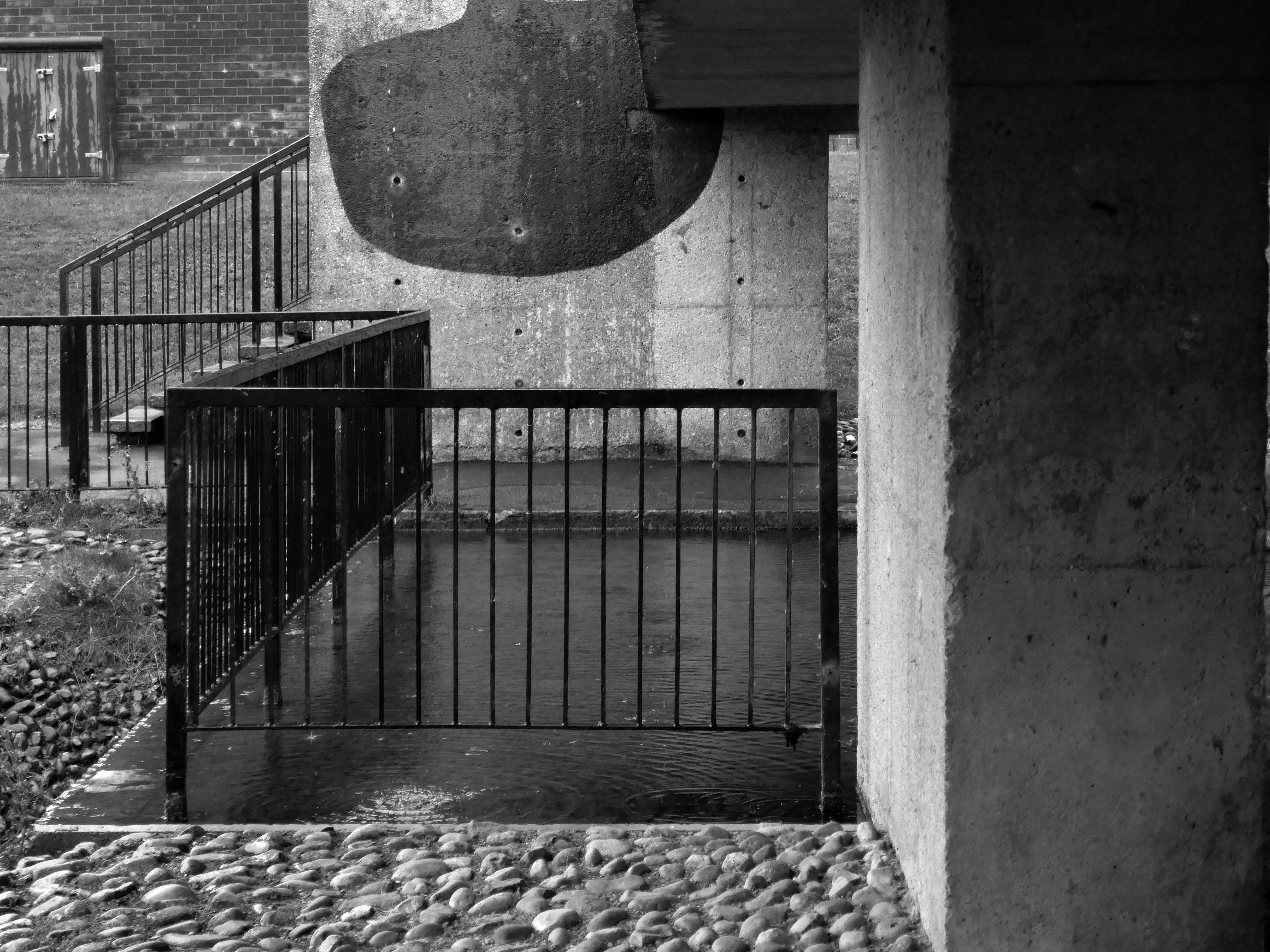
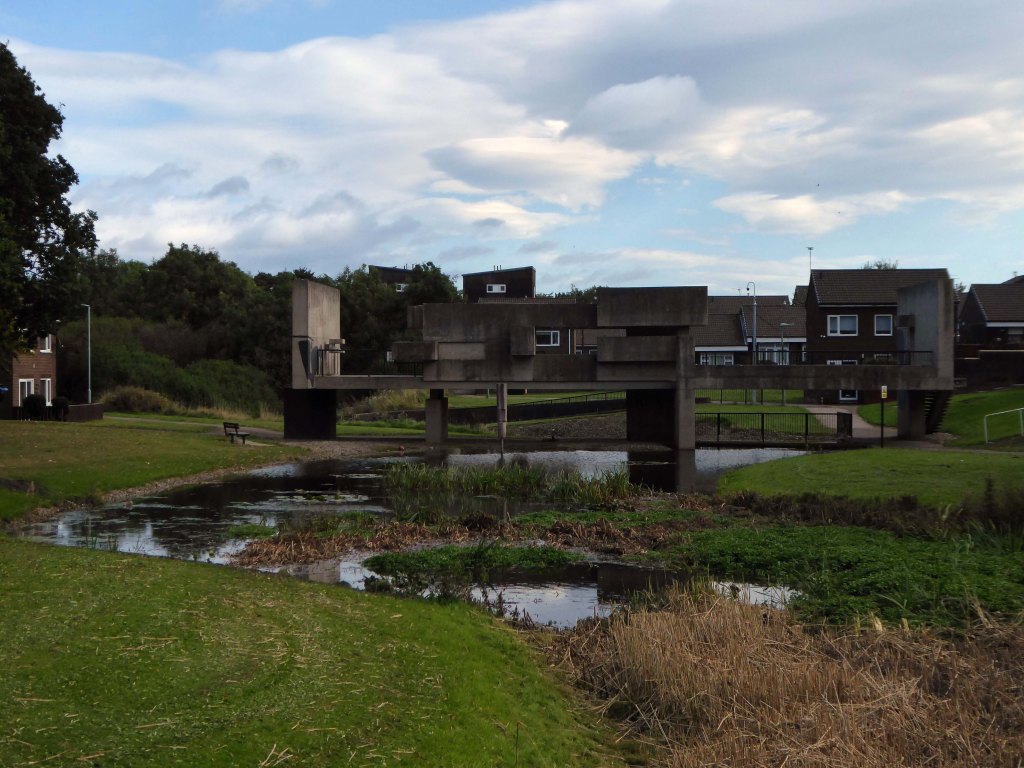
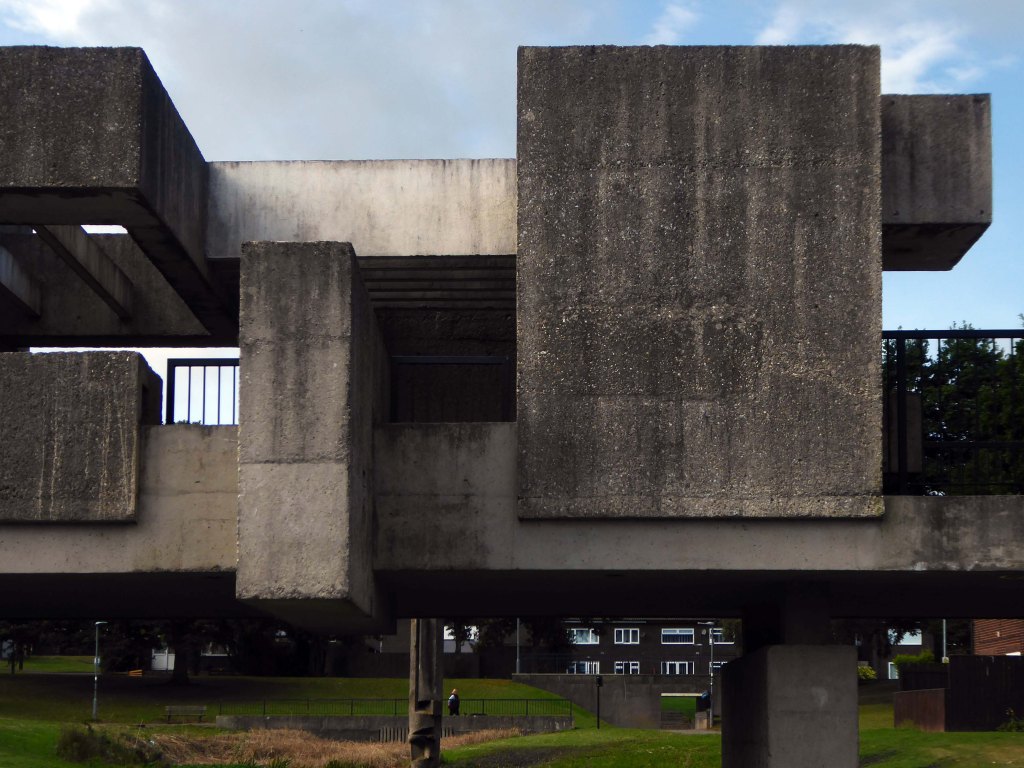
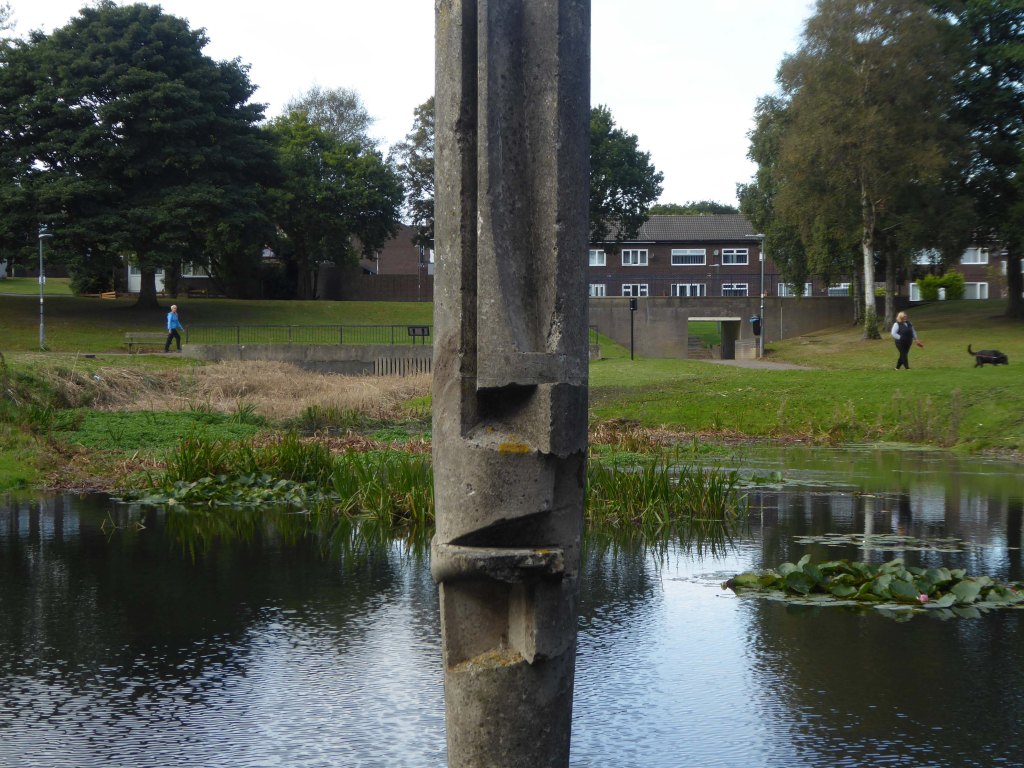
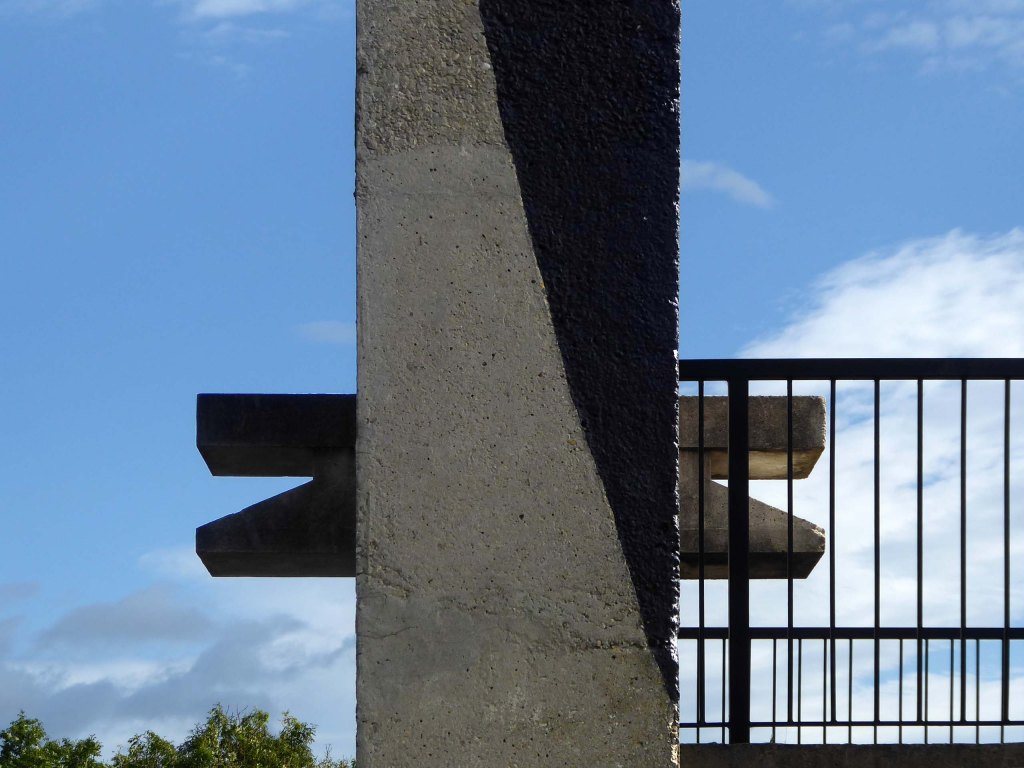
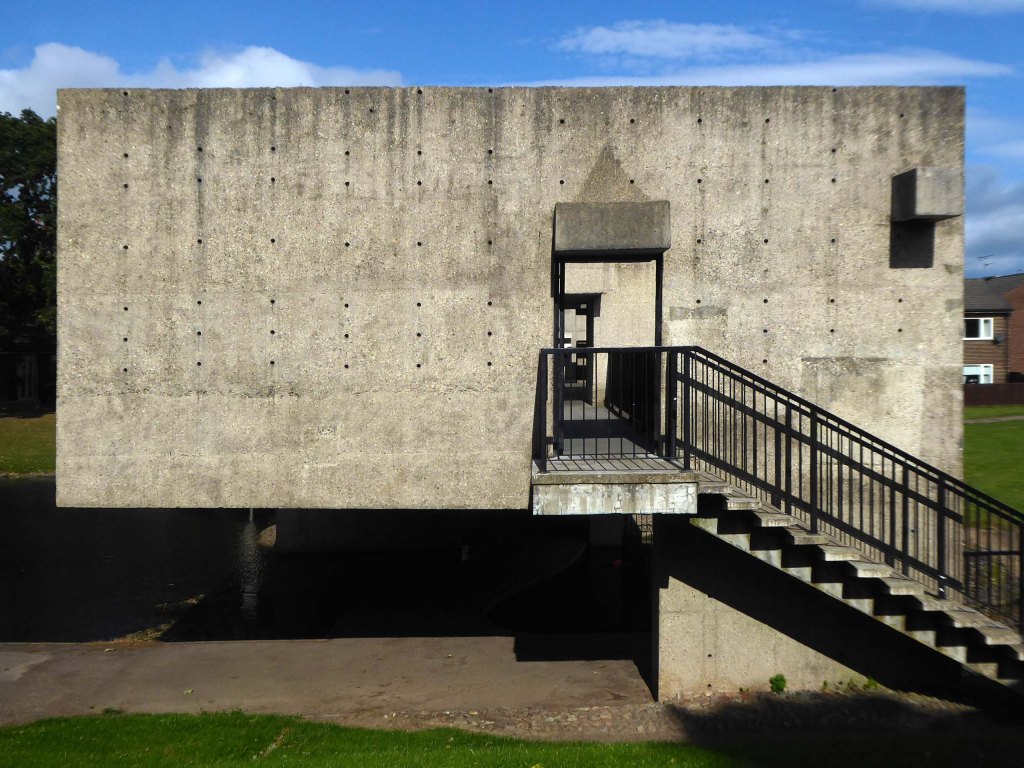
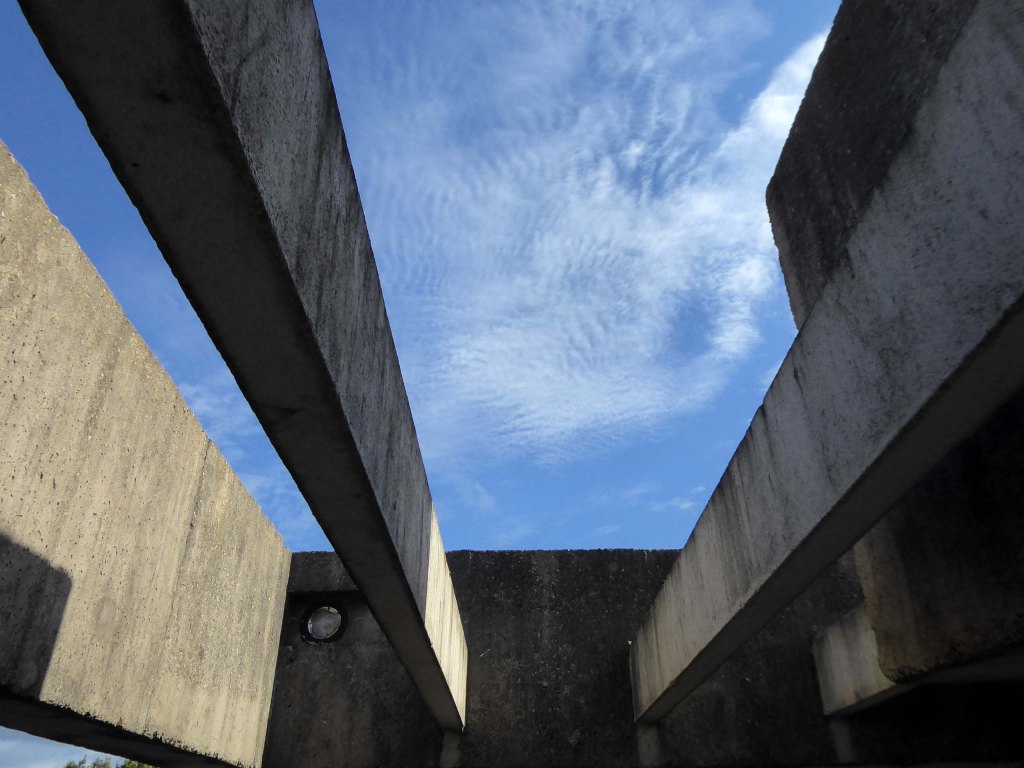
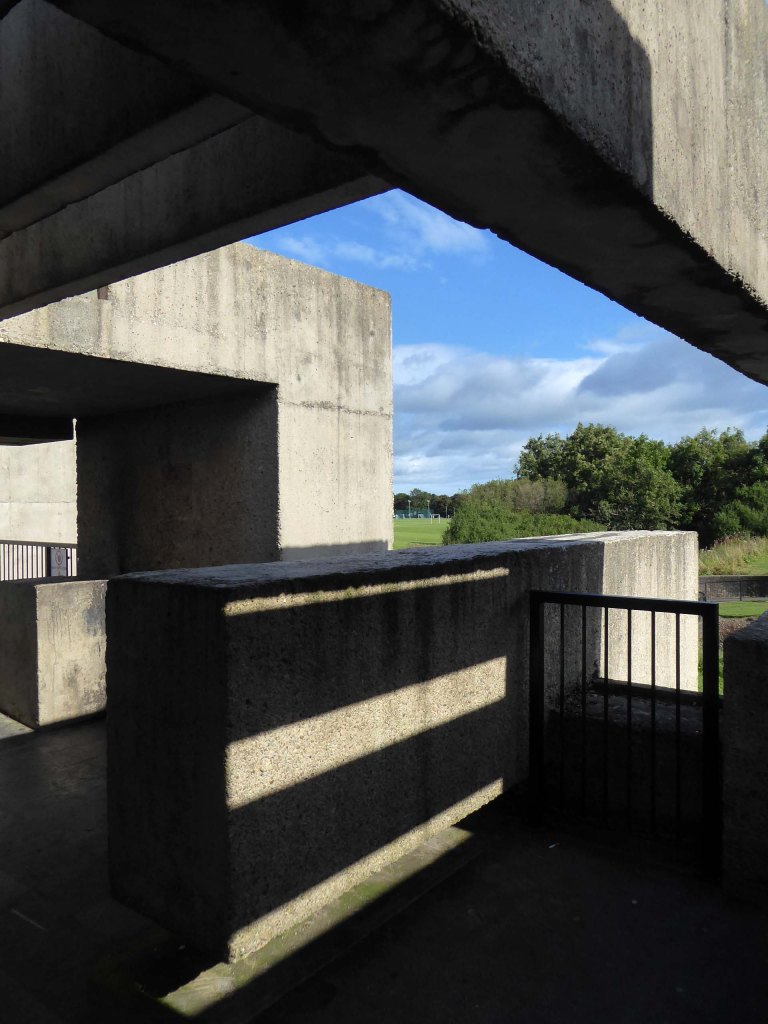
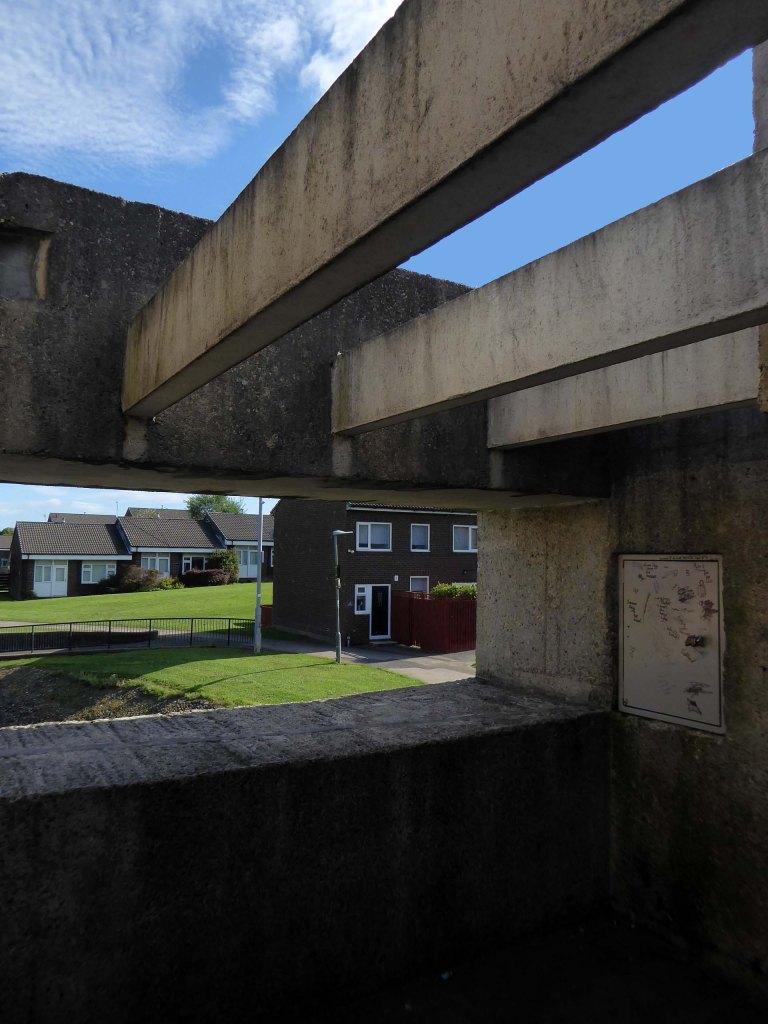
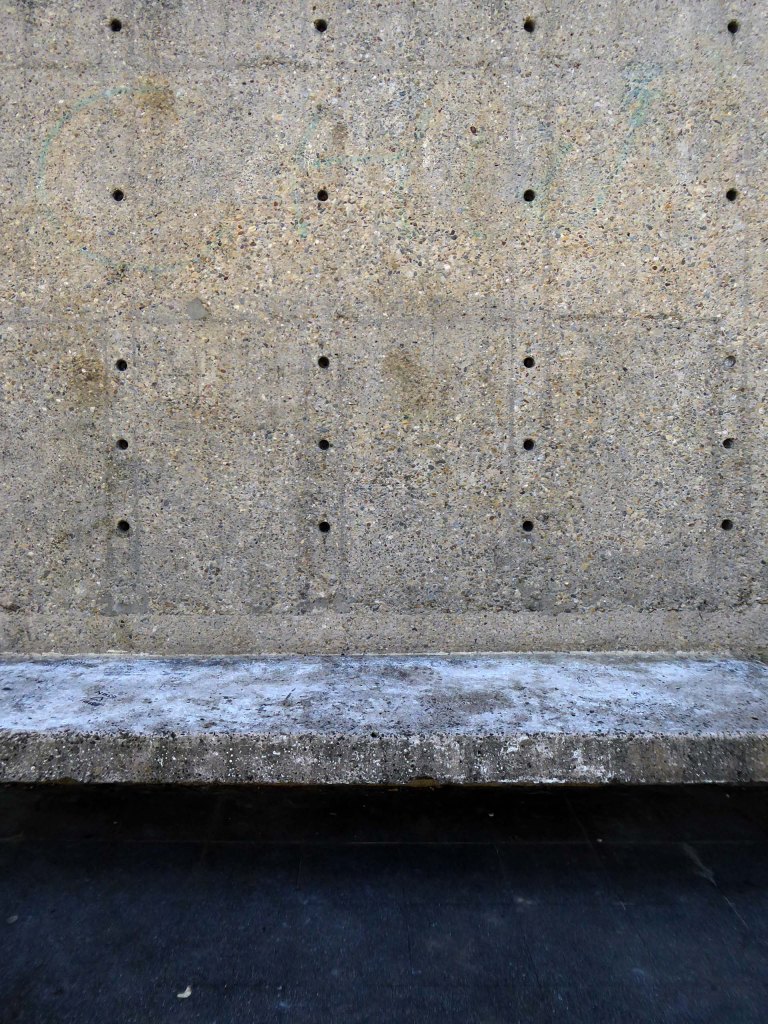
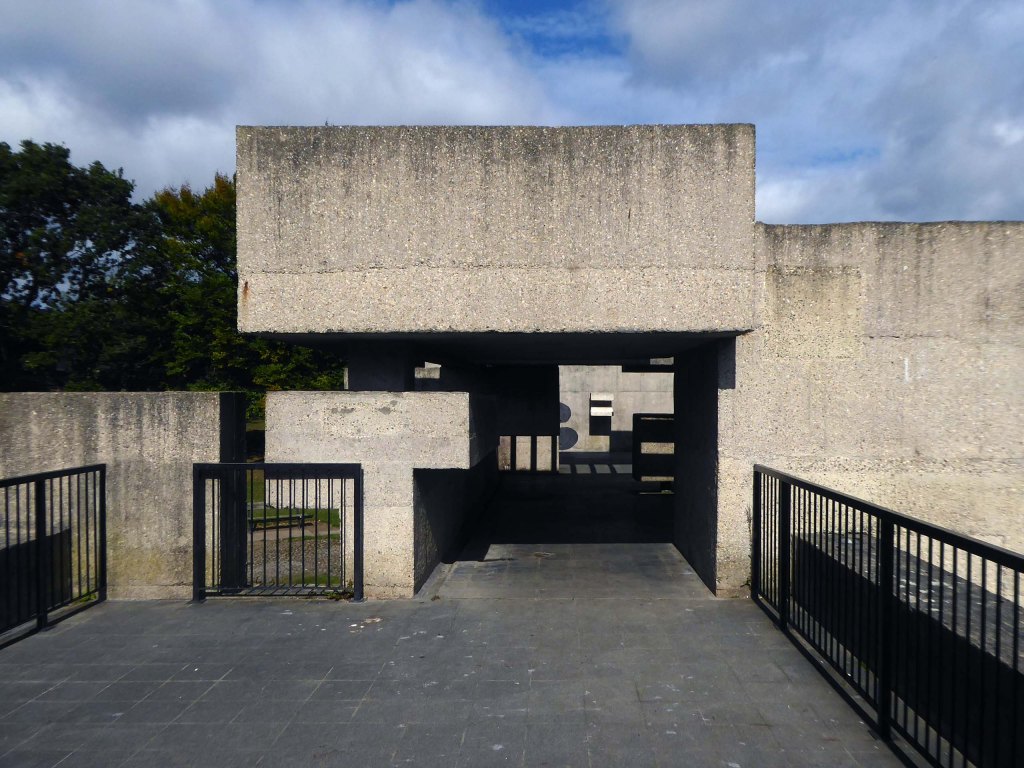
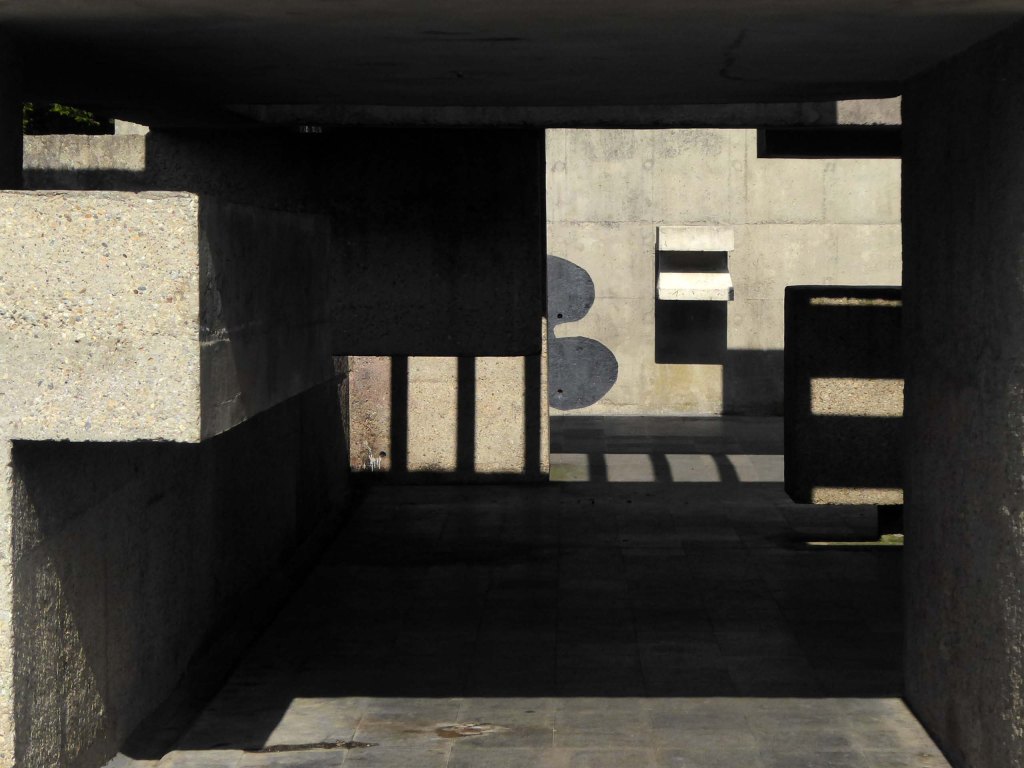
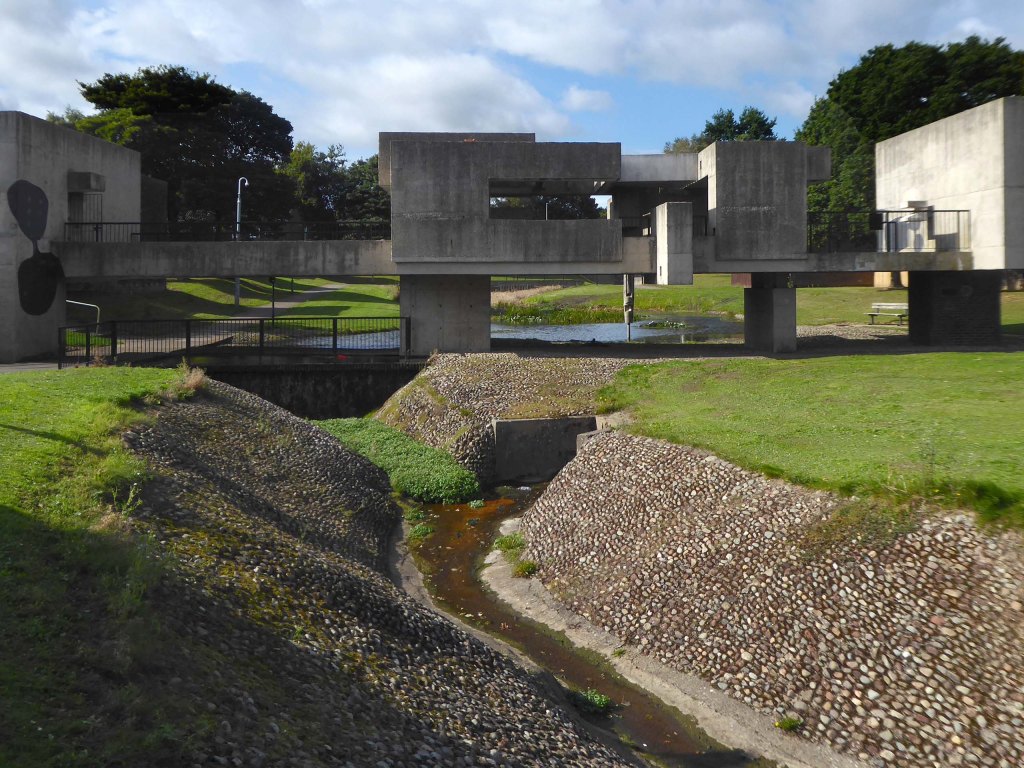
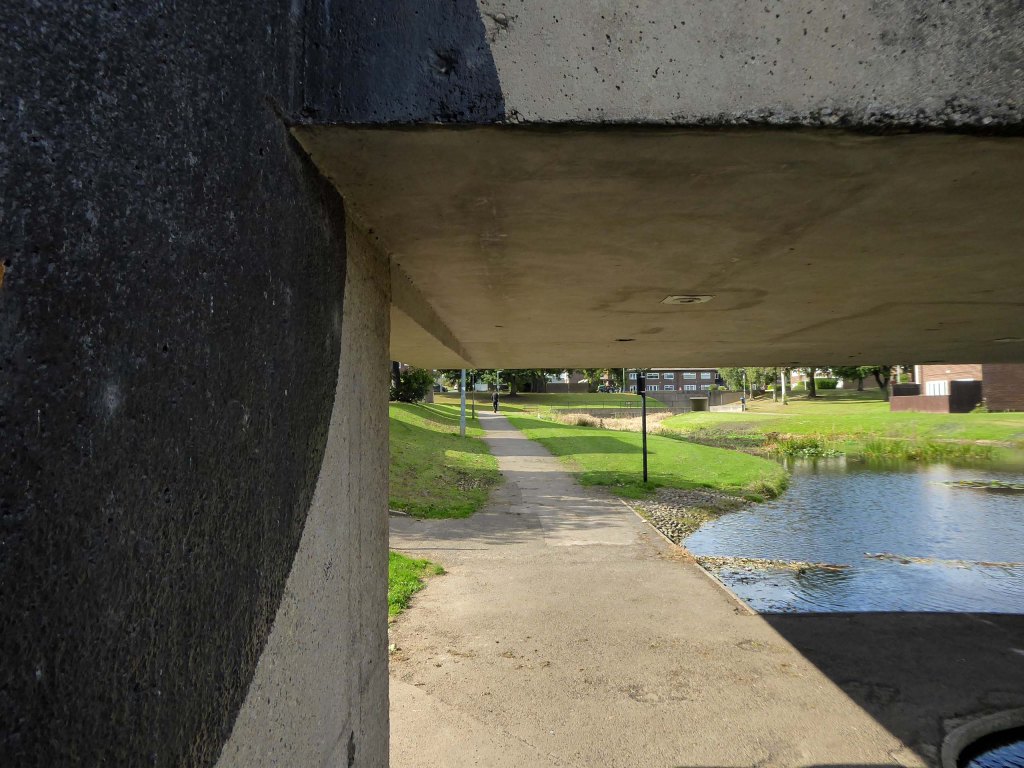
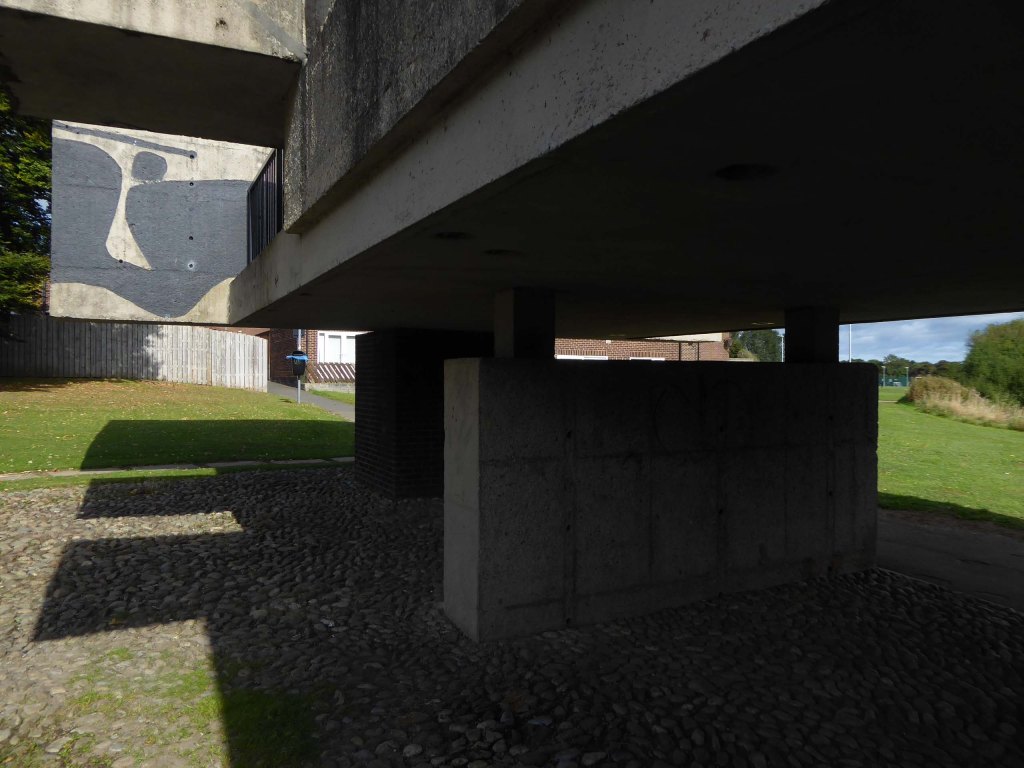
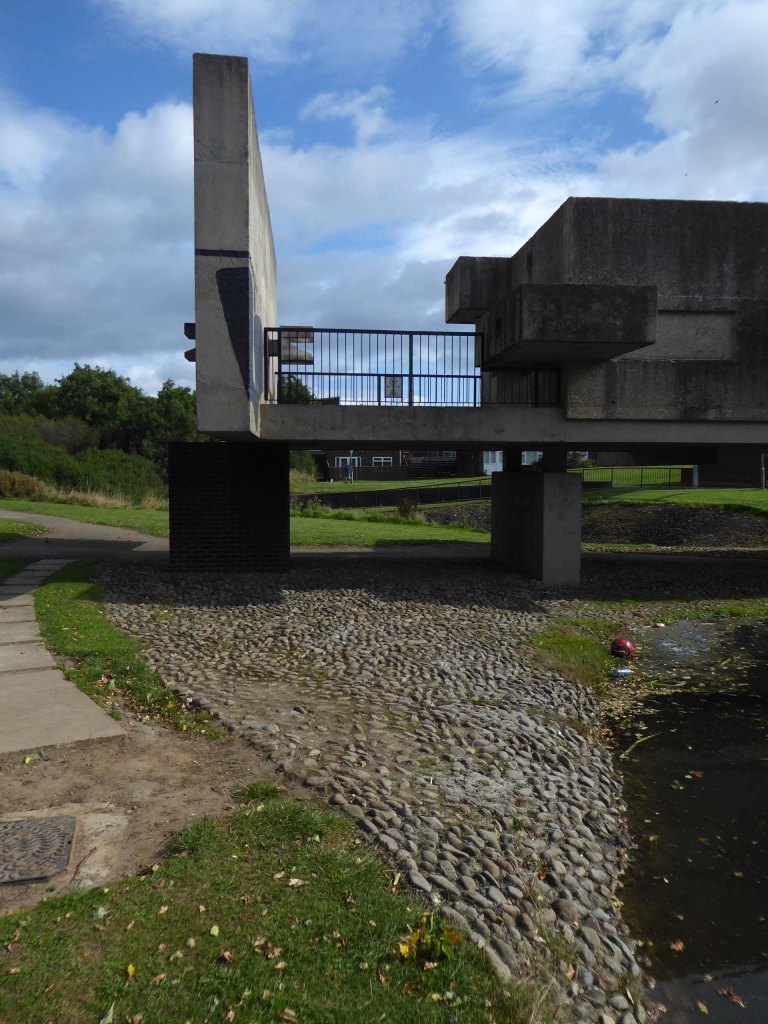
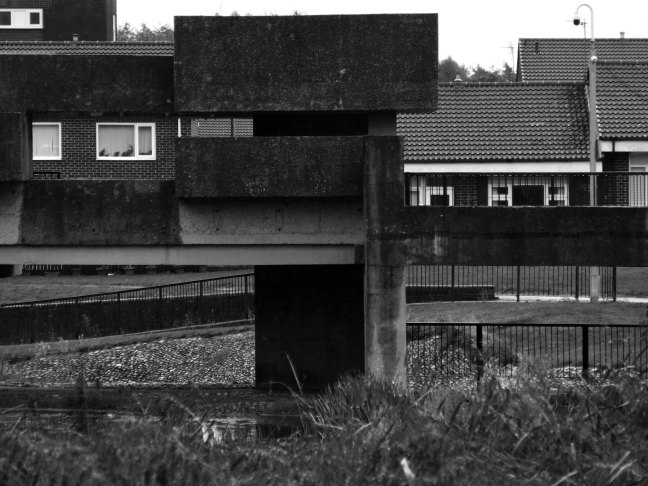
The Apollo Pavilion, created by Victor Pasmore in 1969, is designated at Grade II* for the following principal reasons: Architectural interest: the structure is of very high architectural quality, forming the centrepiece of a registered landscape Artistic quality: the only truly three-dimensional work by the internationally known artist Victor Pasmore, the Pavilion is an abstract work of art, a demonstration of Constructivist ideas on a large scale and an expression of brutalist architecture Setting: the setting of the structure is the centrepiece of the registered Pavilion Landscape and as such survives intact.

Historic England

Saturday 20th September was a day of persistent rain, we arrived by bus and walked undeterred to the site – here’s what we saw.

Many thanks to Euan Lynn for leading this Modernist walk.

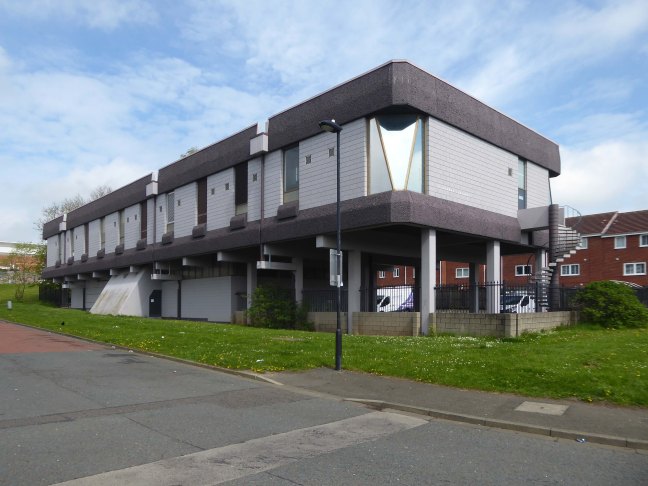
Telephone Exchange – Killingworth

Killingworth Newcastle upon Tyne NE12 6UG

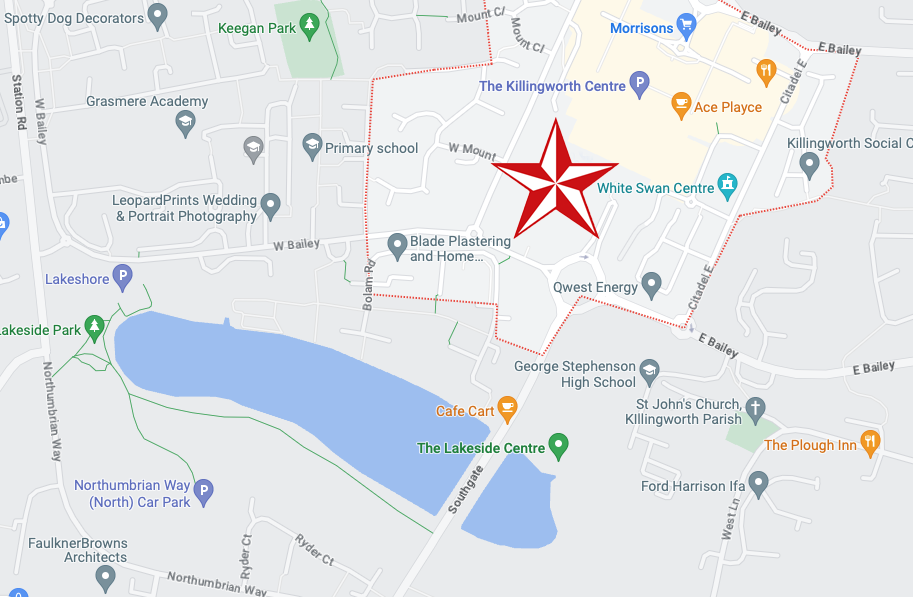
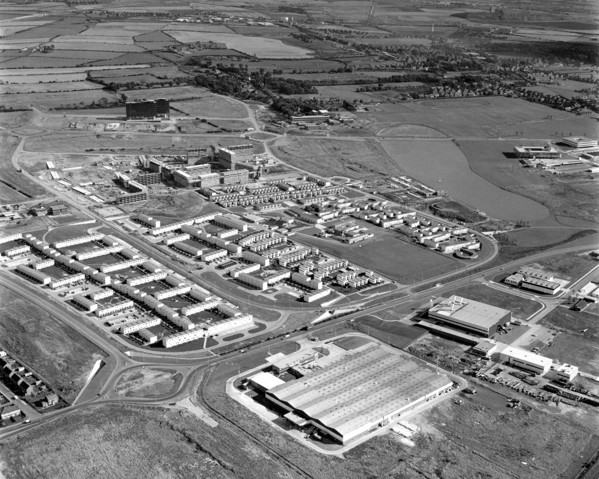
The building of Killingworth Township began in 1963, was undertaken by Northumberland County Council and was not sponsored by the Government.

RIBA pix

In 1987 the demolition of this three-tier housing estate of the township was undertaken by the Architects’ Department of the Metropolitan Borough of North Tyneside.

Photo: Philip Wolmuth

Once the wrecking ball arrives new town can begin to look like any old town.

Following Euan Lynn’s suggestion – I went to take a look around.

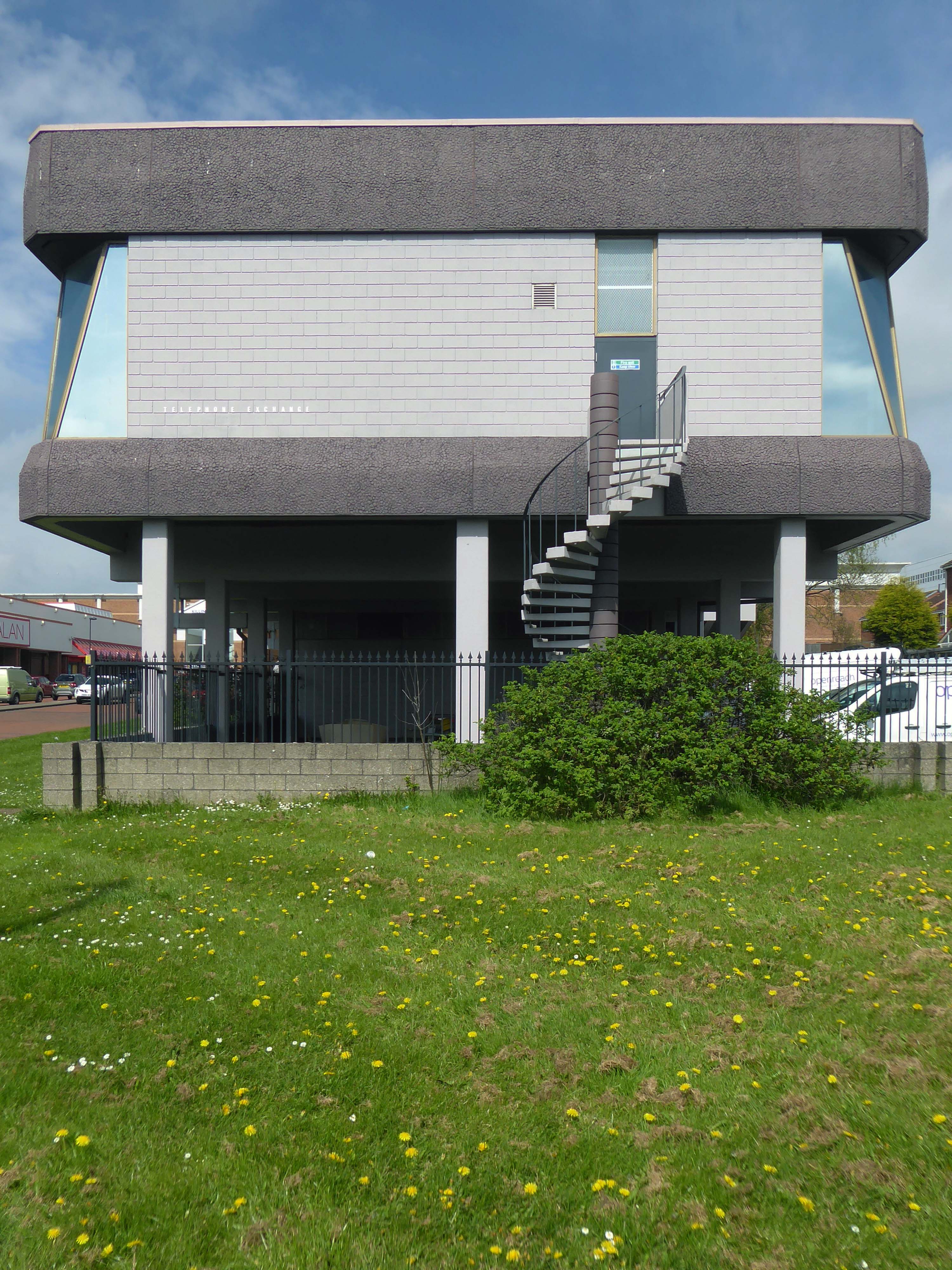
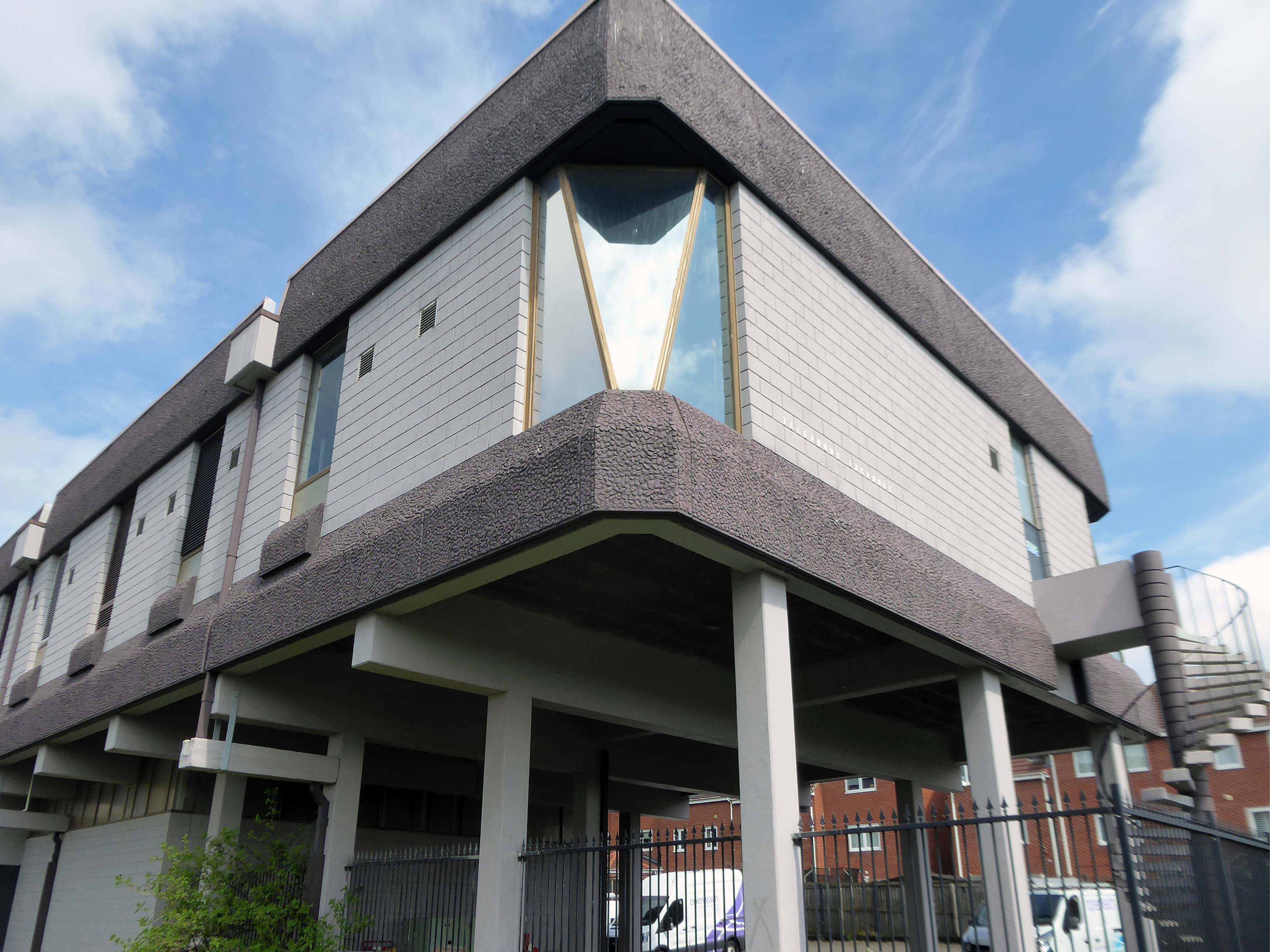
From the window of the 52 bus, I saw an enchanting Telephone Exchange.

A not too distant cousin of the Hadrian Exchange in Newcastle and their pal over the Tyne in Gateshead.

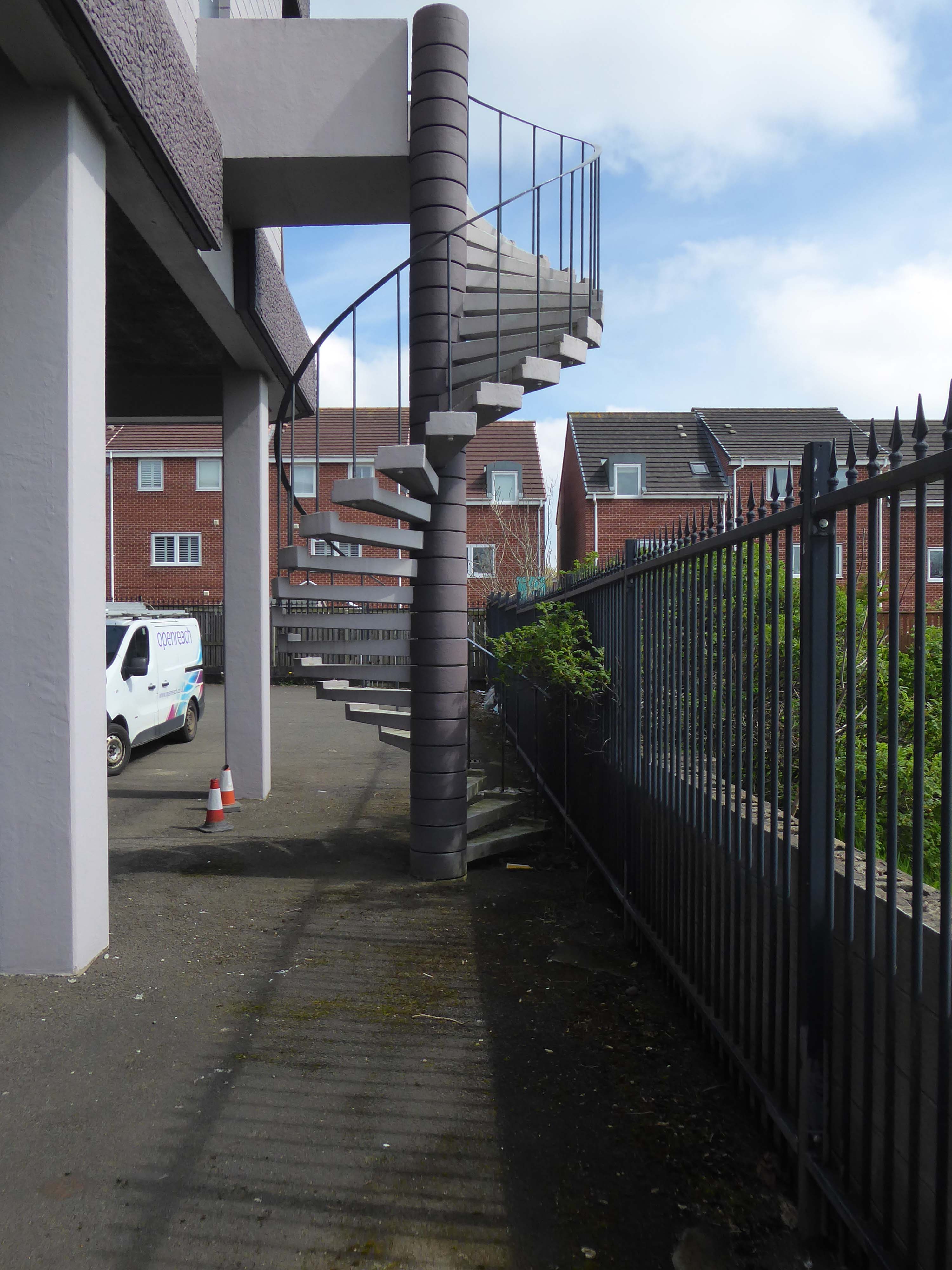
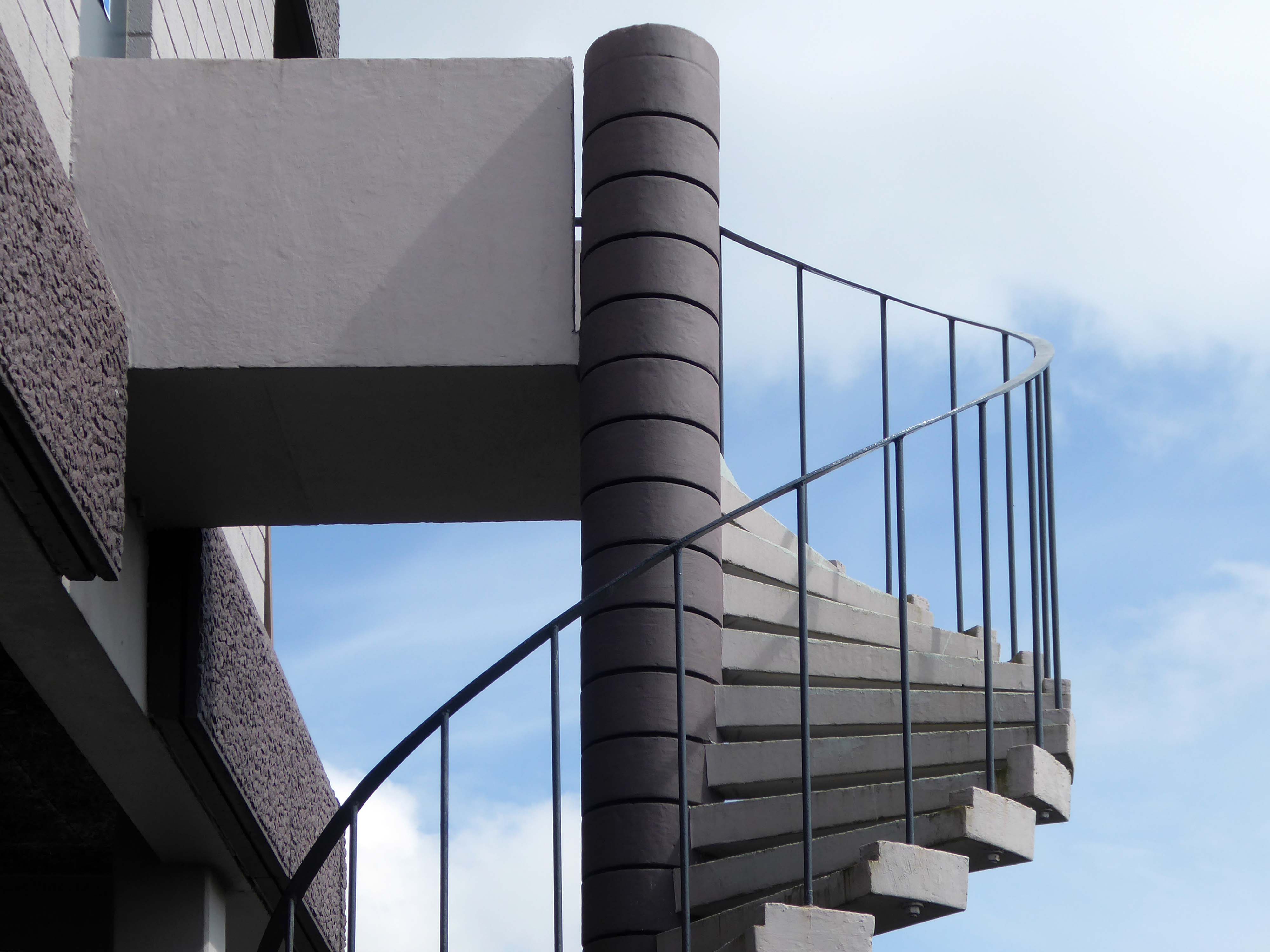
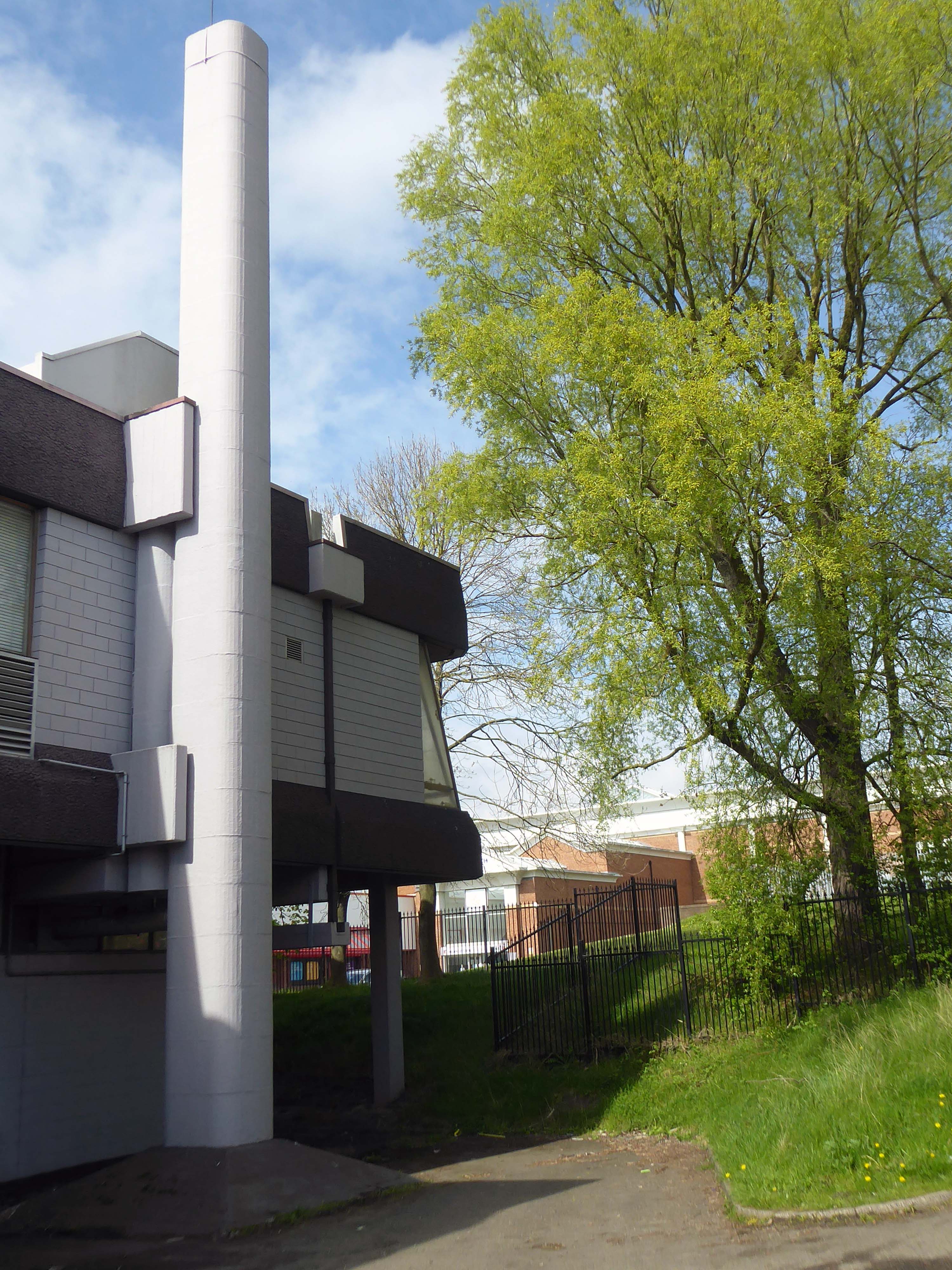
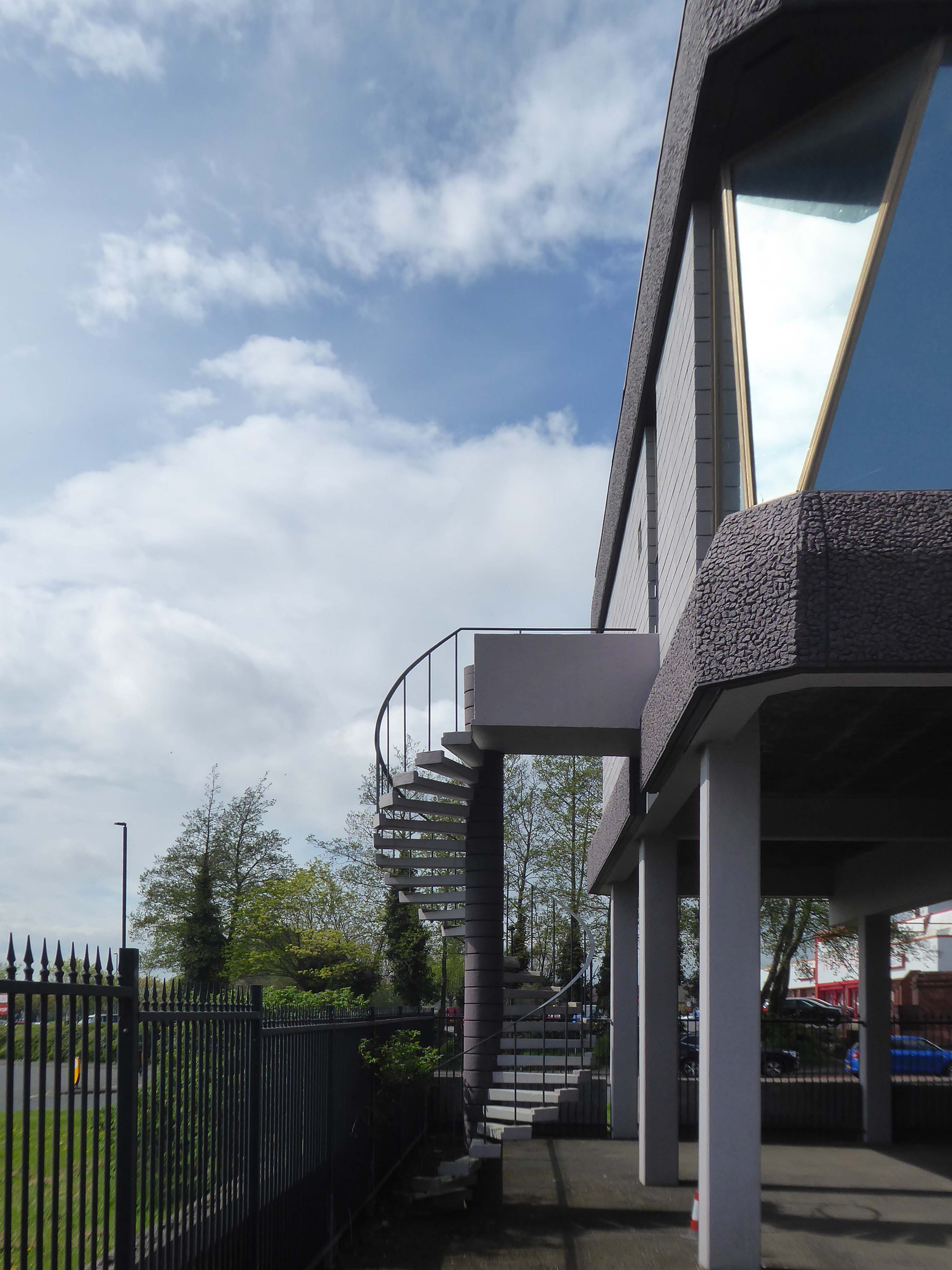
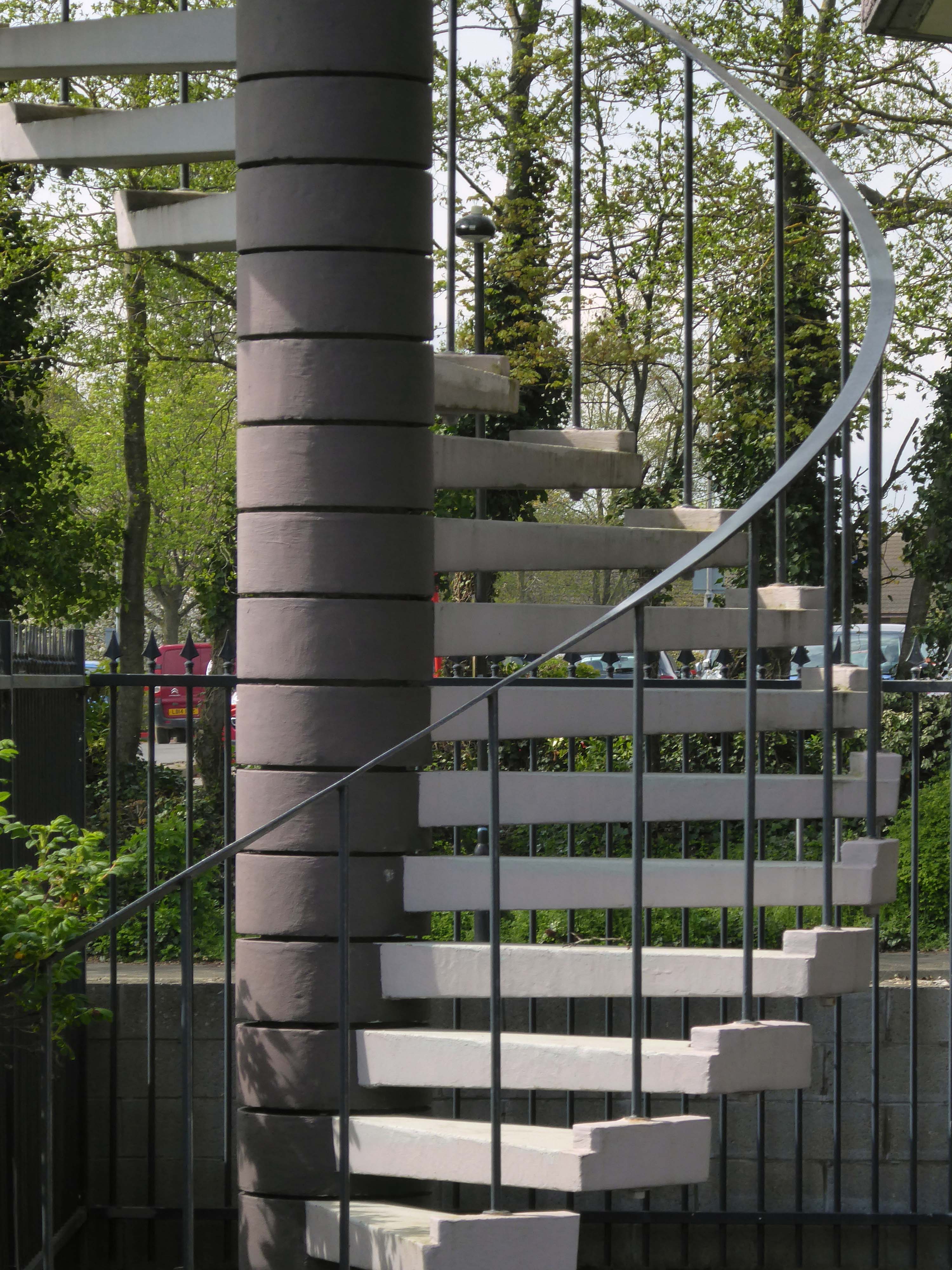
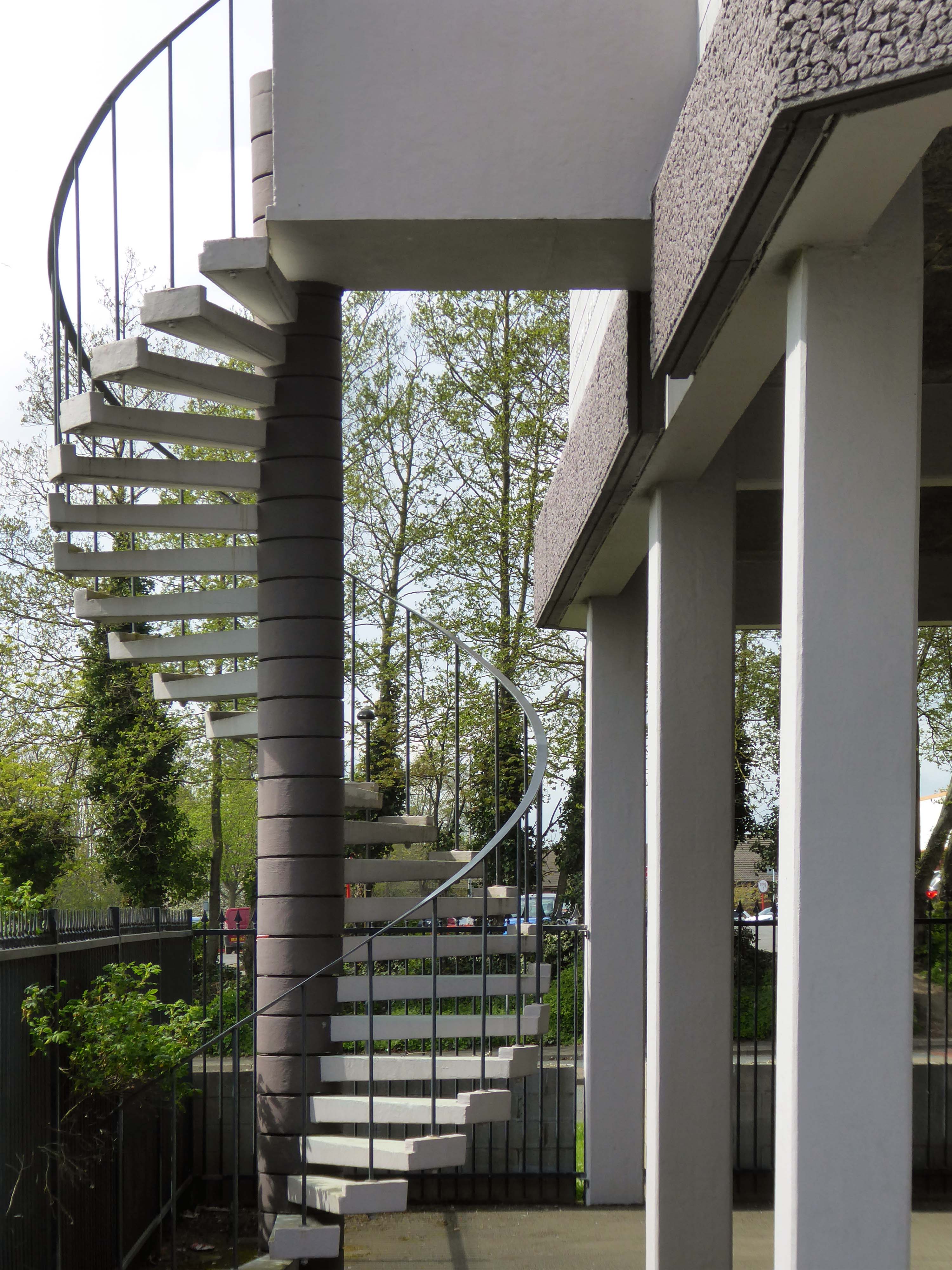
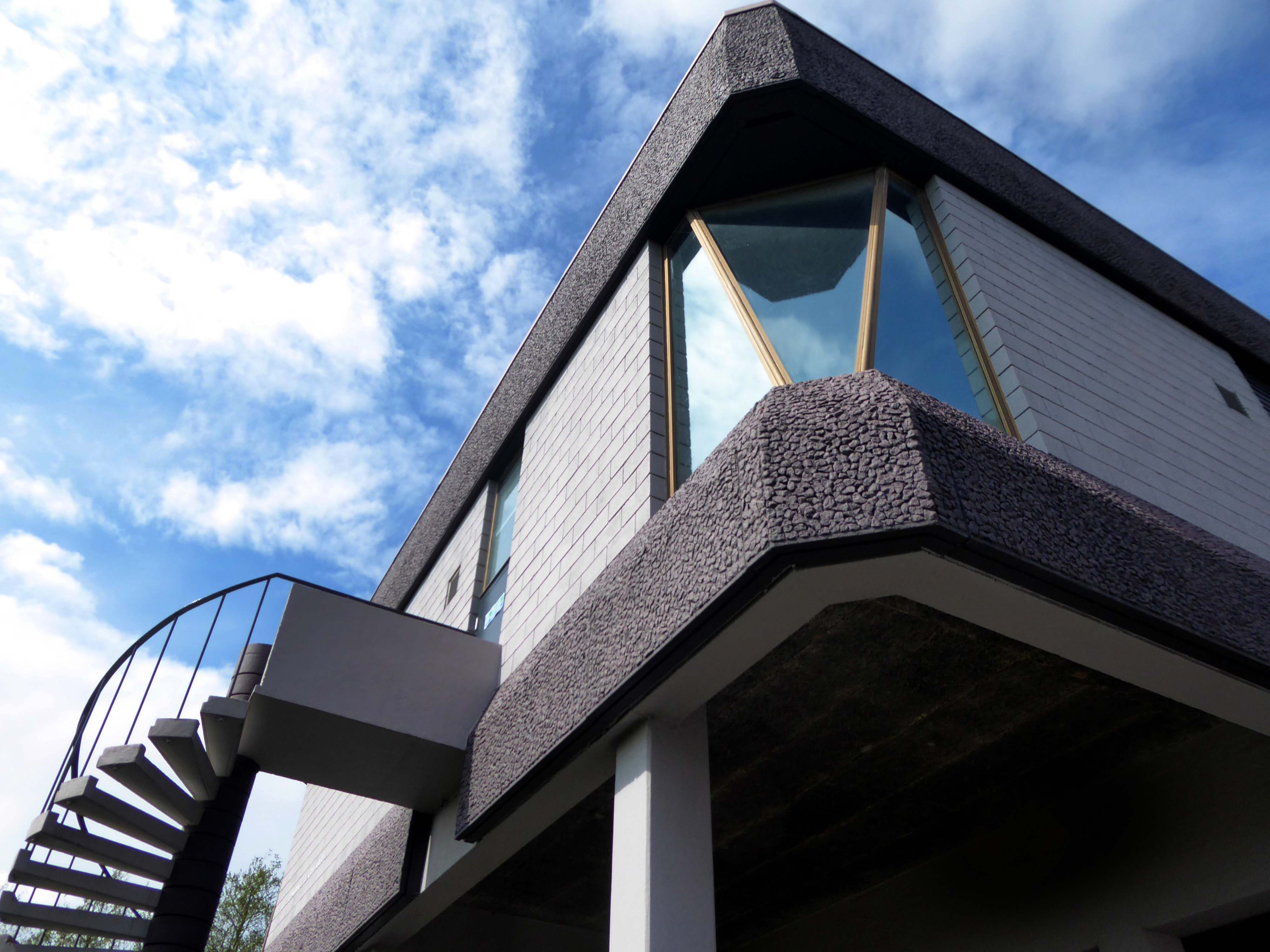
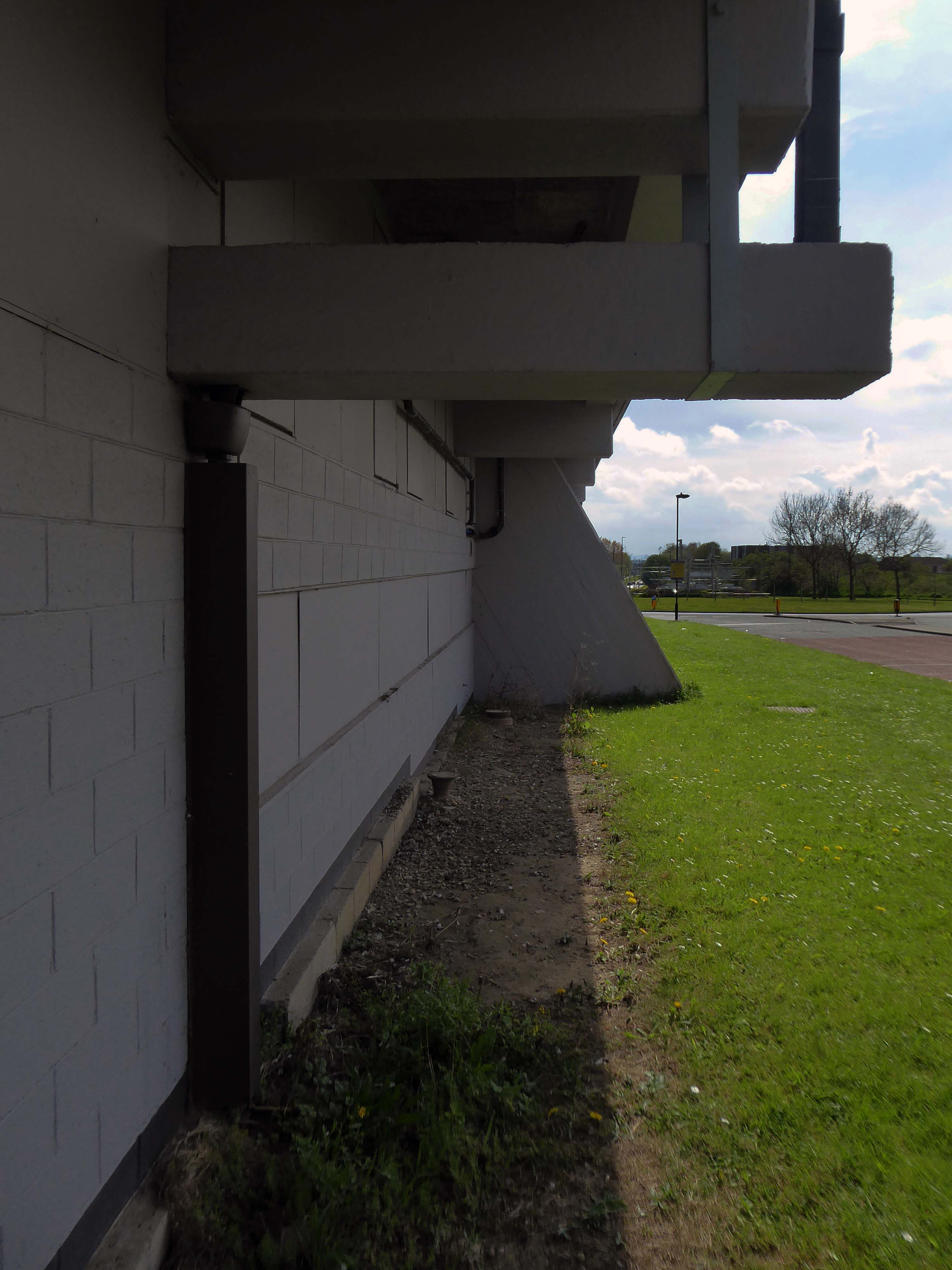
It is a real delight – an exceptional spiral staircase and futuristic chamfered windows angled at each of the four corners.

Architect: DOE Leeds

Detail design by Newcastle practice Douglass Wise & Partners.

Structural engineers: Cooper Higgins & Partners.

Main contractor: Brims & Co Ltd.

Let’s take a loving look around.

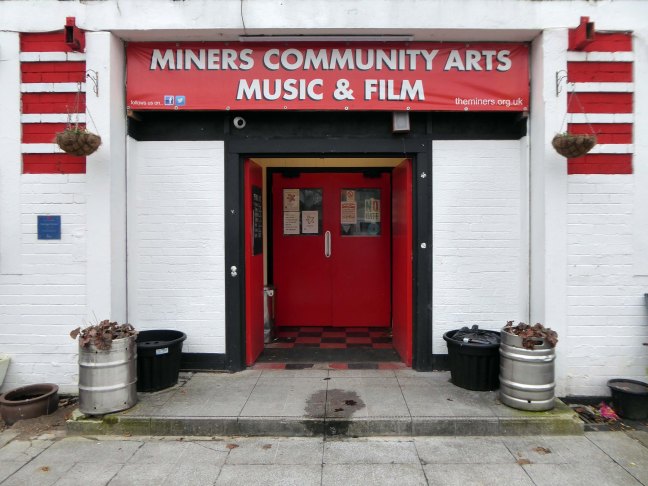
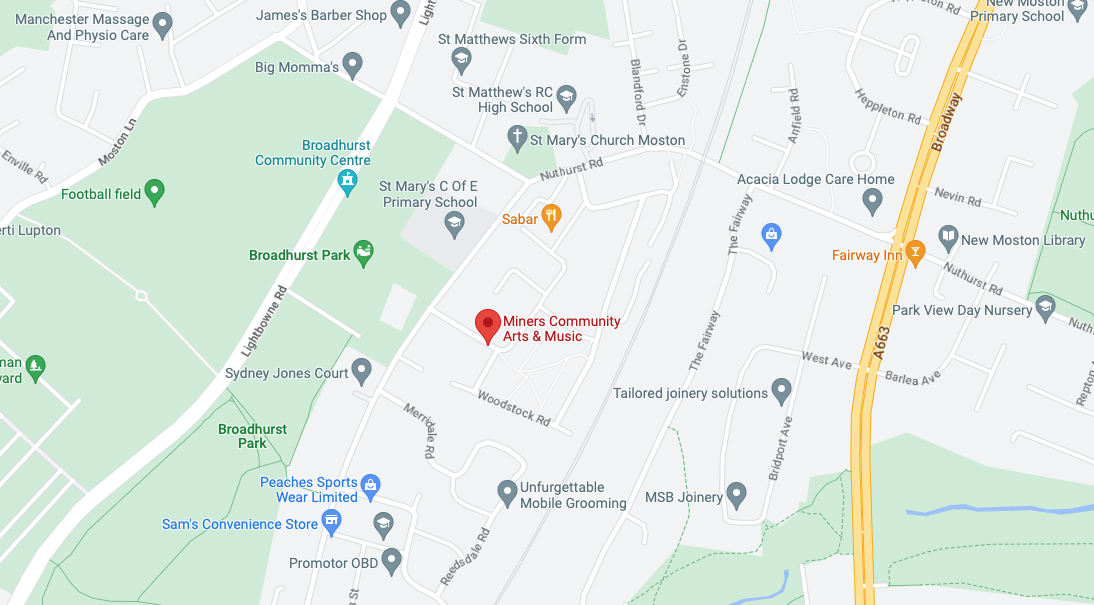
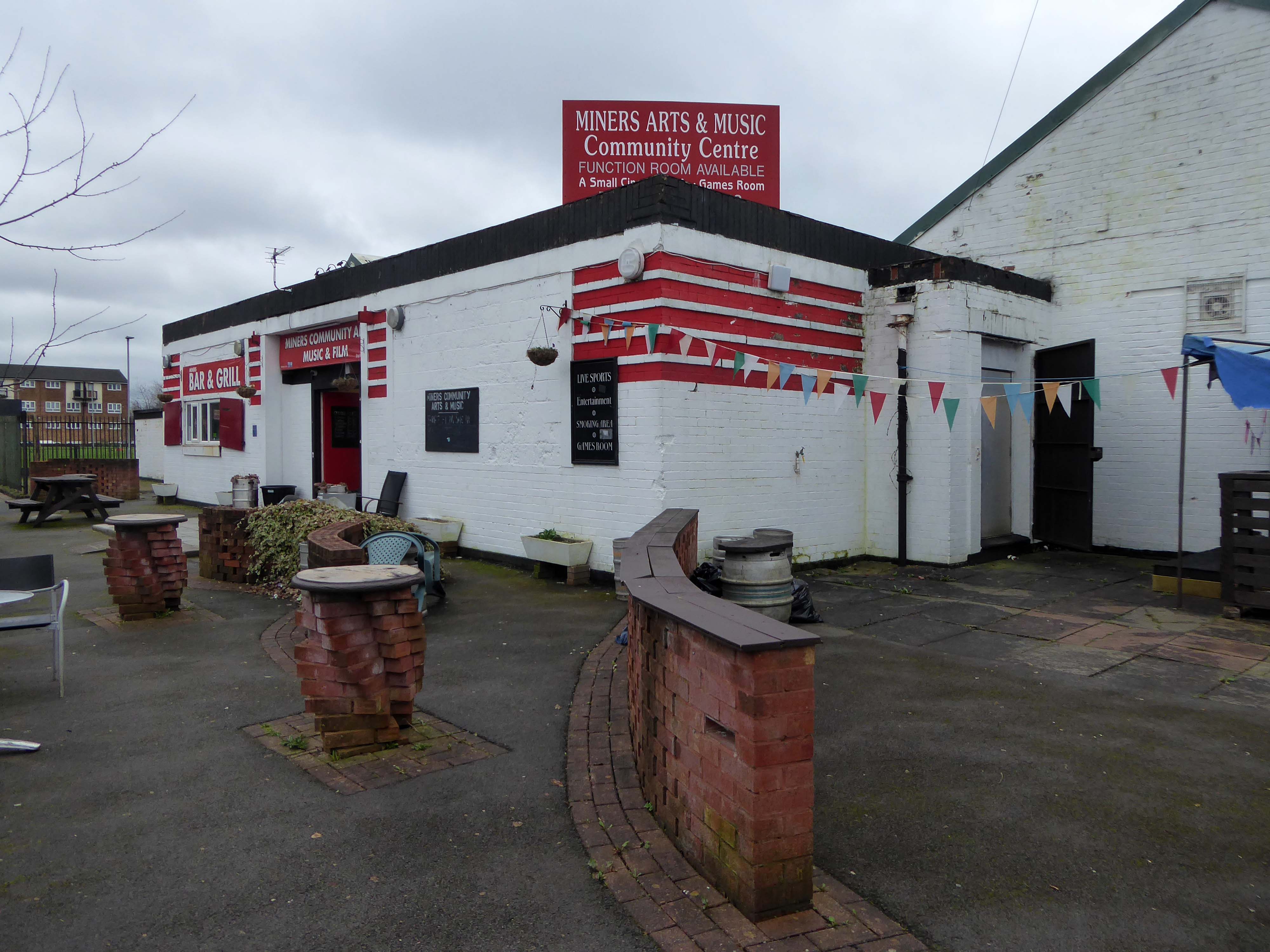
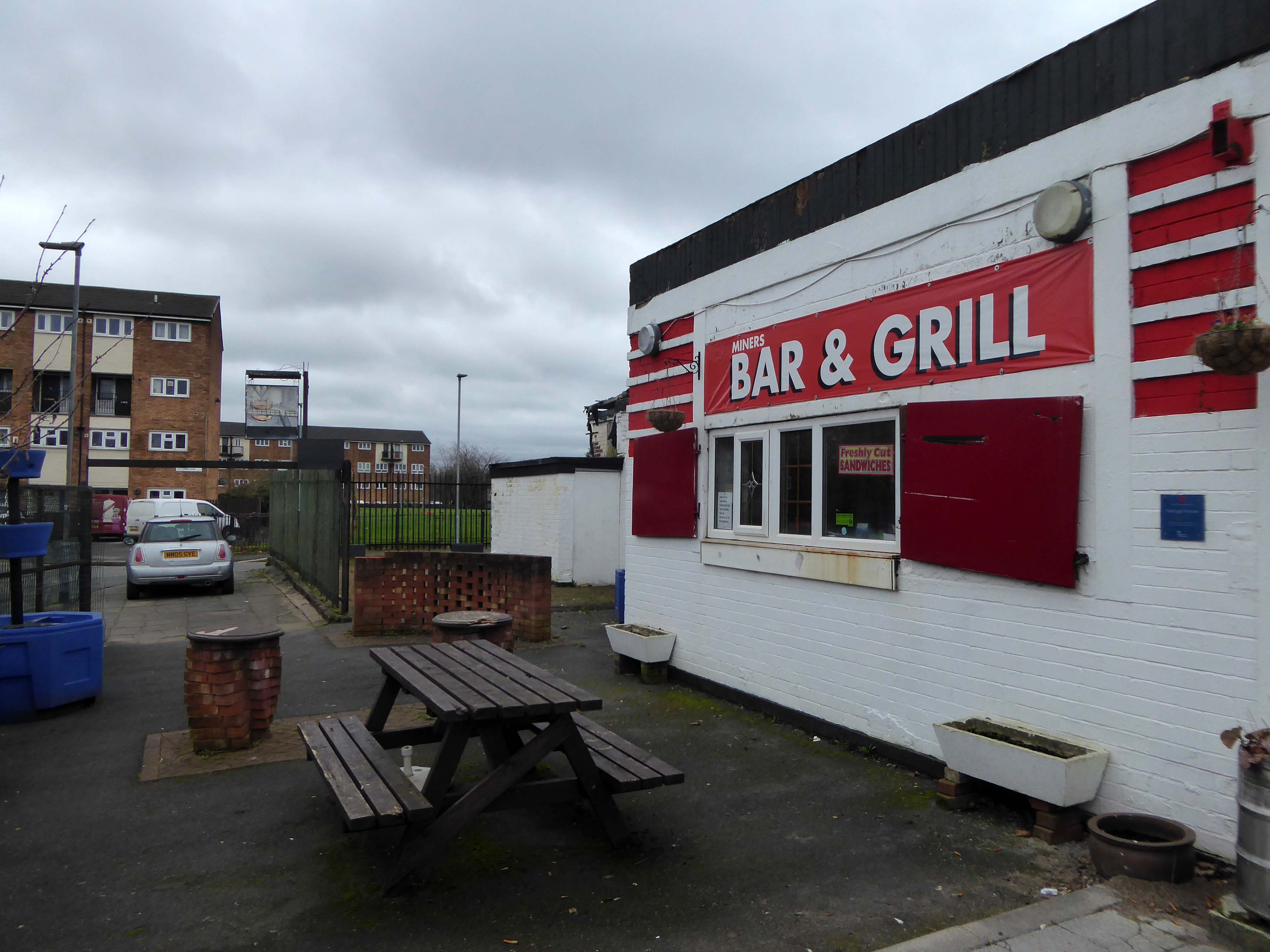
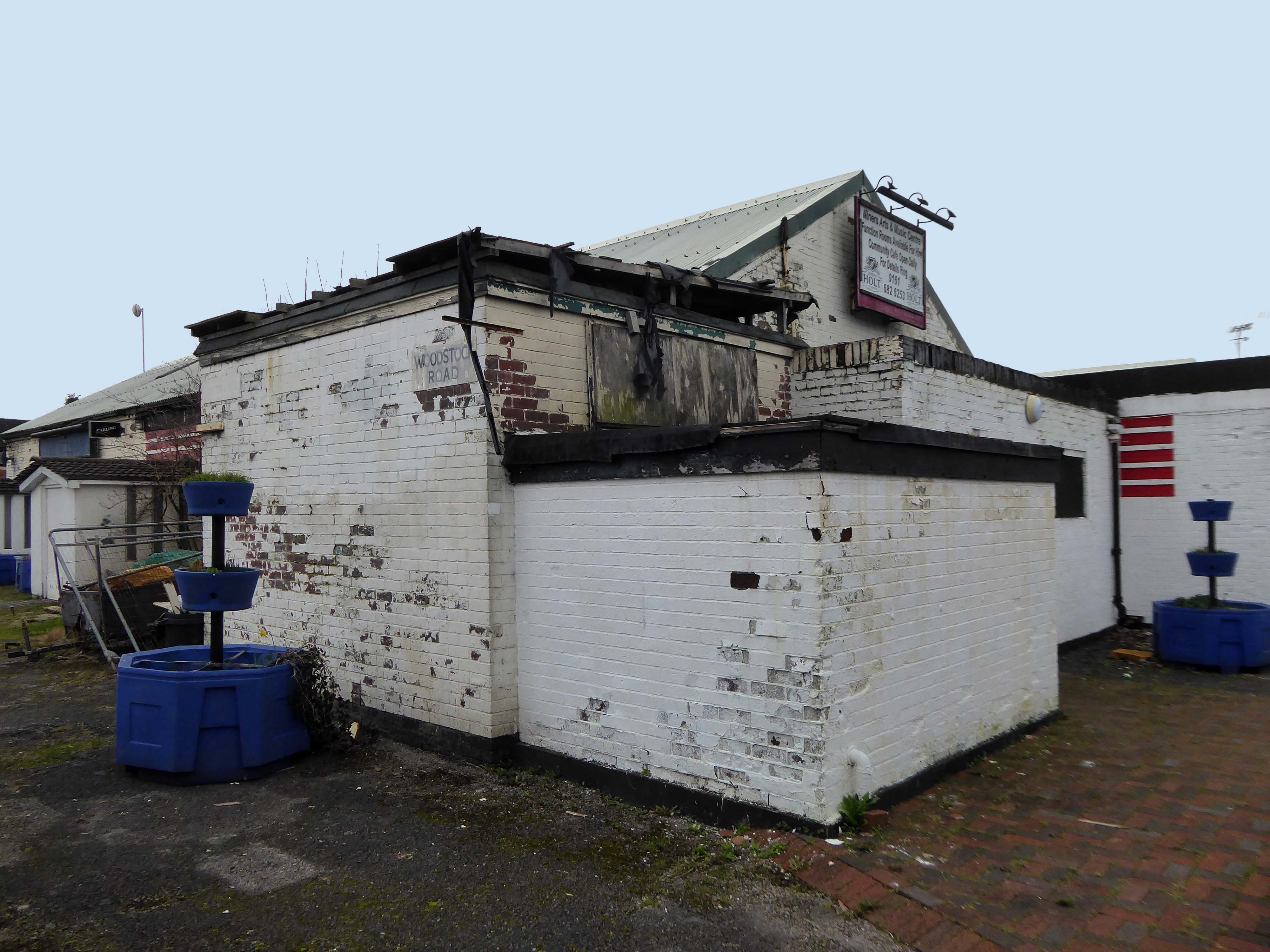
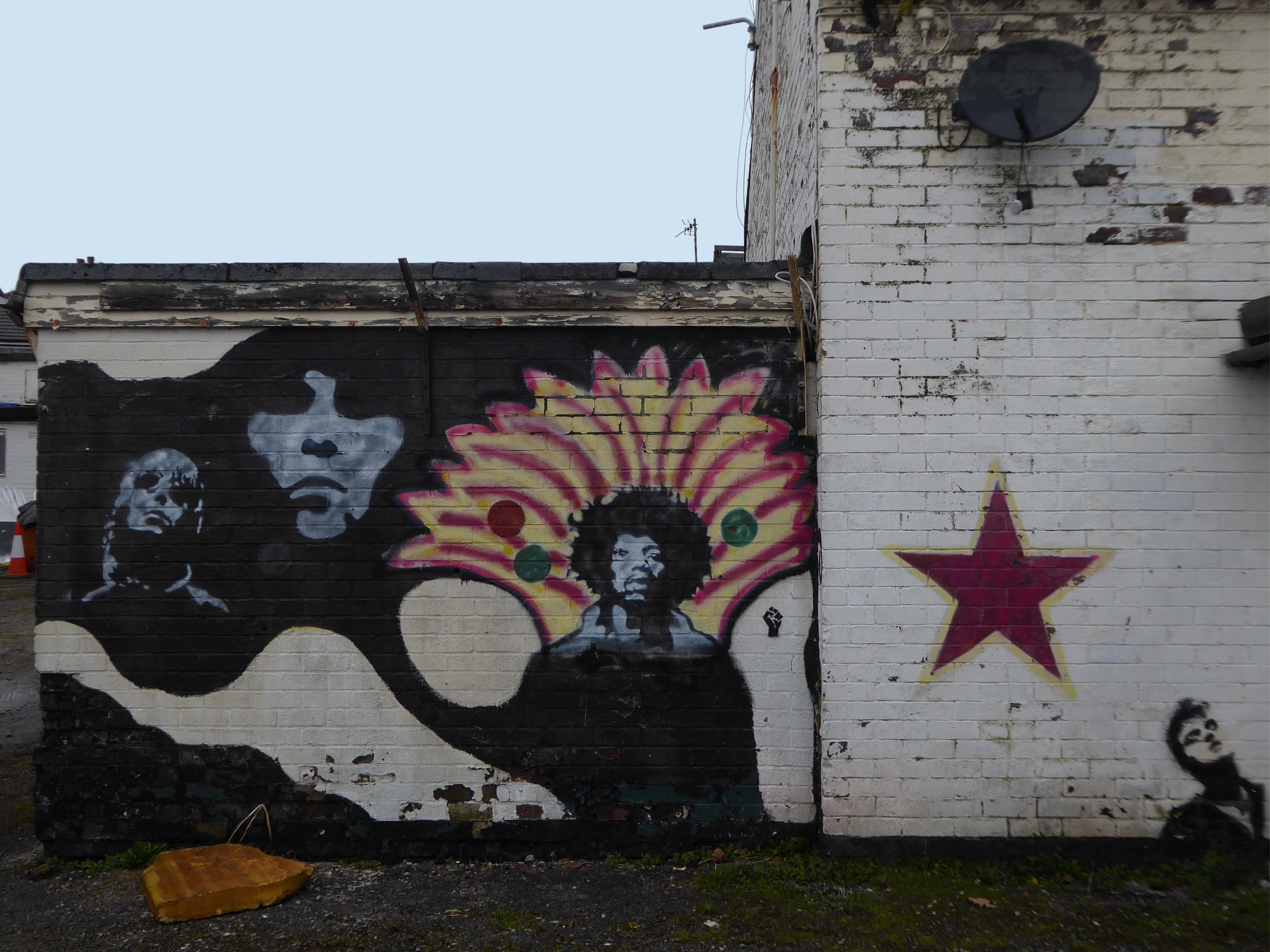
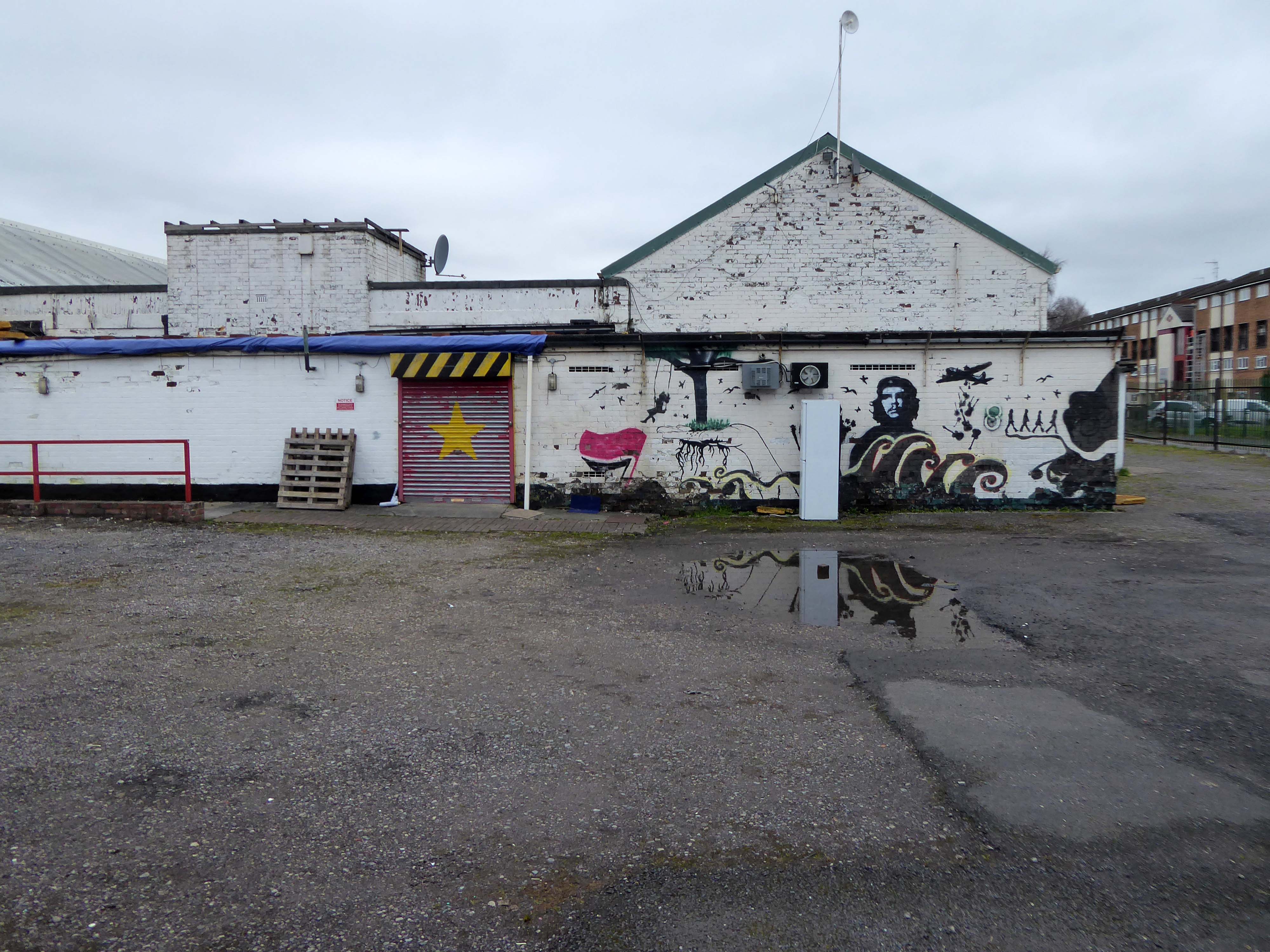
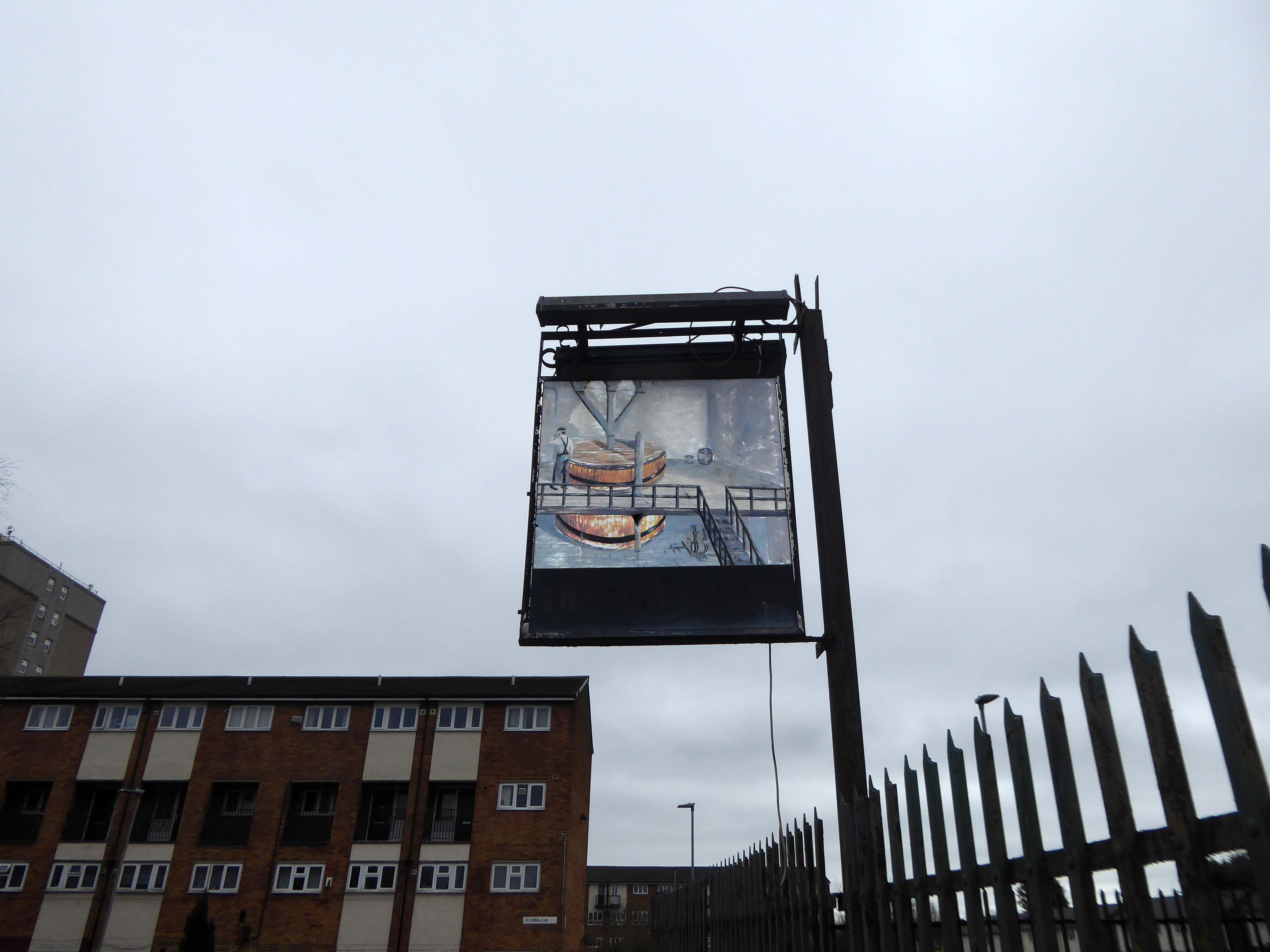
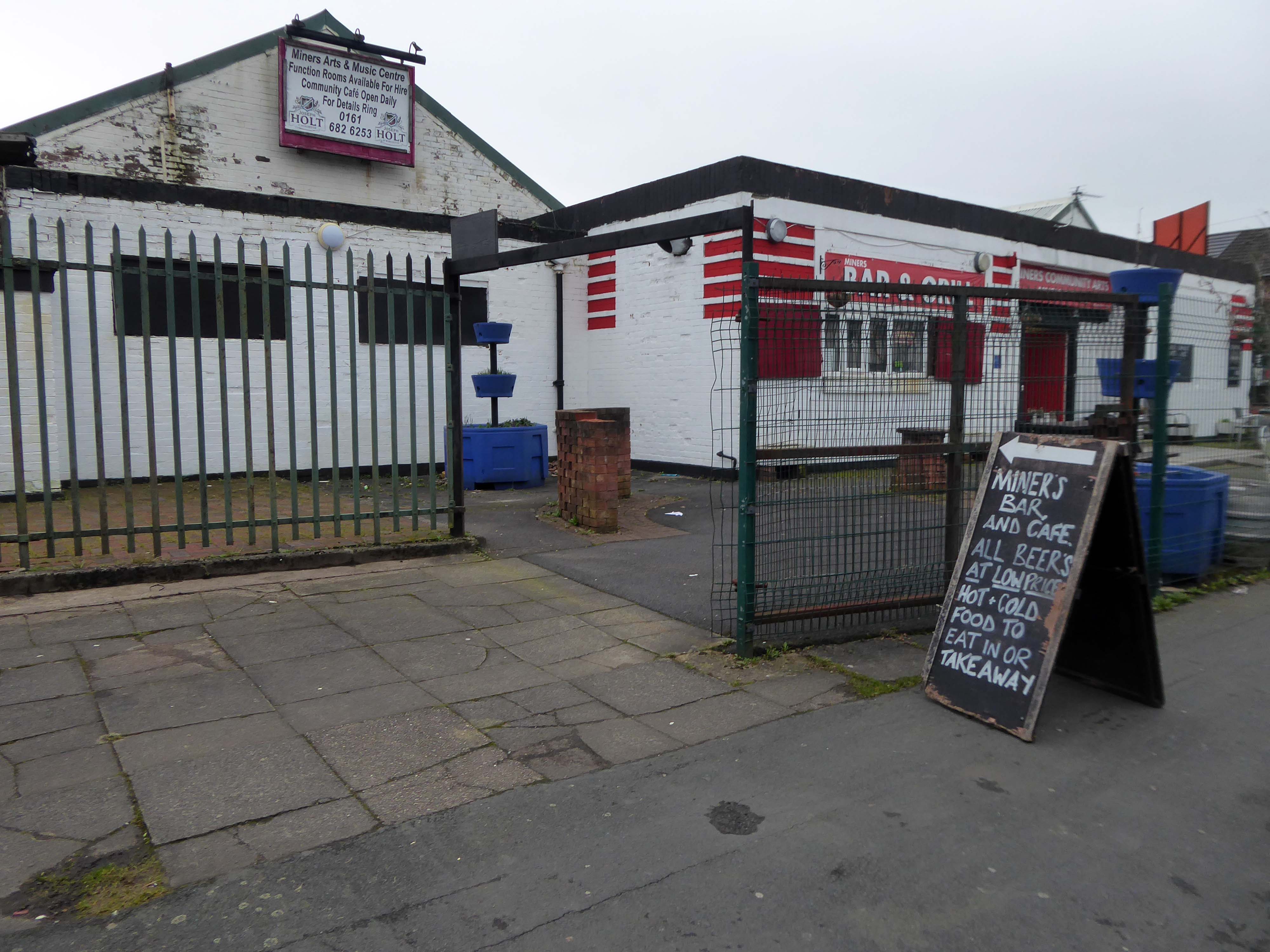
Moston Miners Community Arts and Music Centre

63 Teddington Rd Moston Manchester M40 0DJ

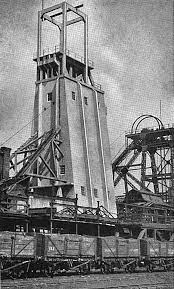
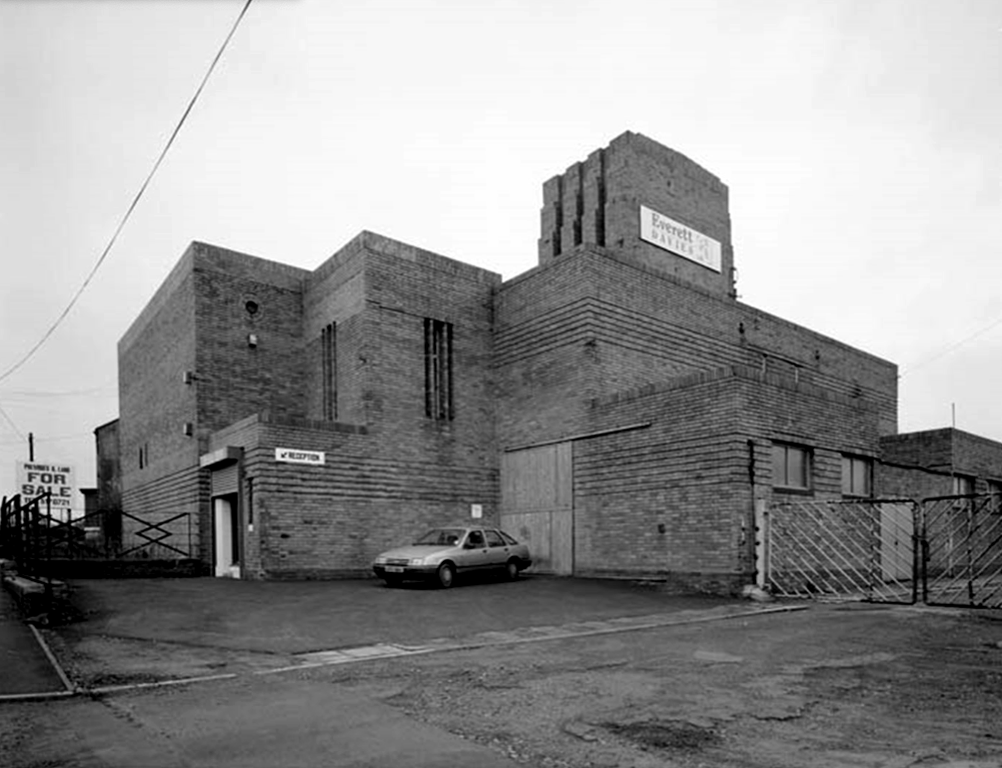
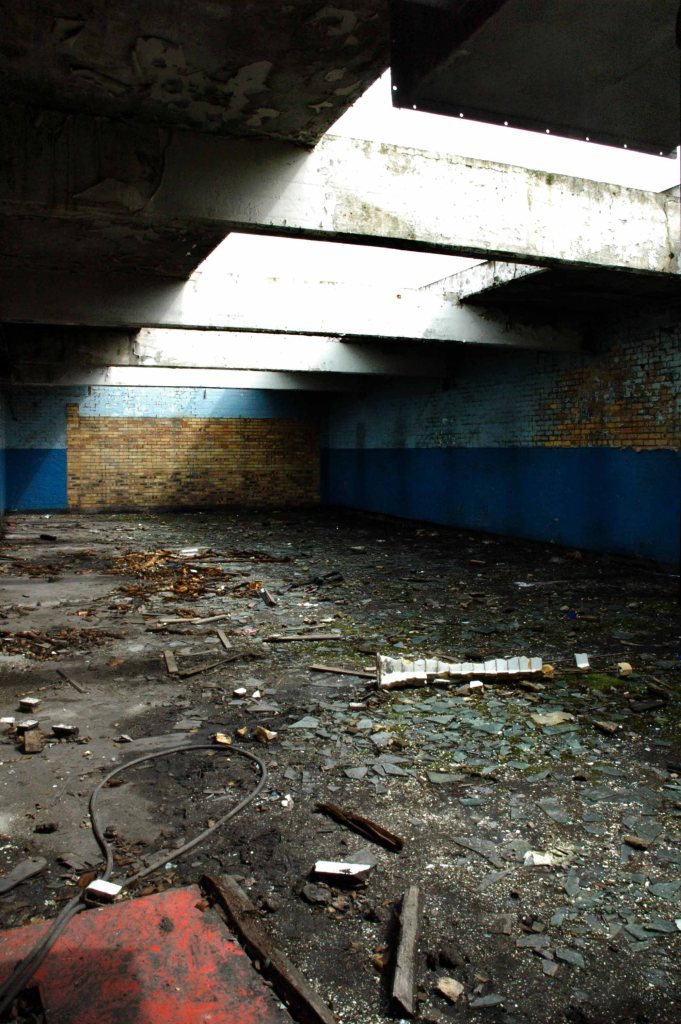
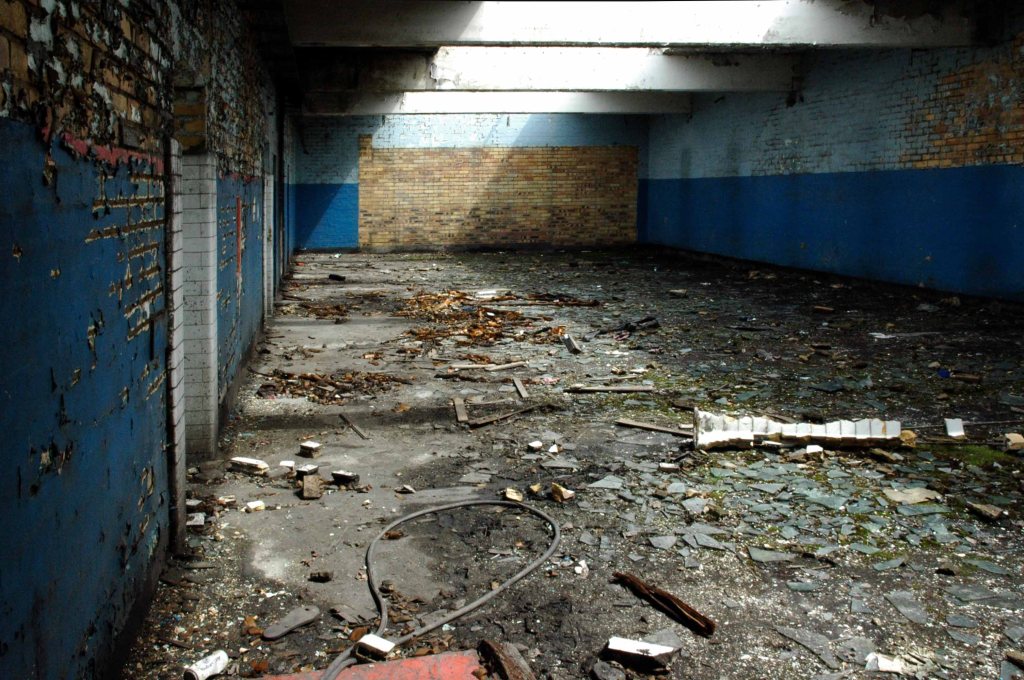
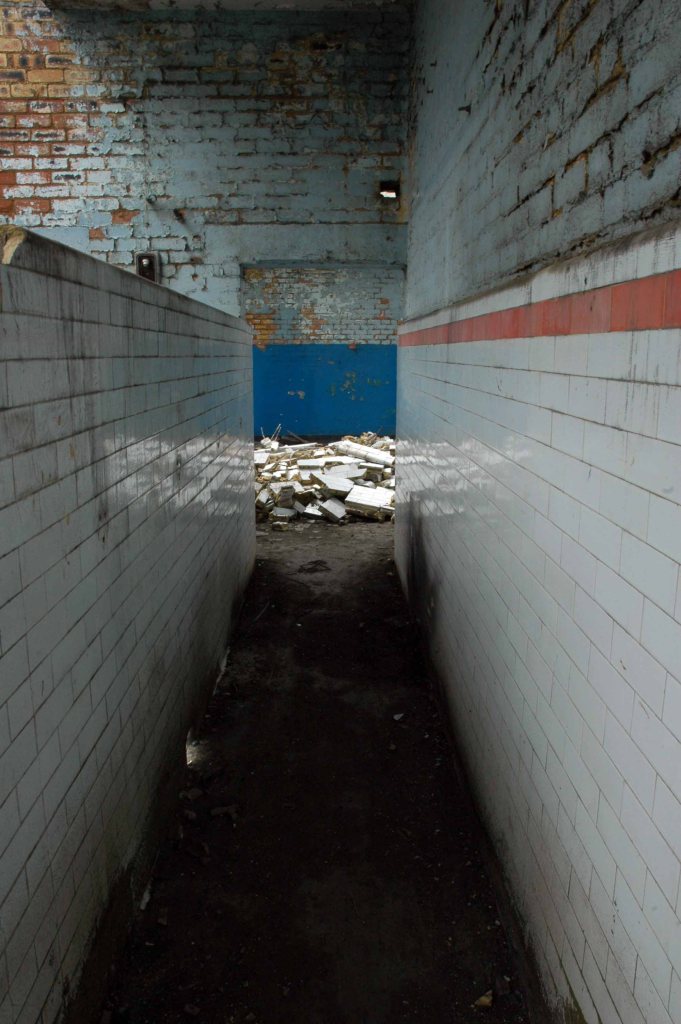
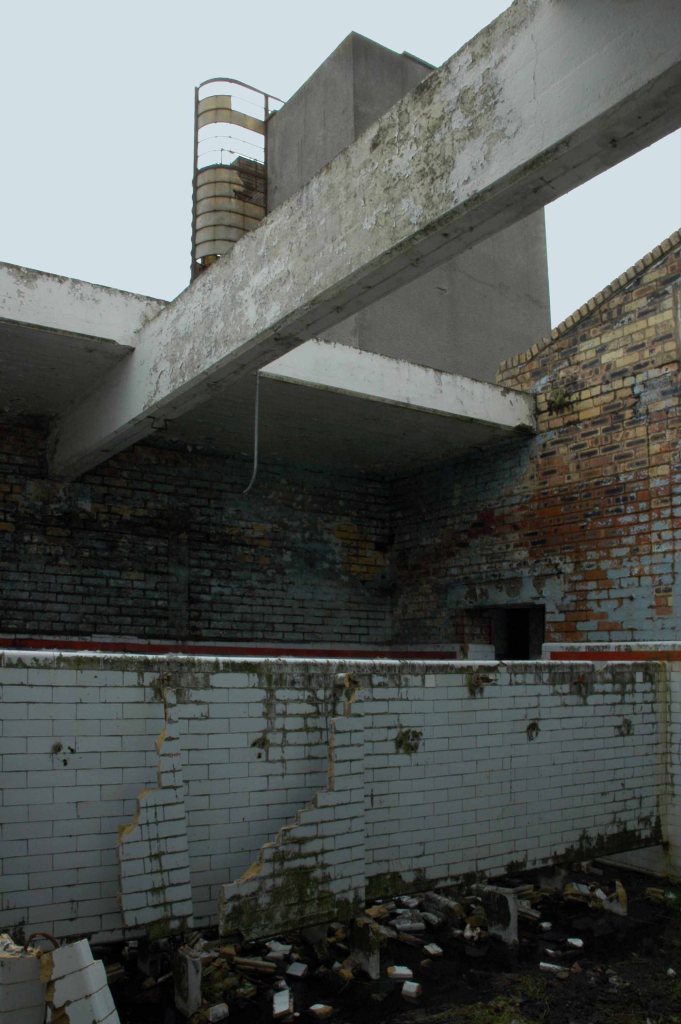
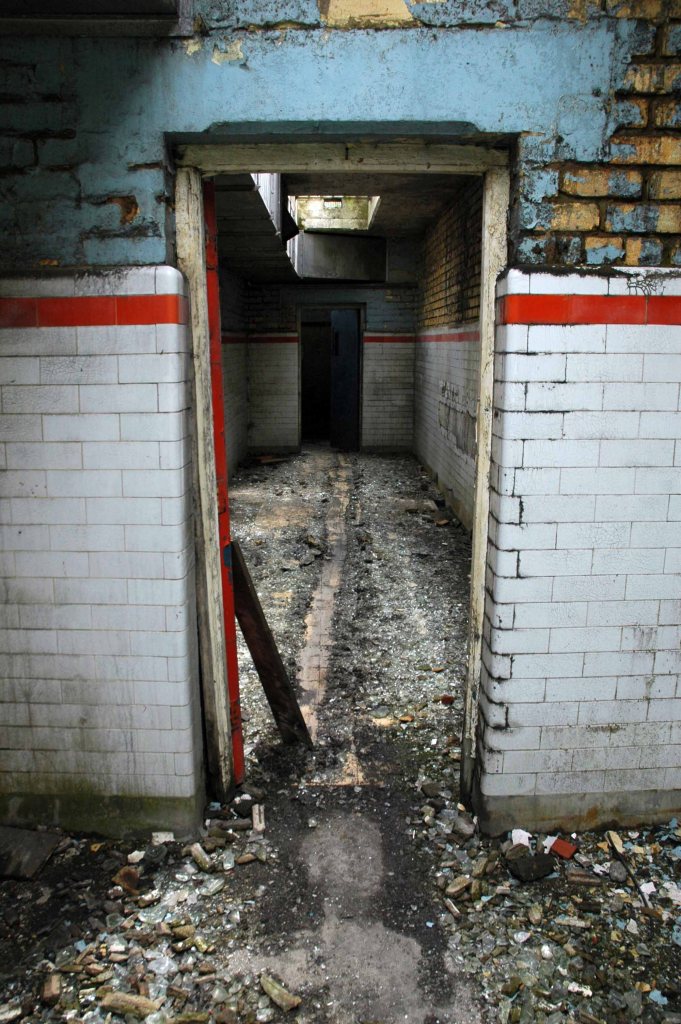
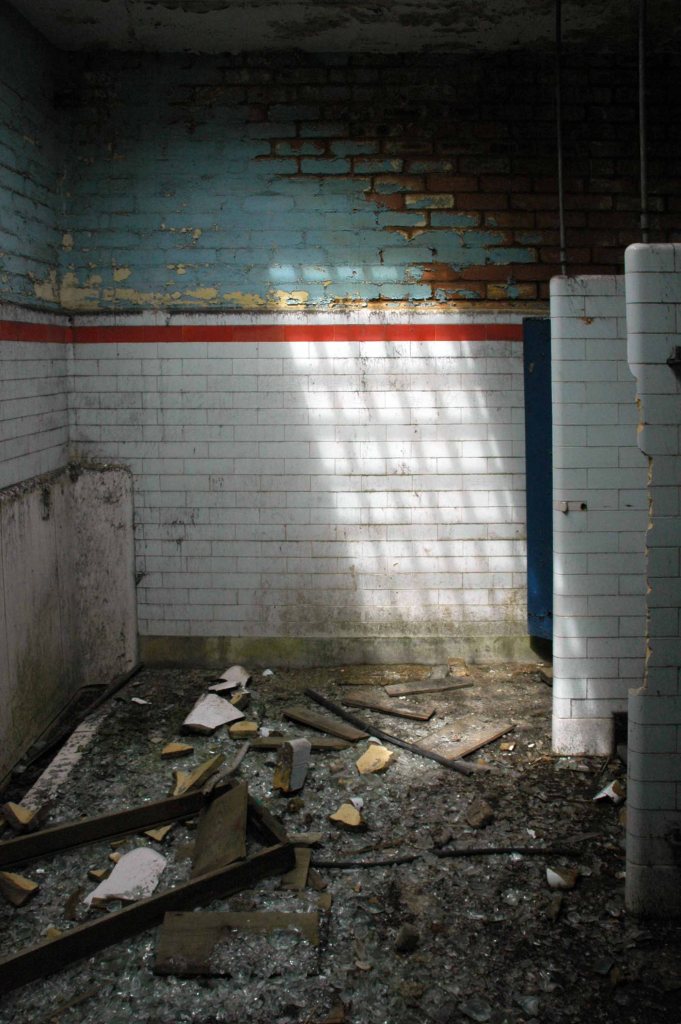
The building began life as a pit-head bath for Moston Colliery.

Several years ago I visited the listed baths at Lynemouth

NMRS

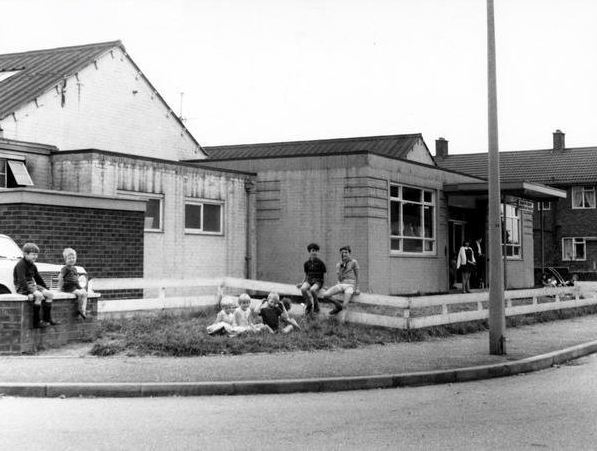
It later became a working mans’ club.

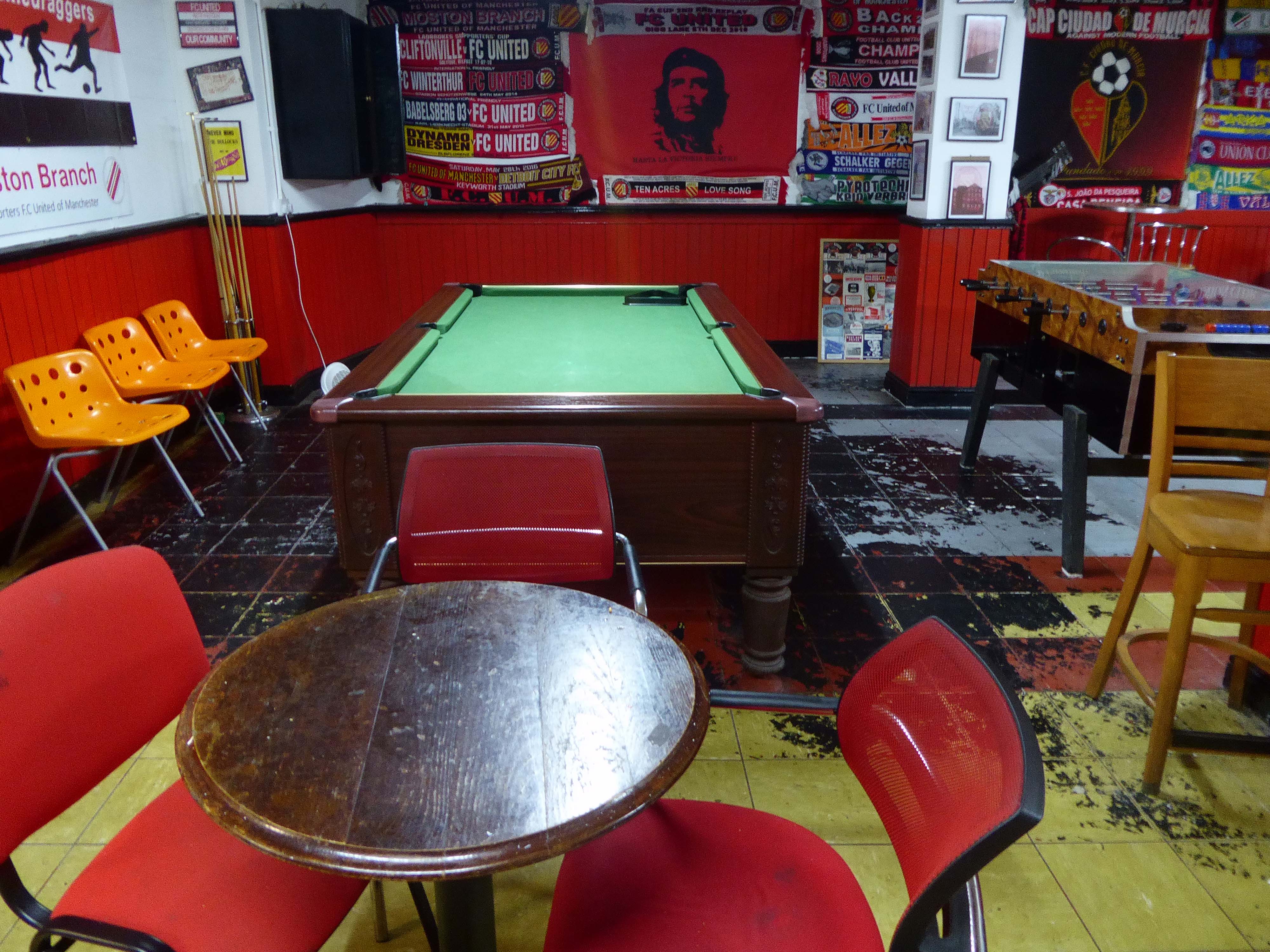
More recently it has had a renaissance under the stewardship of local lad Louis Beckett.

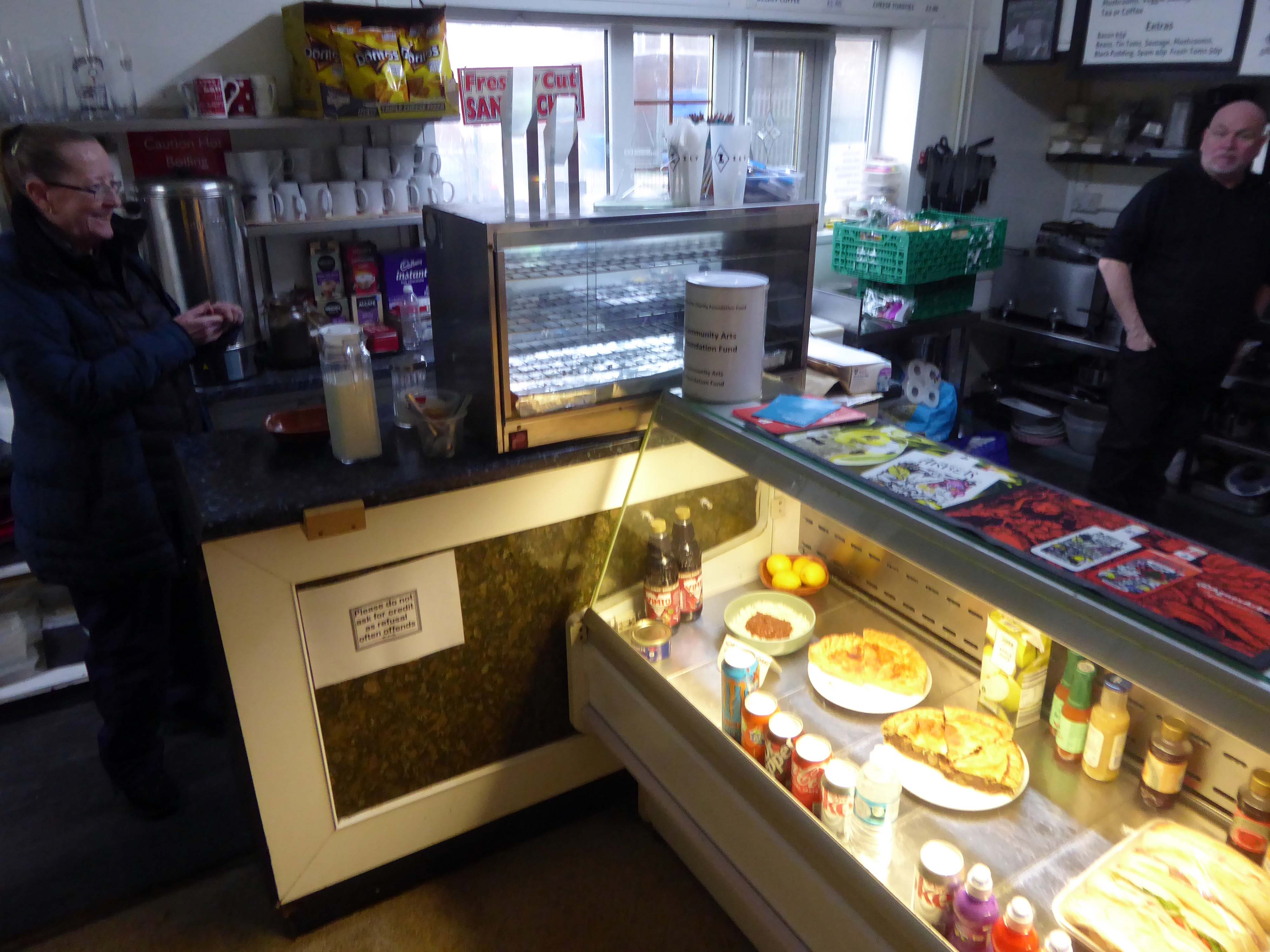
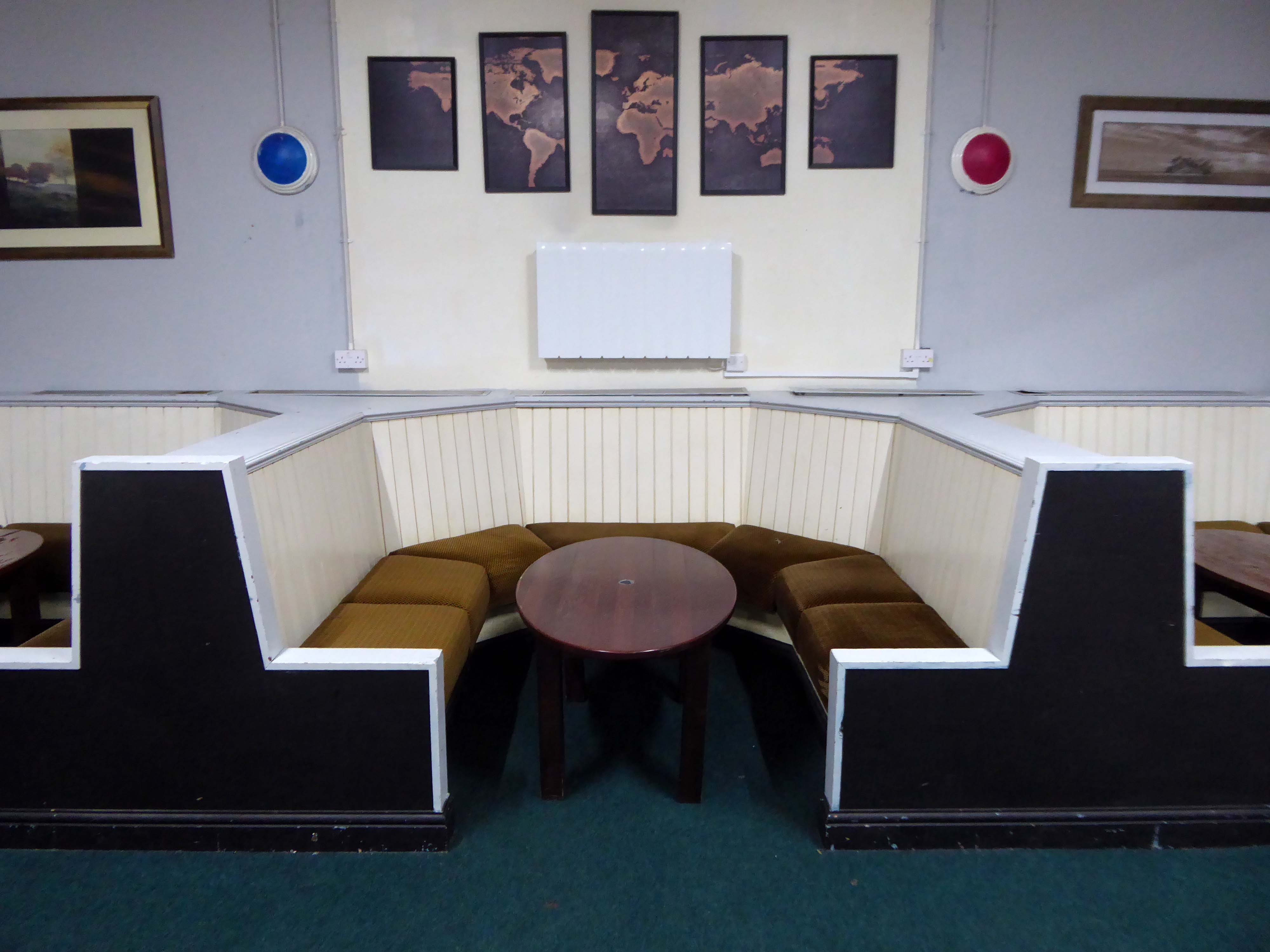
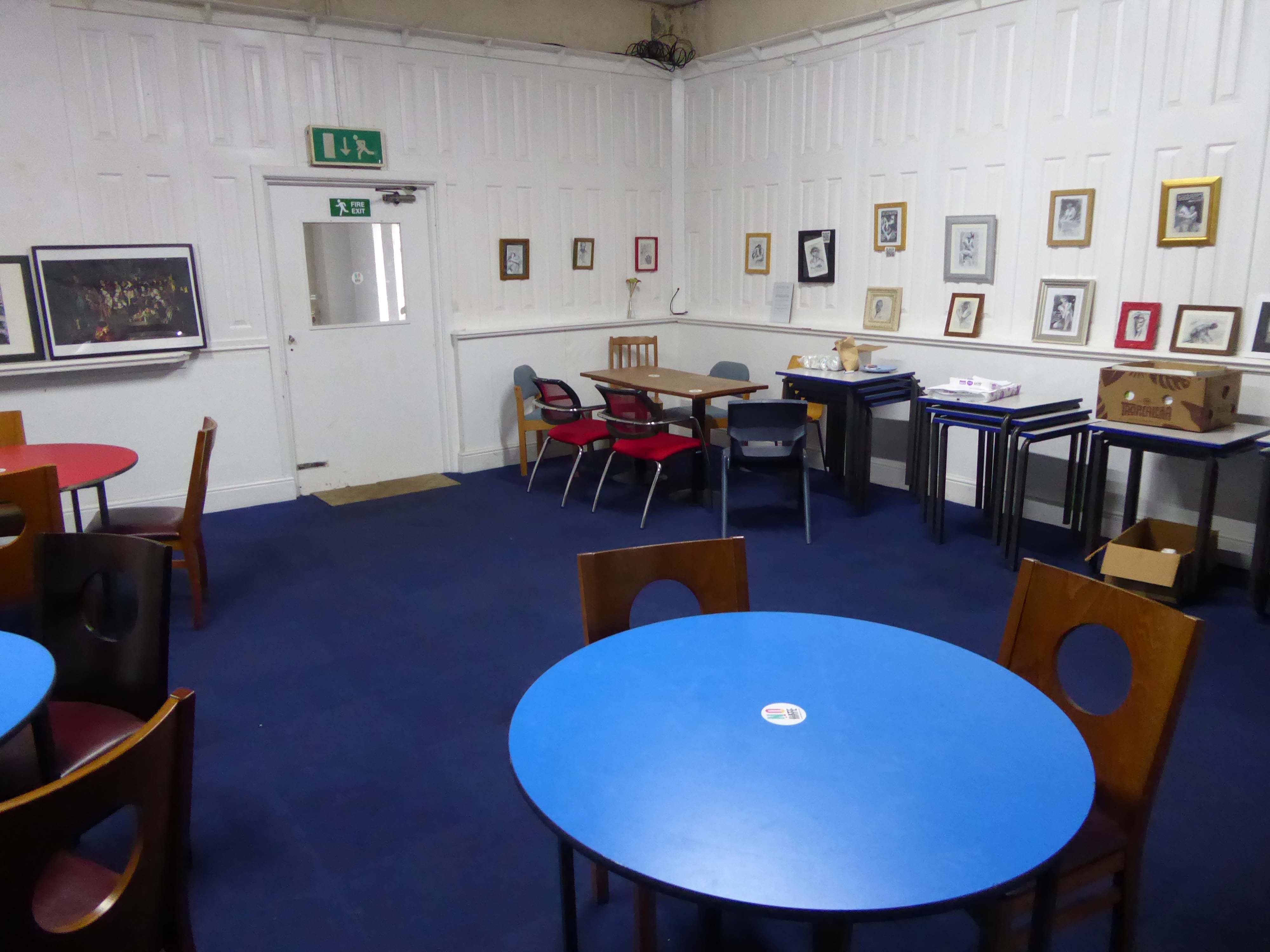
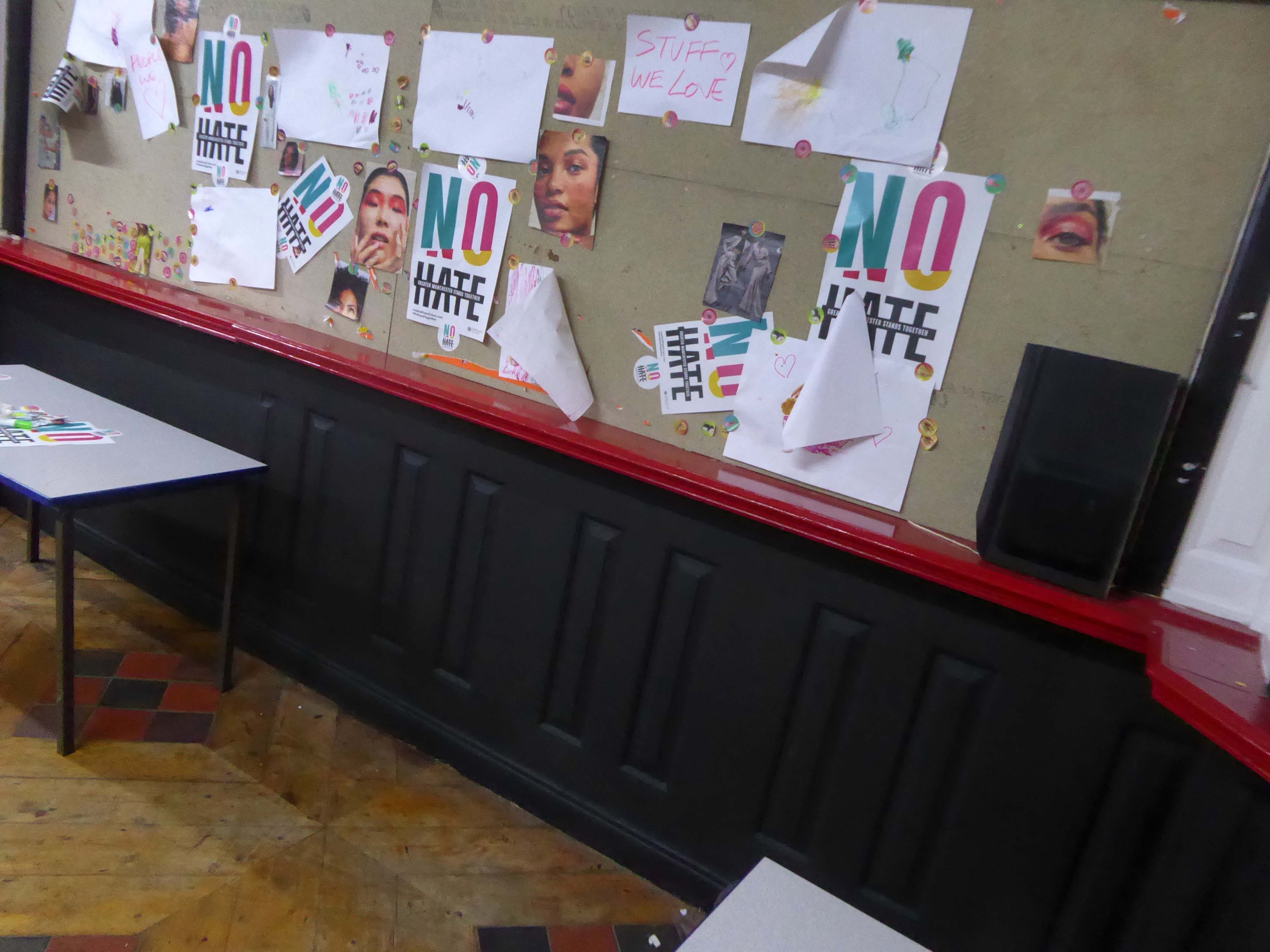
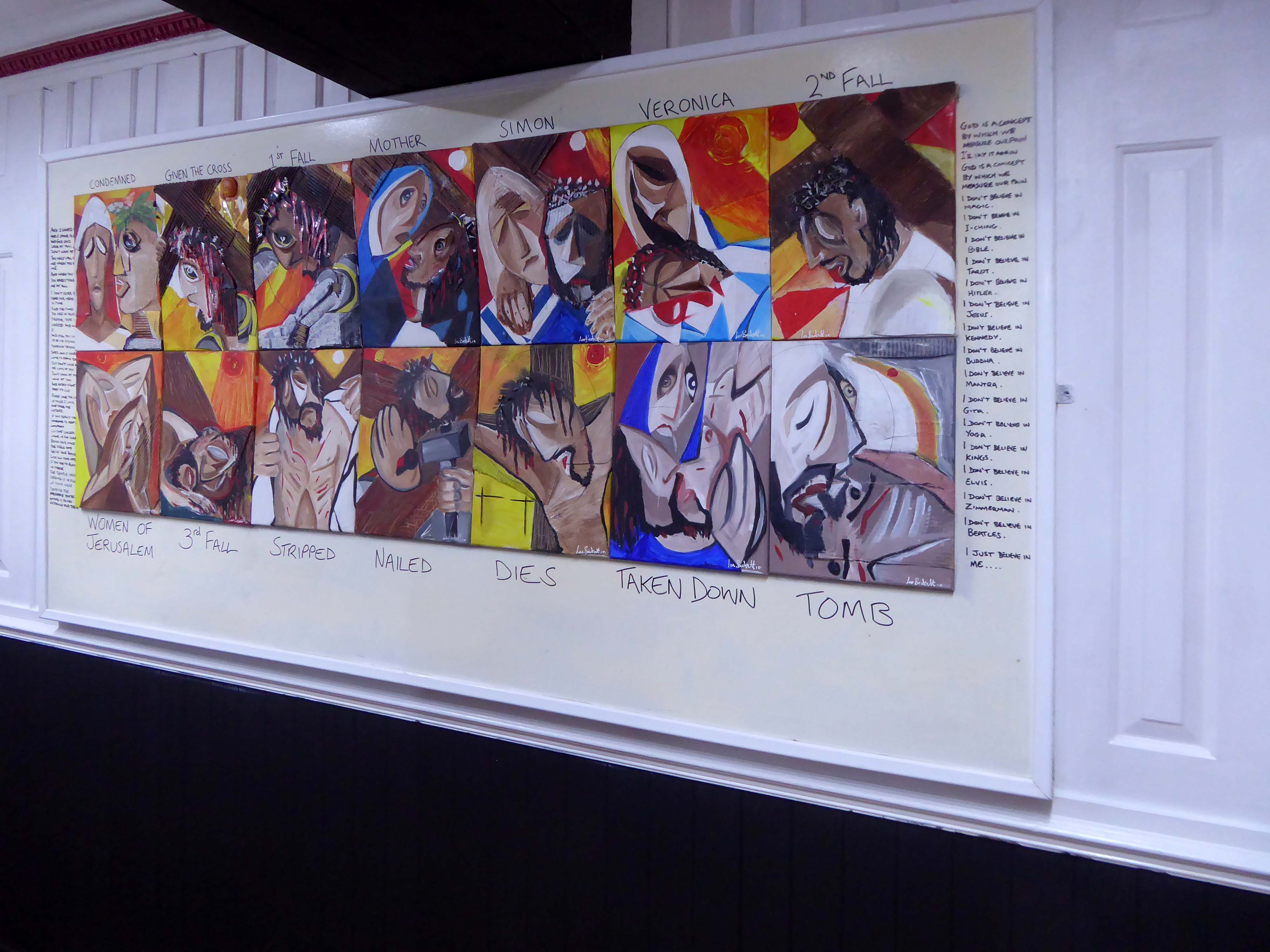
The community centre now provides space for local bands to rehearse, local artists to exhibit their work, a community cafe and larger function rooms that are available for events. 

A wide range of events takes place here through the year including live gigs, pantomines, Halloween parties, cabaret nights and art exhibitions, and since 2012 it’s been home to the Moston Small Cinema which screens a range of films and sporting events.

The Skinny

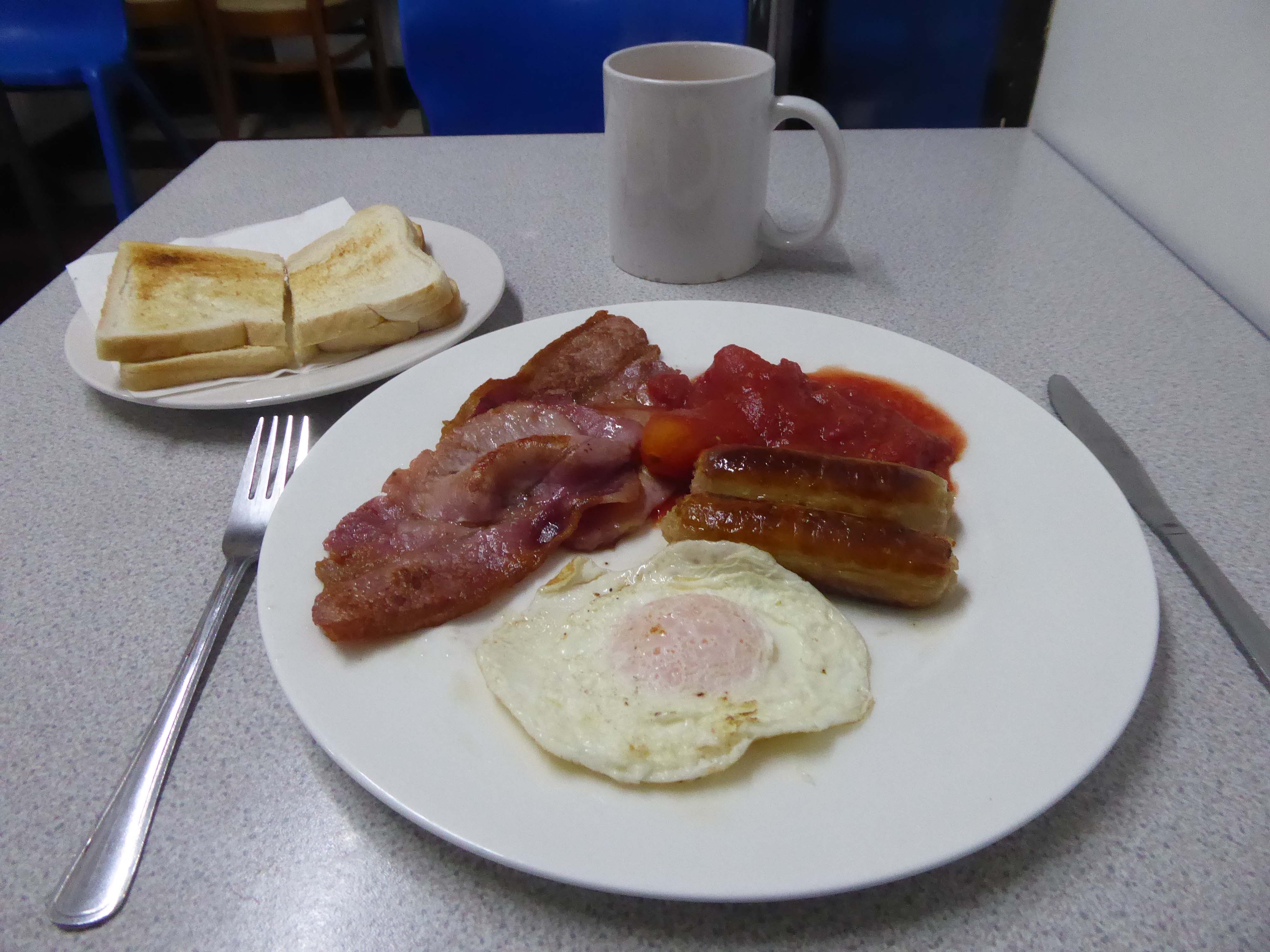
I popped by a couple of weeks ago and was given a terrific tour by Paula and Lou, along with a competitively priced tasty brew and breakfast.

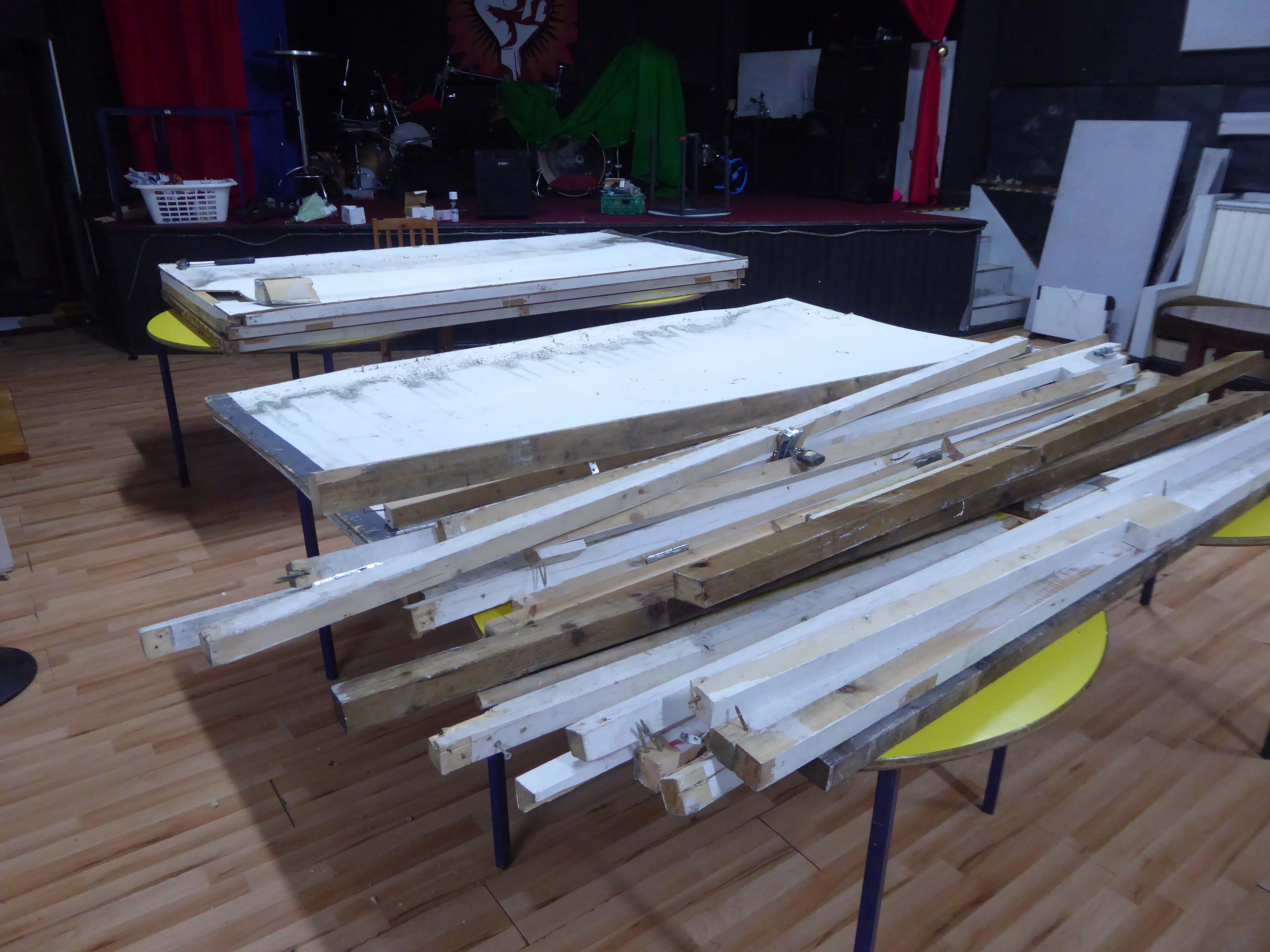
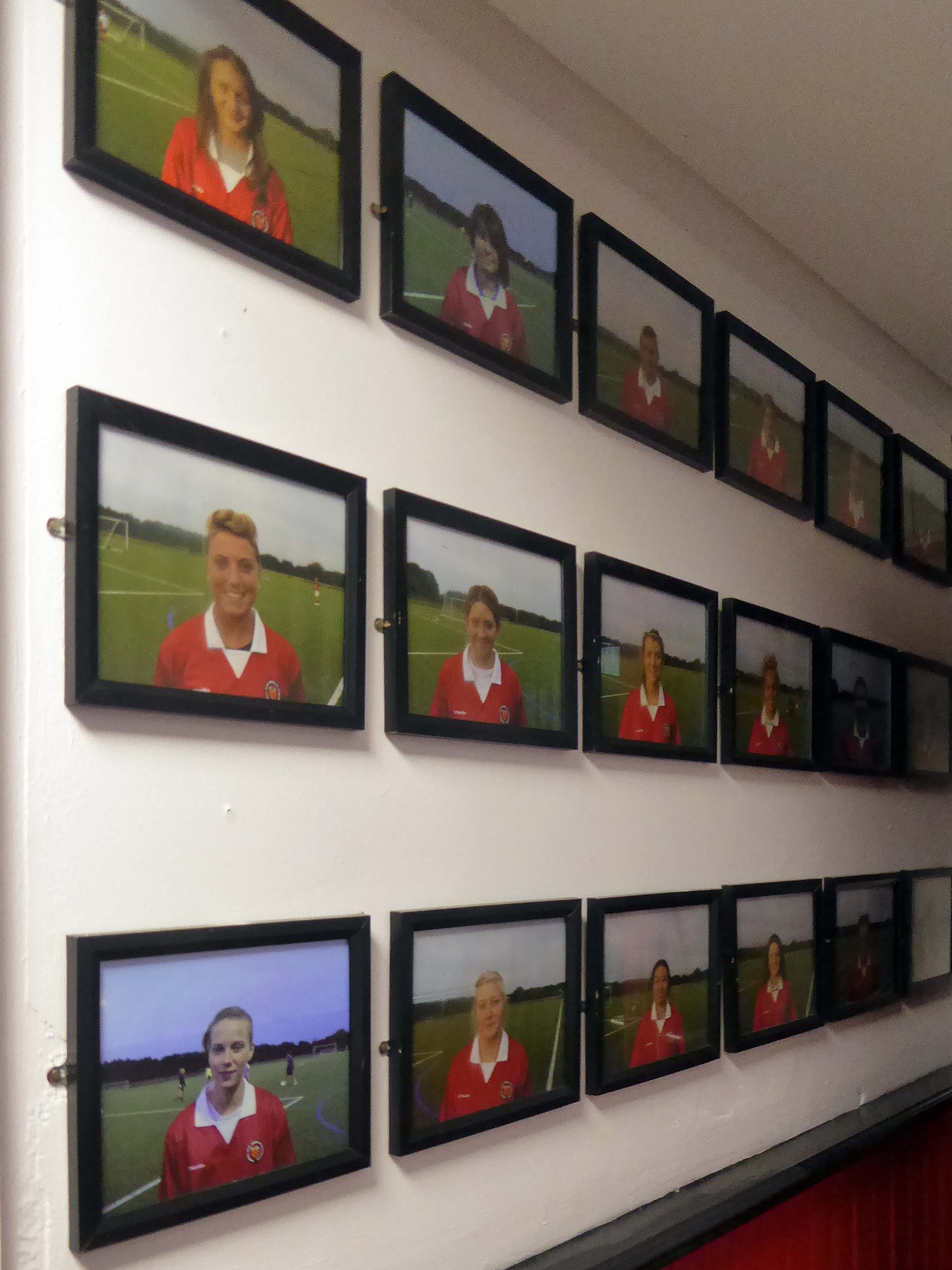
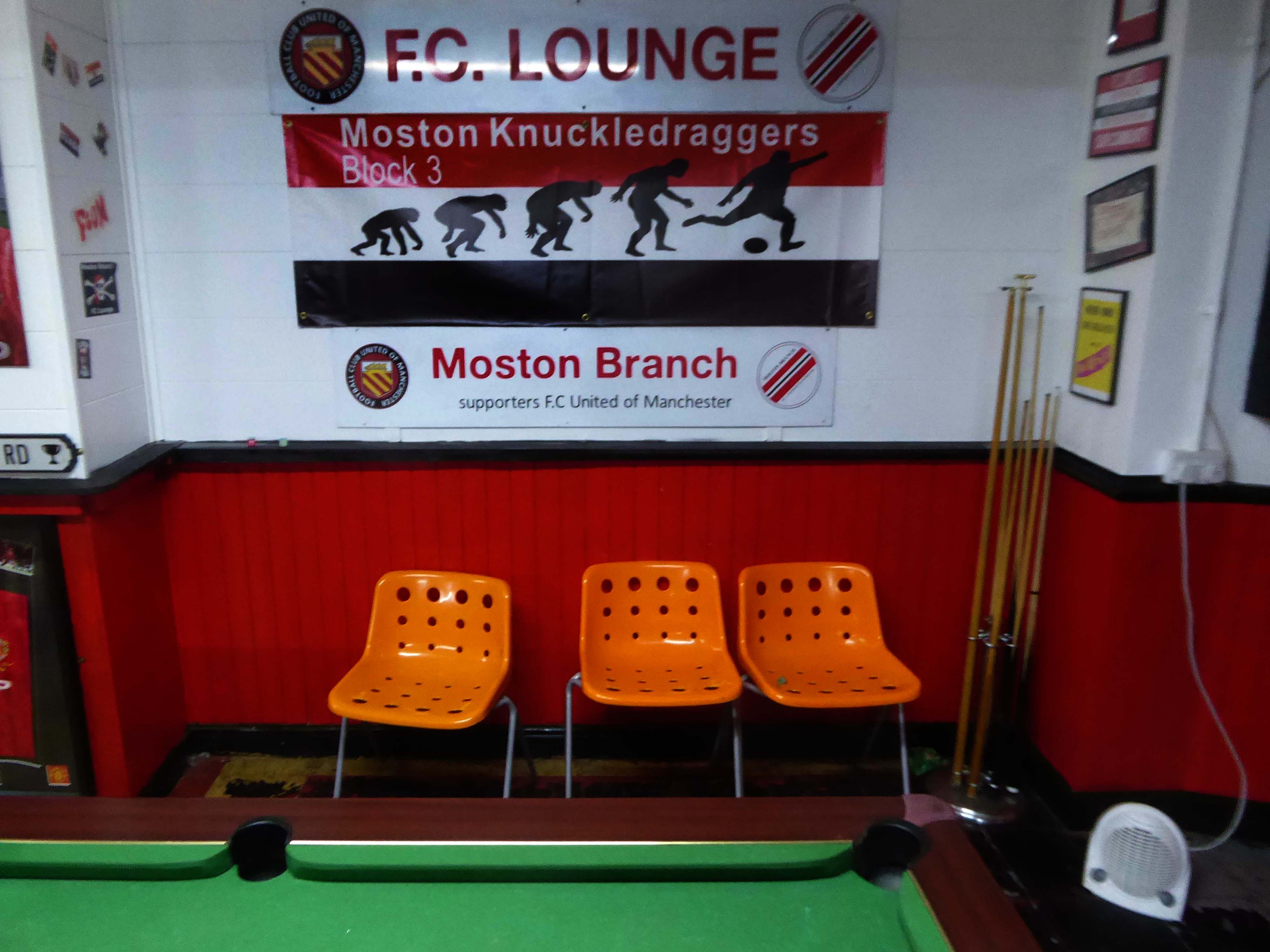
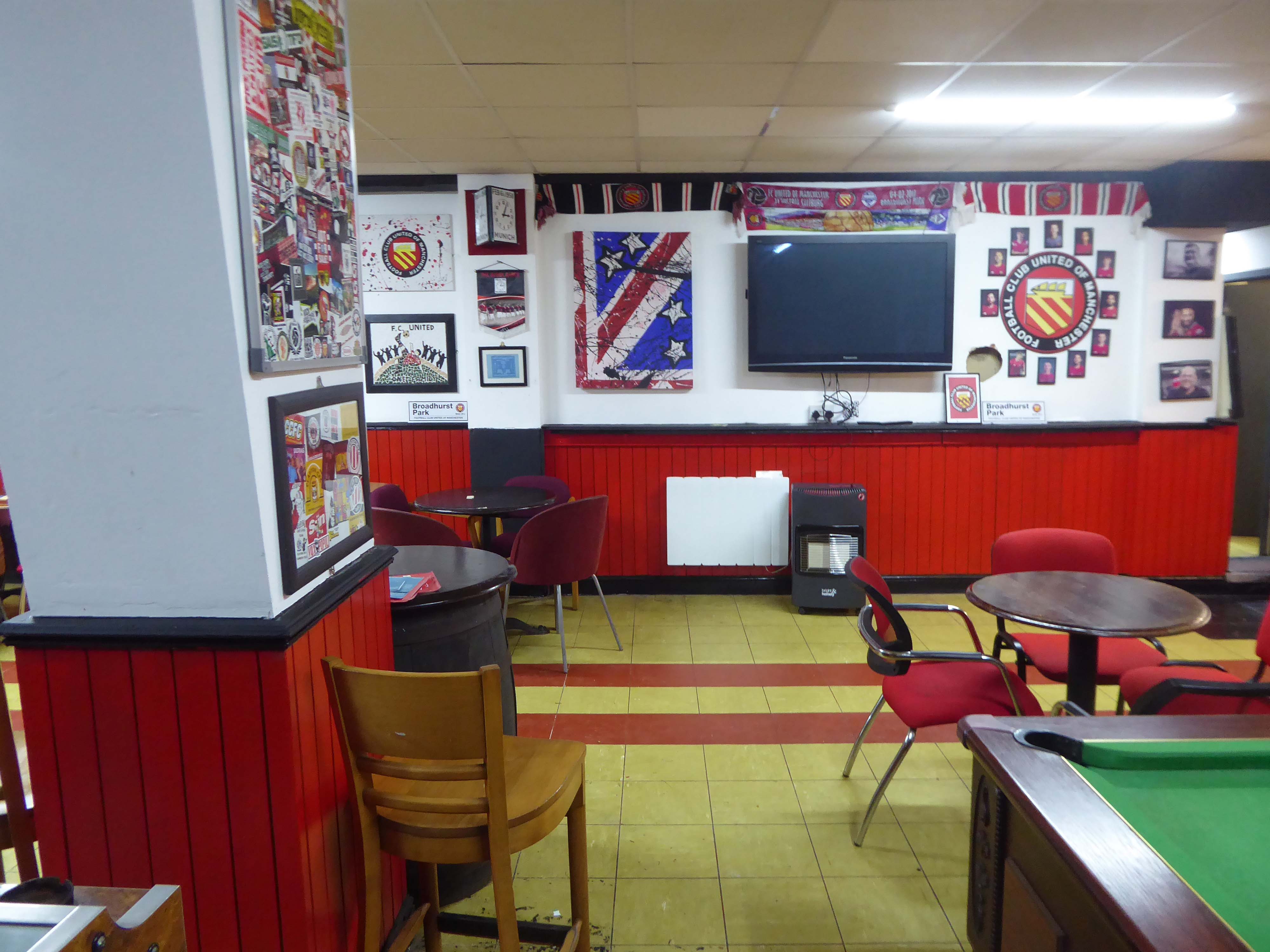
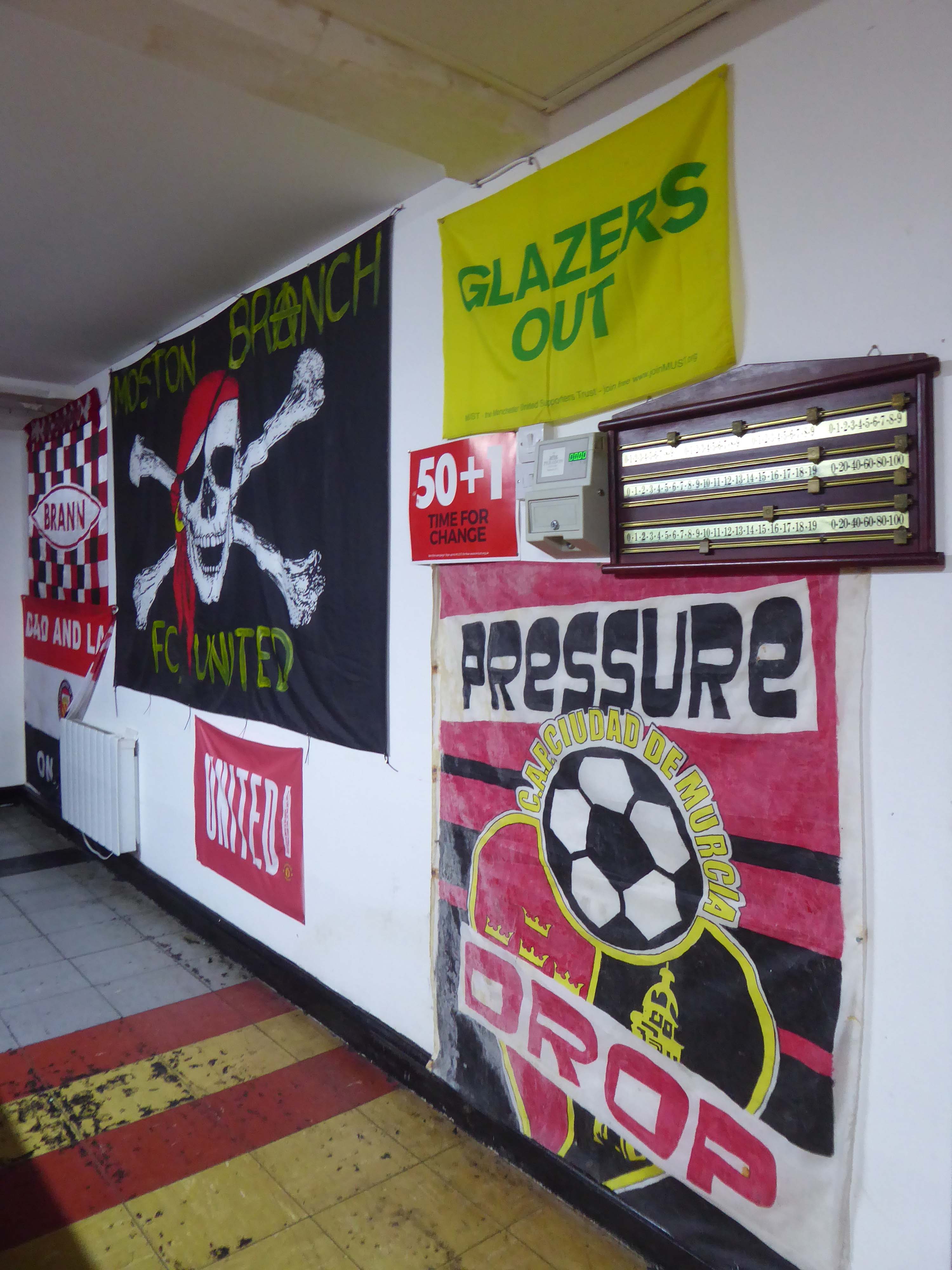
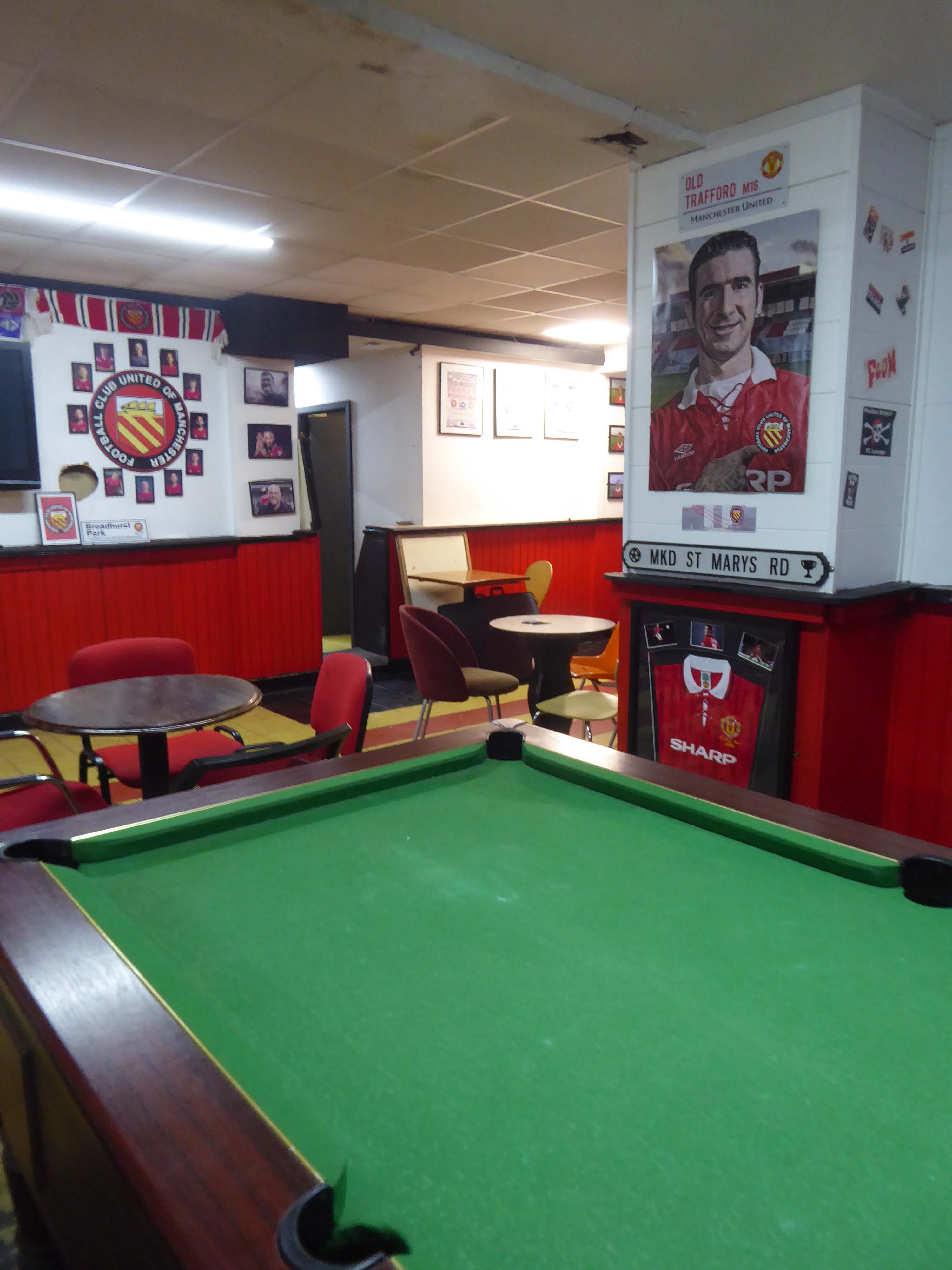
Work was underway for the current Art Show and evidence of the club’s affable affiliation with FC United of Manchester, along with the results of the previous week’s art activities for the local youngsters.

Let’s take a look around outside and in.

Keep an eye and ear out for forthcoming events – get y’self up there soon!

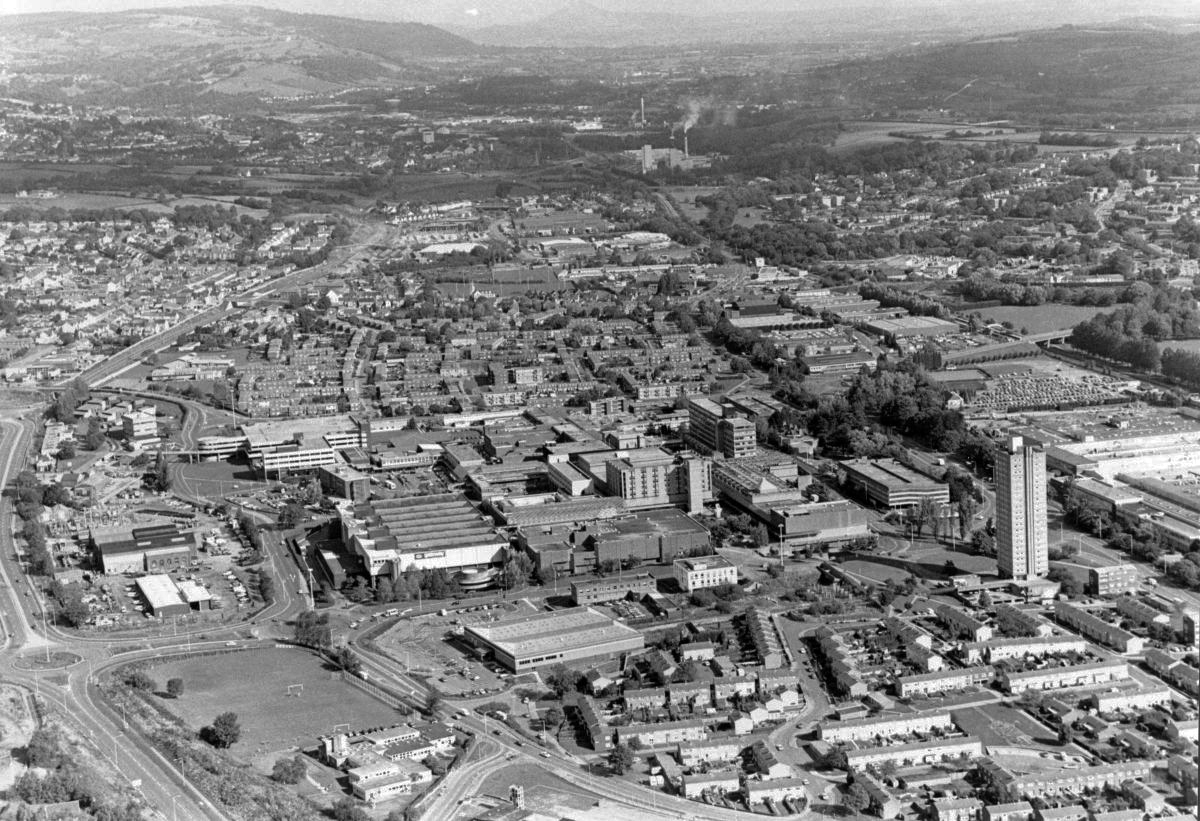
Housing – Cwmbran

Here we are again in Cwmbran having previously visited Monmouth Square and Taliesin.

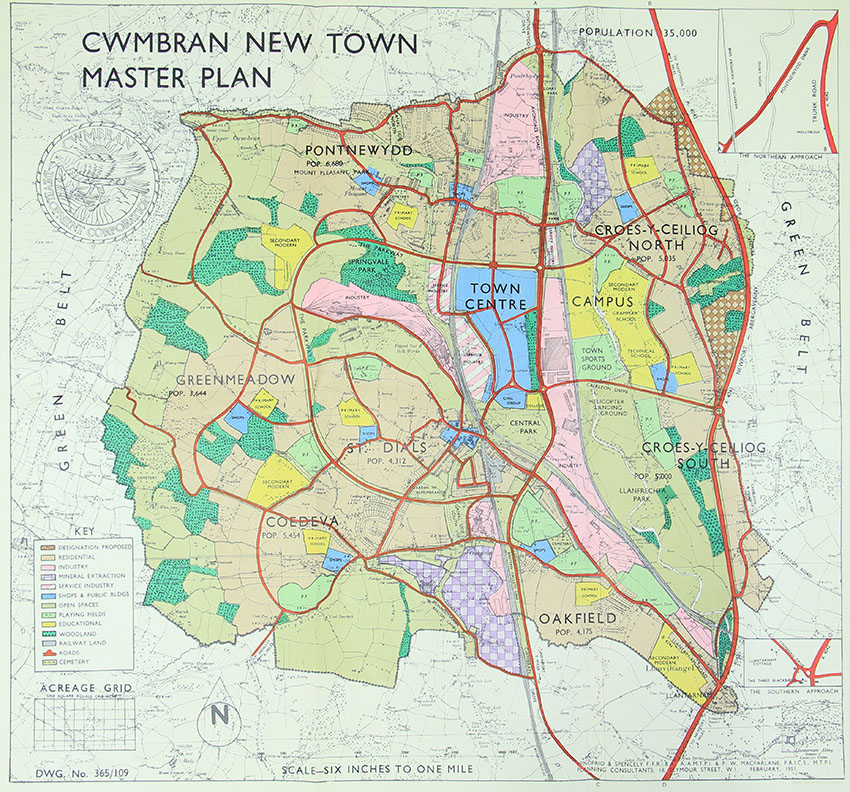
The Masterplan, produced for the Cwmbran Development Corporation by Minoprio & Spencely & Macfarlane in 1950 – image from the Gwent Archives

Royal Commission

Cwmbran was founded in 1949 as a new town, to provide new employment opportunities in the south eastern portion of the South Wales Coalfield, but the area has a long history.

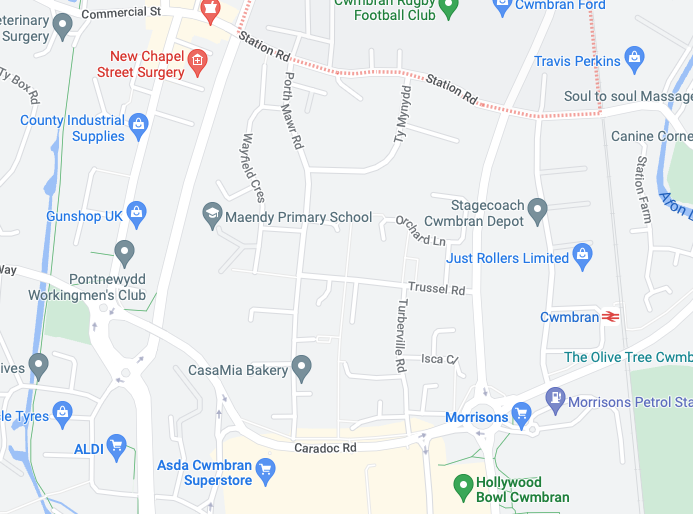
We shall now explore the housing framed by the railway and shopping centre.

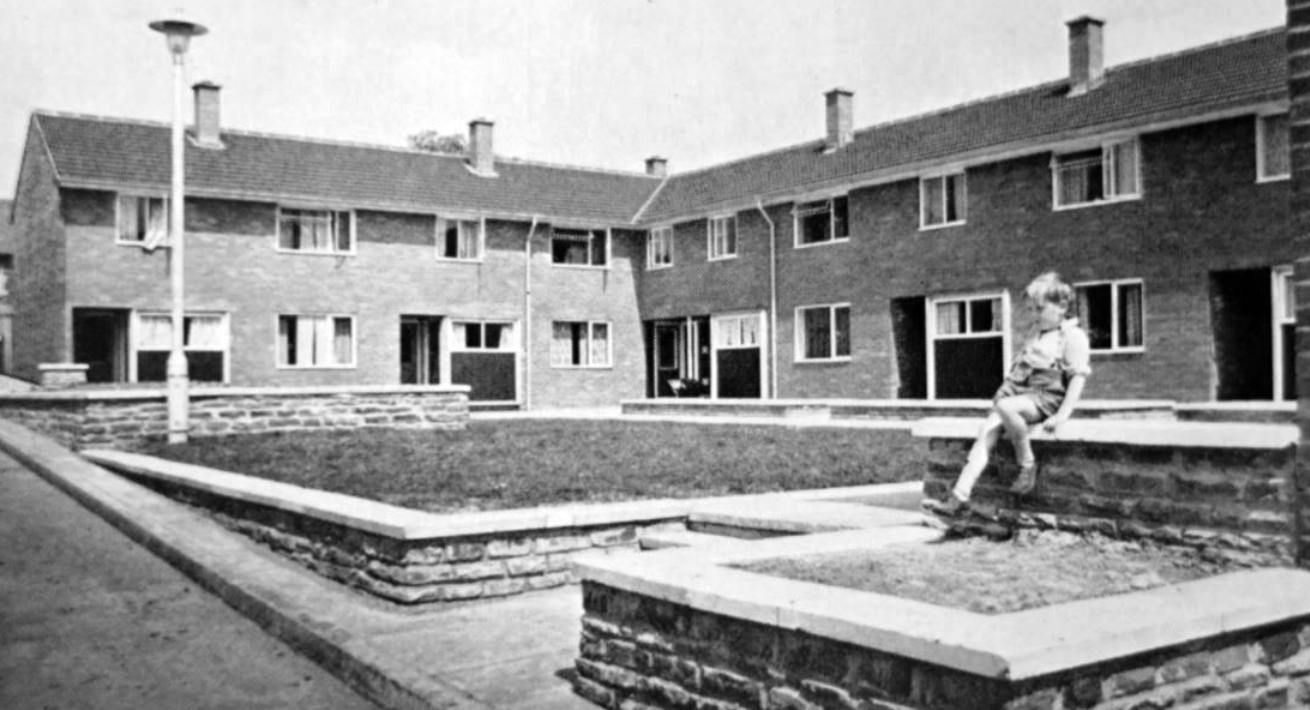
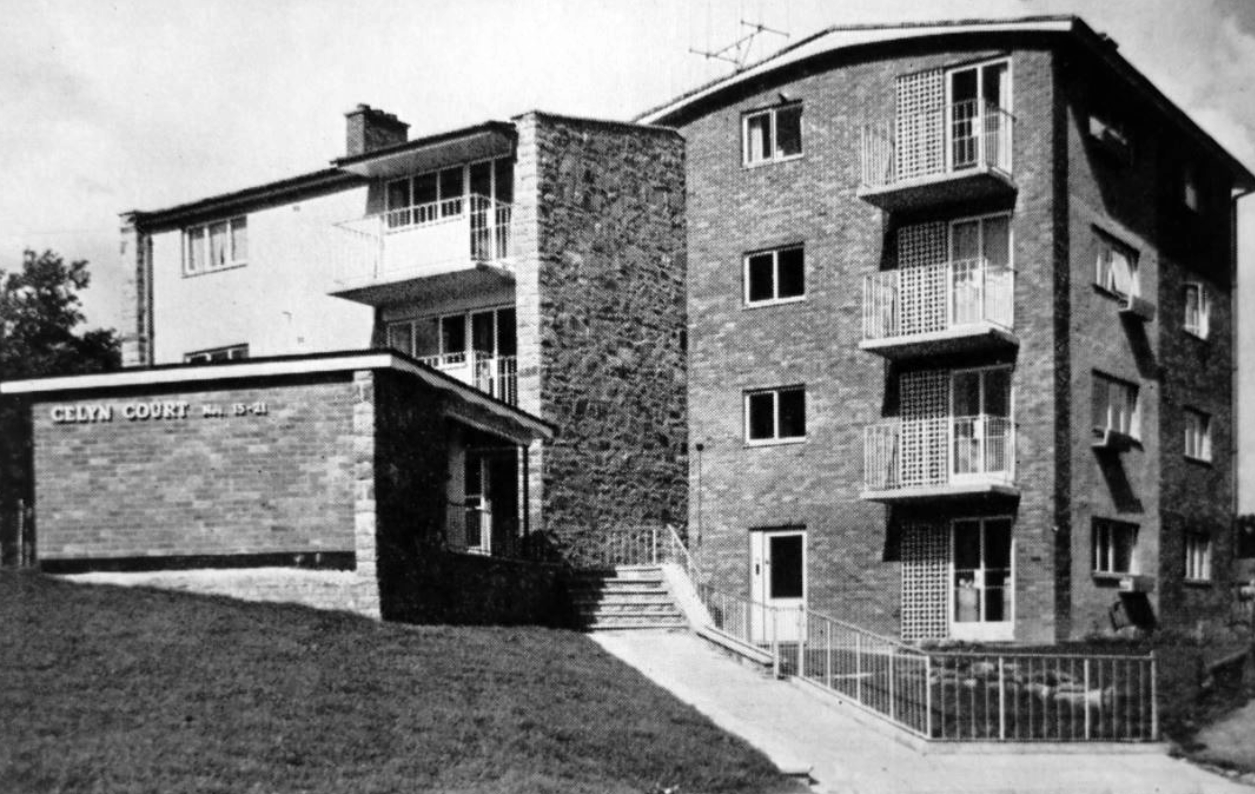
From Cleeve Barr’s Public Authority Housing – published in 1958.

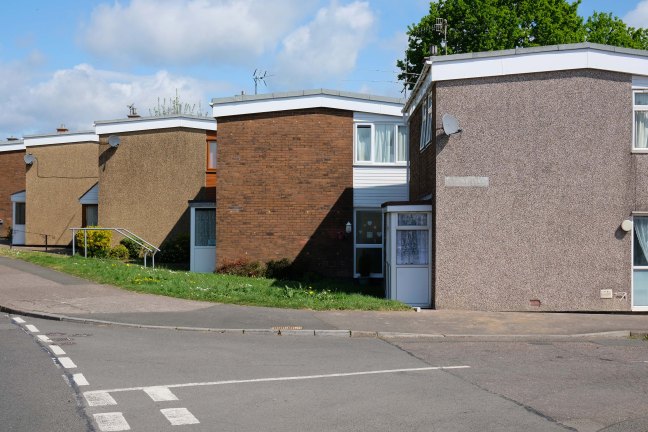
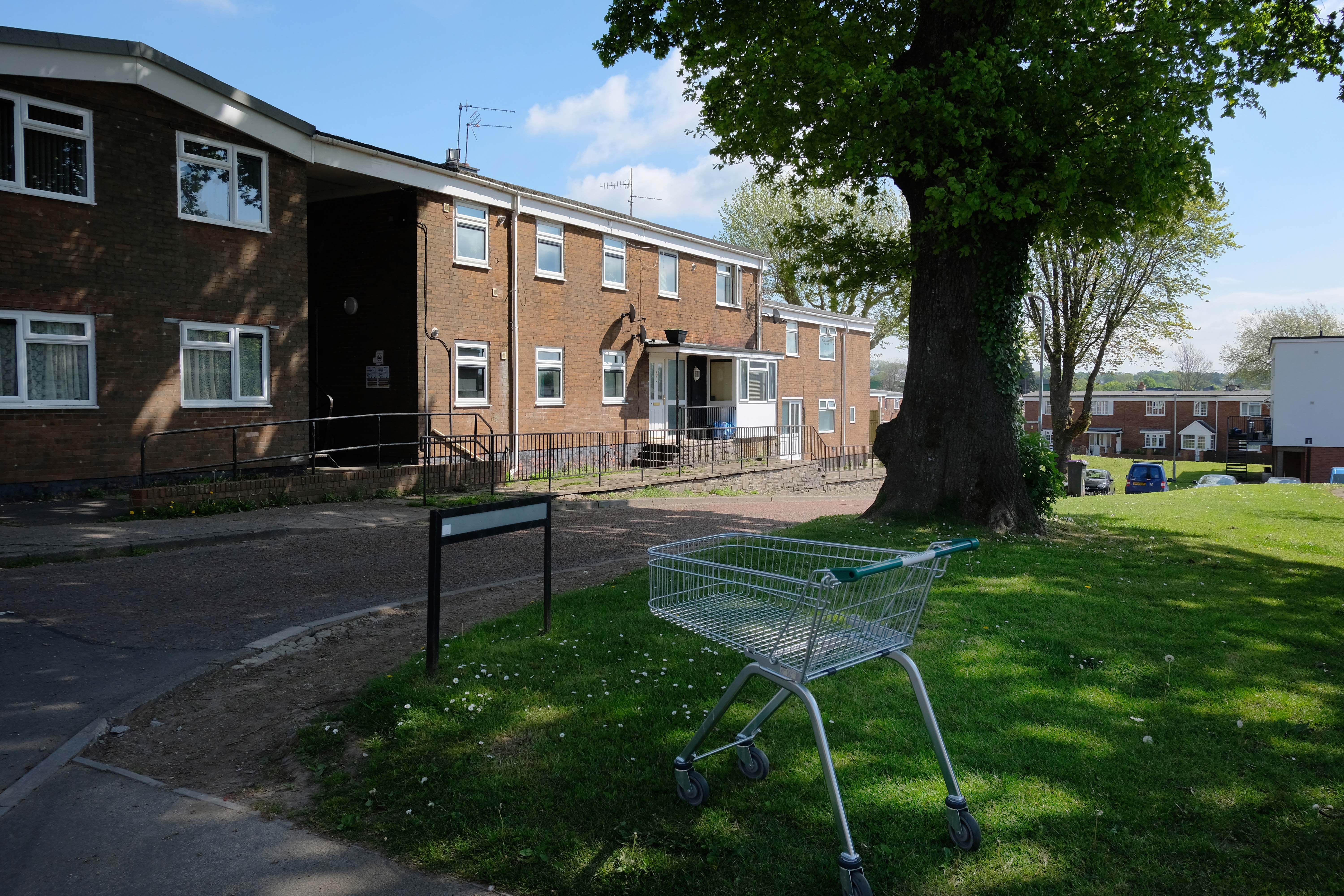
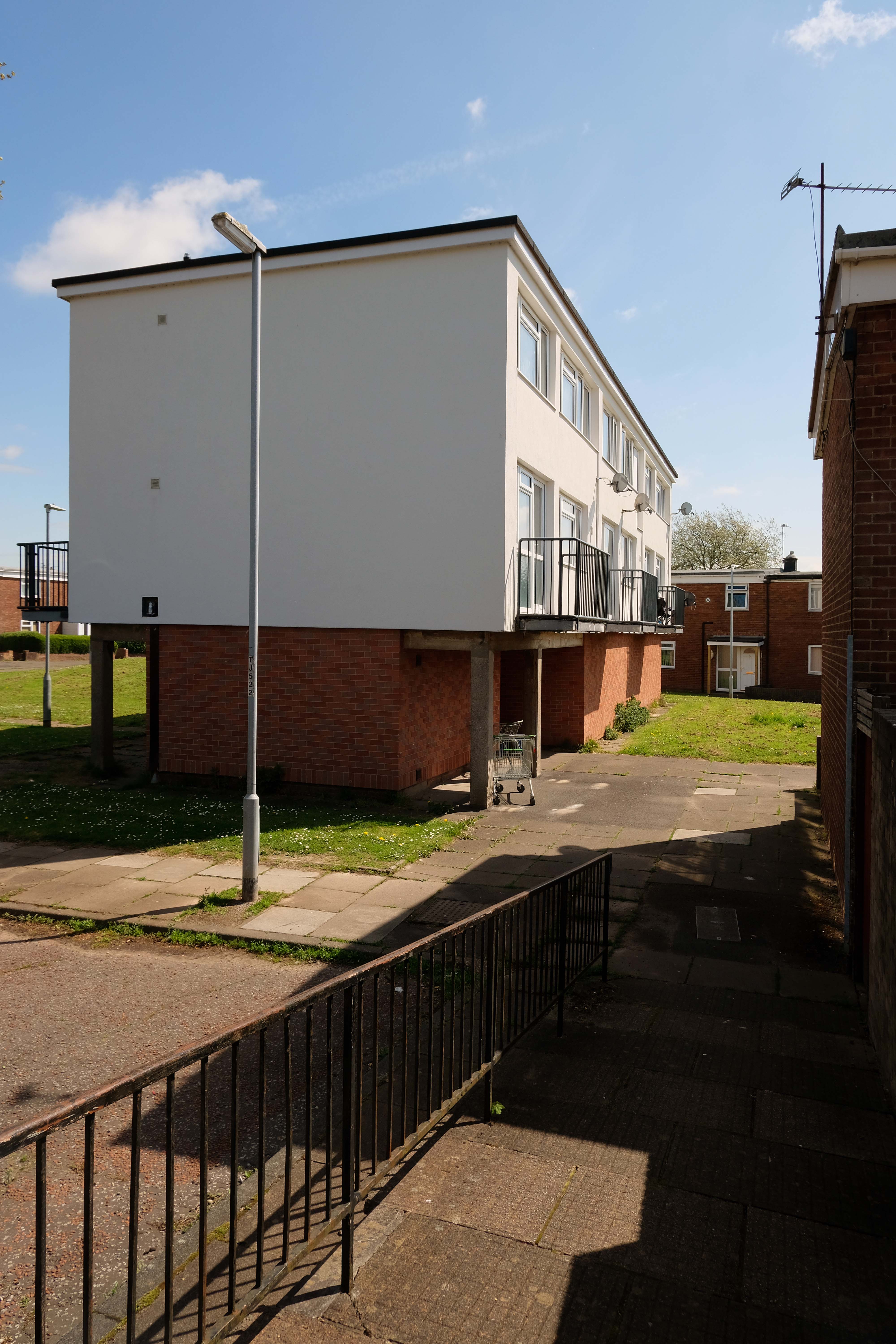
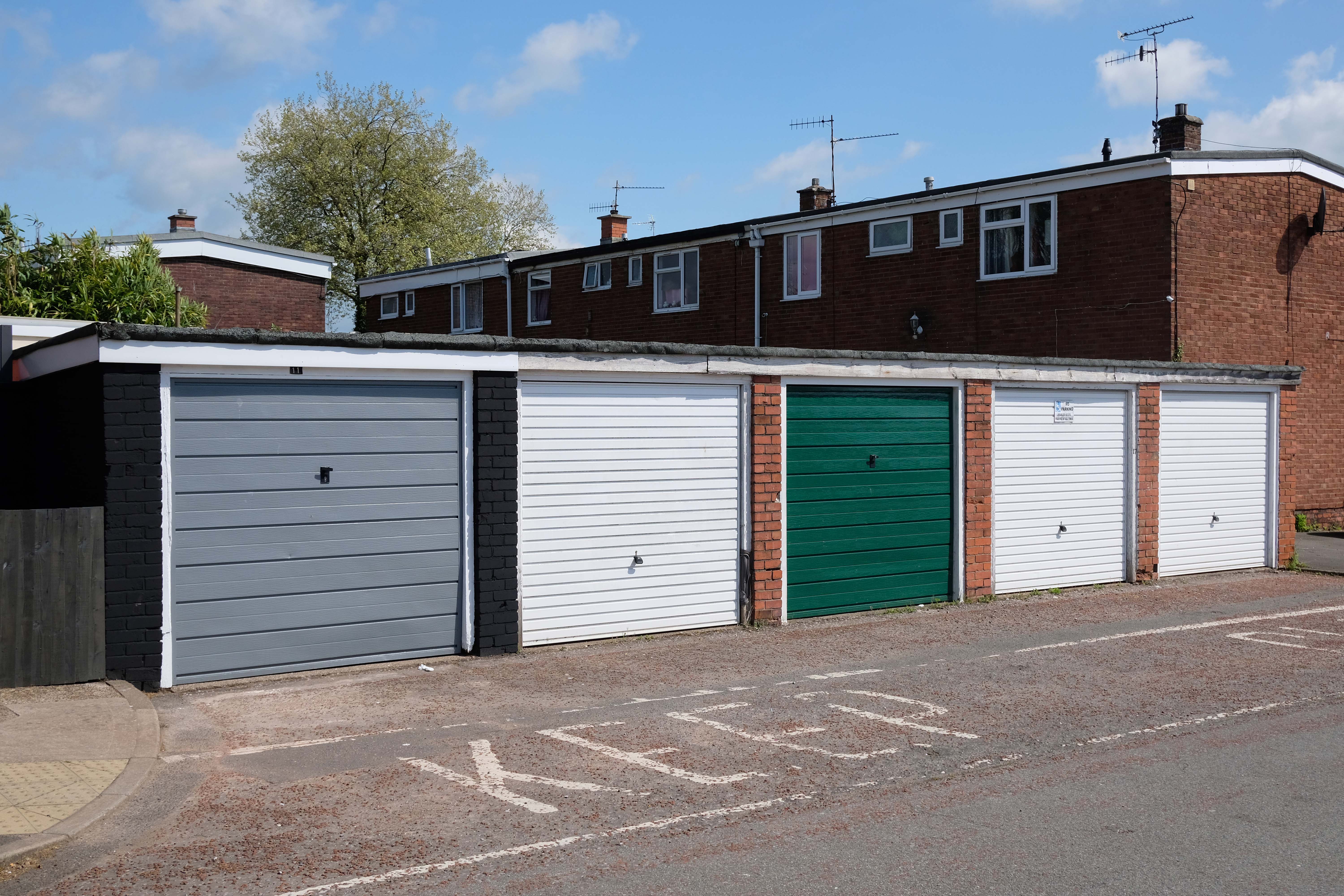
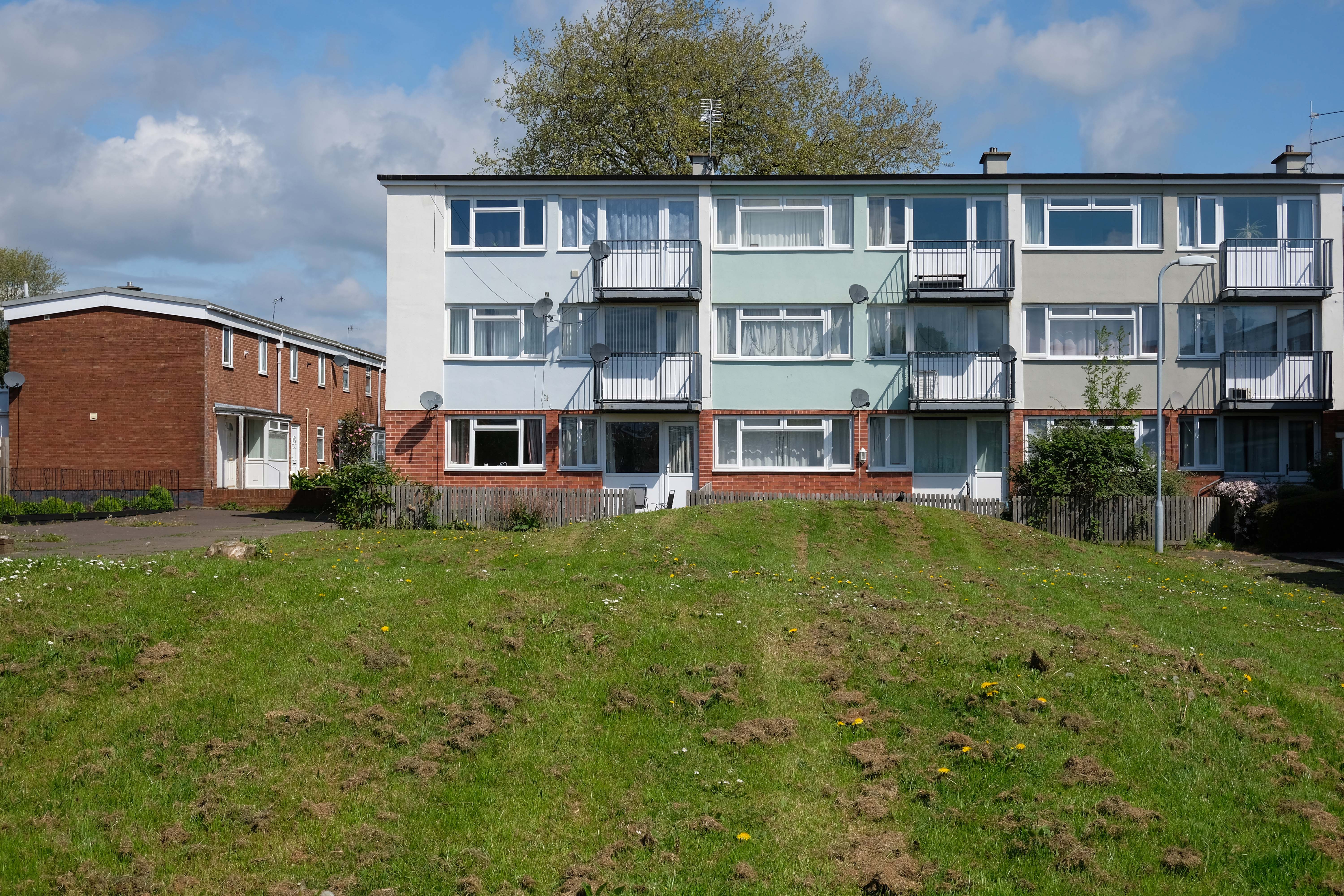
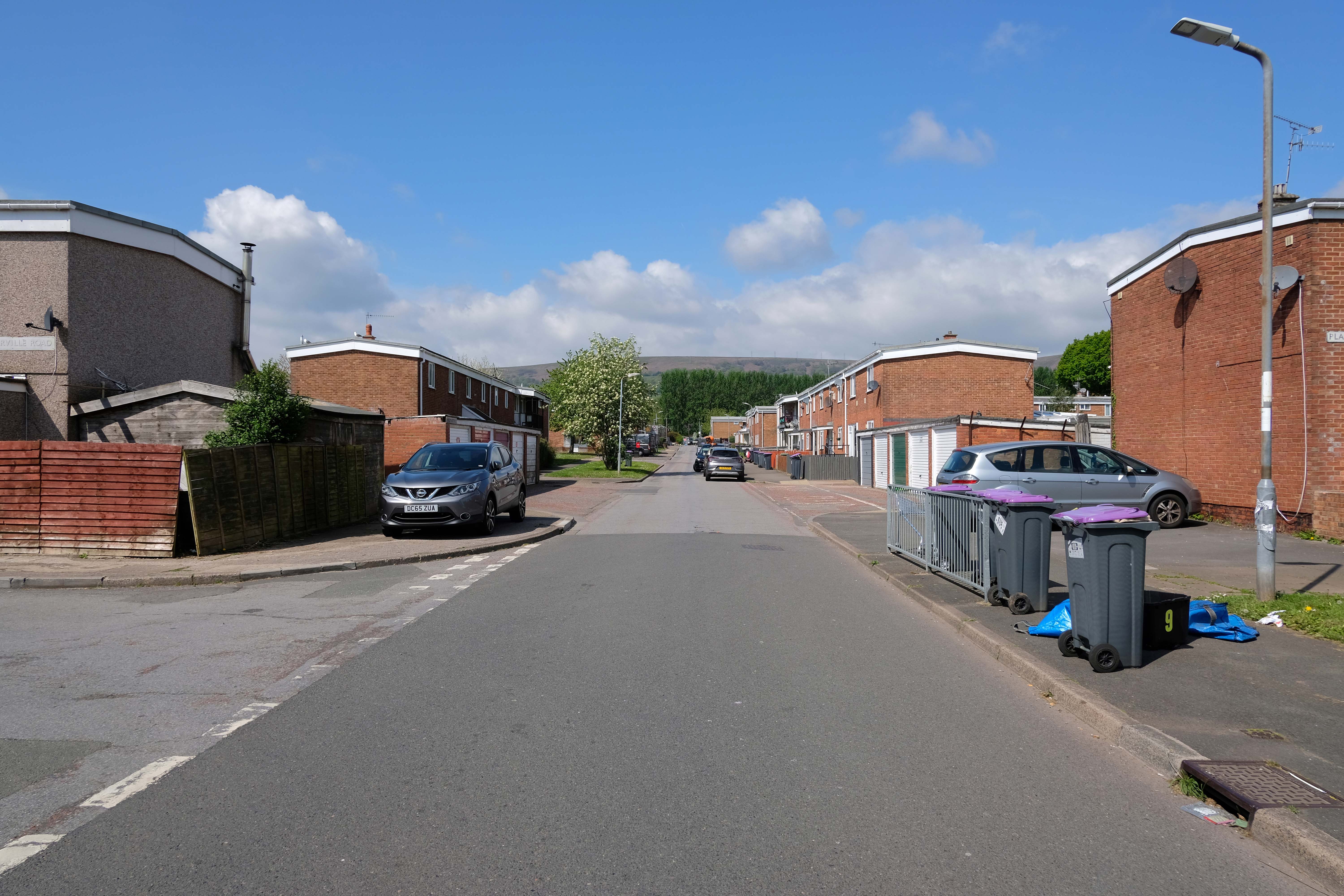
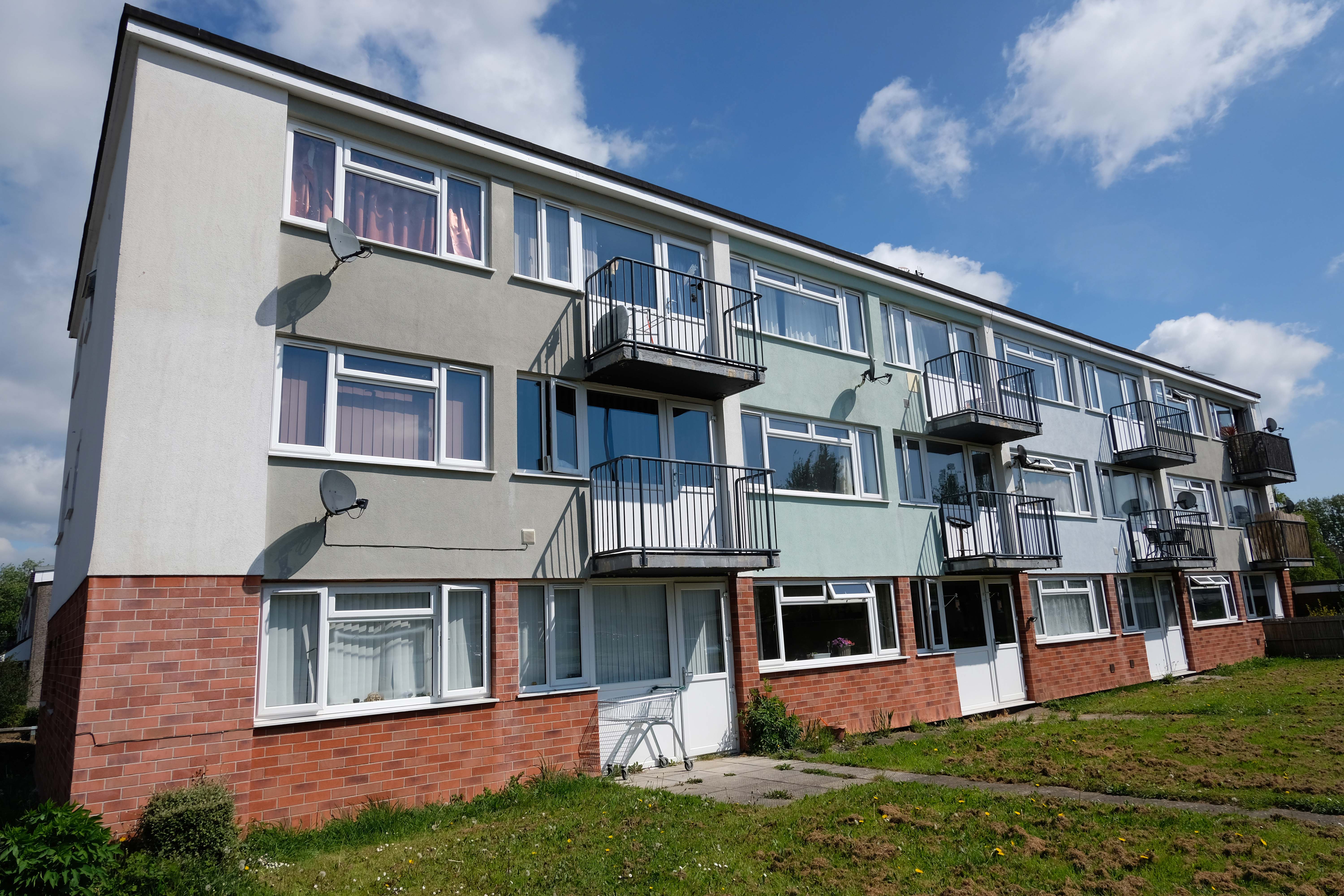
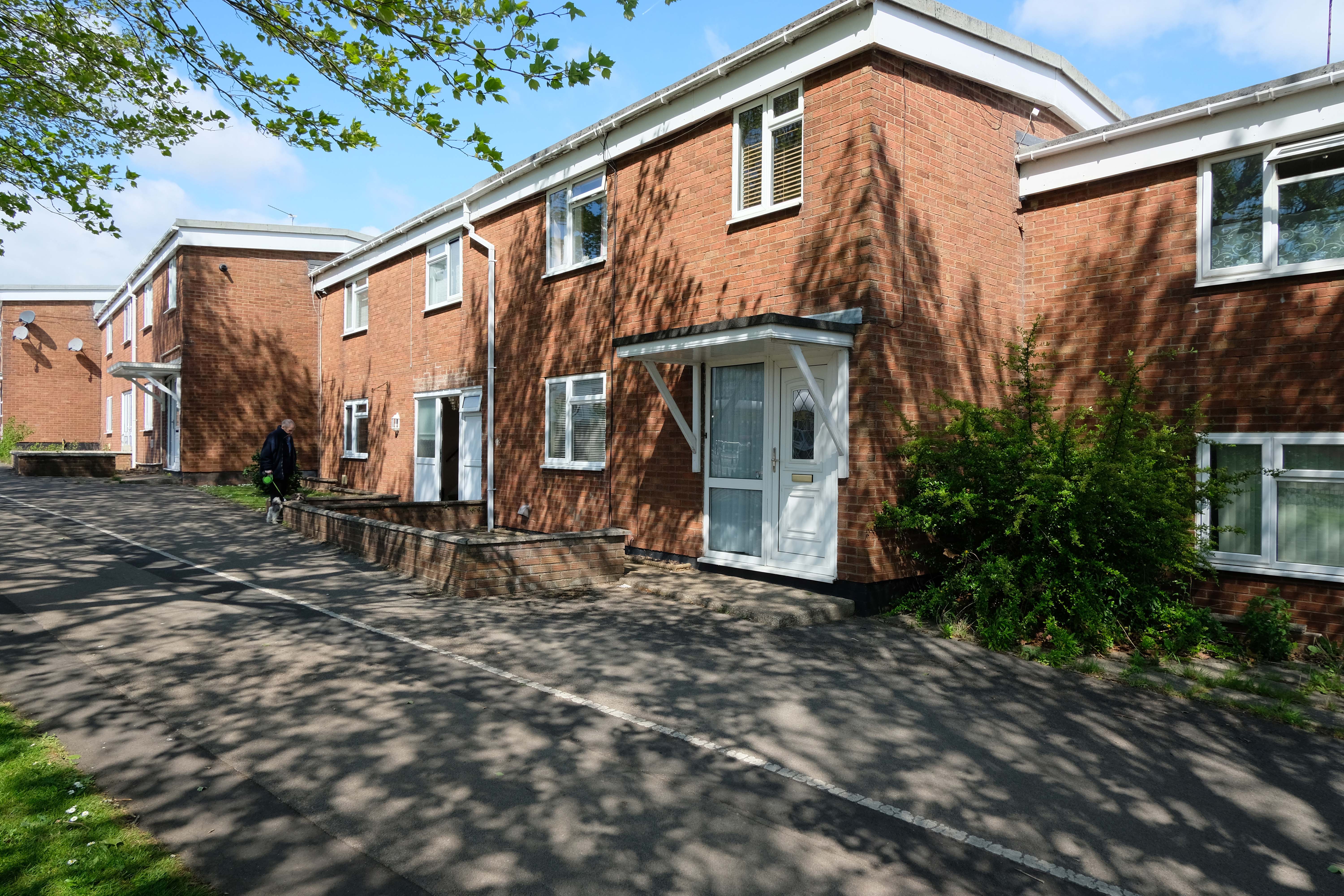
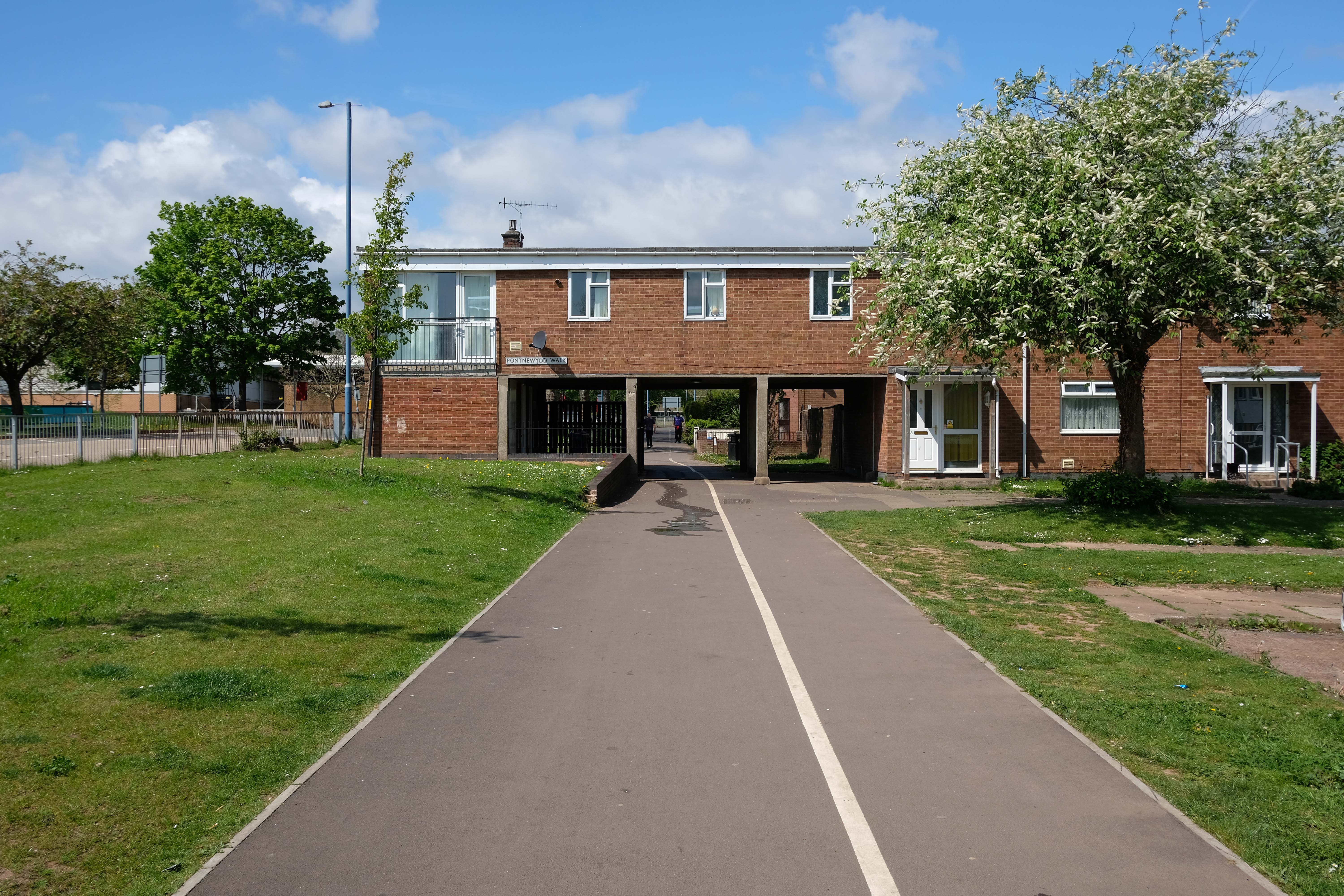
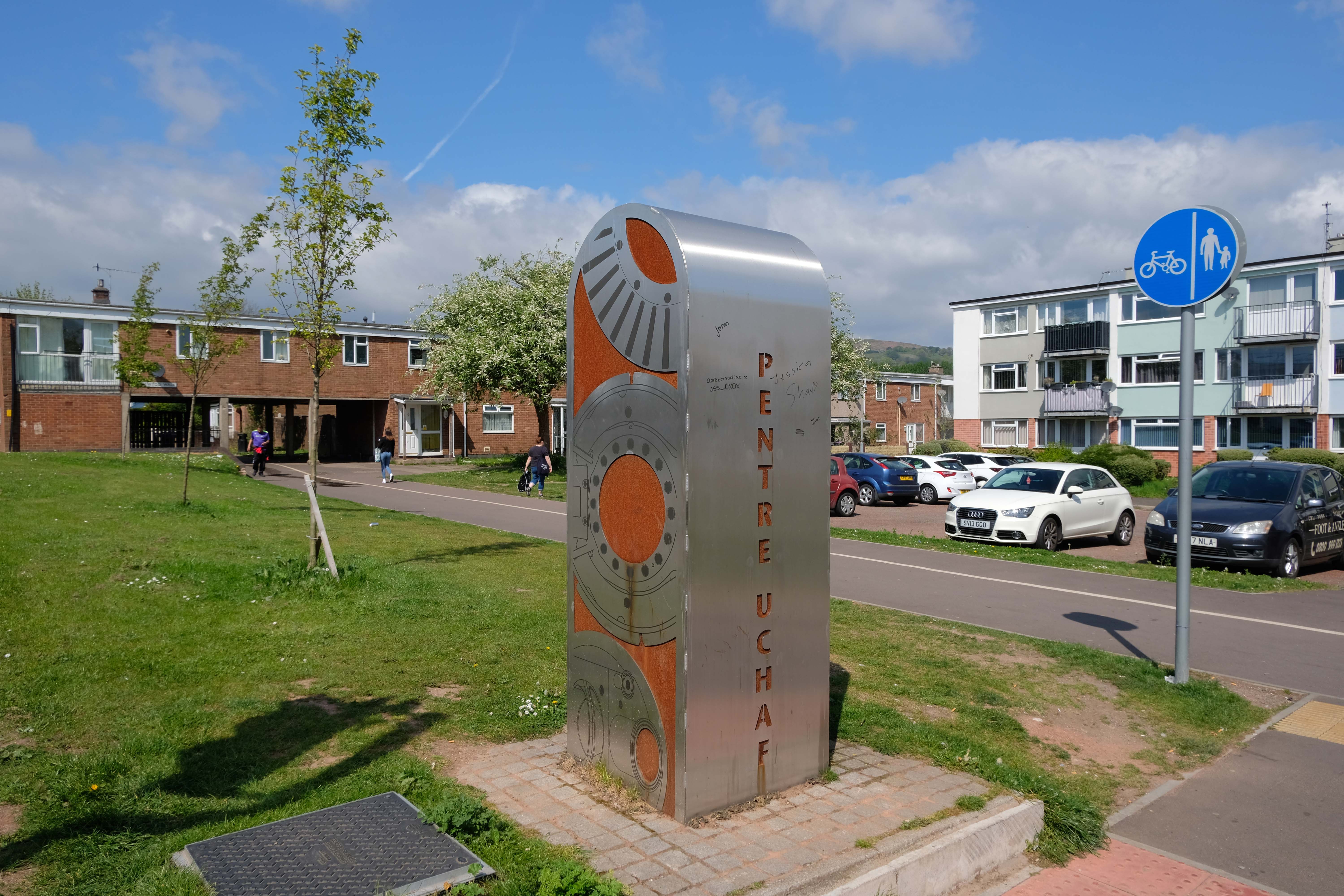
A mix of pedestrianised terraces and low rise blocks, set in a loose grid of roads and rolling, tree-lined, grassed areas.

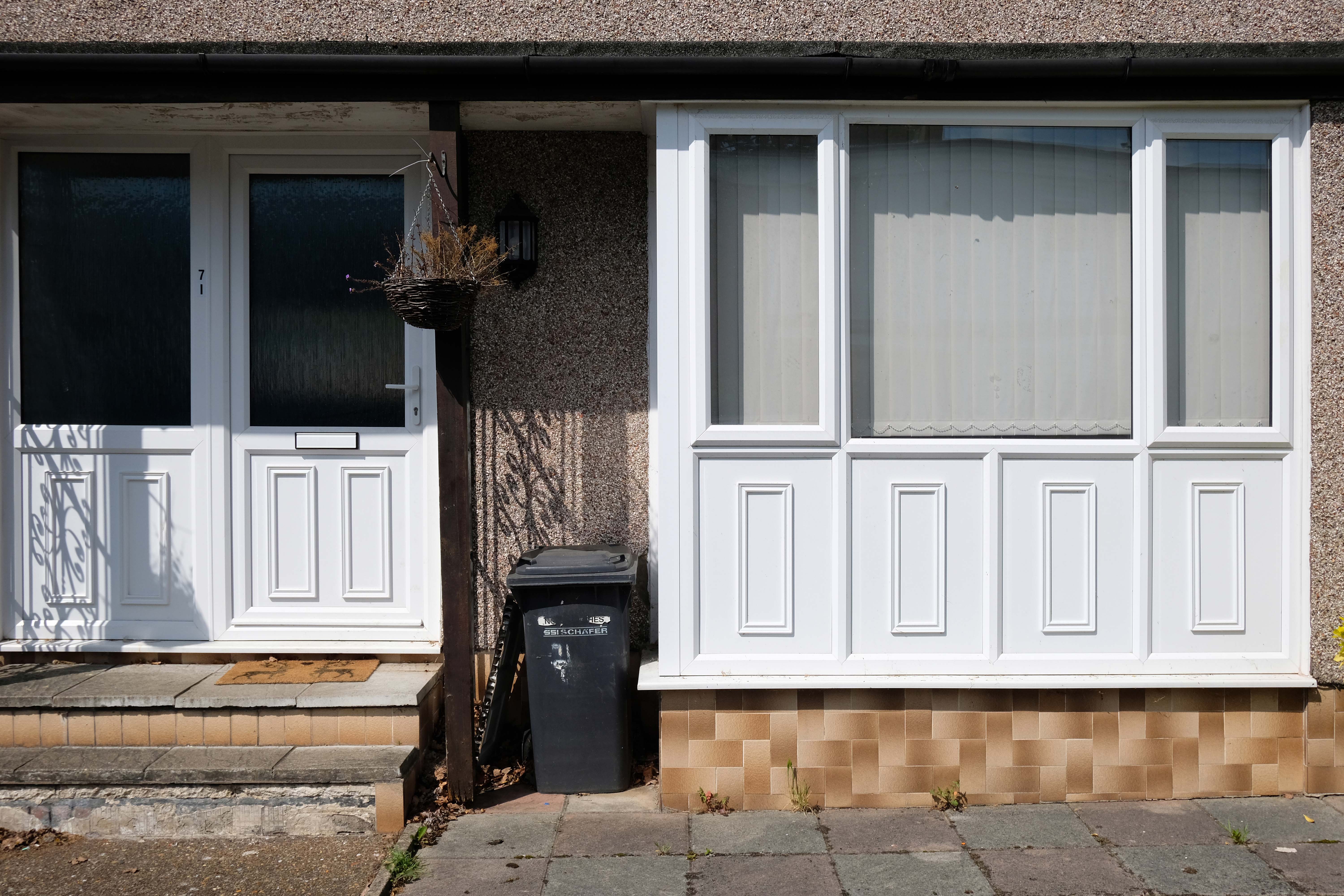
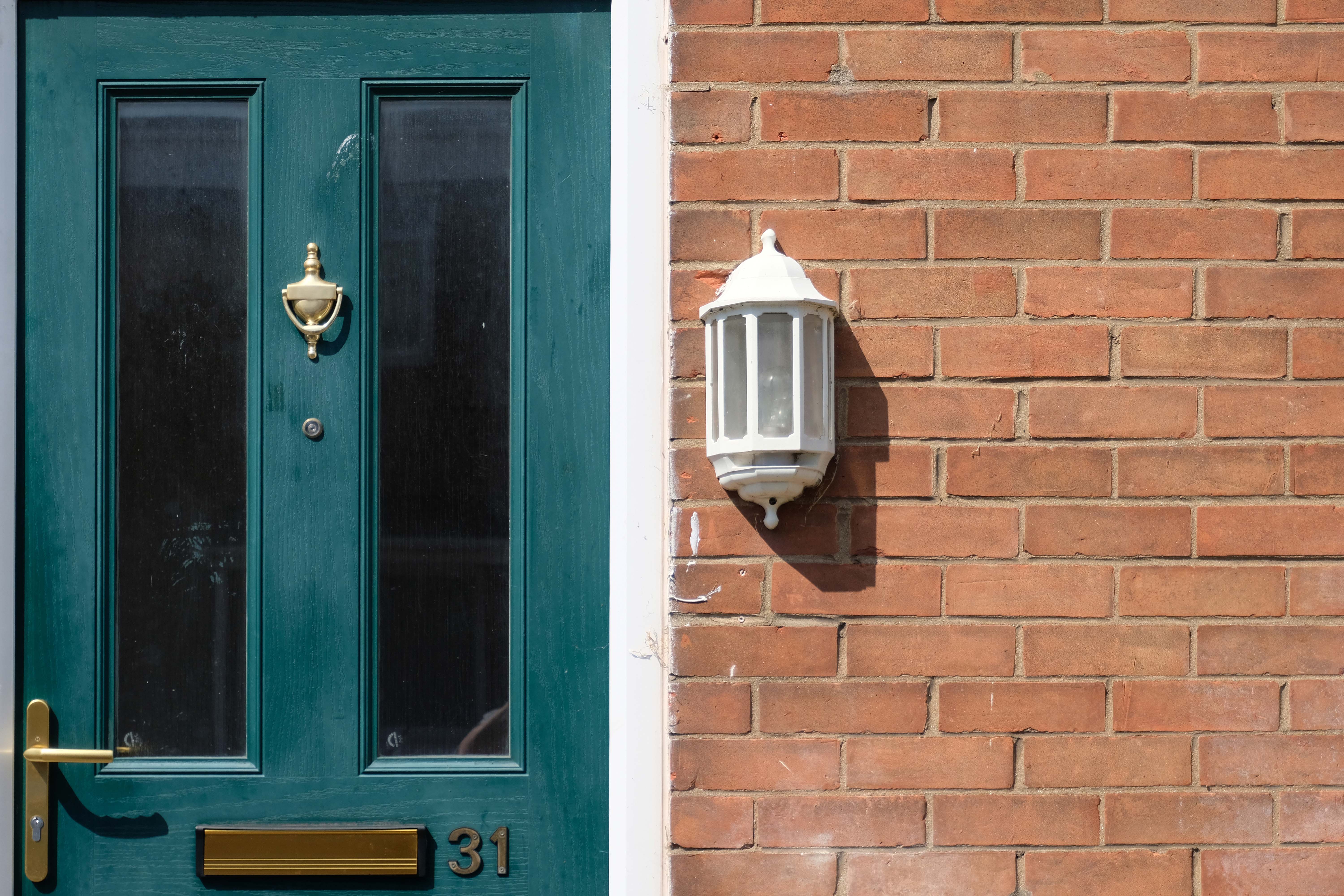
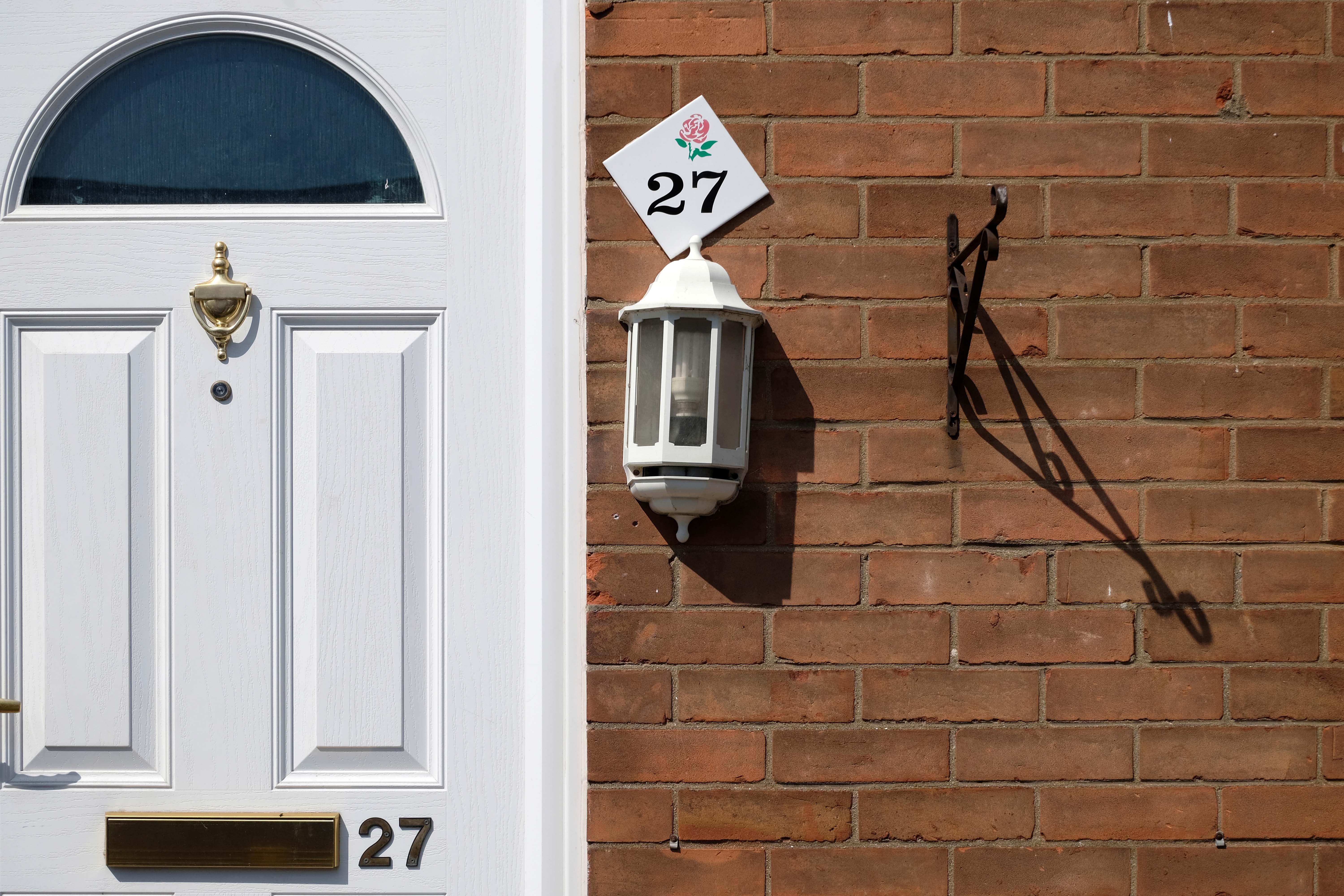
Over time there has been the addition of uPVC and the revisionist intrusion of the ahistorical carriage lamp.

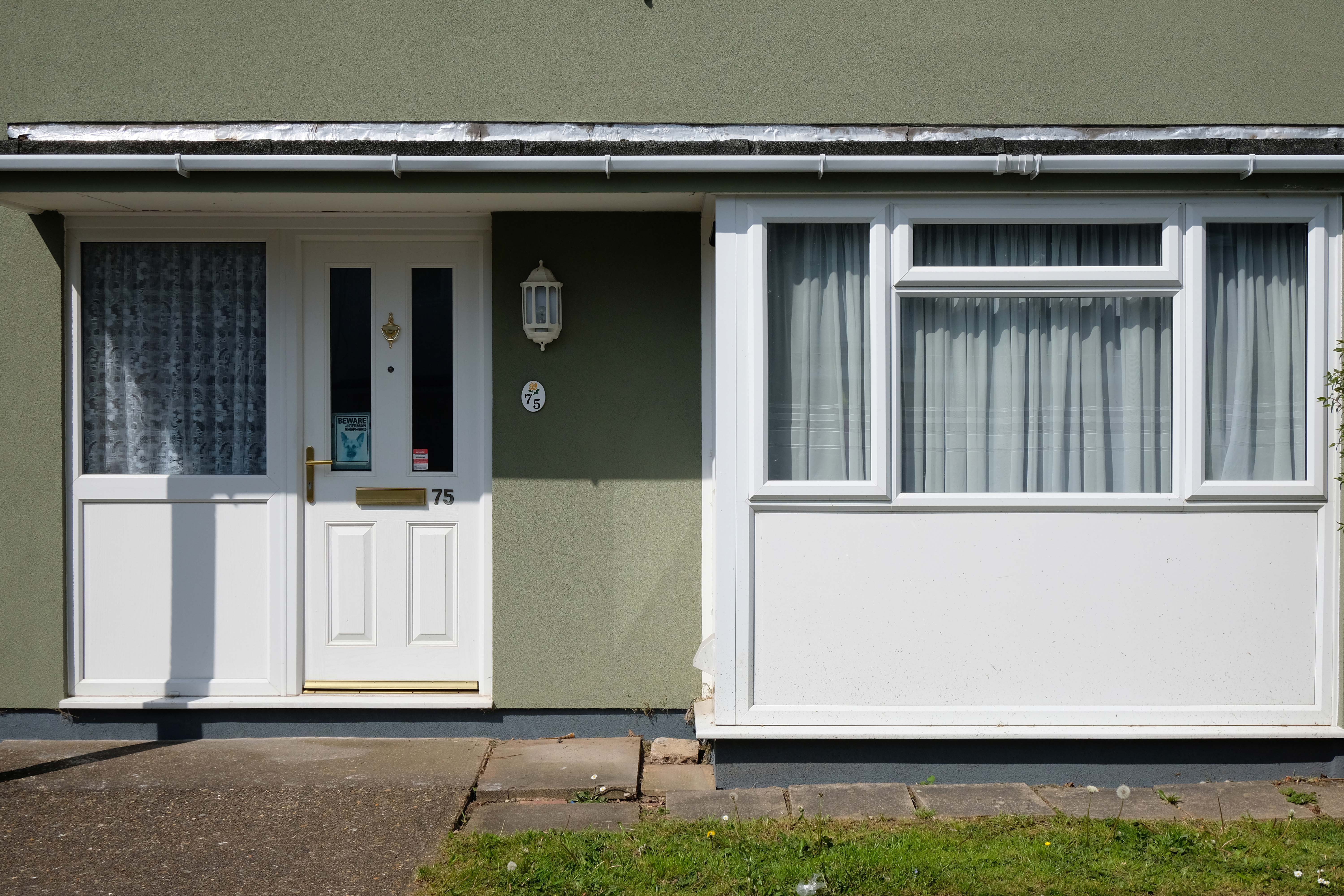
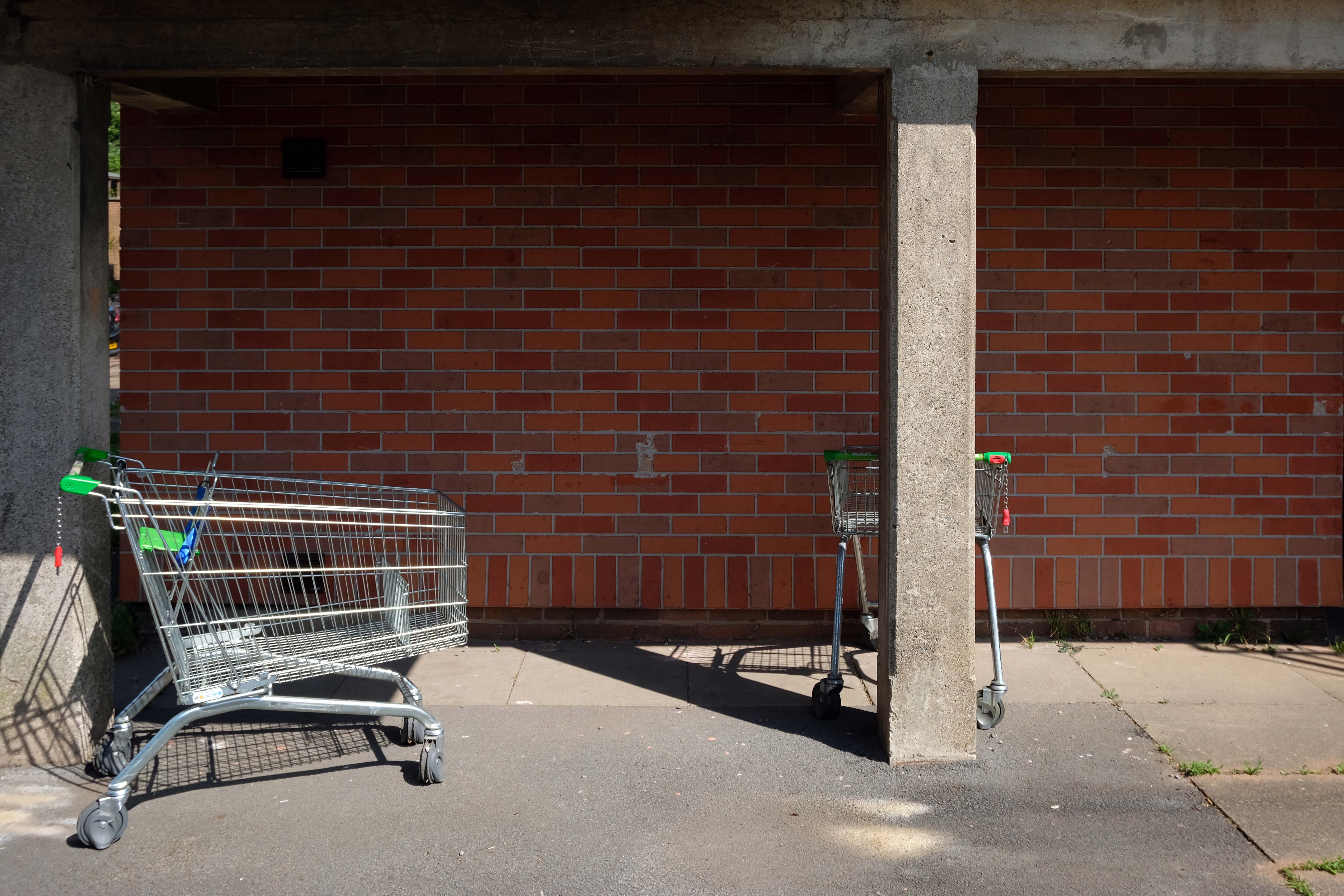
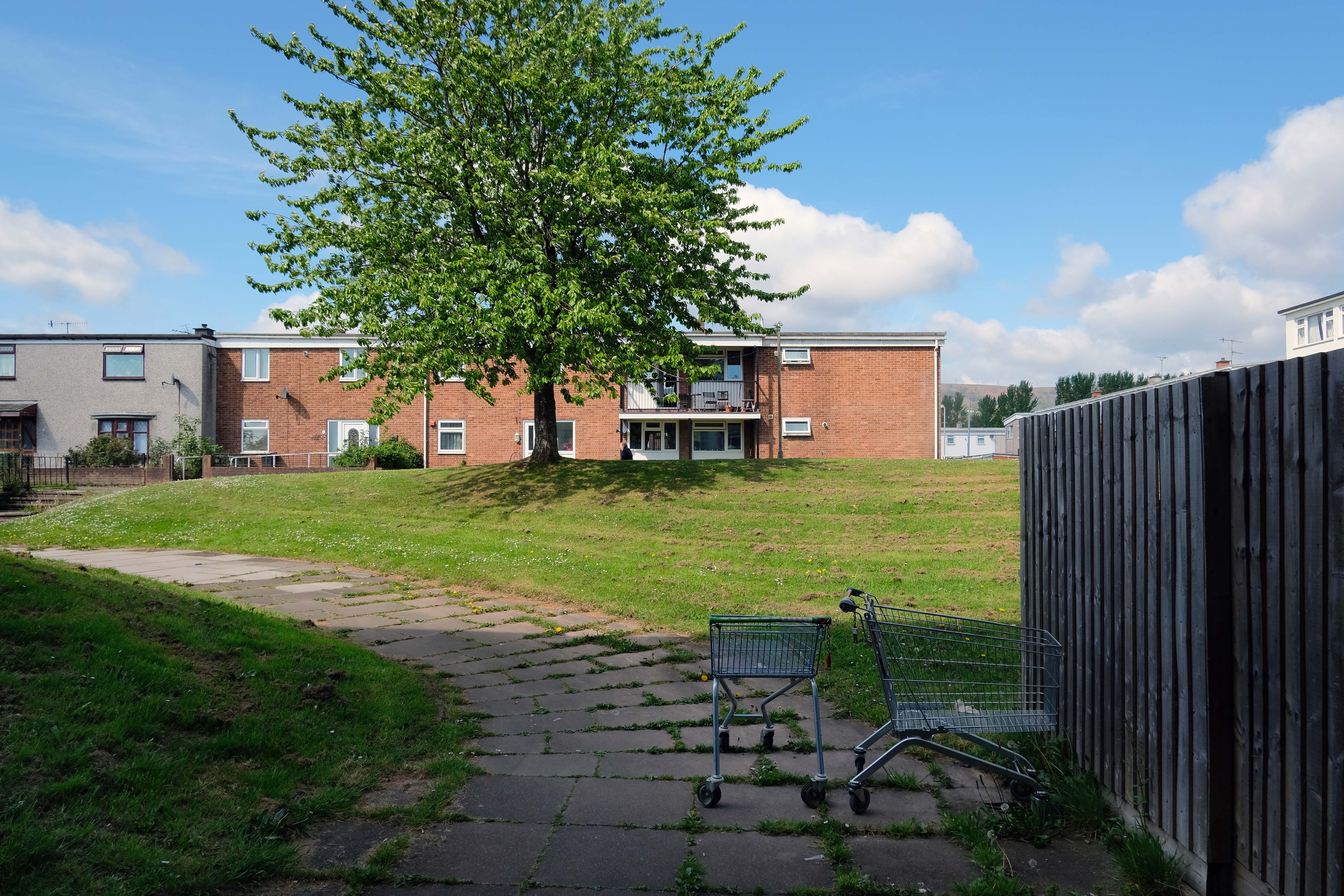
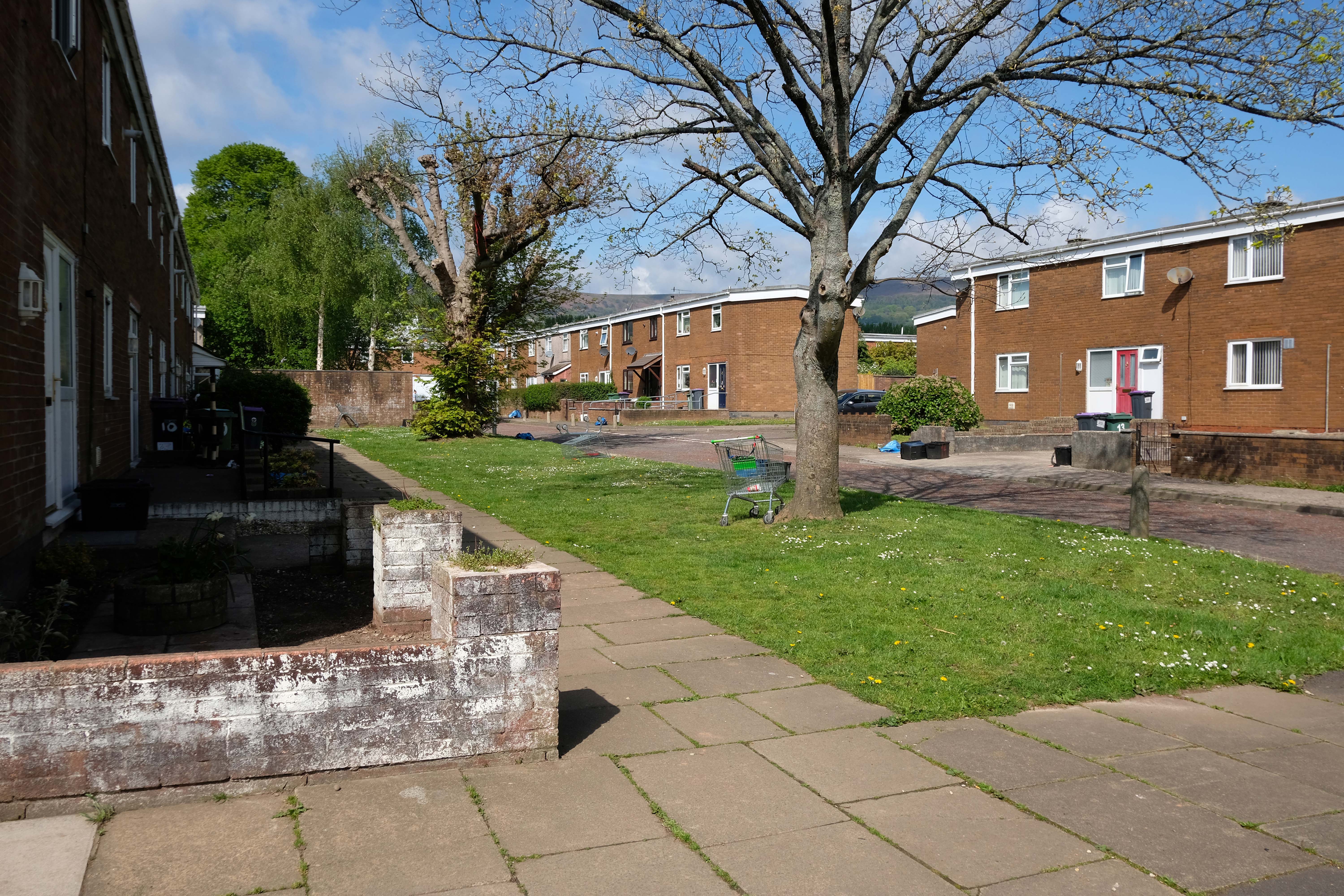
Incidentally an area with more al fresco shopping trolleys than I had ever seen, I assume that the big Asda, located within walking distance of the homes, to be the progenitor of such a notable proliferation.

It remains, generally speaking a well kept lived in area – let’s take a look.

St Jude’s RC – Wigan

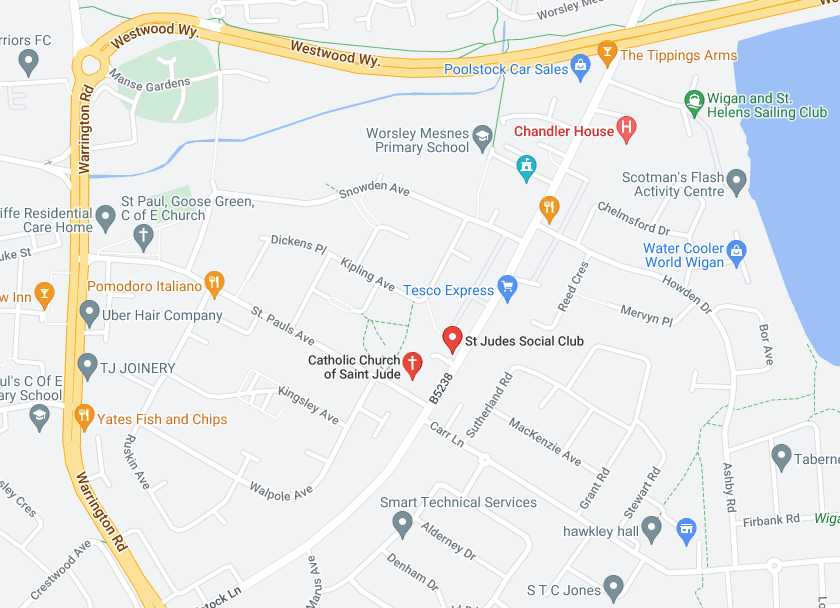
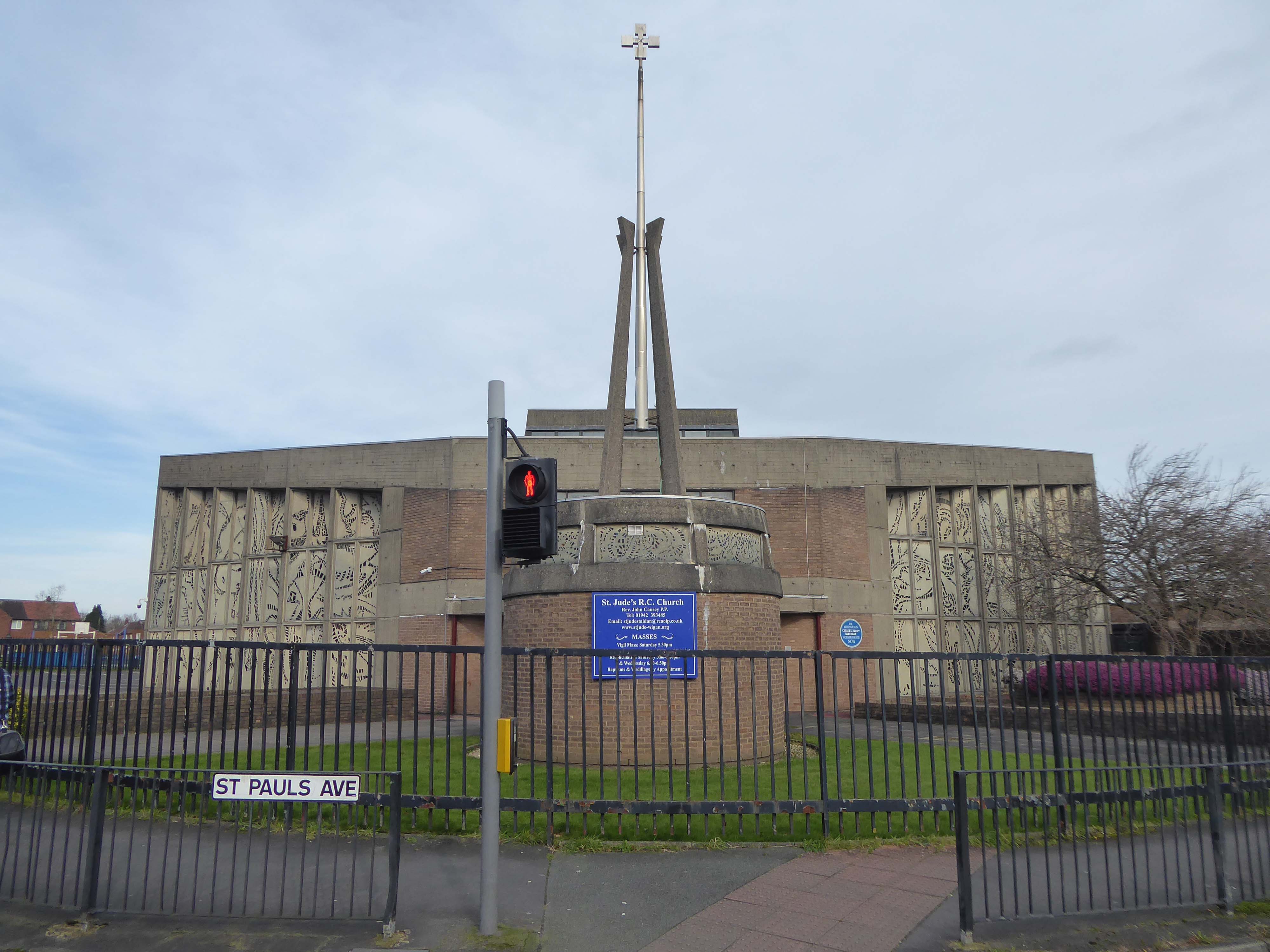
St. Jude’s Church Poolstock Lane/St Paul’s Avenue Wigan WN3 5JE

Following the demolition of many working class homes in central Wigan in the early-to-mid 20th century there was a migration to new council estates on the outskirts of the town including new developments in the Poolstock and Worsley Mesnes localities. In order to cater to the Catholic inhabitants of the new estates Father Richard Tobin of St Joseph’s parish in Wigan, established a chapel of ease – described as a wooden hut, on St Paul’s Avenue in 1959.

In 1962 Tobin wrote to the Archbishop of Liverpool George Andrew Beck with his proposals for a new, permanent church, suggesting that the church should be dedicated either to St Jude or Our Lady of the Assumption.

Beck replied on 15 March:

My dear Father Tobin, Many thanks for your letter. I like your suggestion of St. Jude as a patron of the new church. We already have a parish in honour of The Assumption but none, so far as I know, to St. Jude. I assume that you do not intend to suggest by this title that Wigan is a hopeless case!

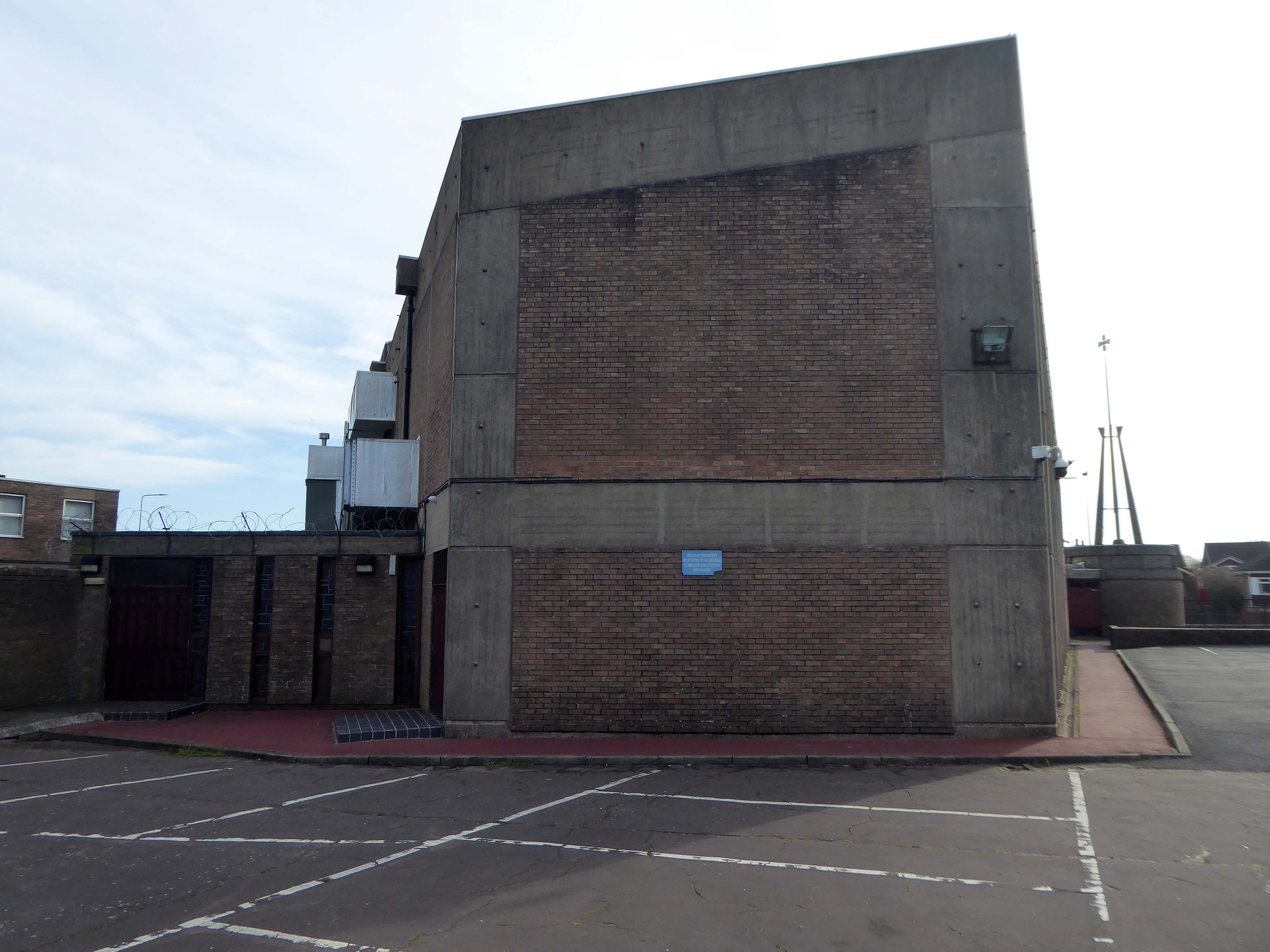
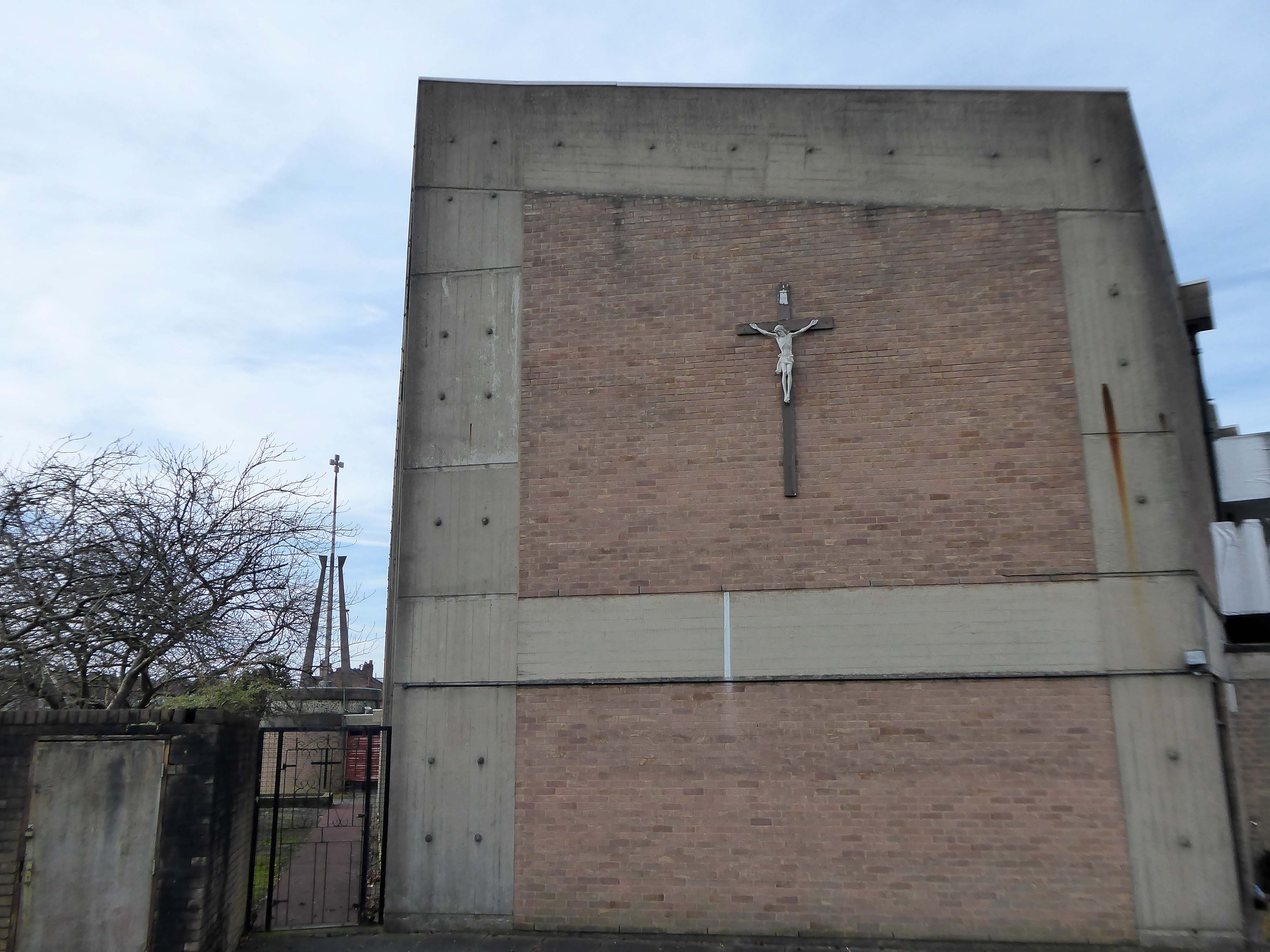
The Liverpool architects L A G Prichard & Sons were engaged and work began in the summer of 1963. Subsidence caused by coal mining in the area necessitated reinforced foundations and the final cost was over £100,000. The foundation stone was laid by Archbishop Beck in December 1964 and the church was opened for worship in July 1965.

Wikipedia

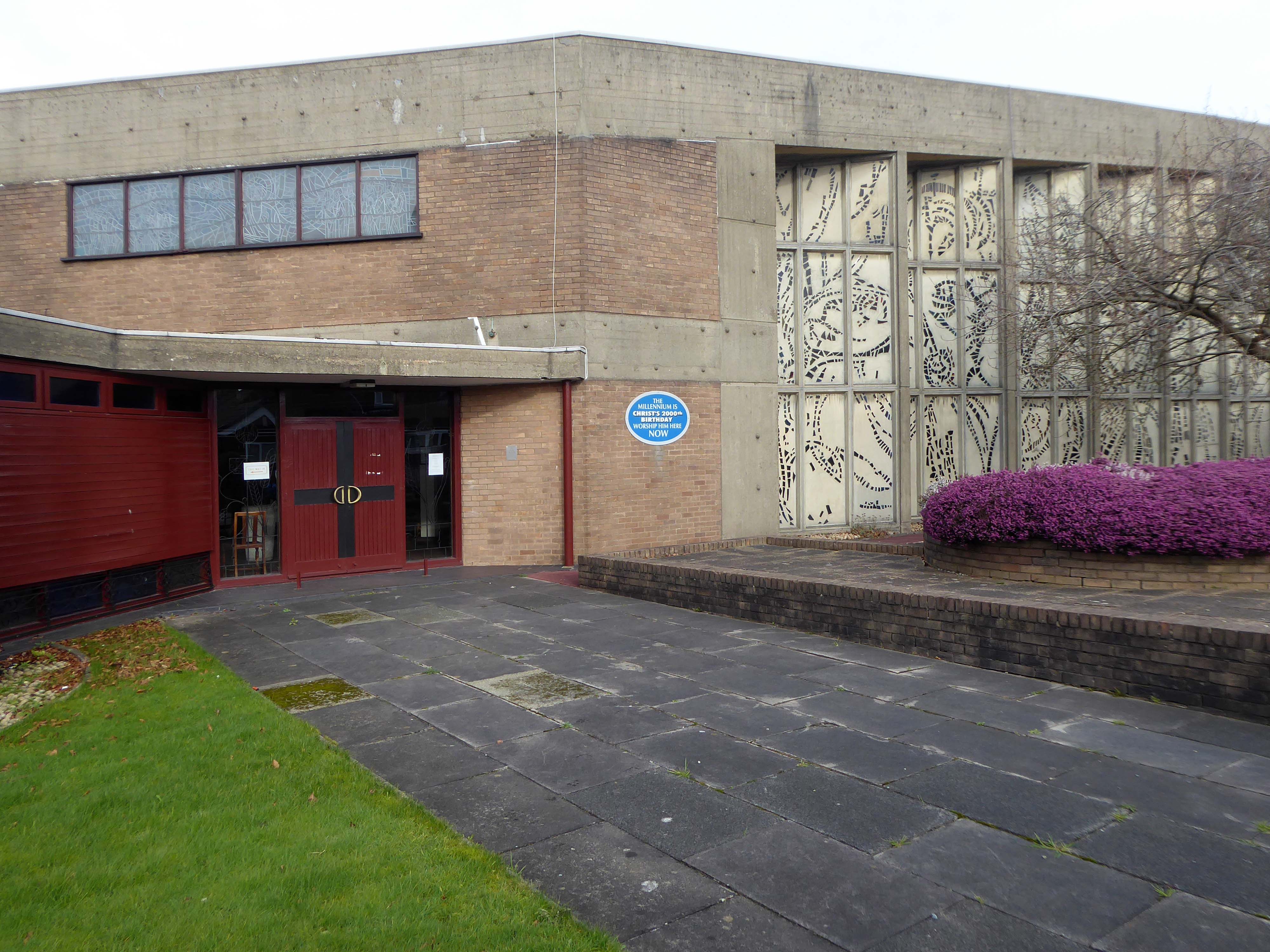
The church was Grade II listed on 26th April 2013

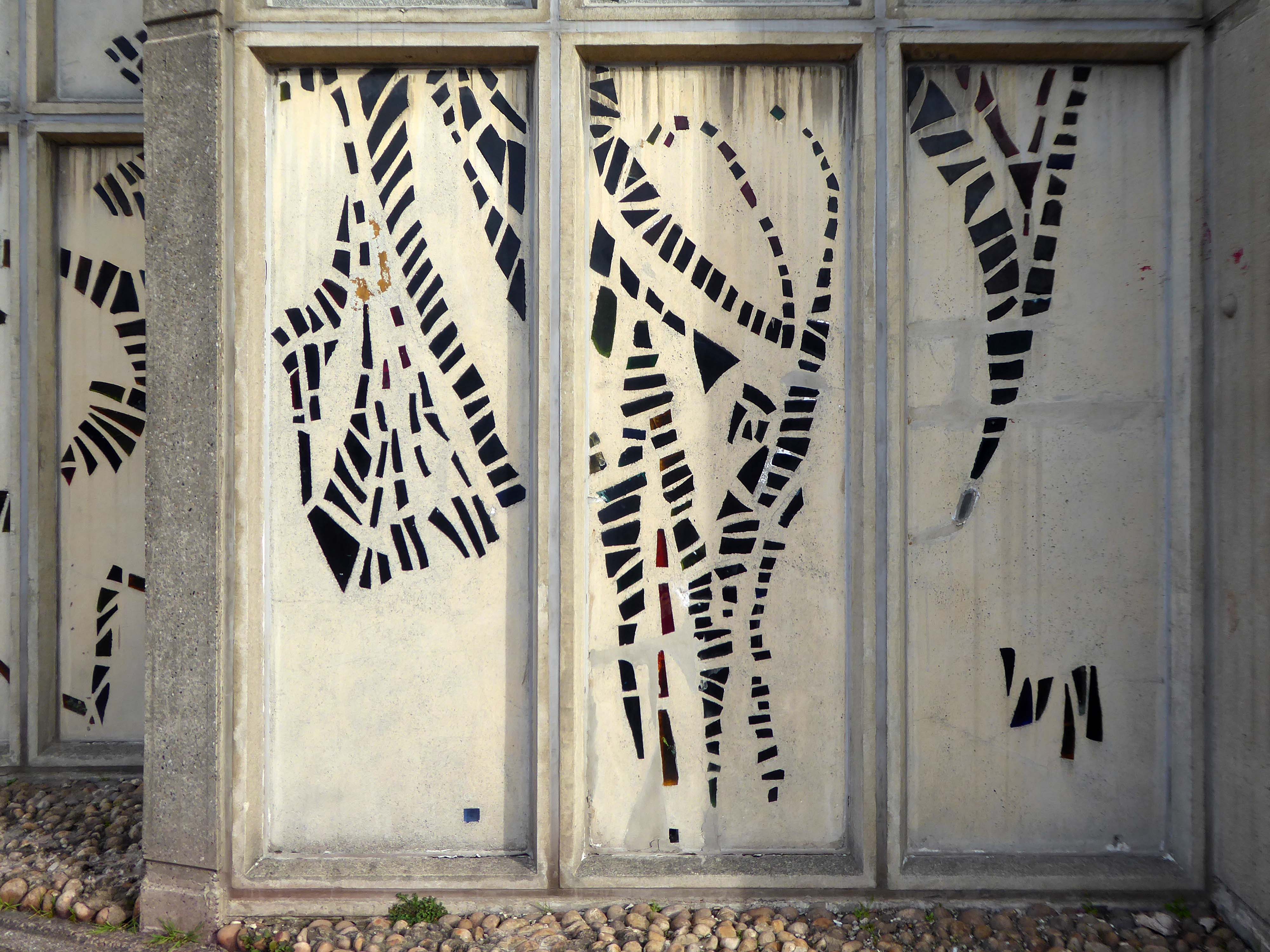
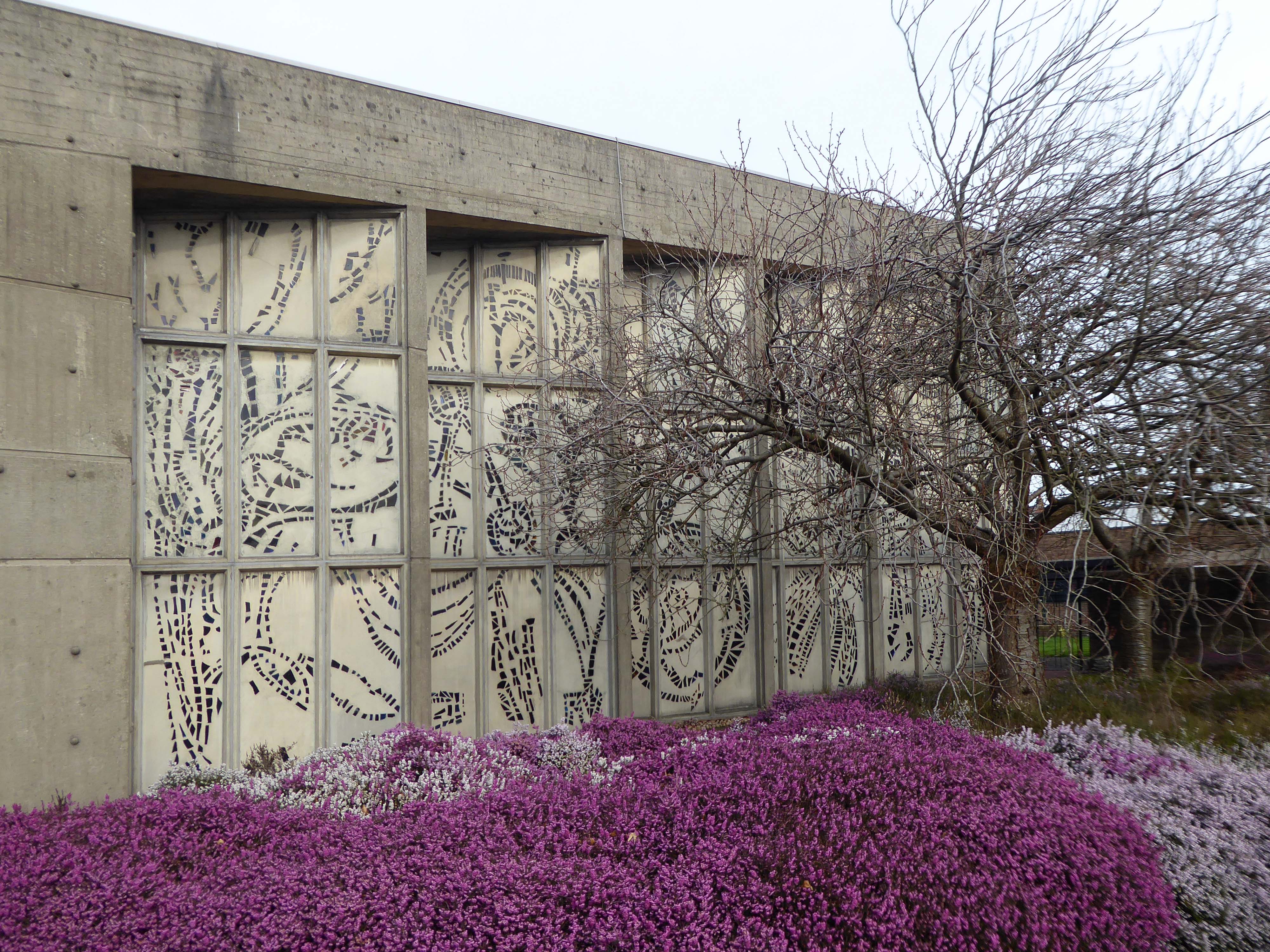
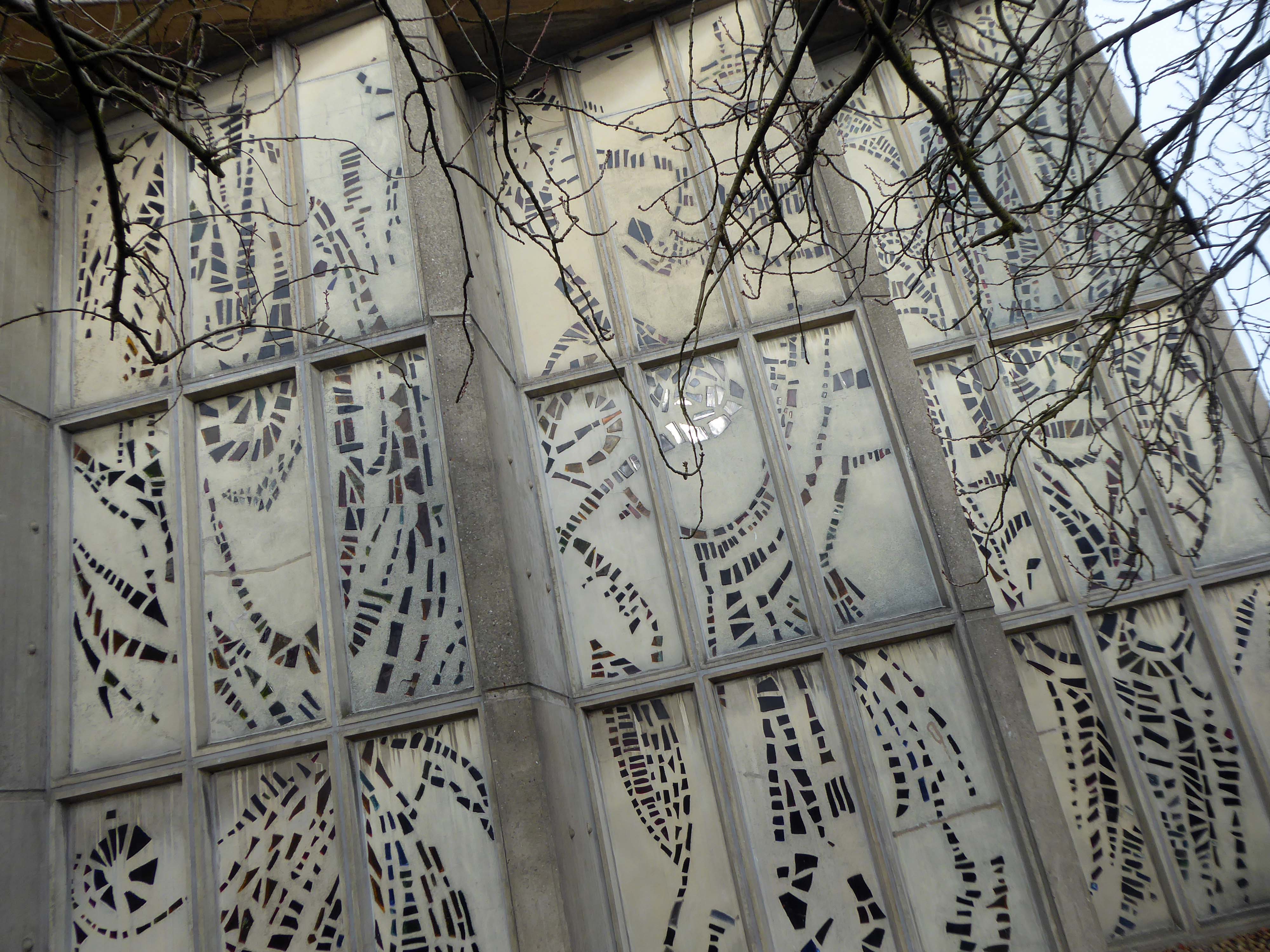
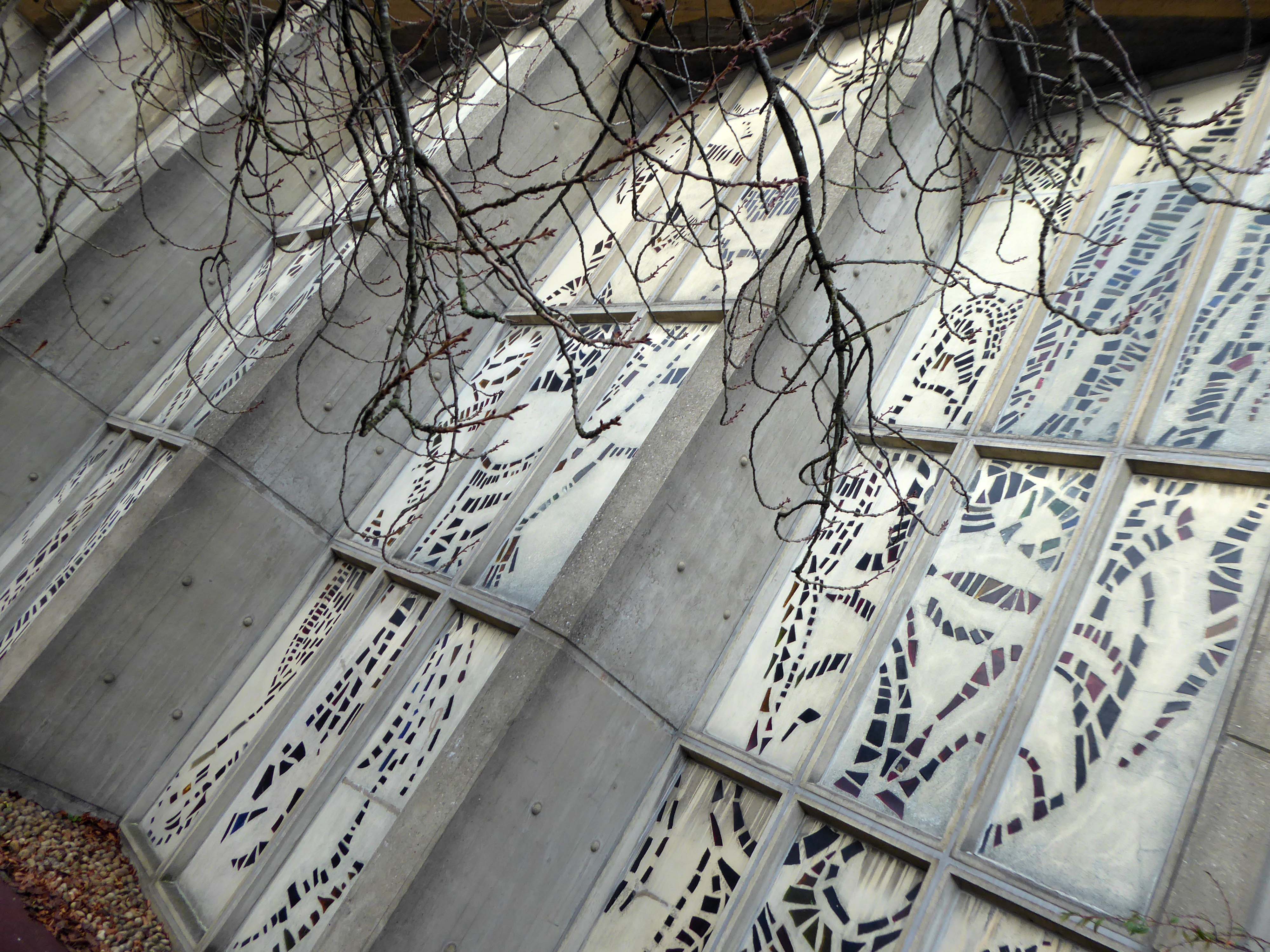
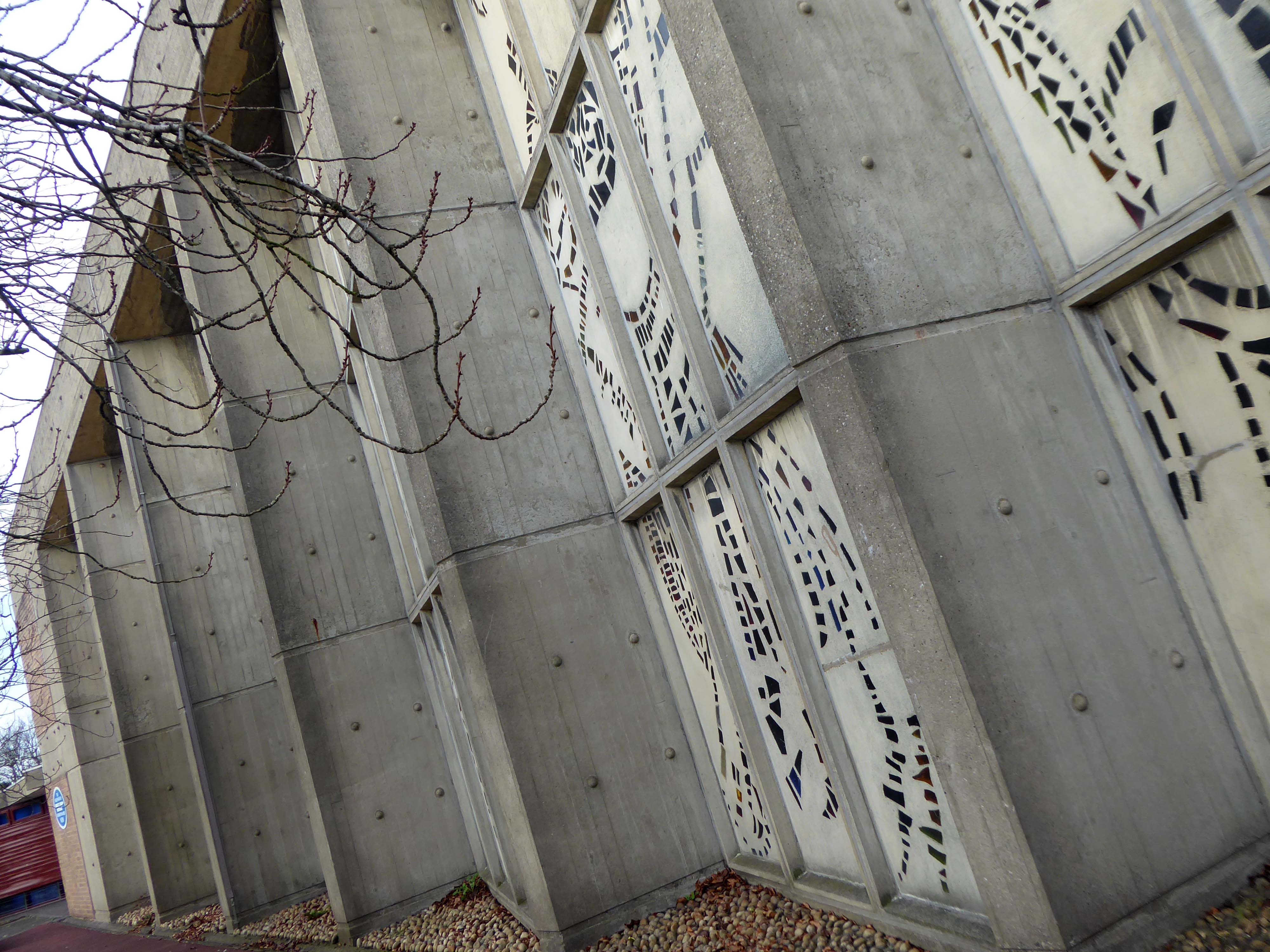
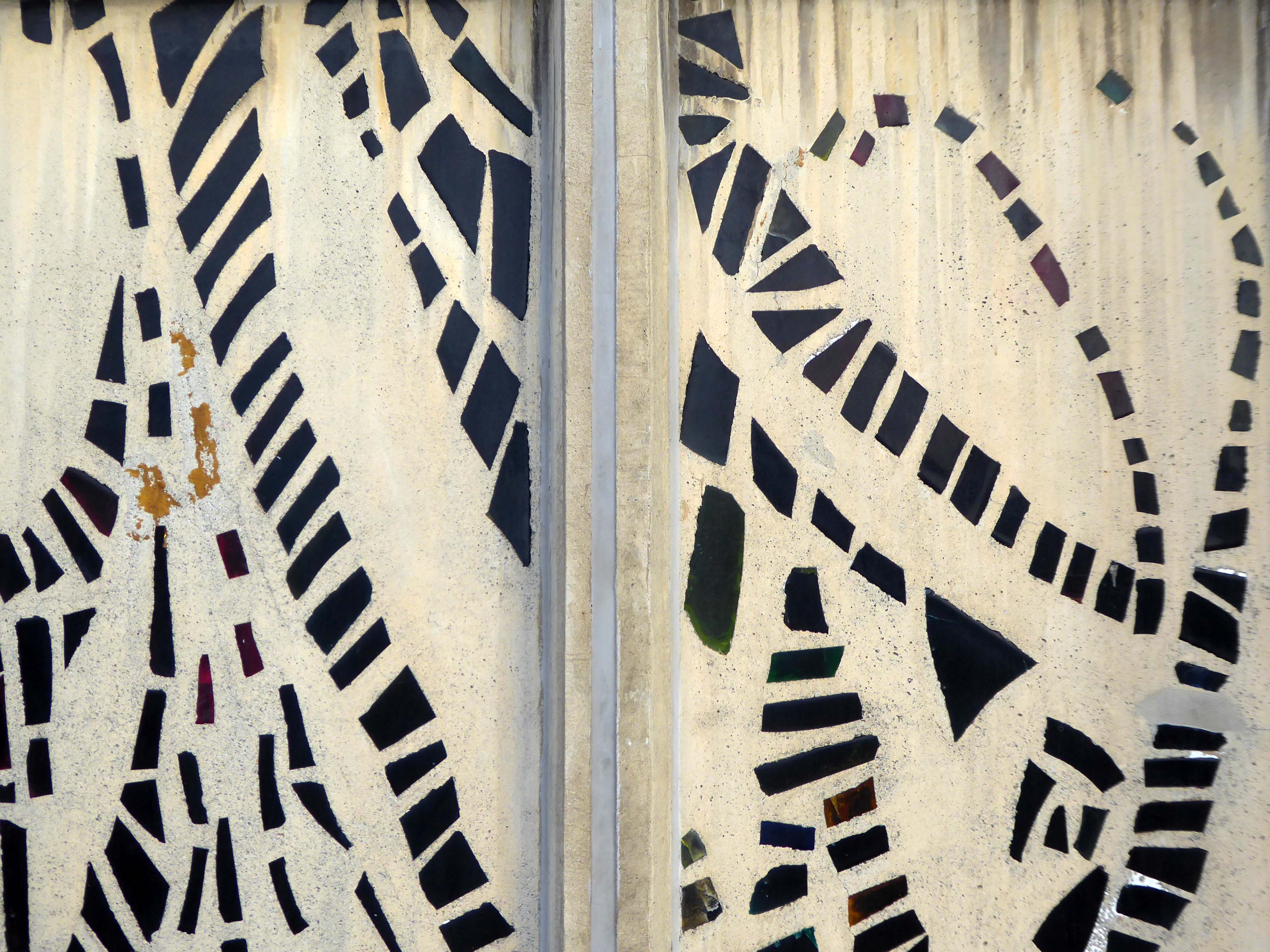
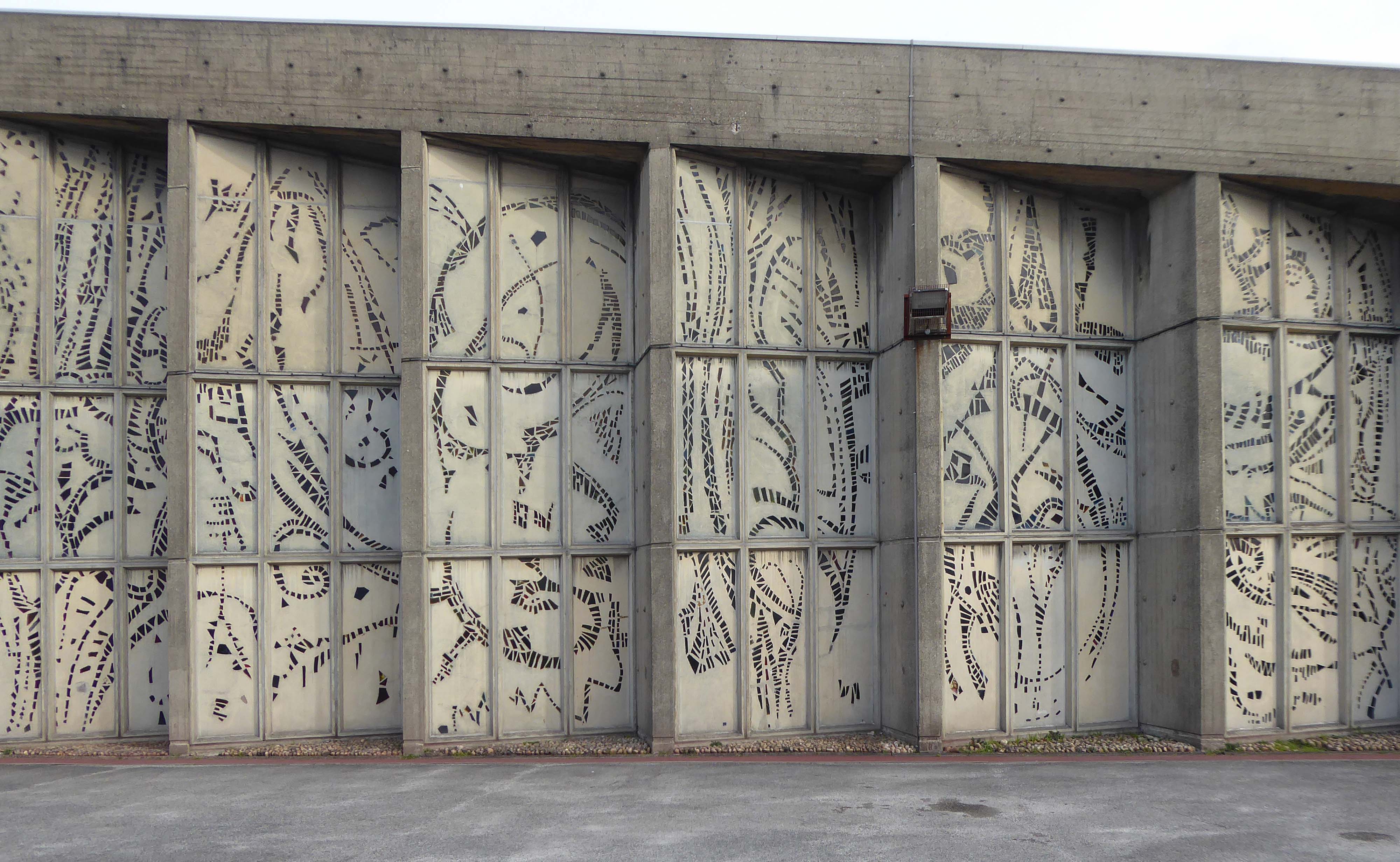
The most remarkable feature of the church is the dalle de verre stained glass on the walls of the nave, designed by Robin Riley, made by Verriers de St Jobain in France and fitted by glaziers J O’Neill and Sons. 

Sadly Robin Riley died this year, aged 90, my thanks to his former student Keith Hamlett for the information.

Wigan Walk

Arriving at Wigan Wallgate turn left and left and right.

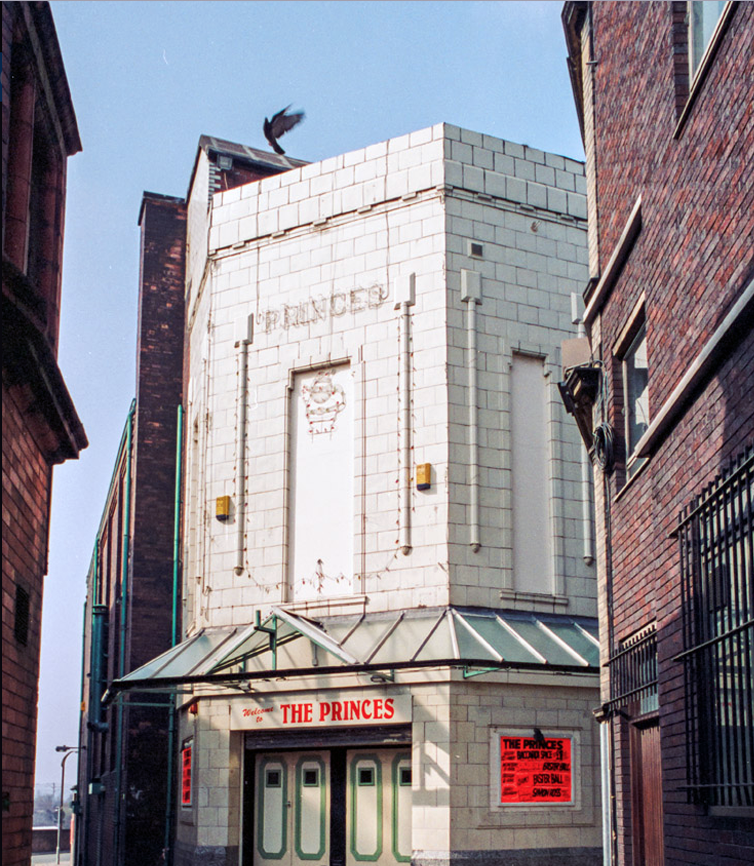
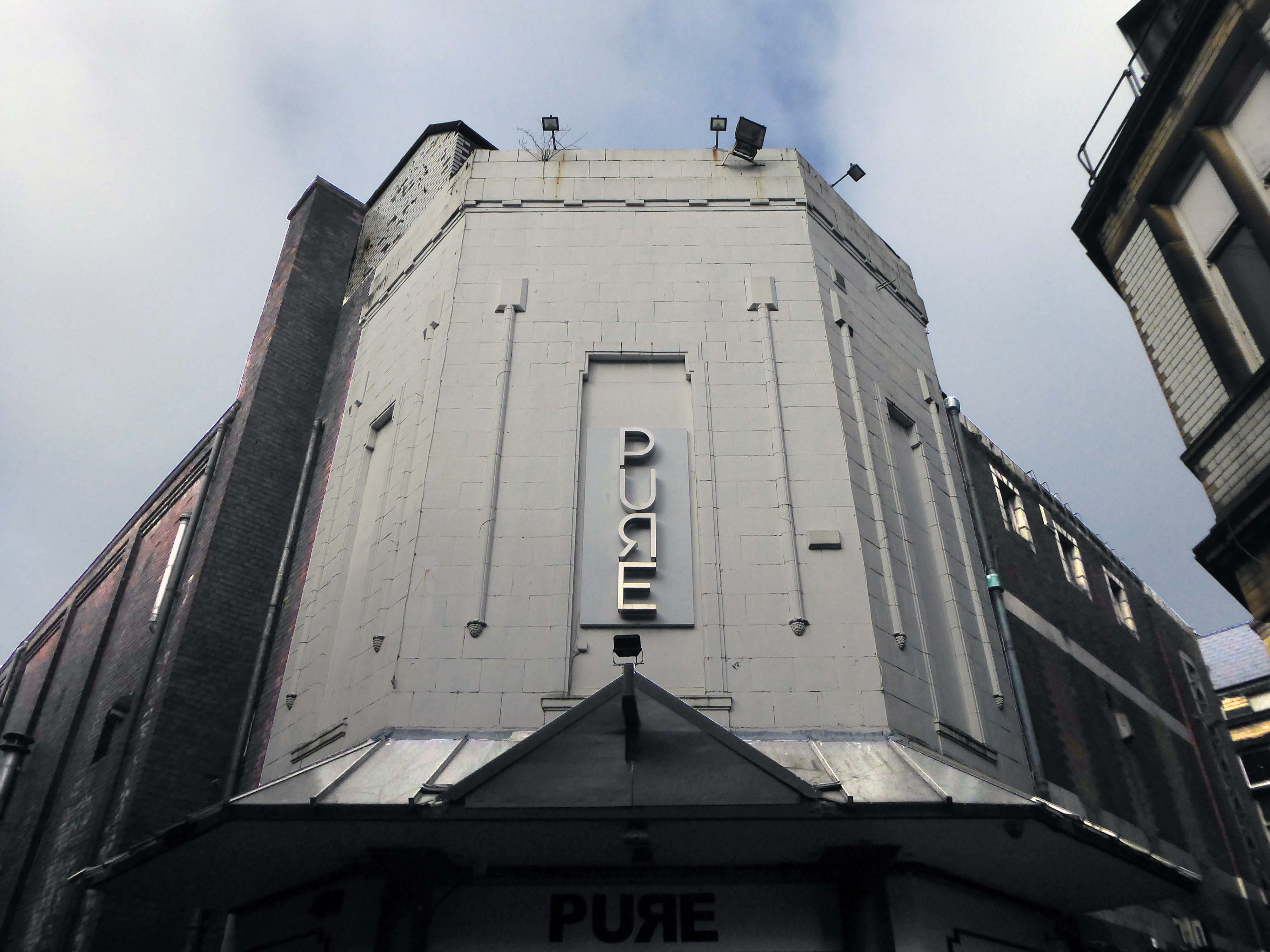
Tucked away along Clarence Yard is the former Princes Cinema.

Photo: Ian Grundy

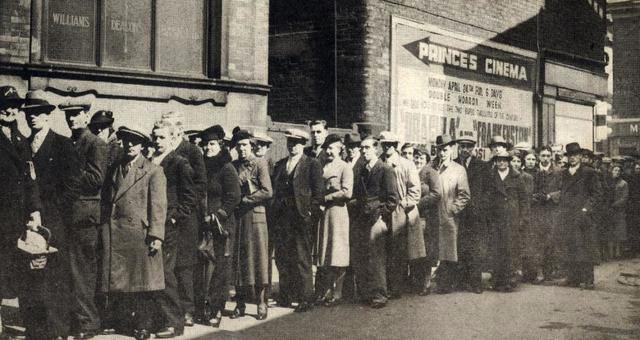
Where once upon a time the flat capped and hatted audience queued at length, for a glimpse of Dracula and Frankenstein.

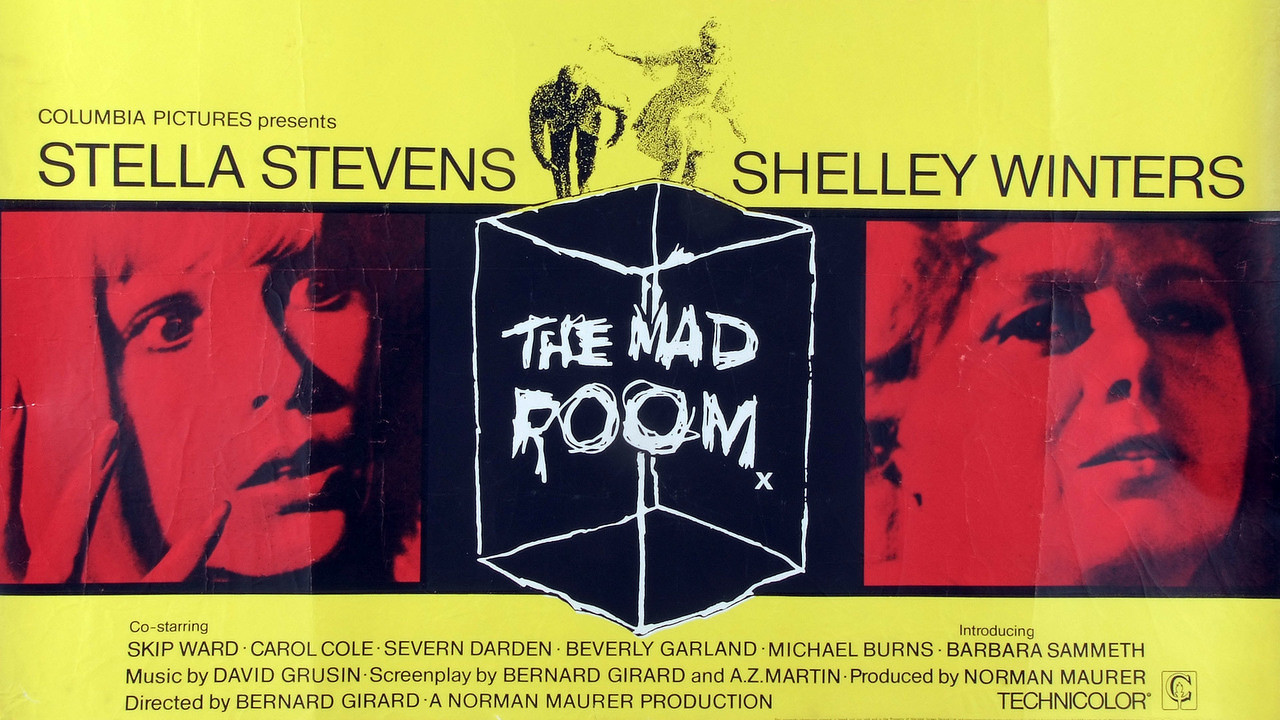
Opened in 1934 and closed on 10th January 1970 with a screening of The Mad Room.

Cinema Treasures

It has subsequently been in use as a nightclub.

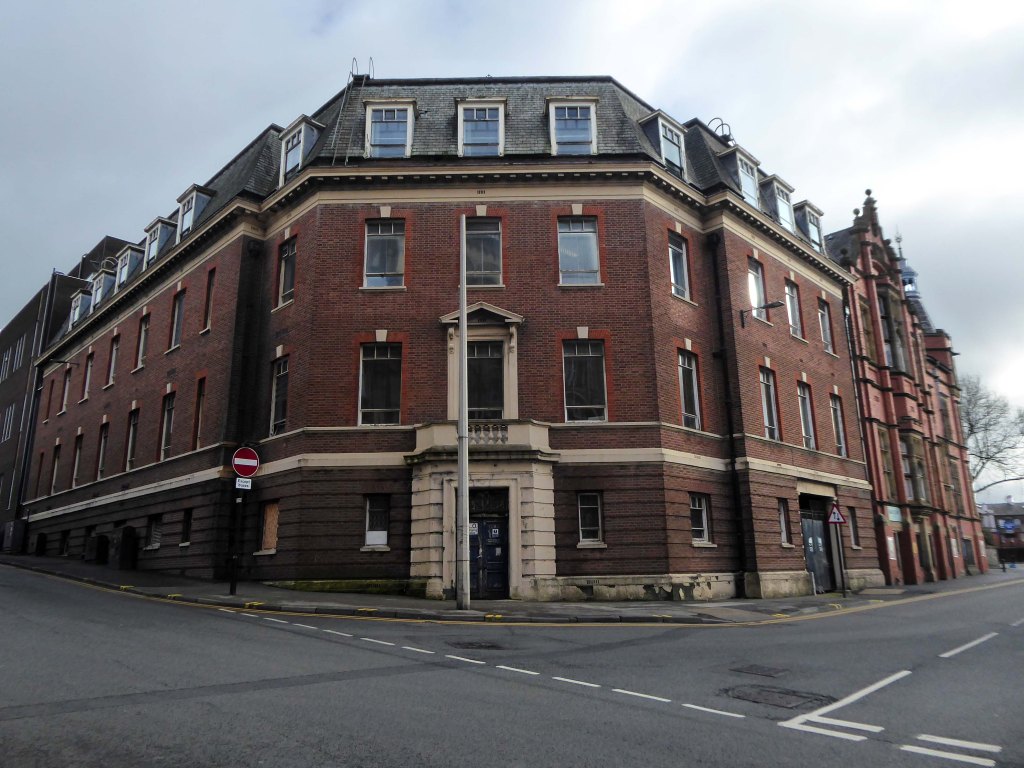
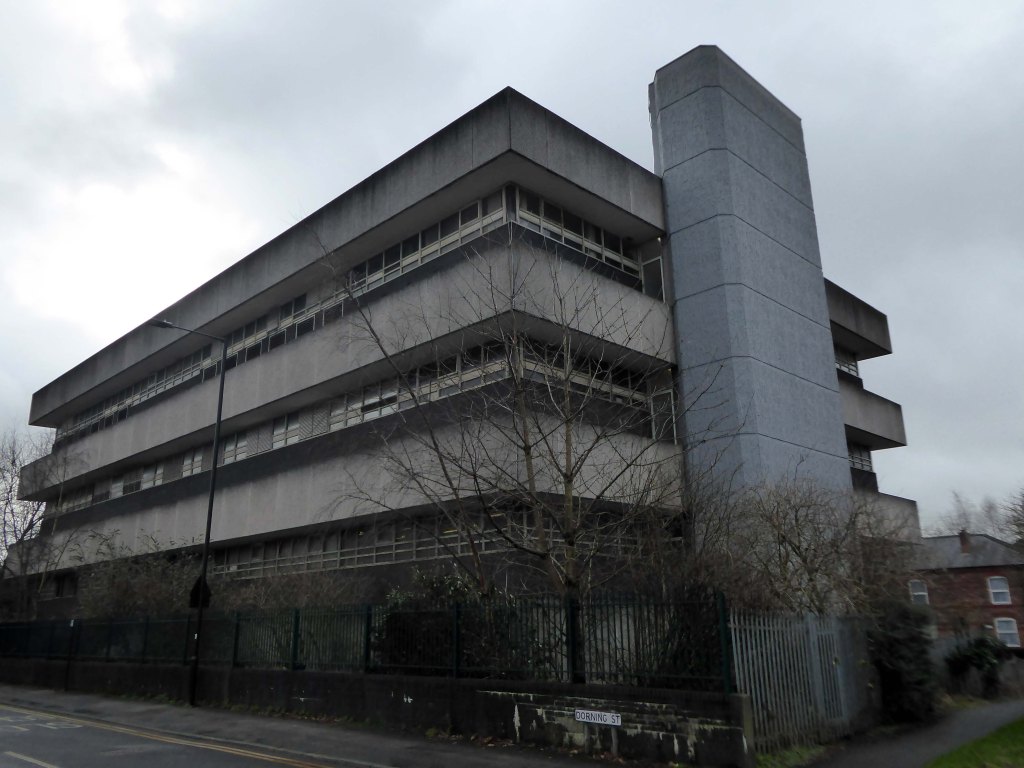
Back out onto Dorning Street in search of telephone exchanges, three telephone exchanges.

Inter-war

Sixties.

Seventies.

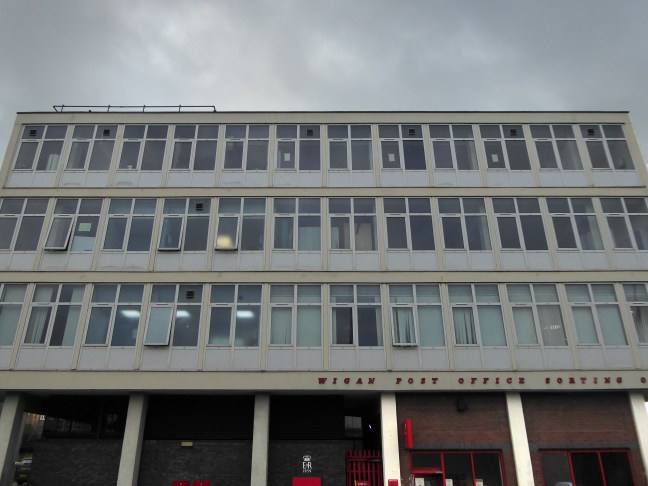
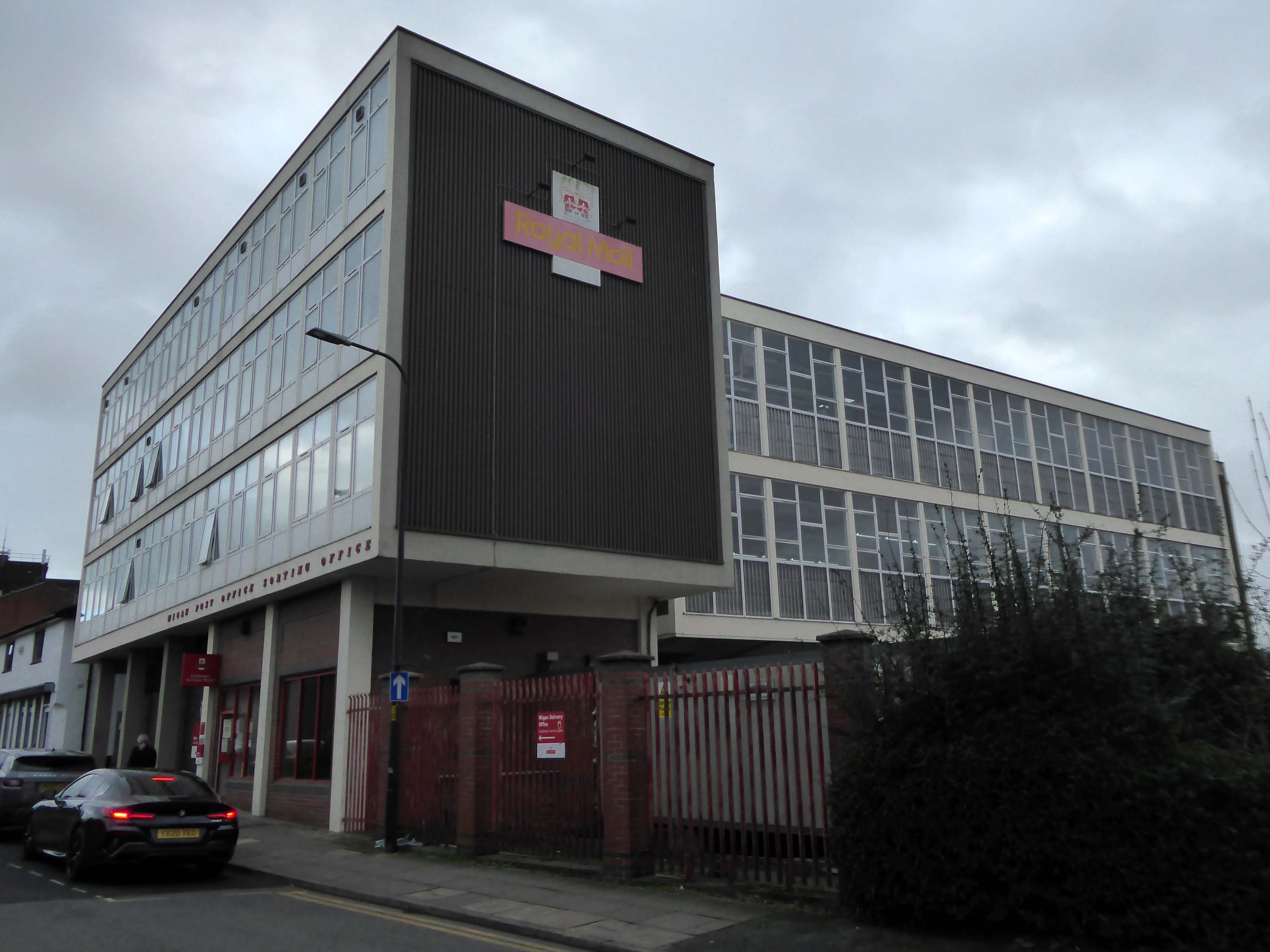
Just around the corner is an expansive GPO Sorting Office of 1959.

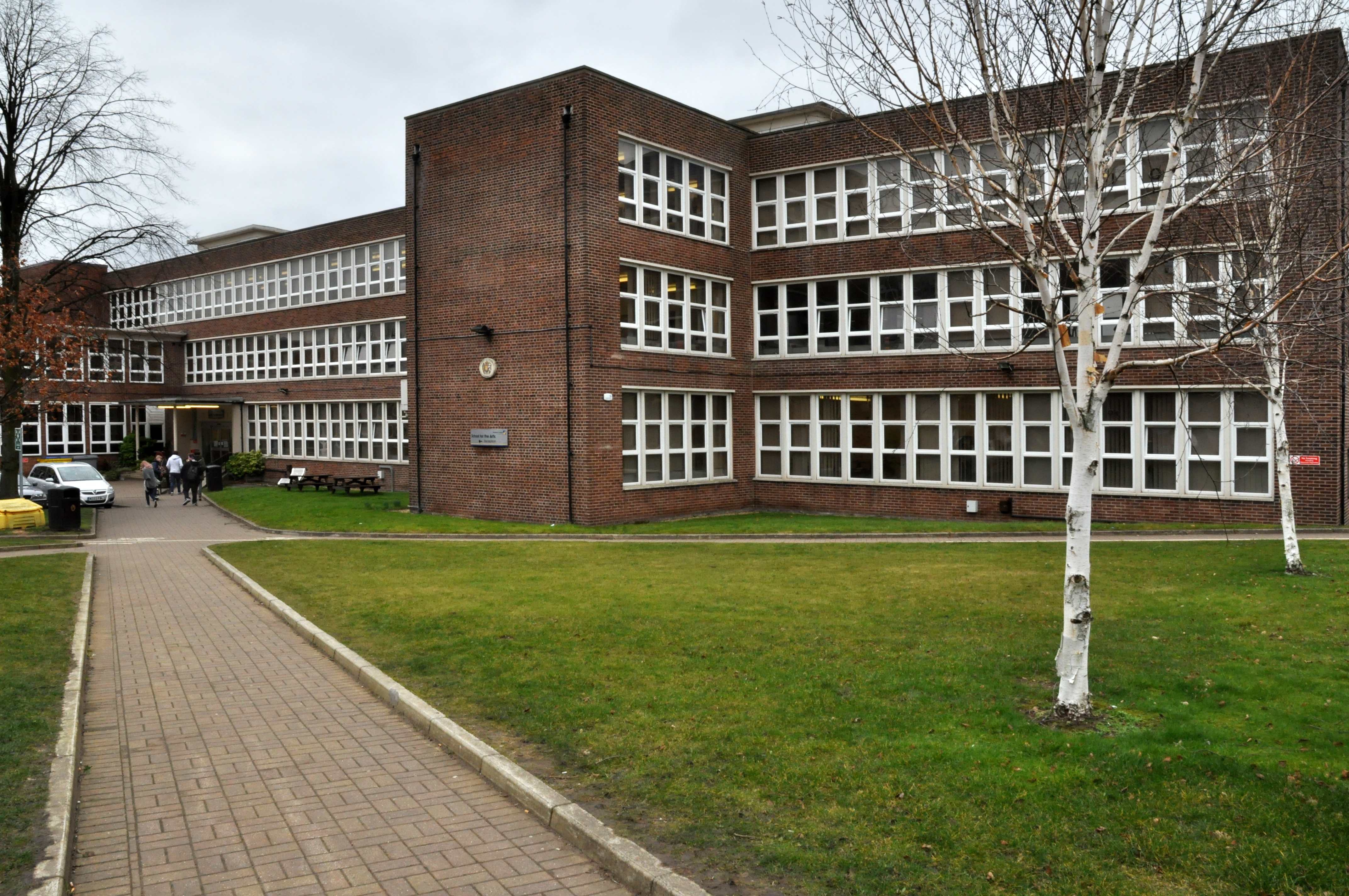
Across the way is the Technical College.

The foundations of Wigan & Leigh College date back to 1857, and the current institution was formed in April 1992 through the merger of Wigan College of Technology and Leigh College.

Partly formed from the Thomas Linacre Technical School.

Architects: Howard V Lobb G Grenfell Bains & Hargreaves 1954

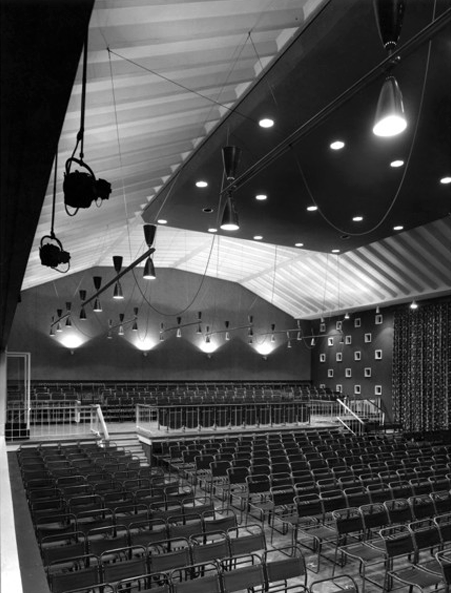
School Hall – RIBA Pix

Curious decorative brick motif – a floor plan of the building.

My thanks to Mark Watson for his erudition and insight.

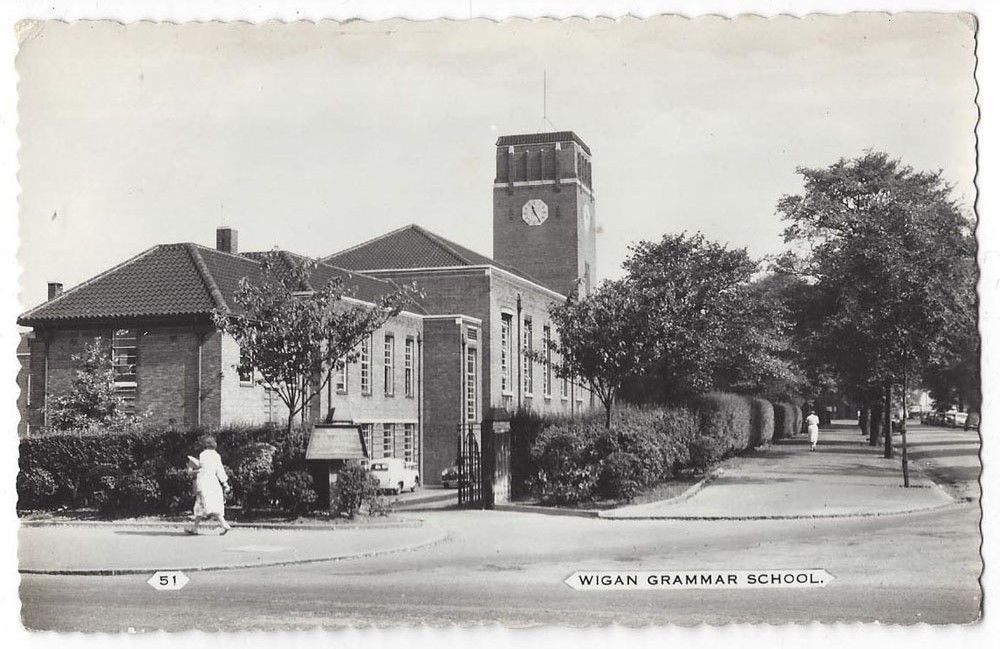
Across the road the former Grammar School now an NHS Centre.

Wigan Grammar School was founded in 1597 and closed in 1972 as part of the comprehensive education movement. it became Mesnes High School until 1989, and then the Mesnes Building of Wigan College.

It was designated a Grade II listed building in 1997.

Architect: A E Munby

Since 2003, it has been known as the Thomas Linacre Centre and is an out-patient department for the Wrightington Wigan and Leigh NHS Trust.

Let’s head back into town and along Standishgate.

Former Burton Tailors – possibly.

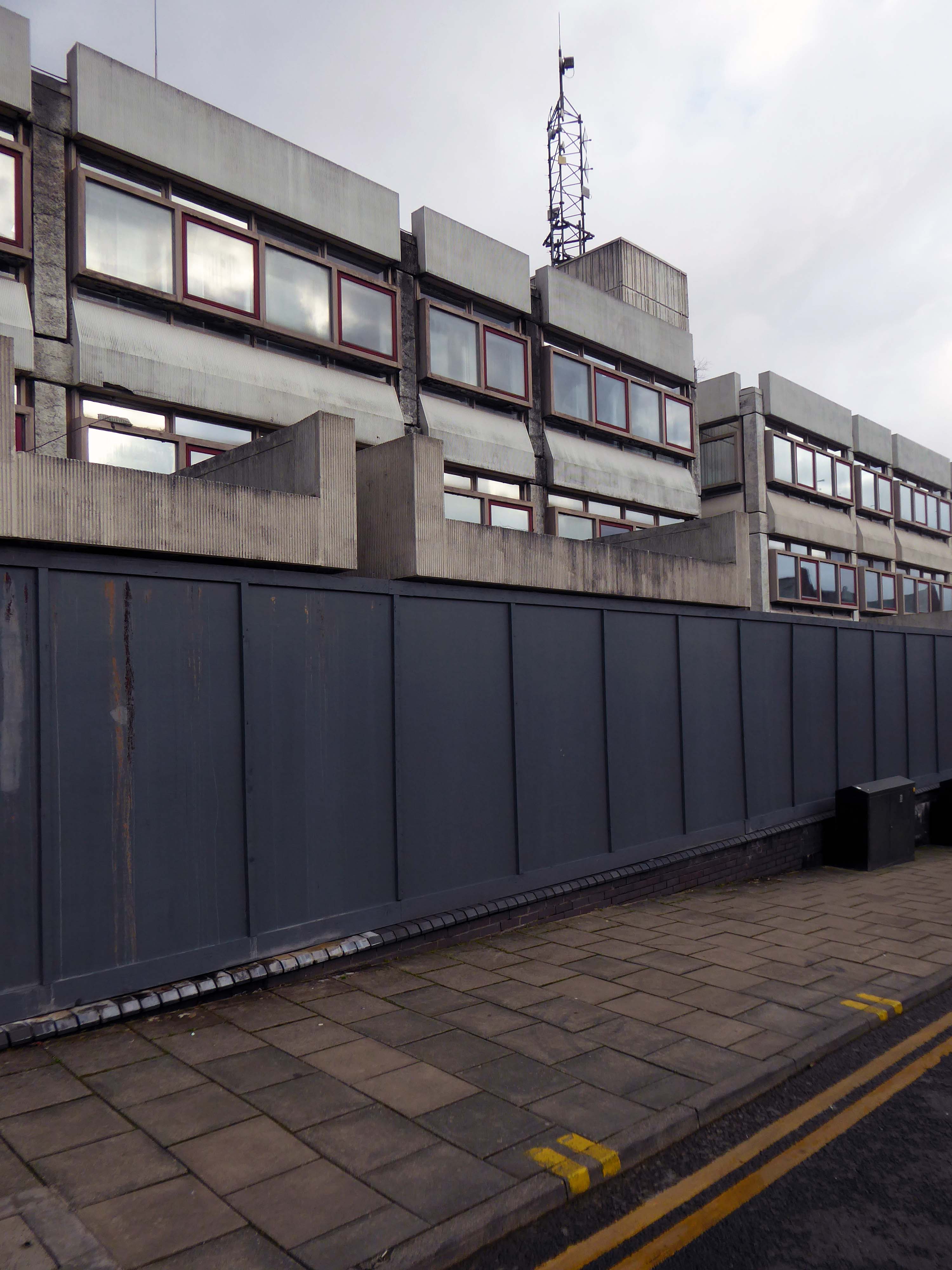
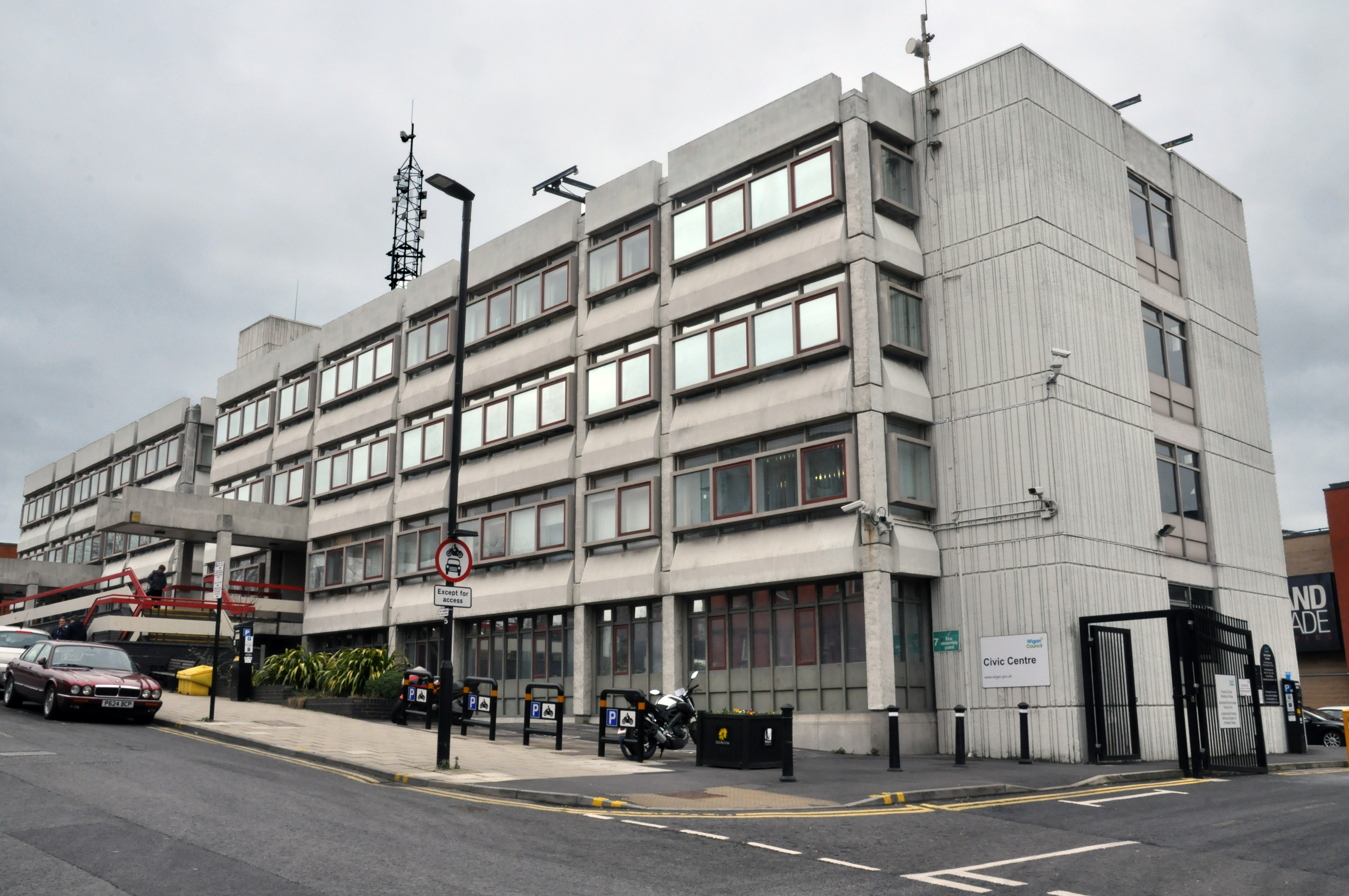
Turn left into Millgate to see the boarded up Civic Centre.

Formerly not boarded up Civic Centre.

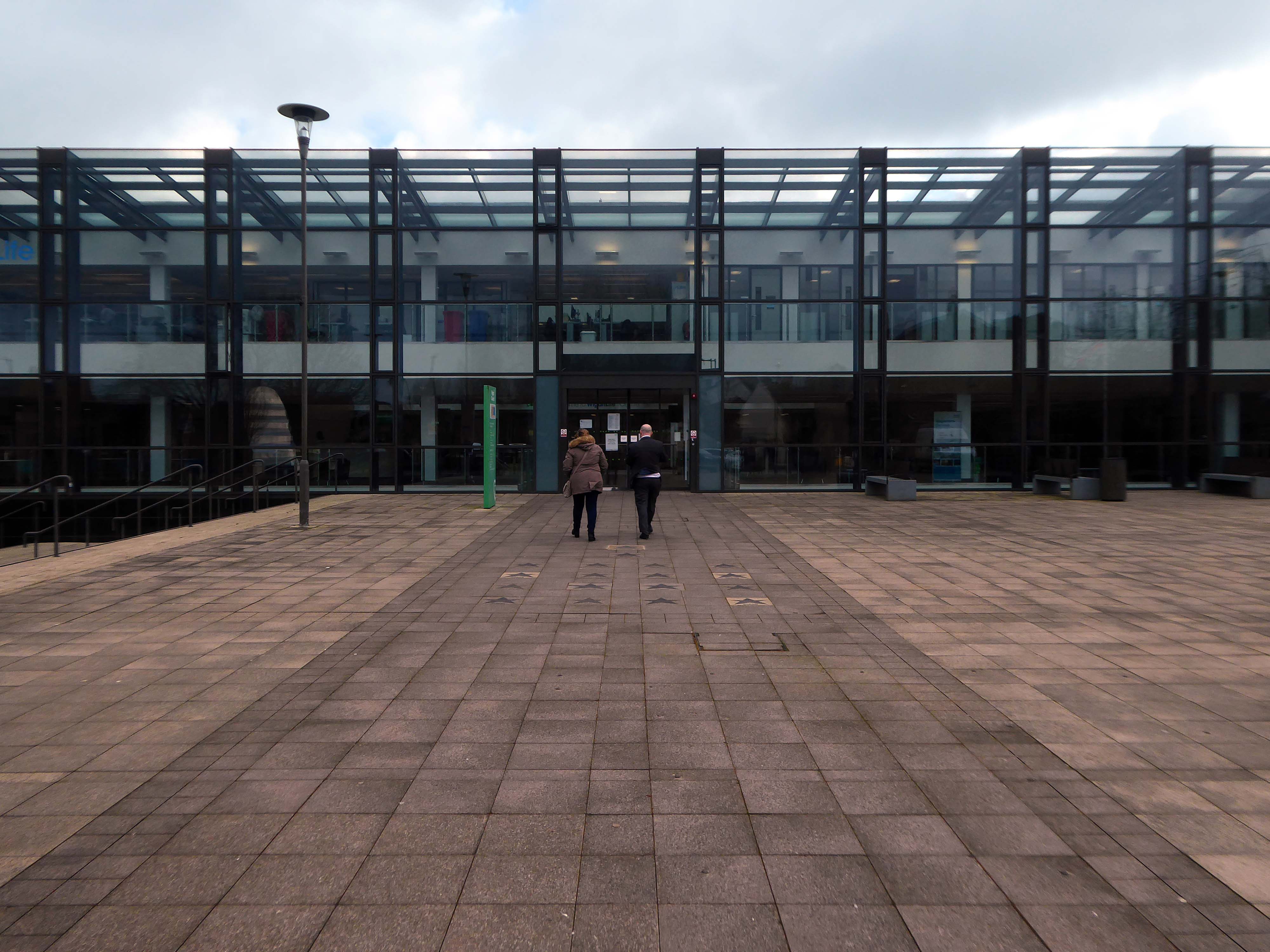
Across the way the new Library and Life Centre by Astudio and LCE Architects

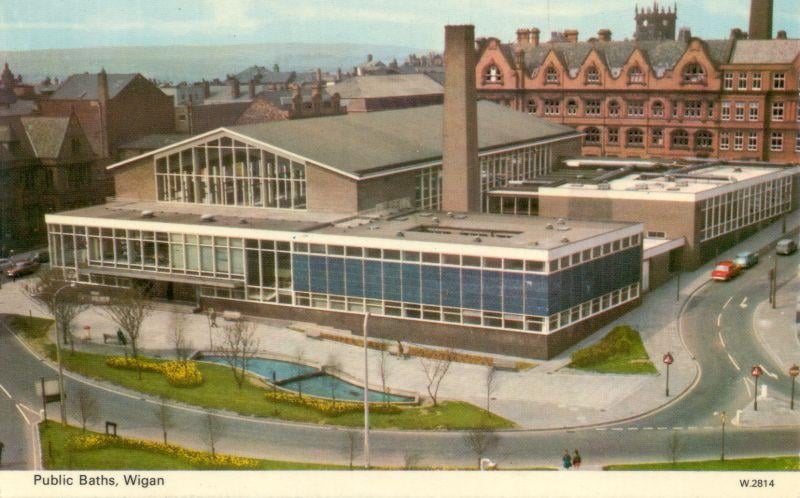
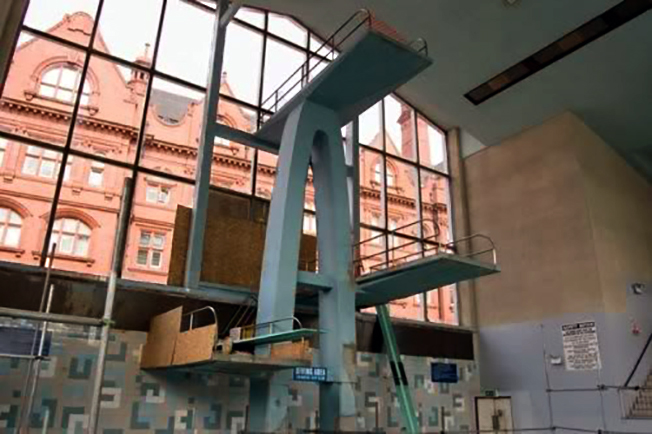
Down the road to where the International Swimming Pool was – opened 1968.

Demolished 2010

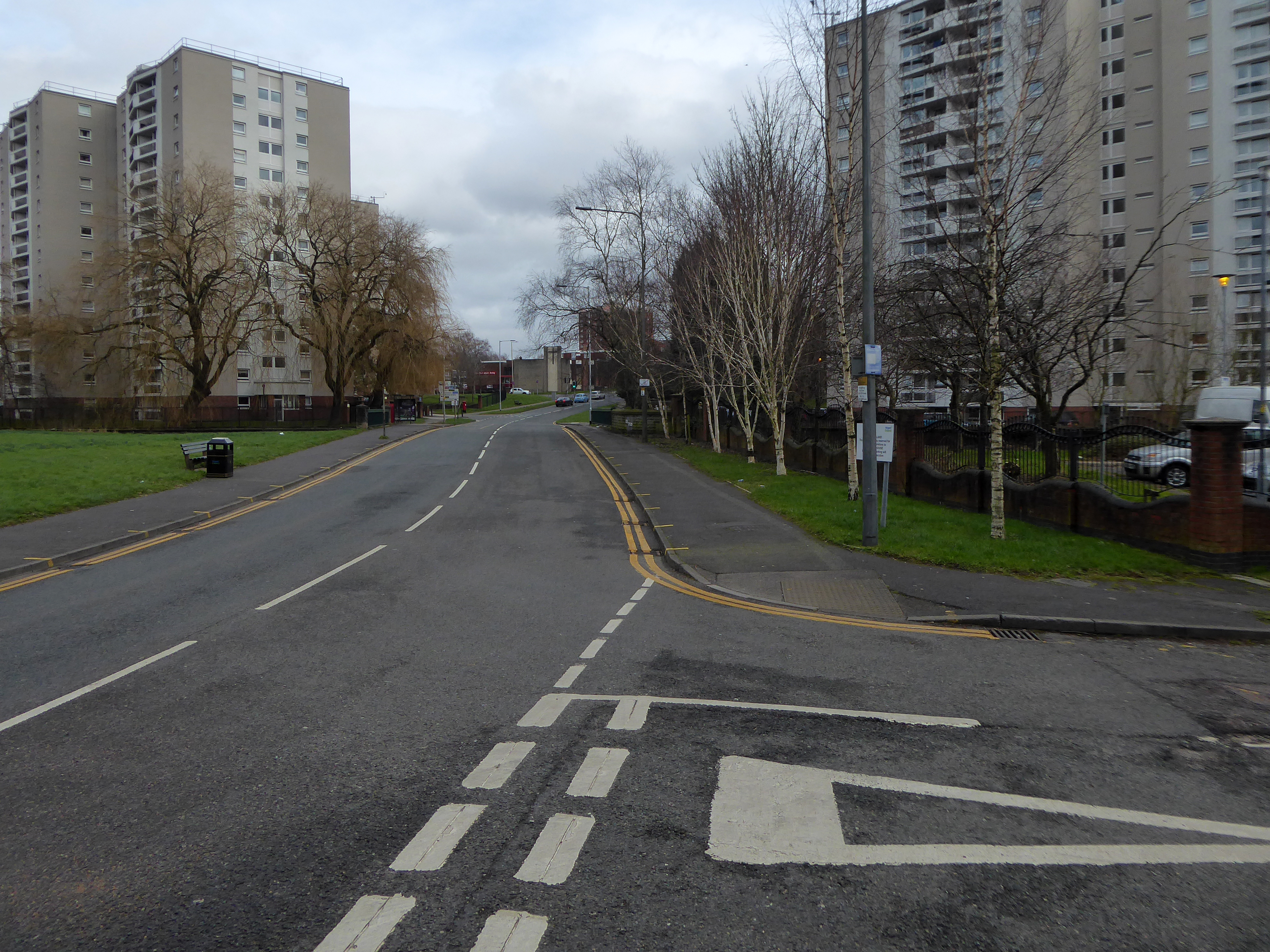
Scholes Comprehensive Development 1964 – five thirteen storey blocks.

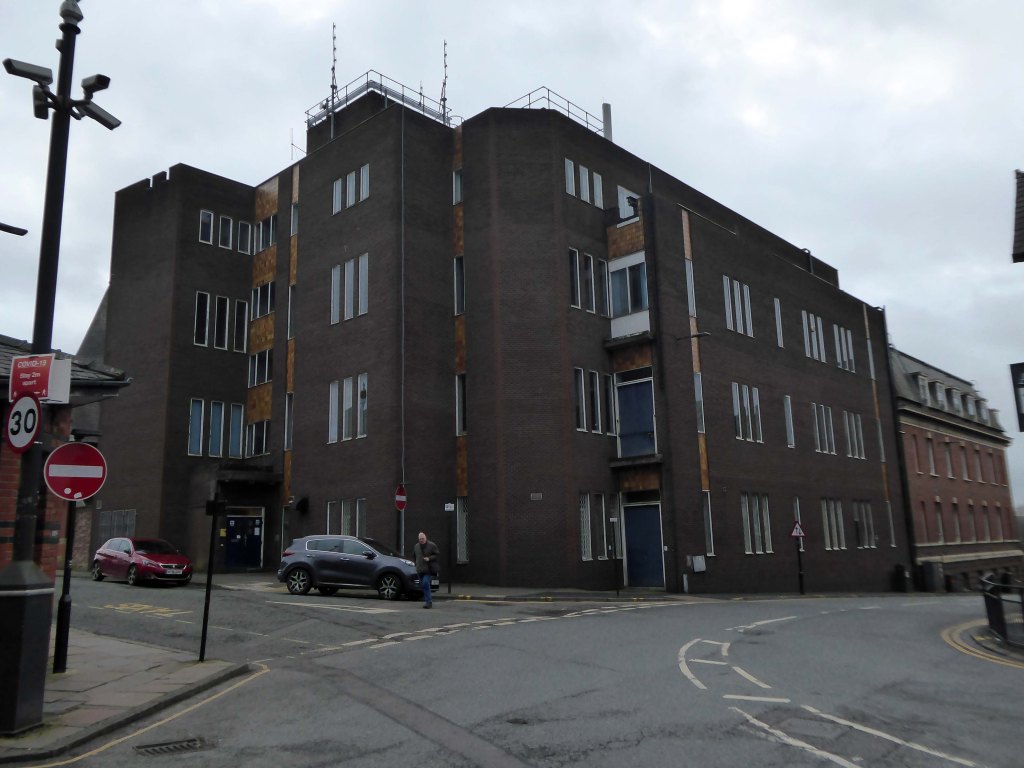
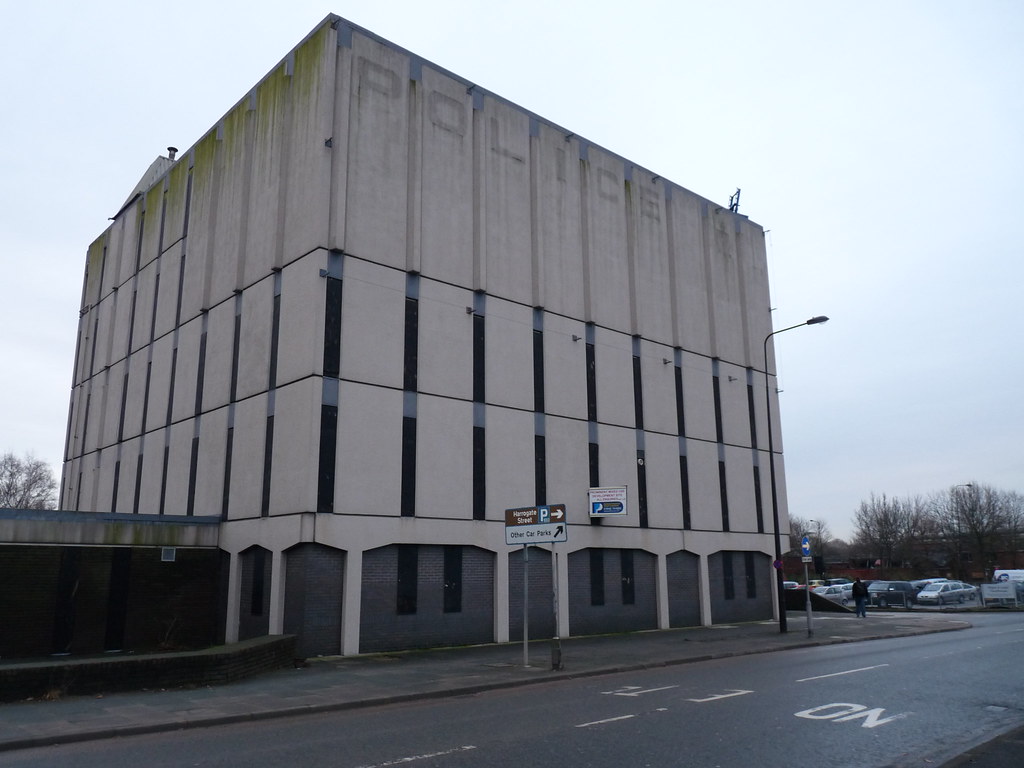
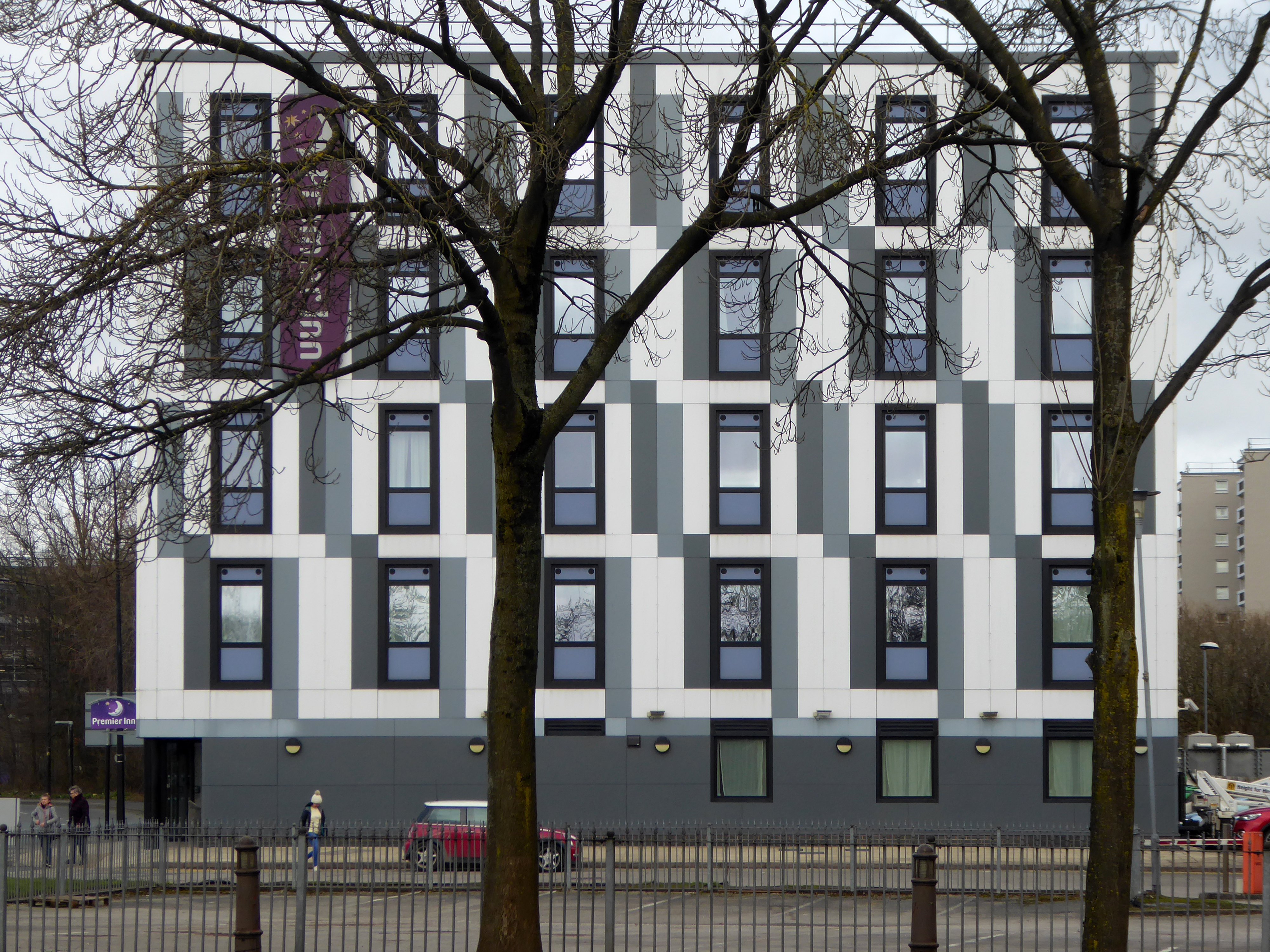
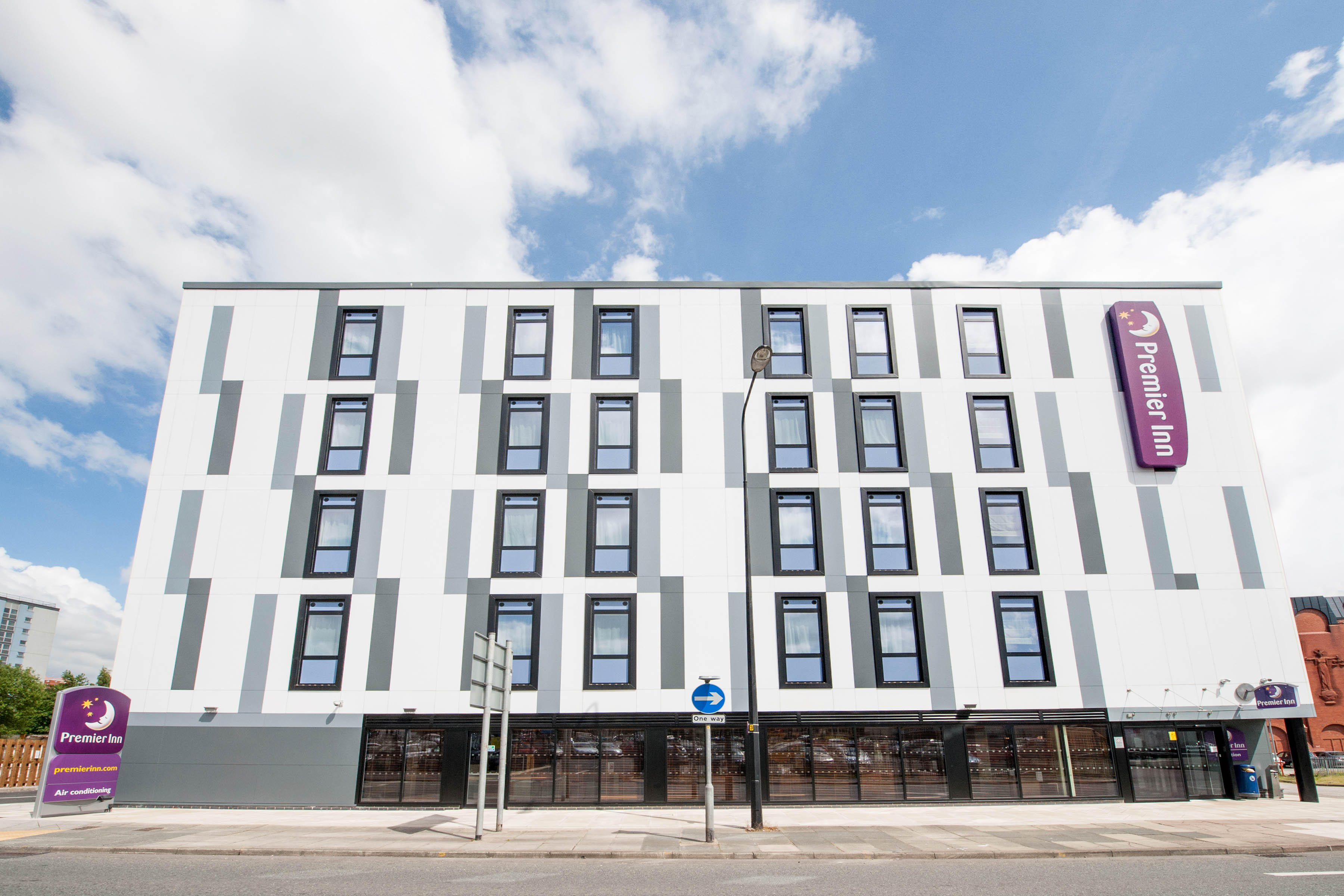
Moving down the street to the former Police Station now Premier Inn on Harrogate Street.

Lancashire County Architect: Roger Booth

Flickr

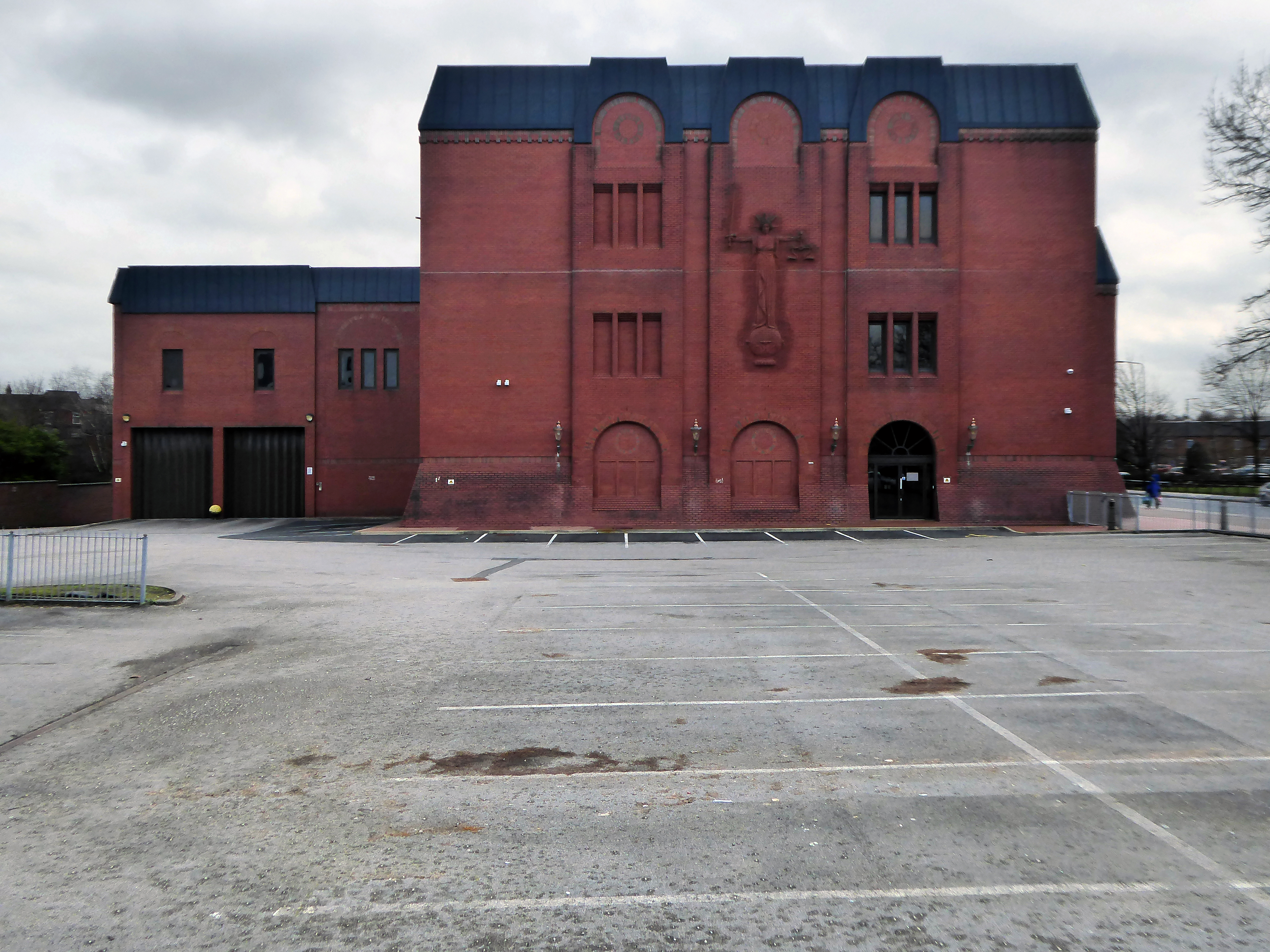
Next door the Post Modern brick monolith of the Wigan and Leigh Courthouse 1990.

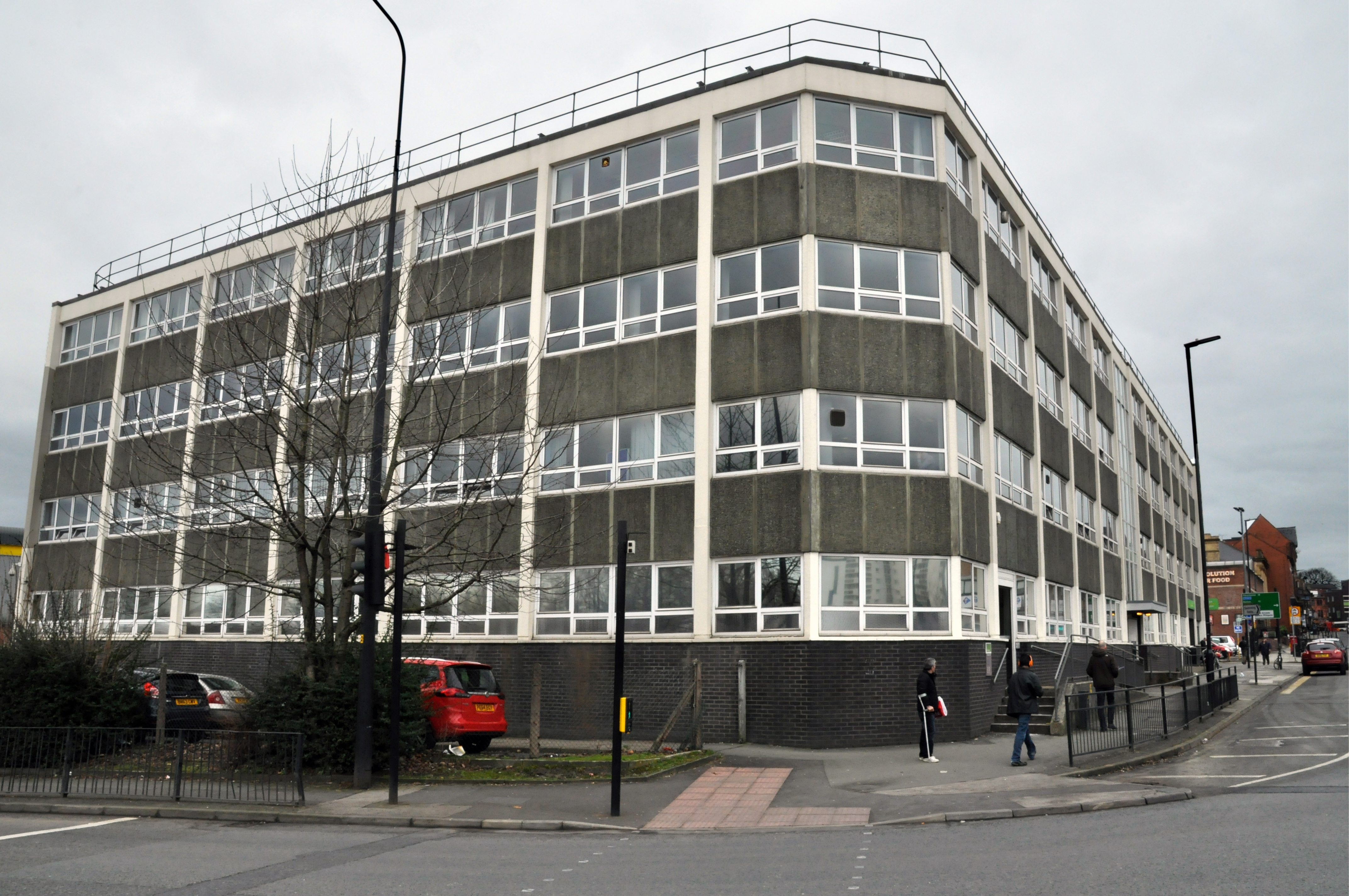
Then back up along King Street to visit the Job Centre.

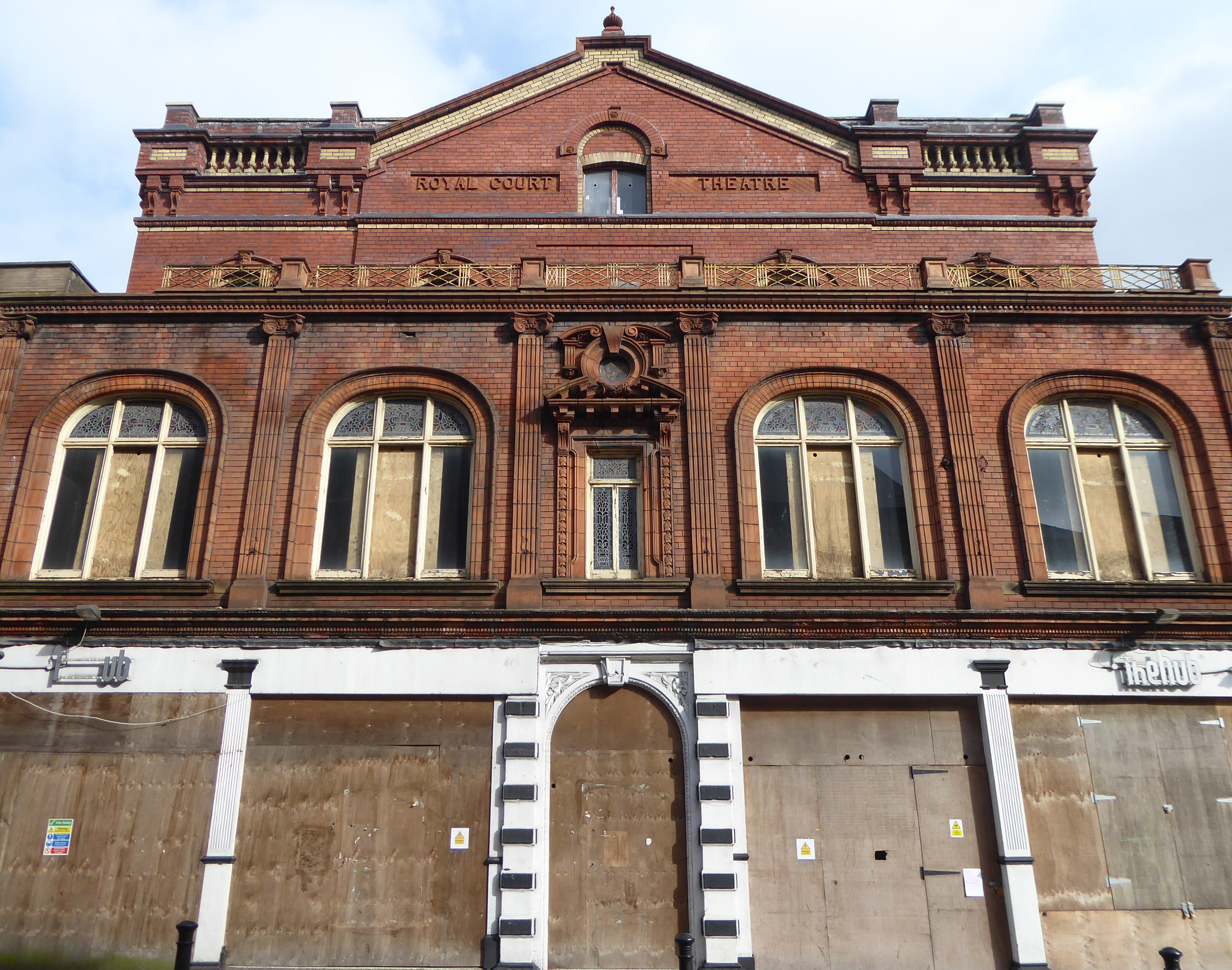
Take a look up at the Royal Court Theatre – 1886 Richard T Johnson

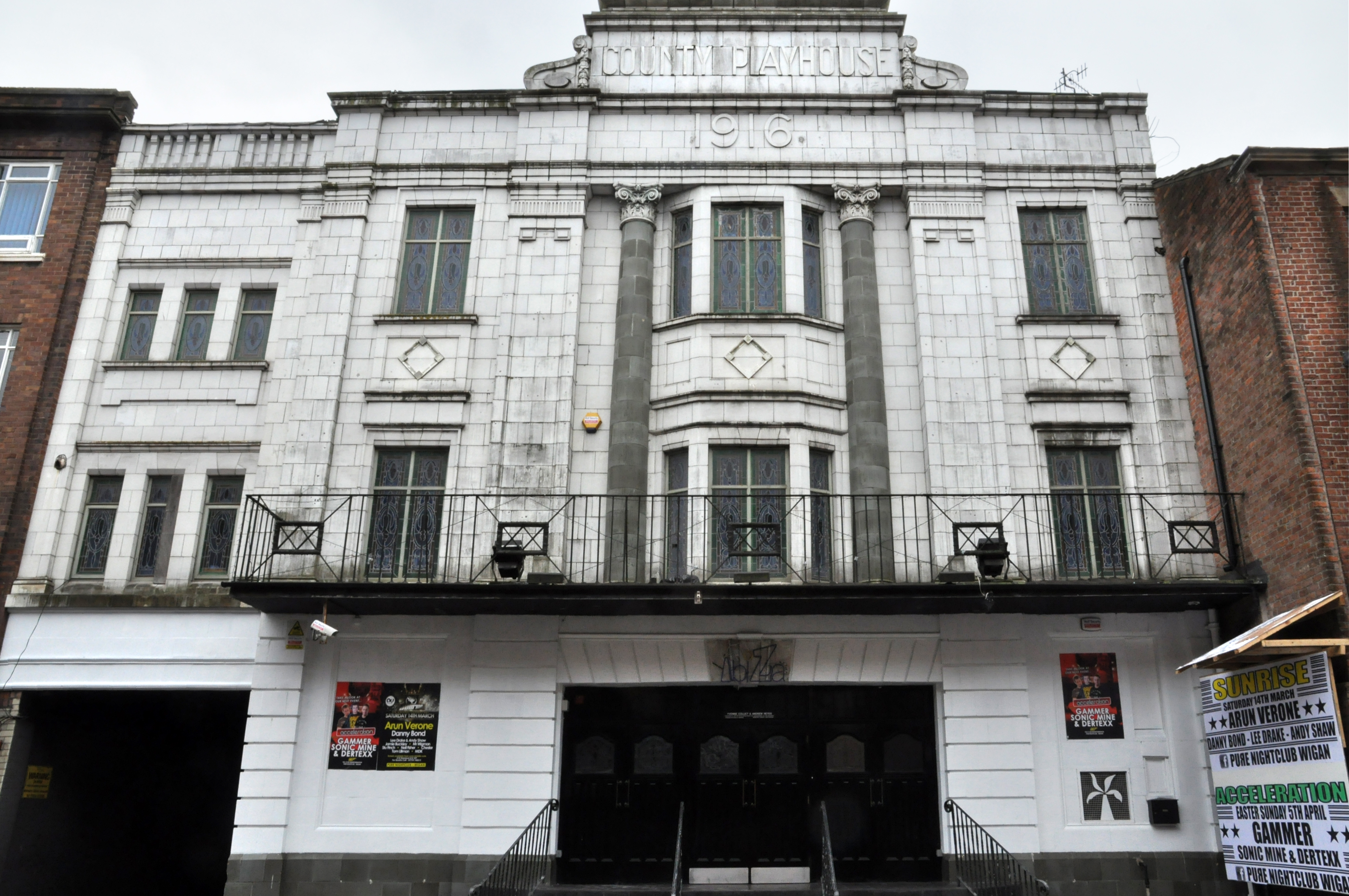
Then back up toward the centre to the County Playhouse.

Construction began on the County Playhouse in 1916. However, due to a shortage of materials and labour during World War I, it was not completed until 1919.

Finally opened on 22nd December 1919 with The Peril Within – starring Dorothy Gish.

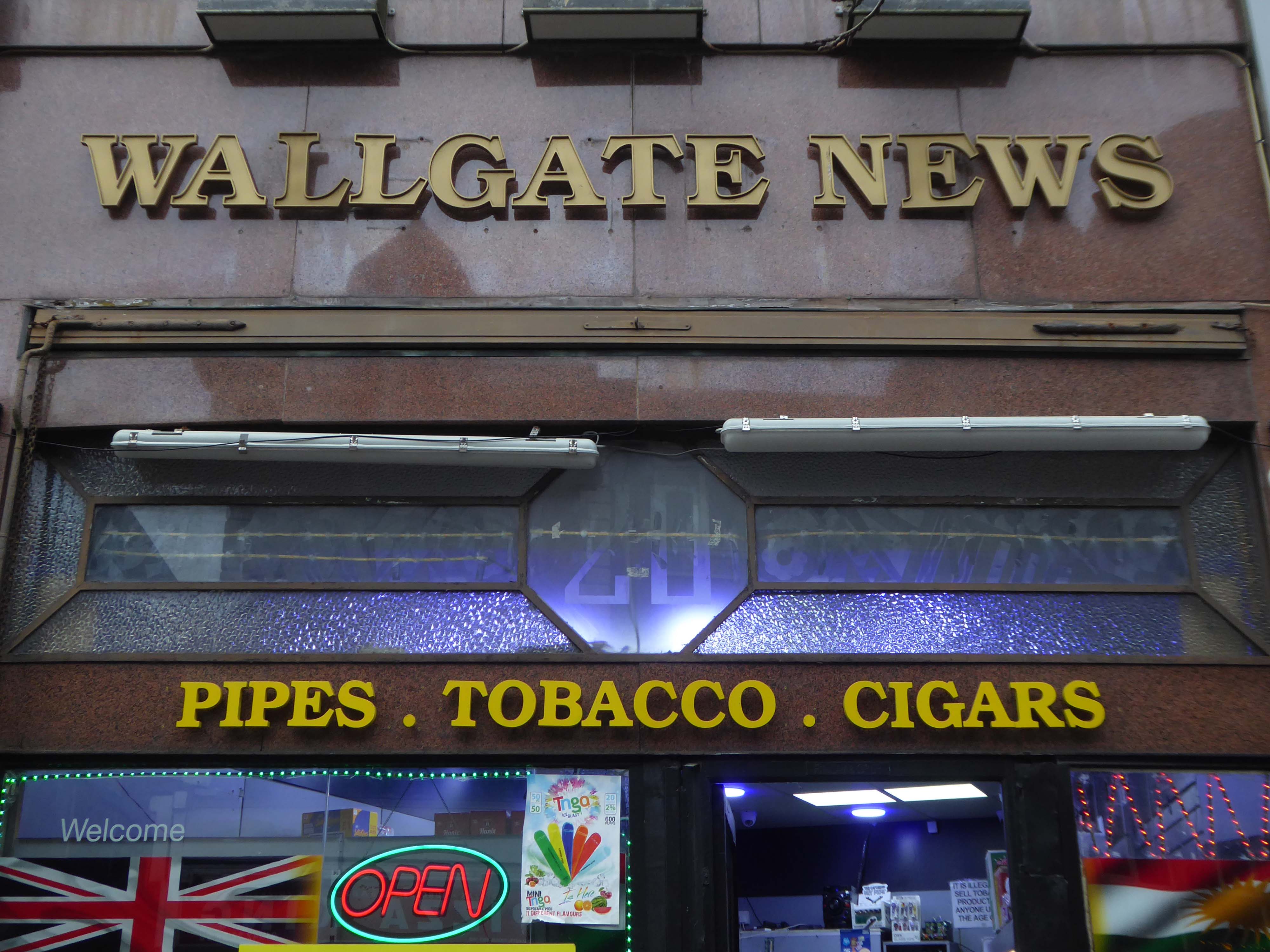
Onwards to the Wallgate News.

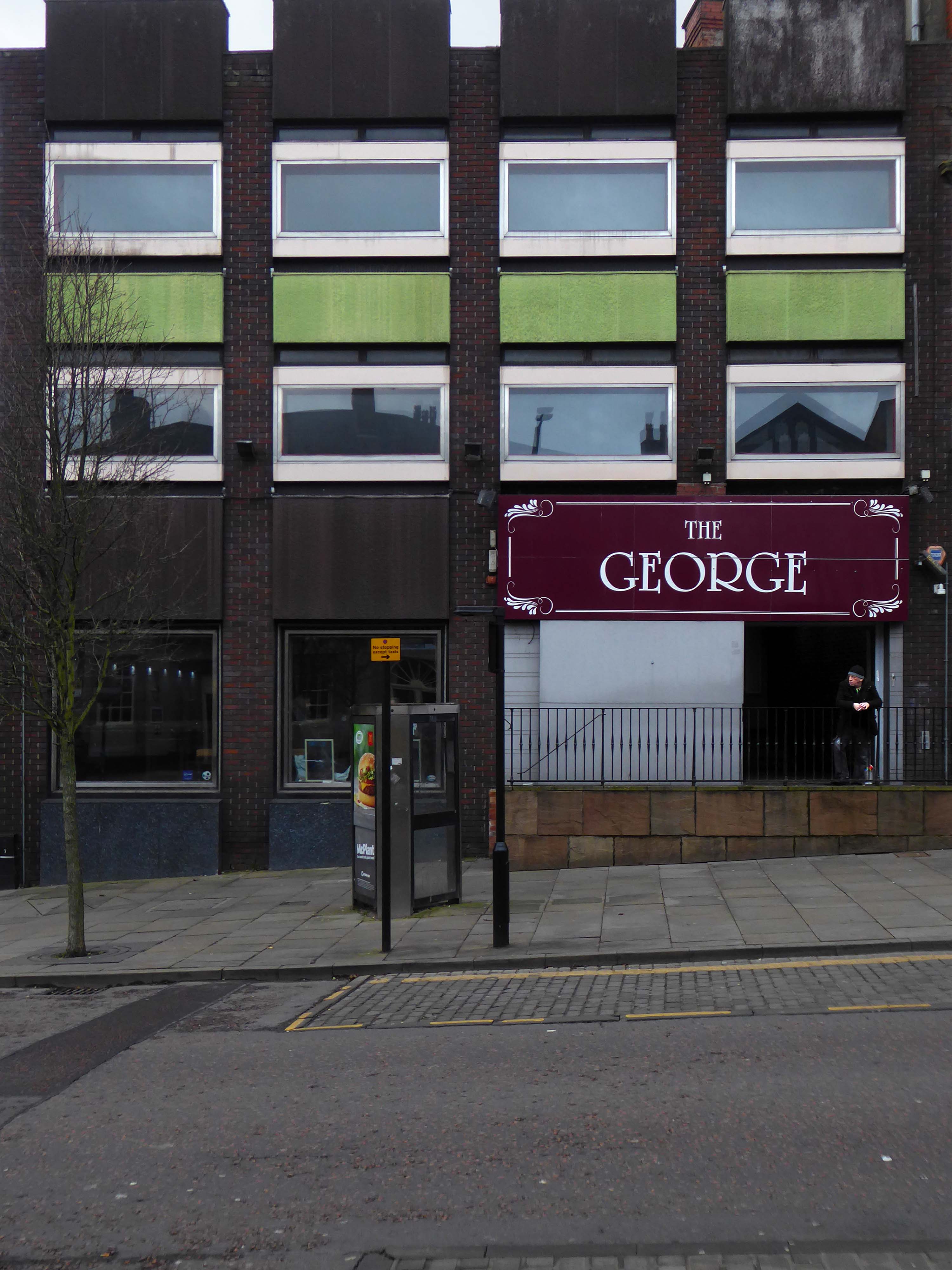
Finally to The George public house.

All ages, all different, all characters all like a bevvy.

The George is all you need.

Apollo Pavilion – Peterlee

An architecture and sculpture of purely abstract form through which to walk, in which to linger and on which to play, a free and anonymous monument which, because of it’s independence, can lift the activity and psychology of an urban housing community on to a universal plane.

The idea for the Apollo Pavilion was the culmination of Victor Pasmore’s involvement with the planning and design of the new town of Peterlee in County Durham which began in 1954 with his appointment by A.V. Williams, the General Manager, as a consultant architectural designer to the Corporation. The brief was to inject a new initiative into the new town’s design, which had been limited by practical and financial constraints. The early departure of Berthold Lubetkin from the original design team, and the limitations imposed by building on land subject to underground mining, had led to a deterioration in the quality of the architecture being produced at Peterlee.

At Peterlee Pasmore worked initially alongside architects Peter Daniel and Franc Dixon to develop the Sunny Blunts estate in the south-west area of the town, though by the time the Pavilion was built Dixon had left and the team included the more experienced Harry Durell, Colin Gardham and landscape architect David Thirkettle. Pasmore continued to be involved with Peterlee until 1978 and designed the Pavilion as a gift to the town.

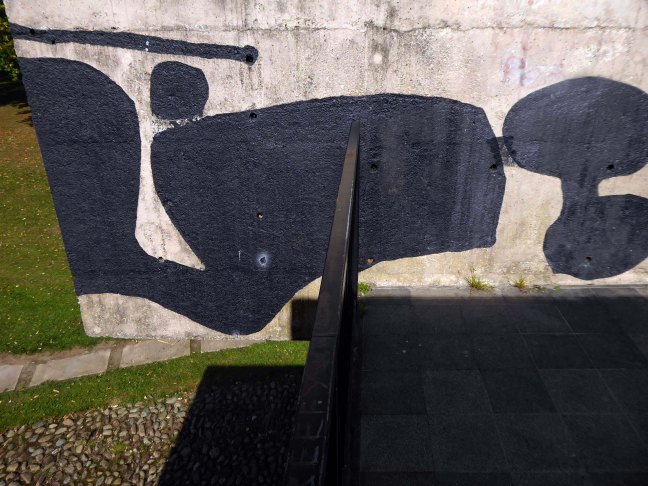
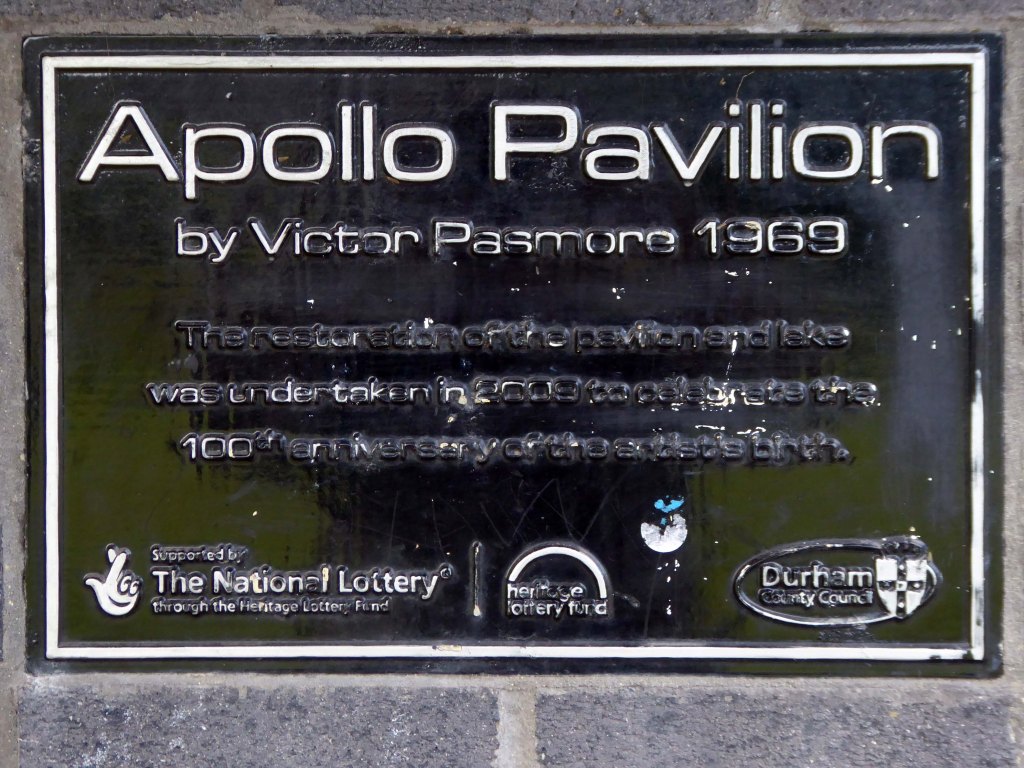
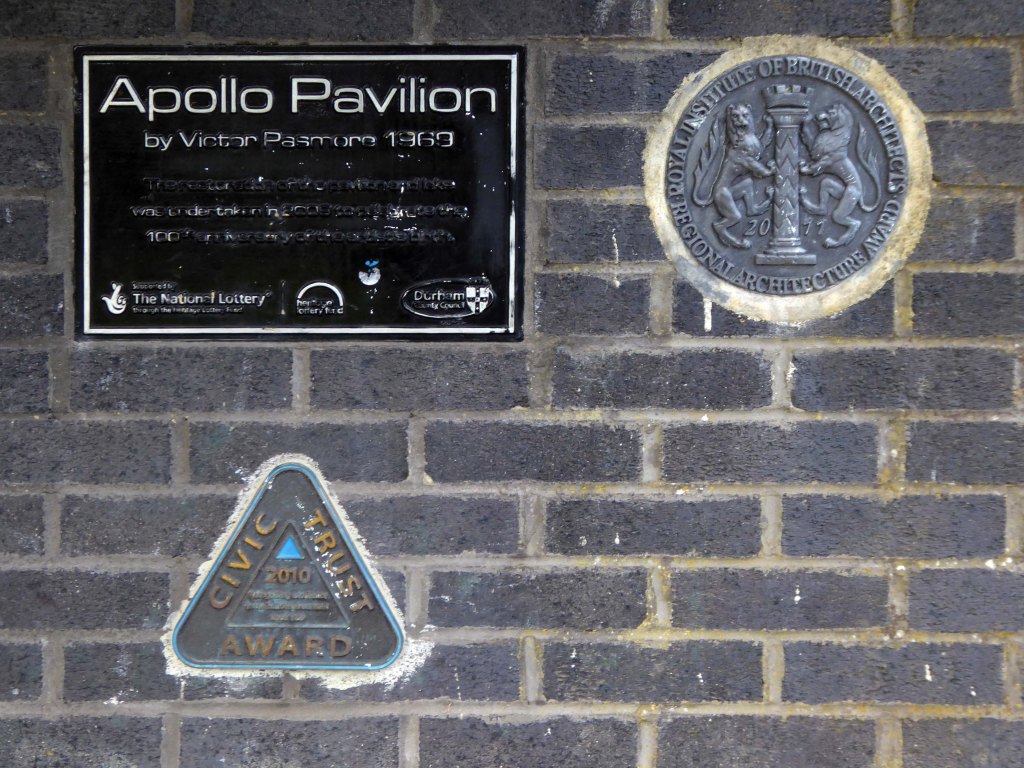
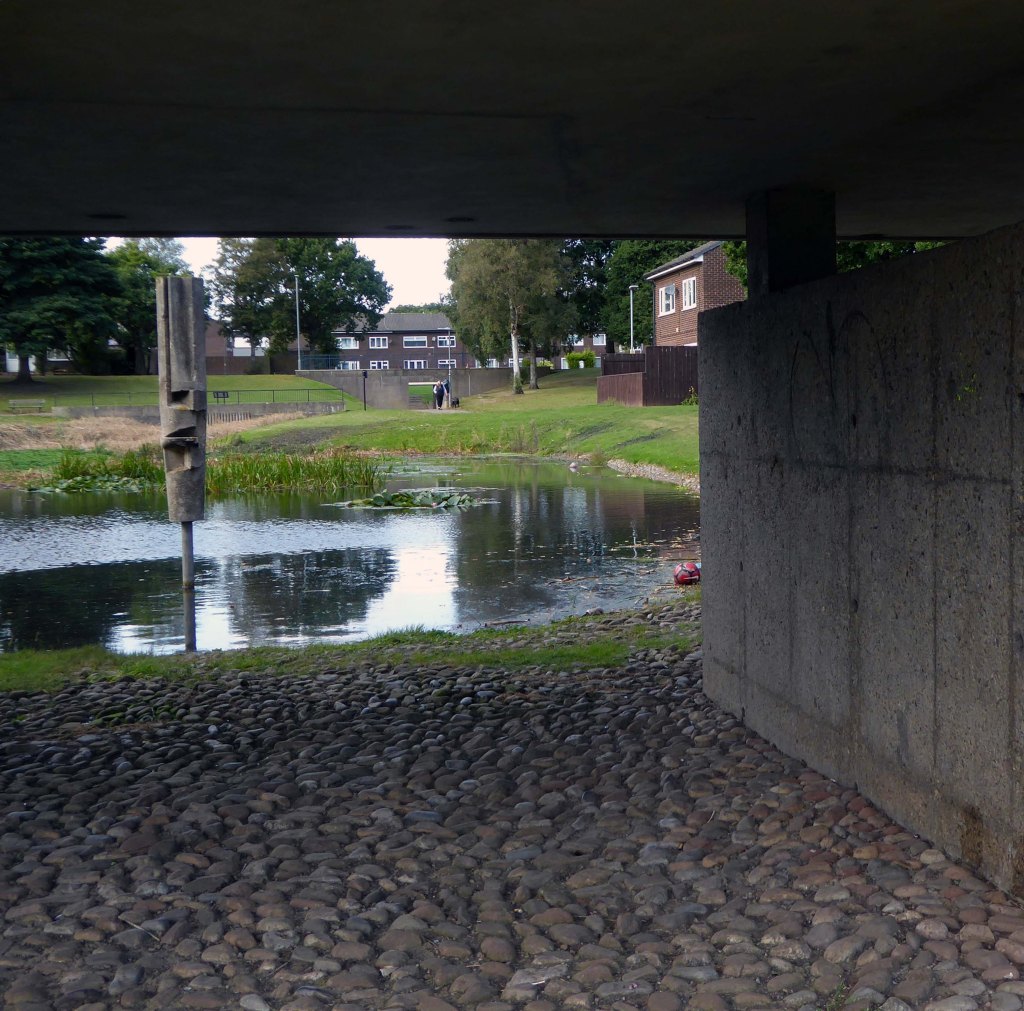
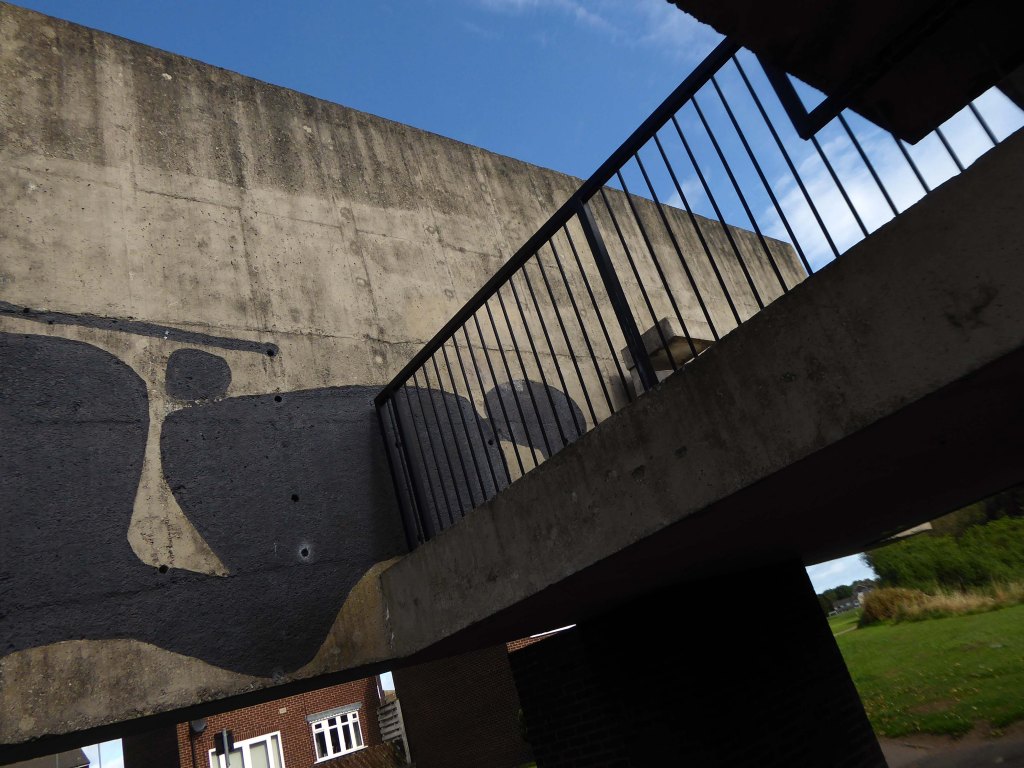
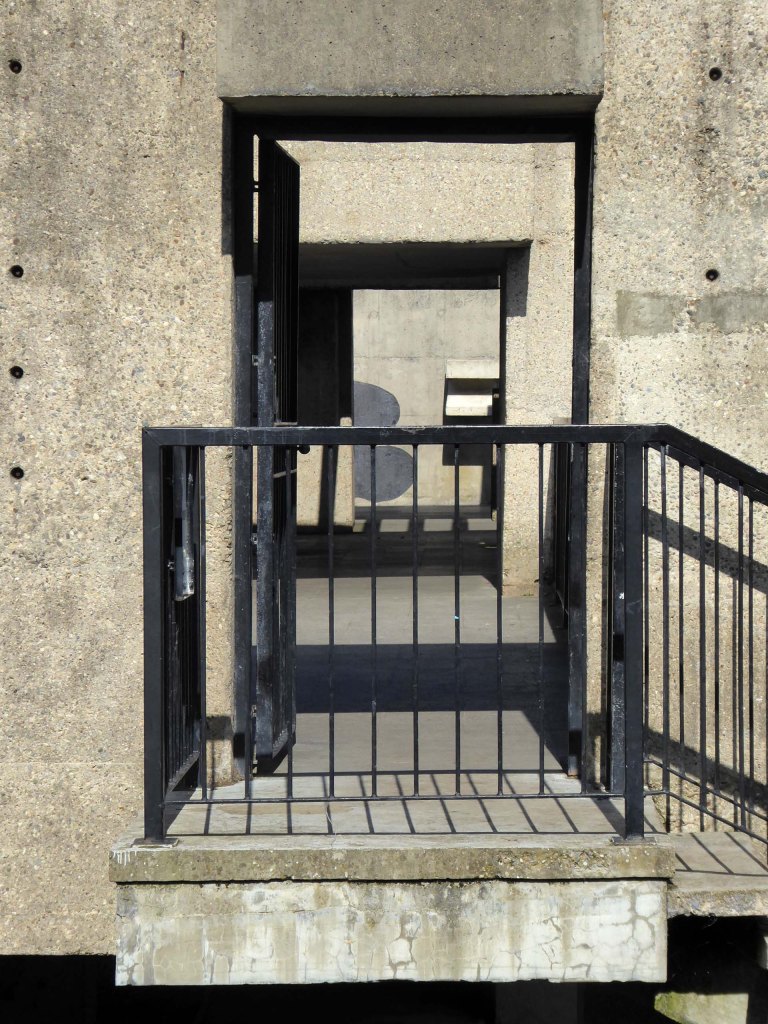
It was restored in 2009 with the help of a Heritage Lottery Grant of £336,000. The restoration restored the south side stairway – the other had not been part of the original design, reset the cobbles in the surrounding area and reinstated the two murals on the north and south walls.

A metal gate restricting access at night time to the upper level has been introduced, and the original lighting scheme, out of action since the mid 1970s, has been reinstated.

Peterlee Gov

Victor and me do have previous – a visit to the then Civic Centre Rates Office

Along with the Renold’s building mural at UMIST.

I jumped the X9 bus and headed for Peterlee – walked the wide open streets in search of signs.

There were no signs.

I found it instead by chance and instinct.

Here it is.

Peterlee was to be the miners’ capital of the world and was named after the well-known miner and councillor Peter Lee. 

Architect Berthold Lubetkin’s plans included everything from football pitches and tennis courts, to a rock-climbing centre and a zoo. However, to Berthold Lubetkin’s frustration, the National Coal Board opposed his plan and, after numerous failed attempts to agree on the siting of housing, Lubetkin quit the project in 1950. He later gave up architecture altogether and took up pig farming.

It remains a grand place to live it seems, tidy housing set in rolling greenery.

There are no longer coal mines or miners.

Newcastle to Amble

Well here we are heading north for a fourth day – having bidden farewell to Hull, Scarborough and Redcar.

Passing a few familiar sights.

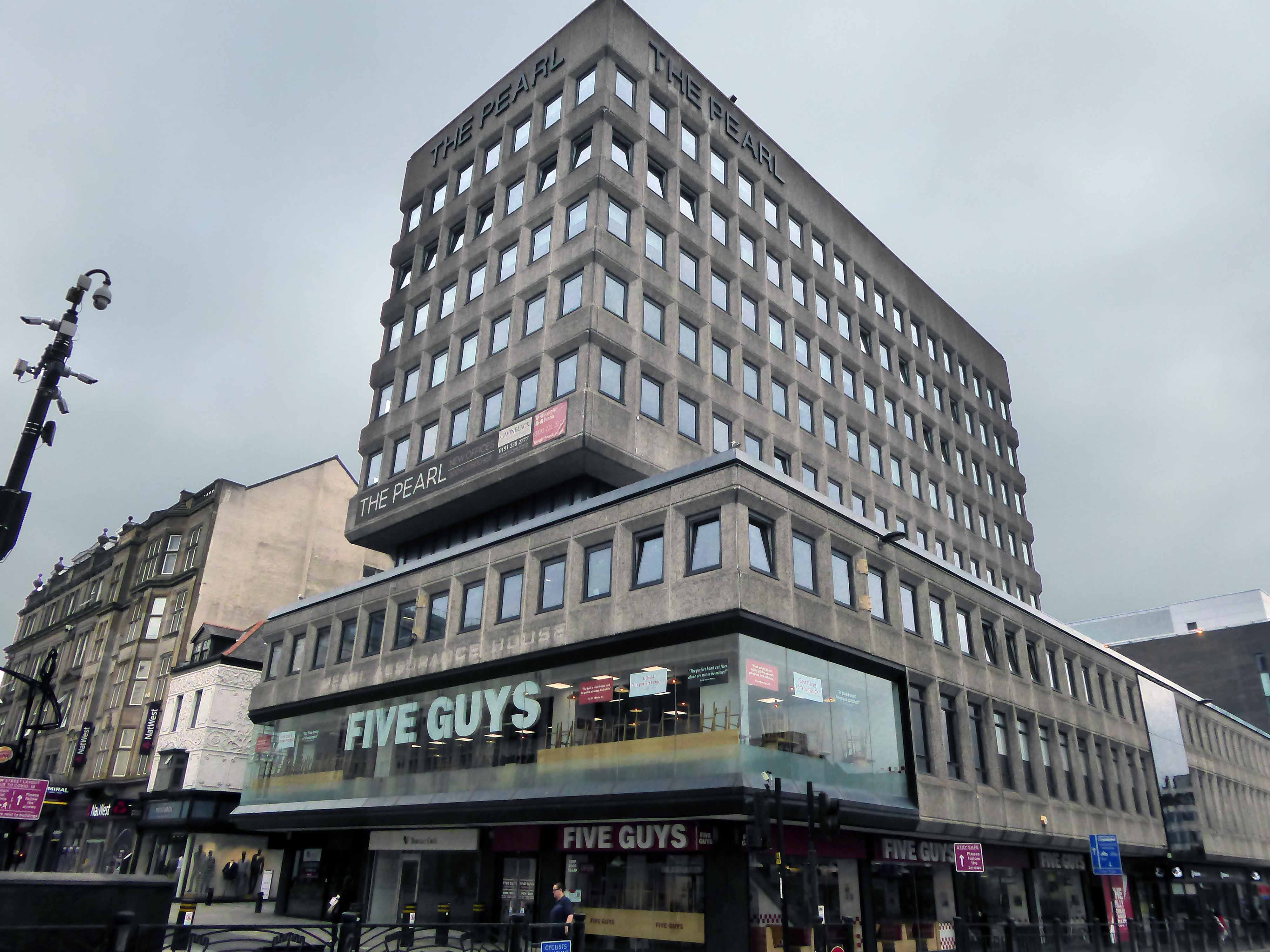
Pearl Assurance House Architect: T P Bennetts

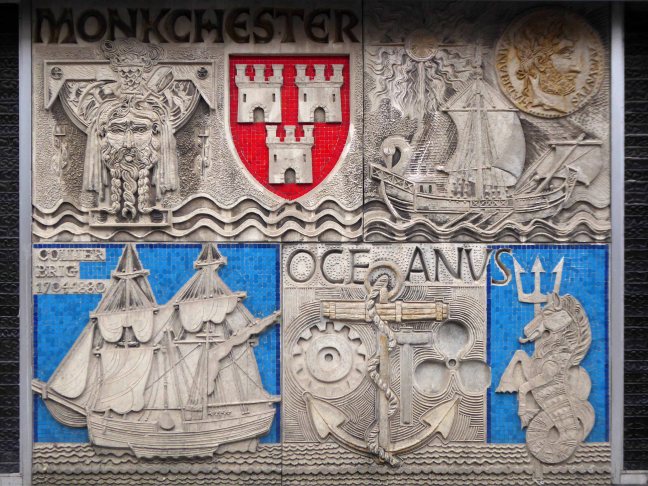
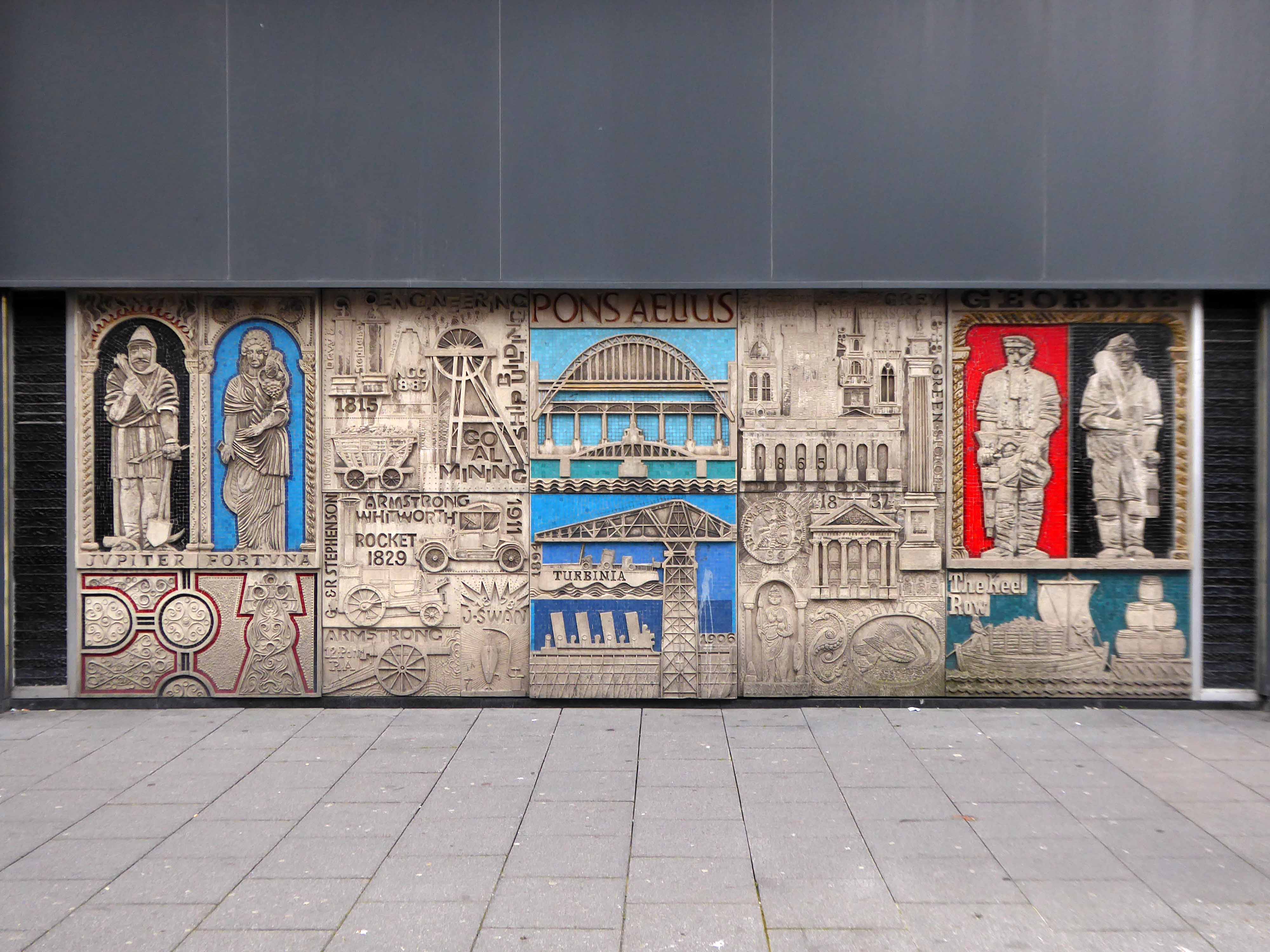
BHS Murals Joyce Pallot and Henry Collins.

The building was originally developed by C&A and it is thought that funding for the reliefs might have been provided by the store and/or Northern Arts. It became BHS which subsequently closed, the building is now occupied by Primark, C&A estates still own the site. 

Civic Centre entrance to the Council Chamber.

Taking a bold leap into the unknown I left the city centre, unwisely following unfamiliar roads, predictably becoming very lost.

I sought assistance from a passing fellow cyclist, very kindly he guided me to Tynemouth, following a mysterious and circuitous course across the undulating terrain – thanks.

The city quickly becomes the seaside with its attendant retail bricolage.

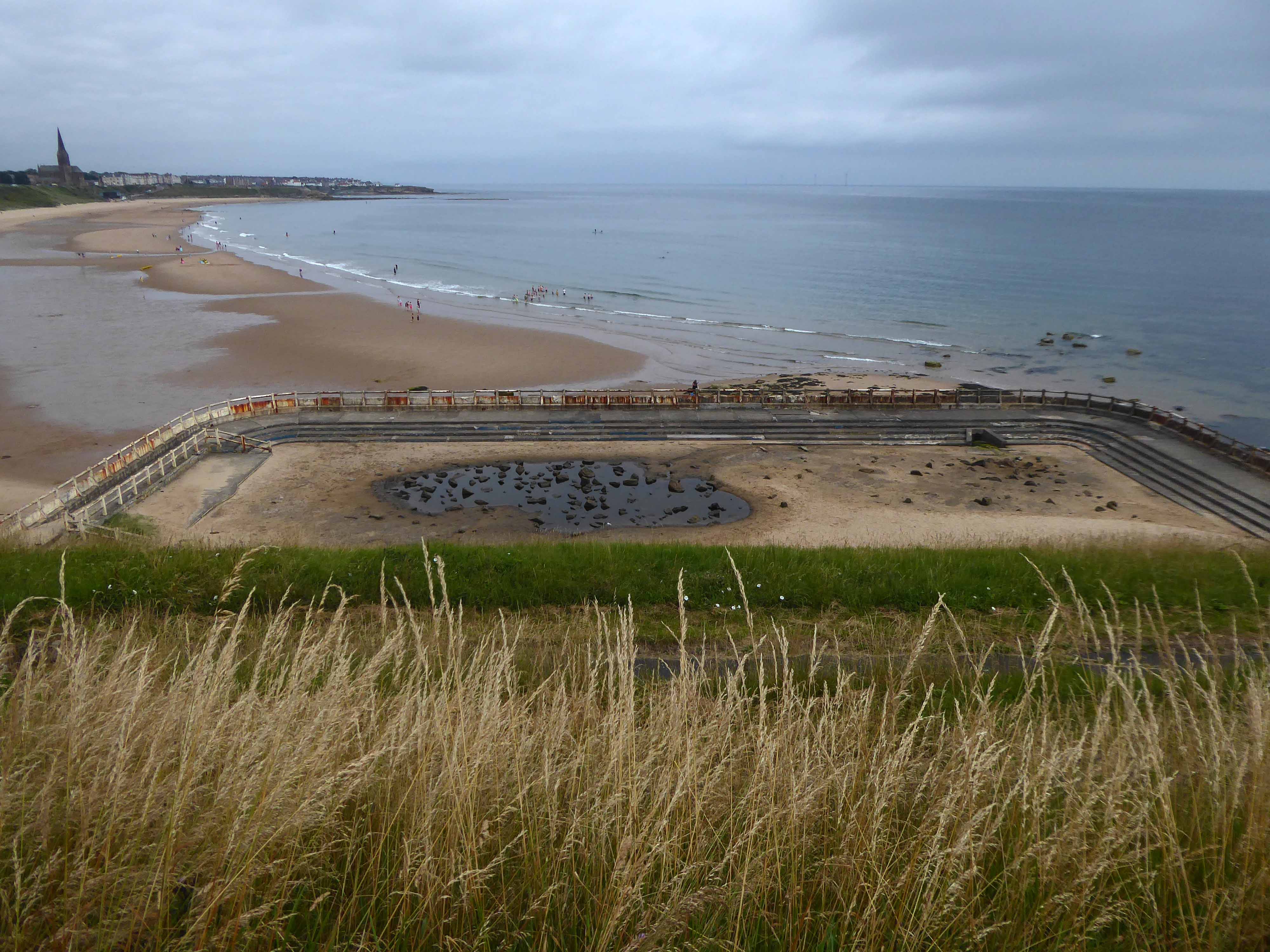
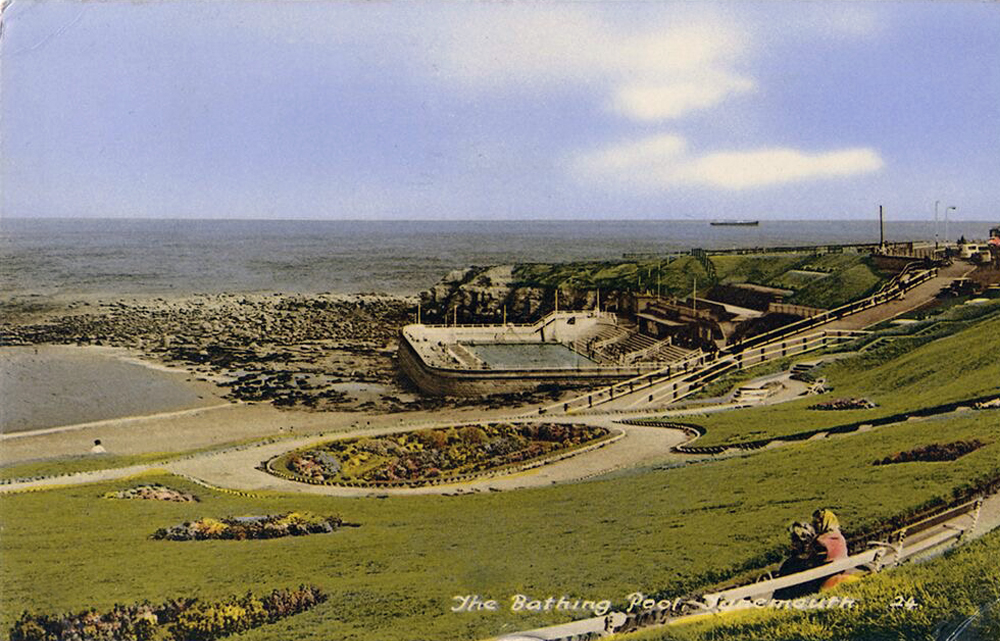
An all too familiar redundant Lido – opened in 1925 and closed in the mid 90’s – but a Friends Group aims to breathe new life into the site.

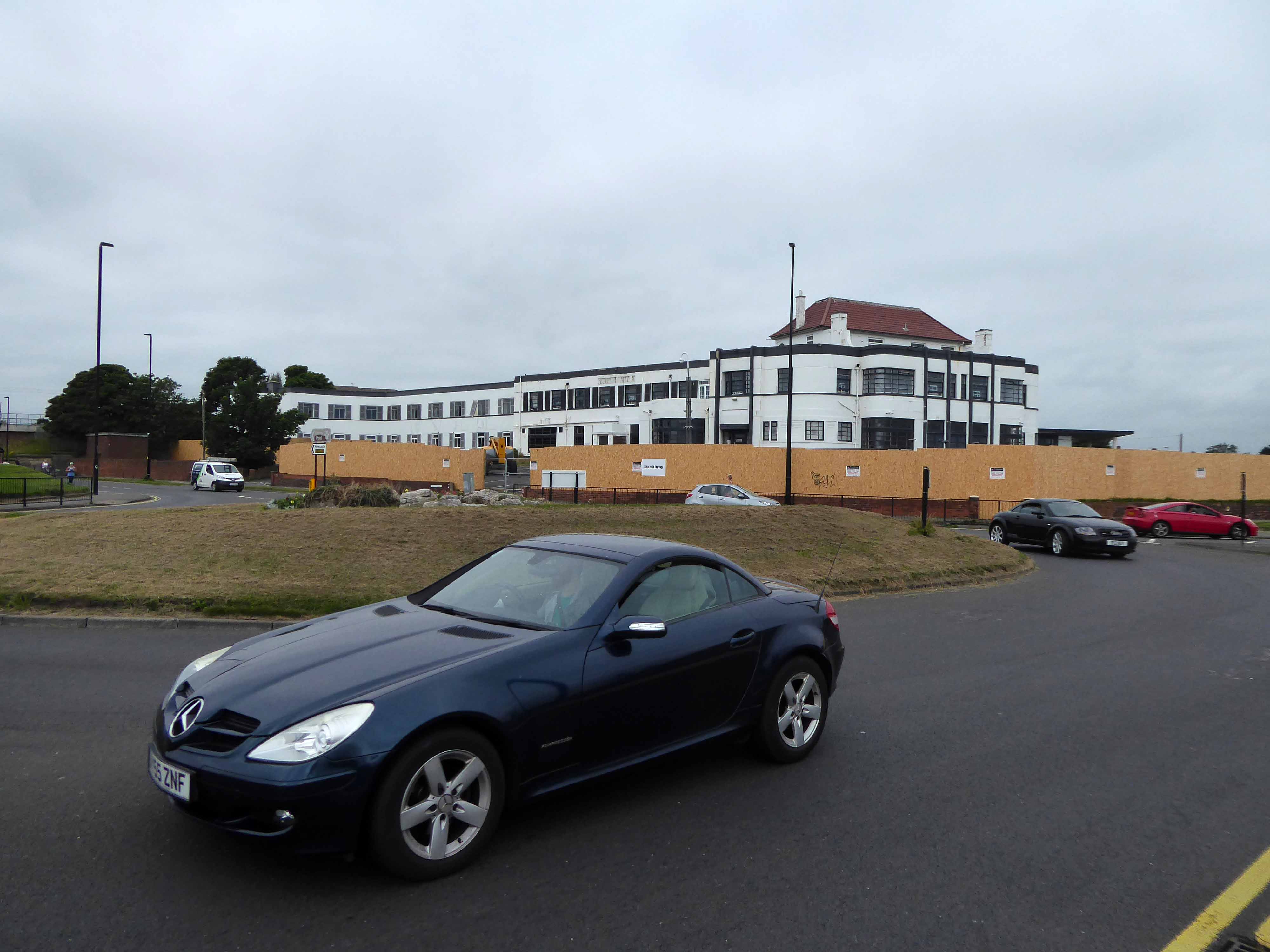
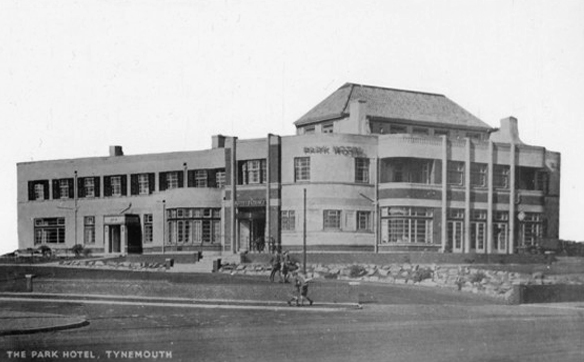
The Park Hotel built in the 1930’s and recently refurbished has been bought by The Inn Collection Group.

Chronicle Live

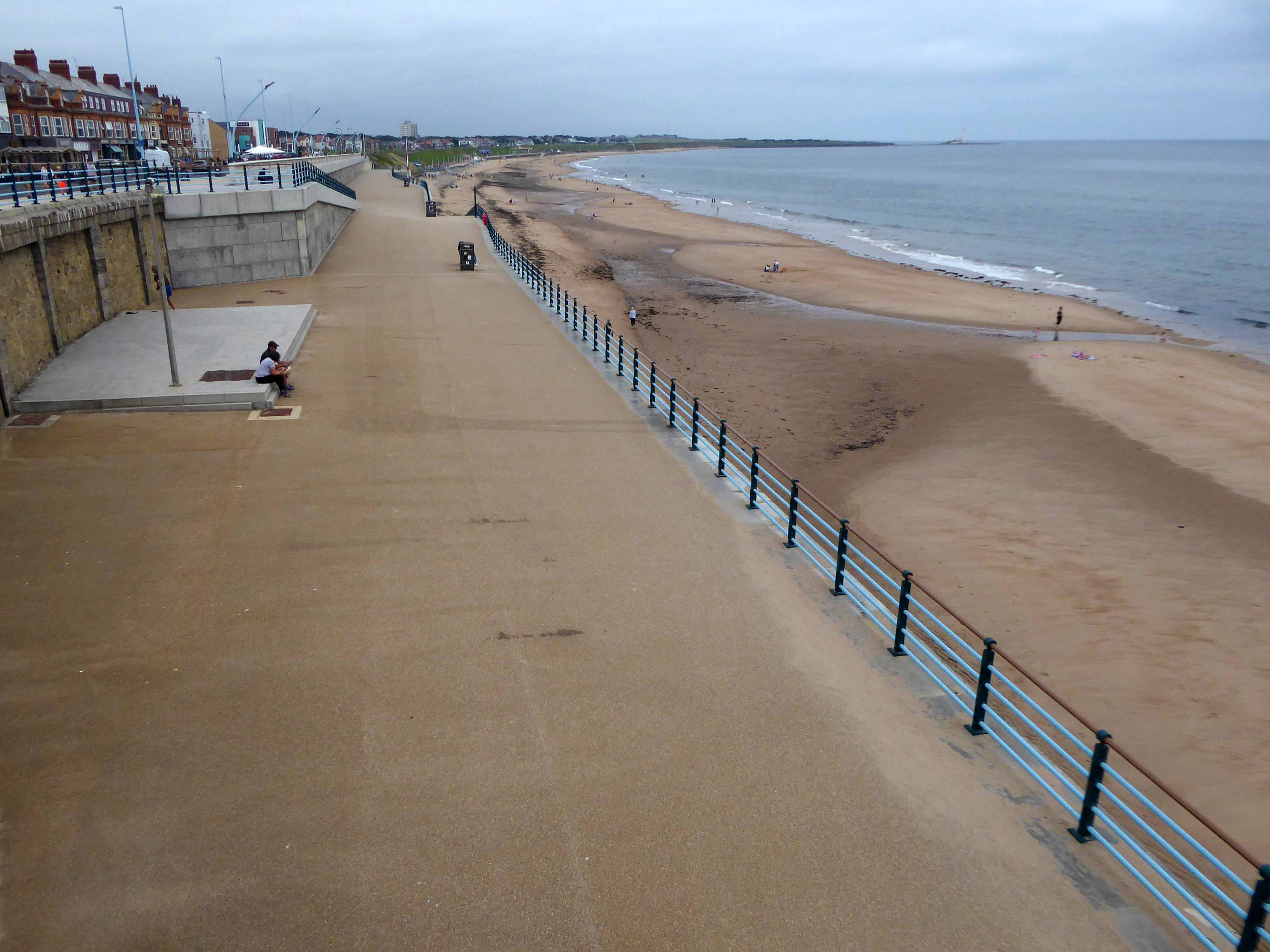
Much has been done to improve the promenade at Whitley Bay

The Whitley Bay Seafront Master Plan sets out our ambitious plans to regenerate the coastline between St Mary’s Lighthouse and Cullercoats Bay.

The proposals are a mix of council and private sector developments and involve more than £36m of new investment at the coast.

North Tyneside Gov

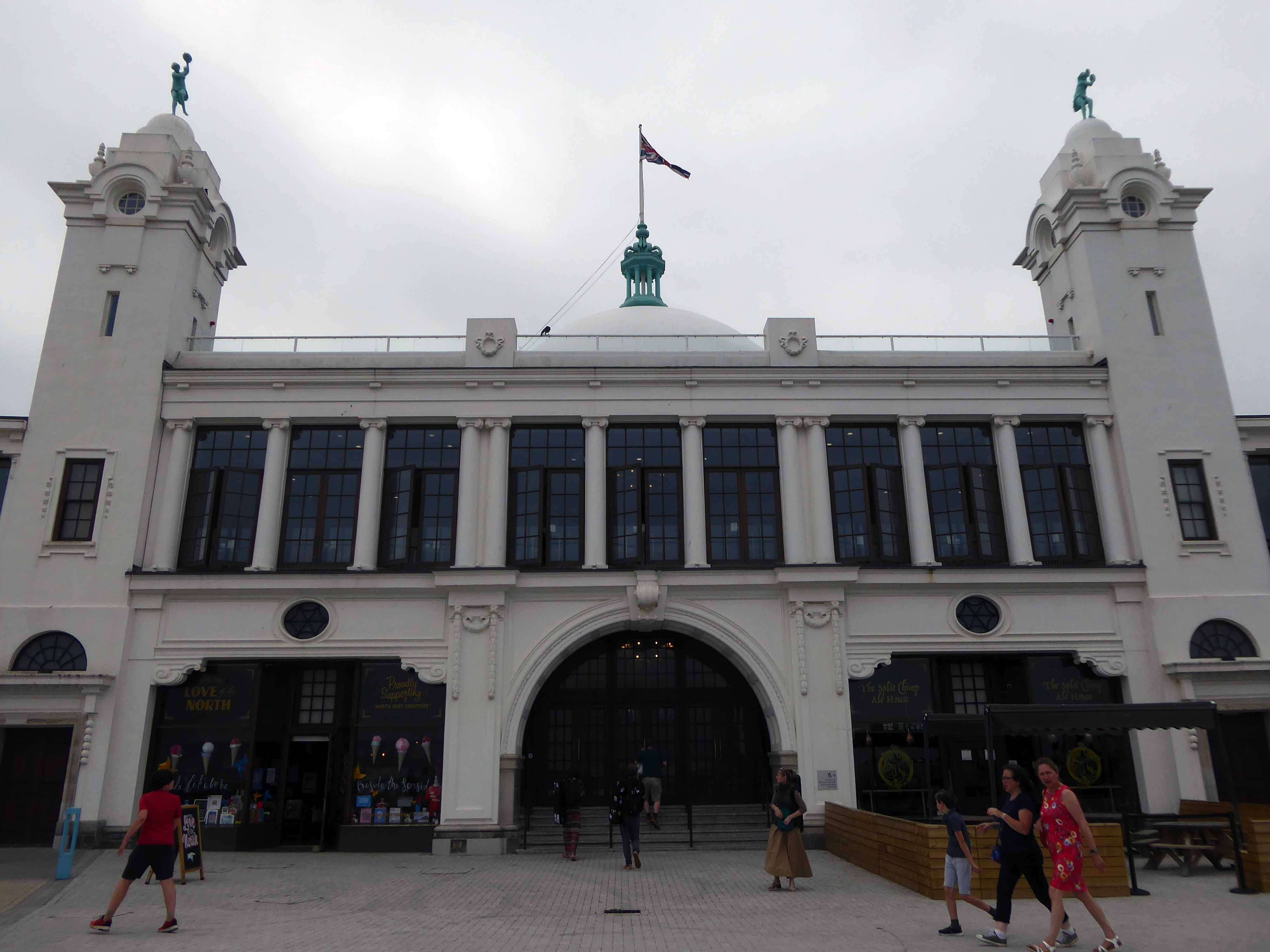
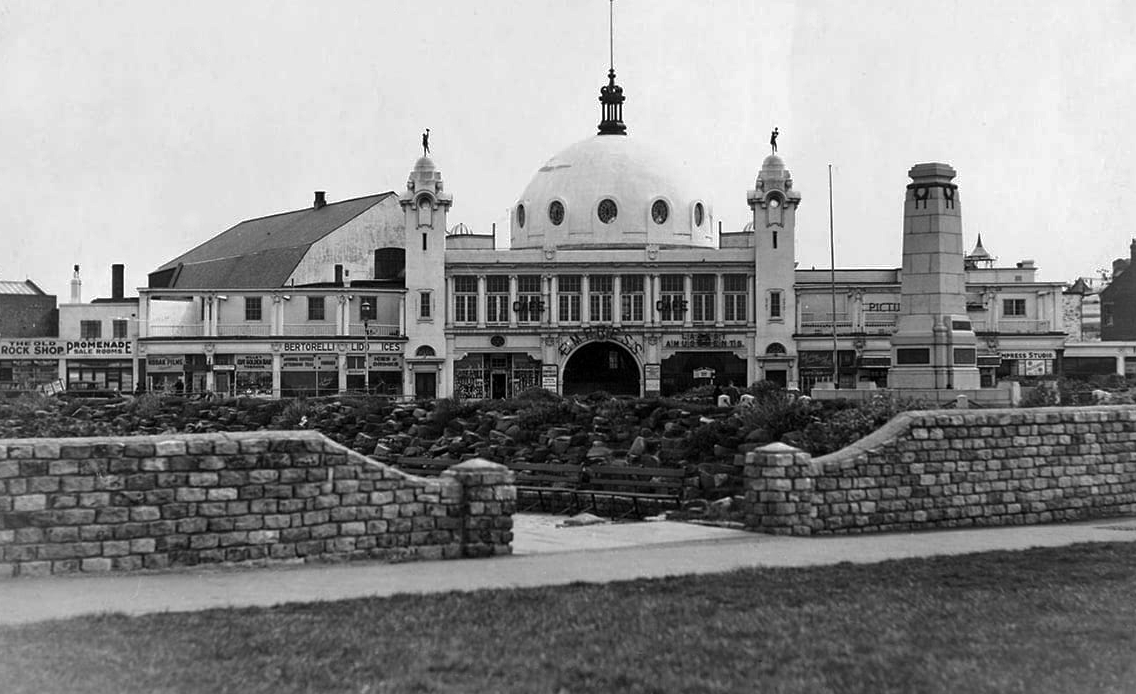
In 1908 the Spanish City was officially opened.

A simple three-arched entrance had been built facing the seafront and the area was now completely enclosed within a boundary. In 1909, large rides appeared, including a Figure Eight rollercoaster and a Water Chute. Elderton and Fail wanted to make a statement and create a new, grand entrance to the fairground. They hired the Newcastle architects Cackett& Burns Dick to survey the site and begin drawing up plans for new Pleasure Buildings.

Building began in February 1910 and the construction was completed by builders Davidson and Miller 60 days later. The use of the revolutionary reinforced concrete technique pioneered by Francois Hennebique was perfect for the job, being cheap and fast. The Dome and surrounding buildings – a theatre and two wings of shop units – opened on 14 May 1910 to great fanfare. Visitors marvelled at the great Spanish City Dome, the second largest in the country at the time after St. Paul’s Cathedral in London, which provided a spectacular meeting place with uninterrupted views from ground level to its ceiling, 75 feet above.

Telegraph-wire cyclists, acrobatic comedians, singing jockeys, mermaids, they all appeared at the Spanish City during its first decade. One of the wings hosted the menagerie, where visitors could see hyenas, antelopes and tigers! This was converted into the Picture House cinema in 1916.

Spanish City

Eventually the Master Plan will be fully implemented.

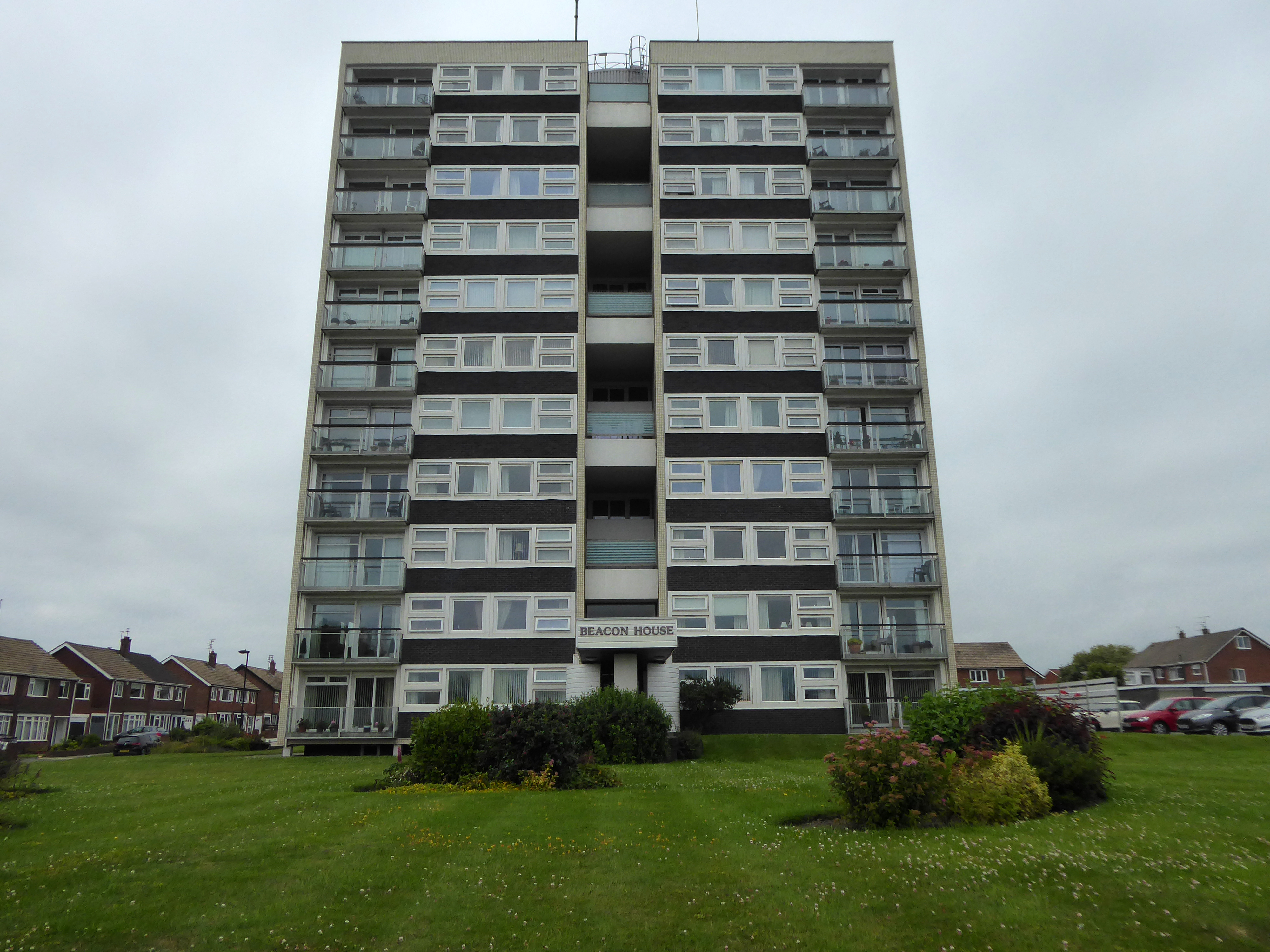
Beacon House beckoned and I took time to have a good old look around.

Ryder and Yates 1959

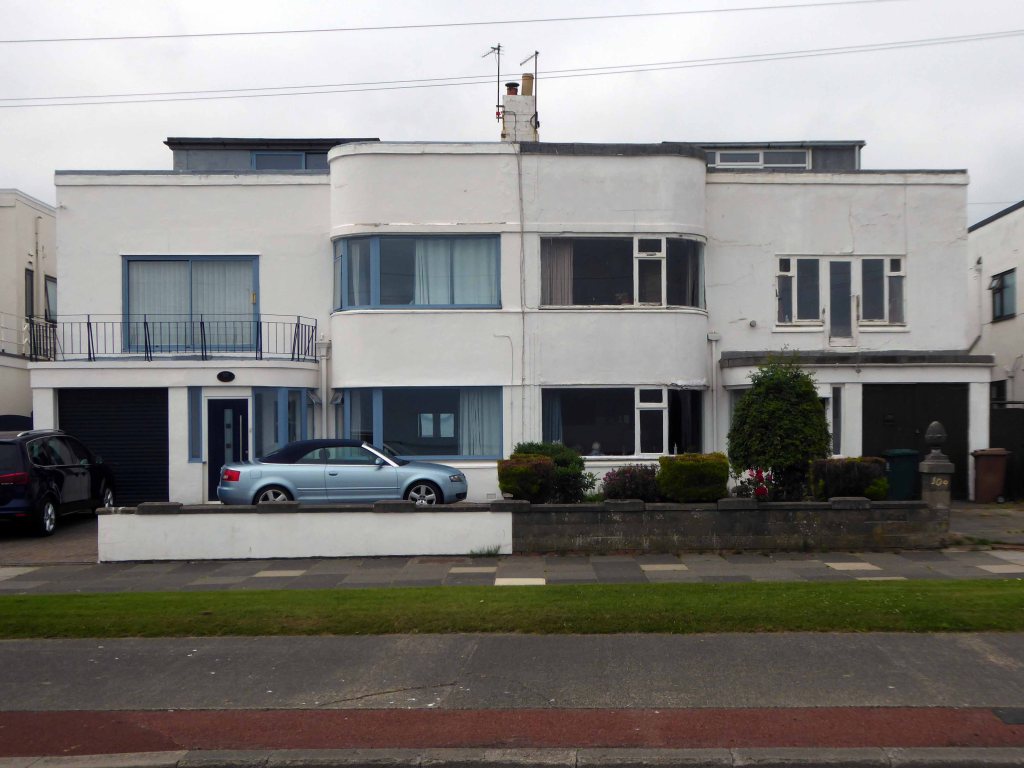
A little further along, a selection of Seaside Moderne semis in various states of amendment and alteration.

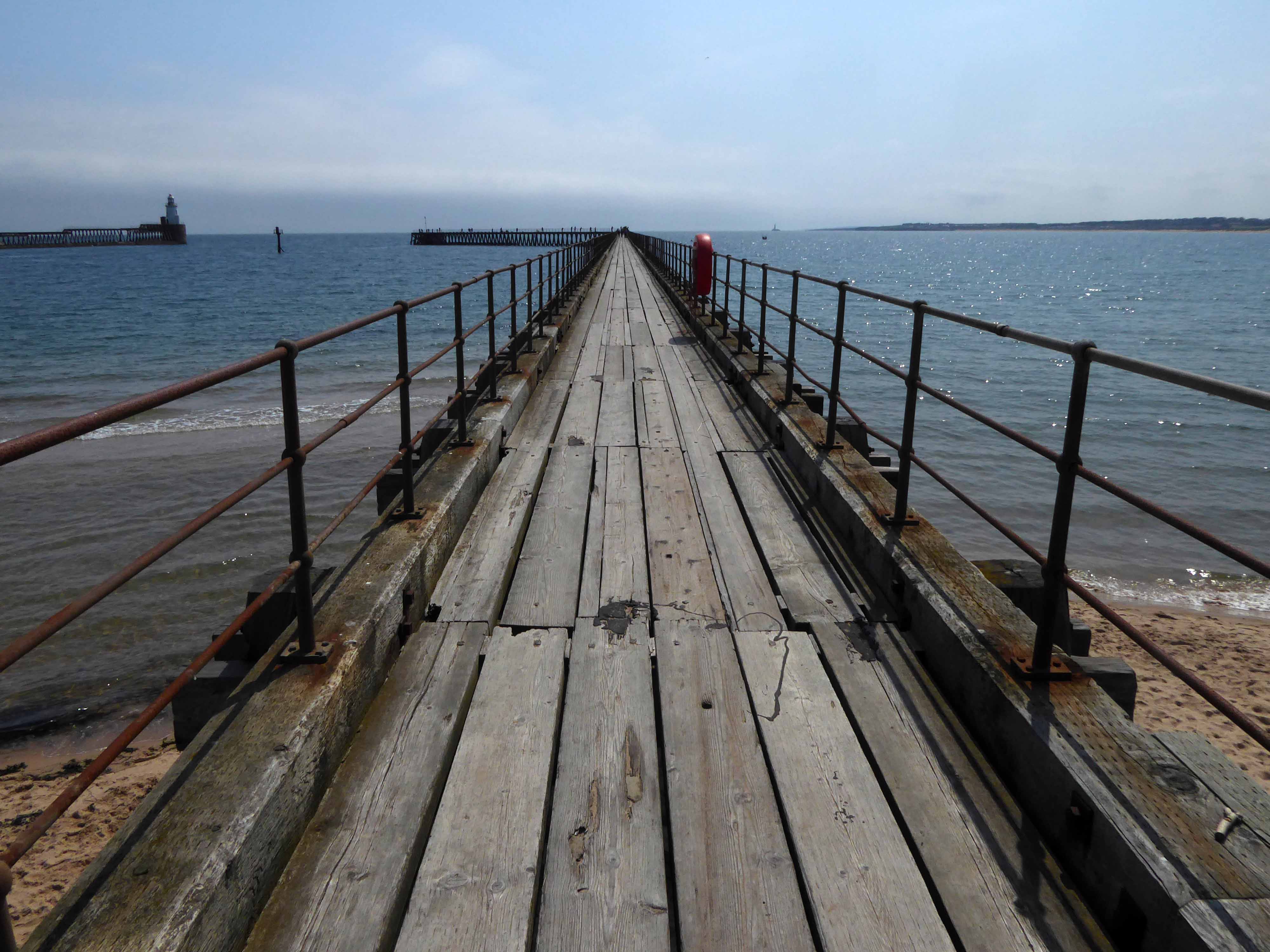
Before I knew it I was in Blyth.

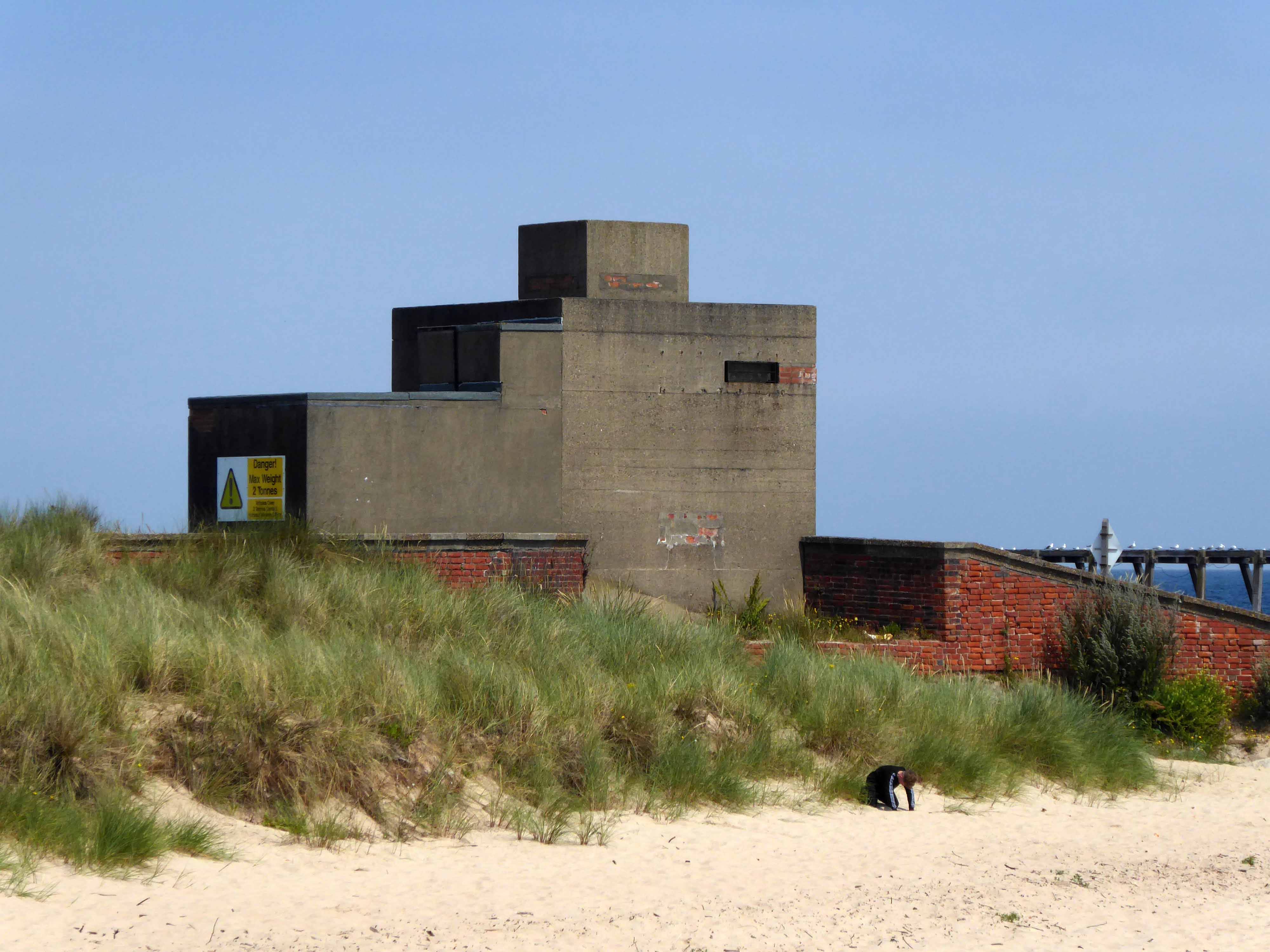
The town edged with military installations

Gloucester Lodge Battery includes the buried, earthwork and standing remains of a multi-phase Second World War heavy anti-aircraft gun battery and radar site, as well as a Cold War heavy anti-aircraft gun and radar site. The battery occupies a level pasture field retaining extensive rig and furrow cultivation.

Historic England

During WW2 Blyth Harbour was used as a major submarine base and that combined with the heavy industry in the area it made a very good target for the Luftwaffe.

Derelict Places

827 men of the 225th Antiaircraft Artillery Searchlight Battalion of the U.S. Army, arrived at this location in early March 1944 and were attached to the 30th British AAA Brigade. Here they sharpened their skills in the high-altitude tracking of aircraft.

Skylighters

I headed into town.

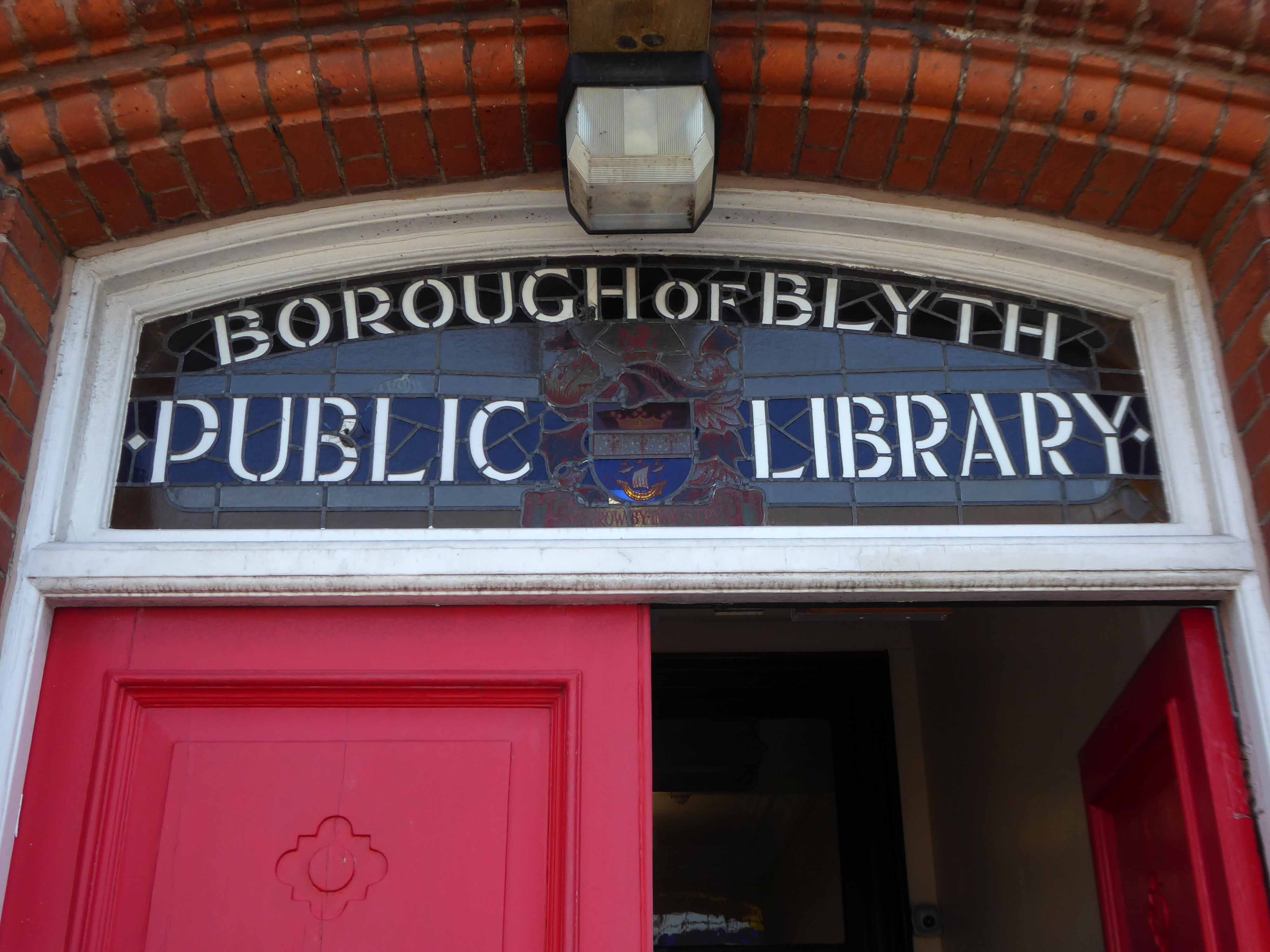
Uncovered this gem in the library porch.

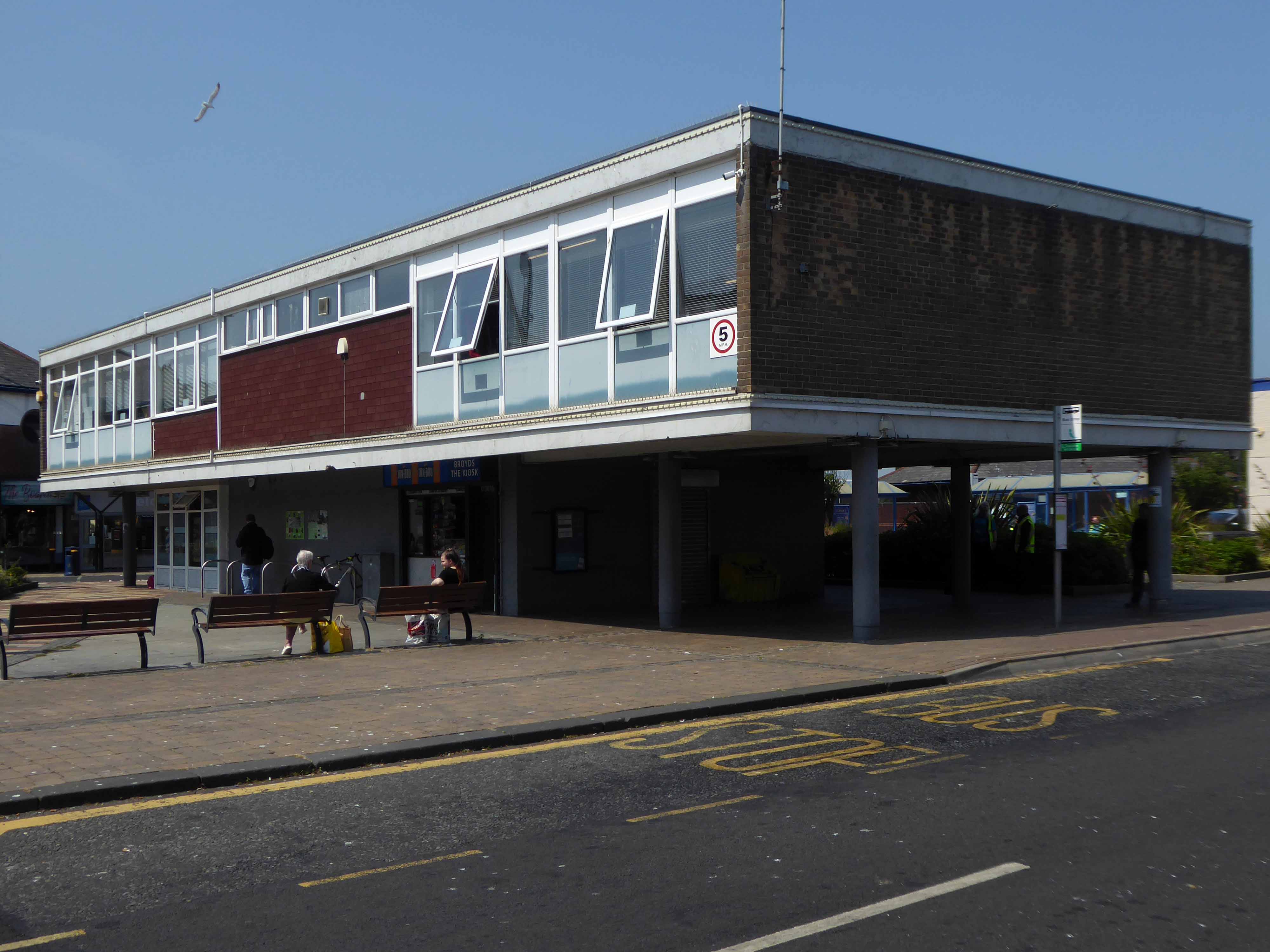
Stopped to admire the bus station.

And found a post box marked Post Box.
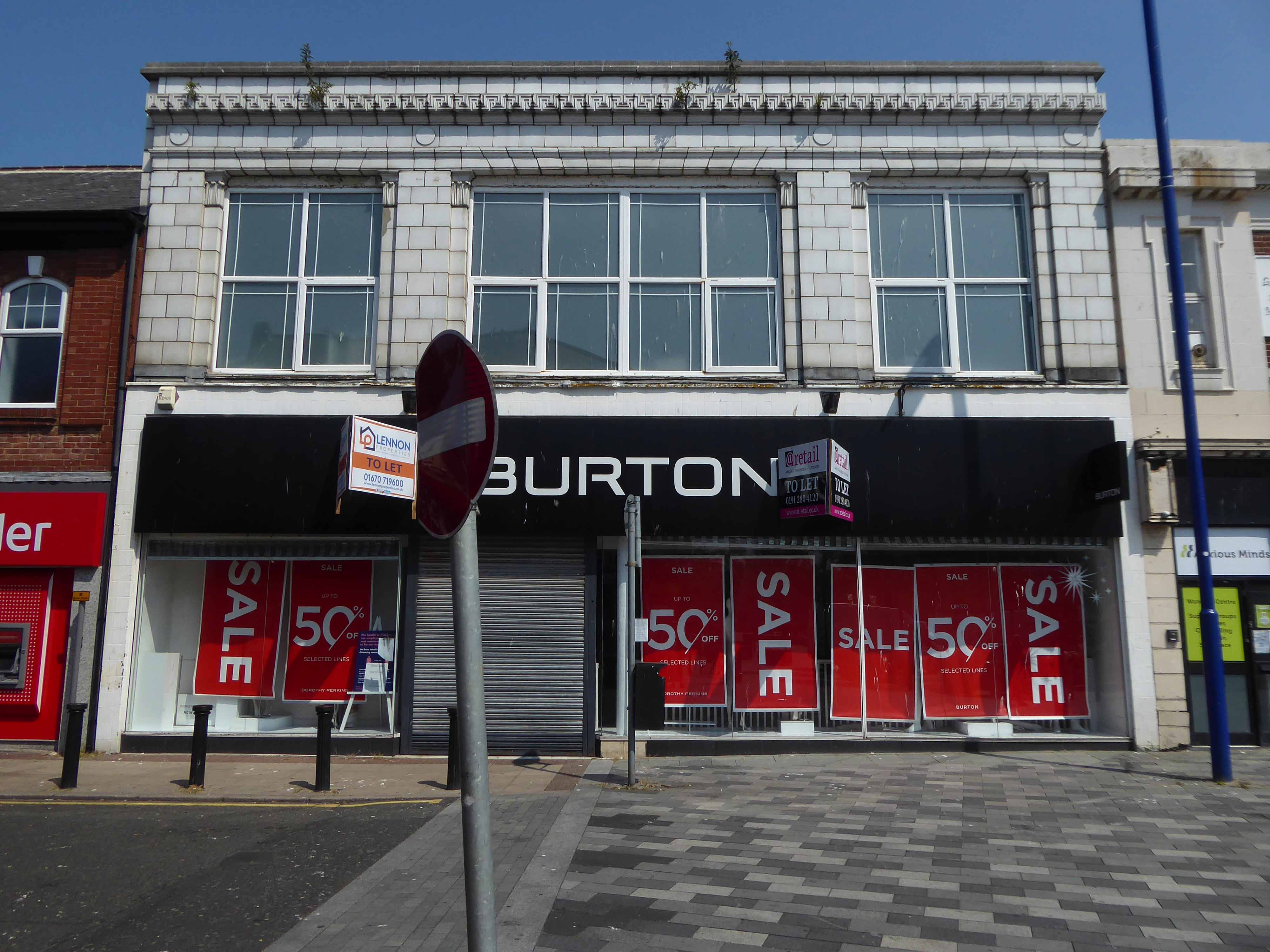
Burton’s gone for a Burton.

The cycle route took me off road along the estuary and under the flyover.
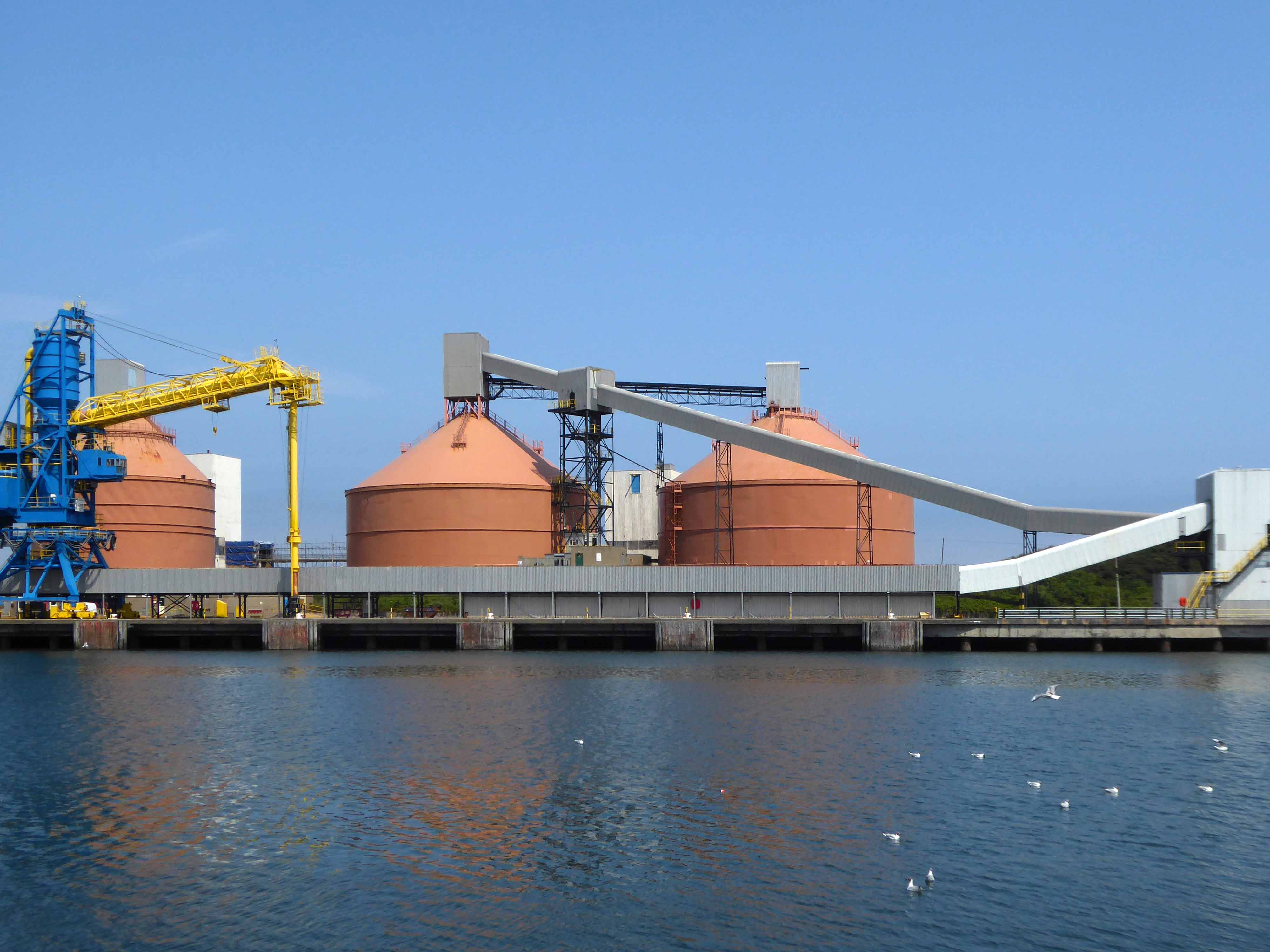
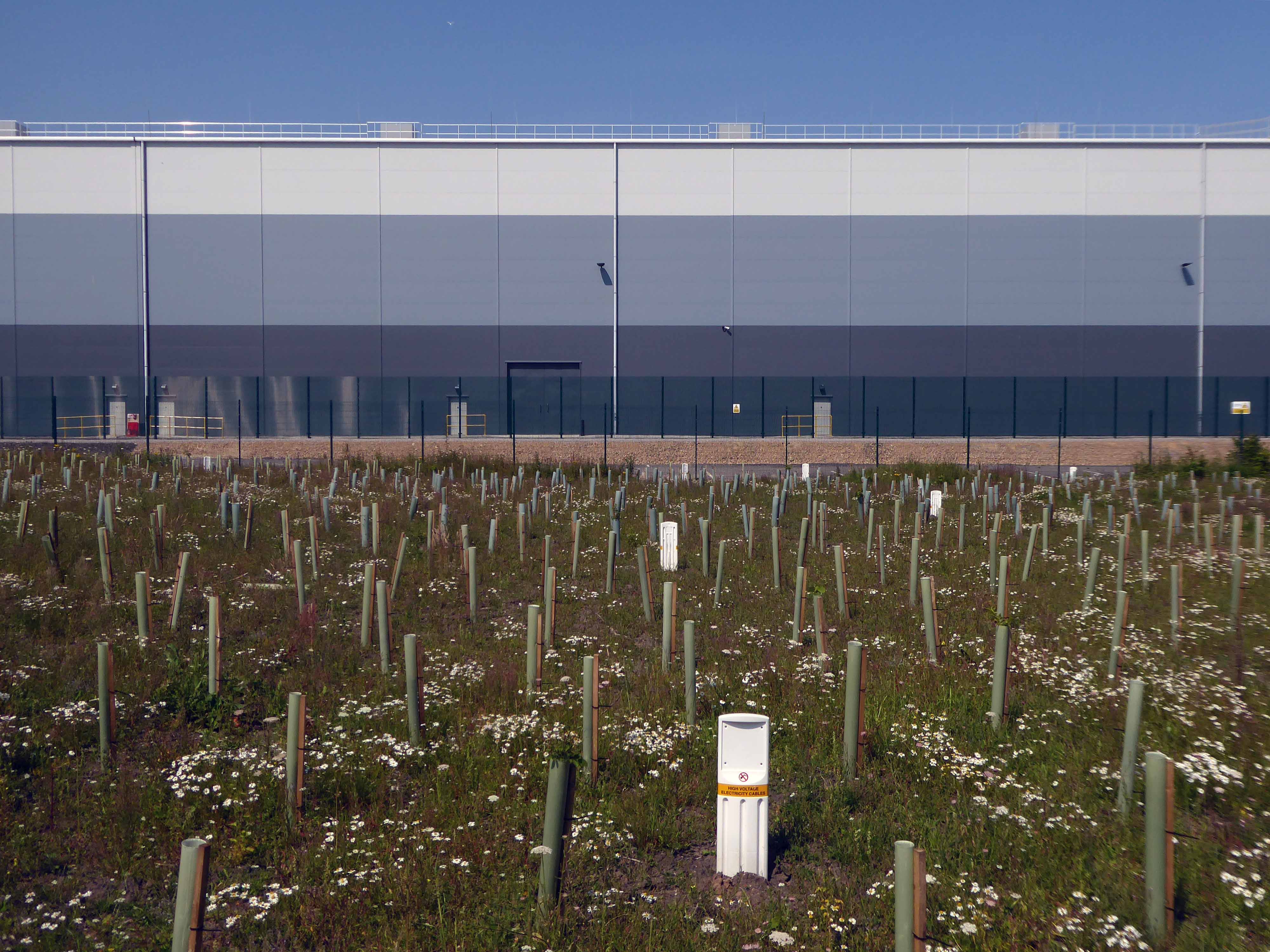
Encountering a brand new factory.

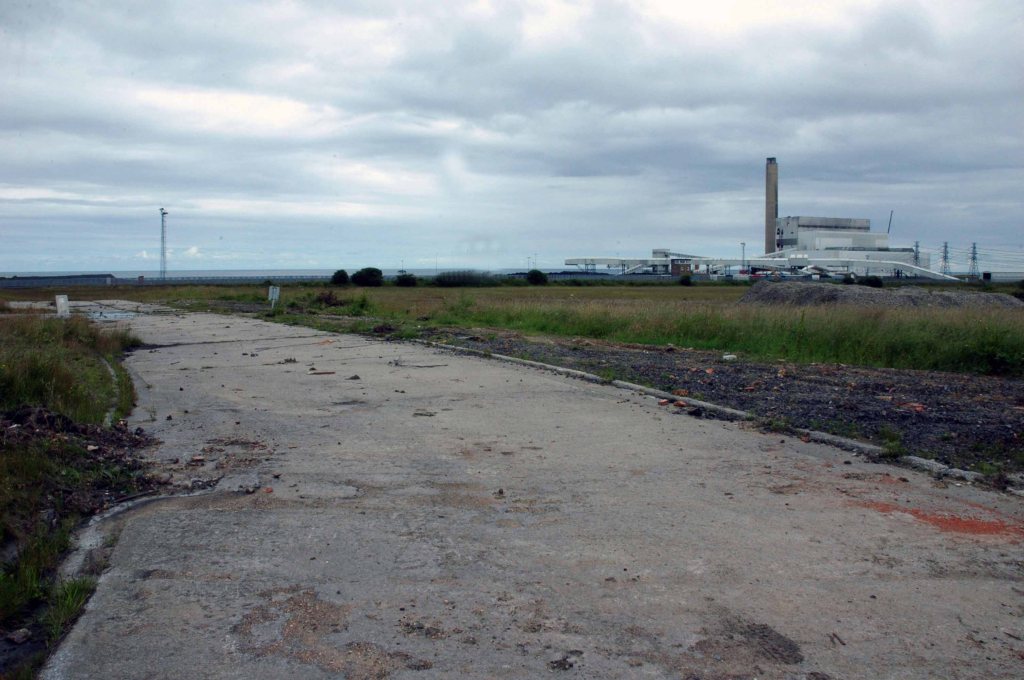
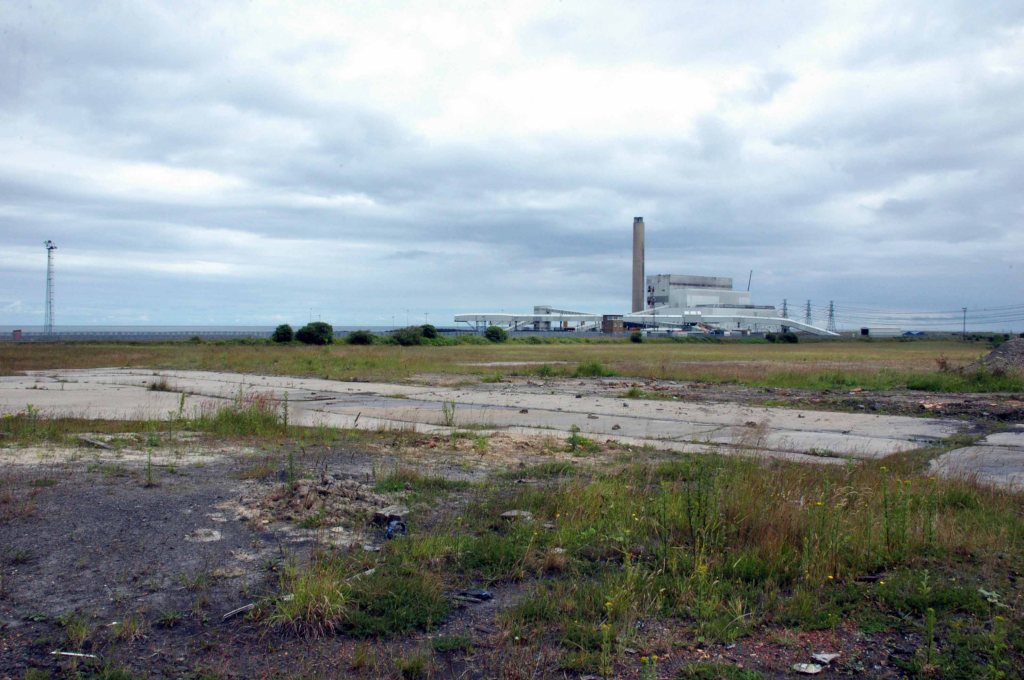
And the remnants of the old power station.

Blyth Power Station – also known as Cambois Power Station, refers to a pair of now demolished coal-fired power stationsThe two stations were built alongside each other on a site near Cambois in Northumberland, on the northern bank of the River Blyth, between its tidal estuary and the North Sea. The stations took their name from the town of Blyth on the opposite bank of the estuary. The power stations’ four large chimneys were a landmark of the Northumberland skyline for over 40 years.

After their closure in 2001, the stations were demolished over the course of two years, ending with the demolition of the stations’ chimneys on 7 December 2003.

Wikipedia

UK battery tech investor Britishvolt has unveiled plans to build what is claimed to be Britain’s first gigaplant at the former coal-fired power station in Blyth in Northumberland.

The £2.6 billion project at the 95-hectare Blyth Power Station site will use renewable energy from the UK and possibly hydro-electric power generated in Norway and transmitted 447 miles under the North Sea through the ‘world’s longest inter-connector’ from the North Sea Link project.

By 2027, the firm estimates the gigaplant will be producing around 300,000 lithium-ion batteries a year.

The project is predicted to create 3,000 new jobs in the North East and another 5,000 in the wider supply chain.

Energy News

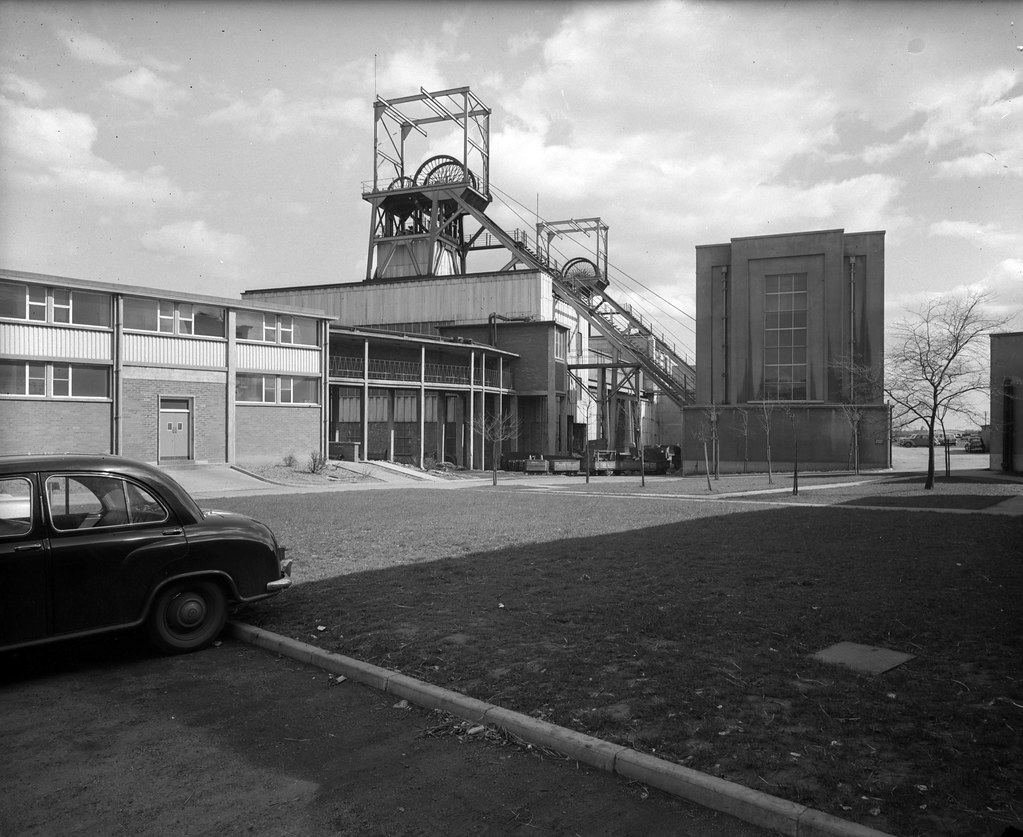
Long gone is the Cambois Colliery, its pit head baths and the buses that bused the workers in and out.

One hundred and eleven men died there.

The route headed along the coast on unmade roads and paths, I bypassed the Lynemouth Pithead Baths – having visited some ten years ago.

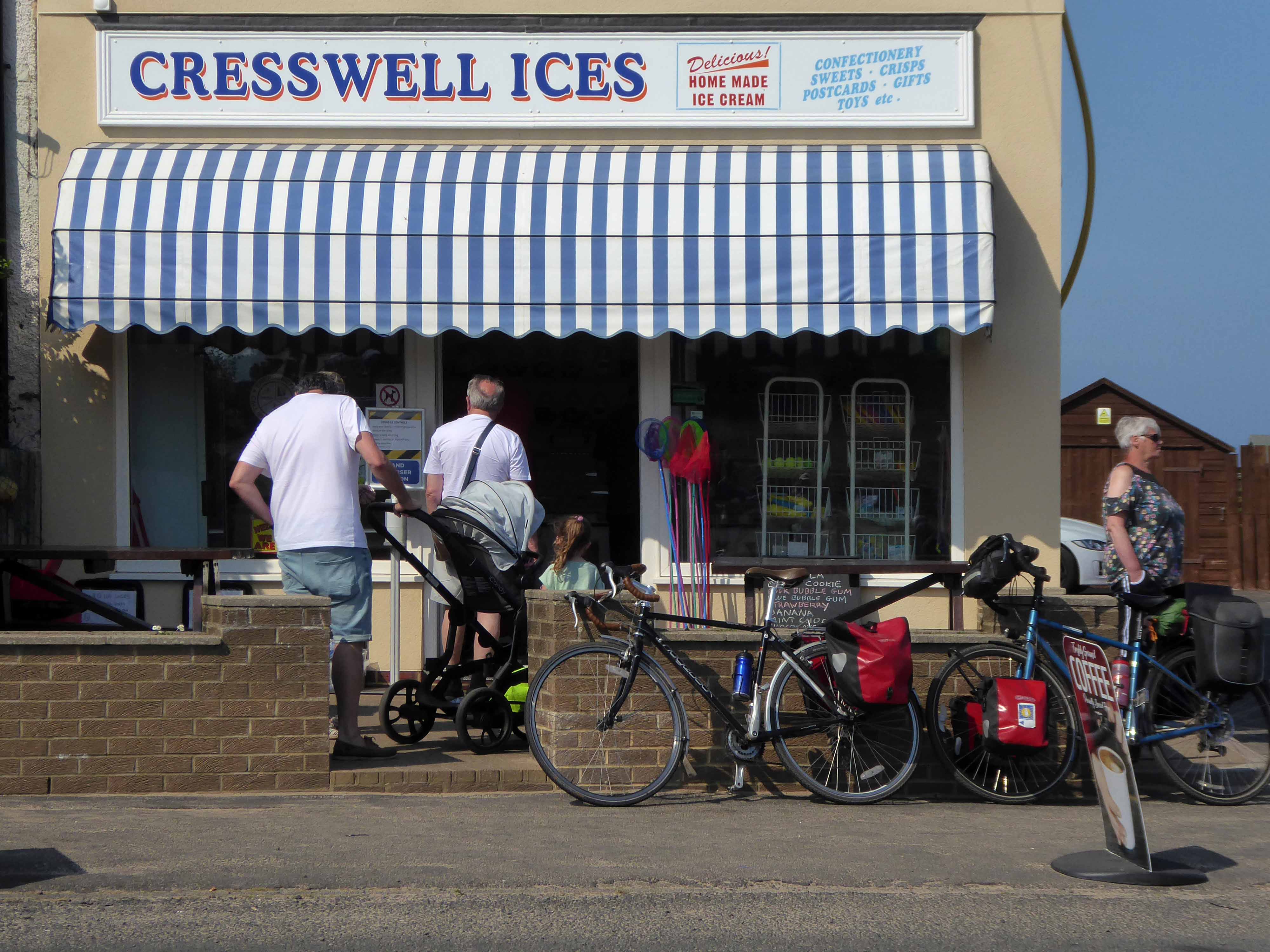
I was delighted to find that Creswell Ices were still in business and my temporary partner Adrian treats me to a tub.

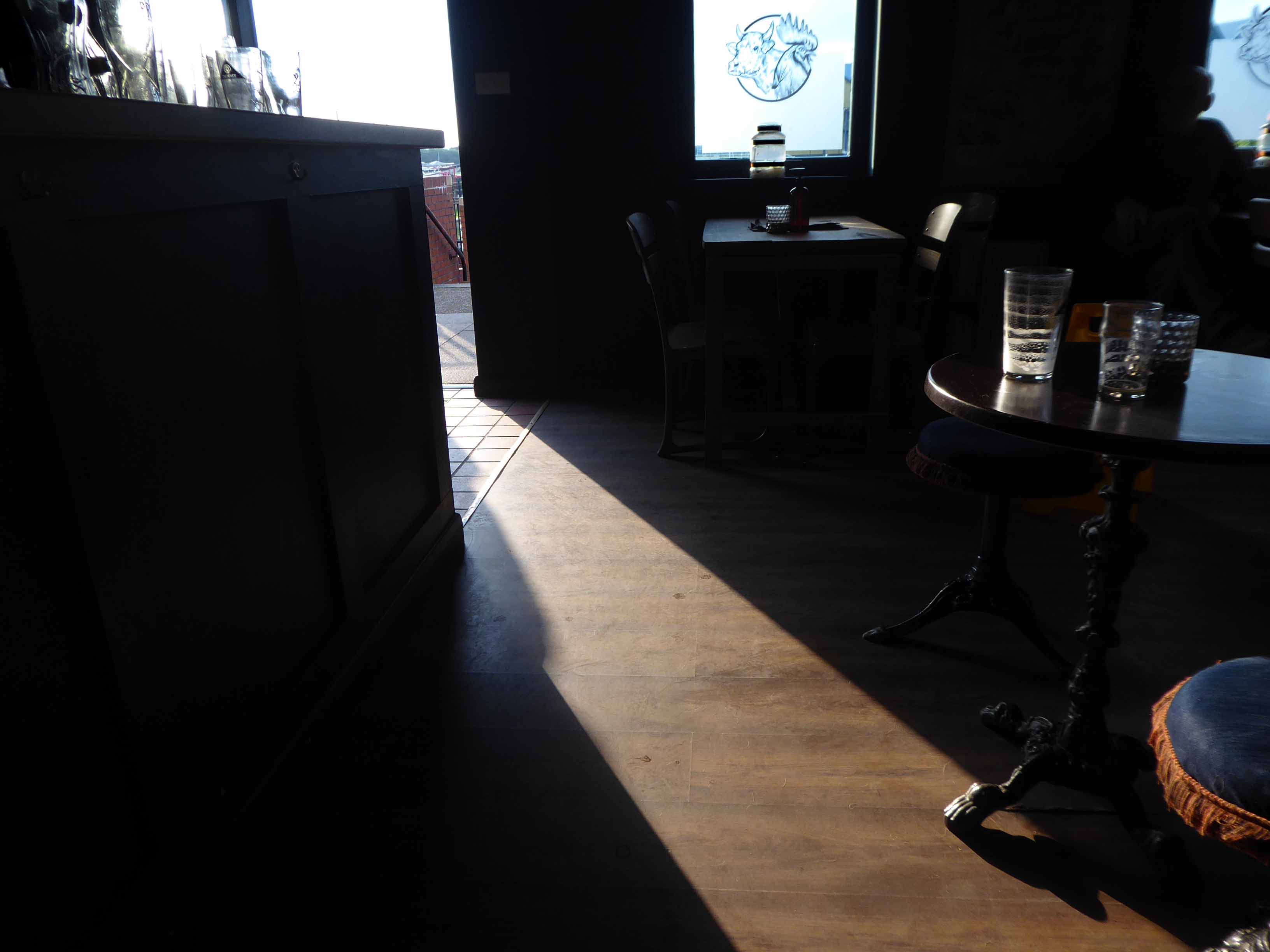
Having arrived in Amble I was delighted to find the Cock & Bull.

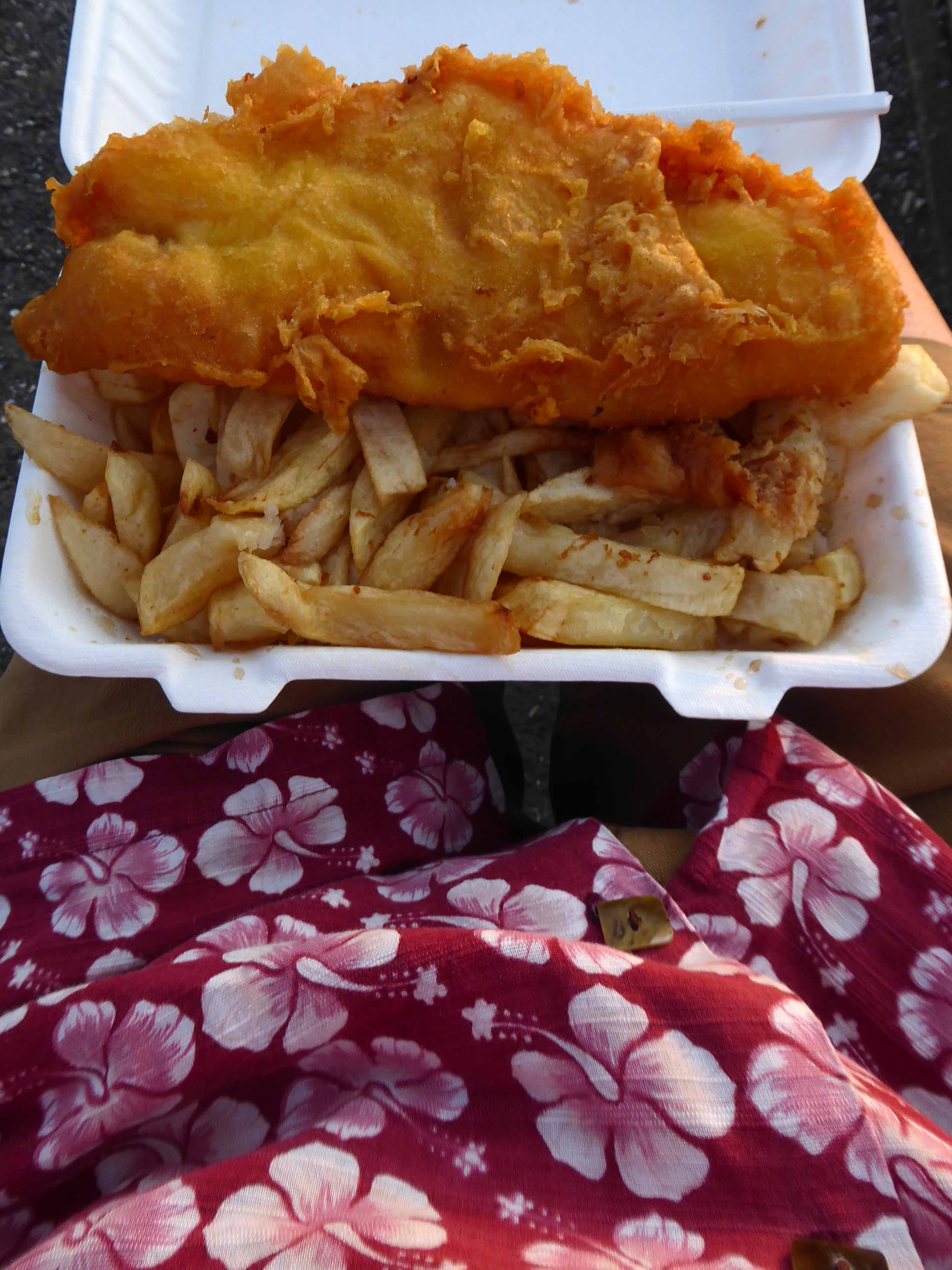
Following a few pints I feasted on fish and chips.

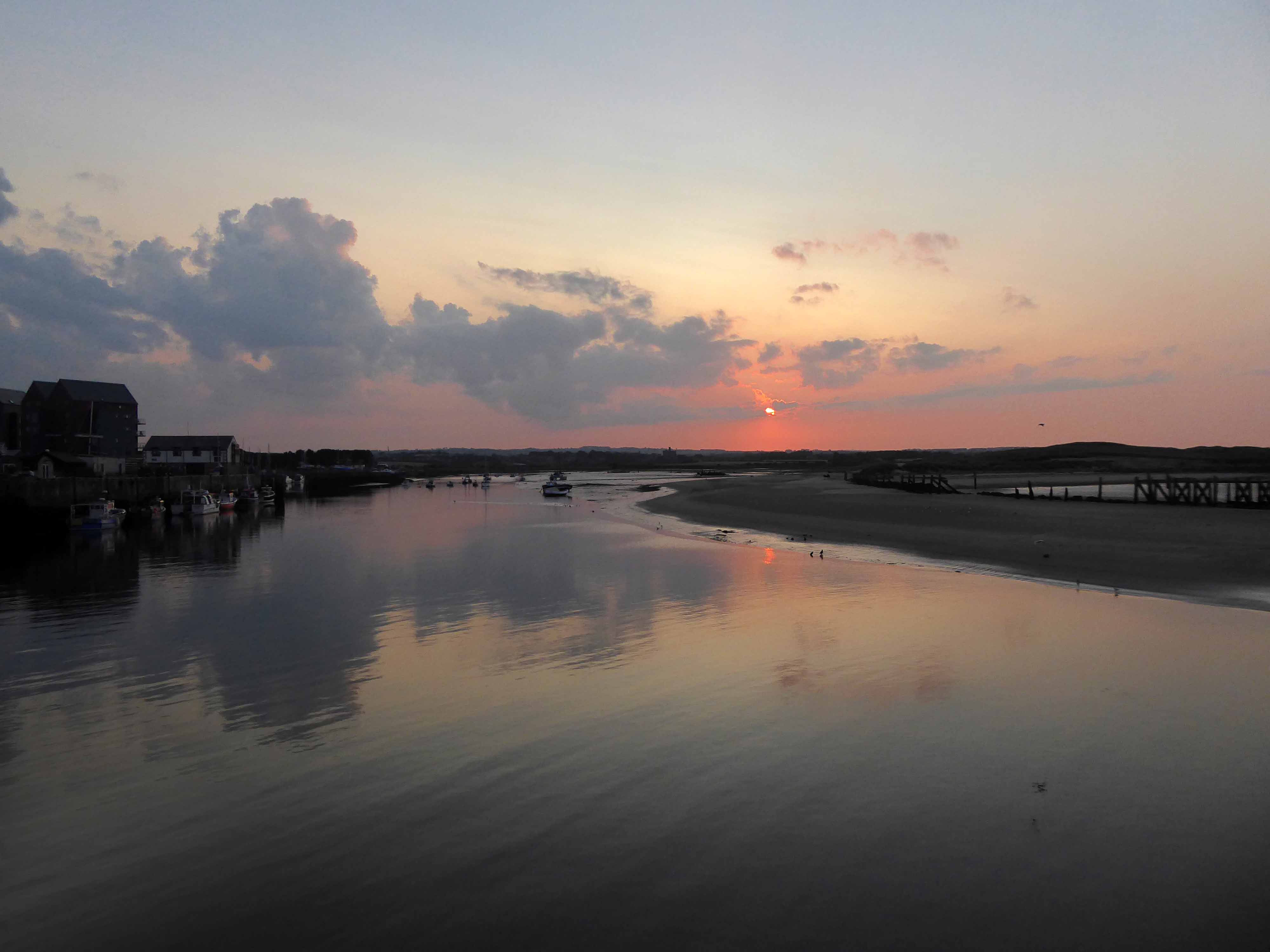
Then watched the sun set over the harbour.
Good night all.

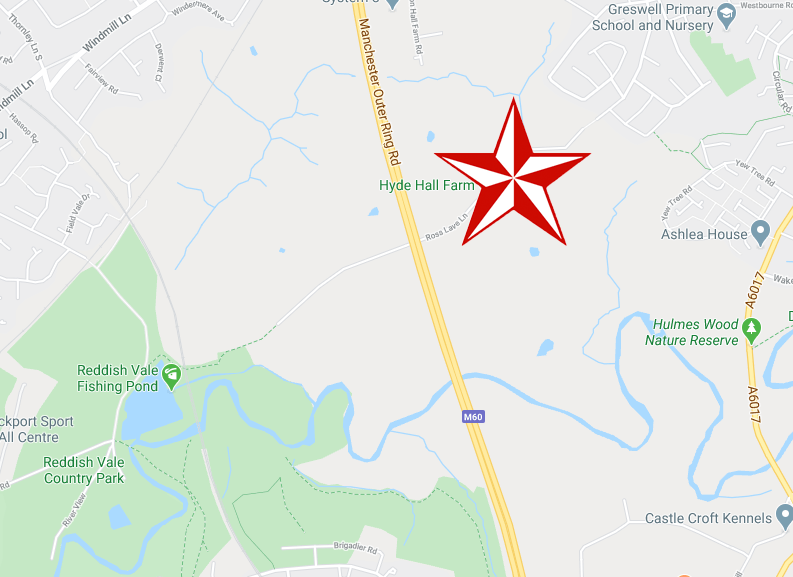
Stables – Hyde Hall Farm

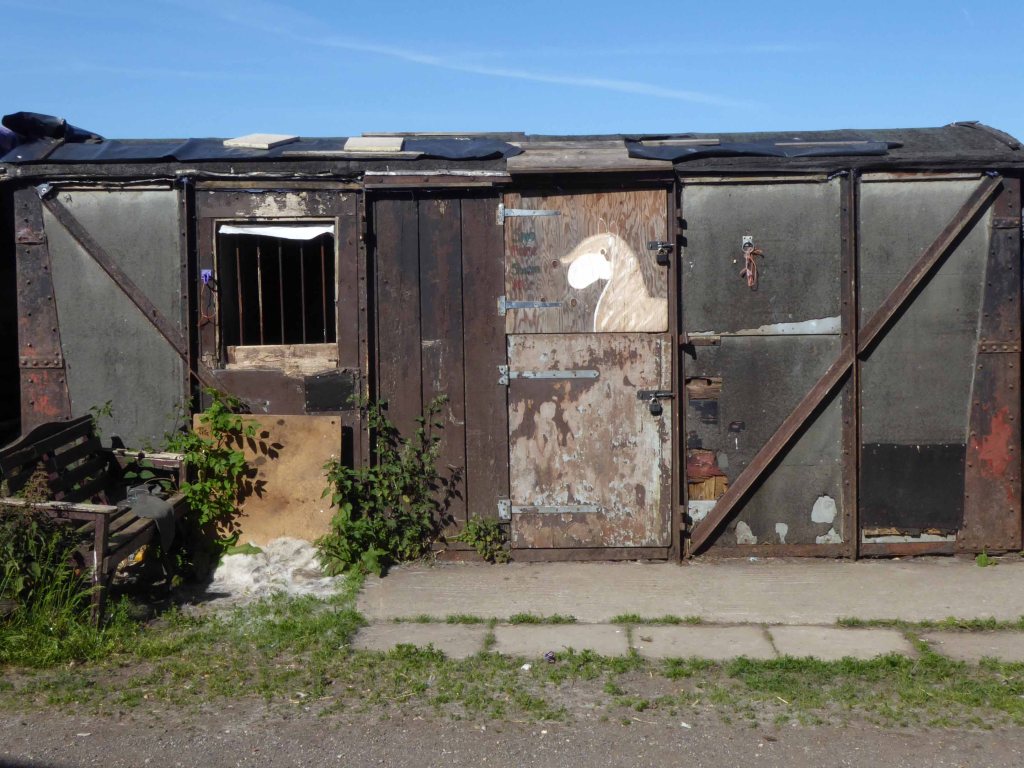
Hyde Hall Farm is Grade II Listed one of the few Tudor model farms in the region, a building of immense importance.

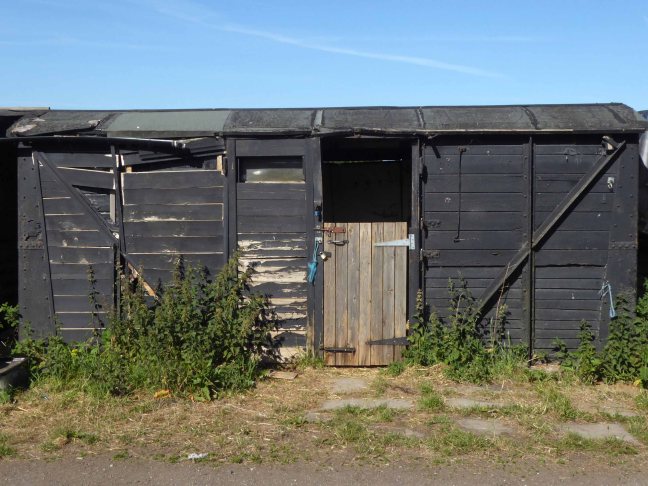
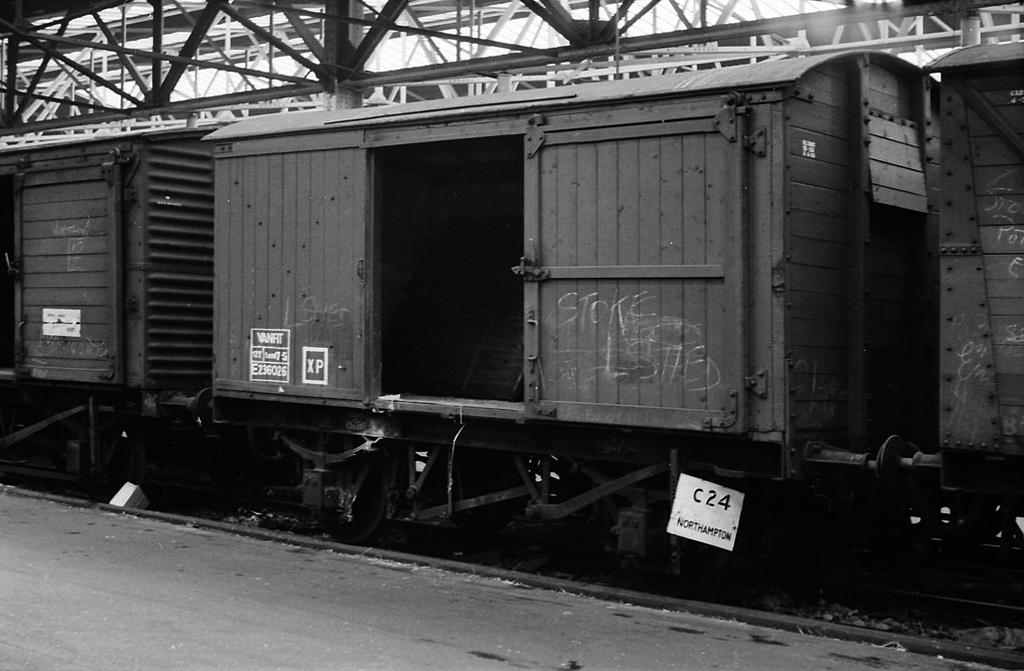
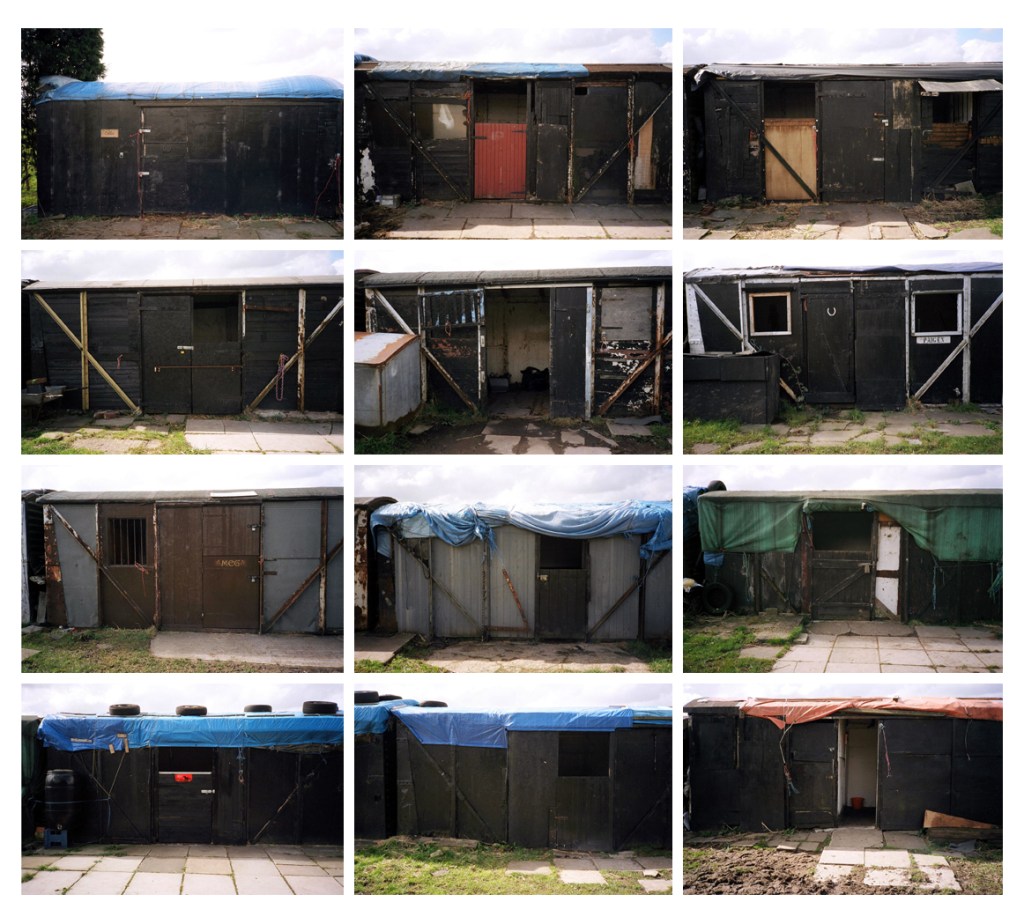
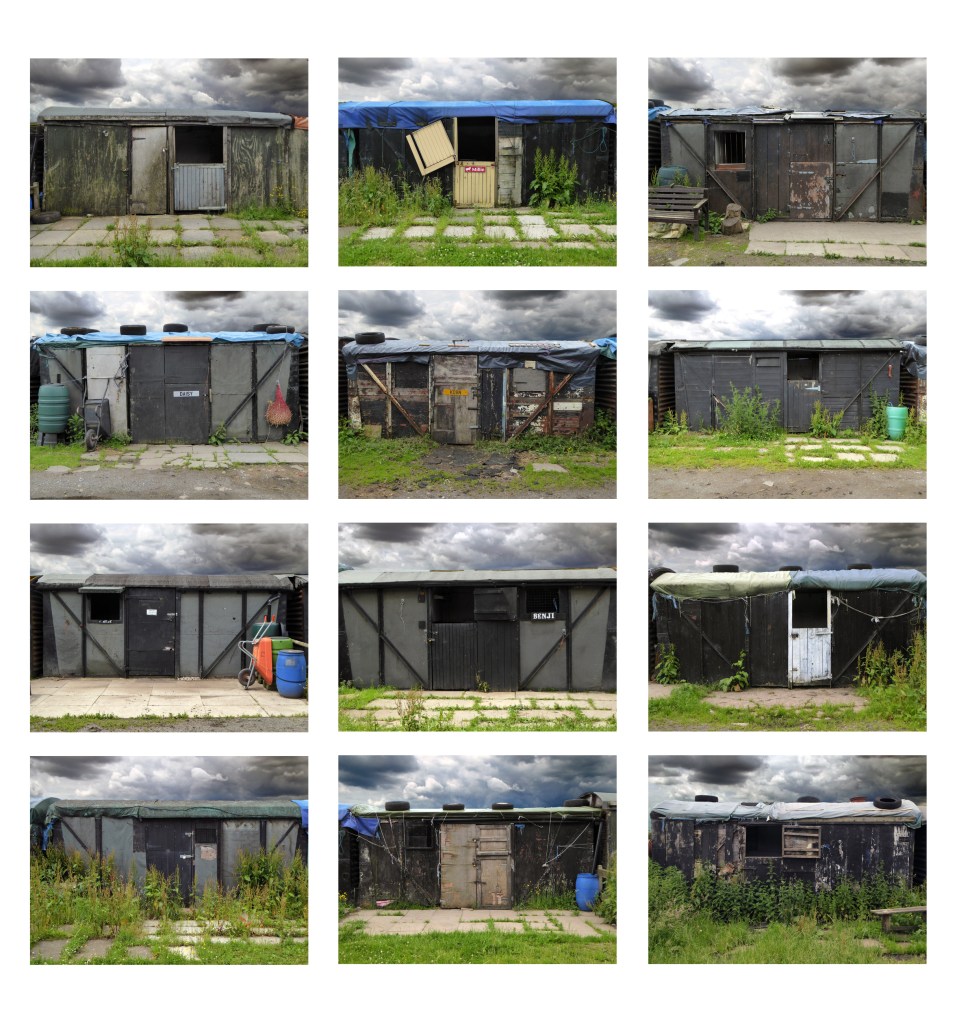
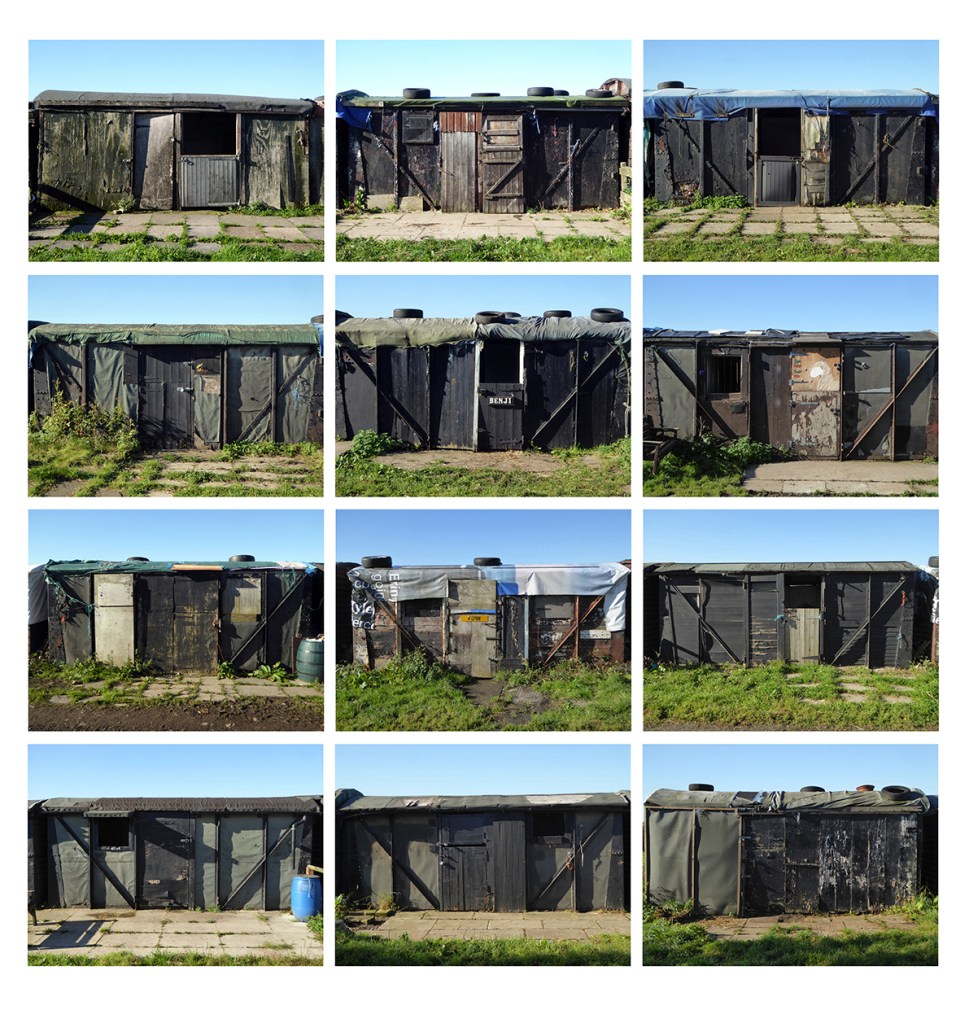
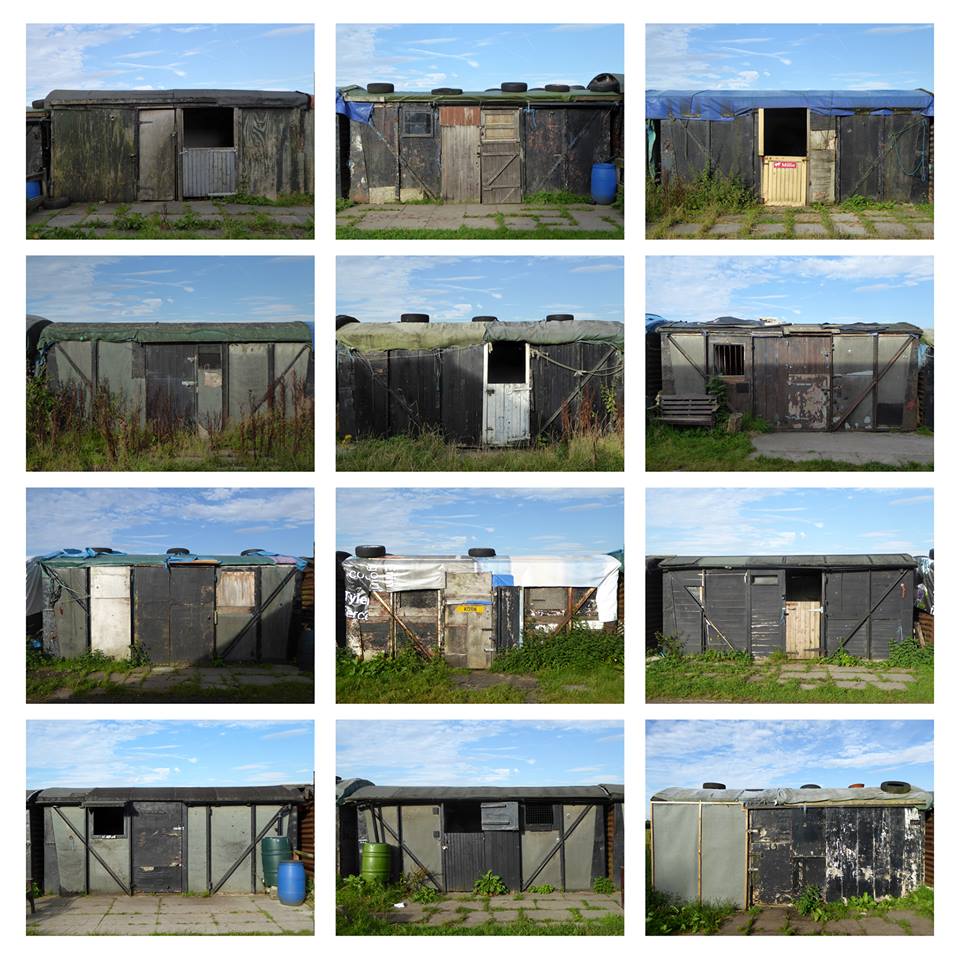
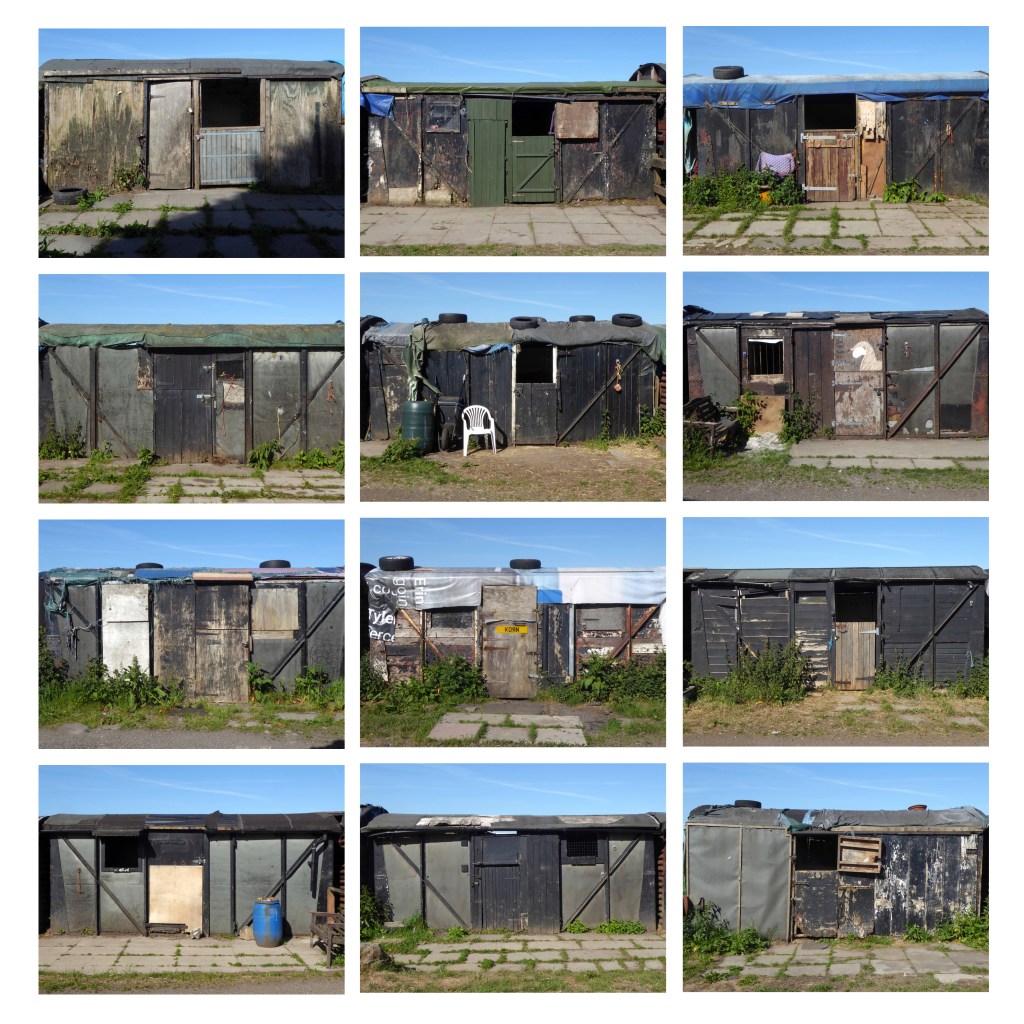
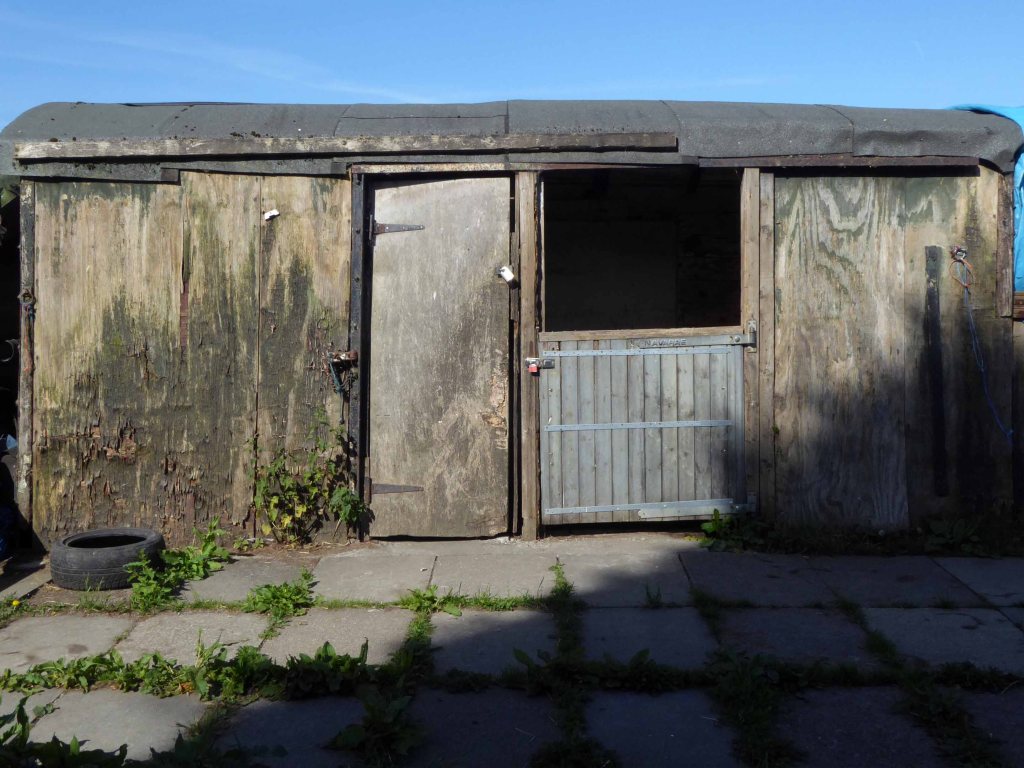
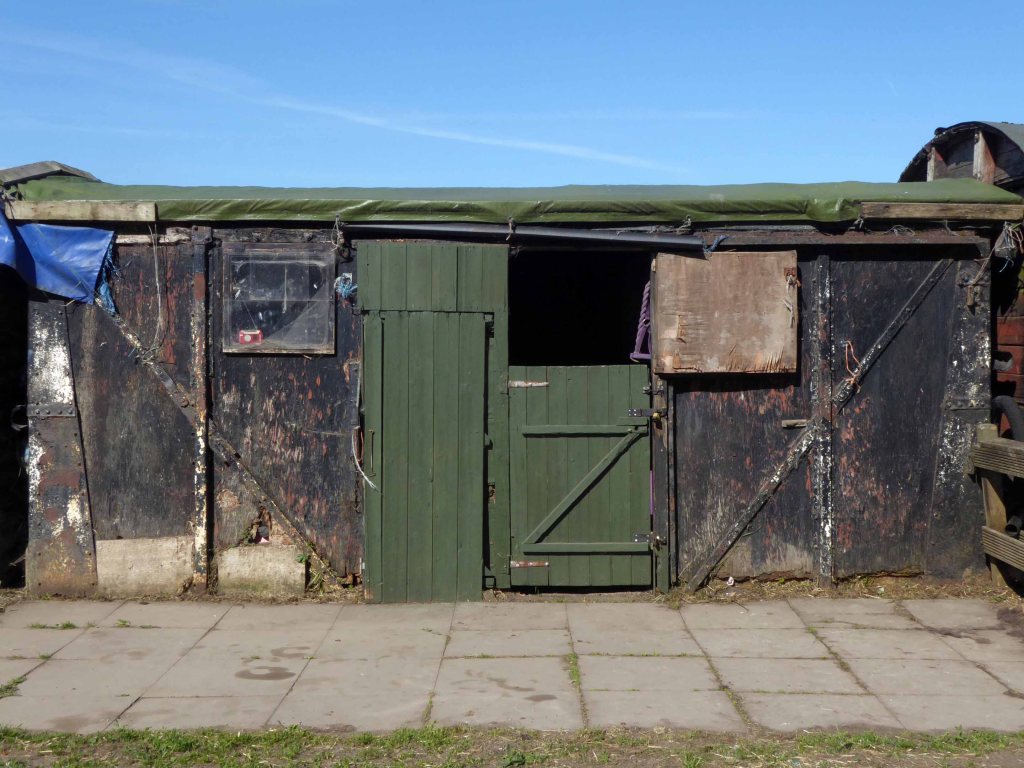
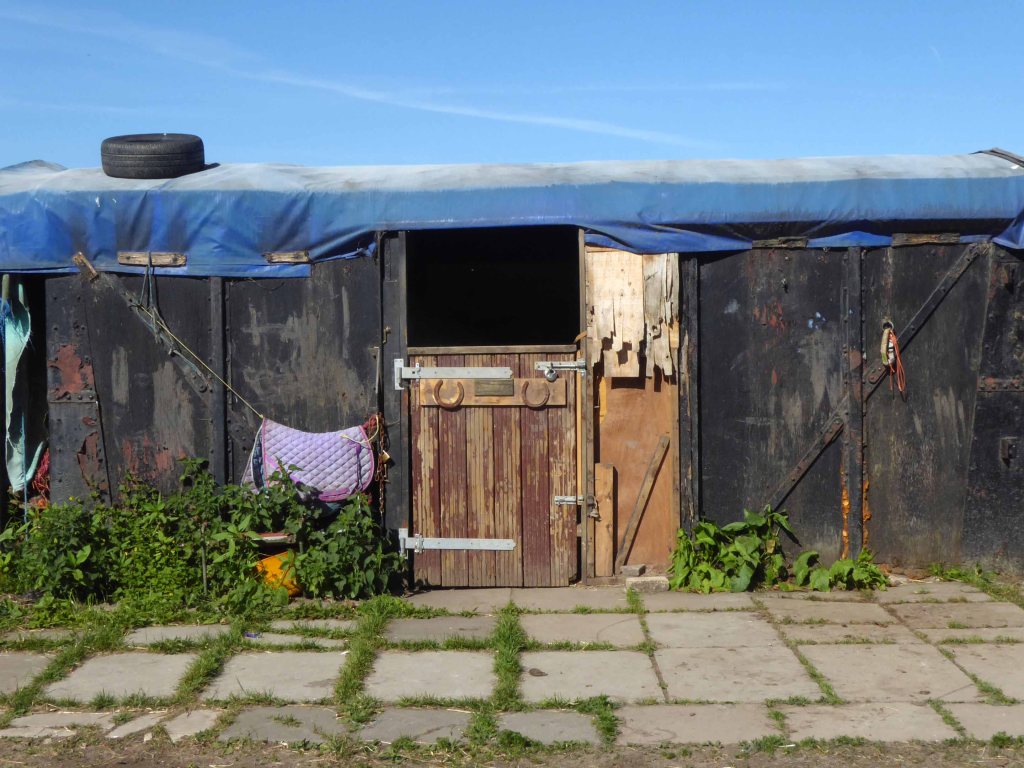
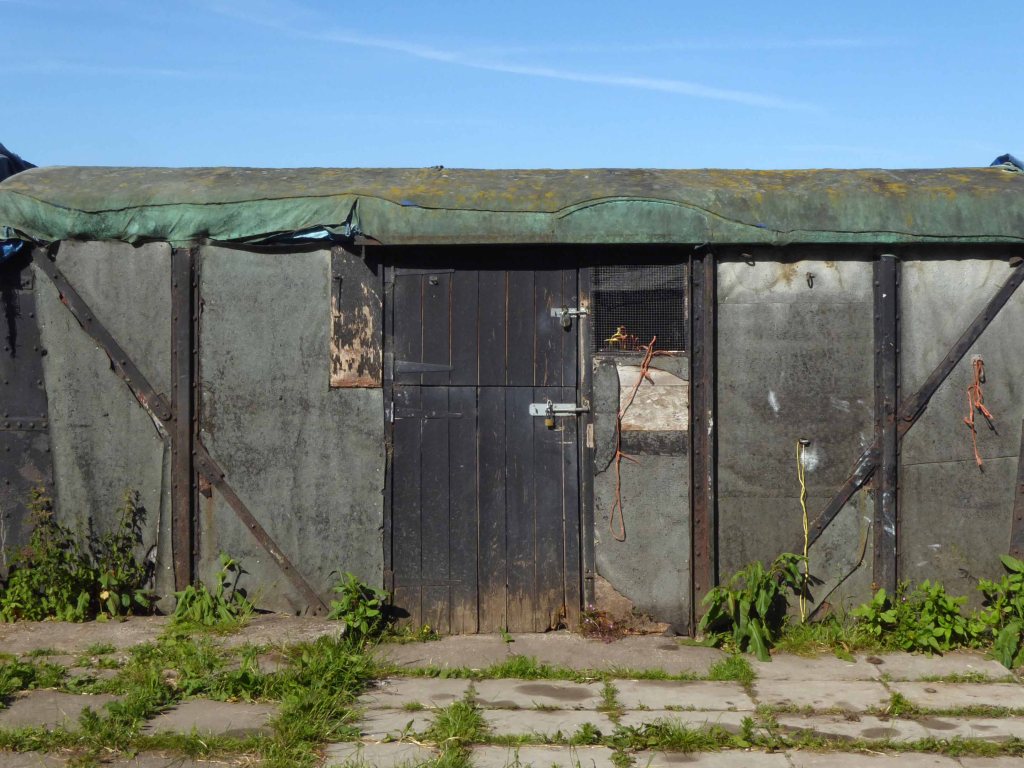
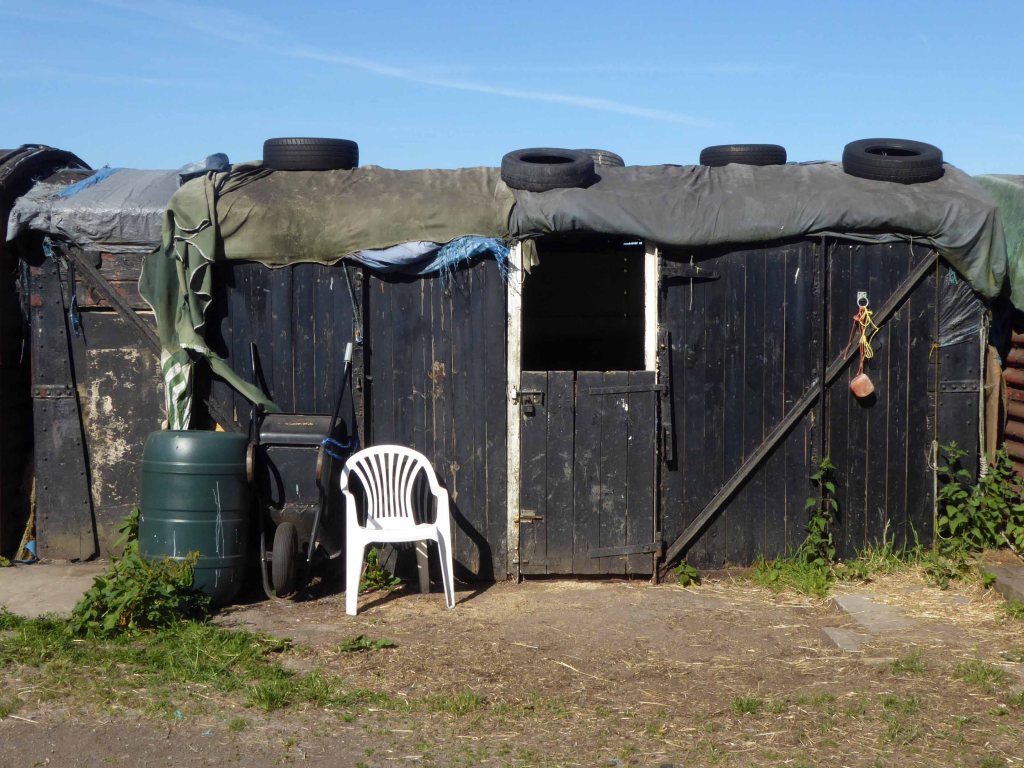
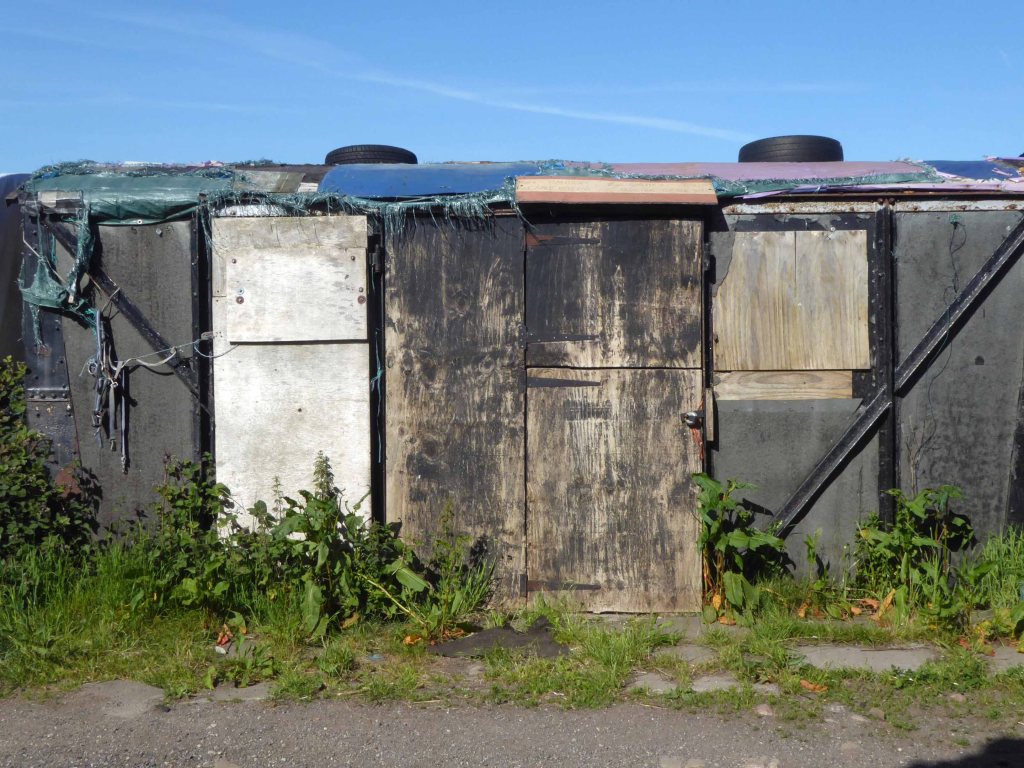
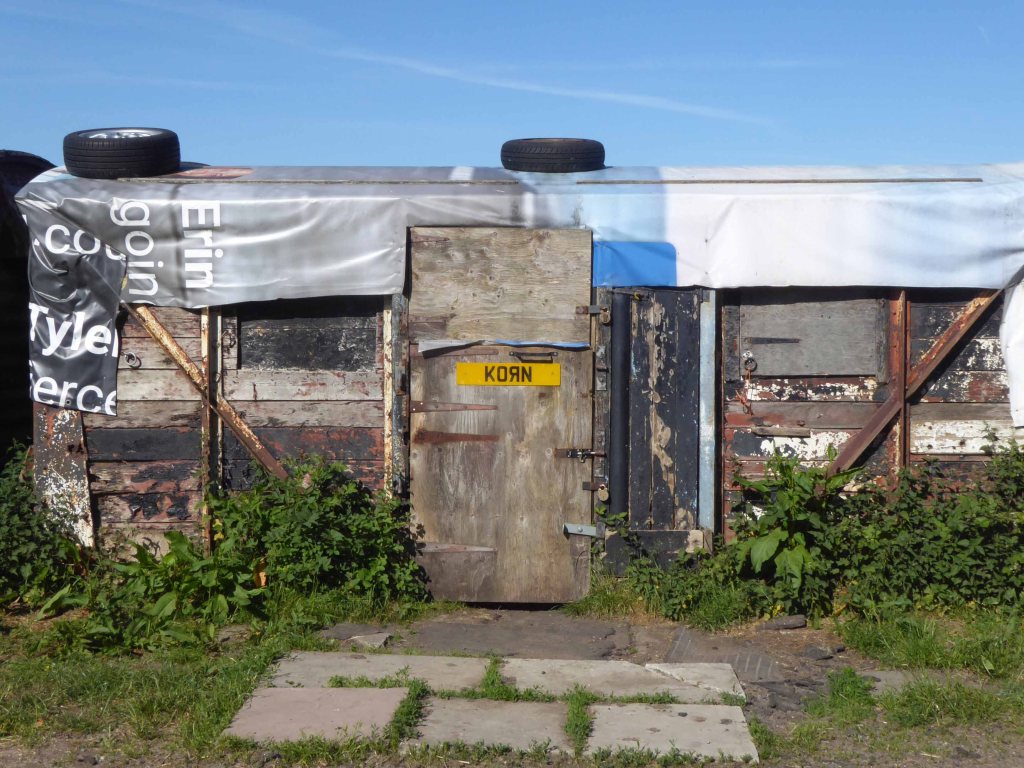
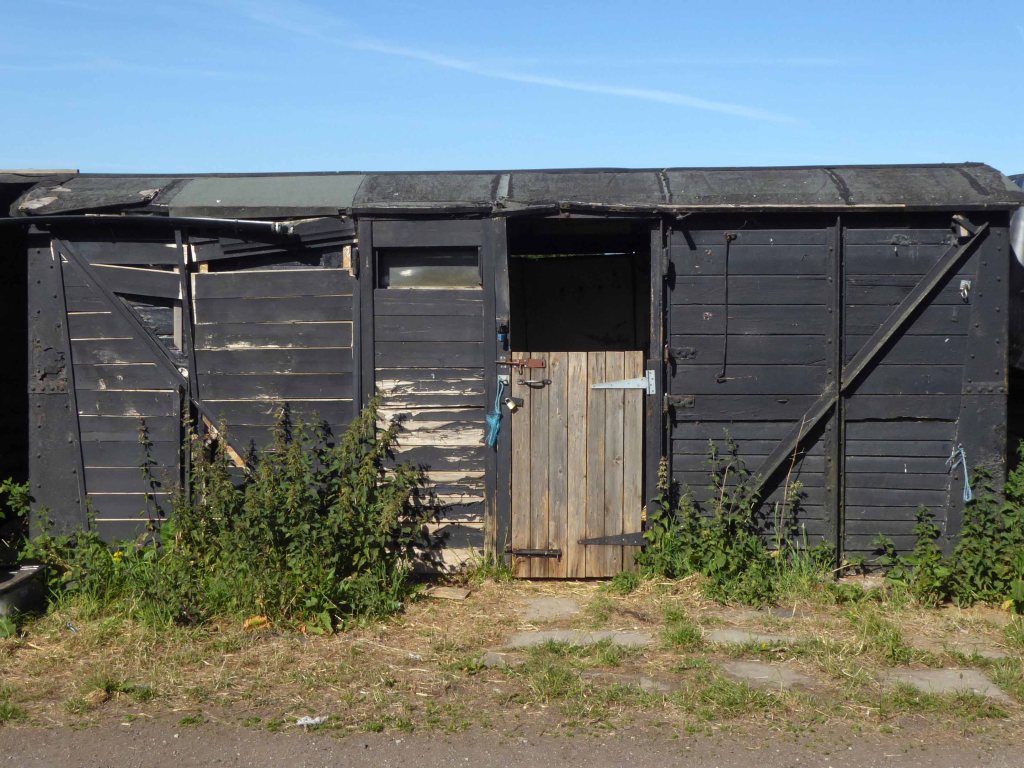
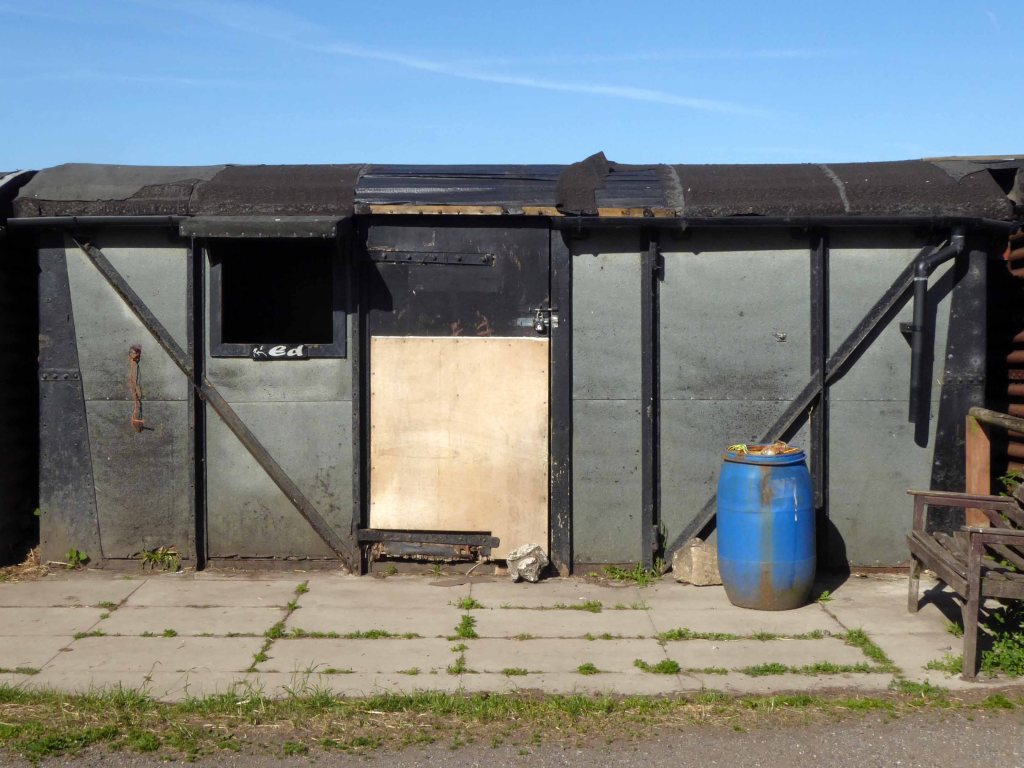
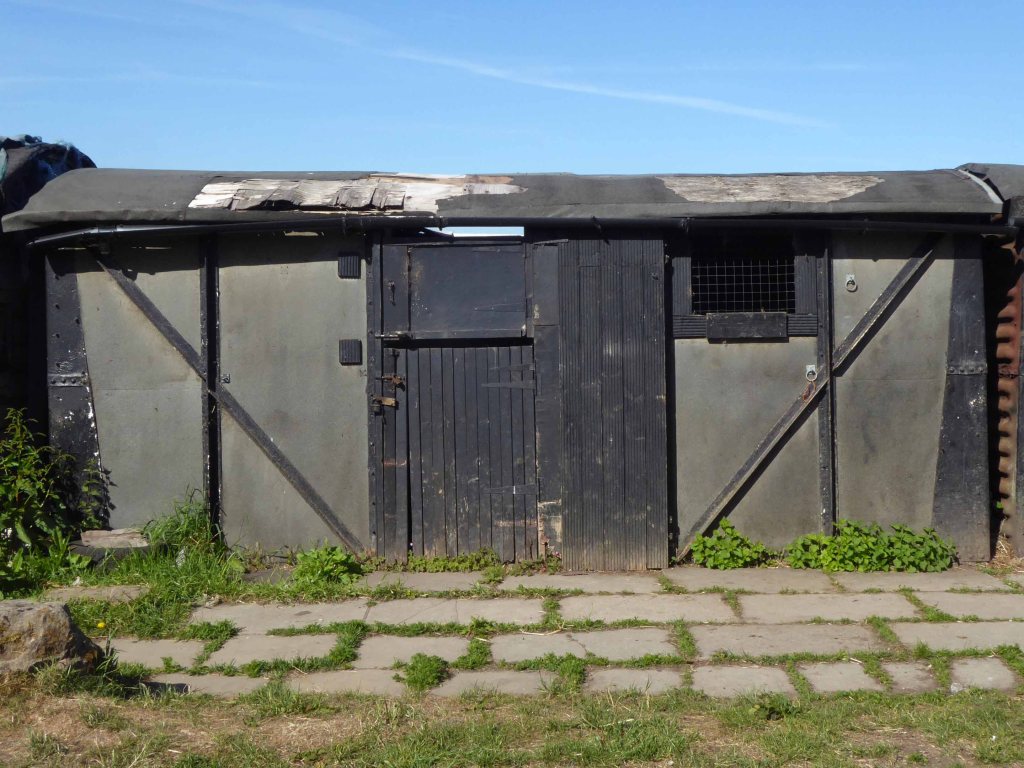
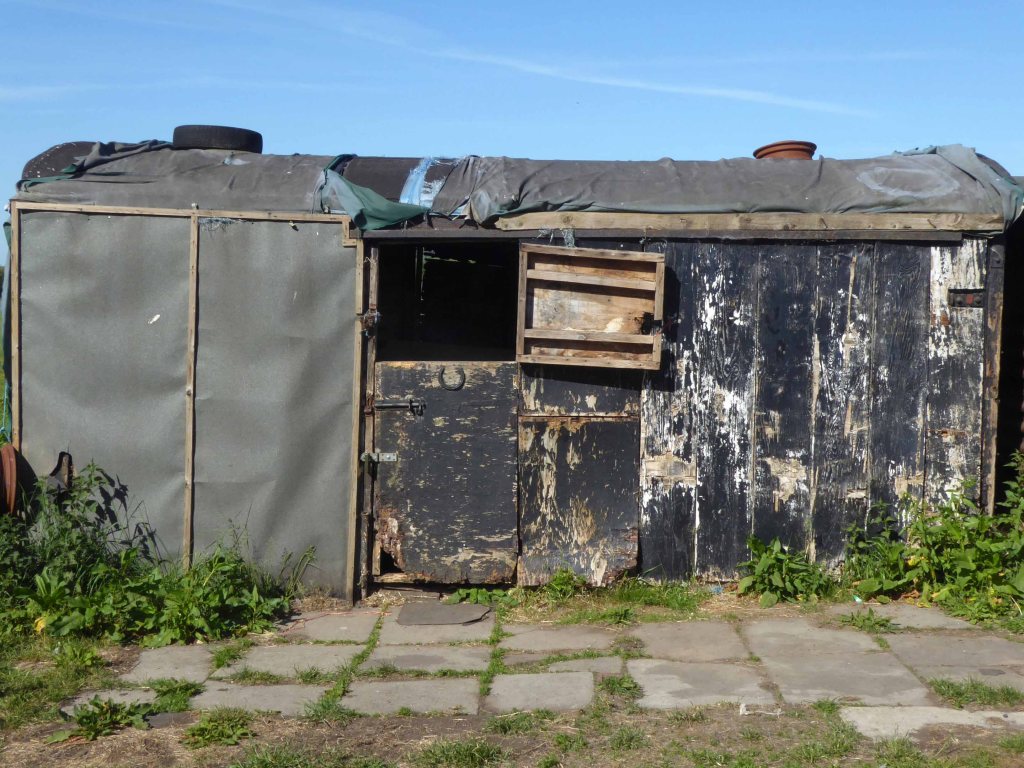
Alongside the farm are twelve stable blocks, formed from former British Rail Vanfit rolling stock.

Derby Works

I have cycled by here for some fifty years ago man and boy, sadly observing a slow decline, as the structures are kept in service with the addition of sheeting, rope, tyres and will power.

In recent years I have stopped to take photographs:

2008
2016
2017
2018
2020

They have survived wind, rain and hail, just about intact, providing adequate shelter for their equine inhabitants.

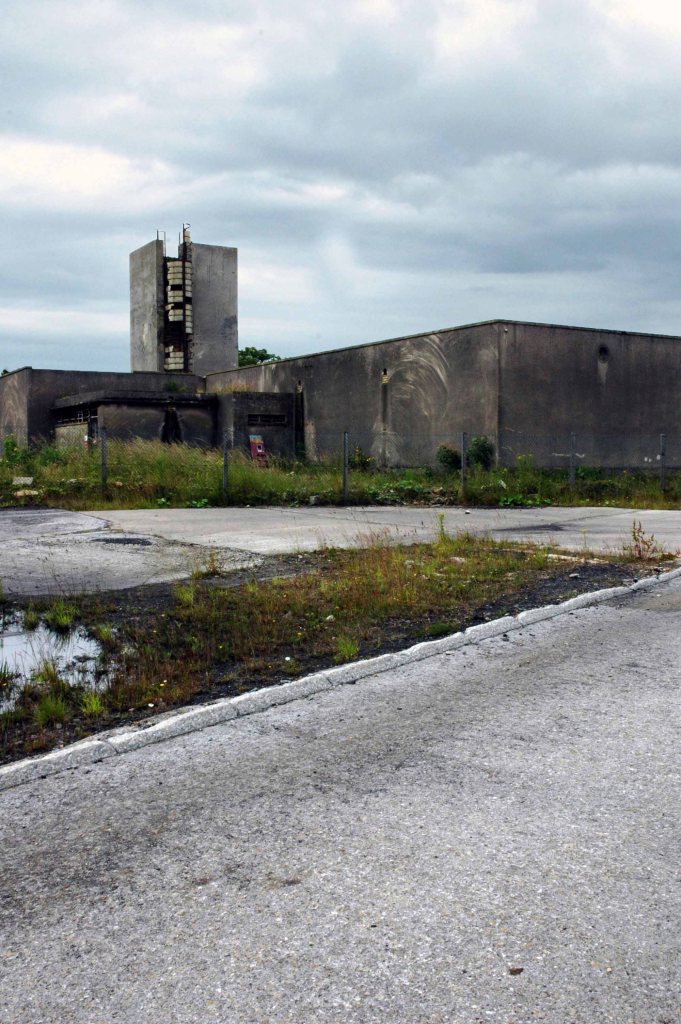
Lynemouth Pithead Baths

Pithead Baths 1938 by FG Frizzell.

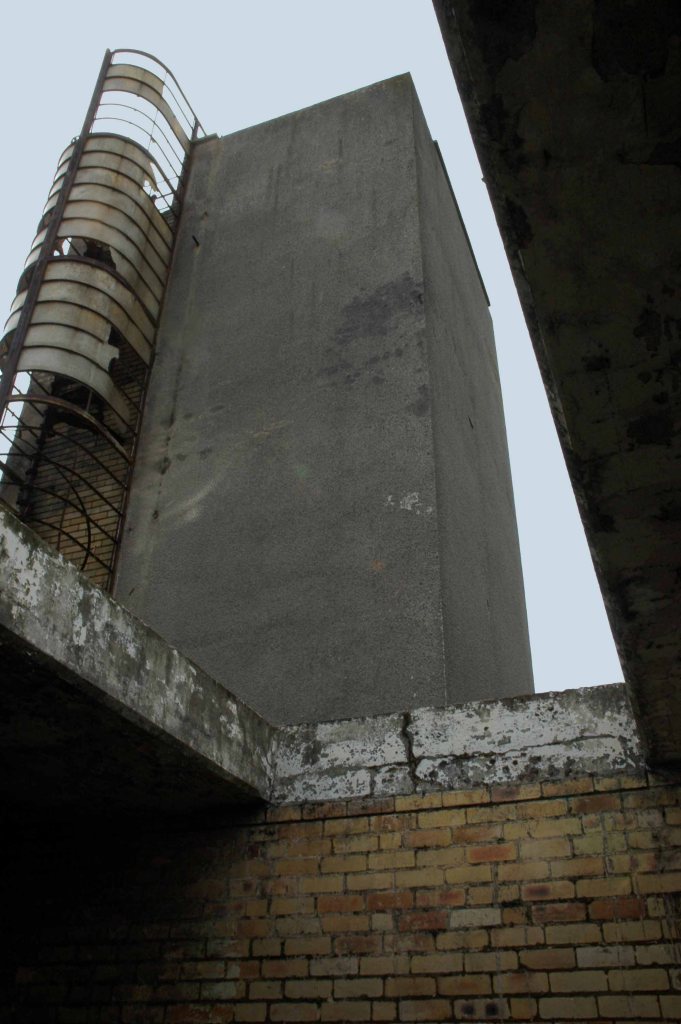
Pebbledashed over white brick. Roofs part concrete slab, part glazed behind parapet. Irregular plan, Modern Movement style. Group of blocks of varying height round tall central tower with rounded, glazed stair turret. Walls mainly sheer, with plinth and slight roof projection.

Long block on east of tower has central south projection with glazed, banded steel double door under high strip of windows beneath eaves overhang. Taller storeroom to west has similar doors in 2 recessed banded glazed bays; and abuts on south-east corner of tower. Similar double doors in base of tower. Large lower south-western canteen wing abuts on west side of tower and has banded glazing around two sides above a projecting sill. Slightly-projecting 3-bay office section to north has steel cross casements; on its return another casement and a door with hollow-chamfered jambs and flat hood. Taller bath block behind. Wave pattern on rainwater heads.

Listed 18th December 1985 Historic England

FG Frizell was also responsible for the Elemore Colliery Pithead Baths in James Terrace Sunderland.

This is the youngest colliery in the neighbourhood, having commenced operations for the Ashington Coal Co Lt. in 1934. The shafts, which are situated comparatively near to the coast, are two in number, and both were sunk to the High Main seam level, which is 486 ft from the surface. The downcast No. 1 is 18 ft in diameter and is used for coal-raising on two shifts per day, and the upcast, which has a diameter of 15 ft, is used for ventilation and emergency man riding only.

The seams being worked are the High Main, the Diamond, the Main, and the Yard. Each of these seams shows practically the same nature of roof and floor as throughout the two neighbouring collieries and the distance between the seams is also comparable. They are, of course, found at slightly greater depths at Lynemouth, the Yard seam, for example, being 660 ft. below the surface near to the shafts, as compared with some 300 ft. at Ellington.

Durham Mining Museum

April 1962

It was one of Britain’s largest collieries until it was closed in 1994.

I was cycling the coast in July 2012 and happened by, seeing the tower of the baths from an adjacent path, passing by the faded signage.

Into the raw expanse of a now empty post-industrial landscape.

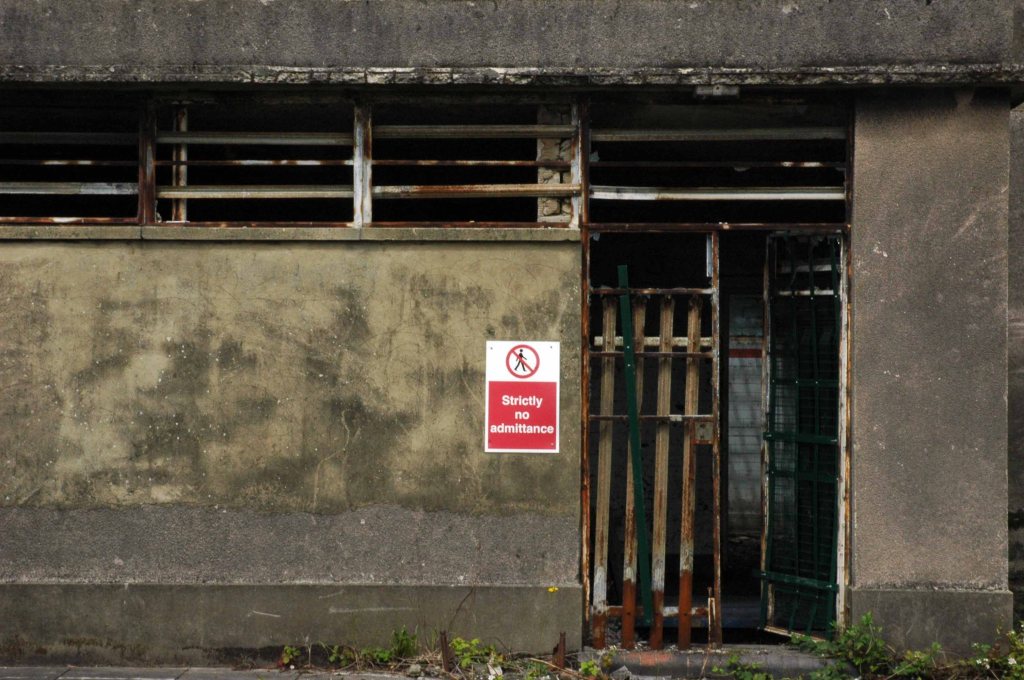
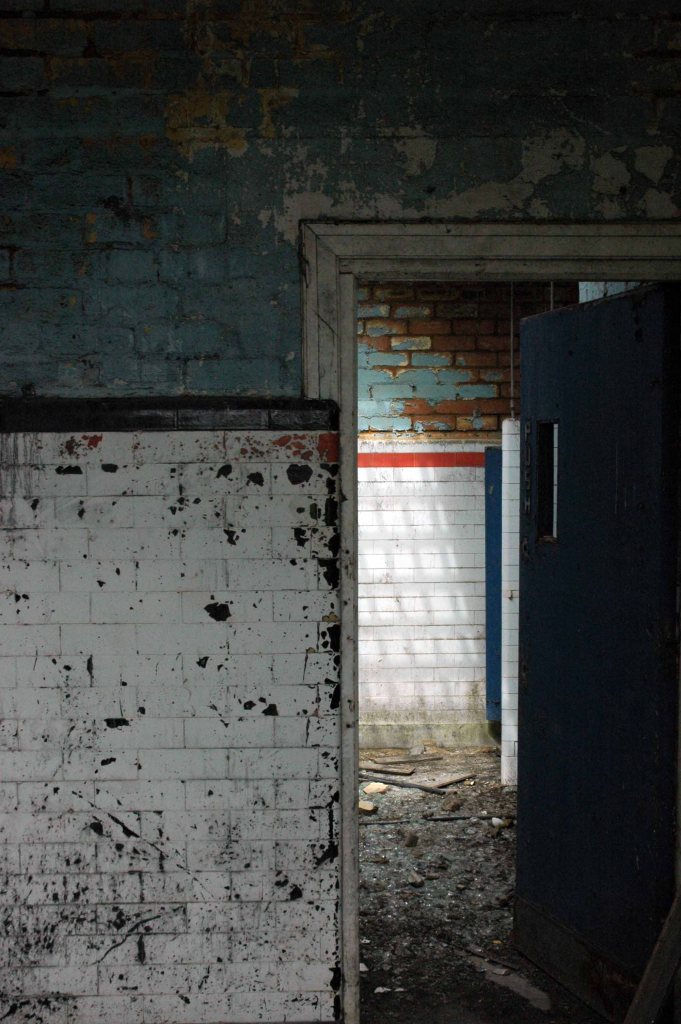
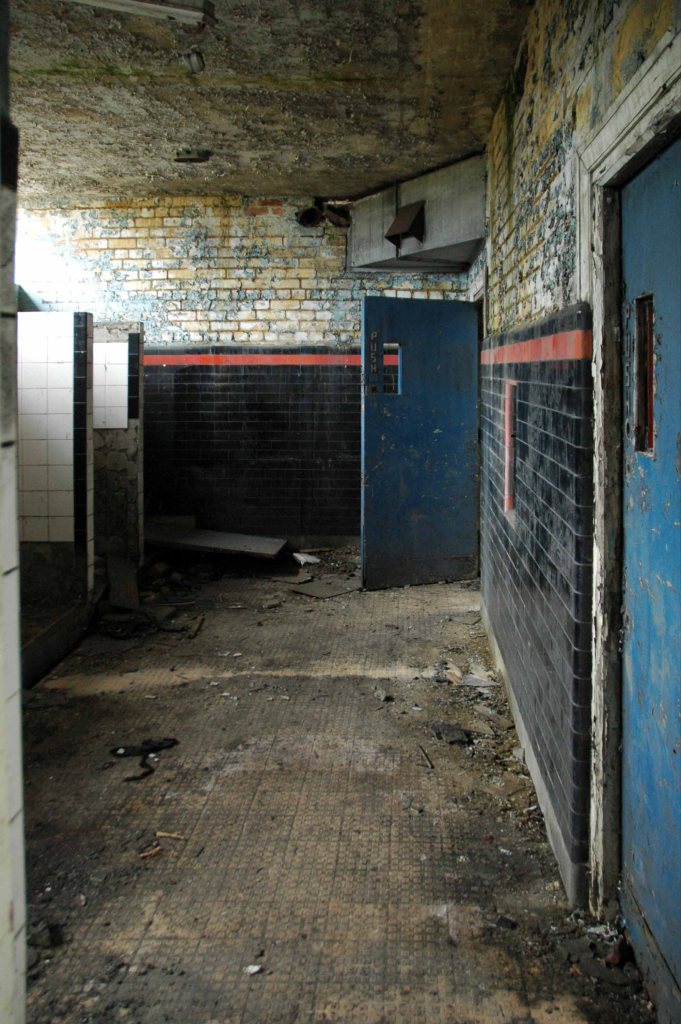
And on towards the bath house.

I am not by nature an urbex urban explorer, simply an explorer.

Entering the open site, I was well aware of the significance of the building and its history – working lives that had constructed the baths, entered and left through those very same doors.

Ashton Moss – The Past

oldmap03

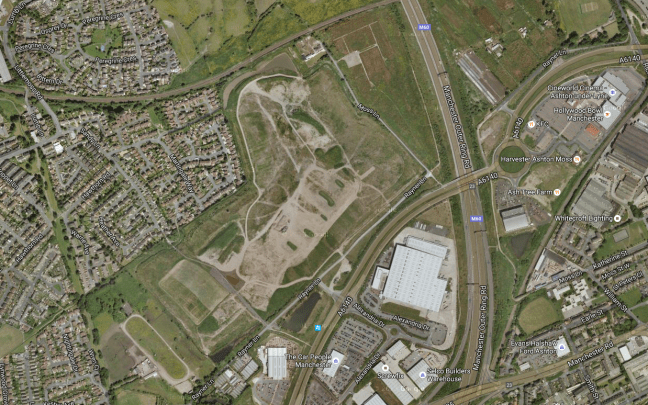
To the east of Manchester and the west of Ashton sits The Moss.

This area of low lying, deep peaty bog, just outside Ashton-under Lyne, was drained in the mid 1800’s to grow some of the best crops – It was world famous for its celery but also grew good cabbage, cauliflowers and lettuce, with cucumbers and tomatoes grown in glasshouses.

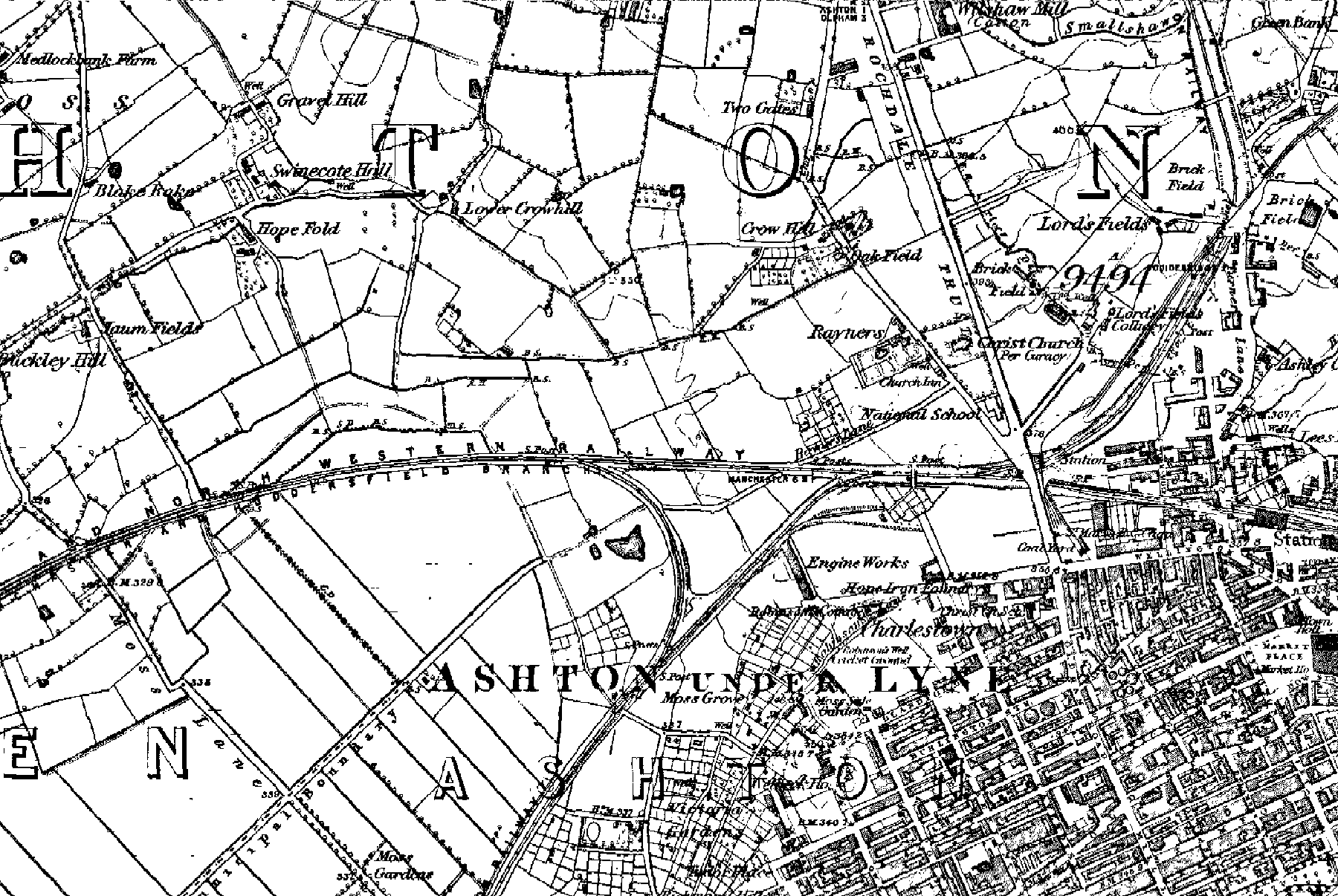
This map of 1861 shows an area criss-crossed with lanes, ditches and field boundaries.

A world that survived into the 1980s, captured here so beautifully by Brian Lomas, prior to the building of the M60.

Photographs from – Tameside Image Archive

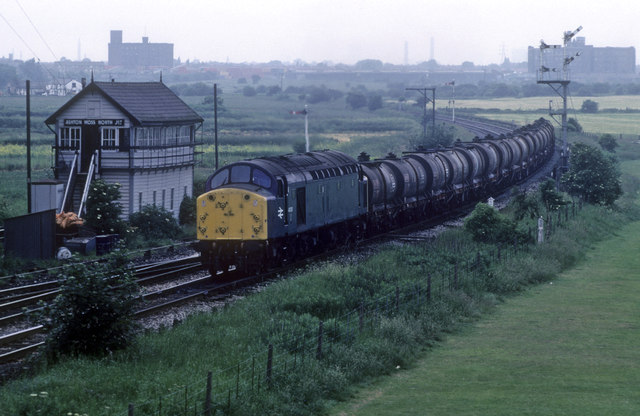
Then came the railways:

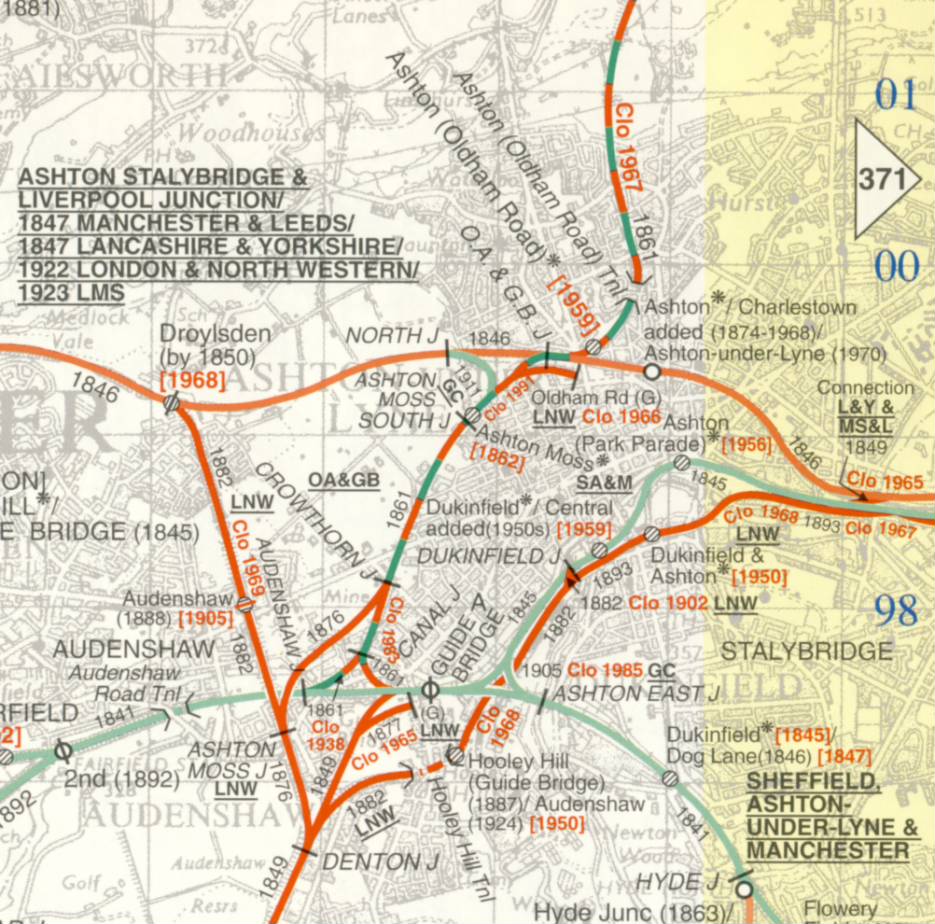
Map Cobb Guide Bridge area

2768061_a6170a1f

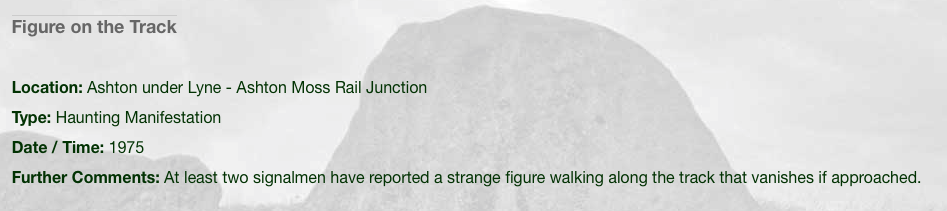
With an attendant ghost:

Screen Shot 2016-09-02 at 10.44.34

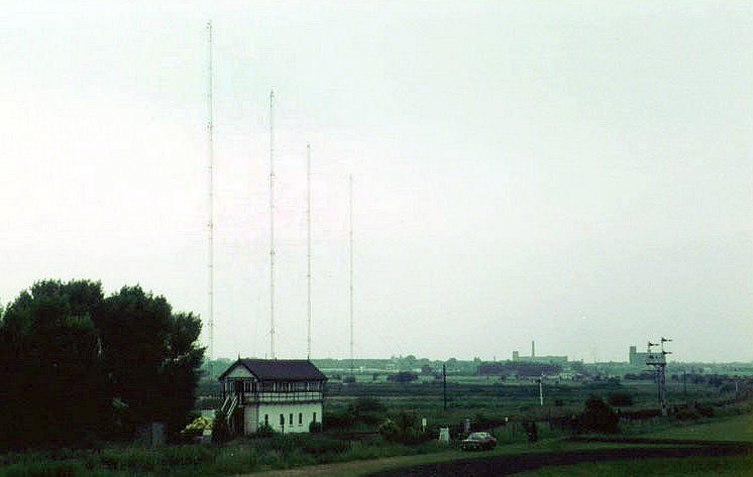
And telecommunications installation

ashton_moss-mp-04

Its location on the south east corner of the Lancashire Coalfield, and the burgeoning demands of the Industrial Revolution saw the further development of mining in the area.

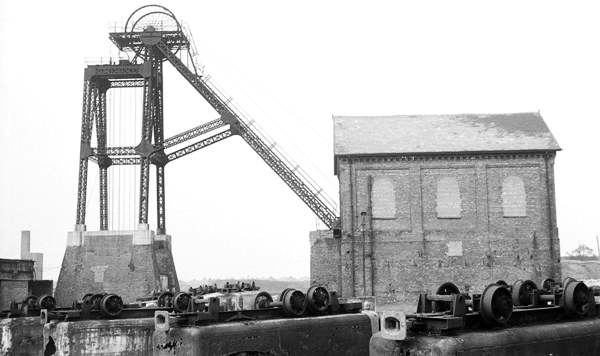
As the demand for coal outstripped the output, a deeper mine was opened in 1875, at Ashton Moss. This new pit had its own railway branch and canal arm for efficient transportation of the coal. In 1882 a second shaft was sunk – at 2,850 feet, the deepest in the world at that time.

The New Rocher pit closed in 1887 and Broadoak pit closed in 1904, after which time Ashton Moss pit was the only coal mine still in operation in Ashton. Although it produced 150,000 tons of coal a year in the early 1950s and employed over 500 men, Ashton Moss colliery closed in 1959 and part of its site is now the Snipe Retail Park on the boundary with Audenshaw.

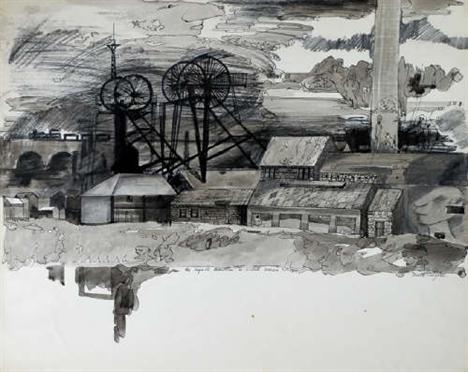
Seen here in this painting by local artist David Vaughan.

92-17-10055_468x382

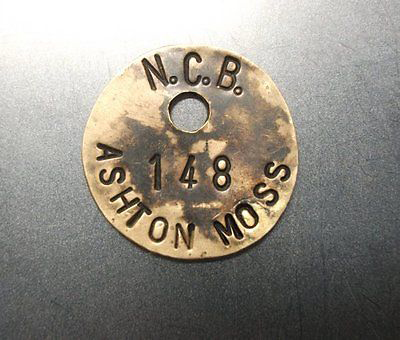
Colliery lamp token.

Lancashire-ASHTON-MOSS-Snipe-Colliery-Lamp-Pit

ashton

Northern Mining

This tight little island of land was a contrasting mix of the agricultural and industrial, home also to the urgent demands of a leisured and growing working class.

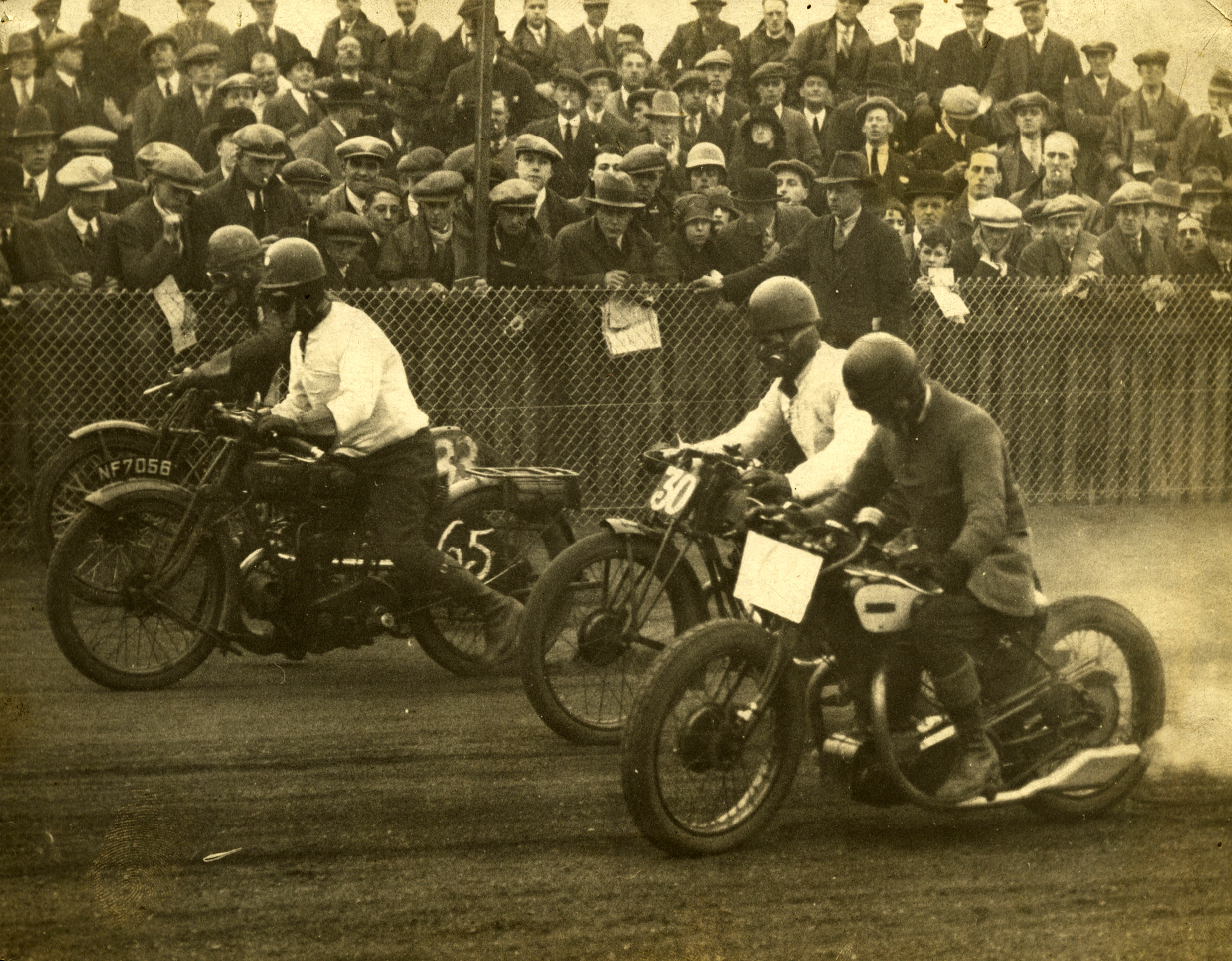
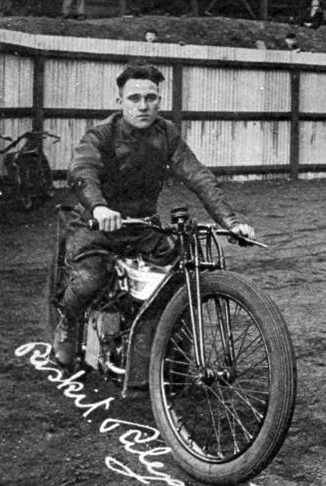
The area boasted two motorcycle speedway tracks.

One located on the Audenshaw side, just behind The Snipe pub.

4ad86de0f4341895f428a5536c6d5855-1

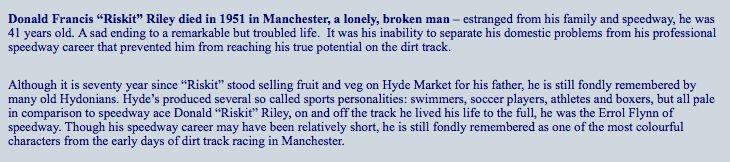
And one in Droylsden at the Moorside Stadium – home to local legend Riskit Riley:

riskit

Screen Shot 2016-09-02 at 12.19.30

The stadium later to become a horse trotting track, known locally as Doddy’s Trot

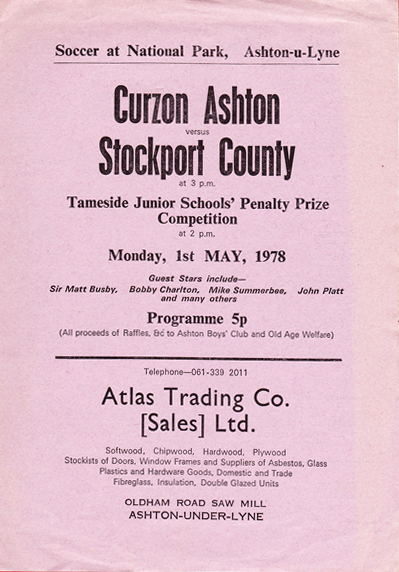
The Moss has also provided a home for Curzon Ashton football club

46077

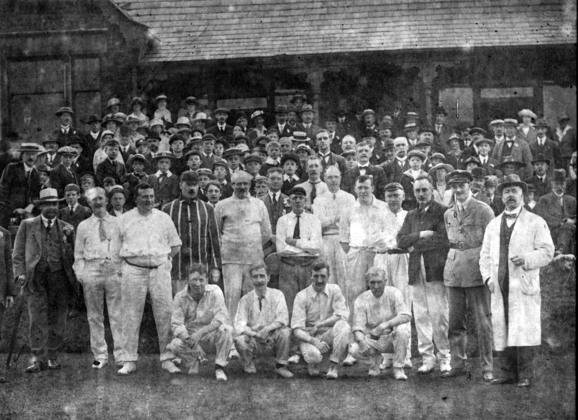
And Ashton Cricket and Bowling Club.

1918_Prisoner_of_War_Fund

The cricket and the football have both survived the building of the Orbital Ring Road, and the development of the site as a light industrial, retail and leisure park.

The roar of Riskit Riley is heard no more.