Neaverson’s – Huddersfield

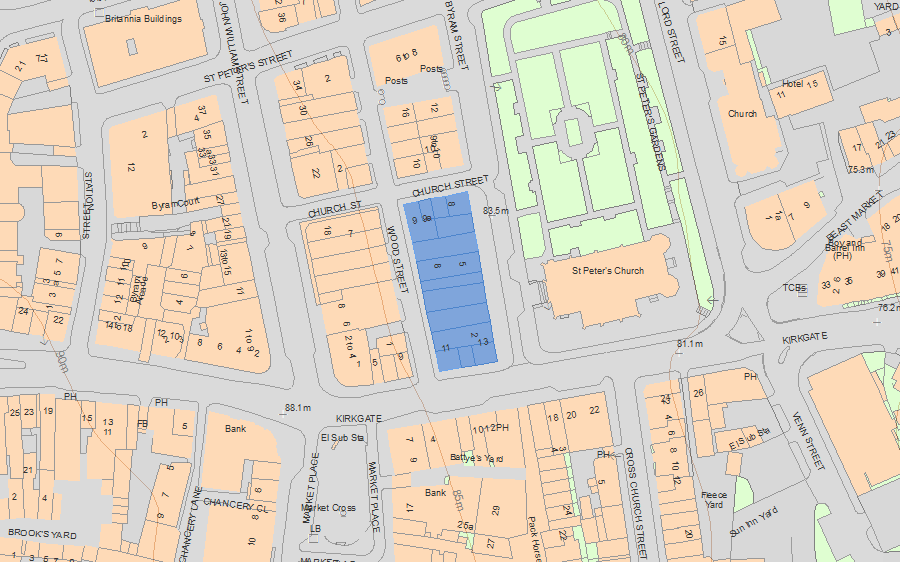
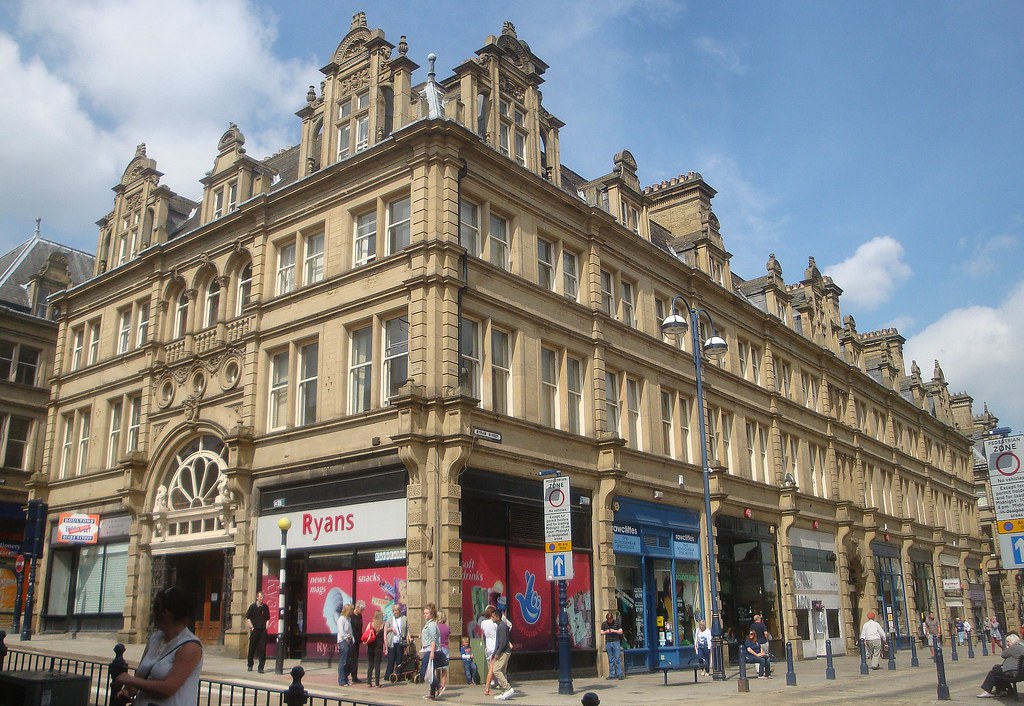
Kirkgate Buildings Byram Street

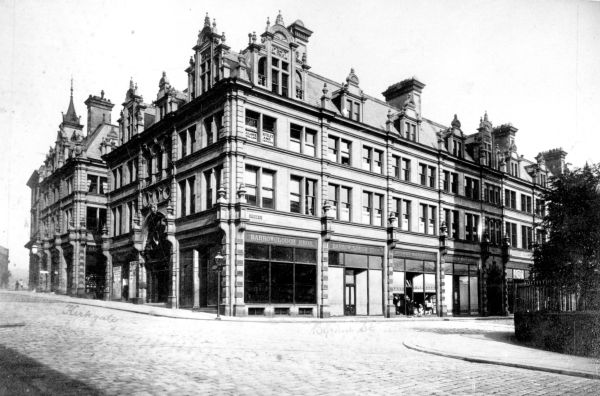
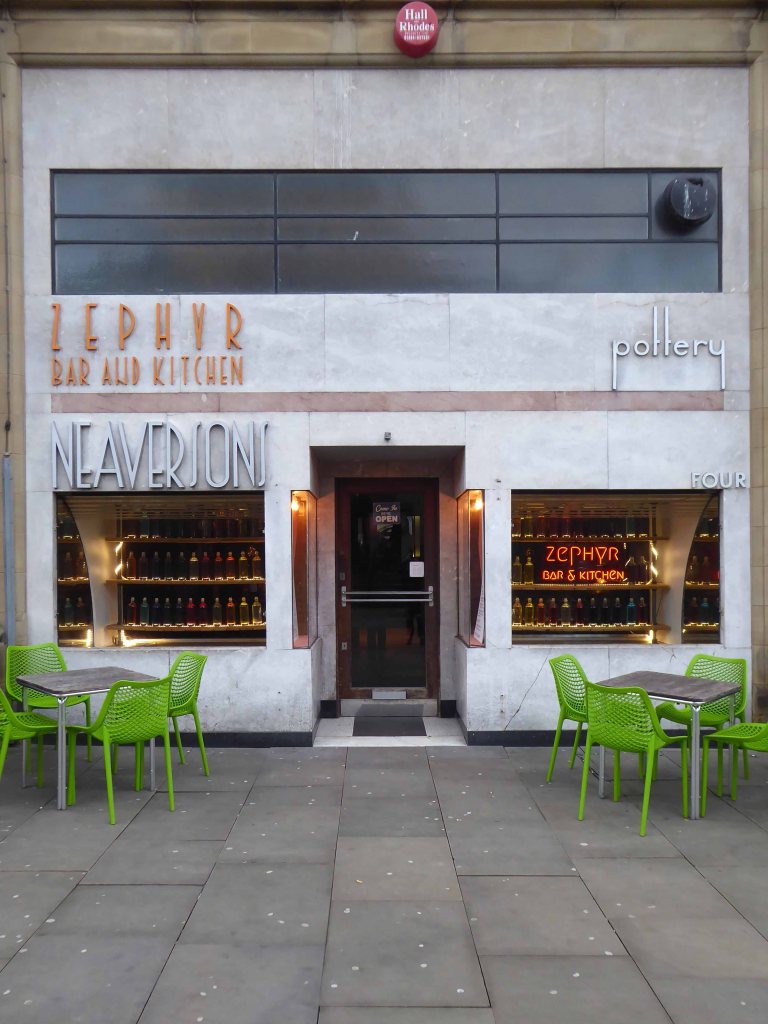
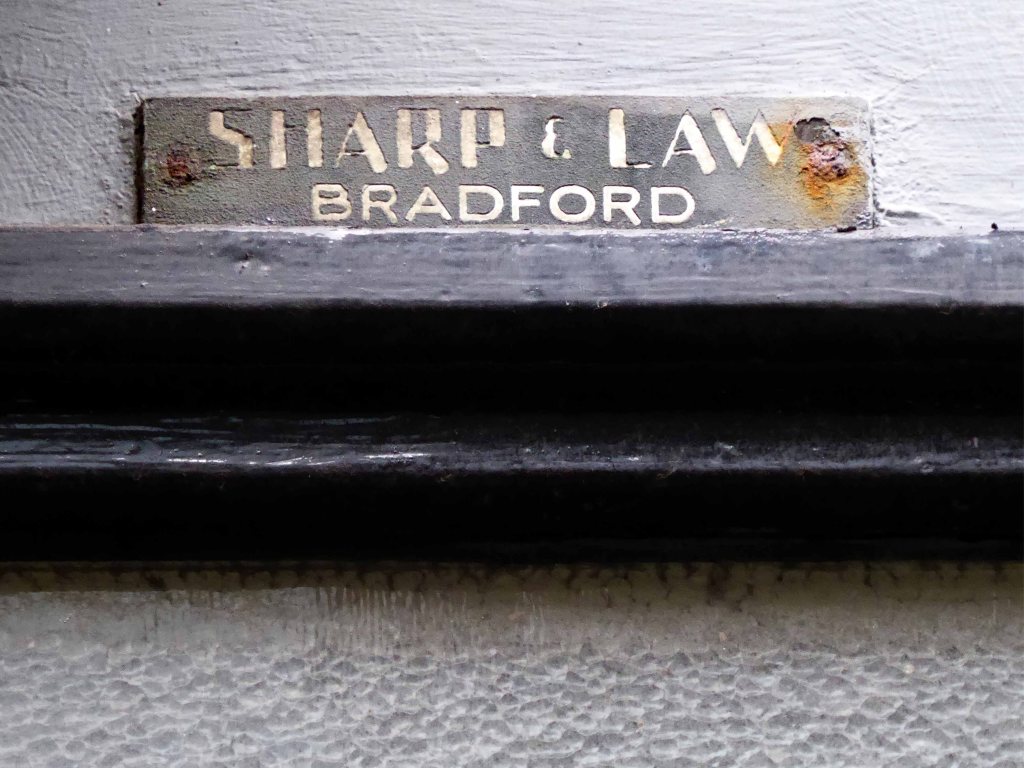
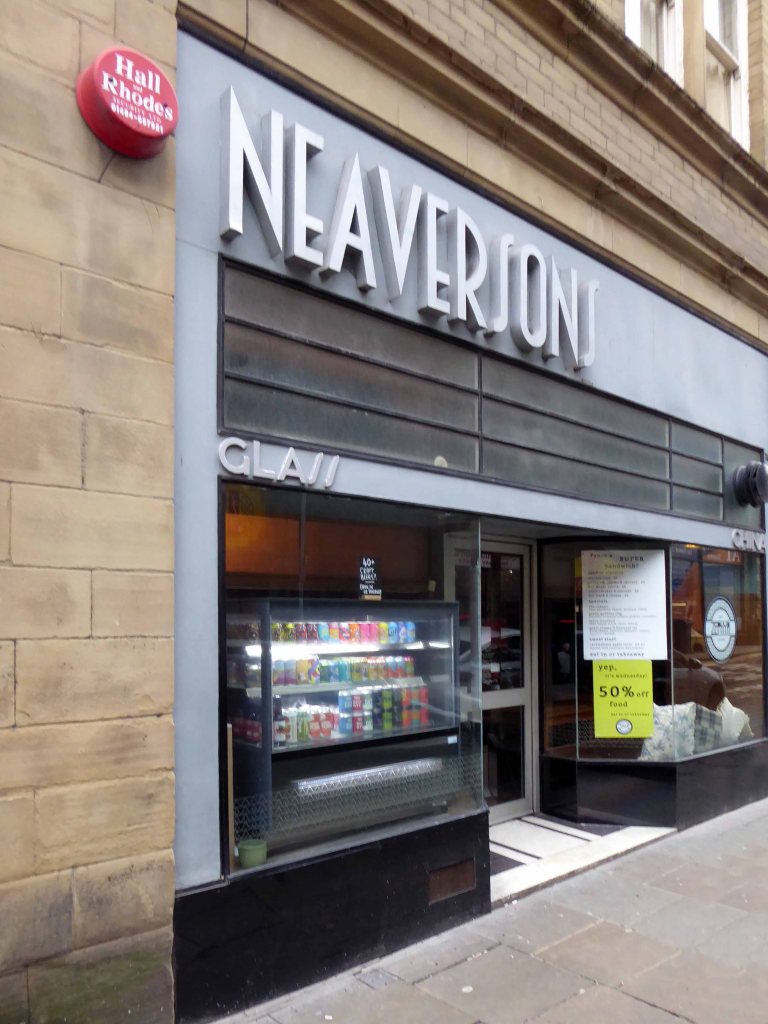
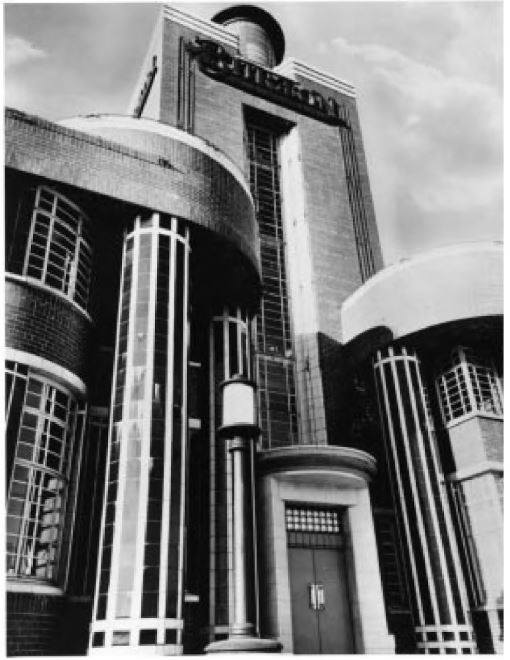
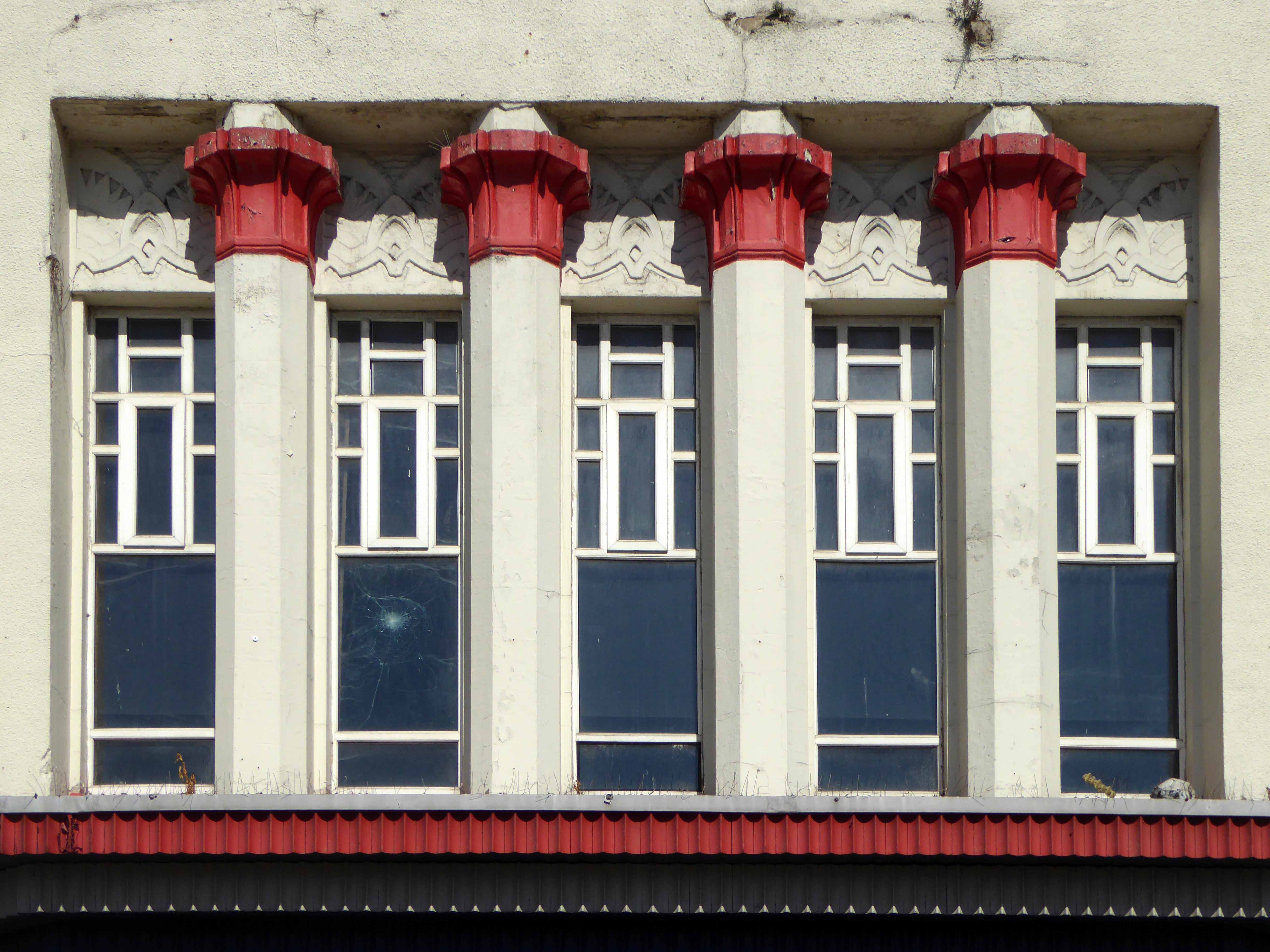
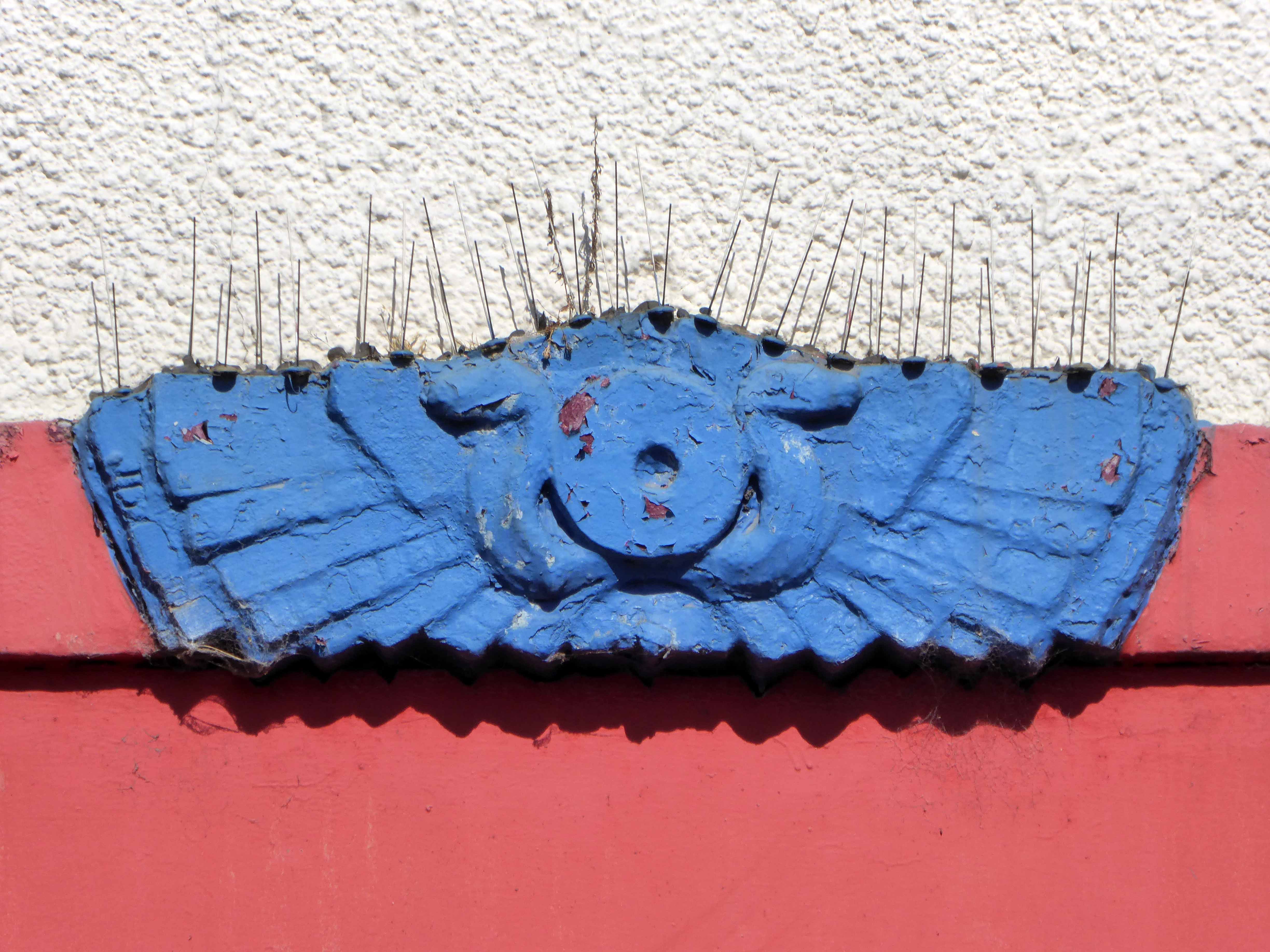
Commercial building with ground-floor retail units and offices to the upper floors, c1883, by W H Crossland with sculptural work by C E Fucigna. Sandstone ashlar, slate roof, substantial ashlar ridge stacks. C19 Queen Anne style with French influences and classical Greek sculpture. One of the ground-floor shop units was remodelled in 1935 by Sharp and Law of Bradford with Moderne shopfronts and interior fittings.

The cultural and visual collision is immediate – the pairing of Huddersfield’s grand Victorian manner with the latest of European Moderne.

Neaverson’s – purveyors of pottery and glass began life in 1893 in premises on Cross Church Street, before moving to the Grade I-listed Byram Street building in 1935.

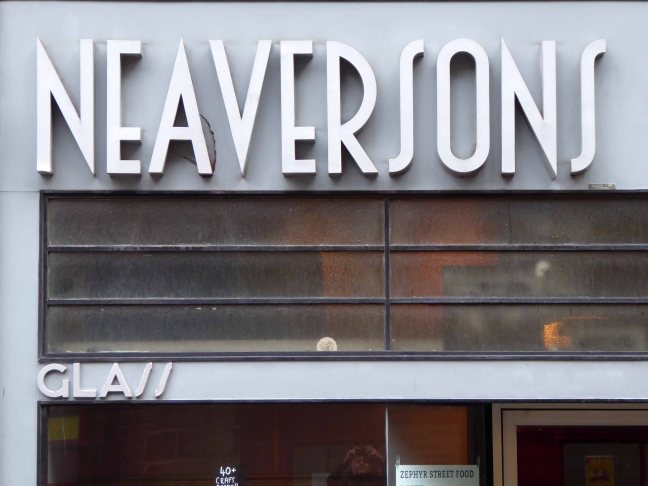
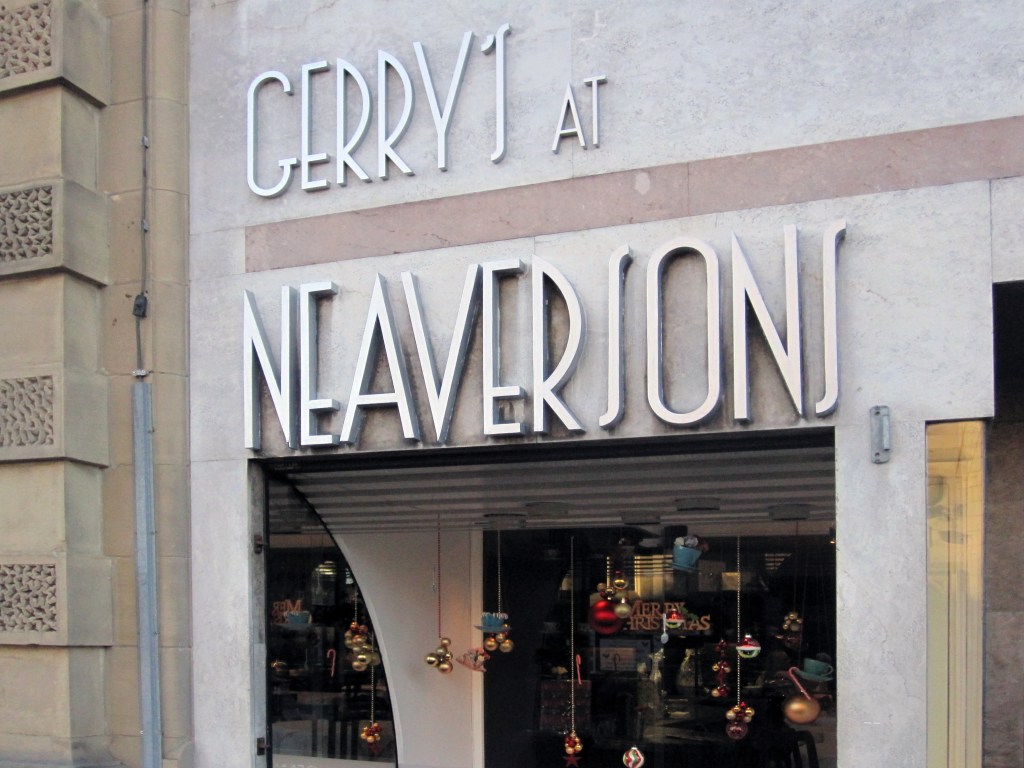
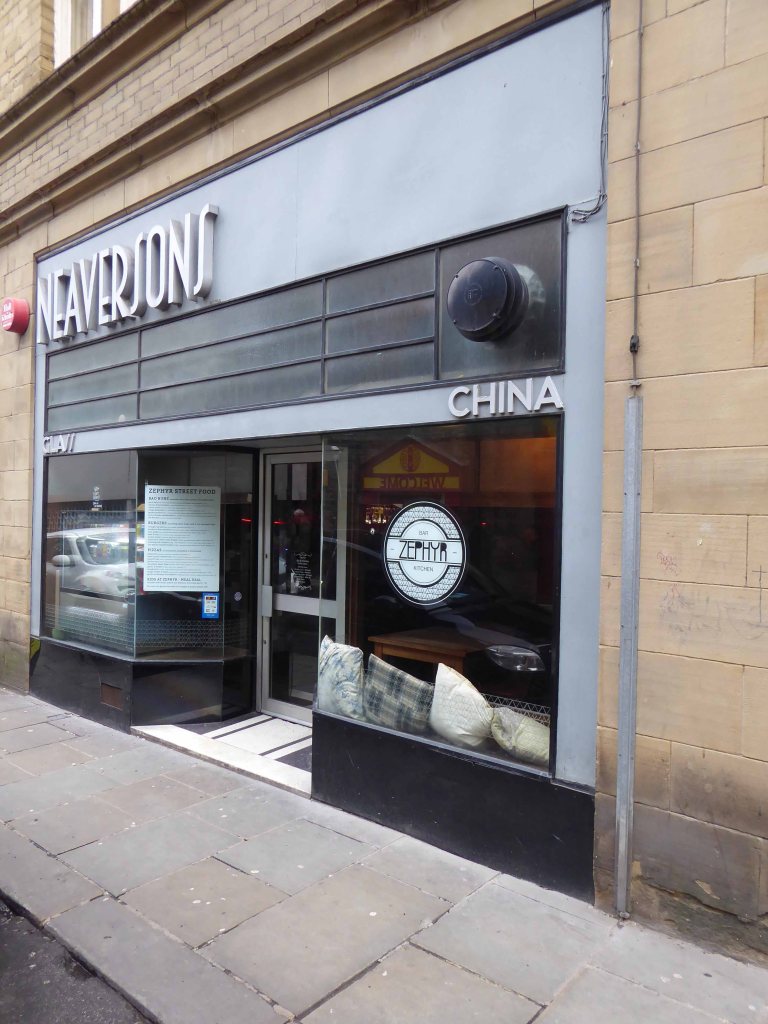
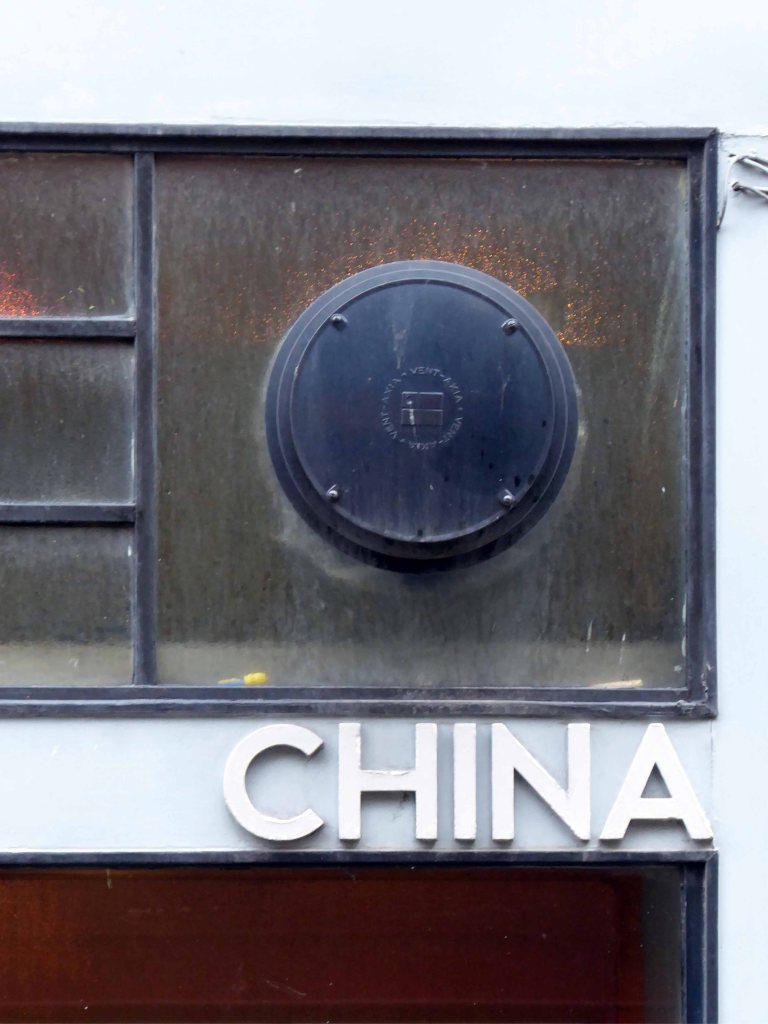
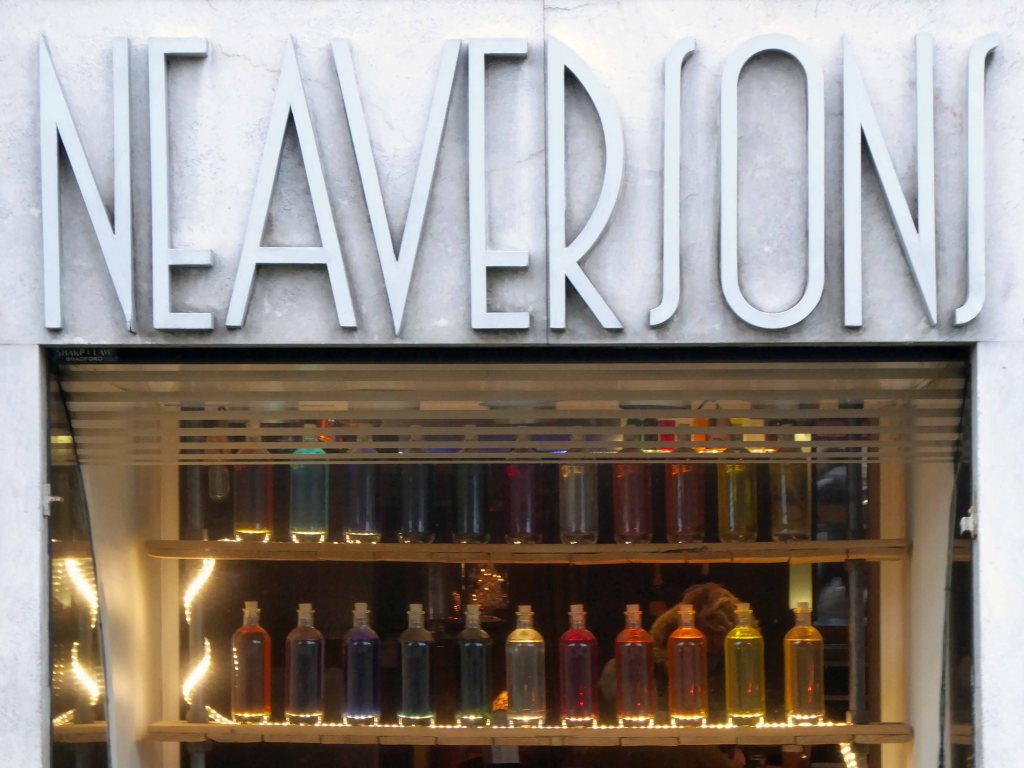
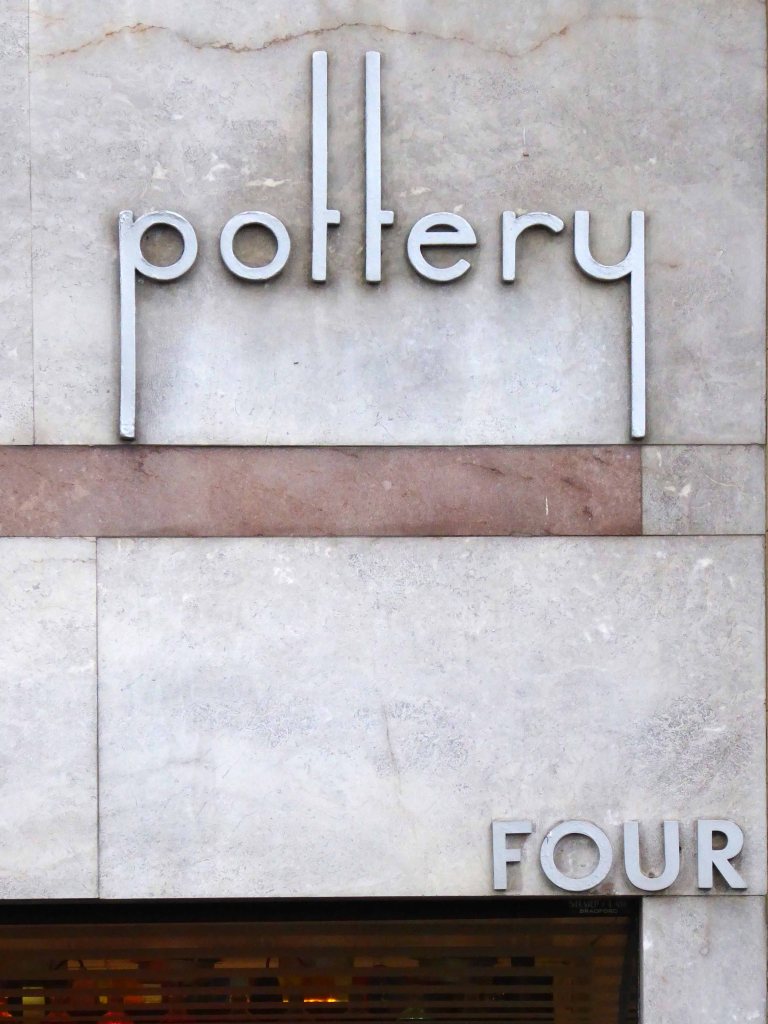
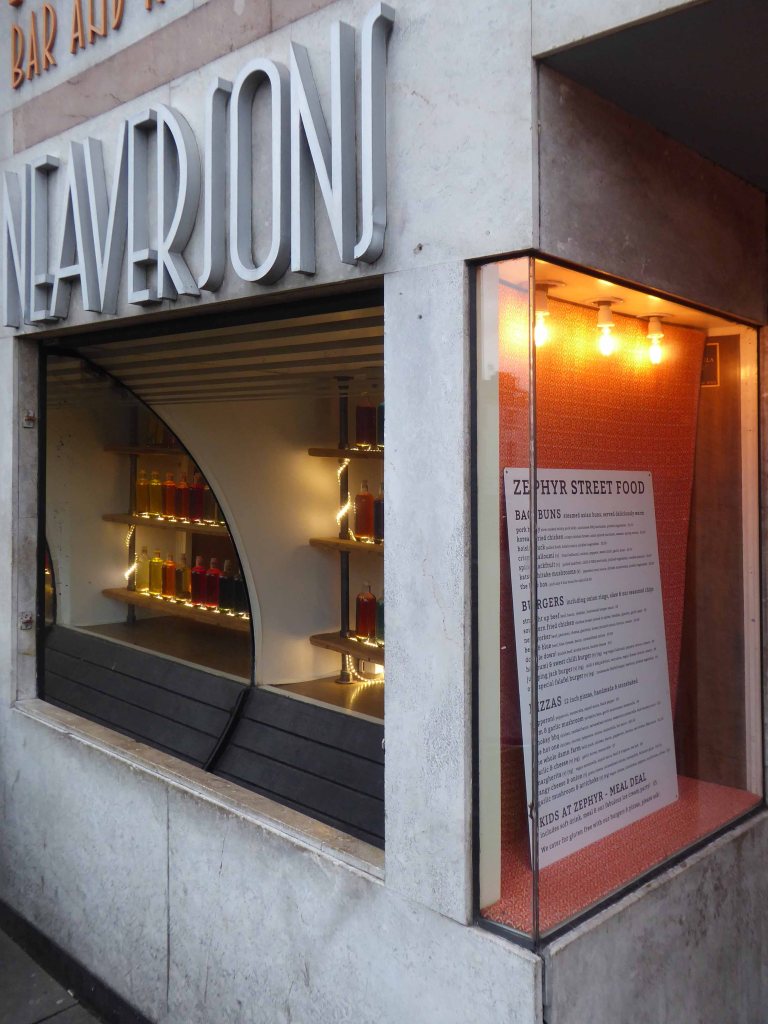
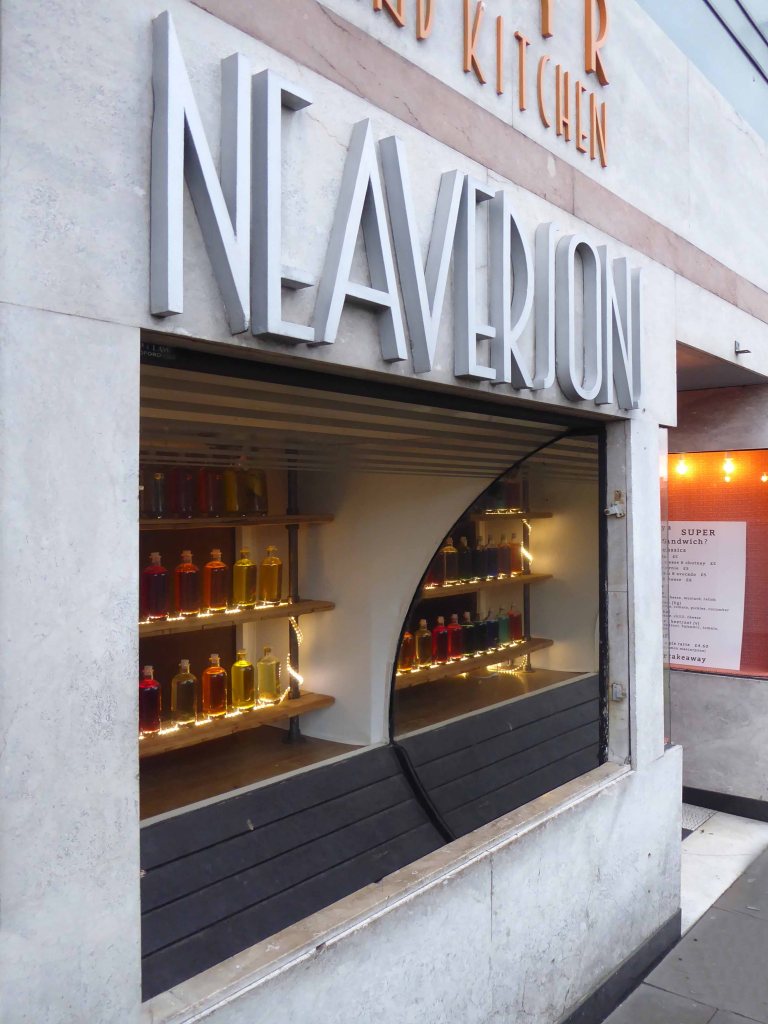
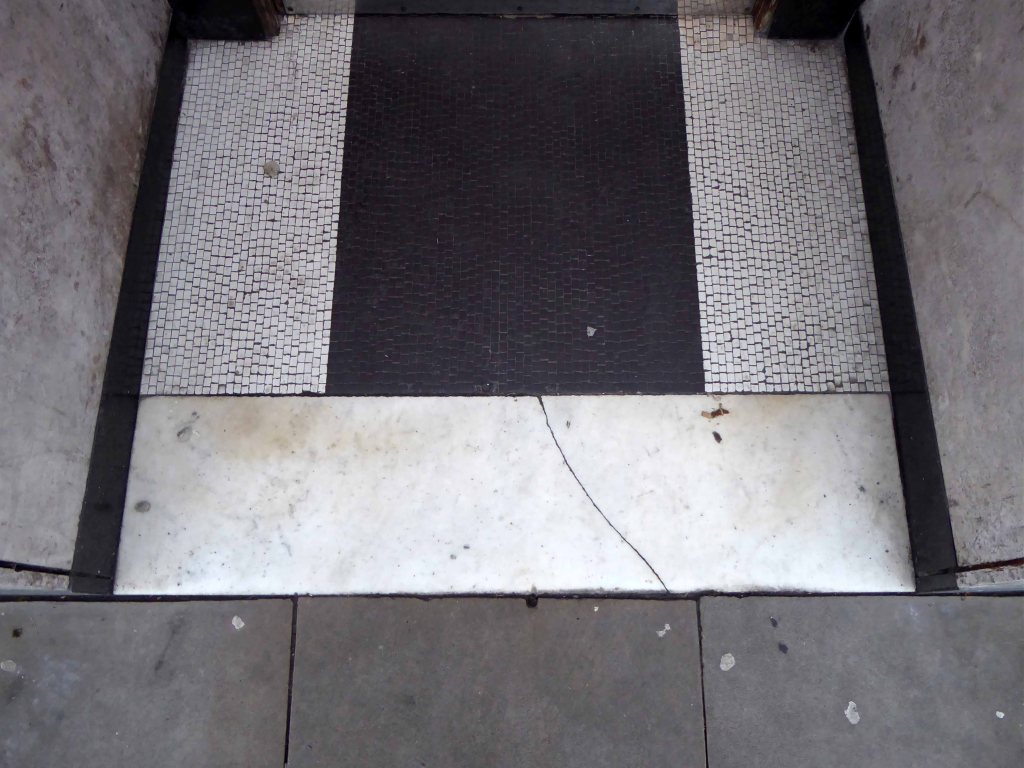
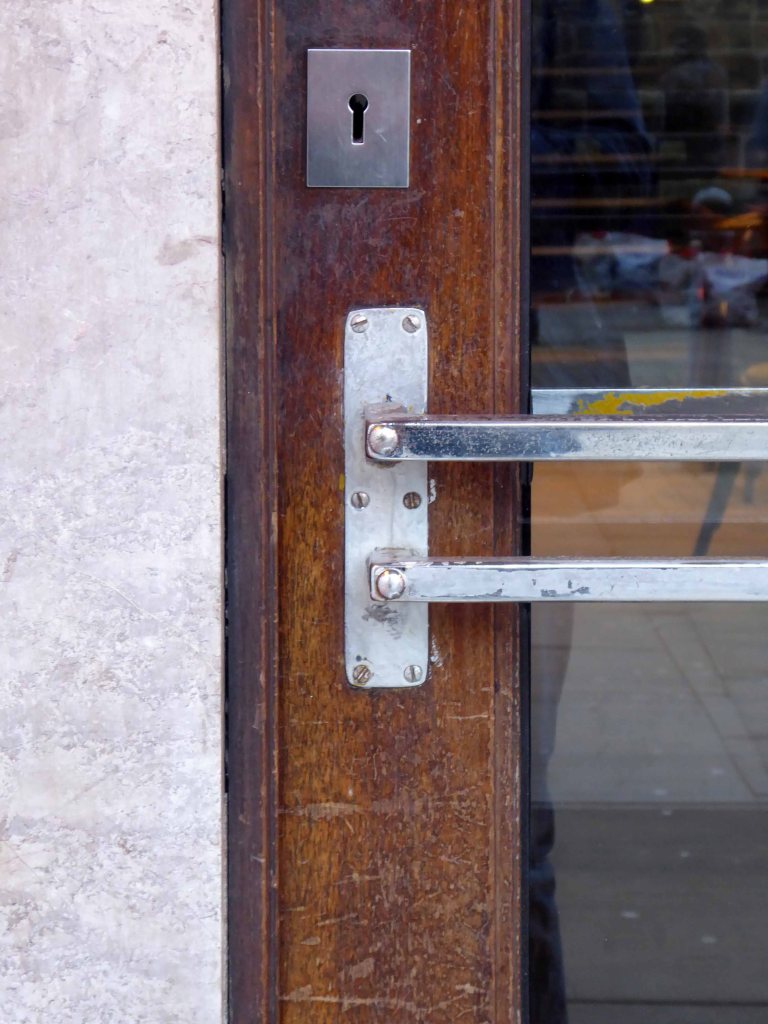
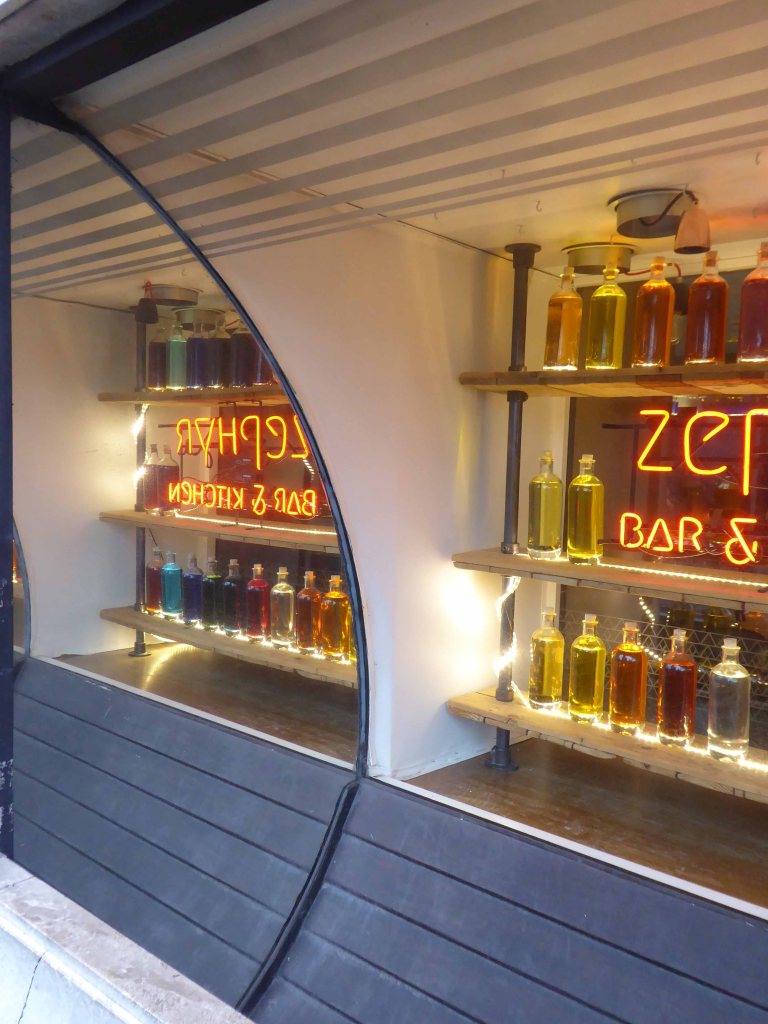
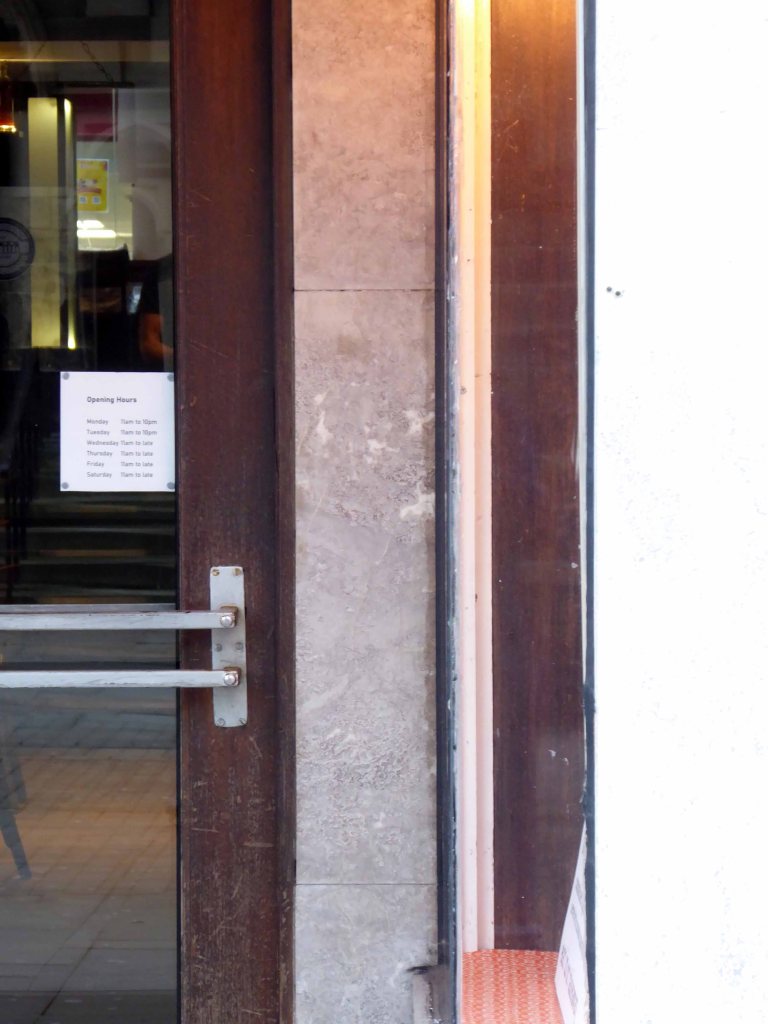
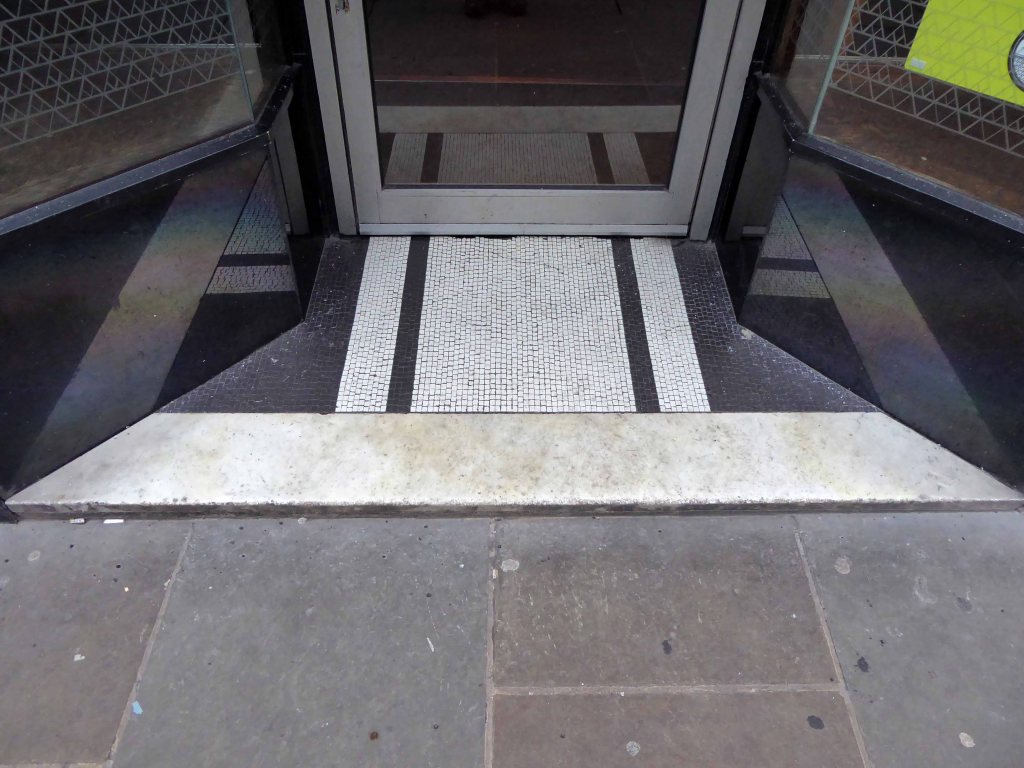
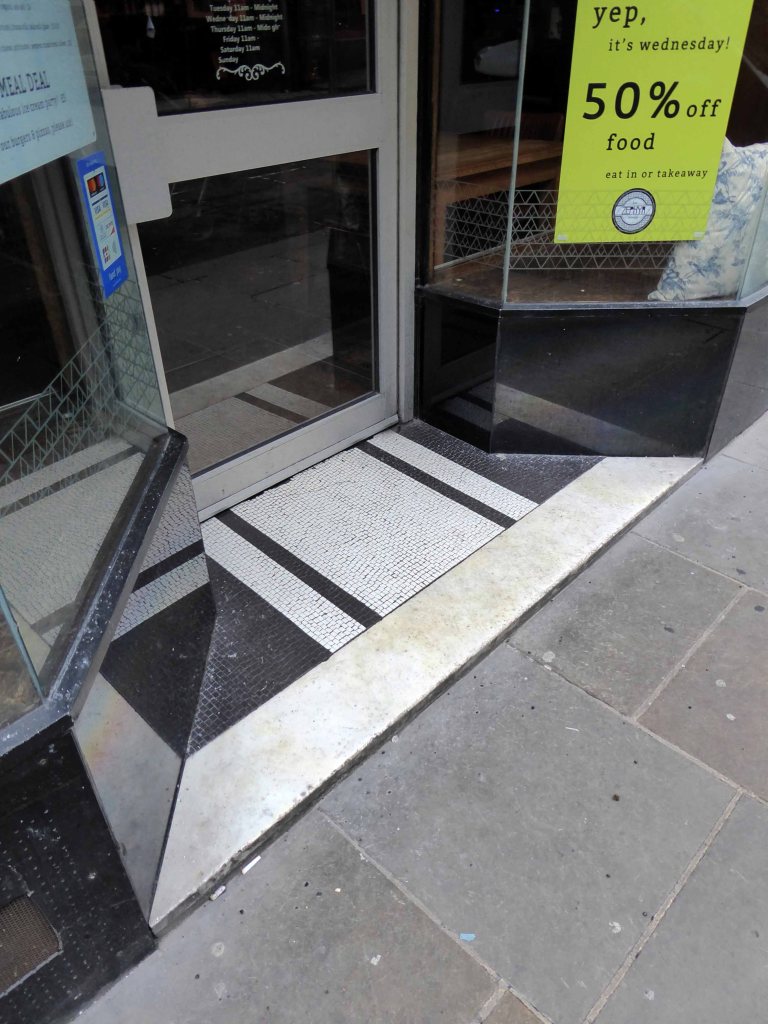
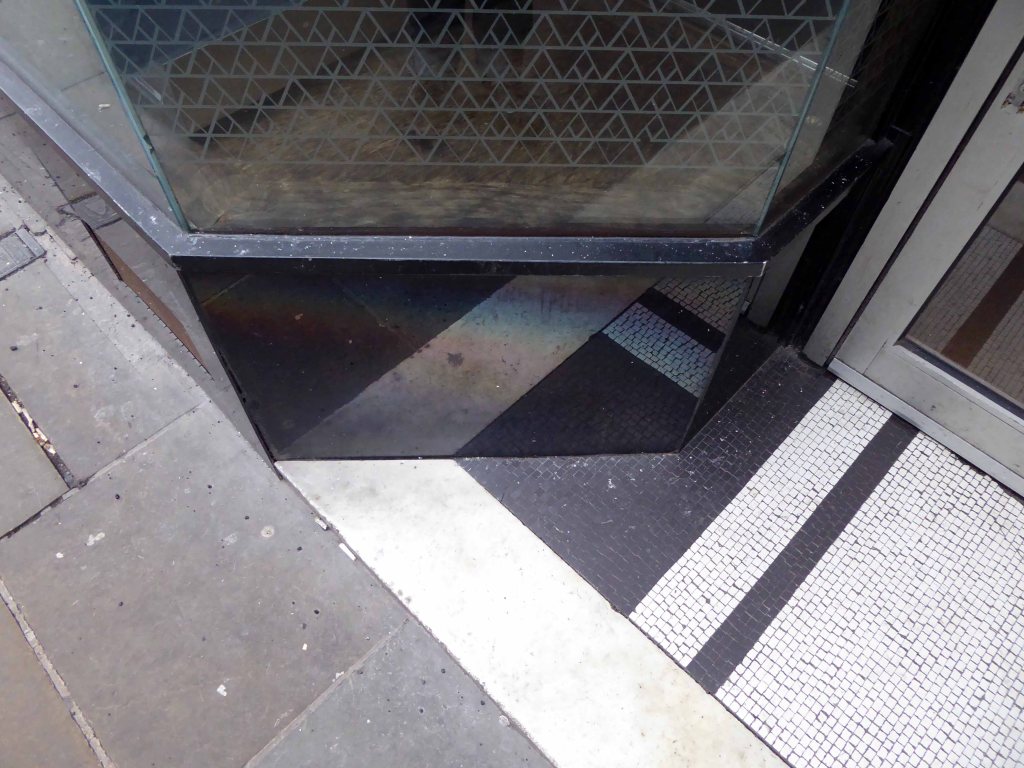
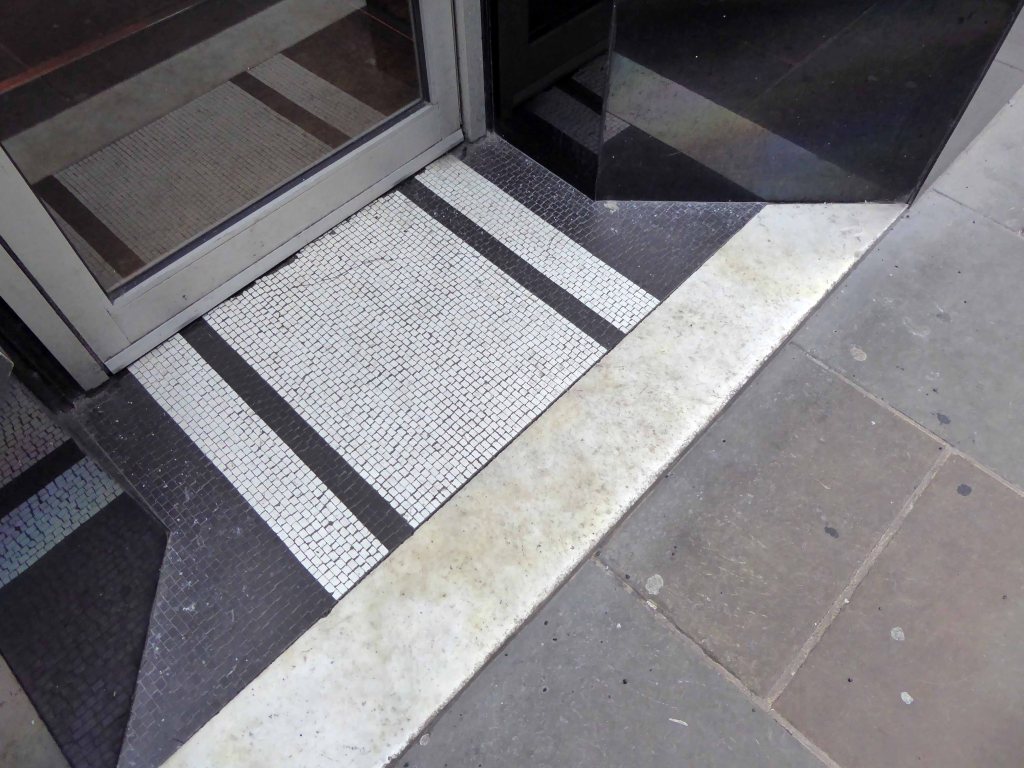
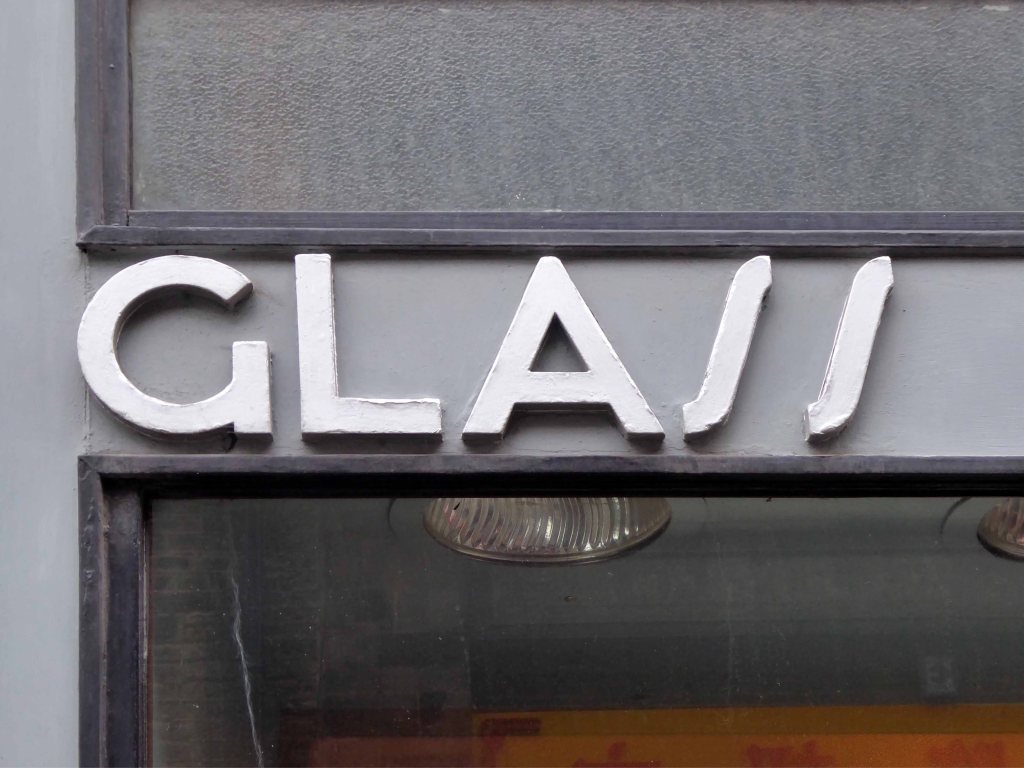
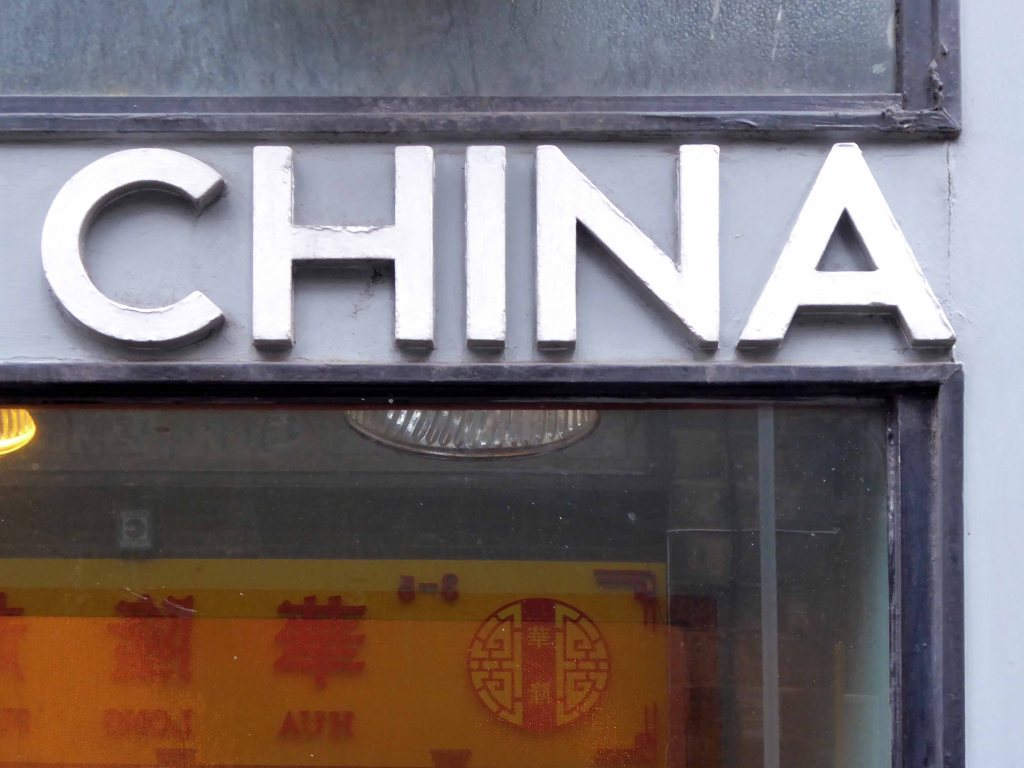
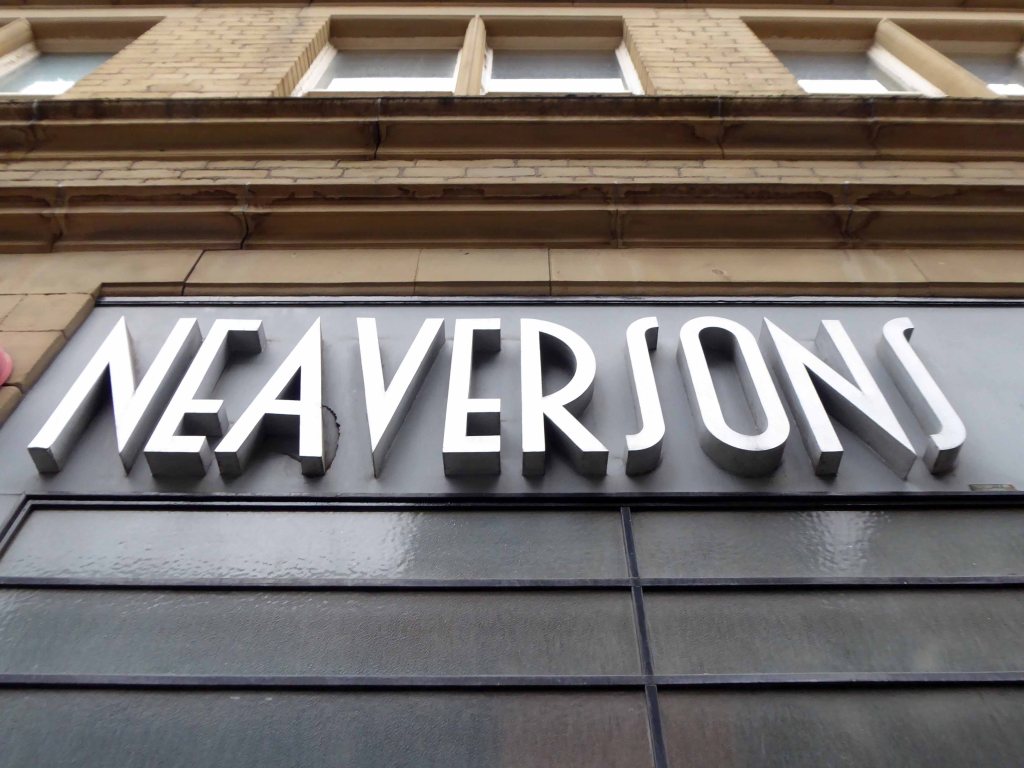
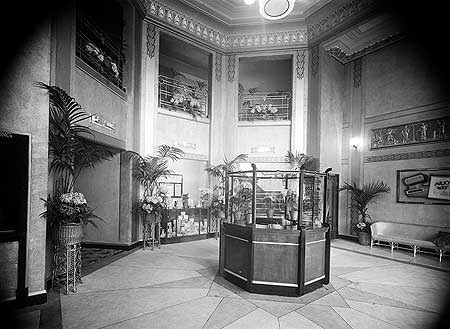
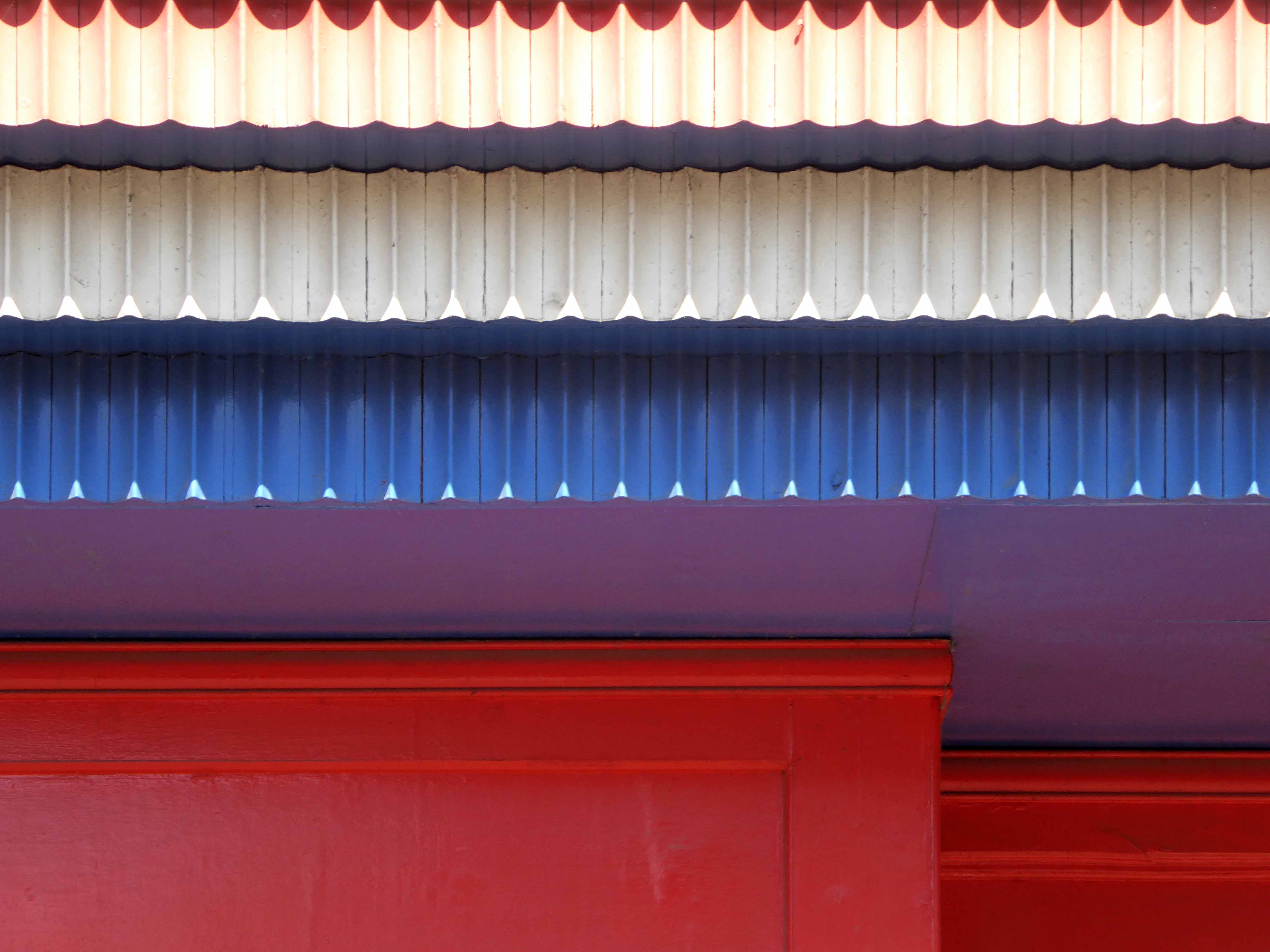
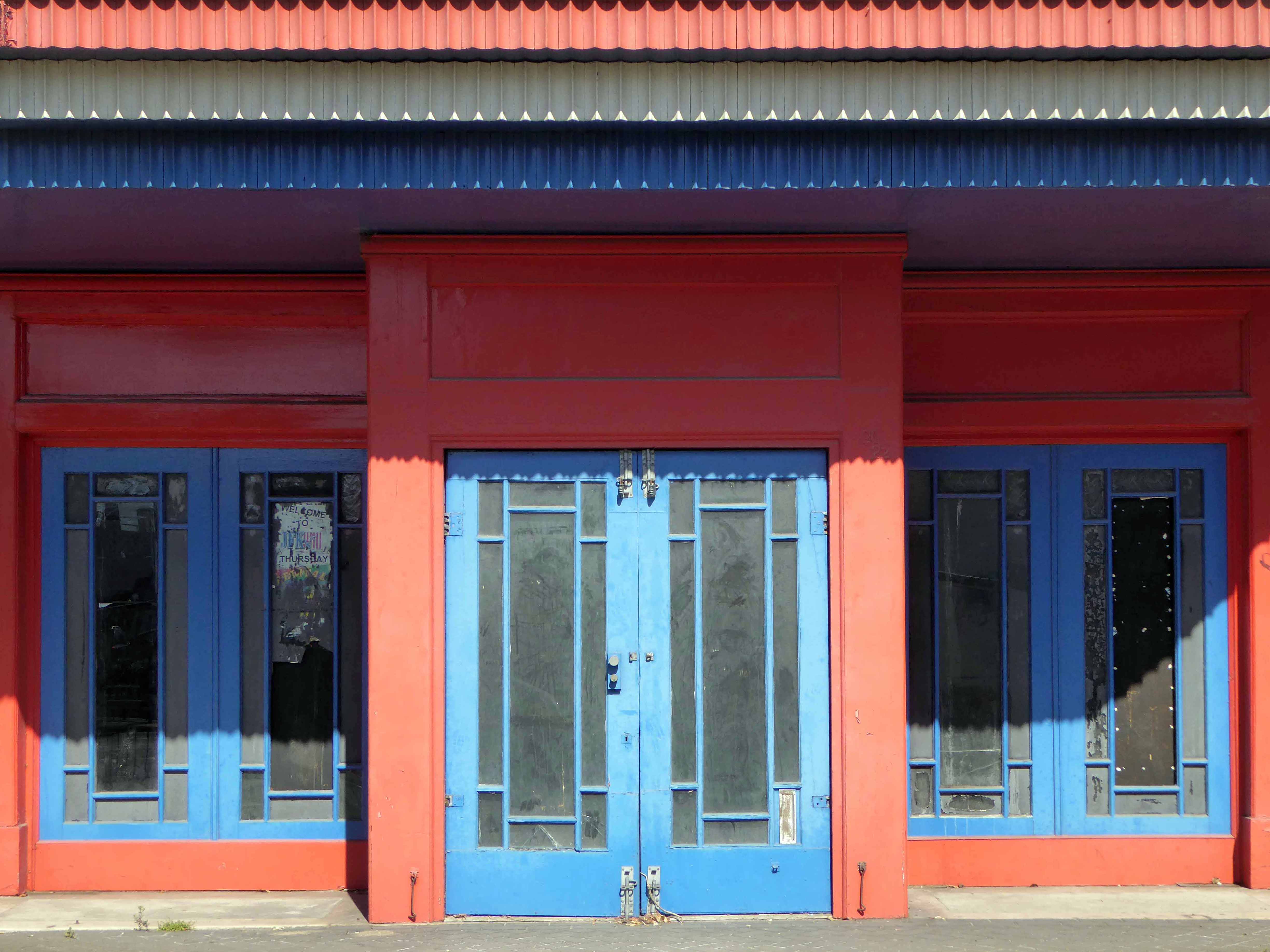
Set to the ground floor of bay 4 is a 1935 Moderne shopfront by Sharp and Law of Bradford. The shopfront is of grey and pink/beige marble with unmoulded windows that are curved to eliminate reflection, and has a glazed door set within a recessed porch. Set below the top of the shopfront is a ribbon window with dark tinted glazing and slender vertical and horizontal muntin bars arranged in a geometric pattern. The original metal signage in stylised sans-serif relief lettering reads ‘NEAVERSONS’, ‘pottery’ and ‘four’.

Thought to echo Susie Cooper’s London shop and unswervingly now – the fascia must have been something of a shock to the taciturn Tykes.

Neaversons glass and china shop closed in 2007.

Gerry’s Tea Rooms occupied the building for less than two years.

There is not a day goes by when I don’t see some of my customers asking what went wrong. They think I was a failure and that is so not the truth.

Along came a restaurant:

The Grade II 1930’s interior has been refurbished by the new owners and exudes understated sophistication.

“Wow, I feel like I’m in London,” said Trish as she stepped into the newly-opened Neaversons restaurant, having just arrived on the train from the capital.

It closed not long after.

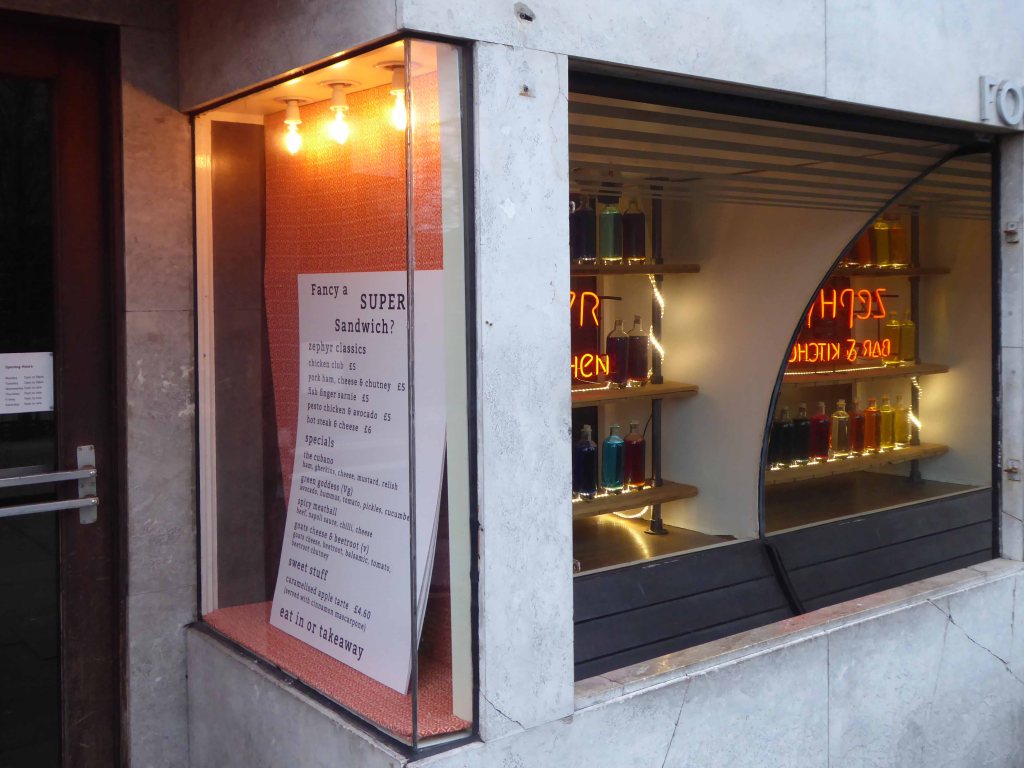
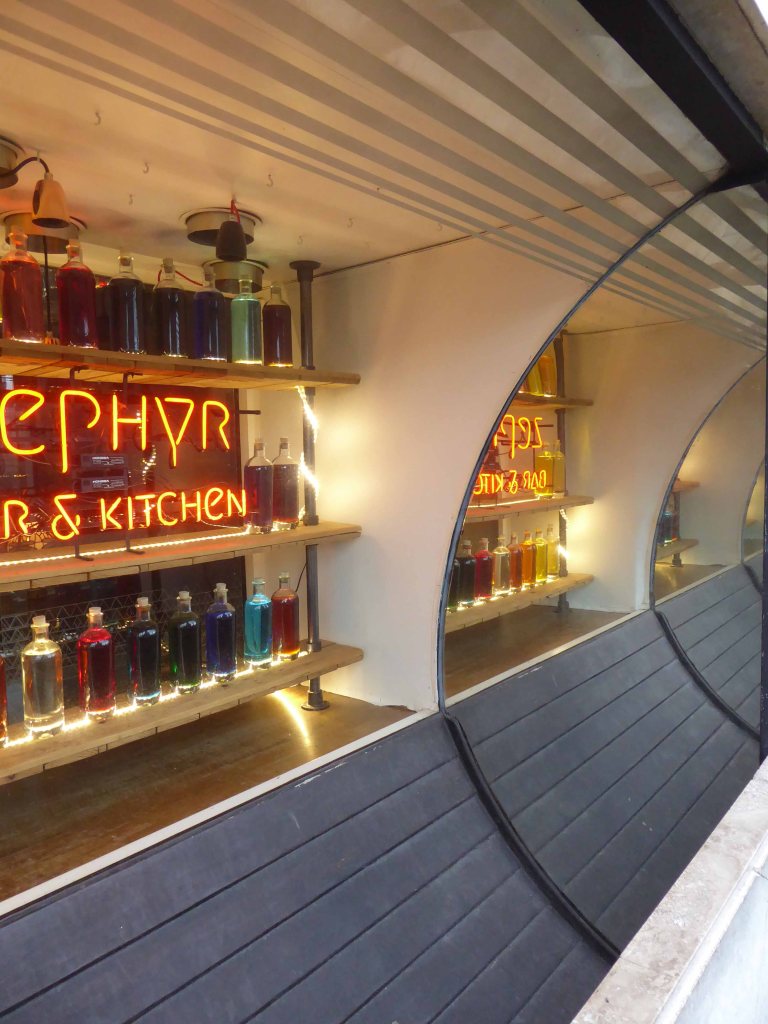
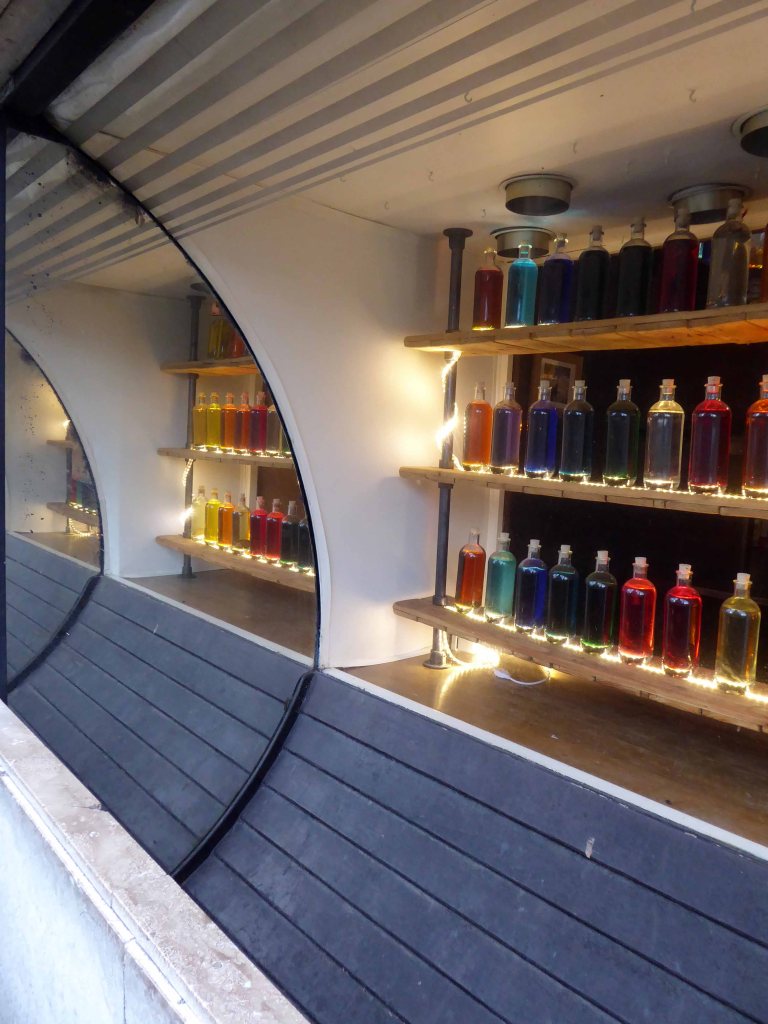
Currently home to the Zephyr Bar and Kitchen

A prohibition stylised venue offering a selection of drinks, food and an environment that really sets us apart from the crowd.

The listed frontage has survived intact – let’s take a look.

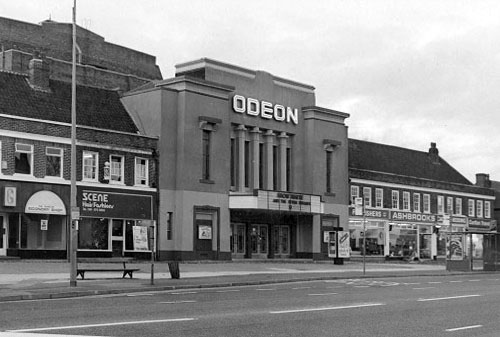
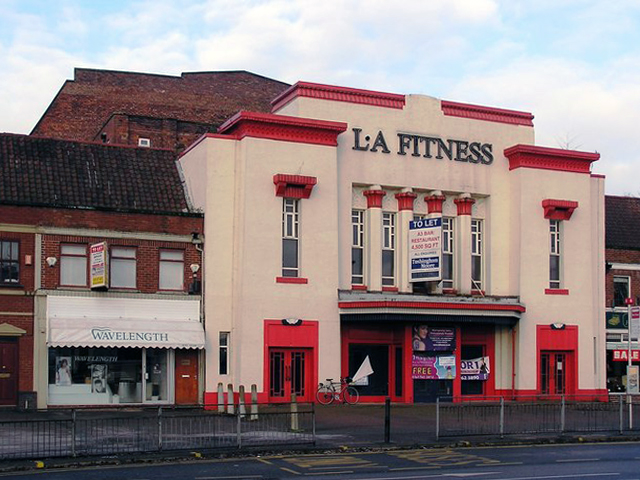
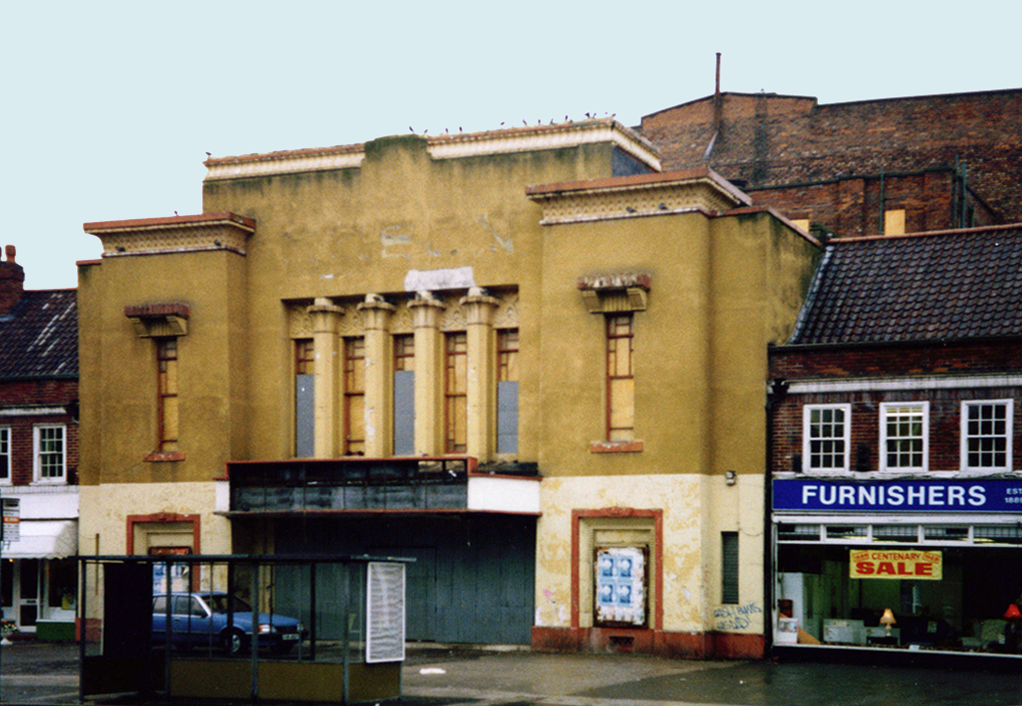
Odeon – Guide Bridge

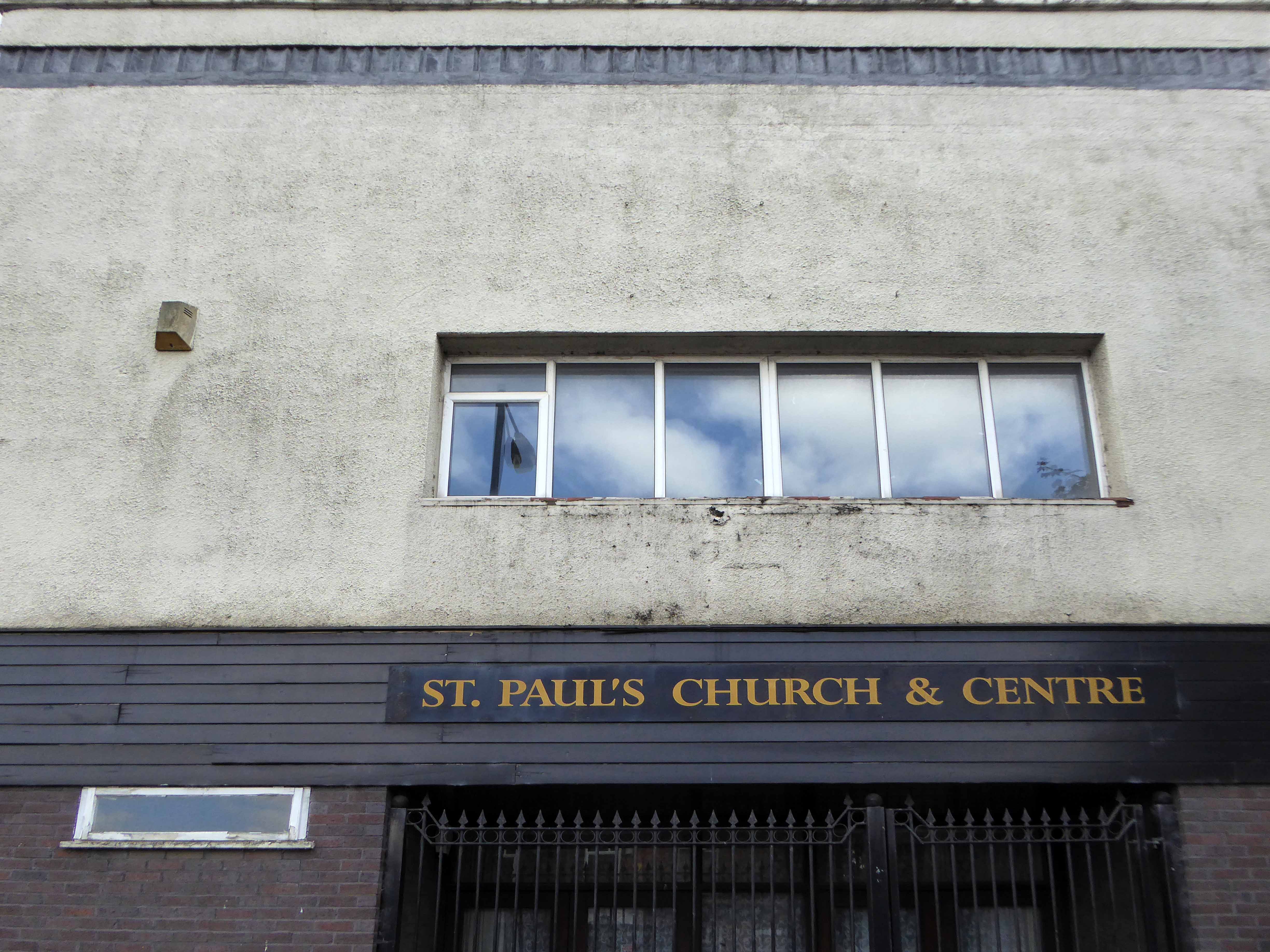
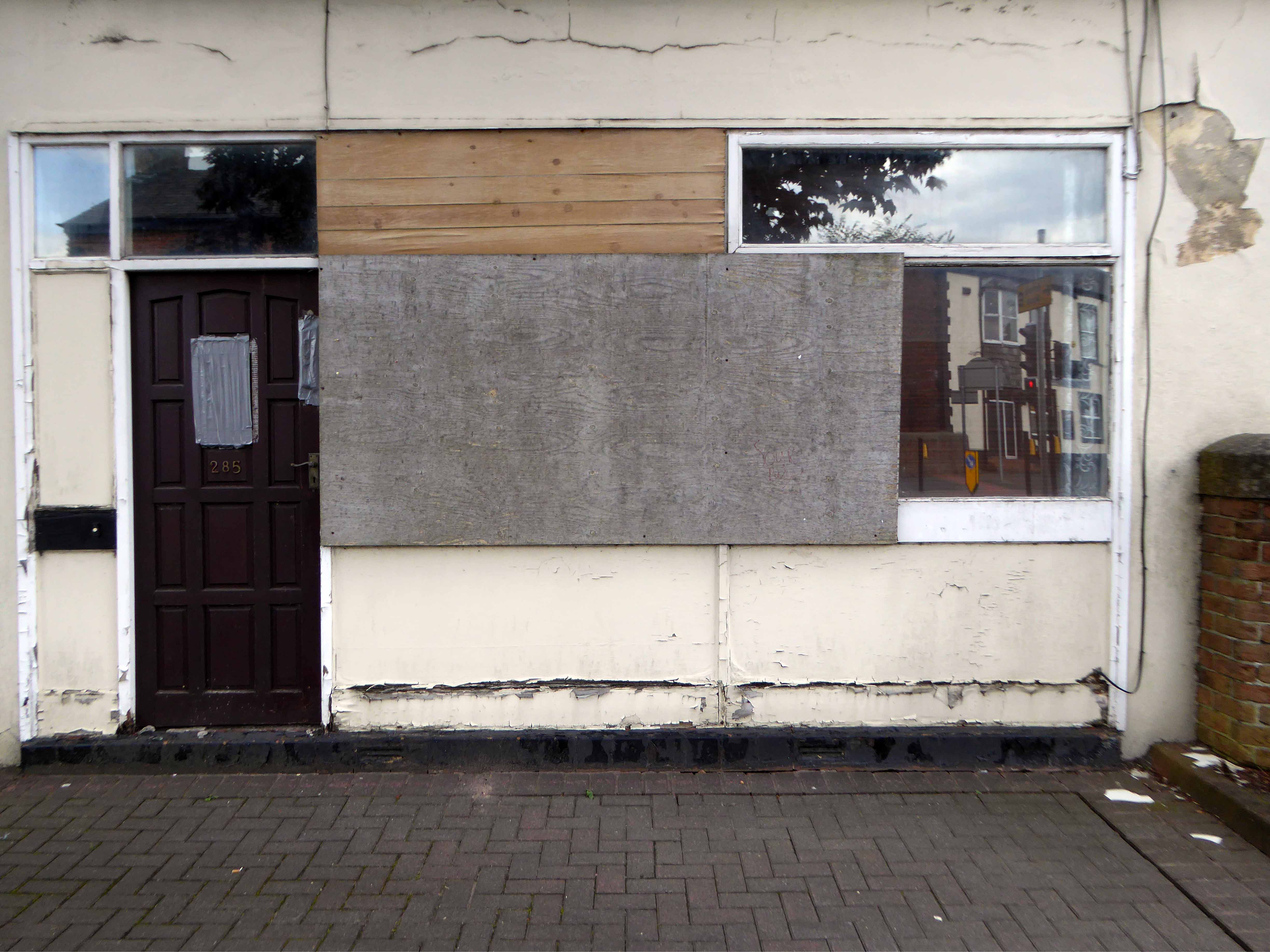
285 Stockport Road Guide Bridge Ashton-under-Lyne

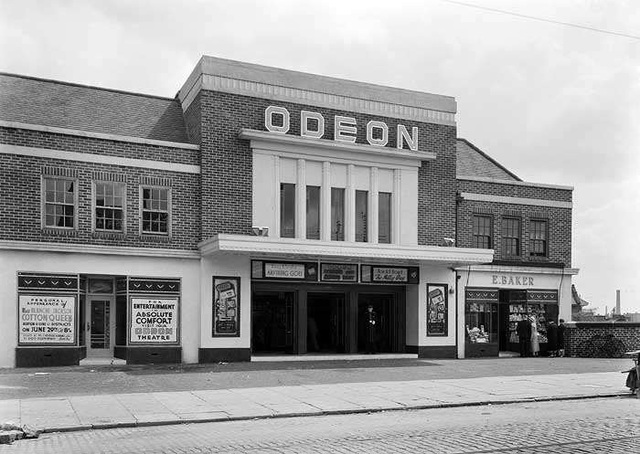
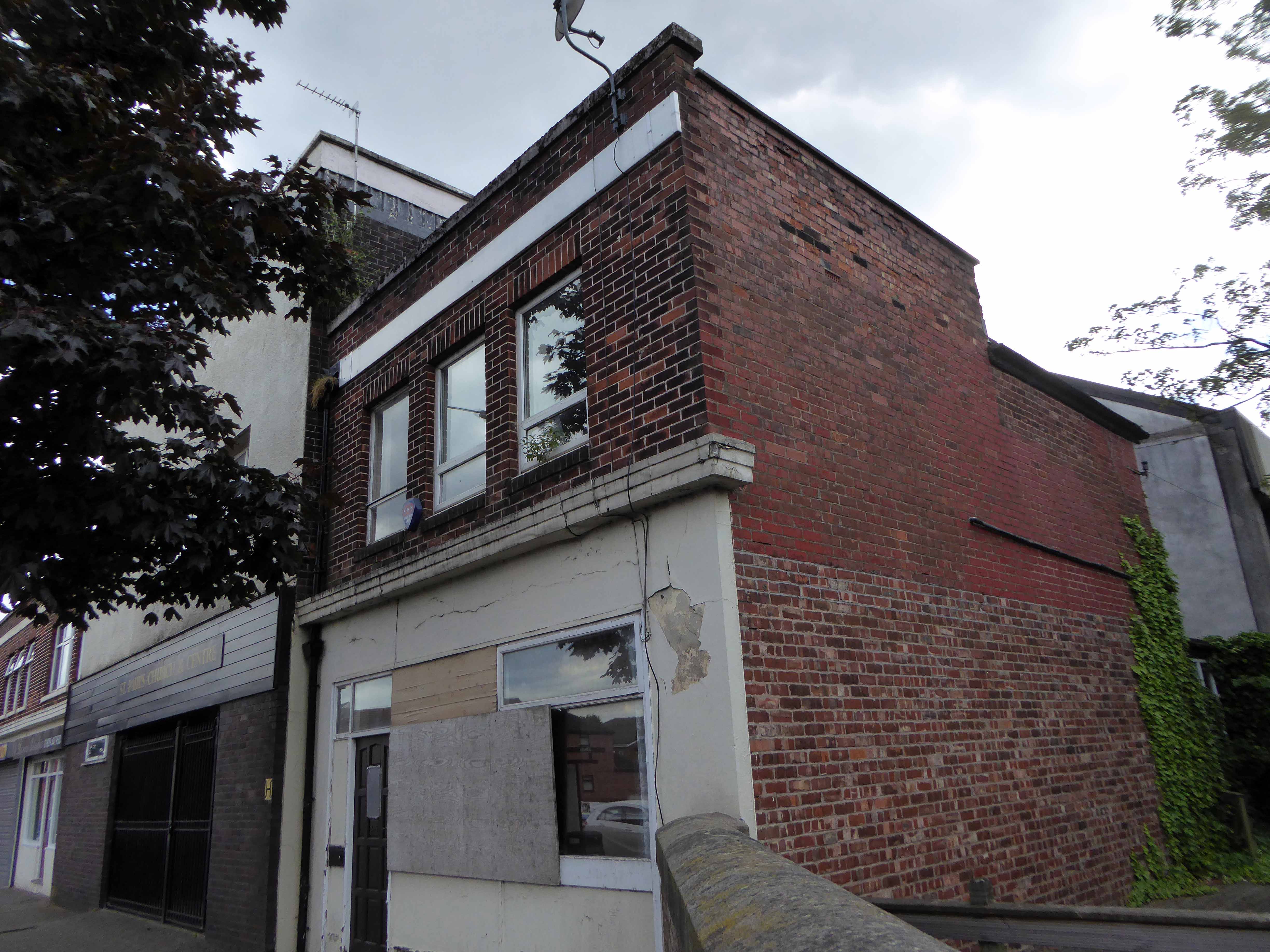
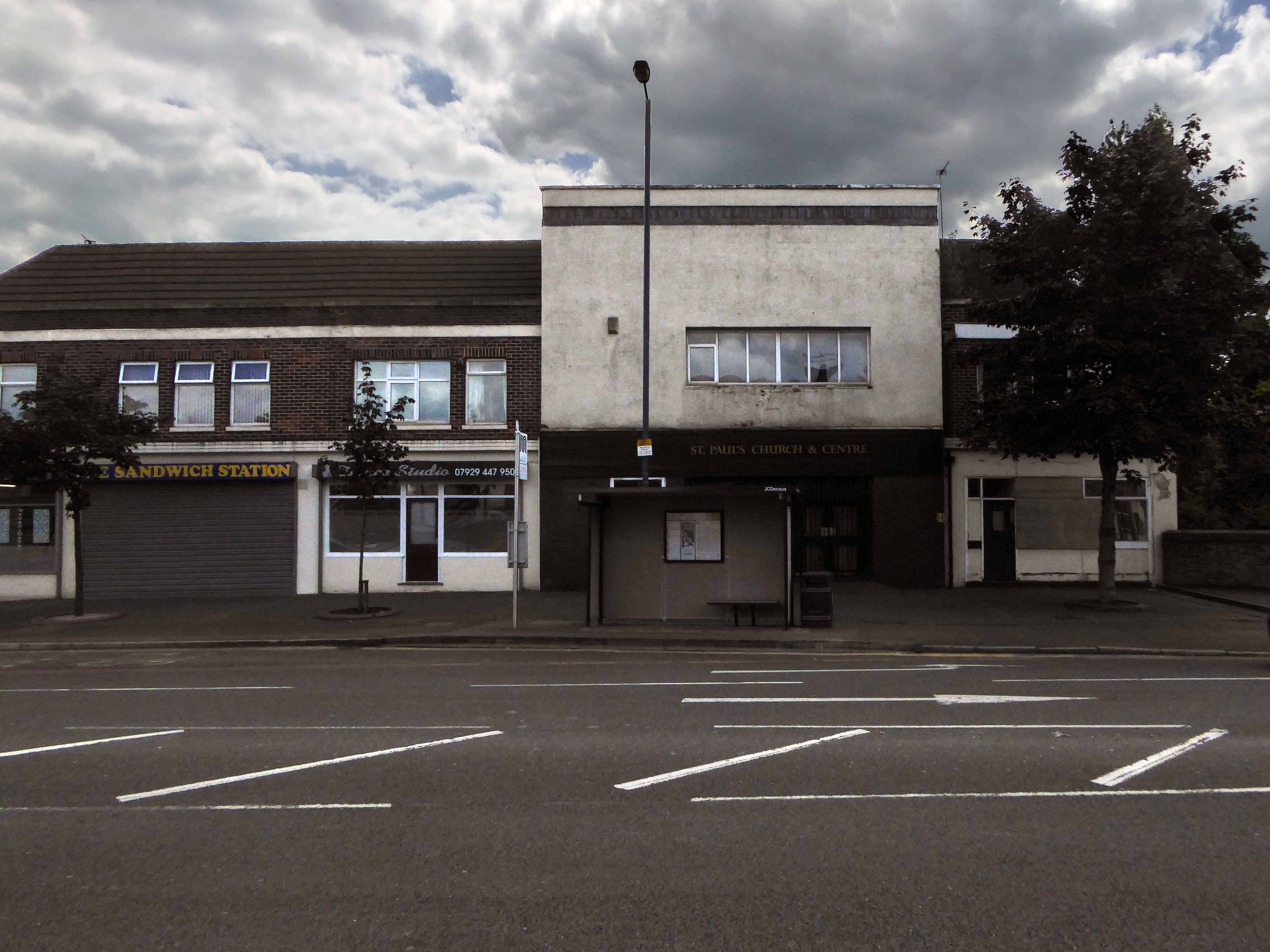
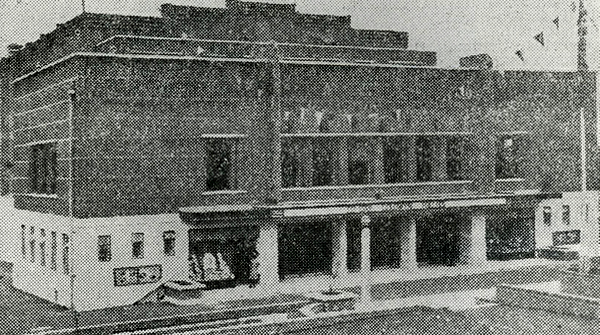
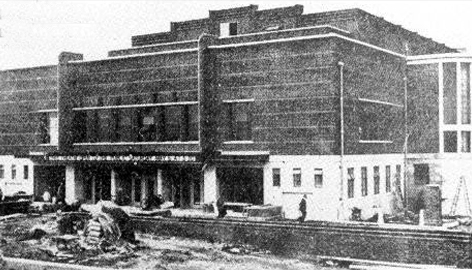
This was planned to be the Verona Cinema, a project of local builders – P Hamer Verona Cinema Ltd. The construction of the cinema was almost completed when Hamer sold the building to Oscar Deutsch and it opened as one of his Odeon theatres.

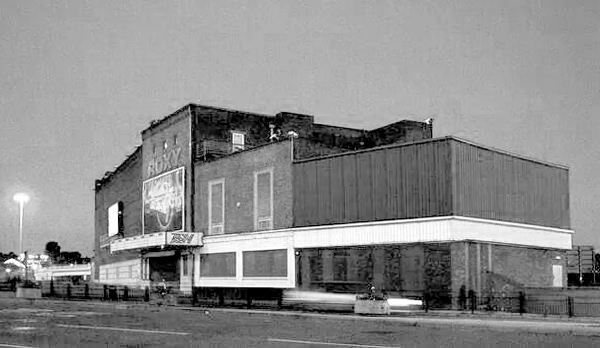
Hamer then used the proceeds of the sale to build the Roxy Cinema Holinwood, which was designed by Drury & Gomersall.

Opening date of the Odeon Theatre was 29th June 1936, when the first programme was Bing Crosby in “Anything Goes” and Harold Lloyd in “The Milky Way”. Designed by the noted cinema architectural firm of Drury & Gomersall, the frontage had a neat entrance in brick, with white stone facings on the window surrounds. There was a parade of shop units on each side of the entrance which had matching brickwork and a white stone trim.

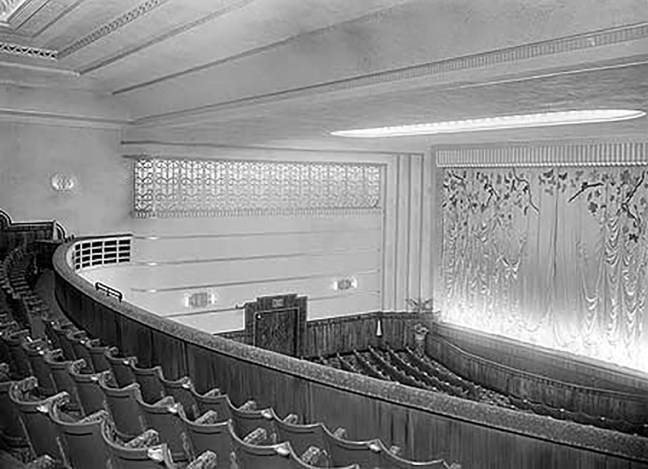
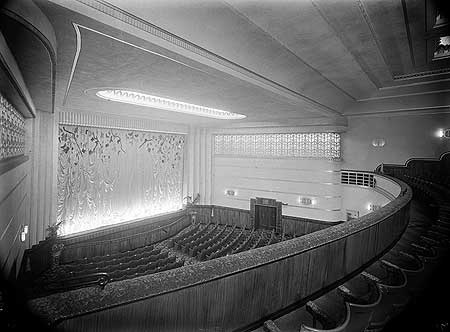
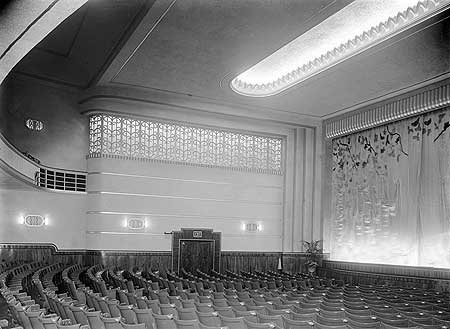
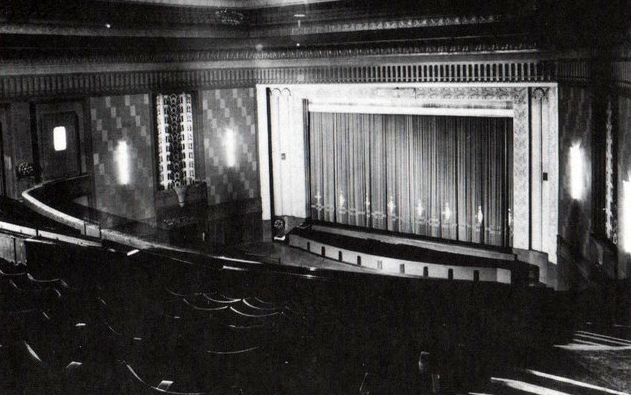
Inside the auditorium the seating was arranged for 834 in the stalls and 330 in the circle. The side splay walls on each side of the proscenium was decorated in wide horizontal bands, and topped with a backlit illuminated grille.

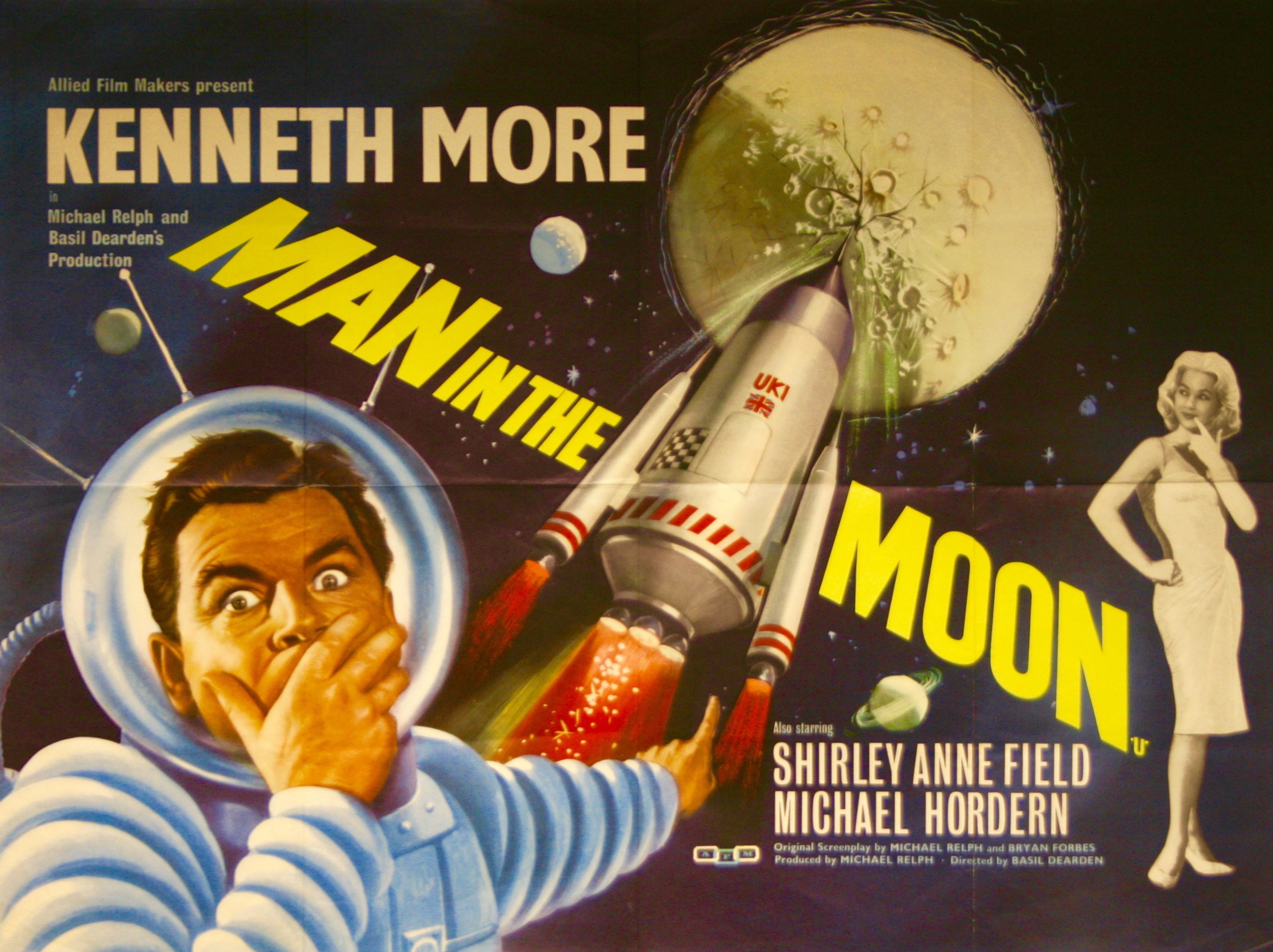
The Odeon was closed by the Rank Organisation on 11th March 1961 with Kenneth More in “Man in the Moon”.

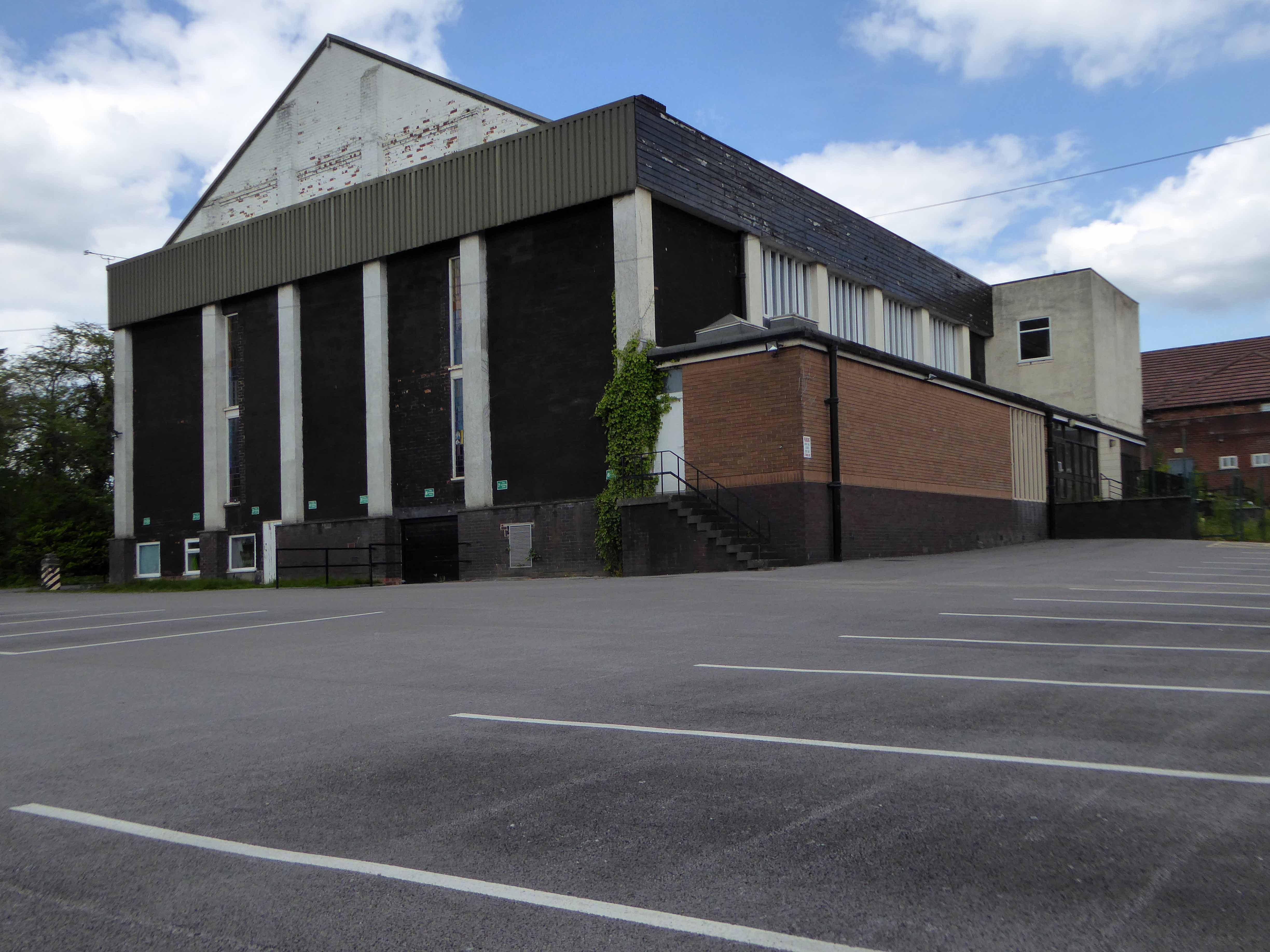
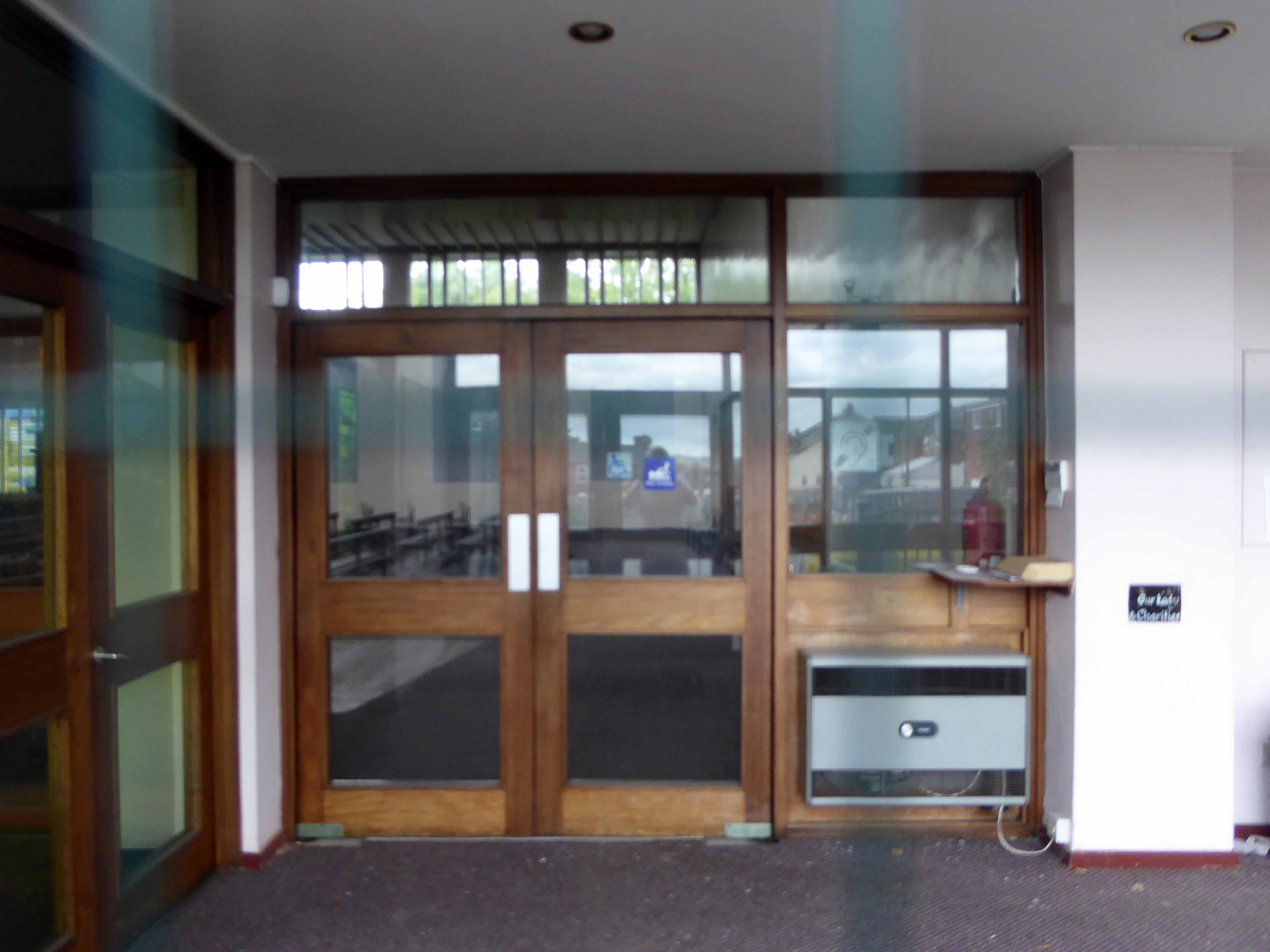
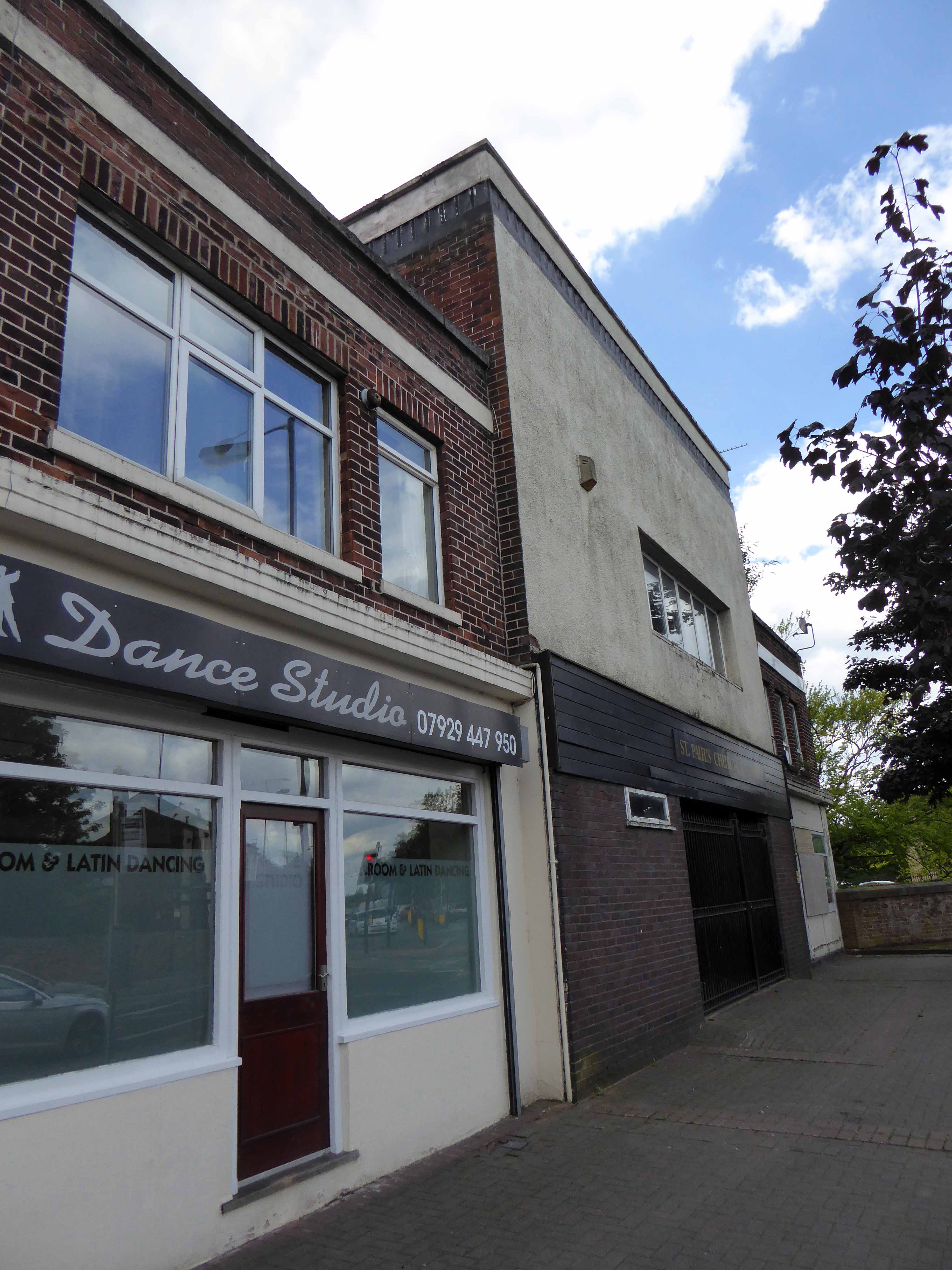
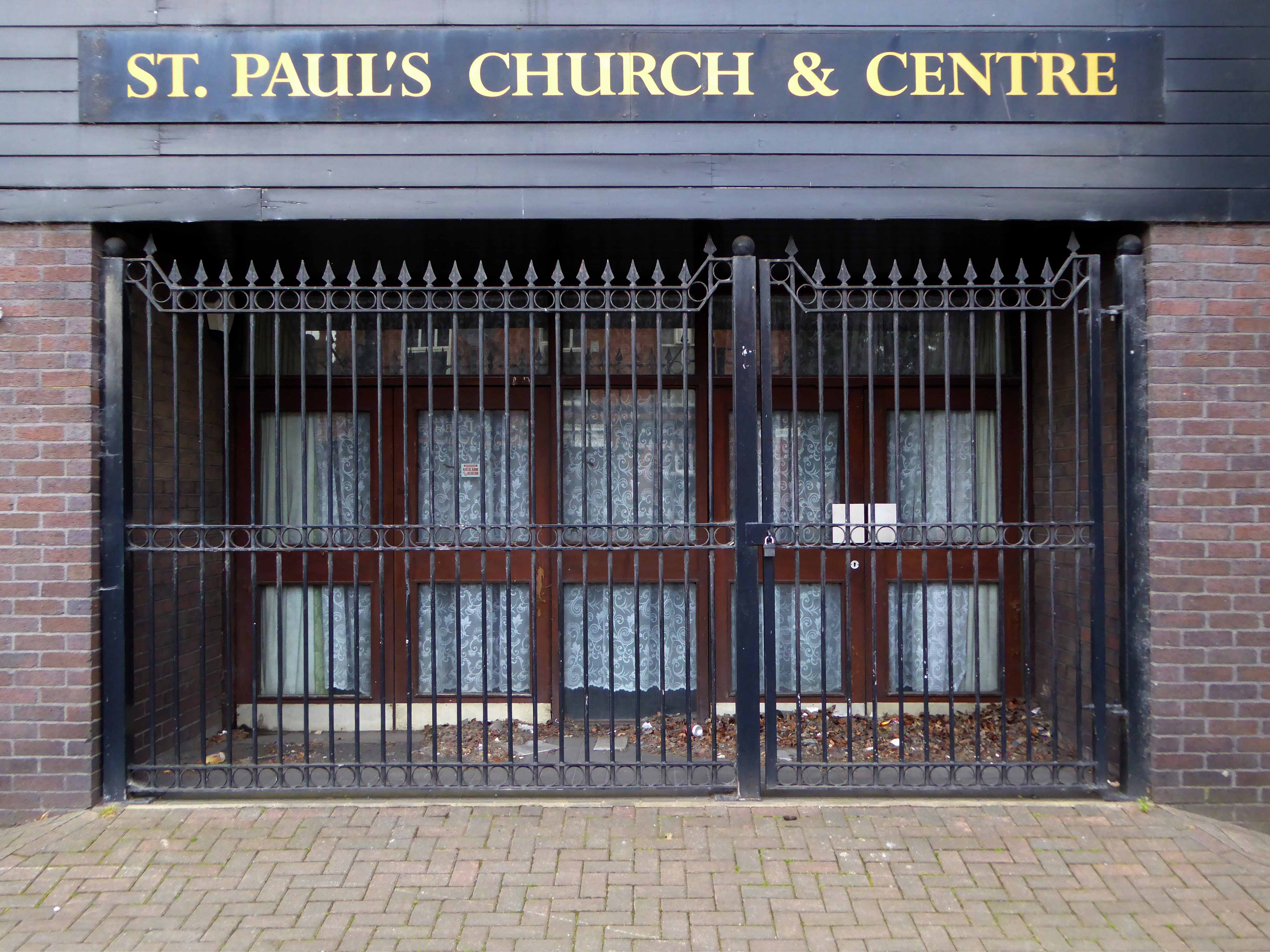
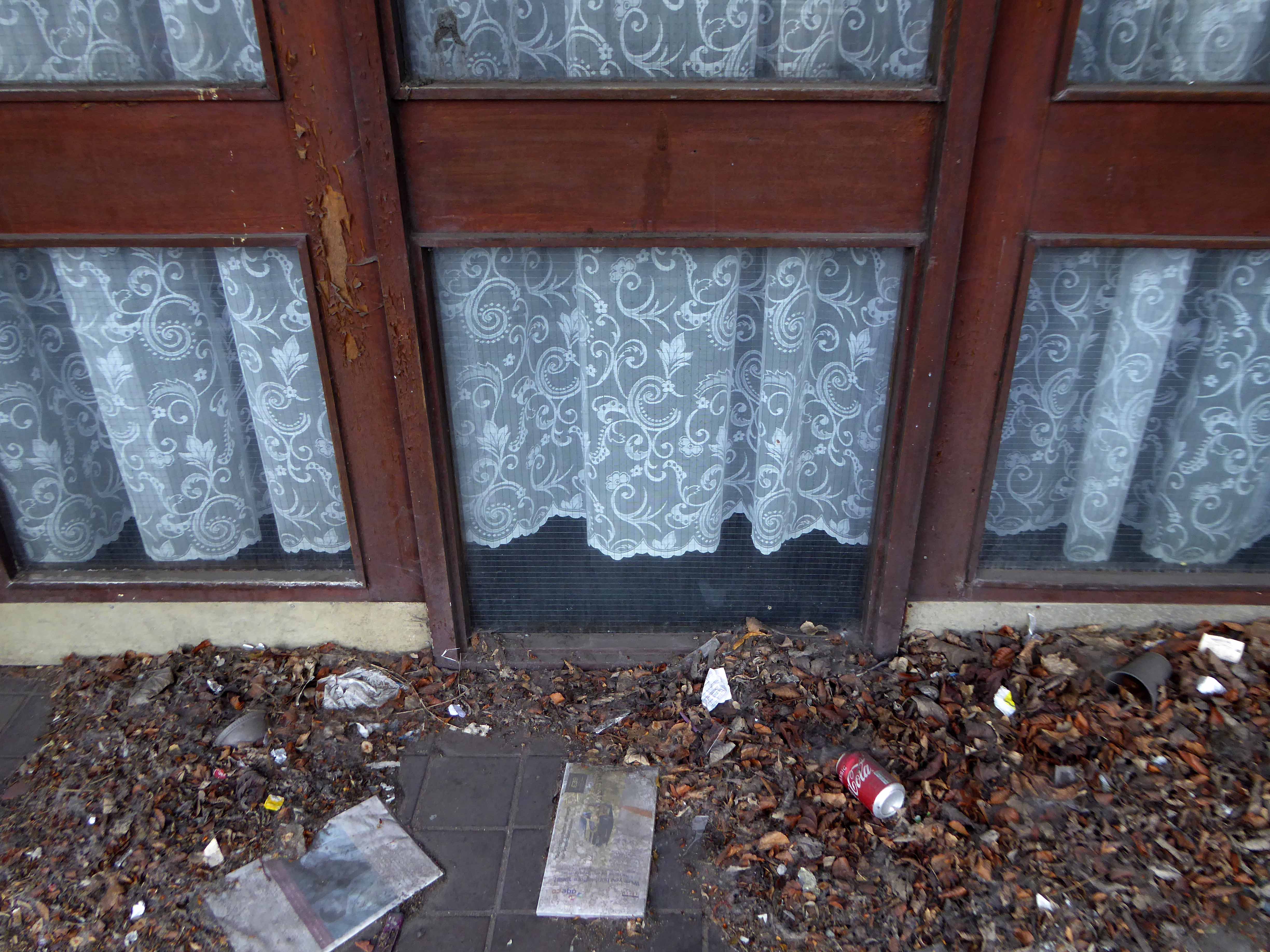
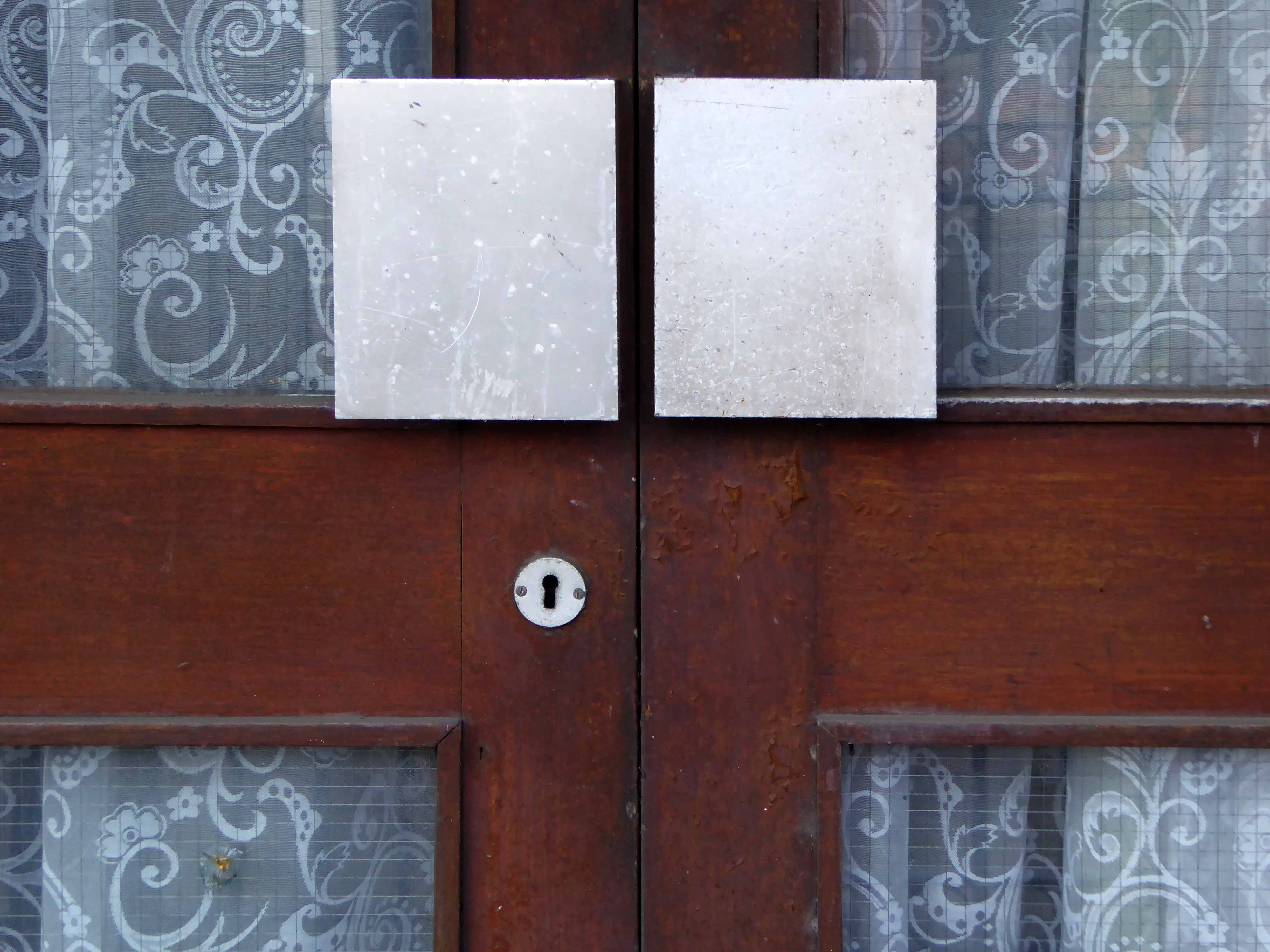
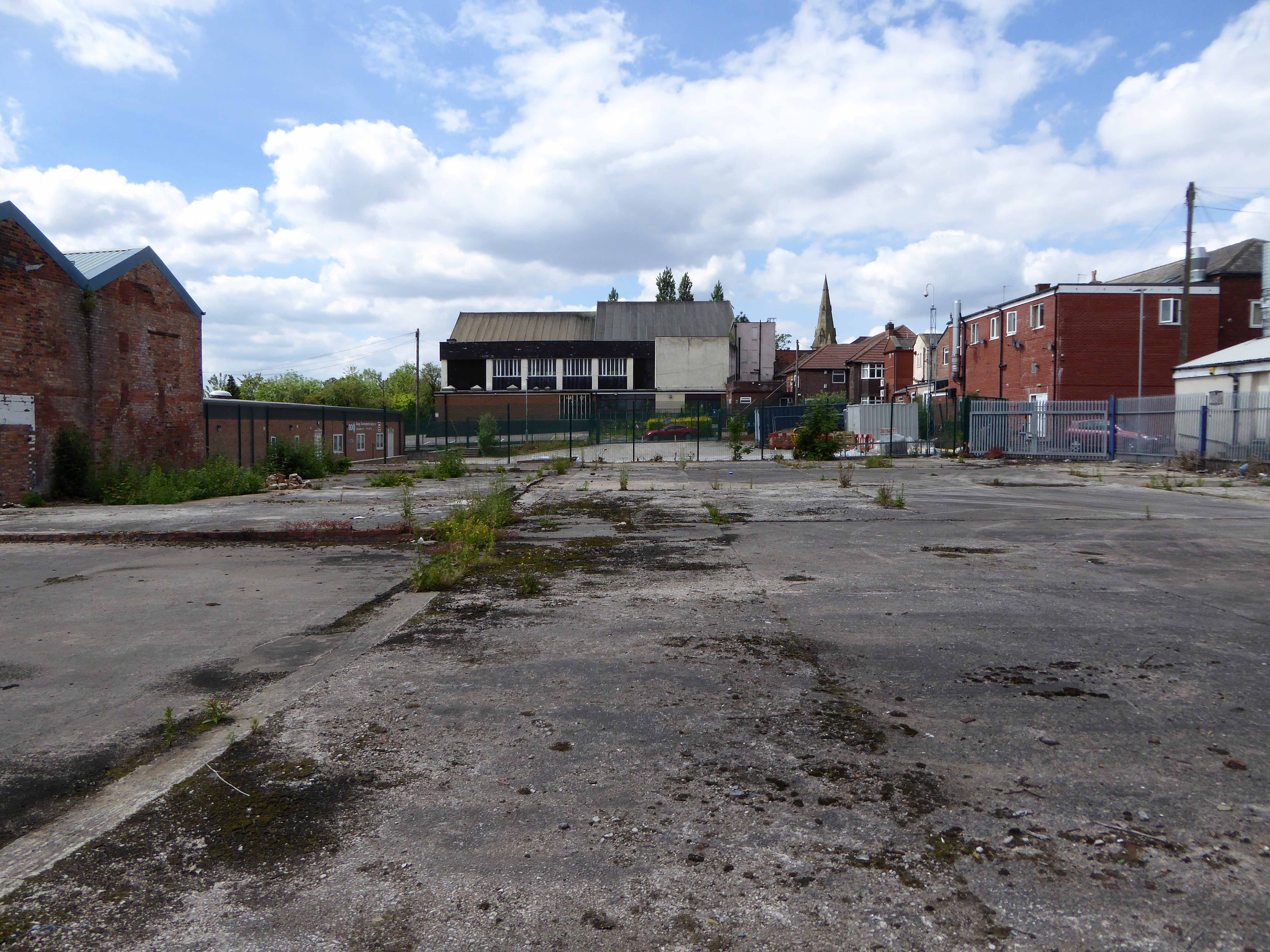
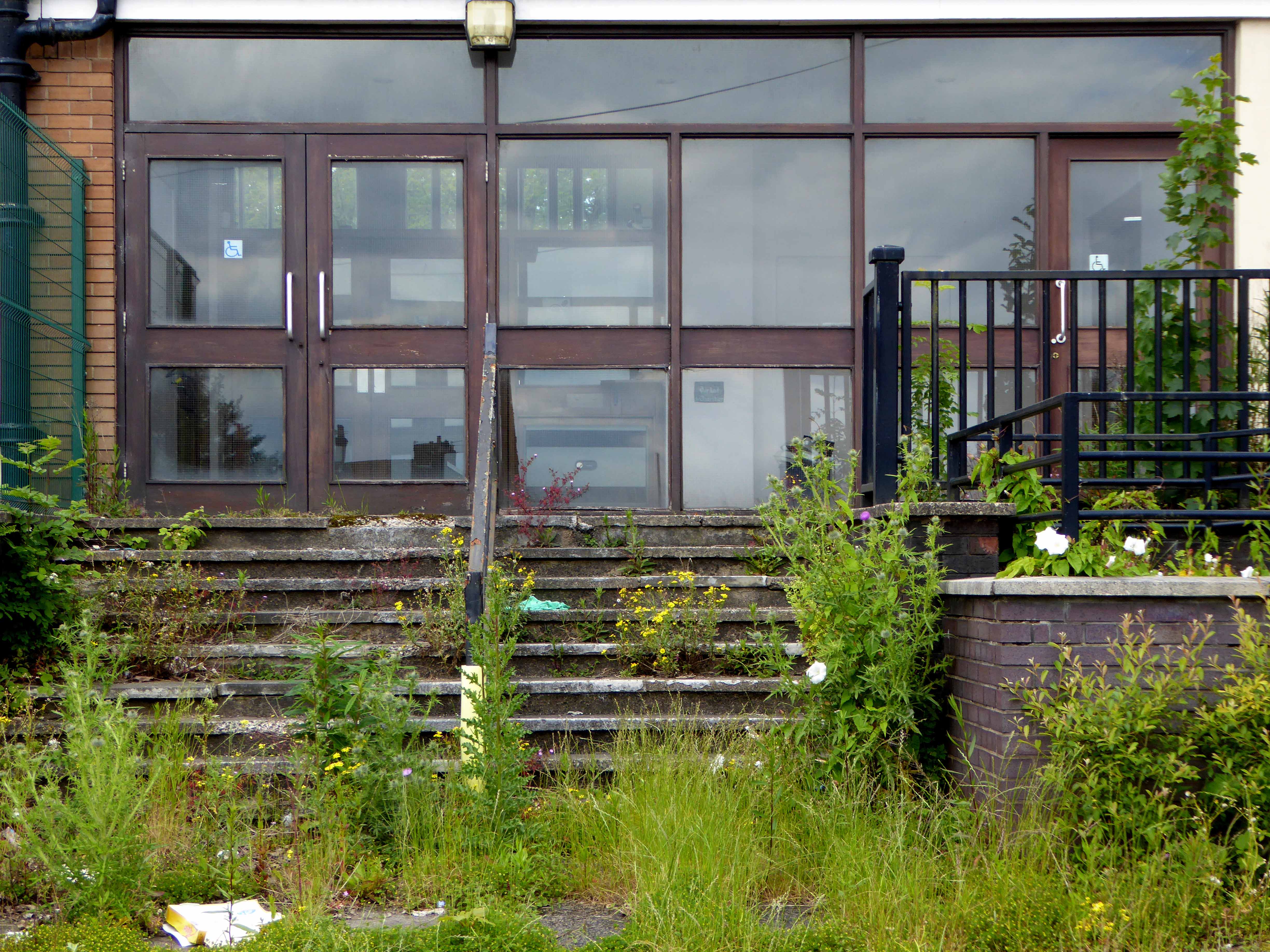
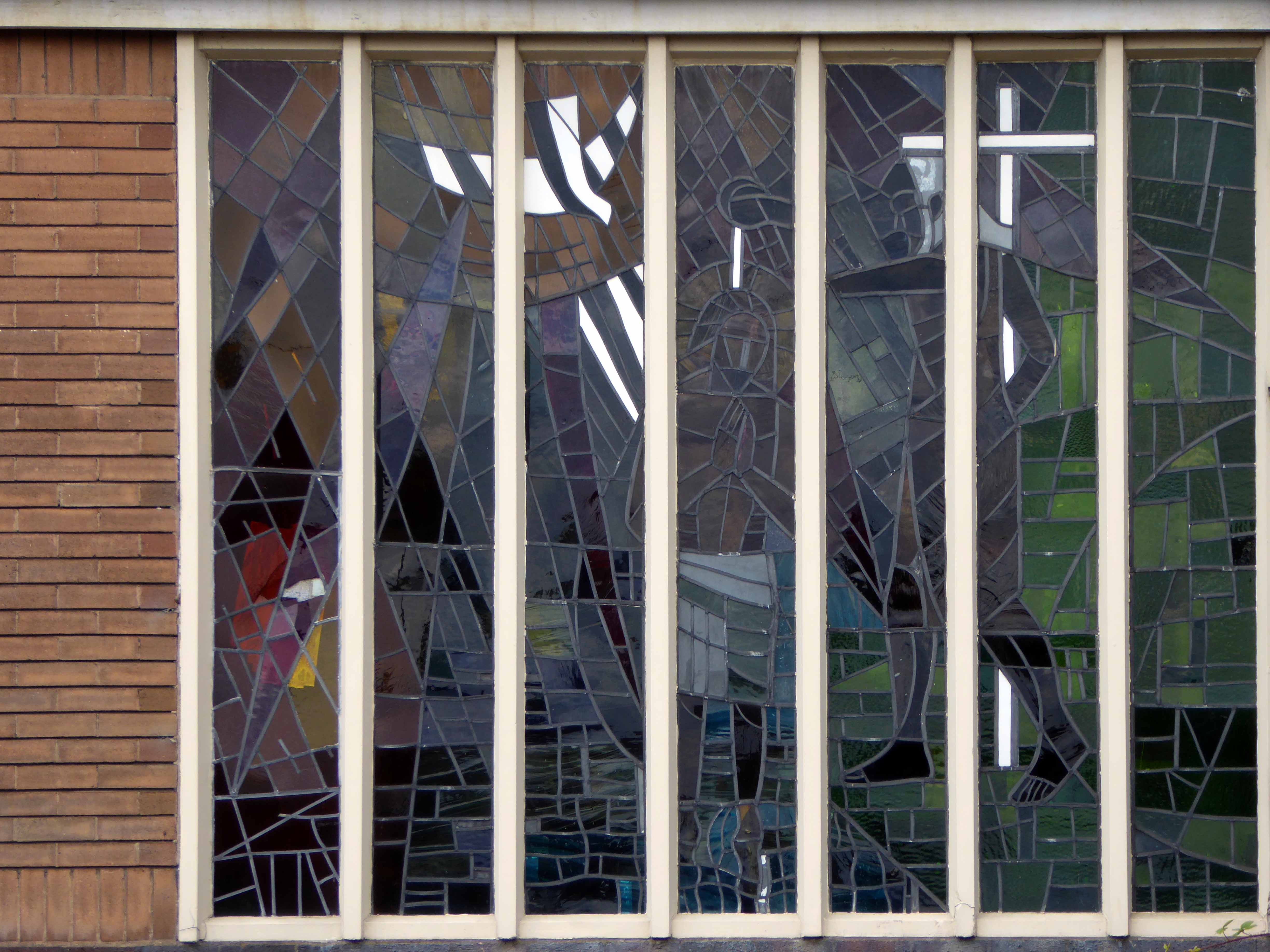
It was converted into St. Paul’s Roman Catholic Church. Former cinemas have made good conversions to churches and the fabric of the buildings are generally respected. In this case though, the sad story is that the front entrance has been rendered over and inside all details of it cinematic past have been erased. You would never know you were inside what had been been an Art Deco styled building.

Contributed by Ken Roe Cinema Treasures

I passed by nearly every day for years travelling to and from school, I played there at a wedding reception in the church social club. I sadly have no recollection of the building in use as a cinema.

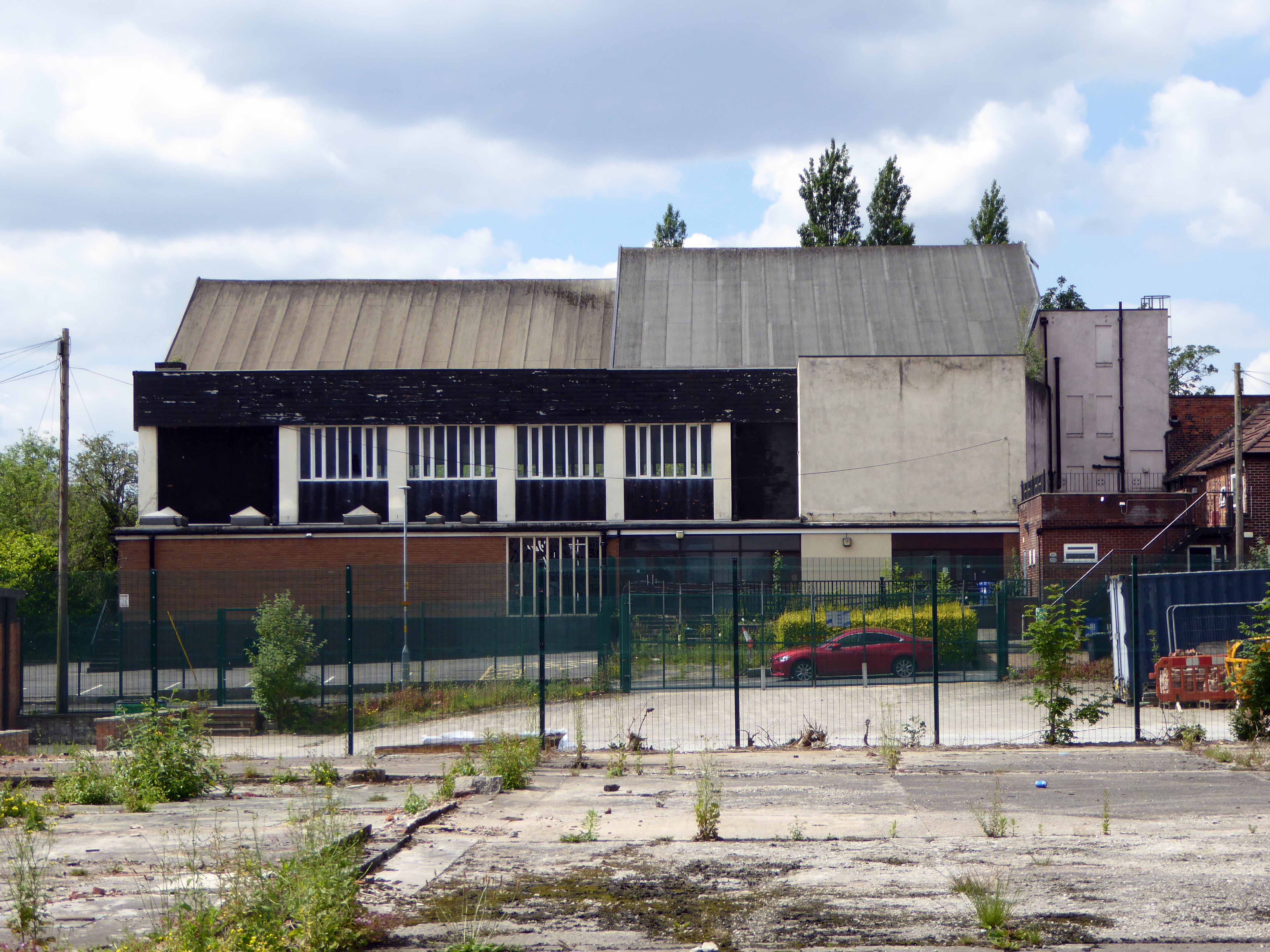
It has been closed since 2010 – currently it has no purpose or seemingly any future use, there are no For Sale signs in evidence.

Fallen so quickly and absolutely from grace.

Doncaster – Modernism

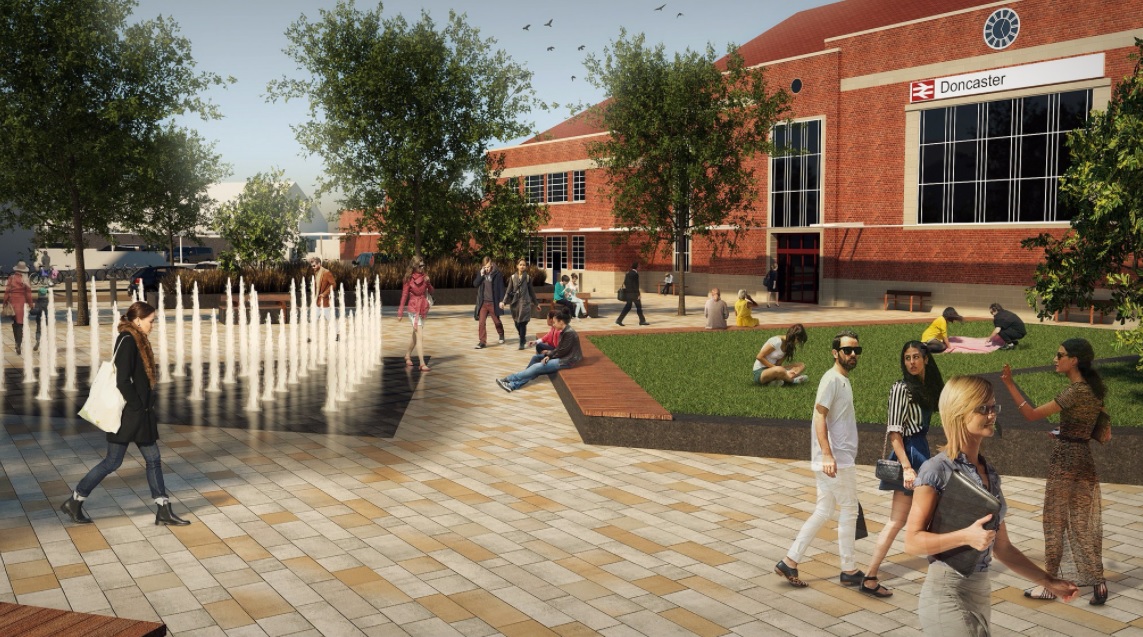
The railway station was built in 1849 replacing a temporary structure constructed a year earlier. It was rebuilt in its present form in 1933 and has had several slight modifications since that date, most notably in 2006, when the new interchange and connection to Frenchgate Centre opened.

The front elevation is realised in a typical inter-war brick functionalist style.

Of particular note are the lobby lighting fixtures and clock, the booking hall and offices are listed Grade II.

There are plans to redevelop the station approach replacing the current car parking with a pedestrianised piazza.

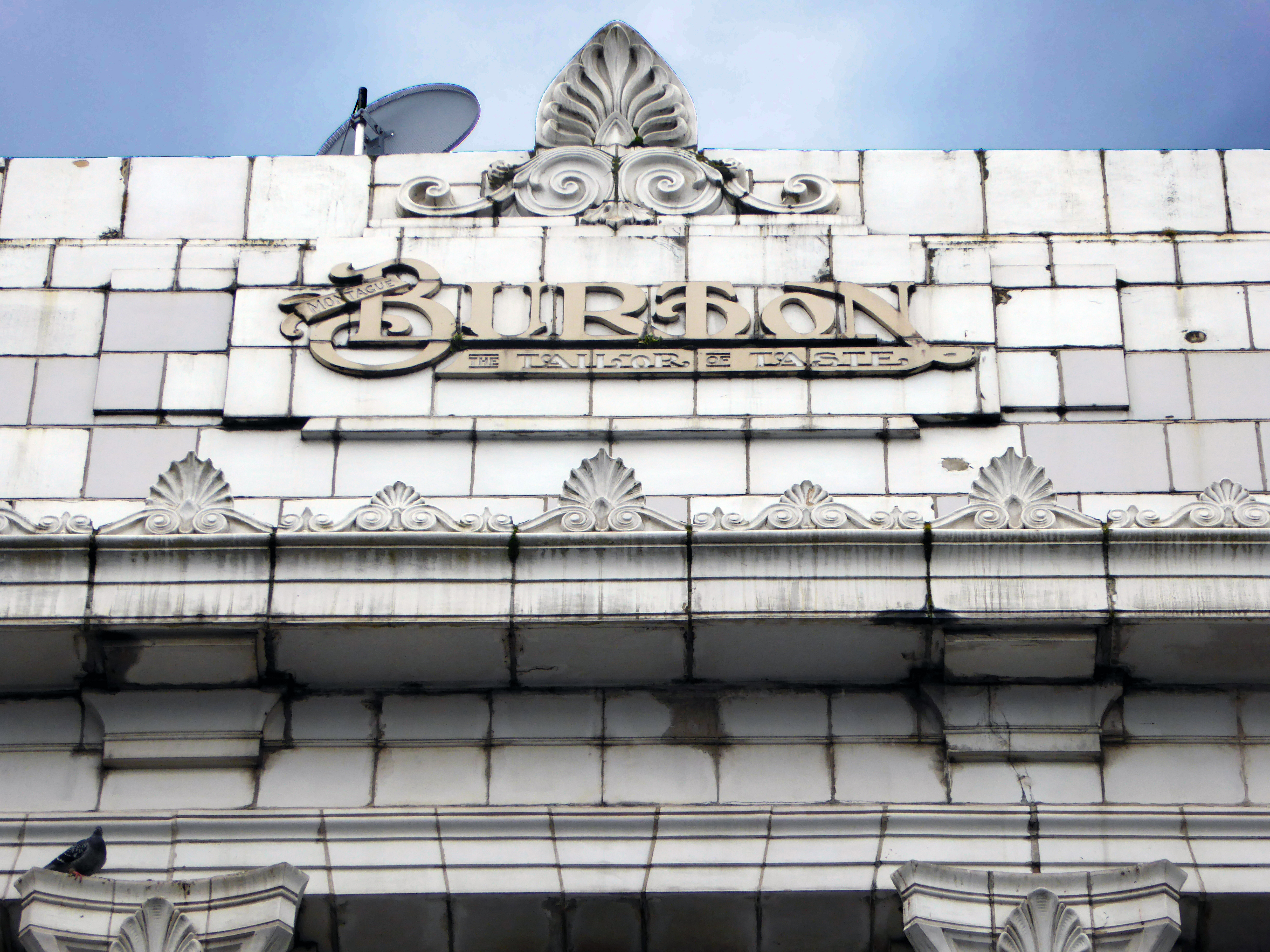
The High Street boast a former branch of Burton’s with its logo intact.

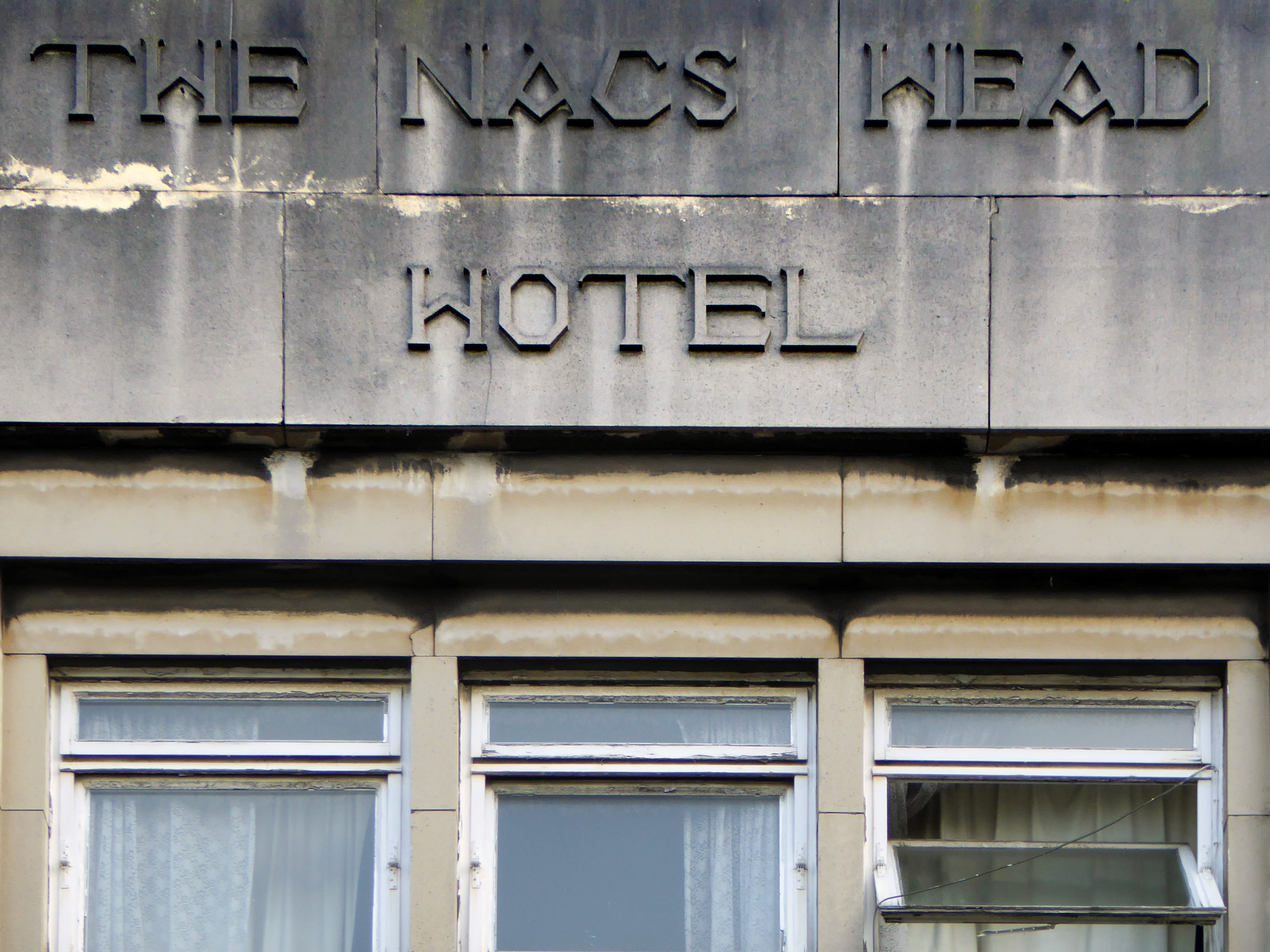
An intriguing Art Deco shop frontage – combining a menswear outlet with a pub.

Further along an enormous Danum Co-operative Store in the grandest Deco manner – 1938-40. Designed by T H Johnson & Son for the Doncaster Co-operative Society Ltd.

Currently partially occupied with no access to the glass stairways.

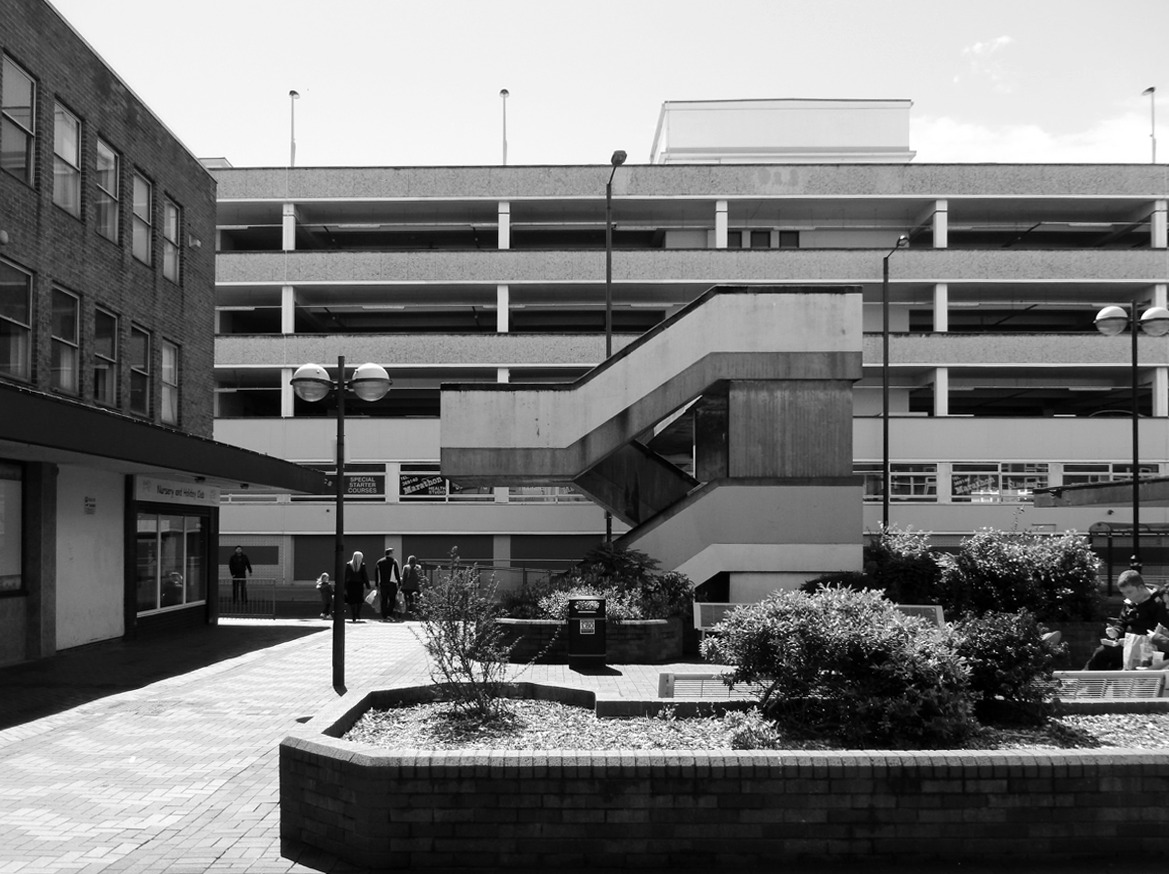
Following the development of the Frenchgate Centre the Waterdale Centre sunk into a slow decline.

And the Staff of Life has lost a little of its estate pub period charm, following successive typographic makeovers and paint jobs.

There are plans to improve the centre.

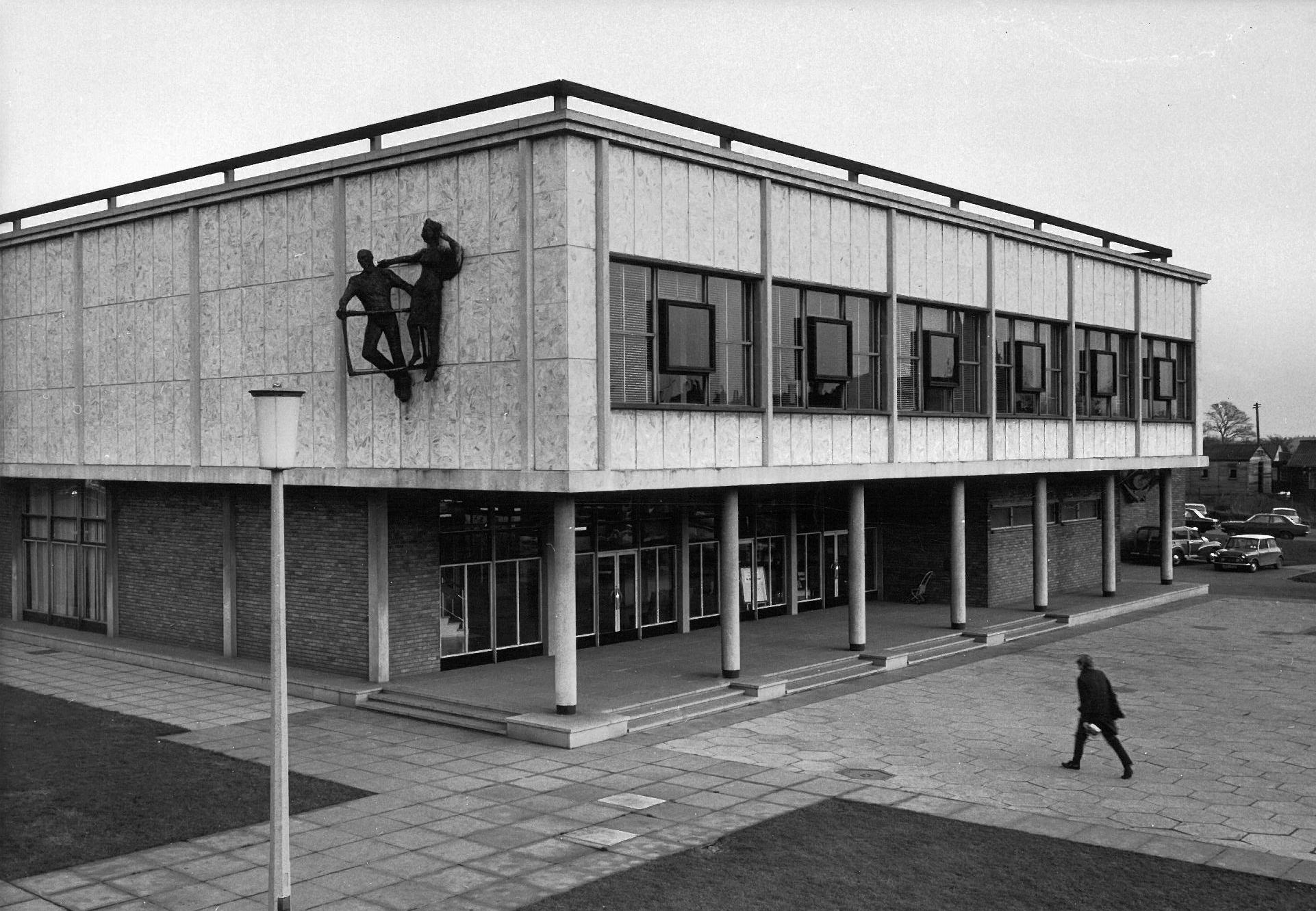
A naked couple sculpture which caused complaints went back on display in 2015.

The Lovers statue, depicting the couple embracing, attracted criticism after being installed in the Arndale Shopping Centre in Doncaster in the 1960s.

It was removed in the late 1980s and put into storage before being restored with the help of a local art group.

The designer was architect Eckehart Selke

Moving through to the shiny new Civic Area note the older library and demolished college.

There are further plans to redevelop the Library, Museum and Art Gallery.

Passing through we reach the Magistrates’ Courts and Police Station.

From 1949 onwards plans were afoot to develop the Waterdale area of Doncaster – civic buildings, courts, educational provision and the like, WH Price the Borough Surveyor at the helm. In 1955 Frederick Gibberd was appointed to oversee the site, though many of his designs were unrealised, his Police Station and Law Courts opened in 1969.

The Police Station it seems is to be redeveloped.

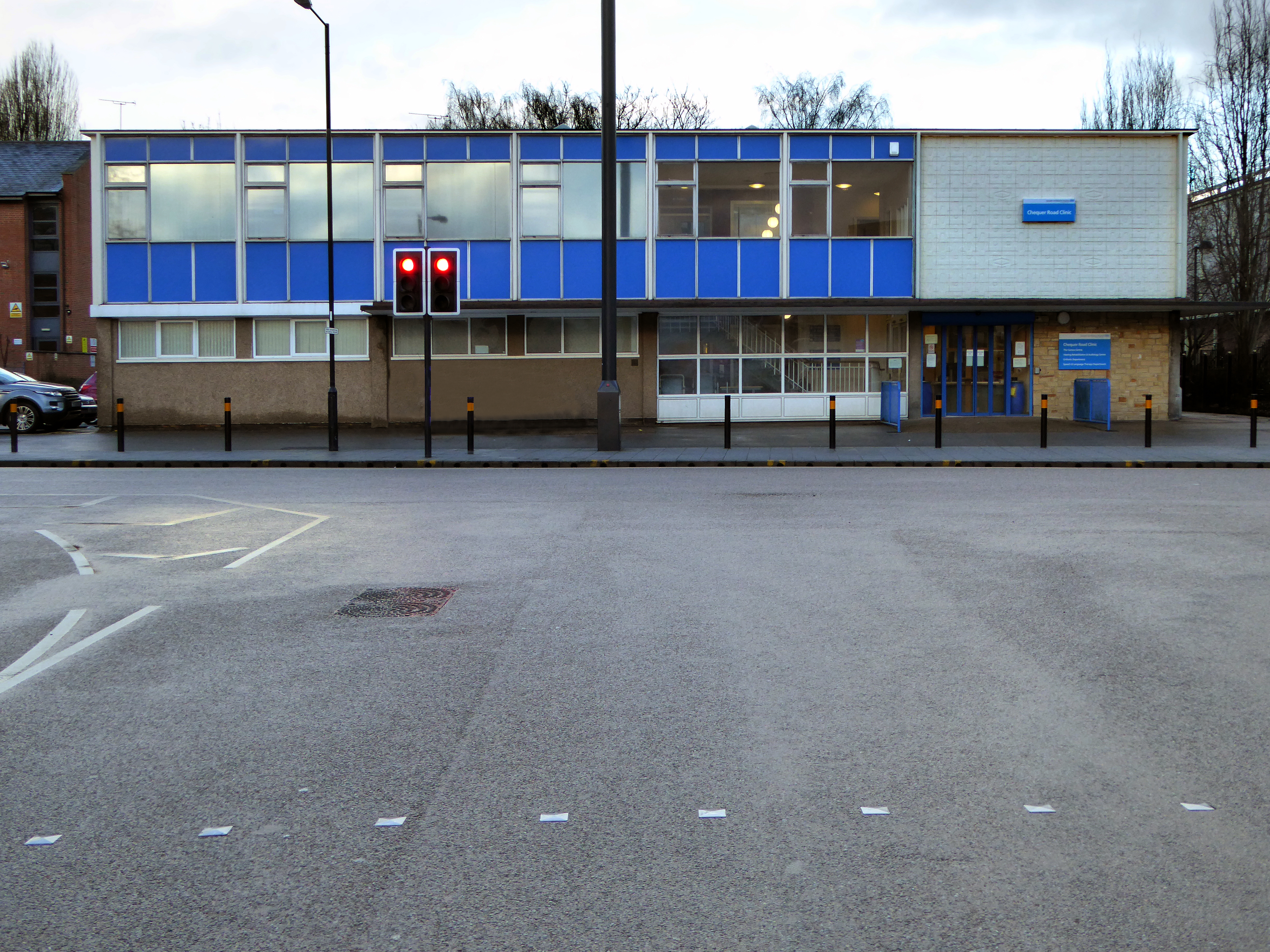
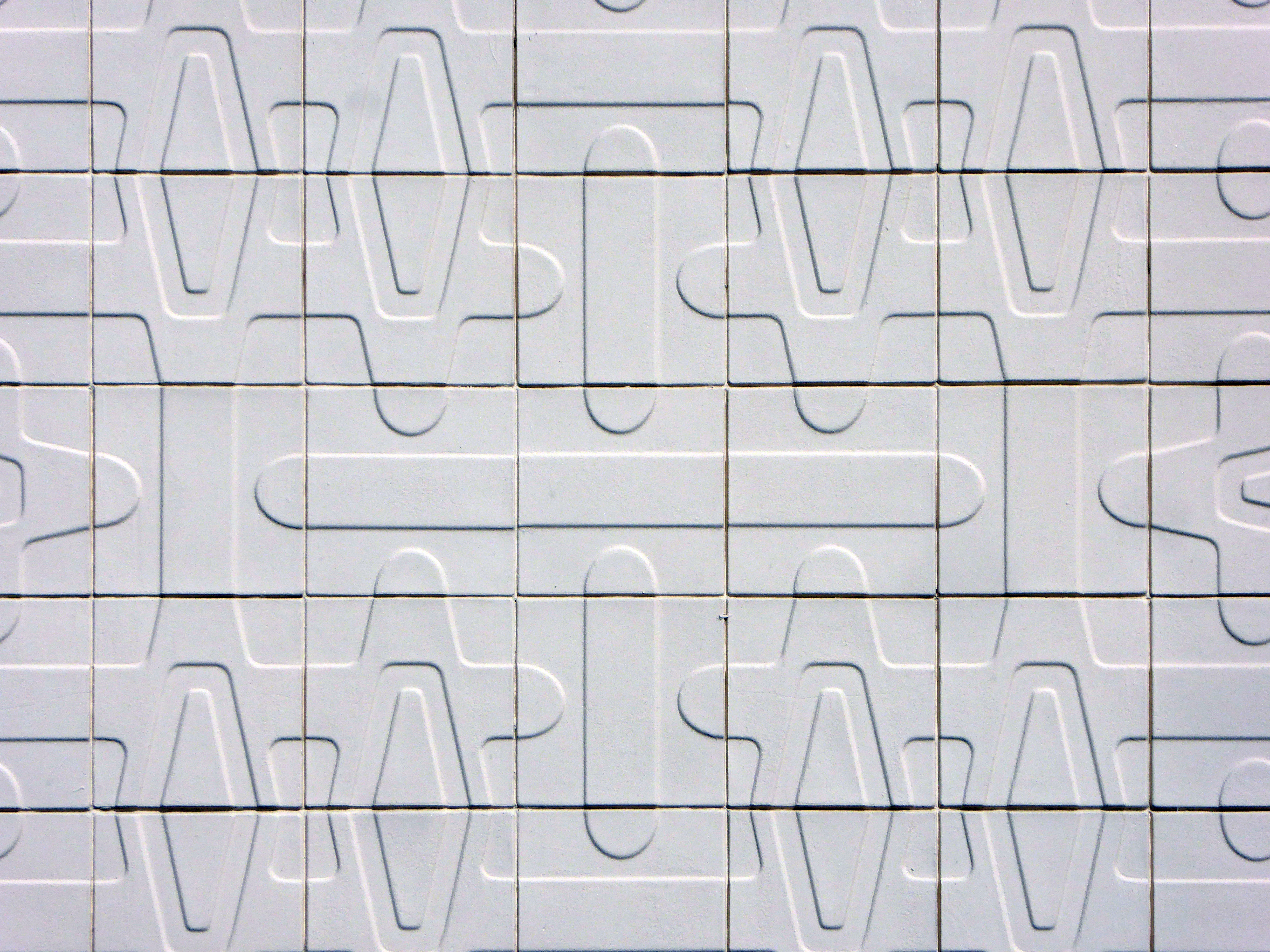
Moments away a delightful clinic with a decorative fascia.

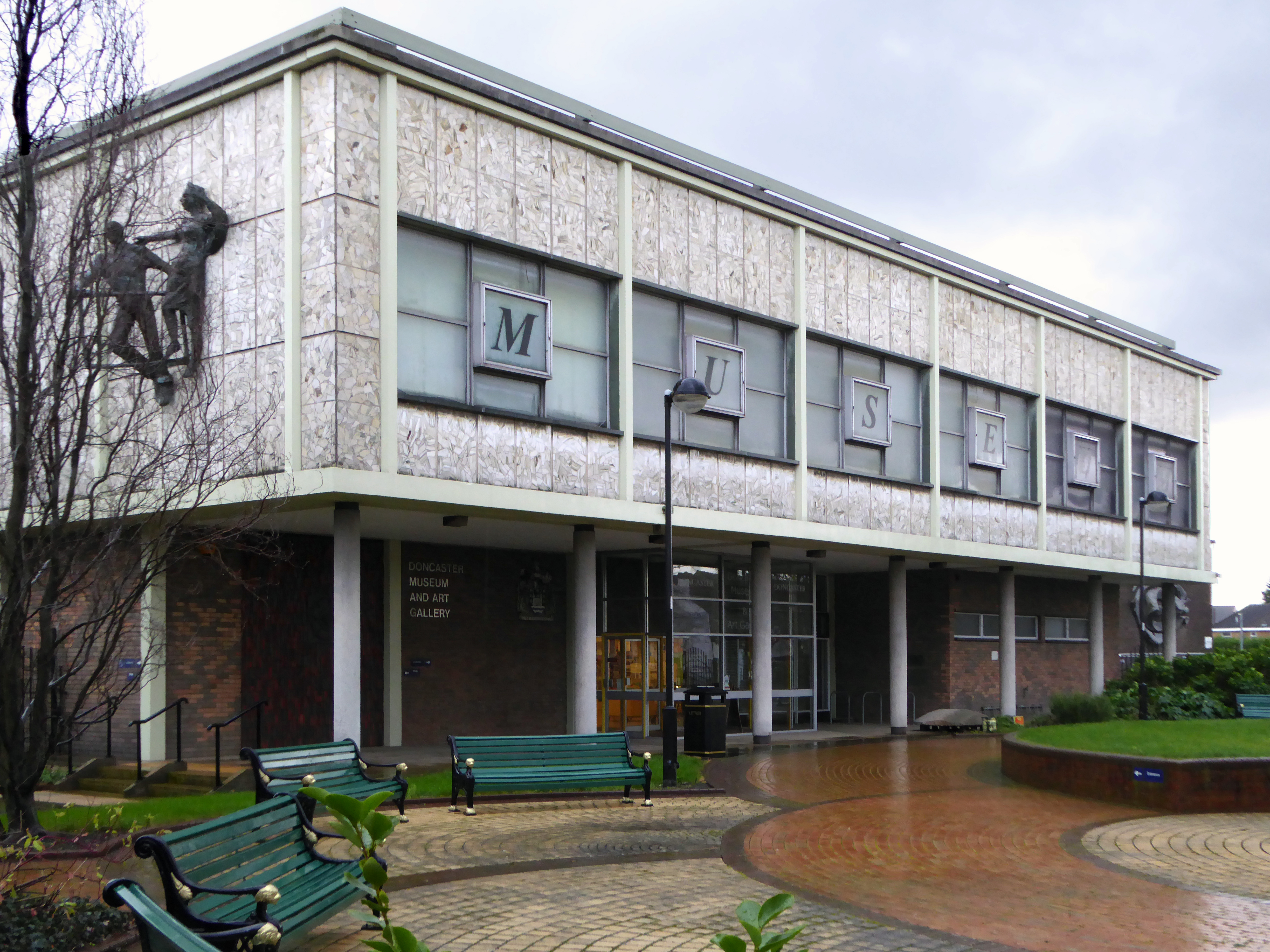
Whilst next door is the Museum and Art Gallery.

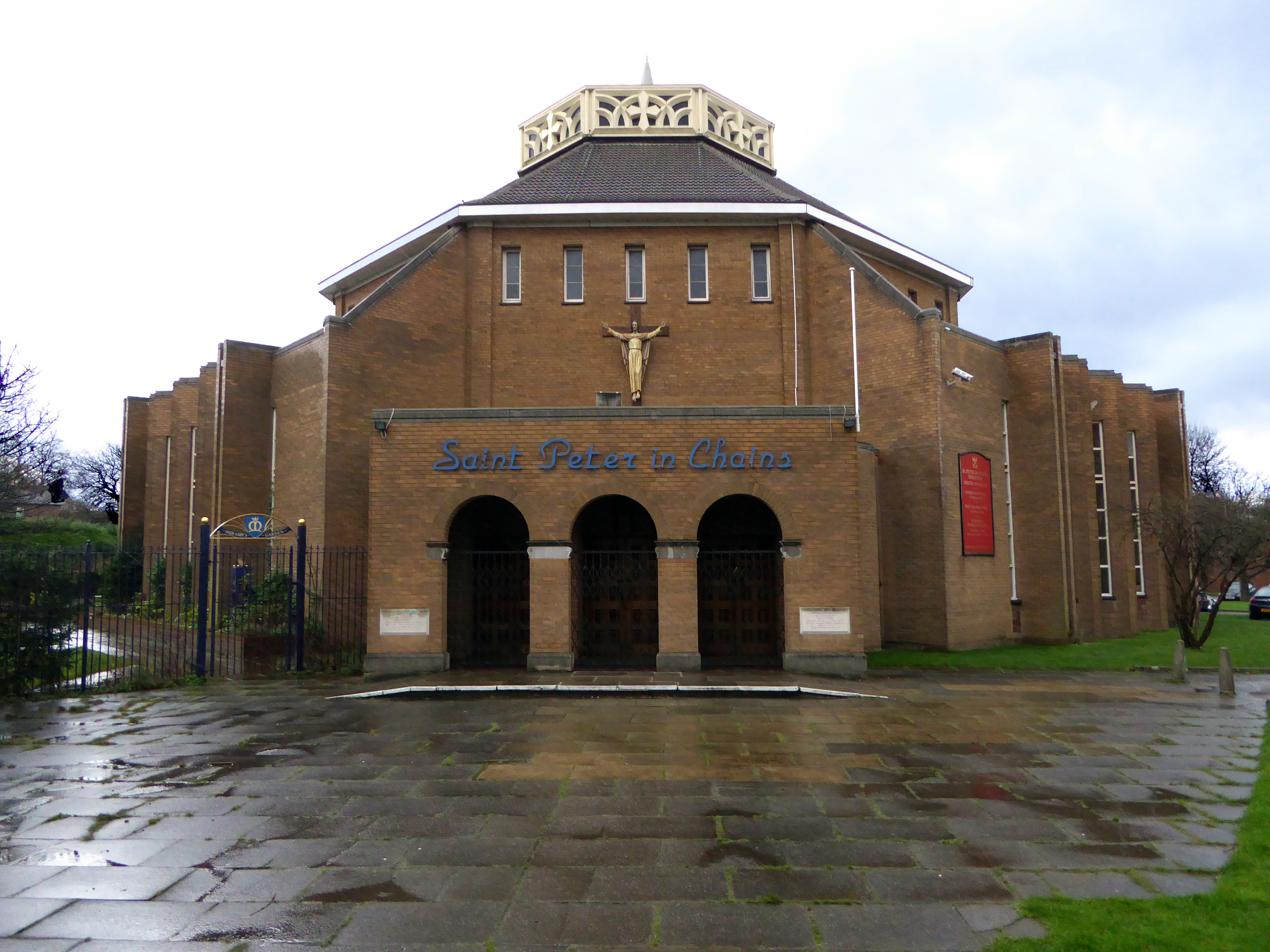
And finally next door St Peter in Chains Church.

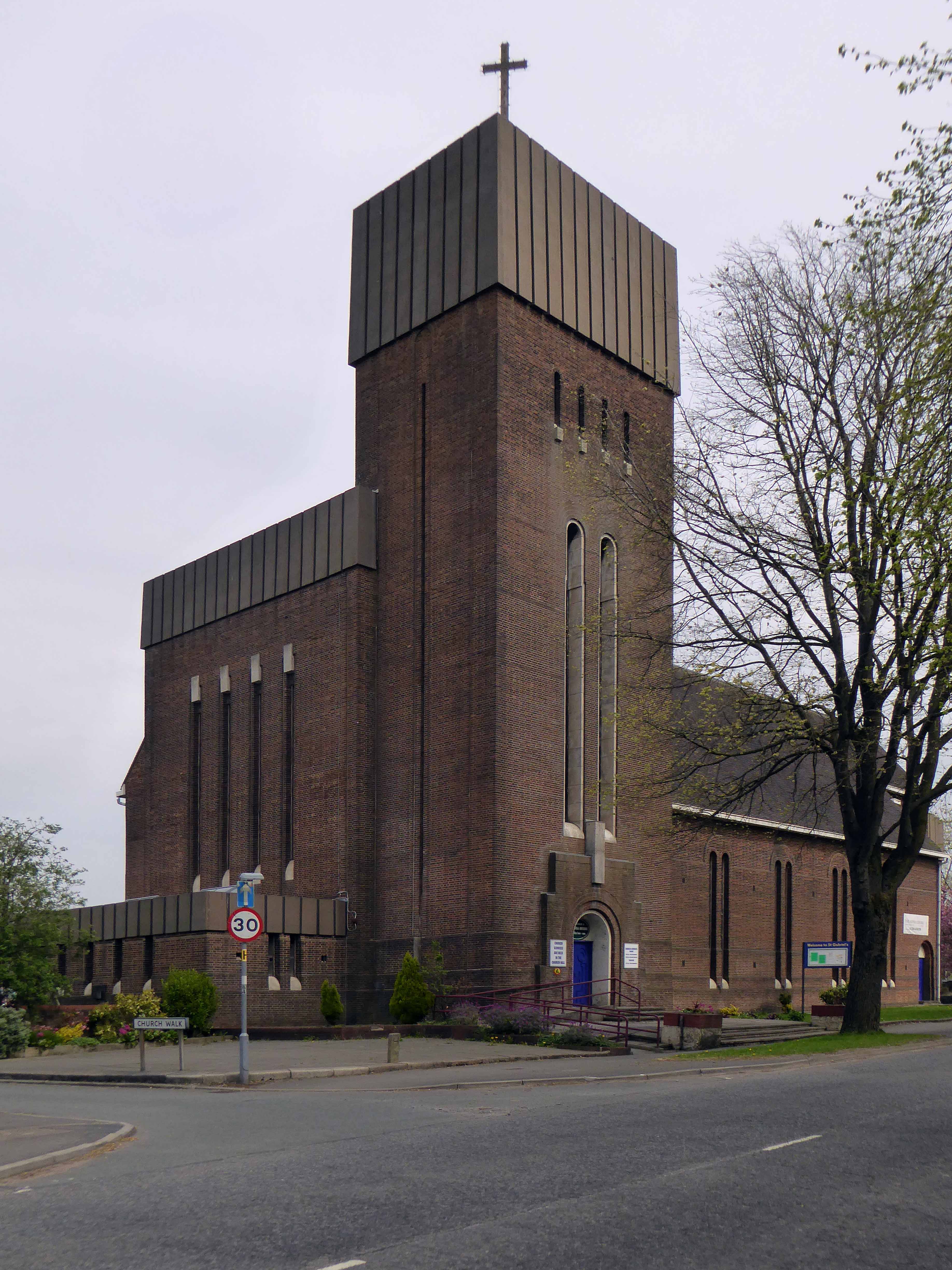
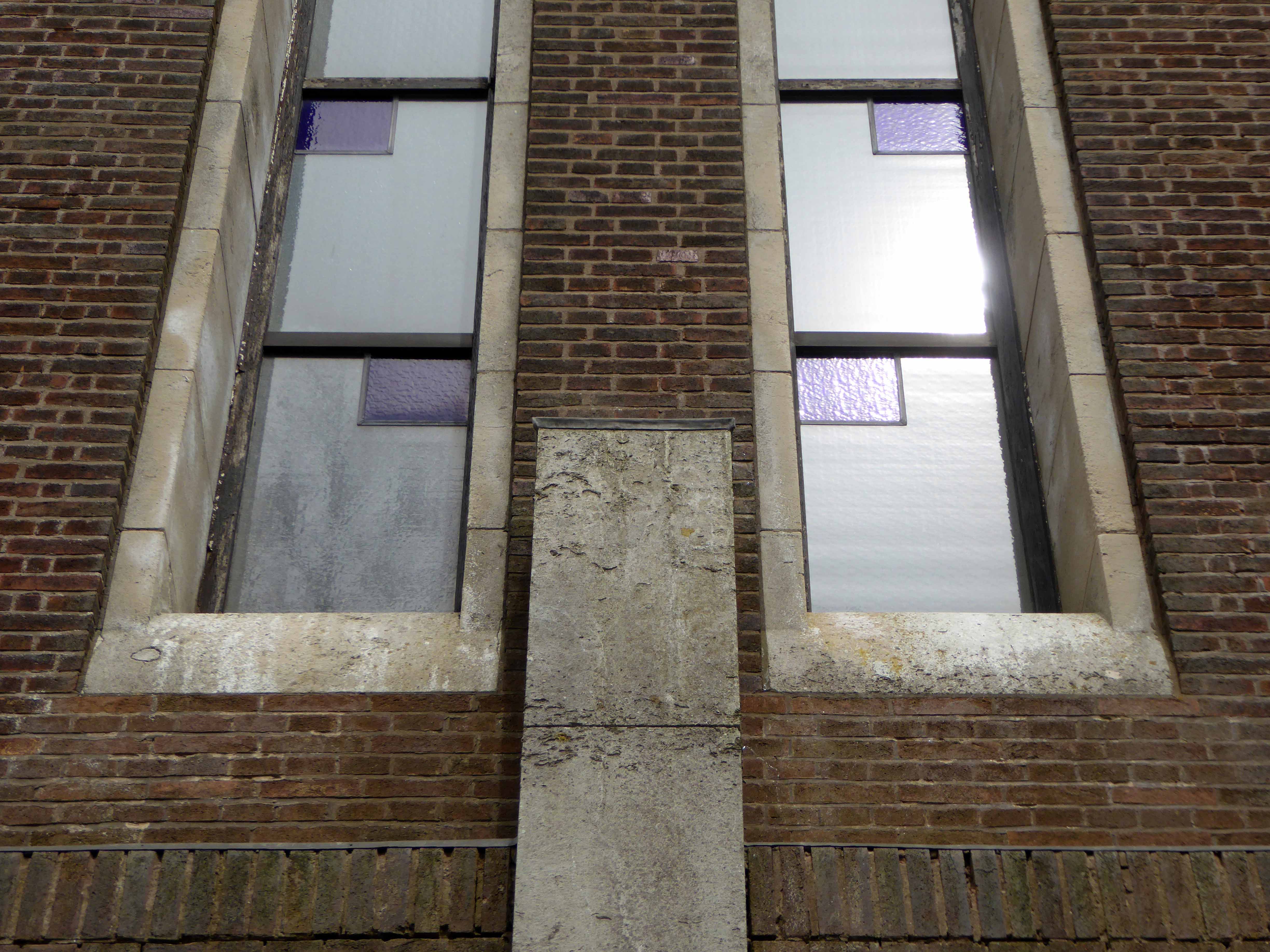
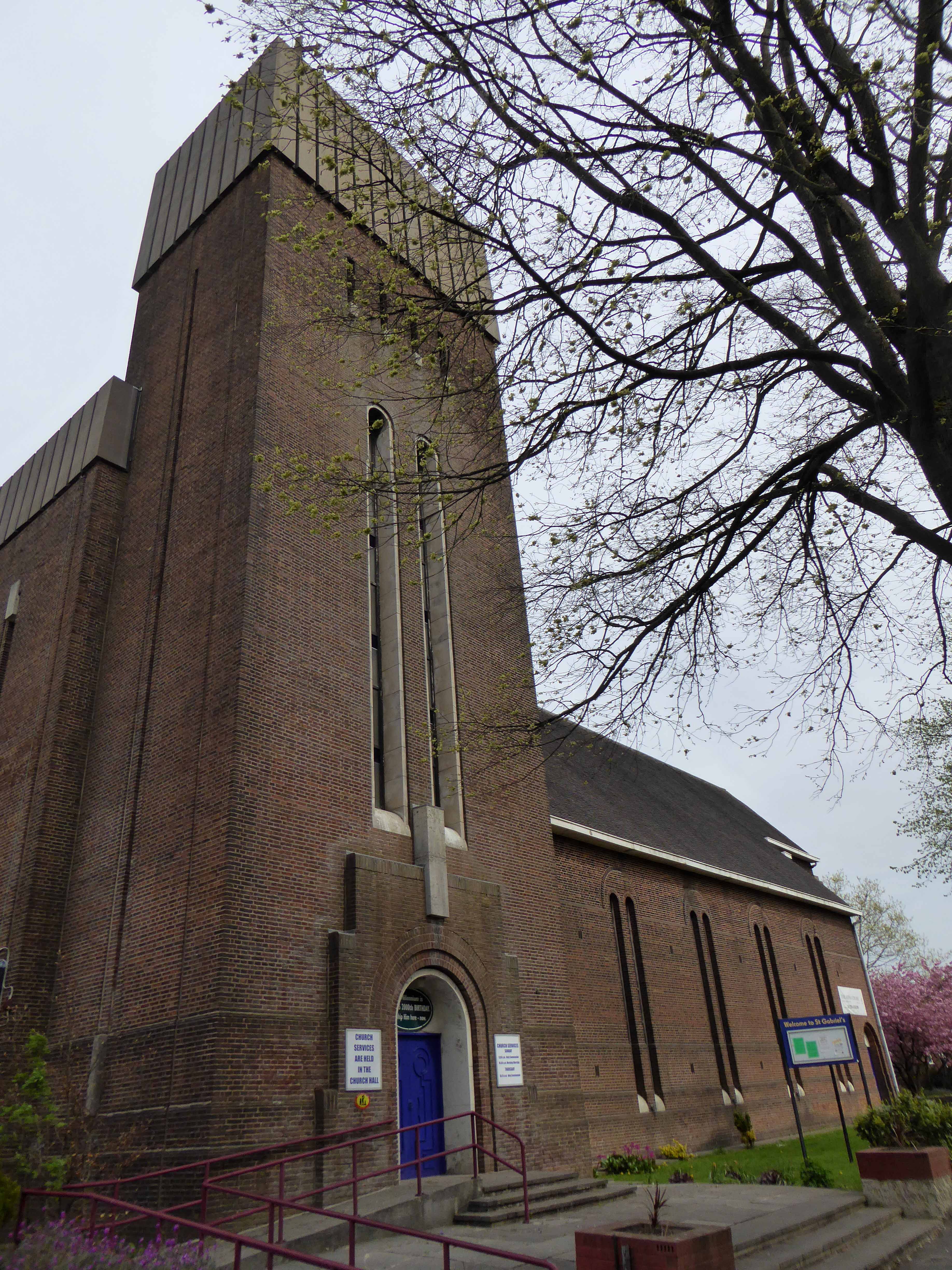
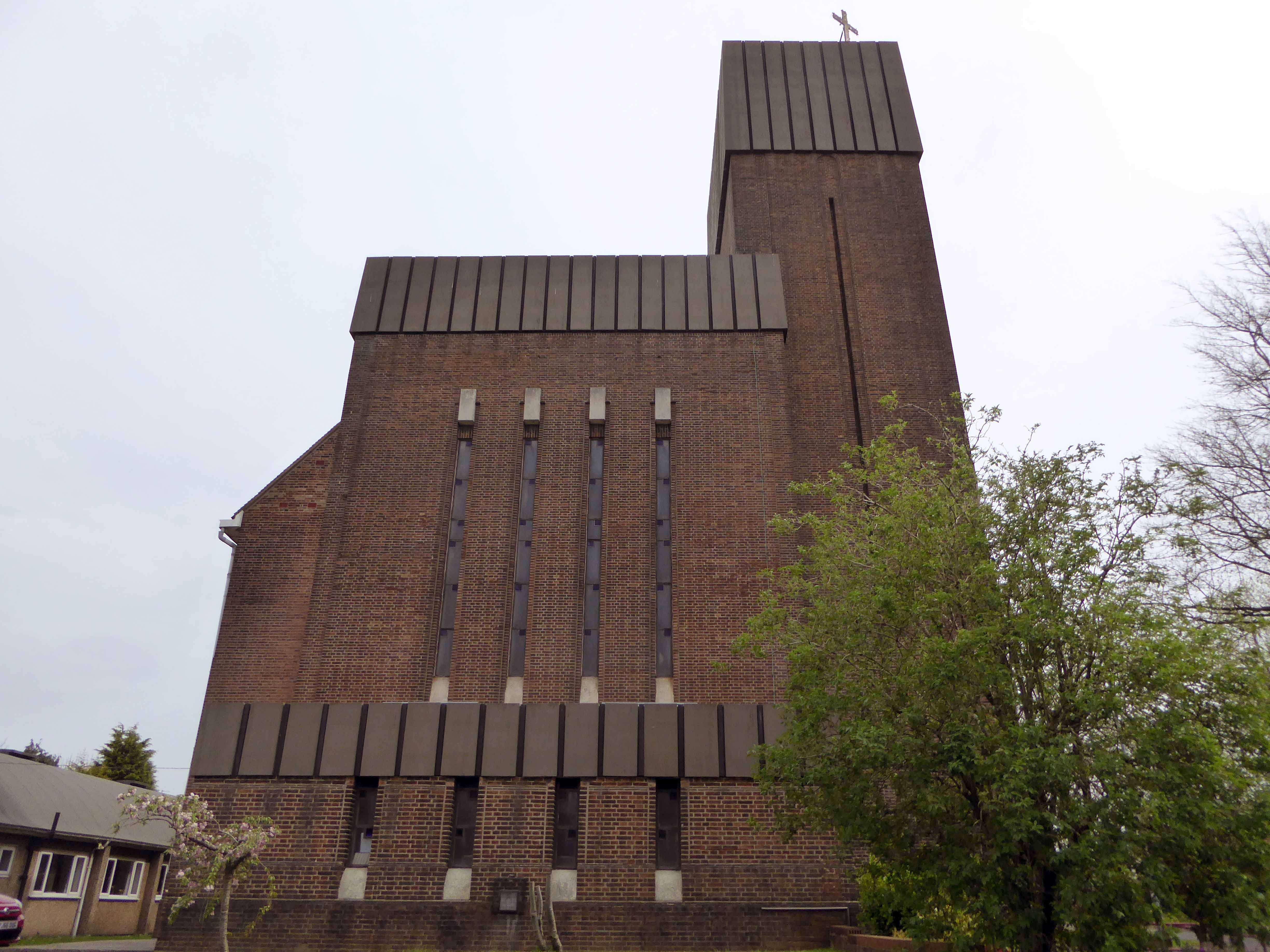
St Gabriel’s Church – Blackburn

Brownhill Dr Blackburn BB1 9BA

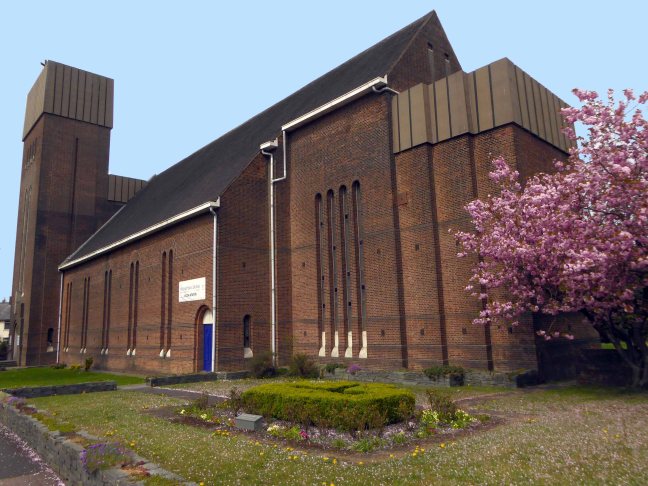
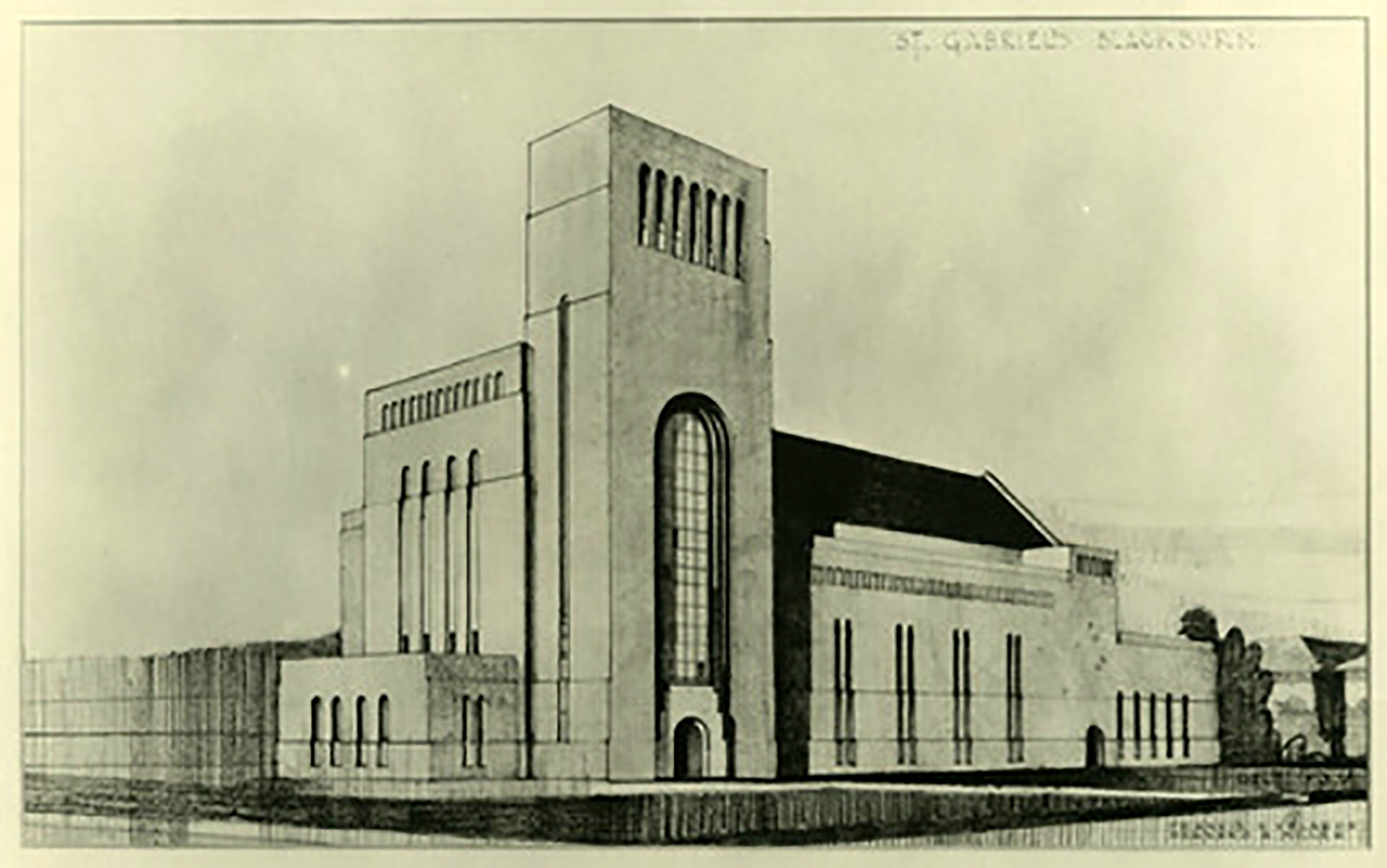
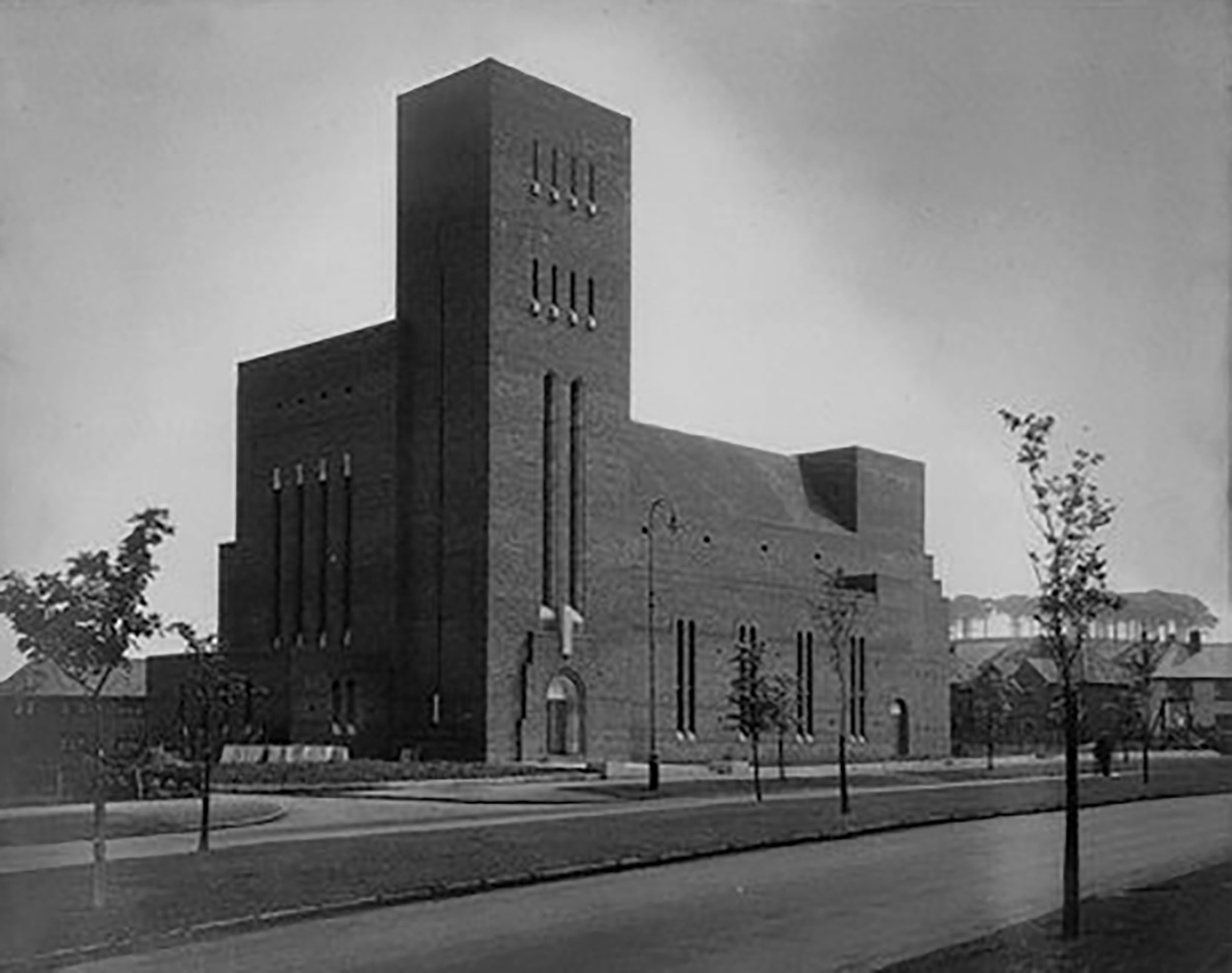
The original design of Liverpool architect F.X. Velarde attracted so much attention when St Gabriel’s opened in 1933.

“The new building… marks a new departure from the accepted ecclesiastical style and is unique in this district,” said the old Blackburn Times when it was consecrated on April 8, 1933, by the Bishop of Blackburn, Dr P.M. Herbert.

But this is a church which throughout its life has been fraught with settlement cracks, repairs and redesign – it’s original towers truncated and clad, flat roofs pitched and timbers replaced.

For 34 years ago, the landmark building was facing possible demolition — with the parish confronted with a then-immense bill of £15,000 for repairs. The crisis was due to serious damage to the roof timbers caused by water penetration.

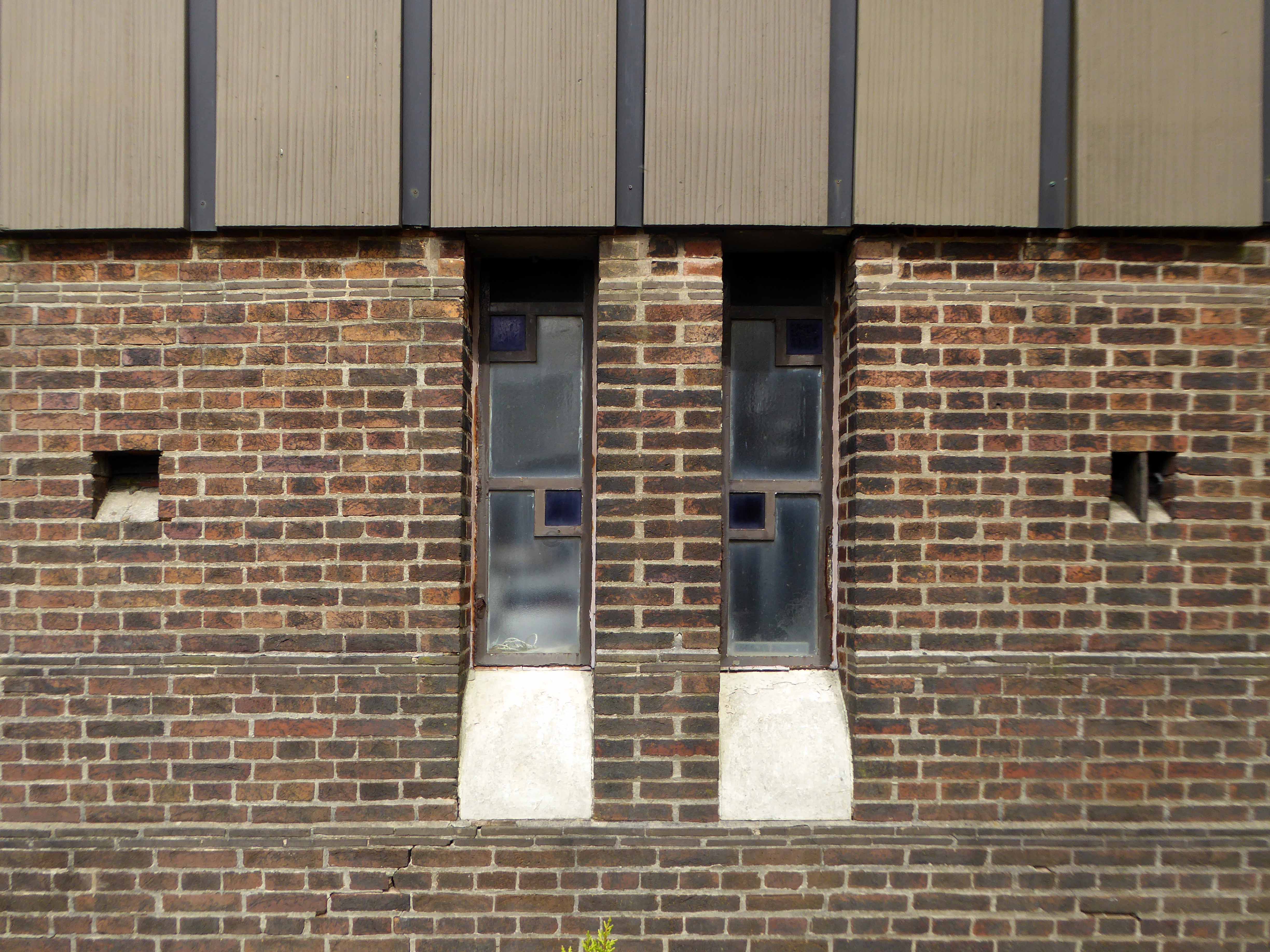
Eventually, it took £40,000-worth of refurbishment inside and out lasting until 1975 to save St Gabriel’s — at considerable expense to its original appearance. The main tower was shortened by six feet and later clad at the top with glass-fibre sheathing while the east tower was removed altogether and its flat roofs were made into pitched ones to deal with the rotting roof timbers and problems of settlement.

In fact, the difficulties that its design and construction posed were recognised much earlier in 1956 when the church, which had cost £20,000 to build, was found to be in urgent need of repairs that would cost more than £1,500. For an inspection by the Diocesan Architect found that major defects in the flat roof could have serious consequences unless they were given early attention and portions of the parapet wall were found to have large cracks due to settlement while half the building’s brickwork needed pointing.

Lancashire Telegraph

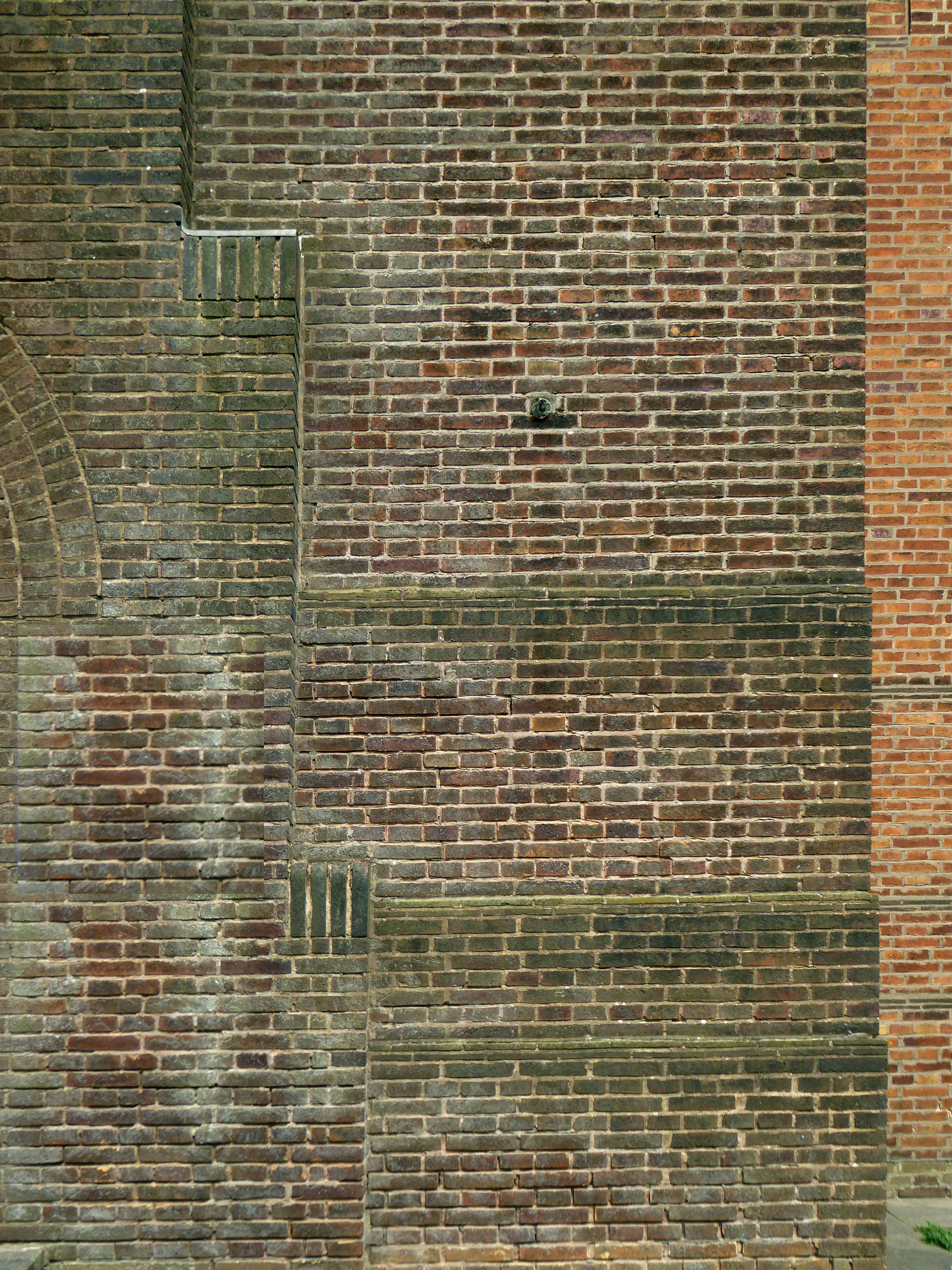
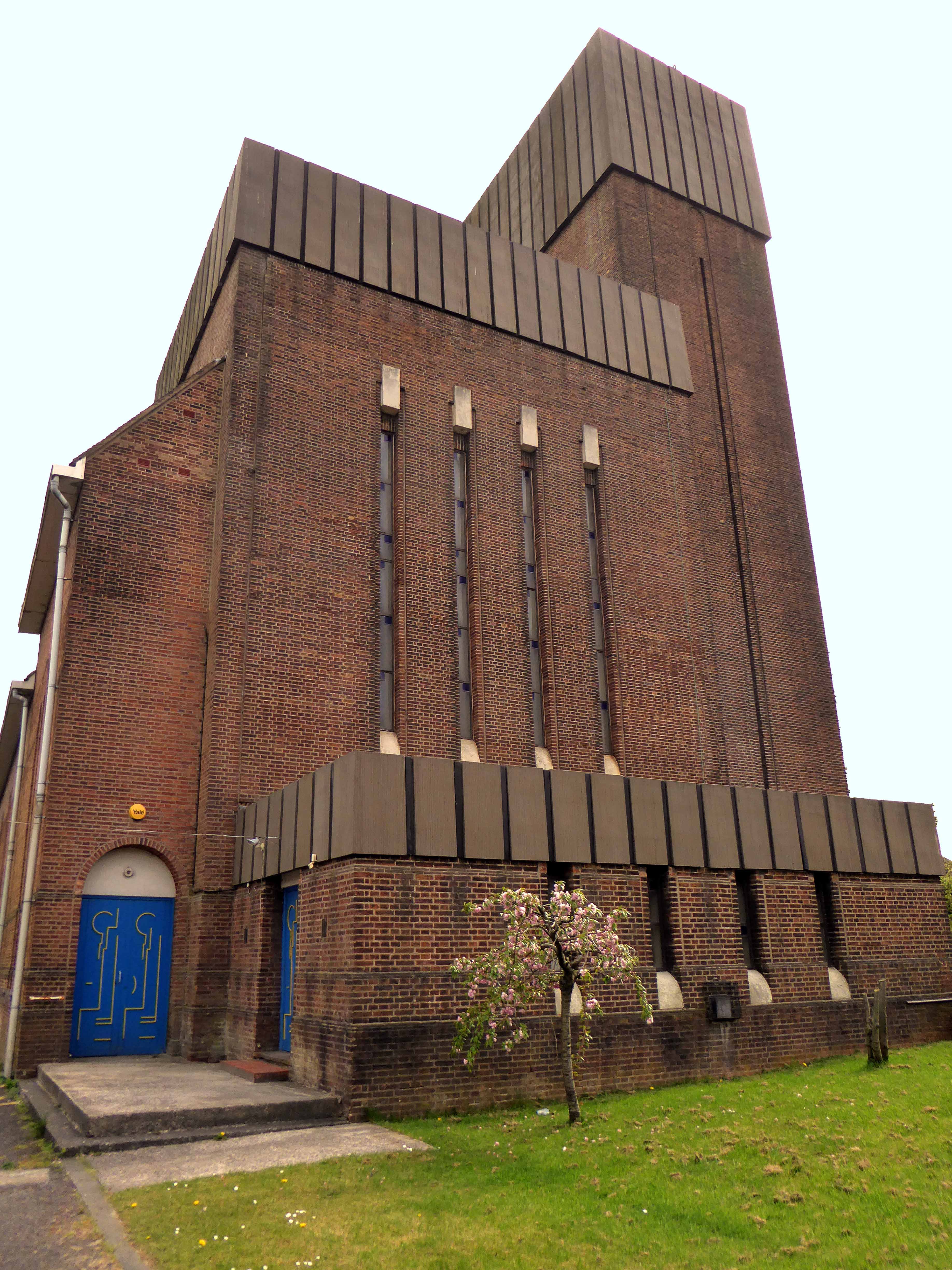
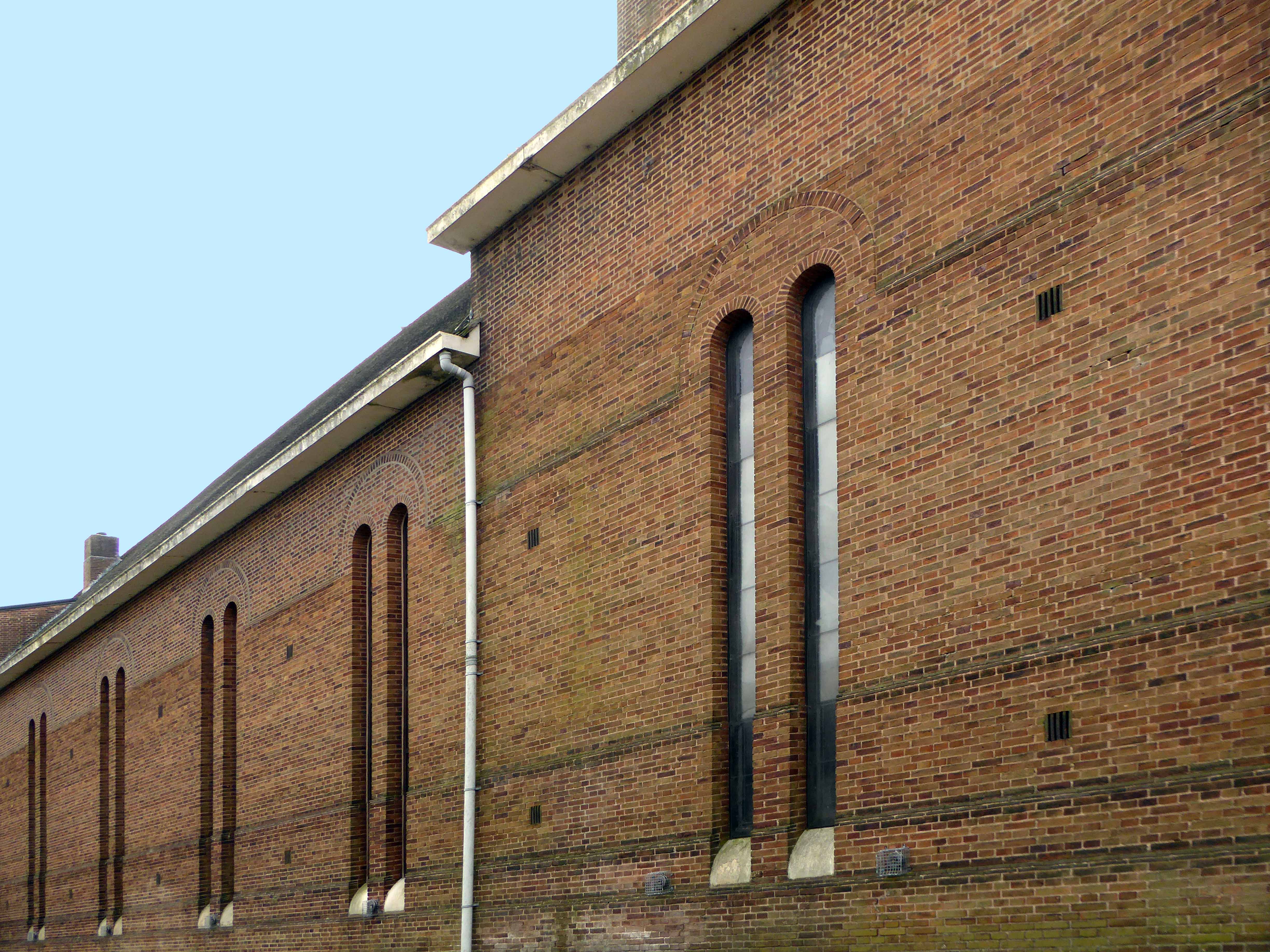
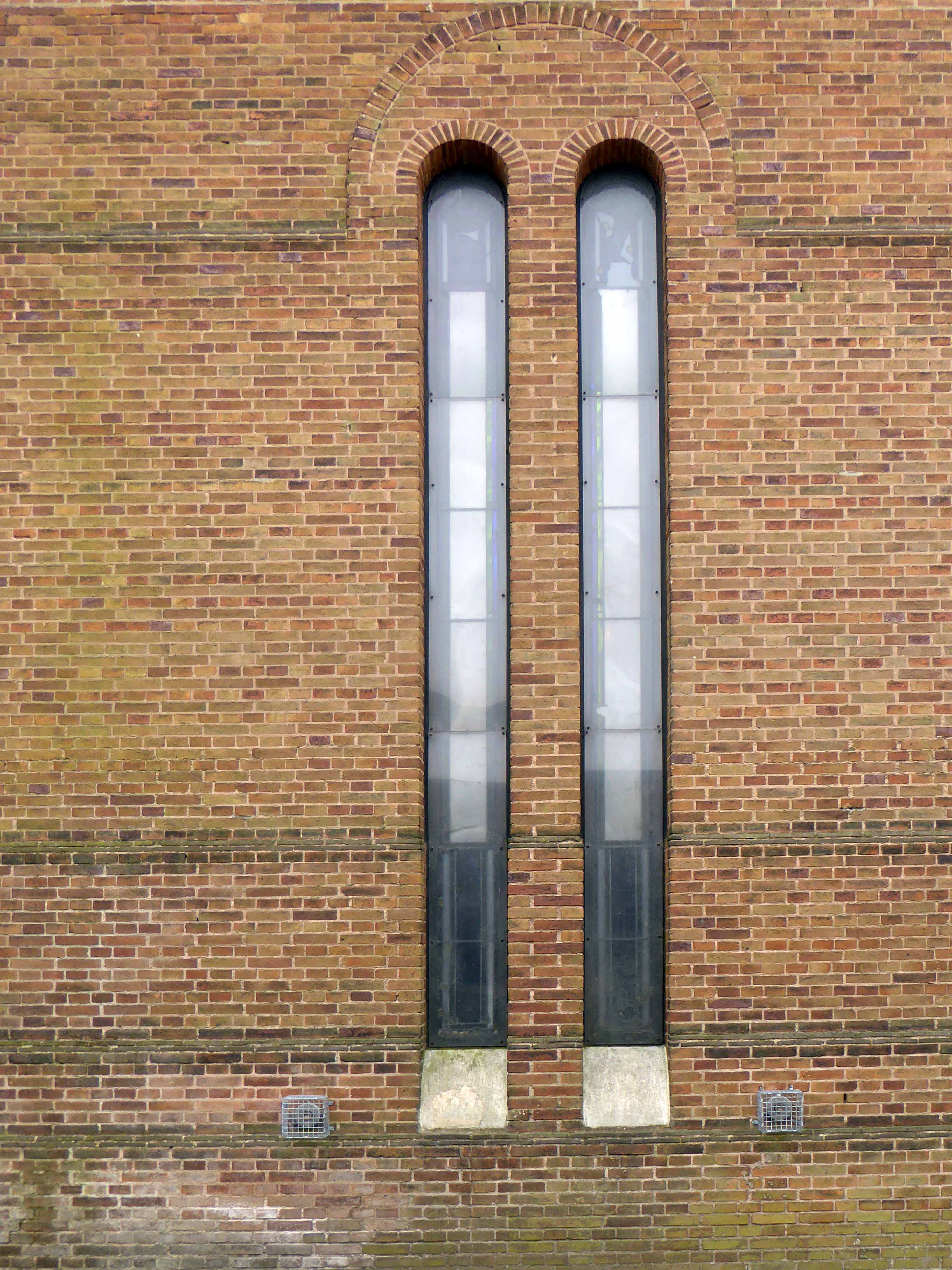
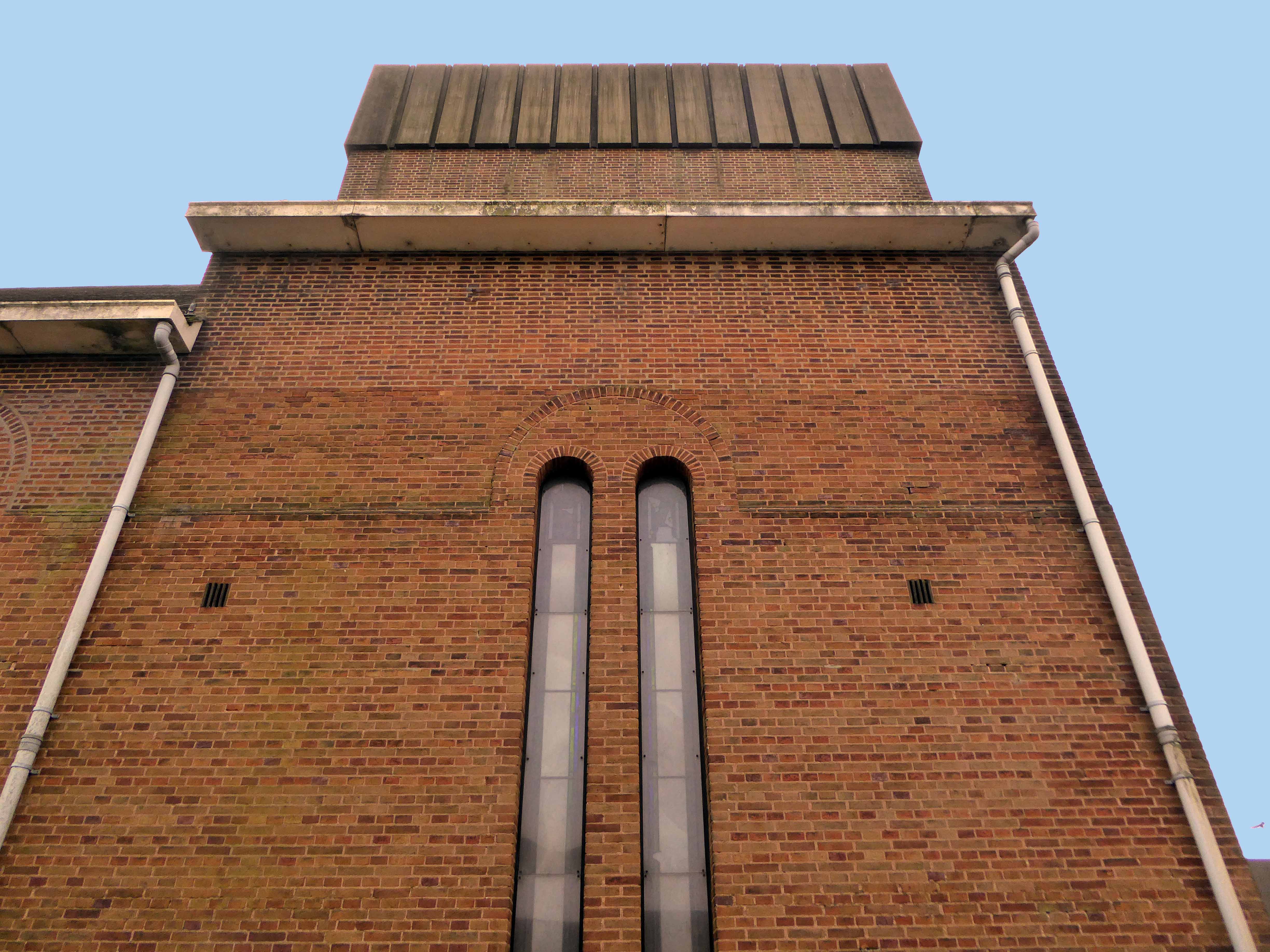
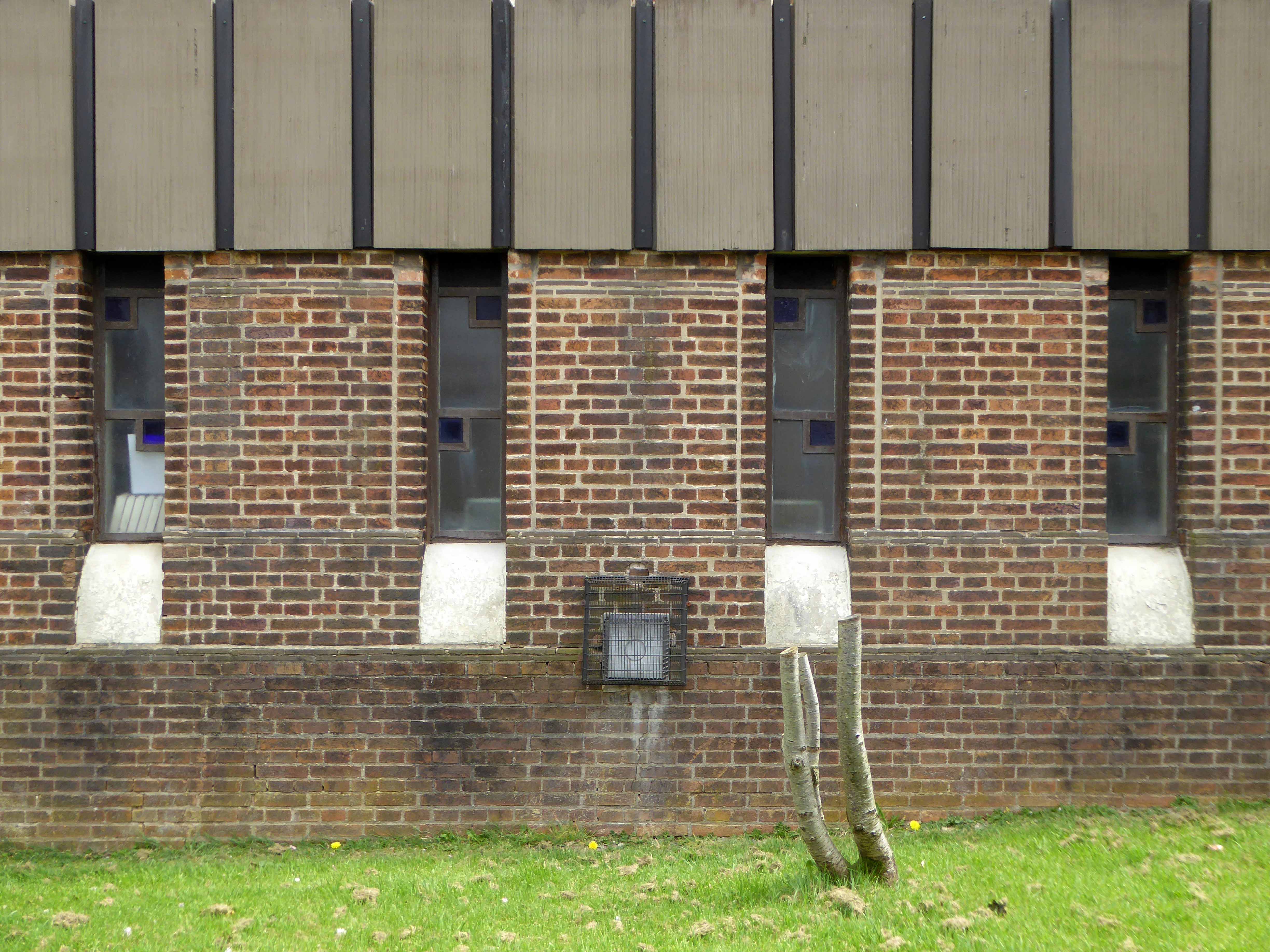
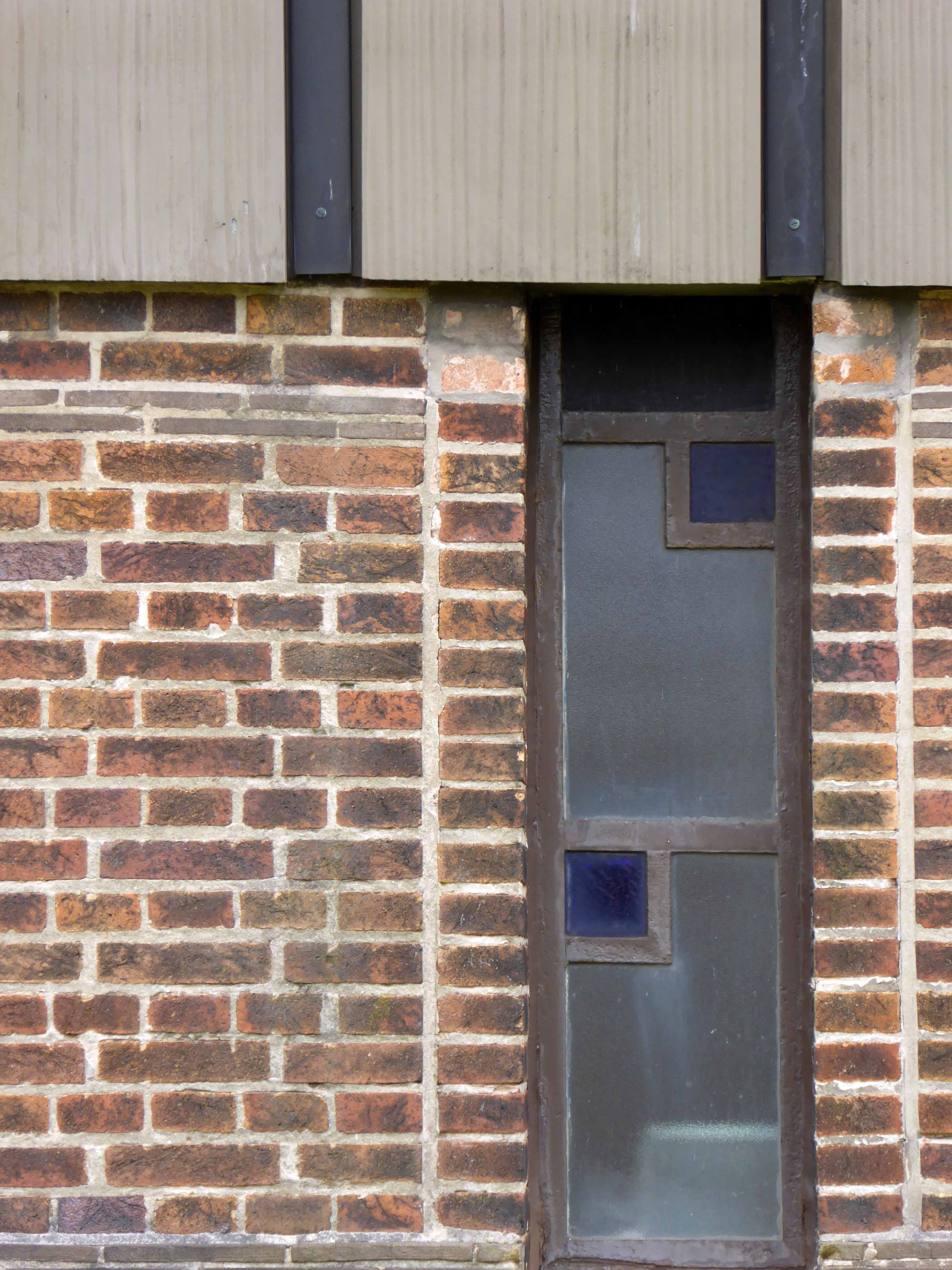
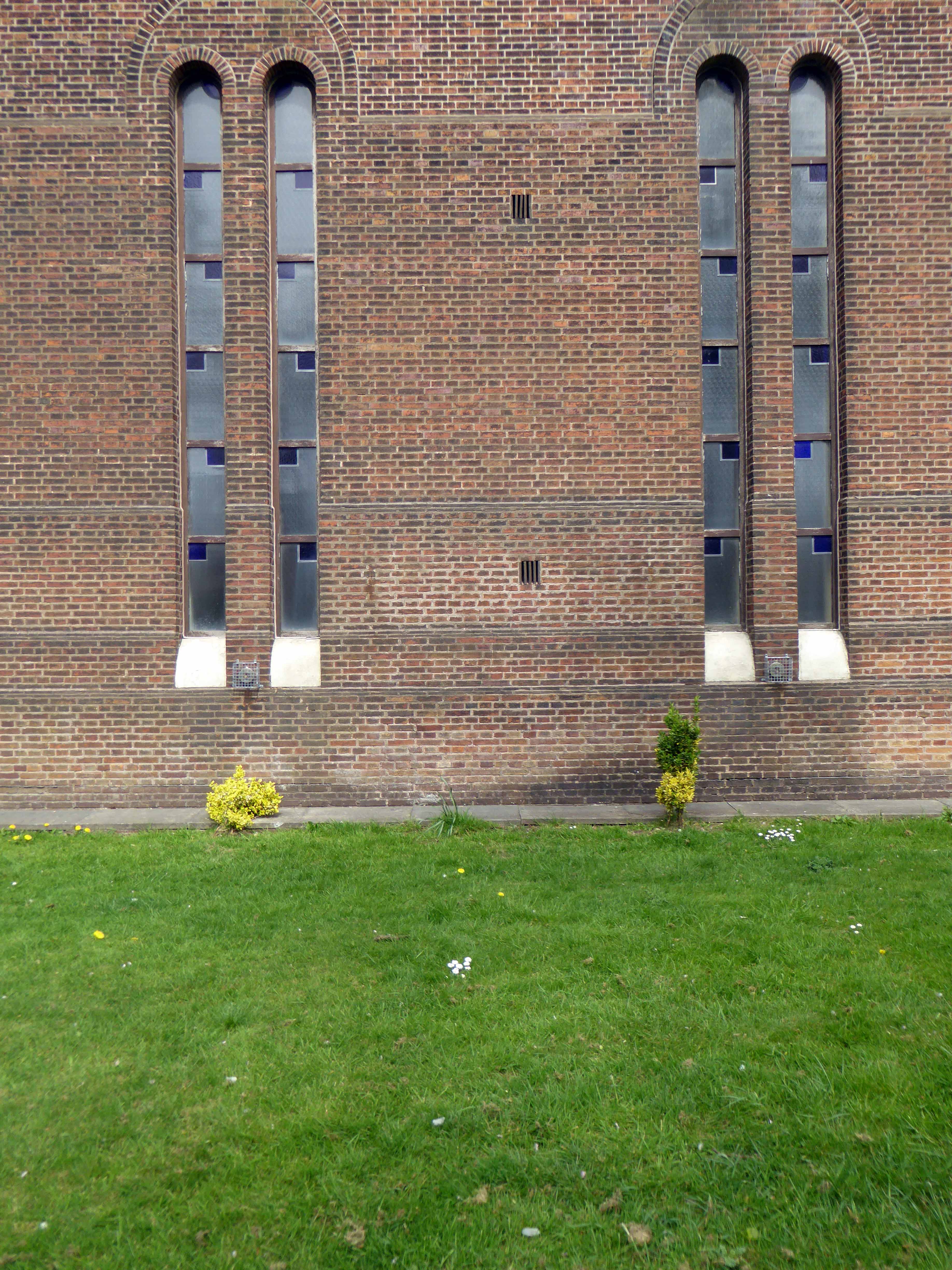
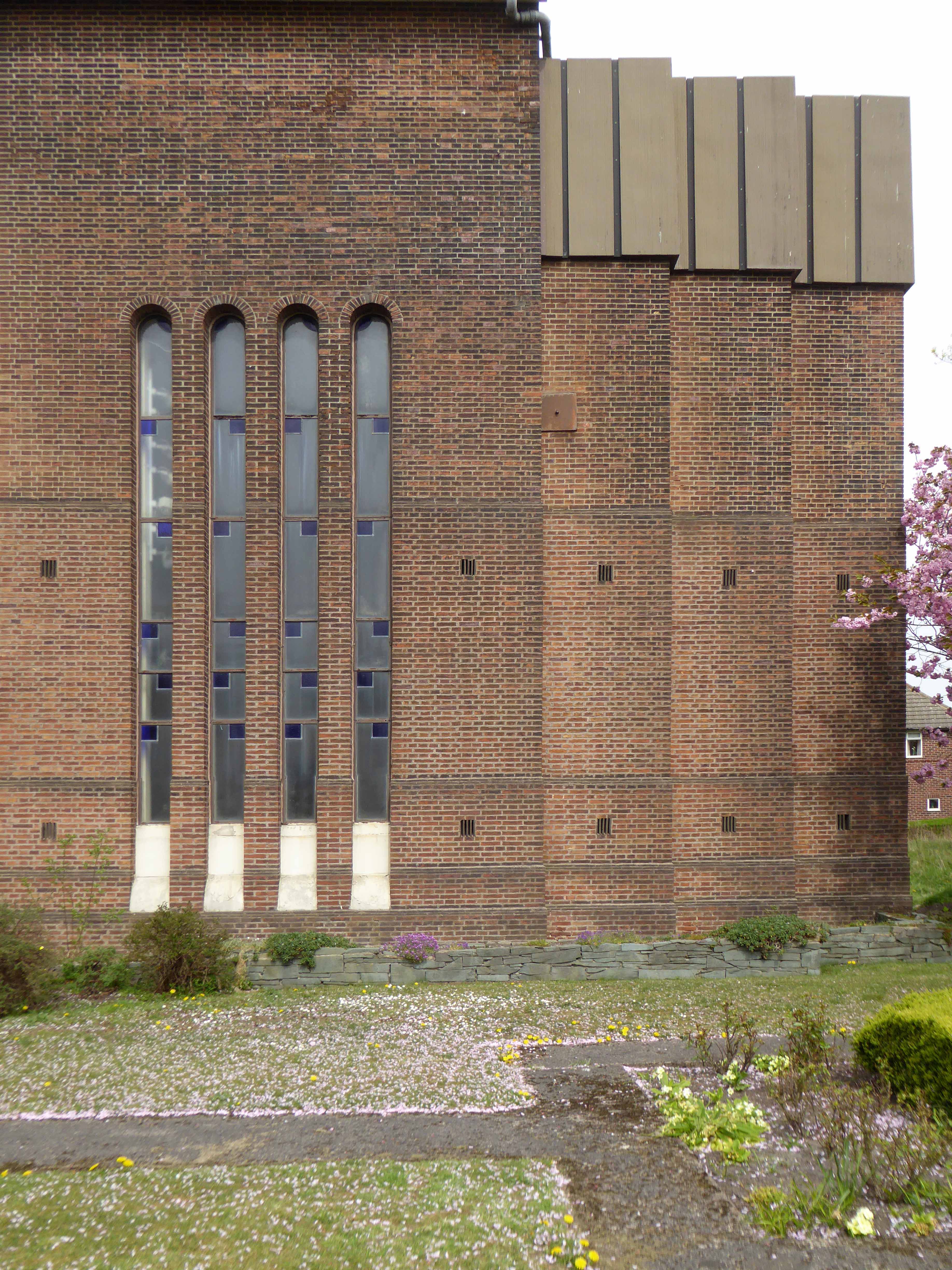
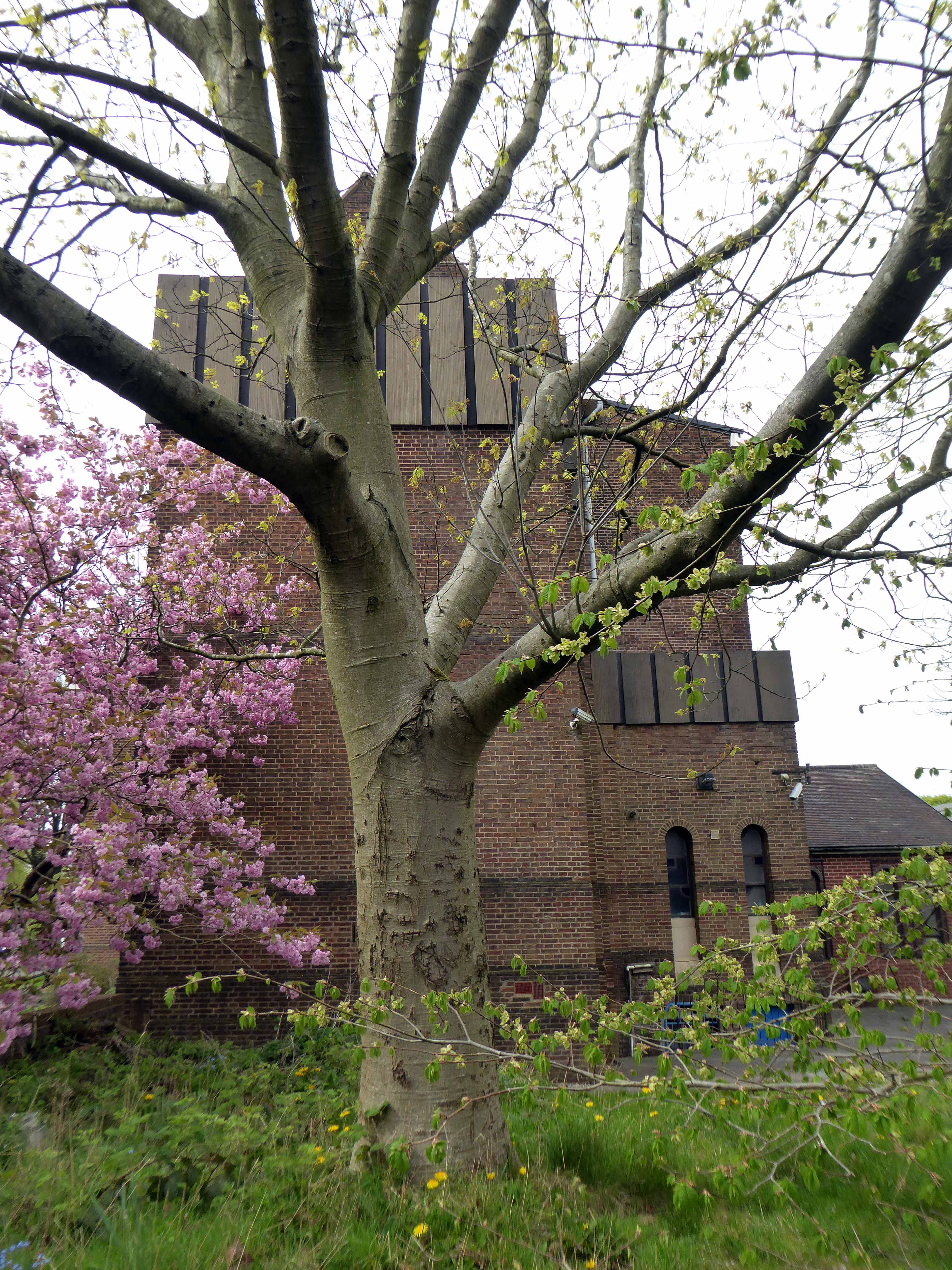
And so it now stands forlorn and unused – services are now held in the adjacent church hall. A series of interlocking monumental interwar functionalist brick clad slabs, once thought to resemble a brewery or cinema, now awaits its fate. Though it remains a thing of wonder in both scale and detailing, well worth a wander around if you’re passing.

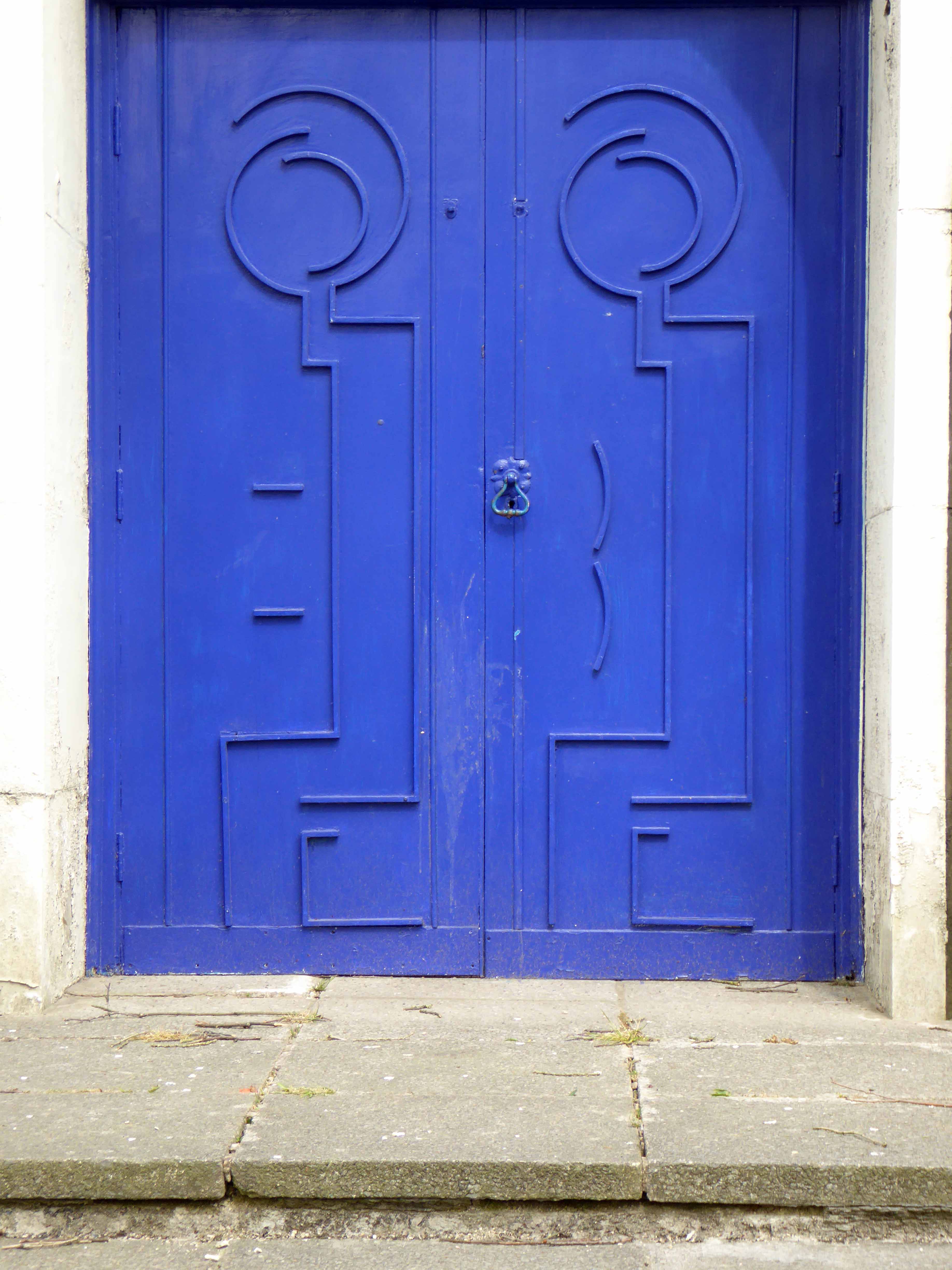
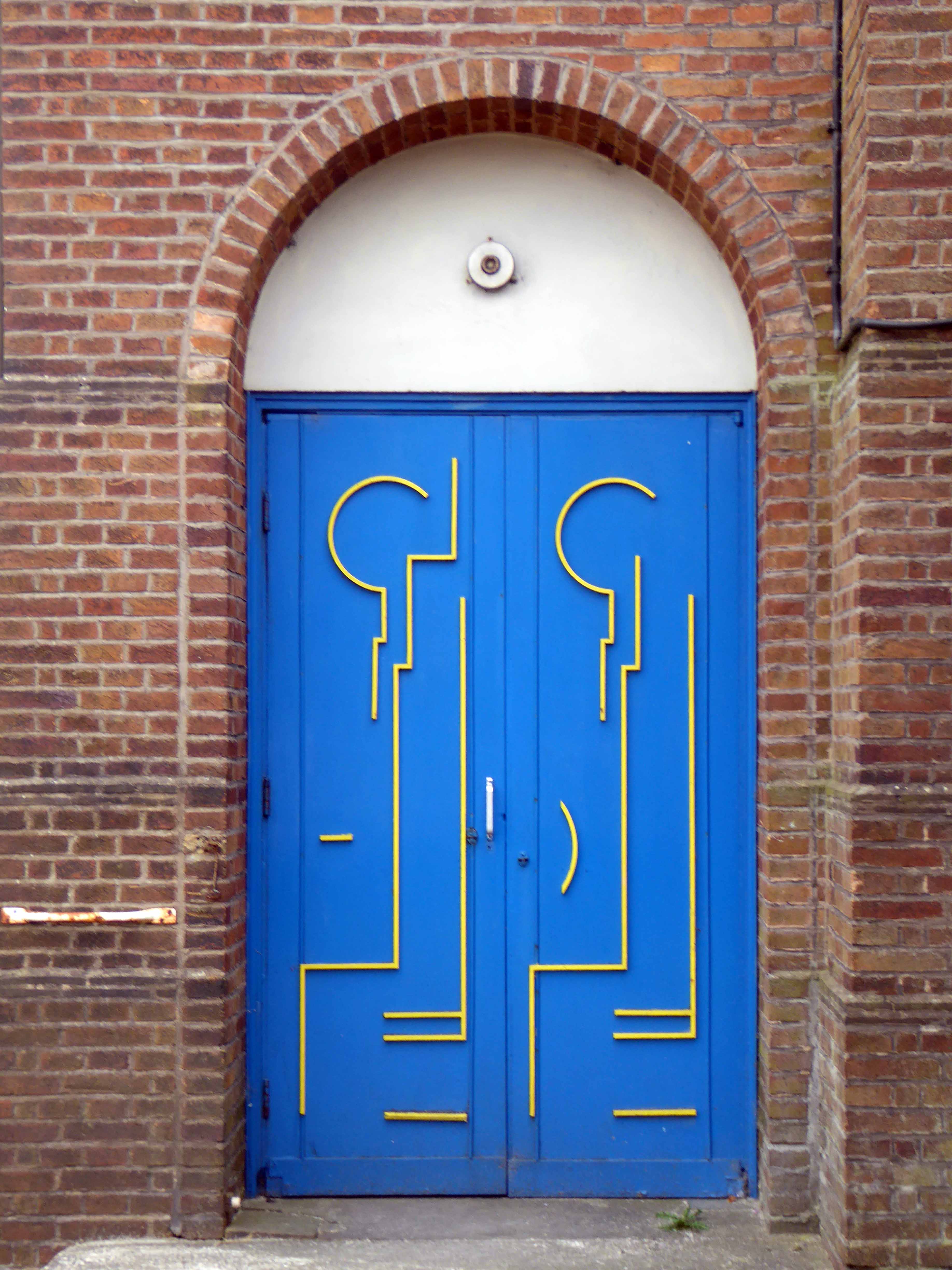
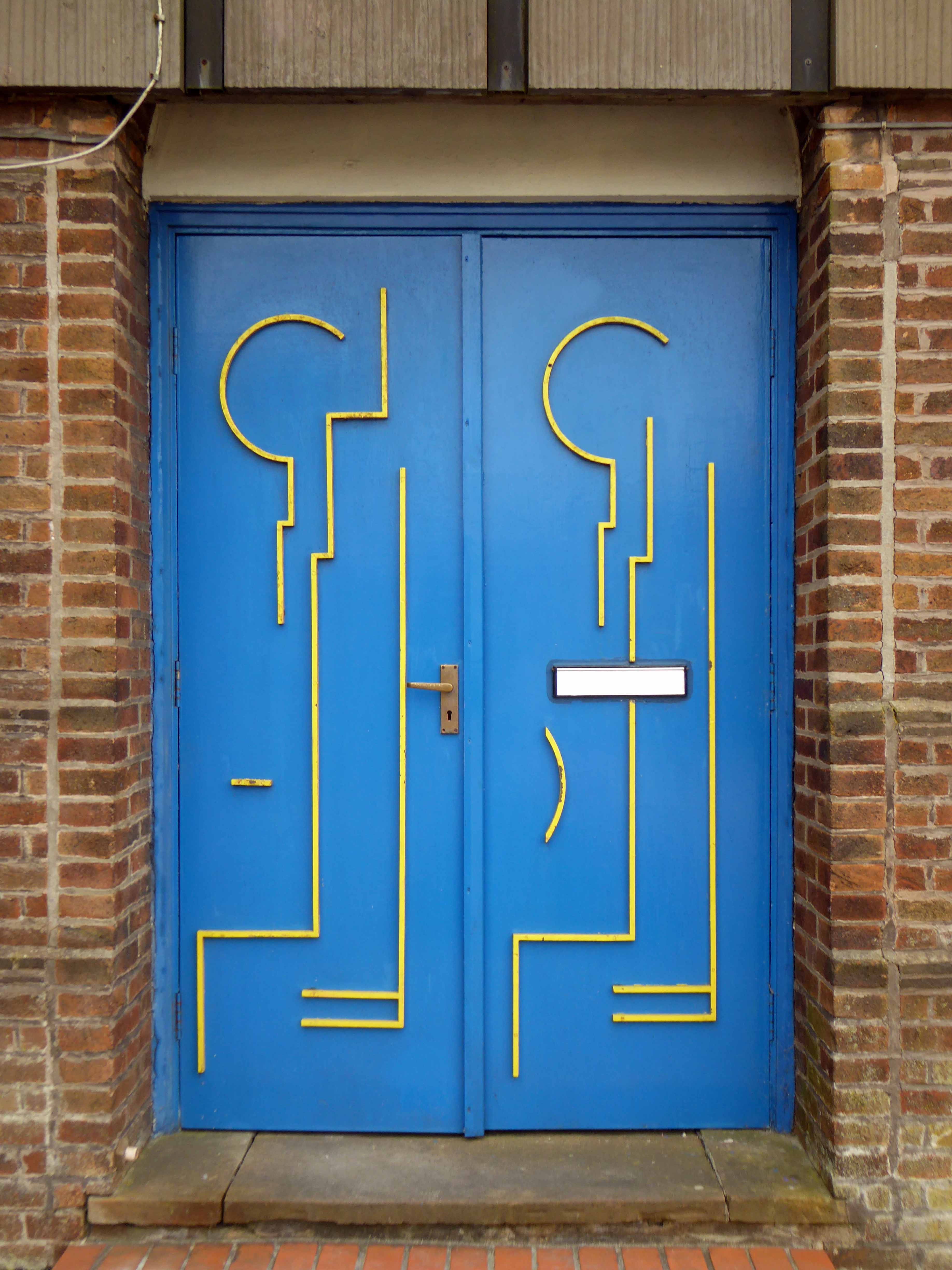
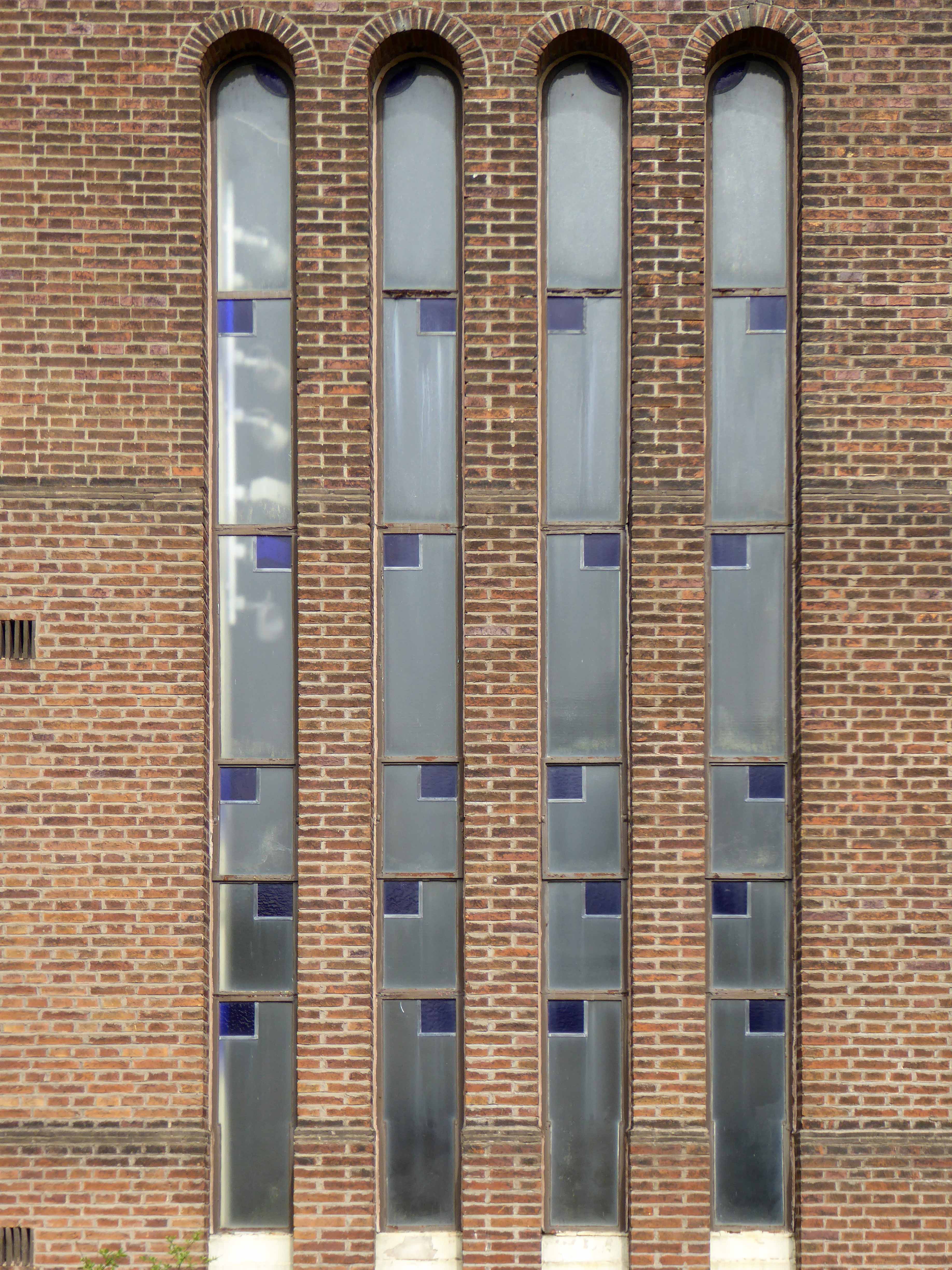
Its tall slim arched windows reaching towards the heavens, Deco detailed doors firmly closed.

Burton’s Moderne – Ashton and Beyond

In almost every town or city worth its salt stood a modern white tiled tailor’s shop, almost every man or boy wore a Burton’s suit.

Harry Wilson had become the company architect by the early 1920s, and was responsible for developing Burton’s house style. Montague Burton, however, maintained a close personal interest. The company’s in-house Architects Department was set up around 1932 under Wilson. He was followed as chief architect around 1937 by Nathaniel Martin, who was still in post in the early 1950s. The architects worked hand-in-hand with Burton’s Shopfitting and Building Departments, who coordinated the work of selected contractors. Throughout the late 1920s and 1930s they were kept phenomenally busy: by 1939 many of Burton’s 595 stores were purpose-built.

The very first made to measure gear I owned came from Burton’s in Ashton under Lyne – mini-mod aged fourteen in a three button, waisted, light woollen dark brown jacket, four slanted and flapped side pockets and an eighteen inch centre vent.

Just the job for a night out at the Birdcage, Moon or Bower Club

The story of the stores begins in the province of Kovno in modern Lithuania – Meshe David Osinsky (1885-1952), came to England where he initially took the name Maurice Burton. 

The distinctive architecture stood out on the high street, Art Deco motifs and details abound – elephants chevrons and fans.

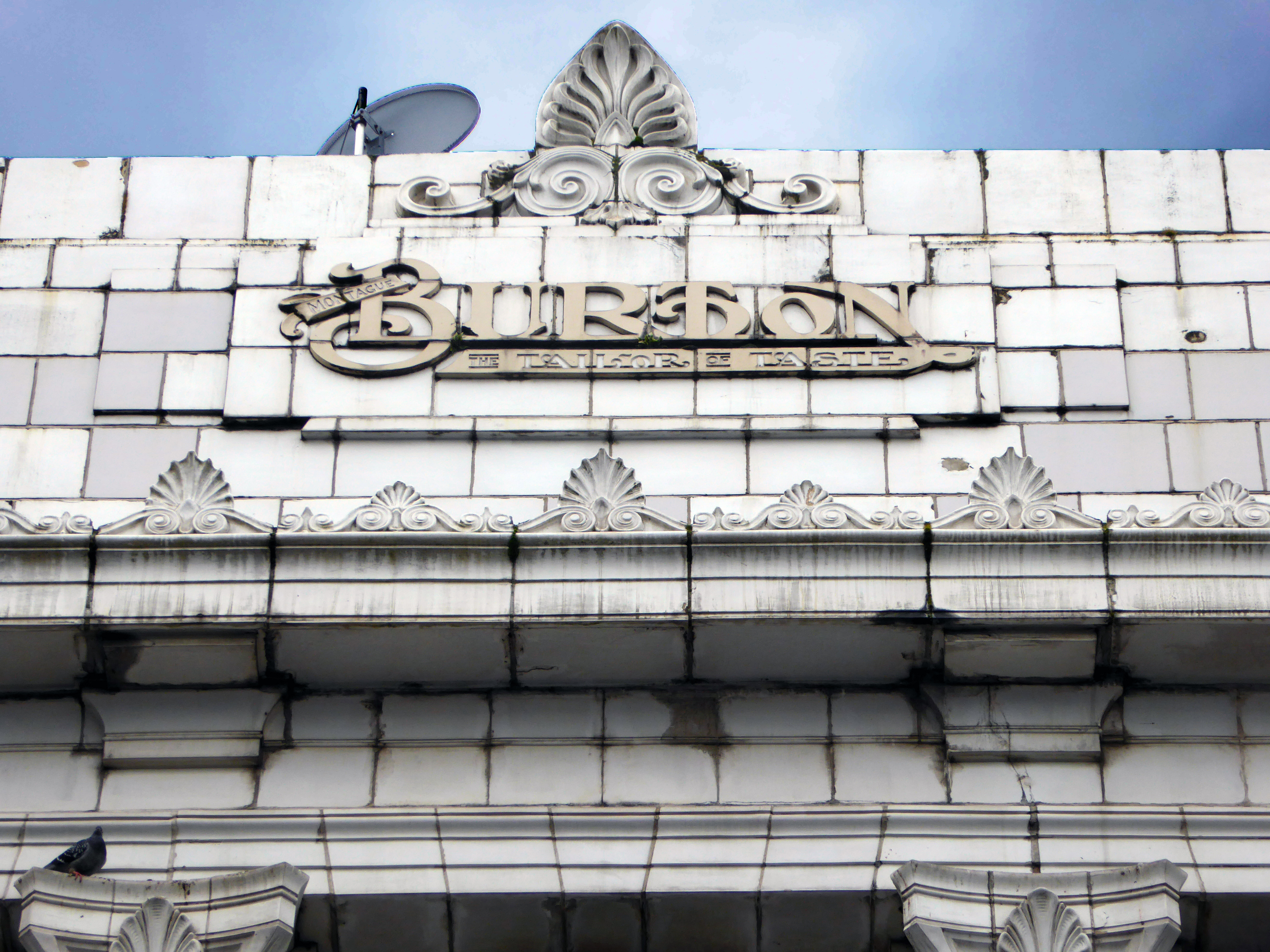
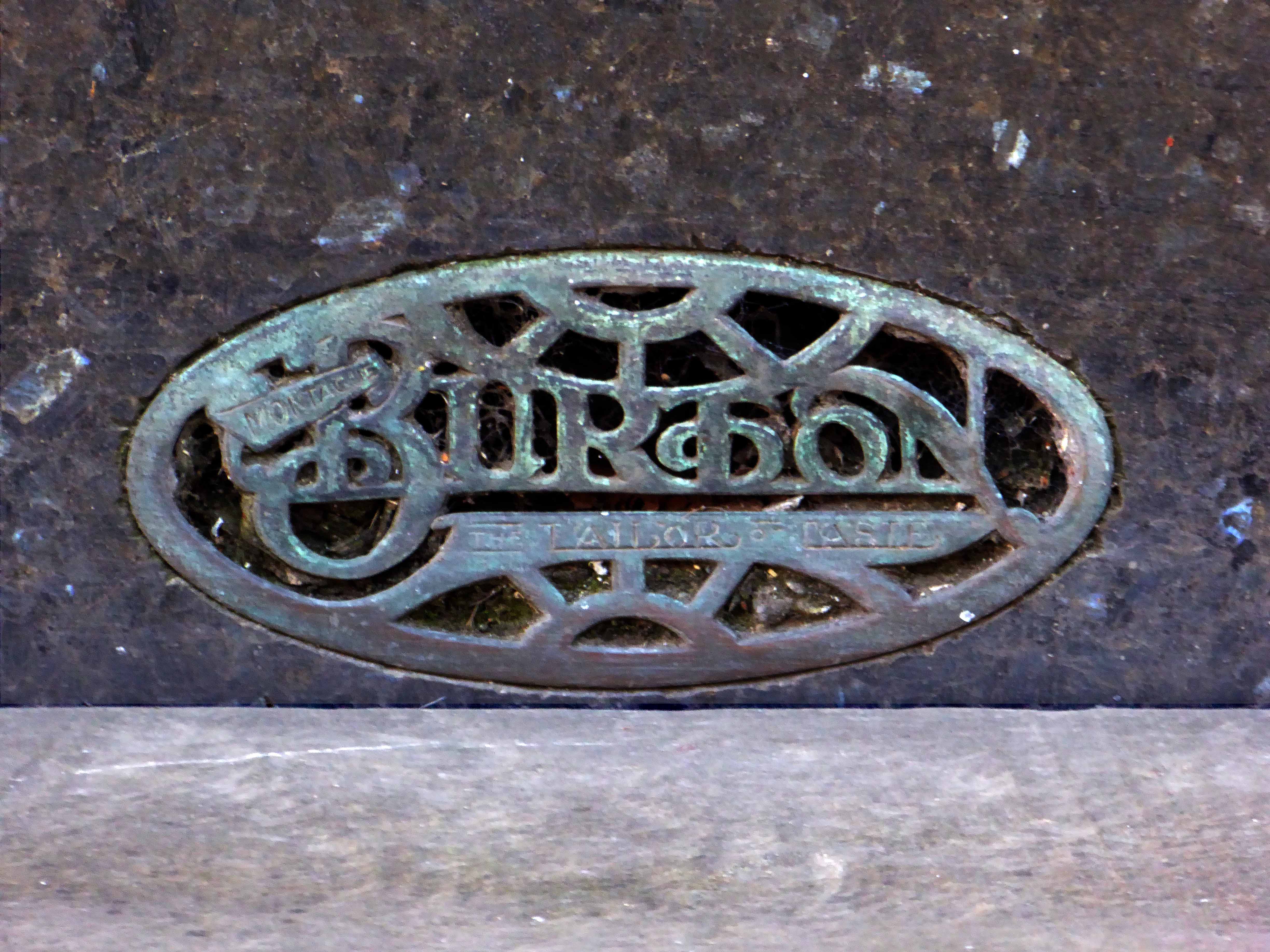
Topped off with the company’s distinctive logotype.

This example in Doncaster is one of the few remaining examples many having been removed – as the stores have changed ownership and usage.

This Neo-Classical Burnley branch is a rare example of a Burton’s which hasn’t gone for a Burton.

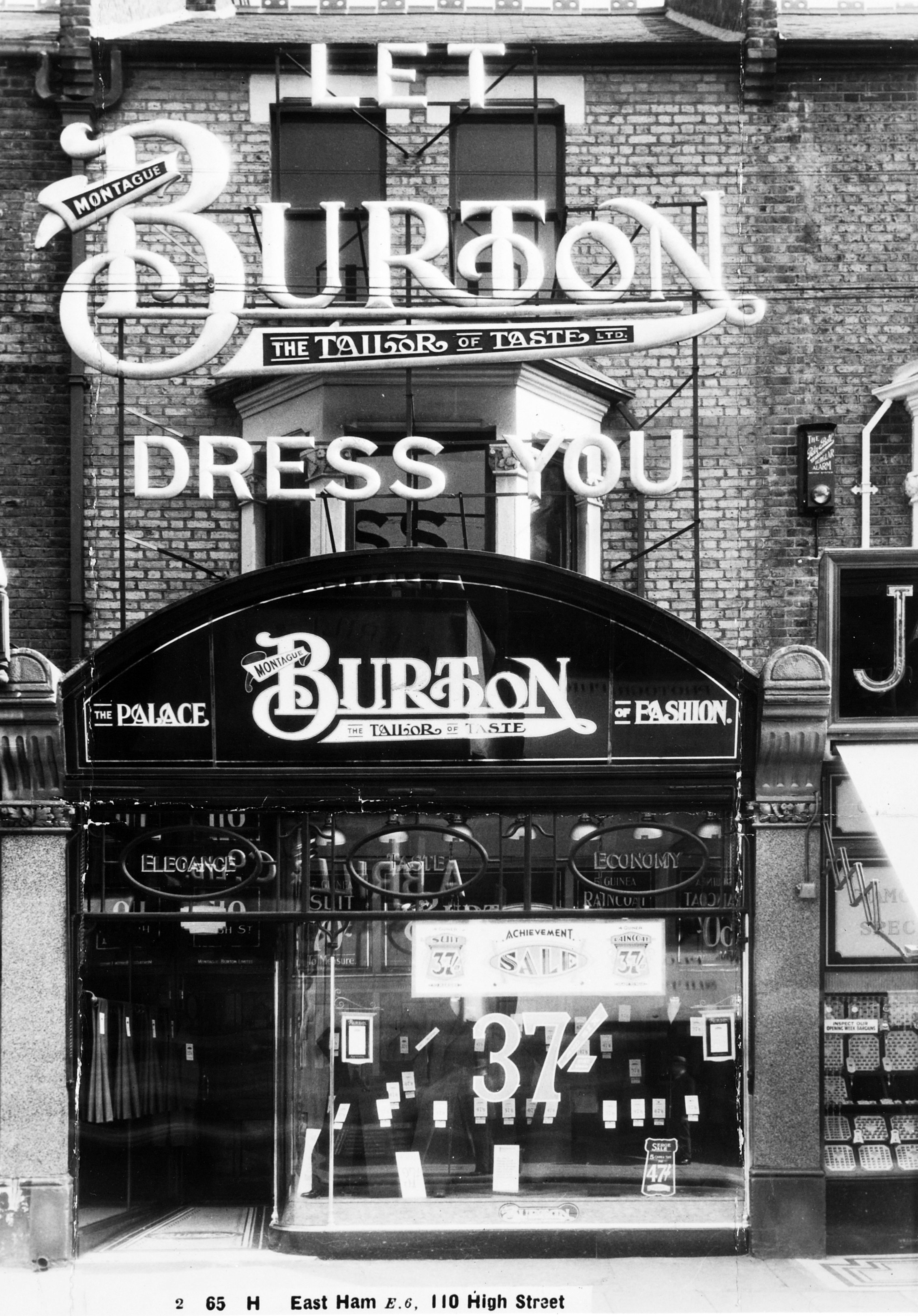
The group maintained a distinctive graphic style in labelling signage and advertisements.

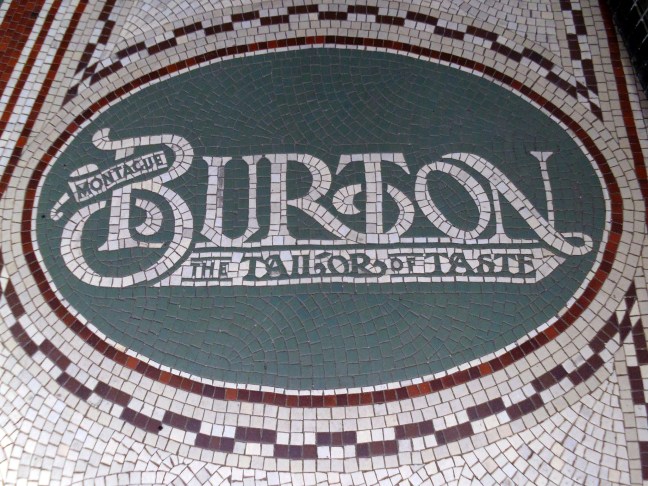
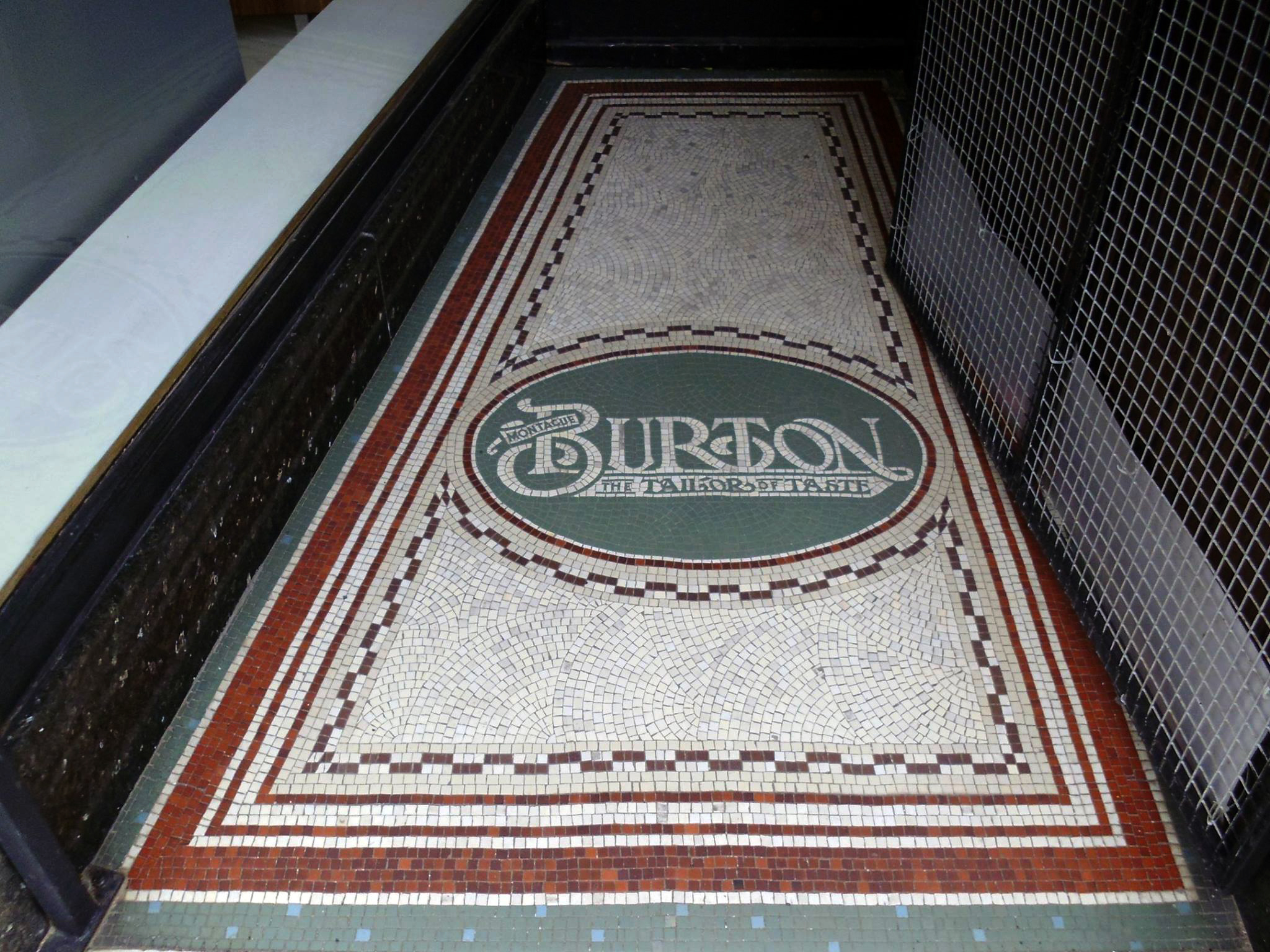
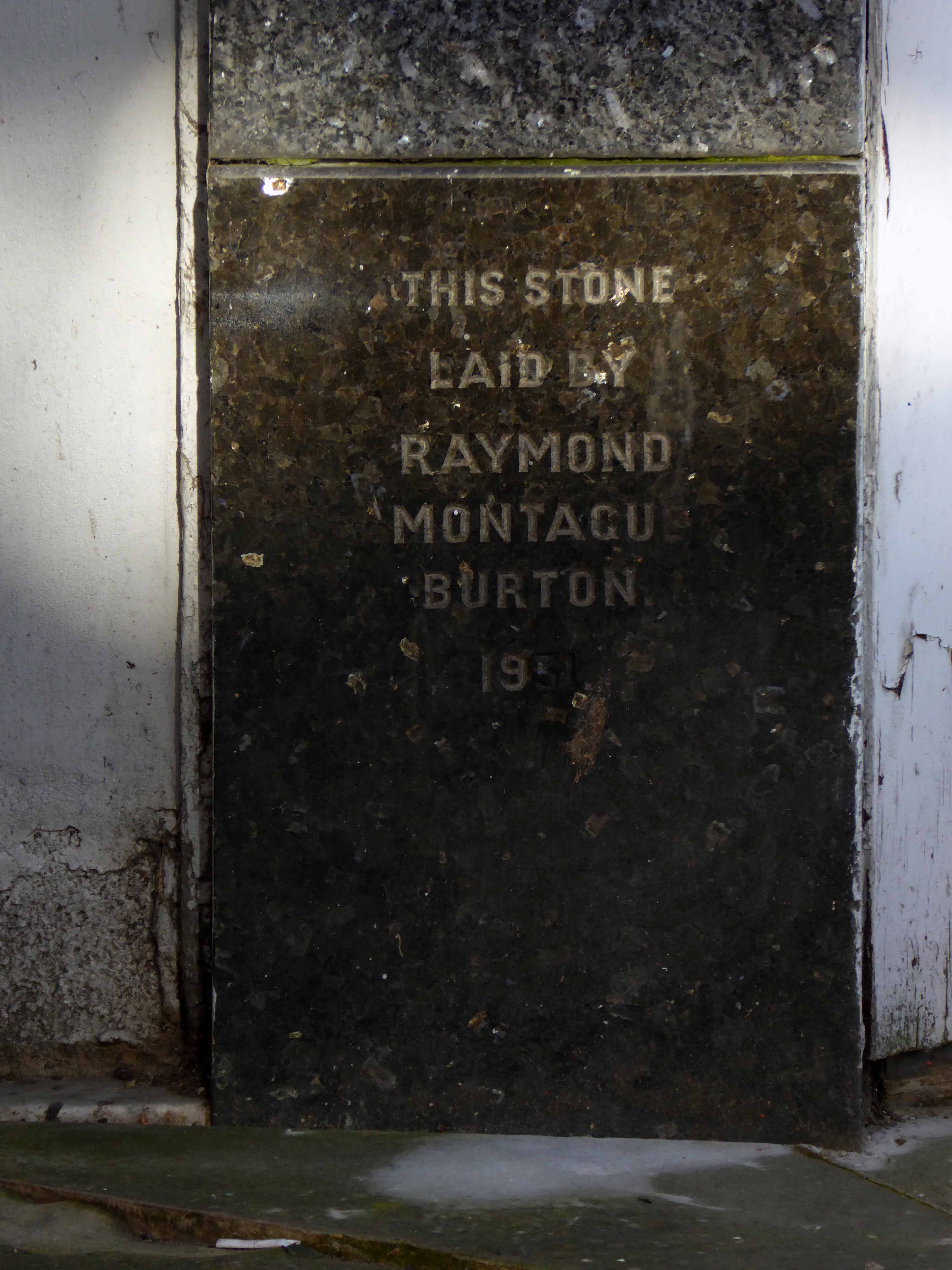
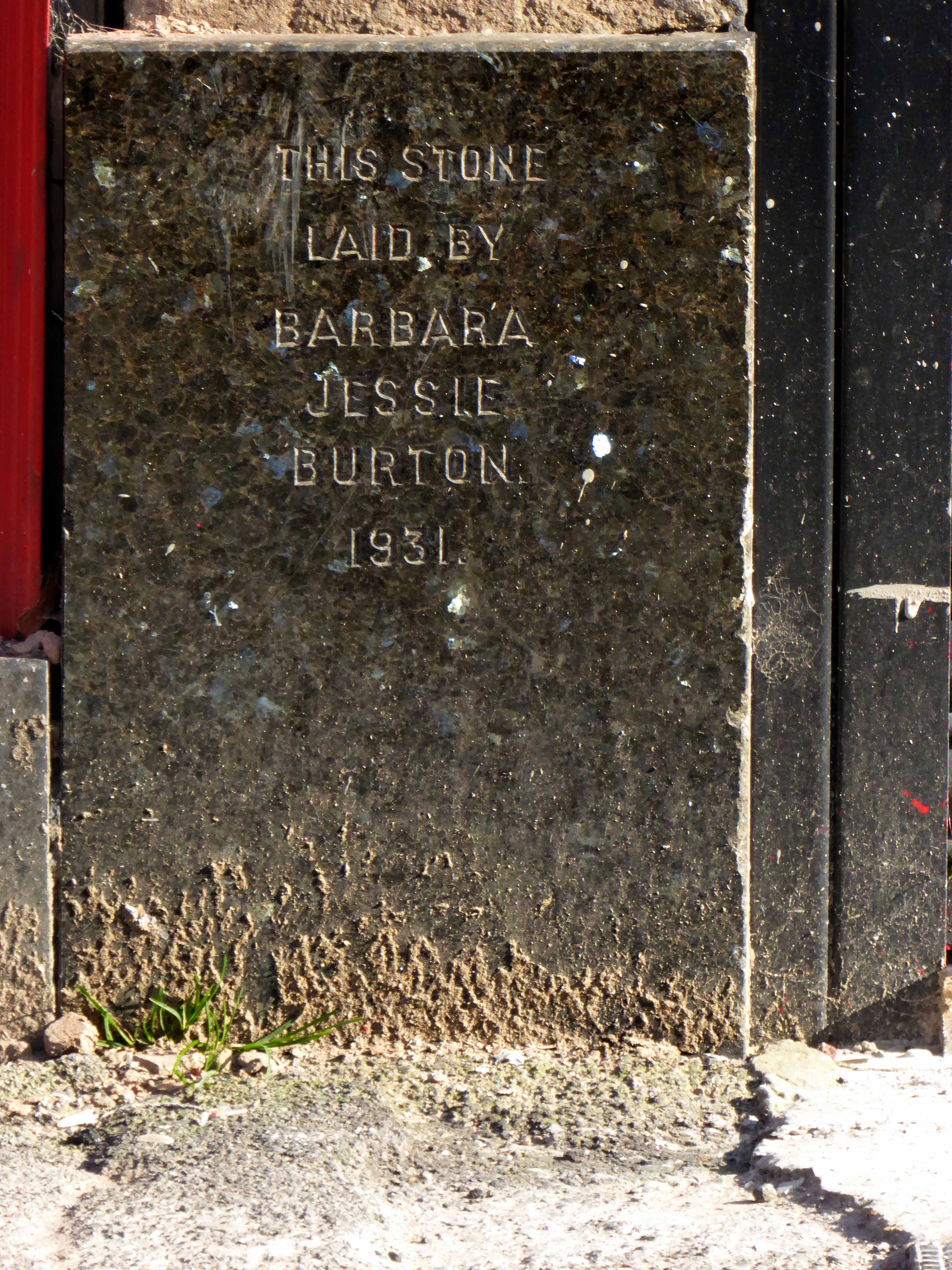
Often including ornate mosaic entrances, ventilation covers and obligatory dated foundation stones – as seen in this Ashton under Lyne branch.

Stores often housed dance halls or other social spaces.

In 1937 Burton’s architect, Nathaniel Martin, collaborated with the architects Wallis Gilbert & Partners on a subsidiary clothing works on the Great Lancashire Road at Worsley, near Manchester. Conceived as a Garden Factory and built in a modern style, this was dubbed ‘Burtonville Clothing Works’. It opened in October 1938 .

Where machinists worked on Ashton built Jones equipment.

Time changes everything and the inception of off the wall unisex disco clothing saw the made to measure suit fall into a chasm of loon pants and skinny rib grandad vests.

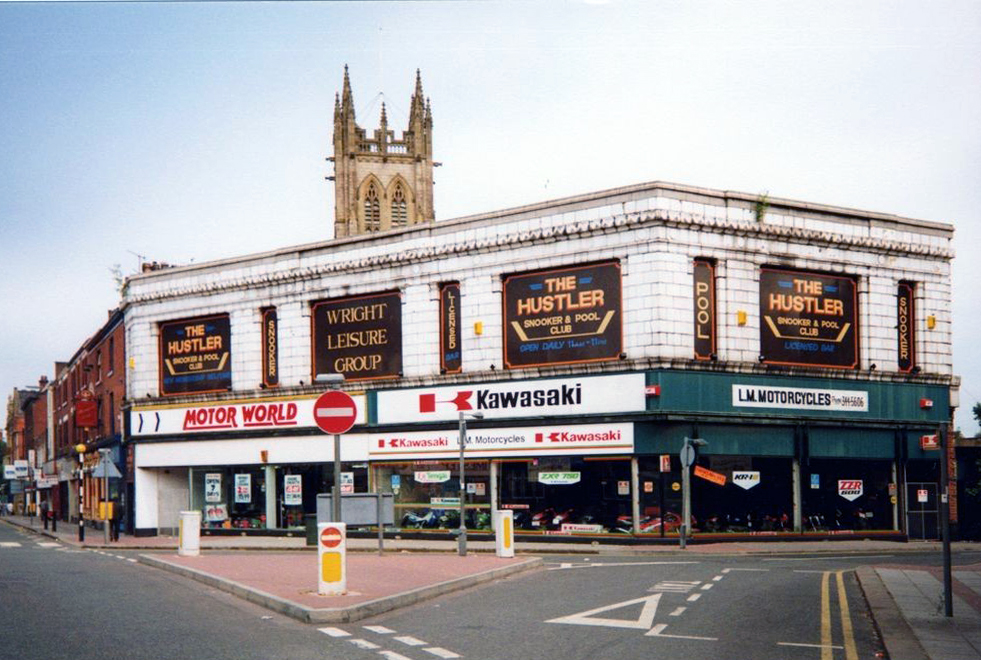
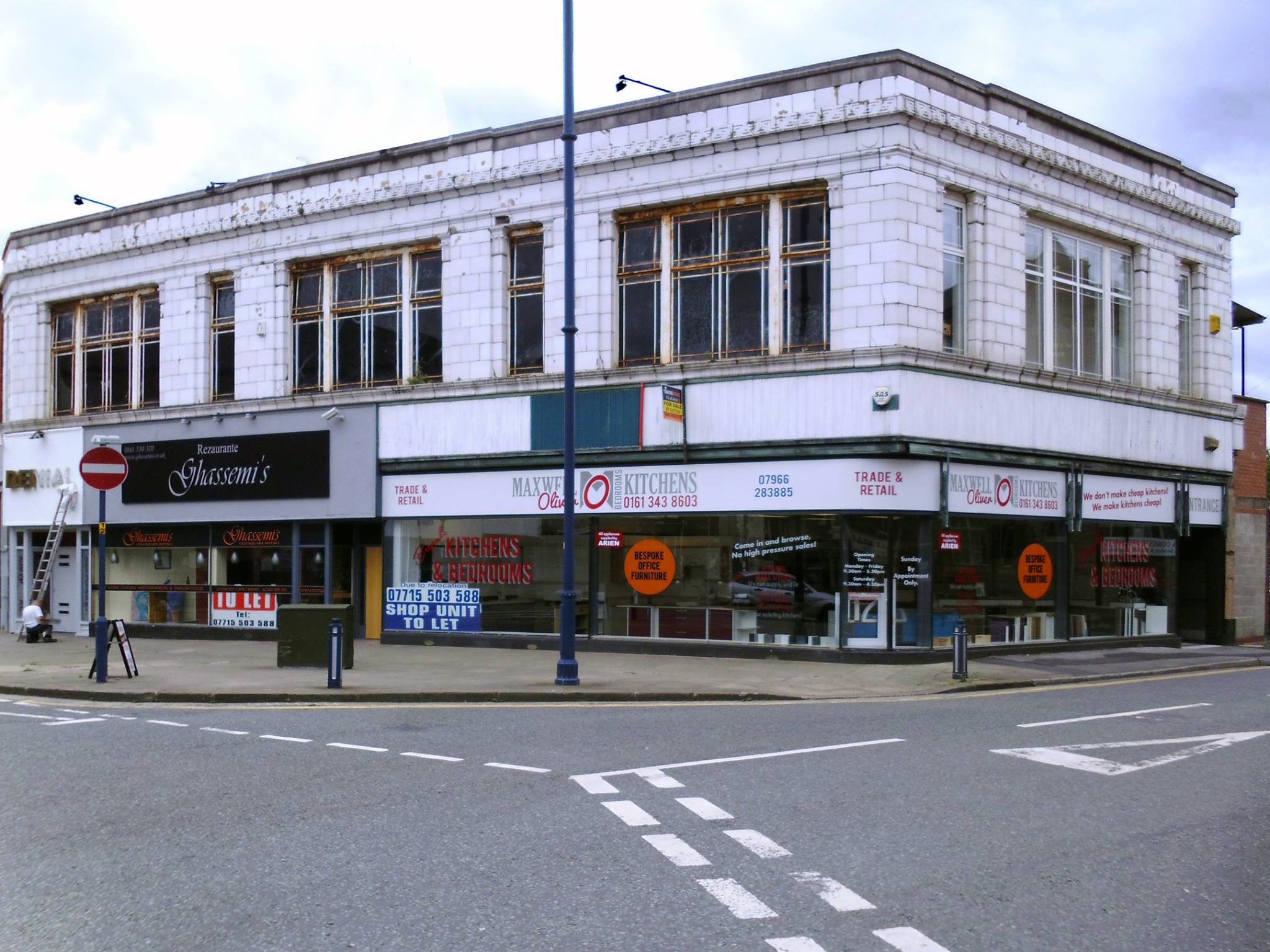
The Ashton branch becomes a motorcycle then fitted kitchen showroom, topped off with a succession of clubs and various other modern day leisure facilities.

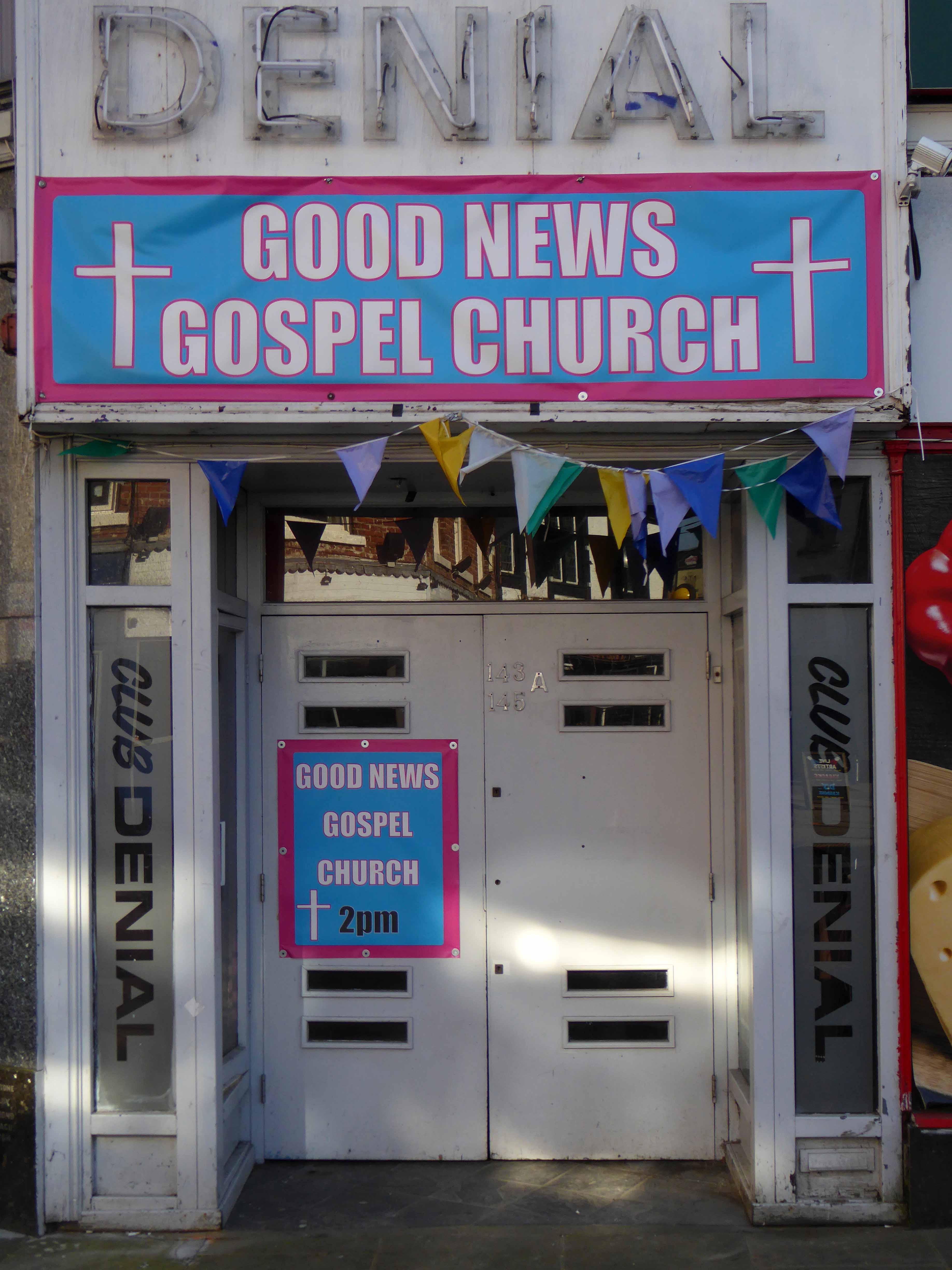
Currently home to the Warsaw Delicatessen and Good News Gospel Church

Formerly Club Denial.

This is the tale of the modern high street grand ideas, architectural grandeur, entrepreneurial immigrants, style and fashion – disappearing in a cloud of vinyl signage and fly by night operations. Though if you look carefully the pale white shadows of Burton’s are still there in one form or another, however ghostly.

Sale Pyramid Odeon Cinema

Cinema Treasures

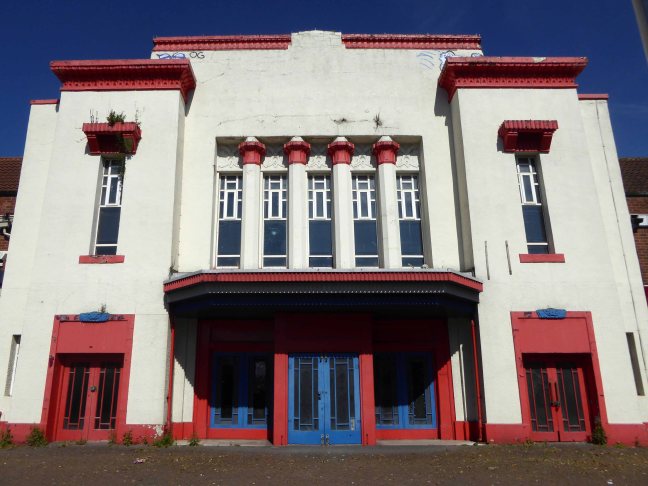
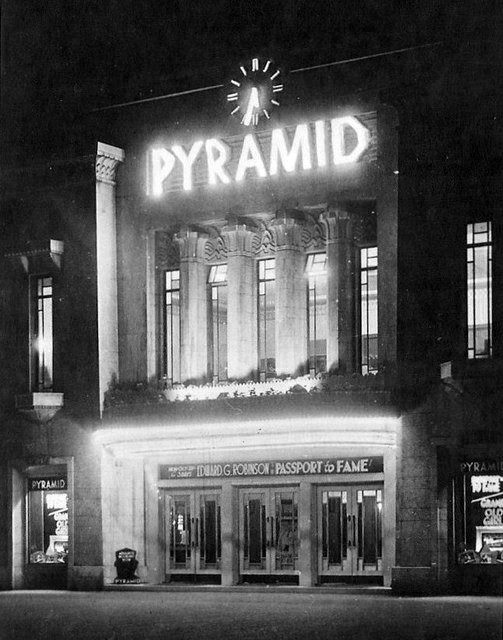
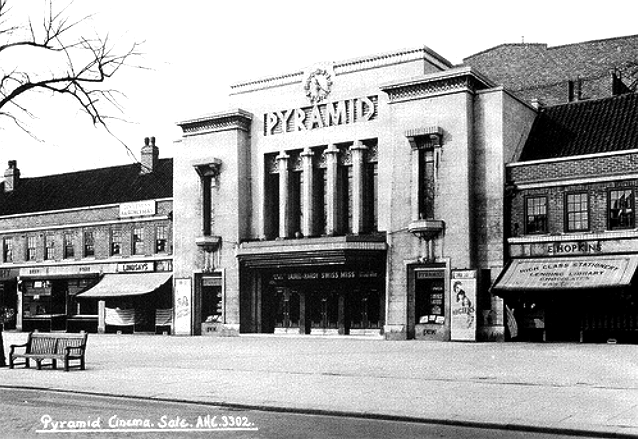
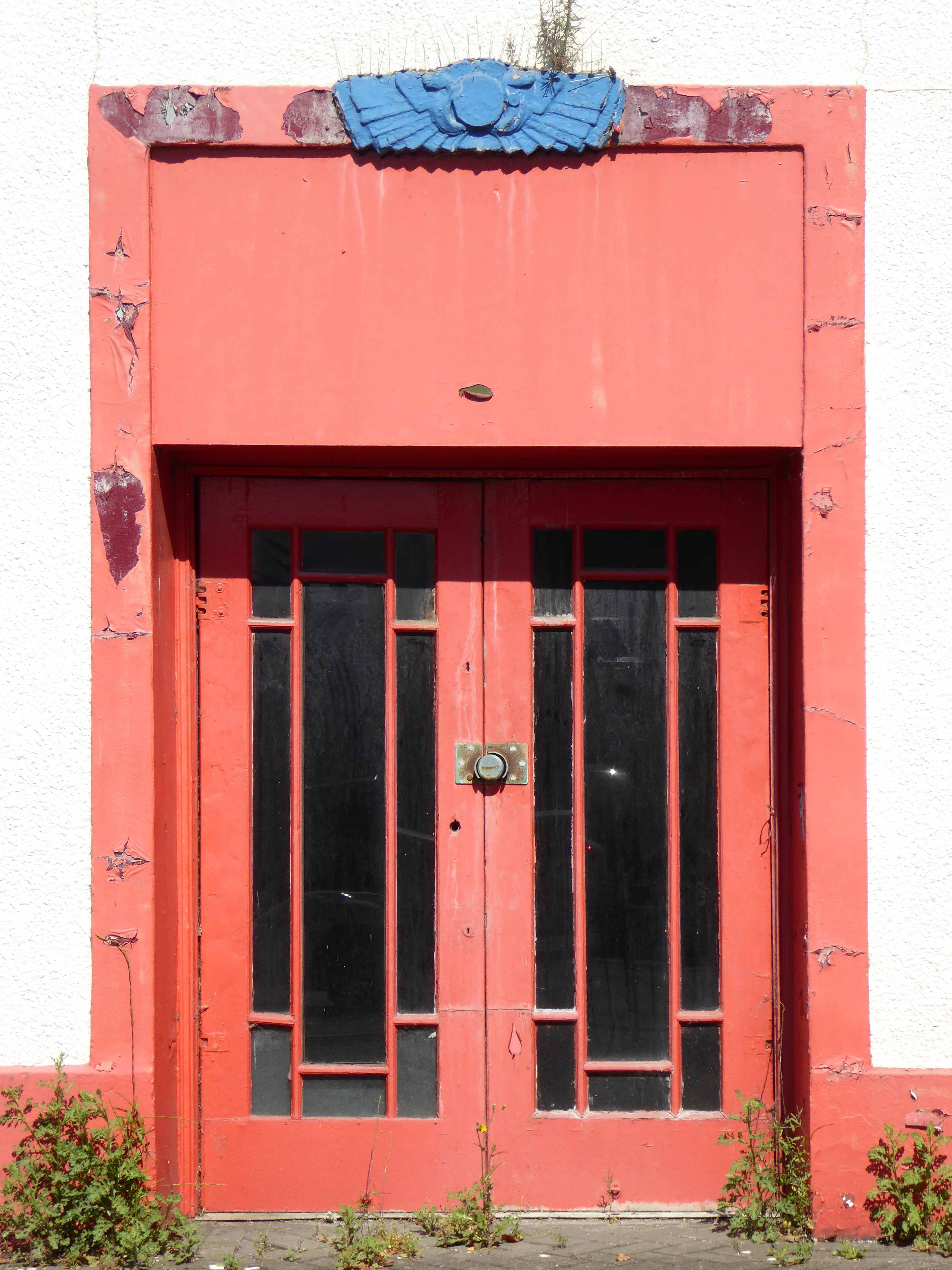
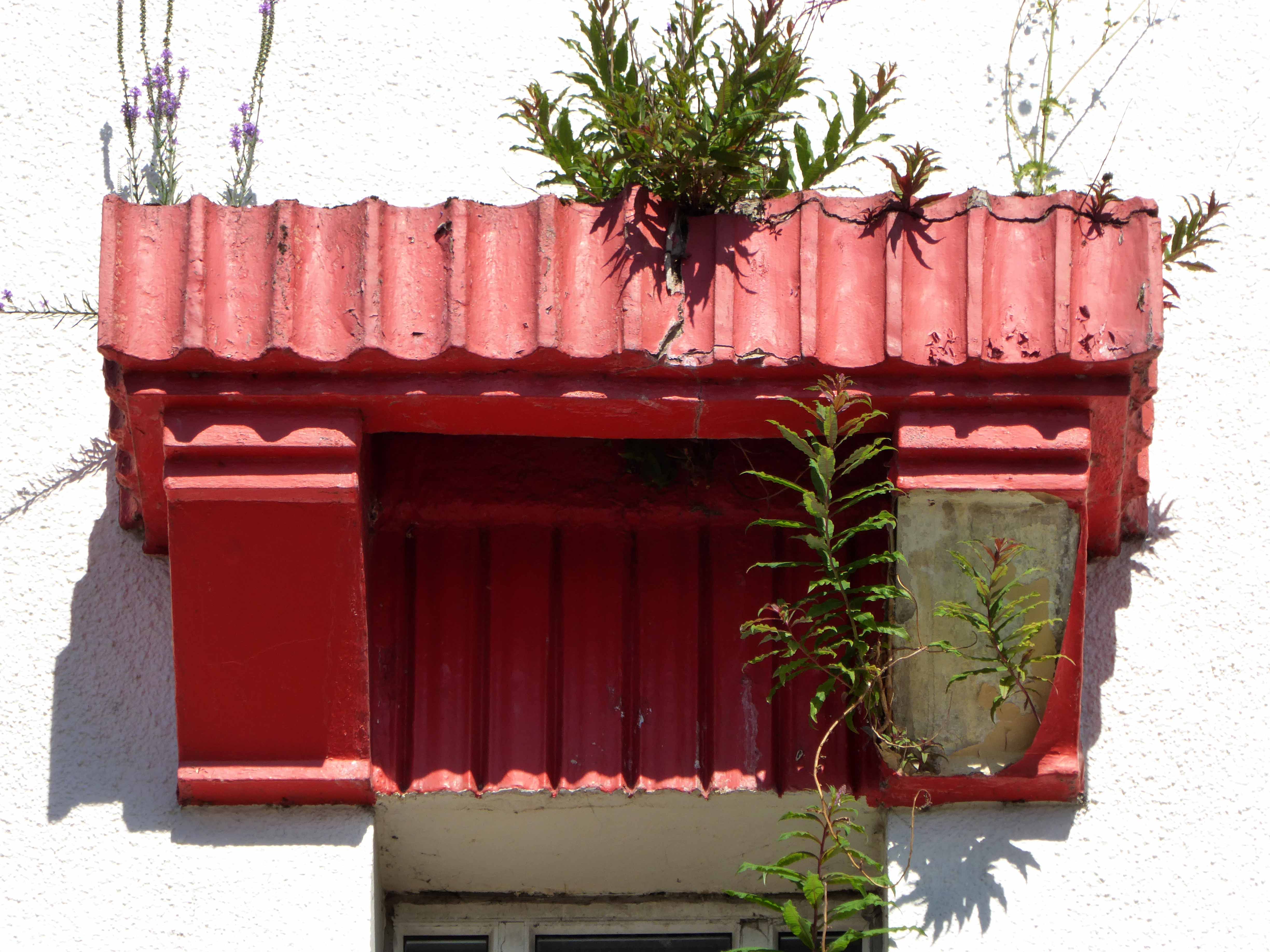
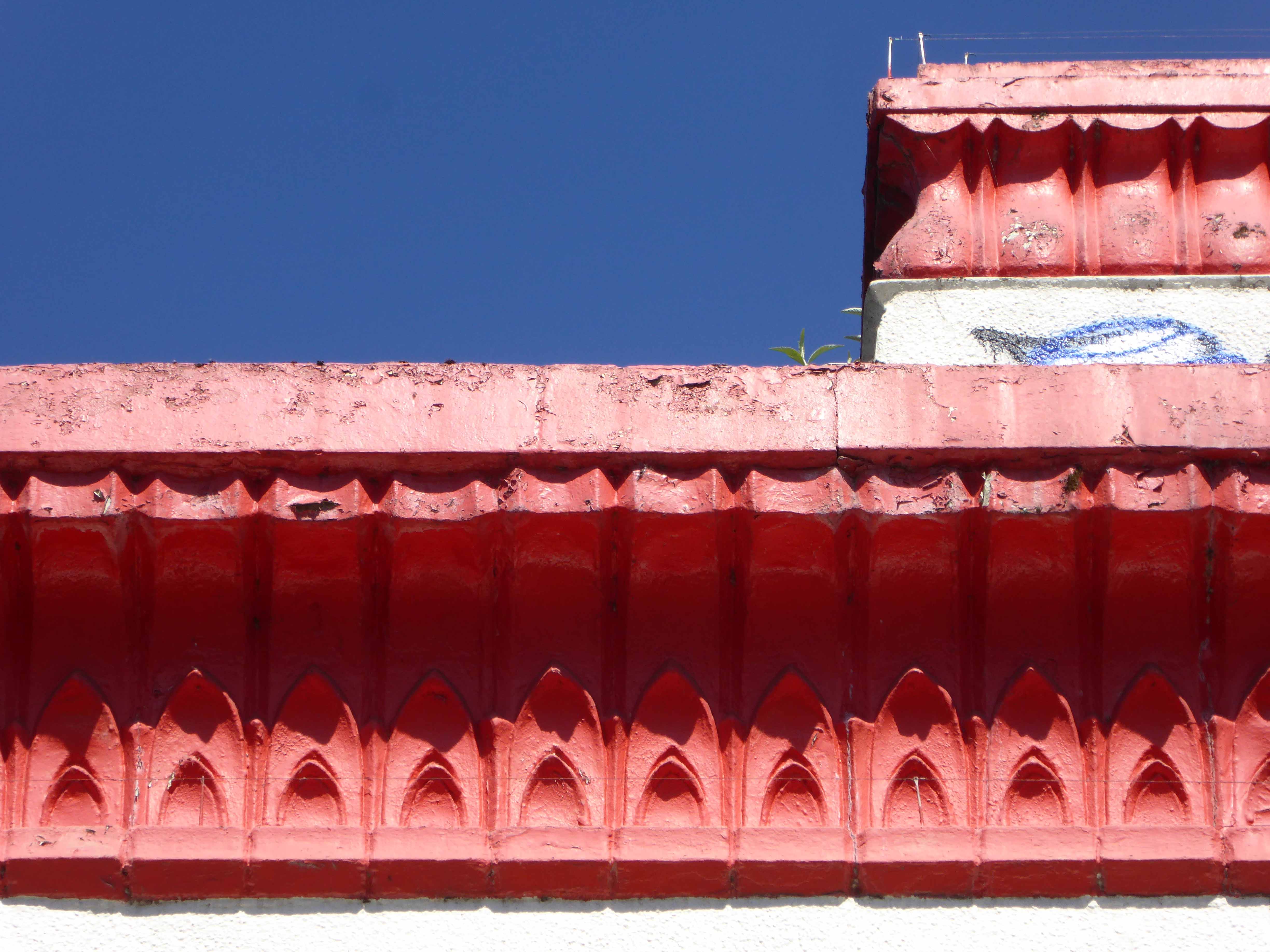
Located in Sale, Cheshire, now part of Greater Manchester. Designed by the famous British cinema architectural firm, Drury & Gomersall, the Pyramid Theatre is a classic example of an Egyptian-style cinema in Britain and had a 1,940 seating capacity.

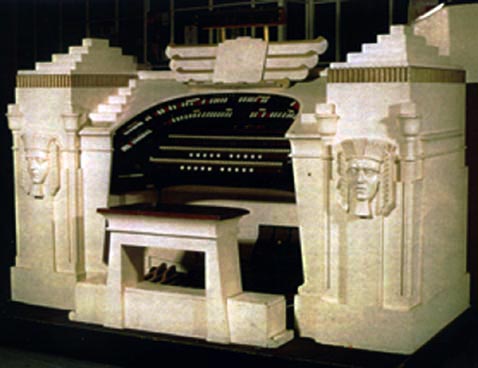
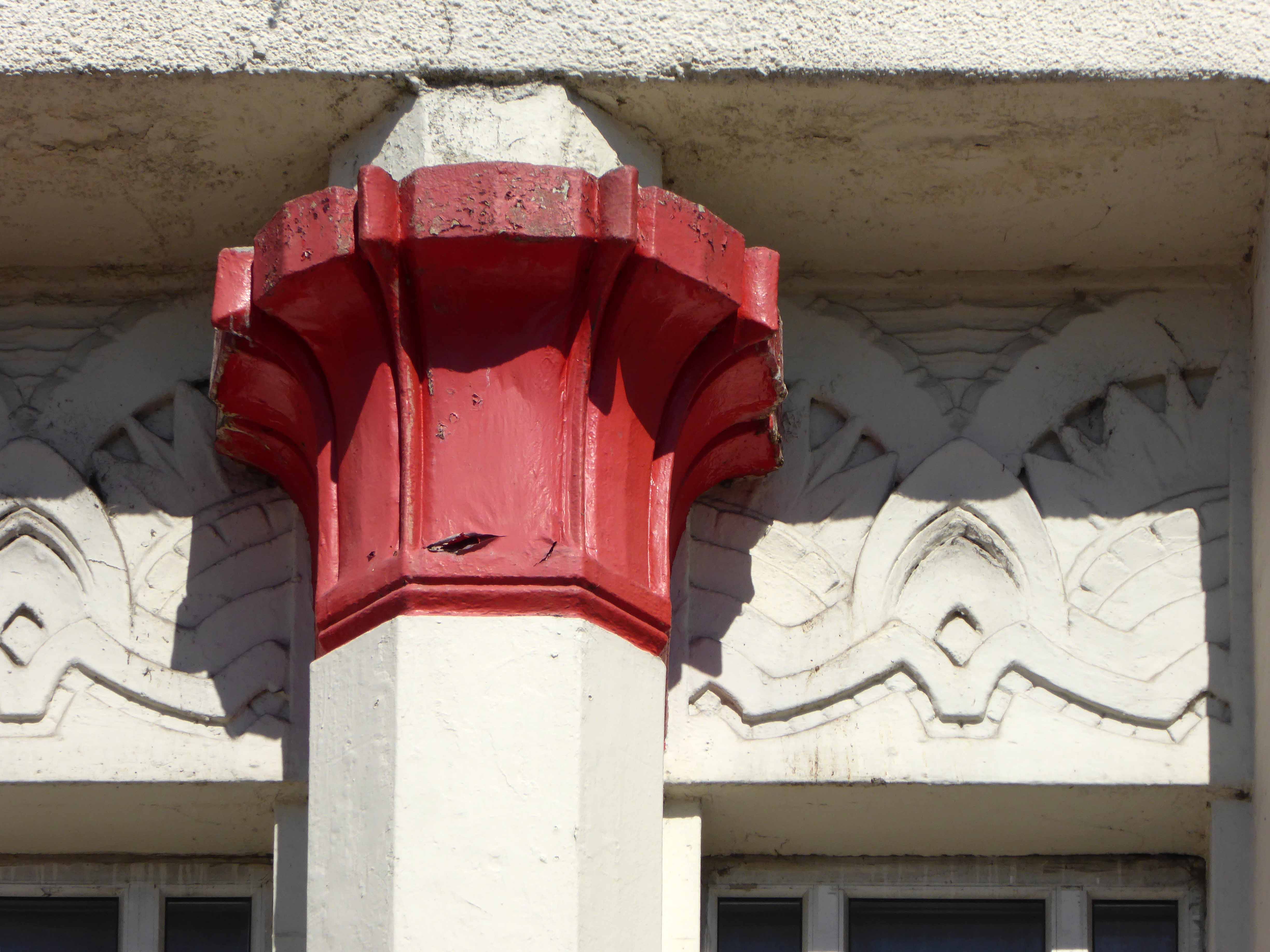
The frontage although not particularly Egyptian in overall design does have various Egyptian style mouldings and fluted pillars. Internally, the Egyptian theme was again largely mouldings and finishes like Graumans Egyptian Theatre in Hollywood. The theme was included in the specially designed Christie Organ, which was installed in the Blue Coat School in Oldham.

Following a request by the school to remove the organ in 2008, the organ was in storage for five years. The Christie has now been donated to the Lowe Side Trust, by the LTOT,  along with funding for refurbishment and installation, of both consoles, into Lowe House Catholic Church, St. Helens, Lancashire. As of the beginning of 2018 the the original pit console is now fully functioning in the Church. The Egyptian style stage console is now under refurbishment to full theatre specification. Website for this project will be available shortly.

Lancastrian Theatre Organ Trust

bccolcr

The Pyramid Theatre changed hands a couple of times between its opening on 24th February 1934 and 21st December 1942 when it was taken over by Oscar Deutsch’s Odeon Theatres Ltd. chain. It was re-named Odeon on 18th June 1945.

large-1

In 1981, the Rank Organisation closed 29 of its Odeon cinemas and the lease for the Odeon Sale was bought by the Tatton Cinemas group and it was re-named Tatton Cinema. Stage shows returned to the theatre, however the runing costs caused the lease to revert to Rank in 1984 and the building was closed.

Screen Shot 2018-06-28 at 07.51.12

odsastr

The cinema was purchased by Trafford Borough council for £200,000, but by 1987 the costs to the council were estimated at £1.5 million. A campaign was started to save it from demolition.

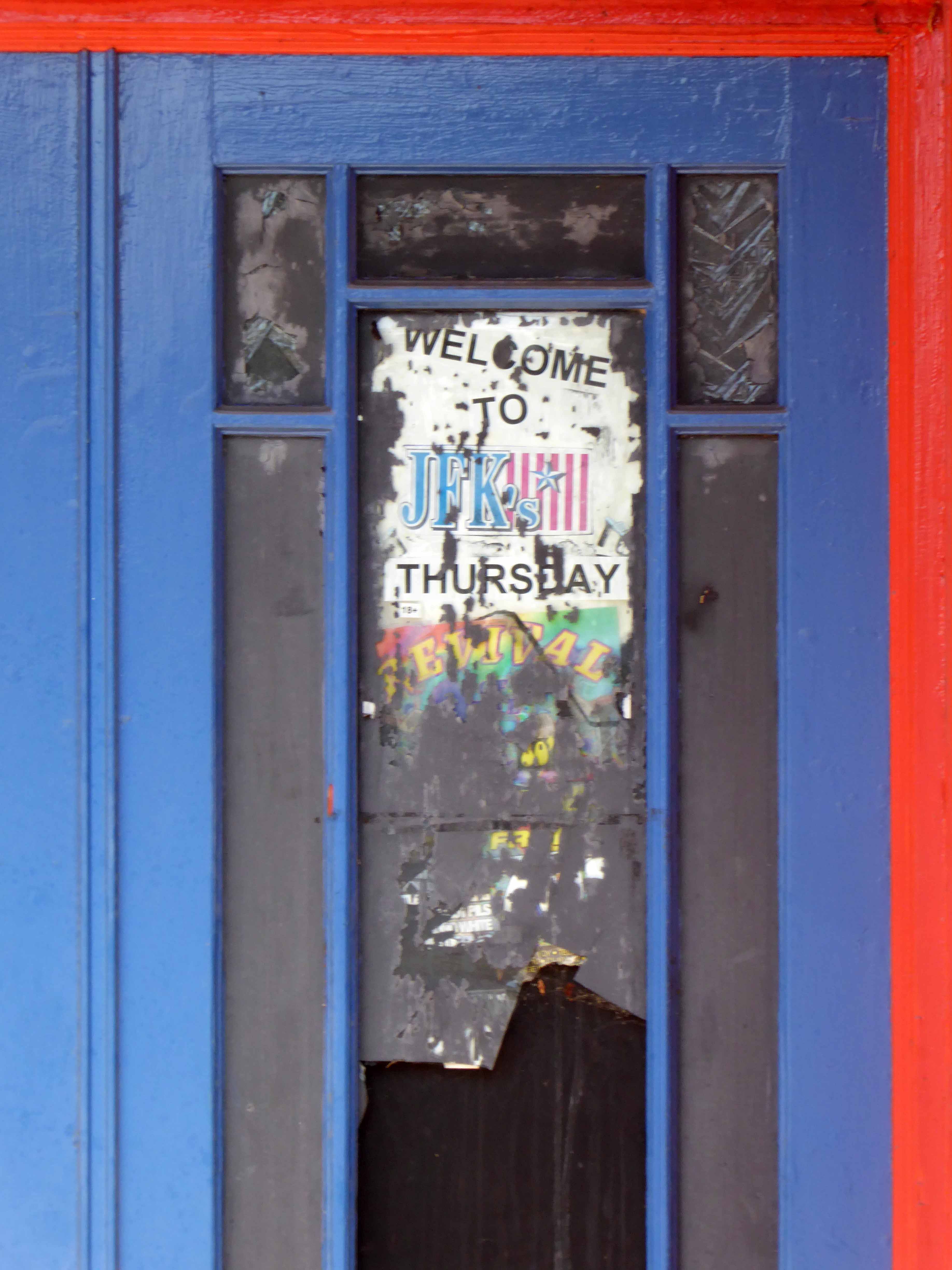
In 1988, it was advertised for sale by tender and by 1990 the cinema was converted into an American themed nightclub, known as JFK’s

The nightclub closed around 2001 and the auditorium was transformed into a franchised L.A. Fitness Centre, using a former front stalls exit as its entrance. The main entrance and foyers are currently unused. In 2013 it became a Sports Direct Fitness Club.

The Pyramid Theatre was designated a Grade II Listed building in November 1987.

It is currently closed and seemingly unused.

OLYMPUS DIGITAL CAMERA

Screen Shot 2018-06-28 at 07.51.49

I often cycle passed and wonder about your past, and a possible future.

large

Our cinema heritage is and always had been under threat, listed and unloved desperately seeking the care and attention to survive into another other century. Subsequent repurposing has proved temporary and unsustainable, without the concerted efforts of local authority, charitable trust and enthusiastic amateurs, you will remain a silent pharaonic sentinel by the side of Washway Road.

Forever.

“Only the best is good enough for Sale”


P1260515

P1260517


P1260519

P1260520

P1260521

P1260522


P1260524

P1260525

P1260527

P1260529

P1260514


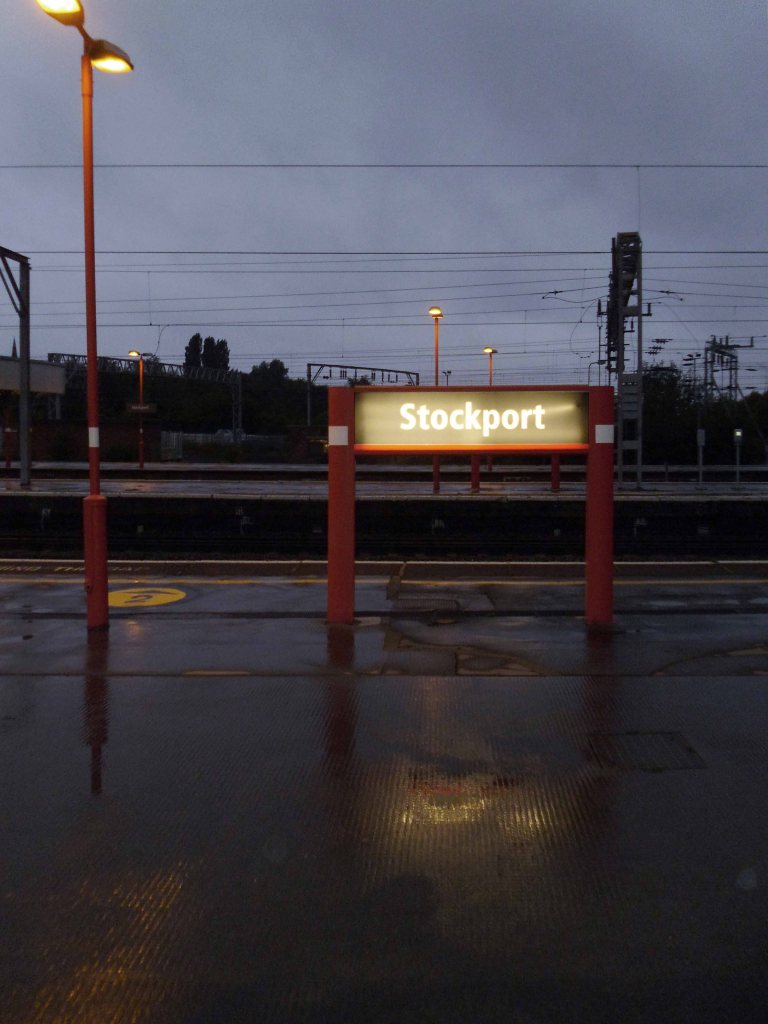
The George Hotel – Stockport

Screen Shot 2018-06-02 at 13.57.42

15 Wellington Road North Stockport SK4 1AF.

Time changes everything except something within us which is always surprised by change.

A delightful interwar pub on the corner of Heaton Lane and Wellington Road North, I moved to Stockport some forty years ago and was mightily impressed by the restrained exterior Deco design, wrought and hewn from soft pale sandstone. Equally impressive was the wood panelled, open, spacious interior space.

The George was always something of an anomaly, being the only Greater Manchester pub owned by Higson’s Brewery, our almost next door Liverpool neighbour.

P1200475 copy

Higsons_72

Higsons was founded in 1780 – 1974 saw the brewery merge with James Mellor & Sons. In 1978, Higsons acquired the Bent’s Brewery, which was based next to its North Street head office. Boddingtons of Manchester acquired Higsons in 1985 but decided to abandon brewing in 1989 to focus on its pubs.

They have/had fine former offices on Dale Street

venues_7

Boddingtons’ brewing arm was sold to Whitbread in 1990 which then subsequently closed the Higsons Stanhope brewery and then reopened by new owners as the Cains Brewery in 1991. Higsons beer was brewed in Sheffield and Durham for a few years after closure before being discontinued. The beer brand was revived in the current century and reborn in 2017, now served in the swish Baltic Triangle based Higson’s Tap & Still with an interior order that leaps backwards head first, into an imagined future of raw brick, reclaimed wood and industrial flourishes.

DcL2r33W0AARIGU

The George prospered – a town centre pub surrounded by workers in search of a wet and shoppers shirking their retail duties in favour of draught bitter or Cherry B.

1960

Its interior however did not fair so well, ripped out in the 80s – remade remodelled, in the deeply unattractive, anti-vernacular, sub-disco style de jour.

Renamed The Manhattan, riding the fun-pub wave, closed reopened as The George – there followed thirty year of uncertainty, struggling to find an identity throughout a time of ever-changing moods.

Screen Shot 2018-06-02 at 13.53.28

It became a daytime haunt of the hardened, shattered glass, blood on the tracks class of drinker, its reputation in tatters along with yesterday’s fish and chip papers.

The last time I came by you were still open for business.

P1160554

I bided a wee while, without imbibing, all the better to record your disabused Art Deco details.

P1160541

P1160542


P1160544

P1160545

P1160550


P1160552

I came by yesterday and you were all tinned-up with nowhere to go.

Premises To Let as of 13th May 2018 – on the 2nd April 2018 the licence has lapsed, so this will be a further barrier to it re-opening.

And so your faux nowheresville interior will pass into yet another of somebody’s history, along with your fine Deco detail and disco destruction.

This a tale of our age – of monopoly capitalism, stay at home Bargain Booze tipplers, demographic shifts, de-populated town centres, fashion fads and cheap cladding.

Time changes everything except something within us which is never surprised by change.

P1250771


P1250776

P1250778

P1250781

P1250783

P1250785

P1250786

P1250789

P1250794

P1250796


Brucciani’s – Morecambe

Brucciani – 217 Marine Rd Central, Morecambe LA4 4BU217

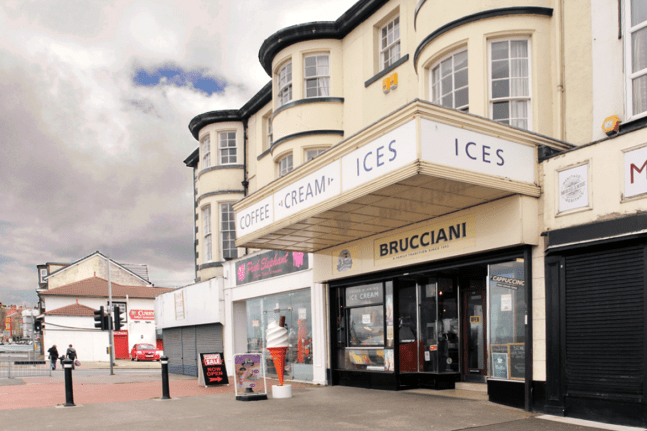
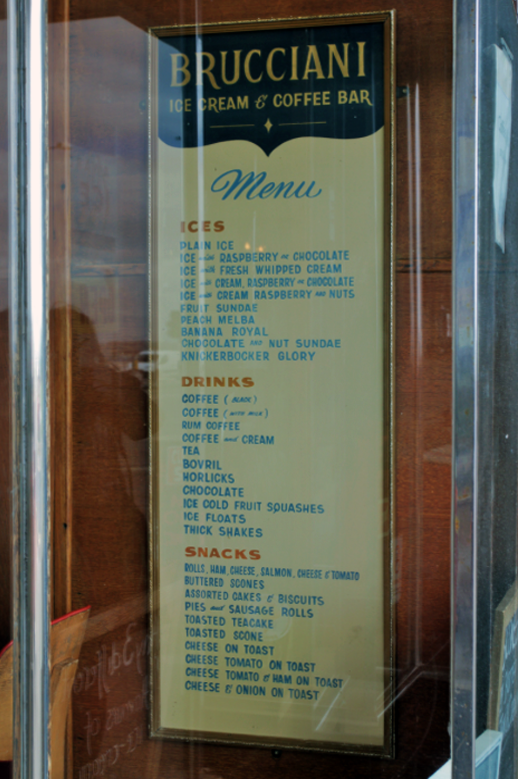
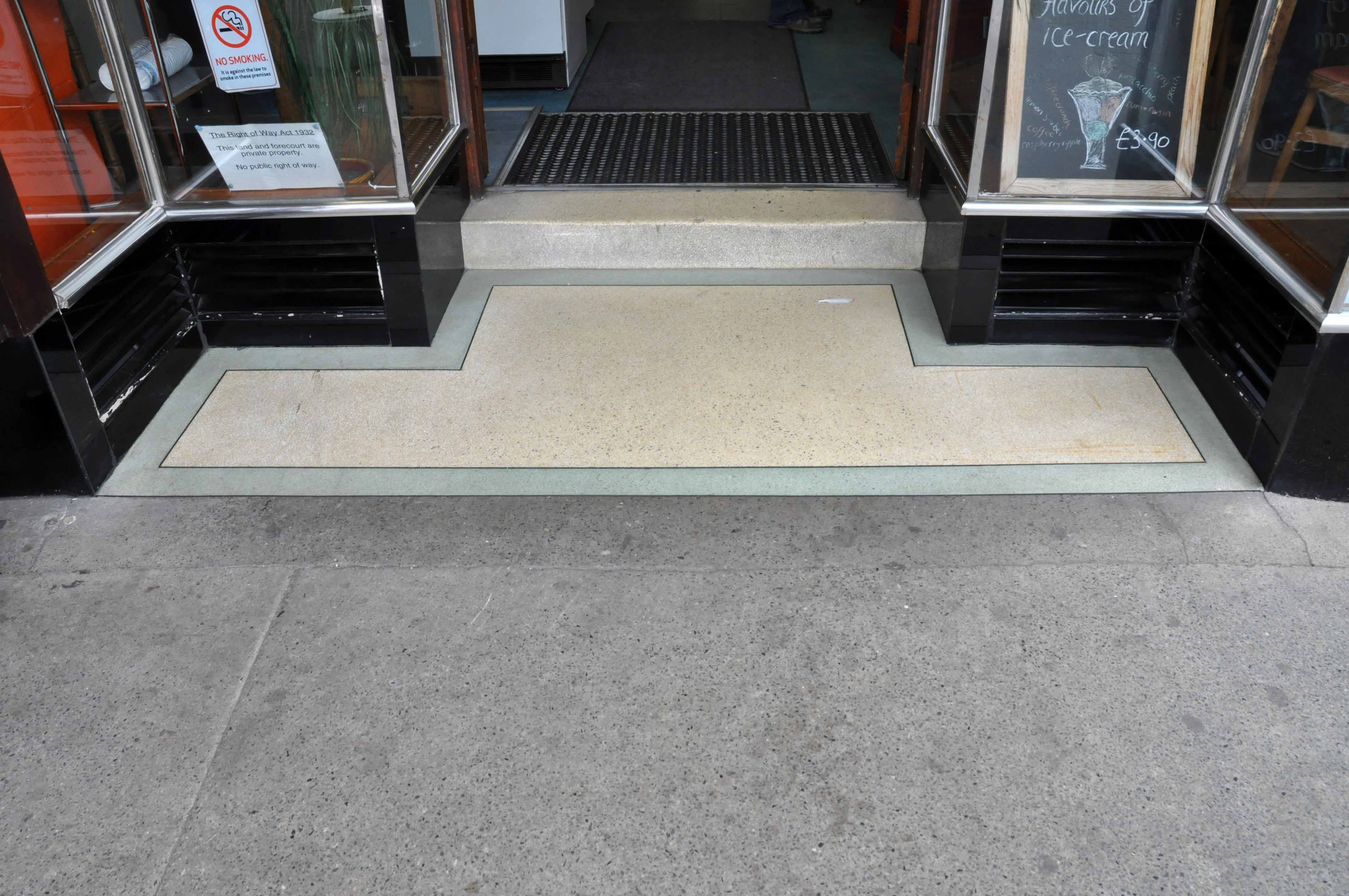
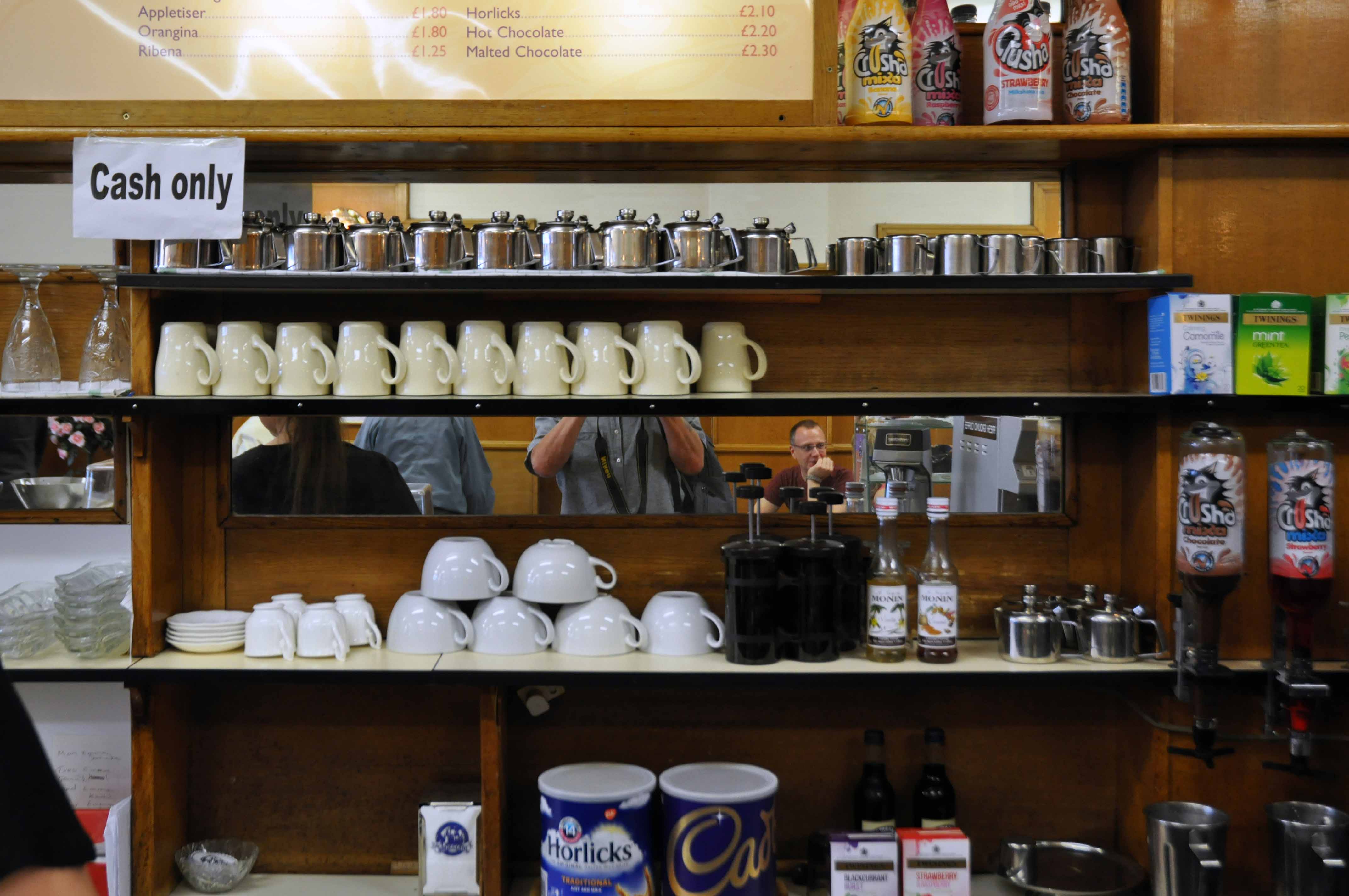
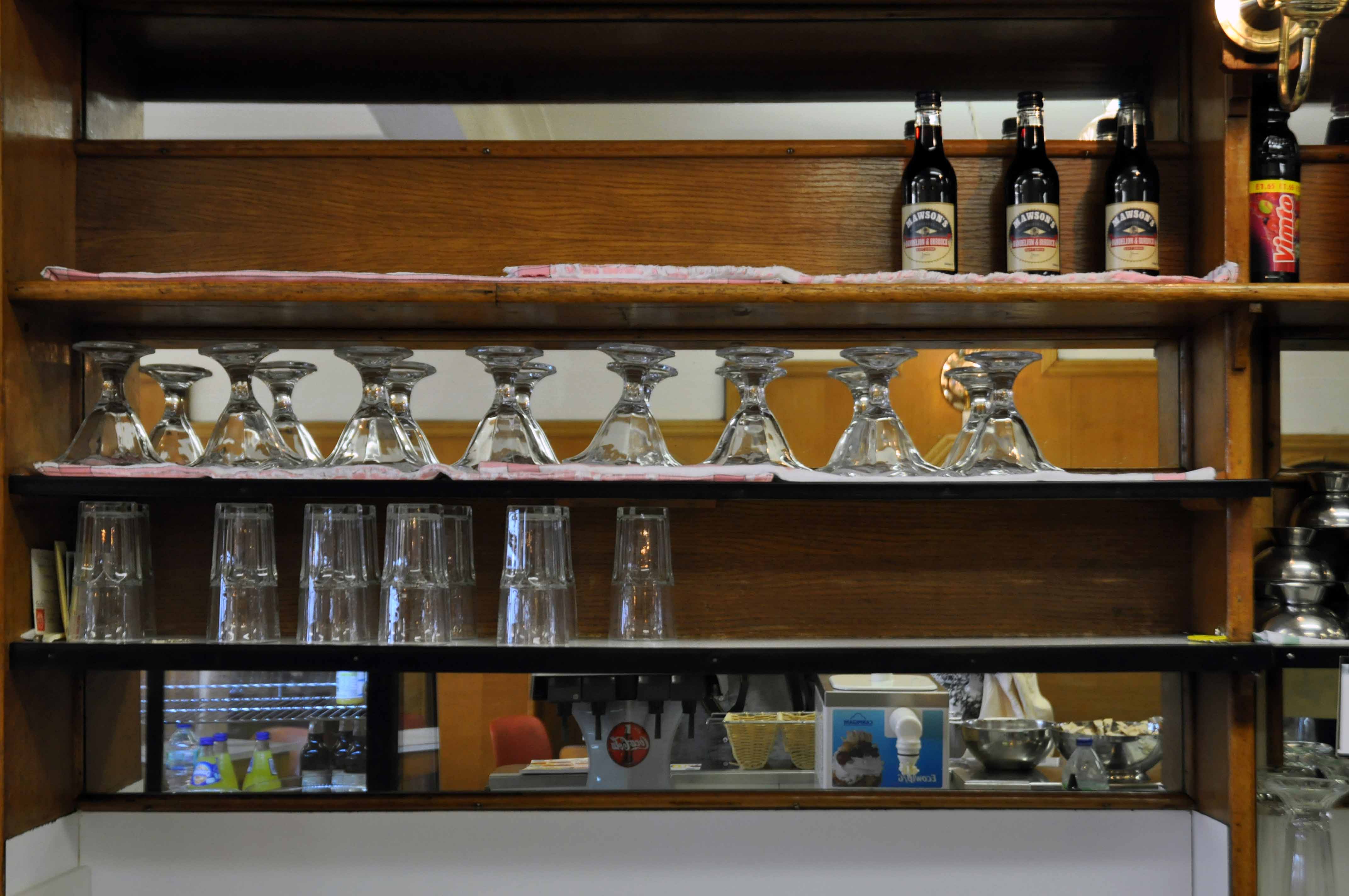
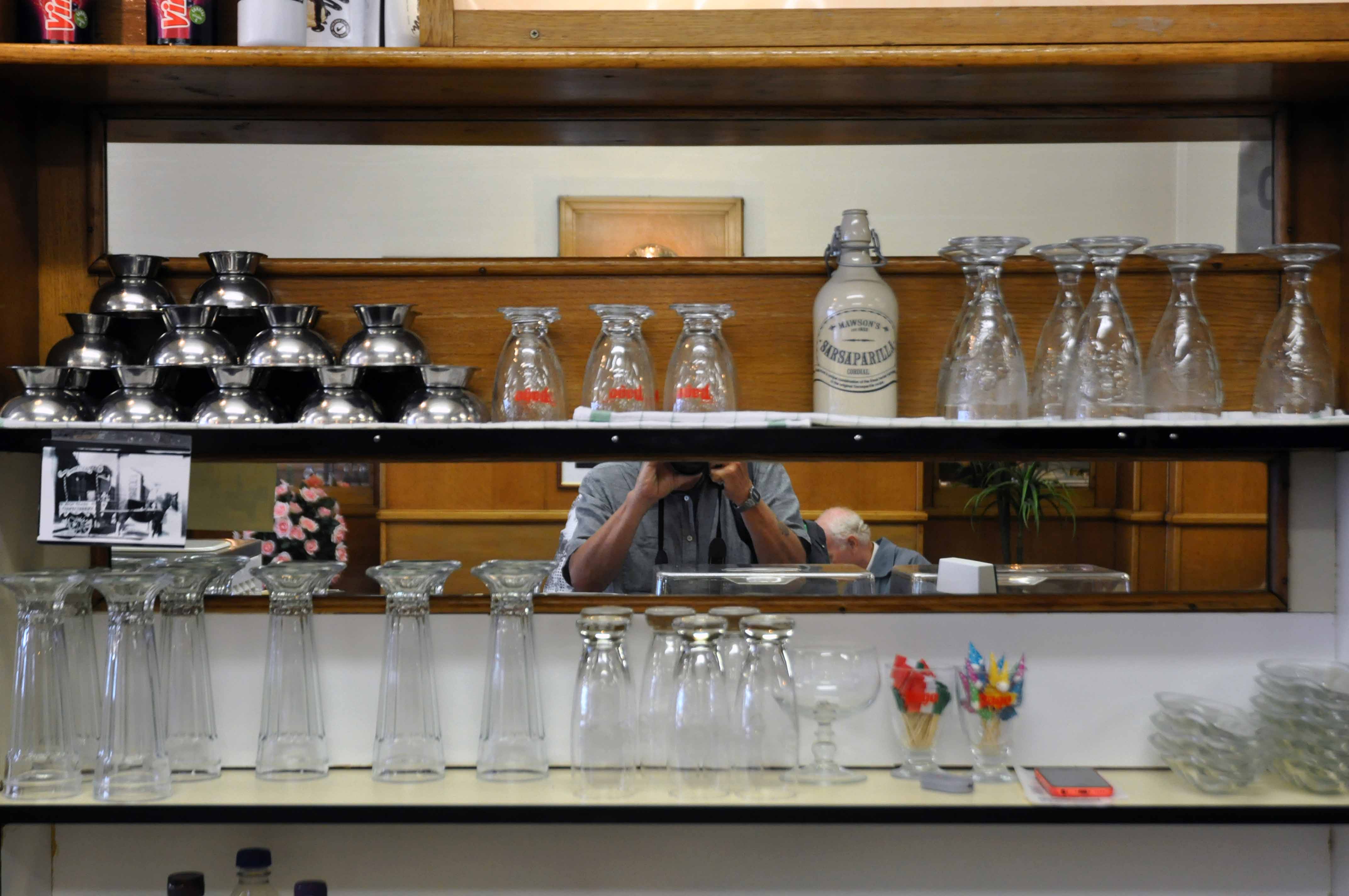
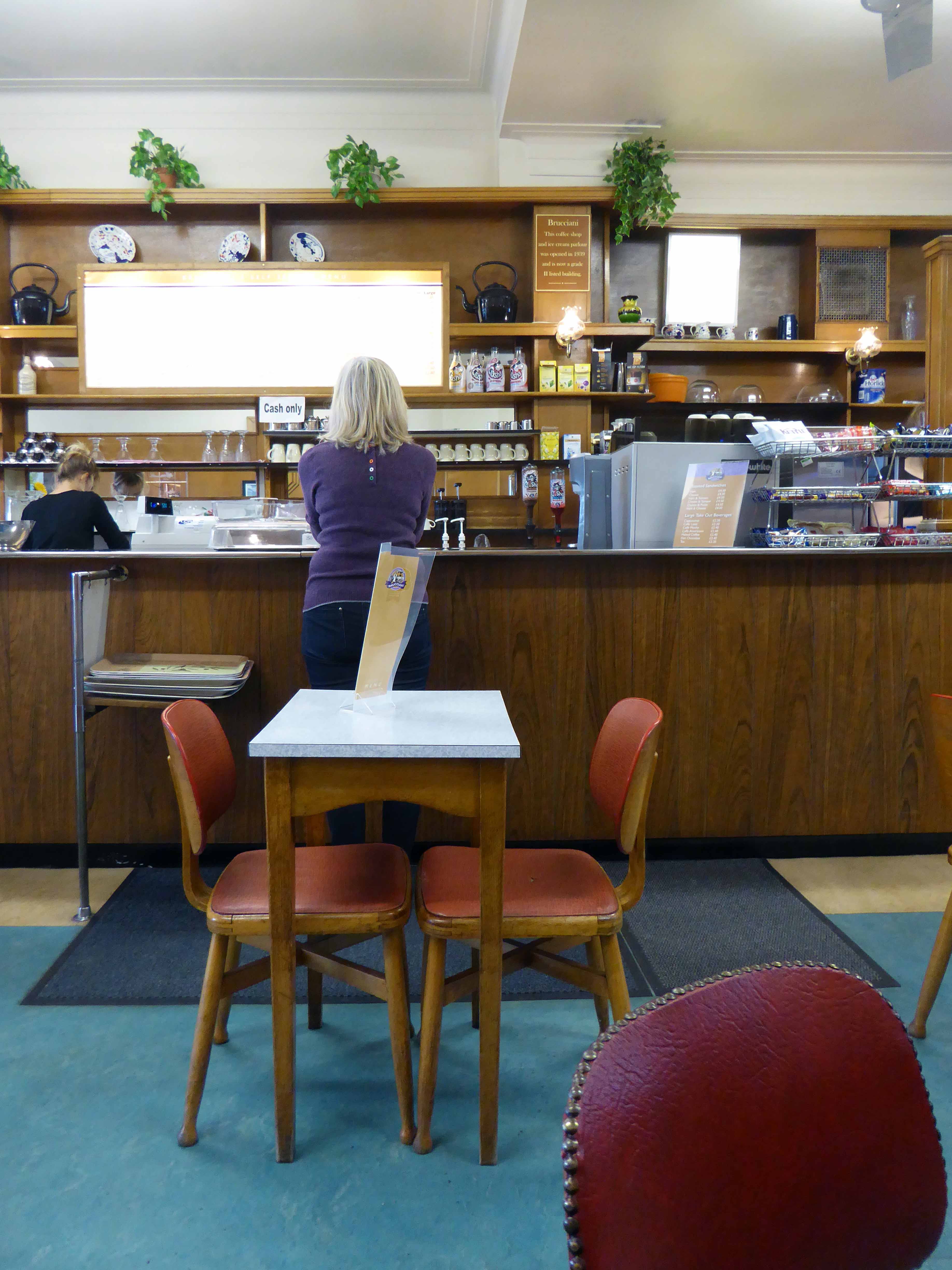
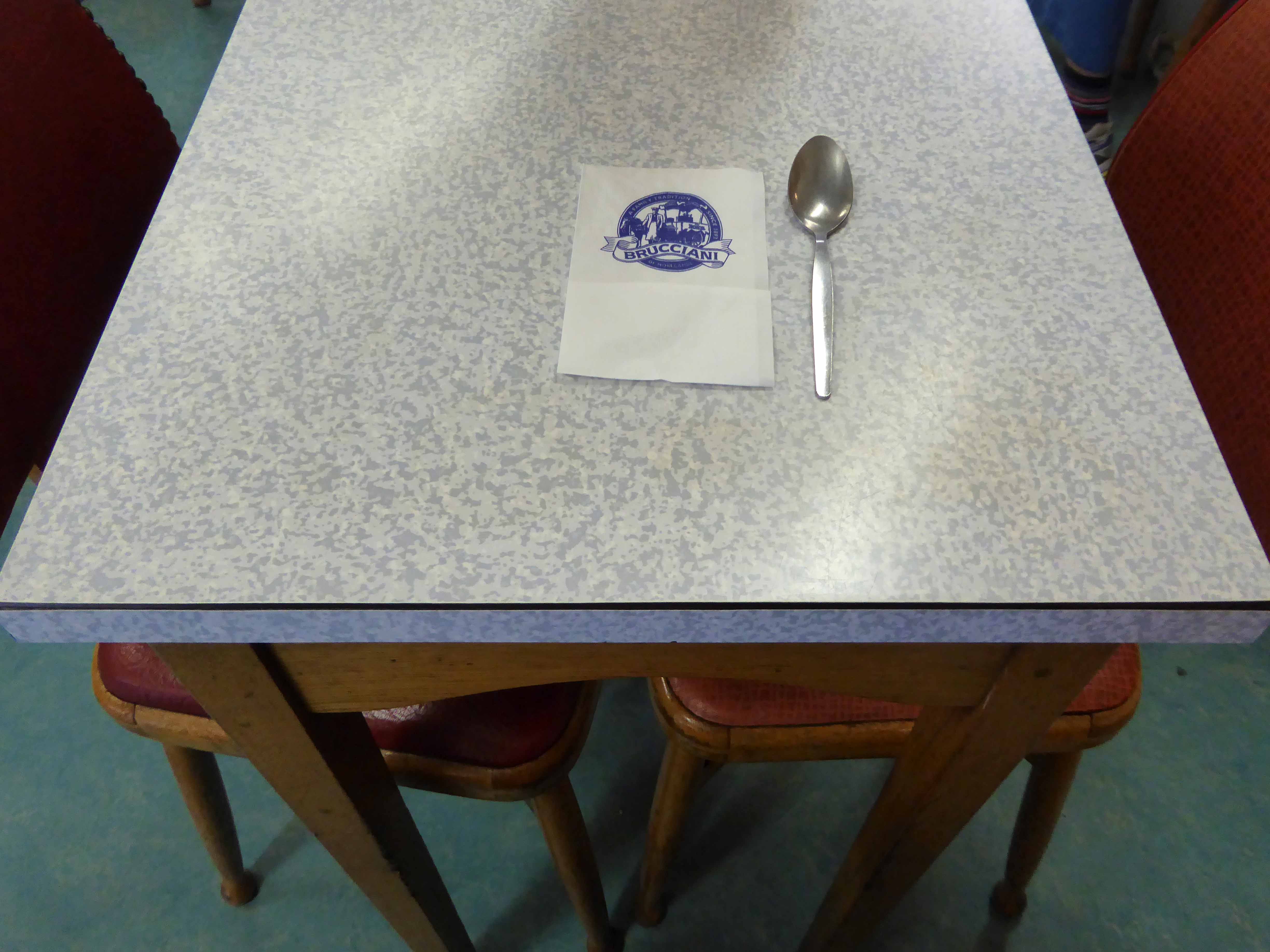
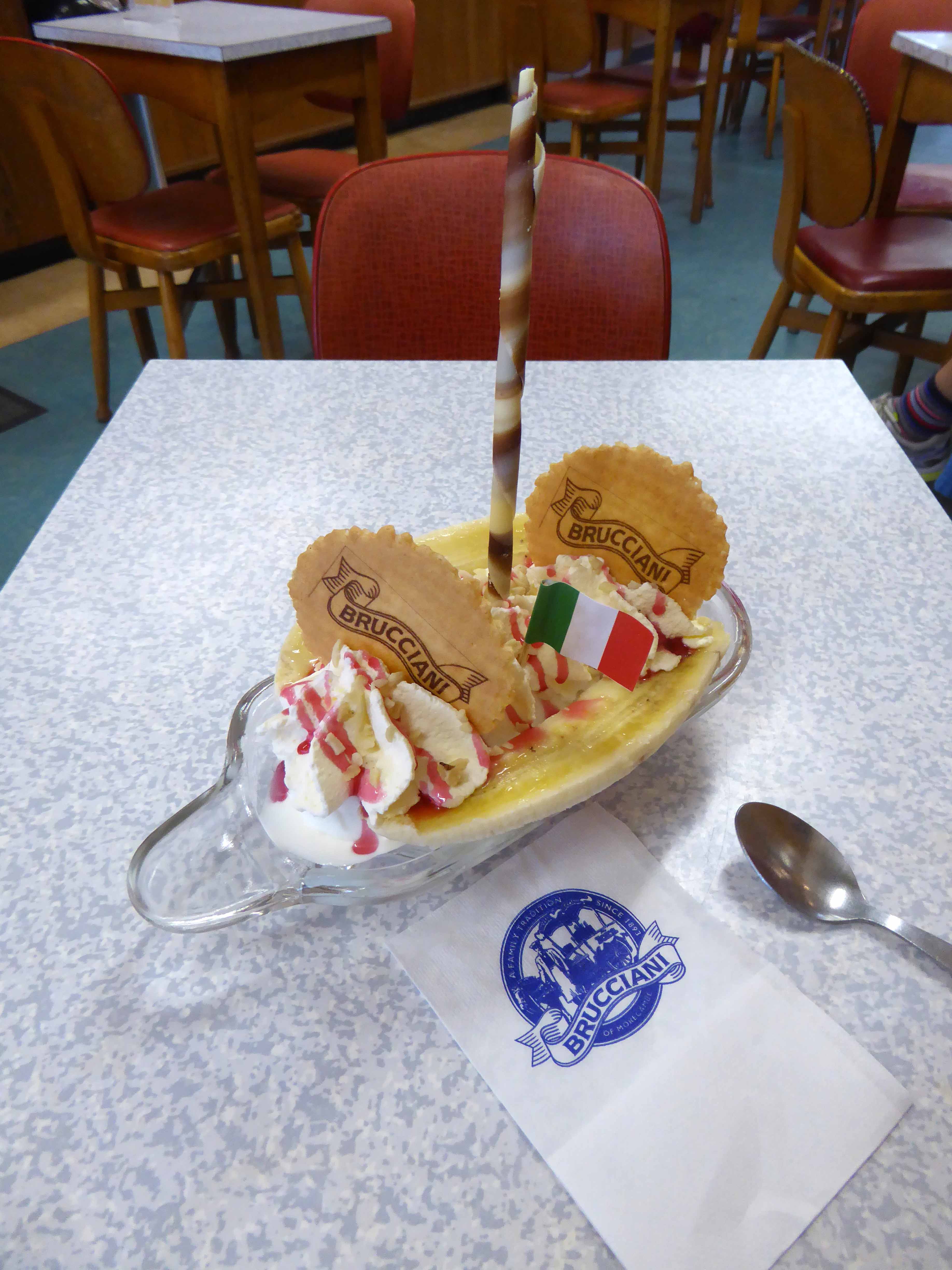
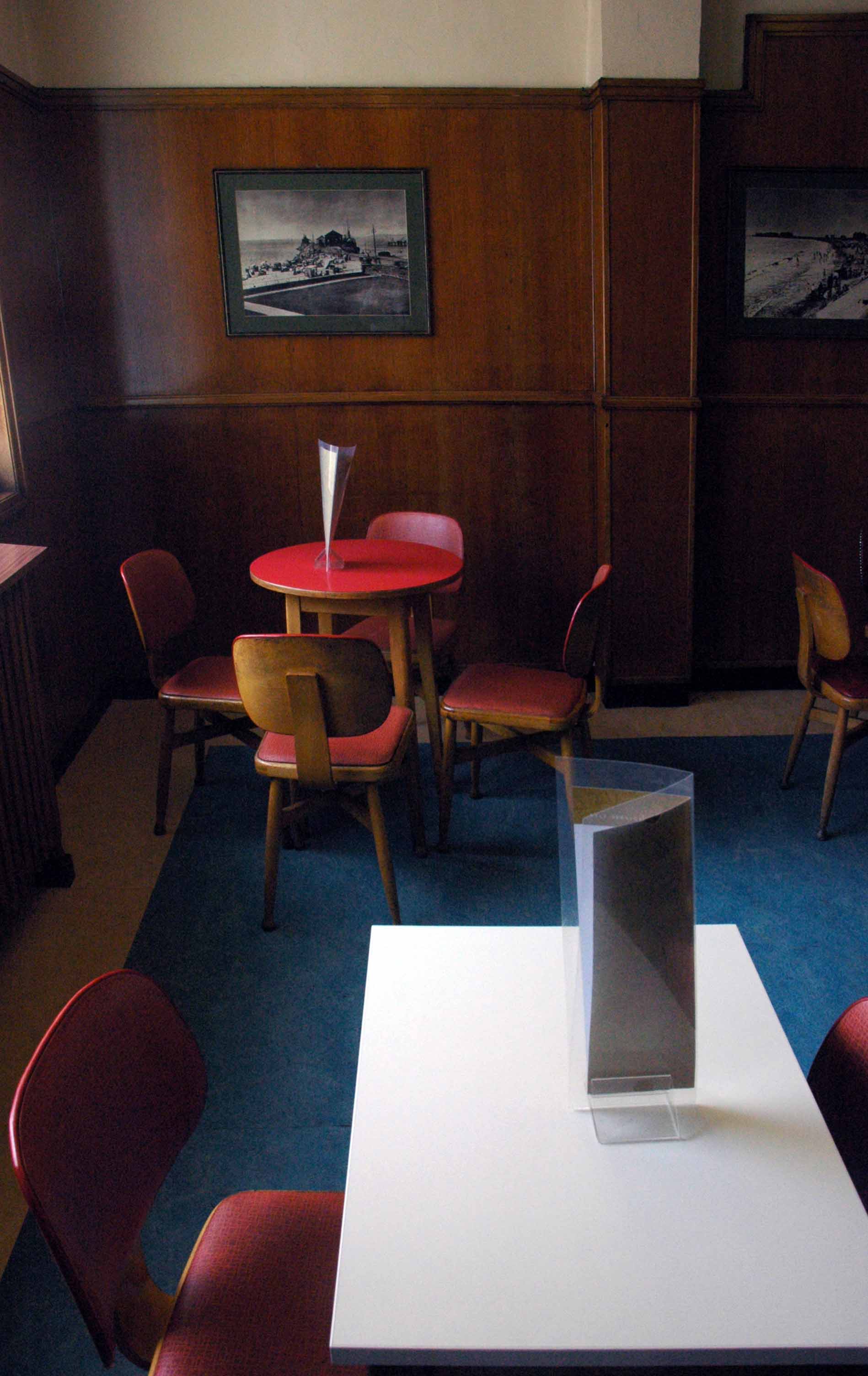
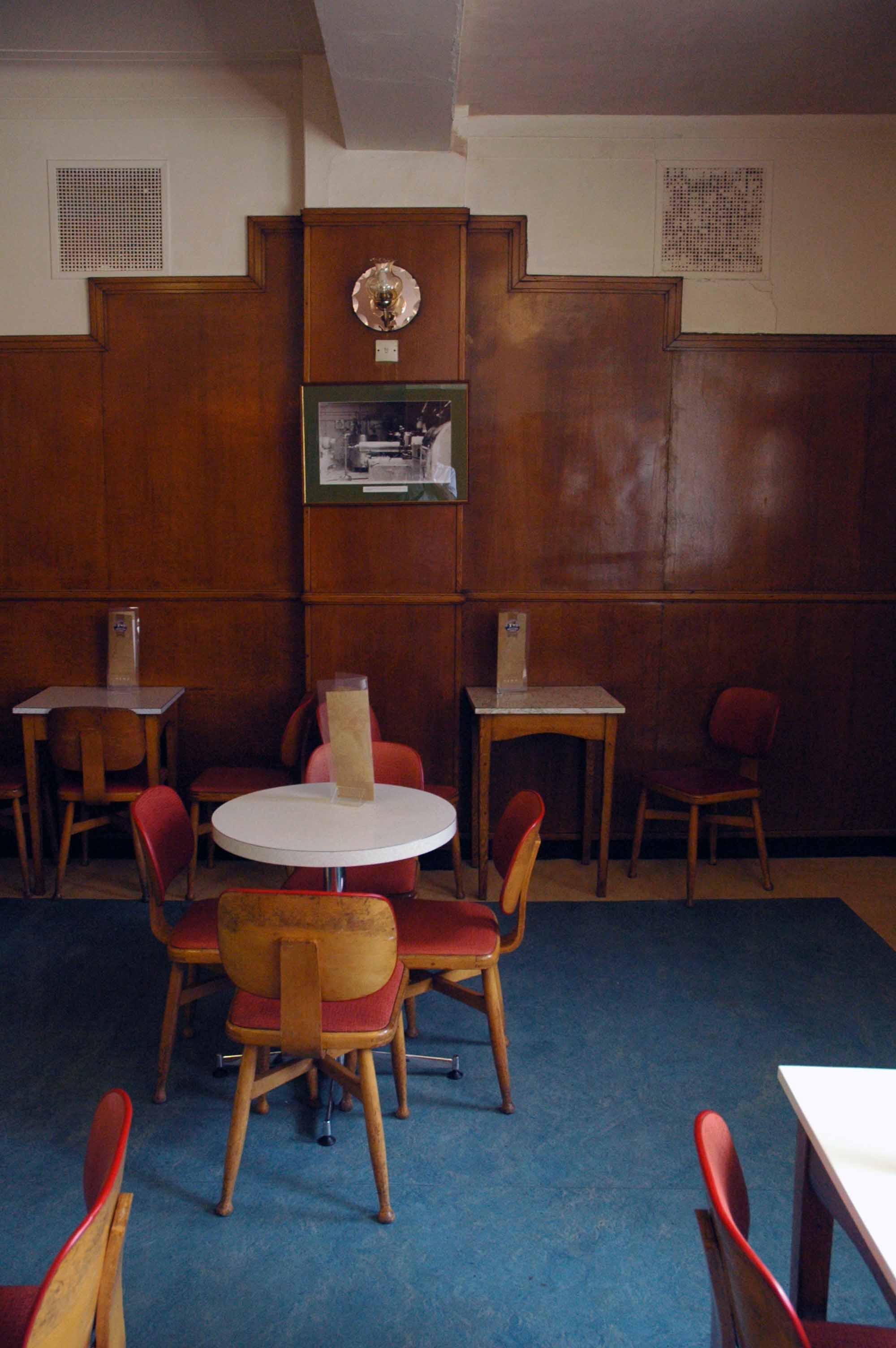
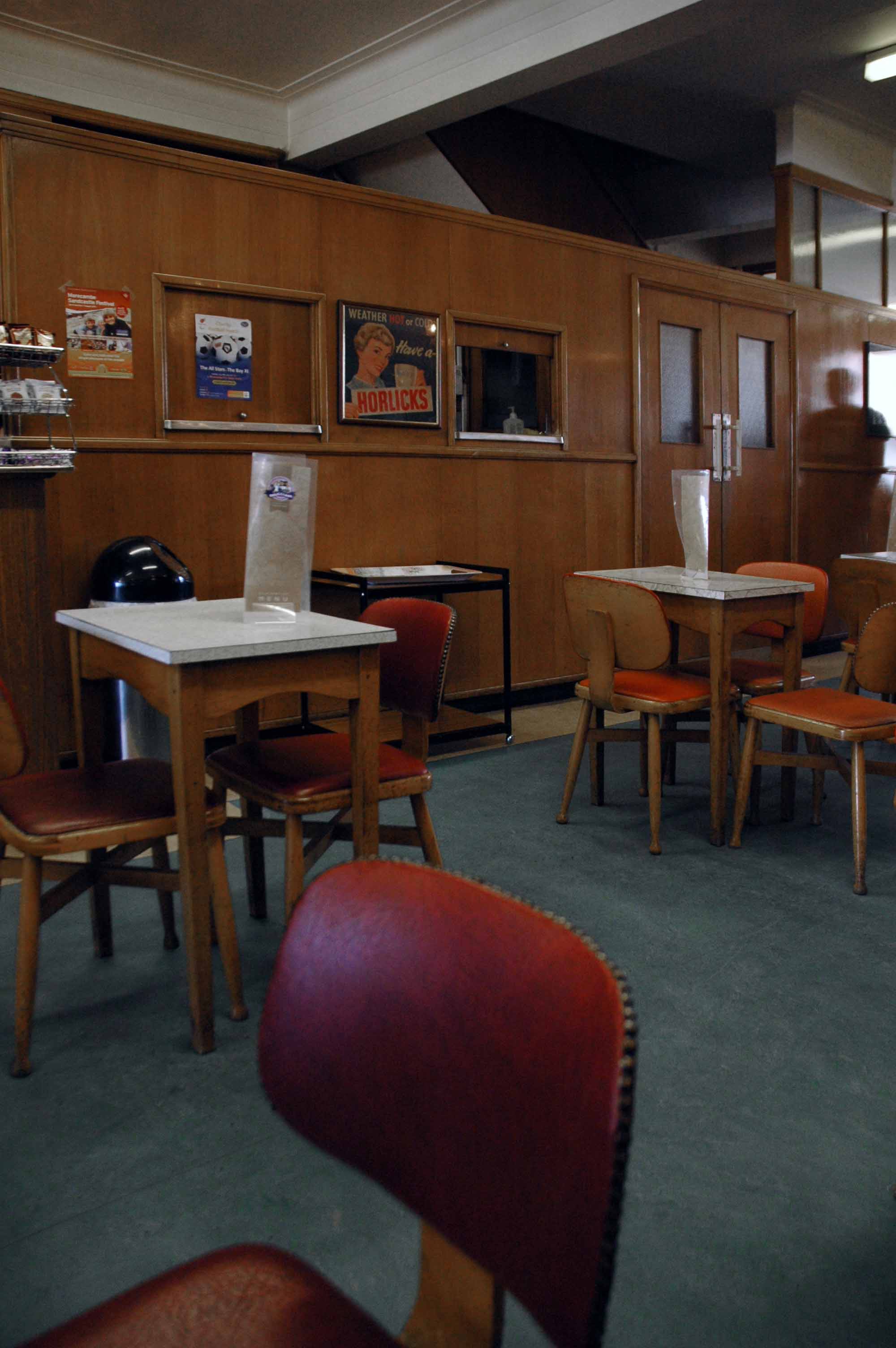
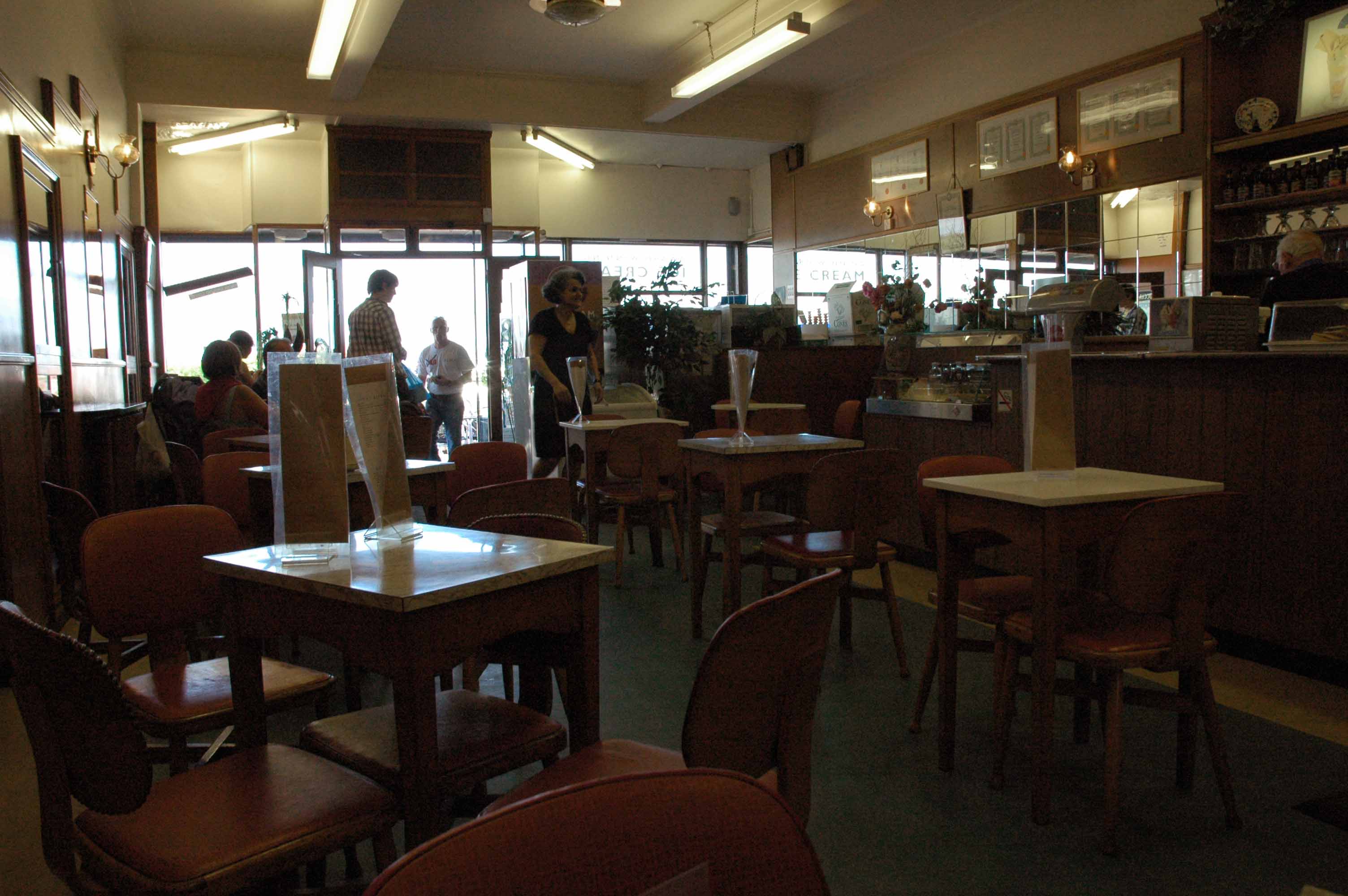
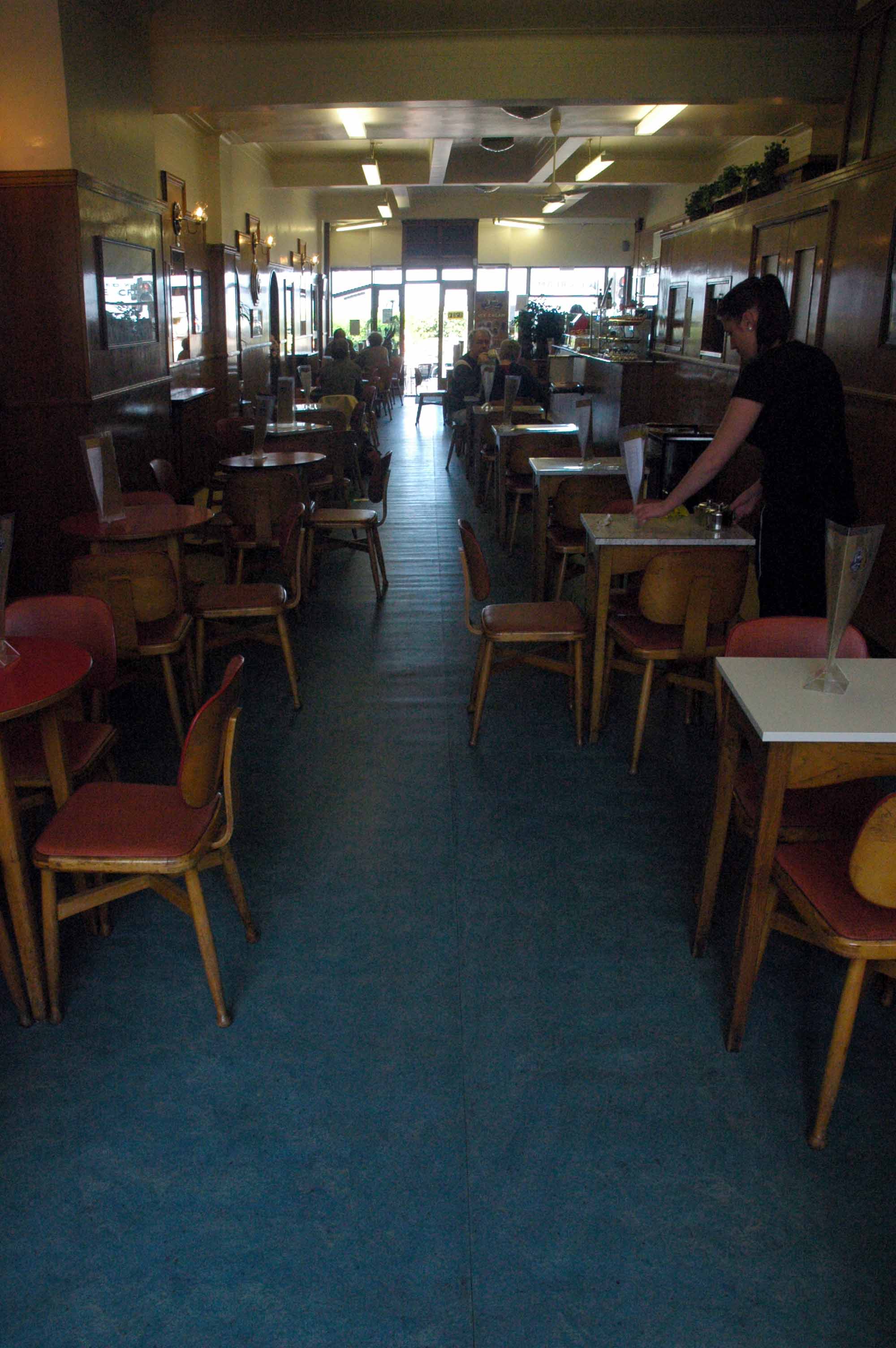
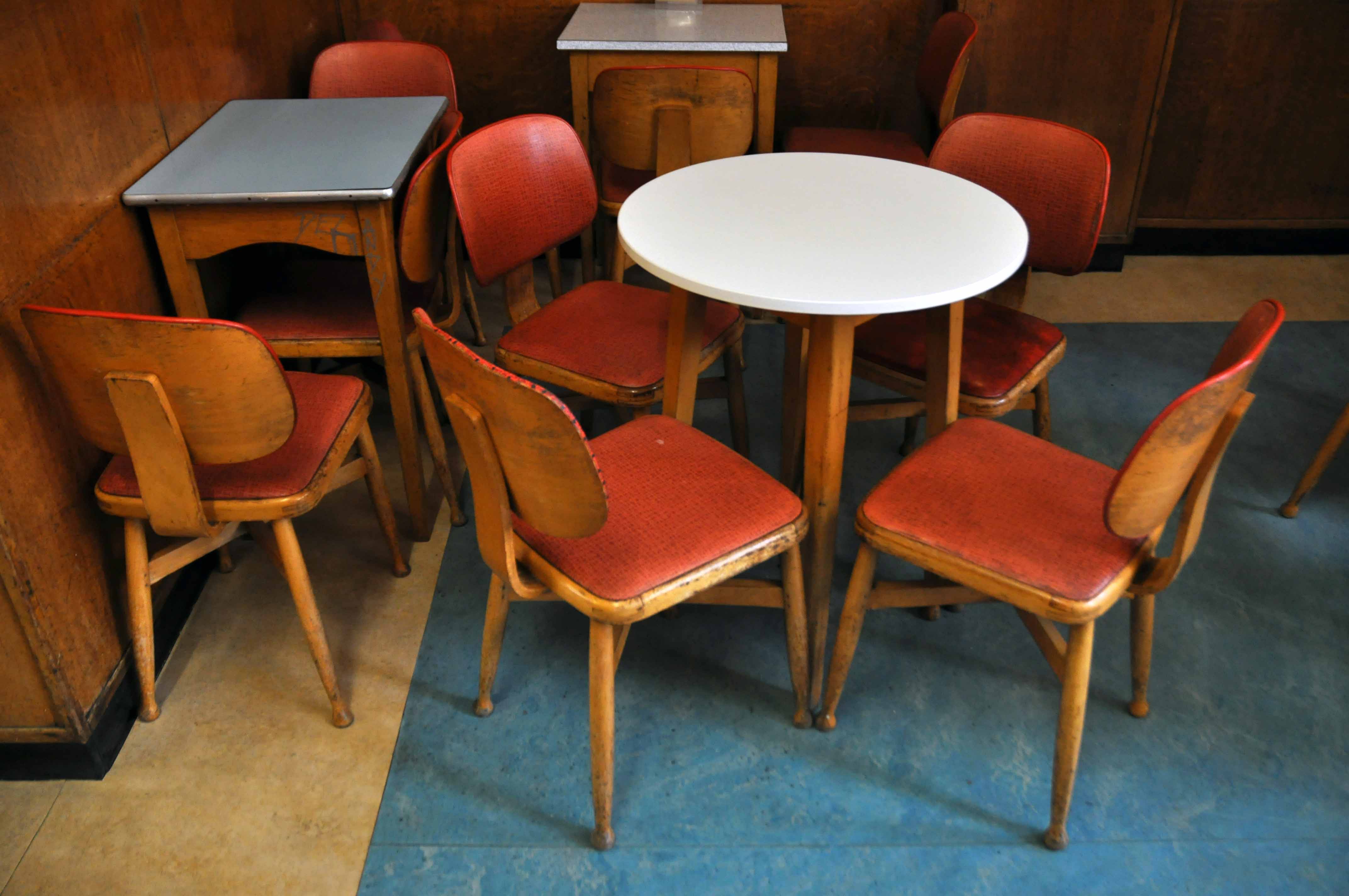
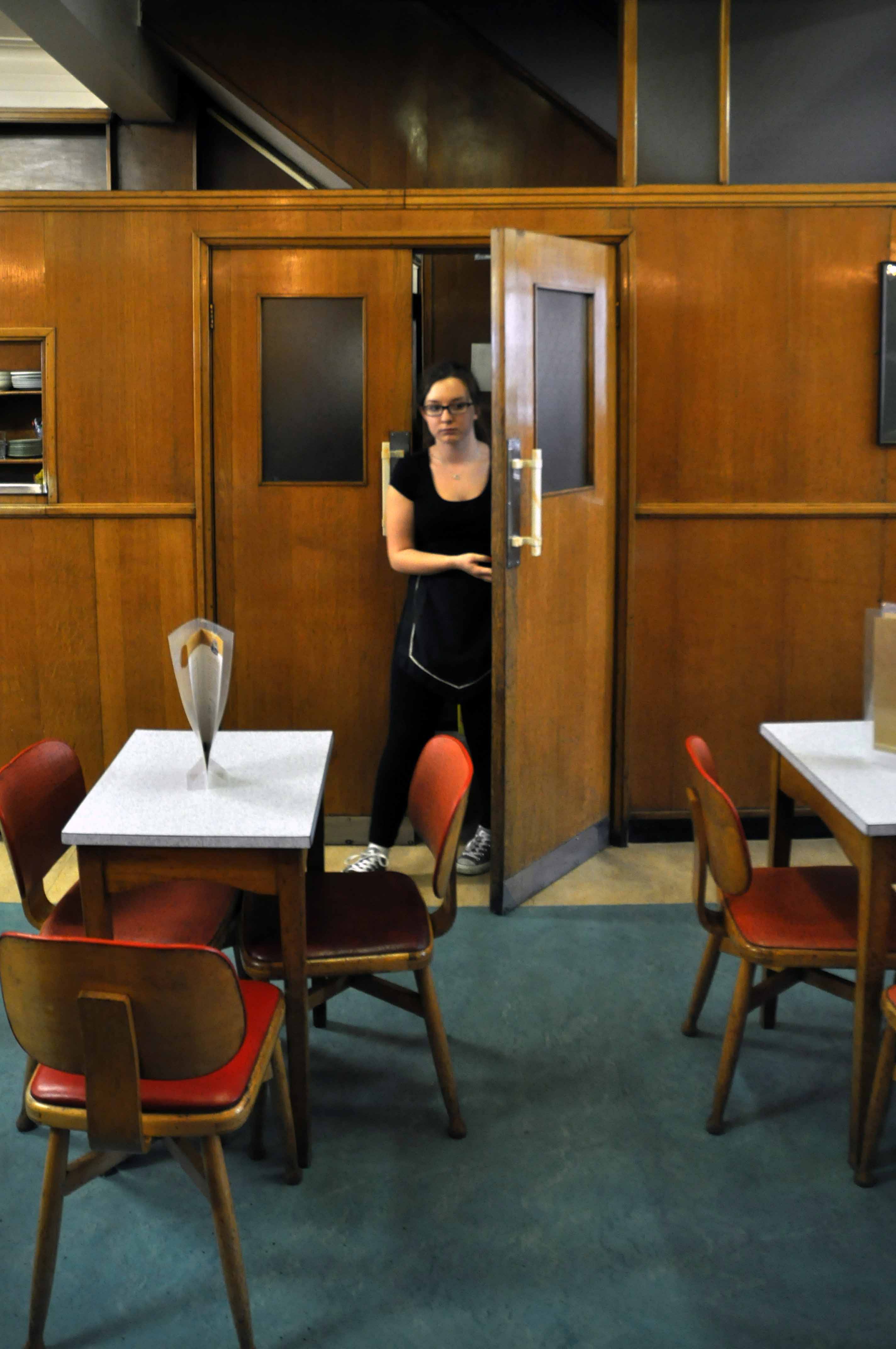
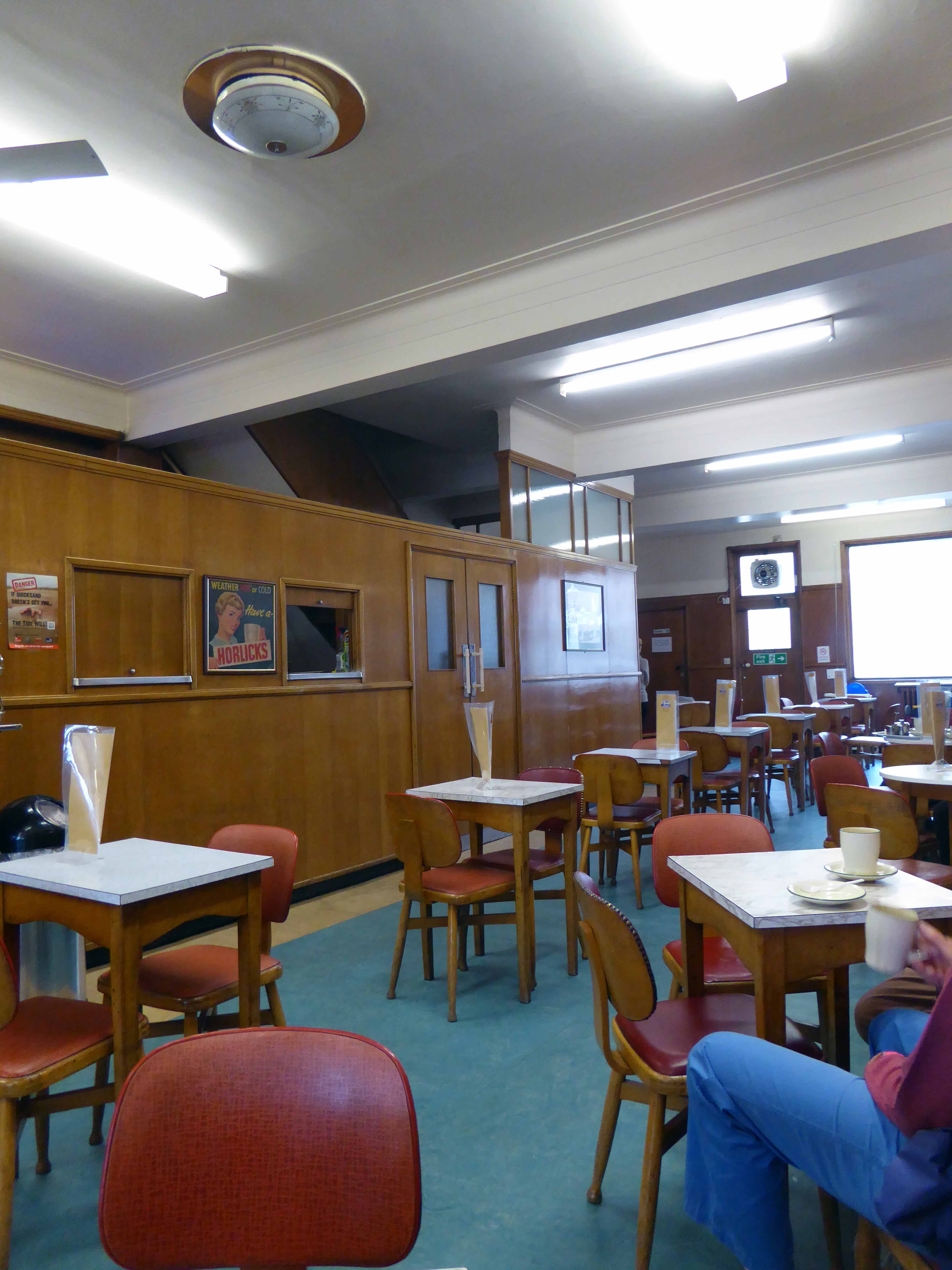
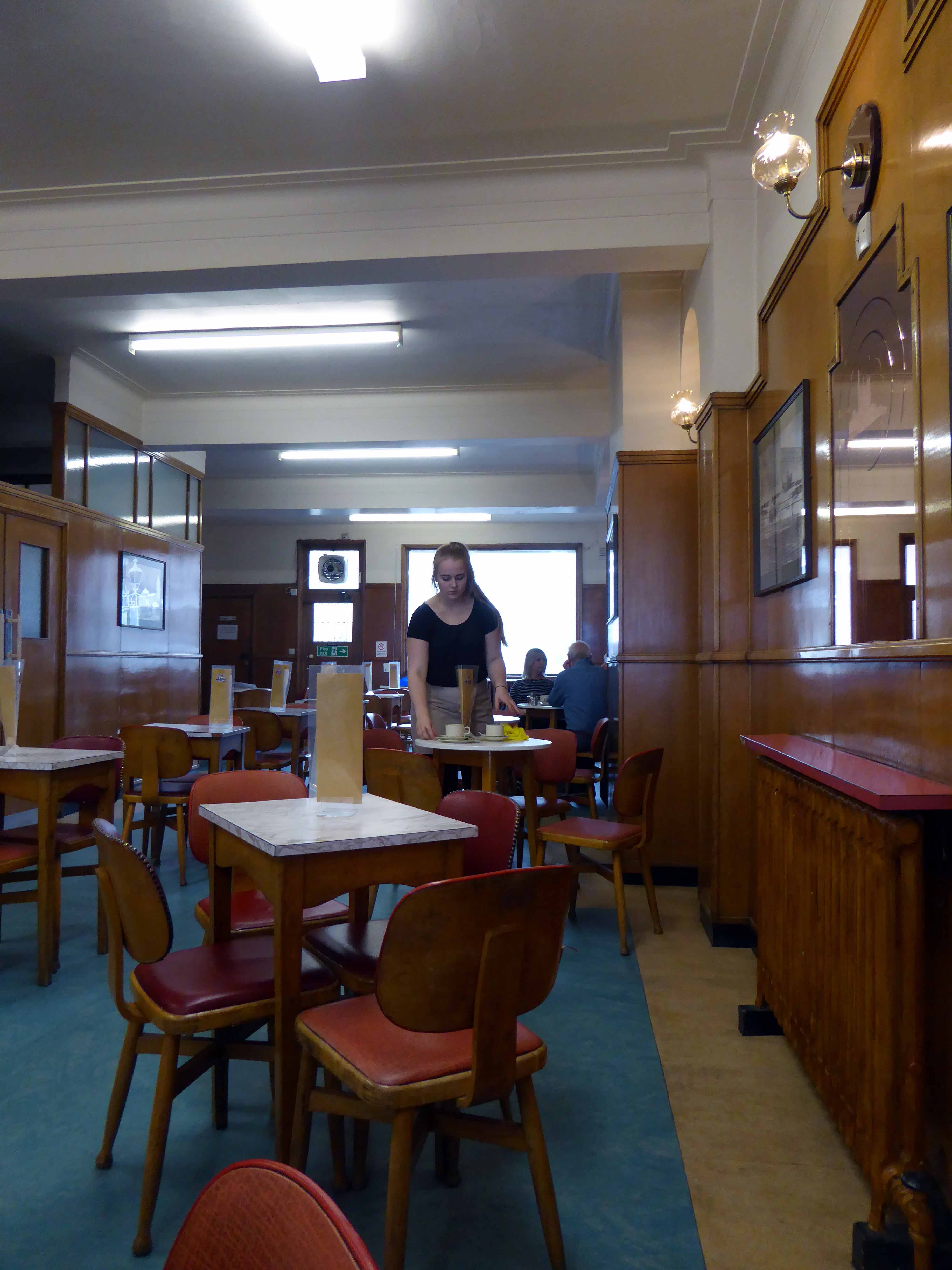
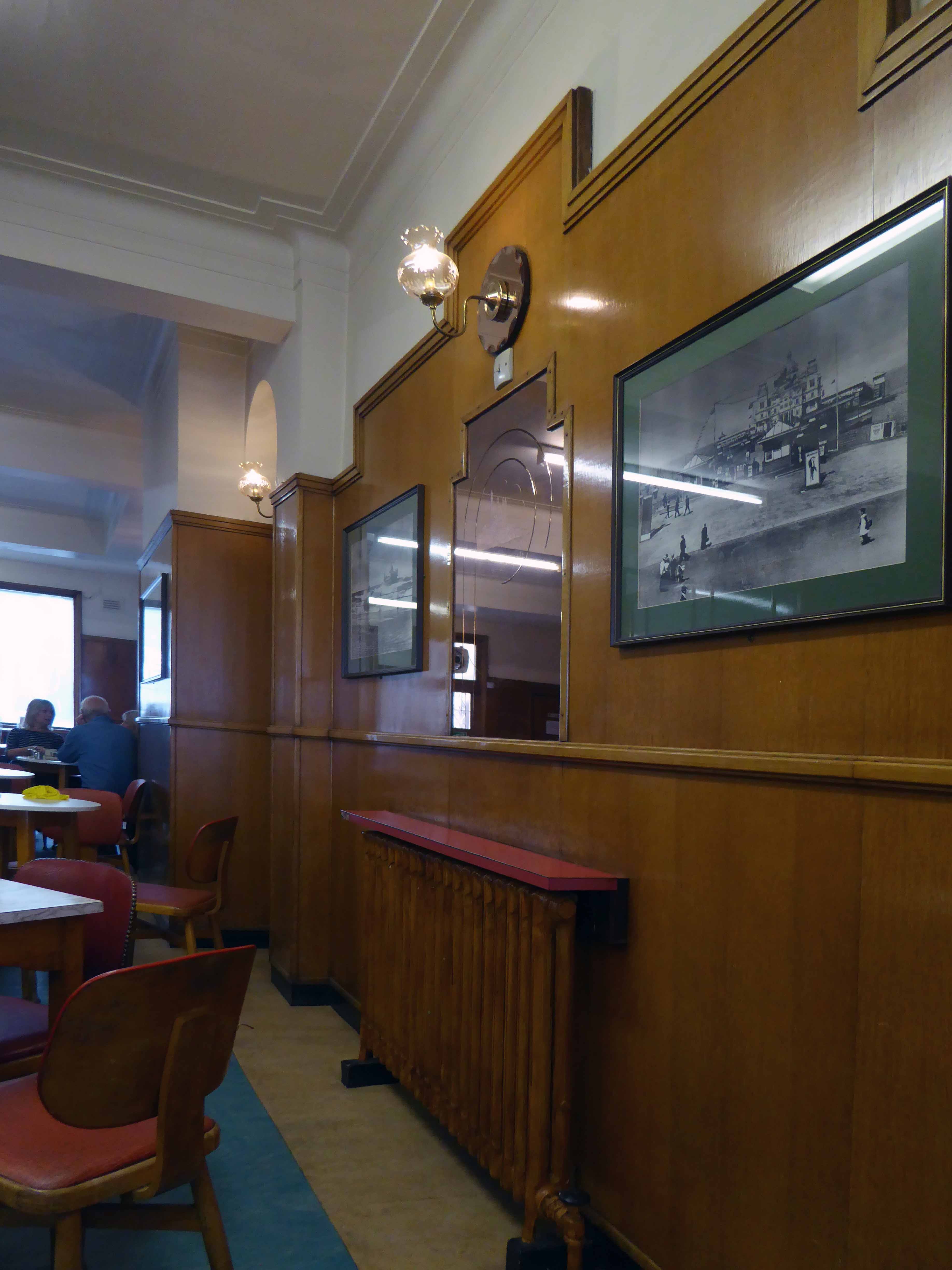
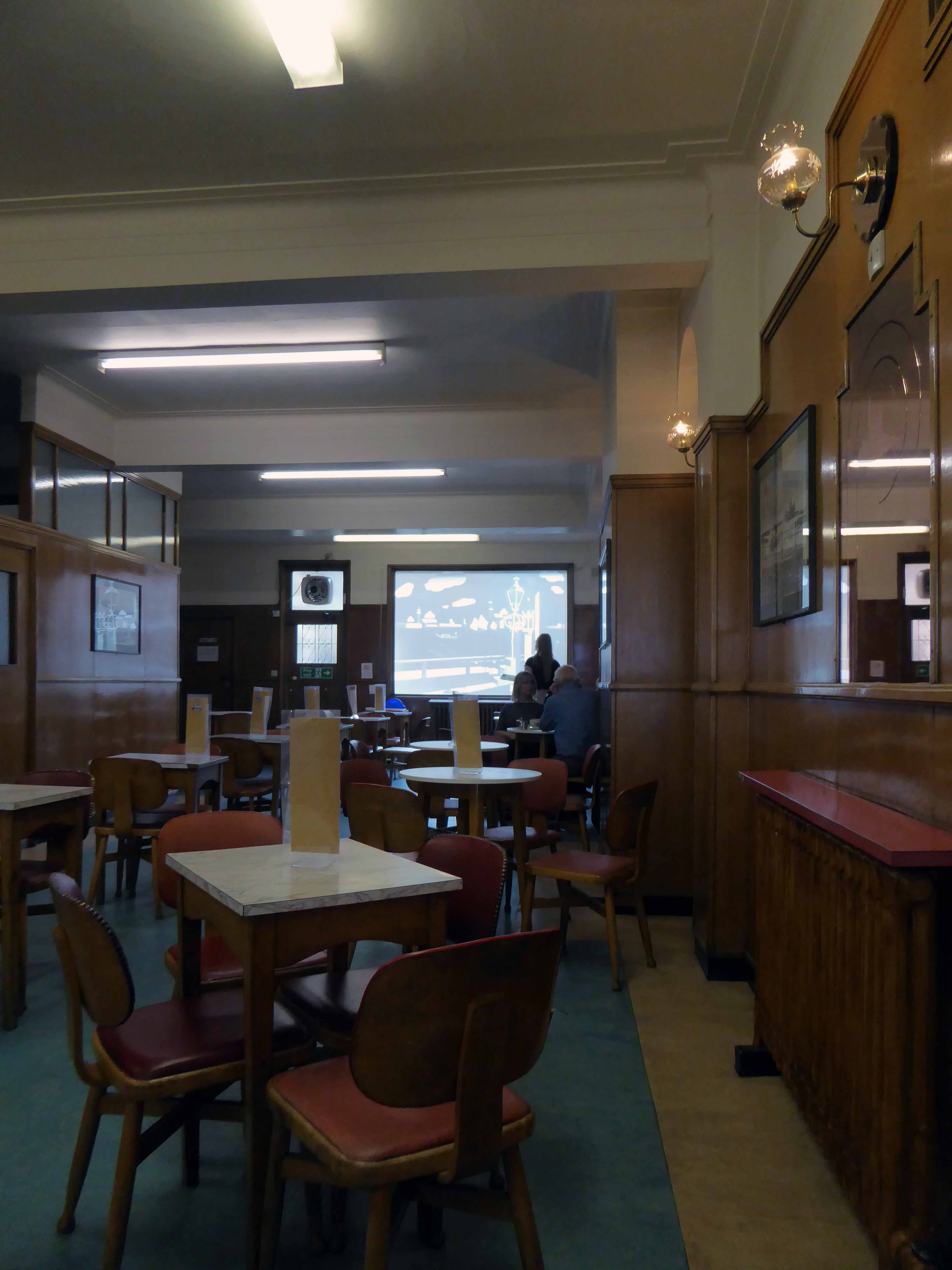
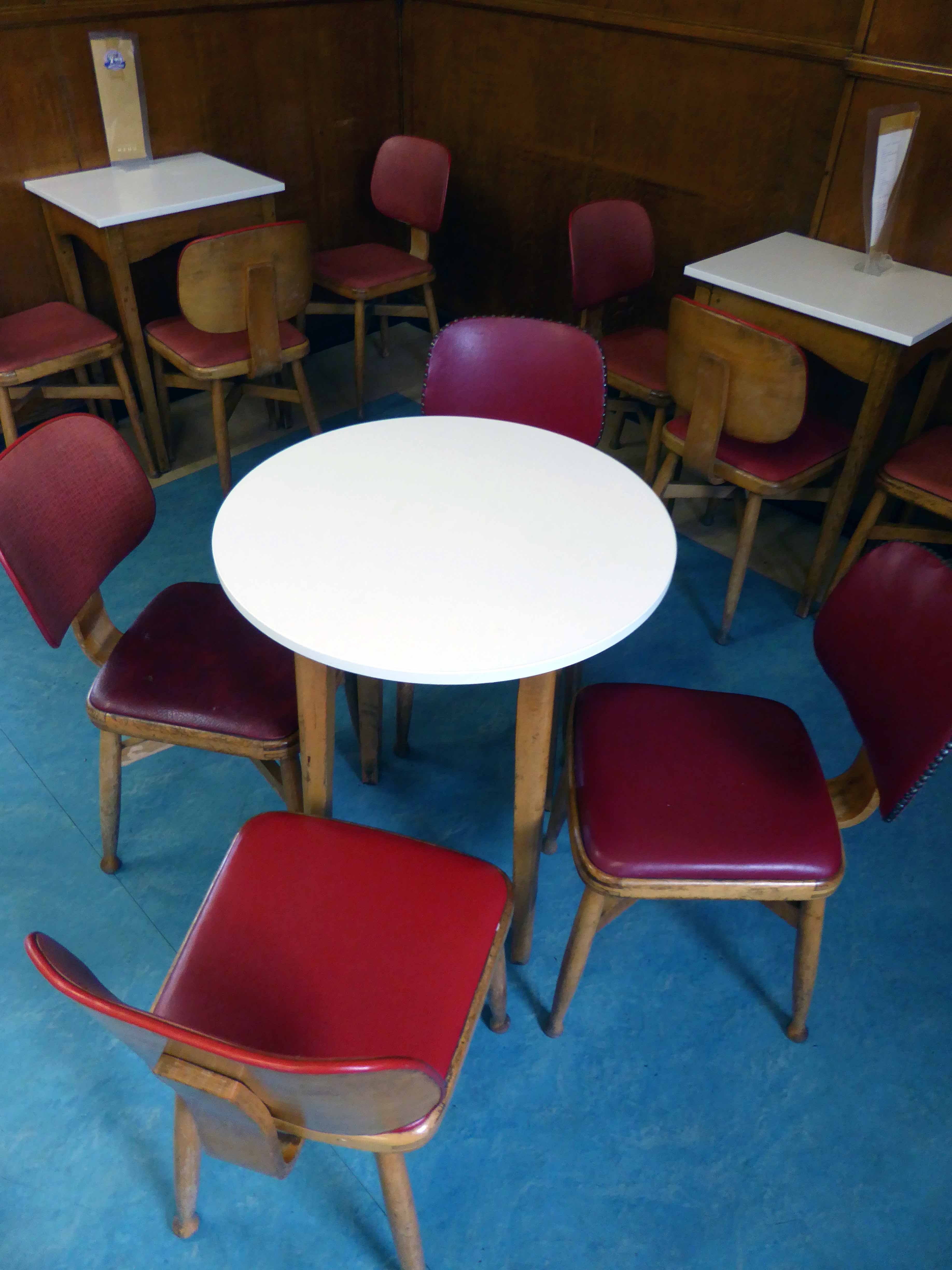
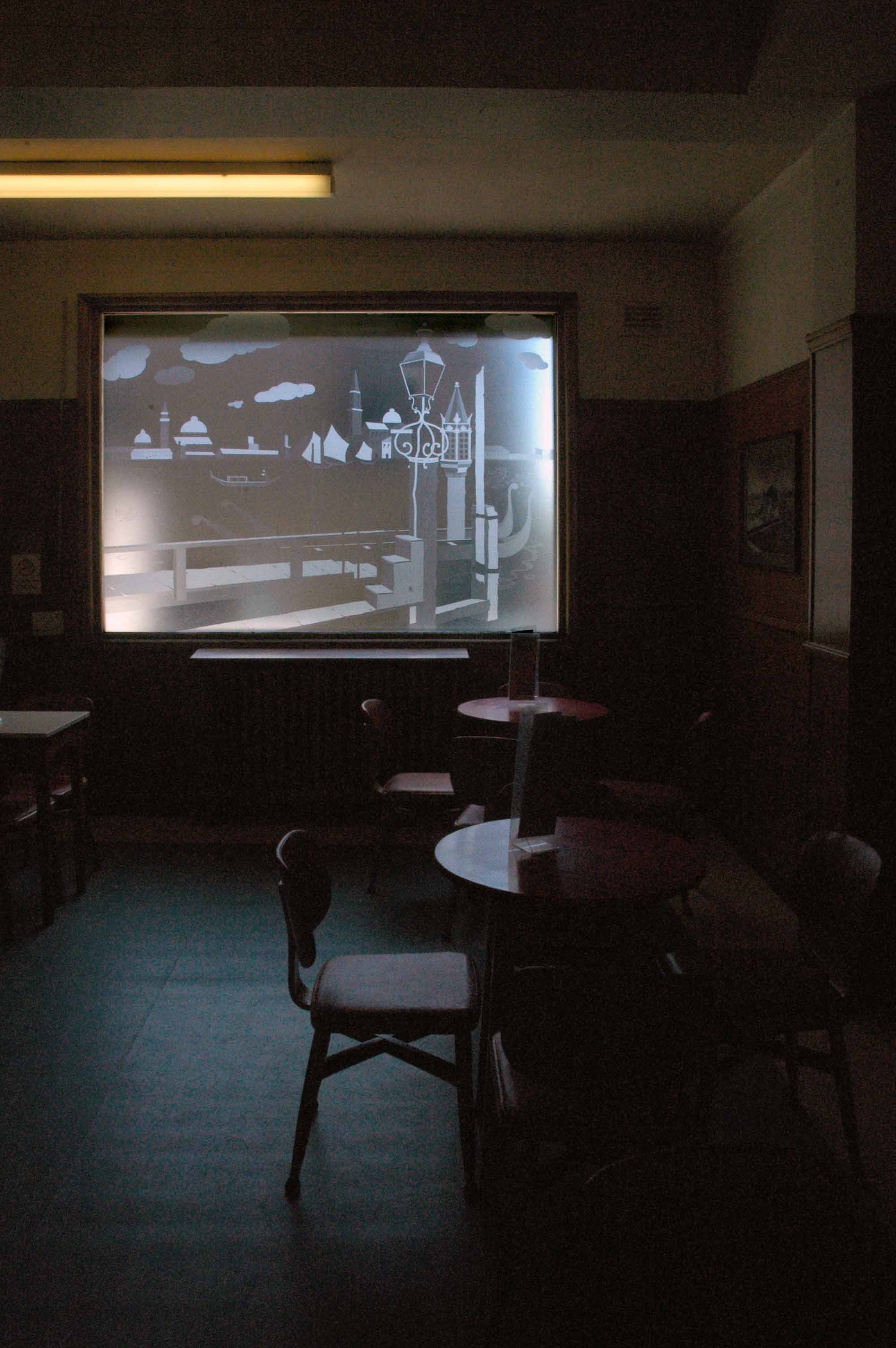
Built on the eve of war in 1939, the local paper feared that Brucciani’s might not be good for the sedate Victorian image of Morecambe and that its presence could be positively harmful to young people. Originally a milk bar, Brucciani’s typifies the simple, geometric ‘high street deco’ styling popular at the time. The brown wood and chrome exterior has black lacquer base panels to the street, porthole lamps above the doors, ziggurat pattern doors, classic deco handles and original menus. The interior preserves extensive wall panelling, a slightly reworked counter, red Formica tables, red upholstered chairs, wall-to-wall etched glass of Venetian canal scenes, mirrors, deco clocks and even the original penny-in-the-slot cubicles in the cloakrooms.

Classic cafés

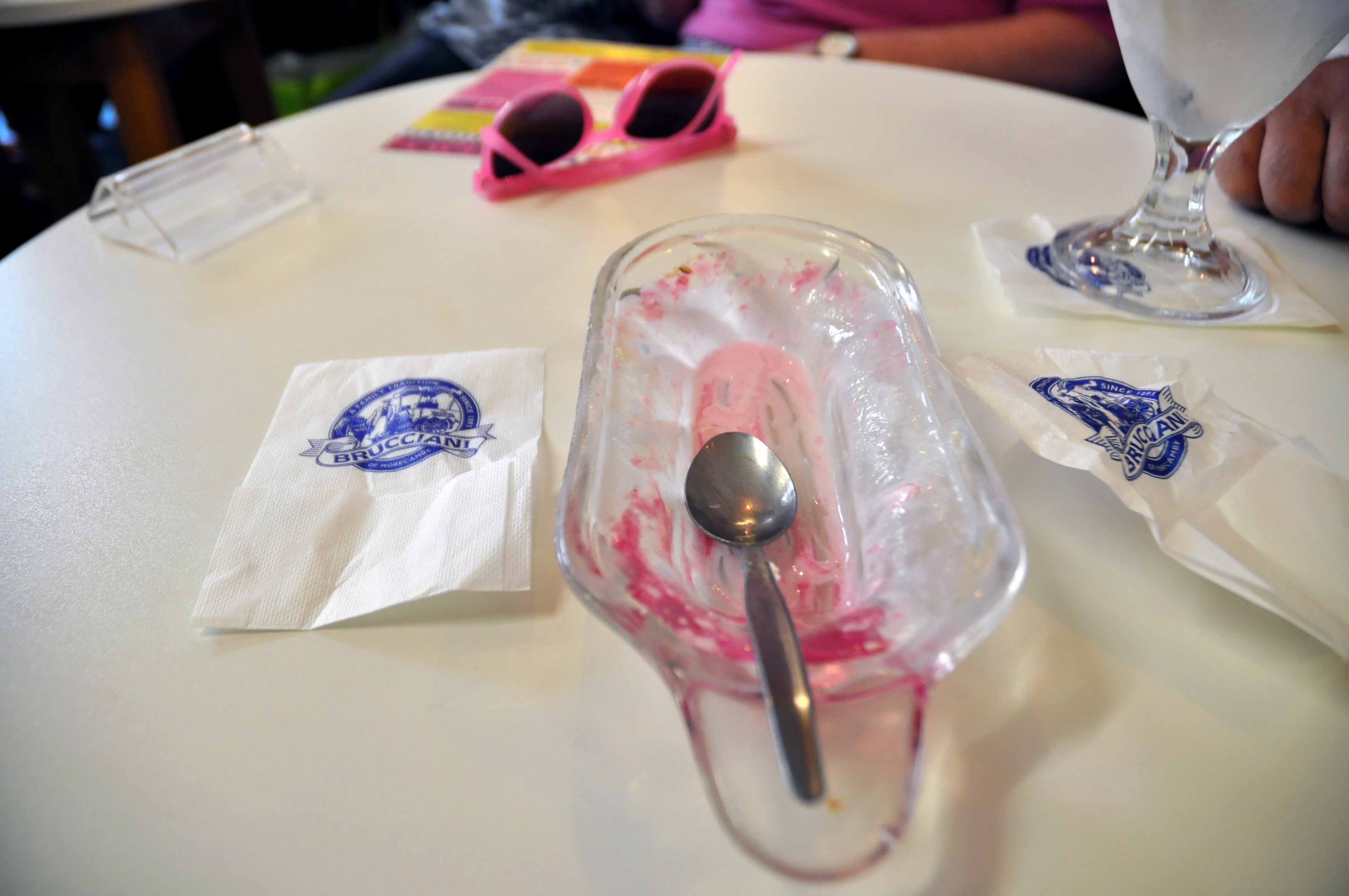
I’ve been coming here for over ten years now, alone or in company, come rain or shine and without fail, as sure as ice is nice, I have a banana spilt – or to be more precise a Banana Royal.

Screen Shot 2018-04-27 at 13.53.13

Jenny Steele 2015

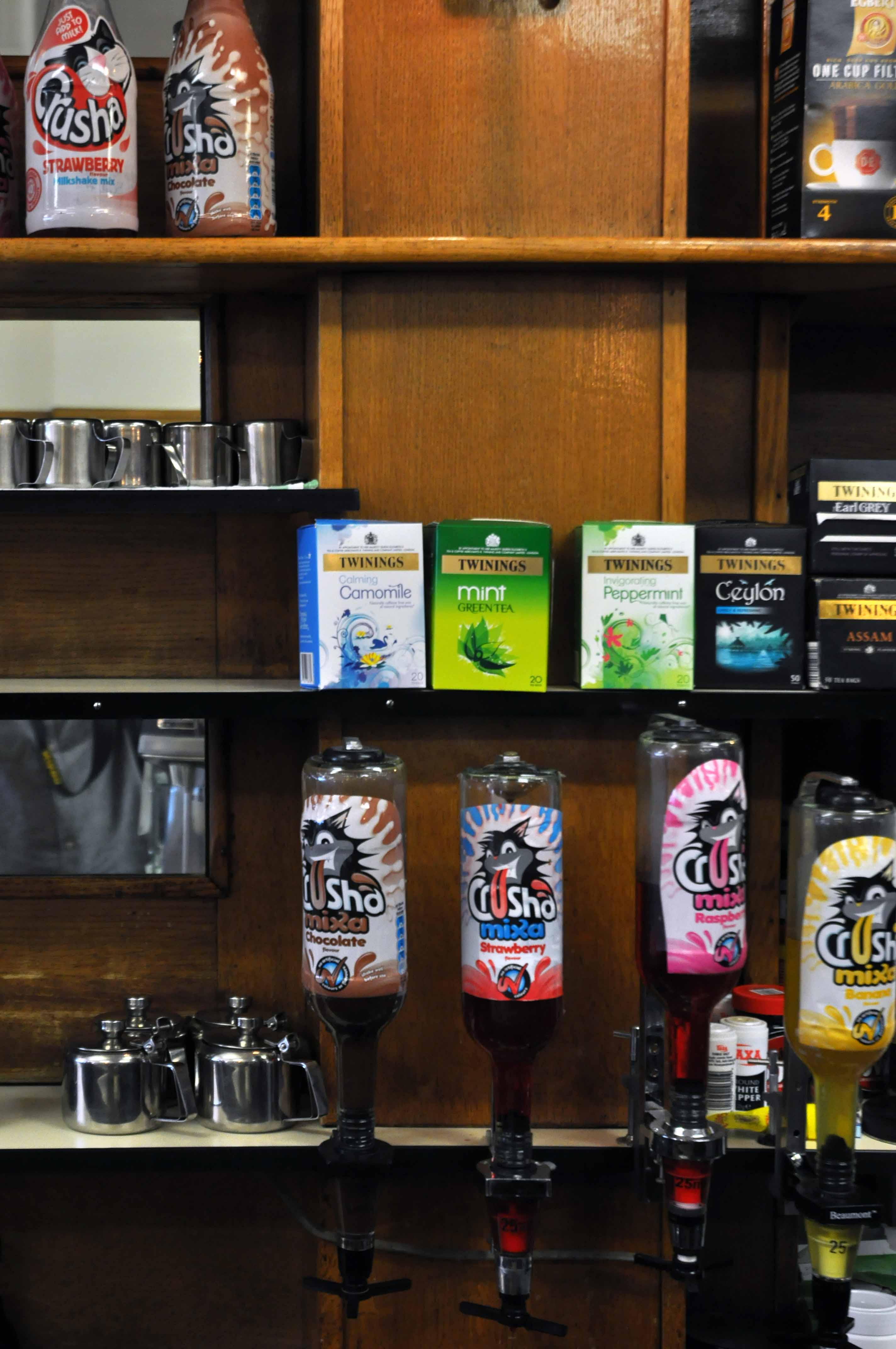
This is a café with a café menu, café furniture, café staff and service.

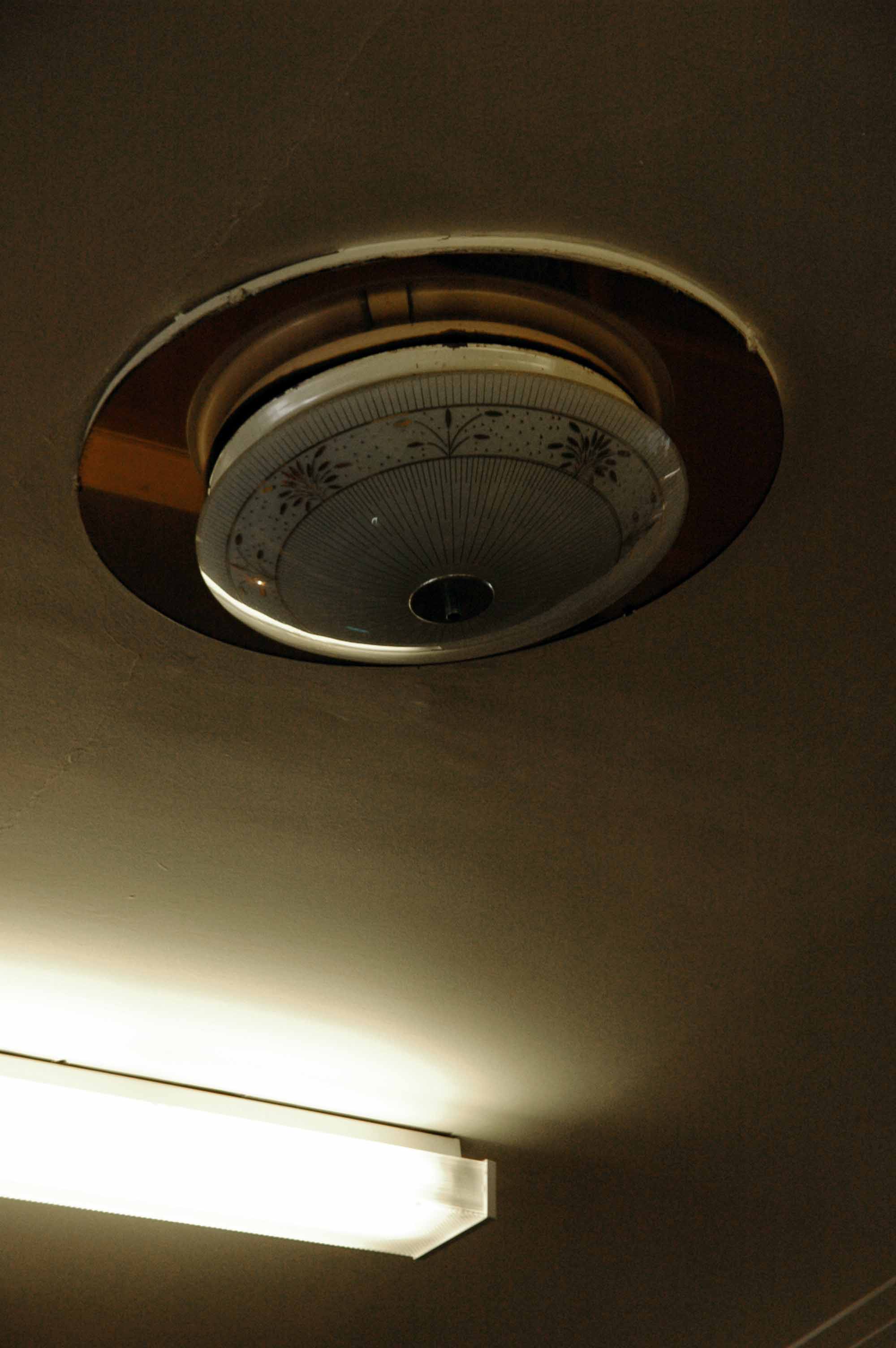
It only ever wanted and wants to be a café, unchanged by the uncaring winds of vicissitude and fashion. To tread the turquoise and tan linoleum, ‘neath the period lighting fixtures and fittings, to be seated on the warm red leatherette, one elbow on the circular Formica table is to enter into into a pact with a perfect past.

It’s on the front you can’t miss it – overlooking the Sunset Bay.

DSC_0233 copy

DSC_0200 copy

DSC_0201 copy

DSC_0202 copy

DSC_0203 copy

P1210019 copy

P1210017 copy

P1210020 copy

DSC_0217 copy

cafe copy

caffe2 copy

DSC_0014 copy

DSC_0015 copy

DSC_0016 copy

DSC_0051 copy

DSC_0219 copy

DSC_0232 copy

P1210018 copy

P1210021 copy

P1210022 copy

P1210023 copy

P1210024 copy

caff copy


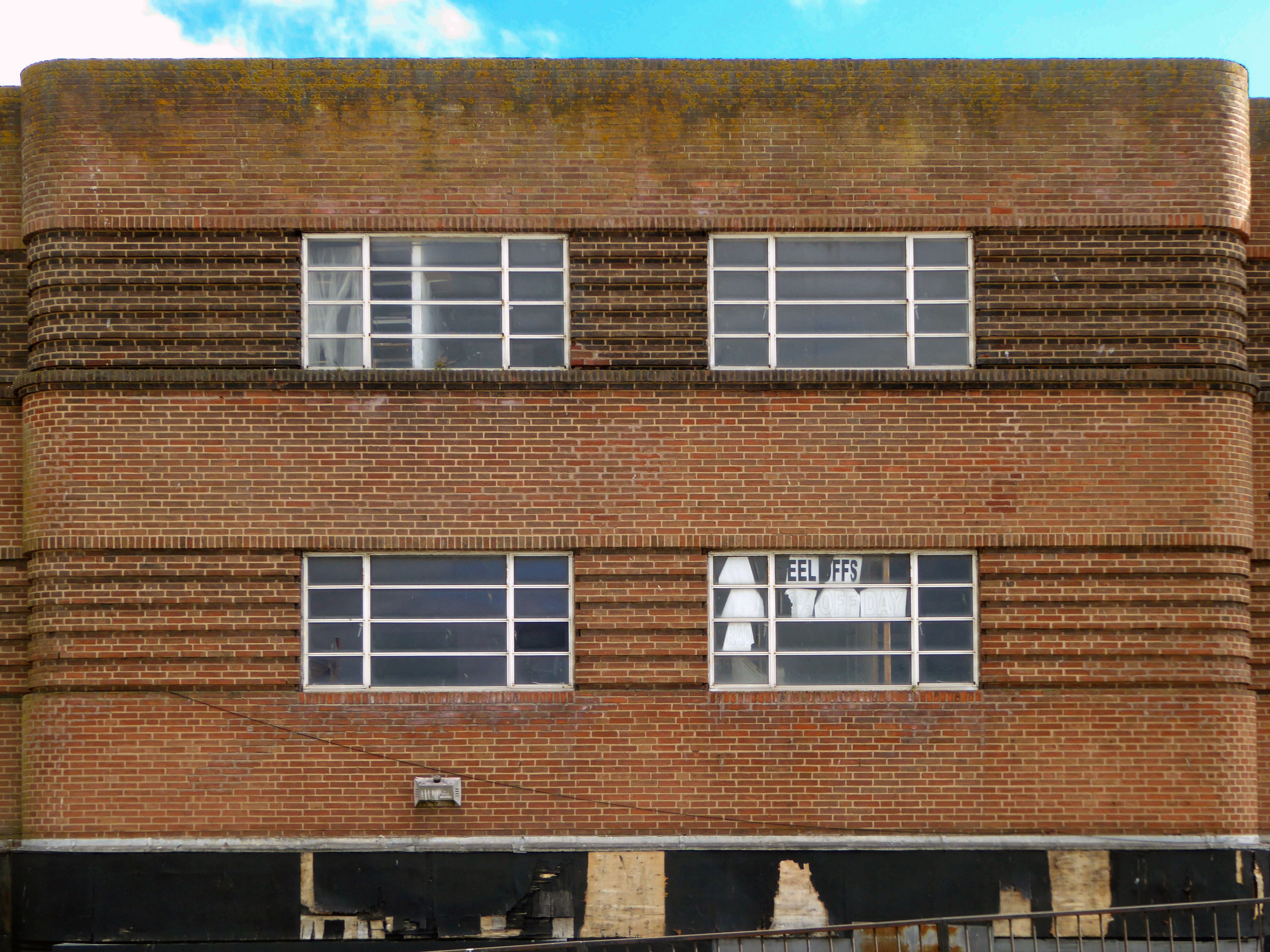
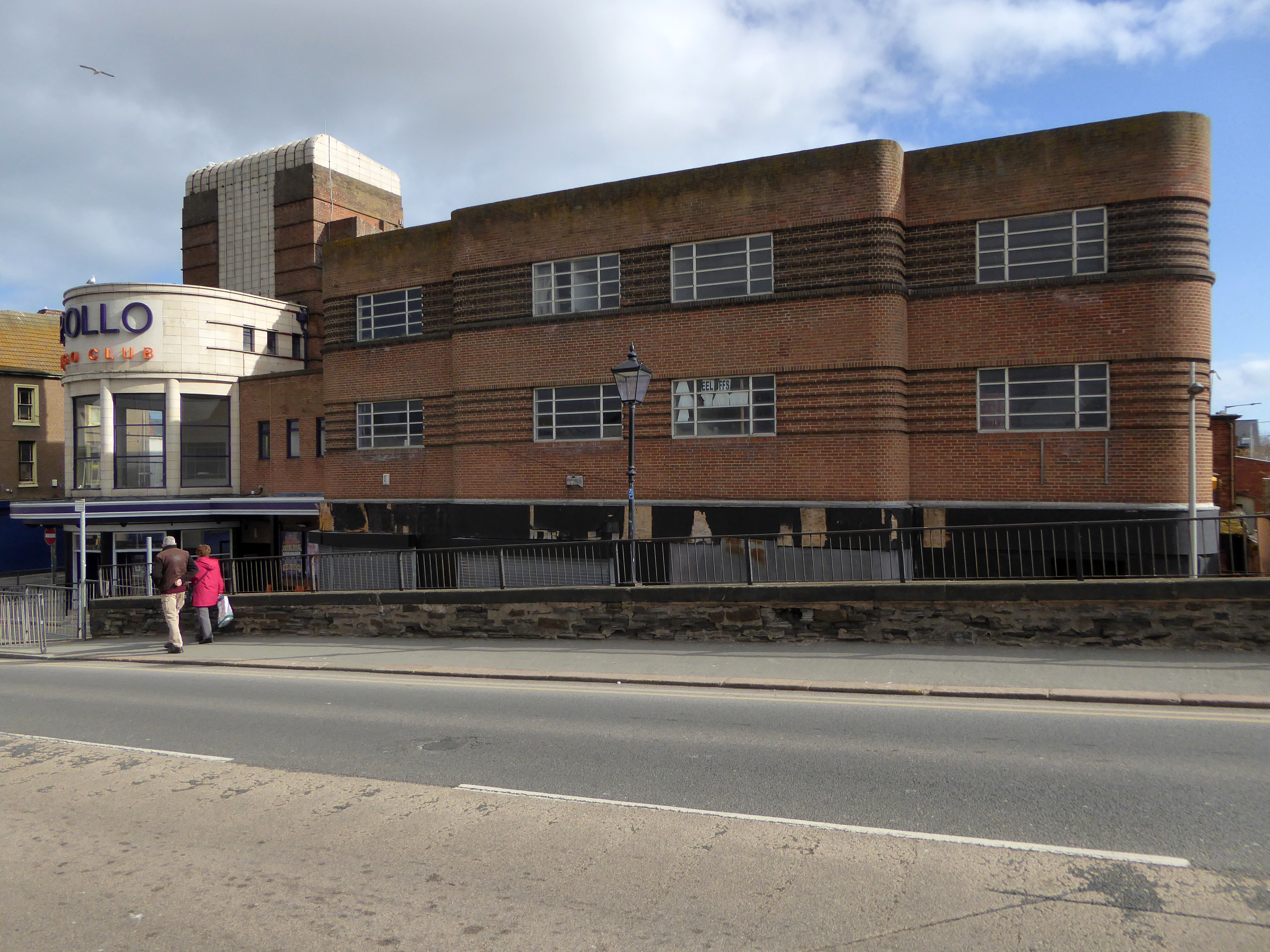
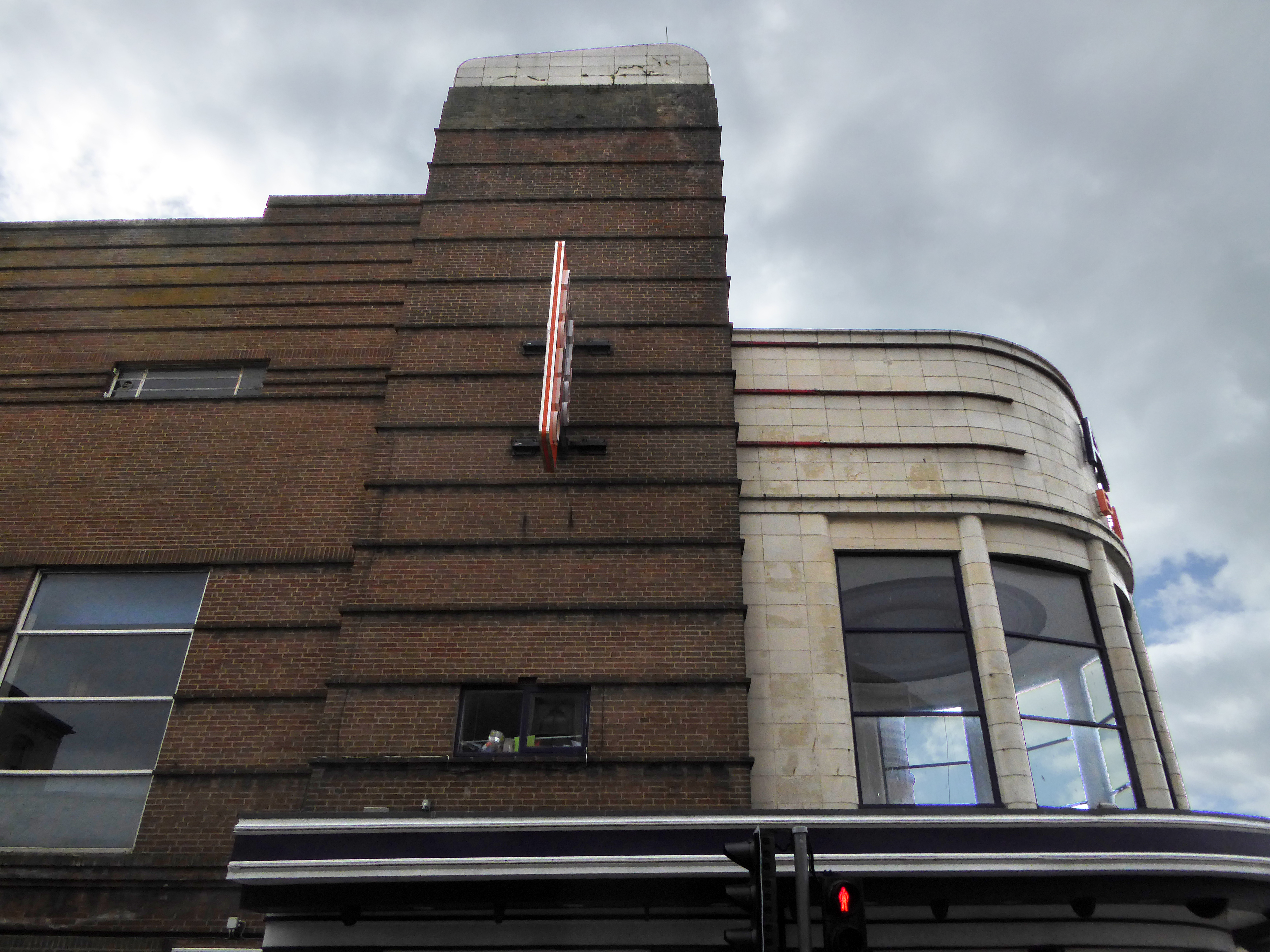
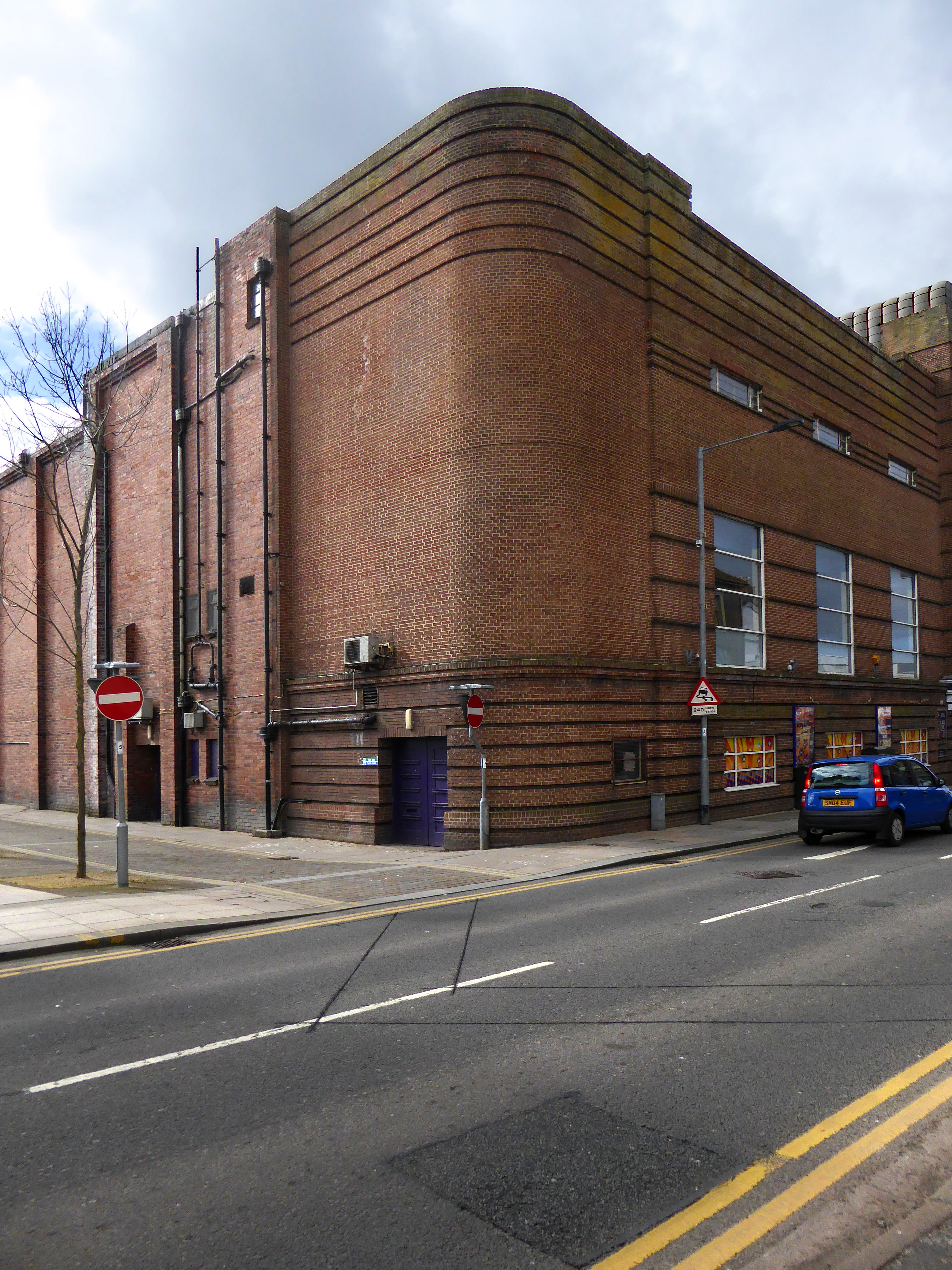
Odeon Cinema – Brighton Road Rhyl

Architects

Robert Andrew Bullivant 1910-2001
Harry William Weedon    1887-1970

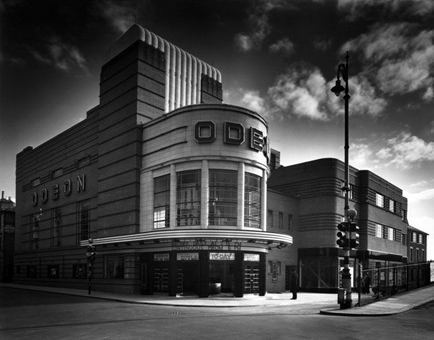
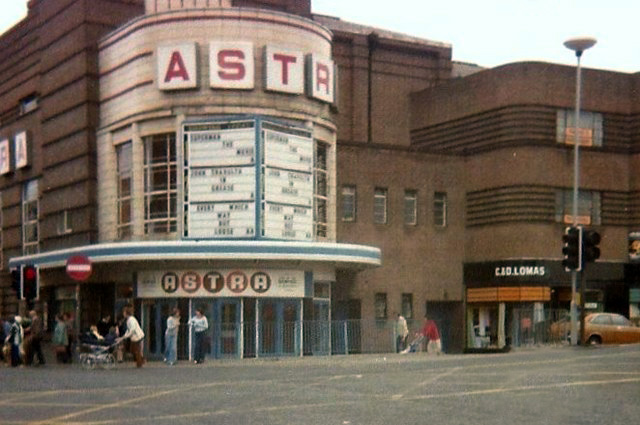
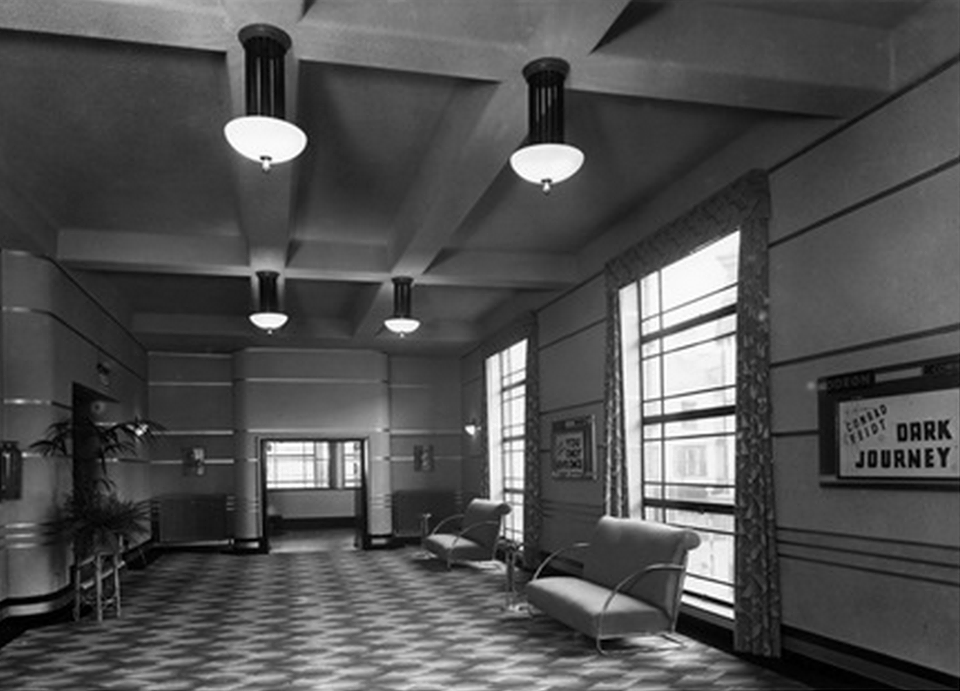
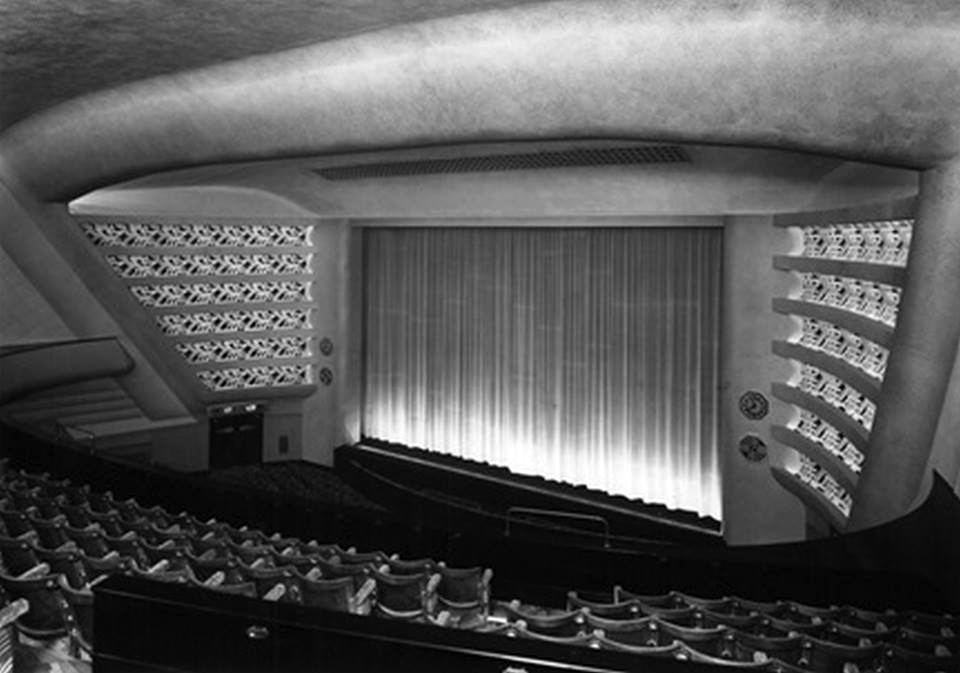
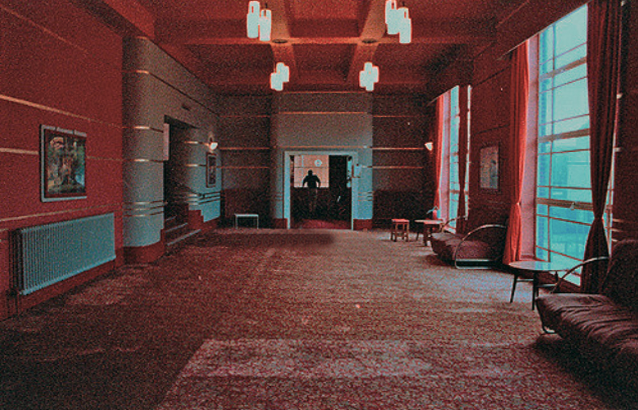
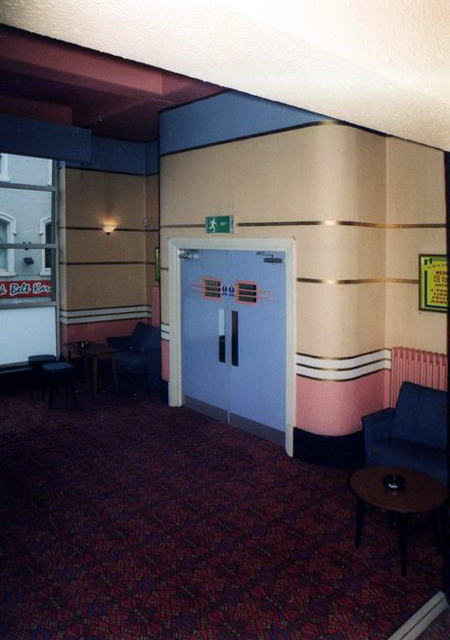
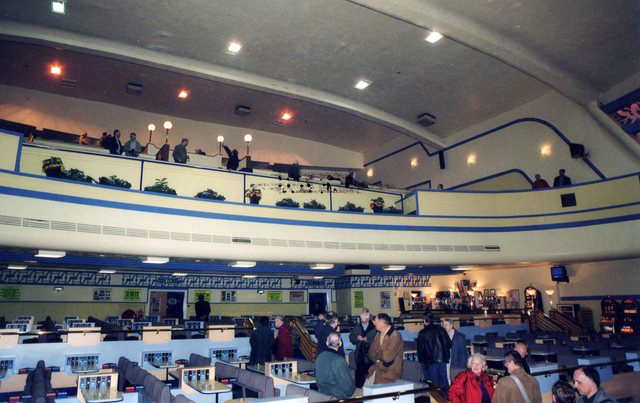
Robert Bullivant joined the Harry Weedon practice in 1935 and was responsible for the design of the Odeons at Chester, York, Burnley, Exeter and Rhyl. Taken over by Hutchinson in 1969, this cinema was renamed Astra. It was made into a triple screen in 1972 and the stalls were later converted for bingo. It was designated Grade II listed status in 1989. The cinemas closed in 1995 and the building reverted to a single auditorium for bingo.

RIBA

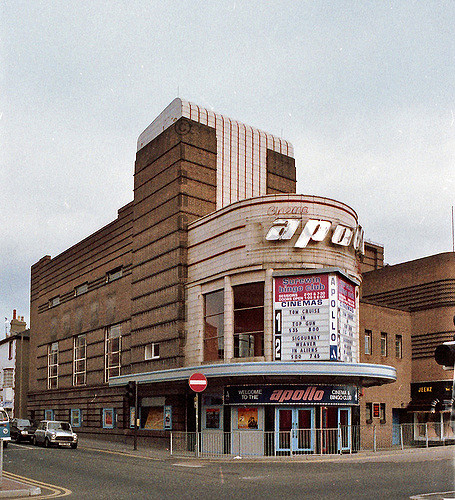
So much of our picture house heritage no longer exists, where once a town or city could support several cinemas of varying scale, architectural merit or style, few now remain intact. Happily the Rhyl Odeon has survived from Astra, Apollo to Gala to the stars and beyond.

Playing to perennially packed houses, the people’s palaces accommodated old and young.

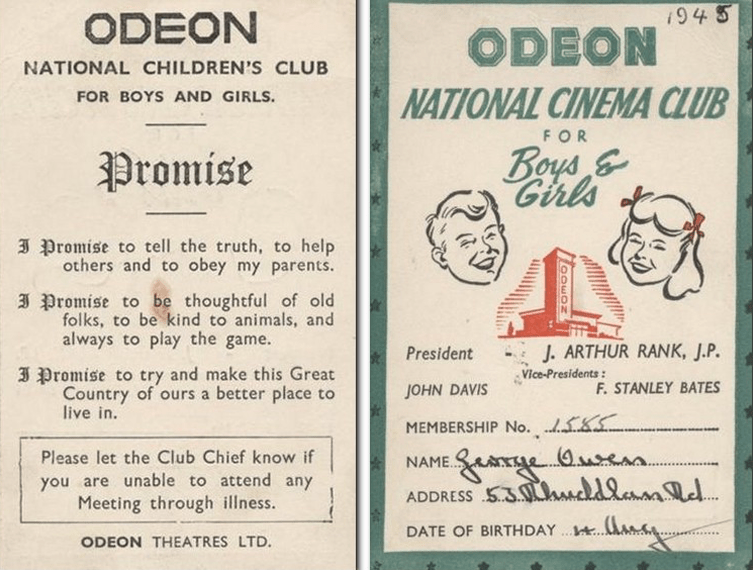
Saturday morning matinees  for the boys and girls – making this Great Country of ours a better place to live in.

Screen Shot 2018-04-25 at 10.27.01

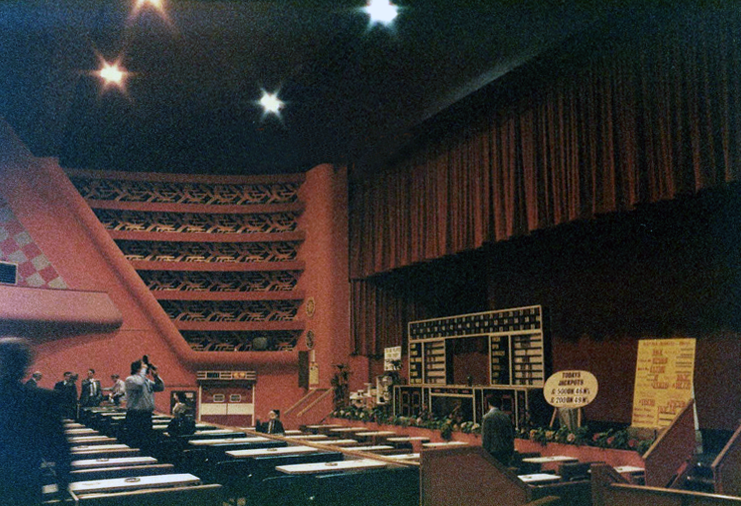
If memory serves, in the Odeon auditorium to the left of the screen there was a suitably stylish, numberless clock of six-sided shape. In 1972 the Odeon, by then taken over and renamed Astra Cinema, underwent alterations to become the first three-screen complex in Wales: Astra 1, 2 and 3. By the mid 1980s the Odeon/Astra had been taken over by Apollo and was running as two cinemas plus bingo at first – and bingo only since the present Apollo Cinema Complex opened on the prom.
blank.jpg

large

4299348687_1e8263119c_z

George Owen 1985

Colin Jones Rhyl Life

Foyer and auditorium

John Maltby 1937

23905275_1502310953209419_8012062427337007043_n

18119254_1303614579745725_4790859378321171907_n

Ian Grundy 2008

Screen Shot 2018-04-25 at 11.27.52

Screen Shot 2018-04-25 at 11.29.15

Graham Rumble 2016

large-1

large

An original Odeon Theatre, built for the Oscar Deutsch Odeon Theatres Ltd. chain, opened on 30th October 1937 with Flora Robson in “Farewell Again”.

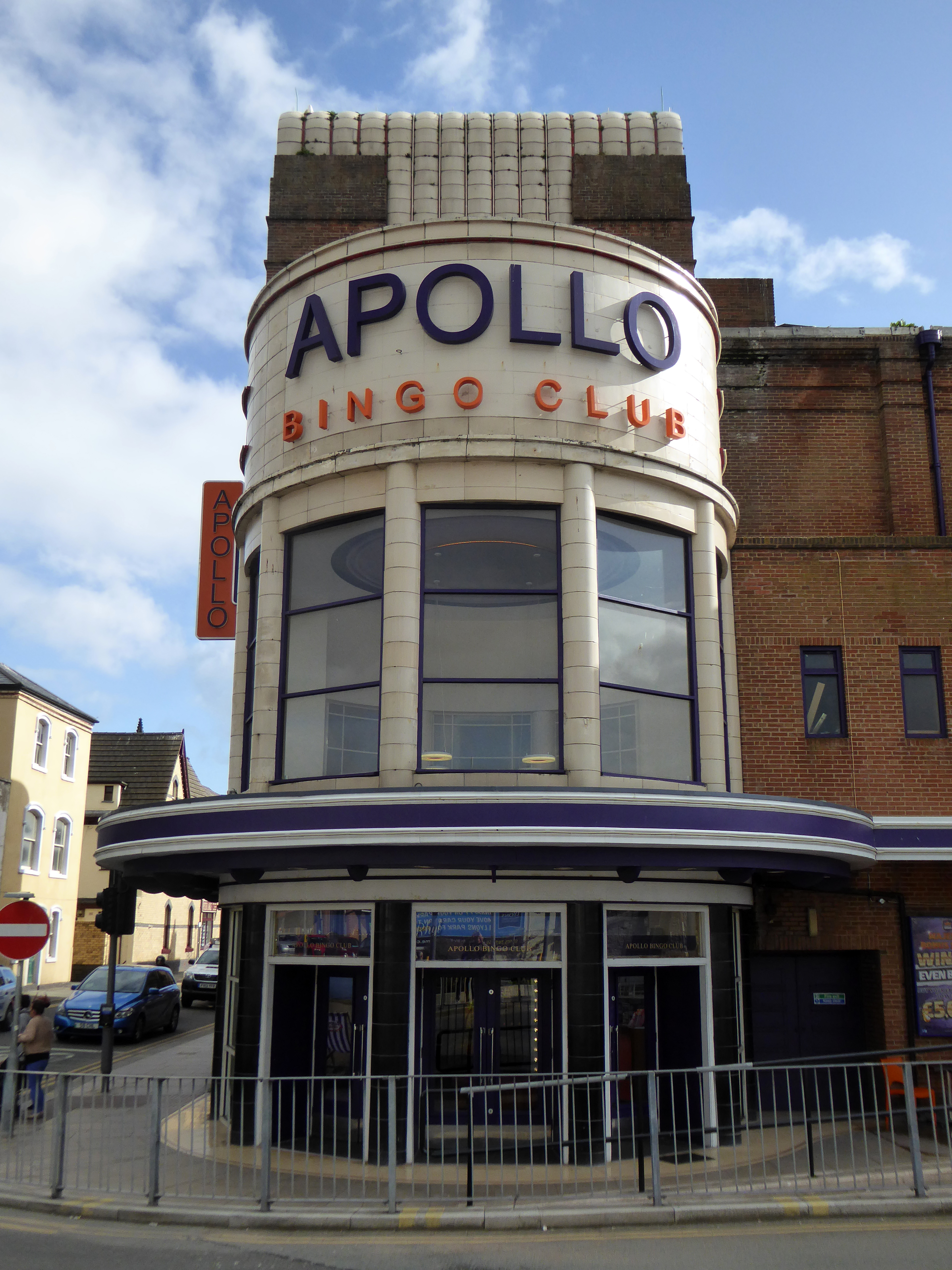
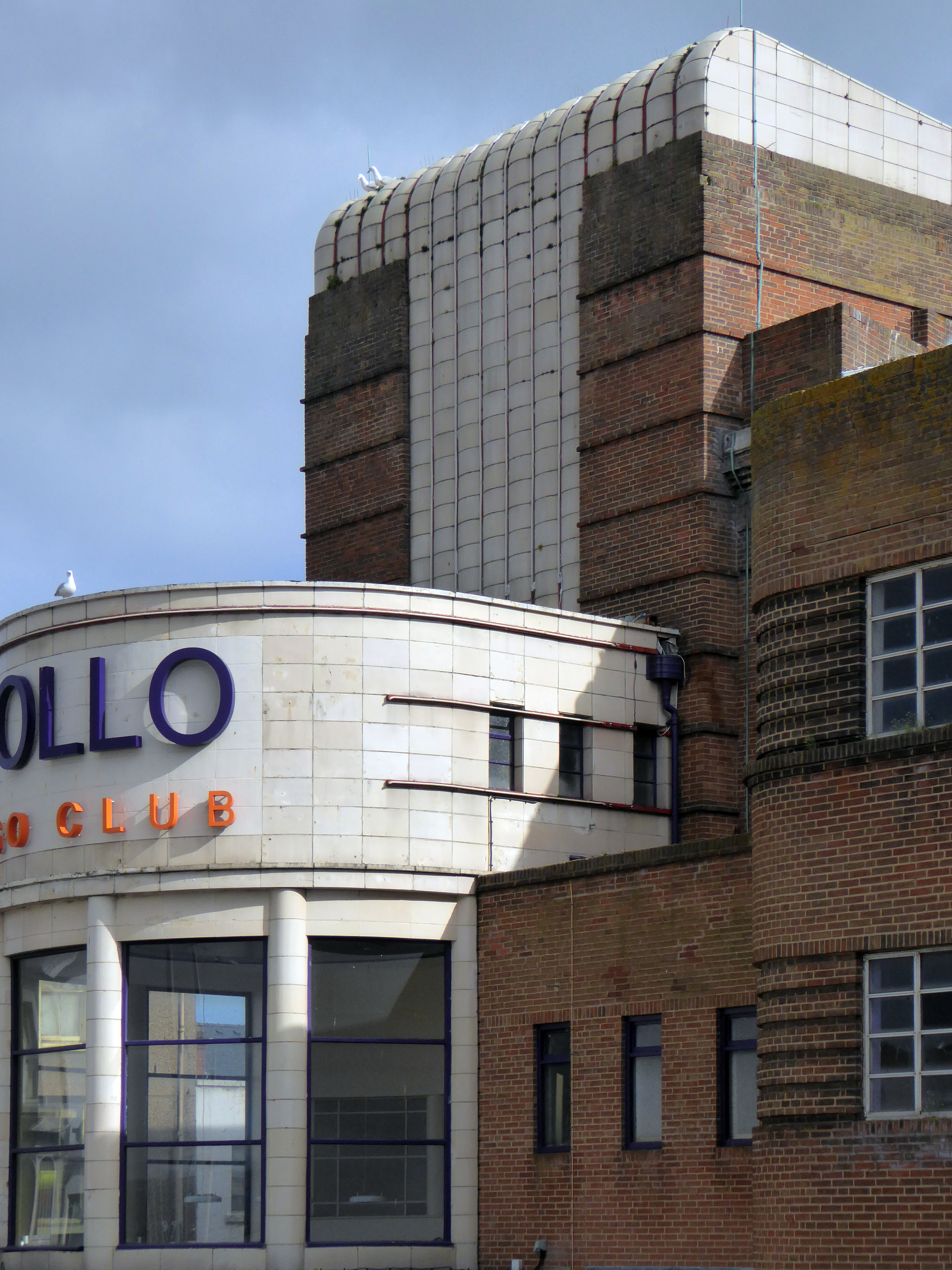
The corner entrance rotunda was lower than the rest of the building and was faced with cream faiance tiles, broken with windows. Behind this was a tower-like feature which contained the main foyer. Seating in the auditorium was provided for 862 in the stalls and 546 in the circle. On each side of the proscenium opening there were large panelled decorative grilles on the splay walls. Lighting in the auditorium was provided by concealed lighting in troughs across the ceiling.

From the 13th October 1969 it was taken over by the Hutchinson Leisure Group and re-named Astra Cinema. They triplexed the cinema from 24th April 1972 with seating for 750 in the former stalls and two mini screens seating 250 and 225 in the former circle. Later, the stalls screen was converted into a bingo club, whilst the two mini cinemas continued on film.

In the late-1980’s the building was taken over by Apollo Leisure UK Ltd. and it was re-named Apollo Cinema. The two mini cinemas were closed in October 1995 and the building was de-tripled into one space again, becoming the Apollo Bingo Club, which remains open today.

From 4th January 1989, the former Odeon Theatre was designated a Grade II Listed building.

Cinema Treasures

P1240812

P1240813

P1240817

P1240814

P1240815

P1240818

P1240819

P1240820


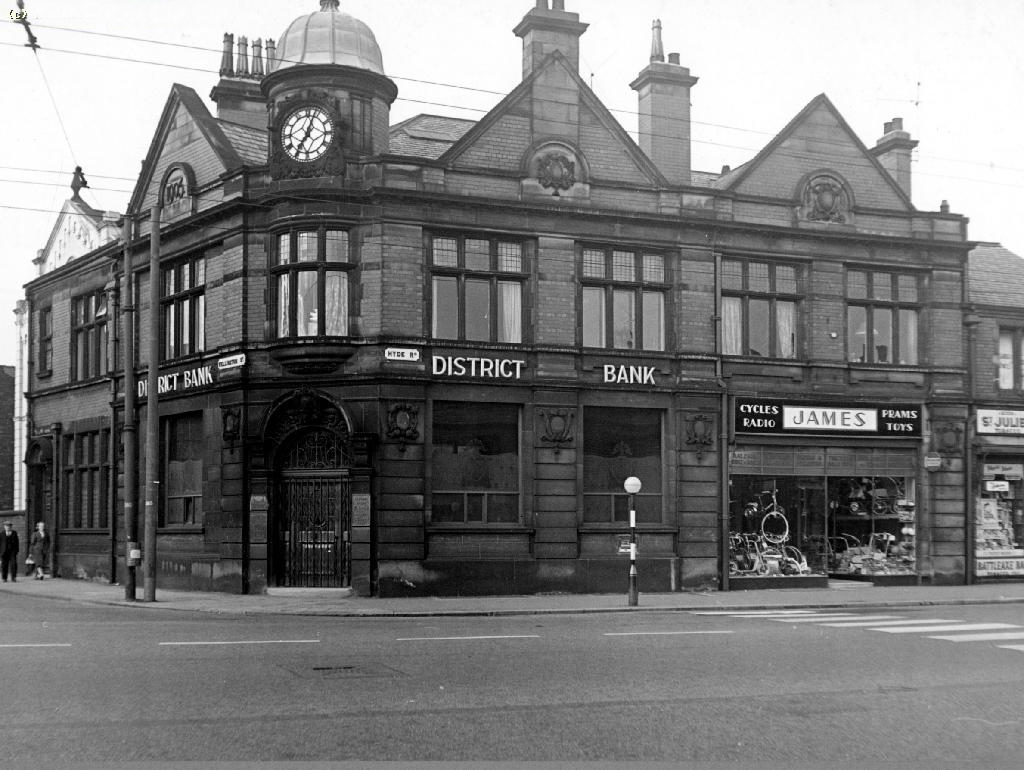
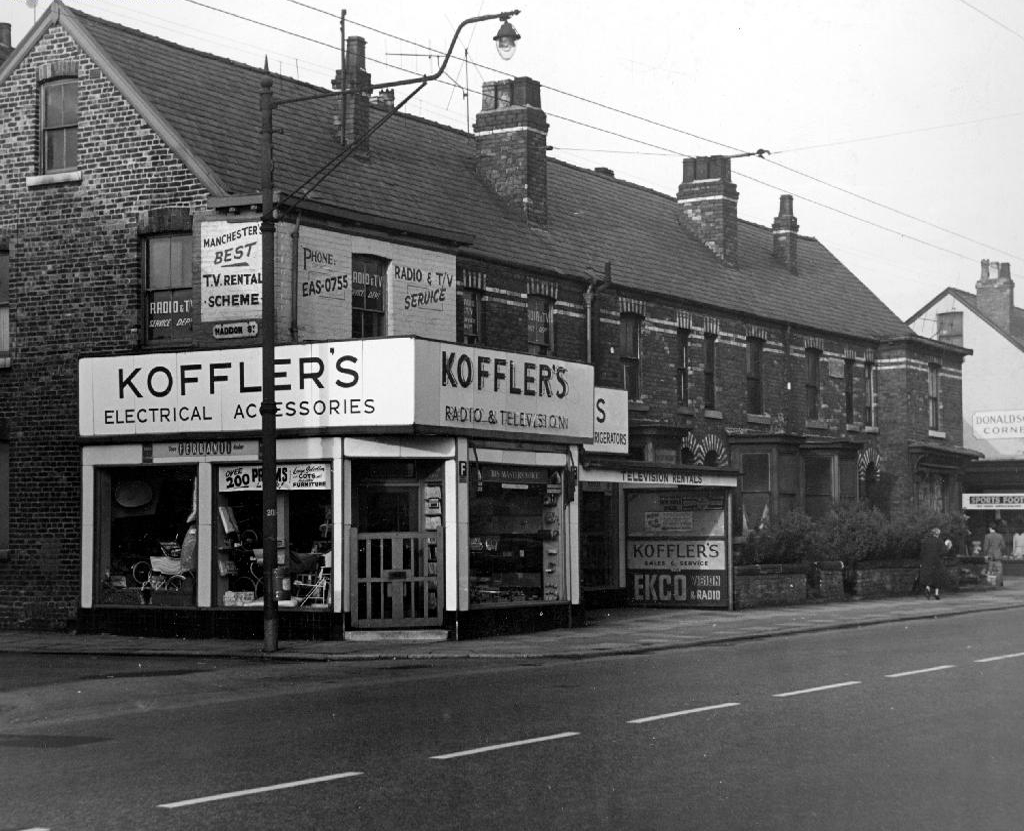
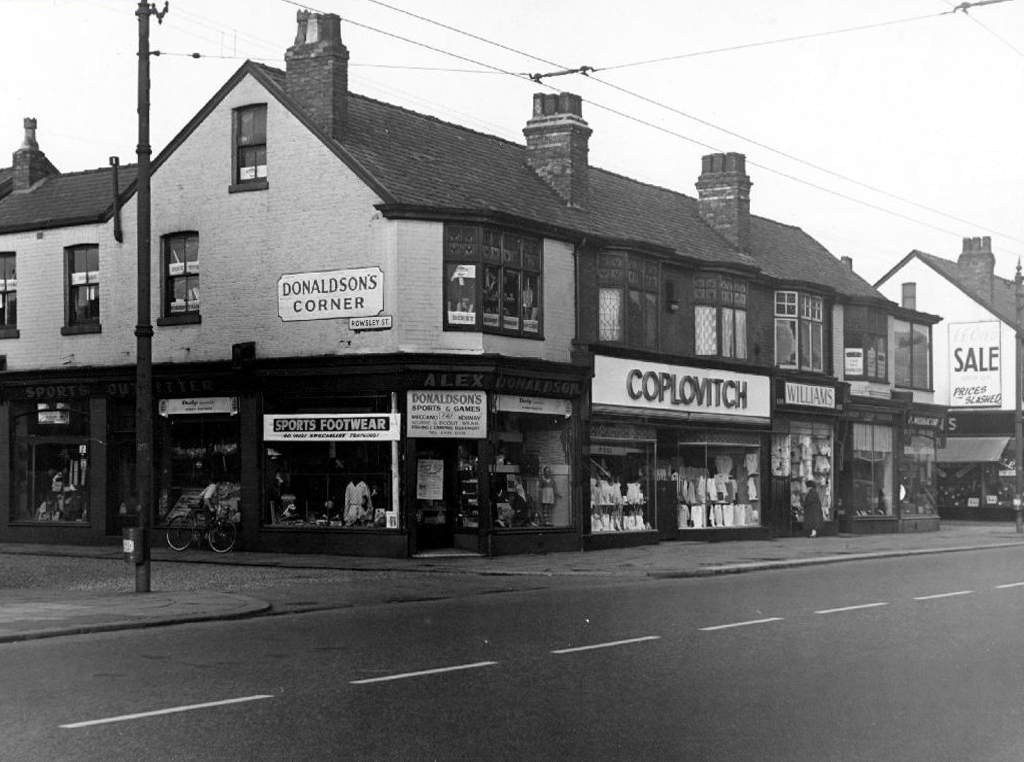
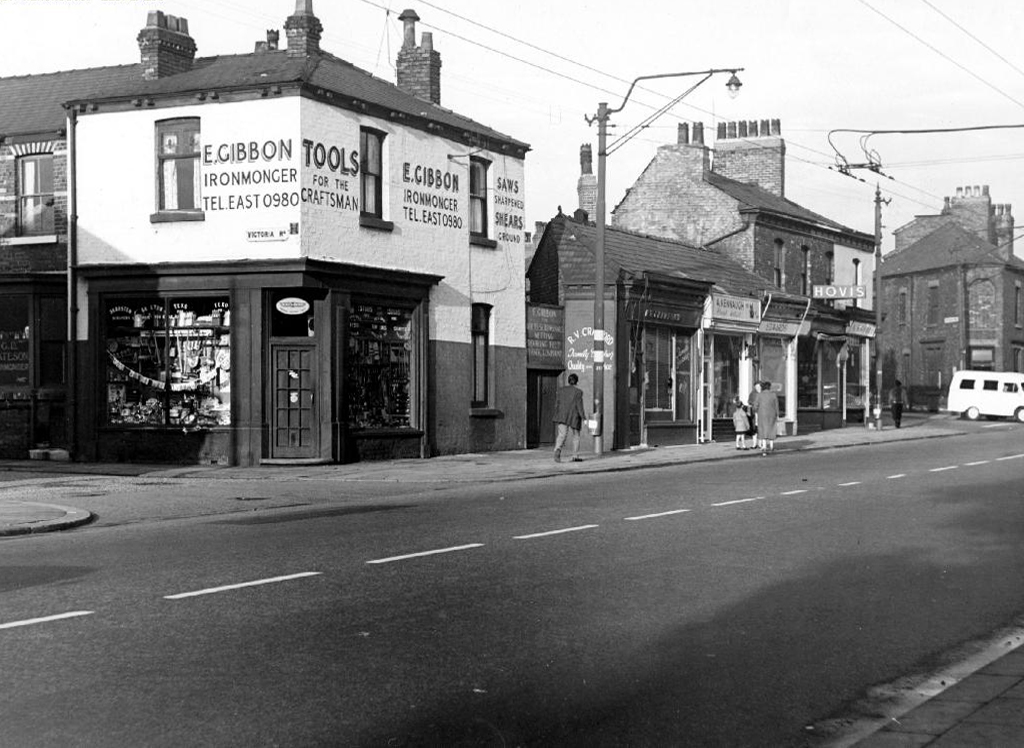
Hyde Road – Manchester

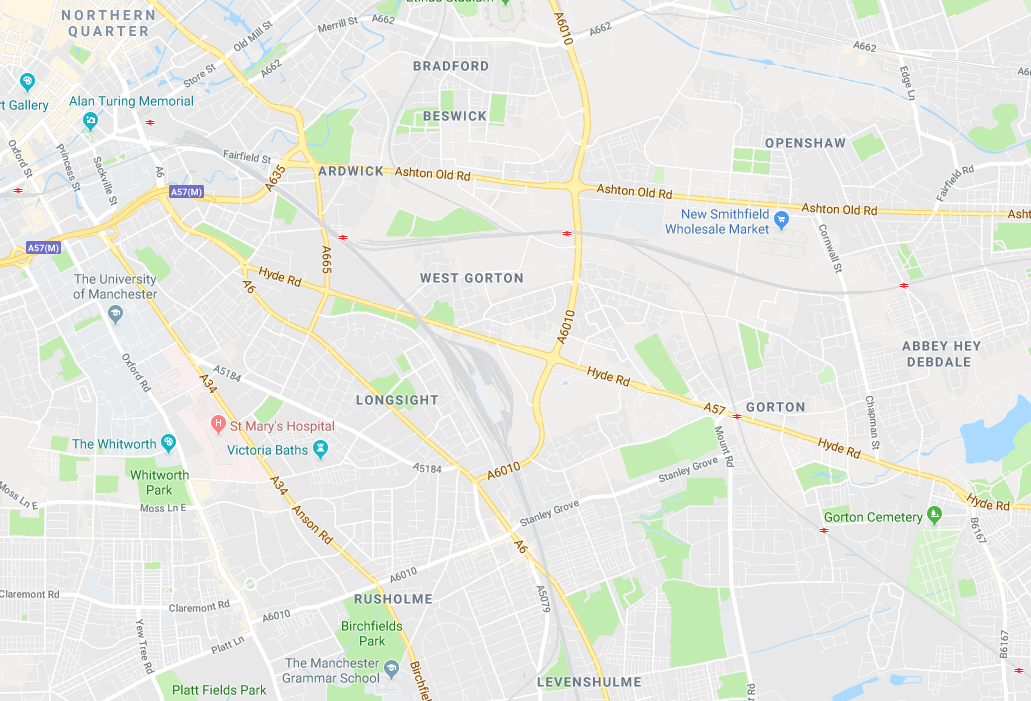
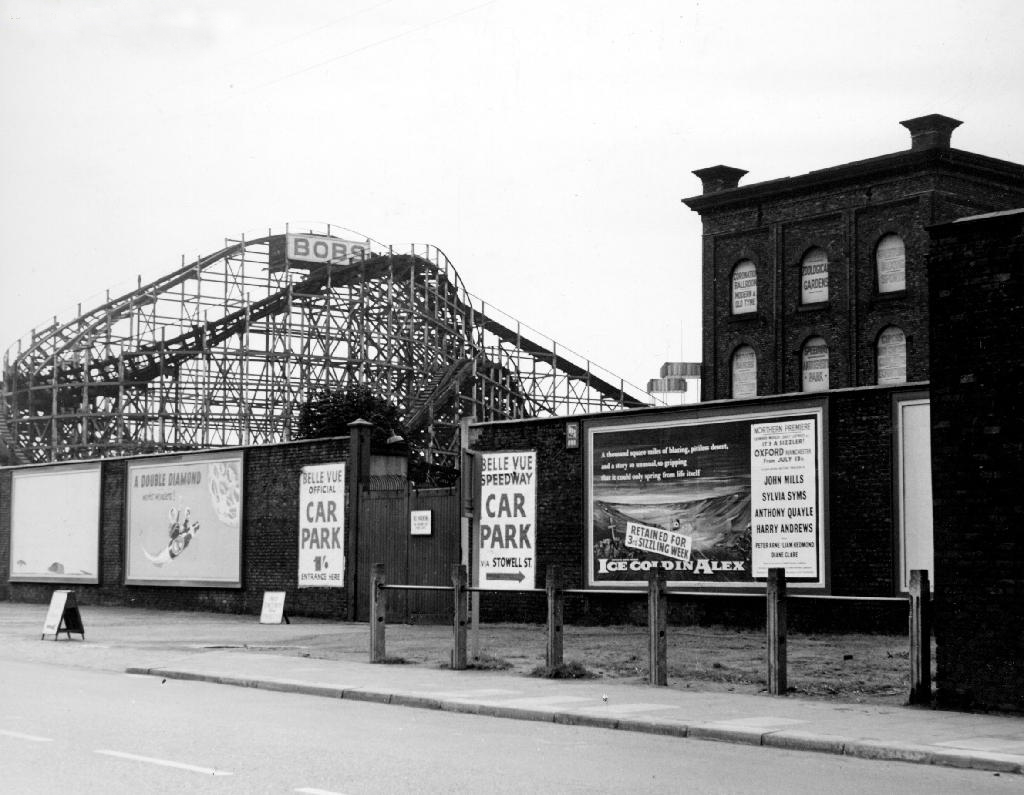
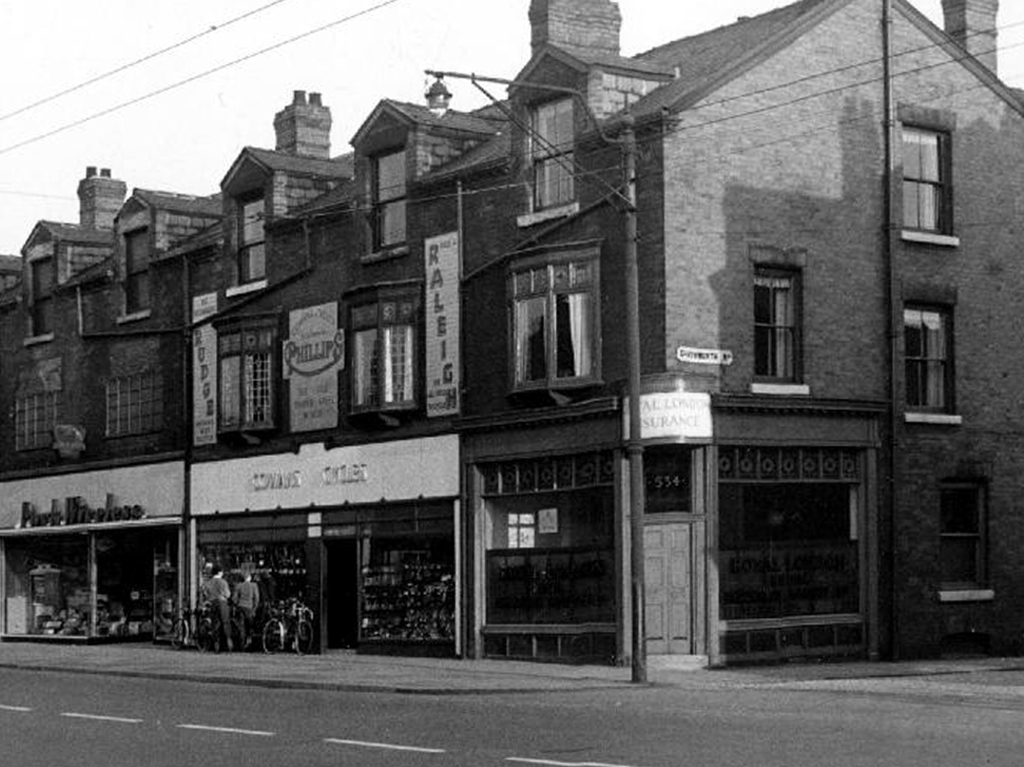
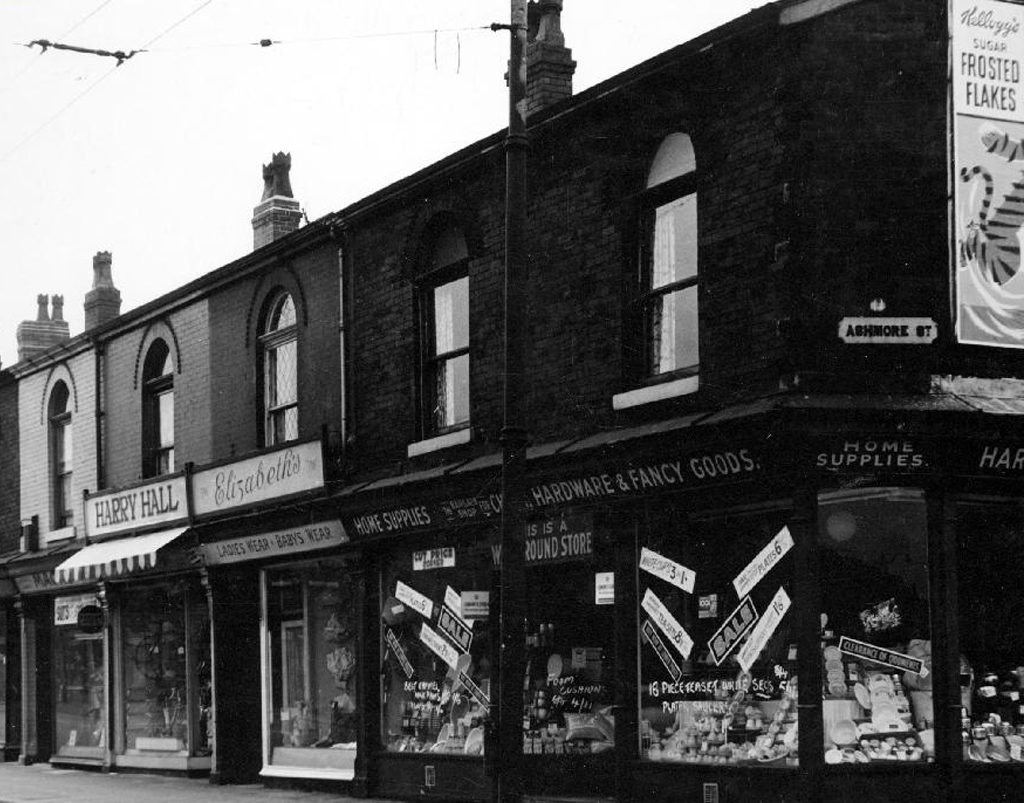
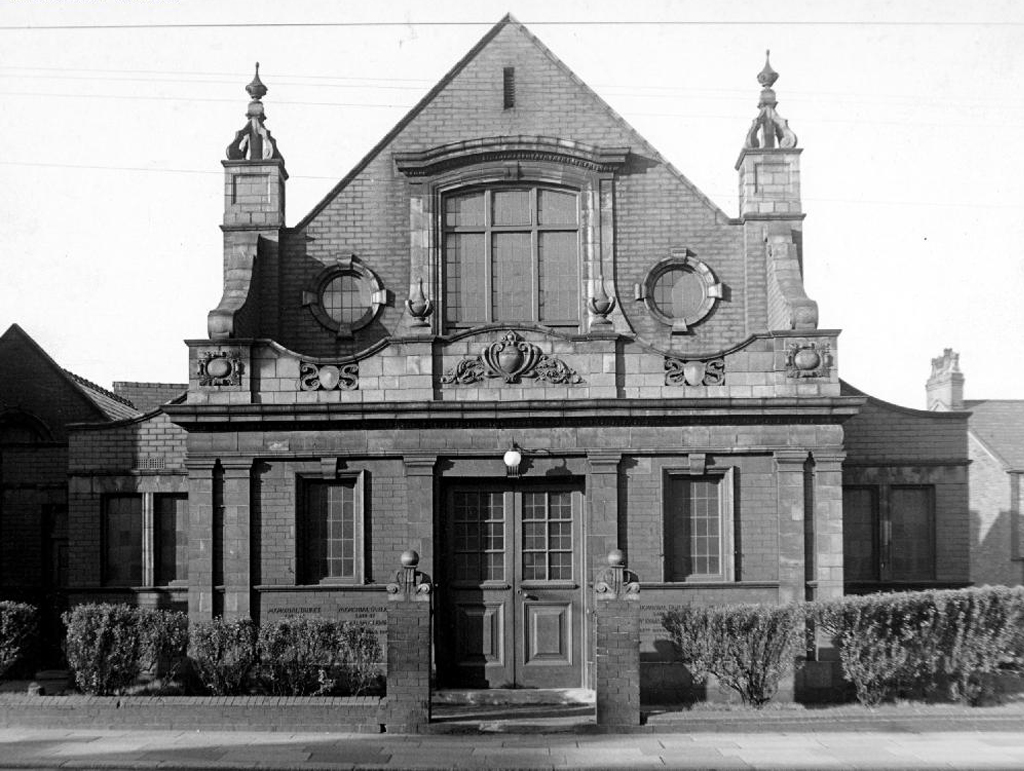
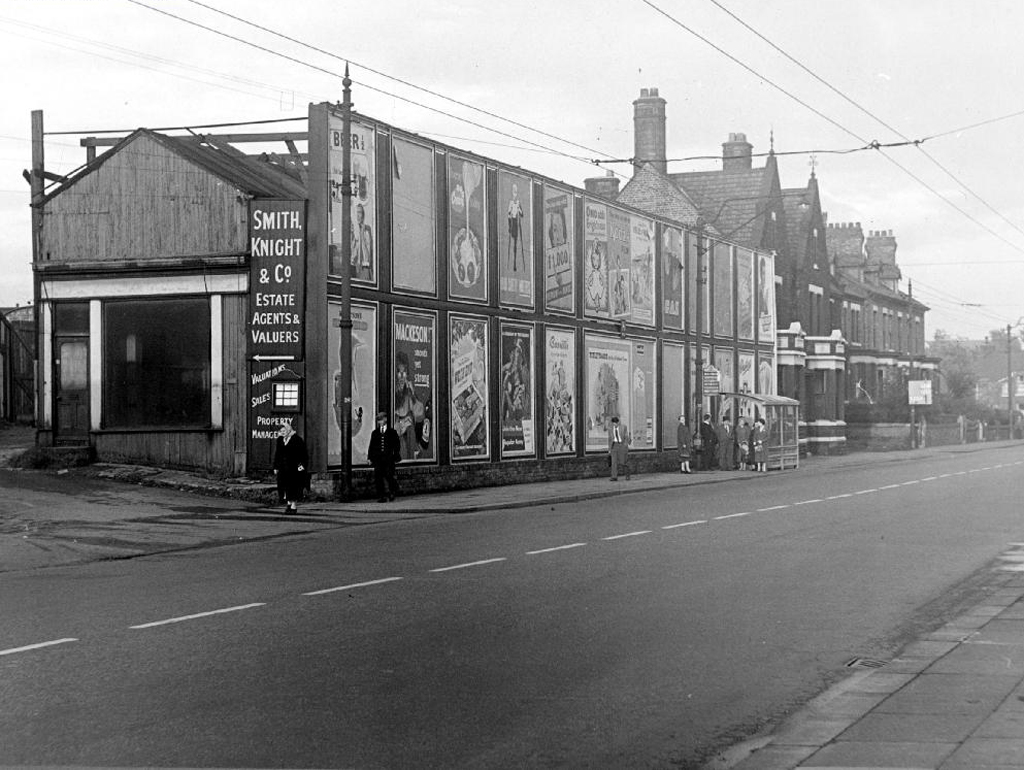
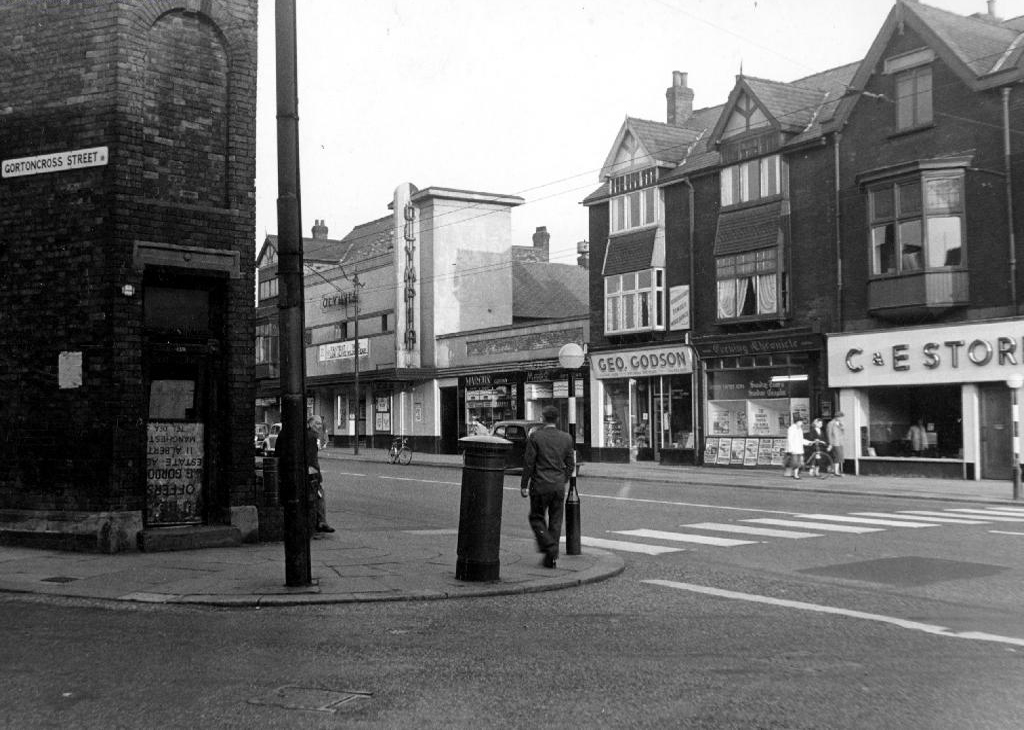
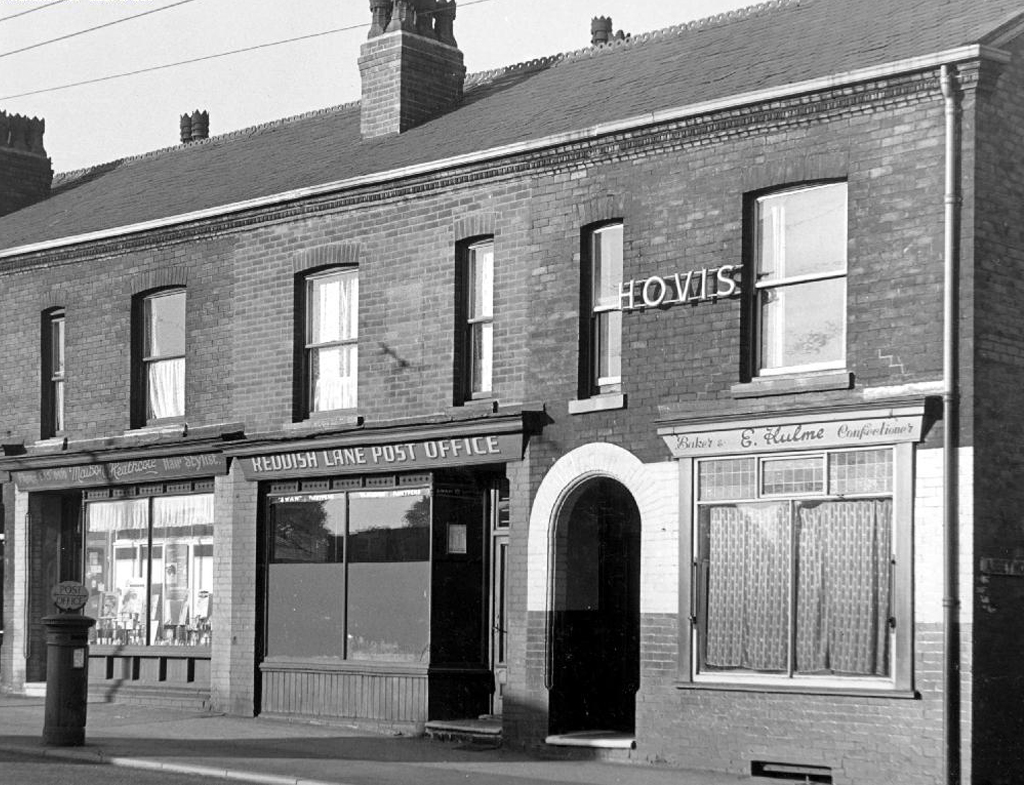
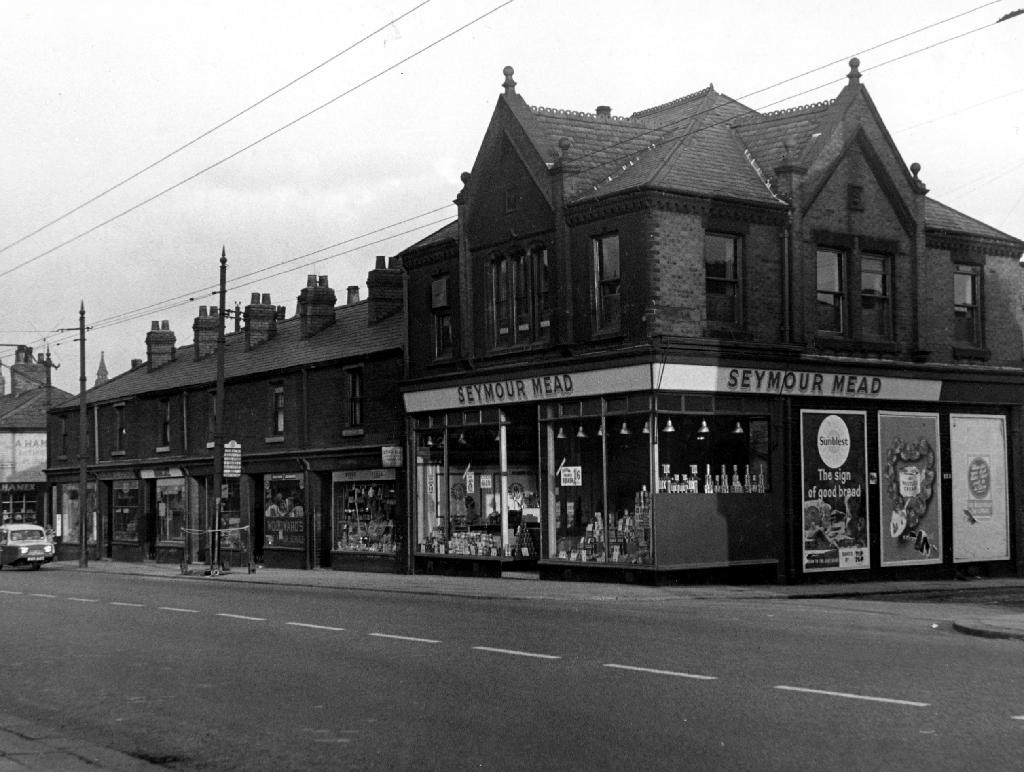
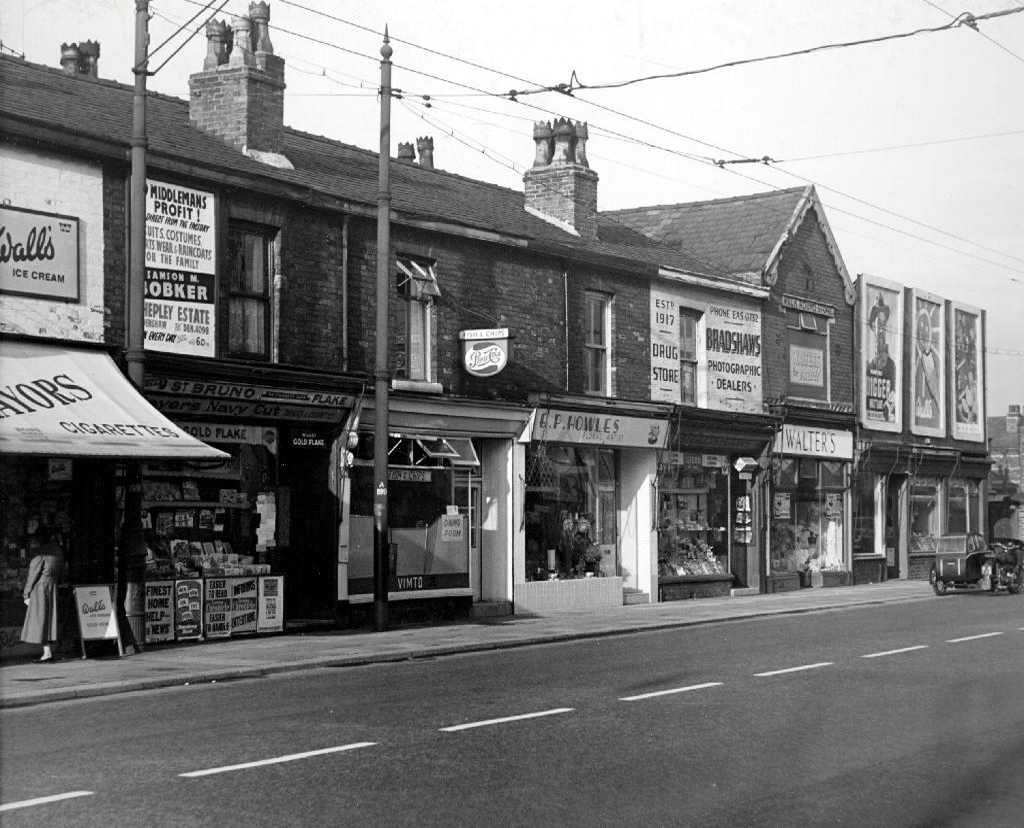
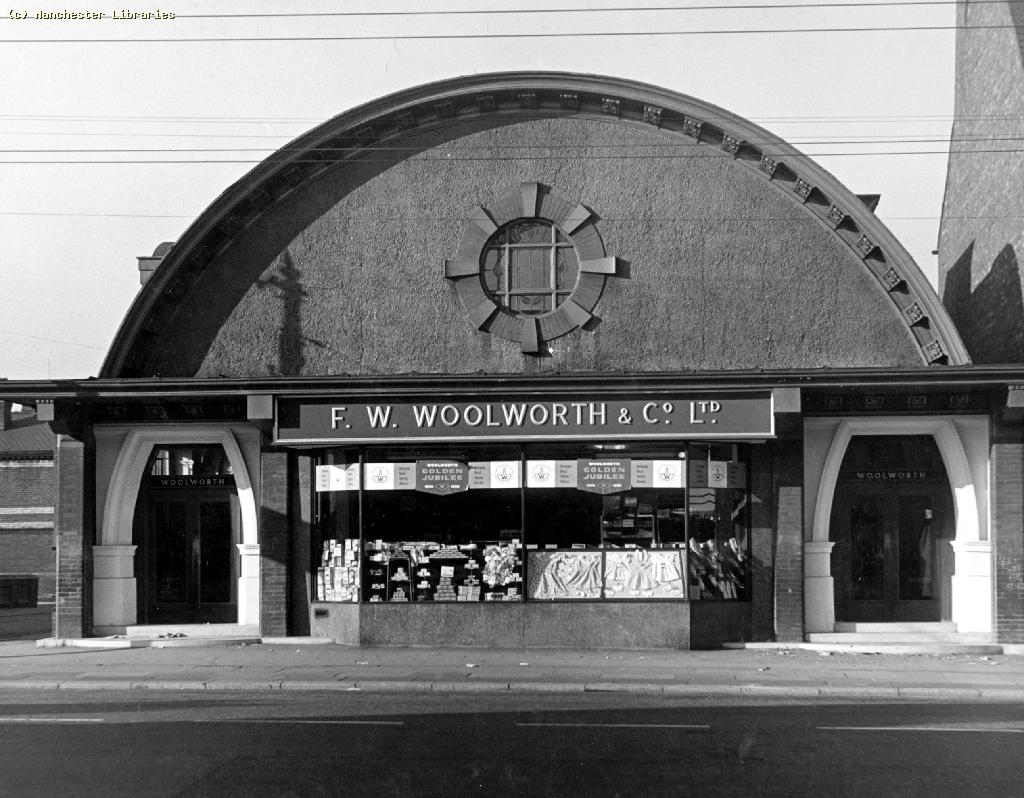
From Ardwick Green in the west to Abbey Hey in the east – runs Hyde Road Manchester.

Screen Shot 2018-01-23 at 14.35.48

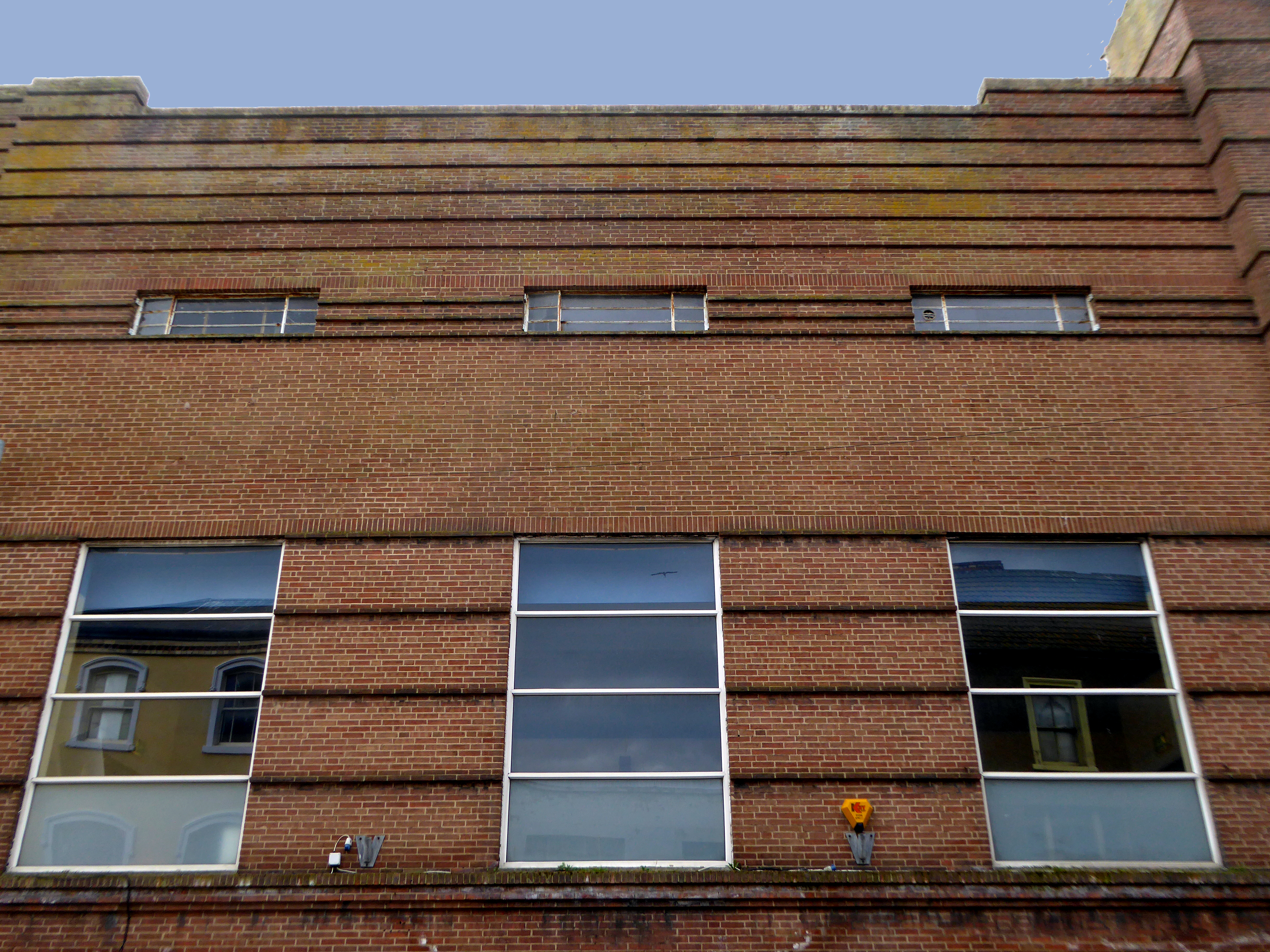
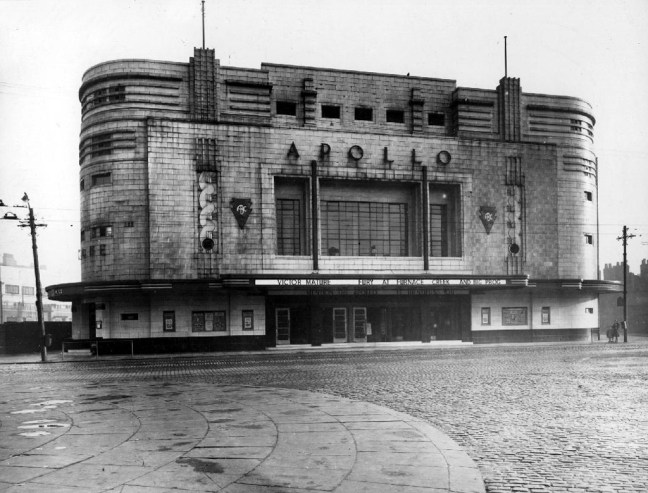
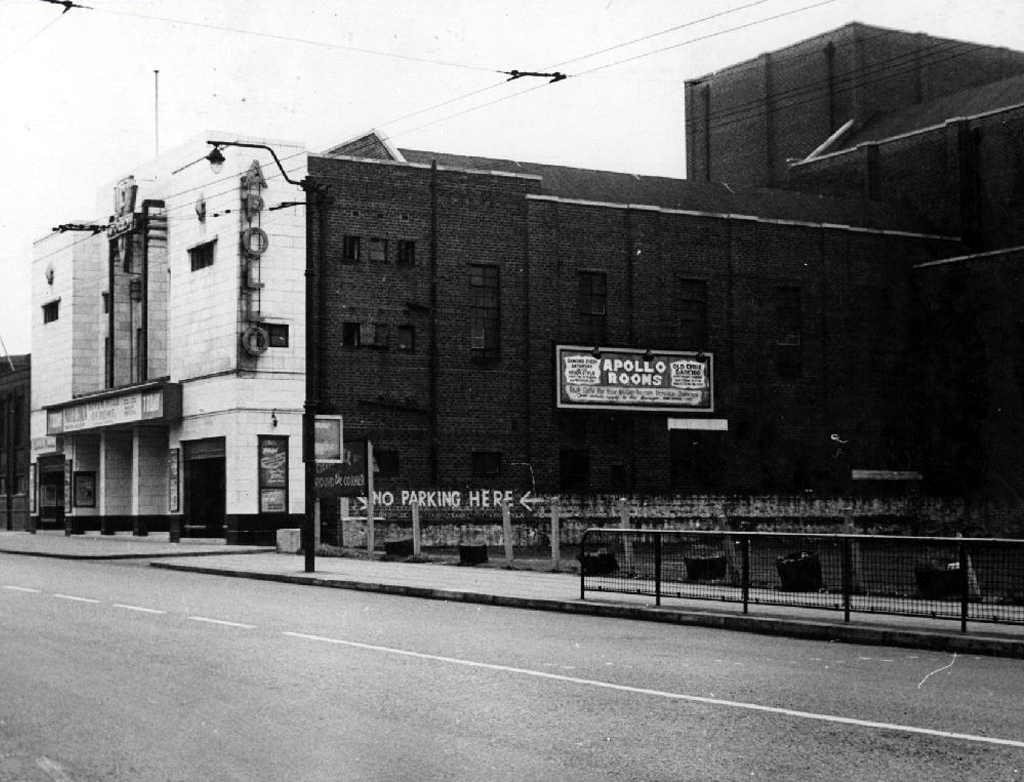
It’s a a road I have travelled from my early teens onwards, visiting friends, family, speedway, school sports days, fun and frolics at Belle Vue, tea and toast in Sivori’s, bike parts from Cowans. Working at the former Bishop Greer School, drinking in it’s many pubs, going to the flicks at the Apollo.

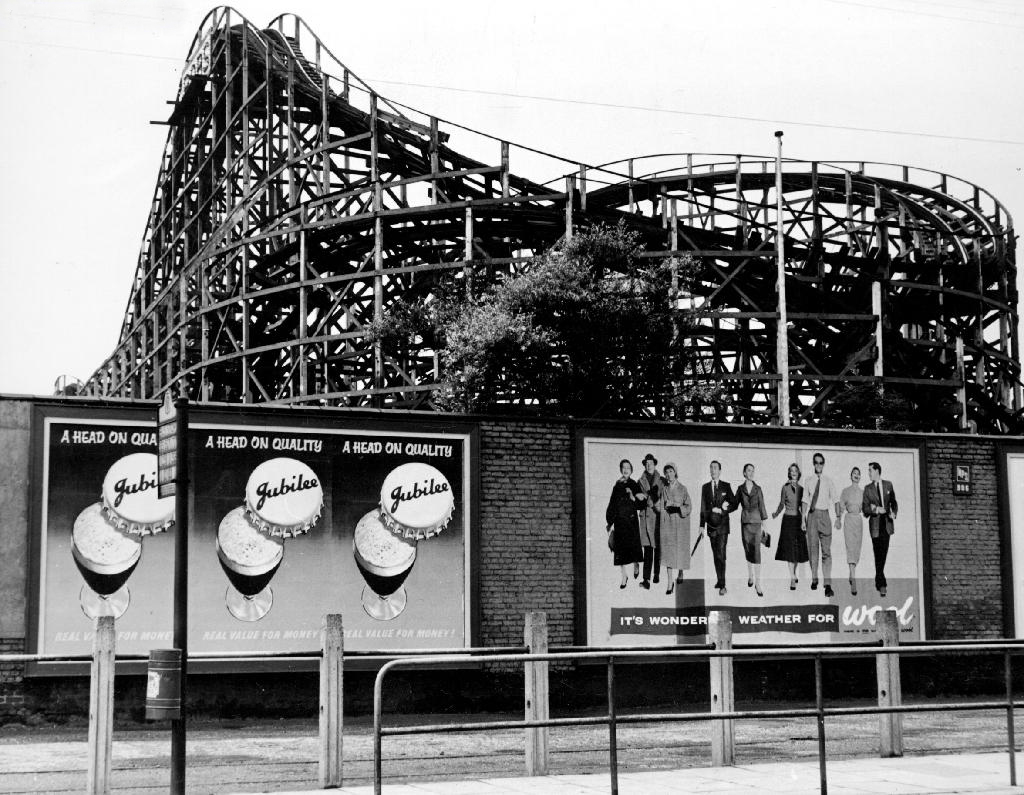
It was an area thick with the hustle and bustle of folks going about their business – working, shopping, boozing, waltzing in the Elizabethan, or the waltzers, bobbing up and down on the Bobs. A self contained community, just about prosperous enough in times of full employment –  take just one more walk with me.

webmedia-1.php

ss55

80

82

85

107

110

404 410

471 477

479 483

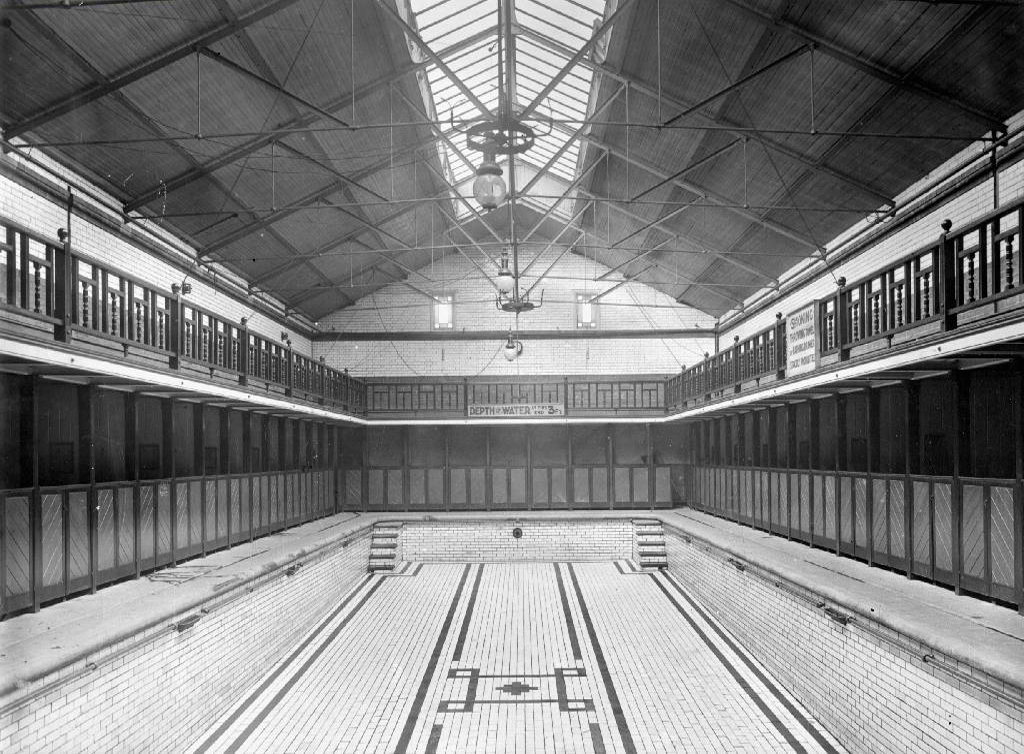
baths

swim

bobby

bobs

cowans

harry hall

meth

ns 26

NS5

NS6

NS10ns29

olympia

post

seymour

ss10

ss45

ss47

ss51


ss56

ss58

ss59

station

webmedia.php

woolworths

All photographs from the Manchester Local Image Collection

Poco a Poco – Stockport

There was a field – Ash Farm, farmhouse and field, at the junction of Manchester Road and Denby Lane, owned by one Harry Hitchen.

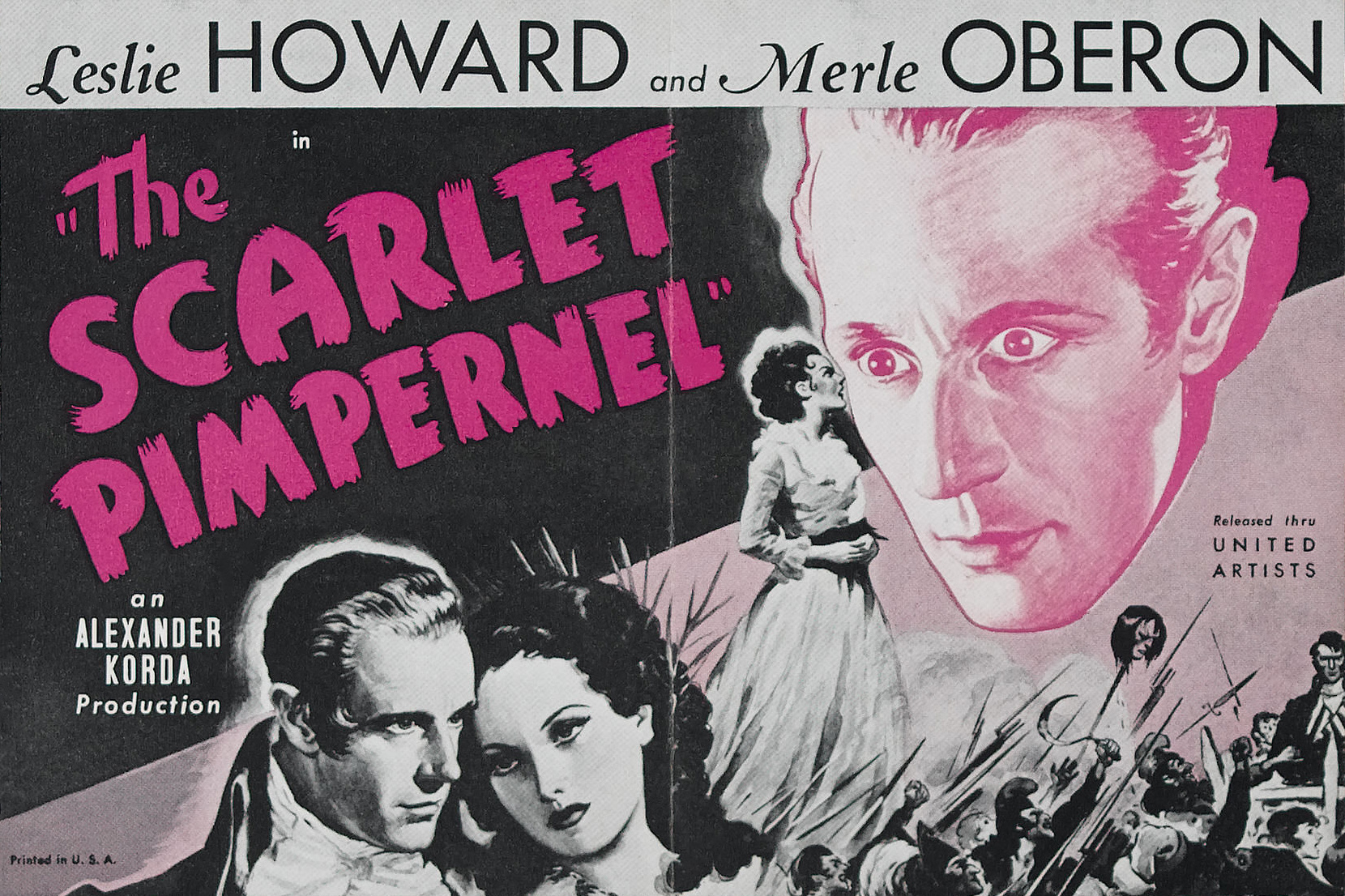
Harry Hitchen’s ambitious grandson reckoned that it was time that Heaton Chapel had a picture house, so on 6th May 1939 – where once there was a fertile farmer’s field, the seven hundred seat Empress Cinema opened.

22805

poco1

Opening with a screening of Alexander Korda’s The Scarlet Pimpernel.

Poster-Scarlet-Pimpernel-The-1934_04

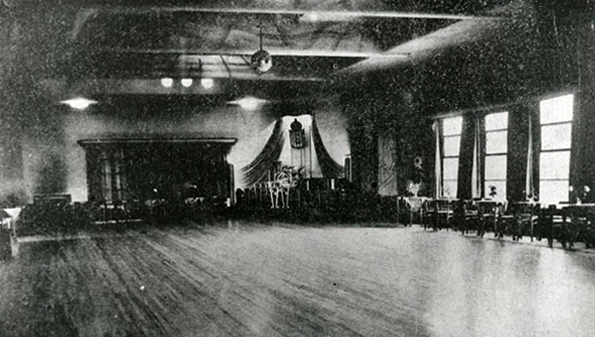
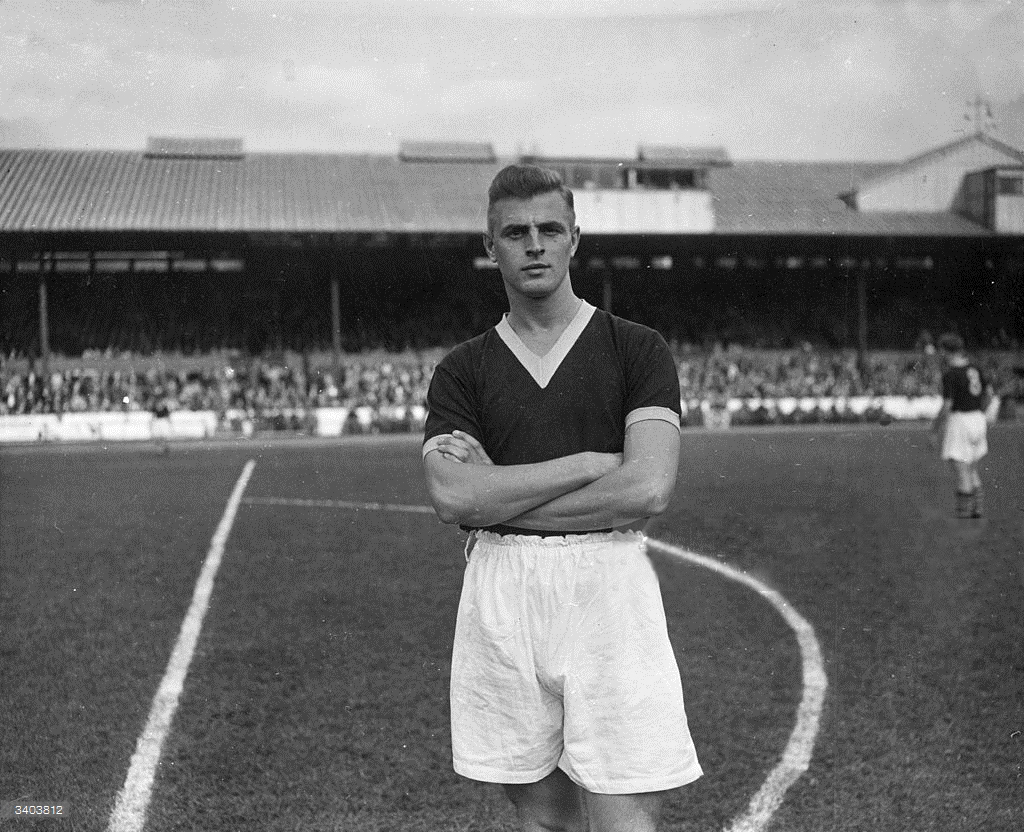
It continued to trade as a cinema until 18th April 1959, whereafter it transformed at the end of that year, into a dance house opening as the Empress Club on the 9th December, run by Manchester City footballer, Keith Marsden.

Other parts of building were used for Flamingo Coffee Jive Club, from 1961 Empress Bingo club used the none-cabaret portion of the building.

30728

Empress Ballroom

3403812

Keith Marsden

In many northern towns and cities at this time a thriving beat scene emerged, literally hundreds of local bands, playing a circuit of clubs large and small.

Further details can be found here at Manchester Beat and Lanky Beat.

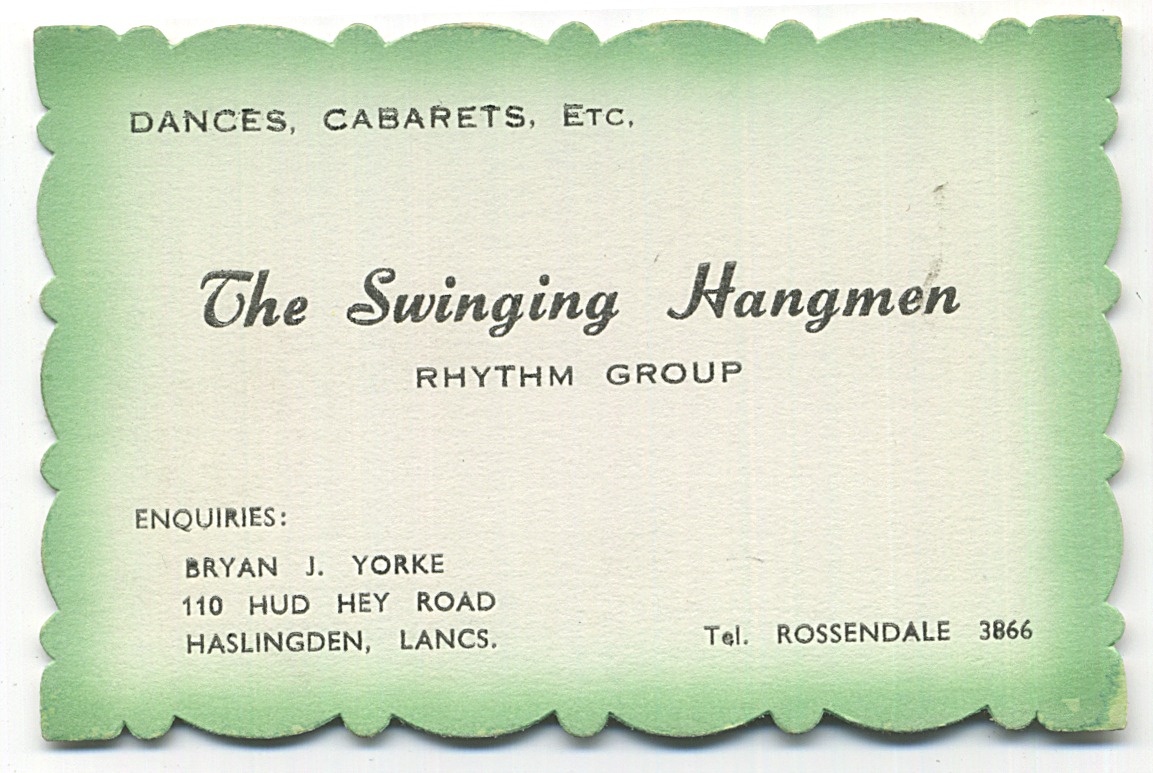
One such band played at the Empress on 14th November 1964, formerly The Matadors, then becoming The Swinging Hangmen, later known as The Hangmen. With a now sound, slick suits, a business card and a swinging, dead, novelty teddy bear mascot, they had everything going for them.

The Hangmen [1024x768]

The Hangmen card 4

Screen Shot 2017-10-23 at 17.58.02

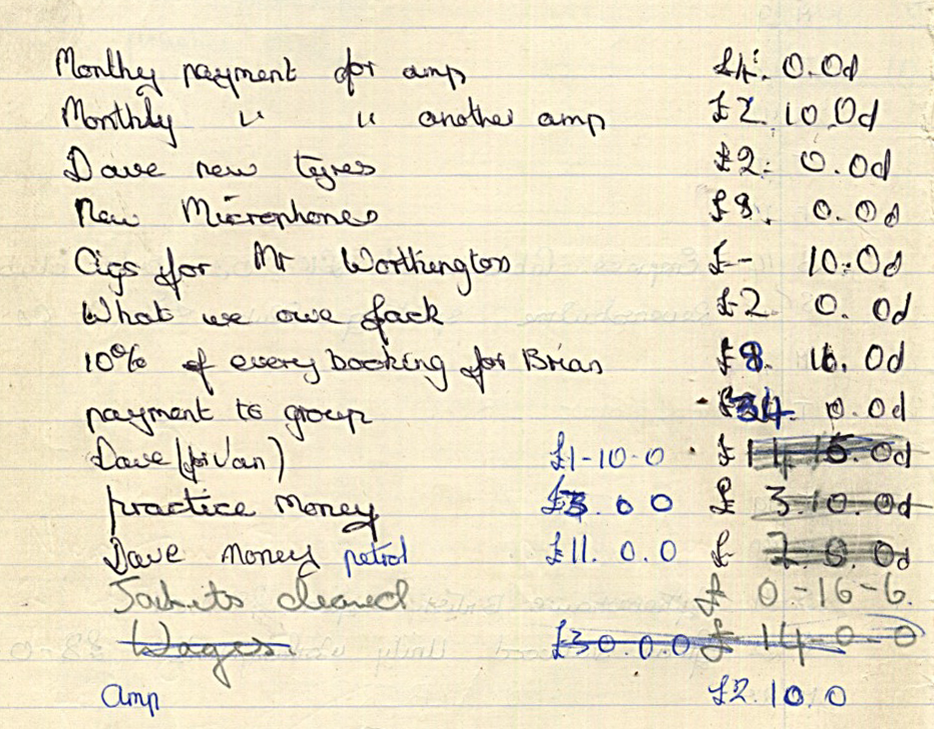
I too played in such bands during the late 60’s and early 70’s, piling in and out of assorted vans, cars and buses to arrive at a packed venue, sandwiched between the bingo and a top flight comedian.

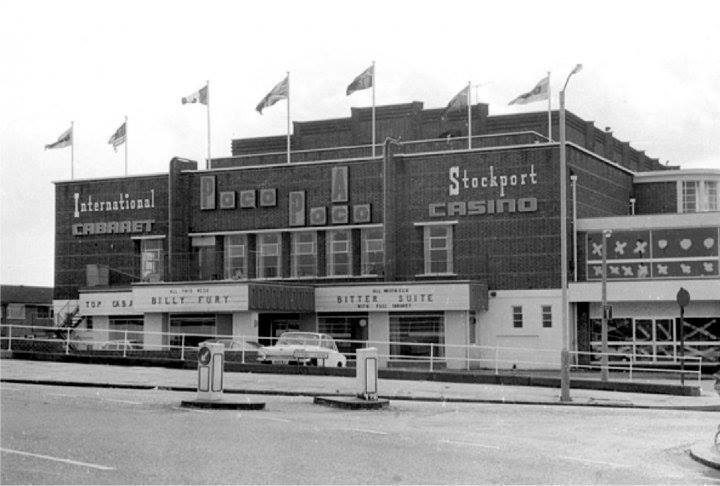
December 1968, in a flurry of flags, the Poco a Poco Club and Casino is born, international cabaret and entertainment abounds from here on in, beginning a fashion for the American style supper club, boil in the bag dining, for the discerning chicken in a basket cases.

17362764_10212578410804991_8101248843354062103_n

As beat becomes mod, psych, prog and glam a new generation of bands adapt and mutate to suit the ever changing moods and modes of modern music.

One such were Toby Twirl.

They hailed from Newcastle upon Tyne in the North East of England. Formed in the 60’s and originally called ‘The Shades of Blue’. After being signed to Decca Records by Wayne Bickerton, a name change was called for, as there was a US group of the same name. The group released three singles on Decca – Back In Time, Toffee Apple Sunday and Movin In. Although critically acclaimed in later years, none of the singles charted due to lack of major radio play. The group concentrated on live work during the late 60’s and early 70’s and were a top draw around the North of England. The line up was Dave ‘Holly’ Holland vocals, Barrie Sewell keyboards, Stuart Somerville bass, Nick Thorburn guitar and John Reed drums. Stuart was replaced by Dave Robson after he was tragically drowned in Tynemouth and Holly was replaced by Steve Pickering.

Interest in 60’s psych has seen the recent release of a Toby Twirl LP, a long overdue compilation of their admirable singles – including Romeo and Juliet 1968.

Other Poco regulars included Wishful Thinking:

Prior to 1969, they were recording with ex-Shadows drummer and record producer TonyMeehan. Between 1965 and 1969 the group released 9 singles and a live album. There were some changes in personnel and some successes, most notably Step by Step, Count To ten, Cherry Cherry, It’s So Easy and Peanuts, the latter remaining in the Danish charts for 3 months and also reaching No 8 in Japan.

My personal choice would be their version of Clear White Light.
Famously  Mr David Laughing Gnome Bowie played there on the 27th April 1970, just a few days before receiving his Ivor Novello award at The Talk Of The Town in London, for Space Oddity, which had been voted the best original song of 1969.

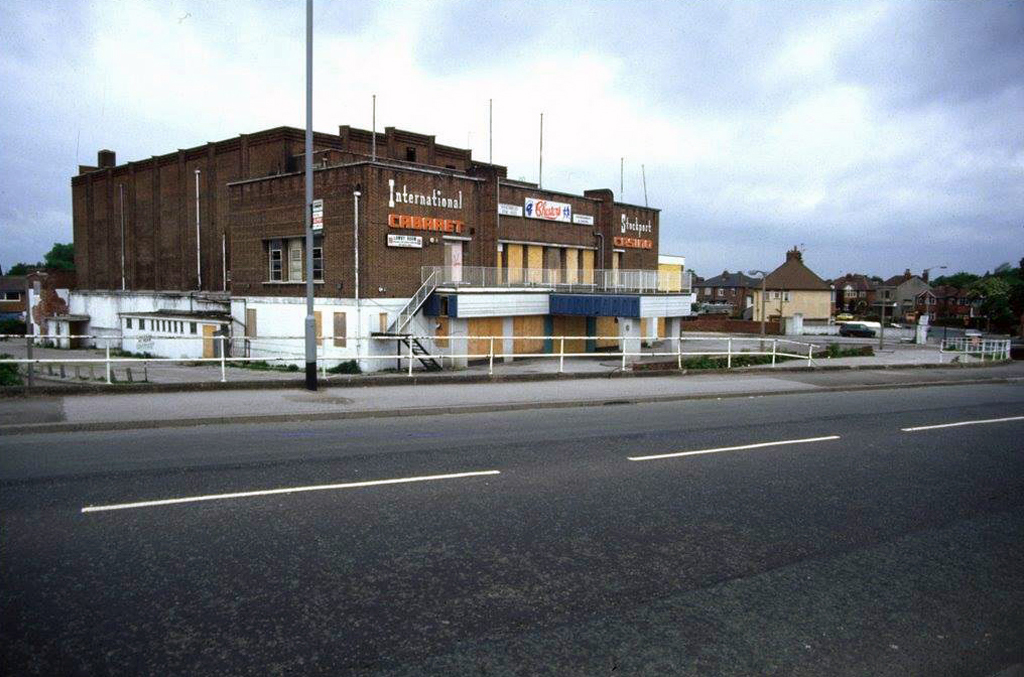
The club traded on through the 70’s and 80’s, continuing to ride the trends in popular music, the emergence of the discotheque and the almost superstar local DJ. As interest in the live cabaret music scene waned, the club began hosting boxing matches in the 80’s. Changing its name to Chester’s in 1983 and finally closing in May 1987.

It had lasted almost 50 years as a rich source of entertainments for thousands of Stopfordians, from a flickering film to a flaming beat, sadly it all ended in demolition.

11807110_536021009884734_6696872117870440677_o

The beat goes on.

Many thanks to Stephen for the essential facts and copyright images from his website.

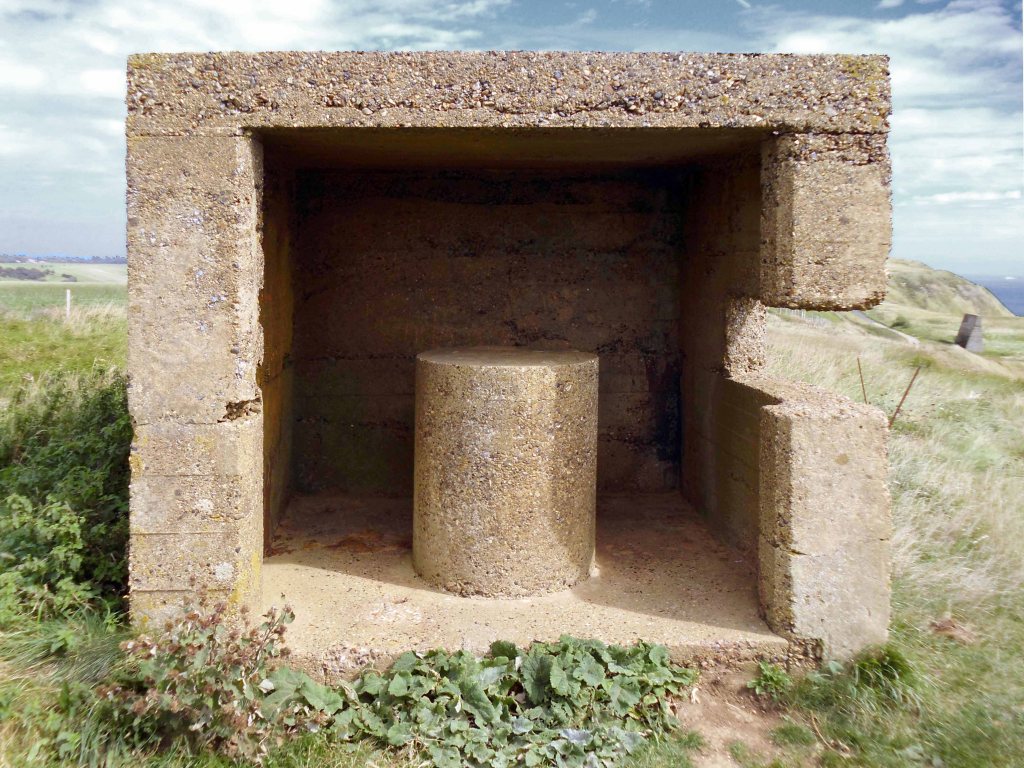
Sea Front Shelter – Hastings

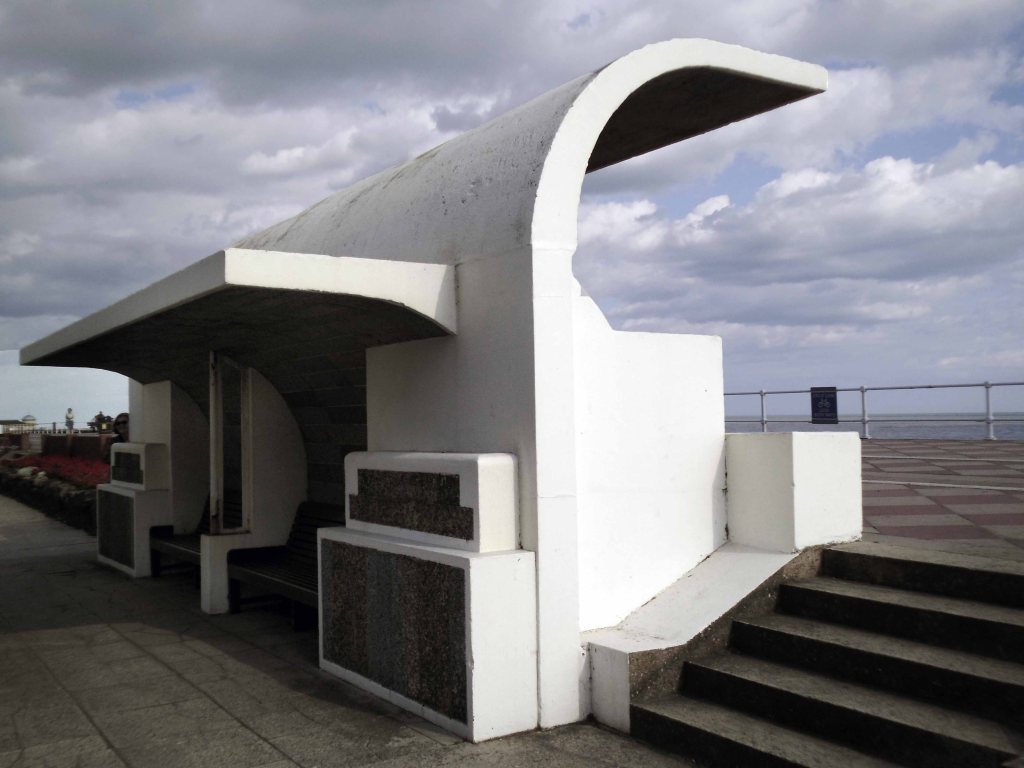
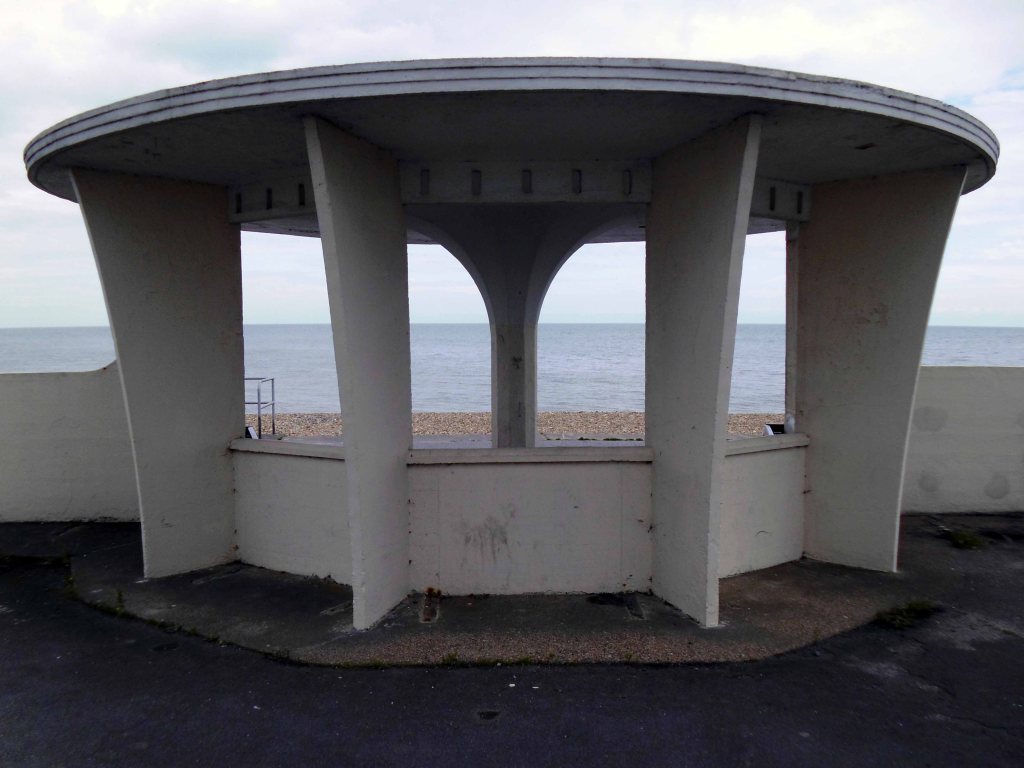
I have been here before, adoring the full range of Hasting’s sea front shelters.

They form an integral part of the general scheme designed and overseen by The Concrete King Sidney Little.

On my most recent visit the most distant shelter was receiving a wash and brush up, a brand new coat of paint or two, restored to bright red and white shipshape order, this land locked delight looked ready to set sail across the adjacent Channel to who knows where.

Offering a somewhat occluded view of blue skies and faraway shores, the bus stops here and goes on forever and forever.

P1170950

P1170955

P1170956


P1170961

P1170963


P1170965

P1170966

P1170967

P1170968

P1170969

P1170970

P1170971

P1170972

P1170973

P1170974

P1170976

P1170977

P1170978

P1170979

P1170980

P1170982

Paddling Pool – Whitby

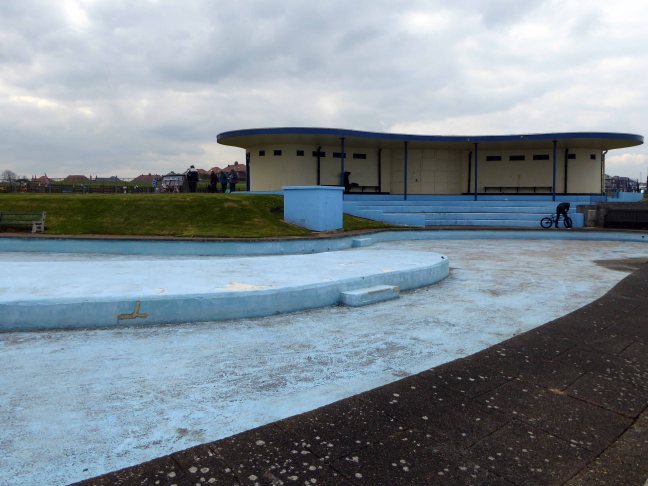
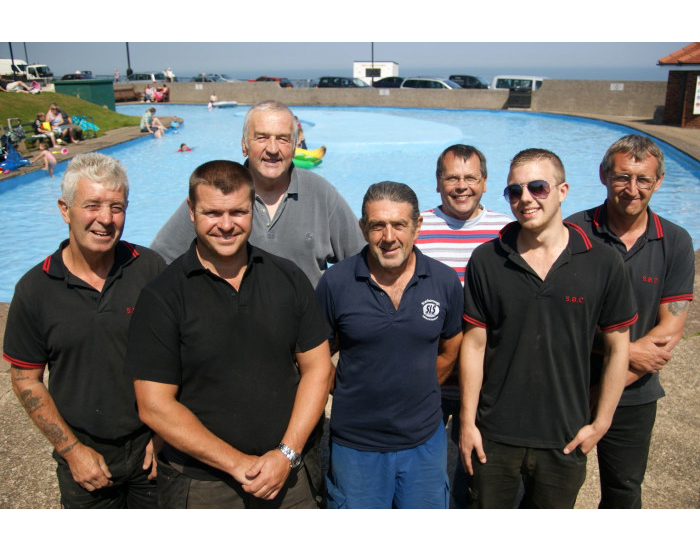
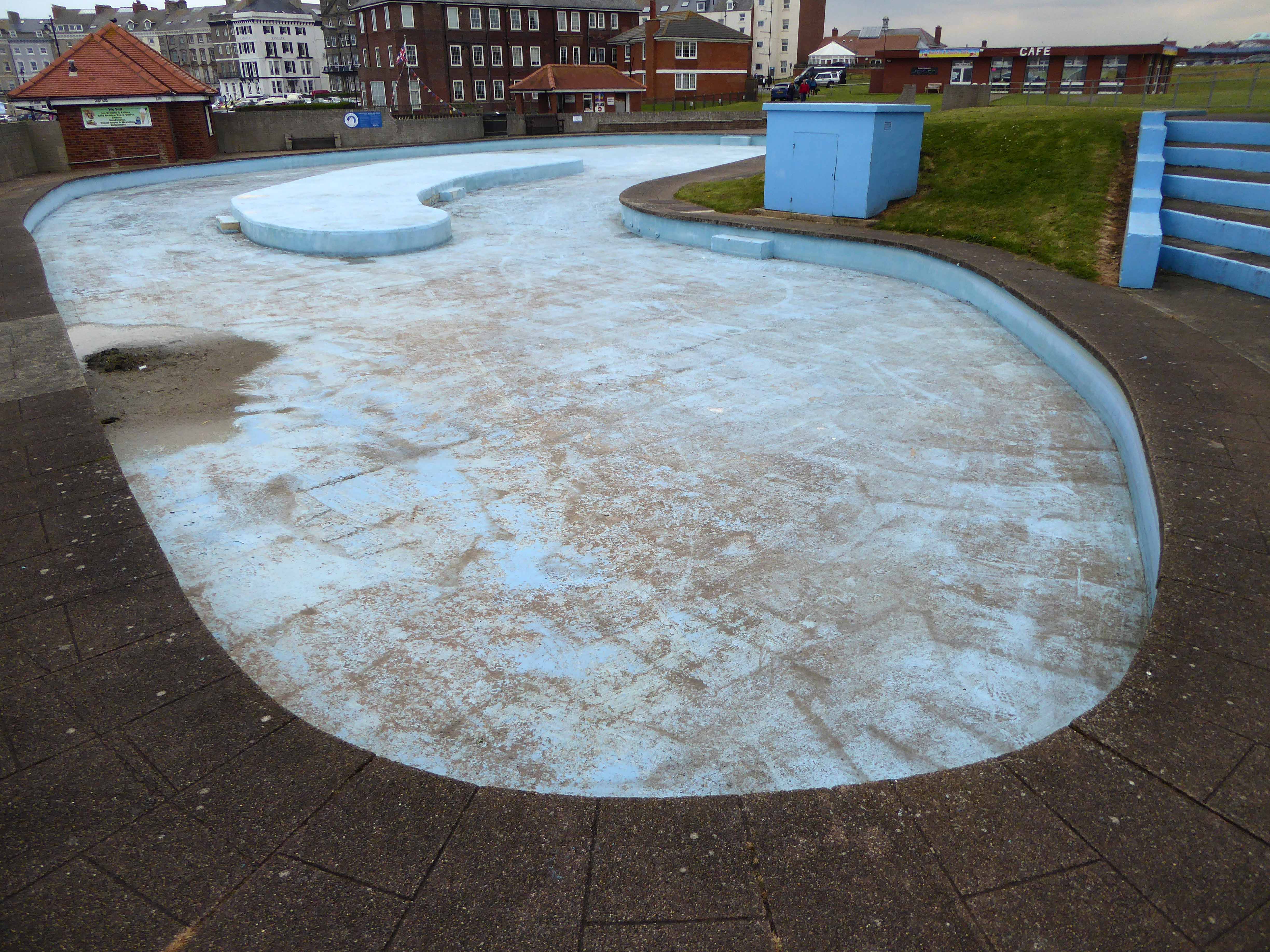
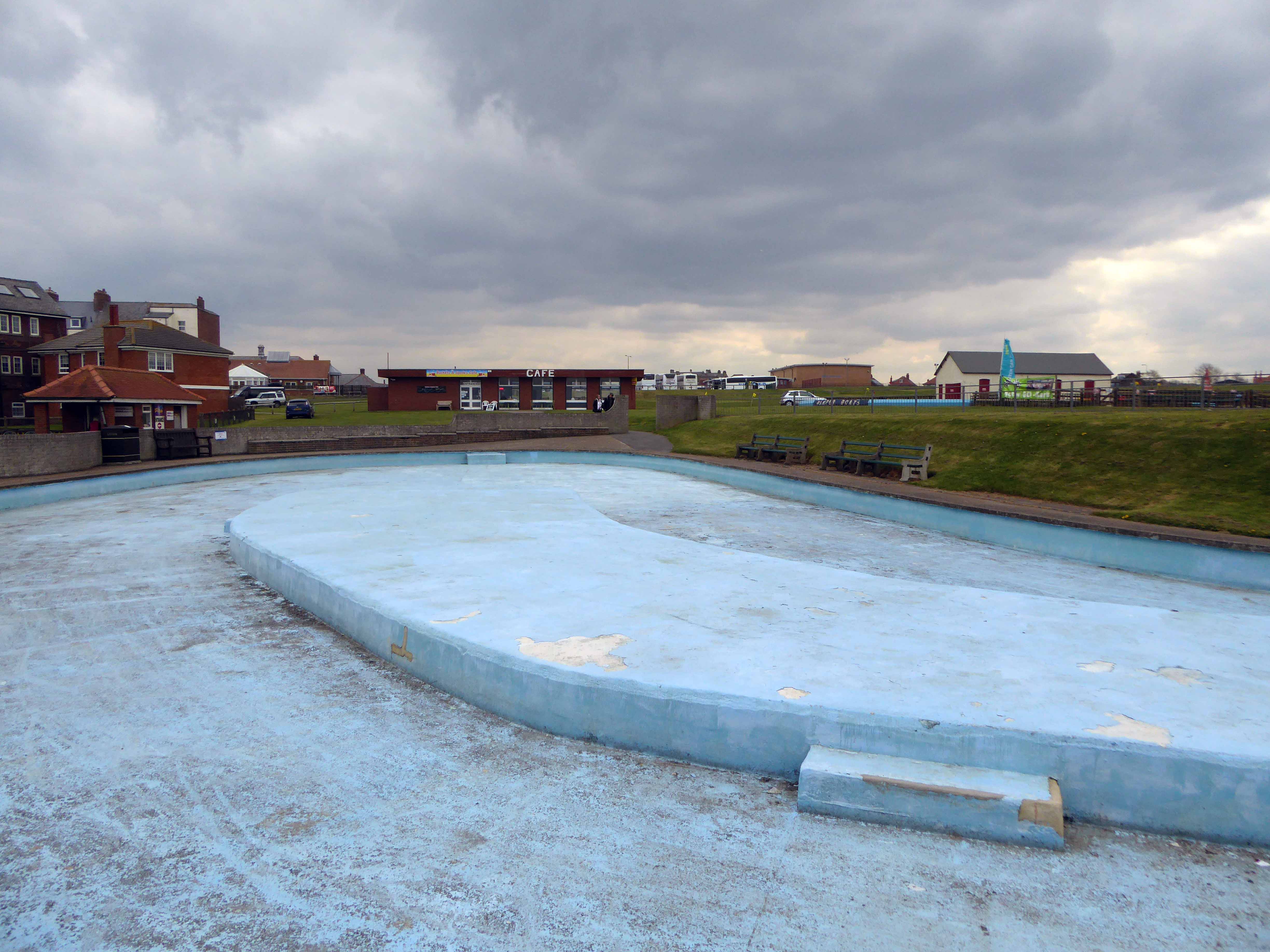
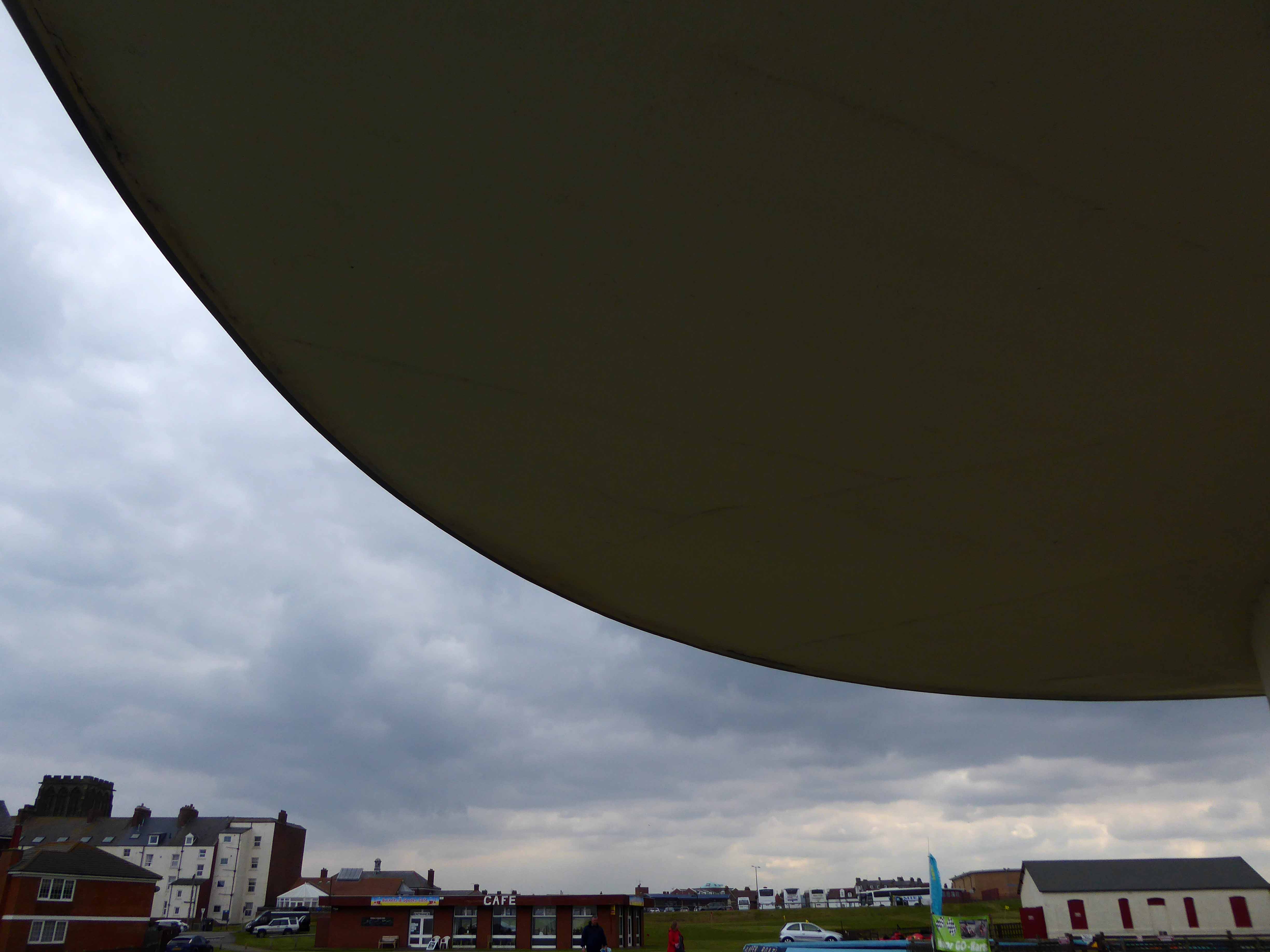
High atop West Cliff Whitby is a pale blue imitation of the deep blue North Sea below.

A TG Green Cornishware blue and cream striped pot, reimagined on the distant Yorkshire coast, in paddling pool form.

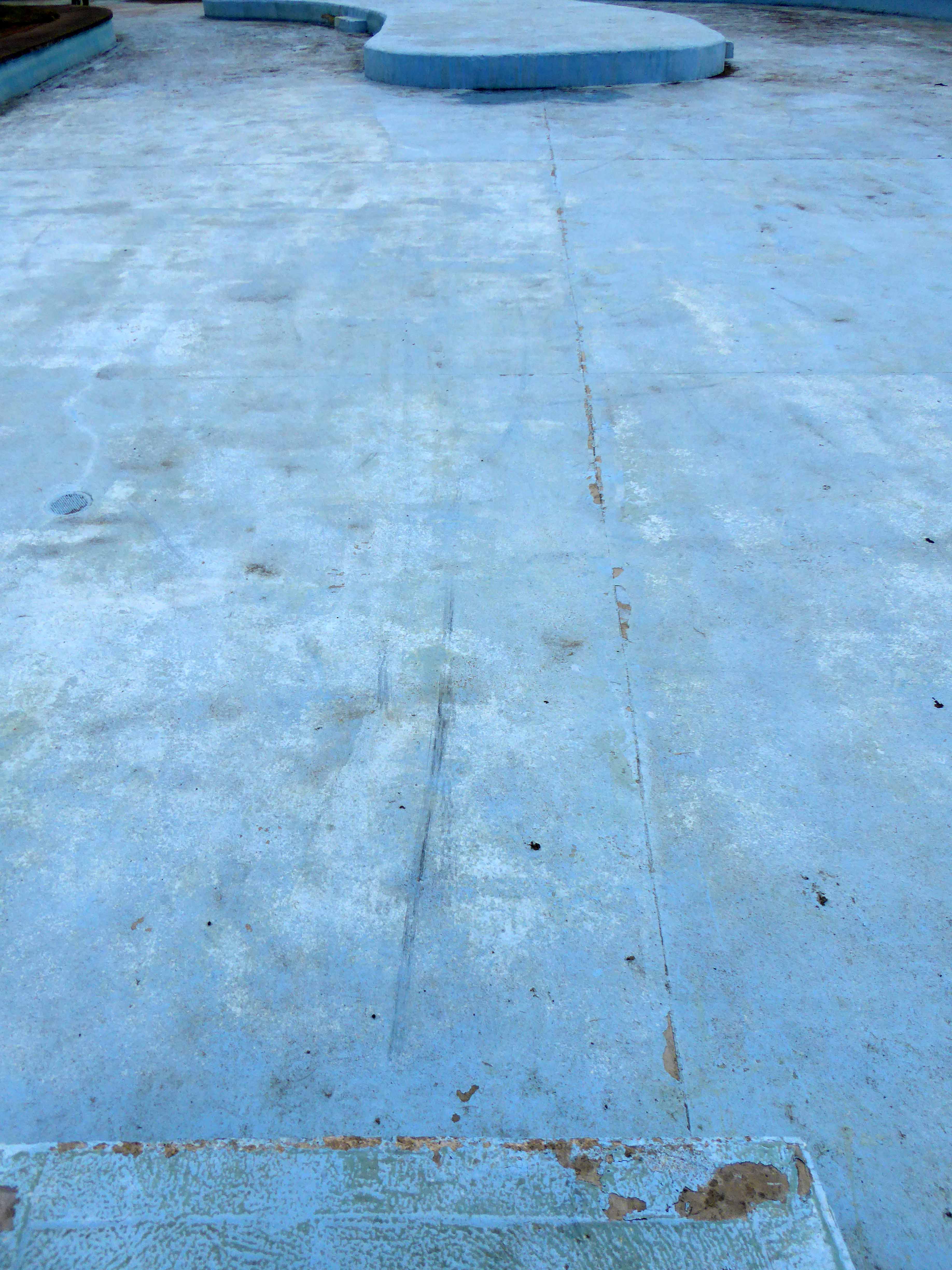
Scarborough Borough Council has resurfaced the paddling pool, re-concreted and repainted the bottom and the sides. The railings adjacent to the footpaths at Whitby Pavilion have been repaired and re-painted and seating next to the crazy golf has also been improved.

 Martin Pedley, Scarborough Borough Council’s asset and risk manager said:
The council has, in conjunction with the voluntary sector, invested both time and money in continuing to revitalise the West Cliff area in preparation for the summer season and the influx of visitors to Whitby.
1033839943West Cliff councillor Joe Plant added:

The improvement works that have been done both last year and this year is most welcome. Not only the visitors will benefit, but local people also and it again shows working in partnership with the voluntary sector does make a difference.

The Big Society in action, replacing railings improving lives.

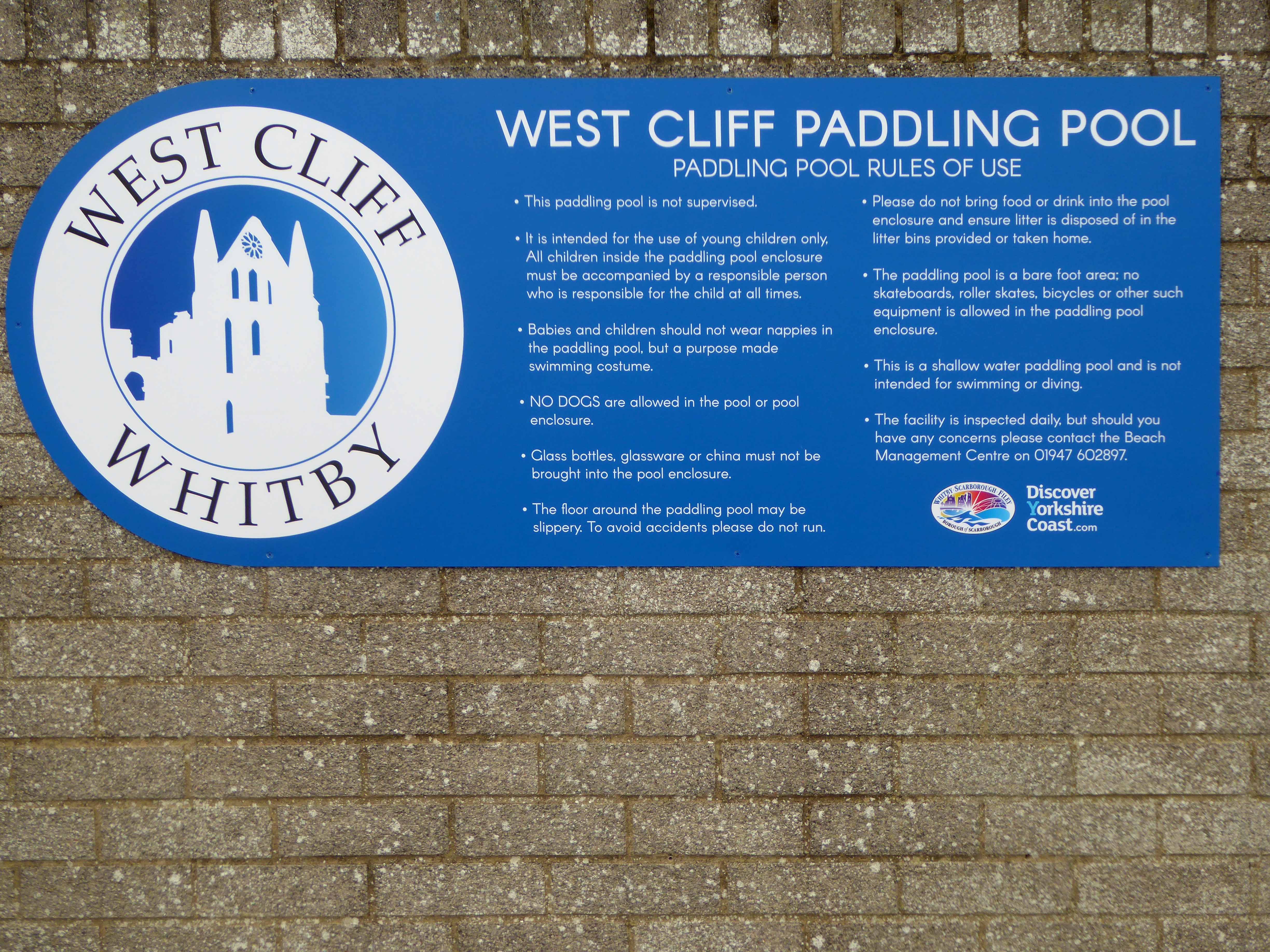
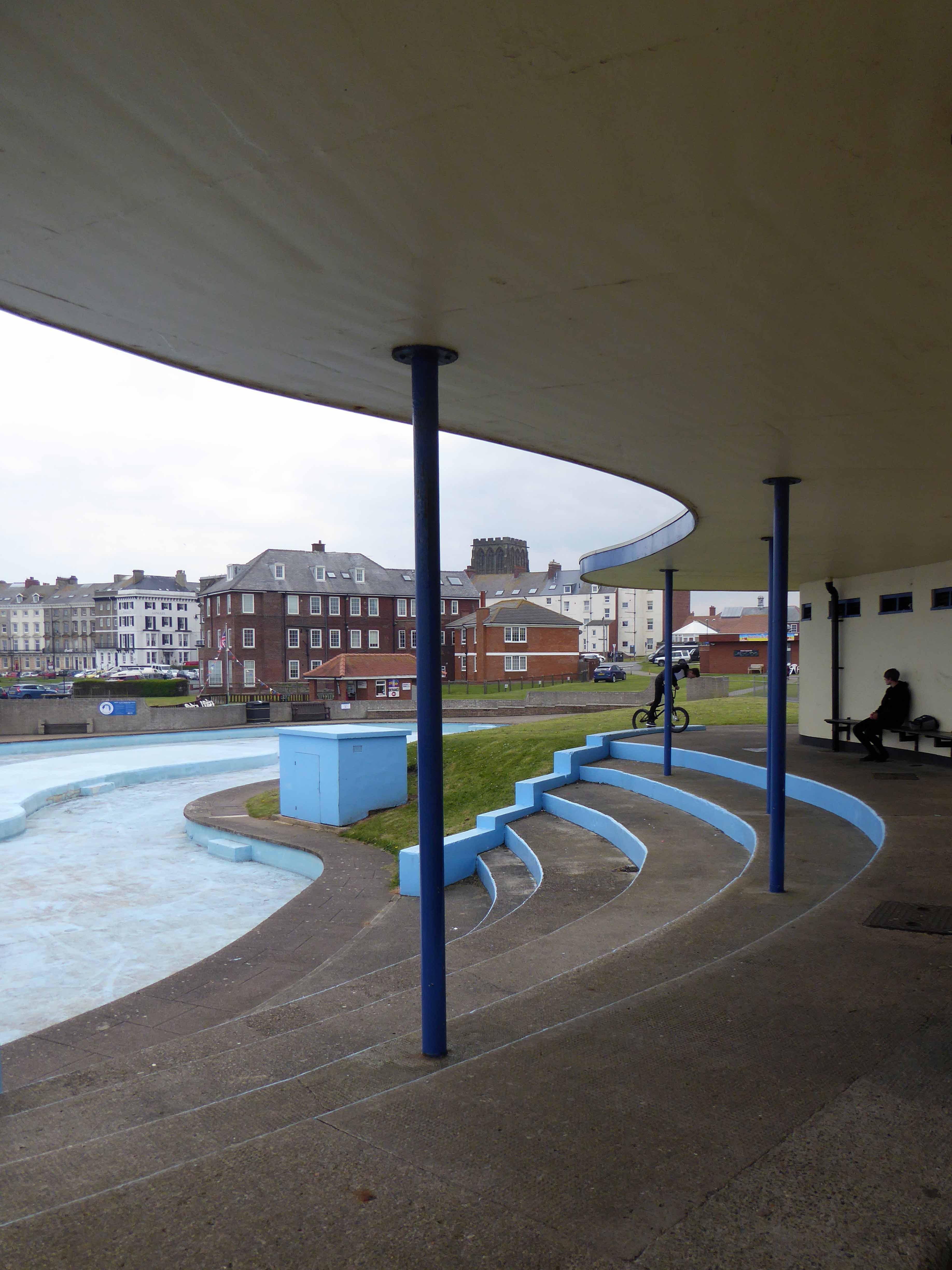
I arrived in late April the pool as yet sans d’eau, more of a pedalling pool than paddling pool as the BMX bandits invaded the space, in direct contravention of the rules and regulations.

P1150592

The water when present is some twelve inches deep, clearly better suited to larking, splashing and cavorting rather than performing The Twister, a  bewildering blur of twists and turns two and a half back-somersaults with two and a half twists during the 1.5 seconds between launching and entering the water at 40mph.

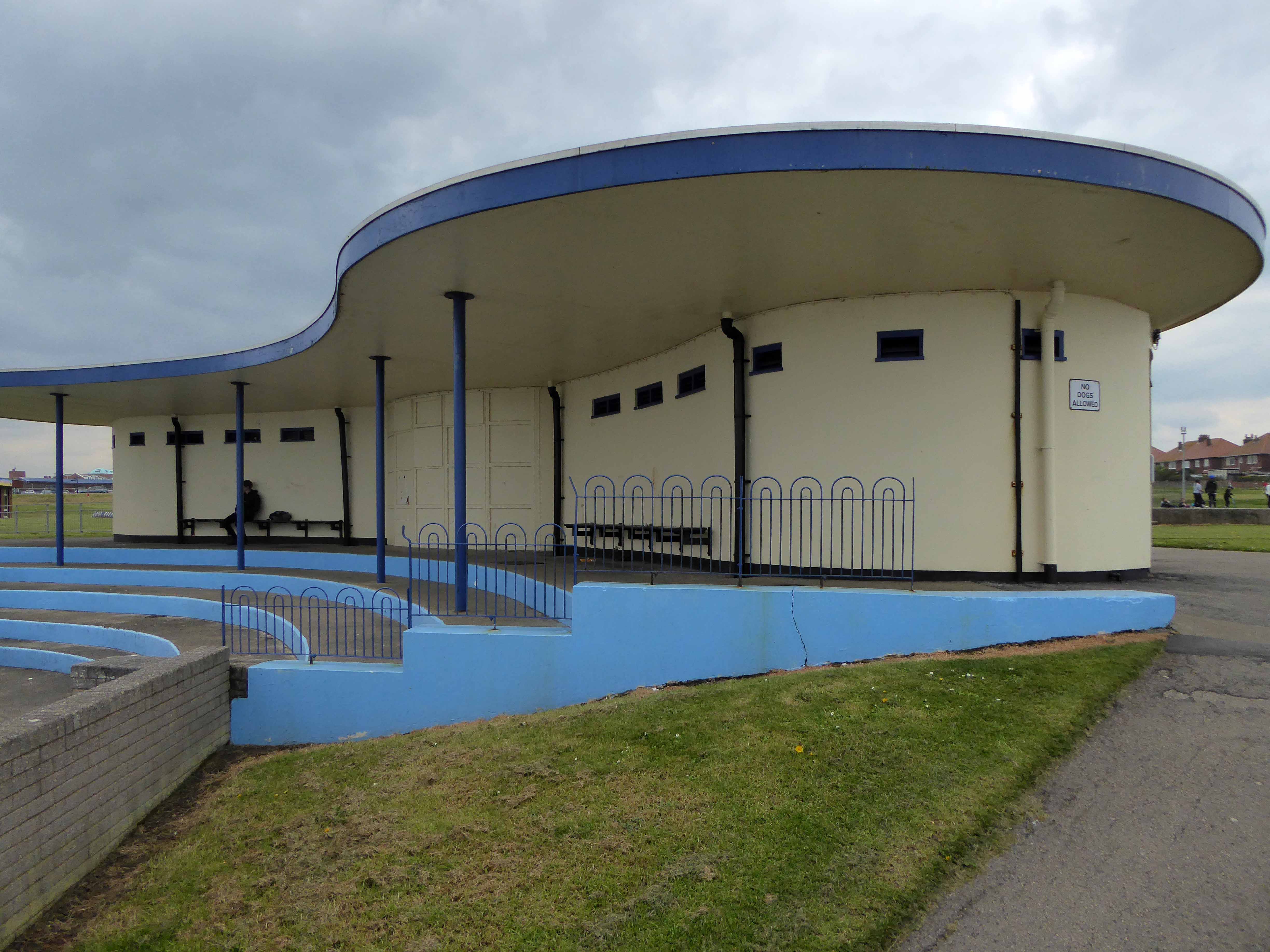
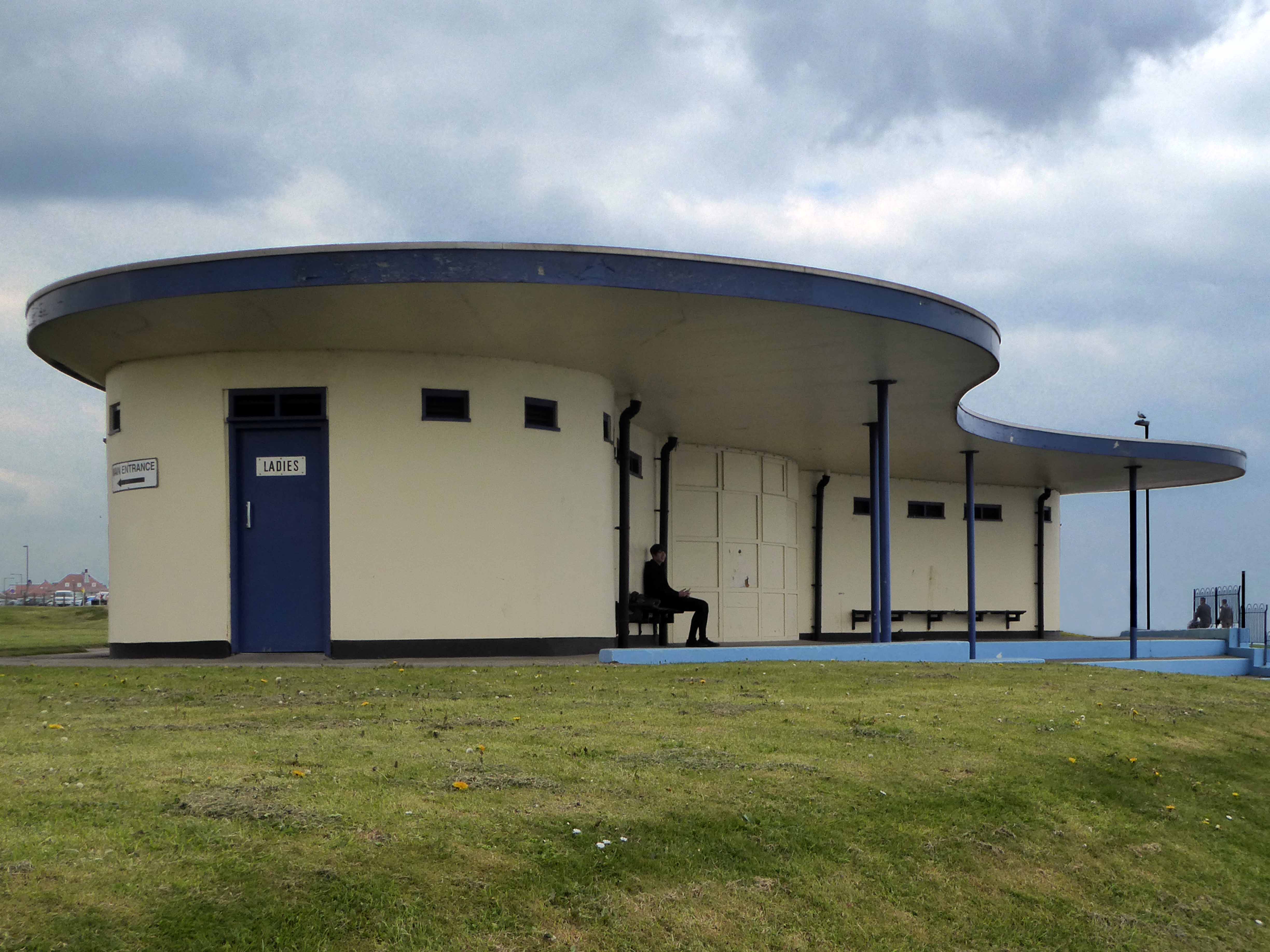
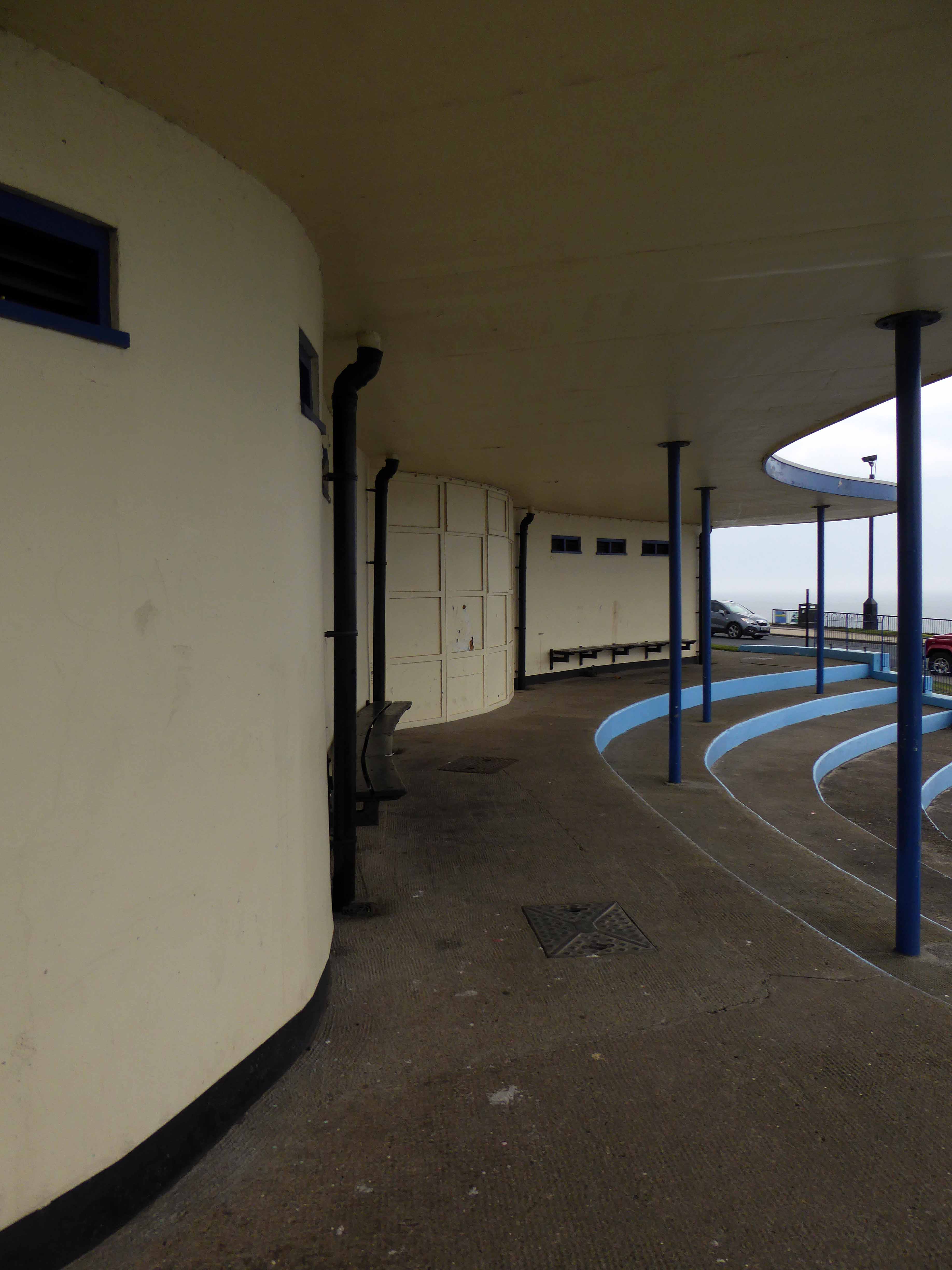
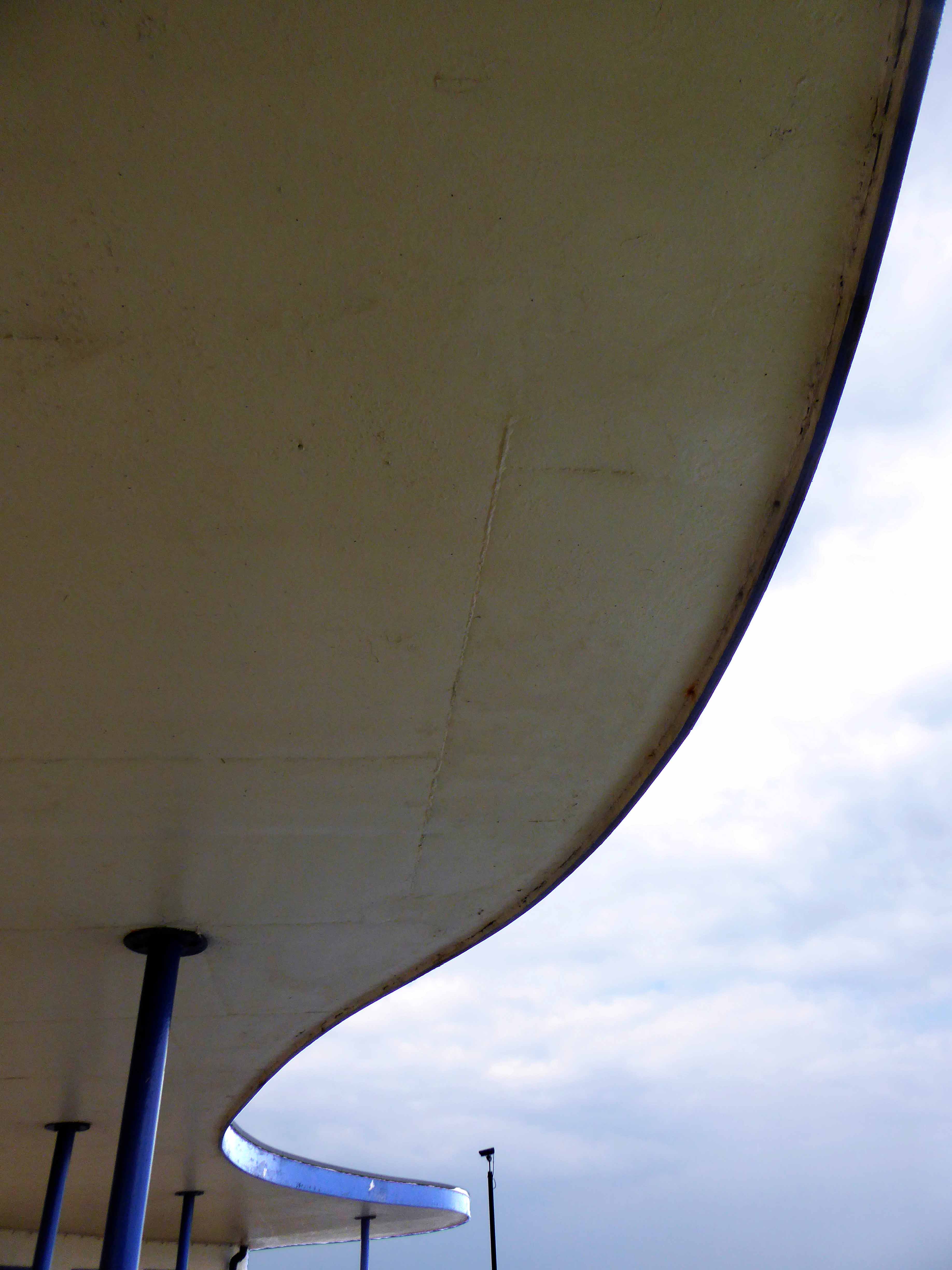
The pool is flanked to the north by a sweeping Lubetkin style, flat roofed pavilion complete with fully functioning toilet facilities.

Turn your back on the Abbey, go wild – take a wet walk on the West Cliff side.

P1150586

P1150587

P1150588

P1150589

P1150590

P1150596

P1150599

P1150603

P1150604

P1150605

P1150606

P1150607

Adolfine Ryland

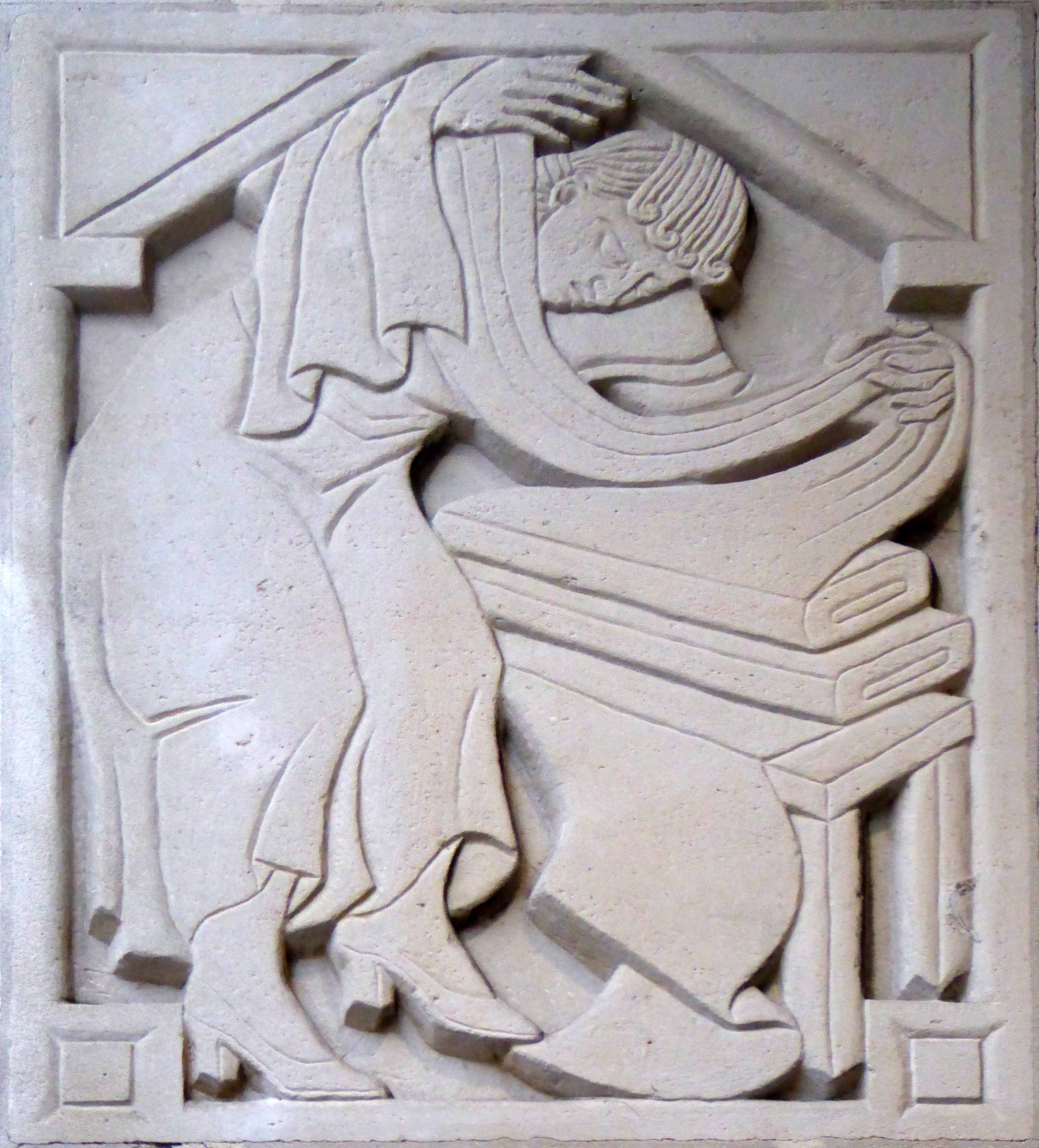
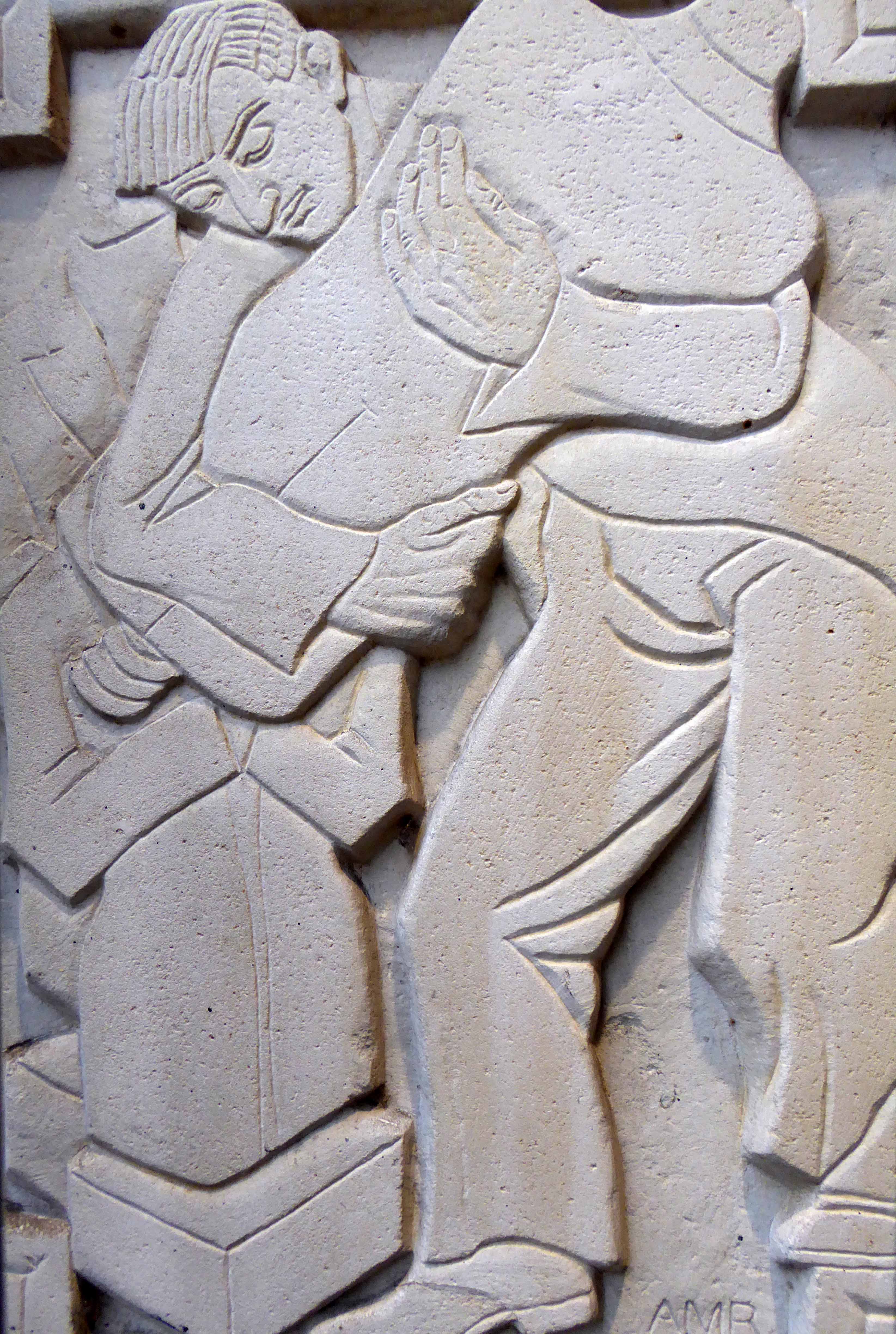
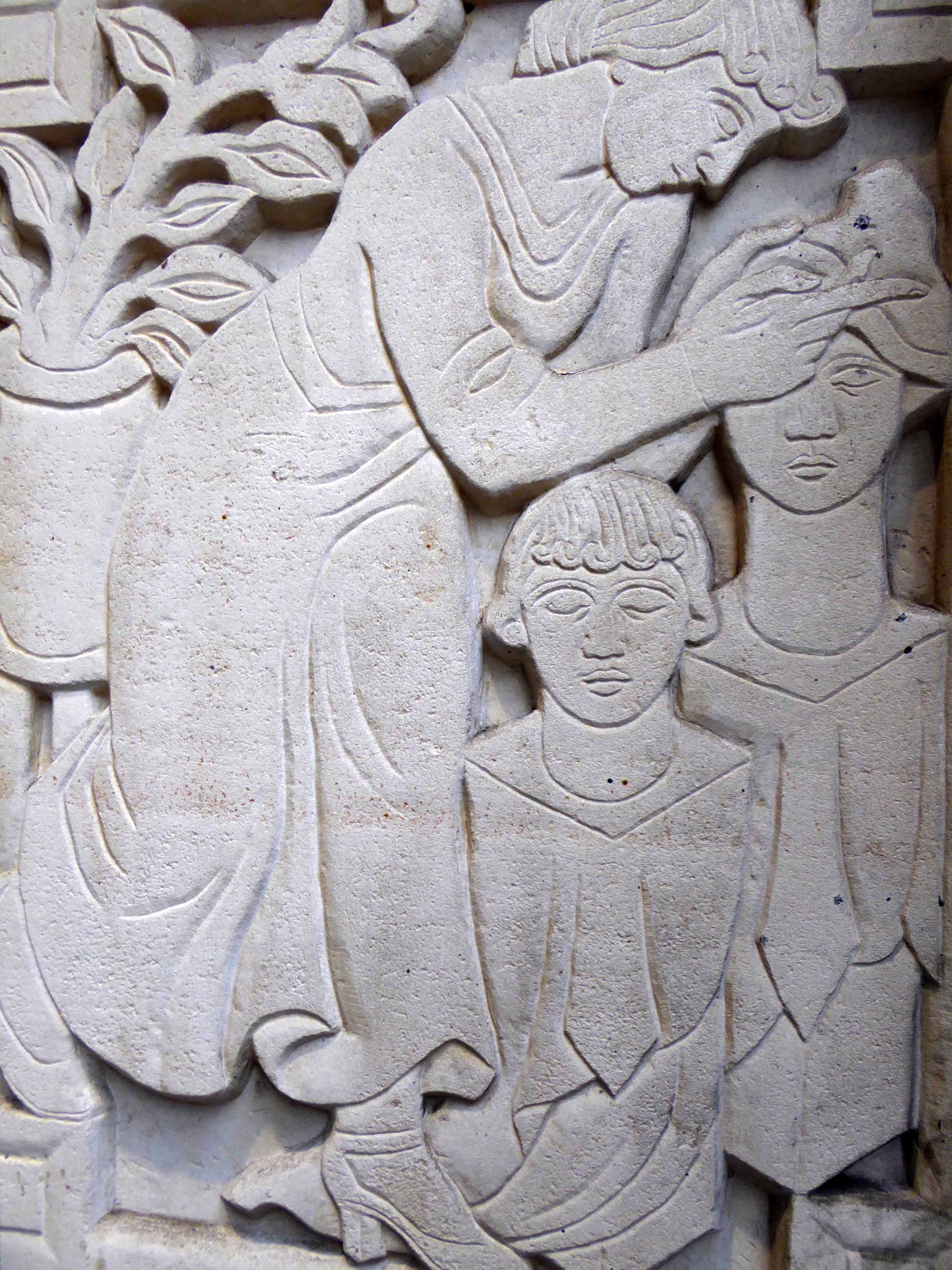
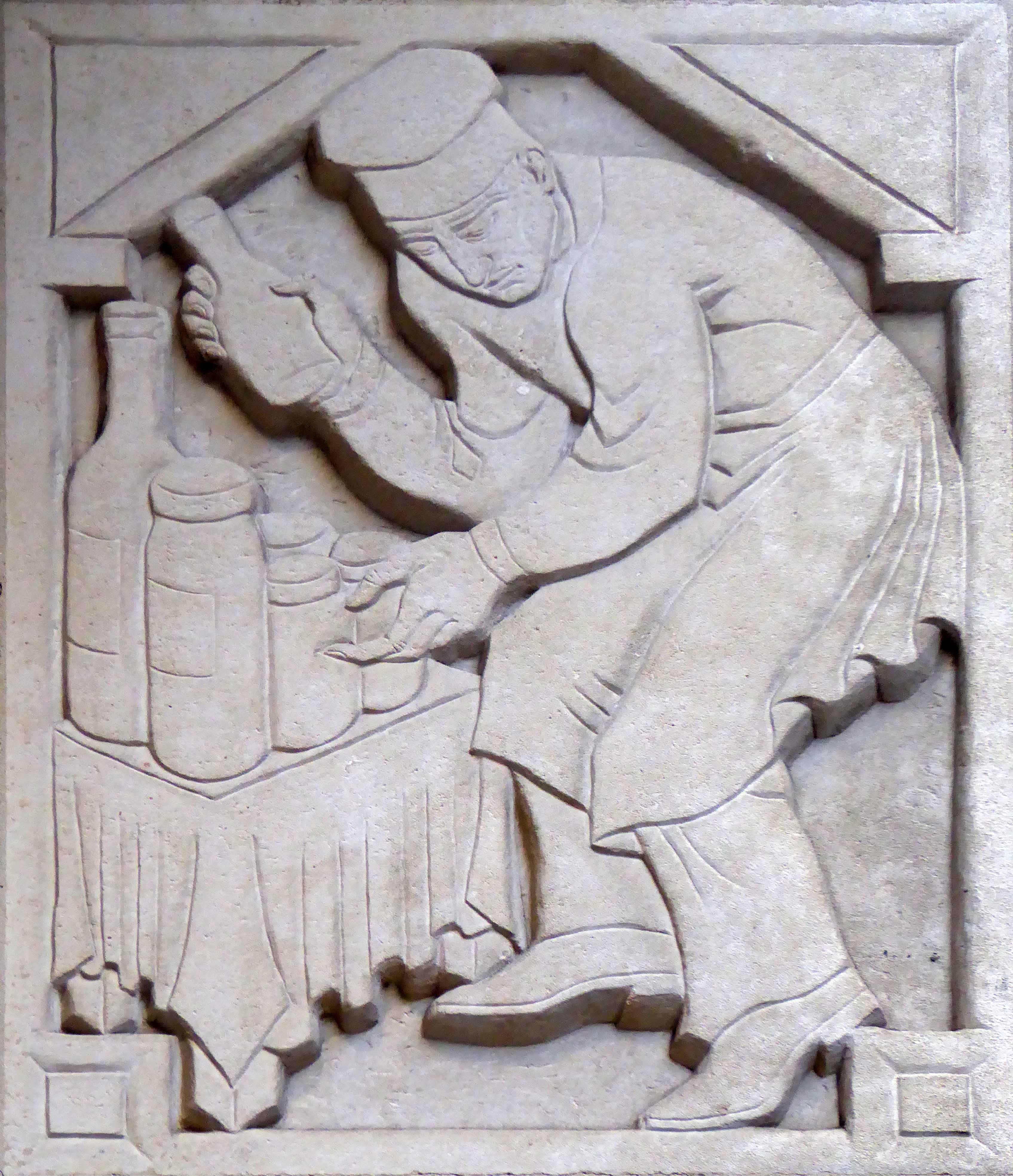
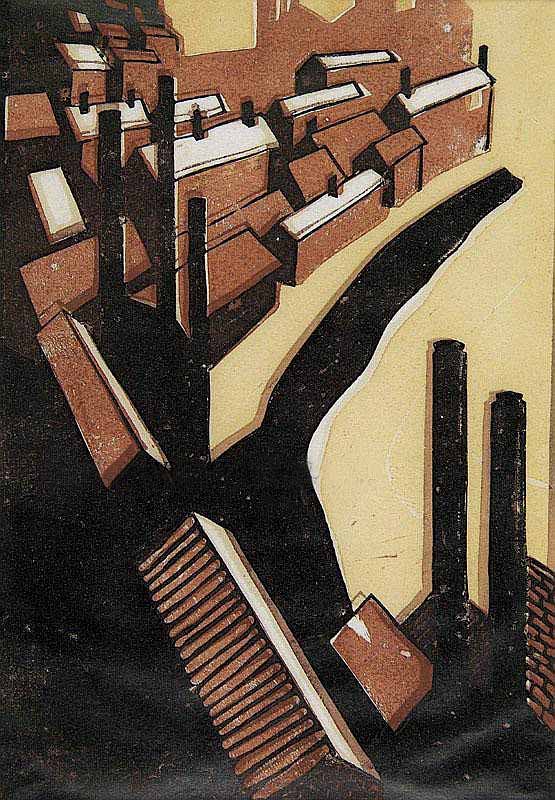
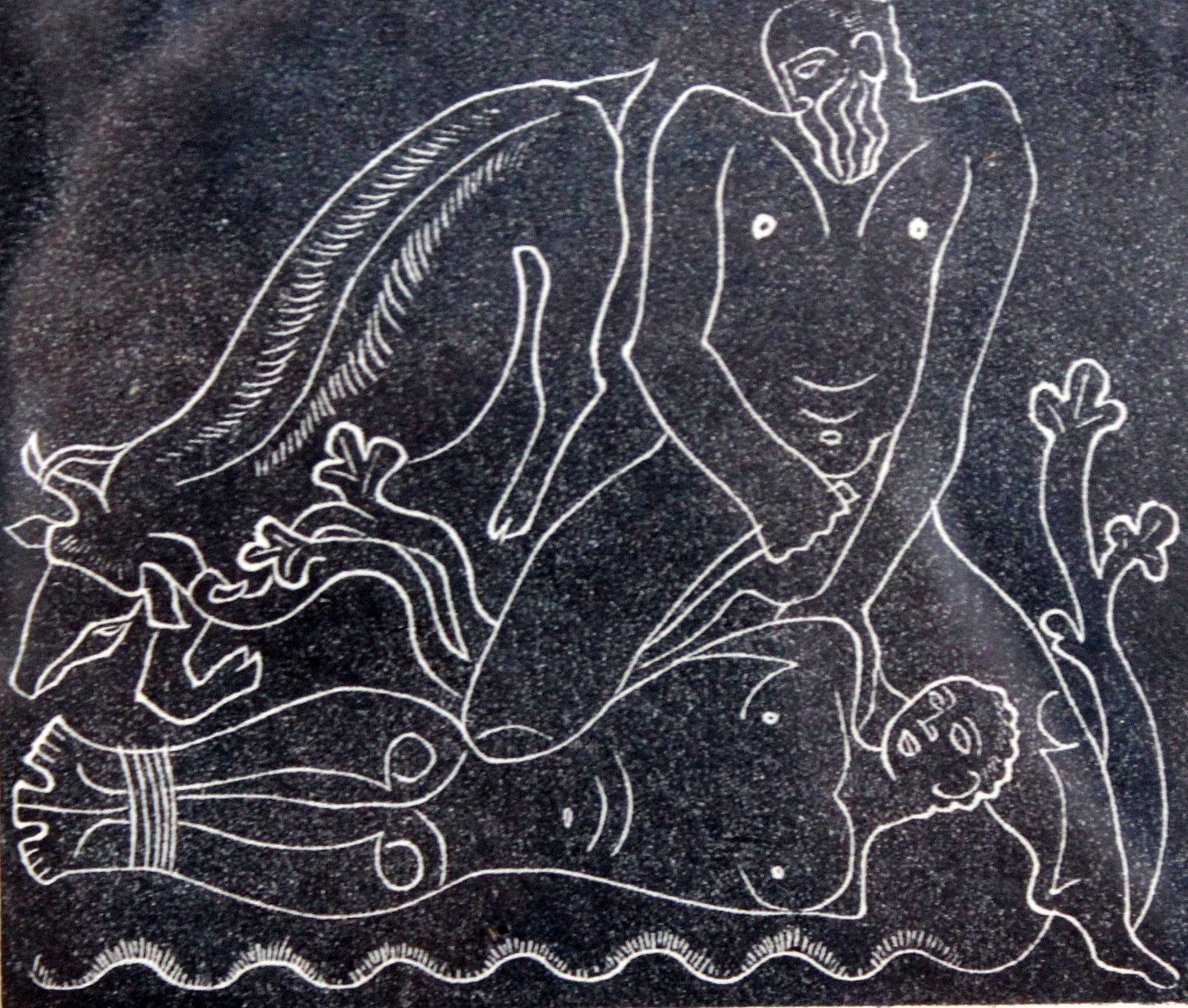
Adolfine Ryland worked as a printmaker, sculptor, painter and designer. Her practice across these different media was united by her keen-edged, modern style and inventive graphics. She had studied at Heatherley’s and at the Grosvenor School of Modern Art under printmaker Claude Flight. 
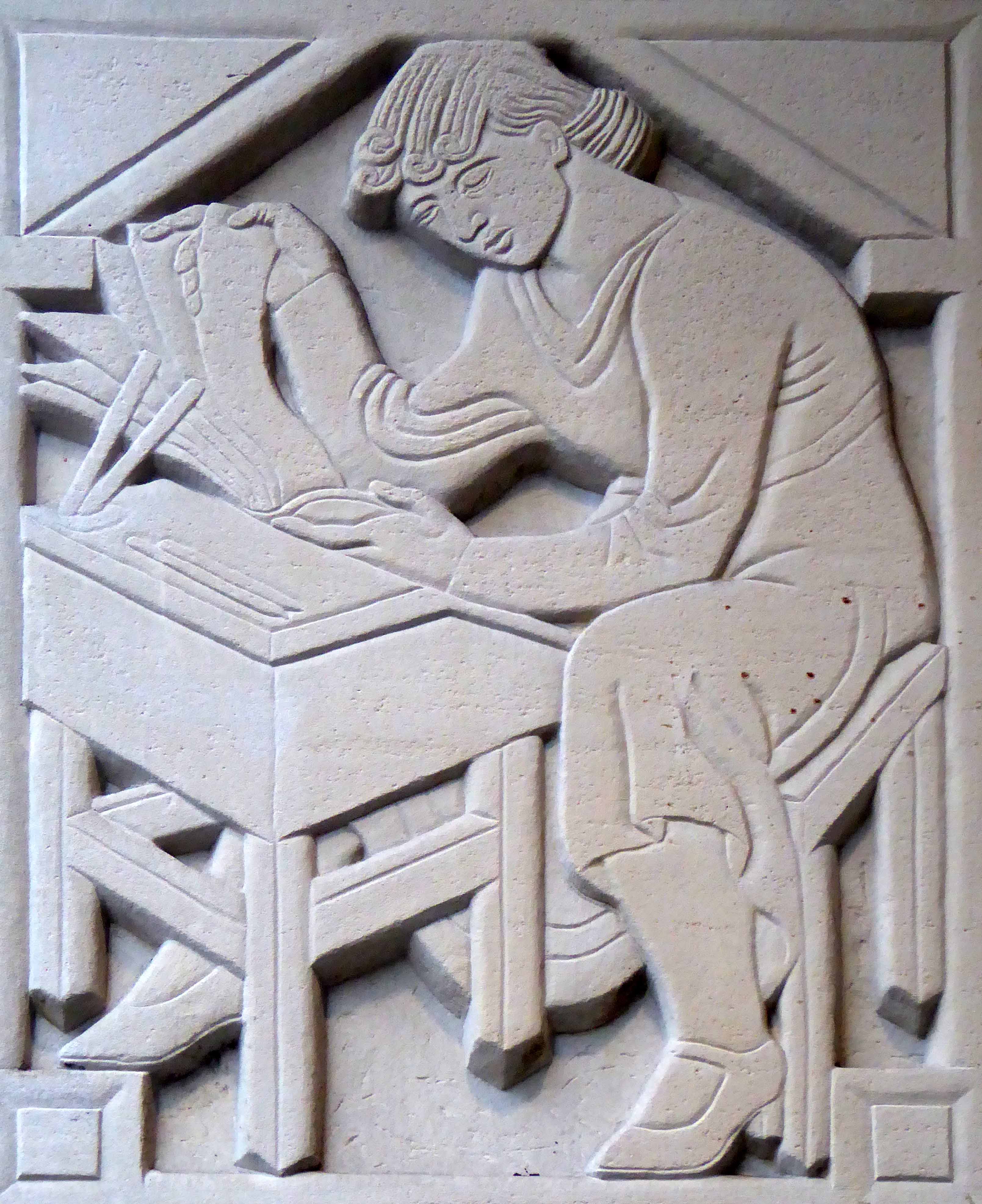
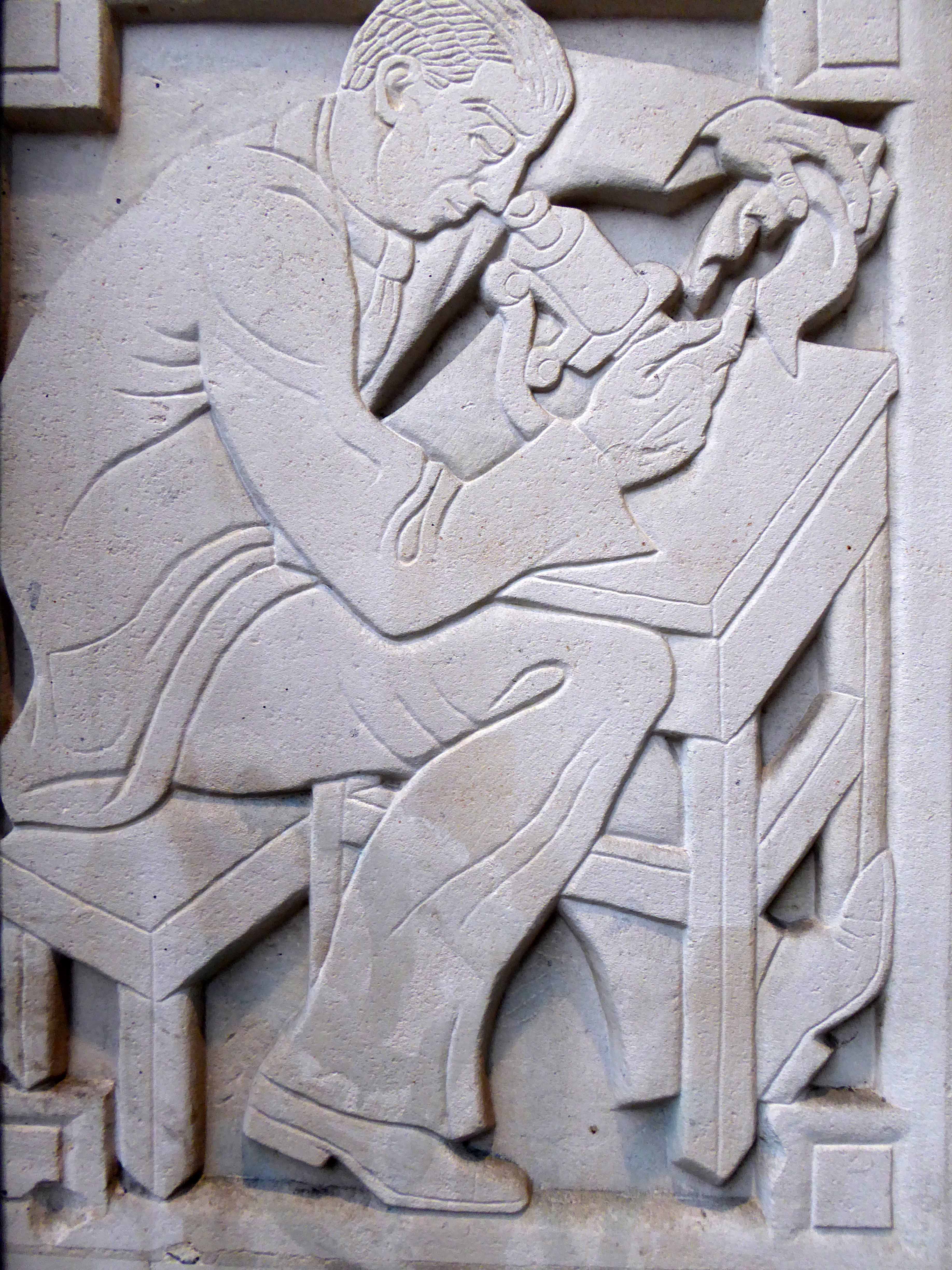
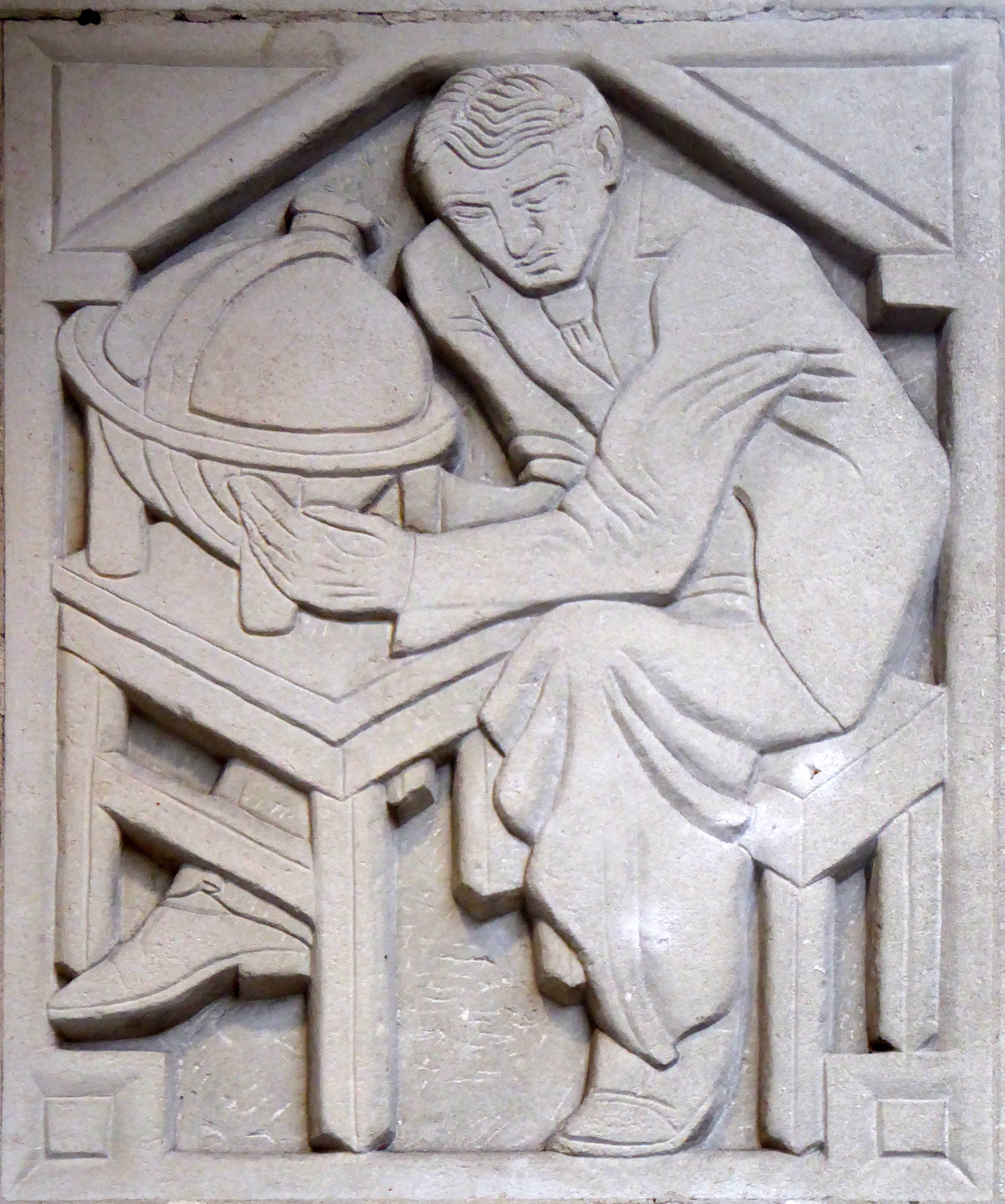
Ryland’s main exhibiting venue was the Women’s International Art Club, where she showed from 1927 onwards, becoming a member from 1936 to 1954. She also undertook public commissions, and worked for London County Council designing low reliefs for a number of buildings, among them the School of Butchers and St Martin’s School of Art. Her reliefs for the art school, which still decorate the entrance, show students at work. But Ryland’s work is not always easy to identify as she sometimes signed herself ‘Koncelik’, her mother’s maiden name.
In 1987 the Michael Parkin Gallery in London held an exhibition Printmakers of the 20s and 30s and Adolfine Ryland. On show were Ryland’s paintings, drawings, prints, sculptures and designs for book jackets and posters. Amongst them were two designs advertising London Underground, which speak of an optimistic age of efficient, modern public transport to the new suburbs.

It says so here

I was sauntering down Charing Cross Road on Saturday last, minding my own and everyone else’s business, then perchance I chanced upon a series of low reliefs, tucked neatly away in a nearby portal.

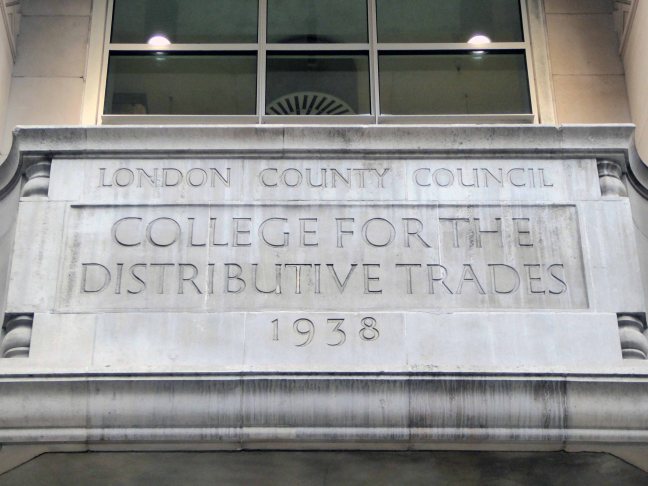
The London County College for the Distributive Trades – rightfully adorned with appropriate public art depicting the lasses and lads, going about their very practical business.

These are the work of Adolfine Ryland.

The building is currently in use as Foyles Bookshop.

p1130719

p1130720

p1130721

p1130722

p1130723

p1130724

p1130725

p1130726

Returning home, I did a little online research, turning these examples of her work. As is often the case with those figures considered to be on the margins of the big bad Art World, time and the subsequent neglect, conspire to leave little by way of evidence of their invaluable efforts.

This is our loss.

149557_6d70c380-a7ab-4c68-9103-bf7788fc3391_-1_570

h0433-l06066177

original