One man who saw the wisdom of building a road infrastructure to deal with high volumes of traffic passing through Halifax and to provide convenient links to the M62.
That man was prominent town councillor John Burdock.
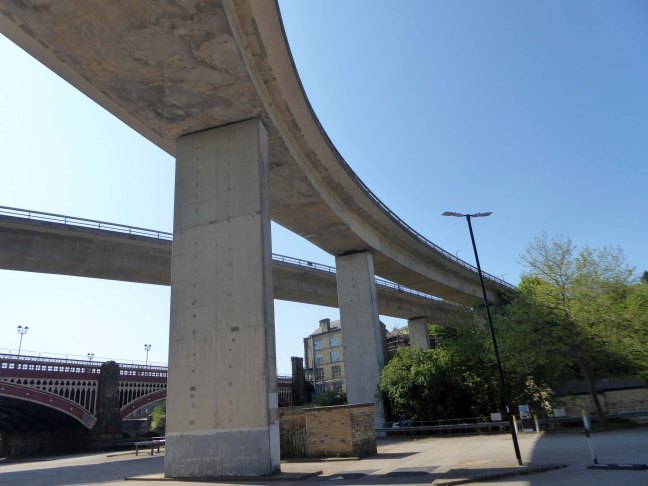
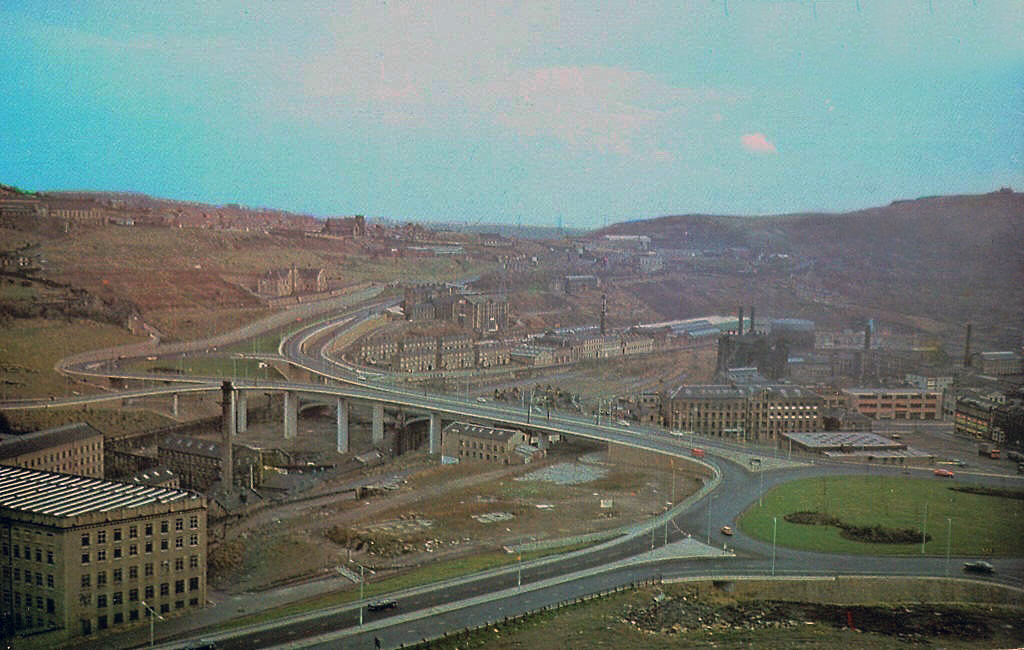
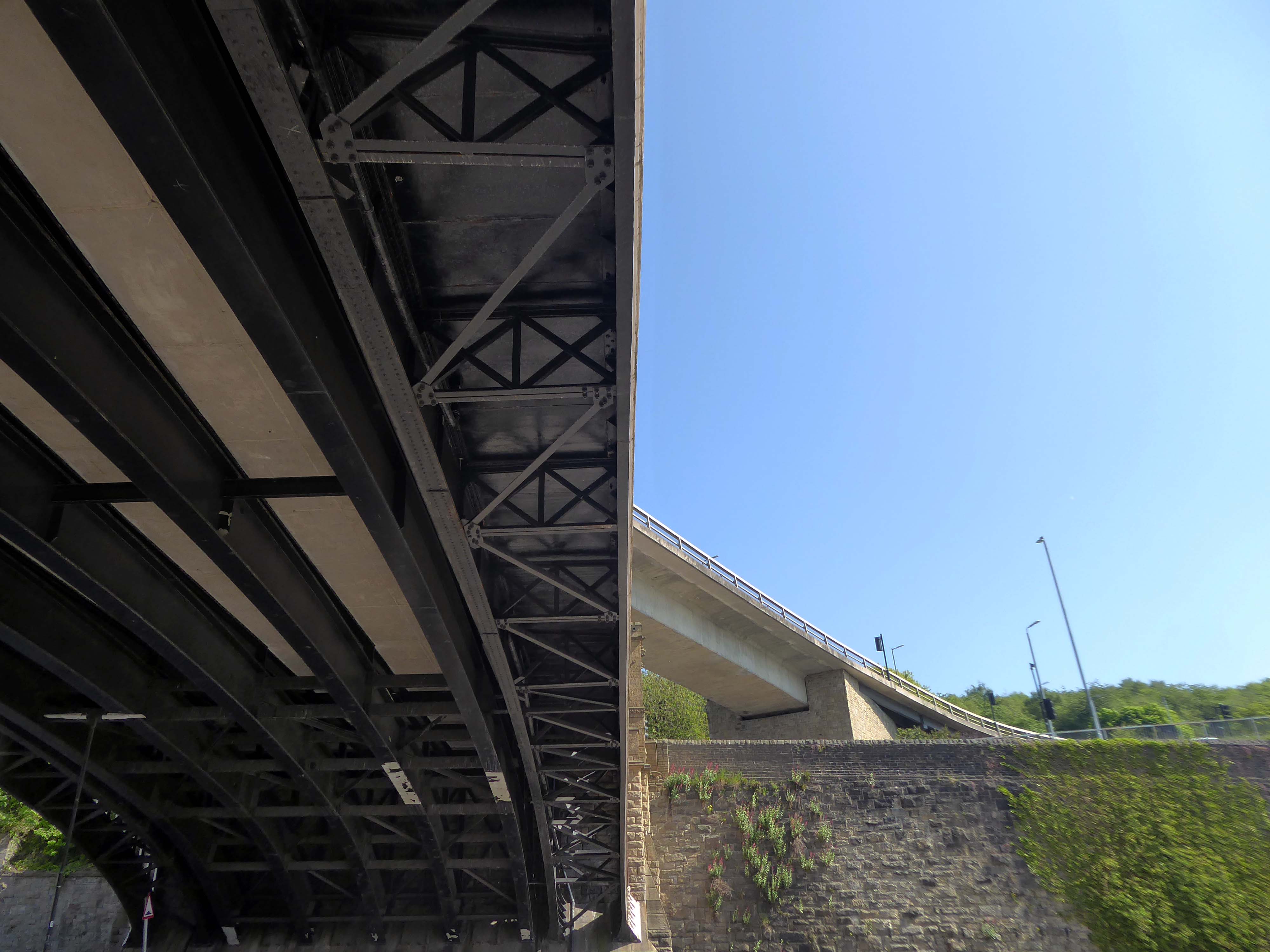
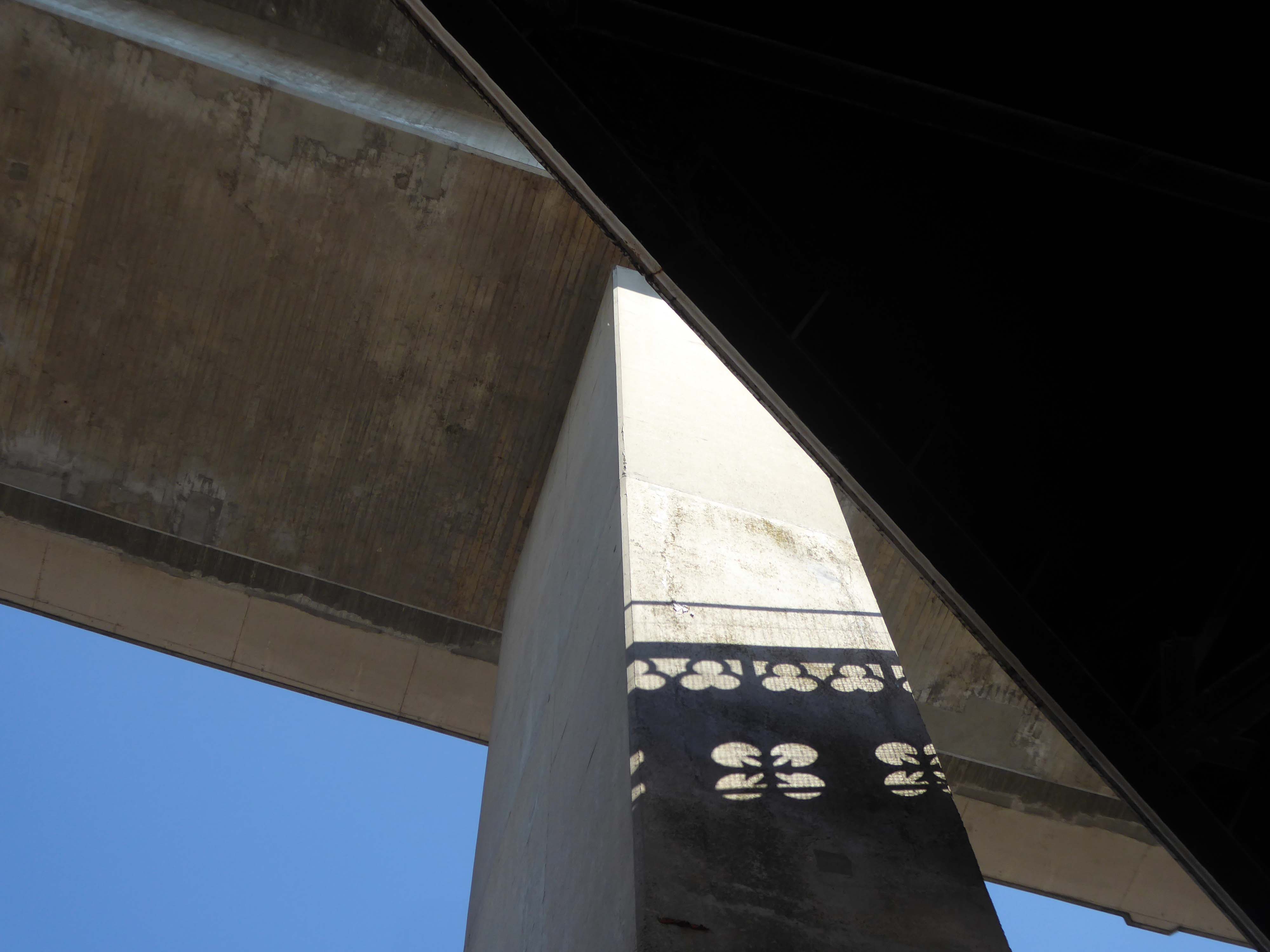
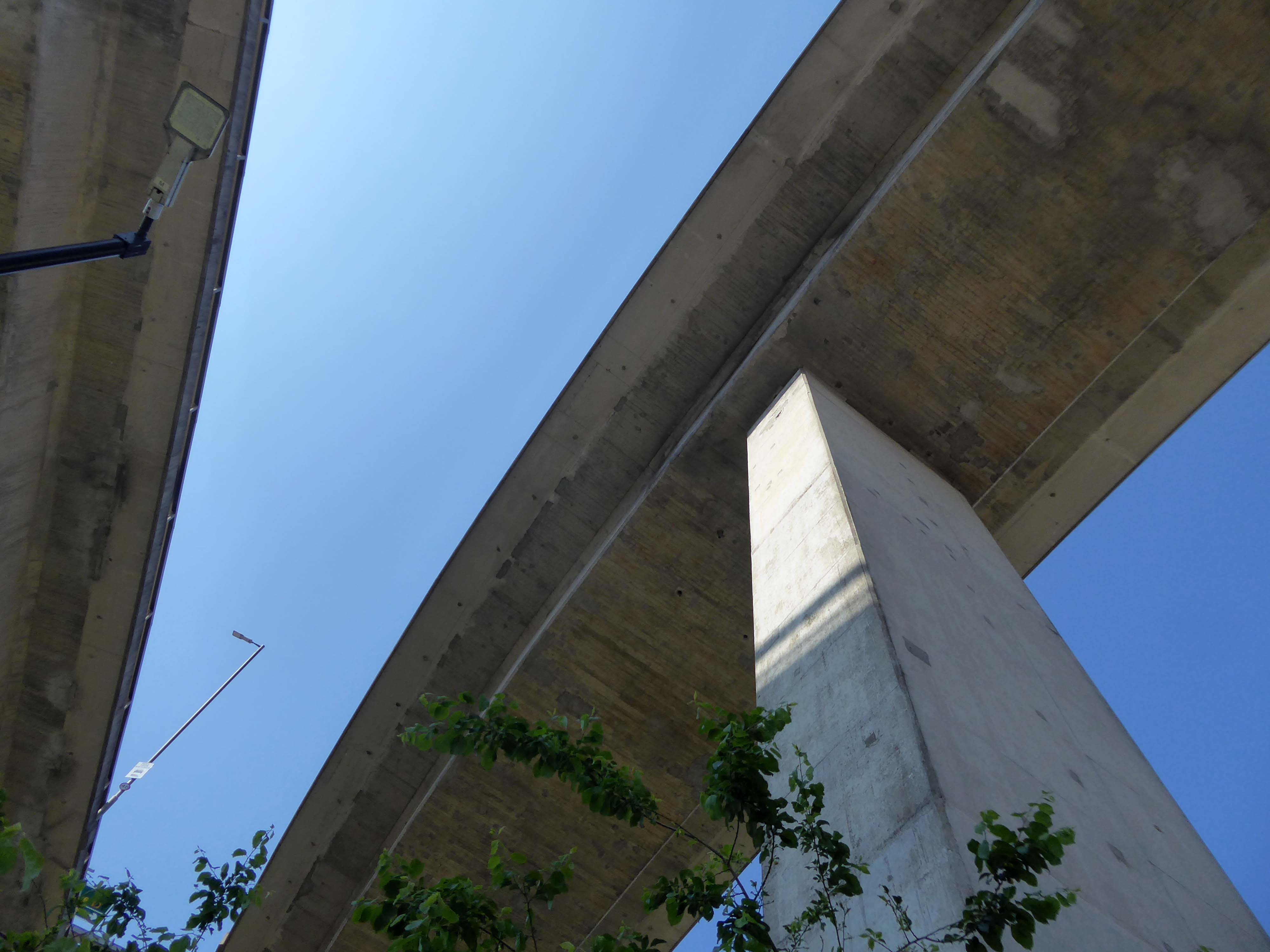
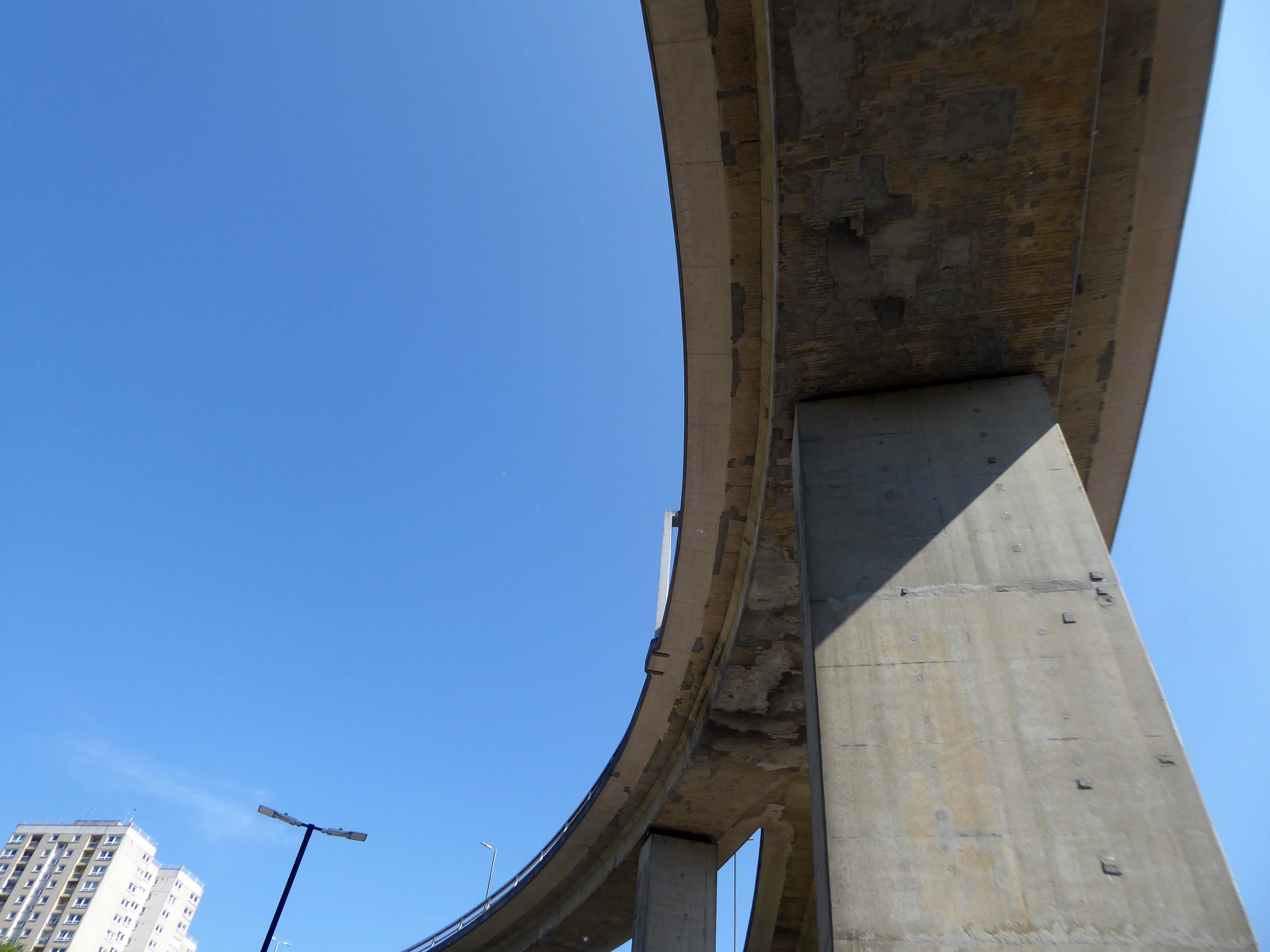
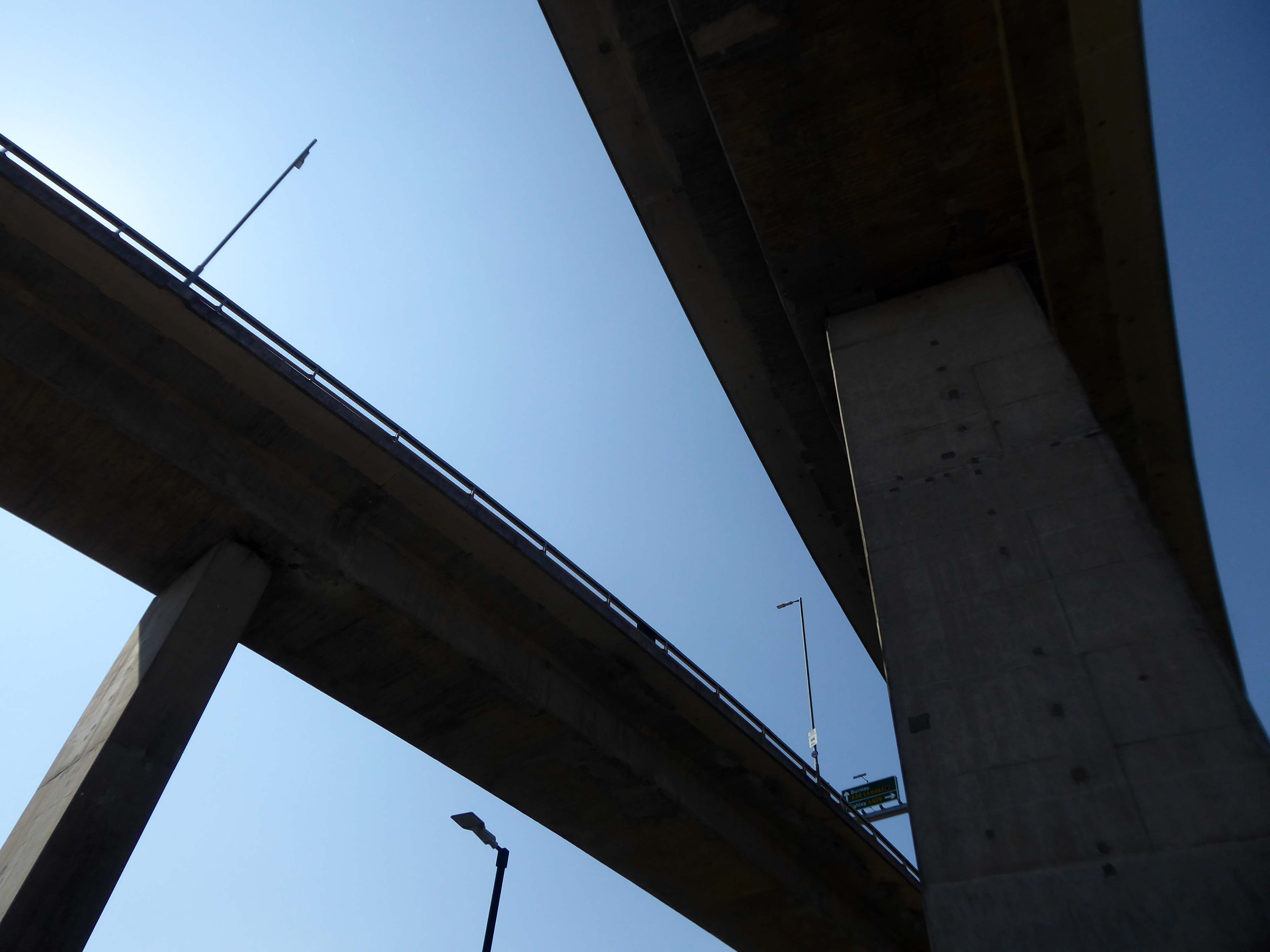
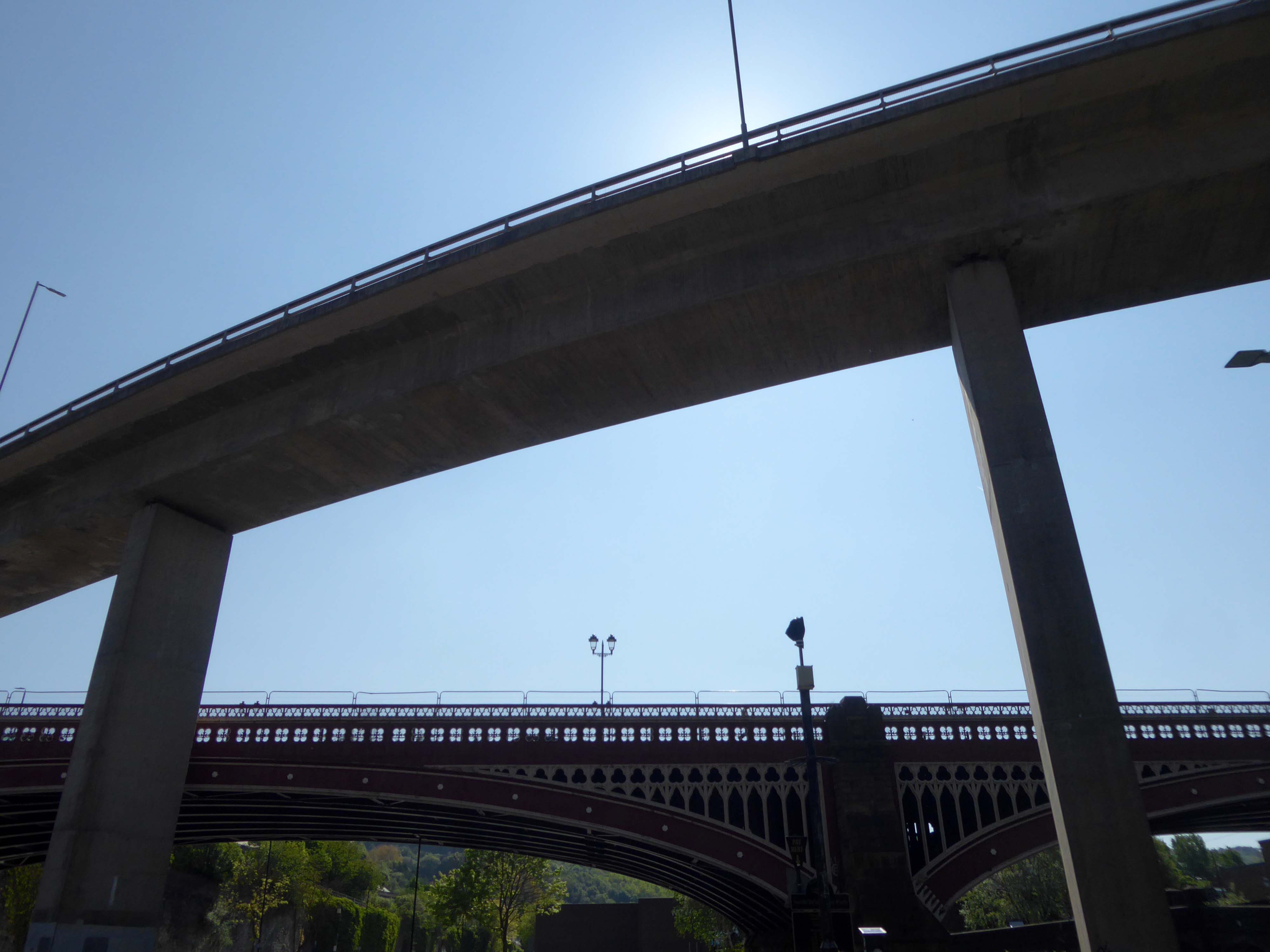
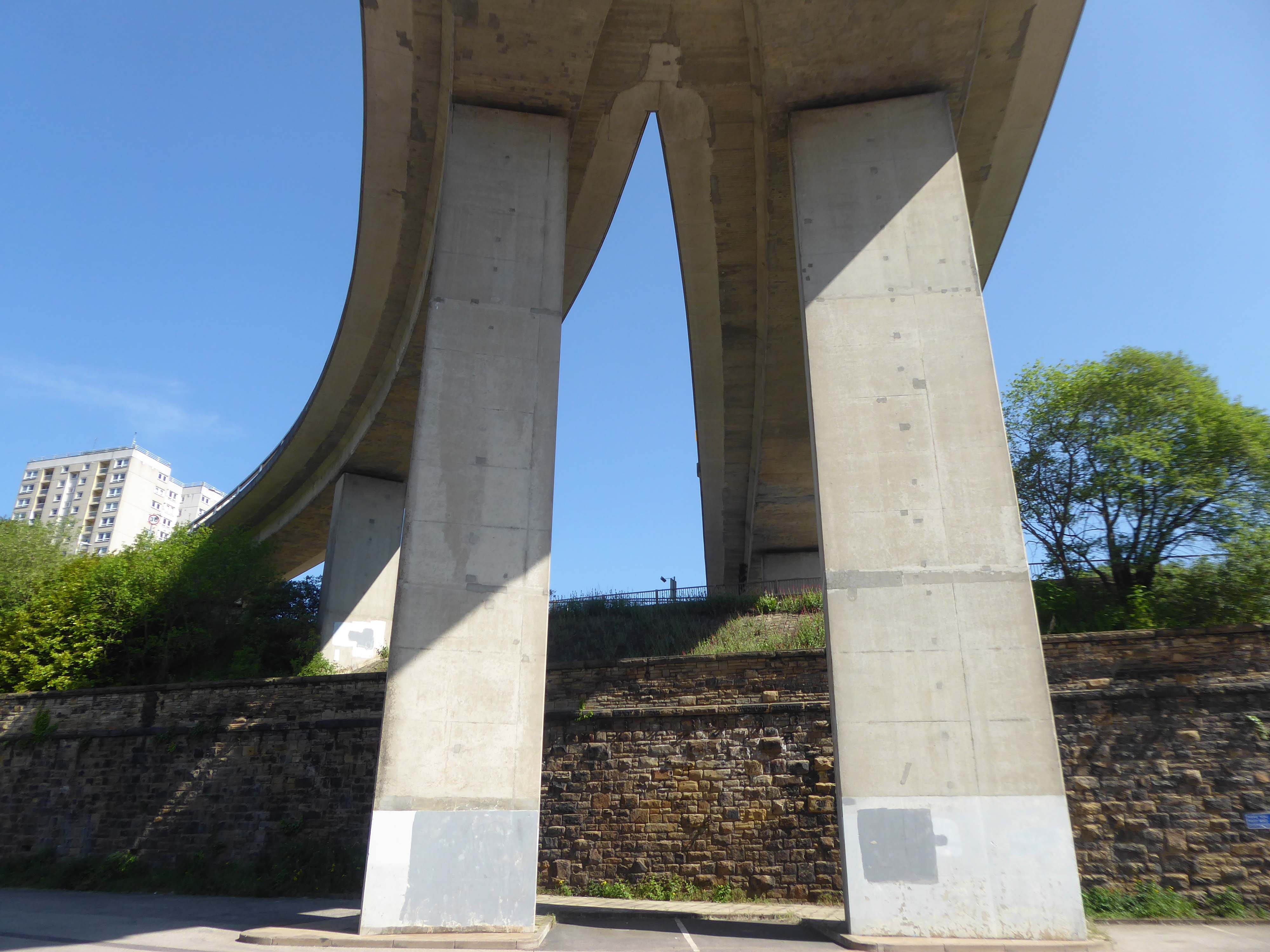
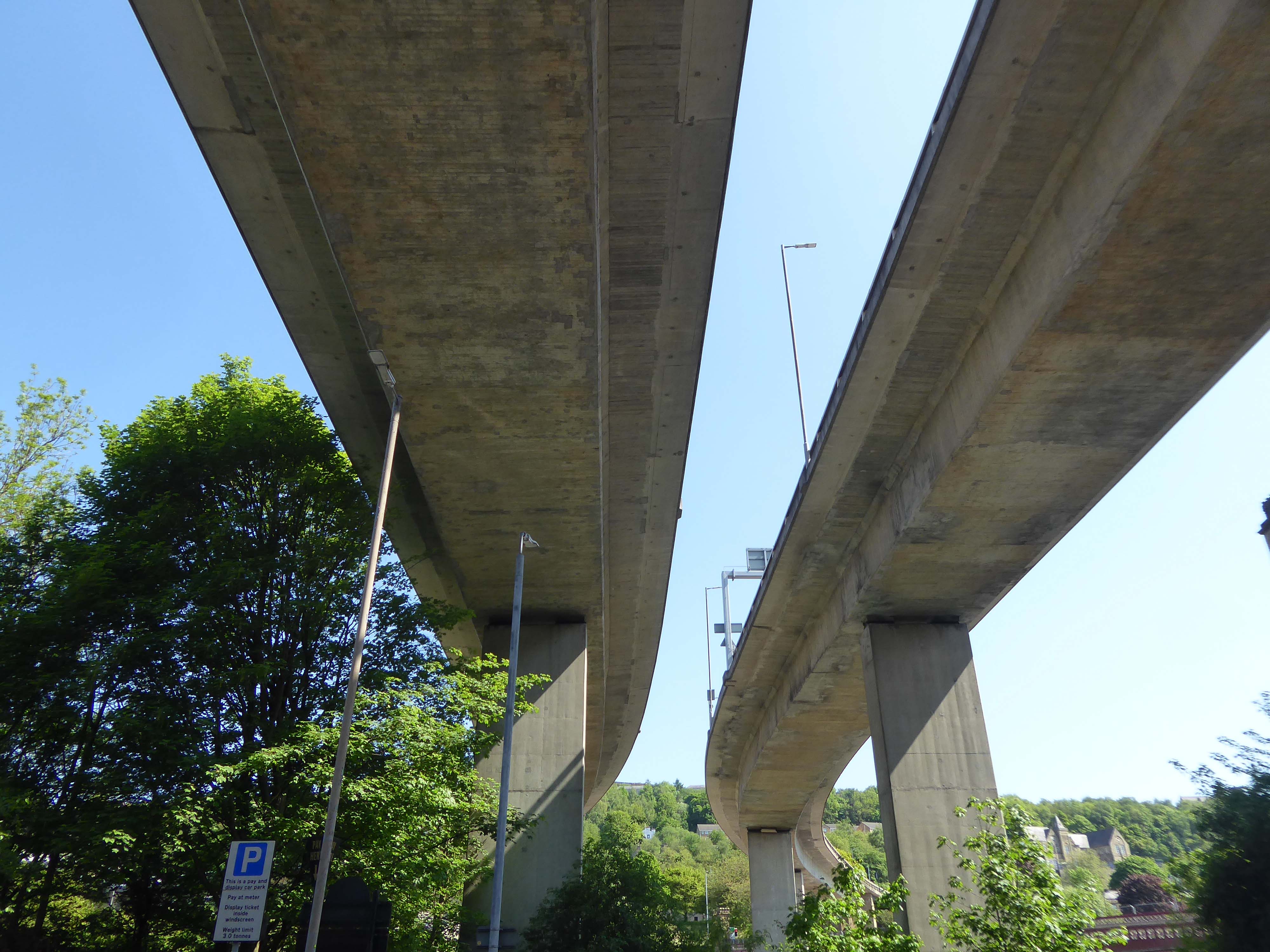
Burdock Way, the modern flyover system, was opened in 1973 to take the A58 and A629 traffic over the River Hebble.
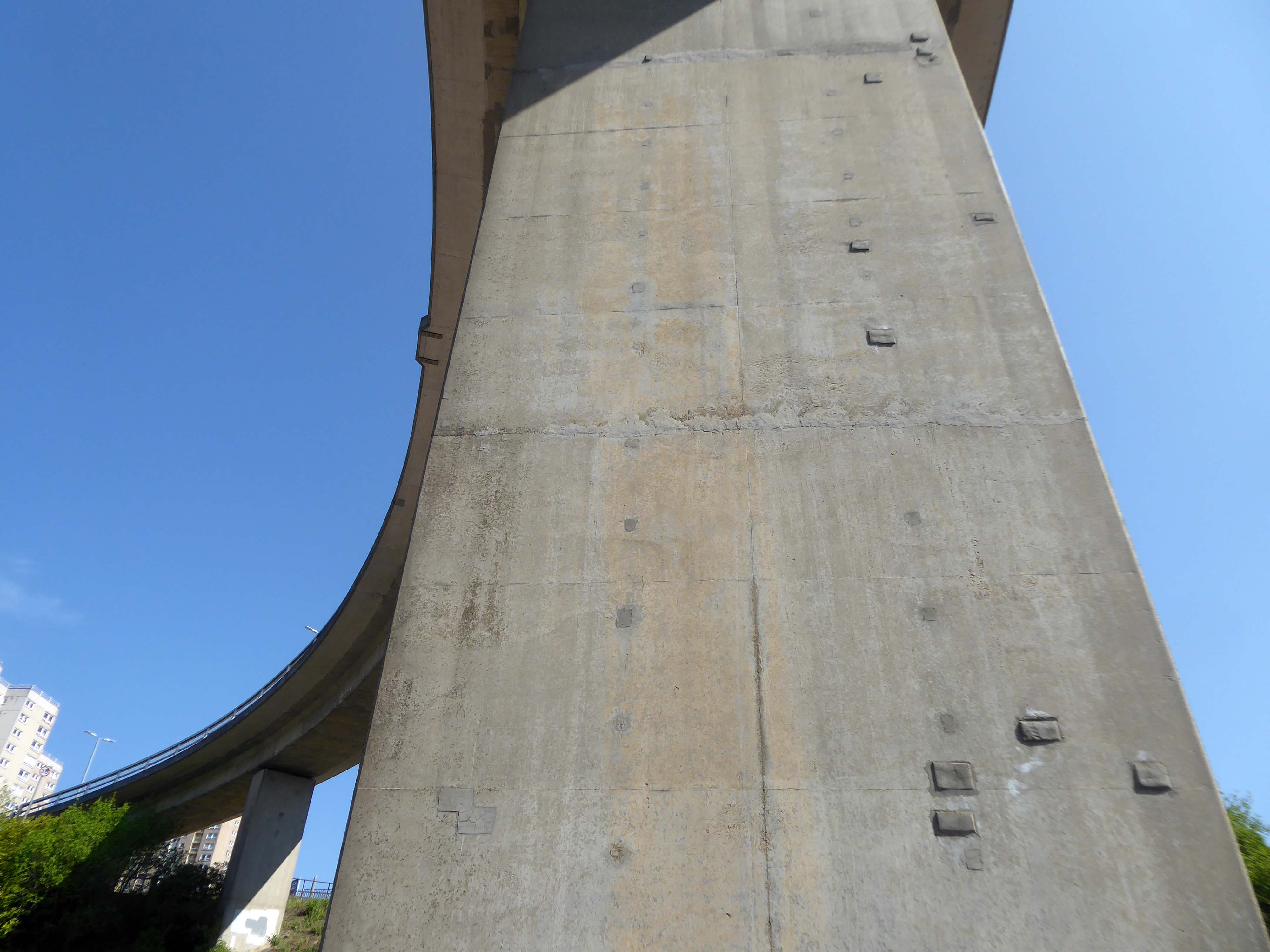
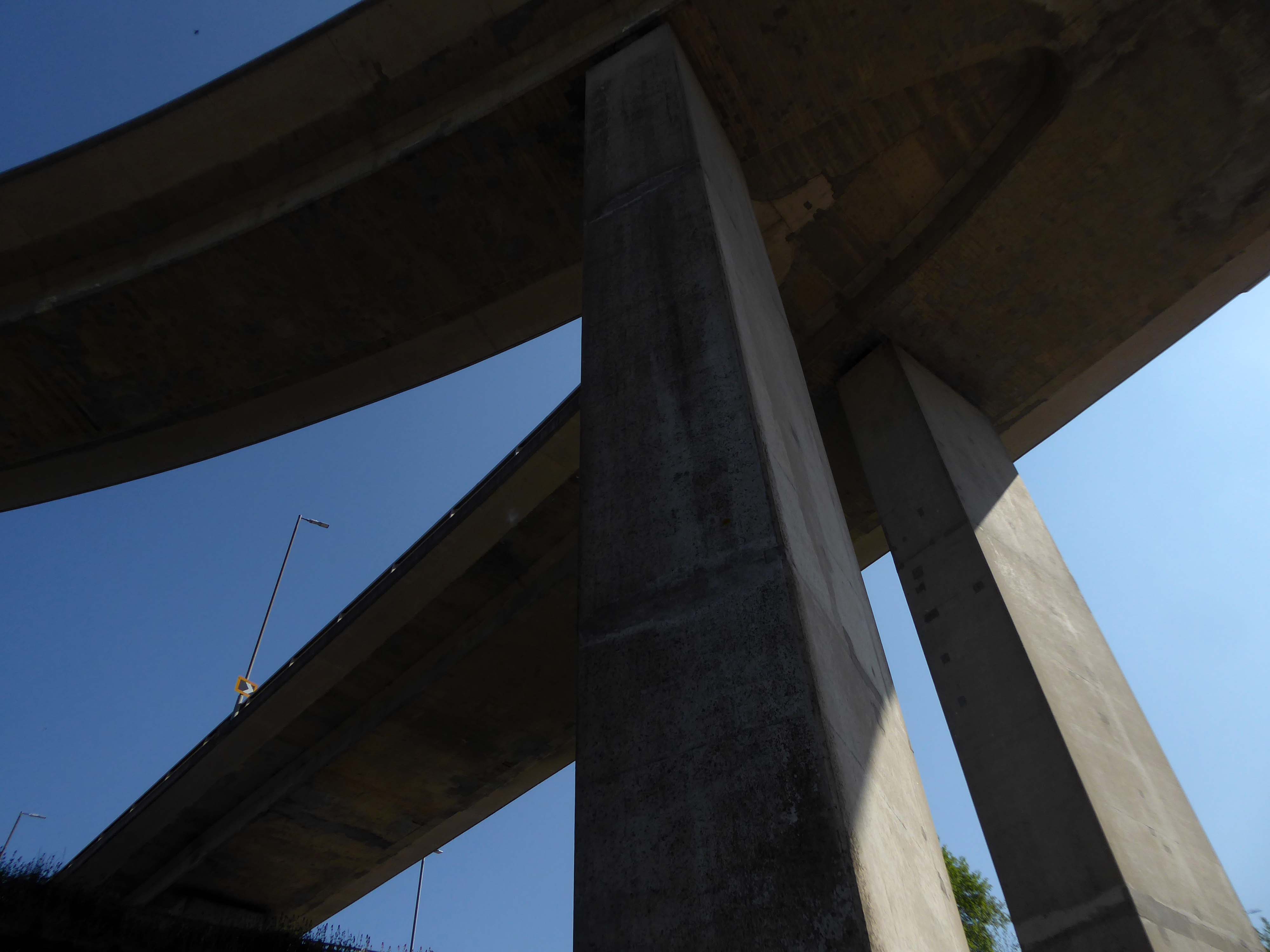
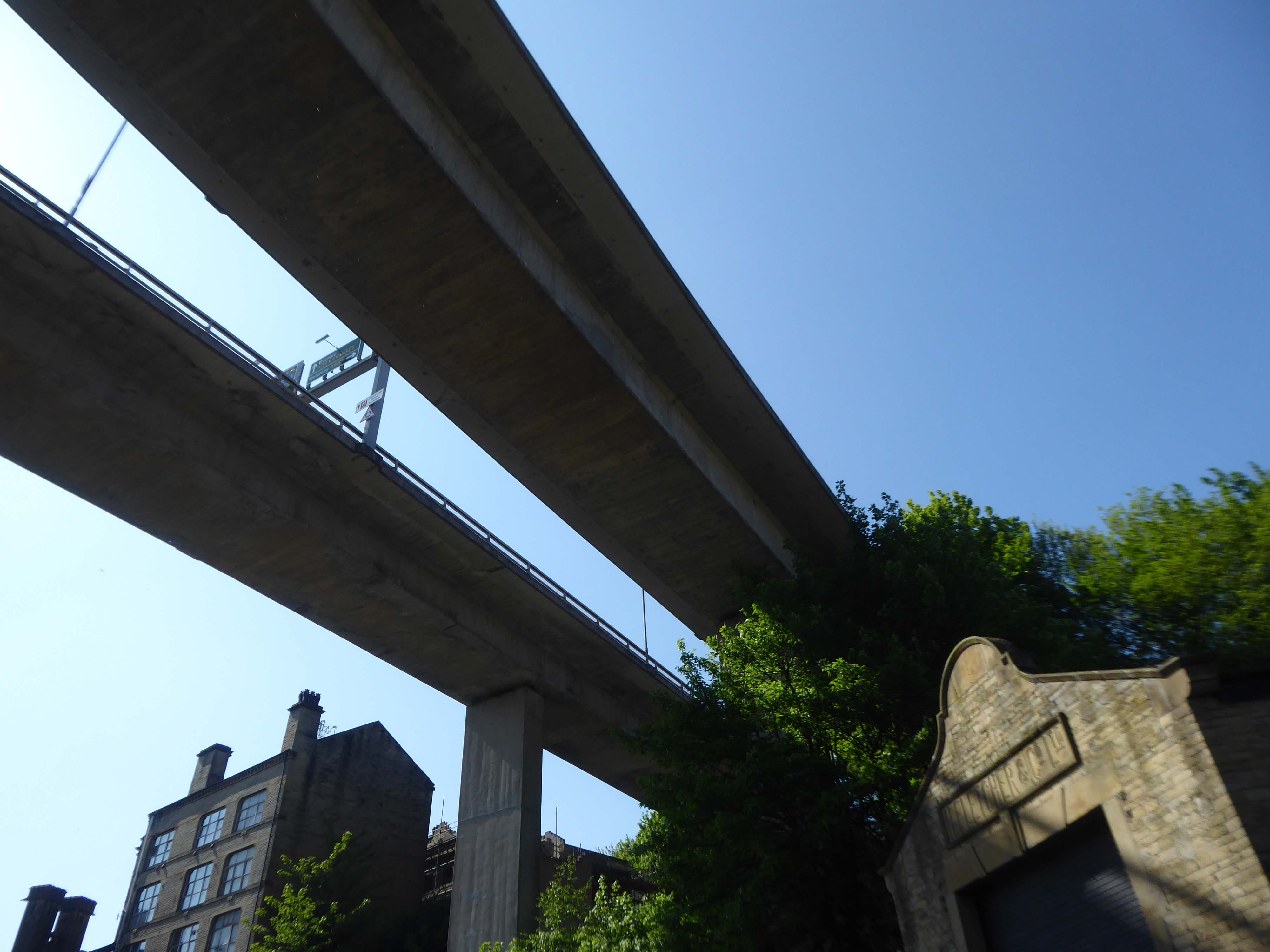
Faced with the problem of very high volumes of through traffic in its town centre, and with the impending construction of the M62 too far to the south to provide relief for the town, Halifax needed a bypass. The steep sided valley that the town centre inhabits prevented a conventional road from being built around the town, and so in the early 1970’s construction began on Burdock Way – one of the most adventurous relief road schemes built in Britain, certainly by a town the size of Halifax.
Only one phase of the futuristic road was ever built, but what exists is a partially grade-separated dual carriageway that runs through deep trenches and over tall viaducts close to the heart of the town. At its eastern end is a truly byzantine piece of traffic engineering that stretches the definition of a roundabout to its limit.
In October 1971 the official celebrations went anything but according to plan. It had been decided to give the people of Halifax a half day holiday so they could attend the opening, but there were not enough police on duty to control the sightseers. It was impossible to get complete silence for the speeches and arrangements to tell the artillery guns at Southowram Road when to fire broke down. They were fired prematurely while an archdeacon was offering prayers. The Mayor, HC McCrae, finally managed to announce that the bridge was officially open and he scurried back to the town hall where he hosted a banquet.
Burdock Way has never been fully completed as it is missing certain sections envisaged in the early 1960s plans. There are a number of reasons for this, but it is mainly owing to West Yorkshire County Council’s cost cutting in the 1970s.
Yorkshire Post
This is the Valley of the Gwangi in the West Riding – minus the dinosaurs.
An urban chasm, the gulf between everything and nothing.
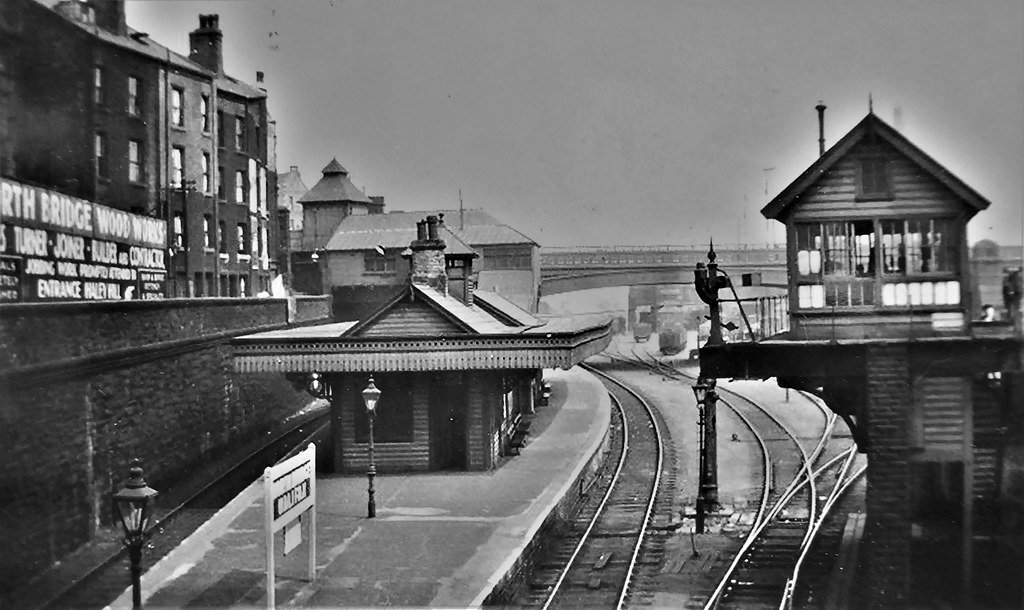
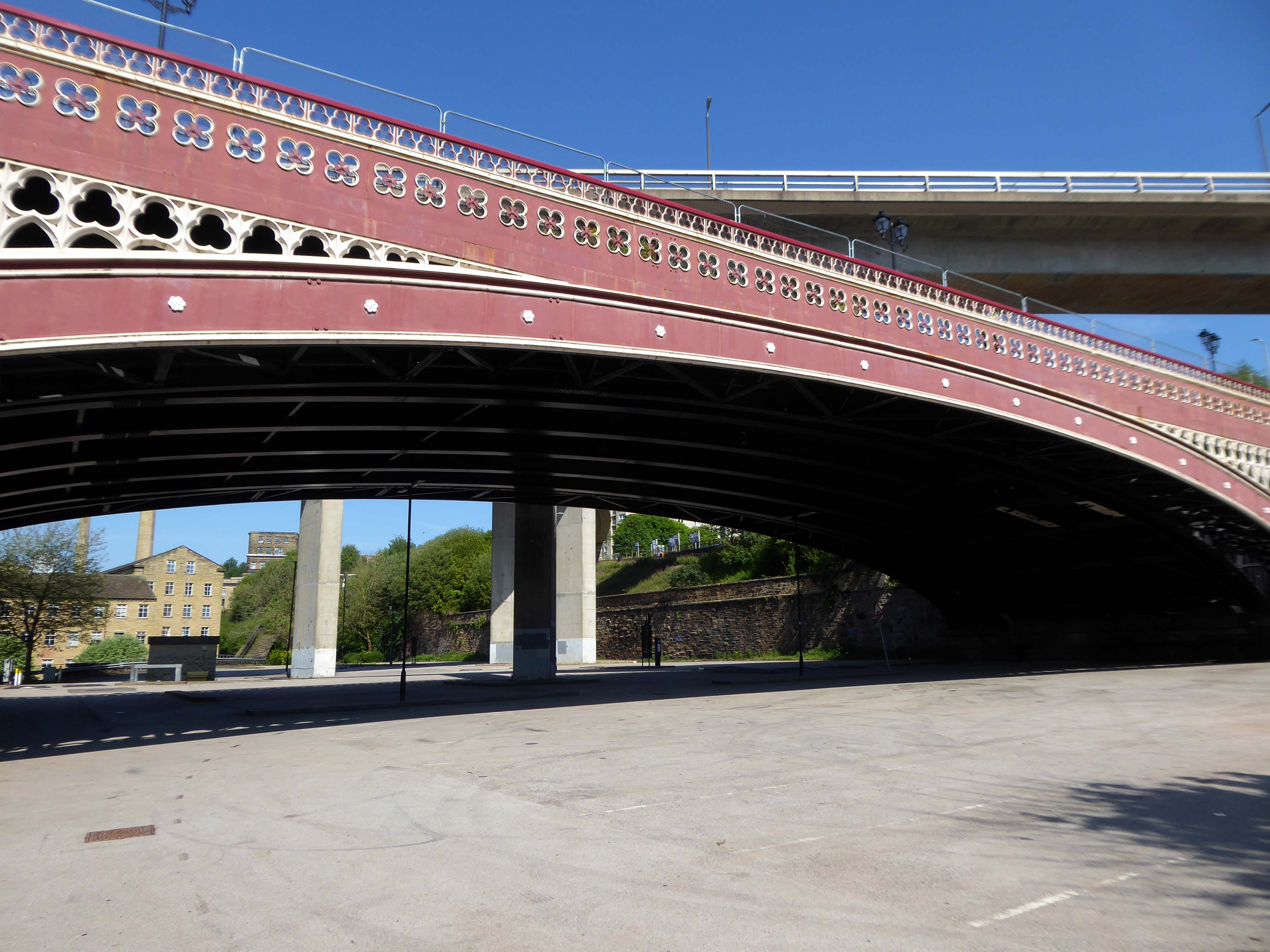
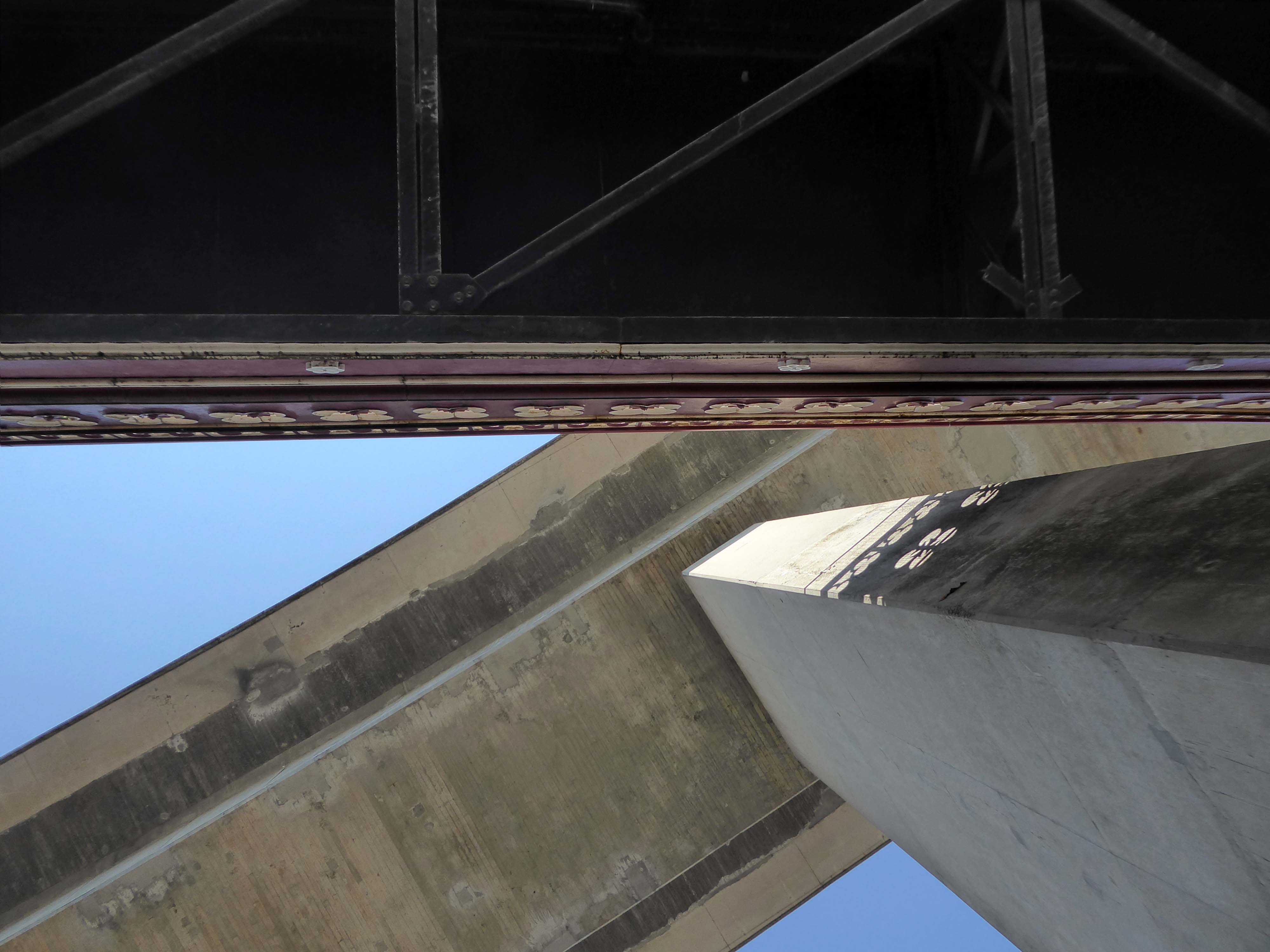
North Bridge is a Victorian iron and stone bridge crossing the valley of the River Hebble, connecting the town to roads to Bradford and Leeds. Replacing an earlier six arch stone bridge it was raised to allow the subsequent construction of the Halifax High Level Railway beneath it, along with an adjoining station.
Opened in 1871 amid chaotic crowd scenes it carried increasingly heavy traffic until it was by-passed by the Burdock Way in 1973.
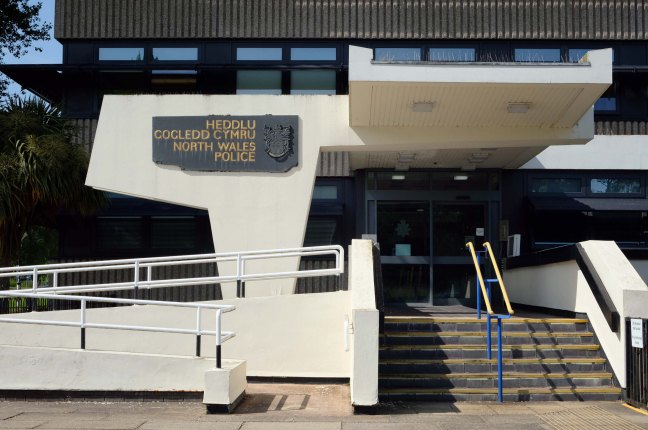
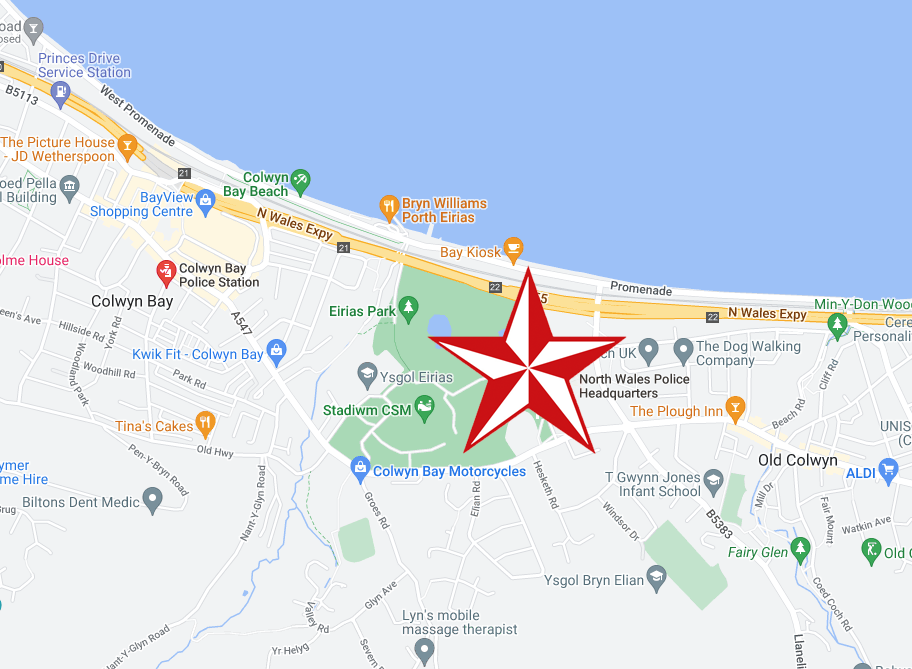
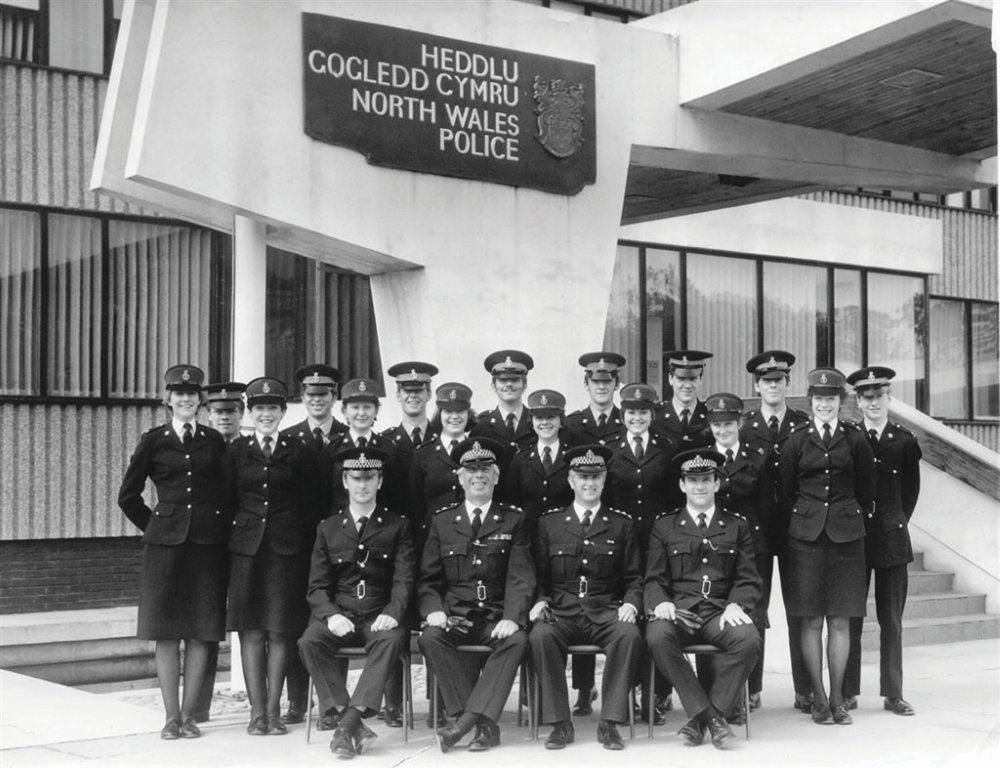
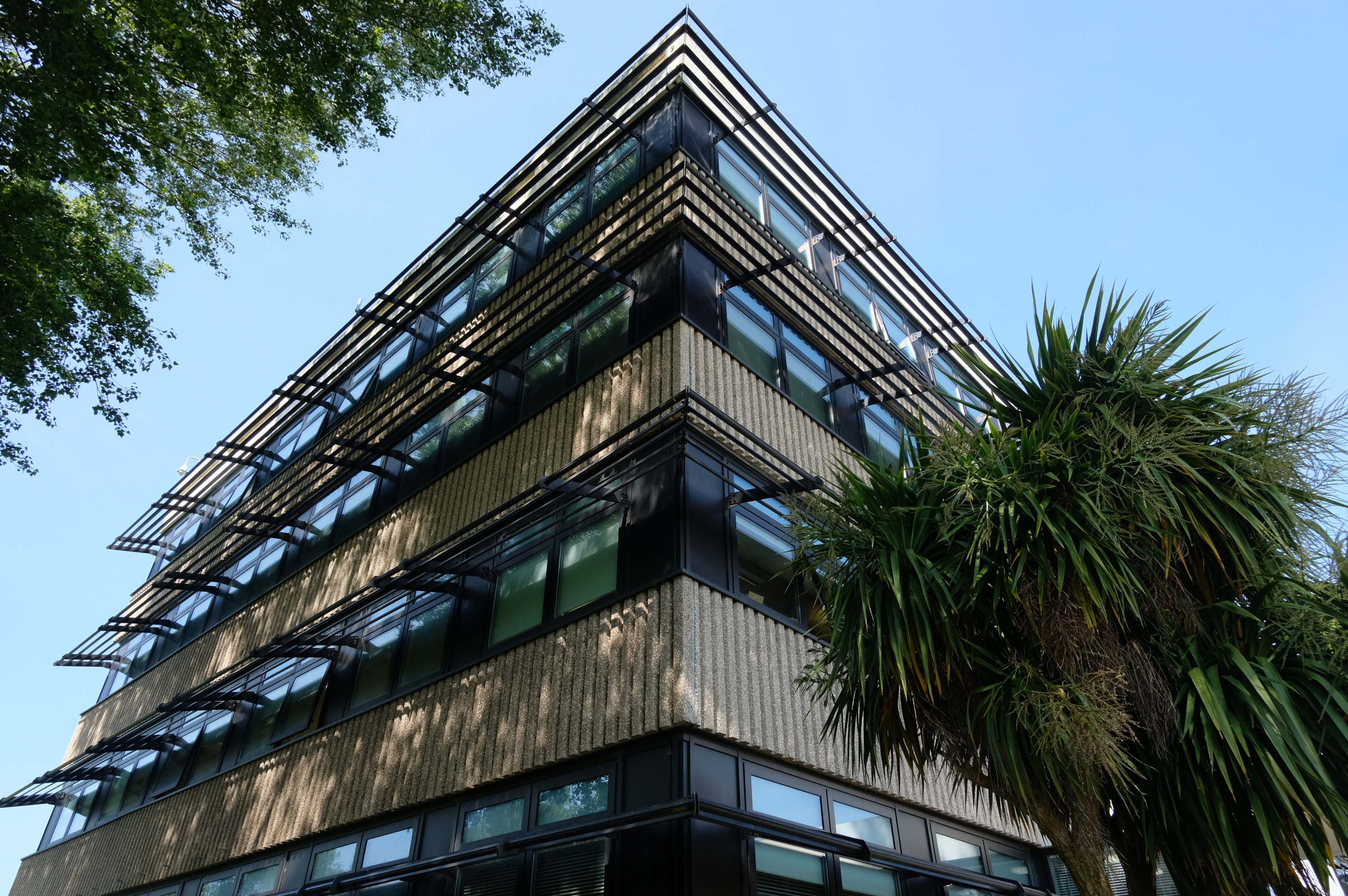
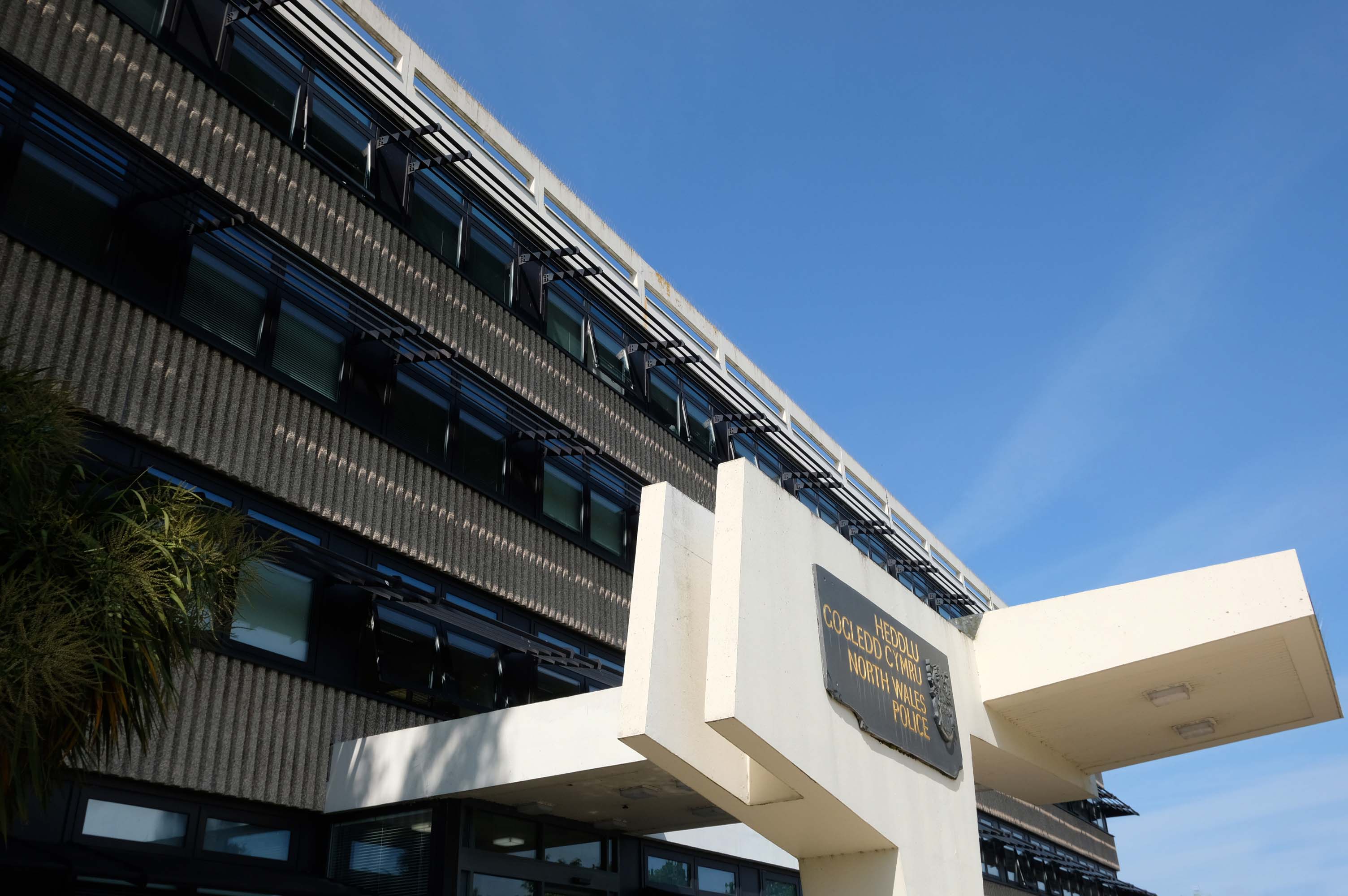
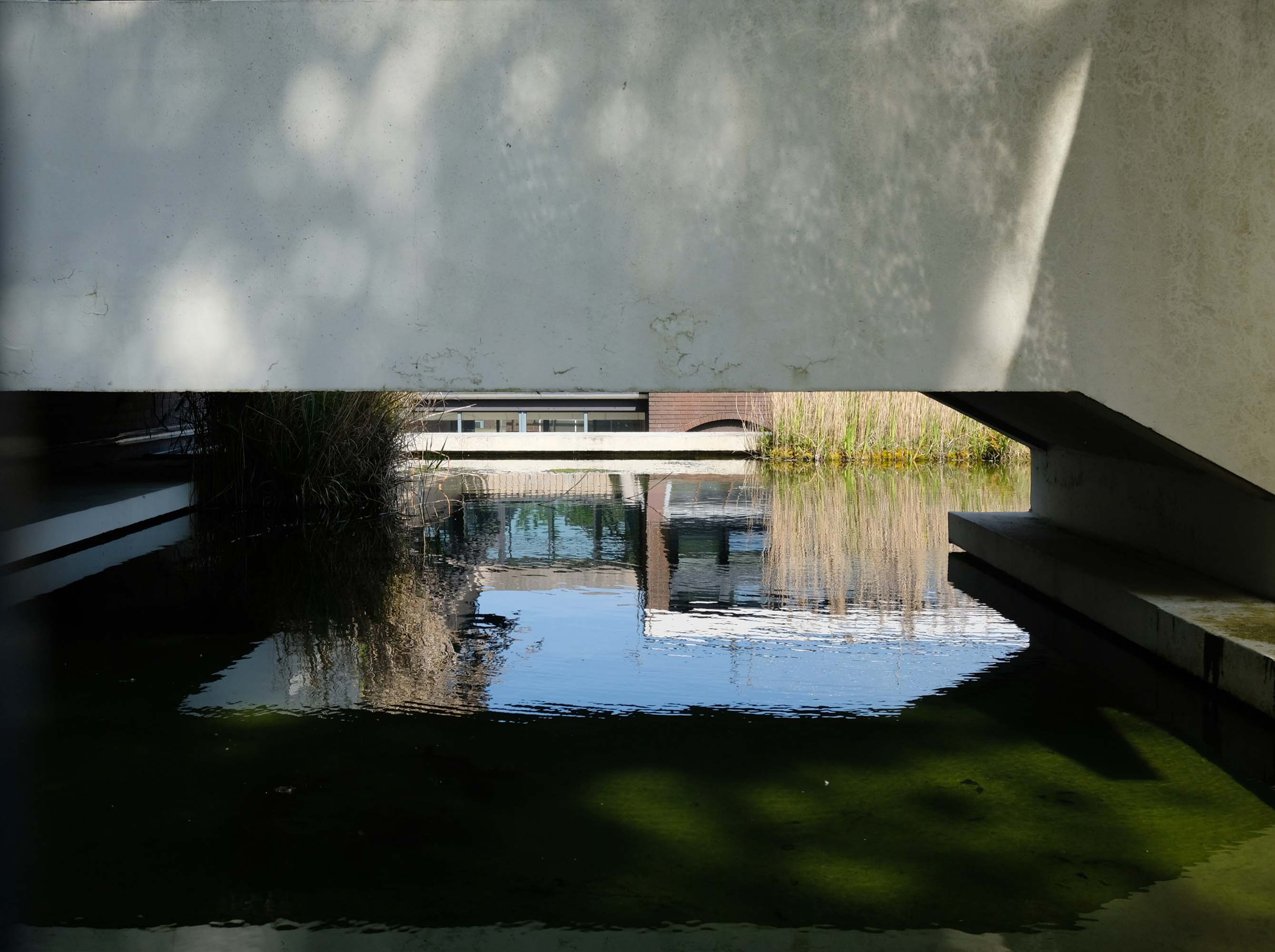
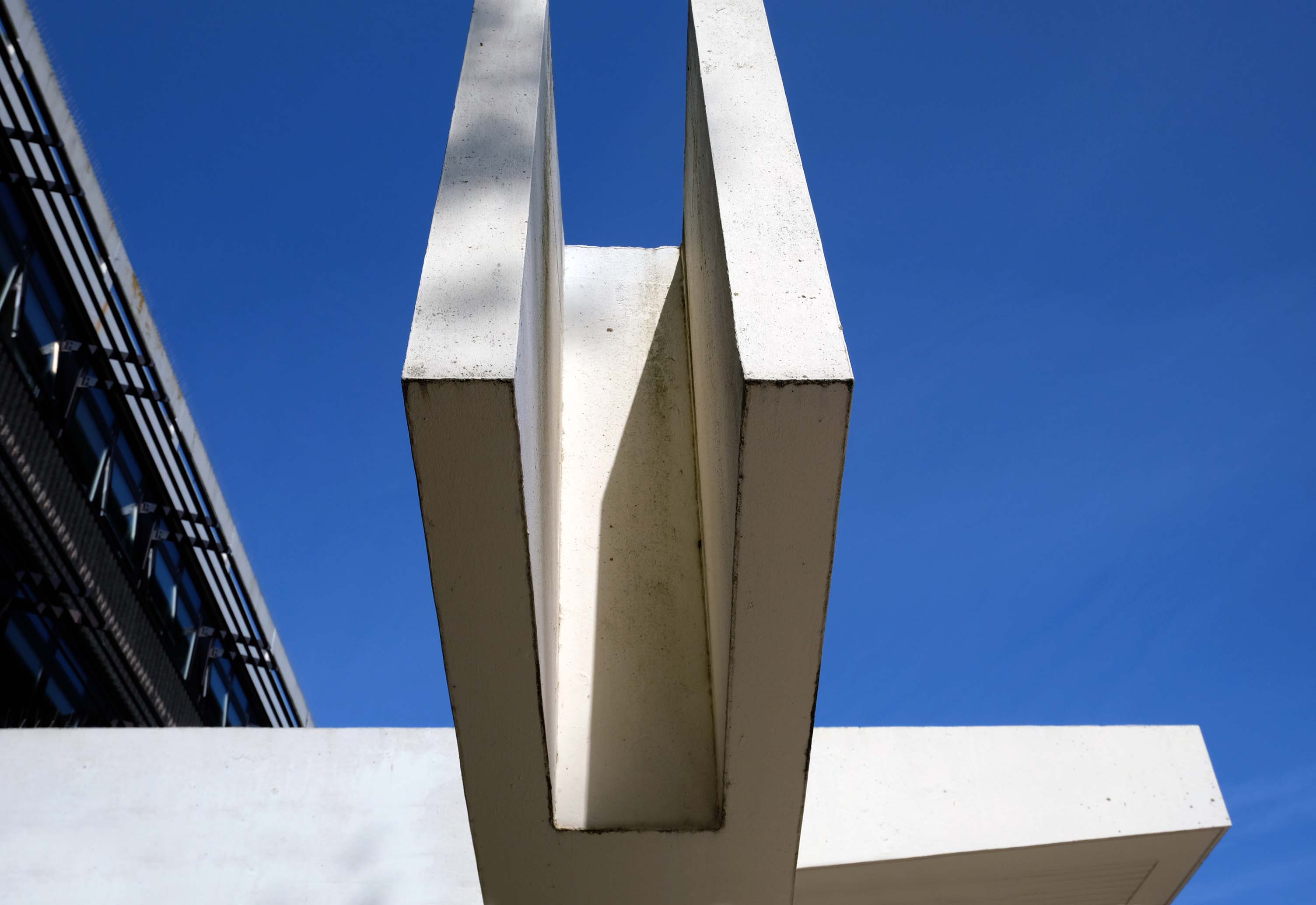
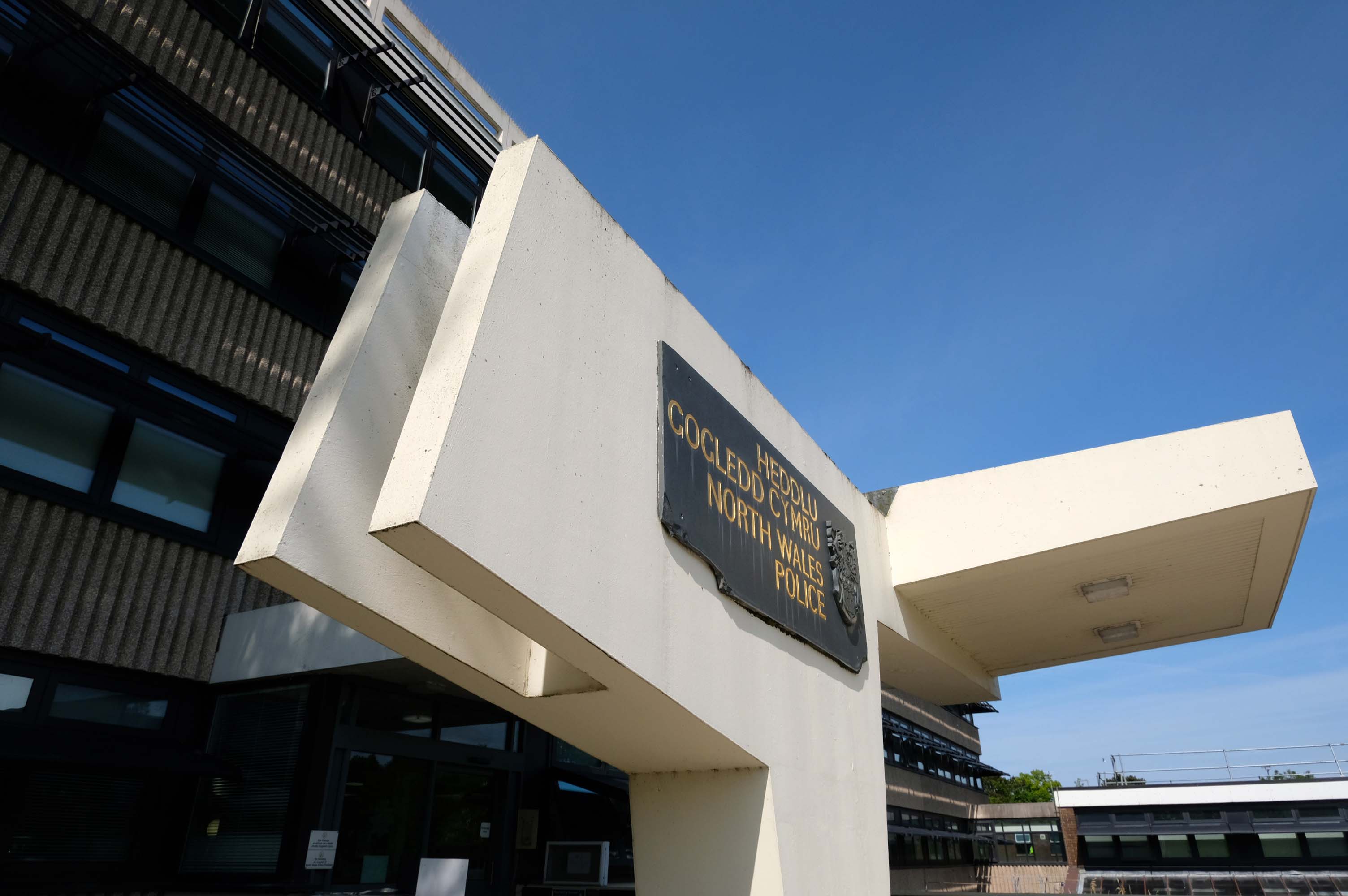
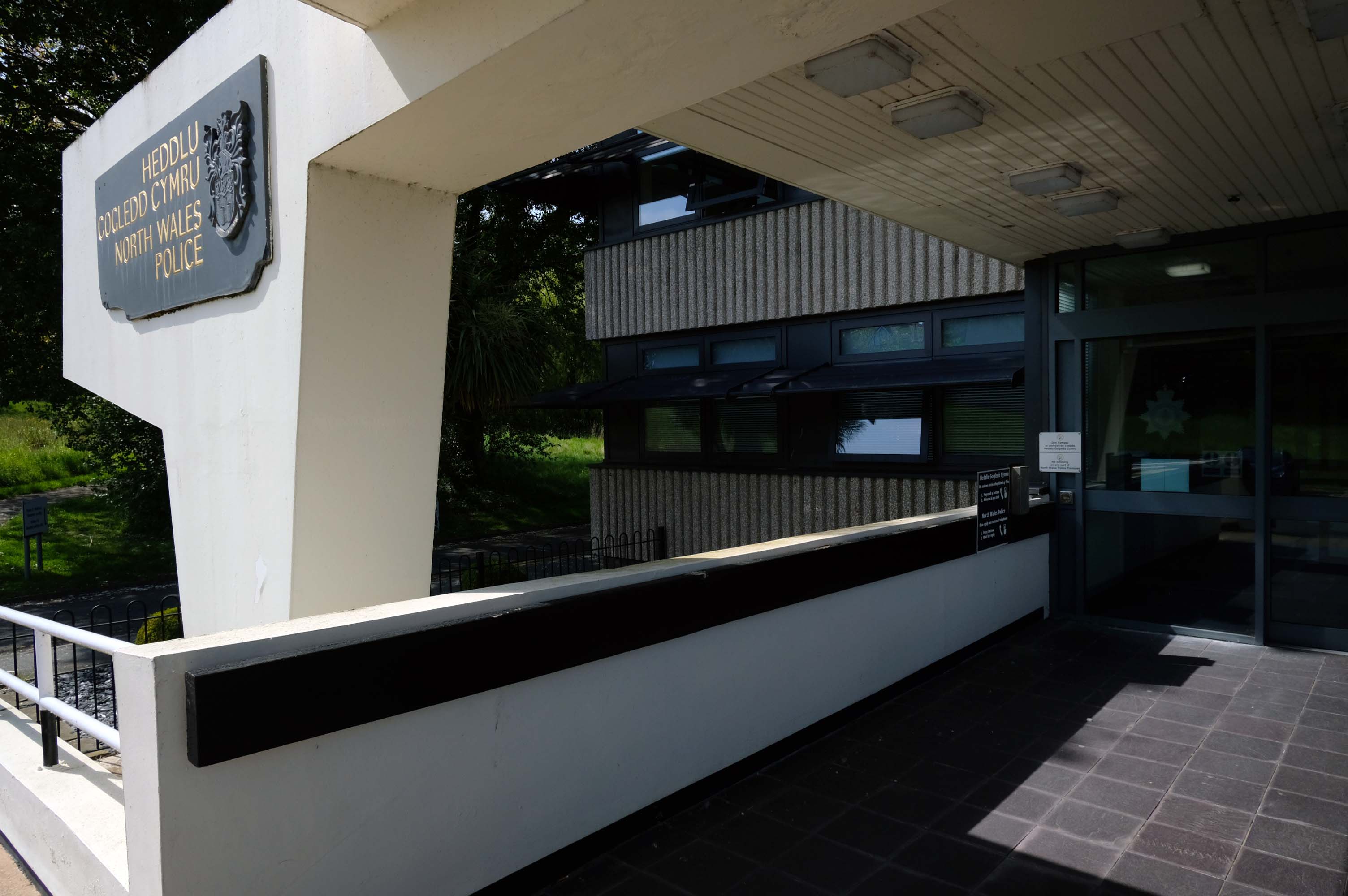
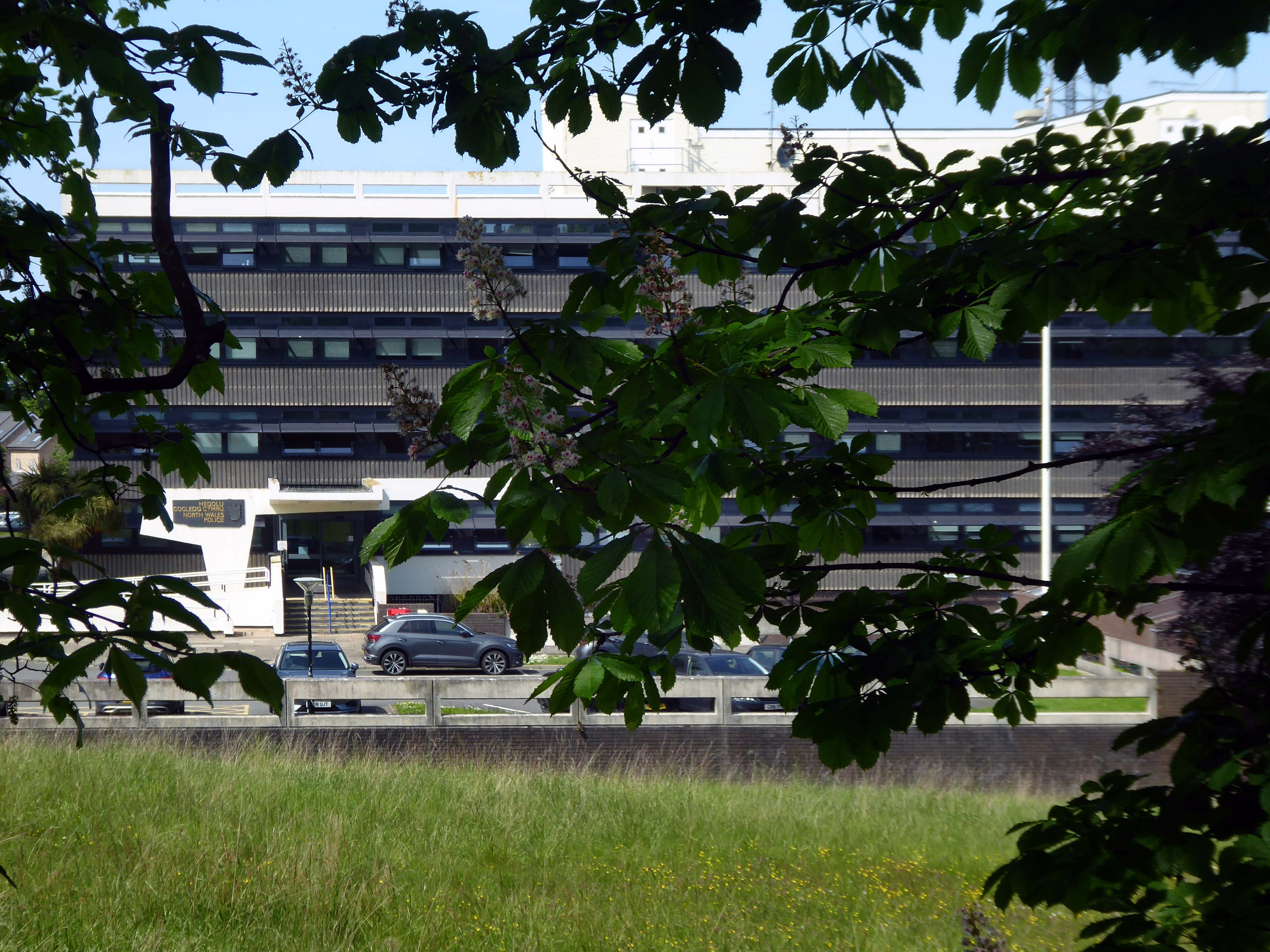
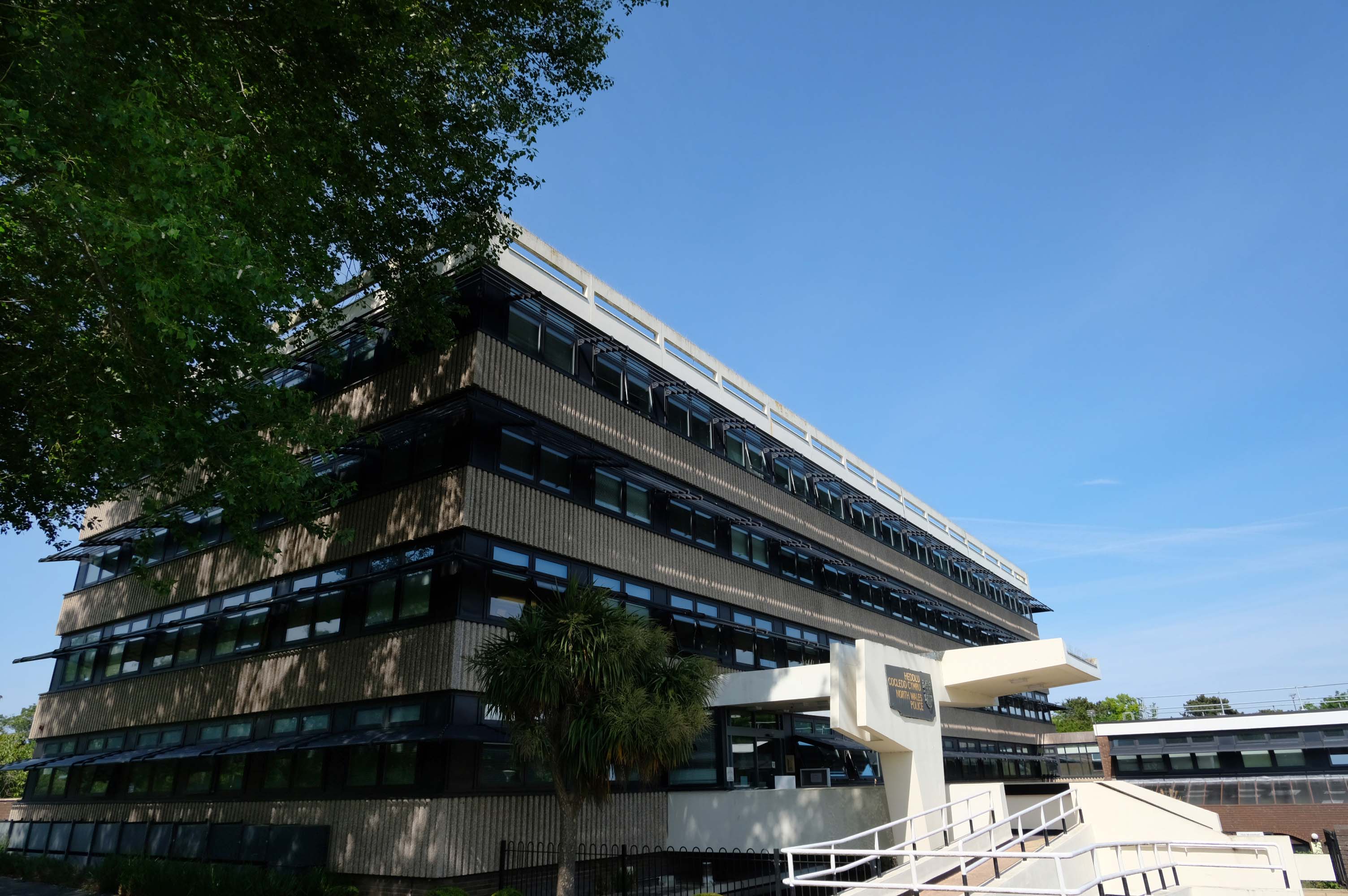
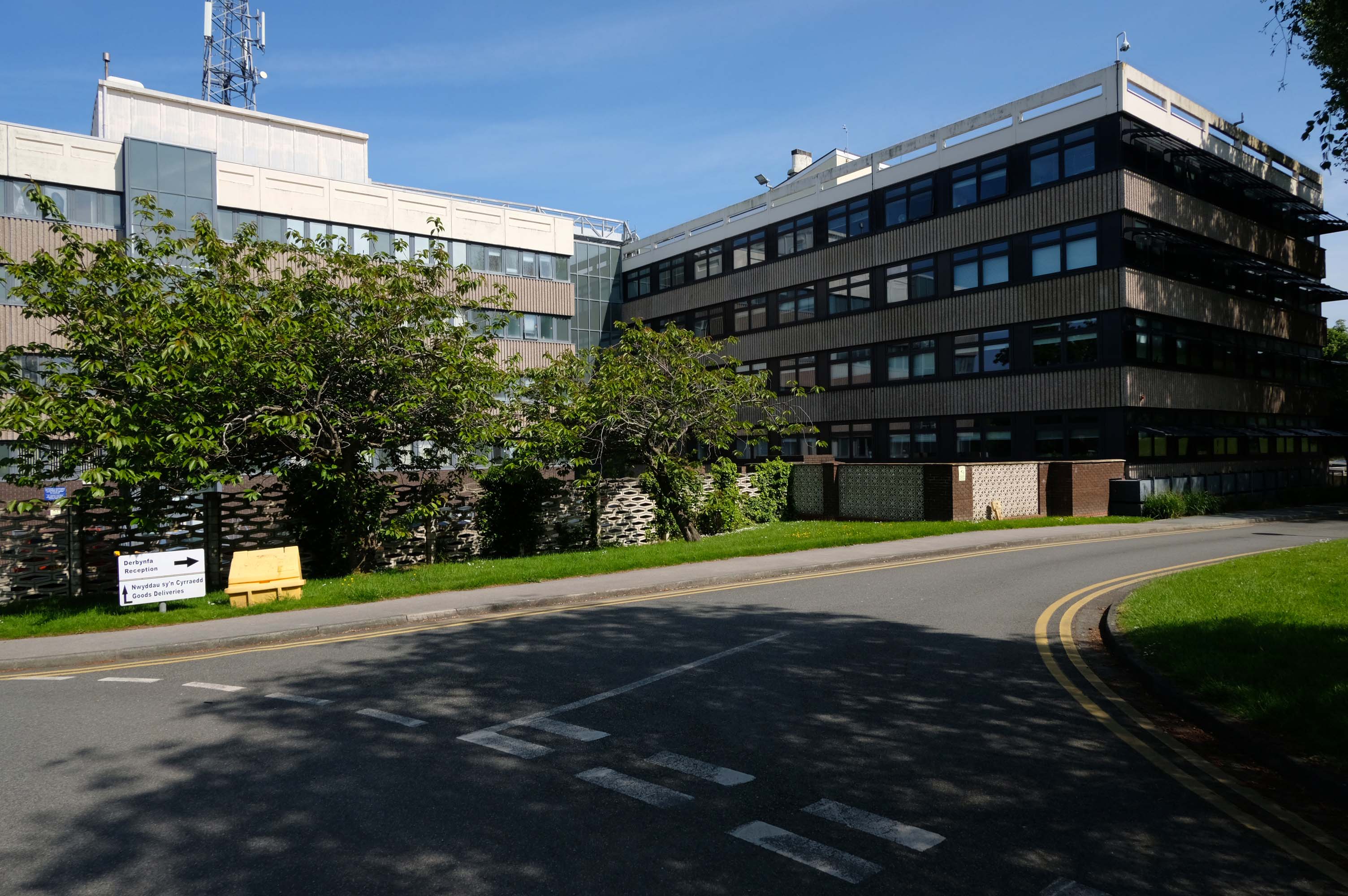
North Wales Police – Heddlu Gogledd Cymru is the territorial police force responsible for policing North Wales.
Photo: Gareth Ellidge
As of March 2020, the force has 1,510 police officers, 170 special constables, 182 police community support officers, 71 police support volunteers, and 984 staff.
Having cycled from Prestatyn, I popped into reception to ask permission to photograph the exterior of the HQ.
Following a short wait, I was granted permission.
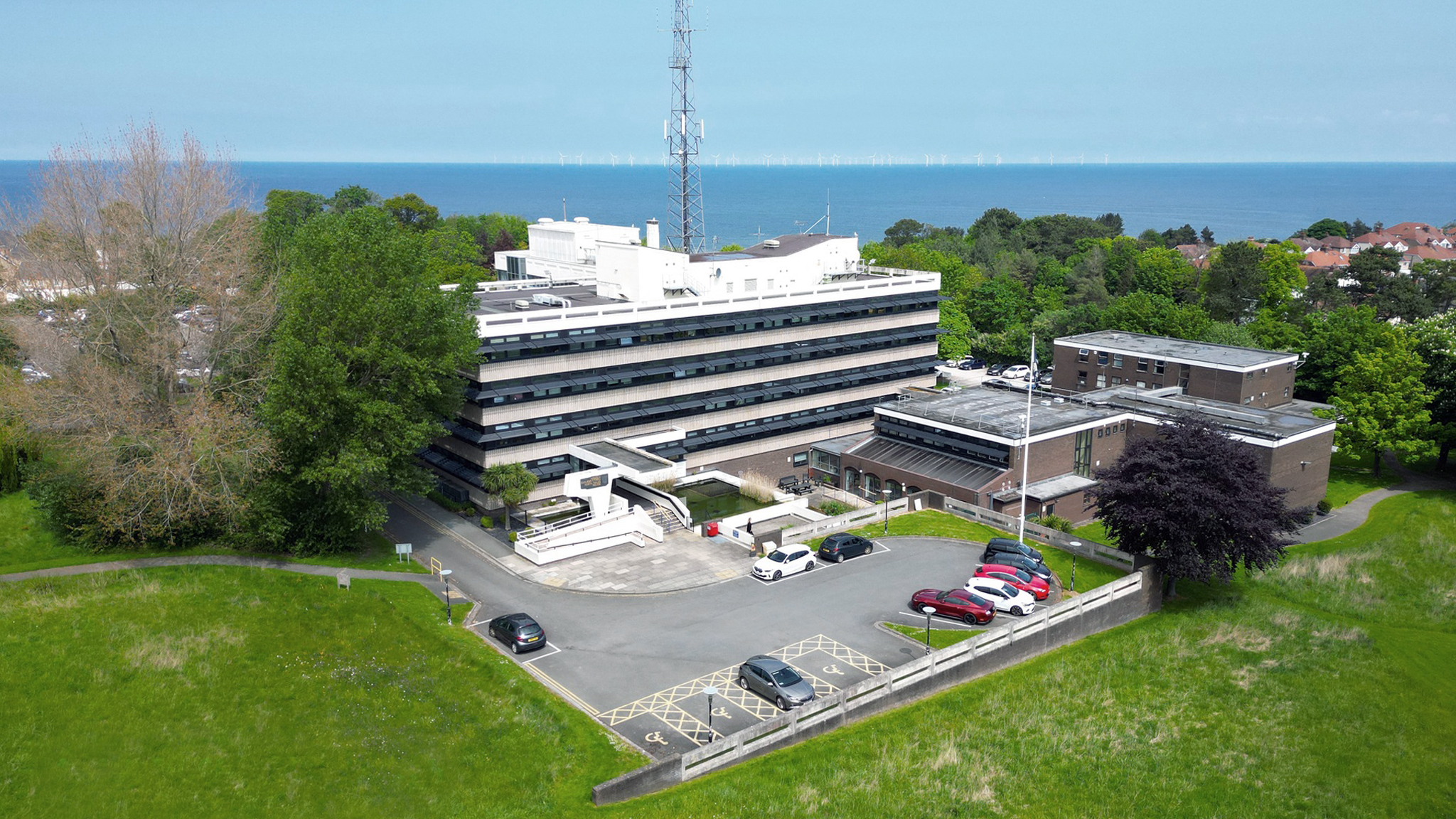
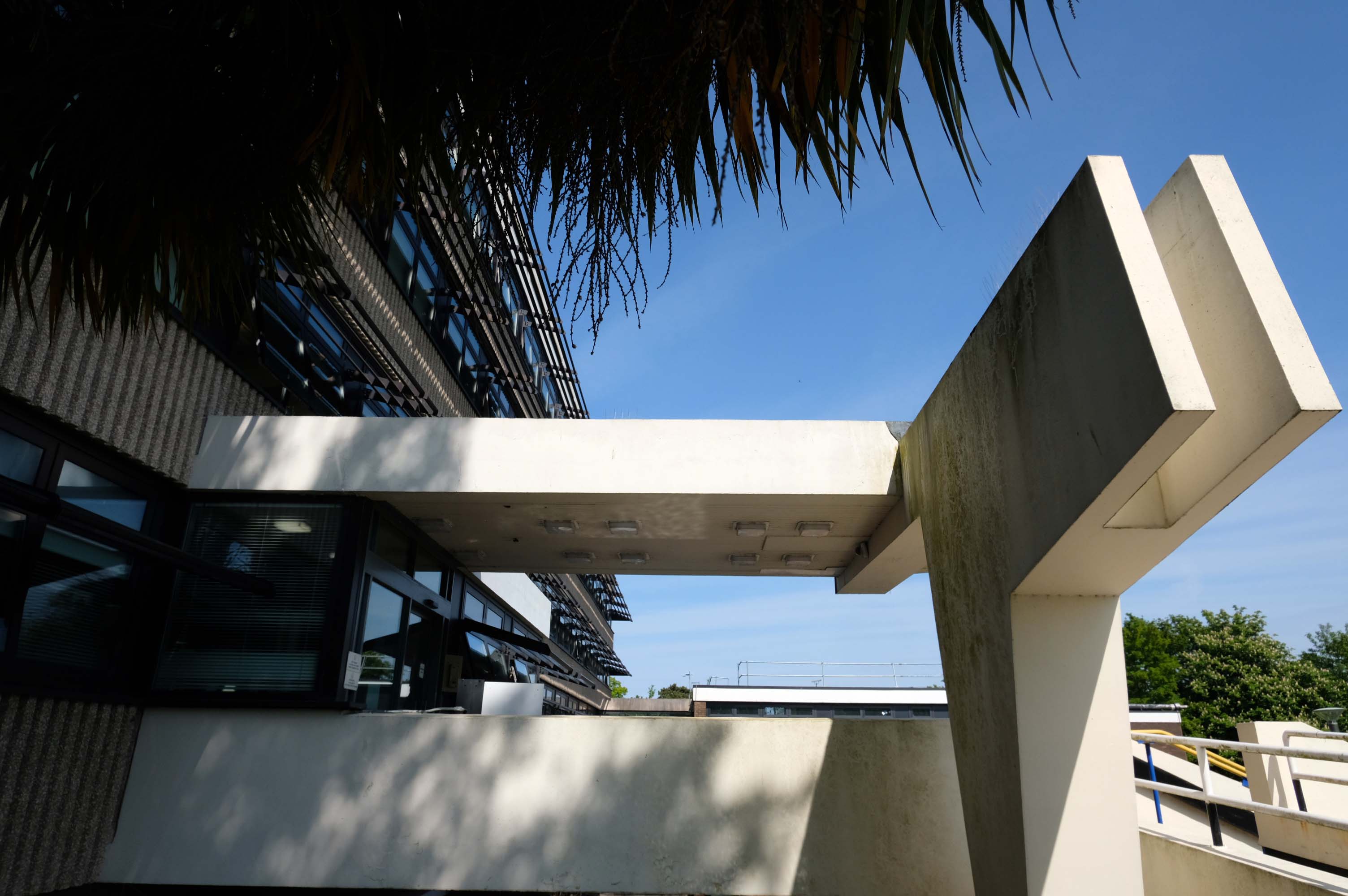
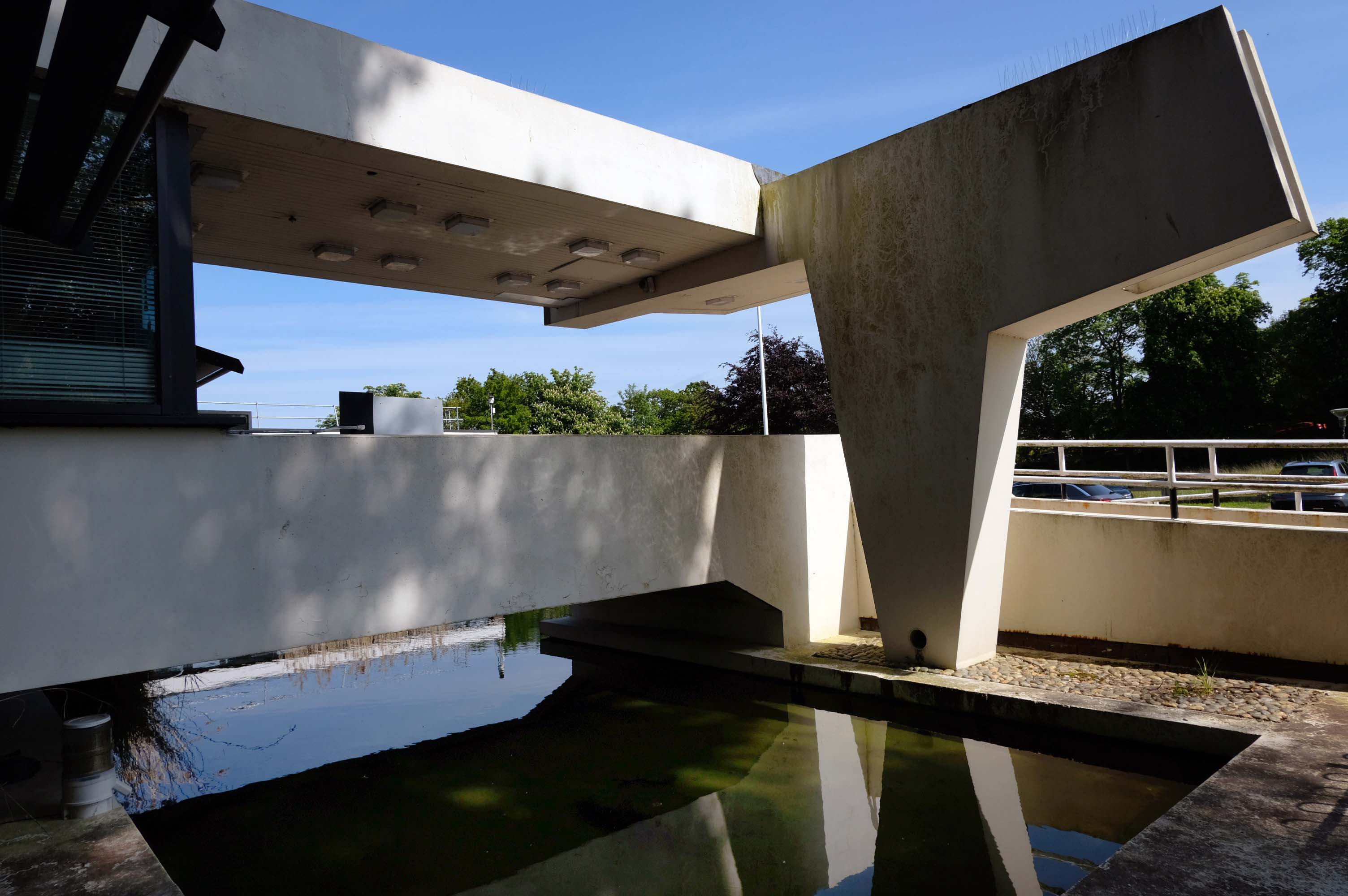
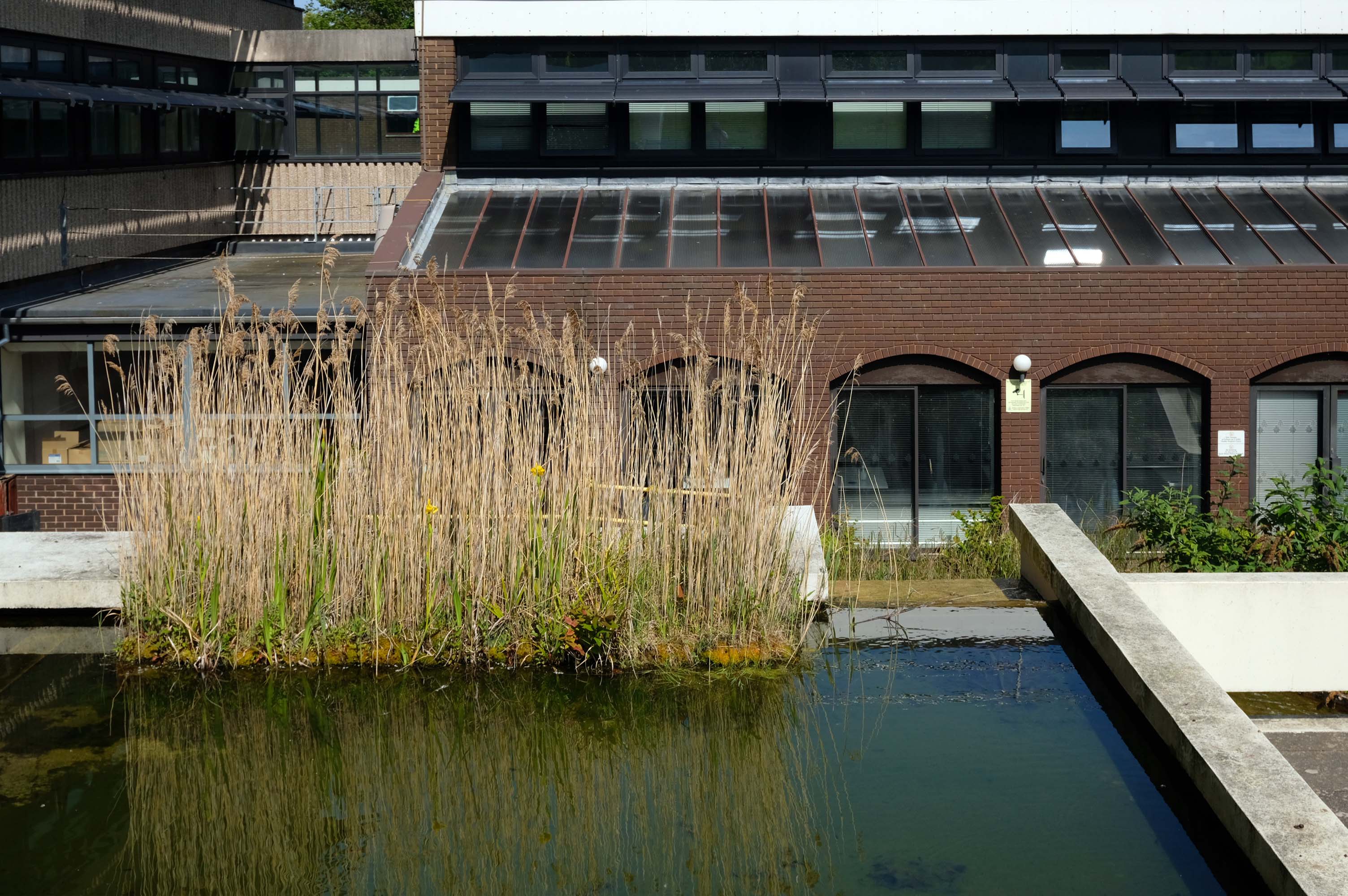
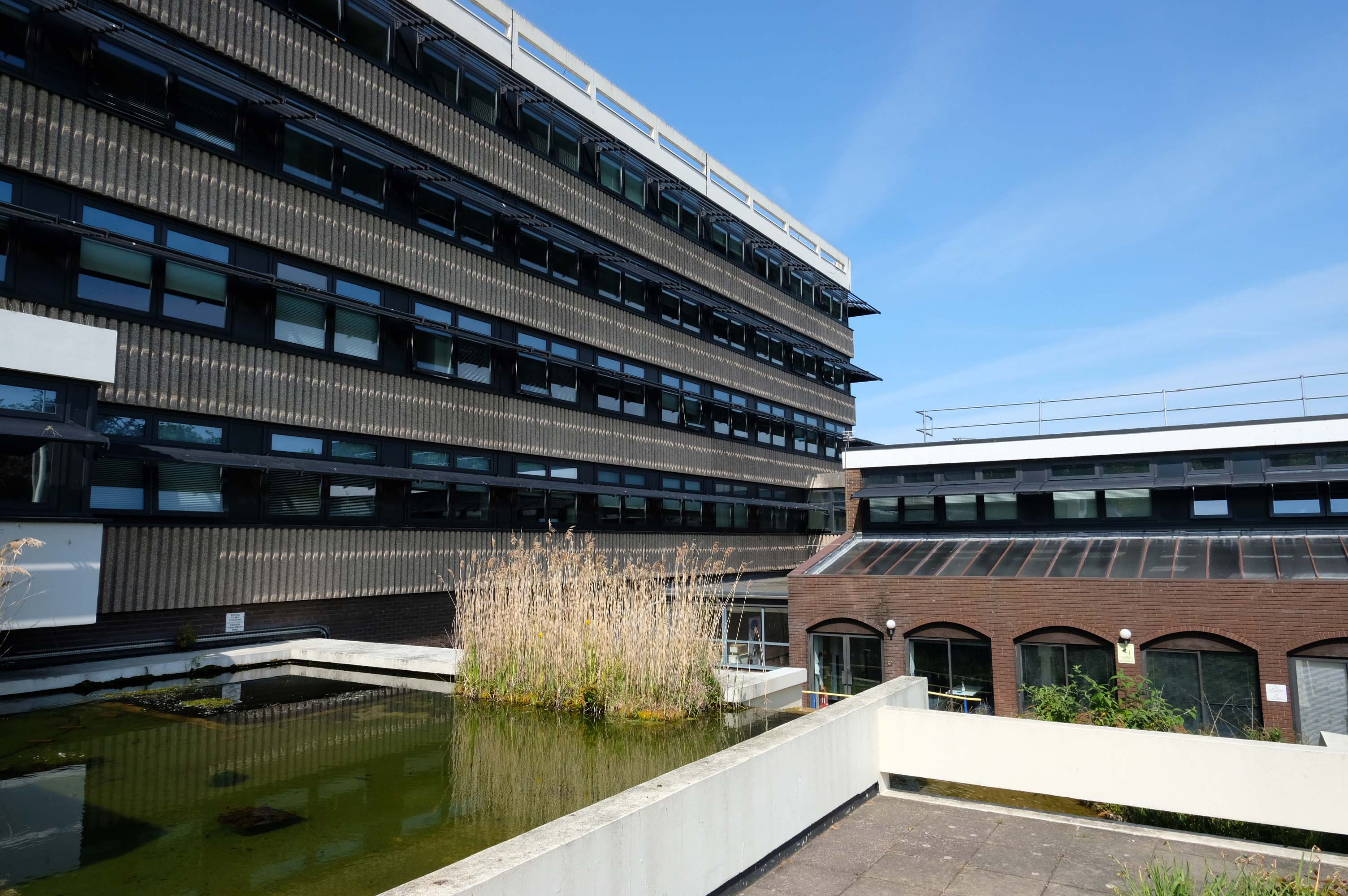
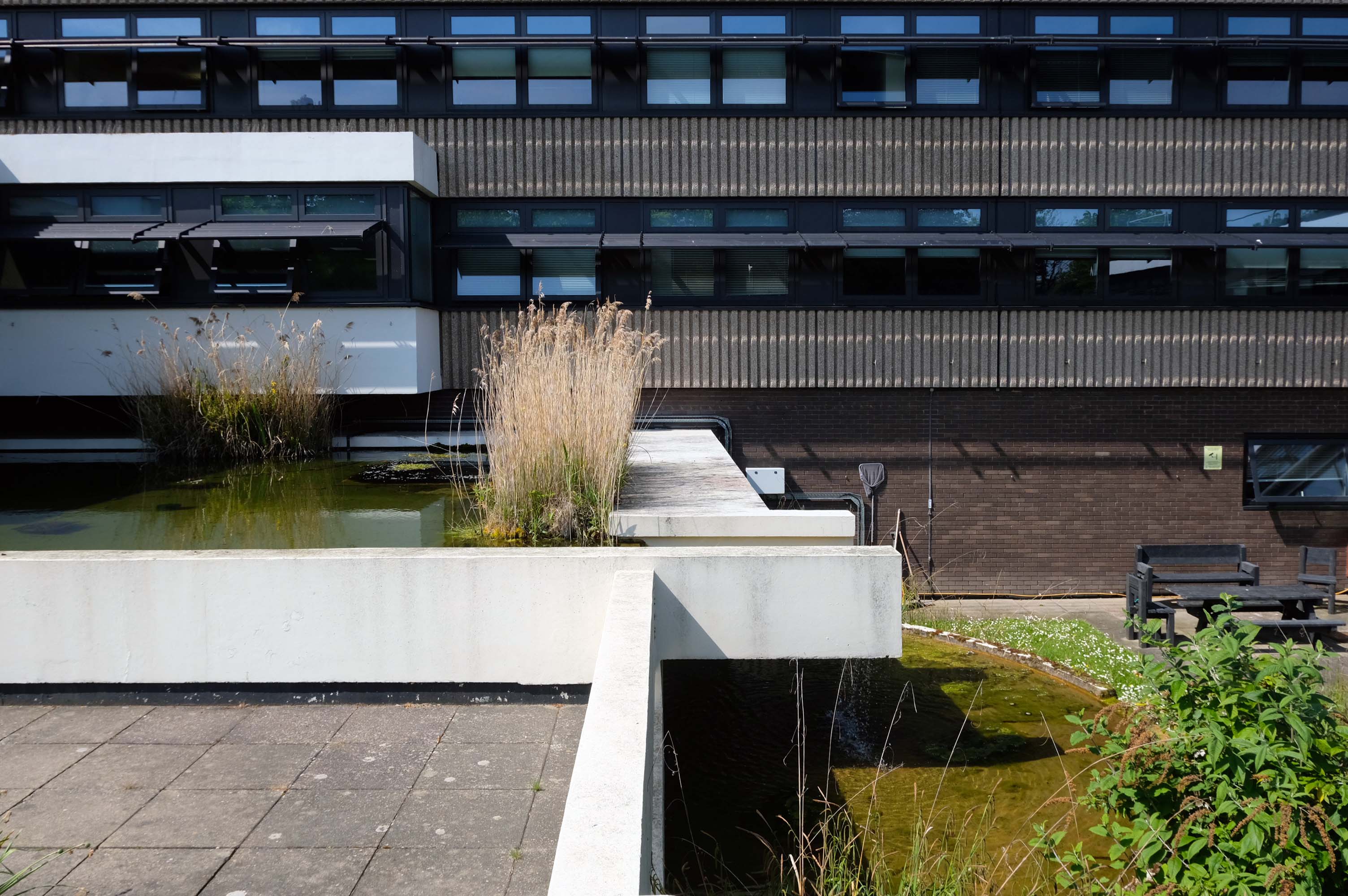
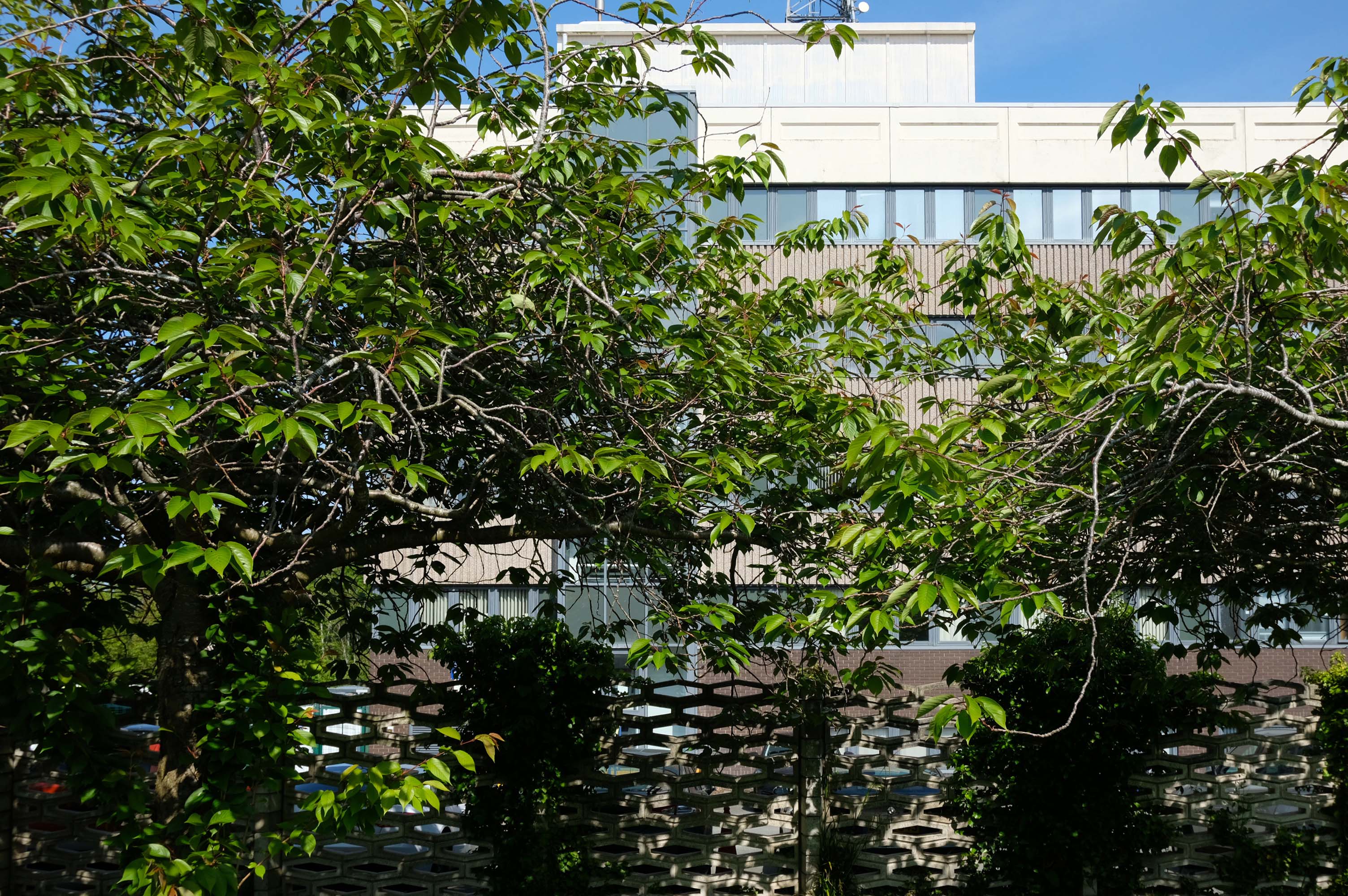
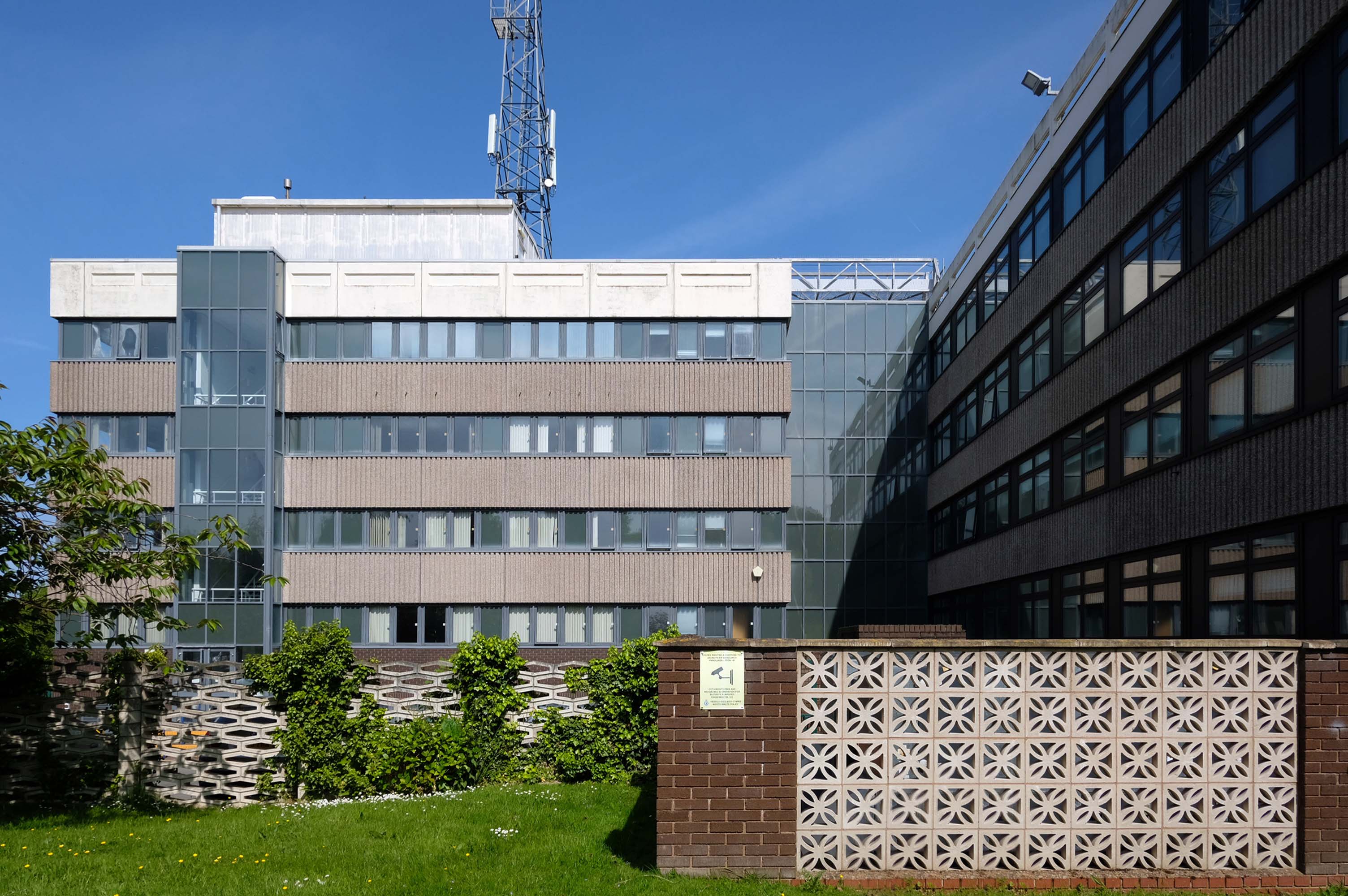
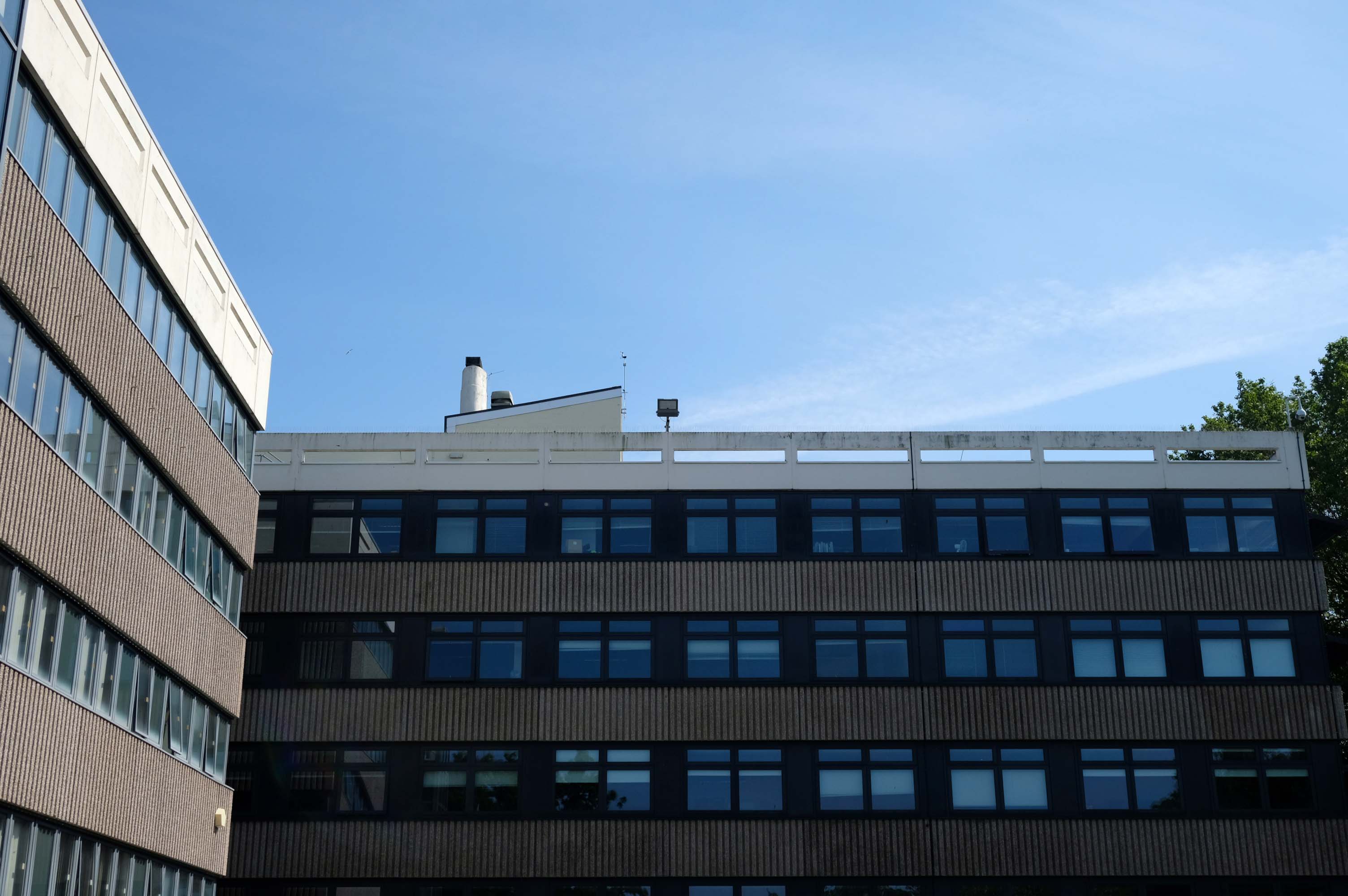
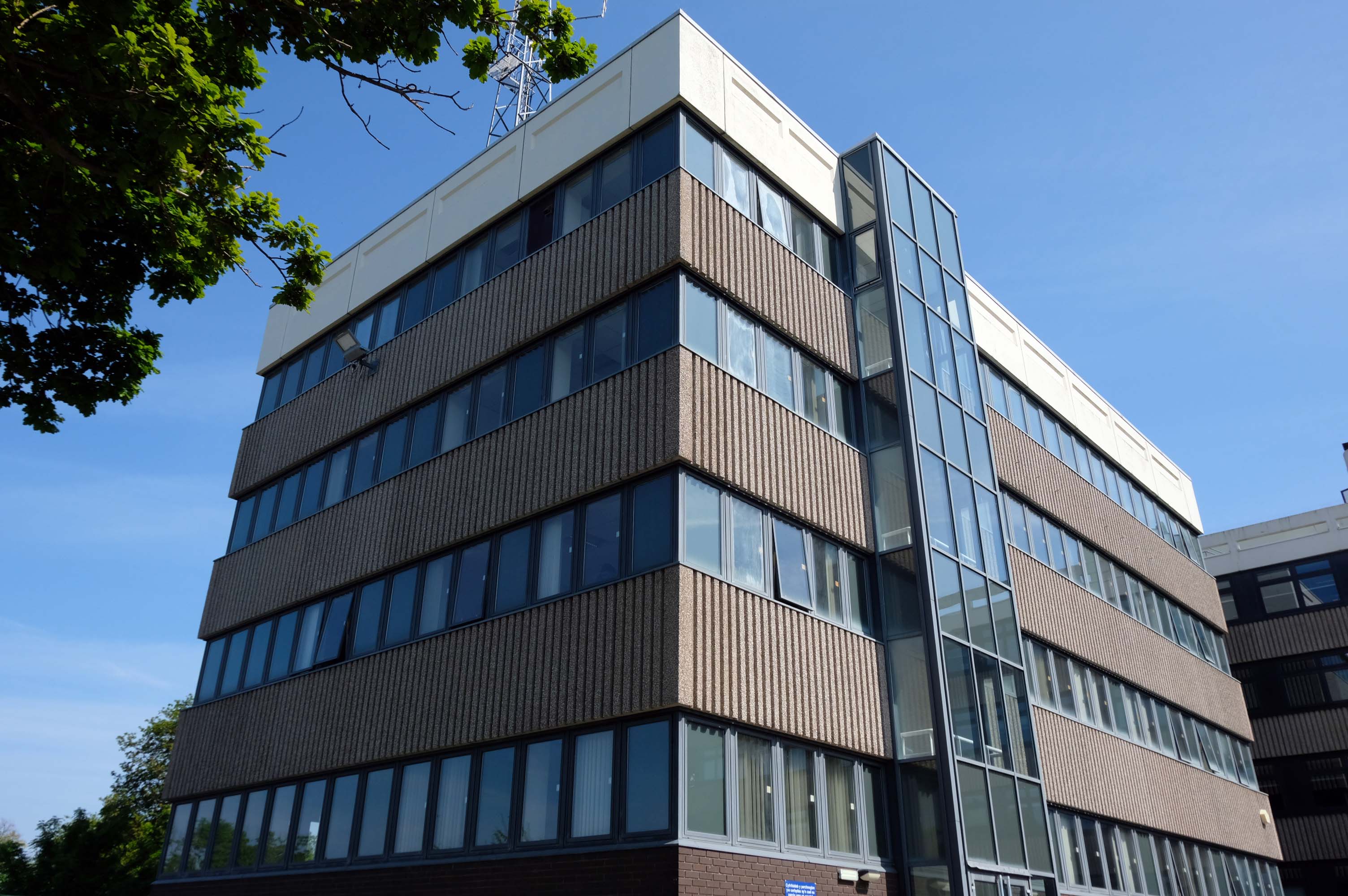
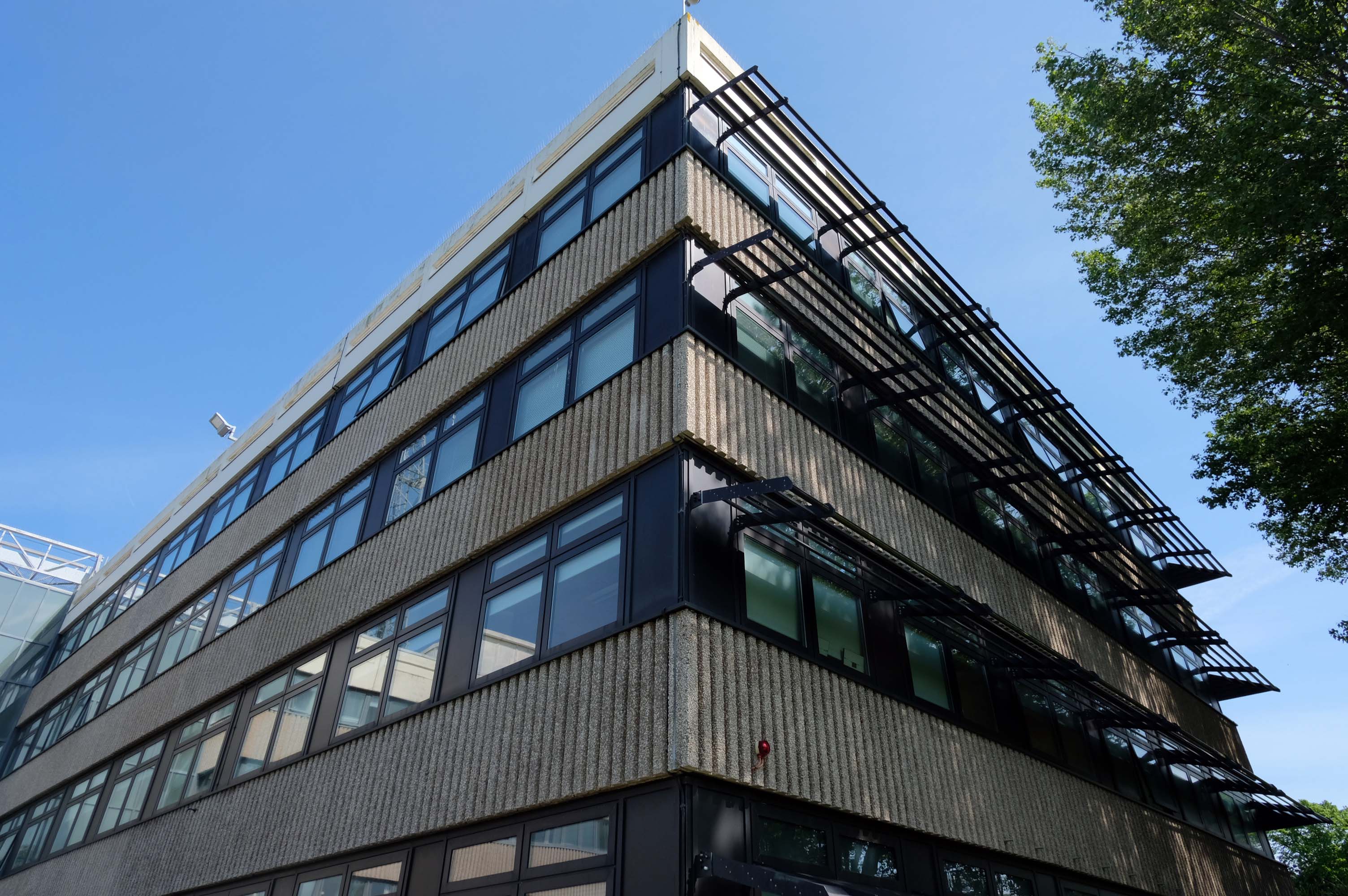
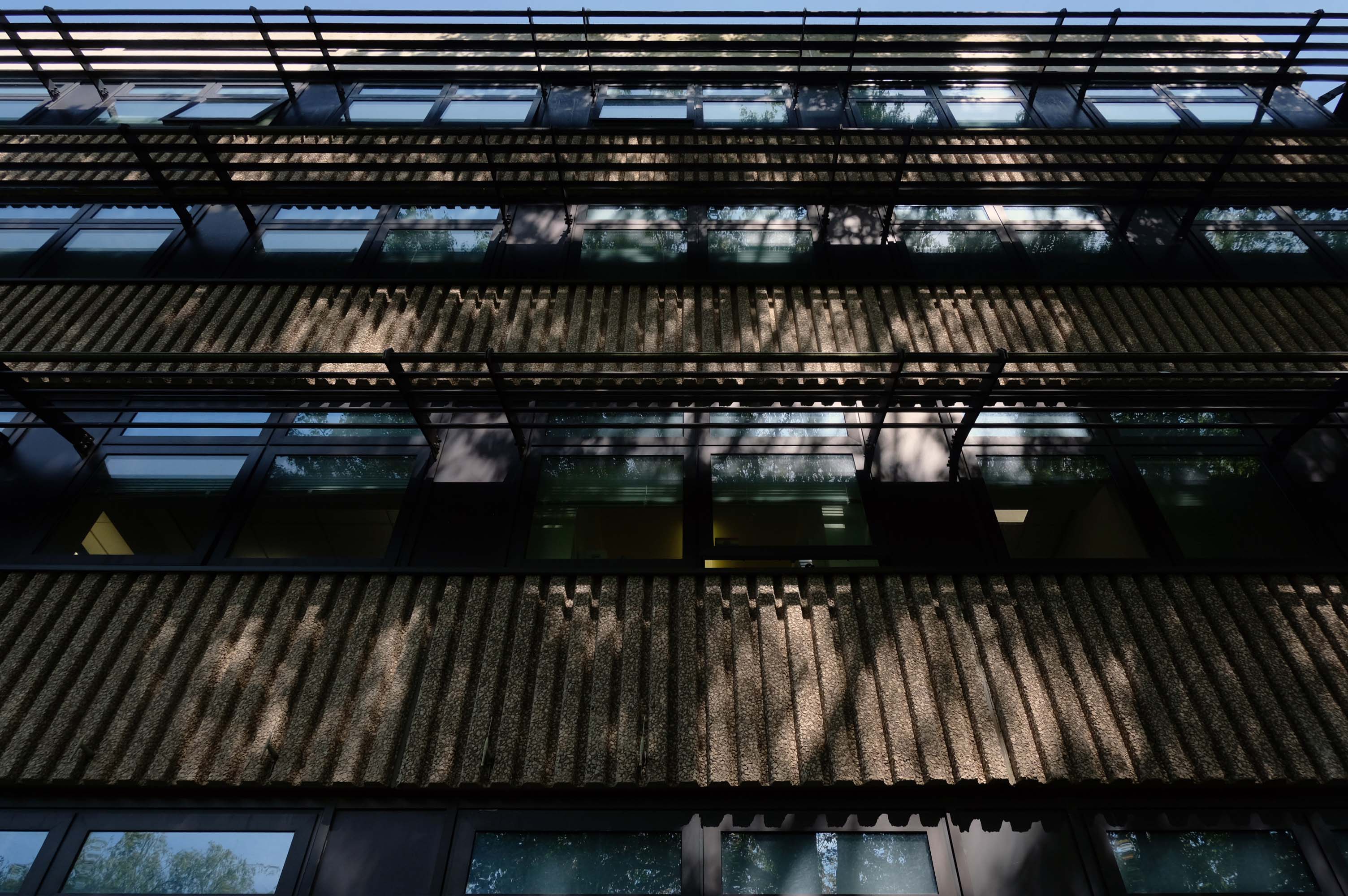
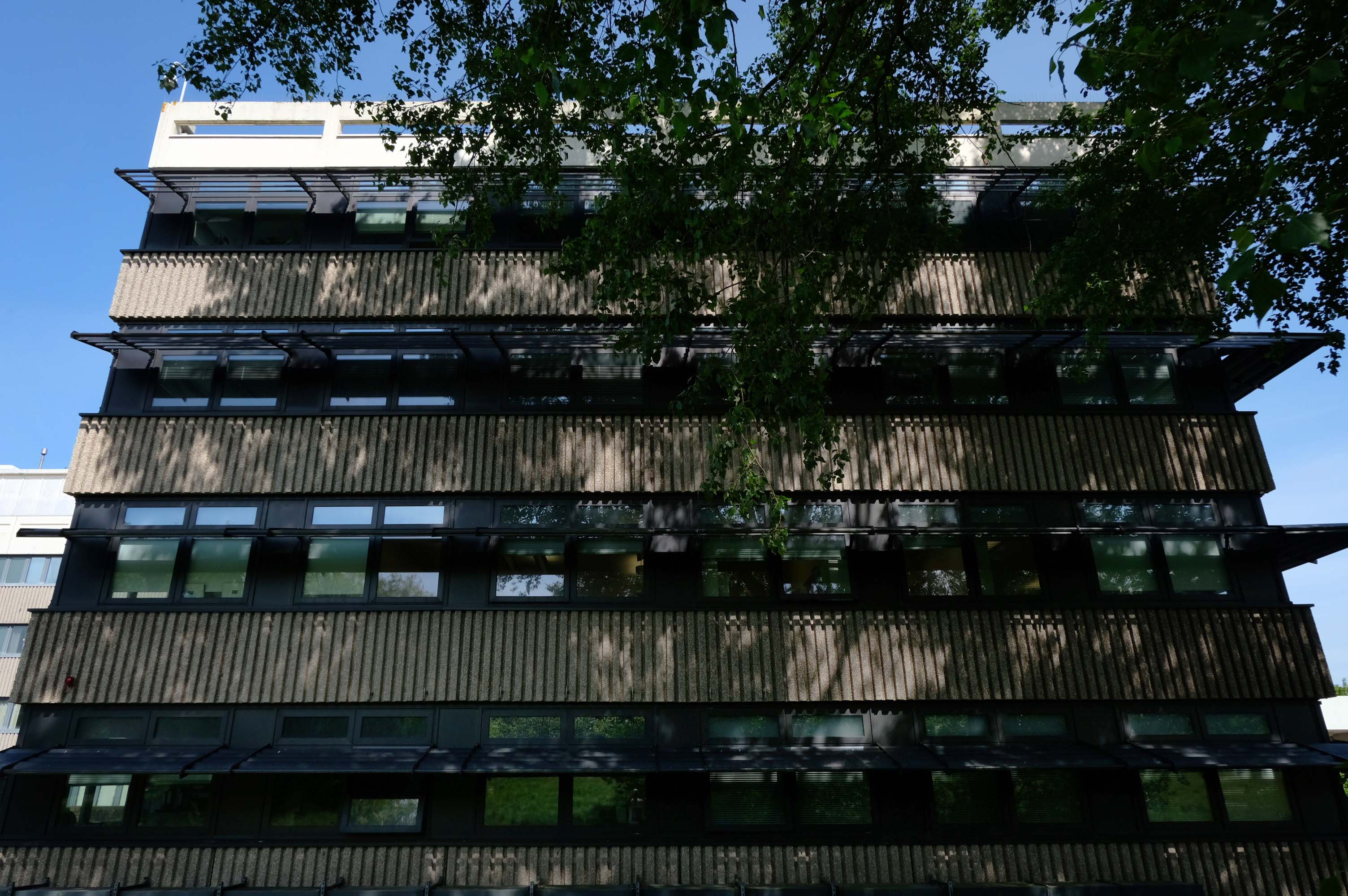
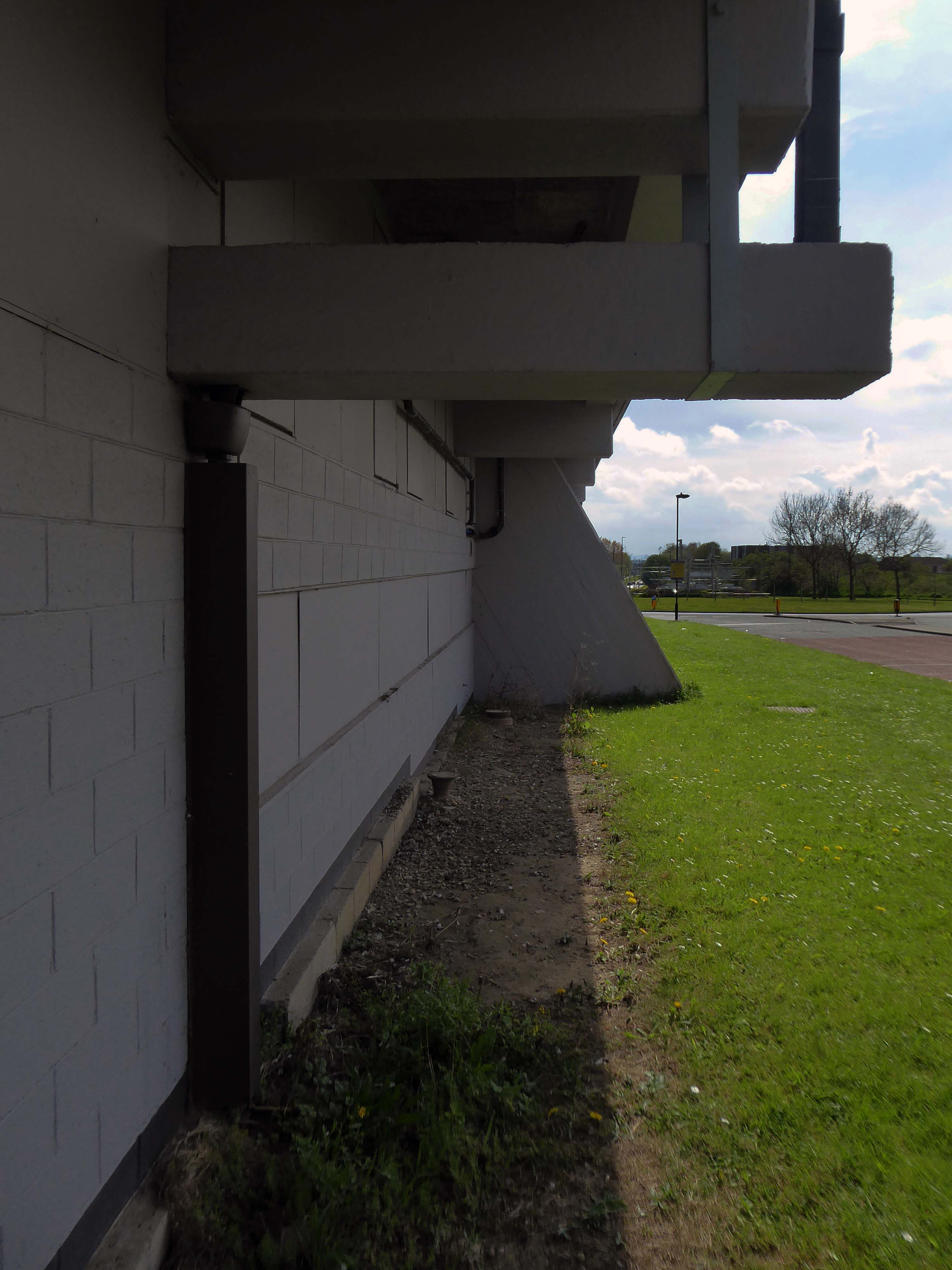
The building is an imposing steel, concrete and glass system built structure of 1972, with brick outliers on a grassy site.
It has undergone adaptation to modern eco-standards.
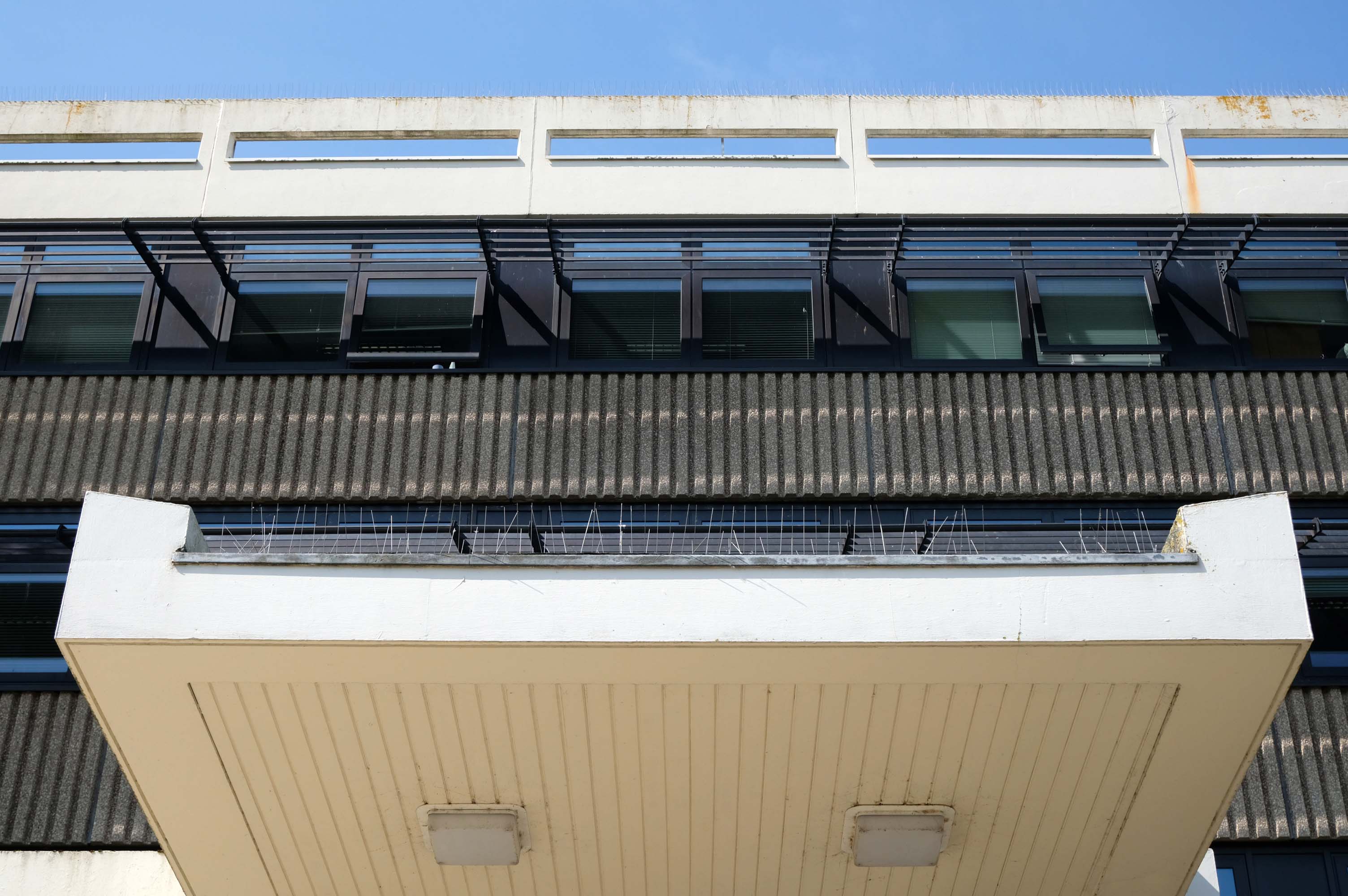
The administration building for North Wales Police, located in Colwyn Bay, was typical of the breed: a 1970s leaky and draughty concrete-framed building with high solar gains, especially on the South and West facades. It consumed a lot of energy and delivered very poor comfort conditions.
The budget for the refurbishment was set at around £2.4 million. North Wales Police appointed Capita Symonds as the Project Manager with the design team comprising FSP Architects, Buro Happold, WS Atkins, and Faithful+Gould.
A system of brise-soleil solar shading was provided for the East, South and West facades. Combined with the reduced area of glazing, the brise soleil reduced the solar gains enough to avoid the need for mechanical cooling and for the natural ventilation strategy to be retained.
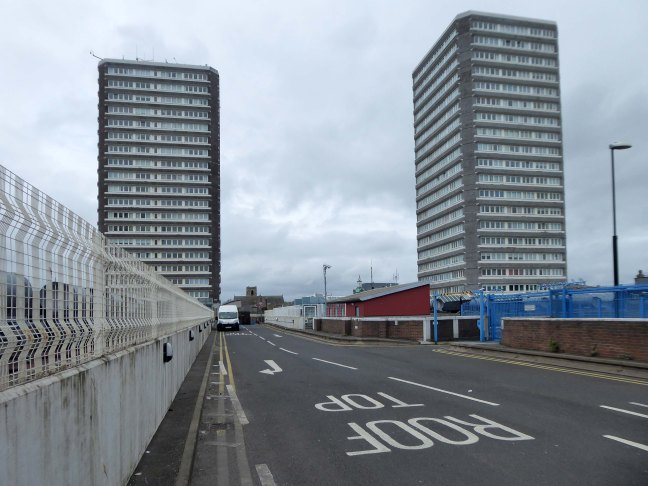
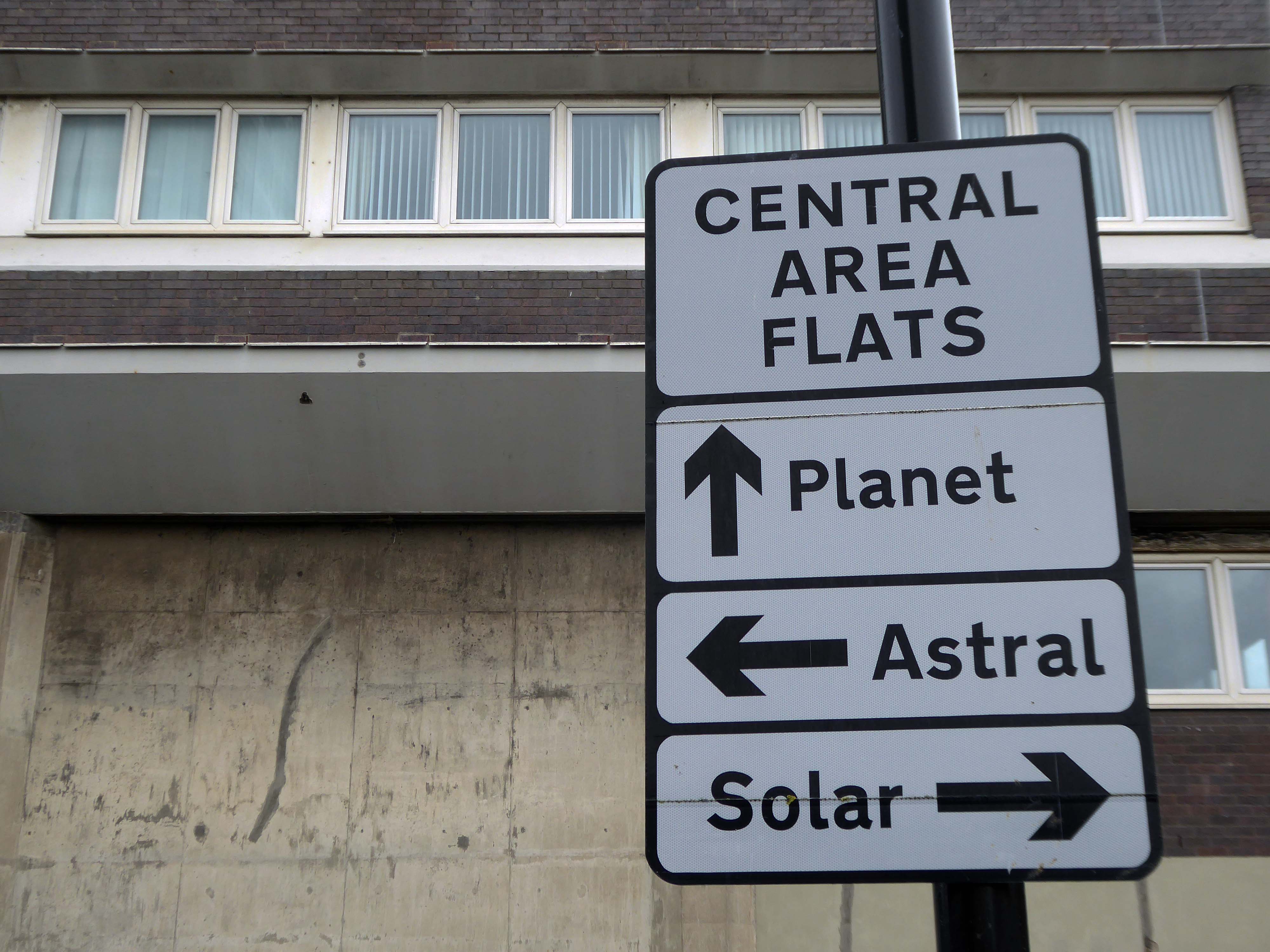
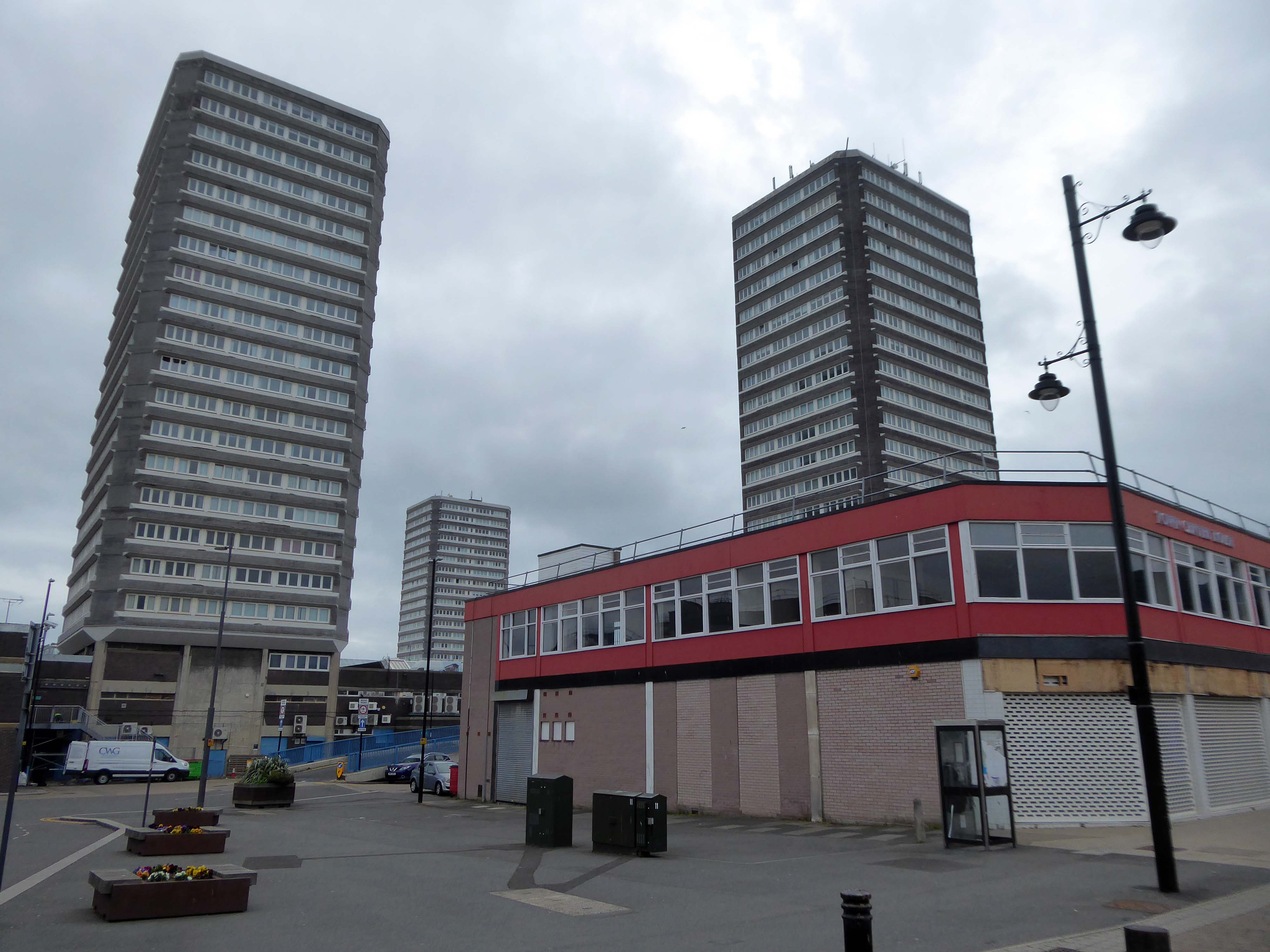
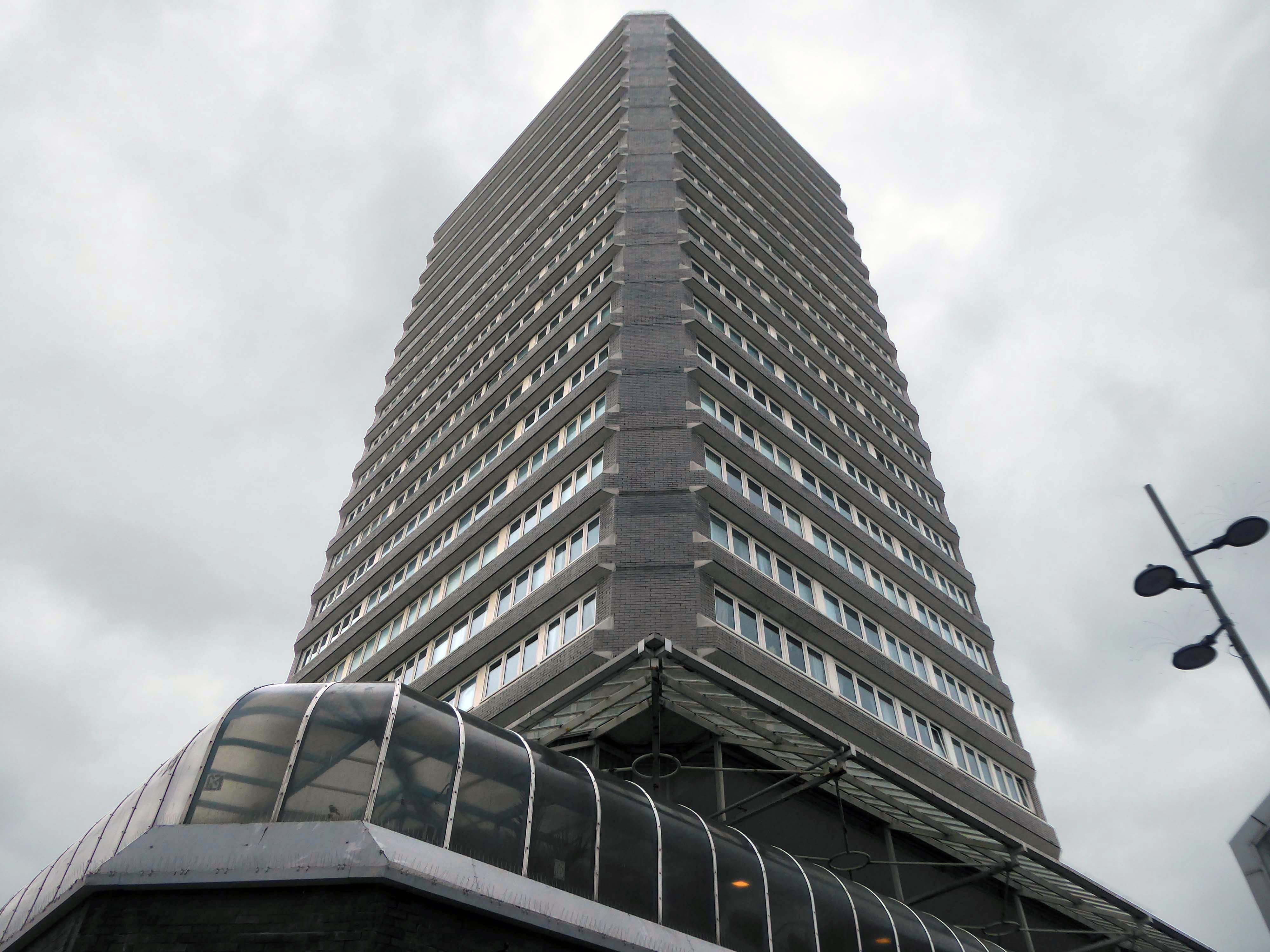
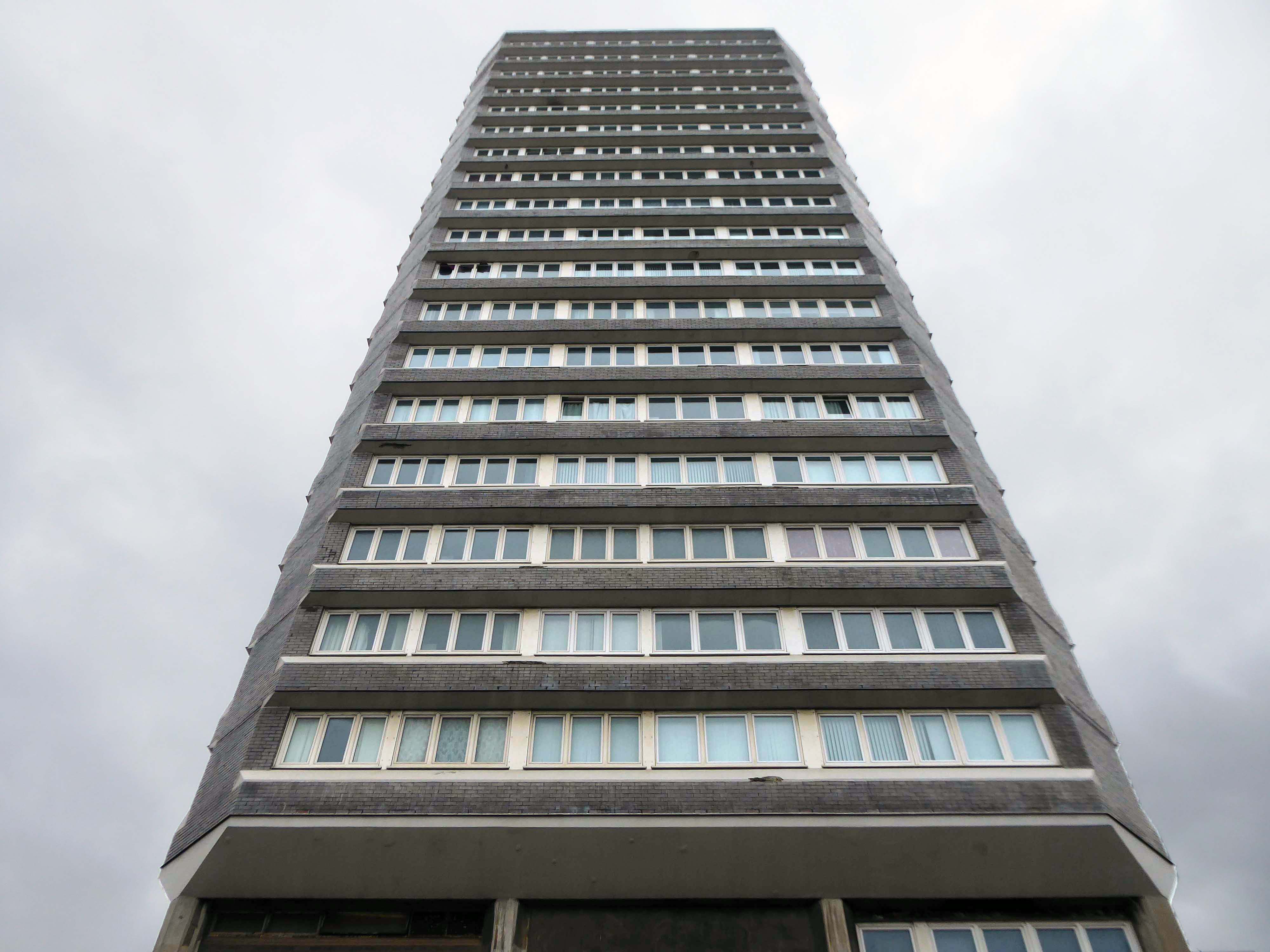
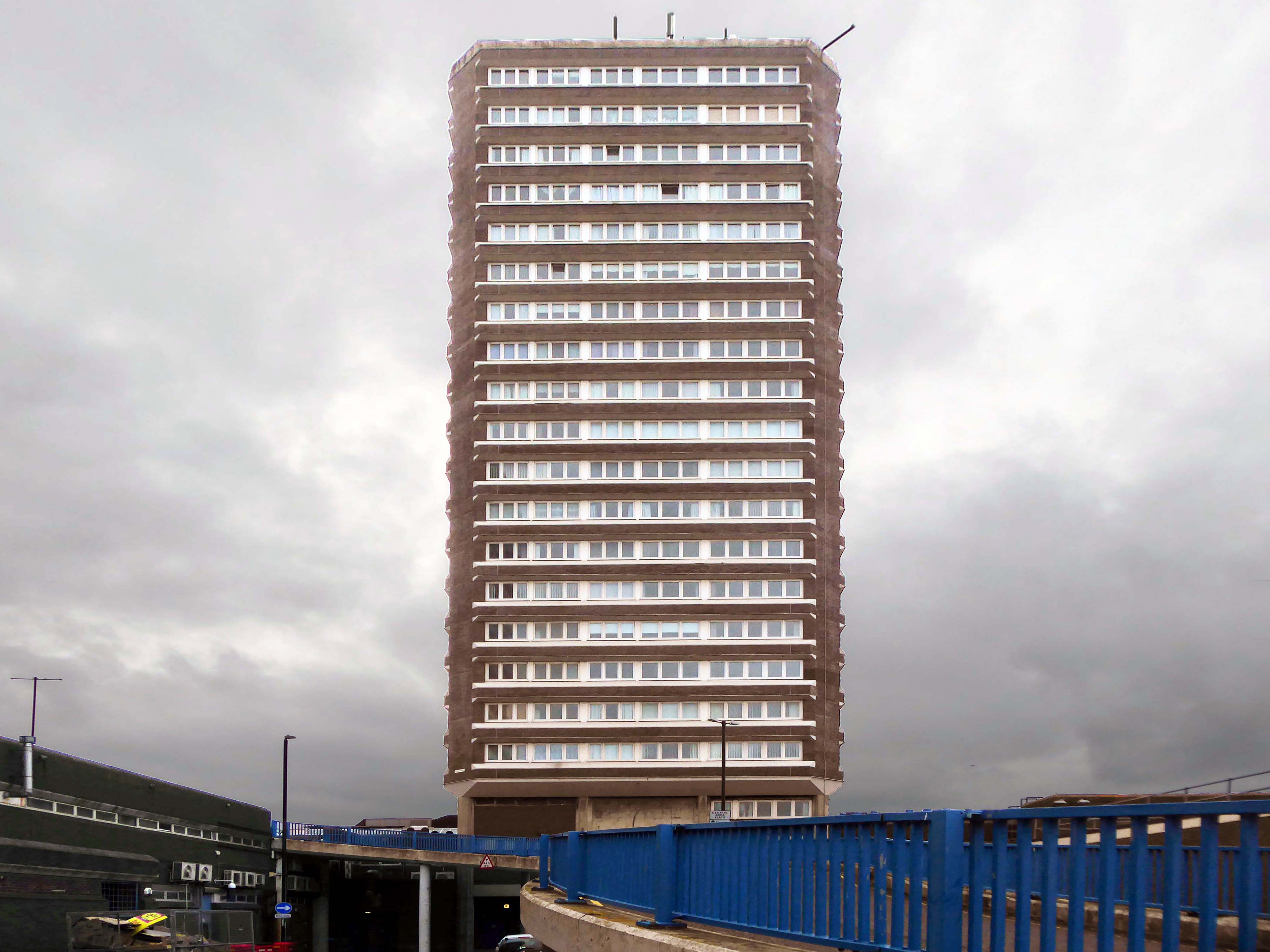
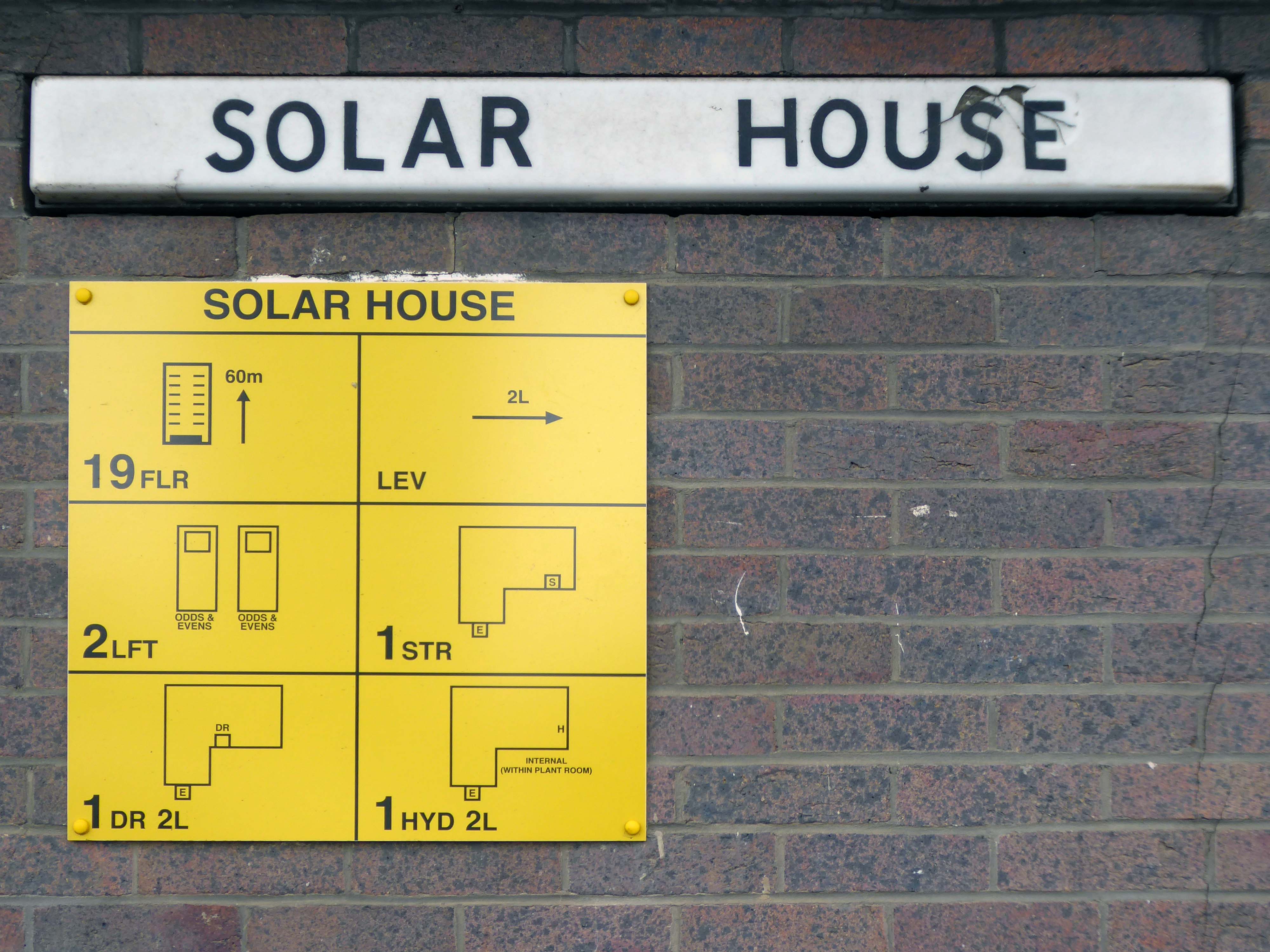
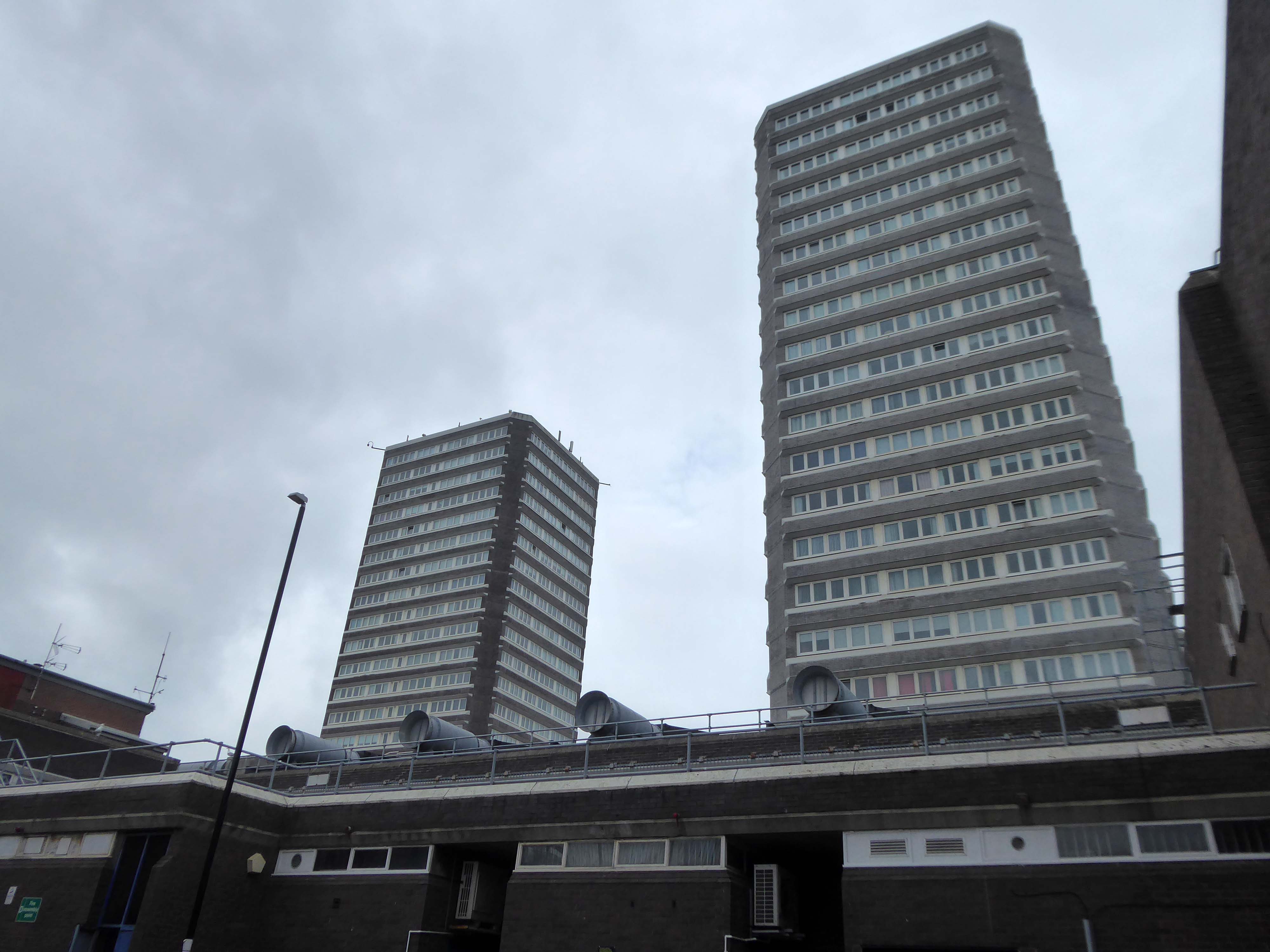
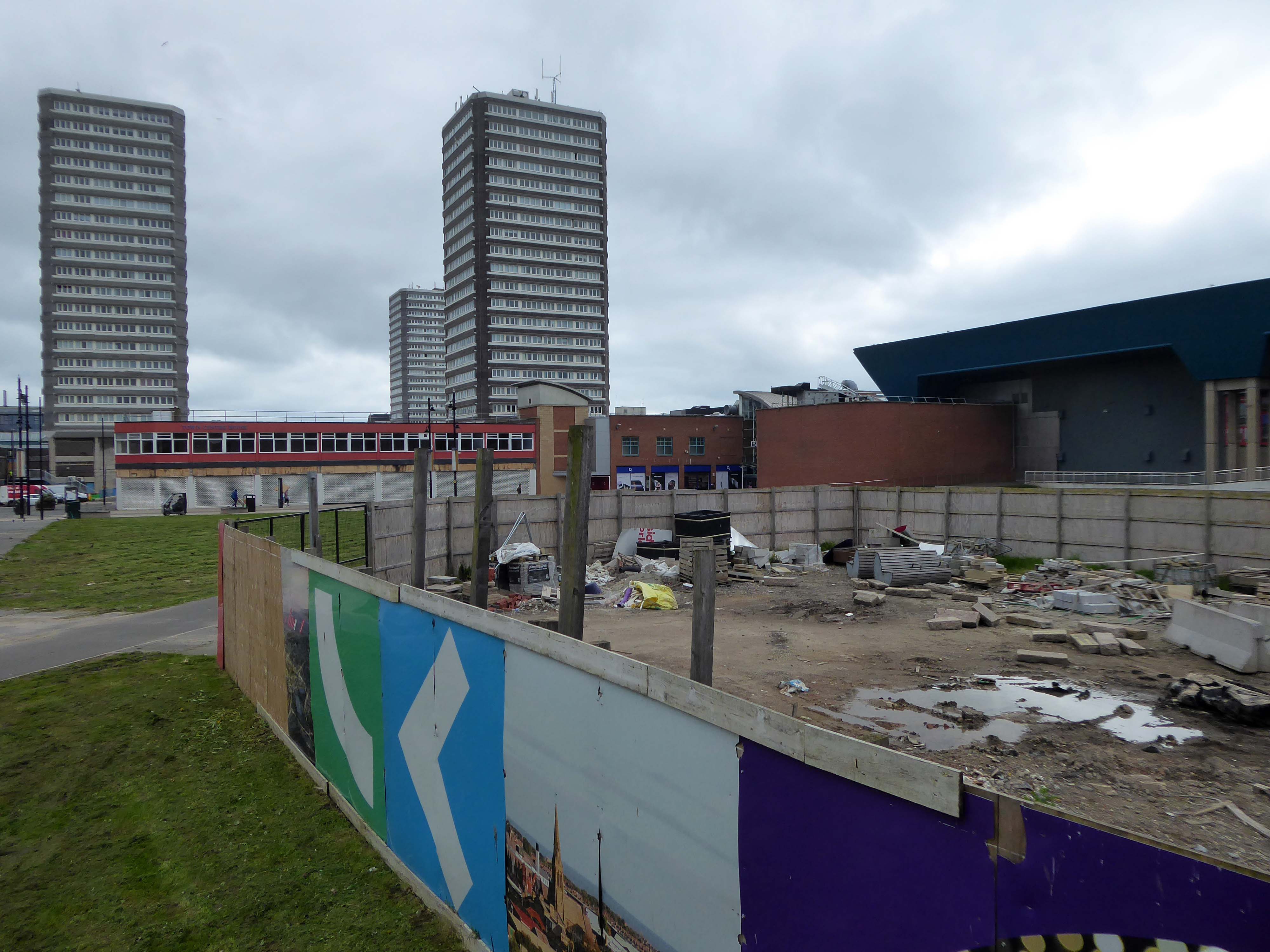
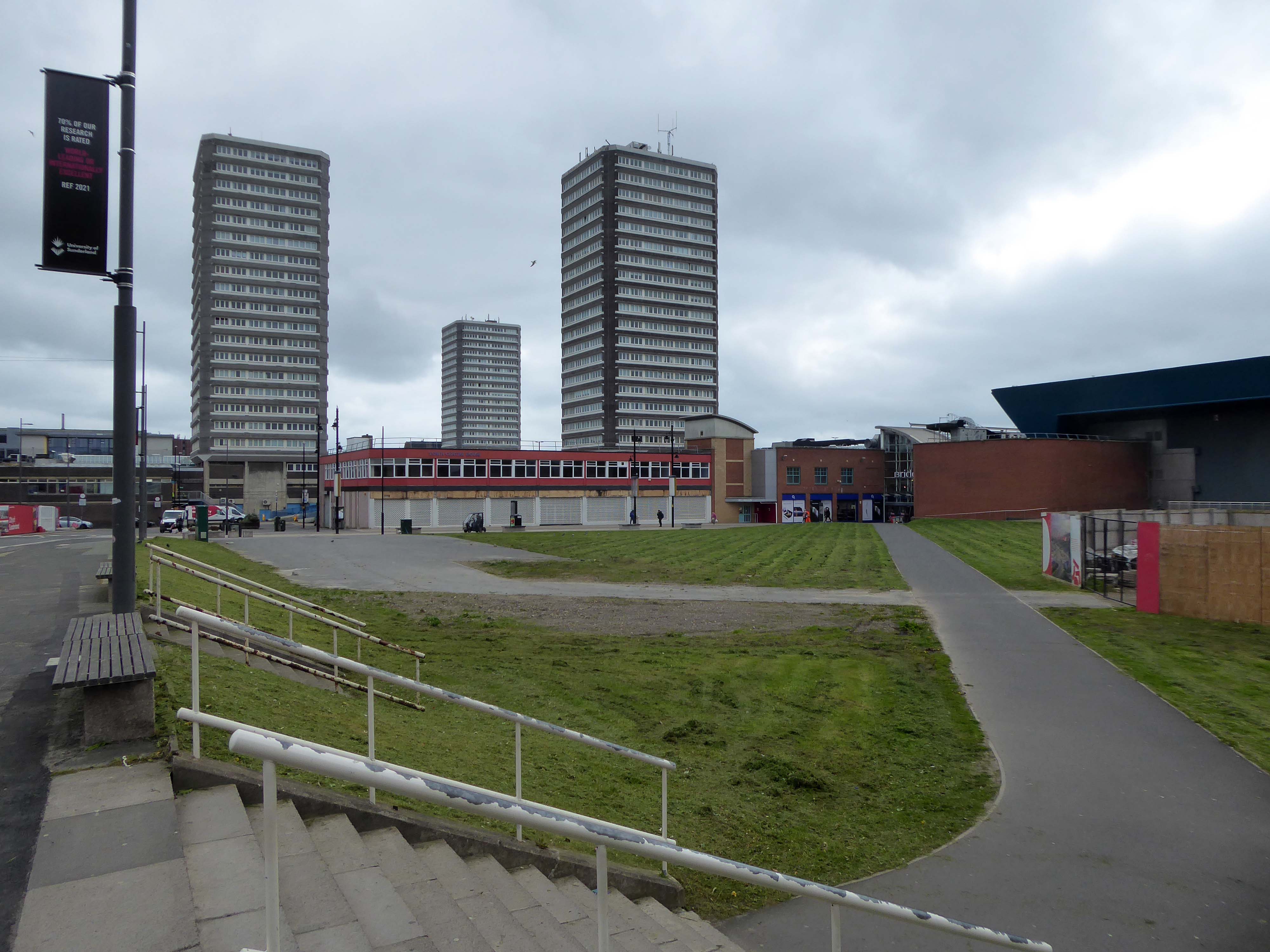
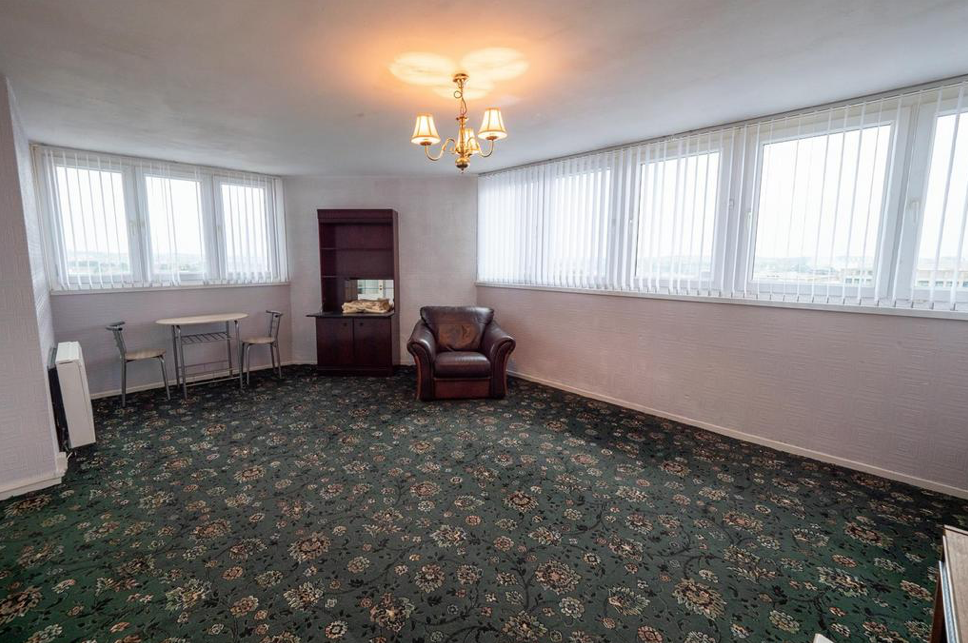
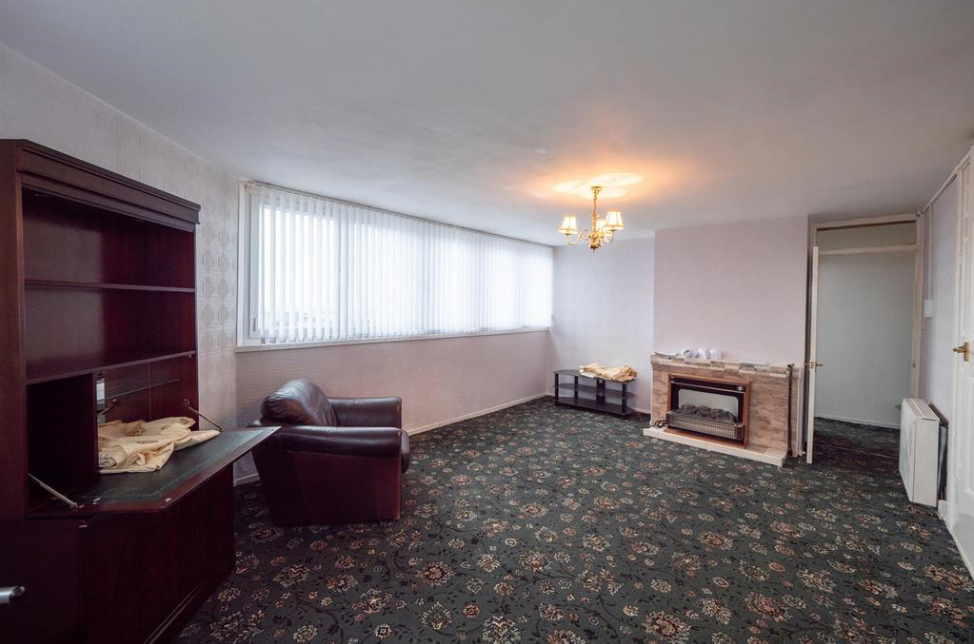
Three nineteen-storey point blocks built as public housing as part of the redevelopment of Sunderland town centre. The blocks contain 270 dwellings in total. Construction was approved by committee in 1967.
The blocks were constructed by Sunderland County Borough Council.
The developers of the Town Central Area were Town and City Properties Ltd. It is believed that they contributed £38,600 to the development of the blocks.
Ian Frazer and Associates were the architects for the sub-structural works only.
Llewelyn, Davies, Weeks and Partners were the structural and mechanical engineers in addition to being the architects for the tower blocks.
Gilbert-Ash Northern Ltd.’s tender for the contract was £959,258 – construction began in March 1967.
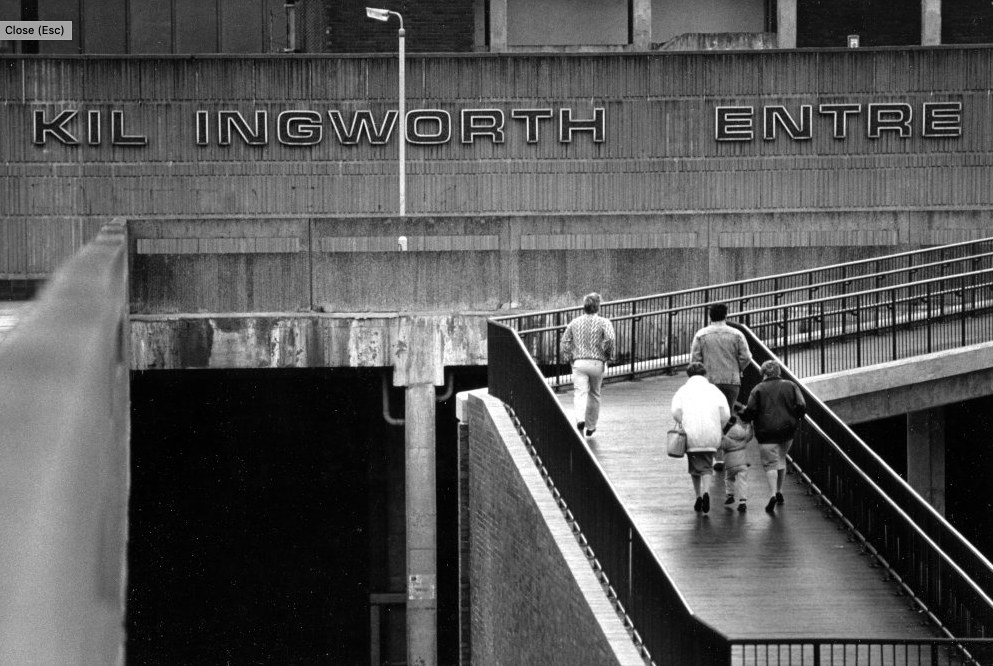
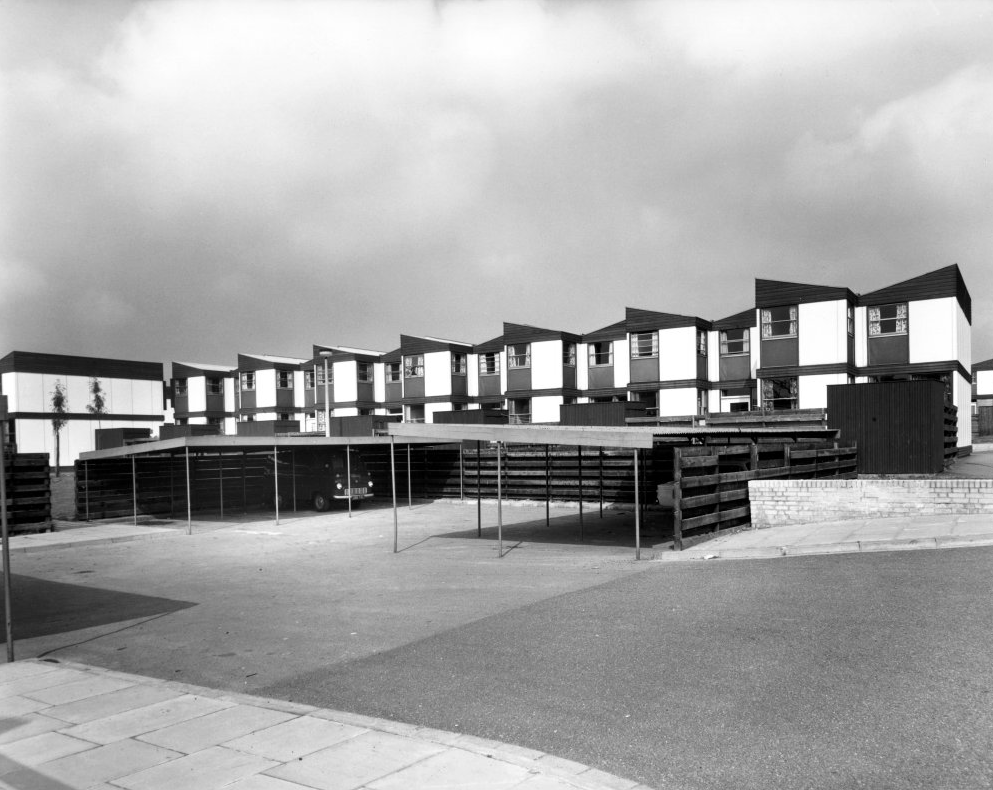
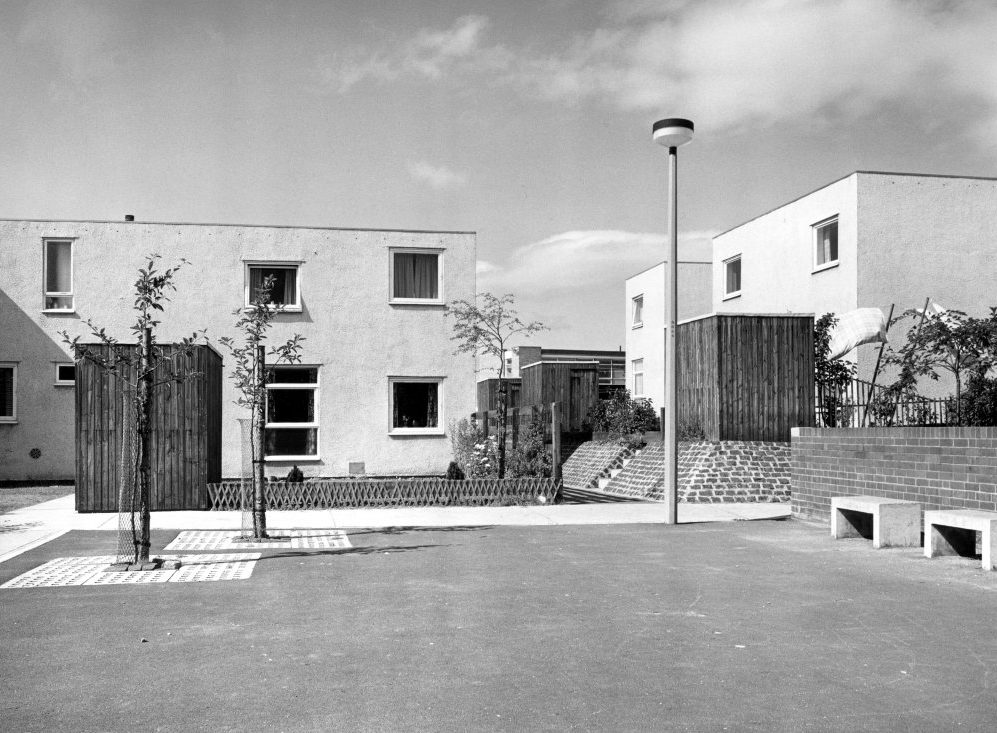
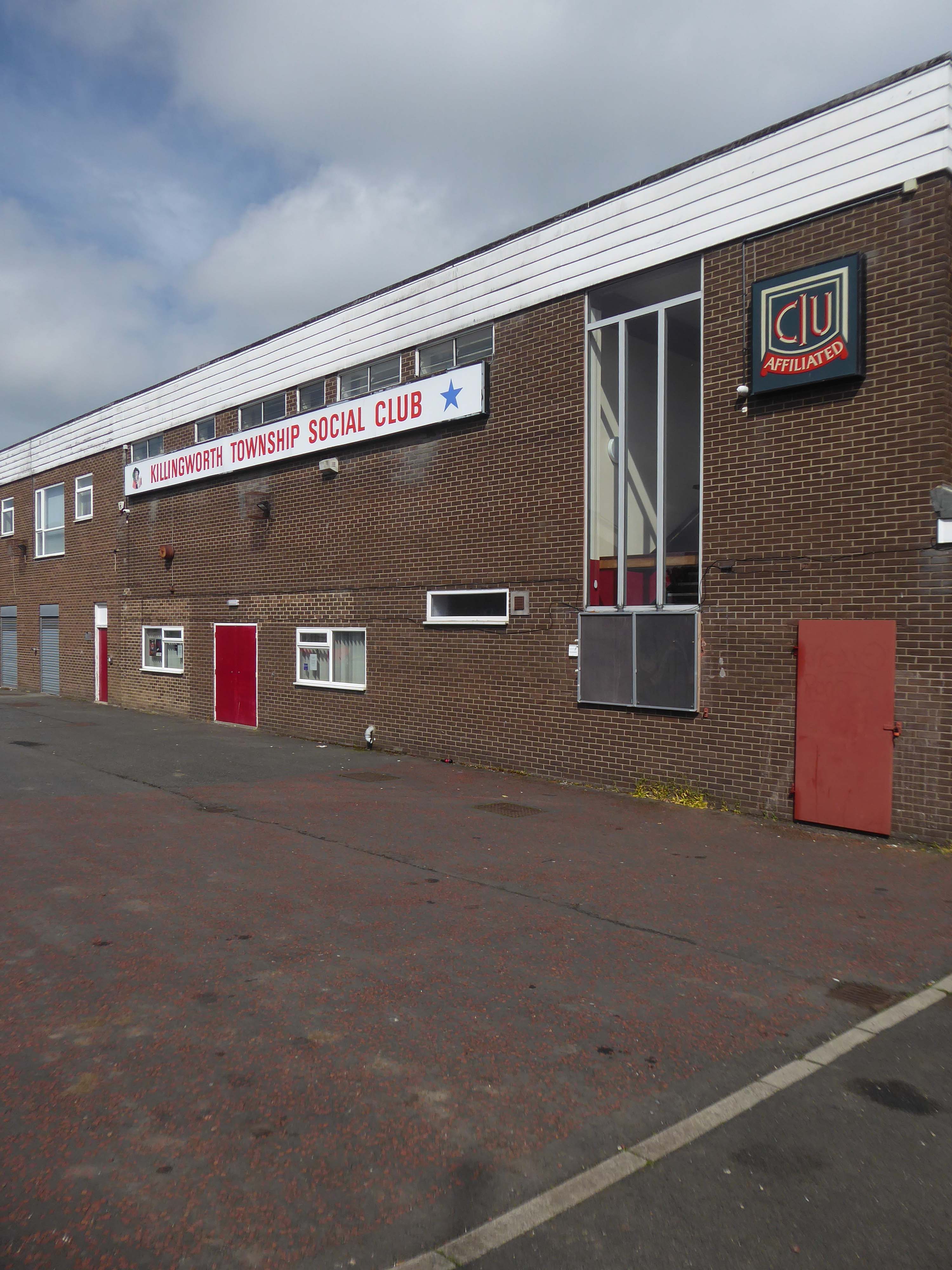
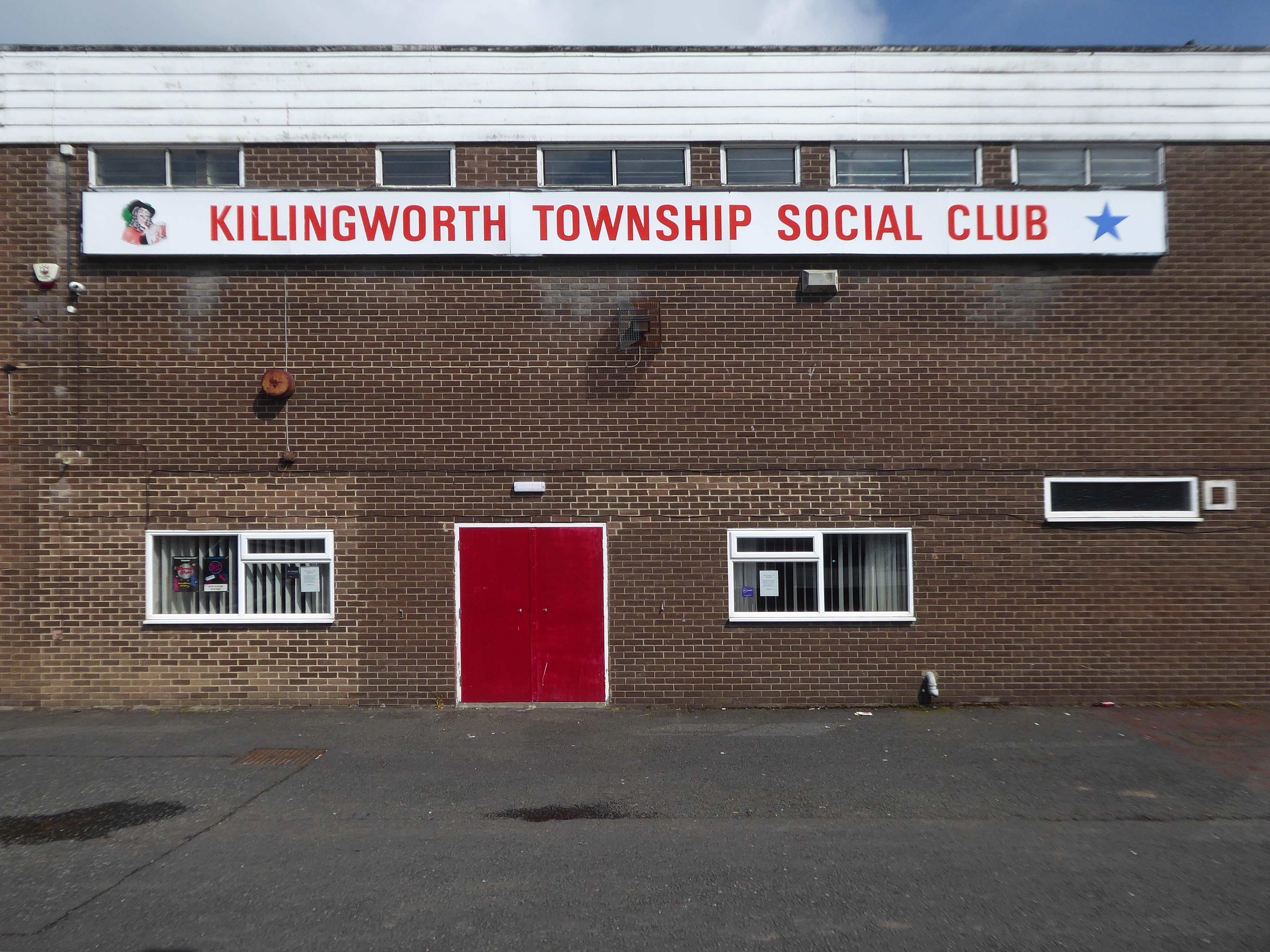
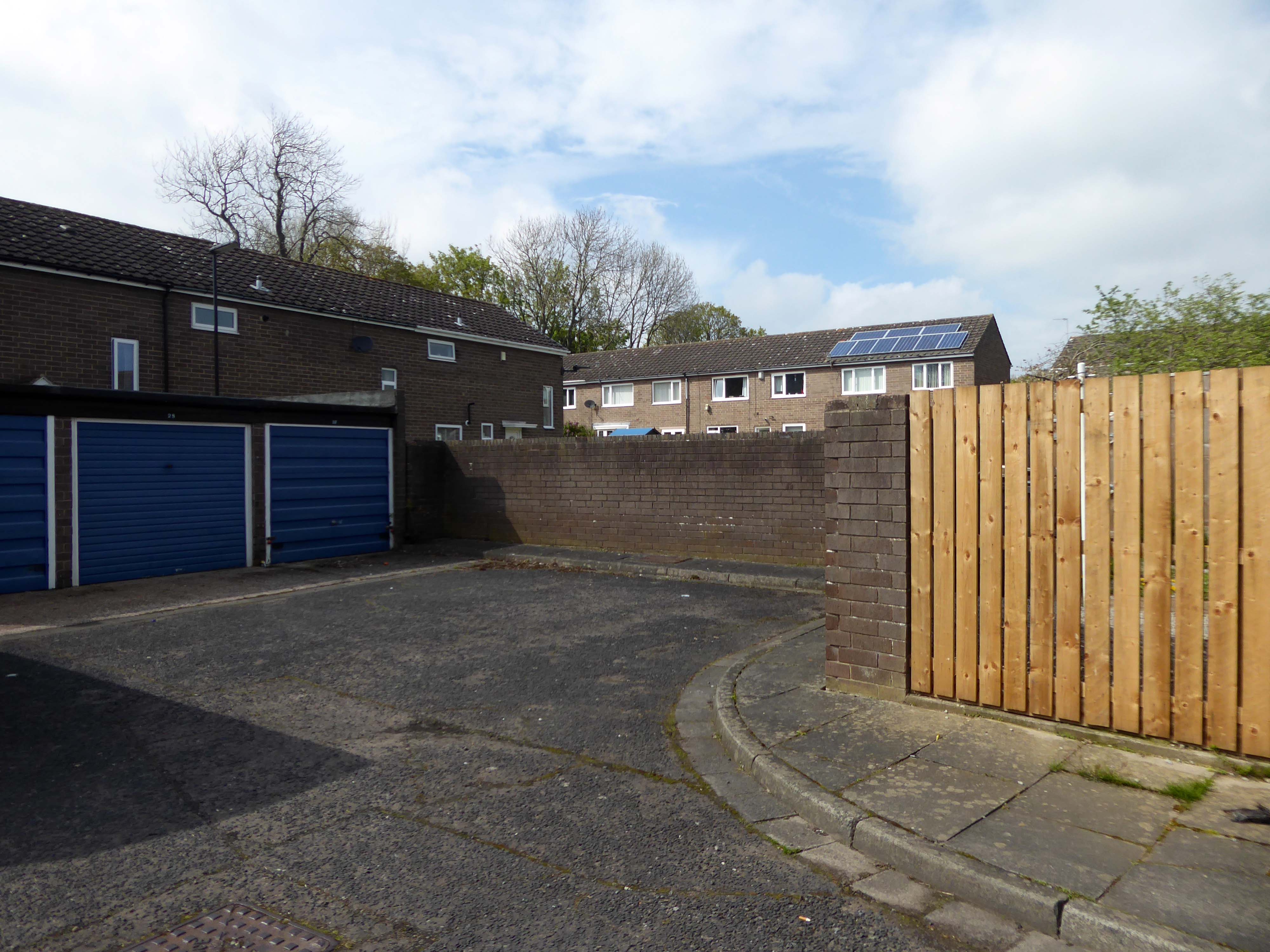
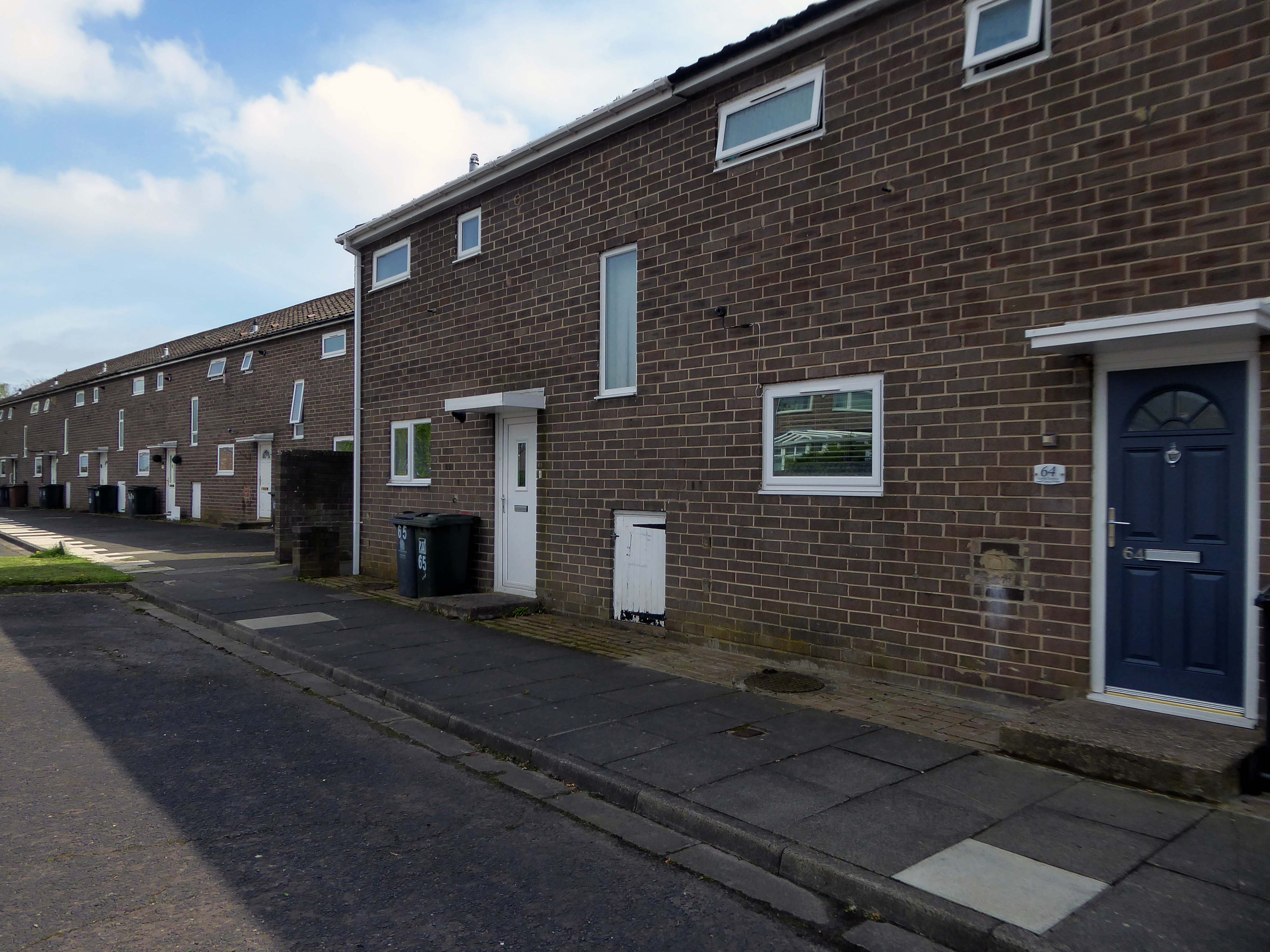
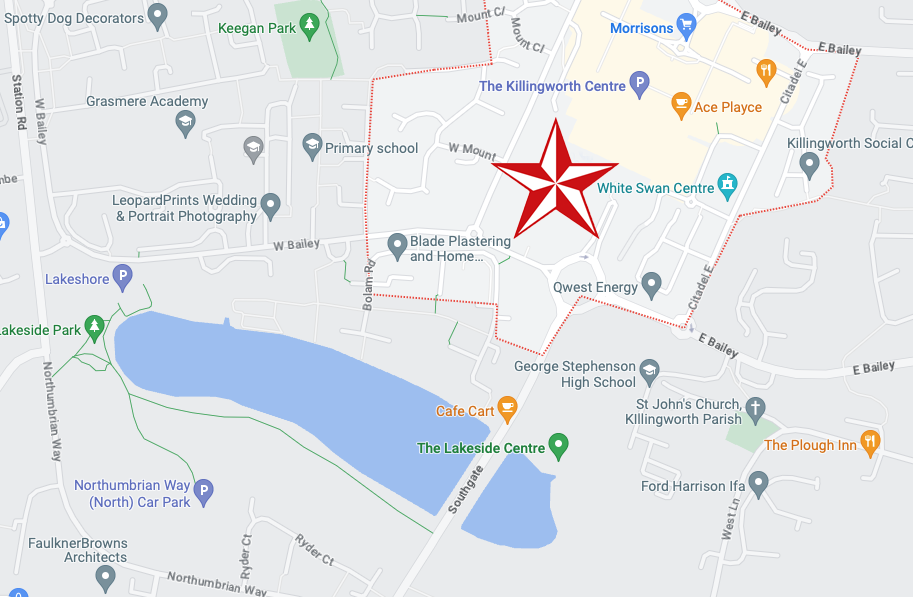
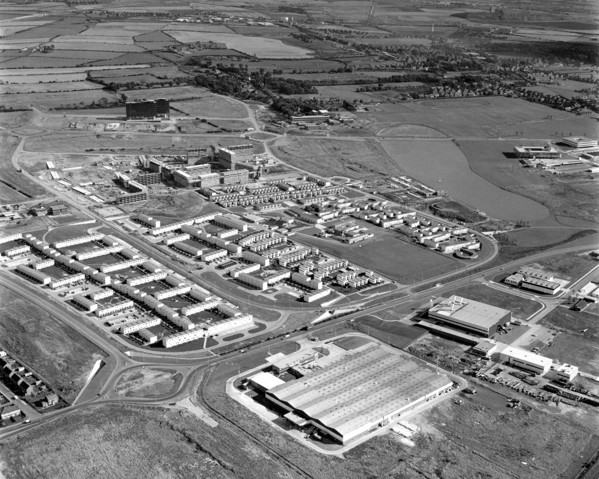
Construction of Killingworth, a new town, began in 1963. Intended for 20,000 people, it was a former mining community, formed on seven hundred and sixty acres of derelict colliery land near Killingworth Village. The building of Killingworth Township was undertaken by Northumberland County Council and was not formally a New Town sponsored by the Government.
Unlike that town, Killingworth’s planners adopted a radical approach to town centre design, resulting in relatively high-rise buildings in an avant-garde and brutalist style that won awards for architecture, dynamic industry and attractive environment.
This new town centre consisted of pre-cast concrete houses, with millions of small crustacean shells unusually embedded into their external walls, five to ten storey flats, offices, industrial units and service buildings, which often consisted of artistic non-functional characteristics, shops and residential multi-storey car parks, interconnected by ramps and walkways. These made up a deck system of access to shopping and other facilities, employing the Swedish Skarne method of construction.
Originally named Killingworth Township, the latter part was quickly dropped through lack of colloquial use.
Killingworth is referred to as Killy by many residents of the town and surrounding areas.
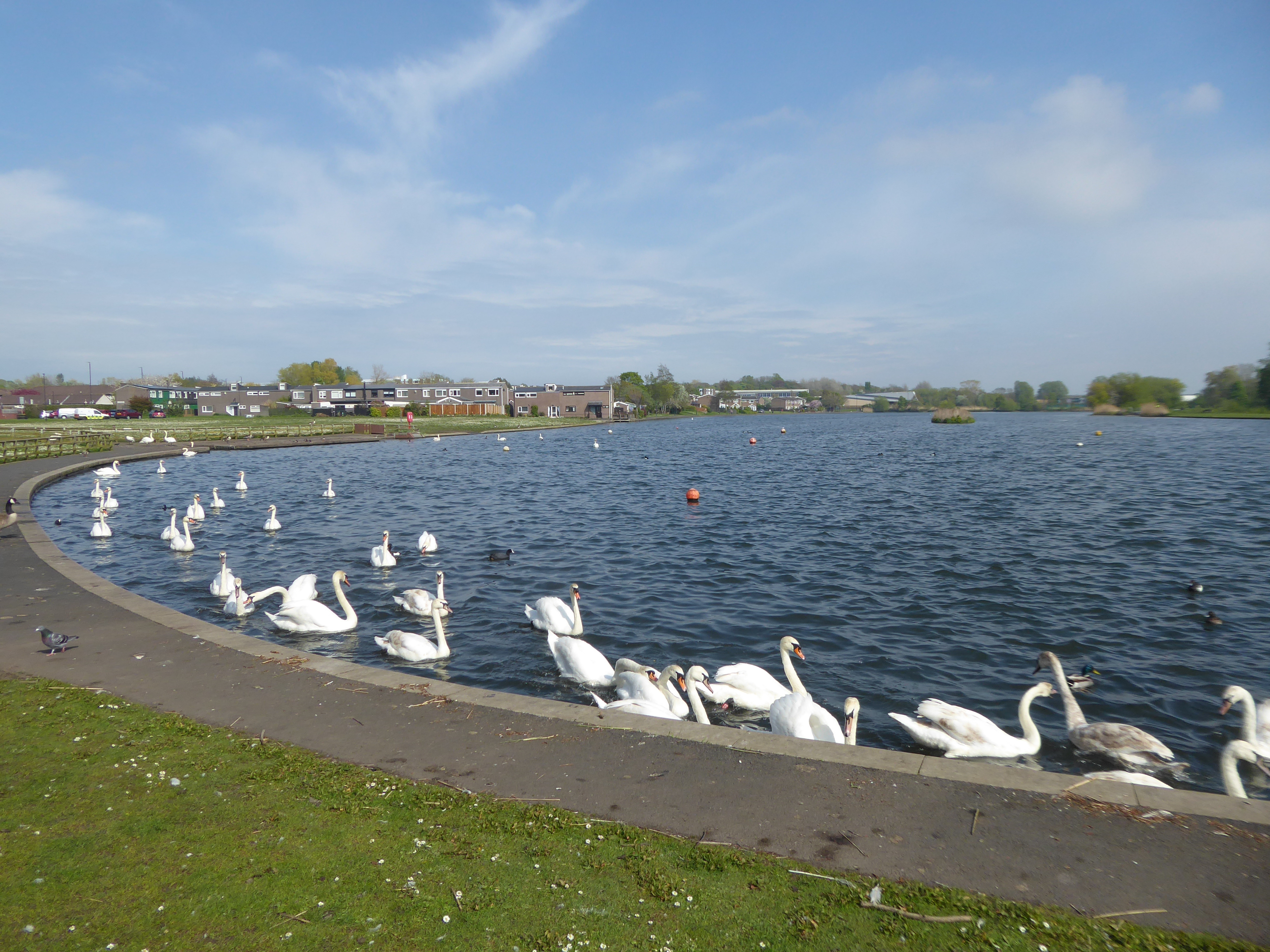
Around 1964, during the reclamation of the derelict pit sites, a fifteen acre lake south of the town centre was created; spoil heaps were levelled, seeded and planted with semi-mature trees.
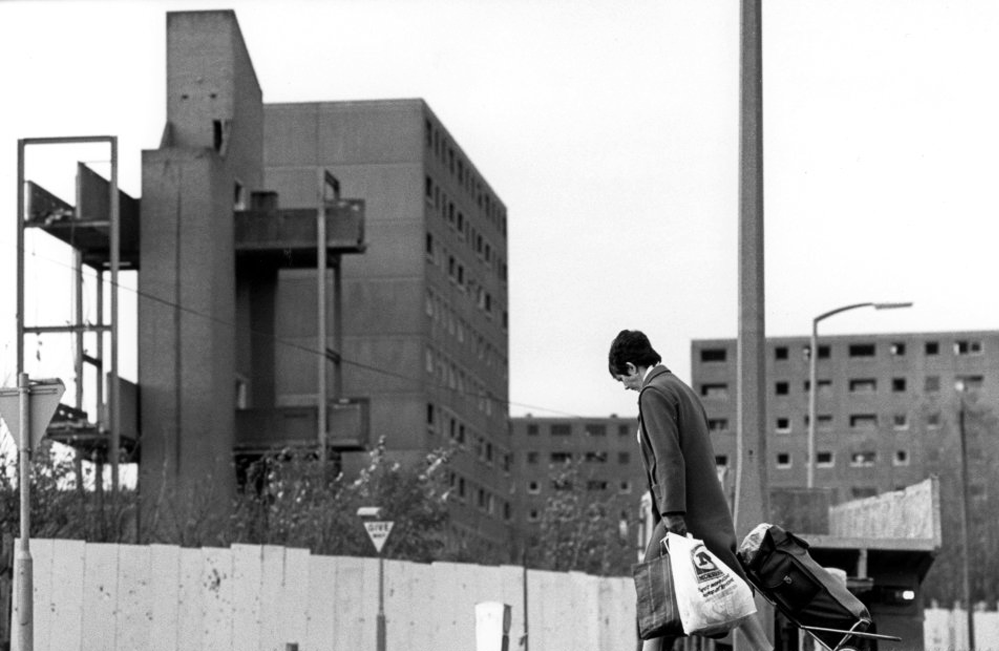
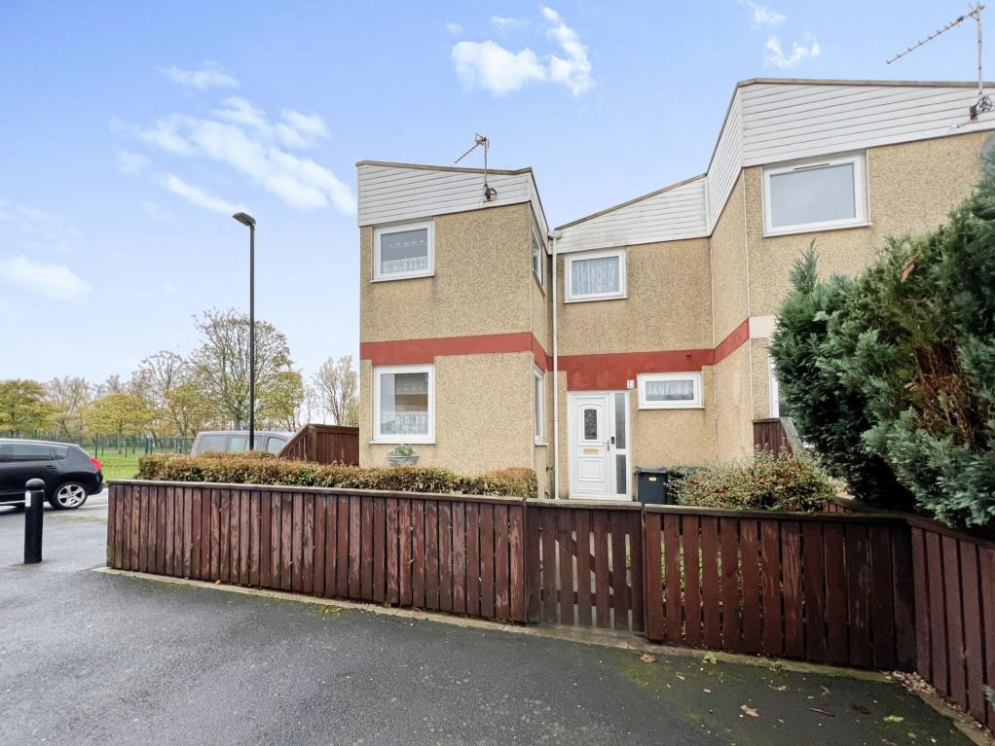
In 1987 the demolition of this three-tier housing estate of the township was undertaken by the Architects’ Department of the Metropolitan Borough of North Tyneside.
Photo: Philip Wolmuth
Once the wrecking ball arrives new town can begin to look like any old town.
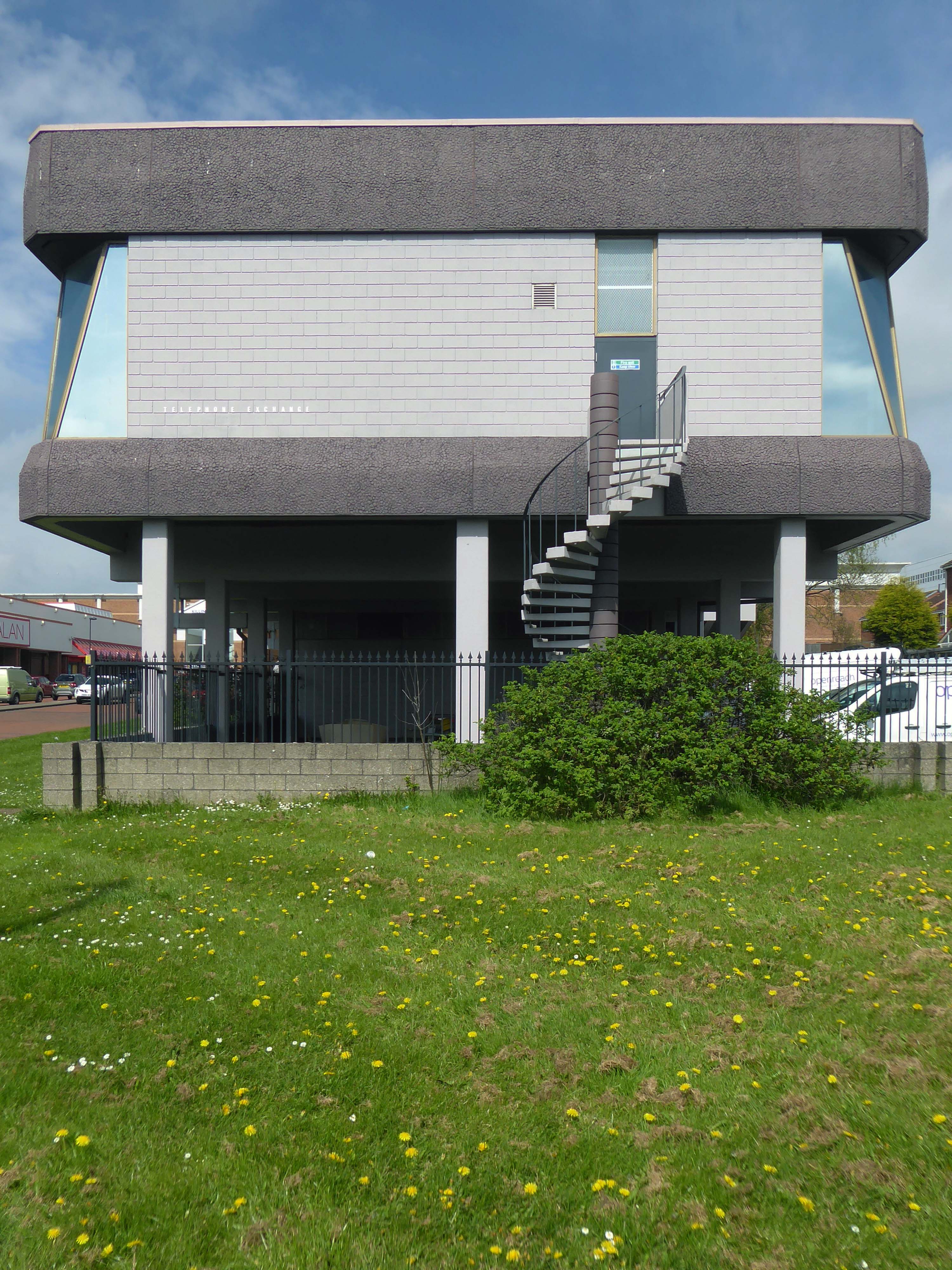
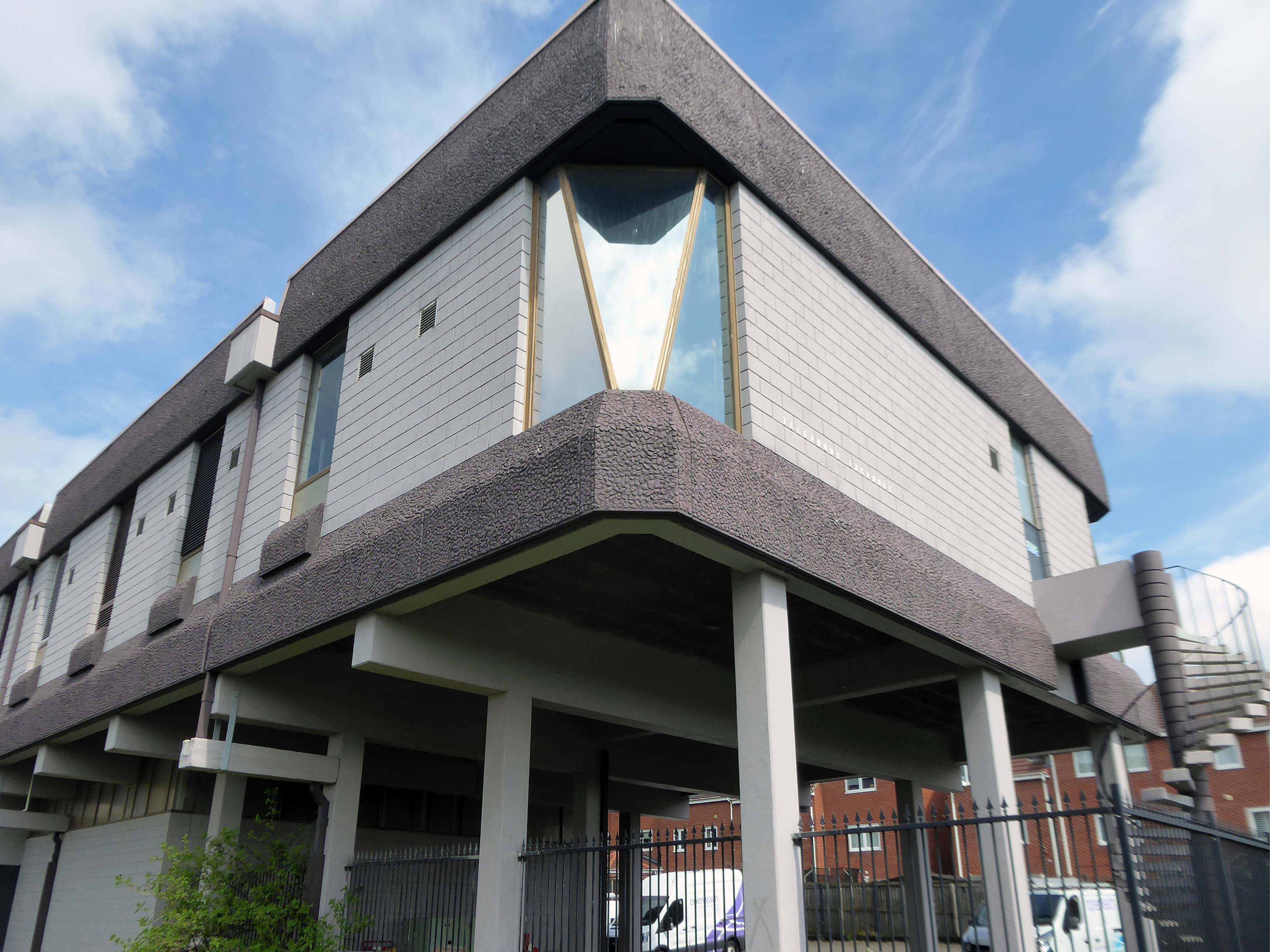
Following Euan Lynn’s suggestion – I went to take a look around.
From the window of the 52 bus, I saw an enchanting Telephone Exchange.
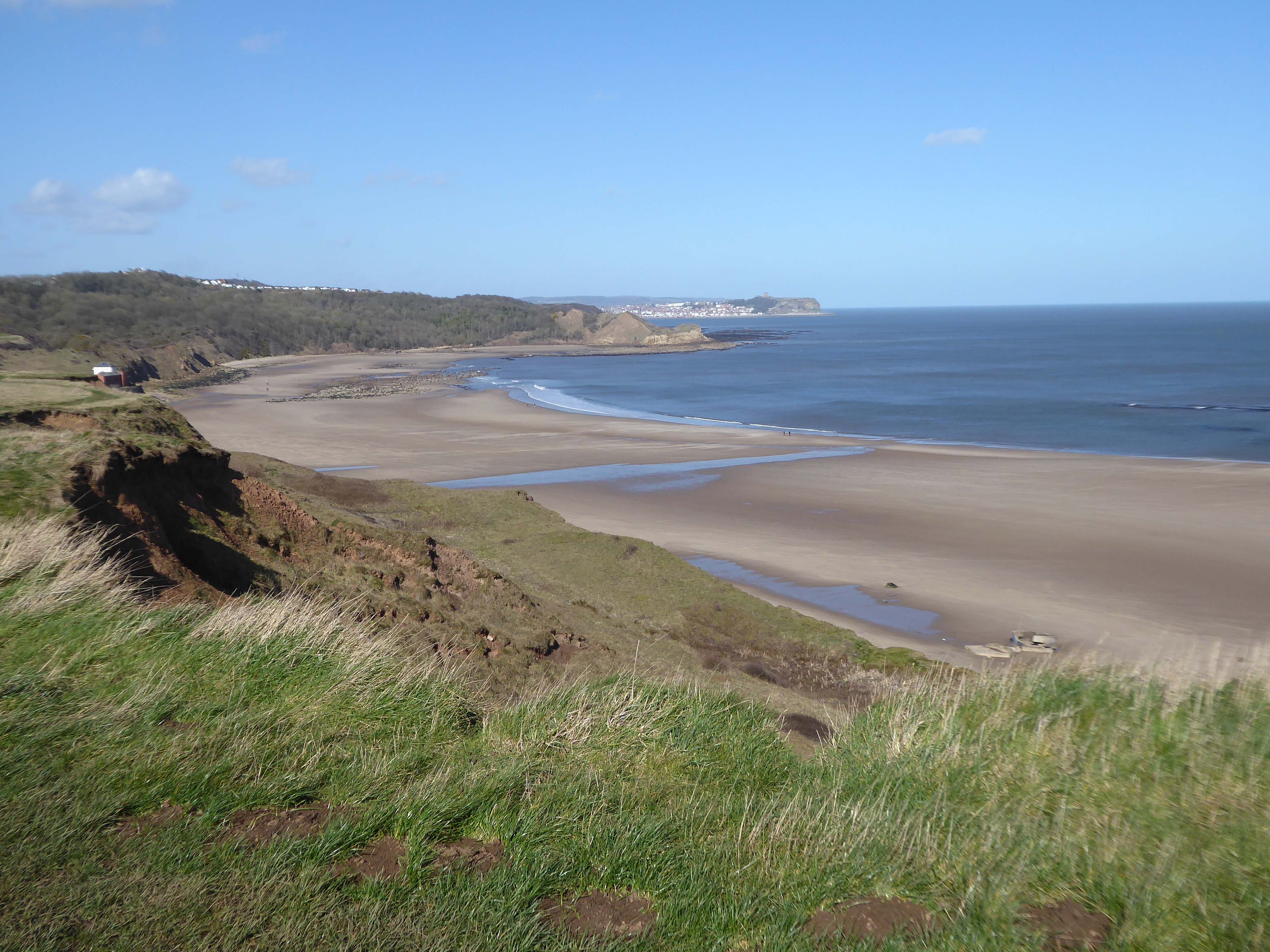
The soft clays of the cliffs are subject to constant erosion.
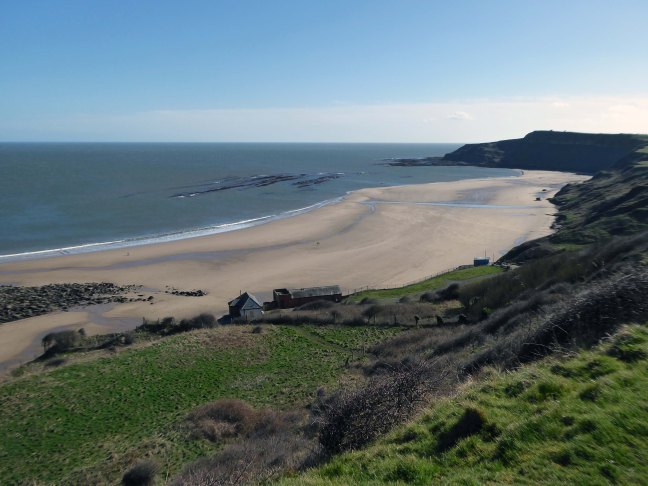
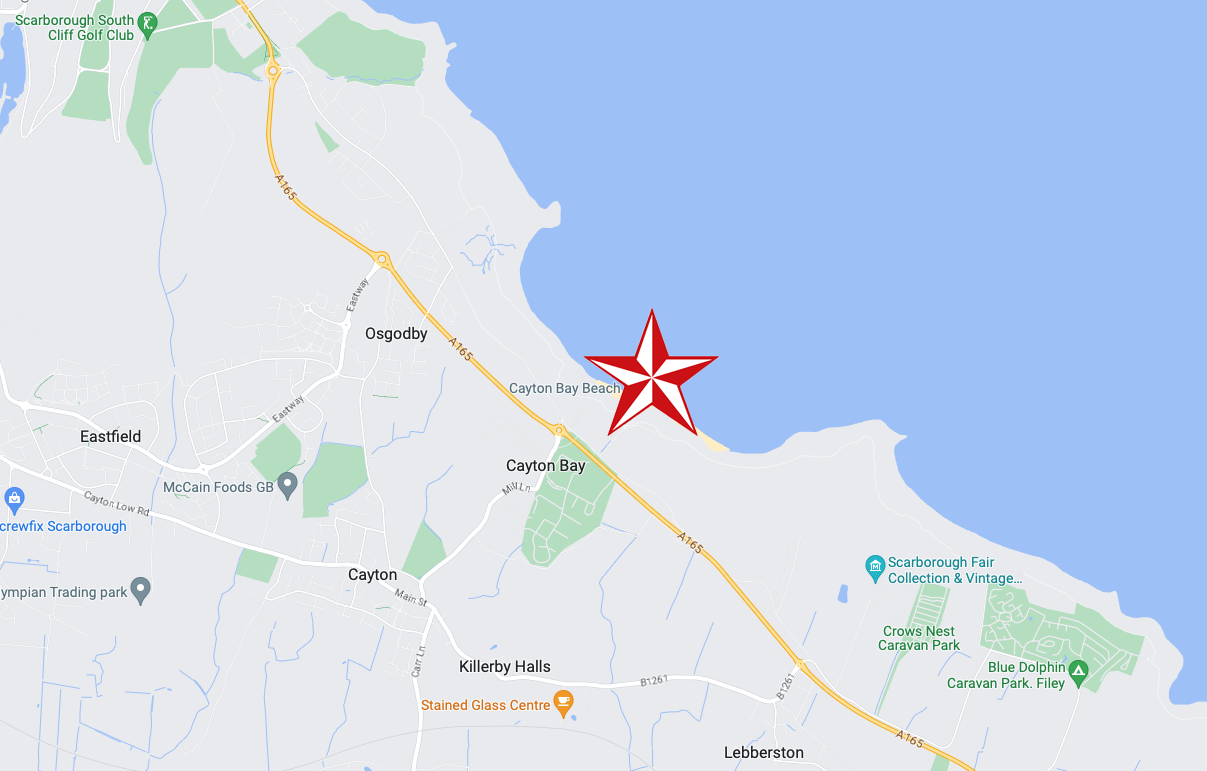
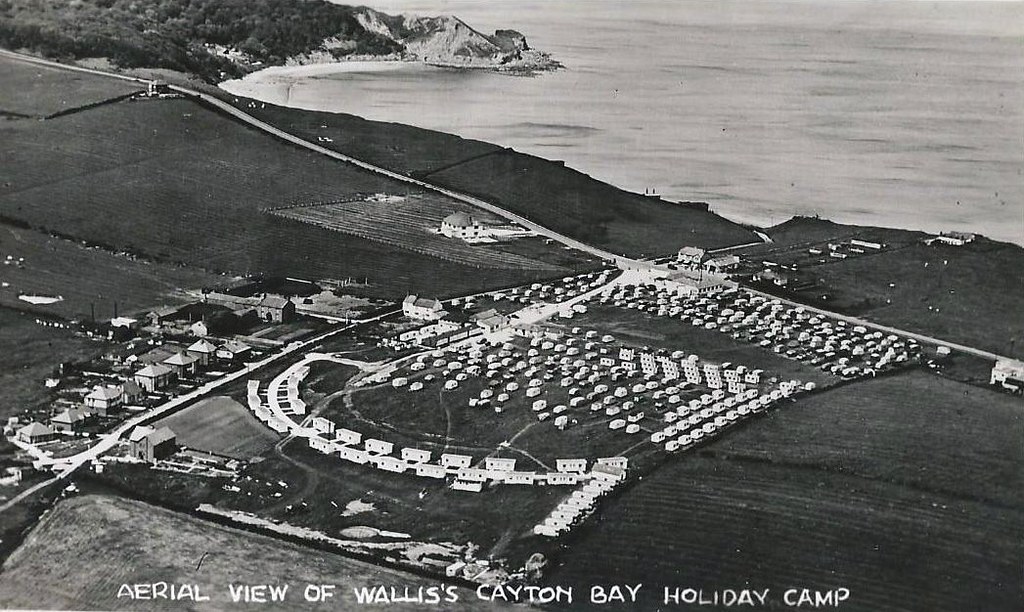
In 2008 fresh landslips have occurred around Cayton Bay. The bungalows built on the old holiday camp at Osgodby Point have started to suffer serious erosion. The cliffs around the Cornelian and Cayton areas are just made of soil. So erosion is to be expected. It may taken time. But there is not much which can be done to prevent the seas moving in.
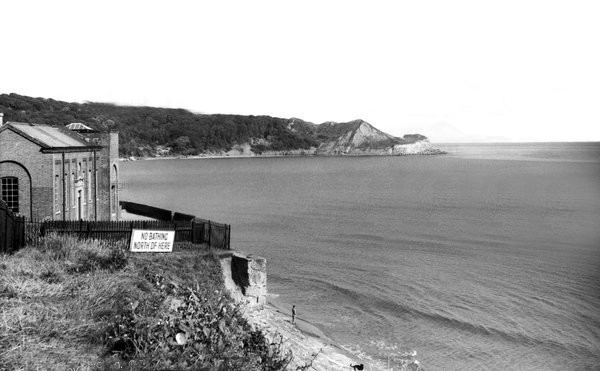
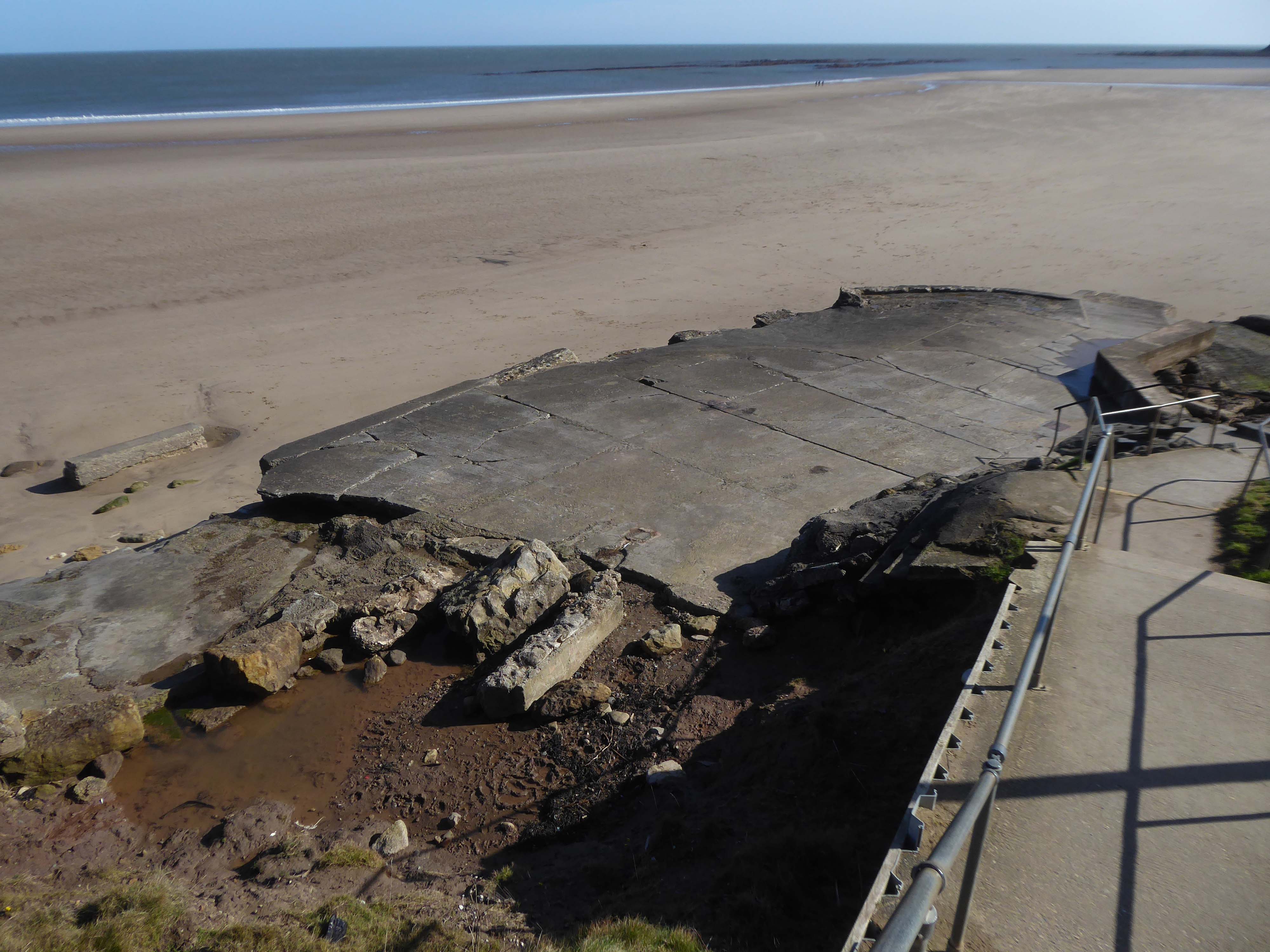
The Pumping Station was partially demolished in 1956.
Several well worn layers of geological time have been hanging around for a while now.
Whilst the long-gone critters are but fossilised versions of their former selves.
The rocks found at Cayton Bay are Jurassic aged from the Callovian stage. At the north end of Cayton Bay, the Cornbrash Formation can be seen, comprised of red-brown, sandy, nodular, bioturbated limestone with oysters and other bivalves.The Cornbrash lies beneath the start of the Cayton Clay Formation. Walking south towards Tenant’s Cliffs, Lower Calcareous Grit is brought to beach level, followed by a calcareous limestone. At the waterworks, low tides reveals a section in the Middle and Upper Jurassic rocks.
On scouring tides, argillaceous limestone and calcareous sandstone can be seen layered along the Upper Leaf of the Hambleton Oolite, which is seen excellently in the low cliff on the southern side of the Brigg. The tough, impure limestone contains well-preserved bivalves and ammonites. The sequence is shown in the diagram but faulting has caused unconformities.
During scouring, Oxford Clay can be seen along the foreshore south of the argillaceous limestone. Walking further south, Red Cliff is reached, where rocks of the Osgodby Formation slope above the Oxford Clay.
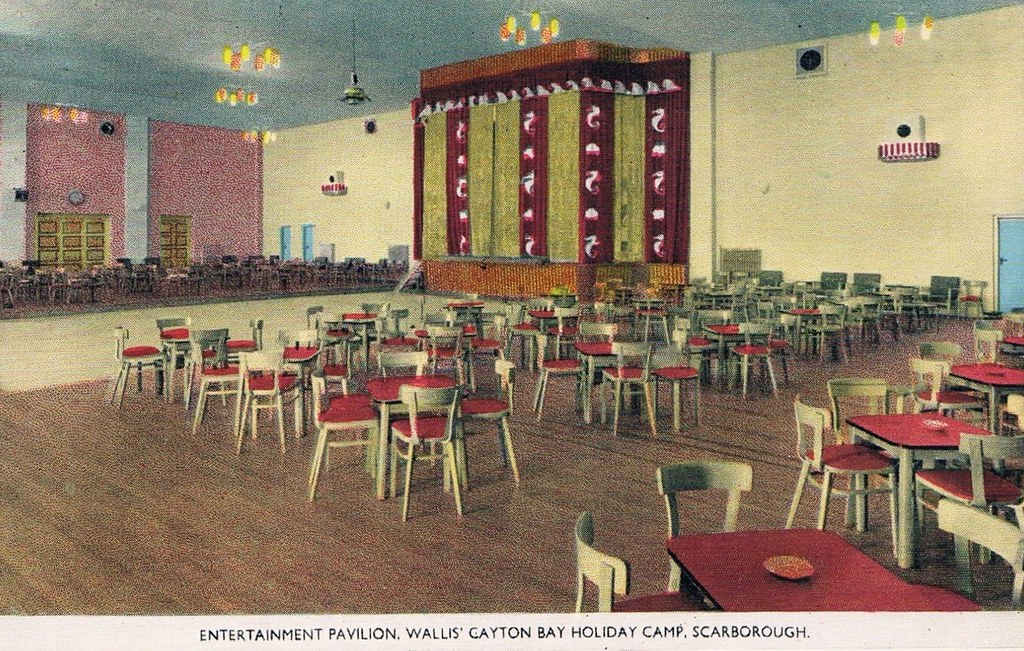
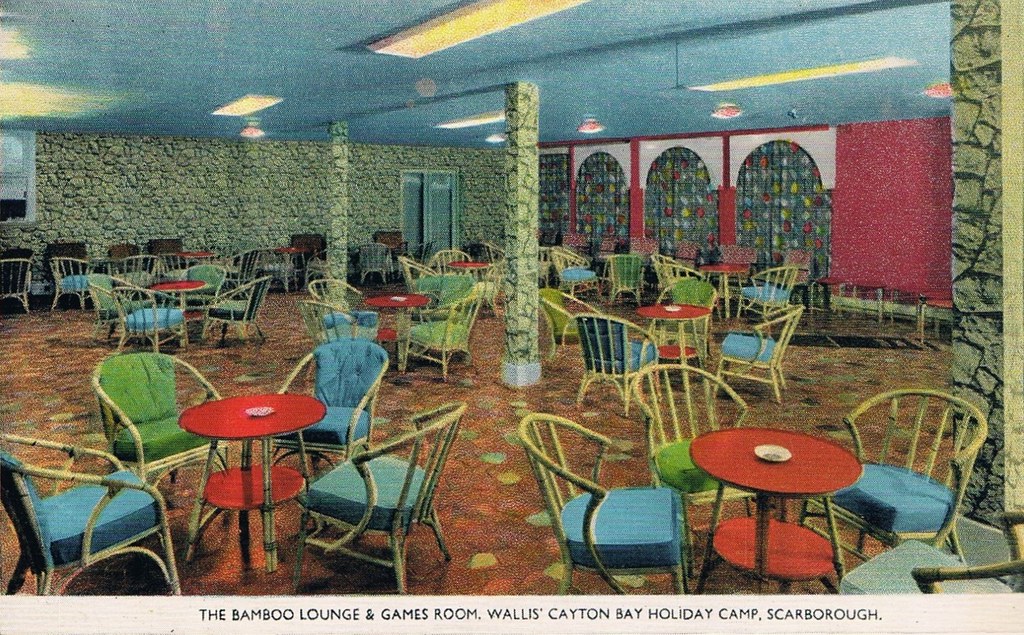
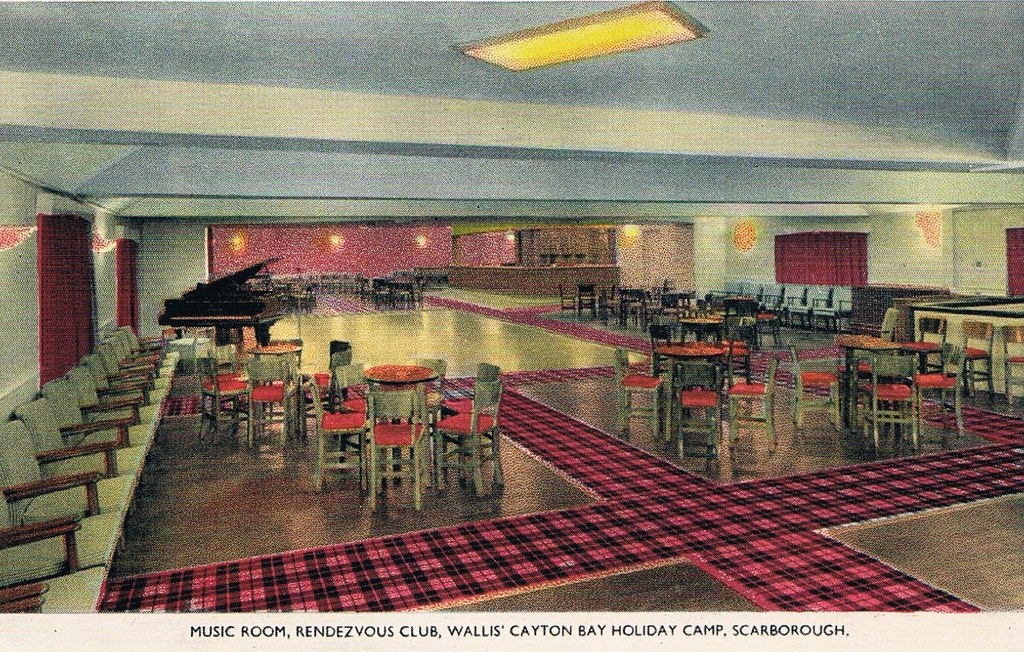
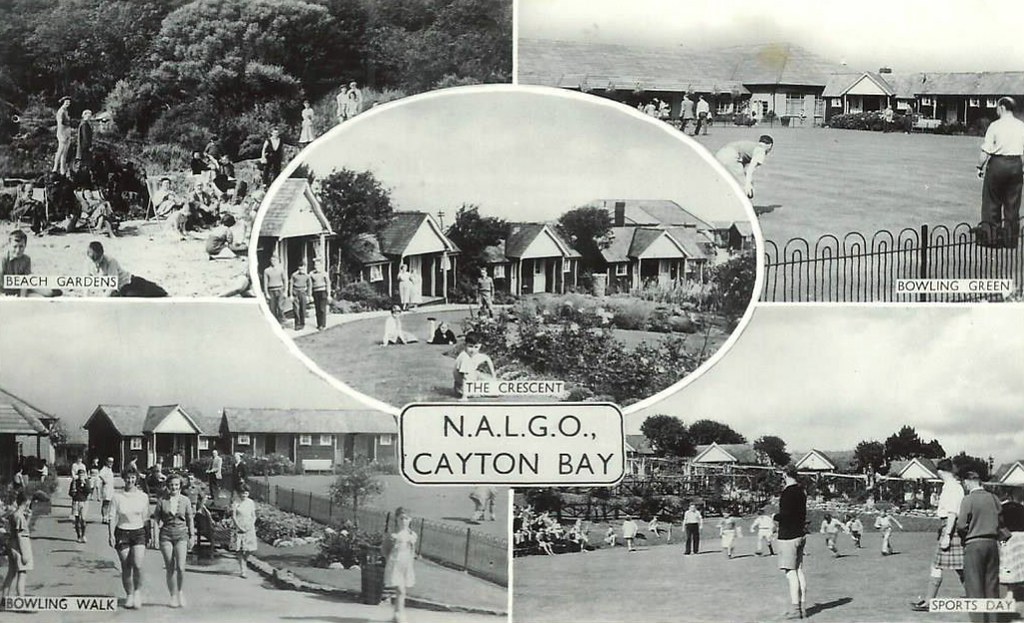
Originally the first Trade Union holiday camp in the North of England, owned by NALGO it opened its doors in 1933. It had 124 wooden bungalows, accommodating 252 visitors. A dining hall with waiter service, a rest room along with recreation rooms for playing cards, billiards, a theatre for indoor shows and dancing was also provided. The new centre also provided Tennis courts, Bowling greens along with a children’s play area. The visitors could walk to the beach where there was a sun terrace and beach house which also had a small shop.
Click here to see photos of the NALGO camp from the 1930s.
One of the earliest visitors were the family of poet Philip Larkin and during the Second World War it became a home for evacuated children from Middlesbrough.
The NALGO camp closed in 1974 and was later sold.
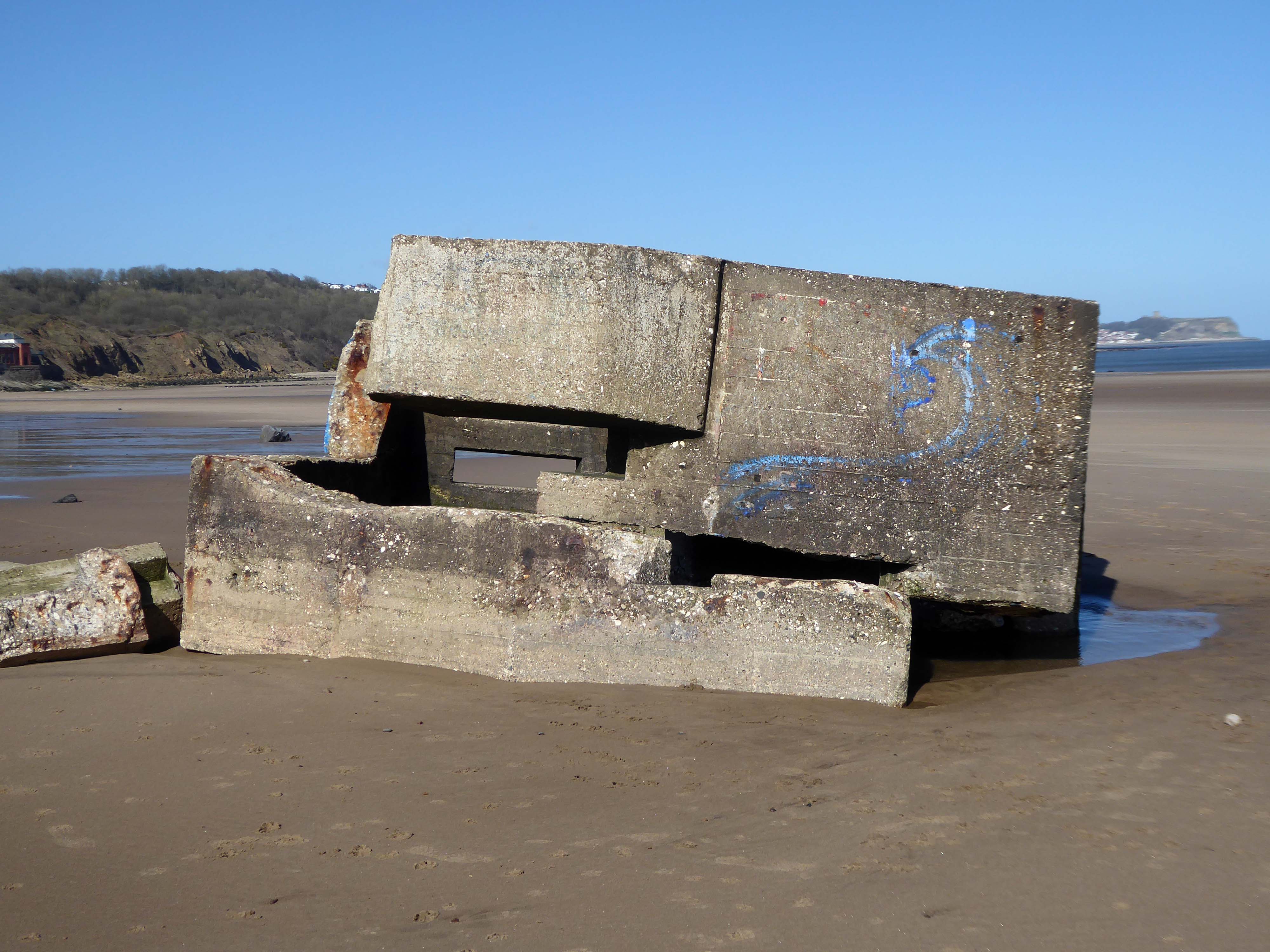
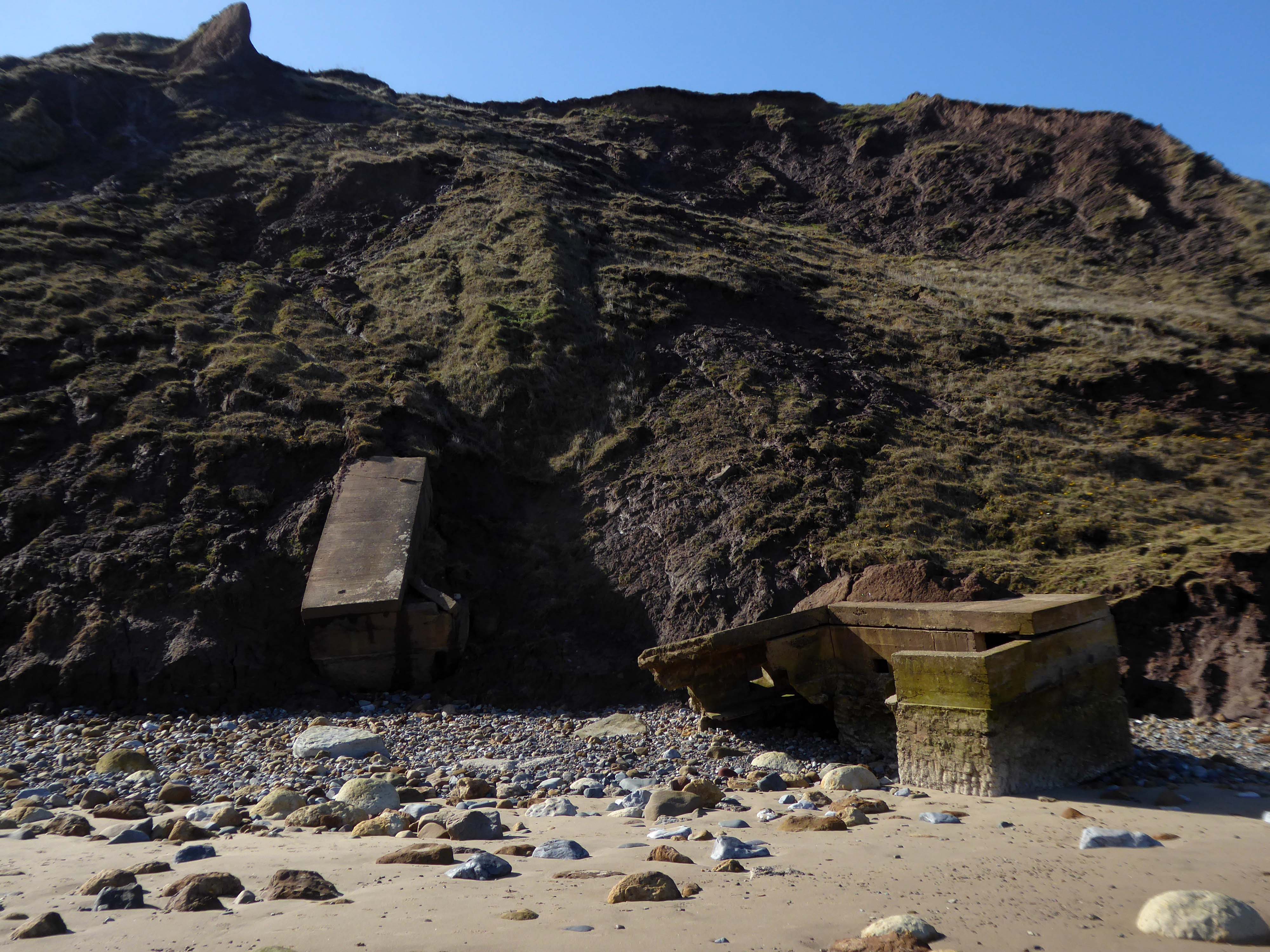
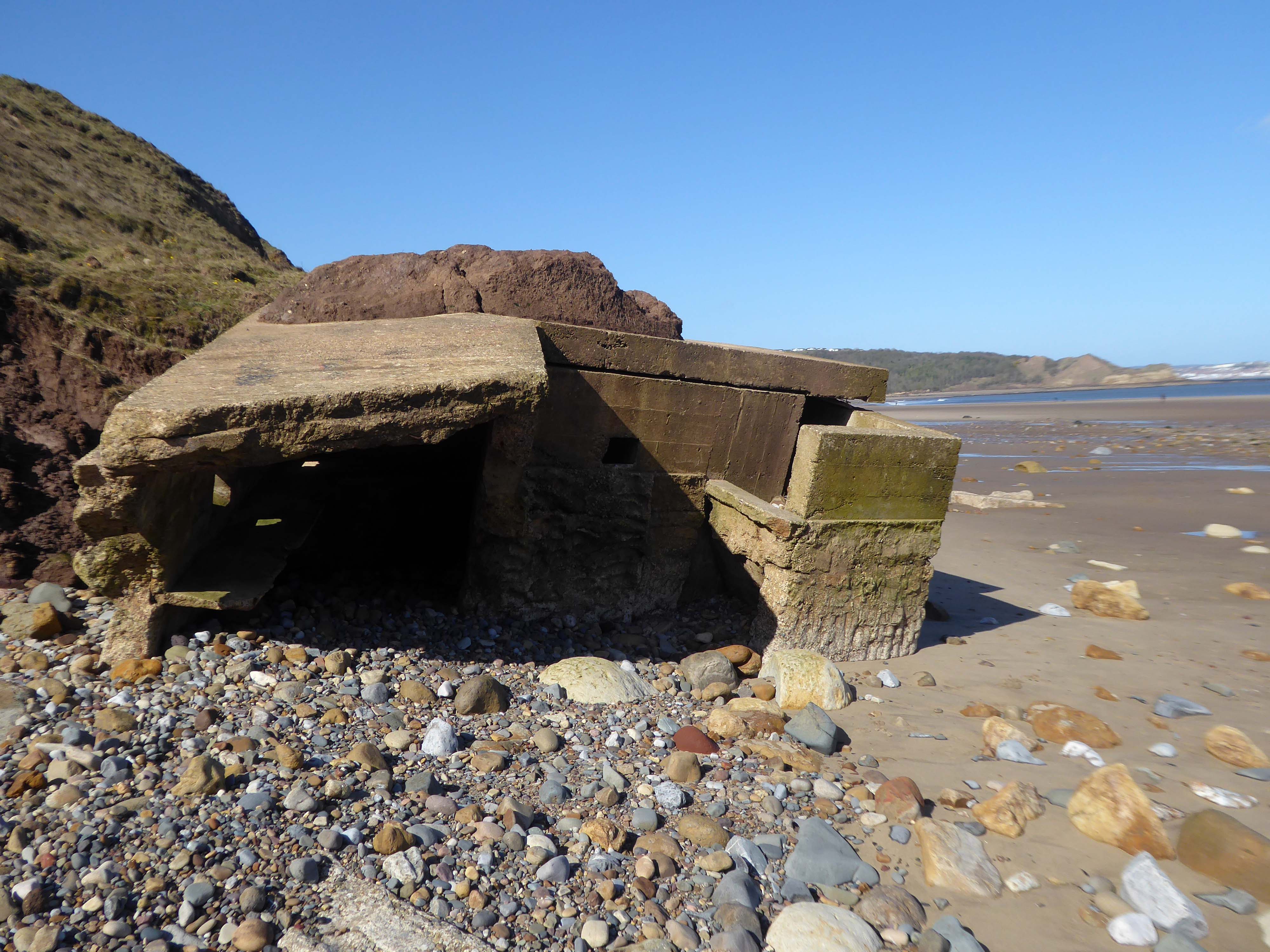
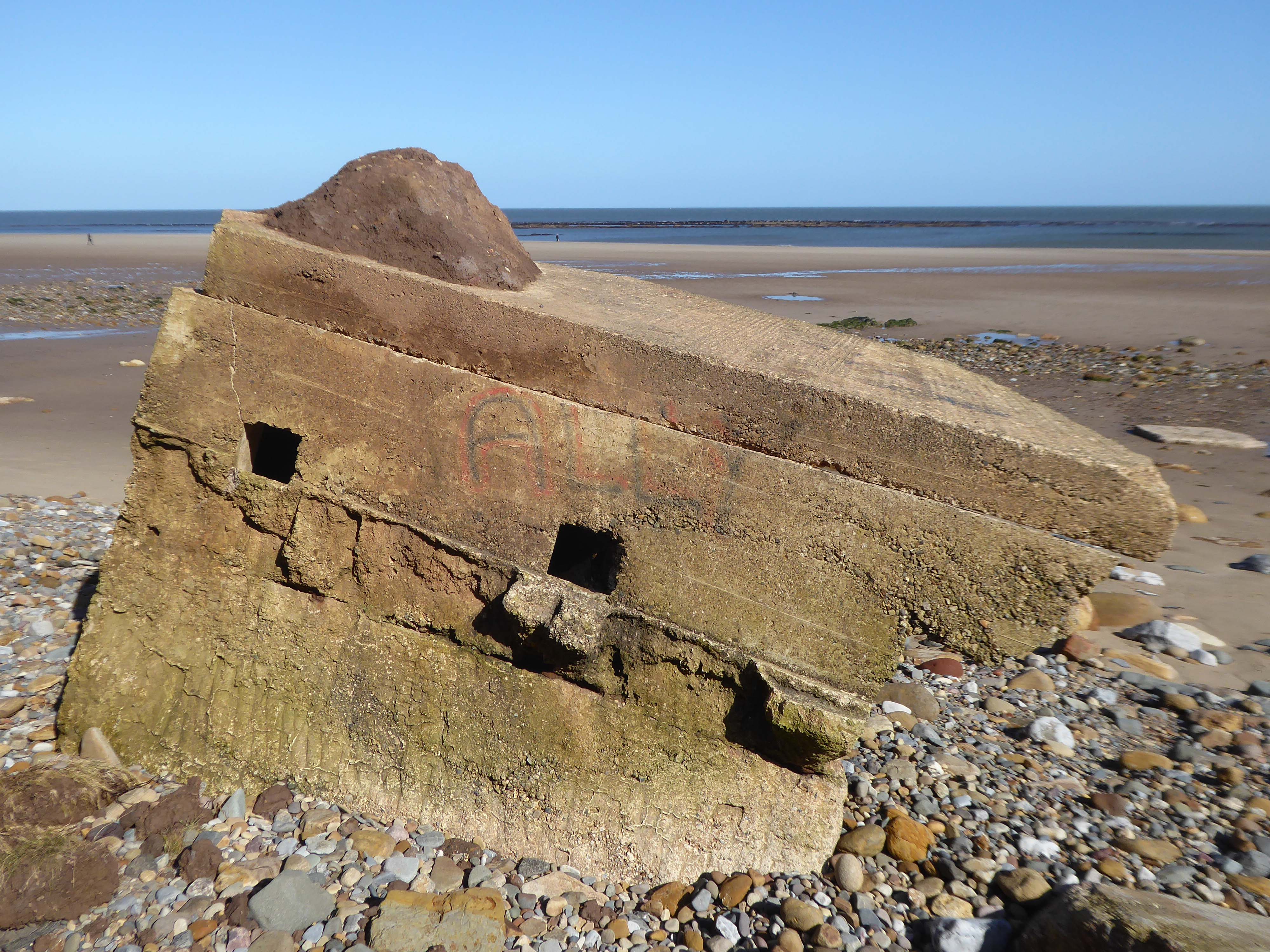
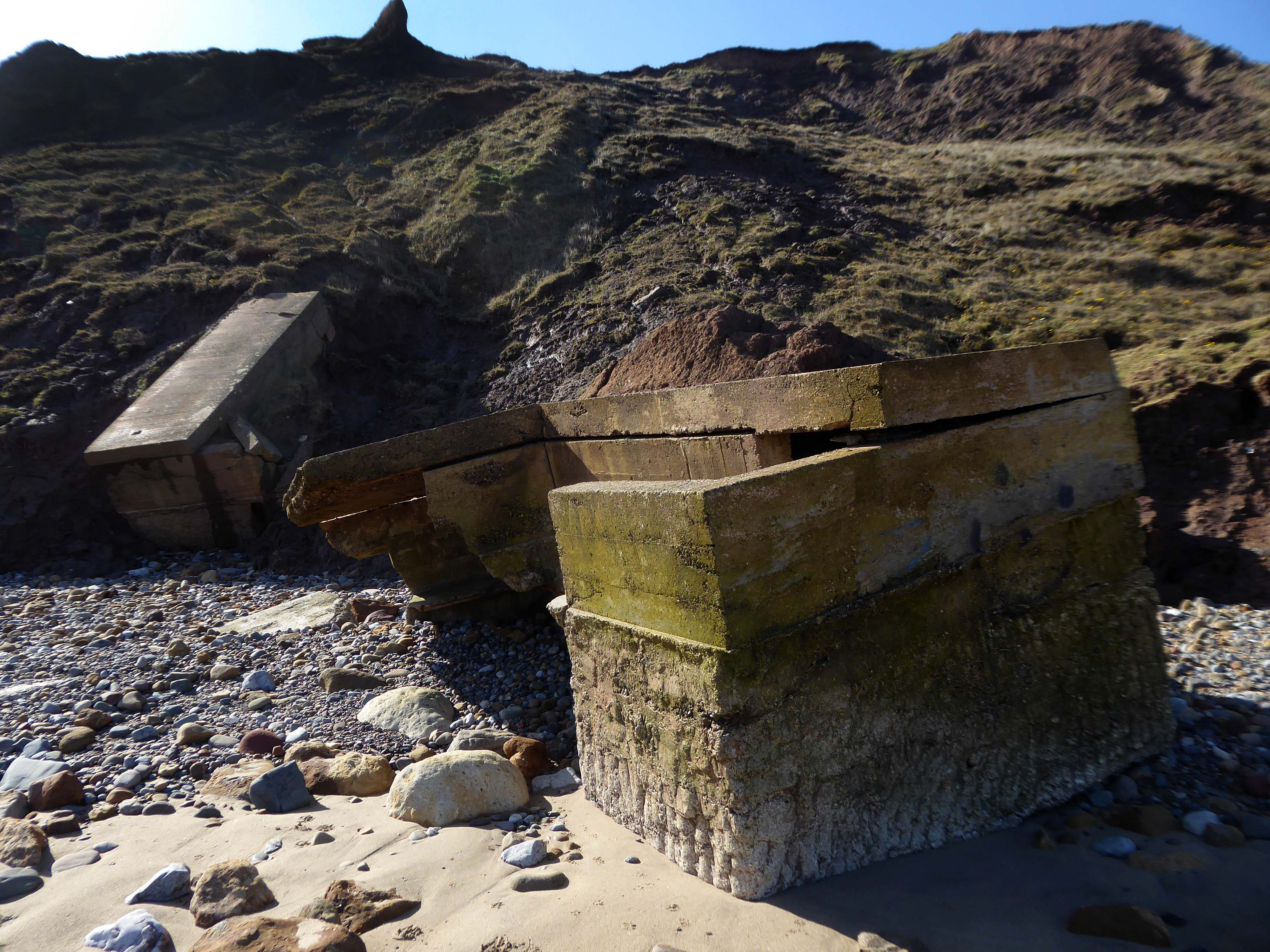
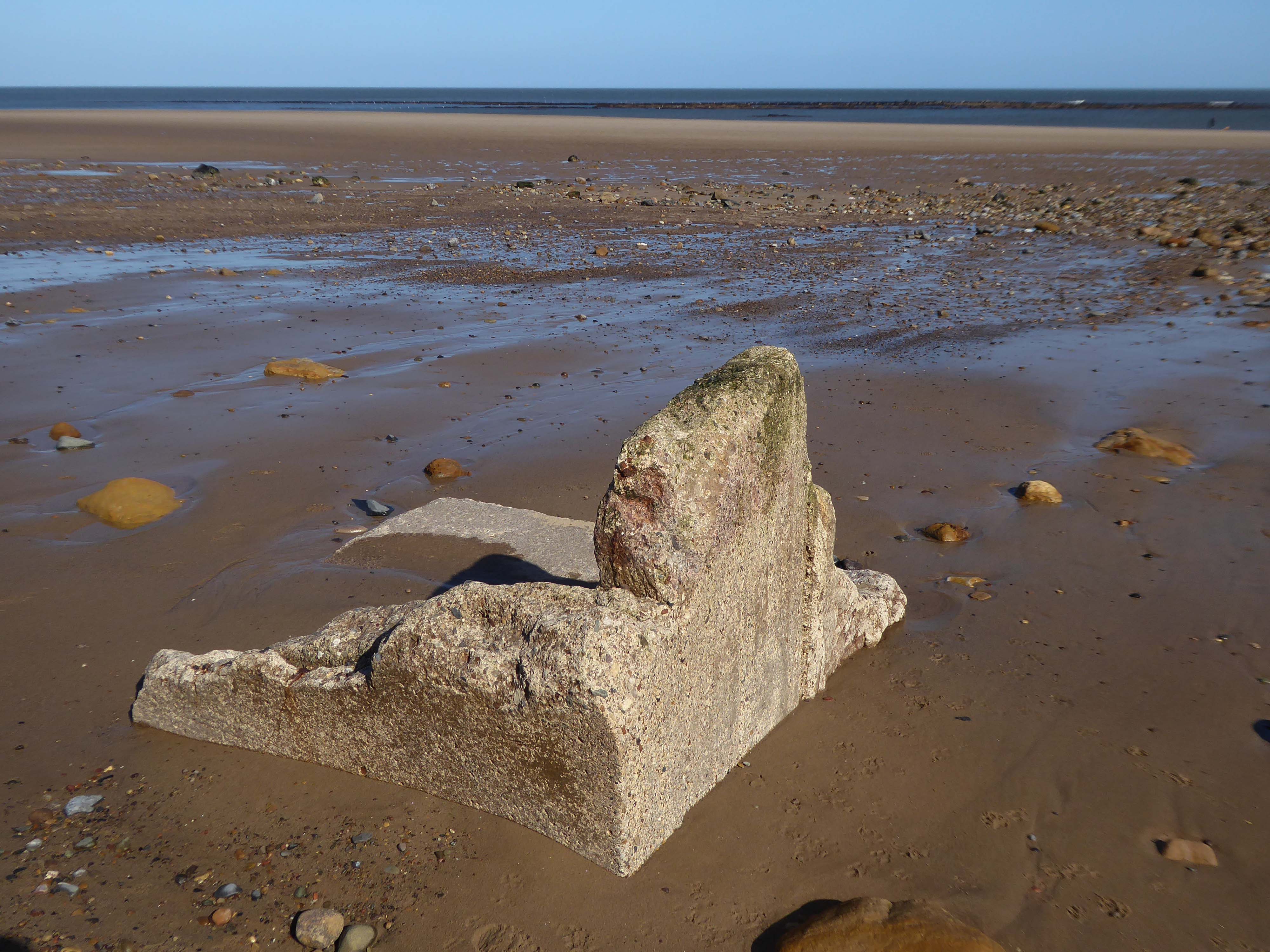
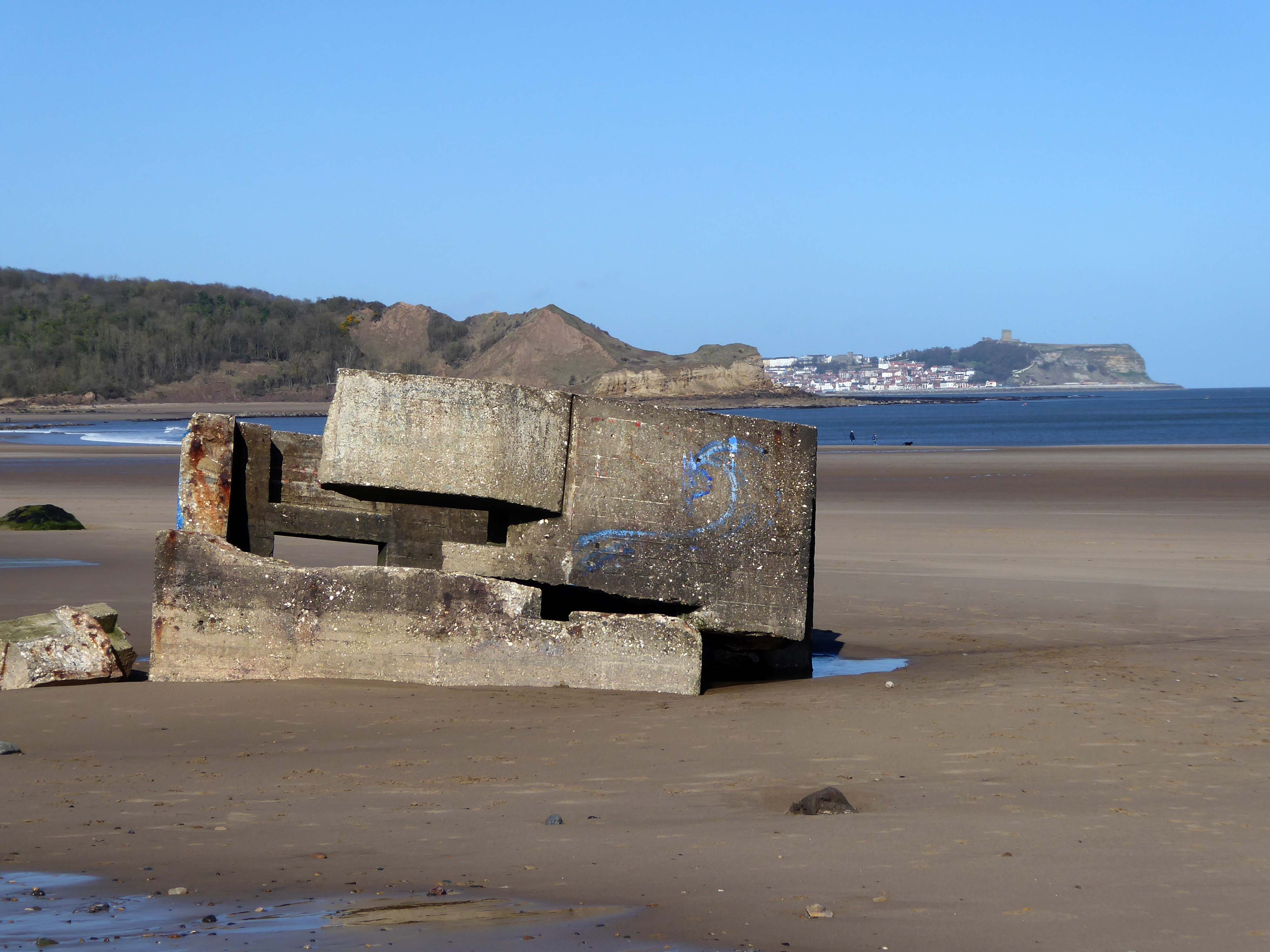
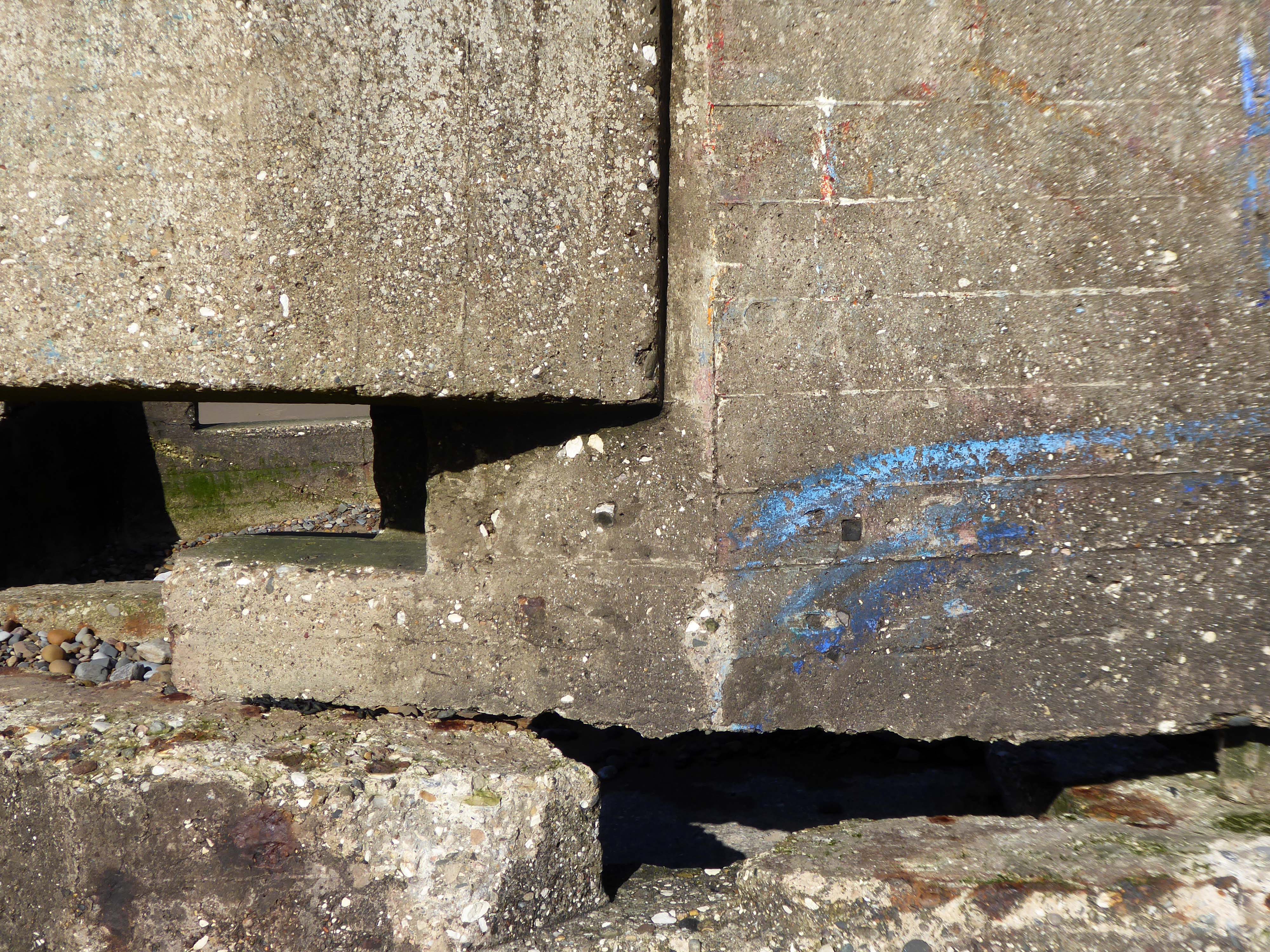
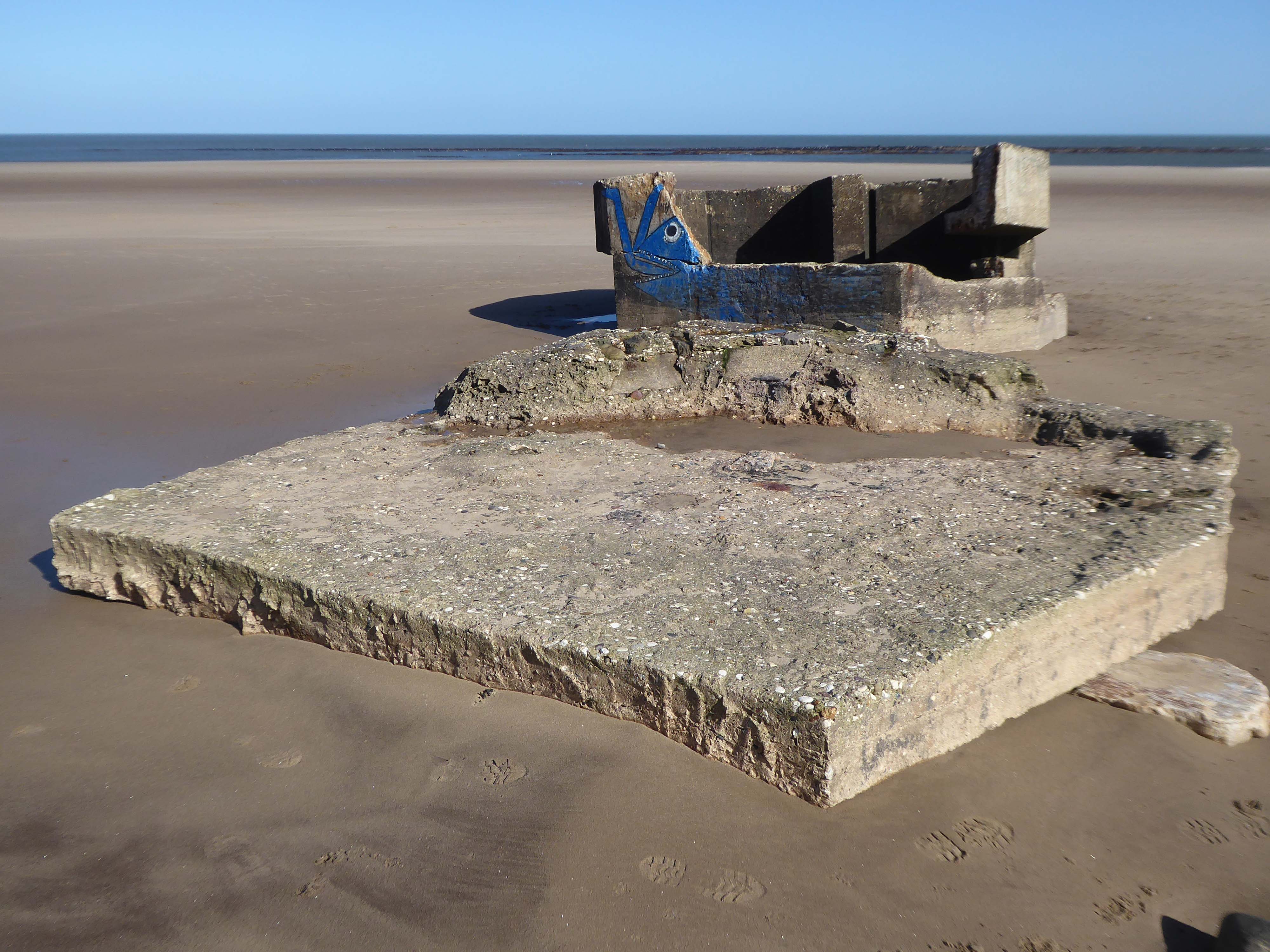
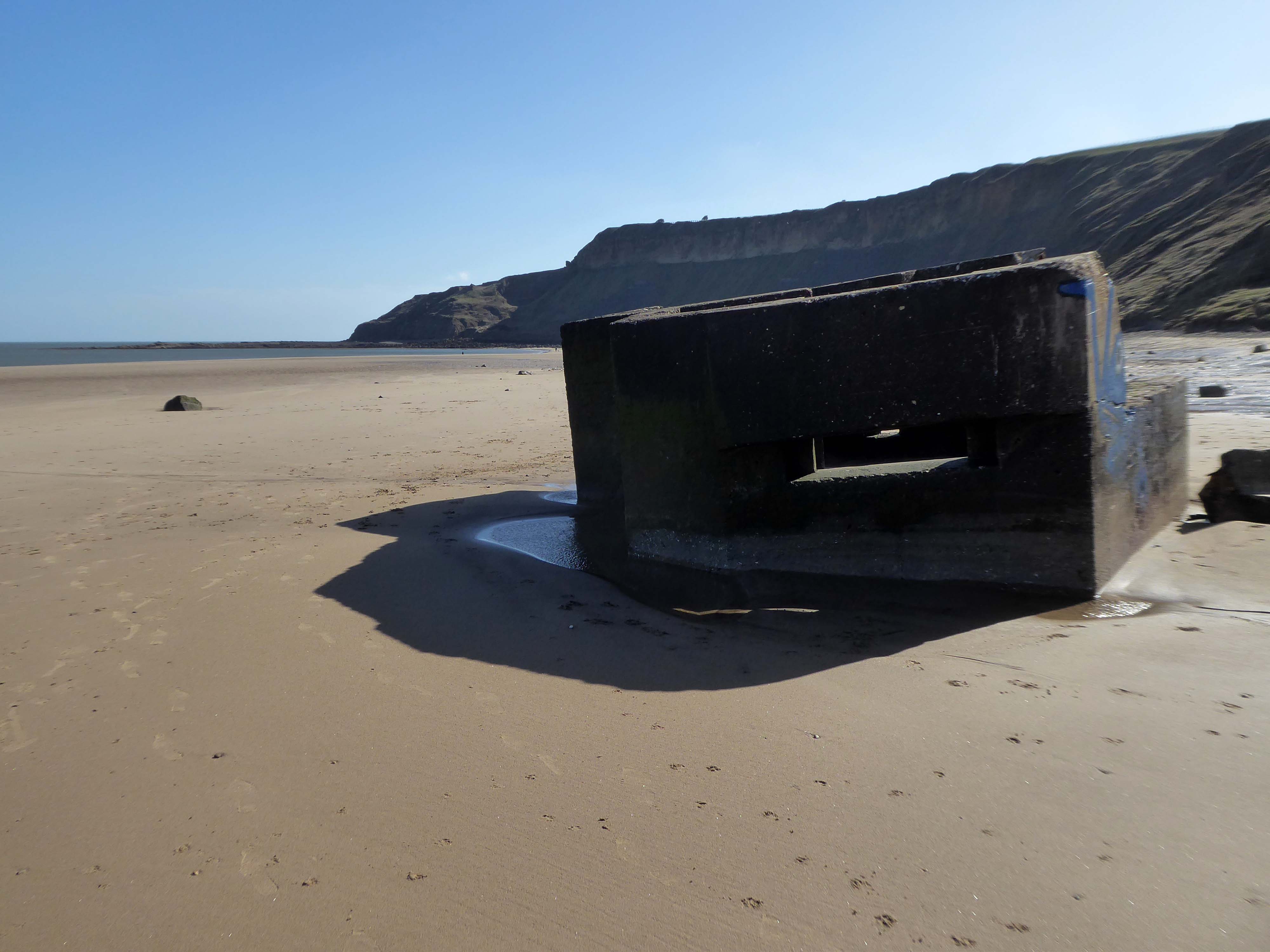
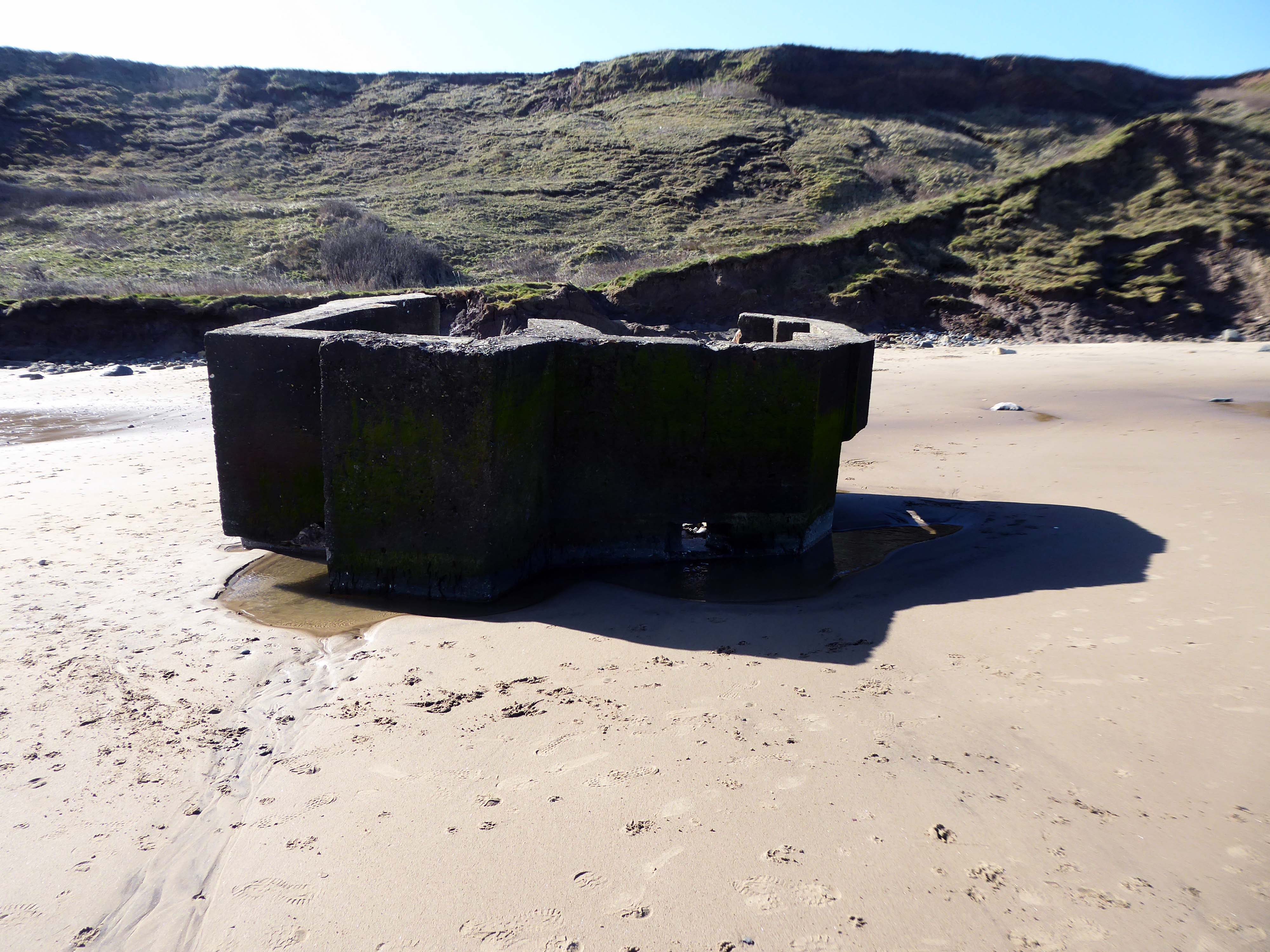
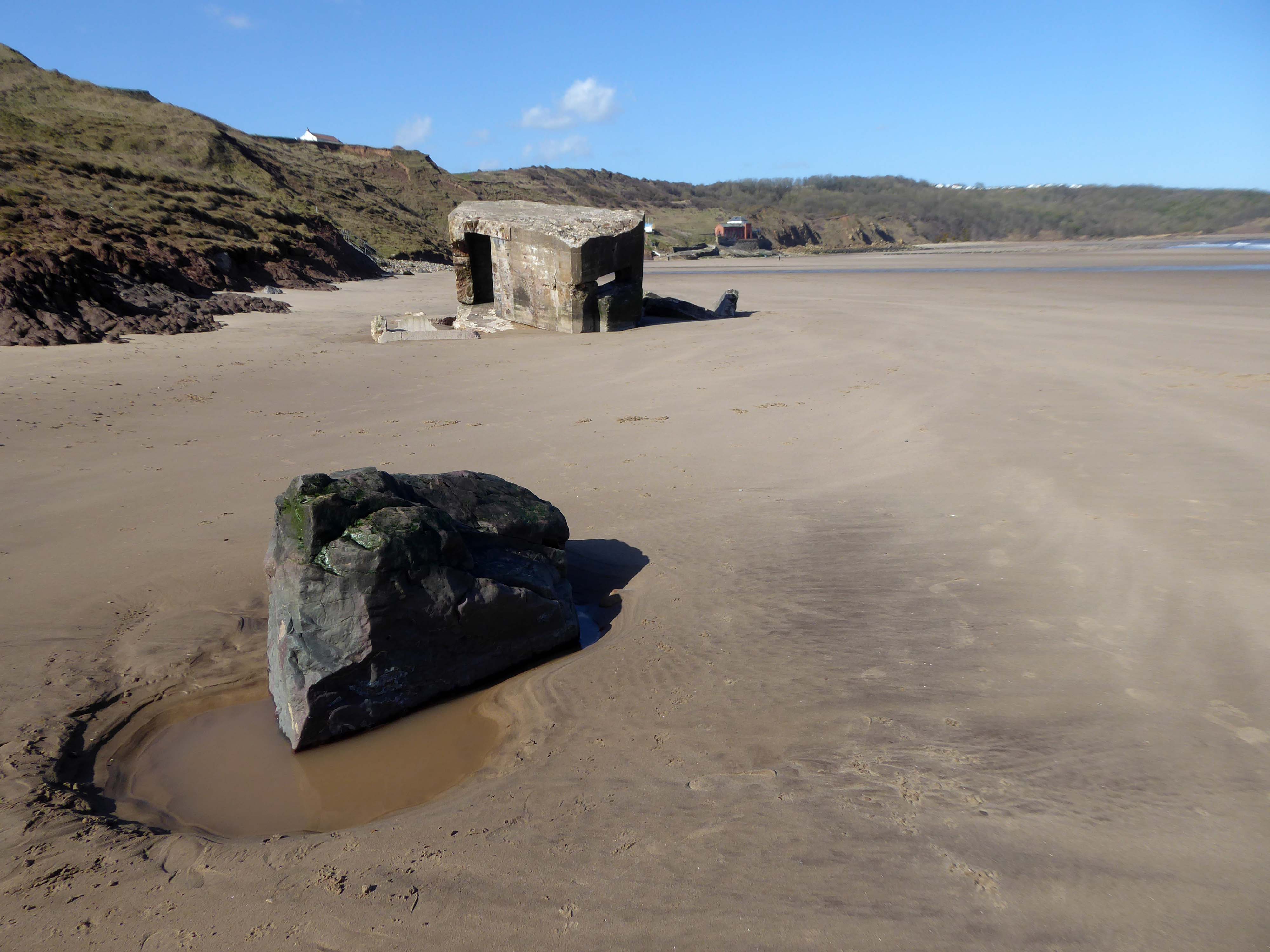
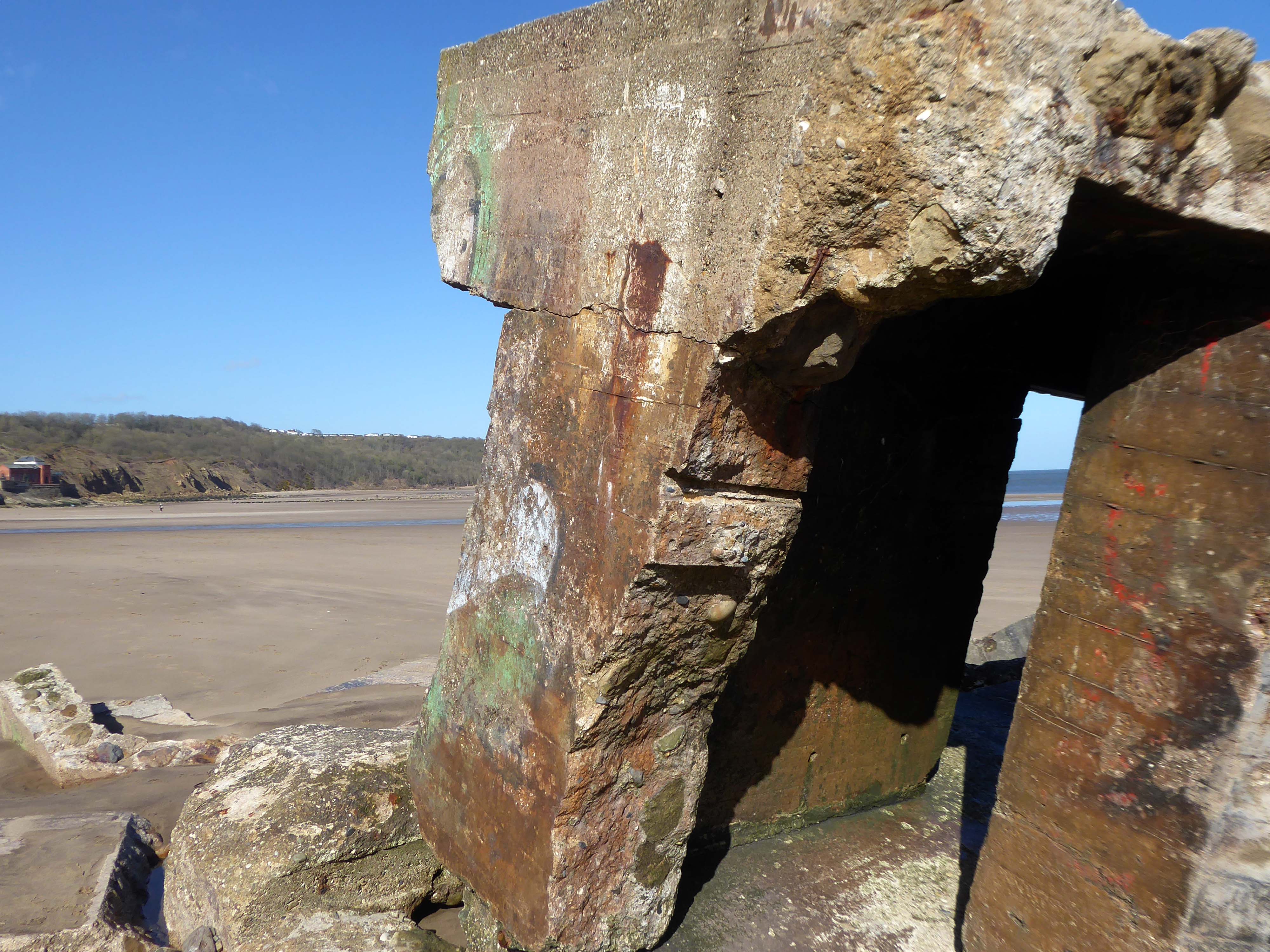
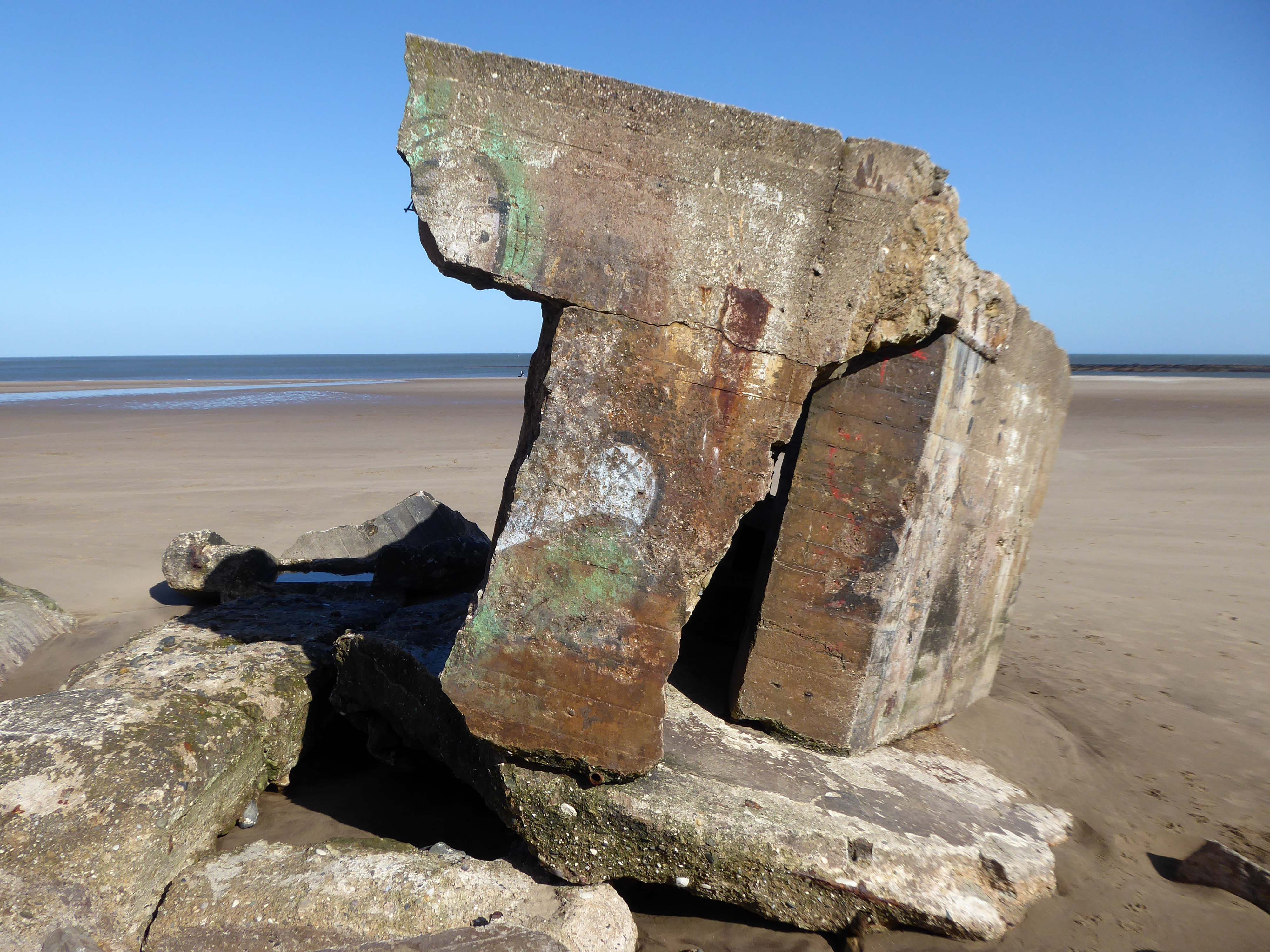
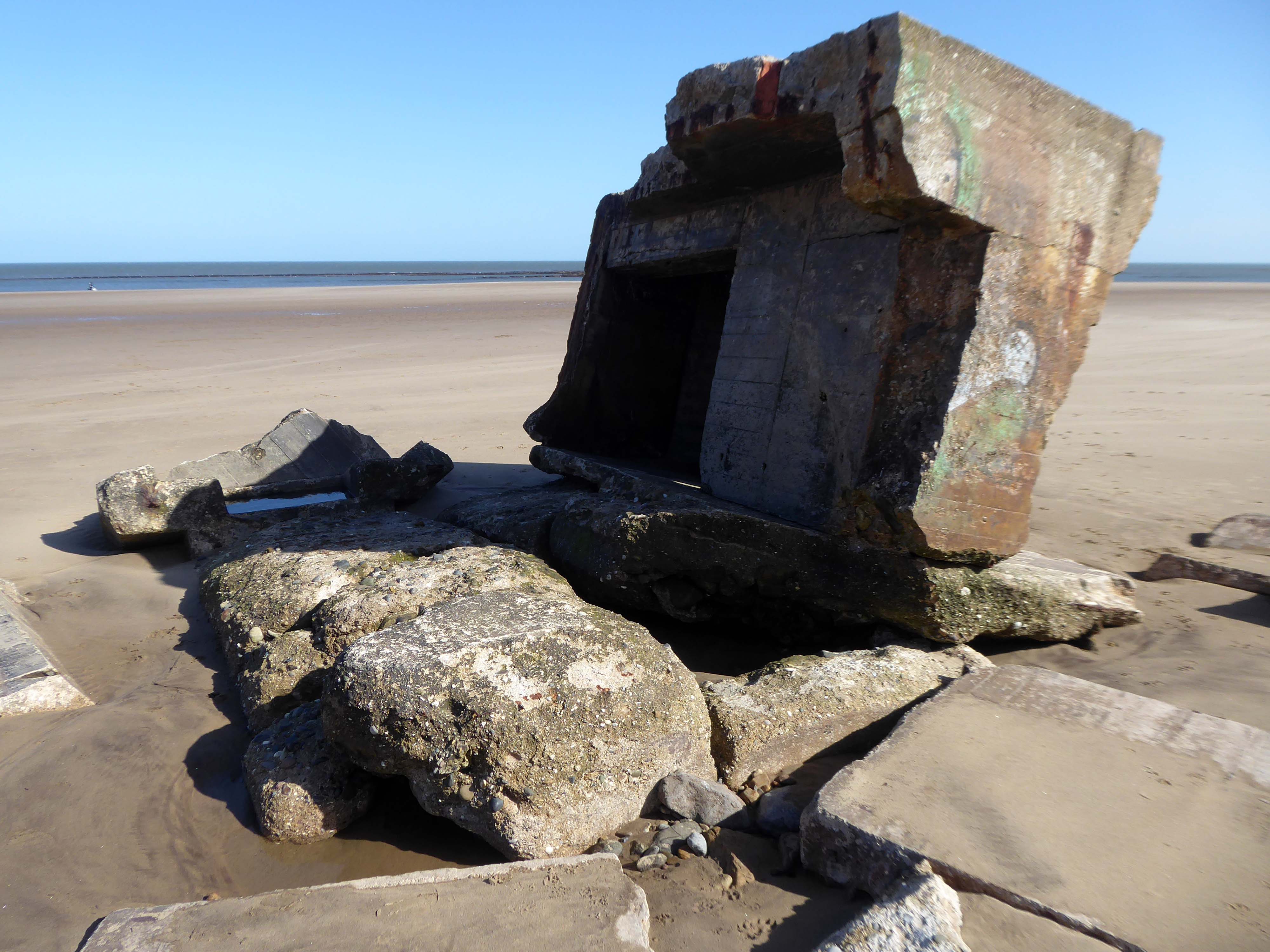
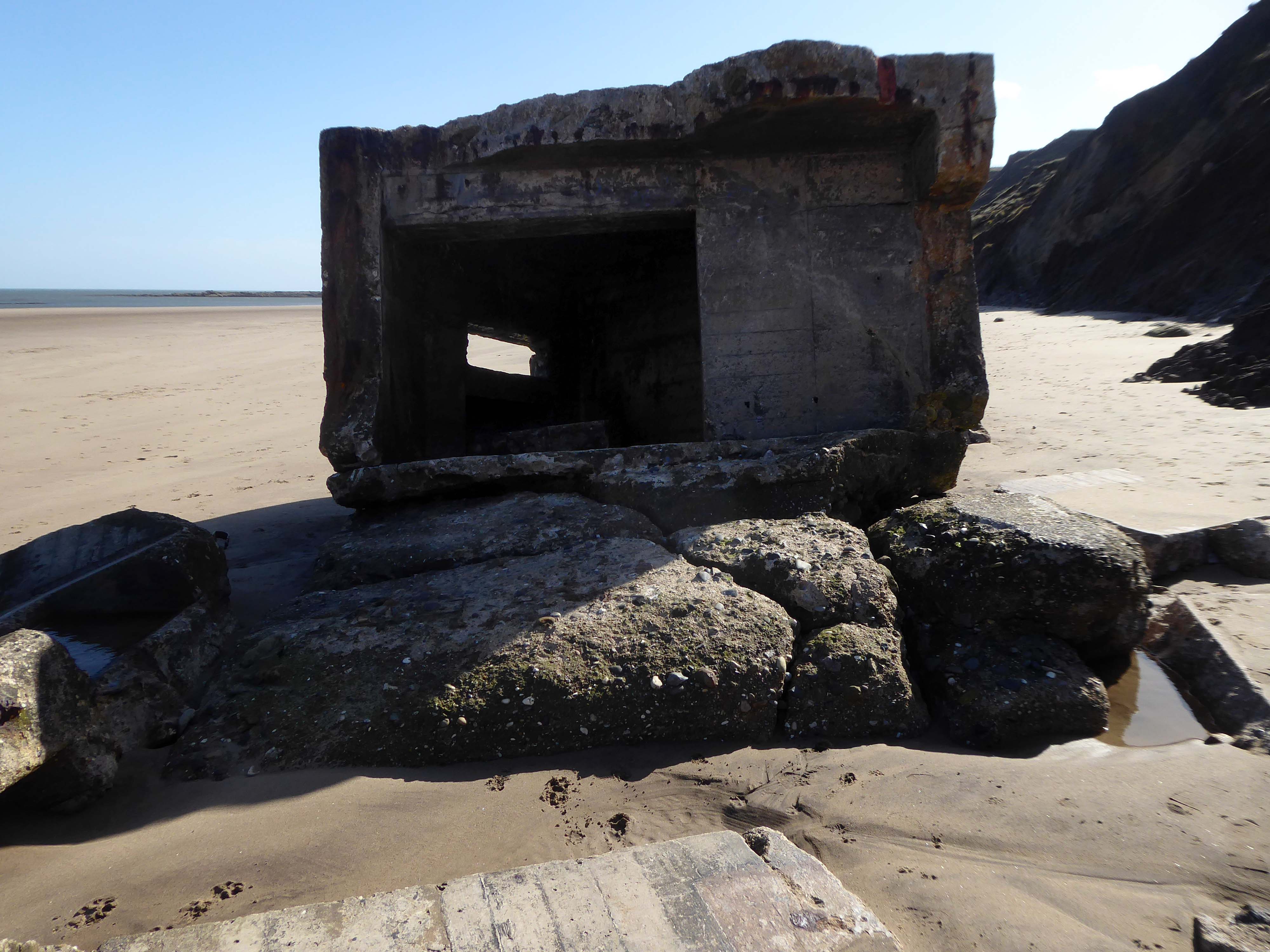
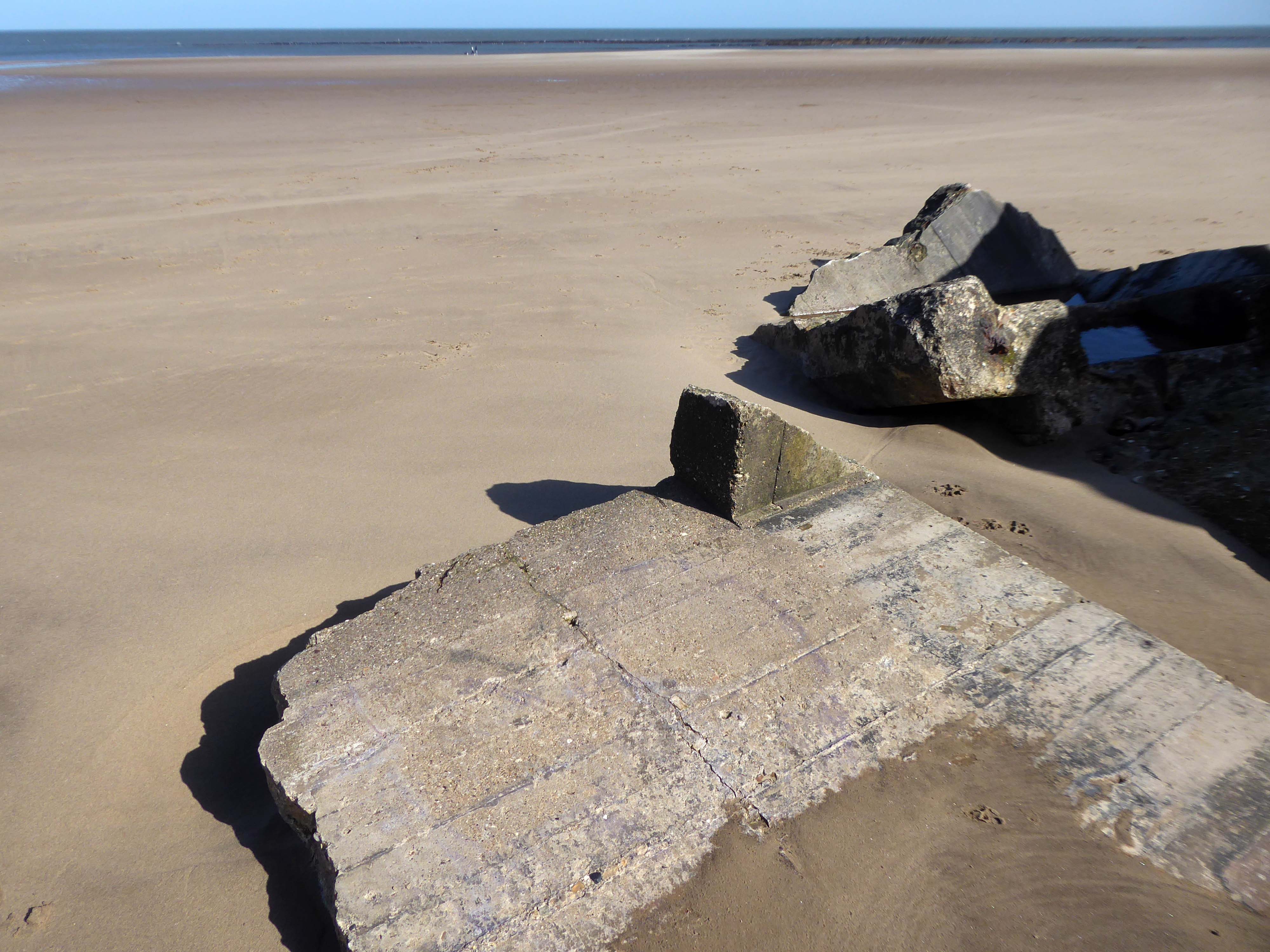
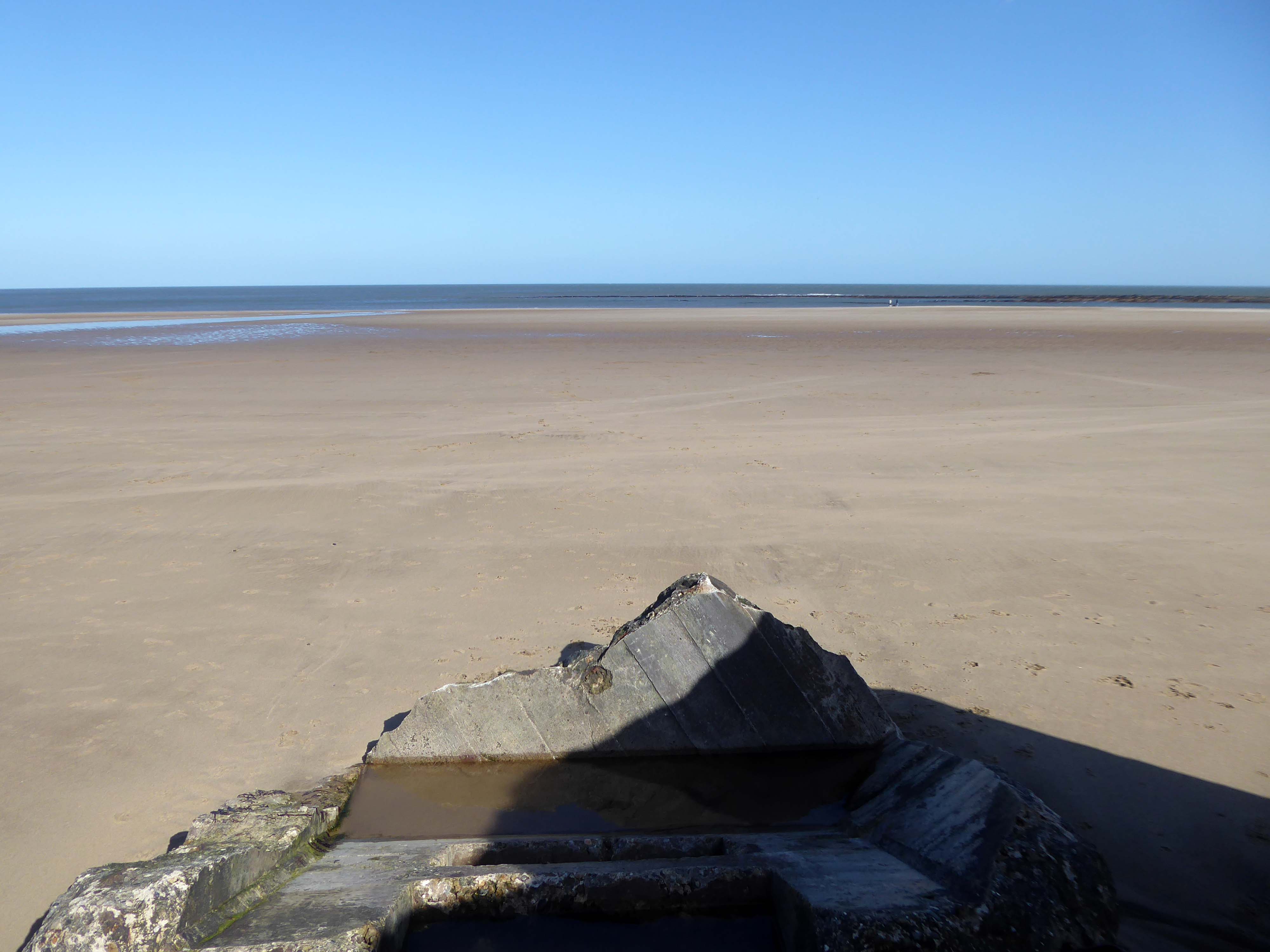
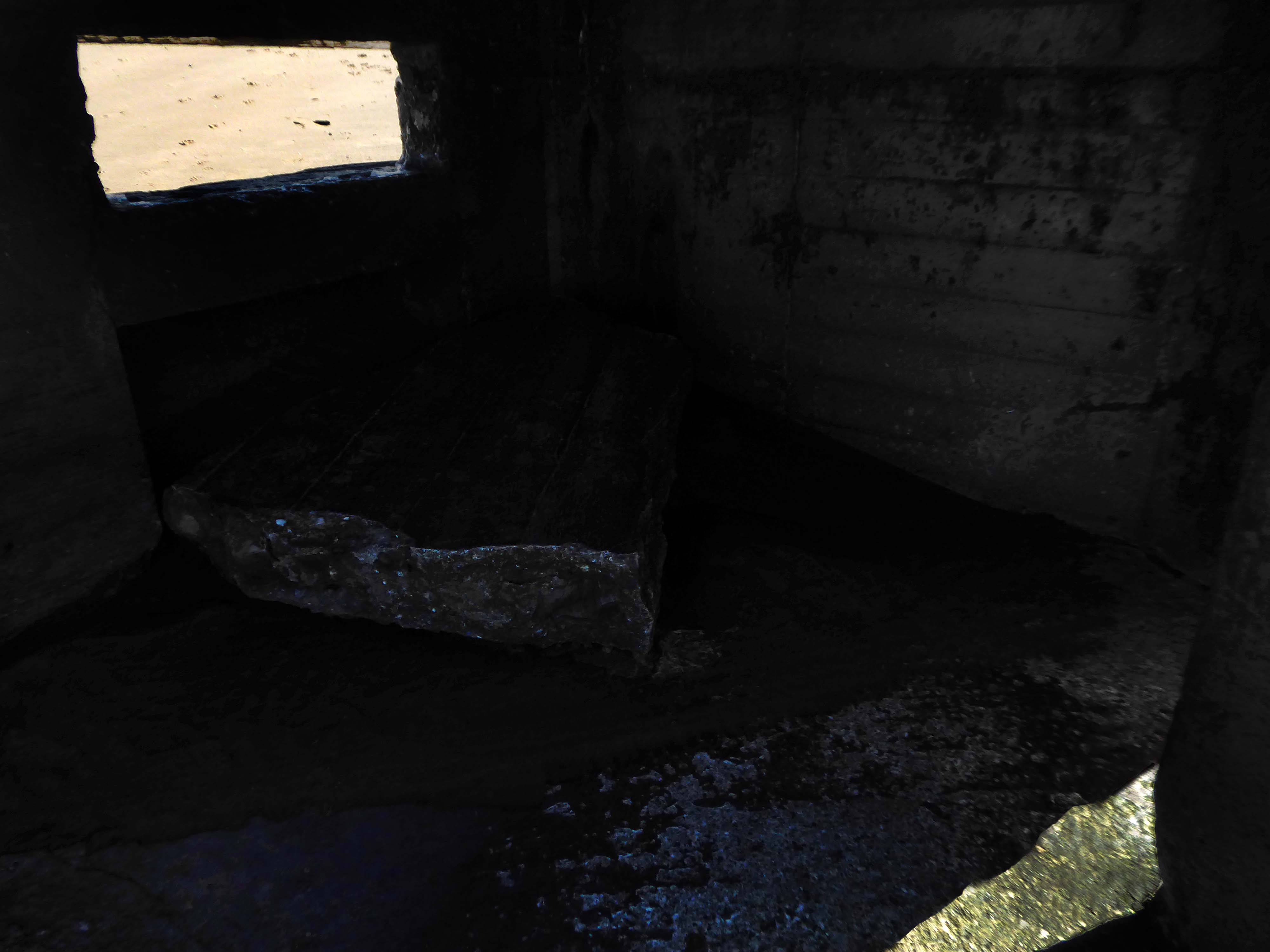
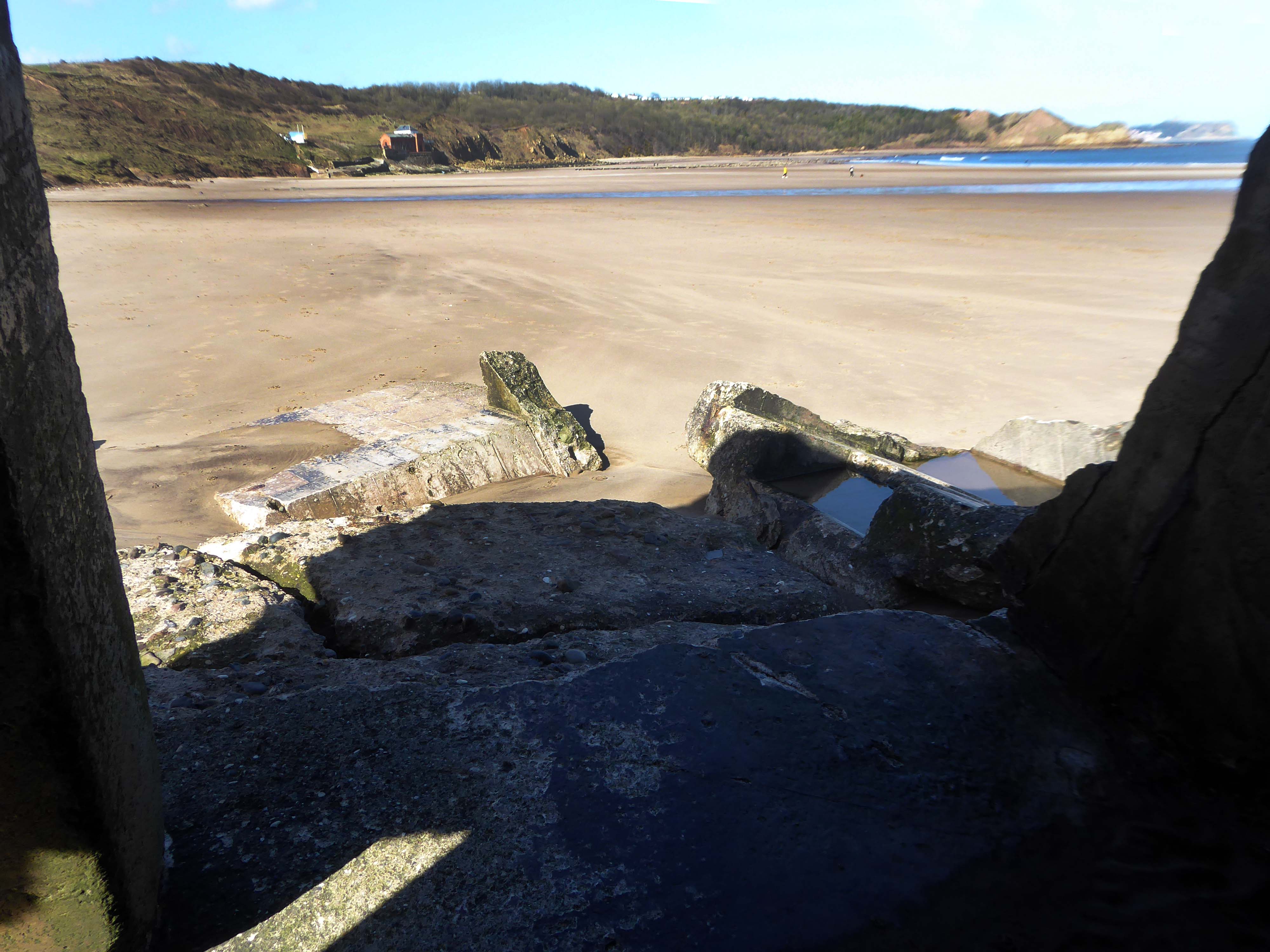
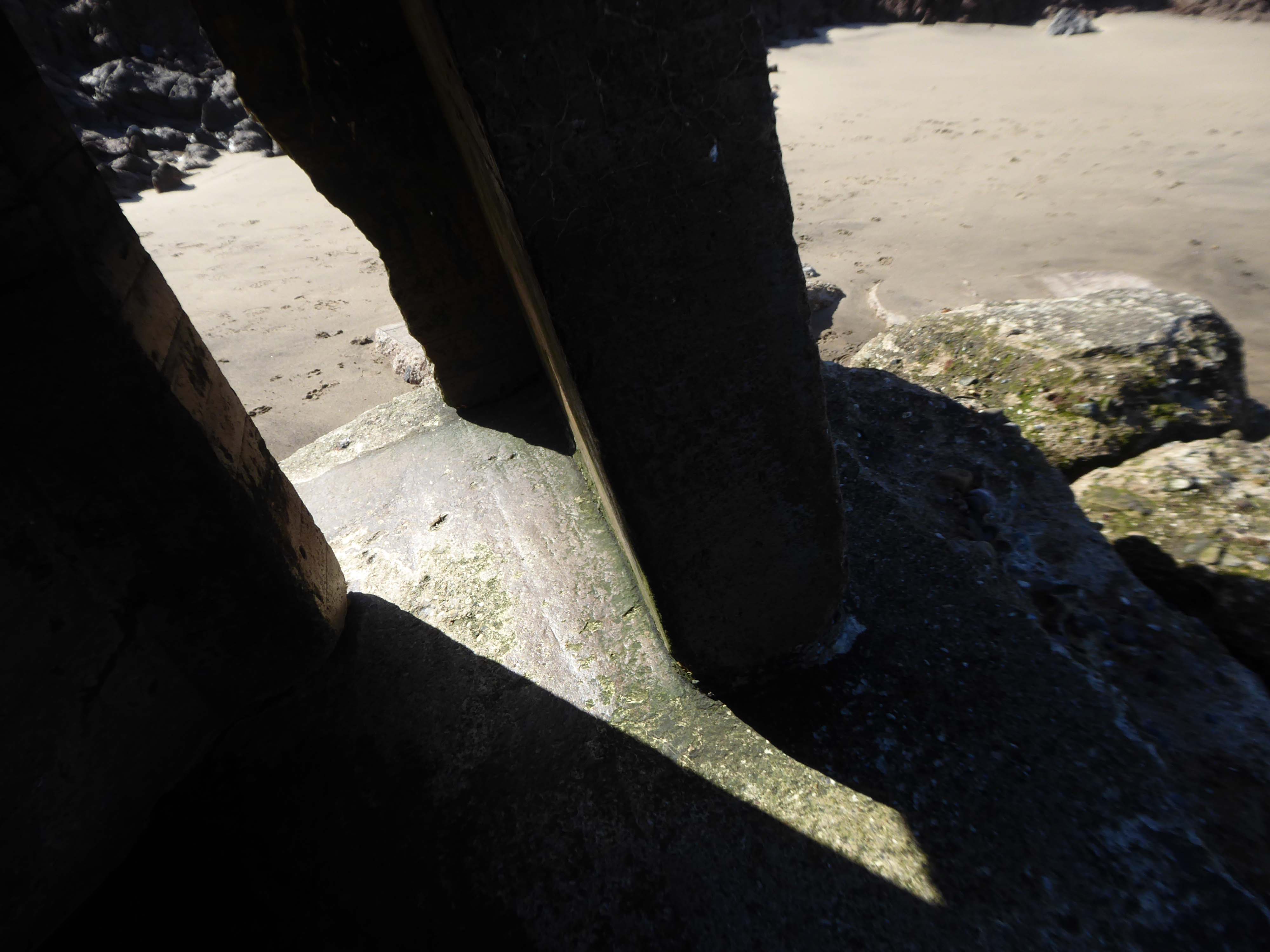
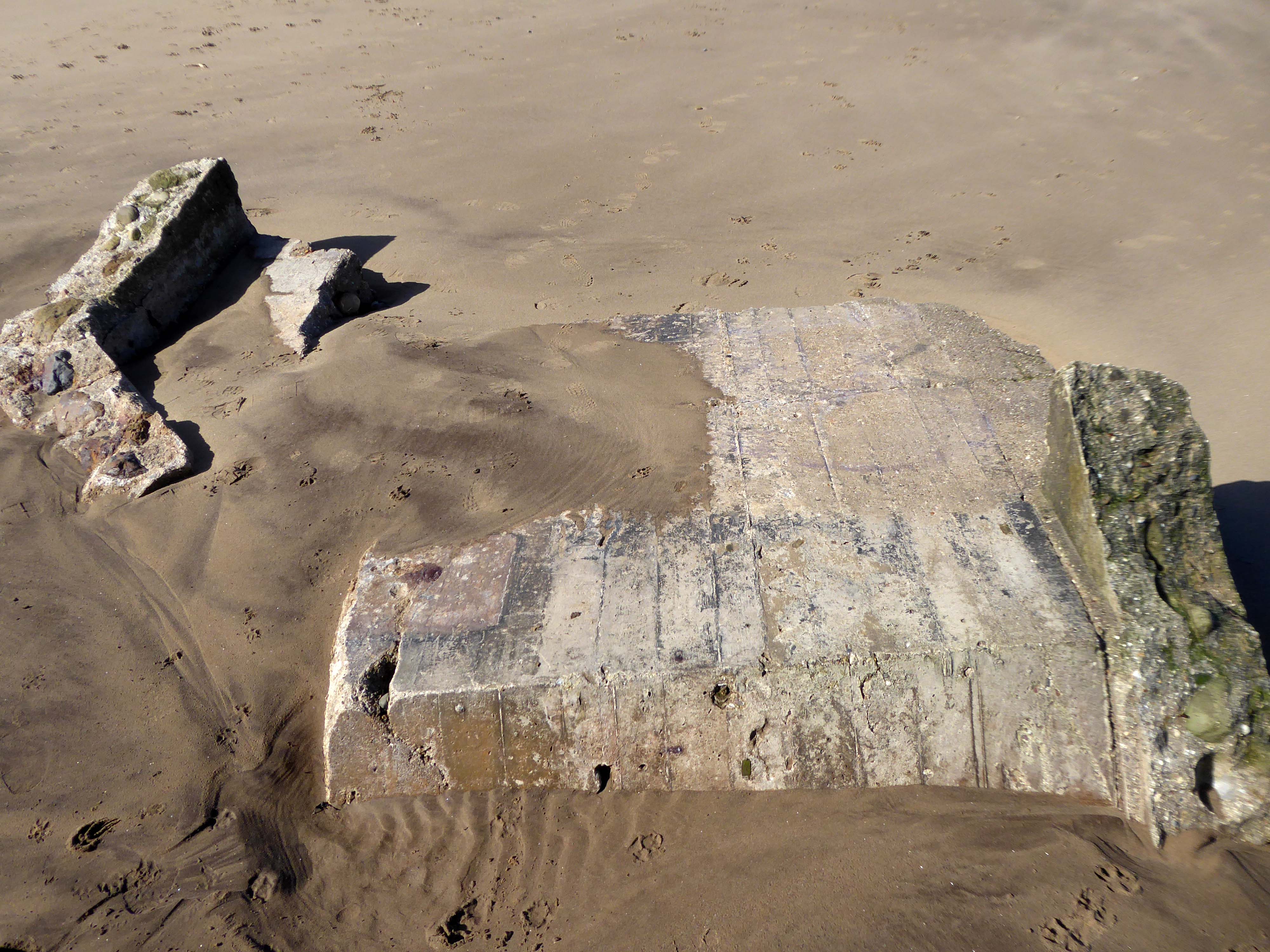
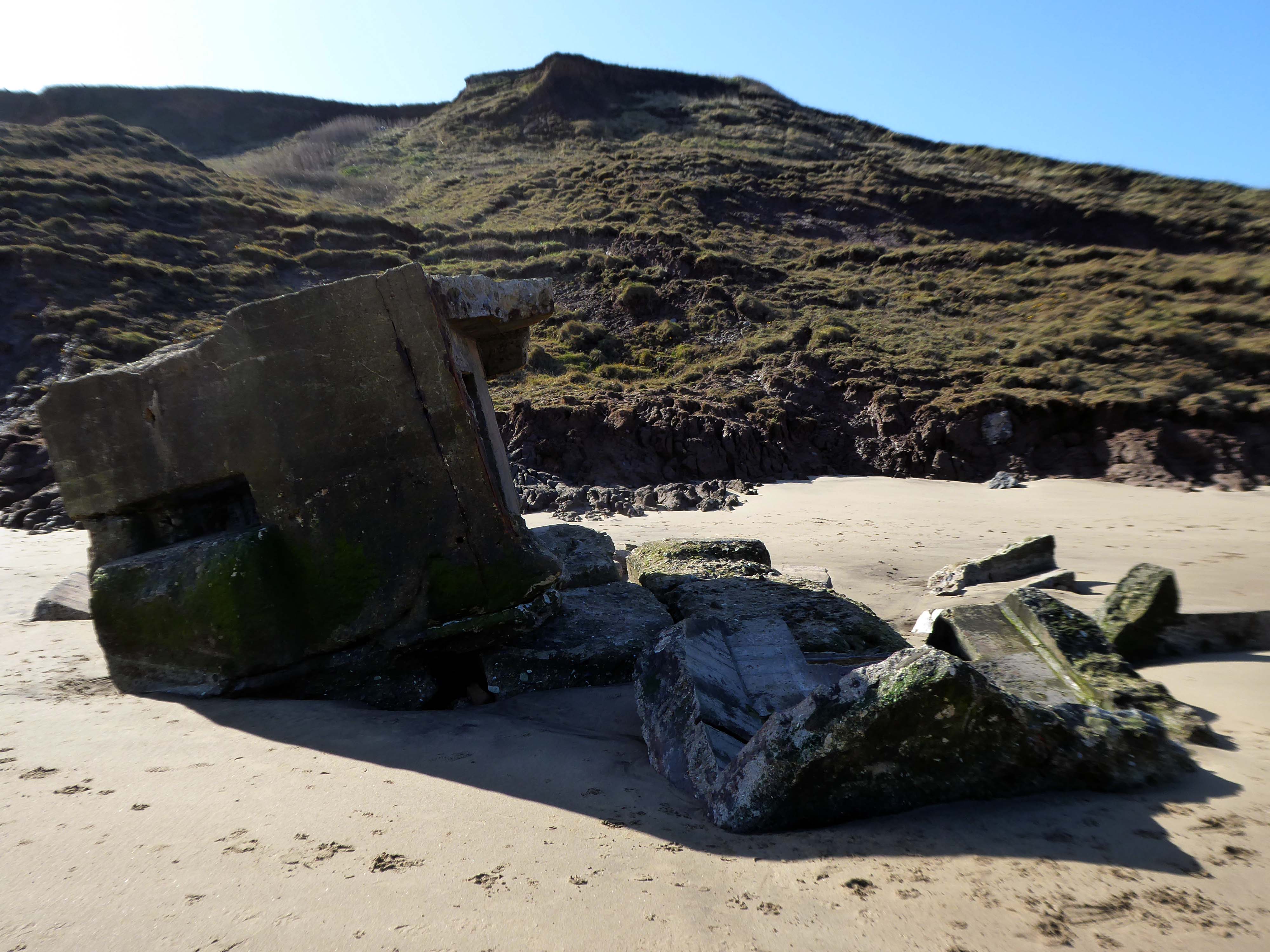
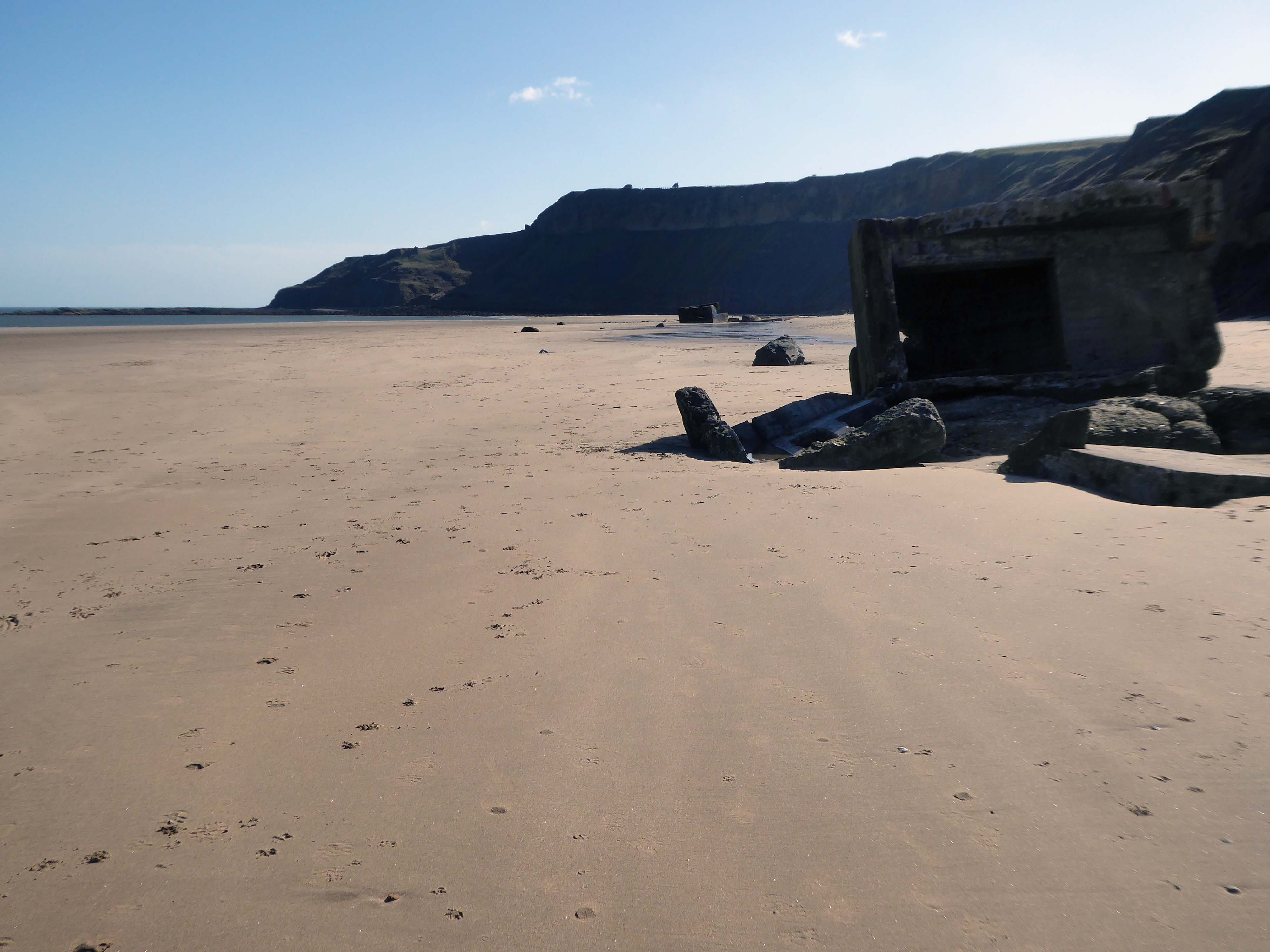
The wide sandy bay was an ideal location for WW2 pillboxes and gun emplacements – anticipating a possible North Sea invasion.
They too are built quite literally on shifting sands.
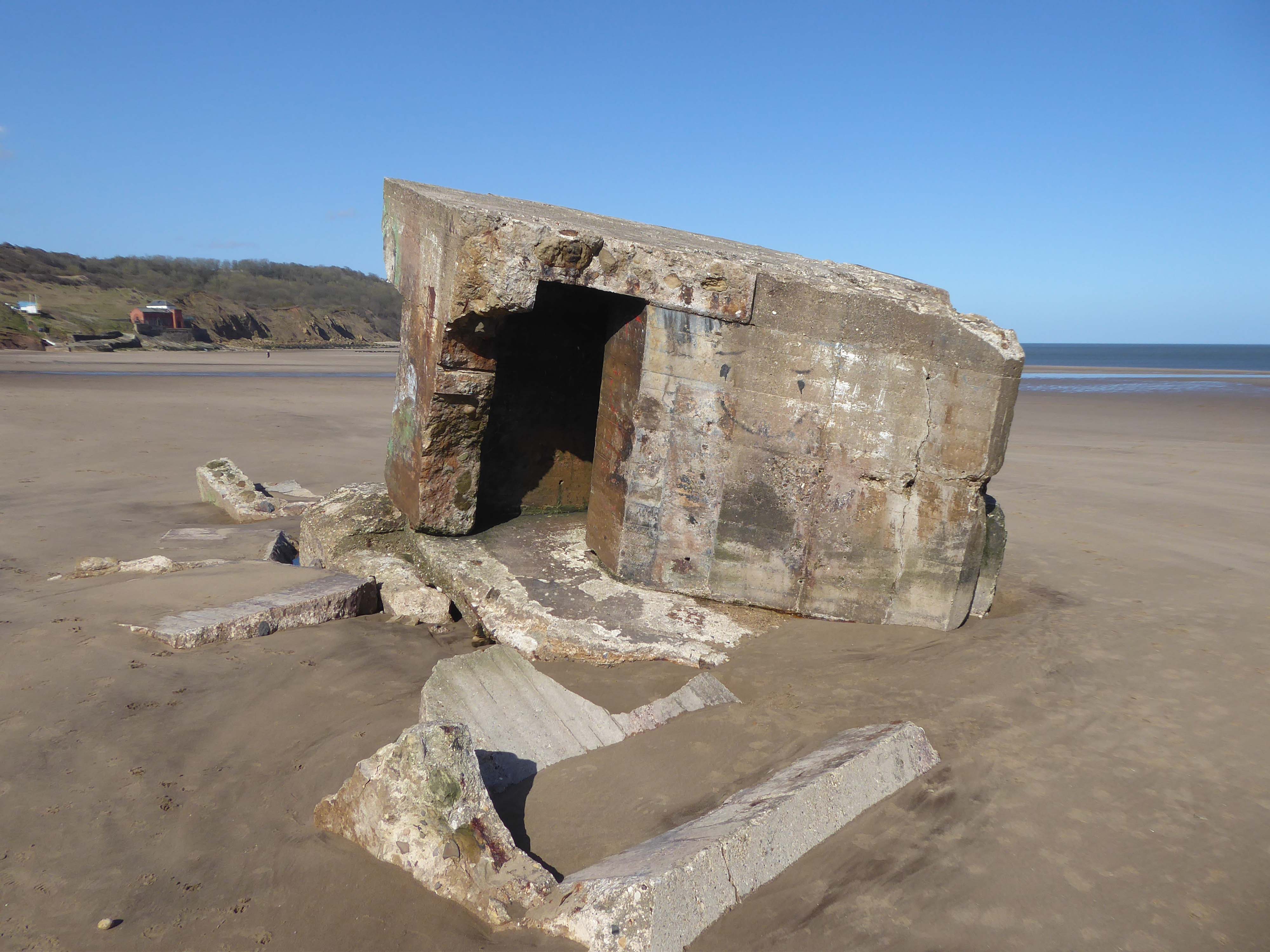
The pillbox – one of many built along the coast to defend against an invasion during World War II – had started to break down, leaving one large piece of stone in a precarious position.
Rob Shaw, of Ganton, noticed the large slab was propped up dangerously against another piece of stone last September.
He said he reported his concerns to Scarborough Borough Council then, but that nothing was done until last month.
The dad-of-two said before the work:
I used to work in construction and I would have been fired if I had left a lump of concrete like that, it could weigh four or five tonnes.
It just needs lying flat on the sand so it can’t fall on anyone.
A spokesperson for Scarborough Borough Council said the council had assessed the pillbox and arrangements had been made for the problem section to be removed.
The Scarborough News
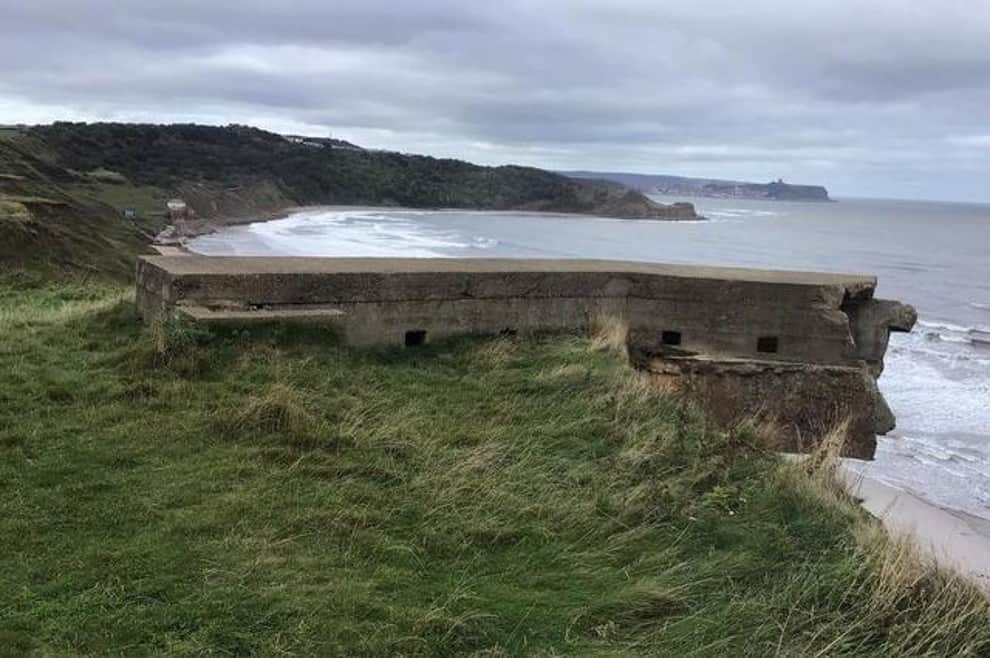
This unstable cliff-top structure was allegedly hastened bay-wards by the Council.
Claims that we pushed the pillbox off the cliff are untrue – our colleagues have many amazing talents but pushing huge concrete structures is not one of them. The structure people can see at the base of the cliff is the other section of the pillbox that has been on the beach for many years.
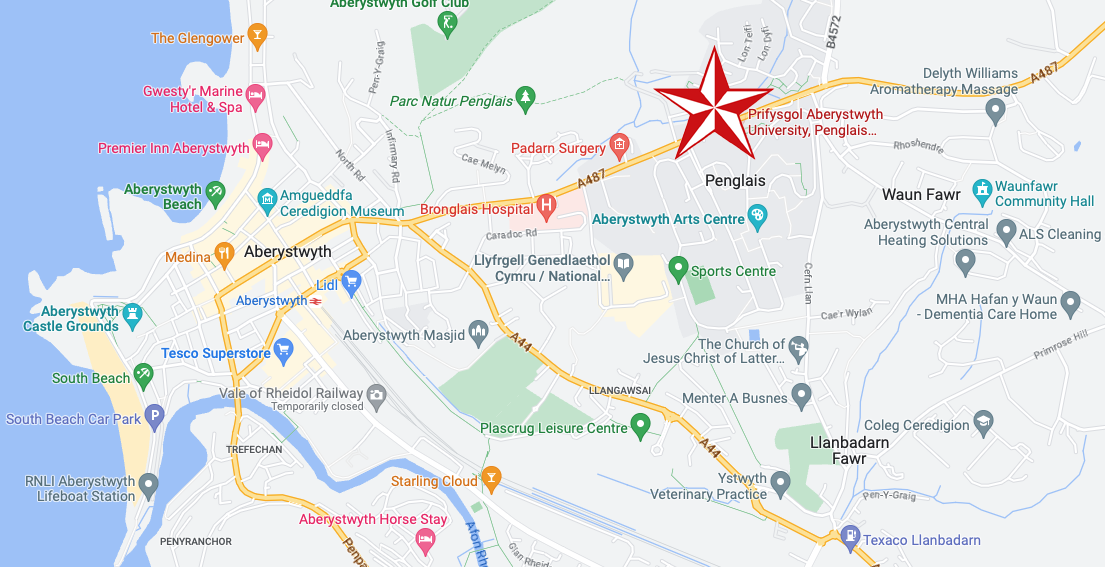
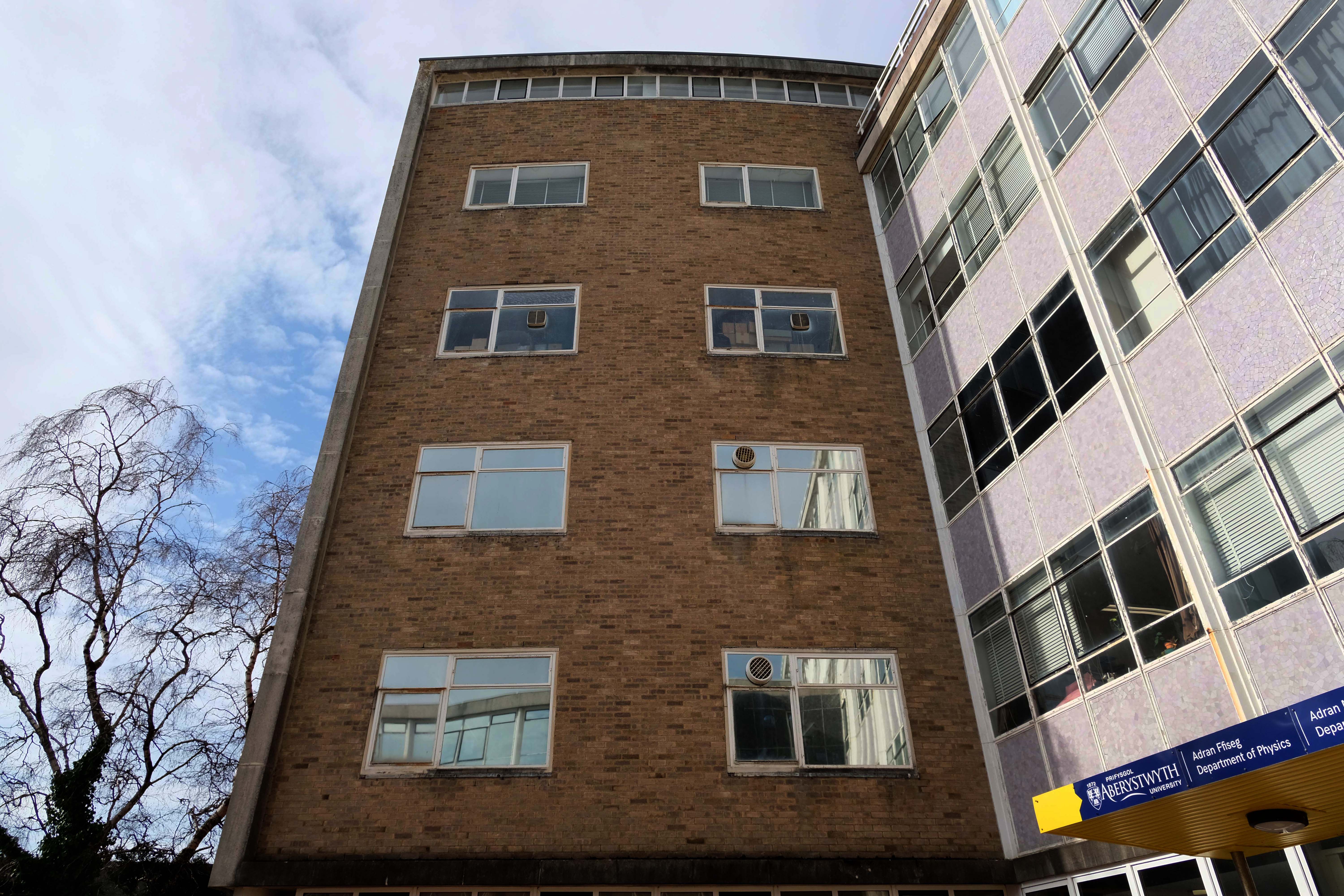
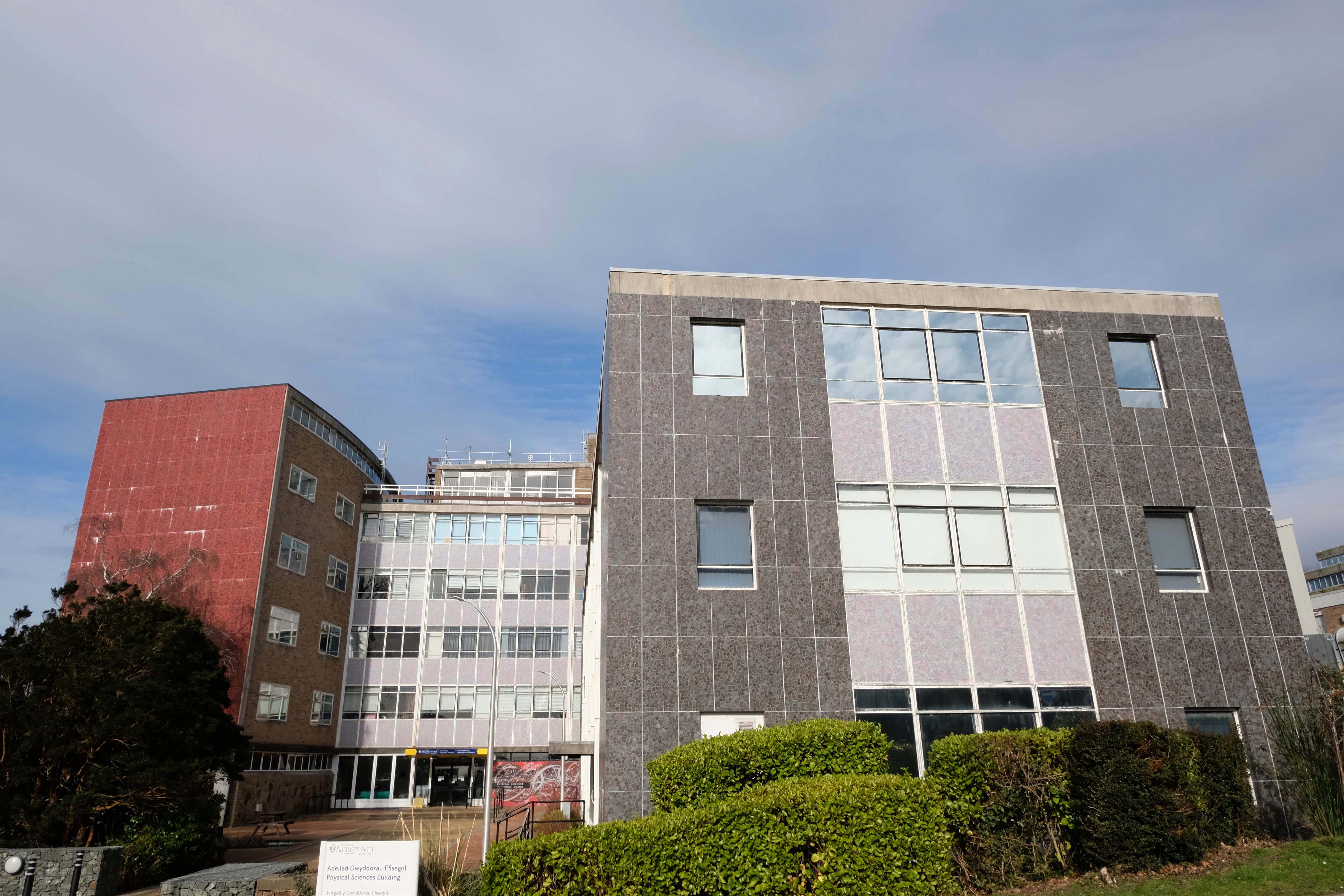
Prifysgol Aberystwyth University – Penglais CampusSY23 3AH
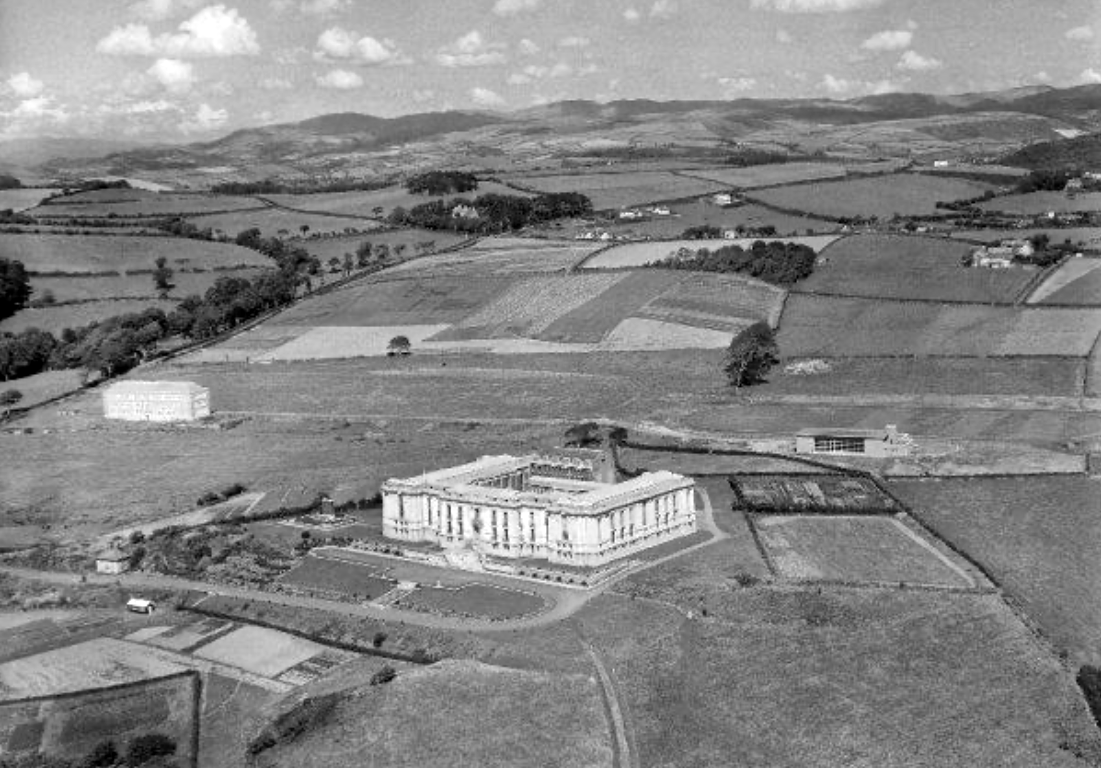
Led by London Welshman Hugh Owen, a small group of patriots sought from the 1850s onwards to raise enough money by public and private subscription to establish a college of university status in Wales. A project of enormous ambition, the University opened its doors in 1872 initially with a handful of teachers and just twenty five students in what was then a half-finished hotel building – the Old College on the seafront.
The first decade presented many challenges for the University’s survival. The generosity of a few individual benefactors and organised appeals for support from the ordinary people of Wales kept the University in being, and, perhaps more importantly, deeply rooted it in the minds and the affection of the Welsh people. A matter of considerable pride is that the University has made a significant contribution to the education of women, being one of the first institutions to admit female students.
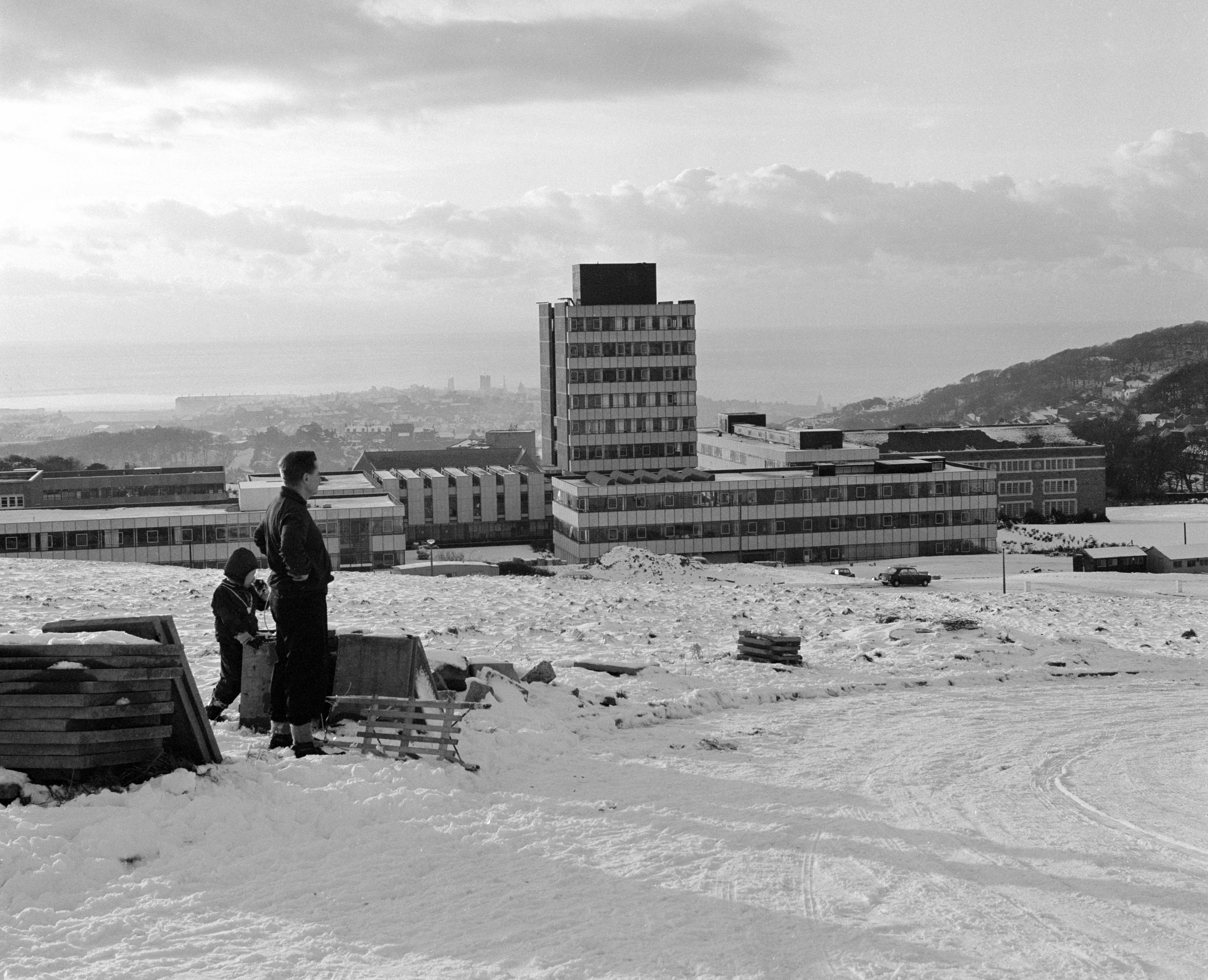
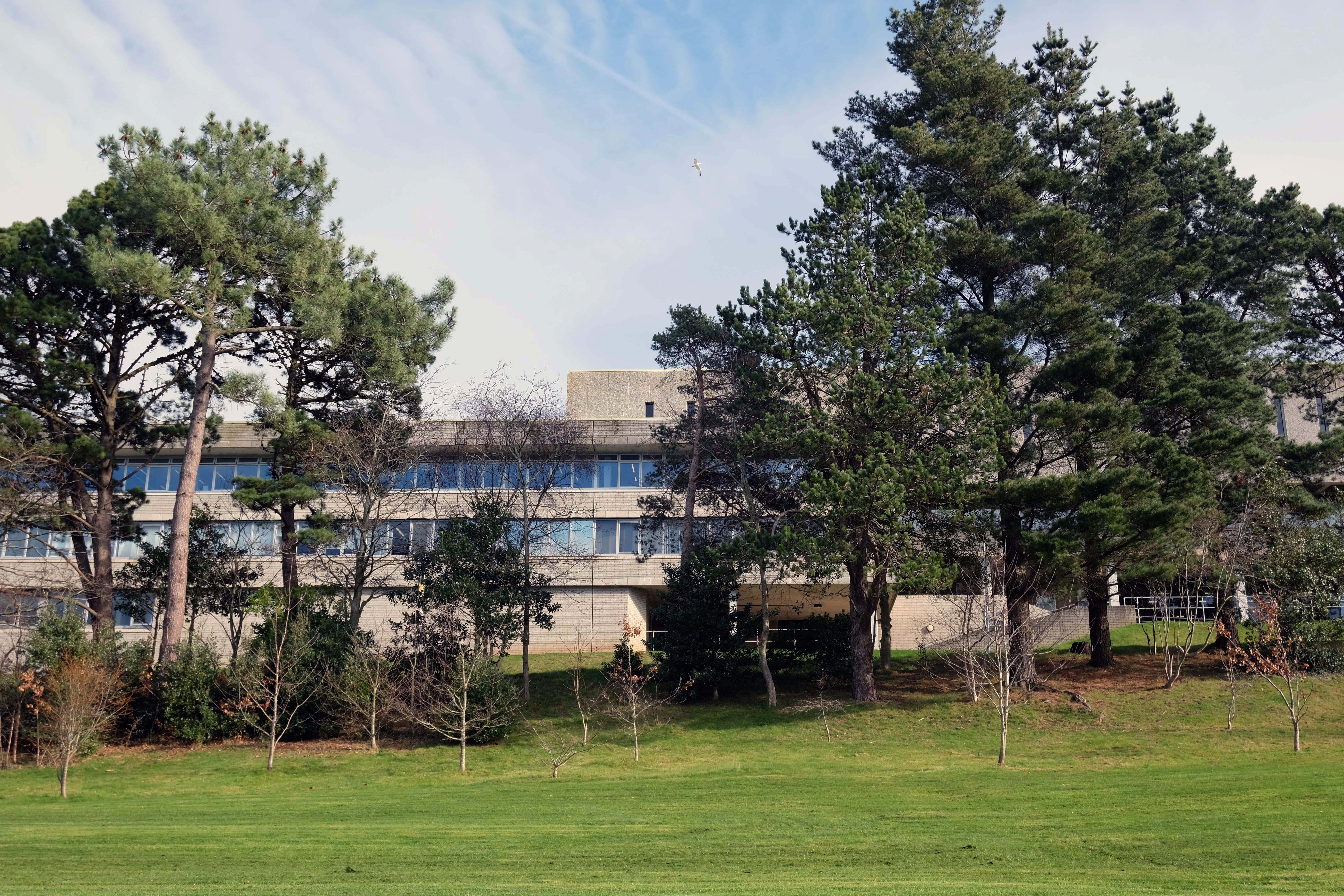
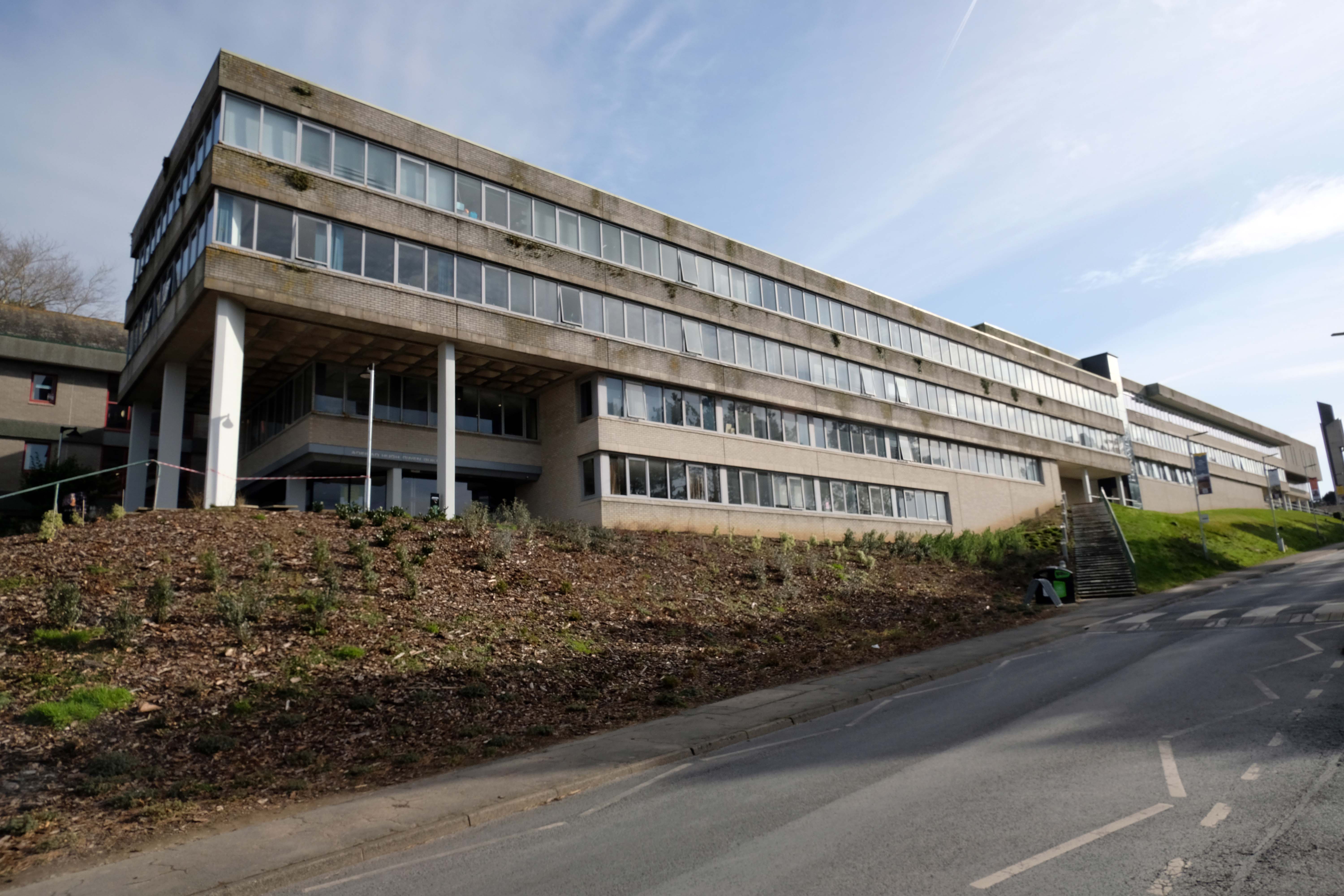
Since those early days, Aberystwyth University has gone from strength to strength and now has more than 6,000 students and 2,000 staff. As the institution grew, its main campus moved from Old College on the seafront to Penglais Hill. This finely landscaped site enjoys spectacular views over the historic market town of Aberystwyth and the Cardigan Bay coastline. New buildings, including major arts and science developments, halls of residence, a magnificent Arts Centre and sports facilities are located here.
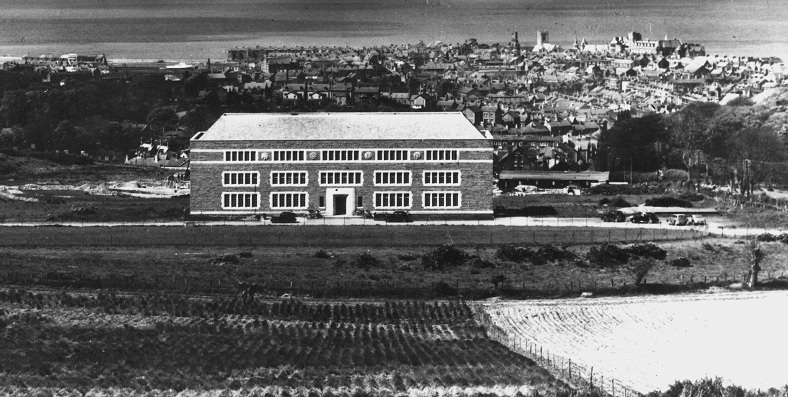
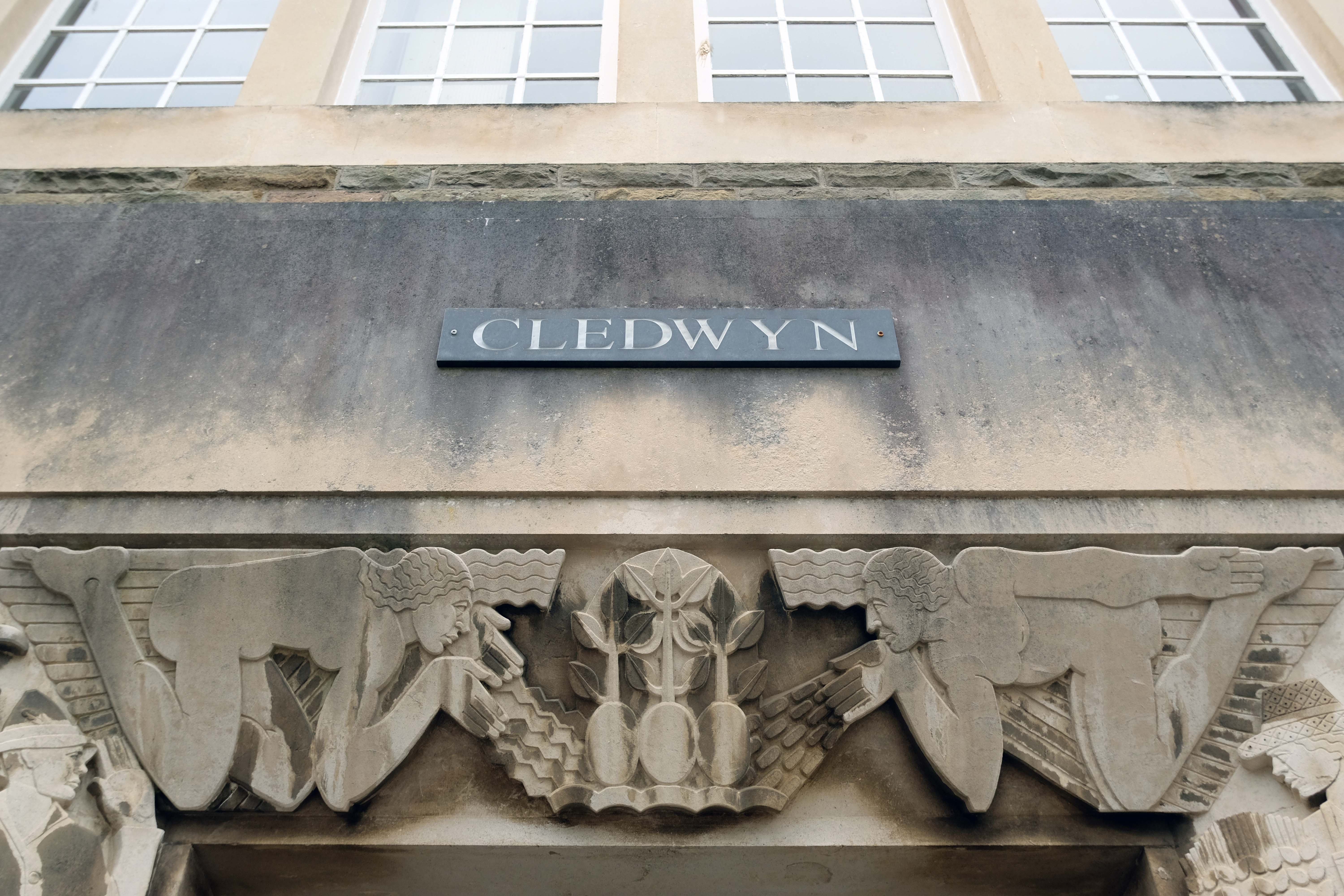
In 1935 Percy Thomas prepared a plan for the layout of a new campus, and was appointed as architect for the first three buildings to be constructed – Cledwyn, Pantycelyn and the swimming bath. This marked the beginning of the move away from the college by the sea to the college on the hill.
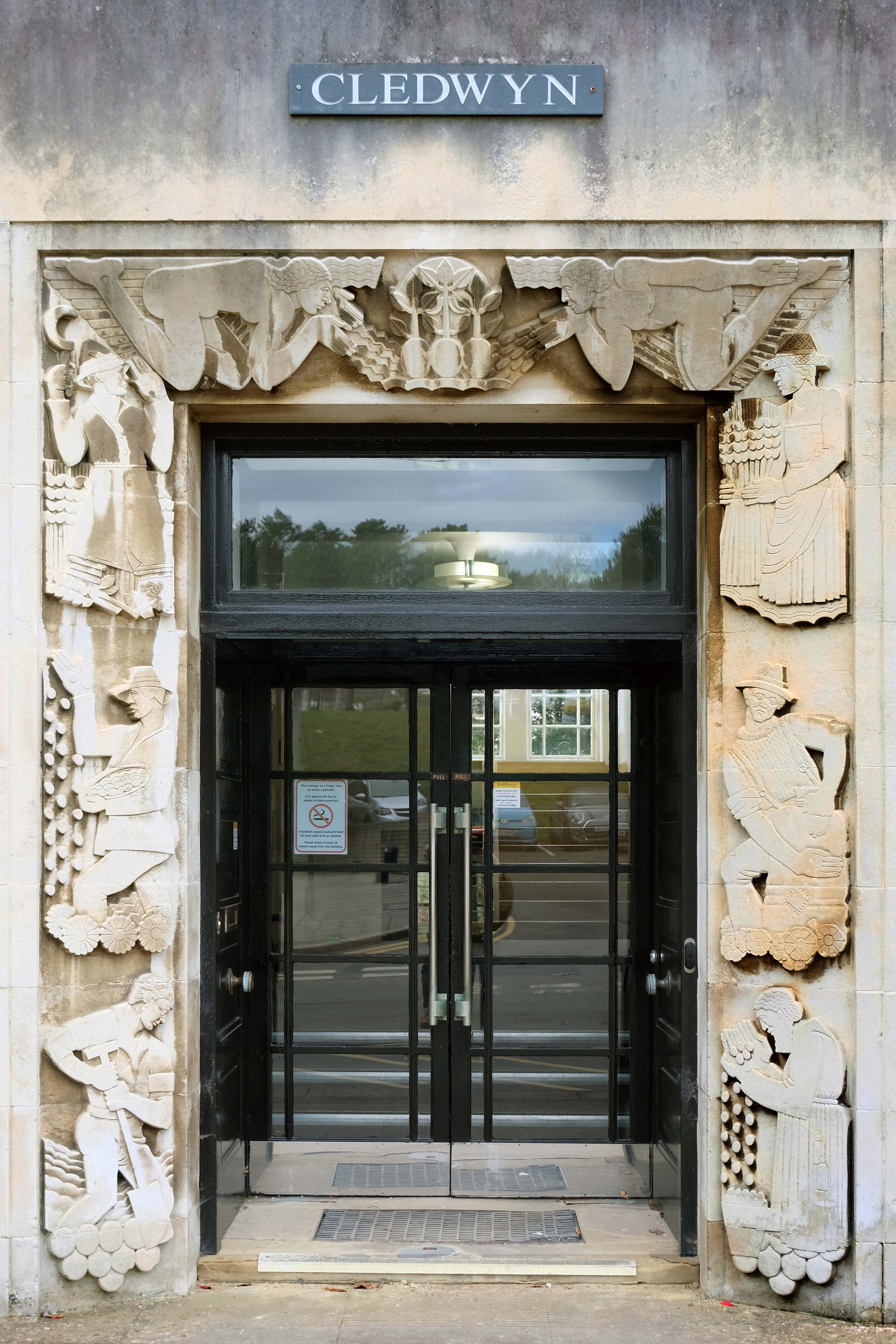
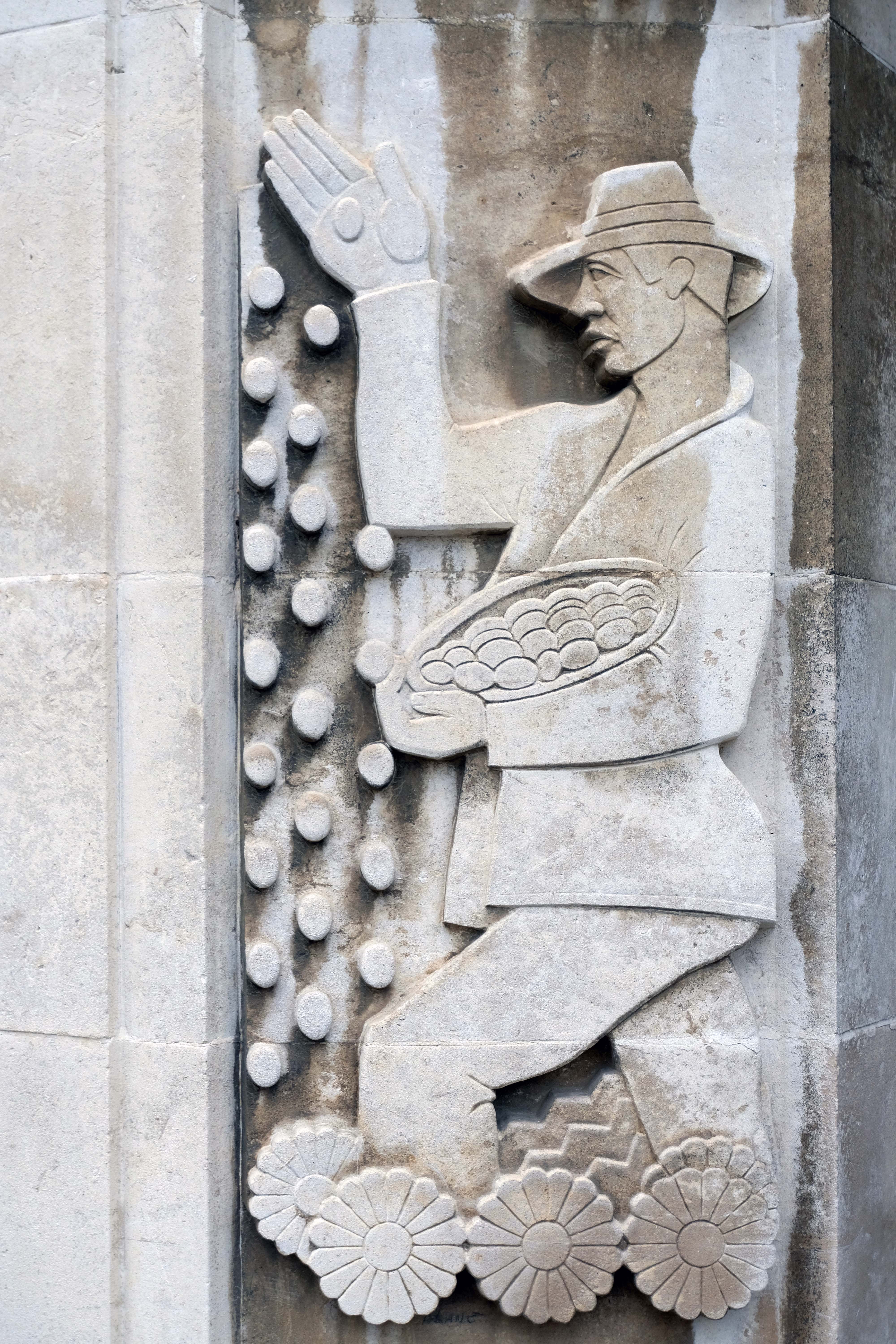
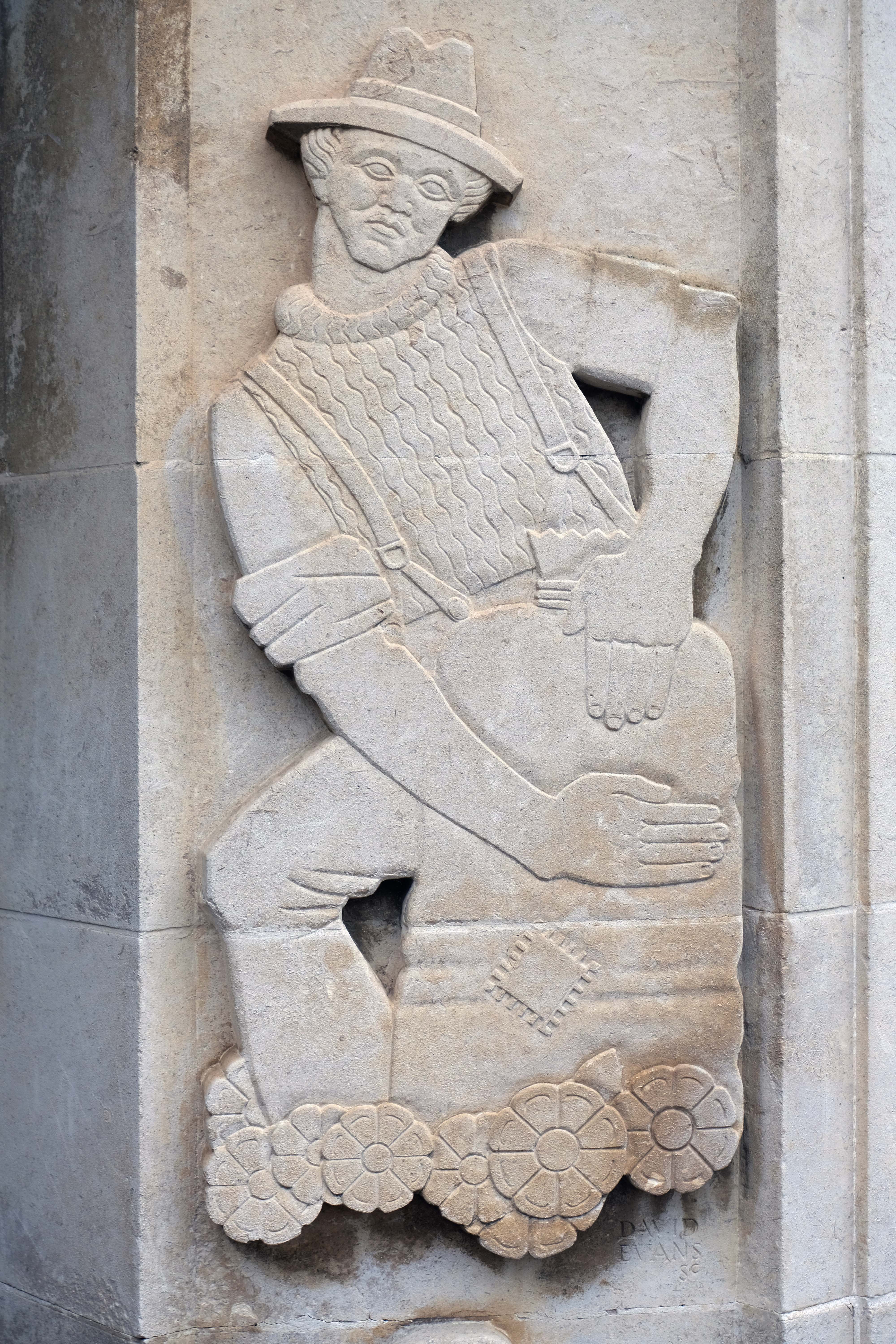
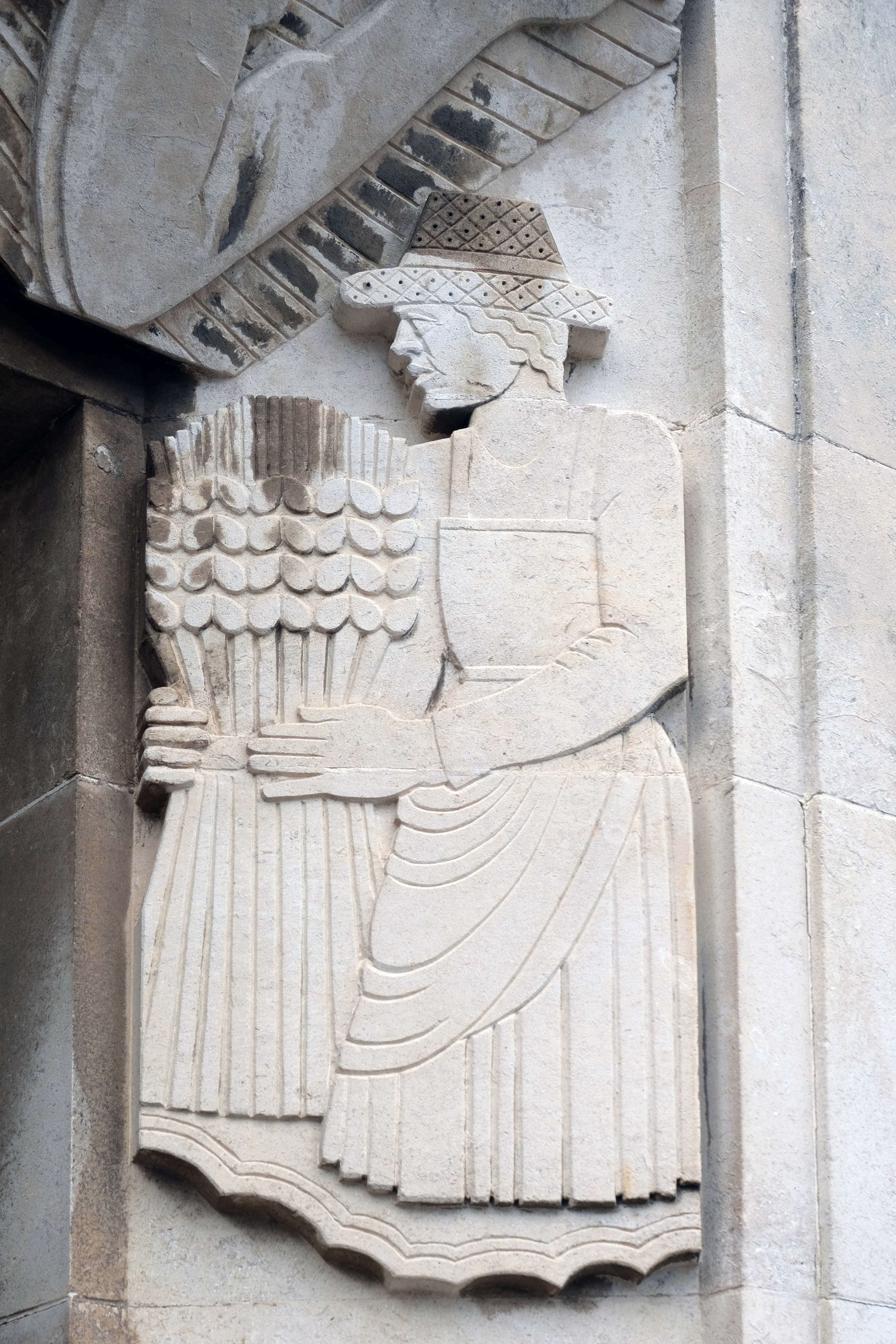
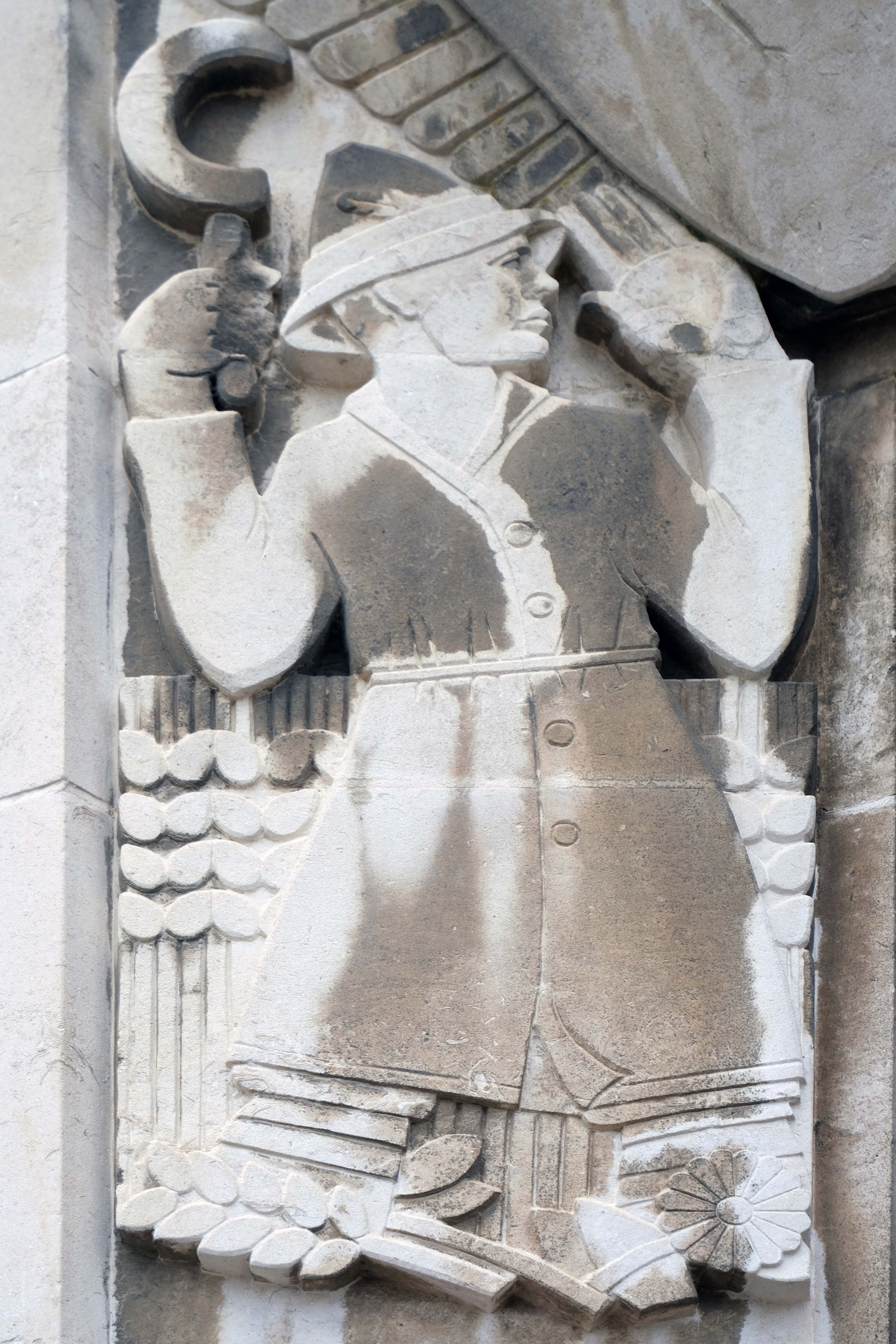
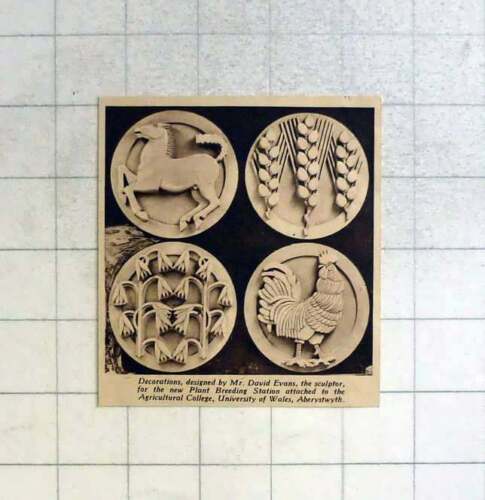
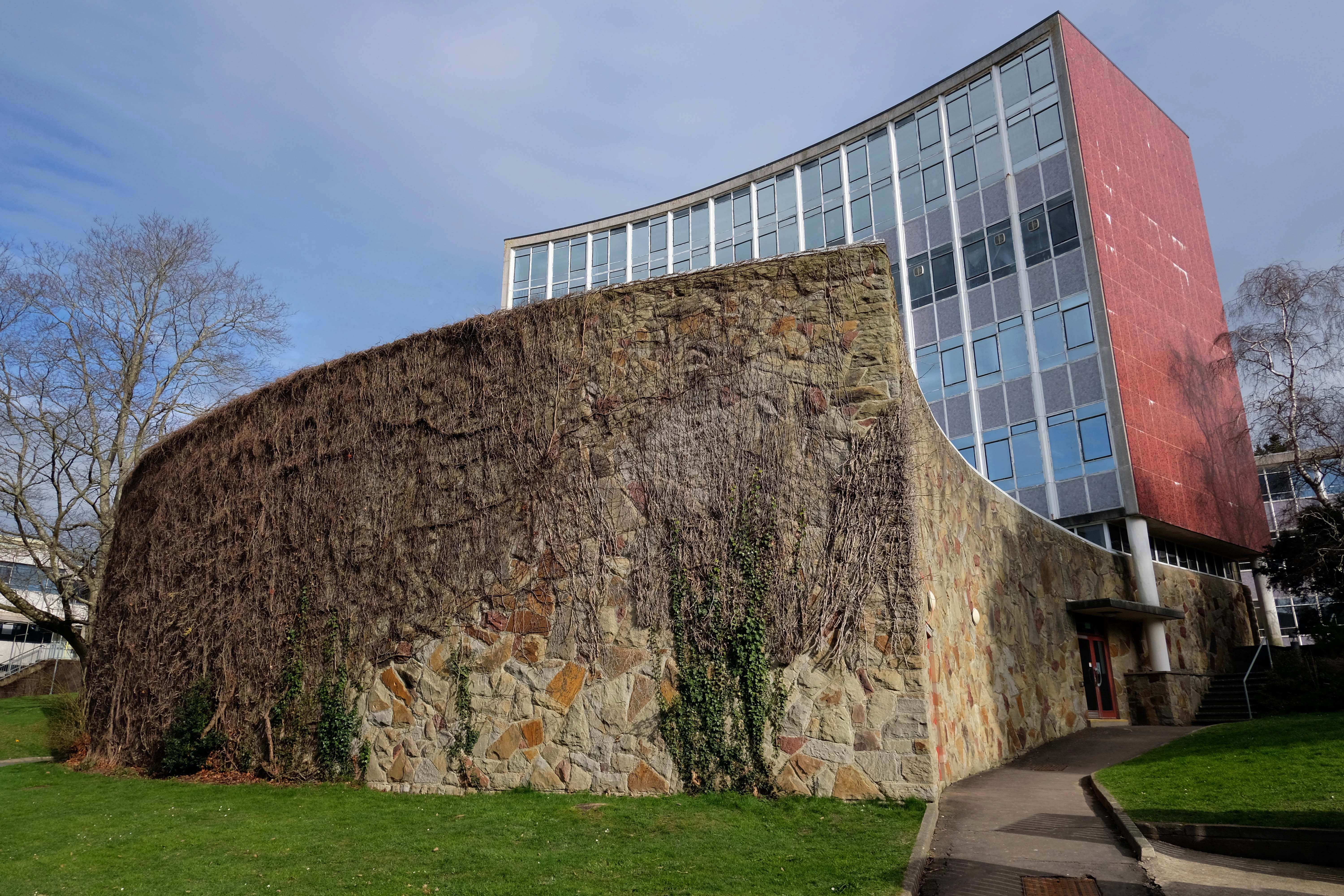
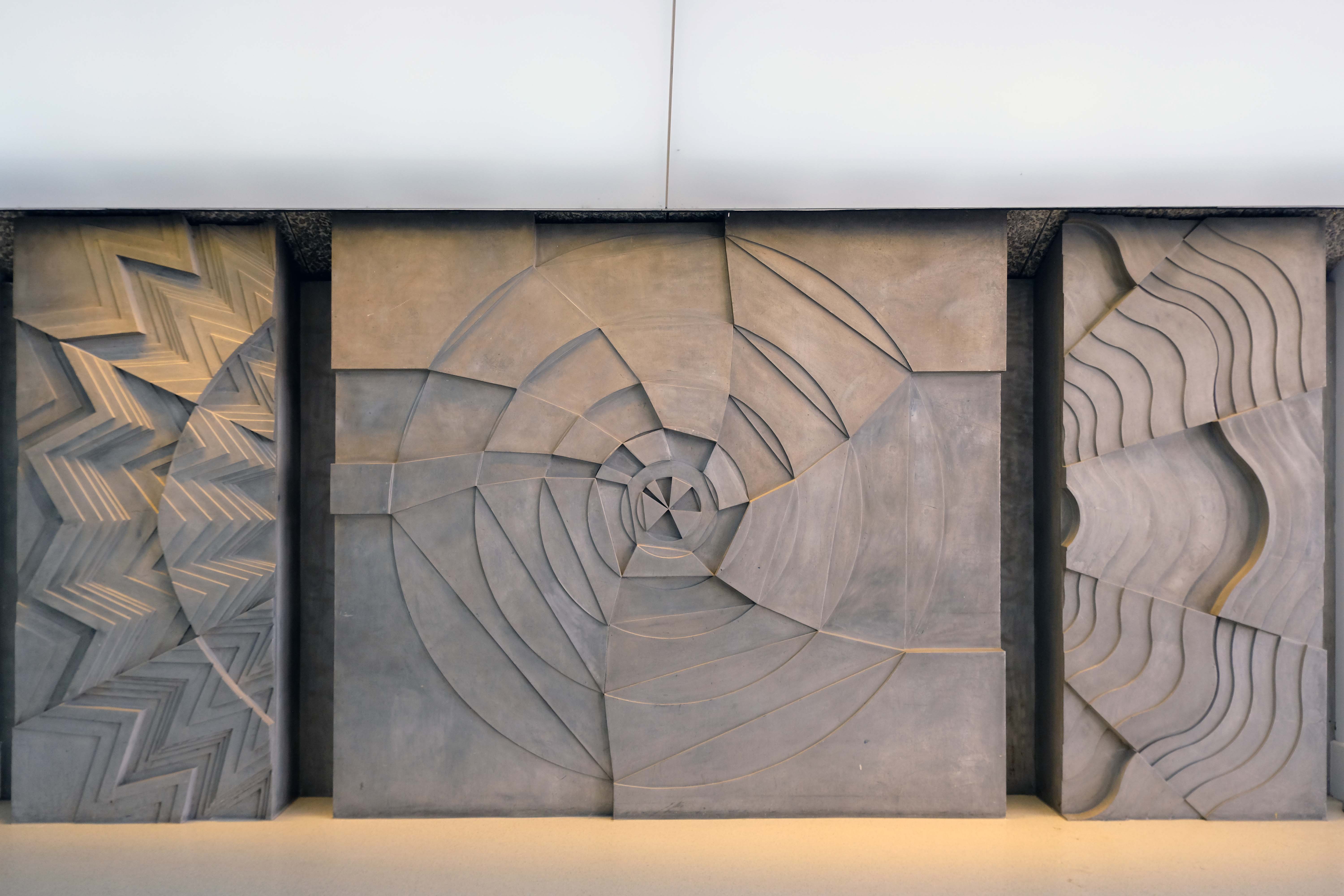
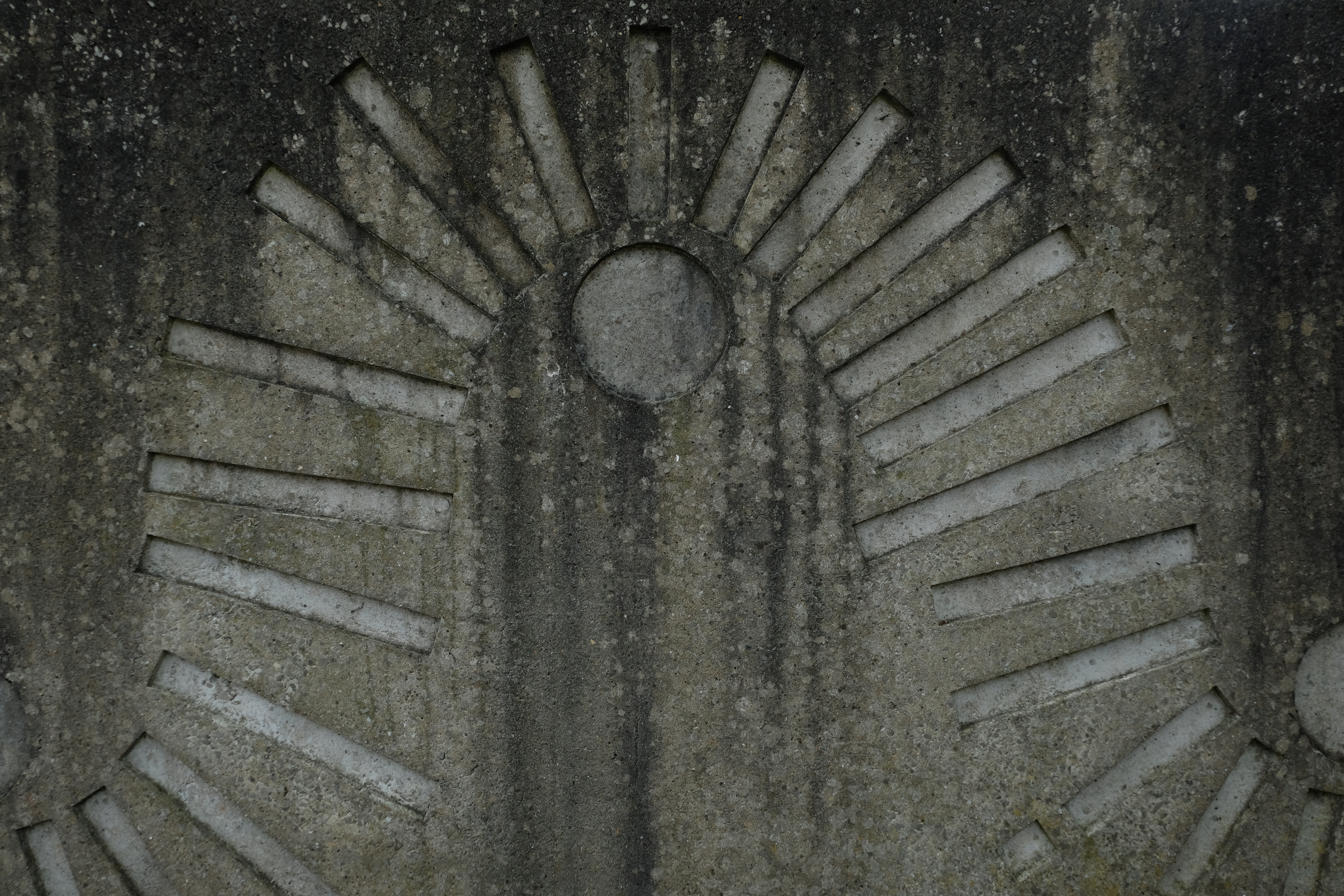
Built in a simple Georgian modern style, faced with Forest of Dean stonework, the building’s main entrance features a broad architrave adorned with low reliefs of agricultural scenes, and there are decorative circular stonework emblems in between the windows of the upper floor.
The carved stone work is by David Evans.
A Manchester-born sculptor who attended the Manchester School of Art, and won a scholarship to the Royal College of Art. After active service in the World War I, he resumed his studies at the Royal Academy, where he was instructed by Francis Derwent Wood. In 1922, he won the Landseer Prize and later went to work in the British School at Rome. He had been exhibiting at the Royal Academy since 1921. His works from the 1920’s are mainly highly stylised religious and mythological themes.
During his stay in the United States, he executed some significant work for public buildings in New York. The locations there included Rockefeller Center, Radio City, Brooklyn Post Office, a bank on Wall Street, St Thomas’s Church on Fifth Avenue.
Here are the four decorative panels placed higher on the building.
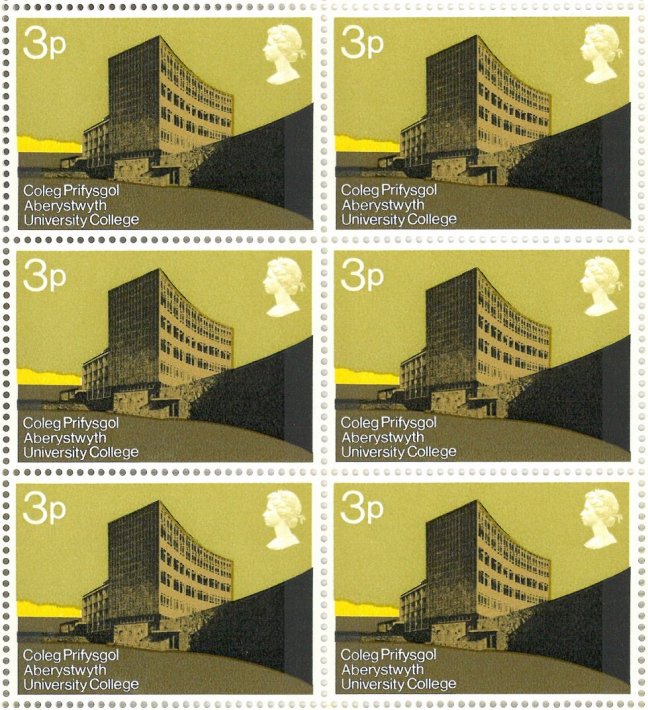
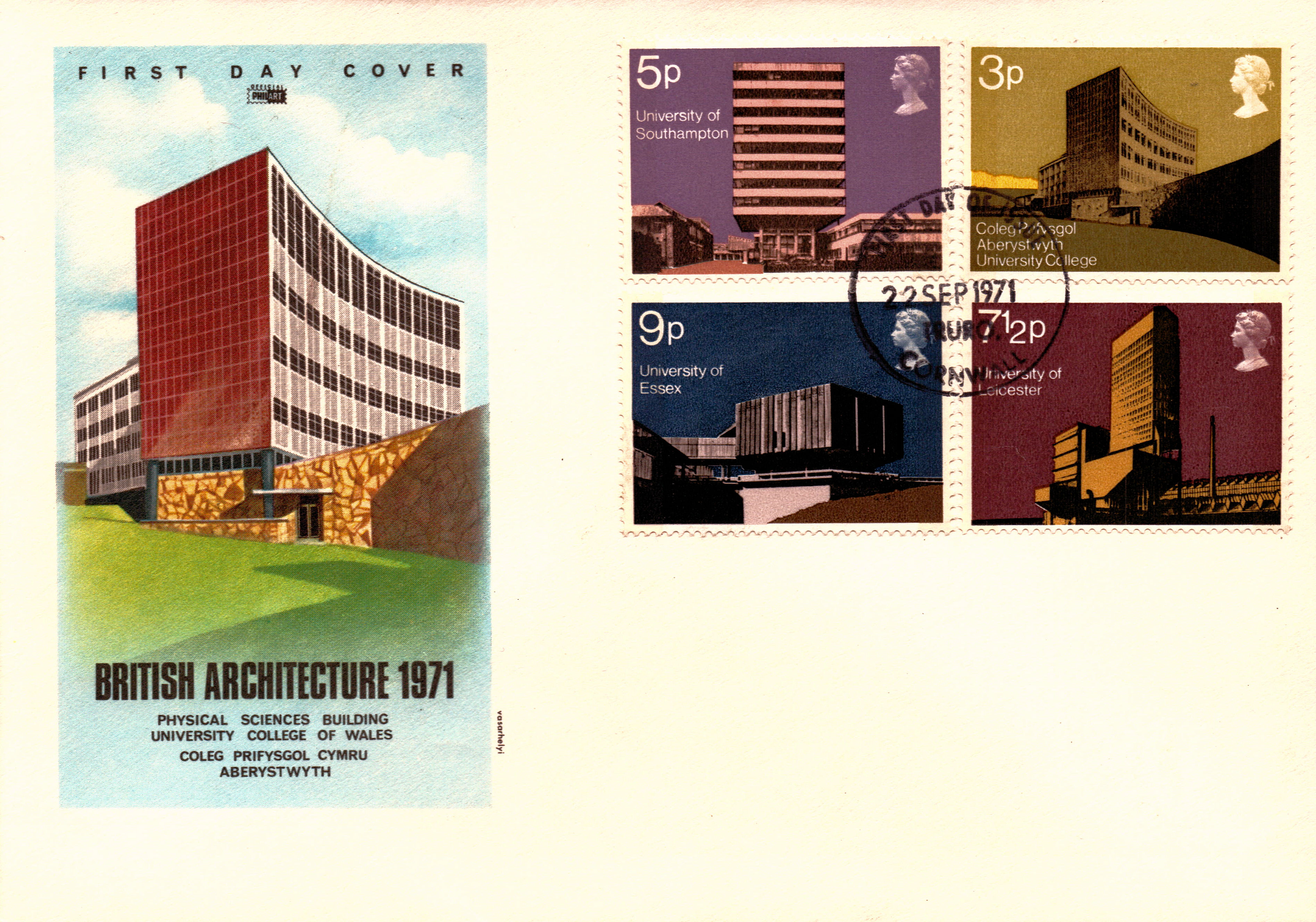
Immortalised in this elegant educational stamp set – designed by Mr Nicholas Jenkins of the Royal College of Art
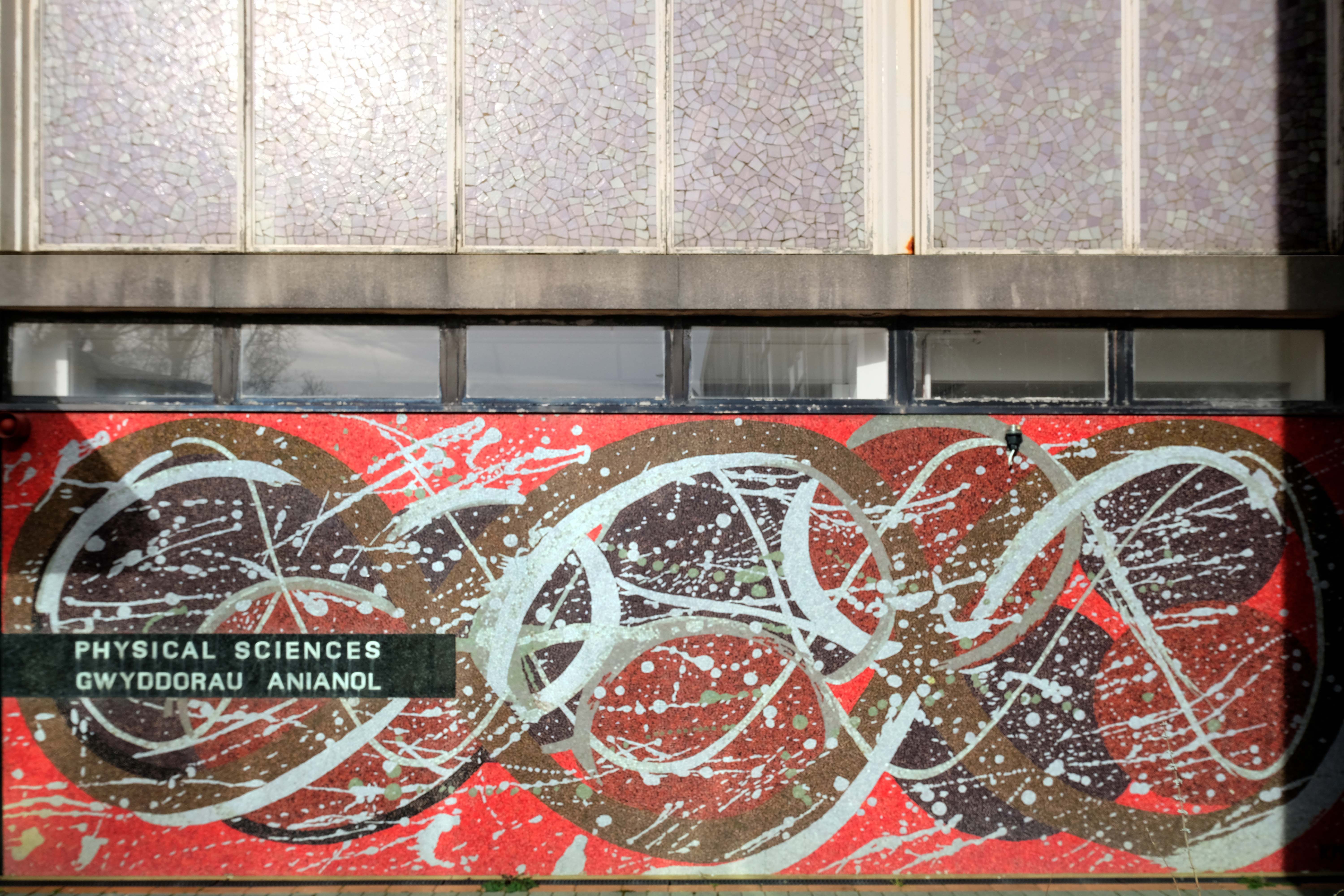
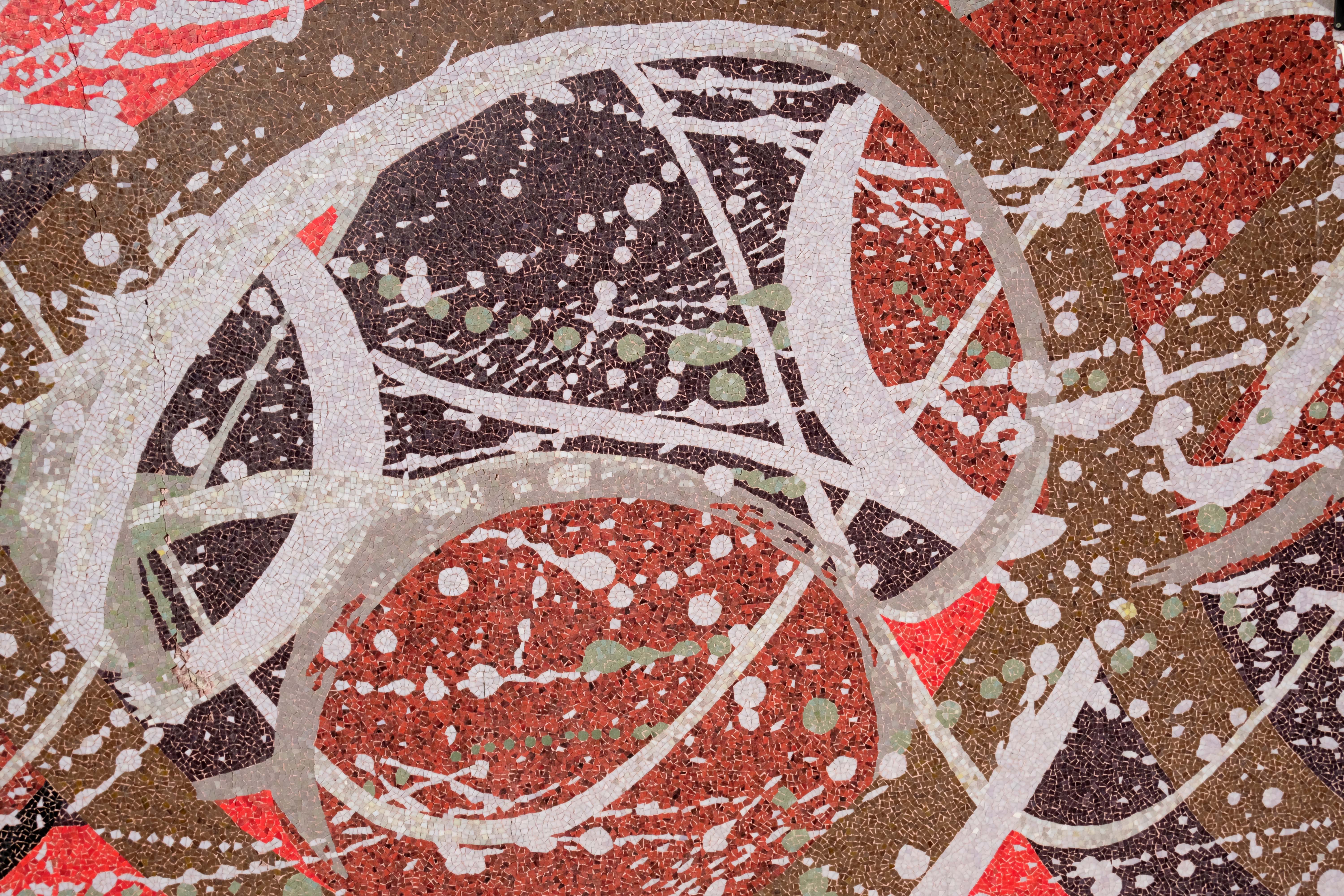
To the right of the entrance this striking mosaic – action is ossified in the manner of a semi-permanent Pollock.
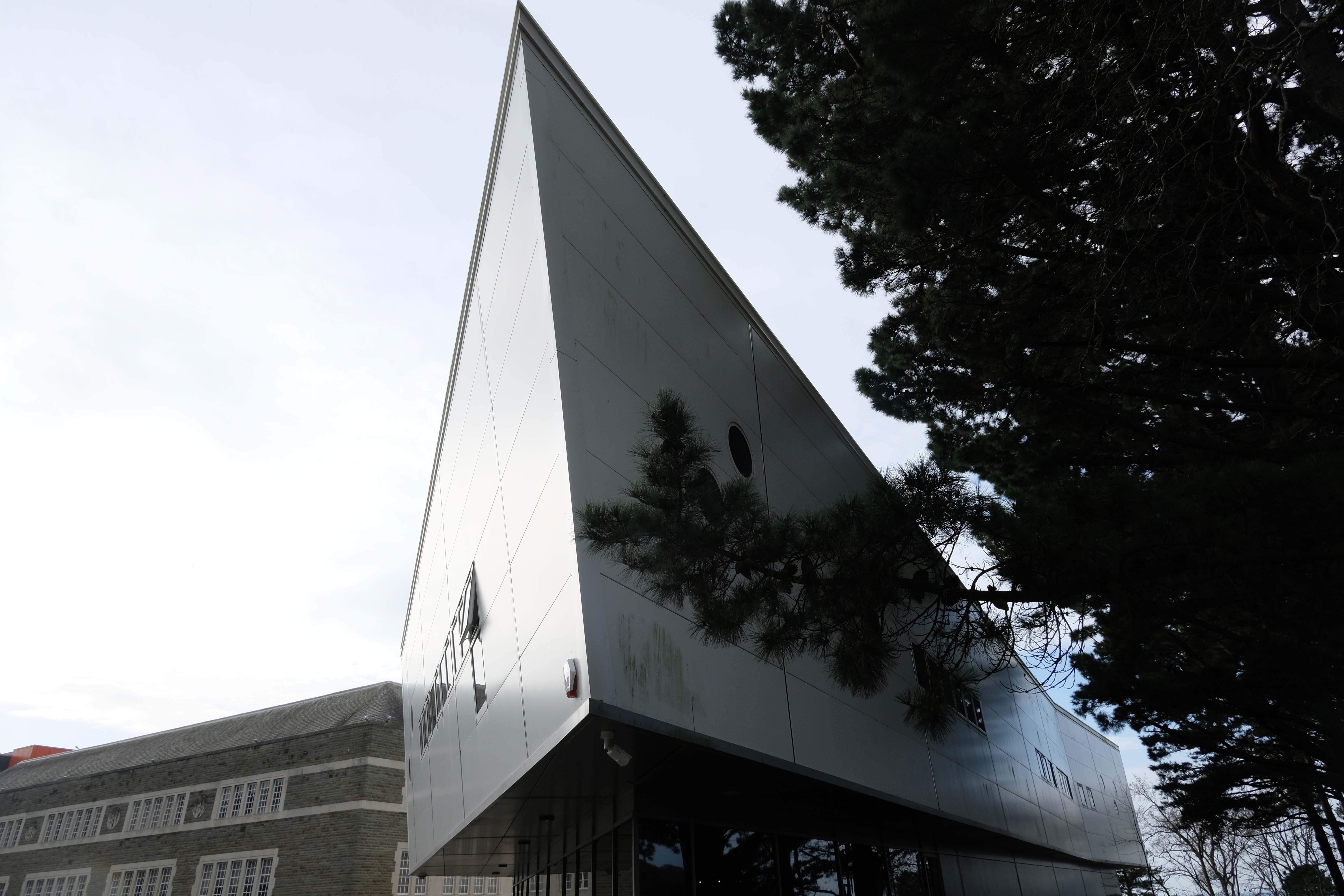
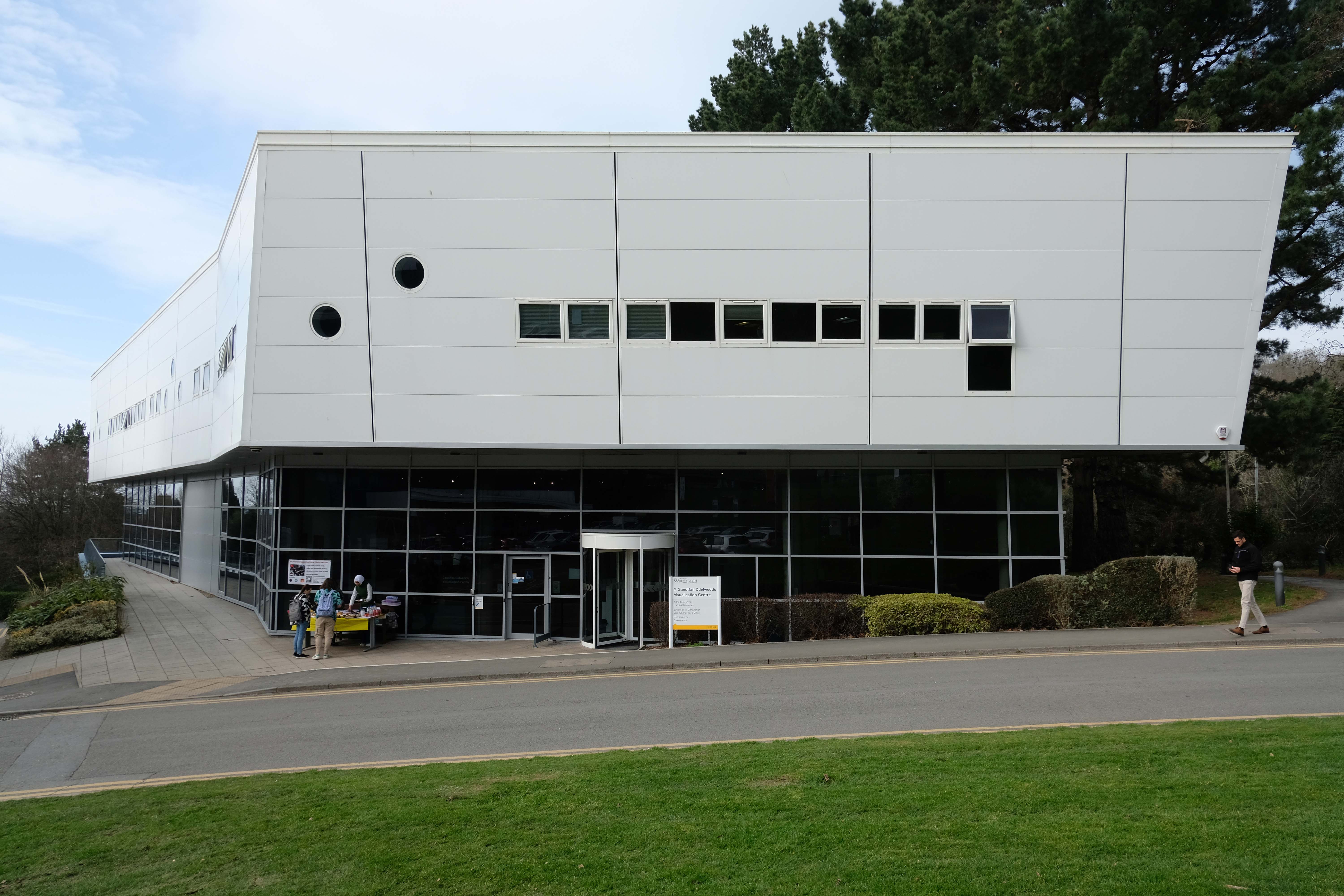
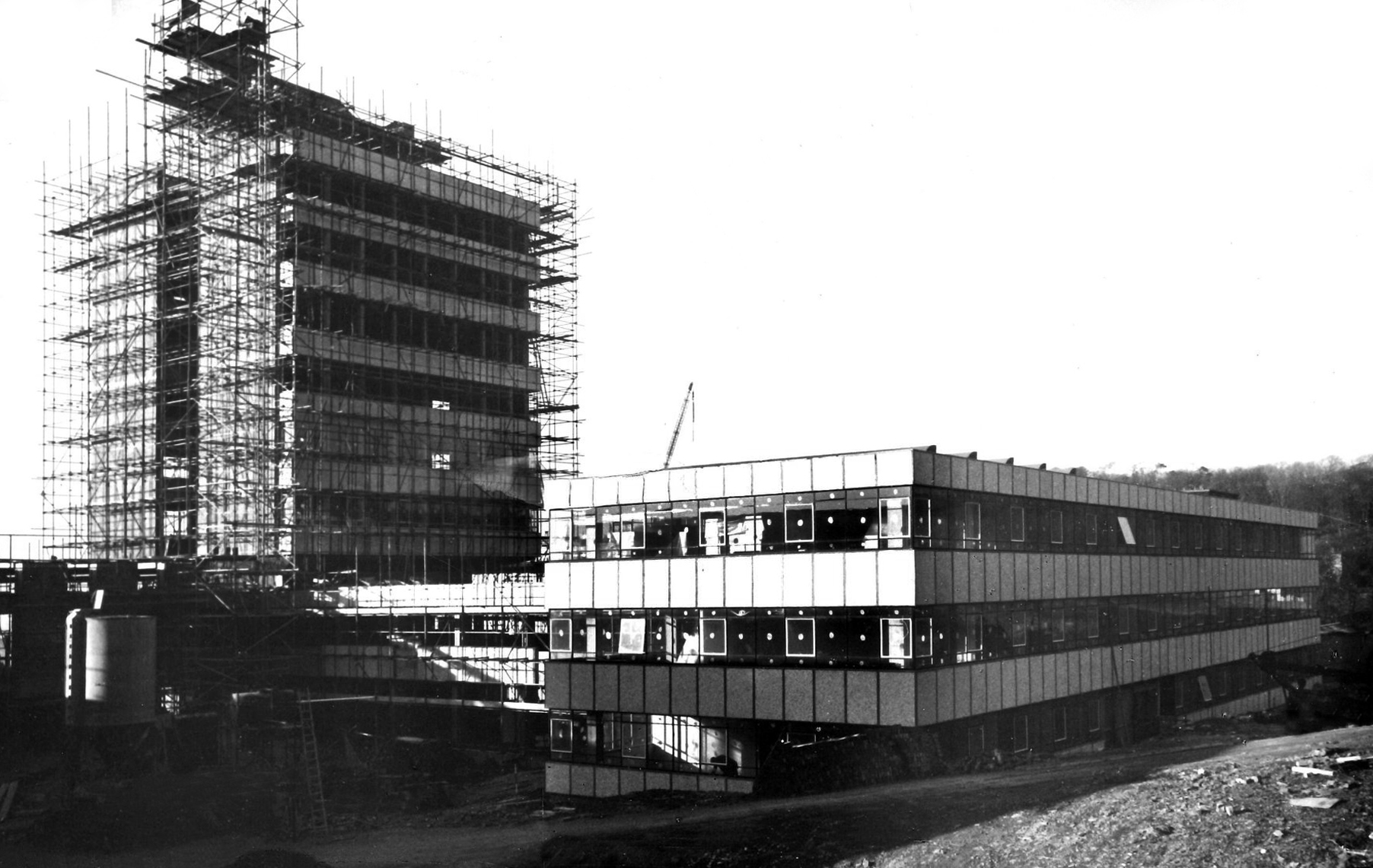
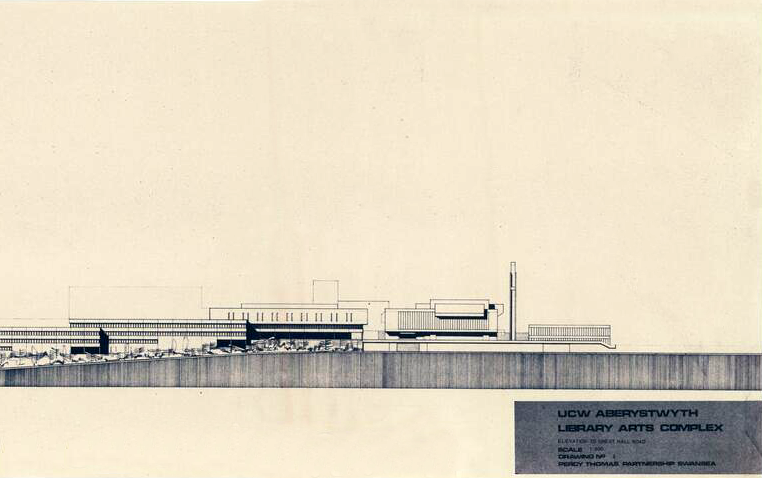
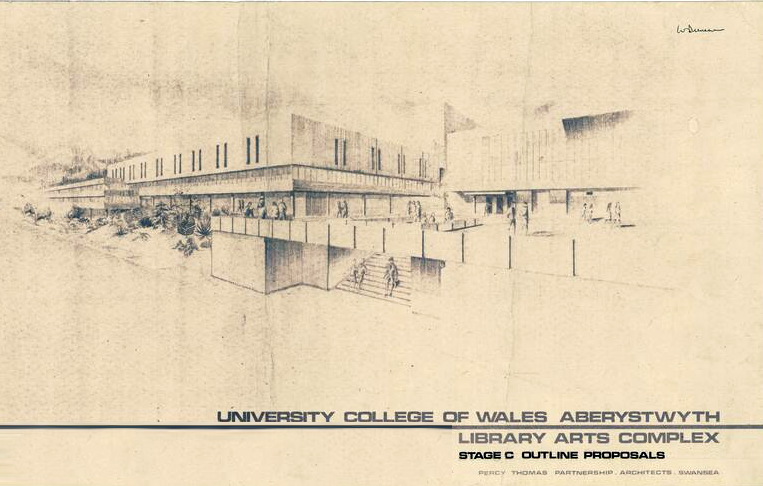
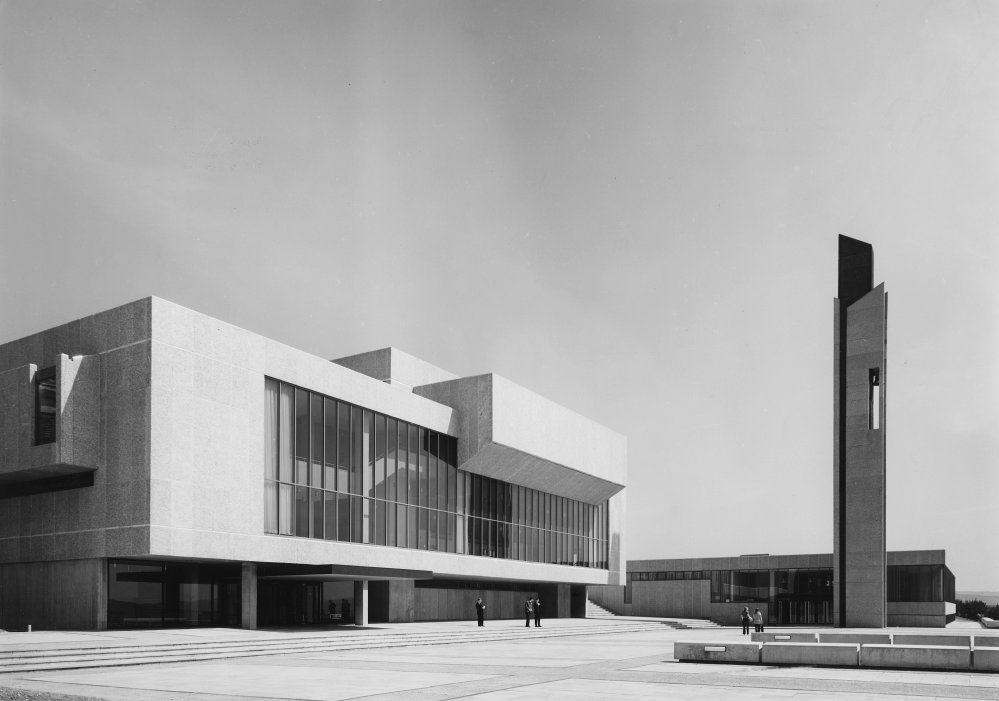
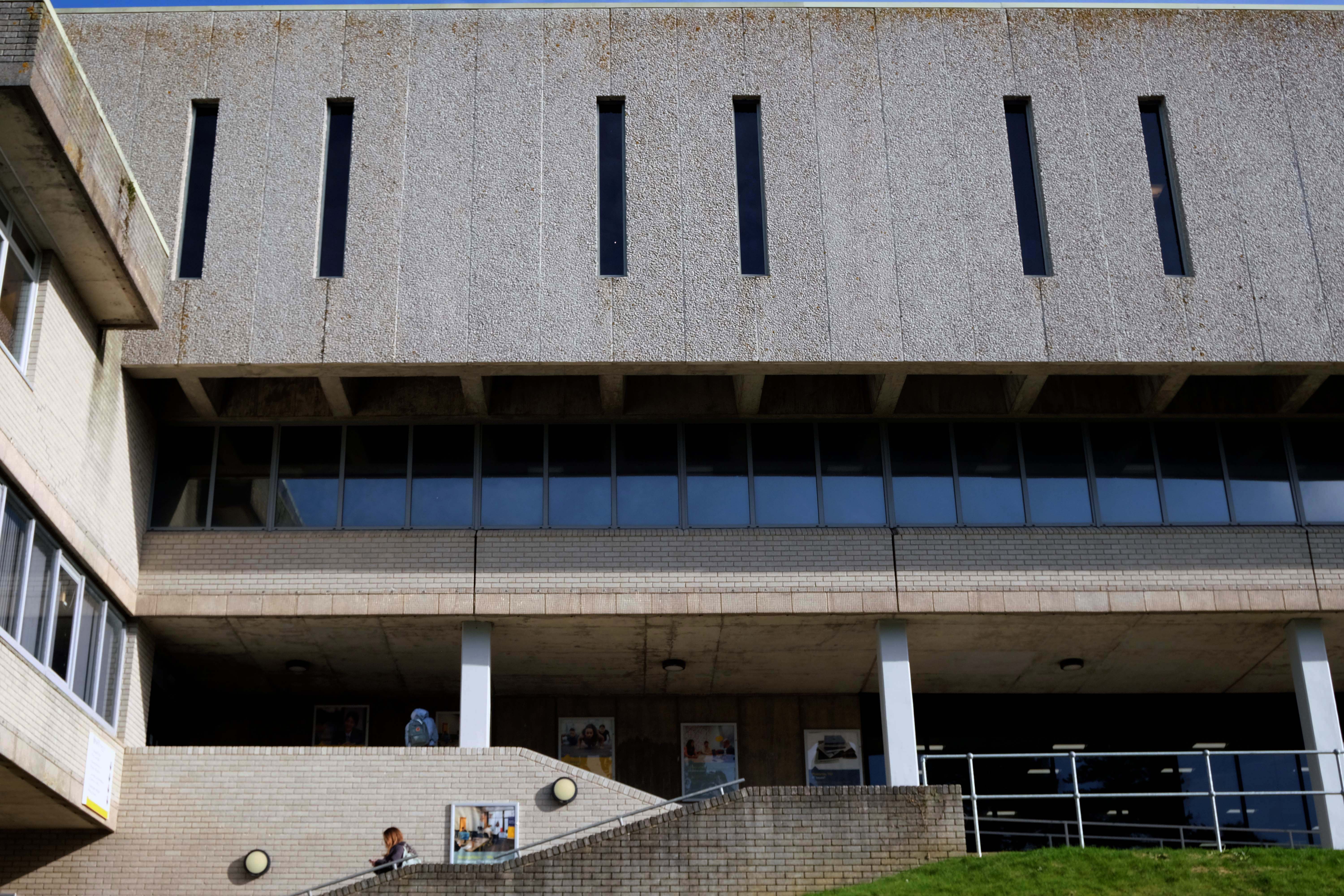
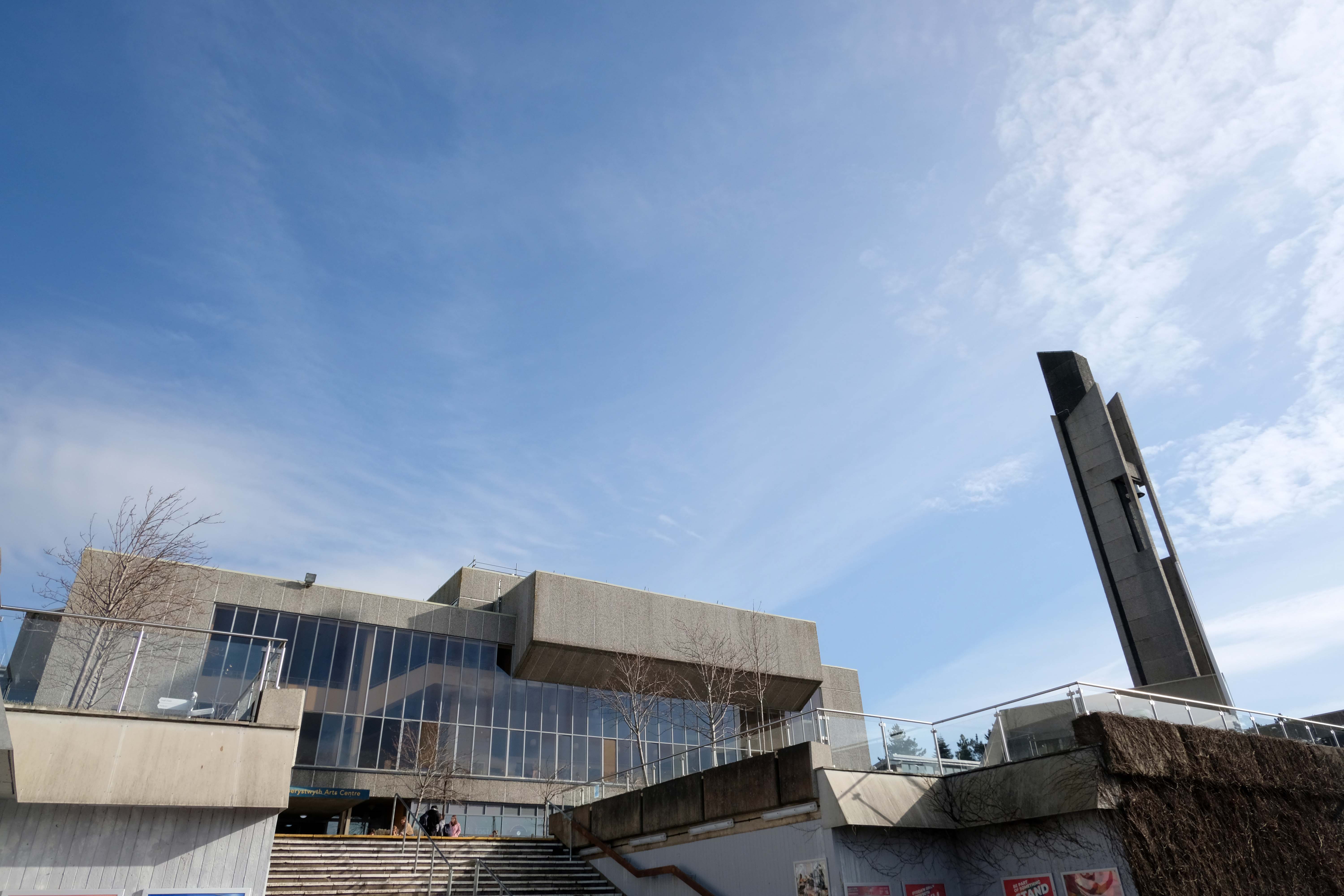
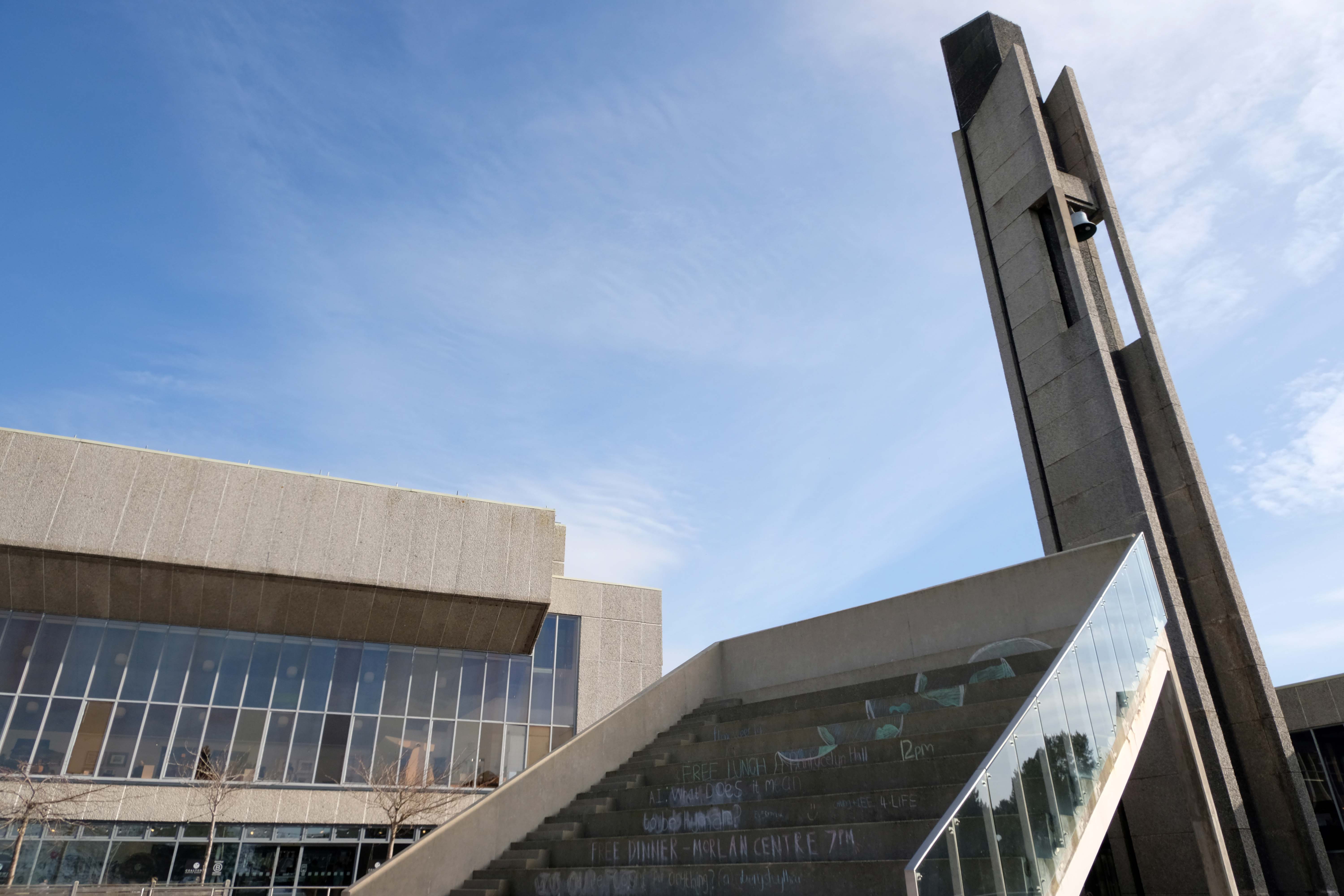
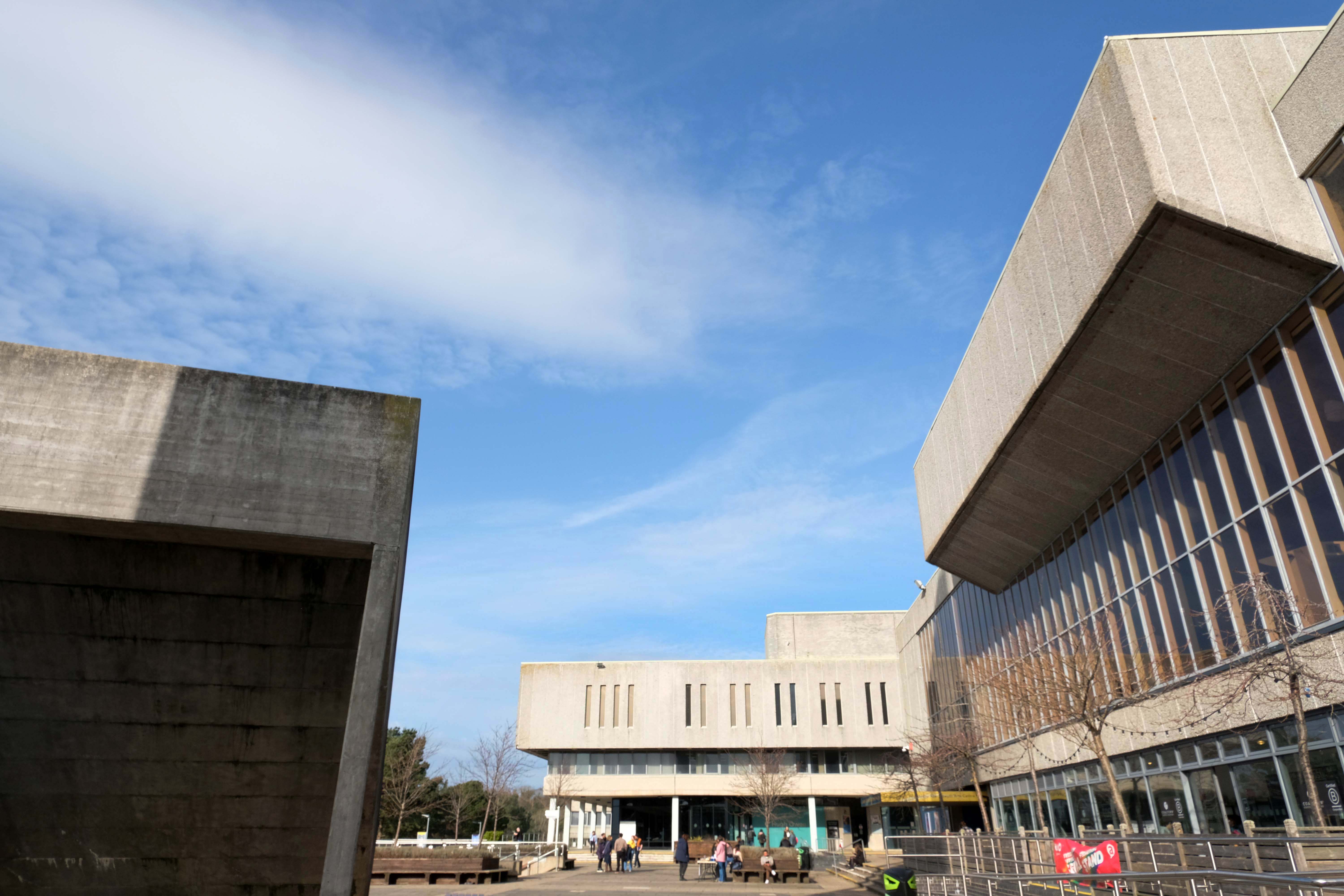
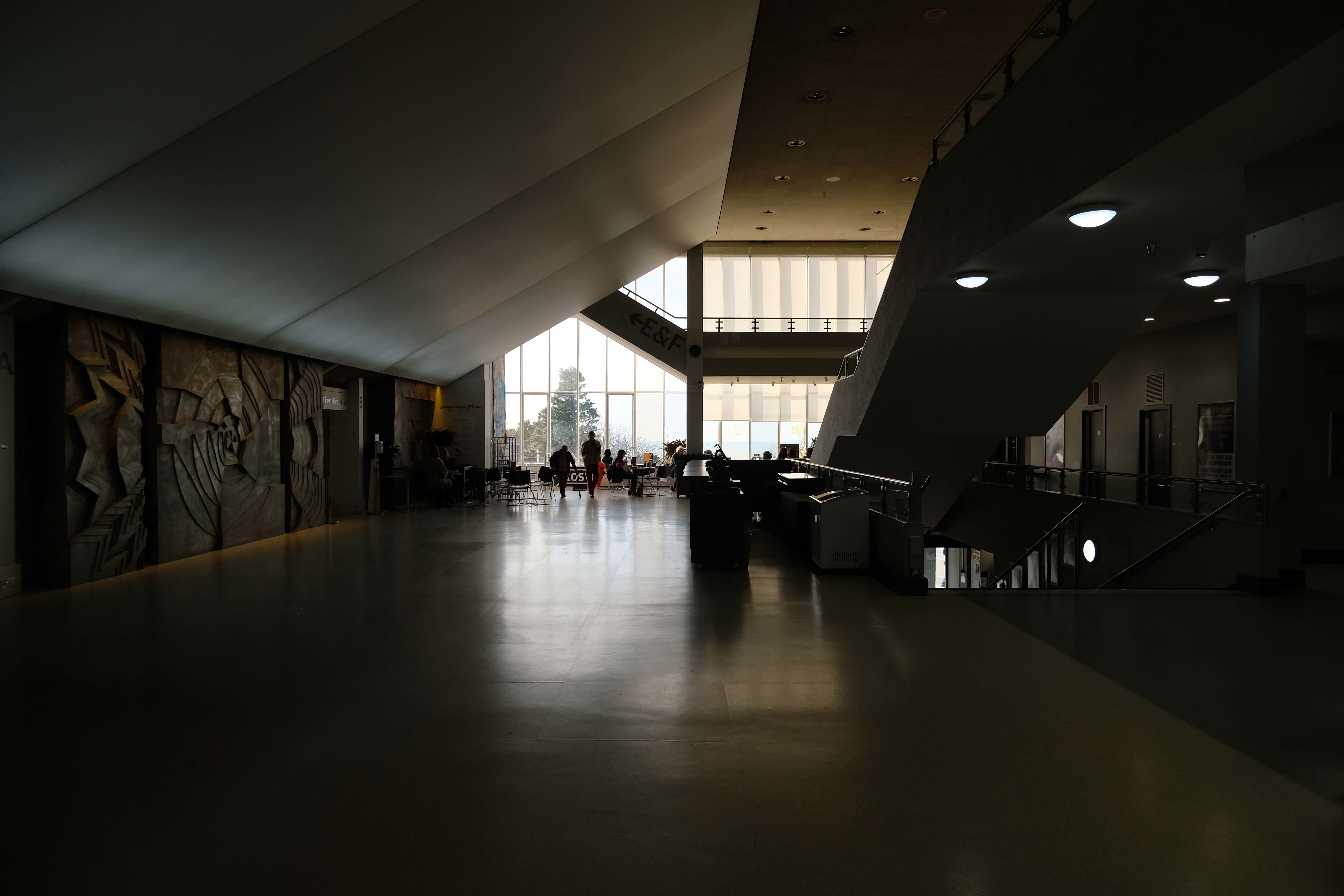
Aberystwyth Arts Centre is one of a number of campus buildings designed by Dale Owen of Percy Thomas Partnership, and completed in 1970-1972.
Built to a strongly horizontal design using grey granite aggregrate, the facade is essentially an overhanging rectangle framing of glass with an off-centre overhang. The position of the building providing unobstructed panoramic views over the main piazza style concourse and the sea beyond.
David began lecturing at Cardiff College of Art, later teaching and holding administrative posts at University College of Wales in Aberystwyth, retiring in 1988 as director of the department of visual art.
David Tinker was prominent in so many aspects of the visual arts in Wales throughout the second half of the 20th Century as a painter, sculptor, teacher, and stage designer.
Tinker is perhaps best known as one of three originators of the 56 Group with Eric Malthouse and Michael Edmonds, the new generation of young artists in Wales who were interested in modernism and keen to ally themselves to the international art world.
The 56 Group had no manifesto and for the most part they acted as an exhibiting co-operative; not all were abstract painters and their work was stylistically very different from one another, but all shared radical ideals. Their orderly revolt against the establishment was unique in the history of art in Wales.
They championed abstraction and allied themselves to European and American modernism, at a time when painters in Wales were being commended for recording the urban, rural and industrial face of Wales and its inhabitants.
As might be expected, the art establishment more readily accepted 56 Group avant garde works, and those artists who had been achieving some success as painters of the contemporary scene suddenly found themselves side-stepped, and labelled parochial.
The period 1966-1974 saw in his paintings a move toward hard-edged abstraction in which Tinker employed geometry-based structures, simple arithmetical problems, colour mixed from a restricted palette, and gentle tonal gradation.
More than once, though that’s no reason not to do so again – so I did.
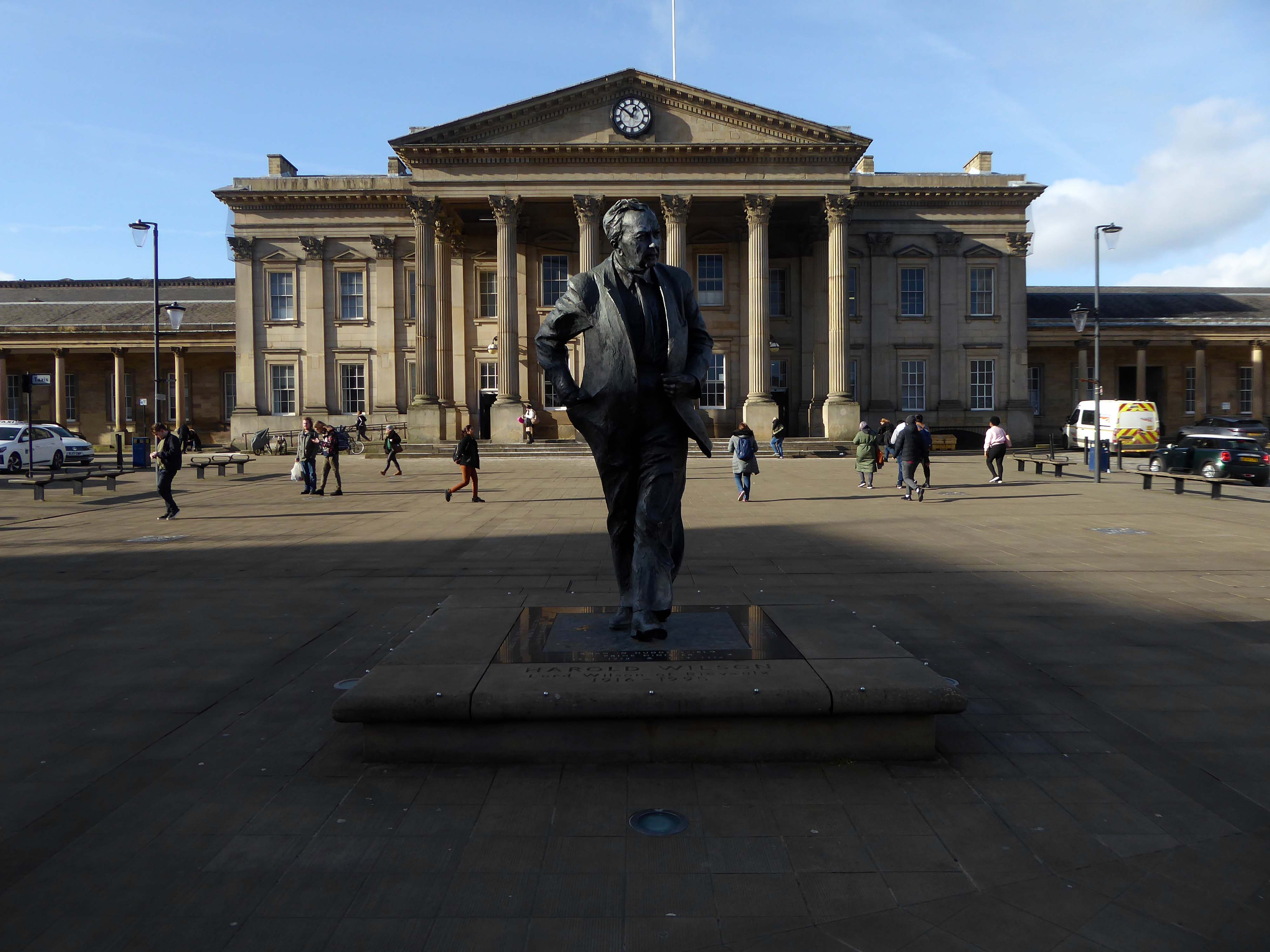
Saying hello to Harold.
Harold saying hello to us:
Nostalgia won’t pay the bills; the world doesn’t owe us a living; and we must harness the scientific revolution to win in the years to come. This scientific revolution is making it physically possible, for the first time in human history, to conquer poverty and disease, to move towards universal literacy, and to achieve for the whole people better living standards than those enjoyed by tiny privileged classes in previous epochs.
He warned change would have to reach every corner of the country; The Britain that is going to be formed in the white heat of this revolution will be no place for the restrictive practices or for outdated methods on either side of industry.
Standing sentinel over one of Nikolaus Pevsner and John Betjeman’s favourite railway station front elevations.
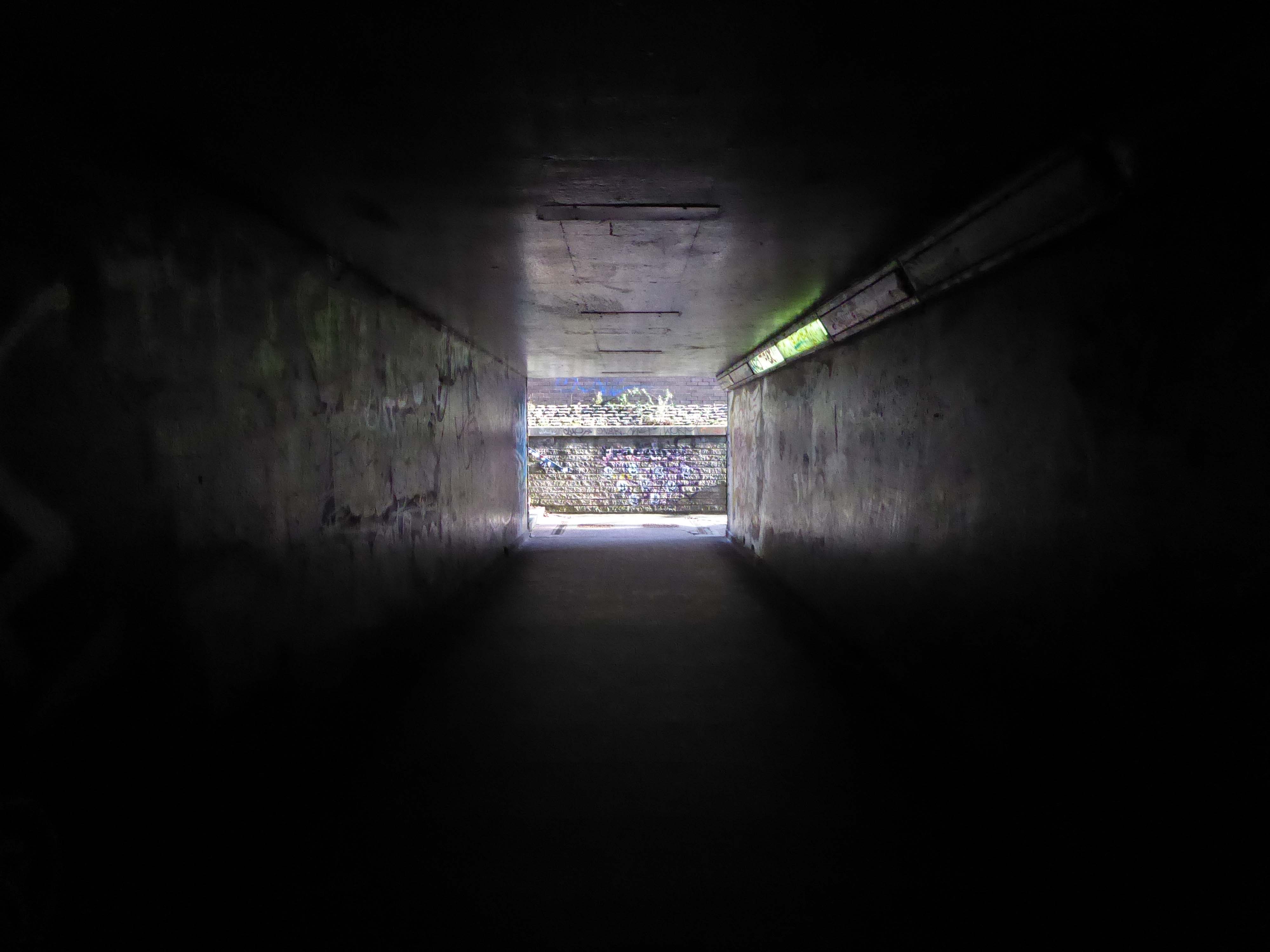
Through a passage darkly.
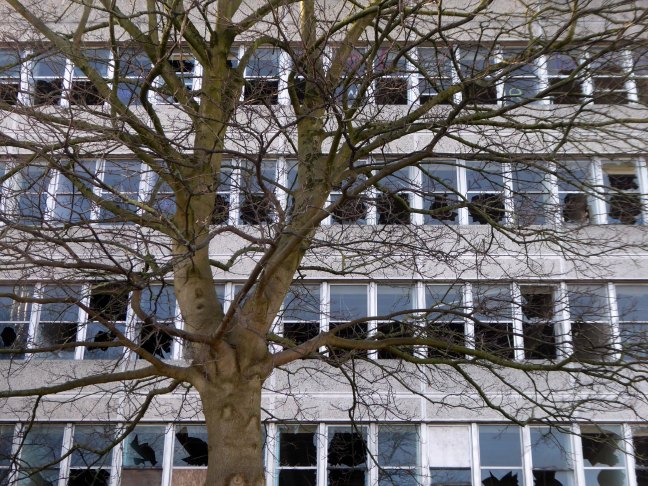
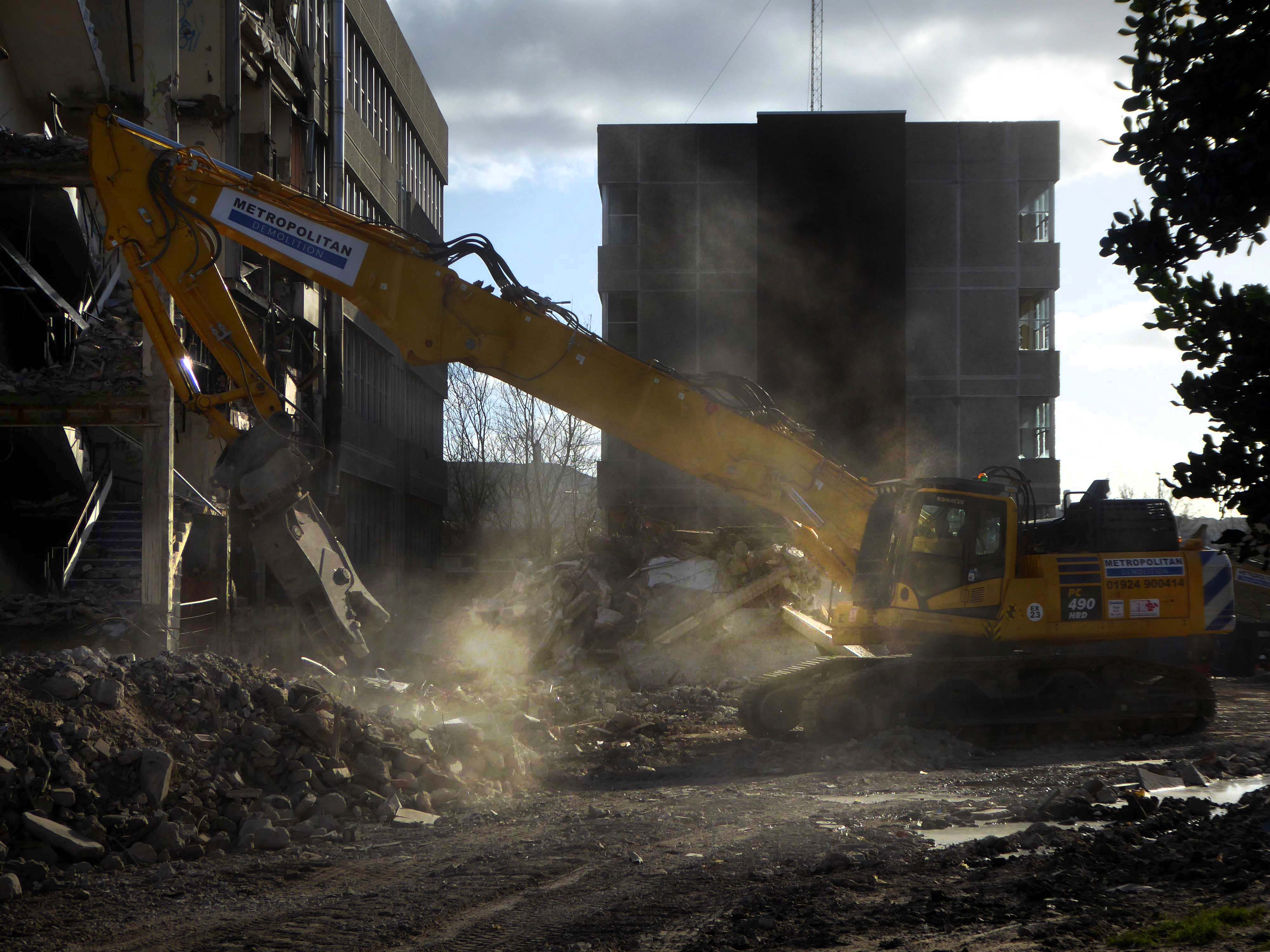
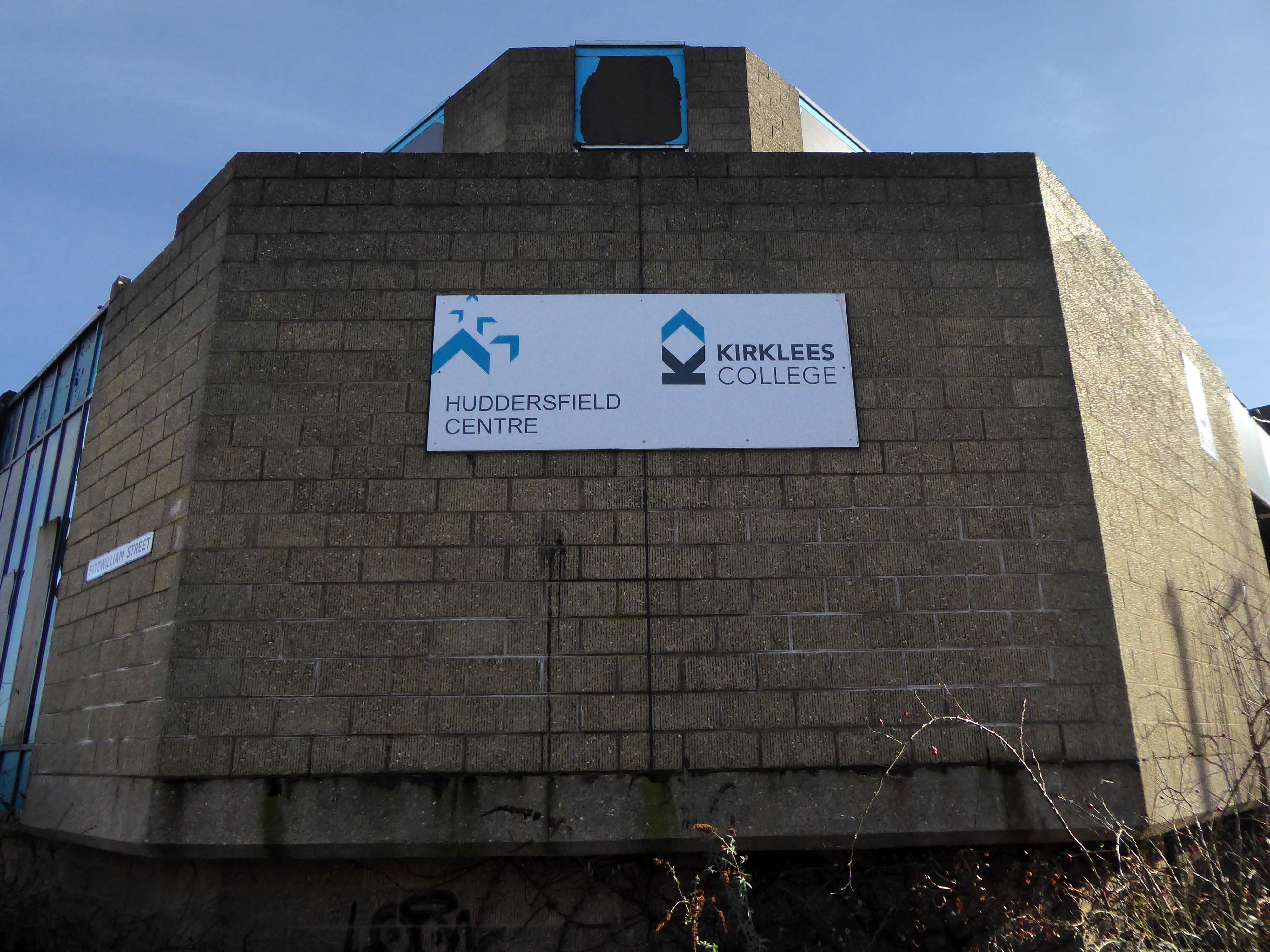
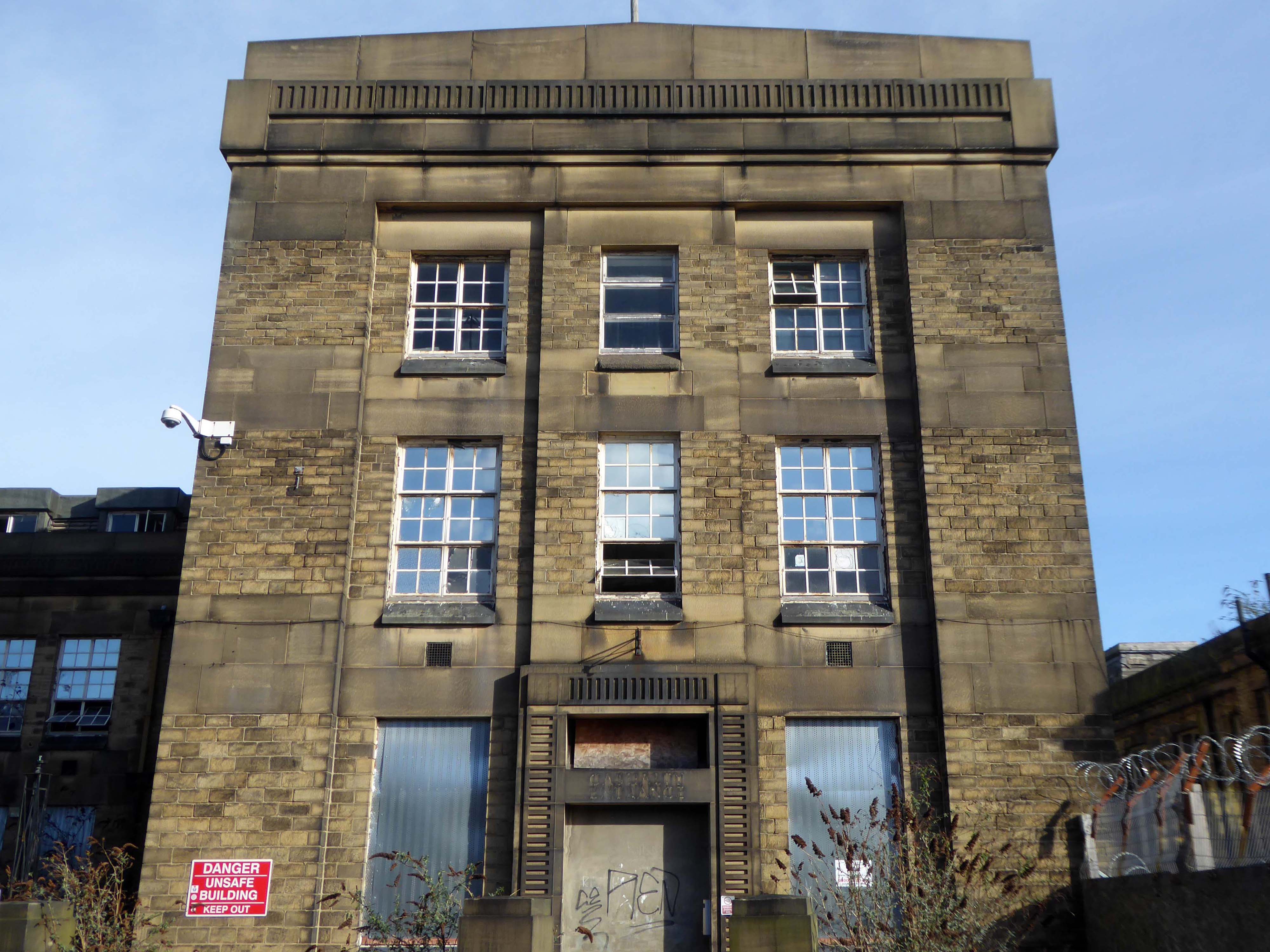
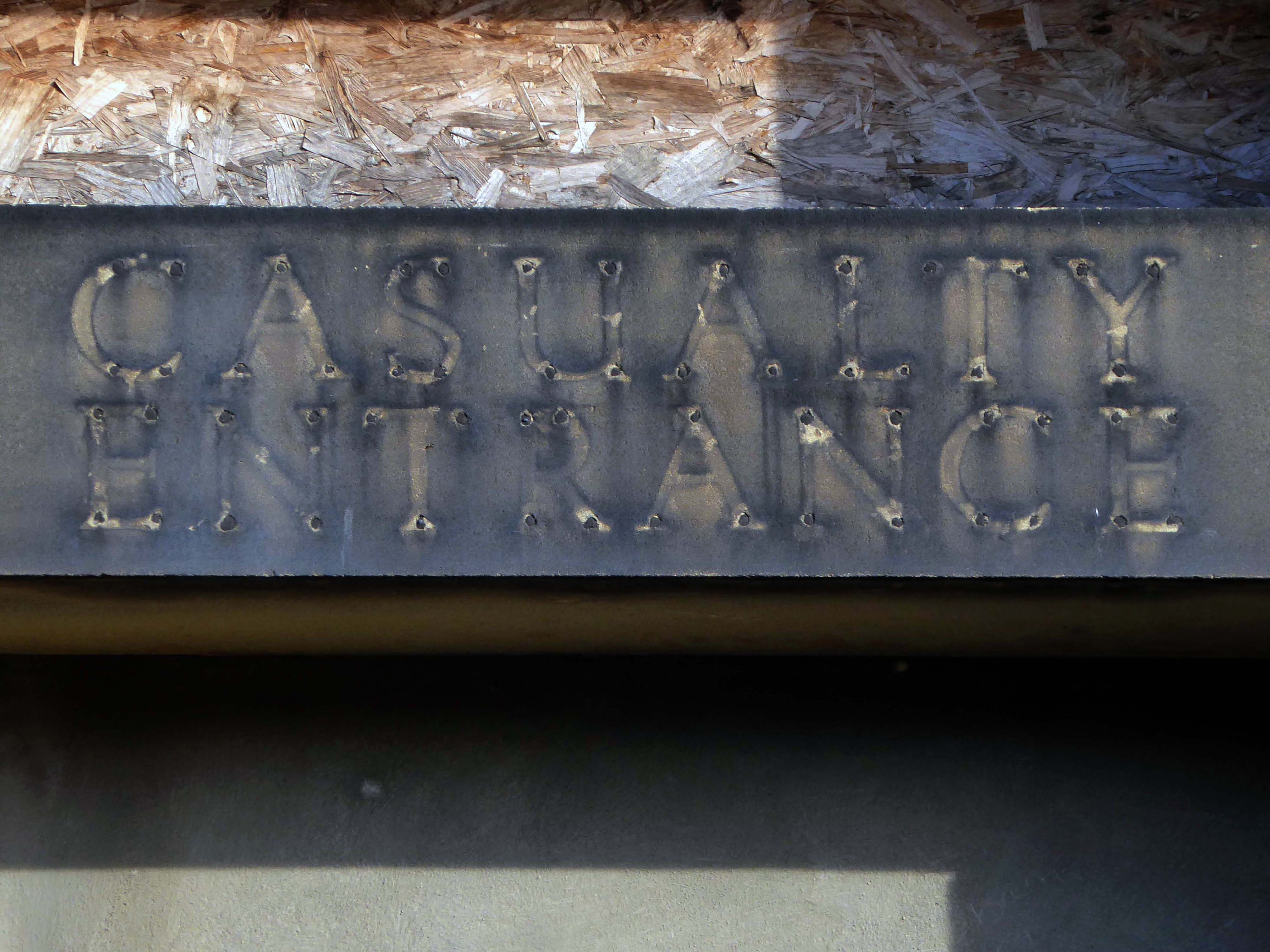
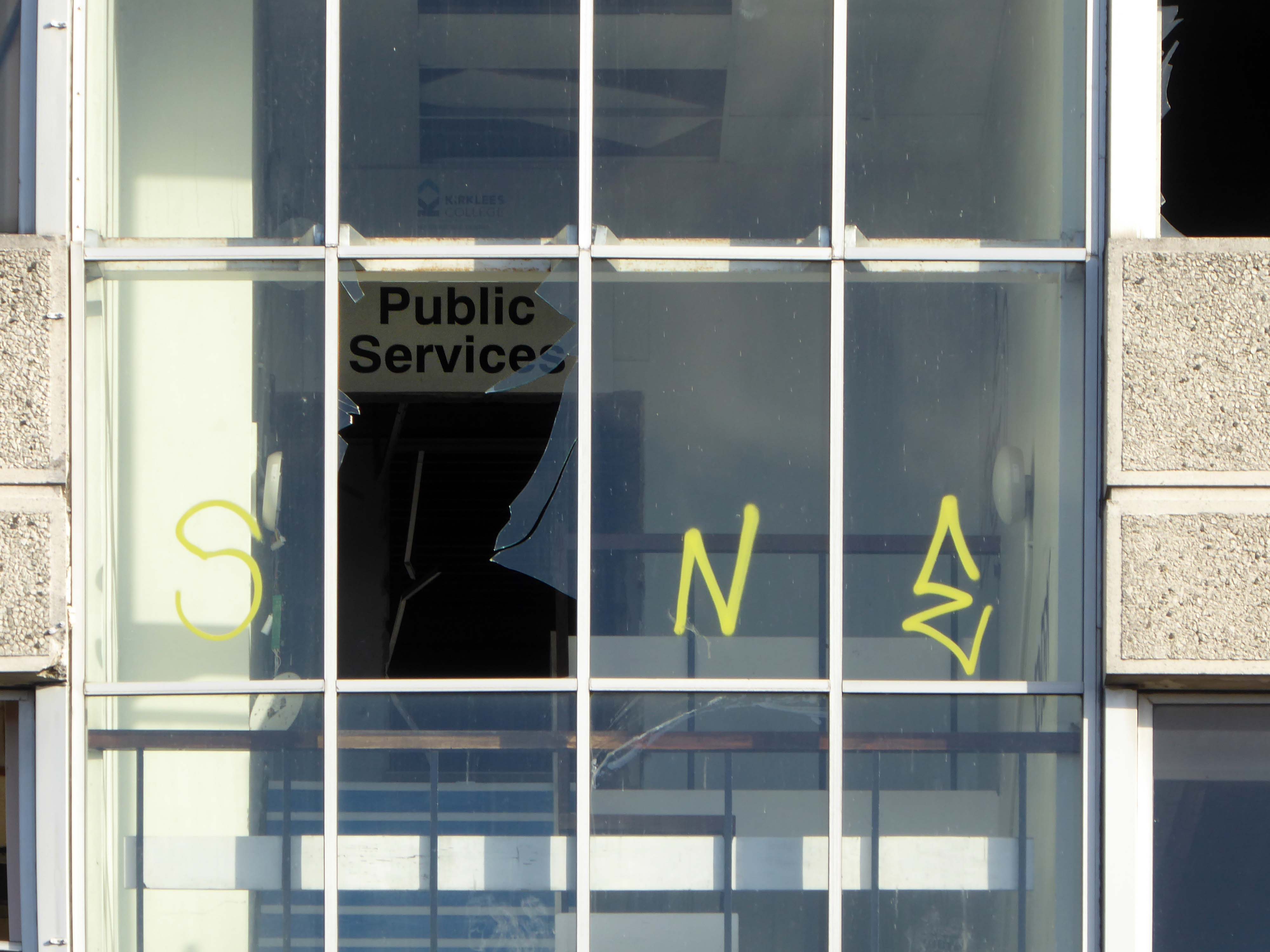
Emerging into the light of day and the demolition of the Kirklees College 1969-72 by Borough Architect Charles Edmund Aspinall.
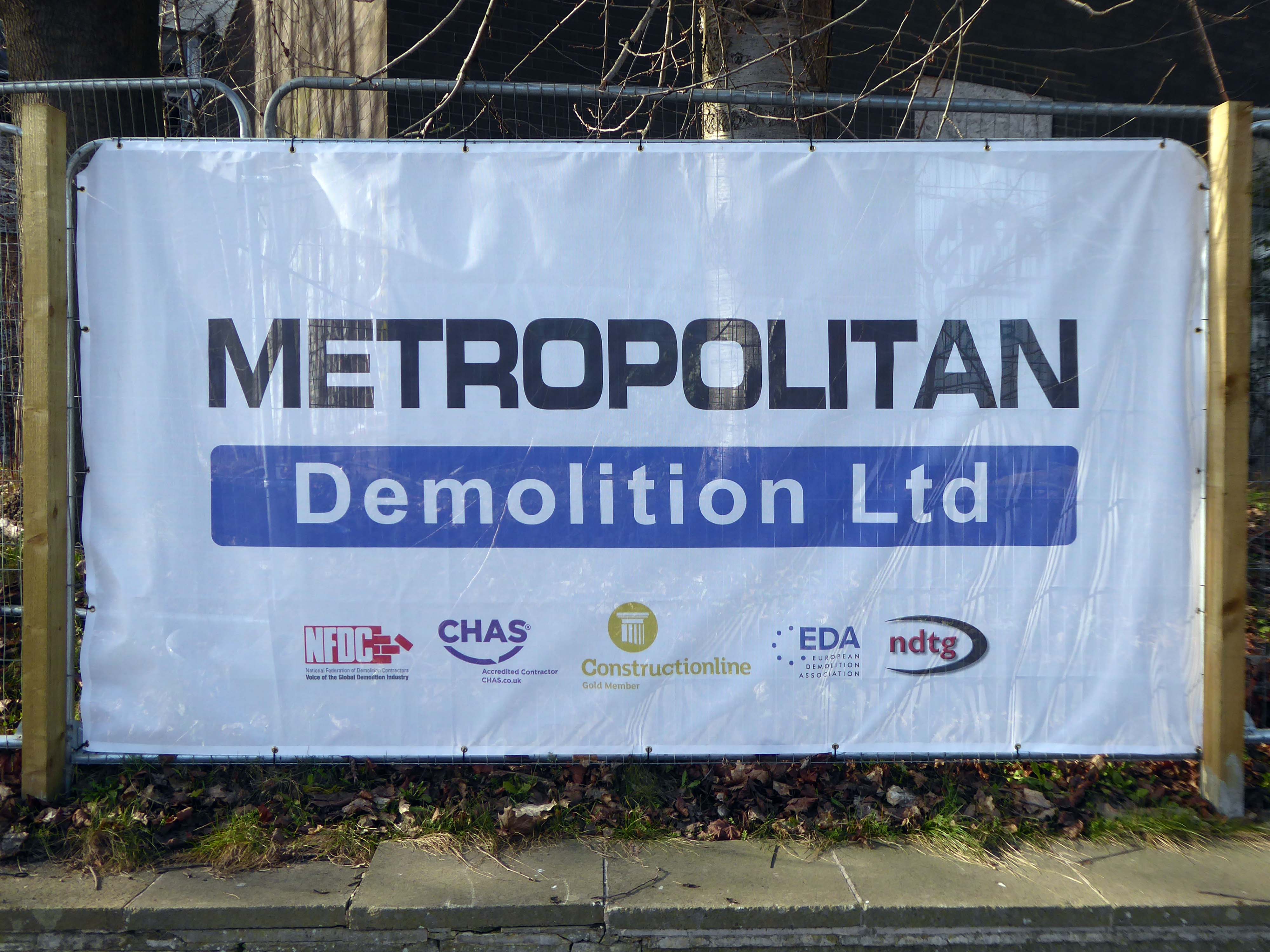
My thanks to the Metropolitan team who invited me in beyond the barriers.
We provide safe and efficient demolition services across a broad range of projects, from the small domestic dwelling to large scale industrial units – we offer the complete solution. With excellent communication and impeccable health and safety standards, we can project manage the decommissioning a structure on time and on budget.
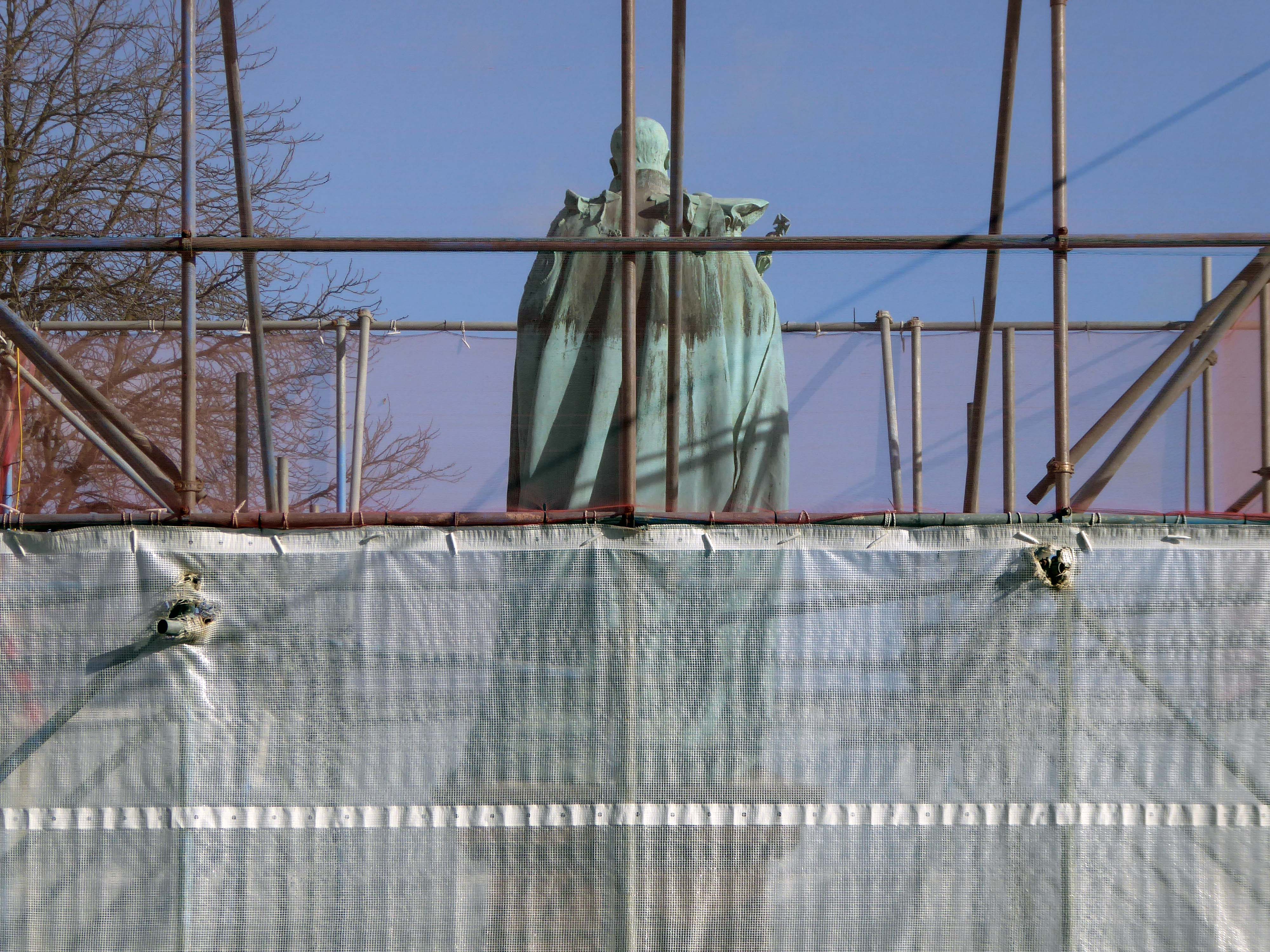
Edward VII is under wraps.
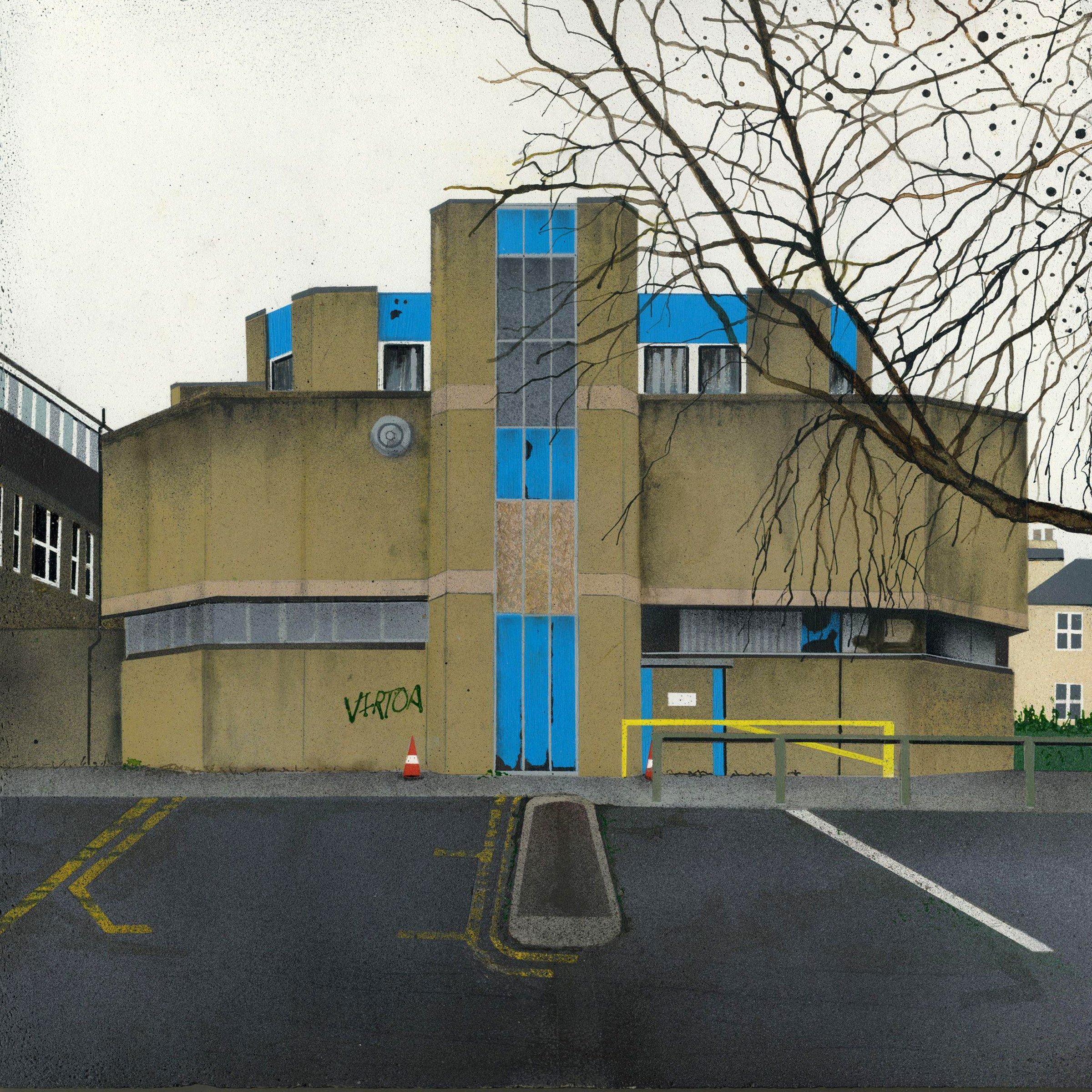
Everything else is up for smash and grab – including the later concrete block immortalised by Mandy Payne.
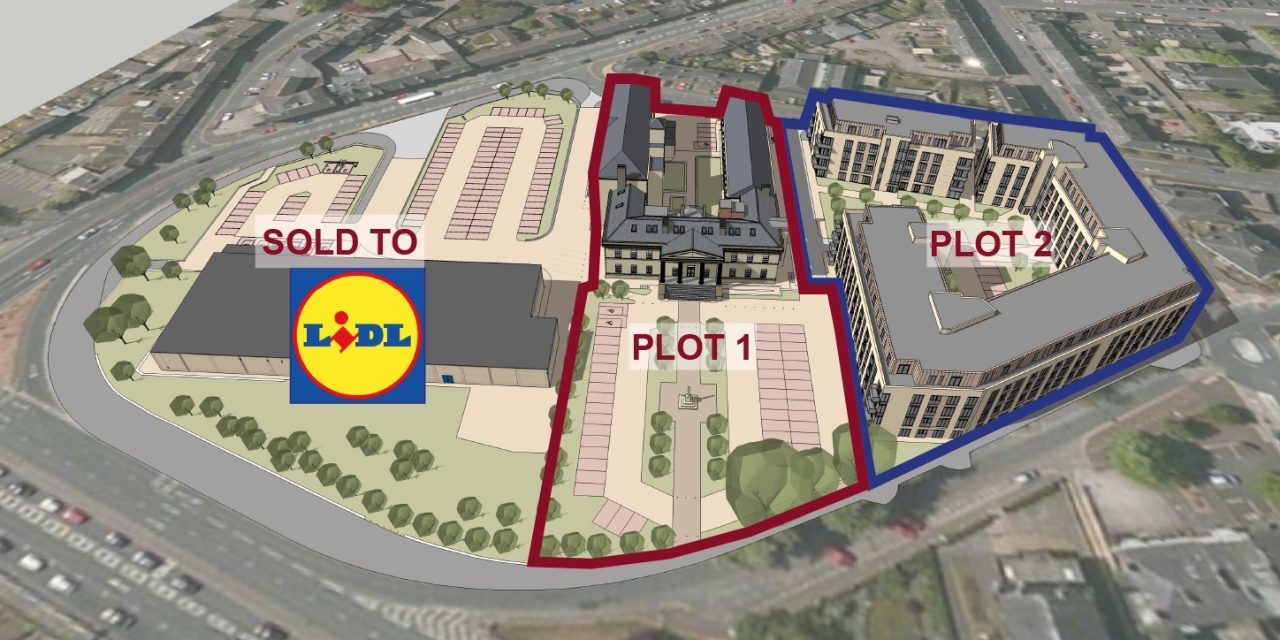
LIDL is coming – and some homes
The final details have now been signed off by the council and work on the six-acre site – which includes the Grade II-listed original Huddersfield Royal Infirmary – can now begin.
The vandal-hit and fire-damaged late 1960s and early 1970s college buildings are to be demolished and Lidl will build a new supermarket with a 127-space car park. The store will eventually replace the store on Castlegate.
The former hospital will be retained and the site will see 229 apartments and an office complex. The apartments are expected to be for older or retired people.
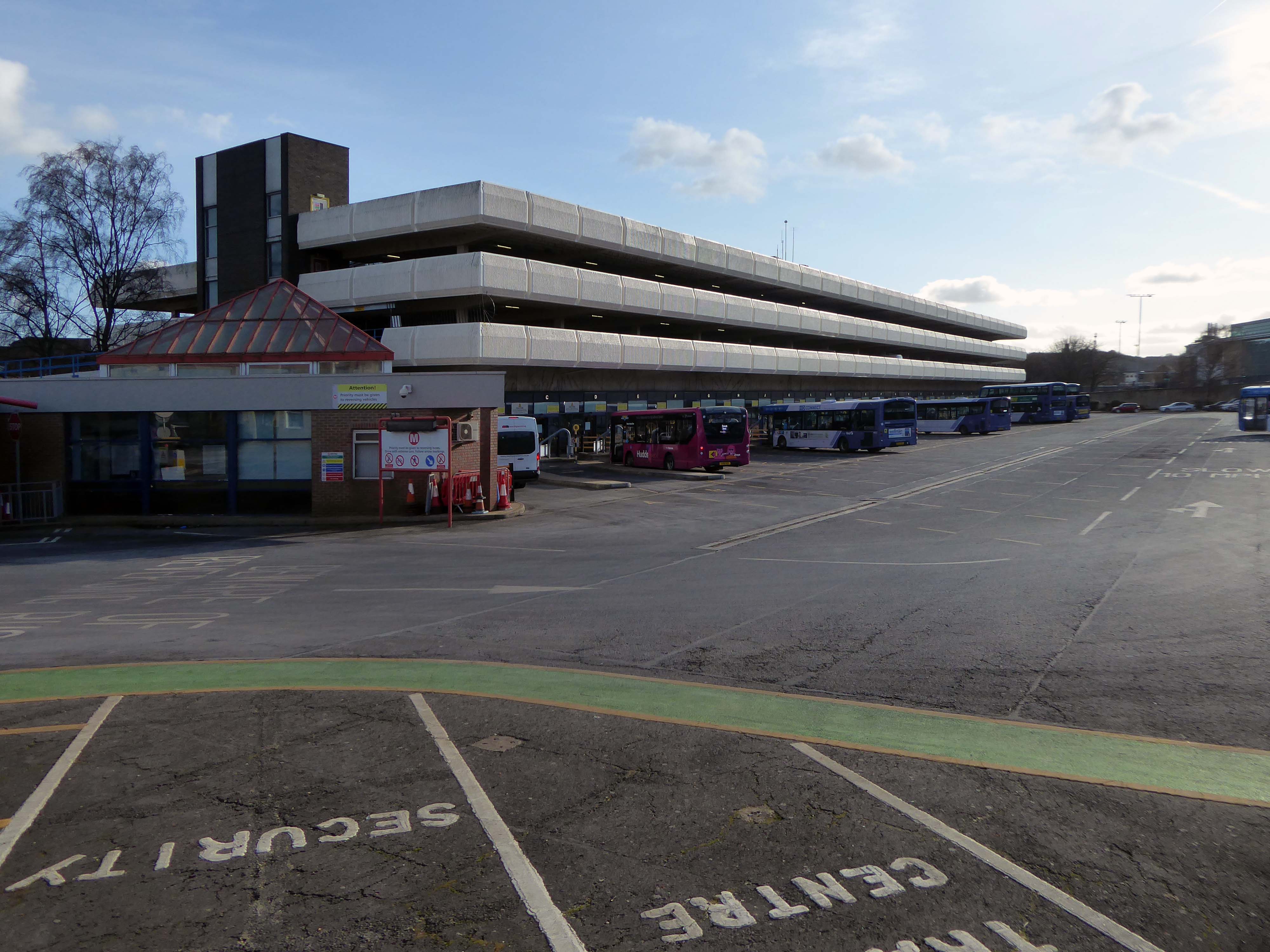
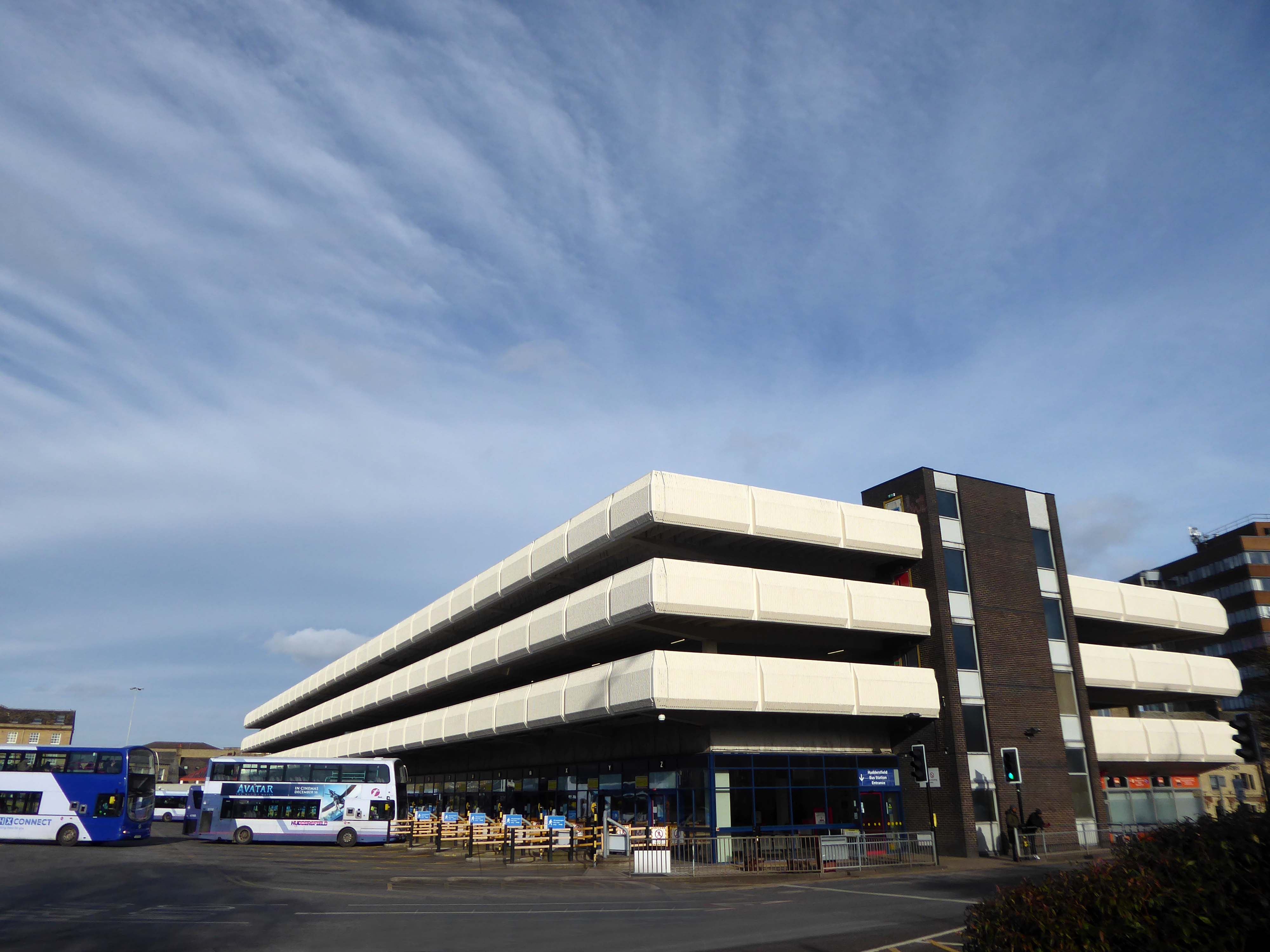
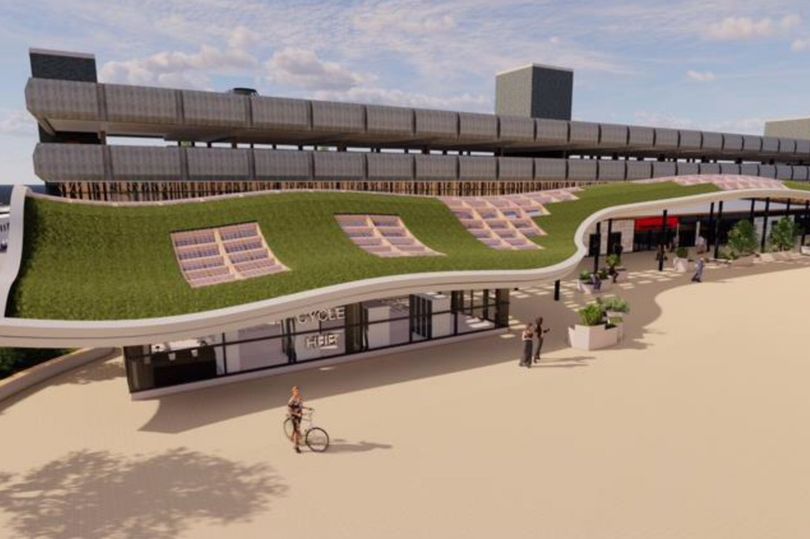
Huddersfield’s £20M game-changing bus station is set to be completed by the end of 2025 with a living grass roof, sixty bike cycle hub, upgraded shops and new facilities
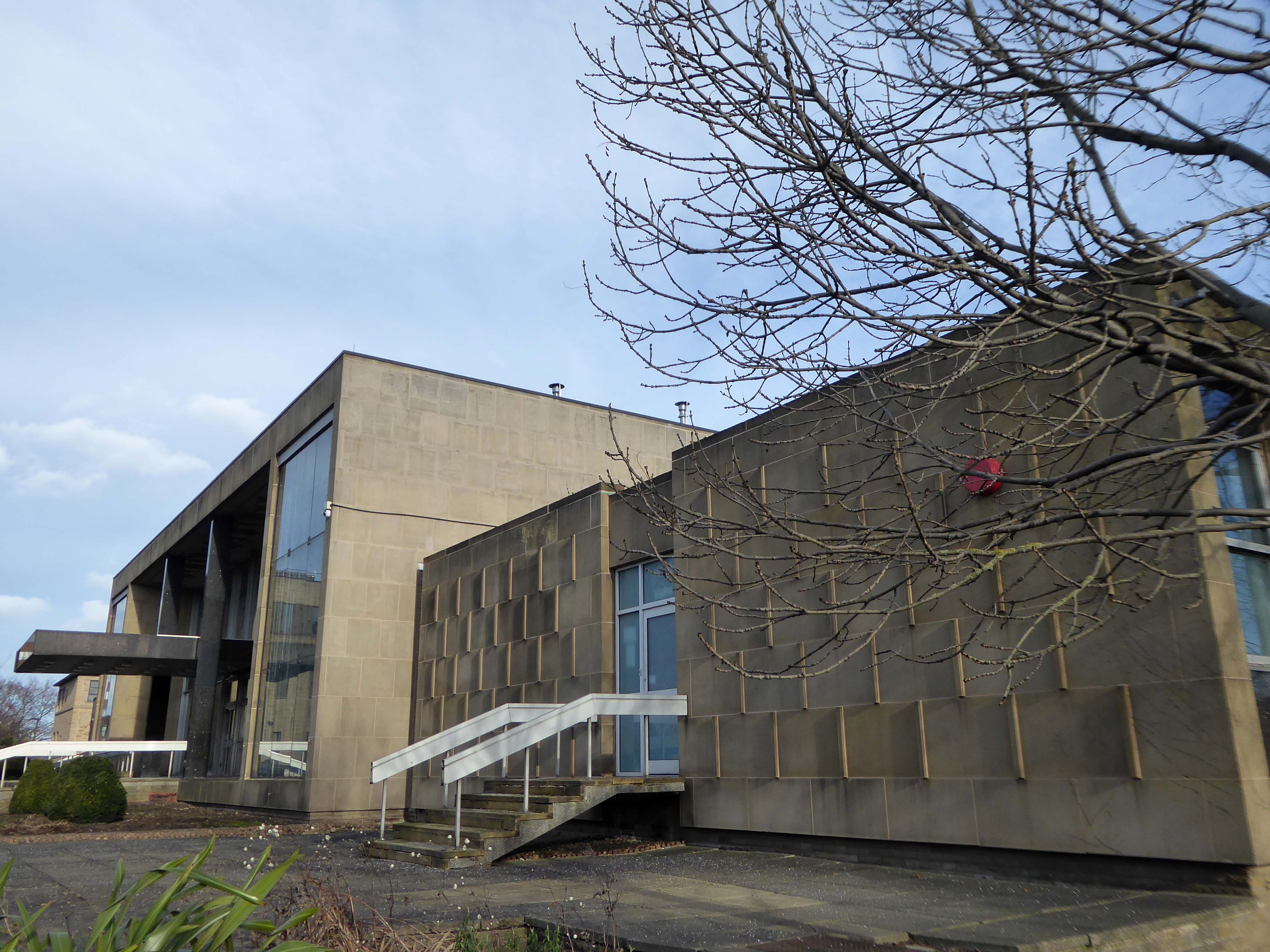
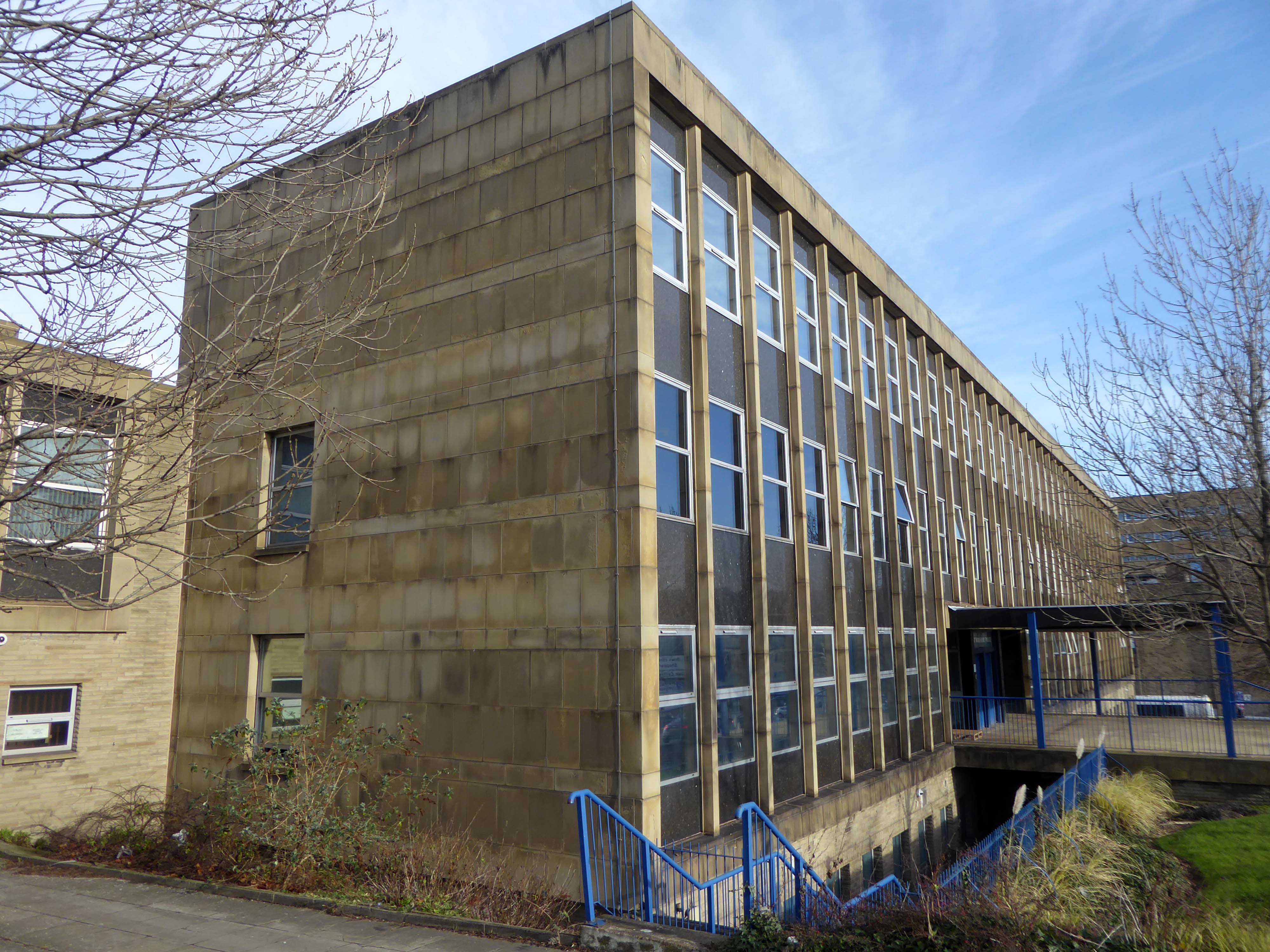
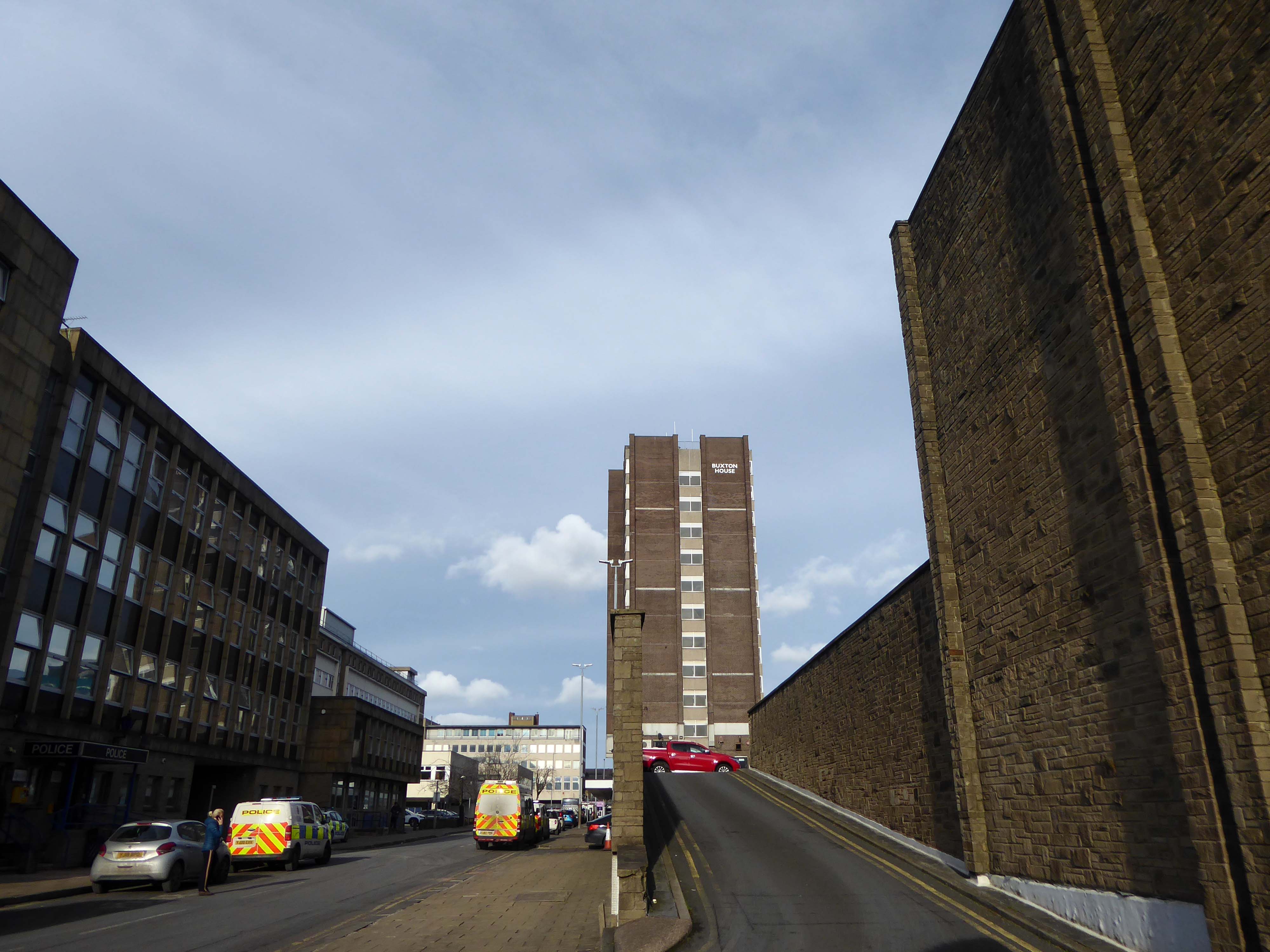
Crossing the road to the Civic Centre and the perennially empty piazza which along with the Magistrates Courts and Police Station was the work of the Borough Architects team – led by Charles Edmund Aspinall.
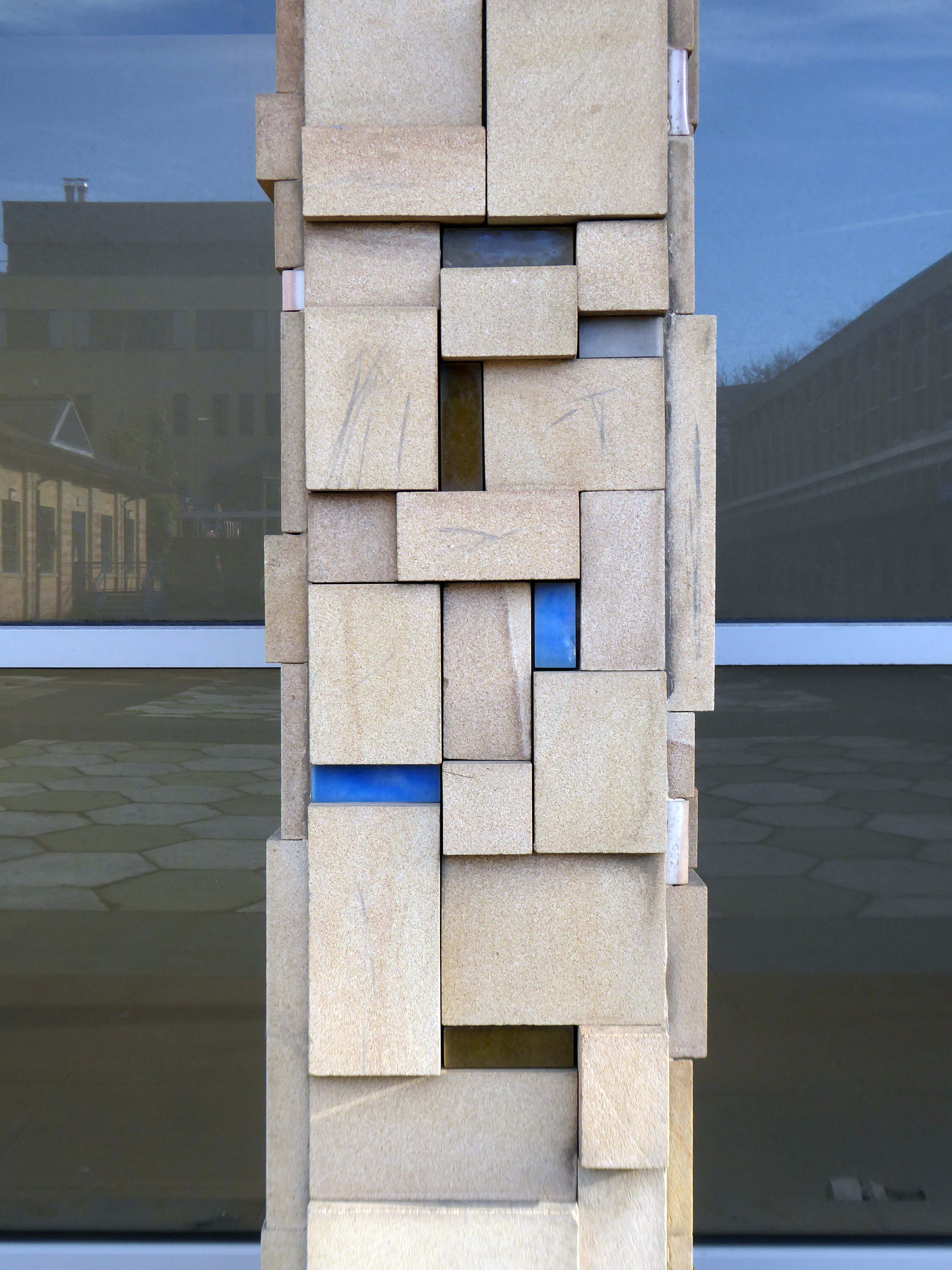
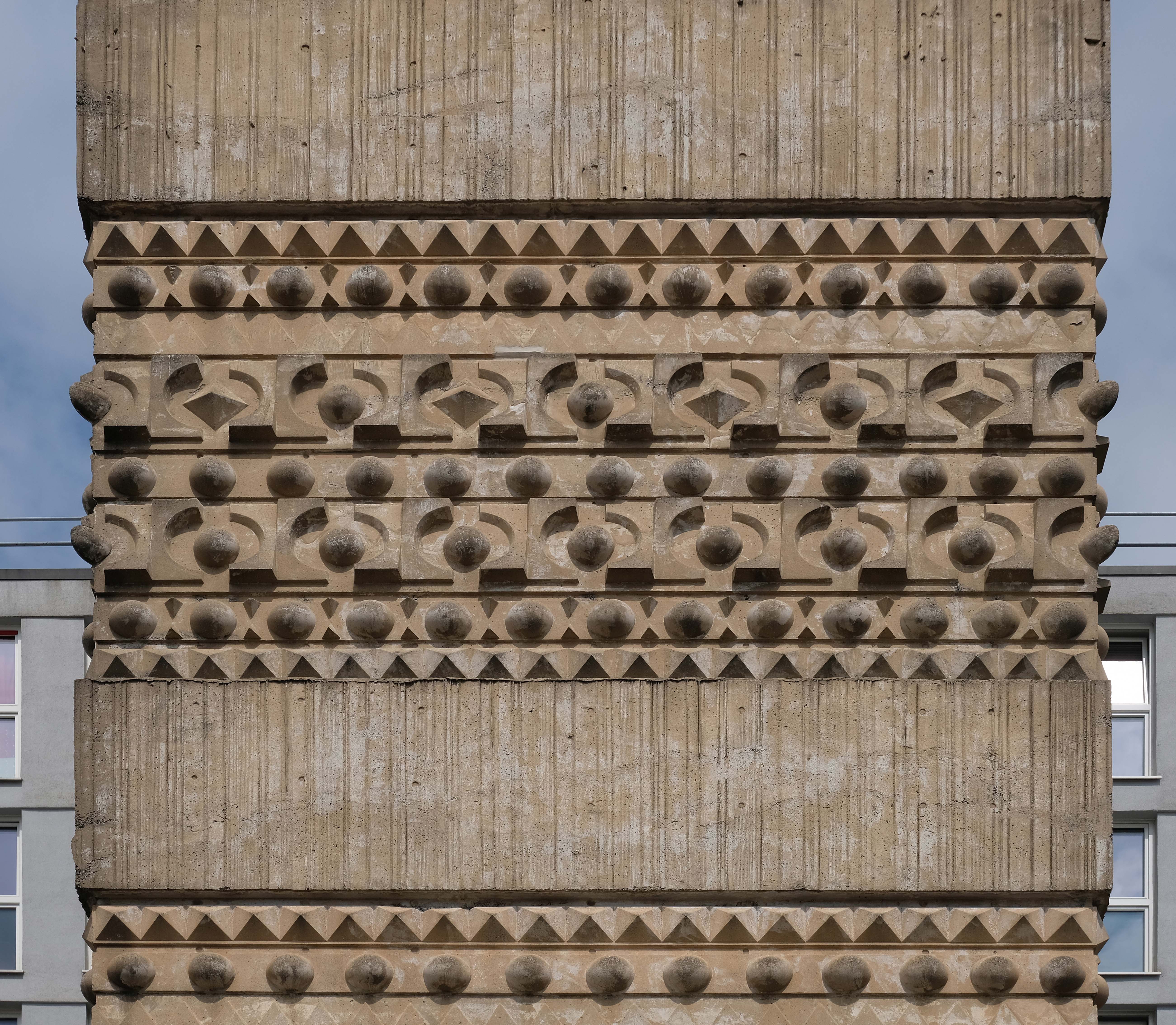
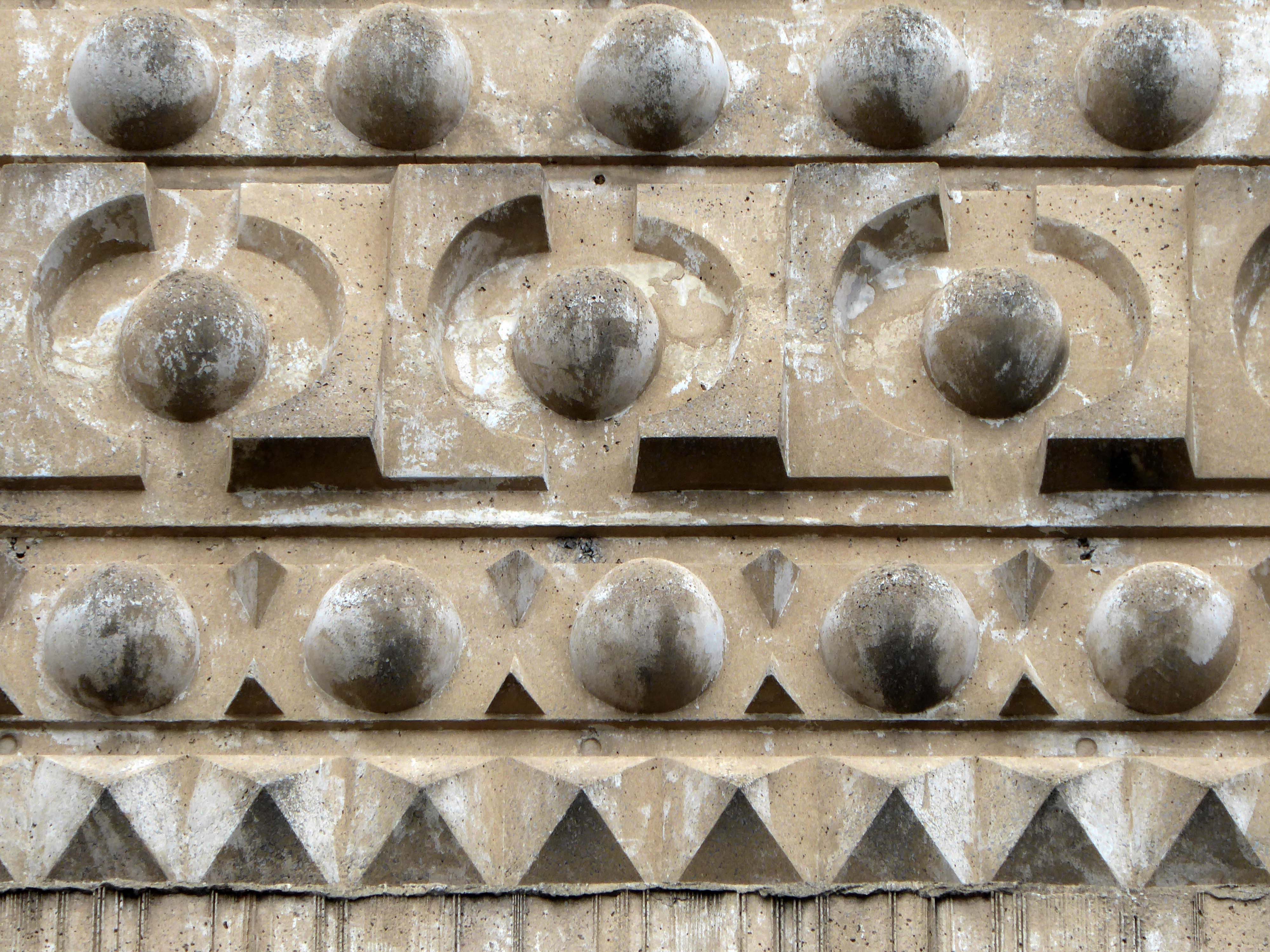
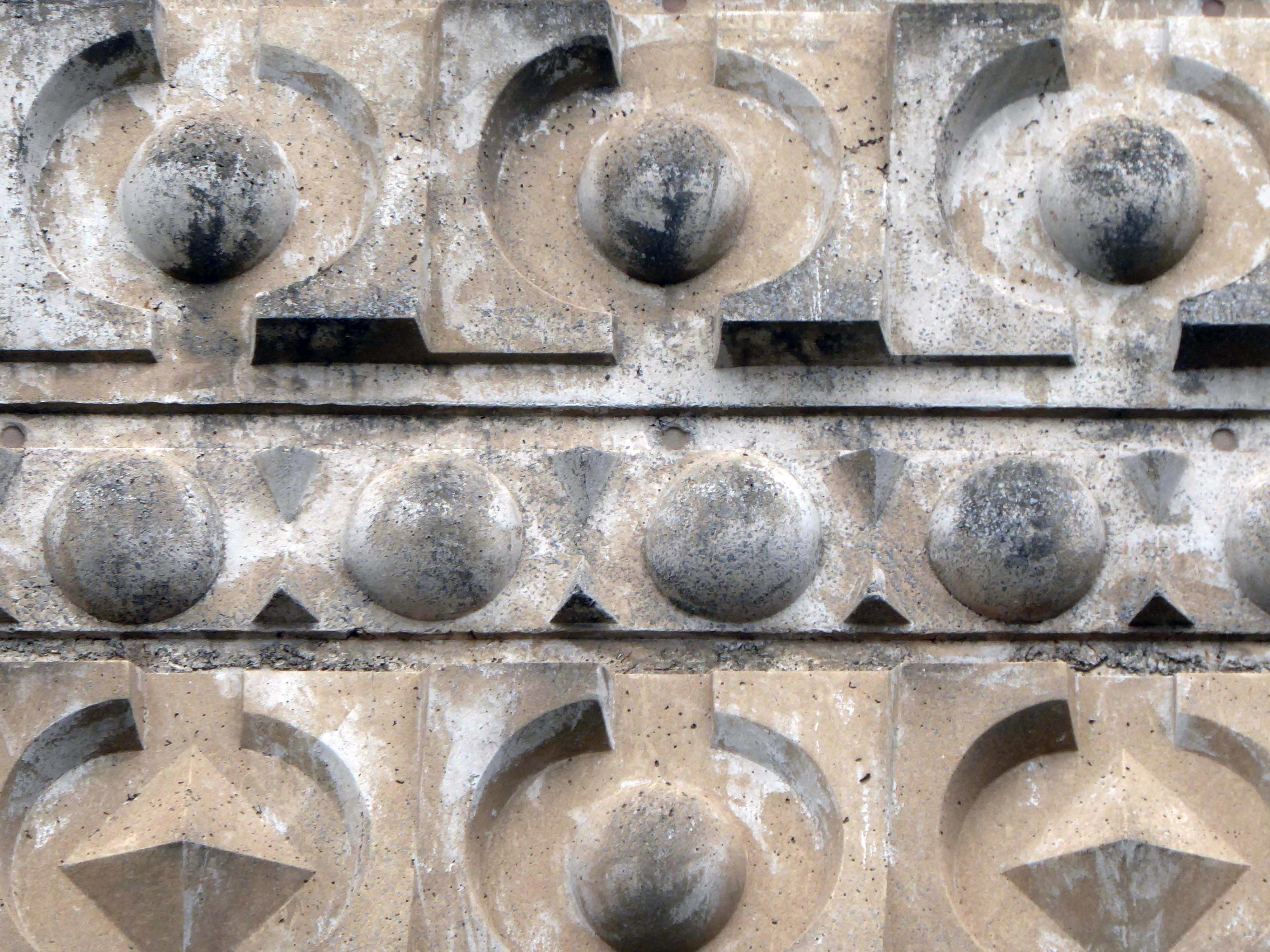
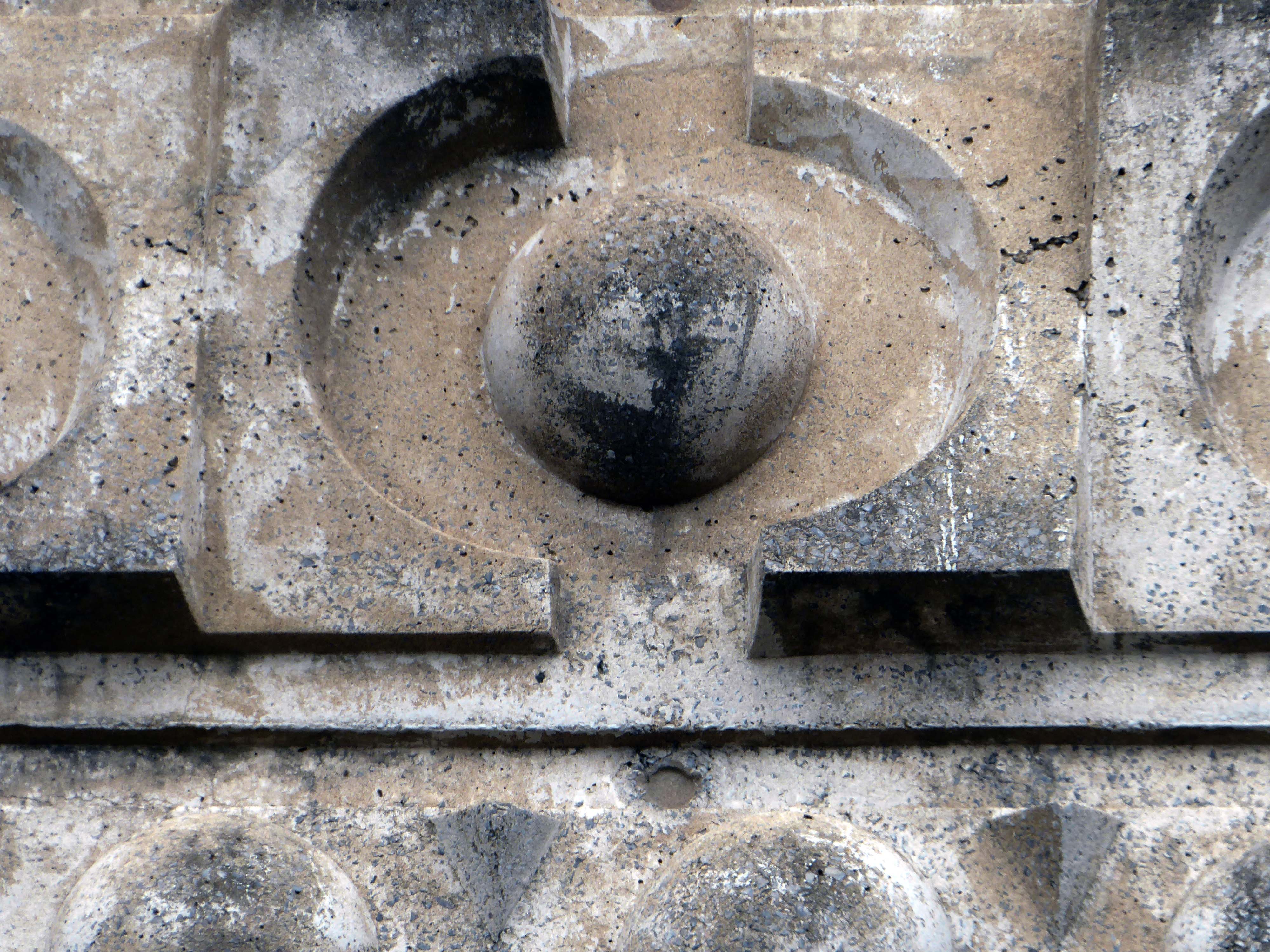
Walking excitedly toward the Exsilite panels set in the stone faced columns – a brand name for a synthetic, moulded, artificial marble.
Magistrates Courts
Police Station
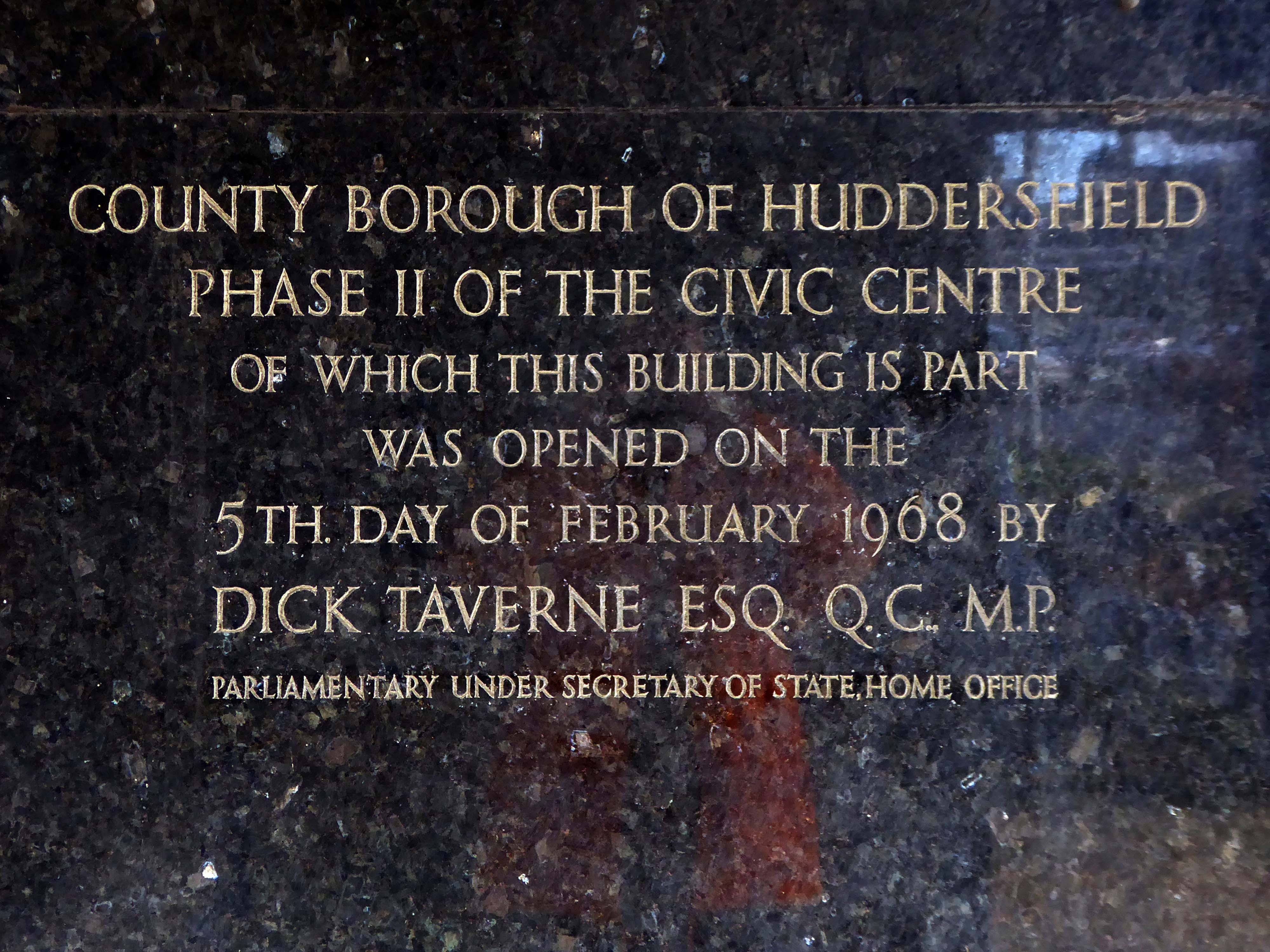
Dick Taverne served under Harold Wilson’s premiership in the 1960s, he served as a Home Office Minister from 1966 to 1968, Minister of State at the Treasury from 1968 to 1969 and then as Financial Secretary to the Treasury from 1969 to 1970.
In 1970, he helped to launch the Institute for Fiscal Studies, now an influential independent think tank and was the first Director, later chairman.
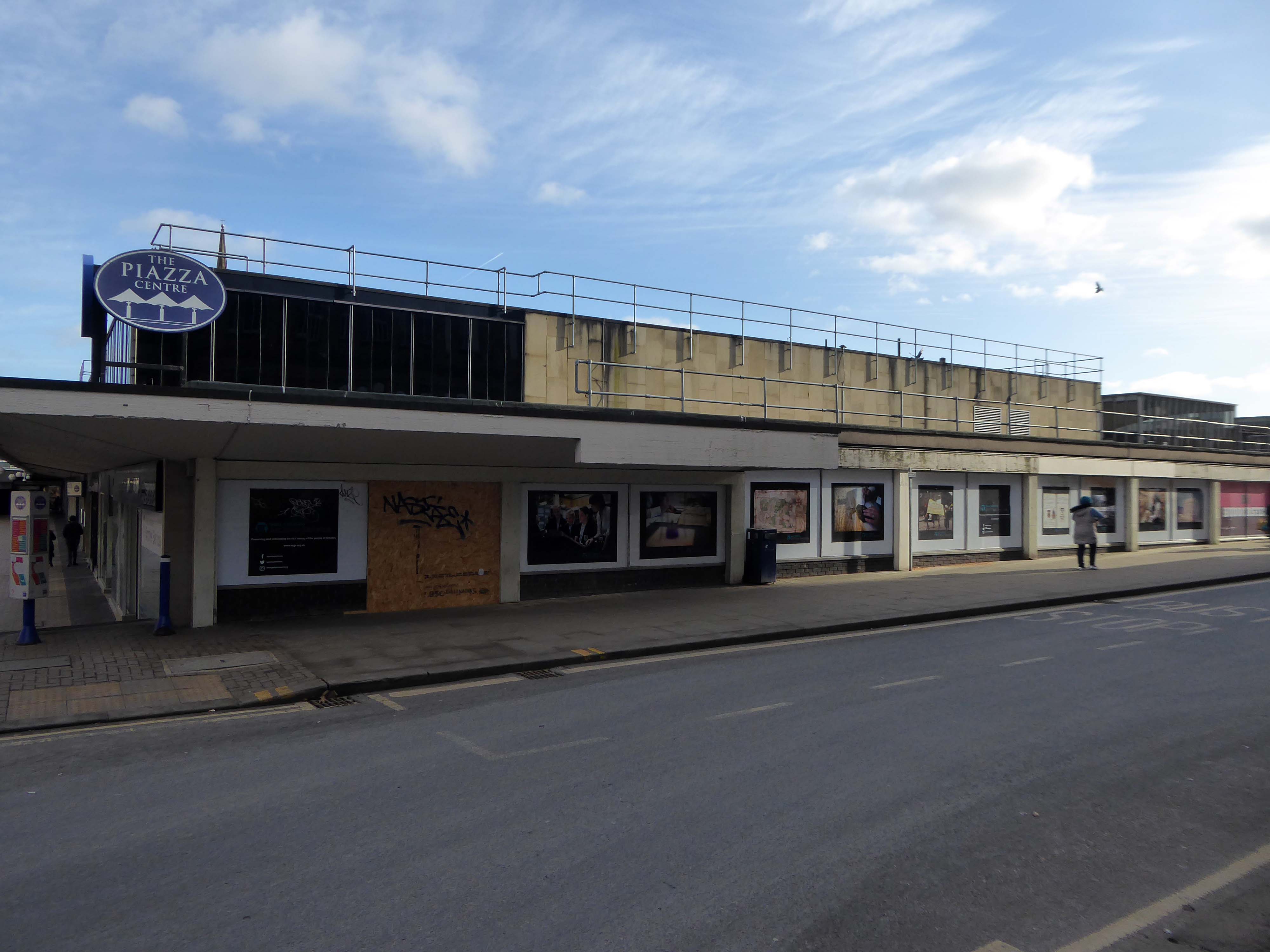
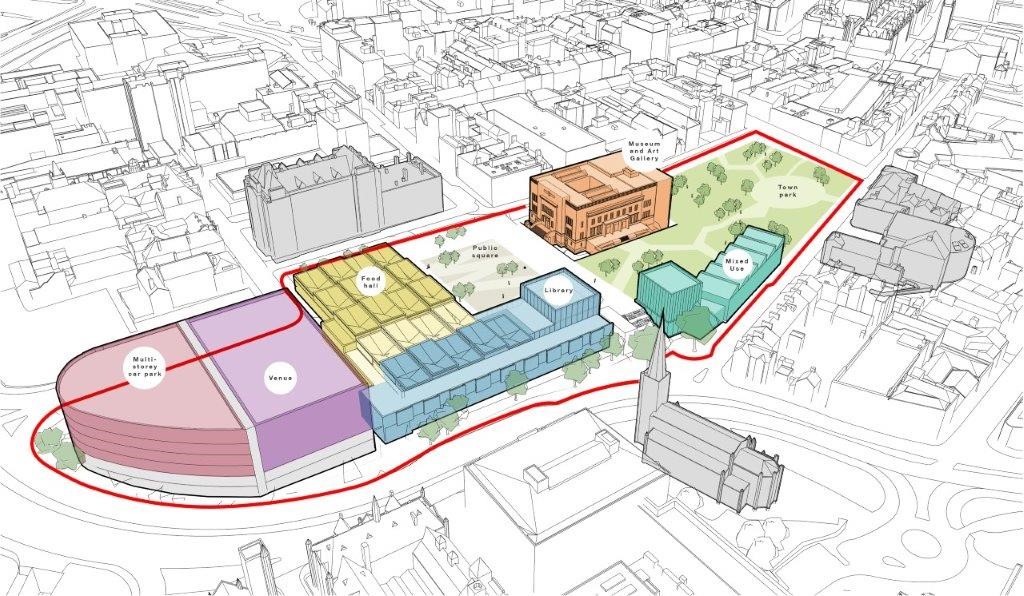
The vision is to create an inclusive space where families, residents and visitors can enjoy a vibrant mix of music, arts, food and more in one central area, overlooking a stunning new urban park.
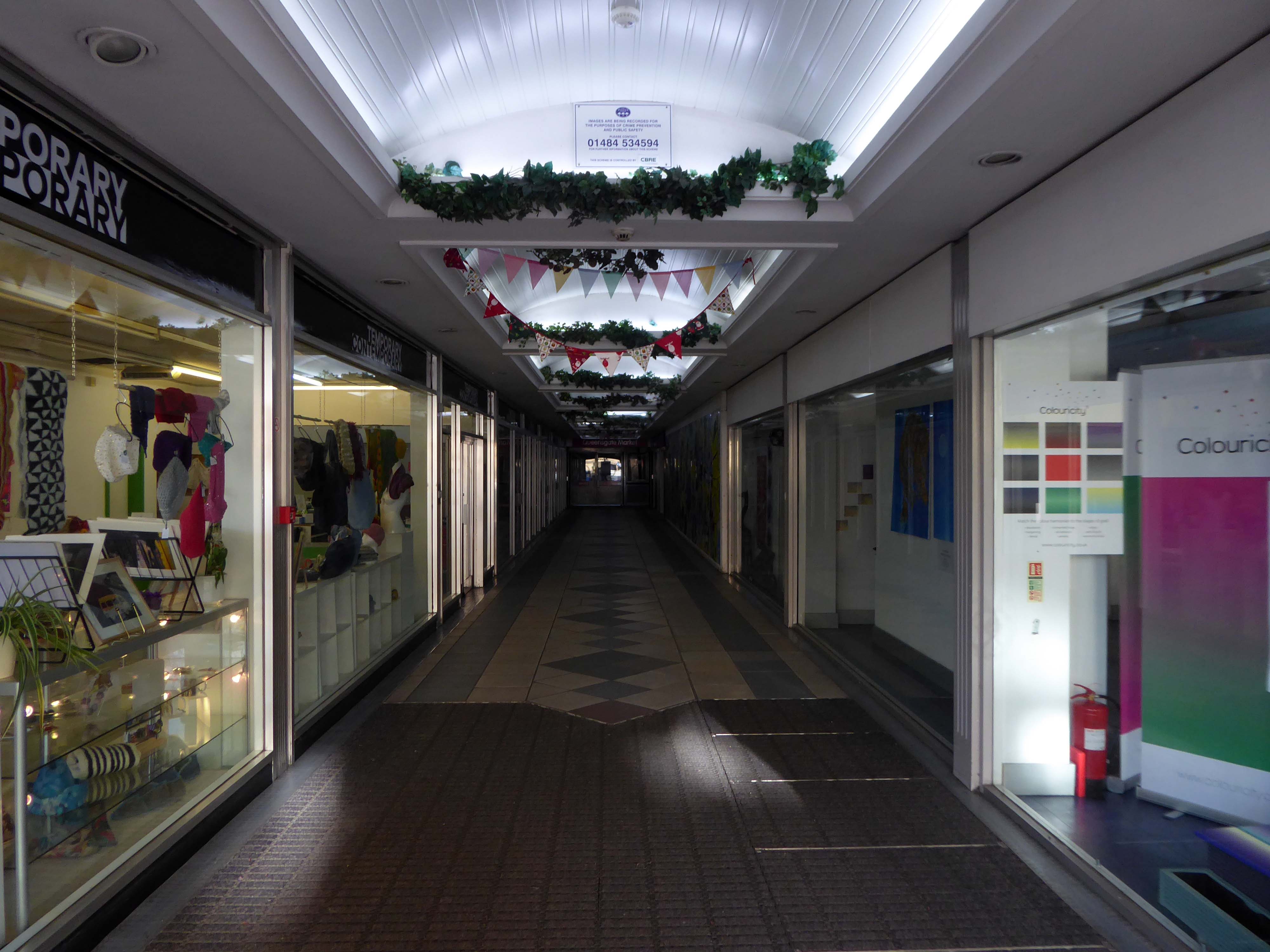
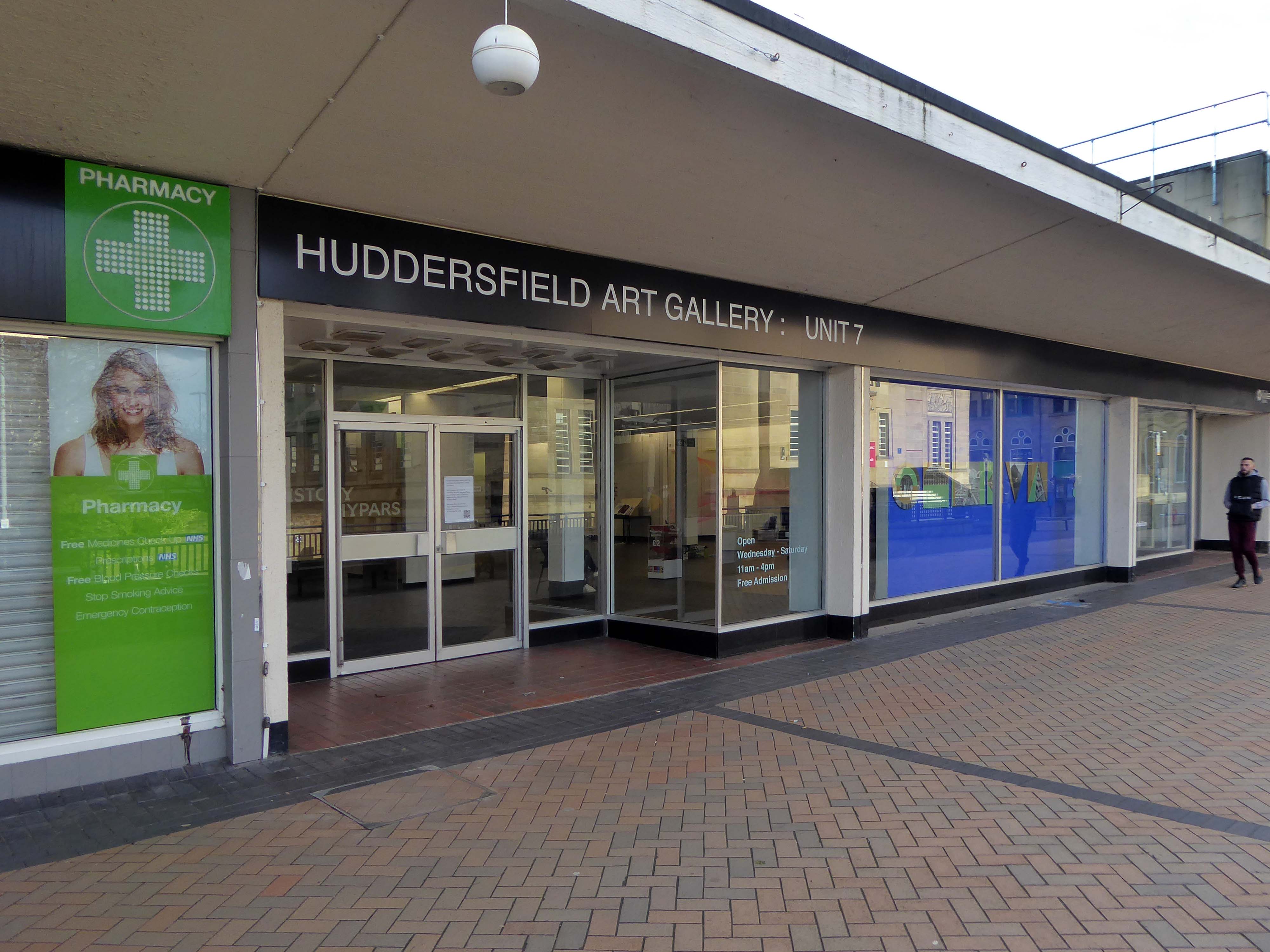
The council plans to demolish the Piazza Centre and create a new events/live music venue, a food hall, a museum and art gallery, a new library and a new multi-storey car park, all centred around a new Town Park.
Named after one of the Twentieth Century’s finest artists, the space nurtures a new and inspired generation of designers. Through visual and physical connection, the environment encourages students to work together, stimulating communication and ingenuity, the ingredients of successful collaboration.
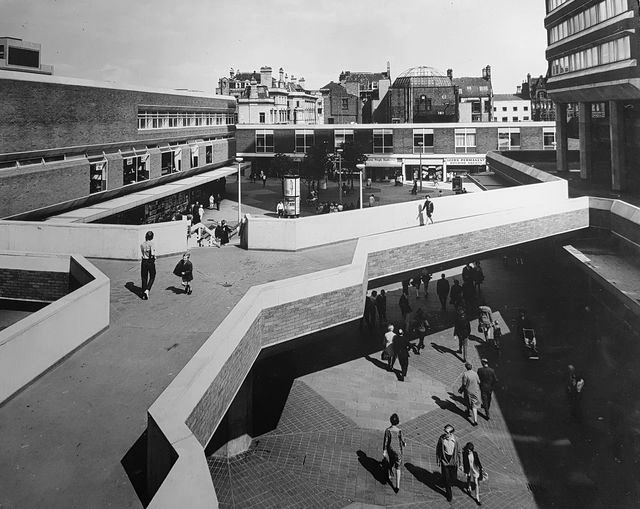
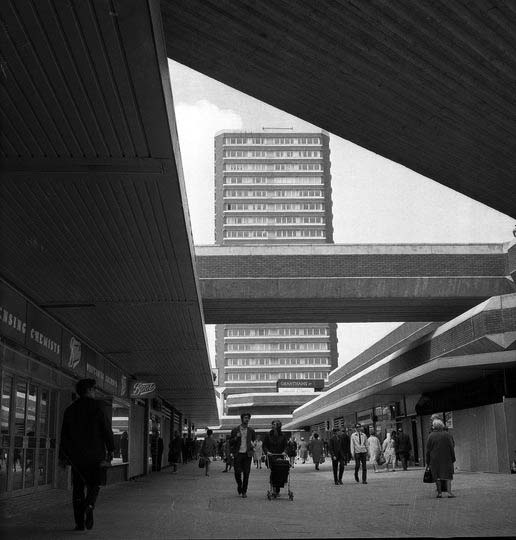
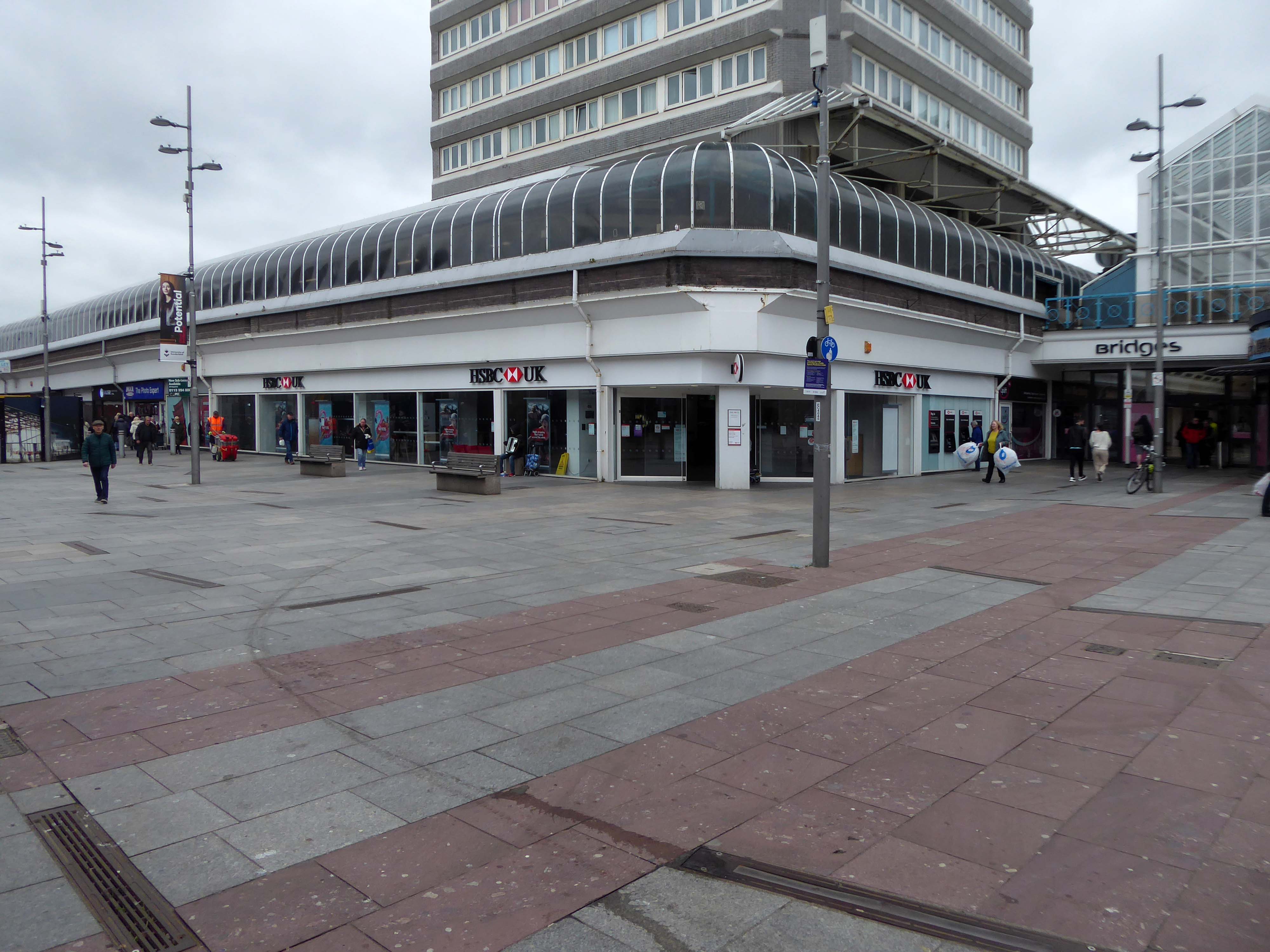
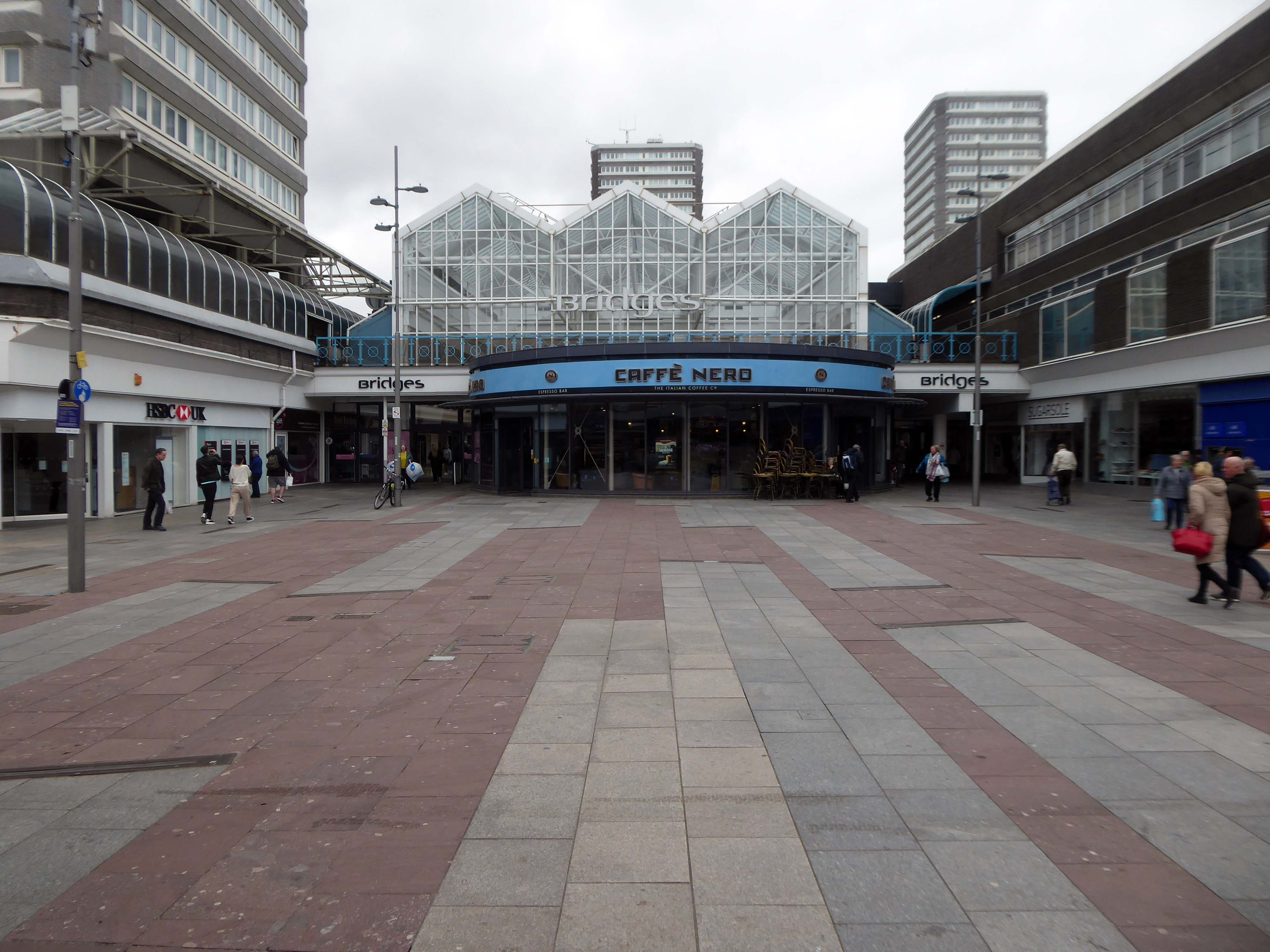
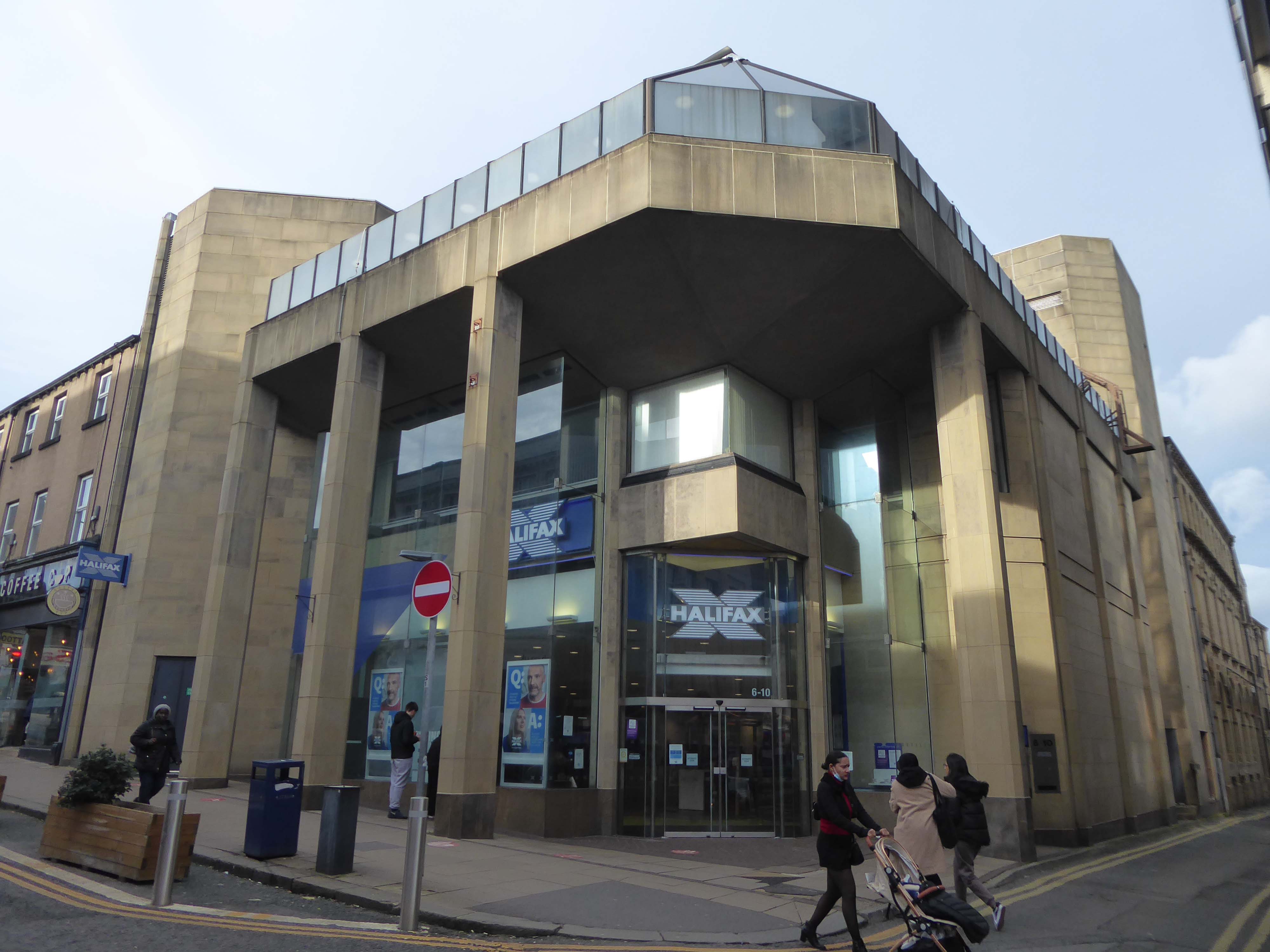
Take that to the bank/s
Keep savin’, keep buildin’ That interest for our love Take that to the bank Keep savin’, keep buildin’ That interest for our love Take that to the bank
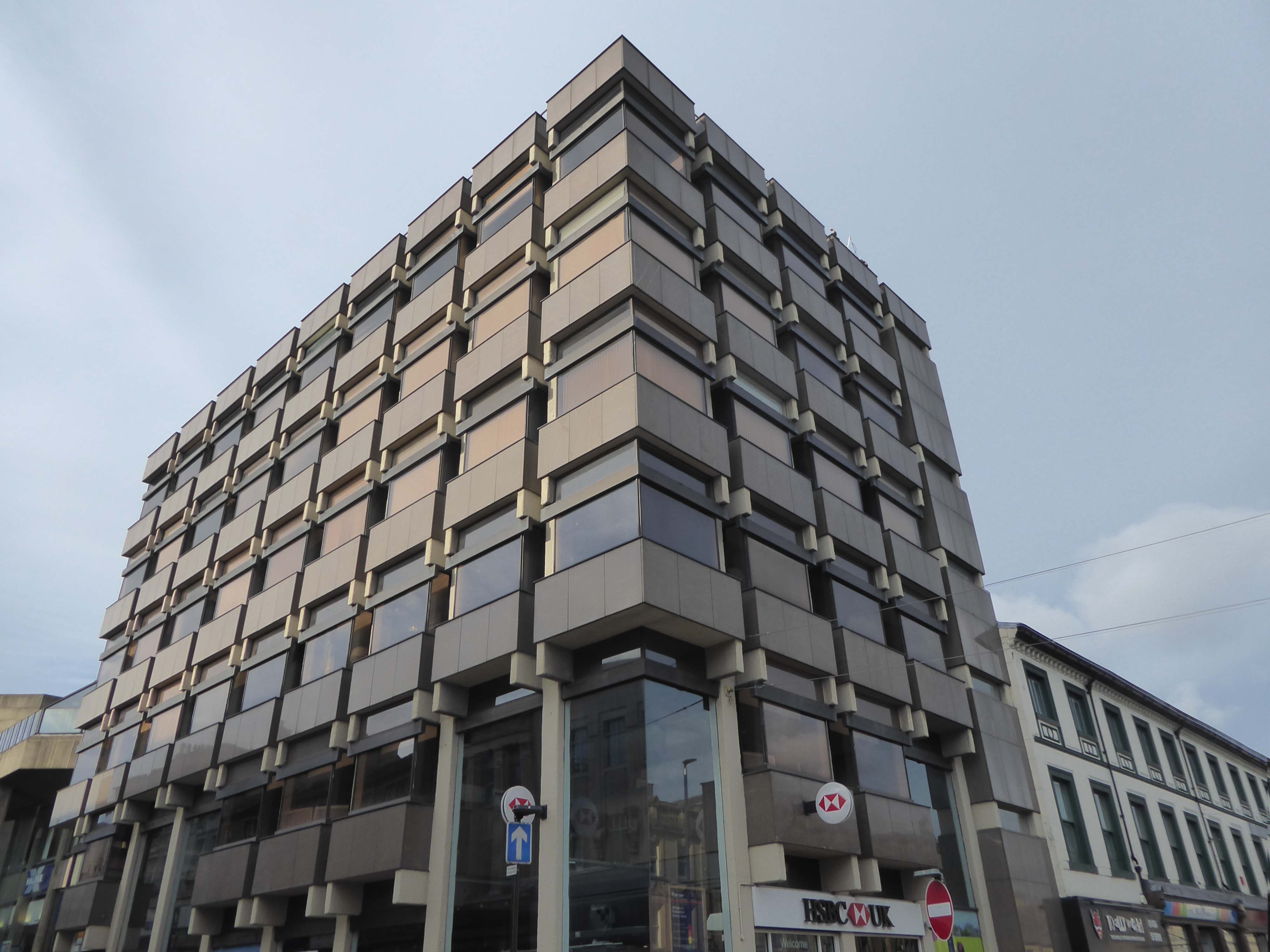
HSBC was designed by Peter Womersley, who also designed the thoroughly modern private house, Farnley Hey, near Castle Hill, which won the RIBA Bronze Medal in 1958.
Halifax Building Society
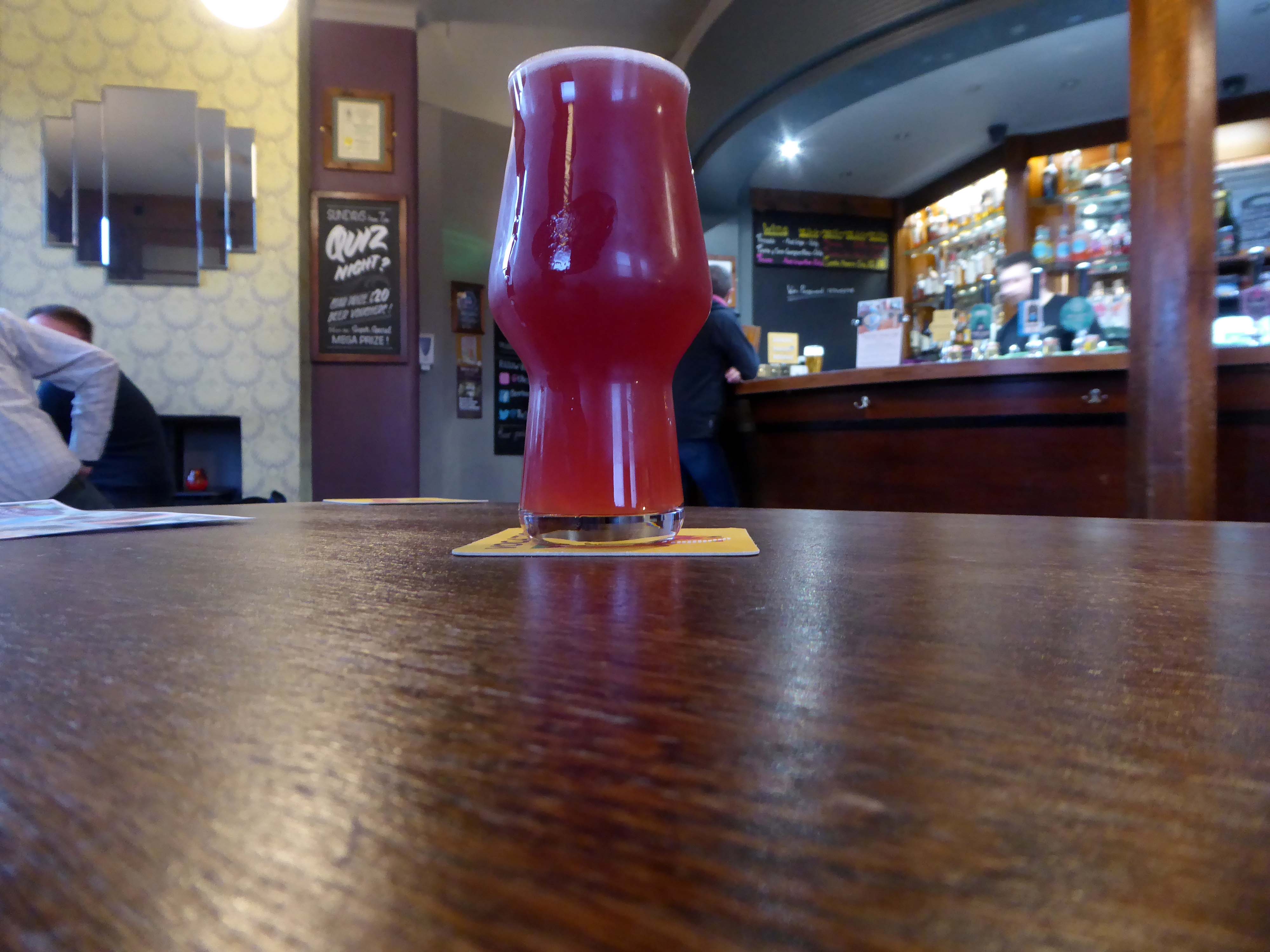
Having walked around town for more hours than enough I sought respite in The Sportsman and a glass of Squawk multi-berry fruited sour
Councillors have approved a compulsory purchase order to complete the land assembly for the £300m Blackpool Central project but still hope to negotiate terms with property owners.
Blackpool Council’s executive unanimously agreed the recommendation towards enabling the Central Car Park to be transformed into a leisure destination boasting a flying theatre, virtual reality rides, a thrill and gaming zone, multi-media exhibition space and themed dining areas.
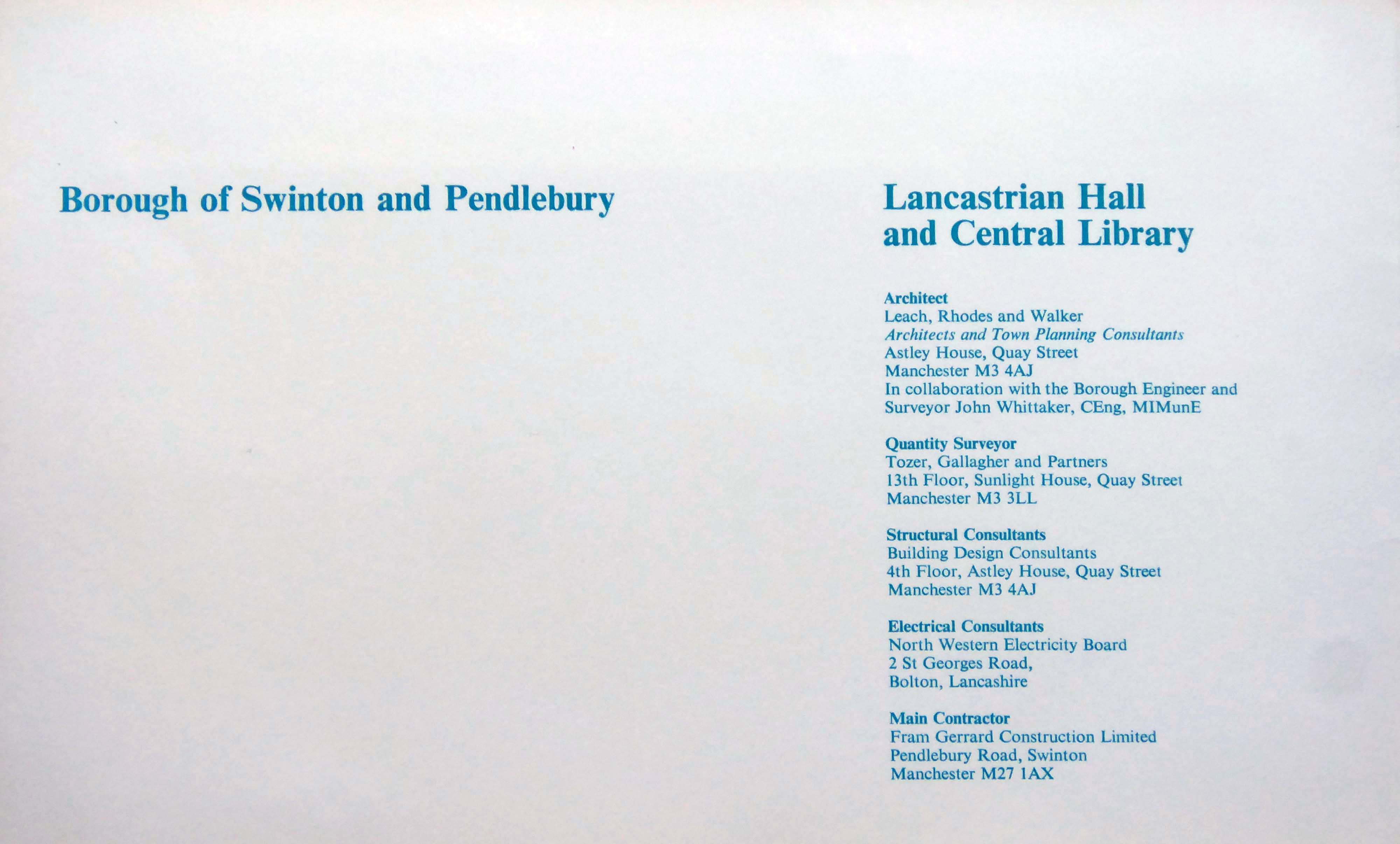
Completed in 1969 to designs by Leach Rhodes and Walker in collaboration with the Borough Engineer John Whittaker
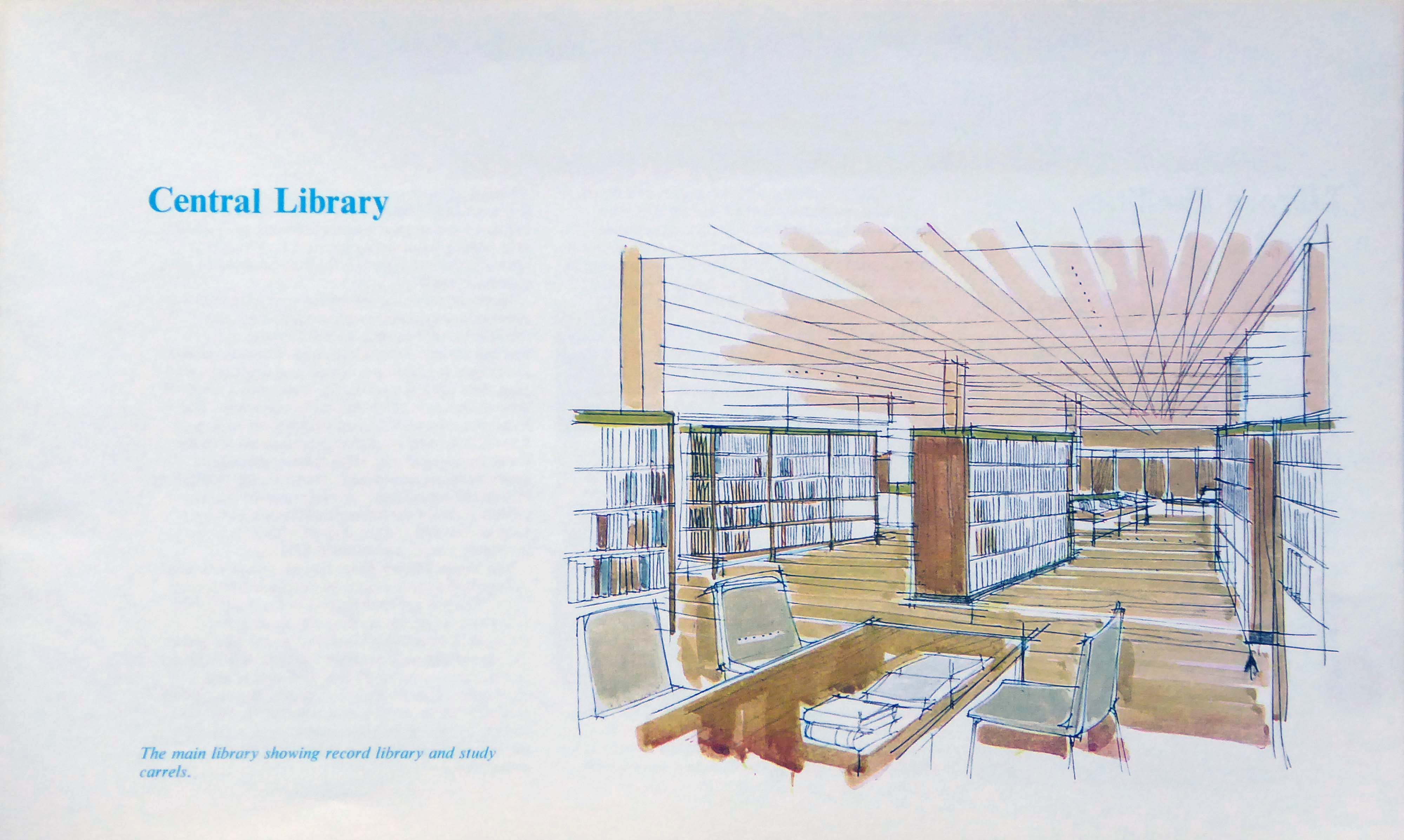
Constructed at the tail end of the Sixties – the last gasp of Municipal Modernism in the Borough, providing education, edification and entertainment for the local population.
The fountain is gone, the building is closed – the party’s over.
The Fast Cars are history – well they were history, until I was told that they are still speeding along!
A council has spent £348,000 on a masterplan for a town centre that the public has never seen.
Consultants have been used to come up with ideas to regenerate Swinton in Salford.
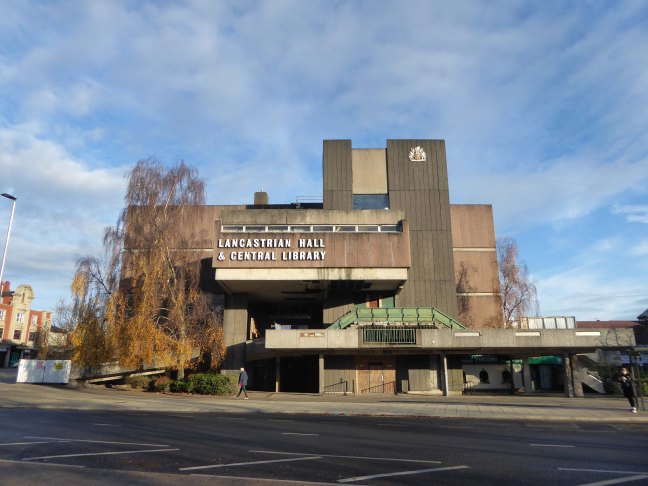
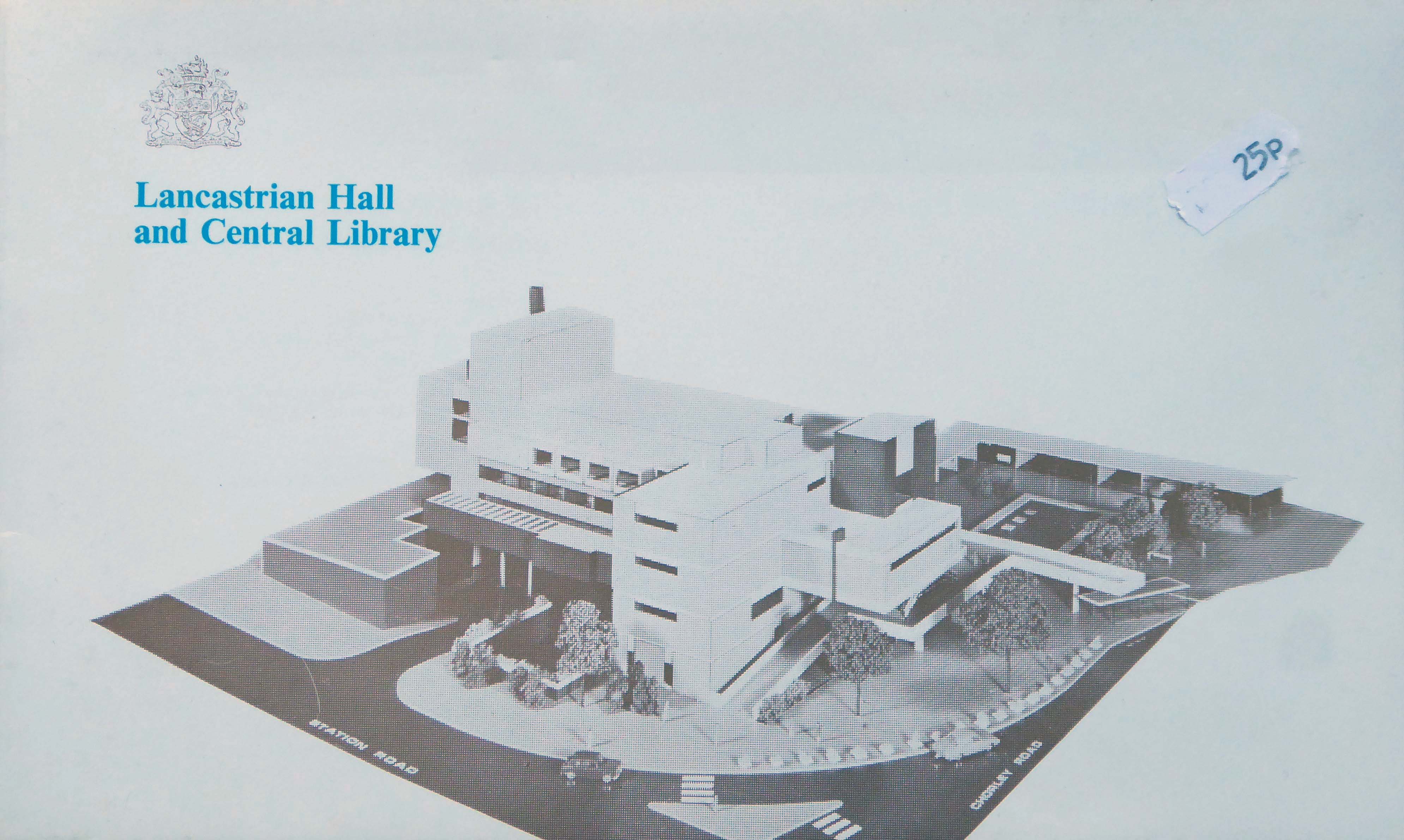
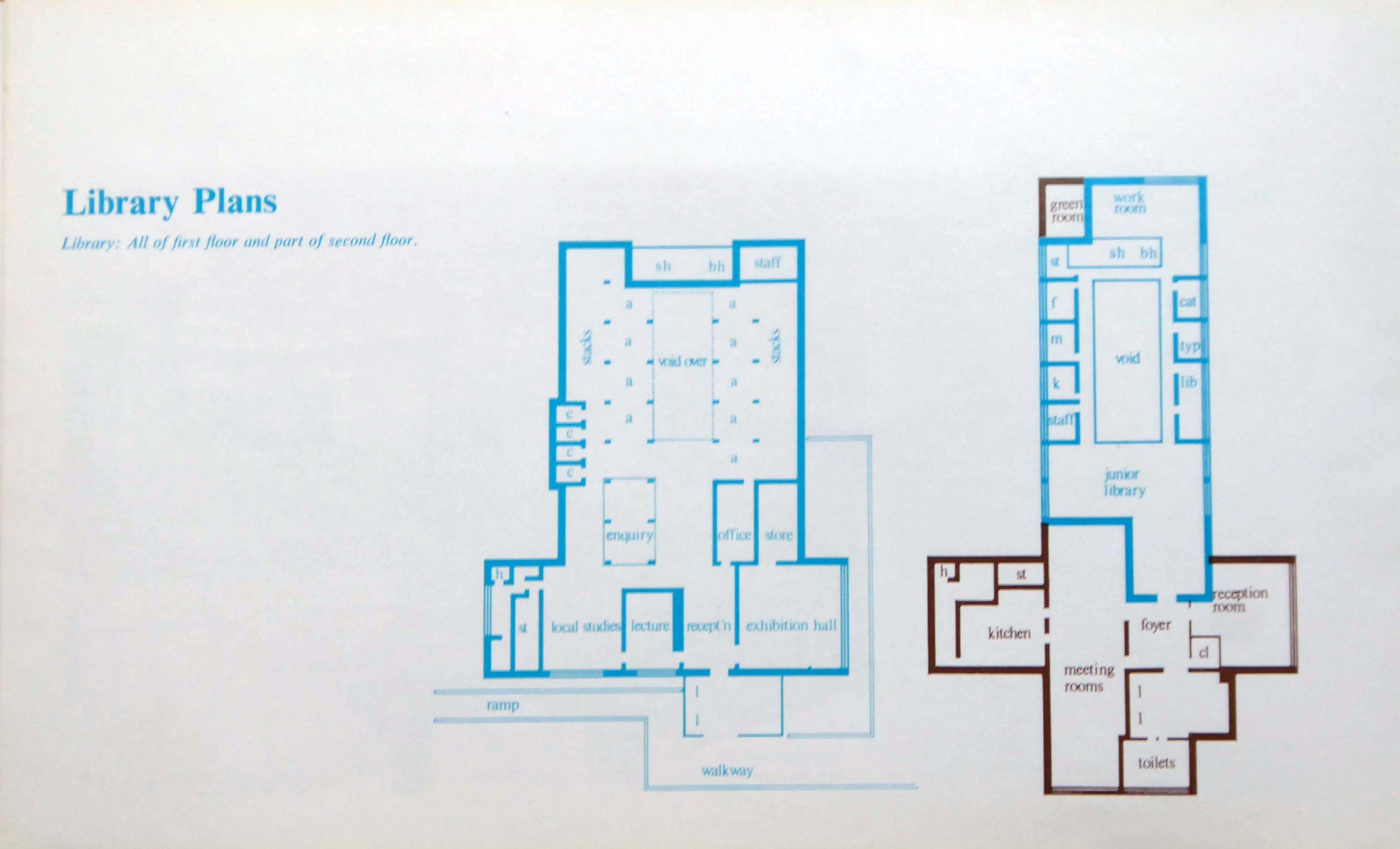
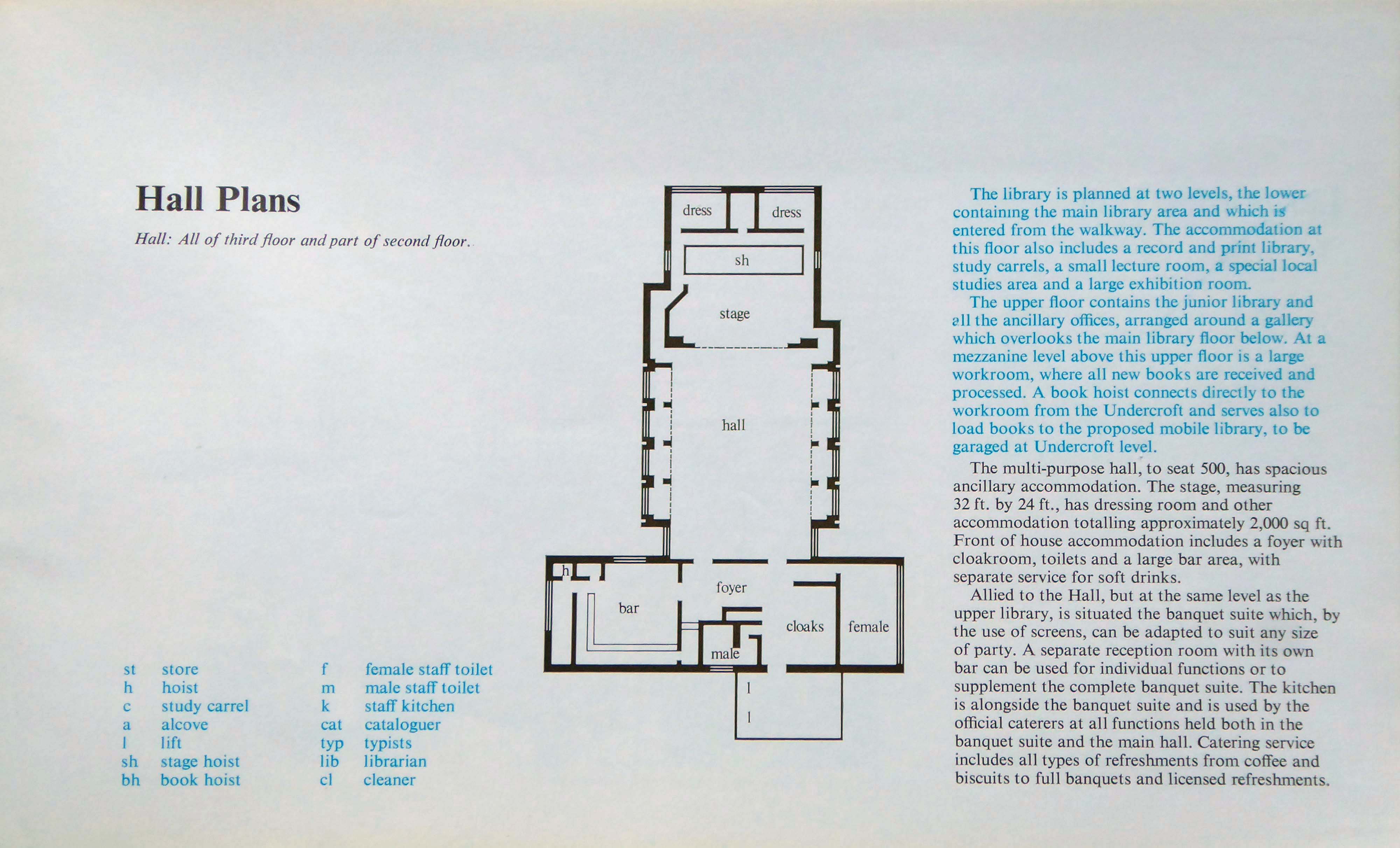
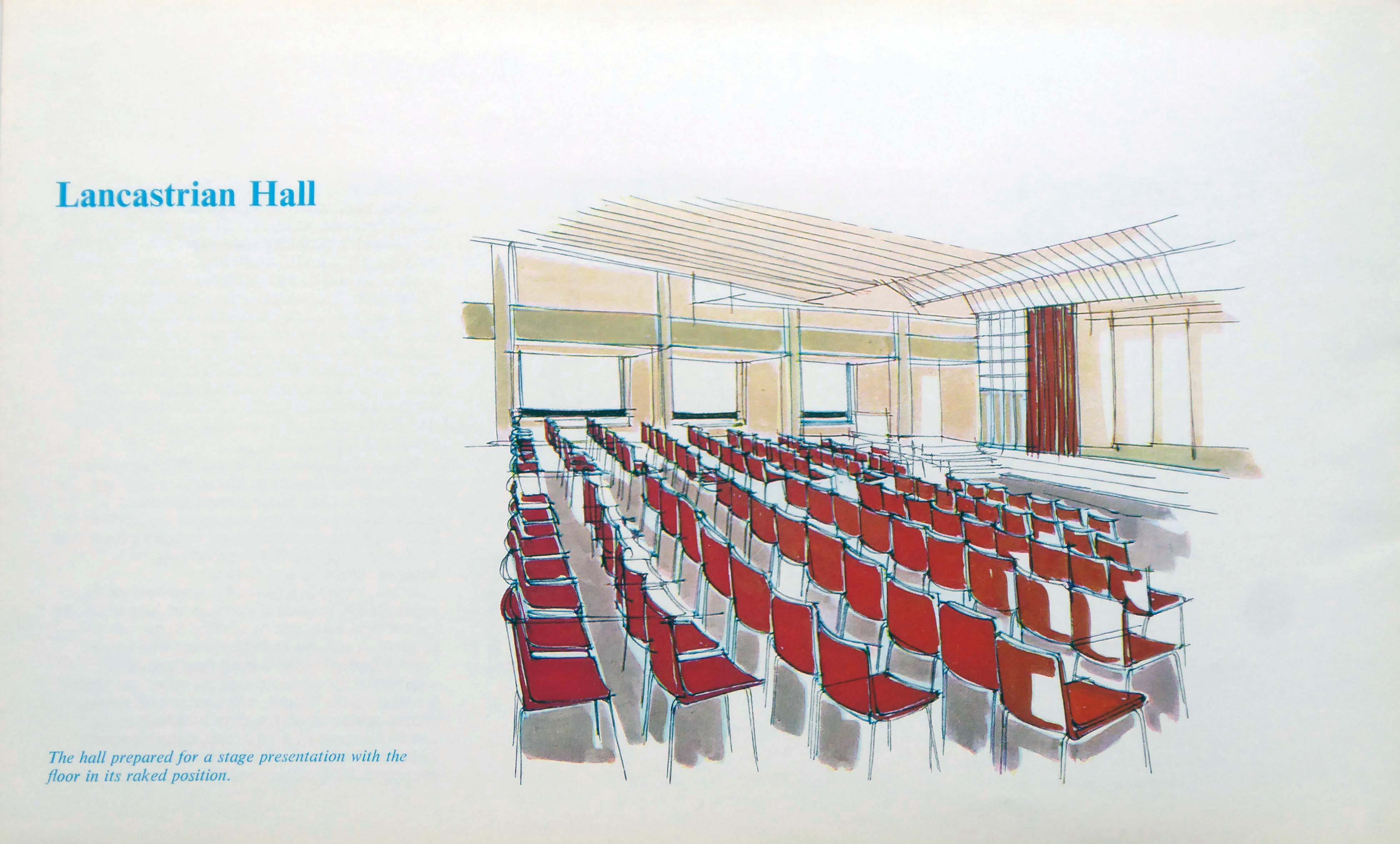
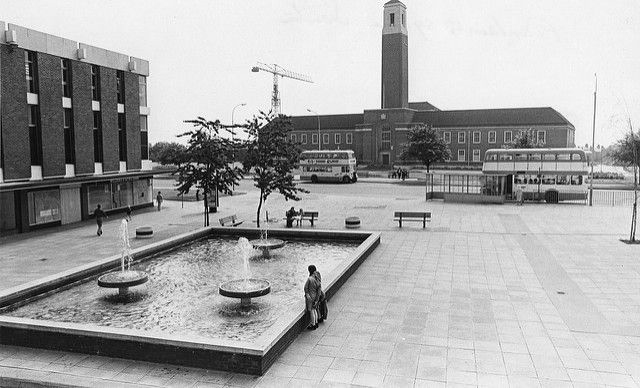
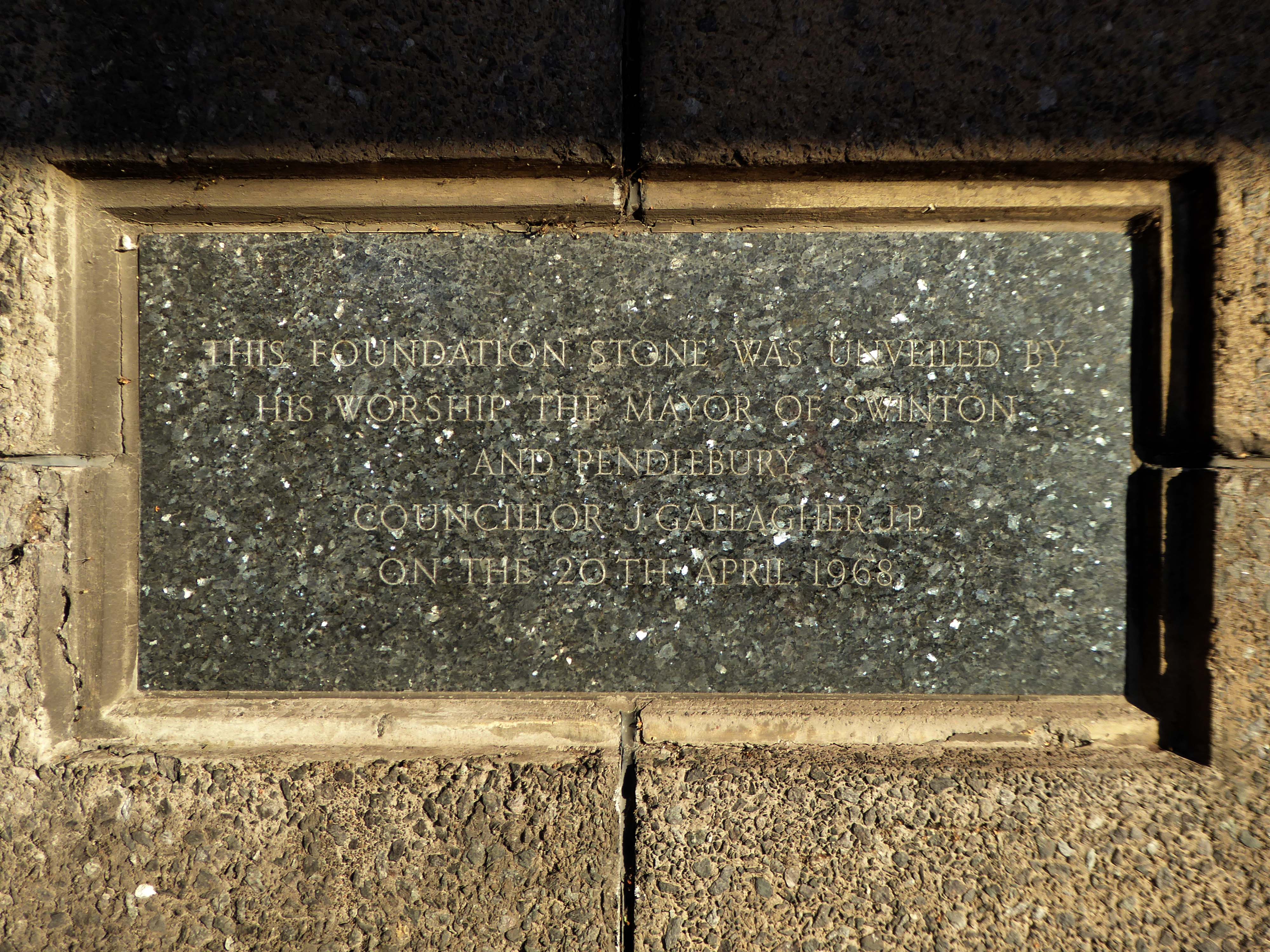
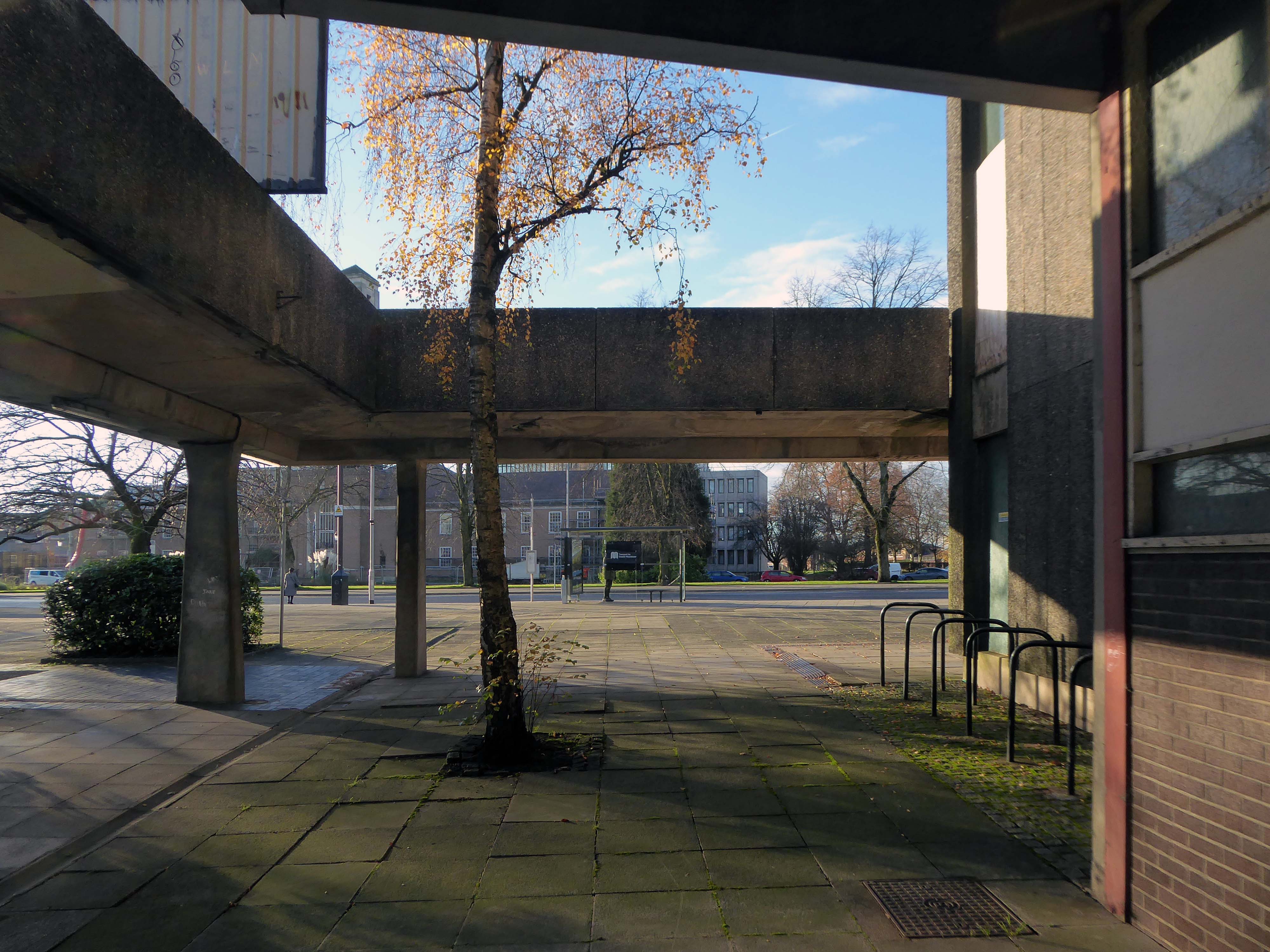
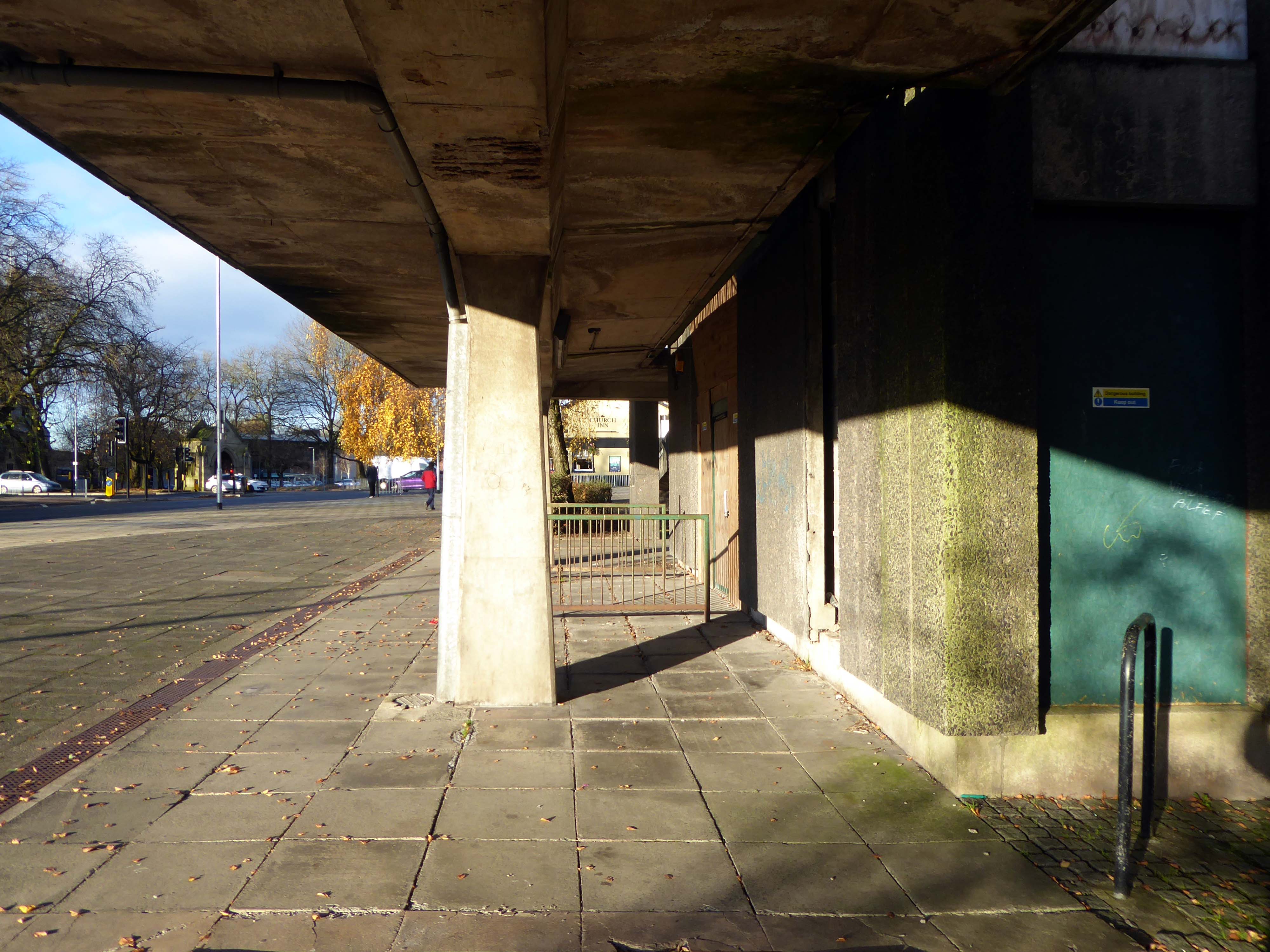
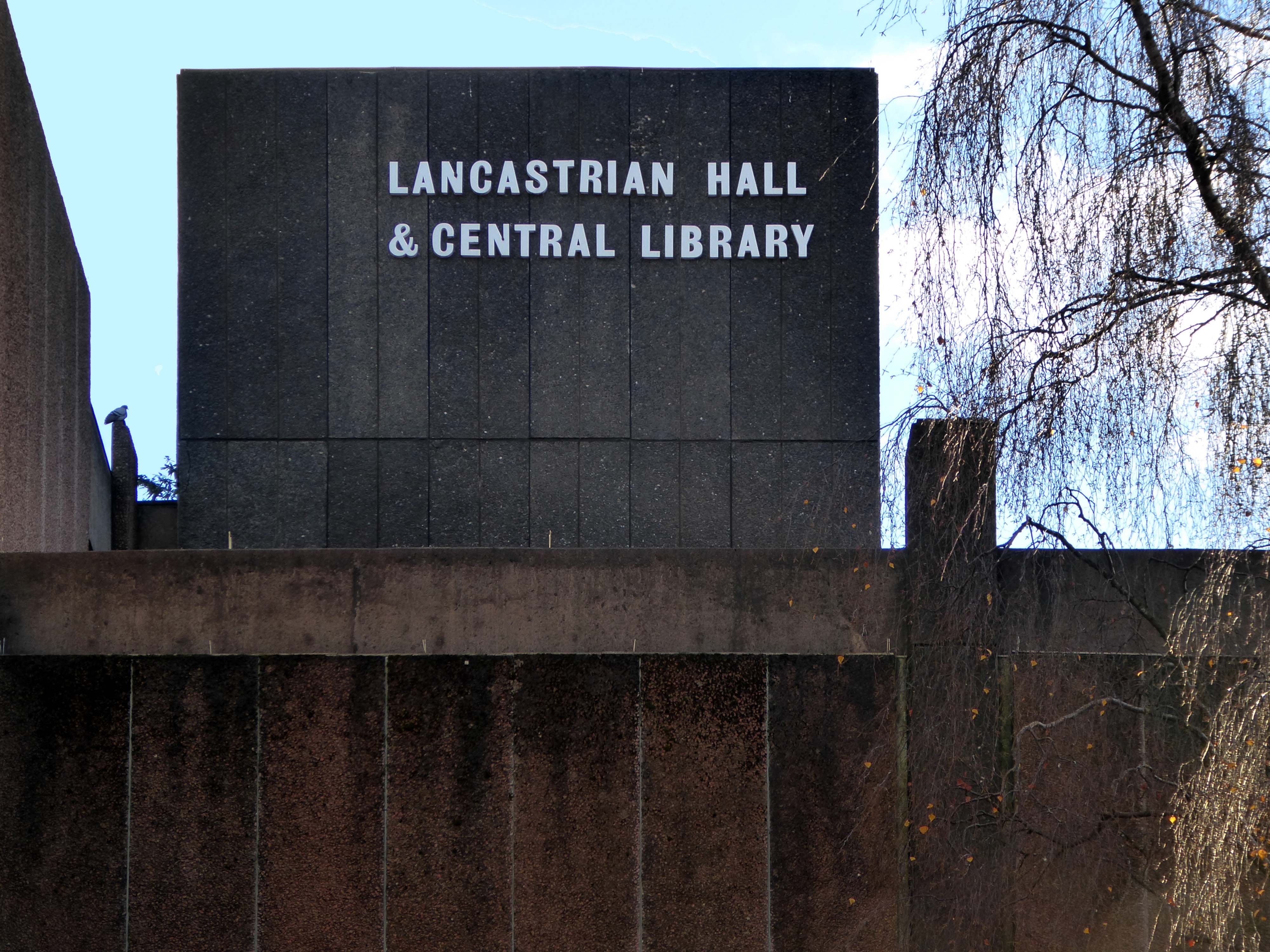
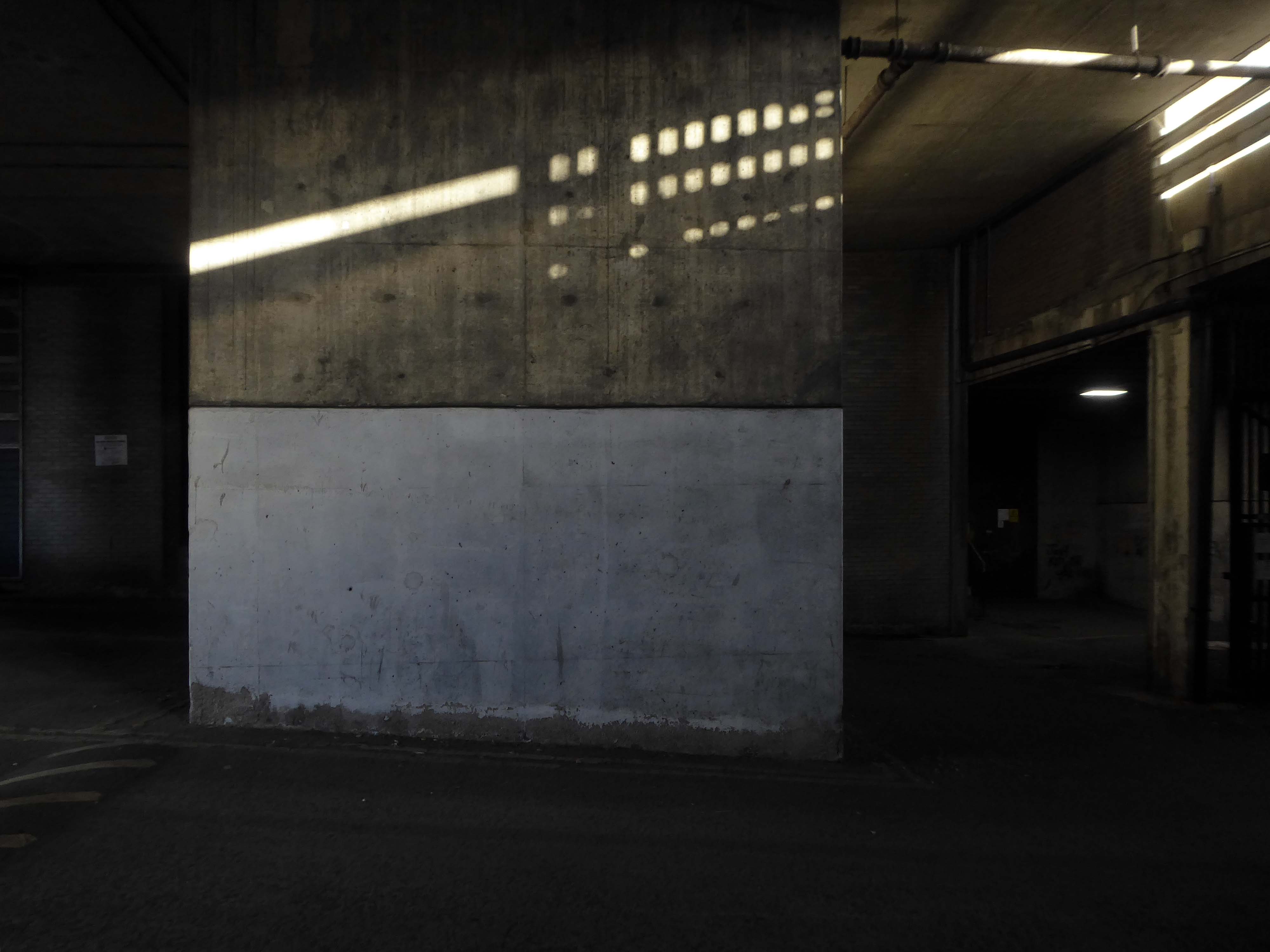
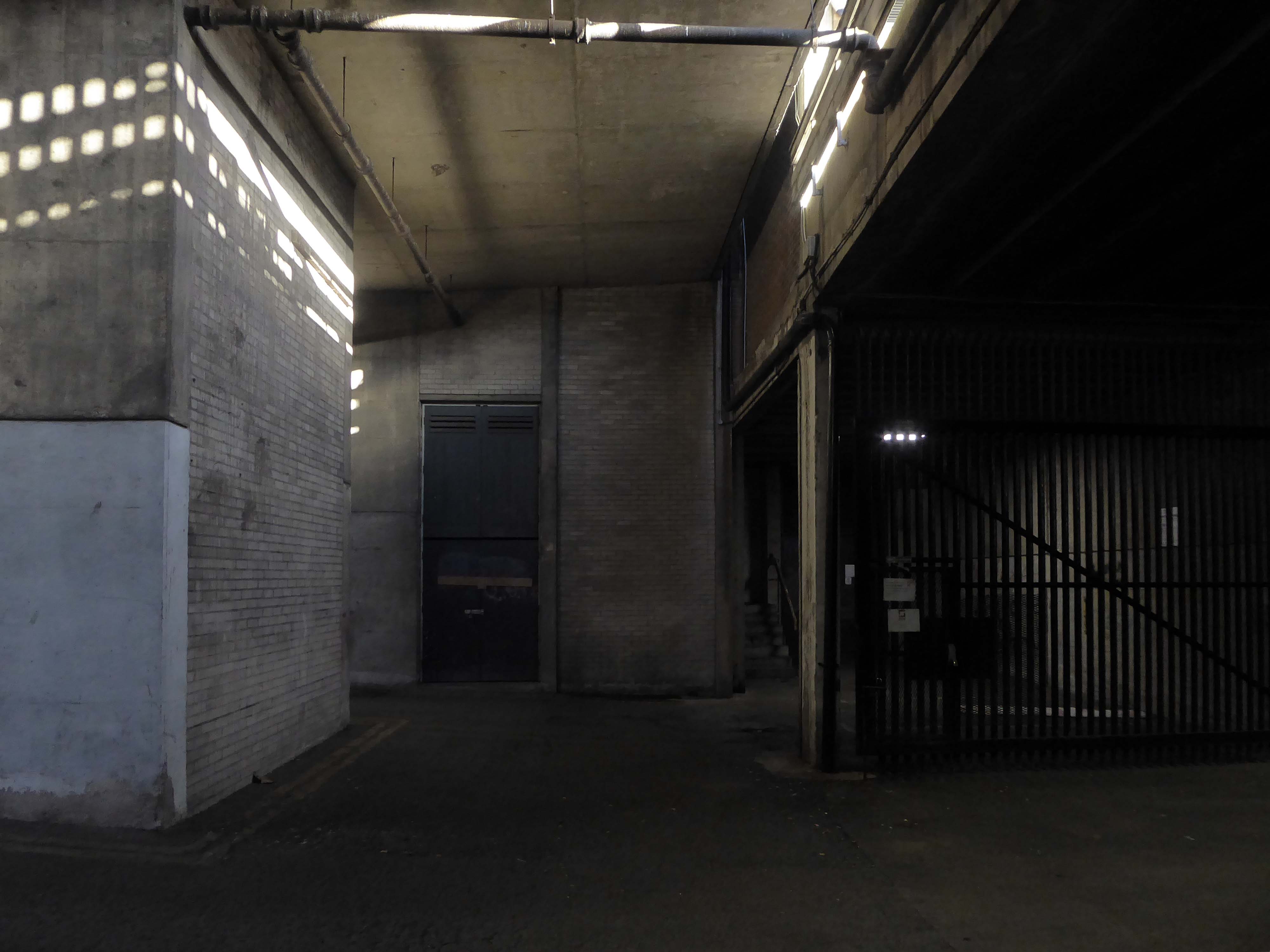
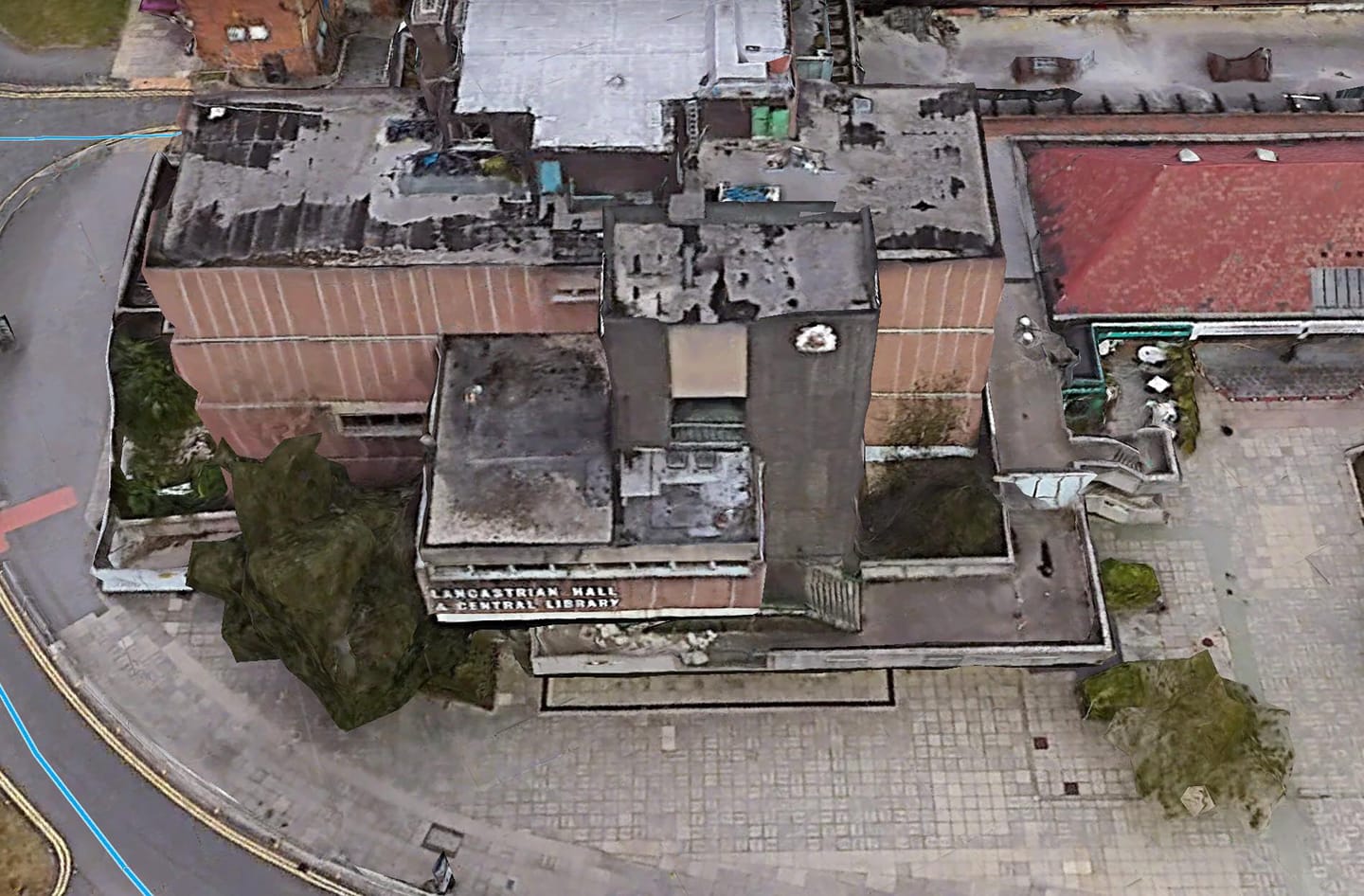
The town centre is dominated by the imposing Lancastrian Hall, opened in 1969, with an adjoining shopping mall.
The hall housed a council library and was used for civic and community meetings, wedding receptions and election counts.
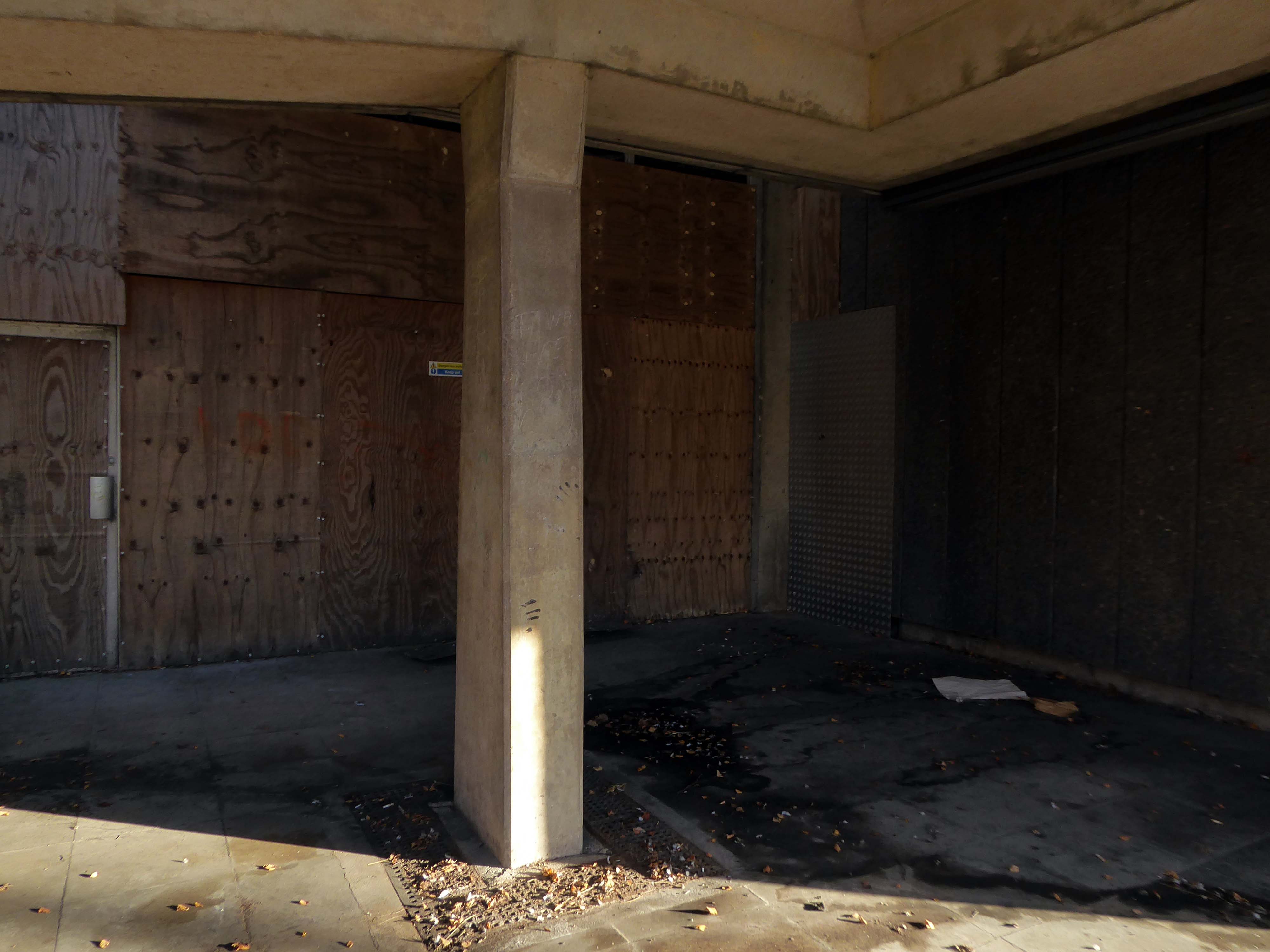
But it has been closed since 2015 after the library moved to the new Gateway Building on the other side of Chorley Road.
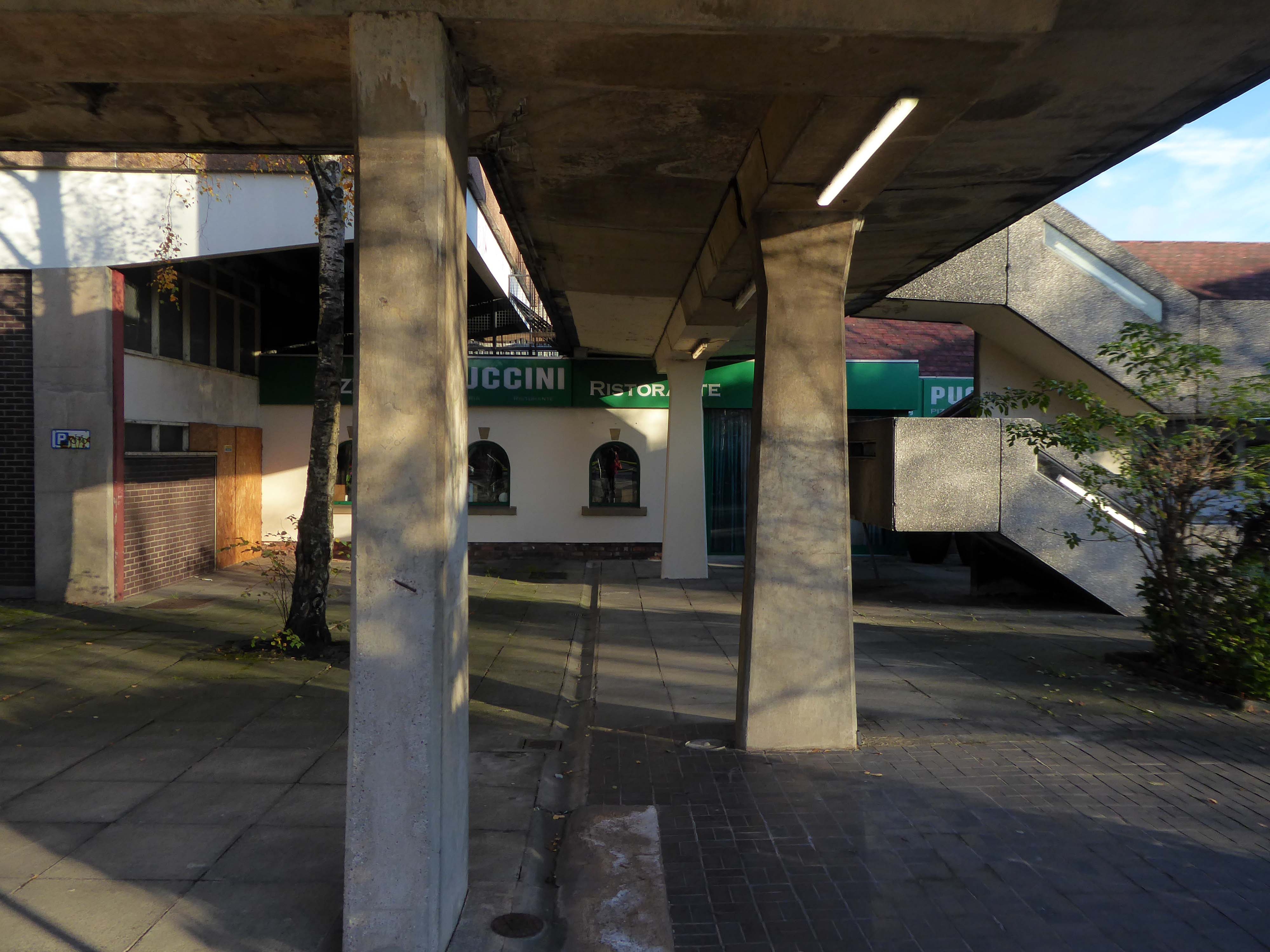
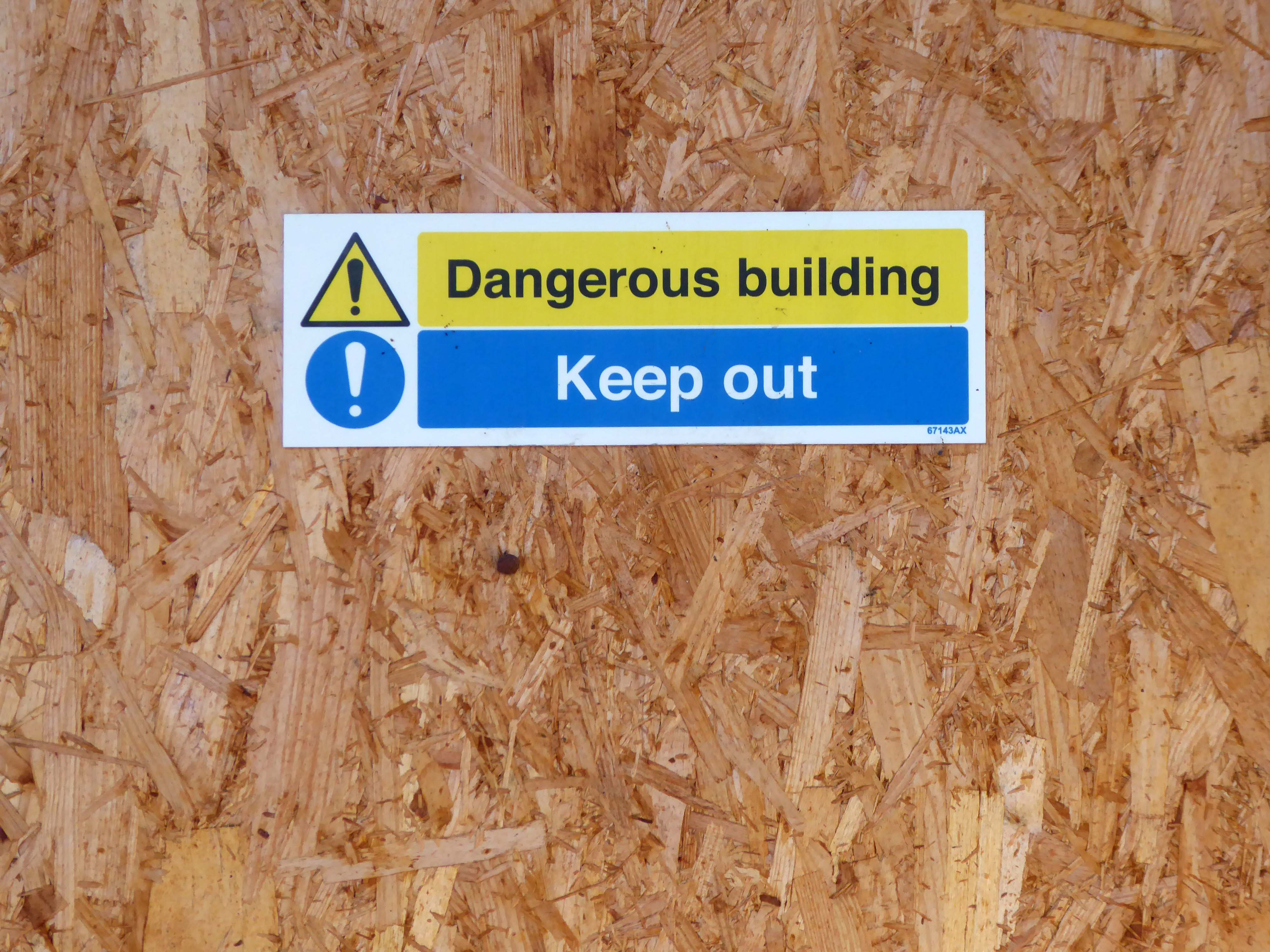
So this magical structure of stairways, undercrofts, elevated walks and majestic concrete clad volumes is under threat.
Swinton and the Lancastrian Hall deserve much better.
Over 550 people took part in the recent visioning work, and we are grateful for their time and valuable contributions.
An overwhelming majority of those who shared their views saw Swinton as a good place to live and bring up a family – somewhere friendly, with a strong sense of community.
People valued their local green spaces, but strongly felt that there needed to be more investment in the town centre, and a plan to tackle empty buildings and shops.
Overall, people felt that Swinton needed to be a more vibrant place, with more going on – and more reasons for people to visit and spend their leisure time there.
This is an opportunity to create tomorrow’s local centre, but that does rely on removing the Lancastrian Hall, rethinking the shopping centre, and repurposing the Civic Centre and the spaces around it.
Curiously brick-ish, for work largely concerning concrete.
Did they not know the Madcap Syd wrote See Emily Play down the road at the now demolished Leeds College of Technology?
A fact I discovered whilst researching my Leeds Walk.
Myself I would have gone with – Borrow Somebody’s Dreams ’til Tomorrow.
For here we have an exposition of the architecture of three Universities, exploring the possibilities of a new age.
An age typified by the expansion of minds and opportunities in higher education, rendered corporeal in glass, steel and concrete – with some concession to the use of brick.
I was minded of the political context to these campuses, radicalised by the events of the late Sixties and early Seventies.
Myself a student at Portsmouth Polytechnic during these heady days, where several Maoist, Marxist-Leninist, Stalinist and Trotskyite factions played out ideological debate and display, against these Modernist backdrops.
On the day of my visit to the Leeds campus, I saw three students stood behind a hardboard paste table, selling the Socialist Worker.
Along with staff building support for the following day’s UCU strike.
So to the exhibition – Another Brick In The Wall at the Stan and Audrey Burton Gallery until Saturday 25th March.
Photographer Simon Phipps shines a contemporary light on the innovative designs of this period. He has produced new work of a variety of campuses, including the University of Leeds, exclusively for the exhibition.
Alongside these contemporary photographs, the exhibition displays archival material from the Universities of Leeds, Sussex and East Anglia.
Rarely seen material from the Arup archive is also exhibited.
Let’s take a look at a topic from a bygone age that seems to come of age – there’s never been a better time to be Brutal!
Go and take a look, we really do need education – and exhibitions.
And the city a heritage of angular, jangly guitar Power Pop.
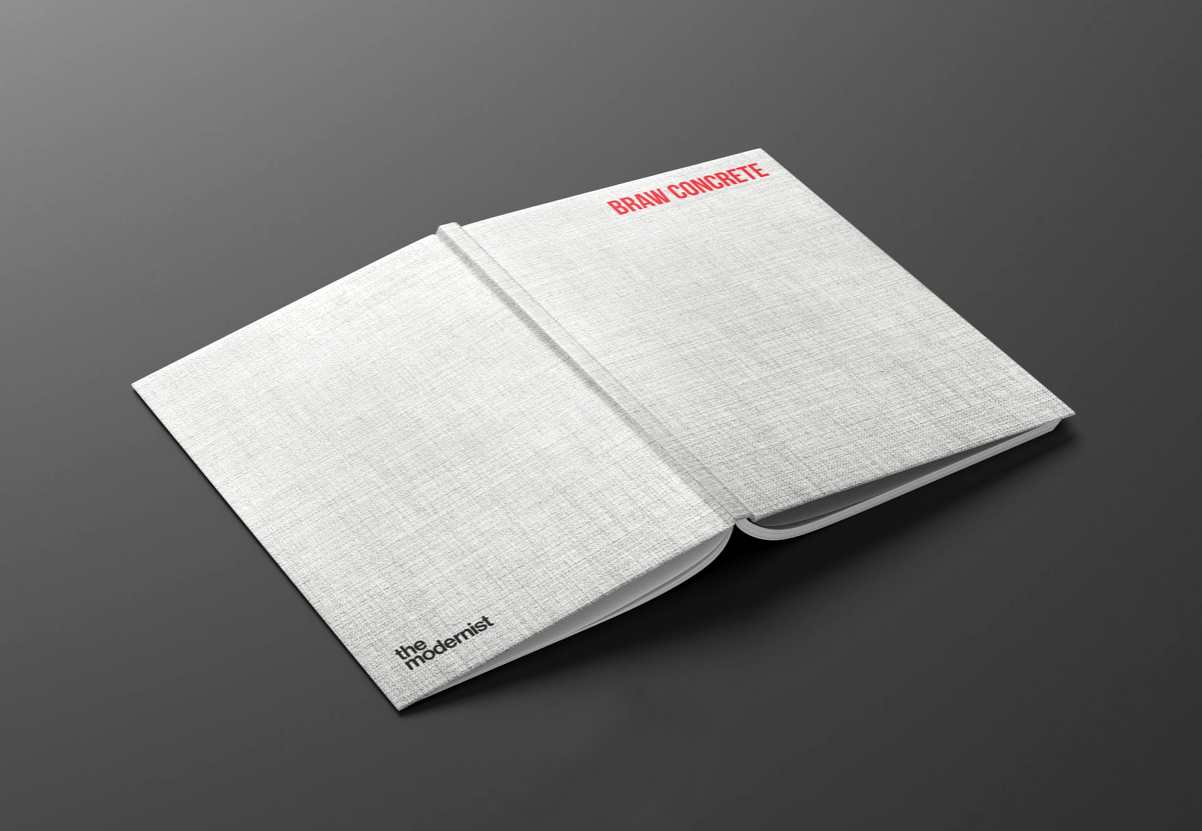
It is now renowned and venerated as a Brutalist landmark – featuring in the modernist society publication Braw Concrete by Peter Halliday and Alan Stewart – available right here.
Let’s take a look at how it looked way back in April 2022.
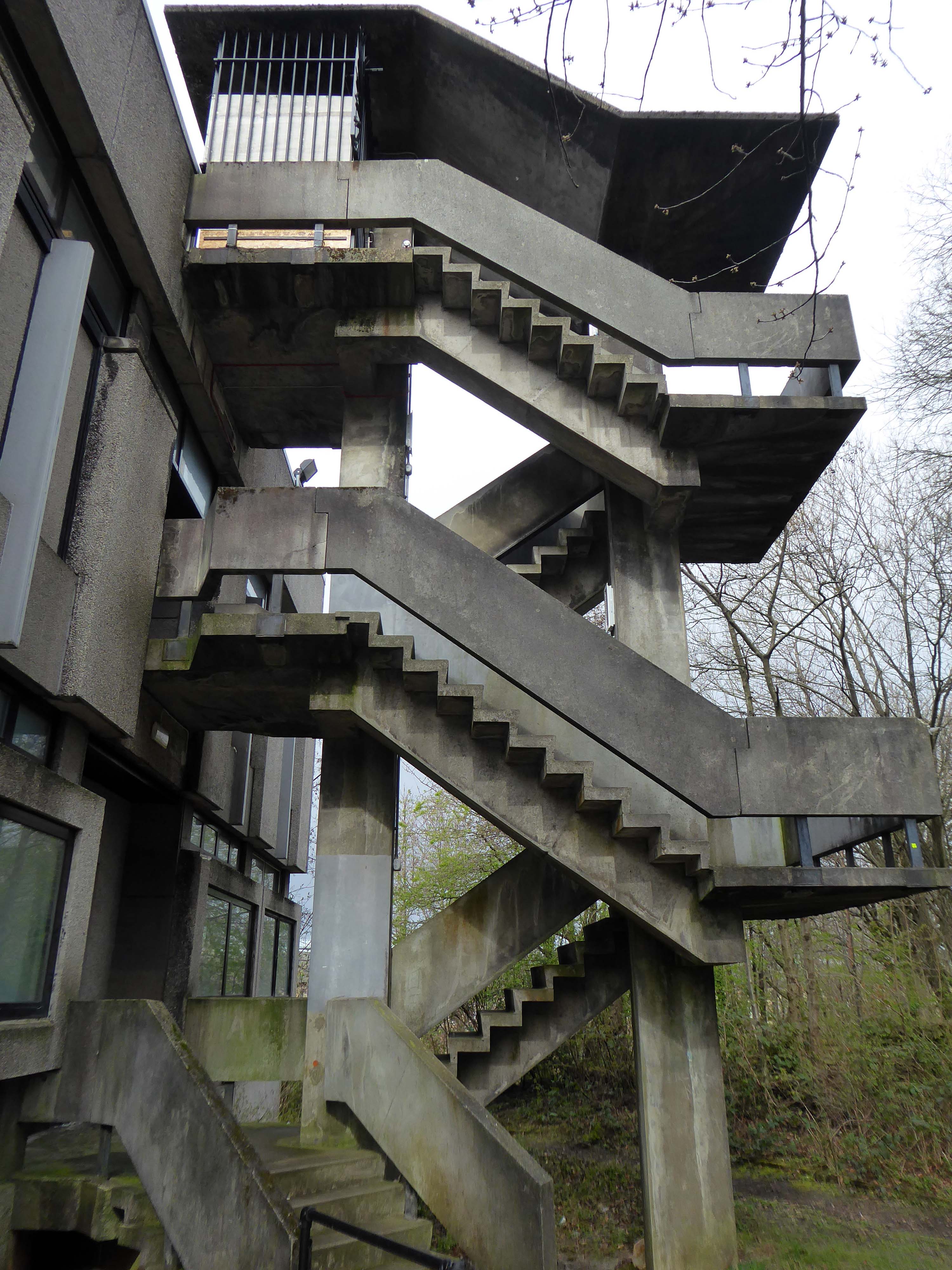
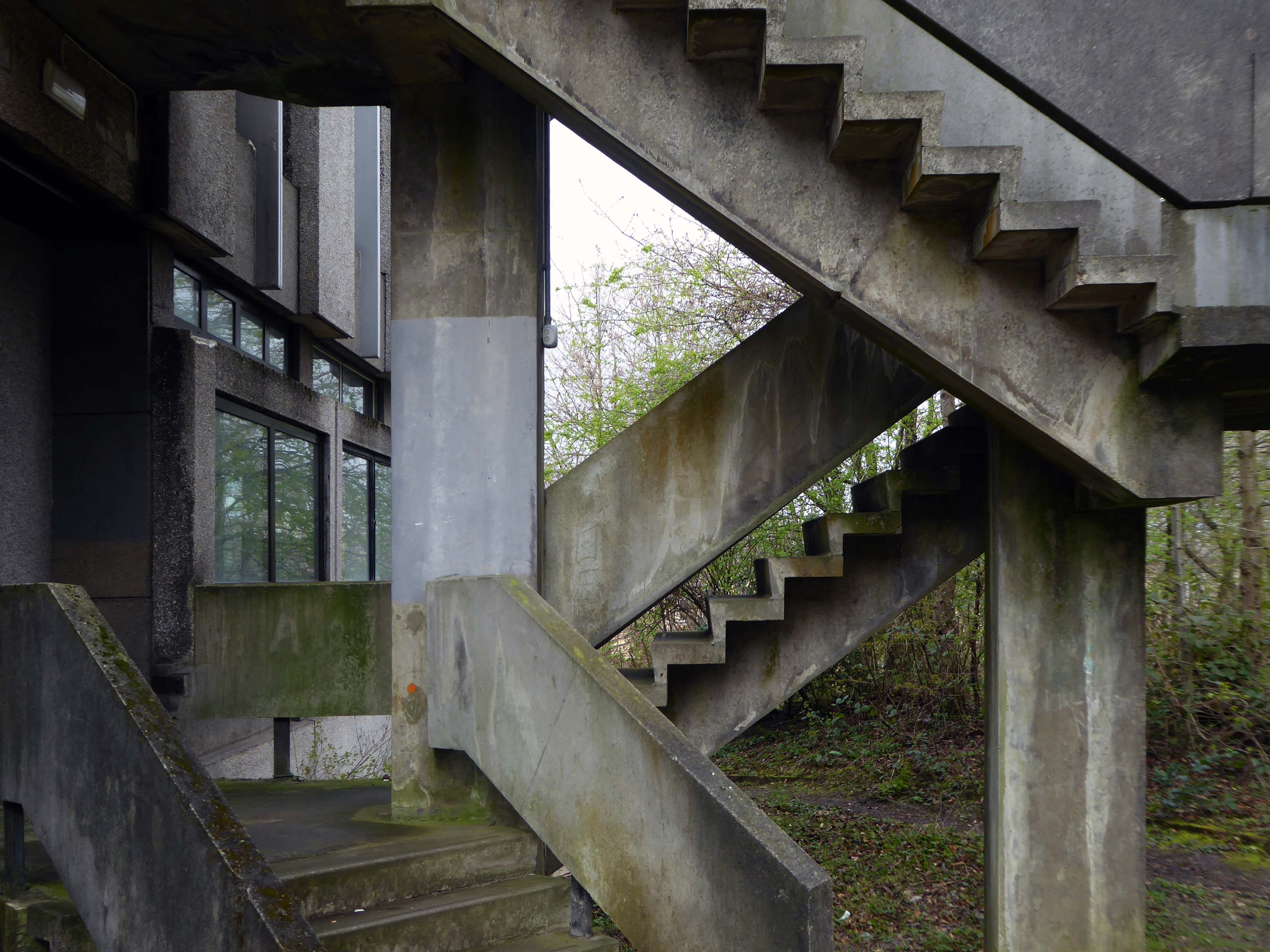
In addition, if you nip around the back you get to go up and down a delightful concrete staircase!
Whilst Oxford Road echoes to the sound of Freshers fleet of foot.
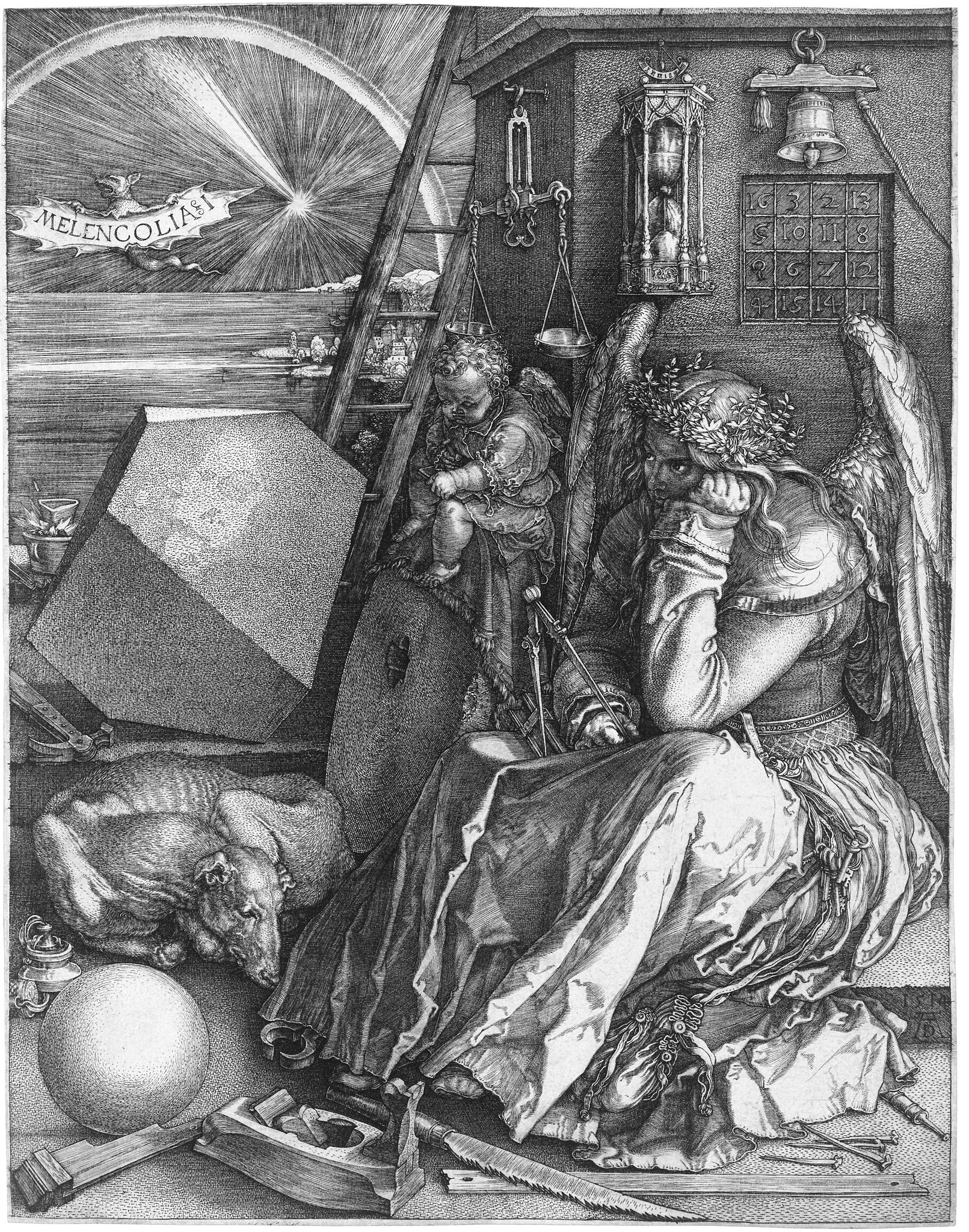
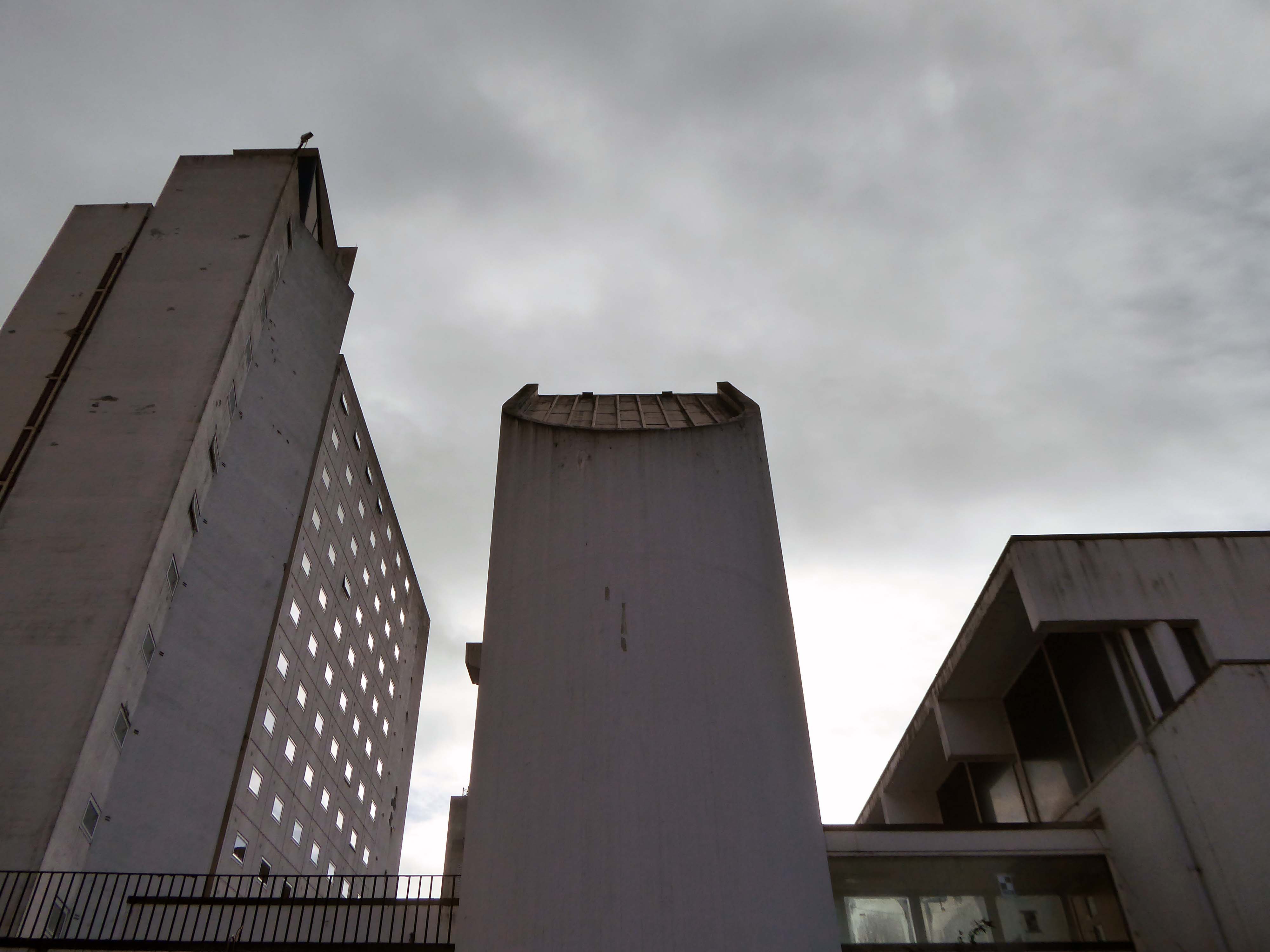
UMIST is only home to fallen leaves and a palpable air of melancholia.
The last of the students have left and a crew of hi-vis workers are busy stripping the remains of days long gone.
We have all walked on by before and will again – though with heavier heart, into an all too uncertain future – for only the Holloway Wall is listed.
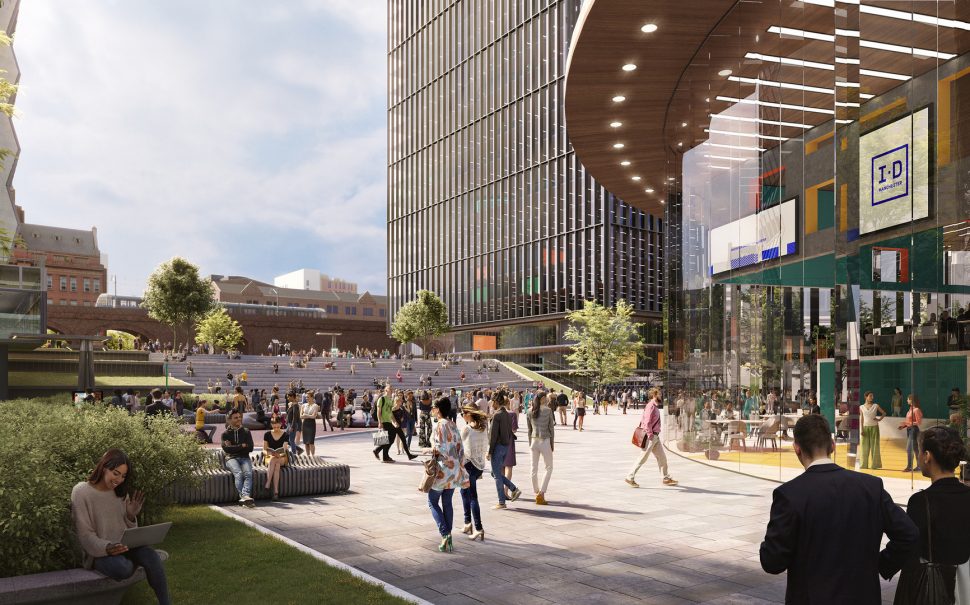
Now a grand redevelopment project has been unveiled to tend to that. According to the developer’s website, the plan promises to accelerate growth, partnership and collaboration.
Christened ID Manchester, the plans could see the area hacked into a glass maze of ultra-modern offices, apartments and hotels.
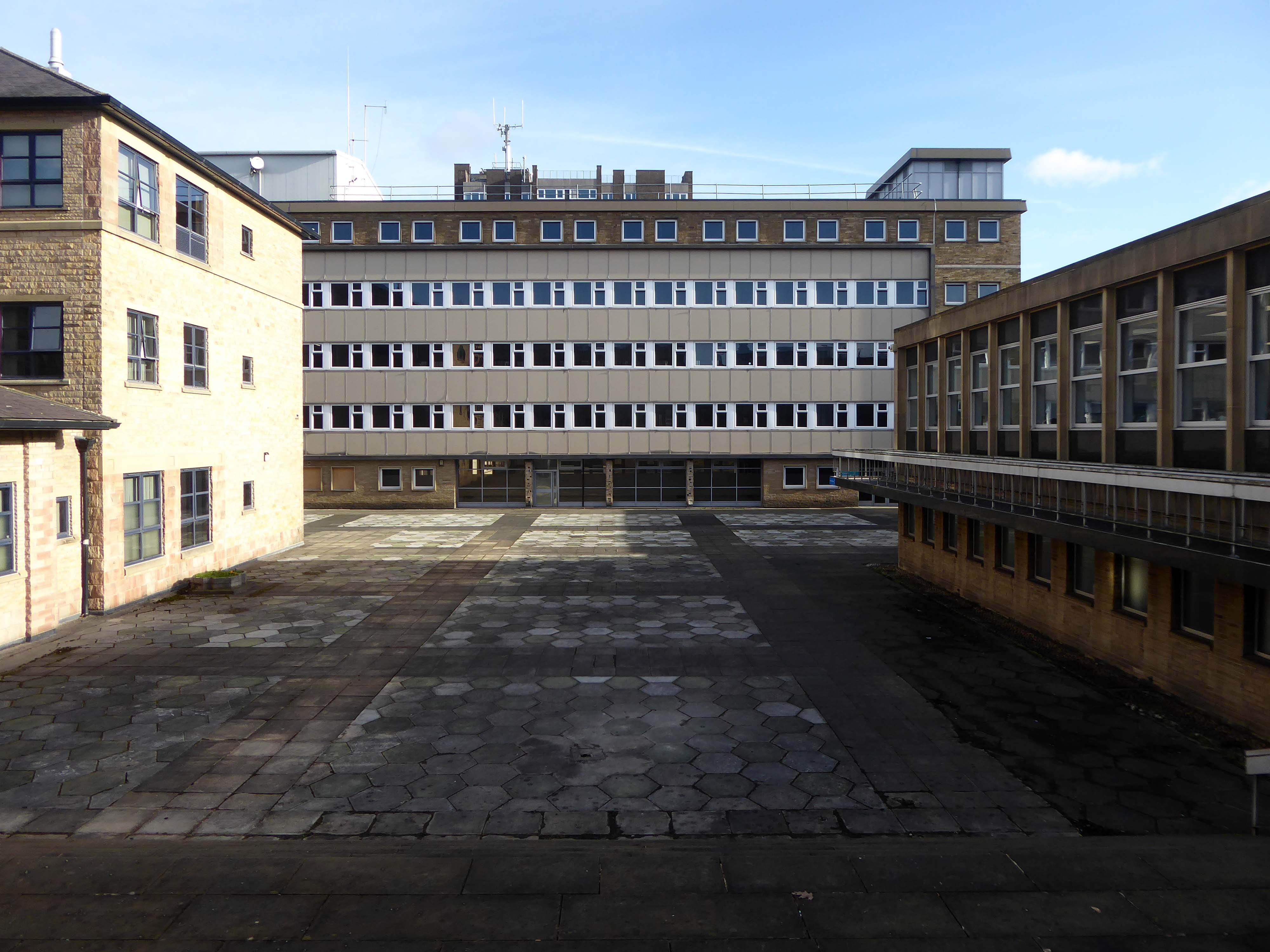
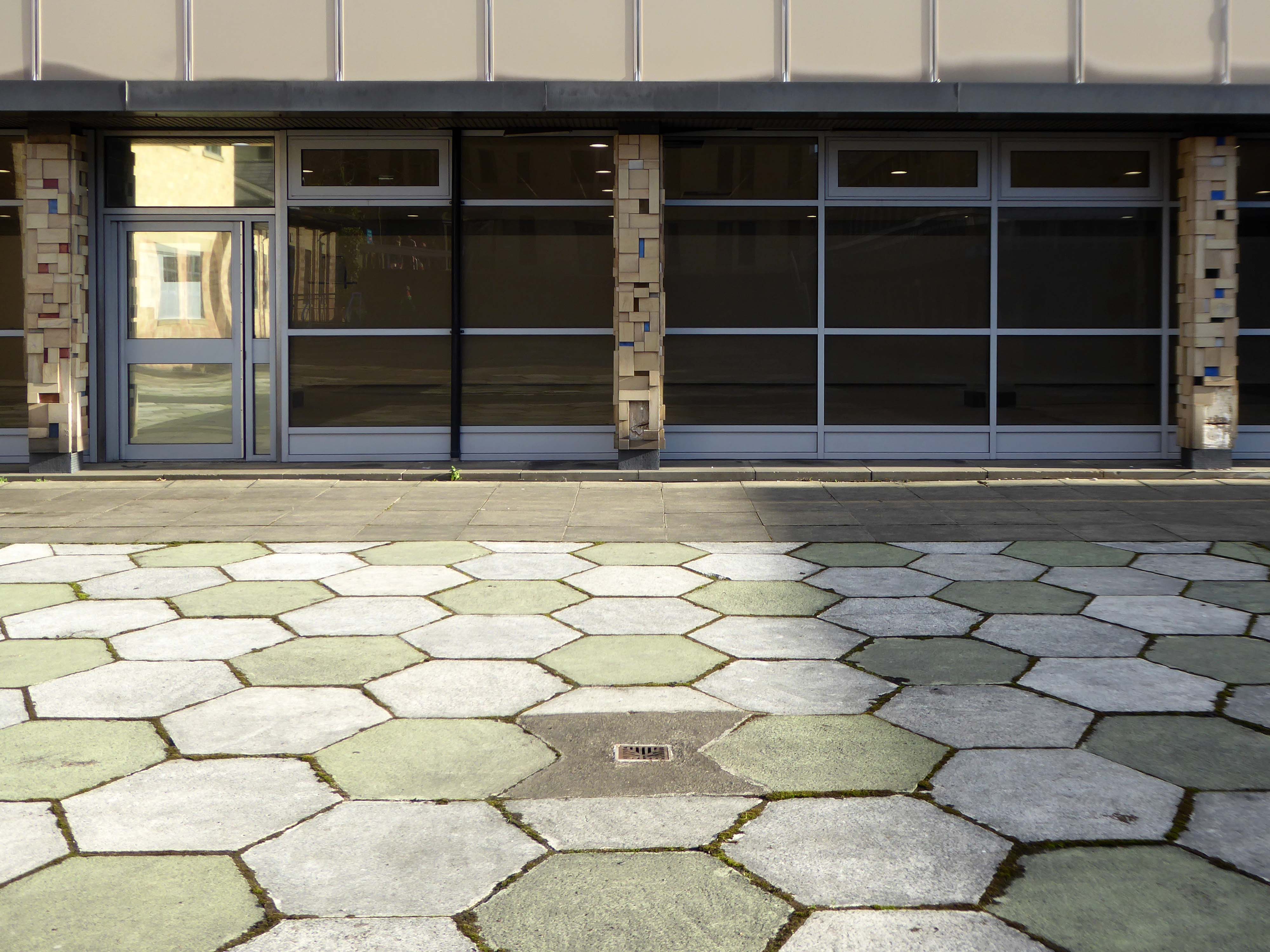
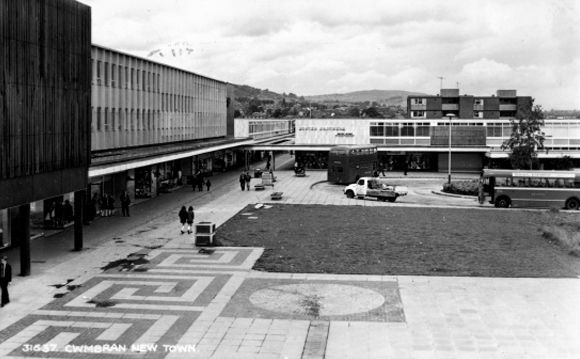
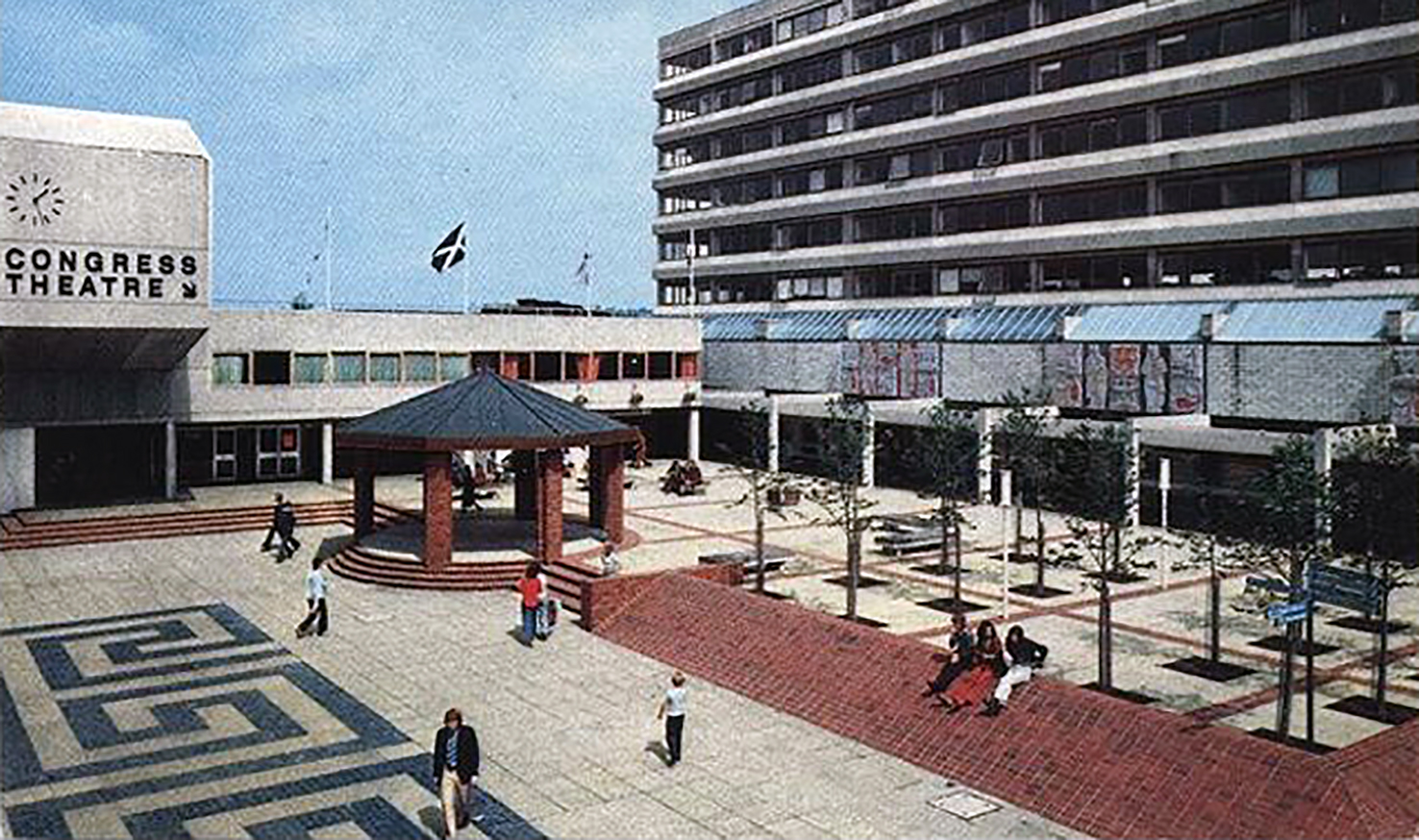
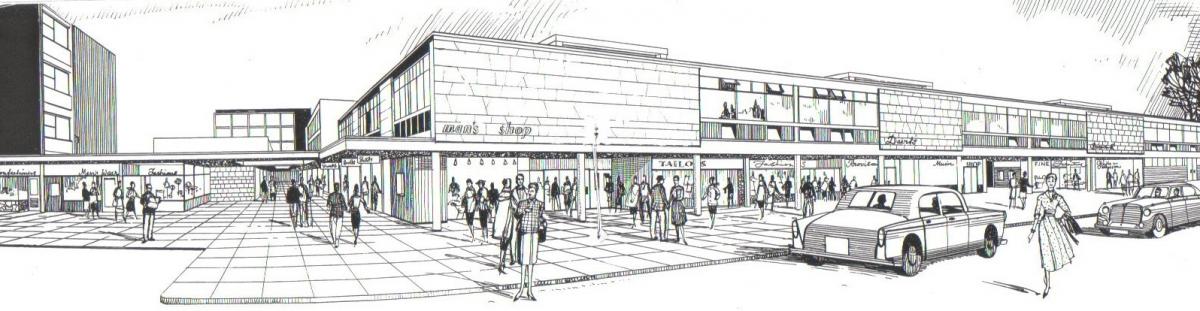
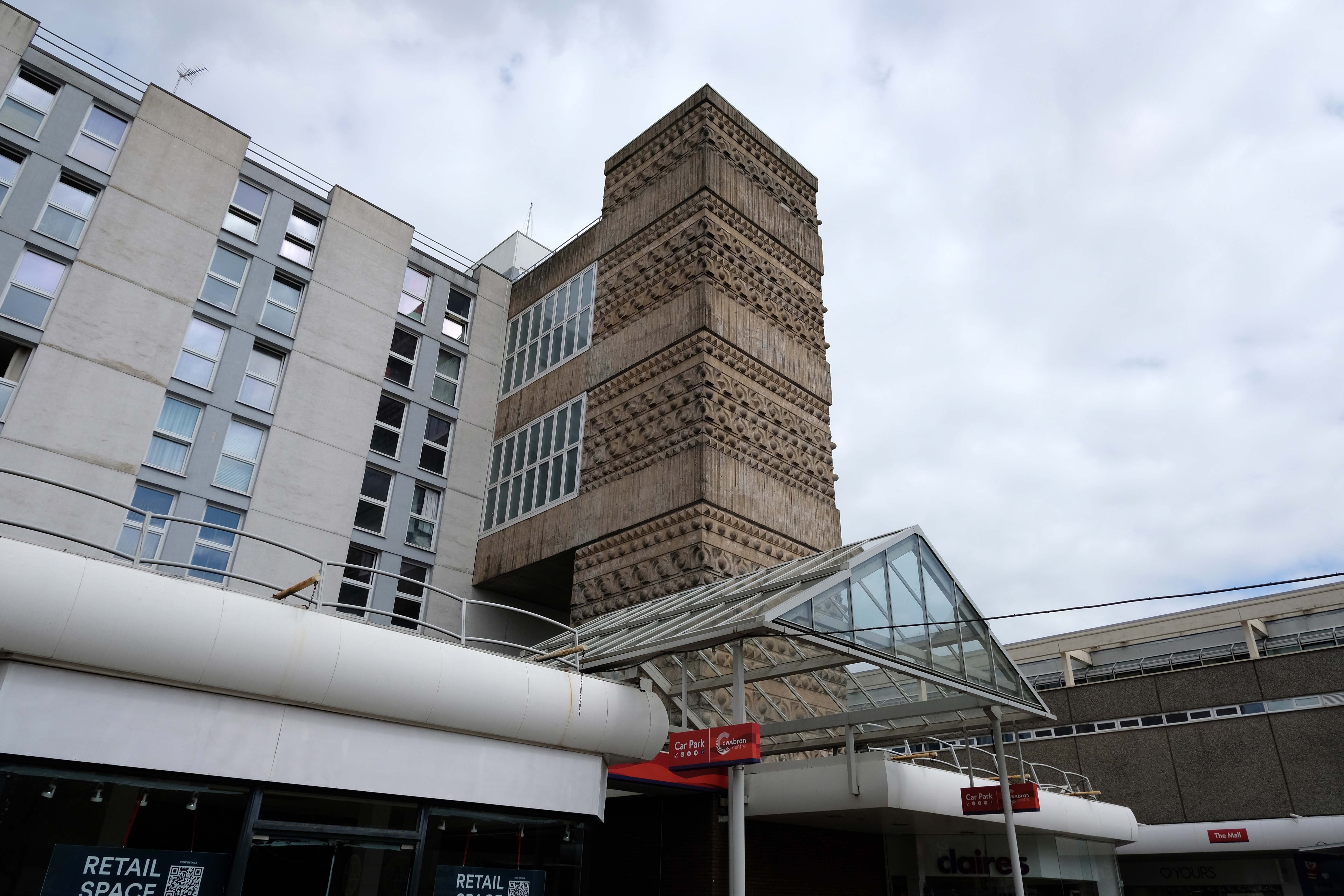
Built between 1963 and 1967, the centre comprised 18 shops, a childrens playground, public toilets, a health and dental centre, and a combined public house and community centre. The unit centre was designed by Chief Architect of the CDC, Gordon Redfern, and was architecturally the most innovative and ambitious unit centre within Cwmbran New Town. To combat the exposed nature of the site together with the ‘high rainfall, mists and variable winds’ prevalent in the area, Gordon Redfern designed an enclosed, high-sided space that would physically and mentally shield shoppers during their visits. This protective environment extended to creating a central play area that could be viewed from the shops, allowing a more enjoyable experience for children. Four different shops types were provided on increasing floor footage for facilities ranging from barbers to grocery shop, all with storage to the first floor and eight, on the south-west side, with a two-bedroom maisonette above. To enhance the architectural impact of the scheme, Redfern created each unit on an hexagonal plan despite the inefficiences in floor space usage and additional costs in creating the fixtures and fittings. The CDC also fitted out each of the uits to a customised requirement – for example the Post Office unit was pre-fitted with a telephone booth, posting box, stamp machine and half-glazed panel for advertising services.
The structural engineers were Ove Arup & Partners, the builders were Gee, Walker & Slater. Construction costs for the scheme were estimated at £214,106. The unit centre was opened 12 September 1967, shared with the opening of Monmouth House, both undertaken by Rt. Hon. James Callaghan, M.P. A scathing article written the following month by architectural critic Ian Nairndismissed the design as a ‘kind of in-turned medieval village … an oasis of picturesqueness in a desert of statistical units’ designed for, rather than with, the inhabitants and therefore destined for commercial failure.
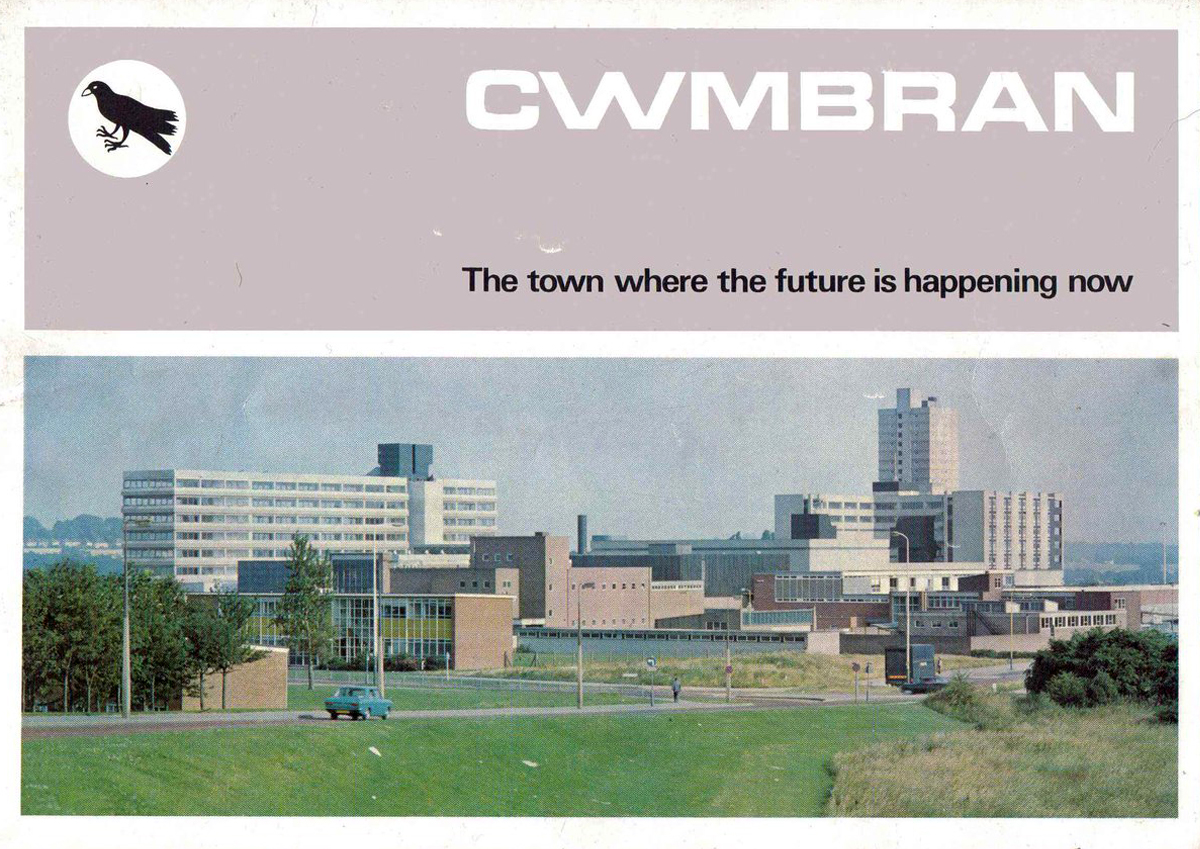
In 1949, the then Minister for Town and Country Planning, John Silken, designated an area of 31,000 acres surrounding the village of Cwmbran to be the first new town in Wales. Unlike the first generation new towns, the aim of Cwmbran was to provide housing and a range of facilities for those employed in existing industry but who lived in poor housing in the neighbouring valleys.
A master plan was implemented to achieve the objective for the town. However, as the town developed, the projected size of the town had to increase and many of the plans ideals were diluted as the Southwest expansion area was approved in 1977.
In fact, due to the planned nature of Cwmbran, there now exists few opportunities for new development within the town. This has meant intense development pressure on the outskirts of Cwmbran from house builders and developers.
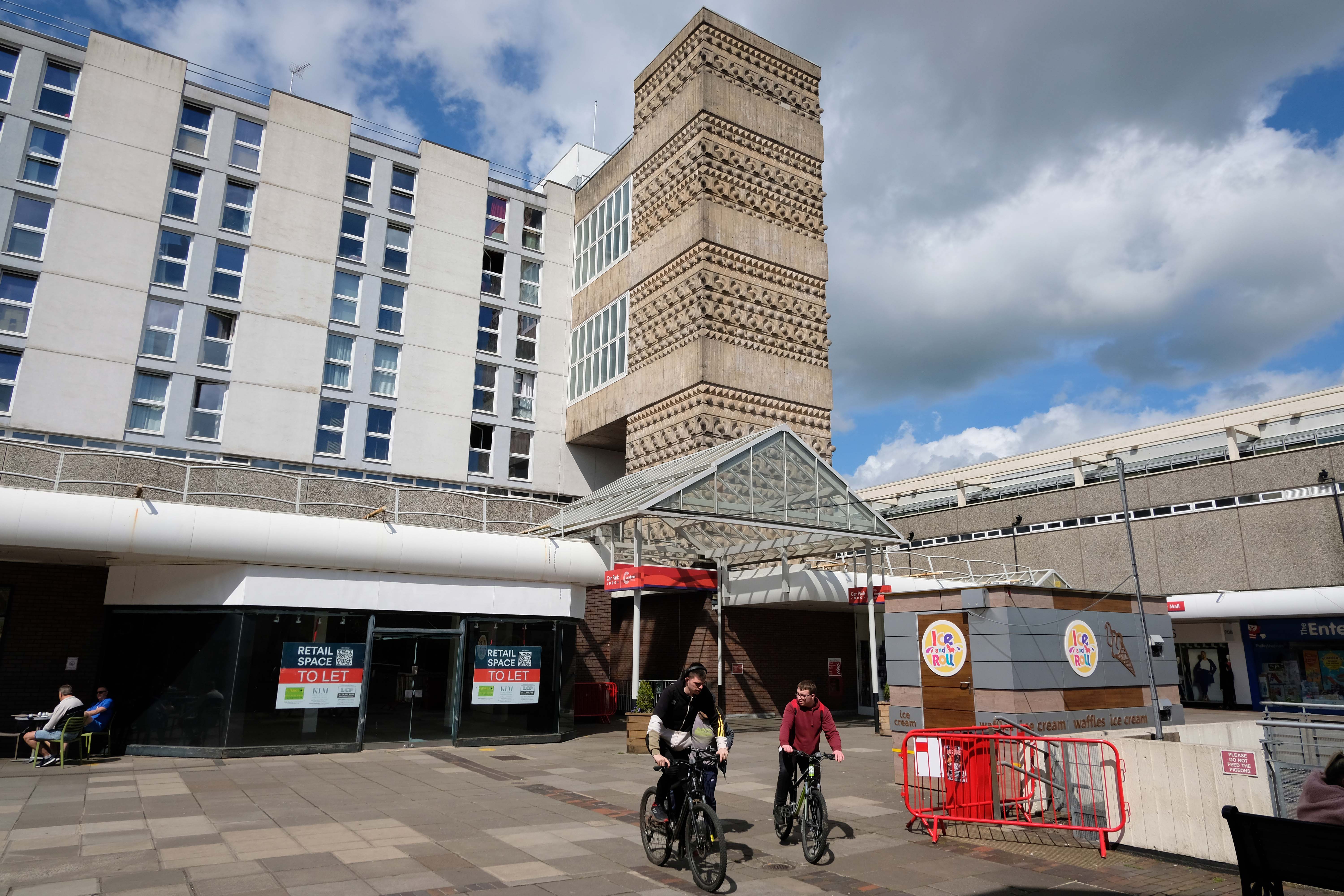
On the day of my visit the centre was busy with happy shoppers happily shopping – there were major works underway in line with the town’s new plans.
Cwmbran has also prospered from having a vibrant retail core. The Shopping Centre has a fully pedestrianised, multi purpose centre with covered shopping malls. There are over 170 retail outlets covering a total area of 700.000 sq. ft, including a number of popular high street retailers, restaurants, a theatre and cinema. Accordingly, the town is now considered to be a sub regional centre, and the intention is that this retail focus will be increased by regeneration of the eastern side of the town.
Now 50 years on parts of the town are in need of renovation. Through various public and private partnerships the aim of the Cwmbran Project Team is to set out a 15 year strategy for the regeneration and development of the new town, and begin its implementation.
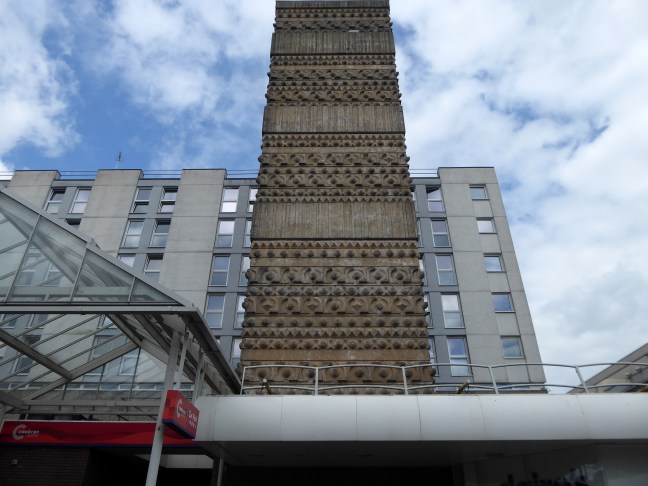
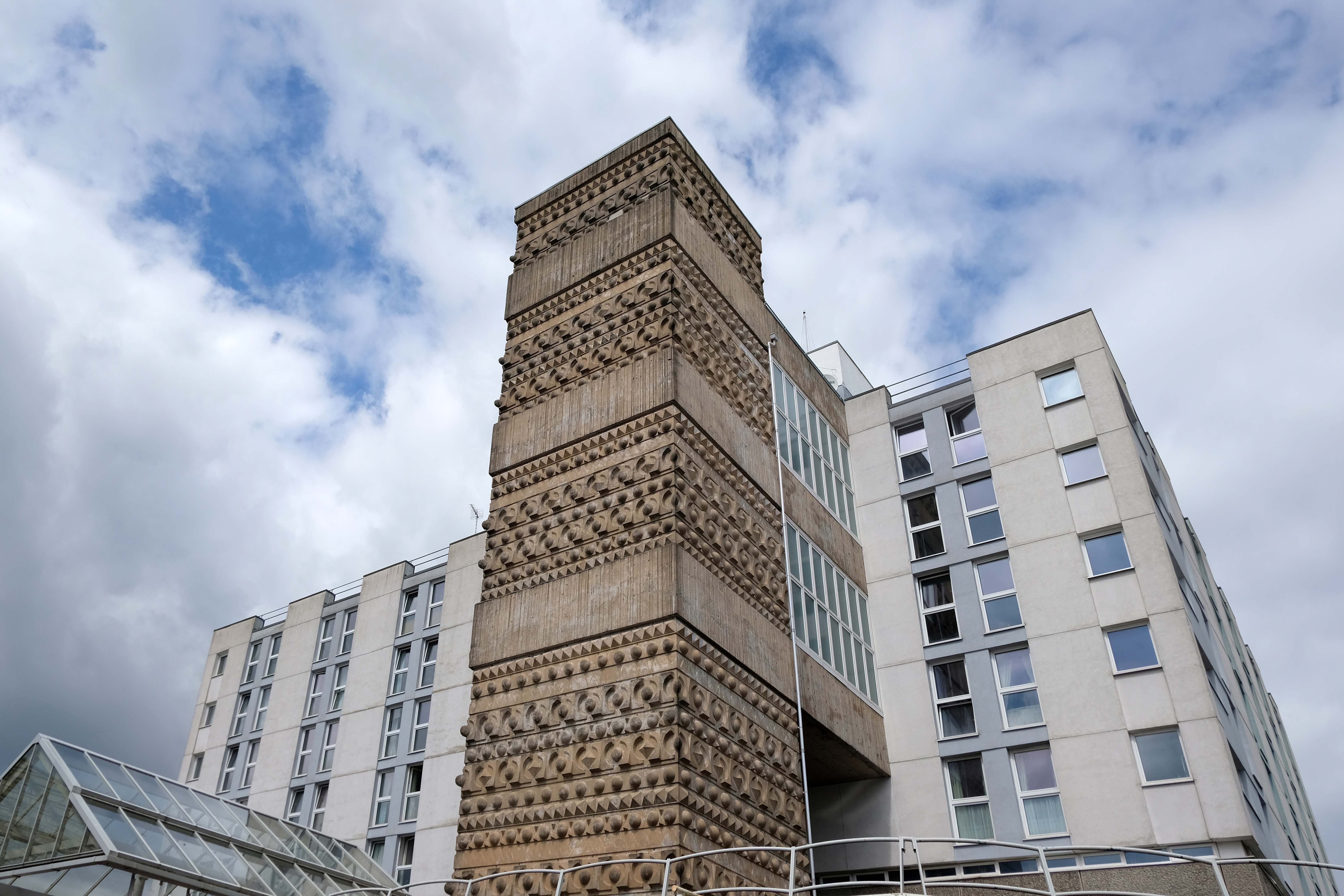
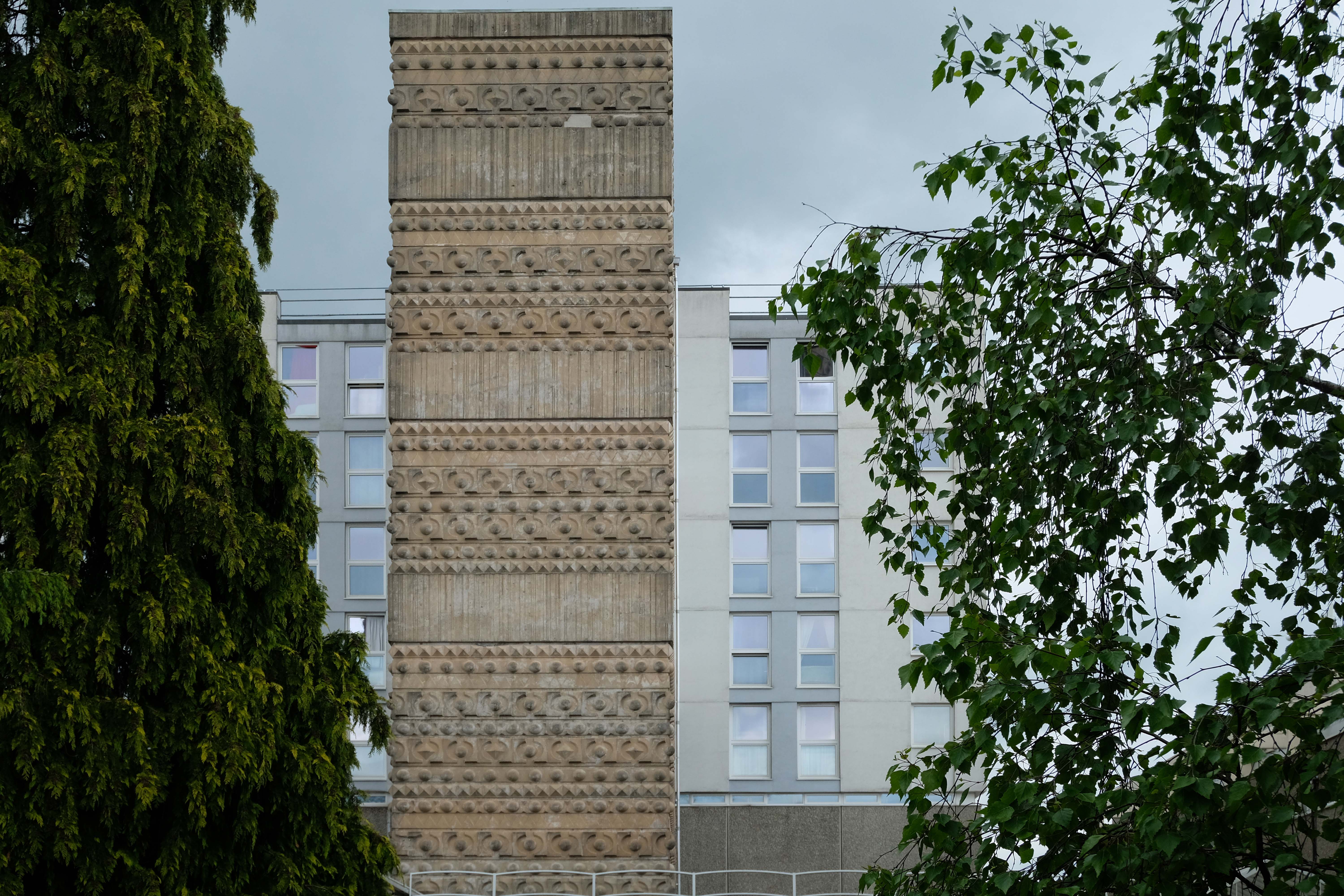
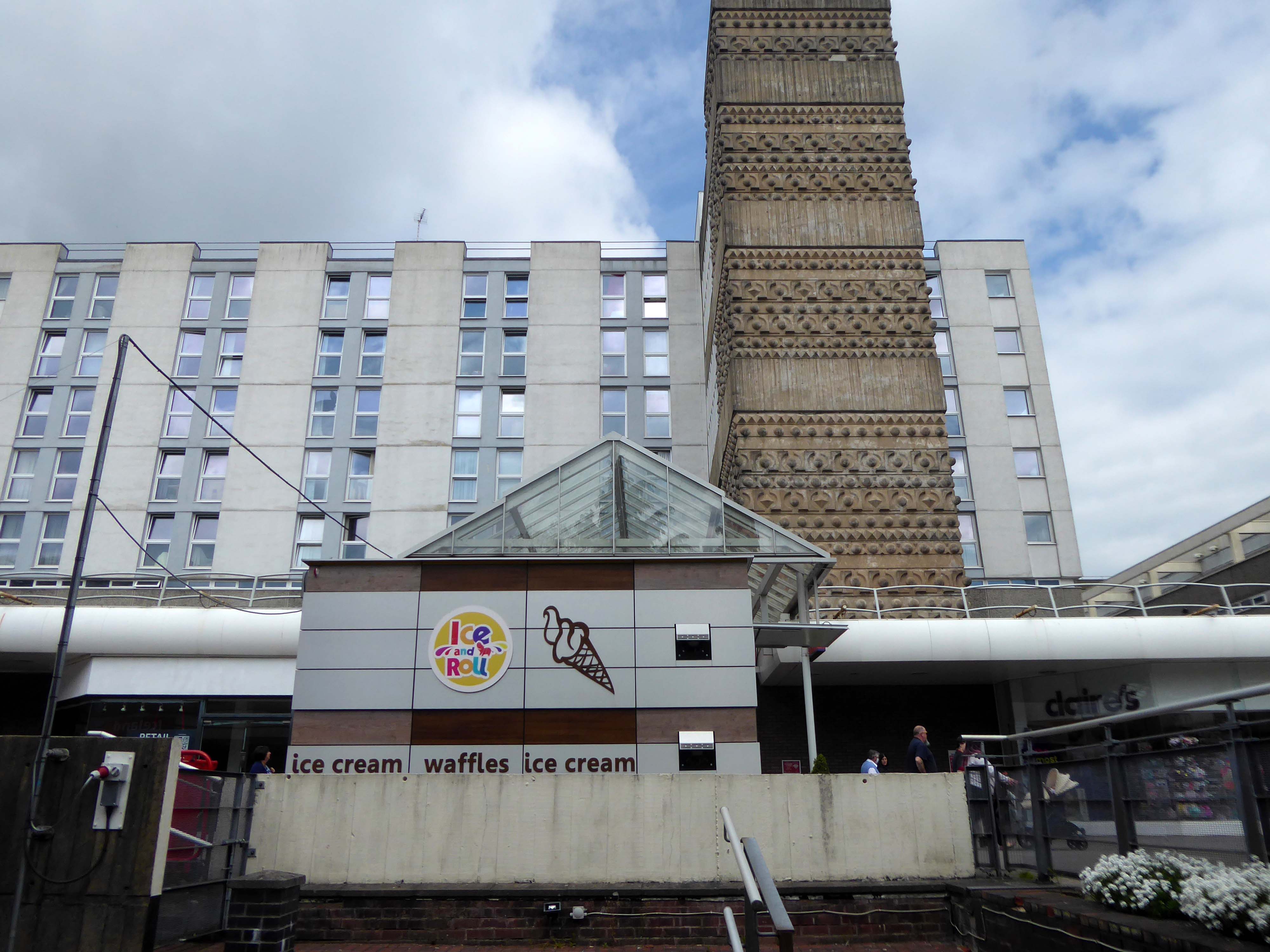
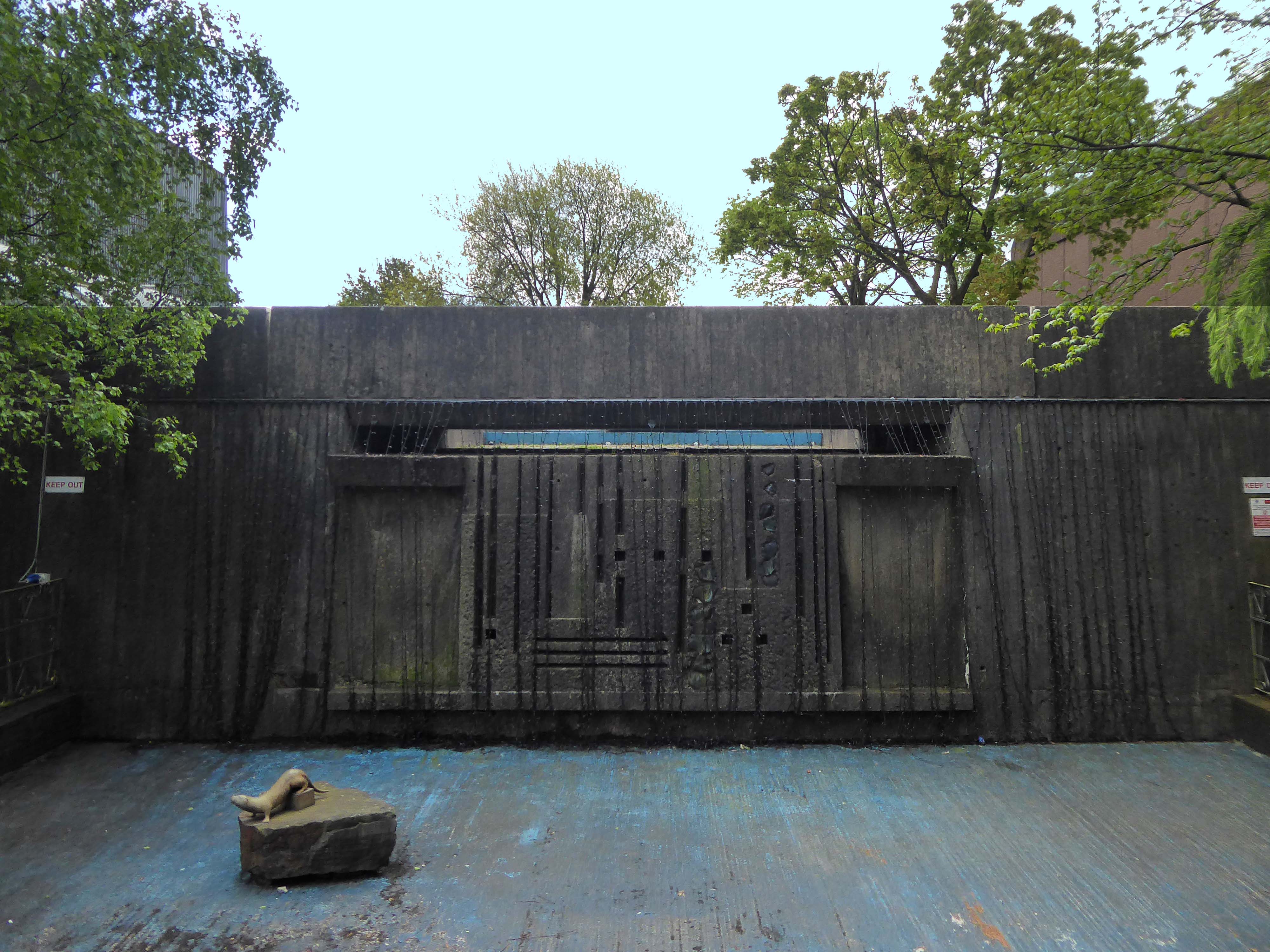
My primary interest concerned the public art in Monmouth Square – William Mitchell’s concrete clad lift shaft.
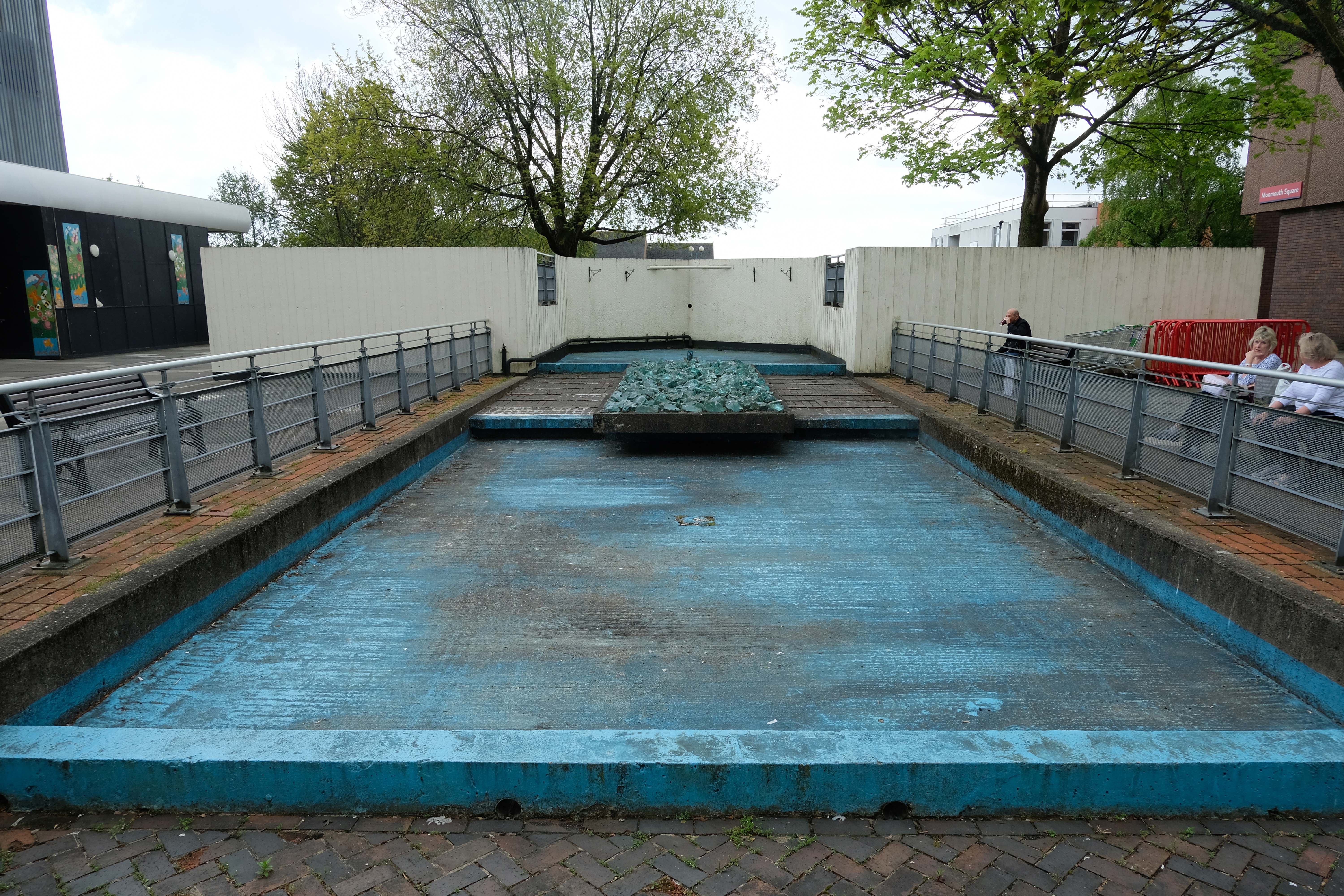
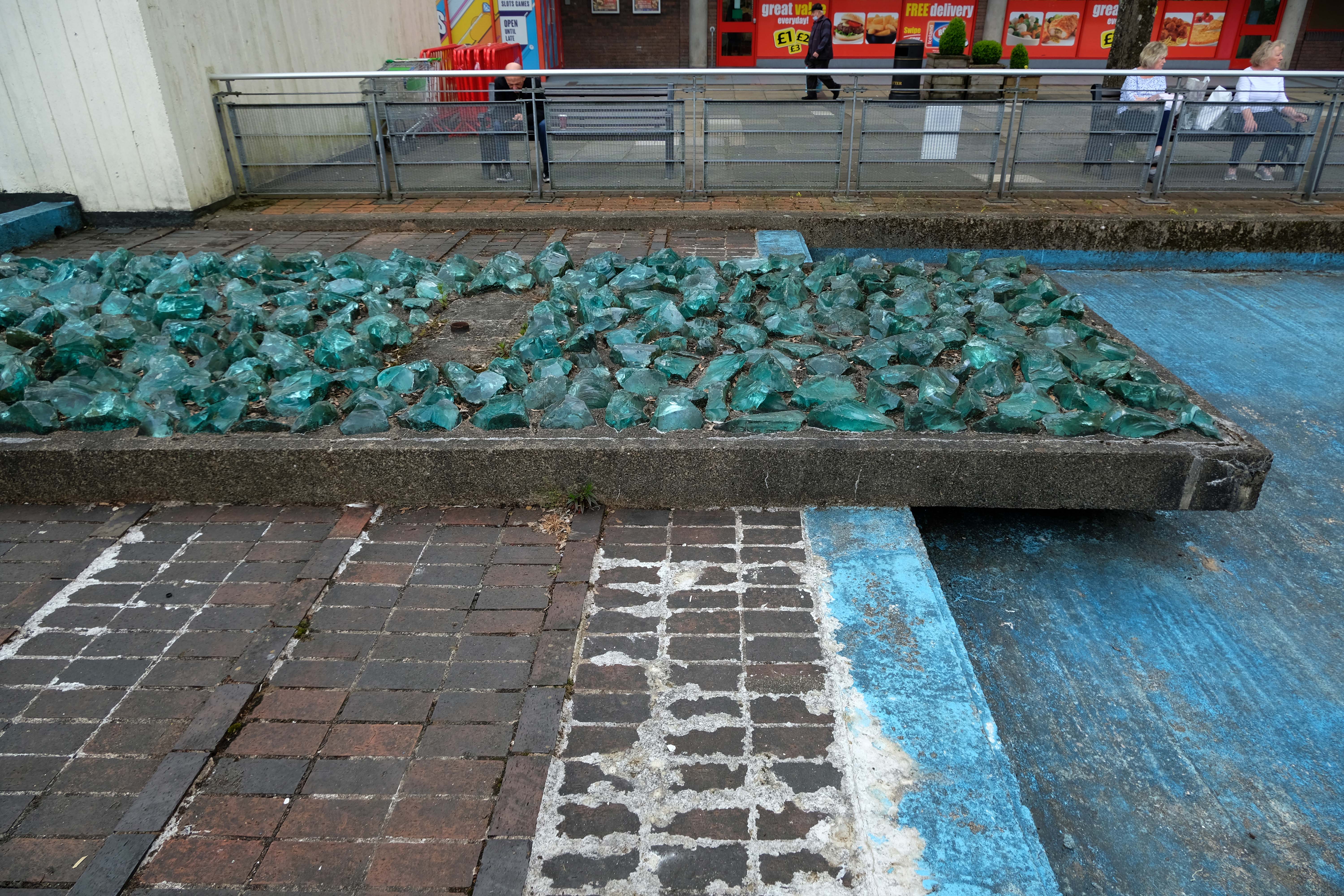
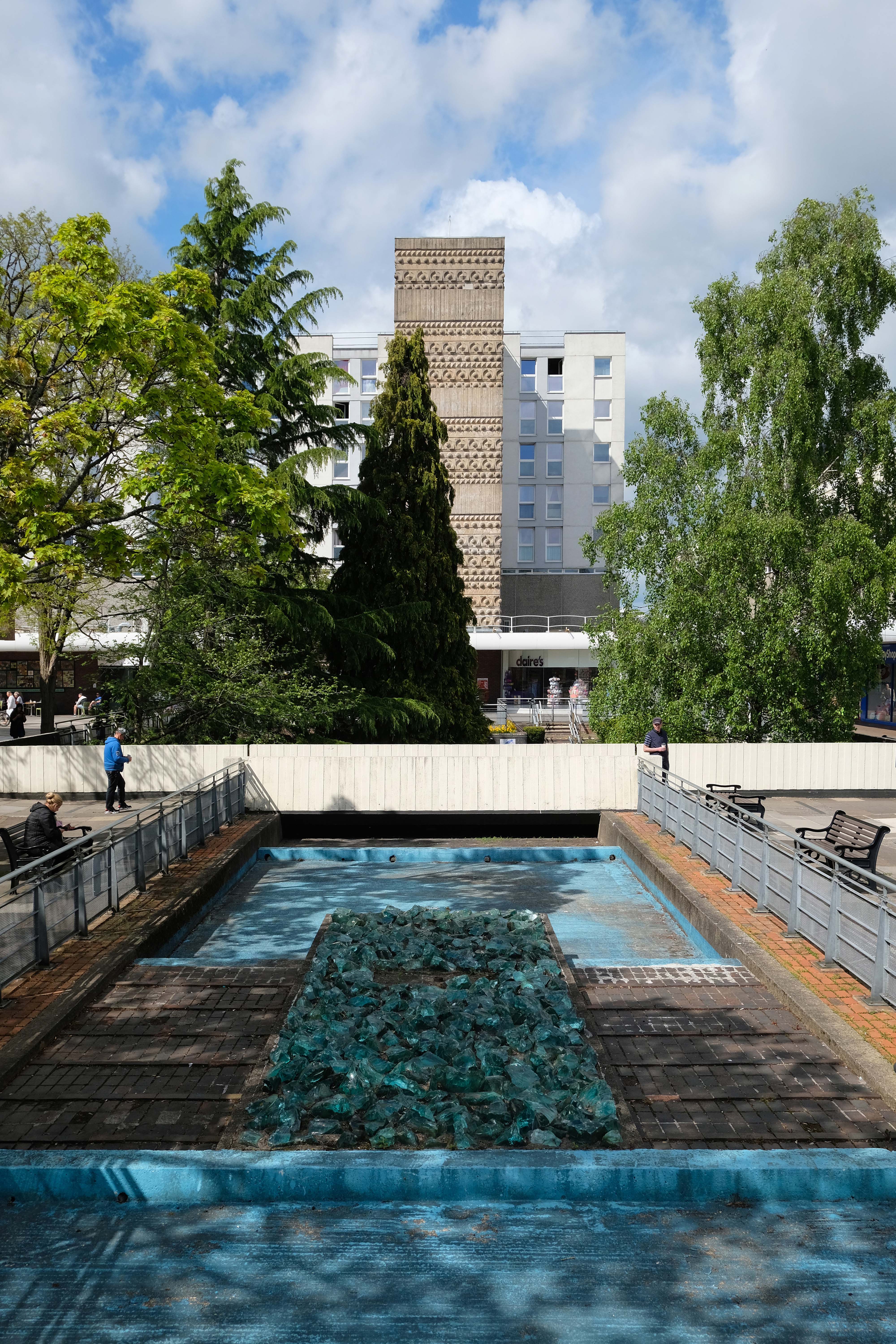
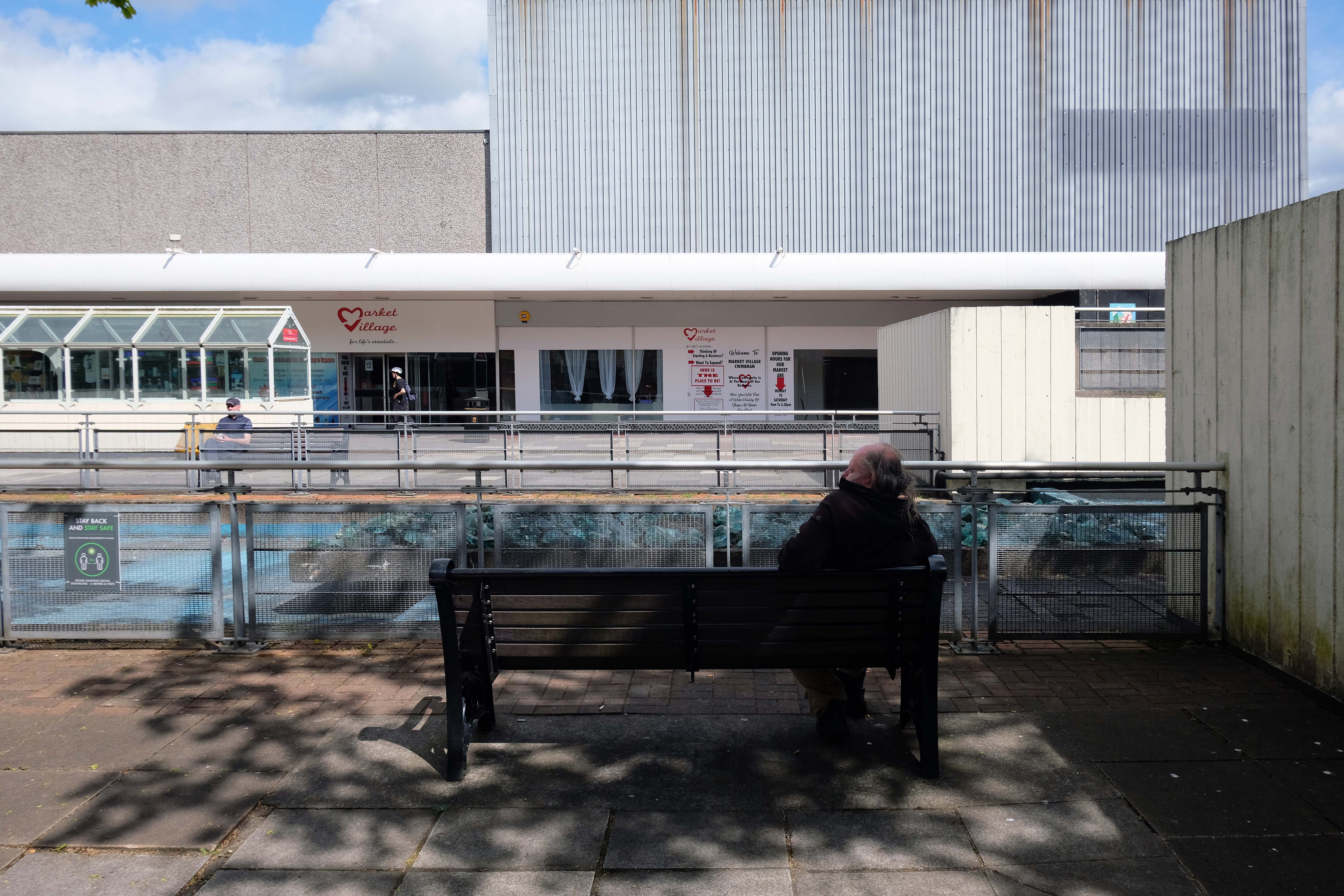
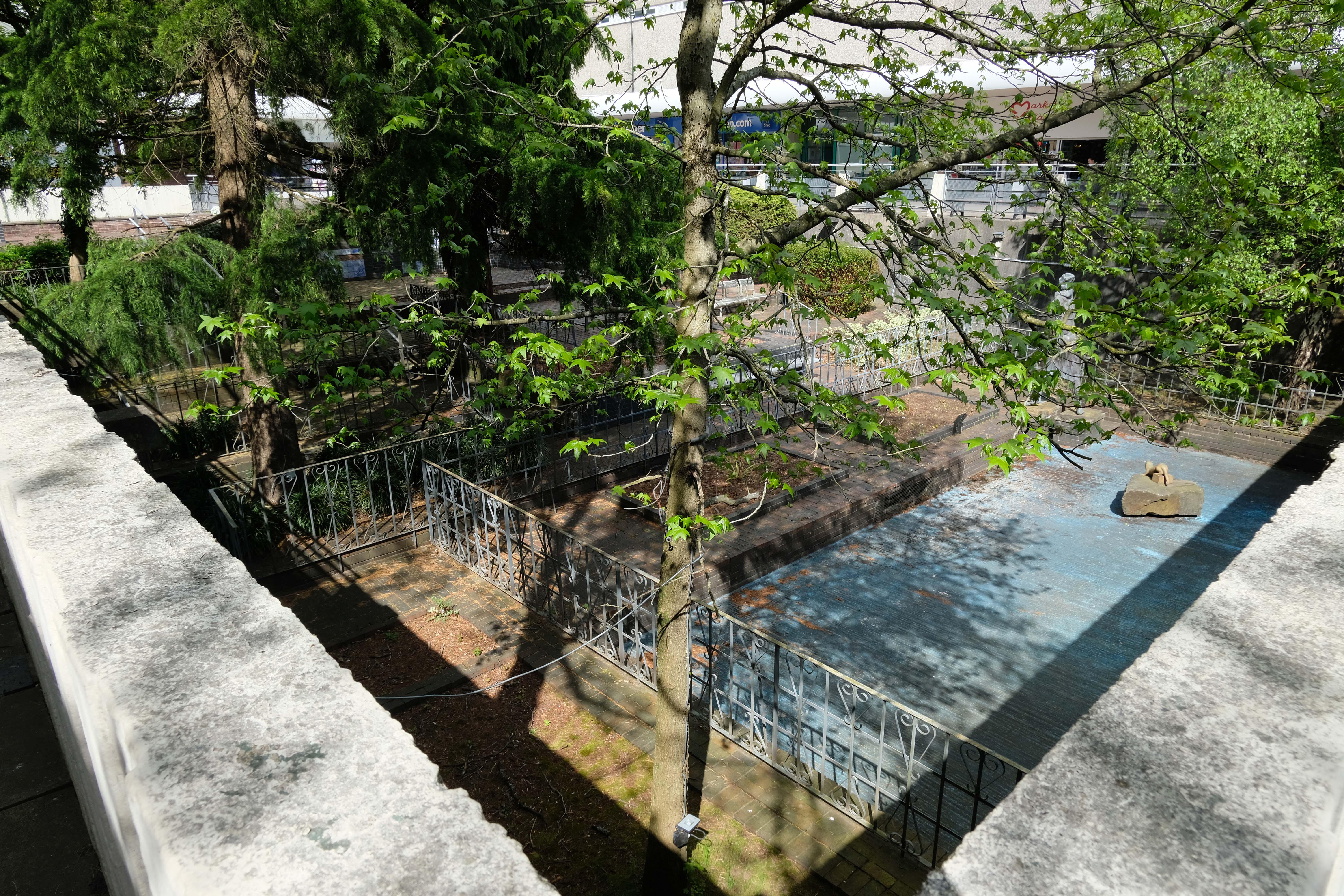
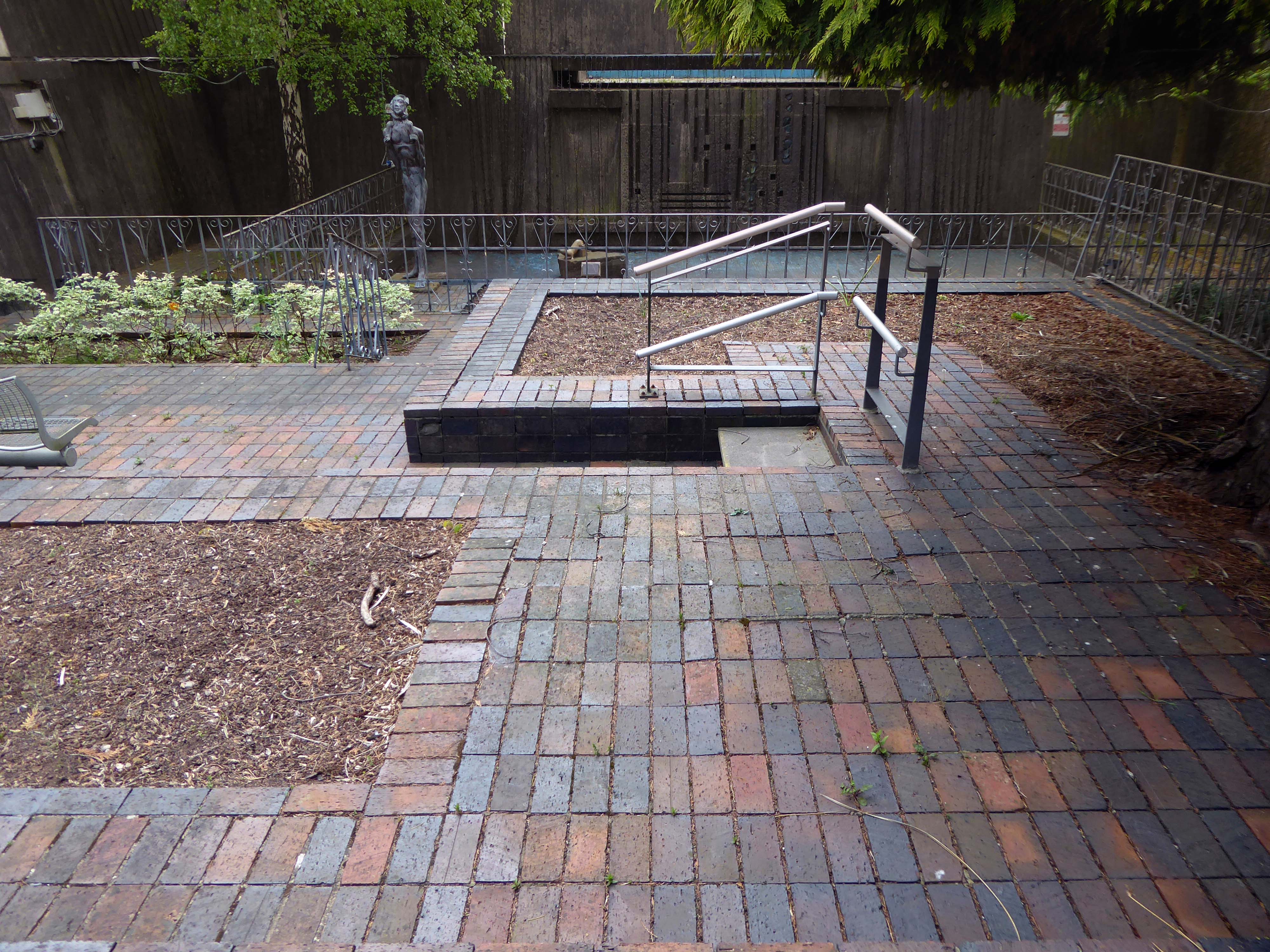
There is a water feature currently off limits and without the water that would elevate the feature to a fully functioning feature.
Plans proposed in 2018 could may herald the demise of this important public work of art.
Plans to level the water gardens in Monmouth Square at the Cwmbran Centre will be reviewed by Torfaen council’s planning committee.
The proposal also includes a modern café with a glazed front, the development of an events space to house farmers markets and street theatre and a green area.
Rebecca McAndrew, Torfaen council’s principal planning officer, said in the report that the water feature would be filled in and flattened as part of “an ongoing renovation programme”.
The application states that the area has a ‘weary and dated appearance’ and do not meet disability access requirements.
According to the report, the water gardens last flowed 13 years ago and its demolition would lead to further improvements at Wales’ second largest shopping centre.
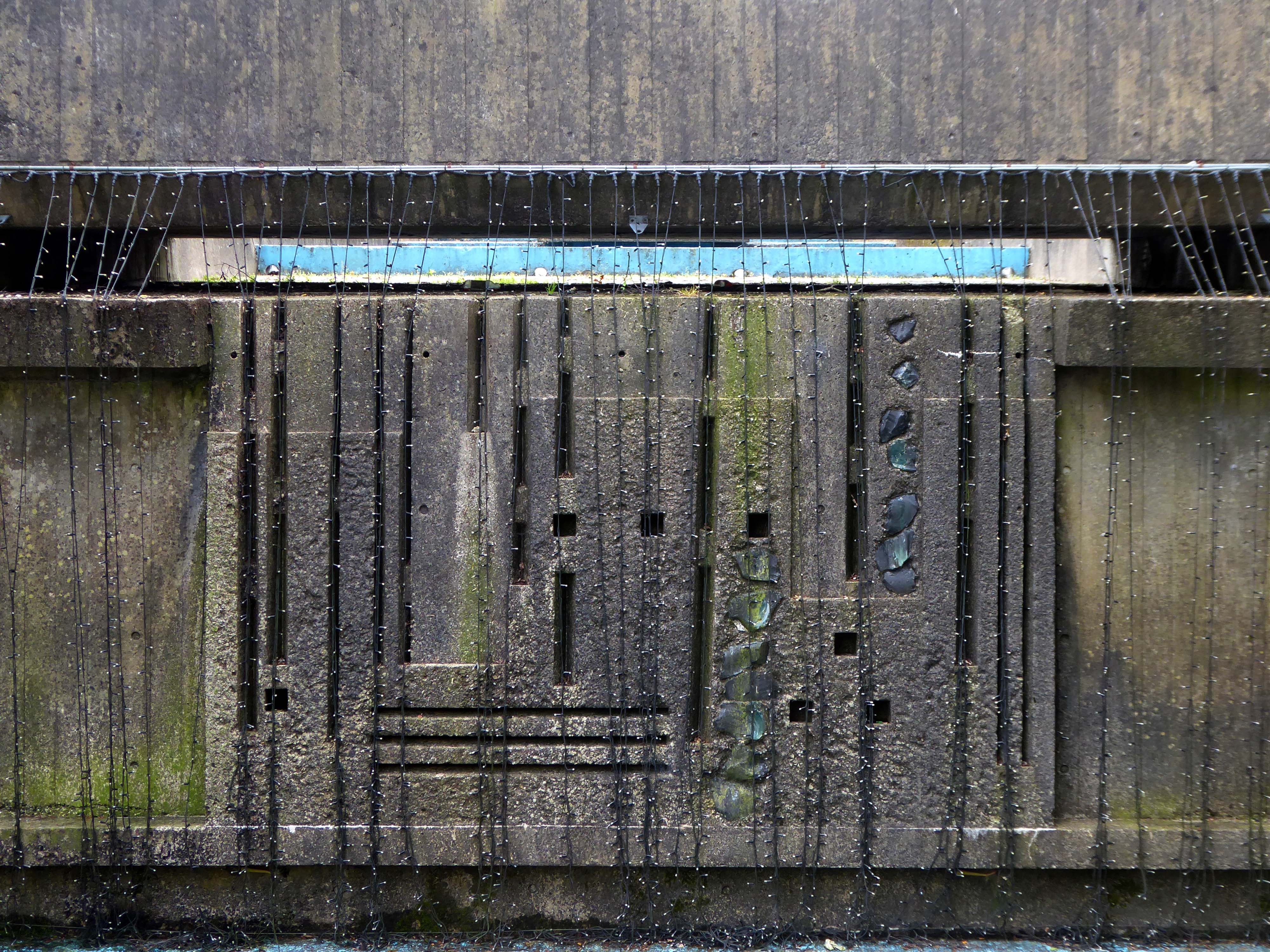
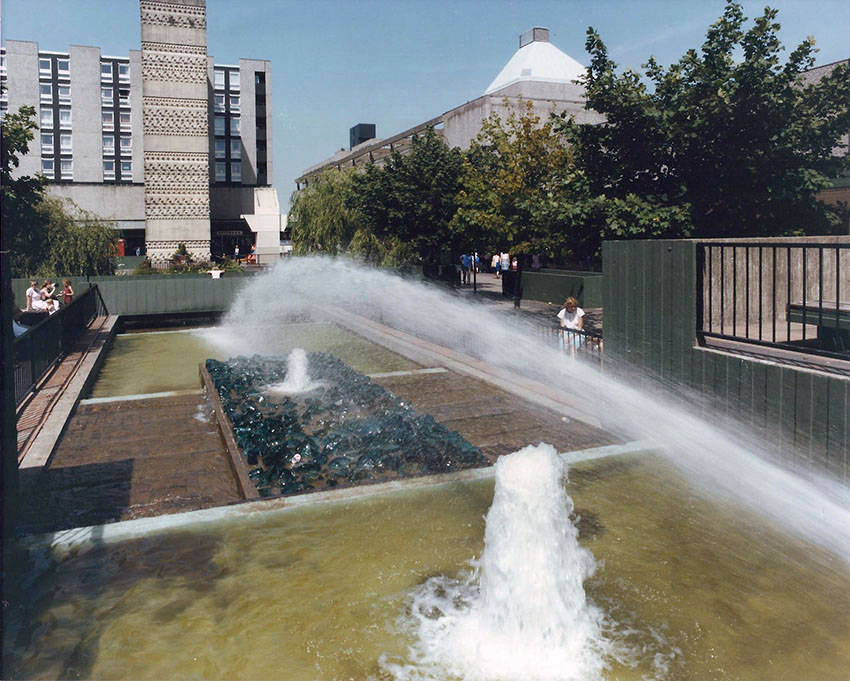
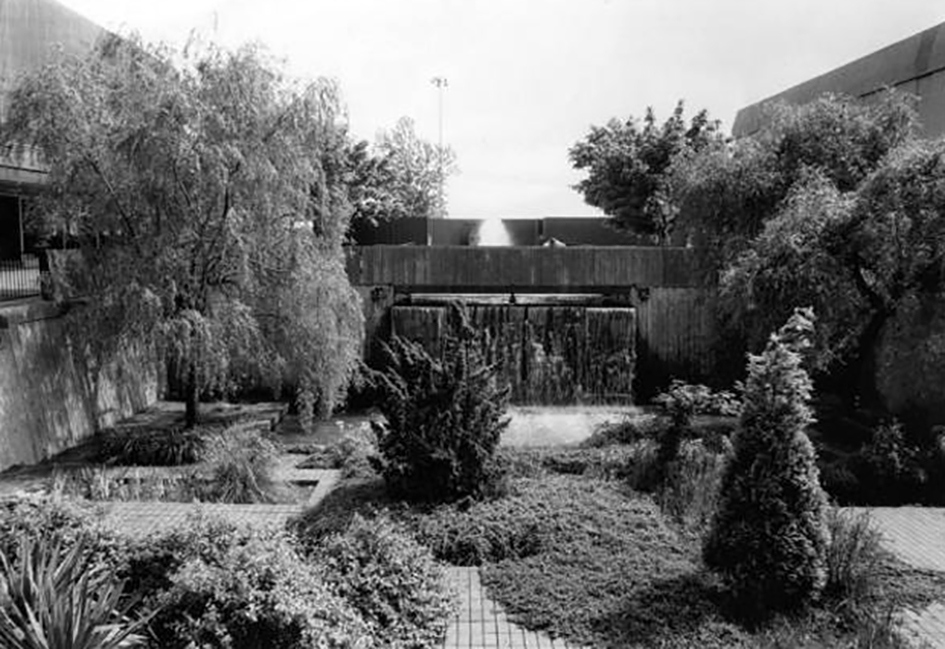
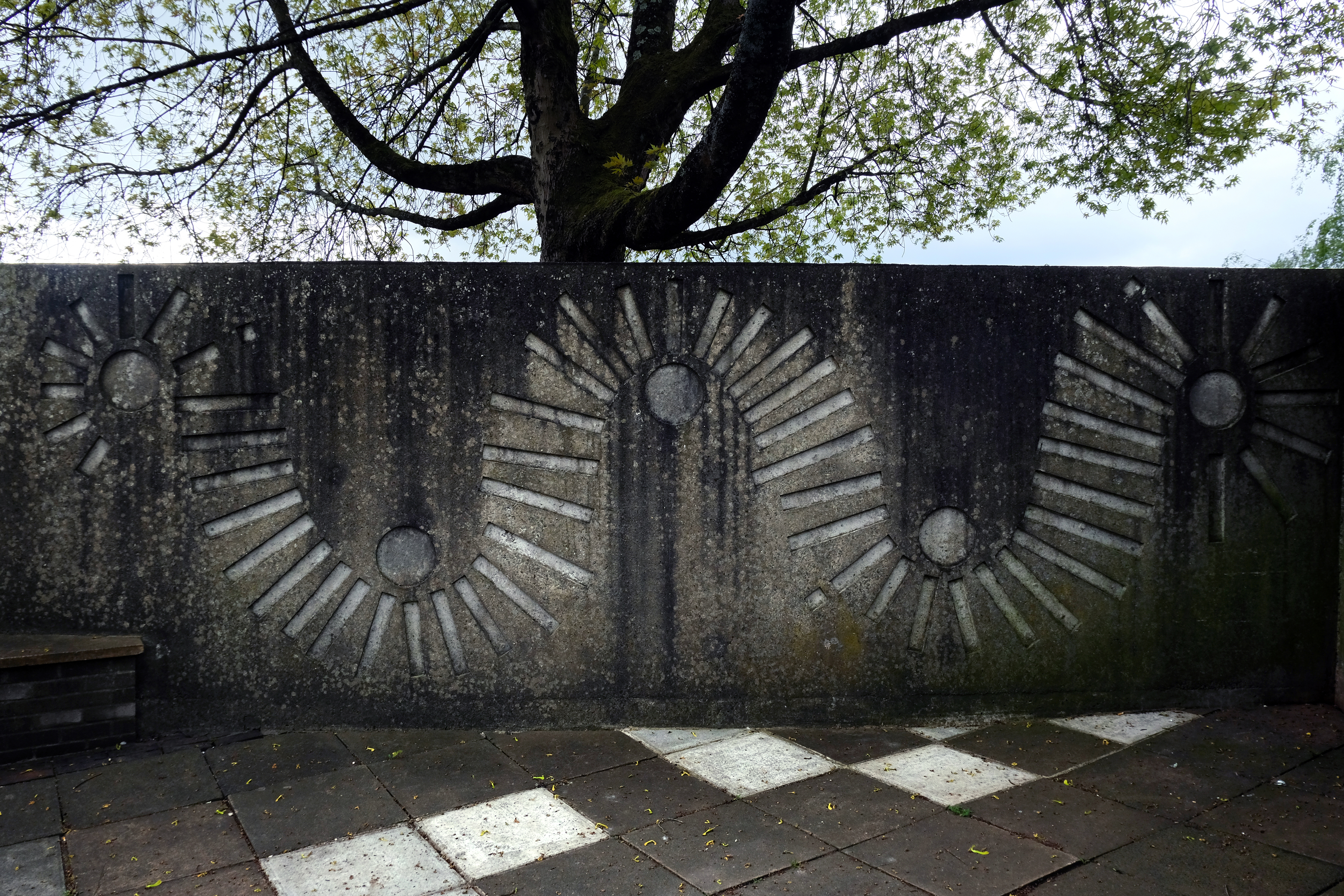
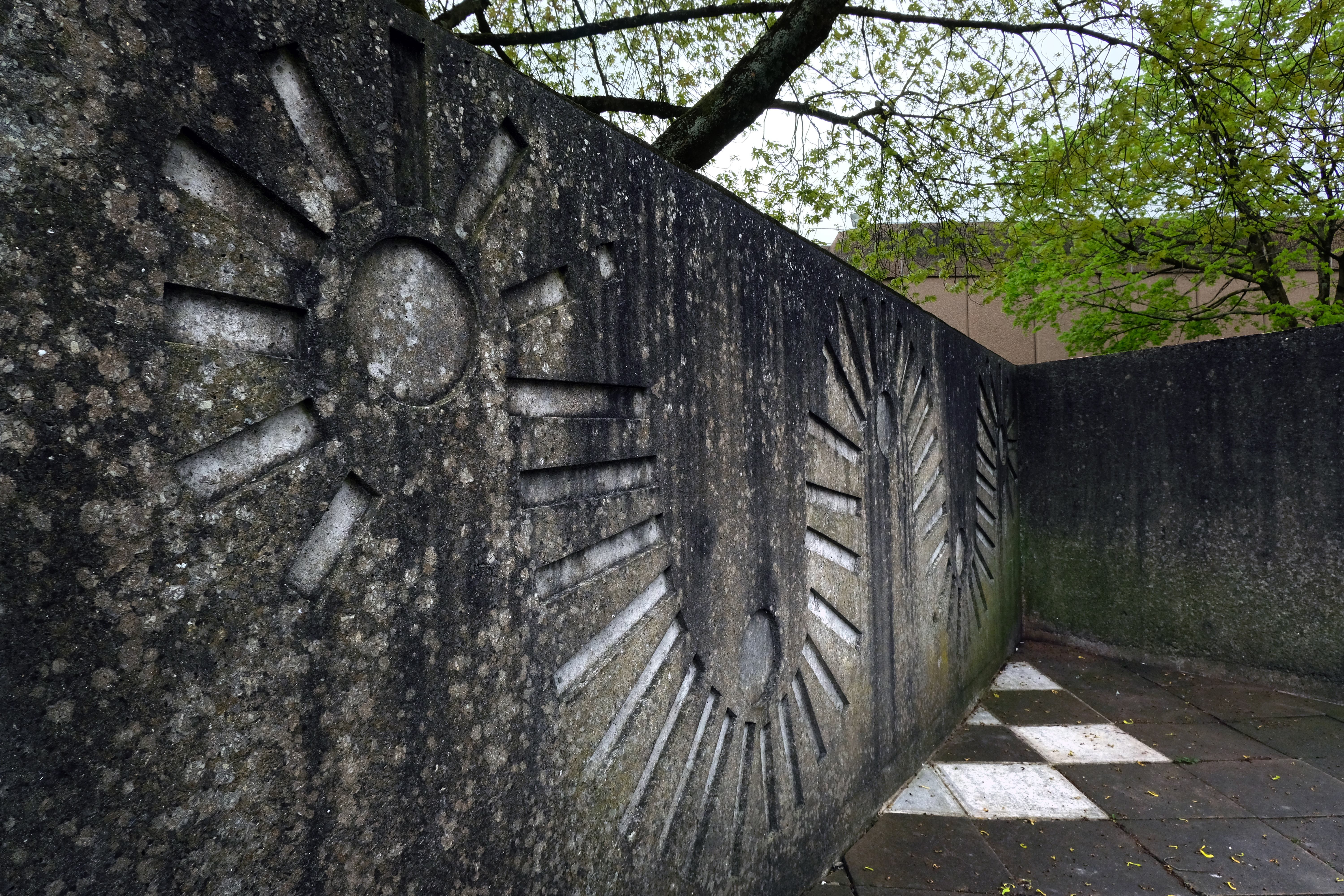
The Water Gardens were designed by the CDC Chief Architect Gordon Redfern as a key visual and recreational element of the Town Centre. His focus was on combining different textures in the form of hard landscaping and planting, with the sense of movement and sound created by running water. At the upper end a pool, containing an artwork created from Pilkington Glass, was fed by a horizontal water jet which was in turn led by a small ‘canal’ to the lower, sunken garden. With water cascading down the southern retaining wall, consisted of moulded concrete sporting abstract geometric form, and variety of trees and shrubs, this formed an area for busy shoppers and families to relax and socialise.
The old Royal building opened in 1978 and has served the city ever since – despite ongoing infrastructure problems. Looking at the crumbling, unsightly building, it is clear why Liverpool is desperate for its sparkling new facility to finally open.
When the new build plans were first announced, the Trust stated: “Once the new hospital is constructed, our existing hospital will be demolished. In its place, there are plans to develop a world-class health campus, as well as landscaping green space, roughly the size of Chavasse Park.”
In January 2020, two years after Carillion’s collapse, a report from the National Audit Office, projected the overall costs of the new Royal could tip over the £1.1 billion mark. It also commented on the plans for the old building, stating: “Further work to demolish the old hospital and create a new underground car park and public plaza, was not included in the PFI project and is currently unfunded. The cost of this was not included in the PFI project and is currently estimated at £38 million.”
The Royal Liverpool – it’s amazing that people are supposed to get better there. Then again, what motivation it must be to get yourself back home! No wonder it’s being replaced.
J Carter, Aigburth
In 2011 the Echo’s readers voted it the ugliest building in town.
Unloved and due for demolition just as soon as the money can be found – though it may be around for some time to come – go and have a look.
Walking toward Giles Gilbert Scott’s – Anglican Cathedral via the University Campus.
We are greeted by William Mitchell’s sliding door panels.
Let’s take a look inside.
Above is the tower with large areas of stained glass designed by John Piper and Patrick Reyntiens in three colours – yellow, blue and red, representing the Trinity.
On the altar, the candlesticks are by RY Goodden and the bronze crucifix is by Elisabeth Frink. Above the altar is a baldachino designed by Gibberd as a crown-like structure composed of aluminium rods, which incorporates loudspeakers and lights. Around the interior are metal Stations of the Cross, designed by Sean Rice. Rice also designed the lectern, which includes two entwined eagles. In the Chapel of Reconciliation, the stained glass was designed by Margaret Traherne. Stephen Foster designed, carved and painted the panelling in the Chapel of St. Joseph. The Lady Chapel contains a statue of the Virgin and Child by Robert Brumby and stained glass by Margaret Traherne. In the Blessed Sacrament Chapel is a reredos and stained glass by Ceri Richards and a small statue of the Risen Christ by Arthur Dooley. In the Chapel of Unity is a bronze stoup by Virginio Ciminaghi, and a mosaic of the Pentecost by Hungarian artist Georg Mayer-Marton which was moved from the Church of the Holy Ghost, Netherton, when it was demolished in 1989. The gates of the Baptistry were designed by David Atkins.
Designed by NBBJ and HKS – The Royal Hospital is one of the national infrastructure schemes being delivered under a Government PFI contract, with work having started in 2014 led by now-collapsed contractor Carillion.
After Carillion went into administration, further issues were uncovered during a structural review by Arup in 2018, including that the cladding on the building was unsafe and the project had to be reviewed and re-costed as a result. The targeted completion date is now five years later than planned.
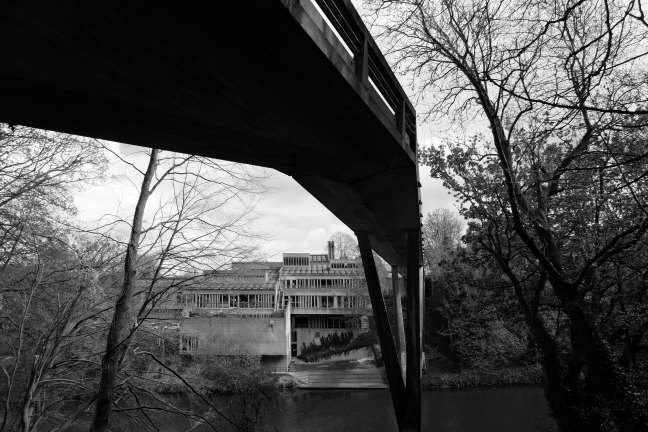
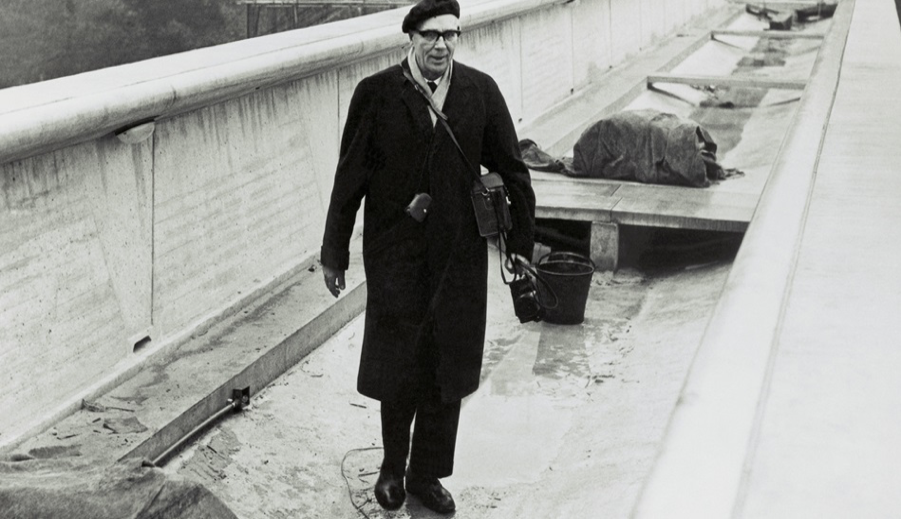
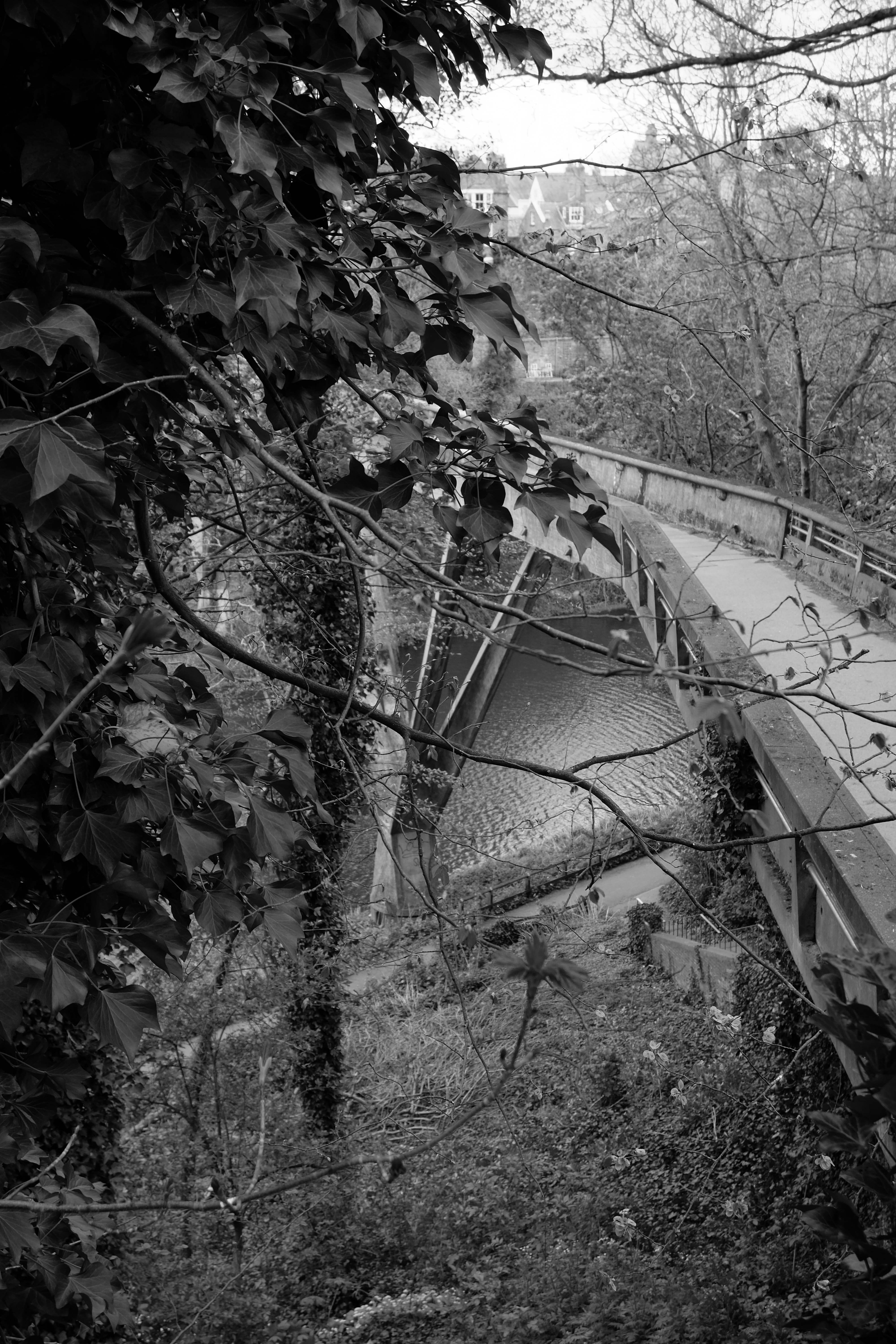
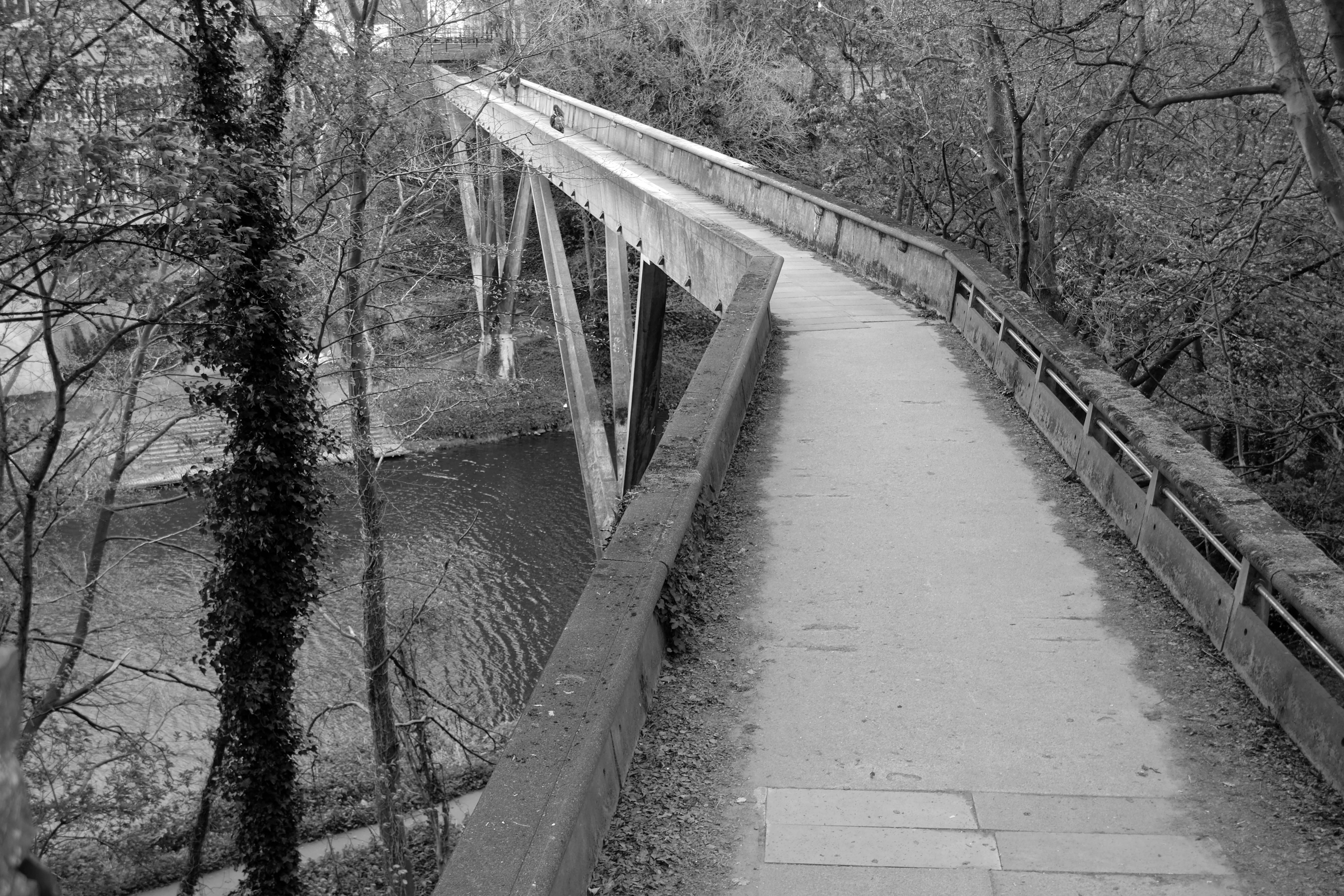
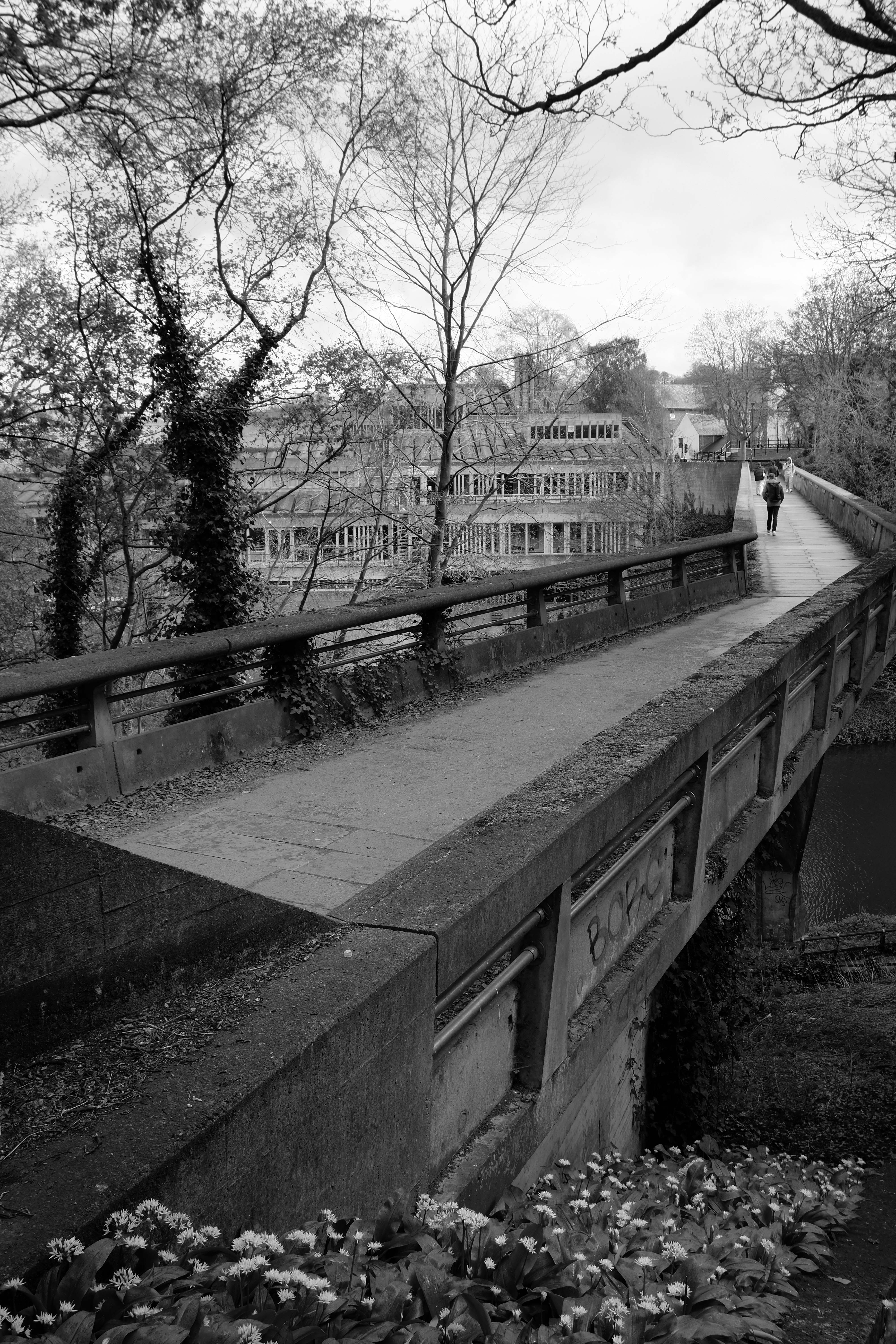
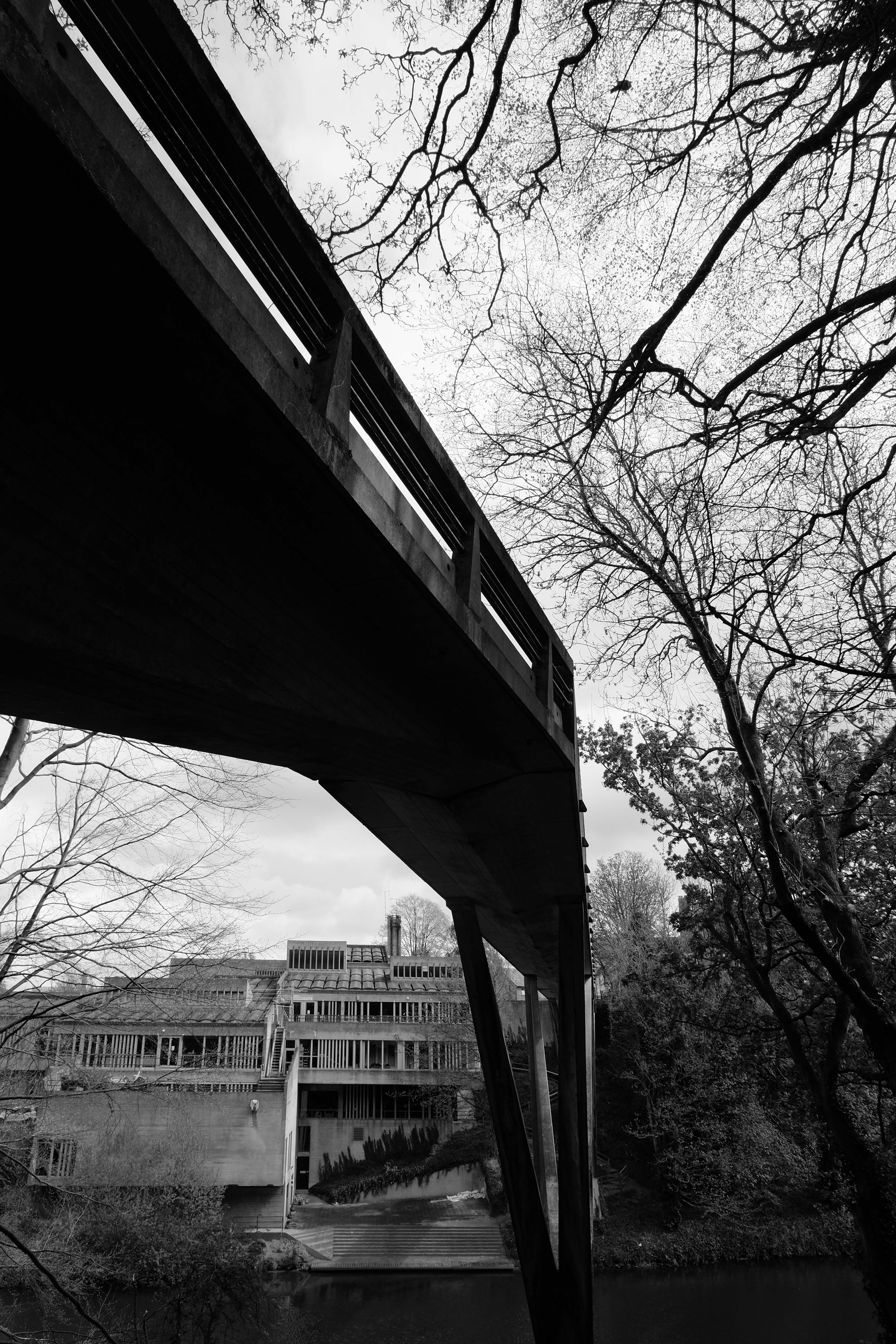
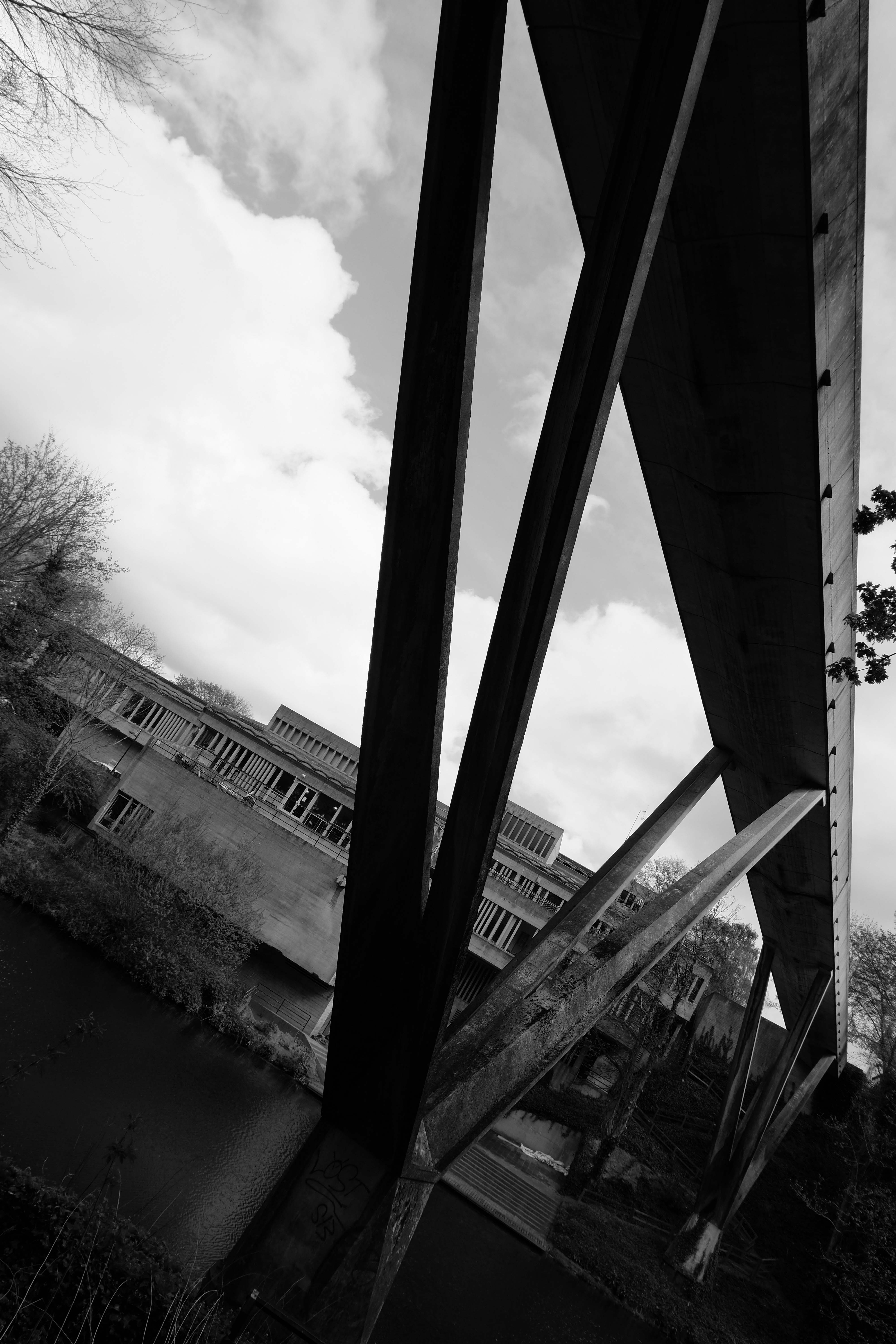
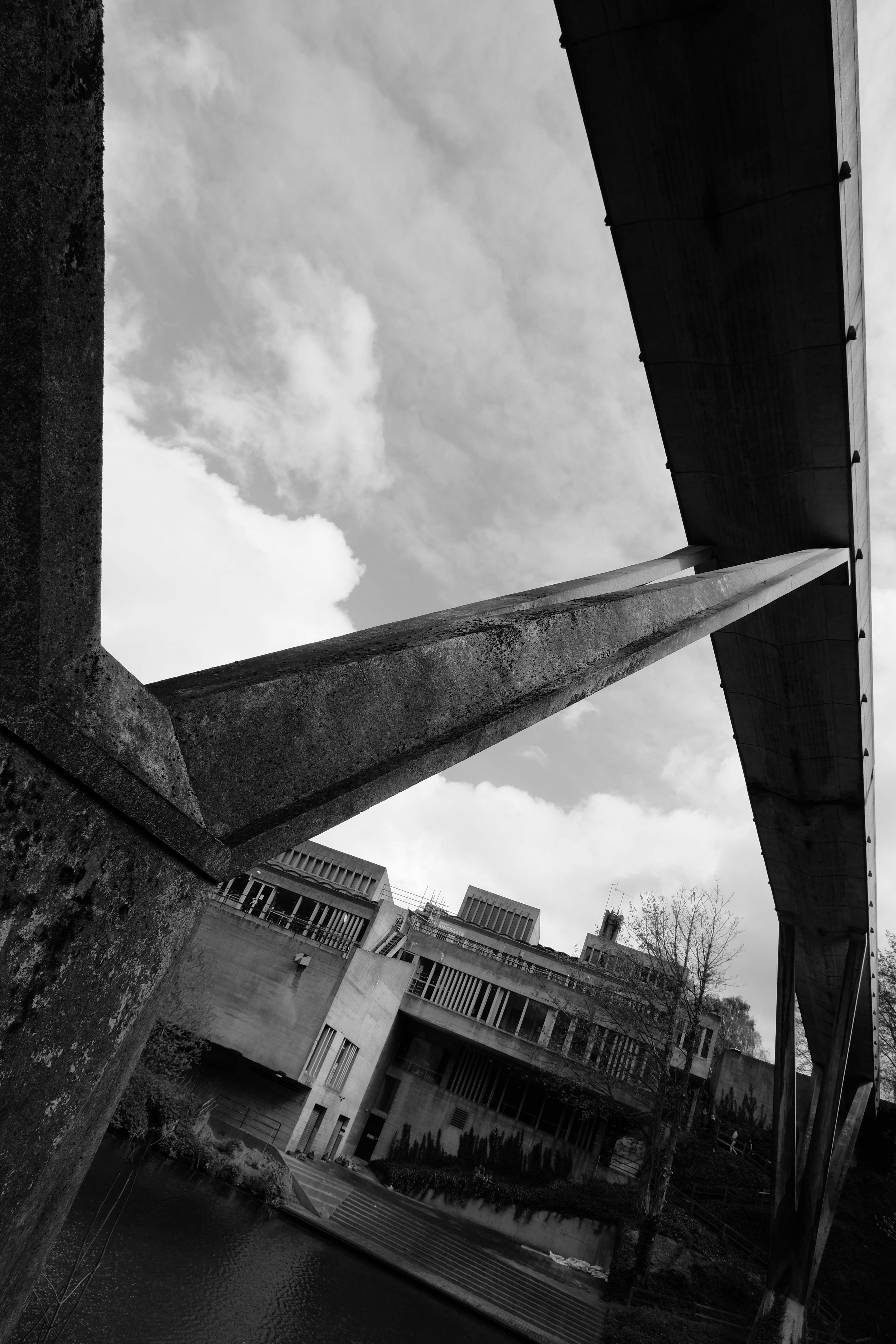
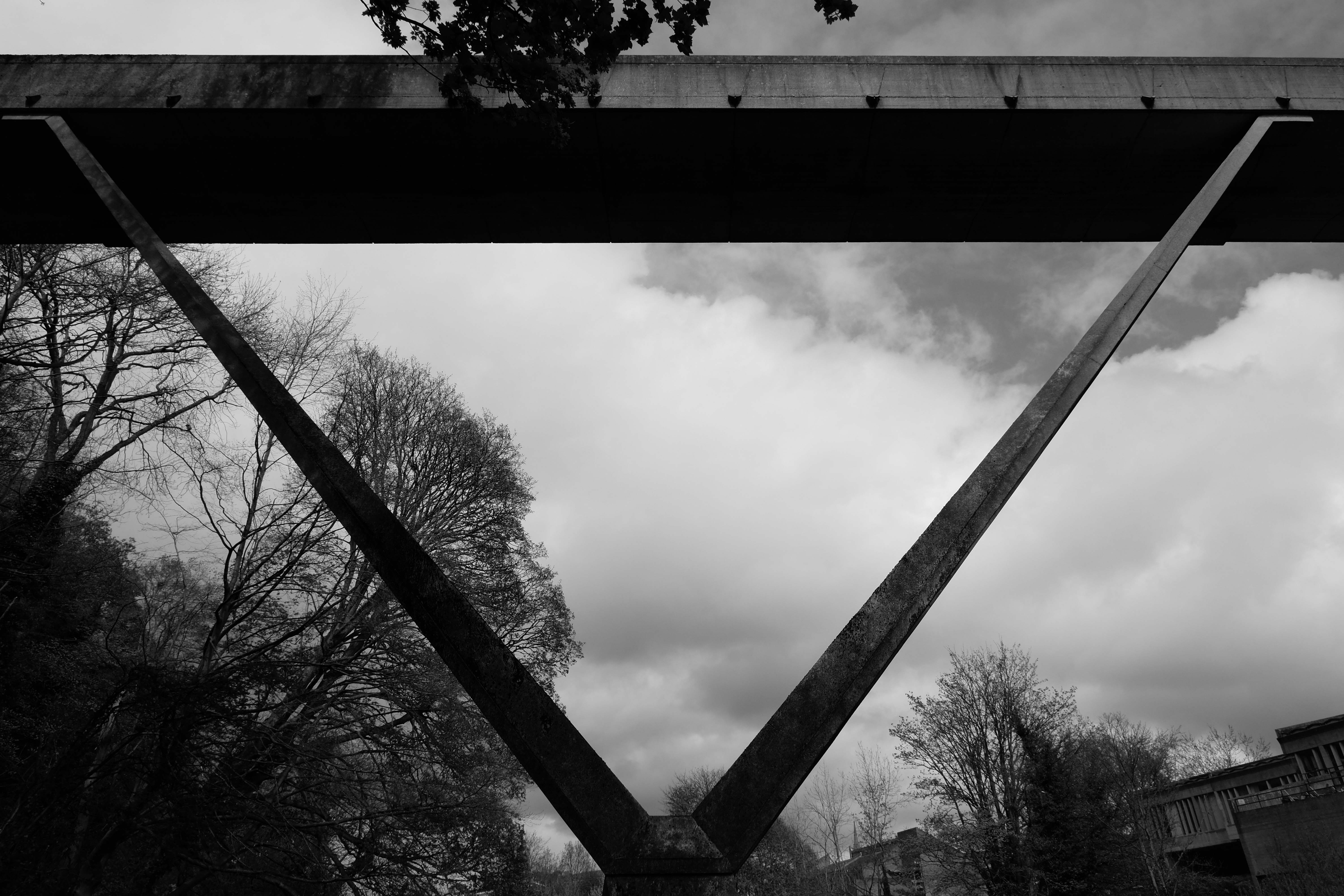
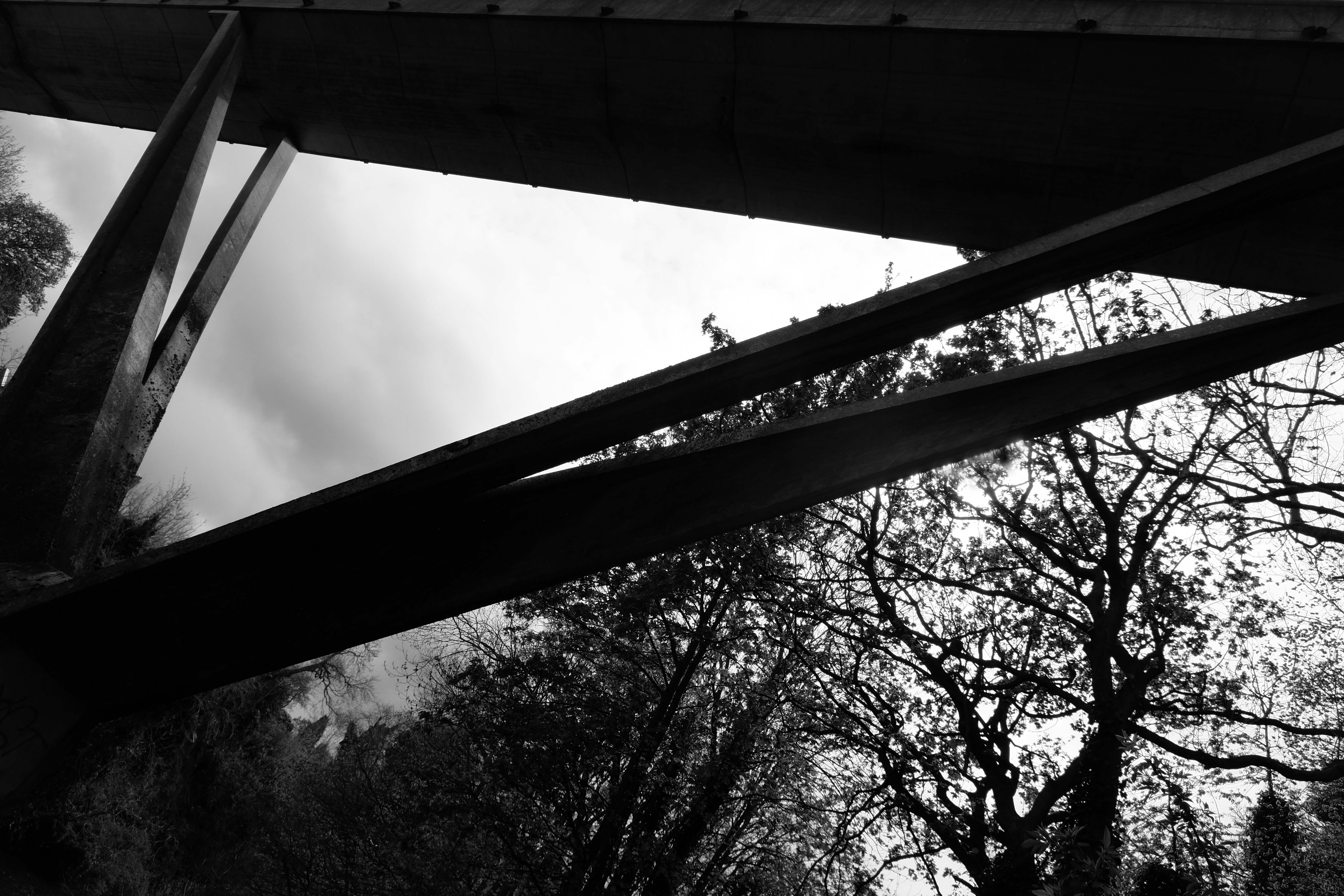
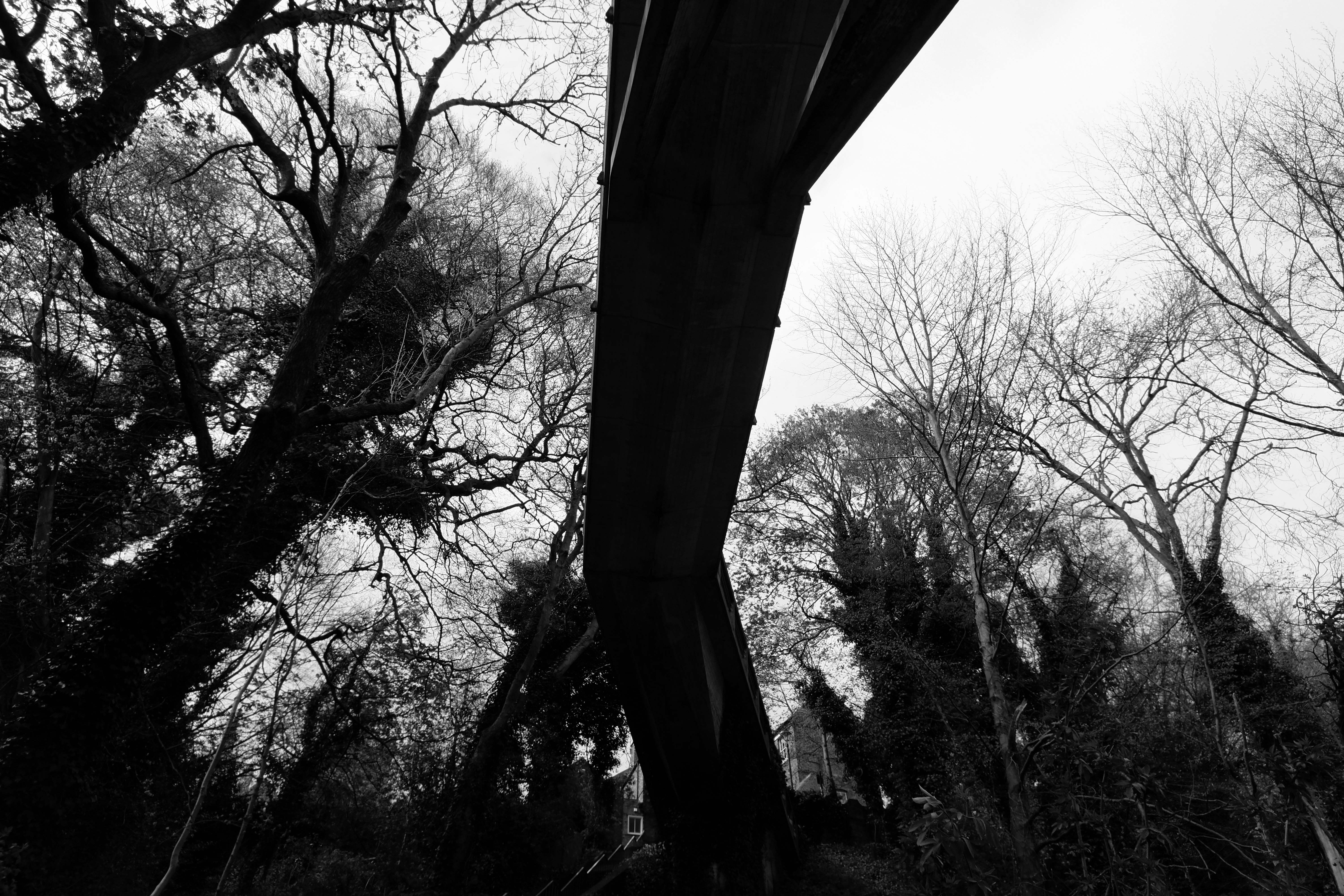
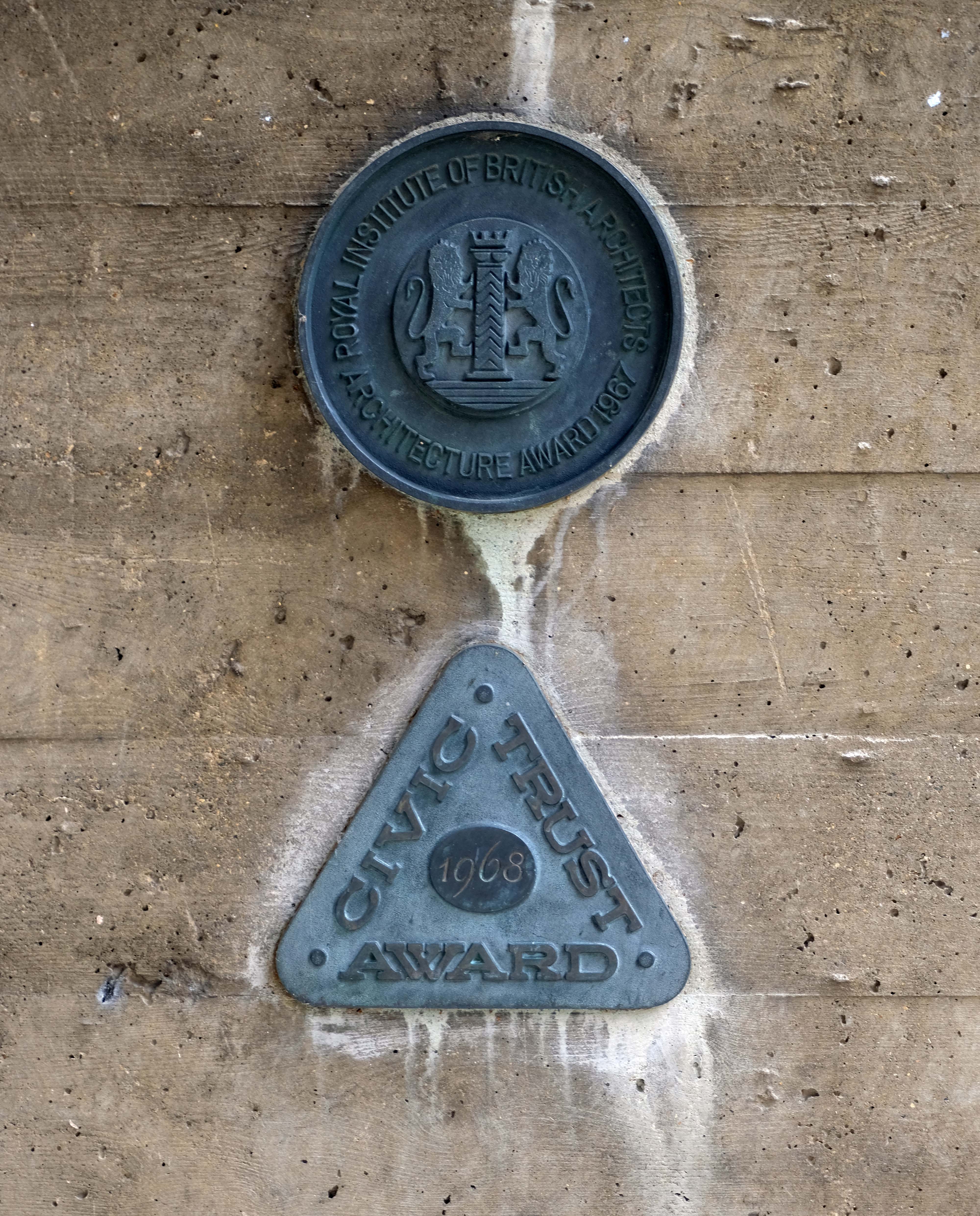
The last structure that Ove Arup designed himself was the award-winning reinforced concrete Kingsgate Footbridge in Durham, England.
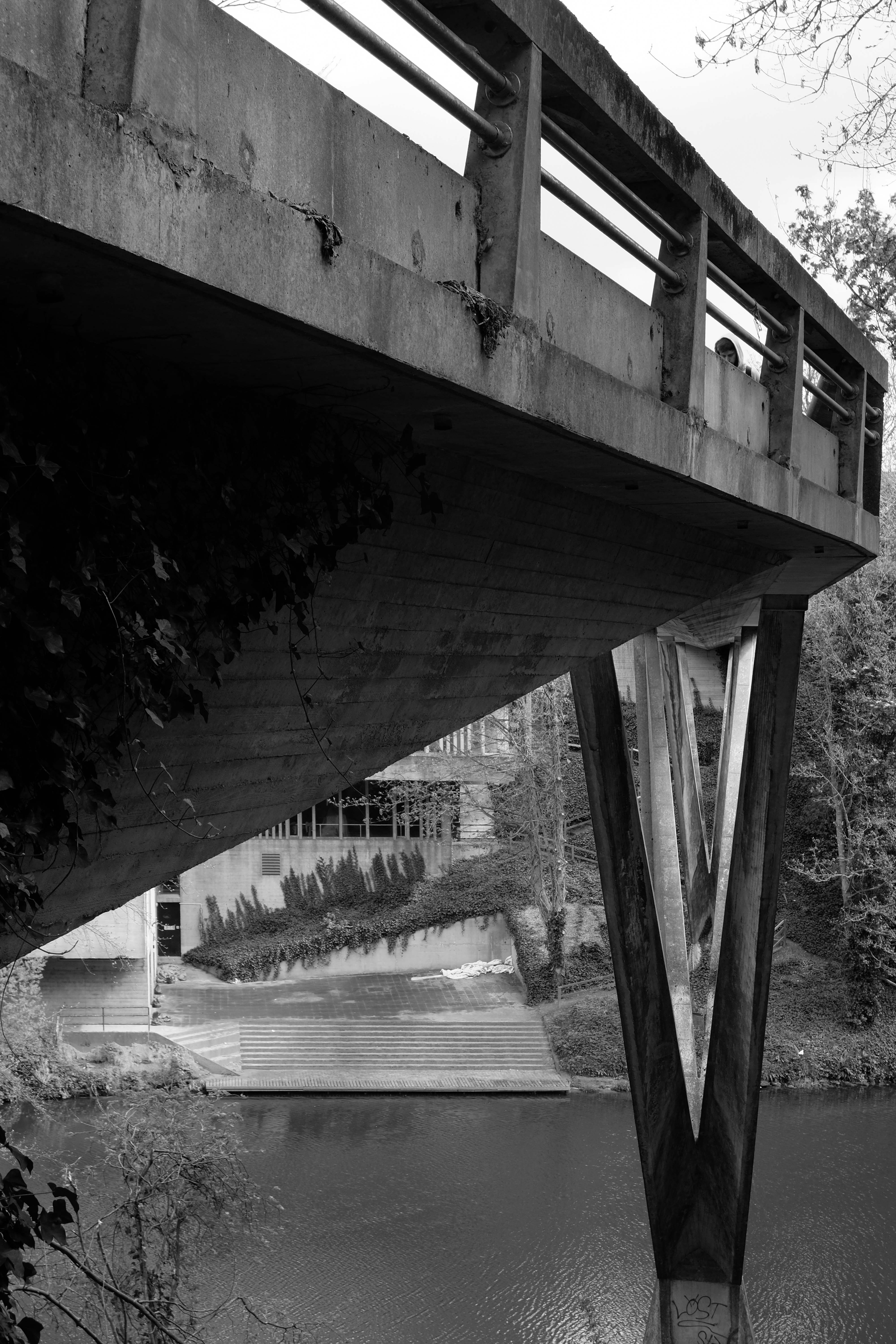
Completed in 1963, Arup considered this bridge his finest work. He planned every detail, including the unusual way it was constructed. The need for scaffolding on the river was eliminated by casting the bridge in two halves, one for each bank. The halves were then swivelled out from the banks to meet.
The two halves pivoted on revolving cones, their meeting point marked by an understated bronze expansion joint. Bearings were designed at the base of each part to allow rotation, robust but cheap enough to be used only once.
This elegant example of simple mechanical engineering provided tense moments for the team while the spans were turned and connected.
John Martin, project manager for the bridge, said:
“Ove never seemed to worry that anything might go wrong. That was fine, it just meant that one felt fully responsible for seeing that it didn’t. But he got quite cross when the contractor took a few, to Ove’s view unnecessary, steps to make doubly sure that construction went smoothly. I think that to him it was a question of spoiling the elegance of the idea”.
I’m ever so fond of concrete footbridges, in fact I have written about our local exemplar.
And have taken great pleasure in teaching and preaching whilst atop such.
So it was with some degree of excited anticipation, that I strode eagerly toward Ove’s bridge – a bridge guaranteed to raise a smile, enchanted by its elegance and audacity.
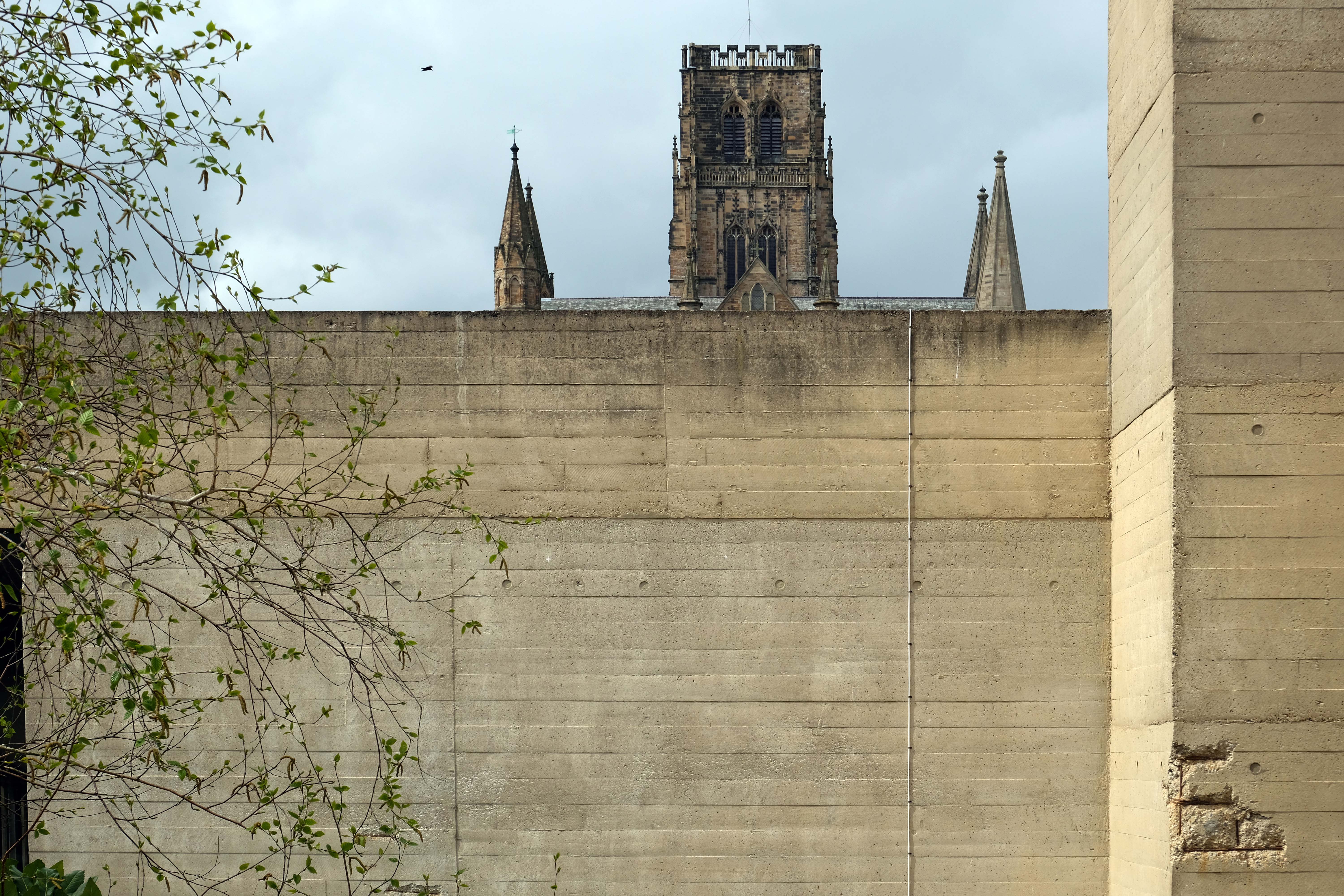
Over we go headlong and fancy free into this black and white concrete world.
Crossing over into colourful off-white world of university life.
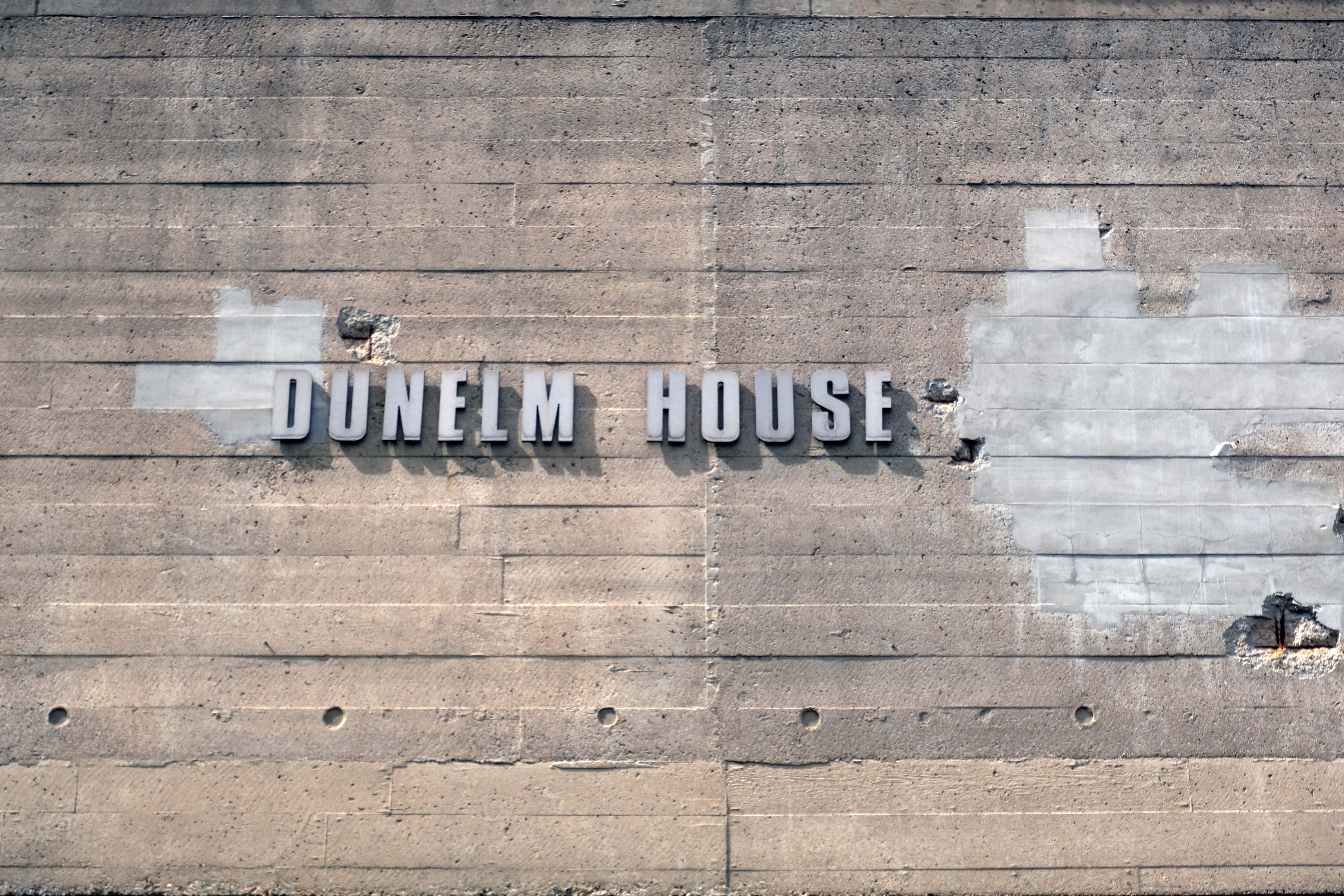
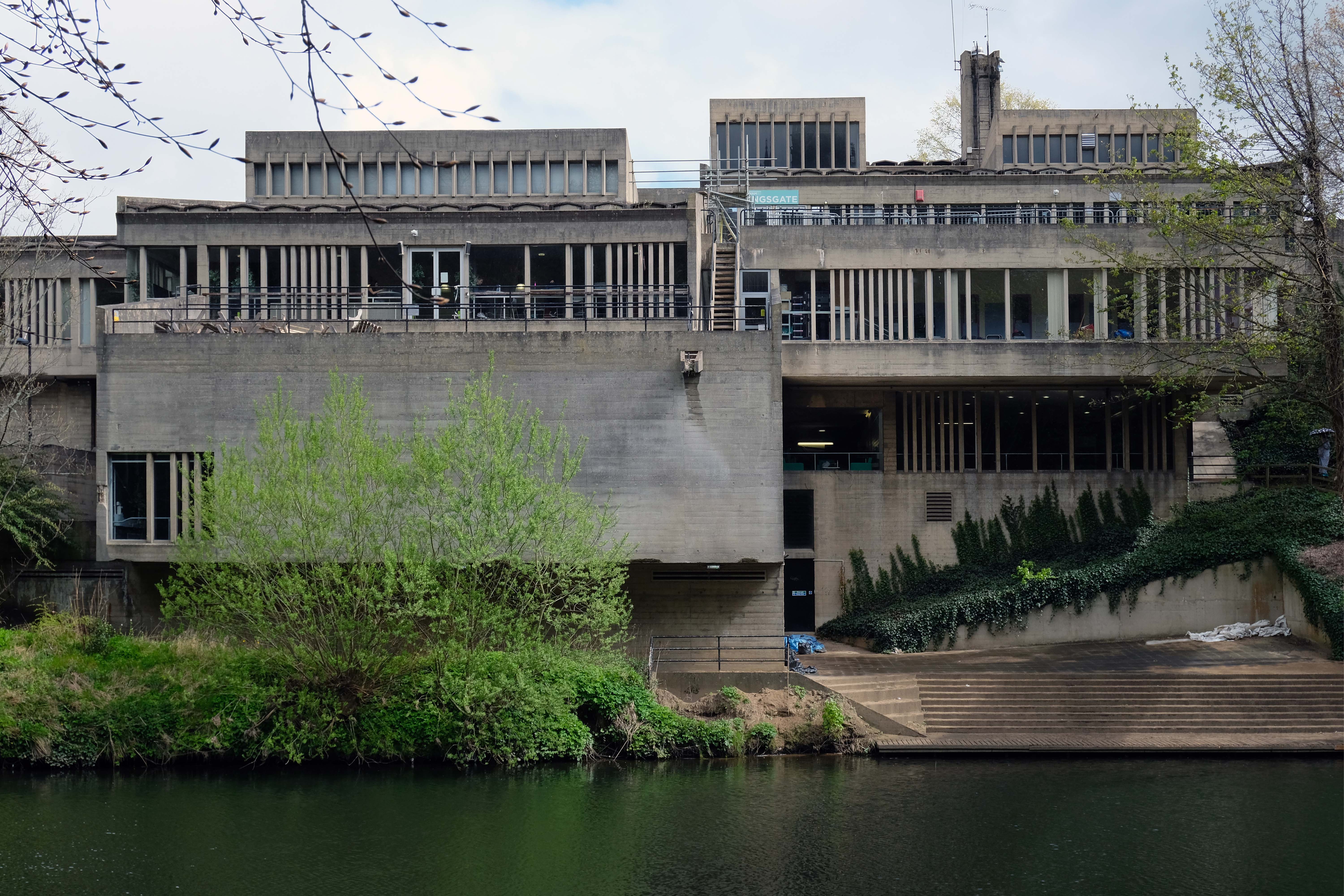
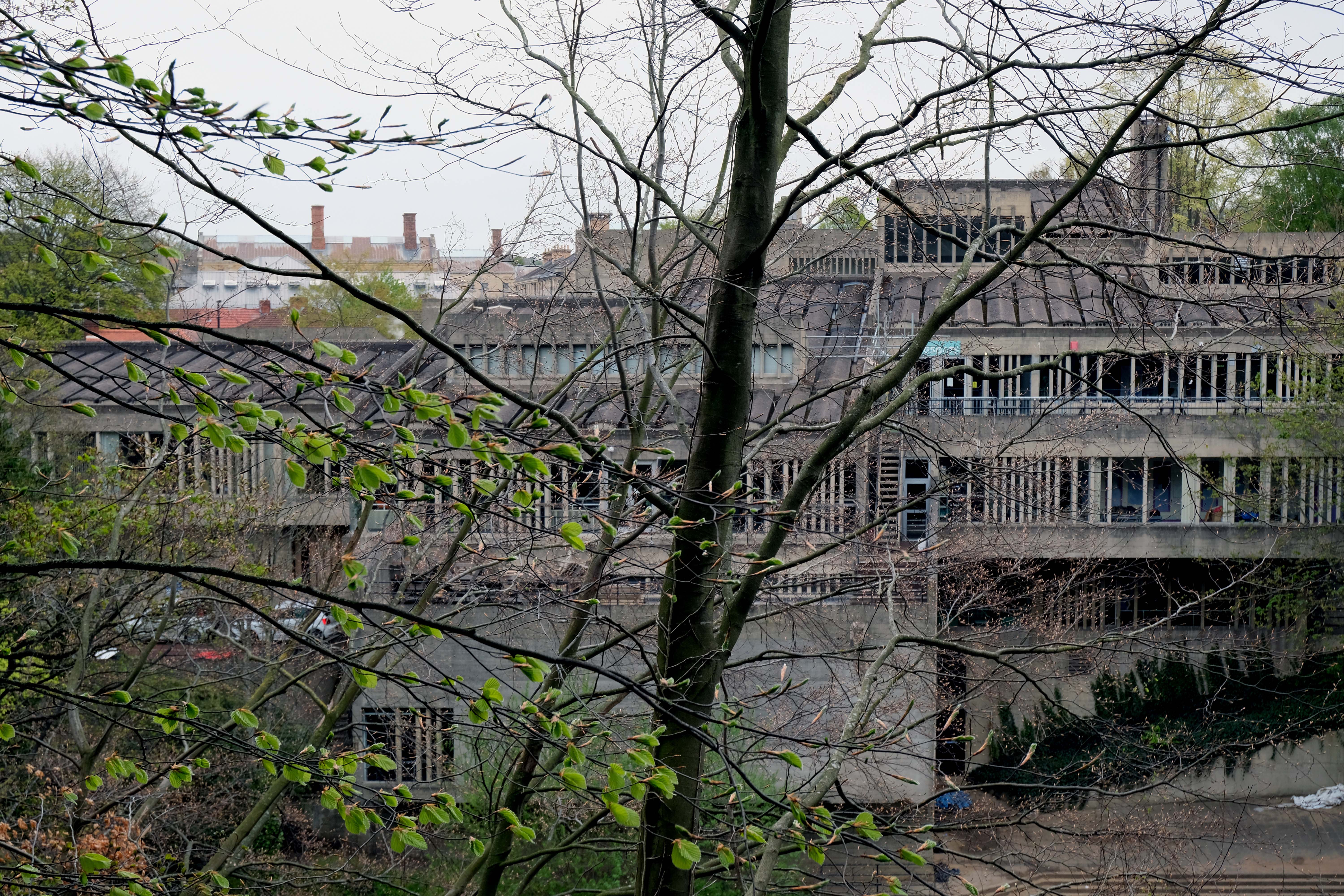
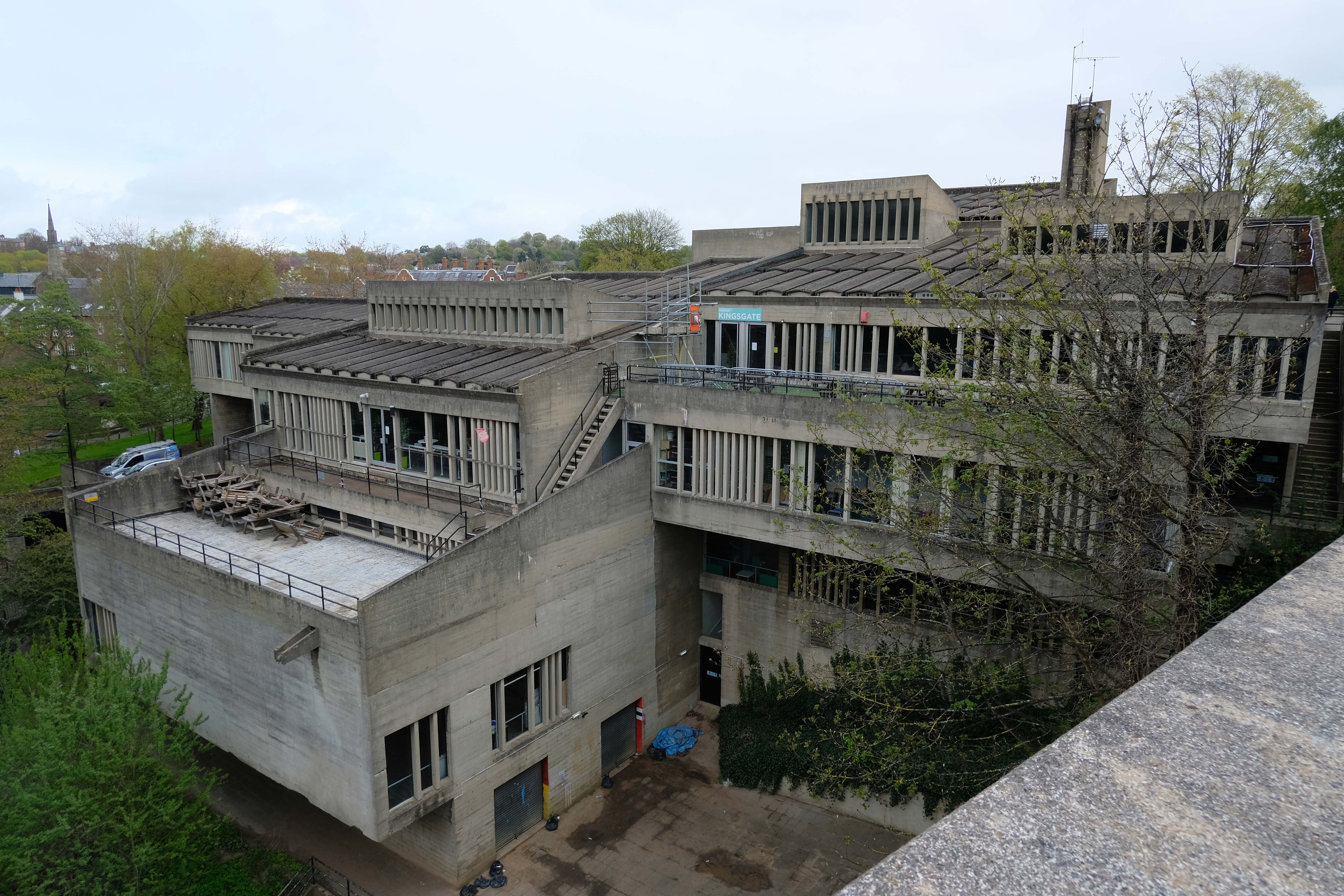
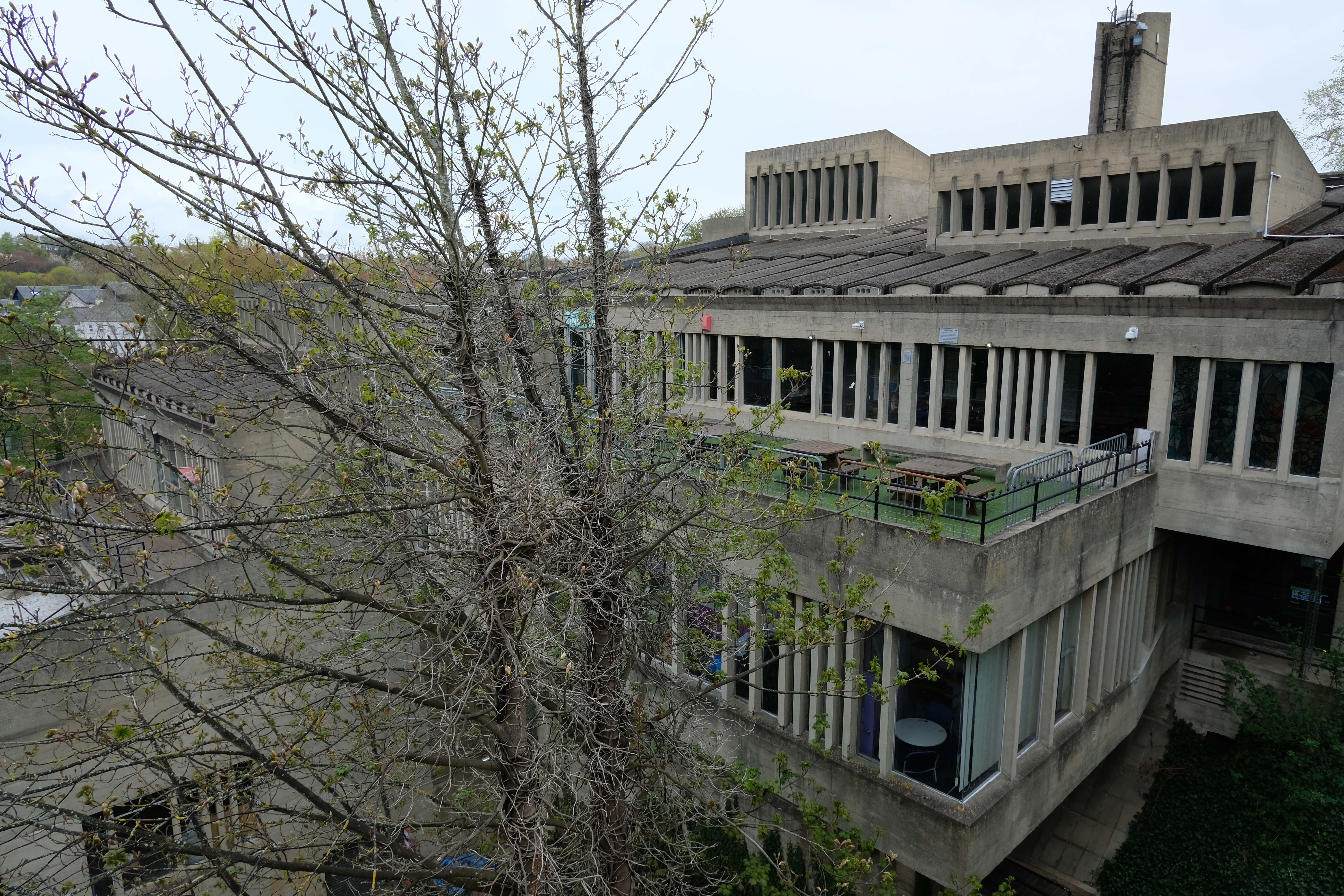
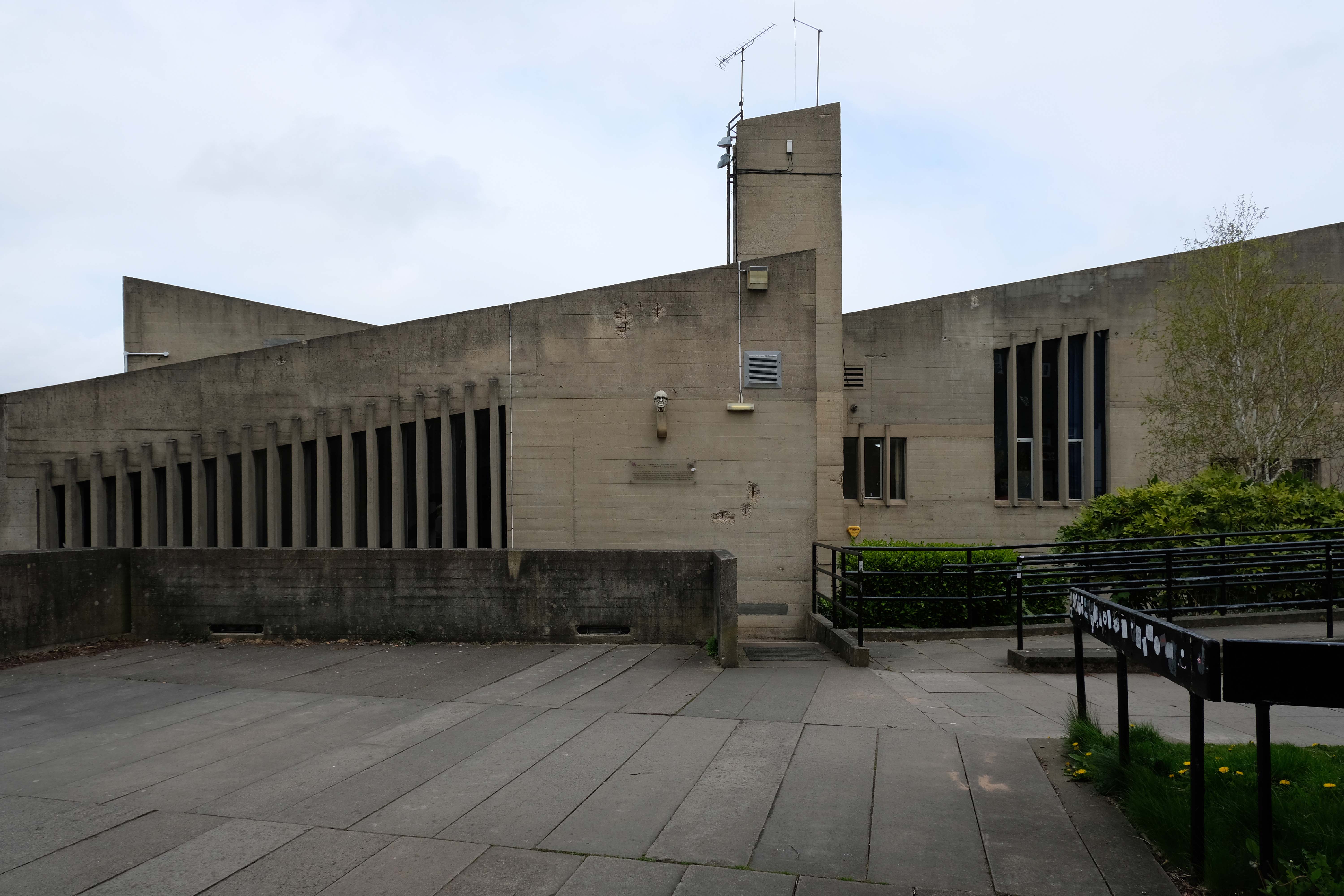
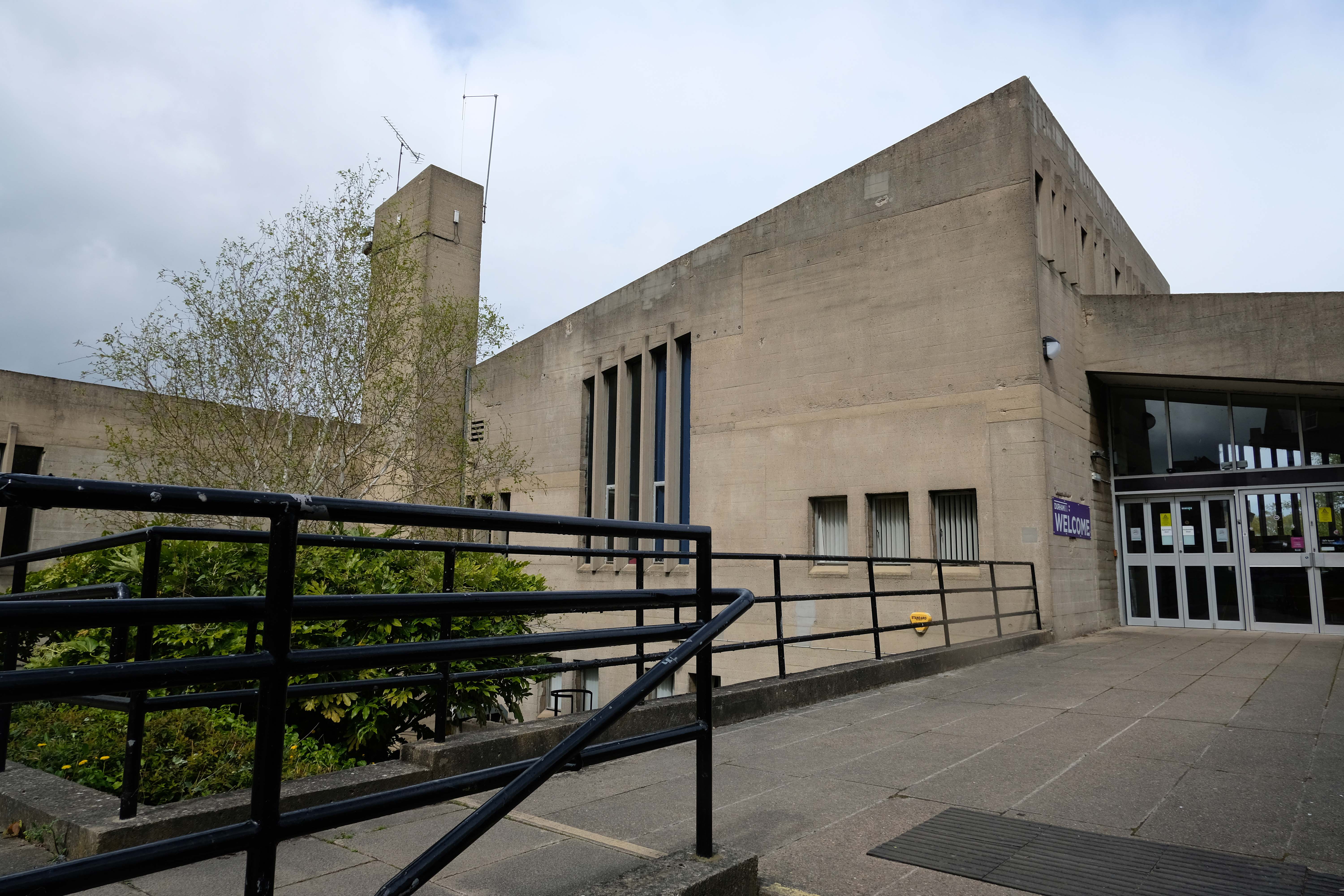
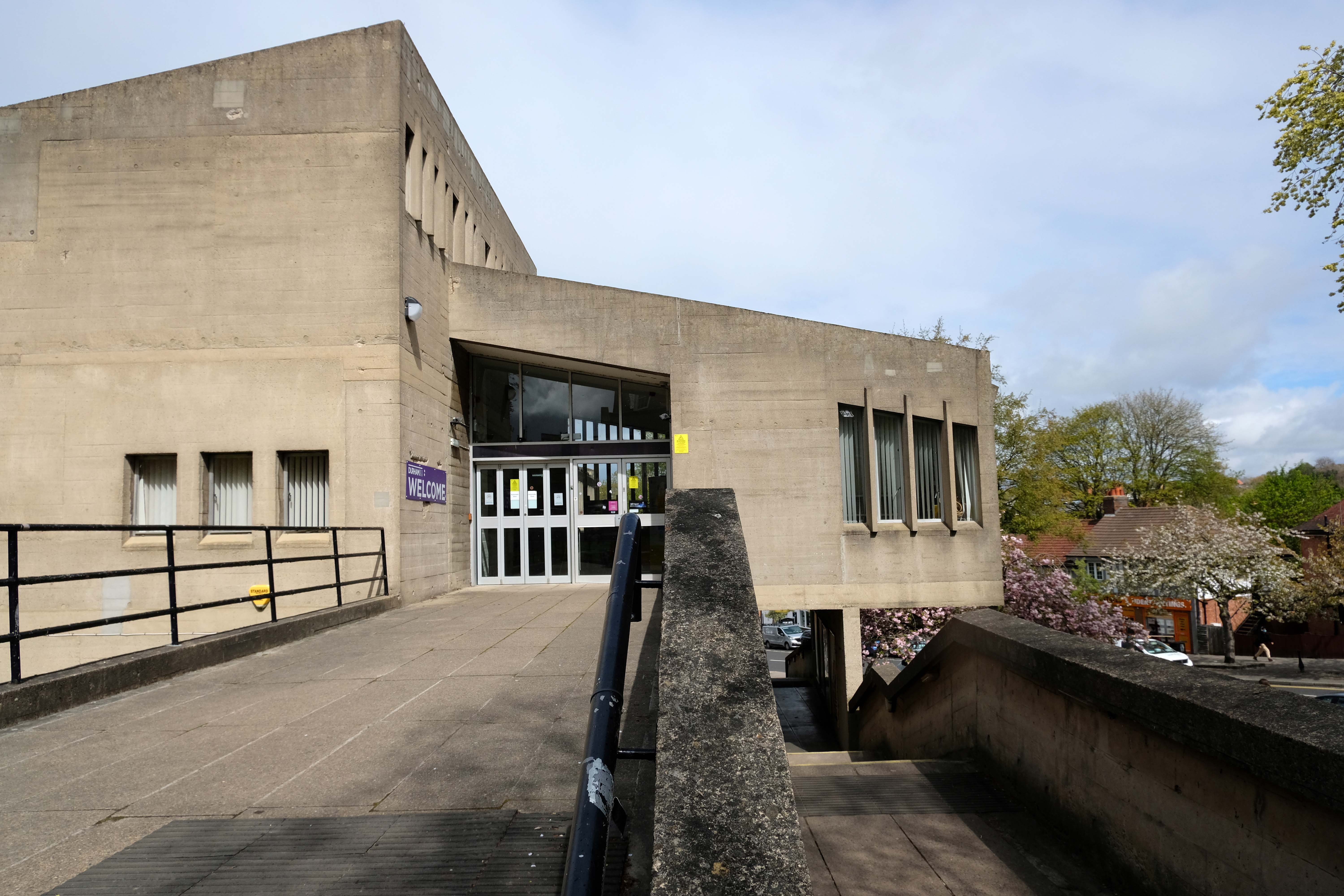
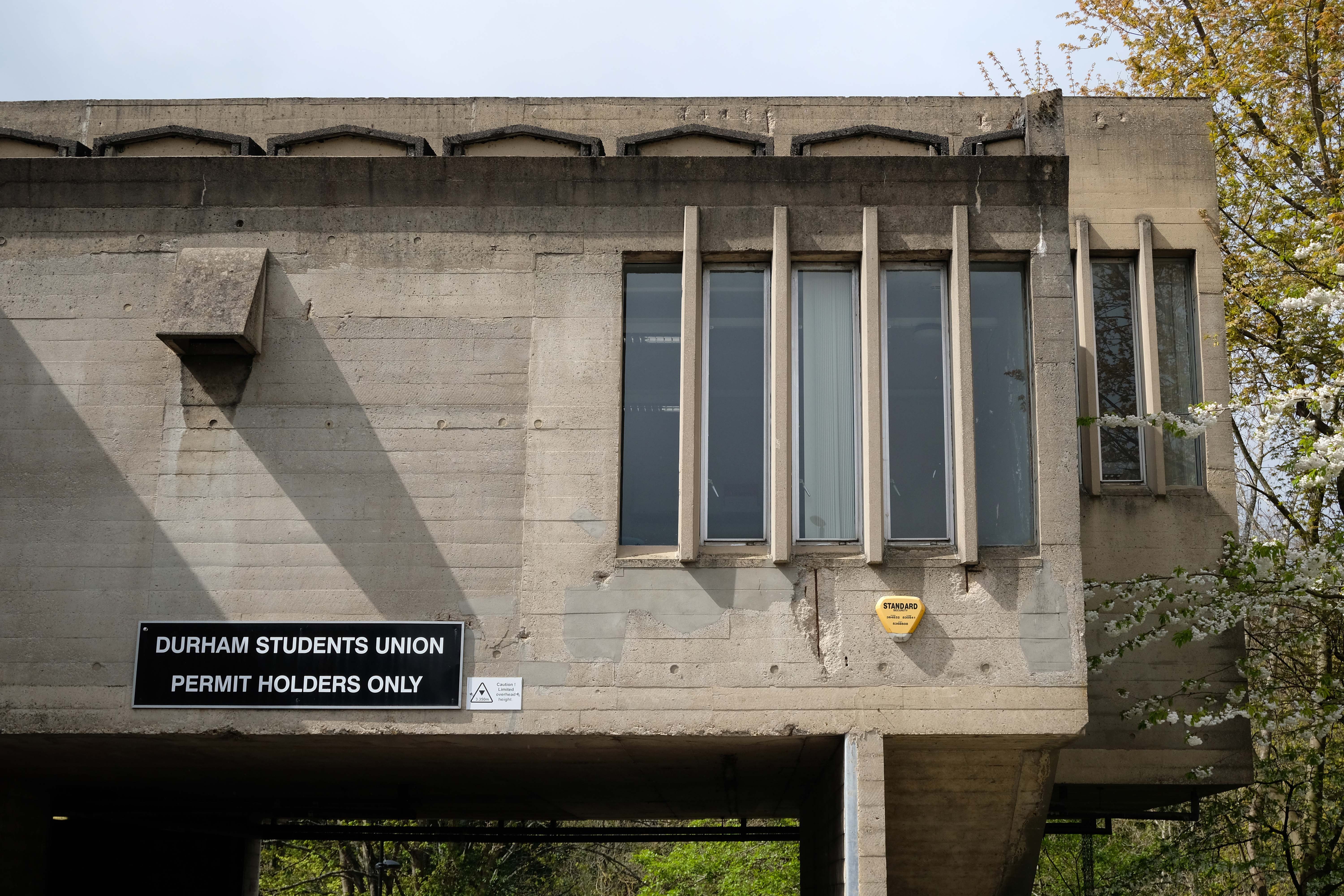
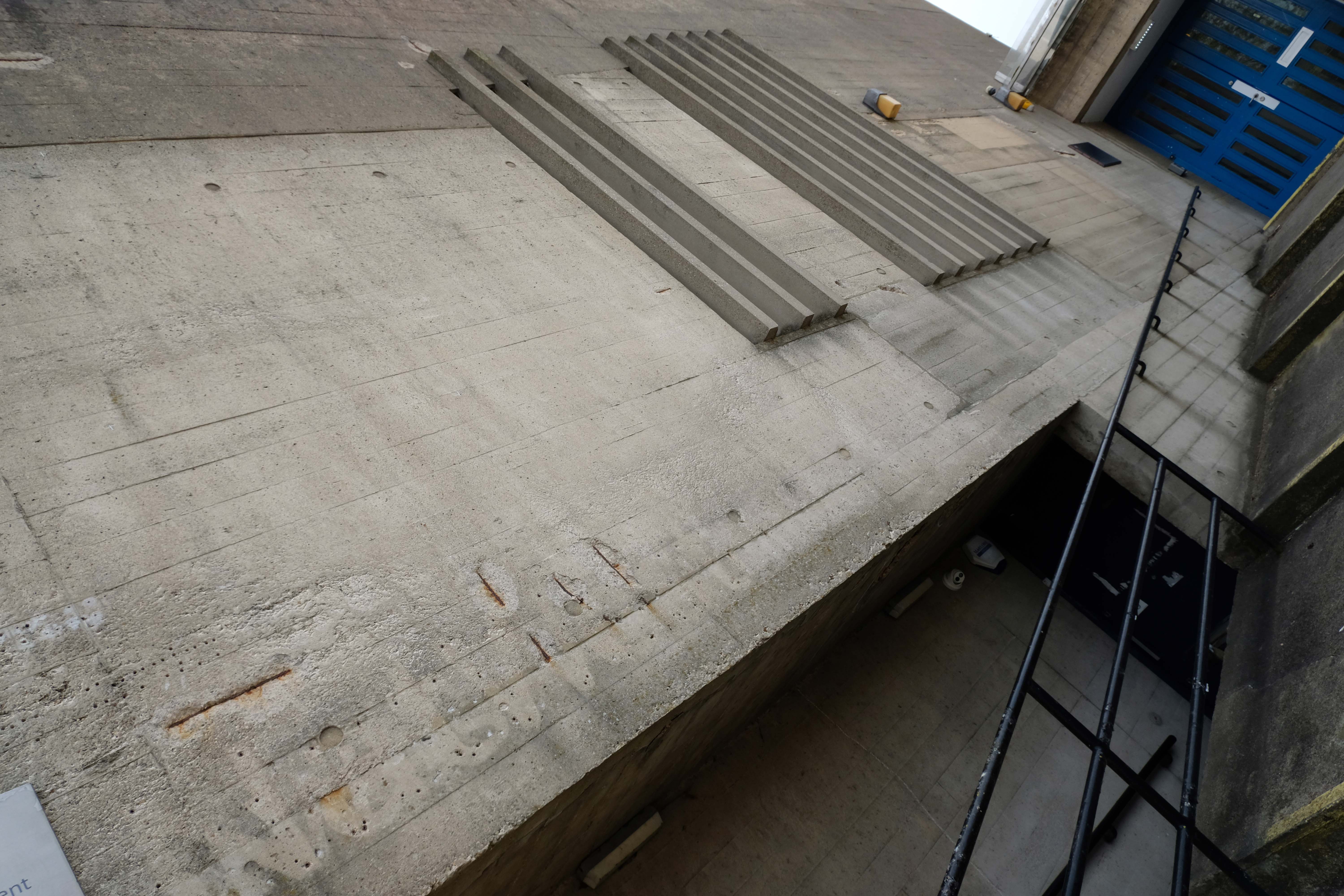
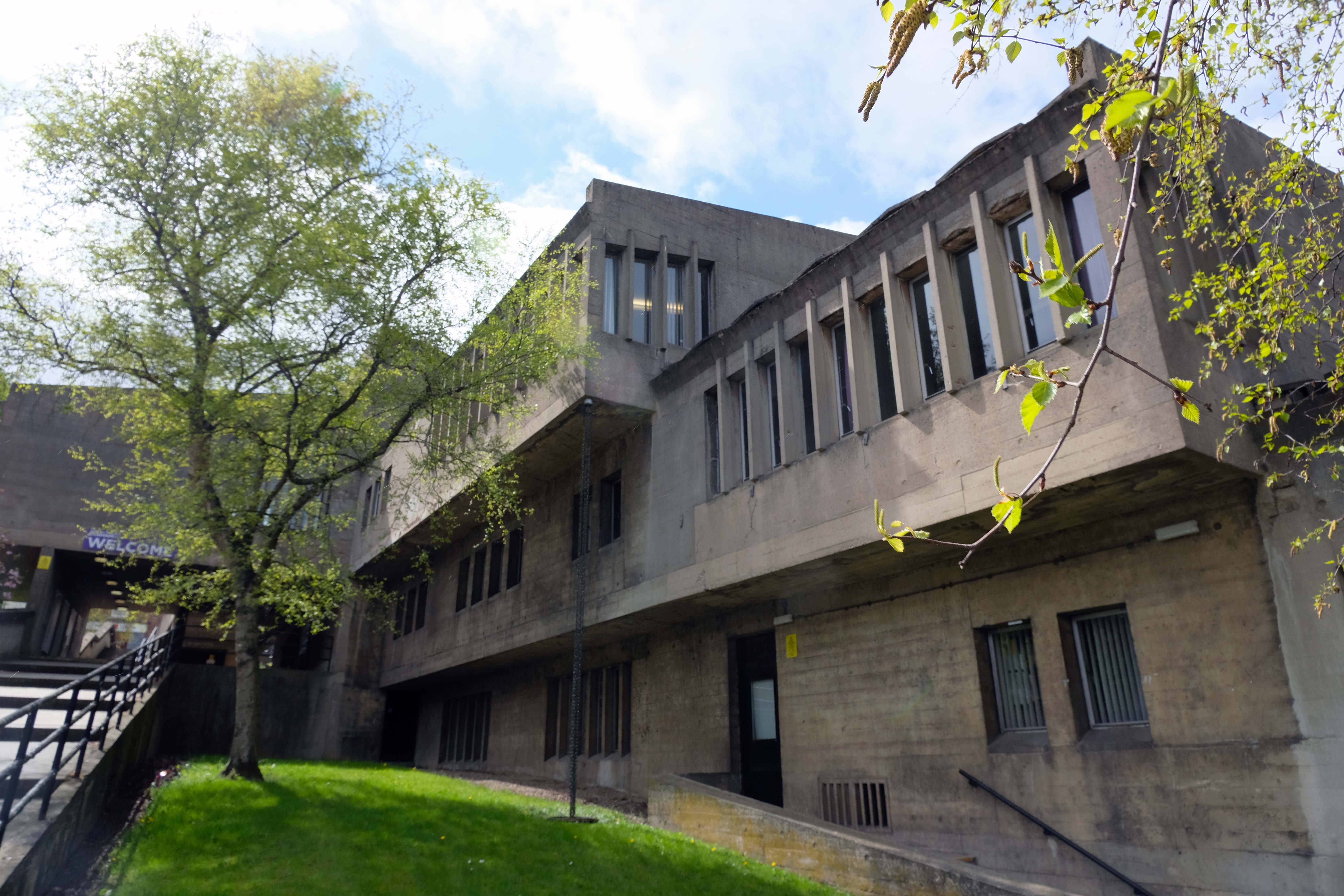
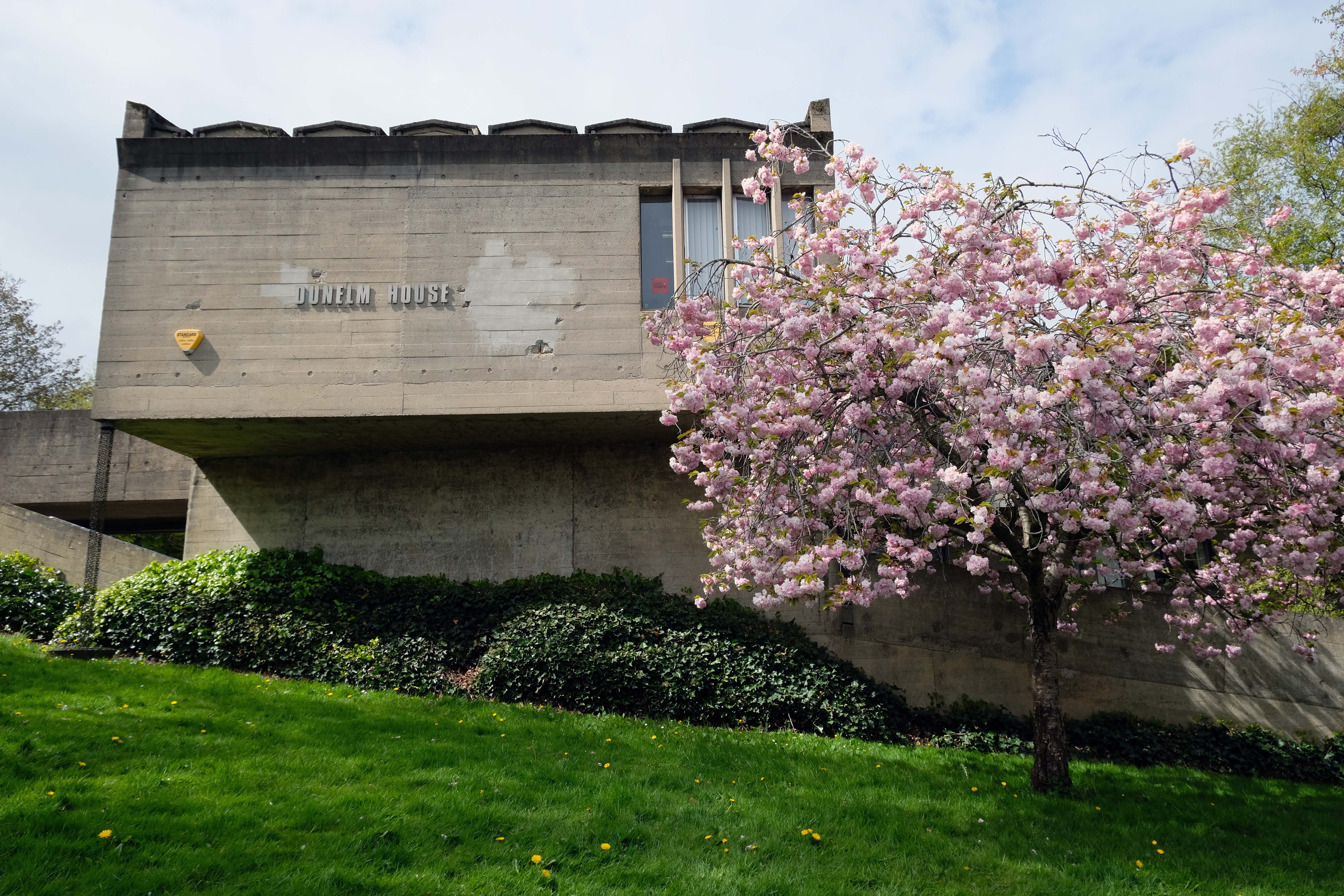
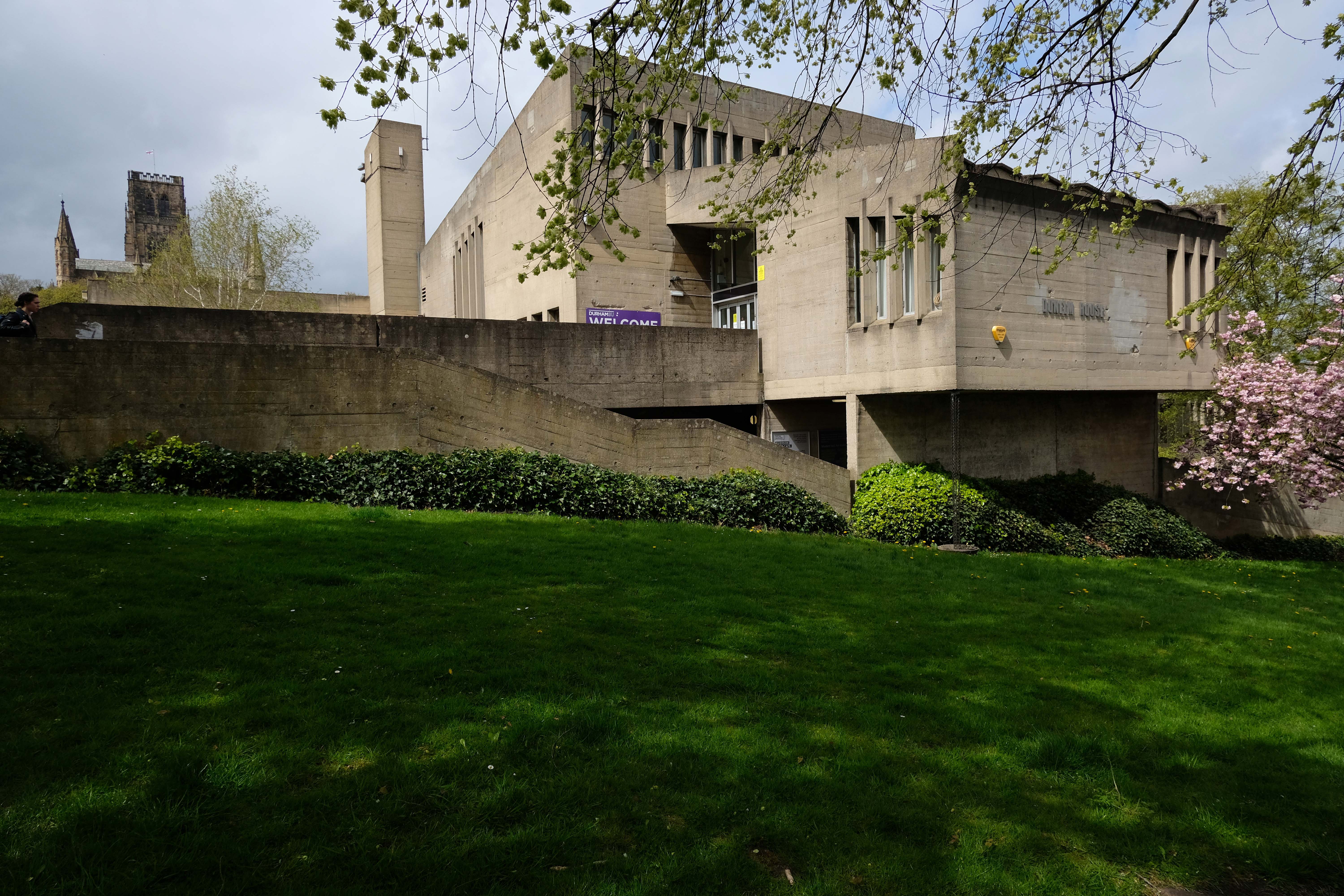
Dunelm House was designed by Richard Raines and Michael Powers of the Architects Co-Partnership, and completed in 1966 under the supervision of architect Sir Ove Arup, whose adjacent Kingsgate Bridge opened two years earlier. Built into the steeply sloping bank of the River Wear, Dunelm House is notable internally for the fact that the main staircase linking all five levels of the building runs in an entirely straight line. This was intended by the building’s architects to create the feeling of an interior street.
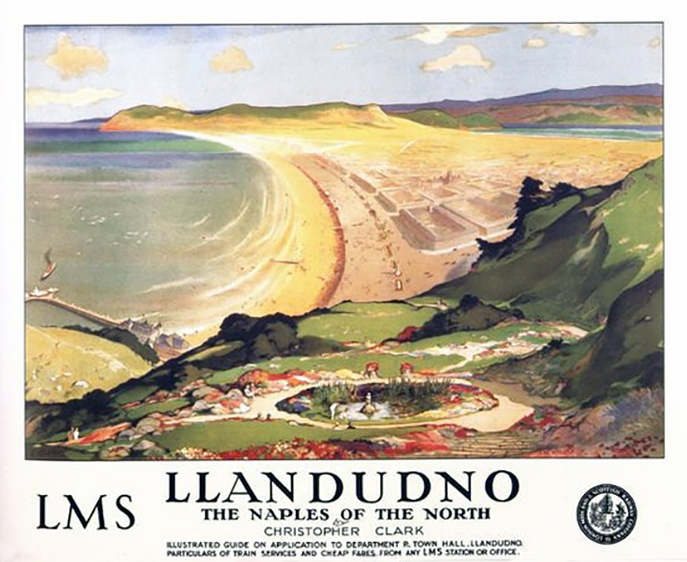
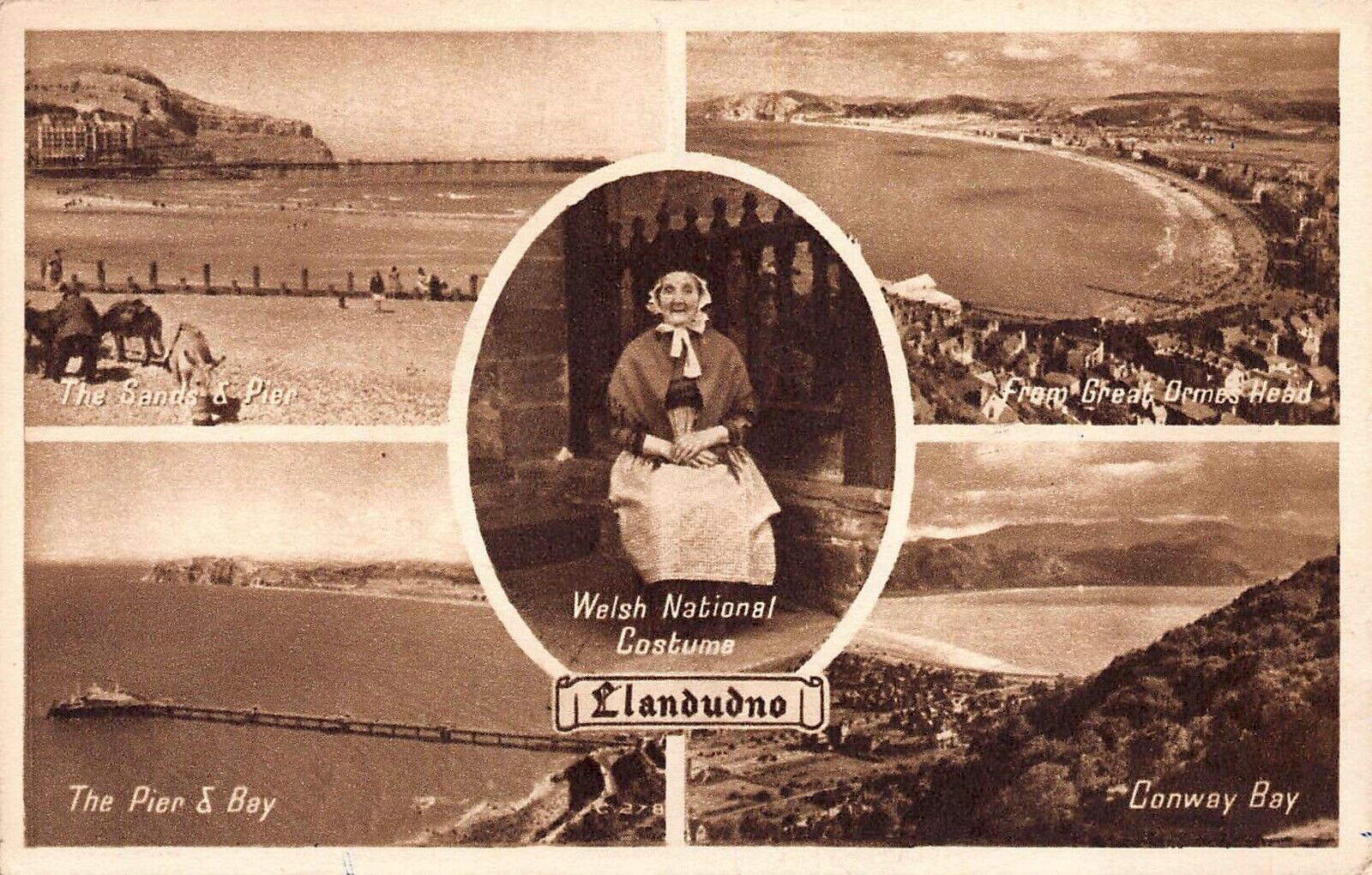
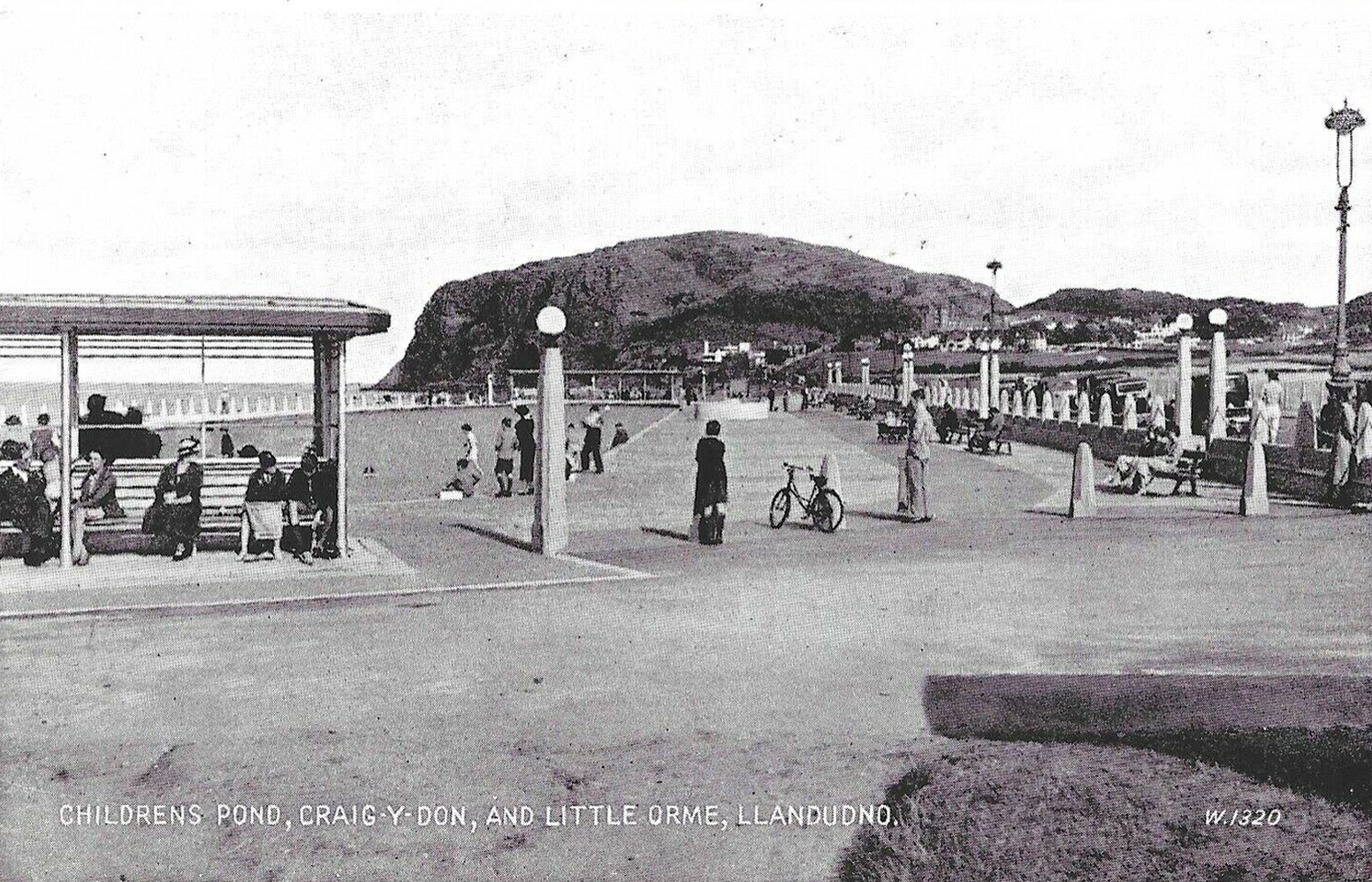
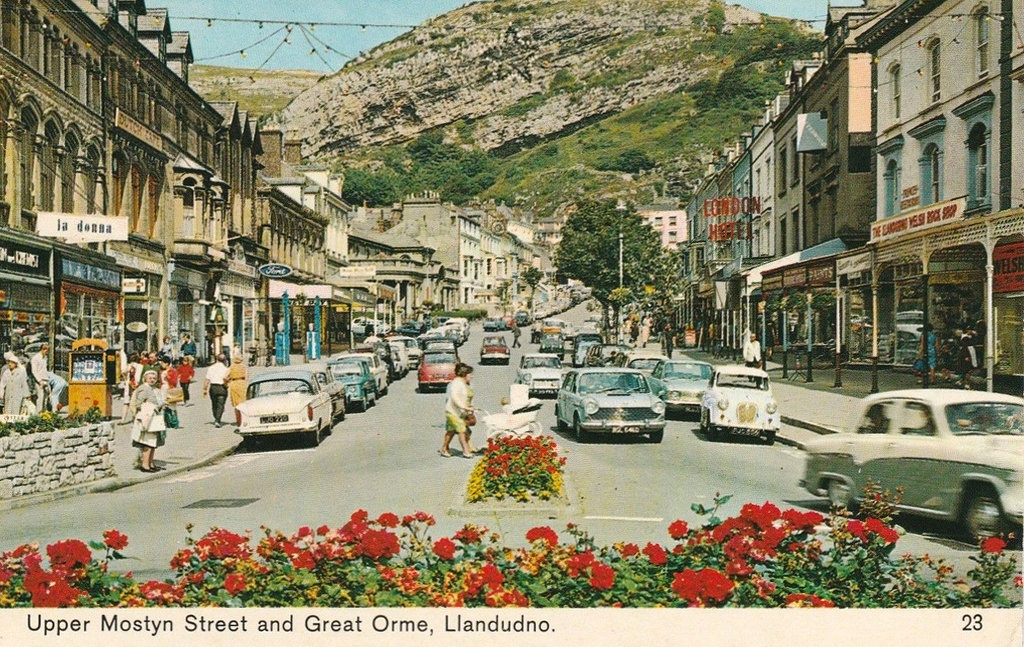
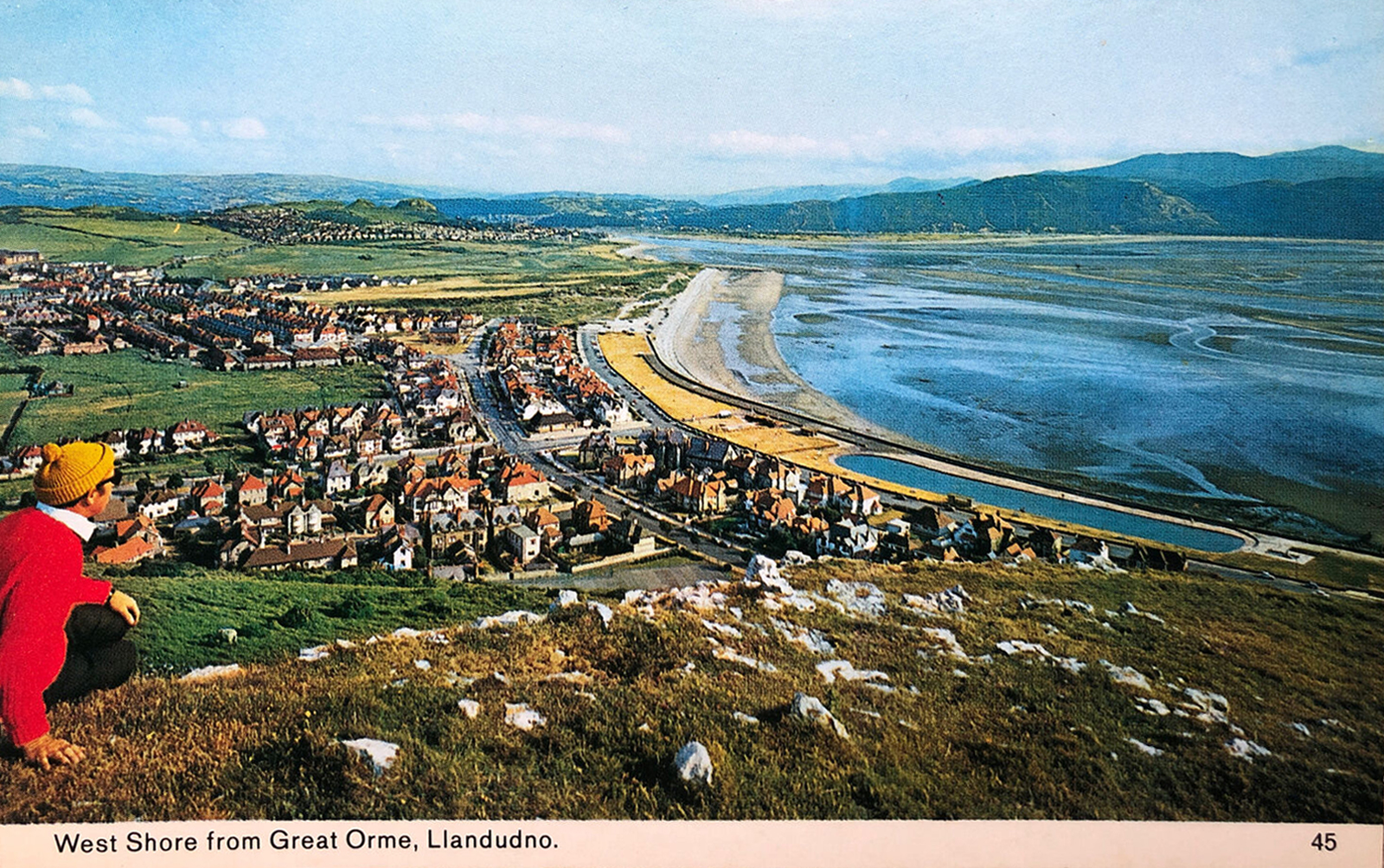
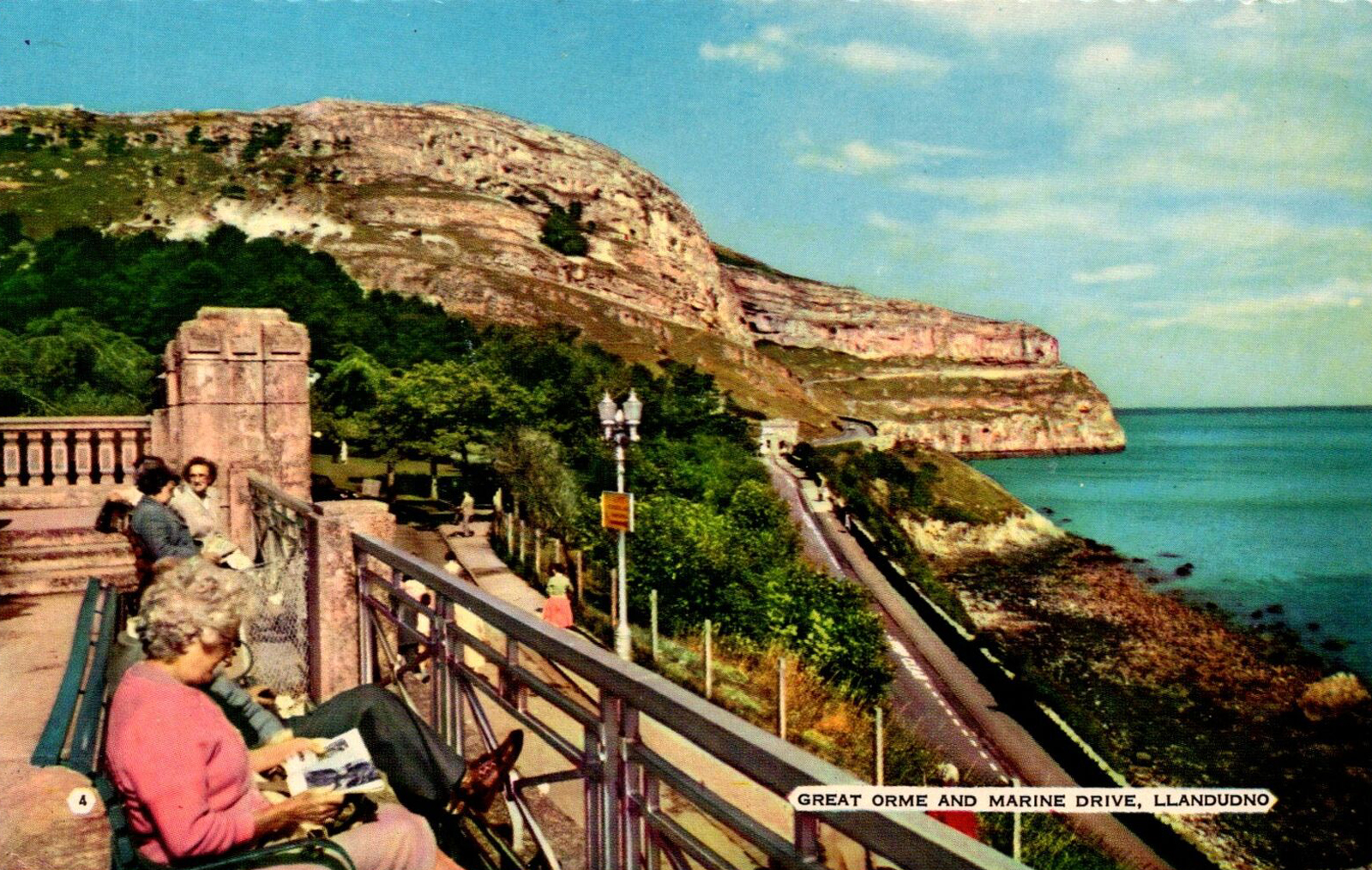
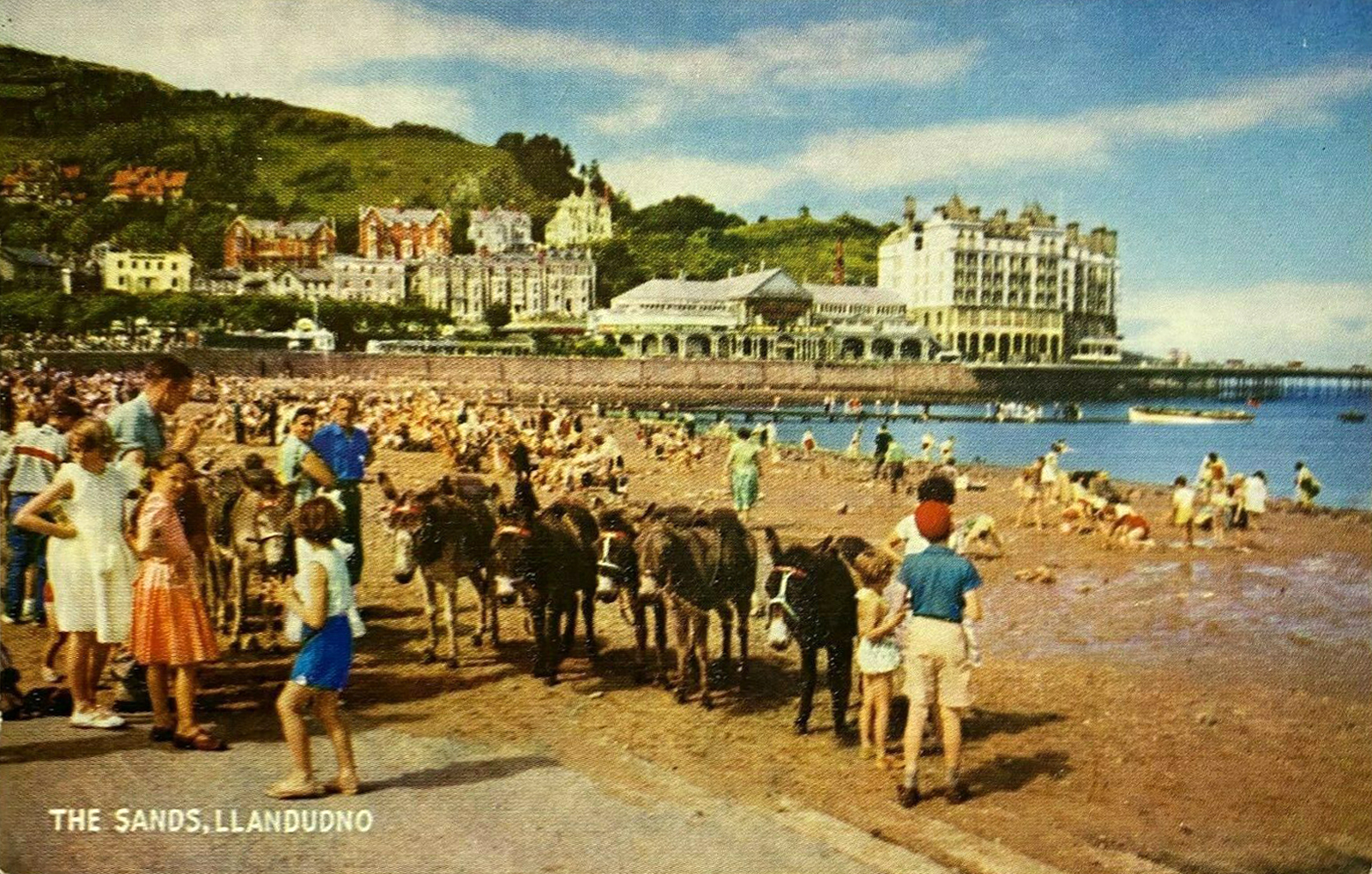
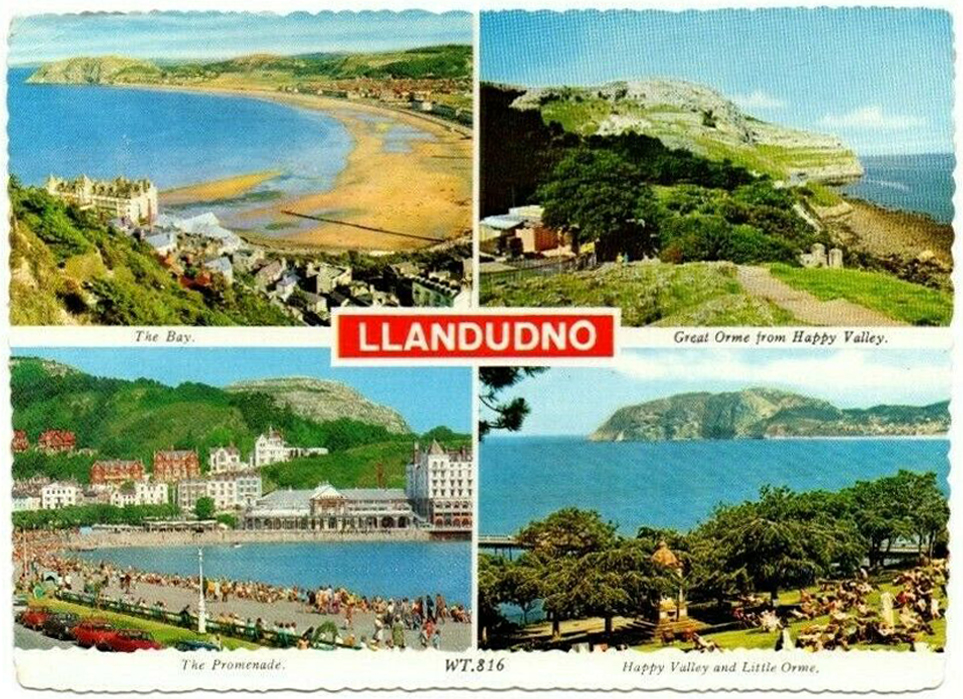
This is a town with a visual culture defined by carefully created picture postcards – conjuring images from land, sea, sand and sky.
New technology arrives, dragging Llandudno from the sepia soaked past into the CMYK age!
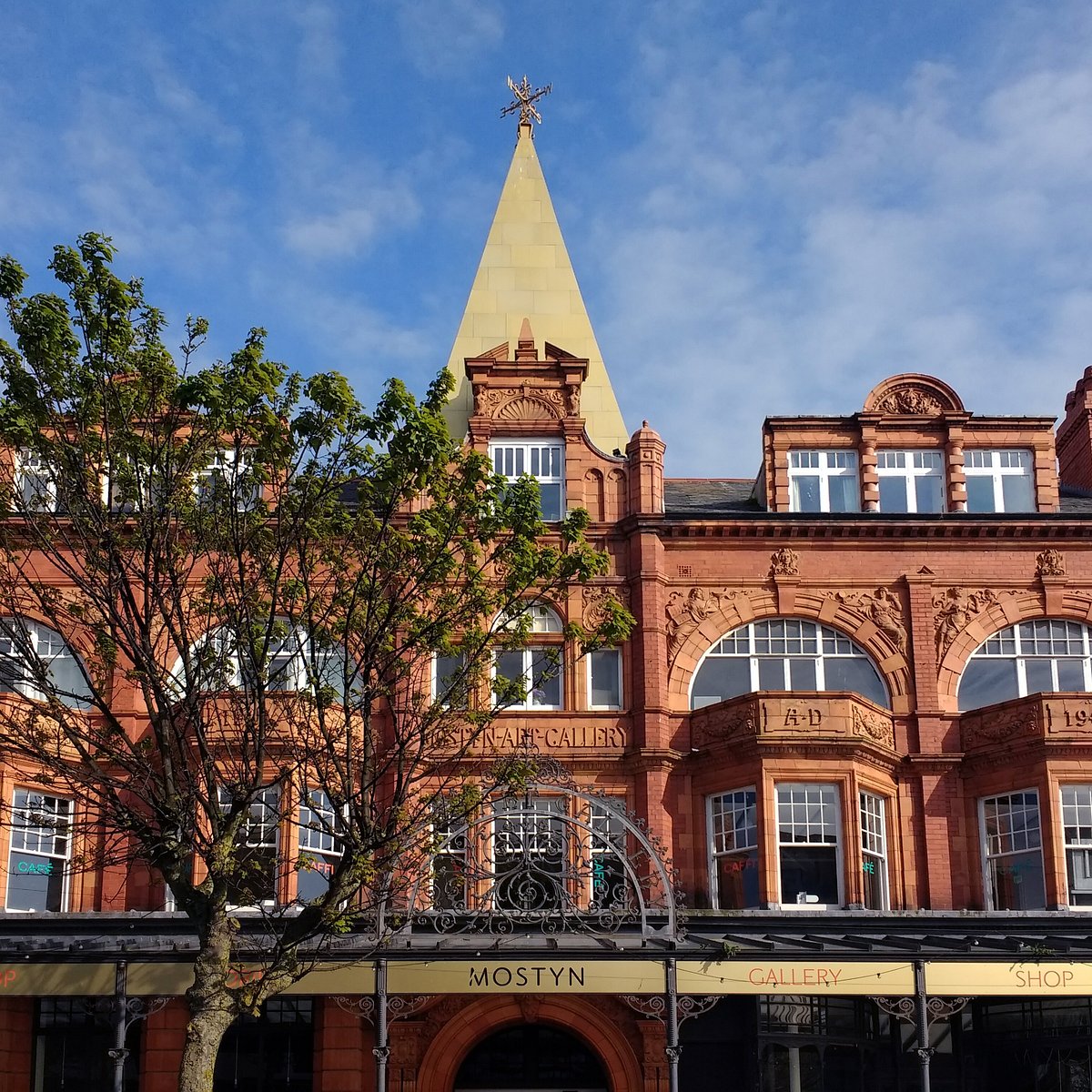
So it’s only right and proper that the town should have an art gallery.
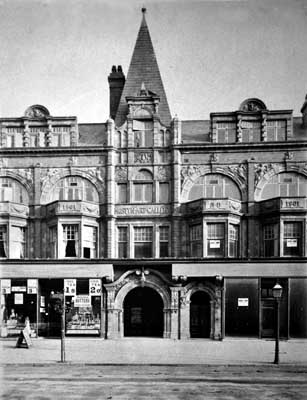
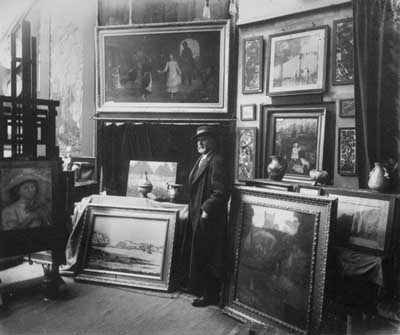
Oriel Mostyn Gallery was commissioned by Lady Augusta Mostyn after the Gwynedd Ladies’ Art Society asked her for better premises than their existing home, in a former cockpit in Conwy. The ladies’ gender prevented them from joining the Royal Cambrian Academy, also based in Conwy.
Designed by architect GA Humphreys, the new gallery opened in 1901. From 1901 to 1903, the gallery housed works by members of the GLAS. As a patron of the arts and president of the society, Lady Augusta was aware that the ladies needed more space to display their work and gave them the opportunity to rent a room in the new building.
Lady Augusta was keen for the gallery to be used by local people, so the society was asked to leave and a School of Art, Science and Technical Classes was set up. Alongside the many classes, there were art exhibitions, lectures. social events, and even a gallery choir and shooting range!
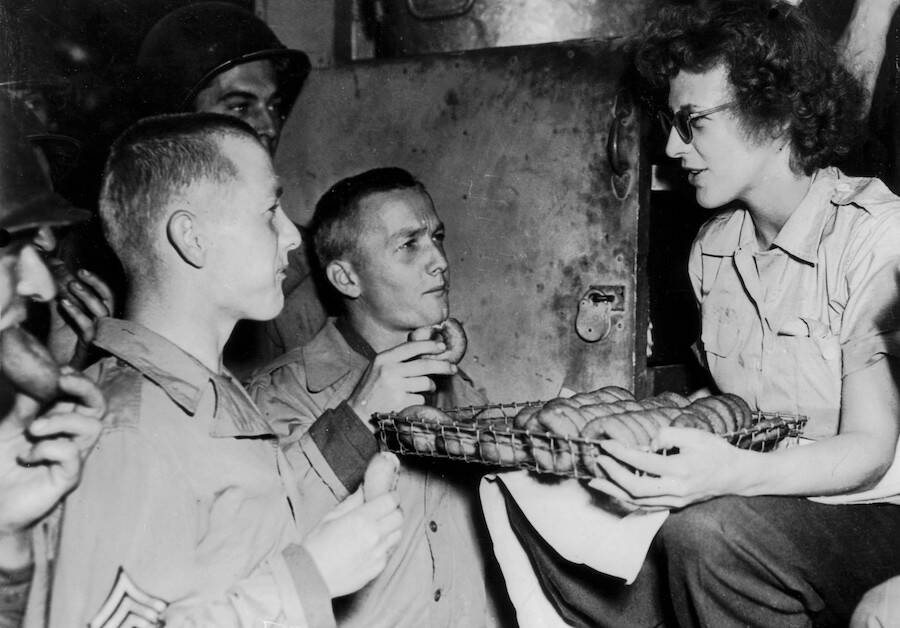
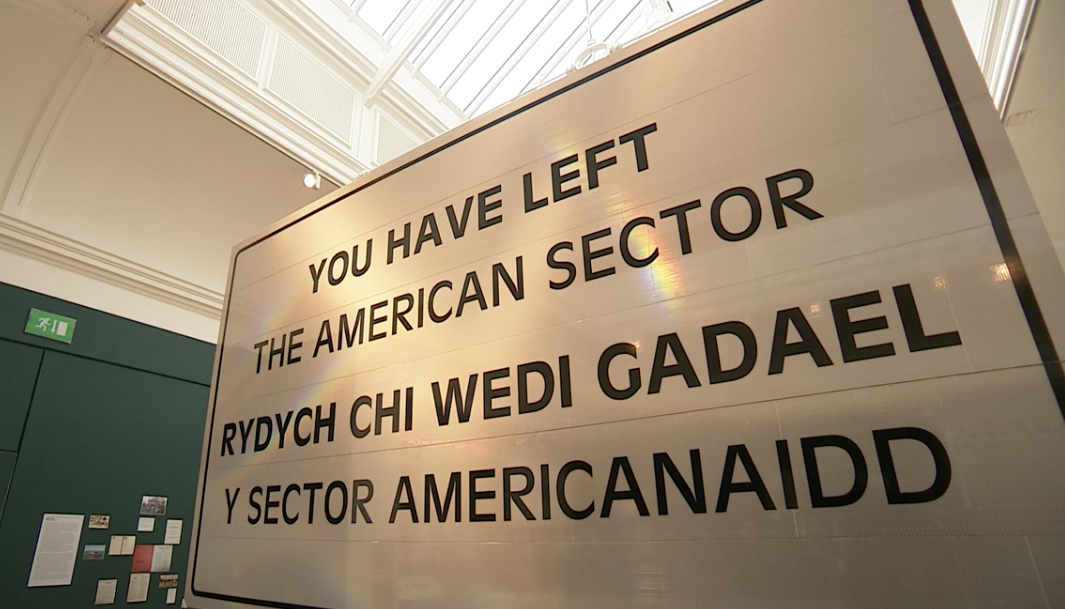
The current shop area was the location for a ‘Donut Dugout’ – a rest and recreation area for the many American servicemen in the town. Coffee and doughnuts were served and the men could read magazines from home.
After the war, Wagstaff’s Piano and Music Galleries occupied the building. In 1976 the artist Kyffin Williams, and others, suggested the building should become the proposed new public art gallery for North Wales. Architects Colwyn Foulkes supervised its restoration and it reopened, as Oriel Mostyn, in 11 August 1979.
Once the Post Office had vacated the adjacent building, expansion and development took place – Ellis Williams Architects were responsible for the design.
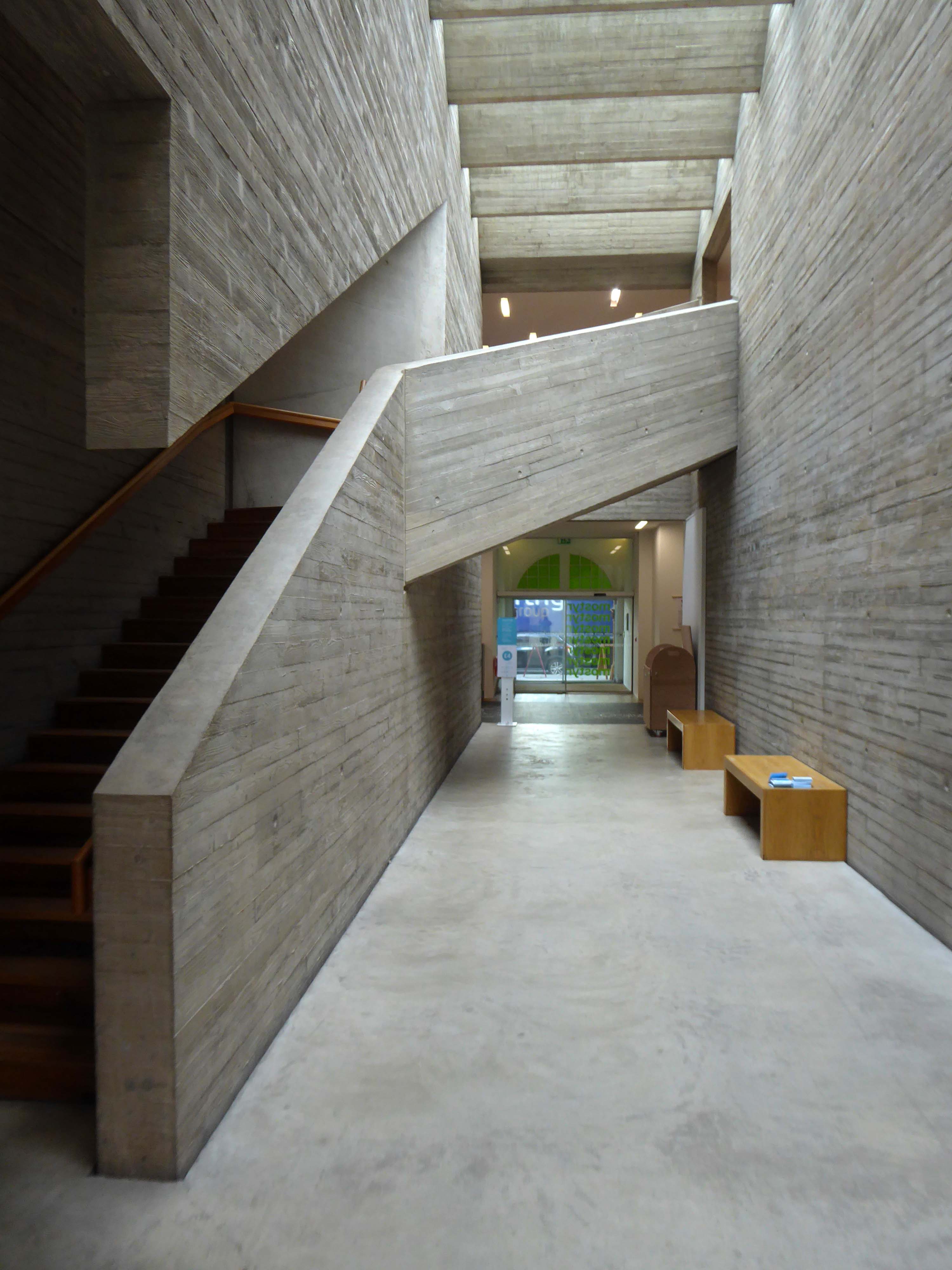
Acknowledged to be ‘one of the most beautiful galleries in Britain’, Mostyn in North Wales was an existing listed Victorian museum with two lantern galleries tucked behind a listed facade. We were appointed by Mostyn after winning the Architectural competition with a design combining a gallery space refurbishment with a gallery expansion and a new dramatic infill section linking new and old. The project has won a number of awards and increased footfall by over 60%.
Why not let your feet fall there soon – Oriel Mostynis open.
The very first time I visited the town as a child back in the early 1960s, it rained almost every day.
Subsequent visits have almost always been bathed in warm sunshine.
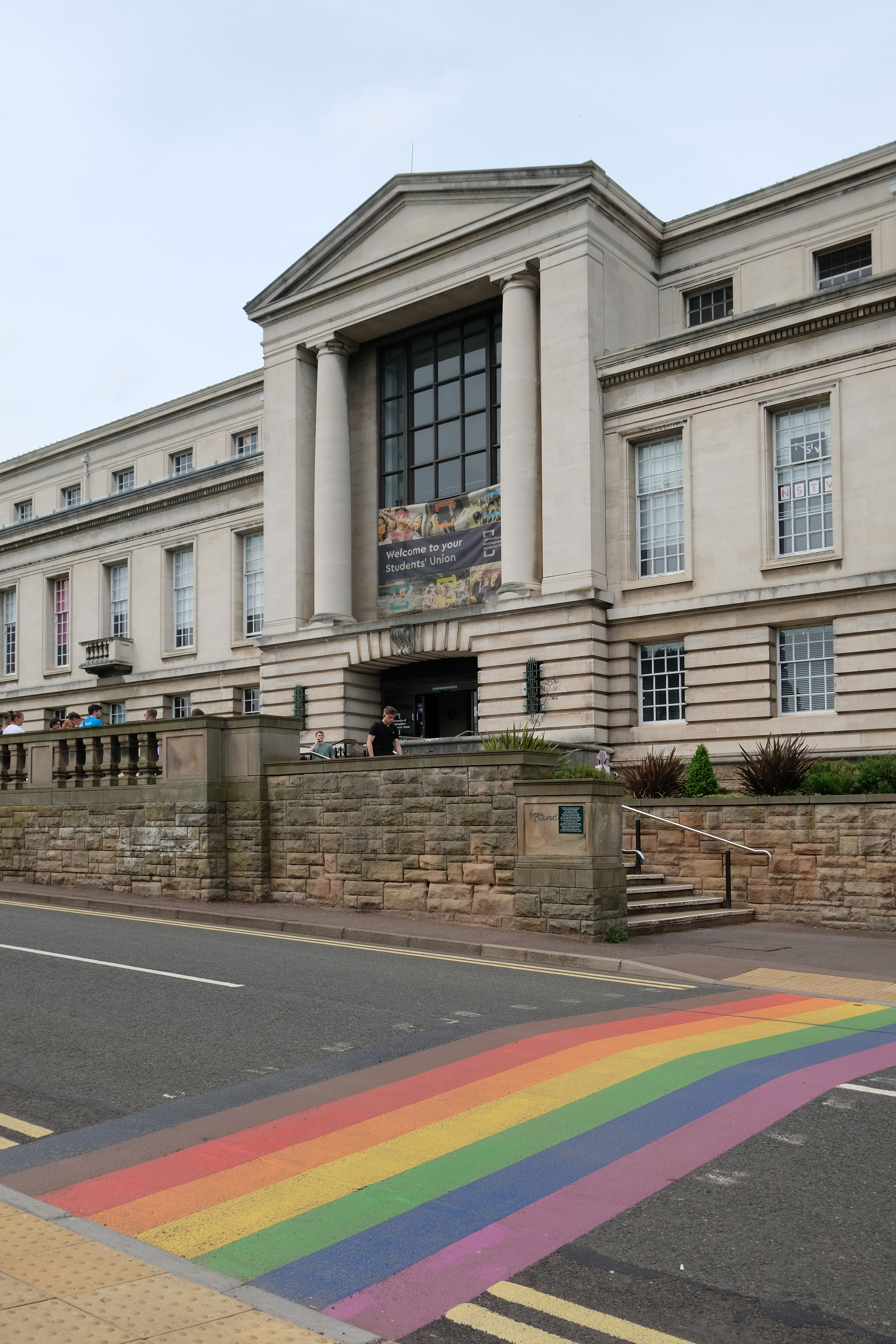
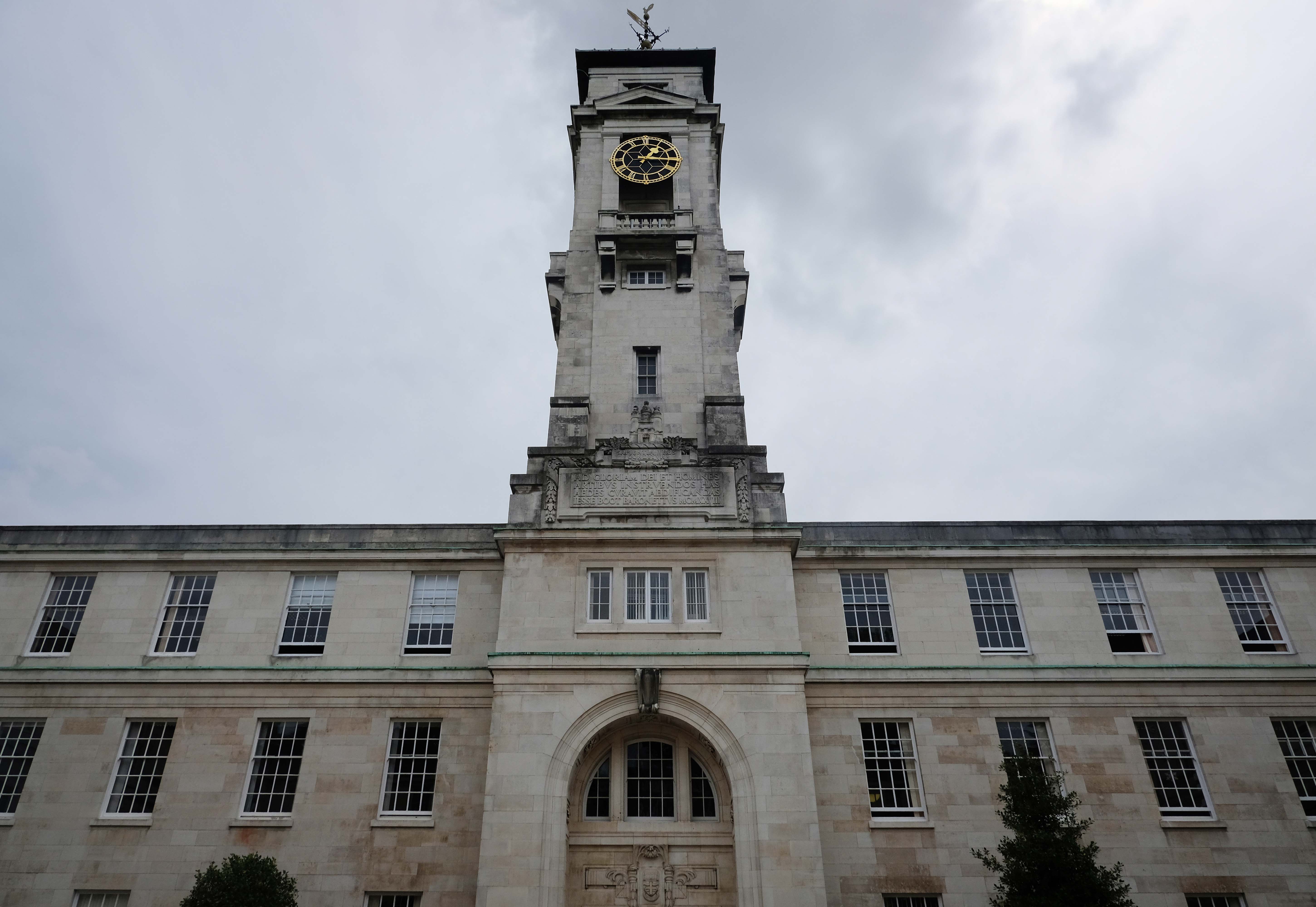
The Main Campus based on Jesse Boot’s Highfield parkland incorporating Lenton House and Lenton Hall. Boot along with his architect Percy Morley Horder developed a building scheme in 1921, achieving university status in 1948.
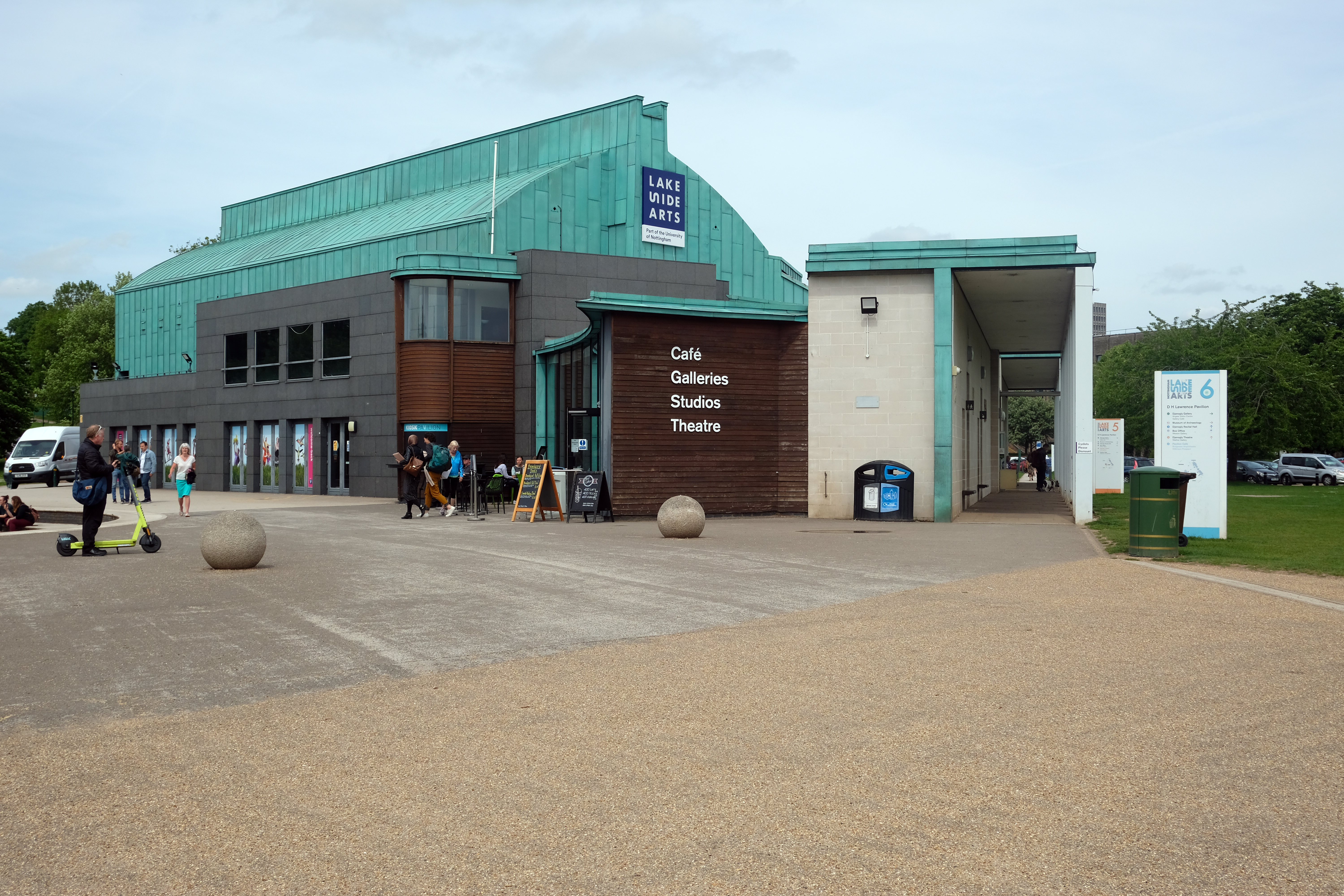
DH Lawrence Pavilion architect Marsh & Grochowski 1998-2001
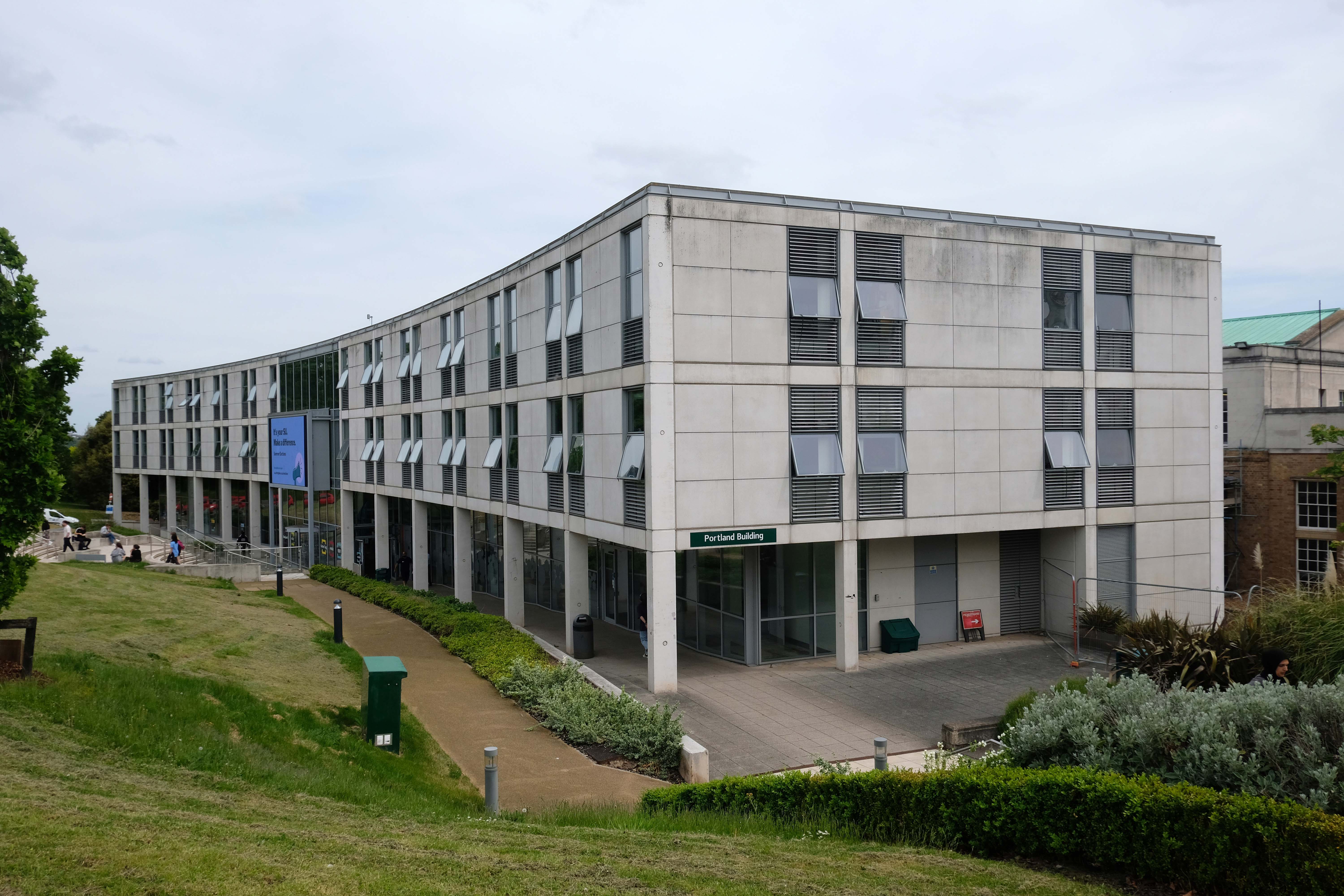
Portland Building – T Cecil Howitt 1949 -56
Trent Building architect: P Morley Horder 1922-28
Portland Building extended in 2001-3 architects: Michael Hopkins & Partners
Further additions to the rear 2013
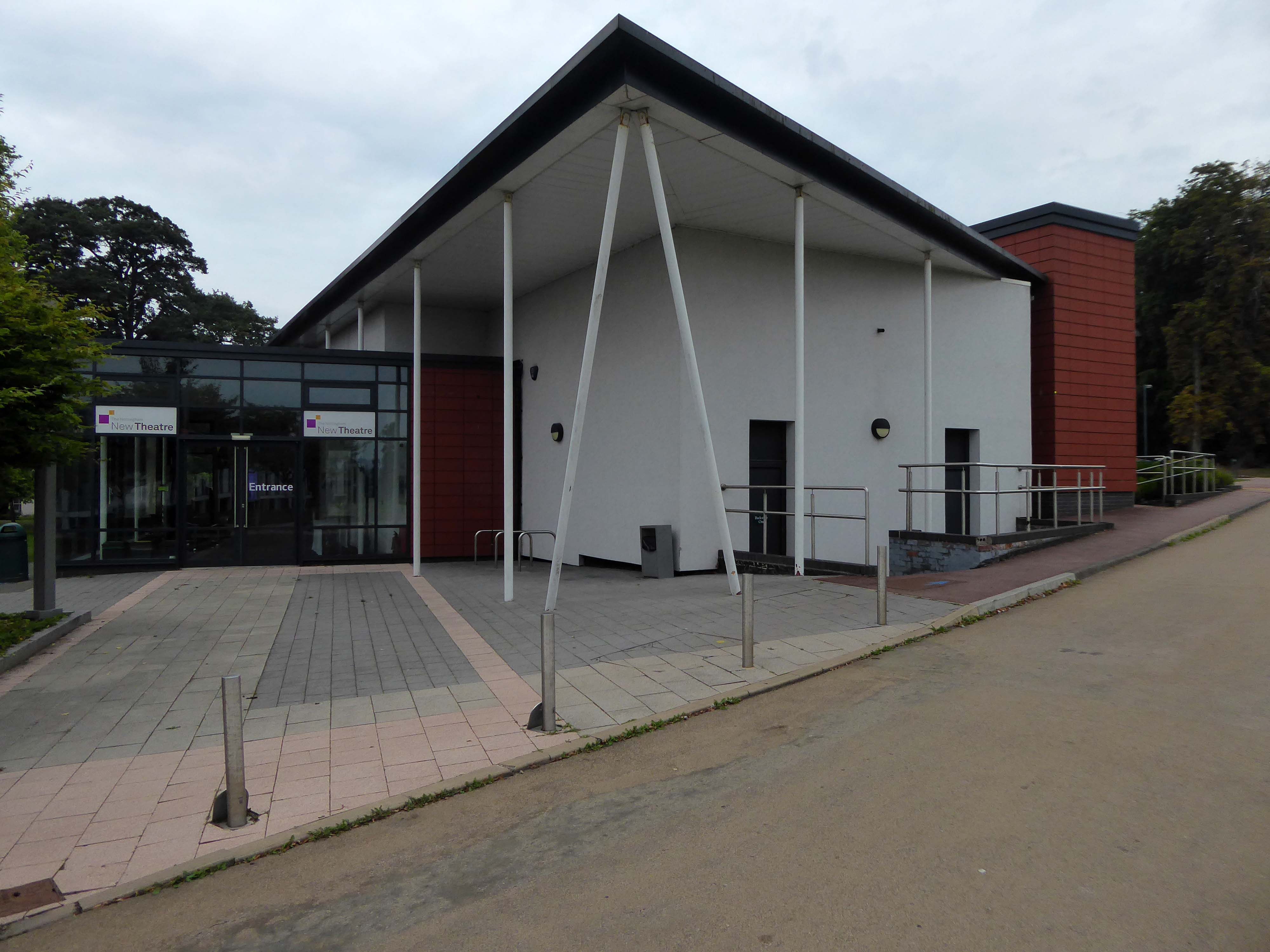
The New Theatre was established in 1969, and was originally housed in the Archaeology and Classics building of the University of Nottingham. In 2001 an extended foyer was added to the building, following a donation from an alumnus of the university.
The summer of 2012 saw an extensive redevelopment of the building housing the New Theatre. The former Archaeology and Classics building was demolished from the site; leaving the New Theatre as a freestanding building. Parts of the old building were retained and repurposed as new rehearsal rooms, and a studio space; as well as a significant remodelling of the dressing room, and extending the foyer.
Architects: Maber
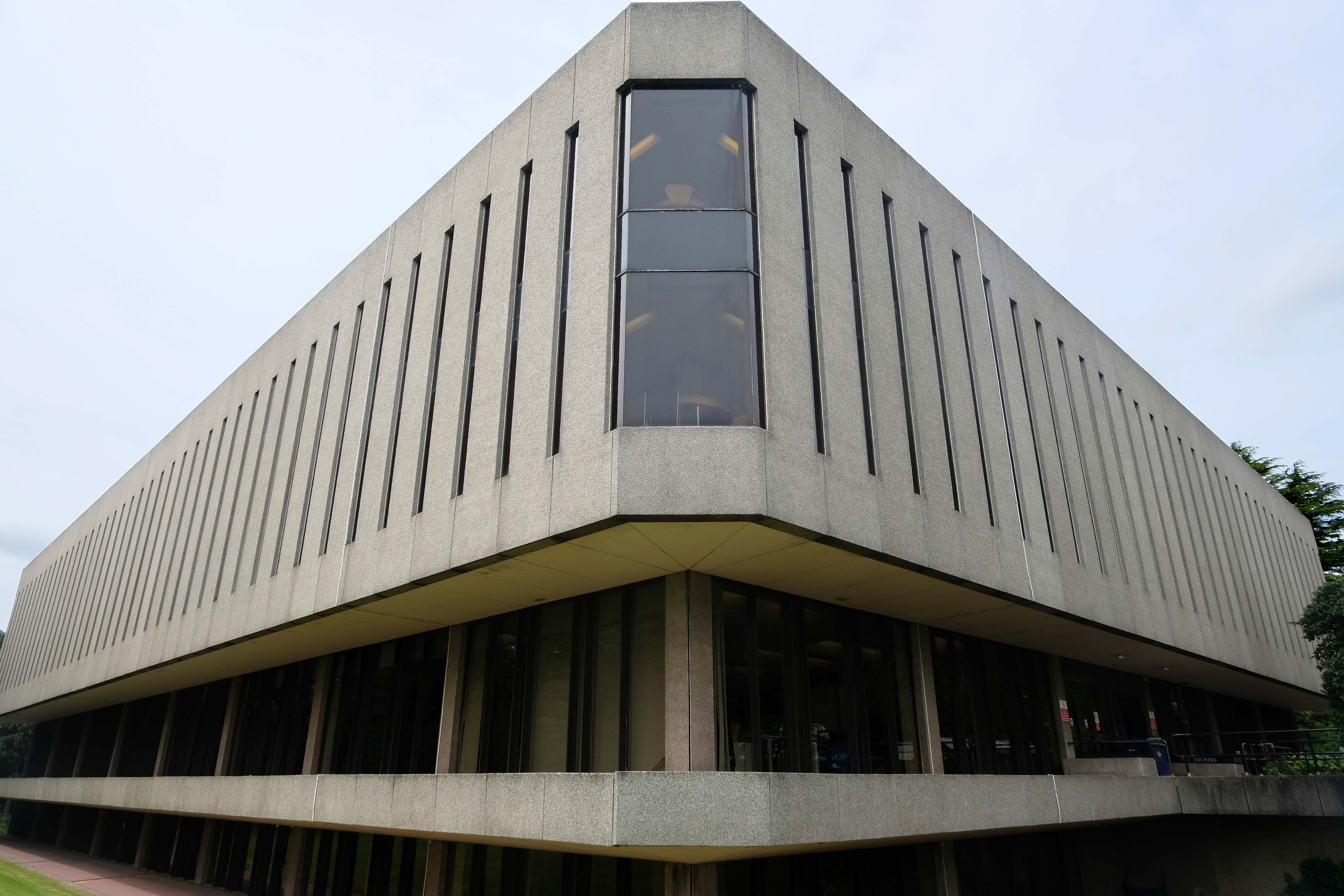
University Library architects: Faulkner Brown, Henry, Watkinson & Stonor 1971-73
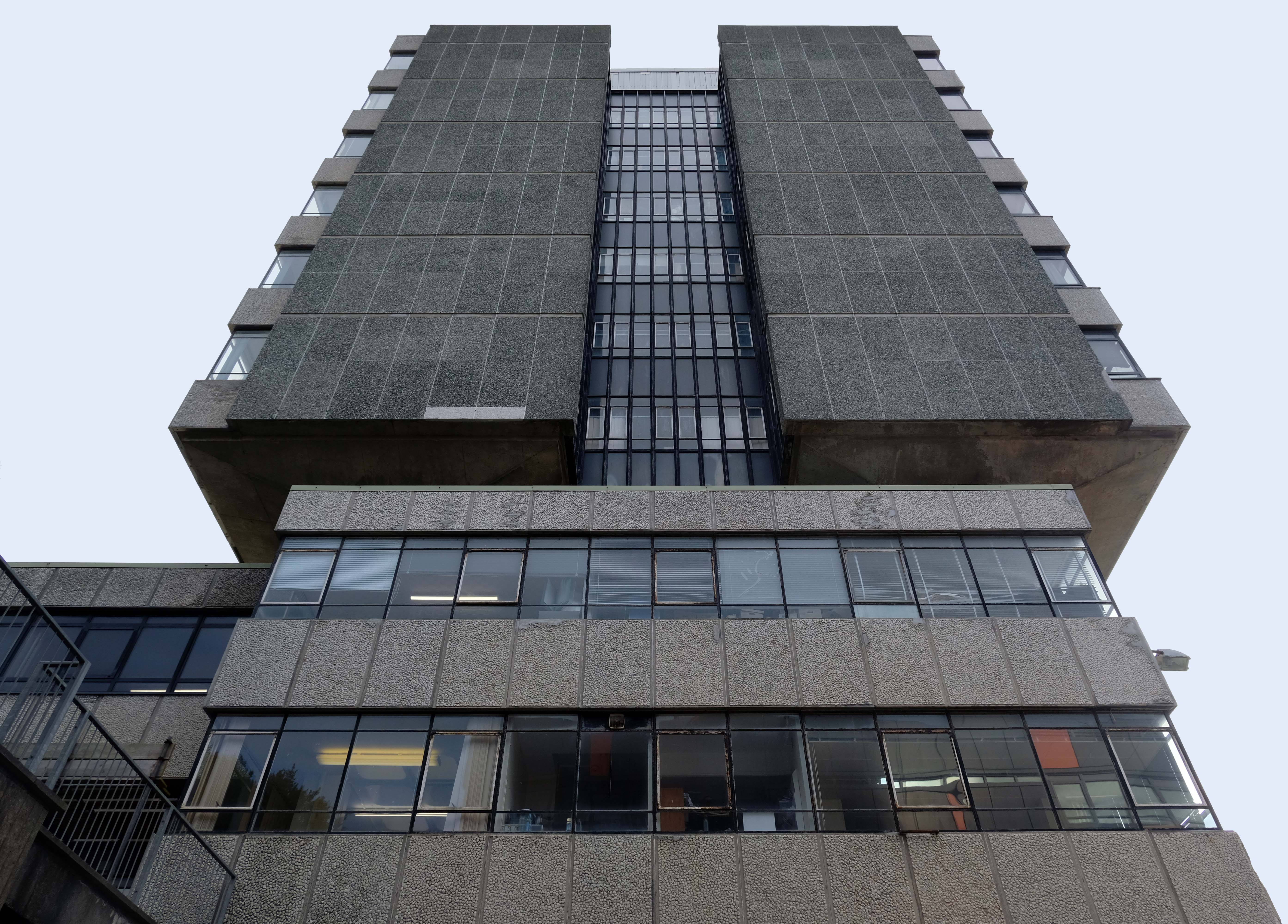
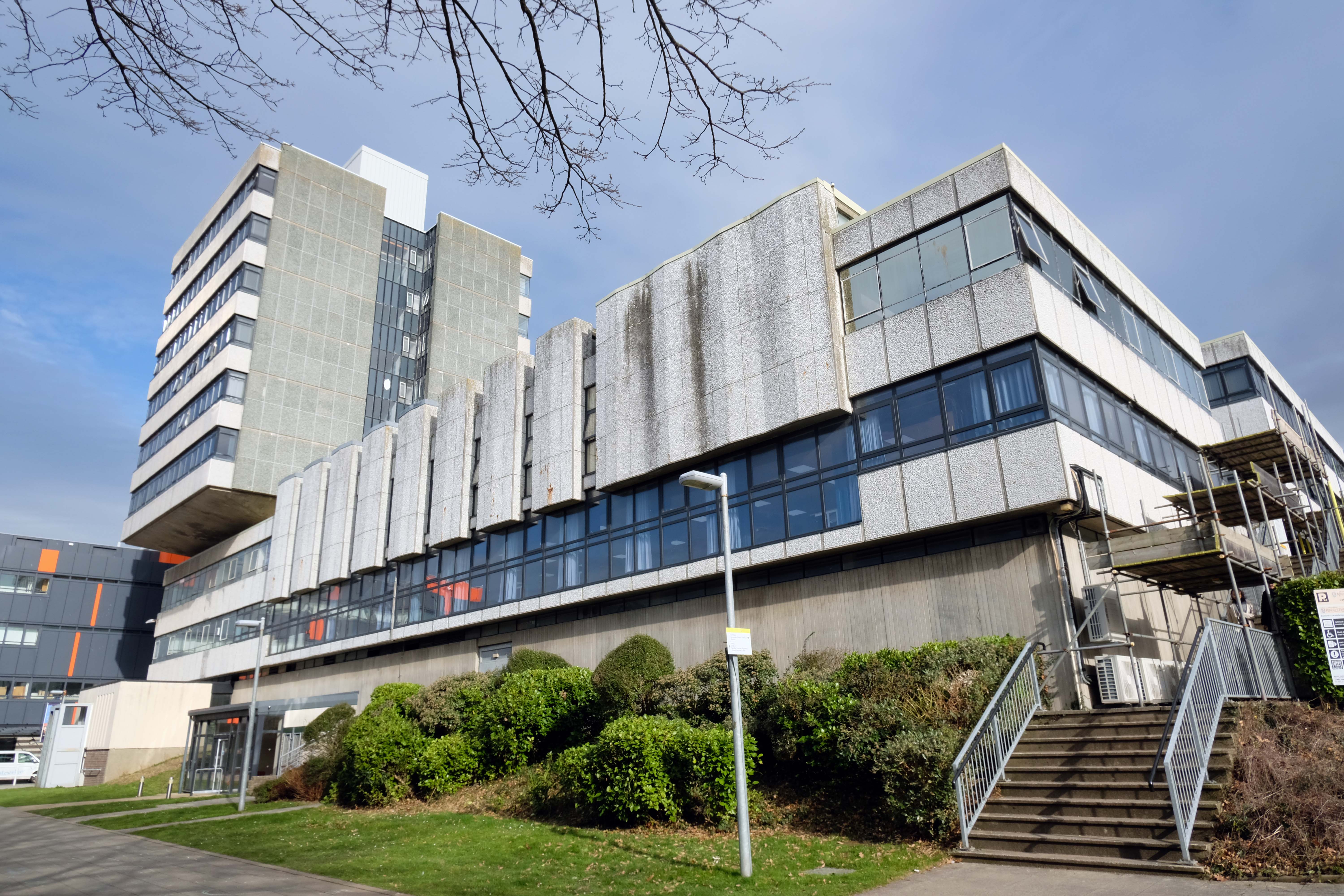
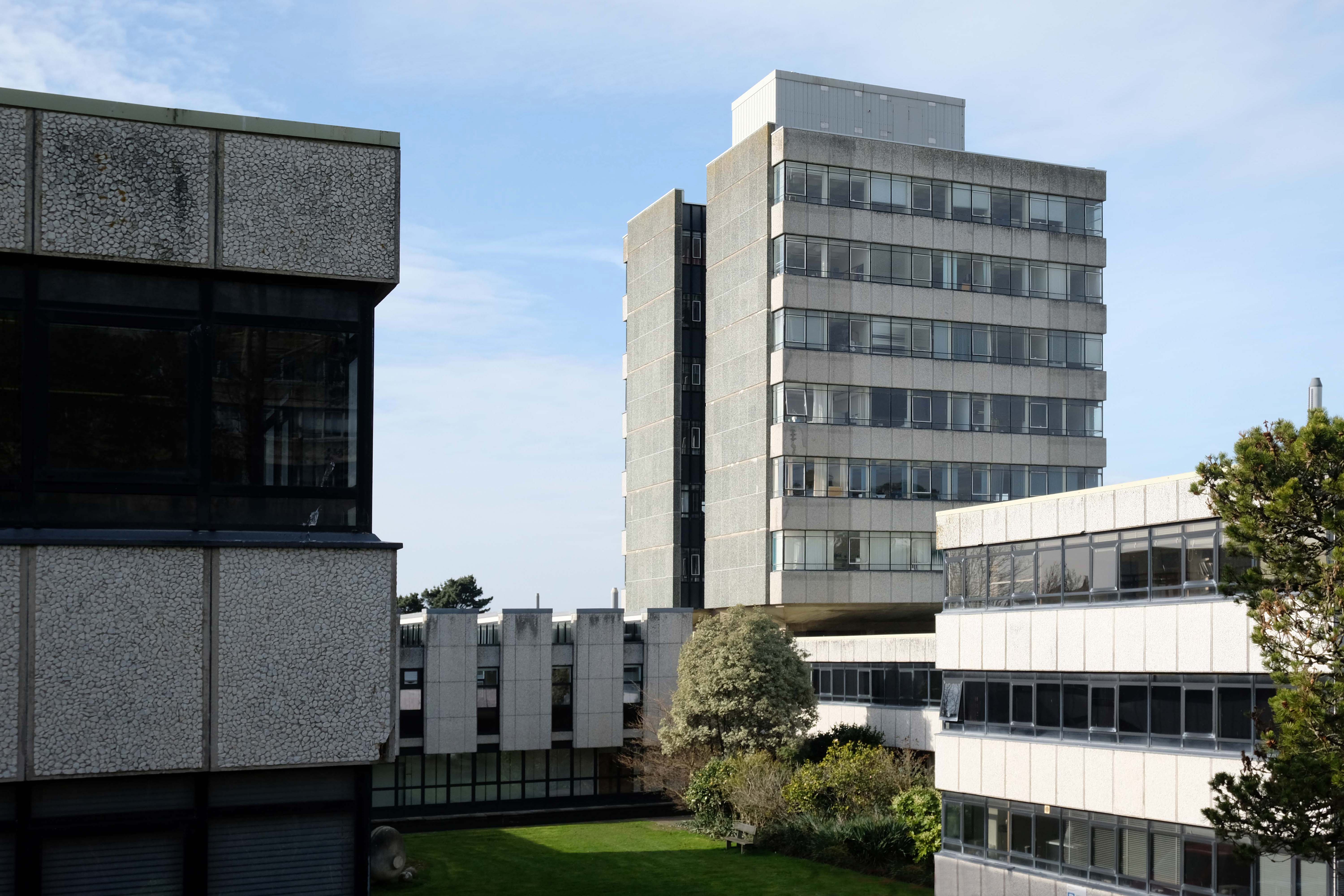
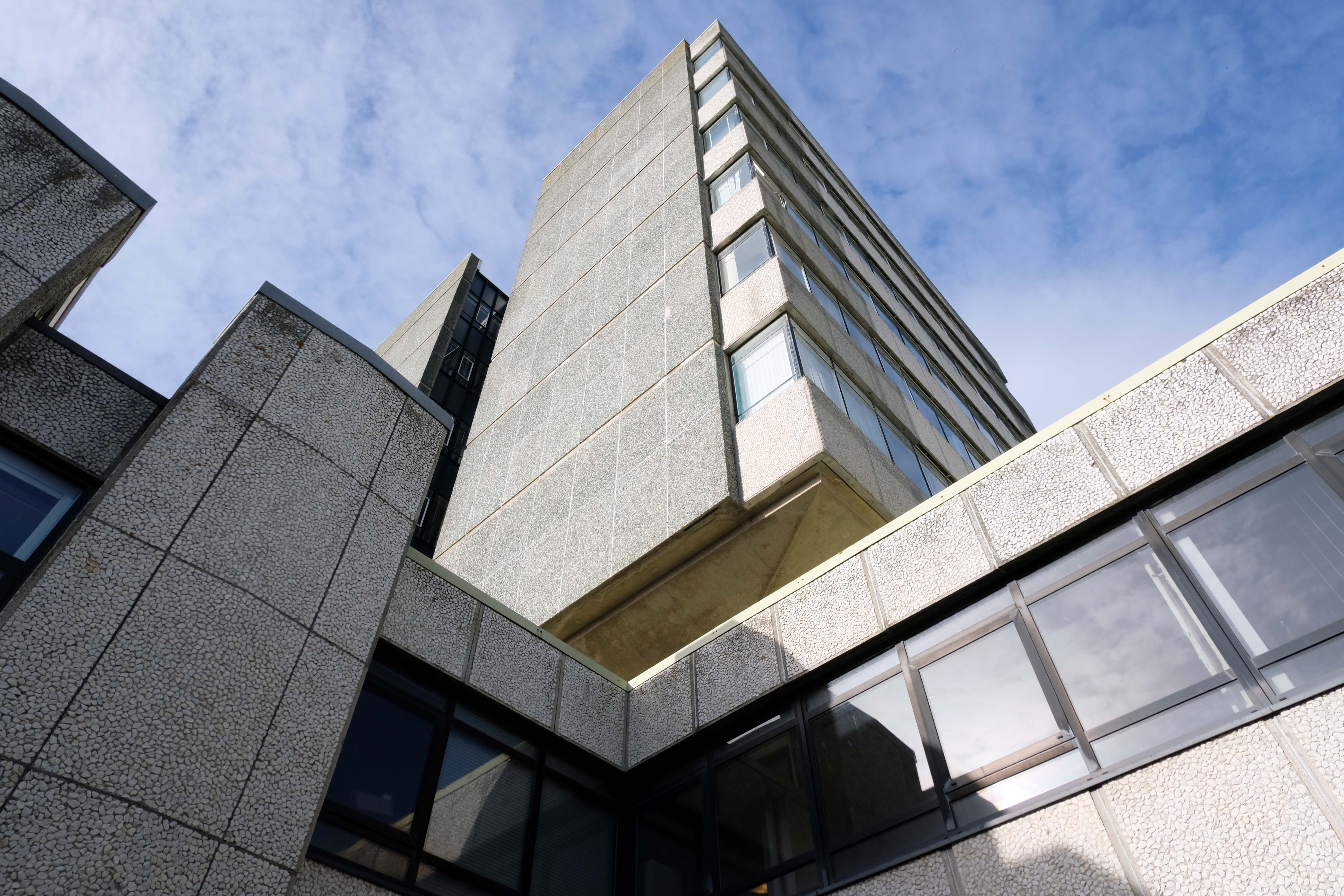
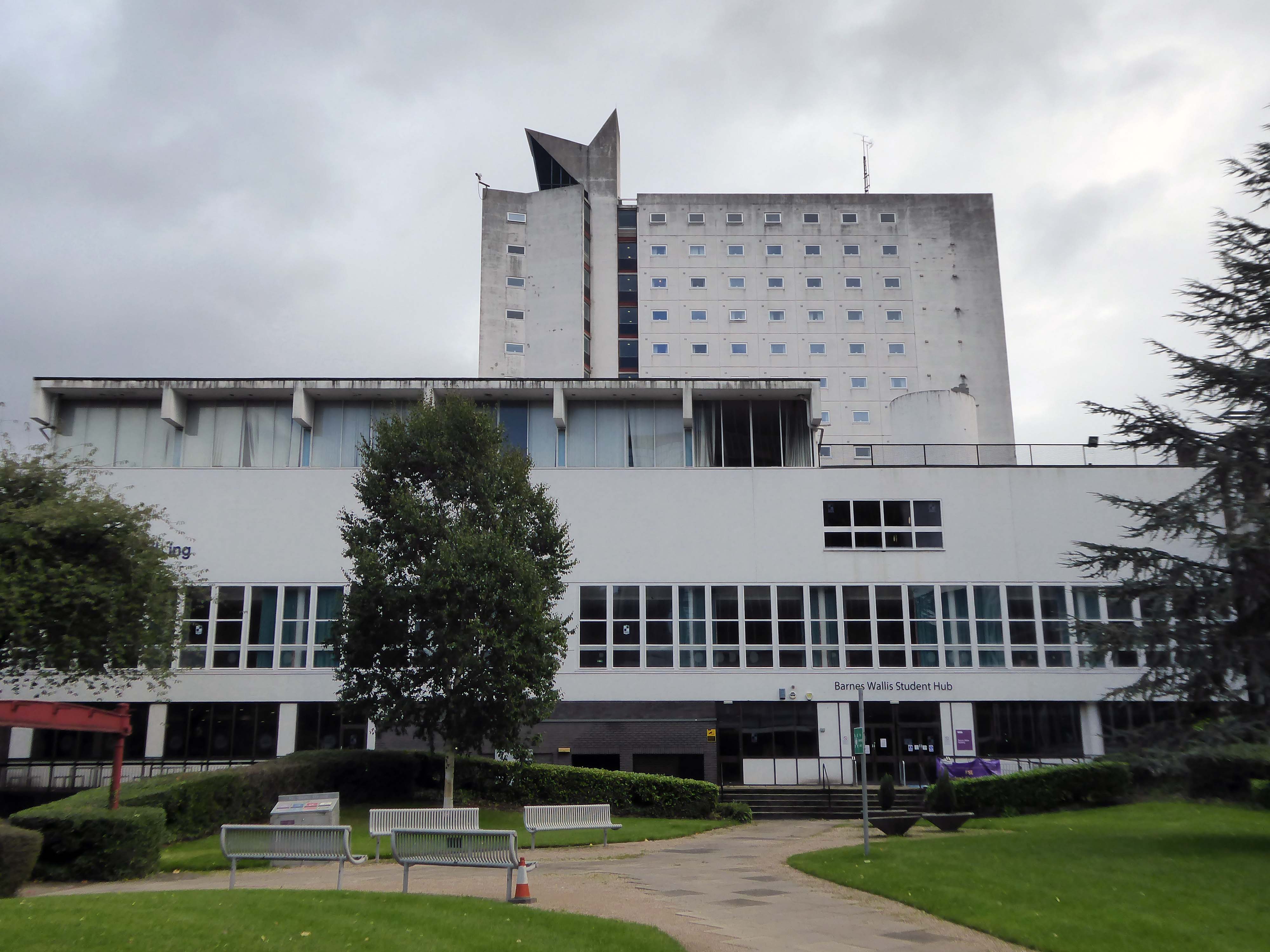
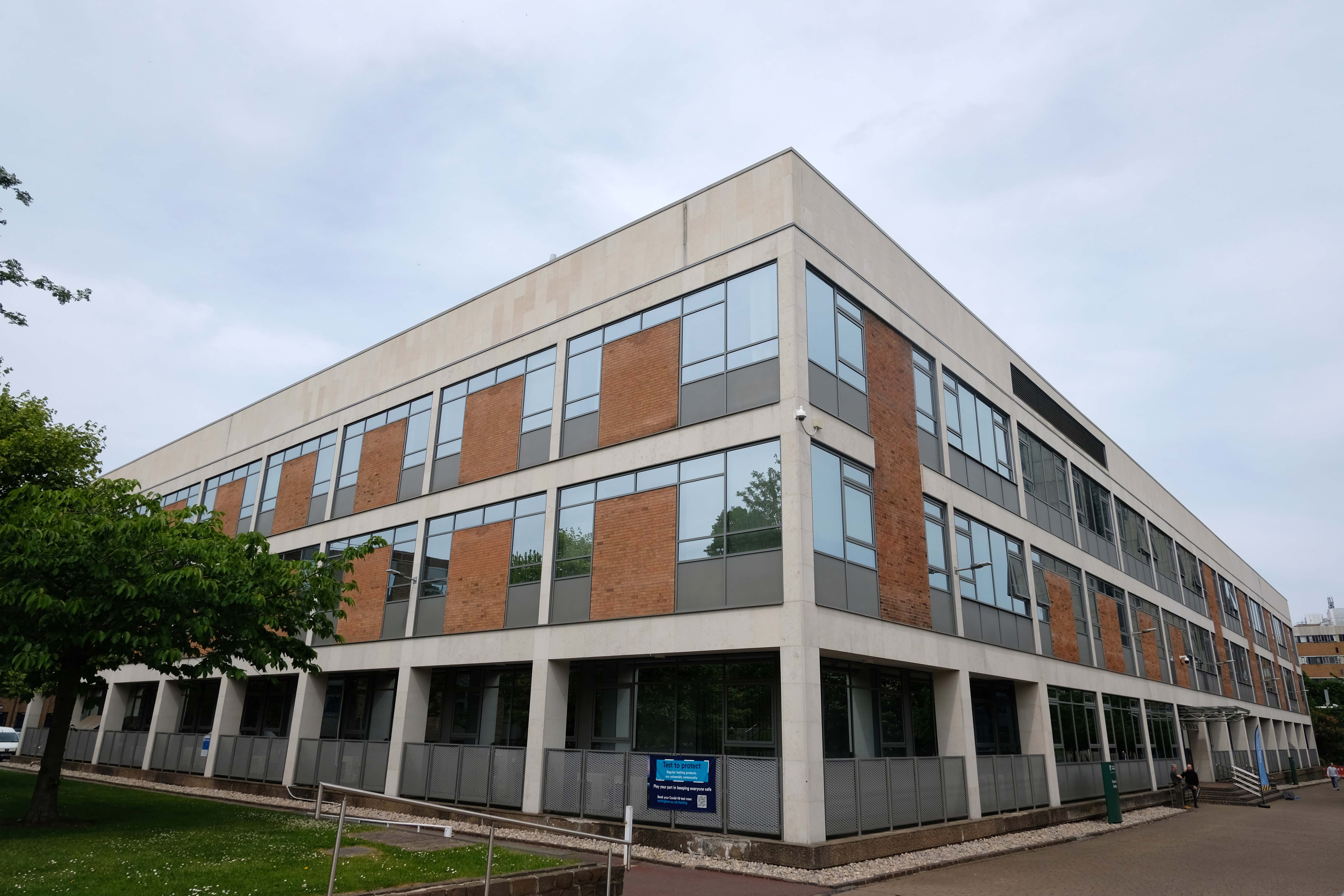
The collection of buildings in University Park Campus, colloquially known as Science City, was first masterplanned by Basil Spence in 1959. His vision was largely realised by Renton Howard Wood Associates during the 1960s. Since then, numerous additions and alterations have been made to suit the ever increasing student numbers and the changing needs of the University.
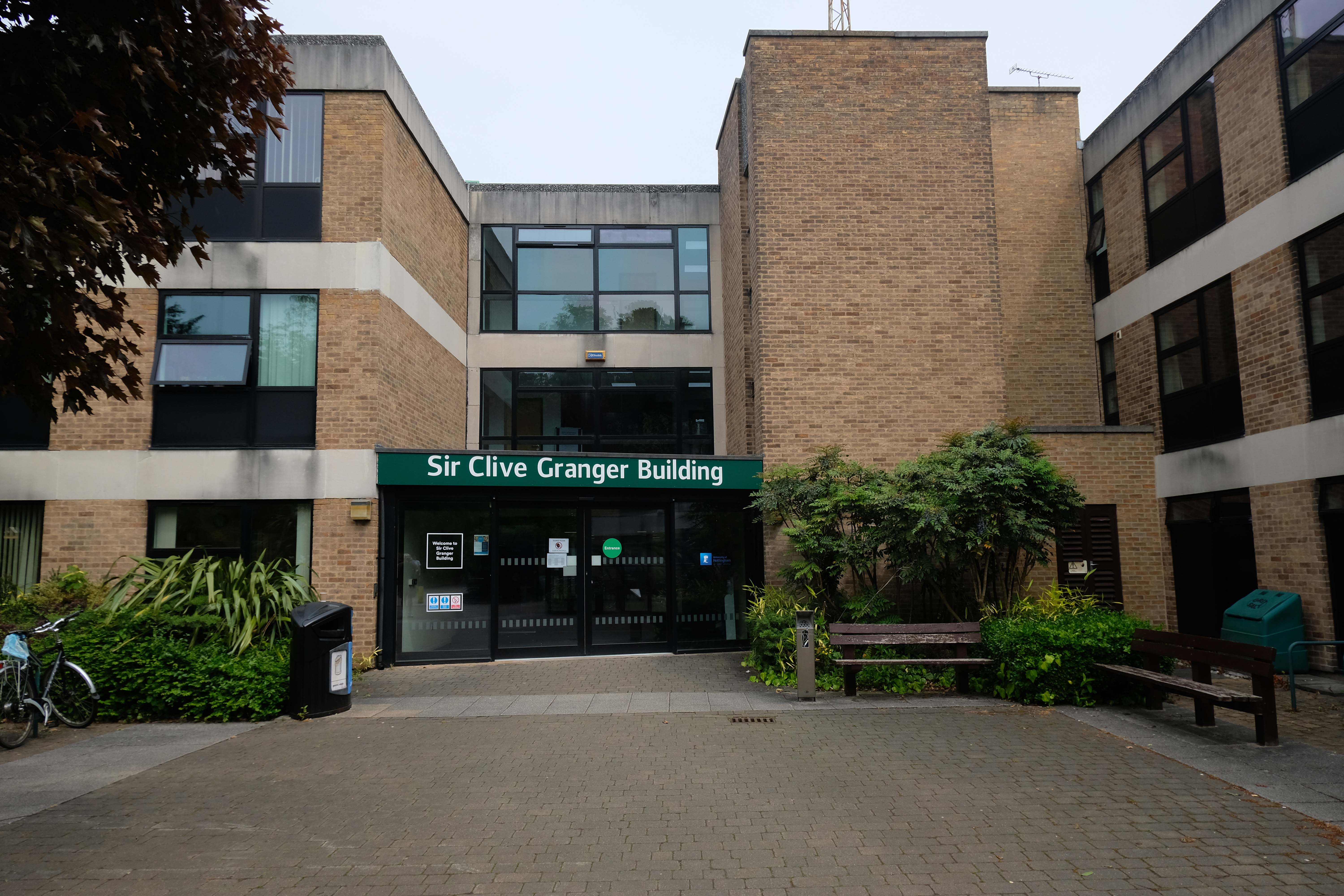
Sir Clive Granger Building
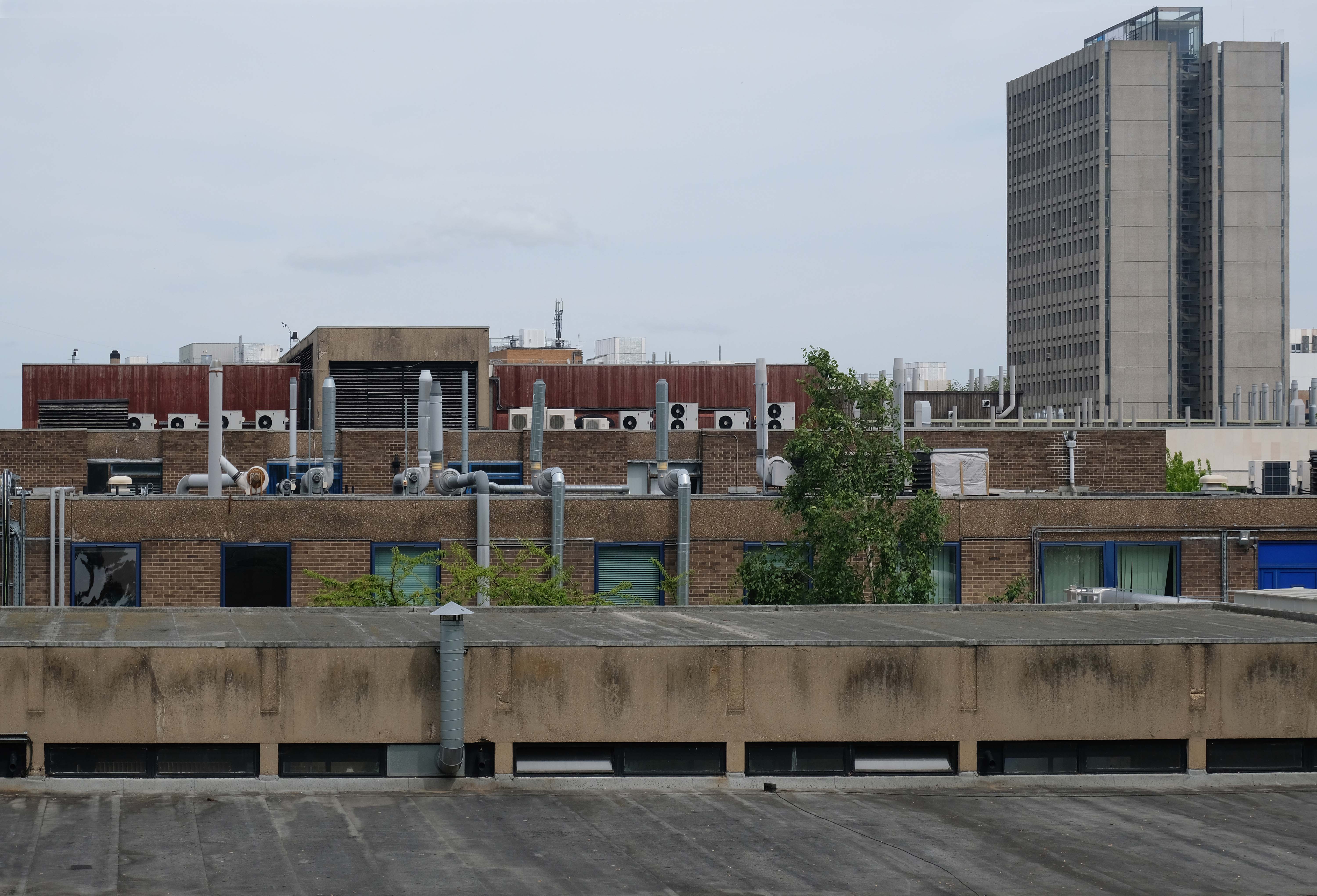
A view over the Science Buildings by Basil Spence 1955 and partner Andrew Renton 1961 onward.
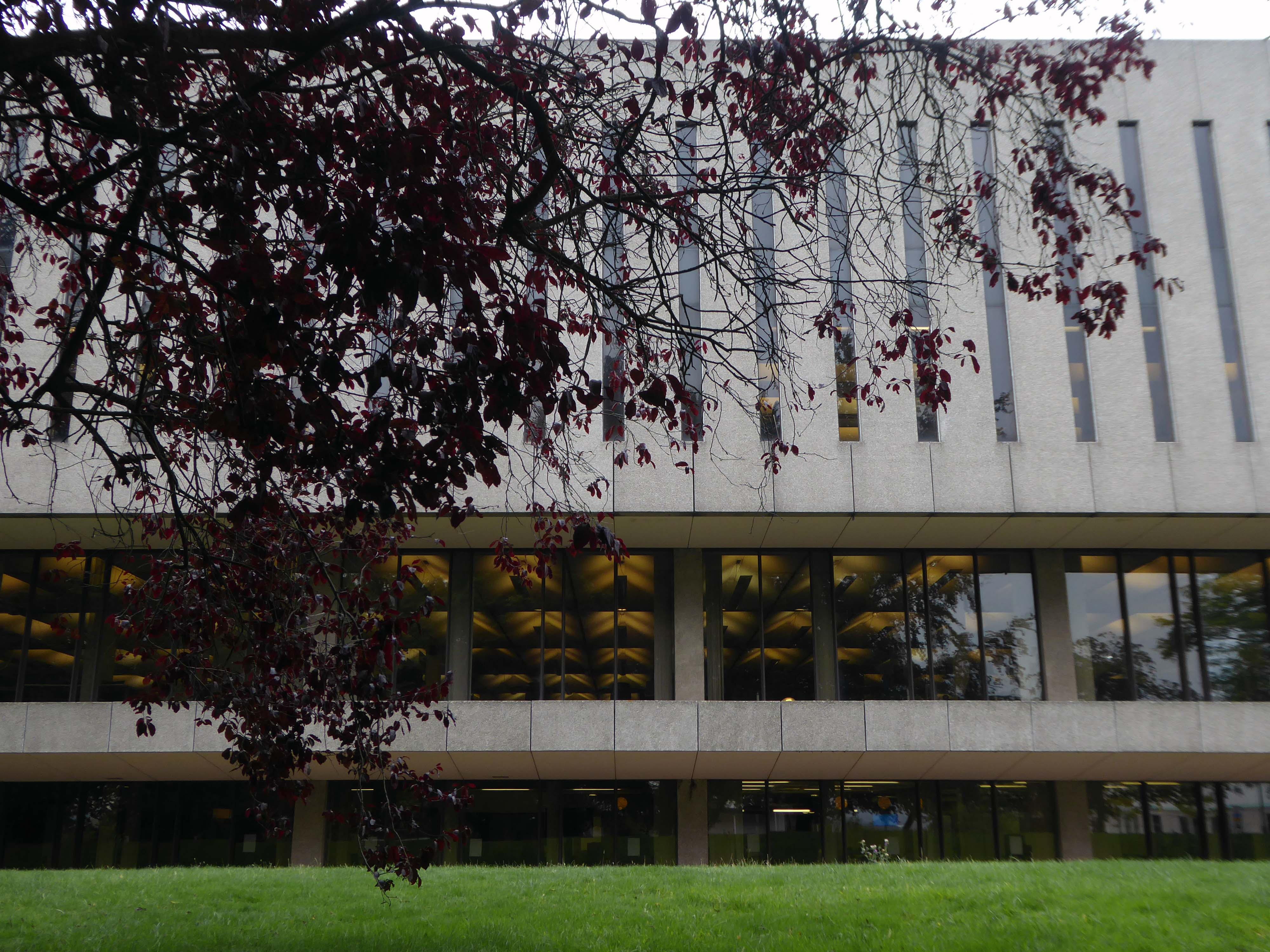
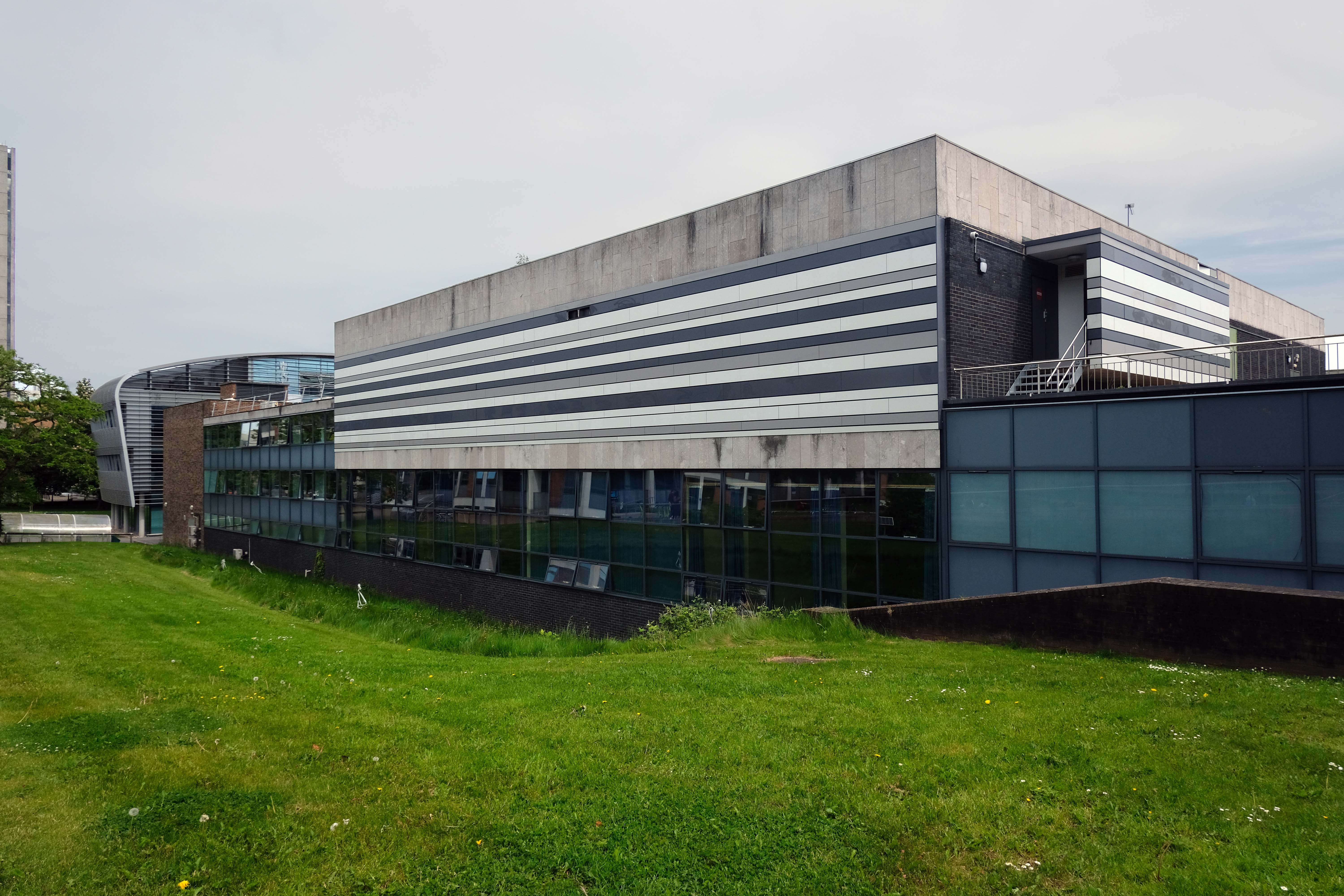
The University of Nottingham needed to double the size of its existing academic library to cater for an expansion in serious scientific study. Hopkins Architects faced the difficult task of doubling the size of a rather unremarkable 1960’s building – designed by Basil Spence, on a tight sloping site.
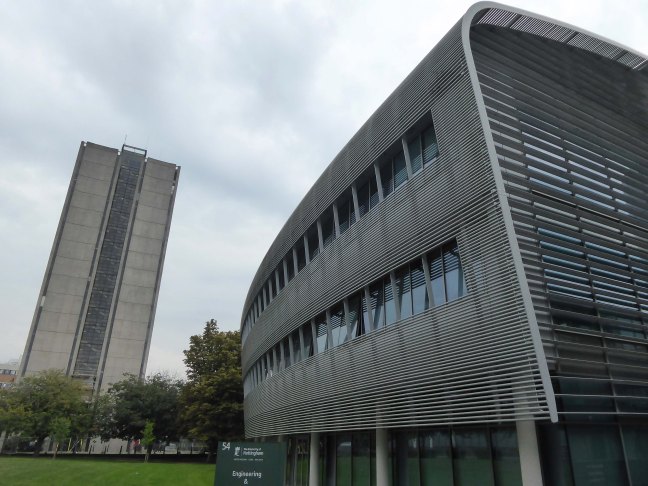
Pope Building leading to the Engineering Science Learning Centre by Hopkins Architects 2011
Chemistry Department
Coates Building by Basil Spence
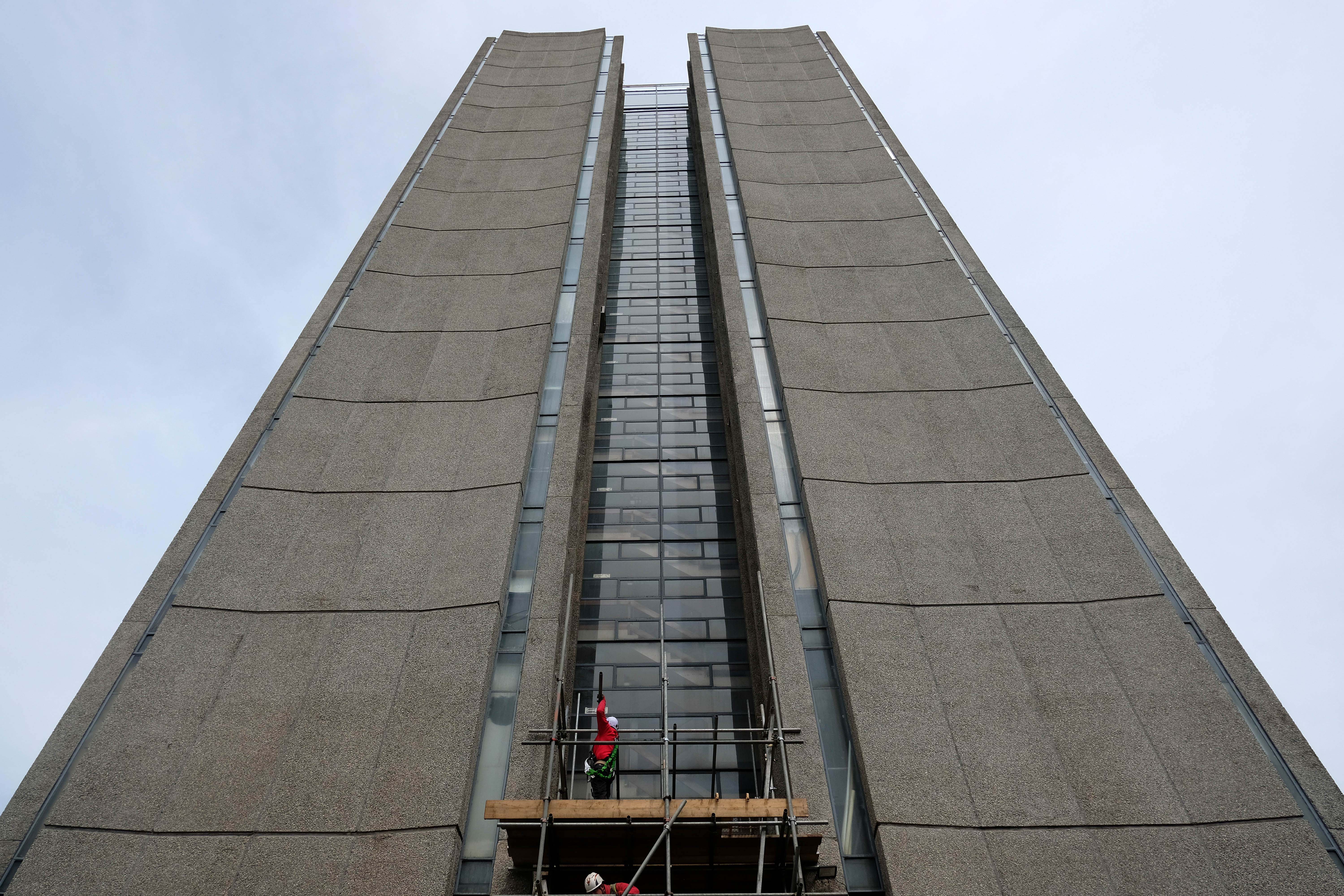
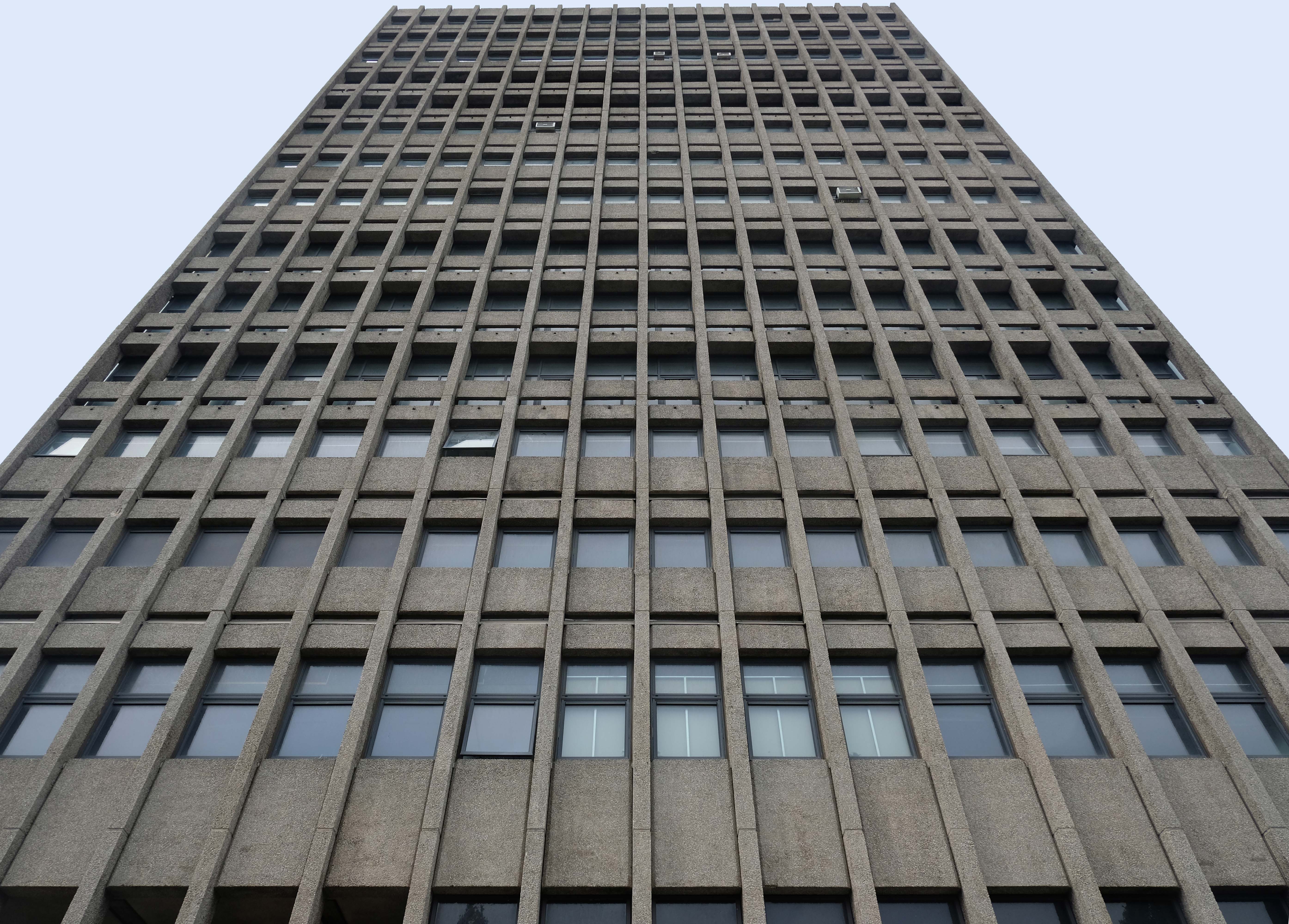
Tower Building by Andrew Renton 1963-65
Refurbishment work is taking place to develop flexible workspaces, including offices, conference and meeting rooms, while the building will also accommodate hospitality and events rooms. The university also plans to include a restaurant, coffee bar, a deli-shop and a top-floor sky lounge.
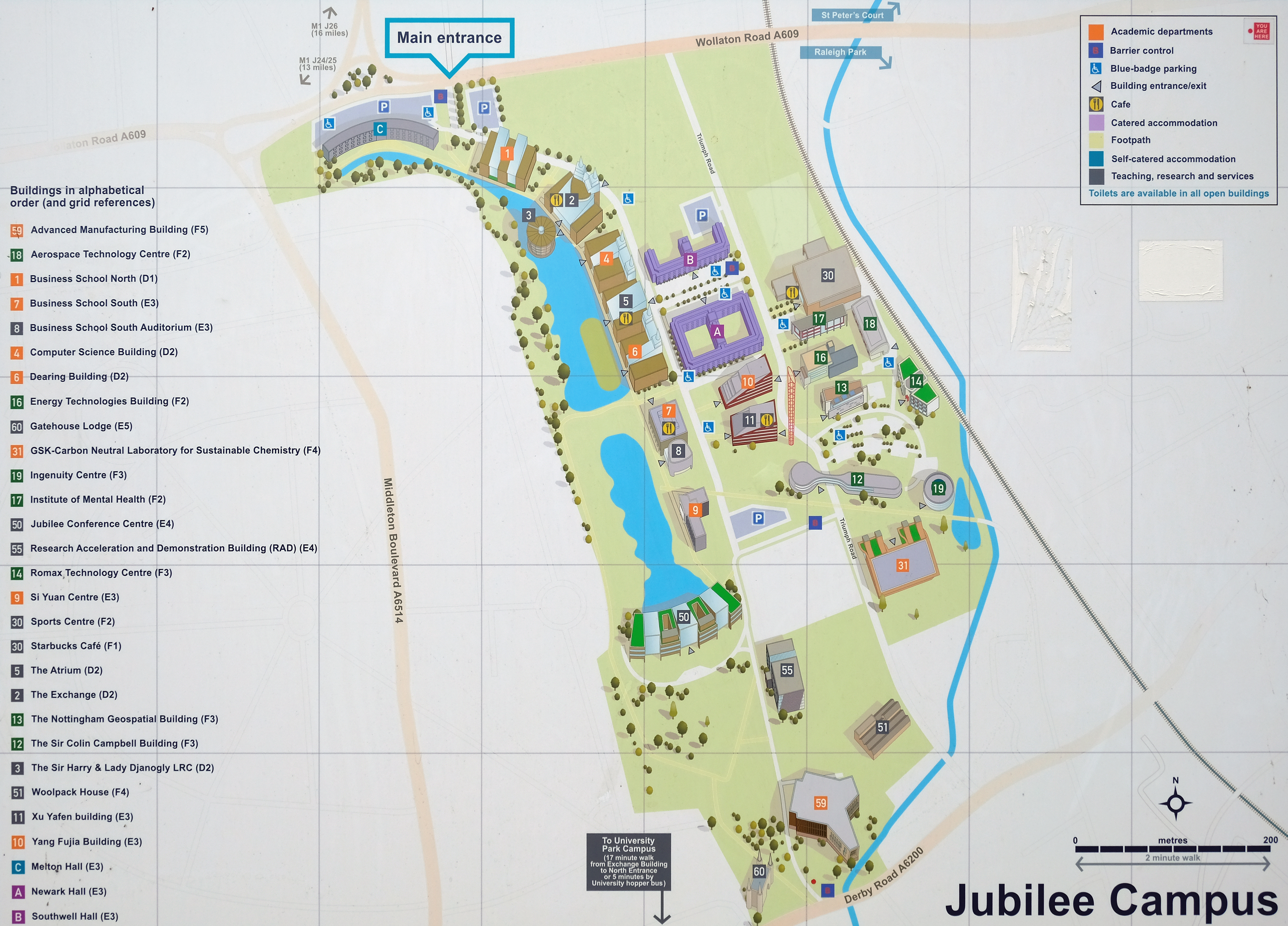
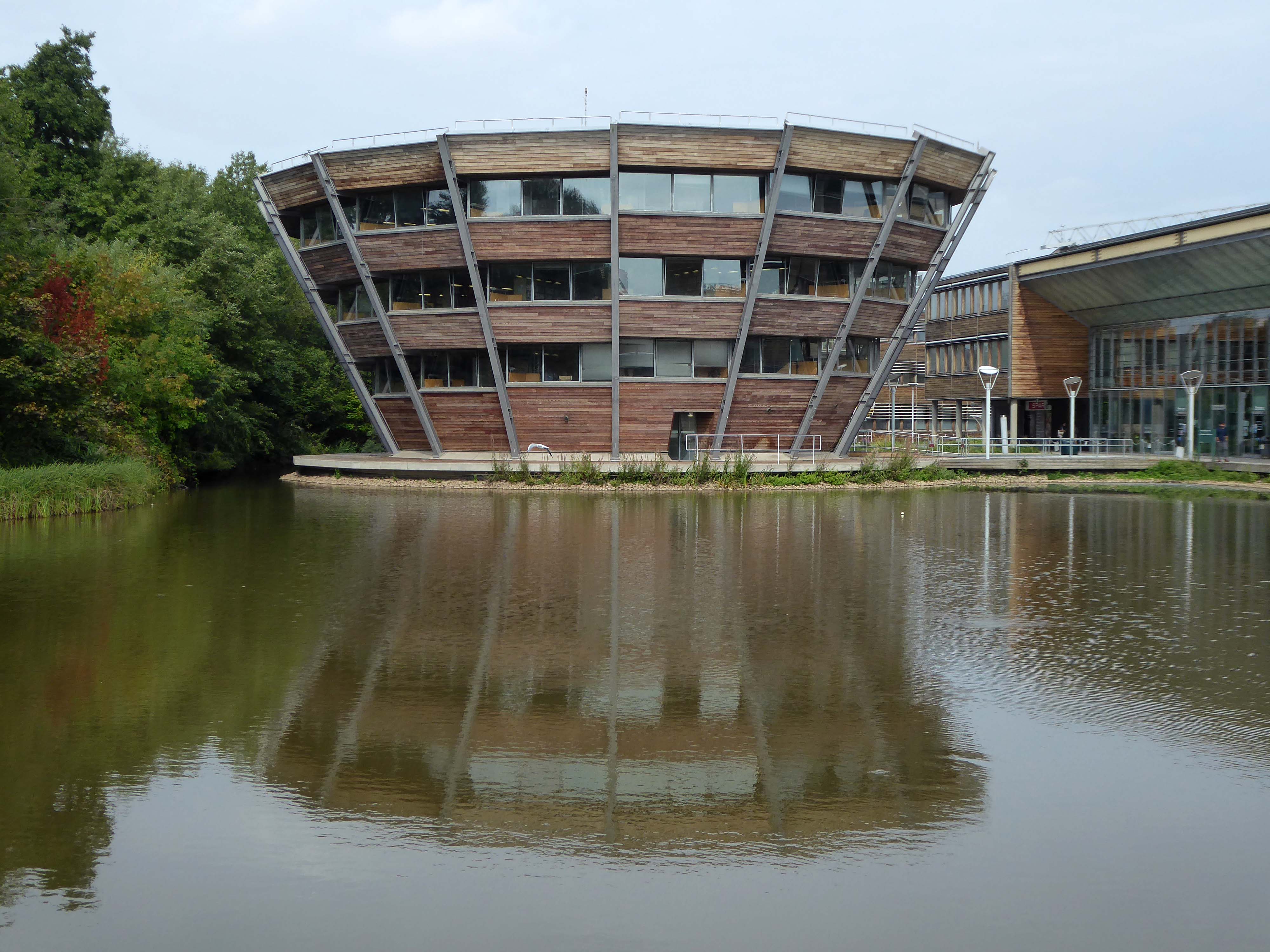
Jubilee Campus is a modern purpose-built campus which now extends to 65 acres and is located only one mile from University Park. The initial phase was opened by Her Majesty the Queen in 1999. The state-of-the-art facilities now include:
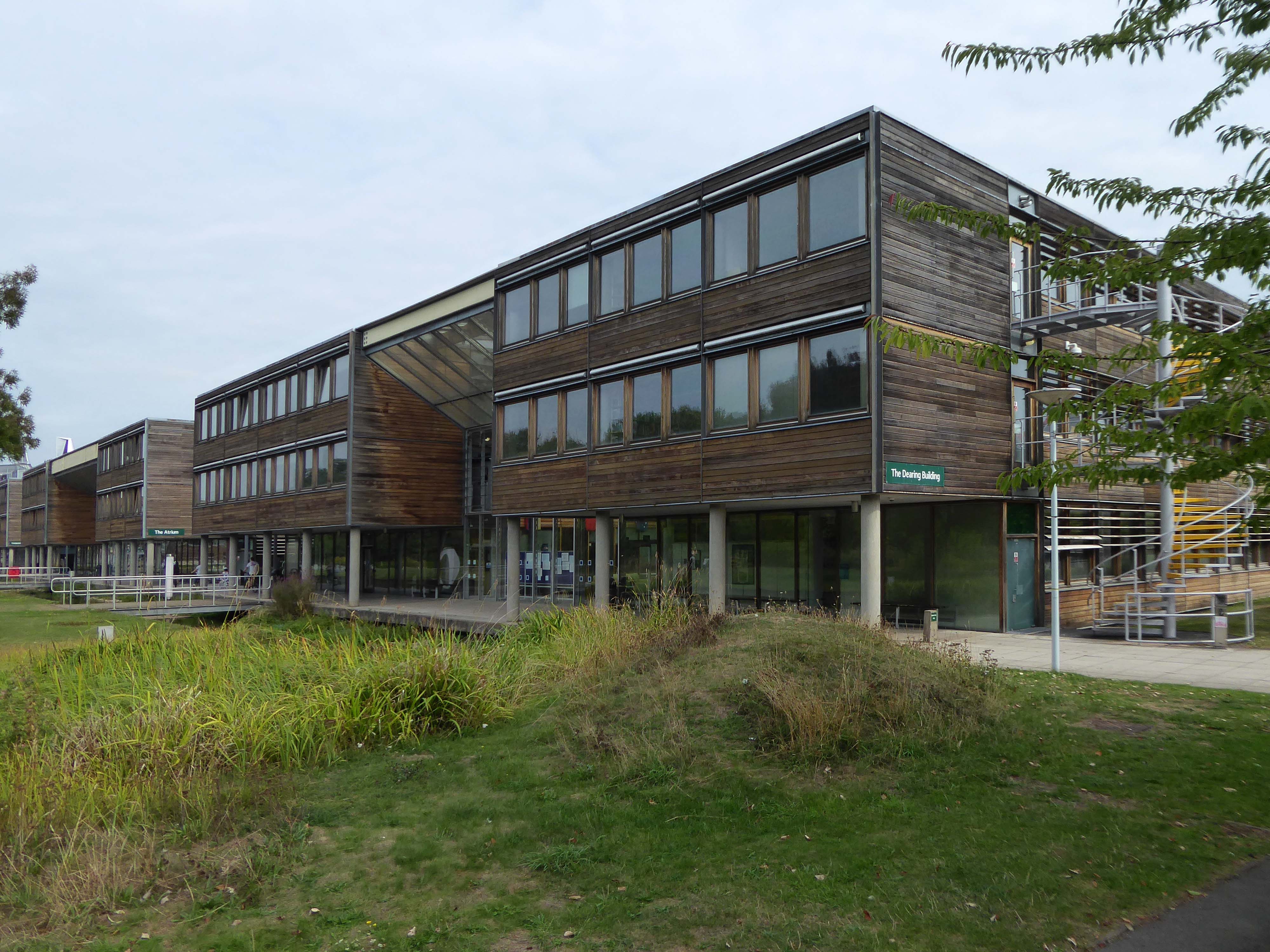
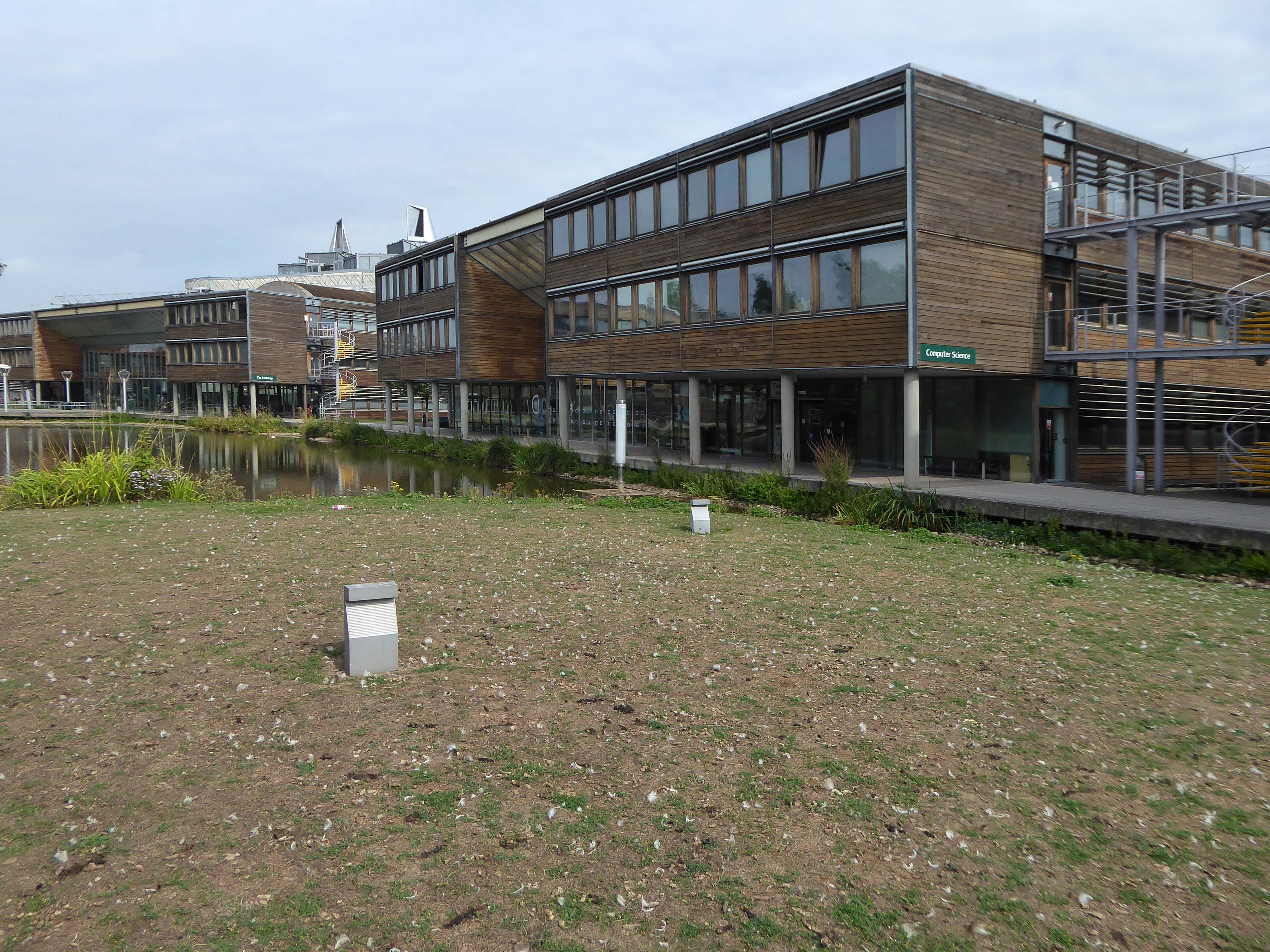
The Schools of Education – including CELE and Computer Science
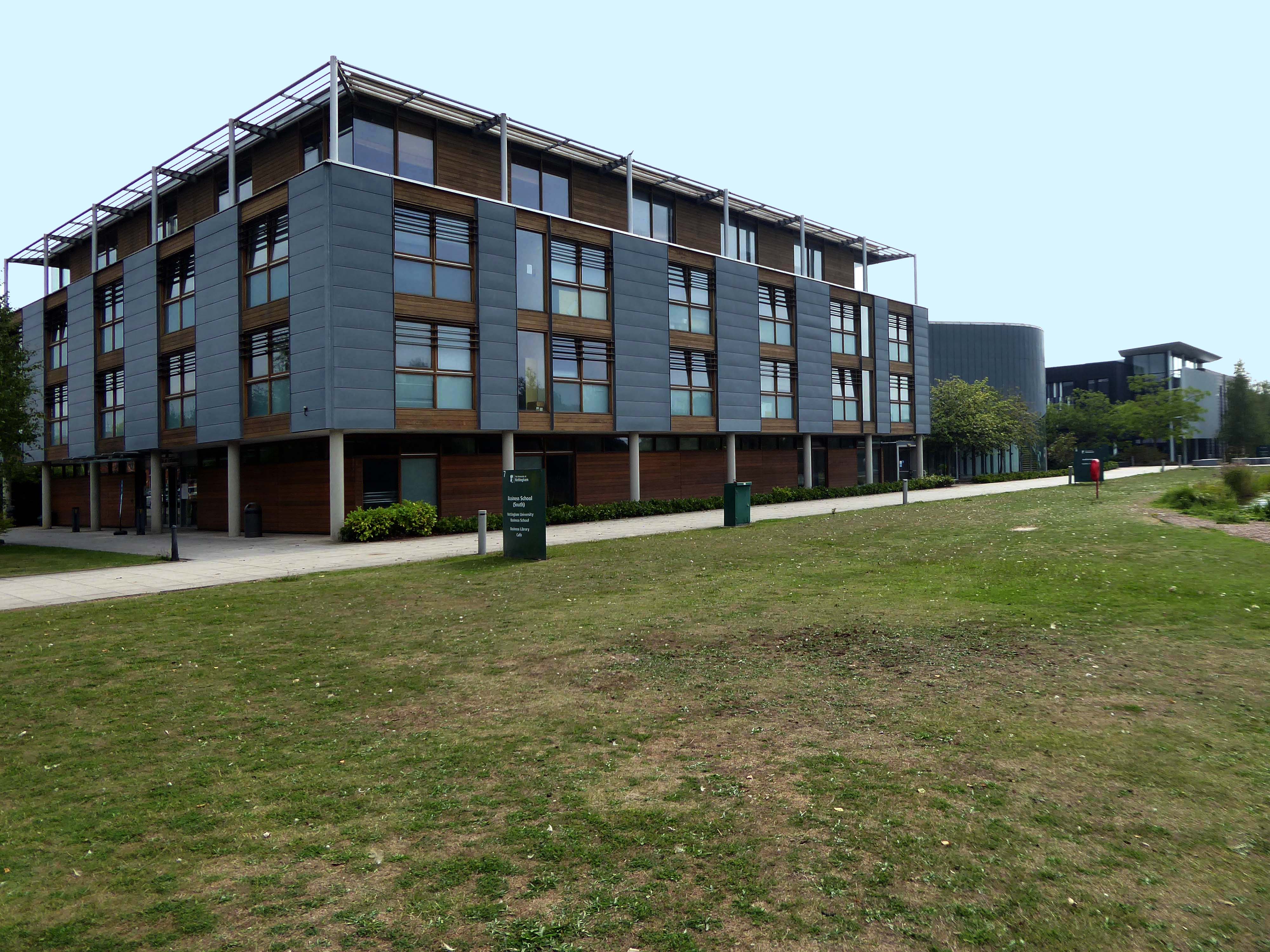
The Nottingham University Business School
The National College for Leadership of Schools and Children’s Services
Sports Centre
University of Nottingham Innovation Park
4000 third party purpose-built student residences within half a mile radius of the campus
Central to the development of the site has been the setting of high BREEAM Standards – an holistic approach to achieve ESG, health, and net zero goals. It is owned by BRE – a profit-for-purpose organisation with over 100 years of building science and research background.
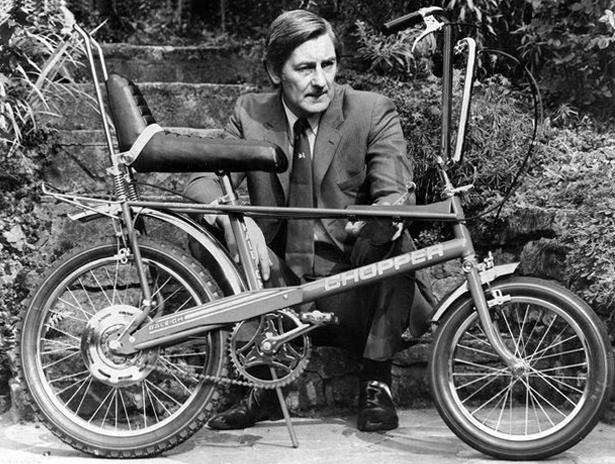
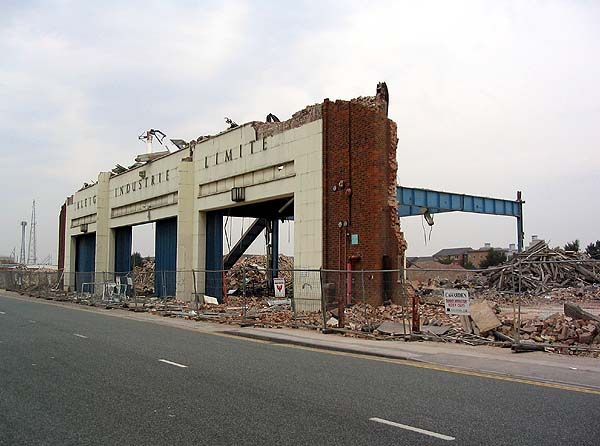
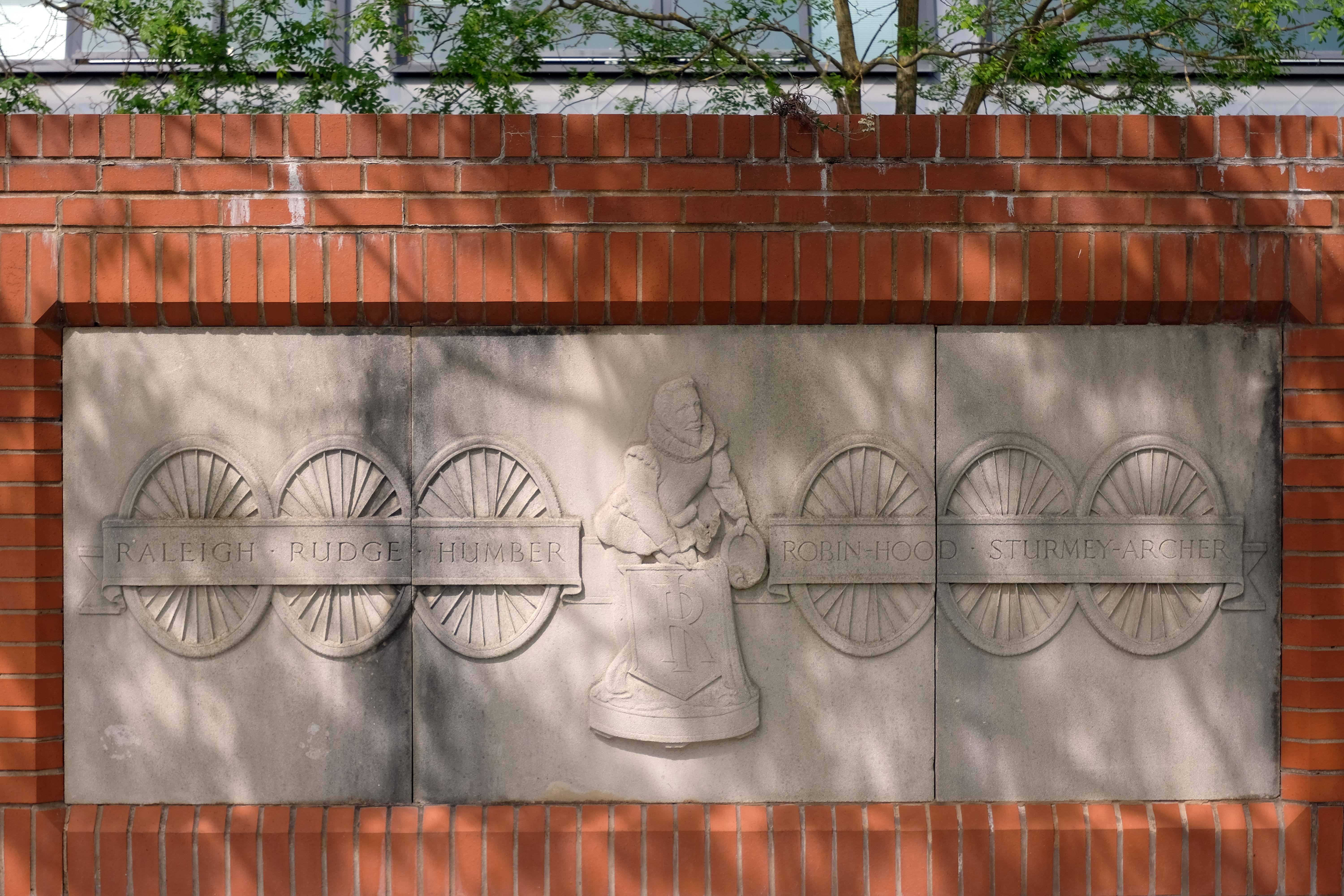
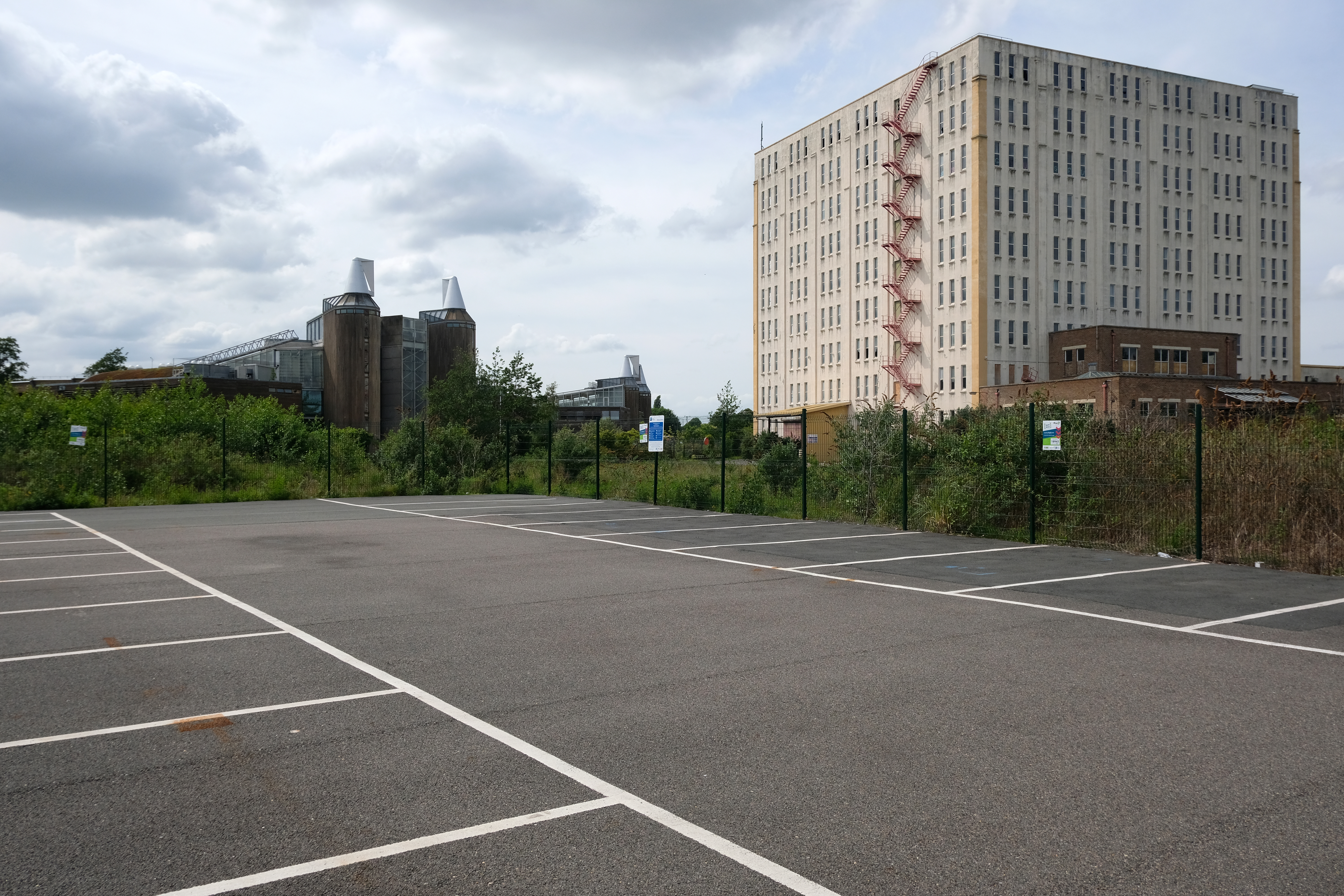
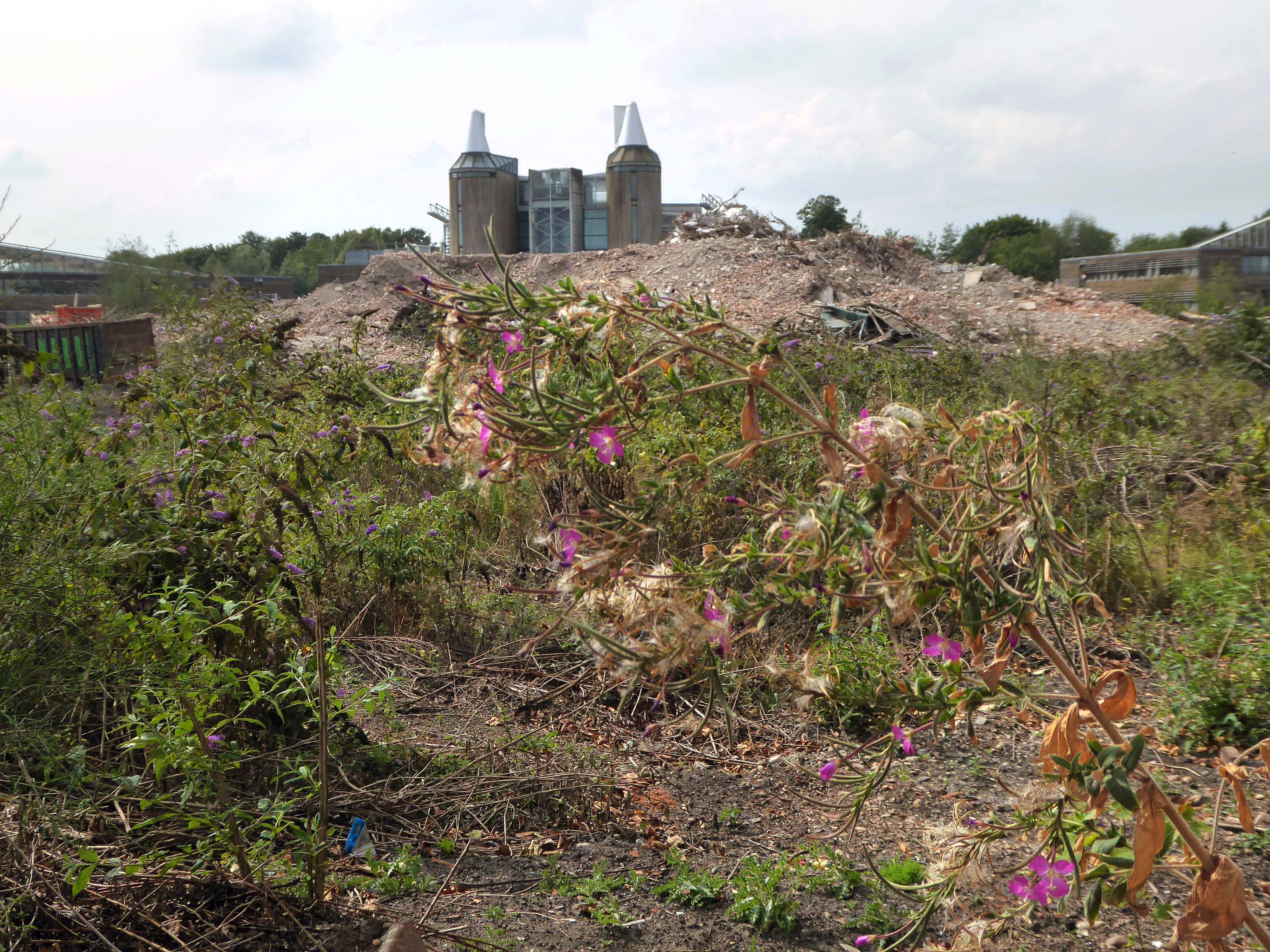
Built on the former site of the immense Number 3Raleigh Bicycle Factory – which was opened by Field Marshal Lord Montgomery in 1957.
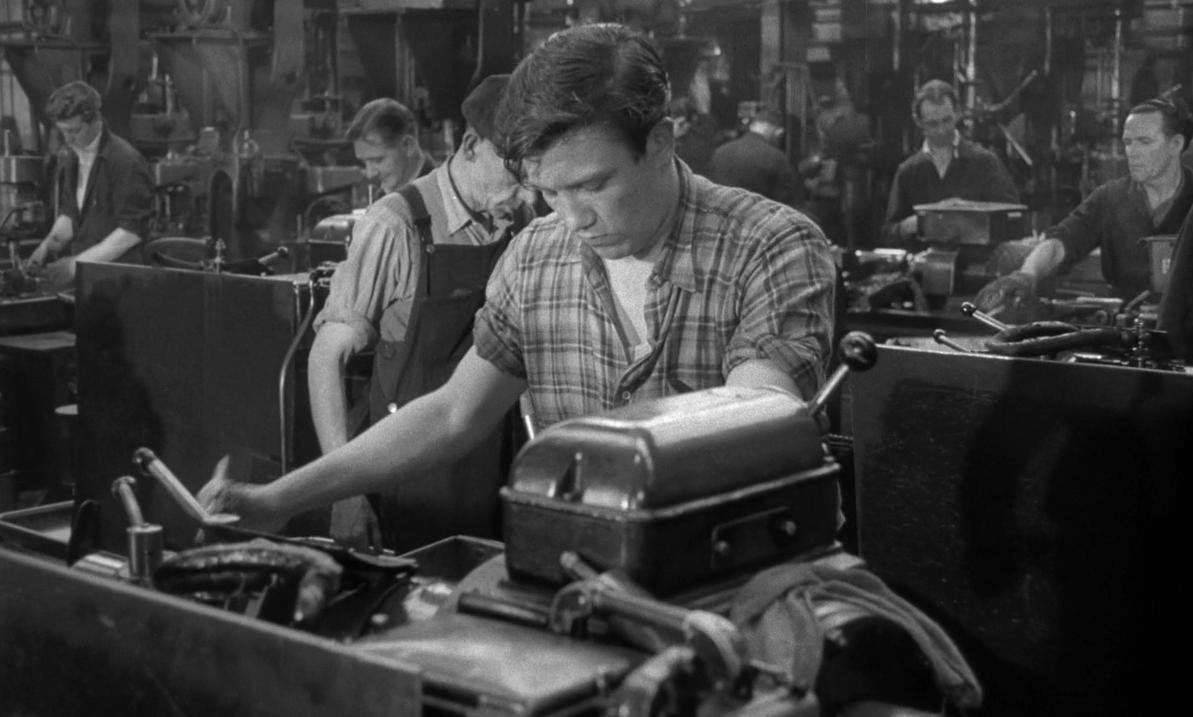
At its peak in the 1950s, Raleigh employed 7000 people on a 40 acre site that covered most of Lenton Boulevard, Triumph Road and Orston Drive.
In May 1999, Raleigh announced that it was to cease volume production of frames in the UK. The frame welding robots, installed in 1996, were auctioned off in December 1999.
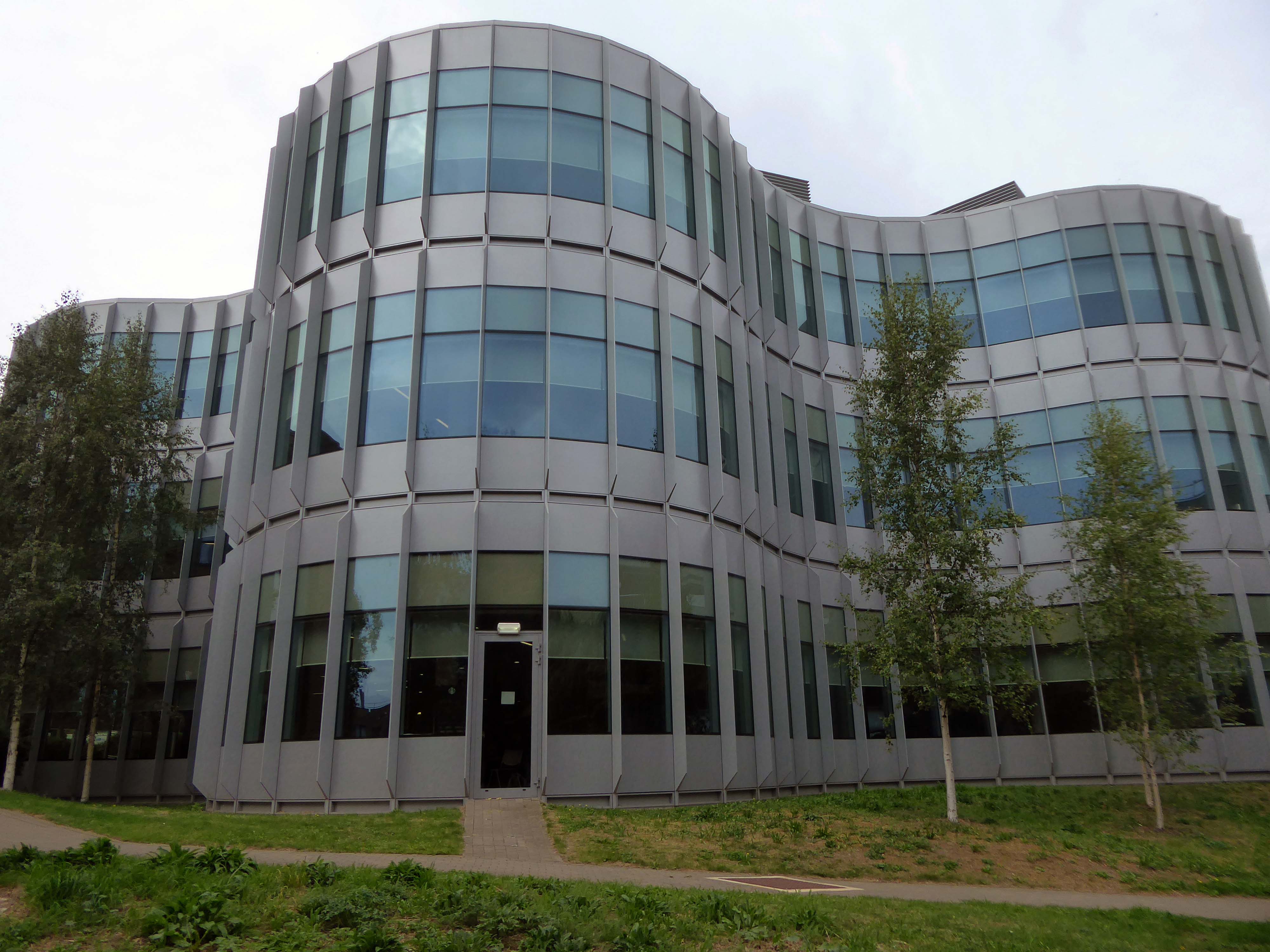
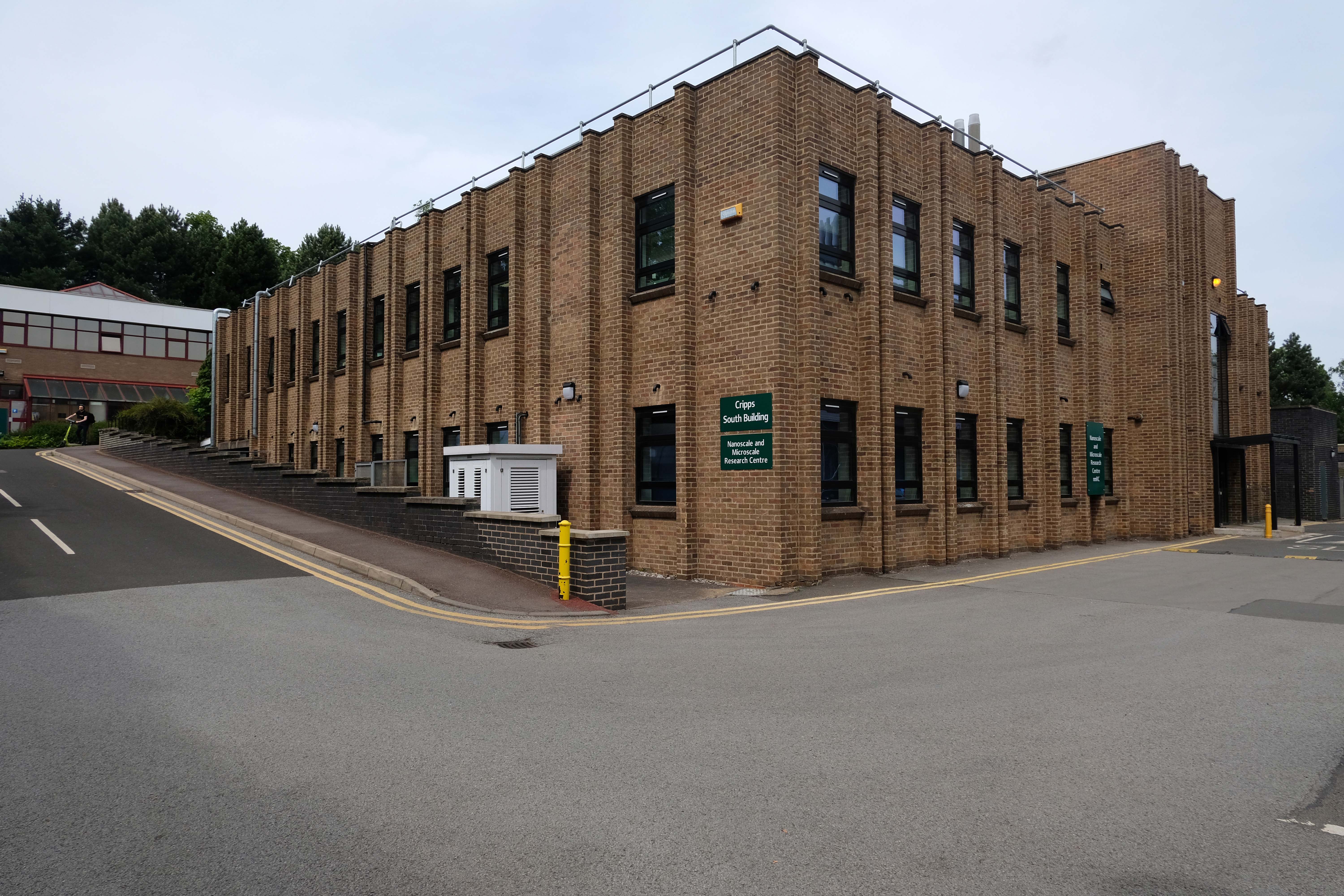
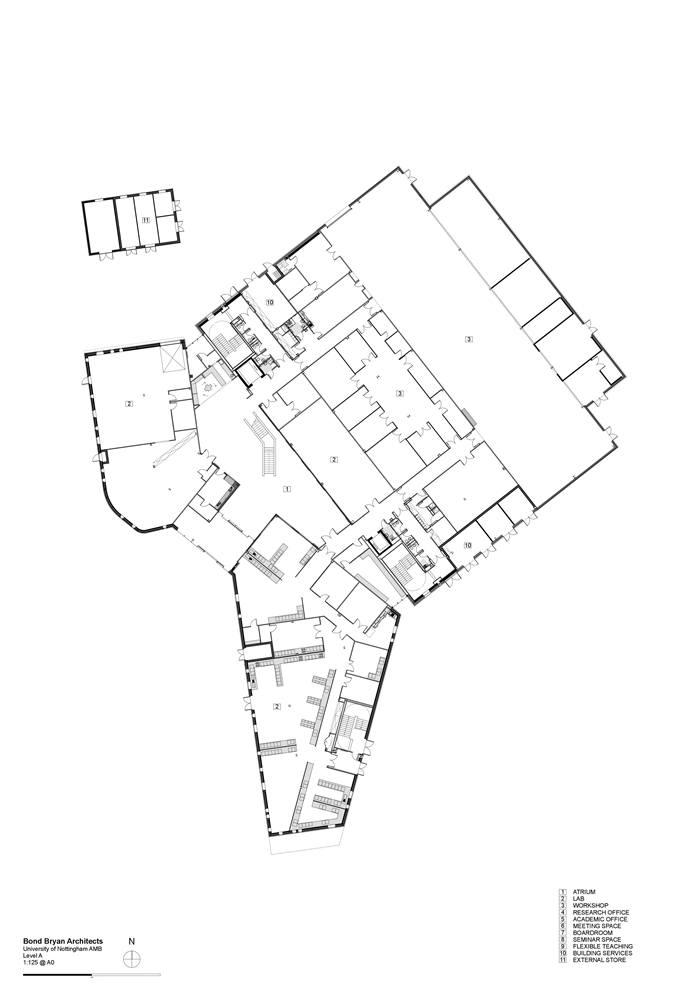
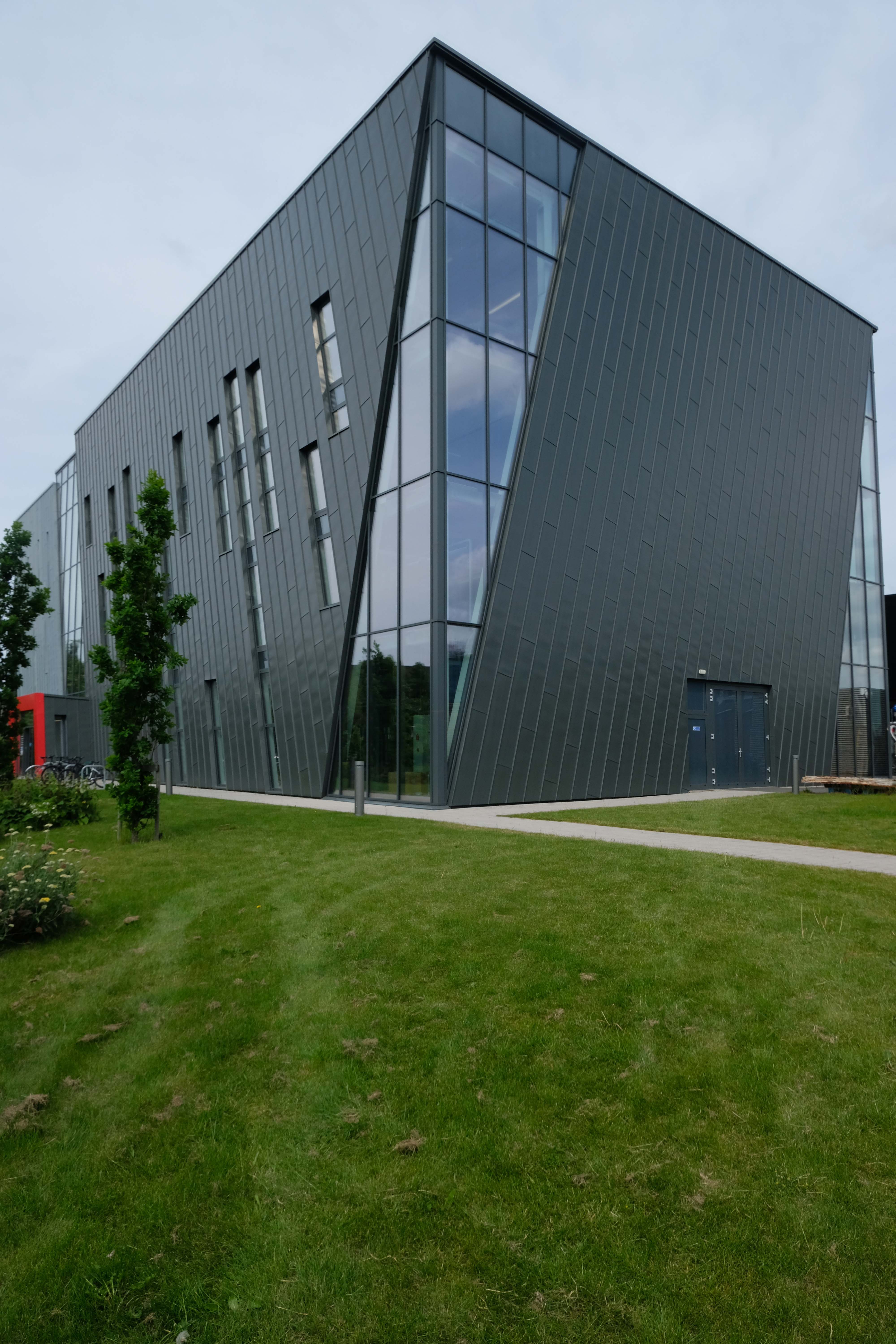
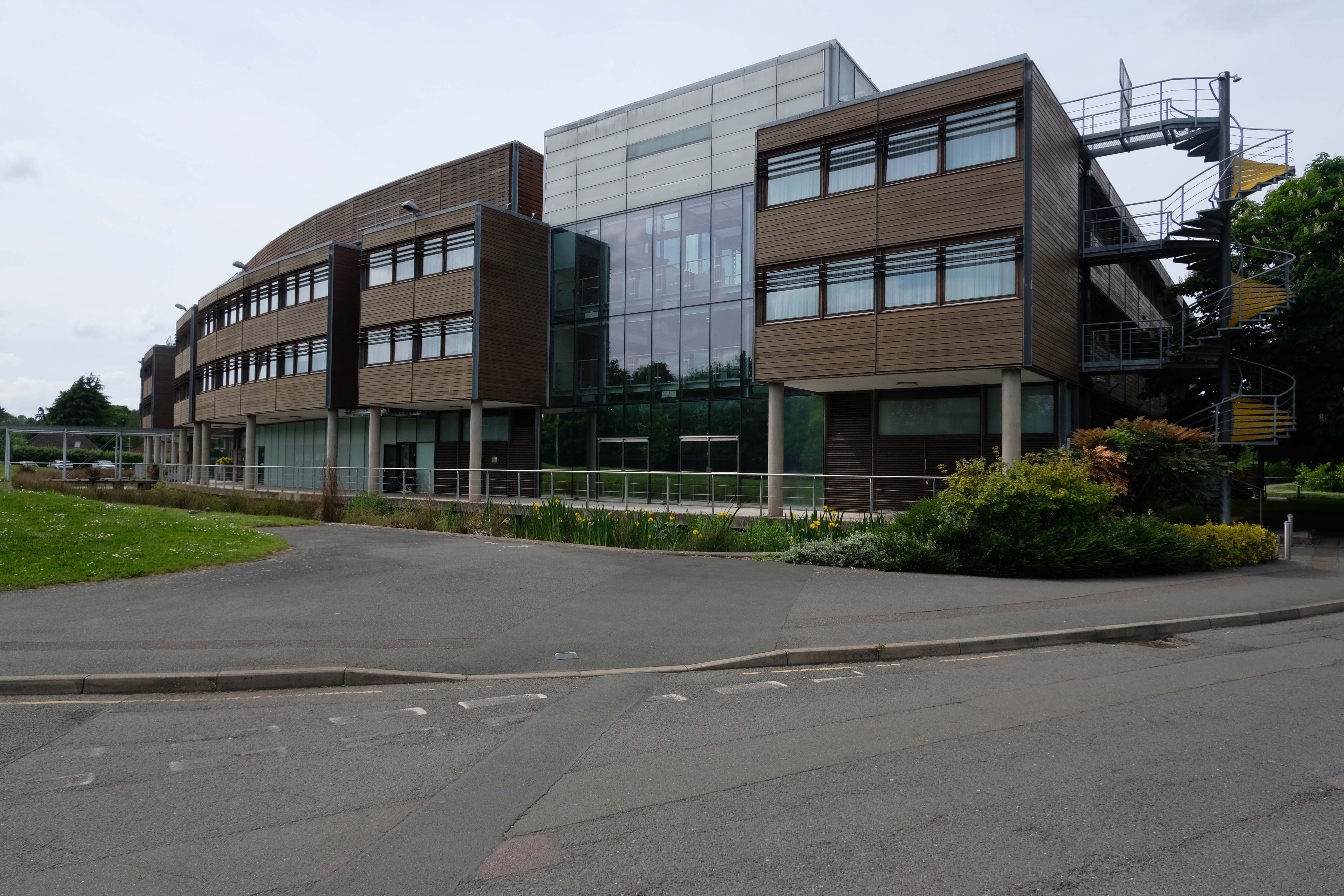
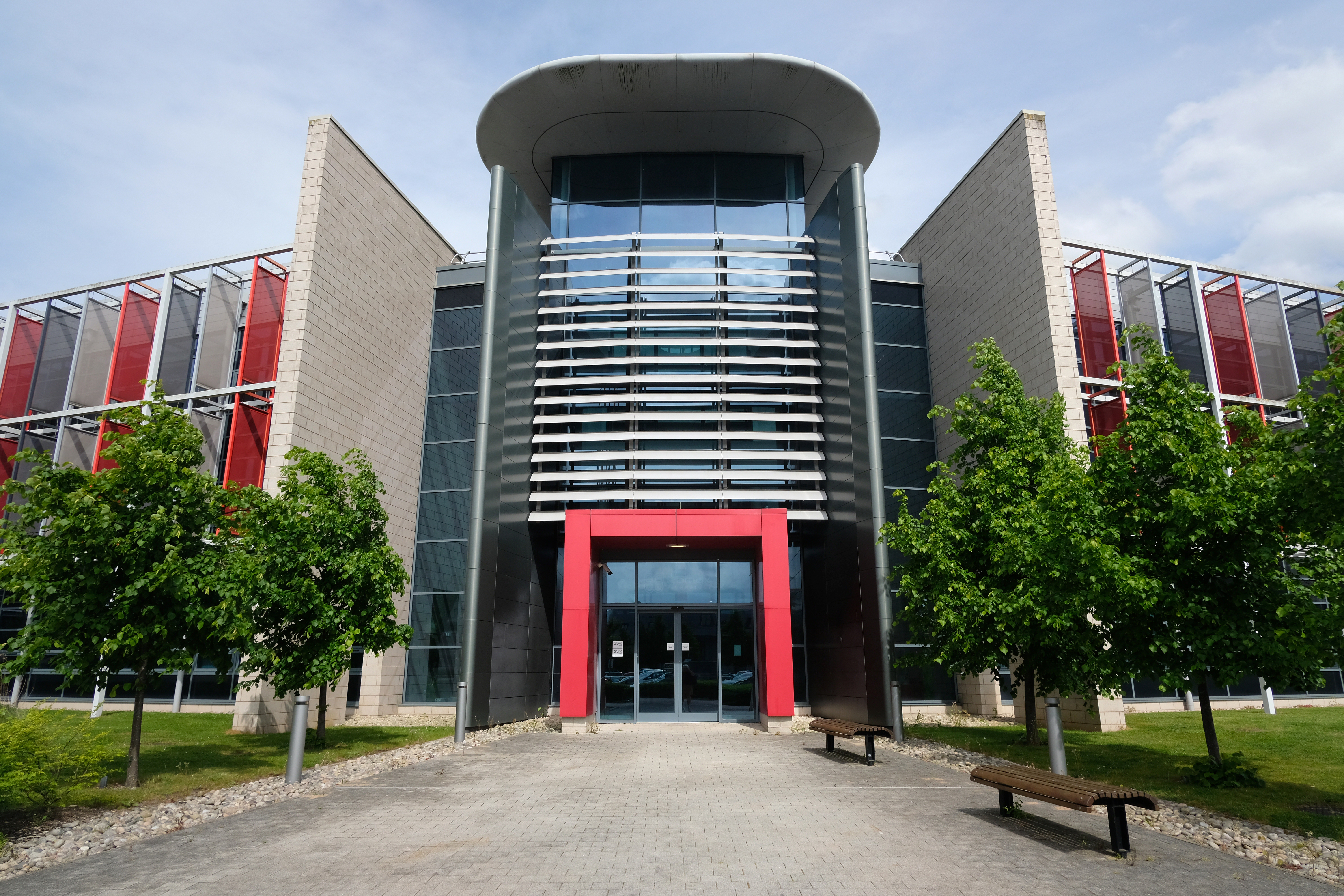
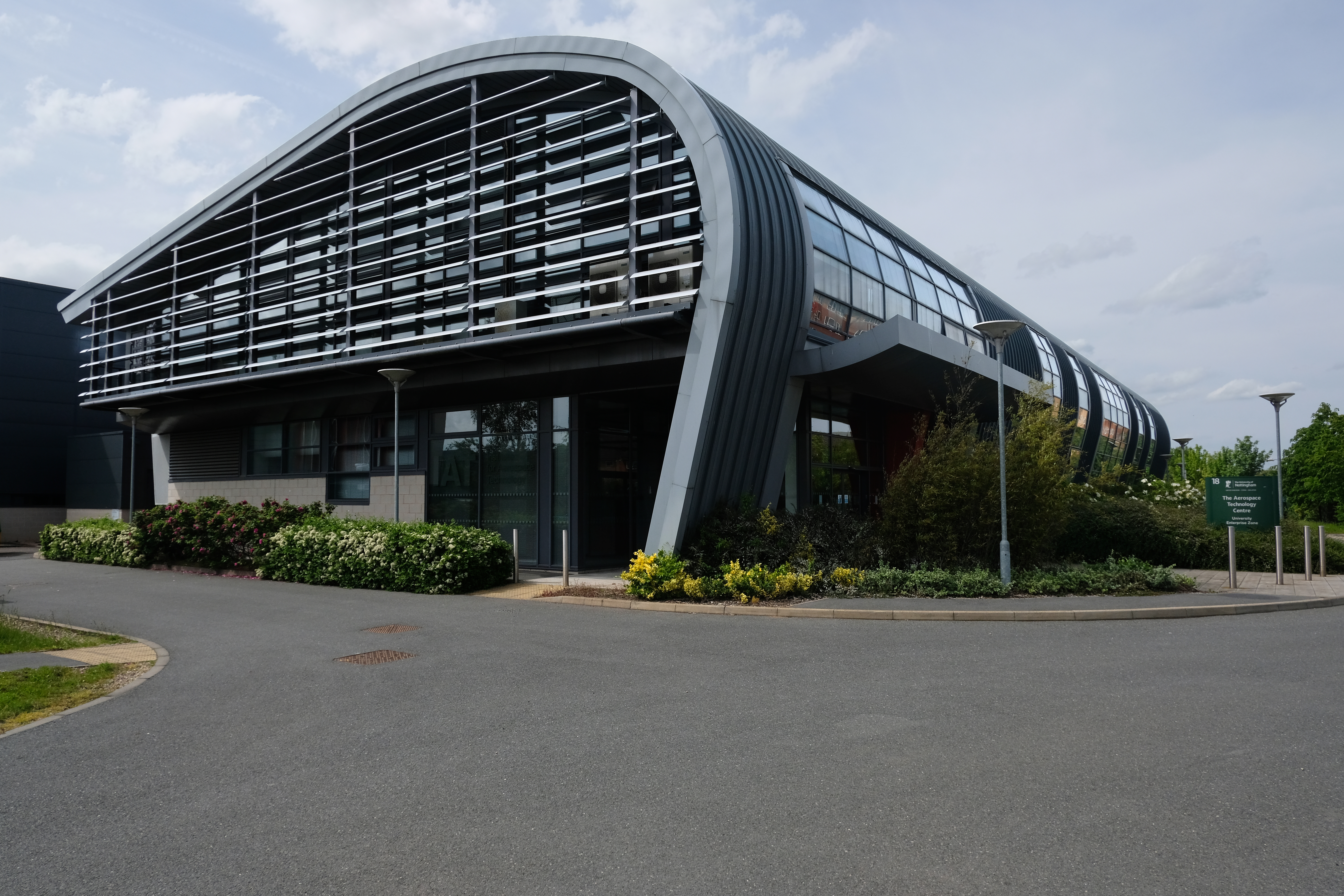
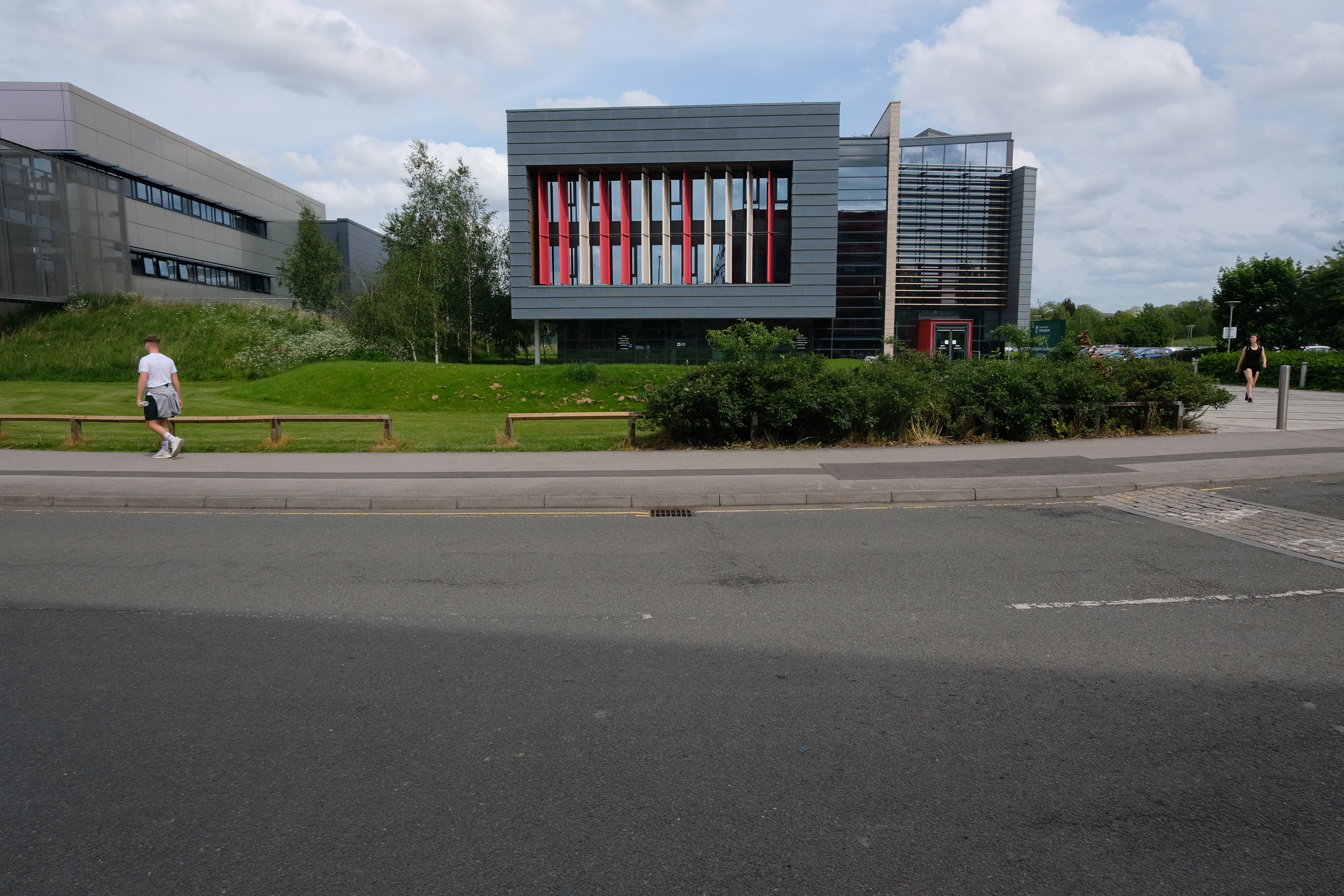
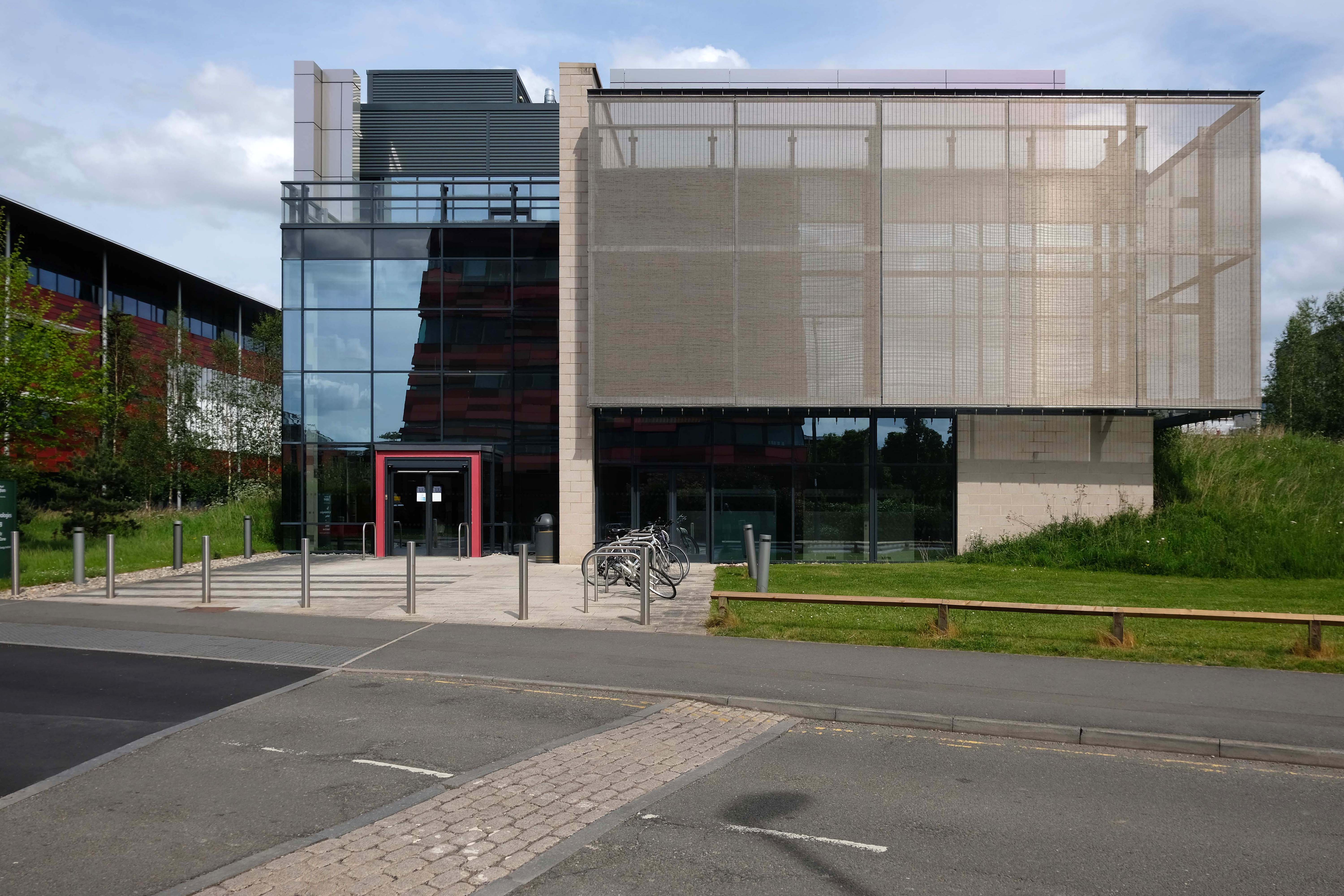
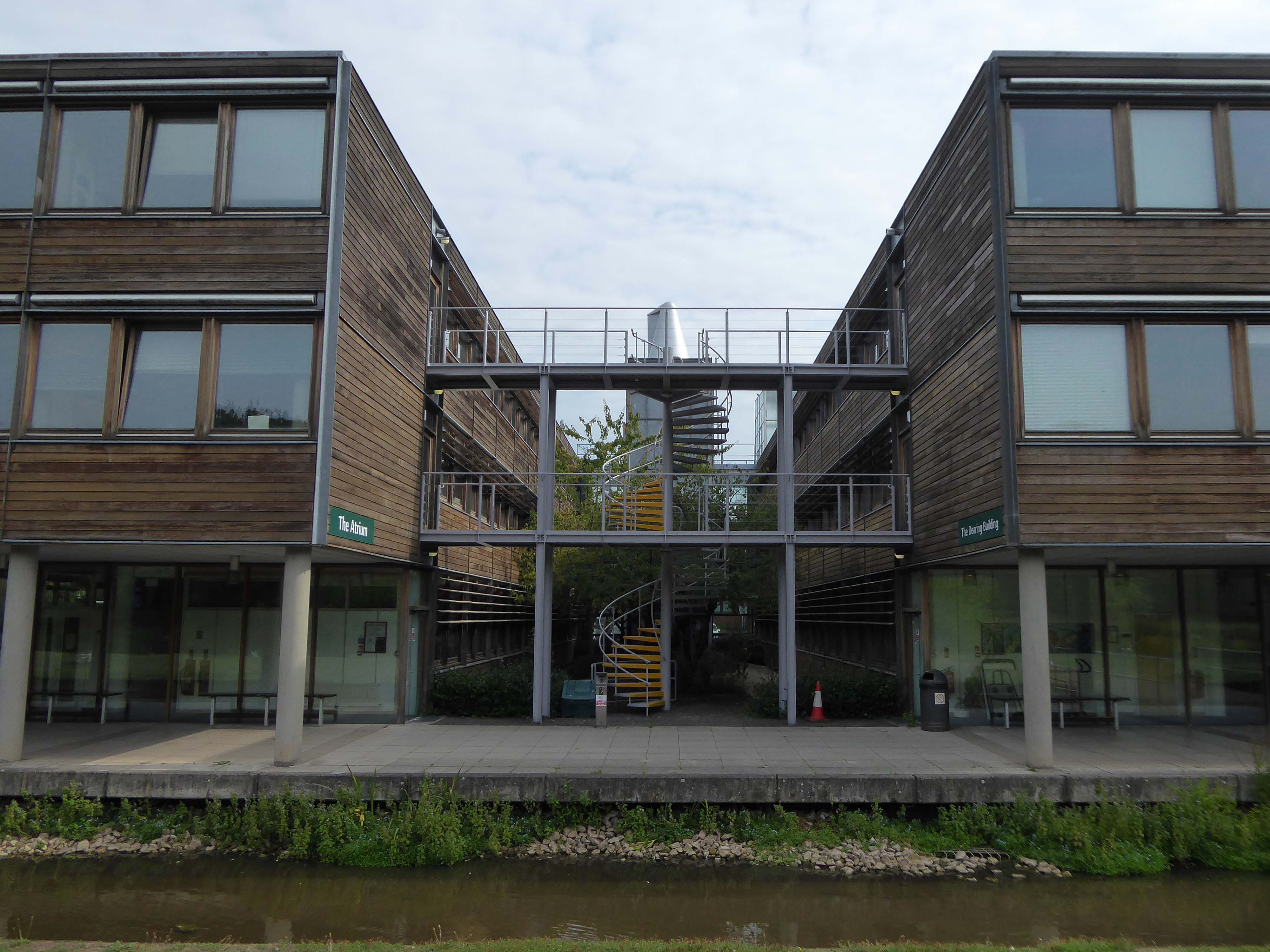
Enjoying a prime location on the University of Nottingham’s Jubilee Campus, the building provides a number of multidisciplinary and specifically designed laboratory spaces, as well as high quality single and multiple occupancy offices, technical support bases and breakout spaces.
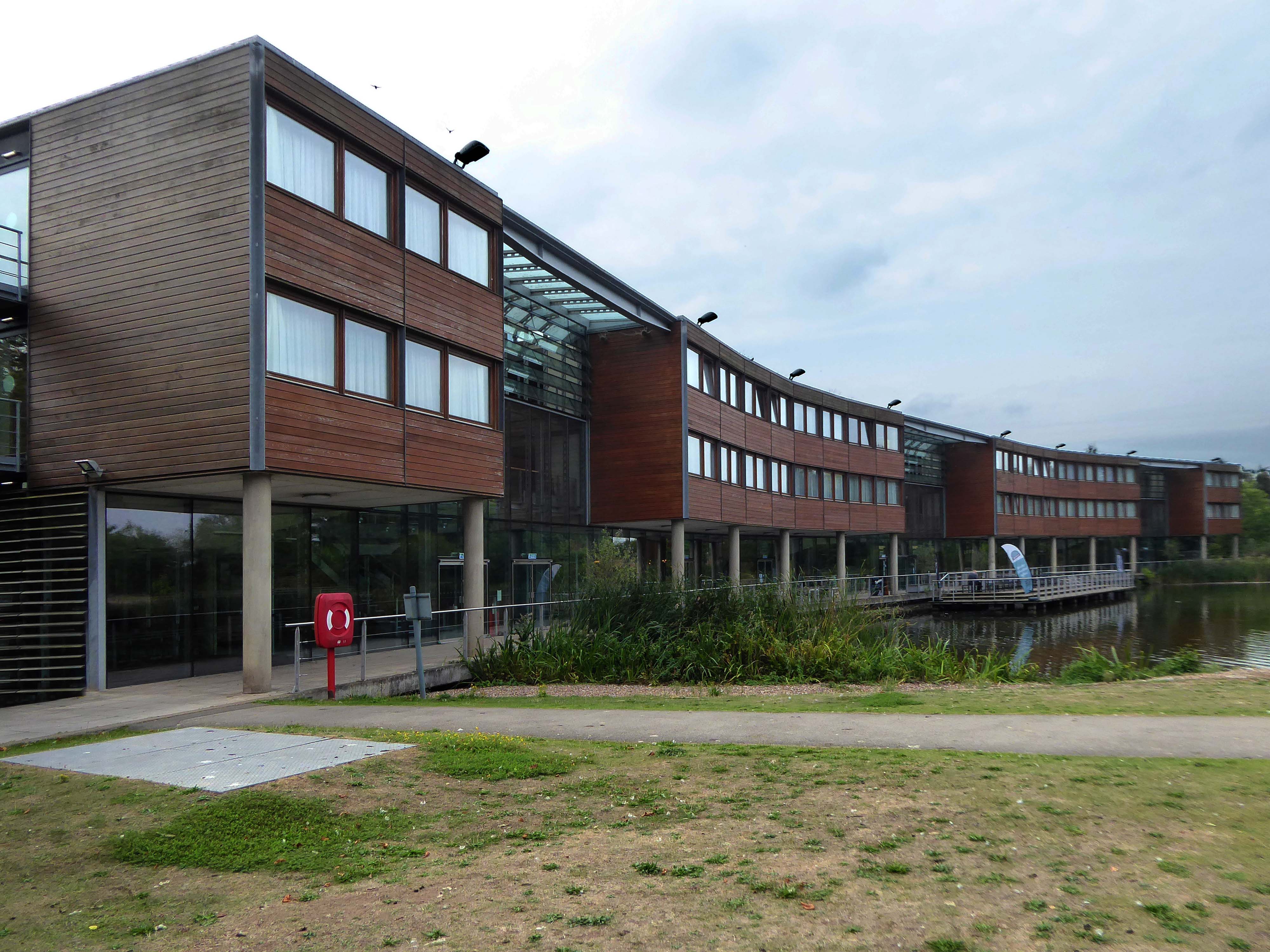
Set within 65 acres of lakeside grounds, close to Nottingham city centre, The Jubilee hotel & conferences offers an innovative setting for events, along with all the comforts of a modern hotel.
If you are looking for sustainable venue hire, look no further. With a range of meetings spaces, breakout areas and bedrooms; The Jubilee is perfect for event and conferences organisers looking for a light, airy and relaxing setting.
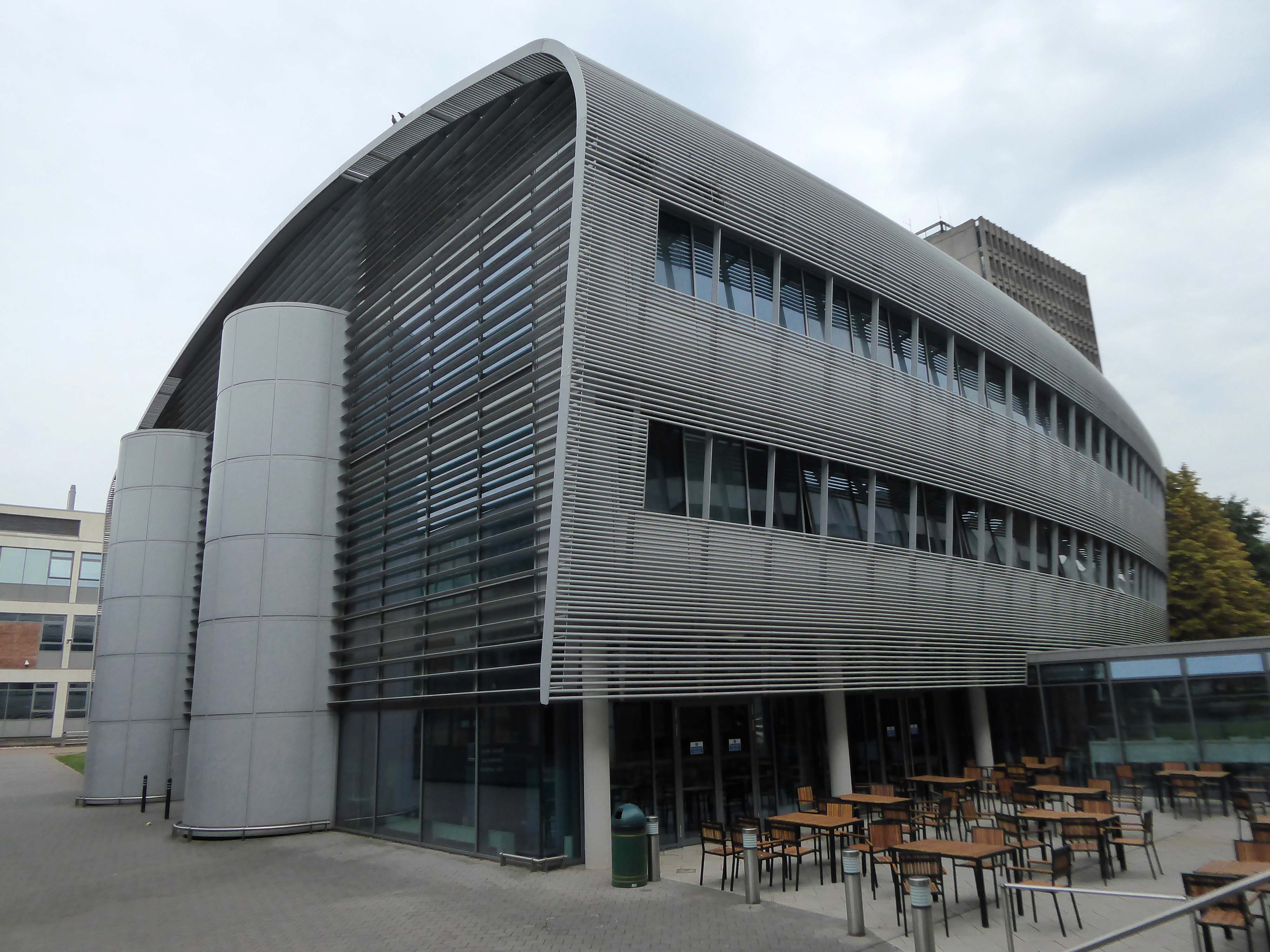
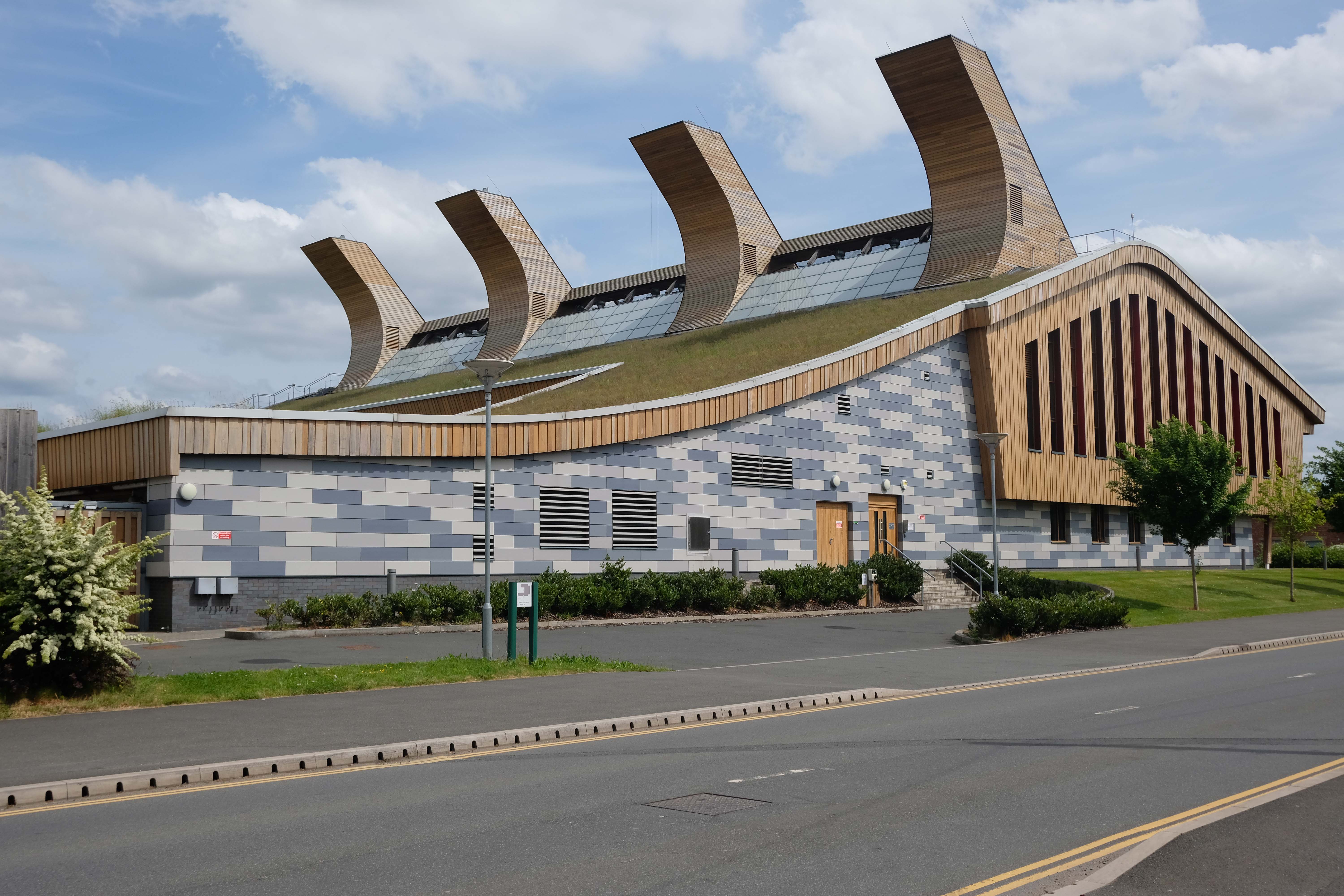
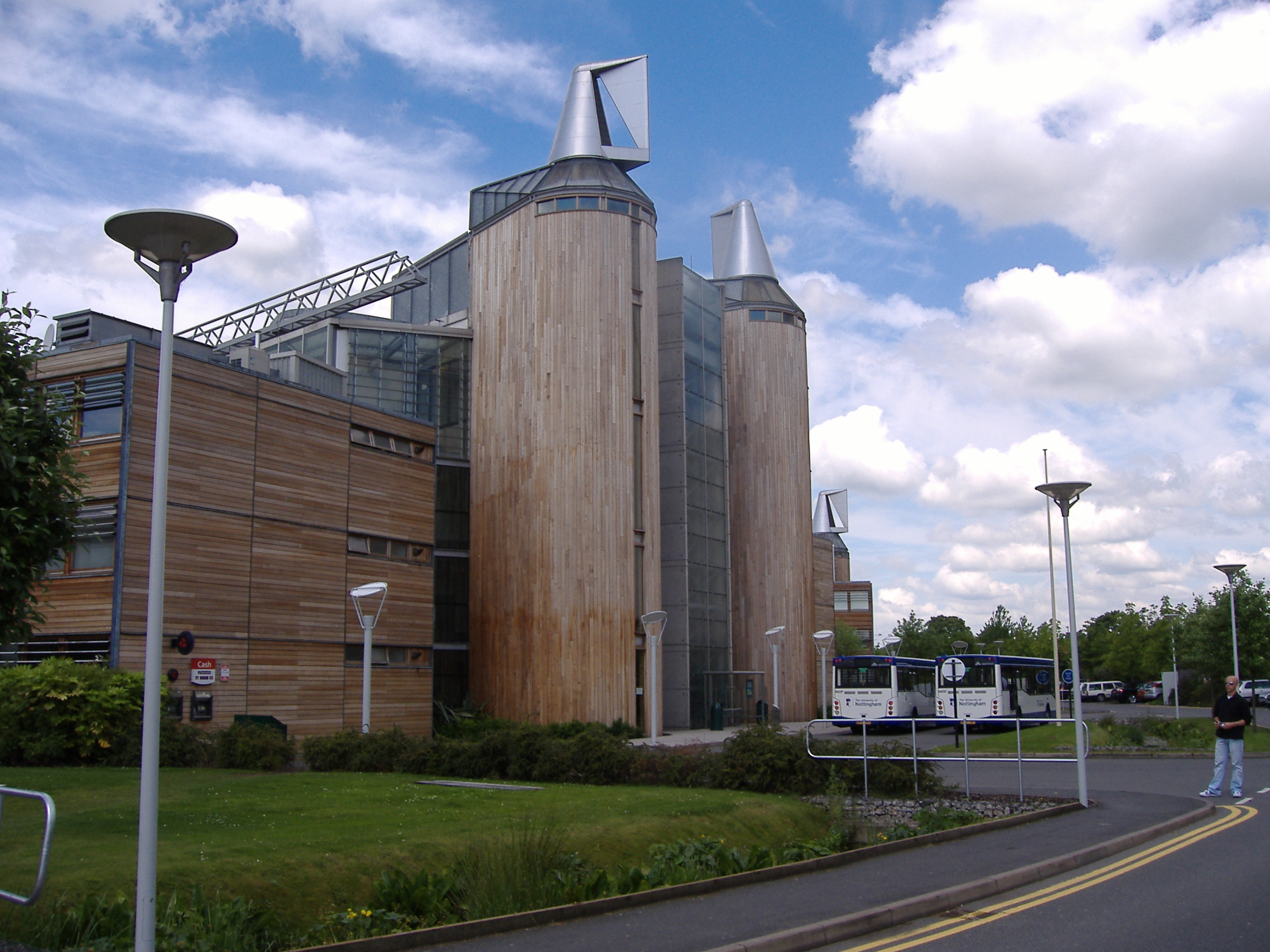
Designed to minimise the impact on the environment of its construction and operation. The design of the building is made up of modules manufactured off-site. The building support pillars and trusses are made from a combination of German spruce, Austrian Spruce, and American red cedar.
The designers used computational fluid dynamics to design the curved roof. This enables ventilation of the building by taking advantage of the prevailing wind. One of the laboratories is also ventilated in this way, to determine the viability of doing so elsewhere. The building also features a green roof, and solar panels that cover 45 per cent of the roof area and provide up to 230.9 kW. The four towers on the roof hide the building’s plant equipment. Additionally, a 125-kilowatt biofuel combined heat and power system was built on-site, providing the majority of heat needed for the buildings.
Wikipedia
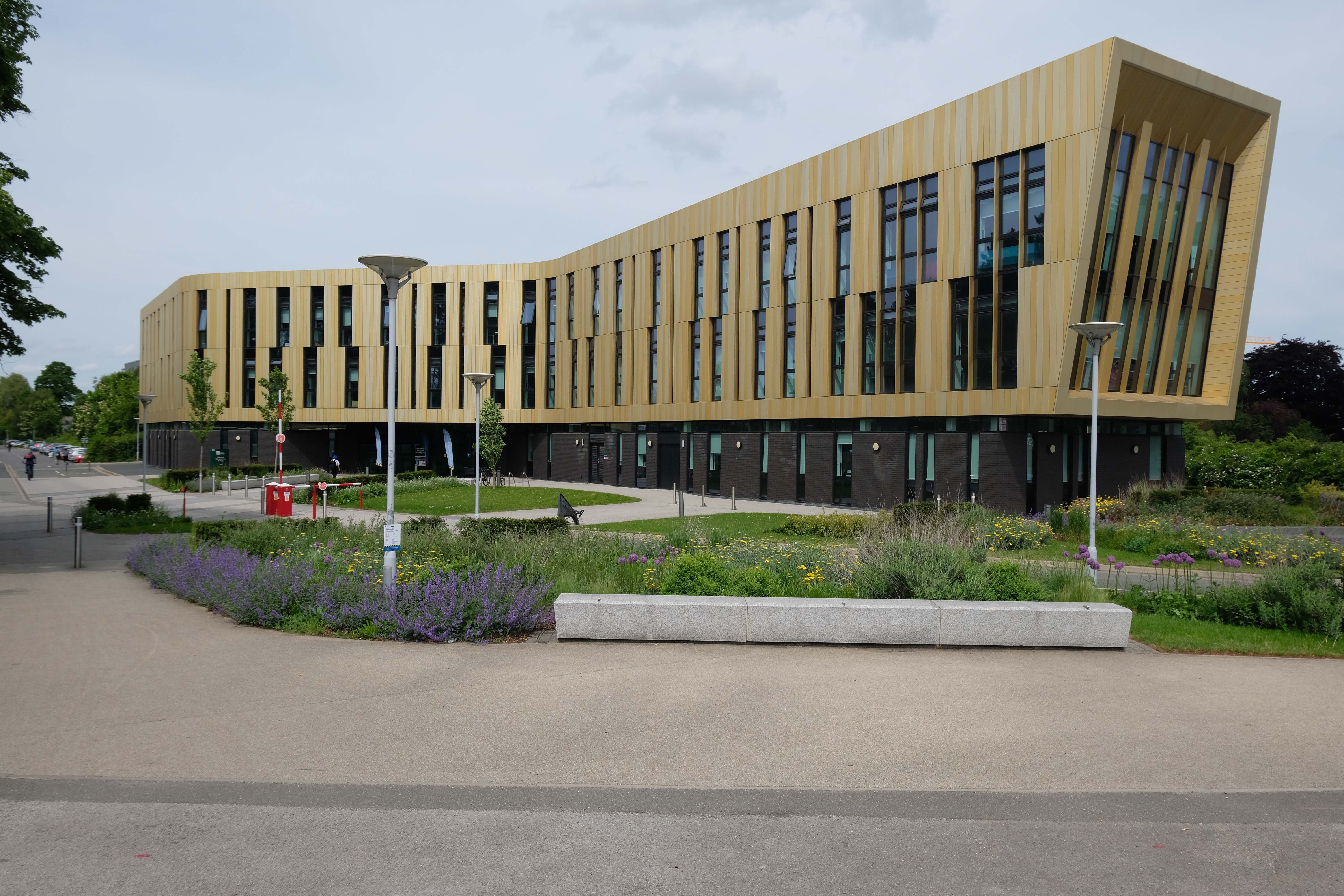
Ingenuity Centre by Bond Bryan 2017
Alucraft designed fabricated and delivered the façade,
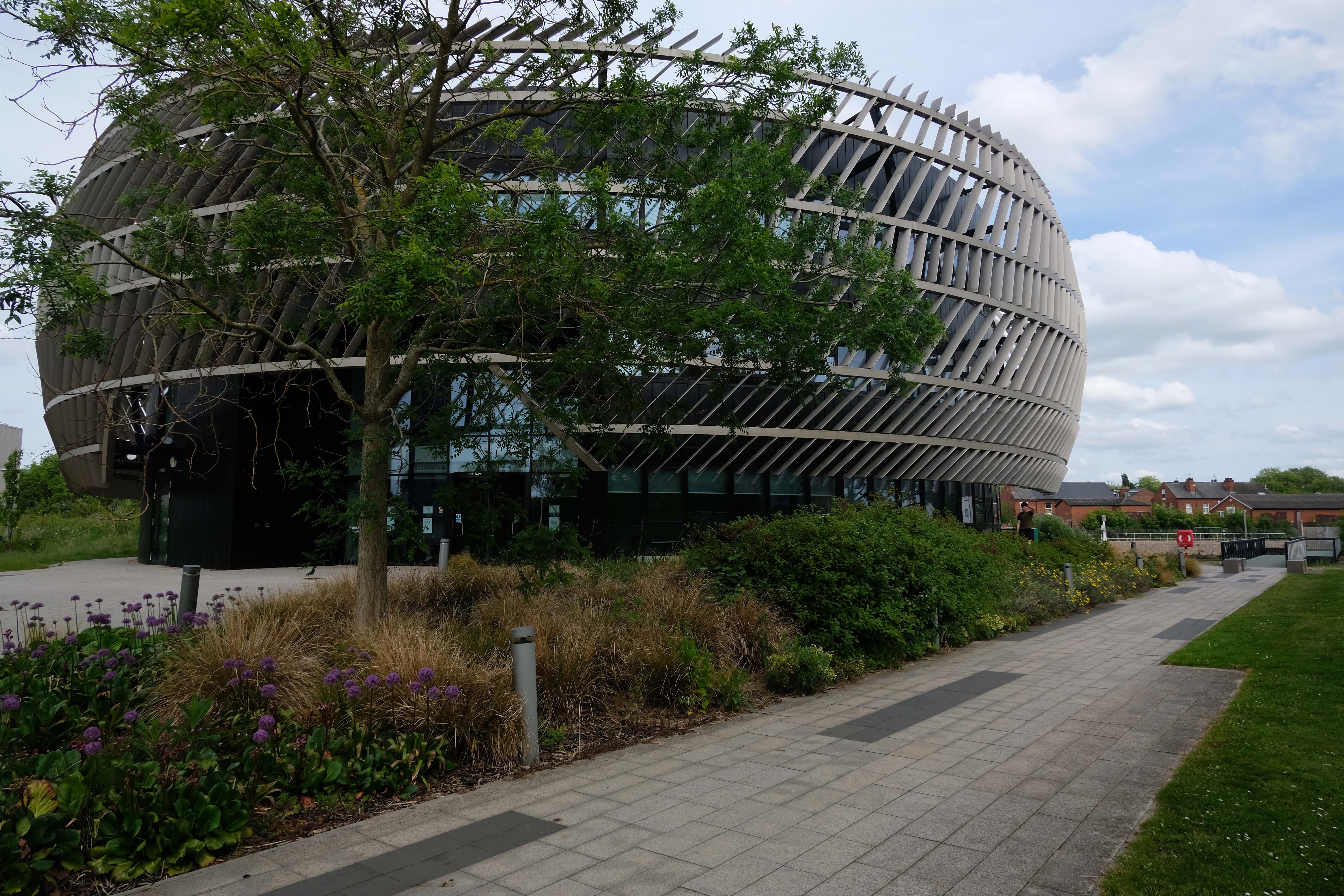
At first glance the centre appears to be a hi-tech structure that would not look out of place in a sci-fi movie, with a complex array of metal fins forming a metallic bronze-coloured circular envelope that seems to float around a central core.
Keep looking though and some of the design cues are clearly industrial – the metallic external envelope echoing the form of some finely machined, mechanical component or even the patterned tread of a tyre.
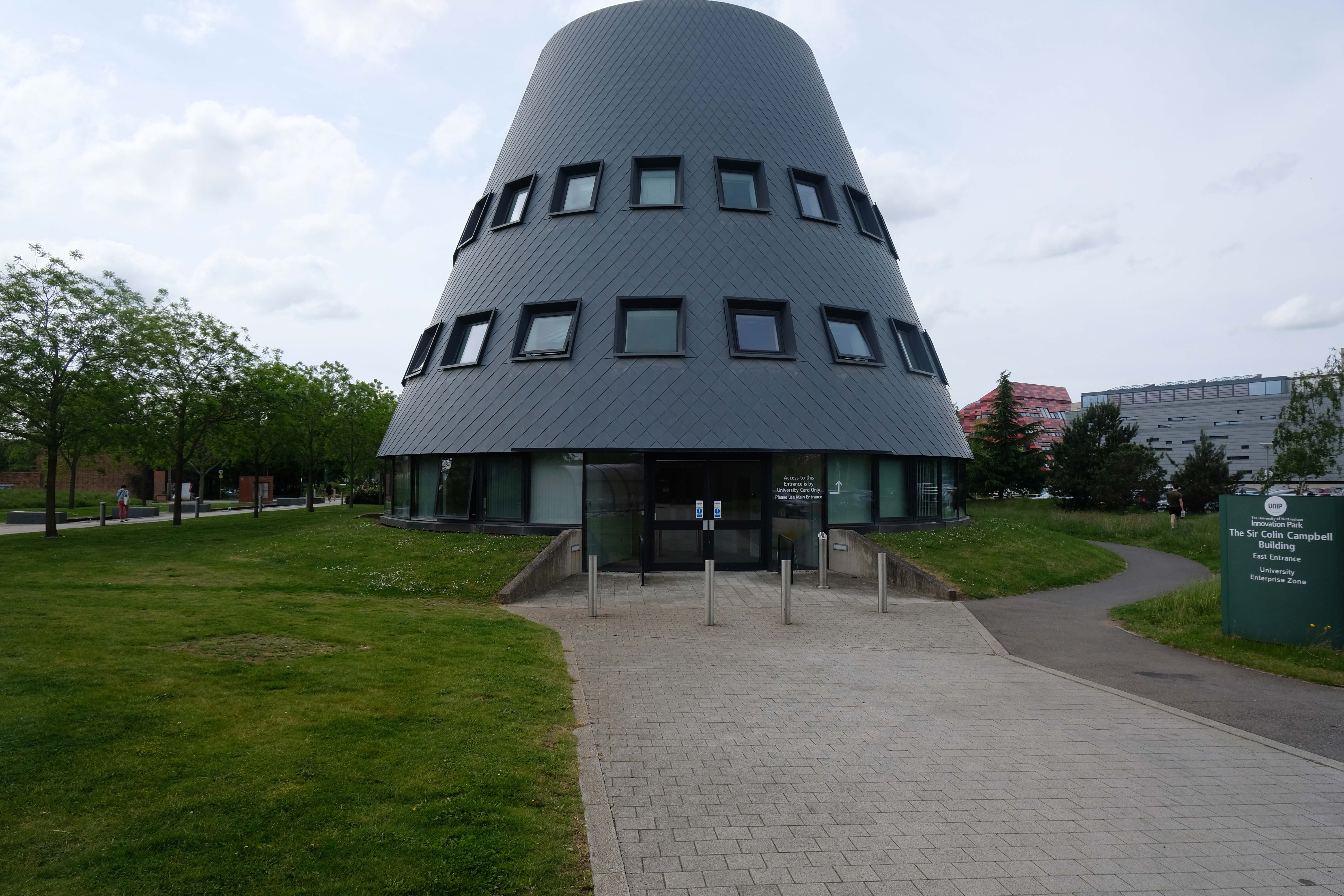
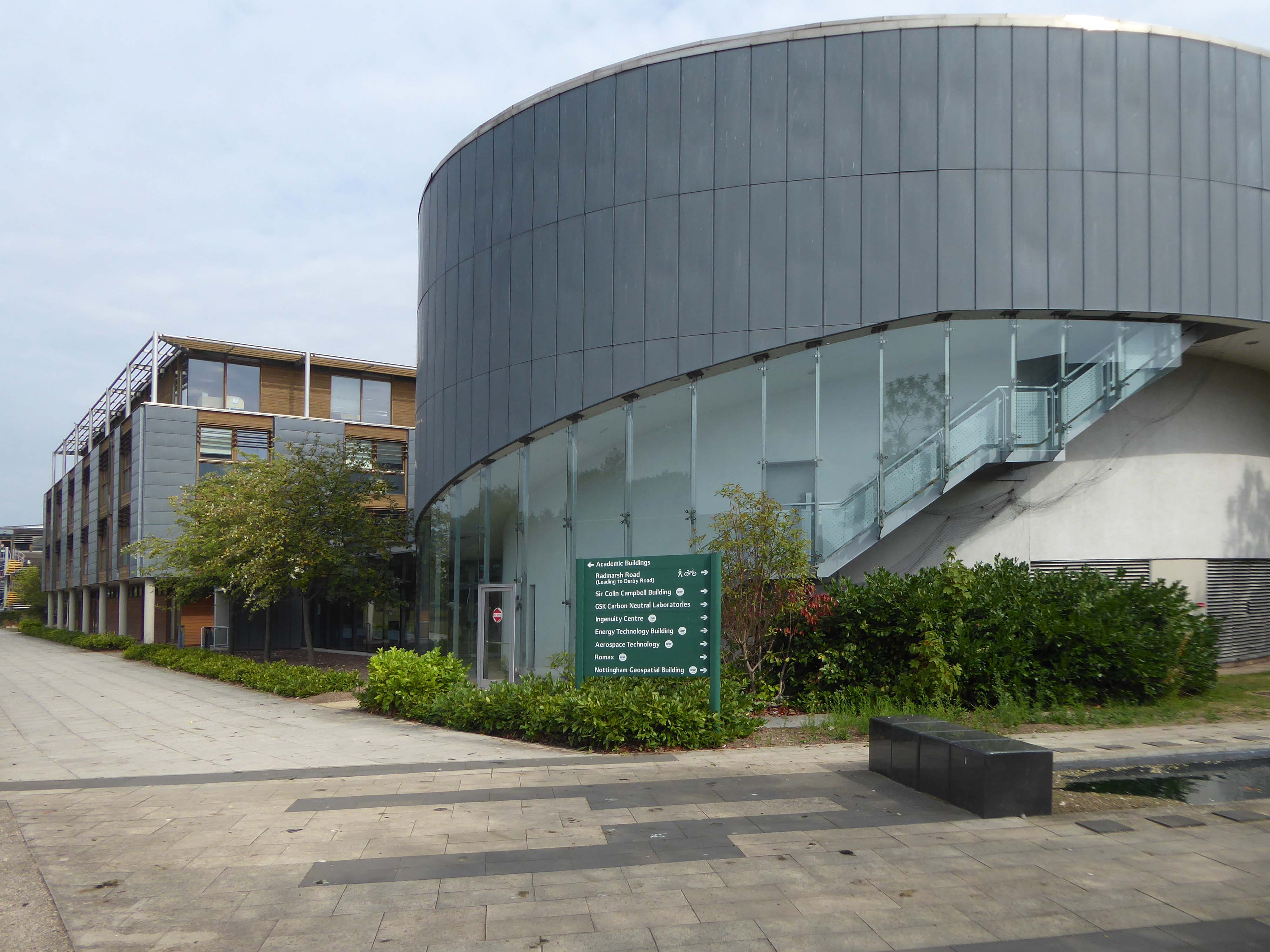
Sir Colin Campbell Building by Bond Bryan 2011 – with Arup acting as structural and services engineer.
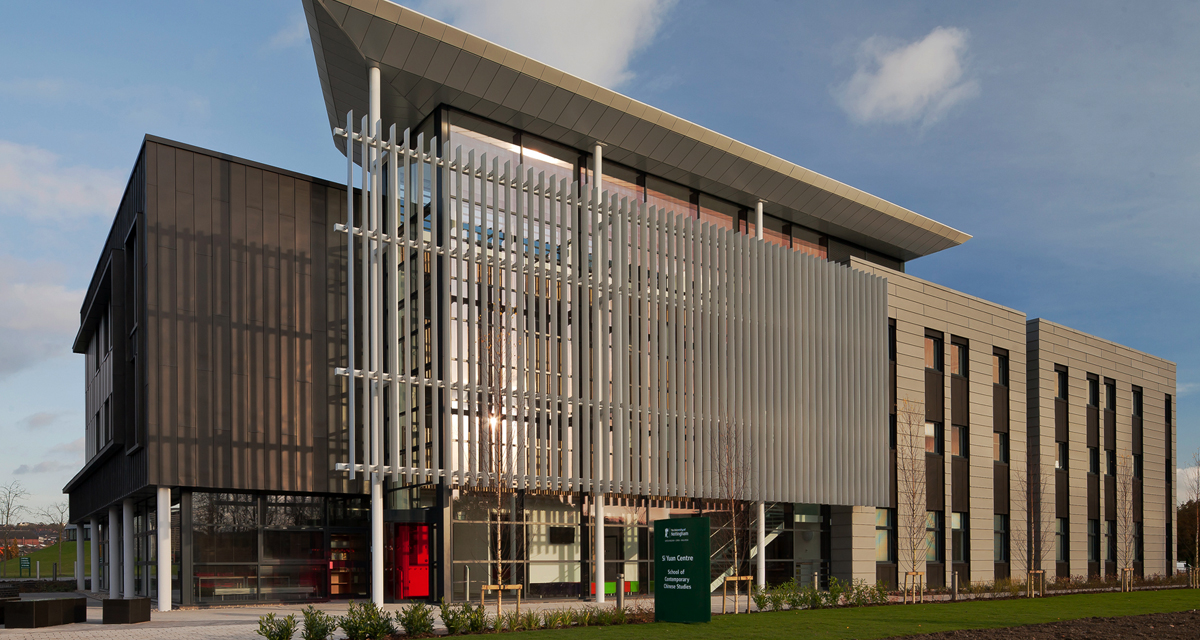
Si Yuan Centre of Contemporary Chinese Studies
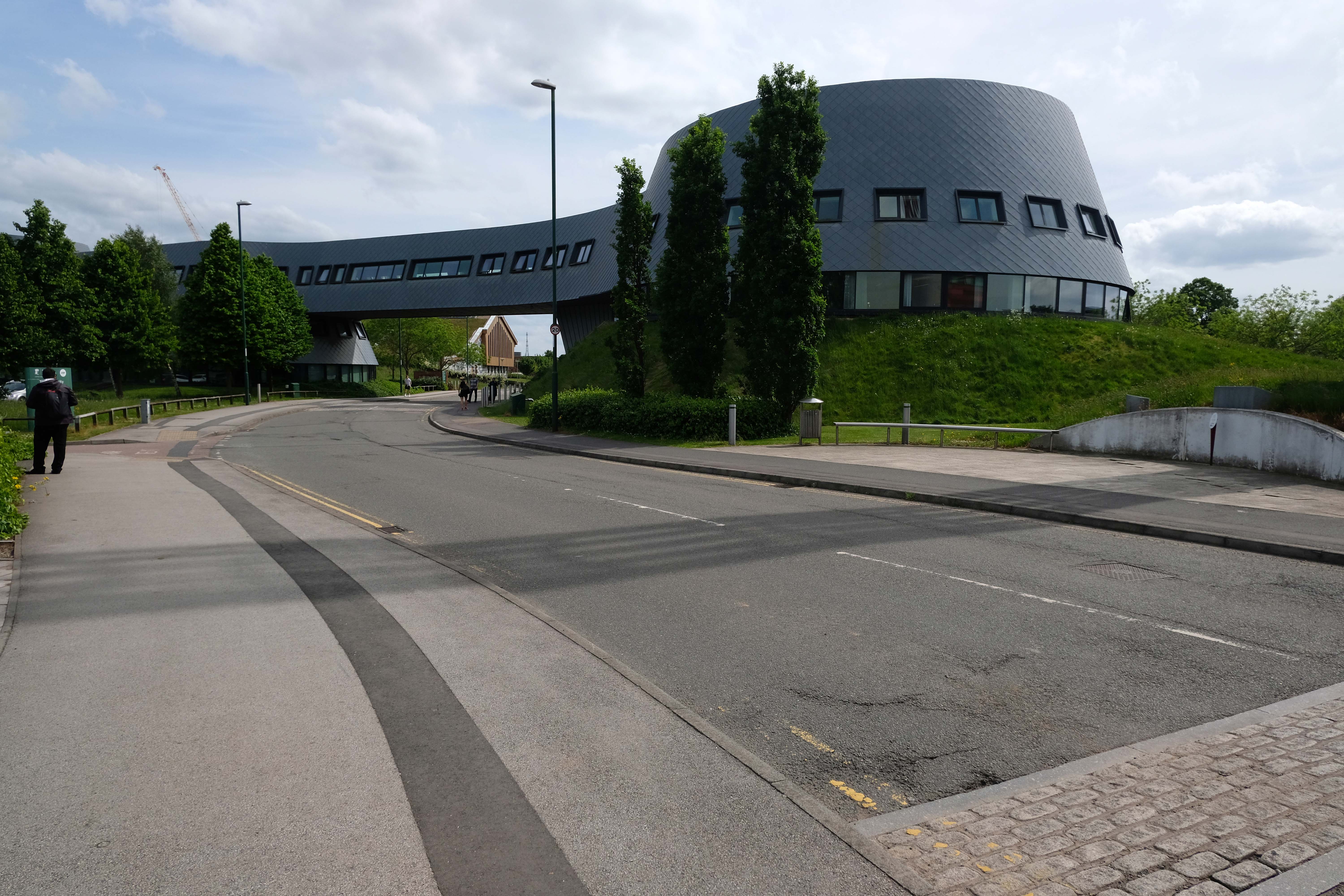
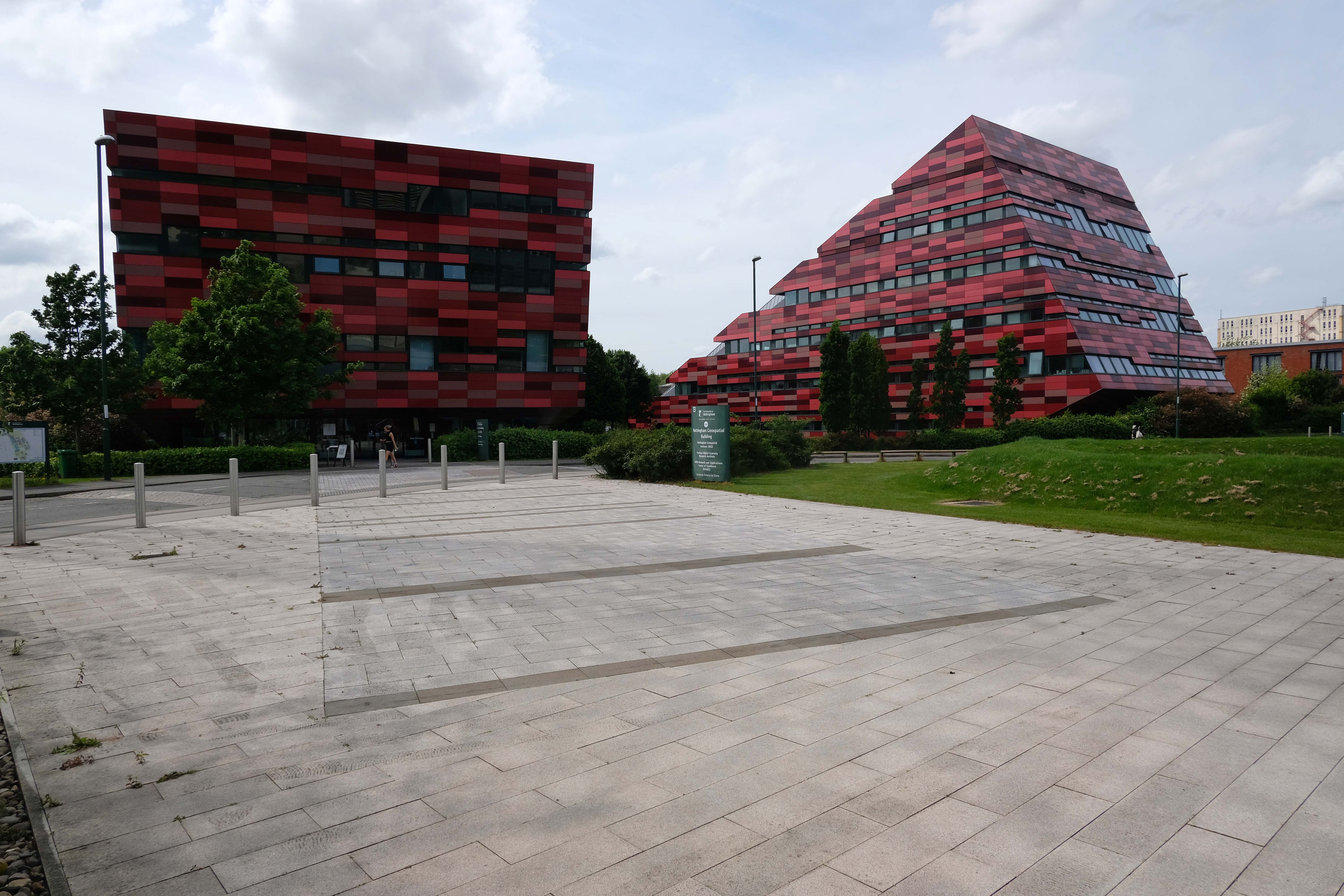
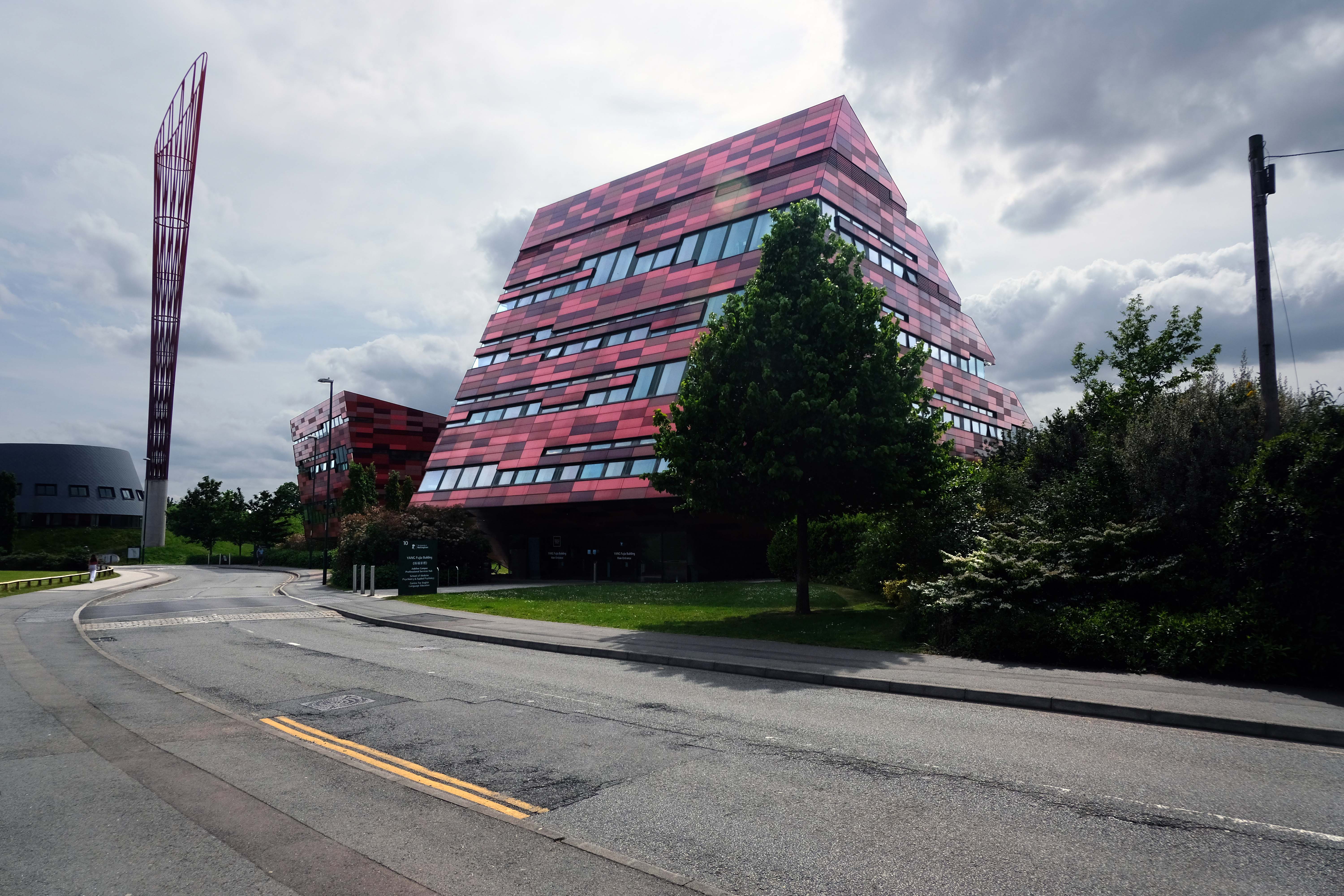
Xu Yafen Building and Yang Fujia Building by MAKE 2008
Aspire is a 60-metre tall, red and orange steel sculpture by Ken Shuttleworth of MAKE, and was, until overtaken by Anish Kapoor’s Orbit, the tallest free standing public work of art in the United Kingdom. It is taller than Nelson’s Column, the Angel of the North, and the Statue of Liberty
The name Aspire was chosen after a competition to name the sculpture, which was open to staff and students at the university.
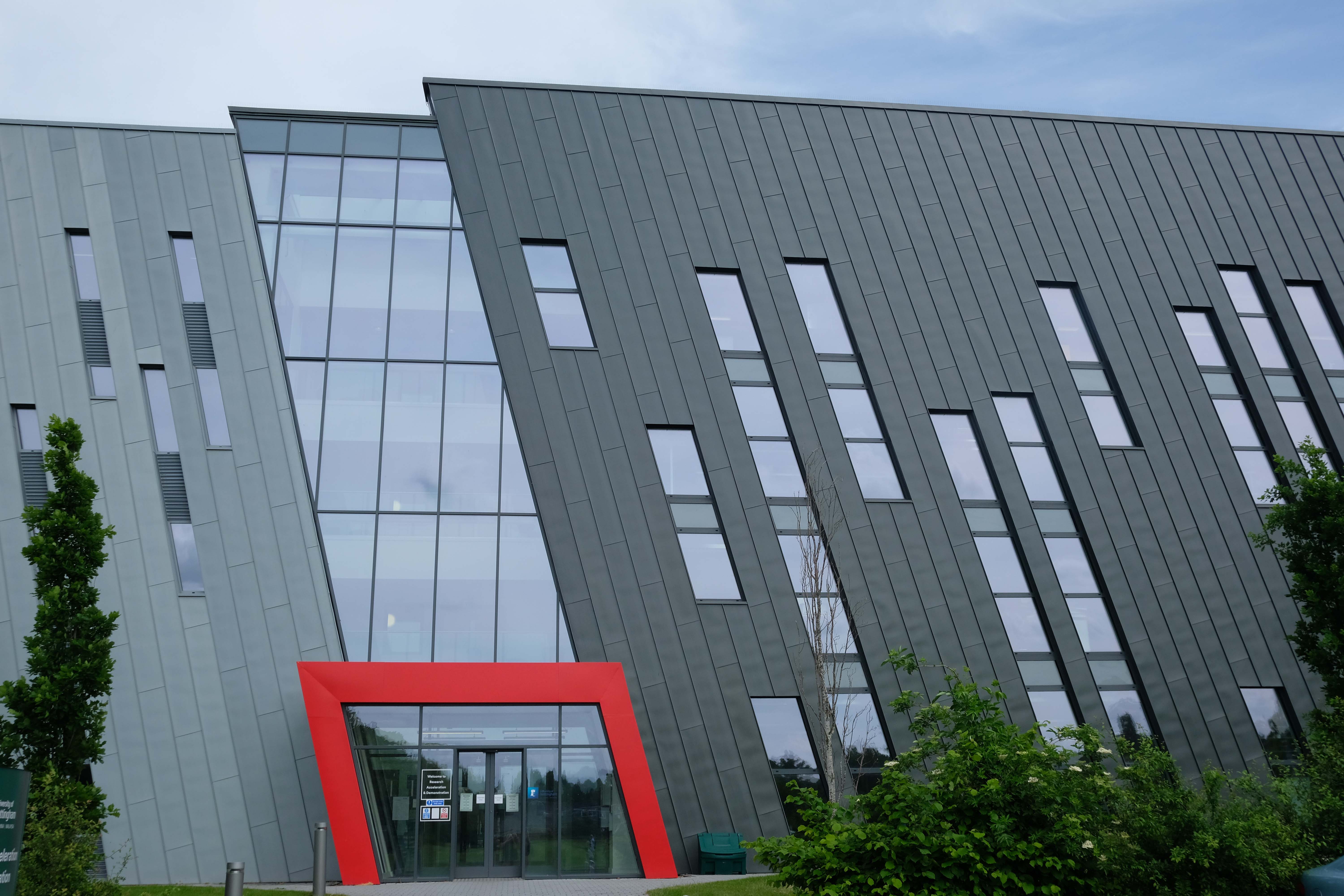
A showcase £6.5m research centre, which brings together world-class experts in energy research, has chosen ALUCOBOND® A2 from 3A Composites GmbH, finished in Sakura 917 from its spectra colour series for its cladding.
The Sir Harry and Lady Djanogly LRC architect Sir Michael Hopkins 1999
A single floor spirals up through the building in the manner of FL Wright’s Guggenheim Museum
The library was named after the philanthropists Sir Harry and Lady Djanogly who gave a significant contribution towards the cost of its construction. Sir Harry Djanogly is the father of Jonathan Djanogly, who became MP for Huntingdon in 2001.
Wikipedia
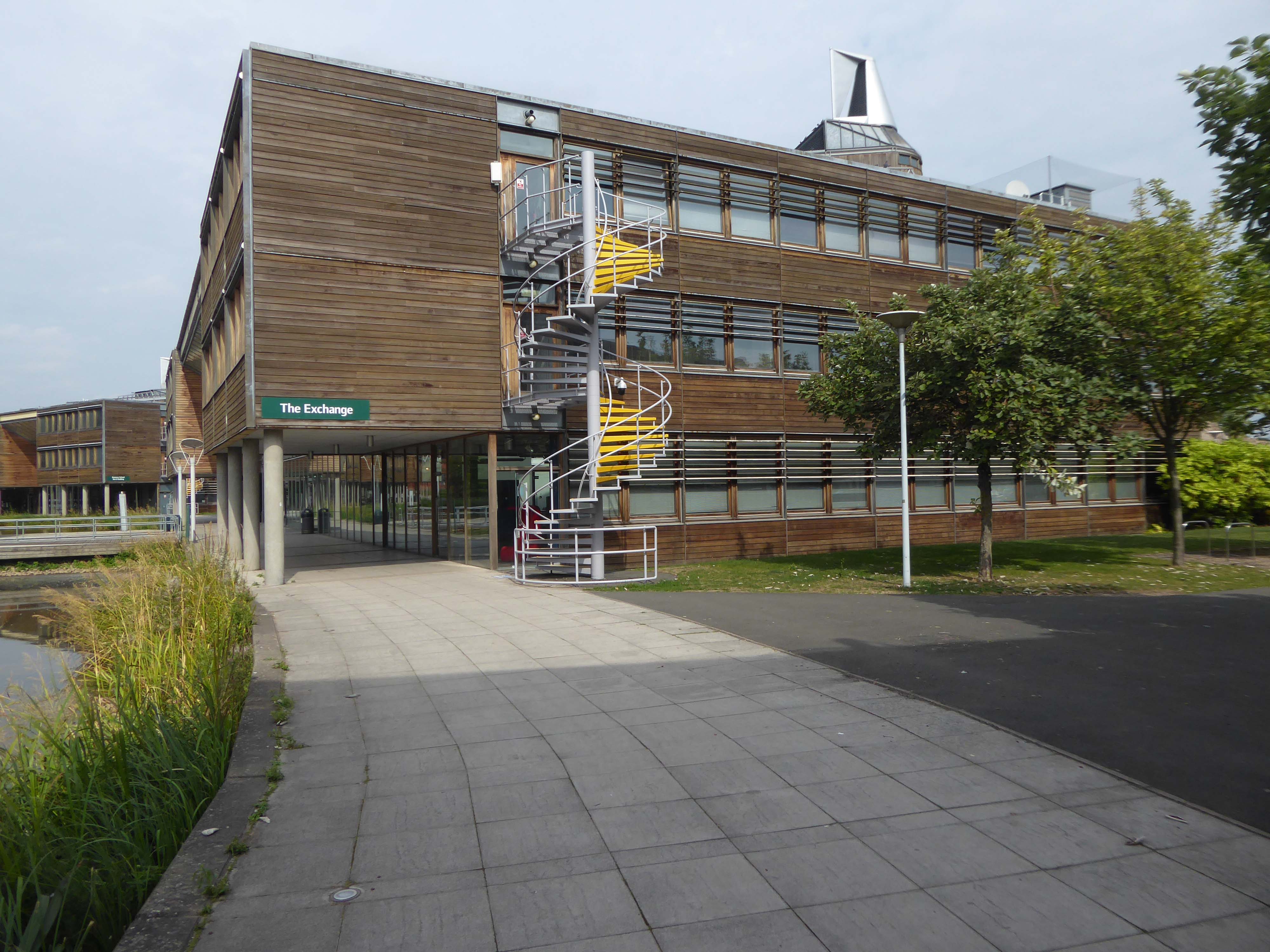
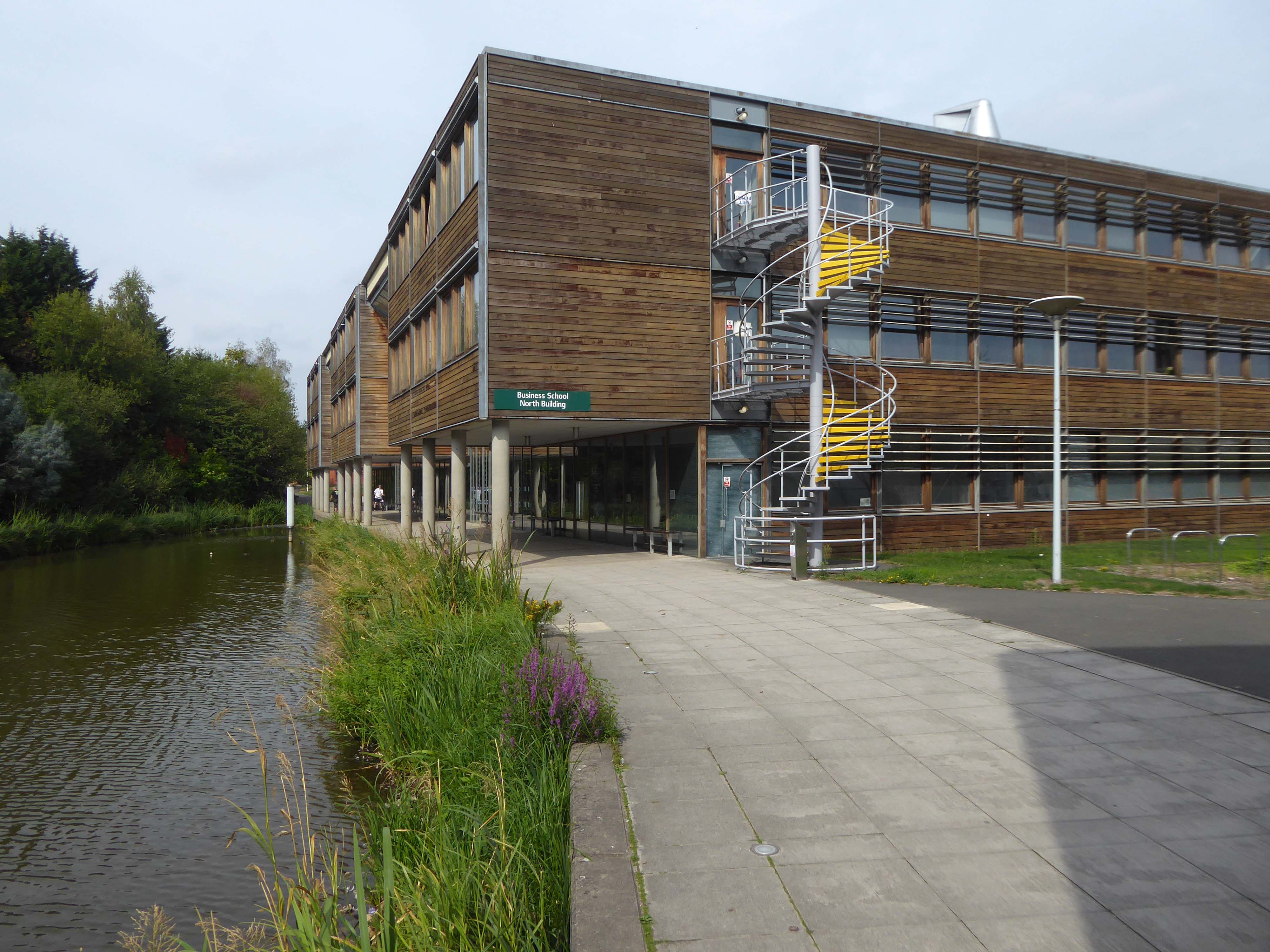
Business School North 2003
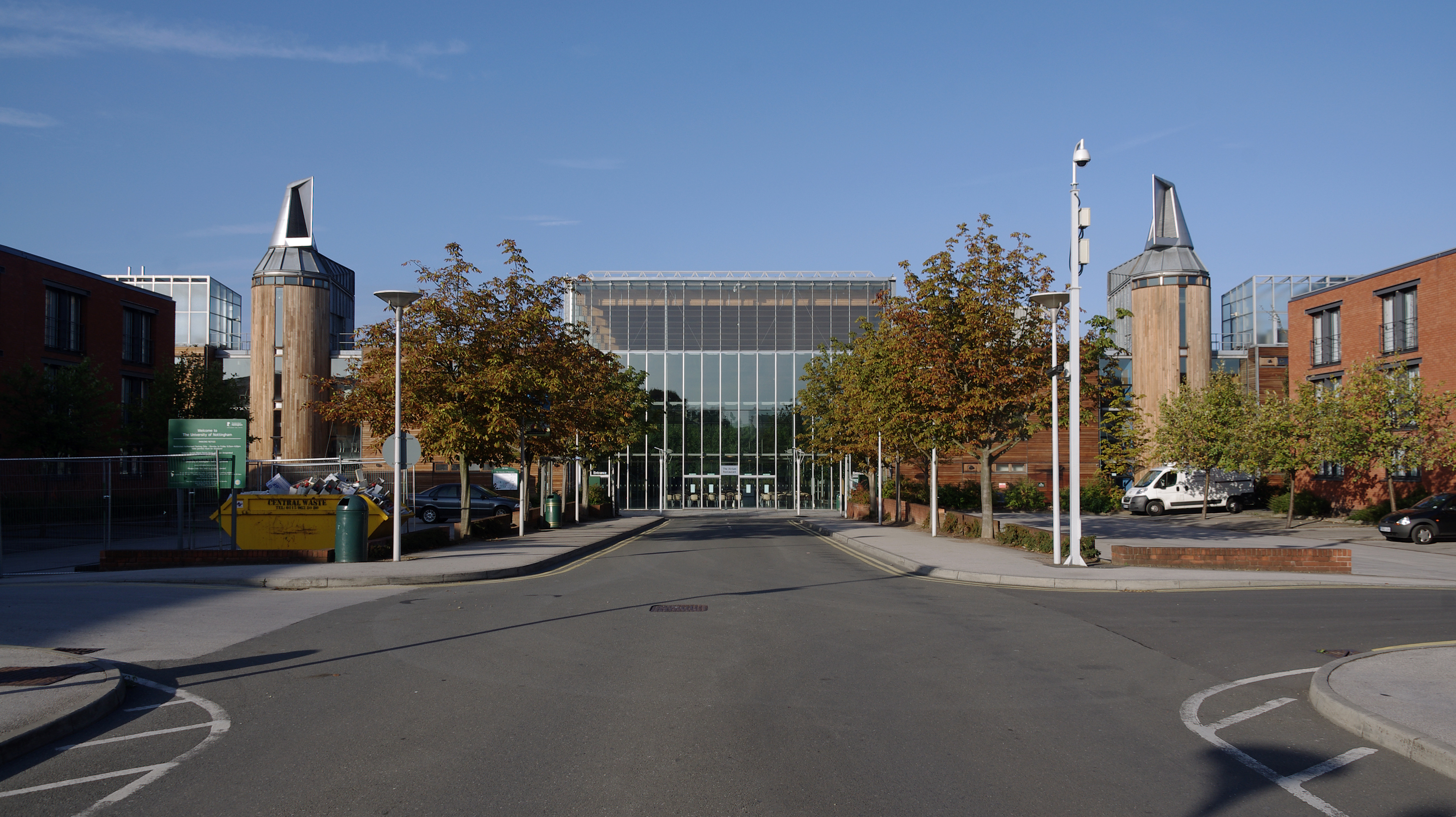
The Atrium
John Player & Sons Bonded Warehouse by William Cowlin and Son 1938-39
Mouchel’s involvement with the iron industry, and his ties with France, brought him into close proximity with the French engineer François Hennebique (1842-1921), who had been a contractor in Brussels. A self-educated builder, Hennebique had patented an idea of strengthening concrete using iron and steel bars – a forerunner to the widespread modern reinforced-concrete method used in construction today.
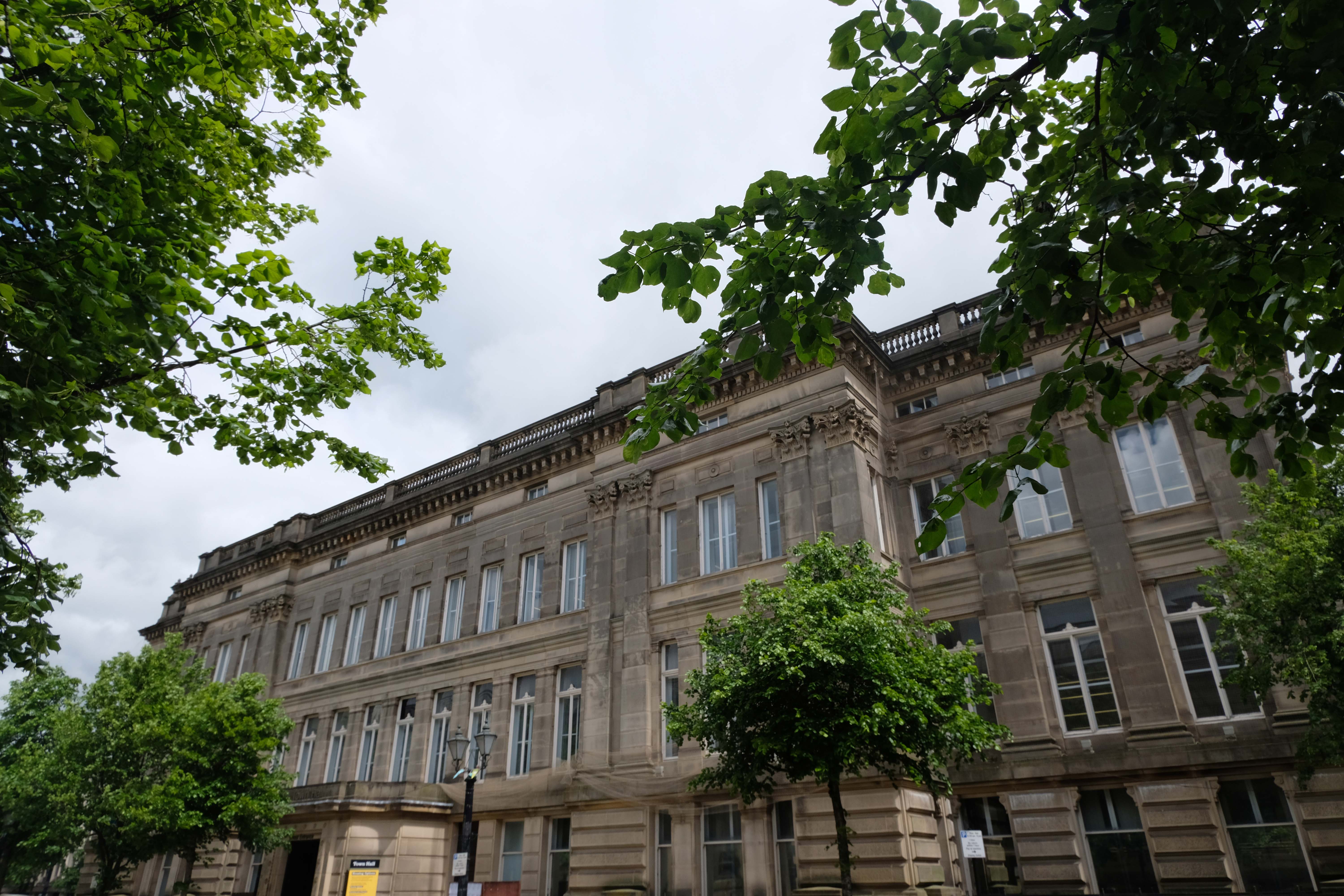
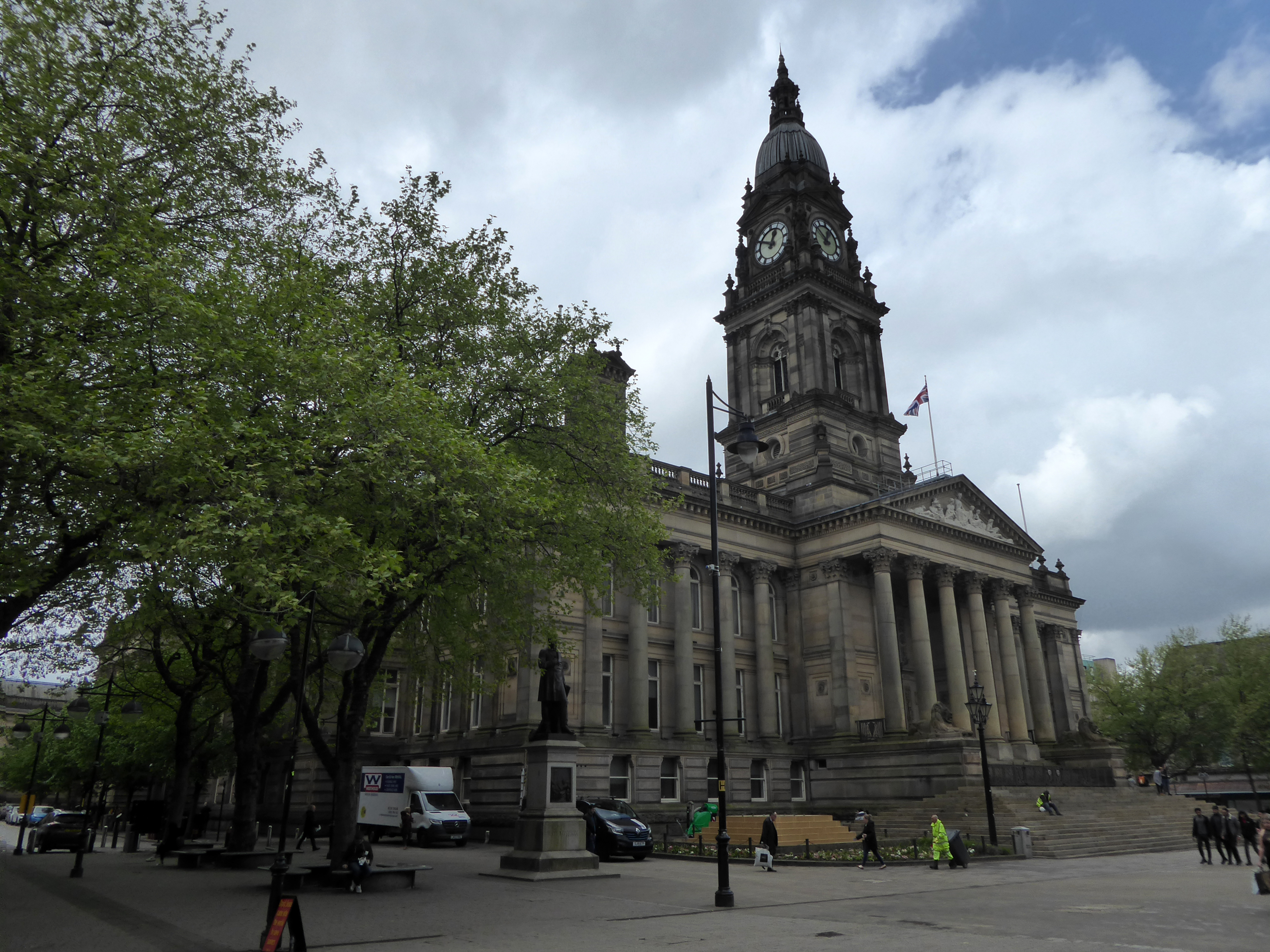
Bolton Town Hall – 1873 was designed by William Hill of Leeds, with Bolton architect George Woodhouse.
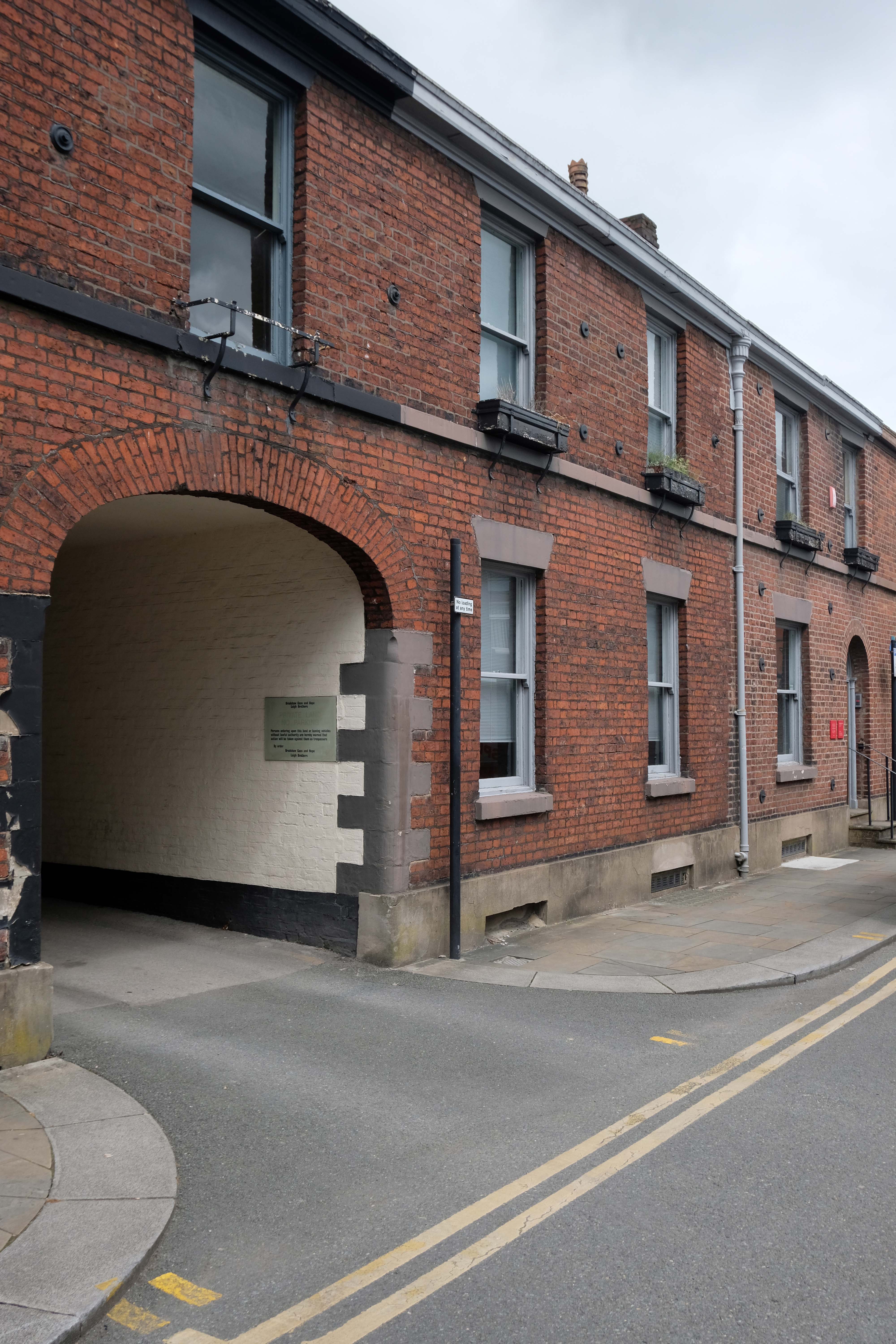
The original building was extended in 1938 by Bradshaw Gass & Hope – hereafter BGH.
Le Mans Crescent by BGH 1932-9 well complements the Town Hall extension. Its neo-classical design is assured and confident. Pevsner remarked that:
There is, surprisingly enough, no tiredness, the panache is kept up.
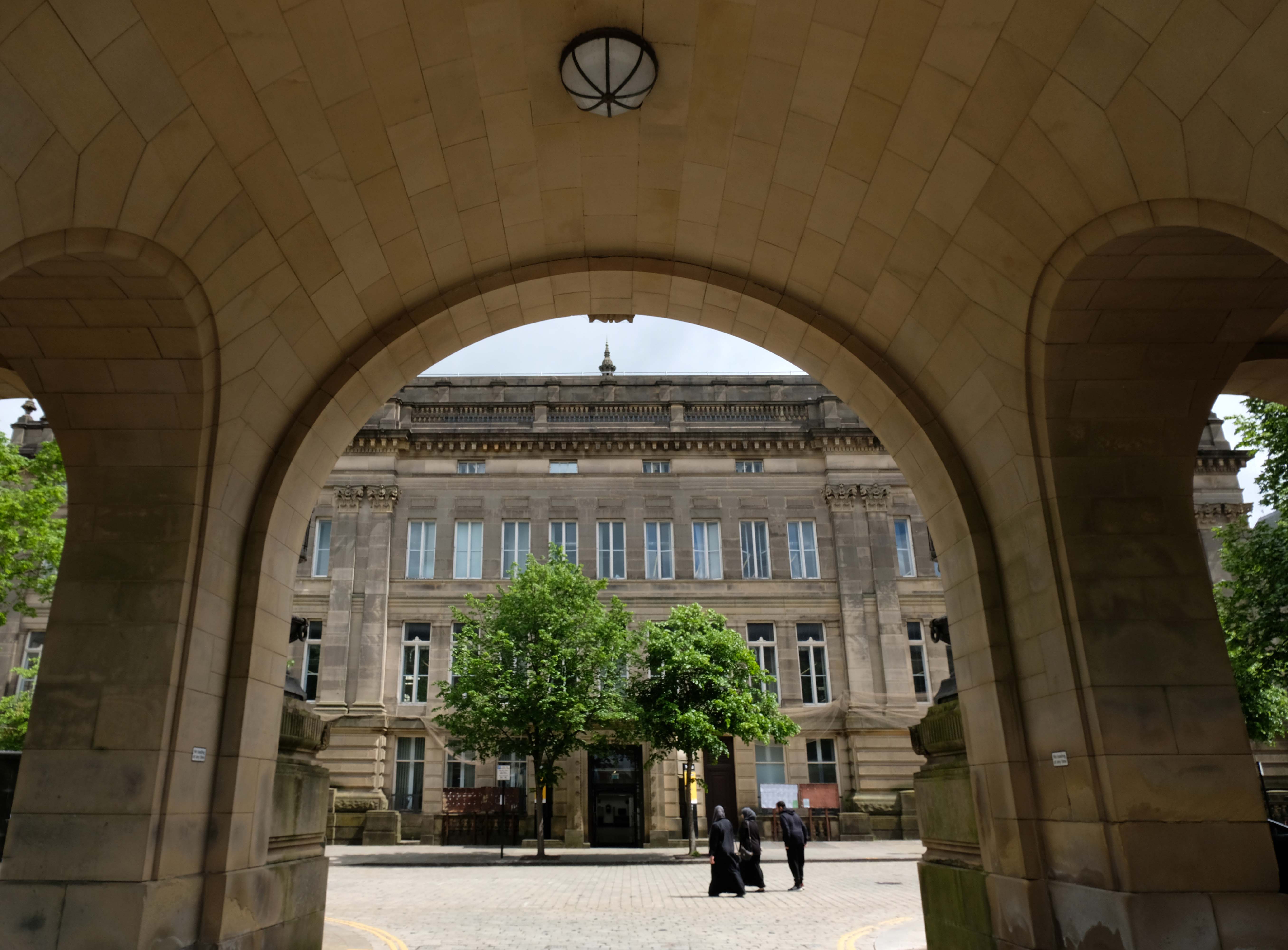
Three arches pierce the Crescent’s centre but today they lead only to a potential development site. One end of the Crescent contains the Art Gallery and Library; the other used to house the former Police Headquarters and Magistrates’ Courts.
George Grenfell Baines, the founder of the Building Design Partnership, was involved in this project when he worked for BGH in the 1930s
The Octagon 1966-67 originally by Geoffrey Brooks, the borough architect, rebuilt 2018-2021. The hexagonal auditorium has apparently been retained. Pevsner states of the former building:
A welcome dose of honest Brutalism.
The Wellsprings successfully fitting with the Town Hall
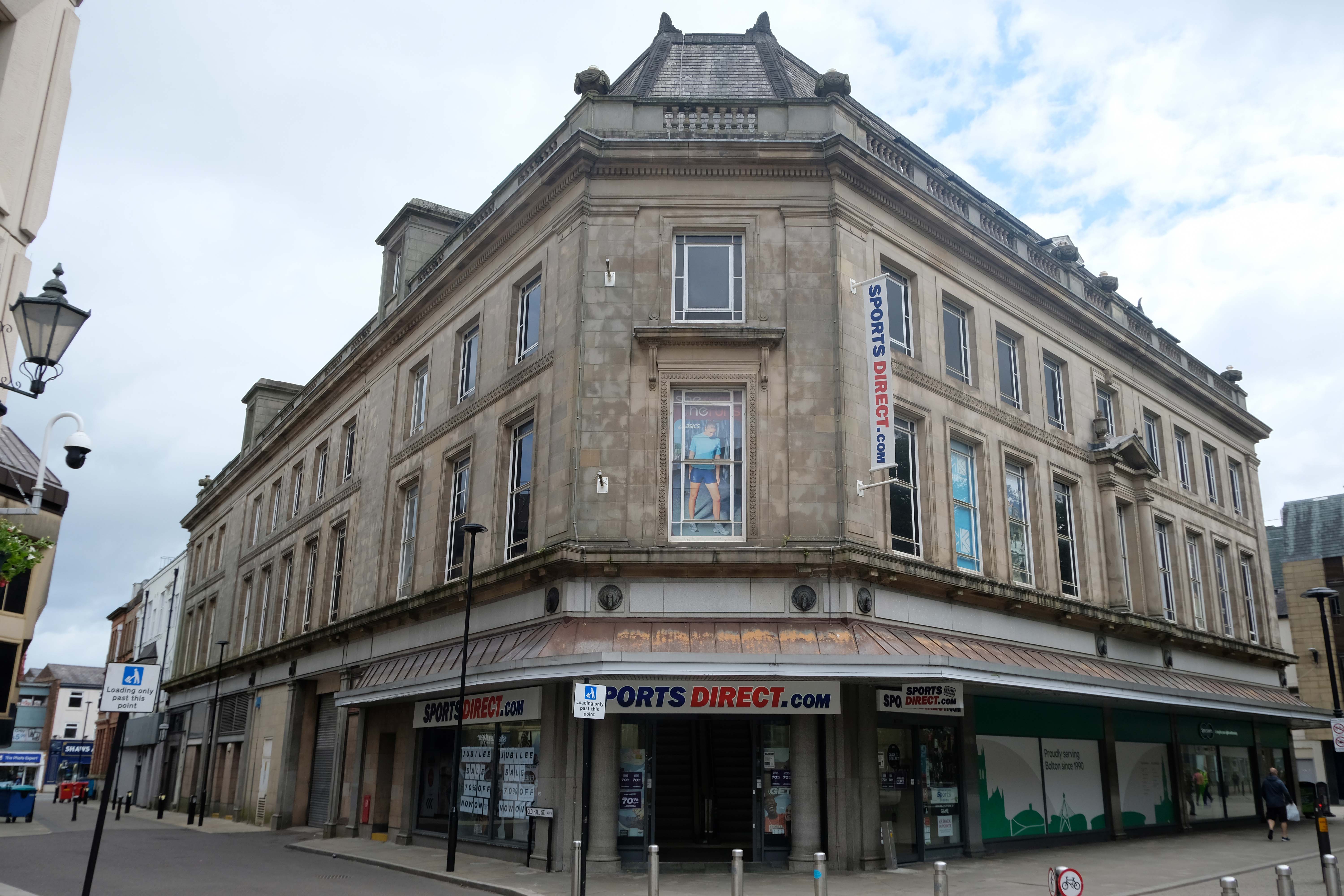
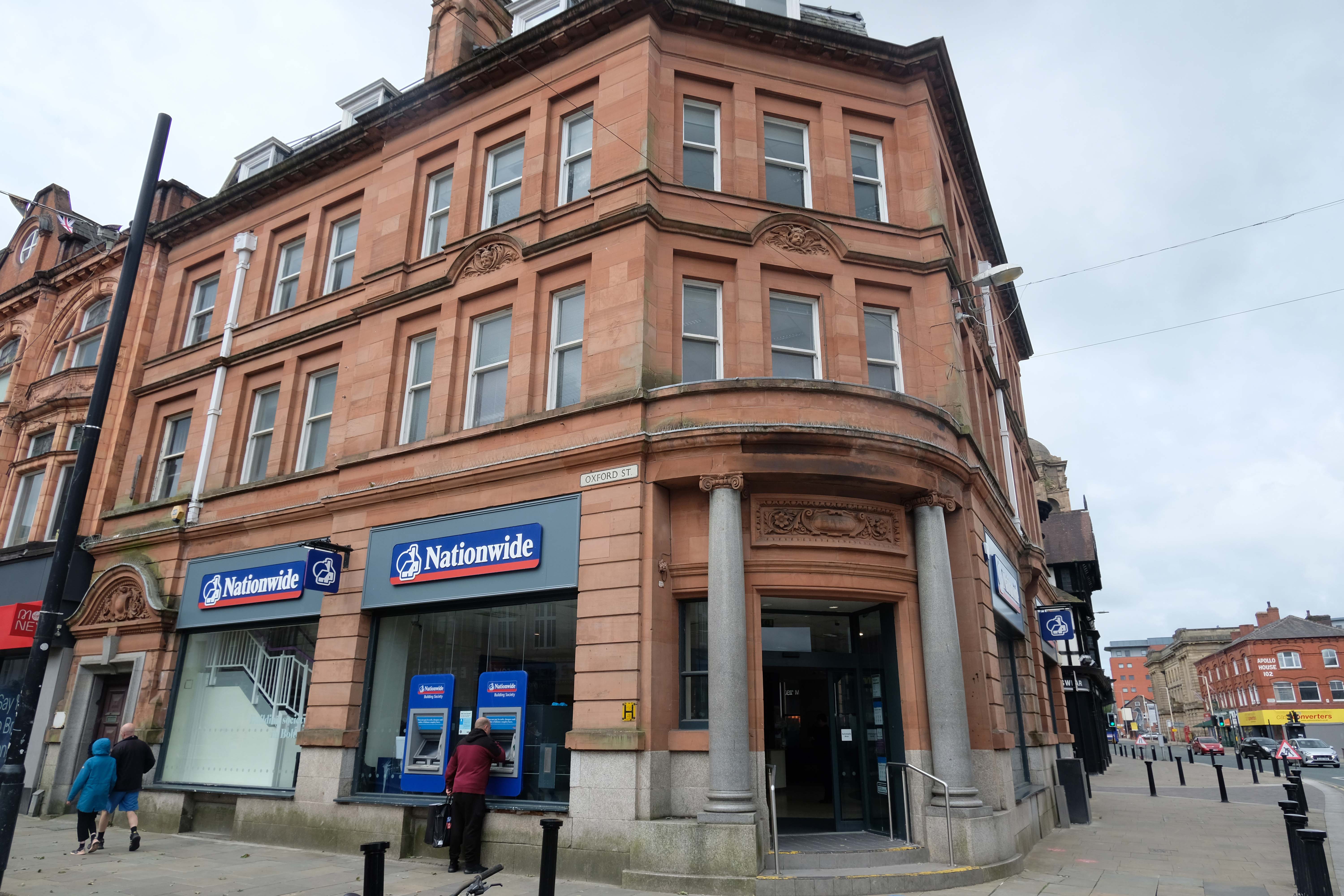
The former 1931 Cooperative Society Store, on the Oxford Street corner, is by BGH. The entrance has Doric columns in deference to the Town Hall’s Corinthian ones – and Le Mans Crescent uses the Ionic for the same reason.
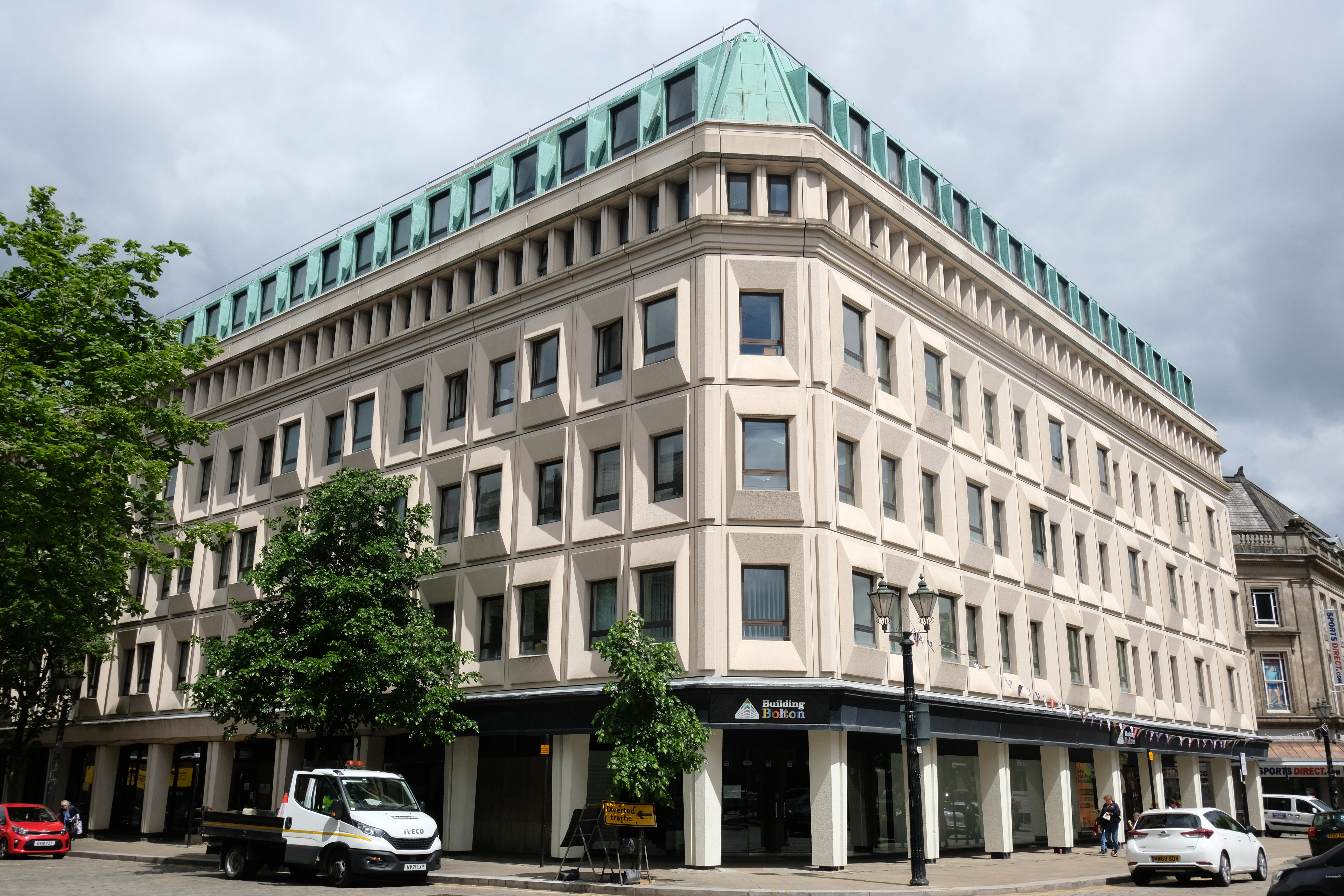
We pass Paderborn House 1968 -69 Sutton of Birmingham clad in moulded concrete, with Traverine around the entrance.
Former Lloyds Bank on Deangate corner, clad in white faience, looks BGH-ish but it’s not listed in the Lingards’ BGH monograph.
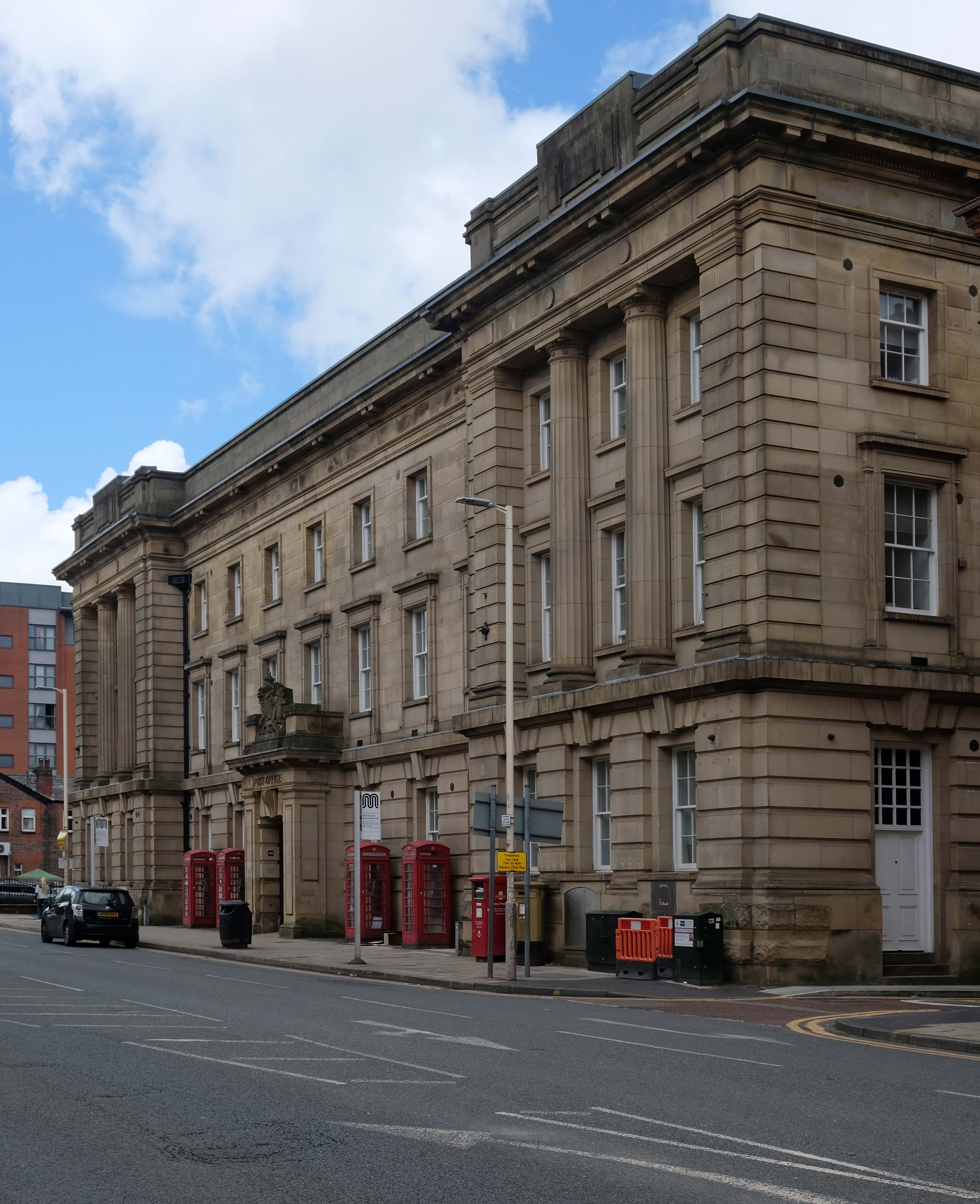
Across the way the unlisted Post Office – complete with listed phone boxes.
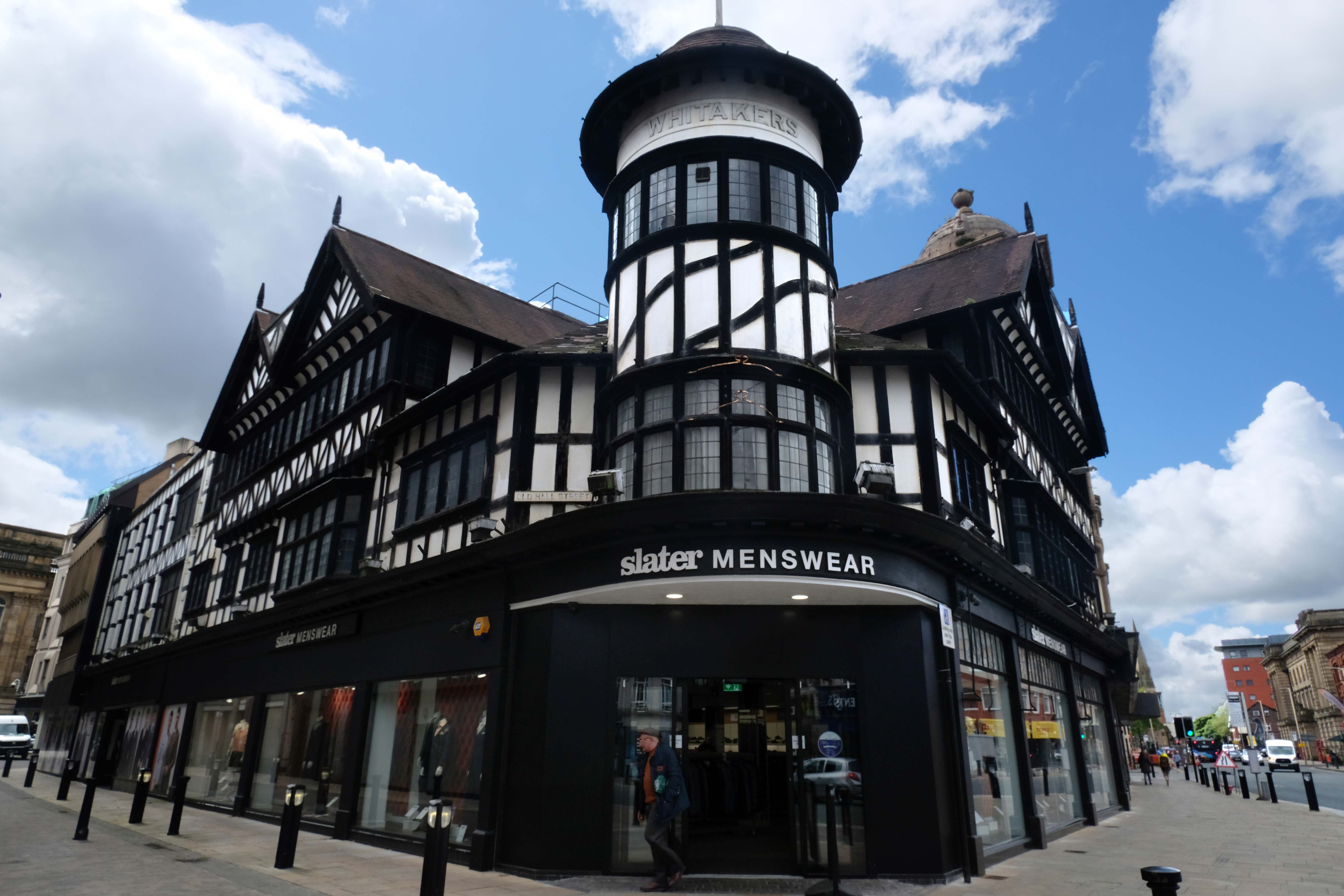
Whitakers 1907 by George Crowther.
Pastiche timber-framed with pepper-pot turret.
Incorporates genuine Tudor timbers from a demolished building nearby.
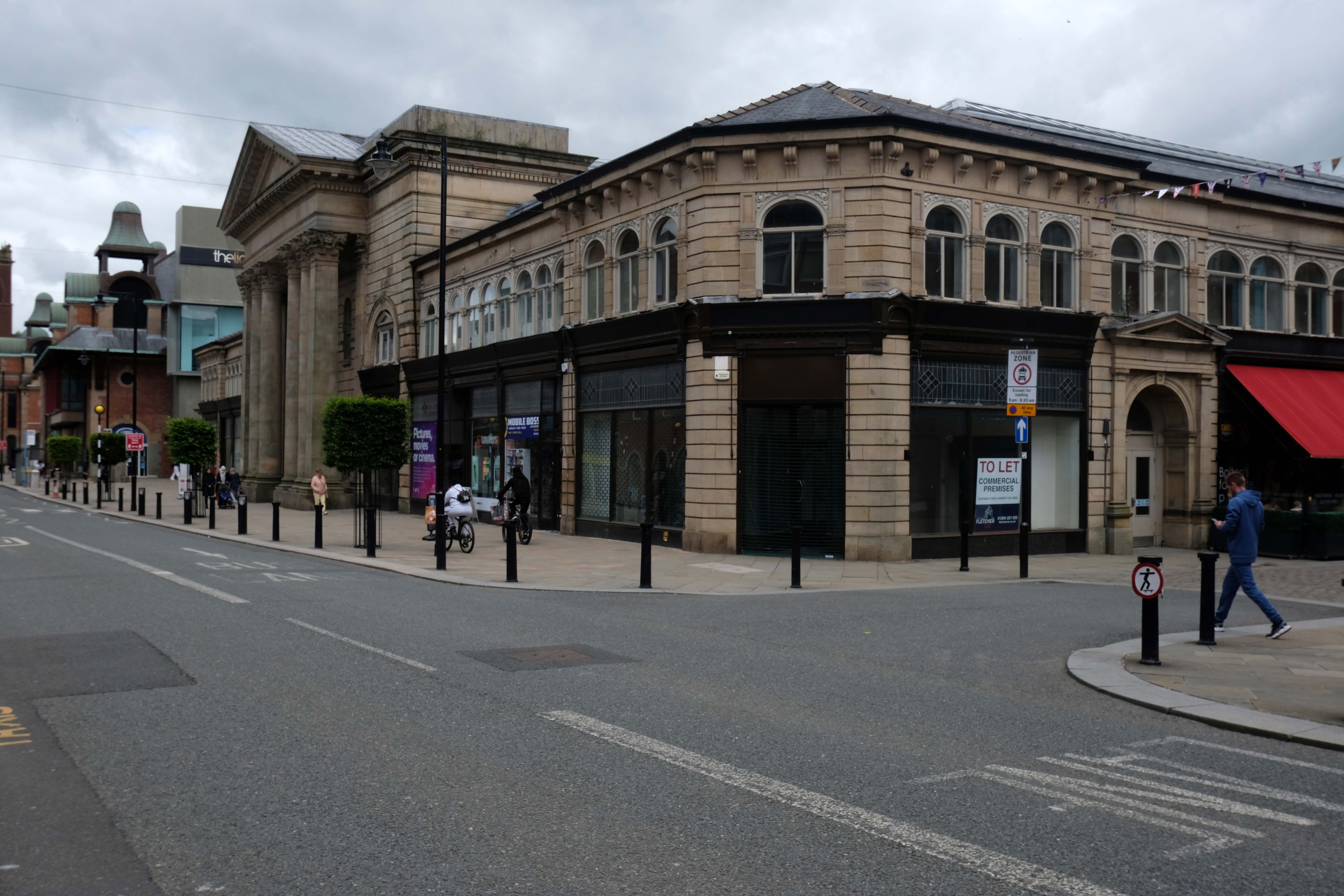
To the north of Deansgate, down Knowsley and Market Streets, is GT Robinson’s 1851-6 Market Hall. The interior is, according to Matthew Hyde: a lucid structure simply revealed.
He contrasts it with Market Place Centre 1980-88 by Chapman Taylor Partners: In that most ephemeral of styles, a jokey Postmodernism.
It does however echo Victoria Hall 1898-1900 BGH.
Chapman Taylor also did the 1980-8 Market Place Shopping Centre. The Market Hall was built over an impressive brick undercroft above the River Croal which has recently been opened up and is a destination.
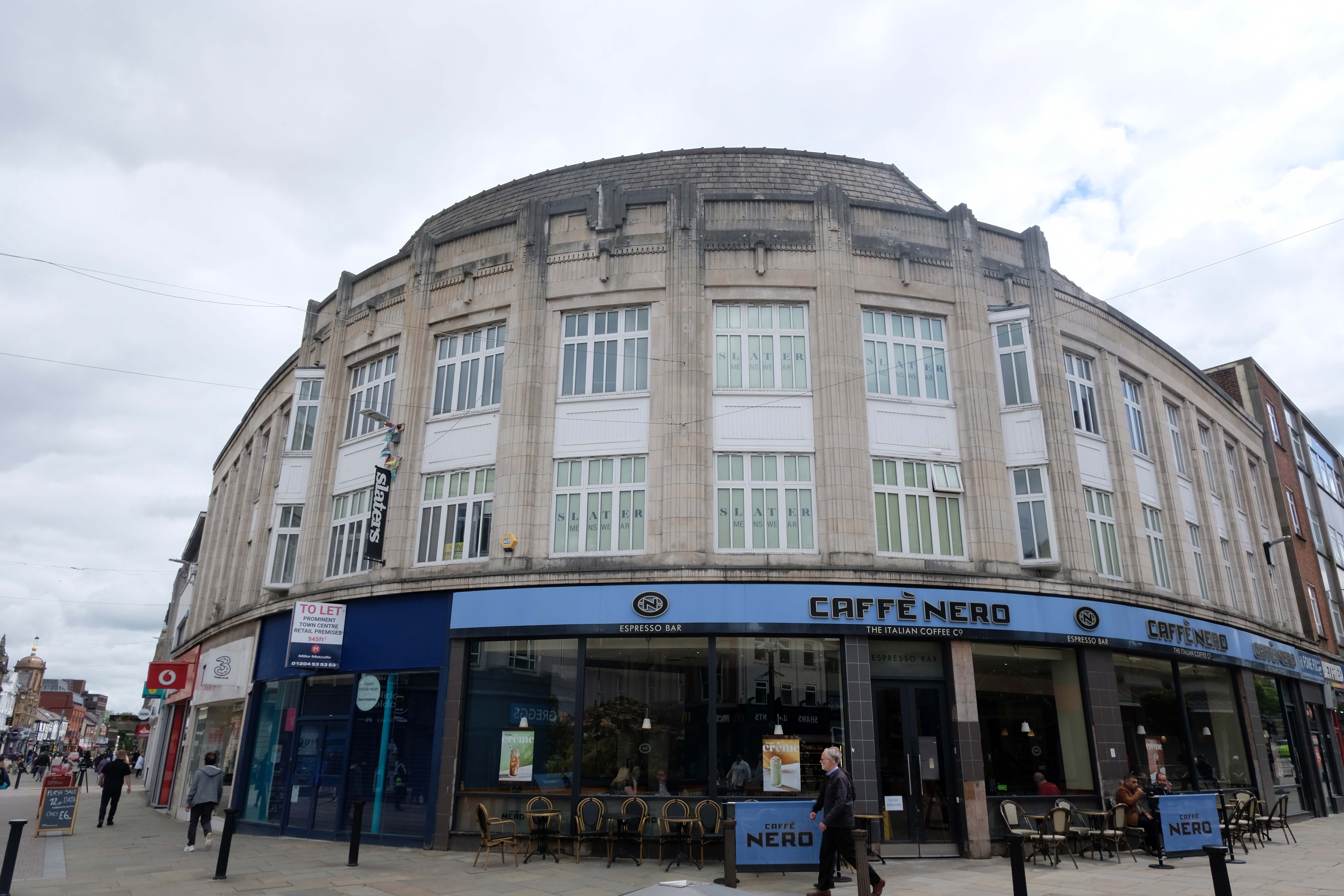
At the Oxford Street corner, Slater Menswear, above Caffé Nero, has Art Deco white faience upper storeys. Further down is the imposing Marks & Spencer, faced in dark stone 1965-67.
The mansard roof was added later.
Along Market Street, Clinton Cards is clad in white faience with Art Deco window details.
At the corner of Bridge Street is a charming 1960s clock; the building would not look out of place in Coventry.
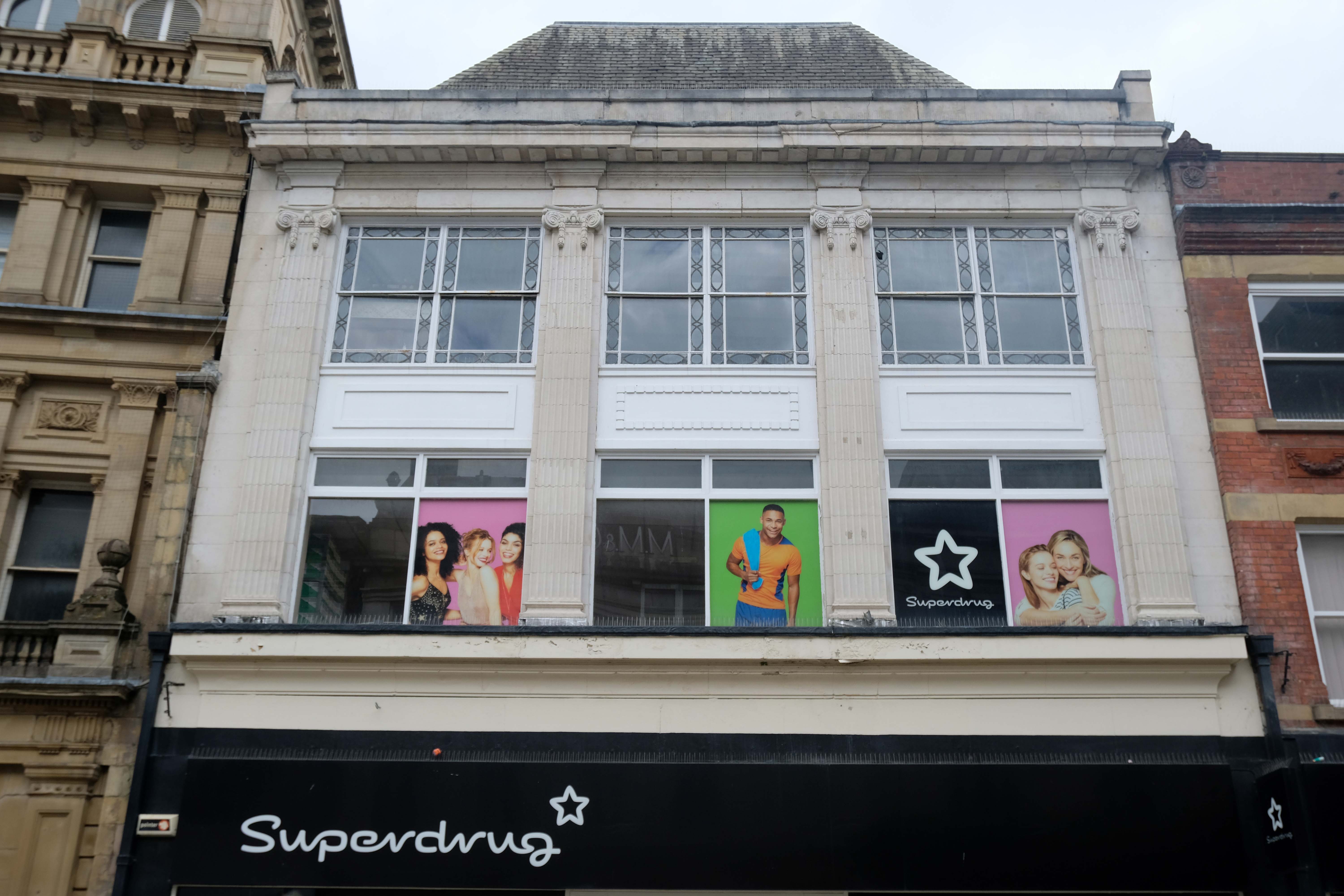
Other buildings of interest on Deansgate include Superdrug – with some Art Deco features; Greggs by Ernest Prestwich of Leigh who trained with WE Riley.
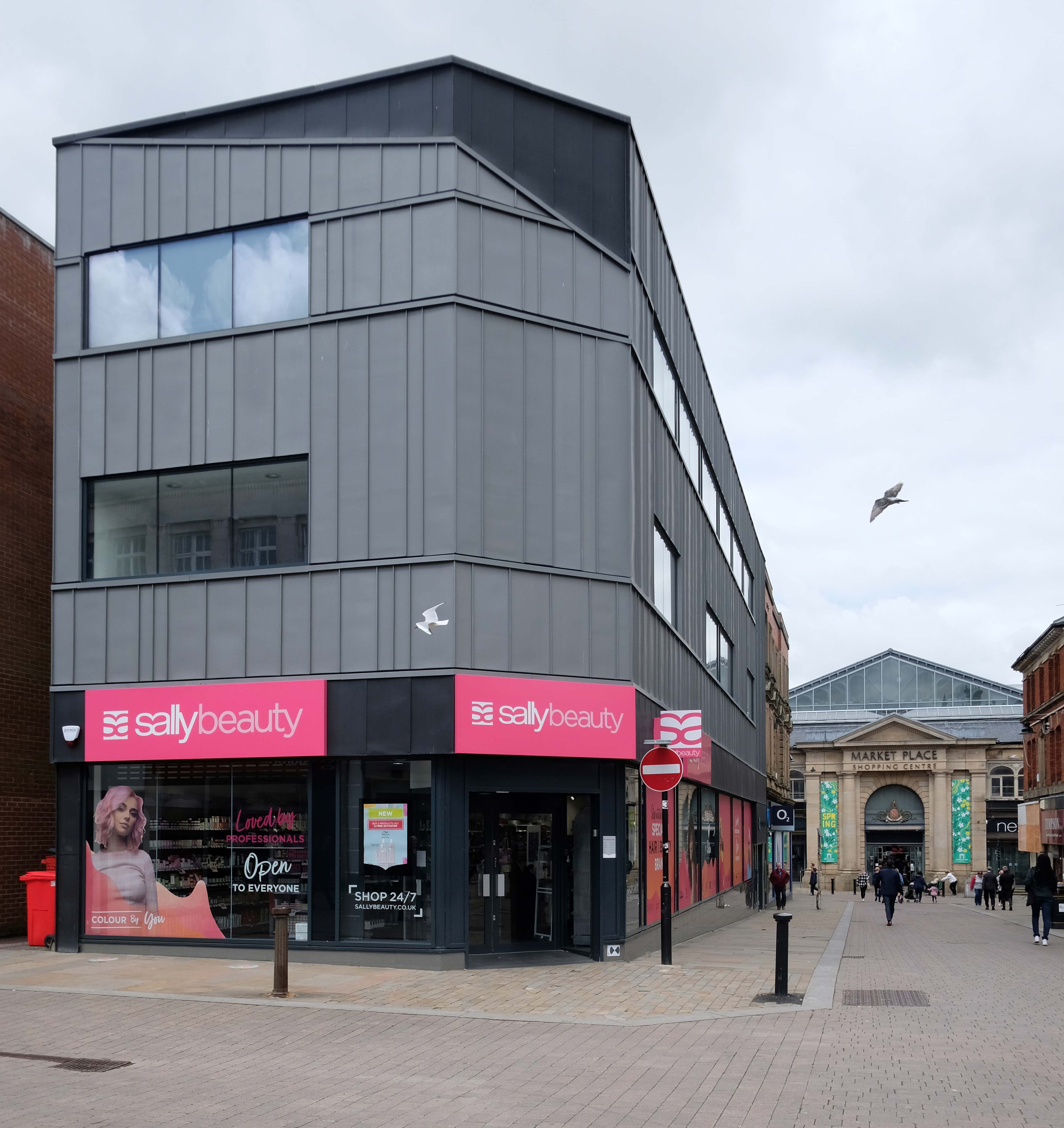
Sally Beauty and the Nationwide – entrance by William Owen of BGH.
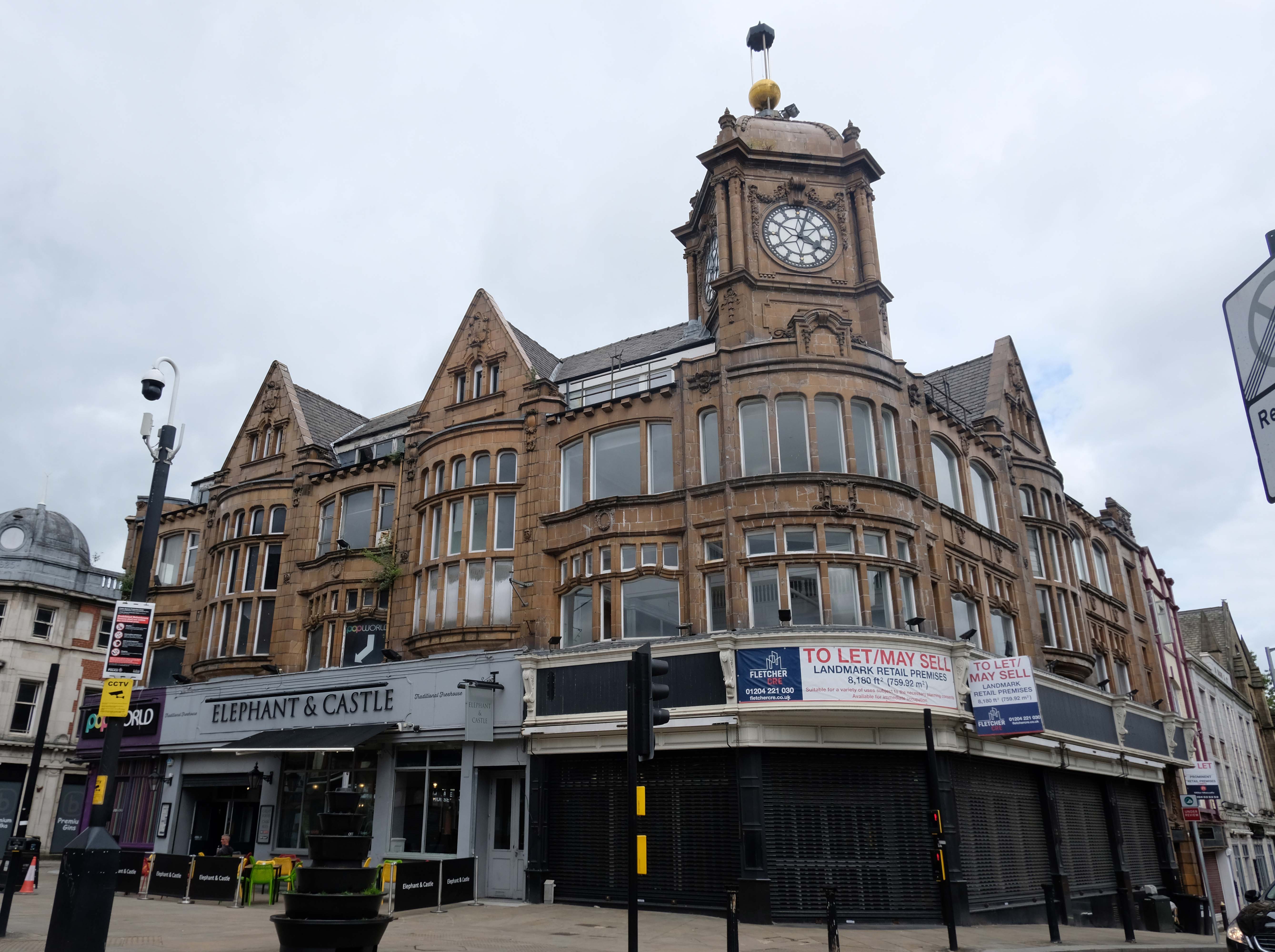
The former Preston’s jewellers, on the corner of Bank Street, has terracotta, by Thomas Smith & Sons 1908-13, a prolific local firm. It had a time ball, on the clock tower, which was raised daily at 9am and dropped at 10am, on receipt of a telegraph signal from Greenwich.
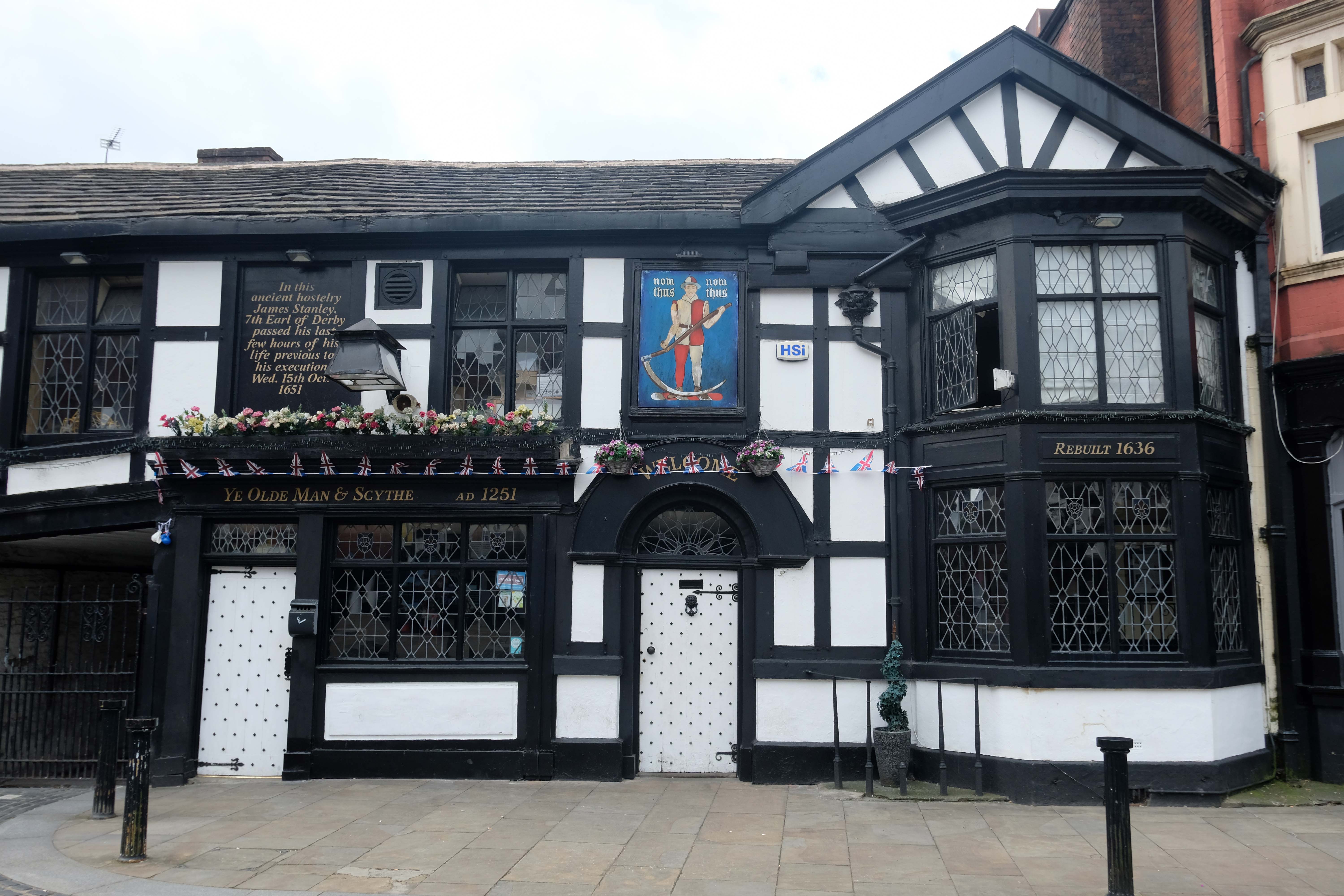
The 1909 Bolton Cross, in Dartmoor granite, by BGH replaced an earlier one which is now kept at Bolton School. Churchgate contains the 1636 Ye Olde Man & Scythe; the former coaching inn Swan Hotel, reconstructed in the 1970s to look more genuinely Georgian and Ye Olde Pastie Shoppe 1667.
Stone Cross House 1991 was built for the Inland Revenue in an aggressively red brick and spiky style. It has a rather desperate chandelier in the foyer.
The gates of St Peter’s church EG Paley 1871 are framed by Travel House, Newspaper House -1998 and Churchgate House and Huntingdon House 1974.
St Peter’s has a Neo-Gothic font and cover by N Cachemaille-Day 1938. The gates and gate piers may look early C20 but they are late C18.
Samuel Crompton 1753-1827, the inventor of the mule, is buried under the large granite monument, erected in 1861.
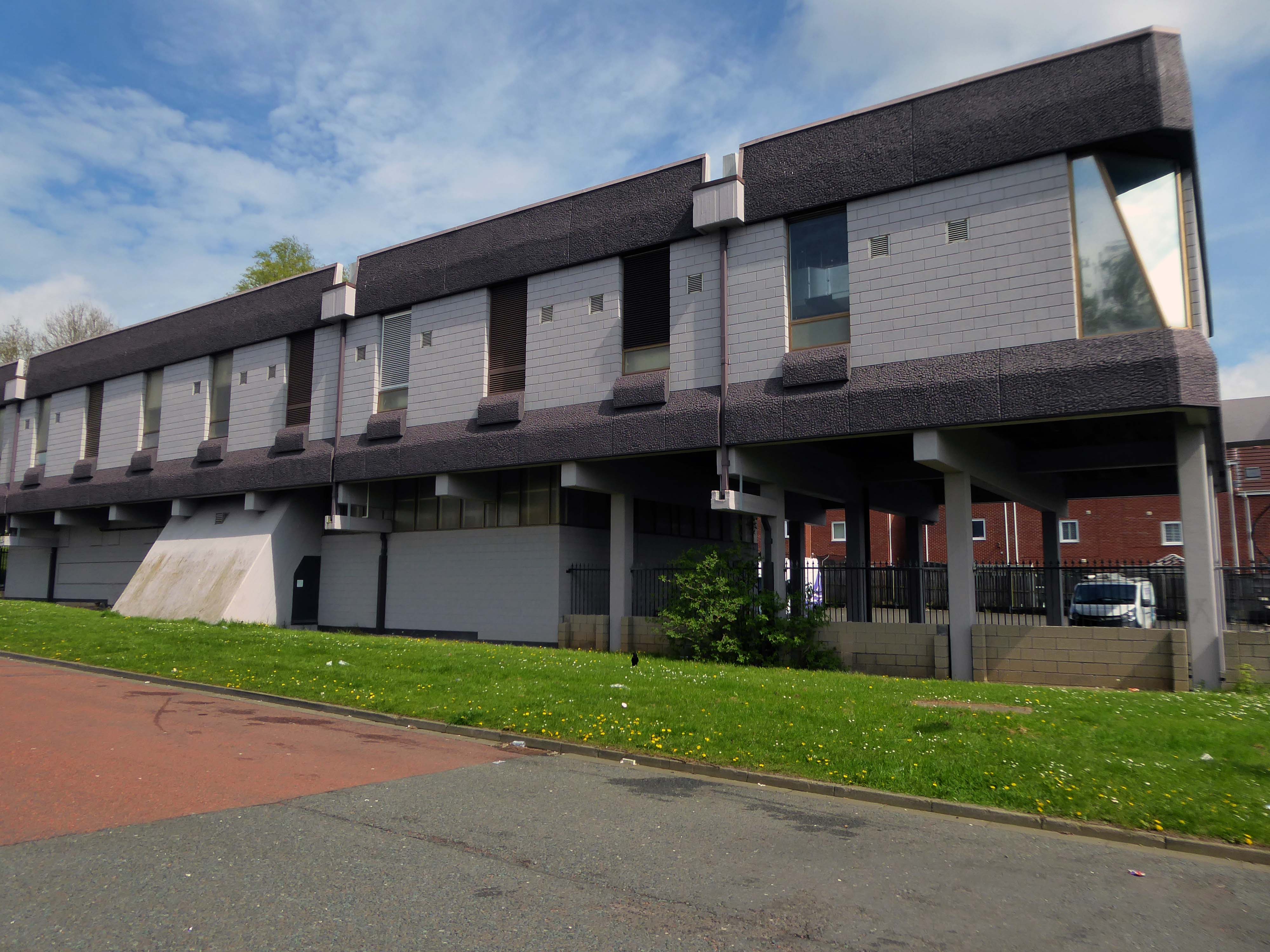
At the corner of Silverwell and Institute Streets is WT Gunson & Son’s 1970 Friends Meeting House: decent with a light elevated roof corner. It has a tilted roof floating on the glazed upper walls.
Scott House has a charming 1926 plaque commemorating Sir James Scott and his wife Lady Anne. Scott started the Provincial Insurance Company.
The two storey offices of Fieldings and Porter are a successful piece of infill by BGH.
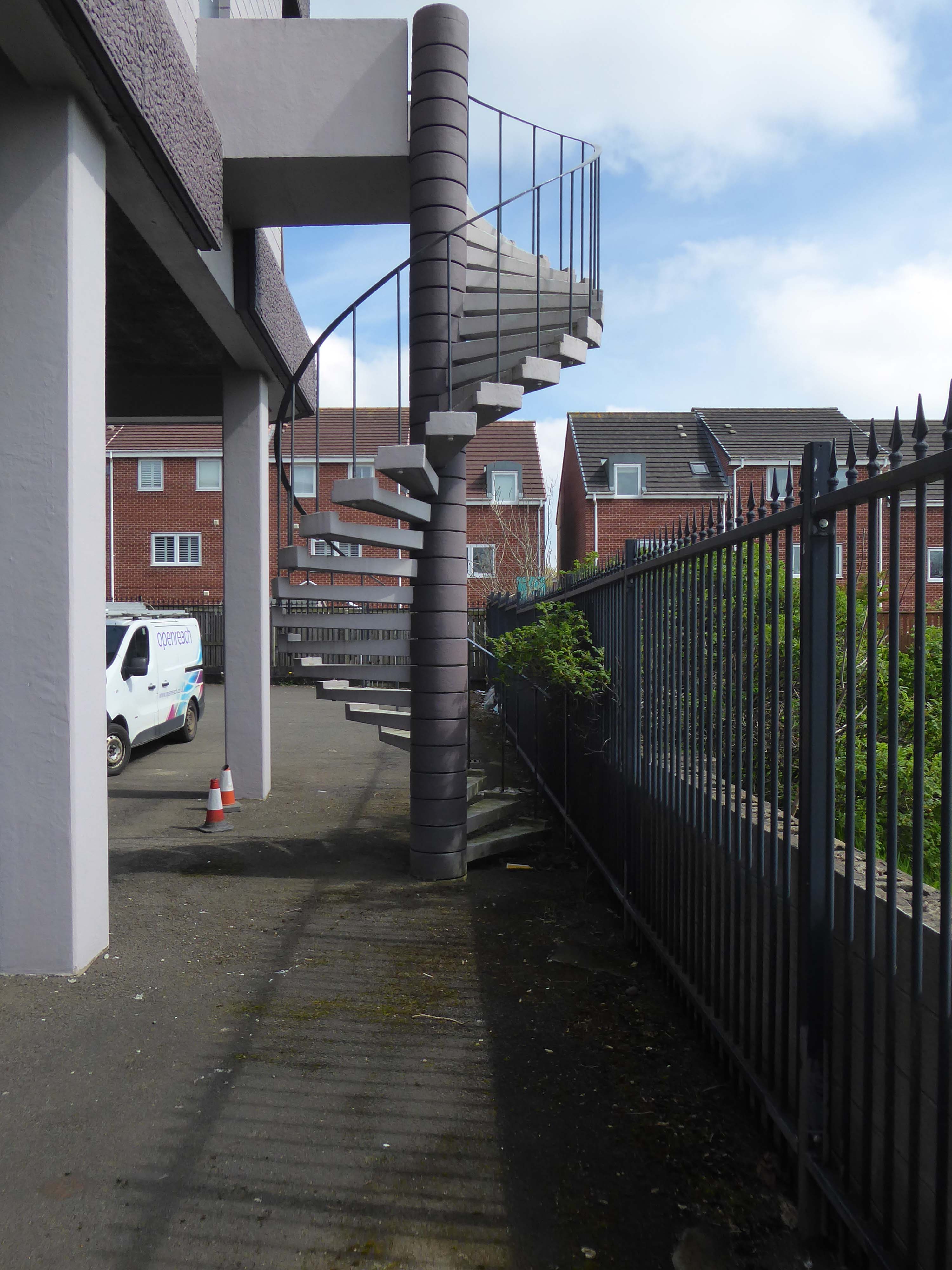
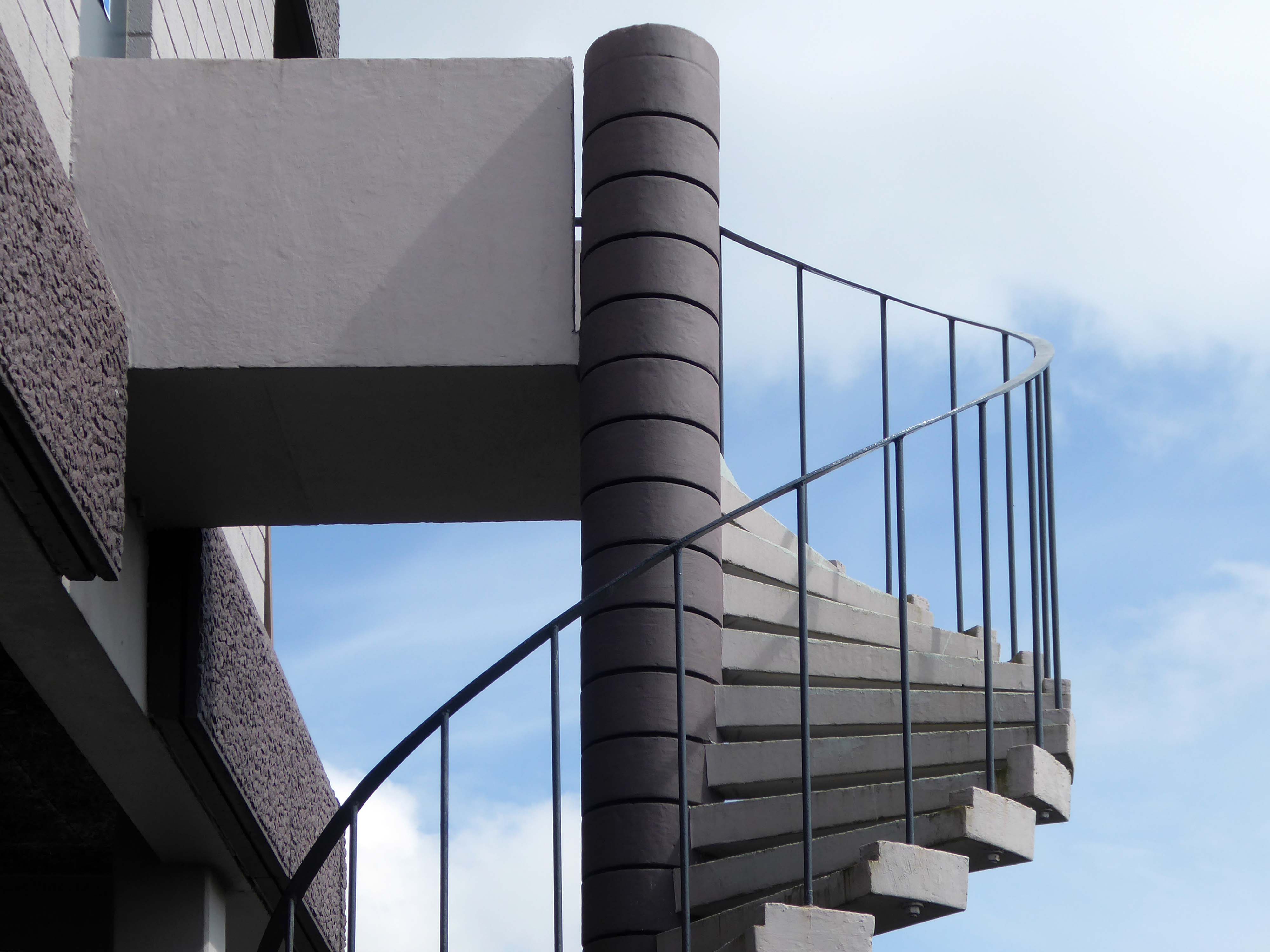
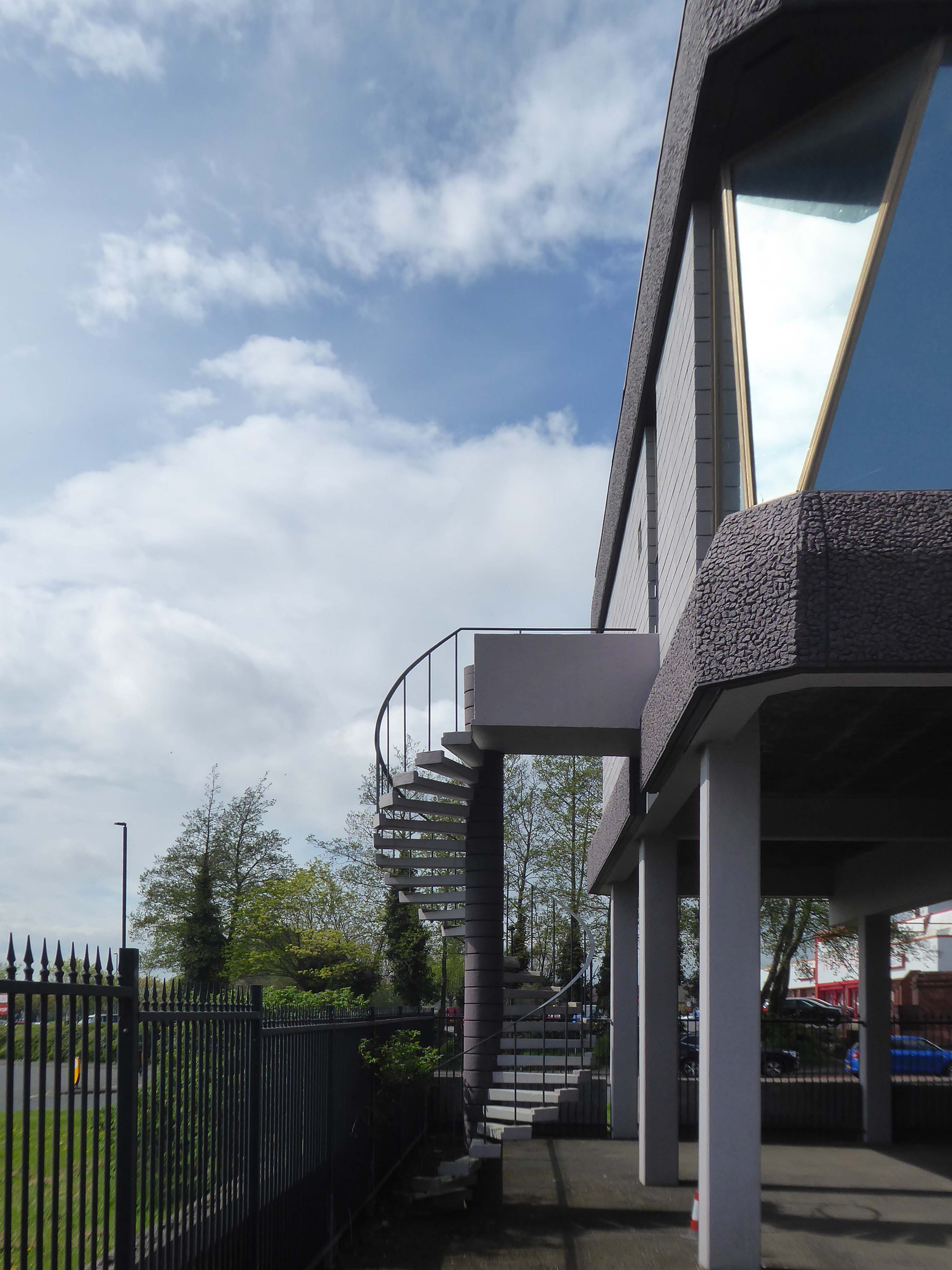
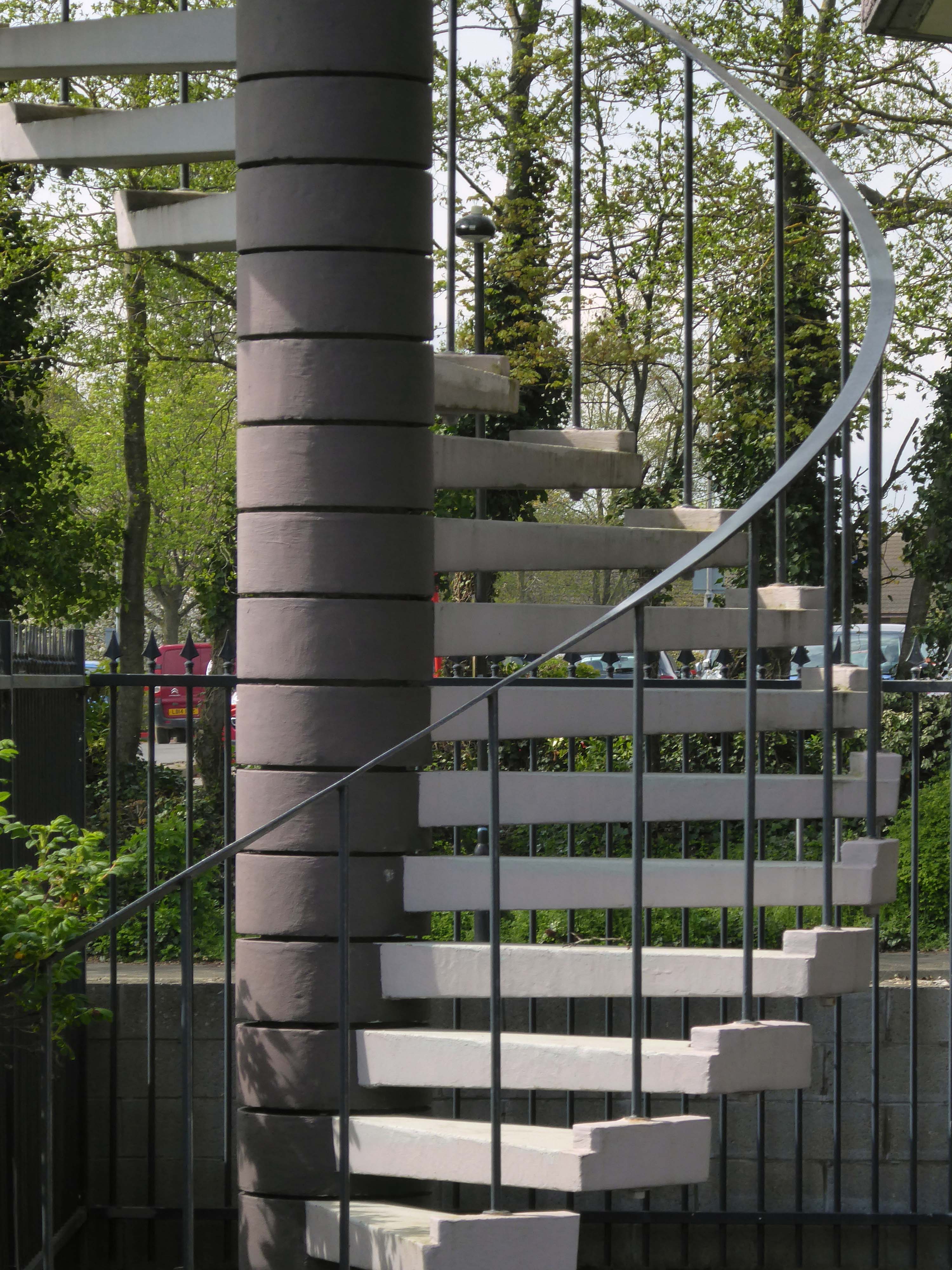
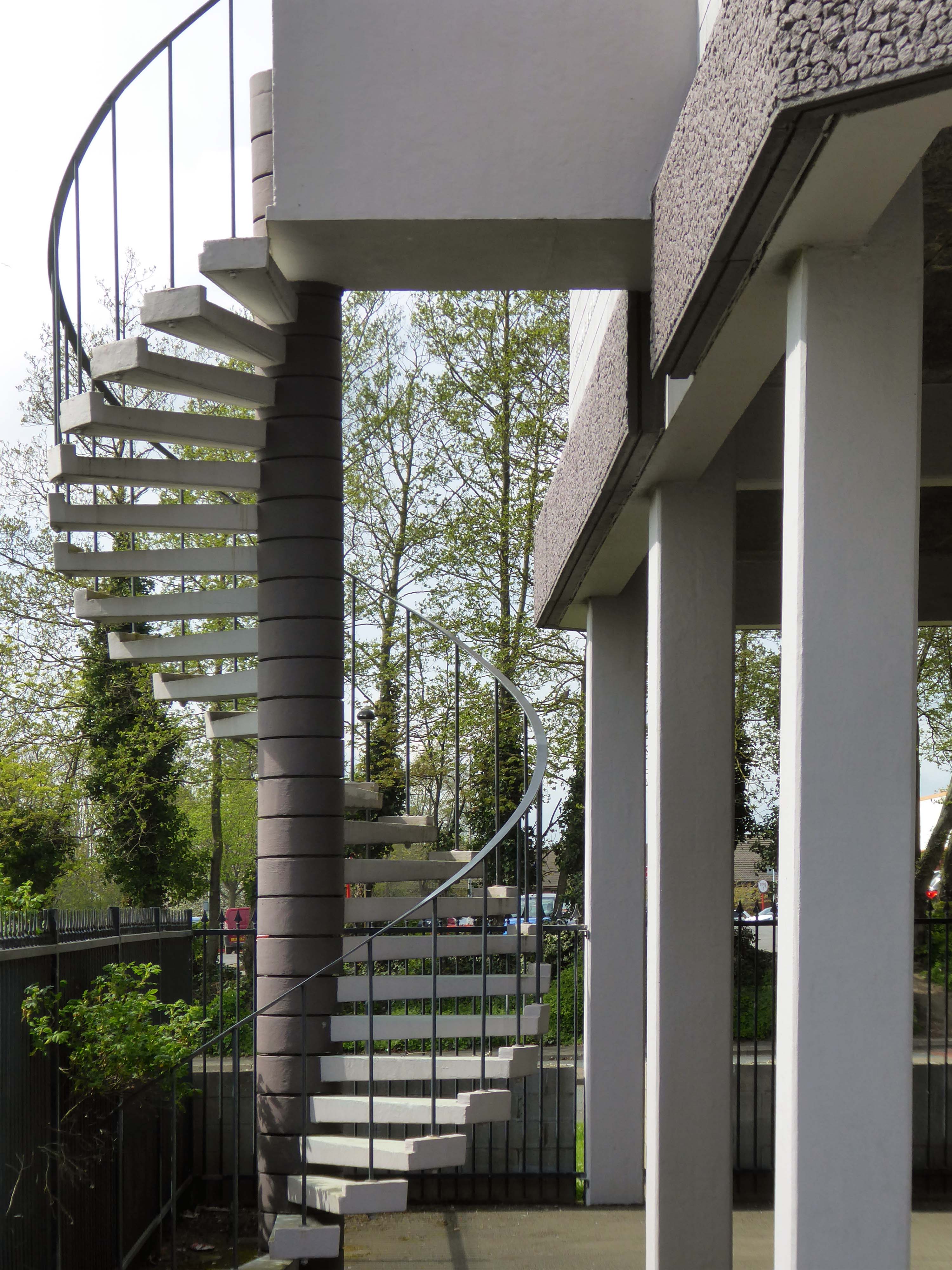
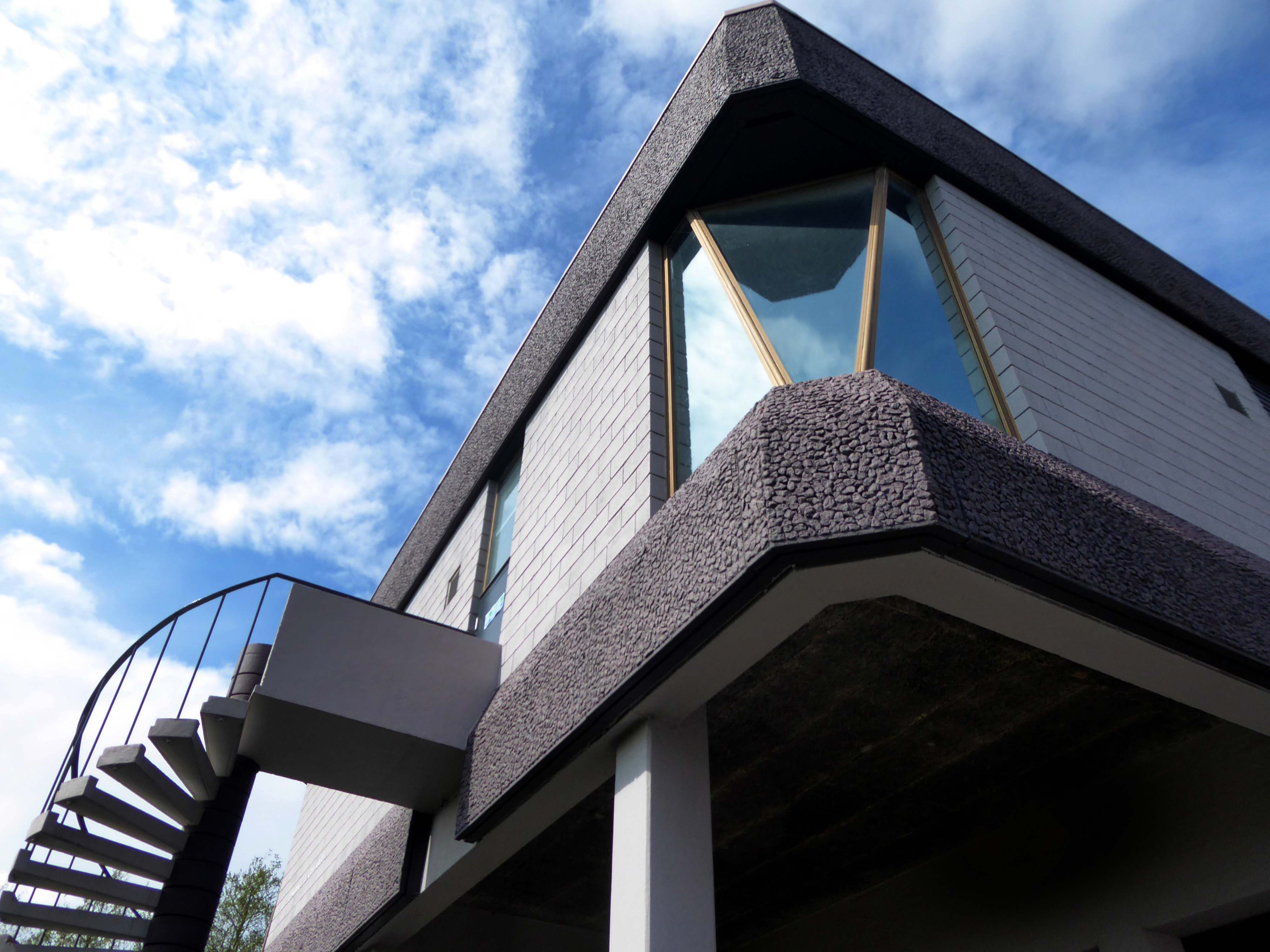
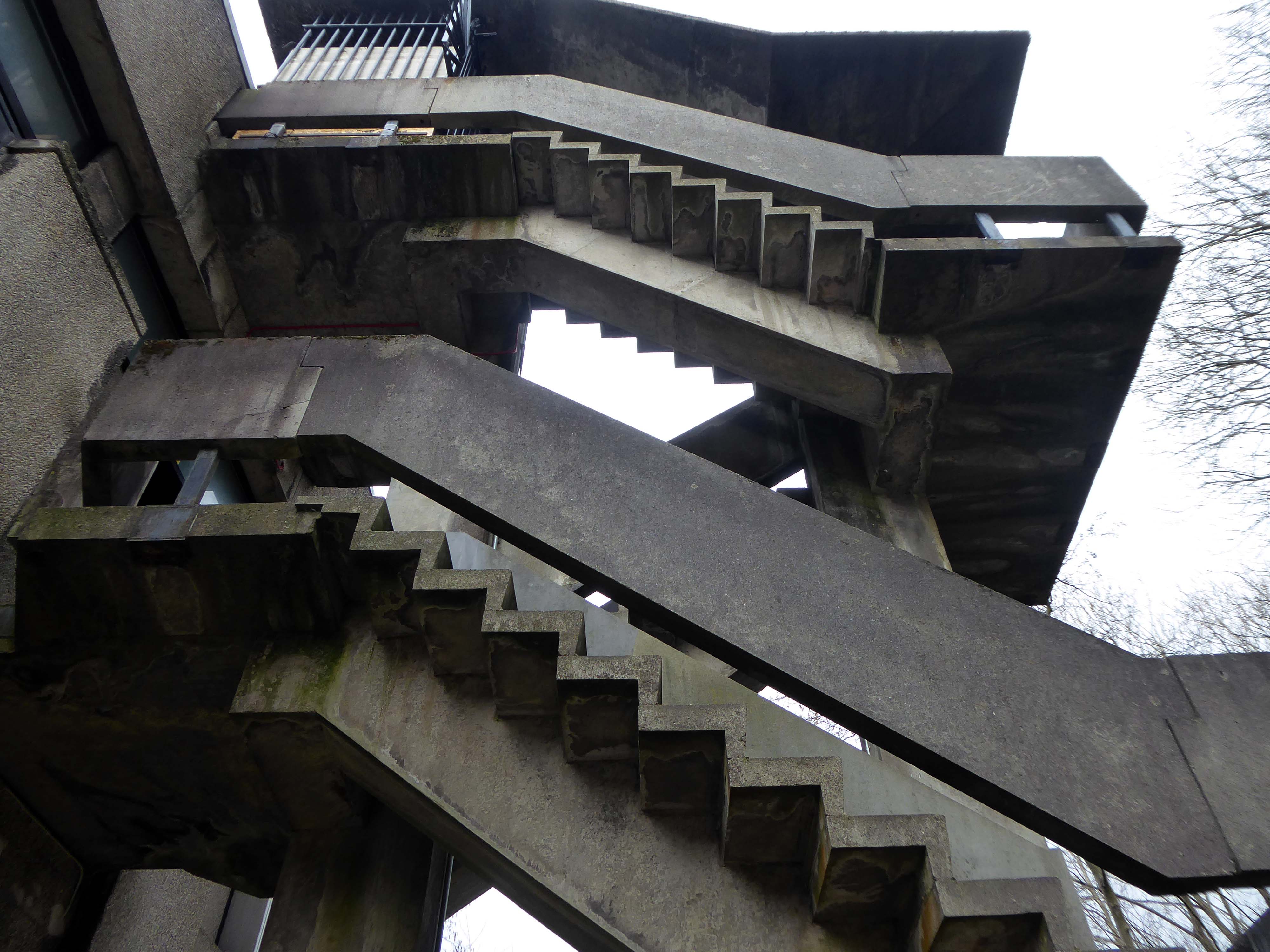
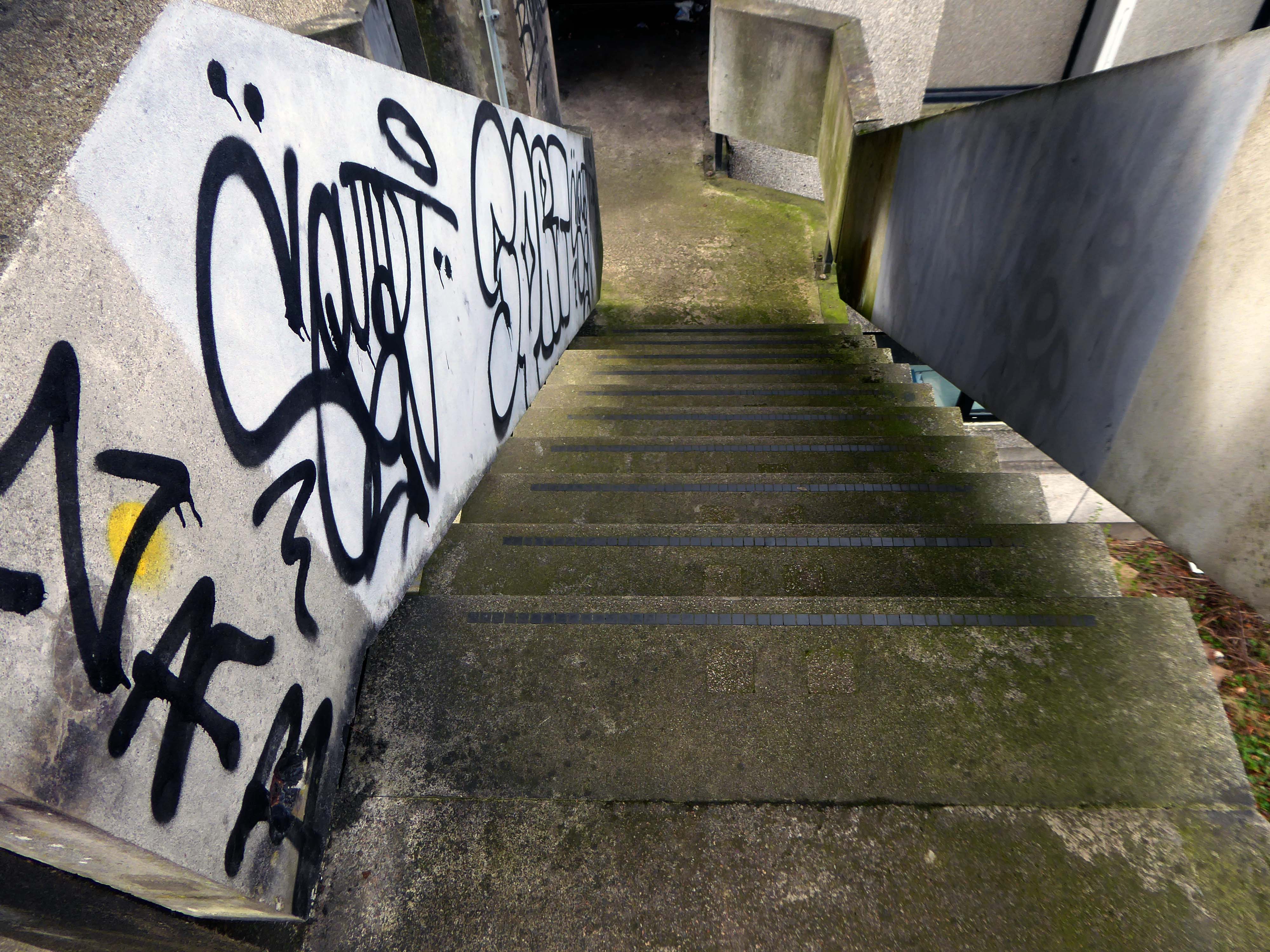
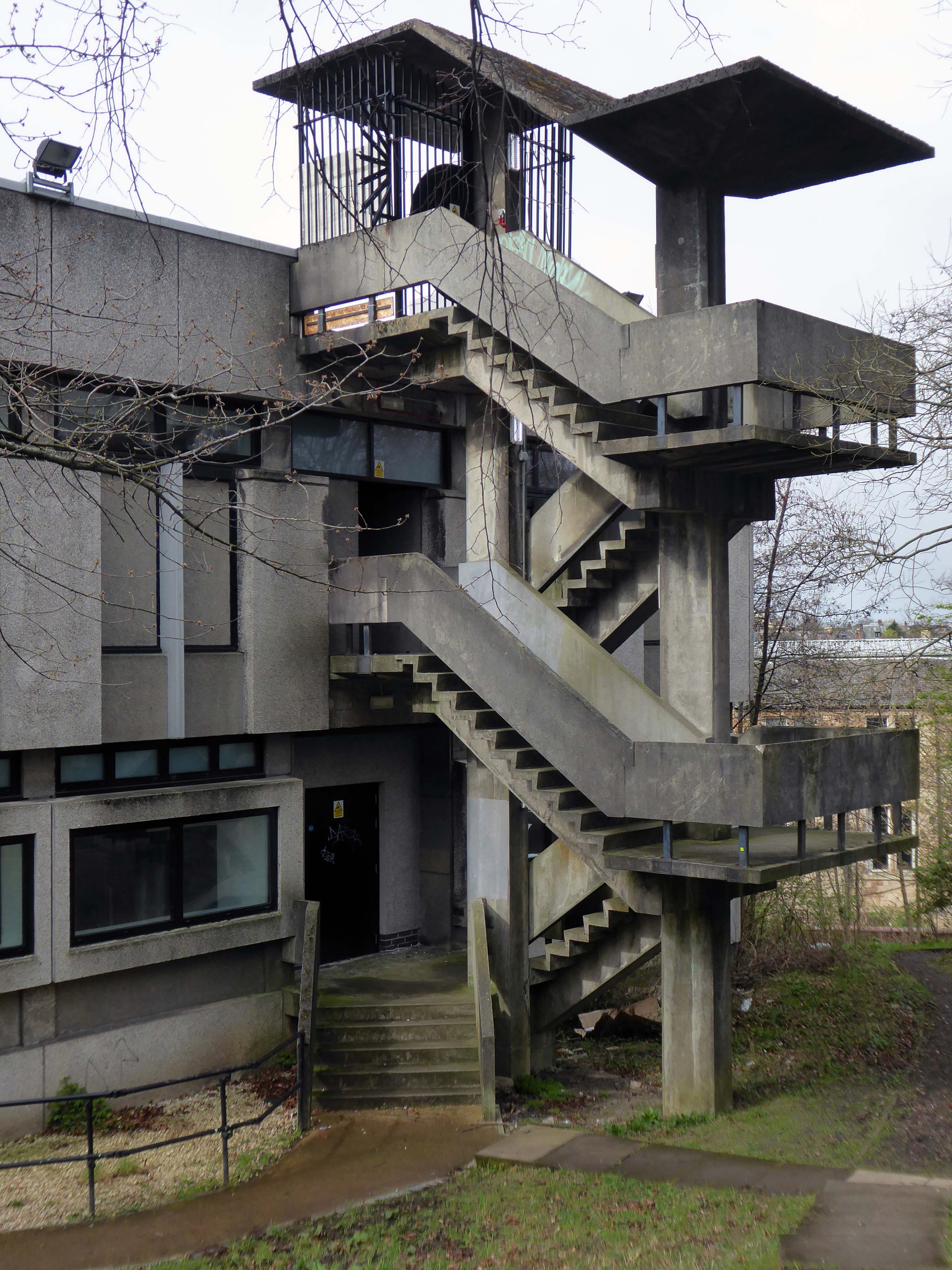
Nip around the back to get a glimpse of this cracking stairway.
Silverwell Street 1810 is named after the Silver Well. Bradshaw Gass & Hope now self-described as Construction Design Consultants, not architects, are at number 19. Note the plaque to JW Wallace, founder of the Eagle Street College, dedicated to the works of the American poet, Walt Whitman. Wallace worked there from 1867 to 1912. The plaque is ringed by a quote from Whitman:
All architecture is what you do to it when you look upon it.
Whitman corresponded with his Bolton admirers; the Museum contains early editions of his works and his stuffed canary.
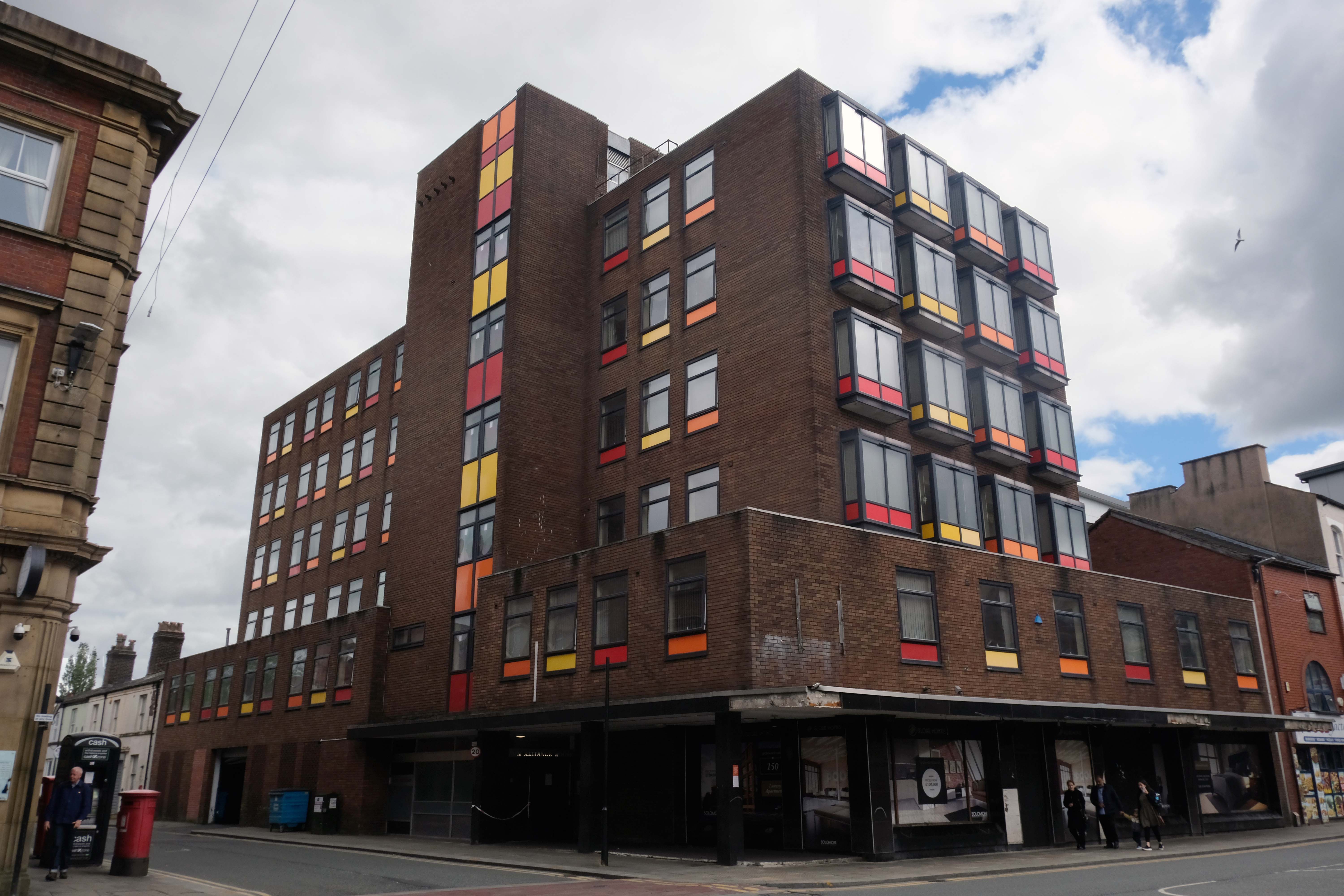
Further down Silverwell Street is the 1903 Estate Office of the Earl of Bradford who still owns a large area of Bolton. At the end of Silverwell Street is the former Sun Alliance House, now converted to flats, the colourful panels are a later addition.
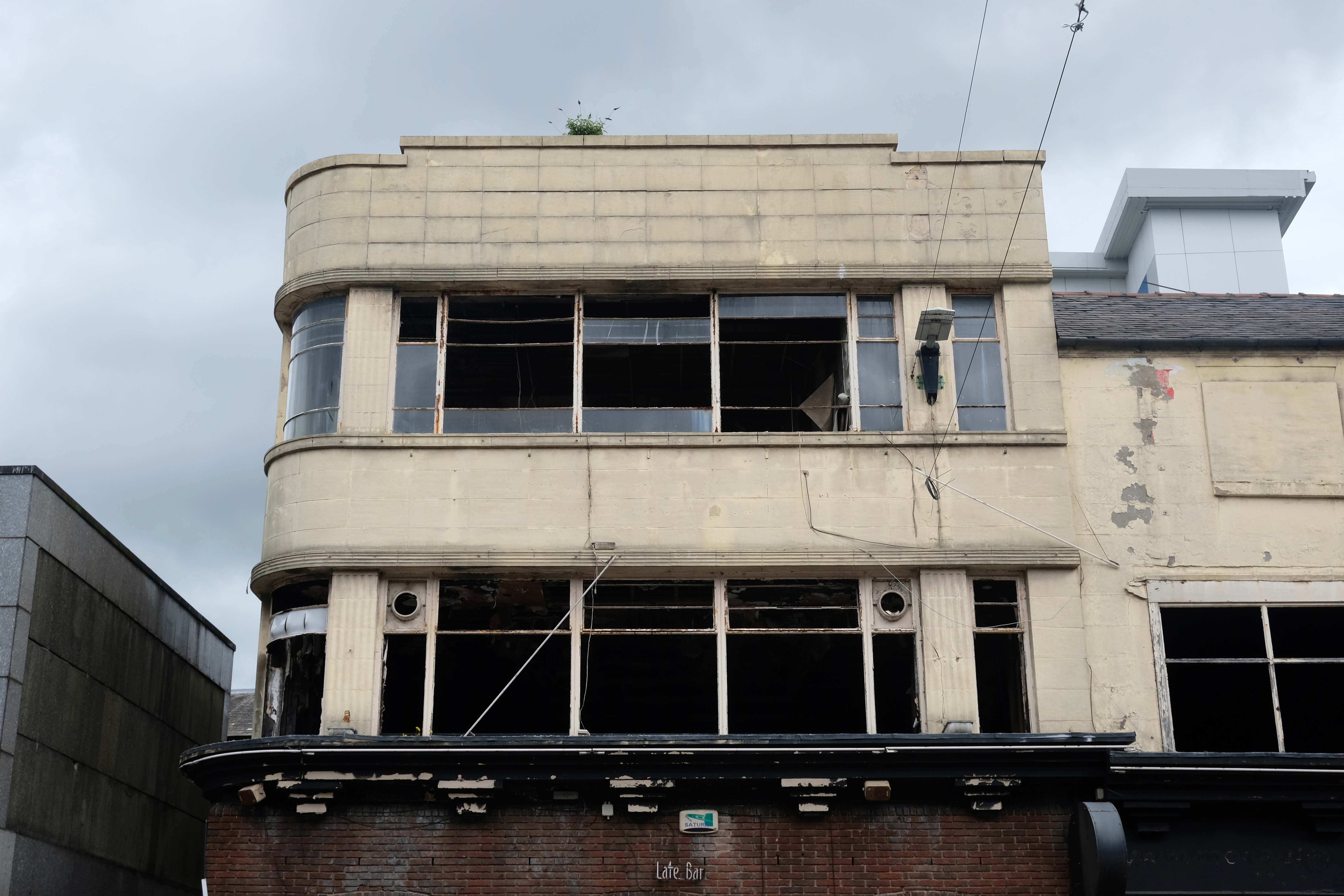
Bradshawgate and Silverwell lane corner has a former café bar with original curved Moderne windows. This was originally Vose’s tripe restaurant, later UCP – United Cattle Products. It was most stylish and elegant, decorated in 1930s streamline Moderne style, with starched white tablecloths, silver service and smart waitresses.
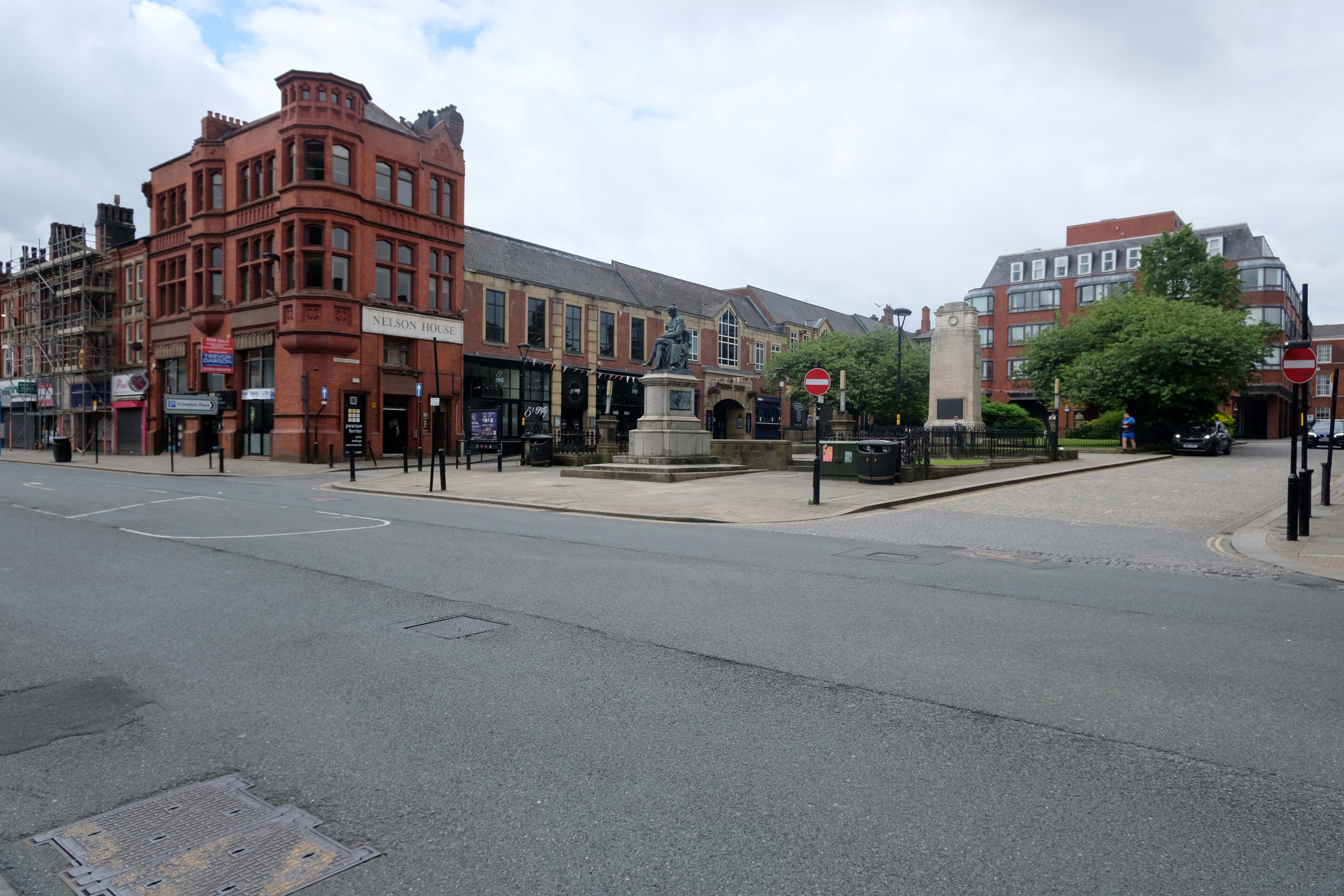
Nelson Square was opened on March 23, 1893. The cenotaph memorial to the Bolton Artillery is by Ormrod, Pomeroy & Foy 1920. Calder Marshall sculpted the statue of Samuel Crompton 1862. The shiny red former Prudential Assurance office 1889 isn’t by Waterhouse but by Ralph B. Maccoll of Bolton. Matthew Hyde in Pevsner describes the early C20 faience facades of Bradshawgate as:
A plateful of mushy pea, ginger nut, liver, tripe and blood orange shades.
Infirmary Street has a 1970s office block with an octagonal, nicely lettered plaque to WF Tillotson, newspaper publisher. Round the corner in Mawdsley Street, the former County Court 1869 TC Sorby, 1869. Opposite, at the corner, is GWBD Partnership’s 1987 St Andrew’s Court, containing a somewhat whimsical recreation of a Victorian shopping street in miniature. The job architect was J Holland. Matthew Hyde says:
Neatly contrived on a tight site.
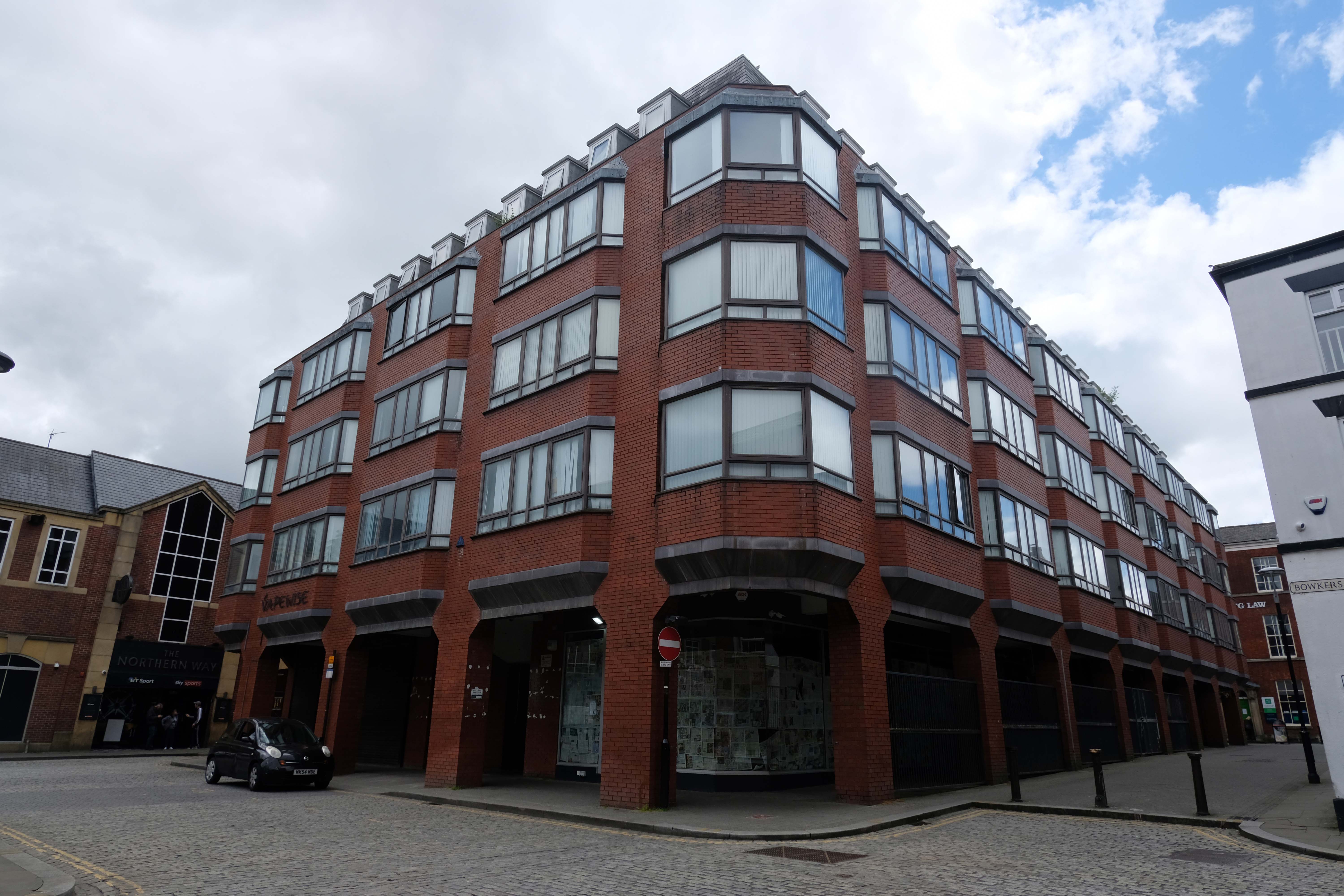
Into Exchange Street and through the former Arndale Centre 1971; low and mean according to Pevsner 2004, now re-branded as Crompton Place 1989 Bradshaw, Rose & Harker and still dreary, we go to Victoria Square and the Town Hall. The classical building on the left is the former Bolton Exchange 1824-5 Richard Lane.
The square was pedestrianised in 1969, to the Planning Department’s designs, under RH Ogden. It was quite an early scheme which won three awards including one, unsurprisingly, from the Concrete Society. The fountains were designed by Geoffrey Brooks and the trees were planted by the Earl of Bradford.
Owen Hatherley in Modern Buildings in Britain says of the town
It feels as if you’re in a real city, like in Europe, and you can drink your cup of tea in repose while admiring the monuments.













































































 Modern Mooch
